The Institute for Creation Research has become known for its attention to research. It’s important to recognize that we don’t try to “prove the Bible.” The Bible doesn’t need our help. Whether or not there is evidence, the Bible is true! In our research we assume the Bible, and conduct our investigations in that framework. We interpret all historical data within the model of true history given in Scripture.
For instance, we do a lot of research in Grand Canyon, a huge scar in the earth gouged out by moving water. We go there with the firm conviction that the world-restructuring flood of Noah’s day covered Arizona, and that its processes and aftereffects would have left their mark. We interpret the data in that light.
This is not a naïve stance. Everyone has a perspective. Evolutionary naturalism has become such a worldview and is unquestioningly used by its adherents in their interpretation of data. We feel that of the two broad viewpoints of history, creation is the better choice. The Bible and its teachings have proven to be trustworthy, and a solid foundation for our faith. It handles the data better, with no inconsistencies or contradictions.
Since the Bible is the inerrant Word of God, there is no need to fear putting it to the test (I Thessalonians 5:21). Francis Schaeffer used to declare the Bible to be “true Truth.” It is absolutely accurate in all matters on which it touches, and the worldview it presents is applicable in all areas. Research can fill in the gaps in our knowledge, for the Bible doesn’t give all the details. Furthermore, in the Dominion Mandate of Genesis 1:28, we (i.e., all representatives of mankind) are commanded to study creation, in order to use it wisely for man’s good and God’s glory. The Creator instructed Adam to “subdue [the earth]: and have dominion over [it].” Furthermore, He is pleased when we learn more of Him through research into what He has done and give Him the glory. Research can answer questions which might have arisen in the minds of Christians, remove obstacles to salvation in the path of non-Christians, and show the superiority of the Biblical way of thinking. It can and should do all these things.
Nevertheless, some Christians think otherwise. They feel that the Bible is beyond such investigation, and doesn’t even need to be supported. They are offended that we attempt to demonstrate its accuracy, and chastise us for trying. While this may sound “spiritual,” it differs from Christ’s example.
After His resurrection, He appeared to His disciples in the upper room, but Thomas was not present (John 20:24). When told by the others that they had seen the risen Lord, Thomas insisted that he needed to see the evidence. “Except I shall see in His hands the print of the nails . . . I will not believe” (v.25). A few days later He again appeared. This time Thomas was present. Did Jesus upbraid him for his need for evidence? Not at all. He graciously invited Thomas to come and see the scars. The evidence was there, and his faith was well placed. Throughout Scripture we find God revealing Himself and validating the truth with evidence. Still, He requires faith, but that faith is a reasonable faith, based soundly on demonstrable fact.
I truly believe that many of the problems we have today in the USA are due to the advancement of humanism in the last few decades in our society. Ronald Reagan appointed the evangelical Dr. C. Everett Koop to the position of Surgeon General in his administration. He partnered with Dr. Francis Schaeffer in making the video below. It is very valuable information for Christians to have. Actually I have included a video below that includes comments from him on this subject.
Francis Schaeffer
Francis Schaeffer: “Whatever Happened to the Human Race” (Episode 5) TRUTH AND HISTORY
The 45 minute video above is from the film series created from Francis Schaeffer’s book “Whatever Happened to the Human Race?” with Dr. C. Everett Koop. This book really helped develop my political views concerning abortion, infanticide, and youth euthanasia, and it gave me a good understanding of those issues.
E P I S O D E 1 0 Dr. Francis Schaeffer – Episode X – Final Choices 27 min FINAL CHOICES I. Authoritarianism the Only Humanistic Social Option One man or an elite giving authoritative arbitrary absolutes. A. Society is sole absolute in absence of other absolutes. B. But society has to be […]
E P I S O D E 9 Dr. Francis Schaeffer – Episode IX – The Age of Personal Peace and Affluence 27 min T h e Age of Personal Peace and Afflunce I. By the Early 1960s People Were Bombarded From Every Side by Modern Man’s Humanistic Thought II. Modern Form of Humanistic Thought Leads […]
E P I S O D E 8 Dr. Francis Schaeffer – Episode VIII – The Age of Fragmentation 27 min I saw this film series in 1979 and it had a major impact on me. T h e Age of FRAGMENTATION I. Art As a Vehicle Of Modern Thought A. Impressionism (Monet, Renoir, Pissarro, Sisley, […]
E P I S O D E 7 Dr. Francis Schaeffer – Episode VII – The Age of Non Reason I am thrilled to get this film series with you. I saw it first in 1979 and it had such a big impact on me. Today’s episode is where we see modern humanist man act […]
E P I S O D E 6 How Should We Then Live 6#1 Uploaded by NoMirrorHDDHrorriMoN on Oct 3, 2011 How Should We Then Live? Episode 6 of 12 ________ I am sharing with you a film series that I saw in 1979. In this film Francis Schaeffer asserted that was a shift in […]
E P I S O D E 5 How Should We Then Live? Episode 5: The Revolutionary Age I was impacted by this film series by Francis Schaeffer back in the 1970′s and I wanted to share it with you. Francis Schaeffer noted, “Reformation Did Not Bring Perfection. But gradually on basis of biblical teaching there […]
Dr. Francis Schaeffer – Episode IV – The Reformation 27 min I was impacted by this film series by Francis Schaeffer back in the 1970′s and I wanted to share it with you. Schaeffer makes three key points concerning the Reformation: “1. Erasmian Christian humanism rejected by Farel. 2. Bible gives needed answers not only as to […]
Francis Schaeffer’s “How should we then live?” Video and outline of episode 3 “The Renaissance” Francis Schaeffer: “How Should We Then Live?” (Episode 3) THE RENAISSANCE I was impacted by this film series by Francis Schaeffer back in the 1970′s and I wanted to share it with you. Schaeffer really shows why we have so […]
Francis Schaeffer: “How Should We Then Live?” (Episode 2) THE MIDDLE AGES I was impacted by this film series by Francis Schaeffer back in the 1970′s and I wanted to share it with you. Schaeffer points out that during this time period unfortunately we have the “Church’s deviation from early church’s teaching in regard […]
Francis Schaeffer: “How Should We Then Live?” (Episode 1) THE ROMAN AGE Today I am starting a series that really had a big impact on my life back in the 1970′s when I first saw it. There are ten parts and today is the first. Francis Schaeffer takes a look at Rome and why […]
Francis Schaeffer: “Whatever Happened to the Human Race” (Episode 5) TRUTH AND HISTORY Published on Oct 7, 2012 by AdamMetropolis This crucial series is narrated by the late Dr. Francis Schaeffer and former Surgeon General Dr. C. Everett Koop. Today, choices are being made that undermine human rights at their most basic level. Practices once […]
The opening song at the beginning of this episode is very insightful. Francis Schaeffer: “Whatever Happened to the Human Race” (Episode 4) THE BASIS FOR HUMAN DIGNITY Published on Oct 7, 2012 by AdamMetropolis This crucial series is narrated by the late Dr. Francis Schaeffer and former Surgeon General Dr. C. Everett Koop. Today, choices […]
Francis Schaeffer: “Whatever Happened to the Human Race” (Episode 3) DEATH BY SOMEONE’S CHOICE Published on Oct 6, 2012 by AdamMetropolis This crucial series is narrated by the late Dr. Francis Schaeffer and former Surgeon General Dr. C. Everett Koop. Today, choices are being made that undermine human rights at their most basic level. Practices […]
Francis Schaeffer: “Whatever Happened to the Human Race?” (Episode 2) SLAUGHTER OF THE INNOCENTS Published on Oct 6, 2012 by AdamMetropolis This crucial series is narrated by the late Dr. Francis Schaeffer and former Surgeon General Dr. C. Everett Koop. Today, choices are being made that undermine human rights at their most basic level. Practices […]
It is not possible to know where the pro-life evangelicals are coming from unless you look at the work of the person who inspired them the most. That person was Francis Schaeffer. I do care about economic issues but the pro-life issue is the most important to me. Several years ago Adrian Rogers (past president of […]
This essay below is worth the read. Schaeffer, Francis – “Francis Schaeffer and the Pro-Life Movement” [How Should We Then Live?, Whatever Happened to the Human Race?, A Christian Manifesto] Editor note: <p> </p> [The following essay explores the role that Francis Schaeffer played in the rise of the pro-life movement. It examines the place of […]
Testimony of former agnostic Nancy Pearcey who met her husband at Francis Schaeffer’s L’Abri Fellowship in Switzerland!!!!! Francis Schaeffer was a huge influence on many modern day pro-life leaders. Below is the video testimony of Nancy Pearcey and how she wrestled with the truth that Schaeffer confronted her with. She actually fled after one month and then later went back and committed her life to Christ through faith.
Best-selling author Nancy Pearcey and writer-editor J. Richard Pearcey have teamed up to create the Francis Schaeffer Center for Worldview and Culture on the campus of Houston Baptist University.
The purpose of the Francis Schaeffer Center is to “promote foundational research and out-of-the-box creative thinking based on historic Christianity as a total way of life informed by verifiable truth concerning God, humanity, and the cosmos,” according to the FSC mission statement.
Nancy Pearcey serves as director of the Francis Schaeffer Center. Formerly an agnostic, Nancy is professor and scholar-in-residence at HBU. She is the author of seminal works such as Total Truth, The Soul of Science, and Saving Leonardo, and also serves as editor at large of The Pearcey Report. Nancy was heralded in The Economist as “America’s pre-eminent evangelical Protestant female intellectual.”
Courses created by FSC will give students a unique opportunity to work through Nancy’s award-winning books and other foundational resources on worldview and cultural engagement. “Our goal at FSC is to equip students in every major to be critical and creative thinkers,” Pearcey said. “Under the visionary leadership of President Robert Sloan, Houston Baptist University is moving forward strategically to implement a Christian worldview approach more intentionally and comprehensively across all the disciplines.”
The Center is named for noted author Francis A. Schaeffer, whose work with wife Edith at L’Abri Fellowship in Switzerland won international respect for giving an “honest answer to honest questions.” Time magazine hailed the Schaeffers’ work as a “Mission to Intellectuals.”
J. Richard Pearcey serves as associate director of the Center. Richard is scholar for worldview studies at HBU, as well as editor and publisher of The Pearcey Report. He is formerly managing editor of the Capitol Hill newspaper Human Events and associate editor of the “Evans-Novak Political Report.”
“If the Christian worldview is true to reality, and we think a rational case can be made that it is, it can be the key to a renaissance of humanity, freedom, and creativity,” Richard said. “Nancy and I met at L’Abri in Switzerland, so we are grateful for the opportunity to say ‘thank you’ to the Schaeffers and their work by inspiring students and others — teachers, activists, professionals — to apply Christian thought forms across the whole of life, from art to science to business and politics.”
HBU Provost John Mark Reynolds said, “When I was a young adult, the writings and films of Francis Schaeffer modeled a way of doing Christian apologetics that had an important impact on my life. It is my honor to see HBU set up a study center dedicated to the Schaeffer approach to worldview studies. There is no better time for Christians to impact the culture, few better models than Schaeffer for evangelicals, and no better team than Nancy and Richard Pearcey to set up the center.”
According to the FSC mission statement, “Since its founding, Houston Baptist University has built a rich heritage of Christian higher education. . . The Francis Schaeffer Center for Worldview and Culture will give focus to HBU’s goal of equipping students and faculty with a Biblical worldview for application to their thinking and their lives. FSC will equip HBU students, faculty, staff, campus organizations, stakeholders, and outside partners to apply the liberating principles of a Biblical worldview in the classroom, across the campus, and around the world.”
Francis Schaeffer: “Whatever Happened to the Human Race” (Episode 1) ABORTION OF THE HUMAN RACE Published on Oct 6, 2012 by AdamMetropolis The 45 minute video above is from the film series created from Francis Schaeffer’s book “Whatever Happened to the Human Race?” with Dr. C. Everett Koop. This book really helped develop my political views […]
E P I S O D E 1 0 Dr. Francis Schaeffer – Episode X – Final Choices 27 min FINAL CHOICES I. Authoritarianism the Only Humanistic Social Option One man or an elite giving authoritative arbitrary absolutes. A. Society is sole absolute in absence of other absolutes. B. But society has to be […]
E P I S O D E 9 Dr. Francis Schaeffer – Episode IX – The Age of Personal Peace and Affluence 27 min T h e Age of Personal Peace and Afflunce I. By the Early 1960s People Were Bombarded From Every Side by Modern Man’s Humanistic Thought II. Modern Form of Humanistic Thought Leads […]
E P I S O D E 8 Dr. Francis Schaeffer – Episode VIII – The Age of Fragmentation 27 min I saw this film series in 1979 and it had a major impact on me. T h e Age of FRAGMENTATION I. Art As a Vehicle Of Modern Thought A. Impressionism (Monet, Renoir, Pissarro, Sisley, […]
E P I S O D E 7 Dr. Francis Schaeffer – Episode VII – The Age of Non Reason I am thrilled to get this film series with you. I saw it first in 1979 and it had such a big impact on me. Today’s episode is where we see modern humanist man act […]
E P I S O D E 6 How Should We Then Live 6#1 Uploaded by NoMirrorHDDHrorriMoN on Oct 3, 2011 How Should We Then Live? Episode 6 of 12 ________ I am sharing with you a film series that I saw in 1979. In this film Francis Schaeffer asserted that was a shift in […]
E P I S O D E 5 How Should We Then Live? Episode 5: The Revolutionary Age I was impacted by this film series by Francis Schaeffer back in the 1970′s and I wanted to share it with you. Francis Schaeffer noted, “Reformation Did Not Bring Perfection. But gradually on basis of biblical teaching there […]
Dr. Francis Schaeffer – Episode IV – The Reformation 27 min I was impacted by this film series by Francis Schaeffer back in the 1970′s and I wanted to share it with you. Schaeffer makes three key points concerning the Reformation: “1. Erasmian Christian humanism rejected by Farel. 2. Bible gives needed answers not only as to […]
Francis Schaeffer’s “How should we then live?” Video and outline of episode 3 “The Renaissance” Francis Schaeffer: “How Should We Then Live?” (Episode 3) THE RENAISSANCE I was impacted by this film series by Francis Schaeffer back in the 1970′s and I wanted to share it with you. Schaeffer really shows why we have so […]
Francis Schaeffer: “How Should We Then Live?” (Episode 2) THE MIDDLE AGES I was impacted by this film series by Francis Schaeffer back in the 1970′s and I wanted to share it with you. Schaeffer points out that during this time period unfortunately we have the “Church’s deviation from early church’s teaching in regard […]
Francis Schaeffer: “How Should We Then Live?” (Episode 1) THE ROMAN AGE Today I am starting a series that really had a big impact on my life back in the 1970′s when I first saw it. There are ten parts and today is the first. Francis Schaeffer takes a look at Rome and why […]
Francis Schaeffer: “Whatever Happened to the Human Race” (Episode 5) TRUTH AND HISTORY Published on Oct 7, 2012 by AdamMetropolis This crucial series is narrated by the late Dr. Francis Schaeffer and former Surgeon General Dr. C. Everett Koop. Today, choices are being made that undermine human rights at their most basic level. Practices once […]
The opening song at the beginning of this episode is very insightful. Francis Schaeffer: “Whatever Happened to the Human Race” (Episode 4) THE BASIS FOR HUMAN DIGNITY Published on Oct 7, 2012 by AdamMetropolis This crucial series is narrated by the late Dr. Francis Schaeffer and former Surgeon General Dr. C. Everett Koop. Today, choices […]
Francis Schaeffer: “Whatever Happened to the Human Race” (Episode 3) DEATH BY SOMEONE’S CHOICE Published on Oct 6, 2012 by AdamMetropolis This crucial series is narrated by the late Dr. Francis Schaeffer and former Surgeon General Dr. C. Everett Koop. Today, choices are being made that undermine human rights at their most basic level. Practices […]
Francis Schaeffer: “Whatever Happened to the Human Race?” (Episode 2) SLAUGHTER OF THE INNOCENTS Published on Oct 6, 2012 by AdamMetropolis This crucial series is narrated by the late Dr. Francis Schaeffer and former Surgeon General Dr. C. Everett Koop. Today, choices are being made that undermine human rights at their most basic level. Practices […]
It is not possible to know where the pro-life evangelicals are coming from unless you look at the work of the person who inspired them the most. That person was Francis Schaeffer. I do care about economic issues but the pro-life issue is the most important to me. Several years ago Adrian Rogers (past president of […]
This essay below is worth the read. Schaeffer, Francis – “Francis Schaeffer and the Pro-Life Movement” [How Should We Then Live?, Whatever Happened to the Human Race?, A Christian Manifesto] Editor note: <p> </p> [The following essay explores the role that Francis Schaeffer played in the rise of the pro-life movement. It examines the place of […]
Great article on Schaeffer. Who was Dr. Francis A. Schaeffer? By Francis Schaeffer The unique contribution of Dr. Francis Schaeffer on a whole generation was the ability to communicate the truth of historic Biblical Christianity in a way that combined intellectual integrity with practical, loving care. This grew out of his extensive understanding of the Bible […]
Dr Richard Land discusses abortion and slavery – 10/14/2004 – part 3 The best pro-life film I have ever seen below by Francis Schaeffer and Dr. C. Everett Koop “Whatever happened to the human race?” Over the years I have taken on the Ark Times liberal bloggers over and over and over concerning the issue […]
The best pro-life film I have ever seen below by Francis Schaeffer and Dr. C. Everett Koop “Whatever happened to the human race?” Francis Schaeffer pictured above._________ The 45 minute video above is from the film series created from Francis Schaeffer’s book “Whatever Happened to the Human Race?” with Dr. C. Everett Koop. This book really […]
The best pro-life film I have ever seen below by Francis Schaeffer and Dr. C. Everett Koop “Whatever happened to the human race?” Over the years I have taken on the Ark Times liberal bloggers over and over and over concerning the issue of abortion. I asked over and over again for one liberal blogger […]
Francis Schaeffer pictured above._________ The best pro-life film I have ever seen below by Francis Schaeffer and Dr. C. Everett Koop “Whatever happened to the human race?” Over the years I have taken on the Ark Times liberal bloggers over and over and over concerning the issue of abortion. I asked over and over again […]
The best pro-life film I have ever seen below by Francis Schaeffer and Dr. C. Everett Koop “Whatever happened to the human race?” On 1-24-13 I took on the child abuse argument put forth by Ark Times Blogger “Deathbyinches,” and the day before I pointed out that because the unborn baby has all the genetic code […]
PHOTO BY STATON BREIDENTHAL from Pro-life march in Little Rock on 1-20-13. Tim Tebow on pro-life super bowl commercial. Over the years I have taken on the Ark Times liberal bloggers over and over and over concerning the issue of abortion. Here is another encounter below. On January 22, 2013 (on the 40th anniversary of the […]
Dr Richard Land discusses abortion and slavery – 10/14/2004 – part 3 The best pro-life film I have ever seen below by Francis Schaeffer and Dr. C. Everett Koop “Whatever happened to the human race?” Over the years I have taken on the Ark Times liberal bloggers over and over and over concerning the issue […]
The story for The Longest Ride really began when I learned about Black Mountain College. I had been struggling to find something that excited me for my next novel when I came across a reference to the college online. I was, to understate it, greatly captivated: that an isolated college in my home state of North Carolina was so influential to the American art scene seemed so unlikely that I began researching the school immediately. Thinking about all that happened during the school’s 25-odd years in operation—World War II included—seemed so ripe with possibility. Soon enough, Ira’s character came into my mind and The Longest Ride began coming together.
Then, because Ira and his wife, Ruth, were such a wonderful example of enduring love, I wanted to find a perfect counterpoint as an example of new love. And that’s how I came up with Luke and Sophia. Sophia was created to resonate with my college-aged fans, and Luke is really the quintessential All-American guy. I had never been to a Professional Bull Riding event, but there are so many ranches throughout North Carolina, it just seemed to make sense that he would be a bullrider.
Fully Awake: Black Mountain College Introduction
Uploaded on Jul 27, 2009
FULLY AWAKE is a 60 minute documentary film about the legendary Black Mountain College (1933-1957), an influential experiment in education in Western North Carolina that inspired and shaped 20th century modern art. The film uses narration, archival photography, and interviews with former students, teachers, and historians to explore the schools beginnings, its unique education methods, and how its collaborative curriculum inspired innovation that changed the very definition of art. For more information, please visit http://www.fullyawake.org or to purchase the film, please visit http://www.filmbaby.com.
The third post in this series was on Jorge Fick. Earlier we noted that Fick was a student at Black Mountain College and an artist that lived in New York and he lent a suit to the famous poet Dylan Thomas and Thomas died in that suit. Both Susan Weil and Robert Rauschenberg were featured in the second post in this series and both of them were good friends of the composer John Cage who was featured in my first post in this series. The fourth post in this seriesis on the artist Xanti Schawinsky and he had a great influence on John Cage who later taught at Black Mountain College. Schawinsky taught at Black Mountain College from 1936-1938 and Cage right after World War II. In the fifth post I discuss David Weinrib and his wife Karen Karnes who were good friends with John Cage.
In 1952 David Weinrib and his wife Karen Karnes came to Black Mountain College and became friends with John Cage and his partner Merce Cunningham and several others such as David Tudor and Paul and Vera Williams and Mary Caroline Richards. In 1954 they all moved to Stony Point, Rockland County, 40 miles from New York and they had hoped to start a community that would grow but it didn’t turn out that way. Below is the story of the art of Karen Karnes and her first husband David Weinrib and the story of John Cage and his mushroom story as told by Francis Schaeffer.
Josef Albers
Fiddling with Leica.
1944
Merce Cunningham
In an oudoor solo.
1948
Merce Cunningham
Photo by Robert Rauschenberg
1952
Black Mountain College
Uploaded on Apr 18, 2011
Class Project on Black Mountain College for American Literature
____________________
Mark Shapiro: The Ceramic Art of Karen Karnes (at 11 min mark discusses Black Mountain College)
Published on May 23, 2012
Mark Shapiro gave a presentation about the life and work of ceramic artist Karen Karnes at the 2012 American Craft Council Baltimore Show. http://www.craftcouncil.org
An interview of Karen Karnes conducted 2005 Aug. 9-10, by Mark Shapiro, for the Archives of American Art’s Nanette L. Laitman Documentation Project for Craft and Decorative Arts in America, at the artist’s home and studio in Morgan, Vt.
Karnes discusses her childhood in Brooklyn and the Bronx as the daughter of Russian and Polish immigrants working in the garment industry; living in a cooperative housing project built especially for garment workers and their families; attending the High School of Music and Art, New York City; going on to Brooklyn College, and fortuitously landing in the class of Serge Chermayoff, who taught primarily in the Bauhaus style; meeting her first husband, David Weinrib, with whom she eventually moved to Pennsylvania; David bringing home a slab of clay for her to work with, her first experience with the material; traveling to Italy and working in a ceramics factory there; attending a summer session at Black Mountain College in North Carolina and taking a class with Josef Albers; moving to Stony Point, in Rockland County, N.Y., to start Gatehill Community; her first gallery relationship, with Bonniers, New York City; the birth of her son Abel in 1956; the first time she used a salt kiln, while at the Penland School of Arts and Crafts, Penland, NC, in 1967, and its effect on the character of her work; her relationship with the Hadler-Rodriguez Galleries, New York City; the pottery show in Demarest, New Jersey; her teaching philosophy and methods…meeting her life partner, Ann Stannard, in 1970; Ann’s home in Wales, and living there before settling in Vermont; the fire that destroyed their home and studio in 1998; the issues of privacy and isolation in an artists life; her expectations about her career, especially as a Jewish woman; and her feelings on the work of contemporary potters.
Karnes also recalls John Cage, Soetsu Yanagi, Bernard Leach, Shoji Hamada, Charles Olsen, Marguerite Wildenhain, Paul and Vera B. Williams, Mary Caroline Richards, Goren Holmquist, Paul J. Smith, Mikhail Zakin, Jack Lenor Larsen, Isamu Noguchi, D. Hayne Bayless, Zeb Schactel, Warren Mackenzie, Garth Clark, Joy Brown, Robbie Lobell, Paulus Berensohn, and others.
_________________
00
when david weinrib* installed hank de ricco’s 27 pole piece on the green area outside of the design center, it took me a while to get used to this
_____________
(L–R) Leon Smith, Guardian, 2003, painted steel, 5 ½ x 3 x 2½ feet; Sculpture Park Curator David Weinrib with sculptor Leon Smith
work called Double Loops 1965
1962 work called Needle
Weinrib’s Pocket
Published on Apr 11, 2014
Curatorium. Hudson ny
Sometimes we sit around Harriet HQ and daydream about what it woulda been like to be a student at Black Mountain College in the 50s. Sitting in on Charles Olson’s marathon workshops
On Friday, November 30th at 8:00 pm the Black Mountain College Museum + Arts Center (56 Broadway in downtown Asheville) presents a rare opportunity to hear first-hand about the Black Mountain College pottery program and the amazing artists who worked at the school in the early 1950s. Artist David Weinrib was potter-in-residence and guest faculty along with Karen Karnes from summer 1952 through summer 1954 at Black Mountain College.
In 1952, David Weinrib and Karen Karnes were invited to come to Black Mountain College for the summer. This visit evolved into their positions as BMC’s Potters in Residence. That same year, they played hosts to a symposium moderated by Marguerite Wildenhain, featuring Bernard Leach, Shoji Hamada and Soetsu Yanagi as presenters. The following year, the pair organized a summer session with yet another influential group of ceramicists: Peter Voulkos, Daniel Rhodes and Warren Mackenzie. These symposia were hugely influential to the studio pottery movement, with some potters claiming that their directions as artists were forever altered.
In the time that followed his Black Mountain College experience, Weinrib was instrumental in starting the intentional community, the Gate Hill Cooperative at Stony Point in New York. Involved in this live/work project were several faces from BMC: John Cage, David Tudor, Karen Karnes, Paul & Vera Williams and M.C. Richards.
David Weinrib has worked as an instructor, potter, designer, curator and sculptor (in various mediums, including plastics), and has received numerous awards for his work. The pieces that Weinrib created at BMC have a painterly quality that is at once engaging and unique. His work displays a versatility and creative energy that is not often rivaled.
This is perhaps one of the most famous photographs taken at the Archie Bray Foundation. From left to right are Soetsu Yanagi, Bernard Leach, Rudy Autio, Peter Voulkos, and Shoji Hamada.
_____________
Shoji Hamada, Bernard Leach, Soetsu Yanagi, and Marguerite Wildenhain at Black Mountain College
Catalog essay for the show that Mark curated at the Penland Gallery, March 22–May 8, 2011.
People often ask whether I was a student of Karen Karnes. It is always somehow awkward to answer. I first say no, explain that she doesn’t really teach, that I have gotten to know her over the years, that her work and place in the world are deeply important to me. That she is a mentor even though I never actually studied or worked with her.
My hunch is that many potters feel this way. The thirteen artists whose work is represented in Many Paths: A Legacy of Karen Karnes certainly do. In fact, Karnes’s outstanding career of over sixty years has touched several generations of potters. She has inspired many young potters to pursue their unlikely vocation, and artists of her own generation—even those working in other fields—to take up clay. Her influence derives mostly from her quiet personal magnetism, integrity, and the uncanny power of her work. An encounter with Karnes is often a transformational event.
Unlike many of the well-known figures of the studio pottery movement, Karnes never taught for any length of time at a university, influencing students as they passed through. Nor did she have apprentices working in her studio to internalize her attitudes and protocols and carry them forward, nor books extending her following. Many of the prominent mentors in modern ceramics have arisen out of such contexts. For example, the British potters Bernard Leach and his apprentice Michael Cardew not only influenced the many apprentices who worked in their studios, but their seminal writings reached thousands of readers. University professors such as Karnes’s contemporary, Warren MacKenzie (who himself apprenticed with Leach), have had important impacts on younger potters [1].
In the Studio
Karnes has preferred to work in the quiet privacy of her studio, rarely employing assistants, and never directly on her work. Though she did share her studio at several points over her career—at Black Mountain College in 1952–4 with her then-husband sculptor, David Weinrib; and for several years with Weinrib and the poet, painter, and scholar M.C. Richards at the Gate Hill Cooperative in Stony Point, New York—she did so in the spirit of cooperative engagement with partners and peers. (She shared a studio again two decades later when she formed a life-partnership with Ann Stannard, an accomplished educator and artist, this time for a decade or so until Ann’s interests moved on to other areas.) But generally, Karnes fiercely protected the privacy of her studio and worked alone.
Growing up, McKenzie Smith was an occasional visitor to Gate Hill, where Karnes had her studio for 25 years, and Smith’s aunt, Johanna Vanderbeek, was also a resident. He recalls Karnes’s formidable presence, amidst the wildness and freedom of the scene at Gate Hill in the late 1960s—“flat-out naked hippieville,” it seemed to him, in contrast to his more conventional Florida upbringing. Karnes stood apart, literally, as her studio was separated from two clustered hillside quadrangles, and in her serious and disciplined persona. She might indulge the band of roving boys McKenzie was tearing around with by giving them each a small lump of clay, but after a brief time she would indicate clearly that it was time for them to move on so that she could return to work.
Her studio solitude only shifted as she entered her 80s and welcomed Normandy Alden, a student she’d met teaching with me at Haystack School in 2005, to share her studio in northern Vermont. By then Karnes was producing much less work and needed help maintaining her studio and rural homestead.
The Question of Teaching
Karnes is sometimes erroneously described as having been on the faculty at Black Mountain College, but actually she and Weinrib were artists-in-residence and did not officially teach. Curious faculty and students would visit the pot shop; M.C. Richards, for example, began working more seriously in clay there with the couple’s encouragement.
Later, at Gate Hill, after she and Weinrib split up and MC moved back into the city, Karnes taught some classes in her studio, but she strictly limited her teaching to one afternoon a week and stopped when her pots sold more reliably. It was in these studio classes, though, that Mikhail Zakin, who had been working in jewelry and sculpture, took up pottery; eventually she helped Karen build her salt kiln. Zakin, five years Karnes’s senior, might be said to be the earliest and longest bearer of her influence.
In the 1960s, as workshop teaching opportunities expanded with the growth of the craft movement, Karnes taught sporadically, twice at Haystack School and, notably, once here at Penland, where in 1967 she first salt-glazed, a career-changing event. From then on her primary material vocabulary turned to salt surfaces and her work for the next dozen years took on the iconic orange-peel texture and rich tonality that we associate with classic Karnes. But though many studio potters became regulars on the workshop circuit, Karnes did not. She was simply too absorbed with the private pleasures and demands of the studio, now irresistible as she was finding her voice—and market—with this new approach.
Still, one workshop she gave at the Wesleyan Potters studio in Connecticut broke the pattern. It was so compelling that the students arranged to continue meeting every few months on an ongoing basis. The “Continuum,” as they called it, met periodically in different studios over half a dozen years until 1979, mainly under Karnes’s leadership, but also under guest presenters such as British potters Mick Casson and David Leach. It was as a peripheral participant in this group that Malcolm Davis first encountered Karnes.
Old Church
The institution, however, most associated with Karnes’s legacy is the annual pottery show at the Art School at Old Church Cultural Center, in Demarest, New Jersey, just north of Manhattan. The weekend show, which she has curated since 1974, each year features 25 potters from around the country. Potters donate a third of their sales to benefit the art school, which Zakin had founded in an old abandoned church. For years, the show was the main fundraising event for the school. When Zakin originally came to Karnes with the idea of the show, Karnes accepted her curatorial role on condition that the potters be “really treated well”: the school would provide them with housing, food, and prepared display spaces, take care of sales and packing so they could enjoy each other, mingle with the customers, and maybe even spend an afternoon in the city. This was to be a show by potters forpotters. And the potters, Karnes was adamant, would be promptly paid. The atmosphere would be celebratory and coalesce around a festive potter’s dinner on Saturday night. The idealism with which the show was conceived is consistent with Karen’s early history of communitarian self-sufficiency, and reflects the values of mutual aid among the tradespersons living in the Bronx “Coops,” the first worker-owned housing project in New York City, where she grew up with her parents, who were garment workers and socialist union activists.
Each year, Karnes introduces younger potters among the regulars who rotate in and out of the show. A few participants enjoy a kind of tenured status—Zakin, who has participated from the beginning; Rob Sieminski, since 1977; Scott Goldberg since 1980; and Malcolm Davis a few year later. All of the potters in Many Paths (with the exception of Alden, who is currently in graduate school, and Paulus Berensohn, who worked in other media and did not produce pots in quantity) have shown multiple times at Old Church. They all remember feeling honored and encouraged by Karen’s belief in their work, and especially grateful for the sustaining sense of community that she fostered.
For many, the show was their first national professional venue, a chance to put work next to peers and senior practitioners in the field and in front of a savvy public. The event has been a rite of passage for many, myself included. Malcolm Davis’s first experience of the show is typical. As he was just beginning to make pots seriously, Karnes responded to something incipient in his forms, and invited him to exhibit, though he didn’t feel his work yet merited it. “She saw something in my pots and opened a door to professionalism and gave me courage. It was a huge stroke.”
Karnes and Zakin set up the show to give concrete economic support to the potters. Not only did it connect potters to enthusiastic buyers each December, but the invitations dependably went out considerably in advance, and first-time potters were given a several-year commitment. All this meant that the show could be part of a longer-term plan, giving potters a respite from the uncertainties of juried craft shows. Rob Sieminski, knowing he could count on an income stream every December, felt greater freedom to take bolder risks in his work because of this and the sense of Karnes’s unqualified support for his creativity. As he says, “pots with nails fired into them” (a feature of his work for a number of years) “weren’t exactly an obvious popular direction.”
In the case of Robbie Lobell, Karnes’s support extended to the sharing of her pioneering formula for making flameware—low-expansion clay and glazes that could be put directly over a burner. These were the basis of Karnes’s famous line of casseroles that sold so well over almost four decades. Lobell felt the practical intent of Karnes’s generous gesture. “She always talked about how hard it is to be a potter. She was handing me something that would allow me to make a living.”
Bob Briscoe notes, “Karen proved that there is strong support for functional ceramics in the general public. By recognizing and nurturing this support, Karen has shown that it is possible for numerous potters to make their living doing what they love.” In fact, the show has become a model for several others around the country, notably the Northern Clay Center’s American Pottery Festival, which Bob Briscoe and Mathew Metz initiated after brainstorming on their long drive back to Minnesota after participating in Old Church in 1998 [2].
The Woman over Time
From very early on, Karnes was a strong and successful woman, making her living by selling her wares independently and on her own terms, without the backup of a professional spouse’s income. She built her own kiln (with Zakin) and began firing with salt at a time when such activities were quite male-dominated. Mary Barringer and Aysha Peltz, whose sights as young potters were set on making a living from studio production, were particularly encouraged by Karnes’s example as a successful independent craftswoman. Barringer’s words speak for scores of women who encountered Karnes as they were thinking about making a life in clay: “I visited Karen at her Stony Point studio, and I can still recall the impact that seeing her in her own working space had upon me. Seeing with my own eyes the evidence of a working woman potter opened a door in my mind that I had not realized was closed. Karen’s example sent me forth into my working life.”
Karnes’s vitality, continued productivity, and constant creative growth well into her 80s is one of her most admired qualities, remarked on by many but particularly meaningful to younger women. Regardless of the limitations of her body, she has never ceased to make new work, experimented with different firings as a guest in colleague’s kilns—and last year even building a new salt kiln. And she has continued her role as Old Church curator. “As a woman aging in a physically demanding field, Karen is a hero for me,” says Silvie Granatelli. Working alongside Karnes in her Morgan, Vermont, studio, encouraged Normandy Alden to “look expansively at my own life in clay and consider how I might prepare for an aging body that inevitably comes.” Gail Kendall hopes to “match her vigor and engagement in the field over time. She is always changing, growing, and exploring.”
Life and Art
Karnes seems to have achieved an almost perfect merging of life and art, perhaps any artist’s highest aspiration. As Scott Goldberg puts it, “Karen has devoted her life to her work. Through the years, she steadily, self-confidently, invents, and holds to ideals that express exquisite, subtle form and meticulous craftsmanship. Her unwavering approach to the merging of the crafts of life and art has been an inspiration to me.” This seemingly effortless representation of her whole being in her work, the way it encompasses her environment, body image, all the rhythms of her days is truly remarkable. Peltz sees this fluid and peaceful integration of experience and expression at the heart of Karnes’s accomplishment, “her self, sources, and experiences are present in her work with an organic ease that few potters achieve.”
This resonates with my sense of Karnes as an embodiment of the complete artist, one confidently in pursuit of a transformative vision, in harmony with the world, at peace with her refusal of its distractions, organically and inexorably moving with her work into new places. As she says in one of her rare pronouncements about her creative process, “The pots kind of grow from themselves—it’s a feeling. The forms will extend themselves—or contract. I feel my forms live in my body, on my breath.” It is this somatic integration of her creativity, her beautiful embodiment of it that makes her so compelling.
Even her very physical presence carried Karnes’s art. Maren Kloppman remembers the “magical moment” she met Karnes during a thunderstorm. Karnes’s “keen eye and gentle honest criticism inspired ambition and possibility in me,” says Kloppman. For Paulus Berensohn, the encounter was fateful. He was a young New York dancer, was attending an annual picnic at Gate Hill, when he wandered off from his hosts and happened to see Karnes at her wheel—no surprise that she was hard at work even during such an event—through the window of her studio, facing away from him. As he describes it, “she was seated throwing a cylinder her back long straight and beautiful. She reached a graceful arm toward the slip bucket and without for a second taking her eyes off the spinning pot, picked up the waiting sponge. I just had to learn that dance.”
The graceful confidence that she exudes physically flows in part from how completely she is at peace with her choices and accepts their moral implications. She rejects compromise of her artistic intent for worldly gain and eschews any distraction from her muse. I am reminded of a dealer who, knowing of the demand for Karnes’s classic large-scale work, her need for funds, and the limitations of her aging body, suggested that she hire a young thrower to make her forms. Karnes, baffled, responded, “Why would I ever do that?” Zakin sums it up eloquently: “Karen is somebody who lives with total integrity to her value system. That has been the great lesson for me—that it can be done, that you can live that way.”
Mentors and Patrons
These stories focus on Karnes’s influence on and mentorship of other artists, but it seems important to circle back to her early days as an artist, her own experience starting out. I have mentioned how Karnes’s conditions for curating the Old Church show reflected the ameliorative engagement of her childhood milieu, a commitment to helping others that is in her blood. This instinct was also nurtured by mentors and patrons who played different supportive roles in her early career.
As a student in the 1940s, her creative gift was recognized by Serge Chermayeff, the Chechen-born modernist architect and designer who headed the art department at Brooklyn College. Chermayeff believed in her strongly and encouraged her to apply to Harvard in architecture. Though she declined, she is one of the only former students he singles out in his Chicago Architects History Project interview (1986) in which he calls her pot an example of the “brilliant… awfully good” students he taught at Brooklyn [3]. He later arranged for her full fellowship at Alfred University in Charles Harder’s studio. She was again recognized during her stay in the Italian pottery town of Sesto Fiorentino when her work caught the eye of leading designer Gio Ponti. Ponti was so taken with her work that he featured it in his prestigiousDomus magazine. Chermayeff and Ponti were both masters in fields somewhat peripheral to Karnes’s chosen one, and were in positions to offer avenues of advancement to the young Karnes.
At Black Mountain College, Karnes experienced a different kind of a transformational teaching when she encountered a master working in her own material, the legendary Japanese potter, Shoji Hamada, who along with Bernard Leach, Soetsu Yanagi, and Marguerite Widenhain came to the college to give a seminar the first summer of her residence. She describes “breathing in” his spirit as he quietly worked, uncomplaining, with the available clay while Leach went on and on about proper clay, plasticity, etc. She says that whenever she had any doubts about throwing pots in front of a group she would recall Hamada’s peaceful undistracted presence.
At the college she also enjoyed the support of the college’s rector, poet Charles Olsen. While in the 1950s, pottery was somewhat marginal to the heady abstract discourse of the students, Olsen wanted to move the college toward a curriculum based on his “institute model” where students would study consecutively four of bodies of knowledge that would begin with crafts, with pottery enjoying parity with weaving, architecture, and graphics. As he stated in a 1952 letter to Wildenhain (who he tried to recruit to the college before Karnes signed on), “…it damn well interests me as an act, (pots do)” [4].
Finally, the architect Paul Williams extended generous patronage to Karnes (and the other residents at Gate Hill Cooperative), building her house and studio and even providing a VW bug for the community to use, enabling Karen to pursue her passion at a time when she had few material resources at her disposal. The consistent support Karnes has extended to others over her long career, then, is a reciprocation rooted in the legacies and support from which she herself benefited.
The diversity and excellence of the work of the multigenerational assembly of artists in Many Paths and their connections to Karnes and to one another is testimony itself to Karnes’s rich legacy. Though the space here at the Penland Gallery has limited this group to a baker’s dozen, many more in the Penland community and around the country also carry her as a touchstone of excellence and a model of commitment, community, and integrity. Potters everywhere have been transformed by the fierce beauty of her life and work. Karnes is not just essential to the many paths taken by the artists in this show; her presence runs through generations of American ceramists.
Acknowledgments
I am grateful to Karen Karnes for being the inspiring artist and person she is; to Kathryn Gremley at the Penland Gallery for encouragement and putting the exhibition together; to the Penland School for funding this essay; and to the thirteen artists in the show, for their work and their thoughts about Karnes’s influence that are at the heart of Many Paths. Finally I am indebted to my wife Pam Thompson for her incisive editing and unwavering support.
Notes
1 MacKenzie exemplifies this model of mentorship. From his position at the University of Minnesota, he created a vibrant ceramic culture and taught many students, notably an exceptional group of potters in the late 1960s, including Michael and Sandy Simon, Mark Pharis, Randy Johnston, Wayne Branum, and Jeff Oestreich.
2 The highly successful St. Croix Pottery Tour has since extended this legacy. The Tour, a circuit of six host studios north of the Twin Cities, hosts an additional three dozen guest potters and includes social events that reflect the community spirit that Karnes nurtured at Old Church.
3 Serge Chermayeff, interview by Betty J. Blum. Wellfleet, MA, 23–4 May 1985. Chicago Architects Oral History Project. (Chicago: Ernest R. Graham Study Center for Architectural Drawings. Department of Architecture, The Art Institute of Chicago) 26.
4 Charles Olsen, letter to Bernard Leach. 24 May 1952. Black Mountain College Papers, II. 25.
Practically every major artistic figure of the mid-twentieth century spent some time at Black Mountain College: Harry Callahan, Merce Cunningham, Walter Gropius, Willem and Elaine de Kooning, Robert Motherwell, Robert Rauschenberg, Aaron Siskind, Cy Twombly – the list goes on and on. Yet scholars have tended to view these artists’ time at the college as little more than prologue, a step on their way to greatness. With The Experimenters, Eva Diaz reveals the influence of Black Mountain College – and especially of three key instructors, Josef Albers, John Cage, and R. Buckminster Fuller – to be much greater than that. Diaz’s focus is on experimentation. Albers, Cage, and Fuller, she shows, taught new models of art making that favored testing procedures rather than personal expression. The resulting projects not only reconfigured the relationships among chance, order, and design – they helped redefine what artistic practice was, and could be, for future generations. Offering a bold, compelling new angle on some of the most widely studied creative minds of the twentieth century. The Experimenters does nothing less than rewrite the story of art in the mid-twentieth century.
Chicago, 2015, 17.8 x 25.4cm, illustrated, 256pp. Hardback.
When I was a teen I was lucky to meet John Cage. He died in 1992 so one had to be quick about it. He was in Broward Community College. He preformed his work with the students there, which were regular instruments and found instruments(that one wouldn’t consider an instrument). He rehearsed the work twice when he said the performance was fine and played the whole thing. He had a very Zen like attitude to his creations that all the performances were going to be different, but a specific attitude what instruments or situations were going to be used. It was a relief to me that a performance doesn’t have to be identical. Most of his later works were done with the I Ching divination, that would show the outcome of the notes, the instruments he would use was asked of the I Ching. He didn’t want a self expression, but the notes and instruments would follow a certain way. Then later there was a formal concert were he played his piano composition that were early and not chance works. Then he did a very long reading from one of his books which was a total chance operation from the I Ching. I had earlier taken pictures with him. I let him sign his book, “A Year from Monday.” A few years later I went to a concert that they played Martinu orchestra music, Cage music for percussion, and a large work of Earl Brown a friend contemporary of Cage sat beside me in the audience. It was a very memorial concert for many orchestral instruments. A past time cage had was collecting mushrooms, hence the picture.
John Cage, Stony Point (c.1955)/Photo credit: David Gahr
Here’s a little find! A short interview with Laurette Reisman, former student of John Cage’s Mushroom Identification class at the New School in 1962, talking about Cage, mushroom walks, and the conception of the New York Mycological Society. This story was produced by Aasim Rasheed for National Public Radio’s “Storycorps Digital Storytelling” program. Reisman, interviewed by Rasheed, calls John Cage “The Mushroom Man.” Thanks to Rasheed for providing the interview in both recorded and transcribed form to the ever-growing archives of the John Cage Trust!
I’m teaching an apologetics and worldview class for high schoolers. One of the textbooks we are using is James Sire’s The Universe Next Door (5th edition).
In discussing nihilism Sire talks about how “nihilism means the death of art” (p. 114). Sire writes:
Art is nothing if not formal, that is, endowed with structure by the artist. But structure itself implies meaning. So to the extent that an art-work has structure, it has meaning and thus is not nihilistic. Even Beckett’s Breath has structure. A junkyard, the garbage in a trash heap, a pile of rocks just blasted from a quarry have no structure. They are not art. (p. 115)
Since Sire mentions Beckett’s Breath here is one renditon:
Breath
Uploaded on Jan 11, 2008
National Theatre School First Year Technical Production Class project, production of Samuel Beckett’s play Breath.
_________________
Sire goes on to state:
Some contemporary art attempts to be anti-art by being random. Much of John Cage’s music is predicated on sheer chance, randomness. But it is both dull and grating, and very few people can listen to it. It’s not art. (p. 115)
To get a flavor for John Cage’s work here are few items. The first piece is “Music of Changes–part one”
John Cage-Music of Changes Book 1 (1951)
Published on Nov 14, 2012
Vicky Chow, piano
DiMenna Center, NYC
NY SoundCircuit
June 9, 2012
John Cage performing Water Walk
___________
This piece entitled “Imaginary Landscape No. 4” uses 12 radios to make random sounds
John Cage: “Imaginary Landscape No. 4” for 12 radios (1951)
Uploaded on Dec 7, 2008
As performed by students of Hunter College (NYC) in Prof. Joachim Pissarro’s + Geoffrey Burleson’s “Cage Class” 12/5/08. 2 players per radio – 1 for frequency tuning, the other for volume, tone, and page-turning of the score.
John Cage’s 4’33”
Uploaded on Dec 15, 2010
A performance by William Marx of John Cage’s 4’33.
Filmed at McCallum Theatre, Palm Desert, CA.
Composer John Adams wrote the following in The New York Times review of Mr. Cage’s new biography, “The Zen of Silence” :
“John Cage….prodded us to reevaluate how we define not only music but the entire experience of encountering art.”
Read the complete review of Kenneth Silverman’s book:
John Cage – 4’33”
Uploaded on Oct 1, 2010
John Cage’s most famous musical composition is called 4’33”.
It consists of the pianist going to the piano, and not hitting any keys for four minutes and thirty-three seconds (he uses a stopwatch to time this). In other words, the entire piece consists of silences — silences of different lengths, they say…
(c) John Cage
_____________
In light of 4’33” this TED Talk by philosopher Julian Dodd of Manchester in which he asks, “Is John Cage’s 4’33” Music?”
Is John Cage’s 4’33” music?: Prof. Julian Dodd at TEDxUniversityOfManchester
Published on Jun 8, 2013
Julian is a Professor of Philosophy at the University of Manchester with a particular interest in the philosophy of music. He has recently worked on authenticity in musical performance, the ontology of jazz and musical profundity. In this talk Julian discusses the controversial 4’33” by 20th century American composer John Cage, a famous classical music composition…or is it?
In the spirit of ideas worth spreading, TEDx is a program of local, self-organized events that bring people together to share a TED-like experience. At a TEDx event, TEDTalks video and live speakers combine to spark deep discussion and connection in a small group. These local, self-organized events are branded TEDx, where x = independently organized TED event. The TED Conference provides general guidance for the TEDx program, but individual TEDx events are self-organized.* (*Subject to certain rules and regulations)
I first learned of John Cage from reading Francis Schaeffer’s The God Who Is There (1968). Here a few of his comments:
Back in the Chinese culture long ago the Chinese had worked out a system of tossing coins or yarrow sticks by means of which the spirits would speak. The complicated method which they developed made sure that the person doing the tossing could not allow his personality to intervene. Self-expression was eliminated so that the spirits could speak.
Cage picks up this same system and uses it. He too seeks to get rid of any individual expression in his music. But there is a very great difference. As far as Cage is concerned, there is nobody there to speak. There is only an impersonal universe speaking through blind chance.
Cage began to compose his music through the tossing of coins. It is said that for some of his pieces, lasting only twenty minutes, he tossed the coin thousands of times. This is pure chance, but apparently not pure enough; he wanted still more chance. So he devised a mechanical conductor. It was a machine working on cams, the motion of which could not be determined ahead of time, and the musicians followed that. Or as an alternative to this, sometimes he employed two conductors who could not see each other, both conducting simultaneously; anything, in fact, to produce pure chance. But in Cage’s universe nothing comes through in the music except noise and confusion or total silence. All this is below the line of anthropology. Above the line there is nothing personal, only the philosophic other, or the impersonal everything.
There is a story that once, after the musicians had played Cage’s total chance music, as he was bowing to acknowledge the applause, there was a noise behind him. He thought it sounded like steam escaping from somewhere, but then to his dismay realized it was the musicians behind him who were hissing. Often his works have been booed. However, when the audience boo at him they are, if they are modern men, in reality booing the logical conclusion of their own position as it strikes their ears in music.
Cage himself, however, is another example of a man who cannot live with his own conclusions. He says that the truth about the universe is a totally chance situation. You must just live with it and listen to it; cry if you must, swear if you must, but listen and go on listening.
Towards the end of The New Yorker Profile we read this:
In 1954 … the sculptor David Weinrib and his wife moved into an old farmhouse on a tract of land in Stony Point, Rockland County, forty miles from New York, which the Williamses had brought. Cage lived and worked in an attic room that he shared with a colony of wasps, and often took long, solitary walks in the woods. His eye was caught right away by the mushrooms that grew so abundantly in Rockland County, in all shapes, and sizes and brilliant colors. He started to collect books on mushrooms and to learn everything he could about them, and he has been doing so ever since. After all, mushroom hunting is a decidedly chancy, or indeterminate pastime.
No matter how much mycology one knows—and Cage is now one of the best amateur mycologists in the country, with one of the most extensive private libraries ever complied on the subject—there is always the possibility of a mistake in identification. “I became aware that if I approached mushrooms in the spirit of my chance operations, I would die shortly,” Cage said not long ago. “So I decided that I would not approach them in this way!”
In other words, here is a man who is trying to teach the world what the universe intrinsically is and what the real philosophy of life is, and yet he cannot even apply it to picking mushrooms. If he were to go out into the woods and begin picking mushrooms by chance, within a couple of days there would be no Cage!
Francis Schaeffer The God Who Is There [1968] in Francis A. Schaeffer Trilogy (Westchester, Ill.: Crossway, 1990), 77-79.
________________
THE LONGEST RIDE Interview – Nicholas Sparks, Britt Robertson & Scott Eastwood
In Plot Recreated With Reviews, a feature I’ve been doing for a few years now, we use the summary grafs from reviews to recreate the entire plot of the movie, an idea based on the premise that a bad movie isn’t nearly as entertaining as curmudgeonly, verbose critics describing a bad movie. It all began with a Nicholas Sparks movie, and Nicholas Sparks, God bless that old cheese-dick cornball, no movies are better fodder for Plot Recreated with Reviews than his.
This week brings us The Last Ride, based on a 2013 Sparks novel, a love story starring Clint Eastwood’s wooden son Scott and Britt Robertson (along with Eastwood, it also stars Charlie Chaplin’s granddaughter Oona and John Huston’s grandson Jack). It features everything you’d expect from a Nicholas Sparks movie – gauzy romance, melodramatic tragedy, gratuitous flashbacks to the 40s, a pretty white lady who has to choose between an old-fashioned hunk and her empty internship/scholarship/fellowship in New York City – along with a fresh new Holocaust twist. I haven’t seen it, but something tells me the guy who sets all his novels in North Carolina writes really realistic Jews. As a nod to the title, it’s apparently 128 minutes long. Two-plus hours. So as you read this, never forget the sacrifice these critics made.
“The Longest Ride” tells the story of a bull rider and an upwardly mobile sorority girl who meet one day at the rodeo. (SF Chronicle)
Scott Eastwood, 29, plays Luke, a hunky, but gentlemanly, bull rider. He lives in a well-appointed former barn. Meadow grass blows in the breeze whenever he saunters by. (USA Today)
Luke continues to ride, against doctor’s orders, because he needs money to save his family ranch. (FilmRacket)
Sophia is a New Jersey girl, an art history major at Wake Forest University who has tagged along with some of her sorority sisters hoping to see “the hottest guys.” (NY Times)
Her sorority sisters squeal and shout, “I want a cowboy!” Moronic bull-riding commentators call Luke “easy on the eyes and a magician on a bull!” (Red Eye)
He rides a bull, falls off and loses his hat. She picks it up as he dusts himself off. Her blue eyes lock with his blue eyes. “Keep it,” he grins, and she pokes the dirt and sawdust with the toe of her cowgirl boot to show she’s interested. (Tribune News Services)
When he asks her on a date, she is all but unfamiliar with this quaint custom. What, you mean he wants to pick her up? And have plans? And not just text here “Wanna hang out?” Ladies, he even arrives with flowers, to the collective sighs of the entire sorority house. (BeliefNet)
The first date is eventful: Luke brings her flowers, surprises her with a romantic picnic near a mountain lake, and saves an elderly man from a burning car. (The Dissolve/USA Today)
Amid a mild thunderstorm, and before drifting out of consciousness, the man adamantly urges Sophia to save the box of love letters he has in the front seat. (Slant Magazine)
As Luke lugs [the old man] to safety, Sophia pulls a box of letters from the burning car (he just carries them around, as one does). (Miami Herald)
And the stage is set for one of Sparks’ bifurcated then-and-now narratives, in which the lessons of the past help to guide the action of the present. (Variety)
20TH CENTURY FOX
During each of Sophia’s daily visits to Ira (Alan Alda) [at the hospital], she reads a different letter that he wrote many years before, and on each occasion this introduces a flashback to the early 1940s. (SF Chronicle)
The Alda character is revealed as one Ira Levinson, a Jewish nonagenarian whose coveted letters tell of his 60-year romance with wife Ruth (Oona Chaplin).
It’s not quite clear why he wrote so many letters to a woman he saw every day — letters that sometimes seem to narrate what they did together just a few hours before the time of composition — but it’s sweet that he saved them. (NY Times)
In a nod to Jewish culture and history, we learn Ruth’s desire for family is tied to the loss of hers. Most of her relatives didn’t make it out of Austria before Hitler took control. That reveal comes as she and Ira walk home from a synagogue, moments that look remarkably like typical Southern Sunday go-to meeting scenes except for the “good Shabbats.” (LA Times)
…phlegmatic Borscht Belt accents and references to Shabbos. (Variety)
Some jokes work in either era, like Viennese sophisticate Ruth fondly calling her small-town beau “a country pumpkin.” When Ira explains that Americans say “bumpkin,” she says either term works fine. (Minneapolis Star Tribune)
There’s even a consultant in Jewish culture listed in the credits. (BeliefNet)
She wants kids but he returns from war impotent, leading him to drown his sorrows at the local soda jerk. (Metro)
20TH CENTURY FOX
Unable to have children, Ira and Ruth collect art, traveling to nearby Black Mountain College to buy paintings by real-life artists. (NY Times)
…and their failure to adopt a parentless hillbilly boy who shows intellectual promise, simply serve to demonstrate how few obstacles Luke and Sophia face compared to theirs. (Hollywood Reporter)
As Sophia runs into relationship trouble with Luke, she [continues to] visit Ira in the hospital and reads the letters with him. (AV Club)
He’s into rodeos, barbecue and “old school” manly ways; she’s into Andy Warhol, Jackson Pollock and liberated female thinking. (Toronto Star)
Luke doesn’t believe in women buying him a drink or calling him first. (AV Club)
Sophia loves art, as she explains: “I love art. I love everything about it.” (AV Club)
This guy’s “old-school” and says so. (“Call me old-school,” Luke says.) (Chicago Tribune)
When Sophia invites Luke to meet the art dealer she intends to intern under, and his reaction to the collection she brought from New York to display to prospective buyers is a smirk: “I think there’s more bullsh*t here than in my field.” (Slant Magazine)
Twice here, when characters get their hearts scuffed, thunder claps and it begins to rain. (LA Weekly)
[But] as Sophia hears Ira’s stories, she realizes Luke is the one for her. (FilmRacket)
Tillman has fun contrasting an old-fashioned gentleman like Luke with the frat bros at Sophia’s college, soft man-children in pastel polo shirts who text late at night instead of courting her with dinner dates and flowers. (LA Weekly)
Soon after, she decides pop music gives her headaches and switches the radio to country. (LA Weekly)
Beautiful landscapes loom large. Gauzy curtains sway as the lovebirds get tastefully amorous. (USA Today)
Seacoast and sunlight, white people kissing in-the-rain (NY Times)
sun-dappled shots of lovers sitting together, smiling and staring at an undetermined spot (Metro)
misty vistas of gauzy fog draped delicately over lush North Carolina forests and gleaming lakes (Seattle Times)
kissing under a spray of water (NY Times)
honey-glow sunsets and utter fraudulence (Chicago Tribune)
at least three instances of Ira giving Ruth a gift and her jumping on him in joy. (Metro)
Smiles are dazzling. Complexions are flawless. Hair is perfect. (Seattle Times)
Insulting to immigrants, minorities, soldiers and horses (Red Eye Chicago)
Montages of walks along the ocean, horseback rides through verdant meadows and Eastwood’s ever-present abs (LA Times)
His blue eyes, high cheekbones and chiseled jaw have Clint Eastwood’s genetic imprint. His toned pecs and abs are given nearly as much focus (USA Today)
to say nothing of the incipient crinkles in both his voice and his forehead. (The Wrap)
At the right angle, he looks exactly like Dirty Harry Callahan — but the young Eastwood has more sex appeal than his flinty father did. (Newsday)
those distracting Eastwood abs. (LA Times)
chiseled Luke could easily get a gig as an underwear model (The Wrap)
20TH CENTURY FOX
The two end up in a lovemaking montage that intercuts bull-riding with their mistily shot grapplings. (Boston Globe)
one effective sequence that cuts together Luke’s professional bull-riding, Sophia’s attempt to ride a practice rig, and the couple having sex constantly. (AV Club)
crosscutting their first sexual tryst with clips of him teaching her to ride an oil barrel suspended by ropes (Slant Magazine)
But, despite their attraction, they know the romance is going nowhere. She’s about to graduate and head up to New York to work in an art gallery. She might as well say she’s going to spend the summer burning American flags. (Guardian)
Much is made of this art-gallery internship throughout the movie: Should Sophia stay with the man she loves …or take a job that pays no money? (SF Chronicle)
The movie tries to wring suspense from Luke’s confrontation with his greatest enemy: the villainous bull that threw him off and gave him his head injury in the first place. (AV Club)
One year earlier, Luke was violently thrown from a practically undefeated bull-nado and spent two weeks in a coma. Disregarding doctor’s orders, his only current priority is to buck his way to the top. (Slant Magazine)
His mom (Lolita Davidovich) begs him to quit. “It’s eight seconds,” his mom says. “That girl could be the rest of your life.” (USA Today)
Everyone sane in Luke’s life is begging him to hang up the spurs. Naturally, he won’t. He’s got to be the best. And that means one final ride against Rango (credited “as himself”), even if the doctors warn he may never walk again. (Guardian)
“This is what I do,” he tells Sophia. “It’s all I know.” (Toronto Star)
Luke, in the lead as 2015’s top cinematic narcissistic asshole, doesn’t, in fact, sever his spine. His idiotic machismo gets him the trophy and, even worse, the girl. This is after she dumps him for refusing to give up his idiotic career. (Guardian)
A third-act twist, in which these nice and nice-looking people are handsomely rewarded for so much niceness, has all the narrative sophistication of a 10-year-old closing her eyes and wishing dreamily before blowing out the candles. (Austin Chronicle)
Finally everything is tied up in a neat moral bow, with Luke realising that the challenge of the rodeo pales next to the “longest ride” of the title, which – I hope I’m not giving too much away – is the ride they call life. (Sydney Morning Herald)
Folks, I hope that was enough closure for you. I combed through so many damned reviews waiting for someone to spoil the twist ending that I feel like I’ve seen this horrible movie six times over.
Also, after putting together at least three or four of these features on Nick Sparks movies, I’ve come to the conclusion that you could actually write a really solid Nick Sparks fan-fiction story in the style of a Nick Sparks novel. It’s about this guy from rural North Carolina whose college girlfriend leaves him to take a scholarship in New York. Instead of just moving to be with her, the guy stubbornly stays home, and spends the next 30 years writing the same goddamned story about a handsome, perfect, old-fashioned good ol’ boy being such a honey-dicked stud that he gradually convinces some liberated woman to turn down her scholarship and spend the rest of her life having his babies and baking peach cobbler. Then one day, he crashes some dumb car he bought with his schmaltz money, and the woman who left him all those years ago reads about it in the newspaper and rushes to his side. She gets to the hospital just in time to tell him that she’s read all his books, and that his 37 nearly identical self-mythologizing novels are the ultimate proof of what an obsessed, delusional sociopath he always was, right before he dies. He doesn’t have time to alter his will and it turns out he’s left everything to her, the only woman he ever loved. She uses a little of it to fix the transmission on her Volvo and have him cremated, and gives the rest to charity. The end.
It’s been a while since I’ve posted anything. Alas, so much to be done, so little time. Here is the next set of notes and quotes from our study through Frances Schaeffer’sHow Should We Then Live?
What gave rise to modern science?
The rise of modern science did not conflict with what the Bible teaches; indeed, at a crucial point the Scientific Revolution rested upon what the Bible teaches. Both Alfred North Whitehead (1861–1947) and J. Robert Oppenheimer (1904–1967) have stressed that modern science was born out of the Christian world-view.
Based on what? What was it about the Christian world-view that ignited the era of modern science?
Whitehead also spoke of confidence “in the intelligible rationality of a personal being.” He also says in these lectures that because of the rationality of God, the early scientists had an “inexpugnable belief that every detailed occurrence can be correlated with its antecedents in a perfectly definite manner, exemplifying general principles. Without this belief the incredible labors of scientists would be without hope.” In other words, because the early scientists believed that the world was created by a reasonable God, they were not surprised to discover that people could find out something true about nature and the universe on the basis of reason.
Was this new to the Reformation?
First, the reasonableness of the created order on the basis of its creation by a reasonable God was not a distinctive emphasis of the Reformation, but was held in common by both the pre-Reformation church and the Reformers.
Was this thrust to understand the natural world only among those in the Protestant Reformation?
These creative stirrings are rooted in the fact that people are made in the image of God, the great Creator, whether or not an individual knows or acknowledges it, and even though the image of God in people is now contorted.
The world-view determines the direction such creative stirrings will take, and how—and whether the stirrings will continue or dry up.
Whether the stirrings will continue or dry up…what does he mean by that? What examples does he give: Chinese, Arab (fate), Greek.
The Greeks, the Moslems, and the Chinese eventually lost interest in science. As we said before, the Chinese had an early and profound knowledge of the world. Joseph Needham (1900–), in his book The Grand Titration (1969), explains why this never developed into a full-fledged science: “There was no confidence that the code of Nature’s laws could ever be unveiled and read, because there was no assurance that a divine being, even more rational than ourselves, had ever formulated such a code capable of being read.”
Schaeffer, F. A. (1982). The complete works of Francis A. Schaeffer: a Christian worldview (Vol. 5, pp. 163–164).
Was the creativity in the sciences only brought about by Christians?
No, many were not consistent Christians.
But, what made the difference?
They were all living within the thought-forms brought forth by Christianity. And in this setting man’s creative stirring had a base on which to continue and develop.
So, here is the big ten million dollar question for me:
If it is the Christian base that spurs science, why did this not happen prior to the Reformation?
Schaeffer points out that the Renaissance had an influence and the awakenings of the Middle Ages “exerted their influence.” But, it was because the pre-Reformation Church was trapped in the mindset based on human authority rather than observation. Aristotle reigned supreme, pointing to reasoning about the natural world through logic rather than just watching and testing it with the expectation of predictable results.
In other words, skepticism of human assumptions broke the stagnation. But, as is noted at the end of the chapter, skepticism of human assumptions, coupled with the biblical world-view released the creativity of the curious. The natural world reflected the Person Who created it and He created it with cause and effect.
More importantly to me, the scientists of that era were not merely concerned with the how, but also the why. Philosophy was not yet divorced from science. Or rather, Naturalistic Materialism as a philosophy had not yet overshadowed creative scientific thought.
Many of them were personally Christians, but even those who were not, were living within the thought-forms brought forth by Christianity, especially the belief that God as the Creator and Lawgiver has implanted laws in His creation which man can discover.
On the Christian base, one could expect to find out something true about the universe by reason. There were certain other results of the Christian world-view. For example, there was the certainty of something “there”—an objective reality—for science to examine.
Cause and effect does not mandate that we are part of a machine. We are in what he calls, “an open universe.” God and man are outside of the uniformity of natural causes.
Of what significance is this?
There is a place for God, outside of the natural order and above the natural order, but there is also a proper place for man – who is not God, but at a point in time can change the direction of natural order.
In what way can man change the direction of the natural order?
First thing I think of is medicine. What others can you think of?
10 Worldview and Truth
In above clip Schaeffer quotes Paul’s speech in Greece from Romans 1 (from Episode FINAL CHOICES)
Two Minute Warning: How Then Should We Live?: Francis Schaeffer at 100
A Christian Manifesto Francis Schaeffer
Francis Schaeffer “BASIS FOR HUMAN DIGNITY” Whatever…HTTHR
______________ The Beatles documentary || A Long and Winding Road || Episode 5 (This video discusses Stg. Pepper’s creation I have dedicated several posts to this series on the Beatles and I don’t know when this series will end because Francis Schaeffer spent a lot of time listening to the Beatles and talking and writing […]
_______________________ When I’m Sixty-Four- The Beatles The Beatles first radio interview (10/27/1962) Published on Mar 3, 2013 The Beatles (John Lennon, Paul McCartney, George Harrison and Ringo Starr) with Monty Lister at their first radio interview, 27 October 1962. Before their fourth and final live appearance at the Hulme Hall in Birkenhead, The Beatles recorded […]
Great Album I have dedicated several posts to this series on the Beatles and I don’t know when this series will end because Francis Schaeffer spent a lot of time listening to the Beatles and talking and writing about them and their impact on the culture of the 1960’s. In this series we have […]
________________ _____________________________ Francis Schaeffer pictured below: ______________ I was impacted by this film series by Francis Schaeffer back in the 1970’s and I wanted to share it with you. Schaeffer makes three key points concerning the Reformation: “1. Erasmian Christian humanism rejected by Farel. 2. Bible gives needed answers not only as to how to be right […]
How Should We Then Live? outline Episode VII – The Age of Non Reason ____________________ Episode 8: The Age Of Fragmentation Published on Jul 24, 2012 Dr. Schaeffer’s sweeping epic on the rise and decline of Western thought and Culture _______________________ I love the works of Francis Schaeffer and I have been on the internet […]
___________________________________ 프란시스 쉐퍼 – 그러면 우리는 어떻게 살 것인가 introduction (Episode 1) How Should We then Live Episode 7 small (Age of Nonreason) #02 How Should We Then Live? (Promo Clip) Dr. Francis Schaeffer The clip above is from episode 9 THE AGE OF PERSONAL PEACE AND AFFLUENCE 10 Worldview and Truth In above clip […]
Open letter to President Obama (Part 491) (Emailed to White House on 5-3-13.) President Obama c/o The White House 1600 Pennsylvania Avenue NW Washington, DC 20500 Dear Mr. President, I know that you receive 20,000 letters a day and that you actually read 10 of them every day. I really do respect you for trying to get […]
__________________ Francis Schaeffer pictured below: _______________- I want to make two points today. First, Greg Koukl has rightly noted that the nudity of a ten year old girl in the art of Robert Mapplethorpe is not defensible, and it demonstrates where our culture is morally. It the same place morally where Rome was 2000 years […]
Review of Francis Schaeffer’s book and film series “How should we then live?” by Douglas Groothuis, Ph.D. Episode VII – The Age of Non Reason ____________________ Episode 8: The Age Of Fragmentation Published on Jul 24, 2012 Dr. Schaeffer’s sweeping epic on the rise and decline of Western thought and Culture _______________________ I love the […]
Francis Schaeffer Whatever Happened to the Human Race (Episode 1) ABORTION This essay below is worth the read. Schaeffer, Francis – “Francis Schaeffer and the Pro-Life Movement” [How Should We Then Live?, Whatever Happened to the Human Race?, A Christian Manifesto] Editor note: <p> </p> [The following essay explores the role that Francis Schaeffer played […]
How Should We Then Live? outline Episode VII – The Age of Non Reason ____________________ Episode 8: The Age Of Fragmentation Published on Jul 24, 2012 Dr. Schaeffer’s sweeping epic on the rise and decline of Western thought and Culture _______________________ I love the works of Francis Schaeffer and I have been on the internet […]
Review of Francis Schaeffer’s book and film series “How should we then live?” by Douglas Groothuis, Ph.D. How Should We then Live Episode 7 small (Age of Nonreason) #02 How Should We Then Live? (Promo Clip) Dr. Francis Schaeffer The clip above is from episode 9 THE AGE OF PERSONAL PEACE AND AFFLUENCE 10 Worldview […]
How Should We Then Live 4-1 I was impacted by this film series by Francis Schaeffer back in the 1970’s and I wanted to share it with you. Schaeffer makes three key points concerning the Reformation: “1. Erasmian Christian humanism rejected by Farel. 2. Bible gives needed answers not only as to how to be right with […]
No wonder Aleister Crowley appeared on the cover of SGT. PEPPER since interest in the occult skyrocketed in the 1960’s. Schaeffer noted, “Though demons don’t fit into modern man’s conclusions on the basis of his reason, many modern people feel that even demons are better than everything in the universe being only one big machine. People put the Occult in the area of nonreason in the hope of some kind of meaning even if it is a horrendous kind of meaning.”
Aleister Crowley on cover of Stg. Pepper’s:
_______________
I have dedicated several posts to this series on the Beatles and I don’t know when this series will end because Francis Schaeffer spent a lot of time listening to the Beatles and talking and writing about them and their impact on the culture of the 1960’s. In this series we have looked at several areas in life where the Beatles looked for meaning and hope but also we have examined some of the lives of those writers, artists, poets, painters, scientists, athletes, models, actors, religious leaders, musicians, comedians, and philosophers that were put on the cover of Sergeant Pepper’s Lonely Hearts Club Band album. We have discovered that many of these individuals on the cover have even taken a Kierkegaardian leap into the area of nonreason in order to find meaning for their lives and that is the reason I have included the 27 minute episode THE AGE OF NONREASON by Francis Schaeffer. In that video Schaeffer noted, ” Sergeant Pepper’s Lonely Hearts Club Band…for a time it became the rallying cry for young people throughout the world. It expressed the essence of their lives, thoughts and their feelings.”
Sergeant Pepper’s Lonely Hearts Club Band Albumreally did look at every potential answer to meaning in life and to as many people as the Beatles could imagine had the answers to life’s big questions. One of the persons on the cover did have access to those answers and I am saving that person for last in this series on the Beatles.
How Should We then Live Episode 7 small (Age of Nonreason)
SATANIST Aleister Crowley ~ The Most Wicked Man In The World ~ Great Documentary
During this long series on the Beatles it has become quite evident that there were reasons why certain writers, artists, poets, painters, scientists, athletes, models, actors, religious leaders, musicians, comedians, and philosophers were put on the cover of Sergeant Pepper’s Lonely Hearts Club Band and that is the Beatles had made it to the top of the world but they were still searching for purpose and lasting meaning for their lives. They felt they were in the same boat as those pictured on the cover and so they called it appropriately Sergeant Pepper’s Lonely Hearts Club Band. In his article “Philosophy and its Effect on Society Robert A. Sungenis, notes that all these individuals “are all viewing the burial scene of the Beatles, which, in the framework we are using here, represents the passing of idealistic innocence and the failure to find a rational answer and meaning to life, an answer to love, purpose, significance and morals. They instead were leaping into the irrational, whether it was by drugs, the occult, suicide, or the bizarre.”
Francis Schaeffer pictured below:
I wanted to share a review of this book ESCAPE FROM REASON, FRANCIS A. SCHAEFFER, Escape from Reason, Francis A. Schaeffer, Inter-Varsity Press (1968), 94 pages, $8.00.
What is man, and what is the meaning of life? In his book, Escape from Reason, the Christian philosopher, Francis A. Schaeffer attempts to trace the thought of man from Thomas Aquinas through his then present 1960s . Schaeffer shows that when man attempts to know God apart from scripture he ends up where he is today, a naturalist, which is the ground of evolutionism. Naturalism is the idea that space, matter, time…the stuff that we can see and observe, is all that exists. There is no such thing as God or any other supernatural entity. Naturally, if there is no God, if there is nothing spiritual, no soul of man…then man is nothing more than an animal. As Schaeffer puts it, “…on the basis of all reason, man as man is dead. You have simply mathematics, particulars, mechanics. Man has no meaning, no purpose, no significance. There is only pessimism concerning man as man” (46-47). The result of this conclusion of modern man is all of the crazy stuff that exists in modern popular culture and the arts. One example Schaeffer gives is the paintings of Picasso but there are plenty more examples of this sort of thing in modern art. JH
Why was Aleister Crowley the notorious mystic and Occultist and drug user chosen by John Lennon (according to Jann Haworth) to be on the cover?
Francis Schaeffer in his book HOW SHOULD WE THEN LIVE? gives us some insight into a possible answer to that question:
In this flow there was also the period of psychedelic rock, an attempt to find this experience without drugs, by the use of a certain type of music. This was the period of the Beatles’ Revolver (1966) and Strawberry Fields Forever (1967)….The younger people and the older ones tried drug taking but then turned to the eastern religions. Both drugs and the eastern religions seek truth inside one’s own head, a negation of reason. The central reason of the popularity of eastern religions in the west is a hope for a nonrational meaning to life and values. The reason the young people turn to eastern religion is simply the fact as we have said and that is that man having moved into the area of nonreason could put anything up there and the heart of the eastern religions is a denial of reason just exactly as the idealistic drug taking was. So the turning to the eastern religions today fits exactly into the modern existential methodology, the existential thinking of modern man, of trying to find some optimistic hope in the area of nonreason when he has given up hope on a humanistic basis of finding any kind of unifying answer to life, any meaning to life in the answer of reason. Though demons don’t fit into modern man’s conclusions on the basis of his reason, many modern people feel that even demons are better than everything in the universe being only one big machine. People put the Occult in the area of nonreason in the hope of some kind of meaning even if it is a horrendous kind of meaning. One must feel as a Christian a real sorry for these people…
Nuit Ma Ahathoor Hecate Sappho Jezebel Lilith Crowley(1904–06)
Lola Zaza Crowley (1907–90)
Astarte Lulu Panthea Crowley(1920–2014)[1]
Anne Leah Crowley (1920)
Randall Gair Doherty (1937–2002)
Parent(s)
Edward Crowley and Emily Bertha Crowley (née Bishop)
Aleister Crowley (/ˈkroʊli/; born Edward Alexander Crowley; 12 October 1875 – 1 December 1947) was an English occultist, ceremonial magician, poet, painter, novelist, and mountaineer. He founded the religion and philosophy of Thelema, in which role he identified himself as the prophet entrusted with guiding humanity into the Æon of Horus in the early 20th century.
Crowley enjoyed being outrageous and flouting conventional morality,[234] with John Symonds noting that he “was in revolt against the moral and religious values of his time”.[235] Crowley’s political thought was subjected to an in-depth study by academic Marco Pasi, who noted that for Crowley, socio-political concerns were subordinate to metaphysical and spiritual ones.[219] Pasi argued that it was difficult to classify Crowley as being either on the political left or right, but he was perhaps best categorised as a “conservative revolutionary” despite not being affiliated with the German-based conservative revolutionary movement.[236] Pasi noted that Crowley sympathised with extreme ideologies like Nazism and Marxism-Leninism, in that they wished to violently overturn society, and hoped that both Nazi Germany and the Soviet Union might adopt Thelema.[237] Crowley described democracy as an “imbecile and nauseating cult of weakness”,[238] and commented that The Book of the Law proclaimed that “there is the master and there is the slave; the noble and the serf; the ‘lone wolf’ and the herd”.[224] In this attitude he was influenced by the work of Friedrich Nietzsche and by Social Darwinism.[239] Crowley also saw himself as an aristocrat, describing himself as Lord Boleskine; he had contempt for most of the British aristocracy,[240] and once described his socio-political views as “aristocratic communism”.[241]
Crowley was bisexual, and exhibited a sexual preference for women.[242] In particular he had an attraction toward “exotic women”,[243] and claimed to have fallen in love on multiple occasions;
Several Western esoteric traditions other than Thelema were also influenced by Crowley. Gerald Gardner, founder of Gardnerian Wicca, made use of much of Crowley’s published material when composing the Gardnerian ritual liturgy,[271] and the Australian witch Rosaleen Norton was also heavily influenced by Crowley’s ideas.[272]L. Ron Hubbard, the American founder of Scientology, was involved in Thelema in the early 1940s (with Jack Parsons), and it has been argued that Crowley’s ideas influenced some of Hubbard’s work.[273] Two prominent figures in religious Satanism, Anton LaVey and Michael Aquino, were also influenced by Crowley’s work.[274]
The demon Crowley of the television show Supernatural was named so in honor of Crowley.
_____________
When I think of Aleister Crowley it brings to mind two Beatles’ songs, I’M A LOSER and HELTER SKELTER. Below Elvis Costello discusses both of those songs.
My absolute favorite albums are Rubber Soul and Revolver. On both records you can hear references to other music — R&B, Dylan, psychedelia — but it’s not done in a way that is obvious or dates the records. When you picked up Revolver, you knew it was something different. Heck, they are wearing sunglasses indoors in the picture on the back of the cover and not even looking at the camera . . . and the music was so strange and yet so vivid. If I had to pick a favorite song from those albums, it would be “And Your Bird Can Sing” . . . no, “Girl” . . . no, “For No One” . . . and so on, and so on. . . .
Their breakup album, Let It Be, contains songs both gorgeous and jagged. I suppose ambition and human frailty creeps into every group, but they delivered some incredible performances. I remember going to Leicester Square and seeing the film of Let It Be in 1970. I left with a melancholy feeling.
The Beatles Helter Skelter
Uploaded on Aug 2, 2007
A picture of the beatles with the song helter skelter.
Charles Manson – The man who killed the 60’ies (Documentary)
Charles Manson Helter Skelter 1969-2013
52
‘Helter Skelter’
Mark and Colleen Hayward/Getty Images
Main Writer: McCartney Recorded: July 18, September 9
and 10, 1968 Released: November 25, 1968 Not released as a single
With the raucous “Helter Skelter,” the Beatles set out to beat a heavy band at its own game. McCartney had taken issue with a review of the Who’s 1967 single “I Can See for Miles” that referred to the song as “a marathon epic of swearing cymbals and cursing guitars.” “It wasn’t rough [or full of] screaming,” he said of the song. “So I thought, ‘We’ll do one like that, then.'”
The Beatles recorded “Helter Skelter” on a night when, as engineer Brian Gibson recalled, “they were completely out of their heads.” Lennon played out-of-tune bass and saxophone, and Starr was serious when he screamed, “I’ve got blisters on my fingers!”
Despite its association with Charles Manson — “Helter Skelter” was written in blood at the site of one of the Manson Family murders — the title has an innocent meaning: A “helter skelter” is a playground slide. “I was using the symbol as a ride from the top to the bottom — the rise and fall of the Roman Empire,” McCartney said. “This was the demise, the going down.”
The Beatles – From Me To You (Royal Variety Show ’63)
Uploaded on Sep 13, 2007
The Beatles – From Me To You (Royal Variety Show ’63) From the home of the London version of Mamma Mia! the musical.
72
‘From Me to You’
K & K Ulf Kruger OHG/Redferns
Writers: Lennon-McCartney Recorded: March 5, 1963 Released: May 25, 1963 (Re-released: January 30, 1964) 6 weeks; No. 41 (B side)
“I asked them for another song as good as ‘Please Please Me,'” George Martin said, “and they brought me one — ‘From Me to You.’ . . . There seemed to be a bottomless well of songs.”
Martin wasn’t the only one who loved the tune: It actually became the first Lennon-McCartney composition to hit the American Hot 100 when Del Shannon recorded a version after hearing it while sharing a bill with the Beatles in April 1963. (Lennon objected — he thought the cover would reduce the Beatles’ chances of breaking the tune in the U.S.)
“From Me to You” featured Lennon playing harmonica in a Jimmy Reed-inspired blues style he had learned from Delbert McClinton, another American who was on the same bill with the Beatles in the early Sixties. “It’s chiseled in stone now that I taught Lennon how to play harmonica,” McClinton said. “John said, ‘Show me something.’ I was in a pretty unique position, because there just weren’t a lot of people playing harmonica in popular music.”
Main Writer: Lennon Recorded: August 14, 1964 Released: December 15, 1964 Not released as a single
Looking back on “I’m a Loser” in a 1980 interview, Lennon said, “Part of me suspects I’m a loser, and the other part of me thinks I’m God Almighty.” Country music and Bob Dylan were catalysts for the song. The country is in the fingerpicking, guitar twang and downhearted words; in 1964, the Beatles were listening to songs by Buck Owens and George Jones that McCartney said were “all about sadness.” The Dylan flavor is in Lennon’s lead vocal and in the hooting, rack-mounted harmonica — and Lennon said he’d decided that if Dylan could use “clown,” a word Lennon had previously considered “artsy-fartsy,” then so could he. But the Beatles’ stamp is everywhere: in the exuberant vocal-harmony intro, in a melody that suddenly dives way down, in Harrison’s pointed Carl Perkins fills and in Lennon’s psychological acuity: “Is it for her or myself that I cry?”
Years later, upon reflection, McCartney heard something else in the song. He suggested that “I’m a Loser” and “Nowhere Man” were “John’s cries for help.”
Appears On:Beatles for Sale
You can’t do that – Beatles (Clip)
70
‘You Can’t Do That’
Michael Ochs Archives/Getty Images
Main Writer: Lennon Recorded: February 25, 1964 Released: March 16, 1964 4 weeks; No. 48 (B side)
Four days after they returned from their triumphant first American tour, the Beatles were back in the studio, trying to meet the demand for new recordings. (It was also Harrison’s 21st birthday, but he didn’t exactly have time to answer the 30,000 birthday cards he received.) On the docket that day was a new song by Lennon that reflected his love for hard-edged American R&B — “a cowbell going four in the bar and the chord going chatoong!” as he put it.
“You Can’t Do That” — the B side of “Can’t Buy Me Love” — features an instrument Harrison had acquired in New York a few weeks earlier, when the band was in town to tape its first Ed Sullivan Show appearance: a 12-string Rickenbacker 360/12 guitar, the second one ever built, which would define the Beatles’ sound for the next two years. But the lead-guitar part, featuring a choppy, tone-bending solo, is played by Lennon. “I have a definite style of playing — I’ve always had,” Lennon told Rolling Stone. “But I was overshadowed. They call George the invisible singer. I’m the invisible guitarist.”
Although my family did not practice any religion, I decided at age 14 to join the Catholic church. I quickly developed a strong appetite for the Word of God. In fact, I had such a strong attraction to the Scriptures that I bought three different translations of the Bible — all of which I read regularly.
But my life soon took a turn for the worse. Following my high school graduation, I entered a very liberal convent. I immersed myself in liberal theology, existential philosophy, and the sociology of religion.
I no longer read Scripture without being armed with my liberal “debunking tools,” and prayer became less and less personal communion with God and more of a general meditation — until even that disappeared. I had turned my back on the Lord and the Christian life.
I left the religious order and for the next four years tried out Marxism, hedonism, and humanism — in that order. But none of them filled the void created in my heart by turning away from the living God. None of them helped me explain the residual nagging sense of the presence of God. God refused to leave me, but I persisted in looking for an alternative explanation for Him. And I found one (so I thought) — the occult!
People I talked to — non-Christians, Christians, and even clergy — called my dabbling in the occult my “spiritual journey” or “pilgrimage.” Everyone seemed to romanticize it. But this “spiritual journey” didn’t turn out to be as purposeful and exciting as it had first promised to be. I found myself longing to find my way back to true spiritual reality. The problem, however, was that I had developed serious doubts about the credibility of Christianity (an outgrowth of my liberal education).
So, for twelve long years, I remained deeply entrenched in the occult. I was a professional astrologer the whole time — teaching, doing conferences, and counseling.
I was also a trance medium for 16 months. I have over one hundred pages of transcript material from this period —much of which was generated through me while working with a scientific team in Chicago: a psychologist, a physician/psychiatrist, a physicist, and a parapsychologist. This team tested me, hypnotized me, and worked with the material I produced while in an altered state of consciousness. I explained and discussed issues in subatomic physics that were “right on target,” according to the physicist. I clarified problems in the psychologist’s research on brain waves and biofeedback without even knowing he was doing this research.
None of this scientific material originated in me. I knew that very well, but didn’t want to believe it, preferring instead the message I was getting from my inner “source”: this knowledge was being generated by my own “expanding consciousness.” I was in touch with my “lighter self,” my “God self,” my “Christ consciousness” — and believed this expansion of knowledge and awareness could continue indefinitely.
Besides being a trance medium, I worked a lot with different methods of divination: numerology, psychometry, I Ching, and Tarot cards. I practiced and taught visualization techniques — working from the Western Kabbalah and Eastern yogas, modern inner-healing therapies, and guided meditations.
Over the last five years of this twelve-year period, I was involved in a syncretistic cult Church Universal and Triumphant (CUT). This cult integrates several world religions and many strands of occult tradition. It’s an outgrowth of the “I AM” movement of the 1930s and the Theosophical movement before that.
CUT presents itself as the religion of the New Age: ushering out the “Age of Pisces” under the leadership and authority of the “Ascended Master” Jesus Christ and ushering in the “Age of Aquarius” under the authority of Saint Germain —whom CUT leaders believe to be an even greater Ascended Master. My earlier trance medium experience had prepared me to accept in detail the message and gestalt of this bizarre group.
While involved with this group, I tried defining my Christianity (with which I was still very uncomfortable) through “Christian metaphysics”: a baptized version of the positive thinking schools and self-help technologies, and founded squarely on the philosophy and method of mental sorcery. I thoroughly absorbed the writings of Emmet Fox during this time.
Over this twelve-year period, I shut out the Lord and worshipped every false god I bumped into along the way: Gautama Buddha, Lord Maitreya, Hindu gods, Greek gods, Roman gods, Egyptian gods, Chaldean gods, the Cosmic Christ, the Solar Logos, the Ascended Masters, the Divine Mother, the Nameless Void — and finally my “higher self,” my “Christ self,” and my “God self.”
“Are you the one?” I would ask. They all answered, “yes.”
During this time, it became increasingly clear to me that spiritual growth was not something I’d been enhancing, but preventing. For three months I forced myself to face this issue. Over the years I’d had many interesting spiritual experiences, but there had been no spiritual growth or life. I realized I had been turning circles and was no closer to the truth now than when I first started searching for it.
Having exhausted all these alternatives to Jesus Christ and coming up so short of the glory of God, I began to panic. I went through a week of pure hell that seemed like a lifetime. God had suddenly become so “other” to me. The only thing I began to see clearly about God that week was that He is utterly holy and righteous. No other god even makes a pretense at being holy and righteous. At this time, the consciousness of personal sin reentered my life — what a nauseating, embarrassing, and defeating reality! Seeing myself in this honest light was a shattering experience for me.
Then I remembered a verse I’d read somewhere in the Bible: “The LORD is my righteousness.” I began to see — possibly for the first time — that the very holiness that must in justiceconsume me, can be imputed to me as a gift from God! What an incredible realization this was. This was utterly against every principle and tenet of New Age spirituality.
During this time, a verse I did not even know I had memorized came to my mind: “There is salvation in no one else, for there is no other name under heaven given among men by which we must be saved” (Acts 4:12). I felt a combination of relief and terror at this memory. How could all my twelve years of occult involvement have been a spiritual placebo, I wondered?
Revelation 3:20 surfaced in my mind the same way: “Behold, I stand at the door and knock. If anyone hears my voice and opens the door, I will come in to him and eat with him and he with Me.” Jesus Christ was alive and well and knocking at my door! And this was most assuredly not the Ascended Master Jesus Christ. This was the real live Person! I was now willing to dismantle my altars to false gods; to put away The Bhagavad Gita and the I Ching.
“Lord,” I asked, “what do you want me to do now?” After asking this question, I remember opening my Bible to Acts 9:6 where Paul had fallen to the ground when Jesus appeared in a blinding vision to him on the road to Damascus: “Now get up and go into the city, and you will be told what you must do,” Jesus said to him. When Paul arrived at this city, the disciple Ananias helped him. I applied this verse to my situation, and took it to mean that I should just put myself “out there” and assistance would be arranged.
Little did I know I would soon meet my own “Ananias.” I had on my laundry room table several stacks of graduate school bulletins and catalogues. During the last year of my spiritual “pilgrimage,” I had somehow gotten the idea that I’d understand everything a lot better if I just had a doctorate in theology. So I had sent away for catalogues from every school of theology within a 50-mile radius.
Then I realized I had some preliminaries to settle first, such as, which theology? Buddhist? Unitarian? Catholic? Church Universal and Triumphant? One evening I absent mindedly paged through one of the catalogues: Trinity Evangelical Divinity School. I immediately noticed the statement of faith. What an odd thing to put in a school catalogue, I thought to myself. I read it and had two distinct and warring reactions. One part of me said, “No one with half a brain could assent to this. Throw this into the fireplace and forget it!” The other part of me said, “Thank God someone still believes.” I read through the catalogue and it became increasingly clear to me that the commitment to scholarship was equaled by a corporate commitment to a life devoted to Jesus Christ as God and Savior.
The thought occurred to me that I should talk to someone from Trinity. “But who?” I asked myself. I decided to scan through the list of faculty in the catalogue and my finger stopped on the name of Dr. John Feinberg. I called Dr. Feinberg and told him I had gotten his name in a roundabout way and needed to talk to him about “church membership.”
When I arrived at Dr. Feinberg’s home, I opened two doors: his as well as the one I had closed on the Lord years ago. He opened the Bible with me and helped me understand myself and my experience in the light of what it said. He confirmed the exclusivity of the claim of Christ on my life. He also directed me to a good church that remains to this day my spiritual home. The worship, study, and fellowship at this church have been my major source of growth since my deliverance from occultism.
My restoration to the Father through trusting in Jesus Christ has been the most invigorating, eye-opening, and healing event in my life. I really know what it is to be “bought” with a price, to have someone else foot the bill for my rebellious and disobedient squandering. Jesus paid that price.
I can’t praise and thank God enough for what He has done for me. When you’re finally convinced of the hopelessness of your own efforts — when you realize that you’re as powerless as you are rebellious — that your Creator is sovereign and that you, a creature, can’t restore yourself to Him — and then He reaches down and digs you out of the heap, scrubs you off, and brings you home — I can only respond, “What a Father!”
In this earthly pilgrimage, we might not be sure of the terrain, and the environment is definitely hostile. But as Christians, we know where we’ve come from, we know where we’re going, we know how we’re getting there, and we’ve got hold of the hand that is taking us! Praise God for this wonderful thing He’s done!
Editor’s Note: Karen Winterburn is the director of the Chicago and Suburban Branch of Mt. Carmel Outreach. P.O. Box 6407, Evanston, IL 60202.
_____________
Francis Schaeffer has correctly argued:
The universe was created by an infinite personal God and He brought it into existence by spoken word and made man in His own image. When man tries to reduce [philosophically in a materialistic point of view] himself to less than this [less than being made in the image of God] he will always fail and he will always be willing to make these impossible leaps into the area of nonreason even though they don’t give an answer simply because that isn’t what he is. He himself testifies that this infinite personal God, the God of the Old and New Testament is there.
Instead of making a leap into the area of nonreason (such as a leap into the occult or into drugs) the better choice would be to investigate the claims that the Bible is a historically accurate book and that God created the universe and reached out to humankind with the Bible. Below is a piece of that evidence given by Francis Schaeffer concerning the accuracy of the Bible.
TRUTH AND HISTORY (chapter 5 of WHATEVER HAPPENED TO THE HUMAN RACE? by Francis Schaeaffer, footnote 94)
A much more dramatic story surrounds the discovery of the Dead Sea Scrolls in the present century. The Dead Sea Scrolls, some of which relate to the text of the Bible, were found at Qumran, about fifteen miles from Jerusalem.
Most of the Old Testament was originally written in Hebrew, and the New Testament in Greek. Many people have been troubled by the length of time that has elapsed between the original writing of the documents and the present translations. How could the originals be copied from generation to generation and not be grossly distorted in the process? There is, however, much to reassure confidence in the text we have.
In the case of the New Testament, there are codes of the whole New Testament (that is, manuscripts in book form, like the Codes Sinaiticus and Codex Alexandrinus, dated around the fourth and fifth centuries respectively) and also thousands of fragments, some of them dating back to the second century. The earliest known so far is kept in the John Rylands Library in Manchester, England. It is only a small fragment, containing on one side John 18:31-33 and on the reverse, verses 37 and 38. It is important, however, both for its early date (about A.D.125) and for the place where it was discovered, namely Egypt. This shows that John’s Gospel was known and read in Egypt at that early time. There are thousands of such New Testament texts in Greek from the early centuries after Christ’s death and resurrection.
In the case of the Old Testament, however, there was once a problem. There were no copies of the Hebrew Old Testament in existence which dated from before the ninth century after Christ. This did not mean that there was no way to check the Old Testament, for there were other translations in existence, such as the Syriac and the Septuagint (a translation into Greek from several centuries before Christ). However, there was no Hebrew version of the Old Testament from earlier than the ninth century after Christ–because to the Jews the Scripture was so holy it was the common practice to destroy the copies of the Old Testament when they wore out, so that they would not fall into disrespectful use.
Then in 1947, a Bedouin Arab made a discovery not far from Qumran, which changed everything. While looking for sheep, he came across a cave in which he discovered some earthenware jars containing a number of scrolls. (There jars are now in the Israeli Shrine of the Book in Jerusalem.) Since that time at least ten other caves in the same vicinity have yielded up other scrolls and fragments. Copies of all the Old Testament books except Esther have been discovered (in part or complete) among these remains. One of the most dramatic single pieces was a copy of the Book of Isaiah dated approximately a hundred years before Christ. What was particularly striking about this is the great closeness of the discovered text tothe Hebrew text, whicch we previously had, a text written about a thousand years later!
On the issue of text, the Bible is unique as ancient documents go. No other book from that long ago exists in even a small percentage of the copies we have of the Greek and Hebrew texts which make up the Bible. We can be satisfied that we have a copy in our hands which closely approximates the original. Of course, there have been some mistakes in copying, and all translation lose something of the original language. That is inevitable. But the fact that most of us use translations into French, German, Chinise, English, and so on does not mean that we have an inadequate idea of what was written originally. We lose some of the nuances of the language, even when the translation is good, but we do not lose the essential content and communication.
The Dead Sea Scrolls were discovered in eleven caves along the northwest shore of the Dead Sea between the years 1947 and 1956. The area is 13 miles east of Jerusalem and is 1300 feet below sea level. The mostly fragmented texts, are numbered according to the cave that they came out of. They have been called the greatest manuscript discovery of modern times.
Cave 4
This most famous of the Dead Sea Scroll caves is also the most significant in terms of finds. More than 15,000 fragments from over 200 books were found in this cave, nearly all by Bedouin thieves. 122 biblical scrolls (or fragments) were found in this cave. From all 11 Qumran caves, every Old Testament book is represented except Esther.
Some of the Dead Sea Scrolls were found in pottery jars of this type. The fact that this type of jar was found in the caves and in the settlement at Qumran, and nowhere else, would seem to be convincing evidence that the Scrolls and the Qumran community are tied together.
There are two Qumran Isaiah scrolls.
Q or Qa is the Qumran Great Isaiah Scroll and Qb is the Qumran Scroll of Isaiah that is about 75% complete.
Qa, the Qumran Great Isaiah Scroll is complete from the first word on page 1 to the last word on page 54.
This post wraps up our Top Ten Biblical Discoveries in Archaeology series. To see the complete series please click here.
Old Testament Scribes
How accurate is the Old Testament we hold in our hands? It’s popular today to attack the accuracy of the Bible on the grounds of its lack of effective transmission. Popular authors claim the Bible we have today has simply been copied too many times, with too many textual errors, to be believed as the very words of God handed down to us over the millennia.
Every single copy of the Old Testament was hand copied up until the printing press came along in the 15th century AD. Imagine that, some of the books of the Old Testament were copied over and over for more than 3,000 years (traditional view of dating). Can a document copied so many times by hand truly be accurate today?
Tradition tells us the Hebrew people were meticulous copyists of Scripture. Scribes were so aware of their task they would go to great lengths to make sure their hand-written copy of Scripture was free from error. Hebrew scribes were bound to the following rules:
They could only use clean animal skins, both to write on, and even to bind manuscripts.
Each column of writing could have no less than forty-eight, and no more than sixty lines.
The ink must be black, and of a special recipe.
They must verbalize each word aloud while they were writing.
They must wipe the pen and wash their entire bodies every time before writing God’s name.
There must be a review within thirty days, and if as many as three pages required corrections, the entire manuscript had to be redone.
The letters, words, and paragraphs had to be counted, and the document became invalid if two letters touched each other. The middle paragraph, word and letter must correspond to those of the original document.
The documents could be stored only in sacred places (synagogues, etc.).
Silver Amulet Scroll and Nash Papyrus
With all the careful scribal work a shockingly few number of Old Testament ancient manuscripts exist until today. The silver amulet scroll is by far the oldest. The scroll was mentioned as #4 in this top ten series. The amulet scroll dates way back to 600 BC. This is fantastic but it is only a couple verses of the entire Bible. So we can get a feel for the accuracy of those couple verses but not be able to get a good representative sample for the entirety of Scripture.
The Nash Papyrus dates to around 200 BC. It’s also a wonderful discovery but similar to the amulet scroll it only contains a hand-full of verses. Gratefully those verses are the Ten Commandments, but nonetheless our only 2 manuscripts of the Old Testament from the BC era are a very small representation of the entire Old Testament canon.
Codex Aleppo
Codex Aleppo is the oldest entire Old Testament possessed by humanity. The manuscript dates to around 900AD. The priceless manuscript is indeed magnificent. When analyzing the more than 2.7 million writing details that make up the Old Testament, the manuscript appears to be very precise in its creation. Although we have such a beautiful manuscript, the elephant in the room is that this manuscript dates from 900AD. Many New Testament manuscripts are older than our oldest Old Testament manuscript. Most of the Old Testament was written over 1500 years before Codex Aleppo.
1946-47
The greatest biblically relevant archaeological discovery, made in the winter of 1946-47, would shake up the biblical and archaeological world. John C. Trever has done a good job reconstructing the story of the scrolls from several interviews with the Bedouin people.
Muhammed edh-Dhib, a 15 year old Bedouin living in Bethlehem, was with his cousin in the region of the Dead Sea. Jum’a Muhammad, the cousin of edh-Dhib, noticed some possible cave openings while out shepherding some goats. Edh-Dhib made it into a cave and discovered something that had been untouched for more than 2,200 years. He reached into a pot and retrieved some scrolls and showed them to Jum’a.
The impact of these scrolls were not readily apparent. The scrolls were taken back to the Bedouin camp to show the rest of the family. The Bedouin kept the scrolls hanging on a tent pole while they figured out what to do with them, periodically taking them out to show people.
The scrolls were first taken to a dealer named Ibrahim ‘ljha in Bethlehem. In one of those famous dumb moments of history ‘ljha returned them saying they were worthless. Undaunted, thankfully, the Bedouin went to a nearby market, where a Syrian Christian offered to buy them. A sheikh joined their conversation and suggested they take the scrolls to a part-time antiques dealer. The Bedouin left one scroll with the dealer and then sold three scrolls to another for the ridiculous sum of $29!
George Isha’ya, a member of the Syrian Orthodox Church, heard about the scrolls and contacted St. Mark’s Monastery in the hope of getting an appraisal, news of the find then reached Metropolitan bishop Athanasius Yeshue Samuel, better known as Mar Samuel.
After examining the scrolls and suspecting their astronomical worth, he expressed interest in purchasing them. Four scrolls found their way into his hands. More scrolls continued to arrive on the scene. By the end of 1948, nearly two years after their first discovery, scholars had yet to locate the source of the manuscripts.
What was all the fuss about? After careful analysis and scientific analysis at the University of California, Davis it was determined that a new era of Old Testament biblical manuscripts had arrived. We were witnessing what appeared to be the discovery of an entire library of Old Testament and ancient Jewish writings. How old were these books? Remember our oldest complete Old Testament had been 900AD. An entire scroll of Isaiah was found and dated to around 200BC! Can you believe that, in one discovery 1100 years of biblical hand-written copies were spanned.
Magnitude of the Discovery
Archaeologists were able to track down the origin of the first scrolls and together with the Bedouins ended up finding a total of 972 manuscripts from 11 different caves. All 11 caves are in the southeastern Dead Sea area of Israel. The area receives almost no rainfall making it a perfect climate for ancient manuscripts to last thousands of years without decomposing.
The scrolls contain verses from every Old Testament book except for one. Only about 1/3rd of the scrolls are biblical writings. 2/3rds of the manuscripts are not biblical but pertain to Jewish life at the time. Think of it as stumbling across the 1,000 volume library of a Christian with many books of the Bible but then all sorts of books about 21st century Christian life and thought. This is the equivalent of the Dead Sea Scroll discovery. Many of the non-biblical books discovered were not known to even exist!
The scrolls, for some insane reason, were put up for sale in the Wall Street Journal on June 1, 1954. They were purchased for $250,000 and brought to Jerusalem where they eventually became housed in a museum called the Shrine of the Book where they reside today when not circulating in museums around the world. The scrolls today are considered priceless. Just to purchase a replica facsimile copy of 3 of the scrolls currently will run you $60,000 (a donation of replica scrolls to Parchment & Pen will not be turned down).
Significance of the Discovery
The scrolls are still, after decades, a discovery still being digested. The 972 manuscripts have shed great light on the accuracy and complexity of the Old Testament. The Isaiah Scroll, in comparison to Codex Aleppo and other manuscripts, show that the message of the Old Testament has not been changed over millennia. More articles and books have been written about the Dead Sea Scrolls than any other archaeological discovery with biblical significance. The scrolls are shedding a great deal of light on the Jewish religious world of roughly 200BC-90AD. The scrolls are generally showing the modern-day Old Testament to be an extremely accurate representation of the original writers.
Work in Progress
Google has announced a new deal with the Israeli Antiquities Authority to photograph all of the scrolls in order to make high-resolution photos available to anyone online for free. The scrolls continue to amaze and delight us; where we once had only a couple fragments of the ancient Old Testament we now enjoy an abundant library.
Please join the discussion by posting your thoughts in the comments section below.
___________
Today’s featured artist is Jann Haworth
Artist Profile: Jann Haworth
Uploaded on Jul 3, 2008
Perhaps best-known for her work co-designing the cover of The Beatles’ Sgt. Pepper album, Jann Haworth is still working and producing unique art.
It’s what she knows — it’s what she does. Jann Haworth’s list of accomplishments is impressive and at the moment, she doesn’t show signs of slowing down. This is a good thing. Good for the international pop art scene, and even better for our local Salt Lake City art scene. I had the privilege of catching up with Jann at the Leonardo, where she runs the museum’s art lab, to talk about her work — past and present, as well as her outlook on the Salt Lake art community.
Jann is a native of Hollywood, California and is in many ways a product of the environment there. Her father was a production designer in the film industry and would frequently take her along on sets. Growing up in this kind of atmosphere has proven to be a source of inspiration for Jann’s work. After a year of studying philosophy at UCLA, she changed her major to pursue what was in her blood — art. She upped her commitment to make it her craft with a move abroad to London, to study at the Slade School of Fine Art.
While studying at the Slade, she began to develop her craft as a pop artist, specifically with soft sculpture, making a sculpture out of canvas or cloth. The idea was different. Jann had worked herself to the forefront of some- thing new.
If you don’t know the name Jann Haworth, search her name online. You’ll quickly learn that she co-created the album cover art for one of the most well-known and influential rock albums — the Beatles’ Sgt. Pepper’s Lonely Hearts Club Band. Jann and her partner on the project, Peter Blake, became friends with the Beatles before the band made it big. When the Beatles weren’t satisfied with the cover for their new album, they enlisted Jann and Peter to redesign it.
The overarching concept for the album was to have the Beatles pose as the Sgt. Pep- per Band. Jann and Peter suggested that the crowd, gathered around the Beatles on the cover, be made up of people that the band admired. Taking inspiration from film, Jann built a life-size set masking two-dimensional cutouts with the three-dimensional Beatles standing in the foreground. The band provided about a third of the people for the crowd, so Jann and Peter supplied the rest. “The crowd is a real amalgam of funny things. Everything from Edgar Allen Poe, to Carl Jung, to Huntz Hall… just mad stupid contrasts. All George could give us was a bunch of gurus,” she laughed.
I’d spent two hours on a Monday evening in the art lab, trying to wrap my mind around all that she’s accomplished in her life up to this point. At the close of our interview she invited me out to her home in Sundance. Jann lives full-time in Salt Lake, but in preparation for a new exhibit featuring some of her work at BYU’s Museum of Art, she planned to spend a few days at her home in Sundance.
I arrived at 7pm on a Thursday evening, the sun dropping behind the mountains, but still managing to keep a corner pocket known as Sundance lit. As you walk from the drive- way to the stone and wood structure, long planks of wood lead you to the entrance of the home. Walking along the deck, you get a feel- ing of being suspended amongst the trees. You can tell instantly that the deck has served the home well. It’s entertained all that have come and spent long evenings and early mornings in conversation and contemplation. The home is amazing. It’s the kind of place where you could lose yourself in your work for weeks at a time and not even care about the outside world. The kind of place that inspires you to write, carve, sculpt, paint, and sew.
As Jann welcomed me into her home, I felt as if I were walking straight into a part of her life — a part that she holds near to her heart. It’s where both her father and her husband spent their final days before they passed. I respectfully walked into the home, my eyes following its architectural design. Large, raw wood logs run across the ceiling. Paintings, pictures, and sculptures fill the space. Each tells a story of Jann’s craft.
She led me to the kitchen and introduced me to her daughter, Daisy. Daisy was born and raised in England while her mother spent 35 years working as an artist, illustrator, educator, and a mother. Jann’s created and taken opportunities like the Looking Glass School in England, which she founded and ran for seven years. These experiences could be seen as tangents to the work of an artist, but to Jann these bifurcations haven’t been. She explained, “None of them have been the enemy of the work. All of them have taught me things and have enhanced the work.”
Jann relocated to Utah in 1997 and lived in Sundance. She continued to work and contribute to her new local art community with the start of Sundance’s Art Shack. She later co-founded the Sundance Mountain Charter School (now Soldier Hollow Charter School). In 2004 she brought her talents to Salt Lake with an outdoor mural, called SLC Pepper. It’s an update of the cover that she designed for the Beatles. Jann explained, “The cover was flawed. We wanted to make SLC Pepper more gender and ethnically diverse with people of stature that were catalysts for change, either in the arts or socially.”
Art has a way of bringing the commu- nity together. Adam Price’s 337 Project, of which Jann and 150 other local artists collabo- rated, brought Salt Lake together in a way the city hadn’t yet experienced. Jann said, “The 337 Project was such a rich experience. I think it helped Salt Lake to define its own vision. There was a shimmer that everybody felt, that meant that some conscious level was raised.”
I asked her if she considers Salt Lake to be home. Without hesitation she said yes, it’s something she’s proud of. “Anything is pos- sible here. You can think big, you can think small, you can make something fantastic,” she said. “Salt Lake feels very vibrant; peo- ple are very supportive of each other.”
Jann’s latest contribution to the local art community is called “Work To Do”. She and three other female artists collaborated on the topic of women, and the complex issues that surround their role and work. I attended the opening night of the exhibit where a large crowd filled the museum to consume the art.
As I watched Jann interact with those eager to talk about her work, art in gen- eral, or whatever else was on their mind. I saw firsthand what she values. Jann Haworth is all about connecting and building the com- munity through her craft. As much as she’s part of the international art community — she’s part of our local art community. And this is a good thing.
Haworth was born in 1942 and raised in Hollywood, California. Her mother Miriam Haworth was a distinguished ceramist, printmaker, and painter. Her father, Ted Haworth, was an Academy Award-winning art director. Haworth acknowledges that much of her own work has been shaped by the early influences of her artistic parents.
My mother taught me how to sew. I was eight when I made my first petticoat, and from that point on I made dolls, their clothing and almost everything I wore. My father was a Hollywood production designer. I shadowed him on the sets. This influenced my work in the 1960s. I thought of the installations that I did as film sets. The concept of the stand-in, the fake, the dummy, the latex model as surrogates for the real, came from being with my father. —Jann Haworth[1]
I liked the Slade’s fustiness; it was another thing to push against…The assumption was that, as one tutor put it, “the girls were there to keep the boys happy”. He prefaced that by saying “it wasn’t necessary for them to look at the portfolios of the female students…they just needed to look at their photos”. From that point, it was head-on competition with the male students. I was annoyed enough, and American enough, to take that on. I was determined to better them, and that’s one of the reasons for the partly sarcastic choice of cloth, latex and sequins as media. It was a female language to which the male students didn’t have access. —Jann Haworth[1]
It was in those formative years at art school that her aesthetic sense was first established. She began experimenting with sewn and stuffed soft sculptures. She made still life items (flowers, doughnuts) and quickly progressed to her now iconic “Old Lady” doll and other life-sized figures.[2] Her work often contained specific references to American culture and to Hollywood in particular, as is readily apparent in her dummies of Mae West, Shirley Temple and W. C. Fields.[3]
Gallery owner Robert Fraser suggested to The Beatles that they commission Peter Blake and Haworth to design the cover for Sgt. Pepper’s Lonely Hearts Club Band. The original concept was to have The Beatles dressed in their new “Northern brass band” uniforms appearing at an official ceremony in a park. For the great crowd gathered at this imaginary event, John Lennon, Paul McCartney, and George Harrison, as well as Haworth, Blake, and Fraser, all submitted a list of characters they wanted to see in attendance. Blake and Haworth then pasted life-size, black-and-white photographs of all the approved characters onto hardboard, which Haworth subsequently hand-tinted. Haworth also added several cloth dummies to the assembly, including one of her “Old Lady” figures and a Shirley Temple doll who wears a “Welcome The Rolling Stones” sweater. Inspired by the municipal flower-clock in Hammersmith, West London, Haworth came up with the idea of writing out the name of the band in civic flower-bed lettering as well.[5]
In the 1970s, she and Blake were members of the Brotherhood of Ruralists, a group of artists that also included Ann and Graham Arnold, Annie and Graham Ovenden, and David Inshaw.[6] In 1979 she founded and ran The Looking Glass School nearBath, Somerset, an arts-and-crafts primary and middle school. In the same year, she separated from Blake and commenced living with her present husband, the writer Richard Severy. During the subsequent two decades, her artistic career took second place to her commitment to raising a young family (two daughters, three stepdaughters, and a son). Still, she found time to illustrate (as Karen Haworth) six of Severy’s books: Mystery Pig (1983), Unicorn Trap (1984), Rat’s Castle (1985), High Jinks (1986),Burners and Breakers (1987), and Sea Change (1987). She also created five covers for the 1981 Methuen Arden Shakespeare editions of Richard III, Macbeth, Twelfth Night, Henry the Fifth, and Coriolanus. Haworth also authored three “how-to” art books for children: Paint (1993), Collage (1994), and Painting and Sticking (with Miriam Haworth, 1995).
After mounting two solo exhibitions at Gimpel fils, London, in the mid-1990s, Haworth won a fellowship in 1997 to study American quilt-making. She returned to the United States and took up residence in Sundance, Utah, where she founded the Art Shack Studios and Glass Recycling Works, and co-founded the Sundance Mountain Charter School (now the Soldier Hollow Charter School). Since then, her career has exhibited in solo exhibitions at the Mayor Gallery, London (2006), Wolverhampton Art Gallery(2007), and Galerie du Centre, Paris (2008). She also has been represented in numerous Pop art retrospectives, including “Pop Art UK” (Modena, 2004), “Pop Art and the 60s: This Was Tomorrow” (London, 2004), “Pop Art! 1956-1968” (Rome, 2007), and “Seductive Subversion: Women Pop Artists, 1958-1968” (Philadelphia, 2009).
In 2004, Haworth began work on SLC PEPPER, a 50-foot × 30-foot civic wall mural in downtown Salt Lake City, Utah, representing an updated version of the Sgt. Pepper’s Lonely Hearts Club Band album cover. As Haworth stated, “The original album cover, famous though it is, is an icon ready for the iconoclast. We will be turning the original inside out… ethnic and gender balancing, and evaluating for contemporary relevance.”[7] Together with over thirty local, national, and international artists of all ages, Haworth created a new set of “heroes and heroines of the 21st century” in stencil graffiti, replacing each of the personalities depicted in the original. Only the Beatles’ jackets remain as metal cut-outs with head and hand holes so that visitors may “become part of the piece” by taking souvenir photos.[8] The first phase of the mural’s construction was completed in 2005. SLC PEPPER remains an ongoing arts project, where local artists will continue to add to its design.
Here are my notes from our continuing discussion on How Should We Then Live?by Francis Schaeffer where he makes the ultimate point that the Enlightenment was an attempt at a Reformation without the biblical worldview. What resulted was about what you would expect.
From what stream did the Enlightenment develop, the Reformation or the Renaissance? Was there a lesser desire for freedom, harmony, knowledge? Why do you say it was the Renaissance?
The utopian dream of the Enlightenment can be summed up by five words: reason, nature, happiness, progress, and liberty. It was thoroughly secular in its thinking. The humanistic elements which had risen during the Renaissance came to flood tide in the Enlightenment. Here was man starting from himself absolutely. And if the humanistic elements of the Renaissance stand in sharp contrast to the Reformation, the Enlightenment was in total antithesis to it. The two stood for and were based upon absolutely different things in an absolute way, and they produced absolutely different results.
Schaeffer makes the point that the religion of the Renaissance, if any, was deism. Why do you think that is where they landed?
If these men had a religion, it was deism. The deists believed in a God who had created the world but who had no contact with it now, and who had not revealed truth to men. If there was a God, He was silent. And Voltaire demanded no speech from Him—save when, after the Lisbon earthquake in 1755, Voltaire illogically complained of His nonintervention.
Schaeffer, F. A. (1982). The complete works of Francis A. Schaeffer: a Christian worldview (Vol. 5, pp. 148–149). Westchester, IL: Crossway Books.
Without an appeal to the biblical God Who has spoken, what options remain for those seeking to transform their society?
As in the later Russian Revolution, the revolutionaries on their humanist base had only two options—anarchy or repression.
Schaeffer, F. A. (1982). The complete works of Francis A. Schaeffer: a Christian worldview (Vol. 5, p. 150). Westchester, IL: Crossway Books.
In crude geopolitical terms, there is a contrast between the north of Europe and the south and east. Allowing for local influences, it would seem that the inspiration for most revolutionary changes in the south of Europe was a copy, but often in contorted form, of the freedoms gained from the Reformation in the north.
Schaeffer, F. A. (1982). The complete works of Francis A. Schaeffer: a Christian worldview (Vol. 5, p. 150). Westchester, IL: Crossway Books.
What argument does Schaeffer make that humanistic based governments never allow for human flourishing and freedom?
And what the Reformation produced—by native growth as in England or by borrowing as in Italy—is all in gigantic contrast to what Communist countries continue to produce. Marxist-Leninist Communists have a great liability in arguing their case because so far in no place have the Communists gained and continued in power, building on their materialistic base, without repressive policies. And they have not only stifled political freedom but freedom in every area of life, including the arts.
Schaeffer, F. A. (1982). The complete works of Francis A. Schaeffer: a Christian worldview (Vol. 5, p. 150). Westchester, IL: Crossway Books.
Elites always look out for themselves. They play golf in their comfortable retreats when it hits the fan.
Solzhenitsyn says in Communism: A Legacy of Terror (1975), “I repeat, this was March 1918—only four months after the October Revolution—all the representatives of the Petrograd factories were cursing the Communists, who had deceived them in all their promises. What is more, not only had they abandoned Petrograd to cold and hunger, themselves having fled from Petrograd to Moscow, but had given orders to machine gun the crowds of workers in the courtyards of the factories who were demanding the election of independent factory committees.”
Schaeffer, F. A. (1982). The complete works of Francis A. Schaeffer: a Christian worldview (Vol. 5, p. 151). Westchester, IL: Crossway Books.
The “temporary dictatorship of the proletariat” has proven, wherever the Communists have had power, to be in reality a dictatorship by a small elite—and not temporary but permanent. No place with a communistic base has produced freedom of the kind brought forth under the Reformation in northern Europe.
Schaeffer, F. A. (1982). The complete works of Francis A. Schaeffer: a Christian worldview (Vol. 5, p. 152). Westchester, IL: Crossway Books.
Example of arbitrary morality when a society is intentionally humanistic in its base:
A good illustration [of arbitrary morality when we start with man] is that at first in Russia, on the basis of Karl Marx’s (1818–1883) teaching in the 1848 Manifesto of the Communist Party, marriage was considered a part of capitalism (private prostitution, as he expressed it) and the family was thus minimized.
Later, the state decreed a code of strict family laws. This was simply an “arbitrary absolute” imposed because it worked better. There is no base for right or wrong, and the arbitrary absolutes can be reversed for totally opposite ones at any time. For the Communists, laws always have a ground only in the changing historic situation brought about by the ongoing of history.
Schaeffer, F. A. (1982). The complete works of Francis A. Schaeffer: a Christian worldview (Vol. 5, pp. 152–153). Westchester, IL: Crossway Books.
Reformation Response:
Therefore, because God exists and there are absolutes, justice can be seen as absolutely good and not as merely expedient.
Schaeffer, F. A. (1982). The complete works of Francis A. Schaeffer: a Christian worldview (Vol. 5, p. 153). Westchester, IL: Crossway Books.
Does this have any relevance to what we are seeing in the U.S. today?
Everywhere we see a jettison of objective truth in Scripture, we see encroaching and increasing chaos which destroys freedom through anarchy (each man does what is right in his own eyes) or repression (every man does what is right in the eyes of a few), rather than a people self-governed (each is responsible to do what is right).
Francis Schaeffer “BASIS FOR HUMAN DIGNITY” Whatever…HTTHR
______________ The Beatles documentary || A Long and Winding Road || Episode 5 (This video discusses Stg. Pepper’s creation I have dedicated several posts to this series on the Beatles and I don’t know when this series will end because Francis Schaeffer spent a lot of time listening to the Beatles and talking and writing […]
_______________________ When I’m Sixty-Four- The Beatles The Beatles first radio interview (10/27/1962) Published on Mar 3, 2013 The Beatles (John Lennon, Paul McCartney, George Harrison and Ringo Starr) with Monty Lister at their first radio interview, 27 October 1962. Before their fourth and final live appearance at the Hulme Hall in Birkenhead, The Beatles recorded […]
Great Album I have dedicated several posts to this series on the Beatles and I don’t know when this series will end because Francis Schaeffer spent a lot of time listening to the Beatles and talking and writing about them and their impact on the culture of the 1960’s. In this series we have […]
________________ _____________________________ Francis Schaeffer pictured below: ______________ I was impacted by this film series by Francis Schaeffer back in the 1970’s and I wanted to share it with you. Schaeffer makes three key points concerning the Reformation: “1. Erasmian Christian humanism rejected by Farel. 2. Bible gives needed answers not only as to how to be right […]
How Should We Then Live? outline Episode VII – The Age of Non Reason ____________________ Episode 8: The Age Of Fragmentation Published on Jul 24, 2012 Dr. Schaeffer’s sweeping epic on the rise and decline of Western thought and Culture _______________________ I love the works of Francis Schaeffer and I have been on the internet […]
___________________________________ 프란시스 쉐퍼 – 그러면 우리는 어떻게 살 것인가 introduction (Episode 1) How Should We then Live Episode 7 small (Age of Nonreason) #02 How Should We Then Live? (Promo Clip) Dr. Francis Schaeffer The clip above is from episode 9 THE AGE OF PERSONAL PEACE AND AFFLUENCE 10 Worldview and Truth In above clip […]
Open letter to President Obama (Part 491) (Emailed to White House on 5-3-13.) President Obama c/o The White House 1600 Pennsylvania Avenue NW Washington, DC 20500 Dear Mr. President, I know that you receive 20,000 letters a day and that you actually read 10 of them every day. I really do respect you for trying to get […]
__________________ Francis Schaeffer pictured below: _______________- I want to make two points today. First, Greg Koukl has rightly noted that the nudity of a ten year old girl in the art of Robert Mapplethorpe is not defensible, and it demonstrates where our culture is morally. It the same place morally where Rome was 2000 years […]
Review of Francis Schaeffer’s book and film series “How should we then live?” by Douglas Groothuis, Ph.D. Episode VII – The Age of Non Reason ____________________ Episode 8: The Age Of Fragmentation Published on Jul 24, 2012 Dr. Schaeffer’s sweeping epic on the rise and decline of Western thought and Culture _______________________ I love the […]
Francis Schaeffer Whatever Happened to the Human Race (Episode 1) ABORTION This essay below is worth the read. Schaeffer, Francis – “Francis Schaeffer and the Pro-Life Movement” [How Should We Then Live?, Whatever Happened to the Human Race?, A Christian Manifesto] Editor note: <p> </p> [The following essay explores the role that Francis Schaeffer played […]
How Should We Then Live? outline Episode VII – The Age of Non Reason ____________________ Episode 8: The Age Of Fragmentation Published on Jul 24, 2012 Dr. Schaeffer’s sweeping epic on the rise and decline of Western thought and Culture _______________________ I love the works of Francis Schaeffer and I have been on the internet […]
Review of Francis Schaeffer’s book and film series “How should we then live?” by Douglas Groothuis, Ph.D. How Should We then Live Episode 7 small (Age of Nonreason) #02 How Should We Then Live? (Promo Clip) Dr. Francis Schaeffer The clip above is from episode 9 THE AGE OF PERSONAL PEACE AND AFFLUENCE 10 Worldview […]
How Should We Then Live 4-1 I was impacted by this film series by Francis Schaeffer back in the 1970’s and I wanted to share it with you. Schaeffer makes three key points concerning the Reformation: “1. Erasmian Christian humanism rejected by Farel. 2. Bible gives needed answers not only as to how to be right with […]
Mad Max: Fury Road (2015) Nux Featurette [HD] Nicholas Hoult
Mad Max: Fury Road Official Trailer #1 (2015) – Tom Hardy, Charlize Theron Movie HD
Mad Max Fury Road Movie Review – Beyond The Trailer
MAD MAX: FURY ROAD Movie Clips 1-6 (2015) Tom Hardy Post-Apocalyptic Action Movie HD
I must say that I really enjoyed this movie and I have also included a very positive review of it from CHRISTIANITY TODAY below.
The background of the MAD MAX movies is the destruction of the rest of the world by atomic weapons and the aftermath of disease and survival of fittest of those still living at this point in Australia. The main lesson to learn from these series of movies is that from a humanist worldview there is nothing left except the survival of the fittest and ultimately even the human race is bound for extinction as Nevil Shute presented in his book ON THE BEACH. Francis Schaeffer discusses this book a great deal and he shows that although many people today still hold to a form of optimistic humanism, it really has no basis. Even as far back as Charles Darwin this idea has been put forth.
Darwin wrote, “Believing as I do that man in the distant future will be a far more perfect creature than he now is…”
Francis Schaeffer observed:
Now you have now the birth of Julian Huxley’s evolutionary optimistic humanism already stated by Darwin. Darwin now has a theory that man is going to be better. If you had lived at 1860 or 1890 and you said to Darwin, “By 1970 will man be better?” He certainly would have the hope that man would be better as Julian Huxley does today. Of course, I wonder what he would say if he lived in our day and saw what has been made of his own views in the direction of (the mass murder) Richard Speck (and deterministic thinking of today’s philosophers). I wonder what he would say. So you have the factor, already the dilemma in Darwin that I pointed out in Julian Huxley and that is evolutionary optimistic humanism rests always on tomorrow. You never have an argument from the present or the past for evolutionary optimistic humanism.
You can have evolutionary nihilism on the basis of the present and the past. Every time you have someone bringing in evolutionary optimistic humanism it is always based on what is going to be produced tomorrow. When is it coming? The years pass and is it coming? Arthur Koestler doesn’t think it is coming. He sees lots of problems here and puts forth for another solution.
What is the problem of taking nature as the moral standard? To answer this question Schaeffer asks us to consider the Marquis de Sade (1740-1814), ”who well understood the logical conclusion of this deification of nature. He knew that if nature is all, then what is is right, and nothing more can be said. The natural result of this was his ‘sadism,’ his cruelty, especially to women.” de Sade writing in his book “Justine” says “As nature has made us (the men) the strongest, we can do with her (the woman) whatever we please.” In nature there is no right or wrong, no good or bad, and there is no basis for making those distinctions. In nature, might makes right. Can you imagine what true natural system of law would look like? Schaeffer’s conclusion is; “There are no moral distinctions, no value system. What is right? Thus, there is no basis for either morals or law.” If we are to make nature the rule, the yardstick by which we live then there is no distinction between things like cruelty and noncruelty.
THEREFORE, THE LOGICAL CONCLUSION IS SURVIVAL OF THE FITTEST AND IS EXACTLY WHAT THE FILM “MAD MAX FURY ROAD” PUTS FORTH!!!!
Dan Guinn posted on his blog at http://www.francisschaefferstudies.org concerning the Nazis and evolution: As Schaeffer points out, “…these ideas helped produce an even more far-reaching yet logical conclusion: the Nazi movement in Germany.Heinrich Himmler (1900-1945), leader of the Gestapo, stated that the law of nature must take its course in the survival of the fittest. The result was the gas chambers. Hitler stated numerous times that Christianity and its notion of charity should be “replaced by the ethic of strength over weakness.” Surely many factors were involved in the rise of National Socialism in Germany. For example, the Christian consensus had largely been lost by the undermining from a rationalistic philosophy and a romantic pantheism on the secular side, and a liberal theology (which was an adoption of rationalism in theological terminology) in the universities and many of the churches. Thus biblical Christianity was no longer giving the consensus for German society. After World War I came political and economic chaos and a flood of moral permissiveness in Germany. Thus, many factors created the situation. But in that setting the theory of the survival of the fittest sanctioned what occurred. ”
Francis Schaeffer notes that this idea ties into today when we are actually talking about making infanticide legal in some academic settings. Look at what these three humanist scholars have written:
Peter Singer, who recently was seated in an endowed chair at Princeton’s Center for Human Values, said, “Killing a disabled infant is not morally equivalent to killing a person. Very often it is not wrong at all.”
In May 1973, James D. Watson, the Nobel Prize laureate who discovered the double helix of DNA, granted an interview to Prism magazine, then a publication of the American Medical Association. Time later reported the interview to the general public, quoting Watson as having said, “If a child were not declared alive until three days after birth, then all parents could be allowed the choice only a few are given under the present system. The doctor could allow the child to die if the parents so choose and save a lot of misery and suffering. I believe this view is the only rational, compassionate attitude to have.”
In January 1978, Francis Crick, also a Nobel laureate, was quoted in the Pacific News Service as saying “… no newborn infant should be declared human until it has passed certain tests regarding its genetic endowment and that if it fails these tests it forfeits the right to live.”
I had the opportunity to listen to a professor from Cambridge who was a student of the philosophic movies and ON THE BEACH was one of the movies that he liked very much because of its message against nuclear war. Below is a letter that I wrote him on this very issue of the prospect of a MAD MAX type existence happening.
Professor Michael Bate
_________
Below is a letter I wrote recently to Dr. Bate:
February 11, 2015
Dear Dr. Bate,
I just finished reading the online addition of the book Darwin, Francis ed. 1892. Charles Darwin: his life told in an autobiographical chapter, and in a selected series of his published letters [abridged edition]. London: John Murray. There are several points that Charles Darwin makes in this book that were very wise, honest, logical, shocking and some that were not so wise. The Christian Philosopher Francis Schaeffer once said of Darwin’s writings, “Darwin in his autobiography and in his letters showed that all through his life he never really came to a quietness concerning the possibility that chance really explained the situation of the biological world. You will find there is much material on this [from Darwin] extended over many many years that constantly he was wrestling with this problem.”
Here is a quote I ran across recently from you in your wonderful in depth interview with Alan Macfarlane :
I acknowledge completely that there is a deep mystery and we fool ourselves completely if we think there is not; I feel that the mystery is less apparent to man in the 21st century, at least in the Western world, than once it was and I think that is a great pity; I don’t subscribe to a particular religion. I am like my maternal grandmother who refused to say the Creed because she couldn’t bring herself to say things that she didn’t believe in; we were deeply shocked by that as children; on the other hand I can get very engaged and interested in conversations of how the sort of religion that I was brought up with could actually change to become something that one could feel at ease with;an instance of such a conversation was a man called Richard Acland who gave a series of broadcasts about religion which I found deeply inspiring; he is my grandmother’s cousin; it is a deeply unsatisfactory area of my life because I feel that I don’t make enough time for reflection.
I would agree with you that we should all take more time for reflection on the big issues of life. I noticed in your interview with Alan Macfarlane that you noted that you “saw ‘On the Beach’ with Robert Acland; a transforming moment as so outraged by the thought of nuclear annihilation that I became a rabid nuclear disarmer; went to RAF Wittering with the Cadet Corp to see what they claimed was an atom bomb; thus during the latter part of my school life I became extremely rebellious and formed a lot of good friendships among the nuclear disarmament community....I love cinema; in Australia I was offered a job as film critic for the Australian Broadcasting Commission; I had a weekly programme when I broadcast to Canberra about films and got free tickets to go to drive ins to see films like ‘Last Tango in Paris’ and comment on them; the film that made me realize this was something important was ‘The Seventh Seal’, shortly after which I saw ‘Last Year at Marienbad’ and I have never recovered.”
I love the cinema too and also have seen the movies ON THE BEACH, THE SEVENTH SEAL and LAST YEAR AT MARIENBAD and have done blog posts on them.
I noted that you had seen the Bergman movie WINTER LIGHT. Recently I was watching the You Tube series BREAKING DOWN BERGMAN and Sonia Strimban said concerning that movie:
I think the movie is about what can human beings have faith in, and what can we hope for. The confusion of the minister Toma Ericsson (played by Gunnar Bjornstrand) is because he is supposed to be the shepherd of his flock and lead the people and show them the way and he is the one having the greatest crisis of faith. Can a belief in a greater being sustain people and if you don’t believe in the greater being then what is the meaning of your life? So what this minister is struggling with is this question, “Is God real or is God not real then what do I do?” His inability to relate to God translates into the barrenness of the rest of the film and this larger anxiety that everyone has about life and the meaning of life and can they survive.
When I read the book Charles Darwin: his life told in an autobiographical chapter, and in a selected series of his published letters, I also read a commentary on it by Francis Schaeffer and I wanted to both quote some of Charles Darwin’s own words to you and then include the comments of Francis Schaeffer on those words. I have also enclosed a CD with two messages from Adrian Rogers and Bill Elliff concerning Darwinism. SINCE SCHAEFFER MENTIONED THE MOVIE “ON THE BEACH” IT MADE ME THINK OF YOU AND THAT IS WHY I AM WRITING YOU THIS LETTER TODAY.
“…it is an intolerable thought that he and all other sentient beings are doomed to complete annihilation after such long-continued slow progress. To those who fully admit the immortality of the human soul, the destruction of our world will not appear so dreadful.”
Francis Schaeffer commented:
Here you feel Marcel Proust and the dust of death is on everything today because the dust of death is on everything tomorrow. Here you have the dilemma of Nevil Shute’s ON THE BEACH. If it is true that all we have left is biological continuity and increased biological complexity, which is all we have left in Darwinism here, or with many of the modern philosophers, then you can’t stand Shute’s ON THE BEACH. Maybe tomorrow at noon human life may be wiped out. Darwin already feels the tension, because if human life is going to be wiped out tomorrow, what is it worth today? Darwin can’t stand the thought of death of all men. Charlie Chaplin when he heard there was no life on Mars said, “I’m lonely.”
You think of the Swedish Opera (ANIARA) that is pictured inside a spaceship. There was a group of men and women going into outer space and they had come to another planet and the singing inside the spaceship was normal opera music. Suddenly there was a big explosion and the world had blown up and these were the last people left, the only conscious people left, and the last scene is the spaceship is off course and it will never land, but will just sail out into outer space and that is the end of the plot. They say when it was shown in Stockholm the first time, the tough Swedes with all their modern mannishness, came out (after the opera was over) with hardly a word said, just complete silence.
Darwin already with his own position says he CAN’T STAND IT!! You can say, “Why can’t you stand it?” We would say to Darwin, “You were not made for this kind of thing. Man was made in the image of God. Your CAN’T- STAND- IT- NESS is screaming at you that your position is wrong. Why can’t you listen to yourself?”
You find all he is left here is biological continuity, and thus his feeling as well as his reason now is against his own theory, yet he holds it against the conclusions of his reason. Reason doesn’t make it hard to be a Christian. Darwin shows us the other way. He is holding his position against his reason.
____________
These words of Darwin ring in my ear, “…it is an intolerable thought that he and all other sentient beings are doomed to complete annihilation after such long-continued slow progress…” . Schaeffer rightly noted, “Maybe tomorrow at noon human life may be wiped out. Darwin already feels the tension, because if human life is going to be wiped out tomorrow, what is it worth today? Darwin can’t stand the thought of death of all men.” IN OTHER WORDS ALL WE ARE IS DUST IN THE WIND. I sent you a CD that starts off with the song DUST IN THE WIND by Kerry Livgren of the group KANSAS which was a hit song in 1978 when it rose to #6 on the charts because so many people connected with the message of the song. It included these words, “All we do, crumbles to the ground though we refuse to see, Dust in the Wind, All we are is dust in the wind, Don’t hang on, Nothing lasts forever but the Earth and Sky, It slips away, And all your money won’t another minute buy.”
Kerry Livgren himself said that he wrote the song because he saw where man was without a personal God in the picture. Solomon pointed out in the Book of Ecclesiastes that those who believe that God doesn’t exist must accept three things. FIRST, death is the end and SECOND, chance and time are the only guiding forces in this life. FINALLY, power reigns in this life and the scales are never balanced. The Christian can face death and also confront the world knowing that it is not determined by chance and time alone and finally there is a judge who will balance the scales.
Both Kerry Livgren and the bass player Dave Hope of Kansas became Christians eventually. Kerry Livgren first tried Eastern Religions and Dave Hope had to come out of a heavy drug addiction. I was shocked and elated to see their personal testimony on The 700 Club in 1981 and that same interview can be seen on You Tube today. Livgren lives in Topeka, Kansas today where he teaches “Diggers,” a Sunday school class at Topeka Bible Church. DAVE HOPE is the head of Worship, Evangelism and Outreach at Immanuel Anglican Church in Destin, Florida.
About the film:
In 1973, six guys in a local band from America’s heartland began a journey that surpassed even their own wildest expectations, by achieving worldwide superstardom… watch the story unfold as the incredible story of the band KANSAS is told for the first time in the DVD Miracles Out of Nowhere.
Adrian Rogers on Darwinism
Mad Max: Fury Road Official Trailer #2 (2015) – Tom Hardy, Charlize Theron Movie HD
Release Date: May 15, 2015 Rating: R (intense sequences of violence throughout, disturbing images, and some strong language) Genre: Action Run Time: 120 min Director: George Miller Cast: Tom Hardy, Charlize Theron, Nicholas Hoult, Hugh Keays-Byrne, Rosie Huntington-Whiteley, Riley Keough, Zoe Kravitz, Abbey Lee, Courtney Eaton
While most sequels offer more of the same, the original Mad Max trilogy could be described in terms of technology upgrades. From concept to execution, 1979’s Mad Max was Version 1.0, 1981’s The Road Warrior was 2.0, and 1985’s Beyond Thunderdome was 3.0. Each new installment made discernable leaps in scale and scope; the first’s microbudget couldn’t fully express director George Miller‘s vision, the second finally matched it, and then the third actually expanded it.
Now, thirty years later, Mad Max: Fury Road isn’t simply Version 4.0; it’s exponential versions way beyond that. If the first three were gonzo manifestations of a barren post-apocalyptic landscape, this belated fourth entry is a flat-out insane hellscape – but brilliantly and masterfully so. Marvel has been the modern standard-bearer of what will “blow our minds,” but this just proves how low that bar has been set. Furthermore, Fury Road elevates itself with a trait few blockbusters even broach anymore: emotional weight. And it does so with a performance that has the power to join the ranks of all-time action greats.
Mad Max: Fury Road works as a stand-alone piece, but for those unfamiliar with the previous films, here’s the gist: It’s Earth, in an undefined near-future, after a global reckoning that has laid waste to the environment. The planet is a desert, with small pockets of civilization. These pockets are built upon and operated by the juiced-up spare parts of the past, and each is ruled by tyrannical overlords. It’s a world in which fuel is scare but violence is not.
As people barely survive in these isolated dystopias, Max Rockatansky – a.k.a. Mad Max (Tom Hardy, The Dark Knight Rises, taking over for Mel Gibson) – remains a nomadic drifter, and is taken captive in the Citadel, a fortress controlled by the masked oppressor Immortan Joe (Hugh Keays-Byrne, best known from the originalMad Max as the notorious Toecutter). When Imperator Furiosa (Charlize Theron,Prometheus), a warrior leader of the Citadel, betrays Immortan Joe by leading an escape of young women who serve as Joe’s baby-making sex slaves, Max goes from exploiting the women for his own escape to aiding them in their cause.
This sets up the film’s second extended action set piece, the first being an opening road chase that leads to Max’s initial capture. More spectacular car chases follow, and while these sequences have been a staple of the series it’s safe to say that, in pure volume, Fury Road (and its 100 million dollar budget) offers more of them than previous entries, and on a much grander scale. Indeed, to call them “car chases” greatly undersells what they are: elaborately imagined and choreographed extravaganzas of overblown muscle cars, tanks, and colossal mechanical beasts that ultimately defy description.
Heightening the action even more is how Immortan’s army of ghoulish villains swing and catapult themselves to and fro between these various machines, all while wielding weapons, chainsaws, and gunfire. It’s artfully-controlled chaos – hyper-kinetic yet clearly depicted – and all staged at a level of violent ballet not seen since the Matrix trilogy, involving even more live-action components (and margin for error) than those sci-fi game-changers. This isn’t just muscle car action; it’s truly a road war.
Yes, CGI does enhance these sequences at times (most notably with epic sandstorm hurricanes) but, on the whole, what you see is not animated by computers. It’s real people doing real stunts, flying through the air on real motorbikes, and colliding in real vehicles. In an age of increasing reliance on digital effects, environments, and even digitized action replacing stunt work, Fury Road‘s practical approach is intensely visceral. More spectacular still is that returning director Miller is now in his 70s, putting much younger “cutting edge” blockbuster directors to embarrassing shame. Sure, Miller offers up destruction overkill, but his is not mindless action; it’s visionary.
Making the spectacle resonate beyond the eye-popping surface is a level of character and thematic depth rare to action movies. Big budget tentpoles generally keep their ideas and backstories about as formulaic as their plots, and while Fury Road doesn’t necessarily boast unique versions of those elements they are portrayed with much more thought, even contemplation, and felt much more deeply.
Thematically, Miller is telling a Feminist Action Fable, but not one that preaches political ideologies from a screenplay’s soapbox. Fury Road serves as an examination of what happens when humanity loses its femininity, and is reduced to barbaric carnal savagery. We see this not only via the sex slaves, but also in the backstories of Max and Furiosa. Max says early on, “As the world fell, each of us in our own way was broken,” and we feel the tragedy of that in these performances. Max, Furiosa, and these women may be seeking redemption for themselves, but by extension they seek it also for the feminine half of humanity itself.
Hardy and Theron take their roles as seriously as they would for any Oscar-season awards contender. Theron in particular (along with her controlled physical prowess) gives a performance of considerable emotional depth, to the point that Max is nearly reduced to a supporting character in his own movie (but all to the movie’s benefit). Theron’s Furiosa has moments of heroism – laced with subtexts of anger, grief, and loss – that elicit chills. The Aliens and Terminator sagas gave us, respectively, Ripley and Sarah Connor, the top female action heroes of movie history. Furiosa deserves to join their ranks.
In an era when every blockbuster seems to be market-tested within an inch of its creative life (and littered with product placements, too), or must meet the obligations of a “cinematic universe,” it’s exhilarating to see big budget cinema be as bold asMad Max: Fury Road, solely guided by the vision of a great filmmaker. Sure, it’s a riskier business model (see Jupiter Ascending for how it can fail), but when it works, the results are what we always hope for when we go to the movies.
I have gone back and forth and back and forth with many liberals on the Arkansas Times Blog on many issues such as abortion, human rights, welfare, poverty, gun control and issues dealing with popular culture. Here is another exchange I had with them a while back. My username at the Ark Times Blog is Saline […]
On March 17, 2013 at our worship service at Fellowship Bible Church, Ben Parkinson who is one of our teaching pastors spoke on Genesis 1. He spoke about an issue that I was very interested in. Ben started the sermon by reading the following scripture: Genesis 1-2:3 English Standard Version (ESV) The Creation of the […]
At the end of this post is a message by RC Sproul in which he discusses Sagan. Over the years I have confronted many atheists. Here is one story below: I really believe Hebrews 4:12 when it asserts: For the word of God is living and active and sharper than any two-edged sword, and piercing as far as the […]
In today’s news you will read about Kirk Cameron taking on the atheist Stephen Hawking over some recent assertions he made concerning the existence of heaven. Back in December of 1995 I had the opportunity to correspond with Carl Sagan about a year before his untimely death. Sarah Anne Hughes in her article,”Kirk Cameron criticizes […]
Dr. Tom Lambie, one of the great missionaries to Africa, concluded that the height of a civilization can be measured by the amount of contamination in its drinking water. Think of the modern pollution of our water supplies! I would say to you in the name of Jesus Christ that the degree of the infidelity of an individual Christian or a Christian group to the Word of God in doctrine and life is shown by the amount of contamination in the water which flows forth.
The most famous loose cannon on the deck of the American Mission ship in Africa [around the turn of the century] was Thomas A. Lambie, M.D. Born in 1885, Lambie earned his medical degree from the University of Pittsburgh in 1907. Later that year, he was at Doleib Hill among the Shullas, and then he and the Reverend Elbert McCreery opened the mission at Nasir among the Nuers. The first Nuer Christian was named Pok Jok. In 1918, on the wave of a devastating influenza epidemic, the governor of Wollego province asked Dr. Lambie to come over to Ethiopia.
Accompanied by Dr. and Mrs. Giffen, Lambie, with his wife, Charlotte, and their children, Betty (age eight) and Wallace (age nine), traveled seventeen days from Nasir to Gambela on an empty Nile steamer that would be loaded with Ethiopian coffee for the return journey. From Gambela to Dembi Dollo, Lambie traveled by horse. Because of the tsetse fly, a horse never survived more than one trip, although a mule or a donkey might make that journey nine or ten times before it died. When Lambie entered Ethiopia, there was only one foreign Christian missionary–the Rev. Dr. Karl Cedarquist, a Swede, who operated a school in Addis Ababa. At Dembi Dollo, Lambie worked with Gidada Solon. On one of his trips to America, Lambie spoke to a Junior Missionary League meeting attended by a young Lyda Boyd [Don McClure’s future wife].
While in the Dembi Dollo area, Dr. Lambie removed a small beetle that had crawled into Governor Ras Nado’s ear and was causing great pain. Ras Nado’s followers identified this insect as a wood-boring beetle and were convinced, in spite of Lambie’s assurances to the contrary, that it would have drilled right through the governor’s head and killed him. Ras Nado’s gratitude for saving his life resulted in a letter of commendation for Dr. Lambie and an introduction to the prince regent, Ras Tafari Makonnen (later Haile Selassie I).
After meeting Ras Tafari Makonnen and with the money he had raised in America, Lambie built George Memorial Hospital in Addis Ababa (see Lambie, A Doctor’s Great Commission, pp. 150-61), receiving Ethiopian citizenship in 1934 so that he could hold title to the property. Early in the Italian war Lambie became the executive secretary of the Ethiopian Red Cross. During this time he met a young aviator, Count Carl Gustav von Rosen, who, like Don McClure, was killed at Gode (13 July 1977) by Somali raiders.
Born near Stockholm (19 August 1909), von Rosen received his pilot’s license in 1929. In 1939 he attended a lecture by Gunnar Agge, a missionary doctor in Ethiopia, who attempted to mobilize Swedish public opinion against the Italian invasion of that African nation. In response, von Rosen placed himself and his plane, a Heinkel, at the disposal of the Red Cross in Ethiopia. After World War II von Rosen was asked to build the Ethiopian air force and served as principal instructor with the rank of colonel from 1945 to 1956. In 1974 he returned to Ethiopia to aid in airlifting relief supplies to famine and drought victims in villages inaccessible to surface transport. Survived by his wife and six children, two of whom were born in Ethiopia, Count Carl Gustav von Rosen asked in his will that his body be buried in Ethiopia–request that was honored by that grateful nation. For more information, see Ralph Herrmann’s Carl Gustave von Rosen (Stockholm, 1975).
According to John H. Spencer in Ethiopia at Bay: A Personal Account of the Haile Selassie Years(Algonac, Michigan, 1984), p. 85, in order to continue his missionary work, Lambie willingly submitted to the Italian conquest of Ethiopia and made widely publicized retractions of his earlier reports of Italian attacks on Red Cross ambulances and the Italian use of poison gas. Yet, see Lambie’s account of the Italian bombing of the defenseless Doro Mission station in A Doctor Carries On, pp. 58-72. In any case, Lambie, who had transferred from the American Mission to the Sudan Interior Mission, lost the confidence of Haile Selassie and consequently his Ethiopian citizenship. He became stateless until a special act of the 76th Congress (11 July 1940) restored his American citzenship.
In Khartoum, April 1941, the McClures were with the Ried Shieldses, but visited the Lambies alone, since the Lambies and the Shieldses (Shield’s book is mentioned in note 7) were not on speaking terms. Of that situation Lyda wrote,
Imagine two missionary families in the heart of Africa acting like that! Anyway, we had a wonderful time. When we left, the Lambies asked us to take their small puppy, a delightful fox terrier about two months old. Our youngsters are crazy about him. For a while we called him “Typhoon” (as the Lambies did), but that was too difficult for the kids to say, so Marghi suggested “Calico Pup.” The name stuck for a few days until Donnie began calling him “Tim.”
After the death of his first wife (buried in the British cemetery in Port Said), Lambie founded and served as director of the Berachah Tuberculosis Sanatorium in Bethlehem (Hashemite Kingdom of Jordan). While there, Dr. Lambie was invited to bring the message at the sunrise service under the brow of Calvary’s hill. A few days before Easter he went with friends to make preparations for this service, and as he was stating the substance of the address he planned to give, his voice faltered and he died. Thomas A. Lambie, M.D., died on 14 April 1954 and is buried in Allegheny Cemetery, Pittsburgh.[1] Lambie tells his own story in A Doctor Without a Country (New York, 1939); A Doctor Carries On (New York, 1942); Boot and Saddle in Africa (New York, 1943); and A Doctor’s Great Commission (Wheaton, Illinois, 1954).Charles Partee
Editor’s note:
1. According to Rev. Keith H. Coleman, Lambie was not buried in Pittsburgh but in Bethlehem on the Baraka Bible Presbyterian Church property. Rev. Coleman is the Executive director of the IBPFM (1000 Germantown Pike B6 / Plymouth Meeting, PA 19462 USA / Phone: 610.279.0952). Email messages to M. Sigg dated 5/2/2012 and 7/31/2012. In a message dated 7/31/2012, Rev. Coleman wrote: “I have visited the grave site of Dr. Lambie myself and have a photograph of it. Also, here is the email of Pastor George Awad (info@barakachurch.com), who ministers at the Baraka Bible Presbyterian Church in Bethlehem. He can confirm that Dr. Lambie is buried at the end of their property. Last of all, our own missions publication, Biblical Missions, states in the July-August 1954 issue, in an article entitled ‘Dr. Lambie Called Home’ (p.6), ‘After a brief service in our chapel at Bethlehem, Dr. Lambie was laid to rest in the churchyard on the hillside facing west, under the shade of two olive trees.'”
Bibliography:
Thomas A. Lambie, A Doctor Without a Country (New York, 1939).
——–, A Doctor Carries On (New York, 1942).
——–, Boot and Saddle in Africa (New York, 1943).
——–, A Doctor’s Great Commission (Wheaton, Illinois, 1954).
Dr. Thomas Alexander Lambie (1885- 14 April 1954) was a missionary medical doctor noteworthy for becoming an Ethiopian citizen, being responsible for several early medical efforts in Ethiopia (including the founding of two hospitals). He also worked as a medical doctor in Sudan, Nigeria and Palestine, where he died.
Dr. Lambie was born in Pittsburgh, United States. He worked as a missionary with his family in Sudan among the Nuer and Anuak people, and then sailed up the Baro River into Ethiopia in 1918, becoming the first American missionaries in Ethiopia. He began work in Sayo, Welega, and Gore in Illubabor Province.
Dr. Lambie removed a small beetle that had crawled into Governor RasTessema Nadew‘s ear that was causing great pain. Ras Nadew’s gratitude led him to write a letter of commendation and an introduction to the prince regent, Ras Tafari (later EmperorHaile Selassie).[1] When the Lambie family traveled to Addis Ababa, Ras Tafari requested that Dr. Lambie build a hospital there, offering him a tract 12 acres in size at Gullele outside the city. Upon his return to the United States, Dr. Lambie approached his board for help with this endeavor; although they recognized the need for a hospital the board was unable to provide him with the necessary funds, which led Lambie to embark on a fund-raising tour of his country. It was while visiting a small town in Ohio that he encountered W.S. George,a successful businessman who provided him with US$ 70,000 to found the hospital.[2] Construction on the hospital began in 1922, which became the biggest building in Ethiopia at the time.
In 1928, having initially launched the Abyssinian Frontiers Mission in 1927, then merged it with SIM (at that time “Sudan Interior Mission“) in Ethiopia, Dr. Lambie negotiated permission to begin mission work south of Addis Ababa, as far as Sidamo. This was a delicate procedure because Ras Tafari was subject to strong pressures from some in the Ethiopian Orthodox Church.[1]
In 1932, Dr. Lambie built a leprosy hospital on the edge of Addis Ababa, now part of ALERT. At the urging of Ras Kassa, Dr. Lambie investigated building a hospital in Lalibela in 1934, but the outbreak of the war prevented this. Emperor Haile Selassie I appointed Dr. Lambie secretary-general of the new Ethiopian Red Cross to oversee the efforts of Ethiopian and foreign medical teams.[1]
After Italy occupied Addis Ababa in 1935, Lambie at first submitted to the Italian regime in order to continue his work, going as far as to retract his reports about Italian use of mustard gas in the Second Italo-Abyssinian War. Upon the restoration of Emperor Haile Selassie to the throne, Dr. Lambie left Ethiopia; because he had acquired Ethiopian citizenship in order to own the property his hospital was built on, he was forced to apply for naturalization.[3] He later worked in Nigeria, Sudan, and in Palestine where he built the Berachah Tuberculosis Sanitarium in Bethlehem. He died at Christ’s tomb, on April 14, 1954.[1]
^ Jump up to:abcdCoote, Robert. 1998. “Lambie, Thomas”, in Biographical Dictionary of Christian Missions, ed. by Gerald Anderson, p. 381-382. New York: Simon & Macmillan. 0-02-864604-5
Jump up^Richard Pankhurst, An Introduction to the Medical History of Ethiopia (Trenton: Red Sea, 1990), p. 207
Jump up^John Spencer, Ethiopia at Bay: A personal account of the Haile Selassie years (Algonac: Reference Publications, 1984), p. 85 note to p. 80
(HD) Paul McCartney & Ringo Starr – With a Little Help From My Friends (Live) John Lennon The Final Interview BBC Radio 1 December 6th 1980 A young Aldous Huxley pictured below: _______ Much attention in this post is given to the songs LUCY IN THE SKY WITH DIAMONDS and TOMORROW NEVER KNOWS which […]
______________ The Beatles documentary || A Long and Winding Road || Episode 5 (This video discusses Stg. Pepper’s creation I have dedicated several posts to this series on the Beatles and I don’t know when this series will end because Francis Schaeffer spent a lot of time listening to the Beatles and talking and writing […]
_______________________ When I’m Sixty-Four- The Beatles The Beatles first radio interview (10/27/1962) Published on Mar 3, 2013 The Beatles (John Lennon, Paul McCartney, George Harrison and Ringo Starr) with Monty Lister at their first radio interview, 27 October 1962. Before their fourth and final live appearance at the Hulme Hall in Birkenhead, The Beatles recorded […]
Great Album I have dedicated several posts to this series on the Beatles and I don’t know when this series will end because Francis Schaeffer spent a lot of time listening to the Beatles and talking and writing about them and their impact on the culture of the 1960’s. In this series we have […]
____________________________ The Beatles – Revolution (1968) Published on Sep 5, 2013 I have dedicated several posts to this series on the Beatles and I don’t know when this series will end because Francis Schaeffer spent a lot of time listening to the Beatles and talking and writing about them and their impact on the culture […]
I have dedicated several posts to this series on the Beatles and I don’t know when this series will end because Francis Schaeffer spent a lot of time listening to the Beatles and talking and writing about them and their impact on the culture of the 1960’s. In this series we have looked at several […]
John Lennon – Imagine HD JOHN LENNON AT THE TOMORROW SHOW Published on Mar 5, 2012 Possibly the last television interview with John Lennon I have dedicated several posts to this series on the Beatles and I don’t know when this series will end because Francis Schaeffer spent a lot of time listening to […]
______________ George Harrison Swears & Insults Paul and Yoko Lucy in the Sky with Diamonds- The Beatles The Beatles: I have dedicated several posts to this series on the Beatles and I don’t know when this series will end because Francis Schaeffer spent a lot of time listening to the Beatles and talking […]
The Beatles in a press conference after their Return from the USA Uploaded on Nov 29, 2010 The Beatles in a press conference after their Return from the USA. The Beatles: I have dedicated several posts to this series on the Beatles and I don’t know when this series will end because Francis […]
__________________ Beatles 1966 Last interview I have dedicated several posts to this series on the Beatles and I don’t know when this series will end because Francis Schaeffer spent a lot of time listening to the Beatles and talking and writing about them and their impact on the culture of the 1960’s. In this […]
Here are my notes from a previous discussion from our Friday night series on How Should We Then Live? Chapter 5 continues the discussion on the Reformation, but focuses on the the impact of the Reformation on the relationship between government and its citizens.
People looking back 500 years later get bent out of shape that the Reformers had a lot of vestiges of their own era. I appreciate that Schaeffer points out that the political freedom that came from the ideas of the Reformation was a gradual change.
We cannot idolize the Reformation, because they were sinners saved by grace just like us.Nonetheless, wherever the biblical teaching has gone, even though it has always been marred by men, it not only has told of an open approach to God through the work of Christ, but also has brought peripheral results in society, including political institutions. Secondary results are produced by the preaching of the gospel in both the arts and political affairs.
What does Schaeffer point to as the beginnings of our own constitutional system?
And where, as in England, Presbyterianism as such did not triumph, its political ideas were communicated through the many complex groups which made up the Puritan element in English public life and played a creative role in trimming the power of the English kings. As a result, the ordinary citizen discovered a freedom from arbitrary governmental power in an age when in other countries the advance toward absolutist political options was restricting liberty of expression.
Schaeffer, F. A. (1982). The complete works of Francis A. Schaeffer: a Christian worldview (Vol. 5, p. 137).
Samuel Rutherford’s work and the tradition it embodied had a great influence on the United States Constitution, even though modern Anglo-Saxons have largely forgotten him. This influence was mediated through two sources. The first was John Witherspoon (1723–1794), a Presbyterian who followed Samuel Rutherford’s Lex Rex directly and brought its principles to bear on the writing of the Constitution and the laying down of forms and freedoms.
Schaeffer, F. A. (1982). The complete works of Francis A. Schaeffer: a Christian worldview (Vol. 5, p. 138).
Will these ideas work without a Christian grounding? Had they been tried before? [Form (Roman Republic) & Freedom (Greek democracy)]
The second mediator of Rutherford’s influence was John Locke (1632–1704), who, though secularizing the Presbyterian tradition, nevertheless drew heavily from it. He stressed inalienable rights, government by consent, separation of powers, and the right of revolution. But the biblical base for these is discovered in Rutherford’s work. Without this biblical background, the whole system would be without a foundation. This is seen by the fact that Locke’s own work has an inherent contradiction.
Schaeffer, F. A. (1982). The complete works of Francis A. Schaeffer: a Christian worldview (Vol. 5, p. 138).
What was the inherent contradiction with Locke? [empiricism vs. natural rights (innate, not through experience)]
To whatever degree a society allows the teaching of the Bible to bring forth its natural conclusions, it is able to have form and freedom in society and government.
Schaeffer, F. A. (1982). The complete works of Francis A. Schaeffer: a Christian worldview (Vol. 5, p. 139).
Schaeffer points to the solution to the problem of minority oppression (freedom of speech and though silenced by the intolerant majority) and majority oppression (freedom of speech and thought silenced by the intolerant minority seeking über rights through special interest groups) that innately results in a society one way or another.
So, to the extent to which the biblical teaching is practiced,one can control the despotism of the majority vote or the despotism of one person or group.
Schaeffer, F. A. (1982). The complete works of Francis A. Schaeffer: a Christian worldview (Vol. 5, p. 139).
The ideas upon which the Reformation was based were suspicious of human authority.
For this reason, Calvin himself in Geneva did not have the authority often attributed to him. As we have seen, Calvin had been greatly influenced by the thinking of Bucer in regard to these things. In contrast to a formalized or institutional authority, Calvin’s influence was moral and informal. This was so not only in political matters (in which historians recognize that Calvin had little or no direct say), but also in church affairs. For example, he preferred to have the Lord’s Supper given weekly, but he allowed the will of the majority of the pastors in Geneva to prevail. Thus the Lord’s Supper was celebrated only once every three months.
Schaeffer, F. A. (1982). The complete works of Francis A. Schaeffer: a Christian worldview (Vol. 5, p. 140).
Did that surprise you about Calvin? Is that what you normally hear in the popular view of him?
Schaeffer pointed to inconsistencies that developed. What were they? (Race, and non-compassionate use of wealth)
Race: the church had much greater influence then than now, yet failed to speak out against it sufficiently.
What “fiction” accounted for this? In what was it based?
Actually they harked back to Aristotle’s definition of a slave as a living tool and were far removed from the biblical teaching.
Schaeffer, F. A. (1982). The complete works of Francis A. Schaeffer: a Christian worldview (Vol. 5, p. 141).
What does he point to as the example of the abuse of wealth created by the industrial revolution?
Does his discussion on how the English government approached the Irish potato famine cause you pause in our dealings with certain social justice issues?
A tragic example of the acceptance of these views was the attitude toward the Irish potato famine held by Charles Edward Trevelyan (1807–1886), who was in charge of government relief in Ireland. He withheld government assistance from the Irish on the grounds that they should help themselves and that to do otherwise would encourage them to be lazy. It was not that he lacked compassion or a social conscience (his later career shows otherwise), but that at a crucial point a sub-Christian prejudice stifled the teaching of Christ and the Bible, and sealed Ireland’s doom.
Schaeffer, F. A. (1982). The complete works of Francis A. Schaeffer: a Christian worldview (Vol. 5, p. 143).
On slavery in the United States:
To keep the matter in balance: in the first place it must be said that many non-Christian influences were also at work in the culture. Likewise, many influential people who automatically called themselves Christians were not Christian at all; it was merely socially acceptable to bear the name and go through the outward forms. In the second place, many Christians did take a vital and vocal lead in the fight against these abuses. Many Christians struggled to bring into being the social realities that should accompany a Christian consensus. Pastors and others spoke out as prophets, often at great personal cost to themselves. The Bible makes plain that there should be effects in society from the preaching of the gospel, and voices were raised to emphasize this fact and lives were given to illustrate it.
Schaeffer, F. A. (1982). The complete works of Francis A. Schaeffer: a Christian worldview (Vol. 5, pp. 143–144).
In the United States some groups did speak out. The Reformed Presbyterian Church in the United States decreed as a denomination as early as 1800 that no slave holder should be retained in their communion, and after that date no slave holder was admitted.
Schaeffer, F. A. (1982). The complete works of Francis A. Schaeffer: a Christian worldview (Vol. 5, p. 145).
It is important to realize that these blights on our history were the result of those acting inconsistently with biblical Christianity rather than because of biblical Christianity.
How Should We then Live Episode 7 small (Age of Nonreason)
#02 How Should We Then Live? (Promo Clip) Dr. Francis Schaeffer
The clip above is from episode 9 THE AGE OF PERSONAL PEACE AND AFFLUENCE
10 Worldview and Truth
In above clip Schaeffer quotes Paul’s speech in Greece from Romans 1 (from Episode FINAL CHOICES)
Two Minute Warning: How Then Should We Live?: Francis Schaeffer at 100
A Christian Manifesto Francis Schaeffer
Francis Schaeffer “BASIS FOR HUMAN DIGNITY” Whatever…HTTHR
______________ The Beatles documentary || A Long and Winding Road || Episode 5 (This video discusses Stg. Pepper’s creation I have dedicated several posts to this series on the Beatles and I don’t know when this series will end because Francis Schaeffer spent a lot of time listening to the Beatles and talking and writing […]
_______________________ When I’m Sixty-Four- The Beatles The Beatles first radio interview (10/27/1962) Published on Mar 3, 2013 The Beatles (John Lennon, Paul McCartney, George Harrison and Ringo Starr) with Monty Lister at their first radio interview, 27 October 1962. Before their fourth and final live appearance at the Hulme Hall in Birkenhead, The Beatles recorded […]
Great Album I have dedicated several posts to this series on the Beatles and I don’t know when this series will end because Francis Schaeffer spent a lot of time listening to the Beatles and talking and writing about them and their impact on the culture of the 1960’s. In this series we have […]
________________ _____________________________ Francis Schaeffer pictured below: ______________ I was impacted by this film series by Francis Schaeffer back in the 1970’s and I wanted to share it with you. Schaeffer makes three key points concerning the Reformation: “1. Erasmian Christian humanism rejected by Farel. 2. Bible gives needed answers not only as to how to be right […]
How Should We Then Live? outline Episode VII – The Age of Non Reason ____________________ Episode 8: The Age Of Fragmentation Published on Jul 24, 2012 Dr. Schaeffer’s sweeping epic on the rise and decline of Western thought and Culture _______________________ I love the works of Francis Schaeffer and I have been on the internet […]
___________________________________ 프란시스 쉐퍼 – 그러면 우리는 어떻게 살 것인가 introduction (Episode 1) How Should We then Live Episode 7 small (Age of Nonreason) #02 How Should We Then Live? (Promo Clip) Dr. Francis Schaeffer The clip above is from episode 9 THE AGE OF PERSONAL PEACE AND AFFLUENCE 10 Worldview and Truth In above clip […]
Open letter to President Obama (Part 491) (Emailed to White House on 5-3-13.) President Obama c/o The White House 1600 Pennsylvania Avenue NW Washington, DC 20500 Dear Mr. President, I know that you receive 20,000 letters a day and that you actually read 10 of them every day. I really do respect you for trying to get […]
__________________ Francis Schaeffer pictured below: _______________- I want to make two points today. First, Greg Koukl has rightly noted that the nudity of a ten year old girl in the art of Robert Mapplethorpe is not defensible, and it demonstrates where our culture is morally. It the same place morally where Rome was 2000 years […]
Review of Francis Schaeffer’s book and film series “How should we then live?” by Douglas Groothuis, Ph.D. Episode VII – The Age of Non Reason ____________________ Episode 8: The Age Of Fragmentation Published on Jul 24, 2012 Dr. Schaeffer’s sweeping epic on the rise and decline of Western thought and Culture _______________________ I love the […]
Francis Schaeffer Whatever Happened to the Human Race (Episode 1) ABORTION This essay below is worth the read. Schaeffer, Francis – “Francis Schaeffer and the Pro-Life Movement” [How Should We Then Live?, Whatever Happened to the Human Race?, A Christian Manifesto] Editor note: <p> </p> [The following essay explores the role that Francis Schaeffer played […]
How Should We Then Live? outline Episode VII – The Age of Non Reason ____________________ Episode 8: The Age Of Fragmentation Published on Jul 24, 2012 Dr. Schaeffer’s sweeping epic on the rise and decline of Western thought and Culture _______________________ I love the works of Francis Schaeffer and I have been on the internet […]
Review of Francis Schaeffer’s book and film series “How should we then live?” by Douglas Groothuis, Ph.D. How Should We then Live Episode 7 small (Age of Nonreason) #02 How Should We Then Live? (Promo Clip) Dr. Francis Schaeffer The clip above is from episode 9 THE AGE OF PERSONAL PEACE AND AFFLUENCE 10 Worldview […]
How Should We Then Live 4-1 I was impacted by this film series by Francis Schaeffer back in the 1970’s and I wanted to share it with you. Schaeffer makes three key points concerning the Reformation: “1. Erasmian Christian humanism rejected by Farel. 2. Bible gives needed answers not only as to how to be right with […]
During the 1990′s I actually made it a practice to write famous atheists and scientists that were mentioned by Adrian Rogers and Francis Schaeffer and challenge them with the evidence for the Bible’s historicity and the claims of the gospel. Usually I would send them a cassette tape of Adrian Rogers’ messages “6 reasons I know the Bible is True,” “The Final Judgement,” “Who is Jesus?” and the message by Bill Elliff, “How to get a pure heart.” I would also send them printed material from the works of Francis Schaeffer and a personal apologetic letter from me addressing some of the issues in their work.
The famous atheist Antony Flew was actually took the time to listen to several of these messages and he wrote me back in the mid 1990′s several times.
Discussion (1 of 3): Antony Flew, N.T. Wright, and Gary Habermas
Uploaded on Sep 22, 2010
A discussion with Antony Flew, N.T. Wright, and Gary Habermas. This was held at Westminster Chapel March, 2008
Antony Flew and Gary Habermas met in February 1985 in Dallas, Texas. The occasion was a series of debates between atheists and theists, featuring many influential philosophers, scientists, and other scholars.1
A short time later, in May 1985, Flew and Habermas debated at Liberty University before a large audience. The topic that night was the resurrection of Jesus.2 Although Flew was arguably the world’s foremost philosophical atheist, he had intriguingly also earned the distinction of being one of the chief philosophical commentators on the topic of miracles.3 Habermas specialized on the subject of Jesus’ resurrection.4 Thus, the ensuing dialogue on the historical evidence for the central Christian claim was a natural outgrowth of their research.
Over the next 20 years, Flew and Habermas developed a friendship, writing dozens of letters, talking often, and dialoguing twice more on the resurrection. In April, 2000 they participated in a live debate on the Inspiration Television Network, moderated by John Ankerberg.5 In January, 2003 they again dialogued on the resurrection atCalifornia Polytechnic State University – San Luis Obispo.6
During a couple of telephone discussions shortly after their last dialogue, Flew explained to Habermas that he was considering becoming a theist. While Flew did not change his position at that time, he concluded that certain philosophical and scientific considerations were causing him to do some serious rethinking. He characterized his position as that of atheism standing in tension with several huge question marks.
Then, a year later, in January 2004, Flew informed Habermas that he had indeed become a theist. While still rejecting the concept of special revelation, whether Christian, Jewish or Islamic, nonetheless he had concluded that theism was true. In Flew’s words, he simply “had to go where the evidence leads.”7
The following interview took place in early 2004… This nontechnical discussion sought to engage Flew over the course of several topics that reflect his move from atheism to theism.8 The chief purpose was not to pursue the details of any particular issue, so we bypassed many avenues that would have presented a plethora of other intriguing questions and responses. These were often tantalizingly ignored, left to ripen for another discussion. Neither did we try to persuade each another of alternate positions.
Our singular purpose was simply to explore and report Flew’s new position, allowing him to explain various aspects of his pilgrimage. We thought that this in itself was a worthy goal. Along the way, an additional benefit emerged, as Flew reminisced about various moments from his childhood, graduate studies, and career.
Habermas: Tony, you recently told me that you have come to believe in the existence of God. Would you comment on that?
Flew: Well, I don’t believe in the God of any revelatory system, although I am open to that. But it seems to me that the case for an Aristotelian God who has the characteristics of power and also intelligence, is now much stronger than it ever was before. And it was from Aristotle that Aquinas drew the materials for producing his Five Ways of, hopefully, proving the existence of his God. Aquinas took them, reasonably enough, to prove, if they proved anything, the existence of the God of the Christian Revelation. But Aristotle himself never produced a definition of the word “God,” which is a curious fact. But this concept still led to the basic outline of the Five Ways. It seems to me, that from the existence of Aristotle’s God, you can’t infer anything about human behaviour. So what Aristotle had to say about justice (justice, of course, as conceived by the Founding Fathers of the American Republic as opposed to the “social” justice of John Rawls9) was very much a human idea, and he thought that this idea of justice was what ought to govern the behaviour of individual human beings in their relations with others.
Habermas: Once you mentioned to me that your view might be called Deism. Do you think that would be a fair designation?
Flew: Yes, absolutely right. What Deists, such as the Mr. Jefferson who drafted the American Declaration of Independence, believed was that, while Reason, mainly in the form of Arguments to Design, assures us that there is a God, there is no room either for any supernatural revelation of that God or for any transactions between that God and individual human beings.
Habermas: Then, would you comment on your “openness” to the notion of theistic revelation?
Flew: Yes. I am open to it, but not enthusiastic about potential revelation from God. On the positive side, for example, I am very much impressed with physicist Gerald Schroeder’s comments on Genesis 1.10 That this biblical account might be scientifically accurate raises the possibility that it is revelation.
Habermas: You very kindly noted that our debates and discussions had influenced your move in the direction of theism.11 You mentioned that this initial influence contributed in part to your comment that naturalistic efforts have never succeeded in producing “a plausible conjecture as to how any of these complex molecules might have evolved from simple entities.”12 Then in your recently rewritten introduction to the forthcoming edition of your classic volume God and Philosophy, you say that the original version of that book is now obsolete. You mention a number of trends in theistic argumentation that you find convincing, like Big Bang Cosmology, Fine Tuning, and Intelligent Design arguments. Which arguments for God’s existence did you find most persuasive?
Flew: I think that the most impressive arguments for God’s existence are those that are supported by recent scientific discoveries. I’ve never been much impressed by the Kalam cosmological argument, and I don’t think it has gotten any stronger recently. However, I think the argument to Intelligent Design is enormously stronger than it was when I first met it.
Habermas: So you like arguments such as those that proceed from Big Bang Cosmology and Fine Tuning Arguments?
Flew: Yes.
…
Discussion (2 of 3): Antony Flew, N.T. Wright, and Gary Habermas
Habermas: So, take C. S. Lewis’s argument for morality as presented in Mere Christianity.13 You didn’t find that to be very impressive?
Flew: No, I didn’t. Perhaps I should mention that, when I was in college, I attended fairly regularly the weekly meetings of C. S. Lewis’s Socratic Club. In all my time at Oxford these meetings were chaired by Lewis. I think he was by far the most powerful of Christian apologists for the sixty or more years following his founding of that club. As late as the 1970s, I used to find that, in the USA, in at least half of the campus bookstores of the universities and liberal art colleges which I visited, there was at least one long shelf devoted to his very various published works.
Habermas: Although you disagreed with him, did you find him to be a very reasonable sort of fellow?
Flew: Oh yes, very much so, an eminently reasonable man.
…
Habermas: So of the major theistic arguments, such as the Cosmological, Teleological, Moral, and Ontological, the only really impressive ones that you take to be decisive are the scientific forms of teleology?
Flew: Absolutely. It seems to me that Richard Dawkins constantly overlooks the fact that Darwin himself, in the fourteenth chapter of The Origin of Species, pointed out that his whole argument began with a being which already possessed reproductive powers. This is the creature the evolution of which a truly comprehensive theory of evolution must give some account. Darwin himself was well aware that he had not produced such an account. It now seems to me that the findings of more than fifty years of DNA research have provided materials for a new and enormously powerful argument to Design.
Habermas: As I recall, you also refer to this in the new introduction to your God and Philosophy.
Flew: Yes, I do; or, since the book has not yet been published, I will!
Habermas: Since you affirm Aristotle’s concept of God, do you think we can also affirm Aristotle’s implications that the First Cause hence knows all things?
Flew: I suppose we should say this. I’m not at all sure what one should think concerning some of these very fundamental issues. There does seem to be a reason for a First Cause, but I’m not at all sure how much we have to explain here. What idea of God is necessary to provide an explanation of the existence of the Universe and all which is in it?
Habermas: If God is the First Cause, what about omniscience, or omnipotence?
Flew: Well, the First Cause, if there was a First Cause, has very clearly produced everything that is going on. I suppose that does imply creation “in the beginning.”
…
Habermas: What role might your love for the writings of David Hume play in a discussion about the existence of God? Do you have any new insights on Hume, given your new belief in God?
Flew: No, not really.
Habermas: Do you think Hume ever answers the question of God?
Flew: I think of him as, shall we say, an unbeliever. But it’s interesting to note that he himself was perfectly willing to accept one of the conditions of his appointment, if he had been appointed to a chair of philosophy at the University of Edinburgh. That condition was, roughly speaking, to provide some sort of support and encouragement for people performing prayers and executing other acts of worship. I believe that Hume thought that the institution of religious belief could be, and in his day and place was, socially beneficial.16
I, too, having been brought up as a Methodist, have always been aware of this possible and in many times and places actual benefit of objective religious instruction. It is now several decades since I first tried to draw attention to the danger of relying on a modest amount of compulsory religious instruction in schools to meet the need for moral education, especially in a period of relentlessly declining religious belief. But all such warnings by individuals were, of course, ignored. So we now have in the UK a situation in which any mandatory requirements to instruct pupils in state funded schools in the teachings of the established or any other religion are widely ignored. The only official attempt to construct a secular substitute was vitiated by the inability of the moral philosopher on the relevant government committee to recognize the fundamental difference between justice without prefix or suffix and the “social” justice of John Rawls’s A Theory of Justice.
I must some time send you a copy of the final chapter of my latest and presumably last book, in which I offer a syllabus and a program for moral education in secular schools.17 This is relevant and important for both the US and the UK. To the US because the Supreme Court has utterly misinterpreted the clause in the Constitution about not establishing a religion: misunderstanding it as imposing a ban on all official reference to religion. In the UK any effective program of moral education has to be secular because unbelief is now very widespread.
Habermas: You’ve told me that you have a very high regard for John and Charles Wesley and their traditions. What accounts for your appreciation?
Flew: The greatest thing is their tremendous achievement of creating the Methodist movement mainly among the working class. Methodism made it impossible to build a really substantial Communist Party in Britain and provided the country with a generous supply of men and women of sterling moral character from mainly working class families. Its decline is a substantial part of the explosions both of unwanted motherhood and of crime in recent decades. There is also the tremendous determination shown by John Wesley in spending year after year riding for miles every day, preaching more than seven sermons a week and so on. I have only recently been told of John Wesley’s great controversy against predestination and in favor of the Arminian alternative. Certainly John Wesley was one of my country’s many great sons and daughters. One at least of the others was raised in a Methodist home with a father who was a local preacher.
Habermas: Don’t you attribute some of your appreciations for the Wesleys to your father’s ministry? Haven’t you said that your father was the first non-Anglican to get a doctorate in theology from Oxford University?
Flew: Yes to both questions. Of course it was because my family’s background was that of Methodism. Yes, my father was also President of the Methodist Conference for the usual single year term and he was the Methodist representative of one or two other organizations. He was also concerned for the World Council of Churches. Had my father lived to be active into the early 1970s he would have wanted at least to consider the question of whether the Methodist Church ought not to withdraw from the World Council of Churches. That had by that time apparently been captured by agents of the USSR.36
Habermas: What do you think that Bertrand Russell, J. L. Mackie, and A. J. Ayer would have thought about these theistic developments, had they still been alive today?
Flew: I think Russell certainly would have had to notice these things. I’m sure Mackie would have been interested, too. I never knew Ayer very well, beyond meeting him once or twice.
Habermas: Do you think any of them would have been impressed in the direction of theism? I’m thinking here, for instance, about Russell’s famous comments that God hasn’t produced sufficientevidence of his existence.37
Flew: Consistent with Russell’s comments that you mention, Russell would have regarded these developments as evidence. I think we can be sure that Russell would have been impressed too, precisely because of his comments to which you refer. This would have produced an interesting second dialogue between him and that distinguished Catholic philosopher, Frederick Copleston.
Habermas: In recent years you’ve been called the world’s most influential philosophical atheist. Do you think Russell, Mackie, or Ayer would have been bothered or even angered by your conversion to theism? Or do you think that they would have at least understood your reasons for changing your mind?
Flew: I’m not sure how much any of them knew about Aristotle. But I am almost certain that they never had in mind the idea of a God who was not the God of any revealed religion. But we can be sure that they would have examined these new scientific arguments.
Habermas: C. S. Lewis explained in his autobiography that he moved first from atheism to theism and only later from theism to Christianity. Given your great respect for Christianity, do you think that there is any chance that you might in the end move from theism to Christianity?
Flew: I think it’s very unlikely, due to the problem of evil. But, if it did happen, I think it would be in some eccentric fit and doubtfully orthodox form: regular religious practice perhaps but without belief. If I wanted any sort of future life I should become a Jehovah’s Witness. But some things I am completely confident about. I would never regard Islam with anything but horror and fear because it is fundamentally committed to conquering the world for Islam. It was because the whole of Palestine was part of the Land of Islam that Muslim Arab armies moved in to try to destroy Israel at birth, and why the struggle for the return of the still surviving refugees and their numerous descendents continue to this day.
Habermas: I ask this last question with a smile, Tony. But just think what would happen if one day you were pleasantly disposed toward Christianity and all of a sudden the resurrection of Jesus looked pretty good to you?
Flew: Well, one thing I’ll say in this comparison is that, for goodness sake, Jesus is an enormously attractive charismatic figure, which the Prophet of Islam most emphatically is not.
Discussion (3 of 3): Antony Flew, N.T. Wright, and Gary Habermas


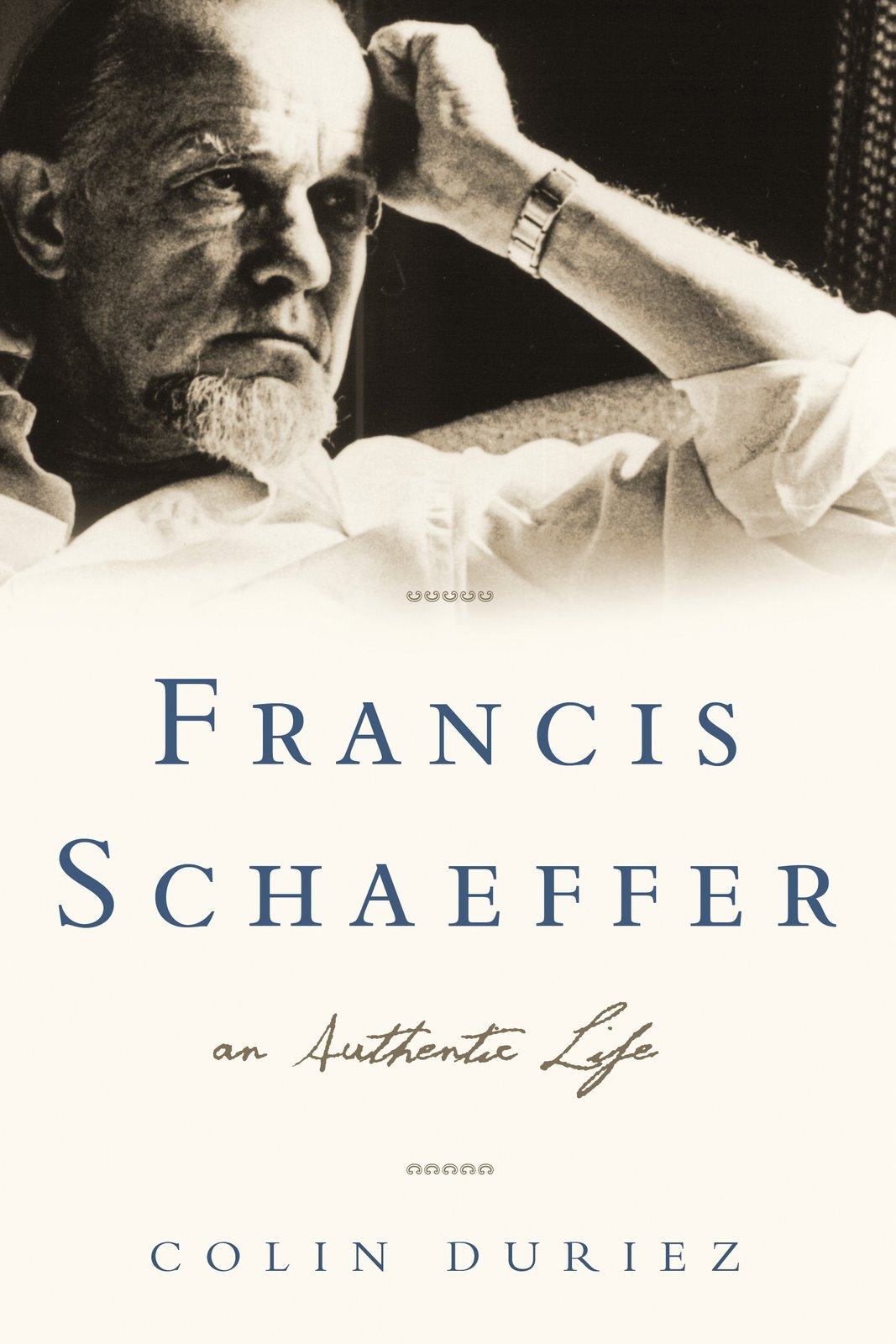 Francis Schaeffer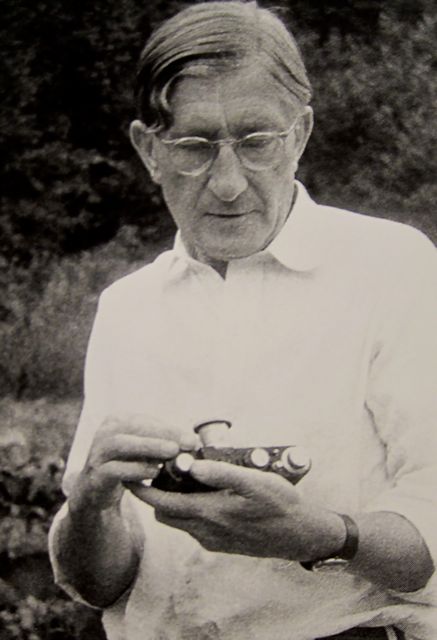
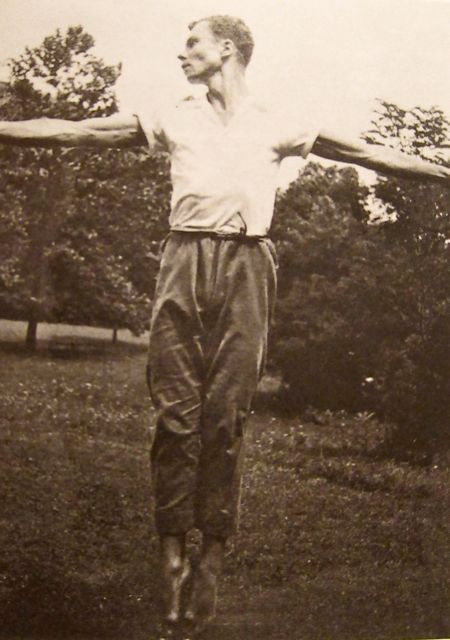
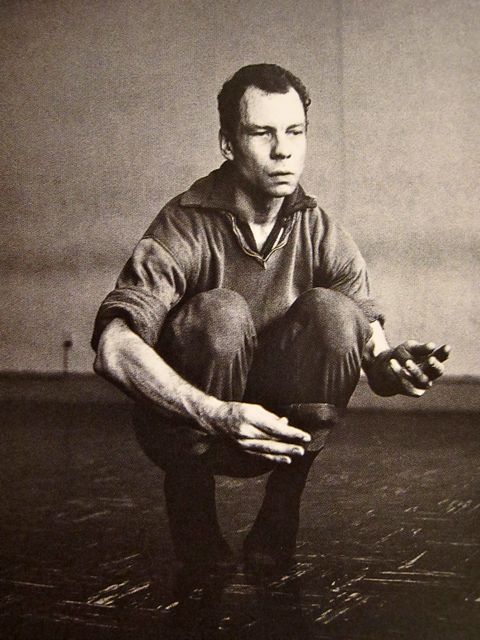

 00
00


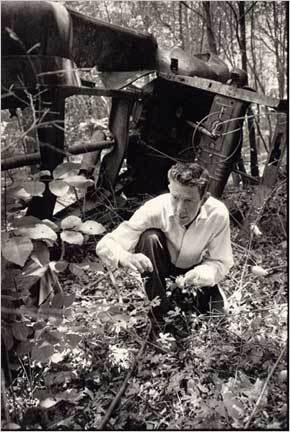
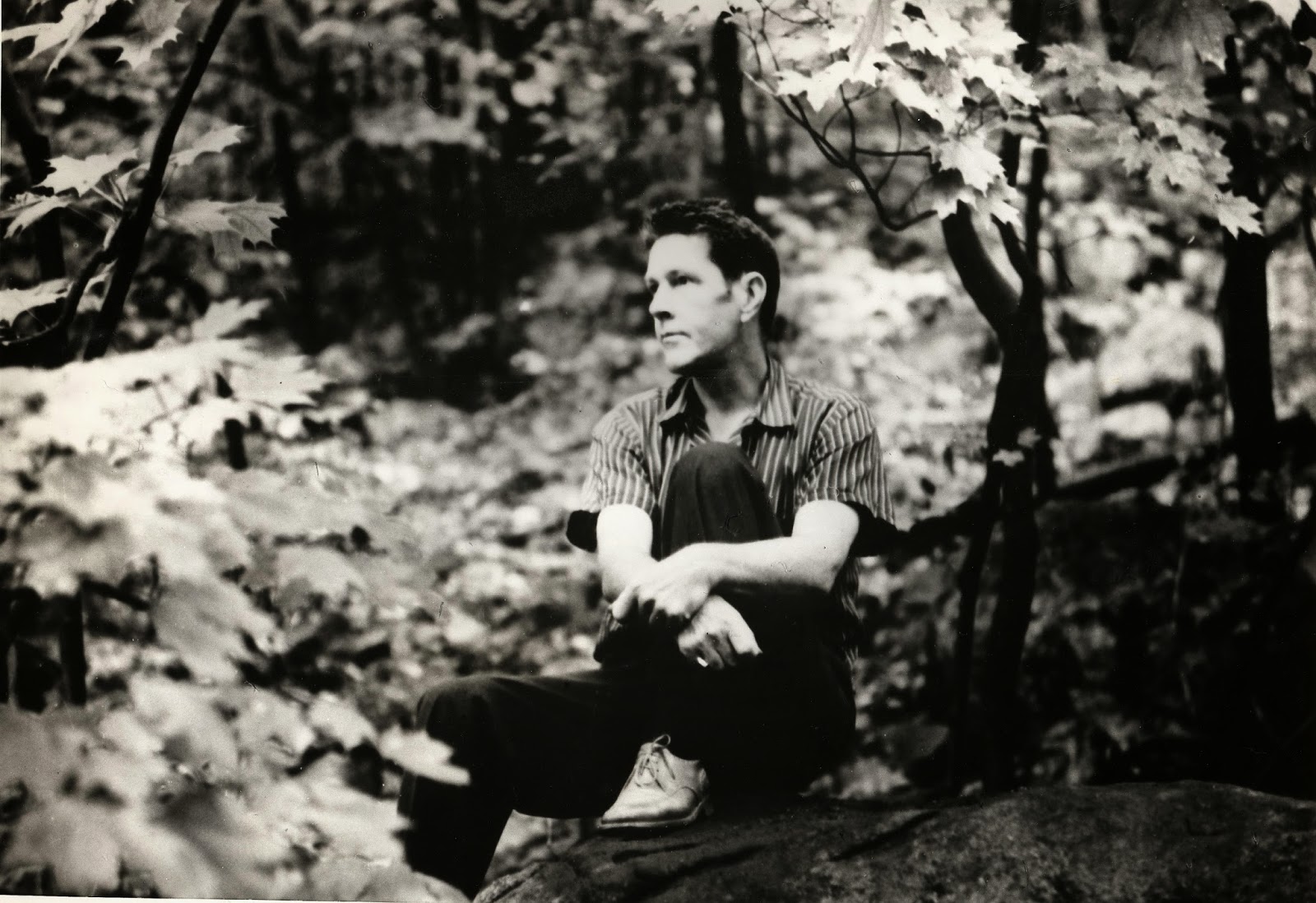
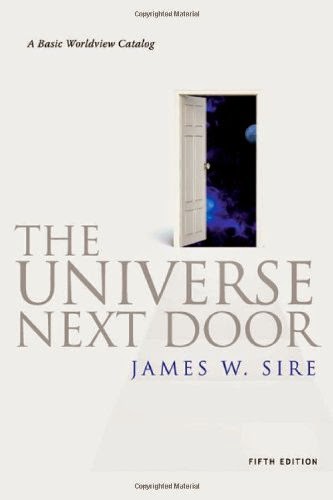


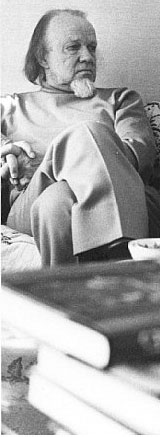


 How accurate is the Old Testament we hold in our hands? It’s popular today to attack the accuracy of the Bible on the grounds of its lack of effective transmission. Popular authors claim the Bible we have today has simply been copied too many times, with too many textual errors, to be believed as the very words of God handed down to us over the millennia.
 With all the careful scribal work a shockingly few number of Old Testament ancient manuscripts exist until today. The silver amulet scroll is by far the oldest. The scroll was mentioned as #4 in this top ten series. The amulet scroll dates way back to 600 BC. This is fantastic but it is only a couple verses of the entire Bible. So we can get a feel for the accuracy of those couple verses but not be able to get a good representative sample for the entirety of Scripture.
 Codex Aleppo is the oldest entire Old Testament possessed by humanity. The manuscript dates to around 900AD. The priceless manuscript is indeed magnificent. When analyzing the more than 2.7 million writing details that make up the Old Testament, the manuscript appears to be very precise in its creation. Although we have such a beautiful manuscript, the elephant in the room is that this manuscript dates from 900AD. Many New Testament manuscripts are older than our oldest Old Testament manuscript. Most of the Old Testament was written over 1500 years before Codex Aleppo.
 The greatest biblically relevant archaeological discovery, made in the winter of 1946-47, would shake up the biblical and archaeological world. John C. Trever has done a good job reconstructing the story of the scrolls from several interviews with the Bedouin people.
 The scrolls were first taken to a dealer named Ibrahim ‘ljha in Bethlehem. In one of those famous dumb moments of history ‘ljha returned them saying they were worthless. Undaunted, thankfully, the Bedouin went to a nearby market, where a Syrian Christian offered to buy them. A sheikh joined their conversation and suggested they take the scrolls to a part-time antiques dealer. The Bedouin left one scroll with the dealer and then sold three scrolls to another for the ridiculous sum of $29!
 After examining the scrolls and suspecting their astronomical worth, he expressed interest in purchasing them. Four scrolls found their way into his hands. More scrolls continued to arrive on the scene. By the end of 1948, nearly two years after their first discovery, scholars had yet to locate the source of the manuscripts.
 Archaeologists were able to track down the origin of the first scrolls and together with the Bedouins ended up finding a total of 972 manuscripts from 11 different caves. All 11 caves are in the southeastern Dead Sea area of Israel. The area receives almost no rainfall making it a perfect climate for ancient manuscripts to last thousands of years without decomposing.
 The scrolls, for some insane reason, were put up for sale in the Wall Street Journal on June 1, 1954. They were purchased for $250,000 and brought to Jerusalem where they eventually became housed in a museum called the Shrine of the Book where they reside today when not circulating in museums around the world. The scrolls today are considered priceless. Just to purchase a replica facsimile copy of 3 of the scrolls currently will run you $60,000 (a donation of replica scrolls to Parchment & Pen will not be turned down).
 The scrolls are still, after decades, a discovery still being digested. The 972 manuscripts have shed great light on the accuracy and complexity of the Old Testament. The Isaiah Scroll, in comparison to Codex Aleppo and other manuscripts, show that the message of the Old Testament has not been changed over millennia. More articles and books have been written about the Dead Sea Scrolls than any other archaeological discovery with biblical significance. The scrolls are shedding a great deal of light on the Jewish religious world of roughly 200BC-90AD. The scrolls are generally showing the modern-day Old Testament to be an extremely accurate representation of the original writers.
 Google has announced a new deal with the Israeli Antiquities Authority to photograph all of the scrolls in order to make high-resolution photos available to anyone online for free. The scrolls continue to amaze and delight us; where we once had only a couple fragments of the ancient Old Testament we now enjoy an abundant library.


 I arrived at 7pm on a Thursday evening, the sun dropping behind the mountains, but still managing to keep a corner pocket known as Sundance lit. As you walk from the drive- way to the stone and wood structure, long planks of wood lead you to the entrance of the home. Walking along the deck, you get a feel- ing of being suspended amongst the trees. You can tell instantly that the deck has served the home well. It’s entertained all that have come and spent long evenings and early mornings in conversation and contemplation. The home is amazing. It’s the kind of place where you could lose yourself in your work for weeks at a time and not even care about the outside world. The kind of place that inspires you to write, carve, sculpt, paint, and sew.
 Art has a way of bringing the commu- nity together. Adam Price’s 337 Project, of which Jann and 150 other local artists collabo- rated, brought Salt Lake together in a way the city hadn’t yet experienced. Jann said, “The 337 Project was such a rich experience. I think it helped Salt Lake to define its own vision. There was a shimmer that everybody felt, that meant that some conscious level was raised.”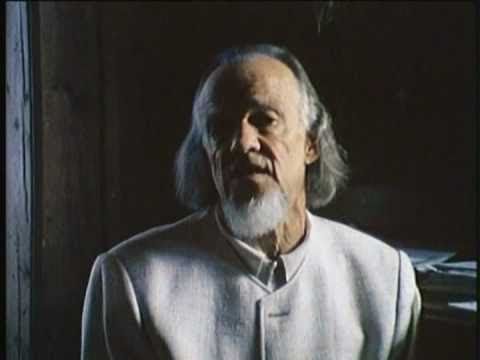




 The Daily Hatch
