Francis Schaeffer predicted July 14, 2015 would come when the video “Planned Parenthood Uses Partial-Birth Abortions to Sell Baby Parts” would be released!!!!
Dr. Francis Schaeffer: Whatever Happened to the Human Race Episode 1 ABORTION
Mark Heard in his article in March of 1997 in Christianity Today sums up Francis Schaeffer’s view of the world and how it held true 13 years after Schaeffer’s 1984 death:
some critics have recently allowed that his big picture has proven durable. The conceptual centerpiece of Schaeffer’s historical view is the triumph of relativism in the modern post-Christian world: “Modern men, in the absence of absolutes, have polluted all aspects of morality, making standards completely hedonistic and relativistic.” He would not have been surprised by the advent of“postmodern” thought, which has built countless altars to relativism across the intellectual landscape. Nor would he have been surprised by the resultant moral vacuum that characterizes much contemporary academic thinking. In a recent issue of the Chronicle of Higher Education, anthropologist Carolyn Fluehr-Lobban agonized over the fact that her discipline’s prime directive—cultural relativism—left her with no rationale for opposing rape or racial genocide in other cultures. One can almost hear Francis Schaeffer saying, “I told you so.”
In particular, he appears to have been prescient on the issue of human life. In 1976 he observed that “in regard to the fetus, the courts have arbitrarily separated ‘aliveness’ from ‘personhood,’ and if this is so, why not arbitrarily do the same with the aged? So the steps move along, and euthanasia may well become increasingly acceptable. And if so, why not keep alive the bodies of … persons in whom the brain wave is flat to harvest from them body parts and blood?” Schaeffer’s bleak vision is now daily news. “Cadaver Jack” Kevorkian has already killed more people than Ted Bundy, but the state of Michigan cannot muster the political will to stop him. A federal court has forbidden the state of Washington to pass laws preventing doctors from killing their patients, while the University of Washington is permitted to scavenge and sell the body parts of thousands of aborted children every year.
I truly believe that many of the problems we have today in the USA are due to the advancement of humanism in the last few decades in our society. Ronald Reagan appointed the evangelical Dr. C. Everett Koop to the position of Surgeon General in his administration. He partnered with Dr. Francis Schaeffer in making the video below. It is very valuable information for Christians to have. Actually I have included a video below that includes comments from him on this subject.
Francis Schaeffer “BASIS FOR HUMAN DIGNITY” Whatever…HTTHR
Dr. Francis Schaeffer: Whatever Happened to the Human Race Episode 1 ABORTION
______________
1st video July 14, 2015
Planned Parenthood Uses Partial-Birth Abortions to Sell Baby Parts
Published on Jul 14, 2015
EMBARGOED UNTIL 8:00 A.M. ET, 14 JULY 2015
#PPSellsBabyParts PLANNED PARENTHOOD’S TOP DOCTOR, PRAISED BY CEO, USES PARTIAL-BIRTH ABORTIONS TO SELL BABY PARTS
PPFA Senior Director of Medical Services Deborah Nucatola, Other Planned Parenthood Leadership Documented Selling Aborted Baby Parts in 3-Year Investigative Journalism Study
Contact: David Daleiden, media@centerformedicalprogress.org, 949.734.0859
LOS ANGELES, July 14—New undercover footage shows Planned Parenthood Federation of America’s Senior Director of Medical Services, Dr. Deborah Nucatola, describing how Planned Parenthood sells the body parts of aborted fetuses, and admitting she uses partial-birth abortions to supply intact body parts.
In the video, Nucatola is at a business lunch with actors posing as buyers from a human biologics company. As head of PPFA’s Medical Services department, Nucatola has overseen medical practice at all Planned Parenthood locations since 2009. She also trains new Planned Parenthood abortion doctors and performs abortions herself at Planned Parenthood Los Angeles up to 24 weeks.
The buyers ask Nucatola, “How much of a difference can that actually make, if you know kind of what’s expected, or what we need?”
“It makes a huge difference,” Nucatola replies. “I’d say a lot of people want liver. And for that reason, most providers will do this case under ultrasound guidance, so they’ll know where they’re putting their forceps. The kind of rate-limiting step of the procedure is calvarium. Calvarium—the head—is basically the biggest part.”
Nucatola explains, “We’ve been very good at getting heart, lung, liver, because we know that, so I’m not gonna crush that part, I’m gonna basically crush below, I’m gonna crush above, and I’m gonna see if I can get it all intact.”
“And with the calvarium, in general, some people will actually try to change the presentation so that it’s not vertex,” she continues. “So if you do it starting from the breech presentation, there’s dilation that happens as the case goes on, and often, the last step, you can evacuate an intact calvarium at the end.”
Using ultrasound guidance to manipulate the fetus from vertex to breech orientation before intact extraction is the hallmark of the illegal partial-birth abortion procedure (18 U.S.C. 1531).
Nucatola also reveals that Planned Parenthood’s national office is concerned about their liability for the sale of fetal parts: “At the national office, we have a Litigation and Law Department which just really doesn’t want us to be the middle people for this issue right now,” she says. “But I will tell you that behind closed doors these conversations are happening with the affiliates.”
The sale or purchase of human fetal tissue is a federal felony punishable by up to 10 years in prison and a fine of up to $500,000 (42 U.S.C. 289g-2).
A separate clip shows Planned Parenthood President and CEO Cecile Richards praising Nucatola’s work to facilitate connections for fetal tissue collection. “Oh good,” Richards says when told about Nucatola’s support for fetal tissue collection at Planned Parenthood, “Great. She’s amazing.”
The video is the first by The Center for Medical Progress in its “Human Capital” series, a nearly 3-year-long investigative journalism study of Planned Parenthood’s illegal trafficking of aborted fetal parts. Project Lead David Daleiden notes: “Planned Parenthood’s criminal conspiracy to make money off of aborted baby parts reaches to the very highest levels of their organization. Elected officials must listen to the public outcry for Planned Parenthood to be held accountable to the law and for our tax dollars to stop underwriting this barbaric abortion business.”
For more information on the Human Capital project, visit centerformedicalprogress.org.
The Center for Medical Progress is a 501(c)3 non-profit dedicated to monitoring and reporting on medical ethics and advances.
Dr. Francis schaeffer – The flow of Materialism(from Part 4 of Whatever happened to human race?)
Dr. Francis Schaeffer – The Biblical flow of Truth & History (intro)
Francis Schaeffer – The Biblical Flow of History & Truth (1)
Dr. Francis Schaeffer – The Biblical Flow of Truth & History (part 2)
Dr Richard Land discusses abortion and slavery – 10/14/2004 – part 3 The best pro-life film I have ever seen below by Francis Schaeffer and Dr. C. Everett Koop “Whatever happened to the human race?” Over the years I have taken on the Ark Times liberal bloggers over and over and over concerning the issue […]
The best pro-life film I have ever seen below by Francis Schaeffer and Dr. C. Everett Koop “Whatever happened to the human race?” Francis Schaeffer pictured above._________ The 45 minute video above is from the film series created from Francis Schaeffer’s book “Whatever Happened to the Human Race?” with Dr. C. Everett Koop. This book really […]
The best pro-life film I have ever seen below by Francis Schaeffer and Dr. C. Everett Koop “Whatever happened to the human race?” Over the years I have taken on the Ark Times liberal bloggers over and over and over concerning the issue of abortion. I asked over and over again for one liberal blogger […]
Francis Schaeffer pictured above._________ The best pro-life film I have ever seen below by Francis Schaeffer and Dr. C. Everett Koop “Whatever happened to the human race?” Over the years I have taken on the Ark Times liberal bloggers over and over and over concerning the issue of abortion. I asked over and over again […]
The best pro-life film I have ever seen below by Francis Schaeffer and Dr. C. Everett Koop “Whatever happened to the human race?” On 1-24-13 I took on the child abuse argument put forth by Ark Times Blogger “Deathbyinches,” and the day before I pointed out that because the unborn baby has all the genetic code […]
PHOTO BY STATON BREIDENTHAL from Pro-life march in Little Rock on 1-20-13. Tim Tebow on pro-life super bowl commercial. Over the years I have taken on the Ark Times liberal bloggers over and over and over concerning the issue of abortion. Here is another encounter below. On January 22, 2013 (on the 40th anniversary of the […]
Dr Richard Land discusses abortion and slavery – 10/14/2004 – part 3 The best pro-life film I have ever seen below by Francis Schaeffer and Dr. C. Everett Koop “Whatever happened to the human race?” Over the years I have taken on the Ark Times liberal bloggers over and over and over concerning the issue […]
The Bible and Archaeology – Is the Bible from God? (Kyle Butt 42 min)
Why Can’t Morals Be Grounded In Society?
Published onAug 31, 2012
Dr William Lane Craig was invited by the School of Oriental and African Studies (SOAS) Christian Union, London to give a lecture titled “Can we be good without God?” In this video Dr Craig answers a question about the objectivity of morality. Should we consider morals to be objective? If so, why can’t morals be “abiding” and objectively grounded in society?
The lecture formed part of the Reasonable Faith Tour in October 2011. The Tour was sponsored by Damaris Trust, UCCF and Premier Christian Radio.
(Samuel Beckett example: Life is meaningless, live in tension with reality)
(Modern man sees no hope for the future and has deluded himself by appealing to nonreason to stay sane. Look at the example of the lady tied to the railroad tracks in this above video as a example.)
Francis and Edith Schaeffer pictured below:
HOW SHOULD WE THEN LIVE? was both a book and a film series.
I have discussed many subjects with my liberal friends over at the Ark Times Blog in the past and I have taken them on now on the subject of the absurdity of life without God in the picture. Most of my responses included quotes fromWilliam Lane Craig’sbookTHE ABSURDITY OF LIFE WITHOUT GOD. Here is the result of one ofthose encounters from June of 2013:
Hackett’s secular atheist worldview could only lead to one conclusion and sure enough he stated, “Yeah! SR you’re going to the same place I am…straight into the dirt.”
I SALUTE YOU HACKETT FOR FOLLOWING A GOOD LINE OF LOGIC!!!! THIS QUOTE FROM BERTRAND RUSSELL COMES TO THE SAME CONCLUSION THAT YOU DO, “All the noonday brightness of human genius, [is] destined to extinction in the vast death of the solar system, and that the whole temple of Man’s achievement must inevitably be buried beneath the debris of a universe in ruins.” (Bertrand Russell, “A Free Man’s Worship,” Two Modern Essays on Religion (Hanover, NH: Westholm Publications, 1959) 25)
DO YOU REALLY BELIEVE THERE IS NO GOD OR DO YOU WANT TO AVOID BELIEVING IN GOD BECAUSE YOU DON’T WANT TO OBEY HIM? A THIEF DOESN’T WANT TO FIND A POLICEMAN EITHER!!!!!
The atheist ALDOUS HUXLEY found the logical conclusion that life is meaningless exhilarating:
“We objected to the morality because it interfered with our sexual freedom; we objected to the political and economic system because it was unjust. The supporters of these systems claimed that in some way they embodied the meaning (a Christian meaning, they insisted) of the world. There was one admirably simple method of confuting these people at the same time justifying ourselves… we could deny that the world had any meaning.” (Aldous Huxley, Ends and Means (New York and London: Harper & Brothers Publishers, 1937) 316)
E P I S O D E 1 0 Dr. Francis Schaeffer – Episode X – Final Choices 27 min FINAL CHOICES I. Authoritarianism the Only Humanistic Social Option One man or an elite giving authoritative arbitrary absolutes. A. Society is sole absolute in absence of other absolutes. B. But society has to be […]
E P I S O D E 9 Dr. Francis Schaeffer – Episode IX – The Age of Personal Peace and Affluence 27 min T h e Age of Personal Peace and Afflunce I. By the Early 1960s People Were Bombarded From Every Side by Modern Man’s Humanistic Thought II. Modern Form of Humanistic Thought Leads […]
E P I S O D E 8 Dr. Francis Schaeffer – Episode VIII – The Age of Fragmentation 27 min I saw this film series in 1979 and it had a major impact on me. T h e Age of FRAGMENTATION I. Art As a Vehicle Of Modern Thought A. Impressionism (Monet, Renoir, Pissarro, Sisley, […]
E P I S O D E 7 Dr. Francis Schaeffer – Episode VII – The Age of Non Reason I am thrilled to get this film series with you. I saw it first in 1979 and it had such a big impact on me. Today’s episode is where we see modern humanist man act […]
E P I S O D E 6 How Should We Then Live 6#1 Uploaded by NoMirrorHDDHrorriMoN on Oct 3, 2011 How Should We Then Live? Episode 6 of 12 ________ I am sharing with you a film series that I saw in 1979. In this film Francis Schaeffer asserted that was a shift in […]
E P I S O D E 5 How Should We Then Live? Episode 5: The Revolutionary Age I was impacted by this film series by Francis Schaeffer back in the 1970′s and I wanted to share it with you. Francis Schaeffer noted, “Reformation Did Not Bring Perfection. But gradually on basis of biblical teaching there […]
Dr. Francis Schaeffer – Episode IV – The Reformation 27 min I was impacted by this film series by Francis Schaeffer back in the 1970′s and I wanted to share it with you. Schaeffer makes three key points concerning the Reformation: “1. Erasmian Christian humanism rejected by Farel. 2. Bible gives needed answers not only as to […]
Francis Schaeffer’s “How should we then live?” Video and outline of episode 3 “The Renaissance” Francis Schaeffer: “How Should We Then Live?” (Episode 3) THE RENAISSANCE I was impacted by this film series by Francis Schaeffer back in the 1970′s and I wanted to share it with you. Schaeffer really shows why we have so […]
Francis Schaeffer: “How Should We Then Live?” (Episode 2) THE MIDDLE AGES I was impacted by this film series by Francis Schaeffer back in the 1970′s and I wanted to share it with you. Schaeffer points out that during this time period unfortunately we have the “Church’s deviation from early church’s teaching in regard […]
Francis Schaeffer: “How Should We Then Live?” (Episode 1) THE ROMAN AGE Today I am starting a series that really had a big impact on my life back in the 1970′s when I first saw it. There are ten parts and today is the first. Francis Schaeffer takes a look at Rome and why […]
Francis Schaeffer: “Whatever Happened to the Human Race” (Episode 5) TRUTH AND HISTORY Published on Oct 7, 2012 by AdamMetropolis This crucial series is narrated by the late Dr. Francis Schaeffer and former Surgeon General Dr. C. Everett Koop. Today, choices are being made that undermine human rights at their most basic level. Practices once […]
The opening song at the beginning of this episode is very insightful. Francis Schaeffer: “Whatever Happened to the Human Race” (Episode 4) THE BASIS FOR HUMAN DIGNITY Published on Oct 7, 2012 by AdamMetropolis This crucial series is narrated by the late Dr. Francis Schaeffer and former Surgeon General Dr. C. Everett Koop. Today, choices […]
Francis Schaeffer: “Whatever Happened to the Human Race” (Episode 3) DEATH BY SOMEONE’S CHOICE Published on Oct 6, 2012 by AdamMetropolis This crucial series is narrated by the late Dr. Francis Schaeffer and former Surgeon General Dr. C. Everett Koop. Today, choices are being made that undermine human rights at their most basic level. Practices […]
Francis Schaeffer: “Whatever Happened to the Human Race?” (Episode 2) SLAUGHTER OF THE INNOCENTS Published on Oct 6, 2012 by AdamMetropolis This crucial series is narrated by the late Dr. Francis Schaeffer and former Surgeon General Dr. C. Everett Koop. Today, choices are being made that undermine human rights at their most basic level. Practices […]
It is not possible to know where the pro-life evangelicals are coming from unless you look at the work of the person who inspired them the most. That person was Francis Schaeffer. I do care about economic issues but the pro-life issue is the most important to me. Several years ago Adrian Rogers (past president of […]
Ecclesiastes 2-3 Published on Sep 19, 2012 Calvary Chapel Spring Valley | Sunday Evening | September 16, 2012 | Derek Neider _____________________________ I have written on the Book of Ecclesiastes and the subject of the meaning of our lives on several occasions on this blog. In this series on Ecclesiastes I hope to show how secular […]
Ecclesiastes 1 Published on Sep 4, 2012 Calvary Chapel Spring Valley | Sunday Evening | September 2, 2012 | Pastor Derek Neider _____________________ I have written on the Book of Ecclesiastes and the subject of the meaning of our lives on several occasions on this blog. In this series on Ecclesiastes I hope to show how […]
Ecclesiastes 8-10 | Still Searching After All These Years Published on Oct 9, 2012 Calvary Chapel Spring Valley | Sunday Evening | October 7, 2012 | Pastor Derek Neider _______________________ Ecclesiastes 11-12 | Solomon Finds His Way Published on Oct 30, 2012 Calvary Chapel Spring Valley | Sunday Evening | October 28, 2012 | Pastor Derek Neider […]
Ecclesiastes 6-8 | Solomon Turns Over a New Leaf Published on Oct 2, 2012 Calvary Chapel Spring Valley | Sunday Evening | September 30, 2012 | Pastor Derek Neider _____________________ I have written on the Book of Ecclesiastes and the subject of the meaning of our lives on several occasions on this blog. In this series […]
Ecclesiastes 4-6 | Solomon’s Dissatisfaction Published on Sep 24, 2012 Calvary Chapel Spring Valley | Sunday Evening | September 23, 2012 | Pastor Derek Neider ___________________ I have written on the Book of Ecclesiastes and the subject of the meaning of our lives on several occasions on this blog. In this series on Ecclesiastes I hope […]
Overview of the Book of Ecclesiastes Overview of the Book of EcclesiastesAuthor: Solomon or an unknown sage in the royal courtPurpose: To demonstrate that life viewed merely from a realistic human perspective must result in pessimism, and to offer hope through humble obedience and faithfulness to God until the final judgment.Date: 930-586 B.C. Ecclesiastes 2-3 Published on Sep 19, […]
Ecclesiastes 1 Published on Sep 4, 2012 Calvary Chapel Spring Valley | Sunday Evening | September 2, 2012 | Pastor Derek Neider _____________________ I have written on the Book of Ecclesiastes and the subject of the meaning of our lives on several occasions on this blog. In this series on Ecclesiastes I hope to show how […]
Ecclesiastes 8-10 | Still Searching After All These Years Published on Oct 9, 2012 Calvary Chapel Spring Valley | Sunday Evening | October 7, 2012 | Pastor Derek Neider _______________________ Ecclesiastes 11-12 | Solomon Finds His Way Published on Oct 30, 2012 Calvary Chapel Spring Valley | Sunday Evening | October 28, 2012 | Pastor Derek Neider […]
Anti Abortion Pro-Life Training Video by Scott Klusendorf Part 3 of 4
How Should We then Live Episode 7 small (Age of Nonreason)
#02 How Should We Then Live? (Promo Clip) Dr. Francis Schaeffer
The clip above is from episode 9 THE AGE OF PERSONAL PEACE AND AFFLUENCE
10 Worldview and Truth
In above clip Schaeffer quotes Paul’s speech in Greece from Romans 1 (from Episode FINAL CHOICES)
Two Minute Warning: How Then Should We Live?: Francis Schaeffer at 100
A Christian Manifesto Francis Schaeffer
Francis Schaeffer “BASIS FOR HUMAN DIGNITY” Whatever…HTTHR
Dr. Francis Schaeffer: Whatever Happened to the Human Race Episode 1 ABORTION
This crucial series is narrated by the late Dr. Francis Schaeffer and former Surgeon General Dr. C. Everett Koop. Today, choices are being made that undermine human rights at their most basic level. Practices once considered unthinkable are now acceptable – abortion, infanticide and euthanasia. The destruction of human life, young and old, is being sanctioned on an ever-increasing scale by the medical profession, by the courts, by parents and by silent Christians. The five episodes in this series examine the sanctity of life as a social, moral and spiritual issue which the Christian must not ignore. The conclusion presents the Christian alternative as the only real solution to man’s problems.
_____________________________
I have gone back and forth with Ark Times liberal bloggers on the issue of abortion, but I am going to try something new. I am going to respond with logical and rational reasons the pro-life view is true. All of this material is from a paper by Scott Klusendorf called FIVE BAD WAYS TO ARGUE ABOUT ABORTION .
As a guest on the television show Politically Incorrect, former super-model Kathy Ireland gave a carefully reasoned scientific and philosophic defense of the pro-life position. The show’s host, Bill Maher, ignored her evidence completely and shot back with (paraphrase) “Kathy, that’s just your view.”
What’s wrong with this response? Maher was confusing a moral claim with a preference claim. But there is a difference between disliking something (say, for example, a particular flavor of ice cream) and thinking it is morally wrong. Put simply, when pro-life advocates say that abortion is morally wrong, they are not saying they personally dislike abortion or would prefer that people not have one. Rather, they are saying that elective abortion is objectively wrong for everyone, regardless of how one feels about it. This is why the popular bumper sticker“Don’t like abortion? Don’t have one!”misses the point entirely. It confuses the two types of claims. (Try this: “Don’t like slavery? Don’t own a slave!”)
Now it may be the case that pro-life advocates like Kathy Ireland are mistaken about their claim. Perhaps their evidence that abortion unjustly takes the life of a defenseless child is weak and inconclusive. But instead of proving this with facts and arguments, abortion advocates like Bill Maher ignore the evidence altogether. “Well, that’s just your view.” This not only relativizes the pro-lifers claim, it is intellectually lazy. It attempts to dismiss evidence rather than refute it.
Imagine if I were to say, “There is a pink elephant in the corner of the room just beneath the window.”7 How should you respond to my claim? Perhaps I’m mistaken (and chances are I would be), but it would do no good to say, “That’s just your view.” The problem is I was not offering an opinion, I was claiming to be right. To refute me, you must show that my claim is false. The correct response is to say, “Your evidence is lousy. We looked in the corner and there is no elephant.”
But again, Maher did not do that. At no point did he challenge her facts and arguments. What he said in effect was “Go away Kathy. You have your views and I have mine.” This was very condescending because he did not even entertain the possibility that she had good evidence for her claim. Nor did he acknowledge the type of claim she was making.
To sum up, Maher was confusing a preference claim with a distinctly moral one. Preference claims cannot be evaluated as true or false because they are matters of personal taste. You cannot reasonably argue that vanilla ice cream is objectively better than chocolate. But moral claims are different. They can be evaluated as true or false based on the evidence. They do not say, “This is better tasting,” they say, “This is right”. Kathy Ireland’s claim was, Abortion is wrong because it takes the life of a defenseless child, and I think I’m right. Maher’s glib response did nothing to refute this. In fact, one could stop Maher dead in his tracks by saying, “Bill, it’s just your view that it’s just my view.”
I have gone back and forth and back and forth with many liberals on the Arkansas Times Blog on many issues such as abortion, human rights, welfare, poverty, gun control and issues dealing with popular culture. Here is another exchange I had with them a while back. My username at the Ark Times Blog is Saline […]
I have gone back and forth and back and forth with many liberals on the Arkansas Times Blog on many issues such as abortion, human rights, welfare, poverty, gun control and issues dealing with popular culture. Here is another exchange I had with them a while back. My username at the Ark Times Blog is Saline […]
I have gone back and forth and back and forth with many liberals on the Arkansas Times Blog on many issues such as abortion, human rights, welfare, poverty, gun control and issues dealing with popular culture. Here is another exchange I had with them a while back. My username at the Ark Times Blog is Saline […]
I have gone back and forth and back and forth with many liberals on the Arkansas Times Blog on many issues such as abortion, human rights, welfare, poverty, gun control and issues dealing with popular culture. Here is another exchange I had with them a while back. My username at the Ark Times Blog is […]
I have gone back and forth and back and forth with many liberals on the Arkansas Times Blog on many issues such as abortion, human rights, welfare, poverty, gun control and issues dealing with popular culture. Here is another exchange I had with them a while back. My username at the Ark Times Blog is Saline […]
I have gone back and forth and back and forth with many liberals on the Arkansas Times Blog on many issues such as abortion, human rights, welfare, poverty, gun control and issues dealing with popular culture. Here is another exchange I had with them a while back. My username at the Ark Times Blog is Saline […]
I have gone back and forth and back and forth with many liberals on the Arkansas Times Blog on many issues such as abortion, human rights, welfare, poverty, gun control and issues dealing with popular culture. Here is another exchange I had with them a while back. My username at the Ark Times Blog is Saline […]
I have gone back and forth and back and forth with many liberals on the Arkansas Times Blog on many issues such as abortion, human rights, welfare, poverty, gun control and issues dealing with popular culture. Here is another exchange I had with them a while back. My username at the Ark Times Blog is […]
I have gone back and forth and back and forth with many liberals on the Arkansas Times Blog on many issues such as abortion, human rights, welfare, poverty, gun control and issues dealing with popular culture. Here is another exchange I had with them a while back. My username at the Ark Times Blog is Saline […]
I have gone back and forth and back and forth with many liberals on the Arkansas Times Blog on many issues such as abortion, human rights, welfare, poverty, gun control and issues dealing with popular culture. Here is another exchange I had with them a while back. My username at the Ark Times Blog is Saline […]
I have gone back and forth and back and forth with many liberals on the Arkansas Times Blog on many issues such as abortion, human rights, welfare, poverty, gun control and issues dealing with popular culture. Here is another exchange I had with them a while back. My username at the Ark Times Blog is Saline […]
I have gone back and forth and back and forth with many liberals on the Arkansas Times Blog on many issues such as abortion, human rights, welfare, poverty, gun control and issues dealing with popular culture. Here is another exchange I had with them a while back. My username at the Ark Times Blog is Saline […]
I have gone back and forth and back and forth with many liberals on the Arkansas Times Blog on many issues such as abortion, human rights, welfare, poverty, gun control and issues dealing with popular culture. Here is another exchange I had with them a while back. My username at the Ark Times Blog is Saline […]
I have gone back and forth and back and forth with many liberals on the Arkansas Times Blog on many issues such as abortion, human rights, welfare, poverty, gun control and issues dealing with popular culture. Here is another exchange I had with them a while back. My username at the Ark Times Blog is Saline […]
I have gone back and forth and back and forth with many liberals on the Arkansas Times Blog on many issues such as abortion, human rights, welfare, poverty, gun control and issues dealing with popular culture. Here is another exchange I had with them a while back. My username at the Ark Times Blog is Saline […]
I have gone back and forth and back and forth with many liberals on the Arkansas Times Blog on many issues such as abortion, human rights, welfare, poverty, gun control and issues dealing with popular culture. Here is another exchange I had with them a while back. My username at the Ark Times Blog is Saline […]
I have gone back and forth and back and forth with many liberals on the Arkansas Times Blog on many issues such as abortion, human rights, welfare, poverty, gun control and issues dealing with popular culture. Here is another exchange I had with them a while back. My username at the Ark Times Blog is Saline […]
I have gone back and forth and back and forth with many liberals on the Arkansas Times Blog on many issues such as abortion, human rights, welfare, poverty, gun control and issues dealing with popular culture. Here is another exchange I had with them a while back. My username at the Ark Times Blog is Saline […]
I have gone back and forth and back and forth with many liberals on the Arkansas Times Blog on many issues such as abortion, human rights, welfare, poverty, gun control and issues dealing with popular culture. Here is another exchange I had with them a while back. My username at the Ark Times Blog is Saline […]
I have gone back and forth and back and forth with many liberals on the Arkansas Times Blog on many issues such as abortion, human rights, welfare, poverty, gun control and issues dealing with popular culture. Here is another exchange I had with them a while back. My username at the Ark Times Blog is Saline […]
Max Brantley of the Arkansas Times Blog reprinted a story of a 38 year old later telling her story. She got an abortion when she was 23 for just selfish reasons. The lady identified herself as a Christian. As a response to this I posted the following on 2-8-13 on the Arkansas Times Blog: You […]
Dr Richard Land discusses abortion and slavery – 10/14/2004 – part 3 The best pro-life film I have ever seen below by Francis Schaeffer and Dr. C. Everett Koop “Whatever happened to the human race?” Over the years I have taken on the Ark Times liberal bloggers over and over and over concerning the issue […]
The best pro-life film I have ever seen below by Francis Schaeffer and Dr. C. Everett Koop “Whatever happened to the human race?” Francis Schaeffer pictured above._________ The 45 minute video above is from the film series created from Francis Schaeffer’s book “Whatever Happened to the Human Race?” with Dr. C. Everett Koop. This book really […]
The best pro-life film I have ever seen below by Francis Schaeffer and Dr. C. Everett Koop “Whatever happened to the human race?” Over the years I have taken on the Ark Times liberal bloggers over and over and over concerning the issue of abortion. I asked over and over again for one liberal blogger […]
Francis Schaeffer pictured above._________ The best pro-life film I have ever seen below by Francis Schaeffer and Dr. C. Everett Koop “Whatever happened to the human race?” Over the years I have taken on the Ark Times liberal bloggers over and over and over concerning the issue of abortion. I asked over and over again […]
The best pro-life film I have ever seen below by Francis Schaeffer and Dr. C. Everett Koop “Whatever happened to the human race?” On 1-24-13 I took on the child abuse argument put forth by Ark Times Blogger “Deathbyinches,” and the day before I pointed out that because the unborn baby has all the genetic code […]
PHOTO BY STATON BREIDENTHAL from Pro-life march in Little Rock on 1-20-13. Tim Tebow on pro-life super bowl commercial. Over the years I have taken on the Ark Times liberal bloggers over and over and over concerning the issue of abortion. Here is another encounter below. On January 22, 2013 (on the 40th anniversary of the […]
Dr Richard Land discusses abortion and slavery – 10/14/2004 – part 3 The best pro-life film I have ever seen below by Francis Schaeffer and Dr. C. Everett Koop “Whatever happened to the human race?” Over the years I have taken on the Ark Times liberal bloggers over and over and over concerning the issue […]
The Arkansas Times blogger going by the username “Sound Policy” asserted, “…you do know there is a slight difference between fetal tissue and babies, don’t you? Don’t you?” My response was taken from the material below: Science Matters: Former supermodel Kathy Ireland tells Mike Huckabee about how she became pro-life after reading what the science books […]
I wrote a response to an article on abortion on the Arkansas Times Blog and it generated more hate than enlightenment from the liberals on the blog. However, there was a few thoughtful responses. One is from spunkrat who really did identify the real issue. WHEN DOES A HUMAN LIFE BEGIN? _______________________________________ Posted by spunkrat […]
Superbowl commercial with Tim Tebow and Mom. The Arkansas Times article, “Putting the fetus first: Pro-lifers keep up attack on access, but pro-choice advocates fend off the end to abortion right” by Leslie Newell Peacock is very lengthy but I want to deal with all of it in this new series. click to enlarge ROSE MIMMS: […]
The Arkansas Times article, “Putting the fetus first: Pro-lifers keep up attack on access, but pro-choice advocates fend off the end to abortion right” by Leslie Newell Peacock is very lengthy but I want to deal with all of it in this new series. click to enlarge ROSE MIMMS: Arkansas Right to Life director unswayed by […]
The Beatles at Apple Studios, Savile Row, London on Thursday 30 January 1969
This is not thefirst time I have written about Timothy Leary but I wanted to point out his connection with the Beatles in this post. What did Timothy Leary have to do with one of the songs on ABBEY ROAD ALBUM and what was Leary’s interaction with Francis Schaeffer? Read about it later in this post.
The following photographs are previously unseen images of John Lennon and Yoko Ono during their “Bed In” for peace at Montreal’s Queen Elizabeth Hotel in June 1969. Here, Tommy Smothers, an unknown friend, John Lennon, Yoko Ono, Rosemary Leary and Timothy Leary.
Give Peace a Chance – John Lennon – Yoko Ono
___________
John Lennon and Yoko Ono (in bed), Tommy Smothers (with guitar), and. Timothy Leary (foreground) at the 1969 Montreal Bed-in protesting the war.
The best-known slogan coined by Sixties counterculture celebrity Timothy Leary is the one he created to promote the use of LSD and other psychedelic drugs: “Turn on, tune in, drop out.”In 1969, Leary came up with another slogan that was eventually made famous, though not by him.
Three years earlier, actor Ronald Reagan had been elected Governor of California.
Leary figured that if a Hollywood celebrity could run for Governor and get elected, maybe the times were right for a Hippie celebrity to take a shot at it. Besides, he loved publicity.
So, he threw his mushroom cap into the ring and announced that he planned to run against Reagan in the 1970 gubernatorial election.
Leary came up with the tongue-in-cheek campaign slogan, “Come together, join the party.”
Lennon agreed. And, during the Montreal Bed-In days, in addition to writing and recording“Give Peace a Chance,”Lennon wrote an initial version of the song “Come Together.”
The melody was basically like the Beatles song we know today, but the original chorus was different.
It went: “Come together, right now. / Don’t come tomorrow. / Don’t come alone.”
Lennon made a demo tape of the campaign song for Leary. Leary gave copies to local underground radio stations in California and the song got some airplay.Shortly thereafter, Leary’s campaign got derailed due to his mounting legal troubles from a past marijuana bust, forcing him to, er, drop out of the Governor’s race. (Lucky for Ronnie.)
So, Lennon took the song to his bandmates, Paul McCartney, George Harrison and Ringo Starr, when the Beatles were recording songs for the upcoming Abbey Road album.
Together, they reworked it a bit and changed the lyrics to those all Beatles fans are familiar with:
“Here come old flattop, he come groovin’ up slowly He got ju-ju eyeballs, he one holy roller
He got hair down to his knees
Got to be a joker, he just do what he please
He wear no shoeshine, he got toe-jam football
He got monkey finger, he shoot Coca-Cola
He say, I know you, you know me
One thing I can tell you is you got to be free Come together, right now, over me.”
The first line of the song (Lennon’s homage to a similar line from Chuck Berry’s 1956 rock hit, “You Can’t Catch Me”) and the chorus — “Come together, right now, over me” — became famous pop culture quotations.
“Come Together” was released as a single in the US on October 6, 1970 and reached #1 on the Billboard Hot 100 Chart on November 29, 1969 — which is how, by a trippy route, Tim Leary’s gubernatorial campaign slogan became the subject of posts for those dates on ThisDayinQuotes.com.
Michael Horowitz, Tim’s longtime archivist and contributing editor to this website, has brought us this transcript from a tape recording of a conversation between Timothy and Rosemary Leary and John Lennon and Yoko Ono, which he found buried in his personal archives.
From Michael: “Back in 1984, Tim gave me this as a present to celebrate the completion ofhis bibliography. I’d completely forgotten I had it. In an archival lapse, I had put it in an unmarked envelope in a box of miscellaneous papers.”
Below is a scan of the cover page for the manuscript of an anthology Tim was considering putting together for publication around 1978 with the title, “Heroes of the Sixties: Meetings with Remarkable WoMen.”
A draft of “Part II: The Agents” from the table of contents is below. This transcript was intended to be added to a previously published piece, “Thank God for the Beatles” (The Beatles Book, 1968), “an essay about the Beatles as evolutionary agents sent by God, endowed with mysterious power to create a new human species” (Leary Bibliography, B18). The article and transcript was to be Chapter 16 under a new title, “The Beatles As Unconscious Evolutionary Agents (with Conversation with John-Yoko).” The anthology, a collection of previously published magazine articles and book excerpts, with a few new chapters, was never published.
Michael continues: “After researching the publications in which it most likely would have appeared (the underground press and Rolling Stone) in the late spring and summer of 1969, and in the bibliography and the archives housed at the New York Public Library, I determined that the transcript of this ‘conversation’ has probably never been published.”
Another piece of evidence is a handwritten note on the permissions list when the project was in a very early stage: “Hitherto Unpublished.”
Michael’s guess is that Tim was given a copy of the tape at the time it was made, or later, and had it transcribed by one of his assistants, whose penciled editorial notes appear on the first two pages, and on the contents and permissions sheets. Michael remembers Tim invited him to assist on the project, “ but he (Tim) was too involved in the Future History Series, where some of these chapters ended up in one form or another, and abandoned ‘Heroes of the Sixties: Meetings with Remarkable WoMen.’”
Montreal Bed-In and what was going on in the lives of the four of them when they held the conversation in John and Yoko’s Suite of Rooms 1738-1744 in the Queen Elizabeth Hotel
The conversation took place in the middle of John and Yoko’s week-long Bed-In, on May 29th, 1969. That makes Lisa 6 months old at the time, and it’s a year before Michael met Tim face-to-face for the first time, visiting him in prison, and became his archivist. Chronologically, it was two weeks after the People’s Park Uprising in Berkeley and less than three months before the Woodstock Music Festival. The Vietnam War was raging. The Black Panther Party was being attacked by the FBI. Less than a month later, the Weather Underground formed, calling for armed revolution to stop the war. Hippies were being busted for pot and acid. The Chicago 8 were under indictment for inciting a riot at the Democratic National Convention in Chicago, Aug. 1968.
Michael points out: “The enormous personal and political pressures on the four of them are evident here. Despite (or perhaps because of) their global fame, both couples had a difficult time getting through Canadian customs. Both had been busted for marijuana possession the previous year – John and Yoko in London, and Tim and Rosemary in Laguna Beach. A few months after the Bed-In, John would leave the Beatles and move with Yoko to the U.S., where they were closely monitored by the FBI and threatened with deportation. Ten months later, Tim would be in prison; Rosemary would be putting on benefits to raise money for his appeal.”
The Bed-In – An Archetypal “Occupation”
Michael: “The ‘60s was a decade of occupations. Perhaps the strangest and most original was the Bed-In that took place in the Queen Elizabeth Hotel in Montreal, in 1969, 43 years ago, this Spring. John Lennon and Yoko Ono occupied a bed for seven days and nights in a “Bed-In For Peace” as a symbolic protest to end the war in Vietnam, which culminated in the writing and recording of the antiwar anthem, ‘Give Peace a Chance.’
“Prior to the Bed-In, in the early sixties, leading up to the passage of the Civil Rights Act, there were Sit-Ins in the South, occupying “white only” lunch counters; Be-Ins, beginning with the one in San Francisco’s Golden Gate Park (1967), and Teach-Ins on college campuses. The Yippies led occupations at the NY Stock Exchange (1967) and the grounds of the Pentagon (1967), and later, Smoke-Ins in Washington DC and elsewhere. A half million antiwar protestors occupied the mall in front of the Washington Monument, six months after the Bed-In. The 1990s witnessed Digital Be-Ins, and wars in the Middle East brought Die-Ins. These were some of the precursors of the Occupy Movement that began in Zuccotti Park last September.”
Thanks to the fame of the couple and the novel concept of their activism, the event got media coverage well beyond the small number of participants involved.
The film Bed Peace was made available for free on YouTube in August 2011 by Yoko Ono, as part of her website “Imagine Peace.” Tim and Rosemary’s participation is also documented in another video on YouTube (also courtesy of Yoko’s Imagine Peace website), where they are seen singing on the recording of “Give Peace A Chance.”
John Lennon wrote another song that week, the earliest version of “Come Together,” for Leary’s campaign for Governor of California against Ronald Reagan. It was the prospect of Tim debating Reagan on television that, as much as anything, led to his imprisonment for a miniscule amount of marijuana. With the campaign aborted, John decided to rework the song for the Beatles’ Abbey Road.
This conversation, published here for the first time, is a time capsule from an era that has powerful and poignant correspondences to our own.
Conversation between John Lennon, Yoko Ono, Rosemary Leary and Timothy Leary, Hotel Queen Elizabeth, Montreal, Canada, May 29, 1969
TIMOTHY: Living in a teepee is great. It’s pretty basic. It’s the first artificial habitat, after all.
ROSEMARY: It’s the sexiest building ever invented.
TIMOTHY: It’s like being in a sailboat, because you have to know exactly where the wind is. You raise the fluttering banners, and just look up through the smoke-flap and you can see how the wind blows. If you don’t have the flaps the right way, the wind will blow the smoke down. We always have to be aware of the wind.
JOHN: Yeah, Yoko had this plan for us two. To blindfold ourselves for two weeks, y’know, and just work it out. We might do that when we get to the new house and find out about it.
ROSEMARY: Yes, it’d be a fantastic way to learn about it.
TIMOTHY: Also, of course, we live with rattlesnakes. That’s groovy because it requires absolute consciousness. You just can’t go thumping through the brush, thinking of what you’re going to do tomorrow. You have to realize that you’re intruding on their territory. We don’t want to hurt you. We don’t want to stumble in and step on you. So your consciousness has got to be focused. And of course it’s always helpful to have dogs. We learn a great deal from animals.
JOHN: How long have you been there, in the teepee? I mean, before you sussed the wind and everything, and you know, got your senses back?
ROSEMARY: We had to put the teepee up three times before it was right. It’s like you can touch it, and it resounds like a drone, and then it’s perfect, the canvas. It’s a wind instrument that plays like a drone.
TIMOTHY: You would really love the teepee, because it’s a work of art which involves all the senses. You start with white canvas. Then you get the pine. Each man has to strip the bark so you get the wood smooth, smooth. You have to line the poles carefully. There are fifteen of these poles, and if you do it wrong you end up with too big a hole. It’s sculpture. Then once you’ve got it built, it’s a light show, because the moon shines through the smoke hole and you can see the stars.
ROSEMARY: If you placed it properly to the east, the sun rises right over the opening, so at one point during the day the sun is full blast down into the teepee.
YOKO: Is it very wide?
ROSEMARY: It’s a little narrower than the width of this hotel room.
TIMOTHY: And at night you have a fire. All right. We’re sitting around, with the fire here in the center. That means your shadow is thrown on the screen behind you, big, and I’m gesticulating like this and you catch my shadow. And the silhouettes flicker. The fire’s dancing. So, if you are outside, you can tell a mile away what’s going on. Then you get the wind coming. It creaks a little. The door, by the way, is shaped like the yoni and you have to bend your head down as you come in, in honor of it.
ROSEMARY: The only thing that comes through the yoni is the sun and the stars and the moon; actually only people go through the lower exit and entrance.
TIMOTHY: It’s a sexy place.
YOKO: All those nasty magazines in London, they all call me Yoni.
JOHN: Yeah. Yoni Ono.
YOKO: John Lingam and Yoni Ono.
TIMOTHY: We sent a message to you, through Miles, that said that next time you come to the United States, if you wanted to get away for a few days, there’s a place…
JOHN: We never got the message from Miles. [Footnote: Barry Miles, UK countercultural activist, helped launched Indica Bookshop and International Times.] We miss a lot. Yeah, we’ve got it now. And if we come…
TIMOTHY: It would have to be done in a way that no one would know you’re there. Once you just get into the valley, it’s another world. Of course, we’ve been doing nothing but studying consciousness for the last seven or eight years, and at Millbrook, we had this large estate. You probably heard about it–this big 64-room house. It became like a mecca for scientists and barefoot pilgrims.
“We’ve been doing nothing but studying consciousness for the last seven or eight years.”–Tim
YOKO: I’ve heard of Millbrook. I mean, it’s famous.
TIMOTHY: Yes, and police informers and television people. But then we saw how geography was important. The land north of the house was uninhabited. As you got there, you got farther away from the people, and the games, and the television, and the police. What we’ve been trying to do is create heaven on earth, right? And we did have it going, for a while–in the forest groves where there were just holy people. Just people going around silently eating brown rice or caviar, and when you went there, you would never think of talking terrestrial. You never would say, “Well, the sheriff’s at the gate.”
JOHN:We were going to have no talking either, for a week.
TIMOTHY: Well, this was a place where you only would go if you just wanted to. It was set up somewhat like, you know, the Tolkien thing, with trees and shrines. There was another place where we lived, which we called Level Two, which was in a teepee, and people would come up there, and we would play, and laugh. And then you get down to the big house, and that was where you could feel the social pressures starting. And once you left the gate, then you were back in the primitive 20th century. As soon as you walked out the gate, if you didn’t have your identification, then they’d bust you. So it was all neuro–geography. The place you went to determined your level of consciousness. As you went from one zone to another, you knew you were just coming down or going up.
JOHN: That’s great.
TIMOTHY: Now we’ve got that going again out in the desert.
ROSEMARY: We’re living with a more intelligent group of people this time.
YOKO: What did you do with the place, Millbrook? Is it still going?
TIMOTHY: We were supposed to go there this week. Matter of fact, we may go there tomorrow night. It’s still there. But it’s the old story. In the past, societies fought over territory. They thought, “We’ll hold this space, or we’ll force you out.” It’s an old mammalian tradition. As you pointed out about Reagan, what we’re doing in the United States is transcending this notion of the good-guy cowboy. That’s Governor Reagan: he’s gonna shoot down hippies, shoot down blacks and college students. So we gave up Millbrook, because there’s no point in fighting over the land, and making it a thing of territorial pride. If they want it so much that they’re going to keep an armed guard there all the time, they can have it. We’ll be back. [Footnote: Reagan ordered the California National Guard to shoot at protesting students during the People’s Park uprising in Berkeley two weeks earlier; it was G. Gordon Liddy, later one of the Watergate burglars, who drove Tim and his extended family from Millbrook.]
JOHN: Yeah, that’s where we’re shouting at the kids at Berkeley: “forget the park, move on.” They’re all saying. “Where?” Y’know, I’m saying, “Canada. Anywhere.” There’s plenty of space.
___________
Ronald Reagan elected Governor of California below:
Guardsmen Surroundings, Vietnam War, People’S Parks, 1969, National Guardsmen, Surroundings Vietnam, Vietnam Protest, People Parks, Berkeley
TIMOTHY: There is.
ROSEMARY: Yes, if you fly over this country in an airplane you’ll just be amazed at the amount of space there is.
JOHN: Pioneers. Pioneers are very important today, because people won’t go where somebody hasn’t already gone. Yeah! That’s what we’re saying: what did your forefathers do? How did they make it?
YOKO: And it’s a healthy thing to do, isn’t it?
TIMOTHY: What do the kids say when they talk to you? [Footnote: All day John and Yoko have been talking to every radio station they can reach, and to anyone calling in to one of these radio stations wanting to talk to them.]
JOHN: About peace, or about anything in general? On the phone? Well, if they’re not saying, “Welcome to Canada,” they’re saying, “What can we do?” y’know?
ROSEMARY: That’s good.
JOHN: They’re saying, what can we actually do, and then I say, we say, “well we can’t tell you what to do?” y’know, we can only sort of say, “there’s other things to do.”
TIMOTHY: You’re in charge. You don’t have to ask.
JOHN: Yeah, think about it. But they’re getting it, y’know, I mean they must be. Our voices must be going out solid about every quarter of an hour. And if it isn’t singing, it’s talking, and we’re just repeating the same bit, y’know, and there’s very little “Me eyes are brown and Paul’s…y’know? I mean I do that for the ones that need it. Most of it’s just, “let’s get it together,” and it must be going out now like a mantra. We’re trying to set up a mantra, a peace mantra, and get it in their heads. It’s gonna work.
TIMOTHY: It’s Pierre Trudeau that got us in Canada. Because, about a year and a half, two years ago, there was a big university thing in Toronto [Footnote: Perception ’67, a conference/ cultural event featuring, in addition to the two named by Leary, Humphry Osmond, Richard Alpert, Ralph Metzner, Allen Ginsberg, Ken Kesey, Ed Sanders, and Ali Akbar Khan], and they invited people to speak about drugs. Paul Krassner came, McLuhan was there, and I was supposed to come up to give a talk, but the government wouldn’t let me in. So I sent a tape, and they confiscated it.
Then I went to the International Bridge in Detroit and handed it across, and the Americans busted me ’cause I wasn’t supposed to leave the country. That was two years ago, before Trudeau was premier. This time they checked with higher-ups. They kept us waiting about an hour. They were very polite. They were getting instructions from– wherever they get their instructions.
(Carl Solomon, Patti Smith, Allen Ginsberg and William S. Burroughs at the Gotham Book Mart, New York City, 1977)
JOHN: They kept us about two hours, searched through everything. Yeah, well, we wanted to get to Trudeau, we’re really headed for Nixon.
“We wanted to get to Trudeau, we’re really headed for Nixon.” — John
TIMOTHY: I am too.
JOHN: We’re just telling them that we want to give them two acorns—a piece of sculpture that we entered in an exhibition. So we wanted to get that to Nixon and tell him all we want you to do is make a positive move, y’know. And then they’d either have to accept it or deny it publicly, and then we’d ask, “Why, why, don’t you give us that time schedule?”
TIMOTHY: How are things in Europe?
JOHN: They’re okay there, you know, it’s relaxed and everybody’s…they’re all smoking their cigars and drinking coffee, y’know, and you go to Paris and Amsterdam, and they’re all just rolling along.
YOKO: And they don’t dislike you for smoking.
JOHN: No, it’s not the same. They get down about it, but there’s none of that…
YOKO: Not hatred.
ROSEMARY: I’m always surprised when I read of any of you being busted in England, because…
JOHN: Oh, it’s again a bit paranoid in England now. It’s getting a bit heavy. ‘Cause there’s a lot of Americans coming in, y’know, sort of refugees, and it’s not even that so much. There’s just more people around, and they’re busting the pop stars. Like they got Mick Jagger and Marianne yesterday. [Footnote: Mick Jagger and Marianne Faithfull were busted for possession of marijuana at their London home on May 28, 1969.]There’s one guy doing it all, one little Sergeant Pilgrim.
“They’re busting the pop stars. Like they got Mick Jagger and Marianne yesterday.” — John
ROSEMARY: Pilgrim?
JOHN: Yes, I think he’s on a pilgrimage, collecting scalps.
ROSEMARY: Your Pilgrim and our Purcell. [Footnote: Neil Purcell of the Laguna Beach police dept. followed the Learys around for months before pulling them over and busting Tim for two marijuana roaches in the backseat ashtray of their car, on Dec. 26, 1968, which are the very charges that sent him to prison in March 1970.]
JOHN: And he’s going around nailing us all; and they’re beginning to hound the underground papers now. They never gave ’em any bother before. So it’s getting a bit like that. But it’s nowhere near stateside size yet, and by the time it gets like that in England, the States will have cooled off.
TIMOTHY: It’s not a yin/yang thing. The energy in the United States is accelerating, and you can go on the negative trip and point to all the bad things happening. But the reason these power trips are happening is because the freedom thing is so strong. I give lectures at colleges, and even down south, and up in Minnesota, in religious, very backwater places where you expected…. The kids are just waiting for any voice of honesty and humor.
ROSEMARY: It’s changed. It really has. Even a year ago…
JOHN: Yeah, when we were down there, in the States, it was terrifying.[Footnote: Lennon is referring to the last Beatles U.S. tour, in August 1966.] That’s when they were getting me for saying we’re bigger than Christ. Somebody was letting off balloons, and we all looked around to see which of us had got shot.
TIMOTHY: But the kids there are the same as they are anywhere. Because this thing we’re involved in, it does transcend all the old dichotomies of left/right or conservative.
JOHN: They’re even playing the “Christ you know it ain’t easy” record.[Footnote: “The Ballad of John and Yoko”] down south on some stations. I didn’t think it’d get past the line, y’know, didn’t think they’d play it there at all. I asked them, Jacksonville, Florida or what, “Hi! Y’playing the record?” “Yeah, we’re playing it. Why did you say that?” “Well,” I said. “Uh. Heh…” [Laughter]
The Beatles The Ballad of John and Yoko (2009 Digital Remaster) HD
TIMOTHY: John, about the use of the mass media . . . the kids must be taught how to use the media. People used to say to me–I would give a rap and someone would get up and say, “Well, what’s this about a religion? Did the Buddha use drugs? Did the Buddha go on television? I’d say, “Ahh—he would’ve. He would’ve….”
“John, about the use of the mass media… The kids must be taught to use the media.”– Tim
JOHN: I was on a TV show with David Frost and Yehudi Menuhin, some cultural violinist y’know, they were really attacking me. They had a whole audience and everything. It was after we got back from Amsterdam…and Yehudi Menuhin came out, he’s always doing these Hindu numbers. All that pious bit, and his school for violinists, and all that. And Yehudi Menuhi said, “Well, don’t you think it’s necessary to kill some people some times?” That’s what he said on TV, that’s the first thing he’s ever said. And I said, “Did Christ say that? Are you a Christian?” “Yeah,” I said, and did “Christ say anything about killing people?” And he said, “Did Christ say anything about television? Or guitars?”
“Did the Buddha use drugs? Did the Buddha go on television? I’d say, ‘Ahh—he would’ve. He would’ve…’”– Tim
TIMOTHY: Marijuana…
JOHN: Yeah. I couldn’t believe it. I really couldn’t believe that.
TIMOTHY: The trick is, though, not to be pulled off into the bullring thing. You’ve got to keep right on the essence, and if you do that…
JOHN: Yeah, I got a bit lost actually, but I got such a fright. I didn’t expect such…so much from ’em. It was just a sort of David Frost show with a couple of people on, and we’d just got there, and the hatred was amazing. I was really frightened. But Yoko was cool, so when one of us loses it, the other can cover.
The year 1968 was a momentous year for me—revolution was in the air. I was a freshman architectural student in Boston. Having been raised with generally conservative morality in a liberal Congregational church there was nothing to prevent me from being radicalized. I soon joined the Boston Resistance and felt sure that I was part of a movement as important as the American Revolution. I was there in the Boston Public Garden when radical Abby Hoffman referred to the John Hancock building as that “hypodermic needle in the sky.” It was the Boston Tea Party all over again. This was actually the name of a live-rock night spot—a worship place for the revolutionaries—where the hymnody of Cream and the Velvet Underground stoked us for battle.
Raised to believe that Christian ethics were attainable without the supernatural religion of the Bible, I soon affirmed the moral and spiritual relativism that came with the American countercultural amalgam of eastern religiosity and American idealism. All religions were heading for the same glorious summit. The autonomous spirit of modernity was taking on a new form in reaction to the impersonal mass cultural tendencies of the technological society. Postmodernity was emerging. The Beatles, the Grateful Dead, and the Incredible String Band were a way out of the mono-dimensional culture of the late Enlightenment in its Eisenhower military-industrial form. We were on the cutting edge of history—an avant-garde altering civilization for the better. We believed in nothing less than changing the world—but nothing more, ultimately, than ourselves.
Ironically, the same generational conceit that we exuded is present in the title of the article in the March 2008 issue of Christianity Today, “Not Your Father’s L’Abri.”[1]Your father’s L’Abri may not be outmoded like his Oldsmobile. I lived at your father’s L’Abri for six months, so I thought a first-hand reflection to be in order.
Enter Francis Schaeffer: Cultural Apologist and Evangelist
Living in a communal setting for a summer in Oregon chastened my naïve understanding of humanity’s ability to better itself. I returned to Cambridge, Massachusetts in the fall of 1970, literally singing the blues, feeling abandoned by my own ideals. I settled into the cynical Jack Kerouac’s macabre New England temper. This is where Unitarianism and Transcendentalism lead. My forays into the I-Ching and other versions of eastern mysticism left me with a yawning emptiness of soul.
My personal bankruptcy lead me to open my Bible—the one religious book I had neglected—late one night in the winter of 1971. My blues proved themselves to be a revelation of my own sin. That was the real problem with the world—my rebellion against my Maker, and my sadness that happiness thus eluded me. My existential despair was my alienation from God. There in my basement room gospel light shown brightly on my dark soul and I realized that the Christ of Scripture was the true and only Savior from sin and death. This was truth like no other I had ever encountered—yes, as Schaeffer would say “true truth,” unlike the murky mysticism I had lost my way in. This gospel was true and all else I had believed was not. This was the living and true God—one to whom I could speak, and who spoke to me in his Word, the Bible.
I returned home to New Hampshire on weekends to attend my mother’s Baptist church. She had become a Christian just before I left for college. Still wrestling with the questions of my generation, I found little understanding of my concerns in the church, until one day a perceptive member gave me a book titled The Church at the End of the Twentieth Century by Francis Schaeffer. Here was a Christian who understood my world and spoke my language. I rapidly devoured everything Schaeffer had written up to that point, as well as Edith Schaeffer’s The L’Abri Story. These equipped me to speak with the others in my cooperative living situation about my newfound faith—a Kierkegaardian existentialist, a Vietnam vet who considered himself a warlock, a high-strung cellist, an argumentative law student, a sensitive poet, and two feminist lesbians. The exclusive claims of the gospel were offensive to most, but several became Christians, recognizing the wonder, beauty, and liberating power of Jesus Christ. By August 1971 I was at L’Abri. For someone with no theological or philosophical training this was truly a high-altitude experience…
Apart from the breathtaking beauty of the setting, at an elevation of three thousand feet in the Swiss Alps, overlooking the Dent du Midi and the Mont Blanc Massif, three refreshing realities were present, which in many ways stood in stark contrast to my experience in the fundamentalist churches I had briefly known in America and my communal experience as a hippie. First, L’Abri was a genuine community where true Christian faith was practiced—where people worked, studied, and discussed together. Second, earnest engagement of the mind was fostered, but never in a merely academic way. There was no one like Schaeffer in our day. He filled a niche. Third, along with intellectual nurture, the Schaeffers encouraged a true appreciation for, and involvement in, creativity and the arts. Edith’s Hidden Art helped rescue my mother from the culturally suffocating influence of her fundamentalist church. It was easy to think of L’Abri as a kind of Mecca. But as my English friend Tony Morton later reminded me, “You don’t have to go to L’Abri to enter the kingdom of God.” L’Abri wasn’t for everyone, nor was it without its faults, although it was not easy for me to see this at the time…
I had occasion to meet the painter Francis Bacon in a pub in Soho on my trip home from Switzerland. Bacon’sHead IV appeared on the cover of Hans Rookmaaker’s (close friend and colleague of Schaeffer’s) Modern Art and the Death of Culture (1970). Reinterpreting Velasquez’s portrait of the pope, Bacon distorts the once dignified head and face, which is depicted being sucked upward through the top of a translucent box in which the man is sitting—his humanity is disintegrating. The futility, horror, and despair portrayed in the painting were verified in my conversation with Bacon. Hopelessness was written all over Bacon’s melancholy face. My explanation of the gospel elicited only scorn. But Schaeffer had prepared me for this encounter.
(Francis Bacon)
_____
Francis Bacon’s Head VI, 1949 below:
Schaeffer had a private meeting with Timothy Leary in the fall of 1971. Leary, for those who don’t remember, was a Harvard professor of psychology who dropped out, advocating the therapeutic use of psychedelic drugs, and became a counterculture guru. He was in Switzerland evading drug charges. Nichols and I were privy to his visit with Schaeffer because we lived in Schaeffer’s chalet (October 2, 1971 according to my journal entry). At dinner, Leary was very self-absorbed and not a little blown out from all of the LSD he had taken. He proved to be very obnoxious company. But Schaeffer had been compassionate enough to spend an afternoon in conversation with him about the gospel, telling no one of his encounter with this famous man.
Gregory E. Reynolds is the editor of Ordained Servant, and serves as the pastor of Amoskeag Presbyterian Church (OPC) in Manchester, New Hampshire. Ordained Servant, October 2008.
The Beatles were looking for lasting satisfaction in their lives and their journey took them down many of the same paths that other young people of the 1960’s were taking. No wonder in the video THE AGE OF NON-REASON Schaeffer noted, ” Sergeant Pepper’s Lonely Hearts Club Band…for a time it became the rallying cry for young people throughout the world. It expressed the essence of their lives, thoughts and their feelings.”
How Should We then Live Episode 7 small (Age of Nonreason)
_______________________
At their website we read, “L’Abri is a French word for ‘shelter’. L’Abri was founded by Francis and Edith Schaeffer in Switzerland in 1955 when they opened their home to people as a spiritual and intellectual ‘shelter’, a place where people culd be hepled both to know and to live in the truth of biblical Christianity. From that time on other communities based on the same ideas have grown up in Europe, America and Asia. Today there are seven residential branches including Korean L’Abri and two resource centers. The atmosphere is relaxed and personal, and we are a study centre in that our days are a healthy mixture of work, study and discussion.”
A Day at Swiss L’Abri – pt 1
Uploaded on Nov 20, 2007
This is part one of a series of videos I made during one day at Swiss L’Abri in Huemoz, Switzerland. If you want to know more about L’Abri you can go to http://www.labri.org or my blog at iamchrismartin.blogspot.com
________________
_________________
A Day at Swiss L’Abri – pt 2
_________
__________
A Day at Swiss L’Abri – pt 3
______________
_______________
A Day at Swiss L’Abri – pt 4
_________________________
#02 How Should We Then Live? (Promo Clip) Dr. Francis Schaeffer
10 Worldview and Truth
Two Minute Warning: How Then Should We Live?: Francis Schaeffer at 100
Francis Schaeffer “BASIS FOR HUMAN DIGNITY” Whatever…HTTHR
_____________
A Day at Swiss L’Abri – pt 5
____________
___________
A Day at Swiss L’Abri – pt 6
Allen Ginsberg, Timothy Leary and John C. Lilly in 1991.
Timoty Leary – Return Engagement – Part 1
“William Burroughs and Timothy Leary, Lawrence, Kansas, Friday, March 13, 1987,
Timoty Leary – Return Engagement – Part 2
Timoty Leary – Return Engagement – Part 3
Published on Apr 19, 2013
Return Engagement is a 1983 documentary film directed by Alan Rudolph about the tour debate between Timothy Leary and G. Gordon Liddy.
My absolute favorite albums are Rubber Soul and Revolver. On both records you can hear references to other music — R&B, Dylan, psychedelia — but it’s not done in a way that is obvious or dates the records. When you picked up Revolver, you knew it was something different. Heck, they are wearing sunglasses indoors in the picture on the back of the cover and not even looking at the camera . . . and the music was so strange and yet so vivid. If I had to pick a favorite song from those albums, it would be “And Your Bird Can Sing” . . . no, “Girl” . . . no, “For No One” . . . and so on, and so on. . . .
Their breakup album, Let It Be, contains songs both gorgeous and jagged. I suppose ambition and human frailty creeps into every group, but they delivered some incredible performances. I remember going to Leicester Square and seeing the film of Let It Be in 1970. I left with a melancholy feeling.
The Beatles – Get Back (OFFICIAL VIDEO)
The Beatles – Get Back — Rooftop Concert HQ
41
‘Get Back’
Central Press/Getty Images
Main Writer: McCartney Recorded: January 23, 27, 28 and 30, February 5, 1969 Released: May 5, 1969 12 weeks; No. 1
The plan for the Beatles’ January 1969 sessions was that they would get back to their roots as a live rock & roll band, so when McCartney came up with a song called “Get Back,” it was a perfect fit. It was also the last song the Beatles played at their 10-song, 42-minute final gig on the roof of the Apple Records building on January 30th.
The original lyrics to “Get Back” satirized the anti-immigrant sentiments in England at the time: “Don’t dig no Pakistanis taking all the people’s jobs” went one line. McCartney dropped the parodic race-baiting, leaving the tales of wandering Jo Jo and gender-flipping Loretta Martin. Lennon called “Get Back,” which features his bluesy lead guitar as well as a funky keyboard solo from Billy Preston, “a better version of ‘Lady Madonna’ . . . a potboiler rewrite.” But he also suspected that the song was secretly aimed at Yoko Ono: “You know, ‘Get back to where you once belonged.’ Every time [Paul] sang the line in the studio, he’d look at Yoko.”
Main Writer: McCartney Recorded: May 9, 16 and 19, 1966
Released: August 8, 1966 Not released as a single
McCartney wrote this quiet classic in the second person, as if he were addressing, but not quite comforting, a friend abruptly abandoned by a lover: “You want her, you need her/And yet you don’t believe her/When she says her love is dead.” He was talking to himself: “For No One,” written in March 1966 while he and Jane Asher were on vacation in Switzerland, was about an argument they had. The intimacy of the production and performance — a kind of exhausted acceptance — stand out amid the accelerated experimentation everywhere else on Revolver. McCartney and Starr were the only Beatles present at the session; they cut the backing track — McCartney’s piano and Starr’s minimalist percussion, plus overdubbed clavichord — in a single night. George Martin later suggested a dash of brass, so they called in Alan Civil of the London Philharmonia, who played the song’s brief, moving French-horn interjections. Civil was paid about 50 pounds for his efforts, but got something more valuable: a rare Beatles-album credit on Revolver‘s original back cover.
” I don’t think there is any great heroic act in going in slavishly every day and saying, “I must do this.” So what I find is that I do it when I am inspired. And that’s how I can combine it with music. Some days the inspiration is a musical one and other days it has just got to be painting. ”
— Paul McCartney, from the interview.
Overview
” For more than seventeen years Paul McCartney has been a committed painter, finding in his work on canvas both a respite from the world and another outlet for his drive to create. His painting, like much of his life, has been a very private endeavor.
In April 1999 he exhibited the work for the first time in Siegen, Germany, where it met with critical acclaim, which led to his decision to share the work through the publication of this volume.Full of life and intense color, these paintings reveal McCartney’s tremendous positive spirit as well as a visual sophistication and bold handling influenced by his friendship with Willem de Kooning. He carves, scratches, and sculpts the paint, creating complex and layered works. Faces abound in the paintings, from the many lovely abstract portraits of Linda McCartney to irreverent, affectionate portraits of the Queen of England. Humor plays against more somber imagery — masks and Celtic motifs — while his landscapes radiate a sense of place.Beautifully designed and produced, the portfolio of paintings is accompanied by candid photographs by Linda McCartney other husband in the studio. A collection of texts by contemporary critics and curators place the paintings within context, while a long and insightful interview allows McCartney’s own voice to be heard. Frequent points of crossover between his music and visual explorations will intrigue those interested in the artistic process. Rarely is one able to find an artist working with such confidence and skill in such diverse media. All followers of McCartney’s will be delighted to see these exuberant works unveiled and to experience this unexpected and accomplished expression of his creativity. ”
— from the back jacket.
Yellow Linda With Piano, 1988.
Arizona, 91, with “Red Abstract White Moon”
Paul and Willem de Kooning in 1983 (left) and in 1984 (right). De Kooning was a family friend and Paul and Linda would always visit him when they were on Long Island. It was probably watching de Kooning in action that inspired Paul to do his first canvases.
Boxer Lips, 1990.
Essays & InterviewPaul McCartney’s work is analyzed through a series of essays and through an interview in which Paul comments on each of his 83 paintings that are exhibited in this book.ContentsForeword: Paul McCartney And The Courage To Get Lost
by Brian Clarke
Paul McCartney In Context
by Julian Theuherz
Exposure And Influences In The Paintings Of Paul McCartney
by Barry Miles
From Line To Color – From Gesture To Picture
by Wolfgang Suttner
Interview: “I Don’t Know – It Looks Like A Couch”
Wolfgang Suttner speaks with Paul McCartney
Paul McCartney : Reverses And Other Advances
by Christoph Tannert
Long Island painting, East Hampton, 1990
Brian Clarke Born in 1953, Brian Clarke is a painter and creator of large – scale colored glass works for architectural projects. Time magazine has said about him that he “collaborates with some of the most internationally recognized architects as one of the world’s leading glass artists.” He lives and works in London, New York, and Munich.Barry MilesBorn in 1943, Barry Miles is a freelance writer living in England and France. He is cofounder and editor of the International Times, an underground British magazine. Supported by McCartney, he created the Indica Bookshop and Gallery in London, a center for artistic and avant-garde literature. Later he led Zapple, the experimental literary label from Apple Records. Miles is author of the McCartney biography Many Years from Now and works about Allen Ginsburg and William S. Burroughs.Christoph Tannert Born in 1955 in Leipzig, Christoph Tannert studied art history and archaeology at the Humboldt University in Berlin. An art critic and exhibition curator, he lives in Berlin and writes regularly for the newspaper BerlinerZeitung. Since 1991 he has been project leader for the Bethany artists’ house in Berlin.Wolfgang Suttner Born in 1951, Wolfgang Suttner, head of the cultural department of the county council district of Siegen – Wittgenstein, Germany, studied art, psychology, and German philology and has been organizing exhibitionsand art shows for twenty years. He also founded the Siegen Art Society, is a board member of the Association of German Art Societies, and has been publishing and lecturing for the past twenty years on twentieth-century art and artists. Wolfgang Suttner collaborated with Paul McCartney on cataloging and documenting the latter’s artistic oeuvre and directed the world’s first exhibition of McCartney’s paintings in the Lyz Art Forum, Siegen, Germany.
Long Island brushstroke, East Hampton, 1990Julian TreuherzJulian Treuherz is Keeper of Art Galleries for the National Museums & Galleries on Merseyside, responsible for the Walker Art Gallery, Sudley House, and the Lady Lever Art Gallery. He was previously Keeper of Fine Art at Manchester City Art Gallery. He is the author of numerous books and articles, with a concentration on aspects of nineteenth – century British art.
Paul McCartney’s Paintings
There are 83 paintings pictured in this book. Here follow some excerpts of these paintings with the commentaries made by Paul about each of them in his interview with Wolfgang Suttner.
Father Figure, 1992.
Unspoken words
Wolfgang Suttner: How important was drawing for you before you started painting?Paul McCartney: I used to draw a lot, not necessarily from life but from imagination. And all my days through school I could always draw quite well. I used to do drawings of women for classmates, but we shouldn’t talk about that — I was the guy who could draw gorgeous naked women, you see, so for young boys this was a good attraction, and they used to ask me to draw for them. But I have always enjoyed drawing, often cartoon faces. I like the line, not necessarily the content. I like quick lines, very spontaneous lines. I like the circle, a couple of eyes, a mouth, and just characters in the faces, so I have done that quite a bit.Wolfgang Suttner: Do you now do drawings as a preparing process for your painting?Paul McCartney: No, I don’t normally; most of the story happens on the canvas while I am painting. It has to do with what the paint does, so sometimes I prepare a shape and a rough composition with some lines or with some drawing if I know I want a definite face or something like that, or I put that on with charcoal or a pencil. But then I used to find that the charcoal would pick up in the colors and it would make the yellow muddy, so I started to look for a little process to stop the charcoal moving, and I got interested in turpentine on it, which takes most of the line away. You wipe it away, the turpentine, but it does some interesting things and it stops it blending into the colors, so, yes, I do most of the drawing on the canvas.
” Unspoken Words “Wolfgang Suttner: This is 100 percent composition—it isn’t in every picture.Paul McCartney: As you can see, it is very spontaneous and I didn’t really have any preconceived ideas when I started it, but I started with blue behind it and then I drew some faces on top of that and then just worked on them, just the three faces, and turned it round a lot when I was working. I turned it lots of ways, upside down often.Wolfgang Suttner: You turned the canvas upside down?Paul McCartney: Yes, I turned it on its side and upside down, just to get a look at the composition, to see if it worked. A lot of the drawing, these blue marks, were done from the upside-down position, and then in the end I decided it seemed like a woman. It had a kind of grille across it, stopping it from talking, so it was something to do with forbidden speech. And this guy definitely has a cross, the face on the right: his mouth seemed to pick up the same theme, something forbidden. And then this face on the left has got an S mouth, which is a similar thing, so that became the theme.
Unspoken Words, 1994.
Boxer Lips, 1990.
” Boxer Lips “Wolfgang Suttner: I like this. It has an absolute richness in red colors, bright and earthy colors, and those colors give us
certain meaning.Paul McCartney: What kind of meaning do you think—hot,
sensual, violent?Wolfgang Suttner:Mystic…Paul McCartney: The shape of the head is a bit improbable… and again you have the two sorts of eyes. It wouldn’t have been as interesting to me to just have the one eye, or both eyes closed, or both eyes open. He looks like a boxer possibly after
losing a fight; there is a bit of a battering in that left eye, isn’t there? So he is a sort of hero figure, a warrior figure, like comic-book heroes. I could almost imagine, like Marion Brando. But I like these white streaks behind it, like highlights, like lighting on him.Wolfgang Suttner: Do you remember when you did this picture?Paul McCartney: No. What I will do with all of these things is I will try and guess; I can often figure it out. The smaller canvases tend to be a bit earlier because probably at this time I wouldn’t have a big canvas, just do lots of little ones, but then I felt more comfortable with the bigger canvases.
Wolfgang Suttner: He is really perfect.Paul McCartney: He is really nice. There is something of me in this, I don’t know why, I don’t know how to describe it, but a lot of these ideas you can see the germs of back in my schoolbooks, old schoolbooks I have: little scrawlings, rude ladies, naked girls, things I was awakening to, and the thrill was being able to conjure them up like an illusionist. I like the word primitive because a lot of what I do is primitive. Because when I started out in music, I never took lessons but I learned in a primitive way to make music. I learned the piano, the guitar in a primitive way.
So when I do things like sail a boat, again it reminds me. I imagine myself like the first man who had a boat and put a sail up, and the same wind that blows me is the same one that blew him. I like that ancient connection. It is like your
heritage going right back. And in the same way in painting—the rock painters, cave artists, I love their work.
” Yellow Linda With Piano “Paul McCartney: A couple of people who have looked at my
book singled this one out, a couple of women
who said that is the picture they would like, and I
am not sure why but I like it. This is Linda relax-
ing in my room at home where I have the piano,
and she is sitting on the couch and she was in
yellow. So I made everything yellow. The piano
isn’t really yellow, but I just thought it would be
nice. Her hair was yellow, her blouse was yellow,
so I made them all yellow. So it became a very
yellow picture. It didn’t need brown or any of
their real colors. This is interesting because this
little stool here, this little piece here, was Rene
Magritte’s. That was in a sale of the contents of
his studio, and in this little thing here are his
charcoals and his drawing pens and pencils
exactly as he left them, including his spectacles.
Maybe it was the atmosphere they liked. It’s very
peaceful. I enjoyed making it. It is a very typical
pose of Linda’s: the legs — this foot is slightly
strange, but I like it — this shoe.
Yellow Linda With Piano, 1988.
Unfinished Symphony, 1993.
” Unfinished Symphony “Paul McCartney: This relates to the couple of other pictures
where I use musical things. There is one called C minor and one called Key of F, and it was an idea I had to take something I knew very well in music, a chord, and try and paint the feeling it gave me. So C minor might be a rather lonely-
looking picture because it can be a bit of a sad chord. This came on from those ideas, but this was then to try and paint a whole symphony. The whole thing rather than one chord; a musical explosion; an orchestra playing something.
Abstract rather than specific. So for that I just applied a lot of paint and smudged it around and had a lot of fun with it.Wolfgang Suttner: This picture has so many different greens and different structure. It is like you had a lot of chaotic
things and then you have parts that are calm, like a little concept.Paul McCartney: Well, you know, one of my big inspirations is nature. I love nature and I love what it does. If you go down on the seashore and watch the water, see what it does to the sand, it bubbles up and goes back — what you could call chaos. And yet it’s so beautiful, it leaves beautiful marks on the sand. I kind of trust to that, and that is a large part of painting abstracts —to try and think of myself as nature itself, without a mind, a sophisticated mind that knows how to play a piano or drive a car…
It is very spontaneous, I don’t think there was a lot of thinking about that. But, you know, my composition generally is spontaneous. Some people I talk to will ask, “Do you do sketches beforehand?” And I will say, “No, it is alla prima.” You know, I just love to play around with the paint and let the paint show me the way, and I sense they are not as impressed if they think I did it spontaneously. So I had thought once or twice of making sketches after I had done the painting. Do little sketches, show shapes, rub them out and change them, and say, “Oh yes, these are preparatory sketches.”
List Of Paul McCartney’s Paintings
Pintos in the sky with desert poppy
1991 Acrylic on canvas 152×120.5 cmHome territory
1990 Acrylic on canvas 101.5×86.5 cmMr. Magritte’s ruler
1995 Oil on canvas 121.5×121.5 cmReclining woman
1987 Acrylic on paper 30×25 cmPigtail
1988 Acrylic on paper 30×25 cmRed eye
1988 Acrylic on paper 30×25 cmA handbag?
1988 Acrylic on paper 30×25 cm
Is this Bernard Miles?
1988 Acrylicon paper 61×46 cm
Blue face
1988 Acrylic on paper 61×46 cm
White dream
1990 Oil on canvas 101.5×127 cm
Father figure
1992 Acrylic on canvas 121.5×91.5 cm
Big mountain face
1991 Acrylic on canvas 152.5×120.5 cm
Red abstract white moon
1991 Acrylic on canvas 121.5×90.5 cm
Mountain landscrape
1991 Acrylic on canvas 60.5×50.5 cm
Is this a self-portrait?
1988 Oil on canvas 35.5×28 cm
Andy in the garden
1990 Oil on canvas 60.5×90.5 cm
Sea god
1990 Oil on canvas 76×61 cm
Twin freaks
1990 Oil on canvas 121.5×121.5 cm
Yellow bow tie
1989 Oil on canvas 56×40.5 cm
Scratch man
1989 Oil on canvas 51×40.5 cm
Shock head
1989 Oil on canvas 46×35.5 cm
Red yellow face
1989 Oil on canvas 56×40.5 cm
Black scratch I
1994 Oil on canvas 121.5×121.5 cm
Black scratch II
1994 Oil on canvas 151×121 cm
Black scratch III
1994 Oil on canvas 151.5×121 cm
Tara’s plastic skirt
1992 Acrylic on canvas 121.5×186 cm
Unfinished symphony
1993 Oil on canvas 151.5×120.5 cm
Yellow Linda with piano
1988 Oil on canvas 56×41 cm
Large yellow face
1990 Oil on canvas 121.5×121.5 cmChinaman
1990 Oil on canvas 121.5×75.3 cmOak apple twenties man
1988 Acrylic on canvas 35×45 cmPrehistoric antelope
1989 Acrylic on canvas 61×50.5 cmEgypt station
1988 Acrylic on canvas 40.5×51 cmLinda yellow red cross
1991 Oil on canvas 127×101.6 cmStanding Stone story
1994 Oil on canvas 121.5×121.5 cmChief rug
1994 Oil on canvas 121.5×121.5 cm
Celtic eloquence
1994 Oil on canvas 121.5×121.5 cm
Ancient connections
1994 Oil on canvas 121.5×121.5 cm
White Celts
1994 Oil on canvas 121.5×121.5 cm
Celts
1994 Oil on canvas 121.5×121.5 cm
Celtic fertility
1994 Oil on canvas 121.5×121.5 cm
Yellow Celt
1994 Oil on canvas 121.5×121.5 cm
Black singer
1991 Acrylic on canvas 152.5×120.5 cm
Upturned critic framed
1988 Oil on canvas 61×45.5 cm
Bowie spewing
1990 Oil on canvas 50.5×41 cm
The Queen after her first cigarette
1991 Acrylic on canvas 56×46.5 cm
The Queen getting a joke
1991 Acrylic on canvas 51×40.7 cm
A greener Queen
1991 Acrylic on canvas 56×45.5 cm
Patti Boyd
1989 Acrylic on canvas 91×70.5 cm
Mr. Kipps
1988 Oil on canvas 61×64 cm
Man o’ the sea
1988 Acrylic on canvas 76×61 cm
Elvish me
1989 Oil on canvas 91.5X 91.5 cm
Beach boy
1988 Acrylic on canvas 76×61 cm
Red triangle sand
1992 Acrylic on canvas 101.5×101.5 cm
Beach towels
1990 Acrylic on canvas 101.5×101.5 cm
Shark on Georgica
1993 Acrylic on canvas 91.5×92 cmUnspoken words
1994 Oil on canvas 121.5×121.5 cmDark faces
1991 Oil on canvas 121.5×121.5 cmRobot and star
1995 Oil on canvas 121.5×121.5 cmAbstract coloured twenties man
1989 Oil on canvas 121.5×121.5 cmBlue mask
1989 Acrylicon canvas 61×50.5 cmWhite cross face
1990 Oil on canvas 121.5×61 cmJohn’s room
1990 Oil on canvas 121.5×121.5 cm
Green jacket with cross on shoulder
1989 Oil on canvas 81.5×81.5 cm
Bald head
1990 Oil on canvas 121.5×121.5 cm
Insect face
1989 Oil on canvas 61×45.5
Green head
1988 Acrylic on canvas 101.5×76 cm
Green kiss
1988 Acrylic on canvas 61×49.5 cm
Oast kiss
1988 Acrylic on canvas 61×51 cm
The kiss
1988 Acrylic on canvas 61×49.5 cm
Blue kiss
1988 Oil on canvas 61×49.5 cm
Grey head vision
1992 Acrylic on canvas 60.5×60.5 cm
Housepaint clown
1992 Oil on canvas 91.5×71 cm
Blue tooth
1991 Oil on canvas 121.5×121.5 cm
Three blue faces in red sky
1990 Oil on canvas 91×91 cm
Angry red face
1989 Oil on canvas 56×40.5 cm
Skull face
1989 Oil on canvas 56×40.5 cm
Scared red head
1990 Oil on canvas 76.2×60.9
Half red fog face
1990 Oil on canvas 51×46 cm
Boxer lips
1990 Oil on canvas 40×30 cm
Brains on fire
1994 Oil on canvas 121.5×121.5 cm
C minor
1993 Oil on canvas 122×122 cm
Key of F
1993 Oil on canvas 152×122 cm
Paul and Willem de Kooning in 1983 (left) and in 1984 (right). De Kooning was a family friend and Paul and Linda would always visit him when they were on Long Island. It was probably watching de Kooning in action that inspired Paul to do his first canvases.
E P I S O D E 1 0 Dr. Francis Schaeffer – Episode X – Final Choices 27 min FINAL CHOICES I. Authoritarianism the Only Humanistic Social Option One man or an elite giving authoritative arbitrary absolutes. A. Society is sole absolute in absence of other absolutes. B. But society has to be […]
E P I S O D E 9 Dr. Francis Schaeffer – Episode IX – The Age of Personal Peace and Affluence 27 min T h e Age of Personal Peace and Afflunce I. By the Early 1960s People Were Bombarded From Every Side by Modern Man’s Humanistic Thought II. Modern Form of Humanistic Thought Leads […]
On September 29th, 2012, William Lane Craig participated in the Contending with Christianity’s Critics Conference held at Watermark Community Church in Dallas, TX. In this short clip, Dr. Craig uses the technique of Eastwooding to deal with Richard Dawkins’ attempted refutations of the moral argument for God’s existence.
The statements ascribed to Richard Dawkins in this presentation are statements actually made by Prof. Dawkins. The following is a list of the sources of such statements:
Dawkins, Richard. “Afterword.” In Lawrence Krauss, A Universe from Nothing. New York: Free Press, 2012.
Citations of these statements with references may be found in:
“Richard Dawkins on Arguments for God.” In God Is Great, God Is Good, pp. 13-31. Ed. Wm. L Craig and Chad Meister. Downers Grove, Ill.: Inter-Varsity, 2009.
I have discussed many subjects with my liberal friends over at the Ark Times Blog in the past and I have taken them on now on the subject of the absurdity of life without God in the picture. Most of my responses included quotes fromWilliam Lane Craig’sbookTHE ABSURDITY OF LIFE WITHOUT GOD. Here is the result of one ofthose encounters from June of 2013:
Hackett wrote, “I’m quite content with the reality of life as it is and have no need of faith and belief in any invisible being. This despair you feel must also require faith & belief.”
_______________
I DO NOT FEEL ANY DESPAIR ABOUT MY FUTURE BECAUSE I KNOW WHERE I AM GOING. ATHEISM FAILS IN THIS REGARD THOUGH.
William Lane Craig wrote:
According to the Christian worldview, God does exist, and man’s life does not end at the grave. In the resurrection body man may enjoy eternal life and fellowship with God. Biblical Christianity therefore provides the two conditions necessary for a meaningful, valuable, and purposeful life for man: God and immortality. Because of this, we can live consistently and happily. Thus, biblical Christianity succeeds precisely where atheism breaks down.
Now I want to make it clear that I have not yet shown biblical Christianity to be true. But what I have done is clearly spell out the alternatives. If God does not exist, then life is futile. If the God of the Bible does exist, then life is meaningful. Only the second of these two alternatives enables us to live happily and consistently. Therefore, it seems to me that even if the evidence for these two options were absolutely equal, a rational person ought to choose biblical Christianity. It seems to me positively irrational to prefer death, futility, and destruction to life, meaningfulness, and happiness. As Pascal said, we have nothing to lose and infinity to gain.
E P I S O D E 1 0 Dr. Francis Schaeffer – Episode X – Final Choices 27 min FINAL CHOICES I. Authoritarianism the Only Humanistic Social Option One man or an elite giving authoritative arbitrary absolutes. A. Society is sole absolute in absence of other absolutes. B. But society has to be […]
E P I S O D E 9 Dr. Francis Schaeffer – Episode IX – The Age of Personal Peace and Affluence 27 min T h e Age of Personal Peace and Afflunce I. By the Early 1960s People Were Bombarded From Every Side by Modern Man’s Humanistic Thought II. Modern Form of Humanistic Thought Leads […]
E P I S O D E 8 Dr. Francis Schaeffer – Episode VIII – The Age of Fragmentation 27 min I saw this film series in 1979 and it had a major impact on me. T h e Age of FRAGMENTATION I. Art As a Vehicle Of Modern Thought A. Impressionism (Monet, Renoir, Pissarro, Sisley, […]
E P I S O D E 7 Dr. Francis Schaeffer – Episode VII – The Age of Non Reason I am thrilled to get this film series with you. I saw it first in 1979 and it had such a big impact on me. Today’s episode is where we see modern humanist man act […]
E P I S O D E 6 How Should We Then Live 6#1 Uploaded by NoMirrorHDDHrorriMoN on Oct 3, 2011 How Should We Then Live? Episode 6 of 12 ________ I am sharing with you a film series that I saw in 1979. In this film Francis Schaeffer asserted that was a shift in […]
E P I S O D E 5 How Should We Then Live? Episode 5: The Revolutionary Age I was impacted by this film series by Francis Schaeffer back in the 1970′s and I wanted to share it with you. Francis Schaeffer noted, “Reformation Did Not Bring Perfection. But gradually on basis of biblical teaching there […]
Dr. Francis Schaeffer – Episode IV – The Reformation 27 min I was impacted by this film series by Francis Schaeffer back in the 1970′s and I wanted to share it with you. Schaeffer makes three key points concerning the Reformation: “1. Erasmian Christian humanism rejected by Farel. 2. Bible gives needed answers not only as to […]
Francis Schaeffer’s “How should we then live?” Video and outline of episode 3 “The Renaissance” Francis Schaeffer: “How Should We Then Live?” (Episode 3) THE RENAISSANCE I was impacted by this film series by Francis Schaeffer back in the 1970′s and I wanted to share it with you. Schaeffer really shows why we have so […]
Francis Schaeffer: “How Should We Then Live?” (Episode 2) THE MIDDLE AGES I was impacted by this film series by Francis Schaeffer back in the 1970′s and I wanted to share it with you. Schaeffer points out that during this time period unfortunately we have the “Church’s deviation from early church’s teaching in regard […]
Francis Schaeffer: “How Should We Then Live?” (Episode 1) THE ROMAN AGE Today I am starting a series that really had a big impact on my life back in the 1970′s when I first saw it. There are ten parts and today is the first. Francis Schaeffer takes a look at Rome and why […]
Francis Schaeffer: “Whatever Happened to the Human Race” (Episode 5) TRUTH AND HISTORY Published on Oct 7, 2012 by AdamMetropolis This crucial series is narrated by the late Dr. Francis Schaeffer and former Surgeon General Dr. C. Everett Koop. Today, choices are being made that undermine human rights at their most basic level. Practices once […]
The opening song at the beginning of this episode is very insightful. Francis Schaeffer: “Whatever Happened to the Human Race” (Episode 4) THE BASIS FOR HUMAN DIGNITY Published on Oct 7, 2012 by AdamMetropolis This crucial series is narrated by the late Dr. Francis Schaeffer and former Surgeon General Dr. C. Everett Koop. Today, choices […]
Francis Schaeffer: “Whatever Happened to the Human Race” (Episode 3) DEATH BY SOMEONE’S CHOICE Published on Oct 6, 2012 by AdamMetropolis This crucial series is narrated by the late Dr. Francis Schaeffer and former Surgeon General Dr. C. Everett Koop. Today, choices are being made that undermine human rights at their most basic level. Practices […]
Francis Schaeffer: “Whatever Happened to the Human Race?” (Episode 2) SLAUGHTER OF THE INNOCENTS Published on Oct 6, 2012 by AdamMetropolis This crucial series is narrated by the late Dr. Francis Schaeffer and former Surgeon General Dr. C. Everett Koop. Today, choices are being made that undermine human rights at their most basic level. Practices […]
It is not possible to know where the pro-life evangelicals are coming from unless you look at the work of the person who inspired them the most. That person was Francis Schaeffer. I do care about economic issues but the pro-life issue is the most important to me. Several years ago Adrian Rogers (past president of […]
Ecclesiastes 2-3 Published on Sep 19, 2012 Calvary Chapel Spring Valley | Sunday Evening | September 16, 2012 | Derek Neider _____________________________ I have written on the Book of Ecclesiastes and the subject of the meaning of our lives on several occasions on this blog. In this series on Ecclesiastes I hope to show how secular […]
Ecclesiastes 1 Published on Sep 4, 2012 Calvary Chapel Spring Valley | Sunday Evening | September 2, 2012 | Pastor Derek Neider _____________________ I have written on the Book of Ecclesiastes and the subject of the meaning of our lives on several occasions on this blog. In this series on Ecclesiastes I hope to show how […]
Ecclesiastes 8-10 | Still Searching After All These Years Published on Oct 9, 2012 Calvary Chapel Spring Valley | Sunday Evening | October 7, 2012 | Pastor Derek Neider _______________________ Ecclesiastes 11-12 | Solomon Finds His Way Published on Oct 30, 2012 Calvary Chapel Spring Valley | Sunday Evening | October 28, 2012 | Pastor Derek Neider […]
Ecclesiastes 6-8 | Solomon Turns Over a New Leaf Published on Oct 2, 2012 Calvary Chapel Spring Valley | Sunday Evening | September 30, 2012 | Pastor Derek Neider _____________________ I have written on the Book of Ecclesiastes and the subject of the meaning of our lives on several occasions on this blog. In this series […]
Ecclesiastes 4-6 | Solomon’s Dissatisfaction Published on Sep 24, 2012 Calvary Chapel Spring Valley | Sunday Evening | September 23, 2012 | Pastor Derek Neider ___________________ I have written on the Book of Ecclesiastes and the subject of the meaning of our lives on several occasions on this blog. In this series on Ecclesiastes I hope […]
Overview of the Book of Ecclesiastes Overview of the Book of EcclesiastesAuthor: Solomon or an unknown sage in the royal courtPurpose: To demonstrate that life viewed merely from a realistic human perspective must result in pessimism, and to offer hope through humble obedience and faithfulness to God until the final judgment.Date: 930-586 B.C. Ecclesiastes 2-3 Published on Sep 19, […]
Ecclesiastes 1 Published on Sep 4, 2012 Calvary Chapel Spring Valley | Sunday Evening | September 2, 2012 | Pastor Derek Neider _____________________ I have written on the Book of Ecclesiastes and the subject of the meaning of our lives on several occasions on this blog. In this series on Ecclesiastes I hope to show how […]
Ecclesiastes 8-10 | Still Searching After All These Years Published on Oct 9, 2012 Calvary Chapel Spring Valley | Sunday Evening | October 7, 2012 | Pastor Derek Neider _______________________ Ecclesiastes 11-12 | Solomon Finds His Way Published on Oct 30, 2012 Calvary Chapel Spring Valley | Sunday Evening | October 28, 2012 | Pastor Derek Neider […]
Anti Abortion Pro-Life Training Video by Scott Klusendorf Part 2 of 4
How Should We then Live Episode 7 small (Age of Nonreason)
#02 How Should We Then Live? (Promo Clip) Dr. Francis Schaeffer
The clip above is from episode 9 THE AGE OF PERSONAL PEACE AND AFFLUENCE
10 Worldview and Truth
In above clip Schaeffer quotes Paul’s speech in Greece from Romans 1 (from Episode FINAL CHOICES)
Two Minute Warning: How Then Should We Live?: Francis Schaeffer at 100
A Christian Manifesto Francis Schaeffer
Francis Schaeffer “BASIS FOR HUMAN DIGNITY” Whatever…HTTHR
Dr. Francis Schaeffer: Whatever Happened to the Human Race Episode 1 ABORTION
This crucial series is narrated by the late Dr. Francis Schaeffer and former Surgeon General Dr. C. Everett Koop. Today, choices are being made that undermine human rights at their most basic level. Practices once considered unthinkable are now acceptable – abortion, infanticide and euthanasia. The destruction of human life, young and old, is being sanctioned on an ever-increasing scale by the medical profession, by the courts, by parents and by silent Christians. The five episodes in this series examine the sanctity of life as a social, moral and spiritual issue which the Christian must not ignore. The conclusion presents the Christian alternative as the only real solution to man’s problems.
_____________________________
I have gone back and forth with Ark Times liberal bloggers on the issue of abortion, but I am going to try something new. I am going to respond with logical and rational reasons the pro-life view is true. All of this material is from a paper by Scott Klusendorf called FIVE BAD WAYS TO ARGUE ABOUT ABORTION .
The people using the usernames DeathByInches, Venessa and Jennifer Coates Johnson all basically said on 2-8-13 “If you are not a woman then shut up about abortion.”Here is the exact quote from “DeathByInches”:“Saline! You’re points are always about 20 degrees off center. Do you really think it’s a smart idea to print out the ramblings of a MAN’S thoughts and opinion on abortion….which happens 100% of the time to WOMEN, not MEN?”
Men are told, “You can’t get pregnant, so leave the abortion issue to women.” Besides its obvious sexism, the statement is seriously flawed for several reasons. First, arguments do not have genders, people do.30 Since many pro-life women use the same arguments offered by pro-life men, it behooves the abortion advocate to answer these arguments without fallaciously attacking a person’s gender.
Second, to be consistent with their own reasoning, abortion advocates would have to concede that Roe v. Wade, the Supreme Court case legalizing abortion, was bad law. After all, nine men decided it. They must also call for the dismissal of all male lawyers working for Planned Parenthood and the ACLU on abortion related issues. Since abortion advocates are unwilling to do this, we can restate their argument as follows: “No man can speak on abortion—unless he agrees with us.” Once again, this is a classic case of intolerance.
Third, lesbians and post-menopausal women cannot naturally get pregnant; must they be silent on the issue? Think of the bizarre rules we could derive from this argument: “Since only generals understand battle, only they should discuss the morality of war.” Or, “Because female sportscasters have never experienced a groin injury, they have no right to broadcast football games on national television.”
Again, abortion advocates must offer arguments to support their position. Attacking people personally, even if those attacks are true, will not make their case or refute ours.
I have gone back and forth and back and forth with many liberals on the Arkansas Times Blog on many issues such as abortion, human rights, welfare, poverty, gun control and issues dealing with popular culture. Here is another exchange I had with them a while back. My username at the Ark Times Blog is Saline […]
I have gone back and forth and back and forth with many liberals on the Arkansas Times Blog on many issues such as abortion, human rights, welfare, poverty, gun control and issues dealing with popular culture. Here is another exchange I had with them a while back. My username at the Ark Times Blog is Saline […]
I have gone back and forth and back and forth with many liberals on the Arkansas Times Blog on many issues such as abortion, human rights, welfare, poverty, gun control and issues dealing with popular culture. Here is another exchange I had with them a while back. My username at the Ark Times Blog is Saline […]
I have gone back and forth and back and forth with many liberals on the Arkansas Times Blog on many issues such as abortion, human rights, welfare, poverty, gun control and issues dealing with popular culture. Here is another exchange I had with them a while back. My username at the Ark Times Blog is Saline […]
I have gone back and forth and back and forth with many liberals on the Arkansas Times Blog on many issues such as abortion, human rights, welfare, poverty, gun control and issues dealing with popular culture. Here is another exchange I had with them a while back. My username at the Ark Times Blog is Saline […]
I have gone back and forth and back and forth with many liberals on the Arkansas Times Blog on many issues such as abortion, human rights, welfare, poverty, gun control and issues dealing with popular culture. Here is another exchange I had with them a while back. My username at the Ark Times Blog is Saline […]
I have gone back and forth and back and forth with many liberals on the Arkansas Times Blog on many issues such as abortion, human rights, welfare, poverty, gun control and issues dealing with popular culture. Here is another exchange I had with them a while back. My username at the Ark Times Blog is Saline […]
It is truly sad to me that liberals will lie in order to attack good Christian people like state senator Jason Rapert of Conway, Arkansas because he headed a group of pro-life senators that got a pro-life bill through the Arkansas State Senate the last week of January in 2013. I have gone back and […]
I have gone back and forth and back and forth with many liberals on the Arkansas Times Blog on many issues such as abortion, human rights, welfare, poverty, gun control and issues dealing with popular culture. Here is another exchange I had with them a while back. My username at the Ark Times Blog is Saline […]
I have gone back and forth and back and forth with many liberals on the Arkansas Times Blog on many issues such as abortion, human rights, welfare, poverty, gun control and issues dealing with popular culture. Here is another exchange I had with them a while back. My username at the Ark Times Blog is Saline […]
I remember like yesterday hearing my pastor Adrian Rogersin 1979 going through the amazing fulfilled prophecy of Ezekiel 26-28 and the story of the city of Tyre. In 1980 in my senior year (taught by Mark Brink) at Evangelical Christian High School, I watched the film series by Francis Schaeffer called WHATEVER HAPPENED TO THE HUMAN RACE? Later that same year I read the book by the same name and I was amazed at the historical accuracy of the Bible and the many examples from archaeology that Schaeffer gave and recently I have shared several of these in my current series on Schaeffer and the Beatles. The reason I did that was because many people in the 1960’s had taken non-rational leaps into such areas as communism, the occult, drugs, and easternmysticism, but sitting right there in front of them was the historical accurate Bible which contained sufficient evidence to warrant trust.
(Adrian Rogers met with Presidents Jimmy Carter and Ronald Reagan.)
Anyone who has read my blog for any length of time knows that politically Milton Friedman and Ronald Reagan were my heroes. Spiritually my heroes have been both Francis Schaeffer and Adrian Rogers. An interesting fact about both of these two men and that is they both believed the Bible is the inspired and inerrant word of God. Both men defended the historical accuracy of the Bible even though both of the religious denominations they belonged to started to shift to the liberal view that the Bible contains errors in it.
Francis Schaeffer’s battle on this issue came in the 1930’s when he got to know Dr. J. Gresham Machen was involved in a battle with the Presbyterian Church USA over their leftward shift in theology. Francis Schaeffer observed:
H.L. Mencken died when I was a young man and I read some of the stuff he wrote and he came at just the point of the total collapse of the American consensus back in the 1930’s or a little before. H.L.Mencken was very destructive to the American consensus and he was way out. It is he who said the famous thing about Dr. J. Gresham Machen. Dr. Machen was the man who was fighting the battle for historic Christianity against the liberals in the big denominations and expressly the Presbyterian denomination and the liberals were trying to laugh Machen out of court. But H.L. Mencken said a remarkable thing, “Well, if you really want to be a Christian there is only one kind of Christian to be and that is the Machen kind.” This is wonderful. This is exactly where the battlefield is. When you take Christianity and chip away at it like the liberals wanted to do then you don’t have anything left. This is no halfway war. If you are going to be a Christian you have to be a biblical Christian. Machen and Mencken understood this and this is my position too.
Adrian Rogers also was that type of Christian too. Recently a relative told me that his Bible Study Teacher at the church he started attended recently started a series on Genesis and he said on the front end that evolution is true. I encouraged my relative to ask the simple question: DO YOU BELIEVE IN A LITERAL “ADAM AND EVE?” I sent him the sermon on Evolution by Adrian Rogers and here is a portion of it below:
H.G. Wells
H. G. Wells, the brilliant historian who wrote The Outlines of History, said this—and I quote: “If all animals and man evolved, then there were no first parents, and no Paradise, and no Fall. If there had been no Fall, then the entire historic fabric of Christianity, the story of the first sin, and the reason for the atonement, collapses like a house of cards.” H. G. Wells says—and, by the way, I don’t believe that he did believe in creation—but he said, “If there’s no creation, then you’ve ripped away the foundation of Christianity.”
Now, the Bible teaches that man was created by God and that he fell into sin. The evolutionist believes that he started in some primordial soup and has been coming up and up. And, these two ideas are diametrically opposed. What we call sin the evolutionist would just call a stumble up. And so, the evolutionist believes that all a man needs—he’s just going up and up, and better and better—he needs a boost from beneath. The Bible teaches he’s a sinner and needs a birth from above. And, these are both at heads, in collision.
What is evolution? Evolution is man’s way of hiding from God, because, if there’s no creation, there is no Creator. And, if you remove God from the equation, then sinful man has his biggest problem removed—and that is responsibility to a holy God. And, once you remove God from the equation, then man can think what he wants to think, do what he wants to do, be what he wants to be, and no holds barred, and he has no fear of future judgment.
Francis Schaeffer & the SBC
Actually Francis Schaeffer’s good friend Paige Patterson talked Adrian Rogers into running for President of the Southern Baptist Convention in 1979 and the liberal shift was halted. In the article “Francis Schaeffer ‘indispensable’ to SBC,” (Thursday, October 30, 2014,) David Roach wrote:
The late Francis Schaeffer was known to pick up the phone during the early years of the Southern Baptist Convention’s conservative resurgence. Paige Patterson knew to expect a call from Schaeffer around Christmas with the question, “You’re not growing weary in well-doing are you?”
Patterson, a leader in the movement to return the SBC to a high view of Scripture, would reply, “No, Dr. Schaeffer. I’m under fire, but I’m doing fine. And I’m trusting the Lord and proceeding on.”
To some it may seem strange that an international Presbyterian apologist and analyst of pop culture would take such interest in a Baptist controversy over biblical inerrancy.
But to Schaeffer it made perfect sense.
He believed churches were acquiescing to the world, abandoning their belief that the Bible is without error in everything it said. A watered-down theology left the SBC with decreased power to battle cultural evils. To Schaeffer the convention was the last major American denomination with hope for reversing this “great evangelical disaster,” as he put it.
Thirty years after Schaeffer’s death, Baptist leaders still remember how he took time from his speaking, writing and filmmaking schedule to quietly encourage Patterson; Paul Pressler, a judge from Texas with whom Patterson worked closely during the conservative resurgence; Adrian Rogers, a Memphis pastor who served three terms SBC president; and others.
By the early 1990s, conservatives had elected an unbroken string of convention presidents and moved in position to shift the balance of power on all convention boards and committees from the theologically moderate establishment. But at the time of Schaeffer’s annual calls, the outcome of the controversy was still in doubt.
(Paige Patterson)
“I strongly suspect that he was afraid I would not hold strong,” Patterson, now president of Southwestern Baptist Theological Seminary in Texas, told Baptist Press. “He had seen so many people fold up under pressure that he assumed we probably would too. So he would call and ask for a report.”
Schaeffer’s interest in engaging culture made him particularly appealing to Southern Baptist conservatives. He helped provide them with a “battle plan” to fight cultural evils and what they perceived as theological drift in their denomination, Richard Land, president of Southern Evangelical Seminary, told BP.
Along with theologian Carl F.H. Henry, Schaeffer was the key intellectual influence on leaders of the conservative resurgence, Land said. When conservatives started to be elected as the executives of Baptist institutions, Henry spoke at Land’s inauguration at the Christian Life Commission (the ERLC’s precursor), R. Albert Mohler Jr.’s at Southern Baptist Theological Seminary in Kentucky and Timothy George’s at Beeson Divinity School in Alabama.
“If Schaeffer had still been alive, we would have had him come,” Land said. He noted that Schaeffer was “close” to Rogers and “admired” by Bailey Smith, two conservative SBC presidents. Edith Schaeffer and Patterson’s wife Dorothy were close friends and traveled together in the early 1980s speaking on the importance of the home.
Clark Pinnock, a former New Orleans Baptist Theological Seminary professor who mentored conservative resurgence leaders before taking a leftward theological turn in his own thinking, served on Schaeffer’s staff at L’Abri.
BP Photo Paige Patterson and Adrian Rogers share a time of prayer in the early moments of the Conservative Resurgence movement within the Southern Baptist Convention.
Ron Dunn with Adrian Rogers above
Dr. Francis Schaeffer: The Biblical Flow of History & Truth
Whatever Happened To The Human Race? | Episode 5 | Truth and History (20…
Mount Sinai is one of the most important sites of the entire Bible. It was here that the Hebrew people came shortly after their flight from Egypt. Here God spoke to them through Moses, giving them directions for their life as newly formed nation and making a covenant with them.
The thing to notice about this epochal moment for Israel is the emphasis on history which the Bible itself makes. Time and time again Moses reminds the people of what has happened on Mount Sinai:
Deuteronomy 4:11-12New International Version (NIV)
11 You came near and stood at the foot of the mountain while it blazed with fireto the very heavens, with black clouds and deep darkness.12 Then the Lordspoke to you out of the fire. You heard the sound of words but saw no form;there was only a voice.
Moses emphasized that those alive at the time had actually heard God’s voice. They had received God’s direct communication in words. They were eyewitnesses of what had occurred–they saw the cloud and the mountain burning with fire. They saw and they heard. Moses says, on the basis of what they themselves have seen and heard in their own lifetime, they are not to be afraid of their present or future enemies.
On the same basis too, Moses urges them to obey God: “Only be careful, and watch yourselves closely so that you do not forget the things your eyes have seen…” (Deuteronomy 4:9)
Thus the people’s confidence and trust in God and their obedience to Him are alike rooted in truth that is historical and open to observation…The relationship between God and His people was not based on an upward experience inside their own heads, but upon a reality which was seen and heard. They were called to obey God not because of a leap of faith, but because of God’s real acts in history. For God is the LIVING GOD….”Religious Truth” according to the Bible involves the same sort of truth which people operate on in their everyday lives. If something is true, then its opposite cannot also be true.
From the Bible’s viewpoint, all truth finally rests upon the fact that the infinite-personal God exists in contrast to His not existing. This means that God exists objectively. He exists whether or not people say He does. The Bible also teaches that God is personal.
Much of the Bible is in the sphere of normal existence and is observable. God communicated himself in language. This is not surprising for He was the creator of people who use language in communicating with other people.
In the Hebrew (and biblical) view, truth is grounded ultimately in the existence and character of God and what has been given us by God in creation and revelation. Because people are finite, reality cannot be exhausted by human reason.
It is within this Judeo-Christian view of truth that, by its own insistence, we must understand the Bible. Moses could appeal to real historical events as the basis for Israel’s confidence and obedience into the future. He could even pass down to subsequent generations physical reminders of what God had done, so that the people could see them and remember.
________________
The Story of Francis and Edith Schaeffer
John 21:1-14New International Version (NIV)
Jesus and the Miraculous Catch of Fish
21 Afterward Jesus appeared again to his disciples, by the Sea of Galilee.[a] It happened this way:2 Simon Peter, Thomas (also known as Didymus[b]), Nathanael from Cana in Galilee, the sons of Zebedee, and two other disciples were together.3 “I’m going out to fish,” Simon Peter told them, and they said, “We’ll go with you.” So they went out and got into the boat, but that night they caught nothing.
4 Early in the morning, Jesus stood on the shore, but the disciples did not realize that it was Jesus.
5 He called out to them, “Friends, haven’t you any fish?”
“No,” they answered.
6 He said, “Throw your net on the right side of the boat and you will find some.”When they did, they were unable to haul the net in because of the large number of fish.
7 Then the disciple whom Jesus loved said to Peter, “It is the Lord!” As soon as Simon Peter heard him say, “It is the Lord,” he wrapped his outer garment around him (for he had taken it off) and jumped into the water.8 The other disciples followed in the boat, towing the net full of fish, for they were not far from shore, about a hundred yards.[c]9 When they landed, they saw a fire of burning coals there with fish on it, and some bread.
10 Jesus said to them, “Bring some of the fish you have just caught.”11 So Simon Peter climbed back into the boat and dragged the net ashore. It was full of large fish, 153, but even with so many the net was not torn.12 Jesus said to them, “Come and have breakfast.” None of the disciples dared ask him, “Who are you?” They knew it was the Lord.13 Jesus came, took the bread and gave it to them, and did the same with the fish.14 This was now the third time Jesus appeared to his disciples after he was raised from the dead.
__________
The resurrected Christ stood there on the beach of the Sea of Galilee. Before the disciples reached the shore, He had already prepared a fire with fish cooking on it for them to eat. It was a fire that could be seen and felt; the fire cooked the fish, and the fish and bread could be eaten for breakfast.
When the fire died down, it left ashes on the beach; the disciples were well fed with bread and fish and Christ’s footprints would have been visible on the beach…
Thomas, Christ tells us, should have believed the ample evidence given to him of the physical evidence of the resurrection by the other apostles. Christ rebuked him for not accepting this evidence.He at that time and we today have the same sufficient witness of those who have seen and heard and were able to touch the resurrected Christ and were able to observe what He had done.
Because Thomas insisted on seeing and touching we have a more sure witness than we otherwise would have had. In the testimony of those who saw and heard we have a sure witness and this includes Thomas’ doubt and his personal verification which removed that doubt. WE SHOULD BOW BEFORE THE TOTAL WITNESS OF THE RECORD WHICH WE HAVE IN THE BIBLE, OF THE TESTIMONY OF THE EXISTENCE OF THE UNIVERSE AND IT’S FORM AND THE UNIQUENESS OF MAN. IT IS ENOUGH! BELIEVE HE HAS RISEN.
John 20:24-29New International Version (NIV)
Jesus Appears to Thomas
24 Now Thomas (also known as Didymus[a]), one of the Twelve, was not with the disciples when Jesus came.25 So the other disciples told him, “We have seen the Lord!”
But he said to them, “Unless I see the nail marks in his hands and put my finger where the nails were, and put my hand into his side, I will not believe.”
26 A week later his disciples were in the house again, and Thomas was with them. Though the doors were locked, Jesus came and stood among them and said, “Peace be with you!”27 Then he said to Thomas, “Put your finger here; see my hands. Reach out your hand and put it into my side. Stop doubting and believe.”
28 Thomas said to him, “My Lord and my God!”
29 Then Jesus told him, “Because you have seen me, you have believed;blessed are those who have not seen and yet have believed.”
In the appendix of his book, He Is There and He Is Not Silent, Francis Schaeffer wrote a little piece called “Is Propositional Revelation Nonsense?” Schaeffer explains that, “To modern man, and much modern theology, the concept of propositional revelation and the historic Christian view of infallibility is not so much mistaken as meaningless” (345). The 20th century came with many challenges to theological formulation, not the least of which was the assault on propositional truth and revelation. Such camps as existentialists and logical positivists attempted to remove religious truth from the reason and revelation while others sought to justify meaning, reality, and truth with other criterion of verification such as experience and perception. However, center to the Christian faith is the belief that God has spoken and revealed himself in the written Word of God. In this revelation, God used language as the medium to carry and convey biblical truths and realities. This is not to say that God has revealed himself exhaustively, but it does mean that he has revealed himself truly and definitively. Schaeffer makes two points which I would like to mention here:
Even communication between one created person and another is not exhaustive; but that does not mean that for that reason it is not true.
If the uncreated Personal really cared for the created personal, it could not be thought unthinkable for him to tell the created personal things of a propositional nature; otherwise, as a finite being, the created personal would have numerous things he could not know if he just began with himself as a limited, finite reference point.
Schaffer makes some salient points here that deserve to be brought up in the 21stcentury. While we do not disagree that revelation is also personal, we cannot flinch on the assault on propositional revelation. God has revealed himself to us, his nature and his acts, through propositional revelation (i.e. the Bible), and the implications of this truth is that we do not have the rights to reinvent or rename the God Who Is There. If we do not begin with God and his revelation, Schaeffer is correct to conclude that there are many things we could not know about God based on such a limited, finite reference point as ourselves. It is no coincidence that, at the time of Schaeffer’s publishing of this book (1972), John Hick was advancing his pluralistic hypothesis which argued for the ineffability of the “Real” which argued that one cannot know anything about God as he is (ding an sich).Adapting the Kantian model of the noumenal and phenomenal worlds, Hick argues that God (“Real”) has not and cannot reveal himself truly and definitely; furthermore, it is impossible to know anything at all about the Real (except that it is ineffable and that it exists which is something he claims to know). The result when God is not the beginning, the reference point, the apriori grounds of knowledge and revelation, then knowing and defining God is a free-for-all to anyone who wants to postulate their phenomenological interpretations as religious truth. Schaeffer concludes his little article with this important paragraph in which he said:
“The importance of all this is that most people today (including some who still call themselves evangelical) who have given up the historical and biblical concept of revelation and infallibility have not done so because of the consideration of detailed problems objectively approached, but because they have accepted, either in analyzed fashion or blindly, the other set of presuppositions. Often this has taken place by means of cultural injection, without their realizing what has happened to them” (349, emphasis added).
In the days ahead, I hope to share how propositional truth is foundational to personal truth and give a few examples of the redefinition of revelation in contemporary contexts.
Long ago, at many times and in many ways, God spoke to our fathers by the prophets, but in these last days he has spoken to us by his Son, whom he appointed the heir of all things, through whom also he created the world.
Hebrews 1:1-2
_____________
The Bible and Archaeology – Is the Bible from God? (Kyle Butt 42 min)
I have gone back and forth and back and forth with many liberals on the Arkansas Times Blog on many issues such as abortion, human rights, welfare, poverty, gun control and issues dealing with popular culture. Here is another exchange I had with them a while back. My username at the Ark Times Blog is Saline […]
I have posted many of the sermons by John MacArthur. He is a great bible teacher and this sermon below is another great message. His series on the Book of Proverbs was outstanding too. I also have posted several of the visits MacArthur made to Larry King’s Show. One of two most popular posts I […]
I have posted many of the sermons by John MacArthur. He is a great bible teacher and this sermon below is another great message. His series on the Book of Proverbs was outstanding too. I also have posted several of the visits MacArthur made to Larry King’s Show. One of two most popular posts I […]
Prophecy–The Biblical Prophesy About Tyre.mp4 Uploaded by TruthIsLife7 on Dec 5, 2010 A short summary of the prophecy about Tyre and it’s precise fulfillment. Go to this link and watch the whole series for the amazing fulfillment from secular sources. http://www.youtube.com/watch?v=qvt4mDZUefo ________________ John MacArthur on the amazing fulfilled prophecy on Tyre and how it was fulfilled […]
John MacArthur on the Bible and Science (Part 2) I have posted many of the sermons by John MacArthur. He is a great bible teacher and this sermon below is another great message. His series on the Book of Proverbs was outstanding too. I also have posted several of the visits MacArthur made to Larry […]
John MacArthur on the Bible and Science (Part 1) I have posted many of the sermons by John MacArthur. He is a great bible teacher and this sermon below is another great message. His series on the Book of Proverbs was outstanding too. I also have posted several of the visits MacArthur made to Larry […]
Adrian Rogers – How you can be certain the Bible is the word of God Great article by Adrian Rogers. What evidence is there that the Bible is in fact God’s Word? I want to give you five reasons to affirm the Bible is the Word of God. First, I believe the Bible is the […]
Is there any evidence the Bible is true? Articles By PleaseConvinceMe Apologetics Radio The Old Testament is Filled with Fulfilled Prophecy Jim Wallace A Simple Litmus Test There are many ways to verify the reliability of scripture from both internal evidences of transmission and agreement, to external confirmation through archeology and science. But perhaps the […]
I have gone back and forth and back and forth with many liberals on the Arkansas Times Blog on many issues such as abortion, human rights, welfare, poverty, gun control and issues dealing with popular culture. Here is another exchange I had with them a while back. My username at the Ark Times Blog is […]
Here is some very convincing evidence that points to the view that the Bible is historically accurate. Archaeological and External Evidence for the Bible Archeology consistently confirms the Bible! Archaeology and the Old Testament Ebla tablets—discovered in 1970s in Northern Syria. Documents written on clay tablets from around 2300 B.C. demonstrate that personal and place […]
SIMON RODILLA was put on the cover of Sgt. Pepper’s because of the word LABOR!!! He dedicated his own life to his work and built something that impressed beyond his death and it impressed Jann Haworth and that is why she chose to put him on the cover. Read more about SIMON RODILLA and the issue of the Beatles and their work in this post below.
___
Beatles Reunion – Larry King Live (part 1)
Pt 2
Beatles Reunion – Larry King Live (part 3)
Uploaded on Jun 27, 2007
Larry King interview with Paul McCartney, Ringo Starr, Yoko Ono, Olivia Harrison and Guy Laliberté on the occasion of the 1st anniversary of Cirque du Soleil Love show.
Edith and Francis Schaffer pictured below:
How Should We then Live Episode 7
The Beatles were looking for lasting satisfaction in their lives and their journey took them down many of the same paths that other young people of the 1960’s were taking. No wonder in the video THE AGE OF NON-REASON Schaeffer noted, ” Sergeant Pepper’s Lonely Hearts Club Band…for a time it became the rallying cry for young people throughout the world. It expressed the essence of their lives, thoughts and their feelings.”
Today we will look at the path of throwing your life into your work or labor, and also we will look at the life of SIMON RODILLA (Justin Maurer’s article, “Sam Rodia’s Watts Towers,”) who is featured on the cover of Sergeant Pepper’s Lonely Hearts Club Band Album. Later in this post we will look at how hard the Beatles labored and how they were able to produce 12 albums (actually 13 in the USA) in only 8 years (#ASKNAT – CONCERNING WHY THE BEATLES RELEASED SO MANY ALBUMS). But first let’s take a look back in history at the most successful king in Israel’s history and see what he had to say the satisfaction or lack of satisfaction that his labor brought him.
Francis Schaeffer noted:
Leonardo da Vinci and Solomon both were universal men searching for the meaning in life. Solomon was searching for a meaning in the midst of the details of life.His struggle was to find the meaning of life. Not just plans in life.Anybody can find plans in life. A child can fill up his time with plans of building tomorrow’s sand castle when today’s has been washed away. There is a difference between finding plans in life and purpose in life. Humanism since the Renaissance and onward has never found it and it has never found it. Modern man has not found it and it has always got worse and darker in a very real way.
We have here the declaration of Solomon’s universality:
1 Kings 4:30-34
English Standard Version (ESV)
30 so that Solomon’s wisdom surpassed the wisdom of all the people of the east and all the wisdom of Egypt.31 For he was wiser than all other men, wiser than Ethan the Ezrahite, and Heman, Calcol, and Darda, the sons of Mahol, and his fame was in all the surrounding nations.32 He also spoke 3,000 proverbs, and his songs were 1,005.33 He spoke of trees, from the cedar that is in Lebanon to the hyssop that grows out of the wall. He spoke also of beasts, and of birds, and of reptiles, and of fish.34 And people of all nations came to hear the wisdom of Solomon, and from all the kings of the earth, who had heard of his wisdom.
_________________________
Here is the universal man and his genius. Solomon is the universal man with a empire at his disposal. Solomon had it all.
Ecclesiastes 1:3
English Standard Version (ESV)
3 What does man gain by all the toil at which he toils under the sun?
Schaeffer noted that Solomon took a look at the meaning of life on the basis of human life standing alone between birth and death “under the sun.” This phrase UNDER THE SUN appears over and over in Ecclesiastes. The Christian Scholar Ravi Zacharias noted, “The key to understanding the Book of Ecclesiastes is the term UNDER THE SUN — What that literally means is you lock God out of a closed system and you are left with only this world of Time plus Chance plus matter.”
Two years later, a photo of Rodia was included on the iconic album cover of the Beatles, Sgt. Pepper’s Lonely Hearts Club Band released in ’67 (Rodia is on the top row, far right, to the immediate left of Bob Dylan).
Jann Haworth chose Simon “Sam” Rodilla to be on the cover of Sgt. Pepper’s because he spent 30 years of his time laboring to build something big that had never been done before. Sam himself said, “I had it in my my to do something big and I did” (quote from the film “LA Watts Towers: “The Towers” 1957.) Rodilla also asserted, “You got to do something they never got ’em in the world.”
In the film “LA Watts Towers: “The Towers” the narrator notes, “For thirty years every day, every moment outside of his work for a living, in the light and in the darkness, Simon Rodilla labored to express the dream….As he was planning his towers his mind often turned to the past. He had a deep respect for men like Galileo, Michelangelo, Marco Polo, Columbus, builders and explorers, men of statue. He hoped in some way that his work was related to their tradition, yet he sought nothing for himself, he was content to think of great men and to build in the direction of the sky…He had an urgent need for expression.”
This series on the Beatles has included many posts on the individuals chosen to be on the cover of Sgt. Pepper’s. One interesting fact is how many of those men and ladies died in the grips of alcoholism. Justin Maurer reports in blog that may have also happened to Simon. “It was also rumored that he drank heavily after leaving his wife, and he felt the need of a monumental project to avoid a plunge into heavy drinking.” (This was back in 1927 and at this point Rodilla’s life was heading NOWHERE!!!)
Just like King Solomon, Simon Rodilla was searching for meaning in life and he found that liquor was an empty pursuit and that is when he turned to his new project. Sadly Solomon also found the pursuit of great works in his labor just as empty. In Ecclesiastes 2:11 he asserted, “THEN I CONSIDERED ALL THAT MY HANDS HAD DONE AND THE TOLL I HAD EXPENDED IN DOING IT, AND BEHOLD, ALL WAS VANITY AND A STRIVING AFTER WIND, and there was nothing to be gained under the sun.”
Simon said, “You got to do something they never got ’em in the world.” But Solomon noted in Ecclesiastes 1:9, “What has been is what will be, and what has been done is what will be done, and there is nothing new under the sun.”
The Beatles were also caught in this predicament because they were looking for lasting meaning in their lives and they were doing it in the same 6 areas that King Solomon did in what I call the 6 big L words. He looked into learning (1:16-18), laughter, ladies,luxuries, and liquor (2:1-3, 8, 10, 11), and labor (2:4-6, 18-20).
John Lennon also was personally going through about half the list of L words in 1968 when he wrote the song “I’m so Tired.” He was staying with the Maharishi and was not allowed liquor, and luxuries and his mistress Yoko Ono was not invited to travel with him to India.
_
Hulton Archive/Getty Images
The Beatles were extremely hard workers and their output during the eight years they were together was large by today’s standards but not necessarily by those days standards. Below is a portion of an article that looks into the question of why the Beatles produced so many albums in a 8 year period.
It’s time for another week’s #askNat and I have an interesting question this week that comes from Michael Mincey of Texas. He says:
Nat,
While I’m grateful for The Beatles releasing so many albums, I’ve always wondered why they (and other bands) recorded so frequently. Was it in their contracts with record companies, the artistic flow of the group, or some other factors?
I often question whether or not the Beatles were burned out from recording together. Maybe they could have taken vacations away from each other?
I’m sorry for my ignorance, but I grew up at a time when bands would release one album per year, or even several years apart. What has changed?
While The Beatles output of twelve albums in eight years is commendable, the number of albums per year is not so out of the ordinary. They worked hard and were very productive people that had a passion for their art. But they took vacations away from each other as well, not very long ones in the early days but one that was approximately three months towards the end of 1966. Excluding live albums and compilations and considering a similar period, both The Rolling Stones and The Kinks put out 9 albums between 1964 and 1971. Keeping in mind that they did this without ceasing to tour as The Beatles did after 1966, it seems fairly comparable.
It does seem like The Beatles put out a lot more than just the session work for twelve albums and this is for a number of reasons besides their continued presence in the news and events such as The Grammys. These include:
Since The Beatles remain in such high demand, there have been lots of compilations of their music on the market over the years. One category for these are hits collections such as The Beatles 1962-1966 (1973), The Beatles 1967-1970 (1973), Rock ‘N’ Roll Music(1976), Love Songs(1977), Twenty Greatest Hits (1982), Reel Music(1982) and One (2000). Another category for compilations would include collections of out-takes and extras such as the Anthologies. A third category for these would be for live shows such as The Beatles At The Hollywood Bowl album (1977) or the release of the Ed Sullivan Shows that starred the Beatles on DVD/BluRay.
While The Beatles had 12 “sixties” EMI albums in the UK, the US had plenty more since the practice in America was for shorter albums and also including tracks from singles as album tracks. This resulted in roughly 3 albums in the U.S. for every two in the UK. Since many of the US tracks have different mixes and edits, it expands the catalog even more for completists. A 13-disc box set called The U.S. Albums was recently released that contained only the Beatles albums that had track listings unique to the US.
Again because The Beatles have been in such high demand over the years, several special releases that contain alternate mixes of already released music have been issued, to include Rarities, theYellow Submarine Songtrack, the Love soundtrack and Let It Be…Naked.
My whole point in bringing this up is to show that while The Beatles worked hard and put out a lot of material in a short time, it seems like even more than it is because we are getting so much that came from the sessions and was initially never even intended to be shared with the public. Yet now, because of the public demand, historical interest and their status as arguably the most groundbreaking musicians of their time and genre, we are getting much more diggings from deeper in the vault. Add to this the hits collections and periodic remastered sets and you see how much of a commodity The Beatles legacy has become.
Here is a portion of a blog post by Phillippe Viguier concerning what Solomon said about our labor.
Sigmund Freud, the “father” of modern psychology, once wrote concerning the meaning of life: “When we begin to ask questions on the meaning of life and on death, we become sick, for none of this exists in an objective way.”
To his credit, Freud was very true to his worldview. If you believe in evolution and humans being the random result of natural causes, you shouldn’t ask yourself if life has a meaning, because there wouldn’t be such a thing as a meaning for life. In fact, the reality that you would even consider asking yourself the question would just be the evidence that you are mentally sick, unbalanced and in internal conflict.
Because without God, a meaning for the life is just an absurd thought.
Can there be any meaning in this life apart from God?
No, there cannot be….
Is there anything to gain from our toil under the sun? Think about it a second…ask yourself…is there anything lasting and meaningful to gain from all your daily toil under the sun? For working a job? For studying in school? For keeping a house together? For changing diapers?
Well, I’m glad you asked, because I just happen to have come across a book written by the the wisest man who ever lived on earth and who and saturated his mind with a quest to understand this question.
This question, Solomon would ask it six times, once in every first six chapters of the book of Ecclesiastes, where I invite you to turn in your Bibles. And we will look at the first chapter, from verses 1-11.
Ecc 1:1 The words of the Preacher, the son of David, king in Jerusalem. [2] Vanity of vanities, says the Preacher, vanity of vanities! All is vanity. [3] What does man gain by all the toil at which he toils under the sun? [4] A generation goes, and a generation comes, but the earth remains forever. [5] The sun rises, and the sun goes down, and hastens to the place where it rises. [6] The wind blows to the south and goes around to the north; around and around goes the wind, and on its circuits the wind returns. [7] All streams run to the sea, but the sea is not full; to the place where the streams flow, there they flow again. [8] All things are full of weariness; a man cannot utter it; the eye is not satisfied with seeing, nor the ear filled with hearing. [9] What has been is what will be, and what has been done is what will be done, and there is nothing new under the sun. [10] Is there a thing of which it is said, “See, this is new”? It has been already in the ages before us. [11] There is no remembrance of former things, nor will there be any remembrance of later things yet to be among those who come after.
“Vanity of vanities” said the preacher…we’ve heard this phrase many times. But why do you think Solomon said it…to make you feel bad about your day? To help you betterunderstand despair? To make you spend money on a psychologist? To make you empathize with him because he was a loser?
We’re talking about the wisest man who ever lived here…
No, the reason why he states this so bluntly is to provoke you to think about the matter. Because the only way you will ever do anything with his message is if it creates convictions in your heart about what you really believe. Because everyone needs to know what they live for, and how this should flesh out on a daily basis. When I first began to study the book of Ecclesiastes as a teenager, it changed my life. And even to this day, I can say without a doubt that the book of Ecclesiastes has been the book giving me the most hope concerning the meaning of my life on earth…But the main question remains: Is there any gain in our toil? And the answer is: yes, there is gain, there is infinite gain. And today we are going to look at 4 realities concerning our toil that should make us toil even harder. 4 realities concerning our toil that should make us toil even harder.
[Now bear with me. Solomon uses the power of opposites and of contrasts. So don’t get depressed in the beginning. The good stuff will come at the end when we wrap it all up.]
I. Earthly Toil Defines our Lives (vv.1-3)
The first aspect of our toil that we see here is that earthly toil defines our lives.
Ecc 1:1 The words of the Preacher, the son of David, king in Jerusalem. [2] Vanity of vanities, says the Preacher, vanity of vanities! All is vanity. [3] What does man gain by all the toil at which he toils under the sun?
The reason why Solomon asks this question about the meaning of our toil is because it is the reality of our lives. All that we do is toil. There is nothing on earth that is done that doesn’t require effort. As a result, the sum of our lives is really the sum of our efforts.
And without God it is all vanity.
The term “vanity” is actually a pretty good term to define our lives. It comes from a Hebrew term that comes from a root meaning “vapor” or “breath.” And just like breath, most of what you do will pass without being seen. Like a breath, your life will pass without leaving anything of itself behind. It will pass and be gone forever from under the sun. Like a breath, your life is one among billions and is insignificant in comparison to the scope of this world. A breath is meaningless. It cannot be grasped, cannot be seen, cannot be measured, it doesn’t last, it comes from nowhere and goes nowhere, and it is not worthy to be remembered. And yet, that’s all that we got.
“Vanity of vanities, says the Preacher, vanity of vanities! All is vanity.”
Without God, there is absolutely nothing that we can contribute to this world. In and of ourselves, we are absolute nothingness. That is our identity, and the reality of everything that we do. We are but empty vessels.
And so Solomon asks, rhetorically,
“What does man gain by all the toil at which he toils under the sun?”
I mean, doesn’t just asking the question make you tired? “What does man gain by all thetoil at which he toils under the sun?” Doesn’t that just want to make you exhale “pfffiu!” Isn’t it tiring just to think about all the things that you need to get done?
But Solomon gets the guts to ask: If we are nothing, and everything that is done is nothing, then why do we keep on doing it?
II. Earthly Toil is Powerless (vv.4-7)
So first earthly toil is what defines us, secondly, earthly toil is powerless.
Ecc 1:4 A generation goes, and a generation comes, but the earth remains forever. [5] The sun rises, and the sun goes down, and hastens to the place where it rises. [6] The wind blows to the south and goes around to the north; around and around goes the wind, and on its circuits the wind returns. [7] All streams run to the sea, but the sea is not full; to the place where the streams flow, there they flow again.
Here we see four different images from nature that show to us how powerless we are as humans to change anything in the world in which we live.
There is the earth that remains forever, there is the sun that remains forever, there is the wind that reminds forever and there are is the sea that reminds forever.
Simply put, we live in a world in which we cannot change the rules of the game. We are creatures of limited power in a world of excessive power. And even though we crave for power, no matter how much little power we can attain in our limited state, we will never be able to change anything with the forces that set this world in motion. The laws of nature cannot be altered, slowed down, broken or changed. And if our existence was to find meaning in us making a difference in this world, we would be doomed to total despair.
The earth, the sun, the wind, the sea…all trump us.
III. Earthly Toil is Wearisome (v.8)
So first, we saw that earthly toil is what defines us. Secondly, that earthly toil is powerless. Thirdly, we see that earthly toil is wearisome.
Ecc 1:8 All things are full of weariness; a man cannot utter it; the eye is not satisfied with seeing, nor the ear filled with hearing.
Earthly toil is wearisome. It is tiresome. It makes you sweat, it makes you hungry, and itempties you of your strength.
Life is a constant investment of self. There is nothing that you do that does not require a part of you: whether it is your time, your energy, or your resources. Man is constantly losing his most precious possession which he calls life, to never get any of it back.
All things are full of weariness, so much that we cannot describe it. Because everything requires effort, to describe effort makes effort, and so the weariness will always outbalance its explanation. Labor is a competitor that can never be out-bidded. It will always trump you in everything you do. No human being able to talk will ever be able to describe all the efforts that they had to do to live on earth.
But is even more deplorable about this is that even though everything takes effort, there is no reward for it. The eye is not satisfied with seeing, nor the ear filled with hearing. It is as if the human’s soul is bound to a formula in which all satisfaction is measured by the amount of toil multiplied by zero. How can you win when you multiply by zero? You can only lose.
Can wealth bring happiness?
Do you guys realize how wealthy Solomon was?
The weight of gold that he made every year just from the profit in Israel was 666 talents of gold (1 Kings 10:14), which is the equivalent of 25 tons of gold every year. You are talking about a massive cube of over 6 feet on each side, which in our day, since one ounce of gold is worth between $1700-1800 and there are over 35,000 ounces in a ton, would be about $1.5 billion. $1.5 billion every year…and he was king for 40 years. That’s 60 billion dollars too spend.
But he writes concerning money:
Ecc 5:10 He who loves money will not be satisfied with money, nor he who loves wealth with his income; this also is vanity.
Can pleasure bring happiness?
Ecc 2:10 And whatever my eyes desired I did not keep from them. I kept my heart from no pleasure, for my heart found pleasure in all my toil, and this was my reward for all my toil. [11] Then I considered all that my hands had done and the toil I had expended in doing it, and behold, all was vanity and a striving after wind, and there was nothing to be gained under the sun.
Ecc 6:7 All the toil of man is for his mouth, yet his appetite is not satisfied.
You can desire pleasure, you will never get enough…
And it is sad, but a lot of people start life thinking that they are the new Christopher Columbus on board of his brand new vessel, ready to explore seas of pleasure, only to eventually become stranded with no land in the horizon, no direction, and no hope.
And the list continues…Solomon tried to find satisfaction through human wisdom, through human success, through romance, through power, through fame, through the search of human perfection…all failed. And it didn’t matter how many excesses he had…it was always multipled by zero.
I mean we know it…one episode does not satisfy. That’s why we watch the next one, and the next one, only to finish a series and to start another, always on our hunger. Same with video games. One level is passed, then the next, then the next one, then what? The eyes are never satisfied. All that the world gives us is salt water. It is made of the same stuff that satisfy, but it just never gets there. It only makes it worse.
But again, that’s just how man is made. We are made to toil, we are made to be limited in power, and we are also made to have holes in our heart that longs for something bigger than ourselves, for something infinite and eternal.
IV. Earthly toil is Meaningless (vv.9-11)
First earthly toil is what defines us, secondly it is powerless, thirdly wearisome, and fourthly it is meaningless. Earthly toil is meaningless.
Ecc 1:9 What has been is what will be, and what has been done is what will be done, and there is nothing new under the sun. [10] Is there a thing of which it is said, “See, this is new”? It has been already in the ages before us. [11] There is no remembrance of former things, nor will there be any remembrance of later things yet to be among those who come after.
Do things really change? There is nothing new under the sun. Mankind is and will always be made of the same mold. And we might like our Steve Jobs and our Einsteins and our pop stars, but eventually it all passes like a breath, and all is forgotten.
Now, when Solomon says there is nothing new, we must understand the context. It’s not that man cannot makes inventions, but about the incapacity to change who we are and what makes us happy. The 20th century is a great testimony of that, as it showed that technology does not improve man’s morals or well-being…while some might have enjoyed lives a little more comfortable, tens of millions have perished in world wars and weapons created by our “new” technologies for mass destruction.
There is no such a thing as a new source of pleasure, there is no such a thing as a new message of wisdom, there is no such a thing as a deeper and better definition for the meaning of life.
Think about the life of Solomon.
In Ecclesiastes 7:15 he writes, “In my vain life I have seen everything.” Now don’t you think that someone who has seen everything could give you a deeper sense of what this world is all about?
Well, listen to his last words…
Ecc 12:13 The end of the matter; all has been heard. Fear God and keep his commandments, for this is the whole duty of man. [14] For God will bring every deed into judgment, with every secret thing, whether good or evil.
Now listens to the last words of his father, king David,
1Ki 2:2 “I am about to go the way of all the earth. Be strong, and show yourself a man, [3] and keep the charge of the LORD your God, walking in his ways and keeping his statutes, his commandments, his rules, and his testimonies, as it is written in the Law of Moses, that you may prosper in all that you do and wherever you turn,
Is it really different? Here they are with the same message: if you want to be a man, fear God and obey Him, because He is the only who can truly bless you.
Now, don’t you think it would be humbling for Solomon to write this as his conclusion? The man was the wisest man who ever lived before Christ. Not only that, but he experienced all the excesses and the depths and heights of human life…and yet he couldn’t even improve or add anything to what had been passed down to him.
So here we are in our quest of defining the meaning of life: man is a creature that is made to toil, that is incapable of changing his nature, that is condemned to suffer weariness and pain, and who longs for something bigger than himself of which he will taste out of his own toil.
Conclusion
So, well…thank you for listening, now you can go home and cry, lament, quit your job, and curse the day of your birth…
Well, God would not have placed the book of Ecclesiastes in the Bible if that’s all it did.
But before we get to the “good” stuff, don’t move away mentally from the feelings that this provoke in you. I mean, when we read and study this stuff, it should create unrest in our souls, because we all know that this world must be full of meaning, that there must be a sense for all of our toil.
While Solomon asks 6 times, “why do we toil?” Seven times he answers, like in Ecclesiastes 2:24:
Ecc_2:24 There is nothing better for a person than that he should eat and drink and find enjoyment in his toil. This also, I saw, is from the hand of God, [12] I perceived that there is nothing better for them than to be joyful and to do good as long as they live; [13] also that everyone should eat and drink and take pleasure in all his toil—this is God’s gift to man.
Solomon’s conclusion is clear: work your tail off. Give yourself to others…Work hard with your family. Work hard at your job. Work hard at church. Be human as humans should be, tired, weak, needy, but always filled with joy because when you have faith God is with you everywhere you go, to bring eternity in action through the mundane of life.
Without God, all the pleasures of life are multiplied by zero. With Him, they are multiplied by infinity. If this isn’t meaningful, I don’t what is.
“I was going to do something big, and I did…You have to be good good or bad bad to be remembered.”
– Sabato “Sam” Rodia, 1952
On a sunny Sunday afternoon I convinced my girlfriend to head down to South Central L.A. with me to check out Watts Towers. Growing up in a gang-rife Los Angeles of the 1980s and early 90s where Crips and Bloods reigned supreme, children were taught to be afraid of South L.A. South Central was especially dangerous and anywhere south of the 10 Freeway was to be avoided at all costs. In the films and television of the 80s and 90s, “Don’t go south of the 10 (Freeway),” was a common repeated phrase.
Fortunately we disregarded the advice of my childhood and decided to pay a visit to Sabato “Sam” Rodia’s Watt’s Towers, a one-man 30 year creation spanning from 1921 to 1954. Visiting the towers really touched me. I wanted to get a feel for the human heart behind this intense labor of love.
Coincidentally the Watts Jazz Festival was in full swing on the Sunday afternoon when we made the trip down to South Central Los Angeles. Watts has a history of defiance, notably the Watts Riots of 1965, the L.A. Riots of 1992, and in a historically defiant work of outsider art, Watts Towers. The Towers have stood the test of time, a veritable fist in the sky against naysayers, vandals and multiple city demolition attempts.
On the Watts Jazz Festival’s stage a charismatic M.C. declared into the mike, “Don’t let the city officials fool you. We put this together ourselves without their help. We raised the money. We put this together for the people of Watts without help or assistance from the City of Los Angeles.” The attitude of the M.C. seemed directly reflective of Rodia and his Towers. Rodia worked alone and completed his masterpiece without the help or money of outsiders. It was his personal gift to South Central Los Angeles and the world.
Although the Towers and the surrounding park are on the map, as far as city officials are concerned, the people of South Central L.A. are a low priority, off the radar of city government. South LA residents’ marginalization in the past led to drug addiction, gang violence, riots and turmoil. The mostly middle-aged black attendees of the Watts Jazz Festival have survived living in a place that at times resembled a war zone. They continue to have a sense of quiet yet defiant pride. The Watts festival attendees seem to prove that holding your head high and holding your culture close is one of the only ways to overcome decades of adversity. What better way to show this sentiment then throwing a free Jazz Festival in the park, run by the people for the people. This idea seemed to go back to the Wattstax Festival of 1972 where admission was $1. They kept the admission cost low so that everyone who suffered the Watts riots 7 years earlier could afford to partake in the festivities.
Simon “Sam” Rodia was an Italian immigrant who began his new life in Pennsylvania in 1895. When his brother died in a coal mining accident, he moved west, living in Seattle and Oakland, where he and his wife had 3 children. A tiny man, at 4’11”, he worked with his hands as a tiler, logger and construction worker as well as finding work in railroad camps and rock quarries. Many of the skills he learned in his varied manual labor occupations would later facilitate the creation of his masterpiece.
When he divorced his wife around 1909, he left his family in Oakland, moving south to Long Beach. After a few years of living and working (including relationships with 2 women), he heard about a reasonably priced small plot of land for sale in Watts. At the time, Watts was not a desirable location to live because of its proximity to both rail road tracks and the light rail tracks for the Red Car, a street car which connected downtown Los Angeles with Long Beach. The street car and the railroad produced quite a bit of noise which made the nearby lot a difficult sell.
Rodia’s romantic relations with a woman named Benita dissolved and in 1921 he decided to buy the triangular plot located at 1761-1765 107th Street in South Los Angeles. He built a small house for himself on one side of the lot and feverishly began construction on his vision of 3 towers on the other. In the 20s he lived with a woman named Carmen. After she left him in 1927, he would remain alone for the rest of his life, dedicated to creating something great.
Rodia’s heroes were highly regarded Italians like Galileo, Marco Polo, Christopher Columbus and Michelangelo. He admired the Leaning Tower of Pisa and other noteworthy Italian architecture. He was determined to create something that matched the accomplishments of his idols. It was also rumored that he drank heavily after leaving his wife, and he felt the need of a monumental project to avoid a plunge into heavy drinking. Rodia came up with an idea to create a giant sculpture resembling one of Marco Polo’s ships.
He built his Towers using a mixture of concrete, steel and wire mesh. He would bend steel using the nearby railroad tracks to anchor a makeshift vise. His basic masonry tools and his bare hands were his instruments to build. He decorated his towers and the walls surrounding the Towers with his neighbors’ discarded trash: glass bottles, broken kitchen platters, ceramic pottery and seashells from the beach 20 miles away. He constructed a stone oven where he baked bread as well as melted ceramic and glass items for decoration and construction of the Towers. His sense of humor is seen in his offbeat touches including a cement cowboy booted foot and teapot spouts jutting out of walls.
Rodia would also pay neighborhood kids in cookies or pennies for pieces of broken pottery and kitchenware. He was known to the children as the “3 Musketeers Man,” because at the time, a full-sized 3 Musketeers chocolate bar cost a nickel. If the kids brought him enough ceramic pieces, he would sometimes reward them with a nickel.
Rodia worked full time in a ceramics factory, the Malibu Tile Company in Santa Monica, and would collect ideal pieces to decorate his massive sculpture. He was fired from Malibu Tile when they discovered he was stealing such a large amount of supplies. He quickly lined up other work in the area in tiling, as a security guard and as a telephone line repairman. He diligently attended work full time and remained obsessed with his project during every free moment day or night for 30 years.
To make his commute to work quicker, he placed a circular police siren on top of his car. After successfully navigating South L.A.’s streets in an imposter squad car, someone reported him. The police came to investigate and he told the officers that he had never owned a car. The rumor was that he buried his car to avoid prosecution. It remained a rumor until it was confirmed in the 1990s, when the shell of a car was found buried behind one of his walls.
Despite his popularity with certain neighborhood children, he was often mocked by locals, dismissing his project as crazy or an eyesore.
Shrugging off the frequent ridicule, Rodia remained focused.
“Some of the people they say what is he doing? Some of the people were thinkin’ I was crazy, and some other people they say he’s gonna do something.”
– Sam Rodia
He would frequently walk the entirety of the railroad tracks from Watts to the rail road depot in Wilmington (about 15 miles one way), to collect broken bottles and other useful items on the side of the tracks. He used bottles of popular beverages such as 7-Up for green glass and Milk of Magnesia for blue glass.
His name was misspelled in a 1937 LA Times article calling him “Simon Rodilla.” History would correct his last name (Rodia), but unfortunately his incorrect first name (Simon) remained. He went by the nickname “Sam,” although his Italian given name was Sabato.
As Rodia’s project reached new monumental heights (his tallest Tower 99 1/2 feet tall) he ordained himself a minister and began orchestrating weddings, baptisms and other religious ceremonies in front of his towers. His ceremony had an unmarried couple entering the compound from one divided door frame and leaving simultaneously through one door. The ceremonies he performed were not recognized by the church or the State of California, but he drummed up a steady flow of marriages and baptisms nonetheless. On Sundays he would give sermons from a podium to any who would listen. Rodia built two fountains that spurted water. As the overflow of liquid seeped into his designs imprinted on the ground, it gave them an otherworldly feel.
According to our tour guide at Watts Towers, Rodia worked with his hands so frequently that his fingerprints were completely rubbed off. He bathed once a month in rubbing alcohol to get all of the building material off of his skin. He used a window washer’s belt and harness to climb the towers, and in his old age fell off one of the Towers in the 50s, breaking one of his hips. He remained committed and finished his project which he compared to “Marco Polo’s ship.”
On the side of the main tower is inscribed “Nuestro Pueblo” – “Our Town” in Spanish. He was fluent in Spanish and his Mexican neighbors thought that he was of Latino origin. He attended Italo-American society meetings in downtown Los Angeles so he managed to retain his Italian identity. It is curious that he named his creation “Nuestro Pueblo,” in Spanish instead of Italian. The Italian would have been “Nostra Città.” Simon Rodia was illiterate, dropping out of school at the age of 12 when he began working, so perhaps he became more accustomed to Spanish after his 50 years in the states or maybe he knew that more locals were familiar with Spanish. Perhaps it was a nod to the region’s Latino history or the El Pueblo de Los Angeles Monument on Olvera Street, the most historic street in downtown Los Angeles.
When completed, within the walls of Rodia’s Towers are 17 structures including 3 towers, a baptismal font, fountains and the four walls that surround the Towers. A city ordinance forbade a building taller than 100 feet so his tallest tower is 99 1/2 feet tall. The inner and outer walls as well as the ground are covered in Rodia’s personalized imprints – using a garden hose faucet to depict flowers, the metal backings of chairs and headboards to create intricate imprints and also hand-placed sea shells, glass bottles and tiles. Heart designs also feature prominently. When asked about the significance of the hearts, he replied, “You know.”
During WWII, in step with Japanese internment and widespread anxiety and paranoia, it was rumored that his creation was a clandestine radio tower used to communicate with the enemy.
After 31 years of labor, in 1948 his Towers were complete, ornately decorated and solid. Allegedly he frequently bickered with his neighbors, and some of the locals would even vandalize his project.
(At the 2:35 mark R. Buckminster Fuller comments on “Sam” and at the 7:21 mark Sam asserts, “You got to do something they never got ’em in the world.”)
official trailer of the film “I Build the Tower” the Watts Towers by Simon Rodia.
Uploaded on Feb 12, 2011
This is the trailer or the movie “I Build the Tower” it can be ordered from http://www.ibuildthetower.com/. For information about the Watts Towers, opening hours and other information – visit the official Watts Towers Website: http://www.wattstowers.us/. There you can also find information on the history of the towers and their creator, Simon Rodia. On the site you can also view many collected videos about the Watts Towers.
_———————-
Finishing his masterpiece well into his 70s, he decided to relocate to Martinez, California (near his former home of Oakland) to be closer to his family. In 1954, he gave the plot of land to a neighbor, Luis Sauceda, and left his beloved Towers forever. One year later Sauceda sold the land to Joseph Montoya who wanted to convert the property into a taco stand that prominently featured the Towers, but this project never came to fruition.
In 1959 the Towers were condemned and slated for demolition, deemed “hazardous” by the City of Los Angeles. A few art advocates spearheaded by William and Carol Cartwright and Nicolas King, managed to raise $3000 to purchase the Towers. They orchestrated engineers to conduct a safety test. A crane was attached by rope to the main tower. It was decided that if the tower fell, then the Towers were unsafe. If the tower was left to withstand the intense force of the crane, then it would stay. Rodia’s Towers past the strength test with flying colors as the wheels from the crane were lifted off of the ground and the rope eventually broken with no damage to the tower besides a slight lean. His tower was jokingly dubbed, “The leaning tower of Watts.”
Sam Rodia happily conducted a few interviews with journalists and filmmakers about his Towers as they began to attract international attention in the 50s.
“I was going to do something big, and I did…You have to be good good or bad bad to be remembered.”
– Sabato “Sam” Rodia, 1952
Rodia attended a conference about the towers at UC Berkeley in 1961 and appeared satisfied about finally receiving some recognition although he never visited his Towers again after leaving Watts in 1954. Sabato “Sam” Rodia died July 16, 1965 about one month before the Watts Riots violently erupted.
Two years later, a photo of Rodia was included on the iconic album cover of the Beatles, Sgt. Pepper’s Lonely Hearts Club Band released in ’67 (Rodia is on the top row, far right, to the immediate left of Bob Dylan). Jann Haworth, the co-designer of the album cover was a native Angeleno, she included Simon Rodia as one of her personal contributions to the inspirational or historic figures included in the artwork.
Since the towers were proven safe, in 1975 the City of Los Angeles and the State of California took over the maintenance and conservation of the towers and they became a public heritage site. The immediate surrounding area became a park and arts center.
“Through the sheer force of the creative intelligence they manifest, the towers uplift the Watts community. They serve as an urban oasis…”
– American National Biography, A.N.B.
I thought about Simon Rodia and how his tenacity, character and personality reminded me of the way Italian-American writer John Fante, also an L.A. writer, described his own father, Nicola “Nick” Fante in his books. His father was a brick layer, often out of work during long winter months in Colorado. He drank plenty of “Dago Red” wine and was very proud at his intermittent accomplishments, constructing many prominent buildings in the Denver area. Many of Nicola Fante’s schools and churches still stand today in Northern California and Colorado.
In Dan Fante’s memoir about his family “Fante,” he recounts a tale of his Grandpa Nick in a bar fight with two Irishmen after they humiliated him. He smashed a bottle over one of the Irishmen’s head and bit the ear off another. He couldn’t handle being slighted or humiliated.
In John Fante’s book, “Full of Life,” he writes about his ferociously stubborn Italian father, who moves in with his son’s family in Los Angeles to help renovate their house when it became infested with termites.
“I felt his hot tears and the loneliness of man and the sweetness of all men and the aching haunting beauty of the living”
– John Fante, Full of Life
The ornery tenacity of Italian-American laborers like Nicola Fante and Sam Rodia has disappeared from today’s milk toast American society. Sam Rodia’s Watts Towers still stand, now respected but only after years of being considered the work of a crazy recluse. Rodia put up with the humiliation of being considered a laughingstock but remained ferociously dedicated to his art. After he was forsaken from his family, Rodia had a singular focus, building something he would be remembered for. In the still struggling South Los Angeles neighborhood of Watts, his Towers remain a testament. They reveal the resilience of the human condition. They show that a neighborhood can survive racism, poverty, police brutality and riots. They show that a simple man can create, even a man with a broken heart.
__________
Justin Maurer is a writer and musician from Los Angeles.
My absolute favorite albums are Rubber Soul and Revolver. On both records you can hear references to other music — R&B, Dylan, psychedelia — but it’s not done in a way that is obvious or dates the records. When you picked up Revolver, you knew it was something different. Heck, they are wearing sunglasses indoors in the picture on the back of the cover and not even looking at the camera . . . and the music was so strange and yet so vivid. If I had to pick a favorite song from those albums, it would be “And Your Bird Can Sing” . . . no, “Girl” . . . no, “For No One” . . . and so on, and so on. . . .
Their breakup album, Let It Be, contains songs both gorgeous and jagged. I suppose ambition and human frailty creeps into every group, but they delivered some incredible performances. I remember going to Leicester Square and seeing the film of Let It Be in 1970. I left with a melancholy feeling.
The Beatles – Across the Universe (Full video)
Uploaded on Sep 4, 2010
With rare films at 2:05
February 1968 alternate take of the song, appeared on Anthology 2 in 1996
84
‘Across the Universe’
Central Press/Getty Images
Main Writer: Lennon Recorded: February 4 and 8, 1968 Released: December 12, 1969 Not released as a single
The words to “Across the Universe” were “purely inspirational and were given to me,” said Lennon. “I don’t own it; it came through like that.” The song is a paean to cosmic awareness, with serene ruminations like “Pools of sorrow, waves of joy are drifting through my open mind” and a refrain that names Guru Dev, the guru under whom the Maharishi himself studied. “It’s one of the best lyrics I’ve written,” Lennon told Rolling Stone. “In fact, it could be the best. It’s good poetry, or whatever you call it, without chewin’ it.”
Lennon was dissatisfied with the Beatles’ recorded version, originally cut for the White Album. (David Bowie would later cover the song, with Lennon on guitar.) Engineer Geoff Emerick recalled taping the lead vocal “over and over again because John was unhappy with the job he was doing. . . . It hadn’t come out the way he’d heard it in his head.” For Let It Be, producer Phil Spector slowed down the original recording and added a choir and orchestra. Said Lennon, “Spector took the tape and did a damn good job with it.”
Title: I’m So Tired – Demo recorded May 1968 at ‘Kinfauns’,George Harrison’s estate in Esher.Using George’s Ampex four-track machine,The Beatles recorded demos of virtually all of the songs that they would record for “The Beatles” (aka the ‘White Album’).
83
‘I’m So Tired’
Hulton Archive/Getty Images
Main Writer: Lennon Recorded: October 8, 1968 Released: November 25, 1968 Not released as a single
Lennon wrote “I’m So Tired” during the Beatles’ stay with the Maharishi. With no booze, drugs or tobacco allowed at the ashram, Lennon was meditating all day and tormented by insomnia at night, obsessing over Yoko Ono, whom he had wanted to invite along despite the presence of his wife, Cynthia. One of dozens of songs the Beatles wrote in India, “I’m So Tired” detailed Lennon’s fragile state of mind. It was also an open letter to Ono, whose postcards to Lennon in India were a lifeline. “I got so excited about her letters,” he said. “I started thinking of her as a woman, and not just an intellectual woman.”
Lennon called the White Album track one of his favorite Beatles recordings. McCartney liked it too — at one of the Let It Be sessions in 1969, the Beatles recorded an informal, jokey version with McCartney singing lead. “‘So Tired’ is very much John’s comment to the world,” McCartney later said. “‘And curse Sir Walter Raleigh, he was such a stupid get.’ That’s a classic line, and it’s so John that there’s no doubt that he wrote it.”
b. 1933, Greenville, North Carolina
Lives and works in Los Angeles, California
Legendary Godfather Romare Bearden
I was always astonished when studying the assembled collages of the Legendary Godfather Romare Bearden. He expressed and lived with well-forged confidence and a rather personal language of line, form, craftsmanship and color, obviously nurtured and extended over many, many seasons. Steeped in both rural and deeply rooted urban traditions, this sensitive master certainly kept nothing from us. His African-American sagas were freely shared. Bearden at times could be a most serious humorist, with a backlog of skillfully rendered drawings, quick sketch notes of merit—loads of original archival material that most focused collectors would give up land for. Romare created, in the genre of the Harlem Renaissance, tales of folksy customs that stick.
There are any number of reasons why the art of Godfather Bearden bestows upon us such a brilliant kaleidoscope of notions and metaphor. The most compelling reason is that he agitated his own sense of poetic narrative and philosophy. By confronting all of us with such pedigree challenges, Bearden shared the most sacred of moments, and facet after facet of magnificent storytellings. Art worlds will forever celebrate the inventive nature of this fine talent—Legendary Godfather Romare Bearden.
John Outterbridge, The Rag Factory (detail), 2011, mixed media, dimensions variable. Installation view.
For “Pacific Standard Time,” the multisite initiative that runs from October 2011 to April 2012 and celebrates art made in Southern California between 1945 and 1980, the artist John Outterbridge has created a site-specific installation at LAXART made almost entirely out of rags collected from the streets of Los Angeles and from a downtown factory. Widely known as a teacher, mentor, and community organizer, and as the director of the Watts Towers Arts Center from 1975 to 1992, Outterbridge has made work for the past forty years that is widely associated with the California Assemblage movement. The show is on view from September 10 to October 22.
I SEE A RAG AS AN OBJECT OF MANY VIBRATIONS. You wear clothes, and after you’re tired of them, they’re just rags. But you can’t escape the importance of the rag, no matter where you go or what you do. We use them to wrap around our bodies, but we also hide in them. Because of the colors, because of their previous lives and their histories, rags are pretty much a statement about our social position in the world and the importance of the cast-off. I like using metal a great deal too, or really any material that has a voice. Rag is not as cold as metal, and you can fold it up and put it in your pocket, you can put it in a bundle, you can hang it from the ceiling, you can decorate with it, it becomes a pillow you can lay your head down on. And that’s why I chose not to use anything for this show but piles of rags.
I was born in 1933, a long time ago. When I was a kid growing up in North Carolina, I had a mother and a father who had a lot of faith in cast-offs, the beauty and the aesthetics of what is not of use anymore, and that has always excited me because I saw old fences, degraded buildings, and scrub rags not as foreign objects but as being of a piece in the language of life, each with a lot of kinship between them. When you grow up the way I did, the way most African Americans did, separation was the law, and there were certain things––many things––that you just couldn’t do. We don’t talk about race in the way that we should, because it’s not popular anymore. We think that everything has been done before––even though nothing has been done before.
You bring that in your studio with you, that anger, whatever knowledge you gain from it. You don’t just do art; art becomes your life. The creative expression, whatever you’re doing—the fact that you have to go on the sidewalk and protest, and sometimes you have to break a glass window—it becomes part of your creative gesture, and it becomes part of your art. There is a little time to separate the act of doing art and act of going into life. And sometimes you’re not capable or able to speak of it, simply because you choke up, when you have to get into the past.
I feel good about the use of rag as an expressive element, but I don’t see it as different from other aspects of my life, or the way I think about a general population, a world population. Rags have always been in and around the environments I’ve been a part of. With me, art has the audacity to be anything it needs to be at a given time. Anything. Because the creative process is the beginning of all things, no matter what we’re doing or where we are going. You just can’t get away from rag; even when you throw it away it comes back to you. It’s like water, nourishing to your character, to the character of the cast-off, and to the way we practice living.
The Bethinking National Apologetics Day Conference: “Countering the New Atheism” took place during the UK Reasonable Faith Tour in October 2011. Christian academics William Lane Craig, John Lennox, Peter J Williams and Gary Habermas lead 600 people in training on how to defend and proclaim the credibility of Christianity against the growing tide of secularism and New Atheist popular thought in western society.
In this session, William Lane Craig delivers his critique of Richard Dawkins’ objections to arguments for the existence of God, followed by questions and answers from the audience. In this clip, Dr Craig addresses a question about objective moral values and distinguishes them from absolute moral values.
Dr. Francis Schaeffer – The Biblical Flow of Truth & History (part 2)
I have discussed many subjects with my liberal friends over at the Ark Times Blog in the past and I have taken them on now on the subject of the absurdity of life without God in the picture. Most of my responses included quotes fromWilliam Lane Craig’sbookTHE ABSURDITY OF LIFE WITHOUT GOD. Here is the result of one ofthose encounters from June of 2013:
I wrote:
Citzen1 wrote, “I am not troubled that I will not be known by distant generations. Being appreciated by current ones is enough for me.”
Citzen1, if there is no lasting meaning to our lives then isn’t life utterly without reason?
Zatharus wrote, “…knowledge of an afterlife is even less knowable than a before life.”
Zatharus, then if this life doesn’t count then Hitler is never going to be punished for what he did in this life!!!! We can know if there is an afterlife. The Bible is a testable document. There are fulfilled prophecies in it from the Old Testament that have been fulfilled in history.
The secular view is totally bankrupt when it comes to this issue of finding a lasting meaning to our lives.
William Lane Craig wrote:
If death stands with open arms at the end of life’s trail, then what is the goal of life? To what end has life been lived? Is it all for nothing? Is there no reason for life? And what of the universe? Is it utterly pointless? If its destiny is a cold grave in the recesses of outer space, the answer must be yes—it is pointless. There is no goal, no purpose, for the universe. The litter of a dead universe will just go on expanding and expanding—forever.
And what of man? Is there no purpose at all for the human race? Or will it simply peter out someday, lost in the oblivion of an indifferent universe? The English writer H. G. Wells foresaw such a prospect. In his novel The Time Machine Wells’s time traveler journeys far into the future to discover the destiny of man. All he finds is a dead earth, save for a few lichens and moss, orbiting a gigantic red sun. The only sounds are the rush of the wind and the gentle ripple of the sea. “Beyond these lifeless sounds,” writes Wells, “the world was silent. Silent? It would be hard to convey the stillness of it. All the sounds of man, the bleating of sheep, the cries of birds, the hum of insects, the stir that makes the background of our lives—all that was over.”11 And so Wells’s time traveler returned. But to what?—to merely an earlier point on the purposeless rush toward oblivion. When as a non-Christian I first read Wells’s book, I thought, “No, no! It can’t end that way!” But if there is no God, it will end that way, like it or not. This is reality in a universe without God: there is no hope; there is no purpose. It reminds me of T.S. Eliot’s haunting lines:
This is the way the world ends
This is the way the world ends
This is the way the world ends
Not with a bang but a whimper.12
What is true of mankind as a whole is true of each of us individually: we are here to no purpose. If there is no God, then our life is not fundamentally different from that of a dog. I know that’s harsh, but it’s true. As the ancient writer of Ecclesiastes put it: “The fate of the sons of men and the fate of beasts is the same. As one dies so dies the other; indeed, they all have the same breath and there is no advantage for man over beast, for all is vanity. All go to the same place. All come from the dust and all return to the dust” (Eccles. 3:19–20 AT). In this book, which reads more like a piece of modern existentialist literature than a book of the Bible, the writer shows the futility of pleasure, wealth, education, political fame, and honor in a life doomed to end in death. His verdict? “Vanity of vanities! All is vanity” (1:2 ESV). If life ends at the grave, then we have no ultimate purpose for living.
But more than that: even if it did not end in death, without God life would still be without purpose. For man and the universe would then be simple accidents of chance, thrust into existence for no reason. Without God the universe is the result of a cosmic accident, a chance explosion. There is no reason for which it exists. As for man, he is a freak of nature—a blind product of matter plus time plus chance. Man is just a lump of slime that evolved rationality. There is no more purpose in life for the human race than for a species of insect; for both are the result of the blind interaction of chance and necessity. As one philosopher has put it: “Human life is mounted upon a subhuman pedestal and must shift for itself alone in the heart of a silent and mindless universe.”13
What is true of the universe and of the human race is also true of us as individuals. Insofar as we are individual human beings, we are the result of certain combinations of heredity and environment. We are victims of a kind of genetic and environmental roulette. Biologists like Richard Dawkins regard man as an electro-chemical machine controlled by its mindless genes. If God does not exist, then you are just a miscarriage of nature, thrust into a purposeless universe to live a purposeless life.
So if God does not exist, that means that man and the universe exist to no purpose—since the end of everything is death—and that they came to be for no purpose, since they are only blind products of chance. In short, life is utterly without reason.
E P I S O D E 1 0 Dr. Francis Schaeffer – Episode X – Final Choices 27 min FINAL CHOICES I. Authoritarianism the Only Humanistic Social Option One man or an elite giving authoritative arbitrary absolutes. A. Society is sole absolute in absence of other absolutes. B. But society has to be […]
E P I S O D E 9 Dr. Francis Schaeffer – Episode IX – The Age of Personal Peace and Affluence 27 min T h e Age of Personal Peace and Afflunce I. By the Early 1960s People Were Bombarded From Every Side by Modern Man’s Humanistic Thought II. Modern Form of Humanistic Thought Leads […]
E P I S O D E 8 Dr. Francis Schaeffer – Episode VIII – The Age of Fragmentation 27 min I saw this film series in 1979 and it had a major impact on me. T h e Age of FRAGMENTATION I. Art As a Vehicle Of Modern Thought A. Impressionism (Monet, Renoir, Pissarro, Sisley, […]
E P I S O D E 7 Dr. Francis Schaeffer – Episode VII – The Age of Non Reason I am thrilled to get this film series with you. I saw it first in 1979 and it had such a big impact on me. Today’s episode is where we see modern humanist man act […]
E P I S O D E 6 How Should We Then Live 6#1 Uploaded by NoMirrorHDDHrorriMoN on Oct 3, 2011 How Should We Then Live? Episode 6 of 12 ________ I am sharing with you a film series that I saw in 1979. In this film Francis Schaeffer asserted that was a shift in […]
E P I S O D E 5 How Should We Then Live? Episode 5: The Revolutionary Age I was impacted by this film series by Francis Schaeffer back in the 1970′s and I wanted to share it with you. Francis Schaeffer noted, “Reformation Did Not Bring Perfection. But gradually on basis of biblical teaching there […]
Dr. Francis Schaeffer – Episode IV – The Reformation 27 min I was impacted by this film series by Francis Schaeffer back in the 1970′s and I wanted to share it with you. Schaeffer makes three key points concerning the Reformation: “1. Erasmian Christian humanism rejected by Farel. 2. Bible gives needed answers not only as to […]
Francis Schaeffer’s “How should we then live?” Video and outline of episode 3 “The Renaissance” Francis Schaeffer: “How Should We Then Live?” (Episode 3) THE RENAISSANCE I was impacted by this film series by Francis Schaeffer back in the 1970′s and I wanted to share it with you. Schaeffer really shows why we have so […]
Francis Schaeffer: “How Should We Then Live?” (Episode 2) THE MIDDLE AGES I was impacted by this film series by Francis Schaeffer back in the 1970′s and I wanted to share it with you. Schaeffer points out that during this time period unfortunately we have the “Church’s deviation from early church’s teaching in regard […]
Francis Schaeffer: “How Should We Then Live?” (Episode 1) THE ROMAN AGE Today I am starting a series that really had a big impact on my life back in the 1970′s when I first saw it. There are ten parts and today is the first. Francis Schaeffer takes a look at Rome and why […]
Francis Schaeffer: “Whatever Happened to the Human Race” (Episode 5) TRUTH AND HISTORY Published on Oct 7, 2012 by AdamMetropolis This crucial series is narrated by the late Dr. Francis Schaeffer and former Surgeon General Dr. C. Everett Koop. Today, choices are being made that undermine human rights at their most basic level. Practices once […]
The opening song at the beginning of this episode is very insightful. Francis Schaeffer: “Whatever Happened to the Human Race” (Episode 4) THE BASIS FOR HUMAN DIGNITY Published on Oct 7, 2012 by AdamMetropolis This crucial series is narrated by the late Dr. Francis Schaeffer and former Surgeon General Dr. C. Everett Koop. Today, choices […]
Francis Schaeffer: “Whatever Happened to the Human Race” (Episode 3) DEATH BY SOMEONE’S CHOICE Published on Oct 6, 2012 by AdamMetropolis This crucial series is narrated by the late Dr. Francis Schaeffer and former Surgeon General Dr. C. Everett Koop. Today, choices are being made that undermine human rights at their most basic level. Practices […]
Francis Schaeffer: “Whatever Happened to the Human Race?” (Episode 2) SLAUGHTER OF THE INNOCENTS Published on Oct 6, 2012 by AdamMetropolis This crucial series is narrated by the late Dr. Francis Schaeffer and former Surgeon General Dr. C. Everett Koop. Today, choices are being made that undermine human rights at their most basic level. Practices […]
It is not possible to know where the pro-life evangelicals are coming from unless you look at the work of the person who inspired them the most. That person was Francis Schaeffer. I do care about economic issues but the pro-life issue is the most important to me. Several years ago Adrian Rogers (past president of […]
Ecclesiastes 2-3 Published on Sep 19, 2012 Calvary Chapel Spring Valley | Sunday Evening | September 16, 2012 | Derek Neider _____________________________ I have written on the Book of Ecclesiastes and the subject of the meaning of our lives on several occasions on this blog. In this series on Ecclesiastes I hope to show how secular […]
Ecclesiastes 1 Published on Sep 4, 2012 Calvary Chapel Spring Valley | Sunday Evening | September 2, 2012 | Pastor Derek Neider _____________________ I have written on the Book of Ecclesiastes and the subject of the meaning of our lives on several occasions on this blog. In this series on Ecclesiastes I hope to show how […]
Ecclesiastes 8-10 | Still Searching After All These Years Published on Oct 9, 2012 Calvary Chapel Spring Valley | Sunday Evening | October 7, 2012 | Pastor Derek Neider _______________________ Ecclesiastes 11-12 | Solomon Finds His Way Published on Oct 30, 2012 Calvary Chapel Spring Valley | Sunday Evening | October 28, 2012 | Pastor Derek Neider […]
Ecclesiastes 6-8 | Solomon Turns Over a New Leaf Published on Oct 2, 2012 Calvary Chapel Spring Valley | Sunday Evening | September 30, 2012 | Pastor Derek Neider _____________________ I have written on the Book of Ecclesiastes and the subject of the meaning of our lives on several occasions on this blog. In this series […]
Ecclesiastes 4-6 | Solomon’s Dissatisfaction Published on Sep 24, 2012 Calvary Chapel Spring Valley | Sunday Evening | September 23, 2012 | Pastor Derek Neider ___________________ I have written on the Book of Ecclesiastes and the subject of the meaning of our lives on several occasions on this blog. In this series on Ecclesiastes I hope […]
Overview of the Book of Ecclesiastes Overview of the Book of EcclesiastesAuthor: Solomon or an unknown sage in the royal courtPurpose: To demonstrate that life viewed merely from a realistic human perspective must result in pessimism, and to offer hope through humble obedience and faithfulness to God until the final judgment.Date: 930-586 B.C. Ecclesiastes 2-3 Published on Sep 19, […]
Ecclesiastes 1 Published on Sep 4, 2012 Calvary Chapel Spring Valley | Sunday Evening | September 2, 2012 | Pastor Derek Neider _____________________ I have written on the Book of Ecclesiastes and the subject of the meaning of our lives on several occasions on this blog. In this series on Ecclesiastes I hope to show how […]
Ecclesiastes 8-10 | Still Searching After All These Years Published on Oct 9, 2012 Calvary Chapel Spring Valley | Sunday Evening | October 7, 2012 | Pastor Derek Neider _______________________ Ecclesiastes 11-12 | Solomon Finds His Way Published on Oct 30, 2012 Calvary Chapel Spring Valley | Sunday Evening | October 28, 2012 | Pastor Derek Neider […]
Anti Abortion Pro-Life Training Video by Scott Klusendorf Part 1 of 4
How Should We then Live Episode 7 small (Age of Nonreason)
#02 How Should We Then Live? (Promo Clip) Dr. Francis Schaeffer
The clip above is from episode 9 THE AGE OF PERSONAL PEACE AND AFFLUENCE
10 Worldview and Truth
In above clip Schaeffer quotes Paul’s speech in Greece from Romans 1 (from Episode FINAL CHOICES)
Two Minute Warning: How Then Should We Live?: Francis Schaeffer at 100
A Christian Manifesto Francis Schaeffer
Francis Schaeffer “BASIS FOR HUMAN DIGNITY” Whatever…HTTHR
Dr. Francis Schaeffer: Whatever Happened to the Human Race Episode 1 ABORTION
This crucial series is narrated by the late Dr. Francis Schaeffer and former Surgeon General Dr. C. Everett Koop. Today, choices are being made that undermine human rights at their most basic level. Practices once considered unthinkable are now acceptable – abortion, infanticide and euthanasia. The destruction of human life, young and old, is being sanctioned on an ever-increasing scale by the medical profession, by the courts, by parents and by silent Christians. The five episodes in this series examine the sanctity of life as a social, moral and spiritual issue which the Christian must not ignore. The conclusion presents the Christian alternative as the only real solution to man’s problems.
I have gone back and forth with Ark Times liberal bloggers on the issue of abortion, but I am going to try something new. I am going to respond with logical and rational reasons the pro-life view is true. All of this material is from a paper by Scott Klusendorf called FIVE BAD WAYS TO ARGUE ABOUT ABORTION .
___________________
Here is a common prochoice argument I have heard from Ark Times liberal bloggers.Take a look at “Spunkrat”:
I am so sick and tired of your ridiculous ability to fit two completely different ideas into a head the size and consistency of, a baking pumpkin!
You people will kill and murder doctors and anyone who is pro choice to protect, in YOUR words, the “unborn (and by this word unhuman)” from being “murdered,” while your ilk arm as many in this country as you can, so they can “protect” themselves by murdering anyone who gets in their way, AND once they do, you’ll try and strap them to a gurney and execute/murder them, IF you can! The reasoning ability you people have is at best–at BEST, mentally stooped and decrepit.
Find an Ozark cliff and jump. Just jump! But before you do, set fire to your housetrailer so we can clean up the neighborhood!
On July 11, 2000, a knife-wielding man attacked Vancouver (BC) abortionist Garson Romalis in a downtown clinic. Abortion advocacy groups seized on his brush with death to score cheap political points against their opponents, notably Canadian Alliance Party leader Stockwell Day, who opposes abortion.22
Day was quick to condemn the attack against Romalis as “outrageous and untenable,” but that did not satisfy local abortion advocates. Marilyn Wilson, president of the Canadian Abortion Rights Action League, said Day had “indirectly sanctioned” the violence against Romalis with his extremist rhetoric.
Why was Mr. Day responsible for the attack? It’s really quite simple: He disagrees with Ms. Wilson on abortion and has said publicly that elective abortion is the unjust killing of an innocent human being. “Day is going to try and deny that he would support any violence,” she said in a press release, “but his rhetoric does incite other people who share his beliefs against abortion to violence.” She then called Day a “fanatic” for “the amount of anti-choice, extremist rhetoric that’s out there.”
Bear in mind that to Ms. Wilson, “fanatic” and “extremist” mean anyone who deviates in the slightest from her own position, which is that abortion should be legal for any reason whatsoever during all nine months of pregnancy. If you say that elective abortion takes the life of a defenseless child, as Day believes it does, your irresponsible rhetoric will cost an abortionist his life.
Ms. Wilson is using scaremongering tactics to poison the public debate over abortion. Her statements are intellectually dishonest for at least four reasons. First, let’s assume that pro-life rhetoric does in fact lead to acts of violence against abortionists (though there is no good reason to suppose that this is so). Would this in anyway refute the pro-life argument that elective abortion unjustly takes the life of an innocent human being? Keep in mind that pro-life advocates do not merely state their case; they buttress it with scientific and philosophic reasoning. If Ms. Wilson thinks we are wrong about the humanity of the unborn and the inhumanity of abortion, she should patiently explain why our arguments are mistaken and why fetuses should be disqualified from membership in the human community. But instead of refuting the pro-life view, she attempts to silence it with personal attacks.
Second, it is blatantly unfair of Ms. Wilson to demonize pro-life advocates for espousing their sincerely held beliefs. Let’s assume that I’m an animal rights activist opposed to the sale of fur. If a deranged environmentalist firebombs a local clothing store, am I responsible? More to the point, is Ms. Wilson responsible if, upon reading her press release, a pro-abortion activist shoots Stockwell Day for the purpose of saving the community from such an awful extremist? (In a press release one day prior to the stabbing, Wilson accused Mr. Day of favoring “state-sanctioned violence against women by forcing them to bear children they may not want.”23) If she is serious that merely disagreeing with her on abortion is itself an incitement to violence, then let’s not fool around: Ms. Wilson should lead the charge to ban all pro-life speech. (Actually, she would like that, but lacks the courage to say so publicly.)
Third, it does not follow that because a lone extremist stabs an abortionist, the pro-life cause itself is unjust. Dr. Martin Luther King, for example, used strong language to condemn the evil of racism during the 1960s. In response to his peaceful but confrontational tactics, racists unjustly blamed him for the violent unrest that sometimes followed his public demonstrations. Mayor Richard Daley of Chicago argued that if Dr. King would stop exposing racial injustice, black people would be less likely to riot.24 The Mayor’s remarks, like those of Ms. Wilson, were an outrage. Are we to believe that a handful of rioters made Dr. King’s crusade for civil rights entirely unjust?
In his Letter from the Birmingham Jail, King rebuts this dishonest attempt to change the subject:
In your statement you asserted that our actions, though peaceful, must be condemned because they precipitate violence….[I]t is immoral to urge an individual to withdraw his efforts to gain…basic constitutional rights because the quest precipitates violence….Non-violent direct action seeks to create such a crisis and establish such a creative tension that a community…is forced to confront the issue. It seeks to dramatize the issue so it can be no longer ignored.
Footnotes:
22 The facts from this story, as well as some of the analysis, come from Andrew Coyne, “Opinions are not Crimes,” The National Post, July 14, 2000.
23 Canadian Abortion Rights Action League press release, July 10, 2000.
24 Gregg Cunningham, Why Abortion is Genocide, available from www.abortionno.org
I have gone back and forth and back and forth with many liberals on the Arkansas Times Blog on many issues such as abortion, human rights, welfare, poverty, gun control and issues dealing with popular culture. Here is another exchange I had with them a while back. My username at the Ark Times Blog is Saline […]
I have gone back and forth and back and forth with many liberals on the Arkansas Times Blog on many issues such as abortion, human rights, welfare, poverty, gun control and issues dealing with popular culture. Here is another exchange I had with them a while back. My username at the Ark Times Blog is Saline […]
I have gone back and forth and back and forth with many liberals on the Arkansas Times Blog on many issues such as abortion, human rights, welfare, poverty, gun control and issues dealing with popular culture. Here is another exchange I had with them a while back. My username at the Ark Times Blog is Saline […]
I have gone back and forth and back and forth with many liberals on the Arkansas Times Blog on many issues such as abortion, human rights, welfare, poverty, gun control and issues dealing with popular culture. Here is another exchange I had with them a while back. My username at the Ark Times Blog is […]
I have gone back and forth and back and forth with many liberals on the Arkansas Times Blog on many issues such as abortion, human rights, welfare, poverty, gun control and issues dealing with popular culture. Here is another exchange I had with them a while back. My username at the Ark Times Blog is Saline […]
I have gone back and forth and back and forth with many liberals on the Arkansas Times Blog on many issues such as abortion, human rights, welfare, poverty, gun control and issues dealing with popular culture. Here is another exchange I had with them a while back. My username at the Ark Times Blog is Saline […]
I have gone back and forth and back and forth with many liberals on the Arkansas Times Blog on many issues such as abortion, human rights, welfare, poverty, gun control and issues dealing with popular culture. Here is another exchange I had with them a while back. My username at the Ark Times Blog is Saline […]
I have gone back and forth and back and forth with many liberals on the Arkansas Times Blog on many issues such as abortion, human rights, welfare, poverty, gun control and issues dealing with popular culture. Here is another exchange I had with them a while back. My username at the Ark Times Blog is […]
I have gone back and forth and back and forth with many liberals on the Arkansas Times Blog on many issues such as abortion, human rights, welfare, poverty, gun control and issues dealing with popular culture. Here is another exchange I had with them a while back. My username at the Ark Times Blog is Saline […]
I have gone back and forth and back and forth with many liberals on the Arkansas Times Blog on many issues such as abortion, human rights, welfare, poverty, gun control and issues dealing with popular culture. Here is another exchange I had with them a while back. My username at the Ark Times Blog is Saline […]
I have gone back and forth and back and forth with many liberals on the Arkansas Times Blog on many issues such as abortion, human rights, welfare, poverty, gun control and issues dealing with popular culture. Here is another exchange I had with them a while back. My username at the Ark Times Blog is Saline […]
I have gone back and forth and back and forth with many liberals on the Arkansas Times Blog on many issues such as abortion, human rights, welfare, poverty, gun control and issues dealing with popular culture. Here is another exchange I had with them a while back. My username at the Ark Times Blog is Saline […]
I have gone back and forth and back and forth with many liberals on the Arkansas Times Blog on many issues such as abortion, human rights, welfare, poverty, gun control and issues dealing with popular culture. Here is another exchange I had with them a while back. My username at the Ark Times Blog is Saline […]
I have gone back and forth and back and forth with many liberals on the Arkansas Times Blog on many issues such as abortion, human rights, welfare, poverty, gun control and issues dealing with popular culture. Here is another exchange I had with them a while back. My username at the Ark Times Blog is Saline […]
I have gone back and forth and back and forth with many liberals on the Arkansas Times Blog on many issues such as abortion, human rights, welfare, poverty, gun control and issues dealing with popular culture. Here is another exchange I had with them a while back. My username at the Ark Times Blog is Saline […]
I have gone back and forth and back and forth with many liberals on the Arkansas Times Blog on many issues such as abortion, human rights, welfare, poverty, gun control and issues dealing with popular culture. Here is another exchange I had with them a while back. My username at the Ark Times Blog is Saline […]
I have gone back and forth and back and forth with many liberals on the Arkansas Times Blog on many issues such as abortion, human rights, welfare, poverty, gun control and issues dealing with popular culture. Here is another exchange I had with them a while back. My username at the Ark Times Blog is Saline […]
I have gone back and forth and back and forth with many liberals on the Arkansas Times Blog on many issues such as abortion, human rights, welfare, poverty, gun control and issues dealing with popular culture. Here is another exchange I had with them a while back. My username at the Ark Times Blog is Saline […]
I have gone back and forth and back and forth with many liberals on the Arkansas Times Blog on many issues such as abortion, human rights, welfare, poverty, gun control and issues dealing with popular culture. Here is another exchange I had with them a while back. My username at the Ark Times Blog is Saline […]
I have gone back and forth and back and forth with many liberals on the Arkansas Times Blog on many issues such as abortion, human rights, welfare, poverty, gun control and issues dealing with popular culture. Here is another exchange I had with them a while back. My username at the Ark Times Blog is Saline […]
Max Brantley of the Arkansas Times Blog reprinted a story of a 38 year old later telling her story. She got an abortion when she was 23 for just selfish reasons. The lady identified herself as a Christian. As a response to this I posted the following on 2-8-13 on the Arkansas Times Blog: You […]
Dr Richard Land discusses abortion and slavery – 10/14/2004 – part 3 The best pro-life film I have ever seen below by Francis Schaeffer and Dr. C. Everett Koop “Whatever happened to the human race?” Over the years I have taken on the Ark Times liberal bloggers over and over and over concerning the issue […]
The best pro-life film I have ever seen below by Francis Schaeffer and Dr. C. Everett Koop “Whatever happened to the human race?” Francis Schaeffer pictured above._________ The 45 minute video above is from the film series created from Francis Schaeffer’s book “Whatever Happened to the Human Race?” with Dr. C. Everett Koop. This book really […]
The best pro-life film I have ever seen below by Francis Schaeffer and Dr. C. Everett Koop “Whatever happened to the human race?” Over the years I have taken on the Ark Times liberal bloggers over and over and over concerning the issue of abortion. I asked over and over again for one liberal blogger […]
Francis Schaeffer pictured above._________ The best pro-life film I have ever seen below by Francis Schaeffer and Dr. C. Everett Koop “Whatever happened to the human race?” Over the years I have taken on the Ark Times liberal bloggers over and over and over concerning the issue of abortion. I asked over and over again […]
The best pro-life film I have ever seen below by Francis Schaeffer and Dr. C. Everett Koop “Whatever happened to the human race?” On 1-24-13 I took on the child abuse argument put forth by Ark Times Blogger “Deathbyinches,” and the day before I pointed out that because the unborn baby has all the genetic code […]
PHOTO BY STATON BREIDENTHAL from Pro-life march in Little Rock on 1-20-13. Tim Tebow on pro-life super bowl commercial. Over the years I have taken on the Ark Times liberal bloggers over and over and over concerning the issue of abortion. Here is another encounter below. On January 22, 2013 (on the 40th anniversary of the […]
Dr Richard Land discusses abortion and slavery – 10/14/2004 – part 3 The best pro-life film I have ever seen below by Francis Schaeffer and Dr. C. Everett Koop “Whatever happened to the human race?” Over the years I have taken on the Ark Times liberal bloggers over and over and over concerning the issue […]
The Arkansas Times blogger going by the username “Sound Policy” asserted, “…you do know there is a slight difference between fetal tissue and babies, don’t you? Don’t you?” My response was taken from the material below: Science Matters: Former supermodel Kathy Ireland tells Mike Huckabee about how she became pro-life after reading what the science books […]
I wrote a response to an article on abortion on the Arkansas Times Blog and it generated more hate than enlightenment from the liberals on the blog. However, there was a few thoughtful responses. One is from spunkrat who really did identify the real issue. WHEN DOES A HUMAN LIFE BEGIN? _______________________________________ Posted by spunkrat […]
Superbowl commercial with Tim Tebow and Mom. The Arkansas Times article, “Putting the fetus first: Pro-lifers keep up attack on access, but pro-choice advocates fend off the end to abortion right” by Leslie Newell Peacock is very lengthy but I want to deal with all of it in this new series. click to enlarge ROSE MIMMS: […]
The Arkansas Times article, “Putting the fetus first: Pro-lifers keep up attack on access, but pro-choice advocates fend off the end to abortion right” by Leslie Newell Peacock is very lengthy but I want to deal with all of it in this new series. click to enlarge ROSE MIMMS: Arkansas Right to Life director unswayed by […]


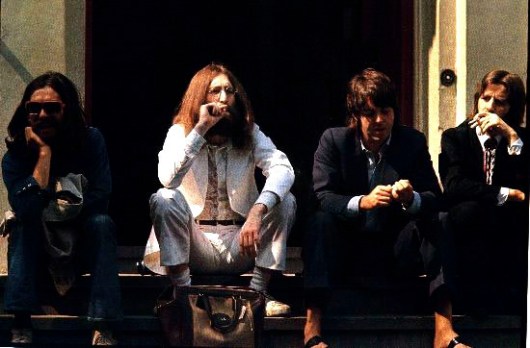

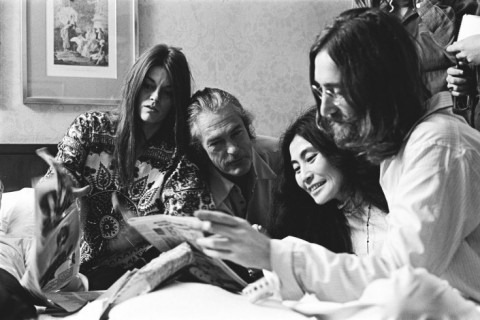


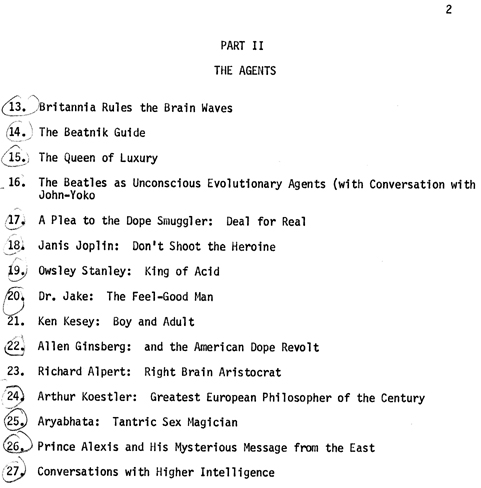


.jpg)
.JPG)



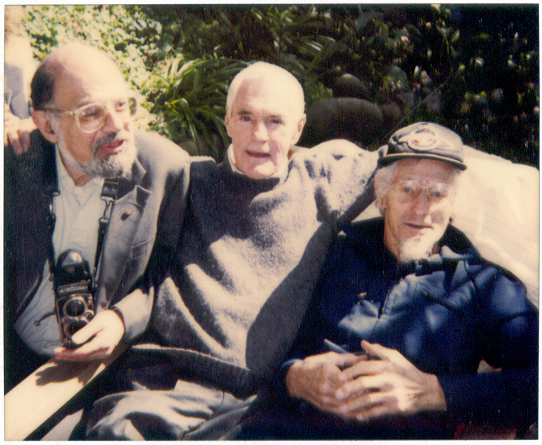


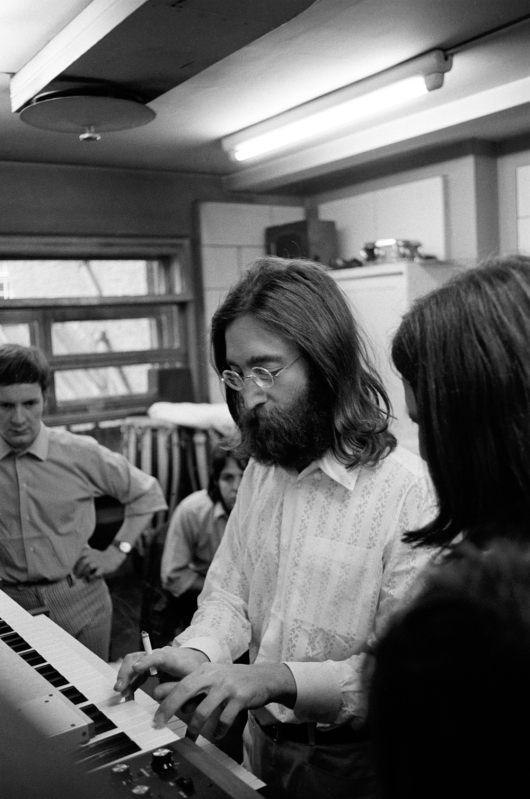


 Yellow Linda With Piano
 , 1988.


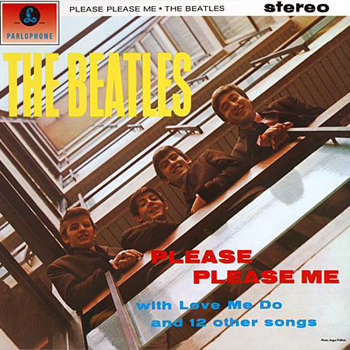

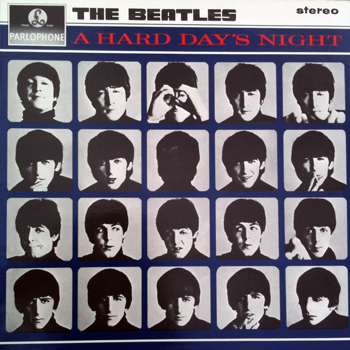
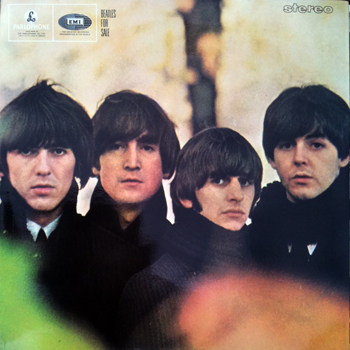

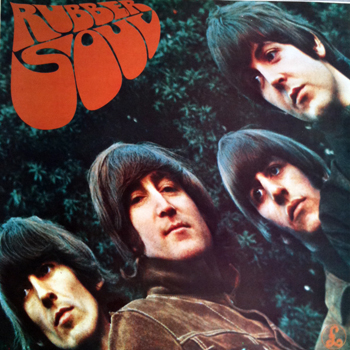
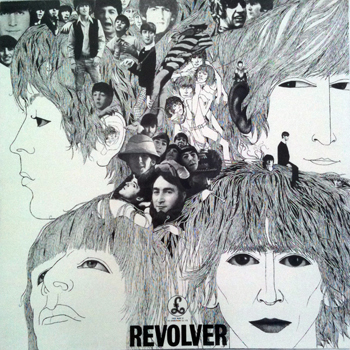
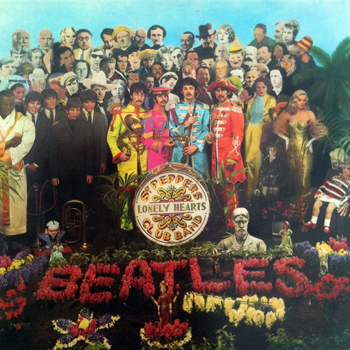


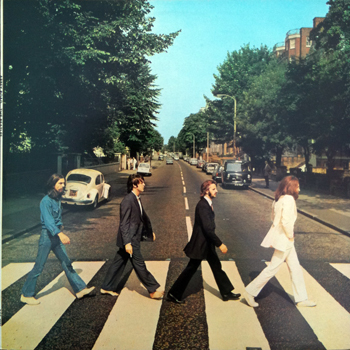

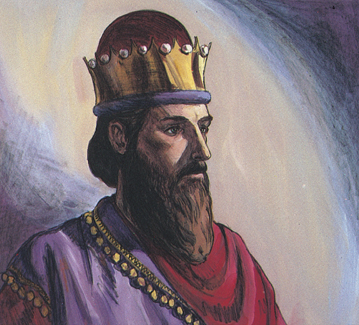


 The Daily Hatch