Category Archives: Atheists Confronted

Arguments between SIGMUND FREUD and C.S. LEWIS from movie “Freud’s Last Session” Part 9 (FREUD: “That Christ was a man I don’t argue. The same as Mohammed or Buddha…Why should I take Christ’s claim to be God more seriously than the dozen patients I’ve treated who claim to be Christ?”)

—-

Christian C.S Lewis Meets Freud in New Film

CHRIST WAS A HISTORICAL PERSON WHO CLAIMED TO BE THE MESSIAH, BUT WHY SHOULD WE TAKE THAT CLAIM SERIOUSLY?
LEWIS Critically, as a literary historian, I’m perfectly convinced that whatever the Gospels are, they aren’t myths. They aren’t artistic enough.  They’re clumsy. Most of the life of Jesus is left totally unknown to us, and writer’s building a legend wouldn’t allow that to happen.
 37.Amused, Freud leans forward over his desk. FREUD You are convinced of Christ’s existence because of bad storytelling?
LEWIS Christ’s existence isn’t in doubt, only who he was. The man was chronicled by his contemporaries and historians. Even H.G. Wells, whose skepticism rivaled my own, admitted “Here was a man. This part of the tale could not have been invented.’ 
FREUD That Christ was a man I don’t argue. The same as Mohammed or Buddha.
LEWIS But only Christ made the appalling claim to be the Messiah. He also claimed the power to forgive sins; how absurd is that?
FREUD I’m convinced. Christ was a lunatic. Freud rises from his seat and goes over to the bathroom. INT. FREUD’S BATHROOM /FREUD’S STUDY – MOMENTS LATER 55 55 Freud stands before an open medicine cabinet, takes out a small bottle. He hesitates, picks up a tiny onyx pill box. FREUD (CONT.) (loudly, to be heard) Why should I take Christ’s claim to be God more seriously than the dozen patients I’ve treated who claim to be Christ?
LEWIS And did you find a single person whose concept of reality was otherwise sound? INT. BATHROOM – SAME 57 57
Freud, agitated, stands at the sink, considering.   FREUD (reluctantly) No. Freud stares at himself in the mirror, he looks old.  He can see his own physical pain reflected in his face. INT.  FREUD’S STUDY – CONT. 58 58 Freud goes back to sit behind his desk, opens the top drawer and puts the small box inside. Closes the drawer.
LEWIS So if Christ was not a lunatic it forced me to consider the only choice I was left with.
Francis Schaeffer wrote in 1980 in the book WHATEVER HAPPENED TO THE HUMAN RACE? (Co-authored by Dr C. Everett Koop):

A common assumption among liberal scholars is that because the Gospels are theologically motivated writings–which they are–they cannot also be historically accurate. In other words, because Luke, say (when he wrote the Book of Luke and the Book of Acts), was convinced of the deity of Christ, this influenced his work to the point where it ceased to be reliable as a historical account. The assumption that a writing cannot be both historical and theological is false.

The experience of the famous classical archaeologist Sir William Ramsay illustrates this well. When he began his pioneer work of exploration in Asia Minor, he accepted the view then current among the Tubingen scholars of his day that the Book of Acts was written long after the events in Paul’s life and was therefore historically inaccurate. However, his travels and discoveries increasingly forced upon his mind a totally different picture, and he became convinced that Acts was minutely accurate in many details which could be checked.

—-

I recently read the book “I don’t have enough faith to be an atheist,” by Norman Geisler. I think of the title of that book when I think about what Francis Schaeffer said about the nature of Bertrand Russell’s faith discussed later in this blog post.

(William Ramsay pictured below and more about him later in this post)

Image result for william mitchell ramsay

__

_

Image result for bertrand russell

On November 21, 2014 I received a letter from Nobel Laureate Harry Kroto and it said:

…Please click on this URL http://vimeo.com/26991975

and you will hear what far smarter people than I have to say on this matter. I agree with them.

Harry Kroto

__

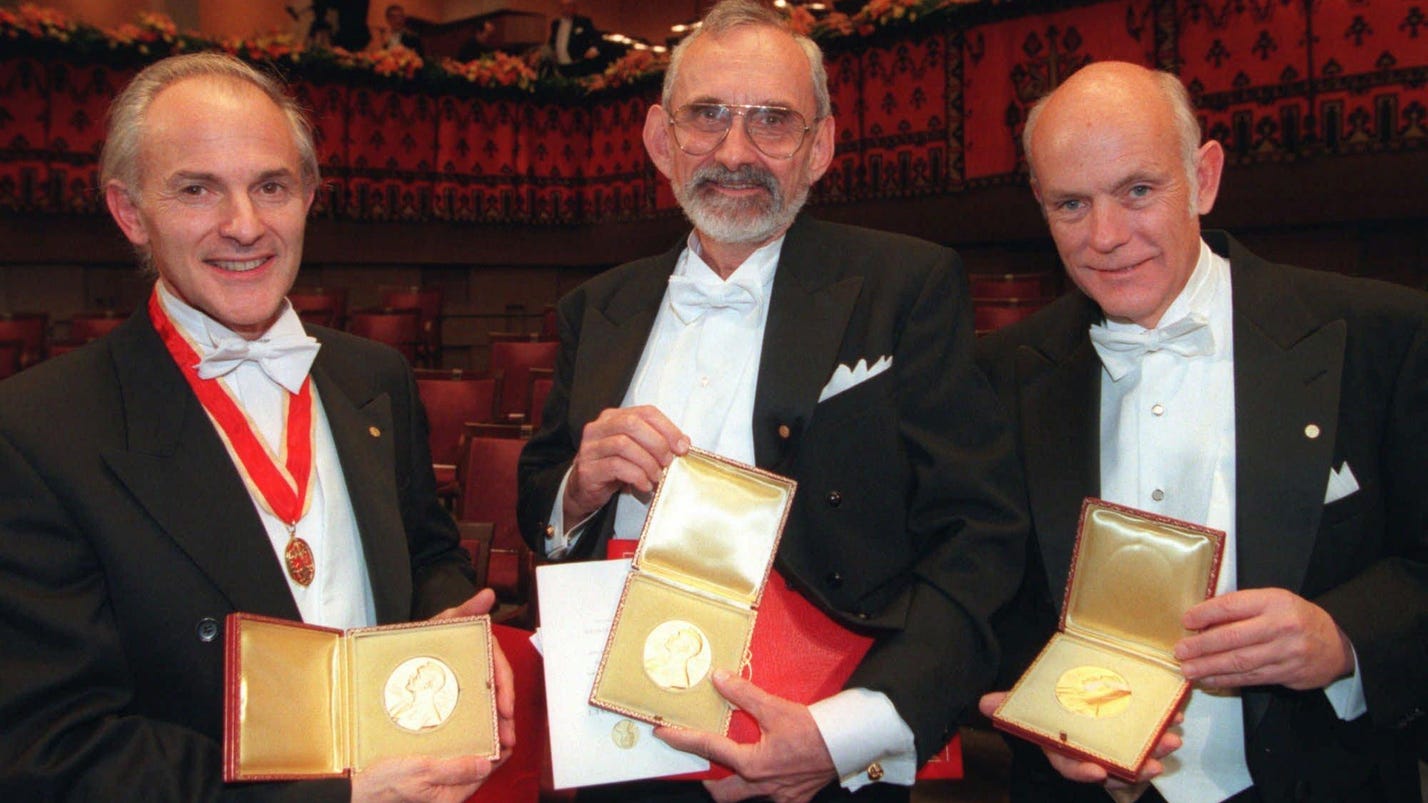
Harold W. Kroto (left) receives the Nobel Prize in chemistry from Swedish King Carl XVI Gustaf in Stockholm, in 1996.

Soren Andersson/AP
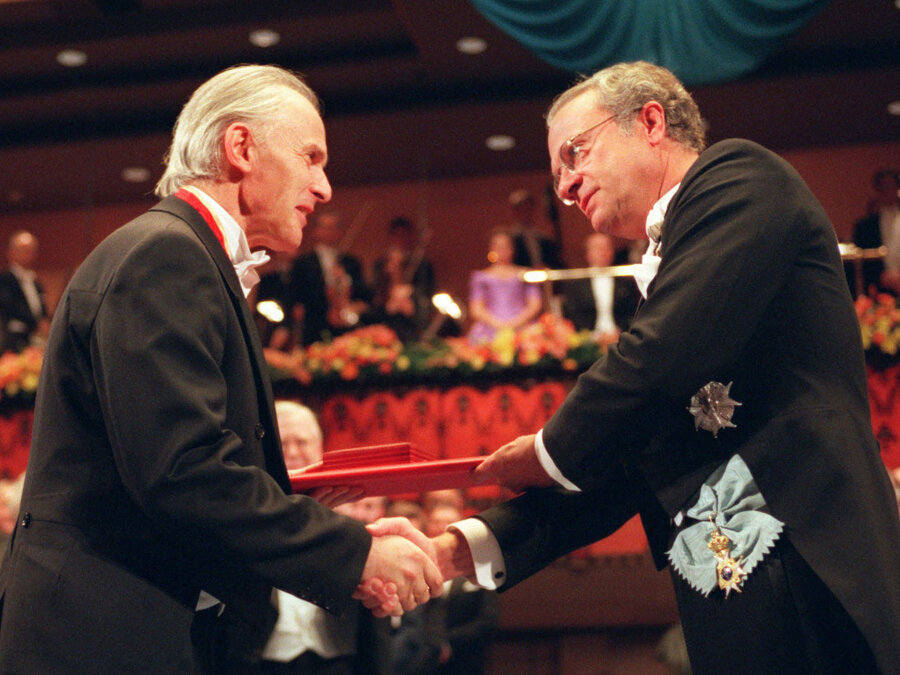
Image result for harry kroto nobel prize

__

Image result for harry kroto

I have attempted to respond to all of Dr. Kroto’s friends arguments and I have posted my responses one per week for over a year now. Here are some of my earlier posts:

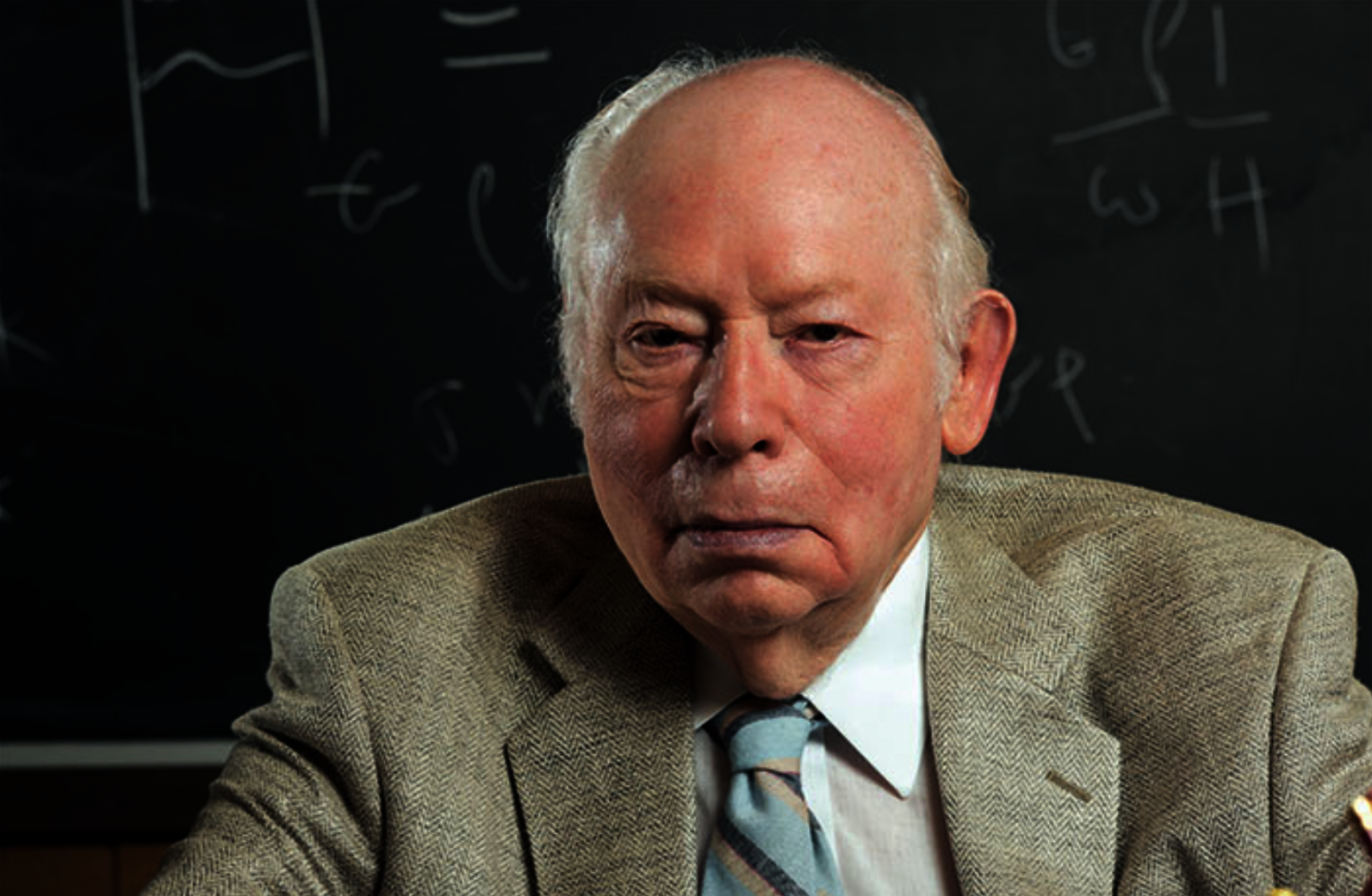
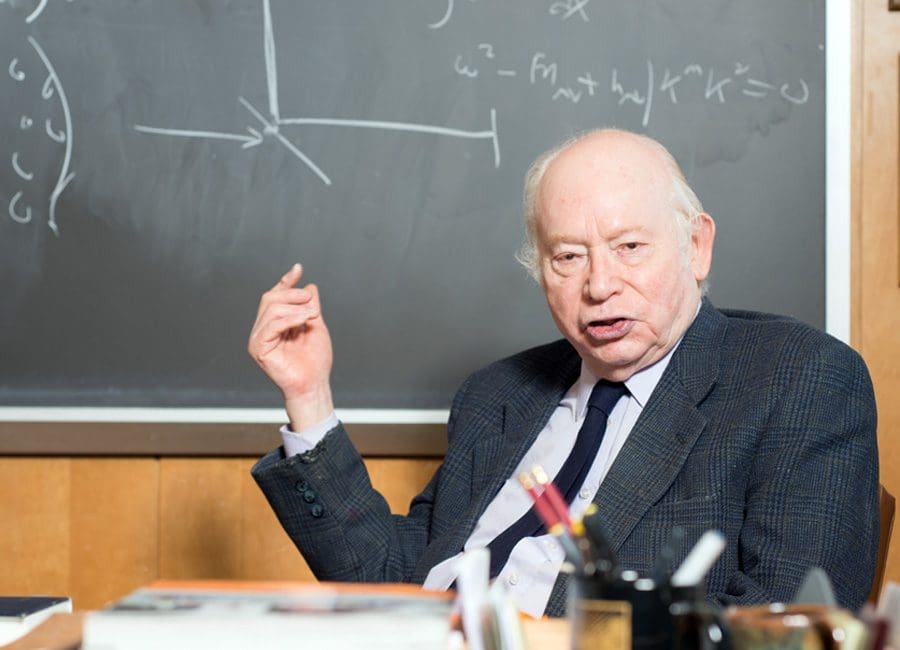
Arif Ahmed, Sir David AttenboroughMark Balaguer, Horace Barlow, Michael BatePatricia ChurchlandAaron CiechanoverNoam Chomsky,Alan DershowitzHubert Dreyfus, Bart Ehrman, Stephan FeuchtwangDavid Friend,  Riccardo GiacconiIvar Giaever , Roy GlauberRebecca GoldsteinDavid J. Gross,  Brian Greene, Susan GreenfieldStephen F Gudeman,  Alan Guth, Jonathan HaidtTheodor W. Hänsch, Brian Harrison,  Hermann HauserRoald Hoffmann,  Bruce HoodHerbert Huppert,  Gareth Stedman Jones, Steve JonesShelly KaganMichio Kaku,  Stuart Kauffman,  Lawrence KraussHarry Kroto, George LakoffElizabeth Loftus,  Alan MacfarlanePeter MillicanMarvin MinskyLeonard Mlodinow,  Yujin NagasawaAlva NoeDouglas Osheroff,  Jonathan Parry,  Saul PerlmutterHerman Philipse,  Carolyn PorcoRobert M. PriceLisa RandallLord Martin Rees,  Oliver Sacks, John SearleMarcus du SautoySimon SchafferJ. L. Schellenberg,   Lee Silver Peter Singer,  Walter Sinnott-ArmstrongRonald de Sousa, Victor StengerBarry Supple,   Leonard Susskind, Raymond TallisNeil deGrasse Tyson,  .Alexander Vilenkin, Sir John WalkerFrank WilczekSteven Weinberg, and  Lewis Wolpert,

_

In  the first video below in the 14th clip in this series are his words and I will be responding to them in the next few weeks since Sir Bertrand Russell is probably the most quoted skeptic of our time, unless it was someone like Carl Sagan or Antony Flew.  

50 Renowned Academics Speaking About God (Part 1)

Another 50 Renowned Academics Speaking About God (Part 2)

A Further 50 Renowned Academics Speaking About God (Part 3)

__

Quote from Bertrand Russell:

Q: Why are you not a Christian?

Russell: Because I see no evidence whatever for any of the Christian dogmas. I’ve examined all the stock arguments in favor of the existence of God, and none of them seem to me to be logically valid.

Q: Do you think there’s a practical reason for having a religious belief, for many people?

Russell: Well, there can’t be a practical reason for believing what isn’t true. That’s quite… at least, I rule it out as impossible. Either the thing is true, or it isn’t. If it is true, you should believe it, and if it isn’t, you shouldn’t. And if you can’t find out whether it’s true or whether it isn’t, you should suspend judgment. But you can’t… it seems to me a fundamental dishonesty and a fundamental treachery to intellectual integrity to hold a belief because you think it’s useful, and not because you think it’s true._
Image result for bertrand russell

Bertrand Russell pictured above and Francis Schaeffer below:
Image result for francis schaeffer

Francis Schaeffer noted concerning the IMPLICIT FAITH of Bertrand Russell:

I was lecturing at the University of St. Andrews one night and someone put forth the question, “If Christianity is so clear and reasonable then why doesn’t Bertrand Russell then become a Christian? Is it because he hasn’t discovered theology?”

It wasn’t a matter of studying theology that was involved but rather that he had too much faith. I was surrounded by humanists and you could hear the gasps. Bertrand Russell and faith; Isn’t this the man of reason? I pointed out that this is a man of high orthodoxy who will hold his IMPLICIT FAITH on the basis of his presuppositions no matter how many times he has to zig and zag because it doesn’t conform to the facts.

You must understand what the term IMPLICIT FAITH  means. In the old Roman Catholic Church when someone who became a Roman Catholic they had to promise implicit faith. That meant that you not only had to believe everything that Roman Catholic Church taught then but also everything it would teach in the future. It seems to me this is the kind of faith that these people have in the uniformity of natural causes in a closed system and they have accepted it no matter what it leads them into. 

I think that these men are men of a high level of IMPLICIT FAITH in their own set of presuppositions. Paul said (in Romans Chapter One) they won’t carry it to it’s logical conclusion even though they hold a great deal of the truth and they have revolted and they have set up a series of universals in themselves which they won’t transgress no matter if they conform to the facts or not.

Here below is the Romans passage that Schaeffer is referring to and verse 19 refers to what Schaeffer calls “the mannishness of man” and verse 20 refers to Schaeffer’s other point which is “the universe and it’s form.”

Romans 1:18-20 Amplified Bible :

18 For God’s [holy] wrath and indignation are revealed from heaven against all ungodliness and unrighteousness of men, who in their wickedness repress and hinder the truth and make it inoperative. 19 For that which is known about God is evident to them and made plain in their inner consciousness, because God [Himself] has shown it to them. 20 For ever since the creation of the world His invisible nature and attributes, that is, His eternal power and divinity, have been made intelligible and clearly discernible in and through the things that have been made (His handiworks). So [men] are without excuse [altogether without any defense or justification].

We can actually see the two points makes playing themselves out in Bertrand Russell’s own life.

Image result for bertrand russell

[From a letter dated August 11, 1918 to Miss Rinder when Russell was 46]

It is so with all who spend their lives in the quest of something elusive, and yet omnipresent, and at once subtle and infinite. One seeks it in music, and the sea, and sunsets; at times I have seemed very near it in crowds when I have been feeling strongly what they were feeling; one seeks it in love above all. But if one lets oneself imagine one has found it, some cruel irony is sure to come and show one that it is not really found.
The outcome is that one is a ghost, floating through the world without any real contact. Even when one feels nearest to other people, something in one seems obstinately to belong to God and to refuse to enter into any earthly communion—at least that is how I should express it if I thought there was a God. It is odd isn’t it? I care passionately for this world, and many things and people in it, and yet…what is it all? There must be something more important, one feels, though I don’t believe there is. I am haunted—some ghost, from some extra-mundane region, seems always trying to tell me something that I am to repeat to the world, but I cannot understand the message. 

There was evidence during Bertrand Russell’s own life that indicated that the Bible was true and could be trusted.

There was an archaeologist by the name of William Mitchell Ramsay and he had written extensively about the accuracy of the Bible. These books were available to Russell.  Francis Schaeffer discusses William Ramsay’s life below:

TRUTH AND HISTORY (chapter 5 of WHATEVER HAPPENED TO THE HUMAN RACE?, under footnotes #97 and #98)

A common assumption among liberal scholars is that because the Gospels are theologically motivated writings–which they are–they cannot also be historically accurate. In other words, because Luke, say (when he wrote the Book of Luke and the Book of Acts), was convinced of the deity of Christ, this influenced his work to the point where it ceased to be reliable as a historical account. The assumption that a writing cannot be both historical and theological is false.

The experience of the famous classical archaeologist Sir William Ramsay illustrates this well. When he began his pioneer work of exploration in Asia Minor, he accepted the view then current among the Tubingen scholars of his day that the Book of Acts was written long after the events in Paul’s life and was therefore historically inaccurate. However, his travels and discoveries increasingly forced upon his mind a totally different picture, and he became convinced that Acts was minutely accurate in many details which could be checked.

(Under footnote #98)

Acts is a fairly full account of Paul’s journeys, starting in Pisidian Antioch and ending in Rome itself. The record is quite evidently that of an eyewitness of the events, in part at least. Throughout, however, it is the report of a meticulous historian. The narrative in the Book of Acts takes us back behind the missionary journeys to Paul’s famous conversion on the Damascus Road, and back further through the Day of Pentecost to the time when Jesus finally left His disciples and ascended to be with the Father.

But we must understand that the story begins earlier still, for Acts is quite explicitly the second part of a continuous narrative by the same author, Luke, which reaches back to the birth of Jesus.

Luke 2:1-7 New American Standard Bible (NASB)

Now in those days a decree went out from Caesar Augustus, that a census be taken of all [a]the inhabited earth. [b]This was the first census taken while[c]Quirinius was governor of Syria. And everyone was on his way to register for the census, each to his own city. Joseph also went up from Galilee, from the city of Nazareth, to Judea, to the city of David which is called Bethlehem, because he was of the house and family of David, in order to register along with Mary, who was engaged to him, and was with child. While they were there, the days were completed for her to give birth. And she gave birth to her firstborn son; and she wrapped Him in cloths, and laid Him in a [d]manger, because there was no room for them in the inn.

In the opening sentences of his Gospel, Luke states his reason for writing:

Luke 1:1-4 New American Standard Bible (NASB)

Inasmuch as many have undertaken to compile an account of the things[a]accomplished among us, just as they were handed down to us by those whofrom the beginning [b]were eyewitnesses and [c]servants of the [d]word, it seemed fitting for me as well, having [e]investigated everything carefully from the beginning, to write it out for you in consecutive order, most excellentTheophilus; so that you may know the exact truth about the things you have been [f]taught.

In Luke and Acts, therefore, we have something which purports to be an adequate history, something which Theophilus (or anyone) can rely on as its pages are read. This is not the language of “myths and fables,” and archaeological discoveries serve only to confirm this.

For example, it is now known that Luke’s references to the titles of officials encountered along the way are uniformly accurate. This was no mean achievement in those days, for they varied from place to place and from time to time in the same place. They were proconsuls in Corinth and Cyprus, asiarchs at Ephesus, politarches at Thessalonica, and protos or “first man” in Malta. Back in Palestine, Luke was careful to give Herod Antipas the correct title of tetrarch of Galilee. And so one. The details are precise.

Image result for william mitchell ramsay

W.M. Ramsay

British archaeologist and New Testament scholar

Biography

William Mitchell Ramsay was born on the 15th of March 1851. He was educated at the universities of Aberdden, Oxford and Gottingen, and was a fellow of Exeter College, Oxford (1882; honorary fellow 1898), and Lincoln College (1885; honorary 1899). In 1885 he was elected professor of classical art at Oxford, and in the next year professor of humanity at Aberdeen. From 1880 onwards he traveled widely in Asia Minor and rapidly became the recognized authority on all matters relating to the districts associated with St Paul’s missionary journeys and on Christianity in the early Roman Empire.

He received the honorary degrees of D.C.L. Oxford, LL.D. St Andrews and Glasgow, D.D. Edinburgh, and was knighted in 1906. He was elected a member of learned societies in Europe and America, and has been awarded medals by the Royal Geographical Society, the Royal Scottish Geographical Society and the University of Pennsylvania.

His numerous publications include: The Historical Geography of Asia Minor (1890); The Church in the Roman Empire (1893); The Cities and Bishoprics of Phrygia (2 vols., 1895, 1897); St Paul the Traveler and the Roman Citizen (1895; Germ. trans., 1898); Impressions of Turkey (1897); Was Christ born at Bethlehem? (1898); Historical Commentary on Galatians (1899); The Education of. Christ (1902); The Letters to the Seven Churches of Asia (1905); Pauline and other Studies in Early Christian History (1906); Studies in the History and Art of the Eastern Provinces of the Roman Empire (1906); The Cities of St Paul (1907); Lucan and Pauline Studies (1908); The Thousand and One Churches (with Miss Gertrude L. Bell, 1909); and articles in learned periodicals and the 9th, 10th and 11th editions of the Encyclopaedia Britannica. His wife, Lady Ramsay, granddaughter of Dr Andrew Marshall of Kirkintilloch, accompanied him in many of his journeys and is the author of Everyday Life Turkey (1897) and The Romance of Elisavet (1899) .

Works by W.M. Ramsay

Search:

Filter:

Only CCEL
CCEL + External
Cover art
Title / Description 
Popularity 

In the Book of Revelation, we find John’s letters to the seven churches of first century Asia Minor, written during the era of the Roman Empire. The seven churches correspond to the seven congregations found in these cities: Ephesus, City of Change; Smyrna, City of Life; Pergamum, City of Authority; Thyatira, City of Weakness Made Strong; Sardis, City of Death; Philadelphia, Missionary City; and Laodicea, City of Compromise. William Ramsay presents these letters to help readers better understand their content as well as the historical context surrounding their authorship.Letters to the Seven Churches of Asia is filled with facts regarding the general importance of letter writing in the Early Church, the mobility of letters during this time period, John’s intentions in writing the Seven Letters, and the influence of religion in the development of first century cities. John’s letters provide historical insight into Greco-Roman culture and geography. They also serve to guide Christians in their spiritual development. Ramsay’s book brings John’s letters into a useful contemporary light.

Ramsay wrote this book to tell the story of Paul’s life as it was documented in the Book of Acts. Before Ramsay begins his study of Paul’s life, he discusses the date, composition, and authorship of Acts. “The first and the essential quality of the great historian is truth,” says Ramsay. Of the four types of historical writing, namely, romance, legend, second rate history, and first rate history, Ramsay classifies the Book of Acts as first rate historical writing. The characterization of Paul found in Acts contains such individualized detail that the author could not have gathered this information by any means other than personal acquaintances and original sources. As such, Ramsay believes that the author of Acts has attained a superior mark of historical accuracy and literary trustworthiness.St. Paul the Traveler and the Roman Citizen contains an excellent study of the Book of Acts as well as of Paul’s life and travels in first century Asia, Greece, and Rome.

In 19th century schools of theology in Continental Europe, it had become fashionable to be skeptical about any traditional doctrine about the Bible. Many academic theologians denied the divinity of Christ, and others claimed that Paul’s letters were forgeries. Ramsay, while he used some of the same critical methods as his academic peers, was nevertheless able to counter their arguments effectively. Having spent years in Asia Minor studying the missionary journeys of Paul and the Apostles, Ramsay had become an expert on the New Testament’s historical documents. He argues that Luke, the author of the Acts of the Apostles and the Gospel of Luke, was as reliable an historian as any other in the first century. Thus in answer to the question, “Was Christ born in Bethlehem?” Ramsay answers: “Yes. We can trust Luke’s Gospel.”

Francis Schaeffer noted in his book HOW SHOULD WE THEN LIVE? (p. 182 in Vol 5 of Complete Works) in the chapter The Breakdown in Philosophy and Science:

In his lecture at Acapulco, George Wald finished with only one final value. It was the same one with which English philosopher Bertrand Russell (1872-1970) was left. For Wald and Russell and for many other modern thinkers, the final value is the biological continuity of the human race. If this is the only final value, one is left wondering why this then has importance. 

Now having traveled from the pride of man in the High Renaissance and the Enlightenment down to the present despair, we can understand where modern people are. They have no place for a personal God. But equally they have no place for man as man, or for love, or for freedom, or for significance. This brings a crucial problem. Beginning only from man himself, people affirm that man is only a machine. But those who hold this position cannot live like machines! If they could, there would have been no tensions in their intellectual position or in their lives. But even people who believe they are machines cannot live like machines, and thus they must “leap upstairs” against their reason and try to find something which gives meaning to life, even though to do so they have to deny their reason. 

Francis Schaeffer in another place worded it like this:

The universe was created by an infinite personal God and He brought it into existence by spoken word and made man in His own image. When man tries to reduce [philosophically in a materialistic point of view] himself to less than this [less than being made in the image of God] he will always fail and he will always be willing to make these impossible leaps into the area of nonreason even though they don’t give an answer simply because that isn’t what he is. He himself testifies that this infinite personal God, the God of the Old and New Testament is there. 

We all know deep down that God exists and even atheists have to grapple with that knowledge.

Solomon wisely noted in Ecclesiastes 3:11 “God has planted eternity in the heart of men…” (Living Bible). No wonder Bertrand Russell wrote in his autobiography, “It is odd, isn’t it? I feel passionately for this world and many things and people in it, and yet…what is it all? There must be something more important, one feels, though I don’t believe there is. I am haunted. Some ghosts, for some extra mundane regions, seem always trying to tell me something that I am to repeat to the world, but I cannot understand that message.”

Take a look at this 7th episode from Schaeffer’s series “HOW SHOULD WE THEN LIVE? The Age of Nonreason”:

How Should We Then Live – Episode Seven – 07 – Portuguese Subtitles

_

Instead of making a leap into the area of nonreason the better choice would be to investigate the claims that the Bible is a historically accurate book and that God created the universe and reached out to humankind with the Bible.

Schaeffer then points to the historical accuracy of the Bible in Chapter 5 of the book WHATEVER HAPPENED TO THE HUMAN RACE?

The Bible and Archaeology – Is the Bible from God? (Kyle Butt 42 min)

You want some evidence that indicates that the Bible is true? Here is a good place to start and that is taking a closer look at the archaeology of the Old Testament times. Is the Bible historically accurate? Here are some of the posts I have done in the past on the subject: 1. The Babylonian Chronicleof Nebuchadnezzars Siege of Jerusalem2. Hezekiah’s Siloam Tunnel Inscription. 3. Taylor Prism (Sennacherib Hexagonal Prism)4. Biblical Cities Attested Archaeologically. 5. The Discovery of the Hittites6.Shishak Smiting His Captives7. Moabite Stone8Black Obelisk of Shalmaneser III9A Verification of places in Gospel of John and Book of Acts., 9B Discovery of Ebla Tablets10. Cyrus Cylinder11. Puru “The lot of Yahali” 9th Century B.C.E.12. The Uzziah Tablet Inscription13. The Pilate Inscription14. Caiaphas Ossuary14 B Pontius Pilate Part 214c. Three greatest American Archaeologists moved to accept Bible’s accuracy through archaeology.

____

Related posts:

RESPONDING TO HARRY KROTO’S BRILLIANT RENOWNED ACADEMICS!! Pausing to take a look at the life of HARRY KROTO Part C (Kroto’s admiration of Bertrand Russell examined)

Today we look at the 3rd letter in the Kroto correspondence and his admiration of Bertrand Russell. (Below The Nobel chemistry laureates Harold Kroto, Robert Curl and Richard Smalley) It is with sadness that I write this post having learned of the death of Sir Harold Kroto on April 30, 2016 at the age of […]

RESPONDING TO HARRY KROTO’S BRILLIANT RENOWNED ACADEMICS!! Part 52 The views of Hegel and Bertrand Russell influenced Gareth Stedman Jones of Cambridge!!

On November 21, 2014 I received a letter from Nobel Laureate Harry Kroto and it said: …Please click on this URL http://vimeo.com/26991975 and you will hear what far smarter people than I have to say on this matter. I agree with them. Harry Kroto _________________ Below you have picture of Dr. Harry Kroto:   Gareth Stedman […]

WOODY WEDNESDAY John Piippo makes the case that Bertrand Russell would have loved Woody Allen because they both were atheists who don’t deny the ramifications of atheism!!!

Top 10 Woody Allen Movies __________ John Piippo makes the case that Bertrand Russell would have loved Woody Allen because they both were  atheists who don’t deny the ramifications of atheism!!! Monday, August 06, 2012 (More On) Woody Allen’s Atheism As I wrote in a previous post, I like Woody Allen. I have long admired his […]

John Piippo makes the case that Bertrand Russell would have loved Woody Allen because they both were two atheists who don’t deny the ramifications of atheism!!!

______ Top 10 Woody Allen Movies PBS American Masters – Woody Allen A Documentary 01 PBS American Masters – Woody Allen A Documentary 02 __________ John Piippo makes the case that Bertrand Russell would have loved Woody Allen because they both were two atheists who don’t deny the ramifications of atheism!!! Monday, August 06, 2012 […]

Bertrand Russell v. Frederick Copleston debate transcript (Part 4)

THE MORAL ARGUMENT     BERTRAND RUSSELL But aren’t you now saying in effect, I mean by God whatever is good or the sum total of what is good — the system of what is good, and, therefore, when a young man loves anything that is good he is loving God. Is that what you’re […]

Bertrand Russell v. Frederick Copleston debate transcript (Part 3)

Great debate Fr. Frederick C. Copleston vs Bertrand Russell – Part 1 Uploaded by riversonthemoon on Jul 15, 2009 BBC Radio Third Programme Recording January 28, 1948. BBC Recording number T7324W. This is an excerpt from the full broadcast from cassette tape A303/5 Open University Course, Problems of Philosophy Units 7-8. Older than 50 years, […]

Bertrand Russell v. Frederick Copleston debate transcript and audio (Part 2)

Uploaded by riversonthemoon on Jul 15, 2009 BBC Radio Third Programme Recording January 28, 1948. BBC Recording number T7324W. This is an excerpt from the full broadcast from cassette tape A303/5 Open University Course, Problems of Philosophy Units 7-8. Older than 50 years, out of UK/BBC copyright. Pardon the hissy audio. It was recorded 51 […]

Bertrand Russell v. Frederick Copleston debate transcript and audio (Part 1)

Fr. Frederick C. Copleston vs Bertrand Russell – Part 1 Uploaded by riversonthemoon on Jul 15, 2009 BBC Radio Third Programme Recording January 28, 1948. BBC Recording number T7324W. This is an excerpt from the full broadcast from cassette tape A303/5 Open University Course, Problems of Philosophy Units 7-8. Older than 50 years, out of […]


Bertrand Russell v. Frederick Copleston debate transcript (Part 4)

THE MORAL ARGUMENT     BERTRAND RUSSELL But aren’t you now saying in effect, I mean by God whatever is good or the sum total of what is good — the system of what is good, and, therefore, when a young man loves anything that is good he is loving God. Is that what you’re […]

Bertrand Russell v. Frederick Copleston debate transcript (Part 3)

Fr. Frederick C. Copleston vs Bertrand Russell – Part 1 Uploaded by riversonthemoon on Jul 15, 2009 BBC Radio Third Programme Recording January 28, 1948. BBC Recording number T7324W. This is an excerpt from the full broadcast from cassette tape A303/5 Open University Course, Problems of Philosophy Units 7-8. Older than 50 years, out of […]

Dan Mitchell article: Fraudulent Emergency Spending (Great Video from John Stossel reminds me of MILTON FRIEDMAN’s “Free to Choose!”)

——

I had the opportunity to correspond with Milton Friedman who was my favorite economist and this video below by John Stossel reminds me of the film serIes FREE TO CHOOSE!!!

Fraudulent Emergency Spending

For decades (literally), I’ve maintained that make-believe budget cuts are the biggest form of budgetary dishonesty in Washington. But this John Stossel video discusses another scam politicians use to squander more money.

————

So-called emergency spending is not a trivial problem.

Here’s a chart from Romina Boccia and Dominik Lett, which documents $12 trillion of supposed emergency spending over the past three decades.

At the risk of understatement, that huge amount of money is a big reason Washington is a fiscal disaster.

Veronique de Rugy of the Mercatus Center wrote about the emergency scam in a column for the New York Sun. Here are some excerpts.

Remember…the debt-ceiling deal… Well, it took less than two months for politicians to start evading the caps with an old trick: emergency spending. …politicians shamelessly abuse the emergency label to push through non-emergency spending that would otherwise violate budget constraints. …If legislators believe more is needed, they should debate and allocate that money through the regular budget process. …putting the “emergency” label on anything important — or not-so important — but not unforeseen makes a mockery of budget rules and the debt-ceiling caps and, indeed, of the very concept of emergency spending. …There is always an excuse. …It’s time to fix the current process and stop an abuse that only further weakens the government’s fiscal condition. The best option would be to stop exempting emergency spending from budget rules. That would mean that supplemental spending, emergency or otherwise, must be offset with spending cuts on other programs.

Let’s look at a very recent example of the emergency-spending scam.

Kimberley Strassel of the Wall Street Journal opinedtwo months ago about Biden playing this fraudulent game.

Congress is trickling back from summer recess, and Senate Majority Leader Chuck Schumer intends to move swiftly to pass a giant “supplemental aid” package that funds Ukraine assistance, disaster relief and border security (for starters). The goal is to jam House Speaker Kevin McCarthy, forcing him to forgo whatever spending restraint was negotiated in the June debt-ceiling agreement…The White House bait—or cudgel—is “crisis” disaster-relief funding. The Federal Emergency Management Agency warned in April that its disaster fund could be out of money by July. Yet somehow the administration didn’t make a priority of this “critical” FEMA funding during the May debt ceiling talks, unwilling as it was then to cede any of its other domestic pork, such as green subsidies and its $80 billion IRS blowout. Only after next year’s spending levels were set did it cry poverty, asking for an “emergency” $16 billion for FEMA.

The bottom line is that the misuse of emergency spending is a serious problem. Politicians routinely slap an emergency label on things that are not emergencies. And, when there is an actual emergency, they use that as an excuse to include lots of non-emergency spending (as we saw during the TrumpBiden COVID spending spree).

But is there a solution? There are sometimes real emergencies, so banning supplemental spending bills presumably is not the answer.

The best answer is to adopt an American version of Switzerland’s spending cap.

Having a spending cap is good overall fiscal policy, of course, but a very relevant feature of the Swiss spending cap is that there is a provision for emergency spending, but any extra spending has to be offset by additional spending restraint in the future.

Which helps to explain why American politicians were nearly four times as profligate as Swiss politicians during the pandemic.

———-

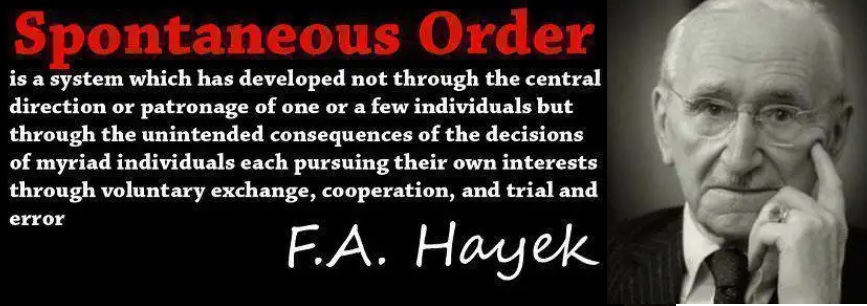
Spontaneous Order or Government Planning?

Bad policies (industrial policy, protectionism, rent control, minimum wage laws, etc) have a common feature, which is that politicians are trying to replace the “spontaneous order” of markets with intervention and planning.

In this new video, John Stossel explains why government that governs least governs best.

Price controls are a very obvious example of harmful intervention.

As explained in my three-part series (here, here, and here), market-determined prices give us the best quality at the best prices.

Just as John explains in the video when talking about bananas.

When politicians interfere by mandating prices too low or too high, however, we get shortages or surpluses (America’s idiotic farm programs being a painful example).

I’ll close with a few comments relating to John’s discussion of how Central Park was a mess before it was quasi-privatized.

Yes, the profit motive is key to a well-functioning private sector, but even private non-profit groups do a much better job than government.

After all, private non-profits generally are created to solve or reduce a problem (such as poverty), whereas government programs are created to maximize votes.

30 Years in Making, Museum Dedicated to Victims of Communism Opens in Washington

A new museum dedicated to the victims of communism worldwide was dedicated on Wednesday in Washington. Pictured: A Cambodian woman on Aug. 6, 2014, examines some of the thousands of skulls on display in Phnom Penh, Cambodia, of those killed during the 1970s “Killing Fields”-era by Pol Pot’s communist regime. (Photo: Omar Havana/Getty Images)

Remember these two numbers: 100 million and 1.5 billion.

Those were the two numbers emphasized at the dedication on Wednesday of the new Victims of Communism Museum in Washington, D.C., which I was privileged to attend along with my family.

An estimated 100 million is the number of human beings slaughtered, massacred, and killed by Marxist, communist regimes in the past 100 years, from the Soviet Union to Red China to Castro’s Cuba. And 1.5 billion is the number of people still suffering under oppressive, tyrannical communist regimes today.

The museum has been more than 30 years in the making, starting with an idea from Anne Edwards, the wife of Lee Edwards, the prolific author, historian, biographer, and scholar at The Heritage Foundation who was the driving force behind the creation of the museum.

Andrew Bremberg, president of the Victims of Communism Museum, speaks at its dedication on Wednesday. (Photo: Hans von Spakovsky/The Heritage Foundation)

Lee Edwards, the chairman emeritus of the Victims of Communism Memorial Foundation, received the foundation’s annual Truman-Reagan Medal of Freedom at the grand opening for all of the work he has done, not only to bring the museum to fruition, but to help the victims of communism all over the world. The man at the podium is Ambassador Andrew Bremberg, president of the Victims of Communism Museum.

The attendees at the dedication were not the usual Washington crowd.  The museum was full of individuals and families who not only fought against those murderous regimes, but helped lead the opposition. It included Wang Dan and Jianli Yang, who were student leaders in Tiananmen Square in 1989, when the Chinese army brutally killed more than 2,000 peaceful protesters who wanted democracy and freedom in China.

A lone demonstrator stares down a column of tanks June 5, 1989, at the entrance to Tiananmen Square in Beijing on the day after Chinese troops fired on pro-democracy students who had been protesting there since April 15. (Photo: CNN/Getty Images)

There are artifacts from that protest in the museum, including some of the handmade freedom flags of the students.

There were also families of the freedom fighters who staged the first revolt against the Soviet Union in 1956 in Hungary, when NATO and the Allies simply stood by, ignoring their pleas for help as Russian tanks crushed the rebellion and ruthlessly arrested and killed everyone involved.

As I watched a video of the fighting in the streets of Budapest that’s in the museum, all I could think about was what a difference it would have made if those Hungarian patriots had been equipped with Javelin missiles and had destroyed the Soviet tank armadas the way the Ukrainians are doing today.

My own father was a White Russian officer who fought the Bolsheviks in the Russian civil war.

In addition to remarks by Bremberg and Elizabeth Spalding, the president and a director, respectively, of the new museum, there were also speeches by Szabolcs Takacs, the Hungarian ambassador to the U.S., and professor Piotr Glinski, the deputy prime minister of Poland.

The presentations by the ambassador and the deputy prime minister were especially poignant, because they spoke from experience and know vividly and personally the evils of that vicious, deadly ideology. And that is exactly what communism is—an evil—as Glinski said repeatedly, contrary to the ignorant beliefs of the Marxist fools who inhabit too many of our academic institutions today.

Some of the most moving artifacts in the museum are a series of paintings that I first wrote aboutmore than a decade ago, and which finally have a home where they can be permanently displayed.

The Victims of Communism Museum is dedicated to the estimated 100 million people killed by the murderous ideology in the past century, as well as to the 1.5 billion others still living under its jackboot. (Photo: Hans von Spakovsky/The Heritage Foundation)

In 1953, a Ukrainian painter, Nikolai Getman, was released from the Soviet gulag, where he had spent eight years for being present at a meeting where someone had drawn a caricature of Josef Stalin.

The paintings were smuggled out of Russia in 1997 because Getman was afraid the post-Soviet Russian government would destroy them to hide a past it pretends never existed.

The paintings are haunting. They are the only visual counterpart to Aleksandr Solzhenitsyn’s writings, which exposed this terrible system of mass imprisonment that Robert Conquest has rightly called “unexampled coldblooded inhumanity.”

The only difference between the Holocaust and the gulag is that the Soviet communists never got around to using gas to kill their prisoners—just old-fashioned bullets, beatings, starvation, and literally working them to death.

Getman’s stark paintings cover everything from the transportation of prisoners to the camps in unheated trucks and ships to the horrible and almost unspeakable living conditions in the gulag.

We see the routine brutality with which prisoners were treated. The fragile existence they led is captured in Getman’s paintings, which represent an enormous accomplishment, considering that all of the scenes were painted from memory.

One painting shows the despairing faces of a group of men taken from their barracks in the middle of the night and executed by the NKVD (the forerunner of the KGB), the secret police organization that ran the entire gulag system.

These kinds of executions occurred constantly and for no apparent reason. All of the prisoners knew that if you were taken out of your barracks in the middle of the night, you never came back.

And that’s happening today in places such as China, where the communist government has set up a gulag-type concentration camp system for the Uyghurs. There are millions of current victims being repressed, tortured, and killed in a country that big American companies, such as Nike and Apple, routinely do business in with no concern.

Raising money for the museum has been a long, hard task.  Yet countries like Poland, Hungary, Estonia, Lithuania, and Latvia all contributed money to help establish this very important museum. And as I noted, there were speakers at the dedication ceremony from some of those countries.

Who was absent, and who hasn’t contributed a single cent? The U.S. government and the current administration. Representatives of the country that has been the leader of the free world, which led the fight against communist dictatorships starting with the hot war in Korea and during the 40 years of the Cold War, were nowhere to be seen on Wednesday.

The Victims of Communism Museum has long been needed. And every student in every college and university who thinks Marxism, communism, and socialism (which is just communism under another name) is a wonderful idea should pay a visit to this museum to understand what that evil ideology has imposed on the world.

So, remember: 100 million and 1.5 billion. We not only have a lot to remember; we still have a lot to do to bring the flame of liberty to the enslaved people of the world.

Have an opinion about this article? To sound off, please email letters@DailySignal.com and we’ll consider publishing your edited remarks in our regular “We Hear You” feature. Remember to include the url or headline of the article plus your name and town and/or state.

Image result for bertrand russell

On November 21, 2014 I received a letter from Nobel Laureate Harry Kroto and it said:

…Please click on this URL http://vimeo.com/26991975

and you will hear what far smarter people than I have to say on this matter. I agree with them.

Harry Kroto

Image result for harry kroto

I have attempted to respond to all of Dr. Kroto’s friends arguments and I have posted my responses one per week for over a year now. Here are some of my earlier posts:

Arif Ahmed, Sir David AttenboroughMark Balaguer, Horace Barlow, Michael BatePatricia ChurchlandAaron CiechanoverNoam Chomsky,Alan DershowitzHubert Dreyfus, Bart Ehrman, Stephan FeuchtwangDavid Friend,  Riccardo GiacconiIvar Giaever , Roy GlauberRebecca GoldsteinDavid J. Gross,  Brian Greene, Susan GreenfieldStephen F Gudeman,  Alan Guth, Jonathan HaidtTheodor W. Hänsch, Brian Harrison,  Hermann HauserRoald Hoffmann,  Bruce HoodHerbert Huppert,  Gareth Stedman Jones, Steve JonesShelly KaganMichio Kaku,  Stuart Kauffman,  Lawrence KraussHarry Kroto, George LakoffElizabeth Loftus,  Alan MacfarlanePeter MillicanMarvin MinskyLeonard Mlodinow,  Yujin NagasawaAlva NoeDouglas Osheroff,  Jonathan Parry,  Saul PerlmutterHerman Philipse,  Carolyn PorcoRobert M. PriceLisa RandallLord Martin Rees,  Oliver Sacks, John SearleMarcus du SautoySimon SchafferJ. L. Schellenberg,   Lee Silver Peter Singer,  Walter Sinnott-ArmstrongRonald de Sousa, Victor StengerBarry Supple,   Leonard Susskind, Raymond TallisNeil deGrasse Tyson,  .Alexander Vilenkin, Sir John WalkerFrank WilczekSteven Weinberg, and  Lewis Wolpert,

In  the first video below in the 14th clip in this series are his words and I will be responding to them in the next few weeks since Sir Bertrand Russell is probably the most quoted skeptic of our time, unless it was someone like Carl Sagan or Antony Flew.  

50 Renowned Academics Speaking About God (Part 1)

Another 50 Renowned Academics Speaking About God (Part 2)

A Further 50 Renowned Academics Speaking About God (Part 3)

__

Quote from Bertrand Russell:

Q: Why are you not a Christian?

Russell: Because I see no evidence whatever for any of the Christian dogmas. I’ve examined all the stock arguments in favor of the existence of God, and none of them seem to me to be logically valid.

Q: Do you think there’s a practical reason for having a religious belief, for many people?

Russell: Well, there can’t be a practical reason for believing what isn’t true. That’s quite… at least, I rule it out as impossible. Either the thing is true, or it isn’t. If it is true, you should believe it, and if it isn’t, you shouldn’t. And if you can’t find out whether it’s true or whether it isn’t, you should suspend judgment. But you can’t… it seems to me a fundamental dishonesty and a fundamental treachery to intellectual integrity to hold a belief because you think it’s useful, and not because you think it’s true.

__

Today I am not going to attack this quote above from Russell. I have done that enough in the past. Today I am going to look at Russell’s notes on communism and also examine his personal meeting with Lenin. Lenin just laughed when Lenin said that it was the plan for the poor peasants to hang the peasants that were a little better well off. This comment caught Russell off guard. Russell had already noted that Lenin was a “great man.” However, this embracing of violence caught Russell by surprise.

Then I will look at an examination of communism by Francis Schaeffer who will tell us why Communism ALWAYS fails to give the freedoms that it says it will and why so many young people are caught up in its idealistic promises.

“Why I am Not a Communist”
by Betrand Russell

“I am completely at a loss to understand how it came about that some people who are both humane and intelligent could find something to admire in the vast slave camp produced by Stalin.”

      I n relation to any political doctrine there are two questions to be asked: (1) Are its theoretical tenets true? (2) Is its practical policy likely to increase human happiness? For my part, I think the theoretical tenets of Communism are false, and I think its practical maxims are such as to produce an immeasurable increase of human misery.

      The theoretical doctrines of Communism are for the most part derived from Marx. My objections to Marx are of two sorts: one, that he was muddle-headed; and the other, that his thinking was almost entirely inspired by hatred. The doctrine of surplus value, which is supposed to demonstrate the exploitation of wage-earners under capitalism, is arrived at: (a) by surreptitiously accepting Malthus’s doctrine of population, which Marx and all his disciples explicitly repudiate; (b) by applying Ricardo’s theory of value to wages, but not to the prices of manufactured articles. He is entirely satisfied with the result, not because it is in accordance with the facts or because it is logically coherent, but because it is calculated to rouse fury in wage-earners. Marx’s doctrine that all historical events have been motivated by class conflicts is a rash and untrue extension to world history of certain features prominent in England and France a hundred years ago. His belief that there is a cosmic force called Dialectical Materialism which governs human history independently of human volitions, is mere mythology. His theoretical errors, however, would not have mattered so much but for the fact that, like Tertullian and Carlyle, his chief desire was to see his enemies punished, and he cared little what happened to his friends in the process.

      Marx’s doctrine was bad enough, but the developments which it underwent under Lenin and Stalin made it much worse. Marx had taught that there would be a revolutionary transitional period following the victory of the proletariat in a civil war and that during this period the proletariat, in accordance with the usual practice after a civil war, would deprive its vanquished enemies of political power. This period was to be that of the dictatorship of the proletariat. It should not be forgotten that in Marx’s prophetic vision the victory of the proletariat was to come after it had grown to be the vast majority of the population. The dictatorship of the proletariat therefore as conceived by Marx was not essentially anti-democratic. In the Russia of 1917, however, the proletariat was a small percentage of the population, the great majority being peasants. it was decreed that the Bolshevik party was the class-conscious part of the proletariat, and that a small committee of its leaders was the class-conscious part of the Bolshevik party. The dictatorship of the proletariat thus came to be the dictatorship of a small committee, and ultimately of one man – Stalin. As the sole class-conscious proletarian, Stalin condemned millions of peasants to death by starvation and millions of others to forced labour in concentration camps. He even went so far as to decree that the laws of heredity are henceforth to be different from what they used to be, and that the germ-plasm is to obey Soviet decrees but that that reactionary priest Mendel. I am completely at a loss to understand how it came about that some people who are both humane and intelligent could find something to admire in the vast slave camp produced by Stalin.

      I have always disagreed with Marx. My first hostile criticism of him was published in 1896. But my objections to modern Communism go deeper than my objections to Marx. It is the abandonment of democracy that I find particularly disastrous. A minority resting its powers upon the activities of secret police is bound to be cruel, oppressive and obscuarantist. The dangers of the irresponsible power cane to be generally recognized during the eighteenth and nineteenth centuries, but those who have forgotten all that was painfully learnt during the days of absolute monarchy, and have gone back to what was worst in the middle ages under the curious delusion that they were in the vanguard of progress.

      There are signs that in course of time the Russian régime will become more liberal. But, although this is possible, it is very far from certain. In the meantime, all those who value not only art and science but a sufficiency of bread and freedom from the fear that a careless word by their children to a schoolteacher may condemn them to forced labour in a Siberian wilderness, must do what lies in their power to preserve in their own countries a less servile and more prosperous manner of life.

      There are those who, oppressed by the evils of Communism, are led to the conclusion that the only effective way to combat these evils is by means of a world war. I think this a mistake. At one time such a policy might have been possible, but now war has become so terrible and Communism has become so powerful that no one can tell what would be left after a world war, and whatever might be left would probably be at least as bad as present -day Communism. This forecast does not depend upon the inevitable effects of mass destruction by means of hydrogen and cobalt bombs and perhaps of ingeniously propagated plagues. The way to combat Communism is not war. What is needed in addition to such armaments as will deter Communists from attacking the West, is a diminution of the grounds for discontent in the less prosperous parts of the non-communist world. In most of the countries of Asia, there is abject poverty which the West ought to alleviate as far as it lies in its power to do so. There is also a great bitterness which was caused by the centuries of European insolent domination in Asia. This ought to be dealt with by a combination of patient tact with dramatic announcements renouncing such relics of white domination as survive in Asia. Communism is a doctrine bred of poverty, hatred and strife. Its spread can only be arrested by diminishing the area of poverty and hatred.

from Portraits from Memory published in 1956

http://skepticva.org/excerpt-Lenin.html

Bertrand Russell on Lenin

excerpted from
LENIN, TROTSKY AND GORKY

itself an excerpt from
“The Practice and Theory of Bolshevism” By Bertrand Russell.

Webmaster’s note

The last paragraph (especially) shows that Russell’s atheism has nothing in common with Marxist-Leninism. It refutes the idea that the USSR is a lesson against the rejection of religion, because it had exactly the faults that mar any dogmatic belief.

Soon after my arrival in Moscow I had an hour’s conversation with Lenin in English, which he speaks fairly well. An interpreter was present, but his services were scarcely required. Lenin’s room is very bare; it contains a big desk, some maps on the walls, two book-cases, and one comfortable chair for visitors in addition to two or three hard chairs. It is obvious that he has no love of luxury or even comfort. He is very friendly, and apparently simple, entirely without a trace of hauteur.

If one met him without knowing who he was, one would not guess that he is possessed of great power or even that he is in any way eminent. I have never met a personage so destitute of self-importance. He looks at his visitors very closely, and screws up one eye, which seems to increase alarmingly the penetrating power of the other. He laughs a great deal; at first his laugh seems merely friendly and jolly, but gradually I came to feel it rather grim. He is dictatorial, calm, incapable of fear, extraordinarily devoid of self-seeking, an embodied theory.

The MATERIALIST conception of history, one feels, is his life-blood. He resembles a professor in his desire to have the theory understood and in his fury with those who misunderstand or disagree, as also in his love of expounding, I got the impression that he despises a great many people and is an intellectual aristocrat.

When I suggested that whatever is possible in England can be achieved without bloodshed, he waved aside the suggestion as fantastic. I got little impression of knowledge or psychological imagination as regards Great Britain. Indeed the whole tendency of Marxianism is against psychological imagination, since it attributes everything in politics to purely  MATERIAL causes.

I asked him next whether he thought it possible to establish Communism firmly and fully in a country containing such a large majority of peasants. He admitted that it was difficult, and laughed over the exchange the peasant is compelled to make, of food for paper; the worthlessness of Russian paper struck him as comic. But he said—what is no doubt true—that things will right themselves when there are goods to offer to the peasant. For this he looks partly to electrification in industry, which, he says, is a technical necessity in Russia, but will take ten years to complete. He spoke with enthusiasm, as they all do, of the great scheme for generating electrical power by means of peat. Of course he looks to the raising of the blockade as the only radical cure; but he was not very hopeful of this being achieved thoroughly or permanently except through revolutions in other countries. Peace between Bolshevik Russia and capitalist countries, he said, must always be insecure; the Entente might be led by weariness and mutual dissensions to conclude peace, but he felt convinced that the peace would be of brief duration. I found in him, as in almost all leading Communists, much less eagerness than existed in our delegation for peace and the raising of the blockade. He believes that nothing of real value can be achieved except through world revolution and the abolition of capitalism; I felt that he regarded the resumption of trade with capitalist countries as a mere palliative of doubtful value.

He described the division between rich and poor peasants, and the Government propaganda among the latter against the former, leading to acts of violence which he seemed to find amusing. He spoke as though the dictatorship over the peasant would have to continue a long time, because of the peasant’s desire for free trade. He said he knew from statistics (what I can well believe) that the peasants have had more to eat these last two years than they ever had before, “and yet they are against us,” he added a little wistfully. I asked him what to reply to critics who say that in the country he has merely created peasant proprietorship, not Communism; he replied that that is not quite the truth, but he did not say what the truth is.

The last question I asked him was whether resumption of trade with capitalist countries, if it took place, would not create centres of capitalist influence, and make the preservation of Communism more difficult? It had seemed to me that the more ardent Communists might well dread commercial intercourse with the outer world, as leading to an infiltration of heresy, and making the rigidity of the present system almost impossible. I wished to know whether he had such a feeling. He admitted that trade would create difficulties, but said they would be less than those of the war. He said that two years ago neither he nor his colleagues thought they could survive against the hostility of the world. He attributes their survival to the jealousies and divergent interests of the different capitalist nations; also to the power of Bolshevik propaganda. He said the Germans had laughed when the Bolsheviks proposed to combat guns with leaflets, but that the event had proved the leaflets quite as powerful. I do not think he recognizes that the Labour and Socialist parties have had any part in the matter. He does not seem to know that the attitude of British Labour has done a great deal to make a first-class war against Russia impossible, since it has confined the Government to what could be done in a hole-and-corner way, and denied without a too blatant mendacity.

I think if I had met him without knowing who he was, I should not have guessed that he was a great man; he struck me as too opinionated and narrowly orthodox. His strength comes, I imagine, from his honesty, courage, and unwavering faith—religious faith in the Marxian gospel, which takes the place of the Christian martyr’s hopes of Paradise, except that it is less egotistical. He has as little love of liberty as the Christians who suffered under Diocletian, and retaliated when they acquired power. Perhaps love of liberty is incompatible with whole-hearted belief in a panacea for all human ills. If so, I cannot but rejoice in the sceptical temper of the Western world.

I went to Russia a Communist; but contact with those who have no doubts has intensified a thousandfold my own doubts, not as to Communism in itself, but as to the wisdom of holding a creed so firmly that for its sake men are willing to inflict widespread misery.

Almanac: Bertrand Russell on Lenin’s sense of humor

INK BOTTLE“When I met Lenin, I had much less impression of a great man than I had expected; my most vivid impressions were of Mongolian cruelty and bigotry. When I put a question to him about socialism in agriculture, he explained with glee how he had incited the poorer peasants against the richer ones, ‘and they soon hanged them from the nearest tree—ha! ha! ha!’ His guffaw at the thought of those massacred made my blood run cold.”

Bertrand Russell, “Eminent Men I Have Known” (courtesy of Richard Brookhiser)

_

_

Communism catches the attention of the young at heart but it has always brought repression wherever it is tried. “True Communism has never been tried” is something I was told just a few months ago by a well meaning young person who was impressed with the ideas of Karl Marx. I responded that there are only 5 communist countries in the world today and they lack political, economic and religious freedom.
Tony Bartolucci noted that Schaeffer has correctly pointed out:
Hope in Marxism-Leninism is a leap in the area of nonreason. From the Russian Revolution until 1959 a total of 66 million prisoners died. This was deemed acceptable to the leaders because internal security was to be gained at any cost. The ends justified the means. The materialism of Marxism gives no basis for human dignity or rights. These hold to their philosophy against all reason and close their eyes to the oppression of the system.

#02 How Should We Then Live? (Promo Clip) Dr. Francis Schaeffer

WHY DOES COMMUNISM FAIL?
Communism has always failed because of its materialist base.  Francis Schaeffer does a great job of showing that in this clip below. Also Schaeffer shows that there were lots of similar things about the basis for both the French and Russia revolutions and he exposes the materialist and humanist basis of both revolutions.

Schaeffer compares communism with French Revolution and Napoleon.

1. Lenin took charge in Russia much as Napoleon took charge in France – when people get desperate enough, they’ll take a dictator.

Other examples: Hitler, Julius Caesar. It could happen again.

2. Communism is very repressive, stifling political and artistic freedom. Even allies have to be coerced. (Poland).

Communists say repression is temporary until utopia can be reached – yet there is no evidence of progress in that direction. Dictatorship appears to be permanent.

3. No ultimate basis for morality (right and wrong) – materialist base of communism is just as humanistic as French. Only have “arbitrary absolutes” no final basis for right and wrong.

How is Christianity different from both French Revolution and Communism?

Contrast N.T. Christianity – very positive government reform and great strides against injustice. (especially under Wesleyan revival).

Bible gives absolutes – standards of right and wrong. It shows the problems and why they exist (man’s fall and rebellion against God).

WHY DOES THE IDEA OF COMMUNISM CATCH THE ATTENTION OF SO MANY IDEALISTIC YOUNG PEOPLE? The reason is very simple. 

In HOW SHOULD WE THEN LIVE? The Rise and Decline of Western Thought and Culture, the late Francis A. Schaeffer wrote:

Materialism, the philosophic base for Marxist-Leninism, gives no basis for the dignity or rights of man.  Where Marxist-Leninism is not in power it attracts and converts by talking much of dignity and rights, but its materialistic base gives no basis for the dignity or rights of man.  Yet is attracts by its constant talk of idealism.

To understand this phenomenon we must understand that Marx reached over to that for which Christianity does give a base–the dignity of man–and took the words as words of his own.  The only understanding of idealistic sounding Marxist-Leninism is that it is (in this sense) a Christian heresy.  Not having the Christian base, until it comes to power it uses the words for which Christianity does give a base.  But wherever Marxist-Leninism has had power, it has at no place in history shown where it has not brought forth oppression.  As soon as they have had the power, the desire of the majority has become a concept without meaning.

Is Christianity at all like Communism?

Sometimes Communism sounds very “Christian” – desirable goals of equality, justice, etc but these terms are just borrowed from the New Testament. Schaeffer elsewhere explains by saying Marxism is a Christian heresy.

Below is a great article. Free-lance columnist Bradley R. Gitz, who lives and teaches in Batesville, received his Ph.D. in political science from the University of Illinois.

This article was published January 30, 2011 at 2:28 a.m. Here is a portion of that article below:
A final advantage is the mutation of socialism into so many variants over the past century or so. Precisely because Karl Marx was unclear as to how it would work in practice, socialism has always been something of an empty vessel into which would be revolutionaries seeking personal meaning and utopian causes to support can pour pretty much anything.
A desire to increase state power, soak the rich and expand the welfare state is about all that is left of the original vision. Socialism for young lefties these days means “social justice” and compassion for the poor, not the gulag and the NKVD.
In the end, the one argument that will never wash is that communismcan’t be said to have failed because it was never actually tried. This is a transparent intellectual dodge that ignores the fact that “people’s democracies” were established all over the place in the first three decades after World War II.
Such sophistry is resorted to only because communism in all of those places produced hell on earth rather than heaven.
That the attempts to build communism in a remarkable variety of different geographical regions led to only tyranny and mass bloodshed tells us only that it was never feasible in the first place, and that societies built on the socialist principle ironically suffer from the kind of “inner contradictions” that Marx mistakenly predicted would destroy capitalism.
Yes, all economies are mixed in nature, and one could plausibly argue that the socialist impulse took the rough edges off of capitalism by sponsoring the creation of welfare-state programs that command considerable public support.
But the fact remains that no society in history has been able to achieve sustained prosperity without respect for private property and market forces of supply and demand. Nations, therefore, retain their economic dynamism only to the extent that they resist the temptation to travel too far down the socialist road.

#02 How Should We Then Live? (Promo Clip) Dr. Francis Schaeffer

Francis Schaeffer notes:

At Berkeley the Free Speech Movement arose simultaneously with the hippie world of drugs. At first it was politically neither left nor right, but rather a call for the freedom to express any political views on Sproul Plaza. Then soon the Free Speech Movement became the Dirty Speech Movement, in which freedom was seen as shouting four-letter words into a mike.  Soon after, it became the platform for the political New Left which followed the teaching of Herbert Marcuse. Marcuse was a German professor of philosophy related to the neo-Marxist teaching of the “Frankfurt School,” along with...Jurgen Habermas (1929-). 

Herbert Marcuse, “Liberation from the Affluent Society” (1967)

Brannon Howse talks some about the Frankfurt School in some of his publications too. 

During the 1960’s many young people were turning to the New Left fueled by Marcuse and Habermas but something happened to slow many young people’s enthusiasm for that movement.

1970 bombing took away righteous standing of Anti-War movement

Francis Schaeffer mentioned the 1970 bombing in his film series “How should we then live?” and I wanted to give some more history on it. Schaeffer asserted:

In the United States the New Left also slowly ground down,losing favor because of the excesses of the bombings, especially in the bombing of the University of Wisconsin lab in 1970, where a graduate student was killed. This was not the last bomb that was or will be planted in the United States. Hard-core groups of radicals still remain and are active, and could become more active, but the violence which the New Left produced as its natural heritage (as it also had in Europe) caused the majority of young people in the United States no longer to see it as a hope. So some young people began in 1964 to challenge the false values of personal peace and affluence, and we must admire them for this. Humanism, man beginning only from himself, had destroyed the old basis of values, and could find no way to generate with certainty any new values.  In the resulting vacuum the impoverished values of personal peace and affluence had comes to stand supreme. And now, for the majority of the young people, after the passing of the false hopes of drugs as an ideology and the fading of the New Left, what remained? Only apathy was left. In the United States by the beginning of the seventies, apathy was almost complete. In contrast to the political activists of the sixties, not many of the young even went to the polls to vote, even though the national voting age was lowered to eighteen. Hope was gone.

After the turmoil of the sixties, many people thought that it was so much the better when the universities quieted down in the early seventies. I could have wept. The young people had been right in their analysis, though wrong in their solutions. How much worse when many gave up hope and simply accepted the same values as their parents–personal peace and affluence. (How Should We Then Live, pp. 209-210

______________________

Sunday, August 28th, 2011, 11:11pm

Aug. 24 marked the 41st anniversary of the Sterling Hall bombing on the University of Wisconsin-Madison campus.

Four men planned the bomb at the height of the student protests over the Vietnam War. Back then, current Madison Mayor Paul Soglin was one of the leaders of those student protests in the capitol city. This weekend, Soglin recalled the unrest felt by UW-Madison students.

“The anti-war movement adopted a lot of its tactics and strategies from the civil rights movement which was about ten years older,” said Soglin. “It was one of picketing, demonstration, and passive resistance.”

The four men who planned the bombing focused on the Army Mathematics Research Center housed in Sterling Hall because it was funded by the U.S. Department of Defense and therefore, worked on weapons technology. Karl Armstrong was one of the four men and he recently spoke with CBS News in his first television interview detailing the moments right before the bomb was set off.

“He asked me, he says, ‘Should we go ahead? Are we gonna do this?’ I think I made a comment to him about something like, ‘Now, I know what war is about,'” remembered Armstrong. “And I told him to light it.”

The bomb killed one researcher and father of three, 33-year-old Robert Fassnacht, although Armstrong maintains they planned the attack thinking no one would get hurt. The four men heard about the death as they were in their getaway car after the bomb went off.

“I felt good about doing the bombing, the bombing per se, but not taking someone’s life,” recalled Armstrong.

The researcher’s wife told CBS News that she harbors no ill will toward Armstrong and the other bombers. Three of the four men were captured and served time in prison. Armstrong served eight years of a 23-year sentence.

The fourth man, Leo Burt, was last seen in the fall of 1970 in Ontario and is to this day, still wanted by the FBI, with a $150,000 reward for his capture.

Related posts:

RESPONDING TO HARRY KROTO’S BRILLIANT RENOWNED ACADEMICS!! Pausing to take a look at the life of HARRY KROTO Part C (Kroto’s admiration of Bertrand Russell examined)

Today we look at the 3rd letter in the Kroto correspondence and his admiration of Bertrand Russell. (Below The Nobel chemistry laureates Harold Kroto, Robert Curl and Richard Smalley) It is with sadness that I write this post having learned of the death of Sir Harold Kroto on April 30, 2016 at the age of […]

RESPONDING TO HARRY KROTO’S BRILLIANT RENOWNED ACADEMICS!! Part 52 The views of Hegel and Bertrand Russell influenced Gareth Stedman Jones of Cambridge!!

On November 21, 2014 I received a letter from Nobel Laureate Harry Kroto and it said: …Please click on this URL http://vimeo.com/26991975 and you will hear what far smarter people than I have to say on this matter. I agree with them. Harry Kroto _________________ Below you have picture of Dr. Harry Kroto:   Gareth Stedman […]

WOODY WEDNESDAY John Piippo makes the case that Bertrand Russell would have loved Woody Allen because they both were atheists who don’t deny the ramifications of atheism!!!

Top 10 Woody Allen Movies __________ John Piippo makes the case that Bertrand Russell would have loved Woody Allen because they both were  atheists who don’t deny the ramifications of atheism!!! Monday, August 06, 2012 (More On) Woody Allen’s Atheism As I wrote in a previous post, I like Woody Allen. I have long admired his […]

John Piippo makes the case that Bertrand Russell would have loved Woody Allen because they both were two atheists who don’t deny the ramifications of atheism!!!

______ Top 10 Woody Allen Movies PBS American Masters – Woody Allen A Documentary 01 PBS American Masters – Woody Allen A Documentary 02 __________ John Piippo makes the case that Bertrand Russell would have loved Woody Allen because they both were two atheists who don’t deny the ramifications of atheism!!! Monday, August 06, 2012 […]

Bertrand Russell v. Frederick Copleston debate transcript (Part 4)

THE MORAL ARGUMENT     BERTRAND RUSSELL But aren’t you now saying in effect, I mean by God whatever is good or the sum total of what is good — the system of what is good, and, therefore, when a young man loves anything that is good he is loving God. Is that what you’re […]

Bertrand Russell v. Frederick Copleston debate transcript (Part 3)

Great debate Fr. Frederick C. Copleston vs Bertrand Russell – Part 1 Uploaded by riversonthemoon on Jul 15, 2009 BBC Radio Third Programme Recording January 28, 1948. BBC Recording number T7324W. This is an excerpt from the full broadcast from cassette tape A303/5 Open University Course, Problems of Philosophy Units 7-8. Older than 50 years, […]

Bertrand Russell v. Frederick Copleston debate transcript and audio (Part 2)

Uploaded by riversonthemoon on Jul 15, 2009 BBC Radio Third Programme Recording January 28, 1948. BBC Recording number T7324W. This is an excerpt from the full broadcast from cassette tape A303/5 Open University Course, Problems of Philosophy Units 7-8. Older than 50 years, out of UK/BBC copyright. Pardon the hissy audio. It was recorded 51 […]

Bertrand Russell v. Frederick Copleston debate transcript and audio (Part 1)

Fr. Frederick C. Copleston vs Bertrand Russell – Part 1 Uploaded by riversonthemoon on Jul 15, 2009 BBC Radio Third Programme Recording January 28, 1948. BBC Recording number T7324W. This is an excerpt from the full broadcast from cassette tape A303/5 Open University Course, Problems of Philosophy Units 7-8. Older than 50 years, out of […]

Bertrand Russell v. Frederick Copleston debate transcript (Part 4)

THE MORAL ARGUMENT     BERTRAND RUSSELL But aren’t you now saying in effect, I mean by God whatever is good or the sum total of what is good — the system of what is good, and, therefore, when a young man loves anything that is good he is loving God. Is that what you’re […]

Bertrand Russell v. Frederick Copleston debate transcript (Part 3)

Fr. Frederick C. Copleston vs Bertrand Russell – Part 1 Uploaded by riversonthemoon on Jul 15, 2009 BBC Radio Third Programme Recording January 28, 1948. BBC Recording number T7324W. This is an excerpt from the full broadcast from cassette tape A303/5 Open University Course, Problems of Philosophy Units 7-8. Older than 50 years, out of […]
Ronald Reagan Administration: Speech to Temple Hillel and Community Leaders in Valley Stream

https://www.jewishvirtuallibrary.org/preside

Ronald Reagan Administration: Speech to Temple Hillel and Community Leaders in Valley Stream

(October 26, 1984)

Rabbi Friedman, Senator D’Amato, members of Temple Hillel, and to all of you, a very, very warm thank you for this wonderful greeting. It is a great honor for me to be here with you today.

I’ve covered a bit of territory since this campaign began. What’s heartened me most is the new spirit that I have found around this country, a spirit of optimism and confidence, of pride and patriotism, that has been brought forth by a great American renewal.

America’s greatest gift has always been freedom and equality of opportunity — the idea that no matter who you are, no matter where you came from, you can climb as high as your own God-given talents will take you. But a few years ago we were being told that this vision was no more, that America was in decline, and all of us had to lower our expectations.

I think you remember the disasters that defeatist spirit led to: the first back-to-back years of double-digit inflation since World War I, a 21\1/2\-percent prime interest rate, record taxation, declining growth, savings, investment, income, and confidence in our future — not to mention growing problems of crime and drugs and in education. Overseas, we had lost the respect of friends and foe alike. Our determination had grown weak, undermining commitments to even our closest friends like Israel. We talked and acted like a nation in decline, and the world believed us.

Well, in 1981 the American people set out on an entirely new course. And working together, we have cast aside the pessimism, along with high inflation, stagnation, and weakness, in a wonderful rebirth of freedom, prosperity, and hope. And today we’re seeing not humiliation and defeatism, but pride in ourselves, in our accomplishments, and in our country.

From New York Harbor to San Diego Bay, a strong economic expansion with low inflation is leading the rest of the world into recovery. America is back. America is on its feet. And America is back on the map. But we cannot and we will not rest until every American who wants a job can find a job.

A nation’s greatness is measured not just by its gross national product or military power, but by the strength of its devotion to the principles and values that bind its people and define their character. Our civil rights: on that subject, we are enforcing the law with new determination. Since we took office, the Justice Department has filed more criminal charges on civil rights violations, brought more violators to trial, and achieved more civil rights convictions than any one before us. I’ve said this before, and I’ll say it again: As President, I will continue to enforce civil rights to the fullest extent of the law.

That’s why I have appointed to the Civil Rights Commission people like Commissioners Clarence Pendleton and Morris Abram and Staff Director Linda Chavez. They recognize that you cannot cure discrimination with more discrimination. I’m proud that they’re serving on the Commission, and I intend to keep them there. And as long as I’m President, we’ll have a Justice Department which argues for the rights of individuals to be treated as individuals, whether the case involves hiring, promotions, layoffs, or any other matter subject to the law.

And we’re also remembering the guiding light of our Judeo-Christian tradition. All of us here today are descendants of Abraham, Isaac, and Jacob, sons and daughters of the same God. I believe we are bound by faith in our God, by our love for family and neighborhood, by our deep desire for a more peaceful world, and by our commitment to protect the freedom which is our legacy as Americans. These values have given a renewed sense of worth to our lives. They are infusing America with confidence and optimism that many thought we had lost.

You know, when you talk about human life, I think that means seeing that the immeasurable pain of the Holocaust is never dehumanized, seeing that its meaning is never lost on this generation or any future generation, and, yes, seeing that those who take our place understand: never again.

Now, perhaps that message should again be impressed on those who question why we went on a peacekeeping mission to Lebanon. Indeed, anyone who remembers the lesson of the Holocaust must understand that we have a fundamental moral obligation to assure: never again.

To help preserve that lesson for future generations, I’m satisfied that our General Services Administration has approved the use of the old Customs House by the New York City Holocaust Memorial Commission as a means of commemorating the Holocaust. And it will be a museum of the Jewish people in the Diaspora. It will serve to remind our children and our children’s children the tragic consequences of bigotry and intolerance.

We in the United States, above all, must remember that lesson, for we were founded as a nation of openness to people of all beliefs. And so we must remain. Our very unity has been strengthened by our pluralism. We establish no religion in this country, we command no worship, we mandate no belief, nor will we ever. Church and state are, and must remain, separate. All are free to believe or not believe, all are free to practice a faith or not, and those who believe are free, and should be free, to speak of and act on their belief.

At the same time that our Constitution prohibits state establishment of religion, it protects the free exercise of all religions. And walking this fine line requires government to be strictly neutral. And government should not make it more difficult for Christians, Jews, Muslims, or other believing people to practice their faith. And that’s why, when the Connecticut Supreme Court struck down a statute — and you may not have heard about this; it was a statute protecting employees who observed the Sabbath. Well, our administration is now urging the United States Supreme Court to overturn the Connecticut Court decision. This is what I mean by freedom of religion, and that’s what we feel the Constitution intends.

And there’s something else. The ideals of our country leave no room whatsoever for intolerance, for anti-Semitism, or for bigotry of any kind — none. In Dallas, we acted on this conviction. We passed a resolution concerning anti-Semitism and disassociating the Republic[an] Party from all people and groups who practice bigotry in any form. But in San Francisco this year, the Democratic Party couldn’t find the moral courage or leadership to pass a similar resolution. And, forgive me, but I think they owe you an explanation. [Applause]

Thank you.

What has happened to them? Why, after the issue became so prominent during the primaries, did the Democratic leadership alk away from their convention without a resolution condemning this insidious cancer? Why didn’t they turn their backs on special interests and stand shoulder to shoulder with us in support of tolerance and in unequivocal opposition to prejudice and bigotry?

We must never remain silent in the face of bigotry. We must condemn those who seek to divide us. In all quarters and at all times, we must teach tolerance and denounce racism, anti-Semitism, and all ethnic or religious bigotry wherever they exist as unacceptable evils. We have no place for haters in America — none, whatsoever.

And let’s not kid ourselves, the so-called anti-Zionists that we hear in the United Nations is just another mask in some quarters for vicious anti-Semitism. And that’s something the United States will not tolerate wherever it is, no matter how subtle it may be.

We have a tremendous watchdog on this, Jeane Kirkpatrick. She is one very forceful and determined woman. And she has defended Israel with persistence and courage, and America is very proud of Jeane Kirkpatrick. Contrast her performance with that sad moment on March 1st, 1980, when the American delegate to the United Nations actually voted in favor of a resolution that repeatedly condemned Israel. And why did my opponent remain silent? I ask you again, what has happened to the party of Harry Truman and Scoop Jackson?

I was once a member of that party, and for a great part of my life, myself. And I don’t believe that what we’ve seen and what I’ve been talking about is true of the millions of rank-and-file, patriotic Americans; it is only true of an element of leadership that somehow seems to have lacked the courage to stand for what is right.

I’d like to remind you of an important, indeed, a key position of the United States. Ambassador Jeane Kirkpatrick has my explicit instructions that if Israel is ever forced to walk out of the United Nations, the United States and Israel will walk out together.

I think we’ve come quite a long way together, at home and abroad. Gone are the days when we abandoned principle and common sense. Gone are the days when we meekly tolerated obvious threats to peace and security. I can tell you today from my heart, America is prepared for peace. And because we’re stronger than before, because we’ve regained our respect, and because our allies and friends know once again that we can be counted on, we’re in a position to secure a future of peace — not peace at any price, but a true, meaningful, lasting peace supported by freedom and human dignity.

Now, make no mistake, if ever we were to heed those who would cripple America’s defense-building program, we would undermine our own security and the security of our closest friends, like Israel. And as long as I’m President, that’s not going to happen. Israel and the United States are bound together by the ties of family, friendship, shared ideals, and mutual interests. We’re allies in the defense of freedom in the Middle East. And I’m proud to say, borrowing Prime Minister Peres’ words of 2 weeks ago, relations between the United States and Israel “have reached a new level of harmony and understanding.”

In partnership, Israel and the United States will continue to work toward a common vision of peace, security, and economic well-being. Our friendship is closer and stronger today, yes, than ever before. And we intend to keep it that way.

Let me leave you with one final thought. I know that many of you here today have your political roots in the Democratic Party. And I just want to say to all of you, to repeat what I said a moment ago, that I was a Democrat most of my life, and I know what it’s like when you find yourself unable to support the decisions of the leadership of that party. But to you and to the millions of rank-and-file Democrats who love America and want a better life for your children, who share our determination to build a stronger America at home and abroad, I can only say: Come walk with us down this new path of hope and opportunity, and in a bipartisan way, we will keep this nation strong and free.

The spiritual values which the Jewish community represent are now being seen by the American public on a television series, “Heritage, Civilization, And The Jews.” These are values we want and need in the Republican Party. We stand with you, working for an America that works for everyone, an America strong and successful, inspired and united for opportunity. We stand with you, committed and determined to help you protect the traditions and ethics that you hold dear. And we stand with you in your belief in the inviolability of the first amendment.

We stand with you in condemning any and all who preach or countenance bigotry, hatred, or anti-Semitism. And we stand with you in supporting the rights of Soviet Jewry and other believers. We will never be silent in the fight for human rights. We stand with you in support of our friend and democratic ally in the Middle East, the State of Israel. And together, we can build an even better future for our children and for America. And together, we will.

The other day I said something to a group of students in the White House that I will repeat to you: We are free. We are the land of the free, because we are the home of the brave.

Thank you, and God bless you all, and lechayim.

Israeli Prime Minister Benjamin Netanyahu—seen here in Jerusalem on Monday at the annual ceremony for Remembrance Day for fallen soldiers—says of Israel’s 75 years of nationhood: “We are no longer scattered among the nations, powerless to defend ourselves. We restored our sovereignty in our ancient home … .” (Photo: Marc Israel Sellem/AFP/Getty Images)

Israel celebrates 75 years of independence this week.

The reemergence of an independent Jewish state came nearly 1,900 years after the Romans’ obliteration of the political autonomy of the Jewish nation.

Following the Romans’ destruction of the Temple in 70 A.D., Jews ultimately scattered across the globe—forced to disperse not only by the Romans, but also by other hostile powers, such as the Spanish Inquisition 1,400 years later.

Even where permitted to live, restrictions on economic opportunities and religious practice were commonplace. Then, the Nazis in the 1930s and 1940s attempted to annihilate not only the Jewish identity, but also the very physical presence of the Jewish people from the face of the earth through the genocide of the Holocaust.

Yet, throughout those calamities, the Jewish people continued to hold legitimate title to Eretz (the land) Israel—and to cling to the hope embodied in Israel’s national anthem:

As long as within our hearts the Jewish soul sings, as long as forward to the East to Zion looks the eye, our hope is not yet lost. It is 2,000 years old, to be a free people in our land, the land of Zion and Jerusalem.

Inseparable from the Zionist idea is the geographic location of the land of Israel. The land that Abraham’s cattle grazed upon 4,000 years ago after he forged a new life separated from his family in Ur is the same land that his descendants cultivated following their escape from slavery in Egypt.

In fact, the very plot of land in Hebron purchased by Abraham to bury the matriarchs and patriarchs of the Jewish people is visited by his descendants each and every day. More than 3,400 years since the Exodus, and more than 3,000 years after the reign of King David, modern Zionism remains inseparable from Eretz Israel. Zion specifically referred to a particular mountain just outside Jerusalem conquered by King David.

The evils of the past two millennia failed to extinguish this Jewish spirit. When Theodore Hetzl, the father of modern political Zionism, began his life’s work in the 1800s of securing a homeland for the Jewish people, he soon discovered that only the promise of reestablishing a nation in the “Promised Land” itself—the Land of Israel—could fully ignite this aspiration in the hearts of Jews dispersed across the globe to once again have an independent nation of their own.

In 1948, the state of Israel emerged more than 2,000 years after its people were banished from their homeland. This eternal inheritance nestled between the Mediterranean Sea and the Jordan River cannot be exchanged for an ephemeral peace. To that end, the eternal capital of Jerusalem must always remain undivided, the communities in Judea and Samaria must be enabled to thrive, and strong defense capabilities maintained.

As Prime Minister Benjamin Netanyahu eloquently expressed it:

The days when the Jewish people remained passive in the face of genocidal enemies, those days are over. We are no longer scattered among the nations, powerless to defend ourselves. We restored our sovereignty in our ancient home … . For the first time in 100 generations, we, the Jewish people, can defend ourselves.

The history of Israel is a living history. One of the most poignant memories of my first visit is of Masada—an ancient Roman fortress situated above the desert plain overlooking the Dead Sea. My brother and I paused on our tour of the ruins to hear the story of the Jewish patriots who chose to forfeit their lives at the top of that rock rather than surrender their heritage and freedom to the advancing Roman army.

A young Israel Defense Forces soldier, rifle by his side and reading a prayer book after applying the tefillin used in prayer, bore homage to this storied past and to the promise of God to Abraham (recorded in Genesis 12):

Now God said to Avram, ‘Get yourself out of your country, away from your kinsmen and away from your father’s house and go to the land that I will show you. I will make of you a great nation, I will bless you, and I will make your name great; and you are to be a blessing.  I will bless those who bless you, but I will curse anyone who curses you; and by you all the families of the earth will be blessed.’

Have an opinion about this article? To sound off, please email letters@DailySignal.com and we’ll consider publishing your edited remarks in our regular “We Hear You” feature. Remember to include the url or headline of the article plus your name and town and/or state.

Steven Weinberg (1933 – 2021)

26 JULY, 2021

Steven Weinberg(Image: CERN)

Steven Weinberg, one of the greatest theoretical physicists of all time, passed away on 23 July, aged 88. He revolutionised particle physics, quantum field theory and cosmology with conceptual breakthroughs which still form the foundation of our understanding of physical reality.

Weinberg is well known for the unified theory of weak and electromagnetic forces, which earned him the Nobel Prize in 1979, shared with Sheldon Glashow and Abdus Salam, and led to the prediction of the Z and W vector bosons, later discovered at CERN in 1983. His breakthrough was the realisation that some new theoretical ideas, initially believed to play a role in the description of nuclear strong interactions, could instead explain the nature of the weak force. “Then it suddenly occurred to me that this was a perfectly good sort of theory, but I was applying it to the wrong kind of interaction. The right place to apply these ideas was not to the strong interactions, but to the weak and electromagnetic interactions,” as he later recalled. With his work, Weinberg had made the next step in the unification of physical laws, after Newton understood that the motion of apples on Earth and planets in the sky are governed by the same gravitational force, and Maxwell understood that electric and magnetic phenomena are the expression of a single force.

In his research, Weinberg always focused on an overarching vision of physics and not on a model description of any single phenomenon. At a lunch among theorists, when a colleague referred to him as a model builder, he jokingly retorted: “I am not a model builder. In my life, I have built only one model”. Indeed, Weinberg’s greatest legacy is his visionary approach to vast areas of physics, in which he starts from complex theoretical concepts, reinterprets them in original ways, and applies them to the description of the physical world. A good example is his construction of effective field theories, which are still today the basic tool to understand the Standard Model of particle interactions. His inimitable way of thinking has been the inspiration and guidance for generations of physicists and it will certainly continue to serve future generations.

Steven Weinberg is among the very few individuals who, during the course of the history of civilisation, have radically changed the way we look at the universe.

Gian Giudice CERN

A full obituary will appear later in the year in the CERN Courier.

The Incredible Steven Weinberg (1933-2021) – Sixty Symbols

Letter mailed 5-15-14 on Israel

Professor Steven Weinberg
The University of Texas at Austin
Department of Physics
1 University Station C1600
Austin, TX 78712-0264

May 15, 2014 (66th anniversary of the old/new State of Israel in its modern form!)

Dear Dr. Weinberg,

I am a great admirer of 5 men since 1980. Milton Friedman, Ronald Reagan, Francis Schaeffer, Dr. C. Everett Koop and Adrian Rogers. In 1980 I first saw the film series FREE TO CHOOSE by Milton and Rose Friedman and also the film series HOW SHOULD WE THEN LIVE? by Francis Schaeffer and WHATEVER HAPPENED TO THE HUMAN RACE? by Schaeffer and Koop. (I also saw the film series COSMOS by Sagan.)

I really bought into what all of these film series had to say (except Sagan’s), but I have always been one to read material from the other side in order to challenge my own views. Adrian Rogers is the other person I mentioned and he was my pastor in Memphis where I grew up. I said all that to just point out that I came upon your work through the quotes I read by you in the works of Francis Schaeffer. I hope you take time to look into his books. Many of them deal with the issue of humanism and how it has affected western society in the last 2000 years. I have really enjoyed your clips on You Tube and the ones with Richard Dawkins have been very thought provoking.

Today I am writing you for two reasons. First, I wanted to appeal to your Jewish Heritage and ask you to take a closer look at some Old Testament scriptures dealing with the land of Israel. Second, I wanted to point out some scientific evidence that caused Antony Flew to switch from an atheist (as you are now) to a theist.  Twenty years I had the opportunity to correspond with two individuals that were regarded as two of the most famous atheists of the 20th Century, Antony Flew and Carl Sagan. (I have enclosed some of those letters between us.) I had read the books and seen the films of the Christian philosopher Francis Schaeffer and he had discussed the works of both of these men. I sent both of these gentlemen philosophical arguments from Schaeffer in these letters and in the first letter I sent a cassette tape of my pastor’s sermon IS THE BIBLE TRUE? (CD is enclosed also.) You may have noticed in the news a few years that Antony Flew actually became a theist in 2004 and remained one until his death in 2010. Carl Sagan remained a skeptic until his dying day in 1996.

You will notice in the enclosed letter from June 1, 1994 that Dr. Flew commented, “Thank you for sending me the IS THE BIBLE TRUE? tape to which I have just listened with great interest and, I trust, profit.” It would be a great honor for me if you would take time and drop me a note and let me know what your reaction is to this same message.

Robert Lewis noted that many orthodox Jews believed through the centuries that God would honor the ancient prophecies that predicted that the Jews would be restored to the land of Israel, but then I notice the latest film series on the Jews done by an orthodox Jew seemed to ignore many of these scriptures. Recently I watched the 5 part PBS series Simon Schama’s THE STORY OF THE JEWS, and in the last episode Schama calls Israel “a miracle” but he is hoping that Israel can get along with the non-Jews in the area. Schama noted, “I’ve always thought that Israel is the consummation of some of the highest ethical values of Jewish traditional history, but creating a place of safety and defending it has sometimes challenged those same ethics and values”. There is an ancient book that sheds light on Israel’s plight today, and it is very clear about the struggles between the Jews and their cousins that surround them. It all comes down to what the Book of Genesis had to say concerning Abraham’s son by Hagar.  

Genesis 16:11-12  (NIV)

11 The angel of the Lord also said to her:

“You are now pregnant
    and you will give birth to a son.
You shall name him Ishmael,
    for the Lord has heard of your misery.
12 He will be a wild donkey of a man;
    his hand will be against everyone
    and everyone’s hand against him,
and he will live in hostility
    toward all his brothers.”

The first 90 seconds of episode 5 opened though by allowing us all to experience the sirens and silence of that day in Spring, each year, when Israel halts to mark the Holocaust and I actually wept while I thought of those who had died. Schama noted, “”Today around half the Jews in the world live here in Israel. 6 million people. 6 million defeats for the Nazi program of total extermination.”
After World War II Schama tells about the events leading up to the re-birth of Israel.  Here again Schama although a practicing Jewish believer did not bring in scripture to shed light on the issue. David O. Dykes who is pastor of Green Acres Baptist Church in Tyler, Texas has done just that:
The nation of Israel was destroyed in 70 A.D…Beginning in the early 20th century Jews started trickling back into Palestine at the risk of their lives. Then after World War II, the British government was given authority over Palestine and in 1948, Israel became a nation again through the action of the United Nations…This should not have come as a surprise to any Bible scholar, because this regathering of Israel is predicted many times in scripture. The prophet Amos wrote in Chapter 9:

14 And I will bring back the exiles of My people Israel, and they shall build the waste cities and inhabit them; and they shall plant vineyards and drink the wine from them; they shall also make gardens and eat the fruit of them.

15 And I will plant them upon their land, and they shall no more be torn up out of their land which I gave them, says the Lord your God.

Some people think the Amos prophecy was referring to the return of Israel after their Babylonian captitvity in 586 B.C. But the nation was uprooted in 70 A.D. And notice God said they would “NEVER AGAIN TO BE UPROOTED.”

Even the preservation of their language is a miracle. For centuries, Hebrew was a dead language spoken nowhere in the world. But within the last century, this dead language has been resurrected and now millions of Israelis speak Hebrew...Have you noticed how often Israel is in the news? They are only a small nation about the size of New Jersey.

I have checked out some of the details that David O. Dykes has provided and they check out. Philip Lieberman is a cognitive scientist at Brown University, and in a letter dated in 1995 he told me that only a few other languages besides Hebrew have ever been revived including some American Indian ones along with Celtic.

Also Zechariah 12:3 also verifies the newsworthiness of Israel now:  And in that day I will make Jerusalem a burdensome stone for all peoples; all who lift it or burden themselves with it shall be sorely wounded. And all the nations of the earth shall come and gather together against it.

I do think that Isaiah also predicted the Jews would come from all over the earth back to their homeland Israel. Isaiah 11:11-12 states, “And in that day the Lord shall again lift up His hand a second time to recover (acquire and deliver) the remnant of His people which is left, from Assyria, from Lower Egypt, from Pathros, from Ethiopia, from Elam [in Persia], from Shinar [Babylonia], from Hamath [in Upper Syria], and from the countries ordering on the [Mediterranean] Sea.  And He will raise up a signal for the nations and will assemble the outcasts of Israel and will gather together the dispersed of Judah from the four corners of the earth. (Amplified Bible)

 I was reading  THE BOOK OF DANIEL COMMENTARY (Cambridge University Press, 1900) by the Bible critic  Samuel Rolles Driver, and on page 100 Dr. Driver commented that the country of Israel is obviously a thing of the past and has no place in prophecy in the future and the prophet Daniel was definitely wrong about that.  I wonder what Dr. Driver would say if he lived to see the newspapers today?

In fact, my former pastor Robert Lewis at Fellowship Bible Church in his sermon “Let the Prophets Speak” on 1-31-99 noted that even the great Princeton Theologian Charles Hodge erred in 1871 when he stated:

The argument from the ancient prophecies is proved to be invalid because it would prove too much. If those prophecies foretell a literal restoration, they foretell that the temple is to be rebuilt, the priesthood restored, sacrifices again offered, and that the whole Mosaic ritual is to be observed in all its details, (Systematic Theology. [New York: Charles Scribner & Sons, 1871; reprint Grand Rapids, Michigan: Eerdman’s Publishing Co., 1949], 3:807).__

Robert Lewis went on to point out that the prophet Amos 2700 years ago predicted the destruction of Aram, Philistia, Tyre, Edom, Ammon, Moab and Israel, but at the end of the Book he said Israel would one day be returned to their land and never removed. We saw from Isaiah 11:11-12 that the Lord “will assemble the outcasts of Israel and will gather together the dispersed of Judah from the four corners of the earth.” And that certainly did happen after World War II.  I corresponded with some secular Jewish Scholars on this back in the 1990’s such as Irving Kristol and Daniel Bell but they dismissed these type of Old Testament prophecies. In his letter of September 23, 1995, Daniel Bell wrote, “As to the survival of the Jewish people, I think of the remark of Samuel Johnson that there is nothing stronger than the knowledge that one may be hanged the next day to concentrate the mind–or the will.”

After looking at the accuracy of Old Testament, I want to turn my attention to the accuracy of the New Testament. Recently I was reading the book GOD’S NOT DEAD by Rick Broocks and in it he quotes Sir William Ramsay who was a scholar who originally went to Palestine to disprove the Book of Luke. Below is some background info on Ramsay followed by his story.

From Wikipedia:

Sir William Mitchell Ramsay (15 March 1851, Glasgow –20 April 1939) was a Scottish archaeologist and New Testament scholar. By his death in 1939 he had become the foremost authority of his day on the history of Asia Minor and a leading scholar in the study of the New Testament. From the post of Professor of Classical Art and Architecture at Oxford, he was appointed Regius Professor of Humanity (the Latin Professorship) at Aberdeen. Knighted in 1906 to mark his distinguished service to the world of scholarship, Ramsay also gained three honorary fellowships from Oxford colleges, nine honorary doctorates from British, Continental and North American universities and became an honorary member of almost every association devoted to archaeology and historical research. He was one of the original members of the British Academy, was awarded the Gold Medal of Pope Leo XIII in 1893 and the Victorian Medal of the Royal Geographical Society in 1906.

Sir William Ramsay

William Mitchell Ramsay was born on March 15, 1851 in Glasgow, Scotland. His father was a lawyer, but died when William was just six. Through the hard work of other family members, William attended the University of Aberdeen, achieving honors. Through means of a scholarship, he was then able to go to Oxford University and attend the college there named for St. John. His family resource also allowed him to study abroad, notably in Germany. It was under one of his professors that his love of history began. After receiving a new scholarship from another college at Oxford, he traveled to Asia Minor.

William, however, is most noted for beliefs pertaining to the Bible, not his early life. Originally, he labeled it as a ‘Book of Fables,’ having only third-hand knowledge. He neither read nor studied it, skeptically believing it to be of fiction and not historical fact. His interest in history would lead him on a search that would radically redefine his thoughts on that Ancient Book…

Some argue that Ramsay was originally just a product of his time. For example, the general consensus on the Acts of the Apostles (and its alleged writer Luke) was almost humouress:

“… [A]bout 1880 to 1890 the book of the Acts was regarded as the weakest part of the New Testament. No one that had any regard for his reputation as a scholar cared to say a word in its defence. The most conservative of theological scholars, as a rule, thought the wisest plan of defence for the New Testament as a whole was to say as little as possible about the Acts.”[1]

It was his dislike for Acts that launched him into a Mid-East adventure. With Bible-in-hand, he made a trip to the Holy Land. What William found, however, was not what he expected…

As it turns out, ‘ole Willy’ changed his mind. After his extensive study he concluded that Luke was one of the world’s greatest historians:

The more I have studied the narrative of the Acts, and the more I have learned year after year about Graeco-Roman society and thoughts and fashions, and organization in those provinces, the more I admire and the better I understand. I set out to look for truth on the borderland where Greece and Asia meet, and found it here [in the Book of Acts—KB]. You may press the words of Luke in a degree beyond any other historian’s, and they stand the keenest scrutiny and the hardest treatment, provided always that the critic knows the subject and does not go beyond the limits of science and of justice.[2]

Skeptics were strikingly shocked. In ‘Evidence that Demands a Verdict’ Josh Mcdowell writes,

“The book caused a furor of dismay among the skeptics of the world. Its attitude was utterly unexpected because it was contrary to the announced intention of the author years before…. for twenty years more, book after book from the same author came from the press, each filled with additional evidence of the exact, minute truthfulness of the whole New Testament as tested by the spade on the spot. The evidence was so overwhelming that many infidels announced their repudiation of their former unbelief and accepted Christianity. And these books have stood the test of time, not one having been refuted, nor have I found even any attempt to refute them.”[3]

The Bible has always stood the test of time. Renowned archaeologist Nelson Glueck put it like this:

“It may be stated categorically that no archaeological discovery has ever controverted a Biblical reference. Scores of archaeological findings have been made which conform in clear outline or exact detail historical statements in the Bible.”[4]

1) The Bearing of Recent Discovery on the Trustworthiness of the New Testament (1915)
2) Ibid
3) See page 366
4) See page 31 of: Rivers in the Desert: A History of the Negev (1959)

 Thank you again for your time and I know how busy you are.

Everette Hatcher, everettehatcher@gmail.com, http://www.thedailyhatch.org, cell ph 501-920-5733, Box 23416, LittleRock, AR 72221

On the Shoulders of Giants: Steven Weinberg and the Quest to Explain the…

Steven Weinberg Discussion (1/8) – Richard Dawkins

—-

Whatever Happened To The Human Race? (2010) | Full Movie | Michael Hordern

——

The Bill Moyers Interview – Steven Weinberg

How Should We Then Live (1977) | Full Movie | Francis Schaeffer | Edith …

Steven Weinberg Discussion (2/8) – Richard Dawkins

RESPONDING TO HARRY KROTO’S BRILLIANT RENOWNED ACADEMICS!!

Steven Weinberg – Dreams of a Final Theory

Steven Weinberg Discussion (3/8) – Richard Dawkins

Steven Weinberg, Author

How Should We Then Live | Season 1 | Episode 6 | The Scientific Age

—-

Steven Weinberg Discussion (4/8) – Richard Dawkins

I am grieved to hear of the death of Dr. Steven Weinberg who I have been familiar with since reading about him in 1979 in WHATEVER HAPPENED TO THE HUMAN RACE? by Dr. C. Everett Koop and Francis Schaeffer. I have really enjoyed reading his books and DREAMS OF A FINAL REALITY and TO EXPLAIN THE WORLD were two of my favorite!

C. Everett Koop
C. Everett Koop, 1980s.jpg

—-

Steven Weinberg Discussion (5/8) – Richard Dawkins

Francis Schaeffer : Reclaiming the World part 1, 2

The Atheism Tapes – Steven Weinberg [2/6]

The Story of Francis and Edith Schaeffer

https://youtu.be/DLSzfZszLXM

Steven Weinberg – What Makes the Universe Fascinating?

On November 21, 2014 I received a letter from Nobel Laureate Harry Kroto and it said:

…Please click on this URL http://vimeo.com/26991975

and you will hear what far smarter people than I have to say on this matter. I agree with them.

Harry Kroto

_________________

Below you have picture of Dr. Harry Kroto:

______________

I have attempted to respond to all of Dr. Kroto’s friends arguments and I have posted my responses one per week for over a year now. Here are some of my earlier posts:

Sir David AttenboroughMark Balaguer, Patricia ChurchlandAaron CiechanoverNoam Chomsky,Alan DershowitzHubert Dreyfus, Bart EhrmanIvar Giaever , Roy GlauberRebecca GoldsteinDavid J. Gross,  Brian Greene, Susan GreenfieldAlan Guth, Jonathan HaidtHermann HauserRoald Hoffmann,  Bruce HoodHerbert Huppert,  Gareth Stedman JonesShelly KaganStuart Kauffman,  Lawrence KraussHarry Kroto, Elizabeth Loftus,  Alan MacfarlanePeter MillicanMarvin MinskyLeonard Mlodinow,  Yujin NagasawaDouglas Osheroff,   Saul PerlmutterHerman Philipse,  Robert M. PriceLisa RandallLord Martin Rees,  Oliver SacksMarcus du SautoySimon SchafferJ. L. Schellenberg,   Lee Silver Peter Singer,  Walter Sinnott-ArmstrongRonald de Sousa, Victor StengerBarry Supple,   Leonard Susskind, Raymond TallisNeil deGrasse Tyson,  .Alexander Vilenkin, Sir John WalkerFrank WilczekSteven Weinberg, and  Lewis Wolpert,

____________________________

In  the 1st video below in the 50th clip in this series are his words. 

50 Renowned Academics Speaking About God (Part 1)

Another 50 Renowned Academics Speaking About God (Part 2)

A Further 50 Renowned Academics Speaking About God (Part 3)

_________________________________

Steven Weinberg: To Explain the World

I have a friend — or had a friend, now dead — Abdus Salam, a very devout Muslim, who was trying to bring science into the universities in the Gulf states and he told me that he had a terrible time because, although they were very receptive to technology, they felt that science would be a corrosive to religious belief, and they were worried about it… and damn it, I think they were right. It is corrosive of religious belief, and it’s a good thing too.

Steven Weinberg

________

Related posts:

FRANCIS SCHAEFFER ANALYZES ART AND CULTURE Part 53 THE BEATLES (Part E, Stg. Pepper’s and John Lennon’s search in 1967 for truth was through drugs, money, laughter, etc & similar to King Solomon’s, LOTS OF PICTURES OF JOHN AND CYNTHIA) (Feature on artist Yoko Ono)

The John Lennon and the Beatles really were on a long search for meaning and fulfillment in their lives  just like King Solomon did in the Book of Ecclesiastes. Solomon looked into learning (1:12-18, 2:12-17), laughter, ladies, luxuries, and liquor (2:1-2, 8, 10, 11), and labor (2:4-6, 18-20). He fount that without God in the picture all […]

FRANCIS SCHAEFFER ANALYZES ART AND CULTURE Part 52 THE BEATLES (Part D, There is evidence that the Beatles may have been exposed to Francis Schaeffer!!!) (Feature on artist Anna Margaret Rose Freeman )

______________   George Harrison Swears & Insults Paul and Yoko Lucy in the Sky with Diamonds- The Beatles The Beatles:   I have dedicated several posts to this series on the Beatles and I don’t know when this series will end because Francis Schaeffer spent a lot of time listening to the Beatles and talking […]

FRANCIS SCHAEFFER ANALYZES ART AND CULTURE Part 51 THE BEATLES (Part C, List of those on cover of Stg.Pepper’s ) (Feature on artist Raqib Shaw )

  The Beatles in a press conference after their Return from the USA Uploaded on Nov 29, 2010 The Beatles in a press conference after their Return from the USA. The Beatles:   I have dedicated several posts to this series on the Beatles and I don’t know when this series will end because Francis […]

FRANCIS SCHAEFFER ANALYZES ART AND CULTURE Part 50 THE BEATLES (Part B, The Psychedelic Music of the Beatles) (Feature on artist Peter Blake )

__________________   Beatles 1966 Last interview I have dedicated several posts to this series on the Beatles and I don’t know when this series will end because Francis Schaeffer spent a lot of time listening to the Beatles and talking and writing about them and their impact on the culture of the 1960’s. In this […]

FRANCIS SCHAEFFER ANALYZES ART AND CULTURE Part 49 THE BEATLES (Part A, The Meaning of Stg. Pepper’s Cover) (Feature on artist Mika Tajima)

_______________ The Beatles documentary || A Long and Winding Road || Episode 5 (This video discusses Stg. Pepper’s creation I have dedicated several posts to this series on the Beatles and I don’t know when this series will end because Francis Schaeffer spent a lot of time listening to the Beatles and talking and writing about […]

FRANCIS SCHAEFFER ANALYZES ART AND CULTURE PART 48 “BLOW UP” by Michelangelo Antonioni makes Philosophic Statement (Feature on artist Nancy Holt)

_______________ Francis Schaeffer pictured below: _____________________ I have included the 27 minute  episode THE AGE OF NONREASON by Francis Schaeffer. In that video Schaeffer noted,  ” Sergeant Pepper’s Lonely Hearts Club Band…for a time it became the rallying cry for young people throughout the world. It expressed the essence of their lives, thoughts and their feelings.” How Should […]

FRANCIS SCHAEFFER ANALYZES ART AND CULTURE Part 47 Woody Allen and Professor Levy and the death of “Optimistic Humanism” from the movie CRIMES AND MISDEMEANORS Plus Charles Darwin’s comments too!!! (Feature on artist Rodney Graham)

Crimes and Misdemeanors: A Discussion: Part 1 ___________________________________ Today I will answer the simple question: IS IT POSSIBLE TO BE AN OPTIMISTIC SECULAR HUMANIST THAT DOES NOT BELIEVE IN GOD OR AN AFTERLIFE? This question has been around for a long time and you can go back to the 19th century and read this same […]

FRANCIS SCHAEFFER ANALYZES ART AND CULTURE PART 46 Friedrich Nietzsche (Featured artist is Thomas Schütte)

____________________________________ Francis Schaeffer pictured below: __________ Francis Schaeffer has written extensively on art and culture spanning the last 2000years and here are some posts I have done on this subject before : Francis Schaeffer’s “How should we then live?” Video and outline of episode 10 “Final Choices” , episode 9 “The Age of Personal Peace and Affluence”, episode 8 […]

FRANCIS SCHAEFFER ANALYZES ART AND CULTURE Part 45 Woody Allen “Reason is Dead” (Feature on artists Allora & Calzadilla )

Love and Death [Woody Allen] – What if there is no God? [PL] ___________ _______________ How Should We then Live Episode 7 small (Age of Nonreason) #02 How Should We Then Live? (Promo Clip) Dr. Francis Schaeffer 10 Worldview and Truth Two Minute Warning: How Then Should We Live?: Francis Schaeffer at 100 Francis Schaeffer […]

FRANCIS SCHAEFFER ANALYZES ART AND CULTURE Part 44 The Book of Genesis (Featured artist is Trey McCarley )

___________________________________ Francis Schaeffer pictured below: ____________________________ Francis Schaeffer “BASIS FOR HUMAN DIGNITY” Whatever…HTTHR Dr. Francis schaeffer – The flow of Materialism(from Part 4 of Whatever happened to human race?) Dr. Francis Schaeffer – The Biblical flow of Truth & History (intro) Francis Schaeffer – The Biblical Flow of History & Truth (1) Dr. Francis Schaeffer […]

__

REVIEW OF “Bibi: My Story – by Benjamin Netanyahu” Part 31 BIBI HAD ISRAEL ATTACK IRANIAN EFFORTS IN SYRIA!!!

___

tuti netanyahu

Yonatan Netanyahu Tribute Page

tuti netanyahu

Netanyahu visits grave of Yoni, killed in Entebbe 43 years ago – Israel News – The Jerusalem Post

tuti netanyahu

Photostream

—-

tuti netanyahu

tuti netanyahu

Netanyahu visits grave of brother, Yoni, ahead of Memorial Day | The Times of Israel

tuti netanyahu

——-

Benzion Netanyahu, father of prime minister, dies at 102

Prime Minister Benjamin Netanyahu with his father, Benzion, during a memorial ceremony for Yoni Netanyahu at Mount Herzl military cemetery, Jerusalem, 2007 (photo credit: Michal Fattal/Flash90)

tuti netanyahu

Yonathan Netanyahu –

Yoni, Bibi and Iddo Netanyahu (Courtesy Netanyahu family)

Yoni, Bibi and Iddo Netanyahu (Courtesy Netanyahu family)

BIBI HAD ISRAEL ATTACK IRANIAN EFFORTS IN SYRIA!!!

THE PURSUIT OF a wider peace was aided by the fact that the Arab leaders witnessed our continued efforts to roll back Iran’s nuclear program and Iran’s attempts to embed itself in Syria. In the Middle East people respect strength and make peace with the strong.

https://il.usembassy.gov/remarks-with-isra

Remarks With Israeli Prime Minister Benjamin Netanyahu After Their Meeting

Home News & Events / Remarks With Israeli Prime Minister Benjamin Netanyahu After Their Meeting

PRIME MINISTER NETANYAHU: Good afternoon. Secretary Pompeo, Mike, it’s wonderful to welcome you. This is your first visit to Israel as Secretary of State. I think it’s significant that you chose, as did the President, to include Israel on this important itinerary. I think it’s symbolic of our friendship, which is deep, and getting even deeper and stronger. We’ve known each other for some time, I followed your activities in Congress and then as CIA, now as Secretary of State. You’re a true friend of Israel, a true friend of the Jewish people, and I look forward to working with you in your new role. We’ve just had very productive, very focused conversations on our common interests and how to defend our common value.

I want to thank again President Trump for his historic decision on recognizing Jerusalem as Israel’s capital. We look forward to welcoming the American delegation to celebrate the relocation of the embassy with you, Ambassador Friedman. I must tell you that the bold decision by President Trump has prompted other countries – there are quite a few now who are planning to move their embassy to Jerusalem as well. It says something about American leadership and about the forthright way in which simple truths are being put forward and the effect this has on the international scene.

Mr. Secretary, I think the greatest threat to the world and to our two countries and to all countries is the marriage of militant Islam with nuclear weapons, and specifically, the attempt of Iran to acquire nuclear weapons. We’ve had a very productive talk today on this subject as well. I appreciate the President’s leadership and your position on stopping Iran from ever acquiring nuclear weapons. I appreciate the President’s and your position on stopping Iran’s aggression in the region. That aggression has grown many-fold since the signing of the Iranian deal. If people thought that Iran’s aggression would be moderated as a result of signing the deal, the opposite has happened, and Iran is trying to gobble up one country after the other. Iran must be stopped. Its quest for nuclear bombs must be stopped. Its aggression must be stopped. And we’re committed to stopping it together.

I was very much encouraged, once again, by the steadfast support of the United States for Israel and for this common effort, which encompasses many other countries, as you know – as you well know, Mr. Secretary. But our bond is special. It’s based on shared values of democracy, freedom, the quest for security and peace, and I can say that today America and Israel are closer than ever before. And I have no doubt that our alliance will grow even closer in the years ahead.

So I want to welcome you back to Israel, Mr. Secretary. It’s a pleasure to see you and I wish you the best of luck in your important mission. Thank you.

SECRETARY POMPEO: Thank you. Thank you so much. Thank you.

Well, good afternoon. It is a great honor to be here on my first trip as Secretary of State. I’ve been the Secretary for a handful of hours. As I was saying earlier, I haven’t been to my office yet.

As you said, this relationship’s never been stronger, and I think we should both be proud of that. We had fantastic conversations today on difficult issues facing each of us. We are incredibly proud to be opening the new embassy on May 14th, well ahead of the original timetable. This step comes as Israel celebrates its 70th anniversary of independence and 70 years of recognition as steadfast support for Israel from the American people as well. By recognizing Jerusalem as the capital of Israel and the seat of its government, we’re recognizing reality. I also stress, as President Trump has said in December, the boundaries of Israeli sovereignty in Jerusalem remain subject to negotiations between the parties, and we remain committed to achieving a lasting and comprehensive peace that offers a brighter future for both Israel and the Palestinians.

Many of our conversations today, Mr. Prime Minister, as you said, centered on Iran. Strong cooperation with close allies like you is critical to our efforts to counter Iran’s destabilizing and malign activity throughout the Middle East and indeed throughout the world. We remain deeply concerned about Iran’s dangerous escalation of threats to Israel and the region, and Iran’s ambition to dominate the Middle East remains. The United States is with Israel in this fight and we strongly support Israel’s sovereign right to defend itself.

Regarding the JCPOA, President Trump’s been pretty clear. This deal is very flawed. He’s directed the administration to try and fix it, and if we can’t fix it, he’s going to withdraw from the deal. It’s pretty straightforward. Unlike the past administration, President Trump has a comprehensive Iran strategy that is designed to counter the full array of threats emanating from Tehran.

As part of the President’s comprehensive Iran strategy, we are also working to counter the broad set of non-nuclear threats: Iran’s missile systems, its support for Hizballah, the importation of thousands of proxy fighters into Syria, and its assistance to the Houthi rebels in Yemen. We look forward to working closely with strong allies like Israel in countering these threats and rolling back the full range of Iranian malign influence.

Regarding Syria, where the barbaric Assad regime is propped up by Iran, the United States’ top priorities are to defeat ISIS, de-escalate violence, deter the use of chemical weapons, and ensure the safe delivery of humanitarian aid and support an ultimate political resolution to the conflict. Our strategy to do that remains unchanged. We strongly support the UN-led efforts in Geneva to bring an end to the Syrian conflict, which has gone on for far too long.

We know there are many challenges ahead and we look forward to being your partner in resolving each of them. The United States and Israel I know together can achieve that. It’s great to be back.

PRIME MINISTER NETANYAHU: Thank you.

https://www.foxbusiness.com/media/harvard-professors-clash-students-blaming-israel-conflict-get-crack-pipe?dicbo=v2-UpD9AD7

Harvard professors clash over students blaming Israel for conflict: ‘Get off the crack pipe’

Alan Dershowitz and Cornel West spark heated debate whether Israel, US have ‘supported and enabled’ war crimes

Two Harvard professors did not spare words Wednesday night in a passionate debate over whether the esteemed university’s students are right or wrong in blaming Israel for the latest conflict with Palestinians.

“I believe a Palestinian baby has the same value as an Israeli baby. So when you have that kind of vicious hatred and revenge, you get response of hatred and revenge. They are all wrong. They’re all war crimes,” independent presidential candidate and former Harvard theologian Cornel West said on “Hannity.”

“They’re all to be condemned, but you cannot simply look at this particular moment without the larger backdrop of an ugly occupation and the ugly attacks chronically against Palestinians,” West continued.

In response, Harvard Law’s Alan Dershowitz argued Palestinians “have formed human shields” using the elderly and children.

X CEO SAYS APP REMOVES HUNDREDS OF HAMAS-LINKED ACCOUNTS

“Hamas is the ones responsible for the killing of Palestinian children,” Dershowitz countered. “The Hamas has a term, it’s called ‘the CNN strategy.’ And the CNN strategy is: Induce Israel into killing Palestinian children by using them as human shields, then parade the bodies out on CNN and you’ll see what happens. People like Cornel West will engage in crocodile tears, blame it on Israel, when the entire blame is on the Palestinians, Hamas for using their children as human shields.”

Cornel West and Alan Dershowitz on Hannity

Harvard professors Alan Dershowitz, right, and Cornel West had an animated debate on “Hannity” on Wednesday over a students’ letter of support for Palestinians. (Fox News)

The Israel-Hamas war entered its sixth day Thursday, with thousands of Israeli and Palestinian casualtiescombined, and reportedly 25 U.S. citizens killed in the conflict.

Amid the warfare, more than two dozen Harvard University student organizations signed a letter that declared Israel as “entirely responsible” for the violence taking place. Following backlash, some student groups quickly worked to rescind their signatures on the letter.

West clarified that he has equal outrage when Palestinian and Israeli babies and children are killed, and asked Dershowitz to “have the same indignation.”

“You can’t make a moral comparison — when Nazi kids were killed in the bombings of Dresden, I didn’t have the same comparison when Jewish kids were put in gas chambers in crematoriums,” Dershowitz replied. “You’re a professor of theology. Don’t you understand the moral difference between deliberately murdering a kid and having collateral damage because there are human shields?”

After Dershowitz then accused West of “defending Hamas,” West erupted and said: “Don’t you ever lie on me like that, brother. I’m defending the suffering of Palestine… Anybody who commits war crimes are barbaric. I’m saying that explicitly. But I want you to say, if the Israeli Defense Forces are killing children, are they barbaric, too?”

Dershowitz replied with “no,” arguing Israel has “never” targeted children.

“Oh brother, you’ve got to get off the crack pipe,” West reacted.

“Part of our challenge, though, and this is important just as a leader, you see, he asked me what I would do [as president]. I would say, we’ve got to end occupation. We’ve got to make sure that Palestinians have the same dignity, the same rights as Israelis. That’s at the center,” West expanded.

FOX News host Sean Hannity then asked: “Would Gaza be facing annihilation if Hamas did not attack and kill all these innocent Israelis?”

While Dershowitz answered with, “Of course not,” West argued the Gaza Strip has been facing annihilation since Hamas’ takeover in 2006 and 2007.

Israel’s military is expected to launch a ground operation into Gaza soon, with Fox News Digital reporting Israeli planes have dropped fliers into Gaza with a message for them to leave their homes and head to shelter, or risk being harmed.

__

Brandon Barnard pictured below:

Dr. Charles Barg’s book below:

Dr. Jack Sternberg below:

When I was 15 I joined my family on an amazing trip with our pastor Adrian Rogers to the land of Israel in 1976 and the most notable event to me was our visit to the Western Wall (or Wailing Wall) where hundreds of orthodox Jews were praying and kissing the wall. At the time we were visiting the wall I noticed that Dr. Rogers was visibly moved to tears because he knew that these Jews had missed the true messiah who had come and died on a cross almost 2000 years before. They were still looking for the messiah to come for the first time sometime in the future.

That one event encouraged my interest in presenting the gospel to the Jews.  At about the same time in Little Rock two Jews by the names of Dr. Charles Barg and Dr. Jack Sternberg were encountering that gospel message.   I have posted before about their life stories.

On 10-16-14 our teaching pastor Brandon Bernard at Fellowship Bible Church in Little Rock taught on Jesus’ message to those Jewish skeptics of his day. After hearing this message I went straight to our church bookstore and asked for any books that deal with Jewish skeptics and I bought the books BETWEEN TWO FATHERS by Dr. Charles Barg and CHRISTIANITY: IT’S JEWISH ROOTS by Dr. Jack Sternberg.  I highly recommend both of these books.

If  someone is truly interested in investigating the Old Testament Scriptures then all they have to do is click on these links and the evidence is there showing that Christ is the Messiah predicted in the Old Testament. Here are some of my past posts on this subject, My correspondence with Daniel Bell and Irving Kristol about the rebirth of Israel!!!!My personal visit with Bill Kristol on 7-18-14 in Hot Springs, Arkansas!!!!Simon Schama’s lack of faith in Old Testament ProphecyWho are the good guys: Hamas or Israel?“A Jewish Doctor Speaks Out: Why I Believe that Jesus is the Jewish Messiah” written by Dr. Jack Sternberg (author of the book CHRISTIANITY: THE JEWISH ROOTS), and  Jesus Christ in the Old Testament by Adrian Rogers,

Brandon’s sermon started with these words from Jesus to the Jewish skeptics of his day:

John 5:18-47 New American Standard Bible (NASB)

Jesus’ Equality with God

18 For this reason therefore the Jews were seeking all the more to kill Him, because He not only was breaking the Sabbath, but also was calling God His own Father, making Himself equal with God.

19 Therefore Jesus answered and was saying to them, “Truly, truly, I say to you, the Son can do nothing of Himself, unless it is something He sees the Father doing; for whatever[a]the Father does, these things the Son also does in like manner. 20 For the Father loves the Son, and shows Him all things that He Himself is doing; and the Father will show Himgreater works than these, so that you will marvel. 21 For just as the Father raises the dead and gives them life, even so the Son also gives life to whom He wishes. 22 For not even the Father judges anyone, but He has given all judgment to the Son, 23 so that all will honor the Son even as they honor the Father. He who does not honor the Son does not honor the Father who sent Him.

24 “Truly, truly, I say to you, he who hears My word, and believes Him who sent Me, has eternal life, and does not come into judgment, but has passed out of death into life.

Two Resurrections

25 Truly, truly, I say to you, an hour is coming and now is, when the dead will hear the voice of the Son of God, and those who hear will live. 26 For just as the Father has life in Himself, even so He gave to the Son also to have life in Himself; 27 and He gave Him authority to execute judgment, because He is [b]the Son of Man. 28 Do not marvel at this; for an hour is coming, in which all who are in the tombs will hear His voice, 29 and will come forth; those who did the good deeds to a resurrection of life, those who committed the evil deeds to a resurrection of judgment.

30 “I can do nothing on My own initiative. As I hear, I judge; and My judgment is just, because I do not seek My own will, but the will of Him who sent Me.

31 “If I alone testify about Myself, My testimony is not [c]true. 32 There is another who testifies of Me, and I know that the testimony which He gives about Me is true.

Witness of John

33 You have sent to John, and he has testified to the truth. 34 But the testimony which I receive is not from man, but I say these things so that you may be saved. 35 He was the lamp that was burning and was shining and you were willing to rejoice for [d]a while in his light.

Witness of Works

36 But the testimony which I have is greater than the testimony of John; for the works which the Father has given Me to accomplish—the very works that I do—testify about Me, that the Father has sent Me.

Witness of the Father

37 And the Father who sent Me, He has testified of Me. You have neither heard His voice at any time nor seen His form. 38 You do not have His word abiding in you, for you do not believe Him whom He sent.

Witness of the Scripture

39 [e]You search the Scriptures because you think that in them you have eternal life; it isthese that testify about Me; 40 and you are unwilling to come to Me so that you may have life. 41 I do not receive glory from men; 42 but I know you, that you do not have the love of God in yourselves. 43 I have come in My Father’s name, and you do not receive Me; if another comes in his own name, you will receive him. 44 How can you believe, when youreceive [f]glory from one another and you do not seek the [g]glory that is from the one andonly God? 45 Do not think that I will accuse you before the Father; the one who accuses you is Moses, in whom you have set your hope. 46 For if you believed Moses, you would believe Me, for he wrote about Me. 47 But if you do not believe his writings, how will you believe My words?”

Then Brandon gave the quote below from C.S. Lewis:

I am trying here to prevent anyone saying the really foolish thing that people often say about Him: ‘I’m ready to accept Jesus as a great moral teacher, but I don’t accept His claim to be God.’ That is the one thing we must not say. A man who was merely a man and said the sort of things Jesus said would not be a great moral teacher. He would either be a lunatic—on a level with the man who says he is a poached egg—or else he would be the Devil of Hell. You must make your choice.  Either this man was, and is, the Son of God: or else a madman or something worse. You can shut Him up for a fool, you can spit at Him and kill Him as a demon; or you can fall at His feet and call Him Lord and God. But let us not come with any patronising nonsense about His being a great human teacher. He has not left that open to us. He did not intend to.
     We are faced, then, with a frightening alternative. This man we are talking about either was (and is) just what He said or else a lunatic, or something worse. Now it seems to me obvious that He was neither a lunatic nor a fiend: and consequently, however strange or terrifying or unlikely it may seem, I have to accept the view that He was and is God. God has landed on this enemy-occupied world in human form.

Quotes from Mere Christianity, Part 20
For enquiring minds, see the Wikipedia article: Lewis’s trilemma
C.S. Lewis, Mere Christianity (1952; Harper Collins: 2001) 52-53.

In this passage from John Jesus gives his identity (Son of God verse 25) and his authority (v.27-28 to judge and give life). It also discusses the four witnesses in Christ behalf. Then Brandon asked, “How does the identity and authority of Jesus affect you? He asserted, “It is impossible to honor God apart from honoring Jesus Christ.”

Brandon’s last point of the sermon was this:

PEOPLE DON’T DESIRE THE GLORY OF GOD BECAUSE THEY WANT IT FOR THEMSELVES.

______________

Is the Bible historically accurate? Here are some of the posts I have done in the past on the subject: 1. The Babylonian Chronicleof Nebuchadnezzars Siege of Jerusalem2. Hezekiah’s Siloam Tunnel Inscription. 3. Taylor Prism (Sennacherib Hexagonal Prism)4. Biblical Cities Attested Archaeologically. 5. The Discovery of the Hittites6.Shishak Smiting His Captives7. Moabite Stone8Black Obelisk of Shalmaneser III9A Verification of places in Gospel of John and Book of Acts., 9B Discovery of Ebla Tablets10. Cyrus Cylinder11. Puru “The lot of Yahali” 9th Century B.C.E.12. The Uzziah Tablet Inscription13. The Pilate Inscription14. Caiaphas Ossuary14 B Pontius Pilate Part 214c. Three greatest American Archaeologists moved to accept Bible’s accuracy through archaeology.

The answer to finding out more about God is found in putting your faith and trust in Jesus Christ. The Bible is true from cover to cover and can be trusted.

If someone truly wants to worship the Jewish Messiah of the Old Testament then they should take a close look at what the Old Testament says about that Messiah. Both Dr. Barg and Dr. Sternberg found the Old Testament prophecies very convincing and they both are now members of my church in Little Rock which is Fellowship Bible Church. Take a look at some of these verses which are mentioned in Adrian Rogers’ short article below.

Jesus Christ in the Old Testament

Acts 10:43

“Digging Deeper” into Scripture, you’re going to find that all of the Bible—Old Testament as well as New—is about Jesus Christ.  Yes, He appears in the Old Testament—if you know how to find Him there. The Lord Jesus, the Second Person of the Trinity, is found throughout the Old Testament in prophecy, types and shadows.

In this study we’ll see how that occurs.

Did you know there are about 300 prophecies in the Old Testament about the coming Messiah? Professor Peter Stoner was chairman of the mathematics and astronomy departments at Pasadena City College until 1953, then was Chairman of the Science Department at Westmont College in Santa Barbara, California. He wrote a book titled Science Speaks. He proved that it is impossible, by the law of mathematical probability, for Jesus Christ not to be the one true Messiah of Israel and the Son of God

Later in this study we’re going to look at that, so keep reading.

But first let’s begin with something the apostle Peter said, confirming Jesus’ presence in the Old Testament:

1. Turn to Acts 10:43.  Peter, testifying in the household of Cornelius about Jesus, says:       “To Him,” [to Jesus,] “give all the prophets witness.”

When Peter made this statement, the New Testament had not yet been written. So when Peter says “the prophets,” who is he talking about?

Peter wanted Cornelius, a Roman officer, to know that throughout the Old Testament, the prophets were looking ahead, predicting and proclaiming the arrival of the Messiah.

When we get to the New Testament, we find the fulfillment.

  • In the gospels, we see Jesus as the Prophet preaching the kingdom of God.
  • In the epistles and Acts you see Jesus Christ, the ascended Priest, interceding for the people of God.
  • In the book of Revelation, you see Jesus Christ as the King, coming to rule and reign.

Each of these offices is a portrait of Jesus Christ.
All of the Old Testament pictures Jesus as prophet, priest, and king.
All of the New Testament shows Jesus as the fulfillment.
He is the Prophet, Priest, and King.

Portraits of Jesus in the Old Testament:

Jesus is the second Adam because the first Adam prophesied Him.
Jesus is a beloved, rejected, exalted son and world bread supplier like Joseph.
Jesus is that root out of dry ground, born of a virgin. (Is. 53:2)
Jesus is a priest like Aaron and Melchizedek because they prefigured Him.
Jesus is the fulfillment of the offering of Isaac on Mount Moriah (the same
mount as Mt. Calvary, where Jesus literally died.)
Jesus is the Passover lamb.
Jesus is a prophet like Moses because Moses typified Him.
Jesus is the water that came from the rock in the wilderness.
Jesus is the manna that fell from the sky.
Jesus is the brazen serpent lifted up in the wilderness.
Jesus is the scapegoat bearing away the sins of the people.
Jesus is pictured in the Ark of the Covenant.
Jesus is the mercy seat where the shekinah glory of God dwells.
Jesus is the sacrifice upon the brazen altar in the tabernacle and the temple.
Jesus is a champion like Joshua, whose name literally means “Jesus.”
Jesus is a king like David.
Jesus is a wise counselor like Solomon.
Jesus is the lion of Judah.
Jesus is the good shepherd, “The Lord is my shepherd.”
Jesus is the fruitful branch.
Jesus is that one without form or comeliness yet altogether lovely. (Is 53:2)

(If you are truly seeking then take time to fill in a few blanks yourself.)

Prophecies of Jesus in the Old Testament

Fulfilled prophecy is one of the great proofs of the Deity of Jesus Christ.

God began to prepare the world for the coming of Jesus with a multitude of prophecies in the Old Testament concerning Him. There can be no mistake that Jesus is the Messiah. As Professor Peter Stoner pointed out, the law of mathematical probability makes it totally impossible that anyone other than Jesus else could be the Messiah.

The law of probability is not an abstract law. Life insurance policies, for example, are based on mathematical probability.

Let’s look at just 8 out of 108 Old Testament prophecies Jesus fulfilled.

1. The Messiah will be born in Bethlehem. (Micah 5:2)
Fulfillment: Luke chapter 2 and Matthew 2:1

2. The Messiah will have a forerunner. (Malachi 3:1)
“Behold, I am going to send My messenger, and he will clear the way before Me. And the Lord, whom you seek, will suddenly come to His temple…”

Fulfillment: Matthew 3:1-3 “In those days came John the Baptist, preaching in the wilderness of Judea, and saying, Repent ye: for the kingdom of heaven is at hand. For this is he that was spoken of by the prophet Esaias [Isaiah], saying, ‘The voice of one crying in the wilderness, Prepare ye the way of the Lord, make His paths straight.’”

3. The Messiah would make His triumphant entry riding on a donkey (now what king does that?)
Zechariah 9:9 “Behold, your king is coming to you; He is just and endowed with salvation, Humble, and mounted on a ___________, Even on a colt, the foal of a ___________.

Fulfillment: Matthew 21:7, John 12:14-16

4. The Messiah would die by crucifixion. (Psalm 22, especially vv. 11-18)
“…for dogs have compassed me; the assembly of the wicked have enclosed me; they have pierced  my hands  and feet.”

Fulfillment: Luke 23:33, Matthew 27:35, Mark 15:24 John 19:23

5. Those who arrested Him would cast lots for His garments (Psalm 22:18)
“They part my garments among them, and _______ ______ upon my vesture.

Fulfillment: Luke 23:34
34 “Then said Jesus, Father, forgive them; for they know not what they do. And they parted His raiment, and cast lots.” Also John 19:23, Mark 15:24, and
Matthew 27:35, “and parted His garments, casting lots.”

6. Messiah would be betrayed by one of His own friends. (Zechariah 11:6)
6 “And one will say to him, ‘What are these wounds between your arms?’ Then he will say, ‘Those with which I was wounded in the house of my ___________.’

Fulfillment: Matthew 26:14-16, “14 Then ____ of the __________, called Judas Iscariot, went unto the chief priests…” Also Mark 14:10-11, John 18:2

7. Messiah would be betrayed for 30 pieces of silver (Zechariah 11:12)

Fulfillment: Matthew 26:15-16
15 And said unto them, What will ye give me, and I will deliver Him unto you? And they covenanted with him for _________ pieces of _________. 16 And from that time he sought opportunity to betray Him.

8. The Messiah will remain silent when He is accused and afflicted. (Isaiah 53:7)
“He was oppressed, and He was afflicted, yet He opened not his mouth: He is brought as a lamb to the slaughter, and as a sheep before her shearers is dumb, so He openeth not His mouth.”

Fulfillment: Mark 14:61, 61 But He held his peace, and answered nothing.”
1 Peter 2:23 23 Who, when He was reviled, reviled not again; when He suffered, He threatened not; but committed Himself to Him that judgeth righteously:”

These are just 8 examples of Old Testament prophecies Jesus fulfilled. There are at least 108, many of which He had no control over, if He were only a human being (such as the place of His birth and the prophesied “flight to Egypt” when He was a child.)

The odds of any one person being able by accident to fulfill even 8 of the 108 prophecies is a number so astronomical, our minds cannot conceive of it. Professor Stoner calculated it to be 1in 1017 or 1 in 100 quadrillion.

Is Jesus Christ found in the Old Testament? He is found in type and shadow in every book of the Old Testament.

________

Adrian Rogers: An Old Testament Portrait of Christ

https://www.youtube.com/watch?v=FnX6P5XNh38

Published on Jan 27, 2014

I own nothing, all the rights belong to Adrian Rogers (R.I.P.) & his website http://www.lwf.org. Story of Abraham is told.

______________________________________

Adrian Rogers: The Biography of the King

https://www.youtube.com/watch?v=QMvqIwd60D0&index=74&list=PLGf9XGPnTr0QyNybRBrC-Q4Z88rxezfN9

Published on Dec 19, 2012

Series: What Child is This?

Who on earth has his biography written 700 years before his birth? The King of Kings. Isaiah looked centuries into the future, divinely inspired, and depicted the supernatural birth, simple life, substitutionary death, saving resurrection, and sovereign reign of Christ the King.
This message references: Isaiah 53:1

I own nothing, all the rights belong to Adrian Rogers (R.I.P.) & his website http://www.lwf.org.

______________

Adrian Rogers: Why I Believe in Jesus Christ

https://www.youtube.com/watch?v=lTIvy58bl1E&list=PLGf9XGPnTr0QyNybRBrC-Q4Z88rxezfN9&index=63

These truths have shared over and over and over again with some of the top skeptics of the 20th century. Many of these scholars have taken the time to respond back to me in the last 20 years and some of the names  included are  Ernest Mayr (1904-2005), George Wald (1906-1997), Carl Sagan (1934-1996),  Robert Shapiro (1935-2011), Nicolaas Bloembergen (1920-),  Brian Charlesworth (1945-),  Francisco J. Ayala (1934-) Elliott Sober (1948-), Kevin Padian (1951-), Matt Cartmill (1943-) , Milton Fingerman (1928-), John J. Shea (1969-), , Michael A. Crawford (1938-), (Paul Kurtz (1925-2012), Sol Gordon (1923-2008), Albert Ellis (1913-2007), Barbara Marie Tabler (1915-1996), Renate Vambery (1916-2005), Archie J. Bahm (1907-1996), Aron S “Gil” Martin ( 1910-1997), Matthew I. Spetter (1921-2012), H. J. Eysenck (1916-1997), Robert L. Erdmann (1929-2006), Mary Morain (1911-1999), Lloyd Morain (1917-2010),  Warren Allen Smith (1921-), Bette Chambers (1930-),  Gordon Stein (1941-1996) , Milton Friedman (1912-2006), John Hospers (1918-2011), and Michael Martin (1932-).

MUSIC MONDAY The life of Lou Reed (includes videos from 1960’s and 1970’s)

Adrian Rogers, ‘rising star of Memphis,’ elected 35 years ago by David Roach, posted Wednesday, May 21, 2014 (5 months ago)

Adrian Rogers: 3 Truths to pass on to the next generation Published on Feb 7, 2013 Just a few weeks before Glory ___________________ Adrian Rogers – How you can be certain the Bible is the word of God Adrian Rogers pictured below: ________________________________ Adrian Rogers, ‘rising star of Memphis,’ elected 35 years ago by David […]

Examples of Adrian Rogers and Francis Schaeffer Confronting Modern Culture With The Bible! Part 2 Evolutionist William Provine

_______________________________ Adrian Rogers pictured below: __________________ I sent William Provine a letter several months ago with a CD of the following message by Adrian Rogers and in the letter were several arguments from Schaeffer. Adrian Rogers – How you can be certain the Bible is the word of God Today I am sending out another […]

Examples of Adrian Rogers and Francis Schaeffer Confronting Modern Culture With The Bible! Part 1 (Atheists Abandon Atheism)

__________ Adrian Rogers – How you can be certain the Bible is the word of God   In the 1970’s and 1980’s I was a member of Bellevue Baptist in Memphis where Adrian Rogers was pastor and was a student at ECS from the 5th grade to the 12th grade where I was introduced to […]

Adrian Rogers on Revelation 12 and the Country of Israel!!!

____________ __________________________________   ___________________________________ In light of recent developments in the news the future fulfillment of Revelation chapter 12 does not look so far-fetched. Obviously Israel is the mother that produced the Messiah (verse 1) and Satan is the dragon that dragged 1/3 of the angels out of heaven with him. Jesus is the child who […]

Adrian Rogers’ story about Bear Bryant

__________________ Adrian Rogers (1931-2005) was my pastor at Bellevue Baptist in Memphis when I grew up and he loved football.  (Little known fact, Rogers was the starting quarterback his senior year of the Palm Beach High School football team that won the state title and a hero to a 7th grader at the same school named Burt […]

Open letter to President Obama (Part 403) Adrian Rogers: The Leadership Crisis in America, Part 2

  (Emailed to White House on 1-29-13.) President Obama c/o The White House 1600 Pennsylvania Avenue NW Washington, DC 20500 Dear Mr. President, I know that you receive 20,000 letters a day and that you actually read 10 of them every day. I really do respect you for trying to get a pulse on what […]

Open letter to President Obama (Part 401) Adrian Rogers: The Leadership Crisis in America, Part 1

(Emailed to White House on 1-29-13.) President Obama c/o The White House 1600 Pennsylvania Avenue NW Washington, DC 20500 Dear Mr. President, I know that you receive 20,000 letters a day and that you actually read 10 of them every day. I really do respect you for trying to get a pulse on what is […]

Clips of Adrian Rogers and Francis Schaeffer from the film “With God on our side”

Clips of Adrian Rogers and Francis Schaeffer from the film “With God on our side” ______________________ I grew up in Memphis going to Bellevue Baptist Church and Adrian Rogers was our pastor and he had a great impact on me. He had a lot to say on the issues  of the day and that included […]

Open letter to President Obama (Part 398) What Adrian Rogers said to pro-abortion activist at the U.S. Senate in the 1990’s

  (Emailed to White House on 1-29-13.) President Obama c/o The White House 1600 Pennsylvania Avenue NW Washington, DC 20500 Dear Mr. President, I know that you receive 20,000 letters a day and that you actually read 10 of them every day. I really do respect you for trying to get a pulse on what […]

Open letter to President Obama (Part 397) Adrian Rogers on how to pray for America

(Emailed to White House on 1-29-13.) President Obama c/o The White House 1600 Pennsylvania Avenue NW Washington, DC 20500 Dear Mr. President, I know that you receive 20,000 letters a day and that you actually read 10 of them every day. I really do respect you for trying to get a pulse on what is […]

REVIEW OF “Bibi: My Story – by Benjamin Netanyahu” Part 4 At the end of chapter 9 BIBI SUMS UP HIS MILITARY CAREER!!

At the end of chapter 9 BIBI SUMS UP HIS MILITARY CAREER!!

Following the Sabena rescue, I carried my wounded arm in a sling for a few weeks. Seeing this, one of my relatives, bewildered by the many operations I took part in, said, “I don’t understand. Aren’t there any other soldiers in this army?” There were, and many would soon pay a tragic price in lives lost during the Yom Kippur War. But between the Six-Day War in 1967 and the Yom Kippur War in 1973 the Israeli army carried out an unprecedented number of special ops in which Sayeret Matkal and a few other select units took a leading part. These were exactly the five years of my military service. In 1972, my active-duty career was coming to an end. During those years I had nearly drowned in a firefight in the Suez Canal and nearly froze to death on the Syrian slopes of Mount Hermon. I was bitten by a scorpion south of Hebron and pierced by a bullet in the Sabena rescue. I had participated as a soldier and commander in clandestine operations across the enemy lines in all the countries that surrounded Israel, sometimes deep beyond our borders. But I had come out alive, and no less important, so had my men.

tuti netanyahu

Israeli Prime Minister Benjamin Netanyahu—seen here in Jerusalem on Monday at the annual ceremony for Remembrance Day for fallen soldiers—says of Israel’s 75 years of nationhood: “We are no longer scattered among the nations, powerless to defend ourselves. We restored our sovereignty in our ancient home … .” (Photo: Marc Israel Sellem/AFP/Getty Images)

Israel celebrates 75 years of independence this week.

The reemergence of an independent Jewish state came nearly 1,900 years after the Romans’ obliteration of the political autonomy of the Jewish nation.

Following the Romans’ destruction of the Temple in 70 A.D., Jews ultimately scattered across the globe—forced to disperse not only by the Romans, but also by other hostile powers, such as the Spanish Inquisition 1,400 years later.

Even where permitted to live, restrictions on economic opportunities and religious practice were commonplace. Then, the Nazis in the 1930s and 1940s attempted to annihilate not only the Jewish identity, but also the very physical presence of the Jewish people from the face of the earth through the genocide of the Holocaust.


Yet, throughout those calamities, the Jewish people continued to hold legitimate title to Eretz (the land) Israel—and to cling to the hope embodied in Israel’s national anthem:

As long as within our hearts the Jewish soul sings, as long as forward to the East to Zion looks the eye, our hope is not yet lost. It is 2,000 years old, to be a free people in our land, the land of Zion and Jerusalem.

Inseparable from the Zionist idea is the geographic location of the land of Israel. The land that Abraham’s cattle grazed upon 4,000 years ago after he forged a new life separated from his family in Ur is the same land that his descendants cultivated following their escape from slavery in Egypt.

In fact, the very plot of land in Hebron purchased by Abraham to bury the matriarchs and patriarchs of the Jewish people is visited by his descendants each and every day. More than 3,400 years since the Exodus, and more than 3,000 years after the reign of King David, modern Zionism remains inseparable from Eretz Israel. Zion specifically referred to a particular mountain just outside Jerusalem conquered by King David.

The evils of the past two millennia failed to extinguish this Jewish spirit. When Theodore Hetzl, the father of modern political Zionism, began his life’s work in the 1800s of securing a homeland for the Jewish people, he soon discovered that only the promise of reestablishing a nation in the “Promised Land” itself—the Land of Israel—could fully ignite this aspiration in the hearts of Jews dispersed across the globe to once again have an independent nation of their own.

In 1948, the state of Israel emerged more than 2,000 years after its people were banished from their homeland. This eternal inheritance nestled between the Mediterranean Sea and the Jordan River cannot be exchanged for an ephemeral peace. To that end, the eternal capital of Jerusalem must always remain undivided, the communities in Judea and Samaria must be enabled to thrive, and strong defense capabilities maintained.

As Prime Minister Benjamin Netanyahu eloquently expressed it:

The days when the Jewish people remained passive in the face of genocidal enemies, those days are over. We are no longer scattered among the nations, powerless to defend ourselves. We restored our sovereignty in our ancient home … . For the first time in 100 generations, we, the Jewish people, can defend ourselves.

The history of Israel is a living history. One of the most poignant memories of my first visit is of Masada—an ancient Roman fortress situated above the desert plain overlooking the Dead Sea. My brother and I paused on our tour of the ruins to hear the story of the Jewish patriots who chose to forfeit their lives at the top of that rock rather than surrender their heritage and freedom to the advancing Roman army.

A young Israel Defense Forces soldier, rifle by his side and reading a prayer book after applying the tefillin used in prayer, bore homage to this storied past and to the promise of God to Abraham (recorded in Genesis 12):

Now God said to Avram, ‘Get yourself out of your country, away from your kinsmen and away from your father’s house and go to the land that I will show you. I will make of you a great nation, I will bless you, and I will make your name great; and you are to be a blessing.  I will bless those who bless you, but I will curse anyone who curses you; and by you all the families of the earth will be blessed.’

Have an opinion about this article? To sound off, please email letters@DailySignal.com and we’ll consider publishing your edited remarks in our regular “We Hear You” feature. Remember to include the url or headline of the article plus your name and town and/or state.

Steven Weinberg (1933 – 2021)

26 JULY, 2021

Steven Weinberg(Image: CERN)

Steven Weinberg, one of the greatest theoretical physicists of all time, passed away on 23 July, aged 88. He revolutionised particle physics, quantum field theory and cosmology with conceptual breakthroughs which still form the foundation of our understanding of physical reality.

Weinberg is well known for the unified theory of weak and electromagnetic forces, which earned him the Nobel Prize in 1979, shared with Sheldon Glashow and Abdus Salam, and led to the prediction of the Z and W vector bosons, later discovered at CERN in 1983. His breakthrough was the realisation that some new theoretical ideas, initially believed to play a role in the description of nuclear strong interactions, could instead explain the nature of the weak force. “Then it suddenly occurred to me that this was a perfectly good sort of theory, but I was applying it to the wrong kind of interaction. The right place to apply these ideas was not to the strong interactions, but to the weak and electromagnetic interactions,” as he later recalled. With his work, Weinberg had made the next step in the unification of physical laws, after Newton understood that the motion of apples on Earth and planets in the sky are governed by the same gravitational force, and Maxwell understood that electric and magnetic phenomena are the expression of a single force.

In his research, Weinberg always focused on an overarching vision of physics and not on a model description of any single phenomenon. At a lunch among theorists, when a colleague referred to him as a model builder, he jokingly retorted: “I am not a model builder. In my life, I have built only one model”. Indeed, Weinberg’s greatest legacy is his visionary approach to vast areas of physics, in which he starts from complex theoretical concepts, reinterprets them in original ways, and applies them to the description of the physical world. A good example is his construction of effective field theories, which are still today the basic tool to understand the Standard Model of particle interactions. His inimitable way of thinking has been the inspiration and guidance for generations of physicists and it will certainly continue to serve future generations.

Steven Weinberg is among the very few individuals who, during the course of the history of civilisation, have radically changed the way we look at the universe.

Gian Giudice CERN

A full obituary will appear later in the year in the CERN Courier.

The Incredible Steven Weinberg (1933-2021) – Sixty Symbols

Letter mailed 5-15-14 on Israel

Professor Steven Weinberg
The University of Texas at Austin
Department of Physics
1 University Station C1600
Austin, TX 78712-0264

May 15, 2014 (66th anniversary of the old/new State of Israel in its modern form!)

Dear Dr. Weinberg,

I am a great admirer of 5 men since 1980. Milton Friedman, Ronald Reagan, Francis Schaeffer, Dr. C. Everett Koop and Adrian Rogers. In 1980 I first saw the film series FREE TO CHOOSE by Milton and Rose Friedman and also the film series HOW SHOULD WE THEN LIVE? by Francis Schaeffer and WHATEVER HAPPENED TO THE HUMAN RACE? by Schaeffer and Koop. (I also saw the film series COSMOS by Sagan.)

I really bought into what all of these film series had to say (except Sagan’s), but I have always been one to read material from the other side in order to challenge my own views. Adrian Rogers is the other person I mentioned and he was my pastor in Memphis where I grew up. I said all that to just point out that I came upon your work through the quotes I read by you in the works of Francis Schaeffer. I hope you take time to look into his books. Many of them deal with the issue of humanism and how it has affected western society in the last 2000 years. I have really enjoyed your clips on You Tube and the ones with Richard Dawkins have been very thought provoking.

Today I am writing you for two reasons. First, I wanted to appeal to your Jewish Heritage and ask you to take a closer look at some Old Testament scriptures dealing with the land of Israel. Second, I wanted to point out some scientific evidence that caused Antony Flew to switch from an atheist (as you are now) to a theist.  Twenty years I had the opportunity to correspond with two individuals that were regarded as two of the most famous atheists of the 20th Century, Antony Flew and Carl Sagan. (I have enclosed some of those letters between us.) I had read the books and seen the films of the Christian philosopher Francis Schaeffer and he had discussed the works of both of these men. I sent both of these gentlemen philosophical arguments from Schaeffer in these letters and in the first letter I sent a cassette tape of my pastor’s sermon IS THE BIBLE TRUE? (CD is enclosed also.) You may have noticed in the news a few years that Antony Flew actually became a theist in 2004 and remained one until his death in 2010. Carl Sagan remained a skeptic until his dying day in 1996.

You will notice in the enclosed letter from June 1, 1994 that Dr. Flew commented, “Thank you for sending me the IS THE BIBLE TRUE? tape to which I have just listened with great interest and, I trust, profit.” It would be a great honor for me if you would take time and drop me a note and let me know what your reaction is to this same message.

Robert Lewis noted that many orthodox Jews believed through the centuries that God would honor the ancient prophecies that predicted that the Jews would be restored to the land of Israel, but then I notice the latest film series on the Jews done by an orthodox Jew seemed to ignore many of these scriptures. Recently I watched the 5 part PBS series Simon Schama’s THE STORY OF THE JEWS, and in the last episode Schama calls Israel “a miracle” but he is hoping that Israel can get along with the non-Jews in the area. Schama noted, “I’ve always thought that Israel is the consummation of some of the highest ethical values of Jewish traditional history, but creating a place of safety and defending it has sometimes challenged those same ethics and values”. There is an ancient book that sheds light on Israel’s plight today, and it is very clear about the struggles between the Jews and their cousins that surround them. It all comes down to what the Book of Genesis had to say concerning Abraham’s son by Hagar.  

Genesis 16:11-12  (NIV)

11 The angel of the Lord also said to her:

“You are now pregnant
    and you will give birth to a son.
You shall name him Ishmael,
    for the Lord has heard of your misery.
12 He will be a wild donkey of a man;
    his hand will be against everyone
    and everyone’s hand against him,
and he will live in hostility
    toward all his brothers.”

The first 90 seconds of episode 5 opened though by allowing us all to experience the sirens and silence of that day in Spring, each year, when Israel halts to mark the Holocaust and I actually wept while I thought of those who had died. Schama noted, “”Today around half the Jews in the world live here in Israel. 6 million people. 6 million defeats for the Nazi program of total extermination.”
 
After World War II Schama tells about the events leading up to the re-birth of Israel.  Here again Schama although a practicing Jewish believer did not bring in scripture to shed light on the issue. David O. Dykes who is pastor of Green Acres Baptist Church in Tyler, Texas has done just that:
 
The nation of Israel was destroyed in 70 A.D…Beginning in the early 20th century Jews started trickling back into Palestine at the risk of their lives. Then after World War II, the British government was given authority over Palestine and in 1948, Israel became a nation again through the action of the United Nations…This should not have come as a surprise to any Bible scholar, because this regathering of Israel is predicted many times in scripture. The prophet Amos wrote in Chapter 9:
 

14 And I will bring back the exiles of My people Israel, and they shall build the waste cities and inhabit them; and they shall plant vineyards and drink the wine from them; they shall also make gardens and eat the fruit of them.

15 And I will plant them upon their land, and they shall no more be torn up out of their land which I gave them, says the Lord your God.

Some people think the Amos prophecy was referring to the return of Israel after their Babylonian captitvity in 586 B.C. But the nation was uprooted in 70 A.D. And notice God said they would “NEVER AGAIN TO BE UPROOTED.”

Even the preservation of their language is a miracle. For centuries, Hebrew was a dead language spoken nowhere in the world. But within the last century, this dead language has been resurrected and now millions of Israelis speak Hebrew...Have you noticed how often Israel is in the news? They are only a small nation about the size of New Jersey.

I have checked out some of the details that David O. Dykes has provided and they check out. Philip Lieberman is a cognitive scientist at Brown University, and in a letter dated in 1995 he told me that only a few other languages besides Hebrew have ever been revived including some American Indian ones along with Celtic.

Also Zechariah 12:3 also verifies the newsworthiness of Israel now:  And in that day I will make Jerusalem a burdensome stone for all peoples; all who lift it or burden themselves with it shall be sorely wounded. And all the nations of the earth shall come and gather together against it.

I do think that Isaiah also predicted the Jews would come from all over the earth back to their homeland Israel. Isaiah 11:11-12 states, “And in that day the Lord shall again lift up His hand a second time to recover (acquire and deliver) the remnant of His people which is left, from Assyria, from Lower Egypt, from Pathros, from Ethiopia, from Elam [in Persia], from Shinar [Babylonia], from Hamath [in Upper Syria], and from the countries ordering on the [Mediterranean] Sea.  And He will raise up a signal for the nations and will assemble the outcasts of Israel and will gather together the dispersed of Judah from the four corners of the earth. (Amplified Bible)

 I was reading  THE BOOK OF DANIEL COMMENTARY (Cambridge University Press, 1900) by the Bible critic  Samuel Rolles Driver, and on page 100 Dr. Driver commented that the country of Israel is obviously a thing of the past and has no place in prophecy in the future and the prophet Daniel was definitely wrong about that.  I wonder what Dr. Driver would say if he lived to see the newspapers today?

In fact, my former pastor Robert Lewis at Fellowship Bible Church in his sermon “Let the Prophets Speak” on 1-31-99 noted that even the great Princeton Theologian Charles Hodge erred in 1871 when he stated:

The argument from the ancient prophecies is proved to be invalid because it would prove too much. If those prophecies foretell a literal restoration, they foretell that the temple is to be rebuilt, the priesthood restored, sacrifices again offered, and that the whole Mosaic ritual is to be observed in all its details, (Systematic Theology. [New York: Charles Scribner & Sons, 1871; reprint Grand Rapids, Michigan: Eerdman’s Publishing Co., 1949], 3:807).__

Robert Lewis went on to point out that the prophet Amos 2700 years ago predicted the destruction of Aram, Philistia, Tyre, Edom, Ammon, Moab and Israel, but at the end of the Book he said Israel would one day be returned to their land and never removed. We saw from Isaiah 11:11-12 that the Lord “will assemble the outcasts of Israel and will gather together the dispersed of Judah from the four corners of the earth.” And that certainly did happen after World War II.  I corresponded with some secular Jewish Scholars on this back in the 1990’s such as Irving Kristol and Daniel Bell but they dismissed these type of Old Testament prophecies. In his letter of September 23, 1995, Daniel Bell wrote, “As to the survival of the Jewish people, I think of the remark of Samuel Johnson that there is nothing stronger than the knowledge that one may be hanged the next day to concentrate the mind–or the will.”

After looking at the accuracy of Old Testament, I want to turn my attention to the accuracy of the New Testament. Recently I was reading the book GOD’S NOT DEAD by Rick Broocks and in it he quotes Sir William Ramsay who was a scholar who originally went to Palestine to disprove the Book of Luke. Below is some background info on Ramsay followed by his story.

From Wikipedia:

Sir William Mitchell Ramsay (15 March 1851, Glasgow –20 April 1939) was a Scottish archaeologist and New Testament scholar. By his death in 1939 he had become the foremost authority of his day on the history of Asia Minor and a leading scholar in the study of the New Testament. From the post of Professor of Classical Art and Architecture at Oxford, he was appointed Regius Professor of Humanity (the Latin Professorship) at Aberdeen. Knighted in 1906 to mark his distinguished service to the world of scholarship, Ramsay also gained three honorary fellowships from Oxford colleges, nine honorary doctorates from British, Continental and North American universities and became an honorary member of almost every association devoted to archaeology and historical research. He was one of the original members of the British Academy, was awarded the Gold Medal of Pope Leo XIII in 1893 and the Victorian Medal of the Royal Geographical Society in 1906.

Sir William Ramsay

William Mitchell Ramsay was born on March 15, 1851 in Glasgow, Scotland. His father was a lawyer, but died when William was just six. Through the hard work of other family members, William attended the University of Aberdeen, achieving honors. Through means of a scholarship, he was then able to go to Oxford University and attend the college there named for St. John. His family resource also allowed him to study abroad, notably in Germany. It was under one of his professors that his love of history began. After receiving a new scholarship from another college at Oxford, he traveled to Asia Minor.

William, however, is most noted for beliefs pertaining to the Bible, not his early life. Originally, he labeled it as a ‘Book of Fables,’ having only third-hand knowledge. He neither read nor studied it, skeptically believing it to be of fiction and not historical fact. His interest in history would lead him on a search that would radically redefine his thoughts on that Ancient Book…

Some argue that Ramsay was originally just a product of his time. For example, the general consensus on the Acts of the Apostles (and its alleged writer Luke) was almost humouress:

“… [A]bout 1880 to 1890 the book of the Acts was regarded as the weakest part of the New Testament. No one that had any regard for his reputation as a scholar cared to say a word in its defence. The most conservative of theological scholars, as a rule, thought the wisest plan of defence for the New Testament as a whole was to say as little as possible about the Acts.”[1]

It was his dislike for Acts that launched him into a Mid-East adventure. With Bible-in-hand, he made a trip to the Holy Land. What William found, however, was not what he expected…

As it turns out, ‘ole Willy’ changed his mind. After his extensive study he concluded that Luke was one of the world’s greatest historians:

The more I have studied the narrative of the Acts, and the more I have learned year after year about Graeco-Roman society and thoughts and fashions, and organization in those provinces, the more I admire and the better I understand. I set out to look for truth on the borderland where Greece and Asia meet, and found it here [in the Book of Acts—KB]. You may press the words of Luke in a degree beyond any other historian’s, and they stand the keenest scrutiny and the hardest treatment, provided always that the critic knows the subject and does not go beyond the limits of science and of justice.[2]

Skeptics were strikingly shocked. In ‘Evidence that Demands a Verdict’ Josh Mcdowell writes,

“The book caused a furor of dismay among the skeptics of the world. Its attitude was utterly unexpected because it was contrary to the announced intention of the author years before…. for twenty years more, book after book from the same author came from the press, each filled with additional evidence of the exact, minute truthfulness of the whole New Testament as tested by the spade on the spot. The evidence was so overwhelming that many infidels announced their repudiation of their former unbelief and accepted Christianity. And these books have stood the test of time, not one having been refuted, nor have I found even any attempt to refute them.”[3]

The Bible has always stood the test of time. Renowned archaeologist Nelson Glueck put it like this:

“It may be stated categorically that no archaeological discovery has ever controverted a Biblical reference. Scores of archaeological findings have been made which conform in clear outline or exact detail historical statements in the Bible.”[4]

1) The Bearing of Recent Discovery on the Trustworthiness of the New Testament (1915)
2) Ibid
3) See page 366
4) See page 31 of: Rivers in the Desert: A History of the Negev (1959)

 Thank you again for your time and I know how busy you are.

Everette Hatcher, everettehatcher@gmail.com, http://www.thedailyhatch.org, cell ph 501-920-5733, Box 23416, LittleRock, AR 72221

On the Shoulders of Giants: Steven Weinberg and the Quest to Explain the…

Steven Weinberg Discussion (1/8) – Richard Dawkins

—-

Whatever Happened To The Human Race? (2010) | Full Movie | Michael Hordern

——

The Bill Moyers Interview – Steven Weinberg

How Should We Then Live (1977) | Full Movie | Francis Schaeffer | Edith …
https://youtu.be/1IB3Qqj5M2k

Steven Weinberg Discussion (2/8) – Richard Dawkins

RESPONDING TO HARRY KROTO’S BRILLIANT RENOWNED ACADEMICS!!

Steven Weinberg – Dreams of a Final Theory

Steven Weinberg Discussion (3/8) – Richard Dawkins

Steven Weinberg, Author

How Should We Then Live | Season 1 | Episode 6 | The Scientific Age

—-

Steven Weinberg Discussion (4/8) – Richard Dawkins

I am grieved to hear of the death of Dr. Steven Weinberg who I have been familiar with since reading about him in 1979 in WHATEVER HAPPENED TO THE HUMAN RACE? by Dr. C. Everett Koop and Francis Schaeffer. I have really enjoyed reading his books and DREAMS OF A FINAL REALITY and TO EXPLAIN THE WORLD were two of my favorite!

C. Everett Koop
C. Everett Koop, 1980s.jpg

—-

Steven Weinberg Discussion (5/8) – Richard Dawkins

Francis Schaeffer : Reclaiming the World part 1, 2

The Atheism Tapes – Steven Weinberg [2/6]
https://youtu.be/3IZeQ3-ykc0

The Story of Francis and Edith Schaeffer

https://youtu.be/DLSzfZszLXM

Steven Weinberg – What Makes the Universe Fascinating?

On November 21, 2014 I received a letter from Nobel Laureate Harry Kroto and it said:

…Please click on this URL http://vimeo.com/26991975

and you will hear what far smarter people than I have to say on this matter. I agree with them.

Harry Kroto

_________________

Below you have picture of Dr. Harry Kroto:

______________

I have attempted to respond to all of Dr. Kroto’s friends arguments and I have posted my responses one per week for over a year now. Here are some of my earlier posts:

Sir David AttenboroughMark Balaguer, Patricia ChurchlandAaron CiechanoverNoam Chomsky,Alan DershowitzHubert Dreyfus, Bart EhrmanIvar Giaever , Roy GlauberRebecca GoldsteinDavid J. Gross,  Brian Greene, Susan GreenfieldAlan Guth, Jonathan HaidtHermann HauserRoald Hoffmann,  Bruce HoodHerbert Huppert,  Gareth Stedman JonesShelly KaganStuart Kauffman,  Lawrence KraussHarry Kroto, Elizabeth Loftus,  Alan MacfarlanePeter MillicanMarvin MinskyLeonard Mlodinow,  Yujin NagasawaDouglas Osheroff,   Saul PerlmutterHerman Philipse,  Robert M. PriceLisa RandallLord Martin Rees,  Oliver SacksMarcus du SautoySimon SchafferJ. L. Schellenberg,   Lee Silver Peter Singer,  Walter Sinnott-ArmstrongRonald de Sousa, Victor StengerBarry Supple,   Leonard Susskind, Raymond TallisNeil deGrasse Tyson,  .Alexander Vilenkin, Sir John WalkerFrank WilczekSteven Weinberg, and  Lewis Wolpert,

____________________________

In  the 1st video below in the 50th clip in this series are his words. 

50 Renowned Academics Speaking About God (Part 1)

Another 50 Renowned Academics Speaking About God (Part 2)

A Further 50 Renowned Academics Speaking About God (Part 3)

_________________________________

Steven Weinberg: To Explain the World

I have a friend — or had a friend, now dead — Abdus Salam, a very devout Muslim, who was trying to bring science into the universities in the Gulf states and he told me that he had a terrible time because, although they were very receptive to technology, they felt that science would be a corrosive to religious belief, and they were worried about it… and damn it, I think they were right. It is corrosive of religious belief, and it’s a good thing too.

Steven Weinberg

________

Related posts:

FRANCIS SCHAEFFER ANALYZES ART AND CULTURE Part 53 THE BEATLES (Part E, Stg. Pepper’s and John Lennon’s search in 1967 for truth was through drugs, money, laughter, etc & similar to King Solomon’s, LOTS OF PICTURES OF JOHN AND CYNTHIA) (Feature on artist Yoko Ono)

The John Lennon and the Beatles really were on a long search for meaning and fulfillment in their lives  just like King Solomon did in the Book of Ecclesiastes. Solomon looked into learning (1:12-18, 2:12-17), laughter, ladies, luxuries, and liquor (2:1-2, 8, 10, 11), and labor (2:4-6, 18-20). He fount that without God in the picture all […]

FRANCIS SCHAEFFER ANALYZES ART AND CULTURE Part 52 THE BEATLES (Part D, There is evidence that the Beatles may have been exposed to Francis Schaeffer!!!) (Feature on artist Anna Margaret Rose Freeman )

______________   George Harrison Swears & Insults Paul and Yoko Lucy in the Sky with Diamonds- The Beatles The Beatles:   I have dedicated several posts to this series on the Beatles and I don’t know when this series will end because Francis Schaeffer spent a lot of time listening to the Beatles and talking […]

FRANCIS SCHAEFFER ANALYZES ART AND CULTURE Part 51 THE BEATLES (Part C, List of those on cover of Stg.Pepper’s ) (Feature on artist Raqib Shaw )

  The Beatles in a press conference after their Return from the USA Uploaded on Nov 29, 2010 The Beatles in a press conference after their Return from the USA. The Beatles:   I have dedicated several posts to this series on the Beatles and I don’t know when this series will end because Francis […]

FRANCIS SCHAEFFER ANALYZES ART AND CULTURE Part 50 THE BEATLES (Part B, The Psychedelic Music of the Beatles) (Feature on artist Peter Blake )

__________________   Beatles 1966 Last interview I have dedicated several posts to this series on the Beatles and I don’t know when this series will end because Francis Schaeffer spent a lot of time listening to the Beatles and talking and writing about them and their impact on the culture of the 1960’s. In this […]

FRANCIS SCHAEFFER ANALYZES ART AND CULTURE Part 49 THE BEATLES (Part A, The Meaning of Stg. Pepper’s Cover) (Feature on artist Mika Tajima)

_______________ The Beatles documentary || A Long and Winding Road || Episode 5 (This video discusses Stg. Pepper’s creation I have dedicated several posts to this series on the Beatles and I don’t know when this series will end because Francis Schaeffer spent a lot of time listening to the Beatles and talking and writing about […]

FRANCIS SCHAEFFER ANALYZES ART AND CULTURE PART 48 “BLOW UP” by Michelangelo Antonioni makes Philosophic Statement (Feature on artist Nancy Holt)

_______________ Francis Schaeffer pictured below: _____________________ I have included the 27 minute  episode THE AGE OF NONREASON by Francis Schaeffer. In that video Schaeffer noted,  ” Sergeant Pepper’s Lonely Hearts Club Band…for a time it became the rallying cry for young people throughout the world. It expressed the essence of their lives, thoughts and their feelings.” How Should […]

FRANCIS SCHAEFFER ANALYZES ART AND CULTURE Part 47 Woody Allen and Professor Levy and the death of “Optimistic Humanism” from the movie CRIMES AND MISDEMEANORS Plus Charles Darwin’s comments too!!! (Feature on artist Rodney Graham)

Crimes and Misdemeanors: A Discussion: Part 1 ___________________________________ Today I will answer the simple question: IS IT POSSIBLE TO BE AN OPTIMISTIC SECULAR HUMANIST THAT DOES NOT BELIEVE IN GOD OR AN AFTERLIFE? This question has been around for a long time and you can go back to the 19th century and read this same […]

FRANCIS SCHAEFFER ANALYZES ART AND CULTURE PART 46 Friedrich Nietzsche (Featured artist is Thomas Schütte)

____________________________________ Francis Schaeffer pictured below: __________ Francis Schaeffer has written extensively on art and culture spanning the last 2000years and here are some posts I have done on this subject before : Francis Schaeffer’s “How should we then live?” Video and outline of episode 10 “Final Choices” , episode 9 “The Age of Personal Peace and Affluence”, episode 8 […]

FRANCIS SCHAEFFER ANALYZES ART AND CULTURE Part 45 Woody Allen “Reason is Dead” (Feature on artists Allora & Calzadilla )

Love and Death [Woody Allen] – What if there is no God? [PL] ___________ _______________ How Should We then Live Episode 7 small (Age of Nonreason) #02 How Should We Then Live? (Promo Clip) Dr. Francis Schaeffer 10 Worldview and Truth Two Minute Warning: How Then Should We Live?: Francis Schaeffer at 100 Francis Schaeffer […]

FRANCIS SCHAEFFER ANALYZES ART AND CULTURE Part 44 The Book of Genesis (Featured artist is Trey McCarley )

___________________________________ Francis Schaeffer pictured below: ____________________________ Francis Schaeffer “BASIS FOR HUMAN DIGNITY” Whatever…HTTHR Dr. Francis schaeffer – The flow of Materialism(from Part 4 of Whatever happened to human race?) Dr. Francis Schaeffer – The Biblical flow of Truth & History (intro) Francis Schaeffer – The Biblical Flow of History & Truth (1) Dr. Francis Schaeffer […]

__

Dan Mitchell article: Spontaneous Order or Government Planning? n this new video, John Stossel explains why government that governs least governs best.

Spontaneous Order or Government Planning?

Bad policies (industrial policy, protectionism, rent control, minimum wage laws, etc) have a common feature, which is that politicians are trying to replace the “spontaneous order” of markets with intervention and planning.

In this new video, John Stossel explains why government that governs least governs best.

Price controls are a very obvious example of harmful intervention.

As explained in my three-part series (here, here, and here), market-determined prices give us the best quality at the best prices.

Just as John explains in the video when talking about bananas.

When politicians interfere by mandating prices too low or too high, however, we get shortages or surpluses (America’s idiotic farm programs being a painful example).

I’ll close with a few comments relating to John’s discussion of how Central Park was a mess before it was quasi-privatized.

Yes, the profit motive is key to a well-functioning private sector, but even private non-profit groups do a much better job than government.

After all, private non-profits generally are created to solve or reduce a problem (such as poverty), whereas government programs are created to maximize votes.

30 Years in Making, Museum Dedicated to Victims of Communism Opens in Washington

A new museum dedicated to the victims of communism worldwide was dedicated on Wednesday in Washington. Pictured: A Cambodian woman on Aug. 6, 2014, examines some of the thousands of skulls on display in Phnom Penh, Cambodia, of those killed during the 1970s “Killing Fields”-era by Pol Pot’s communist regime. (Photo: Omar Havana/Getty Images)

Remember these two numbers: 100 million and 1.5 billion.

Those were the two numbers emphasized at the dedication on Wednesday of the new Victims of Communism Museum in Washington, D.C., which I was privileged to attend along with my family.

An estimated 100 million is the number of human beings slaughtered, massacred, and killed by Marxist, communist regimes in the past 100 years, from the Soviet Union to Red China to Castro’s Cuba. And 1.5 billion is the number of people still suffering under oppressive, tyrannical communist regimes today.

The museum has been more than 30 years in the making, starting with an idea from Anne Edwards, the wife of Lee Edwards, the prolific author, historian, biographer, and scholar at The Heritage Foundation who was the driving force behind the creation of the museum.

Andrew Bremberg, president of the Victims of Communism Museum, speaks at its dedication on Wednesday. (Photo: Hans von Spakovsky/The Heritage Foundation)

Lee Edwards, the chairman emeritus of the Victims of Communism Memorial Foundation, received the foundation’s annual Truman-Reagan Medal of Freedom at the grand opening for all of the work he has done, not only to bring the museum to fruition, but to help the victims of communism all over the world. The man at the podium is Ambassador Andrew Bremberg, president of the Victims of Communism Museum.

The attendees at the dedication were not the usual Washington crowd.  The museum was full of individuals and families who not only fought against those murderous regimes, but helped lead the opposition. It included Wang Dan and Jianli Yang, who were student leaders in Tiananmen Square in 1989, when the Chinese army brutally killed more than 2,000 peaceful protesters who wanted democracy and freedom in China.

A lone demonstrator stares down a column of tanks June 5, 1989, at the entrance to Tiananmen Square in Beijing on the day after Chinese troops fired on pro-democracy students who had been protesting there since April 15. (Photo: CNN/Getty Images)

There are artifacts from that protest in the museum, including some of the handmade freedom flags of the students.

There were also families of the freedom fighters who staged the first revolt against the Soviet Union in 1956 in Hungary, when NATO and the Allies simply stood by, ignoring their pleas for help as Russian tanks crushed the rebellion and ruthlessly arrested and killed everyone involved.

As I watched a video of the fighting in the streets of Budapest that’s in the museum, all I could think about was what a difference it would have made if those Hungarian patriots had been equipped with Javelin missiles and had destroyed the Soviet tank armadas the way the Ukrainians are doing today.

My own father was a White Russian officer who fought the Bolsheviks in the Russian civil war.

In addition to remarks by Bremberg and Elizabeth Spalding, the president and a director, respectively, of the new museum, there were also speeches by Szabolcs Takacs, the Hungarian ambassador to the U.S., and professor Piotr Glinski, the deputy prime minister of Poland.

The presentations by the ambassador and the deputy prime minister were especially poignant, because they spoke from experience and know vividly and personally the evils of that vicious, deadly ideology. And that is exactly what communism is—an evil—as Glinski said repeatedly, contrary to the ignorant beliefs of the Marxist fools who inhabit too many of our academic institutions today.

Some of the most moving artifacts in the museum are a series of paintings that I first wrote aboutmore than a decade ago, and which finally have a home where they can be permanently displayed.

The Victims of Communism Museum is dedicated to the estimated 100 million people killed by the murderous ideology in the past century, as well as to the 1.5 billion others still living under its jackboot. (Photo: Hans von Spakovsky/The Heritage Foundation)

In 1953, a Ukrainian painter, Nikolai Getman, was released from the Soviet gulag, where he had spent eight years for being present at a meeting where someone had drawn a caricature of Josef Stalin.

The paintings were smuggled out of Russia in 1997 because Getman was afraid the post-Soviet Russian government would destroy them to hide a past it pretends never existed.

The paintings are haunting. They are the only visual counterpart to Aleksandr Solzhenitsyn’s writings, which exposed this terrible system of mass imprisonment that Robert Conquest has rightly called “unexampled coldblooded inhumanity.”

The only difference between the Holocaust and the gulag is that the Soviet communists never got around to using gas to kill their prisoners—just old-fashioned bullets, beatings, starvation, and literally working them to death.

Getman’s stark paintings cover everything from the transportation of prisoners to the camps in unheated trucks and ships to the horrible and almost unspeakable living conditions in the gulag.

We see the routine brutality with which prisoners were treated. The fragile existence they led is captured in Getman’s paintings, which represent an enormous accomplishment, considering that all of the scenes were painted from memory.

One painting shows the despairing faces of a group of men taken from their barracks in the middle of the night and executed by the NKVD (the forerunner of the KGB), the secret police organization that ran the entire gulag system.

These kinds of executions occurred constantly and for no apparent reason. All of the prisoners knew that if you were taken out of your barracks in the middle of the night, you never came back.

And that’s happening today in places such as China, where the communist government has set up a gulag-type concentration camp system for the Uyghurs. There are millions of current victims being repressed, tortured, and killed in a country that big American companies, such as Nike and Apple, routinely do business in with no concern.

Raising money for the museum has been a long, hard task.  Yet countries like Poland, Hungary, Estonia, Lithuania, and Latvia all contributed money to help establish this very important museum. And as I noted, there were speakers at the dedication ceremony from some of those countries.

Who was absent, and who hasn’t contributed a single cent? The U.S. government and the current administration. Representatives of the country that has been the leader of the free world, which led the fight against communist dictatorships starting with the hot war in Korea and during the 40 years of the Cold War, were nowhere to be seen on Wednesday.

The Victims of Communism Museum has long been needed. And every student in every college and university who thinks Marxism, communism, and socialism (which is just communism under another name) is a wonderful idea should pay a visit to this museum to understand what that evil ideology has imposed on the world.

So, remember: 100 million and 1.5 billion. We not only have a lot to remember; we still have a lot to do to bring the flame of liberty to the enslaved people of the world.

Have an opinion about this article? To sound off, please email letters@DailySignal.com and we’ll consider publishing your edited remarks in our regular “We Hear You” feature. Remember to include the url or headline of the article plus your name and town and/or state.

Image result for bertrand russell

On November 21, 2014 I received a letter from Nobel Laureate Harry Kroto and it said:

…Please click on this URL http://vimeo.com/26991975

and you will hear what far smarter people than I have to say on this matter. I agree with them.

Harry Kroto

Image result for harry kroto

I have attempted to respond to all of Dr. Kroto’s friends arguments and I have posted my responses one per week for over a year now. Here are some of my earlier posts:

Arif Ahmed, Sir David AttenboroughMark Balaguer, Horace Barlow, Michael BatePatricia ChurchlandAaron CiechanoverNoam Chomsky,Alan DershowitzHubert Dreyfus, Bart Ehrman, Stephan FeuchtwangDavid Friend,  Riccardo GiacconiIvar Giaever , Roy GlauberRebecca GoldsteinDavid J. Gross,  Brian Greene, Susan GreenfieldStephen F Gudeman,  Alan Guth, Jonathan HaidtTheodor W. Hänsch, Brian Harrison,  Hermann HauserRoald Hoffmann,  Bruce HoodHerbert Huppert,  Gareth Stedman Jones, Steve JonesShelly KaganMichio Kaku,  Stuart Kauffman,  Lawrence KraussHarry Kroto, George LakoffElizabeth Loftus,  Alan MacfarlanePeter MillicanMarvin MinskyLeonard Mlodinow,  Yujin NagasawaAlva NoeDouglas Osheroff,  Jonathan Parry,  Saul PerlmutterHerman Philipse,  Carolyn PorcoRobert M. PriceLisa RandallLord Martin Rees,  Oliver Sacks, John SearleMarcus du SautoySimon SchafferJ. L. Schellenberg,   Lee Silver Peter Singer,  Walter Sinnott-ArmstrongRonald de Sousa, Victor StengerBarry Supple,   Leonard Susskind, Raymond TallisNeil deGrasse Tyson,  .Alexander Vilenkin, Sir John WalkerFrank WilczekSteven Weinberg, and  Lewis Wolpert,

In  the first video below in the 14th clip in this series are his words and I will be responding to them in the next few weeks since Sir Bertrand Russell is probably the most quoted skeptic of our time, unless it was someone like Carl Sagan or Antony Flew.  

50 Renowned Academics Speaking About God (Part 1)

Another 50 Renowned Academics Speaking About God (Part 2)

A Further 50 Renowned Academics Speaking About God (Part 3)

__

Quote from Bertrand Russell:

Q: Why are you not a Christian?

Russell: Because I see no evidence whatever for any of the Christian dogmas. I’ve examined all the stock arguments in favor of the existence of God, and none of them seem to me to be logically valid.

Q: Do you think there’s a practical reason for having a religious belief, for many people?

Russell: Well, there can’t be a practical reason for believing what isn’t true. That’s quite… at least, I rule it out as impossible. Either the thing is true, or it isn’t. If it is true, you should believe it, and if it isn’t, you shouldn’t. And if you can’t find out whether it’s true or whether it isn’t, you should suspend judgment. But you can’t… it seems to me a fundamental dishonesty and a fundamental treachery to intellectual integrity to hold a belief because you think it’s useful, and not because you think it’s true.

__

Today I am not going to attack this quote above from Russell. I have done that enough in the past. Today I am going to look at Russell’s notes on communism and also examine his personal meeting with Lenin. Lenin just laughed when Lenin said that it was the plan for the poor peasants to hang the peasants that were a little better well off. This comment caught Russell off guard. Russell had already noted that Lenin was a “great man.” However, this embracing of violence caught Russell by surprise.

Then I will look at an examination of communism by Francis Schaeffer who will tell us why Communism ALWAYS fails to give the freedoms that it says it will and why so many young people are caught up in its idealistic promises.

“Why I am Not a Communist”
by Betrand Russell

“I am completely at a loss to understand how it came about that some people who are both humane and intelligent could find something to admire in the vast slave camp produced by Stalin.”

      I n relation to any political doctrine there are two questions to be asked: (1) Are its theoretical tenets true? (2) Is its practical policy likely to increase human happiness? For my part, I think the theoretical tenets of Communism are false, and I think its practical maxims are such as to produce an immeasurable increase of human misery.

      The theoretical doctrines of Communism are for the most part derived from Marx. My objections to Marx are of two sorts: one, that he was muddle-headed; and the other, that his thinking was almost entirely inspired by hatred. The doctrine of surplus value, which is supposed to demonstrate the exploitation of wage-earners under capitalism, is arrived at: (a) by surreptitiously accepting Malthus’s doctrine of population, which Marx and all his disciples explicitly repudiate; (b) by applying Ricardo’s theory of value to wages, but not to the prices of manufactured articles. He is entirely satisfied with the result, not because it is in accordance with the facts or because it is logically coherent, but because it is calculated to rouse fury in wage-earners. Marx’s doctrine that all historical events have been motivated by class conflicts is a rash and untrue extension to world history of certain features prominent in England and France a hundred years ago. His belief that there is a cosmic force called Dialectical Materialism which governs human history independently of human volitions, is mere mythology. His theoretical errors, however, would not have mattered so much but for the fact that, like Tertullian and Carlyle, his chief desire was to see his enemies punished, and he cared little what happened to his friends in the process.

      Marx’s doctrine was bad enough, but the developments which it underwent under Lenin and Stalin made it much worse. Marx had taught that there would be a revolutionary transitional period following the victory of the proletariat in a civil war and that during this period the proletariat, in accordance with the usual practice after a civil war, would deprive its vanquished enemies of political power. This period was to be that of the dictatorship of the proletariat. It should not be forgotten that in Marx’s prophetic vision the victory of the proletariat was to come after it had grown to be the vast majority of the population. The dictatorship of the proletariat therefore as conceived by Marx was not essentially anti-democratic. In the Russia of 1917, however, the proletariat was a small percentage of the population, the great majority being peasants. it was decreed that the Bolshevik party was the class-conscious part of the proletariat, and that a small committee of its leaders was the class-conscious part of the Bolshevik party. The dictatorship of the proletariat thus came to be the dictatorship of a small committee, and ultimately of one man – Stalin. As the sole class-conscious proletarian, Stalin condemned millions of peasants to death by starvation and millions of others to forced labour in concentration camps. He even went so far as to decree that the laws of heredity are henceforth to be different from what they used to be, and that the germ-plasm is to obey Soviet decrees but that that reactionary priest Mendel. I am completely at a loss to understand how it came about that some people who are both humane and intelligent could find something to admire in the vast slave camp produced by Stalin.

      I have always disagreed with Marx. My first hostile criticism of him was published in 1896. But my objections to modern Communism go deeper than my objections to Marx. It is the abandonment of democracy that I find particularly disastrous. A minority resting its powers upon the activities of secret police is bound to be cruel, oppressive and obscuarantist. The dangers of the irresponsible power cane to be generally recognized during the eighteenth and nineteenth centuries, but those who have forgotten all that was painfully learnt during the days of absolute monarchy, and have gone back to what was worst in the middle ages under the curious delusion that they were in the vanguard of progress.

      There are signs that in course of time the Russian régime will become more liberal. But, although this is possible, it is very far from certain. In the meantime, all those who value not only art and science but a sufficiency of bread and freedom from the fear that a careless word by their children to a schoolteacher may condemn them to forced labour in a Siberian wilderness, must do what lies in their power to preserve in their own countries a less servile and more prosperous manner of life.

      There are those who, oppressed by the evils of Communism, are led to the conclusion that the only effective way to combat these evils is by means of a world war. I think this a mistake. At one time such a policy might have been possible, but now war has become so terrible and Communism has become so powerful that no one can tell what would be left after a world war, and whatever might be left would probably be at least as bad as present -day Communism. This forecast does not depend upon the inevitable effects of mass destruction by means of hydrogen and cobalt bombs and perhaps of ingeniously propagated plagues. The way to combat Communism is not war. What is needed in addition to such armaments as will deter Communists from attacking the West, is a diminution of the grounds for discontent in the less prosperous parts of the non-communist world. In most of the countries of Asia, there is abject poverty which the West ought to alleviate as far as it lies in its power to do so. There is also a great bitterness which was caused by the centuries of European insolent domination in Asia. This ought to be dealt with by a combination of patient tact with dramatic announcements renouncing such relics of white domination as survive in Asia. Communism is a doctrine bred of poverty, hatred and strife. Its spread can only be arrested by diminishing the area of poverty and hatred.

from Portraits from Memory published in 1956

http://skepticva.org/excerpt-Lenin.html

Bertrand Russell on Lenin

excerpted from
LENIN, TROTSKY AND GORKY

itself an excerpt from
“The Practice and Theory of Bolshevism” By Bertrand Russell.

Webmaster’s note

The last paragraph (especially) shows that Russell’s atheism has nothing in common with Marxist-Leninism. It refutes the idea that the USSR is a lesson against the rejection of religion, because it had exactly the faults that mar any dogmatic belief.

Soon after my arrival in Moscow I had an hour’s conversation with Lenin in English, which he speaks fairly well. An interpreter was present, but his services were scarcely required. Lenin’s room is very bare; it contains a big desk, some maps on the walls, two book-cases, and one comfortable chair for visitors in addition to two or three hard chairs. It is obvious that he has no love of luxury or even comfort. He is very friendly, and apparently simple, entirely without a trace of hauteur.

If one met him without knowing who he was, one would not guess that he is possessed of great power or even that he is in any way eminent. I have never met a personage so destitute of self-importance. He looks at his visitors very closely, and screws up one eye, which seems to increase alarmingly the penetrating power of the other. He laughs a great deal; at first his laugh seems merely friendly and jolly, but gradually I came to feel it rather grim. He is dictatorial, calm, incapable of fear, extraordinarily devoid of self-seeking, an embodied theory.

The MATERIALIST conception of history, one feels, is his life-blood. He resembles a professor in his desire to have the theory understood and in his fury with those who misunderstand or disagree, as also in his love of expounding, I got the impression that he despises a great many people and is an intellectual aristocrat.

When I suggested that whatever is possible in England can be achieved without bloodshed, he waved aside the suggestion as fantastic. I got little impression of knowledge or psychological imagination as regards Great Britain. Indeed the whole tendency of Marxianism is against psychological imagination, since it attributes everything in politics to purely  MATERIAL causes.

I asked him next whether he thought it possible to establish Communism firmly and fully in a country containing such a large majority of peasants. He admitted that it was difficult, and laughed over the exchange the peasant is compelled to make, of food for paper; the worthlessness of Russian paper struck him as comic. But he said—what is no doubt true—that things will right themselves when there are goods to offer to the peasant. For this he looks partly to electrification in industry, which, he says, is a technical necessity in Russia, but will take ten years to complete. He spoke with enthusiasm, as they all do, of the great scheme for generating electrical power by means of peat. Of course he looks to the raising of the blockade as the only radical cure; but he was not very hopeful of this being achieved thoroughly or permanently except through revolutions in other countries. Peace between Bolshevik Russia and capitalist countries, he said, must always be insecure; the Entente might be led by weariness and mutual dissensions to conclude peace, but he felt convinced that the peace would be of brief duration. I found in him, as in almost all leading Communists, much less eagerness than existed in our delegation for peace and the raising of the blockade. He believes that nothing of real value can be achieved except through world revolution and the abolition of capitalism; I felt that he regarded the resumption of trade with capitalist countries as a mere palliative of doubtful value.

He described the division between rich and poor peasants, and the Government propaganda among the latter against the former, leading to acts of violence which he seemed to find amusing. He spoke as though the dictatorship over the peasant would have to continue a long time, because of the peasant’s desire for free trade. He said he knew from statistics (what I can well believe) that the peasants have had more to eat these last two years than they ever had before, “and yet they are against us,” he added a little wistfully. I asked him what to reply to critics who say that in the country he has merely created peasant proprietorship, not Communism; he replied that that is not quite the truth, but he did not say what the truth is.

The last question I asked him was whether resumption of trade with capitalist countries, if it took place, would not create centres of capitalist influence, and make the preservation of Communism more difficult? It had seemed to me that the more ardent Communists might well dread commercial intercourse with the outer world, as leading to an infiltration of heresy, and making the rigidity of the present system almost impossible. I wished to know whether he had such a feeling. He admitted that trade would create difficulties, but said they would be less than those of the war. He said that two years ago neither he nor his colleagues thought they could survive against the hostility of the world. He attributes their survival to the jealousies and divergent interests of the different capitalist nations; also to the power of Bolshevik propaganda. He said the Germans had laughed when the Bolsheviks proposed to combat guns with leaflets, but that the event had proved the leaflets quite as powerful. I do not think he recognizes that the Labour and Socialist parties have had any part in the matter. He does not seem to know that the attitude of British Labour has done a great deal to make a first-class war against Russia impossible, since it has confined the Government to what could be done in a hole-and-corner way, and denied without a too blatant mendacity.

I think if I had met him without knowing who he was, I should not have guessed that he was a great man; he struck me as too opinionated and narrowly orthodox. His strength comes, I imagine, from his honesty, courage, and unwavering faith—religious faith in the Marxian gospel, which takes the place of the Christian martyr’s hopes of Paradise, except that it is less egotistical. He has as little love of liberty as the Christians who suffered under Diocletian, and retaliated when they acquired power. Perhaps love of liberty is incompatible with whole-hearted belief in a panacea for all human ills. If so, I cannot but rejoice in the sceptical temper of the Western world.

I went to Russia a Communist; but contact with those who have no doubts has intensified a thousandfold my own doubts, not as to Communism in itself, but as to the wisdom of holding a creed so firmly that for its sake men are willing to inflict widespread misery.

Almanac: Bertrand Russell on Lenin’s sense of humor

INK BOTTLE“When I met Lenin, I had much less impression of a great man than I had expected; my most vivid impressions were of Mongolian cruelty and bigotry. When I put a question to him about socialism in agriculture, he explained with glee how he had incited the poorer peasants against the richer ones, ‘and they soon hanged them from the nearest tree—ha! ha! ha!’ His guffaw at the thought of those massacred made my blood run cold.”

Bertrand Russell, “Eminent Men I Have Known” (courtesy of Richard Brookhiser)

_

_

Communism catches the attention of the young at heart but it has always brought repression wherever it is tried. “True Communism has never been tried” is something I was told just a few months ago by a well meaning young person who was impressed with the ideas of Karl Marx. I responded that there are only 5 communist countries in the world today and they lack political, economic and religious freedom.
Tony Bartolucci noted that Schaeffer has correctly pointed out:
Hope in Marxism-Leninism is a leap in the area of nonreason. From the Russian Revolution until 1959 a total of 66 million prisoners died. This was deemed acceptable to the leaders because internal security was to be gained at any cost. The ends justified the means. The materialism of Marxism gives no basis for human dignity or rights. These hold to their philosophy against all reason and close their eyes to the oppression of the system.

#02 How Should We Then Live? (Promo Clip) Dr. Francis Schaeffer

WHY DOES COMMUNISM FAIL?
Communism has always failed because of its materialist base.  Francis Schaeffer does a great job of showing that in this clip below. Also Schaeffer shows that there were lots of similar things about the basis for both the French and Russia revolutions and he exposes the materialist and humanist basis of both revolutions.

Schaeffer compares communism with French Revolution and Napoleon.

1. Lenin took charge in Russia much as Napoleon took charge in France – when people get desperate enough, they’ll take a dictator.

Other examples: Hitler, Julius Caesar. It could happen again.

2. Communism is very repressive, stifling political and artistic freedom. Even allies have to be coerced. (Poland).

Communists say repression is temporary until utopia can be reached – yet there is no evidence of progress in that direction. Dictatorship appears to be permanent.

3. No ultimate basis for morality (right and wrong) – materialist base of communism is just as humanistic as French. Only have “arbitrary absolutes” no final basis for right and wrong.

How is Christianity different from both French Revolution and Communism?

Contrast N.T. Christianity – very positive government reform and great strides against injustice. (especially under Wesleyan revival).

Bible gives absolutes – standards of right and wrong. It shows the problems and why they exist (man’s fall and rebellion against God).

WHY DOES THE IDEA OF COMMUNISM CATCH THE ATTENTION OF SO MANY IDEALISTIC YOUNG PEOPLE? The reason is very simple. 

In HOW SHOULD WE THEN LIVE? The Rise and Decline of Western Thought and Culture, the late Francis A. Schaeffer wrote:

Materialism, the philosophic base for Marxist-Leninism, gives no basis for the dignity or rights of man.  Where Marxist-Leninism is not in power it attracts and converts by talking much of dignity and rights, but its materialistic base gives no basis for the dignity or rights of man.  Yet is attracts by its constant talk of idealism.

To understand this phenomenon we must understand that Marx reached over to that for which Christianity does give a base–the dignity of man–and took the words as words of his own.  The only understanding of idealistic sounding Marxist-Leninism is that it is (in this sense) a Christian heresy.  Not having the Christian base, until it comes to power it uses the words for which Christianity does give a base.  But wherever Marxist-Leninism has had power, it has at no place in history shown where it has not brought forth oppression.  As soon as they have had the power, the desire of the majority has become a concept without meaning.

Is Christianity at all like Communism?

Sometimes Communism sounds very “Christian” – desirable goals of equality, justice, etc but these terms are just borrowed from the New Testament. Schaeffer elsewhere explains by saying Marxism is a Christian heresy.

Below is a great article. Free-lance columnist Bradley R. Gitz, who lives and teaches in Batesville, received his Ph.D. in political science from the University of Illinois.

This article was published January 30, 2011 at 2:28 a.m. Here is a portion of that article below:
A final advantage is the mutation of socialism into so many variants over the past century or so. Precisely because Karl Marx was unclear as to how it would work in practice, socialism has always been something of an empty vessel into which would be revolutionaries seeking personal meaning and utopian causes to support can pour pretty much anything.
A desire to increase state power, soak the rich and expand the welfare state is about all that is left of the original vision. Socialism for young lefties these days means “social justice” and compassion for the poor, not the gulag and the NKVD.
In the end, the one argument that will never wash is that communismcan’t be said to have failed because it was never actually tried. This is a transparent intellectual dodge that ignores the fact that “people’s democracies” were established all over the place in the first three decades after World War II.
Such sophistry is resorted to only because communism in all of those places produced hell on earth rather than heaven.
That the attempts to build communism in a remarkable variety of different geographical regions led to only tyranny and mass bloodshed tells us only that it was never feasible in the first place, and that societies built on the socialist principle ironically suffer from the kind of “inner contradictions” that Marx mistakenly predicted would destroy capitalism.
Yes, all economies are mixed in nature, and one could plausibly argue that the socialist impulse took the rough edges off of capitalism by sponsoring the creation of welfare-state programs that command considerable public support.
But the fact remains that no society in history has been able to achieve sustained prosperity without respect for private property and market forces of supply and demand. Nations, therefore, retain their economic dynamism only to the extent that they resist the temptation to travel too far down the socialist road.

#02 How Should We Then Live? (Promo Clip) Dr. Francis Schaeffer

Francis Schaeffer notes:

At Berkeley the Free Speech Movement arose simultaneously with the hippie world of drugs. At first it was politically neither left nor right, but rather a call for the freedom to express any political views on Sproul Plaza. Then soon the Free Speech Movement became the Dirty Speech Movement, in which freedom was seen as shouting four-letter words into a mike.  Soon after, it became the platform for the political New Left which followed the teaching of Herbert Marcuse. Marcuse was a German professor of philosophy related to the neo-Marxist teaching of the “Frankfurt School,” along with...Jurgen Habermas (1929-). 

Herbert Marcuse, “Liberation from the Affluent Society” (1967)

Brannon Howse talks some about the Frankfurt School in some of his publications too. 

During the 1960’s many young people were turning to the New Left fueled by Marcuse and Habermas but something happened to slow many young people’s enthusiasm for that movement.

1970 bombing took away righteous standing of Anti-War movement

Francis Schaeffer mentioned the 1970 bombing in his film series “How should we then live?” and I wanted to give some more history on it. Schaeffer asserted:

In the United States the New Left also slowly ground down,losing favor because of the excesses of the bombings, especially in the bombing of the University of Wisconsin lab in 1970, where a graduate student was killed. This was not the last bomb that was or will be planted in the United States. Hard-core groups of radicals still remain and are active, and could become more active, but the violence which the New Left produced as its natural heritage (as it also had in Europe) caused the majority of young people in the United States no longer to see it as a hope. So some young people began in 1964 to challenge the false values of personal peace and affluence, and we must admire them for this. Humanism, man beginning only from himself, had destroyed the old basis of values, and could find no way to generate with certainty any new values.  In the resulting vacuum the impoverished values of personal peace and affluence had comes to stand supreme. And now, for the majority of the young people, after the passing of the false hopes of drugs as an ideology and the fading of the New Left, what remained? Only apathy was left. In the United States by the beginning of the seventies, apathy was almost complete. In contrast to the political activists of the sixties, not many of the young even went to the polls to vote, even though the national voting age was lowered to eighteen. Hope was gone.

After the turmoil of the sixties, many people thought that it was so much the better when the universities quieted down in the early seventies. I could have wept. The young people had been right in their analysis, though wrong in their solutions. How much worse when many gave up hope and simply accepted the same values as their parents–personal peace and affluence. (How Should We Then Live, pp. 209-210

______________________

Sunday, August 28th, 2011, 11:11pm

Aug. 24 marked the 41st anniversary of the Sterling Hall bombing on the University of Wisconsin-Madison campus.

Four men planned the bomb at the height of the student protests over the Vietnam War. Back then, current Madison Mayor Paul Soglin was one of the leaders of those student protests in the capitol city. This weekend, Soglin recalled the unrest felt by UW-Madison students.

“The anti-war movement adopted a lot of its tactics and strategies from the civil rights movement which was about ten years older,” said Soglin. “It was one of picketing, demonstration, and passive resistance.”

The four men who planned the bombing focused on the Army Mathematics Research Center housed in Sterling Hall because it was funded by the U.S. Department of Defense and therefore, worked on weapons technology. Karl Armstrong was one of the four men and he recently spoke with CBS News in his first television interview detailing the moments right before the bomb was set off.

“He asked me, he says, ‘Should we go ahead? Are we gonna do this?’ I think I made a comment to him about something like, ‘Now, I know what war is about,'” remembered Armstrong. “And I told him to light it.”

The bomb killed one researcher and father of three, 33-year-old Robert Fassnacht, although Armstrong maintains they planned the attack thinking no one would get hurt. The four men heard about the death as they were in their getaway car after the bomb went off.

“I felt good about doing the bombing, the bombing per se, but not taking someone’s life,” recalled Armstrong.

The researcher’s wife told CBS News that she harbors no ill will toward Armstrong and the other bombers. Three of the four men were captured and served time in prison. Armstrong served eight years of a 23-year sentence.

The fourth man, Leo Burt, was last seen in the fall of 1970 in Ontario and is to this day, still wanted by the FBI, with a $150,000 reward for his capture.

Related posts:

RESPONDING TO HARRY KROTO’S BRILLIANT RENOWNED ACADEMICS!! Pausing to take a look at the life of HARRY KROTO Part C (Kroto’s admiration of Bertrand Russell examined)

Today we look at the 3rd letter in the Kroto correspondence and his admiration of Bertrand Russell. (Below The Nobel chemistry laureates Harold Kroto, Robert Curl and Richard Smalley) It is with sadness that I write this post having learned of the death of Sir Harold Kroto on April 30, 2016 at the age of […]

RESPONDING TO HARRY KROTO’S BRILLIANT RENOWNED ACADEMICS!! Part 52 The views of Hegel and Bertrand Russell influenced Gareth Stedman Jones of Cambridge!!

On November 21, 2014 I received a letter from Nobel Laureate Harry Kroto and it said: …Please click on this URL http://vimeo.com/26991975 and you will hear what far smarter people than I have to say on this matter. I agree with them. Harry Kroto _________________ Below you have picture of Dr. Harry Kroto:   Gareth Stedman […]

WOODY WEDNESDAY John Piippo makes the case that Bertrand Russell would have loved Woody Allen because they both were atheists who don’t deny the ramifications of atheism!!!

Top 10 Woody Allen Movies __________ John Piippo makes the case that Bertrand Russell would have loved Woody Allen because they both were  atheists who don’t deny the ramifications of atheism!!! Monday, August 06, 2012 (More On) Woody Allen’s Atheism As I wrote in a previous post, I like Woody Allen. I have long admired his […]

John Piippo makes the case that Bertrand Russell would have loved Woody Allen because they both were two atheists who don’t deny the ramifications of atheism!!!

______ Top 10 Woody Allen Movies PBS American Masters – Woody Allen A Documentary 01 PBS American Masters – Woody Allen A Documentary 02 __________ John Piippo makes the case that Bertrand Russell would have loved Woody Allen because they both were two atheists who don’t deny the ramifications of atheism!!! Monday, August 06, 2012 […]

Bertrand Russell v. Frederick Copleston debate transcript (Part 4)

THE MORAL ARGUMENT     BERTRAND RUSSELL But aren’t you now saying in effect, I mean by God whatever is good or the sum total of what is good — the system of what is good, and, therefore, when a young man loves anything that is good he is loving God. Is that what you’re […]

Bertrand Russell v. Frederick Copleston debate transcript (Part 3)

Great debate Fr. Frederick C. Copleston vs Bertrand Russell – Part 1 Uploaded by riversonthemoon on Jul 15, 2009 BBC Radio Third Programme Recording January 28, 1948. BBC Recording number T7324W. This is an excerpt from the full broadcast from cassette tape A303/5 Open University Course, Problems of Philosophy Units 7-8. Older than 50 years, […]

Bertrand Russell v. Frederick Copleston debate transcript and audio (Part 2)

Uploaded by riversonthemoon on Jul 15, 2009 BBC Radio Third Programme Recording January 28, 1948. BBC Recording number T7324W. This is an excerpt from the full broadcast from cassette tape A303/5 Open University Course, Problems of Philosophy Units 7-8. Older than 50 years, out of UK/BBC copyright. Pardon the hissy audio. It was recorded 51 […]

Bertrand Russell v. Frederick Copleston debate transcript and audio (Part 1)

Fr. Frederick C. Copleston vs Bertrand Russell – Part 1 Uploaded by riversonthemoon on Jul 15, 2009 BBC Radio Third Programme Recording January 28, 1948. BBC Recording number T7324W. This is an excerpt from the full broadcast from cassette tape A303/5 Open University Course, Problems of Philosophy Units 7-8. Older than 50 years, out of […]

Bertrand Russell v. Frederick Copleston debate transcript (Part 4)

THE MORAL ARGUMENT     BERTRAND RUSSELL But aren’t you now saying in effect, I mean by God whatever is good or the sum total of what is good — the system of what is good, and, therefore, when a young man loves anything that is good he is loving God. Is that what you’re […]

Bertrand Russell v. Frederick Copleston debate transcript (Part 3)

Fr. Frederick C. Copleston vs Bertrand Russell – Part 1 Uploaded by riversonthemoon on Jul 15, 2009 BBC Radio Third Programme Recording January 28, 1948. BBC Recording number T7324W. This is an excerpt from the full broadcast from cassette tape A303/5 Open University Course, Problems of Philosophy Units 7-8. Older than 50 years, out of […]
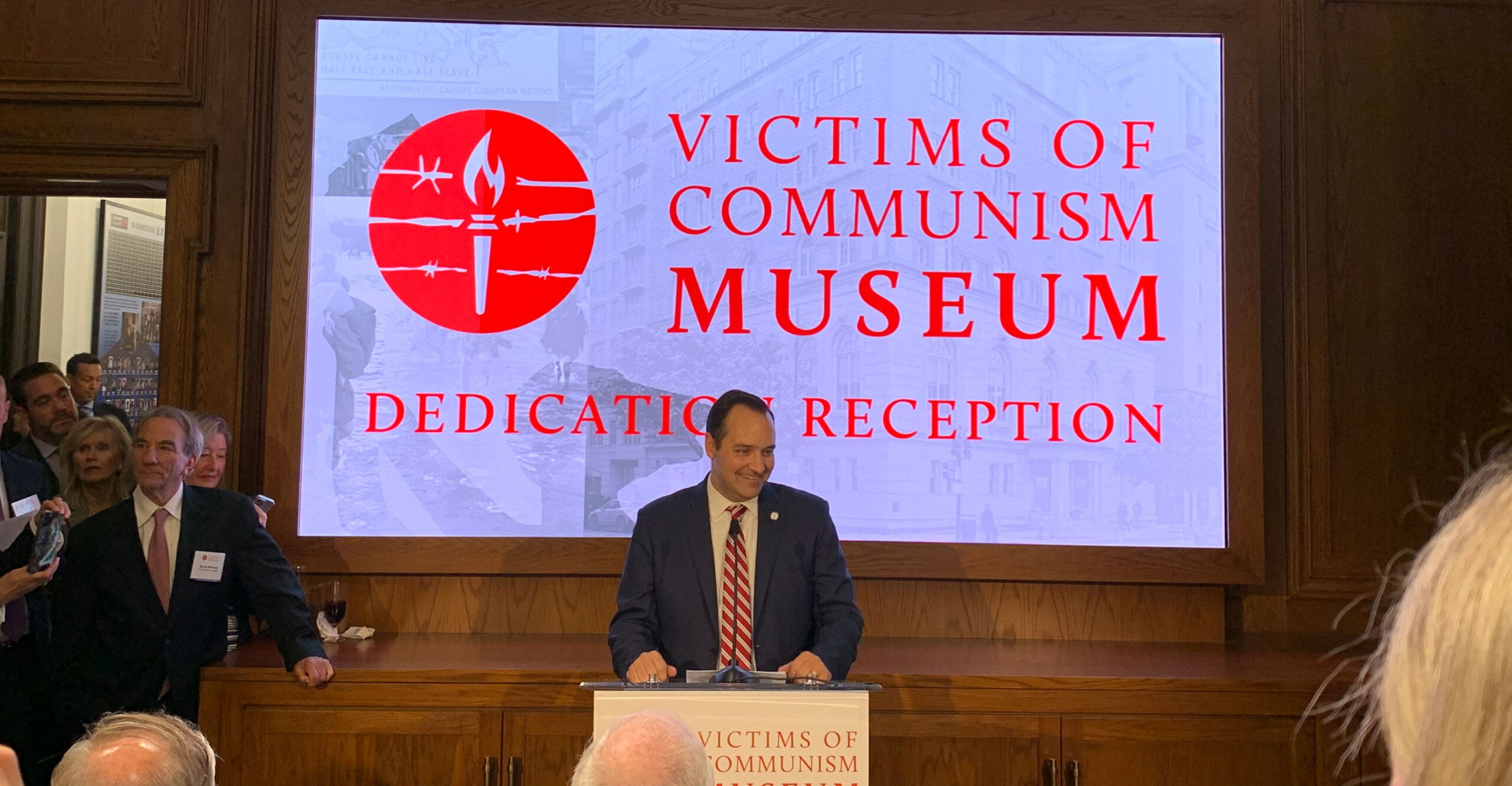
Dan Mitchell article: How Value-Added Taxes Hurt Low-Income Households

——

How Value-Added Taxes Hurt Low-Income Households

I have written dozens of columns explaining why a value-added tax would be very bad for the United States, mostly because it would encourage and enable a much bigger burden of government spending.

That argument is compelling when I’m speaking to conservatives (though not all of them, apparently!), but I need different arguments when talking to my friends on the left.

Fortunately, I now have some very persuasive data that hopefully will make left-of-center types much less likely to support a VAT.

Look at this graph, which clearly shows a strong relationship between higher value-added taxes and higher poverty.

The chart comes from a recent study by Manuel Schechtl for Social Policy and Society, published by Cambridge University Press.

He investigated the extent to which valued-added taxes push households into poverty.

Poor households spend a higher share of their disposable income on consumption simply because consumption does not increase proportionally with income. …This study aims to evaluate the change in poverty rates before and after deducting consumption taxes (consumable income poverty) and the increase in poverty (consumption tax induced poverty) across household types. …Figure 2 indicates the overall percentage point increase in poverty plotted against the implicit consumption tax rate. The pattern reveals a clear positive association between consumption tax and poverty increase – for instance, consumption taxes in Slovenia and Hungary lead to an increase in poverty of over ten percentage points compared to about four percentage points in Mexico or Switzerland (which have lower implicit consumption tax rates).

Very depressing findings, at least for those of us who don’t like high taxes.

But there is a big methodological flaw in the study.

It relies on a dishonest definition of poverty, one that is used by ideologues who want to exaggerate societal problems.

…poverty is measured as below fifty percent of median disposable household income.

For what it is worth, this approach measures the distribution of income in a society, not material deprivation or some other tangible definition of actual poverty.

Having pointed out this flaw, I don’t know if the author is trying to be dishonest. He may have simply relied on data from a group (like the OECD) that does have a dishonest agenda.

However, this methodological flaw does not undermine Schechtl’s core point. There’s no question that value-added taxes reduce the ability of poor people to consume. And I would not be surprised if a chart based on honest data looked very similar to the one shown above.

The moral of the story is that all good people – on the right and on the left – should reject the value-added tax.

P.S. One of the reasons I get upset about the Biden/Trump approach to entitlements is that I fear it would make a VAT more likely.

————

Image result for bertrand russell

On November 21, 2014 I received a letter from Nobel Laureate Harry Kroto and it said:

…Please click on this URL http://vimeo.com/26991975

and you will hear what far smarter people than I have to say on this matter. I agree with them.

Harry Kroto

Image result for harry kroto

I have attempted to respond to all of Dr. Kroto’s friends arguments and I have posted my responses one per week for over a year now. Here are some of my earlier posts:

Arif Ahmed, Sir David AttenboroughMark Balaguer, Horace Barlow, Michael BatePatricia ChurchlandAaron CiechanoverNoam Chomsky,Alan DershowitzHubert Dreyfus, Bart Ehrman, Stephan FeuchtwangDavid Friend,  Riccardo GiacconiIvar Giaever , Roy GlauberRebecca GoldsteinDavid J. Gross,  Brian Greene, Susan GreenfieldStephen F Gudeman,  Alan Guth, Jonathan HaidtTheodor W. Hänsch, Brian Harrison,  Hermann HauserRoald Hoffmann,  Bruce HoodHerbert Huppert,  Gareth Stedman Jones, Steve JonesShelly KaganMichio Kaku,  Stuart Kauffman,  Lawrence KraussHarry Kroto, George LakoffElizabeth Loftus,  Alan MacfarlanePeter MillicanMarvin MinskyLeonard Mlodinow,  Yujin NagasawaAlva NoeDouglas Osheroff,  Jonathan Parry,  Saul PerlmutterHerman Philipse,  Carolyn PorcoRobert M. PriceLisa RandallLord Martin Rees,  Oliver Sacks, John SearleMarcus du SautoySimon SchafferJ. L. Schellenberg,   Lee Silver Peter Singer,  Walter Sinnott-ArmstrongRonald de Sousa, Victor StengerBarry Supple,   Leonard Susskind, Raymond TallisNeil deGrasse Tyson,  .Alexander Vilenkin, Sir John WalkerFrank WilczekSteven Weinberg, and  Lewis Wolpert,

In  the first video below in the 14th clip in this series are his words and I will be responding to them in the next few weeks since Sir Bertrand Russell is probably the most quoted skeptic of our time, unless it was someone like Carl Sagan or Antony Flew.  

50 Renowned Academics Speaking About God (Part 1)

Another 50 Renowned Academics Speaking About God (Part 2)

A Further 50 Renowned Academics Speaking About God (Part 3)

__

Quote from Bertrand Russell:

Q: Why are you not a Christian?

Russell: Because I see no evidence whatever for any of the Christian dogmas. I’ve examined all the stock arguments in favor of the existence of God, and none of them seem to me to be logically valid.

Q: Do you think there’s a practical reason for having a religious belief, for many people?

Russell: Well, there can’t be a practical reason for believing what isn’t true. That’s quite… at least, I rule it out as impossible. Either the thing is true, or it isn’t. If it is true, you should believe it, and if it isn’t, you shouldn’t. And if you can’t find out whether it’s true or whether it isn’t, you should suspend judgment. But you can’t… it seems to me a fundamental dishonesty and a fundamental treachery to intellectual integrity to hold a belief because you think it’s useful, and not because you think it’s true.

__

Today I am not going to attack this quote above from Russell. I have done that enough in the past. Today I am going to look at Russell’s notes on communism and also examine his personal meeting with Lenin. Lenin just laughed when Lenin said that it was the plan for the poor peasants to hang the peasants that were a little better well off. This comment caught Russell off guard. Russell had already noted that Lenin was a “great man.” However, this embracing of violence caught Russell by surprise.

Then I will look at an examination of communism by Francis Schaeffer who will tell us why Communism ALWAYS fails to give the freedoms that it says it will and why so many young people are caught up in its idealistic promises.

“Why I am Not a Communist”
by Betrand Russell

“I am completely at a loss to understand how it came about that some people who are both humane and intelligent could find something to admire in the vast slave camp produced by Stalin.”

      I n relation to any political doctrine there are two questions to be asked: (1) Are its theoretical tenets true? (2) Is its practical policy likely to increase human happiness? For my part, I think the theoretical tenets of Communism are false, and I think its practical maxims are such as to produce an immeasurable increase of human misery.

      The theoretical doctrines of Communism are for the most part derived from Marx. My objections to Marx are of two sorts: one, that he was muddle-headed; and the other, that his thinking was almost entirely inspired by hatred. The doctrine of surplus value, which is supposed to demonstrate the exploitation of wage-earners under capitalism, is arrived at: (a) by surreptitiously accepting Malthus’s doctrine of population, which Marx and all his disciples explicitly repudiate; (b) by applying Ricardo’s theory of value to wages, but not to the prices of manufactured articles. He is entirely satisfied with the result, not because it is in accordance with the facts or because it is logically coherent, but because it is calculated to rouse fury in wage-earners. Marx’s doctrine that all historical events have been motivated by class conflicts is a rash and untrue extension to world history of certain features prominent in England and France a hundred years ago. His belief that there is a cosmic force called Dialectical Materialism which governs human history independently of human volitions, is mere mythology. His theoretical errors, however, would not have mattered so much but for the fact that, like Tertullian and Carlyle, his chief desire was to see his enemies punished, and he cared little what happened to his friends in the process.

      Marx’s doctrine was bad enough, but the developments which it underwent under Lenin and Stalin made it much worse. Marx had taught that there would be a revolutionary transitional period following the victory of the proletariat in a civil war and that during this period the proletariat, in accordance with the usual practice after a civil war, would deprive its vanquished enemies of political power. This period was to be that of the dictatorship of the proletariat. It should not be forgotten that in Marx’s prophetic vision the victory of the proletariat was to come after it had grown to be the vast majority of the population. The dictatorship of the proletariat therefore as conceived by Marx was not essentially anti-democratic. In the Russia of 1917, however, the proletariat was a small percentage of the population, the great majority being peasants. it was decreed that the Bolshevik party was the class-conscious part of the proletariat, and that a small committee of its leaders was the class-conscious part of the Bolshevik party. The dictatorship of the proletariat thus came to be the dictatorship of a small committee, and ultimately of one man – Stalin. As the sole class-conscious proletarian, Stalin condemned millions of peasants to death by starvation and millions of others to forced labour in concentration camps. He even went so far as to decree that the laws of heredity are henceforth to be different from what they used to be, and that the germ-plasm is to obey Soviet decrees but that that reactionary priest Mendel. I am completely at a loss to understand how it came about that some people who are both humane and intelligent could find something to admire in the vast slave camp produced by Stalin.

      I have always disagreed with Marx. My first hostile criticism of him was published in 1896. But my objections to modern Communism go deeper than my objections to Marx. It is the abandonment of democracy that I find particularly disastrous. A minority resting its powers upon the activities of secret police is bound to be cruel, oppressive and obscuarantist. The dangers of the irresponsible power cane to be generally recognized during the eighteenth and nineteenth centuries, but those who have forgotten all that was painfully learnt during the days of absolute monarchy, and have gone back to what was worst in the middle ages under the curious delusion that they were in the vanguard of progress.

      There are signs that in course of time the Russian régime will become more liberal. But, although this is possible, it is very far from certain. In the meantime, all those who value not only art and science but a sufficiency of bread and freedom from the fear that a careless word by their children to a schoolteacher may condemn them to forced labour in a Siberian wilderness, must do what lies in their power to preserve in their own countries a less servile and more prosperous manner of life.

      There are those who, oppressed by the evils of Communism, are led to the conclusion that the only effective way to combat these evils is by means of a world war. I think this a mistake. At one time such a policy might have been possible, but now war has become so terrible and Communism has become so powerful that no one can tell what would be left after a world war, and whatever might be left would probably be at least as bad as present -day Communism. This forecast does not depend upon the inevitable effects of mass destruction by means of hydrogen and cobalt bombs and perhaps of ingeniously propagated plagues. The way to combat Communism is not war. What is needed in addition to such armaments as will deter Communists from attacking the West, is a diminution of the grounds for discontent in the less prosperous parts of the non-communist world. In most of the countries of Asia, there is abject poverty which the West ought to alleviate as far as it lies in its power to do so. There is also a great bitterness which was caused by the centuries of European insolent domination in Asia. This ought to be dealt with by a combination of patient tact with dramatic announcements renouncing such relics of white domination as survive in Asia. Communism is a doctrine bred of poverty, hatred and strife. Its spread can only be arrested by diminishing the area of poverty and hatred.

from Portraits from Memory published in 1956

http://skepticva.org/excerpt-Lenin.html

Bertrand Russell on Lenin

excerpted from
LENIN, TROTSKY AND GORKY

itself an excerpt from
“The Practice and Theory of Bolshevism” By Bertrand Russell.

Webmaster’s note

The last paragraph (especially) shows that Russell’s atheism has nothing in common with Marxist-Leninism. It refutes the idea that the USSR is a lesson against the rejection of religion, because it had exactly the faults that mar any dogmatic belief.

Soon after my arrival in Moscow I had an hour’s conversation with Lenin in English, which he speaks fairly well. An interpreter was present, but his services were scarcely required. Lenin’s room is very bare; it contains a big desk, some maps on the walls, two book-cases, and one comfortable chair for visitors in addition to two or three hard chairs. It is obvious that he has no love of luxury or even comfort. He is very friendly, and apparently simple, entirely without a trace of hauteur.

If one met him without knowing who he was, one would not guess that he is possessed of great power or even that he is in any way eminent. I have never met a personage so destitute of self-importance. He looks at his visitors very closely, and screws up one eye, which seems to increase alarmingly the penetrating power of the other. He laughs a great deal; at first his laugh seems merely friendly and jolly, but gradually I came to feel it rather grim. He is dictatorial, calm, incapable of fear, extraordinarily devoid of self-seeking, an embodied theory.

The MATERIALIST conception of history, one feels, is his life-blood. He resembles a professor in his desire to have the theory understood and in his fury with those who misunderstand or disagree, as also in his love of expounding, I got the impression that he despises a great many people and is an intellectual aristocrat.

When I suggested that whatever is possible in England can be achieved without bloodshed, he waved aside the suggestion as fantastic. I got little impression of knowledge or psychological imagination as regards Great Britain. Indeed the whole tendency of Marxianism is against psychological imagination, since it attributes everything in politics to purely  MATERIAL causes.

I asked him next whether he thought it possible to establish Communism firmly and fully in a country containing such a large majority of peasants. He admitted that it was difficult, and laughed over the exchange the peasant is compelled to make, of food for paper; the worthlessness of Russian paper struck him as comic. But he said—what is no doubt true—that things will right themselves when there are goods to offer to the peasant. For this he looks partly to electrification in industry, which, he says, is a technical necessity in Russia, but will take ten years to complete. He spoke with enthusiasm, as they all do, of the great scheme for generating electrical power by means of peat. Of course he looks to the raising of the blockade as the only radical cure; but he was not very hopeful of this being achieved thoroughly or permanently except through revolutions in other countries. Peace between Bolshevik Russia and capitalist countries, he said, must always be insecure; the Entente might be led by weariness and mutual dissensions to conclude peace, but he felt convinced that the peace would be of brief duration. I found in him, as in almost all leading Communists, much less eagerness than existed in our delegation for peace and the raising of the blockade. He believes that nothing of real value can be achieved except through world revolution and the abolition of capitalism; I felt that he regarded the resumption of trade with capitalist countries as a mere palliative of doubtful value.

He described the division between rich and poor peasants, and the Government propaganda among the latter against the former, leading to acts of violence which he seemed to find amusing. He spoke as though the dictatorship over the peasant would have to continue a long time, because of the peasant’s desire for free trade. He said he knew from statistics (what I can well believe) that the peasants have had more to eat these last two years than they ever had before, “and yet they are against us,” he added a little wistfully. I asked him what to reply to critics who say that in the country he has merely created peasant proprietorship, not Communism; he replied that that is not quite the truth, but he did not say what the truth is.

The last question I asked him was whether resumption of trade with capitalist countries, if it took place, would not create centres of capitalist influence, and make the preservation of Communism more difficult? It had seemed to me that the more ardent Communists might well dread commercial intercourse with the outer world, as leading to an infiltration of heresy, and making the rigidity of the present system almost impossible. I wished to know whether he had such a feeling. He admitted that trade would create difficulties, but said they would be less than those of the war. He said that two years ago neither he nor his colleagues thought they could survive against the hostility of the world. He attributes their survival to the jealousies and divergent interests of the different capitalist nations; also to the power of Bolshevik propaganda. He said the Germans had laughed when the Bolsheviks proposed to combat guns with leaflets, but that the event had proved the leaflets quite as powerful. I do not think he recognizes that the Labour and Socialist parties have had any part in the matter. He does not seem to know that the attitude of British Labour has done a great deal to make a first-class war against Russia impossible, since it has confined the Government to what could be done in a hole-and-corner way, and denied without a too blatant mendacity.

I think if I had met him without knowing who he was, I should not have guessed that he was a great man; he struck me as too opinionated and narrowly orthodox. His strength comes, I imagine, from his honesty, courage, and unwavering faith—religious faith in the Marxian gospel, which takes the place of the Christian martyr’s hopes of Paradise, except that it is less egotistical. He has as little love of liberty as the Christians who suffered under Diocletian, and retaliated when they acquired power. Perhaps love of liberty is incompatible with whole-hearted belief in a panacea for all human ills. If so, I cannot but rejoice in the sceptical temper of the Western world.

I went to Russia a Communist; but contact with those who have no doubts has intensified a thousandfold my own doubts, not as to Communism in itself, but as to the wisdom of holding a creed so firmly that for its sake men are willing to inflict widespread misery.

Almanac: Bertrand Russell on Lenin’s sense of humor

INK BOTTLE“When I met Lenin, I had much less impression of a great man than I had expected; my most vivid impressions were of Mongolian cruelty and bigotry. When I put a question to him about socialism in agriculture, he explained with glee how he had incited the poorer peasants against the richer ones, ‘and they soon hanged them from the nearest tree—ha! ha! ha!’ His guffaw at the thought of those massacred made my blood run cold.”

Bertrand Russell, “Eminent Men I Have Known” (courtesy of Richard Brookhiser)

_

_

Communism catches the attention of the young at heart but it has always brought repression wherever it is tried. “True Communism has never been tried” is something I was told just a few months ago by a well meaning young person who was impressed with the ideas of Karl Marx. I responded that there are only 5 communist countries in the world today and they lack political, economic and religious freedom.
Tony Bartolucci noted that Schaeffer has correctly pointed out:
Hope in Marxism-Leninism is a leap in the area of nonreason. From the Russian Revolution until 1959 a total of 66 million prisoners died. This was deemed acceptable to the leaders because internal security was to be gained at any cost. The ends justified the means. The materialism of Marxism gives no basis for human dignity or rights. These hold to their philosophy against all reason and close their eyes to the oppression of the system.

#02 How Should We Then Live? (Promo Clip) Dr. Francis Schaeffer

WHY DOES COMMUNISM FAIL?
Communism has always failed because of its materialist base.  Francis Schaeffer does a great job of showing that in this clip below. Also Schaeffer shows that there were lots of similar things about the basis for both the French and Russia revolutions and he exposes the materialist and humanist basis of both revolutions.

Schaeffer compares communism with French Revolution and Napoleon.

1. Lenin took charge in Russia much as Napoleon took charge in France – when people get desperate enough, they’ll take a dictator.

Other examples: Hitler, Julius Caesar. It could happen again.

2. Communism is very repressive, stifling political and artistic freedom. Even allies have to be coerced. (Poland).

Communists say repression is temporary until utopia can be reached – yet there is no evidence of progress in that direction. Dictatorship appears to be permanent.

3. No ultimate basis for morality (right and wrong) – materialist base of communism is just as humanistic as French. Only have “arbitrary absolutes” no final basis for right and wrong.

How is Christianity different from both French Revolution and Communism?

Contrast N.T. Christianity – very positive government reform and great strides against injustice. (especially under Wesleyan revival).

Bible gives absolutes – standards of right and wrong. It shows the problems and why they exist (man’s fall and rebellion against God).

WHY DOES THE IDEA OF COMMUNISM CATCH THE ATTENTION OF SO MANY IDEALISTIC YOUNG PEOPLE? The reason is very simple. 

In HOW SHOULD WE THEN LIVE? The Rise and Decline of Western Thought and Culture, the late Francis A. Schaeffer wrote:

Materialism, the philosophic base for Marxist-Leninism, gives no basis for the dignity or rights of man.  Where Marxist-Leninism is not in power it attracts and converts by talking much of dignity and rights, but its materialistic base gives no basis for the dignity or rights of man.  Yet is attracts by its constant talk of idealism.

To understand this phenomenon we must understand that Marx reached over to that for which Christianity does give a base–the dignity of man–and took the words as words of his own.  The only understanding of idealistic sounding Marxist-Leninism is that it is (in this sense) a Christian heresy.  Not having the Christian base, until it comes to power it uses the words for which Christianity does give a base.  But wherever Marxist-Leninism has had power, it has at no place in history shown where it has not brought forth oppression.  As soon as they have had the power, the desire of the majority has become a concept without meaning.

Is Christianity at all like Communism?

Sometimes Communism sounds very “Christian” – desirable goals of equality, justice, etc but these terms are just borrowed from the New Testament. Schaeffer elsewhere explains by saying Marxism is a Christian heresy.

Below is a great article. Free-lance columnist Bradley R. Gitz, who lives and teaches in Batesville, received his Ph.D. in political science from the University of Illinois.

This article was published January 30, 2011 at 2:28 a.m. Here is a portion of that article below:
A final advantage is the mutation of socialism into so many variants over the past century or so. Precisely because Karl Marx was unclear as to how it would work in practice, socialism has always been something of an empty vessel into which would be revolutionaries seeking personal meaning and utopian causes to support can pour pretty much anything.
A desire to increase state power, soak the rich and expand the welfare state is about all that is left of the original vision. Socialism for young lefties these days means “social justice” and compassion for the poor, not the gulag and the NKVD.
In the end, the one argument that will never wash is that communismcan’t be said to have failed because it was never actually tried. This is a transparent intellectual dodge that ignores the fact that “people’s democracies” were established all over the place in the first three decades after World War II.
Such sophistry is resorted to only because communism in all of those places produced hell on earth rather than heaven.
That the attempts to build communism in a remarkable variety of different geographical regions led to only tyranny and mass bloodshed tells us only that it was never feasible in the first place, and that societies built on the socialist principle ironically suffer from the kind of “inner contradictions” that Marx mistakenly predicted would destroy capitalism.
Yes, all economies are mixed in nature, and one could plausibly argue that the socialist impulse took the rough edges off of capitalism by sponsoring the creation of welfare-state programs that command considerable public support.
But the fact remains that no society in history has been able to achieve sustained prosperity without respect for private property and market forces of supply and demand. Nations, therefore, retain their economic dynamism only to the extent that they resist the temptation to travel too far down the socialist road.

#02 How Should We Then Live? (Promo Clip) Dr. Francis Schaeffer

Francis Schaeffer notes:

At Berkeley the Free Speech Movement arose simultaneously with the hippie world of drugs. At first it was politically neither left nor right, but rather a call for the freedom to express any political views on Sproul Plaza. Then soon the Free Speech Movement became the Dirty Speech Movement, in which freedom was seen as shouting four-letter words into a mike.  Soon after, it became the platform for the political New Left which followed the teaching of Herbert Marcuse. Marcuse was a German professor of philosophy related to the neo-Marxist teaching of the “Frankfurt School,” along with...Jurgen Habermas (1929-). 

Herbert Marcuse, “Liberation from the Affluent Society” (1967)

Brannon Howse talks some about the Frankfurt School in some of his publications too. 

During the 1960’s many young people were turning to the New Left fueled by Marcuse and Habermas but something happened to slow many young people’s enthusiasm for that movement.

1970 bombing took away righteous standing of Anti-War movement

Francis Schaeffer mentioned the 1970 bombing in his film series “How should we then live?” and I wanted to give some more history on it. Schaeffer asserted:

In the United States the New Left also slowly ground down,losing favor because of the excesses of the bombings, especially in the bombing of the University of Wisconsin lab in 1970, where a graduate student was killed. This was not the last bomb that was or will be planted in the United States. Hard-core groups of radicals still remain and are active, and could become more active, but the violence which the New Left produced as its natural heritage (as it also had in Europe) caused the majority of young people in the United States no longer to see it as a hope. So some young people began in 1964 to challenge the false values of personal peace and affluence, and we must admire them for this. Humanism, man beginning only from himself, had destroyed the old basis of values, and could find no way to generate with certainty any new values.  In the resulting vacuum the impoverished values of personal peace and affluence had comes to stand supreme. And now, for the majority of the young people, after the passing of the false hopes of drugs as an ideology and the fading of the New Left, what remained? Only apathy was left. In the United States by the beginning of the seventies, apathy was almost complete. In contrast to the political activists of the sixties, not many of the young even went to the polls to vote, even though the national voting age was lowered to eighteen. Hope was gone.

After the turmoil of the sixties, many people thought that it was so much the better when the universities quieted down in the early seventies. I could have wept. The young people had been right in their analysis, though wrong in their solutions. How much worse when many gave up hope and simply accepted the same values as their parents–personal peace and affluence. (How Should We Then Live, pp. 209-210

______________________

Sunday, August 28th, 2011, 11:11pm

Aug. 24 marked the 41st anniversary of the Sterling Hall bombing on the University of Wisconsin-Madison campus.

Four men planned the bomb at the height of the student protests over the Vietnam War. Back then, current Madison Mayor Paul Soglin was one of the leaders of those student protests in the capitol city. This weekend, Soglin recalled the unrest felt by UW-Madison students.

“The anti-war movement adopted a lot of its tactics and strategies from the civil rights movement which was about ten years older,” said Soglin. “It was one of picketing, demonstration, and passive resistance.”

The four men who planned the bombing focused on the Army Mathematics Research Center housed in Sterling Hall because it was funded by the U.S. Department of Defense and therefore, worked on weapons technology. Karl Armstrong was one of the four men and he recently spoke with CBS News in his first television interview detailing the moments right before the bomb was set off.

“He asked me, he says, ‘Should we go ahead? Are we gonna do this?’ I think I made a comment to him about something like, ‘Now, I know what war is about,'” remembered Armstrong. “And I told him to light it.”

The bomb killed one researcher and father of three, 33-year-old Robert Fassnacht, although Armstrong maintains they planned the attack thinking no one would get hurt. The four men heard about the death as they were in their getaway car after the bomb went off.

“I felt good about doing the bombing, the bombing per se, but not taking someone’s life,” recalled Armstrong.

The researcher’s wife told CBS News that she harbors no ill will toward Armstrong and the other bombers. Three of the four men were captured and served time in prison. Armstrong served eight years of a 23-year sentence.

The fourth man, Leo Burt, was last seen in the fall of 1970 in Ontario and is to this day, still wanted by the FBI, with a $150,000 reward for his capture.

Related posts:

RESPONDING TO HARRY KROTO’S BRILLIANT RENOWNED ACADEMICS!! Pausing to take a look at the life of HARRY KROTO Part C (Kroto’s admiration of Bertrand Russell examined)

Today we look at the 3rd letter in the Kroto correspondence and his admiration of Bertrand Russell. (Below The Nobel chemistry laureates Harold Kroto, Robert Curl and Richard Smalley) It is with sadness that I write this post having learned of the death of Sir Harold Kroto on April 30, 2016 at the age of […]

RESPONDING TO HARRY KROTO’S BRILLIANT RENOWNED ACADEMICS!! Part 52 The views of Hegel and Bertrand Russell influenced Gareth Stedman Jones of Cambridge!!

On November 21, 2014 I received a letter from Nobel Laureate Harry Kroto and it said: …Please click on this URL http://vimeo.com/26991975 and you will hear what far smarter people than I have to say on this matter. I agree with them. Harry Kroto _________________ Below you have picture of Dr. Harry Kroto:   Gareth Stedman […]

WOODY WEDNESDAY John Piippo makes the case that Bertrand Russell would have loved Woody Allen because they both were atheists who don’t deny the ramifications of atheism!!!

Top 10 Woody Allen Movies __________ John Piippo makes the case that Bertrand Russell would have loved Woody Allen because they both were  atheists who don’t deny the ramifications of atheism!!! Monday, August 06, 2012 (More On) Woody Allen’s Atheism As I wrote in a previous post, I like Woody Allen. I have long admired his […]

John Piippo makes the case that Bertrand Russell would have loved Woody Allen because they both were two atheists who don’t deny the ramifications of atheism!!!

______ Top 10 Woody Allen Movies PBS American Masters – Woody Allen A Documentary 01 PBS American Masters – Woody Allen A Documentary 02 __________ John Piippo makes the case that Bertrand Russell would have loved Woody Allen because they both were two atheists who don’t deny the ramifications of atheism!!! Monday, August 06, 2012 […]

Bertrand Russell v. Frederick Copleston debate transcript (Part 4)

THE MORAL ARGUMENT     BERTRAND RUSSELL But aren’t you now saying in effect, I mean by God whatever is good or the sum total of what is good — the system of what is good, and, therefore, when a young man loves anything that is good he is loving God. Is that what you’re […]

Bertrand Russell v. Frederick Copleston debate transcript (Part 3)

Great debate Fr. Frederick C. Copleston vs Bertrand Russell – Part 1 Uploaded by riversonthemoon on Jul 15, 2009 BBC Radio Third Programme Recording January 28, 1948. BBC Recording number T7324W. This is an excerpt from the full broadcast from cassette tape A303/5 Open University Course, Problems of Philosophy Units 7-8. Older than 50 years, […]

Bertrand Russell v. Frederick Copleston debate transcript and audio (Part 2)

Uploaded by riversonthemoon on Jul 15, 2009 BBC Radio Third Programme Recording January 28, 1948. BBC Recording number T7324W. This is an excerpt from the full broadcast from cassette tape A303/5 Open University Course, Problems of Philosophy Units 7-8. Older than 50 years, out of UK/BBC copyright. Pardon the hissy audio. It was recorded 51 […]

Bertrand Russell v. Frederick Copleston debate transcript and audio (Part 1)

Fr. Frederick C. Copleston vs Bertrand Russell – Part 1 Uploaded by riversonthemoon on Jul 15, 2009 BBC Radio Third Programme Recording January 28, 1948. BBC Recording number T7324W. This is an excerpt from the full broadcast from cassette tape A303/5 Open University Course, Problems of Philosophy Units 7-8. Older than 50 years, out of […]

Bertrand Russell v. Frederick Copleston debate transcript (Part 4)

THE MORAL ARGUMENT     BERTRAND RUSSELL But aren’t you now saying in effect, I mean by God whatever is good or the sum total of what is good — the system of what is good, and, therefore, when a young man loves anything that is good he is loving God. Is that what you’re […]

Bertrand Russell v. Frederick Copleston debate transcript (Part 3)

Fr. Frederick C. Copleston vs Bertrand Russell – Part 1 Uploaded by riversonthemoon on Jul 15, 2009 BBC Radio Third Programme Recording January 28, 1948. BBC Recording number T7324W. This is an excerpt from the full broadcast from cassette tape A303/5 Open University Course, Problems of Philosophy Units 7-8. Older than 50 years, out of […]

Francis Schaeffer concluded: Early modern science was started by those who lived in a consensus and setting of Christianity. A man like J. Robert Oppenheimer, for example, who was not a Christian, nevertheless understood this. He said that Christianity was needed to give birth to modern science [On Science and Culture Encounter, October 1962]. Christianity was necessary for the beginning of modern science for the simple reason that Christianity created a climate of thought which put men in a position to investigate the form of the universe…The early scientists also shared the outlook of Christianity in believing that there is a reasonable God, who has created a reasonable universe, and thus man, by use of his reason, could find out the universes form (Francis Schaeffer, Escape From Reason)


The Blue Letter Bible

Don Stewart :: Has Christianity Opposed the Advancement of Science?

Don Stewart
As we conclude our introductory questions on the Bible and science it is necessary to address a common misconception: Bible believers are opposed to the advancement of science. It is a popular perception that those who believe the Bible and what it says about matters of science and nature are enemies of truth and scientific advancement. The late science writer Isaac Asimov stated:

With creation in the saddle American science will wither. We will raise a generation of ignoramuses. We will inevitably recede into the backwaters of civilization.

Three past incidents are usually cited to show the Christians opposition to scientific advancement: the dispute of the church with Galileo, the creation/evolution debate between T.H. Huxley and Bishop Samuel Wilberforce, and the infamous Scopes monkey trial.

Galileo

At the time of Galileo, (the 17th century), the common belief was that the earth was center of our solar system. Galileos use of the telescope brought conclusions that were based upon scientific observation. He taught that the sun, not the earth, was the immovable center of our solar system. This conclusion contradicted the accepted philosophical views of his day. But it is important to note, it did notcontradict what the Bible had said about the matter. Scientist James Reid explains the arguments used against Galileo.

It would not be fair to consider Galileos case without asking why the authorities of the day could use the Bible to support their arguments against him. The facts of the matter however, show that there werent many Biblical references used. Galileos enemies turned more to politics and the science of the day, than they did to the Bible. As indicated, they were worried more about upsetting the older “scientific” theories of the day (James Reid, Does Science Confront the Bible, Grand Rapids: Zondervan, 1971, pp. 44,45).

The churchs mistreatment of Galileo gave the perception that Christianity was against scientific advancement and Galileo is hailed today as a scientific martyr. Yet the problem was not with the Bible and science. Arthur Koestler writes:

The Galileo affair was an isolated, and in fact quite untypical, episode in the history of the relations between science and theology . . . But its dramatic circumstances, magnified all our of proportion, created a popular belief that science stood for freedom, the Church for oppression of thought (Arthur Koestler, The Sleepwalkers, 1986 edition, London: Penguin Books, p. 533).

Huxley/Wilberforce

About a year after the publication of Charles Darwins book The Origin of Species, a confrontation took place that set the stage for the modern creation/evolution controversy. In June 1860, at a meeting of the British Association for the Advancement of Science, a special meeting was held to discuss Darwins views.

Bishop Samuel Wilberforce addressed the scientific association and spoke against the theory of evolution while English biologist T. H. Huxley defended Darwin. For the last hundred years the story has been told how Huxley won the debate against the ignorant bishop. But this view has been challenged in recent years. It seems the bishop was not the ignorant and ill-informed individual that history has usually characterized him. After the debate Wilberforce wrote a critique on the Origin of Species which Darwin himself described as “uncommonly clever and which makes very good sense.”

Because there were no written accounts taken at the meeting any descriptions we have are from memories of those who attended. The story that circulated was of Huxleys brilliance and the bishops incompetence. Because of the way the incident was reported, many rejected the biblical position as being scientifically absurd. Within ten years, scientific opinion throughout the world had changed from supernatural creationism in favor of mindless evolution.

Scopes Trial

An incident occurred early in the twentieth century that furthered the rift between Christianity and the scientific community. In 1925 in Dayton, Tennessee, a young high school teacher named John Scopes was put on trial for teaching the theory of evolution. Scopes was defended by the famous Clarence Darrow while William Jennings Bryan argued the case for the state of Tennessee.

Evidence?

One of the pieces of evidence presented for the case for evolution was the tooth from Nebraska man. A molar found in Nebraska in 1922 was identified as having come from an important transitional form between man and his primate ancestors by at least four well-known scientists: H. Cook, H. F. Osborn, H. H. Wilder, and G. E. Smith. Osborn declared, on the day he first saw the tooth:

The instant your package arrived I sat down with the tooth, in my window, and said to myself: It looks one hundred percent anthropoid . . . It looks to me as if the first anthropoid ape of America has been found (cited by Bolton Davidheiser, Evolution and Christian Faith, Nutley, NJ: The Presbyterian and Reformed Publishing Company: 1969, p. 347).

However, in 1927 the molar was correctly identified as belonging to a pig:
The men from the museum also found more of the fossil material for which they were looking, and it turned out that the tooth of an animal which had previously been named Prosthennops. This was very embarrassing, because Prosthennops was a peccary, which is a type of pig (Davidheiser, Evolution and Christian Faith, p. 348).

Result

Unfortunately, Nebraska man was used as one of the “proofs” of evolution at the trial. Though the creationist position won in the courtroom, it was dealt a further blow in the eyes of the world. They perceived the church as persecuting a helpless biology teacher, as well as not accepting the clear evidence for evolution. Scientist Henry Morris sums up the result:

The bells had tolled for any scientific belief in special creation. The Scopes trial (1925) had ended in a nominal victory for the fundamentalists, with the teacher Scopes convicted for teaching evolution in the high school, contrary to Tennessee law. In the press, however, Clarence Darrow and his evolutionist colleagues had resoundingly defeated William Jennings Bryan and the creationists. Evolution henceforth was almost universally accepted as an established fact of modern science and special creation relegated to the limbo of curious beliefs of a former age (Henry Morris, The Troubled Waters of Evolution, San Diego: Creation-Life Publishers, 1974, p. 9).

Modern Science And Christianity

These three instances have blurred the truth that modern science arose in a Christian context. Near the end of the nineteenth century, Emil Dubois-Reymond, professor of medicine at the University of Berlin, said:

Modern science, paradoxical as it may sound, has to thank Christianity for its origin (cited by Eric Sauer, The King of the Earth, Palm Springs: Ronald N. Haynes Publishers, 1981, p. 86).

Scientist/theologian John Klotz writes:

It should be very evident that modern science could only have developed in the environment of the Judeo-Christian emphasis on the orderliness of creation. The gods of the many religions are erratic. They play cat and mouse with man. They tantalize him and change the rules. Their actions are not predictable, and consequently the universe is not regular and predictable (John Klotz, Studies in Creation, St. Louis: Concordia Publishing House, 1985, p. 11).

The late Christian philosopher Francis Schaeffer concluded:

What we have to realize is that early modern science was started by those who lived in a consensus and setting of Christianity. A man like J. Robert Oppenheimer, for example, who was not a Christian, nevertheless understood this. He said that Christianity was needed to give birth to modern science [On Science and Culture Encounter, October 1962]. Christianity was necessary for the beginning of modern science for the simple reason that Christianity created a climate of thought which put men in a position to investigate the form of the universe . . . .

The early scientists also shared the outlook of Christianity in believing that there is a reasonable God, who has created a reasonable universe, and thus man, by use of his reason, could find out the universes form (Francis Schaeffer, Escape From Reason,Downers Grove, Illinois: InterVarsity Press, 1968, pp. 30,31).

Summary

Because people took the Bible seriously modern science and its scientific laws were formed. The belief that a reasonable God had created a universe of order birthed modern science. Scientists such as Newton, Pascal, and Faraday were creationists who believed the Creator had established laws for people and the natural world. It is, therefore, incorrect to say that Christianity opposes the advancement of scientific knowledge.


The Incredible Steven Weinberg (1933-2021) – Sixty Symbols

In my April 30, 2019 letter to Dr. Weinberg I asked him about Francis Schaeffer’s words “Galileo’s and Copernicus’ works did not contradict the Bible but the elements of Aristotle’s teaching which had entered the Church”

April 30, 2019

Steven Weinberg
The University of Texas at Austin
Department of Physics
2515 Speedway Stop C1600
Austin, TX 78712-1192

Dear Dr. Weinberg,

I know after reading TO EXPLAIN THE WORLD that you are a not only a great scientist but also a very good science historian. Therefore, I am sure you have read about everything ever written about Alfred North Whitehead (1861-1947) and J. Robert Oppenheimer (1904-1967), and I hope you enjoy this letter!!

I noticed in your book THIRD THOUGHTS in the 22nd chapter entitled “Writing About Science” that you stated:

Galileo said “It is the sun not the earth at rest.”

In the episode “The Scientific Age” in the film series HOW SHOULD WE THEN LIVE? Francis Schaeffer asserted, “Galileo’s and Copernicus’ works did not contradict the Bible but the elements of Aristotle’s teaching which had entered the Church….In 1609 Galileo began to use the newly invented telescope and what he saw and wrote about indicated that aristotle had been mistaken in his pronouncements about the makeup of the universe. Galileo was not the first to rely on experimental evidence. Danish Tycho Brahe (1546-1601) had come to similar conclusions from observation, but Galileo articulated his findings publicly in his lifetime and in his native tongue so that all could read what he wrote. Condemned by the Roman Inquisition in 1632, he was forced to recant, but his writings continued to testify not only that Copernicus was right, but also that Aristotle was wrong.

Both Alfred North Whitehead (1861-1947) and J. Robert Oppenheimer (1904-1967) have stressed that modern science was born out of a Christian worldview. Whitehead was a widely respected mathematician and philosopher, and Oppenheimer, after he became director of the Institute for Advanced Study at Princeton in 1947, wrote on a wide-range of subjects related to science, in addition to writing in his own field on the structure of the atom and atomic energy. As far as I know, neither of the two men were Christians; yet both were straightforward in acknowledging that modern science was born out of the Christian world-view.

Oppenheimer, for example, described this in an article, “On Science and Culture” in ENCOUNTER in October 1962.  In the Harvard University Lowell Lectures entitled “Science and the Modern World”(1925) Whitehead said that Christianity is the mother of modern science because of “the medieval insistence in the rationality of God.” With complete confidence “in the intelligible rationality of a personal being,” continued Whitehead, early scientists had an “inexpugnable belief that every detailed occurrence can be correlated with its’ antecedents in a perfectly definite manner, exemplifying general principles. Without this belief the incredible labors of scientists would be without hope.” In other words, because the early scientists believed that the world was created by a reasonable God, they were not surprised to discover that people could find out something true about nature and the universe in the basis of reason.

Below is the outline from the 27 min episode.

T h e

SCIENTIFIC AGE

I. Church Attacks on Copernican Science Were Philosophical

Galileo’s and Copernicus’ works did not contradict the Bible but the elements of Aristotle’s teaching which had entered the Church.

II. Examples of Biblical Influence

A. Pascal’s work.

1. First successful barometer; great writing of French prose.

2. Understood Man’s uniqueness: Man could contemplate, and Man had value to God.

B. Newton

1. Speed of sound and gravity.

2. For Newton and the other early scientists, no problem concerning the why, because they began with the existence of a personal God who had created the universe.

C. Francis Bacon

1. Stressed careful observation and systematic collection of information.

2. Bacon and the other early scientists took the Bible seriously, including its teaching concerning history and the cosmos.

D. Faraday

1. Crowning discovery was the induction of the electric current.

2. As a Christian, believed God’s Creation is for all men to understand and enjoy, not just for a scientific elite.

III. Scientific Aspects of Biblical Influence

A. Oppenheimer and Whitehead: biblical foundations of scientific revolution.

B. Not all early scientists individually Christian, but all lived within Christian thought forms. This gave a base for science to continue and develop.

C. The contrast between Christian-based science and Chinese and Arab science.

D. Christian emphasis on an ordered Creation reflects nature of reality and is therefore acted upon in all cultures, regardless of what they say their world view is.

1. Einstein’s theory of relativity does not imply relative universe.

2. Man acts on assumption of order, whether he likes it or not.

3. Master idea of biblical science.

a) Uniformity of natural causes in an open system: cause and effect works, but God and Man not trapped in a process.

b) All that exists is not a total cosmic machine.

c) Human choices therefore have meaning and effect.

d) The cosmic machine and the machines people make therefore not a threat.

IV. Shift in Modern Science

A. Change in conviction from earlier modern scientists.

B. From an open to a closed natural system: elimination of belief in a Creator.

1. Closed system derives not from the findings of science but from philosophy.

2. Now there is no place for the significance of Man, for morals, or for love.

C. Darwin taught that all life evolved through the survival of the fittest.

1. Serious problems inherent in Darwinism and Neo-Darwinism.

2. Extension of natural selection to society, politics and ethnics.

D. Natural selection and Nazi ideology.

E. The new authoritarianism: not the crudely dictatorial regimes of Hitler and Stalin. New regimes will be subtly manipulative, based on sophisticated arsenal of new techniques now available.

Thanks for your time.

Sincerely,

Everette Hatcher, everettehatcher@gmail.comhttp://www.thedailyhatch.org, cell ph 501-920-5733, Box 23416, LittleRock, AR 72221

On the Shoulders of Giants: Steven Weinberg and the Quest to Explain the…

Steven Weinberg Discussion (1/8) – Richard Dawkins

—-

Whatever Happened To The Human Race? (2010) | Full Movie | Michael Hordern

——

The Bill Moyers Interview – Steven Weinberg

How Should We Then Live (1977) | Full Movie | Francis Schaeffer | Edith …
https://youtu.be/1IB3Qqj5M2k

Steven Weinberg Discussion (2/8) – Richard Dawkins

RESPONDING TO HARRY KROTO’S BRILLIANT RENOWNED ACADEMICS!!

Steven Weinberg – Dreams of a Final Theory

Steven Weinberg Discussion (3/8) – Richard Dawkins

Steven Weinberg, Author

How Should We Then Live | Season 1 | Episode 6 | The Scientific Age

—-

Steven Weinberg Discussion (4/8) – Richard Dawkins

I am grieved to hear of the death of Dr. Steven Weinberg who I have been familiar with since reading about him in 1979 in WHATEVER HAPPENED TO THE HUMAN RACE? by Dr. C. Everett Koop and Francis Schaeffer. I have really enjoyed reading his books and DREAMS OF A FINAL REALITY and TO EXPLAIN THE WORLD were two of my favorite!

C. Everett Koop
C. Everett Koop, 1980s.jpg

—-

Steven Weinberg Discussion (5/8) – Richard Dawkins

Francis Schaeffer : Reclaiming the World part 1, 2

The Atheism Tapes – Steven Weinberg [2/6]
https://youtu.be/3IZeQ3-ykc0

The Story of Francis and Edith Schaeffer

Steven Weinberg – What Makes the Universe Fascinating?

On November 21, 2014 I received a letter from Nobel Laureate Harry Kroto and it said:

…Please click on this URL http://vimeo.com/26991975

and you will hear what far smarter people than I have to say on this matter. I agree with them.

Harry Kroto

_________________

Below you have picture of Dr. Harry Kroto:

______________

I have attempted to respond to all of Dr. Kroto’s friends arguments and I have posted my responses one per week for over a year now. Here are some of my earlier posts:

Sir David AttenboroughMark Balaguer, Patricia ChurchlandAaron CiechanoverNoam Chomsky,Alan DershowitzHubert Dreyfus, Bart EhrmanIvar Giaever , Roy GlauberRebecca GoldsteinDavid J. Gross,  Brian Greene, Susan GreenfieldAlan Guth, Jonathan HaidtHermann HauserRoald Hoffmann,  Bruce HoodHerbert Huppert,  Gareth Stedman JonesShelly KaganStuart Kauffman,  Lawrence KraussHarry Kroto, Elizabeth Loftus,  Alan MacfarlanePeter MillicanMarvin MinskyLeonard Mlodinow,  Yujin NagasawaDouglas Osheroff,   Saul PerlmutterHerman Philipse,  Robert M. PriceLisa RandallLord Martin Rees,  Oliver SacksMarcus du SautoySimon SchafferJ. L. Schellenberg,   Lee Silver Peter Singer,  Walter Sinnott-ArmstrongRonald de Sousa, Victor StengerBarry Supple,   Leonard Susskind, Raymond TallisNeil deGrasse Tyson,  .Alexander Vilenkin, Sir John WalkerFrank WilczekSteven Weinberg, and  Lewis Wolpert,

____________________________

In  the 1st video below in the 50th clip in this series are his words. 

50 Renowned Academics Speaking About God (Part 1)

Another 50 Renowned Academics Speaking About God (Part 2)

A Further 50 Renowned Academics Speaking About God (Part 3)

_________________________________

Steven Weinberg: To Explain the World

I have a friend — or had a friend, now dead — Abdus Salam, a very devout Muslim, who was trying to bring science into the universities in the Gulf states and he told me that he had a terrible time because, although they were very receptive to technology, they felt that science would be a corrosive to religious belief, and they were worried about it… and damn it, I think they were right. It is corrosive of religious belief, and it’s a good thing too.

Steven Weinberg

________

Related posts:

FRANCIS SCHAEFFER ANALYZES ART AND CULTURE Part 53 THE BEATLES (Part E, Stg. Pepper’s and John Lennon’s search in 1967 for truth was through drugs, money, laughter, etc & similar to King Solomon’s, LOTS OF PICTURES OF JOHN AND CYNTHIA) (Feature on artist Yoko Ono)

The John Lennon and the Beatles really were on a long search for meaning and fulfillment in their lives  just like King Solomon did in the Book of Ecclesiastes. Solomon looked into learning (1:12-18, 2:12-17), laughter, ladies, luxuries, and liquor (2:1-2, 8, 10, 11), and labor (2:4-6, 18-20). He fount that without God in the picture all […]

FRANCIS SCHAEFFER ANALYZES ART AND CULTURE Part 52 THE BEATLES (Part D, There is evidence that the Beatles may have been exposed to Francis Schaeffer!!!) (Feature on artist Anna Margaret Rose Freeman )

______________   George Harrison Swears & Insults Paul and Yoko Lucy in the Sky with Diamonds- The Beatles The Beatles:   I have dedicated several posts to this series on the Beatles and I don’t know when this series will end because Francis Schaeffer spent a lot of time listening to the Beatles and talking […]

FRANCIS SCHAEFFER ANALYZES ART AND CULTURE Part 51 THE BEATLES (Part C, List of those on cover of Stg.Pepper’s ) (Feature on artist Raqib Shaw )

  The Beatles in a press conference after their Return from the USA Uploaded on Nov 29, 2010 The Beatles in a press conference after their Return from the USA. The Beatles:   I have dedicated several posts to this series on the Beatles and I don’t know when this series will end because Francis […]

FRANCIS SCHAEFFER ANALYZES ART AND CULTURE Part 50 THE BEATLES (Part B, The Psychedelic Music of the Beatles) (Feature on artist Peter Blake )

__________________   Beatles 1966 Last interview I have dedicated several posts to this series on the Beatles and I don’t know when this series will end because Francis Schaeffer spent a lot of time listening to the Beatles and talking and writing about them and their impact on the culture of the 1960’s. In this […]

FRANCIS SCHAEFFER ANALYZES ART AND CULTURE Part 49 THE BEATLES (Part A, The Meaning of Stg. Pepper’s Cover) (Feature on artist Mika Tajima)

_______________ The Beatles documentary || A Long and Winding Road || Episode 5 (This video discusses Stg. Pepper’s creation I have dedicated several posts to this series on the Beatles and I don’t know when this series will end because Francis Schaeffer spent a lot of time listening to the Beatles and talking and writing about […]

FRANCIS SCHAEFFER ANALYZES ART AND CULTURE PART 48 “BLOW UP” by Michelangelo Antonioni makes Philosophic Statement (Feature on artist Nancy Holt)

_______________ Francis Schaeffer pictured below: _____________________ I have included the 27 minute  episode THE AGE OF NONREASON by Francis Schaeffer. In that video Schaeffer noted,  ” Sergeant Pepper’s Lonely Hearts Club Band…for a time it became the rallying cry for young people throughout the world. It expressed the essence of their lives, thoughts and their feelings.” How Should […]

FRANCIS SCHAEFFER ANALYZES ART AND CULTURE Part 47 Woody Allen and Professor Levy and the death of “Optimistic Humanism” from the movie CRIMES AND MISDEMEANORS Plus Charles Darwin’s comments too!!! (Feature on artist Rodney Graham)

Crimes and Misdemeanors: A Discussion: Part 1 ___________________________________ Today I will answer the simple question: IS IT POSSIBLE TO BE AN OPTIMISTIC SECULAR HUMANIST THAT DOES NOT BELIEVE IN GOD OR AN AFTERLIFE? This question has been around for a long time and you can go back to the 19th century and read this same […]

FRANCIS SCHAEFFER ANALYZES ART AND CULTURE PART 46 Friedrich Nietzsche (Featured artist is Thomas Schütte)

____________________________________ Francis Schaeffer pictured below: __________ Francis Schaeffer has written extensively on art and culture spanning the last 2000years and here are some posts I have done on this subject before : Francis Schaeffer’s “How should we then live?” Video and outline of episode 10 “Final Choices” , episode 9 “The Age of Personal Peace and Affluence”, episode 8 […]

FRANCIS SCHAEFFER ANALYZES ART AND CULTURE Part 45 Woody Allen “Reason is Dead” (Feature on artists Allora & Calzadilla )

Love and Death [Woody Allen] – What if there is no God? [PL] ___________ _______________ How Should We then Live Episode 7 small (Age of Nonreason) #02 How Should We Then Live? (Promo Clip) Dr. Francis Schaeffer 10 Worldview and Truth Two Minute Warning: How Then Should We Live?: Francis Schaeffer at 100 Francis Schaeffer […]

FRANCIS SCHAEFFER ANALYZES ART AND CULTURE Part 44 The Book of Genesis (Featured artist is Trey McCarley )

___________________________________ Francis Schaeffer pictured below: ____________________________ Francis Schaeffer “BASIS FOR HUMAN DIGNITY” Whatever…HTTHR Dr. Francis schaeffer – The flow of Materialism(from Part 4 of Whatever happened to human race?) Dr. Francis Schaeffer – The Biblical flow of Truth & History (intro) Francis Schaeffer – The Biblical Flow of History & Truth (1) Dr. Francis Schaeffer […]

__

How to Introduce Others to the God of the Bible

———

————

The pain in parents whose children reject their religion or social values is profound, Dennis Prager writes. One consolation is that those who have grandchildren can try to influence them. (Photo illustration: Jose Luis Pelaez/Getty Images)

There are four primary reasons that fewer and fewer people in America and the West take God, the Bible, or religion seriously:

1. The belief that science disproves religion.

2. The belief that reason and feelings supplant God and the Bible as the only necessary vehicles to morality.

3. The “progressive” ideologies of at least 100 years that seek to replace religion.

4. The failure of religious people to convince the next generation to be religious.

As I have dealt with the first three reasons on many occasions, I will note only that it should be obvious to any rational person that the first three reasons are … irrational.

First, scientific discoveries increasingly argue for a God-Creator, not against one. The odds against life, let alone intellectual life, are so staggering that atheist scientists are now positing the nonsensical, let alone nonprovable, idea of a “multiverse.”

Second, our post-Judeo-Christian world has produced the most irrational era in modern Western history. A society in which nearly all of the intellectual elites believe that men give birth; that sex is not binary; that children should decide whether they are a boy, a girl, or “neither”; that fewer police means less crime; that to aspire to be colorblind is racist—which proves the thesis (attributed to G.K. Chesterton) that when men stop believing in God, they don’t believe in nothing; they believe in anything.

Which brings us to the third reason for the demise of religion—secular progressive ideologies have replaced religious ideologies. Marxism, socialism, feminism, environmentalism—these are secular religions, and they have caused the moral and intellectual chaos of the modern age.

Let us now address the failure of the religious world to preserve itself.

One reason is that most religious people—Jews, Catholics, and Protestants—didn’t think they had to make the case for their religion. They assumed that their children would carry on their religious traditions. They thought, “We go to church/synagogue every week; so will our children. We believe in God and the Bible; so will our children.”

They were obviously wrong. But even if they understood the need to make the case for their religion, most religious Jews and Christians didn’t know how to do so.

That brings us to the issue of making the case for God, the Bible, and religion.

My preferred three ways of doing so are:

1. Make reason-based arguments.

2. Concentrate on explaining the necessity of God, rather than talking about belief in God.

3. Provide an emotionally moving religious environment.

I know these methods work because that is what I have done all of my adult life. I believe that I have brought more people to belief in God, to taking the Bible seriously, to Jews embracing Judaism, and to others embracing Christianity than perhaps any other living Jew or Christian. I do not say this to brag. I say this to give my credentials for the arguments I am offering here.

For generations, the nonreligious and anti-religious—the people who have come to dominate our schools and universities, the news media, entertainment media, and social media—have argued that if one is rational, one cannot take religion seriously.

And most religious individuals and institutions have implicitly agreed. By not providing rational arguments for God, the Bible, and religion (all three are necessary), they conceded the secular world’s argument that reason argues for secularism.

That is why I have titled my Bible commentary “The Rational Bible.” I offer reason-based—not faith-based—arguments and explanations for the moral greatness and the incomparable wisdom of the Bible, specifically the subject of my commentaries, the first five books of the Bible (the Torah), the foundation of both the Hebrew Bible and the New Testament. It is not coincidental that the Founders of the greatest country ever created—America—engraved a verse from Leviticus on the Liberty Bell and cited Deuteronomy more than any other book, secular or religious.

In addition, I have rarely made the argument for God’s existence. I have almost exclusively argued for the necessity of God (the God of the Bible, not just God). The reason is that even when people come to believe there is a God, this belief often has no moral or religious significance.

Most people who say they believe in God do not believe in the Bible, or even in the God of the Bible. They believe that there is Something Out There, but this Something is rarely the morality-teaching, morally demanding, and morally judging God of the Bible.

I also have shown people why, on purely rational grounds, without the God of the Bible, there is no objective good and evil, since without the biblical God, “good” and “evil” are purely subjective personal or societal opinions. And I have shown that without the God of the Bible, our lives and all human life have no ultimate significance, that our lives have no more ultimate meaning than some rock on some planet.

I ask most religious and conservative people I meet if they have children. And if they do, how many of them share their religious and/or social values. In general, about a third of their children do. The pain in parents whose children have rejected their religion and/or social values is profound.

The one consolation I can offer them is that if they have grandchildren, they can try to influence them. But they can only do so if they talk to their grandchildren about God and the Bible in a rationally compelling way. Combined with the special love grandchildren often have for their grandparents, this can work.

If that doesn’t work, we have lost America and the West.

John Adams wrote: “Our Constitution was made only for a moral and religious People. It is wholly inadequate to the government of any other.” Adams easily could have written “for a moral and reasoning” people. Or “for a moral and forward-thinking” people.

But he didn’t. He knew the whole experiment rested on God. It still does.

COPYRIGHT 2023 CREATORS

The Daily Signal publishes a variety of perspectives. Nothing written here is to be construed as representing the views of The Heritage Foundation.

Have an opinion about this article? To sound off, please email letters@DailySignal.com and we’ll consider publishing your edited remarks in our regular “We Hear You” feature. Remember to include the url or headline of the article plus your name and town and/or state.

Steven Weinberg (1933 – 2021)

26 JULY, 2021

Steven Weinberg(Image: CERN)

Steven Weinberg, one of the greatest theoretical physicists of all time, passed away on 23 July, aged 88. He revolutionised particle physics, quantum field theory and cosmology with conceptual breakthroughs which still form the foundation of our understanding of physical reality.

Weinberg is well known for the unified theory of weak and electromagnetic forces, which earned him the Nobel Prize in 1979, shared with Sheldon Glashow and Abdus Salam, and led to the prediction of the Z and W vector bosons, later discovered at CERN in 1983. His breakthrough was the realisation that some new theoretical ideas, initially believed to play a role in the description of nuclear strong interactions, could instead explain the nature of the weak force. “Then it suddenly occurred to me that this was a perfectly good sort of theory, but I was applying it to the wrong kind of interaction. The right place to apply these ideas was not to the strong interactions, but to the weak and electromagnetic interactions,” as he later recalled. With his work, Weinberg had made the next step in the unification of physical laws, after Newton understood that the motion of apples on Earth and planets in the sky are governed by the same gravitational force, and Maxwell understood that electric and magnetic phenomena are the expression of a single force.

In his research, Weinberg always focused on an overarching vision of physics and not on a model description of any single phenomenon. At a lunch among theorists, when a colleague referred to him as a model builder, he jokingly retorted: “I am not a model builder. In my life, I have built only one model”. Indeed, Weinberg’s greatest legacy is his visionary approach to vast areas of physics, in which he starts from complex theoretical concepts, reinterprets them in original ways, and applies them to the description of the physical world. A good example is his construction of effective field theories, which are still today the basic tool to understand the Standard Model of particle interactions. His inimitable way of thinking has been the inspiration and guidance for generations of physicists and it will certainly continue to serve future generations.

Steven Weinberg is among the very few individuals who, during the course of the history of civilisation, have radically changed the way we look at the universe.

Gian Giudice CERN

A full obituary will appear later in the year in the CERN Courier.

The Incredible Steven Weinberg (1933-2021) – Sixty Symbols

Letter mailed 5-15-14 on Israel

Professor Steven Weinberg
The University of Texas at Austin
Department of Physics
1 University Station C1600
Austin, TX 78712-0264

May 15, 2014 (66th anniversary of the old/new State of Israel in its modern form!)

Dear Dr. Weinberg,

I am a great admirer of 5 men since 1980. Milton Friedman, Ronald Reagan, Francis Schaeffer, Dr. C. Everett Koop and Adrian Rogers. In 1980 I first saw the film series FREE TO CHOOSE by Milton and Rose Friedman and also the film series HOW SHOULD WE THEN LIVE? by Francis Schaeffer and WHATEVER HAPPENED TO THE HUMAN RACE? by Schaeffer and Koop. (I also saw the film series COSMOS by Sagan.)

I really bought into what all of these film series had to say (except Sagan’s), but I have always been one to read material from the other side in order to challenge my own views. Adrian Rogers is the other person I mentioned and he was my pastor in Memphis where I grew up. I said all that to just point out that I came upon your work through the quotes I read by you in the works of Francis Schaeffer. I hope you take time to look into his books. Many of them deal with the issue of humanism and how it has affected western society in the last 2000 years. I have really enjoyed your clips on You Tube and the ones with Richard Dawkins have been very thought provoking.

Today I am writing you for two reasons. First, I wanted to appeal to your Jewish Heritage and ask you to take a closer look at some Old Testament scriptures dealing with the land of Israel. Second, I wanted to point out some scientific evidence that caused Antony Flew to switch from an atheist (as you are now) to a theist.  Twenty years I had the opportunity to correspond with two individuals that were regarded as two of the most famous atheists of the 20th Century, Antony Flew and Carl Sagan. (I have enclosed some of those letters between us.) I had read the books and seen the films of the Christian philosopher Francis Schaeffer and he had discussed the works of both of these men. I sent both of these gentlemen philosophical arguments from Schaeffer in these letters and in the first letter I sent a cassette tape of my pastor’s sermon IS THE BIBLE TRUE? (CD is enclosed also.) You may have noticed in the news a few years that Antony Flew actually became a theist in 2004 and remained one until his death in 2010. Carl Sagan remained a skeptic until his dying day in 1996.

You will notice in the enclosed letter from June 1, 1994 that Dr. Flew commented, “Thank you for sending me the IS THE BIBLE TRUE? tape to which I have just listened with great interest and, I trust, profit.” It would be a great honor for me if you would take time and drop me a note and let me know what your reaction is to this same message.

Robert Lewis noted that many orthodox Jews believed through the centuries that God would honor the ancient prophecies that predicted that the Jews would be restored to the land of Israel, but then I notice the latest film series on the Jews done by an orthodox Jew seemed to ignore many of these scriptures. Recently I watched the 5 part PBS series Simon Schama’s THE STORY OF THE JEWS, and in the last episode Schama calls Israel “a miracle” but he is hoping that Israel can get along with the non-Jews in the area. Schama noted, “I’ve always thought that Israel is the consummation of some of the highest ethical values of Jewish traditional history, but creating a place of safety and defending it has sometimes challenged those same ethics and values”. There is an ancient book that sheds light on Israel’s plight today, and it is very clear about the struggles between the Jews and their cousins that surround them. It all comes down to what the Book of Genesis had to say concerning Abraham’s son by Hagar.  

Genesis 16:11-12  (NIV)

11 The angel of the Lord also said to her:

“You are now pregnant
    and you will give birth to a son.
You shall name him Ishmael,
    for the Lord has heard of your misery.
12 He will be a wild donkey of a man;
    his hand will be against everyone
    and everyone’s hand against him,
and he will live in hostility
    toward all his brothers.”

The first 90 seconds of episode 5 opened though by allowing us all to experience the sirens and silence of that day in Spring, each year, when Israel halts to mark the Holocaust and I actually wept while I thought of those who had died. Schama noted, “”Today around half the Jews in the world live here in Israel. 6 million people. 6 million defeats for the Nazi program of total extermination.”
After World War II Schama tells about the events leading up to the re-birth of Israel.  Here again Schama although a practicing Jewish believer did not bring in scripture to shed light on the issue. David O. Dykes who is pastor of Green Acres Baptist Church in Tyler, Texas has done just that:
The nation of Israel was destroyed in 70 A.D…Beginning in the early 20th century Jews started trickling back into Palestine at the risk of their lives. Then after World War II, the British government was given authority over Palestine and in 1948, Israel became a nation again through the action of the United Nations…This should not have come as a surprise to any Bible scholar, because this regathering of Israel is predicted many times in scripture. The prophet Amos wrote in Chapter 9:

14 And I will bring back the exiles of My people Israel, and they shall build the waste cities and inhabit them; and they shall plant vineyards and drink the wine from them; they shall also make gardens and eat the fruit of them.

15 And I will plant them upon their land, and they shall no more be torn up out of their land which I gave them, says the Lord your God.

Some people think the Amos prophecy was referring to the return of Israel after their Babylonian captitvity in 586 B.C. But the nation was uprooted in 70 A.D. And notice God said they would “NEVER AGAIN TO BE UPROOTED.”

Even the preservation of their language is a miracle. For centuries, Hebrew was a dead language spoken nowhere in the world. But within the last century, this dead language has been resurrected and now millions of Israelis speak Hebrew...Have you noticed how often Israel is in the news? They are only a small nation about the size of New Jersey.

I have checked out some of the details that David O. Dykes has provided and they check out. Philip Lieberman is a cognitive scientist at Brown University, and in a letter dated in 1995 he told me that only a few other languages besides Hebrew have ever been revived including some American Indian ones along with Celtic.

Also Zechariah 12:3 also verifies the newsworthiness of Israel now:  And in that day I will make Jerusalem a burdensome stone for all peoples; all who lift it or burden themselves with it shall be sorely wounded. And all the nations of the earth shall come and gather together against it.

I do think that Isaiah also predicted the Jews would come from all over the earth back to their homeland Israel. Isaiah 11:11-12 states, “And in that day the Lord shall again lift up His hand a second time to recover (acquire and deliver) the remnant of His people which is left, from Assyria, from Lower Egypt, from Pathros, from Ethiopia, from Elam [in Persia], from Shinar [Babylonia], from Hamath [in Upper Syria], and from the countries ordering on the [Mediterranean] Sea.  And He will raise up a signal for the nations and will assemble the outcasts of Israel and will gather together the dispersed of Judah from the four corners of the earth. (Amplified Bible)

 I was reading  THE BOOK OF DANIEL COMMENTARY (Cambridge University Press, 1900) by the Bible critic  Samuel Rolles Driver, and on page 100 Dr. Driver commented that the country of Israel is obviously a thing of the past and has no place in prophecy in the future and the prophet Daniel was definitely wrong about that.  I wonder what Dr. Driver would say if he lived to see the newspapers today?

In fact, my former pastor Robert Lewis at Fellowship Bible Church in his sermon “Let the Prophets Speak” on 1-31-99 noted that even the great Princeton Theologian Charles Hodge erred in 1871 when he stated:

The argument from the ancient prophecies is proved to be invalid because it would prove too much. If those prophecies foretell a literal restoration, they foretell that the temple is to be rebuilt, the priesthood restored, sacrifices again offered, and that the whole Mosaic ritual is to be observed in all its details, (Systematic Theology. [New York: Charles Scribner & Sons, 1871; reprint Grand Rapids, Michigan: Eerdman’s Publishing Co., 1949], 3:807).__

Robert Lewis went on to point out that the prophet Amos 2700 years ago predicted the destruction of Aram, Philistia, Tyre, Edom, Ammon, Moab and Israel, but at the end of the Book he said Israel would one day be returned to their land and never removed. We saw from Isaiah 11:11-12 that the Lord “will assemble the outcasts of Israel and will gather together the dispersed of Judah from the four corners of the earth.” And that certainly did happen after World War II.  I corresponded with some secular Jewish Scholars on this back in the 1990’s such as Irving Kristol and Daniel Bell but they dismissed these type of Old Testament prophecies. In his letter of September 23, 1995, Daniel Bell wrote, “As to the survival of the Jewish people, I think of the remark of Samuel Johnson that there is nothing stronger than the knowledge that one may be hanged the next day to concentrate the mind–or the will.”

After looking at the accuracy of Old Testament, I want to turn my attention to the accuracy of the New Testament. Recently I was reading the book GOD’S NOT DEAD by Rick Broocks and in it he quotes Sir William Ramsay who was a scholar who originally went to Palestine to disprove the Book of Luke. Below is some background info on Ramsay followed by his story.

From Wikipedia:

Sir William Mitchell Ramsay (15 March 1851, Glasgow –20 April 1939) was a Scottish archaeologist and New Testament scholar. By his death in 1939 he had become the foremost authority of his day on the history of Asia Minor and a leading scholar in the study of the New Testament. From the post of Professor of Classical Art and Architecture at Oxford, he was appointed Regius Professor of Humanity (the Latin Professorship) at Aberdeen. Knighted in 1906 to mark his distinguished service to the world of scholarship, Ramsay also gained three honorary fellowships from Oxford colleges, nine honorary doctorates from British, Continental and North American universities and became an honorary member of almost every association devoted to archaeology and historical research. He was one of the original members of the British Academy, was awarded the Gold Medal of Pope Leo XIII in 1893 and the Victorian Medal of the Royal Geographical Society in 1906.

Sir William Ramsay

William Mitchell Ramsay was born on March 15, 1851 in Glasgow, Scotland. His father was a lawyer, but died when William was just six. Through the hard work of other family members, William attended the University of Aberdeen, achieving honors. Through means of a scholarship, he was then able to go to Oxford University and attend the college there named for St. John. His family resource also allowed him to study abroad, notably in Germany. It was under one of his professors that his love of history began. After receiving a new scholarship from another college at Oxford, he traveled to Asia Minor.

William, however, is most noted for beliefs pertaining to the Bible, not his early life. Originally, he labeled it as a ‘Book of Fables,’ having only third-hand knowledge. He neither read nor studied it, skeptically believing it to be of fiction and not historical fact. His interest in history would lead him on a search that would radically redefine his thoughts on that Ancient Book…

Some argue that Ramsay was originally just a product of his time. For example, the general consensus on the Acts of the Apostles (and its alleged writer Luke) was almost humouress:

“… [A]bout 1880 to 1890 the book of the Acts was regarded as the weakest part of the New Testament. No one that had any regard for his reputation as a scholar cared to say a word in its defence. The most conservative of theological scholars, as a rule, thought the wisest plan of defence for the New Testament as a whole was to say as little as possible about the Acts.”[1]

It was his dislike for Acts that launched him into a Mid-East adventure. With Bible-in-hand, he made a trip to the Holy Land. What William found, however, was not what he expected…

As it turns out, ‘ole Willy’ changed his mind. After his extensive study he concluded that Luke was one of the world’s greatest historians:

The more I have studied the narrative of the Acts, and the more I have learned year after year about Graeco-Roman society and thoughts and fashions, and organization in those provinces, the more I admire and the better I understand. I set out to look for truth on the borderland where Greece and Asia meet, and found it here [in the Book of Acts—KB]. You may press the words of Luke in a degree beyond any other historian’s, and they stand the keenest scrutiny and the hardest treatment, provided always that the critic knows the subject and does not go beyond the limits of science and of justice.[2]

Skeptics were strikingly shocked. In ‘Evidence that Demands a Verdict’ Josh Mcdowell writes,

“The book caused a furor of dismay among the skeptics of the world. Its attitude was utterly unexpected because it was contrary to the announced intention of the author years before…. for twenty years more, book after book from the same author came from the press, each filled with additional evidence of the exact, minute truthfulness of the whole New Testament as tested by the spade on the spot. The evidence was so overwhelming that many infidels announced their repudiation of their former unbelief and accepted Christianity. And these books have stood the test of time, not one having been refuted, nor have I found even any attempt to refute them.”[3]

The Bible has always stood the test of time. Renowned archaeologist Nelson Glueck put it like this:

“It may be stated categorically that no archaeological discovery has ever controverted a Biblical reference. Scores of archaeological findings have been made which conform in clear outline or exact detail historical statements in the Bible.”[4]

1) The Bearing of Recent Discovery on the Trustworthiness of the New Testament (1915)
2) Ibid
3) See page 366
4) See page 31 of: Rivers in the Desert: A History of the Negev (1959)

 Thank you again for your time and I know how busy you are.

Everette Hatcher, everettehatcher@gmail.com, http://www.thedailyhatch.org, cell ph 501-920-5733, Box 23416, LittleRock, AR 72221

On the Shoulders of Giants: Steven Weinberg and the Quest to Explain the…

Steven Weinberg Discussion (1/8) – Richard Dawkins

—-

Whatever Happened To The Human Race? (2010) | Full Movie | Michael Hordern

——

The Bill Moyers Interview – Steven Weinberg

How Should We Then Live (1977) | Full Movie | Francis Schaeffer | Edith …

Steven Weinberg Discussion (2/8) – Richard Dawkins

RESPONDING TO HARRY KROTO’S BRILLIANT RENOWNED ACADEMICS!!

Steven Weinberg – Dreams of a Final Theory

Steven Weinberg Discussion (3/8) – Richard Dawkins

Steven Weinberg, Author

How Should We Then Live | Season 1 | Episode 6 | The Scientific Age

—-

Steven Weinberg Discussion (4/8) – Richard Dawkins

I am grieved to hear of the death of Dr. Steven Weinberg who I have been familiar with since reading about him in 1979 in WHATEVER HAPPENED TO THE HUMAN RACE? by Dr. C. Everett Koop and Francis Schaeffer. I have really enjoyed reading his books and DREAMS OF A FINAL REALITY and TO EXPLAIN THE WORLD were two of my favorite!

C. Everett Koop
C. Everett Koop, 1980s.jpg

—-

Steven Weinberg Discussion (5/8) – Richard Dawkins

Francis Schaeffer : Reclaiming the World part 1, 2

The Atheism Tapes – Steven Weinberg [2/6]

The Story of Francis and Edith Schaeffer

https://youtu.be/DLSzfZszLXM

Steven Weinberg – What Makes the Universe Fascinating?

On November 21, 2014 I received a letter from Nobel Laureate Harry Kroto and it said:

…Please click on this URL http://vimeo.com/26991975

and you will hear what far smarter people than I have to say on this matter. I agree with them.

Harry Kroto

_________________

Below you have picture of Dr. Harry Kroto:

______________

I have attempted to respond to all of Dr. Kroto’s friends arguments and I have posted my responses one per week for over a year now. Here are some of my earlier posts:

Sir David AttenboroughMark Balaguer, Patricia ChurchlandAaron CiechanoverNoam Chomsky,Alan DershowitzHubert Dreyfus, Bart EhrmanIvar Giaever , Roy GlauberRebecca GoldsteinDavid J. Gross,  Brian Greene, Susan GreenfieldAlan Guth, Jonathan HaidtHermann HauserRoald Hoffmann,  Bruce HoodHerbert Huppert,  Gareth Stedman JonesShelly KaganStuart Kauffman,  Lawrence KraussHarry Kroto, Elizabeth Loftus,  Alan MacfarlanePeter MillicanMarvin MinskyLeonard Mlodinow,  Yujin NagasawaDouglas Osheroff,   Saul PerlmutterHerman Philipse,  Robert M. PriceLisa RandallLord Martin Rees,  Oliver SacksMarcus du SautoySimon SchafferJ. L. Schellenberg,   Lee Silver Peter Singer,  Walter Sinnott-ArmstrongRonald de Sousa, Victor StengerBarry Supple,   Leonard Susskind, Raymond TallisNeil deGrasse Tyson,  .Alexander Vilenkin, Sir John WalkerFrank WilczekSteven Weinberg, and  Lewis Wolpert,

____________________________

In  the 1st video below in the 50th clip in this series are his words. 

50 Renowned Academics Speaking About God (Part 1)

Another 50 Renowned Academics Speaking About God (Part 2)

A Further 50 Renowned Academics Speaking About God (Part 3)

_________________________________

Steven Weinberg: To Explain the World

I have a friend — or had a friend, now dead — Abdus Salam, a very devout Muslim, who was trying to bring science into the universities in the Gulf states and he told me that he had a terrible time because, although they were very receptive to technology, they felt that science would be a corrosive to religious belief, and they were worried about it… and damn it, I think they were right. It is corrosive of religious belief, and it’s a good thing too.

Steven Weinberg

________

Related posts:

FRANCIS SCHAEFFER ANALYZES ART AND CULTURE Part 53 THE BEATLES (Part E, Stg. Pepper’s and John Lennon’s search in 1967 for truth was through drugs, money, laughter, etc & similar to King Solomon’s, LOTS OF PICTURES OF JOHN AND CYNTHIA) (Feature on artist Yoko Ono)

The John Lennon and the Beatles really were on a long search for meaning and fulfillment in their lives  just like King Solomon did in the Book of Ecclesiastes. Solomon looked into learning (1:12-18, 2:12-17), laughter, ladies, luxuries, and liquor (2:1-2, 8, 10, 11), and labor (2:4-6, 18-20). He fount that without God in the picture all […]

FRANCIS SCHAEFFER ANALYZES ART AND CULTURE Part 52 THE BEATLES (Part D, There is evidence that the Beatles may have been exposed to Francis Schaeffer!!!) (Feature on artist Anna Margaret Rose Freeman )

______________   George Harrison Swears & Insults Paul and Yoko Lucy in the Sky with Diamonds- The Beatles The Beatles:   I have dedicated several posts to this series on the Beatles and I don’t know when this series will end because Francis Schaeffer spent a lot of time listening to the Beatles and talking […]

FRANCIS SCHAEFFER ANALYZES ART AND CULTURE Part 51 THE BEATLES (Part C, List of those on cover of Stg.Pepper’s ) (Feature on artist Raqib Shaw )

  The Beatles in a press conference after their Return from the USA Uploaded on Nov 29, 2010 The Beatles in a press conference after their Return from the USA. The Beatles:   I have dedicated several posts to this series on the Beatles and I don’t know when this series will end because Francis […]

FRANCIS SCHAEFFER ANALYZES ART AND CULTURE Part 50 THE BEATLES (Part B, The Psychedelic Music of the Beatles) (Feature on artist Peter Blake )

__________________   Beatles 1966 Last interview I have dedicated several posts to this series on the Beatles and I don’t know when this series will end because Francis Schaeffer spent a lot of time listening to the Beatles and talking and writing about them and their impact on the culture of the 1960’s. In this […]

FRANCIS SCHAEFFER ANALYZES ART AND CULTURE Part 49 THE BEATLES (Part A, The Meaning of Stg. Pepper’s Cover) (Feature on artist Mika Tajima)

_______________ The Beatles documentary || A Long and Winding Road || Episode 5 (This video discusses Stg. Pepper’s creation I have dedicated several posts to this series on the Beatles and I don’t know when this series will end because Francis Schaeffer spent a lot of time listening to the Beatles and talking and writing about […]

FRANCIS SCHAEFFER ANALYZES ART AND CULTURE PART 48 “BLOW UP” by Michelangelo Antonioni makes Philosophic Statement (Feature on artist Nancy Holt)

_______________ Francis Schaeffer pictured below: _____________________ I have included the 27 minute  episode THE AGE OF NONREASON by Francis Schaeffer. In that video Schaeffer noted,  ” Sergeant Pepper’s Lonely Hearts Club Band…for a time it became the rallying cry for young people throughout the world. It expressed the essence of their lives, thoughts and their feelings.” How Should […]

FRANCIS SCHAEFFER ANALYZES ART AND CULTURE Part 47 Woody Allen and Professor Levy and the death of “Optimistic Humanism” from the movie CRIMES AND MISDEMEANORS Plus Charles Darwin’s comments too!!! (Feature on artist Rodney Graham)

Crimes and Misdemeanors: A Discussion: Part 1 ___________________________________ Today I will answer the simple question: IS IT POSSIBLE TO BE AN OPTIMISTIC SECULAR HUMANIST THAT DOES NOT BELIEVE IN GOD OR AN AFTERLIFE? This question has been around for a long time and you can go back to the 19th century and read this same […]

FRANCIS SCHAEFFER ANALYZES ART AND CULTURE PART 46 Friedrich Nietzsche (Featured artist is Thomas Schütte)

____________________________________ Francis Schaeffer pictured below: __________ Francis Schaeffer has written extensively on art and culture spanning the last 2000years and here are some posts I have done on this subject before : Francis Schaeffer’s “How should we then live?” Video and outline of episode 10 “Final Choices” , episode 9 “The Age of Personal Peace and Affluence”, episode 8 […]

FRANCIS SCHAEFFER ANALYZES ART AND CULTURE Part 45 Woody Allen “Reason is Dead” (Feature on artists Allora & Calzadilla )

Love and Death [Woody Allen] – What if there is no God? [PL] ___________ _______________ How Should We then Live Episode 7 small (Age of Nonreason) #02 How Should We Then Live? (Promo Clip) Dr. Francis Schaeffer 10 Worldview and Truth Two Minute Warning: How Then Should We Live?: Francis Schaeffer at 100 Francis Schaeffer […]

FRANCIS SCHAEFFER ANALYZES ART AND CULTURE Part 44 The Book of Genesis (Featured artist is Trey McCarley )

___________________________________ Francis Schaeffer pictured below: ____________________________ Francis Schaeffer “BASIS FOR HUMAN DIGNITY” Whatever…HTTHR Dr. Francis schaeffer – The flow of Materialism(from Part 4 of Whatever happened to human race?) Dr. Francis Schaeffer – The Biblical flow of Truth & History (intro) Francis Schaeffer – The Biblical Flow of History & Truth (1) Dr. Francis Schaeffer […]

__

Happy 75th Birthday to Israel

Israeli Prime Minister Benjamin Netanyahu—seen here in Jerusalem on Monday at the annual ceremony for Remembrance Day for fallen soldiers—says of Israel’s 75 years of nationhood: “We are no longer scattered among the nations, powerless to defend ourselves. We restored our sovereignty in our ancient home … .” (Photo: Marc Israel Sellem/AFP/Getty Images)

Israel celebrates 75 years of independence this week.

The reemergence of an independent Jewish state came nearly 1,900 years after the Romans’ obliteration of the political autonomy of the Jewish nation.

Following the Romans’ destruction of the Temple in 70 A.D., Jews ultimately scattered across the globe—forced to disperse not only by the Romans, but also by other hostile powers, such as the Spanish Inquisition 1,400 years later.

Even where permitted to live, restrictions on economic opportunities and religious practice were commonplace. Then, the Nazis in the 1930s and 1940s attempted to annihilate not only the Jewish identity, but also the very physical presence of the Jewish people from the face of the earth through the genocide of the Holocaust.

Yet, throughout those calamities, the Jewish people continued to hold legitimate title to Eretz (the land) Israel—and to cling to the hope embodied in Israel’s national anthem:

As long as within our hearts the Jewish soul sings, as long as forward to the East to Zion looks the eye, our hope is not yet lost. It is 2,000 years old, to be a free people in our land, the land of Zion and Jerusalem.

Inseparable from the Zionist idea is the geographic location of the land of Israel. The land that Abraham’s cattle grazed upon 4,000 years ago after he forged a new life separated from his family in Ur is the same land that his descendants cultivated following their escape from slavery in Egypt.

In fact, the very plot of land in Hebron purchased by Abraham to bury the matriarchs and patriarchs of the Jewish people is visited by his descendants each and every day. More than 3,400 years since the Exodus, and more than 3,000 years after the reign of King David, modern Zionism remains inseparable from Eretz Israel. Zion specifically referred to a particular mountain just outside Jerusalem conquered by King David.

The evils of the past two millennia failed to extinguish this Jewish spirit. When Theodore Hetzl, the father of modern political Zionism, began his life’s work in the 1800s of securing a homeland for the Jewish people, he soon discovered that only the promise of reestablishing a nation in the “Promised Land” itself—the Land of Israel—could fully ignite this aspiration in the hearts of Jews dispersed across the globe to once again have an independent nation of their own.

In 1948, the state of Israel emerged more than 2,000 years after its people were banished from their homeland. This eternal inheritance nestled between the Mediterranean Sea and the Jordan River cannot be exchanged for an ephemeral peace. To that end, the eternal capital of Jerusalem must always remain undivided, the communities in Judea and Samaria must be enabled to thrive, and strong defense capabilities maintained.

As Prime Minister Benjamin Netanyahu eloquently expressed it:

The days when the Jewish people remained passive in the face of genocidal enemies, those days are over. We are no longer scattered among the nations, powerless to defend ourselves. We restored our sovereignty in our ancient home … . For the first time in 100 generations, we, the Jewish people, can defend ourselves.

The history of Israel is a living history. One of the most poignant memories of my first visit is of Masada—an ancient Roman fortress situated above the desert plain overlooking the Dead Sea. My brother and I paused on our tour of the ruins to hear the story of the Jewish patriots who chose to forfeit their lives at the top of that rock rather than surrender their heritage and freedom to the advancing Roman army.

A young Israel Defense Forces soldier, rifle by his side and reading a prayer book after applying the tefillin used in prayer, bore homage to this storied past and to the promise of God to Abraham (recorded in Genesis 12):

Now God said to Avram, ‘Get yourself out of your country, away from your kinsmen and away from your father’s house and go to the land that I will show you. I will make of you a great nation, I will bless you, and I will make your name great; and you are to be a blessing.  I will bless those who bless you, but I will curse anyone who curses you; and by you all the families of the earth will be blessed.’

Have an opinion about this article? To sound off, please email letters@DailySignal.com and we’ll consider publishing your edited remarks in our regular “We Hear You” feature. Remember to include the url or headline of the article plus your name and town and/or state.

Steven Weinberg (1933 – 2021)

26 JULY, 2021

Steven Weinberg(Image: CERN)

Steven Weinberg, one of the greatest theoretical physicists of all time, passed away on 23 July, aged 88. He revolutionised particle physics, quantum field theory and cosmology with conceptual breakthroughs which still form the foundation of our understanding of physical reality.

Weinberg is well known for the unified theory of weak and electromagnetic forces, which earned him the Nobel Prize in 1979, shared with Sheldon Glashow and Abdus Salam, and led to the prediction of the Z and W vector bosons, later discovered at CERN in 1983. His breakthrough was the realisation that some new theoretical ideas, initially believed to play a role in the description of nuclear strong interactions, could instead explain the nature of the weak force. “Then it suddenly occurred to me that this was a perfectly good sort of theory, but I was applying it to the wrong kind of interaction. The right place to apply these ideas was not to the strong interactions, but to the weak and electromagnetic interactions,” as he later recalled. With his work, Weinberg had made the next step in the unification of physical laws, after Newton understood that the motion of apples on Earth and planets in the sky are governed by the same gravitational force, and Maxwell understood that electric and magnetic phenomena are the expression of a single force.

In his research, Weinberg always focused on an overarching vision of physics and not on a model description of any single phenomenon. At a lunch among theorists, when a colleague referred to him as a model builder, he jokingly retorted: “I am not a model builder. In my life, I have built only one model”. Indeed, Weinberg’s greatest legacy is his visionary approach to vast areas of physics, in which he starts from complex theoretical concepts, reinterprets them in original ways, and applies them to the description of the physical world. A good example is his construction of effective field theories, which are still today the basic tool to understand the Standard Model of particle interactions. His inimitable way of thinking has been the inspiration and guidance for generations of physicists and it will certainly continue to serve future generations.

Steven Weinberg is among the very few individuals who, during the course of the history of civilisation, have radically changed the way we look at the universe.

Gian Giudice CERN

A full obituary will appear later in the year in the CERN Courier.

The Incredible Steven Weinberg (1933-2021) – Sixty Symbols

Letter mailed 5-15-14 on Israel

Professor Steven Weinberg
The University of Texas at Austin
Department of Physics
1 University Station C1600
Austin, TX 78712-0264

May 15, 2014 (66th anniversary of the old/new State of Israel in its modern form!)

Dear Dr. Weinberg,

I am a great admirer of 5 men since 1980. Milton Friedman, Ronald Reagan, Francis Schaeffer, Dr. C. Everett Koop and Adrian Rogers. In 1980 I first saw the film series FREE TO CHOOSE by Milton and Rose Friedman and also the film series HOW SHOULD WE THEN LIVE? by Francis Schaeffer and WHATEVER HAPPENED TO THE HUMAN RACE? by Schaeffer and Koop. (I also saw the film series COSMOS by Sagan.)

I really bought into what all of these film series had to say (except Sagan’s), but I have always been one to read material from the other side in order to challenge my own views. Adrian Rogers is the other person I mentioned and he was my pastor in Memphis where I grew up. I said all that to just point out that I came upon your work through the quotes I read by you in the works of Francis Schaeffer. I hope you take time to look into his books. Many of them deal with the issue of humanism and how it has affected western society in the last 2000 years. I have really enjoyed your clips on You Tube and the ones with Richard Dawkins have been very thought provoking.

Today I am writing you for two reasons. First, I wanted to appeal to your Jewish Heritage and ask you to take a closer look at some Old Testament scriptures dealing with the land of Israel. Second, I wanted to point out some scientific evidence that caused Antony Flew to switch from an atheist (as you are now) to a theist.  Twenty years I had the opportunity to correspond with two individuals that were regarded as two of the most famous atheists of the 20th Century, Antony Flew and Carl Sagan. (I have enclosed some of those letters between us.) I had read the books and seen the films of the Christian philosopher Francis Schaeffer and he had discussed the works of both of these men. I sent both of these gentlemen philosophical arguments from Schaeffer in these letters and in the first letter I sent a cassette tape of my pastor’s sermon IS THE BIBLE TRUE? (CD is enclosed also.) You may have noticed in the news a few years that Antony Flew actually became a theist in 2004 and remained one until his death in 2010. Carl Sagan remained a skeptic until his dying day in 1996.

You will notice in the enclosed letter from June 1, 1994 that Dr. Flew commented, “Thank you for sending me the IS THE BIBLE TRUE? tape to which I have just listened with great interest and, I trust, profit.” It would be a great honor for me if you would take time and drop me a note and let me know what your reaction is to this same message.

Robert Lewis noted that many orthodox Jews believed through the centuries that God would honor the ancient prophecies that predicted that the Jews would be restored to the land of Israel, but then I notice the latest film series on the Jews done by an orthodox Jew seemed to ignore many of these scriptures. Recently I watched the 5 part PBS series Simon Schama’s THE STORY OF THE JEWS, and in the last episode Schama calls Israel “a miracle” but he is hoping that Israel can get along with the non-Jews in the area. Schama noted, “I’ve always thought that Israel is the consummation of some of the highest ethical values of Jewish traditional history, but creating a place of safety and defending it has sometimes challenged those same ethics and values”. There is an ancient book that sheds light on Israel’s plight today, and it is very clear about the struggles between the Jews and their cousins that surround them. It all comes down to what the Book of Genesis had to say concerning Abraham’s son by Hagar.  

Genesis 16:11-12  (NIV)

11 The angel of the Lord also said to her:

“You are now pregnant
    and you will give birth to a son.
You shall name him Ishmael,
    for the Lord has heard of your misery.
12 He will be a wild donkey of a man;
    his hand will be against everyone
    and everyone’s hand against him,
and he will live in hostility
    toward all his brothers.”

The first 90 seconds of episode 5 opened though by allowing us all to experience the sirens and silence of that day in Spring, each year, when Israel halts to mark the Holocaust and I actually wept while I thought of those who had died. Schama noted, “”Today around half the Jews in the world live here in Israel. 6 million people. 6 million defeats for the Nazi program of total extermination.”
After World War II Schama tells about the events leading up to the re-birth of Israel.  Here again Schama although a practicing Jewish believer did not bring in scripture to shed light on the issue. David O. Dykes who is pastor of Green Acres Baptist Church in Tyler, Texas has done just that:
The nation of Israel was destroyed in 70 A.D…Beginning in the early 20th century Jews started trickling back into Palestine at the risk of their lives. Then after World War II, the British government was given authority over Palestine and in 1948, Israel became a nation again through the action of the United Nations…This should not have come as a surprise to any Bible scholar, because this regathering of Israel is predicted many times in scripture. The prophet Amos wrote in Chapter 9:

14 And I will bring back the exiles of My people Israel, and they shall build the waste cities and inhabit them; and they shall plant vineyards and drink the wine from them; they shall also make gardens and eat the fruit of them.

15 And I will plant them upon their land, and they shall no more be torn up out of their land which I gave them, says the Lord your God.

Some people think the Amos prophecy was referring to the return of Israel after their Babylonian captitvity in 586 B.C. But the nation was uprooted in 70 A.D. And notice God said they would “NEVER AGAIN TO BE UPROOTED.”

Even the preservation of their language is a miracle. For centuries, Hebrew was a dead language spoken nowhere in the world. But within the last century, this dead language has been resurrected and now millions of Israelis speak Hebrew...Have you noticed how often Israel is in the news? They are only a small nation about the size of New Jersey.

I have checked out some of the details that David O. Dykes has provided and they check out. Philip Lieberman is a cognitive scientist at Brown University, and in a letter dated in 1995 he told me that only a few other languages besides Hebrew have ever been revived including some American Indian ones along with Celtic.

Also Zechariah 12:3 also verifies the newsworthiness of Israel now:  And in that day I will make Jerusalem a burdensome stone for all peoples; all who lift it or burden themselves with it shall be sorely wounded. And all the nations of the earth shall come and gather together against it.

I do think that Isaiah also predicted the Jews would come from all over the earth back to their homeland Israel. Isaiah 11:11-12 states, “And in that day the Lord shall again lift up His hand a second time to recover (acquire and deliver) the remnant of His people which is left, from Assyria, from Lower Egypt, from Pathros, from Ethiopia, from Elam [in Persia], from Shinar [Babylonia], from Hamath [in Upper Syria], and from the countries ordering on the [Mediterranean] Sea.  And He will raise up a signal for the nations and will assemble the outcasts of Israel and will gather together the dispersed of Judah from the four corners of the earth. (Amplified Bible)

 I was reading  THE BOOK OF DANIEL COMMENTARY (Cambridge University Press, 1900) by the Bible critic  Samuel Rolles Driver, and on page 100 Dr. Driver commented that the country of Israel is obviously a thing of the past and has no place in prophecy in the future and the prophet Daniel was definitely wrong about that.  I wonder what Dr. Driver would say if he lived to see the newspapers today?

In fact, my former pastor Robert Lewis at Fellowship Bible Church in his sermon “Let the Prophets Speak” on 1-31-99 noted that even the great Princeton Theologian Charles Hodge erred in 1871 when he stated:

The argument from the ancient prophecies is proved to be invalid because it would prove too much. If those prophecies foretell a literal restoration, they foretell that the temple is to be rebuilt, the priesthood restored, sacrifices again offered, and that the whole Mosaic ritual is to be observed in all its details, (Systematic Theology. [New York: Charles Scribner & Sons, 1871; reprint Grand Rapids, Michigan: Eerdman’s Publishing Co., 1949], 3:807).__

Robert Lewis went on to point out that the prophet Amos 2700 years ago predicted the destruction of Aram, Philistia, Tyre, Edom, Ammon, Moab and Israel, but at the end of the Book he said Israel would one day be returned to their land and never removed. We saw from Isaiah 11:11-12 that the Lord “will assemble the outcasts of Israel and will gather together the dispersed of Judah from the four corners of the earth.” And that certainly did happen after World War II.  I corresponded with some secular Jewish Scholars on this back in the 1990’s such as Irving Kristol and Daniel Bell but they dismissed these type of Old Testament prophecies. In his letter of September 23, 1995, Daniel Bell wrote, “As to the survival of the Jewish people, I think of the remark of Samuel Johnson that there is nothing stronger than the knowledge that one may be hanged the next day to concentrate the mind–or the will.”

After looking at the accuracy of Old Testament, I want to turn my attention to the accuracy of the New Testament. Recently I was reading the book GOD’S NOT DEAD by Rick Broocks and in it he quotes Sir William Ramsay who was a scholar who originally went to Palestine to disprove the Book of Luke. Below is some background info on Ramsay followed by his story.

From Wikipedia:

Sir William Mitchell Ramsay (15 March 1851, Glasgow –20 April 1939) was a Scottish archaeologist and New Testament scholar. By his death in 1939 he had become the foremost authority of his day on the history of Asia Minor and a leading scholar in the study of the New Testament. From the post of Professor of Classical Art and Architecture at Oxford, he was appointed Regius Professor of Humanity (the Latin Professorship) at Aberdeen. Knighted in 1906 to mark his distinguished service to the world of scholarship, Ramsay also gained three honorary fellowships from Oxford colleges, nine honorary doctorates from British, Continental and North American universities and became an honorary member of almost every association devoted to archaeology and historical research. He was one of the original members of the British Academy, was awarded the Gold Medal of Pope Leo XIII in 1893 and the Victorian Medal of the Royal Geographical Society in 1906.

Sir William Ramsay

William Mitchell Ramsay was born on March 15, 1851 in Glasgow, Scotland. His father was a lawyer, but died when William was just six. Through the hard work of other family members, William attended the University of Aberdeen, achieving honors. Through means of a scholarship, he was then able to go to Oxford University and attend the college there named for St. John. His family resource also allowed him to study abroad, notably in Germany. It was under one of his professors that his love of history began. After receiving a new scholarship from another college at Oxford, he traveled to Asia Minor.

William, however, is most noted for beliefs pertaining to the Bible, not his early life. Originally, he labeled it as a ‘Book of Fables,’ having only third-hand knowledge. He neither read nor studied it, skeptically believing it to be of fiction and not historical fact. His interest in history would lead him on a search that would radically redefine his thoughts on that Ancient Book…

Some argue that Ramsay was originally just a product of his time. For example, the general consensus on the Acts of the Apostles (and its alleged writer Luke) was almost humouress:

“… [A]bout 1880 to 1890 the book of the Acts was regarded as the weakest part of the New Testament. No one that had any regard for his reputation as a scholar cared to say a word in its defence. The most conservative of theological scholars, as a rule, thought the wisest plan of defence for the New Testament as a whole was to say as little as possible about the Acts.”[1]

It was his dislike for Acts that launched him into a Mid-East adventure. With Bible-in-hand, he made a trip to the Holy Land. What William found, however, was not what he expected…

As it turns out, ‘ole Willy’ changed his mind. After his extensive study he concluded that Luke was one of the world’s greatest historians:

The more I have studied the narrative of the Acts, and the more I have learned year after year about Graeco-Roman society and thoughts and fashions, and organization in those provinces, the more I admire and the better I understand. I set out to look for truth on the borderland where Greece and Asia meet, and found it here [in the Book of Acts—KB]. You may press the words of Luke in a degree beyond any other historian’s, and they stand the keenest scrutiny and the hardest treatment, provided always that the critic knows the subject and does not go beyond the limits of science and of justice.[2]

Skeptics were strikingly shocked. In ‘Evidence that Demands a Verdict’ Josh Mcdowell writes,

“The book caused a furor of dismay among the skeptics of the world. Its attitude was utterly unexpected because it was contrary to the announced intention of the author years before…. for twenty years more, book after book from the same author came from the press, each filled with additional evidence of the exact, minute truthfulness of the whole New Testament as tested by the spade on the spot. The evidence was so overwhelming that many infidels announced their repudiation of their former unbelief and accepted Christianity. And these books have stood the test of time, not one having been refuted, nor have I found even any attempt to refute them.”[3]

The Bible has always stood the test of time. Renowned archaeologist Nelson Glueck put it like this:

“It may be stated categorically that no archaeological discovery has ever controverted a Biblical reference. Scores of archaeological findings have been made which conform in clear outline or exact detail historical statements in the Bible.”[4]

1) The Bearing of Recent Discovery on the Trustworthiness of the New Testament (1915)
2) Ibid
3) See page 366
4) See page 31 of: Rivers in the Desert: A History of the Negev (1959)

 Thank you again for your time and I know how busy you are.

Everette Hatcher, everettehatcher@gmail.com, http://www.thedailyhatch.org, cell ph 501-920-5733, Box 23416, LittleRock, AR 72221

On the Shoulders of Giants: Steven Weinberg and the Quest to Explain the…

Steven Weinberg Discussion (1/8) – Richard Dawkins

—-

Whatever Happened To The Human Race? (2010) | Full Movie | Michael Hordern

——

The Bill Moyers Interview – Steven Weinberg

How Should We Then Live (1977) | Full Movie | Francis Schaeffer | Edith …

Steven Weinberg Discussion (2/8) – Richard Dawkins

RESPONDING TO HARRY KROTO’S BRILLIANT RENOWNED ACADEMICS!!

Steven Weinberg – Dreams of a Final Theory

Steven Weinberg Discussion (3/8) – Richard Dawkins

Steven Weinberg, Author

How Should We Then Live | Season 1 | Episode 6 | The Scientific Age

—-

Steven Weinberg Discussion (4/8) – Richard Dawkins

I am grieved to hear of the death of Dr. Steven Weinberg who I have been familiar with since reading about him in 1979 in WHATEVER HAPPENED TO THE HUMAN RACE? by Dr. C. Everett Koop and Francis Schaeffer. I have really enjoyed reading his books and DREAMS OF A FINAL REALITY and TO EXPLAIN THE WORLD were two of my favorite!

C. Everett Koop
C. Everett Koop, 1980s.jpg

—-

Steven Weinberg Discussion (5/8) – Richard Dawkins

Francis Schaeffer : Reclaiming the World part 1, 2

The Atheism Tapes – Steven Weinberg [2/6]

The Story of Francis and Edith Schaeffer

https://youtu.be/DLSzfZszLXM

Steven Weinberg – What Makes the Universe Fascinating?

On November 21, 2014 I received a letter from Nobel Laureate Harry Kroto and it said:

…Please click on this URL http://vimeo.com/26991975

and you will hear what far smarter people than I have to say on this matter. I agree with them.

Harry Kroto

_________________

Below you have picture of Dr. Harry Kroto:

______________

I have attempted to respond to all of Dr. Kroto’s friends arguments and I have posted my responses one per week for over a year now. Here are some of my earlier posts:

Sir David AttenboroughMark Balaguer, Patricia ChurchlandAaron CiechanoverNoam Chomsky,Alan DershowitzHubert Dreyfus, Bart EhrmanIvar Giaever , Roy GlauberRebecca GoldsteinDavid J. Gross,  Brian Greene, Susan GreenfieldAlan Guth, Jonathan HaidtHermann HauserRoald Hoffmann,  Bruce HoodHerbert Huppert,  Gareth Stedman JonesShelly KaganStuart Kauffman,  Lawrence KraussHarry Kroto, Elizabeth Loftus,  Alan MacfarlanePeter MillicanMarvin MinskyLeonard Mlodinow,  Yujin NagasawaDouglas Osheroff,   Saul PerlmutterHerman Philipse,  Robert M. PriceLisa RandallLord Martin Rees,  Oliver SacksMarcus du SautoySimon SchafferJ. L. Schellenberg,   Lee Silver Peter Singer,  Walter Sinnott-ArmstrongRonald de Sousa, Victor StengerBarry Supple,   Leonard Susskind, Raymond TallisNeil deGrasse Tyson,  .Alexander Vilenkin, Sir John WalkerFrank WilczekSteven Weinberg, and  Lewis Wolpert,

____________________________

In  the 1st video below in the 50th clip in this series are his words. 

50 Renowned Academics Speaking About God (Part 1)

Another 50 Renowned Academics Speaking About God (Part 2)

A Further 50 Renowned Academics Speaking About God (Part 3)

_________________________________

Steven Weinberg: To Explain the World

I have a friend — or had a friend, now dead — Abdus Salam, a very devout Muslim, who was trying to bring science into the universities in the Gulf states and he told me that he had a terrible time because, although they were very receptive to technology, they felt that science would be a corrosive to religious belief, and they were worried about it… and damn it, I think they were right. It is corrosive of religious belief, and it’s a good thing too.

Steven Weinberg

________

Related posts:

FRANCIS SCHAEFFER ANALYZES ART AND CULTURE Part 53 THE BEATLES (Part E, Stg. Pepper’s and John Lennon’s search in 1967 for truth was through drugs, money, laughter, etc & similar to King Solomon’s, LOTS OF PICTURES OF JOHN AND CYNTHIA) (Feature on artist Yoko Ono)

The John Lennon and the Beatles really were on a long search for meaning and fulfillment in their lives  just like King Solomon did in the Book of Ecclesiastes. Solomon looked into learning (1:12-18, 2:12-17), laughter, ladies, luxuries, and liquor (2:1-2, 8, 10, 11), and labor (2:4-6, 18-20). He fount that without God in the picture all […]

FRANCIS SCHAEFFER ANALYZES ART AND CULTURE Part 52 THE BEATLES (Part D, There is evidence that the Beatles may have been exposed to Francis Schaeffer!!!) (Feature on artist Anna Margaret Rose Freeman )

______________   George Harrison Swears & Insults Paul and Yoko Lucy in the Sky with Diamonds- The Beatles The Beatles:   I have dedicated several posts to this series on the Beatles and I don’t know when this series will end because Francis Schaeffer spent a lot of time listening to the Beatles and talking […]

FRANCIS SCHAEFFER ANALYZES ART AND CULTURE Part 51 THE BEATLES (Part C, List of those on cover of Stg.Pepper’s ) (Feature on artist Raqib Shaw )

  The Beatles in a press conference after their Return from the USA Uploaded on Nov 29, 2010 The Beatles in a press conference after their Return from the USA. The Beatles:   I have dedicated several posts to this series on the Beatles and I don’t know when this series will end because Francis […]

FRANCIS SCHAEFFER ANALYZES ART AND CULTURE Part 50 THE BEATLES (Part B, The Psychedelic Music of the Beatles) (Feature on artist Peter Blake )

__________________   Beatles 1966 Last interview I have dedicated several posts to this series on the Beatles and I don’t know when this series will end because Francis Schaeffer spent a lot of time listening to the Beatles and talking and writing about them and their impact on the culture of the 1960’s. In this […]

FRANCIS SCHAEFFER ANALYZES ART AND CULTURE Part 49 THE BEATLES (Part A, The Meaning of Stg. Pepper’s Cover) (Feature on artist Mika Tajima)

_______________ The Beatles documentary || A Long and Winding Road || Episode 5 (This video discusses Stg. Pepper’s creation I have dedicated several posts to this series on the Beatles and I don’t know when this series will end because Francis Schaeffer spent a lot of time listening to the Beatles and talking and writing about […]

FRANCIS SCHAEFFER ANALYZES ART AND CULTURE PART 48 “BLOW UP” by Michelangelo Antonioni makes Philosophic Statement (Feature on artist Nancy Holt)

_______________ Francis Schaeffer pictured below: _____________________ I have included the 27 minute  episode THE AGE OF NONREASON by Francis Schaeffer. In that video Schaeffer noted,  ” Sergeant Pepper’s Lonely Hearts Club Band…for a time it became the rallying cry for young people throughout the world. It expressed the essence of their lives, thoughts and their feelings.” How Should […]

FRANCIS SCHAEFFER ANALYZES ART AND CULTURE Part 47 Woody Allen and Professor Levy and the death of “Optimistic Humanism” from the movie CRIMES AND MISDEMEANORS Plus Charles Darwin’s comments too!!! (Feature on artist Rodney Graham)

Crimes and Misdemeanors: A Discussion: Part 1 ___________________________________ Today I will answer the simple question: IS IT POSSIBLE TO BE AN OPTIMISTIC SECULAR HUMANIST THAT DOES NOT BELIEVE IN GOD OR AN AFTERLIFE? This question has been around for a long time and you can go back to the 19th century and read this same […]

FRANCIS SCHAEFFER ANALYZES ART AND CULTURE PART 46 Friedrich Nietzsche (Featured artist is Thomas Schütte)

____________________________________ Francis Schaeffer pictured below: __________ Francis Schaeffer has written extensively on art and culture spanning the last 2000years and here are some posts I have done on this subject before : Francis Schaeffer’s “How should we then live?” Video and outline of episode 10 “Final Choices” , episode 9 “The Age of Personal Peace and Affluence”, episode 8 […]

FRANCIS SCHAEFFER ANALYZES ART AND CULTURE Part 45 Woody Allen “Reason is Dead” (Feature on artists Allora & Calzadilla )

Love and Death [Woody Allen] – What if there is no God? [PL] ___________ _______________ How Should We then Live Episode 7 small (Age of Nonreason) #02 How Should We Then Live? (Promo Clip) Dr. Francis Schaeffer 10 Worldview and Truth Two Minute Warning: How Then Should We Live?: Francis Schaeffer at 100 Francis Schaeffer […]

FRANCIS SCHAEFFER ANALYZES ART AND CULTURE Part 44 The Book of Genesis (Featured artist is Trey McCarley )

___________________________________ Francis Schaeffer pictured below: ____________________________ Francis Schaeffer “BASIS FOR HUMAN DIGNITY” Whatever…HTTHR Dr. Francis schaeffer – The flow of Materialism(from Part 4 of Whatever happened to human race?) Dr. Francis Schaeffer – The Biblical flow of Truth & History (intro) Francis Schaeffer – The Biblical Flow of History & Truth (1) Dr. Francis Schaeffer […]

__