First let us look at 58 years of pictures of Charlie Watts in the ROLLING STONES and then my letter that I wrote to him in 2015.
Photos: Rolling Stones’ Charlie Watts remembered as one of ‘greatest drummers of his generation’.
The Rolling Stones in Hyde Park, London, on June 13, 1969: Charlie Watts, left, Mick Taylor, Mick Jagger and Keith Richards. (Evening Standard / Getty Images)
BY PHOTOGRAPHY BY TIMES WIRE SERVICES, TEXT BY STEPHEN THOMAS ERLEWINEAUG. 24, 2021 3:13 PM PT
Charlie Watts, the drummer who anchored the Rolling Stones throughout their reign as the World’s Greatest Rock & Roll Band, died on Tuesday. He was 80.
His death was announced by a spokesperson for the group: “It is with immense sadness that we announce the death of our beloved Charlie Watts. He passed away peacefully in a London hospital earlier today surrounded by his family.
“Charlie was a cherished husband, father and grandfather and also as a member of the Rolling Stones one of the greatest drummers of his generation.”
The cause of death was not disclosed. Watts had suffered from health problems in recent years, including a diagnosis of throat cancer in 2004.ADVERTISEMENT
Earlier this month, Watts announced that he was unable to participate in the forthcoming leg of the Stones’ No Filter tour due to his health. He had not missed a Rolling Stones concert since joining the band in 1963.Charlie Watts, left, Ron Wood, Keith Richards and Mick Jagger of the Rolling Stones drive across the Brooklyn Bridge in New York City.(Kevin Mazur / WireImage)Drummer Charlie Watts of the Rolling Stones sits at his drums circa 1968. (Michael Ochs Archives)A publicity photo of the Rolling Stones, taken in London circa 1965: Mick Jagger, clockwise from left, Bill Wyman, Charlie Watts, Brian Jones and Keith Richards. (Michael Ochs Archives)The Rolling Stones in rehearsal for their Nov. 19, 1969, appearance on the CBS variety program “The Ed Sullivan Show”: lead guitarist Mick Taylor, left, drummer Charlie Watts, singer Mick Jagger and guitarist Keith Richards. (CBS Photo )Drummer Charlie Watts contemplates his kit during the Rolling Stones’ 1975 tour of the Americas. (Christopher Simon Sykes / Getty Images)ADVERTISEMENTDrummer Charlie Watts, always dapper, is seen in a striped suit during the Rolling Stones’ 1975 tour of the Americas. (Christopher Simon Sykes / Getty Images)Charlie Watts and Mick Jagger take a break during the Rolling Stones’ tour of the Americas in 1975. (Christopher Simon Sykes / Getty Images)January 1965: Mick Jagger and Charlie Watts do a soundcheck before a Rolling Stones concert. (Keystone Features / Getty Images)The Rolling Stones in 1964: drummer Charlie Watts, front left and frontman Mick Jagger; guitarists Keith Richards, rear left, and Brian Jones and bassist Bill Wyman.(Hulton Archive / Getty Images)Rolling Stones guitarist Ronnie Wood, second from left, celebrates at his Jan. 2, 1985, wedding to Jo Howard, flanked by best men Charlie Watts, left, and Keith Richards. (Dave Hogan / Getty Images)The Rolling Stones — Brian Jones, left, Keith Richards, Mick Jagger, Charlie Watts and Bill Wyman — board a New York-bound plane at London Airport on Oct. 23, 1964. (Victor Boynton / Associated Press)Guitarist Mick Taylor, left, singer Mick Jagger and drummer Charlie Watts at a press conference at the Bois de Boulogne in Paris in 1972.(Associated Press)Rolling Stones drummer Charlie Watts plays during the band’s No Filter tour at NRG Stadium on July 27, 2019, in Houston.(Suzanne Cordeiro / AFP )Musicians Charlie Watts, left, Mick Jagger and Keith Richards of the Rolling Stones attend a screening of their documentary “Stones in Exile” at New York’s Museum of Modern Art in May 2010.(Evan Agostini / Associated Press)Rolling Stones drummer Charlie Watts, right, performs behind singer Mick Jagger during their concert at the Rose Bowl on Aug. 22, 2019, in Pasadena, Calif. (Chris Pizzello / Associated Press)
I have read over 40 autobiographies by ROCKERS and it seems to me that almost every one of those books can be reduced to 4 points.
Thirdly, I chased the skirts and thought happiness would be found through more sex with more women.
Finally, in my old age I have found being faithful to my wife (like Keith Richards is)and getting over addictions has led to happiness like I never knew before. (Almost every autobiography I have read from rockers has these points in it although Steven Tyler and Mick Jagger and Travis Barker are still chasing the skirts!!).
Charlie Watts breaks the mold. He has not really been addicted to drugs or alcohol or even chased the skirts. His wife and he have had a long marriage and have a happy family life it appears. I wish more rockers could have learned from his example. He hasn’t written an autobiography, but I read many stories about his life in Keith Richards autobiography!!!
__
RIP Charlie Watts / The Rolling Stones – Gimme Shelter / ISOLATED DRUMS
—
—
___
_______
December 31, 2015
Charlie Watts
Dear Charlie,
Your music reminds me a lot about the Memphis Blues. I thought of your music when I heard the news today, “In 2 days, Mississippi River has risen 10 feet north of St. Louis.”
Everybody is now educating themselves on the great flood of 1927. The 1927 Great Mississippi Flood was the most destructive river flood in the history of the United States, causing over $400million in damages and killing 246 people in seven states and displaced 700,000 people.
My grandfather moved to Memphis in 1927 and he told me about this flood. There was a lady named Memphis Minnie and she wrote about this flood. I always heard that there was lots of great blues music that had come out of Memphis, but I always thought that was overstated and that the Blues was not a significant form of music. (Live and learn, the Blues music out of Memphis had a GREAT AFFECT ON MUSIC WORLDWIDE!!!)
However, at the same time I was listening to groups like Led Zeppelin and the ROLLING STONES, I had no idea that many of their songs were based on old Blues songs out of Memphis.
One of my favorite Led Zeppelin songs was “When the Levee breaks.” It was based on a song by Memphis Minnie.
When I examine the Blues they are really an expression of one’s desperation to deal with the hard realities we face in life. Some seek escapism through alcohol or drugs. In fact, many famous Blues musicians have died from from addictions to drugs or alcohol!!
Francis A. Schaeffer
Francis A. Schaeffer wrote something about the ROLLING STONES and I wanted to find out if you think he is correct or not:
At about the same time as the Berkeley Free Speech Move-
ment came a heavy participation in drugs. The beats had not
been deeply into drugs the way the hippies were. But soon
after 1964 the drug scene became the hallmark of young
people.
The philosophic basis for the drug scene came from Aldous
Huxley's concept that, since, for the rationalist, reason is not
taking us anywhere, we should look for a final experience, one
that can be produced "on call," one that we do not need to
wait for. The drug scene, in other words, was at first an ideol-
ogy, an ideology that had very practical consequences. Some of
us at L'Abri have cried over the young people who have blown
their minds. But many of them thought, like Alan Watts, Gary
Snyder, Alan Ginsberg and Timothy Leary, that if you could
simply turn everyone on, there would be an answer to man's
longings. It wasn't just the far-out freaks who suggested that
you could put drugs in the drinking water and turn on a whole
city so that the "pigs" and the kids would all have flowers in
their hair. In those days it really was an optimistic ideological
concept.

So two things have to be said here. FIRST, the young people's
analysis of culture was right, and, SECOND, they really thought
they had an answer to the problem. Up through Woodstock
(1969) the YOUNG PEOPLE WERE OPTIMISTIC CONCERNING DRUGS--
BEING THE IDEOLOGICAL ANSWER. The desire for community and
togetherness that was the impetus for Woodstock was not wrong, of course. God has made us in his own image, and he
means for us to be in a strong horizontal relationship with each
other. While Christianity appeals and applies to the individual,
it is not individualistic. God means for us to have community.
There are really two orthodoxies: an orthodoxy of doctrine
and an orthodoxy of community, and both go together. So the
longing for community in Woodstock was right. But the path
was wrong.

AFTER WOODSTOCK TWO EVENTS "ENDED THE AGE OF INNOCENCE,"
to use the expression of Rolling Stone magazine. The FIRST
occurred at Altamont, California, where the ROLLING STONES put
on a festival and hired the Hell's Angels (for several barrels of
beer) to police the grounds. Instead, the Hell's Angels killed
people without any cause, and it was a bad scene indeed. But
people thought maybe this was a fluke, maybe it was just
California! IT TOOK A SECOND EVENT TO BE CONVINCING.

On the Isle of Wight, 450,000 people assembled, and it was
totally ugly. A number of people from L'Abri were there, and I
know a man closely associated with the rock world who knows
the organizer of this festival. Everyone agrees that the situation
was just plain hideous.

THUS, AFTER THESE TWO ROCK FESTIVALS THE PICTURE CHANGED. IT IS
NOT THAT KIDS HAVE STOPPED TAKING DRUGS, FOR MORE ARE TAKING
DRUGS ALL THE TIME. And what the eventual outcome will be is
certainly unpredictable. I know that in many places, California
for example, drugs are down through the high schools and on
into the heads of ten- and eleven-year-olds. But drugs are not
considered a philosophic expression anymore; among the very
young they are just a peer group thing. It's like permissive
sexuality. You have to sleep with a certain number of boys or
you're not in; you have to take a certain kind of drug or you're
not in. THE OPTIMISTIC IDEOLOGY HAS DIED.
I was curious what you thought of these assertions. Thank you for your time and keep up the good work on your music. I have enjoyed it a great deal .
Little One – From the Film, “Sarah’s Choice” Rebecca St James on faith and values – theDove.us Sarah’s Choice Trailer Sarah’s Choice – Behind the Scenes Rebecca St. James on Sarah’s Choice – CBN.com Rebecca St James Interview on Real Videos Sarah’s Choice – The Proposal Sarahs Choice Pregnancy Test Sarahs Choice Crossroad Sarah’s Choice […]By Everette Hatcher III | Posted in Current Events | Edit | Comments (0)
Lion – Rebecca St. James I will praise You – Rebecca St James Rebecca St James 1995 TBN – Everything I Do Rebecca St. James & Rachel Scott “Blessed Be Your Name” Rebecca St. James From Wikipedia, the free encyclopedia Rebecca St. James St. James in 2007 Background information Birth name Rebecca Jean Smallbone Also […]By Everette Hatcher III | Posted in Current Events | Edit | Comments (0)
Foster The People – Pumped up Kicks Foster the People From Wikipedia, the free encyclopedia Foster the People Foster the People at the 2011 MuchMusic Video Awards, from left to right: Pontius, Foster, and Fink Background information Origin Los Angeles, California, U.S. Genres Indie pop alternative rock indietronica alternative dance neo-psychedelia[1] Years active 2009–present Labels […]By Everette Hatcher III | Posted in Current Events | Edit | Comments (0)
‘Apple gave me advice’: Coldplay’s Chris Martin turned to 11-year-old daughter for words of wisdom ahead of Superbowl 50 By DAILYMAIL.COM REPORTER PUBLISHED: 00:58 EST, 2 February 2016 | UPDATED: 17:20 EST, 2 February 2016 n Facebook They’ve sold 80 million records and been around for 20 years. But Coldplay’s lead singer Chris Martin, 38, […]By Everette Hatcher III | Posted in Current Events | Edit | Comments (0)
__________ Chris Martin, Lead Singer of Coldplay: 5 Fast Facts You Need to Know Published 3:44 pm EDT, February 7, 2016 Updated 3:44 pm EDT, February 7, 2016 Comment By Lauren Weigle 17.6k (Getty) Chris Martin has been the front-man of the band Coldplay for about 20 years, though the band changed its name a […]By Everette Hatcher III | Posted in Current Events | Edit | Comments (0)
Christian Rock Pioneer Larry Norman’s Songs Part 14 I posted a lot in the past about my favorite Christian musicians such as Keith Green (I enjoyed reading Green’s monthly publications too), and 2nd Chapter of Acts and others. Today I wanted to talk about one of Larry Norman’s songs. David Rogers introduced me to Larry […]By Everette Hatcher III | Posted in Current Events | Edit | Comments (0)
Christian Rock Pioneer Larry Norman’s Songs Part 13 I posted a lot in the past about my favorite Christian musicians such as Keith Green (I enjoyed reading Green’s monthly publications too), and 2nd Chapter of Acts and others. Today I wanted to talk about one of Larry Norman’s songs. David Rogers introduced me to Larry […]By Everette Hatcher III | Posted in Current Events | Edit | Comments (0)
Christian Rock Pioneer Larry Norman’s Songs Part 12 I posted a lot in the past about my favorite Christian musicians such as Keith Green (I enjoyed reading Green’s monthly publications too), and 2nd Chapter of Acts and others. Today I wanted to talk about one of Larry Norman’s songs. David Rogers introduced me to Larry […]By Everette Hatcher III | Posted in Current Events | Edit | Comments (0)
Christian Rock Pioneer Larry Norman’s Songs Part 11 I posted a lot in the past about my favorite Christian musicians such as Keith Green (I enjoyed reading Green’s monthly publications too), and 2nd Chapter of Acts and others. Today I wanted to talk about one of Larry Norman’s songs. David Rogers introduced me to Larry […]By Everette Hatcher III | Posted in Current Events | Edit | Comments (0)
Christian Rock Pioneer Larry Norman’s Songs Part 10 more on Album “Only Visiting This Planet” I posted a lot in the past about my favorite Christian musicians such as Keith Green (I enjoyed reading Green’s monthly publications too), and 2nd Chapter of Acts and others. Today I wanted to talk about one of Larry Norman’s […]By Everette Hatcher III | Posted in Current Events | Edit | Comments (0)
Debating from 2015-2020 Darwin’s great grandson (Horace Barlow) about Francis Schaeffer’s 1968 critique of Darwinism!
Dr. Barlow in his November 22, 2017 letter asserted concerning his great-grandfather Charles Darwin:
“Notice, however, that he clearly did not lose his sense of the value of truth, and of the importance of forever searching it out.”
I am sure that Charles Darwin would be a creationist today if he “did not lose his sense of the value of truth, and of the importance of forever searching it out.” Let’s look again at Darwin’s honest question.
Archaeology done by evolutionists has been twisted through the years to fit an narrative that supports gradual evolution but the fact remains that Charles Darwin rightly asked, “Why, if species have descended from other species by insensibly fine gradations, do we not everywhere see innumerable transitional forms?”
—
On October 2, 2018 I Sent an article from 2009 which was 150 years after Darwin’s Origin of the species was published to Dr. Barlow looking at a the fossil evidence:
October 2, 2018
Dr. Horace Barlow, Department of Physiology, Development and Neuroscience, University of Cambridge, United Kingdom,
Dear Dr. Barlow,
I look forward to the 2nd of each month because I get to write you a letter. You were so kind to write me such an extensive letter that I received on December 2, 2017, and I going to try to be worthy to answer the questions you raised.
I thought of you two days ago when our teaching pastor Mark Henry was preaching at our church. You can hear the whole sermon by googling Fellowship Bible Church Little Rock Sermons. He quoted I Thessalonians 2:13: 13 And we also thank God constantly[d] for this, that when you received the word of God, which you heard from us, you accepted it not as the word of men[e] but as what it really is, the word of God, which is at work in you believers.
Mark asserted, “We have to receive and accept the word of God.” As a man of science you may have a problem with that unless there is good evidence showing that the Bible is true. Let me demonstrate how the Bible’s view of the origin of life fits better with the evidence we have from archaeology than that of gradual evolution.
Genesis 1:24-27: 24 And God said, “Let the land produce living creatures according to their kinds: the livestock, the creatures that move along the ground, and the wild animals, each according to its kind.” And it was so. 25 God made the wild animals according to their kinds, the livestock according to their kinds, and all the creatures that move along the ground accordingto their kinds. And God saw that it was good.
26 Then God said, “Let us make mankind in our image, in our likeness, so that they may rule over the fish in the sea and the birds in the sky, over the livestock and all the wild animals,[a] and over all the creatures that move along the ground.”
27 So God created mankind in his own image, in the image of God he created them; male and female he created them.
John D. Morris noted:
The Institute for Creation Research is well known for its conviction that the scriptural account of creation is true as it stands. In particular, we notice that ten times in Genesis 1 God created the various plant and animal types “after their kind.” He did not transform one kind into a different kind, as evolution insists. Once the kind was created it could vary and adapt, but no new basic kinds would appear by this limited variation. In some cases, a kind might today be known as a species, but in others the term genus or family, as identified in modern taxonomy, might be more appropriate.
Francis Schaeffer in the footnotes in his book WHATEVER HAPPENED TO THE HUMAN RACE? observed:
The more fossil evidence we find, the more apparent it becomes that there have always been distinct breaks in the fossil record. Darwin admitted that the paleontological evidence in his day was slender, but, he said, as more is discovered the new evidence will support the hypothesis. This just has not happened. The evidence of preman is sketchy, and recent discoveries in Africa and elsewhere have generated some difficult new problems in this area. But it is not just the so-called missing links between man and preman that constitute the problem, but all the missing links, right down the whole line. Not only are links missing; the chains themselves are missing. If one removes the speculative guesses, rather than links of different chains leading from simple to more complex organisms, one finds virtual explosions of mature life forms at different periods in geological time and many simple forms of life that remain unchanged for several millions of years up to their extinction or even to today.
Evolutionists call creationists ridiculous when they agree with Darwin that the fossil record still doesn’t support the view of gradual evolution. I have enclosed an article dealing with this. At the conclusion of this article Brian Thomas rightly notes:
Fossils do reveal some truth about Darwin’s theory—they reveal that the same inconsistencies he noted between his theory and the fossil data persist, even after 150 years of frantic searches for elusive transitions. Not only is there no single, undisputed transition, but real fossils reveal that animals were fully formed from the beginning.
I wonder what your great grandfather would have to say about that if he was here today to examine the fossil evidence again? Here are Charles Darwin’s exact words below from 159 years ago.
Why, if species have descended from other species by insensibly fine gradations, do we not everywhere see innumerable transitional forms?Why is not all nature in confusion instead of the species being, as we see them, well defined?
…But, as by this theory innumerable transitional forms must have existed, why do we not find them embedded in countless numbers in the crust of the earth? It will be much more convenient to discuss this question in the chapter on the Imperfection of the geological record; and I will here only state that I believe the answer mainly lies in the record being incomparably less perfect than is generally supposed;
“Creationists claim there are no transitional fossils, aka missing links. Biologists and paleontologists, among others, know this claim is false,” according to a recent LiveScience article that then describes what it claims are 12 specific transitional form fossils.1 But do these examples really confirm Darwinism?
Charles Darwin raised a lack of transitional fossils as a possible objection to his own theory: “Why, if species have descended from other species by fine gradations, do we not everywhere see innumerable transitional forms?”2Later in this chapter of his landmark book, he expressed hope that future discoveries would be made of transitional forms, or of creatures that showed some transitional structure—perhaps a half-scale/half-feather.
Although some creationists do say that “there are no transitional fossils,” it would be more accurate to state that there are no undisputed transitional forms. Although the article asserts that the fossil record “is full of them,” the reality is that it does not contain a single universally accepted transitional form. Every transitional fossil candidate has both proponents and doubters even among evolutionary “biologists and paleontologists.”
The first supposed transitional form offered in the report is Sahelanthropus. This 2001 discovery was first hailed as a transitional form in the ape-to-human line, but controversy over its transitional status immediately ensued. Brigitte Senut of the Natural History Museum in Paris was skeptical, saying that its skull features, “especially the [canine teeth],”3 were characteristic of female gorillas, not human-like gorillas. Senut and her colleagues also disputed that Sahelanthropus was even in the ancestry of humans at all: “To represent a valid clade, hominids must share unique defining features, and Sahelanthropus does not appear to have been an obligate biped [creature that walked on two feet].”4 In other words, Sahelanthropus is at best a highly disputed fossil of an extinct ape, having no clear transitional features.
LiveScience also listed a medium-neck-length fossil giraffe named Bohlinia and the “walking manatee” as transitional forms. However, Bohlinia is just variation within what is still clearly the giraffe kind and doesn’t answer the question, “Where did the giraffe kind come from?” Such variations within kinds do not refute the creation concept, but rather are predicted by it.5 And the “walking manatee” walked because it had fully formed, ready-to-walk legs, hips, nerves, and musculature. The article does not mention that this particular fossil is shown elsewhere to be a dead-end species, “transitioning” to nothing, according to evolutionists.6
The LiveScience article, borrowing from geologist Donald Prothero, also claimed that Moeritherium is “the ultimate transitional fossil,” the ancestor of elephants. This was an amphibious mammal, shaped like a hippo, with a mobile, muscular lip fused with its nostril. But it had none of the real characteristics of an elephant—not the trunk, size, tusks, nor the specialized weight-bearing knee joint structure.7
The “classic fossil of Archaeopteryx” is not a transitional form either, but was fully bird. Its “reptile-like” teeth and wing claws are found in some birds today.8 Many reptiles have no teeth, but nobody claims that they evolved from birds. And the discovery of a “frog-amander” has yet to be agreed upon as transitional by evolutionists. John Bolt, a curator at the Field Museum in Chicago, told National Geographic that “it is difficult to say for sure whether this creature was itself a common ancestor of the two modern groups, given that there is only one known specimen of Gerobatrachus, and an incomplete one at that.”9
Other extinct creatures had “shared features,” physical structures that are found in different kinds of living organisms. However, “shared features” are not transitional features, which is what Darwin needed. There is no scientific evidence to refute the idea that shared features were designed into creatures by a Creator who wisely formed them with the equipment to live in various shared habitats.
Fossils do reveal some truth about Darwin’s theory—they reveal that the same inconsistencies he noted between his theory and the fossil data persist, even after 150 years of frantic searches for elusive transitions.10Not only is there no single, undisputed transition, but real fossils reveal that animals were fully formed from the beginning.
Darwin, C. 1902. On The Origin of Species by Means of Natural Selection: or The Preservation of Favoured Races in the Struggle for Life, 6th Edition. New York: P. F. Collier & Son. 233.
Rose, K. D. and J. D. Archibald. 2005. The Rise of Placental Mammals: Origins and Relationships of the Major Extant Clades. Baltimore, MD: The Johns Hopkins University Press, 87.
Gish, D. 1995. Evolution: The Fossils Still Say No! El Cajon, CA: Institute for Creation Research.
* Mr. Thomas is Science Writer.
Darwin did accuse the Old Testament of errors:
“But I had gradually come by this time, i.e. 1836 to 1836, to see that the Old Testament was no more to be trusted than the sacred books of the Hindoos. The question then continually rose before my mind and would not be banished,—is it credible that if God were now to make a revelation to the Hindoos”
Just like Darwin Richard Dawkins in his latest book has attacked the Old Testament for an error and I discussed it below.
Here is a portion of a letter I wrote to Dr. Barlow on November 2, 2019:
November 2, 2019
Dr. Horace Barlow, Cambridge CB3 9AX, England Dear Dr. Barlow,
I have enjoyed reading the book OUTGROWING GOD by your friend Richard Dawkins, and he certainly has much respect for you great grandfather Charles Darwin. However, he has not studied the Bible as extensively as Darwin did because many of Dawkins’ criticisms of the Bible don’t seem to be valid. For instance, on page 53 he states:
Genesis says Abraham owned camels, but archaeological evidence shows that the camel was not domesticated until many centuries after Abraham
Some Biblical texts, such as Genesis 12 and 24, claim that Abraham owned camels. Yet archaeological researchshows that camels were not domesticated in the land of Canaan until the 10th century B.C.E.—about a thousand years after the time of Abraham. This seems to suggest that camels in these Biblical stories are anachronistic.
Abraham’s Camels. Did camels exist in Biblical times? Camels appear with Abraham in some Biblical texts—and depictions thereof, such as The Caravan of Abram by James Tissot, based on Genesis 12. When were camels first domesticated? Although camel domestication had not taken place by the time of Abraham in the land of Canaan, it had in Mesopotamia. Photo: PD-1923.Mark W. Chavalas explores the history of camel domestication in his Biblical Views column “Did Abraham Ride a Camel?”published in the November/December 2018 issue of Biblical Archaeology Review. Although he agrees that camel domestication likely did not take place in Canaan until the 10th century B.C.E., he notes that Abraham’s place of origin was not Canaan—but Mesopotamia. Thus, to ascertain whether Abraham’s camels are anachronistic, we need to ask: When were camels first domesticated in Mesopotamia?
Chavalas explains that the events in the Biblical accounts of the Patriarchs and Matriarchs (Abraham and Sarah, Isaac and Rebekah, and Israel and Rachel) have been traditionally dated to c. 2000–1600 B.C.E. (during the Middle Bronze Age). Camels appear in Mesopotamian sources in the third millennium B.C.E.—before this period. However, the mere presence of camels in sources does not necessarily mean that camels were domesticated.
The question remains: When were camels domesticated in Mesopotamia?
In his examination of camel domestication history, Chavalas looks at a variety of textual, artistic, and archaeological sources from Mesopotamia dating to the third and second millennia. We will examine five of these sources here:
1. One of the first pieces of evidence for camel domestication comes from the site of Eshnunna in modern Iraq: A plaque from the mid-third millennium shows a camel being ridden by a human.
2. Another source is a 21st-century B.C.E. text from Puzrish-Dagan in modern Iraq that may record camel deliveries.
3. Third, an 18th-century B.C.E. text (quoting from an earlier third millennium text) from Nippur in modern Iraq says, “the milk of the camel is sweet.” Chavalas explains why he thinks this likely refers to a domesticated camel:
Having walked in many surveys through camel herds in Syria along the Middle Euphrates River, I believe that this text is describing a domesticated camel; who would want to milk a “wild camel”? At the very least, the Bactrian camel was being used for dairy needs at this time.
4. Next, an 18th-century B.C.E. cylinder seal depicts a two-humped camel with riders. Although this seal’s exact place of origin is unknown, it reputedly comes from Syria, and it resembles other seals from Alalakh (a site in modern Turkey near Turkey’s southern border with Syria).
5. Finally, a 17th-century text from Alalakh includes camels in a list of domesticated animals that required food.
Although domesticated camels may not have been widespread in Mesopotamia in the second millennium, these pieces of evidence show that by the second millennium, there were at least some domesticated camels. Thus, camel domestication had taken place in Mesopotamia by the time of Abraham. Accordingly, Chavalas argues that the camels in the stories of Abraham in Genesis are not anachronistic.
Learn more about the history of camel domestication in Mark W. Chavalas’s Biblical Views column “Did Abraham Ride a Camel?” published in the November/December 2018 issue of Biblical Archaeology Review.——————
Subscribers: Read the full Biblical Views column “Did Abraham Ride a Camel?” by Mark W. Chavalas in the November/December 2018 issue of Biblical Archaeology Review.
(END OF PORTION OF NOVEMBER 2, 2019 letter to Dr. Barlow from Dawkins new book) NOW A LOOK AT ARCHAEOLOGY THAT DOES INDICATE THE BIBLE IS HISTORICALLY ACCURATE:
Below is a piece of that evidence given by Francis Schaeffer concerning the accuracy of the Bible.
TRUTH AND HISTORY (chapter 5 of WHATEVER HAPPENED TO THE HUMAN RACE?, under footnotes #97 and #98)
A common assumption among liberal scholars is that because the Gospels are theologically motivated writings–which they are–they cannot also be historically accurate. In other words, because Luke, say (when he wrote the Book of Luke and the Book of Acts), was convinced of the deity of Christ, this influenced his work to the point where it ceased to be reliable as a historical account. The assumption that a writing cannot be both historical and theological is false.
The experience of the famous classical archaeologist Sir William Ramsay illustrates this well. When he began his pioneer work of exploration in Asia Minor, he accepted the view then current among the Tubingen scholars of his day that the Book of Acts was written long after the events in Paul’s life and was therefore historically inaccurate. However, his travels and discoveries increasingly forced upon his mind a totally different picture, and he became convinced that Acts was minutely accurate in many details which could be checked.
What is even more interesting is the way “liberal” modern scholars today deal with Ramsay’s discoveries and others like them. In the NEW TESTAMENT : THE HISTORY OF THE INVESTIGATION OF ITS PROBLEMS, the German scholar Werner G. Kummel made no reference at all to Ramsay. This provoked a protest from British and American scholars, whereupon in a subsequent edition Kummel responded. His response was revealing. He made it clear that it was his deliberate intention to leave Ramsay out of his work, since “Ramsay’s apologetic analysis of archaeology [in other words, relating it to the New Testament in a positive way] signified no methodologically essential advance for New Testament research.” This is a quite amazing assertion. Statements like these reveal the philosophic assumptions involved in much liberal scholarship.
A modern classical scholar, A.N.Sherwin-White, says about the Book of Acts: “For Acts the confirmation of historicity is overwhelming…Any attempt to reject its basic historicity, even in matters of detail, must not appear absurd. Roman historians have long taken this for granted.”
When we consider the pages of the New Testament, therefore, we must remember what it is we are looking at. The New Testament writers themselves make abundantly clear that they are giving an account of objectively true events.
(Under footnote #98)
Acts is a fairly full account of Paul’s journeys, starting in Pisidian Antioch and ending in Rome itself. The record is quite evidently that of an eyewitness of the events, in part at least. Throughout, however, it is the report of a meticulous historian. The narrative in the Book of Acts takes us back behind the missionary journeys to Paul’s famous conversion on the Damascus Road, and back further through the Day of Pentecost to the time when Jesus finally left His disciples and ascended to be with the Father.
But we must understand that the story begins earlier still, for Acts is quite explicitly the second part of a continuous narrative by the same author, Luke, which reaches back to the birth of Jesus.
Luke 2:1-7 New American Standard Bible (NASB)
2 Now in those days a decree went out from Caesar Augustus, that a census be taken of all [a]the inhabited earth. 2 [b]This was the first census taken while[c]Quirinius was governor of Syria. 3 And everyone was on his way to register for the census, each to his own city. 4 Joseph also went up from Galilee, from the city of Nazareth, to Judea, to the city of David which is called Bethlehem, because he was of the house and family of David, 5 in order to register along with Mary, who was engaged to him, and was with child. 6 While they were there, the days were completed for her to give birth. 7 And she gave birth to her firstborn son; and she wrapped Him in cloths, and laid Him in a [d]manger, because there was no room for them in the inn.
In the opening sentences of his Gospel, Luke states his reason for writing:
Luke 1:1-4 New American Standard Bible (NASB)
1 Inasmuch as many have undertaken to compile an account of the things[a]accomplished among us, 2 just as they were handed down to us by those whofrom the beginning [b]were eyewitnesses and [c]servants of the [d]word, 3 it seemed fitting for me as well, having [e]investigated everything carefully from the beginning, to write it out for you in consecutive order, most excellentTheophilus; 4 so that you may know the exact truth about the things you have been[f]taught.
In Luke and Acts, therefore, we have something which purports to be an adequate history, something which Theophilus (or anyone) can rely on as its pages are read. This is not the language of “myths and fables,” and archaeological discoveries serve only to confirm this.
For example, it is now known that Luke’s references to the titles of officials encountered along the way are uniformly accurate. This was no mean achievement in those days, for they varied from place to place and from time to time in the same place. They were proconsuls in Corinth and Cyprus, asiarchs at Ephesus, politarchesat Thessalonica, and protosor “first man” in Malta. Back in Palestine, Luke was careful to give Herod Antipas the correct title of tetrarch of Galilee. And so one. The details are precise.
The mention of Pontius Pilate as Roman governor of Judea has been confirmed recently by an inscription discovered at Caesarea, which was the Roman capital of that part of the Roman Empire. Although Pilate’s existence has been well known for the past 2000 years by those who have read the Bible, now his governorship has been clearly attested outside the Bible.
XXX
The autobiography of Charles Darwin read by Francis Schaeffer in 1968 was not the same one originally released in 1892 because that one omitted the religious statements of Charles Darwin.
pictured below with his eldest child William:
Notice this statement below from the Freedom from Religion Foundation:
(Nora Barlow pictured below)
Charles Darwin wrote the Rev. J. Fordyce on July 7, 1879, that “an agnostic would be the most correct description of my state of mind.” Darwin penned his memoirs between the ages of 67 and 73, finishing the main text in 1876. These memoirs were published posthumously in 1887 by his family under the title Life and Letters of Charles Darwin, with his hardest-hitting views on religion excised. Only in 1958 did Darwin’s granddaughter Nora Barlow publish his Autobiography with original omissions restored D. 1882. ——-
Charles Robert Darwin (1809 – 1882) had 10 children and 7 of them survived to adulthood.
Sir Horace Darwin, KBE, FRS (13 May 1851 – 22 September 1928), the fifth son and ninth child of the British naturalist Charles Darwin and his wife Emma, the youngest of their seven children who survived to adulthood.
(Horace Darwin pictured below)
Emma Nora Barlow, Lady Barlow (née Darwin; 22 December 1885 – 29 May 1989) Nora, as she was known, was the daughter of the civil engineer Sir Horace Darwin and his wife The Hon. Lady Ida Darwin (née Farrer),
Horace Darwin married Emma Cecilia “Ida” Farrer (1854–1946) pictured below.
—-
Francis Schaeffer
Horace Barlow was the son of Nora Barlow. From February 11, 2015 to July 1, 2017, I wrote 7 letters to Dr. Horace Barlow because I wanted to discuss primarily the views of his grandfather CharlesDarwin and Francis Schaeffer’s 1968 critique of Darwinism!
Horace seen below in 2017
Franicis Schaeffer
If you wish to hear Francis Schaeffer’s 1968 talk on Darwin’s autobiography then you can access part 1 at this link and part 2 at this link.
I found Dr. Barlow to be a true gentleman and he was very kind to take the time to answer the questions that I submitted to him. In the upcoming months I will take time once a week to pay tribute to his life and reveal our correspondence. In the first week I noted:
Today I am posting my first letter to him in February of 2015 which discussed Charles Darwin lamenting his loss of aesthetic tastes which he blamed on Darwin’s own dedication to the study of evolution. In a later return letter, Dr. Barlow agreed that Darwin did in fact lose his aesthetic tastes at the end of his life.
In the second week I look at the views of Michael Polanyi and share the comments of Francis Schaeffer concerning Polanyi’s views.
In the third week, I look at the life of Brandon Burlsworth in the November 28, 2016 letter and the movie GREATER and the problem of evil which Charles Darwin definitely had a problem with once his daughter died.
On the 4th letter to Dr. Barlow looks at Darwin’s admission that he at times thinks that creation appears to look like the expression of a mind. Francis Schaeffer discusses Darwin’s own words in 1968 sermon at this link.
My Fifth Letter concerning Charles Darwin’s views on MORAL MOTIONS Which was mailed on March 1, 2017. Francis Schaeffer discusses Darwin’s own words concerning moral motions in Schaeffer’s 1968 sermon at this link.
6th letter on May 1, 2017 in which Charles Darwin’s hopes are that someone would find in Pompeii an old manuscript by a distinguished Roman that would show that Christ existed! Francis Schaeffer discusses Darwin’s own words concerning the possible manuscript finds in Schaeffer’s 1968 sermon at this link.
7th letter on Darwin discussing DETERMINISM dated 7-1-17 . Francis Schaeffer discusses Darwin’s own words concerning determinism in Schaeffer’s 1968 sermon at this link.
Thanks 8th letter responds to Dr. Barlow’s letter to me concerning the Francis Schaeffer discusses Darwin’s own words concerning chance in Schaeffer’s 1968 sermon at this link.
Thanks 9th letter in response to 11-22-17 letter I received from Professor Horace Barlow was mailed on 1-2-18 and included Charles Darwin’s comments on William Paley. Francis Schaeffer discusses Darwin’s own words concerning William Paley in Schaeffer’s 1968 sermon at this link.
10th letter in response to 11-22-17 letter I received from Professor Horace Barlow was mailed on 2-2-18 and includes Darwin’s comments asking for archaeological evidence for the Bible! Francis Schaeffer discusses Darwin’s own words concerning His desire to see archaeological evidence supporting the Bible’s accuracy in Schaeffer’s 1968 sermon at this link.
11th letter I mailed on 3-2-18 in response to 11-22-17 letter from Barlow that asserted: It is also sometimes asked whether chance, even together with selection, can define a “MORAL CODE,” which the religiously inclined say is defined by their God. I think the answer is “Yes, it certainly can…” Francis Schaeffer discusses Darwin’s own words concerning A MORAL CODE in Schaeffer’s 1968 sermon at this link.
12th letter on March 26, 2018 breaks down song DUST IN THE WIND “All we do, crumbles to the ground though we refuse to see, Dust in the Wind, All we are is dust in the wind, Don’t hang on, Nothing lasts forever but the Earth and Sky, It slips away, And all your money won’t another minute buy.”
In 13th letter I respond to Barlow’s November 22, 2017 letter and assertion “He {Darwin} clearly did not lose his sense of the VALUE of TRUTH, and of the importance of FOREVER SEARCHING it out.”
In 14th letter to Dr. Barlow on 10-2-18, I assert: “Let me demonstrate how the Bible’s view of the origin of life fits better with the evidence we have from archaeology than that of gradual evolution.”In 15th letter in November 2, 2018 to Dr. Barlow I quote his relative Randal Keynes Who in the Richard Dawkins special “The Genius of Darwin” makes this point concerning Darwin, “he was, at different times, enormously confident in it,and at other times, he was utterly uncertain.”In 16th Letter on 12-2-18 to Dr. Barlow I respond to his letter that stated, If I am pressed to say whether I think belief in God helps people to make wise and beneficial decisions I am bound to say (and I fear this will cause you pain) “No, it is often very disastrous, leading to violence, death and vile behaviour…Muslim terrorists…violence within the Christian church itself”17th letter sent on January 2, 2019 shows the great advantage we have over Charles Darwin when examining the archaeological record concerning the accuracy of the Bible!In the 18th letter I respond to the comment by Charles Darwin: “My mind seems to have become a kind of machine for grinding general laws out of large collections of facts, but why this should have caused the atrophy of that part of the brain alone, on which the higher tastes depend, I cannot conceive….The loss of these tastes is a loss of happiness.” Francis Schaeffer discusses Darwin’s own words on his loss of aesthetic tastes in Schaeffer’s 1968 sermon at this link.In 19th letter on 2-2-19 I discuss Steven Weinberg’s words, But if language is to be of any use to us, we ought to try to preserve the meanings of words, and “God” historically has not meant the laws of nature. It has meant an interested personality.
In the 20th letter on 3-2-19 I respond to Charles Darwin’s comment, “At the present day the most usual argument for the existence of an intelligent God is drawn from the deep [#1] inward conviction and feelings which are experienced by most persons...Formerly I was led by feelings such as those…to the firm conviction of the existence of God, and of the immortality of the soul. In my Journal I wrote that [#2] whilst standing in the midst of the grandeur of a Brazilian forest, ‘it is not possible to give an adequate idea of the higher feelings of wonder, admiration, and devotion which fill and elevate the mind.’ I well remember my conviction that there is more in man than the mere breath of his body. [#3] But now the grandest scenes would not cause any such convictions and feelings to rise in my mind. It may be truly said that I am like a man who has become colour-blind.” Francis Schaeffer discusses Darwin’s own words concerning his former belief in God in Schaeffer’s 1968 sermon at this link.
In the 21st letter on May 15, 2019 to Dr Barlow I discuss the writings of Francis Schaeffer who passed away the 35 years earlier on May 15, 1985. Francis Schaeffer discusses Darwin’s own words at length in Schaeffer’s 1968 sermon at this link.
In the 22nd letter I respond to Charles Darwin’s words, “I can indeed hardly see how anyone ought to wish Christianity to be true; for if so the plain language of the text seems to show that the men who do not believe…will be everlastingly punished. And this is a damnable doctrine.” Francis Schaeffer discusses Darwin’s own words about hell in Schaeffer’s 1968 sermon at this link
In 23rd postcard sent on 7-2-19 I asked Dr Barlow if he was a humanist. Sir Julian Huxley, founder of the American Humanist Association noted, “I use the word ‘humanist’ to mean someone who believes that man is just as much a natural phenomenon as an animal or plant; that his body, mind and soul were not supernaturally created but are products of evolution, and that he is not under the control or guidance of any supernatural being.”
In my 24th letter on 8-2-19 I quote Jerry Bergman who noted Jean Louis Agassiz (1807-1873) is regarded as one of the greatest scientists of the 19th century. A founding father of the modern American scientific establishment, Agassiz was also a lifelong opponent of Charles Darwin’s theory of evolution. Agassiz “ruled in professorial majesty at Harvard’s Museum of Comparative Zoology.”
In my 25th letter on 9-2-19 I respond to Charles Darwin’s assertion, “This argument would be a valid one if all men of ALL RACES had the SAME INWARD CONVICTION of the existence of one God; but we know that this is very far from being the case.” Francis Schaeffer discusses Darwin’s own words concerning MORAL MOTIONS in Schaeffer’s 1968 sermon at this link.
In my 26th letter on 10-2-19 I quoted Bertrand Russell’s daughter’s statement, “I believe myself that his whole life was a search for God…. Indeed, he had first taken up philosophy in hope of finding proof of the evidence of the existence of God … Somewhere at the back of my father’s mind, at the bottom of his heart, in the depths of his soul there was an empty space that had once been filled by God, and he never found anything else to put in it”
In my 27th letter on 11-2-19 I disproved Richard Dawkins’ assertion, “Genesis says Abraham owned camels, but archaeological evidence shows that the camel was not domesticated until many centuries after Abraham.” Furthermore, I gave more evidence indicating the Bible is historically accurate.
In my 28th letter on 12-2-19 I respond to Charles Darwin’s statement, “I am glad you were at the Messiah, it is the one thing that I should like to hear again, but I dare say I should find my soul too dried up to appreciate it as in old days; and then I should feel very flat, for it is a horrid bore to feel as I constantly do, that I am a withered leaf for every subject except Science. It sometimes makes me hate Science.” Francis Schaeffer discusses Darwin’s own words concerning MORAL MOTIONS in Schaeffer’s 1968 sermon at this link.
In my 29th letter on 12-25-19 I responded to Charles Darwin’s statement, “I have said that in one respect my mind has changed during the last twenty or thirty years. Up to the age of thirty, or beyond it, poetry of many kinds…gave me great pleasure, and even as a schoolboy I took intense delight in Shakespeare, especially in the historical plays. I have also said that formerly pictures gave me considerable, and music very great delight. But now for many years I cannot endure to read a line of poetry: I have tried lately to read Shakespeare, and found it so intolerably dullthat it nauseated me…. My mind seems to have become a kind of machine for grinding general laws out of large collections of facts, but why this should have caused the atrophy of that part of the brain alone, on which the higher tastes depend, I cannot conceive… The loss of these tastes is a loss of happiness…” Francis Schaeffer discusses Darwin’s own words concerning his loss of aesthetic tastes in Schaeffer’s 1968 sermon at this link.
In my 30th letter on 2-2-20 I quote Dustin Shramek who asserted, “Without God the universe is the result of a cosmic accident, a chance explosion. There is no reason for which it exist. As for man, he is a freak of nature–a blind product of matter plus time plus chance. Man is just a lump of slime that evolved into rationality. There is no more purpose in life for the human race than for a species of insect; for both are the result of the blind interaction of chance and necessity.”
In my 31st letter on 3-18-20 I quote Francis Schaeffer who noted, “Darwin is saying that he gave up the New Testament because it was connected to the Old Testament. He gave up the Old Testament because it conflicted with his own theory. Did he have a real answer himself and the answer is no. At the end of his life we see that he is dehumanized by his position and on the other side we see that he never comes to the place of intellectual satisfaction for himself that his answers were sufficient.” Francis Schaeffer discusses Darwin’s own words concerning his loss of his Christian faith in Schaeffer’s 1968 sermon at this link.
In my 32nd letter on 4-18-20 quoted H.J. Blackham on where humanism leads “On humanist assumptions, life leads to nothing, and every pretense that it does not is a deceit. If there is a bridge over a gorge which spans only half the distance and ends in mid-air, and if the bridge is crowded with human beings pressing on, one after the other they fall into the abyss. The bridge leads nowhere, and those who are pressing forward to cross it are going nowhere….It does not matter where they think they are going, what preparations for the journey they may have made, how much they may be enjoying it all. The objection merely points out objectively that such a situation is a model of futility“
I have gone back and forth and back and forth with many liberals on the Arkansas Times Blog on many issues such as abortion, human rights, welfare, poverty, gun control and issues dealing with popular culture. Here is another exchange I had with them a while back. My username at the Ark Times Blog is Saline […]By Everette Hatcher III | Posted in Francis Schaeffer, Prolife | Edit | Comments (0)
On March 17, 2013 at our worship service at Fellowship Bible Church, Ben Parkinson who is one of our teaching pastors spoke on Genesis 1. He spoke about an issue that I was very interested in. Ben started the sermon by reading the following scripture: Genesis 1-2:3 English Standard Version (ESV) The Creation of the […]By Everette Hatcher III | Posted in Adrian Rogers, Atheists Confronted, Current Events | TaggedBen Parkinson, Carl Sagan | Edit | Comments (0)
In today’s news you will read about Kirk Cameron taking on the atheist Stephen Hawking over some recent assertions he made concerning the existence of heaven. Back in December of 1995 I had the opportunity to correspond with Carl Sagan about a year before his untimely death. Sarah Anne Hughes in her article,”Kirk Cameron criticizes […]By Everette Hatcher III | Posted in Atheists Confronted | Edit | Comments (2)
Dan Henninger also opined for the WSJ. Here’s some of what he wrote.
By making unemployment insurance competitive with market wage rates in a pandemic, the Biden Democrats may have done long-term damage to the American work ethic. …The welfare reforms of the 1990s were based on the realization that transfer payments undermined the work ethic. The Biden-Sanders Democrats are dropping that work requirement for recipients of cash payments.
Reminds me of a Rolling Stones song HANG FIRE in which peoples’ desires are to sit around and be lazy and dream about winning a lot at the casino! Check out these lyrics:
In the sweet old country where I come from
Nobody ever works
Yeah nothing gets done
We hang fire, we hang fire
You know marrying money is a full time job
I don’t need the aggravation
I’m a lazy slob
I hang fire, I hang fire
Hang fire, put it on the wire baby
Hang fire, hang fire put it on the wire baby, go ahead
Hang fire
We’ve got nothing to eat
We got nowhere to work
Nothing to drink
We just lost our shirts
I’m on the dole
We ain’t for hire
Say what the hell
Say what the hell, hang fire
Hang fire, hang fire, hang fire, put it on the wire, baby
Hang fire, hang fire, hang fire, hang fire
Hang fire, hang fire, put it on the wire, baby
Doo doo doo
Doo doo doo
Doo doo doo
Doo doo
Doo doo doo
Doo doo doo
Doo doo doo
Doo doo, hang fire, hang fire, hang fire
Doo doo doo
Doo doo doo
Doo doo doo, hang fire, hang fire, put it on the wire, baby
Doo doo
Doo doo doo
Doo doo doo
Doo doo doo
Doo doo
Yeah ten thousand dollars, go have some fun
Put it all on at a hundred to one
Hang fire, hang fire, hang fire, put it on the wire, baby
Doo doo
Doo doo, hang fire, hang fire put it on the wire
Hang fire, hang fire, hang fire, hang fire
Put it on the wire, baby
Put it on the wire
This controversy raises a fundamental economic issue.
I explained in the interview that employers only hire people when they expect a new worker will generate at least enough revenue to cover the cost of employment.
People decide to take jobs when they expect the additional after-tax income they earn will compensate them for the loss of leisure and/or the unpleasantness of working.
Which is why many people are now choosing not to work since the government has increased the subsidies for idleness (a bad policy that began under Trump).
The Wall Street Journaleditorialized about this issue a couple of days ago.
White House economists say there’s no “measurable” evidence that the $300 federal unemployment bonus is discouraging unemployed people from seeking work. They were rebutted by Tuesday’s Bureau of Labor Statistics’ Jolts survey, which showed a record 8.1 million job openings in March.…But these jobs often pay less than what most workers could make on unemployment. That explains why the number of job openings in many industries increased more than the number of new hires in March. …The number of workers who quit their jobs also grew by 125,000. …some quitters may be leaving their jobs because they figure they can make more unemployed for the next six months after Democrats extended the bonus into September.
Dan Henninger also opined on the issue for the WSJ. Here’s some of what he wrote.
President Biden said, “People will come back to work if they’re paid a decent wage.” But what if he’s wrong? What if his $300 unemployment insurance bonus on top of the checks sent directly to millions of people (which began during the Trump presidency) turns out to be a big, long-term mistake? …Mr. Biden and the left expect these outlays effectively to raise the minimum wage by forcing employers to compete with Uncle Sam’s money. …Ideas have consequences. By making unemployment insurance competitive with market wage rates in a pandemic, the Biden Democrats may have done long-term damage to the American work ethic. …The welfare reforms of the 1990s were based on the realization that transfer payments undermined the work ethic. The Biden-Sanders Democrats are dropping that work requirement for recipients of cash payments.
Amen.
I made similar arguments about the erosion of the work ethic last year when discussing this issue.
If someone writes and talks about poverty, I generally assume that they care about poor people. They may have good ideas for helping the poor, or they may have bad ideas. But I usually don’t doubt their sincerity.
But when someone writes and talks about inequality, I worry that they don’t really care about the less fortunate and that they’re instead motivated by envy, resentment, and jealousy of rich people.
And this concern probably applies to a couple of law professors, Michael Heller of Columbia and James Salzman of UCLA. They recently wrote a column for the Washington Post on how the government should grab more money from the private sector when rich people die.
They seem particularly agitated that states such as South Dakota have strong asset-protection laws that limit the reach of the death tax.
Income inequality has widened. One…way to tackle the problem. Instead of focusing only on taxing wealth accumulation, we can address the hidden flip side — wealth transmission. …The place to start is South Dakota… The state has created…wealth-sheltering tools including the aptly named “dynasty trust.” …Congress can…plug holes in our leaky estate tax system. One step would be to tax trusts at the passage of each generation and limit generation-skipping tax-exempt trusts. A bigger step would be to ensure that appreciated stocks…are taxed… Better still, let’s start anew. Ditch the existing estate tax and replace it with an inheritance tax
There’s nothing remarkable in their proposals. Just a typical collection of tax-the-rich schemes one might expect from a couple of academics.
But I can’t resist commenting on their article because of two inadvertent admissions.
First, we have a passage that reveals a twisted sense of morality. They apparently think it’s a “heist” if people keep their own money.
America’s ultra-wealthy have pulled off a brilliantly designed heist, with a string of South Dakota governors as accomplices.
For all intents and purposes, the law professors are making an amazing claim that it’s stealing if you don’t meekly surrender your money to politicians.
Second, the law professors make the mistake of trying to be economists. They want readers to think the national economy suffers if money stays in the private sector.
Nearly no one in South Dakota complains, because the harm falls on the national economy… We all suffer high and hidden costs…getting less in government services. …South Dakota locks away resources that could spark entrepreneurial innovation.
According to their analysis, a nation such as Singapore must be very poor while a country such as Greece must be very rich.
Milton Friedman’s Free to Choose – Ep.4 (1/7) – From Cradle to Grave
January 21, 2021
President Biden c/o The White House
1600 Pennsylvania Avenue NW
Washington, DC 20500
Dear Mr. President,
With the national debt increasing faster than ever we must make the hard decisions to balance the budget now. If we wait another decade to balance the budget then we will surely risk our economic collapse.
The first step is to remove all welfare programs and replace them with the negative income tax program that Milton Friedman first suggested.
Milton Friedman points out that though many government welfare programs are well intentioned, they tend to have pernicious side effects. In Dr. Friedman’s view, perhaps the most serious shortcoming of governmental welfare activities is their tendency to strip away individual independence and dignity. This is because bureaucrats in welfare agencies are placed in positions of tremendous power over welfare recipients, exercising great influence over their lives. In addition, welfare programs tend to be self-perpetuating because they destroy work incentives. Dr. Friedman suggests a negative income tax as a way of helping the poor. The government would pay money to people falling below a certain income level. As they obtained jobs and earned money, they would continue to receive some payments from the government until their outside income reached a certain ceiling. This system would make people better off who sought work and earned income.
Here is a transcript of a portion of the “Free to Choose” program called “From Cradle to Grave” (program #4 in the 10 part series):
Friedman: After the 2nd World War, New York City authorities retained rent control supposedly to help their poorer citizens. The intentions were good. This in the Bronx was one result.
By the 50′s the same authorities were taxing their citizens. Including those who lived in the Bronx and other devastated areas beyond the East River to subsidize public housing. Another idea with good intentions yet poor people are paying for this, subsidized apartments for the well-to-do. When government at city or federal level spends our money to help us, strange things happen.
The idea that government had to protect us came to be accepted during the terrible years of the Depression. Capitalism was said to have failed. And politicians were looking for a new approach.
Franklin Delano Roosevelt was a candidate for the presidency. He was governor of New York State. At the governor’s mansion in Albany, he met repeatedly with friends and colleagues to try to find some way out of the Depression. The problems of the day were to be solved by government action and government spending. The measures that FDR and his associates discussed here derived from a long line of past experience. Some of the roots of these measures go back to Bismark’s Germany at the end of the 19th Century. The first modern state to institute old age pensions and other similar measures on the part of government. In the early 20th Century Great Britain followed suit under Lloyd George and Churchill. It too instituted old age pensions and similar plans.
These precursors of the modern welfare state had little effect on practice in the United States. But they did have a very great effect on the intellectuals on the campus like those who gathered here with FDR. The people who met here had little personal experience of the horrors of the Depression but they were confident that they had the solution. In their long discussions as they sat around this fireplace trying to design programs to meet the problems raised by the worst Depression in the history of the United States, they quite naturally drew upon the ideas that were prevalent at the time. The intellectual climate had become one in which it was taken for granted that government had to play a major role in solving the problems in providing what came later to be called Security from Cradle to Grave.
Roosevelt’s first priority after his election was to deal with massive unemployment. A Public Works program was started. The government financed projects to build highways, bridges and dams. The National Recovery Administration was set up to revitalize industry. Roosevelt wanted to see America move into a new era. The Social Security Act was passed and other measures followed. Unemployment benefits, welfare payments, distribution of surplus food. With these measures, of course, came rules, regulations and red tape as familiar today as they were novel then. The government bureaucracy began to grow and it’s been growing ever since.
This is just a small part of the Social Security empire today. Their headquarters in Baltimore has 16 rooms this size. All these people are dispensing our money with the best possible intentions. But at what cost?
In the 50 years since the Albany meetings, we have given government more and more control over our lives and our income. In New York State alone, these government buildings house 11,000 bureaucrats. Administering government programs that cost New York taxpayers 22 billion dollars. At the federal level, the Department of Health, Education and Welfare alone has a budget larger than any government in the world except only Russia and the United States.
Yet these government measures often do not help the people they are supposed to. Richard Brown’s daughter, Helema, needs constant medical attention. She has a throat defect and has to be connected to a breathing machine so that she’ll survive the nights. It’s expensive treatment and you might expect the family to qualify for a Medicaid grant.
Richard Brown: No, I don’t get it, cause I’m not eligible for it. I make a few dollars too much and the salary that I make I can’t afford to really live and to save anything is out of the question. And I mean, I live, we live from payday to payday. I mean literally from payday to payday.
Friedman: His struggle isn’t made any easier by the fact that Mr. Brown knows that if he gave up his job as an orderly at the Harlem Hospital, he would qualify for a government handout. And he’d be better off financially.
Hospital Worker: Mr. Brown, do me a favor please? There is a section patient.
Friedman: It’s a terrible pressure on him. But he is proud of the work that he does here and he’s strong enough to resist the pressure.
Richard Brown: I’m Mr. Brown. Your fully dilated and I’m here to take you to the delivery. Try not to push, please. We want to have a nice sterile delivery.
Friedman: Mr. Brown has found out the hard way that welfare programs destroy an individual’s independence.
Richard Brown: We’ve considered welfare. We went to see, to apply for welfare but, we were told that we were only eligible for $5.00 a month. And, to receive this $5.00 we would have to cash in our son’s savings bonds. And that’s not even worth it. I don’t believe in something for nothing anyway.
Mrs. Brown: I think a lot of people are capable of working and are willing to work, but it’s just the way it is set up. It, the mother and the children are better off if the husband isn’t working or if the husband isn’t there. And this breaks up so many poor families.
Friedman: One of the saddest things is that many of the children whose parents are on welfare will in their turn end up in the welfare trap when they grow up. In this public housing project in the Bronx, New York, 3/4′s of the families are now receiving welfare payments.
Well Mr. Brown wanted to keep away from this kind of thing for a very good reason. The people who get on welfare lose their human independence and feeling of dignity. They become subject to the dictates and whims of their welfare supervisor who can tell them whether they can live here or there, whether they may put in a telephone, what they may do with their lives. They are treated like children, not like responsible adults and they are trapped in the system. Maybe a job comes up which looks better than welfare but they are afraid to take it because if they lose it after a few months it maybe six months or nine months before they can get back onto welfare. And as a result, this becomes a self-perpetuating cycle rather than simply a temporary state of affairs.
Things have gone even further elsewhere. This is a huge mistake. A public housing project in Manchester, England.
Well we’re 3,000 miles away from the Bronx here but you’d never know it just by looking around. It looks as if we are at the same place. It’s the same kind of flats, the same kind of massive housing units, decrepit even though they were only built 7 or 8 years ago. Vandalism, graffiti, the same feeling about the place. Of people who don’t have a great deal of drive and energy because somebody else is taking care of their day to day needs because the state has deprived them of an incentive to find jobs to become responsible people to be the real support for themselves and their families.
_______________
Thank you so much for your time. I know how valuable it is. I also appreciate the fine family that you have and your commitment as a father and a husband.
Sincerely,
Everette Hatcher III, 13900 Cottontail Lane, Alexander, AR 72002, ph 501-920-5733
Washington is lecturing us about eating too much when they are spending addicts!!!! Let’s Fix the Real Obesity Problem in Washington May 11, 2013 by Dan Mitchell Whenever someone proposes that we need more intervention from the federal government, I always go to the Constitution and check Article I, Section VIII. This is because I’m old fashioned and […]
You want a suggestion on how to cut the government then start at HUD. I would prefer to eliminate all of it. Here are Dan Mitchell’s thoughts below: Sequestration’s Impact on HUD: Just 358 More Days and Mission Accomplished March 12, 2013 by Dan Mitchell As part of my “Question of the Week” series, I had […]
Coldplay Max Masters – Part 7 of 7 Chris Martin revealed in his interview with Howard Stern that he was rasied an evangelical Christian but he has left the church. I believe that many words that he puts in his songs today are generated from the deep seated Christian beliefs from his childhood that find […]
Real Time with Bill Maher March 16 2012 – Alexandra Pelosi Interviews Welfare Recipients in NYC Published on Mar 18, 2012 by vclubscenedotcom Real Time with Bill Maher March 16 2012 – Alexandra Pelosi Interviews Welfare Recipients __________ President Obama c/o The White House 1600 Pennsylvania Avenue NW Washington, DC 20500 Dear Mr. President, I […]
Real Time with Bill Maher March 16 2012 – Alexandra Pelosi Interviews Welfare Recipients in NYC Published on Mar 18, 2012 by vclubscenedotcom Real Time with Bill Maher March 16 2012 – Alexandra Pelosi Interviews Welfare Recipients __________ Liberals like the idea of the welfare state while conservatives suggest charity through private organizations serve the […]
Washington Could Learn a Lot from a Drug Addict What kind of intervention does Congress need to get it to spend with its spending addiction? Back in 1982 Reagan was promised $3 in cuts for every $1 in tax increases but the cuts never came. In 1990 Bush was promised 2 for 1 but they […]
Republican Presidential Debate In New Hampshire pt.4 Rep. Ron Paul, R-Texas gestures as he answers a question as former Massachusetts Gov. Mitt Romney, left, and former Minnesota Gov. Tim Pawlenty, listen during the first New Hampshire Republican presidential debate at St. Anselm College in Manchester, N.H., Monday, June 13, 2011. (AP Photo/Jim Cole) KING: Welcome […]
Senator Mark Pryor wants our ideas on how to cut federal spending. Take a look at this video clip below: Senator Pryor has asked us to send our ideas to him at cutspending@pryor.senate.gov and I have done so (at 4:04 pm CST on April 7th, 2011, and will continue to do so in the […]
I found this article very interesting. The Kennedy-Reagan Truth vs. the Obama Delusion by Jim Denney In his book The New Reagan Revolution, Michael Reagan examined six great economic crossroads of the 20th and 21st centuries. These six critical junctures in the history of the United States serve as economic laboratories to test two contrasting economic […]
HALT:HaltingArkansasLiberalswithTruth.com This video clip gives 6 reasons why the Capital Gains Tax should be abolished Ernest Dumas in his article “Tax work not wealth,” (Arkansas Times, Nov 25, 2010) asserts, “The (capital gains) tax rate was raised in 1976 under President Gerald Ford and economic growth accelerated. President Jimmy Carter cut the top rate from 39 […]
“I cannot promise what the final outcome will be, or that it will be without risk or loss,” says President Joe Biden, flanked by Vice President Kamala Harris, as he talks Friday about the evacuation from Afghanistan of American citizens and Afghan allies and their families. (Photo: Kent Nishimura/Los Angeles Times/Getty Images)
President Joe Biden vowed Friday to evacuate every American in Afghanistan who wants to go home, but seconds later said he can’t promise a “final outcome.”
Biden made the contradictory points in scripted remarks, before he took a few questions on the Taliban’s takeover of Afghanistan as the U.S. hastily withdrew forces. It was the first time that the president took live questions from news reporters since the botched U.S. withdrawal.
Biden said administration officials “don’t have the exact number of people who are Americans” remaining in Afghanistan, but that he is counting on the Taliban to ensure safe passage for those who want to leave.
Estimates of the number of Americans still in Afghanistan vary from under 5,000 to as many as 40,000, according to published reports.
In his opening comments, Biden said:
Let me be clear. Any American who wants to come home, we will get you home.
Make no mistake, this evacuation mission is dangerous. It involves risks to armed forces and it is being conducted under difficult circumstances. I cannot promise what the final outcome will be, or that it will be without risk or loss. As commander in chief, I can assure you that I will mobilize every resource necessary.
While speaking and taking a few questions from reporters in the East Room of the White House, Biden was flanked by Vice President Kamala Harris, Secretary of State Antony Blinken, Defense Secretary Lloyd Austin, and national security adviser Jake Sullivan.
The president at times seemed unclear regarding the evacuation flights out of the U.S.-controlled international airport in Kabul.
He said that the administration didn’t know how many Americans are in Afghanistan and that the Taliban—long designated a terrorist group—wants international legitimacy.
And after repeating that “the buck stops with me,” Biden said the U.S. withdrawal was based on a “consensus” of his advisers, without specifically addressing the chaotic nature of that exit.
Biden’s appearance lasted just under 30 minutes, and he took questions from only five reporters—from Associated Press, National Public Radio, Bloomberg News, “PBS NewsHour,” and ABC News—after his scripted remarks. Many others called out questions as he walked out.
Reporters pressed Biden about whether Americans were having difficulty getting to the airport in Kabul for flights out of Afghanistan. The president said Americans will be able to board outbound planes based on a deal with the Taliban to allow safe passage to the airport.
“To the best of our knowledge, the Taliban checkpoints, they are letting through people showing American passports,” Biden said, adding: “We have an agreement that they will let pass through the checkpoints that they, the Taliban, control. Let Americans through.”
The U.S. gave up its own heavily fortified air base at Bagram in the sudden exit.
Biden spoke recently with the leaders of Germany, Britain, and France about convening a discussion among G-7 leaders next week to address what is happening in Afghanistan.
Biden, answering a question, predicted that the Taliban, an armed terrorist group with a history of horrific violence, will want to have international legitimacy as it runs Afghanistan.
“Secretary Blinken and I am going to be working with our allies to see to it that we can bring international pressure on the Taliban,” Biden said, adding:
They are looking to gain some legitimacy. They are going to have to figure out how they maintain that country. There are going to be harsh conditions, strong conditions, we are going to apply. And it will depend on whether they get help based on whether or not how and well [sic] they treat women and girls, how they treat their citizens.
However, foreign policy experts have predicted that Chinese investment in Afghanistan could insulate the Taliban government from international pressure on human rights.
Biden tried to swat away a question that the hasty exit would cause the United States to lose credibility with global allies.
“I have seen no question of our credibility from our allies around the world. I’ve spoken with our NATO allies,” Biden said, noting that Blinken and Austin also spoke with counterparts in allied countries.
“The fact of the matter is, I have not seen that,” the president said on whether American credibility had been hurt. “As a matter of fact, the exact opposite I’ve got.”
Biden also posed his own question during the press conference: “What interest do we have in Afghanistan with al-Qaeda gone?”
But Voice of America reported the Taliban has put senior members of the Haqqani Network, with close ties to the al-Qaeda terrorist network that executed the 9/11 attacks, in charge of security in Afghanistan’s capital city of Kabul.
During his opening remarks, Biden said the U.S. has evacuated a total of 13,000 since Aug. 14, but seemed to indicate the administration is uncertain how many Americans remain in Afghanistan, saying:
Even with the pause, we’ve moved out 5,700 evacuees yesterday and we are working on a variety [sic] to verify that number of the Americans still in the country as we work on this, because we’re not—don’t have the exact number of people who are Americans are there [sic]. And those who may have come home to the United States, we want to get a strong number as to exactly how many are there.
The Biden administration faces harsh and bipartisan criticism for how it executed the U.S. withdrawal.
The president, who has sent about 6,000 troops back into Afghanistan to help in the evacuation, repeatedly has defended his earlier decision to pull out what was about 2,500 remaining troops.
Biden made two other public speeches earlier this week, but did not take questions from reporters. He did, however, sit down for a one-on-one interview on ABC News with anchor George Stephanopoulos, a former top aide to President Bill Clinton.
In a problematic story for Biden, The Wall Street Journal reported Thursday that a State Department cable July 13 warned that the Taliban would overrun Kabul and take over the Afghan government faster than expected if the United States withdrew.
The cable came five days after Biden had assured reporters during a July 8 press conference that Afghanistan would not fall to the Taliban.
Asked about the State Department warning Friday, Biden said, “We got all kinds of cables. All kinds of advice.”
He added that some were “saying it would fall to others, saying it wouldn’t happen for a long time, and they [Afghan forces] would be able to sustain themselves through the end of the year.”
“I made the decision. The buck stops with me. I took the consensus opinion,” Biden said. “The consensus opinion was that in fact it would not occur, if it occurred, until later in the year.”
Ken McIntyre contributed to this report.
Have an opinion about this article? To sound off, please email letters@DailySignal.com and we’ll consider publishing your edited remarks in our regular “We Hear You” feature. Remember to include the URL or headline of the article plus your name and town and/or state.
President Joe Biden addresses a joint session of congress as Vice President Kamala Harris and Speaker of the House Nancy Pelosi look on in the House chamber of the U.S. Capitol on April 28. (Photo: Chip Somodevilla/Getty Images)
Christian Mysliwiec is commentary editor of The Daily Signal.
President Joe Biden is addressing a joint session of Congress this evening, and experts from The Heritage Foundation are weighing in. Here’s what they have to say.
>>> The Daily Signal is the multimedia news and commentary outlet of The Heritage Foundation.
Biden’s speech began with a discussion of the so-called “infrastructure package” the administration released several weeks ago, which is based on outdated and long-repudiated ideas of having the federal government centrally plan the economy.
Want to keep up with the 24/7 news cycle? Want to know the most important stories of the day for conservatives? Need news you can trust? Subscribe to The Daily Signal’s email newsletter. Learn more >>
From the speech: “These are the investments we make together, as one country, and that only government can make.”
Here, Biden is falsely saying that only governments create transformative investments. The value of private infrastructure—such as buildings, utilities, and production hardware—far exceeds the value of public infrastructure. That private infrastructure investment has in turn created far more jobs and value for American families than government spending ever could.
Private investments have made America the most prosperous nation in the history of the world. Unfortunately, Biden’s tax-and-spend agenda would kneecap the post-pandemic recovery by putting bureaucrats ahead of businesses when it comes to deciding how and where to invest.
From the speech: “The American Jobs Plan will create millions of good paying jobs.”
On the contrary, the plan would destroy good paying jobs by taking trillions of dollars from the economy with tax hikes. It would remove incentives for businesses and investors to take risks in hiring workers and starting or expanding operations. Instead of letting businesses respond to consumer demand and create value for everyone, the Biden agenda would respond to left-wing political demands and create value only for narrow interest groups.
The federal government has tried the tax-and-spend approach to job creation many times, and the results have always been dismal. Most recently, the stimulus package signed by President Barack Obama in 2009 utterly failed to create the number of promised “shovel-ready jobs” due to fundamental flaws of red tape and choosing the wrong priorities.
The Biden plan doubles down on these flaws, which would dramatically reduce the value of the spending he proposes. And since every dollar the government spends must be taken from the private economy, those bad investments would leave us poorer as a result. Congress must reject this approach.
-David Ditch is a research associate at the Grover M. Hermann Center for the Federal Budget
Economic Policies
“Unions built the middle class.” Unions played an important historical role in helping workers achieve safety protections and just compensation, but unions did not build the middle class and their failure to update their model beyond the 1950s industrial is the source of their increasing irrelevance. The fact that only 6% of private sector workers belong to labor unions—and that even among union members, fully 94% never actually voted in favor of a union—is evidence that unions aren’t providing services that workers value.
The good middle-class union jobs that the president refers to were—at least in part—unsustainable allusions. For starters, unions driving compensation to uncompetitive levels dragged down entire industries such as U.S. automaking which is now only one-third the level it was three decades ago.
And unions’ allegedly secure pension benefits now look more like Ponzi schemes as union pension set aside only 42 cents for every dollar in promised benefits and accumulated $673 billion in unfunded pension promises.
Were it not for taxpayers already being forced to bail out over $90 billion of unions’ broken pension promises, millions of union members would be on course to receive mere pennies on the dollar in promised pension benefits.
“Two million women have dropped out of the workforce during this pandemic.” It appears the president may have mixed up men’s and women’s labor force participation levels. According to the most recent data from the Bureau of Labor Statistics, the number of men in the labor force declined by 2.0 million between February 2020 and March 2021 while the number of women in the labor force declined by a slightly smaller 1.9 million. Easing lockdowns and reopening schools—not permanent new government child care and Pre-K programs—was the solution to reversing disproportionate employment losses for women.
“Pay your fair share.” Biden should begin by paying his own fair share, including more than $500,000 worth of Medicare and Obamacare taxes that the Biden’s avoided by attributing $13.3 million in income from speaking fees and book royalties as profits to their S-corporation instead of income.
“Trickle down economics has never worked.”The president claimed that corporate executives reaped all the benefits of the tax cuts, rather than passing them on to workers. In addition to large income gains, including the largest gains for the lowest 10th percentile of workers, companies used the resources from the tax cuts to provide an unprecedented increase in paid family and medical leave benefits.
Over just four years, from 2016 to 2020, the percentage of companies offering paid parental leave more than doubled (to 55% offering paid maternity leave and 45% providing paid paternity leave.
“The American Families Plan will provide access to quality, affordable childcare.” The best thing the government could do to lower childcare costs is eliminate unnecessary childcare regulations and invite more small family providers into the market. The president’s plan does the opposite. By adding costly new regulations that will make it harder for smaller and more flexible providers to exist, the president’s plans will drive up the cost of child care and further limit its supply.
Forcing workers and families—including families that choose to have one parent stay home with children—to pay for other families childcare costs is not only unfair, but redistribution is not the same as reducing costs.
Policymakers should not place more value on wages parents earn, the taxes they pay, and their contribution to gross domestic product than on their contribution to raising children. There is huge value to parents staying home to raise children as well as unintended consequences of government programs that try to push all parents into the workforce.
One such example is Quebec’s $5-a-day government childcare program, which did increase young mother’s labor force participation by 14.5%, but also resulted in researchers finding“striking evidence that children are worse off in a variety of behavioral and health dimensions, ranging from aggression to moto-social skills to illness.
Our analysis also suggests that the new childcare program led to more hostile, less consistent parenting, worse parental health, and lower-quality parental relationships.” Teens exposed to the program also had significantly higher rates of crime and anxiety, and lower levels of health and life satisfaction.
–Rachel Greszler is a research fellow in economics, budget, and entitlements in the Grover M. Hermann Center for the Federal Budget, of the Institute for Economic Freedom
Education
Critical Race Theory and Identity Politics
Biden mentioned the word “equity” twice in his address and the term “systemic racism” also twice. In a speech that was over 6,000 words, given how Biden started his presidency three months ago, this is something of a victory.
We don’t know what internal polls are telling the White House, but for an administration that has promoted critical race theory since day one, these meager mentions may signal something of a retreat.
In his first act in office, on the day of his inauguration, Biden signed his “Executive Order on Advancing Racial Equity and Support for Underserved Communities Through the Federal Government.” It called for “an ambitious whole-of-government equity agenda” that smacked of a Great Society for identity politics.
In that first order, the word “equity” appeared 21 times, while that old American mainstay of “equality” didn’t even rate one mention. In his joint address to Congress, however, Biden mentioned equality once, but not in the way Americans understand the term. It was to plug the “Equality Act,” which The Heritage Foundation’s Emilie Kao, director of the Richard and Helen DeVos Center for Religion and Civil Society, said, “placed feelings at the center of academia, displacing empirical knowledge.”
Kao says the act would mean “the triumph of cancel culture over facts, reason, and empirical knowledge.”
As we have explained, equity has now come to mean the functional opposite of equality. The latter means equal treatment to all citizens, such as the Constitution calls for in the clause of the 14th Amendment that deals with equal protection of laws. Equity means treating Americans unequally to ensure that outcomes are equalized—the old tried (and failed) Marxist standard.
Meanwhile, systemic racism is the lynchpin of the critical race theory ideology that believes that racism is so structural and institutional in our society that, to remove it from our lives, we must radically alter all structures, institutions and the American system itself. According to this ideology, parents and children must depend on federal programs like his “American Families Plan” to succeed because families cannot reach the American Dream on their own.
This breathtakingly presumptive idea implies that individuals and community members from ethnic minority backgrounds are not capable of reaching their goals.
Americans do not want this taught to children. A nationally representative survey finds that 70% of parents of school aged children want educators to teach that “slavery was a tragedy that harmed the nation, but our freedom and prosperity represent who we are as a nation, offering a beacon to those wanting to immigrate here.”
Biden’s verbal acknowledgement of “systemic racism” in his address introduces the American public to critical race theory’s patronizing dogma. Americans who do not want to replay the sacrifices that were necessary to remove racism from American law and cultural institutions must understand that “systemic racism” and its underlying philosophy will revert this nation back to a time where people were not judged by the content of their character but by the color of their skin. No American should want to return to such an era.
That it was mentioned but twice may mean that the Biden administration may be beginning to understand how unpopular this agenda will be.
-Mike Gonzalez is a senior fellow at the Douglas and Sarah Allison Center for Foreign Policy and the Angeles T. Arredondo E Pluribus Unum fellow, and Jonathan Butcher is the Will Skillman fellow in education at the Center for Education Policy
‘Free’ Community College and Massive New College Subsidies
Biden pitched unprecedented new higher education subsidies, particularly in the community college realm. The administration’s American Families Plan includes an unprecedented $109 billion proposal to finance two years of “free” community college, available to first-time students and “workers wanting to reskill.”
Yet, just 20% of students who begin community college each year complete their program within 150% of the standard time, according to the U.S. Department of Education. Even after factoring in transfers to four-year colleges, the completion for stands at just 34% for community college students.
The proposal seeks to improve these statistics by sending an additional $62 billion to community colleges to increase retention and completion. After decades of lackluster outcomes, more federal spending is unlikely to improve performance.
The plan would also spend more than $80 billion on the federal Pell Grant program (nearly tripling spending which currently stands at $29 billion). This would increase the maximum Pell Grant award by $1,400 per student, from $6,495 to $7,895. (Pell Grants are grants to income-eligible students to offset the cost of tuition and do not have to be repaid.)
It would also spend $46 billion in additional funding on historically black colleges and universities, tribal colleges and universities, and institutions such as Hispanic-serving institutions, Asian American and Native American Pacific Islander-serving institutions, and other minority-serving institutions.
Through all of the proposed higher education subsidies, from “free” community college to increases in Pell funding, the Biden administration is pursuing initiatives that would subsidize rising costs, rather than pursuing policies that would actually address the driver of college cost increases.
-Lindsey M. Burke, director of the Center for Education Policy and the Mark A. Kolokotrones Fellow in Education at the Heritage Foundation
Universal Preschool
Biden announced his push for “free” universal preschool for all three- and four-year-old children. In addition to being an massive federal expenditure that is not the appropriate role of Washington, the rigorous research suggests universal preschool programs do not live up to the promises often made by proponents.
Researchers at Vanderbilt University, for example, evaluated Tennessee’s oft-referenced “model” Pre-K program for low-income children found that the program failed to produce any sustained benefits for children and actually had some negative effects.
As the authors of this rigorous randomized control trial evaluation found, “First grade teachers rated the TN-VPK children as less well prepared for school, having poorer work skills in the classrooms, and feeling more negative about school. It is notable that these ratings preceded the downward achievement trend we found for VPK children in second and third grades.”
Indeed, the Biden plan, through structure and delivery, is more likely to resemble—and indeed, bolster—the failing Head Start program, a Lyndon Johnson-era relic that is likely the closest analog to any new or expanded federal preschool program.
In 2012, the Department of Health and Human Services released a?scientifically rigorous evaluation of Head Start, tracking five thousand three- and four-year-old children through the end of third grade. It found that the program had little to no impact on parenting practices. Additionally, it did not have much impact on the cognitive, social-emotional, and health outcomes of participants.
Instead of spending billions in taxpayer money at ineffective federal programs like universal preschool, parents should be empowered with more options for childcare and education through portability of existing dollars.
-Lindsey M. Burke, director of the Center for Education Policy and the Mark A. Kolokotrones Fellow in Education at the Heritage Foundation
Foreign Policy
Russia
In his speech, Biden referenced the U.S.’s recent sanctioning of Russia for its election interference and cyber hacking of SolarWinds. He rightly said that this was a “direct and proportionate” way to respond. However, his administration should have also imposed sanctions on Russia for committing human rights abuses against Alexei Navalny, especially since human rights are supposedly a priority of the administration.
Biden also mentioned that Russia and the U.S. should cooperate “when it’s in our mutual interests.” But that’s just the problem—as long as Vladimir Putin is in charge, the U.S. cannot have a viable partnership with Russia because Putin has proven that he cannot be trusted, time and time again.
-Alexis Mrachek is a research associate focusing on Russia and Eurasia at the Davis Institute for National Security and Foreign Policy
Health Care
Expanding Obamacare
The president called on Congress to expand Obamacare permanently, suggesting it would help lower the costs American families face. As Heritage scholars Ed Haislmaier and Abigail Slagle demonstrate, Obamacare’s costs have doubled thanks to government mandates and other problems.
Pouring more taxpayer money only puts put Band-Aids on broken government program. That is not the right way to lower health costs.
Rather than improve America’s health care, Biden’s plan expands government control of the health care system. His proposals don’t address American’s top health care concerns of reducing health care costs, improving coverage options and expanding access to quality health care.
The American Families Plan would put even more bureaucrats between patients and their doctors. And it would give more money to insurance companies in ways that decrease choices, increase costs, and offer limited access to doctors (as Obamacare currently does).
We need real reforms that remove barriers between patients and doctors. Congress could start by replacing failed government health care programs with one that sends dollars to individuals so they can buy health coverage of their choice, eliminating cost-increasing federal mandates, and directing funds to the states to help the sick.
-Marie Fishpaw is the director of Domestic Policy Studies
Price Controls on Pharmaceuticals
Biden tonight called on Congress to impose price controls on prescription drugs. Democrats’ price control bill, HR 3, would direct the secretary of Health and Human Services to establish a “maximum fair price” for drugs based on prices set by foreign governments.
The secretary would then attempt to negotiate that price down with the product’s manufacturer. This negotiated price would be imposed on all drugs. Failure to negotiate would subject manufacturers to confiscatory tax penalties.
That’s the wrong direction for America’s families, who will be hurt by this proposal. A December 2019 report by the White House Council of Economic Advisors estimated that price controls of this nature would result in 100 fewer new drugs coming to market over the next decade. It would also reduce economic output by $1 trillion, 30 times the federal savings that price controls might deliver.
To understand the impact of lost innovation, imagine our society if pharmaceutical companies had not developed COVID-19 vaccines. Unlike lockdowns, mask mandates, and extended school closures, those vaccines have dramatically reduced pandemic-related hospitalizations and deaths.
Pharmaceutical companies were able to develop the vaccines in record time because they were willing to invest in years of experimentation that did not yield immediate results.
-Doug Badger is a visiting fellow at The Heritage Foundation
Vaccinations
How to encourage Americans to get vaccinated? Educate, not indoctrinate, as Doug Badger and Ed Haislmaier’s outline in their op-ed, “What it Took For A Group of Republicans to Overcome Their Vaccine Hesitancy.”
-Marguerite Bowling is a senior communications manager at the Institute for Family, Community and Opportunity
Law
Gun Control
Biden called for stricter gun control by touting some of the same mischaracterizations of the issue that gun control activists have used for years to muddy the waters of national debate. This was, of course, not unexpected. What was unusual was the president’s planned use of objectively false statements—statements that can already fairly be characterized as lies.
He began by asserting that “gun violence has become an epidemic in America,” which is odd description, given that gun homicide and gun crime rates remain far lower today than in the early 1990s. While there is certainly more work than can and should be done to continue reducing rates of gun violence (especially gun suicides, which account for about 60% of gun deaths every year), it’s difficult to see how the nation is experiencing an epidemic based on the actual data.
The president also supported his push for a ban on so-called “assault weapons” by claiming that gun violence rates declined during the 1990s when the ban was in place. Gun violence certainly did decline significantly during the 1990s, as did overall violence. But it had absolutely nothing to do with a decade-long ban on the purchase of so-called assault weapons.
In fact, the official report on the ban noted that these weapons “were rarely used in gun crimes even before the ban,” and that “should it be renewed, the ban’s effects on gun violence are likely to be small at best and perhaps too small for reliable measurement.”
It’s little wonder that gun homicide and gun crime rates have remained consistently lower after the ban expired than before the ban was put into place, despite the facts that millions of Americans have purchased these guns in the last 15 years.
There are mischaracterizations, and then there are lies. Biden lied when he said high-capacity magazines enable semi-automatic firearms to fire 100 rounds in mere “seconds.” Semi-automatic firearms, unlike their fully automatic counterparts, have a rate of fire between 45 and 65 rounds per minute.
On top of this, the president lied when he said the majority of gun owners support bans on “assault weapons”—and it isn’t the first time he’s been caught telling this lie.
Biden is correct that there’s much more we can do to address gun violence in this country. But until he and other politicians put aside the blatant mischaracterizations and falsehoods, it’s unlikely that the national conversation progresses.
-Amy Swearer is a legal fellow at the Institute for Constitutional Government
Election Reform
Biden apparently didn’t realize the contradiction inherent in what he said about voting and elections in his speech tonight. He urged Congress to pass H.R. 1 and the John Lewis Voting Rights Act, two bills that would lead to a federal takeover of the election process, destroy the integrity and security of our elections, and give partisan federal bureaucrats and the party in power in Washington, D.C., the ability to manipulate election results.
Yet, he admitted that “more people voted in the last presidential election than ever before in our history—in the middle of one of the worst pandemics ever.” If that is true, why is there any need for any federal legislation at all? That record turnout demonstrates that Americans are having no problems registering and voting, contrary to the false claims of “voter suppression” being made by the sponsors of these two unwise, dangerous bills.
The president said at the beginning of his speech that he would be talking about “crisis and opportunity.” When it comes to our elections and the two ill-advised bills he is supporting, it is clear that Democrats want to manufacture a nonexistent “crisis” about voting in the eyes of the public, which will give fraudsters a greater “opportunity” to cheat when it comes to our elections.
– Hans von Spakovsky, manager of the Election Law Reform Initiative and senior legal fellow at the Institute for Constitutional Government
The Equality Act, the COVID-19 Hate Crimes Act, and the Violence Against Women Act
In her invitation to the president to address the joint session of Congress on Wednesday night, House Speaker Nancy Pelosi gushed, “Nearly 100 days ago, when you took the oath of office, you pledged in a spirit of great hope that ‘Help is on the way.’ Now, because of your historic and transformative leadership, help is here!”
But during his national address, Biden made clear that the kind of help he is offering isn’t intended for women, children, or the religiously faithful, regardless of how his proffered “American Family Plan” is titled. As a candidate, Biden had declared during his campaign, “Transgender equality is the civil rights issue of our time,” making passage of the Equality Act within the first 100 days of his presidency a pledge to Americans.
Tonight, Biden reiterated his prior promises on the Equality Act which, after passing the House in a vote of 224-206 in March, is stalled in the upper chamber and lacks bipartisan support due to its many failings. Biden urged, “I also hope Congress can get to my desk the Equality Act to protect the rights of LGBTQ Americans,” adding, “To all the transgender Americans watching at home – especially the young people who are so brave—I want you to know that your president has your back.”
If ever there has been a perfect progressive weapon on Capitol Hill, the Equality Act is it.
Biden also thanked the Senate “for voting 94-1 to pass the COVID-19 Hate Crimes Act to protect Asian Americans and Pacific Islanders from … vicious hate crimes,” though the bill contained head-scratching provisions on sexual orientation and gender identity and duplicates state and federal protections already on the books.
He called for reauthorization of the “Violence Against Women Act, which has been law in this country for 27 years” since Biden first wrote it. If only that law was now as it was when Biden wrote it. But its current iteration not only makes vast increases in gun control provisions for misdemeanor offenses, it—like the Equality Act and COVID-19 Hate Crimes Act—places the new sexual orthodoxy at the heart of an otherwise bipartisan bill.
This trio of bad bills would result in loss of many of the legal protections women have under current federal law, would crush their opportunities in scholastic sport, would eliminate privacy in intimate spaces, and would risk the safety and security of women in prisons, domestic abuse shelters, and more.
Biden’s remarks tonight mirrored the stylings of his big-government model, perhaps in an effort to channel Presidents Franklin Roosevelt or Lyndon Johnson. A chief difference, however, is that his Big Government administration plays sexual politics in a way Roosevelt or Johnson would never have dreamed.
– Sarah Parshall Perry is a legal fellow at the Institute for Constitutional Government
Legal Reform
Tonight, Biden outlined an aggressive agenda much of which will be impossible to achieve democratically with a closely divided House and an evenly divided Senate that is, at least for now, committed to preserving the filibuster. How then will he achieve this agenda? By turning to administrative state to achieve by bureaucratic diktat what he cannot achieve through the democratic process.
Biden has issued far more executive orders and memoranda in his first 100 days than any president in the nation’s history. These have been sweeping actions that will require the administrative state to effectively rewrite scores of laws.
For example, Biden has ordered every administrative agency in the country to rewrite all laws under their purview that forbid discrimination “on the basis of sex” so that the laws also apply to transgender status and sexual preference.
He has also ordered a halt to a program that leases land to natural gas and oil drillers even though the program is required by law.
No matter; who needs laws when you have an administrative state?
The good news is people who care about the rule of law can fight back. The Supreme Court has taken a few steps towards reining in the a vast and undemocratic administrative state.
Moreover, two recent decisions by the Supreme Court that were intended to trip-up President Donald Trump’s agenda, will apply with equal force to trip-up Biden’s.
In Department of Homeland Security v. Regentsand Department of Commerce v. New York, the Supreme Court prohibited President Trump’s administration from ending the Deferred Action for Childhood Arrivals program and from adding a citizenship question to the census. The court reached those outcomes by significantly increasing the amount of work an agency must do to comply with the Administrative Procedure Act (a law that lays out the requirements agencies must meet before they can do almost anything).
The cases were not well-reasoned or consistent with prior law; Justice Clarence Thomas called them “administration specific.” But the lower courts are bound by them, nonetheless. That means that unless the Supreme Court changes them, their heightened requirements apply to Biden just as much as they did to Trump.
Lawyers and litigants should make full use those cases to gum-up the works of Biden’s administrative juggernaut.
– GianCarlo Canaparo is a legal fellow at the Institute for Constitutional Government
Police Reform
Police reform in the United States has become a contentious topic recently, with little agreement on the best path forward.
Unfortunately, Biden did not help matters with his endorsement of the George Floyd Justice in Policing Act during his speech.
As I have previously written, the act, which passed the House of Representatives in March along a party-line vote, would make it more difficult and dangerous for police officers to do their jobs.
Imagine a Ferguson Effect on steroids at a time when our nation can least afford it because violent crime rates—especially the homicide rates—in some cities are soaring.
Biden said, “We need to work together to find a consensus” on this issue because the “country supports this reform.”
That may be true for pieces of the bill, but certainly not for all of it.
If Biden is serious about working together, he should encourage passage of the non-controversial aspects of the bill, divorced from the more controversial aspects, so that immediate action can be taken.
These uncontroversial aspects include the bill’s requirement that the attorney general establish a national task force on law enforcement oversight staffed by various Justice Department officials, a push for uniformed officers to wear body cameras, and for marked police cruisers be equipped with dashboard cameras.
He could likely also garner broad bipartisan support for the bill’s provision that would make it a federal crime for a law enforcement officer to engage in sexual contact with someone in his or her custody.
But he should urge supporters of the bill to abandon the piece of it that would force police departments to consider an individual’s protected characteristics, such as race or gender, when engaging in many routine law enforcement activities—which would be in plain contravention of the bill’s goal of ending racial profiling.
He should also take pains to make sure that law enforcement officers aren’t deprived of crucial tools used for their own safety.
As my colleague John Malcolm has written, “it is often the police who suffer the greatest backlash, both in threats to their own physical safety and in growing distrust from some in the communities they are sworn to serve and protect,” whenever tragic events such as George Floyd’s death occur.
This bill would not enhance officer safety nor would help repair the growing distrust from some in the communities they serve.
-Zack Smith is legal fellow in the Meese Center for Legal and Judicial Studies
Systematic Raciscm in the Criminal Justice System
Twice during his speech, Biden referred to “systematic racism” in our criminal justice system. That is a canard.
Did the president identify what constitutes “systemic racism”? No, he did not—and he has not done so throughout his time on the campaign trail or his time in office.
Biden repeats the phrase “systemic racism” incessantly without backing it up. He does not sound like a man who is looking out for all Americans, black and white, especially when they are victims of a crime.
What are the facts?
No state has separate criminal codes for blacks and whites.
No state has more serious penalties for black offenders than white ones.
No state prosecutes only black offenders.
Here is what we do have:
There are black politicians in numerous state and local offices throughout the nation, including mayors, district attorneys, and chiefs of police.
America is not the Birmingham, Alabama, of the Bull Connor days. Those days are long gone.
Take Chicago. The mayor and chief prosecutor are both black, yet Chicago has a tragically high rate of homicides. That is not—not—due to white politicians letting white offenders rampage through black communities. On the contrary, black offenders victimize other blacks more often than we see interracial crimes.
Any and every defendant who believes that he has been treated unfairly because of his race can raise that claim in court and get a fair hearing.
The president claims that he wants to unite Americans, not divide them.
Well, that is a lie. A “lie” is an ugly term, but it is the only one that applies. He is pandering to the worst angels of our nature, and to the furthest left wing of the Democratic party, by incessantly claiming that blacks have been victimized by “systematic racism” without offering any evidence or argument to support it.
-Paul Larkin, Jr., is the John, Barbara, and Victoria Rumpel senior legal research fellow in the Meese Center for Legal and Judicial Studies.
Welfare
American Families Plan
The American Families Plan undermines welfare reform with new cash payments (referred to as refundable tax credits by Biden) and will discourage work and marriage, thwart upward mobility, and trap families in long-term dependence on government welfare. Disconnecting government benefits from work reverses decades of successful welfare reform. If enacted permanently, this would be the second largest expansion of the welfare state in U.S. history.
Under the plan, a family that chooses not to work at all would receive almost three times as much in new benefits as a median-income working family. The Biden plan adds new cash grants on top of extensive unconditional benefits already provided to non-working single parents. A single mother with two school-aged children would typically receive a combined $59,000 in free welfare, medical and education benefits even if she doesn’t work or prepare for work.
The Biden plan rewards households lacking work and marriage compared with those married and working. For the first time in a quarter century, it increases unconditional cash aid to young teen mothers. This is not an effective or compassionate strategy for reducing long-term poverty or improving the well-being of the poor.
Policymakers who care about helping American families who need financial help should reform—not expand—the existing 89 welfare programs costing $1.1 trillion a year, starting by removing the substantial penalties against marriage within the welfare system.
-Leslie Ford, visiting fellow in Domestic Policy Studies, and Robert Rector, senior research fellow at the Institute for Family, Community, and Opportunity
Have an opinion about this article? To sound off, please email letters@DailySignal.com and we will consider publishing your remarks in our regular “We Hear You” feature.
April 28, 2021
Office of Barack and Michelle Obama P.O. Box 91000 Washington, DC 20066
Dear President Obama,
I wrote you over 700 letters while you were President and I mailed them to the White House and also published them on my blog http://www.thedailyhatch.org .I received several letters back from your staff and I wanted to thank you for those letters.
I have been reading your autobiography A PROMISED LAND and I have been enjoying it.
Let me make a few comments on it, and here is the first quote of yours I want to comment on:
But with that came a corollary lesson: an awareness of what we risked when our actions failed to live up to our image and our ideals, the anger and resentment this could breed, the damage that was done. When I heard Indonesians talk about the hundreds of thousands slaughtered in a coup—widely believed to have CIA backing—that had brought a military dictatorship to power in 1967, or listened to Latin American environmental activists detailing how U.S. companies were befouling their countryside, or commiserated with Indian American or Pakistani American friends as they chronicled the countless times that they’d been pulled aside for “random” searches at airports since 9/11, I felt America’s defenses weakening, saw chinks in the armor that I was sure over time made our country less safe. That dual vision, as much as my skin color, distinguished me from previous presidents. For my supporters, it was a defining foreign policy strength, enabling me to amplify America’s influence around the world and anticipate problems that might arise from ill-considered policies. For my detractors, it was evidence of weakness, raising the possibility that I might hesitate to advance American interests because of a lack of conviction, or even divided loyalties. For some of my fellow citizens, it was far worse than that. Having the son of a black African with a Muslim name and socialist ideas ensconced in the White House with the full force of the U.S. government under his command was precisely the thing they wanted to be defended against.
A common theme that runs through President Obama’s statements is the idea the United States must atone for its past policies, whether it is America’s application of the war against Islamist terrorism or its overall foreign policy. At the core of this message is the concept that the U.S. is a flawed nation that must seek redemption by apologizing for its past “sins.”
On several occasions, President Obama has sought to apologize for the actions of his own country when addressing a foreign audience–including seven of the 10 apologies listed below. The President has already apologized for his country to nearly 3 billion people across Europe, the Muslim world, and the Americas.
The Obama Administration’s strategy of unconditional engagement with America’s enemies combined with a relentless penchant for apology-making is a dangerous recipe for failure. The overall effect of this approach has been to weaken American power on the world stage rather than strengthen it.
President Obama’s personal approval ratings across much of the world may be sky high, but that has not translated into greater support for U.S.-led initiatives, such as the NATO mission in Afghanistan, which is heavily dependent on American and British troops. The U.S. is increasingly viewed as a soft touch internationally, which has encouraged rogue regimes such as North Korea and Iran to accelerate their nuclear and missile programs.
As President Obama embarks this week on his second major overseas tour, which will take him to Saudi Arabia, Egypt, Germany, and France, the world does not need yet another apology from the President. Rather, it is looking for strong and principled leadership from the most powerful nation on the face of the earth. American leadership is not a popularity contest, nor should it be an exercise in self-loathing. Rather, it is about taking tough positions that will be met with hostility in many parts of the globe. Above all, it demands the assertive projection of American power, both to secure the homeland and to protect America’s allies.
The following is a list of the 10 most significant apologies by the President of the United States in his first four months of office as they relate to foreign policy and national security issues.
1. Apology to France and Europe (“America Has Shown Arrogance”)
Speech by President Obama, Rhenus Sports Arena, Strasbourg, France, April 3, 2009.[1]
So we must be honest with ourselves. In recent years we’ve allowed our Alliance to drift. I know that there have been honest disagreements over policy, but we also know that there’s something more that has crept into our relationship. In America, there’s a failure to appreciate Europe’s leading role in the world. Instead of celebrating your dynamic union and seeking to partner with you to meet common challenges, there have been times where America has shown arrogance and been dismissive, even derisive.
2. Apology to the Muslim World (“We Have Not Been Perfect”)
President Obama, interview with Al Arabiya, January 27, 2009.[2]
My job to the Muslim world is to communicate that the Americans are not your enemy. We sometimes make mistakes. We have not been perfect. But if you look at the track record, as you say, America was not born as a colonial power, and that the same respect and partnership that America had with the Muslim world as recently as 20 or 30 years ago, there’s no reason why we can’t restore that.
3. Apology to the Summit of the Americas (“At Times We Sought to Dictate Our Terms”)
President Obama, address to the Summit of the Americas opening ceremony, Hyatt Regency, Port of Spain, Trinidad and Tobago, April 17, 2009.[3]
All of us must now renew the common stake that we have in one another. I know that promises of partnership have gone unfulfilled in the past, and that trust has to be earned over time. While the United States has done much to promote peace and prosperity in the hemisphere, we have at times been disengaged, and at times we sought to dictate our terms. But I pledge to you that we seek an equal partnership. There is no senior partner and junior partner in our relations; there is simply engagement based on mutual respect and common interests and shared values. So I’m here to launch a new chapter of engagement that will be sustained throughout my administration.
The United States will be willing to acknowledge past errors where those errors have been made.
4. Apology at the G-20 Summit of World Leaders (“Some Restoration of America’s Standing in the World”)
News conference by President Obama, ExCel Center, London, United Kingdom, April 2, 2009.[4]
I would like to think that with my election and the early decisions that we’ve made, that you’re starting to see some restoration of America’s standing in the world. And although, as you know, I always mistrust polls, international polls seem to indicate that you’re seeing people more hopeful about America’s leadership.
I just think in a world that is as complex as it is, that it is very important for us to be able to forge partnerships as opposed to simply dictating solutions. Just to try to crystallize the example, there’s been a lot of comparison here about Bretton Woods. “Oh, well, last time you saw the entire international architecture being remade.” Well, if there’s just Roosevelt and Churchill sitting in a room with a brandy, that’s an easier negotiation. But that’s not the world we live in, and it shouldn’t be the world that we live in.
5. Apology for the War on Terror (“We Went off Course”)
President Obama, speech at the National Archives, Washington, D.C., May 21, 2009.[5]
Unfortunately, faced with an uncertain threat, our government made a series of hasty decisions. I believe that many of these decisions were motivated by a sincere desire to protect the American people. But I also believe that all too often our government made decisions based on fear rather than foresight; that all too often our government trimmed facts and evidence to fit ideological predispositions. Instead of strategically applying our power and our principles, too often we set those principles aside as luxuries that we could no longer afford. And during this season of fear, too many of us–Democrats and Republicans, politicians, journalists, and citizens–fell silent.
In other words, we went off course. And this is not my assessment alone. It was an assessment that was shared by the American people who nominated candidates for President from both major parties who, despite our many differences, called for a new approach–one that rejected torture and one that recognized the imperative of closing the prison at Guantanamo Bay.
6. Apology for Guantanamo in France (“Sacrificing Your Values”)
Speech by President Obama, Rhenus Sports Arena, Strasbourg, France, April 3, 2009.[6]
Our two republics were founded in service of these ideals. In America, it is written into our founding documents as “life, liberty, and the pursuit of happiness.” In France: “Liberté”–absolutely–“egalité, fraternité.” Our moral authority is derived from the fact that generations of our citizens have fought and bled to uphold these values in our nations and others. And that’s why we can never sacrifice them for expedience’s sake. That’s why I’ve ordered the closing of the detention center in Guantanamo Bay. That’s why I can stand here today and say without equivocation or exception that the United States of America does not and will not torture.
In dealing with terrorism, we can’t lose sight of our values and who we are. That’s why I closed Guantanamo. That’s why I made very clear that we will not engage in certain interrogation practices. I don’t believe that there is a contradiction between our security and our values. And when you start sacrificing your values, when you lose yourself, then over the long term that will make you less secure.
7. Apology before the Turkish Parliament (“Our Own Darker Periods in Our History”)
Speech by President Obama to the Turkish Parliament, Ankara, Turkey, April 6, 2009.[7]
Every challenge that we face is more easily met if we tend to our own democratic foundation. This work is never over. That’s why, in the United States, we recently ordered the prison at Guantanamo Bay closed. That’s why we prohibited–without exception or equivocation–the use of torture. All of us have to change. And sometimes change is hard.
Another issue that confronts all democracies as they move to the future is how we deal with the past. The United States is still working through some of our own darker periods in our history. Facing the Washington Monument that I spoke of is a memorial of Abraham Lincoln, the man who freed those who were enslaved even after Washington led our Revolution. Our country still struggles with the legacies of slavery and segregation, the past treatment of Native Americans.
Human endeavor is by its nature imperfect. History is often tragic, but unresolved, it can be a heavy weight. Each country must work through its past. And reckoning with the past can help us seize a better future.
8. Apology for U.S. Policy toward the Americas (“The United States Has Not Pursued and Sustained Engagement with Our Neighbors”)
Opinion editorial by President Obama: “Choosing a Better Future in the Americas,” April 16, 2009.[8]
Too often, the United States has not pursued and sustained engagement with our neighbors. We have been too easily distracted by other priorities, and have failed to see that our own progress is tied directly to progress throughout the Americas. My Administration is committed to the promise of a new day. We will renew and sustain a broader partnership between the United States and the hemisphere on behalf of our common prosperity and our common security.
9. Apology for the Mistakes of the CIA (“Potentially We’ve Made Some Mistakes”)
Remarks by the President to CIA employees, CIA Headquarters, Langley, Virginia, April 20, 2009.[9] The remarks followed the controversial decision to release Office of Legal Counsel memoranda detailing CIA enhanced interrogation techniques used against terrorist suspects.
So don’t be discouraged by what’s happened in the last few weeks. Don’t be discouraged that we have to acknowledge potentially we’ve made some mistakes. That’s how we learn. But the fact that we are willing to acknowledge them and then move forward, that is precisely why I am proud to be President of the United States, and that’s why you should be proud to be members of the CIA.
10. Apology for Guantanamo in Washington (“A Rallying Cry for Our Enemies”)
President Obama, speech at the National Archives, Washington, D.C., May 21, 2009.[10]
There is also no question that Guantanamo set back the moral authority that is America’s strongest currency in the world. Instead of building a durable framework for the struggle against al Qaeda that drew upon our deeply held values and traditions, our government was defending positions that undermined the rule of law. In fact, part of the rationale for establishing Guantanamo in the first place was the misplaced notion that a prison there would be beyond the law–a proposition that the Supreme Court soundly rejected. Meanwhile, instead of serving as a tool to counter terrorism, Guantanamo became a symbol that helped al Qaeda recruit terrorists to its cause. Indeed, the existence of Guantanamo likely created more terrorists around the world than it ever detained.
So the record is clear: Rather than keeping us safer, the prison at Guantanamo has weakened American national security. It is a rallying cry for our enemies.
Nile Gardiner is the Director of, and Morgan Roach is Research Assistant in, the Margaret Thatcher Center for Freedom at The Heritage Foundation.
Sincerely,
Everette Hatcher III, 13900 Cottontail Lane, Alexander, AR 72002, ph 501-920-5733 everettehatcher@gmail.com
President Obama c/o The White House 1600 Pennsylvania Avenue NW Washington, DC 20500 Dear Mr. President, I know that you receive 20,000 letters a day and that you actually read 10 of them every day. I really do respect you for trying to get a pulse on what is going on out here. There have […]By Everette Hatcher III | Posted in David Barton, Founding Fathers, President Obama | Edit |Comments (0)
There have been many articles written by evangelicals like me who fear that our founding fathers would not recognize our country today because secular humanism has rid our nation of spiritual roots. I am deeply troubled by the secular agenda of those who are at war with religion in our public life. Lillian Kwon quoted somebody […]By Everette Hatcher III | Posted in David Barton, Founding Fathers | Edit | Comments (0)
There have been many articles written by evangelicals like me who fear that our founding fathers would not recognize our country today because secular humanism has rid our nation of spiritual roots. I am deeply troubled by the secular agenda of those who are at war with religion in our public life. Lillian Kwon quoted somebody […]By Everette Hatcher III | Posted in David Barton, Founding Fathers | Edit | Comments (0)
There have been many articles written by evangelicals like me who fear that our founding fathers would not recognize our country today because secular humanism has rid our nation of spiritual roots. I am deeply troubled by the secular agenda of those who are at war with religion in our public life. Lillian Kwon quoted somebody […]By Everette Hatcher III | Posted in David Barton, Founding Fathers | Edit | Comments (0)
There have been many articles written by evangelicals like me who fear that our founding fathers would not recognize our country today because secular humanism has rid our nation of spiritual roots. I am deeply troubled by the secular agenda of those who are at war with religion in our public life. Lillian Kwon quoted somebody […]By Everette Hatcher III | Posted in David Barton, Founding Fathers | Edit | Comments (0)
There have been many articles written by evangelicals like me who fear that our founding fathers would not recognize our country today because secular humanism has rid our nation of spiritual roots. I am deeply troubled by the secular agenda of those who are at war with religion in our public life. Lillian Kwon quoted somebody […]By Everette Hatcher III | Posted in Founding Fathers | Edit | Comments (0)
President Obama Speaks at The Ohio State University Commencement Ceremony Published on May 5, 2013 President Obama delivers the commencement address at The Ohio State University. May 5, 2013. You can learn a lot about what President Obama thinks the founding fathers were all about from his recent speech at Ohio State. May 7, 2013, […]By Everette Hatcher III | Posted in Founding Fathers, President Obama | Edit | Comments (0)
Dr. C. Everett Koop with Bill Graham. Francis Schaeffer: “Whatever Happened to the Human Race” (Episode 4) THE BASIS FOR HUMAN DIGNITY Published on Oct 7, 2012 by AdamMetropolis The 45 minute video above is from the film series created from Francis Schaeffer’s book “Whatever Happened to the Human Race?” with Dr. C. Everett Koop. This […]By Everette Hatcher III | Posted in Founding Fathers, Francis Schaeffer, Prolife | Edit |Comments (1)
America’s Founding Fathers Deist or Christian? – David Barton 4/6 There have been many articles written by evangelicals like me who fear that our founding fathers would not recognize our country today because secular humanism has rid our nation of spiritual roots. I am deeply troubled by the secular agenda of those who are at […]By Everette Hatcher III | Posted in David Barton, Founding Fathers | Tagged governor of connecticut, john witherspoon, jonathan trumbull | Edit | Comments (1)
3 Of 5 / The Bible’s Influence In America / American Heritage Series / David Barton There were 55 gentlemen who put together the constitution and their church affliation is of public record. Greg Koukl notes: Members of the Constitutional Convention, the most influential group of men shaping the political foundations of our nation, were […]By Everette Hatcher III | Posted in Founding Fathers | Edit | Comments (0)
I do not think that John Quincy Adams was a founding father in the same sense that his father was. However, I do think he was involved in the early days of our government working with many of the founding fathers. Michele Bachmann got into another history-related tussle on ABC’s “Good Morning America” today, standing […]By Everette Hatcher III | Posted in David Barton, Founding Fathers | Edit | Comments (0)
I have gone back and forth and back and forth with many liberals on the Arkansas Times Blog on many issues such as abortion, human rights, welfare, poverty, gun control and issues dealing with popular culture. Here is another exchange I had with them a while back. My username at the Ark Times Blog is Saline […]By Everette Hatcher III | Posted in Arkansas Times, Francis Schaeffer, Prolife | Edit |Comments (0)
I truly believe that many of the problems we have today in the USA are due to the advancement of humanism in the last few decades in our society. Ronald Reagan appointed the evangelical Dr. C. Everett Koop to the position of Surgeon General in his administration. He partnered with Dr. Francis Schaeffer in making the […]By Everette Hatcher III | Posted in Adrian Rogers, Francis Schaeffer | Edit | Comments (0)
Francis Schaeffer: “Whatever Happened to the Human Race” (Episode 4) THE BASIS FOR HUMAN DIGNITY Published on Oct 7, 2012 by AdamMetropolis ____________ The 45 minute video above is from the film series created from Francis Schaeffer’s book “Whatever Happened to the Human Race?” with Dr. C. Everett Koop. This book really helped develop my political […]By Everette Hatcher III | Posted in Francis Schaeffer | Edit | Comments (0)
Francis Schaeffer two months before he died said if he was talking to a gentleman he was sitting next to on an airplane about Christ he wouldn’t start off quoting Bible verses. Schaeffer asserted:
I would go back rather to their dilemma if they hold the modern worldview of the final reality only being energy, etc., I would start with that. I would begin as I stress in the book THE GOD WHO IS THERE about their own [humanist] prophets who really show where their view goes. For instance, Jacques Monod, Nobel Prize winner from France, in his book NECESSITY AND CHANCE said there is no way to tell the OUGHT from the IS. In other words, you live in a totally silent universe.
The men like Monod and Sartre or whoever the man might know that is his [humanist] prophet and they point out quite properly and conclusively what life is like, not just that there is no meaningfulness in life but everyone according to modern man is just living out some kind of game plan. It may be knocking 1/10th of a second off a downhill ski run or making one more million dollars. But all you are doing is making a game plan within the mix of a meaningless situation. WOODY ALLEN exploits this very strongly in his films. He really lives it. I feel for that man, and he has expressed it so thoroughly in ANNIE HALL and MANHATTAN and so on.
According to the Humanist worldview Jacques Monod the universe is silent about values and therefore his good friendWoody Allendemonstrated this very fact so well in his 1989 movieCRIMES AND MISDEMEANORS. In other words, if we can’t get our values from the Bible then the answer is MIGHT MAKES RIGHT!!!!
__
The question now becomes do you want to know if there is a God or not? Are you willing to examine the same evidence that I provided to the world’s leading atheistic philosopher in 1994 (Antony Flew)? Here some are links below that examine the subjects that Antony Flew studied before he switched from away from atheism, followed by the sermon by Adrian Rogers that I provided to Antony Flew and he said he enjoyed listening to.
Discussion (1 of 3): Antony Flew, N.T. Wright, and Gary Habermas Uploaded on Sep 22, 2010 A discussion with Antony Flew, N.T. Wright, and Gary Habermas. This was held at Westminster Chapel March, 2008 Debate – William Lane Craig vs Christopher Hitchens – Does God Exist? Uploaded on Jan 27, 2011 April 4, 2009 – Craig vs. […]
____________ Discussion (1 of 3): Antony Flew, N.T. Wright, and Gary Habermas Uploaded on Sep 22, 2010 A discussion with Antony Flew, N.T. Wright, and Gary Habermas. This was held at Westminster Chapel March, 2008 Is Goodness Without God is Good Enough? William Lane Craig vs. Paul Kurtz Published on Jul 29, 2013 Date: October 24, 2001 […]
____________ Jesus’ Resurrection: Atheist, Antony Flew, and Theist, Gary Habermas, Dialogue Published on Apr 7, 2012 http://www.veritas.org/talks – Did Jesus die, was he buried, and what happened afterward? Join legendary atheist Antony Flew and Christian historian and apologist Gary Habermas in a discussion about the facts surrounding the death and resurrection of Jesus Christ. Join […]
______________ Does God Exist? Thomas Warren vs. Antony Flew Published on Jan 2, 2014 Date: September 20-23, 1976 Location: North Texas State University Christian debater: Thomas B. Warren Atheist debater: Antony G.N. Flew For Thomas Warren: http://www.warrenapologeticscenter.org/ ______________________ Antony Flew and his conversion to theism Uploaded on Aug 12, 2011 Antony Flew, a well known spokesperson […]
____ Does God Exist? Thomas Warren vs. Antony Flew Published on Jan 2, 2014 Date: September 20-23, 1976 Location: North Texas State University Christian debater: Thomas B. Warren Atheist debater: Antony G.N. Flew For Thomas Warren: http://www.warrenapologeticscenter.org/ ______________________ Antony Flew and his conversion to theism Uploaded on Aug 12, 2011 Antony Flew, a well known […]
_____________ Famed atheist sees evidence for God, cites recent discoveries Antony Flew NASHVILLE, Tenn. (BP)–Antony Flew, a legendary British philosopher and atheist, has changed his mind about the existence of God in light of recent scientific evidence.Flew — a prolific author who has argued against the existence of God and the claims of Christianity for […]
7News : Web Extra: Ricky Gervais on God Published on Mar 23, 2014 He’s not shy about sharing his opinion with 5 million social media followers so Ricky Gervais was happy to clear a few things up for us too. __________________________________ Discussion (2 of 3): Antony Flew, N.T. Wright, and Gary Habermas Atheist Lawrence Krauss loses debate […]
_________ Antony Flew on God and Atheism Published on Feb 11, 2013 Lee Strobel interviews philosopher and scholar Antony Flew on his conversion from atheism to deism. Much of it has to do with intelligent design. Flew was considered one of the most influential and important thinker for atheism during his time before his death […]
____________ Antony Flew on God and Atheism Published on Feb 11, 2013 Lee Strobel interviews philosopher and scholar Antony Flew on his conversion from atheism to deism. Much of it has to do with intelligent design. Flew was considered one of the most influential and important thinker for atheism during his time before his death […]
Discussion (1 of 3): Antony Flew, N.T. Wright, and Gary Habermas Uploaded on Sep 22, 2010 A discussion with Antony Flew, N.T. Wright, and Gary Habermas. This was held at Westminster Chapel March, 2008 ______________________ Making Sense of Faith and Science Uploaded on May 16, 2008 Dr. H. Fritz Schaefer confronts the assertion that one cannot believe […]
Congressional Democrats have included a “clean electricity standard“—basically, a green energy production quota—as part of a proposed multi‐trillion dollar spending package for “infrastructure.“ Under a clean electricity standard (CES), utilities would be required to switch fuels from coal and natural gas to climate‐friendly sources. Compliant utilities would receive subsidies; non‐compliant utilities would get fined.
There are, however, two big roadblocks. The first is procedural. To avoid the filibuster, congressional Democrats are using a process known as reconciliation to pass the partisan $3.5 trillion spending measure. But to be part of reconciliation, a legislative proposal must relate to budgeting or spending, and it’s unclear whether a CES shares such a nexus with Congress’s power of the purse.
The second roadblock is West Virginia Senator Joe Manchin. He’s the majority’s 50th vote in the Senate, but he represents a coal‐mining state that voted for Trump by 40 points in 2020. Any Democrat‐only spending package will be only as green as Sen. Manchin allows, which isn’t very green at all. So that bodes poorly for the legislative prospects of a meaningful CES policy.
For these reasons, a clean electricity standard faces an uphill climb to become law. But if Congress doesn’t act, then the Biden administration is prepared to go it alone. Bloomberg’s Jennifer Dlouhy reports:
Congress should enact a clean‐electricity standard that forces utilities to pare greenhouse gas emissions, but if lawmakers fail to deliver, the administration is prepared to act on its own, President Joe Biden’s climate chief told Bloomberg. …
“I don’t want to say that anything is a red line, because, frankly, a lot of the work that went into the bipartisan infrastructure plan was really building a tremendous foundation for us to grow on,” McCarthy said. “We have lots of regulatory authority that we intend to use regardless, and we will move forward with those efforts to try to tackle the climate crisis.” …
McCarthy stressed the importance of Congress advancing an array of climate policies — including longer‐lasting and more‐effective renewable tax credits that complement a utility‐focused mandate. Expanded tax incentives “just means we have businesses ready,” McCarthy said. “What the clean‐electricity standard says is ‘Go — don’t wait, go — because we are going to put you on a schedule that says you get out of the gate and run, and you keep running.”
“Without that, there’s going to have be a regulatory strategy to move that forward,” McCarthy said, “and I think we all can agree that a clean‐electricity standard can actually be that motivator out of the gate that will allow us to get the kind of impacts at scale that we really need to have now.” (formatting added)
Got that? America’s climate czar says the executive branch can unilaterally impose a (Soviet‐suitable) green energy production quota.
Alas, there is (for now) a judicial basis to support McCarthy’s sweeping assertion of executive power. In fact, her claims are rooted directly in a recent decision handed down by the D.C. Circuit only days before Biden took office. In that case, American Lung Association v. EPA, the D.C. Circuit found “ample discretion” in the “gaps” of the Clean Air Act to authorize a nationwide cap‐and‐trade for the electricity grid—even though the 111th Congress already had rejected this same policy.
On its face, the D.C. Circuit’s decision contravenes common sense. After all, how is it that a regulatory agency—based on its existing ambiguous authority—can achieve the same policy that Congress refused? The American Lung Association decision further contravenes guidance from the Supreme Court, which has previously warned the EPA against basing “major” climate policy on an uncertain statutory foundation.
Importantly, the D.C. Circuit’s decision is not the final word on the matter, at least not yet. Various states and companies have sought Supreme Court review of the D.C. Circuit’s legal reasoning. Last week, the Cato Institute filed a brief in support of the petitioners, urging the Court to take the case and rein in the EPA. If the Court declines to review the D.C. Circuit’s flawed decision, then the Biden administration would have a green light to pursue climate policy that is indistinguishable from failed legislation.
Everyone wants to know more about the budget and here is some key information with a chart from the Heritage Foundation and a video from the Cato Institute.
In 2010, the U.S. spent more on interest on the national debt than it spent on many federal departments, including Education and Veterans Affairs.
BILLIONS OF DOLLARS (2010)
Download
Source: White House Office of Management and Budget.
The charts in this book are based primarily on data available as of March 2011 from the Office of Management and Budget (OMB) and the Congressional Budget Office (CBO). The charts using OMB data display the historical growth of the federal government to 2010 while the charts using CBO data display both historical and projected growth from as early as 1940 to 2084. Projections based on OMB data are taken from the White House Fiscal Year 2012 budget. The charts provide data on an annual basis except… Read More
Authors
Emily GoffResearch Assistant
Thomas A. Roe Institute for Economic Policy StudiesKathryn NixPolicy Analyst
Center for Health Policy StudiesJohn FlemingSenior Data Graphics Editor
The Committee for a Responsible Federal Budget estimates that the infrastructure bill will add about $400 billion to federal debt. The debt is already near an all‐time high, and further increases will raise the risks of triggering a financial and economic crisis.
Saturday, 18 Republican senators voted to proceed with the infrastructure bill, even though many of those same senators have been talking for years about the dangers of debt and overspending.
Here are comments about fiscal responsibility from the Senate websites of some of the 18 members:
Senator Mitt Romney (R-UT): “When I ran for the Senate, the number one issue in our state was massive overspending by the federal government, the deficits we have each year, and the debt.… I also have long favored a Balanced Budget Amendment that would help reduce the federal deficit and rein in spending.”
Senator Bill Cassidy (R-LA): “The national debt is more than $28 trillion. Fiscal responsibility is not an option, but a necessity to ensure the long term financial health of the United States. We must get federal spending under control by cutting wasteful, duplicative programs and ensuring taxpayer dollars are spent wisely.”
Senator Richard Burr (R-NC): “North Carolinians understand what ‘living within their budget’ means. This has not been the case in Washington, where annual deficits continue to mount. It is imperative that Washington follow the example of North Carolinians and begin to make tough choices and prioritize spending decisions.”
Senator Mike Crapo (R-ID): “Our nation faces many threats but perhaps the biggest is our growing, unsustainable national debt. Now exceeding $21 trillion, our debt is hurting our ability to prepare and respond to threats and crises, invest in infrastructure and other priorities, and grow jobs. During my visits to all 200 incorporated cities in Idaho, every meeting opened with a sober conversation about our debt and deficits. It is an urgent issue for many Idahoans who agree we must reduce our spending and balance the federal budget.”
Senator Lindsey Graham (R-SC): “Graham is also a leader in cutting spending, reforming entitlements, and getting government out of the way so businesses can create jobs. One national conservative organization called him a Taxpayer Hero who puts ‘the interests of the taxpayer ahead of politics by consistently voting to cut wasteful spending, reduce the tax burden, and make government more accountable to taxpayers.’”
Senator Chuck Grassley (R-IA): “In response to the pandemic, Congress understandably took bold actions to help individuals keep a roof over their head and small business keep their lights on. As a result, our national debt exploded. It now exceeds the entire output of our economy. As we enter as post‐pandemic world, we need to address the very real issues rising debt and deficits pose for our country over the long‐term. Otherwise, to quote the non‐partisan Congressional Budget Office, ‘a growing debt burden could increase the risk of a fiscal crisis and higher inflation as well as undermine confidence in the U.S. dollar.’”
Senator John Hoeven (R-ND): “One of the most important challenges we face as a nation is restoring our economy to its pre‐pandemic growth. At the same time, we need to focus on reducing our deficit and debt and making the right kind of pro‐growth legal, tax and regulatory reforms that will create good jobs and opportunities for all Americans.”
Senator Mitch McConnell (R-KY): “President Biden’s proposal would drown American families in debt, deficits, and inflation. Even after the massive tax hikes Democrats want to force on the American people, they’d still have the government running trillion‐plus‐dollar deficits every year. Democrats want to borrow and spend on a scale that America has not seen since we had to fight and win World War II. Our debt burden would break all records, eclipsing even the 1940s.”
Senator Lisa Murkowski (R-AK): “Senator Murkowski believes one of the most essential functions of Congress is to pass a balanced budget that sets a responsible spending plan for federal government services. For too long, the U.S. government has been spending more than it takes in and borrowing large sums of money to make up the difference. To set the nation on a more stable financial path, it is critical for Congress to set sustainable funding levels for the federal government, reduce overall spending levels, and enact comprehensive tax reform and mandatory spending changes.”
Senator Shelley Moore Capito (R-WV): “If we fail to make the tough decisions to reduce our federal spending, we will leave mountains of debt for our children and grandchildren. Our first responsibility as leaders should be to leave our country better and stronger for the next generation of Americans. That starts by taking steps to balance our budget.”
Senator James Risch (R-ID): “I do not support continued deficit spending. The path we are currently traveling down is unsustainable, and it is time we refocus on the core functions of government. Congress must work together to advance pro‐growth policies that balance the federal budget and unleash economic opportunity for Idahoans and Americans.”
Senator Thom Tillis (R-NC): “The rapidly growing national debt is a threat to our future, and with the necessary spending for pandemic relief, the threat has become more severe … The need for a balanced budget has never been more timely, and I urge Congress to take up this [BBA] legislation so that taxpayer dollars and the nation’s future fiscal health are handled responsibly.”
Even aside from the debt impact, the infrastructure bill is misguided for many reasons, as discussed here, here, here, here, here, here, here, here, here, and here,
January 31, 2021
President Obama c/o The White House 1600 Pennsylvania Avenue NW Washington, DC 20500
Remember the debt? That $17 trillion problem? Some in Washington seem to think it’s gone away.
The Washington Post reported that “the national debt is no longer growing out of control.” Lawmakers and liberal inside-the-Beltway organizations are floating the notion that it’s not a high priority any more.
We beg to differ, so we came up with 17 reasons that $17 trillion in debt is still a big, bad deal.
Some families and businesses won’t be able to borrow money because of high interest rates on mortgages, car loans, and more – the dream of starting a business could be out of reach.
5.High debt and high spending won’t help the economy.
8. Jeopardizes the stability of Medicare, Social Security, and Medicaid.
Millions of people depend on Medicare, Medicaid, and Social Security, but these programs are also the main drivers of the growing debt. Congress has yet to take the steps needed to make these programs affordable and sustainable to preserve benefits for those who need them the most.
9. Washington collects a lot, and then spends a ton. Where are your tax dollars going?
In 2012, Washington collected $2.4 trillion in taxes—more than $20,000 per household. But it wasn’t enough for Washington’s spending habits. The federal government actually spent $3.5 trillion.
College students from all over the country got together in February at a “Millennial Meetup” to talk about how the national debt impacts their generation.
14. Makes us more vulnerable to the next economic crisis.
According to the Congressional Budget Office’s 2012 Long-Term Budget Outlook, “growing federal debt also would increase the probability of a sudden fiscal crisis.”
15. Washington racked up $300 billion in more debt in less than four months.
Read the Morning Bell and more en español every day at Heritage Libertad.
_____________
Thank you so much for your time. I know how valuable it is. I also appreciate the fine family that you have and your commitment as a father and a husband.
Sincerely,
Everette Hatcher III, 13900 Cottontail Lane, Alexander, AR 72002, ph 501-920-5733,
Related posts:
Milton Friedman’s Free to Choose (1980), episode 3 – Anatomy of a Crisis. part 1
Milton Friedman The Power of the Market 5-5 How can we have personal freedom without economic freedom? That is why I don’t understand why socialists who value individual freedoms want to take away our economic freedoms. I wanted to share this info below with you from Milton Friedman who has influenced me greatly over the […]
Milton Friedman The Power of the Market 4-5 How can we have personal freedom without economic freedom? That is why I don’t understand why socialists who value individual freedoms want to take away our economic freedoms. I wanted to share this info below with you from Milton Friedman who has influenced me greatly over the […]
Milton Friedman The Power of the Market 3-5 How can we have personal freedom without economic freedom? That is why I don’t understand why socialists who value individual freedoms want to take away our economic freedoms. I wanted to share this info below with you from Milton Friedman who has influenced me greatly over the […]
Milton Friedman The Power of the Market 2-5 How can we have personal freedom without economic freedom? That is why I don’t understand why socialists who value individual freedoms want to take away our economic freedoms. I wanted to share this info below with you from Milton Friedman who has influenced me greatly over the […]
Milton Friedman The Power of the Market 1-5 How can we have personal freedom without economic freedom? That is why I don’t understand why socialists who value individual freedoms want to take away our economic freedoms. I wanted to share this info below with you from Milton Friedman who has influenced me greatly over the […]
“The credit of the United States ‘is not a bargaining chip,’ Obama said on 1-14-13. However, President Obama keeps getting our country’s credit rating downgraded as he raises the debt ceiling higher and higher!!!! Washington Could Learn a Lot from a Drug Addict Just spend more, don’t know how to cut!!! Really!!! That is not […]
We got to stop all the red ink. New Video Is a Strong Indictment of Obama’s Dismal Record on Spending August 13, 2012 by Dan Mitchell The burden of federal spending in the United States was down to 18.2 percent of gross domestic product when Bill Clinton left office. But this progress didn’t last long. Thanks […]
In One Year, Spending on Interest on the National Debt Is Greater Than Funding for Most Programs Everyone wants to know more about the budget and here is some key information with a chart from the Heritage Foundation and a video from the Cato Institute. In 2010, the U.S. spent more on interest on the national debt than […]
National Debt Set to Skyrocket Everyone wants to know more about the budget and here is some key information with a chart from the Heritage Foundation and a video from the Cato Institute. In the past, wars and the Great Depression contributed to rapid but temporary increases in the national debt. Over the next few decades, runaway spending […]
Each American’s Share of National Debt Is Growing Everyone wants to know more about the budget and here is some key information with a chart from the Heritage Foundation and a video from the Cato Institute. As Washington continues to spend more than it can afford, future generations of taxpayers will be on the hook for increasing levels […]
I have been writing President Obama letters and have not received a personal response yet. (He reads 10 letters a day personally and responds to each of them.) However, I did receive a form letter in the form of an email on May 9, 2012. I don’t know which letter of mine generated this response so I have […]
Uploaded by PBS on Jan 4, 2008 Thousands of media outlets descended on Iowa, erecting a powerful wall of TV cameras and reporters between the voters and candidates. Bill Moyers talks with Ron Paul who knows well the power of the press to set expectations and transform the agenda. ____________________________ We should not be running […]
Liam Fox Issues a Warning to America Uploaded by HeritageFoundation on Feb 28, 2012 Britain’s Liam Fox has a warning for America: Fix the debt problem now or suffer the consequences of less power on the world stage. The former U.K. secretary of state for defense visited Heritage to explain why the America’s debt is […]
Liam Fox Issues a Warning to America Uploaded by HeritageFoundation on Feb 28, 2012 Britain’s Liam Fox has a warning for America: Fix the debt problem now or suffer the consequences of less power on the world stage. The former U.K. secretary of state for defense visited Heritage to explain why the America’s debt is […]
Each American’s Share of National Debt Is Growing Everyone wants to know more about the budget and here is some key information with a chart from the Heritage Foundation and a video from the Cato Institute. As Washington continues to spend more than it can afford, future generations of taxpayers will be on the hook for increasing levels […]
In an interview with John Kerry—President Biden’s point‐man on climate change diplomacy—the New Yorker’s David Remnick asked the following crucial question:
One of the main difficulties, and there are so many, is that the climate demands sacrifice of everyone to avert catastrophe. Yet we are told we can save the planet and grow the economy at the same time. Transitioning to renewables is going to cost trillions of dollars and upend huge industries. We’re likely to have to eat less meat, use more public transportation. All of this is necessary. To what degree are you and Joe Biden and your foreign counterparts really levelling with everybody?
Here, Remnick channels the obvious: Climate change mitigation is hard. Every act of economic production requires an energy input, and energy production everywhere is a function of fossil fuel combustion, which causes global warming. The upshot is that mitigating climate change requires a wholesale overhaul of the global economy. As Remnick rightly observes, “[t]ransitioning to renewables is going to cost trillions of dollars and upend huge industries.”
Kerry, however, rejected the rock‐solid reasoning behind Remnick’s question, answering:
We’re being completely direct and totally transparent. I don’t agree with you that this is sacrifice. I do not believe people will have to necessarily eat differently. Agriculture will change. There’s a lot of research and work being done now on the diet of cattle, for instance. There’s a thing called asparagopsis—I believe that’s the right name—which is a seaweed that, apparently, in its early trials, has reduced if not eliminated flatulence from cattle. I’m confident that there will be huge research done that will change some of these things. All of the economic analyses show that there are millions of jobs to be created.
In the United States, we need to build a legitimate [electrical] grid. We can go to the moon, we can direct a Rover on Mars from Earth, we can invent vaccines, but we can’t send a simple electron from California to New York? In building that smart grid, you will put electricians and plumbers and pipefitters and steelworkers and heavy‐equipment operators and countless disciplines to work. There’s so many exciting parts of this. Cars will be electric. They won’t have an internal‐combustion engine, but you’re still going to have workers, the United Auto Workers, producing those cars. I just think we’re looking at a remarkable transformation. This will be the biggest economic transformation since the Industrial Revolution, literally. (formatting added)
Kerry, therefore, denies that climate policy involves individual sacrifice. To the contrary, he says that climate policy will “create” millions of jobs, by which he implies that government regulation would (somehow) create wealth. His answer supposes that no one has to pay anything to reduce greenhouse gas emissions, because we’ll all be getting rich from our green jobs and free energy (or something).
Rather than parsing Kerry’s non‐answer with follow up questions, Remnick immediately dropped this line of inquiry. Still, the exchange is revealing, in that Kerry’s response reflects the official position of the Biden administration—that Americans can have their climate cake and eat it, too. Last Earth Day, the president described climate regulation as both “a moral imperative” and “an economic imperative.” In a speech last week, Biden gushed that “when I hear ‘climate,’ I think ‘jobs’—good-paying union jobs.”
Seen in the most positive light, the Biden administration is engaging in wishful thinking. Seen in the worst light, this is cynical propaganda. Either way, the ramifications are troubling.
For starters, can President Biden lead on climate policy if he buries his head in the sand about the costs? Yesterday, for example, the White House sought for OPEC to ramp up oil production in an effort to ensure “Americans have access to affordable and reliable energy … at the pump” But this call to OPEC doesn’t make any sense from a climate perspective. High gas prices are a global warming “solution” because they reduce consumption, which lowers greenhouse gas emissions. The president’s messaging—that Americans should have cheap gas—stands diametrically opposed to his climate goals. This glaring contradiction cannot be lost on the rest of the world as Biden calls for international action on global warming.
Another worry pertains to executive authority. President Biden has established sweeping climate goals for his regulators, including the decarbonization of the electric grid by 2035 and the electrification of half the auto fleet by 2030. To meet these goals, the Biden administration asserts vast unilateral powers, based on expansive interpretations of laws that are already on the books. Along these lines, it’s a lot easier to justify a gross expansion of presidential power if one simply pretends that costs don’t exist.
This Kennedy descendant insists in her New York Times Book Review that “How to Blow Up a Pipeline” doesn’t offer “any actual instructions” for explosions. Pictured: The New York Times building seen on June 30, 2020, in New York City. (Photo: Johannes Eisele/AFP/Getty Images)
If the name Tatiana Schlossberg sounds like a brand for white privilege, you would be right. She’s not a top chef or fashion designer. She’s the 30-year-old daughter of Caroline Kennedy and Ed Schlossberg, the granddaughter of former President John F. Kennedy.
Like Maria Shriver at NBC News, Tatiana Schlossberg became an “objective journalist” for a while, covering the environment for The New York Times from 2014 to 2017.
When she wrote a book in 2019 called “Inconspicuous Consumption,” NBC put her on TV and pushed her to run for office. She deferred, saying she is a journalist … a political activist of a different stripe.
On Jan. 24, she reviewed three books on “environmental disaster” for The New York Times Book Review. One book had an especially provocative title: “How to Blow Up a Pipeline,” by a far-left Swedish professor named Andreas Malm. It was published on Jan. 5 by Verso Books, which calls itself “the largest independent, radical publishing house in the English-speaking world.”
The Left has declared war on our culture, but we should never back down, nor compromise our principles. Learn more now >>
Verso’s promotional blurb for this latest version of a Unabomber treatise is really something.
“In this lyrical manifesto, noted climate scholar (and saboteur of SUV tires and coal mines) Andreas Malm makes an impassioned call for the climate movement to escalate its tactics in the face of ecological collapse,” it says. “We need, he argues, to force fossil fuel extraction to stop—with our actions, with our bodies, and by defusing and destroying its tools. We need, in short, to start blowing up some oil pipelines.”
It seems intellectually incoherent for The New York Times to cheer social media platforms for squashing voices that promoted conspiracy theories about Donald Trump’s “landslide victory” because they might lead to violence … and then offer space to a book advocating property destruction.
Online, the Times promoted it with the headline “Three Books Offer New Ways to Think About Environmental Disaster.” When it comes to Big Energy (as opposed to Big Government), a few pipeline bombs offer “new ways to think,” an expansion of our ecological possibilities.
Schlossberg calls it “a compelling but frustrating treatise.” She says, “one of the most satisfying parts of his book comes when he brutally dispatches with ‘climate fatalists.’” (Perhaps when reviewing a book that endorses blowing stuff up, the words “brutally” and “dispatches” should be avoided.)
She loves how Malm writes that “climate fatalism is for those on top.” But here’s the poster girl for white privilege, a roving global correspondent born “on top,” promoting violence against energy companies, which provide jobs to Americans in flyover states much less privileged than she is.
This Kennedy descendant insists Malm doesn’t offer “any actual instructions” for explosions. She concludes, “the problem with violence, even if it’s meant only to destroy ‘fossil capital,’ is that ultimately it’s impossible to control.” That’s true.
Philosophically, one can ask whether it would be advisable or appropriate to publish a book titled “How to Blow Up a Book Publisher.” Did Verso Books ever consider that, or whether someone who’s hurt (or whose family members are killed) in a pipeline explosion could sue for damages?
And shouldn’t President Joe Biden’s Department of Homeland Security broaden its focus on “domestic terrorism” from merely the far right to the far left? The left’s attempt to place the entire terrorism narrative on the right is completely undermined by its promotion of noxious books like this.
The Daily Signal publishes a variety of perspectives. Nothing written here is to be construed as representing the views of The Heritage Foundation.
Have an opinion about this article? To sound off, please email letters@DailySignal.com and we will consider publishing your remarks in our regular “We Hear You” feature.
A crowd of about 35,000 had gathered near the Washington Monument during a cold blustery Presidents Day weekend in the midst of an unusually mild winter to prod the Obama administration to take actions against climate change. The largest climate action rally in American history had been scheduled for noon on a Sunday, not exactly a time chosen with regular church-goers in mind”though, undoubtedly, for some present the environmental cause would be the closest thing to a religion in their lives.
I carried a sign that declared “Jesus is Pro-Planet” in 175-point type. I have no hesitation about the truth of the statement. Paul makes it clear in Colossians 1 that, through Christ, God is indeed reconciling to himself “all things, whether things on earth or things in heaven,” and that this is good news for “every creature under heaven.”
As C.S. Lewis noted in Mere Christianity , the true cosmic nature of Christ’s atonement is difficult for our inwardly focused minds to fathom but “there are strange, exciting hints in the Bible that when we are drawn in [to Christ], a great many other things in Nature will begin to come right.”
Francis Schaeffer made a similar point in his important Pollution and the Death of Man , a neglected manifesto for Evangelical environmentalism:
The blood of the Lamb will redeem man and nature together . . . . But Christians who believe the Bible are not simply called to say that “one day” there will be healing, but that by God’s grace, upon the basis of the work of Christ, substantial healing can be a reality here and now.
In 1970, Schaeffer spoke against the “greed and haste” that was destroying creation and called for the Church to be a “pilot plant” demonstrating the healing of man and nature. The failure to do so would, to Schaeffer, be both disobedient and bring the loss of a great evangelistic opportunity, with pantheism filling the vacuum as long as the Church practiced this “sub-Christianity.”
While Evangelical leaders enthusiastically embraced Schaeffer’s push to engage on abortion and other cultural issues in the 1980s, his words and actions about the darkness of environmental degradation and the beauty of nature have largely been forgotten. He agreed with the 1960s countercultural critique of a “plastic culture” with its overreliance on “the machine” of technology and a diminished concept of nature.
The counterculture’s diagnosis was largely correct , Schaeffer thought, but the favored prescription”implicit or explicit pantheism”reduced man to “no more than grass,” after which he feared that “impersonal technology will reign even more securely.”
Also problematic was the popular but “perverted” form of Christianity that embraced a type of Platonic dualism, focused exclusively on the soul and getting it to the higher state of Heaven. For such Christians, the realm of nature might, at best, serve as an apologetic tool, but it had no real intrinsic value to them or their version of God, despite his having proclaimed it “good” from the start.
Pollution and the Death of Man illustrates this point with the true story of a Christian institution run with its eyes solely on the sky. This austere school campus sits across a large ravine from what, despite its lushness, was derisively labeled as just a “hippie community” by the Christians. Schaeffer, after speaking at the school, visited the neighbors. He spoke with their leadership about ecological issues, saw the lovely fields, trees, gardens and even the site of their communal grape stomps.
Schaeffer realized that the Christians, with their unbiblical and cavalier attitude towards nature, were offering little to draw the sincere but lost pagans toward a true vision of creation and redemption. “When I stood on Christian ground and looked at the Bohemian people’s place,” wrote Schaeffer, “it was beautiful. Then I stood on pagan ground and looked at the Christian community and saw ugliness.” Schaeffer took it as a sad compliment when his hippie host said he was the first to come from “across the ravine” in such a manner.
Indeed, Schaeffer (who loved to hike the Alps and did not own a car after 1948) believed that only a return to orthodox Christianity could effectively bridge this chasm. He countered Platonic Christianity by emphasizing that all of creation, from the human body on down to a tree or a stone, has inherent value stemming from its association with the Creator. “What God has made, I, who am also a creature, must not despise.”
Schaeffer insisted that man is finite, as separated from the infinite God, as are our kin, the animals and the grass. But, lest we slide into pantheism, he also emphasized the separation from nature brought about by our special creation in the image of God. Here, the rest of creation lies below us, and in this regard we are much more than grass.
Maintaining these two truths in proper tension allows us to engage the environment with an appropriate respect for its order and worth. It is not a plaything, designed solely for our hedonistic enjoyment. We may use it, yes, but we should exercise dominion without utter destruction, always avoid disdain for what God has made, and delights in it independent of its utility to us. In practice, the Christian community should be a people that have learned “to say ‘Stop!’” and “refuse men the right to ravish our land, just as we refuse them the right to ravish our women.”
As I approached the D.C. throng calling for a “Stop!” of its own, I felt a bit as though I was taking the name of Jesus across a green ravine similar to the one Schaeffer walked. Looking over the crowd, I was reminded, though, that God has not been without his witnesses in this realm. The ringleader of the event, 350.org founder Bill McKibben, has regularly referenced his Methodist faith, and multiple Earth Flags”first created in 1969 by faithful believers John and Anna McConnell (who, incidentally, met with a little help from Richard John Neuhaus)”were taut in the stiff breeze.
Nevertheless, forty-three years after Schaeffer wrote his little treatise, plenty of pantheistic Mother Earth spirituality was on display as well as the secular humanism that Schaeffer famously warned against elsewhere. Unfortunately, the Evangelical Church did not step into the breach and much of its leadership instead now treats the small creation care movement as a theological leper, unclean because it engages with a green movement viewed as beyond redemption.
Yet the name of Jesus was surprisingly well received on the National Mall. I saw not one glare or frown; instead dozens of people made positive comments and requested photographs. A self-described agnostic hawking The Socialist Worker newspaper engaged with me about mankind’s relationship to God and closed by saying of Jesus with a smile, “Well, if he got you out here, he can’t be all bad.”
A small group of banner-wielding Evangelical college students, who allowed me to join them despite my relatively advanced years, also drew thanks from fellow believers in the crowd and inquiries from the curious. One secular liberal couple stood with us for quite a while asking questions about what it meant to be an Evangelical, honestly discussing their own negative associations of the term with George W. Bush and SUVs. They eventually were comfortable enough”in deliciously appropriate clichéd fashion” to share their granola bars, even with an openly pro-life Bush voter like me.
Plenty of work remains to be done, both to bandage God’s wounded creation and reach his most precious creatures. “ We’ve got the whole world in our hands,” a gaggle of green-clad marchers sang to a familiar Sunday School tune. “I think they’ve got the lyrics wrong,” I remarked with a wink to the students. We set about to sing the song correctly.
John Murdock works as a natural resources attorney in Washington, D.C., and is a member of The Falls Church Anglican in northern Virginia. He has written on environmental matters for numerous outlets including The New Atlantis.
_________ This series of posts entitled “FRANCIS SCHAEFFER ANALYZES ART AND CULTURE” touches things that affect our culture today. The first post took a look at the foundations of our modern society today that were set by the Roman Democracy 2000 years ago and then it related it to the art we see today. […]
__________ Francis Schaeffer pictured below: ______________ Francis Schaeffer pictured below: _____________ This series of posts entitled “FRANCIS SCHAEFFER ANALYZES ART AND CULTURE” touches things that affect our culture today. The first post took a look at the foundations of our modern society today that were set by the Roman Democracy 2000 years ago and […]
__________ This series of posts entitled “FRANCIS SCHAEFFER ANALYZES ART AND CULTURE” touches things that affect our culture today. The first post took a look at the foundations of our modern society today that were set by the Roman Democracy 2000 years ago and then it related it to the art we see today. […]
___________ Francis Schaeffer pictured below: _____________ Series “FRANCIS SCHAEFFER ANALYZES ART AND CULTURE” traces Schaeffer’s comments on modern culture and can be found weekly onhttp://www.thedailyhatch.org !!!!! Paul Gauguin and his life questions! This series of posts entitled “FRANCIS SCHAEFFER ANALYZES ART AND CULTURE” touches things that affect our culture today. The first post took […]
This series of posts entitled “FRANCIS SCHAEFFER ANALYZES ART AND CULTURE” touches things that affect our culture today. The first post took a look at the foundations of our modern society today that were set by the Roman Democracy 2000 years ago and then it related it to the art we see today. The […]
____________________________________________ “FRANCIS SCHAEFFER ANALYZES ART AND CULTURE” can be found weekly onhttp://www.thedailyhatch.org ! Why Communism catches the attention of young people but never comes through!!! Dr. Francis Schaeffer – Episode 9 – The Age of Personal Peace and Affluence NoMirrorHDDHrorriMoN This series of posts entitled “FRANCIS SCHAEFFER ANALYZES ART AND CULTURE” touches things […]
_____________ Jürgen Habermas Interview Uploaded on Feb 1, 2007 Rare video footage of Jurgen Habermas discussing some of his theories.http://soundcloud.com/st-hanshaugen Francis Schaeffer pictured below: ______________ Francis Schaeffer notes: At Berkeley the Free Speech Movement arose simultaneously with the hippie world of drugs. At first it was politically neither left nor right, but rather a […]
Bettina Aptheker pictured below: Moral Support: “One Dimensional Man” author Herbert Marcuse accompanies Bettina Aptheker, center, and Angela Davis’ mother, Sallye Davis, to Angela Davis’ 1972 trial in San Jose. Associated Press ___________________________________________________________________________ Francis Schaeffer has written extensively on art and culture spanning the last 2000years and here are some posts I have done on […]
_____________________ Francis Schaeffer pictured below: ____ Elston Gunn- Ballad of A Thin Man, Live Sheffield 1966 Francis Schaeffer has written extensively on art and culture spanning the last 2000 years and here are some posts I have done on this subject before : Francis Schaeffer’s “How should we then live?” Video and outline of episode 10 […]
______________ Just like tom thumb´s blues (no direction home) Francis Schaeffer has written extensively on art and culture spanning the last 2000 years and here are some posts I have done on this subject before : Francis Schaeffer’s “How should we then live?” Video and outline of episode 10 “Final Choices” , episode 9 “The Age of Personal […]
The reality is that President Biden, pictured at a ceremony where he signed a bill honoring law enforcement in the Rose Garden of the White House on Aug. 5, couldn’t go a year in office without pleading with oilocracies to hike production. (Photo: Win McNamee/Getty Images)
Last week, the U.N. Intergovernmental Panel on Climate Change ordered a “code red,” releasing a “landmark” report warning that global warming was an existential threat to humanity, “unequivocally” blaming humans for the problem, and demanding rapid action to cut greenhouse gas emissions.
“What the IPCC told us is what President [Joe] Biden has believed all along,” White House press secretary Jen Psaki noted last Tuesday. “Climate change is an urgent threat that requires bold action.”
The very next day, the Biden administration released a statement imploring the OPEC cartel to increase production of oil to help lower worldwide gas prices. “Higher gasoline costs,” the White House said, “if left unchecked, risk harming the ongoing global recovery.” The White House wants OPEC to go above the 400,000-barrels-per-day increase it already promised to implement, which doesn’t seem to jibe with the notion that we are on the precipice of the apocalypse.
As an economic matter, of course, the request makes total sense: By pressuring exporters to pump more oil, a fungible commodity, we lower costs worldwide.
Even though technology continues to create efficiencies that lower emissions, modernity relies heavily on affordable and reliable energy. Economies would collapse without it. And for emerging nations, affordable fossil fuel remains a prerequisite for lifting billions of people out of poverty.
As a political matter, it might seem odd, to say the least, that President Joe Biden is imploring foreign nations to increase supply. Firstly, such a position runs contrary to virtually every “green” plan in existence—almost all of which intentionally, through mandates or bans or taxes or contrived “markets,” exist to make fossil fuels more expensive and reduce use.
Clean energy advocates, including the president, argue that, in the aggregate, going green would be an economic plus. But if slightly higher prices threaten the world’s economic health, what would complete weaning from fossil fuels do to the economy? Biden has promised a “100% clean energy economy” with “net-zero emissions” in only a few decades. Without some technological miracle, this is a fantastical, not to mention suicidal, goal.
The reality is that Biden couldn’t go a year in office without pleading with oilocracies to hike production. In his defense, one assumes, people will point out that COVID-19 presents a historically unique situation. As far as the economics of recovery go, not really. In fact, this manmade downturn should be easier to mend than most. And this is certainly not the last recession or downturn or pandemic or world event that is going to affect the energy market.
Though it’s probably an unpopular position, I’d be content importing cheap oil, or allowing others to flood the market, while saving our own supply for a time when new drilling becomes more economically feasible. But the hypocrisy of all this is that Biden works to restrict energy trade only in North America.
Earlier this year, the president rescinded oil and gas lease sales from most of the nation’s massive state-owned lands and waters, citing climate change as the reason. He then shut down the Keystone XL pipeline, revoking a permit that was needed to build a 1,200-mile project that would have carried around 830,000 barrels per day of Alberta oil sands crude into the United States—probably more than enough to avoid begging OPEC for oil—again citing climate change as the reason.
At the same time, Biden lifted United States sanctions that would have blocked completion of the Nord Stream 2 natural gas pipeline that will transport fuel from Russia to Germany, which, like us, is a signee of the Paris Agreement.
Most European nations aren’t abiding by that agreement (well, without the help of an economy-paralyzing pandemic). Which is a reminder that to merely keep pace with the IPCC recommendations on carbon emissions, Americans, who use around 20 million barrels of petroleum every day, would be compelled to induce a pandemic-level shutdown of the economy every year for 30 years.
Americans, despite what they tell pollsters about climate change, demand affordable gas. You might recall that, despite his best efforts to undermine U.S. energy production, former President Barack Obama took credit for the domestic oil and gas boom. “That was me, people,” he told a crowd in 2018. Political pressure is also why the White House made sure its OPEC statement on gas prices was for public consumption, rather than simply making those requests of OPEC through diplomatic channels.
The Green New Deal, whatever iteration of the plan you care to support, is unfeasible. Biden’s request is just another reminder.
John Stossel: Through 50 years of reporting on scares, only COVID proved true
By John Stossel
Published November 17, 2020 at 7:06pm
I hear that climate change will destroy much of the world.
“There will be irreversible damage to the planet!” warns a CNN anchor.
Joe Biden says he’ll spend $500 billion a year to fight what his website calls an “existential threat to life.”
Really?
I’m a consumer reporter. Over the years, alarmed scientists have passionately warned me about many things they thought were about to kill Americans.
Asbestos in hair dryers, coffee, computer terminals, electric power lines, microwave ovens, cellphones (brain tumors!), electric blankets, herbicides, plastic residue, etc., are causing “America’s cancer epidemic”!
If those things don’t get us, “West Nile Virus will!” Or SARS, Bird Flu, Ebola, flesh-eating bacteria or “killer bees.”
Experts told me millions would die on Jan. 1, 2000, because computers couldn’t handle the switch from 1999. Machines would fail; planes would crash.
The scientists were well-informed specialists in their fields. They were sincerely alarmed. The more knowledge you have about a threat, the more alarmed you get.
Yet, mass death didn’t happen. COVID-19 has been the only time in my 50 years of reporting that a scare proved true.
Maybe you accepted the phrase I used above: “America’s cancer epidemic.” But there is no cancer epidemic. Cancer rates are down. We simply live long enough to get diseases like cancer. But people think there’s a cancer epidemic.
The opposite is true. As we’ve been exposed to more plastics, pesticides, mysterious chemicals, food additives and new technologies, we live longer than ever!
Advertisement – story continues below
That’s why I’m skeptical when I’m told: Climate change is a crisis!
Climate change is real. It’s a problem, but I doubt that it’s “an existential threat.”
Saying that makes alarmists mad.
When Marc Morano says it, activists try to prevent him from speaking.
“They do not want dissent,” says Morano, founder of ClimateDepot.com, a website that rebuts much of what climate activists teach in schools.
“It’s an indoctrination that’s so complete that by the time (kids) get to high school, they’re not even aware that there’s any scientific dissent.”
Morano’s new movie, “Climate Hustle 2,” presents that dissent. My new video this week features his movie.
Morano argues that politicians use fear of global warming to gain power.
“Climate Hustle 2” features Sen. Chuck Schumer shouting: “If we would do more on climate change, we’d have fewer of these hurricanes and other types of storms! Everyone knows that!”
But everyone doesn’t know that. Many scientists refute it. Congress’ own hearings include testimony about how our warmer climate has not caused increases in the number of hurricanes or tornadoes. “Climate Hustle 2” includes many examples like that.
“Why should we believe you?” I ask Morano. “You’re getting money from the fossil fuel industry.” After all, Daily Kos calls him “Evil Personified” and says ExxonMobil funds him.
“Not at all,” he replies. “I’m paid by about 90% individual contributions from around the country. Why would ExxonMobil give me money (when) they want to appear green?”
Morano’s movie frustrates climate activists by pointing out how hypocritical some are.
Actor Leonardo DiCaprio says he lives a “green lifestyle … (using) energy-efficient appliances. I drive a hybrid car.”
Then he flies to Europe to attend a party.
I like watching Morano point out celebrities’ hypocrisy, but think one claim in his movie goes too far.
“Stopping climate change is not about saving the planet,” says narrator Kevin Sorbo. “It’s about climate elites trying to convince us to accept a future where they call all the shots.”
I push back at Morano: “I think they are genuinely concerned, and they want to save us.”
“Their vision of saving us is putting them in charge,” he replies.
And if they’re in charge, he says, they will destroy capitalism.
—-
State of the Union 2013
Published on Feb 13, 2013
Cato Institute scholars Michael Tanner, Alex Nowrasteh, Julian Sanchez, Simon Lester, John Samples, Pat Michaels, Jagadeesh Gokhale, Michael F. Cannon, Jim Harper, Malou Innocent, Juan Carlos Hidalgo, Ilya Shapiro, Trevor Burrus and Neal McCluskey respond to President Obama’s 2013 State of the Union Address.
Video produced by Caleb O. Brown, Austin Bragg and Lester Romero.
Today I am taking a look at the response of the scholars of the Heritage Foundation and the Cato Institute scholars to the 2013 State of the Union Address.
Swept into office four years ago based, in part, on promises to slow sea-level rise, President Obama initiated a radical climate agenda. It seems we are seeing a rerun in 2013. It is worth asking what is different four years after his first State of the Union Address?
There have been four more years of no global warming. In 2010, there had been no significant world temperature increase for over a decade. The streak is now 16 years long. We have four years of costly lessons on the waste and inefficiency of green-energy subsidies.
The scientific basis for catastrophic climate change gets weaker and weaker. The economic argument for green subsidies has already collapsed. It is time for the administration to quit using both arguments to justify a regulatory and fiscal power grab.
– David W. Kreutzer, PhD, research fellow in energy economics and climate change, Center for Data Analysis
Is President Obama gutting the welfare reform that Bill Clinton signed into law? Morning Bell: Obama Denies Gutting Welfare Reform Amy Payne August 8, 2012 at 9:15 am The Obama Administration came out swinging against its critics on welfare reform yesterday, with Press Secretary Jay Carney saying the charge that the Administration gutted the successful […]
Senator Blunt Vows to Keep Pressure on President Obama Over Contraceptive Mandate Uploaded by HeritageFoundation on Feb 13, 2012 http://blog.heritage.org/2012/02/13/sen-blunt-vows-to-keep-pressure-on-obama-… | Sen. Roy Blunt (R-MO) introduced legislation to protect religious organizations from Obamacare’s overreach last summer. Now, as President Obama presses forward with his anti-conscience mandate, Blunt is prepared to keep the pressure on the […]
Max Brantley is wrong about Tom Cotton’s accusation concerning the rise of welfare spending under President Obama. Actually welfare spending has been increasing for the last 12 years and Obama did nothing during his first four years to slow down the rate of increase of welfare spending. Rachel Sheffield of the Heritage Foundation has noted: […]
Sen. Mitch McConnell: Americans Don’t Approve of Anything Obama Has Done Uploaded by HeritageFoundation on Dec 8, 2011 In an exclusive interview at The Heritage Foundation, Senate Minority Leader Mitch McConnell (R-KY) sharply criticized President Obama for engaging in class warfare and accused him of shifting the focus away from his own failed policies in […]
Obamanomics: A Legacy of Wasteful Spending Published on Aug 12, 2012 by CFPEcon101 This mini-documentary from the Center for Freedom and Prosperity Foundation highlights egregious examples of wasteful spending from the so-called stimulus legislation and explains why government spending hurts economic performance. **Links to additional reading material** Thomas Sowell, “Stimulus or Sedative?” http://www.realclearpolitics.com/articles/2010/03/09/stimulus_or_sedative_104… Veronique de […]
President Obama c/o The White House 1600 Pennsylvania Avenue NW Washington, DC 20500 Dear Mr. President, I know that you receive 20,000 letters a day and that you actually read 10 of them every day. I really do respect you for trying to get a pulse on what is going on out here. Is […]
President Obama c/o The White House 1600 Pennsylvania Avenue NW Washington, DC 20500 Dear Mr. President, I know that you receive 20,000 letters a day and that you actually read 10 of them every day. I really do respect you for trying to get a pulse on what is going on out here. The […]
Thomas Sowell (This letter was mailed before September 1, 2012) President Obama c/o The White House 1600 Pennsylvania Avenue NW Washington, DC 20500 Dear Mr. President, I know that you receive 20,000 letters a day and that you actually read 10 of them every day. I really do respect you for trying to get a […]
I have been writing letters to President Obama almost all of 2012. I have received several responses from the White House but none of the responses have been personal responses from the President. Below is a letter I wrote to the President and a form letter response that I got followed by links to other […]
Credit: Left: the Ratio Club in Cambridge, May 1952. Back row: Harold Shipton, John Bates, William Hick, John Pringle, Donald Sholl, John Westcott, Donald Mackay. Middle row: Giles Brindley, Turner McLardy, Ross Ashby, Tommy Gold, Albert Uttley. Front row: Alan Turing, Gurney Sutton, William Rushton, George Dawson, Horace Barlow. (Photo: Wellcome Collection, archive reference GC/179/B.25, used under CC BY / Cropped). Right: Horace Barlow at home in Cambridge, March 2016 (Photo: Ida Barlow).
In December of 2017, I received a two page typed letter from Dr. Barlow reacting to several of the points made in the previous letters and emails. From August of 2020 to June of 2021 I posted these 32 letters I wrote to Dr. Barlow from February 11, 2015 to April 18, 2020 and below is a list of those letters. Sadly Dr. Barlow passed away on July 5, 2020 at age 98. However, I want to summarize some the issues we discussed in a series of 10 posts.
Francis Schaeffer discusses Darwin’s own words concerning moral motions in Schaeffer’s 1968 sermon at this link.
Very sad news – I met him 20 years ago when I was a fellow at @TrinCollCam Wow! had many wonderful conversations with him about optics, achromaticity of light bending in the universe (gravitational lensing, my field), learnt a lot about cones and rods and neurons from him, fond memories. Actually, the entire Huxley-Darwin clan was wonderfully warm to me
Francis Schaeffer
Darwin.
—-
—
In his letter on November 22, 2017 Dr. Barlow asserted:
One reason I am interested in this topic is the selfish one that I have never been able to decide how to describe my own religious beliefs. If I declare my an atheist, I cannot help asking myself “Who am I to set at naught a concept that has guided the life of so many people, some of whom I hold the very deepest respect?”
On the other hand, if I am pressed to say whether I think belief in God helps people to make wise and beneficial decisions I am bound to say (and I fear this will cause you pain) No, it is often very disastrous, leading to violence, death and vile behaviour, as with the current quarrel with Muslim terrorists, and as has been shown by inter-sectal violence within the Christian Church itself. Furthermore, I feel that many religious doctrines, such as Papal Infallibility, are absolutely appalling, and the same goes for many political policies supported by many different religions.
This prompted later to send Dr. Barlow this letter below on March 2, 2019, (Steven Weinberg, what is meant by God?)
Charles Darwin
220 × 289Images may be subject to copyright. Learn More
Steven Weinberg
496 × 744Images may be subject to copyright. Learn MoreFrancis Schaeffer
200 × 238Images may be subject to copyright. Learn More
_____________________
March 2, 2019
Dr. Horace Barlow, Department of Physiology, Development and Neuroscience, University of Cambridge, Downing Street,Physiological Laboratory, Cambridge United Kingdom,
Dear Dr. Barlow,
Have you wondered why so many people throw out the word “God” so much? Your great grandfather Charles Darwin saw it as silly too. So many people were using the word God to mean something much different than the traditional Biblical view.In Steven Weinberg’s book DREAMS OF A FINAL THEORY he asserted:
And coming to that point which I think we will come to, some would say, well, then the explanation is God made it so. And I suppose that’s a natural reaction to this dilemma. Unfortunately to me it seems quite unsatisfactory. Either by God you mean something definite or you don’t mean something definite. If by God you mean a personality who is concerned about human beings, who did all this out of love for human beings, who watches us and who intervenes, then I would have to say in the first place how do you know, what makes you think so?And in the second place, is that really an explanation? If that’s true, what explains that? Why is there such a God? It isn’t the end of the chain of whys, it just is another step, and you have to take the step beyond that.I think much more often, however, when a physicist says, “Well, then the explanation is God,” they don’t mean anything particular by it. That’s just the word they apply. Einstein said that he didn’t believe in a God who was concerned with human affairs, who intervenes in human life, but a God who was simply an abstract principle of harmony and order.
And so then I rather grieve that they use the word “God,” because I do think one should have some loyalty to the way words are used historically, and that’s not what people have historically meant by “God” – not an abstract principle of harmony and order. If that’s all you mean by it, if God is practically synonymous with the laws of nature, then we don’t need the word. Why not just say the laws of nature? It isn’t that it’s wrong, because after all G-O-D is just a set of letters of the alphabet, and you can let it mean anything you like. But if language is to be of any use to us, we ought to try to preserve the meanings of words, and “God” historically has not meant the laws of nature. It has meant an interested personality. And that’s not something we’re finding scientifically. It’s not something for which I see any evidence.
I totally agree with you that these scientists have twisted the word GOD unfairly. It reminds of what Charles Darwin had to say about this issue.
“Mr. Darwin begs me to say that he receives so many letters, that he cannot answer them all.
“He considers that the theory of Evolution is quite compatible with the belief in a God; but that you must remember that different persons have different definitions of what they mean by God.”
Francis Schaeffer commented on Darwin’s autobiography:
You find a great confusion in his writings although there is a general structure in them. Here he says the word “God” is alright but you find later what he doesn’t take is a personal God. Of course, what you open is the whole modern linguistics concerning the word “God.” is God a pantheistic God? What kind of God is God? Darwin says there is nothing incompatible with the word “God.”
Steven Weinberg said of the the personal God of the Bible, “It’s not something for which I see any evidence.” Let me give you some.
TRUTH AND HISTORY (chapter 5 of WHATEVER HAPPENED TO THE HUMAN RACE?)
In the previous chapter we saw that the Bible gives us the explanation for the existence of the universe and its form and for the mannishness of man. Or, to reverse this, we came to see that the universe and its form and the mannishness of man are a testimony to the truth of the Bible. In this chapter we will consider a third testimony: the Bible’s openness to verification by historical study.
Christianity involves history. To say only that is already to have said something remarkable, because it separates the Judeo-Christian world-view from almost all other religious thought. It is rooted in history.
The Bible tells us how God communicated with man in history. For example, God revealed Himself to Abraham at a point in time and at a particular geographical place. He did likewise with Moses, David, Isaiah, Daniel and so on. The implications of this are extremely important to us. Because the truth God communicated in the Bible is so tied up with the flow of human events, it is possible by historical study to confirm some of the historical details.
It is remarkable that this possibility exists. Compare the information we have from other continents of that period. We know comparatively little about what happened in Africa or South America or China or Russia or even Europe. We see beautiful remains of temples and burial places, cult figures, utensils, and so forth, but there is not much actual “history” that can be reconstructed, at least not much when compared to that which is possible in the Middle East.
When we look at the material which has been discovered from the Nile to the Euphrates that derives from the 2500-year span before Christ, we are in a completely different situation from that in regard to South America or Asia. The kings of Egypt and Assyria built thousands of monuments commemorating their victories and recounting their different exploits. Whole libraries have been discovered from places like Nuzu and Mari and most recently at Elba, which give hundreds of thousands of texts relating to the historical details of their time. It is within this geographical area that the Bible is set. So it is possible to find material which bears upon what the Bible tells us.
The Bible purports to give us information on history. Is the history accurate? The more we understand about the Middle East between 2500 B.C. and A.D. 100, the more confident we can be that the information in the Bible is reliable, even when it speaks about the simple things of time and place.
Debating from 2015-2020 Darwin’s great grandson (Horace Barlow) about Francis Schaeffer’s 1968 critique of Darwinism!
The autobiography of Charles Darwin read by Francis Schaeffer in 1968 was not the same one originally released in 1892 because that one omitted the religious statements of Charles Darwin.
pictured below with his eldest child William:
Notice this statement below from the Freedom from Religion Foundation:
(Nora Barlow pictured below)
Charles Darwin wrote the Rev. J. Fordyce on July 7, 1879, that “an agnostic would be the most correct description of my state of mind.” Darwin penned his memoirs between the ages of 67 and 73, finishing the main text in 1876. These memoirs were published posthumously in 1887 by his family under the title Life and Letters of Charles Darwin, with his hardest-hitting views on religion excised. Only in 1958 did Darwin’s granddaughter Nora Barlow publish his Autobiography with original omissions restored D. 1882. ——-
Charles Robert Darwin (1809 – 1882) had 10 children and 7 of them survived to adulthood.
Sir Horace Darwin, KBE, FRS (13 May 1851 – 22 September 1928), the fifth son and ninth child of the British naturalist Charles Darwin and his wife Emma, the youngest of their seven children who survived to adulthood.
(Horace Darwin pictured below)
Emma Nora Barlow, Lady Barlow (née Darwin; 22 December 1885 – 29 May 1989) Nora, as she was known, was the daughter of the civil engineer Sir Horace Darwin and his wife The Hon. Lady Ida Darwin (née Farrer),
Horace Darwin married Emma Cecilia “Ida” Farrer (1854–1946) pictured below.
—-
Francis Schaeffer
Horace Barlow was the son of Nora Barlow. From February 11, 2015 to July 1, 2017, I wrote 7 letters to Dr. Horace Barlow because I wanted to discuss primarily the views of his grandfather CharlesDarwin and Francis Schaeffer’s 1968 critique of Darwinism!
Horace seen below in 2017
Franicis Schaeffer
If you wish to hear Francis Schaeffer’s 1968 talk on Darwin’s autobiography then you can access part 1 at this link and part 2 at this link.
I found Dr. Barlow to be a true gentleman and he was very kind to take the time to answer the questions that I submitted to him. In the upcoming months I will take time once a week to pay tribute to his life and reveal our correspondence. In the first week I noted:
Today I am posting my first letter to him in February of 2015 which discussed Charles Darwin lamenting his loss of aesthetic tastes which he blamed on Darwin’s own dedication to the study of evolution. In a later return letter, Dr. Barlow agreed that Darwin did in fact lose his aesthetic tastes at the end of his life.
In the second week I look at the views of Michael Polanyi and share the comments of Francis Schaeffer concerning Polanyi’s views.
In the third week, I look at the life of Brandon Burlsworth in the November 28, 2016 letter and the movie GREATER and the problem of evil which Charles Darwin definitely had a problem with once his daughter died.
On the 4th letter to Dr. Barlow looks at Darwin’s admission that he at times thinks that creation appears to look like the expression of a mind. Francis Schaeffer discusses Darwin’s own words in 1968 sermon at this link.
My Fifth Letter concerning Charles Darwin’s views on MORAL MOTIONS Which was mailed on March 1, 2017. Francis Schaeffer discusses Darwin’s own words concerning moral motions in Schaeffer’s 1968 sermon at this link.
6th letter on May 1, 2017 in which Charles Darwin’s hopes are that someone would find in Pompeii an old manuscript by a distinguished Roman that would show that Christ existed! Francis Schaeffer discusses Darwin’s own words concerning the possible manuscript finds in Schaeffer’s 1968 sermon at this link.
7th letter on Darwin discussing DETERMINISM dated 7-1-17 . Francis Schaeffer discusses Darwin’s own words concerning determinism in Schaeffer’s 1968 sermon at this link.
Thanks 8th letter responds to Dr. Barlow’s letter to me concerning the Francis Schaeffer discusses Darwin’s own words concerning chance in Schaeffer’s 1968 sermon at this link.
Thanks 9th letter in response to 11-22-17 letter I received from Professor Horace Barlow was mailed on 1-2-18 and included Charles Darwin’s comments on William Paley. Francis Schaeffer discusses Darwin’s own words concerning William Paley in Schaeffer’s 1968 sermon at this link.
10th letter in response to 11-22-17 letter I received from Professor Horace Barlow was mailed on 2-2-18 and includes Darwin’s comments asking for archaeological evidence for the Bible! Francis Schaeffer discusses Darwin’s own words concerning His desire to see archaeological evidence supporting the Bible’s accuracy in Schaeffer’s 1968 sermon at this link.
11th letter I mailed on 3-2-18 in response to 11-22-17 letter from Barlow that asserted: It is also sometimes asked whether chance, even together with selection, can define a “MORAL CODE,” which the religiously inclined say is defined by their God. I think the answer is “Yes, it certainly can…” Francis Schaeffer discusses Darwin’s own words concerning A MORAL CODE in Schaeffer’s 1968 sermon at this link.
12th letter on March 26, 2018 breaks down song DUST IN THE WIND “All we do, crumbles to the ground though we refuse to see, Dust in the Wind, All we are is dust in the wind, Don’t hang on, Nothing lasts forever but the Earth and Sky, It slips away, And all your money won’t another minute buy.”
In 13th letter I respond to Barlow’s November 22, 2017 letter and assertion “He {Darwin} clearly did not lose his sense of the VALUE of TRUTH, and of the importance of FOREVER SEARCHING it out.”
In 14th letter to Dr. Barlow on 10-2-18, I assert: “Let me demonstrate how the Bible’s view of the origin of life fits better with the evidence we have from archaeology than that of gradual evolution.”In 15th letter in November 2, 2018 to Dr. Barlow I quote his relative Randal Keynes Who in the Richard Dawkins special “The Genius of Darwin” makes this point concerning Darwin, “he was, at different times, enormously confident in it,and at other times, he was utterly uncertain.”In 16th Letter on 12-2-18 to Dr. Barlow I respond to his letter that stated, If I am pressed to say whether I think belief in God helps people to make wise and beneficial decisions I am bound to say (and I fear this will cause you pain) “No, it is often very disastrous, leading to violence, death and vile behaviour…Muslim terrorists…violence within the Christian church itself”17th letter sent on January 2, 2019 shows the great advantage we have over Charles Darwin when examining the archaeological record concerning the accuracy of the Bible!In the 18th letter I respond to the comment by Charles Darwin: “My mind seems to have become a kind of machine for grinding general laws out of large collections of facts, but why this should have caused the atrophy of that part of the brain alone, on which the higher tastes depend, I cannot conceive….The loss of these tastes is a loss of happiness.” Francis Schaeffer discusses Darwin’s own words on his loss of aesthetic tastes in Schaeffer’s 1968 sermon at this link.In 19th letter on 2-2-19 I discuss Steven Weinberg’s words, But if language is to be of any use to us, we ought to try to preserve the meanings of words, and “God” historically has not meant the laws of nature. It has meant an interested personality.
In the 20th letter on 3-2-19 I respond to Charles Darwin’s comment, “At the present day the most usual argument for the existence of an intelligent God is drawn from the deep [#1] inward conviction and feelings which are experienced by most persons...Formerly I was led by feelings such as those…to the firm conviction of the existence of God, and of the immortality of the soul. In my Journal I wrote that [#2] whilst standing in the midst of the grandeur of a Brazilian forest, ‘it is not possible to give an adequate idea of the higher feelings of wonder, admiration, and devotion which fill and elevate the mind.’ I well remember my conviction that there is more in man than the mere breath of his body. [#3] But now the grandest scenes would not cause any such convictions and feelings to rise in my mind. It may be truly said that I am like a man who has become colour-blind.” Francis Schaeffer discusses Darwin’s own words concerning his former belief in God in Schaeffer’s 1968 sermon at this link.
In the 21st letter on May 15, 2019 to Dr Barlow I discuss the writings of Francis Schaeffer who passed away the 35 years earlier on May 15, 1985. Francis Schaeffer discusses Darwin’s own words at length in Schaeffer’s 1968 sermon at this link.
In the 22nd letter I respond to Charles Darwin’s words, “I can indeed hardly see how anyone ought to wish Christianity to be true; for if so the plain language of the text seems to show that the men who do not believe…will be everlastingly punished. And this is a damnable doctrine.” Francis Schaeffer discusses Darwin’s own words about hell in Schaeffer’s 1968 sermon at this link
In 23rd postcard sent on 7-2-19 I asked Dr Barlow if he was a humanist. Sir Julian Huxley, founder of the American Humanist Association noted, “I use the word ‘humanist’ to mean someone who believes that man is just as much a natural phenomenon as an animal or plant; that his body, mind and soul were not supernaturally created but are products of evolution, and that he is not under the control or guidance of any supernatural being.”
In my 24th letter on 8-2-19 I quote Jerry Bergman who noted Jean Louis Agassiz (1807-1873) is regarded as one of the greatest scientists of the 19th century. A founding father of the modern American scientific establishment, Agassiz was also a lifelong opponent of Charles Darwin’s theory of evolution. Agassiz “ruled in professorial majesty at Harvard’s Museum of Comparative Zoology.”
In my 25th letter on 9-2-19 I respond to Charles Darwin’s assertion, “This argument would be a valid one if all men of ALL RACES had the SAME INWARD CONVICTION of the existence of one God; but we know that this is very far from being the case.” Francis Schaeffer discusses Darwin’s own words concerning MORAL MOTIONS in Schaeffer’s 1968 sermon at this link.
In my 26th letter on 10-2-19 I quoted Bertrand Russell’s daughter’s statement, “I believe myself that his whole life was a search for God…. Indeed, he had first taken up philosophy in hope of finding proof of the evidence of the existence of God … Somewhere at the back of my father’s mind, at the bottom of his heart, in the depths of his soul there was an empty space that had once been filled by God, and he never found anything else to put in it”
In my 27th letter on 11-2-19 I disproved Richard Dawkins’ assertion, “Genesis says Abraham owned camels, but archaeological evidence shows that the camel was not domesticated until many centuries after Abraham.” Furthermore, I gave more evidence indicating the Bible is historically accurate.
In my 28th letter on 12-2-19 I respond to Charles Darwin’s statement, “I am glad you were at the Messiah, it is the one thing that I should like to hear again, but I dare say I should find my soul too dried up to appreciate it as in old days; and then I should feel very flat, for it is a horrid bore to feel as I constantly do, that I am a withered leaf for every subject except Science. It sometimes makes me hate Science.” Francis Schaeffer discusses Darwin’s own words concerning MORAL MOTIONS in Schaeffer’s 1968 sermon at this link.
In my 29th letter on 12-25-19 I responded to Charles Darwin’s statement, “I have said that in one respect my mind has changed during the last twenty or thirty years. Up to the age of thirty, or beyond it, poetry of many kinds…gave me great pleasure, and even as a schoolboy I took intense delight in Shakespeare, especially in the historical plays. I have also said that formerly pictures gave me considerable, and music very great delight. But now for many years I cannot endure to read a line of poetry: I have tried lately to read Shakespeare, and found it so intolerably dullthat it nauseated me…. My mind seems to have become a kind of machine for grinding general laws out of large collections of facts, but why this should have caused the atrophy of that part of the brain alone, on which the higher tastes depend, I cannot conceive… The loss of these tastes is a loss of happiness…” Francis Schaeffer discusses Darwin’s own words concerning his loss of aesthetic tastes in Schaeffer’s 1968 sermon at this link.
In my 30th letter on 2-2-20 I quote Dustin Shramek who asserted, “Without God the universe is the result of a cosmic accident, a chance explosion. There is no reason for which it exist. As for man, he is a freak of nature–a blind product of matter plus time plus chance. Man is just a lump of slime that evolved into rationality. There is no more purpose in life for the human race than for a species of insect; for both are the result of the blind interaction of chance and necessity.”
In my 31st letter on 3-18-20 I quote Francis Schaeffer who noted, “Darwin is saying that he gave up the New Testament because it was connected to the Old Testament. He gave up the Old Testament because it conflicted with his own theory. Did he have a real answer himself and the answer is no. At the end of his life we see that he is dehumanized by his position and on the other side we see that he never comes to the place of intellectual satisfaction for himself that his answers were sufficient.” Francis Schaeffer discusses Darwin’s own words concerning his loss of his Christian faith in Schaeffer’s 1968 sermon at this link.
In my 32nd letter on 4-18-20 quoted H.J. Blackham on where humanism leads “On humanist assumptions, life leads to nothing, and every pretense that it does not is a deceit. If there is a bridge over a gorge which spans only half the distance and ends in mid-air, and if the bridge is crowded with human beings pressing on, one after the other they fall into the abyss. The bridge leads nowhere, and those who are pressing forward to cross it are going nowhere….It does not matter where they think they are going, what preparations for the journey they may have made, how much they may be enjoying it all. The objection merely points out objectively that such a situation is a model of futility“
I have gone back and forth and back and forth with many liberals on the Arkansas Times Blog on many issues such as abortion, human rights, welfare, poverty, gun control and issues dealing with popular culture. Here is another exchange I had with them a while back. My username at the Ark Times Blog is Saline […]By Everette Hatcher III | Posted in Francis Schaeffer, Prolife | Edit | Comments (0)
On March 17, 2013 at our worship service at Fellowship Bible Church, Ben Parkinson who is one of our teaching pastors spoke on Genesis 1. He spoke about an issue that I was very interested in. Ben started the sermon by reading the following scripture: Genesis 1-2:3 English Standard Version (ESV) The Creation of the […]By Everette Hatcher III | Posted in Adrian Rogers, Atheists Confronted, Current Events | TaggedBen Parkinson, Carl Sagan | Edit | Comments (0)
In today’s news you will read about Kirk Cameron taking on the atheist Stephen Hawking over some recent assertions he made concerning the existence of heaven. Back in December of 1995 I had the opportunity to correspond with Carl Sagan about a year before his untimely death. Sarah Anne Hughes in her article,”Kirk Cameron criticizes […]By Everette Hatcher III | Posted in Atheists Confronted | Edit | Comments (2)

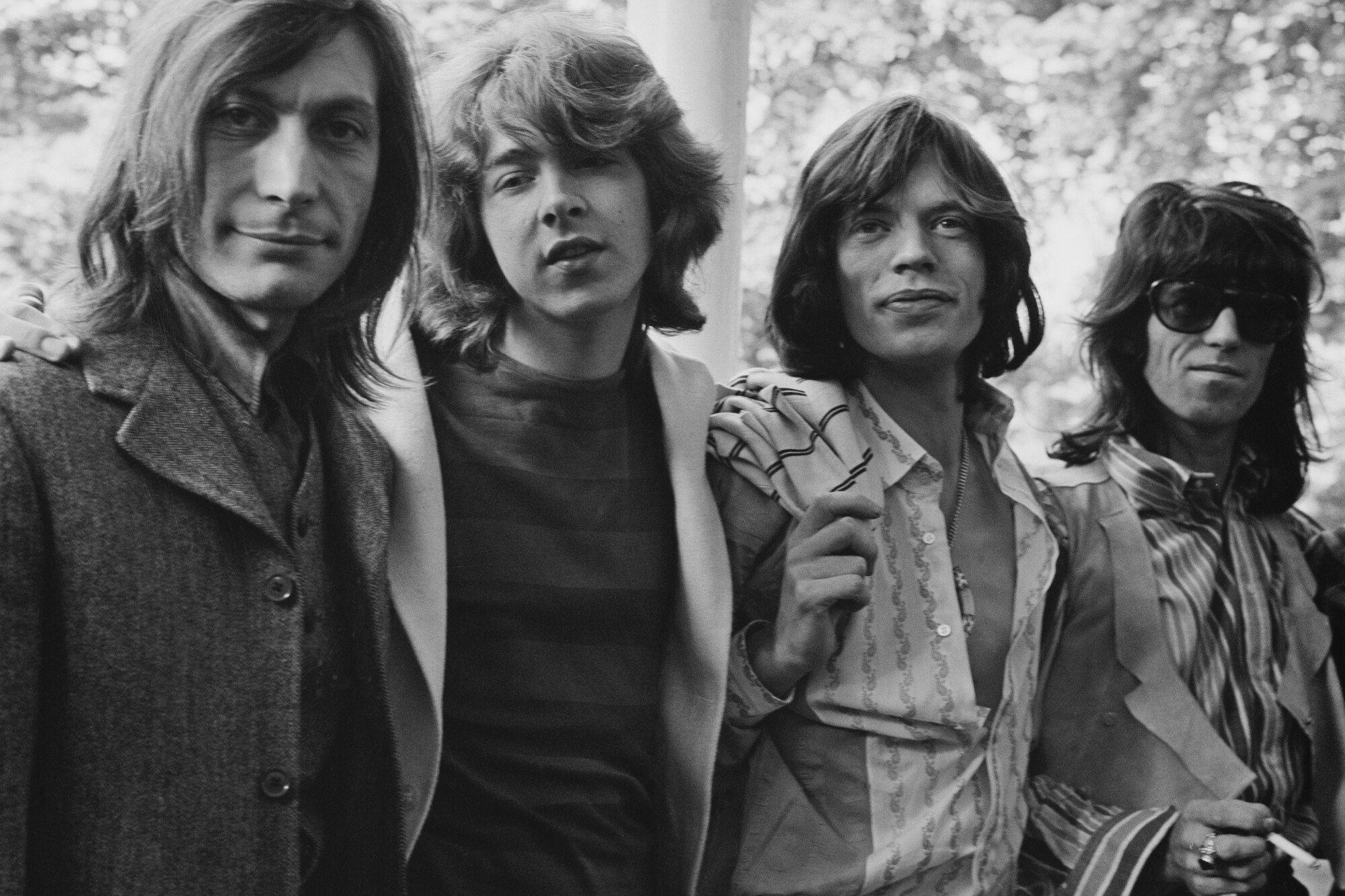 The Rolling Stones in Hyde Park, London, on June 13, 1969: Charlie Watts, left, Mick Taylor, Mick Jagger and Keith Richards. (Evening Standard / Getty Images)

 Charlie Watts, left, Ron Wood, Keith Richards and Mick Jagger of the Rolling Stones drive across the Brooklyn Bridge in New York City.(Kevin Mazur / WireImage)
 Drummer Charlie Watts of the Rolling Stones sits at his drums circa 1968. (Michael Ochs Archives)
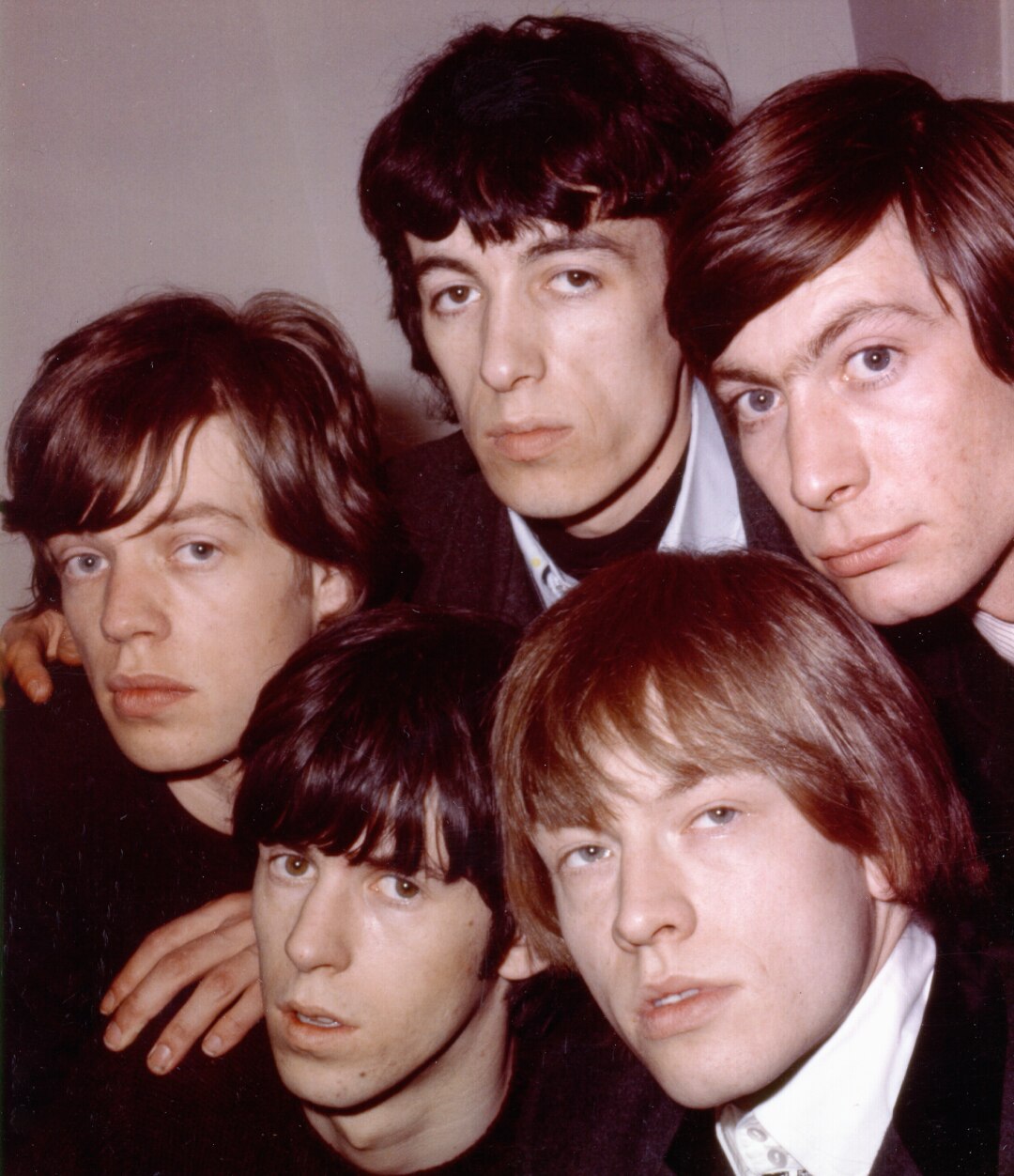 A publicity photo of the Rolling Stones, taken in London circa 1965: Mick Jagger, clockwise from left, Bill Wyman, Charlie Watts, Brian Jones and Keith Richards. (Michael Ochs Archives)
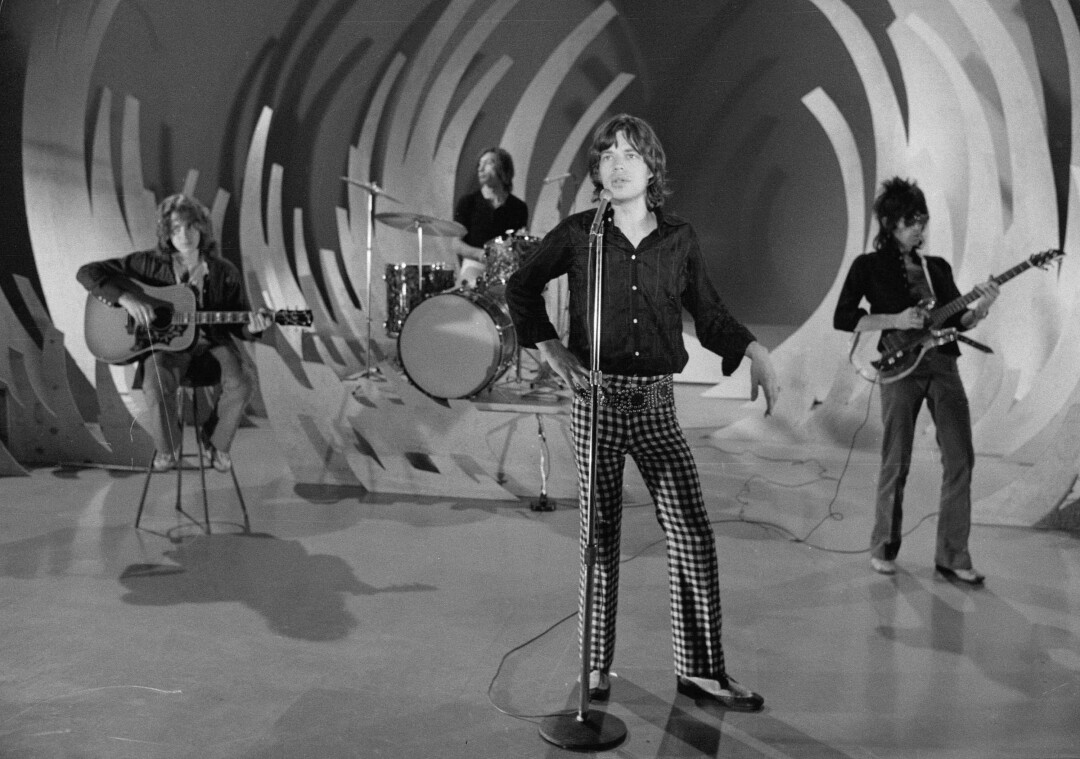 The Rolling Stones in rehearsal for their Nov. 19, 1969, appearance on the CBS variety program “The Ed Sullivan Show”: lead guitarist Mick Taylor, left, drummer Charlie Watts, singer Mick Jagger and guitarist Keith Richards. (CBS Photo )
 Drummer Charlie Watts contemplates his kit during the Rolling Stones’ 1975 tour of the Americas. (Christopher Simon Sykes / Getty Images)ADVERTISEMENT
 Drummer Charlie Watts, always dapper, is seen in a striped suit during the Rolling Stones’ 1975 tour of the Americas. (Christopher Simon Sykes / Getty Images)
 Charlie Watts and Mick Jagger take a break during the Rolling Stones’ tour of the Americas in 1975. (Christopher Simon Sykes / Getty Images)
 January 1965: Mick Jagger and Charlie Watts do a soundcheck before a Rolling Stones concert. (Keystone Features / Getty Images)
 The Rolling Stones in 1964: drummer Charlie Watts, front left and frontman Mick Jagger; guitarists Keith Richards, rear left, and Brian Jones and bassist Bill Wyman.(Hulton Archive / Getty Images)
 Rolling Stones guitarist Ronnie Wood, second from left, celebrates at his Jan. 2, 1985, wedding to Jo Howard, flanked by best men Charlie Watts, left, and Keith Richards. (Dave Hogan / Getty Images)
 The Rolling Stones — Brian Jones, left, Keith Richards, Mick Jagger, Charlie Watts and Bill Wyman — board a New York-bound plane at London Airport on Oct. 23, 1964. (Victor Boynton / Associated Press)
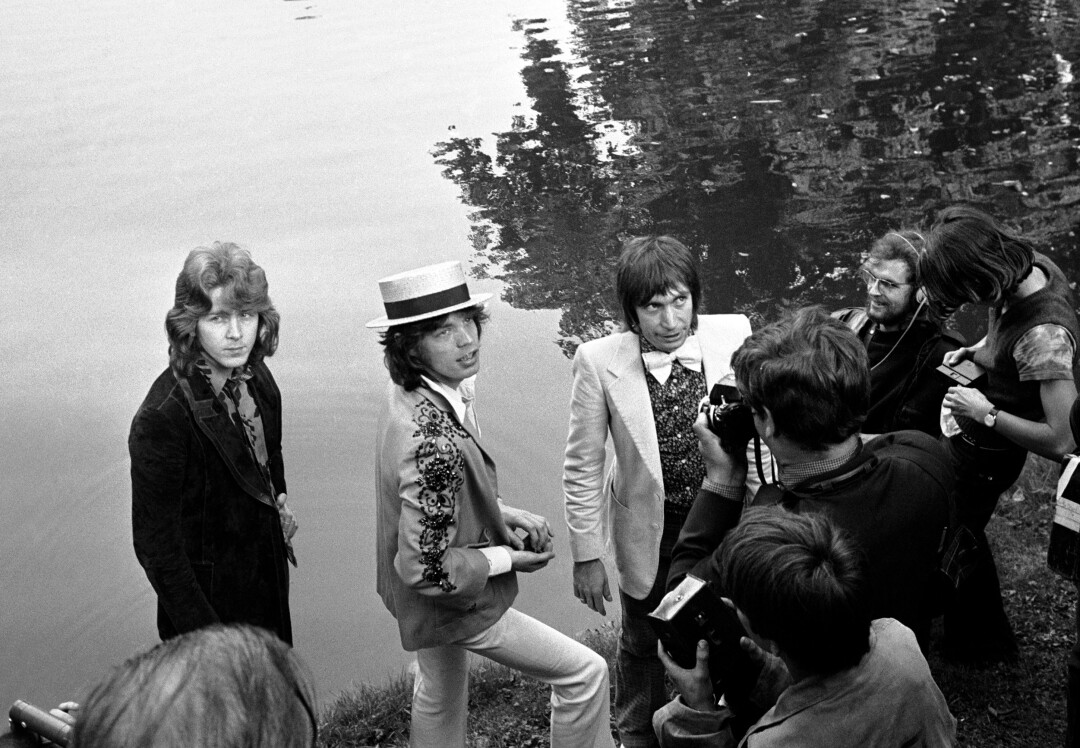 Guitarist Mick Taylor, left, singer Mick Jagger and drummer Charlie Watts at a press conference at the Bois de Boulogne in Paris in 1972.(Associated Press)
 Rolling Stones drummer Charlie Watts plays during the band’s No Filter tour at NRG Stadium on July 27, 2019, in Houston.(Suzanne Cordeiro / AFP )
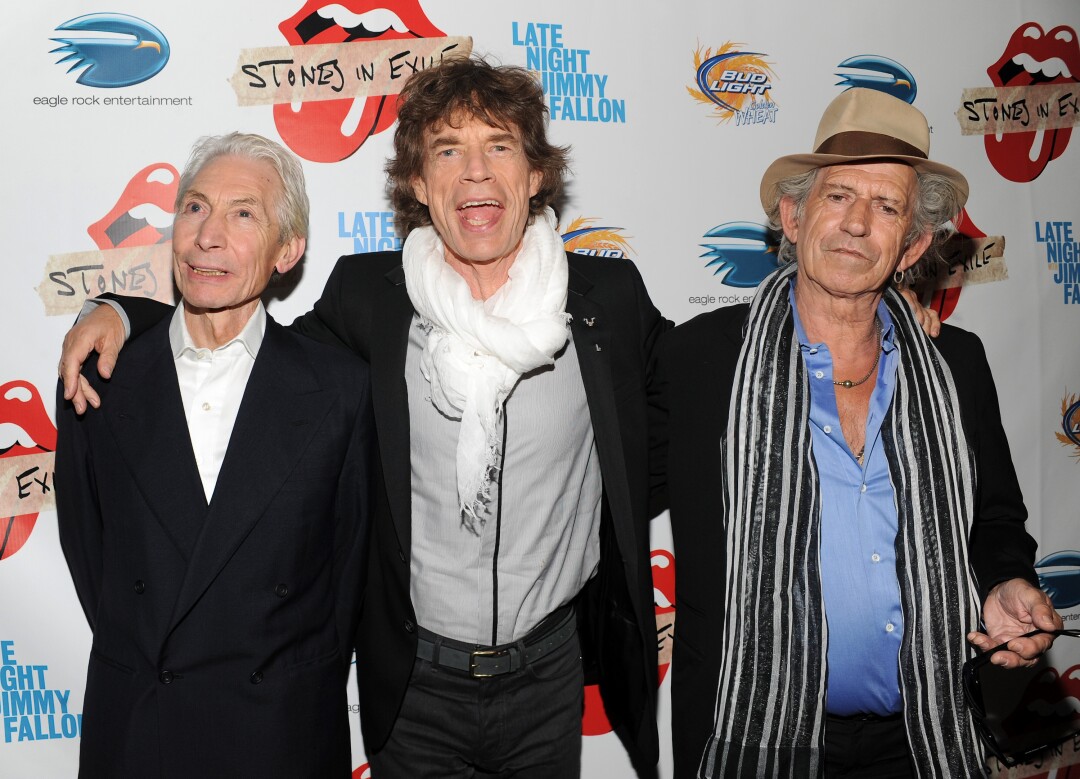 Musicians Charlie Watts, left, Mick Jagger and Keith Richards of the Rolling Stones attend a screening of their documentary “Stones in Exile” at New York’s Museum of Modern Art in May 2010.(Evan Agostini / Associated Press)
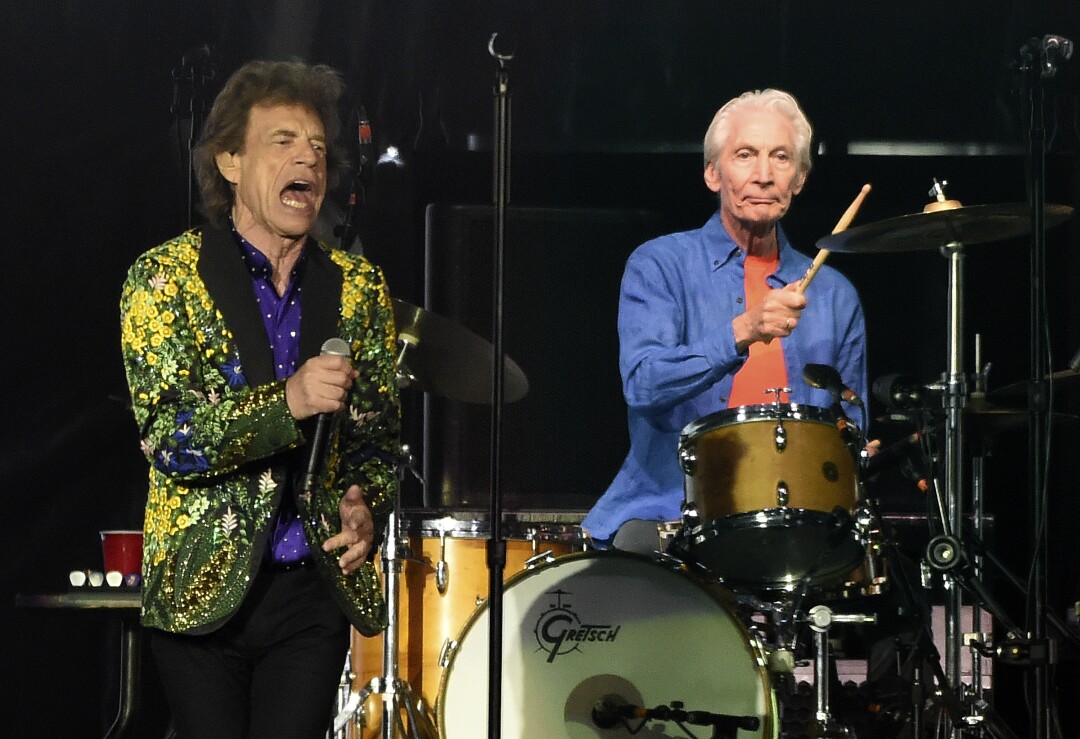 Rolling Stones drummer Charlie Watts, right, performs behind singer Mick Jagger during their concert at the Rose Bowl on Aug. 22, 2019, in Pasadena, Calif. (Chris Pizzello / Associated Press)


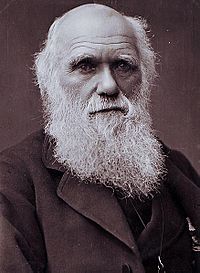
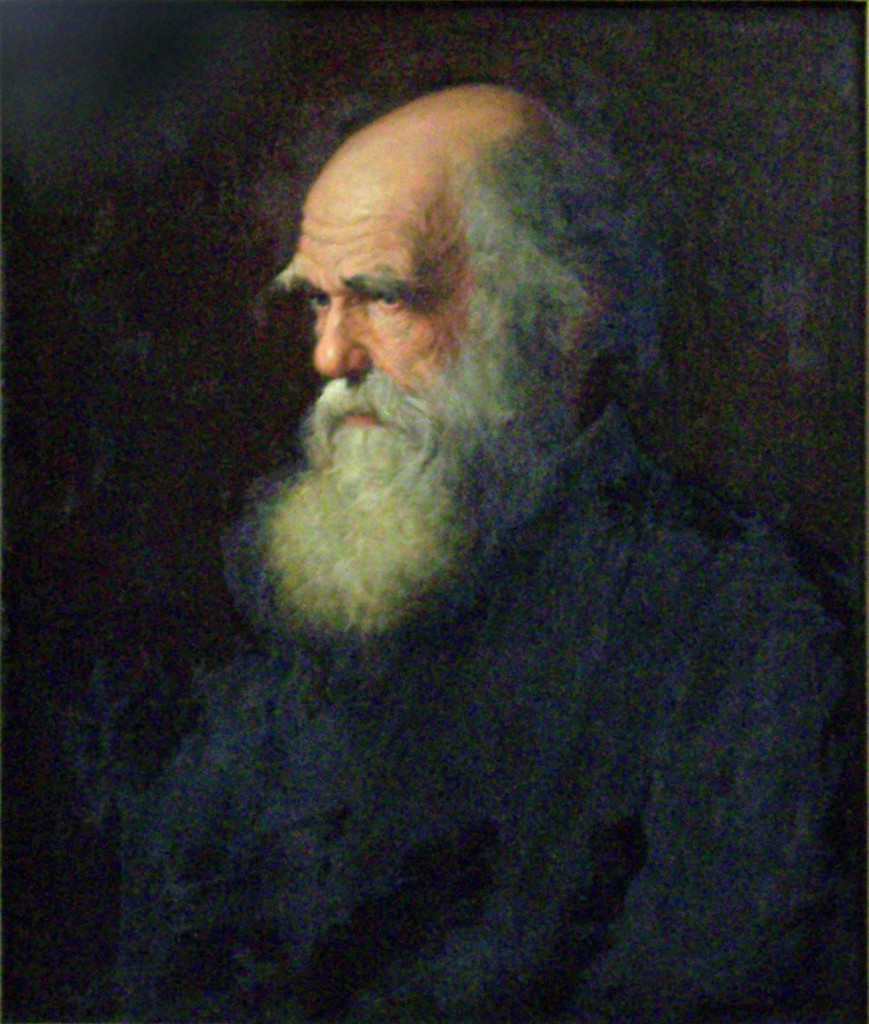
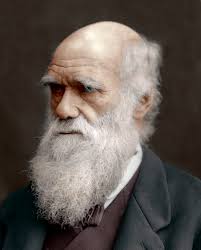
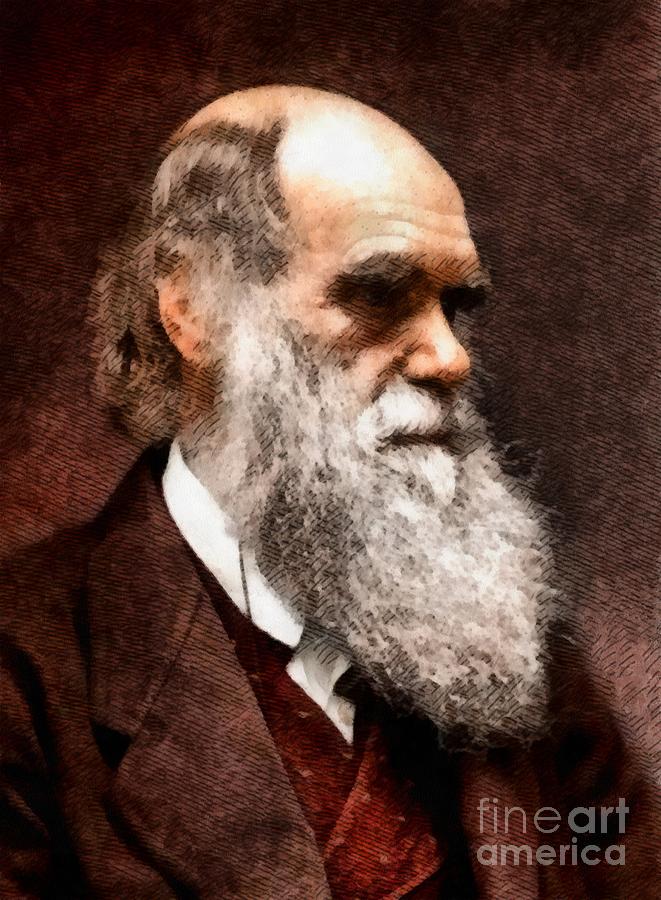
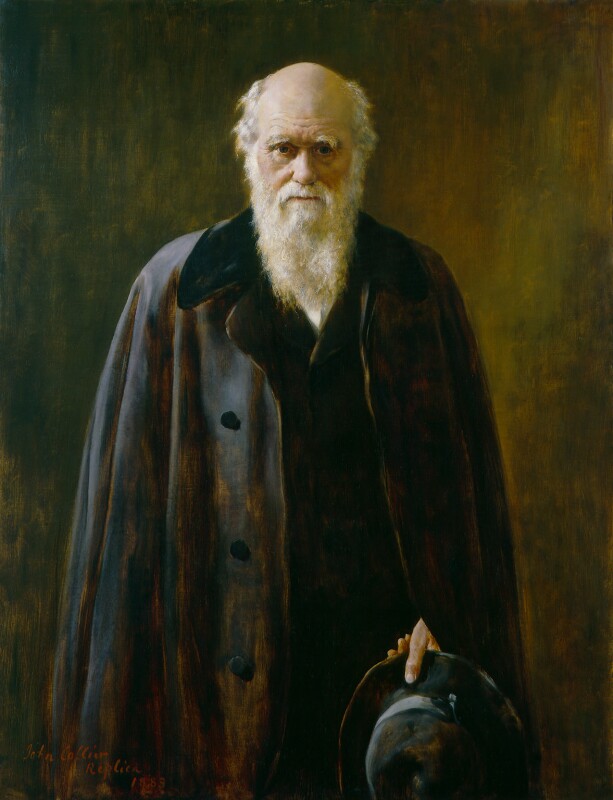
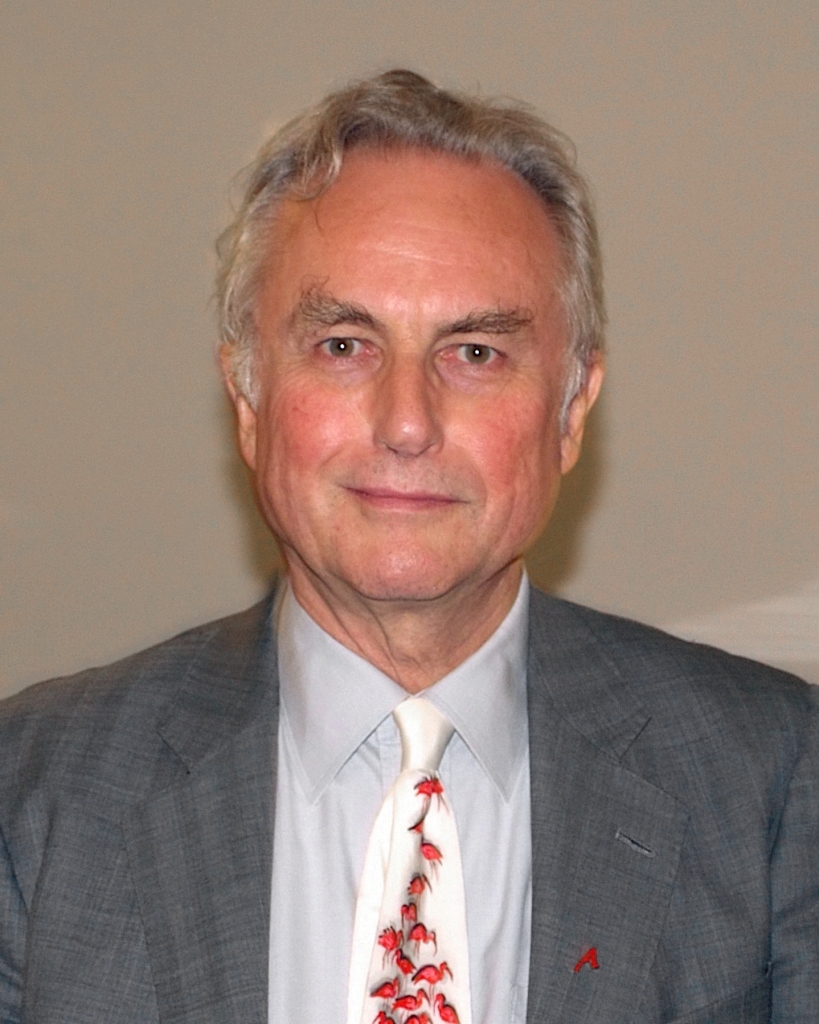






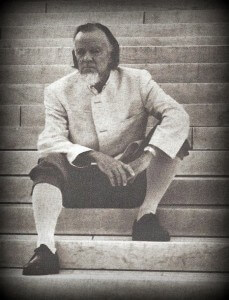
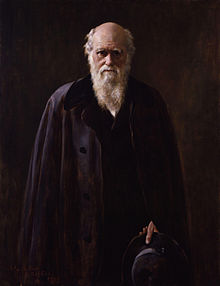


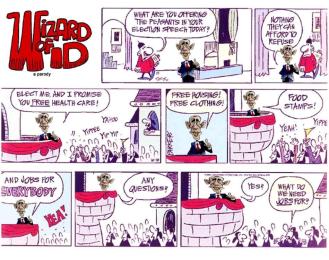




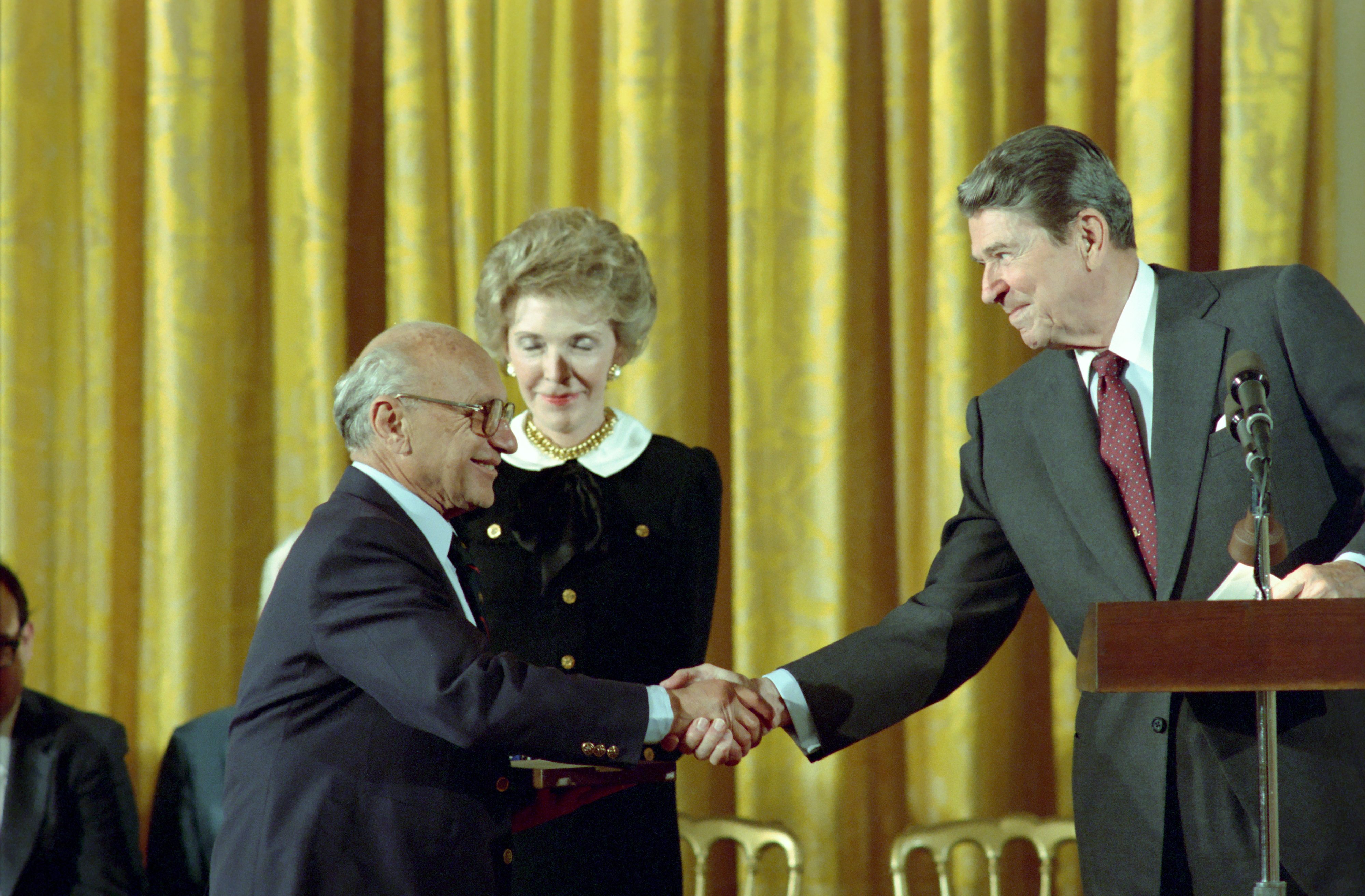
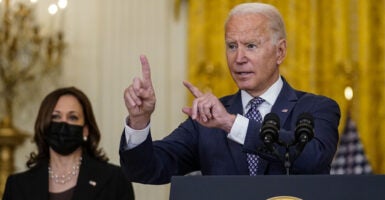


 Net Interest Spending Will More Than Triple Over the Next Decade
 Entitlements Will Consume All Tax Revenues by 2049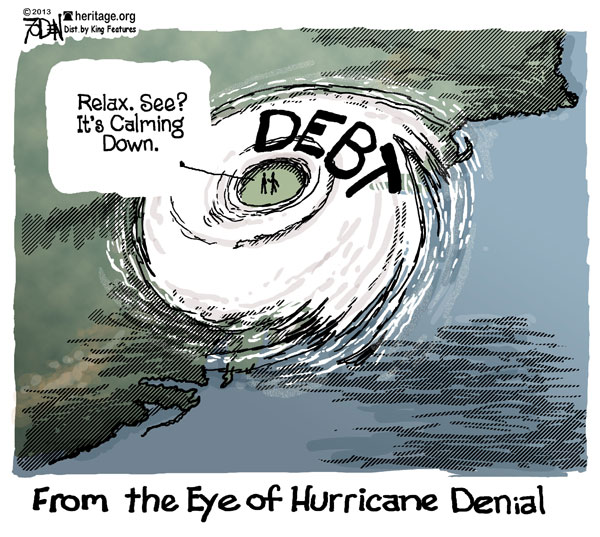
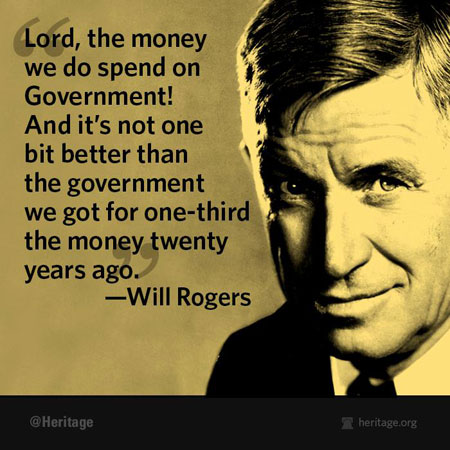







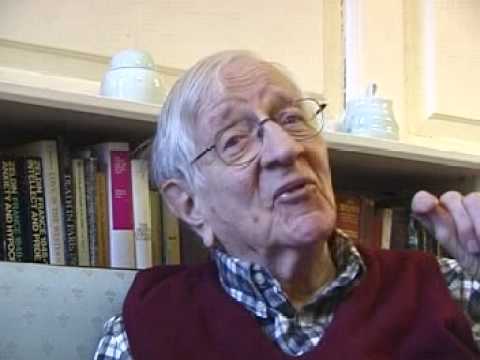
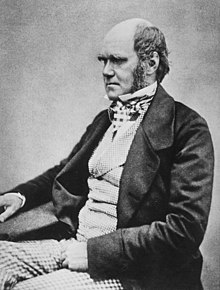
/https://public-media.smithsonianmag.com/filer/Charles-Darwin-1880-631.jpg)


 The Daily Hatch