Monthly Archives: July 2020

Open Letter #81 to Ricky Gervais on comparison of the Tony of AFTER LIFE to the Solomon of ECCLESIASTES, Artist FRANCIS BACON like Tony Johnson of AFTERLIFE and Solomon of ECCLESIASTES has embraced nihilism and his paintings of life are very pessimistic!

—-

—-


After Life #1 Trailer

—-

I listened to this question and answer session at Harvard in 1992 on cassette tapes and was captivated with Ravi Zacharias. His responses were so much better than Kath’s responses to Tony in AFTER LIFE. I have referenced work by Ravi many times in the past and Especially moving was Ravi’s own spiritual search which started in a hospital bed after a failed suicide attempt. I also want you to check out his talk at Princeton and the question and answer time afterwards which are both on YOU TUBEat these two links: Link for talk, Link for Q/A.

After Life 2 Trailer

—-

On Saturday April 18, 2020 at 6pm in London and noon in Arkansas, I had a chance to ask Ricky Gervais a question on his Twitter Live broadcast which was  “Is Tony a Nihilist?” At the 20:51 mark Ricky answers my question. Below is the video:

—-

—-

If Death is the end then what is the point Kath asks below:

——

Francis Schaeffer passed away on May 15, 1984 and on the 10th anniversary of that date I wrote many skeptics such as Carl Sagan and corresponded with them on the big questions covered by the Book of Ecclesiastes.

Kath: You are an atheist?

—-

Adrian Rogers on Evolution

—-
Ravi Zacharias  (March 26, 1946 – May 19, 2020) 

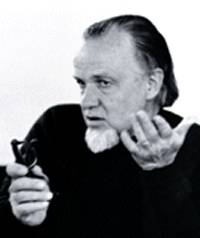
Francis Schaeffer (January 30, 1912 – May 15, 1984[1]

Hope is everything… I’ve always thought that. And I believe it. If you’ve got hope you can work towards something. It’s a medicine and a shield. I’m an optimist, I always see the good in people.”

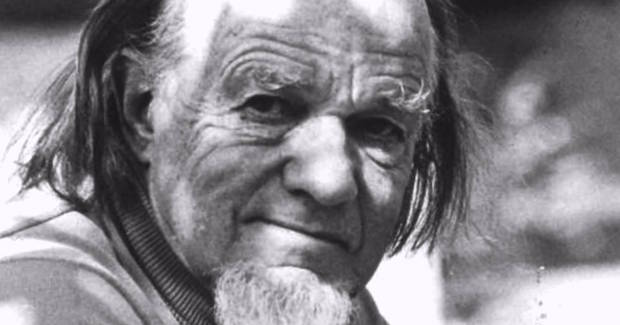
Francis Schaeffer.jpg


I grew up at Bellevue Baptist Church under the leadership of our pastor Adrian Rogers and I read many books by the Evangelical Philosopher Francis Schaeffer and in 1992 I heard cassette tapes of Ravi Zacharias in all his brilliance in his sessions at Harvard and have had the opportunity to contact many of the evolutionists or humanistic academics that they have mentioned in their works. Many of these scholars have taken the time to respond back to me in the last 20 years and some of the names  included are  Ernest Mayr (1904-2005), George Wald (1906-1997), Carl Sagan (1934-1996),  Robert Shapiro (1935-2011), Nicolaas Bloembergen (1920-),  Brian Charlesworth (1945-),  Francisco J. Ayala (1934-) Elliott Sober (1948-), Kevin Padian (1951-), Matt Cartmill (1943-) , Milton Fingerman (1928-), John J. Shea (1969-), , Michael A. Crawford (1938-), Paul Kurtz (1925-2012), Sol Gordon (1923-2008), Albert Ellis (1913-2007), Barbara Marie Tabler (1915-1996), Renate Vambery (1916-2005), Archie J. Bahm (1907-1996), Aron S “Gil” Martin ( 1910-1997), Matthew I. Spetter (1921-2012), H. J. Eysenck (1916-1997), Robert L. Erdmann (1929-2006), Mary Morain (1911-1999), Lloyd Morain (1917-2010),  Warren Allen Smith (1921-), Bette Chambers (1930-),  Gordon Stein (1941-1996) , Milton Friedman (1912-2006), John Hospers (1918-2011), Michael Martin (1932-).Harry Kroto (1939-), Marty E. Martin (1928-), Richard Rubenstein (1924-), James Terry McCollum (1936-), Edward O. WIlson (1929-), Lewis Wolpert (1929), Gerald Holton(1922-), Martin Rees (1942-), Alan Macfarlane (1941-),  Roald Hoffmann (1937-), Herbert Kroemer (1928-), Thomas H. Jukes(1906-1999) and  Ray T. Cragun (1976-).

 Adrian Rogers (September 12, 1931 – November 15, 2005) 

Adrian Rogers.jpg

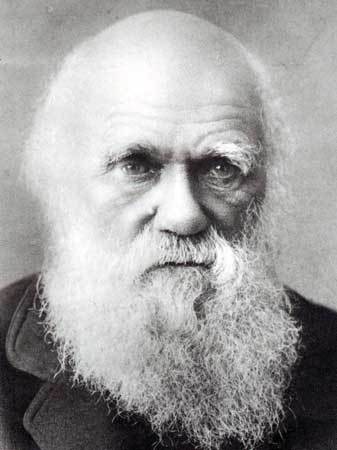
Charles Darwin Autobiography

(Above) Tony and Anne on the bench at the graveyard where their spouses are buried.

July 7, 2020 
Ricky Gervais 


Dear Ricky,  

This is the 81st day in a row that I have written another open letter to you to comment on some of your episodes of AFTER LIFE. 

(Tony Johnson with his dog Brandi seen below:)

In episode 2 of the second season of AFTER LIFE is the following discussion: 
Tony: I drink in times of trouble. I can’t help it the world is filled with trouble. It is a horrible place. Everyone is screwed up in someway. Everyone has worries like money or health or famine, war. We are chimps with brains the size of planets. No wonder we get drunk and try to kill each other. It is mental.

Matt: Always good to talk.

Tony: I was just explaining my new plan is to drink myself to death till I eventually implode in on my own evolution.
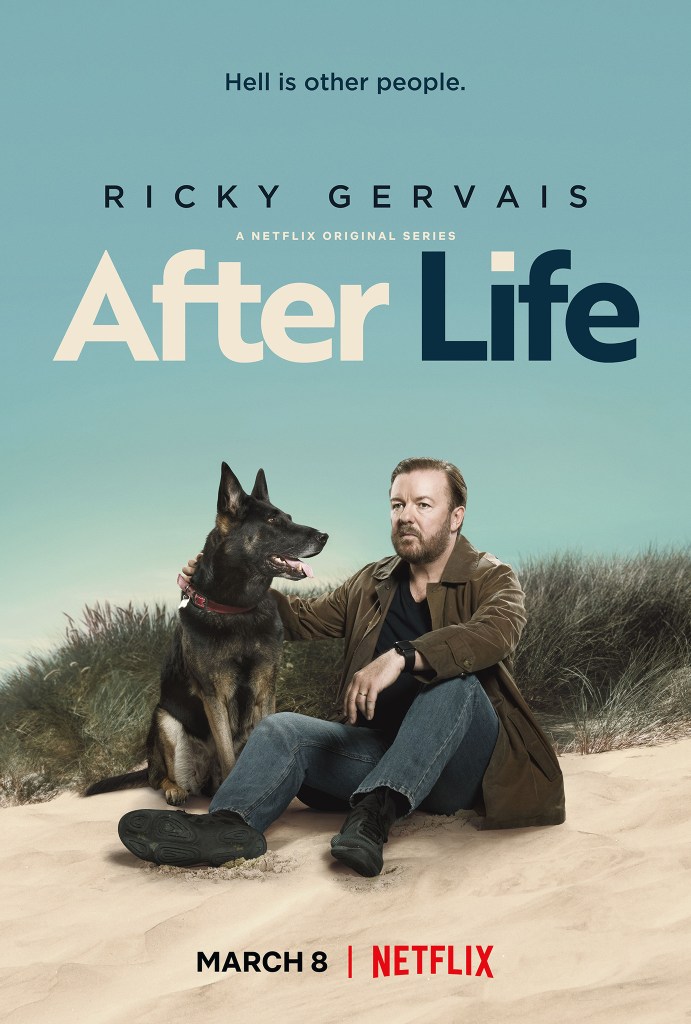
Ricky Gervais plays bereaved husband Tony Johnson in AFTER LIFE

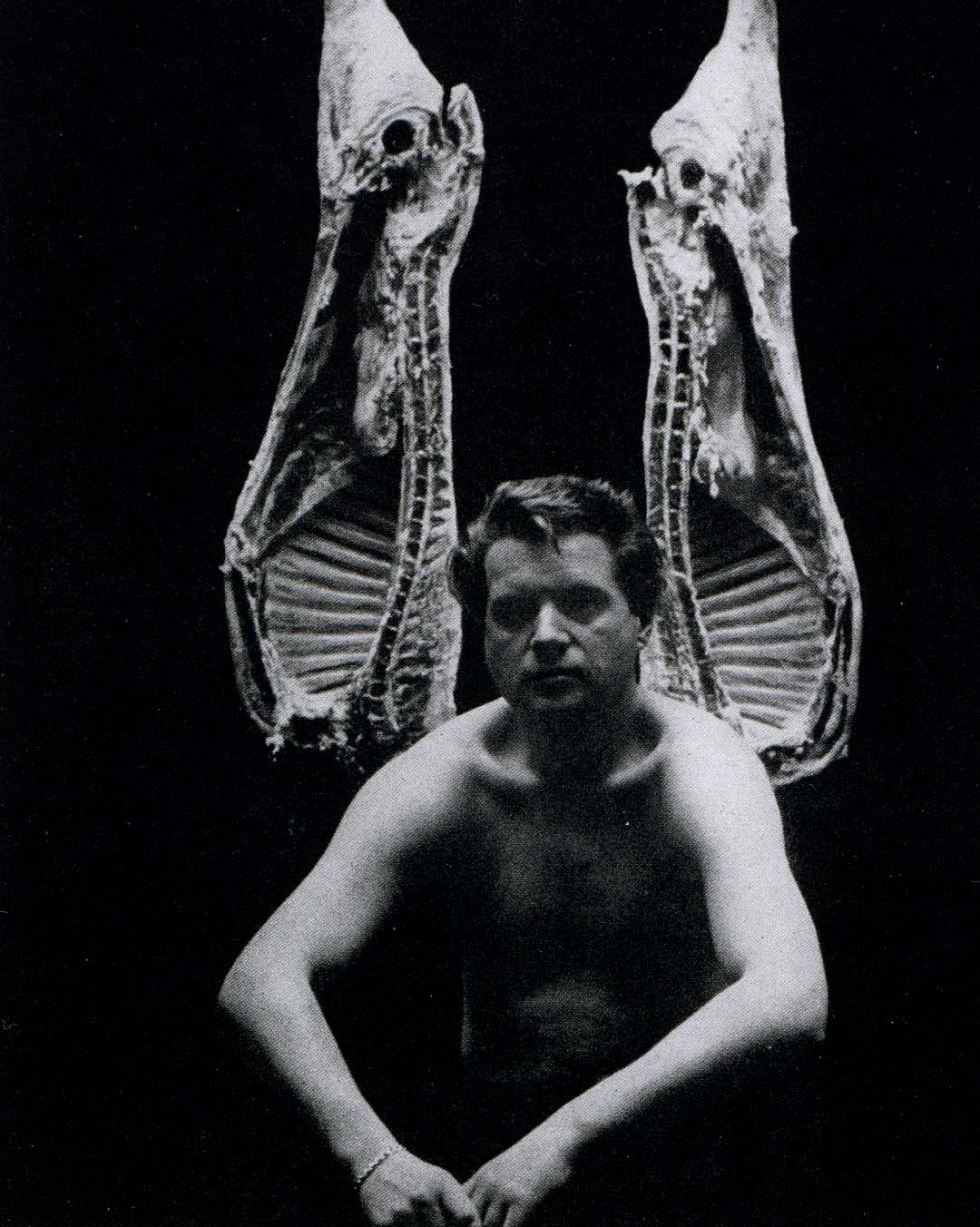
This reminds me of the words of Francis Bacon because reduces us to just animals. 

Of course, we are meat. We are potential carcasses.
—Francis Bacon

Irish-born Francis Bacon (1909-1992), possibly the greatest painter of the latter half of the twentieth century, quintessentially exemplified modern humanity’s loneliness and alienation. Indeed, Bacon is considered the greatest British painter since William Turner.

Ricky your enthusiastic support of evolution and the secular worldview is understandable given that your college degree is in philosophy. Have you ever paused to wonder why philosophy is so pessimistic these days and I contend that it suffers from the same problem you encounter in your program AFTERLIFE when you attempt to answer the big questions in life but you exclude spiritual answers. Also have you ever wondered why modern art looks so fragmented compared to the art from before Darwin’s theory of evolution became popular? Let’s take a look at Darwin’s own words and then look at an example from modern art from the work of Francis Bacon. 

CHARLES DARWIN’S AUTOBIOGRAPHY. Addendum. Written May 1st, 1881 [the year before his death].

I have said that in one respect my mind has changed during the last twenty or thirty years. Up to the age of thirty, or beyond it, poetry of many kinds…gave me great pleasure, and even as a schoolboy I took intense delight in Shakespeare, especially in the historical plays. I have also said that formerly pictures gave me considerable, and music very great delight. But now for many years I cannot endure to read a line of poetry: I have tried lately to read Shakespeare, and found it so intolerably dullthat it nauseated me. I have also almost lost my taste for pictures or music…This curious and lamentable loss of the higher æsthetic tastes is all the odder, as books on history, biographies, and travels (independently of any scientific facts which they may contain), and essays on all sorts of subjects interest me as much as ever they did. My mind seems to have become a kind of machine for grinding general laws out of large collections of facts, but why this should have caused the atrophy of that part of the brain alone, on which the higher tastes depend, I cannot conceive… The loss of these tastes is a loss of happiness…


A letter to Sir J. D. Hooker, June 17, 1868,
 which repeats to some extent what is given in the Autobiography:—

“I am glad you were at the Messiah, it is the one thing that I should like to hear again, but I dare say I should find my soul too dried up to appreciate it as in old days; and then I should feel very flat, for it is a horrid bore to feel as I constantly do, that I am a withered leaf for every subject except Science. It sometimes makes me hate Science…

Francis Schaeffer summarized:

So he is glad for science because his stomach bothers him, but on the other hand when I think of what it costs me I almost hate science. You can almost hear young Jean-Jacques Rousseau speaking here, he sees what the machine is going to do and he hates the machine and Darwin is constructing the machine and it leads as we have seen to his own loss of human values in the area of aesthetics, the area of art and also in the area of nature. This is what it has cost him. His theory has led him to this place. When you come to this then it seems to me that you understand man’s dilemma very, very well, to think of the origin of the theory of mechanical evolution bringing  Darwin himself to the place of this titanic tension.


Darwin, C. R.
 to Doedes, N. D., 2 Apr 1873

“It is impossible to answer your question briefly; and I am not sure that I could do so, even if I wrote at some length. But I may say that the impossibility of conceiving that this grand and wondrous universe, with our conscious selves, arose through chance, seems to me the chief argument for the existence of God; but whether this is an argument of real value, I have never been able to decide.”

Francis Schaeffer observed:

So he sees here exactly the same that I would labor and what Paul gives in Romans chapter one, and that is first this tremendous universe [and it’s form] and the second thing, the mannishness of man and the concept of this arising from chance is very difficult for him to come to accept and he is forced to leap into this, his own kind of Kierkegaardian leap, but he is forced to leap into this because of his presuppositions but when in reality the real world troubles him. He sees there is no third alternative. If you do not have the existence of God then you only have chance. In my own lectures I am constantly pointing out there are only two possibilities, either a personal God or this concept of the impersonal plus time plus chance and Darwin understood this . You will notice that he divides it into the same exact two points that Paul does in Romans chapter one into and that Carl Gustav Jung (1875-1961) will in the problem of existence, the external universe, and man and his consciousness. Paul points out there are these two steps that man is confronted with, what I would call two things in the real world. The universe and it’s form and I usually quote Jean Paul Sartre here, and Sartre says the basic philosophic problem is that something is there rather than nothing is there and I then I add at the point the very thing that Darwin feels and that is it isn’t a bare universe that is out there, it is an universe in a specific form. I always bring in Einstein and the uniformity of the form of the universe and that it is constructed as a well formulated word puzzle or you have Carl Gustav Jung who says two things cut across a man’s will that he can not truly be autonomous, the external world and what Carl Gustav Jung would call his “collected unconsciousness.” It is the thing that churns up out of man, the mannishness of man. Darwin understood way back here this is a real problem. So he says “the impossibility of conceiving that this grand and wondrous  universe,” part one, the real world, the external universe, and part two “with our conscious selves arose through chance” and then he goes on and says this is not “an argument of real value.” The only thing he has to put in its place is his faith in his own theory.

__________

Here below is the Romans passage that Schaeffer is referring to and verse 19 refers to what Schaeffer calls “the mannishness of man” and verse 20 refers to Schaeffer’s other point which is  “the universe and it’s form.”Romans 1:18-22Amplified Bible (AMP) 18 For God’s [holy] wrath and indignation are revealed from heaven against all ungodliness and unrighteousness of men, who in their wickedness repress and hinder the truth andmake it inoperative. 19 For that which is known about God is evident to them and made plain in their inner consciousness,because God [Himself] has shown it to them. 20 For ever since the creation of the world His invisible nature and attributes, that is, His eternal power and divinity, have been made intelligible and clearly discernible in and through the things that have been made (His handiworks). So [men] are without excuse [altogether without any defense or justification], 21 Because when they knew and recognized Him as God, they did not honor andglorify Him as God or give Him thanks. But instead they became futile andgodless in their thinking [with vain imaginings, foolish reasoning, and stupid speculations] and their senseless minds were darkened. 22 Claiming to be wise, they became fools [professing to be smart, they made simpletons of themselves].

I did enjoy reading LIFE ON THE EDGE by Jim Al-Khalili but I did agree with the Christian Blogger Mike when he noted:

I’ll close with their quote of Sir Fred Hoyle: “The probability of random chemical processes coming together to generate life…was as likely as a tornado blowing through a junkyard and assembling a jumbo jet by chance.  …cellular life…is just too complex and organized to have arisen by chance alone…” (p.275).  I concur!  But at least McFadden and Al-Khalili agree that life is the product of an equation requiring more than time plus matter plus chance.  May I suggest a Creator?  No, probably not.  That said, I think the authors actually provided a lot of support for Creationism

—-

Please take a look at Francis Schaeffer’s 26 minute film How Should We Then Live – Episode 8 – The Age of Fragmentation that has been posted recently by Eduardo Miller This film starts with the impressionists and goes through the modern day artists of the 1960’s (the film was made in 1976). I would love to hear your reaction to it.Francis Schaeffer in Art and the Bible noted, “Many modern artists, it seems to me, have forgotten the value that art has in itself. Much modern art is far too intellectual to be great art. Many modern artists seem not to see the distinction between man and non-man, and it is a part of the lostness of modern man that they no longer see value in the work of art as a work of art.” 

Many modern artists are left in this point of desperation that Schaeffer points out and it reminds me of the despair that Solomon speaks of in Ecclesiastes.  Christian scholar Ravi Zacharias has noted, “The key to understanding the Book of Ecclesiastes is the term ‘under the sun.’ What that literally means is you lock God out of a closed system, and you are left with only this world of time plus chance plus matter.” THIS IS EXACT POINT SCHAEFFER SAYS SECULAR ARTISTS ARE PAINTING FROM TODAY BECAUSE THEY BELIEVED ARE A RESULT OF MINDLESS CHANCE.

John Whitehead in an article noted:

Bacon, however, clearly expressed his atheistic pessimism: “Man now realizes that he is an accident, that he is a completely futile being, that he has to play out the game without purpose, other than of his own choosing.” On another occasion, he remarked: “We are born and we die and there’s nothing else. We’re just part of animal life.”

Thus, Bacon, in terms of humanity and the supernatural, reached not only a position of unbelief but of despair. His paintings express modern humanity’s condition: dehumanized man dispossessed of any durable paradise.

________________________

I first read about Francis Bacon in a book written by Francis Schaeffer. I was interested in looking into his art. His art really shows where modern man has come to the place of desperation since modern man has embraced the closed system that does not include God. What is left for man but what time and chance can bring. Bacon admitted that he was very depressed about man’s future and it comes out in his paintings.

I wish he would have read the work of Francis Schaeffer. I have posted links to Schaeffer’s works below.
The Striptease of Humanism

This, then, is “the striptease of humanism,” a gathering crisis of optimism, an escape from reason, a surfacing of subterranean pessimism. Understanding it as the daily climate of our time, we can now analyze more closely certain features of its arrival and of its permanent residue.

First, there is the strong element of surprise. For any who had read Nietzsche, this should not have been so but in fact it was. In 1929 Freud remarked on this in Civilization and Its Discontents: “Man has, as it were, become a prosthetic god. . . . Future ages . . . will increase man’s likeness to God still more. But . . . present day man does not feel happy in his Godlike character.”33 In 1951 Camus felt it still more keenly: “During the last century, man cast off the fetters of religion. Hardly was he free, however, when he created new and utterly intolerable chains. . . . The kingdom of grace has been conquered, but the kingdom of justice is crumbling too. Europe is dying of this deception.”34

The situation is pregnant with irony: There is a crisis of disbelief as well as a crisis of belief. Some religious thinkers may be endlessly reporting the death of God (almost as their contemporary creedal confession), but the fact no longer seems heroic to the perceptive atheist. If the city of God has been razed, who is in need of a home now? Who feels the chill most keenly?

A second feature is the irreversibility of the exposure of humanism. It would be comforting to regard the present pessimism as a cycle, or swing of the pendulum, but there are various reasons why we cannot. For one thing there are new factors which prevent a reversal. Here we come to the difference between Oswald Spengler and Max Weber. Spengler thought the decline of the West was essentially what had happened before. Weber held that what was occurring had never happened before. It was different because, although there were similar symptoms, the “disenchantment of the world” by technology was new. So the situation was irreversible.

These elements of surprise and irreversibility were two features of the arrival of the crisis, but of even greater importance are the various symptomatic features of its continuing presence. We shall now examine these. The key to the understanding of each of them is that they stem from the humanist’s lack of a basis, the loss of center, the death of absolutes.

Alienation

The first symptom is alienation which occurs when the lack of basis is actually seen, felt or experienced. Whenever a man is not fulfilled by his own view of himself, his society or his environment, then he is at odds with himself and feels estranged, alienated and called in question. Optimistic humanism, lacking sufficient basis for the full range of humanness, also lacks sufficient balance, and alienation is inescapable when this is so. First of all this is true today of metaphysical alienation. Denying the optimistic implications of Darwinism, Nietzsche pointed to man’s “ontological predicament”: “Man is a rope, tied between beast and overman — a rope over an abyss.”49 Caught between the all-too-human and the superhuman, man, if he is not to despair, must stretch across an unbridgeable chasm to the revalued ideals of the overman. Nietzsche himself felt mocked, even in madness, by this impossible struggle. As all-too-human he knew only anguish, terror, loneliness, desperation, disgust, “the great seasickness” of the world without God.

This last phrase was picked up by Sartre in his first novel Nausea,a classic of existentialism. Walking in the city park one day, Roquentin was overcome by the nausea of the meaninglessness of life. Looking around him, he concluded, “Every existent is born without reason, prolongs itself out of weakness and dies by chance.”50 He was forced to the unhappy conclusion that the key to life is its fundamental absurdity. Man as man has to reach towards being God in order to fulfill his aspirations, yet with God dead and the world as it is these aspirations are limitations cast back in his face as an absurdity. Sartre’s reluctant conclusion is that “man is a useless passion.”51

The drastic extremity of this is well portrayed in the drama of Samuel Beckett, whose Parisian home and early research in Marcel Proust’s philosophy of time bring him close to the thought world of existentialism. In Waiting for Godot,Godot’s failure to arrive reduces all of life to the level of irrational absurdity.52 In Krapp’s Last Tape, the personality of the old man is completely desiccated by the sequential flow of time shattering his identity into fragments.53 Beckett’s ultimate in economic starkness is Breath, thirty seconds in duration, with no actors nor dialogue nor any props on the stage except miscellaneous rubbish; the whole script is the sigh of human life from a baby’s cry to a man’s last gasp before the grave.

The same metaphysical alienation, expressed in terms of the counter culture, is brilliantly distilled in Yoko Ono’s single line poems in Grapefruit.54All of them are capsules of nihilism, variations on a theme of meaninglessness. “Map Piece” reads, “Draw a map to get lost.” Another called “Lighting Piece” runs, “Light a match and watch it till it goes out.” These are the poetic counterpoint to Breath.

Modern humanism also refuses to touch the danger points, to face the logic of its own premises. It prefers to live in intellectual inconsistency. In The Disinherited Mind Erich Heller says, “In Kafka we have before us the modern mind, seemingly self-sufficient, intelligent, sceptical, ironical, splendidly trained for the great game of pretending that the world it comprehends in sterilized sobriety is the only and ultimate reality there is — yet a mind living in sin with the soul of Abraham. Thus he knows two things at once, and both with equal assurance; that there is no God, and that there must be God.”83

Kafka was not unique. Nietzsche himself, for all his scorn, made his leap of faith. He asserts that any attempt to understand the universe is prompted by man’s will to power but fails to see that his own conception of the will to power must then be admitted by him to be a creation of his will to power. What to Kafka was a weakness is now a disease of almost epidemic proportions. Erich Fromm ponders, “In the nineteenth century the problem was that God is dead, in the twentieth century the problem is that man is dead,”84 but Fromm shies away from exploring the connection between the two. R. D. Laing poses the alternative, “Deus absconditus. Or we have absconded,”85 but his vision of the divine is Eastern, not Christian, and his use of Luther’s concept is merely rhetorical.

Thus optimistic humanism is currently in the throes of a gathering crisis. But we dare not let this negate the humanness of its ideals. What is needed is a stronger humanism, not a weaker one. We need a concern for humanness that has a basis for its ideals and the possibility of their substantial realization.

There are several requirements which any contending solution must satisfy. First, it must provide a basis that will define and demonstrate the individuality of man as human. Here the Eastern conceptions of man with their essential negation of the value of man in this life, the communist subordination of the individual to the state, and the post-Christian failure of Western man to resist the trends of dehumanization point to answers which do not satisfy this first requirement.

Second, it must provide a basis for the fulfillment of an individual’s aspirations. The Eastern religions, communism and humanism again fall short for similar reasons. So also do determinism and existentialism.

Third, it must provide a basis for the substantial healing of man’s alienations in terms of an individual’s becoming more fully himself. Many views falter here.

Fourth, it must provide a basis for community, combining social unity and diversity, and it must avoid the chaos of relativism or the swing to control seen in many modern states and intentional communes.

These together must provide a basis for defining and demonstrating a humanness sufficiently robust to be an anchor against the dehumanization coming from social disruption and the fear of global destruction.

A Third Way is obviously required — one which speaks to the basic situation of humanity, both in individuality and in community. It must provide an answer to existentialism and a fulfillment to optimistic humanism. But this is still to run ahead of ourselves.

With the erosion of the Christian culture and the crisis of humanism, the direction of Western culture is uncertain. Will we see a desperate vacuum from which nihilism will rise? Will we lurch on uneasily to a new technological barbarism? Will a novel mysticism turn the West into the East? Or will the slow disintegration of Western culture herald a decline of power, until the egoism of Western culture is judged by the hammer of the Soviets?

Only the future will show. Curiously, the recent pre-occupation with “the end of ideology” has given rise to a new ideology — futurology. Here evolutionary optimistic humanism has its last chance. If, searching into his future, man finds grounds for believing in himself and his ability to control his future, then secular humanism may become solvent again. This quest forms the storyof our next chapter.

Notes

  • Friedrich Wilhelm Nietzsche, The Gay Science, 125, in The Portable Nietzsche (New York: The Viking Press, 1954), p. 96; C. G. Jung. “Epilogue,” Modern Man in Search of a Soul (New York: Routledge Books, 1933); Bertrand Russell, Has Man a Future? (Harmondsworth: Penguin Books, 1961), p. 110; Federico Fellini, Fellini’s Satyricon, ed. Darlo Zanelli, trans. Eugene Walters and John Matthews (New York: Ballantine Books, 1970), p. 269.
  • Quoted in Kenneth Clark, Civilisation (London: John Murray Ltd., 1971), p. 104.
  • Quoted in ibid., p. 101.
  • Peter Gay, The Enlightenment: An Interpretation (New York: Alfred A. Knopf, Inc., 1966), p. 44.
  • Ibid.,p.417.
  • Michael Harrington, The Accidental Century (Harmondsworth: Penguin Books, 1967), p. 31.
  • Gordon Childe, Man Makes Himself (New York: Mentor Books, 1951).
  • Julian Huxley, ed., The Humanist Frame (London: George Allen and Unwin Ltd., 1961), p. 44.
  • Ibid.,p.7.
  • Algernon Charles Swinburne, “Hymn of Man.”
  • J. Huxley, p. 6.
  • Ibid., p. 26.
  • Harrington, p. 35.
  • Heinrich Heine, quoted in WaIter Kaufmann, Nietzsche: Philosopher, Psychologist, Antichrist (New York: Meridian Books, 1956), p. 375.
  • Nietzsche, The Will to Power, 1-2, quoted in Kaufmann, p. 103.
  • C. S. Lewis, Christian Reflections (London: Geoffrey Bles Ltd., 1967), p. 82.
  • Frantz Fanon, The Wretched of the Earth, trans. Constance Farrington (Harmondsworth: Penguin Books, 1967), p. 251.
  • lbid., p.21.
  • Letter of Aldous Huxley to Sibylle Bedford quoted in Time, May 4, 1970.
  • J. R. Platt, The Step to Man (New York: John Wiley & Sons Ltd., 1966), p. 196.
  • Norman O. Brown, Life Against Death (London: Sphere Books Ltd., 1968), p. 267.
  • See discussion in Nigel Calder, Technopolis (London: MacGibbon & Kee Ltd., 1969), pp. 98-99.
  • Arnold Toynbee, “Changing Attitudes towards Death in the Modern Western World” in Arnold Toynbee and others, Man’s Concern with Death (London: Hodder and Stoughton Ltd., 1968), p. 125.
  • Arthur Koestler, The Ghost in the Machine (London: Hutchinson & Co. Ltd., 1967), p. 15.
  • Viktor E. Frankl, “Reductionism and Nihilism” in Beyond Reductionism, ed. Arthur Koestler and J. R. Smythies (London: Hutchinson & Co. Ltd., 1969), p. 398.
  • Mortimer J. Adler, The Difference of Man and the Difference It Makes (London: Holt, Rinehart & Winston Ltd., 1967).
  • Quoted in T. M. Kitwood, What Is Human? (Downers Grove, Ill.: InterVarsity Press, 1970), p. 49.
  • Nietzsche, Ecce Homo, IV, 1, as quoted in Kaufmann, pp. 83-84.
  • Harrington, p. 26.
  • Koestler, p. 313.
  • Fanon, pp. 251-52.
  • Harrington, p. 36.
  • Sigmund Freud, Civilization and Its Discontents, Standard Works of Freud, 21 (London: The Hogarth Press Ltd., 1961), p. 91-92.
  • Albert Camus, The Rebel, trans. Anthony Bower (Harmondsworth: Penguin Books, 1962), pp. 243-44.
  • Nietzsche, The Gay Science, 125.
  • Quoted in Gay, p. 65.
  • Quoted in Kitwood, p. 54.
  • Erich Heller, The Disinherited Mind (Harmondsworth: Penguin Books, 1961), p. 75.
  • Nietzsche, p. 409.
  • Nietzsche, Thus Spake Zarathustra, I, 11, in The Portable Nietzsche, p. 160.
  • Fyodor Dostoevsky, The Possessed (New York: Signet Classics, 1962), pp. 384-85.
  • Camus, The Rebel, p. 199.
  • Fyodor Dostoevsky, The Brothers Karamazov (Harmondsworth: Penguin Books, Inc., 1968), p. 733.
  • Quoted in Camus, The Rebel, p. 58.
  • Quoted in ibid., p. 62.
  • Quoted in ibid.
  • Quoted in ibid.
  • Heller, p. 76.
  • Nietzsche, Zarathustra’s Prologue, 4, in The Portable Nietzsche, p. 126.
  • Jean Paul Sartre, Nausea (Harmondsworth: Penguin Books, 1965), p. 191.
  • Sartre, Being and Nothingness, trans. Hazel E. Barnes (London: Methuen, 1957), p. 566.
  • Samuel Beckett, Waiting for Godot (London: Faber and Faber Ltd., 1956).
  • Samuel Beckett, Krapp’s Last Tape (New York: Grove Press, Inc., 1958).
  • Yoko Ono, Grapefruit (London: Peter Owen Ltd., 1970).
  • Paul Simon, The Paul Simon Songbook, C.B.S. 62579.
  • Jean Luc Godard, La Chinoise, filmed 1967.
  • Quoted in H. R. Rookmaaker, Modern Art and the Death of a Culture (Downers Grove, Ill.: InterVarsity Press, 1970), p. 174.
  • Jacques Ellul, The Technological Society, trans. John Wilkinson (New York: Alfred A. Knopf, 1970), p.321.
  • Chores and Roy Medvedev, A Question of Madness (New York: Alfred A. Knopf, 1971).
  • “Psychoadaptation, or How to Handle Dissenters,” Time,September 27, 1971, p. 45.
  • lbid., p.44.
  • Quoted in Harrison Salisbury, “Introduction,” The Prison Diary of Ho Chi Minh (New York: Bantam Books, 1971), p. ix.
  • Fyodor Dostoevsky, The Idiot (New York: Bantam Books, 1958), p. 71.
  • Jerzy Grotowski, Towards a Poor Theatre (New York: Simon and Schuster, 1968), p. 123.
  • Erich Fromm, The Sane Society (New York: Routledge Books, 1956).
  • R. D. Laing, The Politics of Experience (Harmondsworth: Penguin Books, 1967), p. 24.
  • Ibid., p.24.
  • David Cooper, ed., The Dialectics of Liberation (Harmondsworth: Penguin Books, 1968).
  • Malcolm Muggeridge, Tread Softly for You Tread on My Jokes (Glasgow: William Collins Sons & Co. Ltd.), p. 28.
  • Ibid., p. 29.
  • Christopher Booker, The Neophiliacs (Glasgow: Fontana, 1970), p. 70.
  • Ibid., p. 44.
  • Ibid., p. 339.
  • Ernst Fischer, The Necessity of Art, trans. Anna Bostock (Harmondsworth: Penguin Books, 1963).
  • Lewis Feuer, “What Is Alienation? The Career of a Concept,” New Politics, Spring 1962, pp. 116-34.
  • Fischer, p. 80.
  • Erich Frornm, Marx’s Concept of Man (New York: Frederick Ungar Publishing Co., 1961).
  • Hermann Dooyeweerd, A New Critique of Theoretical Thought, 4 vols. (Nutley, N.J.: The Presbyterian and Reformed Publishing Co., 1957); The Twilight of Western Thought (Nutley, N.J.: Craig Press, 1960).
  • Francis A. Schaeffer, The God Who Is There (Downers Grove, Ill.: InterVarsity Press, 1968); Escape from Reason(Downers Grove, III.: InterVarsity Press, 1968).
  • J. A. Rushdoony, “Preface,” Dooyeweerd, The Twilight of Western Thought, p. 9.
  • Camus, The Rebel, p. 16.
  • Nietzsche in a letter to Gersdorff, November 7, 1970, quoted in Erich Heller, p. 70.
  • Ibid., p.181.
  • Fromm, Sane Society, p. 360.
  • Laing, The Politics of Experience, p. 118.

Author

Os Guinness is an Englishman born in China during the war with Japan and educated at the University of London. He has traveled widely in the East and lectured to student groups in Europe, the United States and Canada. His major work was with Francis Schaeffer at L’Abri Fellowship in Switzerland.

——

Ecclesiastes is a book that is truly a picture of how modern secular man looks at the world. The Christian Scholar Ravi Zacharias noted, “The key to understanding the Book of Ecclesiastes is the term UNDER THE SUN — What that literally means is you lock God out of a closed system and you are left with only this world of Time plus Chance plus matter.”

Below Francis Schaeffer comments on ECCLESIASTES:


Ecclesiastes 9:11

11 Again I saw that under the sun the race is not to the swift, nor the battle to the strong, nor bread to the wise, nor riches to the intelligent, nor favor to those with knowledge, but time and chance happen to them all.

Chance rules. If a man starts out only from himself and works outward it must eventually if he is consistent seem so that only chance rules and naturally in such a setting you can not expect him to have anything else but finally a hate of life.

Ecclesiastes 2:17-18a

17 So I hated life, because what is done under the sun was grievous to me, for all is vanity and a striving after wind. 18 I hated all my toil in which I toil under the sun…

That first great cry “So I hated life.” Naturally if you hate life you long for death and you find him saying this in Ecclesiastes 4:2-3:

And I thought the dead who are already dead more fortunate than the living who are still alive. But better than both is he who has not yet been and has not seen the evil deeds that are doneunder the sun.

He lays down an order. It is best never have to been. It is better to be dead, and worse to be alive. But like all men and one could think of the face of Vincent Van Gogh in his final paintings as he came to hate life and you watch something die in his self portraits, the dilemma is double because as one is consistent and one sees life as a game of chance, one must come in a way to hate life. Yet at the same time men never get beyond the fear to die. Solomon didn’t either. So you find him in saying this.

Ecclesiastes 2:14-15

14 The wise person has his eyes in his head, but the fool walks in darkness. And yet I perceived that the same event happens to all of them. 15 Then I said in my heart, “What happens to the fool will happen to me also. Why then have I been so very wise?” And I said in my heart that this also is vanity.

The Hebrew is stronger than this and it says “it happens EVEN TO ME,” Solomon on the throne, Solomon the universal man. EVEN TO ME, even to Solomon.

Francis Schaeffer when he was discussing the artwork of Francis Bacon then he skips over to  Paul Klee, Jackson Pollock, and John Cage and compares them to Bacon in their view that possibly that a message break forth  from the impersonal chance universe:

I have an essay on Francis Bacon by John Russell. Methuan published it in London in 1964.

Bacon goes on, “In my case all painting–and the older I get, the more it becomes so–is an accident.” Now this is very important and to think of Jackson Pollock putting on his paint as a pure accident and you may remember my lecture on Paul Klee.

Paul Klee (1879-1940) speaks of some of his paintings as though they were a kind of Ouija board. Klee thinks that the universe can speak through his paintings. Not because he believes there are spirits there to speak, but because he hopes that the universe will push through and cause a kind of automatic writing, this time in painting. It is an automatic writing with no one there, as far as anyone knows, but the hope that the “universe” will speak.We think of John Cage with the universe speaking though chance.

Now Bacon continues and he says something very similar to what Pollock, Cage and Klee believed, “I foresee it and yet I hardly ever carry it out as I foresee it. It transforms itself by the actual paint. I don’t in fact know very often what the paint will do, and it does many things that are very much better than I could make it do. Perhaps one could say it’s not an accident, because it becomes a selective process what part of the accident one chooses to preserve.”

Now here from Francis Bacon’s own viewpoint. An absurd universe in a total sense and in some element of the paint taking on its own personality and a message may come through from impersonal source.

THE FACT IS THAT EVEN THOUGH MODERN MAN HAS COME TO THE CONCLUSION THAT WE ARE MACHINES WE STILL ARE SEARCHING FOR A LASTING MEANING AND SIGNIFICANCE FOR OUR LIVES. 


The answer to find meaning in life is found in putting your faith and trust in Jesus Christ. The Bible is true from cover to cover and can be trusted.

Thank you again for your time and I know how busy you are.

I reject the idea that our universe is a result of chance. In the book LIFE ON THE EDGE I read this quote from Isaac Newton:

I do not know what I may appear to the world, but to myself I seem to have been only like a boy playing on the seashore, and diverting myself in now and then finding a smoother pebble or a prettier shell than ordinary, whilst the great ocean of truth lay all undiscovered before me.

Newton was a believer in the scriptures and Francis Schaeffer points that out in his film series HOW SHOULD WE THEN LIVE? Below is an outline of one of the episodes:

THE SCIENTIFIC AGE

I. Church Attacks on Copernican Science Were Philosophical

Galileo’s and Copernicus’ works did not contradict the Bible but the elements of Aristotle’s teaching which had entered the Church.

II. Examples of Biblical Influence

A. Pascal’s work.

1. First successful barometer; great writing of French prose.

2. Understood Man’s uniqueness: Man could contemplate, and Man had value to God.

B. Newton

1. Speed of sound and gravity.

2. For Newton and the other early scientists, no problem concerning the why, because they began with the existence of a personal God who had created the universe.

C. Francis Bacon

1. Stressed careful observation and systematic collection of information.

2. Bacon and the other early scientists took the Bible seriously, including its teaching concerning history and the cosmos.

D. Faraday

1. Crowning discovery was the induction of the electric current.

2. As a Christian, believed God’s Creation is for all men to understand and enjoy, not just for a scientific elite.

III. Scientific Aspects of Biblical Influence

A. Oppenheimer and Whitehead: biblical foundations of scientific revolution.

B. Not all early scientists individually Christian, but all lived within Christian thought forms. This gave a base for science to continue and develop.

C. The contrast between Christian-based science and Chinese and Arab science.

D. Christian emphasis on an ordered Creation reflects nature of reality and is therefore acted upon in all cultures, regardless of what they say their world view is.

1. Einstein’s theory of relativity does not imply relative universe.

2. Man acts on assumption of order, whether he likes it or not.

3. Master idea of biblical science.

a) Uniformity of natural causes in an open system: cause and effect works, but God and Man not trapped in a process.

b) All that exists is not a total cosmic machine.

c) Human choices therefore have meaning and effect.

d) The cosmic machine and the machines people make therefore not a threat.

IV. Shift in Modern Science

A. Change in conviction from earlier modern scientists.

B. From an open to a closed natural system: elimination of belief in a Creator.

1. Closed system derives not from the findings of science but from philosophy.

2. Now there is no place for the significance of Man, for morals, or for love.

C. Darwin taught that all life evolved through the survival of the fittest.

1. Serious problems inherent in Darwinism and Neo-Darwinism

—-

You can actually watch this episode on You Tube by searching for “How Should we then Live? The Scientific Age,” and choosing the video that is just over 29 minutes long.


Sincerely,

Everette Hatcher, everettehatcher@gmail.comhttp://www.thedailyhatch.org, cell ph 501-920-5733, 13900 Cottontail Lane, Alexander, AR 72002

PS: What is the meaning of life? Find it in the end of the open letter I wrote to you on April 23, 2020. 

Below is the workforce of THE TAMBURY GAZETTE 

Seen below is the third episode of AFTERLIFE (season 1) when Matt takes Tony to a comedy club with front row seats to cheer him up but it turns into disaster!!!

——

—-

Part 1 “Why have integrity in Godless Darwinian Universe where Might makes Right?”

Part 2 “My April 14, 2016 Letter to Ricky mentioned Book of Ecclesiastes and the Meaninglessness of Life”

Part 3 Letter about Brandon Burlsworth concerning suffering and pain and evil in the world.  “Why didn’t Jesus save her [from cancer]?” (Tony’s 10 year old nephew George in episode 2)

Part 4 Letter on Solomon on Death Tony in episode one, “It should be everyone’s moral duty to kill themselves.”

Part 5 Letter on subject of Learning in Ecclesiastes “I don’t read books of fiction but mainly science and philosophy”

Part 6 Letter on Luxuries in Ecclesiastes Part 6, The Music of AFTERLIFE (Part A)

Part 7 Letter on Labor in Ecclesiastes My Letter to Ricky on Easter in 2017 concerning Book of Ecclesiastes and the legacy of a person’s life work

Part 8 Letter on Liquor in Ecclesiastes Tony’s late wife Lisa told him, “Don’t get drunk all the time alright? It will only make you feel worse in the log run!”

Part 9 Letter on Laughter in Ecclesiastes , I said of laughter, “It is foolishness;” and of mirth, “What does it accomplish?” Ecclesiastes 2:2

Part 10 Final letter to Ricky on Ladies in Ecclesiastes “I gathered a chorus of singers to entertain me with song, and—most exquisite of all pleasures— voluptuous maidens for my bed…behold, all was vanity and a striving after wind, and there was nothing to be gained under the sun” Ecclesiastes 2:8-11.

Part 11 Letter about Daniel Stanhope and optimistic humanism  “If man has been kicked up out of that which is only impersonal by chance , then those things that make him man-hope of purpose and significance, love, motions of morality and rationality, beauty and verbal communication-are ultimately unfulfillable and thus meaningless.” (Francis Schaeffer)

Part 12 Letter on how pursuit of God is only way to get Satisfaction Dan Jarrell “[In Ecclesiastes] if one seeks satisfaction they will never find it. In fact, every pleasure will be fleeting and can not be sustained, BUT IF ONE SEEKS GOD THEN ONE FINDS SATISFACTION”

Part 13 Letter to Stephen Hawking on Solomon realizing he will die just as a dog will die “For men and animals both breathe the same air, and both die. So mankind has no real advantage over the beasts; what an absurdity!” Ecclesiastes

Part 14 Letter to Stephen Hawking on 3 conclusions of humanism and Bertrand Russell destruction of optimistic humanism. “That Man is the product of causes which had no prevision of the end they were achieving; that his origin, his growth, his hopes and fears, his loves and his beliefs, are but the outcome of accidental collocations of atoms—no philosophy which rejects them can hope to stand. Only within the scaffolding of these truths, only on the firm foundation of unyielding despair, can the soul’s habitation henceforth be safely built.”(Bertrand Russell, Free Man’s Worship)

Part 15 Letter to Stephen Hawking on Leonardo da Vinci and Solomon and Meaningless of life “I hate life. As far as I can see, what happens on earth is a bad business. It’s smoke—and spitting into the wind” Ecclesiastes Book of Ecclesiastes Part 15 “I hate life. As far as I can see, what happens on earth is a bad business. It’s smoke—and spitting into the wind” Ecclesiastes 2:17

Part 16 Letter to Stephen Hawking on Solomon’s longing for death but still fear of death and 5 conclusions of humanism on life UNDER THE SUN. Francis Schaeffer “Life is just a series of continual and unending cycles and man is stuck in the middle of the cycle. Youth, old age, Death. Does Solomon at this point embrace nihilism? Yes!!! He exclaims that the hates life (Ecclesiastes 2:17), he longs for death (4:2-3) Yet he stills has a fear of death (2:14-16)”

Mandeep Dhillon as Sandy on her first assignment in ‘After Life’. (Twitter)

A still from ‘After Life’ that captures the vibe of the Tambury Gazette. (Twitter)

Michael Scott of THE OFFICE (USA) with Ricky Gervais 

After Life on Netflix

After Life on Netflix stars Ricky Gervais as a bereaved husband (Image: Netflix)

—-

Psychiatrist played by Paul Kaye seen below.

The sandy beach walk

Tony Johnson with his dog Brandi seen below:

—-

Related posts:

Taking on Ark Times Bloggers on various issues Part I “Old Testament Bible Prophecy” includes the film TRUTH AND HISTORY and article ” Jane Roe became pro-life”

April 12, 2013 – 5:45 am

I have gone back and forth and back and forth with many liberals on the Arkansas Times Blog on many issues such as abortion, human rights, welfare, poverty, gun control  and issues dealing with popular culture. Here is another exchange I had with them a while back. My username at the Ark Times Blog is Saline […]By Everette Hatcher III | Posted in Biblical ArchaeologyFrancis SchaefferProlife | Edit|Comments (0)

John MacArthur on fulfilled prophecy from the Bible Part 2

August 8, 2013 – 1:28 am

I have posted many of the sermons by John MacArthur. He is a great bible teacher and this sermon below is another great message. His series on the Book of Proverbs was outstanding too.  I also have posted several of the visits MacArthur made to Larry King’s Show. One of two most popular posts I […]By Everette Hatcher III | Posted in Adrian RogersCurrent Events | Edit|Comments (0)

John MacArthur on fulfilled prophecy from the Bible Part 1

August 6, 2013 – 1:24 am

I have posted many of the sermons by John MacArthur. He is a great bible teacher and this sermon below is another great message. His series on the Book of Proverbs was outstanding too.  I also have posted several of the visits MacArthur made to Larry King’s Show. One of two most popular posts I […]By Everette Hatcher III | Posted in Adrian RogersCurrent Events |Tagged Bible Prophecyjohn macarthur | Edit|Comments (0)

John MacArthur: Fulfilled prophecy in the Bible? (Ezekiel 26-28 and the story of Tyre, video clips)

April 5, 2012 – 10:39 am

Prophecy–The Biblical Prophesy About Tyre.mp4 Uploaded by TruthIsLife7 on Dec 5, 2010 A short summary of the prophecy about Tyre and it’s precise fulfillment. Go to this link and watch the whole series for the amazing fulfillment from secular sources. http://www.youtube.com/watch?v=qvt4mDZUefo________________ John MacArthur on the amazing fulfilled prophecy on Tyre and how it was fulfilled […]By Everette Hatcher III | Posted in Biblical Archaeology | Edit|Comments (1)

John MacArthur on the Bible and Science (Part 2)

August 1, 2013 – 12:10 am

John MacArthur on the Bible and Science (Part 2) I have posted many of the sermons by John MacArthur. He is a great bible teacher and this sermon below is another great message. His series on the Book of Proverbs was outstanding too.  I also have posted several of the visits MacArthur made to Larry […]By Everette Hatcher III | Posted in Current Events | Edit|Comments (0)

John MacArthur on the Bible and Science (Part 1)

July 30, 2013 – 1:32 am

John MacArthur on the Bible and Science (Part 1) I have posted many of the sermons by John MacArthur. He is a great bible teacher and this sermon below is another great message. His series on the Book of Proverbs was outstanding too.  I also have posted several of the visits MacArthur made to Larry […]By Everette Hatcher III | Posted in Current Events | Edit|Comments (0)

Adrian Rogers: “Why I believe the Bible is true”

July 9, 2013 – 8:38 am

Adrian Rogers – How you can be certain the Bible is the word of God Great article by Adrian Rogers. What evidence is there that the Bible is in fact God’s Word? I want to give you five reasons to affirm the Bible is the Word of God. First, I believe the Bible is the […]By Everette Hatcher III | Posted in Adrian RogersBiblical Archaeology | Edit|Comments (0)

The Old Testament is Filled with Fulfilled Prophecy by Jim Wallace

June 24, 2013 – 9:47 am

Is there any evidence the Bible is true? Articles By PleaseConvinceMe Apologetics Radio The Old Testament is Filled with Fulfilled Prophecy Jim Wallace A Simple Litmus Test There are many ways to verify the reliability of scripture from both internal evidences of transmission and agreement, to external confirmation through archeology and science. But perhaps the […]By Everette Hatcher III | Posted in Biblical ArchaeologyCurrent Events | Edit|Comments (0)

Taking on Ark Times Bloggers on various issues Part M “Old Testament prophecy fulfilled?”Part 3(includes film DEATH BY SOMEONE’S CHOICE)

April 19, 2013 – 1:52 am

  I have gone back and forth and back and forth with many liberals on the Arkansas Times Blog on many issues such as abortion, human rights, welfare, poverty, gun control  and issues dealing with popular culture. Here is another exchange I had with them a while back. My username at the Ark Times Blog is […]By Everette Hatcher III | Posted in Francis SchaefferProlife | Edit|Comments (0)

Evidence for the Bible

March 27, 2013 – 9:43 pm

Here is some very convincing evidence that points to the view that the Bible is historically accurate. Archaeological and External Evidence for the Bible Archeology consistently confirms the Bible! Archaeology and the Old Testament Ebla tablets—discovered in 1970s in Northern Syria. Documents written on clay tablets from around 2300 B.C. demonstrate that personal and place […]By Everette Hatcher III | Posted in Biblical Archaeology | E


Francis Schaeffer “The Age of NONREASON”

——-

—-


—-

—-

—-


—-

—-

—-


—-

RESPONDING TO HARRY KROTO’S BRILLIANT RENOWNED ACADEMICS!! Part 159 CC “Open letter to Harry Kroto’s friend Richard Dawkins” Page 152 in THE GOD DELUSION: “we on the science side must not be too dogmatically confident”

Canary Islands 2014: Harold Kroto and Richard Dawkins

Image result for harry kroto richard dawkins

_

August 31, 2018

Richard Dawkins c/o Richard Dawkins Foundation, 
Washington, DC 20005

Dear Mr. Dawkins,

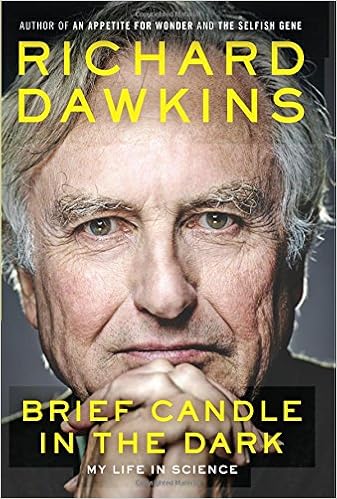
i have enjoyed reading about a dozen of your books and some of the most intriguing were The God DelusionAn Appetite for Wonder: The Making of a Scientist, and Brief Candle in the Dark: My Life in Science.

Page 152 in THE GOD DELUSION: “we on the science side must not be too dogmatically confident”

Here I agree with you!!! Let us look at some examples in the past where evolutionist have been “too dogmatically confident. The great Piltdown hoax…Its teeth had been filed down and artificially colored. At Scope Trial  Clarence Darrow Nebraska Man based on a tooth 

ADRIAN ROGERS FROM HIS MESSAGE ON “DARWINISM”:

The evolutionist can’t explain the steadfastness, the fixity, of the species. Now, what does the Bible say about the species? Well, Genesis 1, verses 11–12: “And God said, Let the earth bring forth grass, the herb yielding seed, and the fruit tree yielding fruit”—now, listen to this phrase—“after his kind, whose seed is in itself, upon the earth: and it was so. And the earth brought forth grass, and herb yielding seed after his kind, and the tree yielding fruit, whose seed was in itself, after his kind: and God saw that it was good” (Genesis 1:11–12). You continue this passage. Ten times God uses this phrase, “after his kind”—“after his kind,” “after his kind”—because like produces like..

Some years ago—in 1925, I believe it was—in Tennessee—Dayton, Tennessee— we had something called The Monkey Trial. Clarence Darrow and William Jennings Bryan were in a court case. A teacher had taught evolution in school, and there were people who sued that evolution should not be taught in school. Now it is reversed— you’re sued if you don’t teach evolution in school. But, there was a great debate, and Clarence Darrow, who was a very brilliant lawyer, was presenting evidence for evolution. Part of the evidence that Clarence Darrowpresented was Nebraska Man, and he had all of these pictures.

Now, what had happened is there was a man named Harold Cook. And, Harold Cook had found a piece of evidence, and out of that piece of evidence the artist had created this half-man, half-ape—this Nebraska Man. Well, what was it that Clarence Darrow used as evidence that Harold Cook had discovered? It was a tooth. I didn’t say, “teeth”; I said, “tooth.” He had a tooth; and, with that tooth, he had devised a race—male and female.

I was interested in reading, in my research for this message, where a creationist went to the University of Nebraska, where they have the campus museum. And, since he’s named Nebraska Man, they have the replica of Nebraska Man there, in the museum. So, this creationist went in there and said, “I want to see Nebraska Man.” So, they took him in there, and in a case were the skull and the skeleton of Nebraska Man. And, the creationist said, “Are these the actual bones of Nebraska Man?” “Oh,” he said, “no, they’re not the actual bones.” “Well,” the man said, “where could I see the actual bones?” “Oh,” he said, “well, we don’t have the bones. These are plaster of Paris casts of Nebraska Man.” “Well, you must have had the bones to make the cast.” The man in charge seemed embarrassed. “We don’t have any bones. All we have is a tooth.” That’s Nebraska Man. And, what they had done was to take a tooth, take some imagination, take an artist, take plaster of Paris, take some paste and some hair, and glue it on him—make a male, make a female, make a civilization called Nebraska Man out of one—one—tooth.

 What about the Piltdown man? I, in college, was introduced to the Piltdown man. Where’d we get his name? Well, Charles Dawson, in Piltdown, England, found in a gravel pit a piece of a jaw, two molar teeth, and a piece of a skull. For 50 years, this was known as “the Piltdown man,” but it was later shown to be a hoax. And, The Reader’s Digest, in 1958, said this—and I quote: “The great Piltdown hoax was an ape only 50 years old. Its teeth had been filed down and artificially colored.” Well, we laugh at that, and we say anybody could have a joke pulled on him. Yes, but friend, the scientists took this and put it in the museum for 50 years. Do you see how anxious man is to make a monkey of himself? I mean, it was a hoax.

The answer to find meaning in life is found in putting your faith and trust in Jesus Christ. The Bible is true from cover to cover and can be trusted.

Thank you again for your time and I know how busy you are.

Everette Hatcher, everettehatcher@gmail.comhttp://www.thedailyhatch.org, cell ph 501-920-5733, Box 23416, LittleRock, AR 72221, United States

On November 21, 2014 I received a letter from Nobel Laureate Harry Kroto and it said:

…Please click on this URL http://vimeo.com/26991975

and you will hear what far smarter people than I have to say on this matter. I agree with them.

Harry Kroto

Nick Gathergood, David-Birkett, Harry-Kroto

Image result for harry kroto richard dawkins

I have attempted to respond to all of Dr. Kroto’s friends arguments and I have posted my responses one per week for over a year now. Here are some of my earlier posts:

Arif Ahmed, Sir David AttenboroughMark Balaguer, Horace Barlow, Michael BatePatricia ChurchlandAaron CiechanoverNoam Chomsky,Alan DershowitzHubert DreyfusBart Ehrman, Stephan FeuchtwangDavid Friend,  Riccardo GiacconiIvar Giaever , Roy GlauberRebecca GoldsteinDavid J. Gross Brian Greene, Susan GreenfieldStephen F Gudeman,  Alan Guth, Jonathan HaidtTheodor W. HänschBrian Harrison,  Hermann HauserRoald Hoffmann,  Bruce HoodHerbert Huppert,  Gareth Stedman JonesSteve JonesShelly KaganMichio Kaku,  Stuart Kauffman,  Lawrence KraussHarry KrotoGeorge LakoffElizabeth Loftus,  Alan MacfarlanePeter MillicanMarvin MinskyLeonard Mlodinow Yujin NagasawaAlva NoeDouglas Osheroff,  Jonathan Parry,  Saul PerlmutterHerman PhilipseCarolyn PorcoRobert M. PriceLisa RandallLord Martin Rees,  Oliver SacksJohn SearleMarcus du SautoySimon SchafferJ. L. Schellenberg,   Lee Silver Peter Singer,  Walter Sinnott-ArmstrongRonald de SousaVictor StengerBarry Supple,   Leonard SusskindRaymond TallisNeil deGrasse Tyson,  .Alexander VilenkinSir John WalkerFrank WilczekSteven Weinberg, and  Lewis Wolpert,

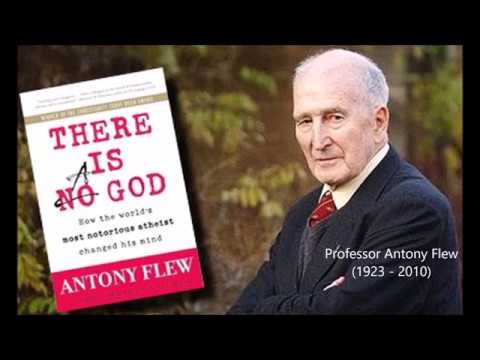
In  the second video below in the 67th clip in this series are Richard Dawkins’ words that Harry Kroto wanted me to see. Since then I have read several of Richard Dawkins books and have attempted to respond to the contents of these books directly to Richard Dawkins by mail. In fact, I have been writing Richard Dawkins letters since May 15, 1994 which was the 10th anniversary of the passing of one of my heroes, Francis Schaeffer. Francis Schaeffer spent a lot of time responding to many of Richard Dawkins’ heroes such as Carl Sagan, Jacques Monod, H.J. Blackham, Isaac Newton, Ludwig Wittgenstein, Max Planck, Johann Sebastian Bach, Francis Bacon, Samuel Beckett, Leonardo Da Vinci, Albert Einstein, Michael Faraday, Gerald Horton, Edmund Leach, Louis Pasteur, George Wald, Jacob Bronowski, Steven Weinberg, Charles Darwin, Paul Kurtz, Peter Singer, Jonathan Miller, William B. Provine, Woody Allen, Noam Chomsky, James D. Watson, Francis Crick, Michael Polanyi, The Huxley family, Antony Flew, and Edward O. Wilson (Dawkins has since revised his opinion of Flew and Wilson, but he earlier regarded them very highly). 

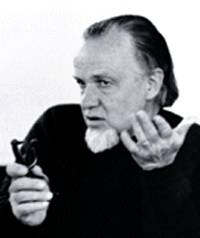
Image result for francis schaeffer
Francis Schaeffer 1911-1984

_

Image result for antony flew

_

Both Francis Schaeffer and Richard Dawkins have talked extensively about the life of Charles Darwin.

Image result for charles darwin

_

Sir Harry Kroto with his high school friend Sir Ian McKellan at the FSU National High Field Magnetic Lab on Tuesday, October 27, 2009.

Image result for harry kroto richard dawkins

50 Renowned Academics Speaking About God (Part 1)

_

Another 50 Renowned Academics Speaking About God (Part 2)

_

_

Edit Post ‹ The Daily Hatch — WordPress

A Further 50 Renowned Academics Speaking About God (Part 3)

_

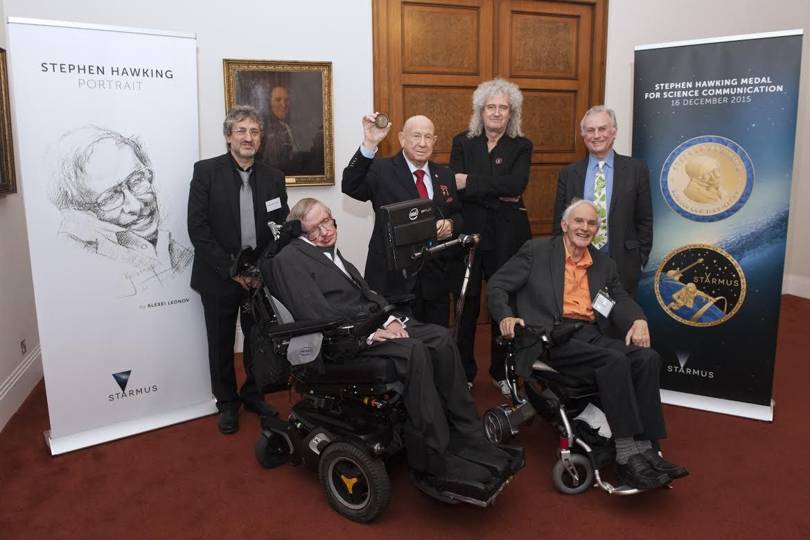
Richard Dawkins Photos Photos – Professor Stephen Hawking Unveils Medal For Science Communication – Zimbio

Professor Stephen Hawking Unveils Medal For Science Communication

Professor Stephen Hawking Unveils Medal For Science Communication In This Photo: Richard Dawkins, Stephen Hawking, Brian May, Harold Kroto, Alexi Leonov, Garik Israelian

__

Richard Dawkins, founder of the Richard Dawkins Foundation for Reason and Science. Credit: Don Arnold Getty Images

16

Image result for richard dawkins brief candle in the dark

Garik Israelian, Stephen Hawking, Alexey Leonov, Brian May, Richard Dawkins and Harry Kroto

—-

—-

—-

—-

—-

Related posts:

RESPONDING TO HARRY KROTO’S BRILLIANT RENOWNED ACADEMICS!! Part 48 Nobel Prize Winner and Global Warming Denier Ivar Giaever “I think religion is to blame for a lot of the ills in this world!”

October 20, 2015 – 5:20 am

  On November 21, 2014 I received a letter from Nobel Laureate Harry Kroto and it said: …Please click on this URL http://vimeo.com/26991975 and you will hear what far smarter people than I have to say on this matter. I agree with them. Harry Kroto _________________ Below you have picture of 1996 Chemistry Nobel Prize Winner […]

FRANCIS SCHAEFFER ANALYZES ART AND CULTURE PART 78 THE BEATLES (Breaking down the song TOMORROW NEVER KNOWS) Featured musical artist is Stuart Gerber

September 24, 2015 – 5:42 am

The Beatles were “inspired by the musique concrète of German composer and early electronic music pioneer Karlheinz Stockhausen…”  as SCOTT THILL has asserted. Francis Schaeffer noted that ideas of  “Non-resolution” and “Fragmentation” came down German and French streams with the influence of Beethoven’s last Quartets and then the influence of Debussy and later Schoenberg’s non-resolution which is in total contrast […]

RESPONDING TO HARRY KROTO’S BRILLIANT RENOWNED ACADEMICS!! Part 42 Peter Singer, Professor of Bioethics at Princeton University, THE PROBLEM OF EVIL

September 8, 2015 – 5:10 am

  _______ On November 21, 2014 I received a letter from Nobel Laureate Harry Kroto and it said: …Please click on this URL http://vimeo.com/26991975 and you will hear what far smarter people than I have to say on this matter. I agree with them. Harry Kroto _________________ Below you have picture of 1996 Chemistry Nobel Prize […]

RESPONDING TO HARRY KROTO’S BRILLIANT RENOWNED ACADEMICS!! Bart Ehrman “Why should one think that God performed the miracle of inspiring the words in the first place if He didn’t perform the miracle of preserving the words?”

September 2, 2015 – 8:42 am

On November 21, 2014 I received a letter from Nobel Laureate Harry Kroto and it said: …Please click on this URL http://vimeo.com/26991975 and you will hear what far smarter people than I have to say on this matter. I agree with them. Harry Kroto ____________________ Below you have picture of 1996 Chemistry Nobel Prize Winner Dr. […]

Open Letter #80 to Ricky Gervais on comparison of the Tony of AFTER LIFE to the Solomon of ECCLESIASTES, Adrian Rogers “A man goes out here in an orange grove. He gets one of those big succulent oranges. He takes his pin knife and cuts a plug out of it, puts it up to his mouth, and squeezes all of the juice out of it. Then he throws it on the ground like a piece of garbage, wipes his mouth and says, Man, I just love oranges. Young lady, that’s the way he loves you!”

—-

—-

After Life #1 Trailer

—-

I listened to this question and answer session at Harvard in 1992 on cassette tapes and was captivated with Ravi Zacharias. His responses were so much better than Kath’s responses to Tony in AFTER LIFE. I have referenced work by Ravi many times in the past and Especially moving was Ravi’s own spiritual search which started in a hospital bed after a failed suicide attempt. I also want you to check out his talk at Princeton and the question and answer time afterwards which are both on YOU TUBEat these two links: Link for talk, Link for Q/A.

Tony and his wife Lisa who died 6 months ago of cancer

(Above) Tony and Anne on the bench at the graveyard where their spouses are buried.

July 6, 2020 
Ricky Gervais 


Dear Ricky,  

This is the 80th day in a row that I have written another open letter to you to comment on some of your episodes of AFTER LIFE, and then I wanted to pass along some evidence that indicates the Bible is historically accurate.

In season 2 in episode 2 in AFTERLIFE Matt invites Tony to talk to single ladies in an effort to bang some beaver. This reckless attempt to have sex backfires on Matt and Tony abandons him. While this is going on in the same episode ironically Daphne the prostitute and Pat the Postman go on a date that Tony set up and it turns out great. Pat treats Daphne like a lady should be treated and not like she usually gets treated by men who just want sex. Daphne actually says, “I don’t know what is happening here.” She evidently has never experienced a date when the gentleman said, “I know you are out of my league.” The way she usually is treated reminded me of this story below.

In the sermon ‘THE PLAYBOY’S PAYDAY” in 1984 Adrian Rogers discussed Proverbs 5. In that message he gave an example about a man who loved oranges and he compared that love of oranges to the way some men treat women sexually. I remember a visit in 1976 that Adrian Rogers made to our Junior High Chapel service at EVANGELICAL CHRISTIAN SCHOOL. He gave a message on Solomon’s search for satisfaction and when he got to the issue of LOVE/LUST he gave the same example concerning oranges and here it is:

Solomon happens to be talking to his son; that’s why he’s talking to his son about the girls. But I just want to say a word to some of you girls, also, about some of these guys.  You know what a man will do? He’ll come to a girl and date a girl and take her out and wine her and dine her and then he’ll begin to say to her, I love you.  I really love you. He’ll tell her that several times.  He’ll just pour the sugar in her ear, and then he’ll say to her, Do you love me?  And if she says, Yes, then he’ll say, Prove it.   And what he means by that is he wants her to show her love, to prove her love by sexual immorality.  If there’s one thing that doesn’t prove love, it’s that.    

Do you know what proves love? Do you know what really proves love? You are able to  appreciate and enjoy a person and that person’s character without having to sully their purity by doing it.  

This guy says to this gal, Oh, I just can’t wait.  I just can’t wait! I just can’t wait! The Bible says Jacob waited for Rachel seven years because of the love that he had for her, and it seemed as a few days.  You see, lust can’t wait.  Love can wait.  Lust wants to get.  Love wants to give.  And when that guy says, I love you, I love you, I love you, what he really means is I love me, I love me, I love me.   Oh, he loves you, but not with Bible love. 

A man goes out here in an orange grove.  He gets one of those big succulent oranges.  He takes his pin knife and cuts a plug out of it, puts it up to his mouth, and squeezes all of the juice out of it.  Then he throws it on the ground like a piece of garbage, wipes his mouth and says, Man, I just love oranges. Young lady, that’s the way he loves you! And when you’re left like a piece of garbage, he says, Boy, that was wonderful.  Aren’t oranges good! But what he really means is, I love me.

__________

Francis Schaeffer took a look at Solomon’s quest to find the meaning of life through pursuing sexual conquests of ladies and he comments below: 

Pursuing Ladies

If one would flee to alcohol, then surely one may choose sexual pursuits to flee to. Solomon looks in this area too.

Ecclesiastes 7:25-28

25 I directed my mind to know, to investigate and to seek wisdom and an explanation, and to know the evil of folly and the foolishness of madness. 26 And I discovered more bitter than death the woman whose heart is snares and nets, whose hands are chains. One who is pleasing to God will escape from her, but the sinner will be captured by her.

27 “Behold, I have discovered this,” says the Preacher, “addingone thing to another to find an explanation, 28 I have looked for other answers but have found none. I found one man in a thousand that I could respect, but not one woman. (Good News Translation on verse 28)

One can understand both Solomon’s expertness in this field and his bitterness.

I Kings 11:1-3 (New American Standard Bible) 

11 Now King Solomon loved many foreign women along with the daughter of Pharaoh: Moabite, Ammonite, Edomite, Sidonian, and Hittite women, from the nations concerning which the Lordhad said to the sons of Israel, “You shall not associate with them, nor shall they associate with you, for they will surely turn your heart away after their gods.” Solomon held fast to these in love. He had seven hundred wives, princesses, and three hundred concubines, and his wives turned his heart away.

An expert but also the reason for his bitterness. Certainly there have been many men over the centuries who have daydreamed of Solomon’s wealth in this area [of women], but at the end it was sorry, not only sorry but nothing and less than nothing. The simple fact is that one can not know woman in the real sense by pursuing 1000 women. It is not possible. Woman is not found this way. All that is left in this setting if one were to pursue the meaning of life in this direction is this most bitter word found in Ecclesiastes 7:28, “I have looked for other answers but have found none. I found one man in a thousand that I could respect, but not one woman.” (Good News Translation on verse 28) He was searching in the wrong way. He was searching for the answer to life in the limited circle of that which is beautiful in itself but not an answer finally in sexual life. More than that he finally tried to find it in variety and he didn’t even touch one woman at the end.

—-

Why trust the Bible?

Posted by admin | All

Why trust the Bible?

The Bible’s Power and Influence

In some countries today, the Bible is forbidden. Bringing a Bible into Saudi Arabia, for example, or North Korea, or China, or Libya, or Burma — along with many other countries — can result in expulsion for the westerner or arrest and torture if you’re native to the country. It wasn’t that long ago that the Bible was banned in communist Eastern Europe, too; a good friend of mine was involved in Bible smuggling into places like Romania and Hungary during the 1970s and 80s and can tell hair-raising stories of near arrests and fortunate escapes.

Banned in many countries, yet desperately sought by persecuted Christians. The best selling, most widely studied piece of literature, whose influence is unquestionable, whatever you think of the book. Much of our art, law, philosophy, music and literature have drawn upon the Bible.

Yet this potency and influence aside, many people today want to ignore, rubbish, or reject the Bible. “How can you trust the Bible?” sceptics often ask. “New Atheist” writers like Richard Dawkins regularly attack the Bible, calling those who believe in it, “died in the wool faith-heads”.

Three Initial Thoughts

So how might we answer the sceptic? How can Christians show that is rational and reasonable to trust the Bible and take seriously what it says? There are numerous ways one might approach this question but this evening, I want to focus on a historical approach, as that’s my own academic background. But before that, let me start by making three general comments.

First, when somebody says “why trust the Bible?” I sometimes respond “why not trust the Bible?” One can only really doubt something if one has something more solid to believe in. Unless you merely want to be a sceptic. Whilst that’s very fashionable, it’s hard to be a consistent sceptic. Why not be sceptical about your scepticism?

Second, lots of people have bought into popular assumptions and myths about the Bible. So if somebody suggests the Bible is unreliable, ask them to be specific. How exactly? If they claim it’s full of myths, ask them which one they had in mind? Encourage them to read the Bible for themselves before passing judgement on it.

Third, there’s a lot of chronological snobbery about these days. Just because something is old or ancient, doesn’t make it false. Indeed, ancient-icity doesn’t tell us anything about whether something is true or false. Something can be ancient and true. Likewise something can be bang up to date and false.

The Historian and the Bible

Those comments aside, why trust the Bible? Well, first, many people are not aware that most historians take the Bible, especially the New Testament, very seriously indeed. The Bible has been subjected to extremely vigorous literary and historical criticism, probably more than any other ancient work, and it’s emerged unscathed. Hans Kung put it nicely:

Lay people are usually unaware that the scrupulous scholarly work achieved by modern biblical criticism … represented by scrupulous academic work over about 300 years, belongs among the greatest intellectual achievements of the human race. Has any of the great world religions outside of the Jewish-Christian tradition investigated its own foundations and its own history so thoroughly and impartially? None of them has remotely approached this. The Bible is far and away the most studied book in world literature.

In other words, the Bible doesn’t need defending or protecting from historical criticism — Christians haven’t shut themselves off from academic questions — far from it. Indeed, as the 19th century Baptist preacher Charles Spurgeon once quipped: “Defend the Bible? I’d sooner defend a lion!”

When one approaches the Bible from a historical perspective, one can approach it much as one would any other ancient work. Broadly speaking, there are three tests a historian can utilise to determine the veracity of an ancient document. The bibliographic test, the internal test, and the external test. Let’s briefly look at each of these and how they apply to the Bible.

The Bibliographic Test

The bibliographic test looks at the ancient manuscripts of the Bible and asks whether the text of the Bible we have today is the same as the original? The simple answer is “yes”. There are thousands upon thousands of ancient manuscripts of the Bible, dating from the early second century down to the middle ages. When you compare what we have for the Bible with, say, what we have in terms of manuscripts for other important works of antiquity — Plato or Thucydides — it’s striking. For the Bible, we have 5,000 Greek manuscripts, hundreds of papyri, almost 350 Syriac copies (most dating to the 400s). On top of this, virtually the entire New Testament could be reproduced from quotations in the early church fathers; 32,000 such quotations exist before the Council of Nicaea in AD325, for example.

Many of these manuscripts are staggeringly early. For example, the John Rylands fragment (P52) dates to around AD120. Codex Sinaiticus dates to about 350AD and contains virtually all of the New Testament — I remember visiting the British Library a few years ago and staring at this beautiful object, just a few centimetres away from me behind a pane of glass. One felt that one was in touch with history.

Why are these manuscripts important? Because they enable us to be confident that the text of the Bible we have today is extremely accurate and close to the original. Historian and textual critic Ben Witherington has remarked that critical scholarship is about 99% certain of all of the New Testament text now — indeed, that we’re closer to the original text of the New Testament now than anytime since the first couple of centuries, so good is the scholarship.

The Internal Test

What about the historian’s second test, the internal test? This test asks whether we can determine whether the document we have before us was written by eyewitnesses. When it comes to the Bible, especially to the New Testament, things get very interesting.

First, we have multiple witnesses. Many people who are unfamiliar with the Bible tend to think of it as one book — but, of course, the Bible contains multiple books — it’s more like a library than a book. So, when we come to the New Testament, for example, we have multiple authors writing about the life of Jesus. Critical scholars would count at least six — Matthew, Mark, Luke, John, Paul and probably also “Q”, a collection of sayings of Jesus that Matthew and Luke referred to.

Furthermore, these sources are all very early. Most scholars date the Gospels to the 60s, 70s and 80s AD, although some argue that Mark, especially, is much earlier. British New Testament scholar James Crossley — who, I’d note, is not a Christian — believes Mark was written in the late 30s or early 40s — that’s within a decade of Jesus. Another very early witness is Paul, who is writing his letters between AD48 and AD65, well within the lifetimes of the eyewitnesses. Why is this important?

Because one thing historians get very excited about is multiple attestation and early dating.
To return to the Gospels, though, for a moment. Not merely are they very early, but it’s now fairly universally accepted in critical scholarship that the Gospel writers were trying to write history; in terms of genre, the Gospels are biographies. The seminal work that demonstrated this was a book called What Are the Gospels? by Richard Burridge. Interestingly, Burridge set out to disprove that the gospels are biographies but the evidence caused him to change his mind. Historian David Aune sums up the implications of this:

[Bios, ancient biography] was firmly rooted in historical fact rather than literary fiction. Thus while the Evangelists clearly had an important theological agenda, the very fact that they chose to adapt Greco-Roman biographical conventions to tell the story of Jesus indicated that they were centrally concerned to communicate what they really thought happened.”

There’s a further point here, too. If one wants to reject the Gospels as history, then one is still left with the problem of explaining the early church. It had to come from somewhere and if Jesus’ life and career didn’t play out as the Gospels claim, one has to explain where. As German historian Martin Dibelius put it: you have to posit an X big enough to explain the Y of the early church. The best explanation remains that given in the Gospels: that Jesus existed and something very remarkable happened to him.

The External Test
Finally, there’s the external evidence for the Bible, in particular archaeology. Time and time again, archaeology has confirmed that the writers of the biblical texts knew what they were talking about. Along with the writings of non-Christian historians from the first century, men like the Jewish historian, Josephus, archaeology endorses the biblical text at many points. As Millar Burrows, former professor of archaeology at Yale wrote:

On the whole … archaeological work has unquestionably strengthened confidence in the reliability of the Scriptural record. More than one archaeologist has found his respect for the Bible increased by the experience of excavation in Palestine. Archaeology has in many cases refuted the views of modern critics.

Let me give you a few fascinating examples. First, two examples from Luke. In Acts 17:6-8, Luke uses the Greek word politarchs to describe the city officials in Thessalonica. That word doesn’t appear in classical Greek literature so for many years, critics accused Luke of making a mistake. Then archaeologists discovered a first-century arch in the town that used this very term — showing that the term was in use for government officials at the very time Luke was writing. It was a similar phenomena with Acts 18:12, where Luke uses the term “proconsul” to describe a gentleman called Gallio. That word didn’t appear either in classical literature so, again, scholars questioned Luke’s accuracy. Then an inscription was found at Delphi, dating to AD51, using the same term — and amazingly, to describe the very same official, Gallio. Once again Luke was proven to be a very accurate historian.

It’s a similar story with the other Gospel writers. For example, in John 5:1-2, the fourth Gospel writer speaks of “a pool in Jerusalem, by the Sheep Gate, called in Hebrew ‘Bethesda’, which has five porticoes”. Until the 20th century, there was no evidence outside of John’s Gospel for such a place and, again, critics questioned John’s reliability. Then in the 1930s, the pool was uncovered by archaeologists — complete with four colonnades around the edges and one across the middle.

One more example will suffice and it’s perhaps the most intriguing — the so-called “James Ossuary”. According to the Gospels — and to the Jewish historian, Josephus, James was the brother of Jesus and was killed in AD62. In 2002, a mid-first century bone box or ossuary was discovered in Jerusalem, bearing the Aramaic inscription “James, son of Joseph, brother of Jesus”. There is very strong evidence that the box and its inscription are authentic. Ed Keall, of the Royal Ontario Museum here in Toronto, has said “we stand by our opinion that the James Ossuary is not a forgery”. As New Testament historian Ben Witherington put it:

If, as seems probable, the ossuary found in the vicinity of Jerusalem and dated to about AD 63 is indeed the burial box of James, the brother of Jesus, this inscription is the most important extra-biblical evidence of its kind.

If we had more time, numerous other examples could be listed. The key point is this: archaeology doesn’t prove the New Testament is true. But what it does do is endorse the narratives. It shows that the biblical writings are historical and geographical in character — and thus deserve to be weighed and treated as seriously as an other texts from antiquity.

Conclusions
In the short time available to us, we’ve only been able to scratch the surface of what is a fascinating and rich area of study. But I hope in this brief survey I’ve been able to show that there are very good reasons to trust the Bible. And thus very good reasons to approach it with an open mind, willing to take what it says seriously and weigh its claims seriously.

So why read the Bible? Because from a historian’s perspective, we have good reason to trust it. Why read the Bible? Because only by reading it can you draw your own conclusions, rather than uncritically swallow somebody else’s second-hand-scepticism. Why read the Bible? Because through the pages of the four biographies in the New Testament, the gospels, one encounters a historical figure — Jesus of Nazareth — whose powerful personality continues to resonate and impact lives two thousand years on.

Andy Bannister

(Originally published on the RZIM Canada website: www.stayinthecoversation.org)


The answer to find meaning in life is found in putting your faith and trust in Jesus Christ. The Bible is true from cover to cover and can be trusted.

Thank you again for your time and I know how busy you are.

Sincerely,

Everette Hatcher, everettehatcher@gmail.comhttp://www.thedailyhatch.org, cell ph 501-920-5733, 13900 Cottontail Lane, Alexander, AR 72002

PS: What is the meaning of life? Find it in the end of the open letter I wrote to you on April 23, 2020. 

Below is the workforce of THE TAMBURY GAZETTE 

Seen below is the third episode of AFTERLIFE (season 1) when Matt takes Tony to a comedy club with front row seats to cheer him up but it turns into disaster!!!

——

—-


After Life 2 Trailer

—-

On Saturday April 18, 2020 at 6pm in London and noon in Arkansas, I had a chance to ask Ricky Gervais a question on his Twitter Live broadcast which was  “Is Tony a Nihilist?” At the 20:51 mark Ricky answers my question. Below is the video:

—-

—-

If Death is the end then what is the point Kath asks below:

——

Francis Schaeffer passed away on May 15, 1984 and on the 10th anniversary of that date I wrote many skeptics such as Carl Sagan and corresponded with them on the big questions covered by the Book of Ecclesiastes.

Kath: You are an atheist?

—-

Adrian Rogers on Evolution

—-
Ravi Zacharias  (March 26, 1946 – May 19, 2020) 

Francis Schaeffer (January 30, 1912 – May 15, 1984[1]

Francis Schaeffer.jpg


I grew up at Bellevue Baptist Church under the leadership of our pastor Adrian Rogers and I read many books by the Evangelical Philosopher Francis Schaeffer and in 1992 I heard cassette tapes of Ravi Zacharias in all his brilliance in his sessions at Harvard and have had the opportunity to contact many of the evolutionists or humanistic academics that they have mentioned in their works. Many of these scholars have taken the time to respond back to me in the last 20 years and some of the names  included are  Ernest Mayr (1904-2005), George Wald (1906-1997), Carl Sagan (1934-1996),  Robert Shapiro (1935-2011), Nicolaas Bloembergen (1920-),  Brian Charlesworth (1945-),  Francisco J. Ayala (1934-) Elliott Sober (1948-), Kevin Padian (1951-), Matt Cartmill (1943-) , Milton Fingerman (1928-), John J. Shea (1969-), , Michael A. Crawford (1938-), Paul Kurtz (1925-2012), Sol Gordon (1923-2008), Albert Ellis (1913-2007), Barbara Marie Tabler (1915-1996), Renate Vambery (1916-2005), Archie J. Bahm (1907-1996), Aron S “Gil” Martin ( 1910-1997), Matthew I. Spetter (1921-2012), H. J. Eysenck (1916-1997), Robert L. Erdmann (1929-2006), Mary Morain (1911-1999), Lloyd Morain (1917-2010),  Warren Allen Smith (1921-), Bette Chambers (1930-),  Gordon Stein (1941-1996) , Milton Friedman (1912-2006), John Hospers (1918-2011), Michael Martin (1932-).Harry Kroto (1939-), Marty E. Martin (1928-), Richard Rubenstein (1924-), James Terry McCollum (1936-), Edward O. WIlson (1929-), Lewis Wolpert (1929), Gerald Holton(1922-), Martin Rees (1942-), Alan Macfarlane (1941-),  Roald Hoffmann (1937-), Herbert Kroemer (1928-), Thomas H. Jukes(1906-1999) and  Ray T. Cragun (1976-).

 Adrian Rogers (September 12, 1931 – November 15, 2005) 

Adrian Rogers.jpg

Charles Darwin Autobiography


Francis Schaeffer “The Age of NONREASON”

——-

—-


—-

—-

—-


—-

—-

—-


—-

MUSIC MONDAY Top 10 songs of the Velvet Underground and Nico

_______________

The Velvet Underground & Nico – Heroin – At The Hilltop Pop Festival – 1969

Uploaded on Dec 18, 2010

The VU & Nico live at the Hilltop Pop Festival 02 08 1969.

Merry Christmas and Happy New Year dear visitor

Top 10 songs of the Velvet Underground and Nico:

The Velvet Underground were one of the ’60s most influential bands — right up there with the Beatles and the Stones — even though practically nobody paid attention to them back when they were making records. The classic lineup (with a couple of changes along the way) fronted by Lou Reed made only four albums, but the handful of songs helped shape punk, art-rock and indie rock in the years to come. All four albums are essential listens, and our list of the Top 10 Velvet Underground Songs serves as a first-step primer.

Velvet Underground White Light White Heat
10

‘The Gift’

From: ‘White Light / White Heat’ (1968)


Viola player John Cale recites a short story by Reed over a droning instrumental backing in this eight-minute track from the Velvets’ second album. And if you think you don’t have time for, or interest in, an eight-minute story about a guy who misses his girlfriend and the unexpected package that arrives for her one day, think again. ‘The Gift’ is a weird delight. We won’t spoil the ending, but needless to say, it’s inevitable, funny and, um, sharp.

 
Velvet Underground Velvet Underground
9

‘Pale Blue Eyes’

From: ‘The Velvet Underground’ (1969)


Lou Reed more than earned his reputation as a caustic SOB (see just about every other cut on our list of the Top 10 Velvet Underground Songs), but on this lovely ballad from the band’s self-titled third album, he plays it genuinely soft. ‘Pale Blue Eyes’ is a love song — a mournful one, yes — but still, a love song.

 
Velvet Underground Velvet Underground
8

‘After Hours’

From: ‘The Velvet Underground’ (1969)


Drummer Maureen Tucker sings this charming album closer that sounds like an old-school turn-of-the-century throwback. Reed provides minimal acoustic guitar accompaniment. It’s definitely an oddity among all the whips, chains, drugs and dealers that populate Velvet Underground songs. But it’s a perfect comedown from all the darkness.

 
Velvet Underground All Tomorrow's Parties
7

‘All Tomorrow’s Parties’

From: ‘The Velvet Underground & Nico’ (1967)


More than 45 years after the band’s debut album was released, there are still very few records that sound like it. Lots of artists strive for the dark, brooding tone that permeates ‘The Velvet Underground & Nico,’ but no one has come close. Reed wrote the haunting ‘All Tomorrow’s Parties’ about the fractured art scene surrounding mentor Andy Warhol. German singer and model Nico sings his words like English is her fifth or maybe sixth language. A beautiful kind of doom.

 
Velvet Underground & Nico
6

‘Venus in Furs’

From: ‘The Velvet Underground & Nico’ (1967)


‘Venus in Furs’ sounds like sex and pain and a dungeon filled with leather-clad, whip-wielding masters (and their sweaty servants) before Reed utters even a single word in this S&M dirge based on an underground book. Reed tunes all of his guitar strings to the same note; Cale appears to be strangling his viola. It’s a glorious mess of sex and dread, thus a perfect fit to close out the first half of the Top 10 Velvet Underground Songs.

 
Velvet Underground Loaded
5

‘Rock & Roll’

From: ‘Loaded’ (1970)


By the time the Velvet Underground recorded their fourth album, Cale was gone (he left before the third record was made) and Tucker was on maternity leave. Reed steered what was left of the band away from the darker material found on their first three albums and toward more folk-oriented music. He left before ‘Loaded’ was released in 1970. It’s a great album, and this timeless anthem regularly turned up in his solo shows throughout the ’70s.

 
Velvet Underground White Light White Heat
4

‘White Light / White Heat’

From: ‘White Light / White Heat’ (1968)


The opening song on, and the title track to, the band’s second album doesn’t waste time. It kicks like a punk prototype, landing straight into the opening verse without much warning. The quick hit — ‘White Light / White Heat’ checks in at less than three minutes — reflects the song’s druggy theme. It’s a noisy, woozy haze.

 
Velvet Underground & Nico
3

‘Heroin’

From: ‘The Velvet Underground & Nico’ (1967)


Just how revolutionary were the Velvet Underground? While everyone else’s drug songs in 1967 were about playful LCD trips disguised as children’s stories or opening up one’s mind through enlightening experiences, the Velvets’ seven-minute dirge paints a darker and more apocalyptic portrait of a drug that even most hippies were scared of. Reed embraces it.

 
Velvet Underground & Nico
2

‘I’m Waiting for the Man’

From: ‘The Velvet Underground & Nico’ (1967)


As if turning heroin abuse into a temporary vacation from the hassles of daily life wasn’t enough (see No. 3 on our list of the Top 10 Velvet Underground Songs), this track, also from the debut album, makes hanging out and waiting to score seem like a casual midday adventure. Drugs were all over the scene in 1967, but they rarely looked like this.

 
Velvet Underground Loaded
1

‘Sweet Jane’

From: ‘Loaded’ (1970)


Reed had pretty much had it with the Velvet Underground when they were making their fourth album. He was in total control of some songs, almost to the point where ‘Loaded’ was a solo album; he was barely a presence on others. ‘Sweet Jane’ is the Velvets’ late-period masterpiece, a riff-driven rocker that sounds way more conventional than anything found on ‘The Velvet Underground & Nico’ but just as awesome.

__________________

Related posts:

Jim Morrison’s sad drug death was followed by Pamela Courson’s sad story!!!

Jim Morrison’s sad drug death was followed by Pamela Courson’s sad story!!! pamela courson/ jim morrison interview   Interview with Jim Morrison’s father and sister Uploaded on Aug 9, 2010 This interview is from “When You’re Strange” DVD bonus material. I do not own this video and own no rights to it! Pamela Courson Uploaded […]

I’m Waiting for the Man sung by Nico in 1982 (about waiting for drug fix)

__________ NICO – I’m Waiting For The Man – (1982, Warehouse, Preston, UK)   One of the top 10 songs from The Velvet Underground and Nico is the song “I’m Waiting for the Man I’m Waiting for the Man From Wikipedia, the free encyclopedia Jump to: navigation, search “I’m Waiting for the Man” Song by […]

The life of Lou Reed (includes videos from 1960′s and 1970′s)

The life of Lou Reed (includes videos from 1960′s and 1970′s) ____________ Rock & Roll – Velvet Underground The Velvet Underground – Venus in Furs – Live 1) Lou Reed – Sweet Jane – live in Paris, 1974 Velvet Underground-”Sunday Morning” from “Velvet Underground and Nico” LP Lou Reed From Wikipedia, the free encyclopedia Jump […]

Jim Morrison’s relationship with Nico

Jim Morrison’s relationship with Nico   Nico Icon documentary part 1. Nico Icon documentary part 2. ______________ Jim Morrison at Andy Warhol’s Party.wmv (with Nico) Uploaded on Apr 26, 2010 From the Oliver Stone movie. The Doors. _______________________ nico discusses jim morrison. Uploaded on Jan 2, 2008 nico discusses jim, and how he impacted her […]

Pictures and Videos of Edie Sedgwick and the story of her losing battle against drugs and alcohol Part 2

Pictures and Videos of Edie Sedgwick and the story of her losing battle against drugs and alcohol Part 2 Drugs and alcohol have taken the life of many people and I have posted many times about their unfortunate deaths. Whitney Houston, Amy Winehouse, Gary Thain, Janis Joplin, Jimi Hendrix, Brian Jones, Kurt Cobain, and Jim […]

Pictures and Videos of Edie Sedgwick and the story of her losing battle against drugs and alcohol Part 1

Pictures and Videos of Edie Sedgwick and the story of her losing battle against drugs and alcohol Part 1 Factory Girl – The Real Edie Uploaded on Aug 30, 2011 Friends and family of Edie Sedgwick discuss what the factory girl was really like, and the battles and relationships she went through _____________ Edie Sedgwick Excerpt […]

Crystal Bridges Museum of American Art opens on 11-11-11

  Around 4 years ago I was in Philadelphia and the local radio station had a talk show that was blasting Alice Walton for coming into town and buying  the 1876 Thomas Eakins’ masterpiece “The Gross Clinic” which was hanging at the  Jefferson Medical College. However, the people of Philadelphia were given 45 days to […]

By Everette Hatcher III | Posted in Arkansas Times, Current Events | Tagged , , , , , , | Edit | Comments (0)

Open Letter #79 to Ricky Gervais on comparison of the Tony of AFTER LIFE to the Solomon of ECCLESIASTES, What does Sufjan Stevens mean when he writes, “The only reason why I continue at all, Faith in reason, I wasted my life playing dumb…Blind faith…”

—-

—-

——


—-

After Life #1 Trailer

—-

I listened to this question and answer session at Harvard in 1992 on cassette tapes and was captivated with Ravi Zacharias. His responses were so much better than Kath’s responses to Tony in AFTER LIFE. I have referenced work by Ravi many times in the past and Especially moving was Ravi’s own spiritual search which started in a hospital bed after a failed suicide attempt. I also want you to check out his talk at Princeton and the question and answer time afterwards which are both on YOU TUBEat these two links: Link for talk, Link for Q/A.

After Life 2 Trailer

—-

On Saturday April 18, 2020 at 6pm in London and noon in Arkansas, I had a chance to ask Ricky Gervais a question on his Twitter Live broadcast which was  “Is Tony a Nihilist?” At the 20:51 mark Ricky answers my question. Below is the video:

—-

—-

If Death is the end then what is the point Kath asks below:

——

Francis Schaeffer passed away on May 15, 1984 and on the 10th anniversary of that date I wrote many skeptics such as Carl Sagan and corresponded with them on the big questions covered by the Book of Ecclesiastes.

Kath: You are an atheist?

—-

Adrian Rogers on Evolution

—-
Ravi Zacharias  (March 26, 1946 – May 19, 2020) 

Francis Schaeffer (January 30, 1912 – May 15, 1984[1]

Francis Schaeffer.jpg


I grew up at Bellevue Baptist Church under the leadership of our pastor Adrian Rogers and I read many books by the Evangelical Philosopher Francis Schaeffer and in 1992 I heard cassette tapes of Ravi Zacharias in all his brilliance in his sessions at Harvard and have had the opportunity to contact many of the evolutionists or humanistic academics that they have mentioned in their works. Many of these scholars have taken the time to respond back to me in the last 20 years and some of the names  included are  Ernest Mayr (1904-2005), George Wald (1906-1997), Carl Sagan (1934-1996),  Robert Shapiro (1935-2011), Nicolaas Bloembergen (1920-),  Brian Charlesworth (1945-),  Francisco J. Ayala (1934-) Elliott Sober (1948-), Kevin Padian (1951-), Matt Cartmill (1943-) , Milton Fingerman (1928-), John J. Shea (1969-), , Michael A. Crawford (1938-), Paul Kurtz (1925-2012), Sol Gordon (1923-2008), Albert Ellis (1913-2007), Barbara Marie Tabler (1915-1996), Renate Vambery (1916-2005), Archie J. Bahm (1907-1996), Aron S “Gil” Martin ( 1910-1997), Matthew I. Spetter (1921-2012), H. J. Eysenck (1916-1997), Robert L. Erdmann (1929-2006), Mary Morain (1911-1999), Lloyd Morain (1917-2010),  Warren Allen Smith (1921-), Bette Chambers (1930-),  Gordon Stein (1941-1996) , Milton Friedman (1912-2006), John Hospers (1918-2011), Michael Martin (1932-).Harry Kroto (1939-), Marty E. Martin (1928-), Richard Rubenstein (1924-), James Terry McCollum (1936-), Edward O. WIlson (1929-), Lewis Wolpert (1929), Gerald Holton(1922-), Martin Rees (1942-), Alan Macfarlane (1941-),  Roald Hoffmann (1937-), Herbert Kroemer (1928-), Thomas H. Jukes(1906-1999) and  Ray T. Cragun (1976-).

 Adrian Rogers (September 12, 1931 – November 15, 2005) 

Adrian Rogers.jpg

Charles Darwin Autobiography

(Above) Tony and Anne on the bench at the graveyard where their spouses are buried.

July 5, 2020 
Ricky Gervais 


Dear Ricky,  

This is the 79th day in a row that I have written another open letter to you to comment on some of your episodes of AFTER LIFE.

This song THE ONLY THING by Sufjan Stevens is played as the 6th episode of the 2nd season is concluding and Tony has by chance avoided his own suicide attempt when Emma comes to his door and announces she will accept Ground Hog Day. Ground Hog Day is the film with Bill Murray where he repeats the same day over and over and seems to not make in progress. The song is placed perfectly because describes a person that struggles with thoughts of suicide like Tony does. On my blog I have written about several songs that deal with suicide such as Adam’s song by Blink 182, and I have also discussed the unfortunate high profile cases of suicides such as Bob Welch

The only thing that keeps me from driving this car
Half-light, jack knife into the canyon at night
Signs and wonders, 
Perseus aligned with the skull
Slain Medusa, Pegasus alight from us all

Do I care if I survive this, bury the dead where they’re found
In a veil of great surprises I wonder did you love me at all?

The only thing that keeps me from cutting my arm
Cross hatch, warm bath, Holiday Inn after dark
Signs and wonders, water stain writing the wall
Daniel’s message, blood of the moon on us all

Do I care if I despise this, nothing else matters, I know
In a veil of great disguises, how do I live with your ghost?

Should I tear my eyes out now?
Everything I see returns to you somehow
Should I tear my heart out now?
Everything I feel returns to you somehow
I want to save you from your sorrow

The only reason why I continue at all
Faith in reason, I wasted my life playing dumb
Signs and wonders, 
sea lion caves in the dark
Blind faith, God’s grace, nothing else left to impart

Do I care if I survive this, bury the dead where they’re found
In a veil of great surprises, hold to my head till I drown
Should I tear my eyes out now, before I see too much?
Should I tear my arms out now, I wanna feel your touch

Should I tear my eyes out now?
Everything I see returns to you somehow
Should I tear my heart out now?
Everything I feel returns to you somehow

—-

What does Sufjan Stevens mean when he writes, “The only reason why I continue at all, Faith in reason, I wasted my life playing dumb…Blind faith…” Song writers rarely come out and tell you what they had in mind because they want the debate to begin. Bob Dylan didn’t ever tell anything and in fact at the Dylan concert I attended he didn’t even say a word the whole concert! 

Here are some of my thoughts on these words “The only reason why I continue at all, Faith in reason, I wasted my life playing dumb…Blind faith…” I think the song writer believes in a time and chance universe and sees no future in faith in reason and he might as well be dumb because all his learning has got him no where so far. Without a personal God in the picture, is man just a machine without an ultimate purpose to his life and the only alternative is nihilism? Did Charles Darwin in the 1800’s and the Beatles in the 1960’s grapple with big questions like this one? An interesting fact is that after Charles Darwin came up with evolution he personally said he lost his taste for music and paintings and even the love of fine scenery that he earlier had and he blamed this lost “of happiness” on his dedication to his theory of evolution! No wonder his theory of time and chance evolution did affect modern art in the 20th century and Andy Warhol is a perfect example!

Francis Schaeffer talked about the views of the Beatles and Charles Darwin a lot and since you  have taken an interest in music and science I thought you would be interested in these thoughts of Schaeffer.  His son Frank wrote recently about the impact of SGT. PEPPER’S LONELY HEARTS CLUB BAND:

“Sgt. Pepper’s” became my personal sound track of liberation back then…Genie, my wife of 44 years… grew up in the Bay Area and as a teen had the distinction of seeing the Beatles three times (!) live and the Rolling Stones four times (!) live.

Meanwhile, I was growing up in Switzerland in a mission(L’Abri Fellowship), and my “almost famous” rock-n-roll high point came when I got a job helping with theLed Zeppelin’slight show at the Montreux Jazz/rock festival.I met Jimmy Page and noticed he was reading one of my dad’s first books, ESCAPE FROM REASON. (No kidding.)

This was back in the days when Dad was a sort of hippie guru for Jesus catering to Beats, hippies and dropouts hitching across Europe.Eric Claptonhad given Page the book as it turned out. I was trying to be “cool” that day on the light show crew… and I wasn’t too pleased to find my brief escape into the rock world from the world of my Dad’s evangelical mission was no escape from my God-world at all. He’d been giving lectures on Bob Dylan, and drug guru Timothy Leary had been a guest at L’Abri. And now I got to briefly “hang out with the band” and Dad got there first, or at least one of his books did! Sheesh! It’s hard to be cool!

NOT MANY PEOPLE HAVE THOUGHT ABOUT THE FACT THAT THE PICTURE ON THE COVER OF SGT. PEPPER’S LONELY HEARTS CLUB BAND IS THE BEATLES’ GRAVE SITE. In the article Philosophy and its Effect on Society Robert A. Sungenis (who was a personal friend of Schaeffer) tells us:

On the front cover are all the famous “Lonely Hearts” of the world who also could not find answers to life with reason and rationality, resorting to the existential leap into the dark (e.g ., Marlene Dietrich, Carl Jung, W.C. Fields, Bob Dylan, Marilyn Monroe, Sigmund Freud, Aleister Crowley, Edgar Allan Poe, Karl Marx, Oscar Wilde, Marlon Brando, Stan Laurel and Oliver Hardy, Lenny Bruce). They are all viewing the burial scene of the Beatles, which, in the framework we are using here, represents the passing of idealistic innocence and the failure to find a rational answer and meaning to life, an answer to love, purpose, significance and morals.They instead were leaping into the irrational, whether it was by drugs, the occult, suicide, or the bizarre.

William Lane Craig observed that BERTRAND RUSSELL wrotethat we must build our lives upon “the firm foundation of unyielding despair.” and also that Francis Schaeffer noted:

Modern man resides in a two-story universe. In the lower story is the finite world without God; here life is absurd, as we have seen. In the upper story are meaning, value, and purpose. Now modern man lives in the lower story because he believes there is no God.But he cannot live happily in such an absurd world; therefore, he continually makes leaps of faith into the upper story to affirm meaning, value, and purpose, even though he has no right to, since he does not believe in God. Modern man is totally inconsistent when he makes this leap, because these values cannot exist without God, and man in his lower story does not have God.

This ties in well with what Schaeffer said in describing Andy Warhol’s art:

THE OBSERVER June 12, 1966 does a big spread on Warhol. Andy is a mass communicator. Someone has described pop art as Dada plus Madison Avenue or commercialism and I think that is a good definition. Dada was started in Zurich and came along in modern art. Dada means nothing. The word “Dada” means rocking horse, but it was chosen by chance. The whole concept Dada is everything means nothing. Pop Art has been said to be the Dada concept put forth in modern commercialization. Everything in his work is being leveled down to an universal monotony which he can always sell for $8000.00.

ANDY WARHOL says, “It stops you thinking about things. I wish I were a machine. I don’t want to be heard. I don’t want human emotions. I have never been touched by a painting. I don’t want to think. The world would be easier to live  in if we all were machines. It is nothing in the end anyway.”

Warhol’s words made me think of Charles Darwin’s reaction to paintings late in his life and the fact that Darwin blamed science for causing him to lose his aesthetic tastes ( Charles Darwin: his life told in an autobiographical chapter, and in a selected series of his published letters.). I am going to quote some of Charles Darwin’s own words and then include the comments of Francis Schaeffer on those words. I sent you earlier Ricky a CD with two messages from Adrian Rogers and Bill Elliff concerning Darwinism.

 CHARLES DARWIN’S AUTOBIOGRAPHY. Addendum. Written May 1st, 1881 [the year before his death].

“I have said that in one respect my mind has changed during the last twenty or thirty years. Up to the age of thirty, or beyond it, poetry of many kinds, such as the works of Milton, Gray, Byron, Wordsworth, Coleridge, and Shelley, gave me great pleasure, I have also said that formerly pictures gave me considerable, and music very great delight. But now for many years I cannot endure to read a line of poetry: I have tried lately to read Shakespeare, and found it so intolerably dull that it nauseated me. I have also almost lost my taste for pictures or music. Music generally sets me thinking too energetically on what I have been at work on, instead of giving me pleasure. I retain some taste for fine scenery, but it does not cause me the exquisite delight which it formerly did….My mind seems to have become a kind of machine for grinding general laws out of large collections of facts, but why this should have caused the atrophy of that part of the brain alone, on which the higher tastes depend, I cannot conceive….The loss of these tastes is a loss of happiness, and may possibly be injurious to the intellect, and more probably to the moral character, by enfeebling the emotional part of our nature.”

Francis Schaeffer commented:

This is the old man Darwin writing at the end of his life.What he is saying here is the further he has gone on with his studies the more he has seen himself reduced to a machine as far as aesthetic things are concerned.I think this is crucial because as we go through this we find that his struggles and my sincere conviction is that he never came to the logical conclusion of his own position, but he nevertheless in the death of the higher qualities as he calls them, art, music, poetry, and so on, what he had happen to him was his own theory was producing this in his own self just as his theories a hundred years later have produced this in our culture. 

Unlike Darwin many people today still hang on to their love of music and the arts. Schaeffer points out in his book The God Who Is There, pages 68-69, “The very ‘mannishness’ of man refuses to live in the logic of the position  to which his humanism and rationalism have brought him.  To say that I am only a machine is one thing; to live consistently  as if this were true is quite another…Every truly modern man is forced to accept some sort of leap in theory or practice, because the pressure of his own humanity demands it.  He can say what he will concerning what he himself is; but no matter what he says he is, he is still a man.”

Francis Schaeffer noted thatin Darwin’s 1876 Autobiography that Darwin he is going to set forth two arguments for God in this and again you will find when he comes to the end of this that he is in tremendous tension. Darwin wrote, 

At the present day the most usual argument for the existence of an intelligent God is drawn from the deep inward conviction and feelings which are experienced by most persons.Formerly I was led by feelings such as those just referred to, …to the firm conviction of the existence of God and of the immortality of the soul. In my Journal I wrote that whilst standing in the midst of the grandeur of a Brazilian forest, ‘it is not possible to give an adequate idea of the higher feelings of wonder, admiration, and devotion which fill and elevate the mind.’ I well remember my conviction that there is more in man than the mere breath of his body; but now the grandest scenes would not cause any such convictions and feelings to rise in my mind. It may be truly said that I am like a man who has become COLOUR-BLIND.”

Francis Schaeffer remarked:

Now Darwin says when I look back andwhen I look at nature I came to the conclusion that man can not be just a fly!But now Darwin has moved from being a younger man to an older man and he has allowed his presuppositions to enter in to block his logic, these things at the end of his life he had no intellectual answer for. To block them out in favor of his theory. Remember the letter of his that said he had lost all aesthetic senses when he had got older and he had become a clod himself. Now interesting he says just the same thing, but not in relation to the arts, namely music, pictures, etc, but to nature itself. Darwinsaid,“But now the grandest scenes would not cause any such convictions  and feelings to rise in my mind. It may be truly said that I am like a man who has become colour-blind…”So now you see that Darwin‘s presuppositions have not only robbed him of the beauty of man’s creation in art, but now the universe. He can’t look at it now and see the beauty.The reason he can’t see the beauty is for a very, very , very simple reason:THE BEAUTY DRIVES HIM TO DISTRACTION. THIS IS WHERE MODERN MAN IS AND IT IS HELL. The art is hell because it reminds him of man and how great man is, and where does it fit in his system? It doesn’t. When he looks at nature and it’s beauty he is driven to the same distraction and so consequently you find what has built up inside him is a real death, not  only the beauty of the artistic but the beauty of nature. He has no answer in his logic and he is left in tension.  He dies and has become less than human because thesetwo great things (such as any kind of art and the beauty of  nature)that would make him human  stand against his theory.

Schaeffer later asserted, “We cannot deal with people like human beings, we cannot deal with them on the high level of true humanity, unless we really know their origin-who they are. God tells man who he is. God tells us that He created man in His image. So man is something wonderful.” ( Escape from Reason: A Penetrating Analysis of Trends in Modern Thought )

Many young people  turned to Eastern Religions in the 1960’s and 1970’s. Francis Schaeffer asserted, “But this finally brings them to the place where the word GOD merely becomes the word GOD, and no certain content can be put into it. In this many of the established theologians are in the same position asGeorge Harrison (1943-) (the former Beatles guitarist)when he wrote MY SWEET LORD (1970). Many people thought he had come to Christianity. But listen to the words in the background: “KrishnaKrishnaKrishna.” Krishna is one Hindu name for God. This song expressed  no content, just a feeling of religious experience. To Harrison, the words were equal: Christ or Krishna. Actually, neither the word used nor its content was of importance,” HOW SHOULD WE THEN LIVE? (page 191 Vol 5).

However, this is not the personal God that Christians worship. Darwin only had a problem with the idea of a personal God. In 1879 Charles Darwin was applied to by a German student, in a similar manner. The letter was answered by a member of Darwin’s family, who wrote:–

“Mr. Darwin…considers that the theory of Evolution is quite compatible with the belief in a God; but that you must remember that different persons have different definitions of what they mean by God.” 

Francis Schaeffer commented:

You find a great confusion in Darwin‘s writings although there is a general structure in them. Here he says the word “God” is alright but you find later what he doesn’t take is a personal God. Of course, what you open is the whole modern linguistics concerning the word “God.” is God a pantheistic God? What kind of God is God? Darwin says there is nothing incompatible with the word “God.”

Besides looking to Eastern Religions the Beatles tried to escape from reason by turning to drugs.In the book HOW SHOULD WE THEN LIVE?, Schaeffer observed,“This emphasis onhallucinogenic drugsbrought with it many rock groups–for example, Cream, Jefferson Airplane, Grateful Dead, Incredible String Band, Pink Floyd, and Jimi Hendrix. Most of their work was from 1965-1968.The Beatles’  SERGEANT PEPPER’S LONELY HEART S CLUB BAND (1967) also fits here.This disc is a total unity, not just an isolated series of individual songs, and for a time it became the rallying cry for young people throughout the world. As a whole, this music was the vehicle to carry the drug culture and the mentality which went with it across frontiers which were almost impassible by other means of communication.”

In his recent article, “Lucy in the Mind of Lennon: An Empirical Analysis of Lucy in the Sky with Diamonds, March 10, 2014,  Tim Kasser, notes: 

When the Beatles released their album Sgt. Pepper’s Lonely Hearts Club Band in the late spring of 1967,fans and critics alike were quick to find references to drugs throughout the LP. The album’s deliriously decorated jacket featured marijuana plants in the garden behind which the Beatles stood. The lyrics of With a Little Help from My Friends, Lovely Rita, and A Day in the Life all referred to marijuana, mentioning getting “high” and taking “some tea,” as well a desire to “turn you on.” And tuned-in listeners easily connected the feelings, sensations, and visions people typically experience while on hallucinogenic drugs to the dreamlike imagery of Lucy in the Sky with Diamonds. Some clever listeners even pointed out that the song’s title shares the initials of the hallucinogen LSD (lysergic acid diethylamide).

The Beatles had no doubt contributed to the perception that Sgt. Pepper was indeed a piece of hippie propaganda for hallucinogenic partying. Around the time the album was released, Paul McCartney revealed in a Life magazine interview that he had been using marijuana and LSD. McCartney even went on to extol the virtues of LSD, claiming that it had brought him closer to God and would yield world peace if only politicians would try it. Soon after, John Lennon, George Harrison, and the Beatles’ manager Brian Epstein also admitted that they had used LSD. Later that summer, the Beatles endorsed the legalization of marijuana by signing their names to a full-page advertisement in the London Times.

Lucy in the Mind of Lennon By Tim Kasser (Oxford University Press)

Despite these public proclamations about his drug use, John Lennon steadfastly denied that Lucy in the Sky with Diamonds was about drugs. Lennon instead consistently claimed that the song was a response to a picture painted by his almost four-year-old son Julian. The oft-repeated story goes that Julian had brought the picture home from school and told his father that it was of his friend, Lucy, who was up in the sky with diamonds. Lennon’s mind had then wandered toward the Lewis Carroll books Alice in Wonderland and Through the Looking-Glass that he had long admired and recently been re-reading. Lucy in the Sky with Diamonds was born when Lennon took images from Julian’s picture and combined them with elements of Carroll’s stories and poems.

A third explanation for the song’s meaning and origin was provided by Lennon many years after it was written, just a few weeks before he was killed. While reflecting on each of the songs in his discography, Lennon said this about Lucy in the Sky with Diamonds:

“There was also the image of the female who would someday come save me—a “girl with kaleidoscope eyes” who would come out of the sky. It turned out to be Yoko, though I hadn’t met Yoko yet. . . . The imagery was Alice in the boat. And also the image of this female who would come and save me—this secret love that was going to come one day. So it turned out to be Yoko, though, and I hadn’t met Yoko then. But she was my imaginary girl that we all have.”

Despite the fact that some people do not think that LUCY IN THE SKY WITH DIAMONDS was about drugs, the fact remains that it was probably considered so through the years by most drug users!!!!!!

SERGEANT PEPPER’S LONELY HEART S CLUB BAND not only dealt with drugs but also with death. In the TELEGRAPH in Nicky Browne’s obit it was noted that “Paul McCartney told interviewers that he took LSD for the first time with Tara Browne.” Wikipedia records, “The Honourable Tara Browne (4 March 1945 – 18 December 1966) was a young London socialite and heir to the Guinness fortune and was the son of Dominick Browne, 4th Baron Oranmore and Browne, a member of the House of Lords since 1927 who later became famous for having served in that house longer than any other peer…According to some sources, Tara was the inspiration for the Beatles song “A Day in the Life“.  He sat in on the making of the Beatles record ‘Revolver’.

On 17 January 1967 John Lennon, a friend of Browne’s, was composing music at his piano whilst idly reading London’s Daily Mail and happened upon the news of the coroner’s verdict into Browne’s death. He worked the story into the song “A Day in the Life“, later released on the album Sgt. Pepper’s Lonely Hearts Club Band. The second verse features the following lines:

He blew his mind out in a car, He didn’t notice that the lights had changed, A crowd of people stood and stared, They’d seen his face before, Nobody was really sure, If he was from the House of Lords.

According to Lennon, in his 1980 interview with Playboy magazine, “I was reading the paper one day and I noticed two stories. One was the Guinness heir who killed himself in a car. That was the main headline story. He died in London in a car crash.”

A side note about Tara Browne is that in  Paris his social circle was the likes of Samuel Beckett, Salvador Dali, and Jean Cocteau. Samuel Beckett had a lot to say on this issue of man’s significance as William Lane Craig has noted:

If each individual person passes out of existence when he dies, then what ultimate meaning can be given to his life? Does it really matter whether he ever existed at all? It might be said that his life was important because it influenced others or affected the course of history. But this shows only a relative significance to his life, not an ultimate significance. His life may be important relative to certain other events, but what is the ultimate significance of any of those events? If all the events are meaningless, then what can be the ultimate significance of influencing any of them? Ultimately it makes no difference.

This is the horror of modern man: because he ends in nothing, he is nothing.

Twentieth-century man came to understand this. Read WAITING FOR GODOT bySamuel Beckett. During this entire play two men carry on trivial conversation while waiting for a third man to arrive, who never does. Our lives are like that, BECKETT IS SAYING: WE JUST KILL TIME WAITING–FOR WHAT, WE DON’T KNOW. In a tragic portrayal of man, Beckett wrote another play in which the curtain opens revealing a stage littered with junk. For thirty long seconds, the audience sits and stares in silence at that junk. Then the curtain closes. That’s all.

French existentialistsJean-Paul SartreandAlbert Camusunderstood this, too. Sartre portrayed life in his play No Exit as hell—the final line of the play are the words of resignation, “Well, let’s get on with it.” Hence, Sartre writes elsewhere of the “nausea” of existence. Man, he says, is adrift in a boat without a rudder on an endless sea. Camus, too, saw life as absurd. At the end of his brief novel The Stranger, Camus’s hero discovers in a flash of insight that the universe has no meaning and there is no God to give it one. The French biochemistJacques Monodseemed to echo those sentiments when he wrote in his work Chance and Necessity, “Man finally knows he is alone in the indifferent immensity of the universe.”

Thus, if there is no God, then life itself becomes meaningless. Man and the universe are without ultimate significance. 

IN SPITE OF ALL THIS MANY SECULARISTS HAVE ADOPTED WHAT I CALL “EVOLUTIONARY OPTIMISTIC HUMANISM” and even in the 19th century Charles Darwin in his autobiography was touting the same product as we see today!!!!

Francis Darwin noted, “passages which here follow are extracts, somewhat abbreviated, from a part of the Autobiography, written in 1876, in which my father gives the history of his religious views:”

“Believing as I do that man in the distant future will be a far more perfect creature than he now is,”

FRANCIS SCHAEFFER COMMENTED:

Now you have now the birth of Julian Huxley’s evolutionary optimistic humanism already stated by Darwin. Darwin now has a theory that man is going to be better. If you had lived at 1860 or 1890 and you said to Darwin, “By 1970 will man be better?” He certainly would have the hope that man would be better as Julian Huxley does today. Of course, I wonder what he would say if he lived in our day and saw what has been made of his own views in the direction of (the mass murder) Richard Speck (and deterministic thinking of today’s philosophers). I wonder what he would say. So you have the factor, already the dilemma in Darwin that I pointed out in Julian Huxley and that is evolutionary optimistic humanism rests always on tomorrow. You never have an argument from the present or the past for evolutionary optimistic humanism.

You can have evolutionary nihilism on the basis of the present and the past. Every time you have someone bringing in evolutionary optimistic humanism it is always based on what is going to be produced tomorrow. When is it coming? The years pass and is it coming? Arthur Koestler doesn’t think it is coming. He sees lots of problems here and puts forth for another solution.

In Darwin’s 1876 Autobiography he noted:

“…it is an intolerable thought that he and all other sentient beings are doomed to complete annihilation after such long-continued slow progress. To those who fully admit the immortality of the human soul, the destruction of our world will not appear so dreadful.”

Francis Schaeffer commented:

Here you feel Marcel Proust and the dust of death is on everything today because the dust of death is on everything tomorrow. Here you have the dilemma of Nevil Shute’sON THE BEACH.If it is true that all we have left is biological continuity and increased biological complexity, which is all we have left in Darwinism here, or with many of the modern philosophers, then you can’t stand Shute’sON THE BEACH.Maybe tomorrow at noon human life may be wiped out. Darwin already feels the tension, because if human life is going to be wiped out tomorrow, what is it worth today? Darwin can’t stand the thought of death of all men.Charlie Chaplinwhen he heard there was no life on Mars said, “I’m lonely.”

You think of the Swedish Opera (ANIARA) that is pictured inside a spaceship. There was a group of men and women going into outer space and they had come to another planet and the singing inside the spaceship was normal opera music. Suddenly there was a big explosion and the world had blown up and these were the last people left, the only conscious people left, and the last scene is the spaceship is off course and it will never land, but will just sail out into outer space and that is the end of the plot. They say when it was shown in Stockholm the first time, the tough Swedes with all their modern  mannishness, came out (after the opera was over) with hardly a word said, just complete silence.

Darwin already with his own position says he CAN’T STAND IT!! You can say, “Why can’t you stand it?” We would say to Darwin, “You were not made for this kind of thing. Man was made in the image of God. Your CAN’T- STAND- IT- NESS is screaming at you that your position is wrong. Why can’t you listen to yourself?”

You find all he is left here is biological continuity, and thus his feeling as well as his reason now is against his own theory, yet he holds it against the conclusions of his reason. Reason doesn’t make it hard to be a Christian. Darwin shows us the other way. He is holding his position against his reason.

These words of Darwin ring in my ear, “…it is an intolerable thought that he and all other sentient beings are doomed to complete annihilation after such long-continued slow progress…” . Schaeffer rightly noted, “Maybe tomorrow at noonhuman life may be wiped out. Darwin already feels the tension, because if human life is going to be wiped out tomorrow, what is it worth today? Darwin can’t stand the thought of death of all men.”IN OTHER WORDS ALL WE ARE IS DUST IN THE WIND.  I sent you a CD that starts off with the song DUST IN THE WIND by Kerry Livgren of the group KANSAS which was a hit song in 1978 when it rose to #6 on the charts because so many people connected with the message of the song. It included these words, “All we do, crumbles to the ground though we refuse to see, Dust in the Wind, All we are is dust in the wind, Don’t hang on, Nothing lasts forever but the Earth and Sky, It slips away, And all your money won’t another minute buy.”

Kerry Livgren himself said that he wrote the song because he saw where man was without a personal God in the picture. Solomon pointed out in the Book of Ecclesiastes that those who believe that God doesn’t exist must accept three things. FIRST, death is the end.  SECOND, chance and time are the only guiding forces in this life.  FINALLY, power reigns in this life and the scales are never balanced. The Christian can  face death and also confront the world knowing that it is not determined by chance and time alone and finally there is a judge who will balance the scales.

BothKerry Livgren and the bass player Dave Hope of Kansas became Christians eventually. Kerry Livgren first tried Eastern Religions and Dave Hope had to come out of a heavy drug addiction. I was shocked and elated to see their personal testimony on The 700 Club in 1981 and that same  interview can be seen on You Tube today. Livgren lives in Topeka, Kansas today where he teaches “Diggers,” a Sunday school class at Topeka Bible ChurchDAVE HOPE is the head of Worship, Evangelism and Outreach at Immanuel Anglican Church in Destin, Florida.

HOW DID THE BEATLES SEARCH END UP AND WHY WAS ALDOUS HUXLEY PUT ON THE COVER OF “SERGEANT PEPPER’S LONELY HEART S CLUB BAND”? Below is an excerpt from Francis A. Schaeffer‘s 1972 paper on the trends seen in secular society concerning drug use:

The philosophic basis for the drug scene came from ALDOUS HUXLEY'S 
concept that, since, for the rationalist, reason is not 
taking us anywhere, we should look for a final experience, one 
that can be produced "on call," one that we do not need to 
wait for. The drug scene, in other words, was at first an ideol- 
ogy, an ideology that had very practical consequences. Some of 
us at L'Abri have cried over the young people who have blown 
their minds. But many of them thought, like Alan Watts, Gary 
Snyder, Alan Ginsberg and Timothy Leary, that if you could 
simply turn everyone on, there would be an answer to man's 
longings. It wasn't just the far-out freaks who suggested that 
you could put drugs in the drinking water and turn on a whole 
city so that the "pigs" and the kids would all have flowers in 
their hair. In those days it really was an optimistic ideological 
concept...
The Beatles are a sort of test case. First they were just a 
rock group, then they took to drugs and expressed that in such 
songs as Sergeant Pepper's Lonely Hearts Club Band. When 
drugs didn't pan out, when they saw what was happening in 
Haight-Ashbury, they turned to the psychedelic sounds of 
Straivberry Fields, and then went further into Eastern religious 
experiences. But that, too, did not work out, and they wound 
up their career as a group by making The Yellow Submarine. 
When they made this movie, some people said, "The Beatles 
are coming back." But of course that was not the case. It was 
really 'the sad end of their ideological search as a group. It's 
interesting that Erich Segal, the man who wrote the film script 
for THE YELLOW SUBMARINE, then wrote LOVE STORY.

_________________


The answer to find meaning in life is found in putting your faith and trust in Jesus Christ. The Bible is true from cover to cover and can be trusted.

Thank you again for your time and I know how busy you are.

Sincerely,

Everette Hatcher, everettehatcher@gmail.comhttp://www.thedailyhatch.org, cell ph 501-920-5733, 13900 Cottontail Lane, Alexander, AR 72002

PS: What is the meaning of life? Find it in the end of the open letter I wrote to you on April 23, 2020. 

Below is the workforce of THE TAMBURY GAZETTE 

Seen below is the third episode of AFTERLIFE (season 1) when Matt takes Tony to a comedy club with front row seats to cheer him up but it turns into disaster!!!

——

—-

Part 1 “Why have integrity in Godless Darwinian Universe where Might makes Right?”

Part 2 “My April 14, 2016 Letter to Ricky mentioned Book of Ecclesiastes and the Meaninglessness of Life”

Part 3 Letter about Brandon Burlsworth concerning suffering and pain and evil in the world.  “Why didn’t Jesus save her [from cancer]?” (Tony’s 10 year old nephew George in episode 2)

Part 4 Letter on Solomon on Death Tony in episode one, “It should be everyone’s moral duty to kill themselves.”

Part 5 Letter on subject of Learning in Ecclesiastes “I don’t read books of fiction but mainly science and philosophy”

Part 6 Letter on Luxuries in Ecclesiastes Part 6, The Music of AFTERLIFE (Part A)

Part 7 Letter on Labor in Ecclesiastes My Letter to Ricky on Easter in 2017 concerning Book of Ecclesiastes and the legacy of a person’s life work

Part 8 Letter on Liquor in Ecclesiastes Tony’s late wife Lisa told him, “Don’t get drunk all the time alright? It will only make you feel worse in the log run!”

Part 9 Letter on Laughter in Ecclesiastes , I said of laughter, “It is foolishness;” and of mirth, “What does it accomplish?” Ecclesiastes 2:2

Part 10 Final letter to Ricky on Ladies in Ecclesiastes “I gathered a chorus of singers to entertain me with song, and—most exquisite of all pleasures— voluptuous maidens for my bed…behold, all was vanity and a striving after wind, and there was nothing to be gained under the sun” Ecclesiastes 2:8-11.

Part 11 Letter about Daniel Stanhope and optimistic humanism  “If man has been kicked up out of that which is only impersonal by chance , then those things that make him man-hope of purpose and significance, love, motions of morality and rationality, beauty and verbal communication-are ultimately unfulfillable and thus meaningless.” (Francis Schaeffer)

Part 12 Letter on how pursuit of God is only way to get Satisfaction Dan Jarrell “[In Ecclesiastes] if one seeks satisfaction they will never find it. In fact, every pleasure will be fleeting and can not be sustained, BUT IF ONE SEEKS GOD THEN ONE FINDS SATISFACTION”

Part 13 Letter to Stephen Hawking on Solomon realizing he will die just as a dog will die “For men and animals both breathe the same air, and both die. So mankind has no real advantage over the beasts; what an absurdity!” Ecclesiastes

Part 14 Letter to Stephen Hawking on 3 conclusions of humanism and Bertrand Russell destruction of optimistic humanism. “That Man is the product of causes which had no prevision of the end they were achieving; that his origin, his growth, his hopes and fears, his loves and his beliefs, are but the outcome of accidental collocations of atoms—no philosophy which rejects them can hope to stand. Only within the scaffolding of these truths, only on the firm foundation of unyielding despair, can the soul’s habitation henceforth be safely built.”(Bertrand Russell, Free Man’s Worship)

Part 15 Letter to Stephen Hawking on Leonardo da Vinci and Solomon and Meaningless of life “I hate life. As far as I can see, what happens on earth is a bad business. It’s smoke—and spitting into the wind” Ecclesiastes Book of Ecclesiastes Part 15 “I hate life. As far as I can see, what happens on earth is a bad business. It’s smoke—and spitting into the wind” Ecclesiastes 2:17

Part 16 Letter to Stephen Hawking on Solomon’s longing for death but still fear of death and 5 conclusions of humanism on life UNDER THE SUN. Francis Schaeffer “Life is just a series of continual and unending cycles and man is stuck in the middle of the cycle. Youth, old age, Death. Does Solomon at this point embrace nihilism? Yes!!! He exclaims that the hates life (Ecclesiastes 2:17), he longs for death (4:2-3) Yet he stills has a fear of death (2:14-16)”

Mandeep Dhillon as Sandy on her first assignment in ‘After Life’. (Twitter)

A still from ‘After Life’ that captures the vibe of the Tambury Gazette. (Twitter)

Michael Scott of THE OFFICE (USA) with Ricky Gervais 

After Life on Netflix

After Life on Netflix stars Ricky Gervais as a bereaved husband (Image: Netflix)

—-

Psychiatrist played by Paul Kaye seen below.

The sandy beach walk

Tony Johnson with his dog Brandi seen below:

—-

Related posts:

Taking on Ark Times Bloggers on various issues Part I “Old Testament Bible Prophecy” includes the film TRUTH AND HISTORY and article ” Jane Roe became pro-life”

April 12, 2013 – 5:45 am

I have gone back and forth and back and forth with many liberals on the Arkansas Times Blog on many issues such as abortion, human rights, welfare, poverty, gun control  and issues dealing with popular culture. Here is another exchange I had with them a while back. My username at the Ark Times Blog is Saline […]By Everette Hatcher III | Posted in Biblical ArchaeologyFrancis SchaefferProlife | Edit|Comments (0)

John MacArthur on fulfilled prophecy from the Bible Part 2

August 8, 2013 – 1:28 am

I have posted many of the sermons by John MacArthur. He is a great bible teacher and this sermon below is another great message. His series on the Book of Proverbs was outstanding too.  I also have posted several of the visits MacArthur made to Larry King’s Show. One of two most popular posts I […]By Everette Hatcher III | Posted in Adrian RogersCurrent Events | Edit|Comments (0)

John MacArthur on fulfilled prophecy from the Bible Part 1

August 6, 2013 – 1:24 am

I have posted many of the sermons by John MacArthur. He is a great bible teacher and this sermon below is another great message. His series on the Book of Proverbs was outstanding too.  I also have posted several of the visits MacArthur made to Larry King’s Show. One of two most popular posts I […]By Everette Hatcher III | Posted in Adrian RogersCurrent Events |Tagged Bible Prophecyjohn macarthur | Edit|Comments (0)

John MacArthur: Fulfilled prophecy in the Bible? (Ezekiel 26-28 and the story of Tyre, video clips)

April 5, 2012 – 10:39 am

Prophecy–The Biblical Prophesy About Tyre.mp4 Uploaded by TruthIsLife7 on Dec 5, 2010 A short summary of the prophecy about Tyre and it’s precise fulfillment. Go to this link and watch the whole series for the amazing fulfillment from secular sources. http://www.youtube.com/watch?v=qvt4mDZUefo________________ John MacArthur on the amazing fulfilled prophecy on Tyre and how it was fulfilled […]By Everette Hatcher III | Posted in Biblical Archaeology | Edit|Comments (1)

John MacArthur on the Bible and Science (Part 2)

August 1, 2013 – 12:10 am

John MacArthur on the Bible and Science (Part 2) I have posted many of the sermons by John MacArthur. He is a great bible teacher and this sermon below is another great message. His series on the Book of Proverbs was outstanding too.  I also have posted several of the visits MacArthur made to Larry […]By Everette Hatcher III | Posted in Current Events | Edit|Comments (0)

John MacArthur on the Bible and Science (Part 1)

July 30, 2013 – 1:32 am

John MacArthur on the Bible and Science (Part 1) I have posted many of the sermons by John MacArthur. He is a great bible teacher and this sermon below is another great message. His series on the Book of Proverbs was outstanding too.  I also have posted several of the visits MacArthur made to Larry […]By Everette Hatcher III | Posted in Current Events | Edit|Comments (0)

Adrian Rogers: “Why I believe the Bible is true”

July 9, 2013 – 8:38 am

Adrian Rogers – How you can be certain the Bible is the word of God Great article by Adrian Rogers. What evidence is there that the Bible is in fact God’s Word? I want to give you five reasons to affirm the Bible is the Word of God. First, I believe the Bible is the […]By Everette Hatcher III | Posted in Adrian RogersBiblical Archaeology | Edit|Comments (0)

The Old Testament is Filled with Fulfilled Prophecy by Jim Wallace

June 24, 2013 – 9:47 am

Is there any evidence the Bible is true? Articles By PleaseConvinceMe Apologetics Radio The Old Testament is Filled with Fulfilled Prophecy Jim Wallace A Simple Litmus Test There are many ways to verify the reliability of scripture from both internal evidences of transmission and agreement, to external confirmation through archeology and science. But perhaps the […]By Everette Hatcher III | Posted in Biblical ArchaeologyCurrent Events | Edit|Comments (0)

Taking on Ark Times Bloggers on various issues Part M “Old Testament prophecy fulfilled?”Part 3(includes film DEATH BY SOMEONE’S CHOICE)

April 19, 2013 – 1:52 am

  I have gone back and forth and back and forth with many liberals on the Arkansas Times Blog on many issues such as abortion, human rights, welfare, poverty, gun control  and issues dealing with popular culture. Here is another exchange I had with them a while back. My username at the Ark Times Blog is […]By Everette Hatcher III | Posted in Francis SchaefferProlife | Edit|Comments (0)

Evidence for the Bible

March 27, 2013 – 9:43 pm

Here is some very convincing evidence that points to the view that the Bible is historically accurate. Archaeological and External Evidence for the Bible Archeology consistently confirms the Bible! Archaeology and the Old Testament Ebla tablets—discovered in 1970s in Northern Syria. Documents written on clay tablets from around 2300 B.C. demonstrate that personal and place […]By Everette Hatcher III | Posted in Biblical Archaeology | E


Francis Schaeffer “The Age of NONREASON”

——-

—-


—-

—-

—-


—-

—-

—-


—-

Open Letter #78 to Ricky Gervais on comparison of the Tony of AFTER LIFE to the Solomon of ECCLESIASTES, Tony: “I realized you can’t not care about the things you actually care about. You can’t fool yourself” (Birth of Cady Kalanithi 6 years ago today and the story of her late father)

—-

—-


After Life #1 Trailer

—-

I listened to this question and answer session at Harvard in 1992 on cassette tapes and was captivated with Ravi Zacharias. His responses were so much better than Kath’s responses to Tony in AFTER LIFE. I have referenced work by Ravi many times in the past and Especially moving was Ravi’s own spiritual search which started in a hospital bed after a failed suicide attempt. I also want you to check out his talk at Princeton and the question and answer time afterwards which are both on YOU TUBEat these two links: Link for talk, Link for Q/A.

After Life 2 Trailer

—-

On Saturday April 18, 2020 at 6pm in London and noon in Arkansas, I had a chance to ask Ricky Gervais a question on his Twitter Live broadcast which was  “Is Tony a Nihilist?” At the 20:51 mark Ricky answers my question. Below is the video:

—-

—-

If Death is the end then what is the point Kath asks below:

——

Francis Schaeffer passed away on May 15, 1984 and on the 10th anniversary of that date I wrote many skeptics such as Carl Sagan and corresponded with them on the big questions covered by the Book of Ecclesiastes.

Kath: You are an atheist?

—-

Adrian Rogers on Evolution

—-
Ravi Zacharias  (March 26, 1946 – May 19, 2020) 

Francis Schaeffer (January 30, 1912 – May 15, 1984[1]

Francis Schaeffer.jpg


I grew up at Bellevue Baptist Church under the leadership of our pastor Adrian Rogers and I read many books by the Evangelical Philosopher Francis Schaeffer and in 1992 I heard cassette tapes of Ravi Zacharias in all his brilliance in his sessions at Harvard and have had the opportunity to contact many of the evolutionists or humanistic academics that they have mentioned in their works. Many of these scholars have taken the time to respond back to me in the last 20 years and some of the names  included are  Ernest Mayr (1904-2005), George Wald (1906-1997), Carl Sagan (1934-1996),  Robert Shapiro (1935-2011), Nicolaas Bloembergen (1920-),  Brian Charlesworth (1945-),  Francisco J. Ayala (1934-) Elliott Sober (1948-), Kevin Padian (1951-), Matt Cartmill (1943-) , Milton Fingerman (1928-), John J. Shea (1969-), , Michael A. Crawford (1938-), Paul Kurtz (1925-2012), Sol Gordon (1923-2008), Albert Ellis (1913-2007), Barbara Marie Tabler (1915-1996), Renate Vambery (1916-2005), Archie J. Bahm (1907-1996), Aron S “Gil” Martin ( 1910-1997), Matthew I. Spetter (1921-2012), H. J. Eysenck (1916-1997), Robert L. Erdmann (1929-2006), Mary Morain (1911-1999), Lloyd Morain (1917-2010),  Warren Allen Smith (1921-), Bette Chambers (1930-),  Gordon Stein (1941-1996) , Milton Friedman (1912-2006), John Hospers (1918-2011), Michael Martin (1932-).Harry Kroto (1939-), Marty E. Martin (1928-), Richard Rubenstein (1924-), James Terry McCollum (1936-), Edward O. WIlson (1929-), Lewis Wolpert (1929), Gerald Holton(1922-), Martin Rees (1942-), Alan Macfarlane (1941-),  Roald Hoffmann (1937-), Herbert Kroemer (1928-), Thomas H. Jukes(1906-1999) and  Ray T. Cragun (1976-).

 Adrian Rogers (September 12, 1931 – November 15, 2005) 

Adrian Rogers.jpg

Charles Darwin Autobiography


(Above) Tony and Anne on the bench at the graveyard where their spouses are buried.

July 4, 2020 
Ricky Gervais 


Dear Ricky,  

In his last 22 months of life Paul Kalanithi took a long hard look at his life and if he had been created by God for a purpose and if he had a soul. Like Darwin he had lost his faith after attending college.

George Lakoff comments:

QUOTE from CLOSER TO TRUTH:

Does the soul have a personality?  Well it turns out that if you  have certain strokes in certain parts of the brain your personality changes. Without that part of the brain whose personality is the soul? So the soul doesn’t see, doesn’t think, doesn’t hear, doesn’t have emotions, or a personality. Okay, whose soul is it and what good is it? It doesn’t fit the usual notion of a soul as you are. 


Quote from Patricia Churchland:

The way the data are now, it’s pretty clear there is only the physical brain. That we think and feel and make decisions is a result of physical processes in the brain. There is no, in addition to the physical brain, there is no non-physical mind, or soul, or spookie stuff of the kind that might for example survive the death of the brain. So when I think of naturalization of the mind, I think about trying to understand the nature of mental processes, mental diseases and so forth in terms of brain function. 


V.S. Ramachandran comments:

Can you explain everything about who we human beings are by looking at the physiognomy of the brain?  . Is it as simple as that? Does it come down to what you once described as understanding that sort of block of jelly inside the head and that ultimately explains everything about the way human beings are and the way we perceive ourselves and orhers? I think that answer to that question is almost certainly yes. Things like creativity may go up to a certain point in explaining it or you have to start saying the divine sparkle or something that we scientists don’t believe in. Eventually the answer is yes, we are going to explain many different aspects by brain function. 


Susan Greenfield comments:

“I think what is more important is to realize we are individuals. Everything is rooted finally in our brain. My own view is that. If anything exists in a physical sense beyond that then I myself can not buy into that new kind of physics. If people believe that and it comforts them then who am I to say…”

Ricky Gervais plays bereaved husband Tony Johnson in AFTER LIFE

This is the 78th day in a row that I have written another open letter to you to comment on some of your episodes of AFTER LIFE and in today’s episode Tony says he can’t stop caring about the things and people that he cares about even though he philosophized that he is only a machine and doesn’t have to care about anything like a computer would!! Charles Darwin himself tried to immerse himself in his theory of evolution and he said it took away his happiness which was his former love of art, poetry and music!!!


Tony and his wife Lisa who died 6 months ago of cancer

(Francis Schaeffer pictured below)

Francis Schaeffer said about Charles Darwin:

Darwin already with his own position says he CAN’T STAND IT!! You can say, “Why can’t you stand it?” We would say to Darwin,“You were not made for this kind of thing. Man was made in the image of God. Your CAN’T- STAND- IT- NESS is screaming at you that your position is wrong. Why can’t you listen to yourself?”

But before I get into all of that I want to pause to talk about what happened six years ago today on July 4, 2014 and it was the birth of Cady Kalanithi to the parents Lucy and Paul Kalanithi. Paul would die 8 months later at age 38 after fighting cancer for 22 months. However, he would leave his atheism behind and put his faith and trust in Christ. I am going to quote from the book he wrote below and then refer to it again later at the end of this letter.

Lucy’s mom called to say they were headed to the hospital. Lucy was in labor. (“Make sure you ask about the epidural early,” I told her. She had suffered enough.)

I returned to the hospital, pushed by my father in a wheelchair. I lay down on a cot in the delivery room, heat packs and blankets keeping my skeletal body from shivering. For the next two hours, I watched Lucy and the nurse go through the ritual of labor. As a contraction built up, the nurse counted off the pushing: “And a one two three four five six seven eight nine and a ten!”
Lucy turned to me, smiling. “It feels like I’m playing a sport!” she said.
I lay on the cot and smiled back, watching her belly rise. There would be so many absences in Lucy’s and my daughter’s life—if this
was as present as I could be, then so be it.
Sometime after midnight, the nurse nudged me awake. “It’s almost time,” she whispered. She gathered the blankets and helped me to a chair, next to Lucy. The obstetrician was already in the room, no older than I. She looked up at me as the baby was crowning. “I can tell you one thing: your daughter has hair exactly like yours,” she said. “And a lot of it.” I nodded, holding Lucy’s hand during the last moments of her labor. And then, with one final push, on 

July 4, at 2:11 A.M.

, there she was. Elizabeth Acadia—Cady; we had picked the name months before.
“Can we put her on your skin, Papa?” the nurse asked me.
“No, I’m too c-c-cold,” I said, my teeth chattering. “But I would love to hold her.”
They wrapped her in blankets and handed her to me. Feeling her weight in one arm, and gripping Lucy’s hand with the other, the possibilities of life emanated before us. The cancer cells in my body would still be dying, or they’d start growing again. Looking out over the expanse ahead I saw not an empty wasteland but something simpler: a blank page on which I would go on.


Y
et there is dynamism in our house.
Day to day, week to week, Cady blossoms: a first grasp, a first smile, a first laugh. Her pediatrician regularly records her growth on charts, tick marks indicating her progress over time. A brightening newness surrounds her. As she sits in my lap smiling, enthralled by my tuneless singing, an incandescence lights the room.
Time for me is now double-edged: every day brings me further from the low of my last relapse but closer to the next recurrence—and,
eventually, death. Perhaps later than I think, but certainly sooner than I desire. There are, I imagine, two responses to that realization. The most obvious might be an impulse to frantic activity: to “live life to its fullest,” to travel, to dine, to achieve a host of neglected ambitions. 

Part of the cruelty of cancer, though, is not only that it limits your time; it also limits your energy, vastly reducing the amount you can squeeze into a day. It is a tired hare who now races. And even if I had the energy, I prefer a more tortoiselike approach. I plod, I ponder. Some days, I simply persist.
If time dilates when one moves at high speeds, does it contract when one moves barely at all? It must: the days have shortened considerably.
With little to distinguish one day from the next, time has begun to feel static. In English, we use the word time in different ways: “The time is two forty-five” versus “I’m going through a tough time.” These days, time feels less like the ticking clock and more like a state of being. Languor settles in. There’s a feeling of openness. As a surgeon, focused on a patient in the OR, I might have found the position of the clock’s hands arbitrary, but I never thought them meaningless. Now the time of day means nothing, the day of the week scarcely more. Medical training is relentlessly future-oriented, all about delayed gratification; you’re always thinking about what you’ll be doing five years down the line. But now I don’t know what I’ll be doing five years down the line. I may be dead. I may not be. I may be healthy. I may be writing. I don’t know. And so it’s not all that useful to spend time thinking about the future—that is, beyond lunch.
Verb conjugation has become muddled, as well. Which is correct: “I am a neurosurgeon,” “I was a neurosurgeon,” or “I had been a neurosurgeon before and will be again”? Graham Greene once said that life was lived in the first twenty years and the remainder was just reflection. So what tense am I living in now? Have I proceeded beyond the present tense and into the past perfect? The future tense seems vacant and, on others’ lips, jarring. A few months ago, I celebrated my fifteenth college reunion at Stanford and stood out on the quad, drinking a whiskey as a pink sun dipped below the horizon; when old friends called out parting promises—“We’ll see you at the twenty-fifth!”—it seemed rude to respond with “Well…probably not.”
Everyone succumbs to finitude. I suspect I am not the only one who reaches this pluperfect state. Most ambitions are either achieved or abandoned; either way, they belong to the past. The future, instead of the ladder toward the goals of life, flattens out into a perpetual present. Money, status, all the vanities the preacher of Ecclesiastes described hold so little interest: a chasing after wind, indeed.


Yet one thing cannot be robbed of her futurity: our daughter, Cady. I hope I’ll live long enough that she has some memory of me. Words have a longevity I do not. I had thought I could leave her a series of letters—but what would they say? I don’t know what this girl will be like when she is fifteen; I don’t even know if she’ll take to the nickname we’ve given her. There is perhaps only one thing to say to this infant, who is all future, overlapping briefly with me, whose life, barring the improbable, is all but past.
That message is simple:
When you come to one of the many moments in life where you must give an account of yourself, provide a ledger of what you have been, and done, and meant to the world, do not, I pray, discount that you filled a dying man’s days with a sated joy, a joy unknown to me in all my prior years, a joy that does not hunger for more and more but rests, satisfied. In this time, right now, that is an enormous thing.


EPILOGUE
Lucy Kalanithi
You left me, sweet, two legacies,— A legacy of love
A Heavenly Father would content, Had he the offer of;
You left me boundaries of pain Capacious as the sea, Between eternity and time, Your consciousness and me.
PAUL DIED ON MONDAY, March 9, 2015, surrounded by his family, in a hospital bed roughly two hundred yards from the labor and delivery ward where our daughter, Cady, had entered the world eight months before
.

Tony and his wife Lisa who died 6 months ago of cancer

As you know I am writing you a series of letters on Solomon’s efforts to find a meaning and purpose to life. Solomon tried to find a meaning and purpose to life UNDER THE SUN in the Book of Ecclesiastes in all of the 6 “L” words and looked into  learning(1:16-18),laughter, ladies, luxuries,  and liquor (2:1-3, 8, 10, 11), and labor (2:4-6, 18-20). Paul Kalanithi so rightly noted, “Most ambitions are either achieved or abandoned; either way, they belong to the past. The future, instead of the ladder toward the goals of life, flattens out into a perpetual present. Money, status, all the vanities the preacher of Ecclesiastes described hold so little interest: a chasing after wind, indeed.


In AFTERLIFE episode 5 season 1 Tony tells Anne:

“I realized you can’t not care about the things you actually care about. You can’t fool yourself. It was something you said that it is not all about me. And even though I am in pain it is worth sticking around to maybe to make my little corner of the world a slightly better place.”

Ricky you believe philosophically that you are an animal or even just a machine. In episode 2 in season two you noted, “We are chimps with brains the size of planets. No wonder we get drunk and try to kill each other. It is mental.”

Ricky Gervais plays bereaved husband Tony Johnson in AFTER LIFE

The Christian Scholar Ravi Zacharias noted, “The key to understanding the Book of Ecclesiastes is the term UNDER THE SUN — What that literally means is you lock God out of a closed system and you are left with only this world of Time plus Chance plus matter.” If I believed that is all there is (Time plus Chance plus Matter) then I too would say “We are chimps with brains the size of planets.

This reminds me of Francis Schaeffer’s words: 

There is no romanticism as one seeks to move a man in the direction of honesty.  On the basis of his system you are pushing him further and further towards that which is not only totally against God, but also against himself.  You are pushing him out of the real universe.  Of course it hurts; of course it is dark in the place where a man, in order to be consistent in his non-Christian presuppositions, must deny what is there in this life and in the next.

Ricky in your interview with Russell Brand you asserted, “We are machines. We are machines trying to understand ourselves and that is hard. Will there one day be a computer suffering from anxiety? I reckon so. We are chimps with brains the size of the planet….I don’t understand consciousness…” 

Also in the same interview you noted, “I remember when I was 5, 6, and 7 years old being in the garden all the time. I was fascinated with the world…I seem a spiritual person but not literally. It is certainly true that I am in as much awe in seeing a tree or a mountain or a bird or a river as someone who thinks God made it. I see the beauty of nature.”

Francis Schaeffer pictured below: 

When I read the book  Charles Darwin: his life told in an autobiographical chapter, and in a selected series of his published lettersI also read  a commentary on it by Francis Schaeffer and I wanted to both  quote some of Charles Darwin’s own words to you and then include the comments of Francis Schaeffer on those words.


In Darwin’s 1876 Autobiography
 he noted:

“…it is an intolerable thought that he and all other sentient beings are doomed to complete annihilation after such long-continued slow progress. To those who fully admit the immortality of the human soul, the destruction of our world will not appear so dreadful.”

Francis Schaeffer commented:

Here you feel Marcel Proust and the dust of death is on everything today because the dust of death is on everything tomorrow. Here you have the dilemma of Nevil Shute’s ON THE BEACH. If it is true that all we have left is biological continuity and increased biological complexity, which is all we have left in Darwinism here, or with many of the modern philosophers, then you can’t stand Shute’s ON THE BEACH. Maybe tomorrow at noon human life may be wiped out. Darwin already feels the tension, because if human life is going to be wiped out tomorrow, what is it worth today? Darwin can’t stand the thought of death of all men. Charlie Chaplin when he heard there was no life on Mars said, “I’m lonely.”

You think of the Swedish Opera (ANIARA) that is pictured inside a spaceship. There was a group of men and women going into outer space and they had come to another planet and the singing inside the spaceship was normal opera music. Suddenly there was a big explosion and the world had blown up and these were the last people left, the only conscious people left, and the last scene is the spaceship is off course and it will never land, but will just sail out into outer space and that is the end of the plot. They say when it was shown in Stockholm the first time, the tough Swedes with all their modern  mannishness, came out (after the opera was over) with hardly a word said, just complete silence.

Aniara (opera)

From Wikipedia, the free encyclopedia

Premiere production at the Royal Opera, Stockholm 1959. Set by Sven Erixson.

Kjerstin Dellert and Olle Sivall in the premiere production.

Darwin already with his own position says he CAN’T STAND IT!! You can say, “Why can’t you stand it?” We would say to Darwin,“You were not made for this kind of thing. Man was made in the image of God. Your CAN’T- STAND- IT- NESS is screaming at you that your position is wrong. Why can’t you listen to yourself?”

You find all he is left here is biological continuity, and thus his feeling as well as his reason now is against his own theory, yet he holds it against the conclusions of his reason. Reason doesn’t make it hard to be a Christian. Darwin shows us the other way. He is holding his position against his reason.

I really enjoyed reading the online addition of the book Darwin, Francis ed. 1892. Charles Darwin: his life told in an autobiographical chapter, and in a selected series of his published letters [abridged edition]. London: John Murray. There are several points that Charles Darwin makes in this book that were very wise, honest, logical, shocking and some that were not so wise. The Christian Philosopher Francis Schaeffer once said of Darwin’s writings, Darwin in his autobiography and in his letters showed that all through his life he never really came to a quietness concerning the possibility that chance really explained the situation of the biological world. You will find there is much material on this [from Darwin] extended over many many years that constantly he was wrestling with this problem.”

Darwin claimed his theory of evolution took away his happiness of enjoying music, art, and poetry

 Darwin’s own words

I have said that in one respect my mind has changed during the last twenty or thirty years. Up to the age of thirty, or beyond it, poetry of many kinds, such as the works of Milton, Gray, Byron, Wordsworth, Coleridge, and Shelley, gave me great pleasure, and even as a schoolboy I took intense delight in Shakespeare, especially in the historical plays. I have also said that formerly pictures gave me considerable, and music very great delight. But now for many years I cannot endure to read a line of poetry: I have tried lately to read Shakespeare, and found it so intolerably dull that it nauseated me. I have also almost lost my taste for pictures or music. Music generally sets me thinking too energetically on what I have been at work on, instead of giving me pleasure. I retain some taste for fine scenery, but it does not cause me the exquisite delight which it formerly did. On the other hand, novels which are works of the imagination, though not of a very high order, have been for years a wonderful relief and pleasure to me, and I often bless all novelists. A surprising number have been read aloud to me, and I like all if moderately good, and if they do not end unhappily—against which a law ought to be passed. A novel, according to my taste, does not come into the first class unless it contains some person whom one can thoroughly love, and if a pretty woman all the better. This curious and lamentable loss of the higher æsthetic tastes is all the odder, as books on history, biographies, and travels (independently of any scientific facts which they may contain), and essays on all sorts of subjects interest me as much as ever they did. My mind seems to have become a kind of machine for grinding general laws out of large collections of facts, but why this should have caused the atrophy of that part of the brain alone, on which the higher tastes depend, I cannot conceive. A man with a mind more highly organised or better constituted than mine, would not, I suppose, have thus suffered; and if I had to live my life again, I would have made a rule to read some poetry and listen to some music at least once every week; for perhaps the parts of my brain now atrophied would thus have been kept active through use. The loss of these tastes is a loss of happiness, and may possibly be injurious to the intellect, and more probably to the moral character, by enfeebling the emotional part of our nature.

Francis Schaeffer commented: 

This is the old man Darwin writing at the end of his life. What is saying here is the further he has gone on with his studies the more he has seen himself reduced to a machine as far as aesthetic things are concerned. We go through this we find that his struggles and my sincere conviction is that he never came to the logical conclusion of his own position, but he nevertheless in the death of the higher qualities as he calls them, art, music, poetry, and so on, what he had happen to him was his own theory was producing this in his own self just as his theories a hundred years later have produced this in our culture. I don’t think you can hold the evolutionary position as he held it without becoming a machine. What has happened to Darwin personally is merely a forerunner to what occurred to the whole culture as it has fallen in this world of pure material, pure chance and later determinism. Here he is in a situation where his mannishness has suffered in the midst of his own position.

—-

One person who did leave his atheism behind and found peace is discussed below:

A Dying Man Taught Me How to Live

JANUARY 25, 2017  | Ivan Mesa

“The fact of death is unsettling. Yet there is no other way to live.”

— Paul Kalanithi

We like to keep death at arm’s length, and probably farther away. We’re constantly in search of ways to forestall the inevitable. The Grim Reaper, from our first entry into this world, casts a cruel shadow over us. It stalks, hovers, and ultimately has the upper hand. However herculean our attempts, our bodies atrophy—they grow weaker until they are no more. Death might happen suddenly or through the course of many years, but happen it will; apart from Christ’s return, it’s not a matter of if but of when.

In our death-averse society, 2016 was a stark reminder of our mortality. With a string of celebrity deaths—something that’ll become increasingly common with an aging baby boomer generation, and further amplified by social media—we’re no longer shielded by the feats of modern medicine that have made death, for much of the last half-century, little more than an afterthought.

It’s not surprising, then, that one of last year’s bestselling books, When Breath Becomes Air, is about making sense of our mortality. Stanford neurosurgeon Paul Kalanithi—who died in 2015 at age 37, after a 22-month battle with stage-four lung cancer—wrote his book amid various cancer treatments and relapses, ultimately leaving behind an unfinished manuscript that his widow, Lucy, completed.

Memento Mori

Kalanithi entered medicine, in part, to seek out death: “I had started in this career, in part, to pursue death: to grasp it, uncloak it, and see it eye-to-eye, unblinking” (81). What he didn’t anticipate, though, was becoming the patient himself—and with such a grim prognosis at a young age. He “traversed the line from doctor to patient, from actor to acted upon, from subject to direct object” (180). What seemed at first as an opportunity soon morphed into a dislocating ordeal:

Shouldn’t terminal illness . . . be the perfect gift to the young man who had wanted to understand death? What better way to understand it than to live it? But I’d had no idea how hard it would be, how much terrain I would have to explore, map, settle. (147–48)

In less able hands, such an account would be a ghastly written memoir, full of self-pity or cheap sentimentality. While many glide through life—merely reacting, operating at a surface level, constantly distracted—Kalanithi movingly grapples with fundamental questions. Worldview, identity, love, meaning, suffering, hope, God—all these he explores with death as an ever-lurking presence.


Eventually Kalanithi arrives at Solomonic wisdom:

Everyone succumbs to finitude. I suspect I am not the only one who reaches this pluperfect state. Most ambitions are either achieved or abandoned; either way, they belong to the past. The future, instead of the ladder toward the goals of life, flattens out into a perpetual present. Money, status, all the vanities the preacher of Ecclesiastes described hold so little interest: a chasing after wind, indeed. (198)

Few books I’ve read are written with such evocative prose about life, death, and meaning through it all. “Most lives are lived with passivity toward death—it’s something that happens to you and those around you” (114), Kalanithi writes. Sadly, the same can be said for some Christians. Whatever our stage of life, we’re all prone to think we’re invincible. Whether because of youthful vigor, relative health, financial savvy, mental prowess, or family pedigree, each of us is tempted to shelve questions about our mortality. But Kalanithi gives us an unflinching look at death and, in the process, wrestles with the meaning of life.

A self-described “scientific type,” Kalanithi’s “sojourn in ironclad atheism” came to an end during his illness, where he acknowledged the emptiness of blind determinism. Kalanithi’s scientific worldview couldn’t make sense of everything:

Science may provide the most useful way to organize empirical, reproducible data, but its power to do so is predicated on its inability to grasp the most central aspects of human life: hope, fear, love, hate, beauty, envy, honor, weakness, striving, suffering, virtue. (170)

It’s not clear what Kalanithi made of Jesus—he says he could say nothing definitive about God (171)—but we learn from his widow that he read several books, including C. S. Lewis’s A Grief Observed, and in the end he “returned to the central values of Christianity—sacrifice, redemption, forgiveness—because I found them so compelling” (171). Whether he trusted in Christ for the forgiveness of sin and the hope of eternal life, I can’t know for sure. But, as I read between the lines, I’m hopeful he did.

When Breath Becomes Air confronts us with the reality of death. Each of us will die; memento mori—remember (that you have to) die. And only in acknowledging our finitude are we able to truly live.

Dying Father

As a young man with an old soul, this book deeply resonates with me. Late 20s are often marked by a cementing of trajectories, a clarifying of vocational paths. Resources may be scarce, but dreams are big, and with boundless energy we chart our course with little regard to its end.

But oddly enough, as a new dad this question of death has become more poignant. As Jerry Seinfeld quipped, “Make no mistake about why these babies are here—they are here to replace us.” A new generation marks the fading of another. After Kalanithi’s diagnosis with cancer, he and his wife embarked on conceiving a child through IVF. In the concluding lines, Kalanithi writes of his daughter:

Day to day, week to week, Cady blossoms: a first grasp, a first smile, a first laugh. . . . There is perhaps only one thing to say to this infant, who is all future, overlapping briefly with me, whose life, barring the improbable, is all but past.

That message is simple:

When you come to one of the many moments in life where you must give an account of yourself, provide a ledger of what you have been, and done, and meant to the world, do not, I pray, discount that you filled a dying man’s days with a sated joy, a joy unknown to me in all my prior years, a joy that does not hunger for more and more but rests, satisfied. In this time, right now, that is an enormous thing. (196, 199)

As I type these words, I hear my little Eden in the other room cooing and crawling. Daily she impresses me with her newfound abilities. True to her name, she’s my delight. But she’s also a reminder, in more ways than one, that we live in a fallen world, one where death holds sway. We live east of Eden.

Sin and death entered our world through one act of disobedience (Gen. 3:19; cf. 2:17; Ps. 90:3–11). One act of obedience, however, signaled its reversal. Jesus willingly died for sinners (Rom. 5:12–21) and then conquered death when he rose from the grave (Rom. 6:9–10). Like him, we too will experience resurrection (1 Cor. 15:12–28), and death and sorrow will be no more (Rev. 21:4). And to a new Eden we will one day return.

Are You Ready?

When Breath Becomes Air is the touching account of a man who began with a clinical interest in death and moved to a mournful acceptance of it. While we may be tempted to avoid the topic altogether, ultimately it’s unavoidable. This book reminds us that death comes to all—young and old, rich and poor, married and single. Each of us must ask: Am I ready for it?

Considering death teaches us to live. For this reason Ecclesiastes 7:2 emphasizes:

It is better to go to the house of mourning
than to go to the house of feasting,
for this is the end of all mankind,
and the living will lay it to heart.

For believers—those united with a crucified-and-resurrected-King—we don’t stare at death as a forgotten friend but as the last enemy (1 Cor. 15:28). But take heart: those twice born need not fear the second death (Rev. 20:14; 21:8).Categories: Christian LivingReviewsTags: Books and ReadingDeath and Dying


The answer to find meaning in life is found in putting your faith and trust in Jesus Christ. The Bible is true from cover to cover and can be trusted.

Thank you again for your time and I know how busy you are.

Sincerely,

Everette Hatcher, everettehatcher@gmail.comhttp://www.thedailyhatch.org, cell ph 501-920-5733, 13900 Cottontail Lane, Alexander, AR 72002

PS: What is the meaning of life? Find it in the end of the open letter I wrote to you on April 23, 2020. 

Below is the workforce of THE TAMBURY GAZETTE 

Seen below is the third episode of AFTERLIFE (season 1) when Matt takes Tony to a comedy club with front row seats to cheer him up but it turns into disaster!!!

——

—-

Part 1 “Why have integrity in Godless Darwinian Universe where Might makes Right?”

Part 2 “My April 14, 2016 Letter to Ricky mentioned Book of Ecclesiastes and the Meaninglessness of Life”

Part 3 Letter about Brandon Burlsworth concerning suffering and pain and evil in the world.  “Why didn’t Jesus save her [from cancer]?” (Tony’s 10 year old nephew George in episode 2)

Part 4 Letter on Solomon on Death Tony in episode one, “It should be everyone’s moral duty to kill themselves.”

Part 5 Letter on subject of Learning in Ecclesiastes “I don’t read books of fiction but mainly science and philosophy”

Part 6 Letter on Luxuries in Ecclesiastes Part 6, The Music of AFTERLIFE (Part A)

Part 7 Letter on Labor in Ecclesiastes My Letter to Ricky on Easter in 2017 concerning Book of Ecclesiastes and the legacy of a person’s life work

Part 8 Letter on Liquor in Ecclesiastes Tony’s late wife Lisa told him, “Don’t get drunk all the time alright? It will only make you feel worse in the log run!”

Part 9 Letter on Laughter in Ecclesiastes , I said of laughter, “It is foolishness;” and of mirth, “What does it accomplish?” Ecclesiastes 2:2

Part 10 Final letter to Ricky on Ladies in Ecclesiastes “I gathered a chorus of singers to entertain me with song, and—most exquisite of all pleasures— voluptuous maidens for my bed…behold, all was vanity and a striving after wind, and there was nothing to be gained under the sun” Ecclesiastes 2:8-11.

Part 11 Letter about Daniel Stanhope and optimistic humanism  “If man has been kicked up out of that which is only impersonal by chance , then those things that make him man-hope of purpose and significance, love, motions of morality and rationality, beauty and verbal communication-are ultimately unfulfillable and thus meaningless.” (Francis Schaeffer)

Part 12 Letter on how pursuit of God is only way to get Satisfaction Dan Jarrell “[In Ecclesiastes] if one seeks satisfaction they will never find it. In fact, every pleasure will be fleeting and can not be sustained, BUT IF ONE SEEKS GOD THEN ONE FINDS SATISFACTION”

Part 13 Letter to Stephen Hawking on Solomon realizing he will die just as a dog will die “For men and animals both breathe the same air, and both die. So mankind has no real advantage over the beasts; what an absurdity!” Ecclesiastes

Part 14 Letter to Stephen Hawking on 3 conclusions of humanism and Bertrand Russell destruction of optimistic humanism. “That Man is the product of causes which had no prevision of the end they were achieving; that his origin, his growth, his hopes and fears, his loves and his beliefs, are but the outcome of accidental collocations of atoms—no philosophy which rejects them can hope to stand. Only within the scaffolding of these truths, only on the firm foundation of unyielding despair, can the soul’s habitation henceforth be safely built.”(Bertrand Russell, Free Man’s Worship)

Part 15 Letter to Stephen Hawking on Leonardo da Vinci and Solomon and Meaningless of life “I hate life. As far as I can see, what happens on earth is a bad business. It’s smoke—and spitting into the wind” Ecclesiastes Book of Ecclesiastes Part 15 “I hate life. As far as I can see, what happens on earth is a bad business. It’s smoke—and spitting into the wind” Ecclesiastes 2:17

Part 16 Letter to Stephen Hawking on Solomon’s longing for death but still fear of death and 5 conclusions of humanism on life UNDER THE SUN. Francis Schaeffer “Life is just a series of continual and unending cycles and man is stuck in the middle of the cycle. Youth, old age, Death. Does Solomon at this point embrace nihilism? Yes!!! He exclaims that the hates life (Ecclesiastes 2:17), he longs for death (4:2-3) Yet he stills has a fear of death (2:14-16)”

Mandeep Dhillon as Sandy on her first assignment in ‘After Life’. (Twitter)

A still from ‘After Life’ that captures the vibe of the Tambury Gazette. (Twitter)

Michael Scott of THE OFFICE (USA) with Ricky Gervais 

After Life on Netflix

After Life on Netflix stars Ricky Gervais as a bereaved husband (Image: Netflix)

—-

Psychiatrist played by Paul Kaye seen below.

The sandy beach walk

Tony Johnson with his dog Brandi seen below:

—-

Related posts:

Taking on Ark Times Bloggers on various issues Part I “Old Testament Bible Prophecy” includes the film TRUTH AND HISTORY and article ” Jane Roe became pro-life”

April 12, 2013 – 5:45 am

I have gone back and forth and back and forth with many liberals on the Arkansas Times Blog on many issues such as abortion, human rights, welfare, poverty, gun control  and issues dealing with popular culture. Here is another exchange I had with them a while back. My username at the Ark Times Blog is Saline […]By Everette Hatcher III | Posted in Biblical ArchaeologyFrancis SchaefferProlife | Edit|Comments (0)

John MacArthur on fulfilled prophecy from the Bible Part 2

August 8, 2013 – 1:28 am

I have posted many of the sermons by John MacArthur. He is a great bible teacher and this sermon below is another great message. His series on the Book of Proverbs was outstanding too.  I also have posted several of the visits MacArthur made to Larry King’s Show. One of two most popular posts I […]By Everette Hatcher III | Posted in Adrian RogersCurrent Events | Edit|Comments (0)

John MacArthur on fulfilled prophecy from the Bible Part 1

August 6, 2013 – 1:24 am

I have posted many of the sermons by John MacArthur. He is a great bible teacher and this sermon below is another great message. His series on the Book of Proverbs was outstanding too.  I also have posted several of the visits MacArthur made to Larry King’s Show. One of two most popular posts I […]By Everette Hatcher III | Posted in Adrian RogersCurrent Events |Tagged Bible Prophecyjohn macarthur | Edit|Comments (0)

John MacArthur: Fulfilled prophecy in the Bible? (Ezekiel 26-28 and the story of Tyre, video clips)

April 5, 2012 – 10:39 am

Prophecy–The Biblical Prophesy About Tyre.mp4 Uploaded by TruthIsLife7 on Dec 5, 2010 A short summary of the prophecy about Tyre and it’s precise fulfillment. Go to this link and watch the whole series for the amazing fulfillment from secular sources. http://www.youtube.com/watch?v=qvt4mDZUefo________________ John MacArthur on the amazing fulfilled prophecy on Tyre and how it was fulfilled […]By Everette Hatcher III | Posted in Biblical Archaeology | Edit|Comments (1)

John MacArthur on the Bible and Science (Part 2)

August 1, 2013 – 12:10 am

John MacArthur on the Bible and Science (Part 2) I have posted many of the sermons by John MacArthur. He is a great bible teacher and this sermon below is another great message. His series on the Book of Proverbs was outstanding too.  I also have posted several of the visits MacArthur made to Larry […]By Everette Hatcher III | Posted in Current Events | Edit|Comments (0)

John MacArthur on the Bible and Science (Part 1)

July 30, 2013 – 1:32 am

John MacArthur on the Bible and Science (Part 1) I have posted many of the sermons by John MacArthur. He is a great bible teacher and this sermon below is another great message. His series on the Book of Proverbs was outstanding too.  I also have posted several of the visits MacArthur made to Larry […]By Everette Hatcher III | Posted in Current Events | Edit|Comments (0)

Adrian Rogers: “Why I believe the Bible is true”

July 9, 2013 – 8:38 am

Adrian Rogers – How you can be certain the Bible is the word of God Great article by Adrian Rogers. What evidence is there that the Bible is in fact God’s Word? I want to give you five reasons to affirm the Bible is the Word of God. First, I believe the Bible is the […]By Everette Hatcher III | Posted in Adrian RogersBiblical Archaeology | Edit|Comments (0)

The Old Testament is Filled with Fulfilled Prophecy by Jim Wallace

June 24, 2013 – 9:47 am

Is there any evidence the Bible is true? Articles By PleaseConvinceMe Apologetics Radio The Old Testament is Filled with Fulfilled Prophecy Jim Wallace A Simple Litmus Test There are many ways to verify the reliability of scripture from both internal evidences of transmission and agreement, to external confirmation through archeology and science. But perhaps the […]By Everette Hatcher III | Posted in Biblical ArchaeologyCurrent Events | Edit|Comments (0)

Taking on Ark Times Bloggers on various issues Part M “Old Testament prophecy fulfilled?”Part 3(includes film DEATH BY SOMEONE’S CHOICE)

April 19, 2013 – 1:52 am

  I have gone back and forth and back and forth with many liberals on the Arkansas Times Blog on many issues such as abortion, human rights, welfare, poverty, gun control  and issues dealing with popular culture. Here is another exchange I had with them a while back. My username at the Ark Times Blog is […]By Everette Hatcher III | Posted in Francis SchaefferProlife | Edit|Comments (0)

Evidence for the Bible

March 27, 2013 – 9:43 pm

Here is some very convincing evidence that points to the view that the Bible is historically accurate. Archaeological and External Evidence for the Bible Archeology consistently confirms the Bible! Archaeology and the Old Testament Ebla tablets—discovered in 1970s in Northern Syria. Documents written on clay tablets from around 2300 B.C. demonstrate that personal and place […]By Everette Hatcher III | Posted in Biblical Archaeology | E

——


Francis Schaeffer “The Age of NONREASON”

——-

—-


—-

—-

—-


—-

—-

—-


—-

Open Letter #77 to Ricky Gervais on comparison of the Tony of AFTER LIFE to the Solomon of ECCLESIASTES, William Lane Craig “If God does not exist and there is no immortality, then all the evil acts of men go unpunished and all the sacrifices of good men go unrewarded. But who can live with such a view?”


Ricky Gervais plays bereaved husband Tony Johnson in AFTER LIFE

Tony and his wife Lisa who died 6 months ago of cancer

(Above) Tony and Anne on the bench at the graveyard where their spouses are buried.

July 3, 2020 
Ricky Gervais 


Dear Ricky,  

This is the 77th day in a row that I have written another open letter to you to comment on some of your episodes of AFTER LIFE, and then I wanted to pass along some evidence that indicates the Bible is historically accurate from Francis Schaeffer and Dr. C. Everett Koop Book WHATEVER HAPPENED TO THE HUMAN RACE?

As you know I am writing you a series of letters on Solomon’s efforts to find a meaning and purpose to life. Solomon tried to find a meaning and purpose to life UNDER THE SUN in the Book of Ecclesiastes in all of the 6 “L” words and looked into  learning(1:16-18),laughter, ladies, luxuries,  and liquor (2:1-3, 8, 10, 11), and labor (2:4-6, 18-20). 

Kath versus Tony, not much competition for Tony!

In season 1 of AFTERLIFE when Kath asks, “If your an atheist, and you don’t believe in heaven and hell and all that, how come you don’t go around raping and murdering as much as you want?” Tony’s answer is, “I do. I do go around raping and murdering as much as I want, which is not at all.”

Kath: If death is just the end then what is the point? 
Tony: What is the point in what? 
Kath: What is the point in living? Why don’t you just kill yourself?

Tony: So if you are watching a movie and you are really enjoying it. Maybe a movie with Kevin Hart in it. Then someone points out there is an end eventually. Do you just say “Forget it. What’s the point and you turn it off?” 
Kath: No because you can watch it again. 
Tony: Well, I think Life is precious because you can’t watch it again. I mean you can believe in an afterlife if it makes you feel better, but it doesn’t mean it is true. But once you realize you are not going to be around forever I think that is what makes it magical. One day you will eat your last meal, smell a flower, and hug your friend for the last time. You might not know it is the last time, but that is why you should do everything you love with passion. Treasure the few years you got because you know that is all there is.


Ricky you are a secular humanist and a graduate with a degree in philosophy so I wanted to know that William Lane Craig made a good point in his article The Absurdity of Life without God and here is a portion of it below:

Value of Life

A second problem is that if God does not exist and there is no immortality, then all the evil acts of men go unpunished and all the sacrifices of good men go unrewarded. But who can live with such a view? Richard Wurmbrand, who has been tortured for his faith in communist prisons, says,

The cruelty of atheism is hard to believe when man has no faith in the reward of good or the punishment of evil. There is no reason to be human. There is no restraint from the depths of evil which is in man. The communist torturers often said, ‘There is no God, no Hereafter, no punishment for evil. We can do what we wish.’ I have heard one torturer even say, ‘I thank God, in whom I don’t believe, that I have lived to this hour when I can express all the evil in my heart.’ He expressed it in unbelievable brutality and torture inflicted on prisoners. [9]

And the same applies to acts of self-sacrifice. A number of years ago, a terrible mid-winter air disaster occurred in which a plane leaving the Washington, D.C., airport smashed into a bridge spanning the Potomac River, plunging its passengers into the icy waters. As the rescue helicopters came, attention was focused on one man who again and again pushed the dangling rope ladder to other passengers rather than be pulled to safety himself. Six times he passed the ladder by. When they came again, he was gone. He had freely given his life that others might live. The whole nation turned its eyes to this man in respect and admiration for the selfless and good act he had performed. And yet, if the atheist is right, that man was not noble—he did the stupidest thing possible. He should have gone for the ladder first, pushed others away if necessary in order to survive. But to die for others he did not even know, to give up all the brief existence he would ever have—what for? For the atheist there can be no reason. And yet the atheist, like the rest of us, instinctively reacts with praise for this man’s selfless action. Indeed, one will probably never find an atheist who lives consistently with his system. For a universe without moral accountability and devoid of value is unimaginably terrible.

DISCUSSING FILMS AND SPIRITUAL MATTERS
By Everette Hatcher III

“Existential subjects to me are still the only subjects worth dealing with. I don’t think that one can aim more deeply than at the so-called existential themes, the spiritual themes.” WOODY ALLEN

Evangelical Chuck Colson has observed that it used to be true that most Americans knew the Bible. Evangelists could simply call on them to repent and return. But today, most people lack understanding of biblical terms or concepts. Colson recommends that we first attempt to find common ground to engage people’s attention. That then may open a door to discuss spiritual matters.

Woody Allen’s 1989 movie, CRIMES AND MISDEMEANORS , is an excellent icebreaker concerning the need of God while making decisions in the area of personal morality. In this film, Allen attacks his own atheistic view of morality. Martin Landau plays a Jewish eye doctor named Judah Rosenthal raised by a religious father who always told him, “The eyes of God are always upon you.” However, Judah later concludes that God doesn’t exist. He has his mistress (played in the film by Anjelica Huston) murdered because she continually threatened to blow the whistle on his past questionable, probably illegal, business activities. She also attempted to break up Judah ‘s respectable marriage by going public with their two-year affair. Judah struggles with his conscience throughout the remainder of the movie. He continues to be haunted by his father’s words: “The eyes of God are always upon you.” This is a very scary phrase to a young boy, Judah observes. He often wondered how penetrating God’s eyes are.

Later in the film, Judah reflects on the conversation his religious father had with Judah ‘s unbelieving Aunt May at the dinner table many years ago:

“Come on Sol, open your eyes. Six million Jews burned to death by the Nazis, and they got away with it because might makes right,” says aunt May

Sol replies, “May, how did they get away with it?”

Judah asks, “If a man kills, then what?”

Sol responds to his son, “Then in one way or another he will be punished.”

Aunt May comments, “I say if he can do it and get away with it and he chooses not to be bothered by the ethics, then he is home free.”

Judah ‘s final conclusion was that might did make right. He observed that one day, because of this conclusion, he woke up and the cloud of guilt was gone. He was, as his aunt said, “home free.”

Woody Allen has exposed a weakness in his own humanistic view that God is not necessary as a basis for good ethics. There must be an enforcement factor in order to convince Judah not to resort to murder. Otherwise, it is fully to Judah ‘s advantage to remove this troublesome woman from his life.

The Bible tells us, “{God} has also set eternity in the hearts of men…” (Ecclesiastes 3:11 NIV). The secularist calls this an illusion, but the Bible tells us that the idea that we will survive the grave was planted in everyone’s heart by God Himself. Romans 1:19-21 tells us that God has instilled a conscience in everyone that points each of them to Him and tells them what is right and wrong (also Romans 2:14 -15).

The secularist can only give incomplete answers to these questions: How could you have convinced Judah not to kill? On what basis could you convince Judah it was wrong for him to murder?

As Christians, we would agree with Judah ‘s father that “The eyes of God are always upon us.” Proverbs 5:21 asserts, “For the ways of man are before the eyes of the Lord, and He ponders all his paths.” Revelation 20:12 states, “…And the dead were judged (sentenced) by what they had done (their whole way of feeling and acting, their aims and endeavors) in accordance with what was recorded in the books” (Amplified Version). The Bible is revealed truth from God. It is the basis for our morality. Judah inherited the Jewish ethical values of the Ten Commandments from his father, but, through years of life as a skeptic, his standards had been lowered. Finally, we discover that Judah ‘s secular version of morality does not resemble his father’s biblically-based morality.

—-

Oppressed have no comforter

Ecclesiastes 4:1

 Then I looked again at all the acts of oppression which were being done under the sun. And behold I saw the tears of the oppressed and that they had no one to comfort them; and on the side of their oppressors was power, but they had no one to comfort them.

Francis Schaeffer: Between birth and death power rules. Solomon looked over his kingdom and also around the world and proclaimed that right does not rule but power rules.

Ricky you often have said that you have seen no evidence to lead you to believe that Christianity is true, but Francis Schaeffer has correctly argued:

The universe was created by an infinite personal God and He brought it into existence by spoken word and made man in His own image. When man tries to reduce [philosophically in a materialistic point of view] himself to less than this [less than being made in the image of God] he will always fail and he will always be willing to make these impossible leaps into the area of nonreason even though they don’t give an answer simply because that isn’t what he is. He himself testifies that this infinite personal God, the God of the Old and New Testament is there. 

Instead of making a leap into the area of nonreason the better choice would be to investigate the claims that the Bible is a historically accurate book and that God created the universe and reached out to humankind with the Bible. Below is a piece of that evidence given by Francis Schaeffer concerning the accuracy of the Bible.

TRUTH AND HISTORY (chapter 5 of WHATEVER HAPPENED TO THE HUMAN RACE?)

under footnote #96)

Now we should turn to one of the most spectacular of modern archaeological discoveries, Ebla. While digging on an extensive mound forty-four miles south of Aleppo in Syria in 1974/75, an Italian archaeological expedition came across another of the vast libraries to which we referred earlier. A small room within the palace suddenly yielded up a thousand tablets and fragments, while another not far away a further fourteen thousand. There lay row upon row, just where they had fallen from the burning wooden shelves when the palace was destroyed about 2250 B.C.

What secrets did these tablets reveal? Without wishing to seem unnecessarily repetitive, we can say immediately that Ebla represents yet another discovery from the ancient past which does not make it harder for us to believe the Bible, but quite the opposite. And remember, these tablets date from well before the time of Abraham. The implications of this discovery will not be exhausted by even the turn of this century. The translation and publication of such a vast number of tablets will take years and years. It is important to understand that the information we now have from Ebla does not bear directly upon the Bible. As far as has been discovered, there is no certain reference to individuals mentioned in the Bible, though many names are similar, for example, Ishmael, Israel, and so forth. Biblical place names like Megiddo, Hazor, Lachish are also referred to. What is clear, however, is that certain individuals outside the Bible who previously had been considered fictitious by the critical scholars, simply because of their antiquity, are now quite definitely historic characters.

For example, the Assyrian King Tudiya (approximately 2500 B.C.) had already been known from the Assyrian king list composed about 1000 B.C. His name appeared at the head of the list, but his reality was dismissed by many scholars as “free invention, or a corruption.”  In fact, he was very much a real king of Ebla. Thus, the genealogical tradition of the earlier parts of the Assyrian king list has been vindicated. It preserves faithfully, over a period of 1,500 years, the memory of real, early people who were Assyrian rulers. What we must learn from this is that when we find similar material in the Old Testament, such as the genealogical list in Genesis 7 or the patriarchal stories, we should be careful not to reject them out of hand, as the scholars have so often done. We must remember that these ancient cultures were just as capable of recording their histories as we are.

The most important aspect of the Ebla discoveries is undoubtedly their language. This has been found to be ancient West-Semitic language to which such languages as Hebrew, Canaanite, Ugaritic, Aramaic, and Moabite are related. Thus we have now, for the first time, the whole “tradition” of West-Semitic language stretching over 2,500 years–something which was previously true only of Egyptian and Akkadian, to which Babylonian and Assyrian belong.

Up until quite recently, therefore, this meant that scholars could argue that many words which appeared in the Hebrew Old Testament were what they called “late.” What they meant by this was that these words indicated a much later authorship than the time stated by the text itself. It would be as if one of us pretended to write a sixteenth-century  book using such modern words as AUTOMOBILE and COMPUTER. In the case of the Pentateuch, for example, this was one of the arguments which led some scholars to suggest that it was not Moses who wrote these books, as the Bible says, but anonymous scribes from approximately 1,000 years later. The discoveries at Ebla have shown that many of these words were not late, but very early. Here is yet another example of a claimed “scientific” approach that merely reflects the philosophical prejudices of the scholars involved.

—-


The answer to find meaning in life is found in putting your faith and trust in Jesus Christ. The Bible is true from cover to cover and can be trusted.

Thank you again for your time and I know how busy you are.

Sincerely,

Everette Hatcher, everettehatcher@gmail.comhttp://www.thedailyhatch.org, cell ph 501-920-5733, 13900 Cottontail Lane, Alexander, AR 72002

PS: What is the meaning of life? Find it in the end of the open letter I wrote to you on April 23, 2020. 

Below is the workforce of THE TAMBURY GAZETTE

Seen below is the third episode of AFTERLIFE (season 1) when Matt takes Tony to a comedy club with front row seats to cheer him up but it turns into disaster!!!

——

—-

Part 1 “Why have integrity in Godless Darwinian Universe where Might makes Right?”

Part 2 “My April 14, 2016 Letter to Ricky mentioned Book of Ecclesiastes and the Meaninglessness of Life”

Part 3 Letter about Brandon Burlsworth concerning suffering and pain and evil in the world.  “Why didn’t Jesus save her [from cancer]?” (Tony’s 10 year old nephew George in episode 2)

Part 4 Letter on Solomon on Death Tony in episode one, “It should be everyone’s moral duty to kill themselves.”

Part 5 Letter on subject of Learning in Ecclesiastes “I don’t read books of fiction but mainly science and philosophy”

Part 6 Letter on Luxuries in Ecclesiastes Part 6, The Music of AFTERLIFE (Part A)

Part 7 Letter on Labor in Ecclesiastes My Letter to Ricky on Easter in 2017 concerning Book of Ecclesiastes and the legacy of a person’s life work

Part 8 Letter on Liquor in Ecclesiastes Tony’s late wife Lisa told him, “Don’t get drunk all the time alright? It will only make you feel worse in the log run!”

Part 9 Letter on Laughter in Ecclesiastes , I said of laughter, “It is foolishness;” and of mirth, “What does it accomplish?” Ecclesiastes 2:2

Part 10 Final letter to Ricky on Ladies in Ecclesiastes “I gathered a chorus of singers to entertain me with song, and—most exquisite of all pleasures— voluptuous maidens for my bed…behold, all was vanity and a striving after wind, and there was nothing to be gained under the sun” Ecclesiastes 2:8-11.

Part 11 Letter about Daniel Stanhope and optimistic humanism  “If man has been kicked up out of that which is only impersonal by chance , then those things that make him man-hope of purpose and significance, love, motions of morality and rationality, beauty and verbal communication-are ultimately unfulfillable and thus meaningless.” (Francis Schaeffer)

Part 12 Letter on how pursuit of God is only way to get Satisfaction Dan Jarrell “[In Ecclesiastes] if one seeks satisfaction they will never find it. In fact, every pleasure will be fleeting and can not be sustained, BUT IF ONE SEEKS GOD THEN ONE FINDS SATISFACTION”

Part 13 Letter to Stephen Hawking on Solomon realizing he will die just as a dog will die “For men and animals both breathe the same air, and both die. So mankind has no real advantage over the beasts; what an absurdity!” Ecclesiastes

Part 14 Letter to Stephen Hawking on 3 conclusions of humanism and Bertrand Russell destruction of optimistic humanism. “That Man is the product of causes which had no prevision of the end they were achieving; that his origin, his growth, his hopes and fears, his loves and his beliefs, are but the outcome of accidental collocations of atoms—no philosophy which rejects them can hope to stand. Only within the scaffolding of these truths, only on the firm foundation of unyielding despair, can the soul’s habitation henceforth be safely built.”(Bertrand Russell, Free Man’s Worship)

Part 15 Letter to Stephen Hawking on Leonardo da Vinci and Solomon and Meaningless of life “I hate life. As far as I can see, what happens on earth is a bad business. It’s smoke—and spitting into the wind” Ecclesiastes Book of Ecclesiastes Part 15 “I hate life. As far as I can see, what happens on earth is a bad business. It’s smoke—and spitting into the wind” Ecclesiastes 2:17

Part 16 Letter to Stephen Hawking on Solomon’s longing for death but still fear of death and 5 conclusions of humanism on life UNDER THE SUN. Francis Schaeffer “Life is just a series of continual and unending cycles and man is stuck in the middle of the cycle. Youth, old age, Death. Does Solomon at this point embrace nihilism? Yes!!! He exclaims that the hates life (Ecclesiastes 2:17), he longs for death (4:2-3) Yet he stills has a fear of death (2:14-16)”

Mandeep Dhillon as Sandy on her first assignment in ‘After Life’. (Twitter)

A still from ‘After Life’ that captures the vibe of the Tambury Gazette. (Twitter)

Michael Scott of THE OFFICE (USA) with Ricky Gervais

After Life on Netflix

After Life on Netflix stars Ricky Gervais as a bereaved husband (Image: Netflix)

—-

Psychiatrist played by Paul Kaye seen below.

The sandy beach walk

Tony Johnson with his dog Brandi seen below:


—-

Related posts:

Taking on Ark Times Bloggers on various issues Part I “Old Testament Bible Prophecy” includes the film TRUTH AND HISTORY and article ” Jane Roe became pro-life”

April 12, 2013 – 5:45 am

I have gone back and forth and back and forth with many liberals on the Arkansas Times Blog on many issues such as abortion, human rights, welfare, poverty, gun control  and issues dealing with popular culture. Here is another exchange I had with them a while back. My username at the Ark Times Blog is Saline […]By Everette Hatcher III | Posted in Biblical ArchaeologyFrancis SchaefferProlife | Edit|Comments (0)

John MacArthur on fulfilled prophecy from the Bible Part 2

August 8, 2013 – 1:28 am

I have posted many of the sermons by John MacArthur. He is a great bible teacher and this sermon below is another great message. His series on the Book of Proverbs was outstanding too.  I also have posted several of the visits MacArthur made to Larry King’s Show. One of two most popular posts I […]By Everette Hatcher III | Posted in Adrian RogersCurrent Events | Edit|Comments (0)

John MacArthur on fulfilled prophecy from the Bible Part 1

August 6, 2013 – 1:24 am

I have posted many of the sermons by John MacArthur. He is a great bible teacher and this sermon below is another great message. His series on the Book of Proverbs was outstanding too.  I also have posted several of the visits MacArthur made to Larry King’s Show. One of two most popular posts I […]By Everette Hatcher III | Posted in Adrian RogersCurrent Events |Tagged Bible Prophecyjohn macarthur | Edit|Comments (0)

John MacArthur: Fulfilled prophecy in the Bible? (Ezekiel 26-28 and the story of Tyre, video clips)

April 5, 2012 – 10:39 am

Prophecy–The Biblical Prophesy About Tyre.mp4 Uploaded by TruthIsLife7 on Dec 5, 2010 A short summary of the prophecy about Tyre and it’s precise fulfillment. Go to this link and watch the whole series for the amazing fulfillment from secular sources. http://www.youtube.com/watch?v=qvt4mDZUefo________________ John MacArthur on the amazing fulfilled prophecy on Tyre and how it was fulfilled […]By Everette Hatcher III | Posted in Biblical Archaeology | Edit|Comments (1)

John MacArthur on the Bible and Science (Part 2)

August 1, 2013 – 12:10 am

John MacArthur on the Bible and Science (Part 2) I have posted many of the sermons by John MacArthur. He is a great bible teacher and this sermon below is another great message. His series on the Book of Proverbs was outstanding too.  I also have posted several of the visits MacArthur made to Larry […]By Everette Hatcher III | Posted in Current Events | Edit|Comments (0)

John MacArthur on the Bible and Science (Part 1)

July 30, 2013 – 1:32 am

John MacArthur on the Bible and Science (Part 1) I have posted many of the sermons by John MacArthur. He is a great bible teacher and this sermon below is another great message. His series on the Book of Proverbs was outstanding too.  I also have posted several of the visits MacArthur made to Larry […]By Everette Hatcher III | Posted in Current Events | Edit|Comments (0)

Adrian Rogers: “Why I believe the Bible is true”

July 9, 2013 – 8:38 am

Adrian Rogers – How you can be certain the Bible is the word of God Great article by Adrian Rogers. What evidence is there that the Bible is in fact God’s Word? I want to give you five reasons to affirm the Bible is the Word of God. First, I believe the Bible is the […]By Everette Hatcher III | Posted in Adrian RogersBiblical Archaeology | Edit|Comments (0)

The Old Testament is Filled with Fulfilled Prophecy by Jim Wallace

June 24, 2013 – 9:47 am

Is there any evidence the Bible is true? Articles By PleaseConvinceMe Apologetics Radio The Old Testament is Filled with Fulfilled Prophecy Jim Wallace A Simple Litmus Test There are many ways to verify the reliability of scripture from both internal evidences of transmission and agreement, to external confirmation through archeology and science. But perhaps the […]By Everette Hatcher III | Posted in Biblical ArchaeologyCurrent Events | Edit|Comments (0)

Taking on Ark Times Bloggers on various issues Part M “Old Testament prophecy fulfilled?”Part 3(includes film DEATH BY SOMEONE’S CHOICE)

April 19, 2013 – 1:52 am

  I have gone back and forth and back and forth with many liberals on the Arkansas Times Blog on many issues such as abortion, human rights, welfare, poverty, gun control  and issues dealing with popular culture. Here is another exchange I had with them a while back. My username at the Ark Times Blog is […]By Everette Hatcher III | Posted in Francis SchaefferProlife | Edit|Comments (0)

Evidence for the Bible

March 27, 2013 – 9:43 pm

Here is some very convincing evidence that points to the view that the Bible is historically accurate. Archaeological and External Evidence for the Bible Archeology consistently confirms the Bible! Archaeology and the Old Testament Ebla tablets—discovered in 1970s in Northern Syria. Documents written on clay tablets from around 2300 B.C. demonstrate that personal and place […]By Everette Hatcher III | Posted in Biblical Archaeology | E

——

FRIEDMAN FRIDAY Sweatshops, Robber Barons, and Capitalist Exploitation

—-

Sweatshops, Robber Barons, and Capitalist Exploitation

November 14, 2019 by Dan Mitchell

The hard part about being a libertarian is that there are endless opportunities to be frustrated. Especially if you’re job is trying to convince politicians to restrain the size and scope of government when that’s not in their self interest.

One of my special frustrations, though, is that many people don’t understand economic history.

Today, let’s talk about another example of bad economic history. Many people think corporations are rapacious entities that – in the absence of wise government – will create monopolies that screw workers with sweatshop conditions and screw consumers with ever-higher prices.

Much of this mythology goes back to the era of supposed “Robber Barons” in the late 1800s.

Fortunately, in a column for FEE, Professor Burton Folsom shared an excerpt from his book on the topic. He notes that there was considerable economic liberty – and considerable economic progress – during that era.

The years…from 1865 to the early 1900s, saw the U.S. encourage entrepreneurs indirectly by limiting government. Slavery was abolished and so was the income tax. Federal spending was slashed… American politicians learned from the past. They had dabbled in federal subsidies from steamships to transcontinental railroads, and those experiments dismally failed. Politicians then turned to free markets as a better strategy for economic development. The world-dominating achievements of Cornelius Vanderbilt, James J. Hill, John D. Rockefeller, and Charles Schwab validated America’s unprecedented limited government.

Yet that’s not the story you find in most history books.

Professor Folsom explores why there’s such a poor understanding and finds bias in the academy, as well as an inability to understand the difference between honest wealth and politically connected wealth.

Why is it, then, that for so many years, most historians have been teaching the opposite lesson? …most historians have preached that many, if not all, entrepreneurs were “robber barons.” They did not enrich the U.S. with their investments; instead, they bilked the public and corrupted political and economic life in America. The catalyst for this negative view of American entrepreneurs was historian Matthew Josephson, who wrote a landmark book, The Robber Barons. …Josephson began research for his book in 1932, the nadir of the Great Depression. Businessmen were a handy scapegoat for that crisis, and Josephson embraced a Marxist view that the Great Depression was perhaps the last phase in the fall of capitalism and the triumph of communism. …“I am not a complete Marxist,” Josephson insisted, “But what I took to heart for my own project was his theory of the process of industrial concentration… Josephson missed the distinction between market entrepreneurs like Vanderbilt, Hill, and Rockefeller and political entrepreneurs like Collins, Villard, and Gould. …Most of Josephson’s ire is directed toward political entrepreneurs. The subsidized Henry Villard of the Northern Pacific Railroad, with his “bad grades and high interest charges”… But it never occurs to Josephson that the subsidies government gave these railroads created the incentives. …If Josephson’s research was so sloppy, and his interpretation so biased, how did his Robber Baron view come to prevail in the writing of U.S. history? …Progressive historians had begun to dominate the writing of history and they were eager to blame a new generation of robber barons for the collapse of the American economy.

Now let’s take a closer look at two infamous companies.

We’ll begin with Standard Oil, which has a modern-day reputation of being a greedy monopolist.

Yet as David Weinberger explained for FEE, that’s an odd way of describing a company that continuously lowered prices.

In 1870, when it was in its early years, Standard Oil owned just 4 percent of the petroleum market. John D. Rockefeller, however, obsessed over improving efficiency and cutting costs. Through economies of scale and vertical integration, he vastly improved oil-refining efficiency. His business grew as a result. By 1874, his share of the petroleum market jumped to 25 percent, and by 1880 it skyrocketed to about 85 percent. Meanwhile, the price of oil plummeted from 30 cents per gallon in 1869 to eight cents in 1885. …His business was a model of free-market efficiency.

The government ultimately used antitrust laws to dismantle the company, but it’s worth noting that the courts never found any evidence of actual monopolistic behavior.

In 1911, the court declared Standard Oil a monopoly and ordered its breakup. …economist John S. McGee reviewed over 11,000 pages of trial testimony, including the charges brought by Standard Oil’s competitors. Publishing his findings in the Journal of Law and Economics, he concluded that there was “little to no evidence” of wrongdoing, adding that “Standard Oil did not use predatory price cutting to acquire or keep monopoly power.” Furthermore, and also in contradiction to monopoly theory, Standard Oil’s share of the market had declined from close to 90 percent in the late 1800s to about 65 percent at the time of the court’s ruling. …In other words, Standard Oil did precisely the opposite of what monopoly theory maintains—it reduced rather than raised prices, it increased rather than cut production, it lost rather than “controlled” market share, and it paid its employees more rather than less than its competitors—yet the theory that Standard Oil engaged in “predatory practices” and “exploited” consumers has prevailed in our history books.

Now let’s look at the United Fruit Corporation, which history tells us was a master of brutal exploitation.

Yet a new academic study by Esteban Mendez-Chacon and Diana Van Patten discovered that the workers of Costa Rica were beneficiaries (h/t: Alex Tabarrok).

These excerpts from the abstract provide a very good summary of what really happened.

The United Fruit Company (UFC)…was given a large land concession in Costa Rica — one of the so-called “Banana Republics”— from 1889 to 1984. Using administrative census data with census-block geo-references from 1973 to 2011, we implement a geographic regression discontinuity (RD) design that exploits a quasi-random assignment of land. We find that the firm had a positive and persistent effect on living standards. Regions within the UFC were 26% less likely to be poor in 1973 than nearby counterfactual locations, with only 63% of the gap closing over the following 3 decades. Company documents explain that a key concern at the time was to attract and maintain a sizable workforce, which induced the firm to invest heavily in local amenities that likely account for our result. We then build a dynamic spatial model in which a firm’s labor market power within a region depends on how mobile workers are across locations and run couterfactual exercises. The model is consistent with observable spatial frictions and the RD estimates, and shows that the firm increases aggregate welfare
by 2.9%.

Here’s a look at the data showing lower poverty rates based on proximity to company lands.

And here are other measures of well-being for populations on either side of those boundaries.

What’s especially interesting is that the benefits have remained even several decades after the company’s concession ended.

By the way, I’m not saying that the United Fruit Company was motivated by anything other than profits.

Nor am I saying that Standard Oil was guided by anything beyond making money.

What I am saying, however, is that Adam Smith was right. The pursuit of self interest (whether by companies, workers, entrepreneurs, etc) is what creates mass prosperity. And what enabled an end to child labor.

Here are two videos for those who want further background. Here’s Professor Brian Domitrovic analyzing the “Gilded Age.”

And here’s an excerpt of the great Milton Friedman discussing the so-called Robber Barons.

P.S. By today’s standards, workers didn’t have great lives in the 1800s. But it’s important to understand that what we perceive today as “sweatshop conditions” were actually a big improvement over the grinding poverty of subsistence agriculture. Similarly, working conditions in modern-era third world sweatshops seem awful, but they are an avenue of upward mobility for people who otherwise would suffer unimaginable material deprivation.

Milton Friedman

Related posts:

“Friedman Friday” (“Free to Choose” episode 1 – Power of the Market. part 7 of 7)

March 16, 2012 – 12:25 am

  Michael Harrington:  If you don’t have the expertise, the knowledge technology today, you’re out of the debate. And I think that we have to democratize information and government as well as the economy and society. FRIEDMAN: I am sorry to say Michael Harrington’s solution is not a solution to it. He wants minority rule, I […] By Everette Hatcher III | Posted in Current Events, Milton Friedman | Edit | Comments (0)

“Friedman Friday” (“Free to Choose” episode 1 – Power of the Market. part 6 of 7)

March 9, 2012 – 12:29 am

PETERSON: Well, let me ask you how you would cope with this problem, Dr. Friedman. The people decided that they wanted cool air, and there was tremendous need, and so we built a huge industry, the air conditioning industry, hundreds of thousands of jobs, tremendous earnings opportunities and nearly all of us now have air […] By Everette Hatcher III | Posted in Current Events, Milton Friedman | Edit | Comments (0)

“Friedman Friday” (“Free to Choose” episode 1 – Power of the Market. part 5 of 7)

March 2, 2012 – 12:26 am

Part 5 Milton Friedman: I do not believe it’s proper to put the situation in terms of industrialist versus government. On the contrary, one of the reasons why I am in favor of less government is because when you have more government industrialists take it over, and the two together form a coalition against the ordinary […] By Everette Hatcher III | Posted in Current Events, Milton Friedman | Edit | Comments (0)

“Friedman Friday” (“Free to Choose” episode 1 – Power of the Market. part 4 of 7)

February 24, 2012 – 12:21 am

The fundamental principal of the free society is voluntary cooperation. The economic market, buying and selling, is one example. But it’s only one example. Voluntary cooperation is far broader than that. To take an example that at first sight seems about as far away as you can get __ the language we speak; the words […] By Everette Hatcher III | Posted in Current Events, Milton Friedman | Edit | Comments (0)

“Friedman Friday” (“Free to Choose” episode 1 – Power of the Market. part 3 of 7)

February 17, 2012 – 12:12 am

  _________________________   Pt3  Nowadays there’s a considerable amount of traffic at this border. People cross a little more freely than they use to. Many people from Hong Kong trade in China and the market has helped bring the two countries closer together, but the barriers between them are still very real. On this side […] By Everette Hatcher III | Posted in Current Events, Milton Friedman | Edit | Comments (0)

“Friedman Friday” (“Free to Choose” episode 1 – Power of the Market. part 2 of 7)

February 10, 2012 – 12:09 am

  Aside from its harbor, the only other important resource of Hong Kong is people __ over 4_ million of them. Like America a century ago, Hong Kong in the past few decades has been a haven for people who sought the freedom to make the most of their own abilities. Many of them are […] By Everette Hatcher III | Posted in Current Events, Milton Friedman | Edit | Comments (0)

“Friedman Friday” (“Free to Choose” episode 1 – Power of the Market. part 1of 7)

February 3, 2012 – 12:07 am

“FREE TO CHOOSE” 1: The Power of the Market (Milton Friedman) Free to Choose ^ | 1980 | Milton Friedman Posted on Monday, July 17, 2006 4:20:46 PM by Choose Ye This Day FREE TO CHOOSE: The Power of the Market Friedman: Once all of this was a swamp, covered with forest. The Canarce Indians […]

Milton Friedman The Power of the Market 1-5

Debate on Milton Friedman’s cure for inflation

September 29, 2011 – 7:24 am

If you would like to see the first three episodes on inflation in Milton Friedman’s film series “Free to Choose” then go to a previous post I did. Ep. 9 – How to Cure Inflation [4/7]. Milton Friedman’s Free to Choose (1980) Uploaded by investbligurucom on Jun 16, 2010 While many people have a fairly […]

By Everette Hatcher III | Also posted in Current Events | Tagged dr friedman, expansion history, income tax brackets, political courage, www youtube | Edit | Comments (0)

“Friedman Friday” Milton Friedman believed in liberty (Interview by Charlie Rose of Milton Friedman part 1)

April 19, 2013 – 1:14 am

Charlie Rose interview of Milton Friedman My favorite economist: Milton Friedman : A Great Champion of Liberty  by V. Sundaram   Milton Friedman, the Nobel Prize-winning economist who advocated an unfettered free market and had the ear of three US Presidents – Nixon, Ford and Reagan – died last Thursday (16 November, 2006 ) in San Francisco […] By Everette Hatcher III | Posted in Milton Friedman | Edit | Comments (0)

What were the main proposals of Milton Friedman?

February 21, 2013 – 1:01 am

Stearns Speaks on House Floor in Support of Balanced Budget Amendment Uploaded by RepCliffStearns on Nov 18, 2011 Speaking on House floor in support of Balanced Budget Resolution, 11/18/2011 ___________ Below are some of the main proposals of Milton Friedman. I highly respected his work. David J. Theroux said this about Milton Friedman’s view concerning […] By Everette Hatcher III | Posted in Milton Friedman | Edit | Comments (0)

“Friedman Friday,” EPISODE “The Failure of Socialism” of Free to Choose in 1990 by Milton Friedman (Part 1)

December 7, 2012 – 5:55 am

Milton Friedman: Free To Choose – The Failure Of Socialism With Ronald Reagan (Full) Published on Mar 19, 2012 by NoNationalityNeeded Milton Friedman’s writings affected me greatly when I first discovered them and I wanted to share with you. We must not head down the path of socialism like Greece has done. Abstract: Ronald Reagan […] By Everette Hatcher III | Posted in Milton FriedmanPresident Obama | Edit | Comments (1)

Defending Milton Friedman

July 31, 2012 – 6:45 am

What a great defense of Milton Friedman!!!!   Defaming Milton Friedman by Johan Norberg This article appeared in Reason Online on September 26, 2008  PRINT PAGE  CITE THIS      Sans Serif      Serif Share with your friends: ShareThis In the future, if you tell a student or a journalist that you favor free markets and limited government, there is […]

Open Letter #76 to Ricky Gervais on comparison of the Tony of AFTER LIFE to the Solomon of ECCLESIASTES, Botox Lady (who had 5 surgeries) : “Do you think I am mental?” Tony: “No more than the rest of us. As I say we are all screwed up in one way or another. It makes you normal”

—-

After Life #1 Trailer

—-

After Life 2 Trailer

—-

On Saturday April 18, 2020 at 6pm in London and noon in Arkansas, I had a chance to ask Ricky Gervais a question on his Twitter Live broadcast which was  “Is Tony a Nihilist?” At the 20:51 mark Ricky answers my question. Below is the video:

—-

—-

If Death is the end then what is the point Kath asks below:

——

Kath: You are an atheist?

—-

Francis Schaeffer THE AGE of FRAGMENTATION

—-

(Above) Tony and Anne on the bench at the graveyard where their spouses are buried.

July 2, 2020 
Ricky Gervais 


Dear Ricky,  

This is the 76th day in a row that I have written another open letter to you to comment on some of your episodes of AFTER LIFE.

As you know I am writing you a series of letters on Solomon’s efforts to find a meaning and purpose to life. Solomon tried to find a meaning and purpose to life UNDER THE SUN in the Book of Ecclesiastes in all of the 6 “L” words and looked into  learning(1:16-18),laughter, ladies, luxuries,  and liquor (2:1-3, 8, 10, 11), and labor (2:4-6, 18-20). 

Below is a scene with Holli Dempsey playing a Botox lady who had several plastic surgeries that went wrong and she was not even 30 years old yet. Lenny and Tony are there to interview the Botox Lady. 

Botox Lady: I think I got a problem. 
Tony: Yeah. I mean it might be like an addiction.

Botox Lady: You mean it might I can’t help it?

Well I guess so, but if you acknowledge it there is a chance you can get help. 
Botox Lady: Do you think I am mental? 
Tony: No more than the rest of us. As I say we are all SCREWED UP in one way or another. It makes you normal. 

Botox Lady: (She makes a sound that could be a muffled laugh or crying.)

The problem is that we live in a fallen world and we all are sinners. Read again these words: Botox Lady: Do you think I am mental? 
Tony: No more than the rest of us. As I say we are all SCREWED UP in one way or another. It makes you normal. 

That is absolutely true. The Bible says:
For all have sinned and fall short of the glory of God,” (Romans 3:23)

The Romans Road Bible Verses

1. The Human Problem (Romans 3:10Romans 3:23, and Romans 6:23)

The first part of the Romans Road confirms the state of every human as sinful and the state of God as holy.

  • As it is written: “There is no one righteous, not even one;” (Romans 3:10)
  • For all have sinned and fall short of the glory of God,” (Romans 3:23)

After establishing that “all have sinned,” the first half of Romans 6:23 explains the depth of this problem and its consequences.

“For the wages of sin is death…” (Romans 6:23a)

However, the second half of the verse hints at the hope sinners have for salvation through Jesus.

“…but the gift of God is eternal life in Christ Jesus our Lord.” (Romans 6:23b)

2. Humanity’s Hope in Christ (Romans 5:8)

The second part of the Romans Road further explains the hope we have in the love of God expressed through Christ.

But God demonstrates his own love for us in this: While we were still sinners, Christ died for us.” (Romans 5:8)

3. The Sinner’s Response (Romans 10:9-10 and Romans 10:13)

Once we understand our need for a savior and recognize that Jesus Christ is that savior, we can respond by moving along to the third part of the Romans Road, calling out to Jesus.

If you declare with your mouth, ‘Jesus is Lord,’ and believe in your heart that God raised him from the dead, you will be saved. For it is with your heart that you believe and are justified, and it is with your mouth that you profess your faith and are saved.” (Romans 10:9-10)

This response is possible for everyone. Romans 10:13 expresses God’s ability to save everyone. (His intention to save everyone is further expressed in John 3:16-17)

For, ‘Everyone who calls on the name of the Lord will be saved.’” (Romans 10:13)

4. The Result of Salvation (Romans 5:1-2 and Romans 8:1)

The fourth part of the Romans Road mentions two results (peace and justification) after a sinner decides to declare and believe in their heart that Jesus Christ is Lord. Romans 5:1-2explains that through faith in Jesus Christ, sinners can enjoy peace with God, no longer separated from holy God by sin.

“Therefore, since we have been justified through faith, we have peace with God through our Lord Jesus Christ, through whom we have gained access by faith into this grace in which we now stand.”(Romans 5:1-2)

Romans 8:1 rejoices in the result of salvation. Before faith in Christ, all who have sinned were condemned by their sin and destined for death. But now with faith in Christ, “there is no condemnation” (Romans 8:1) and believers are gifted eternal life with God (Romans 6:23).

“Therefore, there is now no condemnation for those who are in Christ Jesus,”(Romans 8:1)

Francis Schaeffer comments on ECCLESIASTES below:

Ecclesiastes 9:7-12

Go, eat your bread with joy, and drink your wine with a merry heart, for God has already approved what you do.

Let your garments be always white. Let not oil be lacking on your head.

Enjoy life with the wife whom you love, (DOES IT SOUND OPTIMISTIC? NOW COMES THE BACKLASH) all the days of your vain life that he has given you under the sun, because that is your portion in life and in your toil at which you toil under the sun.10 Whatever your hand finds to do, do it with your might, for there is no work or thought or knowledge or wisdom in Sheol, to which you are going.

11 Again I saw that under the sun the race is not to the swift, nor the battle to the strong, nor bread to the wise, nor riches to the intelligent, nor favor to those with knowledge, but time and chance happen to them all. 12 For man does not know his time. Like fish that are taken in an evil net, and like birds that are caught in a snare, so the children of man are snared at an evil time, when it suddenly falls upon them.

Solomon when at work takes off his hat and he stands by the grave of man and he says, “ALAS. ALAS. ALAS.”

But interestingly enough the story of Ecclesiastes does not end its message here because in two places in the New Testament it is picked up and carried along and put in its proper perspective.

Luke 12:16-21

16 And he told them a parable, saying, “The land of a rich man produced plentifully, 17 and he thought to himself, ‘What shall I do, for I have nowhere to store my crops?’ 18 And he said, ‘I will do this: I will tear down my barns and build larger ones, and there I will store all my grain and my goods. 19 And I will say to my soul, “Soul, you have ample goods laid up for many years; relax,eat, drink, be merry.”’ [ALMOST EVERYONE WHO HAS PROCEEDED HERE HAS FELT CERTAINLY THAT JESUS IS DELIBERATELY REFERRING TO SOLOMON’S SOLUTION.]20 But God said to him, ‘Fool! This night your soul is required of you, and the things you have prepared, whose will they be?’ 21 So is the one who lays up treasure for himself and is not rich toward God.”

Christ here points out the reason for the failure of the logic that is involved. He points out why it fails in logic and then why it fails in reality. This view of Solomon must end in failure philosophically and also in emotional desperation.

We are not made to live in the shortened environment of UNDER THE SUN in this life only!!! Neither are we made to live only in the environment of a bare concept of afterlife [ignoring trying to make this life better]. We are made to live in the environment of a God who exists and who is the judge. This is the difference and that is what Jesus is setting forth here.

I Corinthians 15:32

32 What do I gain if, humanly speaking, I fought with beasts at Ephesus? If the dead are not raised, “Let us eat and drink, for tomorrow we die.

There is no doubt here he is reaching back to Solomon again and he is just saying if there isn’t a resurrection of the dead then let’s just follow Solomon and let’s just eat and drink for tomorrow we die!!!! If there isn’t this full structure [including the resurrection of the dead] then just have the courage to follow Solomon and we can eat and drink because tomorrow we die and that is all we have. If the full structure isn’t there then pick up the cup and drink it dry! You can say it a different way in the 20th century: If the full structure is not there then go ahead and be an EXISTENTIALIST, but don’t cheat. Drink the cup to the end. Drink it dry! That is what Paul says. Paul  the educated man. Paul the man who knew his Greek philosophy. Paul the man who understood Solomon and the dilemma. Paul said it one way or the other. There is no room for a middle ground. IF CHRISTIANS AREN’T RAISED FROM THE DEAD THEN SOLOMON IS RIGHT IN ECCLESIASTES, BUT ONLY THEN. But if he is right then you should accept all of Solomon’s despair and his conclusions.


In 1978 I heard the song “Dust in the Wind” by Kansas when it rose to #6 on the charts. That song told me thatKerry Livgren the writer of that song and a member of Kansas had come to the same conclusion that Solomon had. I remember mentioning to my friends at church that we may soon see some members of Kansas become Christians because their search for the meaning of life had obviously come up empty even though they had risen from being an unknown band to the top of the music business and had all the wealth and fame that came with that. Furthermore, like Solomon and Coldplay, they realized death comes to everyone and “there must be something more.”

Livgren wrote:

“All we do, crumbles to the ground though we refuse to see, Dust in the Wind, All we are is dust in the wind, Don’t hang on, Nothing lasts forever but the Earth and Sky, It slips away, And all your money won’t another minute buy.”

Both Kerry Livgren and Dave Hope of Kansas became Christians eventually. Kerry Livgren first tried Eastern Religions and Dave Hope had to come out of a heavy drug addiction. I was shocked and elated to see their personal testimony on The 700 Club in 1981 and that same  interview can be seen on youtube today. Livgren lives in Topeka, Kansas today where he teaches “Diggers,” a Sunday school class at Topeka Bible Church. Hope is the head of Worship, Evangelism and Outreach at Immanuel Anglican Church in Destin, Florida.

The movie maker Woody Allen has embraced the nihilistic message of the song “Dust in the Wind” by Kansas. David Segal in his article, “Things are Looking Up for the Director Woody Allen. No?” (Washington Post, July 26, 2006), wrote, “Allen is evangelically passionate about a few subjects. None more so than the chilling emptiness of life…The 70-year-old writer and director has been musing about life, sex, work, death and his generally futile search for hope…the world according to Woody is so bereft of meaning, so godless and absurd, that the only proper response is to curl up on a sofa and howl for your mommy.”

The song “Dust in the Wind” recommends, “Don’t hang on.” Allen himself says, “It’s just an awful thing and in that context you’ve got to find an answer to the question: ‘Why go on?’ ”  It is ironic that Chris Martin the leader of Coldplay regards Woody Allen as his favorite director.

Lets sum up the final conclusions of these gentlemen:  Coldplay is still searching for that “something more.” Woody Allen has concluded the search is futile. Livgren and Hope of Kansas have become Christians and are involved in fulltime ministry. Solomon’s experiment was a search for meaning to life “under the sun.” Then in last few words in the Book of Ecclesiastes he looks above the sun and brings God back into the picture: “The conclusion, when all has been heard, is: Fear God and keep His commandments, because this applies to every person. For God will bring every act to judgment, everything which is hidden, whether it is good or evil.”

You can hear Kerry Livgren’s story from this youtube link:

——-

The answer to find meaning in life is found in putting your faith and trust in Jesus Christ. The Bible is true from cover to cover and can be trusted.

Thank you again for your time and I know how busy you are.

Sincerely,

Everette Hatcher, everettehatcher@gmail.comhttp://www.thedailyhatch.org, cell ph 501-920-5733, 13900 Cottontail Lane, Alexander, AR 72002

PS: What is the meaning of life? Find it in the end of the open letter I wrote to you on April 23, 2020. 

Below is the workforce of THE TAMBURY GAZETTE 

Seen below is the third episode of AFTERLIFE (season 1) when Matt takes Tony to a comedy club with front row seats to cheer him up but it turns into disaster!!!

——

—-

Part 1 “Why have integrity in Godless Darwinian Universe where Might makes Right?”

Part 2 “My April 14, 2016 Letter to Ricky mentioned Book of Ecclesiastes and the Meaninglessness of Life”

Part 3 Letter about Brandon Burlsworth concerning suffering and pain and evil in the world.  “Why didn’t Jesus save her [from cancer]?” (Tony’s 10 year old nephew George in episode 2)

Part 4 Letter on Solomon on Death Tony in episode one, “It should be everyone’s moral duty to kill themselves.”

Part 5 Letter on subject of Learning in Ecclesiastes “I don’t read books of fiction but mainly science and philosophy”

Part 6 Letter on Luxuries in Ecclesiastes Part 6, The Music of AFTERLIFE (Part A)

Part 7 Letter on Labor in Ecclesiastes My Letter to Ricky on Easter in 2017 concerning Book of Ecclesiastes and the legacy of a person’s life work

Part 8 Letter on Liquor in Ecclesiastes Tony’s late wife Lisa told him, “Don’t get drunk all the time alright? It will only make you feel worse in the log run!”

Part 9 Letter on Laughter in Ecclesiastes , I said of laughter, “It is foolishness;” and of mirth, “What does it accomplish?” Ecclesiastes 2:2

Part 10 Final letter to Ricky on Ladies in Ecclesiastes “I gathered a chorus of singers to entertain me with song, and—most exquisite of all pleasures— voluptuous maidens for my bed…behold, all was vanity and a striving after wind, and there was nothing to be gained under the sun” Ecclesiastes 2:8-11.

Part 11 Letter about Daniel Stanhope and optimistic humanism  “If man has been kicked up out of that which is only impersonal by chance , then those things that make him man-hope of purpose and significance, love, motions of morality and rationality, beauty and verbal communication-are ultimately unfulfillable and thus meaningless.” (Francis Schaeffer)

Part 12 Letter on how pursuit of God is only way to get Satisfaction Dan Jarrell “[In Ecclesiastes] if one seeks satisfaction they will never find it. In fact, every pleasure will be fleeting and can not be sustained, BUT IF ONE SEEKS GOD THEN ONE FINDS SATISFACTION”

Part 13 Letter to Stephen Hawking on Solomon realizing he will die just as a dog will die “For men and animals both breathe the same air, and both die. So mankind has no real advantage over the beasts; what an absurdity!” Ecclesiastes

Part 14 Letter to Stephen Hawking on 3 conclusions of humanism and Bertrand Russell destruction of optimistic humanism. “That Man is the product of causes which had no prevision of the end they were achieving; that his origin, his growth, his hopes and fears, his loves and his beliefs, are but the outcome of accidental collocations of atoms—no philosophy which rejects them can hope to stand. Only within the scaffolding of these truths, only on the firm foundation of unyielding despair, can the soul’s habitation henceforth be safely built.”(Bertrand Russell, Free Man’s Worship)

Part 15 Letter to Stephen Hawking on Leonardo da Vinci and Solomon and Meaningless of life “I hate life. As far as I can see, what happens on earth is a bad business. It’s smoke—and spitting into the wind” Ecclesiastes Book of Ecclesiastes Part 15 “I hate life. As far as I can see, what happens on earth is a bad business. It’s smoke—and spitting into the wind” Ecclesiastes 2:17

Part 16 Letter to Stephen Hawking on Solomon’s longing for death but still fear of death and 5 conclusions of humanism on life UNDER THE SUN. Francis Schaeffer “Life is just a series of continual and unending cycles and man is stuck in the middle of the cycle. Youth, old age, Death. Does Solomon at this point embrace nihilism? Yes!!! He exclaims that the hates life (Ecclesiastes 2:17), he longs for death (4:2-3) Yet he stills has a fear of death (2:14-16)”

Mandeep Dhillon as Sandy on her first assignment in ‘After Life’. (Twitter)

A still from ‘After Life’ that captures the vibe of the Tambury Gazette. (Twitter)

Michael Scott of THE OFFICE (USA) with Ricky Gervais 

After Life on Netflix

After Life on Netflix stars Ricky Gervais as a bereaved husband (Image: Netflix)

—-

Psychiatrist played by Paul Kaye seen below.

The sandy beach walk

Tony Johnson with his dog Brandi seen below:

—-

Related posts:

Taking on Ark Times Bloggers on various issues Part I “Old Testament Bible Prophecy” includes the film TRUTH AND HISTORY and article ” Jane Roe became pro-life”

April 12, 2013 – 5:45 am

I have gone back and forth and back and forth with many liberals on the Arkansas Times Blog on many issues such as abortion, human rights, welfare, poverty, gun control  and issues dealing with popular culture. Here is another exchange I had with them a while back. My username at the Ark Times Blog is Saline […]By Everette Hatcher III | Posted in Biblical ArchaeologyFrancis SchaefferProlife | Edit|Comments (0)

John MacArthur on fulfilled prophecy from the Bible Part 2

August 8, 2013 – 1:28 am

I have posted many of the sermons by John MacArthur. He is a great bible teacher and this sermon below is another great message. His series on the Book of Proverbs was outstanding too.  I also have posted several of the visits MacArthur made to Larry King’s Show. One of two most popular posts I […]By Everette Hatcher III | Posted in Adrian RogersCurrent Events | Edit|Comments (0)

John MacArthur on fulfilled prophecy from the Bible Part 1

August 6, 2013 – 1:24 am

I have posted many of the sermons by John MacArthur. He is a great bible teacher and this sermon below is another great message. His series on the Book of Proverbs was outstanding too.  I also have posted several of the visits MacArthur made to Larry King’s Show. One of two most popular posts I […]By Everette Hatcher III | Posted in Adrian RogersCurrent Events |Tagged Bible Prophecyjohn macarthur | Edit|Comments (0)

John MacArthur: Fulfilled prophecy in the Bible? (Ezekiel 26-28 and the story of Tyre, video clips)

April 5, 2012 – 10:39 am

Prophecy–The Biblical Prophesy About Tyre.mp4 Uploaded by TruthIsLife7 on Dec 5, 2010 A short summary of the prophecy about Tyre and it’s precise fulfillment. Go to this link and watch the whole series for the amazing fulfillment from secular sources. http://www.youtube.com/watch?v=qvt4mDZUefo________________ John MacArthur on the amazing fulfilled prophecy on Tyre and how it was fulfilled […]By Everette Hatcher III | Posted in Biblical Archaeology | Edit|Comments (1)

John MacArthur on the Bible and Science (Part 2)

August 1, 2013 – 12:10 am

John MacArthur on the Bible and Science (Part 2) I have posted many of the sermons by John MacArthur. He is a great bible teacher and this sermon below is another great message. His series on the Book of Proverbs was outstanding too.  I also have posted several of the visits MacArthur made to Larry […]By Everette Hatcher III | Posted in Current Events | Edit|Comments (0)

John MacArthur on the Bible and Science (Part 1)

July 30, 2013 – 1:32 am

John MacArthur on the Bible and Science (Part 1) I have posted many of the sermons by John MacArthur. He is a great bible teacher and this sermon below is another great message. His series on the Book of Proverbs was outstanding too.  I also have posted several of the visits MacArthur made to Larry […]By Everette Hatcher III | Posted in Current Events | Edit|Comments (0)

Adrian Rogers: “Why I believe the Bible is true”

July 9, 2013 – 8:38 am

Adrian Rogers – How you can be certain the Bible is the word of God Great article by Adrian Rogers. What evidence is there that the Bible is in fact God’s Word? I want to give you five reasons to affirm the Bible is the Word of God. First, I believe the Bible is the […]By Everette Hatcher III | Posted in Adrian RogersBiblical Archaeology | Edit|Comments (0)

The Old Testament is Filled with Fulfilled Prophecy by Jim Wallace

June 24, 2013 – 9:47 am

Is there any evidence the Bible is true? Articles By PleaseConvinceMe Apologetics Radio The Old Testament is Filled with Fulfilled Prophecy Jim Wallace A Simple Litmus Test There are many ways to verify the reliability of scripture from both internal evidences of transmission and agreement, to external confirmation through archeology and science. But perhaps the […]By Everette Hatcher III | Posted in Biblical ArchaeologyCurrent Events | Edit|Comments (0)

Taking on Ark Times Bloggers on various issues Part M “Old Testament prophecy fulfilled?”Part 3(includes film DEATH BY SOMEONE’S CHOICE)

April 19, 2013 – 1:52 am

  I have gone back and forth and back and forth with many liberals on the Arkansas Times Blog on many issues such as abortion, human rights, welfare, poverty, gun control  and issues dealing with popular culture. Here is another exchange I had with them a while back. My username at the Ark Times Blog is […]By Everette Hatcher III | Posted in Francis SchaefferProlife | Edit|Comments (0)

Evidence for the Bible

March 27, 2013 – 9:43 pm

Here is some very convincing evidence that points to the view that the Bible is historically accurate. Archaeological and External Evidence for the Bible Archeology consistently confirms the Bible! Archaeology and the Old Testament Ebla tablets—discovered in 1970s in Northern Syria. Documents written on clay tablets from around 2300 B.C. demonstrate that personal and place […]By Everette Hatcher III | Posted in Biblical Archaeology | E


—-

—-
—-

FRANCIS SCHAEFFER ANALYZES ART AND CULTURE Part 326 LETTER TO HUGH HEFNER ( “Is he afraid of the prospect [of death?] “No,” insists Hefner, an agnostic who professes no faith in any afterlife. “My mother lived to 101.”) Featured Artist is Wael Shawky

Pastor John MacArthur with Larry King

Image result for john macarthur larry king

Pastor Lance Quinn with Sacha Baron Cohen

Image result for lance quinn pastor

_____

Larry Joe Speaks was 69 years old (his middle name came from his father Joe who fought in the BATTLE OF THE BULGE in World War 2)

__

For 16 years Larry owned his store Southern Fruit & Grocery Sheridan, AR 72150See outside

Map of Southern Fruit & Grocery
map expand icon

 ______

Image result for mccain mall

Francis Schaeffer pictured below

Image result for francis schaeffer

The Visit of the Queen of Sheba to King Solomon’, oil on canvas painting by Edward Poynter, 1890

Image result for king solomon

Adrian Rogers pictured below

Image result for adrian rogers

The Passion of the Christ: The Crucifixion.

Image result for crucifixion of jesus the passion of christ

_____

April 7, 2017

Hugh Hefner
Playboy Mansion  
10236 Charing Cross Road
Los Angeles, CA 90024-1815

Dear Mr. Hefner,

Since next Sunday is Easter I wanted to mention a few churches that would really benefit you spiritually if you tried them out. GRACE COMMUNITY CHURCH is located 16 miles away at 13248 Roscoe Blvd, Sun Valley, CA 91352 (services at 8:30 am and 10:30 am and 6 pm) and  John MacArthur is the pastor. Also you may want to check out my friend Lance Quinn’s church where he pastors. It is 37 miles away, BETHANY CHURCH ON THE HILL, 200 W Bethany Court, Thousand Oaks, CA 91360 (services are 8:45 am and 10:45 am and 6pm).  My friend Walter Tillman used to go to a fine church in southern California and the name of his former church is IMMANUEL BAPTIST and it is located at 28355 Base Line | Highland, CA 92346 (service times are 8 am, 9:15 am, 10:50 am and 5:30 pm). Rob Zinn has been the pastor there for many years.  Of course, everyone knows about SADDLEBACK CHURCH pastored by Rick Warren and it is located at  1 Saddleback Pkwy, Lake Forest, CA 92630 (service times Saturday 4 and 6 pm, Sunday 9 am and 11 am). 

I discovered that on this morning of April 7, 2017  my good friend Larry Speaks has died and gone to heaven. Let me tell you a little about him. After Larry put is faith in Christ alone for his salvation over 20 years ago he got started on  a hobby of listening and  discussing some of the great sermons that he heard. One of those sermons was WHO IS JESUS? by Adrian Rogers. In fact, he asked me to run off some cassette tapes of that message  so he could give it to people who used to come into his store SOUTHERN FRUIT & GROCERY. After he sold the store he continued to give out this message and over the years I switched to putting it on CD’s for him to give out. Even the last years of his life he would go to McCain Mall and walk through the mall and give out the CD’s. He was thrilled that so many people were glad to get them, and he was disappointed when occasionally someone would decline to accept his gift.

I read that you don’t like the subject of death, but that is what I have been forced to think about today after losing my good friend. None of us like to think about it. In the THE HOLLYWOOD REPORTER article, “Hugh Hefner: 10 Truths Behind the Playboy Legend,” by THR Staff, 9/21/2011, I was interested to read Truth #8:

8. HEFNER DOESN’T TALK ABOUT DEATH

He hardly ever talks about death, a close colleague says: “Even when [a longtime assistant] died, after the memorial, he never mentioned her again.” Is he afraid of the prospect? “No,” insists Hefner, an agnostic who professes no faith in any afterlife. “My mother lived to 101.”

In the last years of his life King Solomon took time to look back and then he wrote the BOOK OF ECCLESIASTES. Solomon did believe in God but in this book he  took a look at life “UNDER THE SUN.” Christian scholar Ravi Zacharias has noted, “The key to understanding the Book of Ecclesiastes is the term ‘UNDER THE SUN.’ What that literally means is you lock God out of a closed system, and you are left with only this world of time plus chance plus matter.”

Francis Schaeffer comments on the Book of Ecclesiastes and the subject of death:

Ecclesiastes 9:11

11 Again I saw that under the sun the race is not to the swift, nor the battle to the strong, nor bread to the wise, nor riches to the intelligent, nor favor to those with knowledge, but time and chance happen to them all.

Chance rules. If a man starts out only from himself and works outward it must eventually if he is consistent seem so that only chance rules and naturally in such a setting you can not expect him to have anything else but finally a hate of life.

Ecclesiastes 2:17-18a

17 So I hated life, because what is done under the sun was grievous to me, for all is vanity and a striving after wind. 18 I hated all my toil in which I toil under the sun…

That first great cry “So I hated life.” Naturally if you hate life you long for death and you find him saying this in Ecclesiastes 4:2-3:

And I thought the dead who are already dead more fortunate than the living who are still alive. But better than both is he who has not yet been and has not seen the evil deeds that are done under the sun.

He lays down an order. It is best never have to been. It is better to be dead, and worse to be alive. But like all men and one could think of the face of Vincent Van Gogh in his final paintings as he came to hate life and you watch something die in his self portraits, the dilemma is double because as one is consistent and one sees life as a game of chance, one must come in a way to hate life. Yet at the same time men never get beyond the fear to die. Solomon didn’t either. So you find him in saying this.

Ecclesiastes 2:14-15

14 The wise person has his eyes in his head, but the fool walks in darkness. And yet I perceived that the same event happens to all of them. 15 Then I said in my heart, “What happens to the fool will happen to me also. Why then have I been so very wise?” And I said in my heart that this also is vanity.

The Hebrew is stronger than this and it says “it happens EVEN TO ME,” Solomon on the throne, Solomon the universal man. EVEN TO ME, even to Solomon.

Ecclesiastes 3:18-21

18 I said in my heart with regard to the children of man that God is testing them that they may see that they themselves are but beasts. 19 For what happens to the children of man and what happens to the beasts is the same; as one dies, so dies the other. They all have the same breath, and man has no advantage over the beasts, for all is vanity.[n] 20 All go to one place. All are from the dust, and to dust all return.21 Who knows whether the spirit of man goes upward and the spirit of the beast goes down into the earth?

What he is saying is as far as the eyes are concerned everything grinds to a stop at death.

Ecclesiastes 4:16

16 There was no end of all the people, all of whom he led. Yet those who come later will not rejoice in him. Surely this also is vanity and a striving after wind.

That is true. There is no place better to feel this than here in Switzerland. You can walk over these hills and men have walked over these hills for at least 4000 years and when do you know when you have passed their graves or who cares? It doesn’t have to be 4000 years ago. Visit a cemetery and look at the tombstones from 40 years ago. Just feel it. IS THIS ALL THERE IS? You can almost see Solomon shrugging his shoulders.

Ecclesiastes 8:8

There is no man that hath power over the spirit to retain the spirit; neither hath he power in the day of death: and there is no discharge in that war; neither shall wickedness deliver those that are given to it. (King James Version)

A remarkable two phrase. THERE IS NO DISCHARGE IN THAT WAR or you can translate it “no casting of weapons in that war.” Some wars they come to the end. Even the THIRTY YEARS WAR (1618-1648) finally finished, but this is a war where there is no casting of weapons and putting down the shield because all men fight this battle and one day lose. But more than this he adds, WICKEDNESS WON’T DELIVER YOU FROM THAT FIGHT. Wickedness delivers men from many things, from tedium in a strange city for example. But wickedness won’t deliver you from this war. It isn’t that kind of war. More than this he finally casts death in the world of chance.

Ecclesiastes 9:12

12 For man does not know his time. Like fish that are taken in an evil net, and like birds that are caught in a snare, so the children of man are snared at an evil time, when it suddenly falls upon them.

Death can come at anytime. Death seen merely by the eye of man between birth and death and UNDER THE SUN. Death too is a thing of chance. Albert Camus speeding in a car with a pretty girl at his side and then Camus dead. Lawrence of Arabia coming up over a crest of a hill 100 miles per hour on his motorcycle and some boys are standing in the road and Lawrence turns aside and dies.

 Surely between birth and death these things are chance. Modern man adds something on top of this and that is the understanding that as the individual man will dies by chance so one day the human race will die by chance!!! It is the death of the human race that lands in the hand of chance and that is why men grew sad when they read Nevil Shute’s book ON THE BEACH. 

__________

By the way, the final chapter of Ecclesiastes finishes with Solomon emphasizing that serving God is the only proper response of man. Solomon looks above the sun and brings God back into the picture.  I am hoping that your good friend Woody Allen will also come to that same conclusion that Solomon came to concerning the meaning of life and man’s proper place in the universe in Ecclesiastes 12:13-14:
13 Now all has been heard;
here is the conclusion of the matter:
Fear God and keep his commandments,
for this is the whole duty of man.

14 For God will bring every deed into judgment,
including every hidden thing,
whether it is good or evil

NOW BACK TO MY FRIEND LARRY SPEAKS. If Larry was here now he would urge you to listen to the message WHO IS JESUS? by Adrian Rogers. Therefore, I wanted to give you a little part of that message. Under the point THE PROPHETIC WITNESS OF THE SCRIPTURES Adrian Rogers talks about Psalm 22:

__

The Amazing Prophecy of the Cross

Psalm 22 is an incredible chapter. Perhaps more than any other chapter in the Bible, you cannot read it and come away not loving the Bible and the Lord Jesus Christ.

Turn to Psalm 22. Just below the name of a psalm, often the name of the one who wrote it is given. Who is the human author of Psalm 22?

Through the inspiration of the Holy Spirit, almost half (73) of the Bible’s 150 psalms were written by King David.

One thousand years before Jesus Christ, David prophetically foretold His crucifixion.

Since crucifixion was a Roman, not Jewish, form of execution, how is that possible?  Crucifixion was completely unknown to the Jewish culture. It would be another 800 years before crucifixion came into the Jewish world. But here we find by divine inspiration a portrait of the cross.

__

Thanks for your time.

Sincerely,

Everette Hatcher, everettehatcher@gmail.com, http://www.thedailyhatch.org, cell ph 501-920-5733, Box 23416, LittleRock, AR 72221


Featured artist is Wael Shawky

Wael Shawky was born in 1971 in Alexandria, Egypt, where he lives and works. With a multimedia practice that encompasses works on paper, film, and performance, Shawky reconsiders historical narratives and contemporary culture.

Noted for his intensive research-based practice, Shawky has received worldwide acclaim for Cabaret Crusades, a film trilogy that reinterprets the Lebanese historian Amin Maalouf’s 1984 study, The Crusades through Arab Eyes. In Shawky’s version, all of the characters are highly detailed marionettes made of wood, ceramic, and Murano glass. Shawky combines his storytelling abilities with an acute eye for cultural and historical observation, creating works that expand knowledge of the present through an examination of the past.

_________________________________

__________


Related posts:

Ecclesiastes 2 — The Quest For Meaning and the failed examples of Howard Hughes and Hugh Hefner

June 27, 2013 – 12:49 am

Ecclesiastes 2-3 Published on Sep 19, 2012 Calvary Chapel Spring Valley | Sunday Evening | September 16, 2012 | Derek Neider _____________________________ I have written on the Book of Ecclesiastes and the subject of the meaning of our lives on several occasions on this blog. In this series on Ecclesiastes I hope to show how secular […] By Everette Hatcher III | Posted in Current Events | Edit | Comments (0)

FRANCIS SCHAEFFER ANALYZES ART AND CULTURE PART 162 A look at the BEATLES Breaking down the song ALL WE NEED IS LOVE Part C (Featured artist is Grace Slick)

May 4, 2017 – 1:40 am

 Is Love All You Need? Jesus v. Lennon Posted on January 19, 2011 by Jovan Payes 0 On June 25, 1967, the Beatles participated in the first worldwide TV special called “Our World”. During this special, the Beatles introduced “All You Need is Love”; one of their most famous and recognizable songs. In it, John Lennon […] By Everette Hatcher III | Posted in Francis Schaeffer | Edit | Comments (0)

FRANCIS SCHAEFFER ANALYZES ART AND CULTURE Part 158 THE BEATLES (breaking down the song WHY DON’T WE DO IT IN THE ROAD?) Photographer Bob Gomel featured today!

April 6, 2017 – 12:25 am

___________________ Something happened to the Beatles in their journey through the 1960’s and although they started off wanting only to hold their girlfriend’s hand it later evolved into wanting to smash all previous sexual standards. The Beatles: Why Don’t We Do It in the Road? _______ Beatle Ringo Starr, and his girlfriend, later his wife, […] By Everette Hatcher III | Posted in Current Events | Edit | Comments (0)

FRANCIS SCHAEFFER ANALYZES ART AND CULTURE PART 142 Marvin Minsky Part G (Featured artist is Red Grooms)

December 15, 2016 – 7:18 am

__________ Marvin Minsky __ I was sorry recently  to learn of the passing of one of the great scholars of our generation. I have written about Marvin Minsky several times before in this series and today I again look at a letter I wrote to him in the last couple of years. It is my […] By Everette Hatcher III | Posted in Adrian RogersFrancis Schaeffer | Edit | Comments (0)

FRANCIS SCHAEFFER ANALYZES ART AND CULTURE Part 118 THE BEATLES (Why was Tony Curtis on cover of SGT PEP?) (Feature on artist Jeffrey Gibson )

June 30, 2016 – 5:35 am

Why was Tony Curtis on the cover of SGT PEPPERS? I have no idea but if I had to hazard a guess I would say that probably it was because he was in the smash hit SOME LIKE IT HOT.  Above from the  movie SOME LIKE IT HOT __ __ Jojo was a man who […] By Everette Hatcher III | Posted in Current Events | Edit | Comments (0)

FRANCIS SCHAEFFER ANALYZES ART AND CULTURE Part 101 BEATLES,(MANY CHRISTIANS ATTACKED THE BEATLES WHILE FRANCIS SCHAEFFER STUDIED THEIR MUSIC! Part B) Artist featured today is Cartoonist Gahan Wilson

March 3, 2016 – 12:21 am