Paracosm is the second studio album by American singer Washed Out, released on August 7, 2013 by Sub Pop. It was produced by Washed Out and Ben H. Allen and was recorded at Maze Studios in Atlanta.
“It All Feels Right” was released as the album’s lead single on June 11, 2013.[13] Upon release, the album received mostly positive reviews from critics.[14] The album debuted at number 21 on the Billboard 200, selling 13,000 copies in its first week.[15]
________ Elvis Presley – Scene from “Viva Las Vegas” (MGM 1964) Elvis & Ann Margret Elvis Presley, Ann Margret – The Lady Loves Me – Viva Las Vegas Come On Everybody – Elvis and Ann-Margret HD. Hollywood Legend Ann-Margret on Faith, Love and Recovery Julie Blim – 700 Club Producer Scott Ross Ann-Margret interview on […]
__ Barry McGuire – Eve Of Destruction Barry McGuire Eve of Destruction [1965] Eve of Destruction (song) From Wikipedia, the free encyclopedia This article needs additional citations for verification. Please help improve this article by adding citations to reliable sources. Unsourced material may be challenged and removed. (April 2010)(Learn how and when to remove this […]
Barry McGuire – Eve Of Destruction Machine Gun by Jimi Hendrix Marvin Gaye ” What’s Going On ” Live 1972 Bob Dylan – Knockin’ On Heaven’s Door “Blowin’ in the Wind” – Bob Dylan | Vietnam War Montage Edwin Starr – War (Original Video – 1969) Uploaded on Dec 6, 2007 Original […]
__ Faces “Stay With Me” The Faces – Had Me A Real Good Time Stay with Me (Faces song) From Wikipedia, the free encyclopedia “Stay with Me” Single by Faces from the album A Nod Is As Good As a Wink… to a Blind Horse B-side “You’re So Rude” (US) “Debris” (Intl.) Released December 1971 […]
__ It is Enough – The Waiting Published on Feb 26, 2014 John 3:16-17 King James Version (KJV) 16,For God so loved the world, that he gave his only begotten Son, that whosoever believeth in him should not perish, but have everlasting life. 17,For God sent not his Son into the world to condemn […]
__ Religious Songs That Secular People Can Love: Bob Dylan, The Byrds, Sam Cooke, Johnny Cash & Your Favorites in Music, Religion| December 15th, 2015 7 Comments There are good reasons to find the onslaught of religious music this time of year objectionable. And yet—though I want to do my part in the War on […]
_________________ The Beatles – Free As A Bird Published on Apr 5, 2016 The Beatles Now Streaming. Listen to the Come Together Playlist here: http://smarturl.it/BeatlesCT Download Anthology: http://smarturl.it/AnthologyBeatlesBuy Anthology: http://smarturl.it/AnthologyPhys The Beatles Anthology project was a huge undertaking and to complement the historical and archival material that was made available both on CD and […]
– ______ The Beatles – Real Love _______ Real Love (Beatles song) From Wikipedia, the free encyclopedia “Real Love” Song by John Lennon from the album Imagine: John Lennon Released 10 October 1988 Recorded New York City Length 2:48 Label Parlophone EMI Writer(s) John Lennon Producer(s) George Martin John Lennon Yoko Ono Phil Spector Jack […]
__ George Harrison – “Dehra Dun” Uploaded on Mar 21, 2011 George Harrison “Dehra Dun” Dehra dehra dun, dehra dun dun Dehra dehra dun, dehra dun dun Dehra dehra dun, dehra dun dun Dehra dehra dun… Many roads can take you there, many different ways One direction takes you years, another takes you days […]
__ George Harrison – Isn’t It A Pity [Remastered] Isn’t It a Pity From Wikipedia, the free encyclopedia For the song by George Gershwin, see Isn’t It a Pity? “Isn’t It a Pity” Single by George Harrison from the album All Things Must Pass A-side “My Sweet Lord” (double A-side) Released 23 November 1970 Format 7-inch […]
Milton and Rose Friedman with Edward Teller and Margaret Thatcher at the Hoover Institution, 1995; Box 70F, Hoover Records, Hoover Institution Archives – Image credit: Leland Stanford Junior University
Milton Friedman always encouraged governments to look at lowering their excessive regulations like Hong Kong had done. It is still true today. Ronald Reagan took Friedman’s advice on this and put it into practice. Hong Kong has long been successful in part to lower regulations and tarriffs. Here is an excellent article from Friedman on Hong Kong from Oct 6, 2006:
RGE – Nobel Prizewinners in the WSJ: We saw on Friday what the 94-year-old Milton Friedman (Nobel Prize, 1976) is capable of when given space on the WSJ’s op-ed pages: a model of simplicity and lucidity in 517 words….
Hong Kong Wrong – WSJ.com: By MILTON FRIEDMAN: It had to happen. Hong Kong’s policy of “positive noninterventionism” was too good to last. It went against all the instincts of government officials, paid to spend other people’s money and meddle in other people’s affairs. That’s why it was sadly unsurprising to see Hong Kong’s current leader, Donald Tsang, last month declare the death of the policy on which the territory’s prosperity was built.
The really amazing phenomenon is that, for half a century, his predecessors resisted the temptation to tax and meddle. Though a colony of socialist Britain, Hong Kong followed a laissez-faire capitalist policy, thanks largely to a British civil servant, John Cowperthwaite. Assigned to handle Hong Kong’s financial affairs in 1945, he rose through the ranks to become the territory’s financial secretary from 1961-71. Cowperthwaite, who died on Jan. 21 this year, was so famously laissez-faire that he refused to collect economic statistics for fear this would only give government officials an excuse for more meddling. His successor, Sir Philip Haddon-Cave, coined the term “positive noninterventionism” to describe Cowperthwaite’s approach.
The results of his policy were remarkable. At the end of World War II, Hong Kong was a dirt-poor island with a per-capita income about one-quarter that of Britain’s. By 1997, when sovereignty was transferred to China, its per-capita income was roughly equal to that of the departing colonial power, even though Britain had experienced sizable growth over the same period. That was a striking demonstration of the productivity of freedom, of what people can do when they are left free to pursue their own interests.
The success of laissez-faire in Hong Kong was a major factor in encouraging China and other countries to move away from centralized control toward greater reliance on private enterprise and the free market. As a result, they too have benefited from rapid economic growth. The ultimate fate of China depends, I believe, on whether it continues to move in Hong Kong’s direction faster than Hong Kong moves in China’s.
Mr. Tsang insists that he only wants the government to act “when there are obvious imperfections in the operation of the market mechanism.” That ignores the reality that if there are any “obvious imperfections,” the market will eliminate them long before Mr. Tsang gets around to it. Much more important are the “imperfections” — obvious and not so obvious — that will be introduced by overactive government….
Whatever happens to Hong Kong in the future, the experience of this past 50 years will continue to instruct and encourage friends of economic freedom. And it provides a lasting model of good economic policy for others who wish to bring similar prosperity to their people.
Charlie Rose interview of Milton Friedman My favorite economist: Milton Friedman : A Great Champion of Liberty by V. Sundaram Milton Friedman, the Nobel Prize-winning economist who advocated an unfettered free market and had the ear of three US Presidents – Nixon, Ford and Reagan – died last Thursday (16 November, 2006 ) in San Francisco […]
Stearns Speaks on House Floor in Support of Balanced Budget Amendment Uploaded by RepCliffStearns on Nov 18, 2011 Speaking on House floor in support of Balanced Budget Resolution, 11/18/2011 ___________ Below are some of the main proposals of Milton Friedman. I highly respected his work. David J. Theroux said this about Milton Friedman’s view concerning […]
Milton Friedman: Free To Choose – The Failure Of Socialism With Ronald Reagan (Full) Published on Mar 19, 2012 by NoNationalityNeeded Milton Friedman’s writings affected me greatly when I first discovered them and I wanted to share with you. We must not head down the path of socialism like Greece has done. Abstract: Ronald Reagan […]
What a great defense of Milton Friedman!!!! Defaming Milton Friedman by Johan Norberg This article appeared in Reason Online on September 26, 2008 PRINT PAGE CITE THIS Sans Serif Serif Share with your friends: ShareThis In the future, if you tell a student or a journalist that you favor free markets and limited government, there is […]
Milton Friedman on Hayek’s “Road to Serfdom” 1994 Interview 2 of 2 Uploaded by PenguinProseMedia on Oct 26, 2011 2nd half of 1994 interview. ________________ I have a lot of respect for the Friedmans.Two Lucky People by Milton and Rose Friedman reviewed by David Frum — October 1998. However, I liked this review below better. It […]
Milton Friedman on Hayek’s “Road to Serfdom” 1994 Interview 1 of 2 Uploaded by PenguinProseMedia on Oct 25, 2011 Says Federal Reserve should be abolished, criticizes Keynes. One of Friedman’s best interviews, discussion spans Friedman’s career and his view of numerous political figures and public policy issues. ___________________ Here is a review of “Two Lucky People.” […]
Charlie Rose interview of Milton Friedman My favorite economist: Milton Friedman : A Great Champion of Liberty by V. Sundaram Milton Friedman, the Nobel Prize-winning economist who advocated an unfettered free market and had the ear of three US Presidents – Nixon, Ford and Reagan – died last Thursday (16 November, 2006 ) in San Francisco […]
Milton Friedman: Free To Choose – The Failure Of Socialism With Ronald Reagan (Full) Published on Mar 19, 2012 by NoNationalityNeeded Milton Friedman’s writings affected me greatly when I first discovered them and I wanted to share with you. We must not head down the path of socialism like Greece has done. Abstract: Ronald Reagan […]
Within and Without is the debut studio album by American singer Washed Out, released on July 6, 2011 by Sub Pop. The album debuted at number 26 on the Billboard 200 with first-week sales of 15,000 copies, and by July 2013, it had sold 89,000 copies in the United States.[3]
The cover for Within and Without uses an image that also appeared in the May 2011 issue of Cosmopolitan magazine, accompanying an article titled “Is This the Most Satisfying Sex Position?”.[4] Washed Out told Exclaim!, “We licensed the image from the photographer Martien Mulder from New York. I had seen the image in this avant-garde photography magazine while we were on tour in Australia and it was just an ad for one of her exhibitions. I loved it for a lot of different reasons. When we licensed it we thought we had exclusive rights to it and then a month later she licensed it again to Cosmopolitan.” He also stated he was disappointed to see the photo used in an article on sexual positions, “mainly because it undercut all of my ideas about what the image represented and what the album represented”, as he felt “it wasn’t sexual at all and it wasn’t supposed to be provocative.”[5]
Within and Without received generally positive reviews from music critics. At Metacritic, which assigns a normalized rating out of 100 to reviews from mainstream publications, the album received an average score of 70, based on 34 reviews.[6]
Kevin Liedel of Slant Magazine praised its juxtaposition of “warm, decades-old retrograde styles with the despondent, isolated, and decidedly modern mood of [Ernest] Greene’s alienated narratives … Melodies and instrumentation are infused with sunny, tender basslines and mellow synths that harken back to soft, ’70s-era R&B rhythms, electrified ’80s pop, and synth-heavy shoegaze, while Greene’s muffled vocals and haunting atmospherics provide angst-ridden counterpoints.”[13] Brandon Soderberg of Pitchfork noted the album’s improved production values compared to Greene’s previous output, and called it a “declaration to snarky ironists that there is nothing to be ashamed of” about the chillwave genre.[1]
However, Paul Lester of BBC Music gave the album a mixed review, stating: “The rhythm is repetitive but sounds played rather than sequenced, offering the idea that Within and Without is less synthetic, more ‘real’, an unnecessary development considering how moving those early Washed Out tunes were, while production-wise the new material is actually a less punchy version of Greene’s pristine melancholia, more waffly and wan.”[15]
________ Elvis Presley – Scene from “Viva Las Vegas” (MGM 1964) Elvis & Ann Margret Elvis Presley, Ann Margret – The Lady Loves Me – Viva Las Vegas Come On Everybody – Elvis and Ann-Margret HD. Hollywood Legend Ann-Margret on Faith, Love and Recovery Julie Blim – 700 Club Producer Scott Ross Ann-Margret interview on […]
__ Barry McGuire – Eve Of Destruction Barry McGuire Eve of Destruction [1965] Eve of Destruction (song) From Wikipedia, the free encyclopedia This article needs additional citations for verification. Please help improve this article by adding citations to reliable sources. Unsourced material may be challenged and removed. (April 2010)(Learn how and when to remove this […]
Barry McGuire – Eve Of Destruction Machine Gun by Jimi Hendrix Marvin Gaye ” What’s Going On ” Live 1972 Bob Dylan – Knockin’ On Heaven’s Door “Blowin’ in the Wind” – Bob Dylan | Vietnam War Montage Edwin Starr – War (Original Video – 1969) Uploaded on Dec 6, 2007 Original […]
__ Faces “Stay With Me” The Faces – Had Me A Real Good Time Stay with Me (Faces song) From Wikipedia, the free encyclopedia “Stay with Me” Single by Faces from the album A Nod Is As Good As a Wink… to a Blind Horse B-side “You’re So Rude” (US) “Debris” (Intl.) Released December 1971 […]
__ It is Enough – The Waiting Published on Feb 26, 2014 John 3:16-17 King James Version (KJV) 16,For God so loved the world, that he gave his only begotten Son, that whosoever believeth in him should not perish, but have everlasting life. 17,For God sent not his Son into the world to condemn […]
__ Religious Songs That Secular People Can Love: Bob Dylan, The Byrds, Sam Cooke, Johnny Cash & Your Favorites in Music, Religion| December 15th, 2015 7 Comments There are good reasons to find the onslaught of religious music this time of year objectionable. And yet—though I want to do my part in the War on […]
_________________ The Beatles – Free As A Bird Published on Apr 5, 2016 The Beatles Now Streaming. Listen to the Come Together Playlist here: http://smarturl.it/BeatlesCT Download Anthology: http://smarturl.it/AnthologyBeatlesBuy Anthology: http://smarturl.it/AnthologyPhys The Beatles Anthology project was a huge undertaking and to complement the historical and archival material that was made available both on CD and […]
– ______ The Beatles – Real Love _______ Real Love (Beatles song) From Wikipedia, the free encyclopedia “Real Love” Song by John Lennon from the album Imagine: John Lennon Released 10 October 1988 Recorded New York City Length 2:48 Label Parlophone EMI Writer(s) John Lennon Producer(s) George Martin John Lennon Yoko Ono Phil Spector Jack […]
__ George Harrison – “Dehra Dun” Uploaded on Mar 21, 2011 George Harrison “Dehra Dun” Dehra dehra dun, dehra dun dun Dehra dehra dun, dehra dun dun Dehra dehra dun, dehra dun dun Dehra dehra dun… Many roads can take you there, many different ways One direction takes you years, another takes you days […]
__ George Harrison – Isn’t It A Pity [Remastered] Isn’t It a Pity From Wikipedia, the free encyclopedia For the song by George Gershwin, see Isn’t It a Pity? “Isn’t It a Pity” Single by George Harrison from the album All Things Must Pass A-side “My Sweet Lord” (double A-side) Released 23 November 1970 Format 7-inch […]
It started with the acceptance of the attitude basic in the euthanasia movement, that there is such a thing as life not worthy to be lived…. …. The first direct order for euthanasia was issued by Hitler on Sept. 1, 1939…. All state institutions were required to report on patients who had been ill for five years or more or who were unable to work, by filling out questionnaires giving name, race, marital status, nationality, next of kin, whether regularly visited and by whom, who bore the financial responsibility and so forth. The decision regarding which patients should be killed was made entirely on the basis of this brief information by expert consultants, most of whom were professors of psychiatry in the key universities. These consultants never saw the patients themselves.
The Nazis set up an organization specifically for the killing of children, which they called, “Realm’s Committee for Scientific Approach to Severe Illness Due to Heredity and Constitution.” Children were transported to the killing centers by “The Charitable Transport Company for the Sick.” “The Charitable Foundation for Institutional Care” collected the cost of killing the children from the relatives, who did not know that they were paying to kill their own kinfolk. The cause of death was falsified on the death certificates. [Francis A. Schaeffer and C. Everett Koop, M.D., Whatever Happened to the Human Race? (Old Tappan, NJ: Fleming H. Revell Company, 1979), pp. 103-107].
It hasn’t been too far back in the history of the United States, that black people were sold like cattle in our slave markets. For economic reasons, white society had classified them as “nonhuman.” The U S Supreme Court upheld this lie in its infamous Dred Scott Decision.
Dr. Martin Luther King Jr. speaking as Rev. Jesse Jackson listens on.
Jesse L. Jackson, in 1977, tied the prior treatment of blacks with our present treatment of the preborn:
You could not protest the existence or treatment of slaves on the plantation because that was private and therefore outside your right to be concerned…. The Constitution called us three-fifths human and the whites further dehumanized us by calling us `n@$%#rs.’ It was part of the dehumanizing process…. These advocates taking life prior to birth do not call it killing or murder, they call it abortion. They further never talk about aborting a baby because that would imply something human…. Fetus sounds less than human and therefore can be justified…. What happens to the mind of a person, and the moral fabric of a nation, that accepts the aborting of the life of a baby without a pang of conscience? What kind of a person and what kind of a society will we have twenty years hence if life can be taken so casually? It is that question, the question of our attitude, our value system, and our mind set with regard to the nature and the worth of life itself that is the central question confronting mankind. Failure to answer that question affirmatively may leave us with a hell right here on earth. [Francis A. Schaeffer and C. Everett Koop, M.D., Whatever Happened to the Human Race? (Old Tappan, NJ: Fleming H. Revell Company, 1979), p. 209.]
Twenty-five years after Rev. Jackson’s prediction, we have seen 45,000,000 preborn children killed for convenience and money. There is no telling how many newborns have been sedated and deliberately left to die of starvation.
For a former “insider” expose of the brutal and woman-exploiting abortion industry, read Carol Everett’s book, Blood Money (Sisters, OR: Multnomah Press Books, 1992). Her book tore at my heart. It spoke of how degenerate a part of the medical community had become. Carol Everett later found Christ and now ministers hope and healing.
The infamous pathologist Jack Kevorkian has grabbed headlines by murdering sick people. But, secretly in the hospitals, how many old and sick people have been “put to sleep” by other physicians simply by administering an overdose of medication, or by withholding needed medication?
I was touched, influenced and inspired by the ideas of Bill Bennett. See William J. Bennett, The De-Valuing of America—The Fight for Our Culture and Our Children (New York: Simon and Schuster, 1992).
The death of Nat Hentoff a couple of weeks ago was movingly memorialized for First Things by William Doino. Hentoff was truly a remarkable individual with a sharp, consistent mind and a very broad range of friends and readers.
I first came across his work when I emigrated in 2001 and bought on a whim a remaindered copy of his autobiography, Speaking Freely. Little did I know that his love (and mine) of freedom of speech in the civic sphere would soon be jeopardized by those who fail to understand—or perhaps who understand just too well—that free speech means the right of my bitterest opponents to articulate their most reprehensible views in the public square. Hentoff was a man of the left, but he was also a libertarian on matters of freedom and an evangelist for the same. Indeed, his children’s novel, The Day They Came to Arrest the Book, became a staple in our house, with both of our boys reading it, loving it, and taking its message to heart.
There is one passage in Speaking Freely (177-78) that offers disturbing insights into modern political culture. Hentoff quotes a certain politician on abortion: “What happens to the soul of a nation that accepts the aborting of the life of a baby without a pang of conscience? What kind of society will we have twenty years hence if life can be taken so casually?” He also quotes the same politician on the right to privacy: “There are those who argue that the right to privacy is of a higher order than the right of life. That was the premise of slavery. You could not protest the existence or treatment of slaves on the plantation because that was private and therefore outside of your right to be concerned.” This politician had himself almost been aborted, and he saw the clear connection between the dehumanizing of a child in the womb and racial oppression, in that both involve a denial of real personhood to a human being.
Later on, this politician decided to run for president and magically changed his mind on abortion. His name? Jesse Jackson.
In his memoir, Hentoff recalls meeting Jackson on a train in 1994. As they journeyed together, Hentoff told Jackson that he frequently quoted his pro-life writings because they were among the most compelling he had read. Jackson, he said, looked troubled. Hentoff then asked the politician whether he had any second thoughts on his change of mind. Jackson looked even more troubled and said, “I’ll get back to you on that.” Hentoff ended the anecdote on this laconic note: “I haven’t heard from him since.”
Of course, Jackson had no arguments for his change. He changed, as Hentoff pointed out, when he wanted to run for president. He is the quintessential politician in an era of mass media and entertainment, where politicians’ views are too often shaped by the perceived direction of the popular wind. That is a tragedy, for opinion polls are more a means of shaping public opinion than of reflecting it. Have you noticed that they continue to be paraded by the media after Brexit and Trump? The media clings so very tightly to its manipulative ideological necromancy. And sadly, politicians today are too often the successors of the Jacksons, not the Hentoffs—selling their consciences to whatever and whoever they think will get them the necessary votes. We need politicians of conviction, not spineless puppets of popular taste.
The politicizing of the issue of abortion has done little more than trivialize human personhood. The career of Jesse Jackson is a great and pitiful example of this. As was, in an opposite way, the career of Nat Hentoff. He may have been an atheist, but he understood that human personhood is not a function of the ballot box, the focus group, or the latest opinion poll.
Carl R. Trueman is Paul Woolley Professor of Church History at Westminster Theological Seminary.
Featured artist today is Patti Smith
Paul McCartney, Patti Smith , and Johnny Depp
Patti Smith discusses “Just Kids” at National Portrait Gallery
A few weeks ago we had the pleasure of browsing Patti Smith’s “Camera Solo” at the AGO, and really got an opportunity to get an inside glimpse of the one-of-a-kind artist and human being.
Her works are exhibited in a sparse open gallery with a few antique chairs for sitting, on top of an aptly bohemian rug you most definitely would find in her own living space, surrounded by her snapshots and polaroids, her letters, her drawings, and beloved objects from her past all come together to expose the tender romantic heart beneath that hard rock shell you might at first perceive her.
There are photographs of her children, and of her idols (Frida Kahlo’s bed, Nureyev’s ballet shoe, Walt Whitman’s tomb, and of course her beloved Mapplethorpe, who understandably is a resonating force in her life and work), and they are displayed with the kind of simple black-and-white wisdom she must have come to understand over the course of her life.
Now 66 years old, her soul seems as vital and vibrant as ever. And while we will always remember her as the Punk Rock Queen, her “Camera Solo” really helps display her sense of bohemian elegance. The mix of old and new is obviously something of great interest to us here at The Eye of Faith, and Patti Smith does well to juxtapose her personal memories, the memories of others, and the present day, all in a peaceful vortex of still life serenity.
There is the sense of a true individual, a libertinian quality, in everything showcased. The sum of the parts, are nothing without her own experience, and thereby no singular person could recreate the moments captured forever by Patti Smith in her writing, drawings, music, film, and photography. Indeed, she is quite the Renaissance woman, and so we thought it apropo to put together a collection of some of our favourite images of the Rebel Goddess, and hopefully ignite that same age old wisdom and passion Patti Smith inherently seems to possess.
And though she is known for her punk rock roots, it was great to see such a refined vision. There wasn’t that garbage, safety pin, and spray paint aesthetic some people immediately cling to when you say “PUNK”. If you think about it, it’s just a state of being that denies following the “norm”. Being “punk” says you’re doing it your way. No apologies. That’s where her divine sensibility sets in for us.
So as you look through these photos, just let it take over. You don’t have to be right all the time. Just feel it, and let it just be.
Patti Smith’s “Camera Solo” is running through until May 19 at theAGO, so don’t miss out on the opportunity to spy through the window of a true punk rock soul.
To me, punk rock is the freedom to create, freedom to be successful, freedom to not be successful, freedom to be who you are. It’s freedom.
Patti Smith Group – Because the night 1978
Uploaded on Apr 27, 2008
Take me now baby here as I am
Hold me close, try and understand
Desire is hunger is the fire I breathe
Love is a banquet on which we feed
Come on now try and understand
The way I feel when I’m in your hands
Take my hand come undercover
They can’t hurt you now,
Can’t hurt you now, can’t hurt you now
Because the night belongs to lovers
Because the night belongs to lust
Because the night belongs to lovers
Because the night belongs to us
Have I doubt when I’m alone
Love is a ring, the telephone
Love is an angel disguised as lust
Here in our bed until the morning comes
Come on now try and understand
The way I feel under your command
Take my hand as the sun descends
They can’t touch you now,
Can’t touch you now, can’t touch you now
Because the night belongs to lovers
Because the night belongs to lust
Because the night belongs to lovers
Because the night belongs to us
With love we sleep
With doubt the vicious circle
Turns and burns
Without you I cannot live
Forgive, the yearning burning
I believe it’s time, too real to feel
So touch me now, touch me now, touch me now
Because the night belongs to lovers
Because the night belongs to lust
Because the night belongs to lovers
Because the night belongs to us
Because tonight there are two lovers
If we believe in the night we trust
Because tonight there are two lovers
Because the night belongs to lust
Because the night belongs to lovers
Because the night belongs to us
Patti Smith is a highly influential figure in the New York City punk rock scene, starting with her 1975 album Horses. Her biggest hit is the single “Because the Night.”
Synopsis
Born on December 30, 1946, in Chicago, Illinois, Patti Smith is a singer, writer and artist who became a highly influential figure in the New York City punk rock scene. After working on a factory assembly line, she began performing spoken word and later formed the Patti Smith Group (1974-79). Her most famous album is Horses. Her relationship with Fred “Sonic” Smith caused a hiatus in her singing career, but she returned to music after his untimely death. She went on to release more than 10 albums.
Early Life
Singer, songwriter and poet Patricia Lee Smith was born on December 30, 1946, in Chicago, Illinois. She was the eldest of four children born to Beverly Smith, a jazz singer turned waitress, and Grant Smith, a machinist at a Honeywell plant. After spending the first four years of her life on the south side of Chicago, Smith’s family moved to Philadelphia in 1950 and then to Woodbury, New Jersey, in 1956, when she was 9 years old.
A tall, gangly and sickly child with a lazy left eye, Smith’s outward appearance and shy demeanor gave no hint of the groundbreaking rock star she would become. However, Smith says she always knew that she was destined for greatness. “When I was a little kid, I always knew that I had some special kind of thing inside me,” she remembered. “I mean, I wasn’t attractive, I wasn’t very verbal, I wasn’t very smart in school. I wasn’t anything that showed the world I was something special, but I had this tremendous hope all the time. I had this tremendous spirit that kept me going… I was a happy child, because I had this feeling that I was going to go beyond my body physical… I just knew it.”
As a child, Smith also experienced gender confusion. Described as a tomboy, she shunned “girly” activities and instead preferred roughhousing with her predominantly male friends. Her tall, lean and somewhat masculine body defied the images of femininity she saw around her. It was not until a high school art teacher showed her depictions of women by some of the world’s great artists that she came to terms with her own body.
“Art totally freed me,” Smith recalled. “I found Modigliani, I discovered Picasso’s blue period, and I thought, ‘Look at this, these are great masters, and the women are all built like I am.’ I started ripping pictures out of the books and taking them home to pose in front of the mirror.”
Smith attended Deptford High School, a racially integrated high school, where she recalls both befriending and dating her black classmates. While in high school, Smith also developed an intense interest in music and performance. She fell in love with the music of John Coltrane, Little Richard and the Rolling Stones and performed in many of the school’s plays and musicals.
Upon graduating from high school in 1964, Smith took a job working at a toy factory—a short-lived but terrible experience that Smith described in her first single, “Piss Factory.” Later that fall, she enrolled at Glassboro State Teachers College—now known as Rowan University—with the intention of becoming a high school art teacher, but she didn’t fare well academically and her insistence on discarding traditional curricula to focus exclusively on experimental and obscure artists did not sit well with school administrators. So in 1967, with vague aspirations of becoming an artist, Smith moved to New York City and took a job working at a Manhattan bookstore.
Lyrical Expression
Smith took up with a young photographer named Robert Mapplethorpe, and although their romantic involvement ended when he discovered his homosexuality, Smith and Mapplethorpe maintained a close friendship and artistic partnership for many years to come.
Choosing performance poetry as her favored artistic medium, Smith gave her first public reading on February 10, 1971, at St. Mark’s Church in the Bowery. The now legendary reading, with guitar accompaniment from Lenny Kaye, introduced Smith as an up-and-coming figure in the New York arts circle. Later the same year, she further raised her profile by co-authoring and co-starring with Sam Shepard in his semiautobiographical play Cowboy Mouth.
Over the next several years, Smith dedicated herself to writing. In 1972, she published her first book of poetry, Seventh Heaven, earning flattering reviews but selling few copies. Two further collections, Early Morning Dream (1972) and Witt (1973), received similarly high praise. At the same time, Smith also wrote music journalism for magazines such as Creem and Rolling Stone.
The Birth of Punk Rock
Smith, who had experimented earlier with setting her poetry to music, began to more fully explore rock ‘n’ roll as an outlet for her lyric poetry. In 1974, she formed a band and recorded the single “Piss Factory,” now widely considered the first true “punk” song, which garnered her a sizeable and fanatical grassroots following. The next year, after Bob Dylan leant her mainstream credibility by attending one of her concerts, Smith landed a record deal with Arista Records.
Smith’s 1975 debut album, Horses, featuring the iconic singles “Gloria” and “Land of a Thousand Dances,” was a huge commercial and critical success for its manic energy, heartfelt lyrics and skillful wordplay. The definitive early punk rock album, Horses is a near-ubiquitous inclusion on lists of the best albums of all time.
Commercial Success
Re-billing her act as the Patti Smith Group to give due credit to her band—Lenny Kaye (guitar), Ivan Kral (bass), Jay Dee Daugherty (drums) and Richard Sohl (piano)—Smith released her second album, Radio Ethiopia, in 1976. The Patti Smith Group then achieved a commercial breakthrough with its third album, Easter (1978), propelled by the hit single “Because the Night,” co-written by Smith and Bruce Springsteen.
Seclusion and Domestic Life
Smith’s fourth album, 1979’s Wave, received only lukewarm reviews and modest sales. By the time she released Wave, Smith had fallen deeply in love with MC5 guitarist Fred “Sonic” Smith, and the pair married in 1980. For the next 17 years, Smith largely disappeared from the public scene, devoting herself to domestic life and raising the couple’s two children. She released only one album during this time, 1988’s Dream of Life, a collaboration with her husband. The album was a commercial disappointment despite including one of Smith’s most iconic singles, “People Have the Power.”
Comeback and Legacy
When Fred “Sonic” Smith died of a heart attack in 1994—the last in a series of many close friends and collaborators of Smith’s who passed away in quick succession—it finally provided Patti Smith the impetus to revive her music career. She achieved a triumphant return with her 1996 comeback album Gone Again, featuring the singles “Summer Cannibals” and “Wicked Messenger.”
Since then, Smith has remained a prominent fixture of the rock music scene with her albums Peace and Noise (1997), Gung Ho (2000) and Trampin’(2004), all of which were highly praised by music critics, proving Smith’s ability to reshape her music to speak to a new generation of rock fans. Her 2007 album, Twelve, featured Smith’s take on a dozen rock classics including “Gimme Shelter,” “Changing of the Guards” and “Smells Like Teen Spirit.” Smith followed with the critically acclaimed Banga (2012), proving that after 35 years of music and 11 albums, she is ever evolving.
One of the pioneers of punk rock music, a trailblazer who redefined the role of female rock stars, a poet who unleashed her lyrical talent over powerful guitars, Patti Smith stands out as one of the greatest figures in the history of rock ‘n’ roll. After four decades, Smith finds her continued motivation to write and make music in the unfairly shortened lives of her loved ones and the needs of her children.
“The people I lost all believed in me and my children needed me, so that’s a lot of reasons to continue, let alone that life is great,” she says. “It’s difficult but it’s great and every day some new, wonderful thing is revealed. Whether it’s a new book, or the sky is beautiful, or another full moon, or you meet a new friend—life is interesting.”
Just Kids
In 2010, Patti Smith published her acclaimed memoir Just Kids, which gives readers a personal glimpse into her prototypical “starving artist” youth and her close relationship with photographer Robert Mapplethorpe during the late 1960s and 1970s in New York City. The work became a NY Times bestseller and received a National Book Award. In 2015, Showtime Networks announced it would be developing a limited series based on the book.
Patti Smith talks to music writer Anthony DeCurtis about how she became an artist, what happens when she performs on stage, her relationships to the dead and her artistic process.
Anthony DeCurtis: One of the really interesting things about the film is that it’s very much a portrait of an artist. You’re talking about and engaging with William Blake and Jackson Pollock and Arthur Rimbaud. It made me think of the quote that’s on the back of your album Radio Ethiopia, “Beauty will be convulsive or not at all,” and reminded me of the tradition of artists that you’re drawn to. Could you talk about the first time you read Blake, the first time you read Rimbaud, the first time you looked at a Pollock painting? What did you draw from those experiences, and how did you use those experiences?
Patti upon the stairs. Chelsea Hotel, New York, 1996. Photographer by Steven Sebring.
Patti Smith: I remember all of those experiences, actually. I was an avid reader as a child, and my mother gave me a copy of “Songs of Innocence” by Blake, so that was my entrance into Blake. The first time I saw art was when my father took us on a trip when I was 12. My father worked in a factory, he had four sickly children, my parents had a lot of money problems and we didn’t go on excursions often. But there was a Salvador Dali show at the Philadelphia Museum of Art that included the painting “The Persistence of Memory,” and my father found Dali’s draftsmanship just astounding, so he wanted to see the show in person. So he dragged us all to the museum. I had never seen art in person before. And seeing paintings – seeing work by Picasso, John Singer Sargent – I was completely smitten, I totally fell in love with Picasso and I dreamed of being a painter.
All of these things, every time I’ve seen art that I’ve responded to, what I’m responding to is that moment of creative impulse – and that’s something Steven and I have always worked with. The moment of creative impulse is what an artist gives you. You look at a Pollock, and it can’t give you the tools to do a painting like that yourself, but in doing the work, Pollock shares with you the moment of creative impulse that drove him to do that work. And that continuous exchange — whether it’s with a rock and roll song where you’re communing with Bo Diddley or Little Richard, or it’s with a painting, where you’re communing with Rembrandt or Pollock — is a great thing.
We long for those moments, and it was so nice to work with Steven on this film because we could look for those moments within ourselves; he was interested in everything I was interested in. If I wanted to drag him to a graveyard in the middle of the afternoon, in the middle of London traffic, to say hello to William Blake’s grave, he was right there. It was fun and it was also beautiful for the spirit. We both wanted to share this with other people. A lot of people might love William Blake but never get to go visit his grave. So we wanted to take them with us.
DeCurtis: We also see you with your children, and we see your very warm relationship with your parents in Patti Smith: Dream of Life. Can you talk about your relationship to them and about your family life?
Smith: I love my family. My parents struggled very hard; they had three kids in quick succession right after World War II, and we were all sickly. My dad worked in a factory; my mom was a waitress. They had a lot of strife. My father was a dreamy fellow – he read Plato and Socrates and watched Phillies games. My mother was the real worker, and she did everything for us. She always made any situation a happier situation. If there was no food except for potatoes in the house, she would make a mountain of French fries and say, “We’re going to have a French fry party!” We’d say, “Yay,” and sit around eating French fries, not realizing that it was hard for her because she was the mother of four children who had nothing else to give her kids to eat. She made it exciting and fun.
Patti with her parents, Beverly and Grant Smith
I have great respect for my parents. I got such beautiful things from both of them. It doesn’t mean that we didn’t have our rough times, but they were remarkable people who were open-minded, creative and hard-working and had great senses of humor. They set really good examples for all of us. I love my family, and I know it’s not normal, because when I came to New York, everybody thought I was crazy when I would tell tales of my childhood and of my mom and dad. I was seen as abnormal because I loved my family. But I did love my family. They were great people.
DeCurtis: You mentioned coming to New York City. What were your impressions of New York when you came here?
Smith: I was raised in rural south Jersey, and there was no culture there. There was a small library and that was it. There was nothing else. I loved my childhood, I loved my siblings, I loved being a child, but I craved culture. Once I saw art I wanted to see more art. I fell in love with opera and I dreamed about going to the opera. But there was nothing in New Jersey, and the first time I went to New York City, I was in total heaven.
I had been made fun of a lot growing up, because I was a skinny kid with long greasy braids who dressed like a beatnik. I didn’t really fit in where I grew up; I didn’t look like the other girls – I didn’t have a beehive. And in New York, suddenly I just blended in with everybody else. Nobody cared. I didn’t get stopped by the cops. I wasn’t yelled at from cars. I was just free. And I think that’s what New York represented to me more than anything – freedom.
DeCurtis: Getting back to your family, and we see you a lot with your family in this film, publicly you’re an important musician and poet and artist. Could you talk about the two sides of you – a public identity that’s out in the world and the day-to-day, family aspect of your life?
Patti in private studio session at Sebring Studio. New York, 1999. Photographer by Steven Sebring.
Smith: Well, I don’t have two separate personas. When I’m onstage and working, I channel different things, including aspects of aggression or anger or political fervor that I keep more balanced offstage. But I’m not really that different offstage from how I am onstage, and I’ve never really been interested in being a celebrity. I just want to be able to do my work and converse with the people. And I don’t like a lot of fuss. So I’ve pretty much always stayed the same.
At home, I was a mom. My kids didn’t even know I did anything, except tend to them. Even now – and they comprehend my work, they’ve worked with me, they’ve all performed with me in front of thousands of people – they still look at me as their mom, the person who’s going to sew a button, tend to them if they’re sick or remember their father with them. I don’t have a separate identity at home with my kids, and I don’t want one.
DeCurtis: There are a few times when you talk about death in the film. You talk about your brother having died and you being infused by his spirit, in a sense. And you also mention Allen Ginsberg’s call to you when your husband died, Allen saying, “Continue the celebration.” Death is obviously a terrible thing, but you seem, somehow, to have found a way to take something from it and make the dead part of your ongoing life and work. Can you talk a little about that?
Smith: I’ve had to find a way to take something from death. I experienced death as a child: My best friend died of leukemia when I was about seven or eight. I learned early that we lose people. Then, going through the death of Robert Mapplethorpe was so devastating and difficult. Our friendship was so deep, and his consciousness was so intertwined with mine because we bonded so young, that I knew he would still be with me when he died. And he was with me, even more, it seemed, once he died. That taught me a lot. It didn’t make things less painful for me, in terms of the people I lost after Robert, but it proved to me that our people are still with us if we keep our minds, ears and hearts open. It’s nothing mystical; it just is.
A young Patti Smith with Robert Mapplethorpe.
I’ve learned from Robert since he died, argued with him, walked quietly and seen him sitting. Each person that passes away passes away differently, and your communication with them is different. With my brother, as I said in the film, it’s a feeling of love. Sometimes I’ll be sitting somewhere and I start laughing. I can’t even talk about him without laughing. He makes me laugh; he makes me smile. And each loss, whether it’s my husband or my parents, presents me with an unexpected, unique and different way to communicate with the dead as I go through life. There’s a certain beauty in that. It doesn’t take away the sorrow or the longing to see a person in his or her earthly state, but if we lose that possibility – the possibility of a person in his or her earthly state – there is still a multitude of other possibilities. Pasolini said that it is not that the dead do not speak, it’s just that we have forgotten how to listen. And that made a lot of sense to me. We have to just let go of our expectations and see how they talk to us. Each person we lose will speak to us, but in a different way. Sometimes it’s a flutter of feeling and sometimes they’ll bug you.
DeCurtis: I also wanted to ask you about performing, and the transformation that takes places within you when you’re onstage.
Smith: Well, I curse more onstage than I do in real life. Even my kids are like, “Mom, what are you doing?” But it’s just adrenaline, really. I’m a natural performer. I like being in front of people; I like working with people; I like making them laugh; I like inciting their spirits or minds. But I was always like that – I was like that as a kid. I led my siblings into battle and I wrote plays for us to perform. When I was younger, I thought of being a schoolteacher so I would have a ready audience every day. And I have no fear on the stage – it’s friendly territory for me. I fear a dinner party with strangers a hundred times more than getting on a stage in front of 70,000 people. I like communicating with the people. I like channeling their energy and giving it back to them.
During this transitional time in which I began performing again after a long time away from it, which Steven rode out with me, it didn’t take me that long to get my footing. It was more a matter of transitioning through other things, where I had to find my balance as a human being. But the people were so great. They were happy that we were back.
DeCurtis: I remember going to a reading that you did in Central Park in the early 1990s.
Smith: That was the first time I had appeared in New York City in 14 years or something like that. And [my husband] Fred and my brother were both still alive. It was 102 degrees or something like that in New York City, and I was so nervous, I was afraid the whole time we were driving up to New York. I didn’t know if anybody would come or if they would remember me. And Fred was saying, “Oh, they’ll be there,” and my brother was saying “Don’t worry, there’ll be lots of people.” And there were. There were lots of people! There was a moment when I was standing onstage and all of a sudden I froze. I think I was trying to recite “People Have the Power.” I froze, and in the corner of my eye I could see both my brother and my husband advance just a little toward me. They could feel me being frightened. I saw them coming toward me and I took a breath and pulled myself together. I was really surprised that all those people came. It was really great.
DeCurtis: The level of intensity there was so powerful.
Smith: It was just a poetry reading, and it was so exciting.
DeCurtis: Everybody came, and they were all almost transformed by being there.
Patti in concert. London, 2005. Photographed by Steven Sebring.
Smith: Yeah, it was really like a gathering of the tribe, that’s one thing I remember. I saw people out there that I hadn’t seen in over a decade, and people were there seeing one another. It was a beautiful moment. But that’s one of the great things about performing, and one reason to stay healthy and stay in communication with the people, because performing is a continual gathering of the tribe. The tribe does shift. We’ll have performances where I look out and everyone is younger than my daughter. And I think, what a compliment, you know that the new young tribe would come to see what we’re doing and give us some energy. I feel it’s our duty to take this energy that they give us, transform it and give it back to them.
Performing is a beautiful thing. The way I look at it, it’s not playing or singing at people; it’s creating a night and an experience with them. And it’s what keeps me going actually. I never thought I’d still be performing at 63, but it still comes, and I’ll be there.
DeCurtis: Patti, can you talk about yourself as an artist? Not just being a songwriter or a singer, but the romantic sense that if you’re an artist, you bring an artist’s eye to everything that you do.
Smith: Absolutely, I believe that. And I learned that through other artists. As a very young girl, I learned that William Blake painted, wrote songs, was an activist, wrote these poems, had a philosophy and was a visionary. Leonardo da Vinci was a scientist and an artist. Lewis Carroll was a photographer, a writer and a poet. I was very comfortable with this idea at an early age. I find the people who are uncomfortable with this idea are often journalists. They think that if you sing rock and roll you must be an idiot, and that you can’t possibly be a scholar, or write a book about jazz or paint with any depth. For me, I’m a worker, and I do everything with the same conviction, whether I’m taking photographs or performing or painting or writing. I’m the same person.
In the same vein, if you’re doing a performance for four or five people, you do it with the same conviction as when you go on stage and there are 40,000 people. You don’t do things by degrees. If one has a vision, then one brings that vision into everything they do. Robert Mapplethorpe worked like that, in constructions, in the way he dressed – everything was art for Robert. Waiting for Robert to get dressed was such a nightmare because he would work on his outfit with the same fervor as he did on a collage or a construction. Of course, I’m just joking, but there is a certain amount of truth in saying that people don’t put away their aesthetic awareness as they jump from ship to ship.
On the other hand, I admire people who have one vocation. Joan Mitchell said, “I’m a painter. That’s all I do. That’s all I know how to do.” When I heard that, I wished I were like that, that I had one vocation and put everything in. But I just didn’t turn out that way. It’s not the way that I am. I would be lying or I would have to submerge other aspects of myself to be like that. But I think it’s a beautiful thing. It’s just that I’m just not like that.
DeCurtis: I asked Steven what he learned from you. What did you learn from working with him?
Smith: Working with Steven, especially at the time that I met him, did so much to strengthen my confidence that things can be done. It transformed me. He’s unbelievable. He does these things on such a scale. To watch him get an idea was amazing. He looked at my things. He took pictures of them on a light box, and the next thing you know he blew them up and had these frames made and they wound up in the film. As modest as he is, he’s quite fearless; with seemingly not many resources, he saw this project through. And that actually has been one of my shortcomings. I leave a lot of poems abandoned, songs abandoned, paintings abandoned. Steven finishes things. Seeing this film go from the first moment, over 10 or 12 years, and then seeing it finished makes me realize really anything is possible. So that was a very important lesson.
_____ I am really sad to learn about the passing of one of the great thinkers of our time. Nat Hentoff was a regular at the Cato Institute for many years and I have been reading his articles for many years. Recently I started reading his articles on music since I knew I was […]
Transcript and Video of 1997 Interview of Nat Hentoff by Brian Lamb Nat Hentoff on His Life in Journalism, Social History, Civil Rights and Antiwar Movements (1997) __________________ Transcript: BRIAN LAMB, HOST: Nat Hentoff, author of “Speaking Freely: A Memoir,” can you remember in your lifetime when you were the maddest about anything? Mr. NAT […]
Nat Hentoff is an atheist, but he became a pro-life activist because of the scientific evidence that shows that the unborn child is a distinct and separate human being and even has a separate DNA. His perspective is a very intriguing one that I thought you would be interested in. I have shared before many […]
Open letter to President Obama (Part 673) (Emailed to White House on 6-12-13.) President Obama c/o The White House 1600 Pennsylvania Avenue NW Washington, DC 20500 Dear Mr. President, I know that you receive 20,000 letters a day and that you actually read 10 of them every day. I really do respect you for trying to get […]
Nat Hentoff is an atheist, but he became a pro-life activist because of the scientific evidence that shows that the unborn child is a distinct and separate human being and even has a separate DNA. His perspective is a very intriguing one that I thought you would be interested in. I have shared before many […]
Nat Hentoff is an atheist, but he became a pro-life activist because of the scientific evidence that shows that the unborn child is a distinct and separate human being and even has a separate DNA. His perspective is a very intriguing one that I thought you would be interested in. I have shared before many […]
Pro-life Atheist Nat Hentoff: Mr. President, did you mean what you said at Notre Dame about “working together to reduce the number of women seeking abortions”? Nat Hentoff is an atheist, but he became a pro-life activist because of the scientific evidence that shows that the unborn child is a distinct and separate human being […]
Nat Hentoff is an atheist, but he became a pro-life activist because of the scientific evidence that shows that the unborn child is a distinct and separate human being and even has a separate DNA. His perspective is a very intriguing one that I thought you would be interested in. I have shared before many […]
Nat Hentoff is an atheist, but he became a pro-life activist because of the scientific evidence that shows that the unborn child is a distinct and separate human being and even has a separate DNA. His perspective is a very intriguing one that I thought you would be interested in. I have shared before many […]
Open letter to President Obama (Part 649) (Emailed to White House on 6-12-13.) President Obama c/o The White House 1600 Pennsylvania Avenue NW Washington, DC 20500 Dear Mr. President, I know that you receive 20,000 letters a day and that you actually read 10 of them every day. I really do respect you for trying to get […]
E P I S O D E 1 0 Dr. Francis Schaeffer – Episode X – Final Choices 27 min FINAL CHOICES I. Authoritarianism the Only Humanistic Social Option One man or an elite giving authoritative arbitrary absolutes. A. Society is sole absolute in absence of other absolutes. B. But society has to be […]
E P I S O D E 9 Dr. Francis Schaeffer – Episode IX – The Age of Personal Peace and Affluence 27 min T h e Age of Personal Peace and Afflunce I. By the Early 1960s People Were Bombarded From Every Side by Modern Man’s Humanistic Thought II. Modern Form of Humanistic Thought Leads […]
E P I S O D E 8 Dr. Francis Schaeffer – Episode VIII – The Age of Fragmentation 27 min I saw this film series in 1979 and it had a major impact on me. T h e Age of FRAGMENTATION I. Art As a Vehicle Of Modern Thought A. Impressionism (Monet, Renoir, Pissarro, Sisley, […]
E P I S O D E 7 Dr. Francis Schaeffer – Episode VII – The Age of Non Reason I am thrilled to get this film series with you. I saw it first in 1979 and it had such a big impact on me. Today’s episode is where we see modern humanist man act […]
E P I S O D E 6 How Should We Then Live 6#1 Uploaded by NoMirrorHDDHrorriMoN on Oct 3, 2011 How Should We Then Live? Episode 6 of 12 ________ I am sharing with you a film series that I saw in 1979. In this film Francis Schaeffer asserted that was a shift in […]
E P I S O D E 5 How Should We Then Live? Episode 5: The Revolutionary Age I was impacted by this film series by Francis Schaeffer back in the 1970′s and I wanted to share it with you. Francis Schaeffer noted, “Reformation Did Not Bring Perfection. But gradually on basis of biblical teaching there […]
Dr. Francis Schaeffer – Episode IV – The Reformation 27 min I was impacted by this film series by Francis Schaeffer back in the 1970′s and I wanted to share it with you. Schaeffer makes three key points concerning the Reformation: “1. Erasmian Christian humanism rejected by Farel. 2. Bible gives needed answers not only as to […]
Francis Schaeffer’s “How should we then live?” Video and outline of episode 3 “The Renaissance” Francis Schaeffer: “How Should We Then Live?” (Episode 3) THE RENAISSANCE I was impacted by this film series by Francis Schaeffer back in the 1970′s and I wanted to share it with you. Schaeffer really shows why we have so […]
Francis Schaeffer: “How Should We Then Live?” (Episode 2) THE MIDDLE AGES I was impacted by this film series by Francis Schaeffer back in the 1970′s and I wanted to share it with you. Schaeffer points out that during this time period unfortunately we have the “Church’s deviation from early church’s teaching in regard […]
Francis Schaeffer: “How Should We Then Live?” (Episode 1) THE ROMAN AGE Today I am starting a series that really had a big impact on my life back in the 1970′s when I first saw it. There are ten parts and today is the first. Francis Schaeffer takes a look at Rome and why […]
Ernest Weatherly Greene Jr. was born on October 3, 1982 in Perry, Georgia, and is currently based in Athens, Georgia.[5][6][7] After earning an undergraduate degree from the University of Georgia, Greene obtained a Master of Library and Information Science degree but was unable to find a job as a librarian. Greene moved back in with his parents and started producing songs in his bedroom studio,[6][8] as well as working on recordings of dance music with Bedroom, a local band.[9] During 2008 he recorded lo-fi rock music under the name Lee Weather, but the following summer he found more success with his new project, Washed Out.[10]He soon won the favor of a number of influential music bloggers after they found his music on his Myspace page.[11] His first recordings have been described as “drowsy, distorted, dance pop-influenced tracks that brought to mind Neon Indian and Memory Tapes“.[9]
His first two extended plays were released in August and September 2009, and did his debut New York City performance (his second live show ever) at Santos Party House. He has since performed at the 2010 Pitchfork Music Festival[12] and his song “Feel it All Around” is used as the opening theme for television series Portlandia.[13]
Washed Out’s second album, Paracosm, was released on August 13, 2013. The first single was “It All Feels Right”, followed by “Don’t Give Up”.[15] The same year, “New Theory” from Life of Leisure featured in-background on a scene from The Spectacular Now. On May 2014, he was reporting to be working on a third studio album, but he stated “I’m figuring out the next step”.[16]
In May 2017, the Washed Out official Facebook page profile photo changed to a white silhouette of the side profile of a person’s head on a solid yellow field.[17] The post also includes a link to the official site which had been updated with the same solid yellow field with white text reading, “take a hit and get LOST” out of focus in the center of the page.[18] On May 19, Washed Out announced dates for their “Get Lost” tour, taking place in July 2017.
________ Elvis Presley – Scene from “Viva Las Vegas” (MGM 1964) Elvis & Ann Margret Elvis Presley, Ann Margret – The Lady Loves Me – Viva Las Vegas Come On Everybody – Elvis and Ann-Margret HD. Hollywood Legend Ann-Margret on Faith, Love and Recovery Julie Blim – 700 Club Producer Scott Ross Ann-Margret interview on […]
__ Barry McGuire – Eve Of Destruction Barry McGuire Eve of Destruction [1965] Eve of Destruction (song) From Wikipedia, the free encyclopedia This article needs additional citations for verification. Please help improve this article by adding citations to reliable sources. Unsourced material may be challenged and removed. (April 2010)(Learn how and when to remove this […]
Barry McGuire – Eve Of Destruction Machine Gun by Jimi Hendrix Marvin Gaye ” What’s Going On ” Live 1972 Bob Dylan – Knockin’ On Heaven’s Door “Blowin’ in the Wind” – Bob Dylan | Vietnam War Montage Edwin Starr – War (Original Video – 1969) Uploaded on Dec 6, 2007 Original […]
__ Faces “Stay With Me” The Faces – Had Me A Real Good Time Stay with Me (Faces song) From Wikipedia, the free encyclopedia “Stay with Me” Single by Faces from the album A Nod Is As Good As a Wink… to a Blind Horse B-side “You’re So Rude” (US) “Debris” (Intl.) Released December 1971 […]
__ It is Enough – The Waiting Published on Feb 26, 2014 John 3:16-17 King James Version (KJV) 16,For God so loved the world, that he gave his only begotten Son, that whosoever believeth in him should not perish, but have everlasting life. 17,For God sent not his Son into the world to condemn […]
__ Religious Songs That Secular People Can Love: Bob Dylan, The Byrds, Sam Cooke, Johnny Cash & Your Favorites in Music, Religion| December 15th, 2015 7 Comments There are good reasons to find the onslaught of religious music this time of year objectionable. And yet—though I want to do my part in the War on […]
_________________ The Beatles – Free As A Bird Published on Apr 5, 2016 The Beatles Now Streaming. Listen to the Come Together Playlist here: http://smarturl.it/BeatlesCT Download Anthology: http://smarturl.it/AnthologyBeatlesBuy Anthology: http://smarturl.it/AnthologyPhys The Beatles Anthology project was a huge undertaking and to complement the historical and archival material that was made available both on CD and […]
– ______ The Beatles – Real Love _______ Real Love (Beatles song) From Wikipedia, the free encyclopedia “Real Love” Song by John Lennon from the album Imagine: John Lennon Released 10 October 1988 Recorded New York City Length 2:48 Label Parlophone EMI Writer(s) John Lennon Producer(s) George Martin John Lennon Yoko Ono Phil Spector Jack […]
__ George Harrison – “Dehra Dun” Uploaded on Mar 21, 2011 George Harrison “Dehra Dun” Dehra dehra dun, dehra dun dun Dehra dehra dun, dehra dun dun Dehra dehra dun, dehra dun dun Dehra dehra dun… Many roads can take you there, many different ways One direction takes you years, another takes you days […]
__ George Harrison – Isn’t It A Pity [Remastered] Isn’t It a Pity From Wikipedia, the free encyclopedia For the song by George Gershwin, see Isn’t It a Pity? “Isn’t It a Pity” Single by George Harrison from the album All Things Must Pass A-side “My Sweet Lord” (double A-side) Released 23 November 1970 Format 7-inch […]
Feel It All Around by Washed Out – Portlandia Theme
Published on Dec 24, 2011
This is the song Feel It All Around used in the opening for the TV Series on IFC called Portlandia. I claim no rights to the song or any rights to the show. All rights go to IFC, the owners of Portlandia, in addition to the band Washed Out (C) 2009 Kemado Records Inc.
Washed Out – Feel It All Around (Live on KEXP)
Published on Feb 8, 2012
Washed Out performs “Feel It All Around” live in the KEXP studio. Recorded on 10/11/2011.
Host: DJ El Toro
Engineer: Kevin Suggs
Cameras: Jim Beckmann, Shelly Corbett & Scott Holpainen
Editing: Christopher Meister
Ernest Greene, who records as Washed Out.CreditAlexandra Gavillet
Music as a refuge, music as stress relief, music as a drug or an adjunct to drugs: Ernest Greene, the songwriter who records as Washed Out, has always embraced those functions with a hint of ambivalence. His third Washed Out album, with the self-mocking title “Mister Mellow,” both proclaims its anodyne intentions and reveals misgivings behind them. It’s not just music for easy listening; it’s presented as something to pacify a bored, bummed-out work force. “Life goes by each and every day,” Mr. Greene sings in “Burn Out Blues.” “I need some time so I can find the way/to slow down, relax and clear my head.”
Washed Out’s songs have been plush and blurred, a little melted around the edges, ever since Mr. Greene inaugurated the minimovement that became known as chillwave with Washed Out’s first EPs in 2009. Mr. Greene’s early songs gave sampled 1970s pop and disco an echoey, wavery resurrection, as if yearning for the hedonistic 1970s that he was born too late — in 1982 — to experience. Successive Washed Out releases expanded Mr. Greene’s vocabulary across additional decades, incorporating live instruments and invoking psychedelia, trip-hop and ambient electronica: anything that could dissolve into a midtempo haze.
Four years after the release of Washed Out’s “Paracosm” — an immersion in introspective sonic bliss — “Mister Mellow” arrives as a “visual album” with videos for every track. The visuals are not a narrative, and certainly not a showcase for the self-effacing Mr. Greene; they are more like a light show, a collection of animations pulsing along with the music, echoing the reveries in the songs. Some feature faceless silhouettes as central figures; others conjure imaginary cityscapes, like “Get Lost,” a brightly oblivious Southern California montage of vintage cars, guys and girls.
The album opens with “Title Card,” an animated version of the album cover: a sunshine-yellow retro assemblage of smiley faces, anti-anxiety pills and buttons with slogans like “Don’t Worry Be Happy!” Tucked among them is a book — or is it a videocassette? — labeled “Work/Life Balance.” Some tracks aren’t so much songs as backdrops to logy voice-overs, like the one in “Down and Out” that explains, “Music plays a big part in keeping me happy or keeping me, just, from not flipping out and keeping me sane.”
On previous albums, Washed Out sometimes let Mr. Greene’s pop-song structures surface, delineating contrasting sections and developing peaks and valleys, albeit understated ones. “Mister Mellow” leans instead toward smoothness, the better to mesmerize and disorient. Throughout the album, Mr. Greene’s voice is just a modest part of the mix, often multitracked to make it more remote and impersonal, and the productions are thickly layered with percussion, keyboards and electronics from multiple sources and eras. Sometimes, at the start or end of a song, the music is briefly stripped back to reveal its complex inner workings.
________ Elvis Presley – Scene from “Viva Las Vegas” (MGM 1964) Elvis & Ann Margret Elvis Presley, Ann Margret – The Lady Loves Me – Viva Las Vegas Come On Everybody – Elvis and Ann-Margret HD. Hollywood Legend Ann-Margret on Faith, Love and Recovery Julie Blim – 700 Club Producer Scott Ross Ann-Margret interview on […]
__ Barry McGuire – Eve Of Destruction Barry McGuire Eve of Destruction [1965] Eve of Destruction (song) From Wikipedia, the free encyclopedia This article needs additional citations for verification. Please help improve this article by adding citations to reliable sources. Unsourced material may be challenged and removed. (April 2010)(Learn how and when to remove this […]
Barry McGuire – Eve Of Destruction Machine Gun by Jimi Hendrix Marvin Gaye ” What’s Going On ” Live 1972 Bob Dylan – Knockin’ On Heaven’s Door “Blowin’ in the Wind” – Bob Dylan | Vietnam War Montage Edwin Starr – War (Original Video – 1969) Uploaded on Dec 6, 2007 Original […]
__ Faces “Stay With Me” The Faces – Had Me A Real Good Time Stay with Me (Faces song) From Wikipedia, the free encyclopedia “Stay with Me” Single by Faces from the album A Nod Is As Good As a Wink… to a Blind Horse B-side “You’re So Rude” (US) “Debris” (Intl.) Released December 1971 […]
__ It is Enough – The Waiting Published on Feb 26, 2014 John 3:16-17 King James Version (KJV) 16,For God so loved the world, that he gave his only begotten Son, that whosoever believeth in him should not perish, but have everlasting life. 17,For God sent not his Son into the world to condemn […]
__ Religious Songs That Secular People Can Love: Bob Dylan, The Byrds, Sam Cooke, Johnny Cash & Your Favorites in Music, Religion| December 15th, 2015 7 Comments There are good reasons to find the onslaught of religious music this time of year objectionable. And yet—though I want to do my part in the War on […]
_________________ The Beatles – Free As A Bird Published on Apr 5, 2016 The Beatles Now Streaming. Listen to the Come Together Playlist here: http://smarturl.it/BeatlesCT Download Anthology: http://smarturl.it/AnthologyBeatlesBuy Anthology: http://smarturl.it/AnthologyPhys The Beatles Anthology project was a huge undertaking and to complement the historical and archival material that was made available both on CD and […]
– ______ The Beatles – Real Love _______ Real Love (Beatles song) From Wikipedia, the free encyclopedia “Real Love” Song by John Lennon from the album Imagine: John Lennon Released 10 October 1988 Recorded New York City Length 2:48 Label Parlophone EMI Writer(s) John Lennon Producer(s) George Martin John Lennon Yoko Ono Phil Spector Jack […]
__ George Harrison – “Dehra Dun” Uploaded on Mar 21, 2011 George Harrison “Dehra Dun” Dehra dehra dun, dehra dun dun Dehra dehra dun, dehra dun dun Dehra dehra dun, dehra dun dun Dehra dehra dun… Many roads can take you there, many different ways One direction takes you years, another takes you days […]
__ George Harrison – Isn’t It A Pity [Remastered] Isn’t It a Pity From Wikipedia, the free encyclopedia For the song by George Gershwin, see Isn’t It a Pity? “Isn’t It a Pity” Single by George Harrison from the album All Things Must Pass A-side “My Sweet Lord” (double A-side) Released 23 November 1970 Format 7-inch […]
This week, Woody Allen‘s 2016 title (for as we all know, there’s one each year), “Cafe Society,” starring Kristen Stewart, Jesse Eisenberg, Steve Carell, Corey Stoll, Blake Lively and Anna Camp, opens after a warm reception as the opening film at the most recent Cannes Film Festival. You can read our take from Cannes here, or hang on to scroll through and see where it lands on the list below, but we thought this would be a good time to gussy up our previous sprawling two-part Allen retrospective, and because we’ve been a little harmonious around here of late and miss the sounds of sobbing and breaking crockery, to rank it.
Weathering personal scandal and coming in and out of fashion like flares, Allen’s been at constant work as a director for five decades now, and “Cafe Society” marks his 47th theatrically-released feature. Which means we have a lot to get through, so let’s get straight to it, shall we? Here, ranked worst to best, are all of Woody Allen’s theatrical features —with any list this long, there’s bound to be massive disagreement, so remember, the comments section awaits your ire. Or your congratulations, on the slim chance you agree with all of it.
Café Society Official International Trailer #1 (2016) – Jesse Eisenberg, Kristen Stewart Movie HD
22. “Cafe Society” (2016)
You can read our full review from Cannes here but suffice to say that given a few month’s to think about it, we stand by our largely positive take on his latest. It’s possible our opinion is a little colored by relief: having disliked “Irrational Man” enormously, we were worried that might be the end of us and Allen. But this fond and honeyed look at Golden-Age Hollywood and the era of New York gangsters and nightclubs is given a jolt of real life by a terrific Kristen Stewart, who somehow manages the trick that recent Allen muses like Emma Stone and Scarlett Johansson never quite did — of seeming like her own person and not an adjunct to the Allen proxy (here an almost-too-close-for-comfort Jesse Eisenberg). Coupled with the stunning photography (from legend Vittorio Storaro) and production design, Stewart’s luminescent and layered performance almost makes up for the film’s shortcomings elsewhere, like its bifurcated structure and the inevitable sense of overfamiliarity to some of the scenarios. But if this is mostly Allen riffing on Allen, at least he’s referencing his better films past.
21. “Everything You Always Wanted To Know About Sex* (*But Were Afraid To Ask)” (1972)
One of the more underrated entries in Allen’s ever-expanding oeuvre, “Everything You Always Wanted to Know About Sex* (*But Were Afraid to Ask),” based loosely on the self-help book by Dr. David Reuben, is an anthology film, made up of seven segments, each posing a different question. They vary wildly in terms of tone, and quality and allowed for Allen to experiment freely — so alongside the goofy “Do Aphrodisiacs Work?” section (which features the immortal image of Allen as a court jester) are artier entries like “Why Do Some Women Have Trouble Reaching an Orgasm?,” where Allen got to explore his love of European filmmaking. While it’s true the film is a collection of sketches rather than a cohesive whole, it’s still a jaunty, often hilarious and truthful film, too easily overlooked when thinking about his catalog. And it’s possible that the terrific, iconic segment in which Allen plays a bespectacled sperm is worth the price of entry (sorry) all by itself.
Woody Allen – Concerto Parigi 1996 – Wild Man Blues Woody Allen & The Eddy Davis New Orleans Jazz Band I have spent alot of time talking about Woody Allen films on this blog and looking at his worldview. He has a hopeless, meaningless, nihilistic worldview that believes we are going to turn to dust and there […]
______________ Gauguin’s 3 Questions Paul Gauguin, now regarded as a French Post-Impressionist artist, was not received well by his old painter friends while living. And having abandoned his wife and children he had no options or resources for getting by. He never found artistic success, either critically or financially in his lifetime. However, there is […]
______________ Woody Allen CRISIS IN SIX SCENES Crisis in Six Scenes S01E01 CZ titulky Something about television brings out the nostalgist in Woody Allen (well, y’know, even more than usual), and understandably – it’s a medium inextricably tied to his own early days. He got his start as a staff writer for The Colgate Comedy […]
First Look at Woody Allen’s Next Movie ‘Wonder Wheel’ Posted on Tuesday, February 21st, 2017 by Jack Giroux Another period piece is coming our way from writer-director Woody Allen. We know little about his latest movie, titled Wonder Wheel, which is typical of Allen’s movies. Rarely are character and plot details shared early on. But we […]
_ Woody Allen Bob Hope Tonight Show 1971 Woody Allen Actor Director Writer Date Title (click to view) Studio Lifetime Gross / Theaters Opening / Theaters Rank 7/15/16 Cafe Society LGF $11,103,205 631 $359,289 5 18 7/17/15 Irrational Man SPC $4,030,360 925 $175,312 7 36 7/25/14 Magic in the Moonlight SPC $10,539,326 964 $412,095 17 […]
__ The Woody Allen Special [1969] (Guests: Candice Bergen, Billy Graham and the 5th Dimension) Published on Sep 8, 2016 For all the Woody Allen/television fans, here is the rare 1969 CBS special! Featuring the flawless stand-up of Woody, and skits such as: Woody and Candice having to rehearse nude for an artistic play. A […]
__ Woody Allen The Dean Martin Show Happy Birthday Woody Allen: 15 Quotes By The Maverick Filmmaker News18.com First published: December 1, 2016, 3:30 PM IST | Updated: December 1, 2016 One of the most celebrated filmmakers of Hollywood, Woody Allen turns 81 today. Born and raised in Brooklyn as Allen Konigsberg he is arguably […]
___________ Justin Timberlake Talks ‘Trolls,’ Family Life and His New Album With Pharrell Williams Andrew Barker Senior Features Writer@barkerrant TOM MUNRO FOR VARIETY NOVEMBER 1, 2016 | 10:00AM PT Settling into a hotel bar in Soho after a long day shooting a film for Woody Allen in the Bronx, Justin Timberlake wastes no time ordering […]
_ Woody Allen – standup – ’65 – RARE! Happy 81st Birthday, Woody Allen December 2, 2016 1 Comment Woody Allen turns 81 today. And he shows no signs of slowing down. Allen spent his 80th year being remarkably prolific, even by his own standards. The end of 2015 saw that year’s film, Irrational Man, […]
_ Everything We Know About Woody Allen’s 2017 Film With Kate Winslet And Justin Timberlake October 16, 2016 3 Comments Woody Allen has, it seems, wrapped production on his 2017 Film. The new film stars Kate Winlset and Justin Timberlake. And despite some very public days of shooting, We still don’t know that much […]
I was saddened to learn of the passing of Dr. Nicolaas Bloembergen on September 5, 2017, and I wanted to spend time on several posts concentrating on him. I always enjoyed corresponding with him during the last three decades.
and you will hear what far smarter people than I have to say on this matter. I agree with them.
Harry Kroto
Nick Gathergood, David-Birkett, Harry-Kroto
I have attempted to respond to all of Dr. Kroto’s friends arguments and I have posted my responses one per week for over a year now. Here are some of my earlier posts:
In the first video below in the 9th clip in this series are his words and will be responding to them in the next few weeks, but today I just wanted to pause and look at this life. I was privileged to be able to correspond with him since the 1990’s and he even called me on the phone.
50 Renowned Academics Speaking About God (Part 1)
Another 50 Renowned Academics Speaking About God (Part 2)
A Further 50 Renowned Academics Speaking About God (Part 3)
Nicolaas Bloembergen, a Dutch-born American physicist who studied quantum mechanics by the light of an oil lamp while hiding from the Nazis in the Netherlands in World War II and later shared a Nobel Prize for his contributions to laser spectroscopy, died on Sept. 5 in Tucson, Ariz. He was 97.
His death, at an assisted living facility, was caused by cardiorespiratory failure, his son, Brink, said.
Dr. Bloembergen, who spent more than 40 years at Harvard University, was considered the father of nonlinear optics, which investigates how electromagnetic radiation interacts with matter.
In the 1960s, physicists knew that ordinary light sources, like headlights or lamps, were affected by the material with which they interacted. But the newly created lasers were so powerful that they could transform the very properties of what they passed through, creating newfound phenomena and optical effects.
“He was the first to realize and show that materials behave differently when you have very intense beams of light falling on them,” said Jim C. Wyant, a professor emeritus at the College of Optical Sciences at the University of Arizona, who met Dr. Bloembergen in 1969.
An analogy would be the striking of a tuning fork: When it is struck gently, you hear a pure tone; but when it is struck hard, you hear the harmonics. Similarly, when matter is struck with an intense enough laser beam, you get a light harmonic, which is a nonlinear optical effect.
Dr. Bloembergen shared the 1981 Nobel Prize in Physics with Arthur Schawlow, a physicist from Stanford University, and Kai M. Siegbahn, of Sweden.
His major contribution to the development of the laser was the creation of a three-level pumping system, which made it much easier to pump atoms from their ground state to a higher energy state, allowing the device to operate continuously.
The pumping scheme was originally designed for the laser’s predecessor, the maser, which amplified microwaves instead of light. It offered a much more practical and easier way of making lasers.
“He was one of the major intellectual forces in the explosion of science and applications related to the laser,” said John Armstrong, a retired IBM research director who worked as a postdoctoral student in Dr. Bloembergen’s lab in the 1960s. “There are a thousand applications of lasers, not only in surgery but in all forms of manufacturing and all forms of diagnostics for material properties.”
Before his major advancements in nonlinear optics and laser development, Dr. Bloembergen found early success as a pioneer in nuclear magnetic resonance spectroscopy, a method of detecting the faint magnetism of the atomic nucleus, which is used to study molecular structures and measure magnetic fields.
His doctoral thesis, “Nuclear Magnetic Relaxation,” explored what controlled the shape of spectral lines, which can occur when atoms in their excited state emit radiation. It was used to produce a paper published in 1948 with his Harvard colleagues Edward M. Purcell and Robert V. Pound that became one of the most cited works of physics and was turned into a widely read book in the field.
“That was a giant contribution to spectroscopy that covers every field of science,” said Eli Yablonovitch, a physicist at Berkeley who completed his doctorate under Dr. Bloembergen. “The Nobel committee could have mentioned any of these three things, or could have mentioned others, and it would have been equally noteworthy.”
Nicolaas Bloembergen, who was often called Nico, was born on March 11, 1920, in Dordrecht, the Netherlands, the son of Auke Bloembergen, an executive at a fertilizer company, and Sophia Maria Quint Bloembergen. He was the second of six children.
Growing up he yearned for academic challenges. At age 12 he attended a prestigious municipal gymnasium in Utrecht, where he learned chemistry, mathematics and Latin. But it was physics that he found most challenging, and most worthy of pursuit.
He graduated from the municipal gymnasium as valedictorian in 1938, giving his speech in white tie and tails. Little did he know that he would wear the exact same suit to accept, at 61, a Nobel Prize in Stockholm many years later.
He entered the University of Utrecht to study physics. There, he took an experimental physics course with Leonard S. Ornstein, who allowed him to assist a graduate student with his Ph.D. research project. That led to Dr. Bloembergen’s first publication of a scientific paper in 1940.
That same year Adolf Hitler launched a massive airborne invasion westward. Without warning, German troops parachuted into Holland and took control of the nation.
The next year, Dr. Ornstein, a Jew, was removed from the university at the same time that Jewish students were expelled. (Dr. Ornstein died six months later from what Dr. Bloembergen had said was stress and malnutrition.)
Though Dr. Bloembergen was not Jewish, he was still a potential target for deportation or even death; the Nazis were deeply suspicious that any student could be part of the Dutch resistance.
Despite studying under German occupation, he received the Dutch-equivalent of a bachelor’s degree in 1941 and the equivalent of a master’s degree in 1943, mere weeks before the Nazis closed the University of Utrecht. After graduating, Dr. Bloembergen spent the next two years hiding from the Nazis, including during the “hunger winter” of 1944, when food was scarce and many died of malnutrition.
“I remember eating bitter tulip bulbs to fill my stomach. They were hard and indigestible despite of hours of boiling,” he wrote in his book, “Encounters in Magnetic Resonances: Selected Papers of Nicolaas Bloembergen.” “I read through the book ‘Quantum Theorie des Elektrons und der Strahlung,’ by H. A. Kramers, by the light of a storm lantern.”
The Allied forces liberated Holland in 1945, and Dr. Bloembergen later left the shambles of Europe for the United States. He enrolled in Harvard and worked under Dr. Purcell on nuclear magnetic resonance. Dr. Purcell would win the Nobel Prize in Physics in 1952 for his work with NMR.
Dr. Bloembergen would go on to say that it was his good fortune to have arrived at the lab six weeks after Dr. Purcell and his colleges detected NMR in condensed matter. He had come upon a field that was ripe for discovery.
Dr. Bloembergen returned to the Netherlands to earn his doctoral degree at the University of Leiden, in 1948, and defend his thesis.
While there he met Huberta Deliana Brink, whom he called Deli. During the war she had been in a Japanese concentration camp in Indonesia, where she was born. Dr. Bloembergen returned to Harvard in 1949 and she followed shortly after. They married in Amsterdam on June 26, 1950, beginning a 67-year marriage. Both became citizens in 1958. She survives him.
In addition to his wife and his son, he is survived by two daughters, Antonia Bloembergen and Juliana Dalton, and two grandchildren.
Dr. Bloembergen became a professor at Harvard in 1951 and stayed there until his retirement in 1990. He received the National Medal of Science from President Gerald R. Ford in 1974. After retiring from Harvard, he moved to Tucson and became a professor emeritus at the University of Arizona, College of Optical Sciences, in 1991, though he would not accept a salary.
In 2010, for his 90th birthday, his friends, family and scientists he had mentored — the “Nicolettes,” as one colleague called them — gathered at the university for an optical sciences symposium followed by a tennis tournament.
“He was so well loved by colleagues and especially former students and postdocs,” Dr. Wyant said.
The John Lennon and the Beatles really were on a long search for meaning and fulfillment in their lives just like King Solomon did in the Book of Ecclesiastes. Solomon looked into learning (1:12-18, 2:12-17), laughter, ladies, luxuries, and liquor (2:1-2, 8, 10, 11), and labor (2:4-6, 18-20). He fount that without God in the picture all […]
______________ George Harrison Swears & Insults Paul and Yoko Lucy in the Sky with Diamonds- The Beatles The Beatles: I have dedicated several posts to this series on the Beatles and I don’t know when this series will end because Francis Schaeffer spent a lot of time listening to the Beatles and talking […]
The Beatles in a press conference after their Return from the USA Uploaded on Nov 29, 2010 The Beatles in a press conference after their Return from the USA. The Beatles: I have dedicated several posts to this series on the Beatles and I don’t know when this series will end because Francis […]
__________________ Beatles 1966 Last interview I have dedicated several posts to this series on the Beatles and I don’t know when this series will end because Francis Schaeffer spent a lot of time listening to the Beatles and talking and writing about them and their impact on the culture of the 1960’s. In this […]
_______________ The Beatles documentary || A Long and Winding Road || Episode 5 (This video discusses Stg. Pepper’s creation I have dedicated several posts to this series on the Beatles and I don’t know when this series will end because Francis Schaeffer spent a lot of time listening to the Beatles and talking and writing about […]
_______________ Francis Schaeffer pictured below: _____________________ I have included the 27 minute episode THE AGE OF NONREASON by Francis Schaeffer. In that video Schaeffer noted, ” Sergeant Pepper’s Lonely Hearts Club Band…for a time it became the rallying cry for young people throughout the world. It expressed the essence of their lives, thoughts and their feelings.” How Should […]
Crimes and Misdemeanors: A Discussion: Part 1 ___________________________________ Today I will answer the simple question: IS IT POSSIBLE TO BE AN OPTIMISTIC SECULAR HUMANIST THAT DOES NOT BELIEVE IN GOD OR AN AFTERLIFE? This question has been around for a long time and you can go back to the 19th century and read this same […]
____________________________________ Francis Schaeffer pictured below: __________ Francis Schaeffer has written extensively on art and culture spanning the last 2000years and here are some posts I have done on this subject before : Francis Schaeffer’s “How should we then live?” Video and outline of episode 10 “Final Choices” , episode 9 “The Age of Personal Peace and Affluence”, episode 8 […]
Love and Death [Woody Allen] – What if there is no God? [PL] ___________ _______________ How Should We then Live Episode 7 small (Age of Nonreason) #02 How Should We Then Live? (Promo Clip) Dr. Francis Schaeffer 10 Worldview and Truth Two Minute Warning: How Then Should We Live?: Francis Schaeffer at 100 Francis Schaeffer […]
___________________________________ Francis Schaeffer pictured below: ____________________________ Francis Schaeffer “BASIS FOR HUMAN DIGNITY” Whatever…HTTHR Dr. Francis schaeffer – The flow of Materialism(from Part 4 of Whatever happened to human race?) Dr. Francis Schaeffer – The Biblical flow of Truth & History (intro) Francis Schaeffer – The Biblical Flow of History & Truth (1) Dr. Francis Schaeffer […]
Girl next door and sex kitten – these starkly contrasting qualities have captivated us for decades. Ann-Margret became a star when she was barely out of high school. Her career has been stellar. But her personal life has taken some tough turns.
700 Club producer Scott Ross recently visited with Ann-Margret, singer, entertainer and movie star.
Scott Ross: You don’t do many of these interviews, do you?
Ann-Margret: No. I just love my privacy.
Scott: Well, we’ll leave now.
Ann-Margret: I love our home. We’ve been here since 1968.
Scott: You’re really an introspective person. You’re not a show business person. You don’t run around and go to the parties. I don’t see you on the red carpet. And you like to be at home with Roger, the dog and your motorcycle and the kitties.
Scott: Let me run something by you… your life. Every one of these is going to bring back a memory. This is mind blowing to me, George Burns, who discovered you.
Ann-Margret: Yes, he discovered me. And he said, ‘You wanna come to Vegas with me?’
Scott: Did you have any inkling at that time what that was opening up to you?
Ann-Margret: Everything came from that performance – those ten days and ten nights in Las Vegas.
Scott: Jack Benny, Bobby Darin, whom I love, Pat Boone – and you were the first person to kiss him onscreen? Is that true?
Ann-Margret: I was the first person. I kissed him on his shoulder – wooooooooo. Oh, at that time, I sort of nibbled on his shoulder.
Scott: And of course, Elvis, Steve McQueen, Lucille Ball, Jack Nicholson, The Duke (John Wayne), Bette Davis, Dean Martin, Gene Hackman, Jack Lemmon, Walter Matthau, and we don’t have time for the rest. That’s unbelievable!
Ann-Margret: I am so blessed. I have been so very blessed in my life.
Scott: For a little girl from Sweden, five years of age, to move to this pantheon of
artists and stars…
Ann Margret: Ever since I was four years old, I loved making people smile, making them think, making them feel good, feel some kind of emotion.
Scott: But it was like a rocket. The thing took off, one thing after another, after another and you were out there.
Ann-Margret: So blessed.
Scott: Is that how you view it? As a blessing?
Ann-Margret: “So blessed, oh my goodness.”
Hollywood magazines predicted a wedding between Ann-Margret and Elvis. But, it was another handsome actor, Roger Smith, who captured her heart.
Ann-Margret: I knew on the third date that we were going to be married.
Scott: Did you let him know that?
Ann-Margret: No. No, it just felt right.
Scott: And he himself quite a successful actor, 77 Sunset Strip… He was quite the man at the time.
Ann-Margret: He still is.
Scott: I don’t question it.
Ann-Margret: He had more faith in me than I did. One of the main things about my view of him was that he would protect me.
Scott: He gave you a safe place.
Ann-Margret: Yes, he did.
In 1980 Roger was diagnosed with Myasthenia Gravis, a neuromuscular disease that causes extreme weakness.
Ann-Margret: It affects people differently, but he has been in remission now for a long time.
Scott: But you’ve stuck it out, too. There are people who leave marriages today because they don’t like the same restaurant.
Ann-Margret: Both of you have to want it to work, and we do. And, we still like each other, and we still laugh. How ‘bout that?
In 1994, Ann-Margret talked candidly about her life and career in her autobiography, Ann-Margret, My Story.
Scott: And it caused you to have to really examine yourself, too.
Ann-Margret: You have to go through a lot of things.
Scott: You did? And again, you wrote about it. And the size of that drove you to drinking?
Ann-Margret: That’s something I dealt with. I dealt with it.
Scott: …and you overcame it?
Ann-Margret: I dealt with it. You never really overcome it. But I dealt with it.
Scott: How did you deal with it?
Ann-Margret: And I have constantly been dealing with it.
Scott: It’s still a battle today?
Ann-Margret: You always have to be aware of it. But, I have been without it now for 32 years. All my life I’ve had this feeling, deep, deep, deep inside of me… my faith and my feelings.
Scott: How would you identify the something that was inside you?
Ann-Margret: I mean you go outside and you see flowers. You see the trees. You see all your loved ones, you see… and then you think of Who created it all.
In her first six years in Sweden, and later in the U.S., Ann-Margret and her family attended the Lutheran Church. She says she prays and looks for the good in people.
Scott: Your relationship with God, with Jesus Christ, that part of it. Is that a reality to you?
Ann-Margret: Oh yes. I want to say something which is really important to me. If I thought that I would never see my mother and father again, I couldn’t make it. I could not go a step further. Okay?
Scott: So knowing that, you know the Lord and that your parents did. That assures you of that.
Ann-Margret: Yes.
Scott: So after all the accolades, awards and everything else, I think there was a point when you said, ‘None of that really counts.’
Ann-Margret: Friends and family. That’s what it is. That’s what it’s all about.
George Harrison – ”All Things Must Pass” [Full Album] All Things Must Pass From Wikipedia, the free encyclopedia This article is about the album. For other uses, see All Things Must Pass (disambiguation). “Apple Jam” redirects here. For jam made from apples, see apple jam and apple sauce. All Things Must Pass Studio album […]
Religious Songs That Secular People Can Love: Bob Dylan, The Byrds, Sam Cooke, Johnny Cash & Your Favorites in Music, Religion| December 15th, 2015 7 Comments There are good reasons to find the onslaught of religious music this time of year objectionable. And yet—though I want to do my part in the War on Christmas—I […]
Harry Nilsson – Everybody’s Talkin’ (1969) Harry Nilsson – Without You 1972 (HD) Harry Nilsson From Wikipedia, the free encyclopedia For the Swedish footballer, see Harry Nilsson (footballer). Harry Nilsson Nilsson in 1974 Background information Birth name Harry Edward Nilsson III Also known as Nilsson Born June 15, 1941 Brooklyn, New York, U.S. Died January […]
__ George Harrison – The Last Performance (John Fugelsang) Published on Aug 3, 2012 Due to the relentless spamming of the comment section by religious marketers, I’ve had to disable the comments. I asked nicely – repeatedly – for them to stop posting their crass sales garbage but they refused. Sorry to those who posted […]
______ Paul McCartney – Silly Love Songs Silly Love Songs From Wikipedia, the free encyclopedia For the Glee episode, see Silly Love Songs (Glee). “Silly Love Songs” German single sleeve Single by Wings from the album Wings at the Speed of Sound B-side “Cook of the House“ Released 1 April 1976 (US) 30 April 1976 (UK) […]
__ Led Zeppelin – Stairway to Heaven Live (HD) _____________ _________ Inductees: John “Bonzo” Bonham (drums; born May 31, 1948, died September 25, 1980), John Paul Jones (bass, keyboards; born January 3, 1946), Jimmy Page (guitar; born January 9, 1944), Robert Plant (vocals; born August 20, 1948) Combining the visceral power and intensity of […]
Cheap Trick – The Flame Cheap Trick – If You Want My Love I Want You To Want Me – Cheap Trick – Houston 1989 Cheap Trick From Wikipedia, the free encyclopedia Cheap Trick L–R: Rick Nielsen, Bun E. Carlos and Robin Zander (2009) Background information Origin Rockford, Illinois, United States Genres Rock, hard […]
Cole Porter’s songs “De-Lovely” and “Let’s misbehave” ‘At Long Last Love’: Let’s Misbehave/De-Lovely Uploaded on Apr 1, 2009 Burt Reynolds and Cybil Shepherd give an extraordinarily charming performance of Cole Porter’s songs in Peter Bogdanovich’s absolutely wonderful tribute to the golden age of film musicals, ‘At Long Last Love’. _____________________ De-Lovely From Wikipedia, […]
______________ Love For Sale (De-Lovely) Love for Sale (song) From Wikipedia, the free encyclopedia Jump to: navigation, search This article needs additional citations for verification. Please help improve this article by adding citations to reliable sources. Unsourced material may be challenged and removed. (September 2008) “Love for Sale“ Written by Cole Porter Published 1930 Form […]
Cole Porter’s song “True Love” in the movie HIGH SOCIETY sung by Bing Crosby True Love .. Grace and Bing .. Full scene. ____________ True Love (song) From Wikipedia, the free encyclopedia Jump to: navigation, search For other uses, see True love (disambiguation). “True Love” Single by Richard Chamberlain from the album Richard Chamberlain Sings B-side […]
Charlie Rose interview of Milton Friedman My favorite economist: Milton Friedman : A Great Champion of Liberty by V. Sundaram Milton Friedman, the Nobel Prize-winning economist who advocated an unfettered free market and had the ear of three US Presidents – Nixon, Ford and Reagan – died last Thursday (16 November, 2006 ) in San Francisco […]
Stearns Speaks on House Floor in Support of Balanced Budget Amendment Uploaded by RepCliffStearns on Nov 18, 2011 Speaking on House floor in support of Balanced Budget Resolution, 11/18/2011 ___________ Below are some of the main proposals of Milton Friedman. I highly respected his work. David J. Theroux said this about Milton Friedman’s view concerning […]
Milton Friedman: Free To Choose – The Failure Of Socialism With Ronald Reagan (Full) Published on Mar 19, 2012 by NoNationalityNeeded Milton Friedman’s writings affected me greatly when I first discovered them and I wanted to share with you. We must not head down the path of socialism like Greece has done. Abstract: Ronald Reagan […]
What a great defense of Milton Friedman!!!! Defaming Milton Friedman by Johan Norberg This article appeared in Reason Online on September 26, 2008 PRINT PAGE CITE THIS Sans Serif Serif Share with your friends: ShareThis In the future, if you tell a student or a journalist that you favor free markets and limited government, there is […]
Milton Friedman on Hayek’s “Road to Serfdom” 1994 Interview 2 of 2 Uploaded by PenguinProseMedia on Oct 26, 2011 2nd half of 1994 interview. ________________ I have a lot of respect for the Friedmans.Two Lucky People by Milton and Rose Friedman reviewed by David Frum — October 1998. However, I liked this review below better. It […]
Milton Friedman on Hayek’s “Road to Serfdom” 1994 Interview 1 of 2 Uploaded by PenguinProseMedia on Oct 25, 2011 Says Federal Reserve should be abolished, criticizes Keynes. One of Friedman’s best interviews, discussion spans Friedman’s career and his view of numerous political figures and public policy issues. ___________________ Here is a review of “Two Lucky People.” […]
Charlie Rose interview of Milton Friedman My favorite economist: Milton Friedman : A Great Champion of Liberty by V. Sundaram Milton Friedman, the Nobel Prize-winning economist who advocated an unfettered free market and had the ear of three US Presidents – Nixon, Ford and Reagan – died last Thursday (16 November, 2006 ) in San Francisco […]
Milton Friedman: Free To Choose – The Failure Of Socialism With Ronald Reagan (Full) Published on Mar 19, 2012 by NoNationalityNeeded Milton Friedman’s writings affected me greatly when I first discovered them and I wanted to share with you. We must not head down the path of socialism like Greece has done. Abstract: Ronald Reagan […]


 [2]
[2]


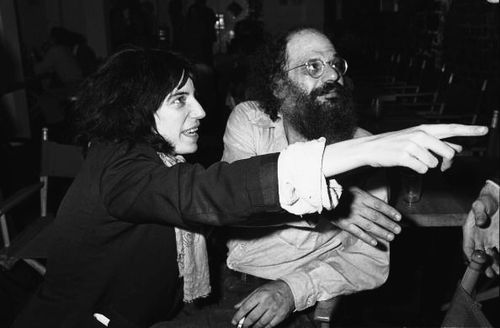


 22. “Cafe Society” (2016)
 21. “Everything You Always Wanted To Know About Sex* (*But Were Afraid To Ask)” (1972)


 The Daily Hatch