In his 45th feature, Woody Allen joins a long list of distinguished filmmakers, headed by Hitchcock, who have examined the issue of the “perfect” murder. Unfortunately, his film is more ambitious in conception than execution, and is not sufficiently grounded in any recognizable reality (I will explain later).
In its more serious theme and darker tone, “Irrational Man” continues Allen’s explorations in two previous–and better–pictures: “Crimes and Misdemeanors,” of 1989, and “Match Point,” a decade ago.
Commercial prospects are mediocre for a film that raises more questions than it can possibly answers, and is far less entertaining than recent comedies, such as “Midnight in Paris,” or the fabulously acted melodrama, “Blue Jasmine,” which was Woody Allen’s homage to Tennessee Williams’ “A Streetcar Named Desire.”
World premiering at the 2015 Cannes Film Fest, Irrational Man will be released on July 24 Sony Classics release as counterprogramming.
Joaquin Phoenix, who is quickly becoming a quintessential actor of his generation, having worked with Spike Jonze in “Her,” and more recently with Paul Thomas Anderson in “Inherent Vice,” is well cast as Abe Lucas, a philosophy professor who’s appointed to a small Rhode Island college.
I have been a university professor for over three decades but have never met anyone like Abe, an alcoholic academic, who drinks freely on campus grounds, and enjoys having affairs with his female students. Early on, we learn that Abe’s wife had recently left him for his best friend, and that he has observed the traumatic death of a friend killed by a land mine in Iraq.
The fictional Braylin College (actually Newport’s Salve Regina University) seems to be a liberal arts college so dormant and passive that it kind of eagerly awaits for (even expects) a man like Ave to arrive and stir some action and drama. And, boy, does Abe ever?
Behaving casually in the classroom, Abe tells his impressionable students that “much of philosophy is verbal masturbation.” Later on, he is seen playing Russian roulette in front of onlookers at an off-campus party.
Lacking the smooth flow of events in Allens’ good pictures, this tale relies not on one but on two voice-over narrations. Emotionally, I had arrived at Zabriskie Point,” Abe says, but it’s unclear whether he means what he says, or whether he understands the implications of his statement–if taken seriously.
Braylin’s female faculty and students seem sexually and/pr emotionally starved, judging by how they court and offer themselves to Abe. Take, for example, Jill Pollard (Emma Stone), a bright student in Abe’s summer “ethical strategies” class, who becomes more than intrigued by her professor, to the point of neglecting her own boyfriend.
Then there is the more mature (in age at least) Rita Richards (Parker Posey), an unhappily married professor who tries to seduce him over and over again until she succeeds. That Abe, who may suffer from impotence or depression (or both), is able to perform only after he commits murder, raises some unsettling issues about crime and (lack of) punishment.
The film’s livelier sessions are those depicting the growing affection between Abe and Jill, who ‘s trying to understand how and why a man who was once activist and relief worker Darfur and New Orleans, has lost interest not only in political activism but in life itself, reaching a point of unexplainable passivity.
The main stimulus that pulls Abe out of his depression is accidental, a random conversation in the local diner, in which a desperate woman discusses her custody battle with a creepy husband and corrupt judge. Out of the blue, Abe decides to dispose of the judge in a seemingly “perfect” murder, in broad daylight at a public park (no more can be revealed). His overt motivation is to make the world a better place to live, but there is something else going on a deeper, perhaps subconscious or unconscious level.
Unlike Hitchcock’s villainous murderers, Abe is inexperienced and makes a series of fatal mistakes, such as visiting he college’s lab to inquire about different kinds of poisons and getting spotted there by one of his students.
The movie is replete with references to Kierkegaard, Freud, Dostoevsky, Heidegger, Kant, Sartre and Simone de Beauvoir, most of which amount to name-dropping, contained in a rather shallow effort to explain or understand behavior in philosophically existential terms.
Spoiler Alert
The notion of murder arouses Abe not only intellectually but also emotionally and sexually. After the killing, which for a while goes well and undetected, there is no more creative block, no more erotic problems.
Allen has said that his movie’s title is inspired by a 1958 volume by philosopher and literary critic William Christopher Barrett, which sought to explain existentialism in simpler ways.
Credits
Running time: 94 Minutes.
Directed, written by Woody Allen.
Camera (Fotokem, Panavision widescreen), Darius Khondji
___________ Fifty Years Ago, Woody Allen PlottedMidnight in Paris in This Stand-up Routine By Kyle Buchanan Follow @kylebuchanan 341Shares Share254Tweet70Share8EmailPrint When Woody Allen won the Best Original Screenplay Oscar this year for writing Midnight in Paris, he set a record at age 76 as the oldest person to ever triumph in that category. Turns out, […]
_____ _______ Woody Allen Stand Up Comic 1964 1968 09 The Science Fiction Film Woody Allen’s stand-up comedy albums reissued in new box set BY JOSH TERRY ON DECEMBER 16, 2014, 12:10PM 1 COMMENT FACEBOOK TWITTER TUMBLR STUMBLEUPON REDDIT Before Woody Allen became the prolific director responsible for such classics as Manhattan and Annie Hall, he was a […]
Woody Allen Stand Up Comic 1964 1968 15 Brooklyn Separating The Art From the Artist With Woody Allen: The Stand-Up Years By Samantha Allen January 20, 2015 | 11:30am Share Tweet Share In the liner notes for Woody Allen: The Stand-Up Years 1964-1968, longtime director and producer Robert B. Weide (Curb Your Enthusiasm) waxes nostalgic […]
_ The first picture from Woody Allen’s new movie confirms that Joaquin Phoenix and Emma Stone are its stars. But what do we know about the bigger picture? Not saying much … Emma Stone and Joaquin Phoenix in Woody Allen’s Irrational Man. Photograph: PR Andrew Pulver @Andrew_Pulver Monday 13 April 2015 08.27 EDTLast modified on Monday […]
I love it when I find someone else who has a love for Woody Allen movies like I do. Evidently Paul Semel is person like that. Below is Paul Semel’s fine review: Woody Allen Stand Up Comic 1964 1968 01 The Vodka Ad JANUARY 12, 2015 Woody Allen The Stand-Up Years 1964-1968 Review Given that he’s […]
Woody Allen Stand Up Comic 1964 1968 05 Mechanical Objects Standing Up and Floating Out Our favorite things this week include Woody Allen’s “The Stand-Up Years,” “Inherent Vice” by Thomas Pynchon not Paul Thomas Anderson, and “Saga” by Brian K. Vaughan. MILK & HONEY Email this page Posted January 14, 2015 Allen’s Stand-Up Roots: On […]
____ Woody Allen’s past movies and the subject of the Meaning of Life examined!!! Out of the Past: Woody Allen, Nostalgia, the Meaning of Life, and Radio Days Kyle Turner Jul 25, 2014 Film, Twilight Time 1 Comment “I firmly believe, and I don’t say this as a criticism, that life is meaningless.” – Woody […]
Woody Allen Should Have Quoted Pascal: “Magic in the Moonlight” January 7, 2015 by Roger E. Olson 9 Comments Woody Allen Should Have Quoted Pascal: “Magic in the Moonlight” I am no Roger Ebert and don’t watch that many movies, but in my opinion, for what it’s worth, Woody Allen’s 2014 film “Magic in […]
______________ If anyone has read my blog for any length of time they know that I am the biggest Woody Allen fan of all time. No one except maybe Bergman has attacked the big questions in life as well as Woody Allen. Furthermore, Francis Schaeffer is my favorite Christian Philosopher and he spent a lot […]
___________ Woody Allen to make first TV series for Amazon Prime ‘I’m not sure where to begin,’ says 79-year-old Oscar-winner about his small screen debut, as streaming TV service seeks to gain march on rivals with exclusive content Comment: in signing Woody Allen, Amazon Prime has delivered a nuclear blast to the competition Woody […]
Mike Ragogna: So what is this fascination you’ve got with comedians?
Robert Weide: I remember being a kid and seeing the last couple of years of The Ed Sullivan Show, the Johnny Carson era of The Tonight Show, I just love both standup comedy and film comedy. I have certain tastes, it’s not that I love everything, but in the case of Albert Brooks and Woody and Mort Sahl and Kurt Vonnegut, you get to meet these people and hang with them and it’s very cool.
MR: Breakfast Of Champions was an essential when I was a teenager.
RW: You know what’s important to me? Lost In America.
MR: What a great movie, though I think the problem may be now that America might have taken a cue from that movie.
RW: Yeah, talk about prescient.
MR: Robert, what’s your opinion of Woody Allen being a pioneer in comedy?
RW: That’s an interesting question. I’m not the best one at essay questions like that although it’s very legitimate. Personally, I just dote on originality. He was a unique voice, an original voice when he emerged. I think maybe what he did that hadn’t quite been done before the way he did it was the neurotic New York Jew. They didn’t really have a voice in standup. The contemporary urban Jew. He gave voice to that. My criteria is just what makes me laugh. Like I said, when I was in junior high and high school watching Albert Brooks on The Tonight Show he really made me laugh. Steve Martin made me laugh, Woody Allen just made me laugh. I was nine years old whenTake The Money And Run came out, which was his first feature as a writer/director. There’s nothing about that film that a nine year-old can’t appreciate, so I saw it and I loved it and then the next year he did Bananas, which was a great movie for a kid and then Sleeper and Love & Death, so I grew up with his films. Annie Hall changed my life.
Once my interest in him accelerated to that next level, then I wanted to go back and learn about this guy and read about him and know other things that he did. This was before the internet, so back in those days, I would go to the library and they had The Readers’ Guide To Periodical Literature. But I didn’t just look him up. I looked up The Marx Brothers and Lenny Bruce, I was the kid in the library reading about all of these things. Around about that time I discovered that his standup albums were reissued, so I bought what were then the current issues of his standup material and I thought it was some of the funniest standup comedy that I’d ever heard. It really made me laugh. Now everything is digital, our music is very portable, but back then when you had vinyl I would invite my friends over and we would just put on a comedy album. That was a thing you did back then. All my friends loved the stuff, too. It was hysterical.
Once I really started to look at Woody’s full body of work, it was easy to see the connections between his standup bits and the bits that appear in his films and even his prose pieces from New Yorker and other magazines. There’s certainly jokes and situations that repeat themselves and I found it interesting to play connect the dots with all of those. I just thought his standup was great. What’s interesting about Woody is that he is very, very hard on himself in both his films and his standup–when he made Manhattan, he thought he’d botched it so badly that he offered to the studio to make another movie for them pro bono if they would not put out Manhattan. Who doesn’t consider Manhattan a classic? But that’s how he feels. He’s very hard on himself.
MR: You mentioned connect the dots. For Woody’s brand of comedy, where do the dots begin?
RW: The guy who changed it all was Mort Sahl, the subject of another of another one of my documentaries for American Masters. Mort just changed everyone who came after him. You could say that Will Rogers did political humor back in the thirties, but it didn’t quite have the fangs that Mort Had. When Mort came along it was really jokes about your mother-in-law or your wife’s cooking and woman drivers and the nightclub comedians all wore tuxedos and they were very polished and very brash. Mort just changed all that. Suddenly, he was doing not just political humor but all sorts of satire and looking at our daily lives and talking about things that really mattered. Mort created that wave, and on that wave came Lenny Bruce, Nichols & May and Second City. Then the next generation out of that was Woody and Bill Cosby and Joan Rivers and The Smothers Brothers, then the next wave was Robert Klein and David Steinberg.
There’s a line through all of that, but it really starts with Mort Sahl. It was sort of a double edge sword because on the one hand, Mort inspired Woody to do standup because he was so brilliant. It’s like what people say when they first hear Bob Dylan, “I didn’t know music could sound like that.” When Woody heard Mort it was like, “Oh, I had no idea that standup comedy could be this.” It inspired him but at the same time it intimidated him because he said, “I’ll never be as good as that guy.” I think in an odd way that’s still what holds Woody back from acknowledging how good his stuff is in the same way that with his movies he compares himself to the great world directors like Bergman and Fellini and others he admires so much.
MR: So like musicians, comedians, in general, are inspired by established comedians in a similar way?
RW: Yes. Mort was considered a political comedian and Woody did not do politics, but if you look at the early reviews of Woody when he first started to emerge in the early sixties, many of these reviews cite the Sahl influence in terms of delivery and pacing and phrasing and that kind of thing. I think Louise Lasser told me that at one point Woody’s manager Jack Rollins said, “Back off of the Mort thing a little bit, you’re starting to sound a little derivative.” We’re all an amalgamation of our various influences. When Woody was writing his early short pieces for the New Yorker he was very influenced by Robert Benchley and S. J. Perelman. If you’re going to be influenced by somebody, why not the best? I seem to recall he got a couple of very early pieces rejected by editors who said, “Can you make this a little less like Perelman?” But he certainly found his own voice eventually, to the point where other comics came along who started to sound like Woody. Every generation begets the next.
MR: It was almost like they took what he had but left his character. When you assembled this collection, did you come to any new revelations about Woody Allen?
RW: After such a great question I wish I had a great answer. I don’t know that I do. I guess the big revelation for me is simply how well the stuff holds up. I know this isn’t quite what you were getting at, but being a connoisseur of this thing I’m acutely aware that some comedy ages well and some doesn’t. Look at Seinfeld, you can watch that now and it’s as funny as it was, but if you watch other shows from the same era that were hugely popular then, Alf or something and you say, “Wow, people were really watching this not that long ago?”
A lot of standup and movie comedy dates very poorly. Again I say this just as somebody who takes the long overview of standup in general, I think Woody’s standup just holds up very well. I make the comparison in the liner notes. Woody would actually hate this because he’s no fan of sixties music at all, but I do make the comparison with The Beatles. Woody started his standup career in 1960, which is basically the same year that The Beatles started performing as a group with Pete Best and then Woody’s first standup record came out in ’64, which is when the Beatles came to America. Woody pretty much called it quits with standup around 1970, which is pretty much when The Beatles called it quits.
But the other comparison I make is that the work holds up. If you liked The Beatles music back in the sixties, chances are you’ll like it now. If you thought that Woody Allen’s work in the sixties was funny, chances are you’ll find it still holds up. That was the big revelation, how sharp stuff is. It’s both of its time and timeless. The things that he talks about are the sixties’ thinking about dating and your parents and growing up and yet it doesn’t feel dated at the same time. I should clarify, though: This wasn’t my project. I didn’t produce the record.
MR: No, but you had to focus on it for the assembly of the liner notes. Did you notice a growth across his three albums?
RW: I think basically you should jumble up the tracks from all three albums and pull them out at random and not really know what came from which album. I’d say he’s pretty consistent. This isn’t a long time, ’64 to ’68 is only four years, so it’s not like his movies where you can compare Bananas to Match Point and see over decades how he’s changed and evolved. I think if you really start to get into it you can hear in those later years that he’s just a little more relaxed. Woody has told me–and he’s said this elsewhere–he did not enjoy performing. He did not enjoy doing standup, he was pushed into it by his managers. He just wanted to be a writer but his managers thought he had a very funny stage presence and he would be great as a standup doing his own material instead of writing for others.
So they talked him into doing it but Woody was very, very hesitant. He finally got to the point where he was performing every night, but he said he would wake up in the morning and realize that he would have to go up on stage that night and it would just kill his whole day. He would have no appetite, he would be nauseated, he was not a born performer. He did say that once he got out on stage and the audience started laughing, then he was fine, but he still had all of this anxiety beforehand, pacing and even throwing up backstage.
As his movies became more successful he did less and less standup, but in around 1972 he had some contractual obligation to play Caeser’s Palace. Eric Lax, who has written a number of biographies on Woody Allen, was backstage with him before he went on and said Woody was as calm as he could be, playing solitaire or something and not fretting about his act at all. I asked Woody about this and he said that by that time, it was nothing. Also I think the fact that he wasn’t making his living as a standup anymore, the fact that he was making movies now sort of took the pressure off him.
MR: You’ve been looking at comedians doing standup and movies for years, where is comedy heading? Where is Woody heading?
RW: Professionally, he’s in a very, very rare situation. In fact, I can’t name you one other person who’s in this situation, at least in the United States, where he gets to do a movie a year, he’s got people lined up to finance the movies, he doesn’t have to answer to anybody creatively, the people who finance his movies don’t even see a finished script, which is outrageous. He doesn’t spend a lot on his movies, they’re all in the eighteen million dollar range which is peanuts by most standards, but it gives him creative freedom and year after year he knocks out a movie. If you saw the documentary you see he’s got a whole drawer full of ideas, he’ll never run out during his lifetime. Some movies come out great, some not so great, but he’s just relying on the law of averages. If you get to do a movie year after year eventually one will come out that’s pretty good. People made a big deal over this Amazon thing, I spoke to him subsequent to it, he said he doesn’t have any idea what he’s going to do, it’s just that Amazon pursued him and pursued him.
He doesn’t understand the whole concept of a miniseries. He watches very little, he really just watches movies and sports and news on TV, not serials. He didn’t even really understand quite what Amazon was, but they kept pursuing him and they said, “Look, you can do whatever you want, there’s no approval process, I think they threw a lot of money at him and typical of him he resisted. I think the people around him said, “Come on, what’s the harm? Do this.” He’s not an internet person, he’s never gone online or searched the web or anything, so all of this is quite confusing to him, but what’s funny is he finally agreed and there was all this press that said, “Woody Allen is signed to do something with Amazon” and he told me the really funny thing was that people were actually congratulating him. “Hey, congratulations on your series!” and he shrugs and says, “Thank you, but I don’t know what I’m doing.” I talked to him on set one time about his creative freedom and I said, “Even Martin Scorsese has to defend himself creatively,” and he said, “That’s because Marty does pictures that cost seventy or eighty million dollars. I do mine for fifteen to twenty, that’s why I don’t have to argue with anybody.” It puts him in an interesting situation, he’s a brand name now. It’s like if Chaplin was still alive and young enough to make movies. People wanted to be in the Chaplin business, people want to be in the Woody business. I just read yesterday that apparently Woody’s coming back to LA to direct another opera.
MR: I saw his last one, is it revival?
RW: I don’t know if he’s doing the same one again or something new, it’s just something that flew by me on the internet. But that’s what he does. He can’t sit still like a normal person and finish a movie and go on vacation or something. Once he finishes a movie, he’ll take a few days or maybe a week off to just putt around, but after that he gets eager to get working again. If he’s between movies, he’ll tour Europe or write a screenplay or whatever. He’s a guy who can’t not be working.
MR: What advice do you have for new artists, in this case, comedians.
RW: I guess the nice thing about doing standup is it’s like being a writer in that you can practice your craft without needing any money or other people. If you want to be an actor somebody’s got to hire you for your gig and do the audition process and all that, but for a writer all you need is some quiet. That doesn’t mean that anyone’s going to buy what you like, but you can practice your craft. I’ve been out of the scene for a long time, I used to live at the improv during the eighties, all of my friends were comedians and I would sit at the round table with them and it was my hangout. It’s been years and years since I’ve done that but I assume the process is still basically the same in places like The Comedy Store or The Improv or Gotham, you go up during an open mic night and get to practice your craft that way. You may only get five minutes but if you do well and you’re there consistently enough they might have you come back. I guess that’s still the route, but of course people get discovered on the internet now, too.
Back in the day when I first started making my films and documentaries, everything was film and it was expensive to buy the equipment and get film processed and edited and all that. Now you can spend a couple hundred dollars on a camera and edit something on your laptop, that’s the other way people can go. The problem is that it’s easier and easier to create something and put your work out there and it doesn’t cost a lot to do so the problem is everyone else is doing it too. When you tell people you’re going to make a video and put it on the internet, how do you make it pop out against the tens of thousands of other people doing the same thing? It’s not something I know much about because I’m an elder statesman now and I don’t have to worry about breaking in. I don’t know enough about the scene now to pretend to give anyone advice, but the old tenets still hold, stick with it and don’t let people shake your confidence or talk you out of it.
MR: If a Woody Allen had been born in the nineties, how would he or she stand out? Does anyone like that come to mind for you?
RW: Well, I do think the people who really make their mark, like a Woody or an Albert Brooks or a Bob Hope or a Mort Sahl, I think those people have something very, very special. I don’t think it’s just being able to write decent jokes and perform them decently, I think there is an element of something that you’re born with. I think that applies to writers and artists. A friend of mine made the analogy that it’s pretty much like tennis. Anybody can play tennis really, but only a few people can play tennis really well. I think that’s true of comedy or any sort of creative endeavor. Anybody can do it, but there are a few people with a so-called, God-given talent who are just born with the gift. I think it’s what Woody’s managers acknowledged about him when he came to see them to talk about hiring him as a writer. They said, “This guy is just inherently funny. He should be on stage performing this.” What you get with his standup is the early iteration of the screen persona which would eventually be so recognizable. That’s one thing that’s exciting about the standup, you see it forming, the earliest version of Woody Allen that we see in those first films, at least up throughAnnie Hall or even Manhattan.
MR: It seems like he’s hit another stride that includes Midnight In Paris and other recent films. If he’s not going on the internet, where does he get this inspiration to focus on subjects so currently relevant?
RW: I don’t know, he’s very old school. Everybody knows his wife is a few years younger than him, I think she keeps him plugged in a little bit. I know when he did Whatever Works, Soon-Yi suggested Evan Rachel Wood for that role. Woody’s got his casting director Juliet Taylor who keeps him tuned in to young performers. There are few actors working today worth their salt who wouldn’t love that call from Woody’s casting director. He gets the best and brightest, he’s now worked with Emma Stone twice, Joaquin Phoenix is in his new picture, I think he’s surrounded by people who keep him more plugged in to contemporary culture than he would on his own. I don’t think Woody knows anything about music post 1960 other than Sinatra. His music is jazz and classical, he’s never cared about contemporary pop music, he doesn’t stay on top of TV, I think he tries to see new movies every now and then, Diane Keaton is still very much a taste maker for Woody, she’ll say, “You’ve got to see this movie.” In his last collection of short stories, Mere Anarchy, there was a short story called, “This Nib For Hire.” I read it in a Starbucks and it had me laughing so hard that I became very self conscious of being the laughing guy in the room. I had to put my hand over my mouth to keep from laughing and then my eyes were tearing up. I told my wife, “You’ve got to read this piece of Woody’s, it’s the funniest thing I’ve ever read.”
That night, I was in my office working and I heard her in the bedroom, I thought she was crying or screaming or something. I go in there and she was reading the piece and screaming with laughter. The point I want to make in this is there’s actually a joke about the internet and it surprised me that Woody knew enough about the internet to even make the joke he did. I think of him as being sort of a luddite. He still types on that manual typewriter he bought when hew as sixteen years old, he’s never used a computer or word processor. On the one hand, he’s very, very old school, but on the other hand, I think he has enough people who can keep him plugged in to the current culture so that he doesn’t come off as one of those guys who are totally out of touch.
Transcribed by Galen Hawthorne
_________
Woody Allen Stand Up Comic 1964 1968 25 Summing Up
I have spent alot of time talking about Woody Allen films on this blog and looking at his worldview. He has a hopeless, meaningless, nihilistic worldview that believes we are going to turn to dust and there is no afterlife. Even though he has this view he has taken the opportunity to look at the weaknesses of his own secular view. I salute him for doing that. That is why I have returned to his work over and over and presented my own Christian worldview as an alternative.
-INCLUDES ALL THREE LIVE STAND-UP ALBUMS RECORDED BETWEEN 1964-1968
-REMASTERED AND AVAILABLE ON CD AND DIGITALLY
-BONUS MATERIAL INCLUDES: AUDIENCE Q&A AND OVER 20 MINUTES OF AUDIO EXCERPTS FROM WOODY ALLEN: A DOCUMENTARY
____ Woody Allen’s past movies and the subject of the Meaning of Life examined!!! Out of the Past: Woody Allen, Nostalgia, the Meaning of Life, and Radio Days Kyle Turner Jul 25, 2014 Film, Twilight Time 1 Comment “I firmly believe, and I don’t say this as a criticism, that life is meaningless.” – Woody […]
Woody Allen Should Have Quoted Pascal: “Magic in the Moonlight” January 7, 2015 by Roger E. Olson 9 Comments Woody Allen Should Have Quoted Pascal: “Magic in the Moonlight” I am no Roger Ebert and don’t watch that many movies, but in my opinion, for what it’s worth, Woody Allen’s 2014 film “Magic in […]
______________ If anyone has read my blog for any length of time they know that I am the biggest Woody Allen fan of all time. No one except maybe Bergman has attacked the big questions in life as well as Woody Allen. Furthermore, Francis Schaeffer is my favorite Christian Philosopher and he spent a lot […]
___________ Woody Allen to make first TV series for Amazon Prime ‘I’m not sure where to begin,’ says 79-year-old Oscar-winner about his small screen debut, as streaming TV service seeks to gain march on rivals with exclusive content Comment: in signing Woody Allen, Amazon Prime has delivered a nuclear blast to the competition Woody […]
______________________ Woody Allen: “the whole thing is tragic” July 20, 2012 Mr. Allen, do you truly believe that happiness in life is impossible? This is my perspective and has always been my perspective on life. I have a very grim, pessimistic view of it. I always have since I was a little boy; it hasn’t […]
______________ Dr. Jack Graham Challenges Agnostic Woody Allen’s ‘Hopeless State of Mind’ BY NICOLA MENZIE , CHRISTIAN POST REPORTER August 23, 2013|4:51 pm Prolific Hollywood filmmaker and religious skeptic Woody Allen maintains in a recent interview that human life on earth is “just an accident” filled with “silly little moments,” and the “best you can […]
________ Woody Allen Should Have Quoted Pascal: “Magic in the Moonlight” January 7, 2015 by Roger E. Olson 9 Comments Woody Allen Should Have Quoted Pascal: “Magic in the Moonlight” I am no Roger Ebert and don’t watch that many movies, but in my opinion, for what it’s worth, Woody Allen’s 2014 film “Magic […]
___________ Woody Allen to make first TV series for Amazon Prime ‘I’m not sure where to begin,’ says 79-year-old Oscar-winner about his small screen debut, as streaming TV service seeks to gain march on rivals with exclusive content Comment: in signing Woody Allen, Amazon Prime has delivered a nuclear blast to the competition Woody Allen […]
If anyone has read my blog for any length of time they know that I am the biggest Woody Allen fan of all time. No one except maybe Bergman has attacked the big questions in life as well as Woody Allen. Furthermore, Francis Schaeffer is my favorite Christian Philosopher and he spent a lot of […]
_______ Woody Allen’s New Film Is Called ‘Irrational Man’ Posted on Friday, January 30th, 2015 by Angie Han 85 SHARES TwitterFacebook Woody Allen‘s latest film finally has a release date and a studio. Irrational Man will be distributed by Sony Pictures Classics, as were Allen’s last six films.Emma Stone, Joaquin Phoenix, Parker Posey, and Jamie […]
If there is a law of noncontradiction that there is a claim that it is fundamentally irrational to contradict yourself I don’t see any reason to conclude from that there must be some cosmic magician laying down that law. Similarly I want to say regarding the various moral requirements we don’t need a law giver for them to be genuine requirements. If we want we can say if in fact it seems to me to be a perfectly legitimate thing to say that reason requires that we act in accordance with reason. It lays down these various categorical reasons not to harm people, to aid them and so we can personify reason in that way but all we just mean I think is that there are these compelling, decisive, objective, categorical reasons to behave in certain ways and not behave in other ways.
_____________________________
My response to Dr. Kagan in the short version is to quote Greg Koukl, “So if there is no God, there can’t be any evil, only personal likes and dislikes–what I prefer morally and what I don’t prefer morally.” OR I WOULD CHALLENGE DR. KAGAN TO WATCH THE MOVIE “CRIMES AND MISDEMEANORS” BY WOODY ALLEN SEE IF HE STILL BELIEVES ONLY REASON CAN BE A GOOD GUIDE. (MORE ON THAT LATER IN THIS POST.)
Sorry I missed recording the first few minutes of this but it is still worth watching. John Lennox is a mathematician who debated Richard Dawkins in “The God Delusion Debate”.
________________________
Some people have suggested that God was responsible for evil in the world and that meant that he was responsible for 9/11. However, I wanted to make the simple point today that there must be an absolute standard to judge evil by and most atheists do not have that. Of course, Christians have the Bible.
Today we have a growing number of atheists because of the secular humanism in the schools. The teaching of humanism in the area of moral choices has been the main reason for this. Our students are being taught that we all are a product of chance and there are no absolutes.
The Bible tells us, “{God} has also set eternity in the hearts of men…” (Ecclesiastes 3:11 NIV). The secularist calls this an illusion, but the Bible tells us that the idea that we will survive the grave was planted in everyone’s heart by God Himself. Romans 1:19-21 tells us that God has instilled a conscience in everyone that points each of them to Him and tells them what is right and wrong (also Romans 2:14 -15).
It’s no wonder, then, that a humanist would comment, “Certain moral truths — such as do not kill, do not steal, and do not lie — do have a special status of being not just ‘mere opinion’ but bulwarks of humanitarian action. I have no intention of saying, ‘I think Hitler was wrong.’ Hitler WAS wrong.” (Gloria Leitner, “A Perspective on Belief,” THE HUMANIST, May/June 1997, pp. 38-39)
Here Leitner is reasoning from her God-given conscience and not from humanist philosophy. However, I know how moral relativism works, and I expected that Mrs. Leitner would soon be challenged by her fellow humanists. It wasn’t long before she received criticism. Humanist Abigail Ann Martin responded, “Neither am I an advocate of Hitler; however, by whose criteria is he evil?” (THE HUMANIST, September/October 1997, p. 2)
Do you see where our moral relativism has taken us in the USA?
I had a chance back in 1996 to visit with a gentleman by the name of Robert Lester Mondale while he was retired in Missouri. He was born on May 28, 1904 and he died on August 19, 2003. He was an Unitarian minister and a humanist. In fact, he was the only person to sign all three of the Humanist Manifestos of 1933, 1973 and 2003. In my conversation with him he mentioned that he had the opportunity to correspond with John Dewey who was one of Mondale’s fellow signers of the 1933 Humanist Manifesto I.
I really believe that the influence of John Dewey’s humanistic philosophy has won the battle of the textbooks in the USA today (with evolution teaching being a key component). As a result, we have people like humanist Abigail Ann Martin who wrote, “Neither am I an advocate of Hitler; however, by whose criteria is he evil?” Check out this excellent article by Greg Koukl:
Bosnia, Rape and the Problem of Evil
Gregory Koukl
Greg responds to a letter to the editor in which the writer’s pain causes him to ask the age-old question of why God allows evil to exist.
I was reading the L.A. Times today in the letters to the editor section and there was a letter written by a gentleman in Newport Beach that was a response to a tragic story that the Times had carried a few days ago. Maybe some of you had seen that story or have read about it in the local papers about not just the rank and file tragedy in Bosnia- Hertzegovena, not about the general tragedy of war. The article was about the problems of the refugees and also a women being victimized by soldiers.
…we say, “Why, God? Why me? Why this pain? Why this difficulty?”
This respondent writes, “Glancing at your April 10 paper my eyes fell upon the tragic story ‘Ordeals Put Off Bosnia Rape Victim’s Healing.’ My heart ached for Amira, the 35 year old Muslim woman, mother of two children, suffering the loss of her husband, wandering about the countryside begging to survive. Placed in a detention camp, raped repeatedly by Serb soldiers acting as animal pigs rather than humans, the woman became another tragic victim of human wickedness. Where is mankind headed? My thoughts turn to God and ask, ‘Why, God? Why did you create such monsters? God, are you for real?’ If this is God’s way of teaching or testing my faith”, he continues, ” then my beliefs and faith are being shattered with contempt instead. Having just lost my wife to cancer, maybe my feelings are more prone and fragile to be torn apart and my feelings turn more intensely to those who are suffering also.” It’s signed Victor Jashinski in Newport Beach.There’s probably hardly a person listening to this account that does not feel the same emotion with him. First of all, we feel the sense of horror as we read about the kinds of things that other people do to each other. Just a couple of days ago was the last of a five part series of “The Holocaust” that was on the Family Channel which was re-aired for the first time in fifteen years. But in any event, seeing again in vivid portrayal what man is capable of doing, our hearts and our minds are taken with this situation. Not only that, but we are also touched by evil in the world ourselves as we look at circumstances and we’re horrified. We also look at pains in our own life as this man has reflected and we say, “Why, God? Why me? Why this pain? Why this difficulty?” And this is really one of the most thorny problems and one of the most complex problems that anyone, regardless of their philosophical avocations or persuasions, has to address.
There is no way that I’m going to resolve this in ten minutes because this problem in its fullness, in its entirety resists a thorough resolution. I think there’s some good responses, but for the most part it is something that we kind of have to live with . But I would like to give some thoughts that may provide a few guidelines for you in dealing with this yourself and people like this gentleman as they face these circumstances both outside of their life and inside of their life.
My policy in dealing with a difficult, tricky problem that defies a thorough-going solution is to work from the known to the unknown. There are some things I think we can know about this issue. We can draw some conclusions that will at least clear the deck a bit and help us to focus on those things that are less clear and less resolvable, and maybe demystify the question for us, and maybe make our hearts feel a little better about the issue.
One of the things I need to say at the outset, by the way, is that’s it’s very important to distinguish between the issue of evil and suffering as a philosophic problem and the problem of evil from a pastoral perspective. Actually, both were raised in this letter. Why does God allow evil in the world such that a female Bosnian refugee might be subjected to repeated rape by Serbian soldiers? Why does the problem happen out there (which is the philosophic question) but why does evil hurt me? That’s a different kind of question because that’s an emotional response. Even people who have resolved the issue of evil philosophically still shudder under its impact when it hits them. Even though their mind may have answers their heart still asks “Why?” when they become victimized by evil in the world. So we see both kinds here.
I’m going to start out by trying to deal with the philosophic problem and then make a comment about the pastoral problem. They are distinct questions.
By the way, when someone comes to you with the pastoral issue, you can’t resolve that by giving them a philosophic answer. It just doesn’t work . That’s not their need. Their need isn’t their mind at that point or their intellect; their need is their heart, the grief they are going through. There’s a different kind of approach there. I’m actually better at the first than the second. I’m better at the intellectual part than the pastoral part. That’s why I’m a radio talk show host and not a church shepherd as many pastors are. My gifts are different. In any event, let me try to deal with the philosophic problem first and then briefly address the pastoral issue.
So if there is no God, there can’t be any evil, only personal likes and dislikes–what I prefer morally and what I don’t prefer morally.
One thing to note, by the way, is that this man presumes that God made man this way (“Why, God, why did you create such monsters?”). Now if you are thinking from a Biblical perspective, you know that that is not the case. The Bible does not teach that God created monsters. It teaches that He created human beings that were not monsters at all but were good. They didn’t have this propensity and proclivity for evil. He didn’t make man with that. But He did make man with the possibility of going wrong and the writer’s response here is really a response questioning the character of God. “How could You do this? What kind of God are you? Are you for real?” are other questions which are the approach that most people usually take when struggling with evil. In other words, when they see this kind of thing they don’t question the character of man, which in my point of view would be a sensible response. (You’ll understand why I say that in just a moment.) Instead they attack the existence of God. In other words, they say since there is evil in the world then God can’t exist. This is not a reasonable response. It is not a rational response. It is not a fruitful answer to the philosophic problem of evil and I’m going to tell you why that just can’t work.
What doesn’t make sense is to look at the existence of evil and question the existence of God. The reason is that atheism turns out being a self-defeating philosophic solution to this problem of evil. Think of what evil is for a minute when we make this kind of objection. Evil is a value judgment that must be measured against a morally perfect standard in order to be meaningful. In other words, something is evil in that it departs from a perfect standard of good. C.S. Lewis made the point, “My argument against God was that the universe seemed so cruel and unjust. But how had I got this idea of just and unjust? A man does not call something crooked unless he has some idea of a straight line.”[ 1 ] He also goes on to point out that a portrait is a good or a bad likeness depending on how it compares with the “perfect” original. So to talk about evil, which is a departure from good, actually presumes something that exists that is absolutely good. If there is no God there’s no perfect standard, no absolute right or wrong, and therefore no departure from that standard. So if there is no God, there can’t be any evil, only personal likes and dislikes–what I prefer morally and what I don’t prefer morally.
This is the big problem with moral relativism as a moral point of view when talking about the problem of evil. If morality is ultimately a matter of personal taste–that’s what most people hold nowadays–then it’s just your opinion what’s good or bad, but it might not be my opinion. Everybody has their own view of morality and if it’s just a matter of personal taste–like preferring steak over broccoli or Brussels sprouts–the objection against the existence of God based on evil actually vanishes because the objection depends on the fact that some things are intrinsically evil–that evil isn’t just a matter of my personal taste, my personal definition. But that evil has absolute existence and the problem for most people today is that there is no thing that is absolutely wrong. Premarital sex? If it’s right for you. Abortion? It’s an individual choice. Killing? It depends on the circumstances. Stealing? Not if it’s from a corporation.
The fact is that most people are drowning in a sea of moral relativism. If everything is allowed then nothing is disallowed. Then nothing is wrong. Then nothing is ultimately evil. What I’m saying is that if moral relativism is true, which it seems like most people seem to believe–even those that object against evil in the world, then the talk of objective evil as a philosophical problem is nonsense. To put it another way, if there is no God, then morals are all relative. And if moral relativism is true, then something like true moral evil can’t exist because evil becomes a relative thing.
An excellent illustration of this point comes from the movie The Quarrel . In this movie, a rabbi and a Jewish secularist meet again after the Second World War after they had been separated. They had gotten into a quarrel as young men, separated on bad terms, and then had their village and their family and everything destroyed through the Second World War, both thinking the other was dead. They meet serendipitously in Toronto, Canada in a park and renew their friendship and renew their old quarrel.
To paraphrase the late Dr. Francis Schaeffer, the person who argues against the existence of God based on the existence of evil in the world has both feet firmly planted in mid-air.
Rabbi Hersch says to the secularist Jew Chiam, “If a person does not have the Almighty to turn to, if there’s nothing in the universe that’s higher than human beings, then what’s morality? Well, it’s a matter of opinion. I like milk; you like meat. Hitler likes to kill people; I like to save them. Who’s to say which is better? Do you begin to see the horror of this? If there is no Master of the universe then who’s to say that Hitler did anything wrong? If there is no God then the people that murdered your wife and kids did nothing wrong.”
That is a very, very compelling point coming from the rabbi. In other words, to argue against the existence of God based on the existence of evil forces us into saying something like this: Evil exists, therefore there is no God. If there is no God then good and evil are relative and not absolute, so true evil doesn’t exist, contradicting the first point. Simply put, there cannot be a world in which it makes any sense to say that evil is real and at the same time say that God doesn’t exist. If there is no God then nothing is ultimately bad, deplorable, tragic or worthy of blame. The converse, by the way, is also true. This is the other hard part about this, it cuts both ways. Nothing is ultimately good, honorable, noble or worthy of praise. Everything is ultimately lost in a twilight zone of moral nothingness. To paraphrase the late Dr. Francis Schaeffer, the person who argues against the existence of God based on the existence of evil in the world has both feet firmly planted in mid-air.
No, the existence of the problem forces us into some kind of theistic solution. This is a good thing, which brings me to my third point. If atheism is a self-defeating philosophic solution to the problem, and some kind of theism is necessary, then it seems to me that theism is one of the only satisfying pastoral solutions to the problem.
Let’s say for example that you are suffering with some kind of pain and evil in your life and you come to the conclusion that there is no God. What is the solution to the problem of your personal pain? The only solution I can think of is that your personal pain and suffering are meaningless. They are useless. They are helpless. And, in fact, it reminds me of Os Guiness in his fine book The Dust of Death , which has just been re-released, where he makes the point in regards to eastern religion that many eastern religions hold that the world is just an illusion–Hinduism characteristically. He quotes from a poet of the Eastern tradition who had just experienced tremendous tragedy in his life. He went to his avatar to get some comfort from his religious leader after his wife and children had been killed. His religious leader simply said to him in the face of this terrible anguish, “The world is dew.” His point was that it’s all an illusion anyway. The poet went back and he wrote this poem, a simple poem, only four lines : “The world is dew. The world is dew. And yet….And yet….” In other words the religious answer his religious leader was that the evil simply didn’t exist. But he knew personally that it wasn’t dew, that it wasn’t an illusion. It was there. It was real and it was impacting his life. But what comfort was there in that–nothing whatsoever.
If God wiped out all the evil in the world tonight at midnight, where would you and I be at 12:01?
If there is no God then there is no answer to the pastoral question of personal suffering and evil . It ‘s not there–your suffering is meaningless. But if there is a God, and if that God is the God of the Bible, then at least we have the potential of an answer. There’s some kind of comfort there. God is ultimately good and just, and one day the accounts will be perfectly balanced. We can place ourselves in the hands of a powerful Creator who, by all other evidence, loves us, cares for us and comforts the afflicted. One Who will not break off a bent reed and Who will not put out a smoldering wick. One Who will hold us close to Himself. There is at least the possibility that this suffering and pain can make sense because God can use it for good in our lives.
We might ask ourselves the question, Why does God put up with this kind of evil in the world? The rapes, the war in Bosnia Hertzegovena, for example? My response is that God puts up with that kind of evil for the same reason he puts up with your evil and with my evil for the time being. I’m not going to try to explain what that reason is now. The point I’m making is that this justice issue cuts both ways.
If God wiped out all the evil in the world tonight at midnight, where would you and I be at 12:01? See, the fact is that God’s going to do a complete job when he finally deals with evil. C.S. Lewis makes the point when he says, “I wonder whether people who ask God to interfere openly and directly in our world quite realize what it will be like when He does….When the author walks on the stage the play is over.”[ 2 ] Evil deeds can never be isolated from the evil doer. Our prints, yours and mine, are on the smoking gun.
What’s curious to me in dealing with this issue is that no one raises the issue of whether one ought to continue to believe in the goodness of man after these kinds of tragedies. We see things like the Holocaust, the crime level, the innocent suffering at the hands of other human beings more often than not, and instead of shaking our fists at humankind who perpetrate the action we shake our fists at God. I don’t get it.
Dennis Prager says, “Whenever I meet someone who claims to find faith in God impossible, but who persists in believing in the essential goodness of humanity, I know that I have met a person for whom evidence is irrelevant.” ( Ultimate Issues , July- September, 1989) I like that. I think that hits the nail on the head.
The last thought I will offer is just another curious one from my perspective as I hear these kinds of responses. We live our lives in rebellion to God, constantly disobeying Him, constantly disregarding him, refusing to live according to His precepts and according to His rules, and then we wonder where He is when things go wrong.
Let that one sink in a little bit.
1 Lewis, Clive Staples, Mere Christianity. 2 ibid.
__________________
Let’s get practical and just ask Dr. Kagan a simple question in this whole issue of reason and morals. After reading the short summary of the movie CRIMES AND MISDEMEANORS by Woody Allen, tell me ON WHAT BASIS COULD YOU CONVINCE JUDAH IT WAS WRONG FOR HIM TO MURDER HIS MISTRESS SINCE IT WOULD HELP HIM AVOID JAIL AND KEEP HIS FAMILY IN TACT?
Today I am starting a discusssion of the movie “Crimes and Misdemeanors” by Woody Allen. This 1989 movie was Allen’s best in my view.
DISCUSSING FILMS AND SPIRITUAL MATTERS
By Everette Hatcher III
“Existential subjects to me are still the only subjects worth dealing with. I don’t think that one can aim more deeply than at the so-called existential themes, the spiritual themes.” WOODY ALLEN
Evangelical Chuck Colson has observed that it used to be true that most Americans knew the Bible. Evangelists could simply call on them to repent and return. But today, most people lack understanding of biblical terms or concepts. Colson recommends that we first attempt to find common ground to engage people’s attention. That then may open a door to discuss spiritual matters.
Woody Allen’s 1989 movie, CRIMES AND MISDEMEANORS , is an excellent icebreaker concerning the need of God while making decisions in the area of personal morality. In this film, Allen attacks his own atheistic view of morality. Martin Landau plays a Jewish eye doctor named Judah Rosenthal raised by a religious father who always told him, “The eyes of God are always upon you.” However, Judah later concludes that God doesn’t exist. He has his mistress (played in the film by Anjelica Huston) murdered because she continually threatened to blow the whistle on his past questionable, probably illegal, business activities. She also attempted to break up Judah ‘s respectable marriage by going public with their two-year affair. Judah struggles with his conscience throughout the remainder of the movie. He continues to be haunted by his father’s words: “The eyes of God are always upon you.” This is a very scary phrase to a young boy, Judah observes. He often wondered how penetrating God’s eyes are.
Later in the film, Judah reflects on the conversation his religious father had with Judah ‘s unbelieving Aunt May at the dinner table many years ago:
“Come on Sol, open your eyes. Six million Jews burned to death by the Nazis, and they got away with it because might makes right,” says aunt May
Sol replies, “May, how did they get away with it?”
Judah asks, “If a man kills, then what?”
Sol responds to his son, “Then in one way or another he will be punished.”
Aunt May comments, “I say if he can do it and get away with it and he chooses not to be bothered by the ethics, then he is home free.”
Judah ‘s final conclusion was that might did make right. He observed that one day, because of this conclusion, he woke up and the cloud of guilt was gone. He was, as his aunt said, “home free.”
Woody Allen has exposed a weakness in his own humanistic view that God is not necessary as a basis for good ethics. There must be an enforcement factor in order to convince Judah not to resort to murder. Otherwise, it is fully to Judah ‘s advantage to remove this troublesome woman from his life.
The Bible tells us, “{God} has also set eternity in the hearts of men…” (Ecclesiastes 3:11 NIV). The secularist calls this an illusion, but the Bible tells us that the idea that we will survive the grave was planted in everyone’s heart by God Himself. Romans 1:19-21 tells us that God has instilled a conscience in everyone that points each of them to Him and tells them what is right and wrong (also Romans 2:14 -15).
It’s no wonder, then, that one of Allen’s fellow humanists would comment, “Certain moral truths — such as do not kill, do not steal, and do not lie — do have a special status of being not just ‘mere opinion’ but bulwarks of humanitarian action. I have no intention of saying, ‘I think Hitler was wrong.’ Hitler WAS wrong.” (Gloria Leitner, “A Perspective on Belief,” THE HUMANIST, May/June 1997, pp. 38-39)
Here Leitner is reasoning from her God-given conscience and not from humanist philosophy. It wasn’t long before she received criticism. Humanist Abigail Ann Martin responded, “Neither am I an advocate of Hitler; however, by whose criteria is he evil?” (THE HUMANIST, September/October 1997, p. 2)
The secularist can only give incomplete answers to these questions: How could you have convinced Judah not to kill? On what basis could you convince Judah it was wrong for him to murder?
As Christians, we would agree with Judah ‘s father that “The eyes of God are always upon us.” Proverbs 5:21 asserts, “For the ways of man are before the eyes of the Lord, and He ponders all his paths.” Revelation 20:12 states, “…And the dead were judged (sentenced) by what they had done (their whole way of feeling and acting, their aims and endeavors) in accordance with what was recorded in the books” (Amplified Version). The Bible is revealed truth from God. It is the basis for our morality. Judah inherited the Jewish ethical values of the Ten Commandments from his father, but, through years of life as a skeptic, his standards had been lowered. Finally, we discover that Judah ‘s secular version of morality does not resemble his father’s biblically-based morality.
Woody Allen’s CRIMES AND MISDEMEANORS forces unbelievers to grapple with the logical conclusions of a purely secular morality. It opens a door for Christians to find common ground with those whom they attempt to share Christ; we all have to deal with personal morality issues. However, the secularist has no basis for asserting that Judah is wrong.
Larry King actually mentioned on his show, LARRY KING LIVE, that Chuck Colson had discussed the movie CRIMES AND MISDEMEANORS with him. Colson asked King if life was just a Darwinian struggle where the ruthless come out on top. Colson continued, “When we do wrong, is that our only choice? Either live tormented by guilt, or else kill our conscience and live like beasts?” (BREAKPOINT COMMENTARY, “Finding Common Ground,” September 14, 1993)
Later, Colson noted that discussing the movie CRIMES AND MISDEMEANORS with King presented the perfect opportunity to tell him about Christ’s atoning work on the cross. Colson believes the Lord is working on Larry King. How about your neighbors? Is there a way you can use a movie to find common ground with your lost friends and then talk to them about spiritual matters?
(Caution: CRIMES AND MISDEMEANORS is rated PG-13. It does include some adult themes.)
The Bible and Science – Is the Bible from God? (Kyle Butt)
Atheists Trying to Have Their Cake and Eat It Too on Morality
Uploaded on Jul 27, 2011
http://reasonablefaith.org – Atheists Trying to Have Their Cake and Eat It Too on Morality. This video shows that when an atheist denies objective morality they also affirm moral good and evil without the thought of any contradiction or inconsistency on their part.
William Lane Craig and his arguments and evidence for God:
I have discussed many subjects with my liberal friends over at the Ark Times Blog in the past and I have taken them on now on the subject of the absurdity of life without God in the picture. Most of my responses included quotes from William Lane Craig’s book THE ABSURDITY OF LIFE WITHOUT GOD. Here is the result of one of those encounters from June of 2013:
I wrote:
Why do so many people never get around to the big questions in life? (Why am I here? Is there an afterlife? Is there a purpose and lasting meaning to our lives?)
At least many of the readers of the Ark Times have wrestled with these questions.
William Lane Craig in his book “The Absurdity of Life without God,” opens the book by giving noting that one of the earliest examples of a Christian apology appealing to the human predicament is the Pensées of the French mathematician and physicist Blaise Pascal (1623–1662). Having come to a personal faith in Christ in 1654, Pascal had planned to write a defense of the Christian faith entitled L’Apologie de la religion chrétienne, but he died of a debilitating disease at the age of only thirty-nine years, leaving behind hundreds of notes for the work, which were then published posthumously as the Pensées…Despite their predicament, however, most people, incredibly, refuse to seek an answer or even to think about their dilemma. Instead, they lose themselves in escapisms. Listen to Pascal’s description of the reasoning of such a person:
I know not who sent me into the world, nor what the world is, nor what I myself am. I am terribly ignorant of everything. I know not what my body is, nor my senses, nor my soul and that part of me which thinks what I say, which reflects upon itself as well as upon all external things, and has no more knowledge of itself than of them.
I see the terrifying immensity of the universe which surrounds me, and find myself limited to one corner of this vast expanse, without knowing why I am set down here rather than elsewhere, nor why the brief period appointed for my life is assigned to me at this moment rather than another in all the eternity that has gone before and will come after me. On all sides I behold nothing but infinity, in which I am a mere atom, a mere passing shadow that returns no more. All I know is that I must soon die, but what I understand least of all is this very death which I cannot escape.
As I know not whence I come, so I know not whither I go. I only know that on leaving this world I fall for ever into nothingness or into the hands of a wrathful God, without knowing to which of these two states I shall be everlastingly consigned. Such is my condition, full of weakness and uncertainty. From all this I conclude that I ought to spend every day of my life without seeking to know my fate. I might perhaps be able to find a solution to my doubts; but I cannot be bothered to do so, I will not take one step towards its discovery.3
_________________
Pascal can only regard such indifference as insane. Man’s condition ought to impel him to seek to discover whether there is a God and a solution to his predicament. But people occupy their time and their thoughts with trivialities and distractions, so as to avoid the despair, boredom, and anxiety that would inevitably result if those diversions were removed.
______
Zartharus responded:
You are here because your parents had sex; knowledge of an afterlife is even less knowable than a before life; other than that created by the person, 42. Can we now discuss the dichotomy of existentialism?
“To live is to suffer, to survive is to find some meaning in the suffering.”
Friedrich Nietzsche
E P I S O D E 1 0 Dr. Francis Schaeffer – Episode X – Final Choices 27 min FINAL CHOICES I. Authoritarianism the Only Humanistic Social Option One man or an elite giving authoritative arbitrary absolutes. A. Society is sole absolute in absence of other absolutes. B. But society has to be […]
E P I S O D E 9 Dr. Francis Schaeffer – Episode IX – The Age of Personal Peace and Affluence 27 min T h e Age of Personal Peace and Afflunce I. By the Early 1960s People Were Bombarded From Every Side by Modern Man’s Humanistic Thought II. Modern Form of Humanistic Thought Leads […]
E P I S O D E 8 Dr. Francis Schaeffer – Episode VIII – The Age of Fragmentation 27 min I saw this film series in 1979 and it had a major impact on me. T h e Age of FRAGMENTATION I. Art As a Vehicle Of Modern Thought A. Impressionism (Monet, Renoir, Pissarro, Sisley, […]
E P I S O D E 7 Dr. Francis Schaeffer – Episode VII – The Age of Non Reason I am thrilled to get this film series with you. I saw it first in 1979 and it had such a big impact on me. Today’s episode is where we see modern humanist man act […]
E P I S O D E 6 How Should We Then Live 6#1 Uploaded by NoMirrorHDDHrorriMoN on Oct 3, 2011 How Should We Then Live? Episode 6 of 12 ________ I am sharing with you a film series that I saw in 1979. In this film Francis Schaeffer asserted that was a shift in […]
E P I S O D E 5 How Should We Then Live? Episode 5: The Revolutionary Age I was impacted by this film series by Francis Schaeffer back in the 1970′s and I wanted to share it with you. Francis Schaeffer noted, “Reformation Did Not Bring Perfection. But gradually on basis of biblical teaching there […]
Dr. Francis Schaeffer – Episode IV – The Reformation 27 min I was impacted by this film series by Francis Schaeffer back in the 1970′s and I wanted to share it with you. Schaeffer makes three key points concerning the Reformation: “1. Erasmian Christian humanism rejected by Farel. 2. Bible gives needed answers not only as to […]
Francis Schaeffer’s “How should we then live?” Video and outline of episode 3 “The Renaissance” Francis Schaeffer: “How Should We Then Live?” (Episode 3) THE RENAISSANCE I was impacted by this film series by Francis Schaeffer back in the 1970′s and I wanted to share it with you. Schaeffer really shows why we have so […]
Francis Schaeffer: “How Should We Then Live?” (Episode 2) THE MIDDLE AGES I was impacted by this film series by Francis Schaeffer back in the 1970′s and I wanted to share it with you. Schaeffer points out that during this time period unfortunately we have the “Church’s deviation from early church’s teaching in regard […]
Francis Schaeffer: “How Should We Then Live?” (Episode 1) THE ROMAN AGE Today I am starting a series that really had a big impact on my life back in the 1970′s when I first saw it. There are ten parts and today is the first. Francis Schaeffer takes a look at Rome and why […]
Francis Schaeffer: “Whatever Happened to the Human Race” (Episode 5) TRUTH AND HISTORY Published on Oct 7, 2012 by AdamMetropolis This crucial series is narrated by the late Dr. Francis Schaeffer and former Surgeon General Dr. C. Everett Koop. Today, choices are being made that undermine human rights at their most basic level. Practices once […]
The opening song at the beginning of this episode is very insightful. Francis Schaeffer: “Whatever Happened to the Human Race” (Episode 4) THE BASIS FOR HUMAN DIGNITY Published on Oct 7, 2012 by AdamMetropolis This crucial series is narrated by the late Dr. Francis Schaeffer and former Surgeon General Dr. C. Everett Koop. Today, choices […]
Francis Schaeffer: “Whatever Happened to the Human Race” (Episode 3) DEATH BY SOMEONE’S CHOICE Published on Oct 6, 2012 by AdamMetropolis This crucial series is narrated by the late Dr. Francis Schaeffer and former Surgeon General Dr. C. Everett Koop. Today, choices are being made that undermine human rights at their most basic level. Practices […]
Francis Schaeffer: “Whatever Happened to the Human Race?” (Episode 2) SLAUGHTER OF THE INNOCENTS Published on Oct 6, 2012 by AdamMetropolis This crucial series is narrated by the late Dr. Francis Schaeffer and former Surgeon General Dr. C. Everett Koop. Today, choices are being made that undermine human rights at their most basic level. Practices […]
It is not possible to know where the pro-life evangelicals are coming from unless you look at the work of the person who inspired them the most. That person was Francis Schaeffer. I do care about economic issues but the pro-life issue is the most important to me. Several years ago Adrian Rogers (past president of […]
Ecclesiastes 2-3 Published on Sep 19, 2012 Calvary Chapel Spring Valley | Sunday Evening | September 16, 2012 | Derek Neider _____________________________ I have written on the Book of Ecclesiastes and the subject of the meaning of our lives on several occasions on this blog. In this series on Ecclesiastes I hope to show how secular […]
Ecclesiastes 1 Published on Sep 4, 2012 Calvary Chapel Spring Valley | Sunday Evening | September 2, 2012 | Pastor Derek Neider _____________________ I have written on the Book of Ecclesiastes and the subject of the meaning of our lives on several occasions on this blog. In this series on Ecclesiastes I hope to show how […]
Ecclesiastes 8-10 | Still Searching After All These Years Published on Oct 9, 2012 Calvary Chapel Spring Valley | Sunday Evening | October 7, 2012 | Pastor Derek Neider _______________________ Ecclesiastes 11-12 | Solomon Finds His Way Published on Oct 30, 2012 Calvary Chapel Spring Valley | Sunday Evening | October 28, 2012 | Pastor Derek Neider […]
Ecclesiastes 6-8 | Solomon Turns Over a New Leaf Published on Oct 2, 2012 Calvary Chapel Spring Valley | Sunday Evening | September 30, 2012 | Pastor Derek Neider _____________________ I have written on the Book of Ecclesiastes and the subject of the meaning of our lives on several occasions on this blog. In this series […]
Ecclesiastes 4-6 | Solomon’s Dissatisfaction Published on Sep 24, 2012 Calvary Chapel Spring Valley | Sunday Evening | September 23, 2012 | Pastor Derek Neider ___________________ I have written on the Book of Ecclesiastes and the subject of the meaning of our lives on several occasions on this blog. In this series on Ecclesiastes I hope […]
Overview of the Book of Ecclesiastes Overview of the Book of EcclesiastesAuthor: Solomon or an unknown sage in the royal courtPurpose: To demonstrate that life viewed merely from a realistic human perspective must result in pessimism, and to offer hope through humble obedience and faithfulness to God until the final judgment.Date: 930-586 B.C. Ecclesiastes 2-3 Published on Sep 19, […]
Ecclesiastes 1 Published on Sep 4, 2012 Calvary Chapel Spring Valley | Sunday Evening | September 2, 2012 | Pastor Derek Neider _____________________ I have written on the Book of Ecclesiastes and the subject of the meaning of our lives on several occasions on this blog. In this series on Ecclesiastes I hope to show how […]
Ecclesiastes 8-10 | Still Searching After All These Years Published on Oct 9, 2012 Calvary Chapel Spring Valley | Sunday Evening | October 7, 2012 | Pastor Derek Neider _______________________ Ecclesiastes 11-12 | Solomon Finds His Way Published on Oct 30, 2012 Calvary Chapel Spring Valley | Sunday Evening | October 28, 2012 | Pastor Derek Neider […]
Again today we take a look at the movie “The Longest Ride” which visits the Black Mountain College in North Carolina which existed from 1933 to 1957 and it birthed many of the top artists of the 20th Century. In this series we will be looking at the history of the College and the artists, poets and professors that taught there. This includes a distinguished list of individuals who visited the college and at times gave public lectures.
The Longest Ride Official Trailer #1 (2015) – Britt Robertson Movie HD
My first post in this serieswas on the composer John Cage and mysecond postwas on Susan Weil and Robert Rauschenberg who were good friend of Cage. The third post in this series was on Jorge Fick. Earlier we noted that Fick was a student at Black Mountain College and an artist that lived in New York and he lent a suit to the famous poet Dylan Thomas and Thomas died in that suit.
The fourth post in this seriesis on the artist Xanti Schawinsky and he had a great influence on John Cage who later taught at Black Mountain College. Schawinsky taught at Black Mountain College from 1936-1938 and Cage right after World War II. In the fifth post I discuss David Weinrib and his wife Karen Karnes who were good friends with John Cage and they all lived in the same community. In the 6th post I focus on Vera B. William and she attended Black Mountain College where she met her first husband Paul and they later co-founded the Gate Hill Cooperative Community and Vera served as a teacher for the community from 1953-70. John Cage and several others from Black Mountain College also lived in the Community with them during the 1950’s. In the 7th post I look at the life and work of M.C.Richards who also was part of the Gate Hill Cooperative Community and Black Mountain College.
In the 8th post I look at book the life of Anni Albers who is perhaps the best known textile artist of the 20th century and at Paul Klee who was one of her teachers at Bauhaus. In the 9th postthe experience of Bill Treichler in the years of 1947-1949 is examined at Black Mountain College. In 1988, Martha and Bill started The Crooked Lake Review, a local history journal and Bill passed away in 2008 at age 84.
In the 10th post I look at the art of Irwin Kremen who studied at Black Mountain College in 1946-47 and there Kremen spent his time focused on writing and the literature classes given by the poet M. C. Richards. In the 11th post I discuss the fact that JosefAlbers led the procession of dozens of Bauhaus faculty and students to Black Mountain.
In the 12th post I feature Wassily Kandinsky (1866-1944) who was featured in the film THE LONGEST RIDE and the film showed Kandinsky teaching at BLACK MOUNTAIN COLLEGE which was not true according to my research. Evidently he was invited but he had to decline because of his busy schedule but many of his associates at BRAUHAUS did teach there.
Friends in Exile: A Decade of Correspondence, 1929–1940
Edited and with an introduction by Jessica Boissel; Foreword by Nicholas Fox Weber
Josef Albers (1888–1976) and Wassily Kandinsky (1866–1944), artists and teachers at the Bauhaus, were exiled from Germany when the school was forced to close in the early 1930s. The 46 letters in this volume document the intimate exchange between these two friends in a period when the world was coming apart. Despite the tumult, each wrote to the other of his continuous creative evolution, while also providing rich impressions of his new world. For Kandinsky, this was Paris where he navigated a new avant-garde scene. For Albers, it was the United States where he and his wife Anni began teaching at the recently founded Black Mountain College in North Carolina. Kandinsky’s and Albers’s correspondence reveals their warmth and humor, their strength in coping with unexpected circumstances, and above all their conviction in the resilience and power of art. Archival photographs, artwork, and ephemera accompany the collection, which brings together the artists’ full extant correspondence for the first time in English and German.
Jessica Boissel was collections curator at the Musée national d’art moderne, Centre Georges Pompidou, Paris. Nicholas Fox Weber is the executive director of the Josef and Anni Albers Foundation.
Bauhaus: Art as Life – Talk: An Insider’s Glimpse of Bauhaus Lfe
In the book “Albers and Moholy-Nagy: From the Bauhaus to the New World,” By Achim Borchardt-Hume, Tate Modern (Gallery) it is noted that J.A. Rice, head of BLACK MOUNTAIN COLLEGE, invited Wassily Kandinsky and his wife Nina to come to the college and he told them they could find more supporters in the USA and get more representation in NY Galleries and even possibly a show at the Museum of Modern Art in NY, but they said had to put off a trip. However, in the movie THE LONGEST RIDE, Kandinsky is seen lecturing at Black Mountain College which may have actually happened since many distinguished guests did visit the college and lecture to the local community in the process.
Personally I had a pretty intimate experience with the term “Bauhaus”. I graduated from an old liberal art college in New York who followed a Bauhaus course arrangement in their undergraduate Art Department. I lived in a new Bauhaus style dorm in my first year there. I later studied post-war architecture history with an emphasis on Bauhaus.
I didn’t like it at the time. I did not take all the required classes in art department. I did not like the dorm’s height or contour that blocked my view when I was walking. I did not like the inner design of it that did not serve its purpose. I did not like the Bauhaus slides in my favorite architecture history class because they were impressively ugly.
To some extent, coming across this term in art history study aroused my memory at the east coast. Now given this chance, I seriously revisited this term and felt refreshed towards it.
Bauhaus Story
Bauhaus 1919-1933 – A Chronology
The Bauhaus occupies a place of its own in the history of 20th century culture, architecture, design, art and new media. One of the first schools of design, it brought together a number of the most outstanding contemporary architects and artists and was not only an innovative training centre but also a place of production and a focus of international debate. At a time when industrial society was in the grip of a crisis, the Bauhaus stood almost alone in asking how the modernization process could be mastered by means of design.
Founded in Weimar in 1919, the Bauhaus rallied masters and students who sought to reverse the split between art and production by returning to the crafts as the foundation of all artistic activity and developing exemplary designs for objects and spaces that were to form part of a more human future society. Following intense internal debate, in 1923 the Bauhaus turned its attention to industry under its founder and first director Walter Gropius (1883–1969). [16]
Dessau Period 1925-1932 – Prosperity of Bauhaus
The Dessau phase of the Bauhaus is characterized by the consolidation of its orientation towards the new unity of art and technology, which was initiated in Weimar in 1923. In Dessau, the Staatliches Bauhaus became the Hochschule für Gestaltung (school of design). In a departure from craftsmanship, there were now professors and students in place of masters, journeymen and apprentices. In the aspiring industrial city of Dessau, the Bauhaus found the ideal environment for the design of models for industrial mass production. [17]
Surprisingly, following the politically motivated closure of the Bauhaus in Weimar, the change of location to Dessau did not result in a crisis in the school. If anything, it fostered its consolidation on the path to the design of new industrial products for the masses.[17]
On Gropius’s recommendation, the director’s post was handed over to the Swiss architect and urbanist Hannes Meyer, previously the head of the architectural department established at the Bauhaus in 1927. Cost-cutting industrial mass production was to make products affordable for the masses. His rallying cry at the Bauhaus was, “The needs of the people instead of the need for luxury.”[17] Despite his successes, Hannes Meyer’s Marxist convictions became a problem for the city council amidst the political turbulence of Germany in 1929, and the following year he was removed from his post. [17]
With Ludwig Mies van der Rohe in 1930, the Bauhaus acquired its last and – in contrast to Gropius and Meyer – least politically minded director. The school’s orientation towards architecture grew under his direction; however, there was also an increasing lack of socio-political reference.[17] The students were most affected by the ban on any type of political activity and the discontinuation of production lines. Under Ludwig Mies van der Rohe, the Bauhaus developed from 1930 into a technical school of architecture with subsidiary art and workshop departments.[17] After the Nazis became the biggest party in Dessau at the elections, the Bauhaus was forced to move in September 1932. It moved to Berlin but only lasted for a short time longer. The Bauhaus dissolved itself under pressure from the Nazis in 1933. [17]
Recently I read The Bauhaus Ideal: Then and Now. In the book,William Smock presented a vivid overview of the Modernist design and its legacy. I got to know more about the famous Bauhaus dictums “form follows function”, “truth to materials” ,”less is more”.
The Bauhaus story first started out as a school of design. Walter Gropius was the first director of this modern art and design school called Bauhaus. It was an invented word: BAU = Building , HAUS = House. He wanted to unify arts, combining fine art and design. So people could see and use aesthetically pleasing, yet functional artworks/products. However, the Bauhaus school had to go through ups and downs. It had altogether three directors which represented three different periods. It was controlled by Nazis and forced to shut down for good during WWII. Later, it got rebuilt as “the Black Mountain College” in the USA. During this process, it kept changing and widely affected our modern design and aesthetics. [1]
Masters in House
When I read the Chinese version of The Bauhaus Group: Six Masters of Modernism [18], I saw other sides of those masters who created a new wave of design movement in the early 20th century. I realized that they all had their own belief and personality. The Bauhaus “internal” path was not at all as smooth as we could imagine. What amazed me was their collaboration in building the Bauhaus utopia. Even though they were all giants in their fields, they all served a greater purpose: art enlightenment. This openness of artists’ teamwork truly moved me. Working with others, sharing ideas, not fear of losing credit would happen when the whole team valued growing together and becoming better. The timelessness of Bauhaus was a testament to their achievement.
Paul Klee
Reading the book of The Bauhaus: Masters and Students by Themselves [2], I became very fond of Paul Klee’s works. Since the Bauhaus contained a wide range of styles and values, I chose to study Paul Klee’s art and do a formal breakdown of his work.
Klee said, “A drawing is simply a line going for a walk.” [3] In Klee’s art, I saw an “untutored simplicity”[9]. This might be a result of his admiration for children’s “positive wisdom” [10]. “The more helpless these children are, the more instructive their art, for even at this stage there is corruption ‐ when children start to absorb, or even imitate, developed works of art, ” he once said.[10] He tried to break the traditional rules constantly. He didn’t want to have any anticipation or presumption in his creating process. He wanted to stay free and discover things along the way.
Indeed, I always thought that his work is poetic. As I read his book did I recall that when I was a very little kid, it was his painting that I pointed at a music note in it and sang to my parent. I knew nothing about him or that image at that time. But I felt it. Then I read about his theory of “active lines” and “passive planes” in the book[3], I could still feel the same individual behind it – to me, his works were happy, carefree melodies. Therefore, I was not surprised to know that he was also a musician. He played violin to a professional level, yet his father, a music teacher, always encouraged his passion in art. He was a gifted and diligent artist who naturally related drawing to music. He often practiced the violin as a warm up for painting.[7] From 1921 to 1924/25 in Weimar, Klee taught classes in elemental design theory as part of the preliminary course. [8] In his Bauhaus lecture, he even compared the visual rhythm in drawings to the structural, percussive rhythms of a musical composition by the master of counterpoint, Johann Sebastian Bach. And yes, he succeeded in doing so.[7]
Klee said, “Art does not reproduce the visible; rather, it makes visible.” [3] Klee tried to reveal his vision. As a Modern master, he said, “formerly we used to represent things visible on earth, things we either liked to look at or would have liked to see. Today we reveal the reality that is behind visible things, thus expressing the belief that the visible world is merely an isolated case in relation to the universe and that there are other, more latent realities…”[11] But how to make the unseen seen? “Klee challenged traditional boundaries separating writing and visual art by exploring a new expressive, and largely abstract or poetic language of pictorial symbols and signs.”[12] That’s why I still remembered a music note in his painting. He used symbols as a language to describe his poem or song; but he used the symbols so simple that even a child could spot them out. I believe this was one of his ways to reveal something invisible to us. But were those jargons? He did not shout out any definition of his vision if he only used abstract symbols. He might be hiding, or he was simply open to any explanation that the viewers would have. He delivered a vague situation for the audience to experience. I believe this was another reason that his works stayed expressive and provoked interaction.
On the other hand, Martin Heidegger commented Klee’s work that something never seen before was visible in these paintings.[13] This might be another way to make the unseen visible. Klee once said, “Art should be like a holiday: something to give a man the opportunity to see things differently and to change his point of view.” [6]
What were those things never seen before? Well, here I found some other comments on Klee’s works.
“Klee’s career was a search for the symbols and metaphors that would make this belief visible. More than any other painter outside the Surrealist movement (with which his work had many affinities – its interest in dreams, in primitive art, in myth, and cultural incongruity), he refused to draw hard distinctions between art and writing. Indeed, many of his paintings are a form of writing: they pullulate with signs, arrows, floating letters, misplaced directions, commas, and clefs; their code for any object, from the veins of a leaf to the grid pattern of Tunisian irrigation ditches, makes no attempt at sensuous description, but instead declares itself to be a purely mental image, a hieroglyph existing in emblematic space. So most of the time Klee could get away with a shorthand organization that skimped the spatial grandeur of high French modernism while retaining its unforced delicacy of mood. Klee’s work did not offer the intense feelings of Picasso’s, or the formal mastery of Matisse’s.The spidery, exact line, crawling and scratching around the edges of his fantasy, works in a small compass of post-Cubist overlaps, transparencies, and figure- field play-offs. In fact, most of Klee’s ideas about pictorial space came out of Robert Delaunay’s work, especially the Windows. The paper, hospitable to every felicitous accident of blot and puddle in the watercolor washes, contains the images gently. As the art historian Robert Rosenblum has said, ‘Klee’s particular genius [was] to be able to take any number of the principal Romantic motifs and ambitions that, by the early twentieth century, had often swollen into grotesquely Wagnerian dimensions, and translate them into a language appropriate to the diminutive scale of a child’s enchanted world.‘
“If Klee was not one of the great form-givers, he was still ambitious. Like a miniaturist, he wanted to render nature permeable, in the most exact way, to the language of style – and this meant not only close but ecstatic observation of the natural world,embracing the Romantic extremes of the near and the far, the close-up detail and the “cosmic” landscape. At one end, the moon and mountains, the stand of jagged dark pines, the flat mirroring seas laid in a mosaic of washes; at the other, a swarm of little graphic inventions, crystalline or squirming, that could only have been made in the age of high-resolution microscopy and the close-up photograph. There was a clear link between some of Klee’s plant motifs and the images of plankton, diatoms, seeds, and micro-organisms that German scientific photographers were making at the same time. In such paintings, Klee tried to give back to art a symbol that must have seemed lost forever in the nightmarish violence of World War I and the social unrest that followed. This was the Paradise-Garden, one of the central images of religious romanticism – the metaphor of Creation itself, with all species growing peaceably together under the eye of natural (or divine) order.“- From Robert Hughes, “The Shock of the New” [4]
Now let us look at some art.
Formal Analysis of Paul Klee’s Work Senecio (An old man)
Shape & Line
We see many lines, either hard contours or edges of colors. A big circle, triangles, ellipses and rectangles depict the subject – a human. Proportions are way off. With the face being divided into two halves, basic geometric shapes lay out unsymmetrically. Two halves of the face look unbalanced. Because of the nose shape happening on the left side, we can almost guess that the two halves are separate sides of the face ( This reminds me of Picasso’s works that reveal all the hidden aspects of a figure at the same time ). Lines join together to create eye stopping points. We see shapes mainly divided by flat colors. The lips are abstracted into two squares. The left brow forms a sharp triangle while the right brow remains a smooth curve. Their difference creates different rhythms on the two parts of the face. Apart from the centered eye area, we generally see lines in vertical and horizontal directions, which is overall unified.
Color & Value
Primary warm colors, red, yellow and white, take the lead. We see pink, purple and orange colors too. Colors do not respond to value changes. Values do not respond to light and volume changes. However, the right side’s yellow is higher in saturation and brightness than the left one’s; the orange down below head is less saturated and darker than the upper area background. Also, the value palette shows that there is only one or two darker hues. It is very much possible that Klee uses value to separate colored shapes. High contrast colors accentuate the playfulness of his patterns.
Texture
We see texture of rough brushworks everywhere except for the pupil areas. In the pupils, we see flat rouge. Also, the eye and eyebrow areas have line contours. They are connected, leaning towards one side. Their content density creates our focus.
Character Design
As the saying goes, imitation is the highest form of flattery. After studying the Bauhaus story and ideal as well as Paul Klee’s work, I fell in love with the Bauhaus age. It had its limit, yet so full of youth and vigor. How I wish to go back to the Bauhaus “golden 10 years” (1923-1933) to witness the masters’ glory. However, time flies only forward. Today, when I look at the master’s work, there is something I can do more than merely looking at the beautiful surface of the final product. I did formal analysis and guessed his process, pretending that I would have been one of his students in the Bauhaus workshop. Hence, when I create something in the master’s style, instead of simply mirroring what I see, I can explain what I do.
Now I am designing characters based on the Bauhaus ideals after studying Paul Klee’s vision of form and color.
Paul Klee also made some puppets for his son. When making my designs, I looked at some images from this book below. “The artist neither counts them as a component of his oeuvre, nor does he list them in his catalogue raisonné. Thirty of the preserved puppets are stored at the Zentrum Paul Klee, Bern. ” [5]
I want to mix those element with geometric shapes and flat colors. Going after Paul Klee’s belief, I will intentionally mimic children’s artwork. When composing my lines and colors, I will connect ambiguous shapes and forms with minimal details. Applying textures to those simple, crisp shapes will result in a collage-like style, which is a lovely trick for eyes that the modern digital media can make. In this sense, I respond to the tech reality of my age, the digital media.
Here are my character designs of a male figure and a female figure:
How my design reflects my knowledge and their ideas:
Bibliography
1. William Smock, “The Bauhaus Ideal: Then and Now”, Academy Chicago Publishers, 2004
2. Frank Whitford, The Bauhaus: Masters and Students by Themselves, October 1, 1993
3. Klee and his teaching notes(Chinese Edition) (Chinese) Paperback, Chongqing University Press Pub. Date :2011-6-1, January 1, 2000
4. http://www.artchive.com/artchive/K/klee.html
5. Daniel Kupper: Paul Klee. p. 81
6. As quoted in the film Der Bauhaus, produced by TV-Rechte in Germany (1975)
7. Andrew Kagan, Paul Klee: Art and Music , Cornell Univ Press, 1983
11. Fred Kleiner, Gardner’s Art Through the Ages: A Global History, Volume 2 , Clark Baxter, 2009. p 948
12. Rocky Mountain, Conference on Comics and Graphic Novels , Denver, CO, June 2012. p. 2
13. Watson, Stephen H., Heidegger, Paul Klee, and the Origin of the Work of Art , Academic journal article from The Review of Metaphysics, Vol. 60, No. 2
14. Art in Theory: 1900-1990, An Anthology of Changing Ideas, ed. Charles Harrison and Paul Wood, pp. 338-343
15. Paul Klee – Making the Visible, Nedaa Elias, January 22, 2014
The pessimism of modern man comes from the realization that there is no “universal system” that can explain everything. Man with himself at the center of the universe cannot explain the world and how it got here, or even man and his place in it. Today, knowledge has become relative. The relativity of knowledge allows for many perspectives. Many people can have different views, without there being a “right” or “wrong” view. Many different views are just many different views, many different concepts, theories, ideas, systems, none are right or wrong–they are just different.
In a culture we see the same “relative” approach to concepts, styles, morals, views, some competing, some supporting but none are better or worse than any other. This “relativity” emphasizes disconnection and chaos not coherence, connectivity, and order. How did we get to this point? How did so much of the world come to have these beliefs about pessimism and relativism?
If the “Age of Nonreason” was the recognition of man’s pessimism and his resulting flight into absurdity, then, the “Age of Fragmentation” represents the modes of communication of that pessimism and Nonreason. Rather than a philosophy, the Age of Fragmentation is really the story of how modern pessimism has been propagated geographically, culturally and socially to almost all mankind.
Schaeffer opens this chapter of How Should We Then Live with the following statement: “Modern pessimism and modem fragmentation have spread in three distinct ways across to people of our own culture and to people worldwide. Geographically, it spread from the European mainland to England, after a time jumping the Atlantic to the United States. Culturally, it spread in the various disciplines from philosophy to art, to music, to general culture (the novel, poetry, drama, films), and to theology. Socially, it spread from the intellectuals to the educated and then through the mass media to everyone.” It is primarily in the culture, through its art, music, literature, and drama/films that man comes to learn how sees and understands himself. It is in the output of modern culture that the humanist’s soul is revealed. As we consider the “Age of Fragmentation” consider the statement that “As a man thinketh, so is he.”
The social spread of modern pessimism introduced a phenomenon that has been called the “generation gap.” The generation gap came about as the younger generations were introduced to new thoughts and ideas while their elders still held the “old” ways. Those who held the old ways did so more from habit than conviction. They were without a foundation for the values they claimed to hold so dear. With the recognition by the younger generation that there was no basis for the beliefs that their elders held, a gap in belief systems of the generations appeared. Dead traditions, empty values, force of habit, described the older generation while change, new thinking, pessimism in reason, optimism in Nonreason, became the foundation for the values of the younger generation. Welcome to the generation gap.
Today, Western Culture has almost reached what Schaeffer calls a “monolithic consensus.” The overwhelming consensus is the basic dichotomy of humanism–-reason leads to pessimism and optimism is in the area of Nonreason. This view was first taught in philosophy, then it was presented in art, music, literature, and drama/film, seeping throughout the culture, eventually even into theology–-Welcome to the Age of Fragmentation!
How did art come to be used as a vehicle for modern thought? Art in general and painting in particular has always seemed to represent the thought of the day. It is one thing to read about the thought of a particular period but the thought comes alive when one looks at the art of the period. It was no different with modern thought and its wrestling with the “dichotomy of humanism” and modern art. As Schaeffer explains, the way to modern art began in response to “the way naturalists were painting.” The naturalist painters could replicate the scene which they were painting but the viewer was left to ask the question “Is there any meaning to what I am looking at?” And on reflection the answer was no because the “art had become sterile.” This began to change with the rise of Impressionism.
Impressionism was a major movement, first in painting and later in music, that developed primarily in France during the late 19th and early 20th centuries. Impressionist painting comprises the work produced between about 1867 and 1886 by a group of artists who shared a set of related approaches and techniques. The most conspicuous characteristic of Impressionism was an attempt to accurately and objectively record visual reality with transient effects of light and color. The principal Impressionist painters were Claude Monet, Pierre Auguste Renoir, Camille Pissarro, Alfred Sisley, Berthe Morisot, Armand Guillaumin, and Frédéric Bazille, who worked together, influenced each other, and exhibited together independently. Edgar Degas and Paul Cézanne also painted in an Impressionist style for a time in the early 1870s.
The period of Impressionism and Postimpressionism painting was about appearance and reality. There were no universals in impressionistic painting. The Impressionist painters were all great artists yet their works leave unanswered the question “where is the reality?” “These men painted only what their eyes brought them, but this left the question whether there was a reality behind the light waves reaching the eyes.”
Claude Monet’s Haystack series of 1890-1891 provide us with something of a bridge between the impressionist and postimpressionist painters. The series did not function as an accurate record of sequence of time nor as a row of stacks of wheat. Instead, asMonet told Geffroy, he was “more and more driven with the need to render ce que j’epreuve”—what he felt or experienced as he encountered the world of nature. And he came to experience nature differently. “For me, landscape hardly exists at all as landscape, because its appearance is constantly changing,” he said; “but it lives by virtue of its surroundings—the air and light—which vary continually.” A single painting of the subject denies this constant variation over time. So what Monet pursued was not the objective fact of these stacks of grain, as defined by light and air, but how his eye perceived them over the passage of time. The landscape served, then, as a point of departure, a vehicle for artistic self-expression. Monet’s series is testimony to one of the basic tenets of modern art: the notion that the artist can reconstruct nature according to the formal and expressive potential of the image itself. One might suggest that here reality became a dream. “As reality tended to become a dream, Impressionism as a movement fell apart. With Impressionism the door was opened for art to become the vehicle for modern thought.”
Postimpressionism is an umbrella term that encompasses a variety of artists who were influenced by Impressionism but took their art in other directions. The postimpressionist period lasts from 1880 to the 1900. There is no single well-defined style of Postimpressionism, but in general it is less idyllic and more emotionally charged than Impressionist work. The classic postimpressionists are Paul Gauguin, Paul Cezanne, Vincent van Gogh, Henri Rousseau and Henri de Toulouse-Lautrec. The Pointillists and Les Nabis are also generally included among the Postimpressionists.
Breaking free of the naturalism of Impressionism in the late 1880s, this group of young painters sought independent artistic styles for expressing emotions rather than simply optical impressions, concentrating on themes of deeper symbolism. By using simplified colors and definitive forms, their art was characterized by a renewed aesthetic sense as well as abstract tendencies. The postimpressionist painters, responding to Impressionism, followed diverse stylistic paths in search of authentic intellectual and artistic achievements. These artists, often working independently, are today called postImpressionists. These postimpressionists attempted to find the way back to reality, to the absolute behind the particulars. “They felt the loss of universals, tried to solve the problem, and they failed. It is not that these painters were always consciously painting their philosophy of life, but in their work as a whole, their worldview was often reflected.” The art of the great postimpressionists “became the vehicle for modern man’s view of the fragmentation of truth and life.”
Painting expresses an idea as a work of art. From this point art could move to the extremes of ultranaturalism, such as the photo-realists or to abstraction, where “reality becomes so fragmented that it disappears, and man is left to make up his personal world.” Wassily Kandinsky (1866-1944), a Russian-born artist was one of the first creators of pure abstraction in modern painting. Kandinsky was never solely a painter, but a theoretician, and organizer at the same time. A gifted author, he expressed his views on art and artistic activity in his numerous writings. After successful avant-garde exhibitions, he founded the influential Munich group Der Blaue Reiter (The Blue Rider; 1911-14) and began completely abstract painting. His forms evolved from fluid and organic to geometric and, finally, to pictographic (e.g. Tempered Élan, 1944).
Besides painting and writing, Kandinsky, was an accomplished musician. He once said: “Color is the keyboard, the eyes are the harmonies, the soul is the piano with many strings. The artist is the hand that plays, touching one key or another, to cause vibrations in the soul.” The concept that color and musical harmony are linked has a long history, intriguing scientists such as Sir Isaac Newton. Kandinsky used color in a highly theoretical way associating tone with timbre (the sound’s character), hue with pitch, and saturation with the volume of sound. He even claimed that when he saw color he heard music. In 1912 Kandinsky wrote an article titled “About the Question of Form” in The Blue Rider saying that, “since the old harmony (a unity of knowledge) had been lost, only two possibilities remained–extreme naturalism or extreme abstraction.” “Both,” he said, “were equal.”
Pablo Picasso’s (1881-1973) painting Les Demoiselles d’Avignon is a significant work in the genesis of modern art. The painting portrays five naked prostitutes in a brothel; two pushing aside curtains around the space where the other women strike seductive and erotic poses—but their figures are composed of flat, splintered planes rather than rounded volumes, their eyes are lopsided or staring or asymmetrical, and the two women at the right have threatening masks for heads. The space, too, which should recede, comes forward in jagged shards, like broken glass. In the still life, at the bottom, a piece of melon slices the air like a scythe.
The faces of the figures at the right are influenced by African masks, which Picasso assumed had functioned as magical protectors against dangerous spirits: this work, he said later, was his “first exorcism painting.” A specific danger he had in mind was life-threatening sexual disease, a source of considerable anxiety in Paris at the time; earlier sketches for the painting more clearly link sexual pleasure to mortality. In its brutal treatment of the body and its clashes of color and style (other sources for this work include ancient Iberian statuary and the work of Paul Cézanne), Les Demoiselles d’Avignon marks a radical break from traditional composition and perspective.
The result of months of preparation and revision, this painting revolutionized the art world when first seen in Picasso’s studio. Its monumental size, 8′ x 7′ 8″, underscored, “the shocking incoherence resulting from the outright sabotage of conventional representation.” Picasso drew on sources as diverse as Iberian sculpture, African tribal masks, and El Greco’s painting to make this startling composition.
In great art the technique fits the worldview being presented, and fragmentation or abstraction well fits the worldview of modern man. The technique expresses both “the concept of a fragmented world and fragmented man.” A world-famous photographer and writer, David Douglas Duncan, a friend of Pablo Picasso, about whom he published six coffee-table books, “says about a certain set of Picasso’s pictures in Picasso’s private collection is in a way a summing up of much of Picasso’s work: ‘Of course, not one of these pictures was actually a portrait but his prophecy of a ruined world.”“ Abstract art “was a complete break with the art of the Renaissance which had been founded on man’s humanist hope.” We saw In Les Demoiselles d’Avignon people were no longer human: “the humanity had been lost.” This becomes increasingly apparent that the techniques of art become more advanced “humanity was increasingly fragmented.” Fragmentation and abstraction, in art, was a wide road to “the absurdity of all things.”
Dada was an informal international movement that began with the start of the First World War. Primarily, in Europe and North America, Dada was an antiwar movement, “a protest against the bourgeois nationalist and colonialist interests which many Dadaists believed were the root cause of the war, and against the cultural and intellectual conformity—in art and more broadly in society—that corresponded to the war.” Most Dadaists believed that “the ‘reason’ and ‘logic’ of bourgeois capitalist society had led people into war. They expressed their rejection of that ideology in artistic expression that appeared to reject logic and embrace chaos and irrationality.” For example, George Grosz later recalled that his Dadaist art was intended as a protest “against this world of mutual destruction.”
Dadaists rebelled against what modern society and culture were. Dada was not art. It was anti-art. “According to its proponents, Dada was not art—it was ‘anti-art’ in the sense that Dadaists protested the contemporary academic and cultured values of art.” The intent of Dada was to “destroy traditional culture and aesthetics.” The Dada movement, more than an antiwar protest movement, popularized the absurd, not simply in art but in everything. Schaeffer concludes: “Dada carried to its logical conclusion the notion of all having come about by chance; the result was the final absurdity of everything, including humanity.”
Schaeffer concludes this section of art as a vehicle of Modern Thought by reviewing the progression of philosophical thought and its interweaving with art. “the philosophers from Rousseau, Kant, Hegel and Kierkegaard onward, having lost their hope of a unity of knowledge and a unity of life, presented a fragmented conception of reality; then the artists painted that way. It was the artist, however, who first understood that the end of this view was the absurdity of all things.” This is the way “the concept of fragmented reality spread in the twentieth century. The philosophers first formulated intellectually what the artists later depicted artistically.”
Perhaps the most widely popular method of spreading the message of modern thought has been music. Schaeffer believes Beethoven and his The Last Quartets were the doorway to modern music. The influence of the “quartets” was obvious in the two streams of classical music that evolved from them: the German and the French. Beethoven’s influence is seen in those that followed him: Wagner, Mahler and Schoenberg.
It is with Arnold Schoenberg’s (1874–1951) that we come into the music which became the “vehicle for modern thought.” Schoenberg, an Austrian and later American Composer, is “associated with the expressionist movements in early 20th-century German poetry and art, and he was among the first composers to embrace atonal motivic development.” Schoenberg was best known for his twelve-tone technique. The compositional technique involving tone rows was a rejection of the past tradition in music. Schaeffer tells us: “This was ‘modern’ in that there was perpetual variation with no resolution.” Schaeffer highlights the difference in resolution between Bach and Schoenberg. Schoenberg’s music with no resolution “stands in sharp contrast to Bach who, on his biblical base, had much diversity but always resolution. Bach’s music had resolution because as a Christian he believed that there will be resolution both for each individual life and for history. As the music which came out of the biblical teaching of the Reformation was shaped by that worldview, so the worldview of modern man shapes modern music.”
Claude Debussy (1862-1918) was the most important French composer of the early twentieth century. As Schaeffer suggests “His direction was not so much that of nonresolution but of fragmentation.” Debussy’s importance comes in that he “opened the door to fragmentation in music and influenced most composers since, not only in classical music but in popular music and rock as well. Even the music that is one of the glories of America–black jazz and black spirituals–was gradually infiltrated.”
The fragmentation in music is parallel to the fragmentation which occurred in painting. The fragmentation in music and in painting were not only changes in techniques but an expression of the worldview of the artists and in turn brought this worldview to people throughout the world. Art and music brought a worldview of fragmentation and abstraction to people who would never have opened a book of philosophy, or would have had any interest in a “worldview.” Popular music beginning with some elements of rock in the 60s carried its message of fragmentation to the young people of the world. Music has become the universal language of the world and with it, this message of fragmentation and abstraction.
Besides music and painting, poetry, drama, literature, and films have also carried these ideas to the world. With the coming of the internet and world communications the message has become one that continually bombard us-–“shouting at us a fragmented view of the universe and of life.” The most successful vehicle for proclaiming the message of fragmentation came in films. Schaeffer observes: “The important concepts of philosophy increasingly began to come not as formal statements of philosophy but rather as expressions in art, music, novels, poetry, drama, and the cinema.” As our culture becomes more visual we see (pun intended) more and more “major philosophic statements . . . made through films.” Philosophers are no longer found in academe, today. They are more likely found directing or producing movies with “a message.” And more than likely the message is “absurd, ” abstract and fragmented.
What do the movies “the Deer Hunter,” “The Departed,” “Midnight Cowboy,” “Unforgiven,” “American Beauty,” and “Silence of the Lambs” share? Yes, they won an academy award for Best Picture–-but what was the message that they conveyed to their worldwide audiences? What is the purpose of adult movie such as “Golden Compass” being advertised as a child’s movie? And we have not even addressed television! Seven days a week, twenty-four hours a day we are overloaded with a humanistic worldview. A worldview that is without hope, without answers, and is becoming more and more absurd. Schaeffer warns: “Modern people are in trouble indeed. These things are not shut up within the art museums, the concert halls and rock festivals, the stage and movies, or the theological seminaries. People function on the basis of their worldview.” Is there any wonder “that it is unsafe to walk at night through the streets of today’s cities?” “As a man thinketh, so is he.”
I found the Bauhaus movement very interesting and the article above even noted:
The leading role of the Bauhaus, such as Walter Gropius, Oskar Schlemmer, Laszlo Moholy-Nagy, Xanti Schawinsky, Paul Klee, Wasily Kandinsky experimented synthesis among human, space and machine not only in their own area, but also on the stage. They believed that their research about mechanical and abstract stage design, costume, doll, dance, humorous movement, light and sound could even make a change of the modern human body and mind.
What exactly were some of these artists attempting to do and why does this statement finish with the bold assertion “could even make a change of the modern human body and mind”?
Let me tell you what Wasily Kandinsky (who was seen in the film THE LONGEST RIDE) and Paul Klee were attempting to do. They wanted to make a connection with art and find a word of direction from art from their lives. They were secular men so they were not looking for any spiritual direction from a personal God. However, the Bible clearly notes that God exists and we all know He is there. Romans Chapter one asserts, “For that which is KNOWN about God is EVIDENT to them andMADE PLAIN IN THEIR INNER CONSCIOUSNESS, because God has SHOWN IT TO THEM…” (Romans 1:19).
Every person has this inner conscious that is screaming at them that God exists and that is why so many of the sensitive men involved in art have been looking for a message to break forth. Here we see something similar with the life and quest of the artist Paul Klee. I read on January 15, 2007 the blog post “Strolling Through Modern Art,” and I wanted to share a portion of that post:
This particular drawing came to mind while I was looking at the Art Institute of Chicago’s website and I came across some artwork by Joan Miro, who is exhibited at AIC. Vee Mack’s drawings generally demonstrate better draughtsmanship than this drawing displays but I thought that the concept was amusing and the implied commentary worth considering. Are you a fan of Joan Miro, Piet Mondrian, Paul Klee, Jackson Pollock, Willem De Kooning and Wasily Kandinsky?What does this elderly gentleman think of his stroll through the paramecium of the artworld? Francis Schaeffer noted in “The God Who is There” that Paul Klee and similar artists, introduced the idea of artwork generated in a manner similar to how a Ouija Board generates words from outside the artist’s conscious intent. Schaeffer observed that Klee “hopes that somehow art will find a meaning, not because there is a spirit there to guide the hand, but because through it the universe will speak even though it is impersonal in its basic structure.” [page 90] Why would an impersonal universe have something to say? What does meaninglessness have to communicate? Schaeffer explains that “these men will not accept the only explanation which can fit the facts of their own experience, they have become metaphysical magicians. No one has presented an idea, let alone demonstrated it to be feasible, to explain how the impersonal beginning, plus time, plus chance, can give personality . . . As a result, either the thinker must say man is dead, because personality is a mirage; or else he must hang his reason on a hook outside the door and cross the threshold into the leap of faith which is the new level of despair.” [page 115]Vee Mack’s sketch demonstrates the paradox of an average man viewing images, which represent the nonsense of Dadaism and chaos. It is the overeducated who will look at something that is inherently meaningless and try to find deep meaning in it, while the average man sees it and observes with reasonable common sense that this or that is an absurd waste of time.By the way, while it may appear as though I am favoring one artist for these posts, I am not receiving the variety of artwork that I had hoped for from other artists and I happen to have ample access to much of Vee Mack’s unpublished portfolio. Therefore, until I receive other artwork, I will have to rely on what I have on hand.
Michael Gaumnitz : Paul Klee The Silence of the Angel (2005)
Published on Aug 17, 2013
PAUL KLEE: THE SILENCE OF THE ANGEL is a visual journey into the work of a major painter of the 20th century by Michael Gaumnitz, an award-winning documentarian of artists and sculptors. Like Kandinsky and Delaunay, Klee revolutionized the traditional concepts of composition and color.
“Of all the arts, abstract painting is the most difficult. It demands that you know how to draw well, that you have a heightened sensitivity for composition and for colors, and that you be a true poet. This last is essential.”
WASSILY KANDINSKY SYNOPSIS
One of the pioneers of abstract modern art, Wassily Kandinsky exploited the evocative interrelation between color and form to create an aesthetic experience that engaged the sight, sound, and emotions of the public. He believed that total abstraction offered the possibility for profound, transcendental expression and that copying from nature only interfered with this process. Highly inspired to create art that communicated a universal sense of spirituality, he innovated a pictorial language that only loosely related to the outside world, but expressed volumes about the artist’s inner experience. His visual vocabulary developed through three phases, shifting from his early, representative canvases and their divine symbolism to his rapturous and operatic compositions, to his late, geometric and biomorphic flat planes of color. Kandinsky’s art and ideas inspired many generations of artists, from his students at the Bauhaus to the Abstract Expressionists after World War II.
WASSILY KANDINSKY KEY IDEAS
Painting was, above all, deeply spiritual for Kandinsky. He sought to convey profound spirituality and the depth of human emotion through a universal visual language of abstract forms and colors that transcended cultural and physical boundaries.
Kandinsky viewed non-objective, abstract art as the ideal visual mode to express the “inner necessity” of the artist and to convey universal human emotions and ideas. He viewed himself as a prophet whose mission was to share this ideal with the world for the betterment of society.
Kandinsky viewed music as the most transcendent form of non-objective art – musicians could evoke images in listeners’ minds merely with sounds. He strove to produce similarly object-free, spiritually rich paintings that alluded to sounds and emotions through a unity of sensation.
___________________
Francis Schaeffer pictured below
_________________
Here are some comments from Francis Schaeffer (includes two quotes from David Douglas Duncan) from the episode “The Age of Fragmentation” which is part of the film series HOW SHOULD WE THEN LIVE?
Cezanne reduced nature to what he considered its basic geometric forms. In this he was searching for an universal which would tie all kinds of individual things in nature together, but this gave a broken fragmented appearance to his pictures.
In his bathers there is much freshness, much vitality. An absolute wonder in the balance of the picture as a whole, but he portrayed not only nature but also man himself in fragmented form. I want to stress that I am not minimizing these men as men. To read van Gogh’s letters is to weep for the pain of this sensitive man. Nor do I minimize their talent as painters. Their work often has great beauty indeed. But their art did become the vehicle of modern man’s view of fractured truth and light. As philosophy had moved from unity to fragmentation so did painting.
From this point onward one could either move to the extreme of an ultranatural naturalism, such as the photo-realists, or to the extreme of freedom, whereby reality becomes so fragmented that it disappears, an man is left to make up his own personal world. In 1912 abstract Expressionist painter Wassily Kandinsky (1866-1944) wrote an article entitled “About the Question of Form” in THE BLUE RIDER saying that , since the old harmony (a unity of knowledge) had been lost, only two possibilities remained–extreme naturalism or extreme abstraction. Both, he said, were equal.
Gertrude Stein (1874-1946), an American author living in Paris, was important at this time. It was at her home that many artists and writers met and talked of these things, hammering out in talk the new ideas–many of them long before they personally became famous. Picasso initially met Cezanne at her home.
With this painting modern art was born. Picasso painted it in 1907 and called it Les Demoiselles d’Avignon. It unites Cezzanne’s fragmentation with Gauguin’s concept of the noble savage using the form of the African mask which was popular with Parisian art circle of that time. In great art technique is united with worldview and the technique of fragmentation works well with the worldview of modern man. A view of a fragmented world and a fragmented man and a complete break with the art of the Renaissance which was founded on man’s humanist hopes.
Here man is made to be less than man. Humanity is lost. Speaking of a part of Picasso’s private collection of his own works David Douglas Duncan says “Of course, not one of these pictures was actually a portrait, but his prophecy of a ruined world.”
But Picasso himself could not live with this loss of the human. When he was in love with Olga and later Jacqueline he did not consistently paint them in a fragmented way.At crucial points of their relationship he painted them as they really were with all his genius, with all their humanity. When he was painting his own young children he did not use fragmented techniques and presentation. Picasso had many mistresses, but these were the two women he married. It is interesting that Jacqueline kept one of these paintings in her private sitting room. Duncan says of this lovely picture, “Hanging precariously on an old nail driven high on one of La Californie’s (Picasso and Jacqueline’s home) second floor sitting room walls, a portrait of Jacqueline Picasso reigns supreme. The room is her domain…Painted in oil with charcoal, the picture has been at her side since shortly after she and the maestro met…She loves it and wants in nearby.”
I want you to understand that I am not saying that gentleness and humanness is not present in modern art, but as the techniques of modern art advanced, humanity was increasingly fragmented–as we shall see, for example, with Marcel Duchamp The artists carried the ideo of a fragmented reality onto the canvas. But at the same time being sensitive men, the artists realized where this fragmented reality was taking man, that is, to the absurdity of all things. ….The opposite of fragmentation would be unity, and the old philosophic thinkers thought they could bring forth this unity from the humanist base and then they gave this (hope) up.
Hans Arp (1887-1966), an Alsatian sculptor, wrote a poem which appeared in the final issue of the magazine De Stijl (The Style) which was published by the De Stijl group of artists led by Piet Mondrian and Theo van Doesburg. Mondrian (1872-1944) was the best-known artist of this school. He was not of the Dada school which accepted and portrayed absurdity. Rather, Mondrian was hoping to paint the absolute. Hand Arp, however, was a Dadaist artist connected with De Stijl. His power “Für Theo Van Doesburg,” translated from German reads:
the head downward
the legs upward
he tumbles into the bottomless
from whence he came
he has no more honour in his body
he bites no more bite of any short meal
he answers no greeting
and is not proud when being adored
the head downward
the legs upward
he tumbles into the bottomless
from whence he came
like a dish covered with hair
like a four-legged sucking chair
like a deaf echotrunk
half full half empty
the head downward
the legs upward
he tumbles into the bottomless
from whence he came
Dada carried to its logical conclusion the notion of all having come about by chance; the result was the final absurdity of everything, including humanity.
The man who perhaps most clearly and consciously showed this understanding of the resulting absurdity fo all things was Marcel Duchamp (1887-1969). He carried the concept of fragmentation further in Nude Descending a Staircase (1912), one version of which is now in the Philadelphia Museum of Art–a painting in which the human disappeared completely. The chance and fragmented concept of what is led to the devaluation and absurdity of all things. All one was left with was a fragmented view of a life which is absurd in all its parts. Duchamp realized that the absurdity of all things includes the absurdity of art itself. His “ready-mades” were any object near at hand, which he simply signed. It could be a bicycle wheel or a urinal. Thus art itself was declared absurd.
The historical flow is like this: The philosophers from Rousseau, Kant, Hegel and Kierkegaard onward, having lost their hope of a unity of knowledge and a unity of life, presented a fragmented concept of reality; then the artists painted that way. It was the artists, however, who first understood that the end of this view was the absurdity of all things. Temporally these artists followed the philosophers, as the artists of the Renaissance had followed Thomas Aquinas. In the Renaissance it was also philosophy, followed by the painters (Cimabue and Giotto), followed by the writers (Dante). This was the same order in which the concept of fragmented reality spread in the twentieth century. The philosophers first formulated intellectually what the artists later depicted artistically.” (187-190)
_______________
Their son Paulo (Paul) was born in 1921 (and died in 1975), influencing Picasso’s imagery to turn to mother and child themes. Paul’s three children are Pablito (1949-1973), Marina (born in 1951), and Bernard (1959). Some of the Picassos in this Saper Galleries exhibition are from Marina and Bernard’s personal Picasso collection.
Portrait of Paul Picasso as a Child. 1923. Oil on canvas.
Collection of Paul Picasso, Paris, France.
In 1917 ballerina Olga Khokhlova (1891-1955) met Picasso while the artist was designing the ballet “Parade” in Rome, to be performed by the Ballet Russe. They married in the Russian Orthodox church in Paris in 1918 and lived a life of conflict. She was of high society and enjoyed formal events while Picasso was more bohemian in his interests and pursuits. Their son Paulo (Paul) was born in 1921 (and died in 1975), influencing Picasso’s imagery to turn to mother and child themes. Paul’s three children are Pablito (1949-1973), Marina (born in 1951), and Bernard (1959). Some of the Picassos in this Saper Galleries exhibition are from Marina and Bernard’s personal Picasso collection.
The Longest Ride (2015) • View trailer 3.5 stars. Rated PG-13, for sensuality, fleeting nudity, dramatic intensity and brief war violence By Derrick Bang
You gotta hand it to Nicholas Sparks: He certainly knows what sells.
Ten films have been made from his novels, since 1999’s Message in a Bottle, and most have been well received: absolutely indisputable date-bait. No. 11, based on his novel The Choice, already is waiting in the wings for release next year.
Luke (Scott Eastwood) surprises Sophia (Britt Robertson) with a “dinner date” that’s
actually an early evening picnic at the edge of a gorgeous shoreline. Could anything be
more romantic?
Some of the more recent big-screen adaptations, though, have suffered from a surfeit of predictable Sparks clichés: the too-precious, meet-cute encounters between young protagonists; rain-drenched kisses; the contrived tragedies; the wildly vacillating happy/sad shifts in tone. Indifferent directors and inexperienced leads haven’t helped, with low points awarded to Miley Cyrus’ dreadful starring role in 2010’s The Last Song, and the on-screen awkwardness of James Marsden and Michelle Monaghan, in The Best of Me.
Which makes The Longest Ride something of a relief, actually, because its stars — Scott Eastwood and Britt Robertson — share genuine chemistry. We eagerly anticipate their scenes together, in part because they occupy only a portion of their own film. In yet another Sparks cliché, this narrative’s other half belongs to an entirely different set of lovers, whose swooning courtship and marriage unfold half a century earlier, as recounted via — you guessed it — a box filled with old letters.
Sparks obviously can’t resist the impulse to cannibalize his own classic, The Notebook … which, come to think of it, also got re-worked in The Best of Me. Never argue with excess, I guess.
Anyway…
Transplanted big-city girl Sophia (Robertson), a senior majoring in modern art at North Carolina’s Wake Forest University, is inches away from graduation and an eagerly anticipated internship at a prestigious New York gallery. Romance is the last thing on the mind of this serious scholar, until she’s dragged to a bull-riding competition by best gal-pal Marcia (the adorably perky Melissa Benoist, who deserves her own starring role, and soon).
Inexplicably caught up in the suspense of these dangerous, eight-second battles between man and horned beast, Sophia can’t take her eyes off Luke (Eastwood). He’s a former champ on the comeback trail, following a disastrous accident, a year earlier, which left him with A Mysterious And Potentially Fatal Condition.
As is typical of such melodramatic touches, we never learn the exact nature of Luke’s affliction, only that he courts death — more than usual — every time he now gets on a bull. And that he pops pills, presumably pain pills, like peppermints.
Anyway…
Sophia and Luke have nothing in common, and yet they’re drawn together; a hesitant relationship blossoms, despite the certain knowledge that Sophia soon will depart for New York. These early scenes are charming: scripted simply but effectively by Craig Bolotin, and engagingly played by our two leads, who are quite good together. Sophia can’t resist Luke’s polite Southern gentility; frankly, neither can we.
Heading home late one rain-swept night, they come across a crashed car whose elderly driver, Ira Levinson (Alan Alda), is hauled from the wreck just in time … along with a box he begs Sophia to retrieve. Later, in the calm of the hospital where Ira begins his recovery, Sophia discovers that the box is filled with scores of his old love letters to Ruth, his deceased wife.
Ira’s condition is frail, his mental state approaching surrender. Perceiving that the letters bring solace to this old man, even though his eyesight isn’t up to the challenge of enjoying them himself, Sophia offers to read them aloud: a task she soon embraces on a daily basis.
(I’m not sure how Sophia finds the time for her studies, her relationship with Luke and her sessions with Ira … but there you go.)
And, thus, we’re swept back to the early 1940s, as a younger Ira (Jack Huston) meets and falls in love with Ruth (Oona Chaplin), a European Jewish refugee newly arrived in the States with her parents. Ira, besotted by this enchanting young woman, can’t believe that such a sophisticated beauty would spare a second glance at a humble shopkeeper’s son, and yet she does. Indeed, Ruth is unexpectedly forward for the era, which certainly adds to her allure.
The parallels are deliberate: Ruth is enchanted by modern art, particularly works produced by the free-thinking students/residents at nearby Black Mountain College. Ira can’t begin to comprehend her fascination with the likes of Willem de Kooning and Robert Rauschenberg, but he’s willing to learn … just as Luke can’t imagine why anybody would pay thousands of dollars for “a bunch of black squiggly lines on a white canvas.” (Nor can I, for what it’s worth.)
Scripter Craig Bolotin wisely improves upon Sparks’ novel, by more elegantly integrating these two storylines. In the book, the hospital-bound Ira’s earlier life unfolds via “conversations” with his deceased wife; his actual interactions with Luke and Sophia are minimal. Bolotin’s decision to grant Sophia a larger part of Ira’s reminiscences, and to enhance their mutual bond, is far more satisfying.
Back in time, Ira and Ruth’s whirlwind courtship is interrupted by World War II (a segment seriously condensed from Sparks’ novel) and, in its aftermath, A Disastrous Battlefield Injury that has left Ira … less of a man. Can love endure?
Okay, my snarky tone isn’t entirely fair. Although it’s more fun to spend time with Luke and Sophia, there’s no denying the similarly endearing bond between Ira and Ruth, and our genuine consternation when things go awry. Much of the credit belongs to Chaplin — daughter of Geraldine Chaplin, and granddaughter of the legendary Charlie Chaplin — whose Ruth is a force of nature.
Huston’s young Ira spends much of the film transfixed by Ruth’s very presence, his mouth slightly agape: a mildly amusing and not terribly deep reaction, and yet one we understand completely. She is captivating, and her smile is to die for.
Meanwhile, back in the present, Sophia learns of Luke’s, ah, vulnerability: not from him, but from his worried mother (Lolita Davidovich, calm and understated, which is just right). Cue the usual stubborn response from the Man Who’s Gotta Do What A Man’s Gotta Do; cue the tears, hearts and flowers.
All of which sounds hopelessly maudlin, but … funny thing: By this point, we’re well and truly hooked by both storylines, and hopelessly invested in their outcomes.
Unless, of course, you haven’t a romantic bone in your body … which obviously was the case with the two insufferably rude women sitting nearby during Tuesday evening’s preview screening, who giggled derisively during the film’s entire second half. I get it: This is syrupy soap opera stuff, so if that ain’t your bag, don’t buy a ticket. Let the rest of us dreamy suckers enjoy it in peace.
At unexpected moments, and granted just the right camera angle by cinematographer David Tattersall, Eastwood looks and sounds spookily like his old man, during his younger days. It’s uncanny, at times, and this younger Eastwood takes full advantage of the heart-melting smile and luminescent gaze that seem his birthright. The bonus is that he’s a more expressive actor than Clint, if only by a slight margin … but I’ve no doubt Scott could become a star, given careful judgment of future roles.
The extraordinarily busy Robertson has parlayed considerable television work (most recently the adaptation of Stephen King’s Under the Dome) and big-screen supporting roles into some recent starring vehicles; between this and her high-profile turn in Tomorrowland, due in late May, she’s certain to make this year’s “promising young starlet” lists.
She’s just right here, giving Sophia an initially reserved, bookish wariness that melts persuasively as she throws herself, wholeheartedly and with the ill-advised impetuousness of young love, into this relationship with Luke.
The bull-riding footage is impressive, its authenticity overseen by the film’s association with Professional Bull Riders, with additional heft supplied by cameo appearances from a few PBR world champions. Tattersall and editor Jason Ballantine do impressive work with the riding sequences, which look realistically dangerous … particularly when it comes to a dread alpha-alpha bull dubbed Rango.
The film’s melodramatic virtues notwithstanding, it’s too damn long; 139 minutes is butt-numbingly excessive for this sort of romantic trifle. At the risk of succumbing to the obvious one-liner, this “ride” would have been more satisfying, had it been shorter.
Black Mountain College: Art Innovation and Education
By Max Eternity
“BMC was a crazy and magical place”
Lyle Bonge, Student 1947-48
How one responds to crisis often determines and confirms tragedy or triumph. Surely, John Rice knew of this when he led the charge to open an innovative new college in Asheville, North Carolina, some 80 years ago, calledBlack Mountain College.
“Black Mountain College was interested in educating human beings to become citizens of the world” says Alice Sebrell, “so that’s why things like grades, and in many cases degrees, were not as important as this deeper level of engaging the world—contributing to it, and being an active citizen.”
The college is now a museum, and Sebrell is its Executive Director.
Founded in 1933 by John A. Rice, the concept of the Black Mountain College drew from the philosophical principles of education reform as realized by American intellectual and psychologist, John Dewey.
As the school was being born, simultaneously Nazism was swelling in Europe and the United States was adrift in the Great Depression. Responding to the US crisis, and in his visionary commitment to uplift the economy and the morale of the American people, President Franklin Roosevelt created the Public Works Arts Project—a government program for artists that was later folded into and expanded on in the creation of the Works Projects Administration (WPA).
In the US, Roosevelt was championing the arts, while in Germany Adolph Hitler shuttered the Bauhaus in Berlin, Germany—a small art and design school founded by Walter Gropius that ultimately produced many of the world’s greatest creative, including Marcel Breuer, Joseph and Annie Albers, Wassily Kandinsky, Lily Reich and Mies Van Der Rohe. Among other things, shuttering the Bauhaus signaled the end of Germany’s Weimar Republic renaissance.
Along with Jews and those with alternative gender and sexual identities, Nazi Germany launched a brutal oppression against European artists and intellectuals who did not conform to the ideals of the state, and thus were deemed degenerate.
Of those who escaped, many of Europe’s best and brightest became students and teachers at choice schools in the United States, including Walter Gropius, who became department head of the architecture graduate program at Harvard University.
Joseph and Annie Albers, who both taught at the Bauhaus, were subsequently on the faculty at Black Mountain College.
In the 1940’s, Albert Einstein was on the Board of Directors at Black Mountain College.And while Jim Crow apartheid laws were being fully enforced throughout North Carolina and much of the nation, Black Mountain College included African-American artist, Jacob Lawrence—who is best known for “The [Great] Migration series,” which tells an epic visual story of the Black exodus from the South to the North—in its faculty.
Though lesser known and smaller in size, many art historians consider Black Mountain College a parallel and peer to the Bauhaus, as it was equally as progressive and innovative as the Bauhaus. And during its 24 year lifespan, the school attracted and produced some of the greatest intellectual and creative talents of the 20th century. A partial listing of these figures include Josef and Anni Albers, Jacob Lawrence, Merce Cunningham, Buckminster Fuller, John Cage, Willem and Elaine de Kooning, Robert Rauschenberg, Cy Twombly, Kenneth Noland, Franz Kline, Arthur Penn, Ruth Asawa, M.C. Richards, Francine du Plessix Gray, Robert Motherwell, Charles Olson, Robert Creeley and many others.
Black Mountain College closed in 1957, yet decades later, and in this new century, the creative spirit and genius of Black Mountain College continues to inform of humanity’s greatest potential in art and education.
Black Mountain College (Asheville North, Carolina)
“I think that the direction that education has gone in recently where it’s all about testing and memorization is just diametrically opposed to what was going on at Black Mountain College“ says Sebrell, and in the following interview, Sebrell speaks further about the inspiration and lessons learned from Black Mountain College:
Max Eternity: What is the first thing that comes to mind when you think about Black Mountain College?
Alice Sebrell (AS): I think is probably a visual…because I’ve worked on so many projects that have to do with the visual aspect of the college—the artist and their work, or photographs of the college, or just walking the properties.
ME: And is there a common thread in this visual imagery?
AS: What comes up is the longing to have been able to experience it in person, rather than second hand. For me it’s more of a yearning for what appears to have been an incredibly intense, creative and charged experience for everyone who lived through, and those sorts of experiences don’t come along every day.
ME: And of the school’s founder, John Rice, I’ve read he was unflinching in his passion for education, that he was a genius, and his love for teaching and learning far outweighed his interest in institutional bureaucracy. To this point, Rice was no stranger to controversy. Who was this man?
AS: I think your description is accurate. He was a brilliant man.
I think he could be caustic or impatient with people sometimes; people who weren’t as quick or intellectual as he was. So I think he stepped on some toes, and you could say that about many figures at the college. They moved along at a quick pace. It was your job as a student or college to keep up. They weren’t going to coddle you.
ME: Others have their viewpoints, but from what you know about him what might John Rice say about himself?
AS: I’m guessing here, but I think he might say that he was misunderstood. And, I think he would say that even though the college didn’t last beyond 24 years, it was very successful, and that not all radical visions in education succeed in terms of time. That that’s not the true measure of success and that he started something great that’s had a lasting impact.
ME: It’s clear that the Bauhaus was influential to BMC, and in many ways the schools mirrored one another. Could you talk about some of the similarities and differences with each school?
AS: The first similarity that comes to mind is this idea of workshops in the arts, that that was the model that they had at the Bauhaus, and was brought here through Joseph and Annie Albers. Also, the idea of experimental performance, theatre and interdisciplinary activities in the arts—that would be a similarity. Another would be the fact that the Bauhaus moved—three different locations in its short life—and Black Mountain had 2 different homes. And that kind of thing would not allow for any sort of entrenched or ridged way of getting into a rut.
At the first place at Blue Mountain Ridge, they had to go away every summer. So each fall they set up a new, and that’s certainly uncommon.
ME: Yes, a radical approach to living and learning.
AS: They were living on the edge. At Black Mountain College they were always financially living on the edge. And at the Bauhaus, in the final years they too were living on the edge; in terms of the politics going on around them.
The main difference—from afar, my impression is that the Bauhaus was better funded, and larger.
ME: The Bauhaus was a government funded project. So, they had those coffers to draw from.
AS: Yes, so they had a little more stability in that way.
ME: Next, there is a section on your website that speaks to an educational exhibition, called A Radical Vision. I want to read to you a few of the statements taken from that online catalog, and ask if you can respond to each respectively, starting with:
“A group of creative people living, learning, and working together with common purpose – community by design – that was Black Mountain College, a radical vision of college as community.”
AS: I would say that it was community by design, and they certainly made sure that it continued that way through the life of the college. It was also by necessity, to some degree.
Community was part of the vision of the founder of the college, and that contributed to the intensity of that community because not only was it a group of people who saw each other all the time, but many of them were creative geniuses. That aspect also factored into how it has a lasting impression on every one.
And I think it’s certainly different from almost every college or university today. That’s [community] not a part of anybody’s vision today.
ME: More specifically, how so?
First of all it has to be very small, and there are very few colleges as small as Black Mountain was. There are some that are small, but they are quite different.
ME: And of this:
”People must be as free as possible to make their own choices and create their own lives”
AS: How refreshing, is what I would say—that the responsibility for one’s choices, one’s education, one’s life, is left is in their own hand.
Black Mountain College was interested in educating human beings to become citizens of the world. So that’s why things like grades, and in many cases degrees, were not as important as this deeper level of engaging the world—contributing to it, and being an active citizen
ME: And finally, of this:
“Cooperation – and sometimes conflict – was generated by the intensity of the community experience.”
AS: Well, I think that’s true. The history of the college confirms that.
There were periodic skirmishes, and epic battles. And if you read about some of those battles there is an admission that people’s egos got the best of them, where they were engaged in a particular struggle not so much because they felt they were arguing for the right point of view, but for the struggle itself. And it became important [just] to win.
These are all very human experiences that we obviously still face today. But that experience of an intense community can be uplifting, and can lead to incredible accomplishments that perhaps wouldn’t be possible otherwise.
It can bring out that absolute best, and sometimes worst, in a human.
ME: With this year being the 80th anniversary of the school, what lessons might educational administrators and educational advocates learn and employ toward enriching and improving their own learning institutions?
AS: This is just my personal opinion: I think that the direction that education has gone in recently where it’s all about testing and memorization is just diametrically opposed to what was going on at Black Mountain College. So I personally feel that maybe getting away from this current direction, and maybe heading back a little bit more towards education of the whole person—experimental education, and some of these ideas that Black Mountain College borrowed from John Dewey—might be an approach that leads to a more informed and engaged citizenry.
ME: Any last thoughts about the enduring legacy of the school?
AS: I guess for us, not only is it an anniversary of Black Mountain College, it’s also the 20th anniversary of our Museum and Art Center.
We’re pretty proud of that, and we hope that in what we’re doing the alumni would see our effort as worthy.
The work we do in some sense is an echo; honoring some of those important ideas and approaches to living that they carried out at the college.
ME: And to students today, regardless of where they may be, what would you say to them in the spirit of learning and growing that they could draw on from the legacy of Black Mountain College?
AS: To students, I would say the most fruitful path is often just to follow their interest…and keep following it. Because, that’s going to be the fuel for that path, which comes from inside, rather than from outside—not somebody telling them who to be, or where to go.
I would say that to follow that compass driven by interest and passion. It doesn’t usually lead us astray.
Nico’s sad story of drugs and her interaction with Jim Morrison
Nico – These Days
The Doors (1991) – Movie Trailer / Best Parts
The Doors Movie – Back Door Man/When The Music’s Over/Arrest of Jim Morrison
Uploaded on Jul 30, 2009
A clip from “The Doors” movie with “Back Door Man”, “When The Music’s Over” and arrest of Jim Morrison in New Haven, Connecticut.
__________________
When You’re Strange (Parte 2)(Shows Andy Warhol)
Jim Morrison’s Last Interview
Published on Sep 3, 2012
Recording Date: February xx – 1971
Interview Location: Diane Gardiner’s Apartment – Los Angeles, CA
Publication: Rolling Stone #77 – March 4th – 1971
Length: 73:43
Info:
Jim Morrison’s last known recorded interview is conducted by Rolling Stone journalist Ben Fong-Torres and features Pamela Courson. This tape was made unintentionally after a chance meeting at Diane Gardiner’s apartment in Los Angeles. The interview is later used in the March 4th, 1971 issue of Rolling Stone
_____________
The Warehouse – New Orleans
Uploaded on Dec 1, 2011
On January 30th 1970 The Warehouse opened it’s doors to thousands of fans to see The Flock, Fleetwood Mac and The Grateful Dead. In the ensuing twelve years some of the best musicians in the world would grace the stage. Including – The Allman Brothers, Bob Dylan, The Doors, Pink Floyd, The Who, Bob Marley, David Bowie, Foghat, Jethro Tull, The Clash, The Talking Heads, Rush, Dr. John and many many more. We are filming this documentary in an attempt to capture some of the magic that so many of us missed out on.
_________________________
Turn out the Lights – Jim Morrison’s last night on stage
Jim Morrison’s last night on stage with The Doors was at The Warehouse in New Orleans Louisiana on December 12, 1970. This short film uses interviews with The Warehouse owners, employees and a fan to tell the story of what really happened that night. This is a small portion of my larger documentary “A Warehouse on Tchoupitoulas” which delves into all the goings on at New Orleans’ most infamous music venue.
______________
I’ll be your Mirror NICO 1966 Warhol video
Uploaded on Jan 25, 2011
Andy Warhol s NICO the IT Girl of 1966 in the Kitchen 1967 Velvet Underground rare original Chelsea Girl Lou Reed Song christa Päffgen
_______________________
Nico Icon (Documentary) part7
NICO interview
Uploaded on Jul 24, 2007
somewhere in England Manchester university with ‘Blue Orchids’
Lou Reed on the Charlie Rose Show (April 21st 1998)
Uploaded on Apr 17, 2011
Charlie Rose talks to musician and writer Lou Reed about his career and various projects.
Nico was born Christa Päffgen in Cologne, five years after the Nazis came to power in Germany. When she was two years old, she moved with her mother and grandfather to the Spreewald forest outside of Berlin. Her father was enlisted as a soldier during World War II, and sustained head injuries that caused severe brain damage; he was variously said to have died in a concentration camp,[3][4] or to have faded away as a result of the shellshock he suffered.[5]
In 1946, Nico and her mother relocated to downtown Berlin, where Nico worked as a seamstress. She attended school until the age 13, and then began selling lingerie in the exclusive department store KaDeWe, eventually getting modeling jobs in Berlin.[4] Standing at five feet, ten inches tall and with chiseled features and porcelain skin, Nico rose to prominence as a fashion model as a teenager.
At 15 years of age, according to various conflicting accounts, Nico was said to have been raped by a member of the U.S. Air Force who was sentenced to death.[6] Her song “Secret Side” from the album The End, made oblique references to this. A review of the album The End examines the poetry of “Secret Side” and questions the validity of the rape legend.[7]
Discovered at 16 by photographer Herbert Tobias while both were working at a KaDeWe fashion show in Berlin, Tobias christened ‘Nico’ with her adopted name, which she used for most of her life.[8] Tobias named her this after his friend, filmmaker Nikos Papatakis. She soon moved to Paris and began working for Vogue, Tempo, Vie Nuove, Mascotte Spettacolo, Camera, Elle, and other fashion magazines. At age 17, she was contracted by Coco Chanel to promote their products, but she fled to New York City and abandoned the job.[3] Through her travels, she learned to speak English, Spanish, and French.
In 1959, she was invited to the set of Federico Fellini‘s La Dolce Vita, where she attracted the attention of the acclaimed director, who gave her a minor role in the film as herself. By this time, she was living in New York and taking acting classes with Lee Strasberg.[4]
She appears as the cover model on jazzpianistBill Evans‘ 1962 album, Moon Beams.[9] After splitting her time between New York and Paris, she got the lead role in Jacques Poitrenaud‘s Strip-Tease (1963). She recorded the title track, which was written by Serge Gainsbourg but not released until 2001, when it was included in the compilation Le Cinéma de Serge Gainsbourg.
In 1962, Nico gave birth to her son, Christian Aaron “Ari” Päffgen, commonly held to have been fathered by French actor Alain Delon.[10] Delon always denied his paternity. The child was raised mostly by Delon’s mother and her husband and eventually was adopted by them, taking their surname, Boulogne.[11]
Nico’s first performances as a singer took place in December 1963 at New York’s Blue Angel nightclub, where she sang standards such as “My Funny Valentine”.
In 1965, Nico met Rolling Stones guitarist Brian Jones and recorded her first single, “I’m Not Sayin’” with the b-side “The Last Mile“, produced by Jimmy Page for Andrew Loog Oldham‘s Immediate label. Actor Ben Carruthers introduced her to Bob Dylan in Paris that summer. In 1967 Nico recorded his song “I’ll Keep It with Mine” for her first album, Chelsea Girl.[1] Dylan had written the tune for Judy Collins in 1964, according to her own liner notes from the Geffen Records’ album “Judy Collins Sings Dylan” album (she was the first artist to release the song, in 1965).
When Warhol began managing The Velvet Underground he proposed that the group take on Nico as a “chanteuse“. They consented reluctantly, for both personal and musical reasons.[12][13] The group became the centerpiece of Warhol’s Exploding Plastic Inevitable, a multimedia performance featuring music, light, film and dance. Nico sang lead vocals on three songs (“Femme Fatale“, “All Tomorrow’s Parties“, “I’ll Be Your Mirror“) and backing vocal on “Sunday Morning”, on the band’s debut album, The Velvet Underground & Nico (1967).[1] Nico’s tenure in the Velvet Underground was marked by personal and musical difficulties. Violist and bassist John Cale has written that Nico’s long preparations in the dressing room and pre-performance good luck ritual (burning a candle) would often hold up a performance, which especially irritated band member Lou Reed. Nico’s partial deafness also would sometimes cause her to veer off key, for which she was ridiculed by other band members.[14] The album went on to become timeless in legend. It scored #13 on Rolling Stone‘s 500 Greatest Albums of All Time,[15] though it was poorly received at the time of its release.
Early solo career (1967-1977)
Immediately following her musical work with The Velvet Underground, Nico began work as a solo artist, performing regularly at The Dom in New York City. At these shows, Nico was accompanied by a revolving cast of guitarists, including members of The Velvet Underground, Tim Hardin, Tim Buckley, Ramblin’ Jack Elliott and Jackson Browne.
For her debut album, 1967’s Chelsea Girl, she recorded songs by Bob Dylan, Tim Hardin and Jackson Browne, among others. Velvet Underground members Lou Reed, John Cale and Sterling Morrison contributed to the album, with Nico, Reed and Cale co-writing one song, “It Was a Pleasure Then.”[16]Chelsea Girl is a traditional chamber-folk album, which influenced artists such as Leonard Cohen, with strings and flute arrangements by producer Tom Wilson. Nico was not satisfied with the album and had little say in production matters. In retrospect, she said in 1981:
“I still cannot listen to it, because everything I wanted for that record, they took it away. I asked for drums, they said no. I asked for more guitars, they said no. And I asked for simplicity, and they covered it in flutes! […] They added strings, and— I didn’t like them, but I could live with them. But the flute! The first time I heard the album, I cried and it was all because of the flute.”[17]
In California, Nico spent time with Jim Morrison of The Doors. Morrison encouraged Nico to write her own songs. She would later refer to him as her “soul brother”.
For The Marble Index, released in 1969, Nico wrote the lyrics and music. Accompaniment mainly centered around Nico’s harmonium, while John Cale added an array of folk and classical instruments, and arranged the album. The harmonium became her signature instrument for the rest of her career. The album has a classical-cum-European folk sound.
A promotional film for the song “Evening of Light” was filmed by Francois de Menil. This video featured the now red-haired Nico and Iggy Pop of The Stooges.
Returning to live performance in the early 1970s, Nico (accompanying herself on harmonium) gave concerts in Amsterdam as well as London, where she and John Cale opened for Pink Floyd. 1972 saw a one-off live reunion of Nico, Cale and Lou Reed at Bataclan in Paris.
Nico released two more solo albums in the 1970s, Desertshore (1970) and The End… (1974). Nico wrote the music, sang, and played the harmonium. Cale produced and played most of the other instruments on both albums. The End… featured Brian Eno on synthesizer and Phil Manzanera on guitar, both from Roxy Music. She appeared at the Rainbow Theatre, in London, with Cale, Eno, and Kevin Ayers. The album June 1, 1974 was the result of this concert. Nico performed a version of the Doors’ “The End”, which was the catalyst for The End… later that year.
Between 1970 and 1979, Nico made about seven films with French director Philippe Garrel. She met Garrel in 1969 and contributed the song “The Falconer” to his film Le Lit de la Vierge. Soon after, she was living with Garrel and became a central figure in his cinematic and personal circles. Nico’s first acting appearance with Garrel occurred in his 1972 film, La Cicatrice Intérieure. Nico also supplied the music for this film and collaborated closely with the director. She also appeared in the Garrel films Anathor (1972); the silentJean Seberg feature Les Hautes Solitudes, released in 1974; Un ange passe (1975); Le Berceau de cristal (1976), starring Pierre Clémenti, Nico and Anita Pallenberg; and Voyage au jardin des morts (1978). His 1991 film J’entends Plus la Guitare is dedicated to Nico.[citation needed]
On 13 December 1974, Nico opened for Tangerine Dream‘s infamous concert at Reims Cathedral in Reims, France. The promoter had so greatly oversold tickets for the show that members of the audience couldn’t move or reach the outside, eventually resulting in some fans urinating inside the cathedral hall.[18] The Roman Catholic Church denounced these actions, ordered the rededication of the cathedral and banned future performances on church property.
Around this time, Nico became involved with German musician Lutz Ulbrich (Lüül), guitarist for Ash Ra Tempel. Ulbrich would accompany Nico on guitar at many of her subsequent concerts through the rest of the decade. Also in this time period, Nico let her hair return to its natural color of brown and took to dressing mostly in black. This would be Nico’s public image from then on.
Nico and Island Records allegedly had many disputes during this time, and in 1975 the label dropped her from their roster.
Later solo career (1978-1988)
In February 1978, Nico performed at the Canet Roc ’78 festival in Spain. Also performing at this event were Blondie, Kevin Ayers, and Ultravox.
Nico returned to New York in 1979 where her comeback concert at CBGB (accompanied by John Cale and Lutz Ulbrich) was reviewed postitively in The New York Times. She began playing regularly at the Squat Theatre and other venues with Jim Tisdall accompanying her on harp and Gittler guitar. They played together on a sold-out tour of twelve cities in the East and Midwest. At some shows, she was accompanied on guitar by Cheetah Chrome (The Dead Boys).
In France, Nico was introduced to photographer Antoine Giacomoni. Giacomoni’s photos of Nico would be used for her next album, and would eventually be featured in a book (Nico: Photographies, Horizon Illimite, Paris, 2002).
Through Antoine Giacomoni, she met Corsican bassist Philippe Quilichini. Nico recorded her next studio album, Drama of Exile, in 1981.[1] produced by Philippe Quilichini. Mahamad Hadi aka Mad Sheer Khan played oriental rock guitar and wrote all the oriental production. It was a departure from her earlier work with John Cale, featuring a mixture of rock and Middle Eastern arrangements. For this album, in addition to originals like “Genghis Khan” and “Sixty Forty”, Nico recorded covers of The Velvet Underground’s “I’m Waiting For The Man” and David Bowie’s “Heroes”. Uniquely, Drama Of Exile was released twice (in two different versions). The second version appeared in 1983.
After relocating to Manchester, England in the early ‘80s, Nico acquired a manager, Alan Wise, and began working with a variety of backing bands for her many live performances. These bands included Blue Orchids, The Bedlamites and The Faction.
In 1981, Nico released the Philippe Quilichini-produced single “Saeta”/”Vegas” on Flicknife Records. The following year saw another single, “Procession” produced by Martin Hannett and featuring The Invisible Girls. Included on the “Procession” single was a new version of The Velvet Underground‘s “All Tomorrow’s Parties”.
At this time, Nico was often cited as an influence on the gothic rock scene, admired by such artists as Peter Murphy of Bauhaus, among others. At Salford University in 1982, Nico would join Bauhaus for a performance of “I’m Waiting For The Man”. That same year, Nico’s supporting acts included The Sisters Of Mercy and Gene Loves Jezebel. The Marble Index has frequently been cited as the first goth album, while Nico’s dark lyrics, music and persona were also influential.
In September 1982, Nico performed at the Deeside Leisure Centre for the Futurama Festival. The line-up for this show also included The Damned, Dead or Alive, Southern Death Cult, Danse Society, and Gene Loves Jezebel, to name a few.
The live compilation Do Or Die! Nico – In Europe: 1982 Tour Diary was released in November 1982 on the ROIR cassette label in November 1982, followed by more live performances throughout Europe over the next few years.
She recorded her final solo album, Camera Obscura, in 1985, with The Faction (James Young and Graham Dids). Produced by John Cale, it featured Nico’s version of the Richard Rodgers/Lorenz Hart song “My Funny Valentine“. The album’s closing song was an updated version of “Konig”, which she had previously recorded for La cicatrice interieure. This was the only song on the album to feature only Nico’s voice and harmonium. A music video for “My Heart Is Empty” was filmed at The Fridge in Brixton.
The next few years saw frequent live performances by Nico, with tours of Europe, Japan and Australia (usually with The Faction or The Bedlamites). A number of Nico’s performances towards the end of her life were recorded and released, including 1982’s Heroine, Live In Tokyo, and her final concert, Fata Morgana, recorded on 6 June 1988. The double live album Behind the Iron Curtain was recorded during a tour of Eastern Europe, before the fall of the Berlin Wall, and made from recordings of concerts in Warsaw, Prague, Budapest and other cities, and was released before her death in 1988.
A duet called “Your Kisses Burn” with singer Marc Almond was her last studio recording (about a month before her death). It was released a few months after her death on Almond’s album The Stars We Are.
Nico’s final recording was of her last concert, ‘Fata Morgana’, at the Berlin Planetarium on the 6th June 1988. This was a special event created by Lutz Ulbrich and featured a number of new compositions by Nico and The Faction. As an encore, Nico performed a song from The End…, “You Forget To Answer”. A CD of this concert was released in 1994 and again in 2012.
Personal life
Nico’s grave in Berlin
Nico had an affair with French actor Alain Delon and from this relationship conceived a son Christian Aaron Boulogne, whom Nico called “Ari.”[4] Delon denied paternity and Nico had difficulty raising Ari, so the boy was raised by Delon’s parents. Ari became a photographer and actor, and had a son in 1999.
Nico saw herself as part of a tradition of bohemian artists, which she traced back to the Romanticism of the early 19th century. She led a nomadic life, living in different countries. Apart from Germany, where she grew up, and Ibiza, where she died, Nico lived in Italy and France in the 1950s, spent most of the 1960s in the US, and lived in London in the early 1960s and again later in the 1980s, when she lived intermittently between London and Manchester.
During the final years of her life she was based around the Prestwich and Salford area of Greater Manchester and although she was still struggling with addiction had started to become interested in music again. She shared an apartment in Brixton, London, for a few months in the mid-80s with punk poet John Cooper Clark.
Nico was a heroin addict for over 15 years. In the book Songs They Never Play on the Radio, James Young, a member of her band in the 1980s, recalls many examples of her troubling behaviour due to her “overwhelming” addiction – and also that Nico claimed to have never taken the drug while with the Velvets/Factory scene but only began using during her relationship with Philippe Garrel in the 1970s.[6] Shortly before her death, Nico stopped taking heroin and began methadone replacement therapy and embarked upon a regimen of bicycle exercise and healthy eating.
Despite her career in music, she was deaf in one ear, which made it difficult for her to understand what others were saying.[19]
Death
On 18 July 1988, while on a vacation on Ibiza with her son Ari, Nico had a heart attack while riding a bicycle, and she hit her head as she fell. A passing taxi driver found her unconscious, and he had difficulty getting her admitted to local hospitals. She was incorrectly diagnosed as suffering from heat exposure, and she died at eight o’clock that evening. X-rays later revealed a severe cerebral hemorrhage as the cause of her death.[4]
Nico was buried in her mother’s plot in Grunewald Forest Cemetery in Berlin. A few friends played a tape of “Mütterlein,” a song from Desertshore, at her funeral.
Nico was portrayed by Christina Fulton in the 1991 biopicThe Doors. She was later portrayed by Meredith Ostrom in the 2006 film, Factory Girl, which chronicles the life of fellow “Warhol Superstar“, Edie Sedgwick. Soap & Skin portrayed Nico in the theatre play Nico – Sphinx aus Eis in 2008, written by Werner Fritsch. In the play, Nico was portrayed by several actresses. Soap & Skin also recorded her song “Janitor of Lunacy”. Natasha Khan (Bat for Lashes) has quoted Nico as an influence in particular Desertshore (The opening song on her first album, Fur and Gold, uses the name of the album in its lyrics). During 2007 she would start concerts with “Le Petit Chevalier” from that record.[20]
Singer-songwriter Patrick Wolf has been influenced by Nico, and released cover versions of “Afraid” and “Ari’s Song” as b-sides on EPs. Rock band Anberlin named one of their songs after her: “Dance, Dance Christa Päffgen” on their album “Never Take Friendship Personal“. The song also makes reference to her death, and her drug use. Austin based band Shearwater dedicated their album Palo Santo to the memory of Nico. The opening song (“La Dame Et La Licorne”) depicts Nico’s death at Ibiza, Spain. Windsor for the Derby, another Austin-based band, released an instrumental track named “Nico” in 2000 on their Young God Release “Difference and Repetition.” A live version of the song can be found on a limited edition 7-inch.
Marc Almond recorded his song ‘Your Kisses Burn’ from his ‘The Stars We Are’ album together with Nico in 1988. It was to be Nico’s last studio recording.
Two Nico tribute concerts took place in Europe in the autumn of 2008 to commemorate the 70th anniversary of Nico’s birth and the 20th anniversary of her death. On 11 October 2008, John Cale, James Dean Bradfield (of Manic Street Preachers), Fyfe Dangerfield of The Guillemots, Mark Linkous (of Sparklehorse), Peter Murphy (of Bauhaus), Lisa Gerrard and Mark Lanegan appeared on stage at the Royal Festival Hall in London. On 17 October 2008 at the Volksbuehne in Berlin, Nico’s ex-boyfriend Lutz Ulbrich presented another tribute concert, which featured Marianne Rosenberg, Soap & Skin, Marianne Enzensberger and James Young, the keyboardist from The Faction, Nico’s last band. Nico’s son, Ari Boulogne (sometimes called Ari Päffgen), made a brief appearance on stage at the close.
In 2012, X-TG (featuring members of industrial band Throbbing Gristle) released a re-interpretation of Nico’s Desertshore album.
In Autumn of 2012, Rooster Gallery in New York City presented an exhibit called “Nico: New York, New York”. This featured photographs by Jerry Schatzberg.
Nico – Songs They Never Play on the Radio, second UK edition, Arrow 1993, ISBN 0-09-927571-6
Nico – Songs They Never Play on the Radio, third UK edition, Bloomsbury 1999, ISBN 0-7475-4411-5
Nico – Songs They Never Play on the Radio, fourth UK edition, Fortune Teller Press 2007, ISBN 0-9547737-4-8
Nico: Photographies by Antoine Giacomoni, (Dragoon: Paris, 2002).
Nico: Cible mouvante. Chansons, Poèmes, Journal by Nico, Jacques Pauvert and Ari Boulogne, (Pauvert: Paris, 2001).
L’amour n’oublie jamais by Ari Boulogne, (Pauvert: Paris, 2001).
Please Kill Me: The Uncensored Oral History of Punk by Legs McNeil and Gilliamn Mccain, (Grove Press: New York, 1996).
Lüül: Ein Musikerleben zwischen Agitation Free, Ashra, Nico, der Neuen Deutschen Welle und den 17 Hippies by Lutz Ulbrich (Schwarzkopf & Schwarzkopf: Berlin, 2007).
Films and plays
Nico – In Memoriam (1988), documentary directed by Bernd Gaul
Nico Icon (1995), documentary directed by Susanne Ofteringer
Nico Icon Play by Stella Grundy premièred at Studio Salford on 5 September 2007
Jump up ^Talevski, Nick. (2006). Knocking on Heaven’s Door: Rock Obituaries. Omnibus Press. p. 462. ISBN1846090911.
^ Jump up to: abGilbert, Pat (August 29, 1994). Heroine.She was related to Hermann Päffgen, who founded the Päffgen brewery in 1883 in Cologne. (CD booklet). Nico. United Kingdom: Anagram Records. CDMGRAM85.
Jim Morrison’s sad drug death was followed by Pamela Courson’s sad story!!! pamela courson/ jim morrison interview Interview with Jim Morrison’s father and sister Uploaded on Aug 9, 2010 This interview is from “When You’re Strange” DVD bonus material. I do not own this video and own no rights to it! Pamela Courson Uploaded […]
__________ NICO – I’m Waiting For The Man – (1982, Warehouse, Preston, UK) One of the top 10 songs from The Velvet Underground and Nico is the song “I’m Waiting for the Man I’m Waiting for the Man From Wikipedia, the free encyclopedia Jump to: navigation, search “I’m Waiting for the Man” Song by […]
The life of Lou Reed (includes videos from 1960′s and 1970′s) ____________ Rock & Roll – Velvet Underground The Velvet Underground – Venus in Furs – Live 1) Lou Reed – Sweet Jane – live in Paris, 1974 Velvet Underground-”Sunday Morning” from “Velvet Underground and Nico” LP Lou Reed From Wikipedia, the free encyclopedia Jump […]
Jim Morrison’s relationship with Nico Nico Icon documentary part 1. Nico Icon documentary part 2. ______________ Jim Morrison at Andy Warhol’s Party.wmv (with Nico) Uploaded on Apr 26, 2010 From the Oliver Stone movie. The Doors. _______________________ nico discusses jim morrison. Uploaded on Jan 2, 2008 nico discusses jim, and how he impacted her […]
I really enjoyed the movie “Savannah Smiles” last night and afterwards I looked up what happened to Bridgette Andersen and where she is today. IMDB notes: Bridgette Andersen was born on July 11, 1975 to Frank Glass and Teresa Andersen in Inglewood, California and grew up in Malibu. She always considered it good luck to […]
Today I heard Tim Todd’s testimony about drugs. Related posts: Whitney Houston dead at 48, long history of drugs and alcohol February 11, 2012 – 8:31 pm Sad news about Whitney Houston’s death tonight. I have included some earlier posts about drugs and alcohol and rock stars. LOS ANGELES (AP) — Whitney Houston, who ruled as […]
I have written about the “27 Club” several times in the past and I have got a lot of hits in the last 30 days on these blog posts below that deal with Rock and Rollers and drugs. Keith Richards’ wife is a bible believing christian Pete de Freitas of Echo and the Bunnymen is a […]
I’m In A Rock ‘N’ Roll Band – The Singer (Part 1) Jim Morrison – books on tape – w subtitles Light My Fire – The Doors The Rolling Stones – Satisfaction ________________________ The Rolling Stones – The Breakthrough The Rolling Stones – Brian Jones The Rolling Stones- Paint it Black Nirvana – Smells Like […]
Pictures and Videos of Edie Sedgwick and the story of her losing battle against drugs and alcohol Part 2 Drugs and alcohol have taken the life of many people and I have posted many times about their unfortunate deaths. Whitney Houston, Amy Winehouse, Gary Thain, Janis Joplin, Jimi Hendrix, Brian Jones, Kurt Cobain, and Jim […]
Pictures and Videos of Edie Sedgwick and the story of her losing battle against drugs and alcohol Part 1 Factory Girl – The Real Edie Uploaded on Aug 30, 2011 Friends and family of Edie Sedgwick discuss what the factory girl was really like, and the battles and relationships she went through _____________ Edie Sedgwick Excerpt […]
Around 4 years ago I was in Philadelphia and the local radio station had a talk show that was blasting Alice Walton for coming into town and buying the 1876 Thomas Eakins’ masterpiece “The Gross Clinic” which was hanging at the Jefferson Medical College. However, the people of Philadelphia were given 45 days to […]
Someone I knew through my business in 1985 grew up in Germany and was part of the Hitler Youth Program, Was he wrong in his beliefs?
On what basis does the atheist have to say “Hitler was wrong!!!”
Early in his career Hitler was popular and many of the German people bought into his anti-semetic views. Does the atheist have an intellectual basis to condemn Hitler’s actions?
____________________________________
I personally met someone who was part of the Hitler youth movement in Germany in the 1930′s and until his dying day he believed that Hitler was right. I had a basis for knowing that Hitler was wrong and here it is below.
It is my view that according the Bible all men are created by God and are valuable. However, the atheist has no basis for coming to this same conclusion. Francis Schaeffer put it this way:
We cannot deal with people like human beings, we cannot deal with them on the high level of true humanity, unless we really know their origin—who they are. God tells man who he is. God tells us that He created man in His image. So man is some- thing wonderful.
Francis Schaeffer died in 1984, but there is a website dedicated to his works. In 1972 he wrote the book “He is There and He is Not Silent.” Here is the statement that sums up that book:
One of philosophy’s biggest problems is that anything exists at all and has the form that it does. Another is that man exists as a personal being and makes true choices and has moral responsibility. The Bible gives sufficient answers to these problems. In fact, the only sufficient answer is that the infinite-personal triune God is there and He is not silent. He has spoken to man in the Bible.
The basic question Woody Allen is presenting to his own agnostic humanistic worldview is: If you really believe there is no God there to punish you in an afterlife, then why not murder if you can get away with it? The secular humanist worldview that modern man has adopted does not work in the real world that God has created. God “has planted eternity in the human heart…” (Ecclesiastes 3:11). This is a direct result of our God-given conscience. The apostle Paul said it best in Romans 1:19, “For that which is known about God is evident to them and made plain in their inner consciousness, because God has shown it to them” (Amplified Version).
It’s no wonder, then, that one of Allen’s fellow humanists would comment, “Certain moral truths — such as do not kill, do not steal, and do not lie — do have a special status of being not just ‘mere opinion’ but bulwarks of humanitarian action. I have no intention of saying, ‘I think Hitler was wrong.’ Hitler WAS wrong.” (Gloria Leitner, “A Perspective on Belief,” The Humanist, May/June 1997, pp.38-39). Here Leitner is reasoning from her God-given conscience and not from humanist philosophy. It wasn’t long before she received criticism.
Humanist Abigail Ann Martin responded, “Neither am I an advocate of Hitler; however, by whose criteria is he evil?” (The Humanist, September/October 1997, p. 2.). Humanists don’t really have an intellectual basis for saying that Hitler was wrong, but their God-given conscience tells them that they are wrong on this issue.
Here is fine film by Francis Schaeffer and Dr. C. Everett Koop that makes the case for human dignity.
Also here is the link for another fine article on this same issue by Chuck Colson.
Let us take a close look at how you are going to come up with morality as an atheist. When you think about it there is no way around the final conclusion that it is just your opinion against mine concerning morality. There is no final answers. However, if God does exist and he has imparted final answers to us then everything changes.
What doesn’t make sense is to look at the existence of evil and question the existence of God. The reason is that atheism turns out being a self-defeating philosophic solution to this problem of evil. Think of what evil is for a minute when we make this kind of objection. Evil is a value judgment that must be measured against a morally perfect standard in order to be meaningful. In other words, something is evil in that it departs from a perfect standard of good. C.S. Lewis made the point, “My argument against God was that the universe seemed so cruel and unjust. But how had I got this idea of just and unjust? A man does not call something crooked unless he has some idea of a straight line.”[ 1 ] He also goes on to point out that a portrait is a good or a bad likeness depending on how it compares with the “perfect” original. So to talk about evil, which is a departure from good, actually presumes something that exists that is absolutely good. If there is no God there’s no perfect standard, no absolute right or wrong, and therefore no departure from that standard. So if there is no God, there can’t be any evil, only personal likes and dislikes–what I prefer morally and what I don’t prefer morally.
This is the big problem with moral relativism as a moral point of view when talking about the problem of evil. If morality is ultimately a matter of personal taste–that’s what most people hold nowadays–then it’s just your opinion what’s good or bad, but it might not be my opinion. Everybody has their own view of morality and if it’s just a matter of personal taste–like preferring steak over broccoli or Brussels sprouts–the objection against the existence of God based on evil actually vanishes because the objection depends on the fact that some things are intrinsically evil–that evil isn’t just a matter of my personal taste, my personal definition. But that evil has absolute existence and the problem for most people today is that there is no thing that is absolutely wrong. Premarital sex? If it’s right for you. Abortion? It’s an individual choice. Killing? It depends on the circumstances. Stealing? Not if it’s from a corporation.
The fact is that most people are drowning in a sea of moral relativism. If everything is allowed then nothing is disallowed. Then nothing is wrong. Then nothing is ultimately evil. What I’m saying is that if moral relativism is true, which it seems like most people seem to believe–even those that object against evil in the world, then the talk of objective evil as a philosophical problem is nonsense. To put it another way, if there is no God, then morals are all relative. And if moral relativism is true, then something like true moral evil can’t exist because evil becomes a relative thing.
An excellent illustration of this point comes from the movie The Quarrel . In this movie, a rabbi and a Jewish secularist meet again after the Second World War after they had been separated. They had gotten into a quarrel as young men, separated on bad terms, and then had their village and their family and everything destroyed through the Second World War, both thinking the other was dead. They meet serendipitously in Toronto, Canada in a park and renew their friendship and renew their old quarrel.
To paraphrase the late Dr. Francis Schaeffer, the person who argues against the existence of God based on the existence of evil in the world has both feet firmly planted in mid-air.
Rabbi Hersch says to the secularist Jew Chiam, “If a person does not have the Almighty to turn to, if there’s nothing in the universe that’s higher than human beings, then what’s morality? Well, it’s a matter of opinion. I like milk; you like meat. Hitler likes to kill people; I like to save them. Who’s to say which is better? Do you begin to see the horror of this? If there is no Master of the universe then who’s to say that Hitler did anything wrong? If there is no God then the people that murdered your wife and kids did nothing wrong.”
That is a very, very compelling point coming from the rabbi. In other words, to argue against the existence of God based on the existence of evil forces us into saying something like this: Evil exists, therefore there is no God. If there is no God then good and evil are relative and not absolute, so true evil doesn’t exist, contradicting the first point. Simply put, there cannot be a world in which it makes any sense to say that evil is real and at the same time say that God doesn’t exist. If there is no God then nothing is ultimately bad, deplorable, tragic or worthy of blame. The converse, by the way, is also true. This is the other hard part about this, it cuts both ways. Nothing is ultimately good, honorable, noble or worthy of praise. Everything is ultimately lost in a twilight zone of moral nothingness. To paraphrase the late Dr. Francis Schaeffer, the person who argues against the existence of God based on the existence of evil in the world has both feet firmly planted in mid-air.
Francis Schaeffer pictured above.
_______
How Should We then Live Episode 7 small (Age of Nonreason)
#02 How Should We Then Live? (Promo Clip) Dr. Francis Schaeffer
The clip above is from episode 9 THE AGE OF PERSONAL PEACE AND AFFLUENCE
10 Worldview and Truth
In above clip Schaeffer quotes Paul’s speech in Greece from Romans 1 (from Episode FINAL CHOICES)
Two Minute Warning: How Then Should We Live?: Francis Schaeffer at 100
A Christian Manifesto Francis Schaeffer
Francis Schaeffer “BASIS FOR HUMAN DIGNITY” Whatever…HTTHR
I have gone back and forth and back and forth with many liberals on the Arkansas Times Blog on many issues such as abortion, human rights, welfare, poverty, gun control and issues dealing with popular culture. Here is another exchange I had with them a while back. My username at the Ark Times Blog is Saline […]
I have gone back and forth and back and forth with many liberals on the Arkansas Times Blog on many issues such as abortion, human rights, welfare, poverty, gun control and issues dealing with popular culture. Here is another exchange I had with them a while back. My username at the Ark Times Blog is Saline […]
On April 30, 2012 (67 years after Hitler killed himself) I stated on the Arkansas Times Blog: Hitler’s last few moments of life were filled with anxiety as they should have been. He went on to face his maker and pay dearly for his many sins. When I look at the never before released pictures […]
On April 30, 2012 (67 years after Hitler killed himself) I stated on the Arkansas Times Blog: Hitler’s last few moments of life were filled with anxiety as they should have been. He went on to face his maker and pay dearly for his many sins. When I look at the never before released pictures […]
My debating opponent, Elwood, on the Arkansas Times Blog is at it again. He claims that the place hell is fiction. He stated, “… your imaginary place called ‘Hell.’ ” However, I responded that this life does count and those like Hitler that have done evil deeds will be punished in the afterlife. Early on […]
Below are several never released before pictures of Hitler’s bunker. These are the sights that Hitler took in last before entering hell. How do I know he entered hell? Read below and you will see why I can say that with confidence. LIFE: Hitler’s Bunker On Monday, April 30, on the anniversary of the day […]
In an earlier post I went into great detail about this. Today I am only going to show that the atheist and humanist has no intellectual basis for saying that one group of humans versus another group should survive at all. Of course, Christians have the Bible which teaches that all are created in God’s […]
The Associated Press reported today: The signature under the typewritten words on yellowing sheets of nearly century-old paper is unmistakable: Adolf Hitler, with the last few scribbled letters drooping downward. The date is 1919 and, decades before the Holocaust, the 30-year-old German soldier — born in Austria — penned what are believed to be […]
As Major Garrett perceptively noted, the manner in which the President carried out the equal pay push reflected former advisor David Plouffe’s ingenious strategy of “stray voltage”:
“The theory goes like this: Controversy sparks attention, attention provokes conversation, and conversation embeds previously unknown or marginalized ideas in the public consciousness. This happens, Plouffe theorizes, even when—and sometimes especially when—the White House appears defensive, besieged, or off-guard.”
While this post itself is perhaps reflective of the effectiveness of Plouffe’s strategy, nevertheless we thought it worth pointing out a video uncovered by George Mason University Professor Don Boudreaux over at Cafe Hayek. The video, which comes from a series of lectures delivered by Milton Friedman from 1977-1978, which were intended to serve as content for the “Free to Choose” video series (which preceded his best-selling book of the same name), deals with the substance of “equal pay” for “equal work” legislation.
Here is the clip:
Below are a couple of Friedman’s most compelling arguments:
“Over and over we have to look at the actual consequences of policies, not the names of them. The immediate occasion that we’re talking about now…”equal pay for equal work,” is a claim for people supposedly for the feminist cause. Now I believe that’s an anti-feminist slogan. It will hurt the feminists. It will not help them. Why? I believe that every individual man, woman, or child should have an opportunity to get a job if he wants to and can do it. But now, if there are some people who are prejudiced — if Mr. Jones is a male chauvinist — and he would prefer to have a man rather than a woman; or a Mr. Smith is a believer in feminine rights, and would prefer to have a woman rather than a man, it doesn’t matter. But take the male chauvinist pig: If you have a law that he must pay the woman and the man the same, and if he can find some way around having to hire the woman, he gets away free. He doesn’t have to pay for his prejudice. On the other hand, suppose he has the prejudice, but we let people compete. Then the woman at least has the weapon of offering to work for less. And he has to pay for his prejudice. The free market, by enabling people to compete openly, is the most effective device that has ever been invented for making people pay for their prejudices, and thus for making it costly for them to exercise it. And what you do when you impose the equal pay for equal work law, is that you make the expression of prejudice costless. And as a result you harm the people you intend to help.”
“I do not believe that it is desirable that we move in the direction of having a government bureaucrat decide whether A may hire B or not, whoever A and B are…and in consequence I think programs of this kind are both reducing our freedom and reducing equality. And they will…disadvantage…the very groups [which the policymakers and their supporters] intended to help.”
Also of note, Friedman recommends W.H. Hutt’s “The Economics of the Colour Bar,” a book we have discussed before, in which Hutt argues that apartheid in South Africa began with a trade union push for “equal pay” for “equal work” legislation.
Milton Friedman – Power of Choice (Biography) Part 3 Published on May 21, 2012 by BasicEconomics Tribute to Milton Friedman English Pages, 8. 9. 2008 Dear colleagues, dear friends, (1) It is a great honor for me to be asked to say a few words to this distinguished and very knowledgeable audience about one of our greatest […]
Milton Friedman – Power of Choice (Biography) Part 2 Published on May 21, 2012 by BasicEconomics My Tribute to Milton Friedman: The Little Giant of Free Market Economics By: admin- 11/17/2006 09:49 AM RESIZE: AAA Milton Friedman, the intellectual architect of the free-market reforms of the post-World War II era, was a dear friend. I […]
Milton Friedman – Power of Choice – Biography (Part 1) Published on May 20, 2012 by BasicEconomics David R. Henderson The Pursuit of Happiness ~ Milton Friedman: A Personal Tribute May 2007 • Volume: 57 • Issue: 4 David Henderson (davidrhenderson1950@gmail.com) is a research fellow with the Hoover Institution and an economics professor at […]
Milton Friedman and Chile – The Power of Choice Uploaded on May 13, 2011 In this excerpt from Free To Choose Network’s “The Power of Choice (2006)”, we set the record straight on Milton Friedman’s dealings with Chile — including training the Chicago Boys and his meeting with Augusto Pinochet. Was the tremendous prosperity unleashed […]
RARE Friedman Footage – On Keys to Reagan and Thatcher’s Success Margaret Thatcher and Milton Friedman were two of my heroes. Thatcher praises Friedman, her freedom fighter By George Jones, Political Editor 12:01AM GMT 17 Nov 2006 A tireless champion of the free market Let’s not get misty eyed over the Friedman legacy Milton Friedman, […]
Milton Friedman was a great economist and a fine speaker. ___________________ I have written before about Milton Friedman’s influence on the economy of Chile. Now I saw this fine article below from http://www.heritage.org and below that article I have included an article from the Wall Street Journal that talks about Milton Friedman’s influence on Chile. I […]
December 06, 2011 03:54 PM Milton Friedman Explains The Negative Income Tax – 1968 0 comments By Gordonskene enlarge Milton Friedman and friends.DOWNLOADS: 36 PLAYS: 35 Embed The age-old question of Taxes. In the early 1960′s Economist Milton Friedman adopted an idea hatched in England in the 1950′s regarding a Negative Income Tax, to […]
RARE Friedman Footage – On Keys to Reagan and Thatcher’s Success Margaret Thatcher and Milton Friedman were two of my heroes. Milton Friedman on How Francois Mitterrand (and Failed Lefty Economics) Helped Re-elect Margaret Thatcher Matt Welch|Apr. 10, 2013 9:37 am Yesterday I wrote a column about how Margaret Thatcher liberated Western Europe from the […]
I have written about the tremendous increase in the food stamp program the last 9 years before and that means that both President Obama and Bush were guilty of not trying to slow down it’s growth. Furthermore, Republicans have been some of the biggest supporters of the food stamp program. Milton Friedman had a […]
SGT. PEPPER’S LONELY HEARTS CLUB BAND ALBUM was the Beatles’ finest work and in my view it had their best song of all-time in it. The revolutionary song was A DAY IN THE LIFE which both showed the common place part of everyday life and also the sudden unexpected side of life. The shocking part of the song included the story of TARA BROWNE. You can read more about Tara Browne later in this post and another fine article on him was written by GLENYS ROBERTS in 2012 called, “A Day in the Life: Tragic true story behind one of the Beatles’ most famous hits revealed in new book.”
(Francis Schaeffer pictured below)
Francis Schaeffer noted that King Solomon said that death can arrive unexpectedly at anytime in Ecclesiastes 9:11-13:
11 Again I saw that under the sun the race is not to the swift, nor the battle to the strong, nor bread to the wise, nor riches to the intelligent, nor favor to those with knowledge, but time and chance happen to them all.12 For man does not know his time. Like fish that are taken in an evil net, and like birds that are caught in a snare, so the children of man are snared at an evil time, when it suddenly falls upon them. 13 I have also seen this example of wisdom under the sun, and it seemed great to me.
______
Death can come at anytime. Albert Camus in a speeding car with a pretty girl, then Camus dead. Lawrence of Arabia coming over the crest of a hill at 100 mph on his motorcycle and some boy stands in the road and Lawrence turns aside and dies.
The Beatles reached out to those touched by this reality. No wonder in the video THE AGE OF NON-REASON Schaeffer noted, ” Sergeant Pepper’s Lonely Hearts Club Band…for a time it became the rallying cry for young people throughout the world. It expressed the essence of their lives, thoughts and their feelings.”
Paul McCartney (The Beatles) – A Day In The Life [HD Live] – Vancouver 2012 – On The Run Tour
What is the best Beatle song of all time? It is my opinion that is the song A DAY IN THE LIFE, and that is also the conclusion of Elvis Costello in his article “100 Greatest Beatles Songs,” September 19, 2011.
It is a song that takes a long look at the issue of death. It starts off telling the story of Tara Browne who “had made the grade” but then gets blow up in a car. It is true that Browne was a very wealthy friend of the Beatles and unfortunately he sped through a red-light in London going 100 miles per hour and ended his life. King Solomon noted, “No one knows when their hour will come: As fish are caught in a cruel net, or birds are taken in a snare, so people are trapped by evil times that fall unexpectedly upon them.”
I read the news today, oh boy
About a lucky man who made the grade
And though the news was rather sad
Well I just had to laugh
I saw the photograph.He blew his mind out in a car He didn’t notice that the lights had changed
A crowd of people stood and stared
They’d seen his face before Nobody was really sure If he was from the House of Lords.I saw a film today, oh boy
The English army had just won the war
A crowd of people turned away
But I just had to look
Having read the book
I’d love to turn you on.Woke up, fell out of bed,
Dragged a comb across my head
Found my way downstairs and drank a cup,
And looking up I noticed I was late.Found my coat and grabbed my hat
Made the bus in seconds flat
Found my way upstairs and had a smoke,
Somebody spoke and I went into a dream.I read the news today oh boy
Four thousand holes in Blackburn, Lancashire
And though the holes were rather small
They had to count them all
Now they know how many holes it takes to fill the Albert Hall.
I’d love to turn you on.
Songwriters: LENNON, JOHN WINSTON / MCCARTNEY, PAUL JAMES
____________________________
The article below explains the meaning of these words from the song:
“They’d seen his face before Nobody was really sure If he was from the House of Lords.”
The 4th Lord Oranmore and Browne, who has died aged 100, is believed to hold the record as the longest-serving member of the House of Lords, having taken his seat in 1927 and been evicted under the Government’s reforms of 1999.
He earned the unspoken admiration of many by never speaking in the chamber, and was better known for his three marriages, particularly to the heiress Oonagh Guinness and to the actress Sally Gray.
It was also his misfortune to be associated in the public memory with the tragic deaths in traffic accidents of first his parents in 1927, and then of his son Tara Browne, an icon of the Swinging Sixties, almost 40 years later.
Dominick Geoffrey Edward Browne was born in Dublin on October 21 1901, heir to the Irish peerages of Oranmore and Browne of Carrabrowne Castle, Co Galway, and Castle Mac Garrett, Co Mayo.
Oranmore and Browne married three times, first Mildred Helen, daughter of Thomas Egerton, a cousin of the Duke of Sutherland; they had two sons and three daughters (one of whom died aged 13). They divorced in 1936, so he could marry Oonagh Guinness, one of the “Golden Guinness girls”; she was a considerable heiress in her own right and the owner of Luggala, a fairytale Gothic lodge in the Wicklow mountains.
They had three sons, the eldest of whom is Garech Browne, the pony-tailed squire of Luggala, a guardian of Irish lore and founder of The Chieftains. The second son died after a week. The third was Tara Browne, a friend of John Lennon who drove his Lotus Elan into a lamp-post in Redcliffe Square, London, in 1966. Tara was the subject of the Beatles’ song A Day in the Life, which contained the verse:
He blew his mind out in a car He didn’t notice that the lights had changed A crowd of people stood and stared They’d seen his face before, Nobody was really sure if he was from the House of Lords.
“A Day in the Life” is the final song on the Beatles‘ Sgt. Pepper’s Lonely Hearts Club Band album. Credited to Lennon–McCartney, the song comprises distinct sections written independently by John Lennonand Paul McCartney, with orchestral additions. While Lennon’s lyrics were inspired by contemporary newspaper articles, McCartney’s were reminiscent of his youth. The decisions to link sections of the song with orchestral glissandos and to end the song with a sustained piano chord were made only after the rest of the song had been recorded.
The supposed drug reference in the line “I’d love to turn you on” resulted in the song initially being banned from broadcast by the BBC. Since its original album release, “A Day in the Life” has been released as aB-side, and also on various compilation albums. It has been covered by other artists, and since 2008, by McCartney in his live performances. It was ranked the 28th greatest song of all time by Rolling Stonemagazine.[5] The magazine also ranked it as the greatest Beatles song.[6]
According to Lennon, the inspiration for the first two verses was the death of Tara Browne, the 21-year-old heir to the Guinness fortune who had crashed his Lotus Elan on 18 December 1966 in Redcliffe Gardens, Earls Court. Browne had been a friend of Lennon and McCartney,[7] and had, earlier in 1966, instigated McCartney’s first experience with LSD.[8] Lennon’s verses were adapted from a story in the 17 January 1967 edition of the Daily Mail, which reported the ruling on a custody action over Browne’s two young children:
Guinness heir Tara Browne’s two children will be brought up by their 56-year-old grandmother, the High Court ruled yesterday. It turned down a plea by their mother, Mrs. Nicky Browne, 24, that she should have them …This, she said, happened after Mr. Browne, 21, from whom she was estranged, had taken them for a holiday in County Wicklow [Ireland] with his mother.
Mrs. Browne began an action for their return in October [1966], naming Mr. Browne and his mother as defendants. The action, held in private, was part way through when Mr. Browne died in a crash in his Lotus Elan car in South Kensington a week before Christmas.[9]
“I didn’t copy the accident,” Lennon said. “Tara didn’t blow his mind out, but it was in my mind when I was writing that verse. The details of the accident in the song—not noticing traffic lights and a crowd forming at the scene—were similarly part of the fiction.”[10]
keith suki brian and mick. suki would later survive a car(Lotus Elan) crash driven by Tara Browne- heir to the Guinness fortune. The driver perished(blew his mind out in a car, he didn’t notice that the lights had changed) made famous by a Beatles song.
The Beatles began recording the song, with a working title “In the Life of …”, on 19 January 1967, in the innovative and creative studio atmosphere ushered in by the recording of “Strawberry Fields Forever” and “Penny Lane” over the preceding weeks.[19]The two sections of the song are separated by a 24-bar bridge.[20] At first, the Beatles were not sure how to fill this transition. Thus, at the conclusion of the recording session for the basic tracks, this section solely consisted of a simple repeated piano chord and the voice of assistant Mal Evans counting the bars. Evans’ guide vocal was treated with gradually increasing amounts of echo. The 24-bar bridge section ended with the sound of an alarm clock triggered by Evans. The original intent was to edit out the ringing alarm clock when the missing section was filled in; however it complemented McCartney’s piece well; the first line of McCartney’s song began “Woke up, fell out of bed”, so the decision was made to keep the sound.[21] Martin later said that editing it out would have been unfeasible in any case. The basic track for the song was refined with remixing and additional parts added at recording sessions on 20 January and 3 February.[21] Still, there was no solution for the missing 24-bar middle section of the song, when McCartney had the idea of bringing in a full orchestra to fill the gap.[21] To allay concerns that classically trained musicians would not be able to improvise the section, producer George Martin wrote a loose score for the section.[22] It was an extended, atonalcrescendo that encouraged the musicians to improvise within the defined framework.[21]
“A Day in the Life” became one of the Beatles’ most influential songs. Paul Grushkin in his book Rockin’ Down the Highway: The Cars and People That Made Rock Roll, called the song “one of the most ambitious, influential, and groundbreaking works in pop music history”.[45] In “From Craft to Art: Formal Structure in the Music of The Beatles”, the song is described thus: “‘A Day in the Life’ is perhaps one of the most important single tracks in the history of rock music; clocking in at only four minutes and forty-five seconds, it must surely be among the shortest epic pieces in rock.”[46]Richard Goldstein of The New York Times called the song “a deadly earnest excursion in emotive music with a chilling lyric … [that] stands as one of the most important Lennon-McCartney compositions … an historic Pop event”.[47]
The song appears on many top songs lists. It placed twelfth on CBC‘s 50 Tracks, the second highest Beatles song on the list after “In My Life“.[48] It placed first in Q Magazine ’s list of the 50 greatest British songs of all time, and was at the top of MojoMagazine’s 101 Greatest Beatles’ Songs, as decided by a panel of musicians and journalists.[49][50][51] “A Day in the Life” was also nominated for a Grammy in 1967 for Best Arrangement Accompanying Vocalist Or Instrumentalist.[52] In 2004, Rolling Stoneranked “A Day in the Life” at number 26 on the magazine’s list of “The 500 Greatest Songs of All Time“,[5] and in 2010, the magazine deemed it to be the Beatles’ greatest song.[53] It is listed at number 5 in Pitchfork Media‘s The 200 Greatest Songs of the 1960s.[54]
On 27 August 1992 Lennon’s handwritten lyrics were sold by the estate of Mal Evans in an auction at Sotheby’s London for $100,000 (£56,600).[56] The lyrics were put up for sale again in March 2006 byBonhams in New York. Sealed bids were opened on 7 March 2006 and offers started at about $2 million.[57][58] The lyric sheet was auctioned again by Sotheby’s in June 2010. It was purchased by an anonymous American buyer who paid $1,200,000 (£810,000 ).[59]
My absolute favorite albums are Rubber Soul and Revolver. On both records you can hear references to other music — R&B, Dylan, psychedelia — but it’s not done in a way that is obvious or dates the records. When you picked up Revolver, you knew it was something different. Heck, they are wearing sunglasses indoors in the picture on the back of the cover and not even looking at the camera . . . and the music was so strange and yet so vivid. If I had to pick a favorite song from those albums, it would be “And Your Bird Can Sing” . . . no, “Girl” . . . no, “For No One” . . . and so on, and so on. . . .
Their breakup album, Let It Be, contains songs both gorgeous and jagged. I suppose ambition and human frailty creeps into every group, but they delivered some incredible performances. I remember going to Leicester Square and seeing the film of Let It Be in 1970. I left with a melancholy feeling.
The Beatles- A Day in the Life
1
‘A Day in the Life’
Keystone-France/Gamma-Keystone via Getty Images
Writers: Lennon-McCartney Recorded: January 19 and 20, February 3, 10 and 22, 1967 Released: June 2, 1967 Not released as a single
“A Day in the Life” is the sound of the Beatles on a historic roll. “It was a peak,” John Lennon told Rolling Stone in 1970, recalling the Sgt. Pepper period. It’s also the ultimate Lennon-McCartney collaboration: “Paul and I were definitely working together, especially on ‘A Day in the Life,'” said Lennon.
After their August 29th, 1966, concert in San Francisco, the Beatles left live performing for good. Rumors of tension within the group spread as the Beatles released no new music for months. “People in the media sensed that there was too much of a lull,” Paul McCartney said later, “which created a vacuum, so they could bitch about us now. They’d say, ‘Oh, they’ve dried up,’ but we knew we hadn’t.”
With Sgt. Pepper, the Beatles created an album of psychedelic visions; coming at the end, “A Day in the Life” sounds like the whole world falling apart. Lennon sings about death and dread in his most spectral vocal, treated with what he called his “Elvis echo” — a voice, as producer George Martin said in 1992, “which sends shivers down the spine.”
Lennon took his lyrical inspiration from the newspapers and his own life: The “lucky man who made the grade” was supposedly Tara Browne, a 21-year-old London aristocrat killed in a December 1966 car wreck, and the film in which “the English army had just won the war” probably referred to Lennon’s own recent acting role in How I Won the War. Lennon really did find a Daily Mail story about 4,000 potholes in the roads of Blackburn, Lancashire.
Lennon wrote the basic song, but he felt it needed something different for the middle section. McCartney had a brief song fragment handy, the part that begins “Woke up, fell out of bed.” “He was a bit shy about it because I think he thought, ‘It’s already a good song,'” Lennon said. But McCartney also came up with the idea to have classical musicians deliver what Martin called an “orchestral orgasm.” The February 10th session became a festive occasion, with guests like Mick Jagger, Keith Richards, Marianne Faithfull and Donovan. The studio was full of balloons; the formally attired orchestra members were given party hats, rubber noses and gorilla paws to wear. Martin and McCartney both conducted the musicians, having them play from the lowest note on their instruments to the highest.
Two weeks later, the Beatles added the last touch: the piano crash that hangs in the air for 53 seconds. Martin had every spare piano in the building hauled down to the Beatles’ studio, where Lennon, McCartney, Ringo Starr, Martin and roadie Mal Evans played the same E-major chord, as engineer Geoff Emerick turned up the faders to catch every last trace. By the end, the levels were up so high that you can hear Starr’s shoe squeak.
In April, two months before Sgt. Pepper came out, McCartney visited San Francisco, carrying a tape with an unfinished version of “A Day in the Life.” He gave it to members of the Jefferson Airplane, and the tape ended up at a local free-form rock station, KMPX, which put it into rotation, blowing minds all over the Haight-Ashbury community. The BBC banned the song for the druggy line “I’d love to turn you on.” They weren’t so far off base: “When [Martin] was doing his TV program on Pepper,” McCartney recalled later, “he asked me, ‘Do you know what caused Pepper?’ I said, ‘In one word, George, drugs. Pot.’ And George said, ‘No, no. But you weren’t on it all the time.’ ‘Yes, we were.’ Sgt. Pepper was a drug album.”
In truth, the song was far too intense musically and emotionally for regular radio play. It wasn’t really until the Eighties, after Lennon’s murder, that “A Day in the Life” became recognized as the band’s masterwork. In this song, as in so many other ways, the Beatles were way ahead of everyone else.
Appears On:Sgt. Pepper’s Lonely Hearts Club Band
2
‘I Want to Hold Your Hand’
Daily Express/Archive Photos/Getty Images
Writers: Lennon-McCartney Recorded: October 17, 1963 Released: December 26, 1963 15 weeks; no. 1
When the joyous, high-end racket of “I Want to Hold Your Hand” first blasted across the airwaves, America was still reeling from the November 1963 assassination of President John F. Kennedy. Beatles songs had drifted across the Atlantic in a desultory way before, but no British rock & roll act had ever made the slightest impact on these shores. The Beatles and their manager, Brian Epstein, were determined to be the first, vowing that they wouldn’t come to the U.S. until they had a Number One record.
“I Want to Hold Your Hand” changed everything. “Luckily, we didn’t know what America was — we just knew our dream of it — or we probably would have been too intimidated,” Paul McCartney told Rolling Stone in 1987. The single was most Americans’ first exposure to the songwriting magic of Lennon and McCartney, who composed the song sitting side by side at the piano in the London home of the parents of McCartney’s girlfriend, Jane Asher.
“I remember when we got the chord that made the song,” John Lennon later said. “We had, ‘Oh, you-u-u/Got that something,’ and Paul hits this chord, and I turn to him and say, ‘That’s it! Do that again!’ In those days, we really used to write like that — both playing into each other’s noses.”
The song “was the apex of Phase One of the Beatles’ development,” said producer George Martin. “When they started out, in the ‘Love Me Do’ days, they weren’t good writers. They stole unashamedly from existing records. It wasn’t until they tasted blood that they realized they could do this, and that set them on the road to writing better songs.”
The lightning-bolt energy lunges out of the speakers with a rhythm so tricky that many bands who covered the song couldn’t figure it out. Lennon’s and McCartney’s voices constantly switch between unison and harmony. Every element of the song is a hook, from Lennon’s riffing to George Harrison’s string-snapping guitar fills to the group’s syncopated hand claps.
With advance orders at a million copies, “I Want to Hold Your Hand” was released in the U.K. in late November and promptly bumped the band’s “She Loves You” from the top of the charts. After a teenager in Washington, D.C., persuaded a local DJ to seek out an import of the single, it quickly became a hit on the few American stations that managed to score a copy. Rush-released in the U.S. the day after Christmas, the song hit Number One on February 1st, 1964.
Having accomplished their goal, the Beatles’ appeared on The Ed Sullivan Show on February 9th, drawing 70 million viewers, the most in the history of TV to that time. “It was like a dam bursting,” Martin said.
Teens weren’t the only ones swept up in Beatlemania. Some of America’s greatest artists fell under their spell. Poet Allen Ginsberg leapt up to dance the first time he heard “I Want to Hold Your Hand” in a New York club. Composer Leonard Bernstein rhapsodized about the Sullivan appearance, “I fell in love with the Beatles’ music — the ineluctable beat, the Schubert-like flow of musical invention and the Fuck-You coolness of the Four Horsemen of Our Apocalypse.” Bob Dylan, who had just released The Times They Are A-Changin’, saw the future. “They were doing things nobody was doing,” Dylan said in 1971. “Their chords were outrageous. It was obvious to me they had staying power. I knew they were pointing in the direction of where music had to go. In my head, the Beatles were it.”
Appears On:Past Masters
THE BEATLES: PEPPERLAND 1967 VOL.2 Sgt. Pepper
Published on Jul 15, 2012
THE BEATLES: PEPPERLAND 1967 VOL.2
April thru June of 1967 – After recording Pepper and the albums’ release – the interviews, promo videos and Mal’s home movies (complete for the first time – from several sources!) and recording sessions footage – its all here – in improved upgraded quality and some video firsts plus the Making of Pepper – enjoy these highlights!
The Beatles Interview 1966
BEATLES: MOVIES AND MEDITATION 1967 VOL.4
Published on Jul 21, 2012
THE BEATLES: MOVIES AND MEDITATION 1967 VOL.4
September thru October 1967! From Magical Mystery Tour home movies and interviews to Favid Frost interview (2nd show complete) to How I won the War premiere and Pul in France – with new finds and upgrades on all!! EVERYTHING!
The Beatles’ Sgt. Pepper’s Lonely Heart’s Club Band may or may not still be the “greatest rock album of all time,” but—as the presenter in the documentary above remarks—it most certainly is “an extraordinary mirror of its age.” The album also marks several great leaps forward in studio recording techniques and pop songwriting, as well as production time and cost. Sgt. Pepper’s took five months to make and cost 40,000 pounds. By contrast, the first Beatles album, Please Please Me, was recorded live in a single day for a cost of about 400 pounds.
The band decided to make such investments in the studio after becoming fed up with constant touring. In addition to the grueling schedule, John Lennon had alienated many of the band’s religious American fans with the flippant “more popular than Jesus” remark. And in the Philippines, they failed to turn up for an event put on by Ferdinand Marcos, offending both the dictator and his wife; they “barely escaped with their lives,” we’re told above. Furthermore, amplification technology being what it was at the time, there was no possibility of the band’s sound on stage competing with the volume of screaming fans in the stadium crowds, and they found themselves nearly drowned out at every show.
They retreated somewhat—Harrison to India to work with Ravi Shankar, Lennon to Spain to work with filmmaker Richard Lester—until they were rallied by Paul McCartney, whom Ringo calls “the workaholic” of the band. Having firmly decided to leave the road behind for good, says McCartney, they “very much felt that it could be done better from a record than from anywhere else,” that “the record could go on tour.” Recording began on November 24, 1966 with “Strawberry Fields Forever,” a track that didn’t even appear on the album, but on its follow-up, Magical Mystery Tour.
We’re treated in the documentary to the original recording of the song, with commentary from George Martin, who explains that recording technology at the time was “in a primitive state,” only just entering the multitrack stage. Limited to four tracks at a time, engineers could not separate each instrument onto its own individual track as they do today but were forced to combine them. This limitation forced musicians and producers to make firm decisions about arrangements and commit to them with a kind of discipline that has gone by the wayside with the ease and convenience of digital technology. Martin talks at length about the making of each of the songs on the album, patiently explaining how they came to sound the way they do.
As a musician and occasional engineer myself, I find that the heart of the documentary is these moments with Martin as he plays back the recordings, track by track, enthusiastically recounting the production process. But there’s much more here to inspire fans, including interviews with the classical musicians who played on the album, stories from Paul, George, and Ringo about the writing and development of the songs, and even an interview with reclusive Beach Boy and studio wizard Brian Wilson about his Pet Sounds, an experimental precursor and inspiration for Sgt. Pepper’s. We do not hear much about that famous album cover, but you can read all about it here.
For Paul McCartney, “the big difference” Sgt. Pepper’s made was that previously “people played it a bit safe in popular music.” The Beatles “suddenly realized you didn’t have to.” Over the next few months, they cobbled together their personal influences into a glorious pastiche of rock, pop, balladeering, vaudevillian show tunes, psychedelic studio experimentation, television advertising jingles, and Indian and symphonic music—creating the world’s first concept album. Nothing like it had ever been heard before, and it may not be too much of a stretch to say that nearly every pop record since owes some debt, however small, to Sgt. Pepper’s, whether by way of the songwriting, the conceptual ingenuity, or the studio experimentation. To see the influence the album had on a handful of popular English musicians forty years later, watch the BBC television special above, produced in honor of the album’s fortieth anniversary and featuring bands like Travis, the Magic Numbers, and the Kaiser Chiefs covering the album in its entirety.
Beatles Interviews Database: Beatles Interview: Sgt Pepper Launch Party 5/19/1967ABOUT THIS INTERVIEW:
On May 19th 1967, Beatles’ manager Brian Epstein hosted a dinner party in his London home to mark the launch of the Beatles’ upcoming album, Sgt. Pepper’s Lonely Hearts Club Band. Invited to the party were a small number of important disc jockeys and journalists, and also attending were the Beatles themselves. Norrie Drummond was among the invited, representing the New Musical Express magazine.Drummond had the opportunity to briefly interview each of the Fab Four. The following interview, entitled ‘Dinner with the Beatles,’ was published one week later in NME’s May 27th issue.At the time of its release in 1967, the Sgt. Pepper album drew both praise and pans from professional critics. Meanwhile an entire generation around the globe quickly adopted it as the anthem of the times. It has since become a regular favorite on lists of the greatest albums of all time, sometimes claiming the top spot. Sgt. Pepper was released in the UK on June 1st where it became the number one LP for 27 weeks. In the United States the album was released on June 2nd, staying at number one on the Billboard charts for 15 weeks.- Jay Spangler, http://www.beatlesinterviews.org
John Lennon walked into the room first. Then came George Harrison and Paul McCartney, followed closely by Ringo Starr and road managers Neil Aspinall and Mal Evans. The Beatles had arrived at a small dinner party in Brian Epstein’s Belgravia home, to talk to journalists and disc jockeys for the first time in many months.
Despite their flamboyant clothes which made even Jimmy Savile look startled, the Beatles are the same sane, straight-forward people they were four years ago. Their opinions and beliefs are the same only now they understand why they believe in them.
“I’ve had a lot of time to think,” said John, peering at me through his wire-rimmed specs, “and only now am I beginning to realize many of the things I should have known years ago. I’m getting to understand my own feelings. Don’t forget that under this frilly shirt is a hundred-year-old man who’s seen and done so much, but at the same time knowing so little.”
John regards the Beatles new LP ‘Sgt Pepper’s Lonely Hearts Club Band’ as one of the most important steps in the group’s career.
“It had to be just right. We tried and I think succeeded in achieving what we set out to do. If we hadn’t then it wouldn’t be out now.”
Apart from his green frilly shirt John was wearing maroon trousers and round his waist was a sporran.
Why the sporran, I enquired. “A relative in Edinburgh gave it to Cynthia as a present and as there are no pockets in these trousers it comes in handy for holding my cigarettes and front door keys.”
I joined George sitting quietly on a settee nibbling on a stick of celery. He was wearing dark trousers and a maroon velvet jacket.
On the lapel was a badge from the New York Workshop of Non-violence. Their emblem is a yellow submarine with what looked like daffodils sprouting from it. “Naturally I’m opposed to all forms of war,” said George seriously. “The idea of man killing man is terrible.”
I asked him about his visit to India and what it had taught him. “Firstly I think too many people here have the wrong idea about India. Everyone immediately associates India with poverty, suffering and starvation but there’s much, much more than that. There’s the spirit of the people, the beauty and goodness. The people there have a tremendous spiritual strength which I don’t think is found elsewhere. That’s what I’ve been trying to learn about.”
He believes that religion is a day-to-day experience. “You find it all around. You live it. Religion is here and now. Not something that just comes on Sundays.”
What had he been doing for the past year, I asked. Didn’t he ever get bored? “Oh, I’ve never been bored. There’s so much to do – so much to find out about,” he said enthusiastically. “We’ve been writing and recording and so on.”
The LP ‘Sgt Pepper’ took them almost six months to make and it has received mixed reviews from the critics. Having achieved world-wide fame by singing pleasant hummable numbers, don’t they feel they may be too far ahead of the record buyers?
George thinks not. “People are very, very aware of what’s going on around them nowadays. They think for themselves and I don’t think we can ever be accused of under-estimating the intellegence of our fans.”
John agrees with him. “The people who have bought our records in the past must realize that we couldn’t go on making the same type forever. We must change and I believe those people know this.”
Of all four Beatles, Ringo I think is the one who has changed the least. Perhaps a little more talkative, more forthcoming. The one whose personality isn’t quite as obvious as the others and still the most reticent. He is very contented, and what’s best by the others is all right by him. What had inspired the sleeve cover of the album – a montage of familiar faces crowding around the Beatles?
“We just thought we’d like to put together a lot of people we like and admire.”
Included in the picture are Diana Dors, Oscar Wilde, Karl Marx, Shirley Temple, Max Miller, Lawrence Of Arabia, Bob Dylan, and Stuart Sutcliffe the former member of the Beatles who died in Hamburg.
I drifted over to where the now clean-shaven, and much thinner Paul was sitting sipping a glass of champagne. He greeted me in his usual charming manner and enquired after my health.
“You know,” he said, “We’ve really been looking forward to this evening. We wanted to meet a few people because so many distorted stories were being printed.”
“We have never thought about splitting up. We want to go on recording together. The Beatles live!” he said, raising his glass into the air.
In a section separated from the interview, Norrie Drummond gives an overview of the party and describes the events as they occured that evening:
Just a stone’s throw from Buckingham Palace stands Brian Epstein’s four-story Georgian house. On either side live doctors, business executives, architects and actors – several houses in the quiet street are up for sale.
The doorbell is answered by Epstein’s driver Brian, who says: “Go straight in. They’re up there somewhere.” Through the glass doors and on a shelf on the right is an antique clock – a Christmas present from Paul McCartney to Brian Epstein, who is standing beside it.
He is telling disc jockeys Jimmy Savile, Alan Freeman and Kenny Everett about the LP cover. Brian is delighted with it. Also in the room is Peter Brown, Brian’s right-hand man who resembles a 30-year-old Ernest Hemingway.
In the center of the room is a table laden with salads, radishes, fruit, cheeses, eggs, cream, hams and loads of other goodies.
The Beatles are at the moment upstairs surrounded by a horde of photographers. Brian welcomes the other guests as they arrive while Peter Brown plies them with champagne. Brian’s secretary Joanne Newfield flutters around delightfully, making everyone feel at home and the Beatles press officer Tony Barrow distributes cigarettes.
Photographers start coming down the stairs, then road manager Neil Aspinall – now wearing a mustache – appears with the group. “Just one more shot on the doorstep, boys,” Tony Barrow instructs the photographers.
Two minutes later the Beatles reappear minus the photographers. George and John head for the table and start eating. Paul tries to, but is cornered by two enthusiastic writers. Ringo stands smoking and talking to Jimmy Savile who’s wearing a jacket which looks like one of Fatty Arbuckle’s cast-offs.
Paul is trapped over at the window by the two scribes and begins looking round for someone to rescue him. Tony Barrow asks everyone to go upstairs to the lounge. Everyone wanders up to the spacious lounge where the LP is playing. For a couple of hours everyone chats and drinks.
Brian Epstein leaves early to head to his country cottage in Sussex. George is the first Beatle to leave – somewhat abruptly. One writer has apparantly put his foot in it and upset him.
The other three slowly drift off and the evening draws to a close.
Manuel Cuevas is the designer and artist featured today!
From Wikipedia, the free encyclopedia
Manuel Arturo José Cuevas Martínez, Sr. or just Manuel (born April 23, 1933[1] in CoalcománMichoacán, Mexico) is a designer best known for the garments he created for prominent rock and roll and country music acts.
Manuel Arturo José Cuevas Martínez, Sr was born on April 23, 1933 in Coalcomán de Vázquez Pallares in Mexico as the fifth of twelve children of Esperanza Martínez (1911) and José Guadalupe Cuevas (1901). He attended the University of Guadalajaraand majored in psychology.[2]
Manuel first learned how to sew in 1945 from his older brother, Adolfo, in Coalcoman, Michoacan, Mexico. “I started making prom dresses when I was 13,” says Manuel. “You know that grandmothers and aunts made the prom dresses for all the kids. But I started making prom dresses that were pretty expensive, and all the girls said, ‘Mommy I don’t want you to make my prom dress. I want Manuel to make my prom dress!’ I continued making prom dresses and in one year I made 77 dresses, then the next year I made 110, and from then on I hired people to help me sew. I made a fortune.”[3]
After his success in making prom dresses in Mexico, Manuel moved to Los Angeles in 1951 and worked for several tailors. He was soon referred to and started working for Sy Devore, tailor to The Rat Pack. Manuel was offered $55 a fitting, which would often only take 15 minutes. Soon he was tailoring suits for elite members of the Los Angeles community including Frank Sinatra, Sammy Davis Jr., Dean Martin, Bob Hope, Don Rickles, and Joey Bishop.[3]
Not long after starting to work with Sy Devore, Manuel attended the Pasadena Tournament of the Roses (commonly known as the Rose Parade). He was inspired by the elaborate and flamboyant clothing. Upon learning that the pieces were designed by Nathan Turk, Manuel visited the designer to ask him who was responsible for the embroidery on his clothing. It turned out the embroidery was created by master embroiderer, Viola Grae. While still working as the “fitter” at Sy Devore’s, Manuel bartered his sewing expertise with Grae, saying he would cut the shirts and pants for her in return for teaching him the “craft of embroidery.”[3]
It was through Viola Grae that Manuel met Nudie Cohn, famous for his grand, rhinestone embellished “Nudie Suits.” At first, Manuel was only making shirts for Nudie. Then one Saturday morning, the great World War II veteran turned actor, Audie Murphy, came in the Nudie’s Rodeo Tailors concerned about the fit of some the suits that were being made for his latest film and whether or not they would be done in time for filming on Monday morning. Manuel worked all weekend tailoring the suits, and Monday morning, delivered all the outfits to Audie Murphy. It was then that Nudie offered Manuel the full-time job he wanted. Working alongside Nudie, Manuel would later became head tailor, head designer, and eventually partner of Nudie’s Rodeo Tailors in North Hollywood.[2][4]
Clients knew Manuel as the quiet tailor in the back at Nudie’s who also did all of the fittings. Manuel designed and created many of the suits that Nudie’s Rodeo Tailors became famous for in the late 50’s, 60’s, and early 70’s. Even though Nudie encouraged Manuel to make repeat “copies” of designs that sold well, Manuel refused. It was at Nudie’s Rodeo Tailors that Manuel became known for his one-of-a-kind designs, making each piece unique.[2][4]
In September 1965 Manuel married Nudie’s only daughter, Barbara L. Cohn. They would go on to have a daughter, Morelia (born in 1968).[5] In 1975, after Manuel and Barbara got divorced, Manuel opened his own shop, Manuel Couture, just down the street from Nudie’s Rodeo Tailors in North Hollywood. Many of the friends and clients that Manuel made while working with Nudie, including Johnny Cash, Marty Stuart, and George Jones supported Manuel and his new shop.[2][4]
From 1975 till 1988, Manuel Couture became the “go-to” designer and image maker for up-and-coming musicians in Los Angeles. “His customers seem to place a near-blind faith in Manuel putting their professional images in his hands, believing that what he whips up for them will be right. ‘That’s partly why I have survived as a designer all these years. People put their trust in me to create something truly unique,’ he says.”[6] Throughout his North Hollywood career, Manuel also worked closely with famed costumer, Edith Head and made costumes for over 90 movies and 13 television shows, including making the jeans James Dean wore in the movie Giant,[7] and Lone Ranger’s infamous mask.[8][9]
After nearly 40 years in Los Angeles, Manuel Cuevas decided he needed a change. He moved his growing business and growing family (second wife Susan, and three children Morelia, Manny Jr., and Jesse-Justin) to Nashville, Tennessee. “I wanted to see the kids grow healthy and safe, and L.A. started to get a little too tight for me, and too complicated. I am thankful for my time there though because that was the place where I made my career flourish.”[7]
Cuevas’s new design space (located at 1922 Broadway) was as equally historical as his designs. An old Victorian house near Nashville’s Music Row was four stories; three were designated for work space with the main floor designated as a showroom and retail space. [10] While in Nashville, with encouragement from the public, Cuevas became interested in designing for the every-day client. In 1989, with the popularity of the California Jacket worn by long-time friend and client Dwight Yoakam, Cuevas offered a limited-edition, similar version of the Hillbilly Deluxe jacket in his Nashville showroom.[6]
After moving to Nashville, in the late 1990s, Manuel began creating his 50 State Jacket Collection as his gift back to the United States. He researched details from each of the fifty states to create the one-of-a-kind collection. The collection debuted in 2005 at the Frist Center for the Visual Arts in Nashville. Cuevas says the goal is to eventually donate each state’s jacket to that state’s museum after it has toured the United States and internationally as a collection.[11]
In 2005, in an effort to design for the “average Joe”, Cuevas worked with his son Manny Jr. to create a men’s and women’s luxury, ready-to-wear clothing line featured at New York Fashion Week in 2006. The limited-piece collection was manufactured in Italy and was the first and only time that Manuel produced any clothing outside of the United States.[12][8]
After 25 years at 1922 Broadway, Manuel decided he needed to be closer to downtown Nashville and more open to the public. Manuel American Designs opened its new 3,100-square-foot retail space located at the corner of 8th and Broadway, a foot-traffic-heavy spot close to the Country Music Hall of Fame, the Ryman Auditorium, and the Lower Broadway honkytonks. Manuel American Designs officially opened at 800 Broadway in Nashville, Tennessee, in September 2013.[13]
On January 24, 2014, Manuel and Maria Salinas Del Carmen surprised Nashville with a “quickie” wedding at the Davidson County Courthouse. This is Manuel’s fourth marriage. Manuel still lives just outside of Nashville, and continues to design at his 800 Broadway showroom in downtown Music City.[1]
Manuel designed a shirt for famed artist Salvador Dalí while working with Viola Grae. Upon receiving the shirt, Dalí looked in the mirror and says “What kind of flower is this?” Manuel said, “That is a Hispanic flower.” Dalí knew Manuel was kidding and said “I’ve got to do something for you.” He then scribbled a drawing of the two of them as they stood in front of the mirror, and Dalí then gave the original piece of art to Manuel as an impromptu gift.[3]
Manuel is attributed as being the man who put Johnny Cash in black.[18] It was early 1956 and Johnny Cash was just about to go on tour. He called Manuel and said I would like to have nine new suits. Three months later Cash calls Manuel and says “I got the suits I ordered from you.” “Good,” Manuel said. “Are they all right?” Cash paused. “How come they’re all black?” “They’re all black,” Manuel said, “but they’re not all the same style, you know.” “Yes,” Cash said. “So?” “So, OK, let’s try it.” Cash tried it and kept ordering from Manuel for 40 years. “I want four of this, four of that, but you…” Cash would say. “You know what?” Manuel responded. “Black,” Cash stated.[8]
Long time friend and client, Marty Stuart, made his first pilgrimage to Hollywood and Nudie’s in 1974. He said he’d saved up $250 and was intending on buying an outfit. When he tried on a jacket that he liked, Nudie calmly informed him it that it cost $2500. Then Manuel stepped in. “He said,” Stuart remembered, “‘Someday, you will walk in here and buy the whole store. But today you get a free shirt.”[19]
Over the course of his distinguished career, not only has Marty Stuart purchased countless Manuel suits, but he has also one of the largest and most significant collections of country music memorabilia aside from the Country Music Hall of Fame and Museum in Nashville. The collection includes his personal Manuel suits, along with the Manuel suits, Nudie suits, and Nathan Turk suits that were worn by some of country music’s most influential musician’s. [20]
Manuel and Dwight Yoakam collaborated for about 15 years to come up with his signature, “Hillbilly Deluxe” look featuring low-slung tight-fitting jeans and sparkling arrow-stitched embroidered jackets. “In Dwight’s case, he is no dummy, he knows exactly what he wants.” Manuel says. “He said he wanted some of those short jackets from the 50’s, the boleros, so I made him one of those. We got about 3,000 calls for that jacket, they have become very popular again. He has a great respect for his older peers, like Buck Owens, Hank Williams Sr., and Ernest Tubb, so this ‘new style’ of his is a blend of the retro and the new. “I can’t say enough good things about Dwight.” Likewise, Yoakam says: “Manuel always sets aside his ego and lets me be a part of the creative process. I’ll talk about what I like and he’ll sketch it. He never copies; everything’s an original. I still wear the hat he blocked for me 10 years ago. It has become a good luck hat.”[14]
Monday night, alongside Mr. Capps of D&D, I had the opportunity to see the latest in a series of excellent documentaries featuring the band, WILCO. Ashes of American Flags, the band’s first concert film, follows them as they trounce their way around the southeastern United States on tour in 2008. Among the many moments that stood out were drummer Glenn Kotche and guitarist Nels Clineicing themselves after a gig, multi-instrumentalist Pat Sansone’s spot-on South-side Chicago accent introducing backing band “The Total Pros,” and bandleader Jeff Tweedy’s Nudie suits.
Nudie Cohn, a Ukrainian-American tailor in North Hollywood who came to prominence in the fifties and sixties, is – without question – the most famous tailor in rock and country music.
While working for Mr. Cohn, his protégé Manuel Cuevas designed the suits for The Beatles’ Sgt. Pepper’s Lonely Hearts Club Band, Johnny Cash’s black suits, the roses and skeletons logo for The Grateful Dead, and Mick Jagger’s inflated lips pillows which inspired John Pasche’s tongue and lips design for The Rolling Stones.
Arguably the most famous Nudie suit, Gram Parsons wore this on the cover of The Flying Burrito Brothers’ Gilded Palace of Sin. This is the suit most-often referenced as quintessentially Nudie: high on pyrotechnics and a big ol’ middle finger, but crafted with a beautiful drape and the sharpest lines, not a stitch was out of place.The fundamentals of Mr. Tweedy’s suit, while more PC and more classically tailored, reference those of Mr. Parsons’.
See the movie. It’s screening in several North American cities over the next few weeks. In celebration of Record Store Day, they’re releasing the DVD on Saturday the 18th at independent stores nationwide, and it will be available everywhere on the 28th.
“They sound really good live. I was shocked,” a friend less familiar with the band said as we were leaving. As a fan of hyperbole, I reminded him, “Yeah, they’re the best band in America.”
“The Stand Up Years,” a new album of 1960s nightclub performances by Woody Allen, is the most complete anthology of Mr. Allen’s stand-up work so far. By including audio of recent interviews, it is a sort of mini-documentary, a worthy package for Woody fans and students of an explosive era in intellectual comedy.
The album offers recordings culled from the three comedy LPs that Mr. Allen released in 1964, 1965, and 1968. Tracks from those records have been collected in two prior double-album anthologies. Both of them (now out of print) used pared-down versions of routines from the original vinyl, with material edited out by Mr. Allen himself.
“The Stand Up Years” doesn’t deliver any previously unreleased comedy. But it adds back some material cut from the prior anthologies and supplements vintage recordings with 25 minutes of interviews Mr. Allen did with filmmaker Robert Weide for the 2012 film “Woody Allen: A Documentary” (some of it never used in the film). In these talks, Mr. Allen discusses his beginnings as a TV writer in the 1950s, his initial reluctance to perform on stage (he wanted to write Broadway shows), and the sensation he became as a comedian.
“I kept saying, ‘I’m not a comic,’” Mr. Allen explains in one interview. “I don’t like the hours. I’m shy. I don’t like standing in front of an audience. I mean, there was nothing about it I liked. I kept succeeding in spite of myself….I would go into a club, and they would want to book me in six other clubs.”
“The Stand Up Years” will be available on CD and by download on Jan. 13 ($11.99 from Razor & Tie). It won’t come with a ringing endorsement from Mr. Allen, who approved the project but remains “actively disinterested” in revisiting those stand-up years, Mr. Weide says.
“As uncomfortable as he is watching his old movies, he’s 10 times more uncomfortable with his old stand up,” says Mr. Weide. “It really pains him. To the point where when I did the documentary—a three and a half-hour documentary—all he asked was that I take out a couple of stand-up bits.” Mr. Allen declined to be interviewed.
The new album includes Mr. Allen’s legendary one-liners and neurotic urban tales, as well as material that hasn’t aged so well. There’s his line about getting kicked out of New York University for cheating on his metaphysics final (“I looked into the soul of the boy sitting next to me.”) There’s “The Moose,” a routine about strapping a hunted moose to his car, having it wake up in New York City, and dropping it off at a costume party.
“If you’ve never seen neurotics play softball,” he says in another bit, “I used to steal second base, and feel guilty and go back.”
There also are misfires where he gets too cute (one tale features a buddy named “Eggs Benedict” who suffers from pain in the “chestal area.”) Some of his spiteful jokes about women got laughter in the mid-1960s but seem wrong today (“I ran into my ex-wife, whom I did not recognize with her wrists closed.”) And there are hints of the silliness that would infuse early films like “Take the Money and Run” and “Bananas”—and influence generations of humorists. In the bit that closes the album, taken from a 1968 performance at a fundraiser for presidential candidate Eugene McCarthy, he says he dreamed he was being chased by a giant “NO,” kept trying to slow its pursuit with commas, and finally hid safely inside parentheses.
Mr. Allen was drafted into an NBC writer-development program at age 18. Around the same time, he changed his name from Allan Stewart Konigsberg to Heywood “Woody” Allen, in an era when “Allen” was a sort of brand name for comedy (Fred Allen, Gracie Allen, Steve Allen, Dayton Allen, Marty Allen). His NBC bosses urged him to check out comedian Mort Sahl at a Greenwich Village club, and Mr. Allen was floored.
“Everything about him was different,” Mr. Allen says in one of the interview tracks. “The way he dressed, the way he spoke, his vocabulary, the rhythm of jokes. The references were all literate. We weren’t really interested in the comic’s mother-in-law or his inability to find a parking space. We were interested in what Mort Sahl was talking about—the variables of women’s moods, artistic things, politics, the flourishing of psychotherapy. It was just dazzling.”
As a writer going on stage, Mr. Allen had assumed he could simply read funny material to the audience. Jack Rollins, his co-manager with Charles Joffe, encouraged him instead to develop a likable stage persona. The character that emerged, as Mr. Weide puts it in the album’s liner notes, was “the overwrought urban outsider (read ‘neurotic, New York Jew,’) partial to delusions of grandeur, constantly cut down to size by a hostile universe populated by sadistic bullies, indifferent women, and adversarial mechanical objects.”
“It is absolutely the beginning of what would be known as the Woody Allen film persona,” Mr. Weide says.
“A big thing I had to learn was to enjoy the moment…to have fun in the show,” Mr. Allen says in one of the interviews. “And I eventually almost did.”
____
Woody Allen Stand Up Comic 1964 1968 21 N Y U
I have spent alot of time talking about Woody Allen films on this blog and looking at his worldview. He has a hopeless, meaningless, nihilistic worldview that believes we are going to turn to dust and there is no afterlife. Even though he has this view he has taken the opportunity to look at the weaknesses of his own secular view. I salute him for doing that. That is why I have returned to his work over and over and presented my own Christian worldview as an alternative.
-INCLUDES ALL THREE LIVE STAND-UP ALBUMS RECORDED BETWEEN 1964-1968
-REMASTERED AND AVAILABLE ON CD AND DIGITALLY
-BONUS MATERIAL INCLUDES: AUDIENCE Q&A AND OVER 20 MINUTES OF AUDIO EXCERPTS FROM WOODY ALLEN: A DOCUMENTARY
____ Woody Allen’s past movies and the subject of the Meaning of Life examined!!! Out of the Past: Woody Allen, Nostalgia, the Meaning of Life, and Radio Days Kyle Turner Jul 25, 2014 Film, Twilight Time 1 Comment “I firmly believe, and I don’t say this as a criticism, that life is meaningless.” – Woody […]
Woody Allen Should Have Quoted Pascal: “Magic in the Moonlight” January 7, 2015 by Roger E. Olson 9 Comments Woody Allen Should Have Quoted Pascal: “Magic in the Moonlight” I am no Roger Ebert and don’t watch that many movies, but in my opinion, for what it’s worth, Woody Allen’s 2014 film “Magic in […]
______________ If anyone has read my blog for any length of time they know that I am the biggest Woody Allen fan of all time. No one except maybe Bergman has attacked the big questions in life as well as Woody Allen. Furthermore, Francis Schaeffer is my favorite Christian Philosopher and he spent a lot […]
___________ Woody Allen to make first TV series for Amazon Prime ‘I’m not sure where to begin,’ says 79-year-old Oscar-winner about his small screen debut, as streaming TV service seeks to gain march on rivals with exclusive content Comment: in signing Woody Allen, Amazon Prime has delivered a nuclear blast to the competition Woody […]
______________________ Woody Allen: “the whole thing is tragic” July 20, 2012 Mr. Allen, do you truly believe that happiness in life is impossible? This is my perspective and has always been my perspective on life. I have a very grim, pessimistic view of it. I always have since I was a little boy; it hasn’t […]
______________ Dr. Jack Graham Challenges Agnostic Woody Allen’s ‘Hopeless State of Mind’ BY NICOLA MENZIE , CHRISTIAN POST REPORTER August 23, 2013|4:51 pm Prolific Hollywood filmmaker and religious skeptic Woody Allen maintains in a recent interview that human life on earth is “just an accident” filled with “silly little moments,” and the “best you can […]
________ Woody Allen Should Have Quoted Pascal: “Magic in the Moonlight” January 7, 2015 by Roger E. Olson 9 Comments Woody Allen Should Have Quoted Pascal: “Magic in the Moonlight” I am no Roger Ebert and don’t watch that many movies, but in my opinion, for what it’s worth, Woody Allen’s 2014 film “Magic […]
___________ Woody Allen to make first TV series for Amazon Prime ‘I’m not sure where to begin,’ says 79-year-old Oscar-winner about his small screen debut, as streaming TV service seeks to gain march on rivals with exclusive content Comment: in signing Woody Allen, Amazon Prime has delivered a nuclear blast to the competition Woody Allen […]
If anyone has read my blog for any length of time they know that I am the biggest Woody Allen fan of all time. No one except maybe Bergman has attacked the big questions in life as well as Woody Allen. Furthermore, Francis Schaeffer is my favorite Christian Philosopher and he spent a lot of […]
_______ Woody Allen’s New Film Is Called ‘Irrational Man’ Posted on Friday, January 30th, 2015 by Angie Han 85 SHARES TwitterFacebook Woody Allen‘s latest film finally has a release date and a studio. Irrational Man will be distributed by Sony Pictures Classics, as were Allen’s last six films.Emma Stone, Joaquin Phoenix, Parker Posey, and Jamie […]

 In his 45th feature, Woody Allen joins a long list of distinguished filmmakers, headed by Hitchcock, who have examined the issue of the “perfect” murder. Unfortunately, his film is more ambitious in conception than execution, and is not sufficiently grounded in any recognizable reality (I will explain later).





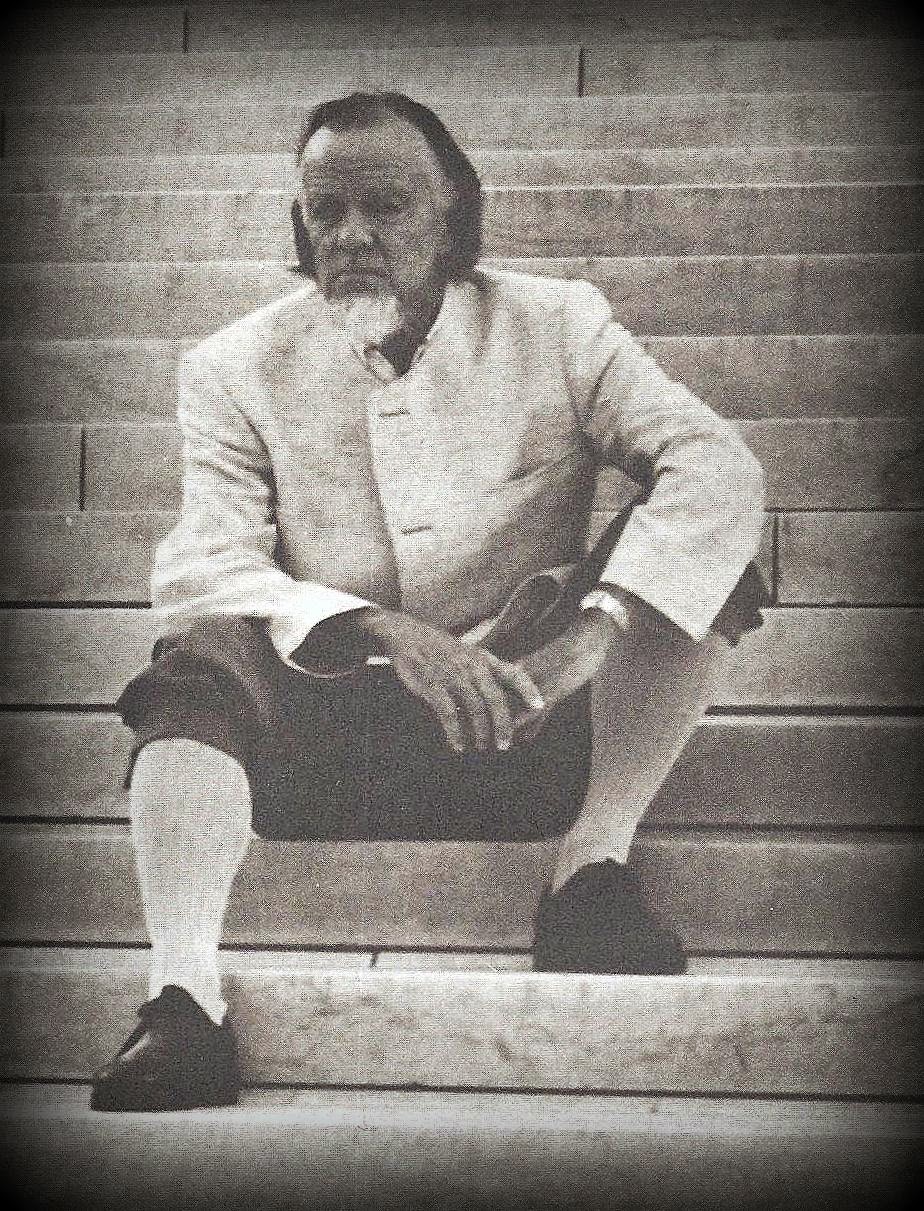









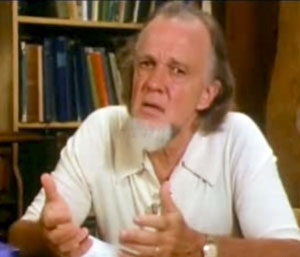




 ABOUT THIS INTERVIEW:
 At the time of its release in 1967, the Sgt. Pepper album drew both praise and pans from professional critics. Meanwhile an entire generation around the globe quickly adopted it as the anthem of the times. It has since become a regular favorite on lists of the greatest albums of all time, sometimes claiming the top spot. Sgt. Pepper was released in the UK on June 1st where it became the number one LP for 27 weeks. In the United States the album was released on June 2nd, staying at number one on the Billboard charts for 15 weeks.- Jay Spangler,
  Despite their flamboyant clothes which made even Jimmy Savile look startled, the Beatles are the same sane, straight-forward people they were four years ago. Their opinions and beliefs are the same only now they understand why they believe in them.
 I joined George sitting quietly on a settee nibbling on a stick of celery. He was wearing dark trousers and a maroon velvet jacket.
 He believes that religion is a day-to-day experience. “You find it all around. You live it. Religion is here and now. Not something that just comes on Sundays.”
 John agrees with him. “The people who have bought our records in the past must realize that we couldn’t go on making the same type forever. We must change and I believe those people know this.”
 “We just thought we’d like to put together a lot of people we like and admire.”
 Just a stone’s throw from Buckingham Palace stands Brian Epstein’s four-story Georgian house. On either side live doctors, business executives, architects and actors – several houses in the quiet street are up for sale.
 Photographers start coming down the stairs, then road manager Neil Aspinall – now wearing a mustache – appears with the group. “Just one more shot on the doorstep, boys,” Tony Barrow instructs the photographers.





 The Daily Hatch