Monthly Archives: October 2014

Francis Schaeffer on Rob Bell by Carson T. Clark on April 7, 2011

___________

Dr. Francis Schaeffer – Episode IV – The Reformation 27 min

NoMirrorHDDHrorriMoN

I was impacted by this film series by Francis Schaeffer back in the 1970’s and I wanted to share it with you. Schaeffer makes three key points concerning the Reformation: “1. Erasmian Christian humanism rejected by Farel. 2. Bible gives needed answers not only as to how to be right with God, but concerning the meaning of life and what is right and what is wrong, and concerning mankind and nature. 3. The people of the Reformation did not have humanism’s problem, because the Bible gives a unity between God—as the ultimate universal—and the individual things.” What a great difference this made in the world!!!

_______________

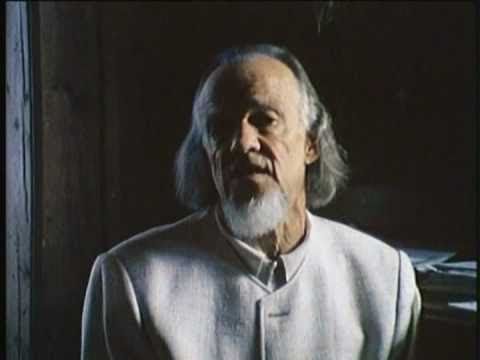
Francis Schaeffer pictured below:


_________________

Francis Schaeffer on Rob Bell

by Carson T. Clark on April 7, 2011

Have you ever come across a quote that describes the present better than its own time? I recently had that experience while reading Barry Hankins’ biographical work, Francis Schaeffer and the Shaping of Evangelical America. Time and again I reread Schaeffer’s words, thinking about their applicability to the present theological war overLove Wins. It caused me to consider what Schaeffer would have thought about Bell and contemporary evangelicalism.

Schaeffer’s greatest gift was his almost prophetic ability to perceive the tensions underlying cultural trends, whether sacred or secular. Here precision of word is required. It seems to me that Schaeffer was a one-trick pony. He exhibited true greatness at the thing he did well, but regularly got into trouble when he ventured away from that specialty. I’d love to get Hankins’ feedback on this, but, in my opinion, Schaeffer was at his best when dealing with the present as opposed to the past or future. To employ a medical analogy, Schaeffer would be like a doctor who struggles to understand diseases causes or prescribe effective treatments, but is truly brilliant in making the initial diagnoses that few others can.

To be perfectly candid, I groan virtually every time I encounter Schaeffer’s treatment of history or philosophy. It’s just awful. For example, his so-called “Reformation base” is an ideological Utopia that never actually existed and his criticisms of Thomas Aquinas reveals rampant ignorance about his subject matter. Furthermore, I cringe at the solutions he proposed to legitimate problems. This is perhaps best illustrated by his role in galvanizing the Christian Right into a political bloc after Roe v. Wade. Yet, despite such blunders, his discernment of the cultural challenges of his day were truly penetrating as he identified issues like ecology and homosexuality decades before other conservative evangelicals. It was that ability that enables his observations to still ring true some 30 years later.

From everything I’ve read and heard of Schaeffer, there’s no doubt in my mind that, were he alive today, he’d be firmly opposed to Rob Bell. As a forerunner to the Neo-Reformed movement, my guess is Schaeffer would a) decry Bell’s doctrine as heretical–thinking it the result of evangelical accommodation to liberalism and postmodernism–and b) would recommend that we come right out and identify Bell as apostate, not unlike John Piper implicitly suggested. Naturally, I’d be groaning and cringing. Then I suspect Schaeffer would notice a crucial pattern that has apparently escaped notice among most his conservative peers. Specifically, the degree to which people resonate with Bell’s book seems to have a direct, inverse correlation to the degree to which they’re troubled by the lack of compassion among conservative evangelicals. This brings me back to that quote:

“What men find ugly is what they see in Christians who hold to the orthodox doctrine that men are lost, but show no signs of compassion… This is what causes men in our generation to be turned off by evangelicalism.”

My suspicion is that Schaeffer would see that Bell’s fans are motivated not by a rational disdain of “biblical doctrine” (as so many have charged), but rather an existential reaction against the (apparent) delight those individuals take in their doctrines about God’s wrath and eternal punishment. For most the motivation isn’t an assault upon the doctrine of hell, but a retreat from its misuse and abuse. Schaeffer would see that Bell and his followers are being driven by a grave concern that God is being painted as a sort of cosmic sadist who revels in unending torture. Though he’d almost certainly denounce such theology as an overreaction, I can’t help but think his heart would go out to them.


_______

Related posts:

Series “FRANCIS SCHAEFFER ANALYZES ART AND CULTURE” traces Schaeffer’s comments on modern culture and can be found weekly on www.thedailyhatch.org !!!!!Andy Warhol, “I haven’t thought about my films. They just keep me busy!”

_________   This series of posts entitled  “FRANCIS SCHAEFFER ANALYZES ART AND CULTURE” touches things that affect our culture today. The first post took a look at the foundations of our modern society today that were set by the Roman Democracy 2000 years ago and then it related it to the art we see today. […]

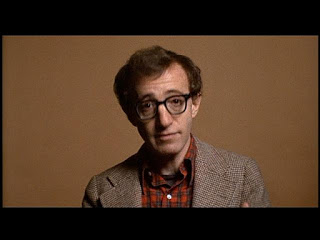
“FRANCIS SCHAEFFER ANALYZES ART AND CULTURE” can be found weekly on www.thedailyhatch.org !   Secular man is left according to Woody Allen with “alienation, loneliness [and] emptiness verging on madness!”

  This series of posts entitled  “FRANCIS SCHAEFFER ANALYZES ART AND CULTURE” touches things that affect our culture today. The first post took a look at the foundations of our modern society today that were set by the Roman Democracy 2000 years ago and then it related it to the art we see today. The […]

Series “FRANCIS SCHAEFFER ANALYZES ART AND CULTURE” traces Schaeffer’s comments on modern culture and can be found weekly on www.thedailyhatch.org !!!!! Bob Dylan asked the right questions but did he have the right answers?

_________   This series of posts entitled  “FRANCIS SCHAEFFER ANALYZES ART AND CULTURE” touches things that affect our culture today. The first post took a look at the foundations of our modern society today that were set by the Roman Democracy 2000 years ago and then it related it to the art we see today. […]

Series “FRANCIS SCHAEFFER ANALYZES ART AND CULTURE” traces Schaeffer’s comments on modern culture and can be found weekly on www.thedailyhatch.org !!!!! Impressionism down to Modern Art examined!!

__________   Francis Schaeffer pictured below: ______________ Francis Schaeffer pictured below: _____________ This series of posts entitled  “FRANCIS SCHAEFFER ANALYZES ART AND CULTURE” touches things that affect our culture today. The first post took a look at the foundations of our modern society today that were set by the Roman Democracy 2000 years ago and […]

 “FRANCIS SCHAEFFER ANALYZES ART AND CULTURE” can be found weekly on www.thedailyhatch.org !  John Cage noted,  “I became aware that if I approached mushrooms in the spirit of my chance operations, I would die shortly!” 

__________   This series of posts entitled  “FRANCIS SCHAEFFER ANALYZES ART AND CULTURE” touches things that affect our culture today. The first post took a look at the foundations of our modern society today that were set by the Roman Democracy 2000 years ago and then it related it to the art we see today. […]

Series “FRANCIS SCHAEFFER ANALYZES ART AND CULTURE” traces Schaeffer’s comments on modern culture and can be found weekly on www.thedailyhatch.org !!!!! Paul Gauguin and his life questions!

___________ Francis Schaeffer pictured below: _____________ Series “FRANCIS SCHAEFFER ANALYZES ART AND CULTURE” traces Schaeffer’s comments on modern culture and can be found weekly onhttp://www.thedailyhatch.org !!!!! Paul Gauguin and his life questions! This series of posts entitled  “FRANCIS SCHAEFFER ANALYZES ART AND CULTURE” touches things that affect our culture today. The first post took […]

“FRANCIS SCHAEFFER ANALYZES ART AND CULTURE” can be found weekly on  www.thedailyhatch.org ! Filmmakers such as  Resnais, Bergman, Fellini, Antonioni, Bunuel,and  Bergman all attempted to show what it is like to live in the area of nonreason!!!

  This series of posts entitled  “FRANCIS SCHAEFFER ANALYZES ART AND CULTURE” touches things that affect our culture today. The first post took a look at the foundations of our modern society today that were set by the Roman Democracy 2000 years ago and then it related it to the art we see today. The […]

“FRANCIS SCHAEFFER ANALYZES ART AND CULTURE” can be found weekly on www.thedailyhatch.org ! Why Communism catches the attention of young people but never comes through!!!

____________________________________________  “FRANCIS SCHAEFFER ANALYZES ART AND CULTURE” can be found weekly onhttp://www.thedailyhatch.org !  Why Communism catches the attention of young people but never comes through!!! Dr. Francis Schaeffer – Episode 9 – The Age of Personal Peace and Affluence NoMirrorHDDHrorriMoN   This series of posts entitled  “FRANCIS SCHAEFFER ANALYZES ART AND CULTURE” touches things […]

FRANCIS SCHAEFFER ANALYZES ART AND CULTURE Part 28 Woody Allen and “The Mannishness of Man” (Feature on artist Ryan Gander)

_________________

woody allen on life

Image

____________________

How Should We then Live Episode 7 small (Age of Nonreason)

How Should We Then Live? (Promo Clip) Dr. Francis Schaeffer

The clip above is from episode 9 THE AGE OF PERSONAL PEACE AND AFFLUENCE

10 Worldview and Truth

In above clip Schaeffer quotes Paul’s speech in Greece from Romans 1 (from Episode FINAL CHOICES)

Two Minute Warning: How Then Should We Live?: Francis Schaeffer at 100

A Christian Manifesto Francis Schaeffer

Published on Dec 18, 2012

A video important to today. The man was very wise in the ways of God. And of government. Hope you enjoy a good solis teaching from the past. The truth never gets old.

Francis Schaeffer “BASIS FOR HUMAN DIGNITY” Whatever…HTTHR

Woody Allen about meaning and truth of life on Earth

Francis Schaeffer pictured below:

Francis Schaeffer has written extensively on art and culture spanning the last 2000 years and here are some posts I have done on this subject before : Francis Schaeffer’s “How should we then live?” Video and outline of episode 10 “Final Choices” episode 9 “The Age of Personal Peace and Affluence”episode 8 “The Age of Fragmentation”episode 7 “The Age of Non-Reason” episode 6 “The Scientific Age” , episode 5 “The Revolutionary Age” episode 4 “The Reformation” episode 3 “The Renaissance”episode 2 “The Middle Ages,”, and  episode 1 “The Roman Age,” . My favorite episodes are number 7 and 8 since they deal with modern art and culture primarily.(Joe Carter rightly noted,Schaefferwho always claimed to be an evangelist and not a philosopher—was often criticized for the way his work oversimplified intellectual history and philosophy.” To those critics I say take a chill pill because Schaeffer was introducing millions into the fields of art and culture!!!! !!! More people need to read his works and blog about them because they show how people’s worldviews affect their lives!

J.I.PACKER WROTE OF SCHAEFFER, “His communicative style was not that of a cautious academic who labors for exhaustive coverage and dispassionate objectivity. It was rather that of an impassioned thinker who paints his vision of eternal truth in bold strokes and stark contrasts.Yet it is a fact that MANY YOUNG THINKERS AND ARTISTS…HAVE FOUND SCHAEFFER’S ANALYSES A LIFELINE TO SANITY WITHOUT WHICH THEY COULD NOT HAVE GONE ON LIVING.”

Francis Schaeffer’s works  are the basis for a large portion of my blog posts and they have stood the test of time. In fact, many people would say that many of the things he wrote in the 1960’s  were right on  in the sense he saw where our western society was heading and he knew that abortion, infanticide and youth enthansia were  moral boundaries we would be crossing  in the coming decades because of humanism and these are the discussions we are having now!)

There is evidence that points to the fact that the Bible is historically true as Schaeffer pointed out in episode 5 of WHATEVER HAPPENED TO THE HUMAN RACE? There is a basis then for faith in Christ alone for our eternal hope. This link shows how to do that.

Francis Schaeffer in Art and the Bible noted, “Many modern artists, it seems to me, have forgotten the value that art has in itself. Much modern art is far too intellectual to be great art. Many modern artists seem not to see the distinction between man and non-man, and it is a part of the lostness of modern man that they no longer see value in the work of art as a work of art.” 

Many modern artists are left in this point of desperation that Schaeffer points out and it reminds me of the despair that Solomon speaks of in Ecclesiastes.  Christian scholar Ravi Zacharias has noted, “The key to understanding the Book of Ecclesiastes is the term ‘under the sun.’ What that literally means is you lock God out of a closed system, and you are left with only this world of time plus chance plus matter.” THIS IS EXACT POINT SCHAEFFER SAYS SECULAR ARTISTS ARE PAINTING FROM TODAY BECAUSE THEY BELIEVED ARE A RESULT OF MINDLESS CHANCE.

___________

Dr. Francis schaeffer – The flow of Materialism(from Part 4 of Whatever happened to human race?)

It is striking that Francis Schaeffer over 30 years ago pointed out how much Woody Allen demonstrated how terrifying the world is without God in the picture and he used Woody as example in a key part of one his major apologetic arguments and here it is below. Woody Allen has correctly noted that the humanist secular worldview is just left with despair!!!! Take a look at Schaeffer’s thoughts on this:

The Mannishness of Man
Before we consider various possibilities, we must settle the question of method. What is it we are expecting our “answer” to answer?
There are a number of things we could consider, but at this point we want to concentrate on just two. The first is what we will call “the universe and its form,” and the second is “the mannishness of man.” The first draws attention to the fact that the universe around us is like an amazing jigsaw puzzle. We see many details, and we want to know how they fit together. That is what science is all about. Scientists look at the details and try to find out how they all cohere. So the first question that has to be answered is: how did the universe get this way? How did it get this form, this pattern, this jigsawlike quality it now has?
Second,the mannishness of man” draws attention to the fact that human beings are different from all other things in the world. Think, for example, of creativity. People in all cultures of all ages have created many kinds of things, from “High Art” to flower arrangements, from silver ornaments to high-technology supersonic aircraft. This is in contrast to the animals about us. People also fear death, and they have the aspiration to truly choose. Incidentally, even those who in their writings say we only think we choose quickly fall into words and phrases that only make sense if they are wrong and we do truly choose. Human beings are also unique in that they verbalize. That is, people put concrete and abstract concepts into words which communicate these concepts to other people. People also have an inner life of the mind; they remember the past and make projections into the future. One could name other factors, but these are enough to differentiate people from other things in the world.
What world-view adequately explains the remarkable phenomenon of the distinctiveness of human beings? There is one world-view which can explain the explain the existence of the universe, its form, and the uniqueness of people – the world-view given to us in the Bible. There is a remarkable parallel between the way scientists go about checking to see if what they think about reality does in fact correspond to it and the way the biblical world-view can be checked to see if it is true.
Many people, however, react strongly against this sort of claim. They see the problem – Where has everything come from and why is it the way it is? – but they do not want to consider a solution which involves God. God, they say, belongs to “religion,” and religious answers, they say, do not deal with facts. Only science deals with facts. Thus, they say, Christian answers are not real answers; they are “faith answers.”
This is a strange reaction, because modern people pride themselves on being open to new ideas, on being willing to consider opinions which contradict what has been believed for a long time. They think this is what “being scientific” necessitates. Suddenly, however, when one crosses into the area of the “big” and most basic questions (like those we are considering now) with an answer involving God, the shutters are pulled down, the open mind closes and a very different attitude, a dogmatic rationalism, takes over.

This is curious -first, because few seem to notice that the humanist explanations of the big and most basic questions is just as much a “faith answer” as any could be. With the humanist world-view everything begins with only matter; whatever has developed has developed only within matter, a reordering of matter by chance.
Even though materialistic scientists have no scientific understanding of why things exist, nor any certain scientific understanding of how life began, and even though this world-view leaves them with vast problems – the problems Woody Allen has described of “alienation, loneliness [and] emptiness verging on madness” – many modern people still reject at once any solution which uses the word God, in favor of the materialistic humanist “answer” which answers nothing. This is simply prejudice at work.

We need to understand, however, that this prejudice is both recent and arbitrary. Professor Ernest Becker, who taught at the University of California at Berkeley and San Francisco State College, said that for the last half-million years people have always believed in two worlds – one that was visible and one that was invisible. The visible world was where they lived their everyday lives; the invisible world was more powerful, for the meaning and existence of the visible world was dependent on it. Suddenly in the last century and a half, as the ideas of the Enlightenment have spread to the whole of Western culture, we have been told quite arbitrarily that there is no invisible world. This has become dogma for many secular people today.

______

If everything is put into the machine, of course there is no place for God. But also there is no place for man, no place for the significance of man, no place for beauty, for morals or for love. When you come to this place, you have a sea without a shore. Everything is dead. But the presupposition of the uniformity of natural causes in a closed system does not explain the two basic things that are before us: (1) the universe that exists and its form, and (2) the mannishness of man.
(Francis A. Schaeffer, The Church at the End of the Twentieth Century, Ch. 1)

Modern man says, “No, we are just machines — chemically determined or psychologically determined.” But nobody consistently lives this way in his life. I would insist that here is a presupposition which intellectually, in the laboratory, would be cast out simply because it does not explain what is.
(Francis A. Schaeffer, The Church at the End of the Twentieth Century, Ch. 1)
If we do not begin with a personal Creator, eventually we are left (no matter how we string it out semantically) with the impersonal plus time plus chance. We must explain everything in the uniqueness of man, and we must understand all of the complexity of the universe on the basis of time plus chance.
(Francis A. Schaeffer, The Church at the End of the Twentieth Century, Ch. 1)
But modern man does in fact assume — wittingly or unwittingly — that the universe and man can be explained by the impersonal plus time plus chance. And in this case man and his aspirations stand in total alienation from what is. And that is precisely where many people today live — in a generation of alienation: alienation in the ghettos, alienation in the university, alienation from parents, alienation on every side. Sometimes this takes the form of “dropping out,” sometimes it takes the form of “joining the system” to get along as easily as possible and to get as much from the system as possible. Those who are only playing with these ideas and have not gotten down into the real guts of it forget that the basic alienation with which they are faced is a cosmic alienation. It is simply this: there is nobody there to respond to you. There is nobody home in the universe. There is no one and nothing to conform to who you are or what you hope. That is the dilemma.

Let me use an illustration I have used previously. Suppose, for example, that the room in which you are seated is the only universe there is. God could have made a universe just this big if he wished. Suppose in making the only universe there were a room made up of solid walls, but filled up to the ceiling with liquids: just liquids and solids and no free gases. Suppose then that fish were swimming in the universe. The fish would not be alienated from the universe because they can conform to the universe by their nature. But suppose if by chance, as the evolutionists see chance, the fish suddenly developed lungs. Would they be higher or lower? Obviously, they would be lower, because they would drown. They would have a cosmic alienation from the universe that surrounded them.

But man has aspirations; he has what I call his mannishness. He desires that love be more than being in bed with a woman, that moral motions be more than merely sociological something-or-others, that his significance lie in being more than one more cog in a vast machine. He wants a relationship to society other than that of a small machine being manipulated by a big machine. On the basis of modern thought, however, all of these would simply be an illusion. And since there are aspirations which separate man from his impersonal universe, man then faces his being caught in a terrible, cosmic, final alienation. He drowns in cosmic alienation, for there is nothing in the universe to fulfill him. That is the position of modern man.

Beginning with rationalism, rationally you come only to pessimism. Man equals the machine. Man is dead. So those who followed Kierkegaard put forth the concept of an optimism in the area of nonrationality. Faith and optimism, they said, are always a leap. Neither has anything to do with reason.
(Francis A. Schaeffer, The Church at the End of the Twentieth Century, Ch. 1)

Society has reaped the rewards of its escape from reason. From modern science to modern, modern science, from man made in the image of God to man the machine, from freedom within form to determinism and autonomous freedom, from harmony with God to cosmic alienation, from reason to drugs and the new mysticism, from a biblically based theology to god words — this is the flow of the stream of rationalistic history.
(Francis A. Schaeffer, The Church at the End of the Twentieth Century, Ch. 1)

______

Dr. Francis Schaeffer – The Biblical flow of Truth & History (intro)

________________

______________

Woody Allen Blue Jasmine Interview BBC Newsnight 2013

___________________

Francis Schaeffer – The Biblical Flow of History & Truth (1)

Dr. Francis Schaeffer – The Biblical Flow of Truth & History (part 2)

_________________________________________________________

Returning to Woody Allen for a minute.

___________

Featured artist is Ryan Gander

[ARTS 315] What’s Going on Today, part 1 – Jon Anderson

Published on Apr 5, 2012

Contemporary Art Trends [ARTS 315], Jon Anderson

What’s Going on Today, part 1

December 2, 2011

[ARTS 315] What’s Going on Today, part 2 – Jon Anderson

Published on Apr 5, 2012

Contemporary Art Trends [ARTS 315], Jon Anderson

What’s Going on Today, part 2

December 2, 2011

______________________

____________

Meet the artist – Ryan Gander: ‘Living is a creative act’

Published on Oct 16, 2012

Meet the artist – Ryan Gander: ‘Living is a creative act’

In the first in a series of video interviews, Adrian Searle sits down with artist Ryan Gander to discuss his irreverent and thought-provoking work. Gander explains: ‘It’s just being interested in the world. It’s enjoying keeping your eyes open and your wits about you.’

__________

Ryan Gander artwork below:

Another artwork of his below:

Ryan Gander

From Wikipedia, the free encyclopedia
Jump to: navigation, search

Ryan Gander (born 1976) is an English artist born in Chester, Cheshire, who lives and works between London and Suffolk. His work “involves a lot of playful puzzles, cultural collisions and meta-versions of reality.”[1]

Life and career

Education

Gander trained in Interactive Art at Manchester Metropolitan University, receiving a First Class Degree in 1999. In 2000 he spent a year at the Jan van Eyck Academie in Maastricht, Netherlands, as a Fine Art Research Participant. Then he participated in the artists residency programme of the Rijksakademie van Beeldende Kunsten in Amsterdam from 2001 – 2002.

Artistic practice

Gander is represented by the Lisson Gallery.[2] His work is formally diverse and has included, “a chess set, a new word, a children’s book, jewellery, customised sportswear, glass orb paperweights and maps,” as well as photography, films, and drawings.[3] Considering Gander’s work, “Appendix”, art critic Mark Beasley said: “It’s an unwieldy yet fascinatingly open account, somewhat like lucid dreaming, which shows the artist at his most arch, open and revealing … an attempt to discuss practice in a form sympathetic to the work in discussion.”[4]

Exhibitions

From 2002 – 2003, early presentations of Ryan Gander’s work were in the form of lectures which he delivered to the public in many venues: ‘Loose Associations Lecture 1.1’ and ‘Loose Associations Lecture 2.1’. These encapsulated his position as an interactive artist. Gander’s recent solo exhibitions include The Happy Prince for the Public Art Fund in New York, USA in 2010 and more recently Now there’s not enough of it to go around, Amsterdam, Netherlands and Ftt, Ft, Ftt, Ftt, Ffttt, Ftt, or somewhere between a modern representation of how a contemporary gesture came into being, an illustration of the physicality of an argument between Theo and Piet regarding the dynamic aspect of the diagonal line and attempting to produce a chroma-key set for a hundred cinematic scenes at Taro Nasu Gallery, Tokyo, Japan in 2011.

Disability-related works

Ryan Gander is a wheelchair user with a long-term physical disability. His work for the 2011 Venice Biennale exhibition featured an action-figure sized sculpture that represents him while he falls from a wheelchair. “It is a self-portrait in the worst possible position”.[5] [6] In 2006, his installation at the old Whitechapel Library, ‘Is this guilt in you too?’, was part of the Art Council’s ‘Adjustments’ exhibitions whose aim was ‘to address transitional thinking on disability equality and inclusion’.[7] His other works are normally not related to disabilities. However, Matt Higgs argues in his commentary about Gander’s work,[8] that his disability actually contributes to Gander’s unique way of seeing: “The first thing I ever noticed about Ryan was that he uses a wheelchair. I mention this not in passing, nor as a gratuitous aside. Whilst I accept that some people might argue that this information is irrelevant, I would like to think that the fact that Ryan uses a wheelchair does – at least – have some bearing on my subsequent understanding of his work.”

Personal life

Gander is married to the director of the Limoncello gallery, Rebecca May Marston, with whom he has a daughter.[9]

Critical response

  • “Ryan Gander is a story-teller, a teller of tales” … “His art is an attempt to see beyond the internal art referent, to hug an idea so tightly that its innards are squeezed onto the walls” [10]

  • “The work of London-based artist Ryan Gander is multi-faceted, ranging through installation, sculpture, intervention, writing and performative lecturing” [11]

  • “Ryan Gander’s practice involves a lot of playful puzzles, cultural collisions and meta-versions of reality.” [1]

  • “Humour underpins much of Gander’s work, rescuing it from mere ‘institutional critique’, engaging us with its dead-pan, self-deprecating knowingness. It is as rigorous as it is strangely, accessible.” [12]

Ryan Gander won the Prix de Rome for sculpture (the national Dutch art prize) in 2003. He was nominated for the Beck’s Futures prize in 2005.[citation needed]

Works

  • Loose Associations Lecture 1.1, 2002
  • Loose Associations Lecture 2.1, 2003
  • This Consequence, 2005
  • A Future Lorem Ipsum, 2006
  • Didactease Necklace, 2006
  • My Family Before Me, 2006
  • The Neon Series, several neon works, 2006–2011
  • As it presents itself – Somewhere Vague, 2008
  • A sheet of paper on which I was about to draw, as it slipped form my table and fell to the floor, 2008
  • Degas Ballerina Series, several bronze sculptures, 2008–2011
  • Man on a bridge – (A study of David Lange), 2008
  • The New New Alphabet, 2008
  • Associative Templates Series, #1 – #31, 2009
  • The Happy Prince, 2010
  • The book of ‘The Sitting’, 2009
  • Ftt, Ft, Ftt, Ftt, Ffttt, Ftt, or somewhere between a modern representation of how a contemporary gesture came into being, an illustration of the physicality of an argument, 2010

Public collections

Gander’s works are included in both international public and private collections including Tate Collection, London; Museum of Contemporary Art, Chicago; Museum Moderner Kunst, Wien; Le Fonds régional d’art contemporain du Nord Pas-de-Calais; FNAC, Paris, France; Kadist Art Foundation, Paris, France; MaMBO, Bologna; The Boijmans van Beuningen Museum, Rotterdam; Arts Council, London; Welsh Museum, Cardiff; Government Art Collection, London.

References

External links

____________

Related posts:

FRANCIS SCHAEFFER ANALYZES ART AND CULTURE Part 27 Jurgen Habermas (Featured artist is Hiroshi Sugimoto)

_____________ Jürgen Habermas Interview Uploaded on Feb 1, 2007 Rare video footage of Jurgen Habermas discussing some of his theories.http://soundcloud.com/st-hanshaugen Francis Schaeffer pictured below: ______________ Francis Schaeffer notes: At Berkeley the Free Speech Movement arose simultaneously with the hippie world of drugs. At first it was politically neither left nor right, but rather a […]

FRANCIS SCHAEFFER ANALYZES ART AND CULTURE Part 26 Bettina Aptheker (Featured artist is Krzysztof Wodiczko)

Bettina Aptheker pictured below: Moral Support: “One Dimensional Man” author Herbert Marcuse accompanies Bettina Aptheker, center, and Angela Davis’ mother, Sallye Davis, to Angela Davis’ 1972 trial in San Jose. Associated Press ___________________________________________________________________________ Francis Schaeffer has written extensively on art and culture spanning the last 2000years and here are some posts I have done on […]

FRANCIS SCHAEFFER ANALYZES ART AND CULTURE Part 25 BOB DYLAN (Part C) Francis Schaeffer comments on Bob Dylan’s song “Ballad of a Thin Man” and the disconnect between the young generation of the 60’s and their parents’ generation (Feature on artist Fred Wilson)

_____________________ Francis Schaeffer pictured below: ____ Elston Gunn- Ballad of A Thin Man, Live Sheffield 1966 Francis Schaeffer has written extensively on art and culture spanning the last 2000 years and here are some posts I have done on this subject before : Francis Schaeffer’s “How should we then live?” Video and outline of episode 10 […]

FRANCIS SCHAEFFER ANALYZES ART AND CULTURE Part 24 BOB DYLAN (Part B) Francis Schaeffer comments on Bob Dylan’s words from HIGHWAY 61 REVISITED!! (Feature on artist Susan Rothenberg)

______________ Just like tom thumb´s blues (no direction home) Francis Schaeffer has written extensively on art and culture spanning the last 2000 years and here are some posts I have done on this subject before : Francis Schaeffer’s “How should we then live?” Video and outline of episode 10 “Final Choices” , episode 9 “The Age of Personal […]

FRANCIS SCHAEFFER ANALYZES ART AND CULTURE Part 23 BOB DYLAN (Part A) (Feature on artist Josiah McElheny)Francis Schaeffer on the proper place of rebellion with comments by Bob Dylan and Samuel Rutherford

Bob Dylan – When You Gonna Wake Up Sermon – Tempe 1979 Published on Apr 28, 2012 Probably the most contentious show in Dylan’s long history of live performance. The between-song “raps” were a fixture of Dylan’s performances during his “Christian” period, but early during the Slow Train Coming tour, Dylan and his band encountered […]

FRANCIS SCHAEFFER ANALYZES ART AND CULTURE Part 22 “The School of Athens by Raphael” (Feature on the artist Sally Mann)

How Should We Then Live? Episode 2 Part 2/2 RebelShutze· __________ Episode III – The Renaissance JasonUellCrank How Should We Then Live? Episode 3 Part 1/2 RebelShutze Published on Jun 4, 2012 The third part of Dr. Francis Schaeffer’s ten-part series based off of his book “How Should We Then Live?” This is Episode 3, […]

FRANCIS SCHAEFFER ANALYZES ART AND CULTURE Part 21 William B. Provine (Feature on artist Andrea Zittel)

_______ Dr Provine is a very honest believer in Darwinism. He rightly draws the right conclusions about the implications of Darwinism. I have attacked optimistic humanism many times in the past and it seems that he has confirmed all I have said about it. Notice the film clip below and the quote that Francis Schaeffer […]

FRANCIS SCHAEFFER ANALYZES ART AND CULTURE Part 20 Woody Allen and Materialistic Humanism: The World-View of Our Era (Feature on artist Ida Applebroog)

___________________________________________________________________________ Francis Schaeffer “BASIS FOR HUMAN DIGNITY” Whatever…HTTHR ___________________ Woody Allen on Ingmar Bergman and the death. Woody Allen et Marshall McLuhan : « If life were only like this! » What Makes Life Worth Living? – Answered by Woody Allen. ______________ Diane Keaton et Woody Allen What Makes Life Worth Living? _____________________________________________________________________________________________________________________________________ Dr. Francis Schaeffer – […]

FRANCIS SCHAEFFER ANALYZES ART AND CULTURE Part 19 Movie Director Luis Bunuel (Feature on artist Oliver Herring)

___________ Francis Schaeffer pictured below: ____ Dr. Francis Schaeffer – Episode 8 – The Age of Fragmentation NoMirrorHDDHrorriMoN In the book HOW SHOULD WE THEN LIVE? Schaeffer notes: Especially in the sixties the major philosophic statements which received a wide hearing were made through films. These philosophic movies reached many more people than philosophic writings […]

FRANCIS SCHAEFFER ANALYZES ART AND CULTURE Part 18 “Michelangelo’s DAVID is the statement of what humanistic man saw himself as being tomorrow” (Feature on artist Paul McCarthy)

In this post we are going to see that through the years  humanist thought has encouraged artists like Michelangelo to think that the future was extremely bright versus the place today where many artist who hold the humanist and secular worldview are very pessimistic.   In contrast to Michelangelo’s DAVID when humanist man thought he […]

______________

Open letter to President Obama (Part 688) “How to Cure Inflation” in Milton Friedman’s FREE TO CHOOSE Part 1 of 7 Taxation without representation: Getting knocked up to higher tax brackets because of inflation!!!!

Open letter to President Obama (Part 688) (Emailed to White House on July 29, 2013)

President Obama c/o The White House
1600 Pennsylvania Avenue NW
Washington, DC 20500

Dear Mr. President,

I know that you receive 20,000 letters a day and that you actually read 10 of them every day. I really do respect you for trying to get a pulse on what is going on out here.

______________________________

In 1980 I read the book FREE TO CHOOSE by Milton Friedman and it really enlightened me a tremendous amount.  I suggest checking out these episodes and transcripts of Milton Friedman’s film series FREE TO CHOOSE: “The Failure of Socialism” and “What is wrong with our schools?”  and “Created Equal”  and  From Cradle to Grave, and – Power of the Market.“If we could just stop the printing presses, we would stop inflation,” Milton Friedman says in “How to Cure Inflation” from the Free To Choose series. Now as then, there is only one cause of inflation, and that is when governments print too much money. Milton explains why it is that politicians like inflation, and why wage and price controls are not solutions to the problem.

In this episode Friedman talks about taxation without representation: Getting knocked up to higher tax brackets because of inflation!!!!

Videos are good, Fw: Vol 9 How to cure inflation FREE TO CHOOSE Episode 9 Videos and transcripts

http://www.freetochoosemedia.org/freetochoose/detail_ftc1980_transcript.php?page=9

While many people have a fairly good grasp of what inflation is, few really understand its fundamental cause. There are many popular scapegoats: labor unions, big business, spendthrift consumers, greed, and international forces. Dr. Friedman explains that the actual cause is a government that has exclusive control of the money supply. Friedman says that the solution to inflation is well known among those who have the power to stop it: simply slow down the rate at which new money is printed. But government is one of the primary beneficiaries of inflation. By inflating the currency, tax revenues rise as families are pushed into higher income tax brackets. Thus, inflation transfers wealth and resources from the private to the public sector. In short, inflation is attractive to government because it is a way of increasing taxes without having to pass new legislation to raise tax rates. Inflation is in fact taxation without representation. Wage and price controls are not the cure for inflation because they treat only the symptom (rising prices) and not the disease (monetary expansion). History records that such controls do not work; instead, they have perverse effects on both prices and economic growth and undermine the fundamental productivity of the economy. There is only one cure for inflation: slow the printing presses. But the cure produces the painful side effects of a temporary increase in unemployment and reduced economic growth. It takes considerable political courage to undergo the cure. Friedman cites the example of Japan, which successfully underwent the cure in the mid-seventies but took five years to squeeze inflation out of the system. Inflation is a social disease that has the potential for destroying a free society if it is unchecked. Prolonged inflation undermines belief in the basic equity of the free market system because it tends to destroy the link between effort and reward. And it tears the social fabric because it divides society into winners and losers and sets group against group.http://www.youtube.com/watch?v=b1dTWDNKH3c

Volume 9 How to Cure Inflation

Transcript:
Friedman: The Sierra Nevada’s in California 10,000 feet above sea level, in the winter temperatures drop to 40 below zero, in the summer the place bakes in the thin mountain air. In this unlikely spot the town of Body sprang up. In its day Body was filled with prostitutes, drunkards and gamblers part of a colorful history of the American West.
A century ago, this was a town of 10,000 people. What brought them here? Gold. If this were real gold, people would be scrambling for it. The series of gold strikes throughout the West brought people from all over the world, all kinds of people. They came here for one purpose and one purpose only, to strike it rich, quick. But in the process, they built towns, cities, in places where nobody would otherwise have dreamed of building a city. Gold built these cities and when the gold was exhausted, the cities collapsed and became ghost towns. Many of the people who came here ended up the way they began, broke and unhappy. But a few struck it rich. For them, gold was real wealth. But was it for the world as a whole. People couldn’t eat the gold, they couldn’t wear the gold, they couldn’t live in houses made of gold. Because there was more gold, they had to pay a little more gold to buy goods and services. The prices of things in terms of gold went up.
At tremendous cost, at sacrifice of lives, people dug gold out of the bowels of the earth. What happened to that gold? Eventually, at long last, it was transported to distant places only to be buried again under the ground. This time in the vaults of banks throughout the world. There is hardly anything that hasn’t been used for money; rock salt in Ethiopia, brass rings in West Africa, Calgary shells in Uganda, even a toy cannon. Anything can be used as money. Crocodile money in Malaysia, absurd isn’t it?
That beleaguered minority of the population that still smokes may recognize this stuff as the raw material from which their cigarettes are made. But in the early days of the colonies, long before the U.S. was established, this was money. It was the common money of Virginia, Maryland and the Carolinas. It was used for all sorts of things. The legislature voted that it could be used legally to pay taxes. It was used to buy food, clothing and housing. Indeed, one of the most interesting sites was to see the husky young fellows at that time, lug 100 pounds of it down to the docks to pay the costs of the passage of the beauteous young ladies who had come over from England to be their brides.
Now you know how money is. There’s a tendency for it to grow, for more and more of it to be produced and that’s what happened with this tobacco. As more tobacco was produced, there was more money. And as always when there’s more money, prices went up. Inflation. Indeed, at the very end of the process, prices were 40 times as high in terms of tobacco as they had been at the beginning of the process. And as always when inflation occurs, people complained. And as always, the legislature tried to do something. And as always, to very little avail. They prohibited certain classes of people from growing tobacco. They tried to reduce the total amount of tobacco grown, they required people to destroy part of their tobacco. But it did no good. Finally, many people took it into their own hands and they went around destroying other people’s tobacco fields. That was too much. Then they passed a law making it a capital offense, punishable by death, to destroy somebody else’s tobacco. Grecian’s Law, one of the oldest laws in economics, was well illustrated. That law says that cheap money drives out dear money and so it was with tobacco. Anybody who had a debt to pay, of course, tried to pay it in the worst quality of tobacco he had. He saved the good tobacco to sell overseas for hard money. The result was that bad money drove out good money.
Finally, almost a century after they had started using tobacco as money, they established warehouses in which tobacco was deposited in barrels, certified by an inspector according to his views as to it’s quality and quantity. And they issued warehouse certificates which people gave from one to another to pay for the bills that they accumulated.
These pieces of green printed paper are today’s counterparts of those tobacco certificates. Except that they bear no relation to any commodity. In this program I want to take you to Britain to see how inflation weakens the social fabric of society. Then to Tokyo, where the Japanese have the courage to cure inflation. To Berlin, where there is a lesson to be learned from the West Germans and how so called cures are often worse than the disease. And to Washington where our government keeps these machines working overtime. And I am going to show you how inflation can be cured.
The fact is that most people enjoy the early stages of the inflationary process. Britain, in the swinging 60’s, there was plenty of money around, business was brisk, jobs were plentiful and prices had not yet taken off. Everybody seemed happy at first. But by the early 70’s, as the good times rolled along, prices started to rise more and more rapidly. Soon, some of these people are going to lose their jobs. The party was coming to an end.
The story is much the same in the U.S. Only the process started a little later. We’ve had one inflationary party after another. Yet we still can’t seem to avoid them. How come?
Before every election our representatives would like to make us think we are getting a tax break. When they are able to do it, while at the same time actually raising our taxes because of a bit of magic they have in their kit bag. That magic is inflation. They reduced the tax rates but the taxes we have to pay go up because we are automatically shoved into higher brackets by the effective inflation. A neat trick. Taxation without representation.

___________________________

Thank you so much for your time. I know how valuable it is. I also appreciate the fine family that you have and your commitment as a father and a husband.

Sincerely,

Everette Hatcher III, 13900 Cottontail Lane, Alexander, AR 72002, ph 501-920-5733, lowcostsqueegees@yahoo.com

Related posts:

“The Power of the Market” episode of Free to Choose in 1990 by Milton Friedman (Part 1)

Milton Friedman The Power of the Market 1-5 How can we have personal freedom without economic freedom? That is why I don’t understand why socialists who value individual freedoms want to take away our economic freedoms.  I wanted to share this info below with you from Milton Friedman who has influenced me greatly over the […]

“Friedman Friday,” EPISODE “The Failure of Socialism” of Free to Choose in 1990 by Milton Friedman (Part 1)

Milton Friedman: Free To Choose – The Failure Of Socialism With Ronald Reagan (Full) Published on Mar 19, 2012 by NoNationalityNeeded Milton Friedman’s writings affected me greatly when I first discovered them and I wanted to share with you. We must not head down the path of socialism like Greece has done. Abstract: Ronald Reagan […]

________________

“Friedman Friday” (“Free to Choose” episode 3 – Anatomy of a Crisis. part 3 of 7)

Worse still, America’s depression was to become worldwide because of what lies behind these doors. This is the vault of the Federal Reserve Bank of New York. Inside is the largest horde of gold in the world. Because the world was on a gold standard in 1929, these vaults, where the U.S. gold was stored, […]

“Friedman Friday” (Part 16) (“Free to Choose” episode 3 – Anatomy of a Crisis. part 2 of 7)

  George Eccles: Well, then we called all our employees together. And we told them to be at the bank at their place at 8:00 a.m. and just act as if nothing was happening, just have a smile on their face, if they could, and me too. And we have four savings windows and we […]

“Friedman Friday” (“Free to Choose” episode 3 – Anatomy of a Crisis. part 1of 7)

Milton Friedman’s Free to Choose (1980), episode 3 – Anatomy of a Crisis. part 1 FREE TO CHOOSE: Anatomy of Crisis Friedman Delancy Street in New York’s lower east side, hardly one of the city’s best known sites, yet what happened in this street nearly 50 years ago continues to effect all of us today. […]

By Everette Hatcher III | Also posted in Current Events | Edit | Comments (0)

____________________________

_____________


________________________________________________

_____________________________________________

Friedman Friday” Free to Choose by Milton Friedman: Episode “What is wrong with our schools?” (Part 3 of transcript and video)

Friedman Friday” Free to Choose by Milton Friedman: Episode “What is wrong with our schools?” (Part 3 of transcript and video) Here is the video clip and transcript of the film series FREE TO CHOOSE episode “What is wrong with our schools?” Part 3 of 6.   Volume 6 – What’s Wrong with our Schools Transcript: If it […]

Friedman Friday” Free to Choose by Milton Friedman: Episode “What is wrong with our schools?” (Part 2 of transcript and video)

Here is the video clip and transcript of the film series FREE TO CHOOSE episode “What is wrong with our schools?” Part 2 of 6.   Volume 6 – What’s Wrong with our Schools Transcript: Groups of concerned parents and teachers decided to do something about it. They used private funds to take over empty stores and they […]

By Everette Hatcher III | Also posted in Vouchers | Edit | Comments (1)

Friedman Friday” Free to Choose by Milton Friedman: Episode “What is wrong with our schools?” (Part 1 of transcript and video)

Here is the video clip and transcript of the film series FREE TO CHOOSE episode “What is wrong with our schools?” Part 1 of 6.   Volume 6 – What’s Wrong with our Schools Transcript: Friedman: These youngsters are beginning another day at one of America’s public schools, Hyde Park High School in Boston. What happens when […]

By Everette Hatcher III | Also posted in Vouchers | Tagged , , , , | Edit | Comments (0)

Friedman Friday” Free to Choose by Milton Friedman: Episode “Created Equal” (Part 3 of transcript and video)

Friedman Friday” Free to Choose by Milton Friedman: Episode “Created Equal” (Part 3 of transcript and video) Liberals like President Obama want to shoot for an equality of outcome. That system does not work. In fact, our free society allows for the closest gap between the wealthy and the poor. Unlike other countries where free enterprise and other […]

Free to Choose by Milton Friedman: Episode “Created Equal” (Part 2 of transcript and video)

Free to Choose by Milton Friedman: Episode “Created Equal” (Part 2 of transcript and video) Liberals like President Obama want to shoot for an equality of outcome. That system does not work. In fact, our free society allows for the closest gap between the wealthy and the poor. Unlike other countries where free enterprise and other freedoms are […]

Free to Choose by Milton Friedman: Episode “Created Equal” (Part 1 of transcript and video)

 Milton Friedman and Ronald Reagan Liberals like President Obama (and John Brummett) want to shoot for an equality of outcome. That system does not work. In fact, our free society allows for the closest gap between the wealthy and the poor. Unlike other countries where free enterprise and other freedoms are not present.  This is a seven part series. […]

Milton Friedman Friday: (“Free to Choose” episode 4 – From Cradle to Grave, Part 3 of 7)

 I am currently going through his film series “Free to Choose” which is one the most powerful film series I have ever seen. PART 3 OF 7 Worse still, America’s depression was to become worldwide because of what lies behind these doors. This is the vault of the Federal Reserve Bank of New York. Inside […]

By Everette Hatcher III | Edit | Comments (0)

Milton Friedman Friday:(“Free to Choose” episode 4 – From Cradle to Grave, Part 2 of 7)

 I am currently going through his film series “Free to Choose” which is one the most powerful film series I have ever seen. For the past 7 years Maureen Ramsey has had to buy food and clothes for her family out of a government handout. For the whole of that time, her husband, Steve, hasn’t […]

Friedman Friday:(“Free to Choose” episode 4 – From Cradle to Grave, Part 1 of 7)

Friedman Friday:(“Free to Choose” episode 4 – From Cradle to Grave, Part 1 of 7) Volume 4 – From Cradle to Grave Abstract: Since the Depression years of the 1930s, there has been almost continuous expansion of governmental efforts to provide for people’s welfare. First, there was a tremendous expansion of public works. The Social Security Act […]

By Everette Hatcher III | Edit | Comments (0)

“Friedman Friday” (“Free to Choose” episode 1 – Power of the Market. part 3 of 7)

  _________________________   Pt3  Nowadays there’s a considerable amount of traffic at this border. People cross a little more freely than they use to. Many people from Hong Kong trade in China and the market has helped bring the two countries closer together, but the barriers between them are still very real. On this side […]

“Friedman Friday” (“Free to Choose” episode 1 – Power of the Market. part 2 of 7)

  Aside from its harbor, the only other important resource of Hong Kong is people __ over 4_ million of them. Like America a century ago, Hong Kong in the past few decades has been a haven for people who sought the freedom to make the most of their own abilities. Many of them are […]

“Friedman Friday” (“Free to Choose” episode 1 – Power of the Market. part 1of 7)

“FREE TO CHOOSE” 1: The Power of the Market (Milton Friedman) Free to Choose ^ | 1980 | Milton Friedman Posted on Monday, July 17, 2006 4:20:46 PM by Choose Ye This Day FREE TO CHOOSE: The Power of the Market Friedman: Once all of this was a swamp, covered with forest. The Canarce Indians […]

By Everette Hatcher III | Posted in Current Events, Milton Friedman | Edit | Comments (0)

“Friedman Friday,” EPISODE “The Failure of Socialism” of Free to Choose in 1990 by Milton Friedman (Part 1)

Milton Friedman: Free To Choose – The Failure Of Socialism With Ronald Reagan (Full) Published on Mar 19, 2012 by NoNationalityNeeded Milton Friedman’s writings affected me greatly when I first discovered them and I wanted to share with you. We must not head down the path of socialism like Greece has done. Abstract: Ronald Reagan […]

By Everette Hatcher III | Posted in Milton FriedmanPresident Obama | Edit | Comments (1)

TRUE TRUTH: FRANCIS SCHAEFFER’S ENDURING LEGACY 24 SEP 2014 POSTED BY DONALD WILLIAMS

__________

Francis Schaeffer pictured below:


_________

___________________

Francis Schaeffer Whatever Happened to the Human Race (Episode 1) ABORTION

_____________________________________


Francis Schaeffer “BASIS FOR HUMAN DIGNITY” Whatever…HTTHR

Dr. Francis schaeffer – The flow of Materialism(from Part 4 of Whatever happened to human race?)

Dr. Francis Schaeffer – The Biblical flow of Truth & History (intro)

Francis Schaeffer – The Biblical Flow of History & Truth (1)

Dr. Francis Schaeffer – The Biblical Flow of Truth & History (part 2)

TRUE TRUTH: FRANCIS SCHAEFFER’S ENDURING LEGACY

3 COMMENTS

 24 SEP 2014   POSTED BY DONALD WILLIAMS


One of the men the regular contributors to this forum hold in high regard is Dr Francis Schaeffer. Much misunderstood by both followers and critics, and misjudged too often for his mistakes of detail, he was a prophet whose work is in many respects yet to be fully understood and rightly received. We are pleased to reprint here with permission an essay by Dr Donald T. Williams, who is one of the few evangelical writers who sees the true importance and abiding significance of Dr Schaeffer’s work, and does so with great fidelity and acuity. Of course, as with any guest writer, his opinions are his own and do not necessarily reflect those of TCI, nor ours, his. But on the merit of Dr Schaeffer we are are of one mind (we are always delighted to read statements like “Luther and Schaeffer were right”). That said, on to Dr Williams. – Peter Escalante 

This essay is excerpted from Reflections from Plato’s Cave: Essays in Evangelical Philosophy (Lynchburg: Lantern Hollow Press, 2012), and is used by permission. 


INTRODUCTION:  HOW SOON WE FORGET

“What?  Two months dead and not forgotten yet?  Why, then, there’s hope a great man’s memory may outlive him half a year!” – Hamlet.

I had a sobering moment on the second day of class in the spring of 2005.  I asked the group of 125 students in “Western Thought and Culture,” an interdisciplinary survey course thoroughly informed by Francis Schaeffer’s cultural apologetic, “How many of you had never heard of Schaeffer or L’Abri before taking this class?”  Almost every hand in the room went up.  This would not have happened ten or even five years before.  It did not even happen quite so obviously the previous year.  But the dramatic nature of the response that time, along with its continuation since, suggests that we have passed a threshold which does not bode well for the future.

Though Schaeffer has now been dead for more almost three decades, his legacy and his influence had lived on in the Christian movement—until now.   Past generations of Christian students might not have read Schaeffer, but many of them knew that he was a controversial intellectual guru of the Evangelical movement who was a stalwart champion of the inerrancy of Scripture and opponent of abortion.  Now suddenly we have a generation of Christian students for whom it is as if he never even existed.

Think for a moment about what the Christian movement, especially its Evangelical wing, was like before Schaeffer came upon the scene in the Sixties.  Most believers were unaware that there was such a thing as a “Biblical World View.”   They figured that, aside from Christians being a bit more honest and less immoral than the world and (for fundamentalists) abstaining from tobacco, alcohol, and movies, there did not need to be that much difference between them and non-believers in their whole approach to life.  They did not think the intellectual, social, and cultural issues of the day anything they needed to be concerned with.  And so they watched the Christian consensus they had come to take for granted evaporate to the point that our Supreme Court was able to legalize the mass murder of unborn children and, until it was too late, they had no idea that it was even happening.

It is hard today to remember how radical Francis Schaeffer was in the Sixties when his call for speaking historic Christianity into the Post-Christian world with intellectual integrity, his call for holistic world-view thinking, and his call for living out “the lordship of Christ over the total culture” were first sounded.  I do not claim that forgetting Schaeffer necessarily means forgetting these lessons.  Rather, my concern is over how well we ever really learned them.  Schaeffer has never been replaced by another voice of equal stature able to address these issues with equal clarity, equal power, equal doctrinal soundness, and equal biblical faithfulness, in a way that would speak to such a cross section of the Christian world.  We still need to hear that voice.  But now we must fear that it is growing very faint.

I would therefore like to highlight four elements of Schaeffer’s thought that we dare not forget, four themes that must continue to be (or become) hallmarks of faithful Christianity if it is to remain faithful, and therefore four emphases for which Schaeffer needs to continue to be remembered and honored.  Yes, he was a popularizer and therefore sometimes oversimplified certain issues.  Yes, his disciples sometimes mouthed glibly, harshly, and with even greater oversimplification ideas that for him were hard-won and held with compassion.  But no one in our time has maintained these four crucial theses all together with more clarity, force, and integrity.  Let’s hear them again:

  • Christianity is Truth.
  • Christian Truth touches all of life: “The lordship of Christ over the total culture.”
  • Christian life & witness must show the whole character of God: “holiness and love.”
  • The truth of Christianity must be demonstrated both intellectually and practically through a life of faith.

CHRISTIANITY IS TRUTH

Schaeffer often stressed Martin Luther’s observation that unless we are defending the faith at the point where it is being attacked in our generation, we are not defending the faith.

If I profess with the loudest voice and clearest exposition every portion of the truth of God except precisely that little point which the world and the devil are at that moment attacking, I am not confessing Christ, however boldly I may be professing Christ.  Where the battle rages, there the loyalty of the soldier is proved, and to be steady on all the battlefield besides is mere flight and disgrace if he flinches at that point. (The God Who is There 18)

Luther and Schaeffer were right.  There is a Scandal of the Cross for each generation and each people, but it changes as the shifting stratagems of the Enemy vary.  For the Greeks it was the resurrection of the body; for the Jews it was the loss of their status as a privileged people defined by their keeping the Mosaic Law; for the Modernist it was the supernatural, especially the miraculous; for all men at all times it is our absolute dependence on God’s grace, his unmerited favor, for salvation.

What is the specific sticking point for our own time?  A good case can be made that it is the existence of objective truth, or, more subtly, the ability of human beings to know objective truth, and hence to be held responsible for knowing it and accountable to God for what they do about it.  Schaeffer was one of the first to notice the rise of this particular Scandal and speak of it to a popular audience.  “The present chasm between the generations has been brought about almost entirely by a change in the concept of truth….This change in the concept of the way we come to knowledge about truth is the most crucial problem, as I understand it, facing Christianity today” (The God Who is There 13).  So important did Schaeffer consider this shift that he coined the awkward phrase “true truth” to make sure he was conveying the idea of a truth that was absolute and not relativistic, that acknowledged the presupposition that “if anything was true, the opposite was false” (Ibid. 14).  The Christian needed to be committed to “antithesis” rather than relativism and to understand that the world no longer was.  The only thing that has changed since Schaeffer wrote is that now the chasm is no longer between generations (for Schaeffer’s young generation are now grandparents) or between the church and the world, but has come to cut across the Christian movement itself.

Current “Post-Modern” pseudo-philosophies reduce all truth claims to personal perspectives and power plays, and people influenced by them refuse to participate in any discourse (“totalizing”; “logocentric”; “Eurocentric”) that does not acquiesce in those reductions.  There is therefore a strong temptation to think that we have to play by those rules in order to gain a hearing for the Gospel at all.  But if we yield to that temptation, are we still proclaiming the Gospel?  If I speak in such a way that I have already admitted by the form of discourse I adopt that the Gospel is and can be nothing more than my personal perspective on religion, have I not denied the faith, however much I may still mouth the prescribed formulae about Jesus dying for our sins?  For a Jesus who is lord only of my perspectives is not Lord of the cosmos and is therefore incapable of saving anyone.

It is good to be humble about our pretensions to knowledge and to admit that, while we know absolute truth, we do not know truth absolutely.  But in the current climate it is one small step from that admission to becoming intimidated about asserting that the truth claims Christ makes on our lives are absolute and come with God’s absolute authority.  That is ultimately the bottom line: is Christ Lord of all, whether any of us perceives or accepts it or not, or is He just one of my culturally bound opinions?

Are robust truth claims offensive to our generation?  No one can doubt that they are.  Should the soldiers of Christ then tiptoe away from that breach in our battle lines, or should they flood into it lest the entire phalanx of the Gospel message advancing into our culture be subverted and swept away?  The ancestors of modern theological liberalism began by downplaying and soft-peddling the supernatural elements of Christian truth, because they thought modern men could no longer accept them.  Their intentions were (at first) good and sincere, but they left their followers with only an impotent shell of the biblical faith.  Can we afford to repeat their mistake at an even more basic level, with the epistemic elements?  Schaeffer said no:

Once we begin to slip over into the other methodology—a failure to hold on to an absolute which can be known by the whole man, including what is logical and rational in him—historic Christianity is destroyed, even if it seems to keep going for a time.  We may not know it, but when this occurs, the marks of death are upon it, and it will soon be one more museum piece. (The God Who Is There 27)

Christ is the way, the truth, and the life.  His claims on our belief are absolute.  If we flinch at this point; if our trumpet gives an uncertain sound; if we present a Christ who is inoffensive because He is after all only one perspective among many; if we allow the enemies of truth to dictate the terms of engagement; if, in other words, we compromise on the issue of truth, then we betray the next generation to unrelieved darkness.  If we do this, then may God have mercy on their souls—and, even more, on ours.

Francis Schaeffer understood the crucial importance of this watershed.  Do we?

CHRISTIAN TRUTH TOUCHES ALL OF LIFE

If it is true truth—i.e., something corresponding to reality, not just to our finite and historically conditioned perspectives—that the world was created by the God of the Bible who has spoken to us in Scripture and entered our world through his incarnate Son, then Schaeffer’s second emphasis follows from the content as well as the nature of the truth claim being made.  If the God we worship in fact designed and created the entire space-time cosmos and has acted and spoken into it in history, then the beliefs and practices that derive from and describe that acting and speaking cannot be bottled up into some limited portion of our inner, private world that we call our “religion” or our “spirituality,” but must flow forth to touch, inform, and transform every aspect of life and every arena of culture.

This insight is the source of Schaeffer’s stress on “the lordship of Christ over the total culture,” his characteristic analyses of how changes in philosophical world view manifest themselves in art, music, literature, and popular culture, and the much misunderstood “turn” in his later years to an emphasis on political involvement.  In reality, it was no new departure at all, but rather a natural application of his earlier teaching to the crisis precipitated by Roe v. Wade.  The drive for integration and wholeness, which was applied in all these areas, was basic to Schaeffer’s mind, and it is a message we have not yet heard enough of.

The Lordship of Christ over the whole of life means that there are no platonic areas in Christianity, no dichotomy or hierarchy between the body and the soul….If Christianity is really true, then it involves the whole man, including his intellect and creativeness….A work of art has value in itself….The Christian is the one whose imagination should fly beyond the stars.  (Schaeffer, Art and the Bible  7, 9, 33, 5)

Christians do not live in quite the intellectual ghetto that they tended to occupy a generation ago, but whether we have increased our engagement with the world or just our accommodation to the world is an open question.  With the exception of a greater level of political involvement—often more shrill and less nuanced than what Schaeffer actually called for—we seem to have learned little.  A few scholars or artists may have moved on to greater engagement, but what effect do they have on the culture at large?  And flagship Evangelical magazines (like Christianity Today) that used to publish original poetry in the Seventies do so no more.  There is then as much evidence of retreat from culture as engagement with it. (See Williams, “Writers Cramped” for a treatment of Evangelicalism’s weakness in its engagement with one of the arts.)

Schaeffer’s message of holistic engagement is still a hard sell.  Many of my students are frustrated by Schaeffer’s critique of modern art, but for varying reasons.  Some of them don’t understand why he is giving so much attention to works that are clearly beyond the pale or just trivial and silly; after all, culture is just part of “the world” anyway.  Others vilify him for his negative view of kinds of expression they take for granted as part of their world—usually without really understanding what he was saying.  Schaeffer never says that abstraction or non-realism or dissonance in art are evil in themselves; he does say that the techniques of modern art and music became the vehicle for the expression of the modern world view with its loss of meaning and its consequent despair.  And they did.  After pointing out over and over the difference between these students’ misreading of Schaeffer and what he actually said, I am convinced that the problem is not in any lack of clarity on his part (see Art and the Bible for a finely balanced statement of those principles), but rather in the fact that there is a resistance on theirs to applying any kind of standard to their consumption of culture and media, a lack of comfort with any serious Christian critique that might threaten their own complacency as citizens of the (Post)Modern world.

Scholars are sometimes little different.  Instead of appreciating the comprehensiveness of Schaeffer’s vision, many Christian scholars find it fashionable to patronize him as overextended because he lacked the nuance their expertise gives them in their own narrow field.  Yes, sometimes he did.  But which of his critics can help us see the forest for the trees as Schaeffer did?  We continue to need his warning:

In our modern forms of specialized education there is a tendency to lose the whole in the parts, and in this sense we can say that our generation produces few truly educated men.  True education means thinking by association across the various disciplines, and not just being highly qualified in one field as a technician might be. (The God Who is There 19)

CHRISTIAN LIFE MUST SHOW THE WHOLE CHARACTER OF GOD: “HOLINESS AND LOVE”

Schaeffer was discipled and began his ministry in the Bible Presbyterian Church, surrounded by people who practiced what is called “secondary separation”:  they separated not only from liberal churches but also from their fellow believers who did not separate as far as they did.  Schaeffer later repudiated the harsh and legalistic judgmentalism of this group and joined the Reformed Presbyterian Church, Evangelical Synod, which eventually merged with the Presbyterian Church in America.  One of Schaeffer’s most important decisions was to refuse the lack of love that had characterized the fundamentalism of his youth without departing from its uncompromising commitment to biblical truth and godly living.  It was one of those points of balance that made his voice a rare and important one, in his own day and still in ours:

We must realize that love is not the end of the matter.  It [our approach to life and ministry] rests upon the character of God, and God is the God who is Holy and the God who is Love.  We would not choose between love and holiness, for to forget either is equally vicious….It is not that we do one and then the other, like keeping a ball in the air between two ping-pong paddles.  Both God’s holiness and his love must be exhibited simultaneously, or we have fallen off one cliff or the other. (The God Who Is There 96)

The end result was a powerful emphasis, lived out in practice, on speaking the truth in love.

“Speaking the truth in love” is a phrase we have come to parrot all too comfortably.  If we truly understood it, we would realize that the Apostle’s exhortation to do so in Eph. 4:15 impales the contemporary church on the horns of a dilemma designed to make its dependence on its own strength and wisdom self-destruct.  When we are thus impaled, we have the opportunity to discover, as Schaeffer did, how little we understand of either truth or love.

The truth in a fallen world is often harsh and always hostile to human pride.  When human beings–even redeemed ones–try in their own wisdom to combine that truth with love, their natural tendency is to blunt the edges and soften the blows of this terrible two-edged Sword.  Thus is born theological liberalism and political correctness.  But eschewing those betrayals of truth, some of us run the opposite way only to find ourselves not with Christ’s flock but with the cruel Pharisees.  Thus is born legalism and self-righteousness.  In neither case does either truth or love—love or holiness—really come through.

History is replete with illustrative examples.  The American Fundamentalist Movement and its Evangelical heirs have provided more than their fair share of them.  Carl MacIntyre and Bob Jones might have had a point when they argued in the 1950′s that Billy Graham was taking insufficient care to see that his converts ended up in churches that stood without compromise for the Gospel he preached.  But instead of a loving critique of a brother, they launched a savage attack on an enemy.  The cause of a balanced and biblical approach to ecclesiastical separation and theological integrity has still not recovered from the bad taste that episode left in our collective mouths.

Perhaps the most instructive recent example is Jerry Falwell’s infamous attribution of the Sept. 11 terrorist attacks to God’s judgment on America’s tolerance of homosexuality, pornography, and abortion.  As a factual statement, it may not have been so far wrong as many would like to assume.  Frustration with America’s decadence and its use of its media to disseminate what is perceived as moral filth is one of the explicit motivations that lie behind Islamic terrorism.  Islamic fundamentalists believe that our iniquity, like that of the Amorites, is full, and that therefore our destruction by Islam, like that of the Amorites by Israel in the Old Testament, is justified.  Had Falwell asked us to consider whether we might have given Islamic extremists more than a little excuse for holding this arrogant error, he might have performed a useful service. Instead, all that most people heard was anger, indignation, arrogance, and self-righteousness.  The apparent absence of compassion in his finger-pointing tone not only hindered and obscured, it buried and even twisted the grains of truth that really were there in his pronouncement.

The problem is not simply an insufficient grasp of either contemporary fact or biblical content (though no doubt there are many who do inadequate homework in both areas).  The problem is much deeper.  It is our failure to understand that truth is more than factual correctness; it is a Person, the eternal Logos, whose perspectives on those facts are essential to any truth that is whole and wholesome.  And love is more than just being nice; it is a willingness to die for one’s enemies that flows, like truth itself, from only one place:  that same Person.

As the descendants of the Fundamentalist Movement, Evangelicals continue to wrestle with the legacy of its failures, sometimes distancing themselves from it to the point that they forget what they owe to it.  If only we could avoid its vices without losing its virtues!  (That would not be a bad summary of Schaeffer’s achievement, by the way.) I’ve tried to summarize the history of those struggles in the following sonnet:

THE RISE AND FALL OF PROTESTANT FUNDAMENTALISM

Sonnet XCVI

“Christ’s Virgin Birth, his Deity, his Cross,

His Word, his Resurrection, his Return:

Could these be given up without the loss

Of Christian faith itself?” was the concern

Of those first known as “Fundamentalist.”

If their descendants’ words have proved uncouth

As if the mind had closed up like a fist,

At least they started caring for the Truth.

It’s one of mankind’s greatest tragedies

Beyond the power of the tongue to tell,

This hardening of mental arteries

Within a movement that began so well.

What they forgot should be like hand in glove:

Truth is not Truth unless we speak in love.


Yes: what they forgot, Schaeffer remembered.  Truth without love is truth distorted; it is ultimately deceptive.  And love without truth is love perverted; it is ultimately destructive.  This is so even when the truth is factually correct and the love emotionally sincere.  Thus are vitiated all merely human attempts either to speak or to serve.  Nevertheless, healing speech and true action become possible even for sinful human beings like us when–and only when–we are actively indwelt by the One who is both Logos and Love.  Then, speaking the truth in love, we may indeed grow up in all aspects unto Him who is the head, even Christ.

CHRISTIAN TRUTH MUST BE DEMONSTRATED BOTH INTELLECTUALLY AND PRACTICALLY THROUGH A LIFE OF FAITH

Francis Schaeffer did not just write and preach.  He was, before he ever became widely known as a writer or a thinker, the leader of a Christian community, L’Abri.  Its stated purpose was “To show forth, by demonstration in our life and work, the existence of God” (Church 175).  One of the things that made L’Abri powerful was the fact that it strove to overcome in its whole internal culture the typical dichotomy between the intellectual life and a life of practical faith.  At L’Abri one heard “honest answers to honest questions” and, just as importantly, pondered those answers as part of a community that lived by prayer.  They did no fundraising in any of the traditional ways; they simply brought their needs to God.  If God did not exist and answer prayer, they could not exist.  Yet there they were.  Their purpose was to demonstrate the existence of God, not by creating one more ivory tower for apologetic philosophizing, not by creating one more faith mission, but by bringing together these two emphases in a living community that was neither merely intellectual nor merely pietistic but whole.  It was the same drive for integration that caused Schaeffer’s apologetic to be known as “cultural” and drove his emphasis on living out both God’s holiness and his love, now applied to the practical business of life and ministry.

The effectiveness of Schaeffer’s apologetic arguments has been much discussed (from Brown to Burson & Walls).  Insufficient emphasis in many of those discussions has been given to what Schaeffer himself called “the final apologetic,” which joins those intellectual arguments with a life lived in accordance with their conclusions.

The final apologetic, along with the rational, logical defense and presentation, is what the world sees in the individual Christian and in our corporate relationships together….What we are called to do, upon the basis of the finished work of Christ in the power of the Holy Spirit through faith, is to exhibit a substantial healing, individual and then corporate, so that men may observe it.  Here too is a portion of the apologetic: a presentation which gives at least some demonstration that these things are neither theoretical nor a new dialectic but real; not perfect, yet substantial.  (The God Who is There 152-3; cf. Mark of the Christian)

Schaeffer’s “final apologetic” was effective with a generation because it was the culmination of his emphasis on truth, integration, and wholeness.  What can we say to this generation but “Go thou and do likewise”?

CONCLUSION

Christianity is truth.  As truth it touches all of life.  Our presentation of that truth must reflect the whole character of God, both his holiness and his love, and be demonstrated both through intellectual argument and a practical life of faith.  I don’t suppose most Christians would exactly deny any of these propositions today; but neither can we exactly be said to embody this set of emphases as a holistic package central and essential to real and faithful Christianity in the way that Francis Schaeffer did.  And for many of us, the very first proposition (“Christianity is truth”), from which that whole package flows, is rapidly dying the death of a thousand qualifications.

It is therefore nothing less than tragic to read that even in today’s L’Abri, “Those few students who have read any of Schaeffer’s books consider him largely obsolete” (Molly Worthen, “Not Your Father’s L’Abri,” Christianity Today, March 2008, 60-65).  Nothing could be more shortsighted, unless it be the fact that the current staff, according to the same report, seems itself to have largely acquiesced in the same judgment.  If the analysis in this essay has any validity at all, there is no greater need in the Christian world today than to reintroduce the upcoming generation to Francis Schaeffer.  Those of us in academic professorships or church leadership who have the opportunity to do so should seize it with all our might.

In doing so we should remember Schaeffer’s oft repeated assertion that The God Who is There was his most basic book and the foundation of all the others, and that people should read it first.  People sometimes form hasty judgments about Schaeffer from reading the more controversial and provocative A Christian Manifesto or The Great Evangelical Disaster or watching the more popularized and sometimes poorly produced film series How Should We Then Live without having laid that foundation.  These works read very differently as extensions and applications of the arguments in The God Who is There than they do on their own.  Schaeffer was no doubt naïve to think he could assume that people would approach his books in the order he preferred.  But friends of his work today will serve the next generation of readers well by encouraging them to read The God Who is There first and often.

Francis Schaeffer would be the first to say that he himself was not important.  The truths he stood for are what matter.  And he would be right, of course.  But precisely because those truths matter, he remains important as a man who embodied an essential set of emphases with earnest integrity in a way we have seldom seen.  Let us do what we can to ensure that his voice does not disappear.


Donald T. Williams holds a BA in English from Taylor University, an M.Div. from Trinity Evangelical Divinity School, and a PhD in Medieval and Renaissance Literature from the University of Georgia.  He is the author of nine books:  The Person and Work of the Holy Spirit (Broadman, 1994; reprint Wipf & Stock), Inklings of Reality: Essays toward a Christian Philosophy of Letters (Toccoa Falls College Press, 1996), The Disciple’s Prayer (Christian Publications, 1999; reprint Wipf & Stock), Mere Humanity: G. K. Chesterton, C. S. Lewis, and J. R. R. Tolkien on the Human Condition (Broadman, 2006), Credo: An Exposition of the Nicene Creed  (Chalice Press, 2007), The Devil’s Dictionary of the Christian Faith (Chalice Press, 2008), Stars through the Clouds: The collected Poetry of Donald T. Williams (Lynchburg: Lantern Hollow Press, 2011), Reflections from Plato’s Cave: Essays in Evangelical Philosophy (Lantern Hollow, 2012)and, with Jim Prothero, Gaining a Face: The Romanticism of C. S. Lewis (Cambridge Scholar’s Press, 2014).  He has also contributed essays, poems, and reviews to such journals as National Review, Christianity Today, Touchstone, Modern Reformation, The Journal of the Evangelical Theological Society, Philosophia Christi, Theology Today, Christianity and Literature, Christian Scholar’s Review, Mythlore, SEVEN: An Anglo-American Review, Christian Educator’s Journal, Preaching, and Christian Research Journal.  An ordained minister in the Evangelical Free Church of America with many years of pastoral experience, he has spent several summers in Africa and India training local pastors for Church Planting International, and currently serves as R. A. Forrest Scholar and Professor of English at Toccoa Falls College in the hills of NE Georgia.  Material on literature, theology, the Inklings, and other topics can be found at his website, http://doulomen.tripod.com.  He blogs at http://www.lanternhollowpress.com.


Related posts:

Series “FRANCIS SCHAEFFER ANALYZES ART AND CULTURE” traces Schaeffer’s comments on modern culture and can be found weekly on www.thedailyhatch.org !!!!!Andy Warhol, “I haven’t thought about my films. They just keep me busy!”

_________   This series of posts entitled  “FRANCIS SCHAEFFER ANALYZES ART AND CULTURE” touches things that affect our culture today. The first post took a look at the foundations of our modern society today that were set by the Roman Democracy 2000 years ago and then it related it to the art we see today. […]

“FRANCIS SCHAEFFER ANALYZES ART AND CULTURE” can be found weekly on www.thedailyhatch.org !   Secular man is left according to Woody Allen with “alienation, loneliness [and] emptiness verging on madness!”

  This series of posts entitled  “FRANCIS SCHAEFFER ANALYZES ART AND CULTURE” touches things that affect our culture today. The first post took a look at the foundations of our modern society today that were set by the Roman Democracy 2000 years ago and then it related it to the art we see today. The […]

Series “FRANCIS SCHAEFFER ANALYZES ART AND CULTURE” traces Schaeffer’s comments on modern culture and can be found weekly on www.thedailyhatch.org !!!!! Bob Dylan asked the right questions but did he have the right answers?

_________   This series of posts entitled  “FRANCIS SCHAEFFER ANALYZES ART AND CULTURE” touches things that affect our culture today. The first post took a look at the foundations of our modern society today that were set by the Roman Democracy 2000 years ago and then it related it to the art we see today. […]

Series “FRANCIS SCHAEFFER ANALYZES ART AND CULTURE” traces Schaeffer’s comments on modern culture and can be found weekly on www.thedailyhatch.org !!!!! Impressionism down to Modern Art examined!!

__________   Francis Schaeffer pictured below: ______________ Francis Schaeffer pictured below: _____________ This series of posts entitled  “FRANCIS SCHAEFFER ANALYZES ART AND CULTURE” touches things that affect our culture today. The first post took a look at the foundations of our modern society today that were set by the Roman Democracy 2000 years ago and […]

 “FRANCIS SCHAEFFER ANALYZES ART AND CULTURE” can be found weekly on www.thedailyhatch.org !  John Cage noted,  “I became aware that if I approached mushrooms in the spirit of my chance operations, I would die shortly!” 

__________   This series of posts entitled  “FRANCIS SCHAEFFER ANALYZES ART AND CULTURE” touches things that affect our culture today. The first post took a look at the foundations of our modern society today that were set by the Roman Democracy 2000 years ago and then it related it to the art we see today. […]

Series “FRANCIS SCHAEFFER ANALYZES ART AND CULTURE” traces Schaeffer’s comments on modern culture and can be found weekly on www.thedailyhatch.org !!!!! Paul Gauguin and his life questions!

___________ Francis Schaeffer pictured below: _____________ Series “FRANCIS SCHAEFFER ANALYZES ART AND CULTURE” traces Schaeffer’s comments on modern culture and can be found weekly onhttp://www.thedailyhatch.org !!!!! Paul Gauguin and his life questions! This series of posts entitled  “FRANCIS SCHAEFFER ANALYZES ART AND CULTURE” touches things that affect our culture today. The first post took […]

“FRANCIS SCHAEFFER ANALYZES ART AND CULTURE” can be found weekly on  www.thedailyhatch.org ! Filmmakers such as  Resnais, Bergman, Fellini, Antonioni, Bunuel,and  Bergman all attempted to show what it is like to live in the area of nonreason!!!

  This series of posts entitled  “FRANCIS SCHAEFFER ANALYZES ART AND CULTURE” touches things that affect our culture today. The first post took a look at the foundations of our modern society today that were set by the Roman Democracy 2000 years ago and then it related it to the art we see today. The […]

“FRANCIS SCHAEFFER ANALYZES ART AND CULTURE” can be found weekly on www.thedailyhatch.org ! Why Communism catches the attention of young people but never comes through!!!

____________________________________________  “FRANCIS SCHAEFFER ANALYZES ART AND CULTURE” can be found weekly onhttp://www.thedailyhatch.org !  Why Communism catches the attention of young people but never comes through!!! Dr. Francis Schaeffer – Episode 9 – The Age of Personal Peace and Affluence NoMirrorHDDHrorriMoN   This series of posts entitled  “FRANCIS SCHAEFFER ANALYZES ART AND CULTURE” touches things […]

Review: How Should We Then Live? by Francis Schaeffer Apr 16th, 2013

________________

_____________________________

Francis Schaeffer pictured below:

______________

I was impacted by this film series by Francis Schaeffer back in the 1970’s and I wanted to share it with you. Schaeffer makes three key points concerning the Reformation: “1. Erasmian Christian humanism rejected by Farel. 2. Bible gives needed answers not only as to how to be right with God, but concerning the meaning of life and what is right and what is wrong, and concerning mankind and nature. 3. The people of the Reformation did not have humanism’s problem, because the Bible gives a unity between God—as the ultimate universal—and the individual things.” What a great difference this made in the world!!!

______________

A Christian Manifesto Francis Schaeffer

Published on Dec 18, 2012

A video important to today. The man was very wise in the ways of God. And of government. Hope you enjoy a good solis teaching from the past. The truth never gets old.

The Roots of the Emergent Church by Francis Schaeffer

Francis Shaeffer – The early church (part1)

Francis Shaeffer – The early church (part 2)

Francis Shaeffer – The early church (part 3)

Francis Shaeffer – The early church (part 4)

Francis Shaeffer – The early church (part 5)

How Should We then Live Episode 7 small (Age of Nonreason)

#02 How Should We Then Live? (Promo Clip) Dr. Francis Schaeffer

10 Worldview and Truth

Two Minute Warning: How Then Should We Live?: Francis Schaeffer at 100

Francis Schaeffer Whatever Happened to the Human Race (Episode 1) ABORTION

Francis Schaeffer “BASIS FOR HUMAN DIGNITY” Whatever…HTTHR

Review: How Should We Then Live? by Francis Schaeffer

There are many good books and a few great books but only a handful that should be reread at least once a decade.

How Should We Then Live? by Francis Schaeffer is one of them.

Beginning with the Romans, Schaeffer traces the history of Western thought right up to the present.  Yes, even though he passed away almost thirty years ago, his book describes events happening today.  Most likely he was able to tell the future so accurately because he understood the past so well—not merely the facts but especially the principalities and powers behind them (Ephesians 6:12).

Schaeffer says:  “To understand where we are in today’s world—in our intellectual ideas and in our cultural and political lives—we must trace three lines in history, namely, the philosophic, the scientific, and the religious.”

So, starting with the Romans as mentioned earlier, Schaeffer traces those three lines, through the middle ages, the renaissance and reformation, the ‘enlightenment’, the rise of modern science, and the breakdown of all that to modern thought, modern worship, a powerful elite, and our easily-manipulated society.  He discusses philosophy, art, science, theology, and literature, arriving at a chilling analysis of our popular culture and modern world.

In the end, only Christianity can give hope for the future of this world.  Of course we know what that means for individuals, but often we don’t really understand how it applies to society.  By showing how one idea leads to another, Schaeffer gives us a new understanding of the problem and points to the details of a solution.

In response we, as Christians, must not adopt the deadly and unBiblical split between reason and faith that characterizes our society but must understand that God’s Word is true for all aspects of life. We must understand what this means and act upon it to influence society in all its aspects.   That is part of what it means to love the Lord our God with all our hearts, souls, minds, and strength.

Each time you read the book, Schaeffer’s call to action will resonate with you in a different way.  So do consider as you finish the book:  what is God calling you to do right now?  Obviously, if you are a homeschooler, it will have implications for your homeschool, especially for how you teach your teens.  It may also have implications for other aspects of your life and service, depending on your current commitments.  But be careful. Don’t neglect your daily calling to be a wife and mother at home for something out in the world; there is a time and a season for everything, and right now loving and educating your children is the most important and influential task you have.

I have read How Should We Then Live? at least three times, and each time I read more slowly and thoroughly.  It’s that kind of book.  As you grow and learn about life, you become more able to understand the book, which helps you understand the world better, and so on in a very positive spiral.  It’s hard to start but you need to start somewhere, and I’m glad Mr. 17 had his first go at this book last month with the Omnibus program.  I wish all Christian teens had such an opportunity.

How Should We Then Live? is used in the wonderful Truth Quest history series and is also a selection in the Omnibus program.  If you wish your teen to understand some of the background ideas that influence us today and what to do about them, do include this book in your high school curriculum.

This is yet another book in the in the 2013 52 Books in 52 Weeks Challenge and is also linked to Saturday Reviews, Encourage One Another Wednesday, and Trivium Tuesdays.

Disclosure: I bought How Should We Then Live? many years ago and am thankful for the opportunity to tell you about it. This review represents my own opinions and, as always, I am not compensated in any way.

– See more at: http://anniekateshomeschoolreviews.com/2013/04/review-how-should-we-then-live-by-francis-schaeffer/#sthash.ggy6kTjM.dpuf

The Scientific Age

Uploaded by  on Oct 3, 2011

_______________

_____________________________________________________________________________________________________________________________________

Dr. Francis Schaeffer – Episode VII – The Age of Non Reason

____________________________________________________________________________________________________

Dr. Francis Schaeffer – Episode 8 – The Age of Fragmentation

NoMirrorHDDHrorriMoN

_________________________________________________________________________________________________________________________________________

Dr. Francis Schaeffer – Episode 9 – The Age of Personal Peace and Affluence

NoMirrorHDDHrorriMoN

_______________________________________________________________________________________________________________________

How Should We Then Live? Episode 10

RebelShutze

Related posts:

Series “FRANCIS SCHAEFFER ANALYZES ART AND CULTURE” traces Schaeffer’s comments on modern culture and can be found weekly on www.thedailyhatch.org !!!!!Andy Warhol, “I haven’t thought about my films. They just keep me busy!”

_________   This series of posts entitled  “FRANCIS SCHAEFFER ANALYZES ART AND CULTURE” touches things that affect our culture today. The first post took a look at the foundations of our modern society today that were set by the Roman Democracy 2000 years ago and then it related it to the art we see today. […]

“FRANCIS SCHAEFFER ANALYZES ART AND CULTURE” can be found weekly on www.thedailyhatch.org !   Secular man is left according to Woody Allen with “alienation, loneliness [and] emptiness verging on madness!”

  This series of posts entitled  “FRANCIS SCHAEFFER ANALYZES ART AND CULTURE” touches things that affect our culture today. The first post took a look at the foundations of our modern society today that were set by the Roman Democracy 2000 years ago and then it related it to the art we see today. The […]

Series “FRANCIS SCHAEFFER ANALYZES ART AND CULTURE” traces Schaeffer’s comments on modern culture and can be found weekly on www.thedailyhatch.org !!!!! Bob Dylan asked the right questions but did he have the right answers?

_________   This series of posts entitled  “FRANCIS SCHAEFFER ANALYZES ART AND CULTURE” touches things that affect our culture today. The first post took a look at the foundations of our modern society today that were set by the Roman Democracy 2000 years ago and then it related it to the art we see today. […]

Series “FRANCIS SCHAEFFER ANALYZES ART AND CULTURE” traces Schaeffer’s comments on modern culture and can be found weekly on www.thedailyhatch.org !!!!! Impressionism down to Modern Art examined!!

__________   Francis Schaeffer pictured below: ______________ Francis Schaeffer pictured below: _____________ This series of posts entitled  “FRANCIS SCHAEFFER ANALYZES ART AND CULTURE” touches things that affect our culture today. The first post took a look at the foundations of our modern society today that were set by the Roman Democracy 2000 years ago and […]

 “FRANCIS SCHAEFFER ANALYZES ART AND CULTURE” can be found weekly on www.thedailyhatch.org !  John Cage noted,  “I became aware that if I approached mushrooms in the spirit of my chance operations, I would die shortly!” 

__________   This series of posts entitled  “FRANCIS SCHAEFFER ANALYZES ART AND CULTURE” touches things that affect our culture today. The first post took a look at the foundations of our modern society today that were set by the Roman Democracy 2000 years ago and then it related it to the art we see today. […]

Series “FRANCIS SCHAEFFER ANALYZES ART AND CULTURE” traces Schaeffer’s comments on modern culture and can be found weekly on www.thedailyhatch.org !!!!! Paul Gauguin and his life questions!

___________ Francis Schaeffer pictured below: _____________ Series “FRANCIS SCHAEFFER ANALYZES ART AND CULTURE” traces Schaeffer’s comments on modern culture and can be found weekly onhttp://www.thedailyhatch.org !!!!! Paul Gauguin and his life questions! This series of posts entitled  “FRANCIS SCHAEFFER ANALYZES ART AND CULTURE” touches things that affect our culture today. The first post took […]

“FRANCIS SCHAEFFER ANALYZES ART AND CULTURE” can be found weekly on  www.thedailyhatch.org ! Filmmakers such as  Resnais, Bergman, Fellini, Antonioni, Bunuel,and  Bergman all attempted to show what it is like to live in the area of nonreason!!!

  This series of posts entitled  “FRANCIS SCHAEFFER ANALYZES ART AND CULTURE” touches things that affect our culture today. The first post took a look at the foundations of our modern society today that were set by the Roman Democracy 2000 years ago and then it related it to the art we see today. The […]

“FRANCIS SCHAEFFER ANALYZES ART AND CULTURE” can be found weekly on www.thedailyhatch.org ! Why Communism catches the attention of young people but never comes through!!!

____________________________________________  “FRANCIS SCHAEFFER ANALYZES ART AND CULTURE” can be found weekly onhttp://www.thedailyhatch.org !  Why Communism catches the attention of young people but never comes through!!! Dr. Francis Schaeffer – Episode 9 – The Age of Personal Peace and Affluence NoMirrorHDDHrorriMoN   This series of posts entitled  “FRANCIS SCHAEFFER ANALYZES ART AND CULTURE” touches things […]

Open letter to President Obama (Part 687) Dan Mitchell, Ron Paul, and Milton Friedman on Immigration Debate (includes editorial cartoon)

Open letter to President Obama (Part 687) Milton Friedman

(Emailed to White House on 6-25-13.)

President Obama c/o The White House 1600 Pennsylvania Avenue NW Washington, DC 20500

Dear Mr. President,

I know that you receive 20,000 letters a day and that you actually read 10 of them every day. I really do respect you for trying to get a pulse on what is going on out here.

The federal government debt is growing so much that it is endangering us because if things keep going like they are now we will not have any money left for the national defense because we are so far in debt as a nation. We have been spending so much on our welfare state through food stamps and other programs that I am worrying that many of our citizens are becoming more dependent on government and in many cases they are losing their incentive to work hard because of the welfare trap the government has put in place. Other nations in Europe have gone down this road and we see what mess this has gotten them in. People really are losing their faith in big government and they want more liberty back. It seems to me we have to get back to the founding  principles that made our country great.  We also need to realize that a big government will encourage waste and corruptionThe recent scandals in our government have proved my point. In fact, the jokes you made at Ohio State about possibly auditing them are not so funny now that reality shows how the IRS was acting more like a monster out of control. Also raising taxes on the job creators is a very bad idea too. The Laffer Curve clearly demonstrates that when the tax rates are raised many individuals will move their investments to places where they will not get taxed as much.

I have written about 66 heroes of mine in the House of Representatives that voted “no” on your debt ceiling increase request in 2011. I believe we must have representatives that will vote to restore our freedom and that means voting to cut spending and lower taxes like the Patriots of long ago wanted. Today the Tea Party represented my views the most closely.  Lord knows I have written a lot about that in the past. . I have praised over and over and over the 66 House Republicans that voted no on that before. If they did not raise the debt ceiling then we would have a balanced budget instantly.  I agree that the Tea Party has made a difference and I have personally posted 49 posts on my blog on different Tea Party heroes of mine.

I have written and emailed Senator Pryor over, and over again with spending cut suggestions but he has ignored all of these good ideas in favor of keeping the printing presses going as we plunge our future generations further in debt. I am convinced if he does not change his liberal voting record that he will no longer be our senator in 2014.

I have written hundreds of letters and emails to you and I must say that I have been impressed that you have had the White House staff answer so many of my letters. The White House answered concerning Social Security (two times), Green Technologieswelfaresmall businessesObamacare (twice),  federal overspendingexpanding unemployment benefits to 99 weeks,  gun controlnational debtabortionjumpstarting the economy, and various other  issues.   However, your policies have not changed, and by the way the White House after answering over 50 of my letters before November of 2012 has not answered one since.    You are committed to cutting nothing from the budget that I can tell.

 I have praised over and over and over the 66 House Republicans that voted no on that before. If they did not raise the debt ceiling then we would have a balanced budget instantly.  I agree that the Tea Party has made a difference and I have personally posted 49 posts on my blog on different Tea Party heroes of mine.

THIS BRINGS ME TO ONE OF MY BIGGEST ECONOMIC HEROES AND IT IS THE LATE MILTON FRIEDMAN. Friedman had such revolutionary policies such as eliminating welfare and instituting the negative income tax and putting in school vouchers.

The problem in Washington is not lack of revenue but our lack of spending restraint. This video below makes that point.

I like Milton Friedman’s comments on this issue of immigration   and Ron Paul and Dan Mitchell do well on the issue too.

A reader from overseas wonders about my views on immigration, particularly amnesty.

I confess that this is one of those issues where I’m conflicted.

On the general topic of immigration, I think the United States has benefited in the past – and can benefit in the future – from newcomers. And I express that position in this interview for Fox Business News.

But the real issue, which isn’t addressed in the interview, is magnitude. I assume almost nobody wants zero immigration. On the other hand, I also assume that very few people favor totally open borders.

So where do we draw the line? I think we should welcome lots of immigration, particularly people with skills, education, and money. This is the approach that is used to varying degrees by nations such as Australia, Canada, and Switzerland, and I wrote favorably about a similar proposal by Congressman Jared Polis, a Democrat from Colorado.

And I think substantial numbers of low-skilled people who want to work also should be welcome, but I don’t think everybody in the world who wants to come to America should have that right. I haven’t met more than a tiny handful of folks who disagree with Walter Williams’ assertion that, “not…everyone on the planet had a right to live in the U.S.”

Particularly since politicians have redistribution systems that can lure people into a life of dependency. Which is presumably why Milton Friedman warned, to the dismay of some other libertarians, “You cannot simultaneously have free immigration and a welfare state.”

Even the Wall Street Journal, which is a leading voice for both increased immigration and amnesty for existing illegals, also is concerned that a growing welfare state could attract immigrants for the wrong reasons.

Speaking of amnesty, I suppose I should answer the question of how I would deal with people who are in the country illegally? And my response probably depends whether I answer with my heart or my head.

My heart tells me to give these people the benefit of the doubt. Every illegal I’ve met seems to be a good person. And I know if I lived someplace like Mexico, Somalia, or Honduras, I almost certainly would want to improve my family’s position by getting to America, legally or illegally.

On the other hand, I believe in the rule of law and I’m a bit uncomfortable rewarding those who jumped the line at the expense of those who followed the rules.

And to be perfectly honest, I also worry about the political implications of any policy that increases the number of people who – on net – will vote for redistribution. I could do without the partisan implications, but this Chuck Asay cartoon captures my concerns.

Immigration Cartoon

I also think that people respond to incentives. Another round of amnesty almost surely will encourage further illegal immigration. Putting myself in the position of a poor person in the developing world, I would logically conclude that it would just be a matter of time, so I would sneak across the border in order to take advantage of that future amnesty.

That doesn’t strike me as a good approach. Far better to figure out how to genuinely reform the system.

By the way, a senior staffer on Capitol Hill floated to me the idea of a new status that enables illegals to stay in the country, but bars them from citizenship unless they get in line and follow the rules. I’m definitely not familiar with the fault lines on these issues, but perhaps that could be a good compromise.

And it goes without saying that I want the strictest possible limits on access to welfare programs and other government handouts for immigrants, regardless of their status.

So, like everybody else, I want border security and some form of legalization as part of a new system that brings people to America for the right reason. See, I’m the epitome of reasonableness.

P.S. If you want to enjoy some immigration-related humor, we have a video about Americans migrating to Peru and a story about American leftists escaping to Canada.

P.P.S. On the issue of birthright citizenship, I’ve shared some interesting analysis from Will Wilkinson and George Will.

Two very wise men below:

View Image

Milton Friedman – Illegal Immigration – PT 1

(1 of 2) Professor Friedman looks at the dynamics of illegal immigration. See part two: http://www.youtube.com/watch?v=NfU9Fqah-f4 http://Libertypen.com

_______________________________________

Back in 1980 I read the book “Free to Choose” by Milton and Rose Friedman. I noticed that Milton made it clear both in the book and in the film series of the same name that immigration was good for America in the past. However, since the USA changed to a welfare state, we could no longer have a tremendous amount of legal immigration because it was overload the welfare state!!!!

Milton Friedman in a lecture at Stanford asserted:

“I’ve always been amused by a kind of a paradox. Suppose you go around and ask people: ‘The United States before 1914, as you know, had completely free immigration. Anybody could get in a boat and come to these shores and if landed at Ellis Island he was an immigrant. Was that a good thing or a bad thing?”

You will find that hardly a soul who will say that it was a bad thing. Almost everybody will say it was a good thing. ‘But what about today? Do you think we should have free immigration?’ ‘Oh, no,’ they’ll say, ‘We couldn’t possibly have free immigration today. Why, that would flood us with immigrants from India, and God knows where. We’d be driven down to a bare subsistence level.’

What’s the difference? How can people be so inconsistent? Why is it that free immigration was a good thing before 1914 and free immigration is a bad thing today? Well, there is a sense in which that answer is right. There’s a sense in which free immigration, in the same sense as we had it before 1914 is not possible today. Why not?

Because it is one thing to have free immigration to jobs. It is another thing to have free immigration to welfare. And you cannot have both. If you have a welfare state, if you have a state in which every resident is promises a certain minimal level of income, or a minimum level of subsistence, regardless of whether he works or not, produces it or not. Then it really is an impossible thing.

(For a more full discussion check this out)

I was perplexed at the time that Friedman’s ideology had to take a backseat to the real world that liberals had taken over!!! That is exactly the case here.

Milton Friedman – Illegal Immigration – PT 2

(2 of 2) Professor Friedman fields a question on the dynamics of illegal immigration. http://LibertyPen.com

According to Wikipedia here are Ron Paul’s views on Borders and immigration:

Paul considers it a “boondoggle” for the U.S. to spend much money policing other countries’ borders (such as the IraqSyria border) while leaving its own borders porous and unpatrolled;[32] he argues the U.S.–Mexico border can be crossed by anyone, including potential terrorists.[52] During the Cold War, he supported Reagan’s Strategic Defense Initiative,[53] intended to replace the “strategic offense” doctrine of mutual assured destruction with strategic defense.

Paul believes illegal aliens take a toll on welfare and Social Security and would end such benefits, concerned that uncontrolled immigration makes the U.S. a magnet for illegal aliens, increases welfare payments, and exacerbates the strain on an already highly unbalanced federal budget.[54]

Paul believes that illegal immigrants should not be given an “unfair advantage” under law.[55] He has advocated for a “coherent immigration policy”, and has spoken strongly against amnesty for illegal aliens because he believes it undermines the rule of law, grants pardons to lawbreakers,[56] and subsidizes more illegal immigration.[57] Paul voted for the Secure Fence Act of 2006, authorizing an additional 700 miles (1100 kilometers) of double-layered fencing between the U.S. and Mexico mainly because he wanted enforcement of the law and opposed amnesty, not because he supported the construction of a border fence.[58]

Paul believes that mandated hospital emergency treatment for illegal aliens should be ceased and that assistance from charities should instead be sought because there should be no federal mandates on providing health care for illegal aliens.[58]

Paul also believes children born in the U.S. to illegal aliens should not be granted automatic birthright citizenship.[59] He has called for a new Constitutional amendment to revise fourteenth amendment principles and “end automatic birthright citizenship”,[60] and believes that welfare issues are directly tied to the illegal immigration problem.[61]

Thank you so much for your time. I know how valuable it is. I also appreciate the fine family that you have and your commitment as a father and a husband.

Sincerely,

Everette Hatcher III, 13900 Cottontail Lane, Alexander, AR 72002, ph 501-920-5733, lowcostsqueegees@yahoo.com

Related posts:

Dan Mitchell on Texas v. California (includes editorial cartoon)

We should lower federal taxes because jobs are going to states like Texas that have low taxes. What Can We Learn by Comparing the Employment Situation in Texas vs. California? April 3, 2013 by Dan Mitchell One of the great things about federalism, above and beyond the fact that it both constrains the power of governments […]

Cartoons from Dan Mitchell’s blog on Obamacare

Third-Party Payer is the Biggest Economic Problem With America’s Health Care System Published on Jul 10, 2012 This mini-documentary from the Center for Freedom and Prosperity Foundation explains that “third-party payer” is the main problem with America’s health care system. This is why undoing Obamacare, while desirable, is just a small first step if we […]

Obamacare cartoons from Dan Mitchell’s blog

I have put up lots of cartoons from Dan Mitchell’s blog before and they have got lots of hits before. Many of them have dealt with the economy, eternal unemployment benefits, socialism,  Greece,  welfare state or on gun control. The funniest cartoon is the one with “Nurse Sebelius” stuffing the huge capsule down the kid’s throat!!! Obamacare […]

Editorial cartoon from Dan Mitchell’s blog on California’s sorry state of affairs

I have put up lots of cartoons from Dan Mitchell’s blog before and they have got lots of hits before. Many of them have dealt with the sequester, economy, eternal unemployment benefits, socialism,  minimum wage laws, tax increases, social security, high taxes in California, Obamacare,  Greece,  welfare state or on gun control. President Obama’s favorite state must be California because […]

Dan Mitchell of the Cato Institute:HUD has to go!!!! (includes political cartoon)

You want a suggestion on how to cut the government then start at HUD. I would prefer to eliminate all of it. Here are Dan Mitchell’s thoughts below: Sequestration’s Impact on HUD: Just 358 More Days and Mission Accomplished March 12, 2013 by Dan Mitchell As part of my “Question of the Week” series, I had […]

Dan Mitchell: Cartoonists React to the Senate Democratic Budget

I read that President Obama in his meetings with the Republicans would not even say that a balanced budget was a goal. According to the budget presented by the Democratic Senate he is in agreement with their approach. Cartoonists have taken the opportunity to poke fun at that below. I  have put up lots of cartoons […]

Cartoons from Dan Mitchell’s blog that demonstrate what Obama is doing to our economy Part 6

  I have put up lots of cartoons from Dan Mitchell’s blog before and they have got lots of hits before. Many of them have dealt with the sequester, economy, eternal unemployment benefits, socialism,  minimum wage laws, tax increases, social security, high taxes in California, Obamacare,  Greece,  welfare state or on gun control. Here is another one. This Cartoon Does […]

Cartoons from Dan Mitchell’s blog that demonstrate what Obama is doing to our economy Part 3.3 (Unemployment laws)

I have put up lots of cartoons from Dan Mitchell’s blog before and they have got lots of hits before. Many of them have dealt with the economy, eternal unemployment benefits, socialism,  Greece,  welfare state or on gun control. The Perverse Unintended Consequences of Anti-Discrimination Laws February 23, 2013 by Dan Mitchell I recently wrote about the pinheads […]

Another funny gun poster from Dan Mitchell’s blog

  I have taken the time to write President Obama on this issue of gun control several times and have even got a letter back from the White House on it. Plus a friend of mine by the name of Charlie Collins has even put forth bills in the Arkansas State House of Representatives concerning […]

Another funny sequester cartoon from Dan Mitchell’s blog

I have put up lots of cartoons from Dan Mitchell’s blog before and they have got lots of hits before. Many of them have dealt with the economy, eternal unemployment benefits, socialism,  Greece,  welfare state or on gun control. As Humorously Explained by Henry Payne, the World Amazingly Didn’t End When Uncle Sam Got Put on a […]

WOODY WEDNESDAY Review and Pictures and Video Clips of Woody Allen’s movie “MAGIC IN THE MOONLIGHT” Part 10

Magic In The Moonlight: Jacki Weaver Exclusive Interview

Review and Pictures and Video Clips of Woody Allen’s movie “MAGIC IN THE MOONLIGHT” Part 9

Colin Firth and Emma Stone make magic together in Woody Allen’s breezily entertaining 1920s romance.

Romance blooms under the sun and the stars in Woody Allen’s “Magic in the Moonlight,” a high-spirited bauble that goes down easy thanks to fleet comic pacing, a surfeit of ravishing Cote d’Azur vistas and the genuinely reactive chemistry of stars Colin Firth and Emma Stone. A welcome balm for the blockbuster-addled soul, Allen’s 44th feature finds the director back in the 1920s Gallic mood of 2011’s “Midnight in Paris,” with the star-crossed lovers this time held apart not by time but rather by philosophical inclinations. While the result may not quite equal “Midnight’”s box office bonanza, expect “Magic” to handily corner the upscale adult demo for the remainder of summer, continuing the Woodman’s late-career hot streak.

A childhood magic buff and amateur magician, Allen has incorporated hypnotists, stage illusionists and touches of the supernatural into many films including “Alice,” “The Curse of the Jade Scorpion” and “Scoop,” the last of which Allen himself has aptly referred to as “a trivial little Kleenex of a film.” By that measure, Allen’s latest is more of a monogrammed silk handkerchief, with Firth smoothly stepping into the role of Stanley Crawford, a celebrated London prestidigitator who performs in yellowface under the stage name Wei Ling-soo and maintains a healthy sideline in debunking sham mystics of all sorts, “from the seance table to the Vatican and beyond.”

A nod to the 19th-century American magician William Ellsworth Robinson (who performed as the Chinese Chung Ling-soo), it’s a tailor-made part for Firth’s dyspeptic charisma, and reps one of the few times Allen has successfully cast an onscreen surrogate who doesn’t slavishly mimic his own line readings and mannerisms. (Firth is closer here to the Rex Harrison of “My Fair Lady,” a likeness Allen acknowledges in an homage to that film’s famous final shot.)

The movie opens in 1928, with Stanley being approached backstage by friend and fellow illusionist Howard (Simon McBurney), who makes him an offer he can’t refuse. In the south of France, a wealthy Pittsburgh industrial family has fallen under the spell of a certain Sophie Baker (Stone), a young American woman passing herself off as a clairvoyant. Son Brice (Hamish Linklater) is so smitten he’s all but signed the marriage contract, while Howard — despite his best efforts — has been unable to unmask the interloper as a fraud. So into the breach Stanley goes, presenting himself as a businessman named Taplinger, only to find himself quickly seduced — less by Sophie’s “psychic vibrations” than by her moony, freckle-faced charms.

He’s not the only one: Allen and his “Midnight” d.p. Darius Khondji have lit Stone so radiantly that she seems almost translucent, the way Scarlett Johansson appeared in the early scenes of “Match Point.” But it’s Stone’s wonderful comic presence that shines brightest. Casting her hands before her as she communes with the spirit world and sounding astonished by the most mundane of revelations, her Sophie is the sort of slightly aloof dingbat original Shelley Duvall or Julie Hagerty used to play, and the trick of Stone’s performance is that we, like Stanley, can’t quite sort out whether she’s a phony or the real deal — at least for a while.

In truth, Allen doesn’t seem terribly concerned about maintaining a convincing air of mystery here, and even the least attentive of viewers may find themselves one or two steps ahead of Stanley’s sleuthing. What interests Allen more is the ideological tug of war that erupts in Firth’s erstwhile man of reason, whom one character describes as “a perfect depressive with everything sublimated into his art.” Maybe, just maybe, “Magic in the Moonlight” suggests, a little self-delusion is necessary in order to make life bearable. And while no one would ever mistake Allen for a believer, “Magic” is surely the first of his movies to feature a long (and mostly sincere) scene in which a character contemplates the power of prayer.

Whenever Firth and Stone are onscreen together, the movie sings; the rest of the time it’s never less than a breezy divertissement. As usual, Allen has filled out the cast with a who’s-who of gifted character actors, some of whom have actual roles, while others seem like onlookers at a garden party. The sly Eileen Atkins fares best as Stanley’s crafty aunt in Provence, while Marcia Gay Harden gets a few choice bits as Sophie’s bullish stage mother. Improbably cast as a Pennsylvania matriarch for the second time in as many years (after “Silver Linings Playbook”), ’70s Aussie screen icon Jacki Weaver rounds out the ensemble as Linklater’s equally bewitched mom.

France does seem to bring out the best in Allen, who, working with much of his “Midnight” crew, has delivered one of his most beautifully made films. Lensing in widescreen 35mm, Allen and Khondji favor elegantly choreographed traveling master shots bathed in natural light (shooting took place up and down the Riviera, including Cap d’Antibes, Mouans-Sartoux, Juan-les-Pins and Nice), while production designer Anne Seibel fosters an effortless period air and costume designer Sonia Grande dresses Stone in a parade of white lace, floral hats and one especially va-va-voom red-and-white sailor’s outfit.

The typically rich sourced soundtrack here includes snatches of Stravinsky, Ravel and Beethoven alongside the usual American songbook standards (Cole Porter, Rodgers & Hart, et al.). Lauded German cabaret singer Ute Lemper appears briefly as a period version of herself, crooning Mischa Spoliansky and Marcellus Schiffer’s “It’s All a Swindle,” which could easily have served as an alternate title for Allen’s film.

Film Review: ‘Magic in the Moonlight’

Reviewed at Sony screening room, New York, June 25, 2014. MPAA Rating: PG-13. Running time: 97 MIN.

Production

A Sony Pictures Classics release presented in association with Gravier Prods. of a Dippermouth production in association with Perdido Prods. & Ske-Dat-De-Dat Prods. Produced by Letty Aronson, Stephen Tenenbaum, Edward Walson. Executive producer, Ronald L. Chez. Co-producers, Helen Robin, Raphael Benoliel. Co-executive producer, Jack Rollins.

Crew

Directed, written by Woody Allen. Camera (Deluxe color, widescreen, 35mm), Darius Khondji; editor, Alisa Lepselter; production designer, Anne Seibel; art director, Jean-Yves Rabier; set decorator, Jille Azis; costume designer, Sonia Grande; supervising sound editor, Robert Hein; sound (Dolby Digital), Jean-Marie Blondel; re-recording mixers, Lee Dichter, Robert Hein; visual effects supervisor, Andrew Lim; visual effects, Boxmotion; assistant director, Gil Kenny; second unit camera, Chris Plevin; casting Juliet Taylor, Patricia DiCerto.

With

Eileen Atkins, Colin Firth, Marcia Gay Harden, Hamish Linklater, Simon McBurney, Emma Stone, Jacki Weaver, Erica Leerhsen, Catherine McCormack, Jeremy Shamos, Ute Lemper.

FILED UNDER:

___________________

__________________________________________

MAGIC IN THE MOONLIGHT – Official Trailer (2014) [HD] Emma Stone, Colin Firth

Published on May 21, 2014

Release Date: July 25, 2014 (limited)
Studio: Sony Pictures Classics
Director: Woody Allen
Screenwriter: Woody Allen
Starring: Emma Stone, Colin Firth, Marcia Gay Harden, Hamish Linklater, Simon McBurney, Eileen Atkins, Jacki Weaver, Erica Leerhsen, Catherine McCormack, Paul Ritter, Jeremy Shamos
Genre: Comedy, Drama
MPAA Rating: PG-13 (for a brief suggestive comment, and smoking throughout)

Official Websites: https://www.facebook.com/MagicInTheMo…

Plot Summary:
“Magic in the Moonlight” is a romantic comedy about an Englishman brought in to help unmask a possible swindle. Personal and professional complications ensue. The film is set in the south of France in the 1920s against a backdrop of wealthy mansions, the Cфte d’Azur, jazz joints and fashionable spots for the wealthy of the Jazz Age.

Related posts:

WOODY WEDNESDAY Woody Allen on the issue of the meaning of life and death

I have written about Woody Allen and the meaning of life several times before. King Solomon took a long look at this issue in the Book of Ecclesiastes and so did Kerry Livgren in his song “Dust in the Wind” for the rock band Kansas in 1978. He later put his faith in Christ. Love […]

WOODY WEDNESDAY Woody Allen’s funniest scene in “Play it again Sam” deals with the meaning of life

  I have written about Woody Allen and the meaning of life several times before. King Solomon took a long look at this issue in the Book of Ecclesiastes and so did Kerry Livgren in his song “Dust in the Wind” for the rock band Kansas in 1978. He later put his faith in Christ. […]

Review of Woody Allen’s latest movie MAGIC IN THE MOONLIGHT (Part 1)

__________ Review of Woody Allen’s latest movie MAGIC IN THE MOONLIGHT (Part 1) Emma Stone stars in the new Woody Allen movie ‘Magic in the Moonlight’ – here’s the trailer Emma Stone and Colin Firth star in ‘Magic in the Moonlight,’ which is directed by Woody Allen. Emma Stone recently starred in ‘The Amazing Spider-Man […]

WOODY WEDNESDAY Woody Allen on the meaning of life and why should we even go on

  I have written about Woody Allen and the meaning of life several times before. King Solomon took a long look at this issue in the Book of Ecclesiastes and so did Kerry Livgren in his song “Dust in the Wind” for the rock band Kansas in 1978. He later put his faith in Christ. […]

WOODY WEDNESDAY A Documentary on Woody Allen and the meaning of life

A Documentary on Woody Allen and the meaning of life I have written about Woody Allen and the meaning of life several times before. King Solomon took a long look at this issue in the Book of Ecclesiastes and so did Kerry Livgren in his song “Dust in the Wind” for the rock band Kansas […]

WOODY WEDNESDAY Review of Woody Allen’s latest movie “Blue Jasmine” Part 26

  I have spent alot of time talking about Woody Allen films on this blog and looking at his worldview. He has a hopeless, meaningless, nihilistic worldview that believes we are going to turn to dust and there is no afterlife. Even though he has this view he has taken the opportunity to look at the weaknesses of his own secular view. […]

Rebecca St. James Waited Until Age 33

_______

Rebecca St. James Waited Until Age 33

Lion – Rebecca St. James

Rebecca St James 1995 TBN – Everything I Do

Wait for Me-Rebecca St. James

Rebecca St. James Waited Until Age 33

January 1st, 2012 by

I want to hold out for a great love. I want to go to my wedding night knowing that he’s the only man that I’ve every been with.

Rebecca St. James is one of the most powerful and beloved figures in Christian music, and is well known for her  decision to wait until marriage for sex. She’s written books about waiting, hit songs about waiting, and even a book about married life after waiting.

With a career that started when she was only 13 years old, she’s been belting out mega-hit songs and inspiring young people for over twenty years. Few people are this consistently talented and admirable over such a long period; she’s a star by any measure.

Mini Biography


Born:
July 26, 1977 to father David (a concert promoter) and mother Helen. Her birth name is Rebecca Jean Smallbone.

Age 8: While attending a children’s church group meeting in Australia, she makes a conscious decision to give her heart to God, a moment that she will remember clearly for the rest of her life as “the best decision I ever made.”

Age 9-11: Attends Pacific Hills Christian School in Australia.

Age 12: Writes her first song while still in the eighth grade. Her father, well equipped as a concert promoter to showcase her talent, gets her a gig as the opening act for contemporary Christian music artist Carmen.

Age 13: Releases independent album Refresh My Heart in Australia under the stage name “Rebecca Jean.” Soon after, her father receives a job offer in the US and moves her family to the United States.

Age 15: Signs a contract with with ForeFront Records, who wants her to adopt a stage name. The suggest “Rebecca St. John” but she doesn’t like it (because she has a relative named John). She likes the idea of “St. James,” since James was the name of her grandfather who recently passed away. She calls her grandmother and asks for advice on stage names. Her grandmother immediately suggests “James,” confirming Rebecca’s impulse.

Age 16: Releases her first major label album, the self-titled Rebecca St. James.

Age 17: Releases a secondary EP titled Extended Play Remixes

Age 18: Releases second major album (God). Unlike her previous albums, this one focuses more on rock. Critics like it, and it peaks at #168 on the Billboard 200 and #6 on Billboard’s Contemporary Christian chart.

Age 19: Nominated for Grammy for Best Rock Gospel Album. To promote her new album, she releases a devotional book called 40 Days with God: A Devotional Journey. Her album God will go on to sell 500,000 copies.

Age 20: Releases a holiday album called Christmas which hits #14 on Billboard’s Contemporary Christian chart.

Age 21: Releases third studio album, Pray. Album hits #168 on teh Billboard 200 and #5 on the Contemporary Christian Chart.

Age 22: Pray wins the Grammy for Best Rock/Gospel Album (the album will eventually sell over 500k copies). Releases song titled “Yes, I believe in God” in memory of the Columbine shooting.

Age 23: Releases fourth album Transform, which hits #14 on the Contemporary Christian Chart. Includes the hits Wait for Me and Reborn. Makes a cameo in Left Behind: the Movie. Re-releases her original devotional book with new layout and five new devotions.

Age 24: Releases new album Worship God to rave reviews. It hits #94 on the overall Billboard 200 (her highest rank yet). Also records a DVD full of interviews that she includes with the album.

Age 25: Writes a book called Wait for Me: Rediscovering the Joy of Purity in Romance, which promotes waiting until marriage for sex, cementing her as a key spokesperson for abstinence. Her book goes on to sell 100,000 copies and spawn a journal and study guide. Releases her first compilation project titled Wait For Me: the Best From Rebecca St. James. includes two new songs including “I Thank You” which peaks at #2 on Billboard’s Hot Christian Songs chart, but fails to make the overall Billboard 200.

Age 27: Releases her first live album, Live Worship: Blessed Be Your Name which features 7 new songs and 2 studio recorded songs. Writes and releases new book, SHE: Safe, Healthy, Empowered: The Woman You’re Made to Be. Stars in the stage musical Hero! as a modern-day Mary Magdalene. Also participates in the pop/prock VeggieTales album (by covering the VeggiTales Theme Song).

Age 28: After a break from recording music, returns to studio to record new album If I Had One Chance to Tell You Something. New single “Alive” hits #3 on the Christian Billboard Chart. Goes on Tour with fellow Christian superstars BarlowGirl.  Also records the official theme song for the National Day of Prayer. Her longtime label ForeFront Records releases album titled The Early Years that covered ten songs from her early releases. Makes her major film role debut as Colleen in Unidentified.

Age 29: Takes a musical hiatus, while her record company releases lots of successful remixes and compilations.

Age 31: Releases a new devotional book, Pure: A 90-Day Devotional for the Mind, Body, & Spirit.

Age 32: Stars in the film Sarah’s Choice, which was praised by Christian movie critics. Releases a new song titled You’re Alive and a new book, Loved: Stories of Forgiveness. Also wraps up filming on a new movie titled Rising Stars.

Age 33: Boyfriend Jacob Fink proposes on Christmas Day 2010 at her family farm. Parts ways with ForeFront records and releases a ninth album I Will Praise You. She and Jacob Fink are married at the Juniperro Serra museum in San Diego, California just 3 months before her 34th birthday. While he personal life is soaring to new heights, she also stars in two movies: The Frontier Boys and Suing the Devil.

Age 34: Writes and releases new book, “What Is He Thinking?” that is declared a “must-read for every girl who is wondering where all the good guys have gone” by radio host Sean Hannity.

Video: Rebecca St. James explains why she waits

Note: She’s about 31 years old in this video, a year or so before she meets, falls in love with, and marries Jacob Fink.

Related posts:

“Music Monday” All-American Rejects Part 3 (Lessons from Tyson Ritter and the path of sexual impurity)

The Poison – The All-American Rejects Avril Lavigne and Tyson Ritter from All American Rejects Talk Almost Alice The All-American Rejects – Dirty Little Secret Tyson Ritter, the leadsinger of the All-American Rejects has admitted that he was a jerk for the last couple of years when he lived a sexually impure life by sleeping […]

All-American Rejects Part 3 (Lessons from Tyson Ritter and the path of sexual impurity)

The Poison – The All-American Rejects Avril Lavigne and Tyson Ritter from All American Rejects Talk Almost Alice The All-American Rejects – Dirty Little Secret I got to see the All-American Rejects in concert on 12-13-12 in Little Rock and I have written about it several times already. Tyson Ritter, the leadsinger of the All-American […]

MUSIC MONDAY Katy Perry and the material from the Prism Album!!!! Part 4

Katy Perry and the material from the Prism Album!!!! Part 4 Katy Perry On Bonnie McKee, John Mayer & New Album, “Prism” in 92.3 NOW Interview Published on Aug 13, 2013 Katy Perry talks to 92.3 NOW’s Ty Bentli in NYC about her new music, working with Bonnie McKee and not dating Robert Pattinson. __________________________ […]

MUSIC MONDAY Katy Perry and the material from the Prism Album!!!! Part 3

Katy Perry and the material from the Prism Album!!!! Part 3 Katy Perry – Roar (Official) Last Friday Katy Perry and Russell Brand’s divorce rumors came true when Brand reportedly filed for divorce in Los Angeles citing, “irreconcilable differences.” TMZ met up with Perry’s father, Keith Hudson, as he was out shopping and when they […]

Truth Tuesday:APOLOGETICS, THEN AND NOW

APOLOGETICS, THEN AND NOW Episode VII – The Age of Non Reason   Dr. Schaeffer’s sweeping epic on the rise and decline of Western thought and Culture _______________________ I love the works of Francis Schaeffer and I have been on the internet reading several blogs that talk about Schaeffer’s work and the work below was […]

MUSIC MONDAY Katy Perry and the material from the Prism Album!!!! Part 2

Katy Perry and the material from the Prism Album!!!! Part 2 Katy Perry, Britney Spears, Neil Patrick Harris Interviewed at ‘The Smurfs 2′ World premiere From Wikipedia: Katy Perry From Wikipedia, the free encyclopedia Jump to: navigation, search “Katy Hudson” redirects here. For the album, see Katy Hudson (album). For the Australian fashion designer, see […]

MUSIC MONDAY Katy Perry and the material from the Prism Album!!!! Part 1

Katy Perry and the material from the Prism Album!!!! Part 1   Katy Perry – Roar (Official) Katy Perry on Her Strict Evangelical Upbringing: ‘I Didn’t Have a Childhood’ By Alison Matheson, Christian Post Correspondent May 5, 2011|2:37 am Pop star Katy Perry isn’t shy when it comes to flaunting her body and strutting her […]

MUSIC MONDAY “Grace Unplugged” is a great movie!!!

  GRACE UNPLUGGED Add To My Top 10 Prodigal Daughter Content +4 Quality None Light Moderate Heavy Language         Violence         Sex         Nudity         What the Ratings Mean 24 Release Date: October 04, 2013 Starring: AJ Michalka, James Denton, Kevin Pollak, Michael […]

“We don’t have forever” by Francis Schaeffer from 1980

“We don’t have forever” by Francis Schaeffer from 1980 The Scientific Age Uploaded by NoMirrorHDDHrorriMoN on Oct 3, 2011   Dr. Francis Schaeffer – Episode 8 – The Age of Fragmentation NoMirrorHDDHrorriMoN   Francis Schaeffer- How Should We Then Live? -8- The Age of Fragmentation Joseph Rozak· https://www.youtube.com/watch?v=LEmwy_dI2j0_______________________ I love the works of Francis Schaeffer and […]

Truth Tuesday: Francis Schaeffer’s Double-Edged Ethic by Peggy J. Haslar

_____________ Francis Schaeffer’s Double-Edged Ethic by Peggy J. Haslar The Scientific Age Uploaded by NoMirrorHDDHrorriMoN on Oct 3, 2011 _______________ Episode VII – The Age of Non Reason   Dr. Schaeffer’s sweeping epic on the rise and decline of Western thought and Culture _______________________ I love the works of Francis Schaeffer and I have been on the […]

Open letter to President Obama (Part 686) We need to slash defense spending and make other wealthy allies pay for their own defense!!!!

Open letter to President Obama (Part 686)

(Emailed to White House on 6-25-13.)

President Obama c/o The White House 1600 Pennsylvania Avenue NW Washington, DC 20500

Dear Mr. President,

I know that you receive 20,000 letters a day and that you actually read 10 of them every day. I really do respect you for trying to get a pulse on what is going on out here.

The federal government debt is growing so much that it is endangering us because if things keep going like they are now we will not have any money left for the national defense because we are so far in debt as a nation. We have been spending so much on our welfare state through food stamps and other programs that I am worrying that many of our citizens are becoming more dependent on government and in many cases they are losing their incentive to work hard because of the welfare trap the government has put in place. Other nations in Europe have gone down this road and we see what mess this has gotten them in. People really are losing their faith in big government and they want more liberty back. It seems to me we have to get back to the founding  principles that made our country great.  We also need to realize that a big government will encourage waste and corruptionThe recent scandals in our government have proved my point. In fact, the jokes you made at Ohio State about possibly auditing them are not so funny now that reality shows how the IRS was acting more like a monster out of control. Also raising taxes on the job creators is a very bad idea too. The Laffer Curve clearly demonstrates that when the tax rates are raised many individuals will move their investments to places where they will not get taxed as much.

______________________

Will Rogers has a great quote that I love. He noted, “Lord, the money we do spend on Government and it’s not one bit better than the government we got for one-third the money twenty years ago”(Paula McSpadden Love, The Will Rogers Book, (1972) p. 20.)

We need to slash defense spending and make other wealthy allies pay for their own defense!!!!

APRIL 15, 2013 1:13PM

Your Tax Dollars at Work: Subsidizing the Security of Wealthy Allies

It’s Tax Day, and for millions of Americans that means ponying up to the IRS. The federal government does many things these days—most of which would be more efficiently carried out at the local level, or in the private sector. But Uncle Sam also engages in a particular form of charity that many Americans overlook: spending many tens of billions of dollars to defend wealthy, developed nations.

A new Cato infographic puts it all in perspective. It shows how much American taxpayers spend to subsidize the security, and to defend the interests, of other nations that are more than capable of defending themselves.

The average American spends $2,300 on the military, based on the latest data available. That is roughly four and a half times more than what the average person in other NATO countries spends. These countries boast a collective GDP of approximately $19 trillion, 25 percent higher than the U.S. They obviously can afford to spend more. So why don’t they? Because Uncle Sucker picks up nearly the entire tab.

Looked at another way, U.S. alliances constitute a massive wealth transfer from U.S. taxpayers (and their Chinese creditors) to bloated European welfare states and technologically-advanced Asian nations.

Despite the size and wealth of our allies, they are military dwarfs compared to the United States. The particularly galling comparison is the disparity between what the United States spends on the military as a percentage of the federal budget and what other countries spend on their military relative to total government spending.

While the United States spends 20 percent of the budget on the military, Japan spends a paltry 2.3 percent. Our NATO allies? The average is 3.6 percent. Even South Korea’s share of military spending is roughly half of our total, and they have much bigger threats to worry about. By providing for their security, we have encouraged allies to divert resources elsewhere.

The Constitution stipulates that the federal government should provide for the “common defence.” But the document never talks about providing for the defense of other nations. Their citizens are not party to our unique social contract. On this tax day, you might rest assured that wealthy citizens around the world are grateful that you are defending them, but don’t hold your breath waiting for a word of thanks.

It is time to rethink our alliances and the culture of dependency we have created among our allies. They have become wards to Uncle Sam’s dole. Only by ceasing to foot the security bill for them will we create an incentive for them to spend more.


_____________

Thank you so much for your time. I know how valuable it is. I also appreciate the fine family that you have and your commitment as a father and a husband.

Sincerely,

Everette Hatcher III, 13900 Cottontail Lane, Alexander, AR 72002, ph 501-920-5733, lowcostsqueegees@yahoo.com

Related posts:

We need to stop paying for Germany and Japan’s defense

I have said for years that the USA should not pay for the defense Germany and Japan. Yes, there were many reasons that was true in the past, but now they are two of our biggest friends and trading partners and they are on our side. Why should we limit their military now? I read […]


Why are we paying for Germany and Japan’s defense?

We got lots of problems at home  with our country’s finances. Then why are we paying for Germany and Japan’s defense? Romney’s Other 47% Problem by Harvey Sapolsky and Benjamin H. Friedman Harvey Sapolsky is professor emeritus of public policy and organization at MIT. His co-author, Benjamin Friedman, is a research fellow at the Cato […]


We need to stop paying for Germany and Japan’s defense

I used to think that we must double the defense budget when we were in the cold war, but I did wonder why we were not letting Germany and Japan (who are two of our biggest trade partners) build up their defenses. I was given the old tired answer that we could not trust them […]

Truth Tuesday:Libertarian Jonathan Martin on Francis Schaeffer

___________________

Dr. Francis Schaeffer – Episode 8 – The Age of Fragmentation

NoMirrorHDDHrorriMoN


Francis Schaeffer- How Should We Then Live? -8- The Age of Fragmentation

Joseph Rozak·

https://www.youtube.com/watch?v=LEmwy_dI2j0


_________________________________________________________________________________________________________________________________________

Dr. Francis Schaeffer – Episode 9 – The Age of Personal Peace and Affluence

NoMirrorHDDHrorriMoN


How Should We Then Live? Episode 9

RebelShutze

_______________________

I love the works of Francis Schaeffer and I have been on the internet reading several blogs that talk about Schaeffer’s work and the work below by Jonathan Martin was really helpful. Schaeffer’s film series “How should we then live?  Wikipedia notes, “According to Schaeffer, How Should We Then Live traces Western history from Ancient Rome until the time of writing (1976) along three lines: the philosophic, scientific, and religious.[3] He also makes extensive references to art and architecture as a means of showing how these movements reflected changing patterns of thought through time. Schaeffer’s central premise is: when we base society on the Bible, on the infinite-personal God who is there and has spoken,[4] this provides an absolute by which we can conduct our lives and by which we can judge society.  Here are some posts I have done on this series: Francis Schaeffer’s “How should we then live?” Video and outline of episode 10 “Final Choices” episode 9 “The Age of Personal Peace and Affluence”episode 8 “The Age of Fragmentation”episode 7 “The Age of Non-Reason” episode 6 “The Scientific Age”  episode 5 “The Revolutionary Age” episode 4 “The Reformation” episode 3 “The Renaissance”episode 2 “The Middle Ages,”, and  episode 1 “The Roman Age,” .

In the film series “WHATEVER HAPPENED TO THE HUMAN RACE?” the arguments are presented  against abortion (Episode 1),  infanticide (Episode 2),   euthanasia (Episode 3), and then there is a discussion of the Christian versus Humanist worldview concerning the issue of “the basis for human dignity” in Episode 4 and then in the last episode a close look at the truth claims of the Bible.

Francis Schaeffer

__________________________

Fallen Babel

A Biblical look at our world and its history

Menu

Adventism: A Light For Our Time

Disclaimer: this article is not meant to imply that only Adventist Christians have light to offer to the world.

People today are wondering why the middle class is fading away. The populist protests that are gaining popularity among young adults around the world express a great anxiety about the declining middle class and the prospects of future social mobility. While these concerns are real and entirely founded, speculation on this topic abounds. Some insist that government intervention created the middle class and that it is because of the decline of social programs that the middle class is fading. Others say that the key to restoring the middle class is to cut all social programs and let people fend for themselves. It is often suggested in some circles that people today are simply lazy and complacent and that if the safety nets were removed, they would have to work and would be forced to pull themselves up by their bootstraps so to speak. Still others blame high taxes, saying that taxation takes away the incentive to work and makes people less willing to invest their time and money into projects when the profits won’t all be theirs.

In order to make sense of the declining middle class, it is useful to go back in time and understand what created it. One historian who is making a lasting mark on this topic is university of Chicago economics and history professor Deirdre McCloskey. In her latest book, Bourgeois Dignity, McCloskey describes how the creation of the bourgeoisie cannot be explained by materialistic phenomena like new technologies, slavery, access to education, genetic superiority, banking or property rights. In the history of western civilisation, the middle class bourgeoisie started with a spiritual and intellectual revaluation of economic life and innovation which happened first in the Netherlands, Scandinavia and Great Britain during the 17th century. McCloskey however does not seem to know why this change happened, she simply attributes it to happy coincidences of history. Her contribution is to demonstrate that it happened and that this was the fundamental reason the world changed. But this begs an explanation, one which we turn to next.

THE LINK BETWEEN MEDIEVAL TIMES AND TODAY

Medieval society had cast nature as inferior and unspiritual. By nature, I am referring to the mundane and natural realities of existence like work, raising a family, facing hardships and death. The monastic ideal sought to shun these things in an effort to pursue more ‘noble’ and ‘spiritual’ endeavors. Inventors, innovators and entrepreneurs, who were finding practical solutions to daily life were seen as inferior to the philosophers and theologians who speculated on the higher spheres.

As Francis Schaeffer points out in his book How Then Shall We Live?, an important part in reversing this developement was the rediscovery of the Biblical view of nature and sanctity of living life in the real world. Nature and its scarcity, work, child rearing and death were made a part of God’s appointed agencies for our redemption. Nature involved difficulty and trials, but it also has the marks of great beauty, harmony and order that point to God. This conviction also existed in the early Christian church, as attested by the art that was produced by early Christian artists. But Christianity was soon attacked by a very enduring heresy called gnosticism.

Gnosticism taught that nature (and the work, suffering and death that came with it) were actually created by an evil God. The true God sought to free us from this existence by giving us special knowledge and showing us that these are all illusions. There is no evil, no pain and no death. The only evil is to believe the contrary. All that is in this world is simply an illusion, not to be appreciated or paid attention to. This extreme form of gnosticism did not last very long and was eventually abandoned. However the seed it had sown remained in medieval teachings about monastic life, death, marriage, family and salvation. The church was cast as the kingdom of God on earth, while the natural world was seen as irrelevant and unspiritual.

A particular point of interest is the medieval teaching about death. Like the gnostics taught, death was essentially presented as an illusion and as the gateway to paradise. An extremely unfortunate corollary of this idea was that of an eternal conscious torment in hell. The modern view of death has remained largely unchanged other than the fact that most have simply put hell aside and believe that everyone will either go to a paradise of some kind or at least have another shot at it in another life. Many prominent biblical scholars like John Stott and N.T. Wright have returned to the Biblical and realist view of death. It is another temporary problem that will be solved when Christ establishes his kingdom. In the mean time it is not to be feared since it has been defanged by Christ’s resurrection. The Bible presents death as a temporary sleep as we wait in the tomb for Christ’s kingdom. Death also has redemptive aspects. It teaches us to “number our days that we may gain a heart of wisdom” (Psalm 90:12). Death reminds us of our mortality and that this earth can therefore never be anything other than a fool’s paradise.

As the Bible was rediscovered and became widely read in the 16th and 17th centuries, there was a renewed interest in nature and godly living in the real world. No longer was spirituality confined to the monastery and the church. Spirituality could be lived in the mundane every day life. In fact, it had to be. The story of Genesis gave meaning to all aspects of life, from birth to death we are in a training ground for eternal life in God’s kingdom – a kingdom that will have a literal fulfillment in history. The medieval theologians had taught that the kingdom of God was already here in the church and to enter it was to leave the real world and shun its realities. But the Biblical view was that the kingdom of God had not yet come and living faithful and useful lives in the real world was the only way to be fitted for it.  As Martin Luther discovered, man was to live not by religious works but by practical everyday faith. Economic life was thus revalued in the process.

But economic prosperity sowed the seeds of its own destruction. In short, what happened is that economic prosperity and the ease and pleasure that accompanied it came to be seen as the most important end. In the place of living by faith in God, society set up the idols of personal peace and prosperity. In prosperity, people lost the Biblical view of nature and once again came to see nature as a purposeless and undesirable taskmaster to be escaped as soon as possible. Technology and science, which had been created by the practical and realist view of nature derived from the Bible, became tools to deny God and lead the world to escape the realities of  nature which God had created. Once again nature was rejected; this time not because it was unspiritual, but because it was seen as unpleasurable and unsatisfying. It was decided that the natural hardships and setbacks of life should be completely eliminated by human institutions. Prosperity made hedonism the new religion and the interventionist state would be the new church which would free men to pursue this higher goal of personal peace and pleasure.

Nobelist economist F.A. Hayek, who professed atheism, states the problem this way: “One can even say that the very success of liberalism became the cause of its decline. The success already achieved made men less willing to tolerate the evils still existing, which appeared both unbearable and unnecessary.” – The Road to Serfdom

Moses in fact warned the Israelites against this tendency in Deuteronomy.

When you have eaten and are satisfied, praise the Lord your God for the good land he has given you. Be careful that you do not forget the Lord your God, failing to observe his commands, his laws and his decrees that I am giving you this day. Otherwise, when you eat and are satisfied, when you build fine houses and settle down,and when your herds and flocks grow large and your silver and gold increase and all you have is multiplied, then your heart will become proud and you will forget the Lord your God, who brought you out of Egypt, out of the land of slavery… You may say to yourself, “My power and the strength of my hands have produced this wealth for me.” But remember the Lord your God, for it is he who gives you the ability to produce wealth, and so confirms his covenant, which he swore to your ancestors, as it is today.If you ever forget the Lord your God and follow other gods and worship and bow down to them, I testify against you today that you will surely be destroyed. Like the nations the Lord destroyed before you, so you will be destroyed for not obeying the Lord your God. (Deuteronomy 8:11-14, 17-20)

Of course, a rejection of nature is a rejection of the very liberty that had made prosperity possible. But society no longer had patience for liberty – they wanted happiness and the promise of an easy life for all. It was decided that now that we had science, wise central planners would be capable of bringing about better results than that produced by the creative chaos of the bourgeois era. Economists like John Maynard Keynes were happy to fill this desire and reinvented economics as a positivist statistic-based science rather than a social science. In short, society chose to entrust their welfare to wise industrialists, bankers and central planners who would organise society in such a way as to insulate us from hardship. It was hoped that the right to vote would ensure that these would not abuse their privilege. But lo and behold, today this class makes up an important part of the much loathed 1%. Who would have thought that if you gave special privileges to a certain class of people that they would end up using these to benefit themselves more than anyone else?

On a side note, I don’t intend this post to be a polemic against all state intervention and social safety nets. In reality, these are only a small part of the big picture. The problem is that our lust for security and easy living at all cost has led us to focus more on temporary ease than long-term sustainability and basic justice. Bailouts, subsidies, tariffs, quotas, state-granted monopolies, artificial interest rates, managed currency, fractional reserve banking, etc. These are the norm in today’s economy. To compensate for these privileges, populist politicians push for social programs, regulations and worker protection regimes. But these only serve to perpetuate the cancer by hiding the symptoms. They also make the state more and more dependent on economic elite in order to keep financing these programs. It’s a vicious cycle of dependence. Today, because of their endless financial obligations, governments must bow to the whim of the bond markets and hedge funds which hold the wealth of the banking and industrial elite. It’s not that there should be no laws to protect individuals in the most dire situations. But attempts to create heaven on earth through government is an experiment that can only fail for the simple reason that “power corrupts and absolute power corrupts absolutely”-Lord Acton

LIGHT THROUGH DARKNESS

Adventist Christianity is the light of the world because it places an important focus on God as Creator. Our message hails from the three angels messages of Revelation 14 which begins with the words: “Fear God and give glory to Him, for the hour of His judgment has come; and worship Him who made heaven and earth, the sea and springs of water.” (Revelation 14:7) Our faith is therefore also founded on the first chapters of Genesis. In these we find that hardship, work and death have a purpose in our redemption.

The second and third angel’s message speak of the fall of Babylon and the destruction of those who cling to it. Adventism rejects babel-builders ancient and modern. Our message is that Babylon is fallen. Fallen are the attempts at building a perfect world through human power, science and scheming. These can only ever make life worse because they are built around corruptible man rather than God. Babel has always been based around the fear of work, hardship and death which we are not afraid of because we know they are temporary and that they have a purpose. On the contrary we embrace them as the cross we must bear on the path to heaven. This world is fading away and the only hope of paradise is Jesus Christ’s kingdom.

Finally, the mark of those who have escaped Babylon and do not fear suffering in this world will be whole-hearted obedience to God’s law of love. (Revelation 14:12). The Sabbath is at the heart of God’s law and points to the past, present and future. The past to remind us that nature is not evil and even under the curse is a part our redemption. The present to remind us that we do not live by bread alone – that this life is passing away and that what matters even more than material well-being is faithfulness to God. It also points to the future: to the time when toil, suffering and death will be no more.

More than anyone else, Adventists have a clear vision of God’s purposes – past, present and future, which is why we are the light of the world at this crucial time in history when liberty is on its deathbed because of increasing fear all around us. We have a clear and credible message of peace and hope because our prophetic faith, more than any other, gives us the assurance that God is in charge and history is moving along as planned. We don’t need central planners because we have His plan of salvation and restoration of our world. This plan of salvation is large and broad enough to ensure that every human that has ever lived has a fair chance at being saved. All that it takes is to walk in humble obedience to God, choosing to submit to God’s providence and His law rather than the path of ease and popularity. We hunger and thirst after the righteousness of God and recognise the hand that allows the suffering as one of love.

This may raise a question in the minds of some. Is Adventist christianity nothing but a life of stoic and morose resolve to suffer. No, quite on the contrary, facing reality without fear is the key to successful living. Ironically, when one accepts and embraces the inevitable suffering of life without fear, their creative potential is unleashed and they will lead lives that are the greatest blessing to themselves and to others. This is the lesson of history: prosperity and freedom are the unintended consequence of humility and poverty and slavery will be the unintended consequence of living for ease and wealth. This simple fact has extraordinary explanatory power in explaining the rise and fall of civilisations. It also perfectly echos the teachings of Christ: “whoever exalts himself will be humbled, and he who humbles himself will be exalted”. (Matthew 23:12)

Jesus Christ is the Desire of all Nations and is known in the hearts of all people who seek Him and His path of humility – no matter their religion. In presenting Jesus Christ to the world, we are introducing the humble people of all religions of the world to a fuller knowledge of the God they already knew dimly in their hearts. We are pulling them out of fear to a life of tangible and reasonable hope. Christ’s death and resurrection have reconciled the whole world to God and are the guarantee of the future kingdom He has promised.

Further suggested reading:

On Economics and History: Murray N. Rothbard, Austrian Perspectives on the History of Economic Thought, 2 vol.; Karl Popper, The Open Society and it Enemies; Frederic Bastiat, The Law; Antony Sutton, Wall Street and FDR; Lord Acton, Essays on Freedom and Power; Henry Hazlitt, Economics in One Lesson; Ludwig von Mises, The Free Market and its Enemies; Marxism Unmasked: From Delusion to Destruction (most of these books can be read online or purchased at www.mises.org)

On Adventism and its historical significance: Ellen G. White, The Great ControversyKeepers of the Flame (video series)

d