Monthly Archives: October 2014

Adrian Rogers, ‘rising star of Memphis,’ elected 35 years ago by David Roach, posted Wednesday, May 21, 2014 (5 months ago)

Adrian Rogers: 3 Truths to pass on to the next generation

Published on Feb 7, 2013

Just a few weeks before Glory

___________________

https://www.youtube.com/watch?v=LhlG_r1GDyM


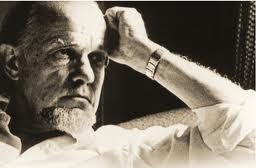
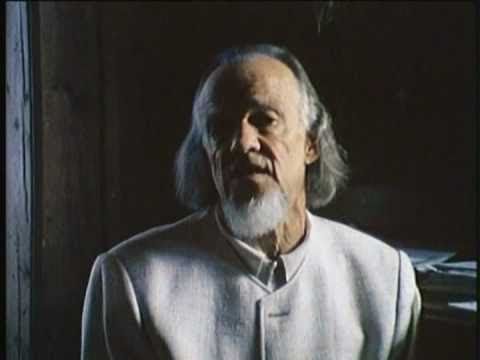
Adrian Rogers pictured below:

________________________________

Adrian Rogers, ‘rising star of Memphis,’ elected 35 years ago

NASHVILLE (BP) — Thousands of messengers had arrived in Houston to vote for Adrian Rogers in the presidential election at the 1979 Southern Baptist Convention annual meeting. Some with limited resources had traveled hundreds of miles and were sleeping in tents in hopes of restoring their denomination to theological orthodoxy.

There was just one problem: It was the night before the election and Rogers wasn’t sure that God wanted him to be nominated. When he encountered fellow conservative leaders Paige Patterson and Jerry Vines in a hotel lobby, the three of them, along with Rogers’ wife Joyce, went to pray about the matter in Rogers’ room.

After hours of seeking God’s will, Joyce Rogers, feeling God’s leading, signaled to her husband, and he said, “I will do it.”

The following afternoon, Rogers, pastor of Bellevue Baptist Church in Memphis, Tenn., was elected over five other candidates on the first ballot with 51 percent of the vote. The Conservative Resurgence had begun.

Thirty-five years later, observers say Rogers, who died in 2005, was the pivotal leader in the SBC’s struggle to make belief in the Bible’s inerrancy a bedrock commitment of all convention entities — a commitment that undergirds Southern Baptists’ evangelistic outreach at home and abroad.

Inerrancy is the doctrine that the Bible is completely free from error regarding theology, history, science and every other matter to which it speaks. The group who advocated inerrancy and elected Rogers labeled themselves “conservatives,” a reference to theology more than political ideology. Opponents of the conservatives — many of whom held orthodox beliefs but thought theological diversity should be tolerated in the SBC — were called “moderates.”

Frank S. Page, president of the SBC Executive Committee, said he is excited to see a young generation of pastors who believe the Word of God and hold to a high degree of understanding of its authenticity. “I believe that this new reality is directly attributable to great men who stood strong for the Gospel and especially Dr. Adrian Rogers,” he said. “His election 35 years ago signaled a grassroots movement that has changed our entire denominational mindset. Thank God for Dr. Adrian Rogers.”

‘Manning the pumps’

Despite the last-minute decision to run, Rogers was motivated to serve the convention by events stretching back to his days as a student at Stetson University in Florida when he learned that some professors funded by the Cooperative Program questioned doctrines that most Southern Baptists regarded as foundational to the Christian faith.

In one class taught by an ordained Baptist minister, Rogers “heard the great historic truths of the faith demeaned over and over,” Joyce Rogers wrote in “Love Worth Finding,” a biography of her husband. After class one day, Rogers gathered the courage to confront his professor and asked, “Sir, are you really saved?”

In response the professor defined salvation as “that experience when a man escapes the consequences of a maladjustment to his fellow man” and said, “I don’t know if there is a heaven or hell.”

Soon Rogers learned that the problem in Baptist life was not isolated to his university.

By the mid-20th century, “the view that the Bible was not the Word of God had become common among professors at Southern Baptist seminaries,” Baptist historian Gregory Wills wrote in “Southern Baptist Theological Seminary, 1859-2009.”

Wills explained that for much of the 20th century, seminary administrators tried to persuade the denomination that their professors were orthodox while at the same time trying to persuade professors to conceal their more objectionable views, revealing them only at strategic moments to sympathetic audiences. Southern Seminary professor Bill Hull, for example, was known to hide progressive views in book reviews on modern French or Belgian New Testament scholarship. “I often like to ‘bury’ such comments in material that will be read only by those who need to see it,” Hull wrote in a 1966 letter to Southern Seminary President Duke McCall.

Occasionally, however, Southern Baptists caught a glimpse of what seminaries were teaching.

In 1961, Midwestern Baptist Theological Seminary professor Ralph Elliott’s “The Message of Genesis,” published by the Baptist Sunday School Board, argued that some of the stories in Genesis were historically inaccurate, including the flood and the sacrifice of Isaac. Sixteen of the SBC’s 28 state paper editors criticized the book, and the 1962 annual meeting in San Francisco adopted a motion expressing “abiding and unchanging objection to the dissemination of theological views in any of our seminaries which would undermine … faith in the historical accuracy and doctrinal integrity of the Bible.”

Eventually Elliott was fired. But C.R. Daley, editor of Kentucky Baptists’ Western Recorder journal, said there were many other seminary professors like him.

If Elliot is “a heretic, then he is one of many,” Daley said according to a 1983 Christianity Today article. “… Professors in all our seminaries know that Elliott is in the stream of thinking with most of them, and is more in the center than some.”

Rogers believed that some seminary administrators were being dishonest about what faculty members believed and that some faculty held views that were unacceptable to the Southern Baptists who funded them.

The problem wasn’t isolated to the seminaries. In 1969, the Sunday School Board published a commentary on Genesis by British scholar G. Henton Davies that claimed Genesis 1-11 was not historical and that Abraham was mistaken in his belief that God commanded him to sacrifice Isaac. The 1970 SBC passed a motion calling for the book to be withdrawn and rewritten.

Rogers believed that he faced a choice: leave the convention or lead a change.

“Adrian considered leaving the denomination,” Joyce Rogers wrote. “This would be a major step should he do so. It would require his leading his church to come out of the denomination or else resigning. But in his heart he believed something could and should be done. He used this analogy. The Southern Baptist Convention is a good old ship that has taken on much water and is slowly sinking. The choices seemed to be to abandon the ship or to man the pumps. He chose the latter and was ultimately blessed in ‘manning the pumps’ along with others.”

‘Rising star’ of Memphis

As Rogers was realizing the extent of the problem, other conservatives were realizing what to do about it.

Paul Pressler, a judge in Houston, and William Powell, editor of the Southern Baptist Journal, deduced that the key to changing the convention was winning the presidency. The president appointed the Committee on Committees, which in turn nominated the Committee on Boards (now the Committee on Nominations). The Committee on Boards then nominated trustees of the SBC entities. Conservative trustees could change the entities.

A president who appointed conservatives to the Committee on Committees would lead to conservative trustees in two years. A 10-year string of conservative presidents would lead to all the convention’s trustee boards being controlled by proponents of inerrancy — since only a percentage of trustee seats became vacant each year.

Pressler banded with Patterson and others to translate the plan into action. Traveling the nation, they organized conservatives to elect a conservative president in 1979. Rogers, who had been nominated in 1976 against his will, was an obvious candidate for the job. But part of Pressler and Patterson’s strategy was to keep Rogers away from their informal organization so he wouldn’t be labelled a denominational troublemaker, hurting his chances at election.

Potential presidential candidates like Rogers, Vines and Charles Stanley “were deliberately kept out of what was happening during the first five years of the controversy,” Patterson said in a 1994 interview. “They were aware of it and knew of it but had nothing to do with it whatsoever. That was done on purpose because anybody who was a conceivable candidate for president we deliberately kept at arm’s length.”

With the 1979 convention approaching, conservatives focused on Rogers. Opponents focused on him too, knowing the coming battle in the SBC would be contentious.

Daley, a moderate, said in a lecture at Southern Seminary five years later, “Some of us saw the rising star out of Memphis named Adrian Rogers — in my mind the most brilliant of his group, the one who poses the gravest threat to the Southern Baptist Convention. It was obvious that he was to be the king. It was obvious to some of us that he wasn’t the kind of king we wanted.”

The man to lead

Rogers arrived in Houston believing he shouldn’t run. Before a Pastors’ Conference session in which Rogers and W.A. Criswell, pastor of First Baptist Church in Dallas, were to preach, Criswell told him, “Lad, you need to let us nominate you.” Rogers replied, “Dr. Criswell, I don’t believe that’s what God wants me to do.” Nonetheless, Criswell announced in his sermon, “We will have a great time here if for no other reason than to elect Adrian Rogers as our president” — a remark that drew loud cheers.

Despite Rogers’ reluctance, messengers were already en route to Houston, planning to vote for him, some at great personal sacrifice. Among them was Sheldon Hale, then the 32-year-old pastor of Andrew Baptist Church in Bowling Green, Ky. With a small convention budget from his church, Hale along with his wife and three young children drove cross country to Houston and slept in a tent outside the city.

Hale told Baptist Press that he knew other Southern Baptists who, like him, were concerned about the direction of the convention but didn’t have money to stay in expensive hotels near the convention center. They either camped or stayed in cheap hotels far from the annual meeting so that they could cast a vote for Rogers.

“I would do it again,” Hale, now pastor of First Baptist Church in Silver Grove, Ky., near Cincinnati, said in an interview. “It was hard to travel with three little ones and be camped out. But not only did we enjoy the time with them and they got to experience the time at the convention, we felt like we were part of history.”

With history in the making, God began to change Rogers’ mind. First, Bertha Smith, a longtime Southern Baptist missionary to China called him to say, “Brother Adrian, God wants you to do this.” Then another missionary to China, Charles Culpepper, sent a message: “Tell Adrian that I have been with God, and he should allow his nomination.”

Adrian and Joyce Rogers had devised a system where she would say a number between one and 10 to indicate how confident she was that Adrian’s nomination was God’s will. The number never rose above five. Yet as Rogers, Vines and Patterson prayed on the eve of the election, Joyce Rogers held up 10 fingers — and Adrian agreed.

When Rogers was elected the next day, surprise was audible in the hall. Some messengers gasped. Others whooped and embraced. But Rogers, himself a bit surprised, had a sense of God’s guidance and purpose.

Following Rogers, an unbroken line of conservative presidencies — including two more terms for Rogers between 1986 and 1988 — helped the convention return to biblical orthodoxy in its entities. All agree that the turnaround was not the work of any one man. Still, even his opponents say there was something special about Rogers’ election 35 years ago.

Moderate church historian Walter Shurden, who was dean of Southern Seminary’s school of theology in the early 1980s, viewed Rogers as the crucial figure in the SBC’s conservative movement, which he called “fundamentalism.”

“I sincerely doubt … that fundamentalism could have known its measure of success apart from Adrian Rogers,” Shurden wrote. “… No other fundamentalist could rival him as preacher, debater, or intransigent believer. When the leadership of the fundamentalists met for their strategy sessions, the press releases often read, ‘Adrian Rogers presided.’ He was by far fundamentalists’ most capable leader and moderates’ most formidable opponent.”

SBC President Fred Luter called Rogers a “giant of the faith” and said he helped save the convention.

“Thirty five years ago I was a brand-new Christian sharing the life-changing Gospel of Jesus Christ on the street corners of New Orleans, trying to transform the neighborhood I grew up in,” Luter, pastor of Franklin Avenue Baptist Church in New Orleans, said. “At the same time Dr. Adrian Rogers was being elected as president of the Southern Baptist Convention, trying to transform an entire convention back to believing in the Bible as the true Word of God.

“I shudder to think what our beloved convention would be if not for the courageous stand of Dr. Rogers, Dr. Patterson, Judge Pressler and so many others who stood up for God’s Word at a very critical time. May we never forget what this giant of the faith did for the future of the Southern Baptist Convention. Dr. Rogers was truly not only a gift to the SBC but also to the body of Christ.”


David Roach is chief national correspondent for Baptist Press, the Southern Baptist Convention’s news service. BP reports on missions, ministry and witness advanced through the Cooperative Program and on news related to Southern Baptists’ concerns nationally and globally. Get Baptist Press headlines and breaking news on Twitter (@BaptistPress), Facebook (Facebook.com/BaptistPress) and in your email (baptistpress.com/SubscribeBP.asp).

___________________

Examples of Adrian Rogers and Francis Schaeffer Confronting Modern Culture With The Bible! Part 2 Evolutionist William Provine

_______________________________

Adrian Rogers pictured below:

__________________

I sent William Provine a letter several months ago with a CD of the following message by Adrian Rogers and in the letter were several arguments from Schaeffer.

https://www.youtube.com/watch?v=LhlG_r1GDyM


Today I am sending out another letter to Dr. Provine and the package includes the following message from Adrian Rogers.

Evolution: Fact of Fiction? By Adrian Rogers

In the 1970’s and 1980’s I was a member of Bellevue Baptist in Memphis where Adrian Rogers was pastor and was a student at ECS from the 5th grade to the 12th grade where I was introduced to the books and films of Francis Schaeffer. At ECS my favorite teacher was Mark Brink who actually played both film series to us (WHATEVER HAPPENED TO THE HUMAN RACE? and HOW SHOULD WE THEN LIVE?) during our senior year and believe it or not after I graduated I would come back and join some of his future classes when the film was playing again because I couldn’t get enough of Schaeffer’s film series!!!! During this time I was amazed at how many prominent figures in the world found their way into the works of both Adrian Rogers and Francis Schaeffer and I wondered what it would be like if these individuals were exposed to the Bible and the gospel. Therefore, over 20 years ago I began sending the messages of Adrian Rogers and portions of the works of Francis Schaeffer to many of the secular figures that they mentioned in their works.

Dr Provine is a very honest believer in Darwinism. He rightly draws the right conclusions about the implications of Darwinism. I have attacked optimistic humanism many times in the past and it seems that he has confirmed all I have said about it. Notice the film clip below and the quote that Francis Schaeffer comments on below too.

Atheist William B Provine from the movie Expelled

Francis Schaeffer Whatever Happened to the Human Race (Episode 1) ABORTION

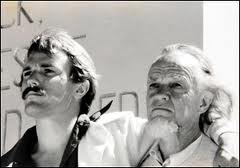
Francis Schaeffer with his son Franky pictured below. Francis and Edith (who passed away in 2013) opened L’ Abri in 1955 in Switzerland.

In the book WHATEVER HAPPENED TO THE HUMAN RACE? written by Francis Schaeffer and Dr. C. Everett Koop, Schaeffer asserts:

The media today is humanistic and relativistic…A good example of this lack of objectivity is public television. One of the public television program directors we approached in Washington, D.C., refused to watch the film WHATEVER HAPPENED TO THE HUMAN RACE?, or even to consider it. As soon as she heard of the position it took concerning abortion, she made the excuse, “We can’t program anything that presents only one point of view.”

At the same time public television was running HARD CHOICES, a program totally slanted in favor of abortion. The study guide which accompanied the series HARD CHOICES speaks clearly for the total view of a materialistic final reality:

The vast majority of people believe there is a design or force in the universe; that it works outside the ordinary mechanics of cause and effect; that it is somehow responsible for both the visible and the moral order of the world. Modern biology has undermined this assumption. Even though it is often asserted that science is fully compatible with our Judeo-Christian tradition, in fact it is not… To be sure, even in antiquity, the mechanistic view of life–that chance was responsible for the shape of the world– had a few adherents. But belief in overarching order was dominant; it can be seen as easily in such scientists as Newton, Harvey, and Einstein as in the theologians Augustine, Luther, and Tillich. But beginning with Darwin, biology has undermined that tradition. Darwin in effect asserted that all living organisms had been created by a combination of chance and necessity–natural selection.

In the twentieth century, this view of life has been reinforced by a whole series of discoveries…

Mind is the only remaining frontier, but it would be shortsighted to doubt that it can, one day, be duplicated in the form of thinking robots or analyzed in terms of the chemistry and electricity of the brain. 

The extreme mechanic view of life, which every new discovery in biology tends to confirm, has certain implications. First, God has no role in the physical world…

Second, except for the laws of probability and cause and effect, there is no organizing principle in the world, and no purpose. Thus, there are no moral or ethical laws that belong to the nature of things, no absolute guiding principles for human society…

The mechanistic view of life has perhaps only one tangible implication for ethics: we should feel freer to adapt our morality to new social situations. But we are already fairly adept at that…As a result, ethical choices are likely to become more difficult, not because people are less moral but because they will be unable to justify their choices with fairy tales. (William B. Provine, “The End of Ethics?” in HARD CHOICES ( a magazine companion to the television series HARD CHOICES, Seattle: KCTS-TV, channel 9, University of Washington, 1980, pp. 2-3).

Here is public tax money being used not only in favor of abortion but to teach the whole view of a materialistic, mechanistic universe, shaped only by chance, with no final purpose and with morals  (and law) purely a matter of social choice. The Judeo-Christian view is pushed into the catagory of “fairy tales.”

Francis Schaeffer “BASIS FOR HUMAN DIGNITY” Whatever…HTTHR

________________________________________________________________________________________________________________________________

Francis Schaeffer has written extensively on art and culture spanning the last 2000 years and here are some posts I have done on this subject before : Francis Schaeffer’s “How should we then live?” Video and outline of episode 10 “Final Choices” episode 9 “The Age of Personal Peace and Affluence”episode 8 “The Age of Fragmentation”episode 7 “The Age of Non-Reason” episode 6 “The Scientific Age” episode 5 “The Revolutionary Age” ,  episode 4 “The Reformation” episode 3 “The Renaissance”episode 2 “The Middle Ages,”, and  episode 1 “The Roman Age,” . My favorite episodes are number 7 and 8 since they deal with modern art and culture primarily.(Joe Carter rightly noted, “Schaefferwho always claimed to be an evangelist and not a philosopher—was often criticized for the way his work oversimplified intellectual history and philosophy.” To those critics I say take a chill pill because Schaeffer was introducing millions into the fields of art and culture!!!! !!! More people need to read his works and blog about them because they show how people’s worldviews affect their lives!

J.I.PACKER WROTE OF SCHAEFFER, “His communicative style was not thaof a cautious academiwho labors foexhaustive coverage and dispassionate objectivity. It was rather that of an impassioned thinker who paints his vision of eternal truth in bold strokes and stark contrasts.Yet it is a fact that MANY YOUNG THINKERS AND ARTISTS…HAVE FOUND SCHAEFFER’S ANALYSES A LIFELINE TO SANITY WITHOUT WHICH THEY COULD NOT HAVE GONE ON LIVING.”

Francis Schaeffer’s works  are the basis for a large portion of my blog posts and they have stood the test of time. In fact, many people would say that many of the things he wrote in the 1960’s  were right on  in the sense he saw where our western society was heading and he knew that abortion, infanticide and youth enthansia were  moral boundaries we would be crossing  in the coming decades because of humanism and these are the discussions we are having now!)

There is evidence that points to the fact that the Bible is historically true as Schaeffer pointed out in episode 5 of WHATEVER HAPPENED TO THE HUMAN RACEThere is a basis then for faith in Christ alone for our eternal hope. This link shows how to do that.

Francis Schaeffer in Art and the Bible noted, “Many modern artists, it seems to me, have forgotten the value that art has in itself. Much modern art is far too intellectual to be great art. Many modern artists seem not to see the distinction between man and non-man, and it is a part of the lostness of modern man that they no longer see value in the work of art as a work of art.” 

Many modern artists are left in this point of desperation that Schaeffer points out and it reminds me of the despair that Solomon speaks of in Ecclesiastes.  Christian scholar Ravi Zacharias has noted, “The key to understanding the Book of Ecclesiastes is the term ‘under the sun.’ What that literally means is you lock God out of a closed system, and you are left with only this world of time plus chance plus matter.” THIS IS EXACT POINT SCHAEFFER SAYS SECULAR ARTISTS ARE PAINTING FROM TODAY BECAUSE THEY BELIEVED ARE A RESULT OF MINDLESS CHANCE.

___________

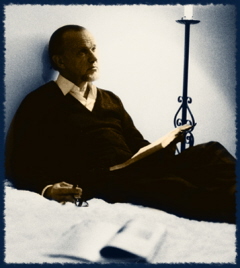
Francis Schaeffer pictured below:

___________

_______________

Francis Schaeffer pictured below:

______________

Many of these scholars have taken the time to respond back to me in the last 20 years and some of the names  included are  Ernest Mayr (1904-2005), George Wald (1906-1997), Carl Sagan (1934-1996),  Robert Shapiro (1935-2011), Nicolaas Bloembergen (1920-),  Brian Charlesworth (1945-),  Francisco J. Ayala (1934-) Elliott Sober (1948-), Kevin Padian (1951-), Matt Cartmill (1943-) , Milton Fingerman (1928-), John J. Shea (1969-), , Michael A. Crawford (1938-), (Paul Kurtz (1925-2012), Sol Gordon (1923-2008), Albert Ellis (1913-2007), Barbara Marie Tabler (1915-1996), Renate Vambery (1916-2005), Archie J. Bahm (1907-1996), Aron S “Gil” Martin ( 1910-1997), Matthew I. Spetter (1921-2012), H. J. Eysenck (1916-1997), Robert L. Erdmann (1929-2006), Mary Morain (1911-1999), Lloyd Morain (1917-2010),  Warren Allen Smith (1921-), Bette Chambers (1930-),  Gordon Stein (1941-1996) , Milton Friedman (1912-2006), John Hospers (1918-2011), and Michael Martin (1932-).

Related posts:

FRANCIS SCHAEFFER ANALYZES ART AND CULTURE Part 27 Jurgen Habermas (Featured artist is Hiroshi Sugimoto)

_____________ Jürgen Habermas Interview Uploaded on Feb 1, 2007 Rare video footage of Jurgen Habermas discussing some of his theories.http://soundcloud.com/st-hanshaugen Francis Schaeffer pictured below: ______________ Francis Schaeffer notes: At Berkeley the Free Speech Movement arose simultaneously with the hippie world of drugs. At first it was politically neither left nor right, but rather a […]

FRANCIS SCHAEFFER ANALYZES ART AND CULTURE Part 26 Bettina Aptheker (Featured artist is Krzysztof Wodiczko)

Bettina Aptheker pictured below: Moral Support: “One Dimensional Man” author Herbert Marcuse accompanies Bettina Aptheker, center, and Angela Davis’ mother, Sallye Davis, to Angela Davis’ 1972 trial in San Jose. Associated Press ___________________________________________________________________________ Francis Schaeffer has written extensively on art and culture spanning the last 2000years and here are some posts I have done on […]

FRANCIS SCHAEFFER ANALYZES ART AND CULTURE Part 25 BOB DYLAN (Part C) Francis Schaeffer comments on Bob Dylan’s song “Ballad of a Thin Man” and the disconnect between the young generation of the 60’s and their parents’ generation (Feature on artist Fred Wilson)

_____________________ Francis Schaeffer pictured below: ____ Elston Gunn- Ballad of A Thin Man, Live Sheffield 1966 Francis Schaeffer has written extensively on art and culture spanning the last 2000 years and here are some posts I have done on this subject before : Francis Schaeffer’s “How should we then live?” Video and outline of episode 10 […]

FRANCIS SCHAEFFER ANALYZES ART AND CULTURE Part 24 BOB DYLAN (Part B) Francis Schaeffer comments on Bob Dylan’s words from HIGHWAY 61 REVISITED!! (Feature on artist Susan Rothenberg)

______________ Just like tom thumb´s blues (no direction home) Francis Schaeffer has written extensively on art and culture spanning the last 2000 years and here are some posts I have done on this subject before : Francis Schaeffer’s “How should we then live?” Video and outline of episode 10 “Final Choices” , episode 9 “The Age of Personal […]

FRANCIS SCHAEFFER ANALYZES ART AND CULTURE Part 23 BOB DYLAN (Part A) (Feature on artist Josiah McElheny)Francis Schaeffer on the proper place of rebellion with comments by Bob Dylan and Samuel Rutherford

Bob Dylan – When You Gonna Wake Up Sermon – Tempe 1979 Published on Apr 28, 2012 Probably the most contentious show in Dylan’s long history of live performance. The between-song “raps” were a fixture of Dylan’s performances during his “Christian” period, but early during the Slow Train Coming tour, Dylan and his band encountered […]

FRANCIS SCHAEFFER ANALYZES ART AND CULTURE Part 22 “The School of Athens by Raphael” (Feature on the artist Sally Mann)

How Should We Then Live? Episode 2 Part 2/2 RebelShutze· __________ Episode III – The Renaissance JasonUellCrank How Should We Then Live? Episode 3 Part 1/2 RebelShutze Published on Jun 4, 2012 The third part of Dr. Francis Schaeffer’s ten-part series based off of his book “How Should We Then Live?” This is Episode 3, […]

FRANCIS SCHAEFFER ANALYZES ART AND CULTURE Part 21 William B. Provine (Feature on artist Andrea Zittel)

_______ Dr Provine is a very honest believer in Darwinism. He rightly draws the right conclusions about the implications of Darwinism. I have attacked optimistic humanism many times in the past and it seems that he has confirmed all I have said about it. Notice the film clip below and the quote that Francis Schaeffer […]

FRANCIS SCHAEFFER ANALYZES ART AND CULTURE Part 20 Woody Allen and Materialistic Humanism: The World-View of Our Era (Feature on artist Ida Applebroog)

___________________________________________________________________________ Francis Schaeffer “BASIS FOR HUMAN DIGNITY” Whatever…HTTHR ___________________ Woody Allen on Ingmar Bergman and the death. Woody Allen et Marshall McLuhan : « If life were only like this! » What Makes Life Worth Living? – Answered by Woody Allen. ______________ Diane Keaton et Woody Allen What Makes Life Worth Living? _____________________________________________________________________________________________________________________________________ Dr. Francis Schaeffer – […]

FRANCIS SCHAEFFER ANALYZES ART AND CULTURE Part 19 Movie Director Luis Bunuel (Feature on artist Oliver Herring)

___________ Francis Schaeffer pictured below: ____ Dr. Francis Schaeffer – Episode 8 – The Age of Fragmentation NoMirrorHDDHrorriMoN In the book HOW SHOULD WE THEN LIVE? Schaeffer notes: Especially in the sixties the major philosophic statements which received a wide hearing were made through films. These philosophic movies reached many more people than philosophic writings […]

FRANCIS SCHAEFFER ANALYZES ART AND CULTURE Part 18 “Michelangelo’s DAVID is the statement of what humanistic man saw himself as being tomorrow” (Feature on artist Paul McCarthy)

In this post we are going to see that through the years  humanist thought has encouraged artists like Michelangelo to think that the future was extremely bright versus the place today where many artist who hold the humanist and secular worldview are very pessimistic.   In contrast to Michelangelo’s DAVID when humanist man thought he […]

__________

WHO DID FRANCIS SCHAEFFER INFLUENCE?

WHO DID FRANCIS SCHAEFFER INFLUENCE? Here are some key people listed below:

Theologians Harold O. J. Brown, David Wells, Os Guinness, Timothy George, John Warwick Montgomery, John Piper, Norm Geisler, Wayne Grudem and L. Russ Bush, founders of ministries including James Dobson, D. James Kennedy, Jerry Falwell, R. C. Sproul, Chuck Colson and Tim and Beverley LaHaye, denomination leaders including Paige Patterson, Richard Land and James Montgomery Boice, publishers including Lane Dennis ofCrossway Books and Terry Eastland of The Weekly Standard, writers including Cal Thomas and Frank Peretti, and political leaders including Ronald Reagan, James and Susan Baker, C. Everett Koop, Jack Kemp and Gary Bauer—

How Francis Schaeffer Influenced Me

by Daniel R. Heimbach

I can honestly say that, besides my parents and Jesus Christ, no individual has influenced me more than Francis A. Schaeffer, a pastor-theologian most consider to have been among the greatest evangelical voices, and perhaps even the most influential, of the twentieth century. But Francis Schaeffer and his wife, Edith, were also close friends of my missionary grandparents. For me the Francis and Edith Schaeffer who inspired a generation of evangelicals, myself included, with the importance of engaging the culture for Christ, were also the family friends who nursed my grandparents to health after returning to the United States emaciated following release from a Japanese prison in a Prisoner of War exchange during World War II.

That is the reason my grandmother, Bertha Byram, was one of the earliest and most faithful prayer partners of the work called “L’Abri” founded in Europe by the Schaeffers after the war. That is why my grandmother is twice mentioned in The Tapestry. And that is why the communion table in the chapel the Schaeffer’s built in Huemoz, Switzerland, is dedicated to my grandmother. But I did not know this connection until after I was drawn to Schaeffer’s books for my own reasons.

schaefferheimbach001

I first became aware of Schaeffer while a student in high school struggling with matters of faith and culture, and on reading his first book, Escape from Reason, I found him so keenly in tune with my questions I devoured nearly all he wrote as it was published. That was in the late 1960s and early 1970s when Western culture, and especially American culture, was in turmoil from so many others of my age rebelling against all authority and tradition. Then, like many others on discovering Schaeffer, I also traveled to the mountains of Switzerland to meet him, and ended staying several months trying to understand what was taking place and what it meant to be authentically Christian in a world fast becoming radically post-Christian.

I learned much from Schaeffer that has affected me ever since, but as much from his life as from his thought, as much from his demonstrating Christian love as from his defending biblical truth, as much from how he respected the value and dignity of everyone he met however small or great as from what I learned from his writing. Schaeffer is the one who taught me that truth is a reality we must live and not just believe, and that if Christians do not live God’s truth the world has every right to reject what we claim is right and true. And Schaeffer is the one who taught me, more by example than words, how Christians can and must stand for purity and holiness without ugliness or harshness and should weep for those pursuing what we abhor.

Schaeffer’s many books, especially The Mark of the Christian, Pollution and the Death of Man, How Should We Then Live?, Whatever Happened to the Human Race?, and A Christian Manifesto, were instrumental in forming what has become for me a strong sense of calling or mission in the world, which is to promote God’s truth in a culture that is rejecting it, and doing so especially as it concerns resisting moral anarchy and political tyranny.

Francis Schaeffer influenced my decision to become a culturally astute moral influence in Washington, D.C., an effort that resulted in affecting a wide range of issues in public policy. Schaeffer influenced my role in leading the fight against normalizing treatment of homosexual behavior in the military services. Schaeffer influenced my running for Congress in 2000. Schaeffer influenced my vision to develop what is now the strongest program in the world for training evangelicals in biblically uncompromising yet culturally engaged Christian ethics. And Schaeffer has influenced the sort of books I write, all of which have been written to resource evangelical witness on moral issues contested in the culture.

But while Schaeffer had a deep and lasting impact on evangelicals of my generation, shaping the those who led the Jesus Movement, the Moral Majority, the drafting of the Chicago Statement on Biblical Inerrancy, the first Lausanne Congress on World Evangelization, the rediscovery of classical Christian education, the formation of Crisis Pregnancy Centers, the Southern Baptist conservative resurgence, and the movement of evangelicals into politics now labeled the Christian Right—and while Schaffer played the major role in launching evangelical efforts to engage the culture on issues ranging from legalized abortion, euthanasia, sexual immorality, environmental stewardship, denying gender roles, reclaiming the arts, and education reform—and while Schaeffer was a major influence on many who rose to positions of significant leadership including theologians Harold O. J. Brown, David Wells, Os Guinness, Timothy George, John Warwick Montgomery, John Piper, Norm Geisler, Wayne Grudem and L. Russ Bush, founders of ministries including James Dobson, D. James Kennedy, Jerry Falwell, R. C. Sproul, Chuck Colson and Tim and Beverley LaHaye, denomination leaders including Paige Patterson, Richard Land and James Montgomery Boice, publishers including Lane Dennis ofCrossway Books and Terry Eastland of The Weekly Standard, writers including Cal Thomas and Frank Peretti, and political leaders including Ronald Reagan, James and Susan Baker, C. Everett Koop, Jack Kemp and Gary Bauer—the legacy of Francis A. Schaeffer is now in danger of being forgotten by a new generation that hardly knows his name much less understands how much they owe to the extraordinary influence of this passionate yet humble prophet used of God to transform and reenergize so much of what they inherit.

Of course, the ways in which any culture challenges authentically Christian witness change over time, but what Schaeffer taught evangelicals about the lordship of Christ over all areas of life, the timeless relevance of objectively reliable truth, the inerrancy of God’s Word, the marred nobility of human nature, the beauty of creation, and the meaninglessness of pretending to live in a self-centered mechanistic universe will never change and are as vitally important for evangelicals today as they were when Schaeffer held forth among us.

It is therefore strategic and absolutely critical that evangelicals revisit, reaffirm, and if necessary rediscover the legacy of Francis A. Schaeffer, lest we forget what we had and lose the art of engaging the culture without accommodating ourselves to the culture, of defending truth without being ugly, of loving those we engage without compromising purity, and of fitting our message to changing circumstances without compromising its content for fear of rejection or desire merely to be accepted by others.

The entrusting of the personal books, letters and papers of Frances A. Schaeffer, by the Francis A. Schaeffer Foundation, to the L. Russ Bush Center for Faith and Culture at Southeastern Baptist Theological Seminary could not be more timely or important. I am most grateful to my colleague, Bruce Little, and to the Schaeffer family for their vision and generosity, and I am certain this one very significant action will play a key role in revitalizing evangelical witness in contemporary culture. I pray it will also serve to inspire, benefit and aid in equipping of a new generation eager to make a biblically grounded, authentically Christian difference in the world of today.

Daniel R. Heimbach is Senior Professor of Christian Ethics at Southeastern Baptist Theological Seminary.

  1. Benjamin Pennington   •  5 months ago

    Thank you, professor. I only originally knew of Schaeffer through Piper’s “Pastor As Scholar” discussion. Recently when our church gave away our library books, I found The God Who Is There, Death In the City, and Genesis In Space and Time. I had those books on my shelf for a year l, but started reading the God Who Is There a couple of weeks ago. I absolutely fell in love with his thinking and understanding if man’s despair, need for a universal unifying truth, and the way Schaeffer opened up my eyes to famous artists and what they were trying to accomplish. (I knew of John Cage years ago and hated his music, but Schaeffer really made sense of him for me.) So I have decided to plow through everything else Schaeffer wrote.

    By the way, I enjoyed this article of yours. I am a GGBTS student in California, possibly transferring my units to SEBTS online. I hope to have the privilege of taking a course with you.

  2. Everette Hatcher   •  about 4 hours ago

    Your comment is awaiting moderation.

    By the way I have reblogged this fine article today on my blog.

    I am Everette Hatcher and in the 1970’s and 1980’s I was a member of Bellevue Baptist in Memphis where Adrian Rogers was pastor and was a student at Evangelical Christian School from the 5th grade to the 12th grade where I was introduced to the books and films of Francis Schaeffer. At ECS my favorite teacher was Mark Brink who actually played both film series to us (WHATEVER HAPPENED TO THE HUMAN RACE? and HOW SHOULD WE THEN LIVE?) during our senior year and believe it or not after I graduated I would come back and join some of his future classes when the film was playing again because I couldn’t get enough of Schaeffer’s film series!!!!

    During this time I was amazed at how many prominent figures in the world found their way into the works of both Adrian Rogers and Francis Schaeffer and I wondered what it would be like if these individuals were exposed to the Bible and the gospel. Therefore, over 20 years ago I began sending the messages of Adrian Rogers and portions of the works of Francis Schaeffer to many of the secular figures that they mentioned in their works. Let me give you some examples and tell you about some lessons that I have learned.

    I have learned several things about atheists in the last 20 years while I have been corresponding with them. First, they know in their hearts that God exists and they can’t live as if God doesn’t exist, but they will still search in some way in their life for a greater meaningSecond, many atheists will take time out of their busy lives to examine the evidence that I present to them. Third, there is hope that they will change their views.

    Let’s go over again a few points I made at the first of this post.  My first point is backed up by  Romans 1:18-19 (Amplified Bible) ” For God’s wrath and indignation are revealed from heaven against all ungodliness and unrighteousness of men, who in their wickedness REPRESS and HINDER the truth and make it inoperative. For that which is KNOWN about God is EVIDENT to them and MADE PLAIN IN THEIR INNER CONSCIOUSNESS, because God  has SHOWN IT TO THEM,”(emphasis mine). I have discussed this many times on my blog and even have interacted with many atheists from CSICOP in the past. (I first heard this from my pastor Adrian Rogers back in the 1980’s.)

    My second point is that many atheists will take the time to consider the evidence that I have presented to them and will respond. The late Adrian Rogers was my pastor at Bellevue Baptist when I grew up and I sent his sermon on evolution and another on the accuracy of the Bible to many atheists to listen to and many of them did. I also sent many of the arguments from Francis Schaeffer also.

    Many of these scholars have taken the time to respond back to me in the last 20 years and some of the names  included are  Ernest Mayr (1904-2005), George Wald (1906-1997), Carl Sagan (1934-1996),  Robert Shapiro (1935-2011), Nicolaas Bloembergen (1920-),  Brian Charlesworth (1945-),  Francisco J. Ayala (1934-) Elliott Sober (1948-), Kevin Padian (1951-), Matt Cartmill (1943-) , Milton Fingerman (1928-), John J. Shea (1969-), , Michael A. Crawford (1938-), (Paul Kurtz (1925-2012), Sol Gordon (1923-2008), Albert Ellis (1913-2007), Barbara Marie Tabler (1915-1996), Renate Vambery (1916-2005), Archie J. Bahm (1907-1996), Aron S “Gil” Martin ( 1910-1997), Matthew I. Spetter (1921-2012), H. J. Eysenck (1916-1997), Robert L. Erdmann (1929-2006), Mary Morain (1911-1999), Lloyd Morain (1917-2010),  Warren Allen Smith (1921-), Bette Chambers (1930-),  Gordon Stein (1941-1996) , Milton Friedman (1912-2006), John Hospers (1918-2011), and Michael Martin (1932-).
    Third, there is hope that an atheist will reconsider his or her position after examining more evidence. Twenty years I had the opportunity to correspond with two individuals that were regarded as two of the most famous atheists of the 20th Century, Antony Flew and Carl Sagan.  I had read the books and seen the films of the Christian philosopher Francis Schaeffer and he had discussed the works of both of these men. I sent both of these gentlemen philosophical arguments from Schaeffer in these letters and in the first letter I sent a cassette tape of my pastor’s sermon IS THE BIBLE TRUE? You may have noticed in the news a few years that Antony Flew actually became a theist in 2004 and remained one until his death in 2010. Carl Sagan remained a skeptic until his dying day in 1996.Antony Flew wrote me back several times and in the  June 1, 1994 letter he  commented, “Thank you for sending me the IS THE BIBLE TRUE? tape to which I have just listened with great interest and, I trust, profit.” I later sent him Adrian Rogers’ sermon on evolution too. 
     The ironic thing is back in 2008 I visited the Bellevue Baptist Book Store and bought the book There Is A God – How the World’s Most Notorious Atheist Changed His Mind, by Antony Flew, and it is in this same store that I bought the message by Adrian Rogers in 1994 that I sent to Antony Flew. Although Antony Flew did not make a public profession of faith he did admit that the evidence for God’s existence was overwhelming to him in the last decade of his life. His experience has been used in a powerful way to tell  others about Christ. Let me point out that while on airplane when I was reading this book a gentleman asked me about the book. I was glad to tell him the whole story about Adrian Rogers’ two messages that I sent to Dr. Flew and I gave him CD’s of the messages which I carry with me always. Then at McDonald’s at the Airport, a worker at McDonald’s asked me about the book and I gave him the same two messages from Adrian Rogers too.

    Francis Schaeffer’s words would be quoted in many of these letters that I would send to famous skeptics and I would always include audio messages from Adrian Rogers. Perhaps Schaeffer’s most effective argument was concerning Romans 1 and how a person could say that he didn’t believe that the world had a purpose or meaning but he could not live that way in the world that God created and with the conscience that every person is born with.

    Google “Adrian Rogers Francis Schaeffer” and the first 4 things that come up will be my blog posts concerning effort to reach these atheists. These two great men proved that the scriptures Hebrews 4:12 and Isaiah 55:11 are true, “For the word of God is alive and active. Sharper than any double-edged sword, it penetrates even to dividing soul and spirit, joints and marrow; it judges the thoughts and attitudes of the heart.” and “so is my word that goes out from my mouth: It will not return to me empty, but will accomplish what I desire and achieve the purpose for which I sent it.”

Related posts:

FRANCIS SCHAEFFER ANALYZES ART AND CULTURE Part 27 Jurgen Habermas (Featured artist is Hiroshi Sugimoto)

_____________ Jürgen Habermas Interview Uploaded on Feb 1, 2007 Rare video footage of Jurgen Habermas discussing some of his theories.http://soundcloud.com/st-hanshaugen Francis Schaeffer pictured below: ______________ Francis Schaeffer notes: At Berkeley the Free Speech Movement arose simultaneously with the hippie world of drugs. At first it was politically neither left nor right, but rather a […]

FRANCIS SCHAEFFER ANALYZES ART AND CULTURE Part 26 Bettina Aptheker (Featured artist is Krzysztof Wodiczko)

Bettina Aptheker pictured below: Moral Support: “One Dimensional Man” author Herbert Marcuse accompanies Bettina Aptheker, center, and Angela Davis’ mother, Sallye Davis, to Angela Davis’ 1972 trial in San Jose. Associated Press ___________________________________________________________________________ Francis Schaeffer has written extensively on art and culture spanning the last 2000years and here are some posts I have done on […]

FRANCIS SCHAEFFER ANALYZES ART AND CULTURE Part 25 BOB DYLAN (Part C) Francis Schaeffer comments on Bob Dylan’s song “Ballad of a Thin Man” and the disconnect between the young generation of the 60’s and their parents’ generation (Feature on artist Fred Wilson)

_____________________ Francis Schaeffer pictured below: ____ Elston Gunn- Ballad of A Thin Man, Live Sheffield 1966 Francis Schaeffer has written extensively on art and culture spanning the last 2000 years and here are some posts I have done on this subject before : Francis Schaeffer’s “How should we then live?” Video and outline of episode 10 […]

FRANCIS SCHAEFFER ANALYZES ART AND CULTURE Part 24 BOB DYLAN (Part B) Francis Schaeffer comments on Bob Dylan’s words from HIGHWAY 61 REVISITED!! (Feature on artist Susan Rothenberg)

______________ Just like tom thumb´s blues (no direction home) Francis Schaeffer has written extensively on art and culture spanning the last 2000 years and here are some posts I have done on this subject before : Francis Schaeffer’s “How should we then live?” Video and outline of episode 10 “Final Choices” , episode 9 “The Age of Personal […]

FRANCIS SCHAEFFER ANALYZES ART AND CULTURE Part 23 BOB DYLAN (Part A) (Feature on artist Josiah McElheny)Francis Schaeffer on the proper place of rebellion with comments by Bob Dylan and Samuel Rutherford

Bob Dylan – When You Gonna Wake Up Sermon – Tempe 1979 Published on Apr 28, 2012 Probably the most contentious show in Dylan’s long history of live performance. The between-song “raps” were a fixture of Dylan’s performances during his “Christian” period, but early during the Slow Train Coming tour, Dylan and his band encountered […]

FRANCIS SCHAEFFER ANALYZES ART AND CULTURE Part 22 “The School of Athens by Raphael” (Feature on the artist Sally Mann)

How Should We Then Live? Episode 2 Part 2/2 RebelShutze· __________ Episode III – The Renaissance JasonUellCrank How Should We Then Live? Episode 3 Part 1/2 RebelShutze Published on Jun 4, 2012 The third part of Dr. Francis Schaeffer’s ten-part series based off of his book “How Should We Then Live?” This is Episode 3, […]

FRANCIS SCHAEFFER ANALYZES ART AND CULTURE Part 21 William B. Provine (Feature on artist Andrea Zittel)

_______ Dr Provine is a very honest believer in Darwinism. He rightly draws the right conclusions about the implications of Darwinism. I have attacked optimistic humanism many times in the past and it seems that he has confirmed all I have said about it. Notice the film clip below and the quote that Francis Schaeffer […]

FRANCIS SCHAEFFER ANALYZES ART AND CULTURE Part 20 Woody Allen and Materialistic Humanism: The World-View of Our Era (Feature on artist Ida Applebroog)

___________________________________________________________________________ Francis Schaeffer “BASIS FOR HUMAN DIGNITY” Whatever…HTTHR ___________________ Woody Allen on Ingmar Bergman and the death. Woody Allen et Marshall McLuhan : « If life were only like this! » What Makes Life Worth Living? – Answered by Woody Allen. ______________ Diane Keaton et Woody Allen What Makes Life Worth Living? _____________________________________________________________________________________________________________________________________ Dr. Francis Schaeffer – […]

FRANCIS SCHAEFFER ANALYZES ART AND CULTURE Part 19 Movie Director Luis Bunuel (Feature on artist Oliver Herring)

___________ Francis Schaeffer pictured below: ____ Dr. Francis Schaeffer – Episode 8 – The Age of Fragmentation NoMirrorHDDHrorriMoN In the book HOW SHOULD WE THEN LIVE? Schaeffer notes: Especially in the sixties the major philosophic statements which received a wide hearing were made through films. These philosophic movies reached many more people than philosophic writings […]

FRANCIS SCHAEFFER ANALYZES ART AND CULTURE Part 18 “Michelangelo’s DAVID is the statement of what humanistic man saw himself as being tomorrow” (Feature on artist Paul McCarthy)

In this post we are going to see that through the years  humanist thought has encouraged artists like Michelangelo to think that the future was extremely bright versus the place today where many artist who hold the humanist and secular worldview are very pessimistic.   In contrast to Michelangelo’s DAVID when humanist man thought he […]

MUSIC MONDAY Cary Grant as Cole Porter

______

Cary Grant as Cole Porter


night and day-you do something to me song

Uploaded on Dec 4, 2009

http://download21th.blogspot.com/
you do something to me song from night and day.Night and Day is a 1946 Technicolor Warner Bros. biographical film of the life of American composer and songwriter Cole Porter. It was directed by Michael Curtiz and produced by Arthur Schwartz, with Jack L. Warner as executive producer. The screenplay was by Charles Hoffman, Leo Townsend and William Bowers.

The music score by Ray Heindorf and Max Steiner was nominated for an Academy Award. The film features several of the best-known Porter songs, including the title song, “Night and Day”, “Begin the Beguine” and “My Heart Belongs to Daddy”.

The film stars Cary Grant as Cole Porter and Alexis Smith as Linda Lee Porter, his wife of 35 years. Monty Woolley and Mary Martin appear as themselves, and the rest of the cast includes Jane Wyman, Eve Arden, Alan Hale, Dorothy Malone, Donald Woods, and Ginny Simms.

The film is a highly fictionalized and sanitized version of Cole Porter’s life, leaving out amongst other things references to his bisexuality. A later film biography of Porter, the 2004 De-Lovely with Kevin Kline, dealt more frankly with his sexuality

____________

_________

“Bulldog” Yale fight song from “Night and Day”

Published on Jul 31, 2012

The Yale Bands is celebrating the centennial of the Cole Porter (BA ’13) fight songs!

In anticipation of our upcoming Concert Band, Jazz Ensemble, and Marching Band seasons, here’s a clip from the 1946 film “Night and Day”, featuring Cole Porter (portrayed by Cary Grant) leading a Yale singing group in the premiere of “Bulldog” as the Yale fight song.
[Clip copyrighted by Warner Bros. Entertainment]

Related posts:

Cole Porter “Let’s Do it, Let’s Fall in Love” in the movie MIDNIGHT IN PARIS

Cole Porter “Let’s Do it, Let’s Fall in Love” in the movie MIDNIGHT IN PARIS Midnight in Paris – Let’s Do It Let’s do it : Cole Porter.( Midnight in Paris ) Celebrate Wikipedia Loves Libraries at your institution in October/November. Let’s Do It, Let’s Fall in Love From Wikipedia, the free encyclopedia Jump to: […]

The Characters referenced in Woody Allen’s “Midnight in Paris” (Part 2 Cole Porter)

The song used in “Midnight in Paris” I am going through the famous characters that Woody Allen presents in his excellent movie “Midnight in Paris.”  By the way, I know that some of you are wondering how many posts I will have before I am finished. Right now I have plans to look at Fitzgerald, Heminingway, Juan […]


Open letter to President Obama (Part 700) We need a smaller government if we want to get a grip on corruption

Open letter to President Obama (Part 700)

(Emailed to White House on 6-25-13.)

President Obama c/o The White House 1600 Pennsylvania Avenue NW Washington, DC 20500

Dear Mr. President,

I know that you receive 20,000 letters a day and that you actually read 10 of them every day. I really do respect you for trying to get a pulse on what is going on out here.

The federal government debt is growing so much that it is endangering us because if things keep going like they are now we will not have any money left for the national defense because we are so far in debt as a nation. We have been spending so much on our welfare state through food stamps and other programs that I am worrying that many of our citizens are becoming more dependent on government and in many cases they are losing their incentive to work hard because of the welfare trap the government has put in place. Other nations in Europe have gone down this road and we see what mess this has gotten them in. People really are losing their faith in big government and they want more liberty back. It seems to me we have to get back to the founding  principles that made our country great.  We also need to realize that a big government will encourage waste and corruptionThe recent scandals in our government have proved my point. In fact, the jokes you made at Ohio State about possibly auditing them are not so funny now that reality shows how the IRS was acting more like a monster out of control. Also raising taxes on the job creators is a very bad idea too. The Laffer Curve clearly demonstrates that when the tax rates are raised many individuals will move their investments to places where they will not get taxed as much.

______________________

We need a smaller government if we want to get a grip on corruption.

We’ve gotten to the point where you need a guide-book to keep track of all the scandals in Washington.

As a fiscal policy wonk, I focus mostly on the sleaze at the IRS, but I also recognize that the other scandals are equally troubling.

So I’m amused by Lisa Benson’s portrayal of the…um…plumbing problems at the White House.

DC Septic Cartoon

But there’s a theme to all the scandals, regardless of whether they’re happening now under Obama or whether they happened under Bush or during the reign of previous Presidents: Many of them take place solely because government is large, bloated, and involved in areas where it doesn’t belong.

Here’s my video explaining why corruption is much more common when government is bigger.

Want Less Corruption? Shrink the Size of Government

Uploaded on Apr 21, 2009

Washington is riddled with corruption, much of which actually is legal. The politicians and other insiders claim that more ethics laws and lobbying rules are the solution. Some even say the only answer is campaign finance laws that restrict 1st Amendment rights to fully participate in the political process. This Center for Freedom and Prosperity video explores a different hypothesis and concludes that big government is inherently corrupting. http://www.freedomandprosperity.org

___________

P.S. You can see some of my favorite Benson cartoons herehereherehere,hereherehereherehereherehereherehere,hereherehereherehereherehereherehere, and here.

And here’s my favorite one, which criticized Obama’s class warfare policy and became part of my political cartoon contest.


_____________

Thank you so much for your time. I know how valuable it is. I also appreciate the fine family that you have and your commitment as a father and a husband.

Sincerely,

Everette Hatcher III, 13900 Cottontail Lane, Alexander, AR 72002, ph 501-920-5733, lowcostsqueegees@yahoo.com

Related posts:

Bailouts are legal corruption

There is no free money out there. Somebody has to always pay. Bailout Nation January 13, 2013 by Dan Mitchell I have a serious question for readers. What’s worse, bailouts for government or bailouts for the private sector? Yes, both are bad, but is it worse to bail out a bankrupt entitlement program, such as Social […]

Open letter to President Obama (Part 297)

Obamanomics: A Legacy of Wasteful Spending Published on Aug 12, 2012 by CFPEcon101 This mini-documentary from the Center for Freedom and Prosperity Foundation highlights egregious examples of wasteful spending from the so-called stimulus legislation and explains why government spending hurts economic performance. **Links to additional reading material** Thomas Sowell, “Stimulus or Sedative?” http://www.realclearpolitics.com/articles/2010/03/09/stimulus_or_sedative_104… Veronique de […]

Open letter to President Obama (Part 250)

Federal Spending by the Numbers Uploaded by HeritageFoundation on Jun 10, 2010 http://blog.heritage.org/2010/06/10/new-video-federal-spending-by-the-numbers The Federal Government is addicted to spending. Watch this video from the Heritage Foundation to learn about the trouble we are in and where to find solutions. _______   President Obama c/o The White House 1600 Pennsylvania Avenue NW Washington, DC 20500 […]

Open letter to President Obama (Part 243)

  President Obama c/o The White House 1600 Pennsylvania Avenue NW Washington, DC 20500 Dear Mr. President, I know that you receive 20,000 letters a day and that you actually read 10 of them every day. I really do respect you for trying to get a pulse on what is going on out here. Not […]

Greece going broke before the USA?

Federal Spending by the Numbers Uploaded by HeritageFoundation on Jun 10, 2010 http://blog.heritage.org/2010/06/10/new-video-federal-spending-by-the-numbers The Federal Government is addicted to spending. Watch this video from the Heritage Foundation to learn about the trouble we are in and where to find solutions. _______ Greece going broke before the USA? We got to control the entitlement mentality. Almost […]

Solyndra, oil company tax deductions, etc

Obamanomics: A Legacy of Wasteful Spending Published on Aug 12, 2012 by CFPEcon101 This mini-documentary from the Center for Freedom and Prosperity Foundation highlights egregious examples of wasteful spending from the so-called stimulus legislation and explains why government spending hurts economic performance. **Links to additional reading material** Thomas Sowell, “Stimulus or Sedative?” http://www.realclearpolitics.com/articles/2010/03/09/stimulus_or_sedative_104… Veronique de […]

Robin Hood was not a left-wing hero who stole from the rich and redistributed to the poor

Not many people know the truth about Robin Hood. Robin Hood was not a left-wing hero who stole from the rich and redistributed to the poor. Stop Maligning Robin Hood! August 20, 2012 by Dan Mitchell When I was a kid, I was a big fan of Robin Hood. I remember reading at least two books […]

Open letter to President Obama (Part 116.3)

Nassim Taleb: Time to Nationalize US Banking System? President Obama c/o The White House 1600 Pennsylvania Avenue NW Washington, DC 20500 Dear Mr. President, I know that you receive 20,000 letters a day and that you actually read 10 of them every day. I really do respect you for trying to get a pulse on […]

President Obama should go into movies after being kicked out of office this November!!!

Nassim Taleb: Time to Nationalize US Banking System? President Obama’s liberal agenda has not worked out too good in the last four years. Next Career Move for President Obama: Becoming a Movie Star! May 9, 2012 by Dan Mitchell Most people know that Ronald Reagan was an actor before he became a great President. So I […]

“Schaeffer Sunday” Taking on Ark Times Bloggers on the “Absurdity of Life without God!!” Part 5 (Do atheists avoid serving God so they can do what they want?)

The Bible and Science (Part 05)

Why Can’t Morals Be Grounded In Society?

Published on Aug 31, 2012

Dr William Lane Craig was invited by the School of Oriental and African Studies (SOAS) Christian Union, London to give a lecture titled “Can we be good without God?” In this video Dr Craig answers a question about the objectivity of morality. Should we consider morals to be objective? If so, why can’t morals be “abiding” and objectively grounded in society?

The lecture formed part of the Reasonable Faith Tour in October 2011. The Tour was sponsored by Damaris Trust, UCCF and Premier Christian Radio.

The entire lecture “Can We Be Good Without God” can be viewed here: http://youtu.be/jzlEnrJfDBc

For more resources visit Dr Craig’s website: http://www.reasonablefaith.org

We welcome your comments in the Reasonable Faith forums:
http://www.reasonablefaith.org/forums/

Be sure to visit both of our Youtube channels for more videos:
youtube.com/reasonablefaithorg and youtube.com/drcraigvideos

More videos from the tour can be viewed at: http://www.youtube.com/user/Reasonabl…

____________________________________

Dr. Francis schaeffer – The flow of Materialism

(Samuel Beckett example: Life is  meaningless, live in tension with reality)

(Modern man sees no hope for the future and has deluded himself by appealing to nonreason to stay sane. Look at the example of the lady tied to the railroad tracks in this above video as a example.)

Francis and Edith Schaeffer pictured below:

HOW SHOULD WE THEN LIVE? was both a book and a film series.

______________

_________________

Life without God in the picture is absurdity!!!. That was the view of King Solomon when he wrote the Book of Ecclesiastes 3000 years ago and it is the view of many of the modern philosophers today. Modern man has tried to come up with a lasting meaning for life without God in the picture (life under the sun), but it is not possible. Without the infinite-personal God of the Bible to reveal moral absolutes then man is left to embrace moral relativism. In a time plus chance universe man is reduced to a machine and can not find a place for values such as love. Both of Francis Schaeffer’s film series have tackled these subjects and he shows how this is reflected in the arts.

Here are some posts I have done on the series “HOW SHOULD WE THEN LIVE? : Francis Schaeffer’s “How should we then live?” Video and outline of episode 10 “Final Choices” episode 9 “The Age of Personal Peace and Affluence”episode 8 “The Age of Fragmentation”episode 7 “The Age of Non-Reason” episode 6 “The Scientific Age”  episode 5 “The Revolutionary Age” episode 4 “The Reformation” episode 3 “The Renaissance”episode 2 “The Middle Ages,”, and  episode 1 “The Roman Age,” .

In the film series “WHATEVER HAPPENED TO THE HUMAN RACE?” the arguments are presented  against abortion (Episode 1),  infanticide (Episode 2),   euthenasia (Episode 3), and then there is a discussion of the Christian versus Humanist worldview concerning the issue of “the basis for human dignity” in Episode 4 and then in the last episode a close look at the truth claims of the Bible.

I have discussed many subjects with my liberal friends over at the Ark Times Blog in the past and I have taken them on now on the subject of the absurdity of life without God in the picture. Most of my responses included quotes from William Lane Craig’s book THE ABSURDITY OF LIFE WITHOUT GOD.  Here is the result of one of those encounters from June of 2013:

Hackett’s secular atheist worldview could only lead to one conclusion and sure enough he stated, “Yeah! SR you’re going to the same place I am…straight into the dirt.”

I SALUTE YOU HACKETT FOR FOLLOWING A GOOD LINE OF LOGIC!!!! THIS QUOTE FROM BERTRAND RUSSELL COMES TO THE SAME CONCLUSION THAT YOU DO, “All the noonday brightness of human genius, [is] destined to extinction in the vast death of the solar system, and that the whole temple of Man’s achievement must inevitably be buried beneath the debris of a universe in ruins.” (Bertrand Russell, “A Free Man’s Worship,” Two Modern Essays on Religion (Hanover, NH: Westholm Publications, 1959) 25)

DO YOU REALLY BELIEVE THERE IS NO GOD OR DO YOU WANT TO AVOID BELIEVING IN GOD BECAUSE YOU DON’T WANT TO OBEY HIM? A THIEF DOESN’T WANT TO FIND A POLICEMAN EITHER!!!!!

The atheist ALDOUS HUXLEY found the logical conclusion that life is meaningless exhilarating:

“We objected to the morality because it interfered with our sexual freedom; we objected to the political and economic system because it was unjust. The supporters of these systems claimed that in some way they embodied the meaning (a Christian meaning, they insisted) of the world. There was one admirably simple method of confuting these people at the same time justifying ourselves… we could deny that the world had any meaning.” (Aldous Huxley, Ends and Means (New York and London: Harper & Brothers Publishers, 1937) 316)

Related posts:

Francis Schaeffer’s “How should we then live?” Video and outline of episode 10 “Final Choices” (Schaeffer Sundays)

E P I S O D E 1 0   Dr. Francis Schaeffer – Episode X – Final Choices 27 min FINAL CHOICES I. Authoritarianism the Only Humanistic Social Option One man or an elite giving authoritative arbitrary absolutes. A. Society is sole absolute in absence of other absolutes. B. But society has to be […]

Francis Schaeffer’s “How should we then live?” Video and outline of episode 9 “The Age of Personal Peace and Affluence” (Schaeffer Sundays)

E P I S O D E 9 Dr. Francis Schaeffer – Episode IX – The Age of Personal Peace and Affluence 27 min T h e Age of Personal Peace and Afflunce I. By the Early 1960s People Were Bombarded From Every Side by Modern Man’s Humanistic Thought II. Modern Form of Humanistic Thought Leads […]

Francis Schaeffer’s “How should we then live?” Video and outline of episode 8 “The Age of Fragmentation” (Schaeffer Sundays)

E P I S O D E 8 Dr. Francis Schaeffer – Episode VIII – The Age of Fragmentation 27 min I saw this film series in 1979 and it had a major impact on me. T h e Age of FRAGMENTATION I. Art As a Vehicle Of Modern Thought A. Impressionism (Monet, Renoir, Pissarro, Sisley, […]

Francis Schaeffer’s “How should we then live?” Video and outline of episode 7 “The Age of Non-Reason” (Schaeffer Sundays)

E P I S O D E 7 Dr. Francis Schaeffer – Episode VII – The Age of Non Reason I am thrilled to get this film series with you. I saw it first in 1979 and it had such a big impact on me. Today’s episode is where we see modern humanist man act […]

Francis Schaeffer’s “How should we then live?” Video and outline of episode 6 “The Scientific Age” (Schaeffer Sundays)

E P I S O D E 6 How Should We Then Live 6#1 Uploaded by NoMirrorHDDHrorriMoN on Oct 3, 2011 How Should We Then Live? Episode 6 of 12 ________ I am sharing with you a film series that I saw in 1979. In this film Francis Schaeffer asserted that was a shift in […]

Francis Schaeffer’s “How should we then live?” Video and outline of episode 5 “The Revolutionary Age” (Schaeffer Sundays)

E P I S O D E 5 How Should We Then Live? Episode 5: The Revolutionary Age I was impacted by this film series by Francis Schaeffer back in the 1970′s and I wanted to share it with you. Francis Schaeffer noted, “Reformation Did Not Bring Perfection. But gradually on basis of biblical teaching there […]

Francis Schaeffer’s “How should we then live?” Video and outline of episode 4 “The Reformation” (Schaeffer Sundays)

Dr. Francis Schaeffer – Episode IV – The Reformation 27 min I was impacted by this film series by Francis Schaeffer back in the 1970′s and I wanted to share it with you. Schaeffer makes three key points concerning the Reformation: “1. Erasmian Christian humanism rejected by Farel. 2. Bible gives needed answers not only as to […]

“Schaeffer Sundays” Francis Schaeffer’s “How should we then live?” Video and outline of episode 3 “The Renaissance”

Francis Schaeffer’s “How should we then live?” Video and outline of episode 3 “The Renaissance” Francis Schaeffer: “How Should We Then Live?” (Episode 3) THE RENAISSANCE I was impacted by this film series by Francis Schaeffer back in the 1970′s and I wanted to share it with you. Schaeffer really shows why we have so […]

Francis Schaeffer’s “How should we then live?” Video and outline of episode 2 “The Middle Ages” (Schaeffer Sundays)

  Francis Schaeffer: “How Should We Then Live?” (Episode 2) THE MIDDLE AGES I was impacted by this film series by Francis Schaeffer back in the 1970′s and I wanted to share it with you. Schaeffer points out that during this time period unfortunately we have the “Church’s deviation from early church’s teaching in regard […]

Francis Schaeffer’s “How should we then live?” Video and outline of episode 1 “The Roman Age” (Schaeffer Sundays)

Francis Schaeffer: “How Should We Then Live?” (Episode 1) THE ROMAN AGE   Today I am starting a series that really had a big impact on my life back in the 1970′s when I first saw it. There are ten parts and today is the first. Francis Schaeffer takes a look at Rome and why […]

Francis Schaeffer: “Whatever Happened to the Human Race” (Episode 5) TRUTH AND HISTORY

Francis Schaeffer: “Whatever Happened to the Human Race” (Episode 5) TRUTH AND HISTORY Published on Oct 7, 2012 by AdamMetropolis This crucial series is narrated by the late Dr. Francis Schaeffer and former Surgeon General Dr. C. Everett Koop. Today, choices are being made that undermine human rights at their most basic level. Practices once […]

Francis Schaeffer: “Whatever Happened to the Human Race” (Episode 4) THE BASIS FOR HUMAN DIGNITY

The opening song at the beginning of this episode is very insightful. Francis Schaeffer: “Whatever Happened to the Human Race” (Episode 4) THE BASIS FOR HUMAN DIGNITY Published on Oct 7, 2012 by AdamMetropolis This crucial series is narrated by the late Dr. Francis Schaeffer and former Surgeon General Dr. C. Everett Koop. Today, choices […]

Francis Schaeffer: “Whatever Happened to the Human Race” (Episode 3) DEATH BY SOMEONE’S CHOICE

Francis Schaeffer: “Whatever Happened to the Human Race” (Episode 3) DEATH BY SOMEONE’S CHOICE Published on Oct 6, 2012 by AdamMetropolis This crucial series is narrated by the late Dr. Francis Schaeffer and former Surgeon General Dr. C. Everett Koop. Today, choices are being made that undermine human rights at their most basic level. Practices […]

Francis Schaeffer: “Whatever Happened to the Human Race?” (Episode 2) SLAUGHTER OF THE INNOCENTS

Francis Schaeffer: “Whatever Happened to the Human Race?” (Episode 2) SLAUGHTER OF THE INNOCENTS Published on Oct 6, 2012 by AdamMetropolis This crucial series is narrated by the late Dr. Francis Schaeffer and former Surgeon General Dr. C. Everett Koop. Today, choices are being made that undermine human rights at their most basic level. Practices […]

Francis Schaeffer: “Whatever Happened to the Human Race” (Episode 1) ABORTION OF THE HUMAN RACE

It is not possible to know where the pro-life evangelicals are coming from unless you look at the work of the person who inspired them the most. That person was Francis Schaeffer.  I do care about economic issues but the pro-life issue is the most important to me. Several years ago Adrian Rogers (past president of […]

Ecclesiastes, Purpose, Meaning, and the Necessity of God by Suiwen Liang (Quotes Will Durant, Madalyn Murray O’Hair, Stephen Jay Gould,Richard Dawkins, Jean-Paul Sartre,Bertrand Russell, Leo Tolstoy, Loren Eiseley,Aldous Huxley, G.K. Chesterton, Ravi Zacharias, and C.S. Lewis.)

Ecclesiastes 2-3 Published on Sep 19, 2012 Calvary Chapel Spring Valley | Sunday Evening | September 16, 2012 | Derek Neider _____________________________ I have written on the Book of Ecclesiastes and the subject of the meaning of our lives on several occasions on this blog. In this series on Ecclesiastes I hope to show how secular […]

Robert Leroe on Ecclesiastes (Mentions Thomas Aquinas, Princess Diana, Mother Teresa, King Solomon, King Rehoboam, Eugene Peterson, Chuck Swindoll, and John Newton.)

Ecclesiastes 1 Published on Sep 4, 2012 Calvary Chapel Spring Valley | Sunday Evening | September 2, 2012 | Pastor Derek Neider _____________________ I have written on the Book of Ecclesiastes and the subject of the meaning of our lives on several occasions on this blog. In this series on Ecclesiastes I hope to show how […]

Super Bowl, Black Eyed Peas, and the Meaning of Life and Ecclesiastes

Ecclesiastes 8-10 | Still Searching After All These Years Published on Oct 9, 2012 Calvary Chapel Spring Valley | Sunday Evening | October 7, 2012 | Pastor Derek Neider _______________________ Ecclesiastes 11-12 | Solomon Finds His Way Published on Oct 30, 2012 Calvary Chapel Spring Valley | Sunday Evening | October 28, 2012 | Pastor Derek Neider […]

Brian LePort on Ecclesiastes

Ecclesiastes 6-8 | Solomon Turns Over a New Leaf Published on Oct 2, 2012 Calvary Chapel Spring Valley | Sunday Evening | September 30, 2012 | Pastor Derek Neider _____________________ I have written on the Book of Ecclesiastes and the subject of the meaning of our lives on several occasions on this blog. In this series […]

J.W. Wartick on Ecclesiastes

Ecclesiastes 4-6 | Solomon’s Dissatisfaction Published on Sep 24, 2012 Calvary Chapel Spring Valley | Sunday Evening | September 23, 2012 | Pastor Derek Neider ___________________ I have written on the Book of Ecclesiastes and the subject of the meaning of our lives on several occasions on this blog. In this series on Ecclesiastes I hope […]

Overview of the Book of Ecclesiastes

Overview of the Book of Ecclesiastes Overview of the Book of EcclesiastesAuthor: Solomon or an unknown sage in the royal courtPurpose: To demonstrate that life viewed merely from a realistic human perspective must result in pessimism, and to offer hope through humble obedience and faithfulness to God until the final judgment.Date: 930-586 B.C. Ecclesiastes 2-3 Published on Sep 19, […]

Doy Moyer on the Book of Ecclesiastes and Apologetics

Ecclesiastes 1 Published on Sep 4, 2012 Calvary Chapel Spring Valley | Sunday Evening | September 2, 2012 | Pastor Derek Neider _____________________ I have written on the Book of Ecclesiastes and the subject of the meaning of our lives on several occasions on this blog. In this series on Ecclesiastes I hope to show how […]

Solomon was the author of Ecclesiastes

Ecclesiastes 8-10 | Still Searching After All These Years Published on Oct 9, 2012 Calvary Chapel Spring Valley | Sunday Evening | October 7, 2012 | Pastor Derek Neider _______________________ Ecclesiastes 11-12 | Solomon Finds His Way Published on Oct 30, 2012 Calvary Chapel Spring Valley | Sunday Evening | October 28, 2012 | Pastor Derek Neider […]

By Everette Hatcher III | Posted in Current Events | Edit | Comments (0)

New Band in Little Rock debuts at Vinos Tonight at 9pm!!!!

___________

Chimp Chimp Chimp makes their debut tonite at Vinos in Little Rock in front of 150 enthusiastic fans!!!!

Chimp Chimp Chimp will be playing live at Vino’s on October 24th, 2014. Doors open at 9:00 and the show starts at 9:30. You’ve never experienced music the way you will with the Chimps. GET PUMPED AND INVITE EVERYONE YOU KNOW

$6 to get in!

Vocals: Wilson Hatcher
Guitar: Sam Williamson
Drums: Peter McIndoe Jr.

Vino’s address: 923 W 7th St, Little Rock, AR 72201

Tonight is a big night for the new music group, ChimpChimpChimp! Come on out to Vino’s at 9:00, and join us as we watch their first performance! They are great ! It’s exciting to watch your kids do what they love!

Tonight is a big night for the new music group, ChimpChimpChimp! Come on out to Vino's at 9:00, and join us as we watch their first performance! They are great ! It's exciting to watch your kids do what they love!

_________

Arkansas Times noted the bands playing tonight are Protean Shift, Space Camp, Chimp Chimp Chimp (Live). 

There’s a Knock at My Door

Related posts:

According to his Face Book page John Mark McMillan is coming to Little Rock and performing with Sean Michel on Nov 22, 2014 at Vinos!!!!!

__________ “How He Loves” – Live Performance Video Published on Jan 22, 2013 John Mark McMillan – How He Loves (Live performance video from Threshing Floor Studios in Lincolnton, NC) __________________________ (This performance above by Sean Michel of the Johnny Cash song “God’s gonna cut you down” on American Idol was mentioned briefly on my […]

FRANCIS SCHAEFFER ANALYZES ART AND CULTURE Part 18 “Michelangelo’s DAVID is the statement of what humanistic man saw himself as being tomorrow” (Feature on artist Paul McCarthy)

In this post we are going to see that through the years  humanist thought has encouraged artists like Michelangelo to think that the future was extremely bright versus the place today where many artist who hold the humanist and secular worldview are very pessimistic.   In contrast to Michelangelo’s DAVID when humanist man thought he […]

Al Hirt’s Clarinet player “Pee Wee Spitelera”

My friend Sean Michel had an uncle named Pee Wee Spitelera and you will notice Pee Wee at the 4 minute mark take off on his  clarinet in this video below on the Dinah Shore Show in 1960. Al Hirt on the Dinah Shore Chevy Show 1960   Blue Clarinet-Pee Wee Spitelera Uploaded on Aug […]

Tribute to Keith Green who died 32 years ago today!!!

This is a tribute to Keith Green who died 32 years ago today!!! On July 28, 1983 I was sitting by the radio when CBS radio news came on and gave the shocking news that Keith Green had been killed by an airplane crash in Texas with two of his children. 7 months later I […]

People in the Johnny Cash video “God’s Gonna Cut You Down”

Wikipedia noted: Johnny Cash recorded a version of “God’s Gonna Cut You Down” on American V: A Hundred Highways in 2003, with an arrangement quite different from most known gospel versions of the song. A music video, directed by Tony Kaye,[1] was made for this version in late 2006. It featured a number of celebrities, […]

MUSIC MONDAY Little Rock native David Hodges co-wrote Avril Lavigne song “Hush Hush”

Little Rock native David Hodges co-wrote Avril Lavigne song “Hush Hush” Avril Lavigne – Hush Hush (Official Video) Avril Lavigne, ‘Avril Lavigne’: Track-By-Track Review Articles Reviews By Jason Lipshutz, New York | November 04, 2013 4:33 PM EST “A first taste like honey, you were so yum/Can’t wait for a second, cause it’s so fun,” […]

MUSIC MONDAY Little Rock native David Hodges co-wrote Avril Lavigne song “Hello Kitty”

Little Rock native David Hodges co-wrote Avril Lavigne song  “Hello Kitty” Avril Lavigne – Hello Kitty (Lyric Video) Avril Lavigne, ‘Avril Lavigne’: Track-By-Track Review Articles Reviews By Jason Lipshutz, New York | November 04, 2013 4:33 PM EST “A first taste like honey, you were so yum/Can’t wait for a second, cause it’s so fun,” […]

MUSIC MONDAY Little Rock native David Hodges co-wrote Avril Lavigne song “Sippin on Sunshine”

Little Rock native David Hodges co-wrote Avril Lavigne song “Sippin on Sunshine”

MUSIC MONDAY Little Rock native David Hodges co-wrote Avril Lavigne song “Let Me Go”

  Avril Lavigne – Let Me Go ft. Chad Kroeger Let Me Go (Avril Lavigne song) From Wikipedia, the free encyclopedia Jump to: navigation, search “Let Me Go” Single by Avril Lavigne featuring Chad Kroeger from the album Avril Lavigne Released 15 October 2013 Format Digital download Recorded 2013 Genre Pop rock, alternative rock, soft rock Length 4:29 […]

MUSIC MONDAY Little Rock native David Hodges co-wrote many of the songs on Avril Lavigne’s new album

Little Rock native David Hodges co-wrote many of the songs on Avril Lavigne’s new album Preview “Avril Lavigne” iTunes 30 Second Snippets According to Wikipedia: Avril Lavigne (album) From Wikipedia, the free encyclopedia Jump to: navigation, search Avril Lavigne Studio album by Avril Lavigne Released 1 November 2013 Recorded 2011–2013 Length 46:07 Label Epic Producer Rickard B. […]

“Music Monday” Little Rock native David Hodges co-wrote the hit song “Crush” sung by David Archuleta

David Archuleta – Crush Crush (David Archuleta song) From Wikipedia, the free encyclopedia “Crush” Single by David Archuleta from the album David Archuleta Released August 12, 2008 (See release history) Format CD single, digital download Recorded 2008 Genre Pop Length 3:33 Label Jive Writer(s) Jess Cates, David Hodges, Emanuel Kiriakou Producer Emanuel Kiriakou David Archuleta singles chronology “Crush“ (2008) “A Little Too Not Over You“ […]

“Music Monday” Little Rock native David Hodges co-wrote the hit song “What about now” for Daughtry

Uploaded on May 11, 2011 “What About Now” is the seventh single from American rock band Daughtry’s eponymous debut album. The song is a ballad, that was written by Ben Moody, David Hodges (both former members of Evanescence), and Josh Hartzler, who is married to Amy Lee (the lead singer of Evanescence) It is one of […]

“Music Monday” Little Rock Native David Hodges co-wrote the top 10 hit Evanescence song “Bring me to Life”

Evanescence – Bring Me To Life From David Hodges website: David Hodges is a Grammy award-winning writer/producer/artist hailing from Little Rock, AR. As the former writer and keyboardist of the band Evanescence, he and his band mates took home Best New Artist as well as the Best Hard Rock Performance trophy for their hit “Bring Me […]

“Music Monday” Little Rock native David Hodges co-wrote the hit song “There’s a Place for Us” sung by Carrie Underwood for the movie “The Chronicles of Narnia”

Carrie Underwood | There’s A Place For Us | Music Video Uploaded on Dec 27, 2010 Music Video of Carrie Underwood – There’s A Place For Us – The Chronicles Of Narnia – Voyage Of The Dawn Treader Soundtrack This video is created using various trailers from the film The Chronicles Of Narnia – Voyage Of The […]

“Music Monday” Little Rock Native David Hodges co-wrote the hit Evanescence song “My Immortal”

Evanescence – My Immortal From David Hodges website: David Hodges is a Grammy award-winning writer/producer/artist hailing from Little Rock, AR. As the former writer and keyboardist of the band Evanescence, he and his band mates took home Best New Artist as well as the Best Hard Rock Performance trophy for their hit “Bring Me To Life” […]

_

Open letter to President Obama (Part 699) “How to Cure Inflation” in Milton Friedman’s FREE TO CHOOSE Part 6 of 7 “Here we go into a period of still higher unemployment later on and have it to do all over again. That’s the only choice we face. And when the public at large recognizes that, they will then elect people to Congress, and a President to office who is committed to less government spending and to less government printing of money and until that happens we will not cure inflation”

Open letter to President Obama (Part 699) (Emailed to White House on July 29, 2013)

President Obama c/o The White House
1600 Pennsylvania Avenue NW
Washington, DC 20500

Dear Mr. President,

I know that you receive 20,000 letters a day and that you actually read 10 of them every day. I really do respect you for trying to get a pulse on what is going on out here.

______________________________

In 1980 I read the book FREE TO CHOOSE by Milton Friedman and it really enlightened me a tremendous amount.  I suggest checking out these episodes and transcripts of Milton Friedman’s film series FREE TO CHOOSE: “The Failure of Socialism” and “What is wrong with our schools?”  and “Created Equal”  and  From Cradle to Grave, and – Power of the Market.“If we could just stop the printing presses, we would stop inflation,” Milton Friedman says in “How to Cure Inflation” from the Free To Choose series. Now as then, there is only one cause of inflation, and that is when governments print too much money. Milton explains why it is that politicians like inflation, and why wage and price controls are not solutions to the problem.

In this episode Friedman noted, “Here we go into a period of still higher unemployment later on and have it to do all over again. That’s the only choice we face. And when the public at large recognizes that, they will then elect people to Congress, and a President to office who is committed to less government spending and to less government printing of money and until that happens we will not cure inflation.”
Pt 6
SPRINKEL: The film said it took the Japanese _ what _ four years?
FRIEDMAN: Five years.
SPRINKEL: Five years. But one of my greatest concerns is that we haven’t suffered enough yet. Most of the nations that have finally got their inflations __
BROWN: Bad election speech.
SPRINKEL: __ well, I’m not running for office, Clarence.
(Laughter)
SPRINKEL: Most countries that finally got their inflation under control had 20, 30 percent or worse inflation. Germany had much worse and the public supports them. We live in a Democracy, and we’re getting constituencies that gain from inflation. You look at people that own real estate, they’ve done very well.
MCKENZIE: Yes.
SPRINKEL: And how can we get there without going through even more pain, and I doubt that we will.
FRIEDMAN: If you ask who are the constituencies that have benefited most from inflation there are no doubt, it is the homeowners.
SPRINKEL: Yes.
FRIEDMAN: But it’s also the __ it’s also the Congressmen who have been able to vote higher spending without having to vote higher taxes. They have in fact __
BROWN: That’s right.
FRIEDMAN: __ Congress has in fact voted for inflation. But you have never had a Congressman on record to that effect. It’s the government civil servants who have their own salaries are indexed and tied to inflation. They have a retirement benefit, a retirement pension that’s tied to inflation. They qualify, a large fraction of them, for Social Security as well, which is tied to inflation. So that the beneficial __
BROWN: Labor contracts that are indexed and many pricing things that are tied to it.
FRIEDMAN: But the one thing that isn’t tied to inflation and here I want to come back and ask why Congress has been so __ so bad in this area, is our taxes. It has been impossible to get Congress to index the tax system so that you don’t have the present effect where every one percent increase in inflation pushes people up into higher brackets and forces them to pay higher taxes.
BROWN: Well, as you know, I’m an advocate of that.
FRIEDMAN: I know you are.
MCKENZIE: Some countries do that, of course.
FRIEDMAN: Oh, of course.
MCKENZIE: Canada does that. Indexes the __
BROWN: And I went up to Canada on a little weekend seminar program on indexing and came back an advocate of indexing because I found out that the people who are delighted with indexing are the taxpayers.
FRIEDMAN: Absolutely.
BROWN: Because as the inflation rate goes up their tax level either maintains at the same level or goes down. The people who are least __ well, the people who are very unhappy with it are the people who have to plan government spending because it is reducing the amount of money that the government has rather than watching it go up by ten or twelve billion. You get a little dividend to spend in this country, the bureaucrats do every year, but the politicians are unhappy with it too, as Dr. Friedman points out because, you see, politicians don’t get to vote a tax reduction, it happens automatically.
MCKENZIE: Yeah.
BROWN: And so you can’t go back and in a praiseworthy way tell your constituents that I am for you, I voted a tax reduction. And I think we ought to be able to index the tax system so that tax reduction is automatic, rather than have what we’ve had in the past, and that is an automatic increase in the taxes. And the politicians say, “Well, we’re sorry about inflation, but __”.
FRIEDMAN: You’re right and I want to __ I want to go and make a very different point. I sit here and berate you and you as government officials, and so on, but I understand very well that the real culprits are not the politicians, are not the central bankers, but it’s I and my fellow citizens. I always say to people when I talk about this, “If you want to know who’s responsible for inflation, look in the mirror.” It’s not because of the way you spend you money. Inflation doesn’t arise because you got consumers who are spendthrifts; they’ve always been spendthrifts. It doesn’t arise because you’ve got businessmen who are greedy. They’ve always been greedy. Inflation arises because we as citizens have been asking you as politicians to perform an impossible task. We’ve been asking you to spend somebody else’s money on us, but not to spend our money on anybody else.
BROWN: You don’t want us to cut back those dollars for education, right?
FRIEDMAN: Right. And, therefore, __ well, no, I do.
MCKENZIE: We’ve already had a program on that.
FRIEDMAN: We’ve already had a program on that and there’s no viewer of these programs who will be in any doubt about my position on that. But the public at large has not and this is where we come to the political will that Dr. Emminger quite properly talked about. It is __ everybody talks against inflation, but what he means is that he wants the prices of the things he sells to go up and the prices of the things he buys to go down. But, sooner or later, we come to the point where it will be politically profitable to end inflation. This is the point that __
SPRINKEL: Yes.
FRIEDMAN: __ I think you were making.
SPRINKEL: The suffering idea.
FRIEDMAN: Where do you think the __ you know, what do you think the rate of inflation has to be and judged by the experience of other countries before we will be in that position and when do you think that will happen?
SPRINKEL: Well, the evidence says it’s got to be over 20 percent. Now you would think we could learn from others rather than have to repeat mistakes.
FRIEDMAN: Apparently nobody can learn from history.
SPRINKEL: But at the present time we’re going toward higher and not lower inflation.
MCKENZIE: You said earlier, if you want to see who causes inflation look in the mirror.
FRIEDMAN: Right.
MCKENZIE: Now, for everybody watching and taking part in this, there must be some moral to that. What does need __ what has to be the change of attitude of the man in the mirror you’re looking at before we can effectively implement what you call a tough policy that takes courage?
FRIEDMAN: I think that the man in the mirror has to come to recognize that inflation is the most destructive disease known to modern society. There is nothing which will destroy a society so thoroughly and so fully as letting inflation run riot. He must come to recognize that he doesn’t have any good choices. That there are no easy answers. That once you get in this situation where the economy is sick of this insidious disease, there’s gonna be no miracle drug which will enable them to be well tomorrow. That the only choices he has, do I go through a tough period for four or five years of relatively high unemployment, relatively low growth or do I try to push it off by taking some more of the hair of the dog that bit me and get around it now at the cost of still higher unemployment, as Clarence Brown said, later on. The only choice this country faces, is whether we have temporary unemployment for a short period, as a side effect of curling inflation or whether we go into a period of still higher unemployment later on and have it to do all over again. That’s the only choice we face. And when the public at large recognizes that, they will then elect people to Congress, and a President to office who is committed to less government spending and to less government printing of money and until that happens we will not cure inflation.

Thank you so much for your time. I know how valuable it is. I also appreciate the fine family that you have and your commitment as a father and a husband.

Sincerely,

Everette Hatcher III, 13900 Cottontail Lane, Alexander, AR 72002, ph 501-920-5733, lowcostsqueegees@yahoo.com

Related posts:

“The Power of the Market” episode of Free to Choose in 1990 by Milton Friedman (Part 1)

Milton Friedman The Power of the Market 1-5 How can we have personal freedom without economic freedom? That is why I don’t understand why socialists who value individual freedoms want to take away our economic freedoms.  I wanted to share this info below with you from Milton Friedman who has influenced me greatly over the […]

“Friedman Friday,” EPISODE “The Failure of Socialism” of Free to Choose in 1990 by Milton Friedman (Part 1)

Milton Friedman: Free To Choose – The Failure Of Socialism With Ronald Reagan (Full) Published on Mar 19, 2012 by NoNationalityNeeded Milton Friedman’s writings affected me greatly when I first discovered them and I wanted to share with you. We must not head down the path of socialism like Greece has done. Abstract: Ronald Reagan […]

________________

“Friedman Friday” (“Free to Choose” episode 3 – Anatomy of a Crisis. part 3 of 7)

Worse still, America’s depression was to become worldwide because of what lies behind these doors. This is the vault of the Federal Reserve Bank of New York. Inside is the largest horde of gold in the world. Because the world was on a gold standard in 1929, these vaults, where the U.S. gold was stored, […]

“Friedman Friday” (Part 16) (“Free to Choose” episode 3 – Anatomy of a Crisis. part 2 of 7)

  George Eccles: Well, then we called all our employees together. And we told them to be at the bank at their place at 8:00 a.m. and just act as if nothing was happening, just have a smile on their face, if they could, and me too. And we have four savings windows and we […]

“Friedman Friday” (“Free to Choose” episode 3 – Anatomy of a Crisis. part 1of 7)

Milton Friedman’s Free to Choose (1980), episode 3 – Anatomy of a Crisis. part 1 FREE TO CHOOSE: Anatomy of Crisis Friedman Delancy Street in New York’s lower east side, hardly one of the city’s best known sites, yet what happened in this street nearly 50 years ago continues to effect all of us today. […]

By Everette Hatcher III | Also posted in Current Events | Edit | Comments (0)

____________________________

_____________


________________________________________________

_____________________________________________

Friedman Friday” Free to Choose by Milton Friedman: Episode “What is wrong with our schools?” (Part 3 of transcript and video)

Friedman Friday” Free to Choose by Milton Friedman: Episode “What is wrong with our schools?” (Part 3 of transcript and video) Here is the video clip and transcript of the film series FREE TO CHOOSE episode “What is wrong with our schools?” Part 3 of 6.   Volume 6 – What’s Wrong with our Schools Transcript: If it […]

Friedman Friday” Free to Choose by Milton Friedman: Episode “What is wrong with our schools?” (Part 2 of transcript and video)

Here is the video clip and transcript of the film series FREE TO CHOOSE episode “What is wrong with our schools?” Part 2 of 6.   Volume 6 – What’s Wrong with our Schools Transcript: Groups of concerned parents and teachers decided to do something about it. They used private funds to take over empty stores and they […]

By Everette Hatcher III | Also posted in Vouchers | Edit | Comments (1)

Friedman Friday” Free to Choose by Milton Friedman: Episode “What is wrong with our schools?” (Part 1 of transcript and video)

Here is the video clip and transcript of the film series FREE TO CHOOSE episode “What is wrong with our schools?” Part 1 of 6.   Volume 6 – What’s Wrong with our Schools Transcript: Friedman: These youngsters are beginning another day at one of America’s public schools, Hyde Park High School in Boston. What happens when […]

By Everette Hatcher III | Also posted in Vouchers | Tagged , , , , | Edit | Comments (0)

Friedman Friday” Free to Choose by Milton Friedman: Episode “Created Equal” (Part 3 of transcript and video)

Friedman Friday” Free to Choose by Milton Friedman: Episode “Created Equal” (Part 3 of transcript and video) Liberals like President Obama want to shoot for an equality of outcome. That system does not work. In fact, our free society allows for the closest gap between the wealthy and the poor. Unlike other countries where free enterprise and other […]

Free to Choose by Milton Friedman: Episode “Created Equal” (Part 2 of transcript and video)

Free to Choose by Milton Friedman: Episode “Created Equal” (Part 2 of transcript and video) Liberals like President Obama want to shoot for an equality of outcome. That system does not work. In fact, our free society allows for the closest gap between the wealthy and the poor. Unlike other countries where free enterprise and other freedoms are […]

FRIEDMAN FRIDAY “The Tyranny of Control” in Milton Friedman’s FREE TO CHOOSE Part 4 of 7 (Transcript and Video) ” What we need are constitutional restraints on the power of government to interfere with free markets in foreign exchange, in foreign trade, and in many other aspects of our lives.”

In 1980 I read the book FREE TO CHOOSE by Milton Friedman and it really enlightened me a tremendous amount.  I suggest checking out these episodes and transcripts of Milton Friedman’s film series FREE TO CHOOSE: “The Failure of Socialism” and “What is wrong with our schools?”  and “Created Equal”  and  From Cradle to Grave, and – Power of the Market. In this episode “The Tyranny of Controls” Milton Friedman shows how government planning and detailed control of economic activity lessens productive innovation and consumer choice.

In this episode Milton Friedman asserts, ” What we need are constitutional restraints on the power of government to interfere with free markets in foreign exchange, in foreign trade, and in many other aspects of our lives.”

Milton Friedman’s Free to Choose – Ep.2 (4/7) – The Tyranny of Control

The main reason why the Japanese yen went up so sharply in price in 1977 and 1978 was because the Japanese government had been trying to prevent the yen from going up in price. In the process what might have been small disturbances were allowed to accumulate into a major gap in trade. As a result when market forces were finally permitted to operate, as sooner or later they must be, it took a major change in the yen exchange rate to bring things back into life. Why don’t governments learn, because governments never learn, only people learn, and the people who learn today may not be the people in charge of economic policy tomorrow.

As you contemplate this, you may come to agree with me, that what we need are constitutional restraints on the power of government to interfere with free markets in foreign exchange, in foreign trade, and in many other aspects of our lives.

DISCUSSION

Participants: Robert McKenzie, Moderator; Milton Friedman; Richard Deason, International Brotherhood of Electrical Workers; Donald Rumsfeld, President, G.D. Searle & Company; Helen Hughes, Director of Economic Studies, World Bank; Jagdish Bhagwati, Professor of Economics, MIT

McKENZIE: Now, here in Chicago, the special guests who have been watching that film have their say.

DEASON: This film has set me on edge. There is political, social, ethical considerations which do not reflect in the economic philosophy put out. There is a pervading feeling in this that the individual worker is to be totally sacrificed for the overall good of society. I see __ I don’t see how possibly you can sacrifice individuals’ for overall good of society because society is nothing but those millions and millions of individuals, put together. And nowhere is there any consideration given to the social and the ethical aspects of the free trade formula that you advocate.

McKENZIE: Let’s get other views now, around the group. What’s your reaction, Don Rumsfeld, as a businessman, to the idea that Milton Friedman’s advanced, that America ought to buy in the cheapest markets, the cheapest goods, without protecting against them?

RUMSFELD: I swore I would never even try to defend Milton Friedman. And I won’t. But let me comment, first, on Dick’s comment. It bothers me to hear social and moral arguments invoked in an issue like this, because it seems to me the measure is what actually happens to human beings. Each individual ought to be concerned about humanity. For a single individual who is unemployed, that’s a hundred percent unemployment.

DEASON: Absolutely.

RUMSFELD: And we recognize that. I recognize that. But the real world is, if you, as the film did, go to India, if you want to see things that one can describe as inhumane, and poverty, and problems of human beings, they exist. And the test ought to be, what works? What, in fact, will provide a circumstance that will be more than dynamic, and more productive in the world?

HUGHES: It is true that in the long run we would all be better off with free trade. I agree with Milton. But it’s the short run that matters, and in the short run there are serious adjustment problems. Now there’s no question that the developing countries need access to markets such as American markets. And America needs them to export so that they can export more to developing countries. American exports to developing countries have moved from something like twenty percent of total exports to thirty percent over the last ten years. But the adjustment is important, because what is happening at present is that it’s not just a random group of workers that is affected by this trade, it’s the most disadvantaged and underprivileged workers in America which are being affected; and they are, by and large, women, and members of minorities; in garments, in electronics. And I think that the adjustment consists of action on both the developing and the developed country sides. From the __ let’s take the American side. On the American side, the unions and industry, I think, have to get off discussion about moral issues and get their act in order.

BHAGWATI: I couldn’t agree more with Helen. I think there is a very valid income distributional problem involved here. Certainly society gets better off, consumers get better off as a result of cheaper imports, and I’m all for that, and there I agree completely with Milton. But if the incidence of the adjustment falls on disadvantaged groups, then you would want to do something about it, if this really becomes an ethical issue. But the other thing which I think Milton does bring up, which I disagree sharply with is: Suppose the foreign governments do subsidize and actively promote exports to you. Should you just sit back and just say, “Well, we’re going to be better off as a result of this”? I don’t think that takes into account the fact of the whole international system can break down as a result of what people perceive in pluralist economics as unfair competition emerging. And I think this is really what you’re beginning to see. So we do need some sanctions. I mean, I may receive stolen property, and I’m better off. Of course I’m better off. But if, as a result of this, I encourage theft, I think few people would agree that was something one did want to worry about.

McKENZIE: Before I call in Milton Friedman on this, a reaction to the comments?

DEASON: Yes. Really to Don and to Helen. Don, you choose to set aside, or you appear to choose to set aside the social and the ethical considerations. And __

RUMSFELD: Not at all, what I said was: You have to put the fact on a scale, that there are social and ethical considerations with a free market or without one. And the tendency is for people to invoke morality only on their side, and not to recognize that there are problems of human beings in this world that are going to occur in each case. And the measure, or the test ought to be, what actually happens out there and address that question.

DEASON: But you must, you must also very much consider the social aspect of this situation. Helen’s comment, the short-term displacement. I have a question for Milton at this point: How long do you put as a timetable on the displacement of these people, of these workers? Five years, ten years, a generation? How long will it be before overall society, you know, balances itself out and the individual is no longer hurt?

FRIEDMAN: Let me take your first __ your last question first and then go to your basic question. I have always been in favor of phasing out tariffs over a five year period, a twenty percent reduction a year for five years to give people time to adjust. Now to your fundamental issue. I thought I had heard every objection to my views imaginable, but you are the first one who has ever accused me of putting the interests of society as a whole ahead of the interests of individuals. If there is one element in my social philosophy, in my ethical philosophy that’s predominant, it is that the ultimate unit is the human being, the individual, and that society is a means whereby we jointly achieve our objectives. I would argue that the social and moral issues are all on the side of free trade, that it is you, and people like you, who introduce protection, who are the ones who are violating fundamental social and moral issues. Tell me, what trade union represents the workers who are displaced because high tariffs reduce exports from this country? Because high tariffs make steel, for example, or other goods, more expensive, as a result, those industries which use steel have fewer __ have to charge higher prices, they have fewer employees, the export industries that would grow up to balance the imports __ tell me, what union represents them? What moral and ethical view do you have about their interests?

McKENZIE: Richard Deason.

DEASON: You still haven’t answered my basic question: How long of a time period, how long of a frame __ five years, ten years, a generation? You still haven’t answered it.

FRIEDMAN: I said __ I said five years.

DEASON: Five years __

McKENZIE: Could we be clear, Milton, on this point. You’re saying, though, that tariffs should be phased out over five years regardless of the action of other countries. It’s not a sort of negotiation or anything else?

FRIEDMAN: Regardless. Regardless of the actions of other countries. So far, obviously, I would prefer to have other countries reduce their tariffs __

McKENZIE: But if they don’t move, America should move?

FRIEDMAN: Absolutely.

McKENZIE: Do you go along with that, Don Rumsfeld?

RUMSFELD: In others words, you’re against reciprocal __

FRIEDMAN: I’m not against __

RUMSFELD: __ you favor getting to truly reciprocal trade, but you’re willing to get there unilaterally?

FRIEDMAN: Yeah.

RUMSFELD: Yeah. It seems to me that it’s probably worth moving in that direction. I don’t know where I would stop. I am not __

McKENZIE: Well, it’s a five year program. Will you buy that?

RUMSFELD: Well, it seems to me that you get action, reaction. To the extent you’re doing something that makes sense for human beings, presumably, that would be persuasive with others. Presumably there would be a logical sequence where other countries would begin to sense that had a certain degree of validity in the world.

McKENZIE: Will that happen, Helen Hughes?

HUGHES: Providing you do something for the displaced workers in the country in which they’re displaced. Because if you don’t do something, if you don’t take some action, and it’s generally got to be government action, you will get such a backlash that you’ll be back in the thirties with the sort of thing that happened with high unemployment.”

Related posts:

“The Power of the Market” episode of Free to Choose in 1990 by Milton Friedman (Part 1)

Milton Friedman The Power of the Market 1-5 How can we have personal freedom without economic freedom? That is why I don’t understand why socialists who value individual freedoms want to take away our economic freedoms.  I wanted to share this info below with you from Milton Friedman who has influenced me greatly over the […]

“Friedman Friday,” EPISODE “The Failure of Socialism” of Free to Choose in 1990 by Milton Friedman (Part 1)

Milton Friedman: Free To Choose – The Failure Of Socialism With Ronald Reagan (Full) Published on Mar 19, 2012 by NoNationalityNeeded Milton Friedman’s writings affected me greatly when I first discovered them and I wanted to share with you. We must not head down the path of socialism like Greece has done. Abstract: Ronald Reagan […]

________________

“Friedman Friday” (“Free to Choose” episode 3 – Anatomy of a Crisis. part 3 of 7)

Worse still, America’s depression was to become worldwide because of what lies behind these doors. This is the vault of the Federal Reserve Bank of New York. Inside is the largest horde of gold in the world. Because the world was on a gold standard in 1929, these vaults, where the U.S. gold was stored, […]

“Friedman Friday” (Part 16) (“Free to Choose” episode 3 – Anatomy of a Crisis. part 2 of 7)

  George Eccles: Well, then we called all our employees together. And we told them to be at the bank at their place at 8:00 a.m. and just act as if nothing was happening, just have a smile on their face, if they could, and me too. And we have four savings windows and we […]

“Friedman Friday” (“Free to Choose” episode 3 – Anatomy of a Crisis. part 1of 7)

Milton Friedman’s Free to Choose (1980), episode 3 – Anatomy of a Crisis. part 1 FREE TO CHOOSE: Anatomy of Crisis Friedman Delancy Street in New York’s lower east side, hardly one of the city’s best known sites, yet what happened in this street nearly 50 years ago continues to effect all of us today. […]

By Everette Hatcher III | Also posted in Current Events | Edit | Comments (0)

____________________________

_____________


________________________________________________

_____________________________________________

Friedman Friday” Free to Choose by Milton Friedman: Episode “What is wrong with our schools?” (Part 3 of transcript and video)

Friedman Friday” Free to Choose by Milton Friedman: Episode “What is wrong with our schools?” (Part 3 of transcript and video) Here is the video clip and transcript of the film series FREE TO CHOOSE episode “What is wrong with our schools?” Part 3 of 6.   Volume 6 – What’s Wrong with our Schools Transcript: If it […]

Friedman Friday” Free to Choose by Milton Friedman: Episode “What is wrong with our schools?” (Part 2 of transcript and video)

Here is the video clip and transcript of the film series FREE TO CHOOSE episode “What is wrong with our schools?” Part 2 of 6.   Volume 6 – What’s Wrong with our Schools Transcript: Groups of concerned parents and teachers decided to do something about it. They used private funds to take over empty stores and they […]

By Everette Hatcher III | Also posted in Vouchers | Edit | Comments (1)

Friedman Friday” Free to Choose by Milton Friedman: Episode “What is wrong with our schools?” (Part 1 of transcript and video)

Here is the video clip and transcript of the film series FREE TO CHOOSE episode “What is wrong with our schools?” Part 1 of 6.   Volume 6 – What’s Wrong with our Schools Transcript: Friedman: These youngsters are beginning another day at one of America’s public schools, Hyde Park High School in Boston. What happens when […]

By Everette Hatcher III | Also posted in Vouchers | Tagged , , , , | Edit | Comments (0)

Friedman Friday” Free to Choose by Milton Friedman: Episode “Created Equal” (Part 3 of transcript and video)

Friedman Friday” Free to Choose by Milton Friedman: Episode “Created Equal” (Part 3 of transcript and video) Liberals like President Obama want to shoot for an equality of outcome. That system does not work. In fact, our free society allows for the closest gap between the wealthy and the poor. Unlike other countries where free enterprise and other […]

Free to Choose by Milton Friedman: Episode “Created Equal” (Part 2 of transcript and video)

Free to Choose by Milton Friedman: Episode “Created Equal” (Part 2 of transcript and video) Liberals like President Obama want to shoot for an equality of outcome. That system does not work. In fact, our free society allows for the closest gap between the wealthy and the poor. Unlike other countries where free enterprise and other freedoms are […]

Free to Choose by Milton Friedman: Episode “Created Equal” (Part 1 of transcript and video)

 Milton Friedman and Ronald Reagan Liberals like President Obama (and John Brummett) want to shoot for an equality of outcome. That system does not work. In fact, our free society allows for the closest gap between the wealthy and the poor. Unlike other countries where free enterprise and other freedoms are not present.  This is a seven part series. […]

Milton Friedman Friday: (“Free to Choose” episode 4 – From Cradle to Grave, Part 3 of 7)

 I am currently going through his film series “Free to Choose” which is one the most powerful film series I have ever seen. PART 3 OF 7 Worse still, America’s depression was to become worldwide because of what lies behind these doors. This is the vault of the Federal Reserve Bank of New York. Inside […]

By Everette Hatcher III | Edit | Comments (0)

Milton Friedman Friday:(“Free to Choose” episode 4 – From Cradle to Grave, Part 2 of 7)

 I am currently going through his film series “Free to Choose” which is one the most powerful film series I have ever seen. For the past 7 years Maureen Ramsey has had to buy food and clothes for her family out of a government handout. For the whole of that time, her husband, Steve, hasn’t […]

Friedman Friday:(“Free to Choose” episode 4 – From Cradle to Grave, Part 1 of 7)

Friedman Friday:(“Free to Choose” episode 4 – From Cradle to Grave, Part 1 of 7) Volume 4 – From Cradle to Grave Abstract: Since the Depression years of the 1930s, there has been almost continuous expansion of governmental efforts to provide for people’s welfare. First, there was a tremendous expansion of public works. The Social Security Act […]

By Everette Hatcher III | Edit | Comments (0)

“Friedman Friday” (“Free to Choose” episode 1 – Power of the Market. part 3 of 7)

  _________________________   Pt3  Nowadays there’s a considerable amount of traffic at this border. People cross a little more freely than they use to. Many people from Hong Kong trade in China and the market has helped bring the two countries closer together, but the barriers between them are still very real. On this side […]

“Friedman Friday” (“Free to Choose” episode 1 – Power of the Market. part 2 of 7)

  Aside from its harbor, the only other important resource of Hong Kong is people __ over 4_ million of them. Like America a century ago, Hong Kong in the past few decades has been a haven for people who sought the freedom to make the most of their own abilities. Many of them are […]

“Friedman Friday” (“Free to Choose” episode 1 – Power of the Market. part 1of 7)

“FREE TO CHOOSE” 1: The Power of the Market (Milton Friedman) Free to Choose ^ | 1980 | Milton Friedman Posted on Monday, July 17, 2006 4:20:46 PM by Choose Ye This Day FREE TO CHOOSE: The Power of the Market Friedman: Once all of this was a swamp, covered with forest. The Canarce Indians […]

By Everette Hatcher III | Posted in Current Events, Milton Friedman | Edit | Comments (0)

“Friedman Friday,” EPISODE “The Failure of Socialism” of Free to Choose in 1990 by Milton Friedman (Part 1)

Milton Friedman: Free To Choose – The Failure Of Socialism With Ronald Reagan (Full) Published on Mar 19, 2012 by NoNationalityNeeded Milton Friedman’s writings affected me greatly when I first discovered them and I wanted to share with you. We must not head down the path of socialism like Greece has done. Abstract: Ronald Reagan […]

By Everette Hatcher III | Posted in Milton FriedmanPresident Obama | Edit | Comments (1)

“The Failure of Socialism” episode of Free to Choose in 1990 by Milton Friedman (Part 1)

Milton Friedman: Free To Choose – The Failure Of Socialism With Ronald Reagan (Full) Published on Mar 19, 2012 by NoNationalityNeeded Milton Friedman’s writings affected me greatly when I first discovered them and I wanted to share with you. We must not head down the path of socialism like Greece has done. Abstract: Ronald Reagan […]

By Everette Hatcher III | Posted in Milton FriedmanRonald Reagan | Edit | Comments (0)

FRANCIS SCHAEFFER ANALYZES ART AND CULTURE Part 30 Rene Descartes and “How do we know we know?” (Feature on artist Olafur Eliasson)

__________________________

#02 How Should We Then Live? (Promo Clip) Dr. Francis Schaeffer

The clip above is from episode 9 THE AGE OF PERSONAL PEACE AND AFFLUENCE

10 Worldview and Truth

In above clip Schaeffer quotes Paul’s speech in Greece from Romans 1 (from Episode FINAL CHOICES)

Two Minute Warning: How Then Should We Live?: Francis Schaeffer at 100

A Christian Manifesto Francis Schaeffer

Published on Dec 18, 2012

A video important to today. The man was very wise in the ways of God. And of government. Hope you enjoy a good solis teaching from the past. The truth never gets old.

Francis Schaeffer “BASIS FOR HUMAN DIGNITY” Whatever…HTTHR

_____________________________________________________________________________________________________________________________________

Francis Schaeffer pictured below:

_________

Francis Schaeffer has written extensively on art and culture spanning the last 2000years and here are some posts I have done on this subject before : Francis Schaeffer’s “How should we then live?” Video and outline of episode 10 “Final Choices” episode 9 “The Age of Personal Peace and Affluence”episode 8 “The Age of Fragmentation”episode 7 “The Age of Non-Reason” episode 6 “The Scientific Age” , episode 5 “The Revolutionary Age” episode 4 “The Reformation” episode 3 “The Renaissance”episode 2 “The Middle Ages,”, and  episode 1 “The Roman Age,” . My favorite episodes are number 7 and 8 since they deal with modern art and culture primarily.(Joe Carter rightly noted,Schaefferwho always claimed to be an evangelist and not aphilosopher—was often criticized for the way his work oversimplifiedintellectual history and philosophy.” To those critics I say take a chill pillbecause Schaeffer was introducing millions into the fields of art andculture!!!! !!! More people need to read his works and blog about thembecause they show how people’s worldviews affect their lives!

J.I.PACKER WROTE OF SCHAEFFER, “His communicative style was not that of acautious academic who labors for exhaustive coverage and dispassionate objectivity. It was rather that of an impassioned thinker who paints his vision of eternal truth in bold strokes and stark contrasts.Yet it is a fact that MANY YOUNG THINKERS AND ARTISTS…HAVE FOUND SCHAEFFER’S ANALYSES A LIFELINE TO SANITY WITHOUT WHICH THEY COULD NOT HAVE GONE ON LIVING.”

Francis Schaeffer’s works  are the basis for a large portion of my blog posts andthey have stood the test of time. In fact, many people would say that many of the things he wrote in the 1960’s  were right on  in the sense he saw where ourwestern society was heading and he knew that abortion, infanticide and youthenthansia were  moral boundaries we would be crossing  in the coming decadesbecause of humanism and these are the discussions we are having now!)

There is evidence that points to the fact that the Bible is historically true asSchaeffer pointed out in episode 5 of WHATEVER HAPPENED TO THE HUMAN RACE? There is a basis then for faith in Christ alone for our eternal hope. This linkshows how to do that.

Francis Schaeffer in Art and the Bible noted, “Many modern artists, it seems to me, have forgotten the value that art has in itself. Much modern art is far too intellectual to be great art. Many modern artists seem not to see the distinction between man and non-man, and it is a part of the lostness of modern man that they no longer see value in the work of art as a work of art.” 

Many modern artists are left in this point of desperation that Schaeffer points out and it reminds me of the despair that Solomon speaks of in Ecclesiastes.  Christian scholar Ravi Zacharias has noted, “The key to understanding the Book of Ecclesiastes is the term ‘under the sun.’ What that literally means is you lock God out of a closed system, and you are left with only this world of time plus chanceplus matter.” THIS IS EXACT POINT SCHAEFFER SAYS SECULAR ARTISTSARE PAINTING FROM TODAY BECAUSE THEY BELIEVED ARE A RESULTOF MINDLESS CHANCE.

 Schaeffer noted:

How Do We Know We Know?
During the early stages of modern philosophy (as distinguished from medieval philosophy) – that is, around the seventeenth century in Europe – the question that was troubling philosophers was this: how do we know that we know?
The early modern scientists had made advances in the physical sciences by rejecting previous human authority. For example, they rejected much of what had been inherited from the science of the Middle Ages. At that time, investigation had been governed and restrained by the concepts of Aristotle. In the field of astronomy, this had meant that the Ptolemaic system held sway. Suddenly, observations were made which cast doubt on that entire system of understanding the heavenly bodies. The result was, of course, the Copernican revolution: the discovery that the sun does not move around the earth but, rather, the earth around the sun. Thus, a general attitude was developed toward the ideas which had prevailed till then. The scientists said, “We must not accept the ideas passed down to us or derived from various previous authorities. We must start from scratch and simply observe the world and see how it works. Otherwise, we may be hampered from seeing what is there.”
The early modern scientists did not, however, reject the knowledge that God gave in the Bible as they rejected previous human authority and opinion. For example. in Novum Organum (1620) Francis Bacon wrote: “To conclude, therefore, let no man out of weak conceit of sobriety, or an ill applied moderation, think or maintain that a man can search too far of be too well studied in the book of God’s word, or in the book of God’s works.”81 “The book of God’s word” is the Bible. “The book of God’s works” is the world which God has made.
Modern scientists in general lived, thought, and worked in the framework of rejecting human authority, while respecting what was taught in the Bible in regard to the cosmos – right up to the time of Michael Faraday and James Clerk Maxwell in the second half of the nineteenth century.
The philosophers (and later the materialistic scientists) went further. Their error was to confuse the escape from past human authority (which was indeed confining) with putting man at the center and rejecting God’s authority as well. They wanted to reject all outside authority. They wanted to establish everything only on human observation. That was how the question of epistemology (how we know we know) became so important in modern philosophy. It has remained so right up to our own day.

_______________________________________
The philosopher who first raised these questions was Rene Descartes (1596-1650). Descartes wrote in Meditations on First Philosophy:
How often it happened to me that in the night I dreamt that I found myself on this particular place … whilst in reality I was lying on my bed! At this moment it does seem that it is with eyes awake that I am looking at this paper …. But in thinking over this I remind myself that on many occasions I have in sleep been deceived by similar illusions, and in dwelling carefully on this reflection I see so manifestly that there are no certain indications by which we may clearly distinguish wakefulness from sleep that I am lost in astonishment. And my astonishment is such that it is almost capable of persuading me that I now dream.82
Here is the modern epistemological problem expressed three centuries ago! All knowledge comes through the senses, but how can we rely on our own senses? Sometimes, as in dreaming, we seem to be experiencing things very really, yet the reality is only in our heads.

______________________________
We are reminded of the 1966 film by Michelangelo Antonioni called Blow-Up, in which one of the central issues was this same question. A photographer had taken a picture of a murdered man in a park in London and then became uncertain whether this was, in fact, part of reality or an experience of fantasy similar to a drug trip. Within the humanist world-view there is no final way of telling. And Antonioni ends his film by making the point graphically. Tennis players play the game without a ball. The invisible “ball” goes back and forth and the spectators watch its “path” from side to side until finally the “ball” (which does not exist) goes out over the surrounding wire and “falls” at the photographer’s feet. He pauses for a moment, uncertain about what he should do. (Is observation simply a matter of the majority? Does the reality of things come from the general agreement in society and nothing more?) Then the photographer stoops down, picks up the “ball,” and throws it back onto the court. Here, depicted brilliantly, is the problem of any system which builds its epistemology on man alone. This film was a philosophic statement of the period in which we are living.

BLOW-UP (Michelangelo Antonioni, 1966.) Tenis silencioso

Blow Up – Michelangelo Antonioni (Original Trailer)

https://www.youtube.com/watch?v=-mDpxq689EM

Uploaded on Jul 7, 2008

Blow-up (1966)
Director:Michelangelo Antonioni
Writers:Michelangelo Antonioni (story)
and Julio Cortázar(short story)
Release Date:18 December 1966 (USA)
Brief Description: A mod London photographer believes that he has photographed a murder.

Julio Cortázar is an argentinian writer, of an incredible style, who made “Las babas del diablo”, from where the story was taken.

In this Film also The Yardbirds perform Stroll on, a stylish raging Mod song, a permited version of “Train Kept A-Rollin”. Originally, The Who were approached, but they declined, and then The In-Crowd had been planned but they were unable to attend the filming. The Yardbirds filled in at short notice, and the guitar that Beck smashes at the end of their set is a replica of Steve Howe’s instrument. Antonioni instructed Beck to smash his guitar in emulation of The Who’s Pete Townshend

In 1967 antonioni won the Golden Palm in Cannes for this film, and also the Critic’s Award in 1968 for Best Foreign Film.

The Cast:
Vanessa Redgrave – Jane
David Hemmings – Thomas
Sarah Miles – Patricia
John Castle – Bill
Jane Birkin – The Blonde
Gillian Hills – The Brunette
Peter Bowles – Ron
Veruschka von Lehndorff – Herself (as Verushka)
Julian Chagrin – Mime
Claude Chagrin – Mime

Bergman and Antonioni

Published on Aug 4, 2012

In this archived episode from the Movie Geeks United podcast, the hosts pay tribute to Ingmar Bergman and Michelangelo Antonioni days after their deaths on July 30, 2007 with guests Peter Burnett and NY Times writer Adam Bernstein.

For more information on Movie Geeks United, and to listen to our archive of over 600 filmmaker interviews, visit us at http://www.moviegeeksunited.net.

Blow-up – Antonioni (Yardbirds Scene)

Uploaded on Apr 26, 2009

Directed By Michelangelo Antonioni in (1966)

The Yardbirds (with Jimmy Page and Jeff Beck) playing Stroll On

_______________

Francis Schaeffer “BASIS FOR HUMAN DIGNITY” Whatever…HTTHR

Dr. Francis schaeffer – The flow of Materialism(from Part 4 of Whatever happened to human race?)

Dr. Francis Schaeffer – The Biblical flow of Truth & History (intro)

Francis Schaeffer – The Biblical Flow of History & Truth (1)

Dr. Francis Schaeffer – The Biblical Flow of Truth & History (part 2)

______________

This entry is part 1 of 2 in the seriesTwo Things No One Can Deny

Francis Schaeffer liked to talk about two aspects of the human experience that every person has to wrestle with. These are constants—every person who has ever lived has encountered these two things. The first (which I will explore in this post) is the existence of the external world. The second (which I will explore tomorrow) is what Schaeffer referred to as “the mannishness of man.”

The World 2We live in the midst of a world. We can’t deny it. We keep bumping into it. It’s everywhere we look. Try as we might, we can’t see beyond it, nor can we quite manage to see it differently than it is, though we often try. We can’t get its smell out of our nostrils or its feel away from our nerve endings. It’s just there. Unavoidable. Undeniable.

Of course, people being what they are, some have tried to deny the existence of the external world. Or at least cast doubt upon its existence. Rene Descartes’ famous dictum “I think therefore I am” was the conclusion of his experiment of systematic doubt. How do I really know anything at all? How do I know I even exist? Could not my senses or some evil spirit be deceiving me about everything I’ve ever known? The only thing that Descartes could not doubt was the fact that he was doubting.

Some of the eastern religions teach that this world is nothing more than an illusion. The trick is to call it out and realize that all of the distinctions we make between individual objects (I am not you, you are not a tree, the land is not the sea) are misguided. These distinctions are illusions. So we must let go of the illusion of an external world and mindlessly meld with everything.

How do I know I exist? How do I know you’re not a figment of my imagination? We can certainly ask ourselves these questions.

But at the end of the day, we’re still living in the real world. Go ahead and believe that this world is an illusion. You still can’t escape it. You still have to follow the dictates of gravity. You still come into contact with real people. You still see things like beauty and understand things like truth. Believe what you want, but we all know—truly and deeply—that the external world is real.

Literally every thing points to the reality of the external world. As Christians, the inescapable reality of the external world works in our favor. We can have a discussion with a Buddhist, for example, about the whole world being an illusion. And we can try to convince him intellectually. He will argue against us, but then he must go about his day living as though this world is a real place. In other words, he can say what he wants, but at this point—if he wants to function in the world that exists—he must live inconsistently with regard to his stated beliefs.

Or talk to the person who denies the existence of a Creator. She will explain that the existence of God is improbable or even impossible. But then she has to face the fact that this world is here. Why should it be here? She can appeal to concepts like “deep time” and talk about what could happen when time and chance work together over billions of years, but still—something is here! Where did it come from? That question must persist like a thorn in the brain when the only available answer is, “Well, who knows what could happen when you give it enough time and chance?”

The beauty of this whole thing is that the God who gave us the gospel is also the God who fashioned the external world. And he knows what he’s talking about. So when we speak to people about the truth of the Christian worldview, we can have full confidence that our worldview matches the world that exists completely. No one else has this advantage. So we have both truth and reality on our side—both working together to point people to the truth and power of the gospel. But even more powerful than the existence of the external world is “the mannishness of man”—a concept  that we will explore tomorrow.

Mark Beuving

Posts Twitter Facebook

Mark has worked in youth, college, and worship ministry since 1999, and now serves at Eternity Bible College as the Associate Professor of Interdisciplinary Studies. He is passionate about building up the body of Christ, training future leaders for the Church, and writing. Though he is interested in many areas of theology and philosophy, Mark is most fascinated with practical theology and exploring the many ways in which the Bible can speak to and transform our world. He is the author of “Resonate: Enjoying God’s Gift of Music” and the co-author with Francis Chan of “Multiply: Disciples Making Disciples.” Mark lives in Simi Valley with his wife and two daughters.

RC Sproul : The Illusion Of Descartes – Defending Your Faith Part 17

https://www.youtube.com/watch?v=csG5SmTTrE8

Published on Mar 3, 2012

The illusion of Descartes

MESSAGE INTRODUCTION

Rene’ Descartes was a French philosopher and mathematician, born in La Haye,
France. In Bavaria, in the winter of 1619, he took on the mission to re-create the philosophical world by doubting every assumption and building a philosophy based on math. It may seem as though he was a wild-eyed mystic, but he was actually very quiet and careful, keeping many of his books from publication because Roman Catholicism was in the very act of condemning Galileo’s work. But after his works were released, they caused a storm in philosophy and apologetics that still troubles and amazes us.

LEARNING OBJECTIVES

1. To begin a critique of the four explanations of reality.
2. To discuss the philosophy of Descartes and its impact on apologetics.

QUOTATIONS AND THOUGHTS

I can only trace the lines that flow from God. (Albert Einstein)
Sin has gotten man into more trouble than science can get him out of. (Vance Havner)
The scientific way of looking at the world is not wrong any more than the glassmaker’s way of looking at the window. This way of looking at things has its very important uses.
Nevertheless the window was placed there not to be looked at, but to be looked through; and the world has failed of its purpose unless it too is looked through and the eye rests not on it, but on its God. (B.B. Warfield)

LECTURE OUTLINE

I. We start with four possibilities to explain reality.
a. Illusion: Reality is not real.
b. Self-Created: Reality came into existence through itself.
c. Self-Existent: Reality exists by its very nature.
d. Created: Reality is created by a self-existent being.

II. Descartes’ Critique of Reality as Illusion

a) Rene’ Descartes (1596-1650), a mathematician, was confronted by a wave of irrationality, an epistemological breakdown.
b) The controversies of Copernicus and the Reformation and Galileo created a crisis of authority.
c) Descartes attempted to restore certitude. “Clear and distinct ideas” were his goal, ideas that could reconstruct man’s search for knowledge.
d) Illustration: What are ten things that I know for sure?
e) Descartes doubted everything that he could conceivably doubt, and whatever was left, that is where he would begin. Perhaps everything was just the dream of a demon, he offered.
f) He found that the one thing he could not doubt was that he was doubting. There is no way to escape the reality of doubt and the underlying reality that there is a doubter.

III. Assumptions of Self-Consciousness: Cogito, Ergo Sum
a) If Descartes is right, then whatever else is in doubt, our existence is not in doubt.
b) Going a bit further, if a piece of chalk actually exists, then a self-existent Creator must exist.
c) The two major assumptions of Descartes in this formula are the law of non-contradiction and the law of causality.

*I do not own this presentation. Used only for education purposes
All rights to Ligonier Ministries. (C) Ligonier Ministries
See the following links to purchase a High Quality Version of the presentation. Please support the ministry!
http://www.ligonier.org/store/defendi…

_________________________________________________

René Descartes

René Descartes

La Haye 1596 –
Stockholm 1650

The philosopher, mathematician and natural scientist René Descartes, Du Perron (Latin: Cartesius Renatus), was born in La Haye near Tours Touraine in France on March 31, 1596. He stemmed from an old French aristocratic family. His mother died one year after his birth, so René Descartes grew up with a nurse and his grandmother. From the age of eight, René Descartes attended the Jesuit college in La Flèche as a boarder. At 16, René Descartes successfully completed his education. He studied law in Poitiers. In 1616 he graduated with a degree in law. That same year Descartes worked under the famous general Moritz von Nassau in the Dutch town of Breda, where he met the doctor and natural scientist Isaac Beekman. He awakened René Descartes’ interest in physics and was also the person, to whom Descartes dedicated his first work on mathematics and physics “Musicae compendium”, which was published in 1618.
Between 1619 and 1620 Descartes entered into the service of Duke Maximilian of Bavaria. He was a soldier in the Thirty Years’ War and participated in the siege of Prague on the side of the emperor and the Catholics. In 1625 Descartes settled in Paris, having received a considerable inheritance. There, he soon came in contact with intellectuals and members of the wealthy society. In 1628 he wrote “Regulae ad directionem ingenii” (“Rules for the Direction of the Mind”), with which he earned significant acclaim and recognition. One year later René Descartes moved to Holland, where he spent the next 18 years of his life.
In Holland he worked on a treatise on metaphysics, which he left unfinished, to write another natural scientific piece, namely a work entitled “Traité du Monde”, which he also left incomplete, when he found out about the fate of Galileo Galilei. In 1637 René Descartes published his most important popular scientific work “Discours de la méthode”, he wrote on very intricate subjects but still in a style that “even women” were able to understand. In his works he incorporated epistemology, ethics, metaphysics and the general laws of physics. His “Mediations on First Philosophy”, which provide proof for the existence of God and the eternity of the soul, were first printed in Latin in 1641 and later also in French, his Principles of Philosophy were published in 1844.
These works by Descartes lead to such aggressive attacks by Dutch theologists, that in 1645 Descartes considered moving to England. It might have been this experience that inspired Descartes to write a treatise on the “Passions of the Soul” in 1649, a work on human emotions. In 1649 René Descartes followed the invitation of his long-term penpal Queen Christine of Sweden and visited Stockholm. There, he fell ill with pneumonia in early 1650 and died.
Some theories, however, say that René Descartes might not have died of natural causes but might have been poisoned with arsenic.

Featured artist is Olafur Eliasson

Art Now — Episode 1 Olafur Eliasson in Conversation

______________

Here is some of Olafur Eliasson’s artwork below:

[ARTS 315] The (Spiritual) Crisis of Abstract Expressionism: Mark Rothko – Jon Anderson

Published on Apr 5, 2012

Contemporary Art Trends [ARTS 315], Jon Anderson

The (Spiritual) Crisis of Abstract Expressionism: Mark Rothko

September 2, 2011

__________________________

[ARTS 315] Clement Greenberg and Post-Painterly Abstraction – Jon Anderson

Published on Apr 5, 2012

Contemporary Art Trends [ARTS 315], Jon Anderson

Clement Greenberg and Post-Painterly Abstraction

September 2, 2011

__________

Olafur Eliasson

From Wikipedia, the free encyclopedia
Jump to: navigation, search
Olafur Eliasson
The Future of Art - Olafur Eliasson crop.jpg

Olafur Eliasson, still from the movie The Future of Art
Birth name Ólafur Elíasson
Born 1967
Copenhagen, Denmark
Nationality Icelandic-Danish
Field Installation art

Olafur Eliasson (Icelandic: Ólafur Elíasson; born 1967) is a DanishIcelandic artist known for sculptures and large-scale installation art employing elemental materials such as light, water, and air temperature to enhance the viewer’s experience. In 1995 he established Studio Olafur Eliasson in Berlin, a laboratory for spatial research. Eliasson represented Denmark at the 50th Venice Biennale in 2003 and later that year installed The Weather Project in the Turbine Hall of Tate Modern, London.

Eliasson has engaged in a number of projects in public space, including the intervention Green river, carried out in various cities between 1998 and 2001; the Serpentine Gallery Pavilion 2007, London, a temporary pavilion designed with the Norwegian architect Kjetil Thorsen; and The New York City Waterfalls, commissioned by Public Art Fund in 2008.

Life

Olafur Eliasson speaking about his exhibition The New York City Waterfalls.

Olafur Eliasson, born in Copenhagen in 1967 to Icelandic parents, studied at the Royal Danish Academy of Fine Arts between 1989 and 1995.

In 2004, Eliasson told Berlin magazine 032c that his father was also an artist; in the same interview he also said that at one time he considered his “break-dancing” during the mid-1980s to be his first artworks.[1] In 1990, when he was awarded a travel budget by the Royal Danish Academy of Arts, Eliasson went to New York where he started working as a studio assistant. He received his degree from the academy in 1995, after having moved in 1993 to Cologne for a year, and then to Berlin, where he has since maintained a studio.[2] First located in a warehouse right next door to the Hamburger Bahnhof, the studio moved to a former brewery in Prenzlauer Berg in 2008.

In 1996, Eliasson started working with Einar Thorsteinn, an architect and geometry expert 25 years his senior as well as a former friend of Buckminster Fuller‘s.[3] The first piece they created called 8900054, was a stainless-steel dome 30 feet (9.1 m) wide and 7 feet (2.1 m) high, designed to be seen as if it were growing from the ground. Though the effect is an illusion, the mind has a hard time believing that the structure is not part of a much grander one developing from deep below the surface. Thorsteinn’s knowledge of geometry and space has been integrated into Eliasson’s artistic production, often seen in his geometric lamp works as well as his pavilions, tunnels and camera obscura projects.[4] For many projects, the artist works collaboratively with specialists in various fields, among them the architects Thorsteinn and Sebastian Behmann (both of whom have been frequent collaborators), author Svend Åge Madsen (The Blind Pavilion), landscape architect Gunther Vogt (The Mediated Motion), architecture theorist Cedric Price (Chaque matin je me sens différent, chaque soir je me sens le même), and architect Kjetil Thorsen (Serpentine Gallery Pavilion, 2007). Today, Studio Olafur Eliasson is a laboratory for spatial research that employs a team of c. 30 architects, engineers, craftsmen, and assistants who work together to conceptualize, test, engineer, and construct installations, sculptures, large-scale projects, and commissions.[5]

As professor at the Berlin University of the Arts, Olafur Eliasson founded the Institute for Spatial Experiments (Institut für Raumexperimente, IfREX), which opened within his studio building in April 2009.

Works and Projects

The weather project at the Tate Modern, London, 2003

Ventilator pieces

Early works by Eliasson consist of oscillating electric fans hanging from the ceiling. Ventilator (1997) swings back and forth and around, rotating on its axis.[6] Quadrible light ventilator mobile (2002–2007) is a rotating electrically powered mobile comprising a searchlight and four fans blowing air around the exhibition room and scanning it with the light cone.[7]

The weather project

The weather project was installed at the London’s Tate Modern in 2003 as part of the popular Unilever series. The installation filled the open space of the gallery’s Turbine Hall.

Eliasson used humidifiers to create a fine mist in the air via a mixture of sugar and water, as well as a semi-circular disc made up of hundreds of monochromatic lamps which radiated yellow light. The ceiling of the hall was covered with a huge mirror, in which visitors could see themselves as tiny black shadows against a mass of orange light. Many visitors responded to this exhibition by lying on their backs and waving their hands and legs. Open for six months, the work reportedly attracted two million visitors, many of whom were repeat visitors.[8]

Light installations

Eliasson has been developing various experiments with atmospheric density in exhibition spaces. In Room For One Colour (1998), a corridor lit by yellow monofrequency tubes, the participants find themselves in a room filled with light that affects the perception of all other colours. Another installation, 360 degrees Room For All Colours (2002), is a round light-sculpture where participants lose their sense of space and perspective, and experience being subsumed by an intense light.[9] Eliasson’s later installation Din blinde passager (Your blind passenger) (2010), commissioned by the Arken Museum of Modern Art, is a 90-metre-long tunnel. Entering the tunnel, the visitor is surrounded by dense fog. With visibility at just 1.5 metres, museumgoers have to use senses other than sight to orient themselves in relation to their surroundings.[10] For Feelings are facts, the first time Eliasson has worked with Chinese architect Yansong Ma as well as his first exhibition in China, Eliasson introduces condensed banks of artificially produced fog into the gallery of Ullens Center for Contemporary Art, Beijing. Hundreds of fluorescent lights are installed in the ceiling as a grid of red, green, and blue zones.

Your black horizon

This project, a light installation commissioned for the Venice Biennale by Thyssen-Bornemisza Art Contemporary in collaboration with British architect David Adjaye, was shown from 1 August to 31 October 2005 on the island of San Lazzaro in the lagoon near Venice, Italy. A temporary pavilion was constructed on the grounds of the monastery to house the exhibit, consisting of a square room painted black with one source of illumination – a thin, continuous line of light set into all four walls of the room at the viewers eye-level, serving as a horizontal division between above and below. From June 2007 through October 2008, the pavilion was reopened on the island of Lopud, Croatia near the city of Dubrovnik.

Your mobile expectations: BMW H2R project

Eliasson was commissioned by BMW in 2007 to create the sixteenth art car for the BMW Art Car Project. Based on the BMW H2R concept vehicle, Eliasson and his team removed the automobile’s alloy body and instead replaced it with a new interlocking framework of reflective steel bars and mesh. Layers of ice were created by spraying approximately 530 gallons of water during a period of several days upon the structure. On display, the frozen sculpture is glowing from within. Your mobile expectations: BMW H2R project was on special display in a temperature controlled room at the San Francisco Museum of Modern Art from 2007–08[11] and at the Pinakothek der Moderne, Munich, in 2008.

The New York City Waterfalls

Waterfall under the Brooklyn Bridge. The bridge in the background is the Manhattan Bridge.

Eliasson was commissioned by The Public Art Fund to create four man-made waterfalls, called the New York City Waterfalls, ranging in a height from 90–120 ft., in New York Harbor. The installation ran from 26 June through 13 October 2008. At $15.5 million, it was the most expensive public arts project since Christo and Jeanne-Claude‘s installation of The Gates in Central Park.[12]

The Parliament of Reality

Dedicated on 15 May 2009, this permanent sculpture stands at Bard College, Annandale-on-Hudson, NY. The installation is based on the original Icelandic parliament, Althingi [1], one of the world’s earliest democratic forums. The artist envisions the project as a place where students and visitors can gather to relax, discuss ideas, or have an argument. The parliament of reality emphasizes that negotiation should be the core of any educational scheme. The man-made island is surrounded by a 30-foot circular lake, 24 trees, and wild grasses. The 100-foot-diameter (30 m) island is composed of a cut-bluestone, compass-like floor pattern (based upon meridian lines and navigational charts), on top of which 30 river-washed boulders create an outdoor seating area for students and the public to gather. The island is reached by a 20-foot-long stainless steel lattice-canopied bridge, creating the effect that visitors are entering a stage or outdoor forum. Frogs gather in this wiry mesh at night, creating an enjoyable symphony.

Harpa

Eliasson designed the facade of Harpa, Reykjavík‘s new concert hall and conference centre which was completed in 2011. In close collaboration with his studio team and Henning Larsen Architects, the designers of the building, Eliasson has designed a unique facade consisting of large quasi bricks, a stackable twelve sided module in steel and glass. The facade will reflect the city life and the different light composed by the movements of the sun and varying weather. During the night the glass bricks are lit up by different colored LED lights. The building was opened on 13 May 2011.

Your rainbow panorama

Your rainbow panorama at ARoS in Aarhus

In 2007, Eliasson’s idea to an art work which could complete ARoS Aarhus Kunstmuseum in Aarhus got chosen among five other proposals in a bidding process by a panel of judges. Eliasson’s artwork called “Your rainbow panorama” consists of circular, 150 feet long and ten feet wide circular corridor made of glass in every color of the rainbow. The work has a diameter of 52 meters and is mounted on slender pillars 3.5 meters above the museum’s roof. The artwork is at night lit up from the inside by spotlights in the floor. The project cost 60 million Danish kroner; construction began in May 2009 and was completed in May 2011.[13]

Other projects

Commissioned by Louis Vuitton in 2006, lamps titled Eye See You were installed in the Christmas windows of Louis Vuitton stores; a lamp titled ‘You See Me’ went on permanent display at Louis Vuitton Fifth Avenue, New York.[14] All fees from the project were donated to 121Ethiopia.org, a charitable foundation established by Eliasson and his wife.

In 2007, Eliasson developed the stage design for Phaedra, an opera production at the Berlin State Opera.

Along with James Corner‘s landscape architecture firm Field Operations and architecture firm Diller Scofidio + Renfro, Eliasson was part of the design team for New York’s High Line park.[15] Eliasson was originally supposed to create an outdoor-based artwork for the 2012 Summer Olympics; however, his proposed £1m project Take A Deep Breath was rejected due to funding problems.[16]

Exhibitions

Eliasson had his first solo show with Nicolaus Schafhausen in Cologne in 1993, before moving to Berlin in 1994.[8] In 1996, Eliasson had his first show in the United States at Tanya Bonakdar Gallery. The San Francisco Museum of Modern Art (SFMOMA) organized Eliasson’s first major survey in the United States Take Your Time: Olafur Eliasson, on view from 10 September 2007 to 24 February 2008. Curated by the director of the Museum of Contemporary Art, Chicago, Madeleine Grynsztejn (then Elise S. Haas Senior Curator of Painting and Sculpture at SFMOMA), in close collaboration with the artist, the major survey spanned the artist’s career from 1993 and 2007. The exhibit included site-specific installations, large-scale immersive environments, freestanding sculpture, photography, and special commissions seen through a succession of interconnected rooms and corridors. The museum’s skylight bridge was turned into an installation titled One-way colour tunnel.[17] Following its San Francisco debut, the exhibit embarked on an international tour to the Museum of Modern Art, and P.S.1. Contemporary Art Center, New York, 2008; the Dallas Museum of Art, Dallas, Texas, 2008–09; the Museum of Contemporary Art, Chicago, 2009; and the Museum of Contemporary Art, Sydney 2009–2010. He has also had major solo exhibitions at, among others, Kunsthaus Bregenz, Musée d’Art Moderne, Paris, and ZKM (Center for Art and Media), Karlsruhe (2001); Schirn Kunsthalle, Frankfurt (2004); Hara Museum of Contemporary Art, Tokyo (2006); the Museum of Contemporary Art, Kanazawa, Ishikawa (2009); and Martin-Gropius-Bau, Berlin (2010). Eliasson has also appeared in numerous group exhibitions, including the São Paulo Biennial and the Istanbul Biennial (1997), Venice Biennale (1999, 2001 and 2005), and the Carnegie International (1999).

The artist is represented by Tanya Bonakdar Gallery in New York, Gallery Koyanagi in Tokyo, PKM Gallery in Seoul/Beijing, and Neugerriemschneider in Berlin.

Recognition

The Spiral Pavilion, conceived in 1999 for the Venice Biennial and today on display at Kunsthalle Bielefeld, brought Olafur Eliasson the Benesse Prize by the Benesse Corporation.[18] In 2004, Eliasson won the Nykredit Architecture Prize.[19] In 2007, Eliasson won the first Joan Miró Prize by the Joan Miró Foundation.[20] In October 2013 Eliasson will be awarded the Goslarer Kaiserring.[21][22]

See also

References

  1. Jump up ^ Joachim Bessing, “Experiencing Space,” 032c issue 8 (Winter 2004/05).
  2. Jump up ^ Peter Schjeldahl (28 April 2008), Uncluttered. An Olafur Eliasson retrospective. The New Yorker.
  3. Jump up ^ Michael Kimmelmann (21 March 2004), The Sun Sets at the Tate Modern New York Times.
  4. Jump up ^ Marc Spiegler (6 September 2007), Let There Be Light, BLOUINARTINFO, retrieved 23 April 2008
  5. Jump up ^ Olafur Eliasson: The New York City Waterfalls, Public Art Fund, New York.
  6. Jump up ^ Lauren Weinberg (11 May 2009), Olafur Eliasson Time Out Chicago.
  7. Jump up ^ Olafur Eliasson: Quadrible light ventilator mobile (2002–07) Arken Museum of Modern Art.
  8. ^ Jump up to: a b Cynthia Zarin (13 November 2006), Seeing Things. The art of Olafur Eliasson New Yorker.
  9. Jump up ^ Ólafur Eliasson: Colour memory and other informal shadows, January 24 – May 2, 2004 Astrup Fearnley Museum of Modern Art.
  10. Jump up ^ Olafur Eliasson – Din blinde passager at ARKEN Arken Museum of Modern Art.
  11. Jump up ^ Olafur Eliasson: Your Tempo, September 8, 2007 – January 13, 2008 San Francisco Museum of Modern Art.
  12. Jump up ^ Dobnik, Verena (22 June 2008). “NYC getting ‘Waterfalls’ off shore of Manhattan”. Associated Press. Retrieved 25 June 2008.
  13. Jump up ^ http://www.aros.dk/samlingen/your-rainbow-panorama/
  14. Jump up ^ Jacquelyn Lewis (8 May 2007), Eliasson’s “Eyes” Draw Stares on NY’s Fifth Avenue, BLOUINARTINFO, retrieved 23 April 2008
  15. Jump up ^ Design Team High Line.
  16. Jump up ^ Olafur Eliasson art project rejected by Olympics bosses BBC, 11 April 2012.
  17. Jump up ^ Glen Helfand (6 September 2007), Olafur Eliasson, BLOUINARTINFO, retrieved 23 April 2008
  18. Jump up ^ Olafur Eliasson: Spiral Pavilion Kunsthalle Bielefeld.
  19. Jump up ^ “Nykredit Architecture Prize”. Nykredit website (in Danish). Copenhagen, Denmark: Nykredit Holding A/S. 2013. Retrieved 30 November 2013.
  20. Jump up ^ Olafur Eliasson: The nature of things, June 20 – September 28, 2008 Joan Miró Foundation, Barcelona, and Centre Cultural Caixa Girona-Fontana d’Or, Girona.
  21. Jump up ^ Olafur Eliasson – Kaiserringträger der Stadt Goslar 2013, kaiserring.de (incl. Press Release, 11 January 2013)
  22. Jump up ^ Goslarer Kaiserring – Olafur Eliasson geehrt als Künstler auf den Spuren da Vincis, zeit.de (11 January 2013)

External links

______

Related posts:

Francis Schaeffer’s “How should we then live?” Video and outline of episode 10 “Final Choices” (Schaeffer Sundays)

E P I S O D E 1 0   Dr. Francis Schaeffer – Episode X – Final Choices 27 min FINAL CHOICES I. Authoritarianism the Only Humanistic Social Option One man or an elite giving authoritative arbitrary absolutes. A. Society is sole absolute in absence of other absolutes. B. But society has to be […]

Francis Schaeffer’s “How should we then live?” Video and outline of episode 9 “The Age of Personal Peace and Affluence” (Schaeffer Sundays)

E P I S O D E 9 Dr. Francis Schaeffer – Episode IX – The Age of Personal Peace and Affluence 27 min T h e Age of Personal Peace and Afflunce I. By the Early 1960s People Were Bombarded From Every Side by Modern Man’s Humanistic Thought II. Modern Form of Humanistic Thought Leads […]

Francis Schaeffer’s “How should we then live?” Video and outline of episode 8 “The Age of Fragmentation” (Schaeffer Sundays)

E P I S O D E 8 Dr. Francis Schaeffer – Episode VIII – The Age of Fragmentation 27 min I saw this film series in 1979 and it had a major impact on me. T h e Age of FRAGMENTATION I. Art As a Vehicle Of Modern Thought A. Impressionism (Monet, Renoir, Pissarro, Sisley, […]

Francis Schaeffer’s “How should we then live?” Video and outline of episode 7 “The Age of Non-Reason” (Schaeffer Sundays)

E P I S O D E 7 Dr. Francis Schaeffer – Episode VII – The Age of Non Reason I am thrilled to get this film series with you. I saw it first in 1979 and it had such a big impact on me. Today’s episode is where we see modern humanist man act […]

Francis Schaeffer’s “How should we then live?” Video and outline of episode 6 “The Scientific Age” (Schaeffer Sundays)

E P I S O D E 6 How Should We Then Live 6#1 Uploaded by NoMirrorHDDHrorriMoN on Oct 3, 2011 How Should We Then Live? Episode 6 of 12 ________ I am sharing with you a film series that I saw in 1979. In this film Francis Schaeffer asserted that was a shift in […]

Francis Schaeffer’s “How should we then live?” Video and outline of episode 5 “The Revolutionary Age” (Schaeffer Sundays)

E P I S O D E 5 How Should We Then Live? Episode 5: The Revolutionary Age I was impacted by this film series by Francis Schaeffer back in the 1970′s and I wanted to share it with you. Francis Schaeffer noted, “Reformation Did Not Bring Perfection. But gradually on basis of biblical teaching there […]

Francis Schaeffer’s “How should we then live?” Video and outline of episode 4 “The Reformation” (Schaeffer Sundays)

Dr. Francis Schaeffer – Episode IV – The Reformation 27 min I was impacted by this film series by Francis Schaeffer back in the 1970′s and I wanted to share it with you. Schaeffer makes three key points concerning the Reformation: “1. Erasmian Christian humanism rejected by Farel. 2. Bible gives needed answers not only as to […]

“Schaeffer Sundays” Francis Schaeffer’s “How should we then live?” Video and outline of episode 3 “The Renaissance”

Francis Schaeffer’s “How should we then live?” Video and outline of episode 3 “The Renaissance” Francis Schaeffer: “How Should We Then Live?” (Episode 3) THE RENAISSANCE I was impacted by this film series by Francis Schaeffer back in the 1970′s and I wanted to share it with you. Schaeffer really shows why we have so […]

Francis Schaeffer’s “How should we then live?” Video and outline of episode 2 “The Middle Ages” (Schaeffer Sundays)

  Francis Schaeffer: “How Should We Then Live?” (Episode 2) THE MIDDLE AGES I was impacted by this film series by Francis Schaeffer back in the 1970′s and I wanted to share it with you. Schaeffer points out that during this time period unfortunately we have the “Church’s deviation from early church’s teaching in regard […]

Francis Schaeffer’s “How should we then live?” Video and outline of episode 1 “The Roman Age” (Schaeffer Sundays)

Francis Schaeffer: “How Should We Then Live?” (Episode 1) THE ROMAN AGE   Today I am starting a series that really had a big impact on my life back in the 1970′s when I first saw it. There are ten parts and today is the first. Francis Schaeffer takes a look at Rome and why […]

By Everette Hatcher III | Posted in Francis Schaeffer | Edit | Comments (0)

_________________