and you will hear what far smarter people than I have to say on this matter. I agree with them.
Harry Kroto
I have attempted to respond to all of Dr. Kroto’s friends arguments and I have posted my responses one per week for over a year now. Here are some of my earlier posts:
C. J. “Keith” van RijsbergenFREng[1] (Cornelis Joost van Rijsbergen) (born 1943) is a professor of computer science and the leader of the Glasgow Information Retrieval Group based at the University of Glasgow. He is one of the founders of modern Information Retrieval and the author of the seminal monograph Information Retrieval and of the textbook The Geometry of Information Retrieval.
In the third video below in the 110th clip in this series are his words and my response is below them.
50 Renowned Academics Speaking About God (Part 1)
Another 50 Renowned Academics Speaking About God (Part 2)
A Further 50 Renowned Academics Speaking About God (Part 3)
_________________________________
Interview of computer scientist Keith van Rijsbergen, pt. 1
Uploaded on Feb 9, 2010
An interview of the computer scientist Keith van Rijsbergen talking about his life and work; one of the pioneers of p
Interview of the computer scientist, Keith van Rijsbergen, pt. 2
Uploaded on Feb 9, 2010
An interview of the computer scientist Keith van Rijsbergen talking about his life and work; one of the pioneers of probabalistic searching. Interviewed by Alan Macfarlane in July 2009. For a higher quality, downlloadable version, with a summary, please see http://www.alanmacfarlane.com
Below is the letter to him and I respond to his quote:
March 13, 2015
Prof. C.J. van Rijsbergen, c/o Dept of Computing Science, University of Glasgow,
Dear Dr. C.J. van Rijsbergen,
I just finished reading the online addition of the book Darwin, Francis ed. 1892. Charles Darwin: his life told in an autobiographical chapter, and in a selected series of his published letters [abridged edition]. London: John Murray. There are several points that Charles Darwin makes in this book that were very wise, honest, logical, shocking and some that were not so wise. The Christian Philosopher Francis Schaeffer once said of Darwin’s writings, “Darwin in his autobiography and in his letters showed that all through his life he never really came to a quietness concerning the possibility that chance really explained the situation of the biological world. You will find there is much material on this [from Darwin] extended over many many years that constantly he was wrestling with this problem.”
I really enjoyed listening to your interview by Alan Macfarlane. Dr. Macfarlane has done so many wonderful in-depth interviews and yours with him was very good too. I noticed that you were educated under Fred Hoyle at Cambridge and that you also were interested in Dostoyevsky at one time.
Another apologetic based on the human predicament may be found in the magnificent novels of the great nineteenth-century Russian writer Fyodor Dostoyevsky (1821–1881). (May I add that I think the obsession of contemporary evangelicals with the writings of authors like C. S. Lewis to the neglect of writers like Dostoyevsky is a great shame? Dostoyevsky is a far, far grander writer.) The problem that tortured Dostoyevsky was the problem of evil: how can a good and loving God exist when the world is filled with so much suffering and evil? Dostoyevsky presented this problem in his works so persuasively, so poignantly, that certain passages of his, notably “The Grand Inquisitor” section from his Brothers Karamazov, are often reprinted in anthologies as classic statements of the problem of evil. As a result, some people are under the impression that Dostoyevsky was himself an atheist and that the viewpoint of the Grand Inquisitor is his own.
Actually, he sought to carry through a two-pronged defense of theism in the face of the problem of evil. Positively, he argued that innocent suffering may perfect character and bring one into a closer relation with God. Negatively, he tried to show that if the existence of God is denied, then one is landed in complete moral relativism, so that no act, regardless how dreadful or heinous, can be condemned by the atheist. To live consistently with such a view of life is unthinkable and impossible. Hence, atheism is destructive of life and ends logically in suicide.
Dostoyevsky’s magnificent novels Crime and Punishment and The Brothers Karamazov powerfully illustrate these themes. In the former a young atheist, convinced of moral relativism, brutally murders an old woman. Though he knows that on his presuppositions he should not feel guilty, nevertheless he is consumed with guilt until he confesses his crime and gives his life to God. The latter novel is the story of four brothers, one of whom murders their father because his atheist brother Ivan had told him that moral absolutes do not exist. Unable to live with the consequences of his own philosophical system, Ivan suffers a mental collapse. The remaining two brothers, one of whom is unjustly accused of the parricide and the other a young Russian orthodox priest, find in what they suffer the perfection of their character and a nearness to God.
Dostoyevsky recognizes that his response to atheism constitutes no positive proof of Christianity. Indeed, he rejects that there could be such. Men demand of Christ that he furnish them “bread and circuses,” but he refuses to do so. The decision to follow Christ must be made in loneliness and anxiety. Each person must face for himself the anguish of a world without God and in the solitude of his own heart give himself to God in faith….Finally, let’s look at the problem of purpose in life. Unable to live in an impersonal universe in which everything is the product of blind chance, atheists sometimes begin to ascribe personality and motives to the physical processes themselves. It is a bizarre way of speaking and represents a leap from the lower to the upper story. For example, the brilliant Russian physicists Zeldovich and Novikov, in contemplating the properties of the universe, ask, why did “Nature” choose to create this sort of universe instead of another? “Nature” has obviously become a sort of God-substitute, filling the role and function of God. Francis Crick halfway through his book The Origin of the Genetic Code begins to spell nature with a capital N and elsewhere speaks of natural selection as being “clever” and as “thinking” of what it will do. Sir Fred Hoyle, the English astronomer, attributes to the universe itself the qualities of God. For Carl Sagan the “Cosmos,” which he always spelled with a capital letter, obviously fills the role of a God-substitute. Though these men profess not to believe in God, they smuggle in a God-substitute through the back door because they cannot bear to live in a universe in which everything is the chance result of impersonal forces…Modern man no longer has any right to that support, since he rejects God. But in order to live purposefully, he makes a leap of faith to affirm a reason for living.
___________
Here are a couple of more quotes from -Sir Fred Hoyle, atheist, and a prominent astrophysicist of the 20th century.
“If you stir up simple nonorganic molecules like water, ammonia, methane, carbon dioxide and hydrogen cyanide with almost any form of intense energy … some of the molecules reassemble themselves into amino acids … demonstrated … byStanley Miller and Harold Urey. The … building blocks of proteins can therefore be produced by natural means. But this is far from proving that life could have evolved in this way. No one has shown that the correct arrangements of amino acids, like the orderings in enzymes, can be produced by this method. …. A junkyard contains all the bits and pieces of a Boeing 747, dismembered and in disarray. A whirlwind happens to blow through the yard. What is the chance that after its passage a fully assembled 747, ready to fly, will be found standing there? So small as to be negligible, even if a tornado were to blow through enough junkyards to fill the whole Universe.” (Hoyle, F., “The Intelligent Universe,” Michael Joseph: London, 1983, pp.18-19).
“If one proceeds directly…in this matter, without being deflected by a fear of incurring the wrath of scientific opinion, one arrives at the conclusion that biomaterialists (life forms) with their amazing measure of order must be the outcome of intelligent design.”
Recently I noticed this comment by you:
Martin Rees said, “I am a non-believing Christian.” I thought yeah that is exactly quite close to what I am. In other words, I understand and I accept the culture that we have has come out of Christianity, but just because I accept it and go along with it and admire it actually, doesn’t mean to say that I have to also believe in God.
Just like Charles Darwin you have come out this Christian culture and this exact quote made me think of you when I read the book Charles Darwin: his life told in an autobiographical chapter, and in a selected series of his published lettersbecause of what Darwin said on this same issue of intelligent design.I am going to quote some of Charles Darwin’s own words and then include the comments of Francis Schaeffer on those words. I have also enclosed a CD with two messages from Adrian Rogers and Bill Elliff concerning Darwinism.
“It is impossible to answer your question briefly; and I am not sure that I could do so, even if I wrote at some length. But I may say that the impossibility of conceiving that this grand and wondrous universe, with our conscious selves, arose through chance, seems to me the chief argument for the existence of God; but whether this is an argument of real value, I have never been able to decide…Nor can I overlook the difficulty from the immense amount of suffering through the world.I am aware that if we admit a First Cause,the mind still craves to know whence it came, and how it arose.”
Francis Schaeffer noted:
What he is saying is if you say there is a first cause, then the mind says, “Where did this come from?” I think this is a bit old fashioned, with some of the modern thinkers, this would not have carry as much weight today as it did when Darwin expressed it. Jean Paul Sartre said it as well as anyone could possibly say it. The philosophic problem is that something is there and not nothing being there. No one has the luxury of beginning with nothing. Nobody I have ever read has put forth that everything came from nothing. I have never met such a person in all my reading,or all my discussion. If you are going to begin with nothing being there, it has to be nothing nothing, and it can’t be something nothing. When someone says they believe nothing is there, in reality they have already built in something there. The only question is do you begin with an impersonal something or a personal something. All human thought is shut up to these two possibilities. Either you begin with an impersonal and then have Darwin’s own dilemma which impersonal plus chance, now he didn’t bring in the amount of time that modern man would though. Modern man has brought in huge amounts of time into the equation as though that would make a difference because I have said many times that time can’t make a qualitative difference but only a quantitative difference. The dilemma is it is either God or chance. Now you find this intriguing thing in Darwin’s own situation, he can’t understand how chance could have produced these two great factors of the universe and its form and the mannishness of man.
“Another source of conviction in the existence of God, connected with the reason and not with the feelings, impresses me as having much more weight. This follows from the extreme difficulty or rather impossibility of conceiving this immense and wonderful universe, including man with his capacity of looking far backwards and far into futurity, as the result of blind chance or necessity. When thus reflecting, I feel compelled to look to a First Cause having an intelligent mind in some degree analogous to that of man; and I deserve to be called a Theist. This conclusion was strong in my mind about the time, as far as I can remember, when I wrote the Origin of Species, and it is since that time that it has very gradually, with many fluctuations, become weaker. But then arises the doubt…”
Francis Schaeffer commented:
On the basis of his reason he has to say there must be an intelligent mind, someone analogous to man. You couldn’t describe the God of the Bible better. That is man is made in God’s image and therefore, you know a great deal about God when you know something about man. What he is really saying here is that everything in my experience tells me it must be so, and my mind demands it is so. Not just these feelings he talked about earlier but his MIND demands it is so, but now how does he counter this? How does he escape this? Here is how he does it!!!
Charles Darwin went on to observe: “—can the mind of man, which has, as I fully believe, been developed from a mind as low as that possessed by the lowest animals, be trusted when it draws such grand conclusions?”
Francis Schaeffer asserted:
So he says my mind can only come to one conclusion, and that is there is a mind behind it all. However, the doubt comes because his mind has come from the lowest form of earthworm, so how can I trust my mind. But this is a joker isn’t it? Then how can you trust his mind to support such a theory as this? He proved too much. The fact that Darwin found it necessary to take such an escape shows the tremendous weight of Romans 1, that the only escape he can make is to say how can I trust my mind when I come from the lowest animal the earthworm? Obviously think of the grandeur of his concept, I don’t think it is true, but the grandeur of his concept, so what you find is that Darwin is presenting something here that is wrong I feel, but it is not nothing. It is a tremendously grand concept that he has put forward. So he is accepting the dictates of his mind to put forth a grand concept which he later can’t accept in this basic area with his reason, but he rejects what he could accept with his reason on this escape. It really doesn’t make sense. This is a tremendous demonstration of the weakness of his own position.
Darwin also noted, “I cannot pretend to throw the least light on such abstruse problems. The mystery of the beginning of all things is insoluble by us, and I for one must be content to remain an Agnostic.”
Francis Schaeffer remarked:
What a stupid reply and I didn’t say wicked. It just seems to me that here is 2 plus 2 equals 36 at this particular place.
Nevertheless you have expressed my inward conviction, though far more vividly and clearly than I could have done, that the Universe is not the result of chance.* But then with me the horrid doubt always arises whether the convictions of man’s mind, which has been developed from the mind of the lower animals, are of any value or at all trustworthy. Would any one trust in the convictions of a monkey’s mind, if there are any convictions in such a mind?
Francis Schaeffer observed:
Can you feel this man? He is in real agony. You can feel the whole of modern man in this tension with Darwin. My mind can’t accept that ultimate of chance, that the universe is a result of chance. He has said 3 or 4 times now that he can’t accept that it all happened by chance and then he will write someone else and say something different. How does he say this (about the mind of a monkey) and then put forth this grand theory? Wrong theory I feel but great just the same. Grand in the same way as when I look at many of the paintings today and I differ with their message but you must say the mark of the mannishness of man are one those paintings titanic-ally even though the message is wrong and this is the same with Darwin. But how can he say you can’t think, you come from a monkey’s mind, and you can’t trust a monkey’s mind, and you can’t trust a monkey’s conviction, so how can you trust me? Trust me here, but not there is what Darwin is saying. In other words it is very selective.
Now we are down to the last year of Darwin’s life.
* The Duke of Argyll (Good Words, April 1885, p. 244) has recorded a few words on this subject, spoken by my father in the last year of his life. “. . . in the course of that conversation I said to Mr. Darwin, with reference to some of his own remarkable works on the Fertilisation of Orchids, and upon The Earthworms,and various other observations he made of the wonderful contrivances for certain purposes in nature—I said it was impossible to look at these without seeing that they were the effect and the expression of mind. I shall never forget Mr. Darwin’s answer. He looked at me very hard and said, ‘Well, that often comes over me with overwhelming force; but at other times,’ and he shook his head vaguely, adding, ‘it seems to go away.'”
Francis Schaeffer summarized :
And this is the great Darwin, and it makes you cry inside. This is the great Darwin and he ends as a man in total tension.
Francis Schaeffer noted that in Darwin’s 1876 Autobiography that Darwin he is going to set forth two arguments for God in this and again you will find when he comes to the end of this that he is in tremendous tension. Darwin wrote,
At the present day the most usual argument for the existence of an intelligent God is drawn from the deep inward conviction and feelings which are experienced by most persons.Formerly I was led by feelings such as those just referred to (although I do not think that the religious sentiment was ever strongly developed in me), to the firm conviction of the existence of God and of the immortality of the soul. In my Journal I wrote that whilst standing in the midst of the grandeur of a Brazilian forest, ‘it is not possible to give an adequate idea of the higher feelings of wonder, admiration, and devotion which fill and elevate the mind.’ I well remember my conviction that there is more in man than the mere breath of his body; but now the grandest scenes would not cause any such convictions and feelings to rise in my mind. It may be truly said that I am like a man who has become colour-blind.
Francis Schaeffer remarked:
Now Darwin says when I look back and when I look at nature I came to the conclusion that man can not be just a fly! But now Darwin has moved from being a younger man to an older man and he has allowed his presuppositions to enter in to block his logic. These things at the end of his life he had no intellectual answer for. To block them out in favor of his theory. Remember the letter of his that said he had lost all aesthetic senses when he had got older and he had become a clod himself. Now interesting he says just the same thing, but not in relation to the arts, namely music, pictures, etc, but to nature itself. Darwin said, “But now the grandest scenes would not cause any such convictions and feelings to rise in my mind. It may be truly said that I am like a man who has become colour-blind…” So now you see that Darwin’s presuppositions have not only robbed him of the beauty of man’s creation in art, but now the universe. He can’t look at it now and see the beauty. The reason he can’t see the beauty is for a very, very , very simple reason: THE BEAUTY DRIVES HIM TO DISTRACTION. THIS IS WHERE MODERN MAN IS AND IT IS HELL. The art is hell because it reminds him of man and how great man is, and where does it fit in his system? It doesn’t. When he looks at nature and it’s beauty he is driven to the same distraction and so consequently you find what has built up inside him is a real death, not only the beauty of the artistic but the beauty of nature. He has no answer in his logic and he is left in tension. He dies and has become less than human because these two great things (such as any kind of art and the beauty of nature) that would make him human stand against his theory.
________________________
DO THESE WORDS OF DARWIN APPLY TO YOU TODAY? “I am like a man who has become colour-blind.”
Sir Fred Hoyle, at the British Academy of Science—a leading mathematician, a leading astronomer—shook up a lot of people in the scientific community, when he said this—listen: “We must now admit to ourselves that the probability of life arising by chance, by evolution, is the same probability as throwing six on a die 5 million consecutive times.” Now, get a die, and begin to throw it; and, if you can throw six, it’ll land on six 5 million times in a row—that’s the probability that life could arise by spontaneous generation. He went on to say—this is Sir Fred Hoyle: “Let us be scientifically honest with ourselves. The probability of having life arise to greater and greater complexity in organization by chance is the same probability of having a tornado tear through a junkyard and form a 747 on the other end.” What is this great scientist saying? That random and impersonal chance does not create complexity in design— that’s what he’s saying.
IF WE ARE LEFT WITH JUST THE MACHINE THEN WHAT IS THE FINAL CONCLUSION IF THERE WAS NO PERSONAL GOD THAT CREATED US? I sent you a CD that starts off with the song DUST IN THE WIND by Kerry Livgren of the group KANSAS which was a hit song in 1978 when it rose to #6 on the charts because so many people connected with the message of the song. It included these words, “All we do, crumbles to the ground though we refuse to see, Dust in the Wind, All we are is dust in the wind, Don’t hang on, Nothing lasts forever but the Earth and Sky, It slips away, And all your money won’t another minute buy.”
Kerry Livgren himself said that he wrote the song because he saw where man was without a personal God in the picture. Solomon pointed out in the Book of Ecclesiastes that those who believe that God doesn’t exist must accept three things. FIRST, death is the end and SECOND, chance and time are the only guiding forces in this life. FINALLY, power reigns in this life and the scales are never balanced. The Christian can face death and also confront the world knowing that it is not determined by chance and time alone and finally there is a judge who will balance the scales.
Both Kerry Livgren and the bass player Dave Hope of Kansas became Christians eventually. Kerry Livgren first tried Eastern Religions and Dave Hope had to come out of a heavy drug addiction. I was shocked and elated to see their personal testimony on The 700 Club in 1981 and that same interview can be seen on You Tube today. Livgren lives in Topeka, Kansas today where he teaches “Diggers,” a Sunday school class at Topeka Bible Church. DAVE HOPE is the head of Worship, Evangelism and Outreach at Immanuel Anglican Church in Destin, Florida.
About the film:
In 1973, six guys in a local band from America’s heartland began a journey that surpassed even their own wildest expectations, by achieving worldwide superstardom… watch the story unfold as the incredible story of the band KANSAS is told for the first time in the DVD Miracles Out of Nowhere.
The John Lennon and the Beatles really were on a long search for meaning and fulfillment in their lives just like King Solomon did in the Book of Ecclesiastes. Solomon looked into learning (1:12-18, 2:12-17), laughter, ladies, luxuries, and liquor (2:1-2, 8, 10, 11), and labor (2:4-6, 18-20). He fount that without God in the picture all […]
______________ George Harrison Swears & Insults Paul and Yoko Lucy in the Sky with Diamonds- The Beatles The Beatles: I have dedicated several posts to this series on the Beatles and I don’t know when this series will end because Francis Schaeffer spent a lot of time listening to the Beatles and talking […]
The Beatles in a press conference after their Return from the USA Uploaded on Nov 29, 2010 The Beatles in a press conference after their Return from the USA. The Beatles: I have dedicated several posts to this series on the Beatles and I don’t know when this series will end because Francis […]
__________________ Beatles 1966 Last interview I have dedicated several posts to this series on the Beatles and I don’t know when this series will end because Francis Schaeffer spent a lot of time listening to the Beatles and talking and writing about them and their impact on the culture of the 1960’s. In this […]
_______________ The Beatles documentary || A Long and Winding Road || Episode 5 (This video discusses Stg. Pepper’s creation I have dedicated several posts to this series on the Beatles and I don’t know when this series will end because Francis Schaeffer spent a lot of time listening to the Beatles and talking and writing about […]
_______________ Francis Schaeffer pictured below: _____________________ I have included the 27 minute episode THE AGE OF NONREASON by Francis Schaeffer. In that video Schaeffer noted, ” Sergeant Pepper’s Lonely Hearts Club Band…for a time it became the rallying cry for young people throughout the world. It expressed the essence of their lives, thoughts and their feelings.” How Should […]
Crimes and Misdemeanors: A Discussion: Part 1 ___________________________________ Today I will answer the simple question: IS IT POSSIBLE TO BE AN OPTIMISTIC SECULAR HUMANIST THAT DOES NOT BELIEVE IN GOD OR AN AFTERLIFE? This question has been around for a long time and you can go back to the 19th century and read this same […]
____________________________________ Francis Schaeffer pictured below: __________ Francis Schaeffer has written extensively on art and culture spanning the last 2000years and here are some posts I have done on this subject before : Francis Schaeffer’s “How should we then live?” Video and outline of episode 10 “Final Choices” , episode 9 “The Age of Personal Peace and Affluence”, episode 8 […]
Love and Death [Woody Allen] – What if there is no God? [PL] ___________ _______________ How Should We then Live Episode 7 small (Age of Nonreason) #02 How Should We Then Live? (Promo Clip) Dr. Francis Schaeffer 10 Worldview and Truth Two Minute Warning: How Then Should We Live?: Francis Schaeffer at 100 Francis Schaeffer […]
___________________________________ Francis Schaeffer pictured below: ____________________________ Francis Schaeffer “BASIS FOR HUMAN DIGNITY” Whatever…HTTHR Dr. Francis schaeffer – The flow of Materialism(from Part 4 of Whatever happened to human race?) Dr. Francis Schaeffer – The Biblical flow of Truth & History (intro) Francis Schaeffer – The Biblical Flow of History & Truth (1) Dr. Francis Schaeffer […]
and you will hear what far smarter people than I have to say on this matter. I agree with them.
Harry Kroto
I have attempted to respond to all of Dr. Kroto’s friends arguments and I have posted my responses one per week for over a year now. Here are some of my earlier posts:
Professor Dame Alison Richard received her undergraduate degree in Anthropology at Cambridge University, and her doctorate from London University. In 1972, she joined the faculty of Yale University, where she became Professor of Anthropology in 1986, chairing the Department of Anthropology from 1986 to 1990, and later serving as Director of the Yale Peabody Museum of Natural History, where she oversaw one of the most important university natural history collections in the USA. From 1994-2002, she served as Provost of Yale, with operational responsibility for the University’s financial and academic programs and planning. In 1998 she was named the Franklin Muzzy Crosby Professor of the Human Environment.
From 2003-2010, Professor Richard was Vice Chancellor of the University of Cambridge, a position carrying the responsibilities of university president. During her tenure, she led several major changes in university policy, reorganized management of the University’s endowment, expanded Cambridge’s global partnerships, and launched and completed a billion pound fund-raising campaign. Her achievements received recognition in 2010, when she was awarded a DBE (Dame Commander of the British Empire) for her services to Higher Education.
As a researcher, Professor Richard is widely known for her work and writings on the evolution of complex social systems among primates. This work has taken her to Central America, Northern Pakistan and, in particular, to the forests of Madagascar. Professor Richard has been working in Madagascar since 1970, when she spent 18 months studying the socioecology of sifaka, Propithecus verreauxi, for her PhD. Since 1984, in collaboration with colleagues in Madagascar and the US, her research has focused on the demography and social behavior of the sifaka population at Bezà Mahafaly, Madagascar. In 1975, with colleagues from the University of Antananarivo and Washington University, she launched the Bezà Mahafaly partnership for conservation, research and training, and she has been deeply involved in that activity ever since.
In the third video below in the 104th clip in this series are her words and my response is below them.
50 Renowned Academics Speaking About God (Part 1)
Another 50 Renowned Academics Speaking About God (Part 2)
A Further 50 Renowned Academics Speaking About God (Part 3)
Interview of Alison Richard, part one
Interview of Alison Richard, part two
Interview of Alison Richard, part three
_________________________________
QUOTE FROM DR. RICHARD:
“I would classify myself as an agnostic. You can not know enough to know that there is nothing you don’t understand…To sign up to a fully elaborated religious system of beliefs is something I can’t do.”
Dr. Alison Richard, Professor of Biological Anthropology, Yale University,
Dear Dr. Richard,
Let me start off by saying that this is not the first time that I have written you. Earlier I shared several letters of correspondence I had with Carl Sagan, and Antony Flew. Both men were strong believers in evolution as you are today. Previously in this same letter I told you that Dr. John J. Shea suggested that I read SHADOWS OF FORGOTTEN ANCESTORS by Carl Sagan. Instead of talking to you about their views today I wanted to discuss the views of you and Charles Darwin.
I just finished reading the online addition of the book Darwin, Francis ed. 1892. Charles Darwin: his life told in an autobiographical chapter, and in a selected series of his published letters [abridged edition]. London: John Murray. There are several points that Charles Darwin makes in this book that were very wise, honest, logical, shocking and some that were not so wise. The Christian Philosopher Francis Schaeffer once said of Darwin’s writings, “Darwin in his autobiography and in his letters showed that all through his life he never really came to a quietness concerning the possibility that chance really explained the situation of the biological world. You will find there is much material on this [from Darwin] extended over many many years that constantly he was wrestling with this problem.”
Here is a quote I ran across recently from you:
On religion: my mother grew up in the Church of England, but we went to the Presbyterian church in Bromley every Sunday; Queenswood was a Methodist school and there was chapel every morning and twice a day on Sunday; I can’t say it meant a lot to me and once I had left school I didn’t go to church again; when our son died as a baby – a cot death – it was the minister of the church in our village who comforted us and performed the burial service – his flickering of faith was important in helping me to survive that; at the time I thought that whether I believed or not there was comfort at the darkest moment in my life, and there was a familiar relationship with a church; after that we started taking our daughters, then seven and five, to church every Sunday; we wanted them to have the possibility of what had made a difference to me, should it befall them, would make a difference to them;
I SENT YOU A CD WITH A SERMON ON IT FROM ADRIAN ROGERS AND HE HAS BEEN THROUGH THE SAME THING YOU HAVE. LISTEN TO THIS QUOTE BELOW:
Joyce and I, some years ago, had a little baby boy that died. One of those unexplainable crib deaths. And our hearts ached, we went through sorrow and pain but the Lord Jesus was there, so near and so real. Joyce and I learned to depend on Him so much and grew so much in that experience. Heartache and pain indeed it was. We had never known such deep sorrow. But the Lord was so real to us. And that was in J. W., Fort Pierce where you and I know so much about, where we’ve been so much. And I was back in the hospital in the Fort Pierce Hospital a few days after we had buried our little son Phillip. And I had been visiting a man who was not a Christian. And I had been witnessing to him, trying to lead him to Jesus Christ. And he somehow had learned that our son had died. And when he saw me walk in that room, he said, “What are you doing here?” I said well, I came to see you, to visit you. He said, “What? Are you still serving God after what he did to you?” Now, you think about that. Are you still after what He did to you? I said, “Oh my friend, I want you to listen to me, and I want you to get it down big and plain and straight that the author of all suffering and sorrow and pain and death is Satan, not God. God is good. God is good. And the suffering we have in this world is because we live in a world that has been cursed with sin, and if you think that I’m going to line up against God in favor of the devil, and line up with the one who has ultimately wounded me, your so wrong.”
On February 15, 2015 at our church service at FELLOWSHIP BIBLE CHURCH in Little Rock, Arkansas, our teaching pastor Brandon Barnard told the story of my good friends Roger and Terrie Cheuvront and the tragic death of their 19 year daughter Danaea on April 15, 2007 in a traffic accident. I was at the Funeral Home when the minister came in that very day, and I found the words of the pastor as a great comfort because we knew Danaea was in heaven. The sermon on 2-15-15 was about the time that Jesus wept at sight of his friend Lazarus’ tomb, and this 11th chapter of John had comforted Terrie Cheuvront because she knew that Jesus had felt the same pain that we have and he will eventually raise us too from the dead and her daughter Danaea is even now in heaven with Christ.
Rev Barnard actually read these words from Terri at our service: “God never intended us to experience sin and death, but sin brought about this consequence. I could be mad at death and all that it meant but the amazing thing was when I realized God’s plan then God took the anger and replaced it with His grace. It made me realize at a deeper level what God had truly done for me on the cross. He conquered sin and death for me. What amazing glorious hope he gives us. We live because He lives. Yes I am separated from my daughter now but there will be a glorious reunion.”
Let me make three points concerning the problem of evil and suffering.First, the problem of evil and suffering hit this world in a big way because of Adam and what happened in Genesis Chapter 3. Second, if there is no God then there is no way to distinguish good from evil and there will be no ultimate punishment for Hitler and Josef Mengele. (By the way Mengele never faced punishment and lived his long life out in peace.) Third. Christ came and suffered and will destroy all evil from this world eventually forever.
“I am sure you will excuse my writing at length, when I tell you that I have long been much out of health, and am now staying away from my home for rest. It is impossible to answer your question briefly; and I am not sure that I could do so, even if I wrote at some length. But I may say that the impossibility of conceiving that this grand and wondrous universe, with our conscious selves, arose through chance, seems to me the chief argument for the existence of God; but whether this is an argument of real value, I have never been able to decide…....Nor can I overlook the difficulty from the immense amount of suffering through the world.”
Francis Schaeffer observed:
This of course is a valid problem. The only answer to the problem of evil is the biblical answer of the fall. Darwin has a problem because he never had a high view of revelation, so he doesn’t have the answer any more than the liberal theologian has the answer. If you don’t have a space-time fall then you don’t have an answer to suffering. If you have a very, very significant man at the beginning, Darwin did not have that, but if you had a very significant, wonderful man at the beginning and can change history then the fall is the possible answer that can be given to Darwin’s 2nd argument.
“But passing over the endless beautiful adaptations which we everywhere meet with, it may be asked how can the generally beneficent arrangement of the world be accounted for? Some writers indeed are so much impressed with the amount of suffering in the world, that they doubt, if we look to all sentient beings, whether there is more of misery or of happiness; whether the world as a whole is a good or a bad one. According to my judgment happiness decidedly prevails, though this would be very difficult to prove.”
Francis Schaeffer commented:
We come now to a funny situation where Darwin is arguing there is more happiness than sorry in the world. In this I think he is right. What he is saying if you could have a balance of 51% of happiness then it would open the door to thinking God is good, but I would never argue this way because it is not 51% of happiness versus 49% of unhappiness in the universe but how could a good God make unhappiness at all. The answer is in the [space time fall in Genesis].
“If the truth of this conclusion be granted, it harmonizes well with the effects which we might expect from natural selection. If all the individuals of any species were habitually to suffer to an extreme degree, they would neglect to propagate their kind; but we have no reason to believe that this has ever, or at least often occurred. Some other considerations, moreover, lead to the belief that all sentient begins have been formed so as to enjoy, as a general rule, happiness. Every one who believes, as I do, that all the corporeal and mental organs (excepting those which are neither advantageous nor disadvantageous to the possessor) of all beings have been developed through natural selection, or the survival of the fittest, together with use or habit, will admit that these organs have been formed so that their possessors may compete successfully with other beings, and thus increase in number.”
Francis Schaeffer noted:
What he is saying here is that from his own view he needs to hold that suffering is less than happiness otherwise what would drive the creatures on toward natural selection. The Christian of course does not have this problem. The Christian says everything is in agony because the whole has been thrown out of joint and there has been an reordering of the universe because of the fall. We don’t have to find such a balance as he was grappling with here.
“The sum of such pleasures as these, which are habitual or frequently recurrent, give, as I can hardly doubt, to most sentient beings an excess of happiness over misery, although many occasionally suffer much. Such suffering is quite compatible with the belief in Natural Selection, which is not perfect in its action, but tends only to render each species as successful as possible in the battle for life with other species, in wonderfully complex and changing circumstances.That there is much suffering in the world no one disputes. Some have attempted to explain this with reference to man by imagining that it serves for his moral improvement. But the number of men in the world is as nothing compared with that of all other sentient beings, and they often suffer greatly without any moral improvement. This very old argument from the existence of suffering against the existence of an intelligent First Cause seems to me a strong one; whereas, as just remarked, the presence of much suffering agrees well with the view that all organic beings have been developed through variation and natural selection.”
Francis Schaeffer :
He has to argue this otherwise what drove the creatures on. He has to have a 51% or 52% happiness. Then he says what does this do to God. We would answer if there is no space time fall it makes God if He exists the devil, on the other hand with a space time fall you have another answer.
WITHOUT THE VIEW THAT THE GARDEN OF EDEN EXISTED OR IN THE EXISTENCE OF HEAVEN THEN YOUR ANALYSIS IS THE ONLY ONE THAT IS PROBABLE. FURTHERMORE, IF WE WERE NOT CREATED BY GOD THEN WE HAVE NO HOPE FOR OUR ETERNAL FUTURES. I sent you a CD that starts off with the song DUST IN THE WIND by Kerry Livgren of the group KANSAS which was a hit song in 1978 when it rose to #6 on the charts because so many people connected with the message of the song. It included these words, “All we do, crumbles to the ground though we refuse to see, Dust in the Wind, All we are is dust in the wind, Don’t hang on, Nothing lasts forever but the Earth and Sky, It slips away, And all your money won’t another minute buy.”
Kerry Livgren himself said that he wrote the song because he saw where man was without a personal God in the picture. Solomon pointed out in the Book of Ecclesiastes that those who believe that God doesn’t exist must accept three things. FIRST, death is the end and SECOND, chance and time are the only guiding forces in this life. FINALLY, power reigns in this life and the scales are never balanced. The Christian can face death and also confront the world knowing that it is not determined by chance and time alone and finally there is a judge who will balance the scales.
Both Kerry Livgren and the bass player Dave Hope of Kansas became Christians eventually. Kerry Livgren first tried Eastern Religions and Dave Hope had to come out of a heavy drug addiction. I was shocked and elated to see their personal testimony on The 700 Club in 1981 and that same interview can be seen on You Tube today. Livgren lives in Topeka, Kansas today where he teaches “Diggers,” a Sunday school class at Topeka Bible Church. DAVE HOPE is the head of Worship, Evangelism and Outreach at Immanuel Anglican Church in Destin, Florida.
About the film:
In 1973, six guys in a local band from America’s heartland began a journey that surpassed even their own wildest expectations, by achieving worldwide superstardom… watch the story unfold as the incredible story of the band KANSAS is told for the first time in the DVD Miracles Out of Nowhere.
The John Lennon and the Beatles really were on a long search for meaning and fulfillment in their lives just like King Solomon did in the Book of Ecclesiastes. Solomon looked into learning (1:12-18, 2:12-17), laughter, ladies, luxuries, and liquor (2:1-2, 8, 10, 11), and labor (2:4-6, 18-20). He fount that without God in the picture all […]
______________ George Harrison Swears & Insults Paul and Yoko Lucy in the Sky with Diamonds- The Beatles The Beatles: I have dedicated several posts to this series on the Beatles and I don’t know when this series will end because Francis Schaeffer spent a lot of time listening to the Beatles and talking […]
The Beatles in a press conference after their Return from the USA Uploaded on Nov 29, 2010 The Beatles in a press conference after their Return from the USA. The Beatles: I have dedicated several posts to this series on the Beatles and I don’t know when this series will end because Francis […]
__________________ Beatles 1966 Last interview I have dedicated several posts to this series on the Beatles and I don’t know when this series will end because Francis Schaeffer spent a lot of time listening to the Beatles and talking and writing about them and their impact on the culture of the 1960’s. In this […]
_______________ The Beatles documentary || A Long and Winding Road || Episode 5 (This video discusses Stg. Pepper’s creation I have dedicated several posts to this series on the Beatles and I don’t know when this series will end because Francis Schaeffer spent a lot of time listening to the Beatles and talking and writing about […]
_______________ Francis Schaeffer pictured below: _____________________ I have included the 27 minute episode THE AGE OF NONREASON by Francis Schaeffer. In that video Schaeffer noted, ” Sergeant Pepper’s Lonely Hearts Club Band…for a time it became the rallying cry for young people throughout the world. It expressed the essence of their lives, thoughts and their feelings.” How Should […]
Crimes and Misdemeanors: A Discussion: Part 1 ___________________________________ Today I will answer the simple question: IS IT POSSIBLE TO BE AN OPTIMISTIC SECULAR HUMANIST THAT DOES NOT BELIEVE IN GOD OR AN AFTERLIFE? This question has been around for a long time and you can go back to the 19th century and read this same […]
____________________________________ Francis Schaeffer pictured below: __________ Francis Schaeffer has written extensively on art and culture spanning the last 2000years and here are some posts I have done on this subject before : Francis Schaeffer’s “How should we then live?” Video and outline of episode 10 “Final Choices” , episode 9 “The Age of Personal Peace and Affluence”, episode 8 […]
Love and Death [Woody Allen] – What if there is no God? [PL] ___________ _______________ How Should We then Live Episode 7 small (Age of Nonreason) #02 How Should We Then Live? (Promo Clip) Dr. Francis Schaeffer 10 Worldview and Truth Two Minute Warning: How Then Should We Live?: Francis Schaeffer at 100 Francis Schaeffer […]
___________________________________ Francis Schaeffer pictured below: ____________________________ Francis Schaeffer “BASIS FOR HUMAN DIGNITY” Whatever…HTTHR Dr. Francis schaeffer – The flow of Materialism(from Part 4 of Whatever happened to human race?) Dr. Francis Schaeffer – The Biblical flow of Truth & History (intro) Francis Schaeffer – The Biblical Flow of History & Truth (1) Dr. Francis Schaeffer […]
and you will hear what far smarter people than I have to say on this matter. I agree with them.
Harry Kroto
Nick Gathergood, David-Birkett, Harry-Kroto
I have attempted to respond to all of Dr. Kroto’s friends arguments and I have posted my responses one per week for over a year now. Here are some of my earlier posts:
In the first video below in the 22nd clip in this series are his words and my response is below them.
50 Renowned Academics Speaking About God (Part 1)
Another 50 Renowned Academics Speaking About God (Part 2)
A Further 50 Renowned Academics Speaking About God (Part 3)
_________________________________
Below is a letter I mailed to Dr. Bateson and I responded to his quote from the You Tube series:
March 27, 2016
Dear Dr. Bateson,
I learned much from your in-depth interview with Dr. Alan MacFarlane. I noticed that you have been involved with the famous professors William Thorpe and Edmund Leach. Both were quoted in the book WHATEVER HAPPENED TO THE HUMAN RACE? by Francis Schaeffer and Dr. C. Everett Koop. Did you know them both personally? I was also fascinated that William Bateson was your great uncle. Concerning William Bateson I read in Wikipedia:
William Bateson, (8 August 1861 – 8 February 1926)
Reading that prompted me to send you two CD’s today on a similar subject. Recently I had the opportunity to come across a very interesting article by Michael Polanyi,LIFE TRANSCENDING PHYSICS AND CHEMISTRY, in the magazine CHEMICAL AND ENGINEERING NEWS, August 21, 1967, and I also got hold of a 1968 talk by Francis Schaeffer based on this article. Polanyi’s son John actually won the 1986 Nobel Prize for Chemistry. This article by Michael Polanyi concerns Francis Crick and James Watson and their discovery of DNA in 1953. Polanyi noted:
Mechanisms, whether man-made or morphological, are boundary conditions harnessing the laws of in animate nature, being themselves irreducible to those laws. The pattern of organic bases in DNA which functions as a genetic code is a boundary condition irreducible to physics and chemistry. Further controlling principles of life may be represented as a hierarchy of boundary conditions extending, in the case of man, to consciousness and responsibility.
.
James Watson (1928-) and Francis Crick (8 June 1916 – 28 July 2004)
Michael Polanyi, FRS[1] (11 March 1891 – 22 February 1976)
John Charles Polanyi, (born 23 January 1929)
I am sending you this two CD’s of this talk because I thought you may find it very interesting. It includes references to not only James D. Watson, and Francis Crick but also Maurice Wilkins, Erwin Schrodinger, J.S. Haldane (his son was the famous J.B.S. Haldane), Peter Medawar, and Barry Commoner.
John Scott Haldane (2 May 1860 – 14/15 March 1936)
Erwin Schrödinger (12 August 1887 – 4 January 1961)
Sir Peter Medawar ( 28 February 1915 – 2 October 1987)
Barry Commoner (May 28, 1917 – September 30, 2012)
In the You Tube video “A Further 50 Renowned Academics Speaking About God (Part 1),” you asserted:
”I’m not a believer.”
Are you an agnostic or an atheist would you say?
“Well, that’s a good question, I think… Darwin’s response when he was asked whether he was an atheist was I don’t know, so I think agnostic. I think I’m actually an atheist when all is said and done, if I’m really honest about it, I really don’t believe in a God.” Patrick Bateson (biologist, science writer and professor of ethology)
Sometimes a song will just minister to a person in a special way and I wanted to share with you a song called MAN OF SORROWS and it can be found on You Tube Man Of Sorrows – Hillsong Live (2013 Album Glorious Ruins) Worship Song with Lyrics and here are the lyrics:
“Man Of Sorrows”
Man of sorrows Lamb of God By His own betrayed
The sin of man and wrath of God
Has been on Jesus laid
Silent as He stood accused Beaten mocked and scorned
Bowing to the Father’s will He took a crown of thorns
Oh that rugged cross
My salvation
Where Your love poured out over me
Now my soul cries out
Hallelujah
Praise and honour unto Thee
Sent of heaven God’s own Son
To purchase and redeem
And reconcile the very ones Who nailed Him to that tree
Now my debt is paid
It is paid in full
By the precious blood
That my Jesus spilled
Now the curse of sin
Has no hold on me
Whom the Son sets free
Oh is free indeed
See the stone is rolled away Behold the empty tomb
Hallelujah God be praised He’s risen from the grave
We sang that song at our Easter service.
On Easter morning March 27, 2016 at FELLOWSHIP BIBLE CHURCH our teaching pastor Brandon Barnard delivered the message THIS CHANGES EVERYTHING based on I Corinthians chapter 15 and I wanted to share a portion of that sermon with you today.
This day is the day that changes everything. The resurrection changes everything and that is why we are gathered here today to celebrate the resurrection of our Lord Jesus Christ because it changes everything.
Some of you are going to be blown away by the opportunity before you this Easter morning because the resurrection of Jesus Christ stands at the very heart of Christianity. If what we we are gathered here to celebrate did not happen then people need to pity us as believers. They need to feel sorry for you and me more than anyone on earth because we have set our hopes firmly on a lie.
But if the resurrection really did happen, then we need to repent and we need to believe in Jesus and we need to rejoice that we have hope in this life and the life to come.
Paul wrote this to the believers in Corinth.
1 Corinthians 15:3-6, 13-21 English Standard Version (ESV)
3For I delivered to you as of first importance what I also received: that Christ died for our sins in accordance with the Scriptures,4 that he was buried, that he was raised on the third day in accordance with the Scriptures,5 and that he appeared to Cephas, then to the twelve.6 Then he appeared to more than five hundred brothers at one time, most of whom are still alive, though some have fallen asleep.
13 But if there is no resurrection of the dead, then not even Christ has been raised.14 And if Christ has not been raised, then our preaching is in vain and your faith is in vain.15 We are even found to be misrepresenting God, because we testified about God that he raised Christ, whom he did not raise if it is true that the dead are not raised.16 For if the dead are not raised, not even Christ has been raised.17And if Christ has not been raised, your faith is futile and you are still in your sins.18 Then those also who have fallen asleep in Christ have perished.19 If in Christ we have hope[a] in this life only, we are of all people most to be pitied.
20 But in fact Christ has been raised from the dead, the firstfruits of those who have fallen asleep.21 For as by a man came death, by a man has come also the resurrection of the dead.
_____
If Christ hasn’t been raised then these facts are true:
PREACHING AND FAITH ARE IN VAIN.
WE ARE FALSE WITNESSES
WE ARE STILL IN OUR SINS.
THOSE WHO DIED IN FAITH ARE STILL DEAD
WE ARE TO BE PITIED MORE THAN ANYONE ELSE IN THE WORLD.
Verse 20 says, “but Christ has been raised!!! Therefore, these things are true:
Our faith is significant, valuable and eternal.
we are truth tellers!!
we are forgiven of our sins.
death is not our final stop.
don’t pity us but join us in believing in Jesus Christ.
DR BATESON, you said above that you are an agnostic. However, would you agree that if the Bible is correct in regards to history then Jesus did rise from the grave? Let’s take a closer look at evidence concerning the accuracy of the Bible.
I know that you highly respected Surgeon General C. Everett Koop and he co-authored with Francis Schaeffer the book WHATEVER HAPPENED TO THE HUMAN RACE? Below is a piece of evidence from that book.
Francis Schaeffer (30 January 1912 – 15 May 1984[1]) and his wife Edith (November 3, 1914 – March 30, 2013)
Two things should be mentioned about the time of Moses in Old Testament history.
First, consider the archaeological evidence that relates to the period. True, it is not of the same explicitness that we have found, say, in relation to the existence of Ahab or Jehu or Jehoiakim. We have no inscription from Egypt which refers to Moses being taken out of the bulrushes and removed from the waterproof basket his mother had made him. But this does not mean that the Book of Exodus is a fictitious account, as some critics has suggested. Some say it is simply an idealized reading-back into history by the Jews under the later monarchy. There is not a reason why these “books of Moses,” as they are called, should not be treated as history, just as we have been forced to treat the Books of Kings and Chronicles dating 500 years later.
There is ample evidence about the building projects of the Egyptian kings, and the evidence we have fits well with Exodus. There are scenes of brick-making (for example, Theban Tomb 100 of Rekhmire). Contemporary parchments and papyri tell of production targets which had to be met. One speaks of a satisfied official report of his men as “making their quota of bricks daily” (Papyrus Anastasi III vso, p.3, in the British Museum. Also Louvre Leather Roll in the Louvre, Paris, col ii, mentions quotes of bricks and “taskmasters”). Actual bricks found show signs of straw which had to be mixed in with the clay, just as Exodus says. This matter of bricks and straw is further affirmed by the record that one despairing official complained, “There are no men to make bricks nor straw in my area.”
We know from contemporary discoveries that Semites were found at all levels of Egypt’s cosmopolitan society. (Brooklyn Museum, New York, no. 35, 1446. Papyrus Brooklyn). There is nothing strange therefore about Joseph’s becoming so important in the pharaoh’s court.
The store cities of Pithom and Raamses (Rameses) mentioned in Exodus 1:11 are well known in Egyptian inscriptions. Raamses was actually in the east-Delta capital, Pi-Ramses (near Goshen), where the Israelites would have had ample experience of agriculture. Thus, the references to agriculture found in the law of Moses would not have been strange to the Israelites even though they were in the desert at the time the law was given. Certainly there is no reason to say, as some critics do, that these sections on agriculture were an indication of a reading-back from a latter period when the Jews were settled in Canaan.
The form of the covenant made at Sinai has remarkable parallels with the covenant forms of other people at that time. (On covenants and parties to a treaty, the Louvre; and Treaty Tablet from Boghaz Koi (i.e., Hittite) in Turkey, Museum of Archaeology in Istanbul.) The covenant form at Sinai resembles just as the forms of letter writings of the first century after Christ (the types of introductions and greetings) are reflected in the letters of the apostles in the New Testament, it is not surprising to find the covenant form of the second millennium before Christ reflected in what occurred at Mount Sinai. God has always spoken to people within the culture of their time, which does not mean that God’s communication is limited by that culture. It is God’s communication but within the forms appropriate to the time.
The Pentateuch tells us that Moses led the Israelites up the east side of the Dead Sea after their long stay in the desert. There they encountered the hostile kingdom of Moab. We have firsthand evidence for the existence of this kingdom of Moab–contrary to what has been said by critical scholars who have denied the existence of Moab at this time. It can be found in a war scene from a temple at Luxor (Al Uqsor). This commemorates a victory by Ramses II over the Moabite nation at Batora (Luxor Temple, Egypt).
Also the definite presence of the Israelites in west Palestine (Canaan) no later than the end of the thirteenth century B.C. is attested by a victory stela of Pharaoh Merenptah (son and successor of Ramses II) to commemorate his victory over Libya (Israel Stela, Cairo Museum, no. 34025). In it he mentions his previous success in Canaan against Aschalon, Gize, Yenom, and Israel; hence there can be no doubt the nation of Israel was in existence at the latest by this time of approximately 1220 B.C. This is not to say it could not have been earlier, but it cannot be later than this date.
Christ came and laid his life down to die for our sins and there is evidence that indicates the Bible is true!!!!! Some 400 years before crucifixion was invented, both Israel’s King David and the prophet Zechariah described the Messiah’s death in words that perfectly depict that mode of execution. Further, they said that the body would be pierced and that none of the bones would be broken, contrary to customary procedure in cases of crucifixion (Psalm 22 and 34:20; Zechariah 12:10). Again, historians and New Testament writers confirm the fulfillment: Jesus of Nazareth died on a Roman cross, and his extraordinarily quick death eliminated the need for the usual breaking of bones. A spear was thrust into his side to verify that he was, indeed, dead.
Psalm 22 New American Standard Bible (NASB)
A Cry of Anguish and a Song of Praise.
For the choir director; upon [a]Aijeleth Hashshahar. A Psalm of David.
22My God, my God, why have You forsaken me? [b]Far from my deliverance are the words of my [c]groaning. 2 O my God, I cry by day, but You do not answer; And by night, but [d]I have no rest. 6 But I am a worm and not a man,
A reproach of men and despised by the people. 7All who see me [g]sneer at me; They [h]separate with the lip, they wag the head, saying, 8 “[i]Commit yourself to the Lord; let Him deliver him; Let Him rescue him, because He delights in him.”
12 Many bulls have surrounded me; Strong bulls of Bashan have encircled me. 13 They open wide their mouth at me, As a ravening and a roaring lion. 14 I am poured out like water, And all my bones are out of joint; My heart is like wax; It is melted within [l]me. 15 My strength is dried up like a potsherd, And my tongue cleaves to my jaws; And You lay me [m]in the dust of death. 16 For dogs have surrounded me; [n]A band of evildoers has encompassed me; [o]They pierced my hands and my feet. 17 I can count all my bones. They look, they stare at me; 18 They divide my garments among them, And for my clothing they cast lots.
Francis Schaeffer ended HOW SHOULD WE THEN LIVE? Episode 7 with these words:
When we think of Christ of course we think of his substitutionary death upon the cross when he who claimed to be God died in a substitutionary way and as such his death had infinite value and as we accept that gift raising the empty hands of faith with no humanistic elements we have that which is real life and that is being in relationship to the infinite personal God who is there and being in a personal relationship to Him. But Christ brings life in another way that is not as often clearly thought about perhaps. He connects himself with what the Bible teaches in his teaching and as such he is a prophet as well as a savior. It is upon the basis of what he taught and the Bible teaches because he himself wraps these together that we have life instead of death in the sense of having some knowledge that is more than men can have from himself, beginning from himself alone. Both of these elements are the place where Christ gives us life.
The John Lennon and the Beatles really were on a long search for meaning and fulfillment in their lives just like King Solomon did in the Book of Ecclesiastes. Solomon looked into learning (1:12-18, 2:12-17), laughter, ladies, luxuries, and liquor (2:1-2, 8, 10, 11), and labor (2:4-6, 18-20). He fount that without God in the picture all […]
______________ George Harrison Swears & Insults Paul and Yoko Lucy in the Sky with Diamonds- The Beatles The Beatles: I have dedicated several posts to this series on the Beatles and I don’t know when this series will end because Francis Schaeffer spent a lot of time listening to the Beatles and talking […]
The Beatles in a press conference after their Return from the USA Uploaded on Nov 29, 2010 The Beatles in a press conference after their Return from the USA. The Beatles: I have dedicated several posts to this series on the Beatles and I don’t know when this series will end because Francis […]
__________________ Beatles 1966 Last interview I have dedicated several posts to this series on the Beatles and I don’t know when this series will end because Francis Schaeffer spent a lot of time listening to the Beatles and talking and writing about them and their impact on the culture of the 1960’s. In this […]
_______________ The Beatles documentary || A Long and Winding Road || Episode 5 (This video discusses Stg. Pepper’s creation I have dedicated several posts to this series on the Beatles and I don’t know when this series will end because Francis Schaeffer spent a lot of time listening to the Beatles and talking and writing about […]
_______________ Francis Schaeffer pictured below: _____________________ I have included the 27 minute episode THE AGE OF NONREASON by Francis Schaeffer. In that video Schaeffer noted, ” Sergeant Pepper’s Lonely Hearts Club Band…for a time it became the rallying cry for young people throughout the world. It expressed the essence of their lives, thoughts and their feelings.” How Should […]
Crimes and Misdemeanors: A Discussion: Part 1 ___________________________________ Today I will answer the simple question: IS IT POSSIBLE TO BE AN OPTIMISTIC SECULAR HUMANIST THAT DOES NOT BELIEVE IN GOD OR AN AFTERLIFE? This question has been around for a long time and you can go back to the 19th century and read this same […]
____________________________________ Francis Schaeffer pictured below: __________ Francis Schaeffer has written extensively on art and culture spanning the last 2000years and here are some posts I have done on this subject before : Francis Schaeffer’s “How should we then live?” Video and outline of episode 10 “Final Choices” , episode 9 “The Age of Personal Peace and Affluence”, episode 8 […]
Love and Death [Woody Allen] – What if there is no God? [PL] ___________ _______________ How Should We then Live Episode 7 small (Age of Nonreason) #02 How Should We Then Live? (Promo Clip) Dr. Francis Schaeffer 10 Worldview and Truth Two Minute Warning: How Then Should We Live?: Francis Schaeffer at 100 Francis Schaeffer […]
___________________________________ Francis Schaeffer pictured below: ____________________________ Francis Schaeffer “BASIS FOR HUMAN DIGNITY” Whatever…HTTHR Dr. Francis schaeffer – The flow of Materialism(from Part 4 of Whatever happened to human race?) Dr. Francis Schaeffer – The Biblical flow of Truth & History (intro) Francis Schaeffer – The Biblical Flow of History & Truth (1) Dr. Francis Schaeffer […]
and you will hear what far smarter people than I have to say on this matter. I agree with them.
Harry Kroto
I have attempted to respond to all of Dr. Kroto’s friends arguments and I have posted my responses one per week for over a year now. Here are some of my earlier posts:
John Sulston was educated at York House School, Redheath, Merchant Taylors’ School, Northwood and Pembroke College, Cambridge, graduating with BS in organic chemistry. He earned his doctorate from the University of Cambridge. Inspired by Leslie Orgel, Francis Crick and Sidney Brenner while working at the Salk Institute for Biological Studies in US, he changed his research into biology. His works on the genome of C. elegans led to his active participation in the Human Genome Project. He, with Georgina Ferry, narrates his research career leading to the human genome sequence in The Common Thread: A Story of Science, Politics, Ethics, and the Human Genome (2002).[15]
John Sulston was born in Cambridge[16][17][18] to parents Theodore Sulston and Muriel Sulston.[19] His father was an Anglican priest and administrator of the Society for the Propagation of the Gospel. An English teacher at Watford Grammar School, his mother quit her job to care for him and his sister Madeleine.[20] His mother home-tutored them until he was five. At age five he entered the local preparatory school where he soon developed aversion to games. He instead developed an early interest in science, having fun with dissecting animals and sectioning plants to observe their structure and function.[21] He won scholarship to Merchant Taylors’ School, Northwood[1] and then to Pembroke College, Cambridge graduating in 1963 with BS in organic chemistry. He joined the department of chemistry in University of Cambridge, earning his Doctor of Philosophy in 1966[22] for research in nucleotide chemistry. Between 1966 and 1969 he worked as a postdoctoral researcher at the Salk Institute for Biological Studies in US.[19] His supervisor Colin Reese had arranged for him to work with Leslie Orgel, who would turn his scientific career in a different pathway. Orgel introduced him to Francis Crick and Sidney Brenner, who were themselves from Cambridge. He became inclined to biological research.[20]
(Francis Crick pictured below)
Following completion of the ‘working draft’ of the human genome sequence in 2000, Sulston retired from his role as director at the Sanger Centre. In 2002 he won the Dan David Prize and the Robert Burns Humanitarian Award. Later, he shared the Nobel Prize in Physiology or Medicine with Sydney Brenner and H. Robert Horvitz, both of whom he had collaborated with at the MRC Laboratory of Molecular Biology (LMB), for their discoveries concerning ‘genetic regulation of organ development and programmed cell death’. One of Sulston’s most important contributions during his research years at the LMB was to elucidate the precise order in which cells in C. elegansdivide. In fact, he and his team succeeded in tracing the nematode‘s entire embryonic cell lineage. Sulston is now a leading campaigner against the patenting of human genetic information.
In the second video below in the 61st clip in this series are his words and my response is below them.
50 Renowned Academics Speaking About God (Part 1)
Another 50 Renowned Academics Speaking About God (Part 2)
A Further 50 Renowned Academics Speaking About God (Part 3)
Bertrand Russell below
Interview of Sir John Sulston – part one
Uploaded on Jun 24, 2010
An Interview on the life and work of Sir John Sulston, Nobel Prize winner, who organized the team which sequenced the human genome for the first time. For a higher quality, downloadable, version, with a detailed summary please see http://www.alanmacfarlane.com
Interview of Sir John Sulston – part two
Uploaded on Jun 24, 2010
An Interview on the life and work of Sir John Sulston, Nobel Prize winner, who organized the team which sequenced the human genome for the first time. For a higher quality, downloadable, version, with a detailed summary please see http://www.alanmacfarlane.com
_________
QUOTE
I see that we have enormous amounts to discover as a strategy for going forward as human beings; I believe atheism makes coherent sense; all the religions are in conflict with each other; they have different stories, based on insubstantial records, but justify them with saying that there was some direct communication with a deity in the past which has led them to this belief; I find those unconvincing, particularly because of the conflict; this was my main argument in discussions with my father and he found it hard to answer that.
Simply put there is a simple explanation for why there are so many religions and it is because God has put inside everyone a knowledge of his existence. I go into this further in this letter below:
April 9, 2016
Professor John Sulston, Chair of the Institute for Science, Ethics and Innovation (iSEI)c/o The University of Manchester,
United Kingdom
Dear Dr Sulston,
I was fascinated with your interview by Alan Macfarlane. I have corresponded with Macfarlane before and I told him how much I have enjoyed his series of You Tube extensive interviews. Thank you for taking part in one of those. I wanted to quote you from one of those interviews below and then respond to what you have said.
I see that we have enormous amounts to discover as a strategy for going forward as human beings; I believe atheism makes coherent sense; all the religions are in conflict with each other; they have different stories, based on insubstantial records, but justify them with saying that there was some direct communication with a deity in the past which has led them to this belief; I find those unconvincing, particularly because of the conflict; this was my main argument in discussions with my father and he found it hard to answer that….
My mother was my confidant and my rock as I was growing up; I could come home from school and talk; she had been a teacher of English at Watford Grammar School for Girls; throughout the time I was losing my links with my father over religion, my mother was always the neutral party; although she clearly was a believer and strongly supported my father she never indicated to me that she thought I was going off the rails as he did; she was the go-between; the most extraordinary event was that after her death, among her possessions was a letter to me saying how sad she was that I had lost my faith and her hope that one day I would regain it; it shocked me, it was a second bereavement, as here was this person who I had thought of as being at the unbelieving end of Anglicanism, and I had disappointed her…
The music in my life now comes from Daphne, my wife, who is quite a good pianist and plays the clarinet; my parents did listen to classical music and I listened to Radio Luxemburg,
Let me start responded by making a few quick observations:
First, there is a simple reason why there are so many people who believe in God and it is because according to Romans 1 there is no such thing as a true atheist because everyone knows in their heart that God exists and a lie-detector test can demonstrate this. I have included below comments from 7 scholars involved with The Committee for the Scientific Investigation of Claims of the Paranormal (CSICOP). All of these individuals took time to correspond with me concerning the evidence I presented to them.
Actually I had the opportunity to correspond with Antony Flew (member of CSICOP) several times. I have more articles posted on my blog about the last few years of Antony Flew’s life than any other website in the world probably. The reason is very simple. I had the opportunity to correspond with Antony Flew back in the middle 90’s and he said that he had the opportunity to listen to several of the cassette tapes that I sent him with messages from Adrian Rogers and he also responded to several of the points I put in my letters that I got from Francis Schaeffer’s materials. The ironic thing was that I purchased the sermon IS THE BIBLE TRUE? originally from the Bellevue Baptist Church Bookstore in 1992 and in the same bookstore in 2008 I bought the book THERE IS A GOD by Antony Flew.Back in 1993 I decided to contact some of the top secular thinkers of our time and I got my initial list of individuals from those scholars that were mentioned in the works of both Francis Schaeffer and Adrian Rogers. Schaeffer had quoted Flew in his book ESCAPE FROM REASON. It was my opinion after reviewing the evidence that Antony Flew was the most influential atheistic philosopher of the 20th century.
Dr. Sulston I thought of you when I thought back to my correspondence with Dr. Flew because Dr. Flew said that listening to the sermons I sent him reminded him of his father’s sermons. YOU ALSO HAD A FATHER THAT WAS A PREACHER. THEREFORE, I AM ENCLOSING A CD OF SOME OF THE SAME SERMONS THAT I SENT TO ANTONY FLEW.
Second, it is obvious that you like Charles Darwin lost your faith over time and it was quite difficult for you and your close family members during this process. Let me take your mother’s side in this regard and when I read your comments above about her it prompted me to write you today.
Third, since you are a lover of fine music I thought you would be interested to know what happened to Charles Darwin in the last few years of his life. Did you know that he blamed the lost of appreciation of music and poetry he attributed to his theory of evolution?
Now let us take a look at this first issue. I have a good friend who is a street preacher who preaches on the Santa Monica Promenade in California and during the Q/A sessions he does have lots of atheists that enjoy their time at the mic. When this happens he always quotes Romans 1:18-19 (Amplified Bible) ” For God’s wrath and indignation are revealed from heaven against all ungodliness and unrighteousness of men, who in their wickedness REPRESSandHINDER the truth and make it inoperative. For that which is KNOWN about God is EVIDENT to them andMADE PLAIN IN THEIR INNER CONSCIOUSNESS, because God has SHOWN IT TO THEM,”(emphasis mine). Then he tells the atheist that the atheist already knows that God exists but he has been suppressing that knowledge in unrighteousness. This usually infuriates the atheist.
My friend draws some large crowds at times and was thinking about setting up a lie detector test and see if atheists actually secretly believe in God. He discussed this project with me since he knew that I had done a lot of research on the idea about 20 years ago.
Nelson Price in THE EMMANUEL FACTOR (1987) tells the story about Brown Trucking Company in Georgia who used to give polygraph tests to their job applicants. However, in part of the test the operator asked, “Do you believe in God?” In every instance when a professing atheist answered “No,” the test showed the person to be lying. My pastor Adrian Rogers used to tell this same story to illustrate Romans 1:19 and it was his conclusion that “there is no such thing anywhere on earth as a true atheist. If a man says he doesn’t believe in God, then he is lying. God has put his moral consciousness into every man’s heart, and a man has to try to kick his conscience to death to say he doesn’t believe in God.”
It is true that polygraph tests for use in hiring were banned by Congress in 1988. Mr and Mrs Claude Brown on Aug 25, 1994 wrote me a letter confirming that over 15,000 applicants previous to 1988 had taken the polygraph test and EVERYTIME SOMEONE SAID THEY DID NOT BELIEVE IN GOD, THE MACHINE SAID THEY WERE LYING.
It had been difficult to catch up to the Browns. I had heard about them from Dr. Rogers’ sermon but I did not have enough information to locate them. Dr. Rogers referred me to Dr. Nelson Price and Dr. Price’s office told me that Claude Brown lived in Atlanta. After writing letters to all 9 of the entries for Claude Brown in the Atlanta telephone book, I finally got in touch with the Browns.
Adrian Rogers also pointed out that the Bible does not recognize the theoretical atheist. Psalms 14:1: The fool has said in his heart, “There is no God.” Dr Rogers notes, “The fool is treating God like he would treat food he did not desire in a cafeteria line. ‘No broccoli for me!’ ” In other words, the fool just doesn’t want God in his life and is a practical atheist, but not a theoretical atheist. Charles Ryrie in the The Ryrie Study Bible came to the same conclusion on this verse.
Pastor Nelson Price pictured below
Adrian Rogers (1931-2005) pictured below
Here are the conclusions of the experts I wrote in the secular world concerning the lie detector test and it’s ability to get at the truth:
Professor Frank Horvath of the School of Criminal Justice at Michigan State University has testified before Congress concerning the validity of the polygraph machine. He has stated on numerous occasions that “the evidence from those who have actually been affected by polygraph testing in the workplace is quite contrary to what has been expressed by critics. I give this evidence greater weight than I give to the most of the comments of critics” (letter to me dated October 6, 1994).
There was no better organization suited to investigate this claim concerning the lie detector test than the Committee for the Scientific Investigation of Claims of the Paranormal (CSICOP). This organization changed their name to the Committe for Skeptical Inquiry in 2006. This organization includes anyone who wants to help debunk the whole ever-expanding gamut of misleading, outlandish, and fraudulent claims made in the name of science. I AM WRITING YOU TODAY BECAUSE YOU ARE ASSOCIATED WITH CSICOP.
I read The Skeptical Review(publication of CSICOP) for several years during the 90’s and I would write letters to these scientists about taking this project on and putting it to the test. Below are some of their responses (15 to 20 years old now):
1st Observation: Religious culture of USA could have influenced polygraph test results. ANTONY FLEW (formerly of Reading University in England, now deceased, in a letter to me dated 8-11-96) noted, “For all the evidence so far available seems to be of people from a culture in which people are either directly brought up to believe in the existence of God or at least are strongly even if only unconsciously influenced by those who do. Even if everyone from such a culture revealed unconscious belief, it would not really begin to show that — as Descartes maintained— the idea of God is so to speak the Creator’s trademark, stamped on human souls by their Creator at their creation.”
2nd Observation: Polygraph Machines do not work.JOHN R. COLE,anthropologist, editor, National Center for Science Education, Dr. WOLF RODER, professor of Geography, University of Cincinnati, Dr. SUSAN BLACKMORE,Dept of Psychology, University of the West of England, Dr. CHRISTOPHER C. FRENCH, Psychology Dept, Goldsmith’s College, University of London, Dr.WALTER F. ROWE, The George Washington University, Dept of Forensic Sciences, Graduate School of Arts and Sciences.
3rd Observation: The sample size probably was not large enough to apply statistical inference. (These gentlemen made the following assertion before I received the letter back from Claude Brown that revealed that the sample size was over 15,000.) JOHN GEOHEGAN, Chairman of New Mexicans for Science and Reason, Dr. WOLF RODER, and Dr WALTER F. ROWE (in a letter dated July 12, 1994) stated, “The polygraph operator for Brown Trucking Company has probably examined only a few hundred or a few thousand job applicants. I would surmise that only a very small number of these were actually atheists. It seems a statistically insignificant (and distinctly nonrandom) sampling of the 5 billion human beings currently inhabiting the earth. Dr. Nelson Price also seems to be impugning the integrity of anyone who claims to be an atheist in a rather underhanded fashion.”
4th Observation: The question (Do you believe in God?) was out of place and it surprised the applicants. THOMAS GILOVICH, psychologist, Cornell Univ., Dr. ZEN FAULKES, professor of Biology, University of Victoria (Canada), ROBERT CRAIG, Head of Indiana Skeptics Organization, Dr. WALTER ROWE,
5th Observation: Proof that everyone believes in God’s existence does not prove that God does in fact exist. PAUL QUINCEY, Nathional Physical Laboratory,(England), Dr. CLAUDIO BENSKI, Schneider Electric, CFEPP, (France),
6th Observation: Both the courts and Congress recognize that lie-detectors don’t work and that is why they were banned in 1988. (Governments and the military still use them.)
Dr WALTER ROWE, KATHLEEN M. DILLION, professor of Psychology, Western New England College.
7th Observation:This information concerning Claude Brown’s claim has been passed on to us via a tv preacher and eveybody knows that they are untrustworthy– look at their history. WOLF RODER.
I had the joy of corresponding with Antony Flew (pictured below) several times in the 1990’s
SUSAN BLACKMORE pictured below
THOMAS GILOVICH pictured below
Dr. CHRISTOPHER C. FRENCH, University of London, pictured below
PAUL QUINCEY, Nathional Physical Laboratory pictured below
______________
Solomon wisely noted in Ecclesiastes 3:11 “God has planted eternity in the heart of men…” (Living Bible). No wonder Bertrand Russell wrote in his autobiography, “It is odd, isn’t it? I feel passionately for this world and many things and people in it, and yet…what is it all? There must be something more important, one feels, though I don’t believe there is. I am haunted. Some ghosts, for some extra mundane regions, seem always trying to tell me something that I am to repeat to the world, but I cannot understand that message.”
Gene Emery, science writer for Providence Journal-Bulletin is a past winner of the CSICOP “Responsibility in Journalism Award” and he had the best suggestion of all when he suggested, “Actually, if you want to make a good case about whether Romans 1:19 is true, arrange to have a polygraph operator (preferably an atheist or agnostic) brought to the next CSICOP meeting. (I’m not a member of CSICOP, by the way, so I can’t give you an official invitation or anything.) If none of the folks at that meeting can convince the machine that they truly believe in God, maybe there is, in fact, an innate willingness to believe in God.”
DO YOU HAVE ANY REACTIONS TO ADD TO THESE 7 OBSERVATIONS THAT I GOT 15 YEARS AGO?
Francis Schaeffer (1912-1984) pictured below
__
Just like Darwin you lost your faith not overnight but it was over time. Also your love of music made me think of you when I read the book Charles Darwin: his life told in an autobiographical chapter, and in a selected series of his published lettersbecause of what Darwin said about science causing him to lose hisaesthetic tastes. I am going to quote some of Charles Darwin’s own words and then include the comments of Francis Schaeffer on those words. I have also enclosed a CD with two messages from Adrian Rogers and Bill Elliff concerning Darwinism.
“I have said that in one respect my mind has changed during the last twenty or thirty years. Up to the age of thirty, or beyond it, poetry of many kinds, such as the works of Milton, Gray, Byron, Wordsworth, Coleridge, and Shelley, gave me great pleasure, and even as a schoolboy I took intense delight in Shakespeare, especially in the historical plays. I have also said that formerly pictures gave me considerable, and music very great delight. But now for many years I cannot endure to read a line of poetry: I have tried lately to read Shakespeare, and found it so intolerably dull that it nauseated me. I have also almost lost my taste for pictures or music. Music generally sets me thinking too energetically on what I have been at work on, instead of giving me pleasure. I retain some taste for fine scenery, but it does not cause me the exquisite delight which it formerly did….My mind seems to have become a kind of machine for grinding general laws out of large collections of facts, but why this should have caused the atrophy of that part of the brain alone, on which the higher tastes depend, I cannot conceive….The loss of these tastes is a loss of happiness, and may possibly be injurious to the intellect, and more probably to the moral character, by enfeebling the emotional part of our nature.”
Francis Schaeffer commented:
This is the old man Darwin writing at the end of his life. What he is saying here is the further he has gone on with his studies the more he has seen himself reduced to a machine as far as aesthetic things are concerned. I think this is crucial because as we go through this we find that his struggles and my sincere conviction is that he never came to the logical conclusion of his own position, but he nevertheless in the death of the higher qualities as he calls them, art, music, poetry, and so on, what he had happen to him was his own theory was producing this in his own self just as his theories a hundred years later have produced this in our culture.
“I may state that my judgment often fluctuates . . . In my most extreme fluctuations I have never been an Atheist in the sense of denying the existence of a God. I think that generally (and more and more as I grow older), but not always, that an Agnostic would be the more correct description of my state of mind.”
Francis Schaeffer asserted:
What we find now is that he comes to the place in being agnostic, but as we read through this section on religion what we find is in reality his reason leads him against this position, which is interesting but his theory makes him accept the position of agnosticism….. I think what you have in Darwin is a magnificent example, although a sad one of what I lecture on in apologetics, and that is if a man takes a set of nonchristian presuppositions he is forced eventually to be in a place of tension. The more consistent he is with his own nonchristian presuppositions the more he is away from the real world. When he is closer to the real world then he is more illogical to his own presuppositions.
“But I may say that the impossibility of conceiving that this grand and wondrous universe, with our conscious selves, arose through chance, seems to me the chief argument for the existence of God; but whether this is an argument of real value, I have never been able to decide.”
Francis Schaeffer observed:
So he sees here exactly the same that I would labor and what Paul gives in Romans chapter one, and that is first this tremendous universe [and it’s form] and the second thing, the mannishness of man and the concept of this arising from chance is very difficult for him to come to accept and he is forced to leap into this, his own kind of Kierkegaardian leap, but he is forced to leap into this because of his presuppositions but when in reality the real world troubles him. He sees there is no third alternative. If you do not have the existence of God then you only have chance. In my own lectures I am constantly pointing out there are only two possibilities, either a personal God or this concept of the impersonal plus time plus chance and Darwin understood this . You will notice that he divides it into the same exact two points that Paul does in Romans chapter one into and that Carl Gustav Jung (1875-1961) will in the problem of existence, the external universe, and man and his consciousness. Paul points out there are these two steps that man is confronted with…
______________
Here below is the Romans passage that Schaeffer is referring to and verse 19 refers to what Schaeffer calls “the mannishness of man” and verse 20 refers to Schaeffer’s other point which is “the universe and it’s form.”Romans 1:18-22Amplified Bible (AMP) 18 For God’s [holy] wrath and indignation are revealed from heaven against all ungodliness and unrighteousness of men, who in their wickedness repress and hinder the truth and make it inoperative. 19 For that which is known about God is evident to them and made plain in their inner consciousness, because God [Himself] has shown it to them. 20 For ever since the creation of the world His invisible nature and attributes, that is, His eternal power and divinity, have been made intelligible and clearly discernible in and through the things that have been made (His handiworks). So [men] are without excuse [altogether without any defense or justification], 21 Because when they knew and recognized Him as God, they did not honor andglorify Him as God or give Him thanks. But instead they became futile andgodless in their thinking [with vain imaginings, foolish reasoning, and stupid speculations] and their senseless minds were darkened. 22 Claiming to be wise, they became fools [professing to be smart, they made simpletons of themselves]
“Mr. Darwin…considers that the theory of Evolution is quite compatible with the belief in a God; but that you must remember that different persons have different definitions of what they mean by God.”
Francis Schaeffer commented:
You find a great confusion in his writings although there is a general structure in them. Here he says the word “God” is alright but you find later what he doesn’t take is a personal God. Of course, what you open is the whole modern linguistics concerning the word “God.” is God a pantheistic God? What kind of God is God? Darwin says there is nothing incompatible with the word “God.”
” Science has nothing to do with Christ, except in so far as the habit of scientific research makes a man cautious in admitting evidence. For myself, I do not believe that there ever has been any revelation.”
Francis Schaeffer observed:
So he has come to the place as an old man that he doesn’t believe there has been any revelation. In his younger years he held a different position.
So you find that as a younger man he did accept the Bible. As an older man he has given up revelation but he is not satisfied with his own answers. He is caught in the tension that modern man is caught in. He is a prefiguration of the modern man and he himself contributed to. Then Darwin goes on and tells us why he gave up the Bible.
I suppose it was the novelty of the argument that amused them. But I had gradually come by this time, i.e. 1836 to 1836, to see that the Old Testament was no more to be trusted than the sacred books of the Hindoos. The question then continually rose before my mind and would not be banished,—is it credible that if God were now to make a revelation to the Hindoos, he would permit it to be connected with the belief in Vishnu, Siva, &c., as Christianity is connected with the Old Testament? This appeared to me utterly incredible.
Francis Schaeffer asserted:
Darwin is saying that he gave up the New Testament because it was connected to the Old Testament. He gave up the Old Testament because it conflicted with his own theory. Did he have a real answer himself and the answer is no. At the end of his life we see that he is dehumanized by his position and on the other side we see that he never comes to the place of intellectual satisfaction for himself that his answers were sufficient.
“BUT I WAS VERY UNWILLING TO GIVE UP MY BELIEF; I feel sure of this, for I can well remember often and often inventing day-dreams of old letters between distinguished Romans, and manuscripts being discovered at Pompeii or elsewhere, which confirmed in the most striking manner all that was written in the Gospels.
Francis Schaeffer commented:
This is very sad. He lies on his bunk and the Beagle tosses and turns and he makes daydreams, and his dreams and hopes are that someone would find in Pompeii or some place like this, an old manuscript by a distinguished Roman that would put his stamp of authority on it, which would be able to show that Christ existed. This is undoubtedly what he is talking about. Darwin gave up this hope with great difficulty. I think he didn’t want to come to the position where his accepted presuppositions were driving him. He didn’t want to give it up, just as an older man he understood where it would lead…
“But I found it more and more difficult, with free scope given to my imagination, to invent evidence which would suffice to convince me. Thus disbelief crept over me at a very slow rate, but was at last complete. THE RATE WAS SLOW that I felt no distress. Although I did not think much about the existence of a personal God until a considerably later period of my life,”
Francis Schaeffer commented:
So there is something deficient in his position from the beginning. The word of God if it is going to mean something, must mean a personal God. The word “God” is without much meaning otherwise.
_________________
Francis Schaeffer noted that in Darwin’s 1876 Autobiography that Darwin he is going to set forth two arguments for God in this and again you will find when he comes to the end of this that he is in tremendous tension. Darwin wrote,
“At the present day the most usual argument for the existence of an intelligent God is drawn from the deep inward conviction and feelings which are experienced by most persons.Formerly I was led by feelings such as those just referred to (although I do not think that the religious sentiment was ever strongly developed in me), to the firm conviction of the existence of God and of the immortality of the soul. In my Journal I wrote that whilst standing in the midst of the grandeur of a Brazilian forest, ‘it is not possible to give an adequate idea of the higher feelings of wonder, admiration, and devotion which fill and elevate the mind.’ I well remember my conviction that there is more in man than the mere breath of his body; but now the grandest scenes would not cause any such convictions and feelings to rise in my mind. It may be truly said that I am like a man who has become COLOUR-BLIND.”
Francis Schaeffer remarked:
Now Darwin says when I look back and when I look at nature I came to the conclusion that man can not be just a fly! But now Darwin has moved from being a younger man to an older man and he has allowed his presuppositions to enter in to block his logic, these things at the end of his life he had no intellectual answer for. To block them out in favor of his theory. Remember the letter of his that said he had lost all aesthetic senses when he had got older and he had become a clod himself. Now interesting he says just the same thing, but not in relation to the arts, namely music, pictures, etc, but to nature itself. Darwin said, “But now the grandest scenes would not cause any such convictions and feelings to rise in my mind. It may be truly said that I am like a man who has become colour-blind…” So now you see that Darwin’s presuppositions have not only robbed him of the beauty of man’s creation in art, but now the universe. He can’t look at it now and see the beauty. The reason he can’t see the beauty is for a very, very , very simple reason: THE BEAUTY DRIVES HIM TO DISTRACTION. THIS IS WHERE MODERN MAN IS AND IT IS HELL. The art is hell because it reminds him of man and how great man is, and where does it fit in his system? It doesn’t. When he looks at nature and it’s beauty he is driven to the same distraction and so consequently you find what has built up inside him is a real death, not only the beauty of the artistic but the beauty of nature. He has no answer in his logic and he is left in tension. He dies and has become less than human because these two great things (such as any kind of art and the beauty of nature) that would make him human stand against his theory.
________________
Darwin like you was consistent with his view of the UNIFORMITY OF NATURAL CAUSES in a closed system and it cost him the love of music, art and the beauty of nature. TWO OTHER ALSO HELD THIS SAME view of uniformity of natural causes in a closed system in 1978 when their hit song DUST IN THE WIND rose to the top 10 in the music charts.
_______________________________________
IF WE ARE LEFT WITH JUST THE MACHINE THEN WHAT IS THE FINAL CONCLUSION IF THERE WAS NO PERSONAL GOD THAT CREATED US? I sent you a CD that starts off with the song DUST IN THE WIND by Kerry Livgren of the group KANSAS which was a hit song in 1978 when it rose to #6 on the charts because so many people connected with the message of the song. It included these words, “All we do, crumbles to the ground though we refuse to see, Dust in the Wind, All we are is dust in the wind, Don’t hang on, Nothing lasts forever but the Earth and Sky, It slips away, And all your money won’t another minute buy.”
Kerry Livgren himself said that he wrote the song because he saw where man was without a personal God in the picture. Solomon pointed out in the Book of Ecclesiastes that those who believe that God doesn’t exist must accept three things. FIRST, death is the end and SECOND, chance and time are the only guiding forces in this life. FINALLY, power reigns in this life and the scales are never balanced. The Christian can face death and also confront the world knowing that it is not determined by chance and time alone and finally there is a judge who will balance the scales.
Both Kerry Livgren and the bass player Dave Hope of Kansas became Christians eventually. Kerry Livgren first tried Eastern Religions and Dave Hope had to come out of a heavy drug addiction. I was shocked and elated to see their personal testimony on The 700 Club in 1981 and that same interview can be seen on You Tube today. Livgren lives in Topeka, Kansas today where he teaches “Diggers,” a Sunday school class at Topeka Bible Church. DAVE HOPE is the head of Worship, Evangelism and Outreach at Immanuel Anglican Church in Destin, Florida.
PS: JOHN it was very moving what you said about your mother being grieved over your atheism. I spent 2 months in Manchester in 1979 going door to door telling people about Christ and I ran into many people who were involved in SPIRITUALISM and they thought they could talk to the dead. I totally reject that view. But one thing is for sure and that if your mother ever had discussed this issue with your personally before she died she would have urged you to take another look again at Christianity. I have attempted to do that in this letter, but now I just want to take a closer look at where your humanist view actually leads.
What does the BRITISH HUMANIST ASSOCIATION have to offer in the area of meaning and values? Francis Schaeffer two months before he died said if he was talking to a gentleman he was sitting next to on an airplane about Christ he wouldn’t start off quoting Bible verses. Schaeffer asserted:
I would go back rather to their dilemma if they hold the modern worldview of the final reality only being energy, etc., I would start with that. I would begin as I stress in the book THE GOD WHO IS THERE about their own [humanist] prophets who really show where their view goes. For instance, Jacques Monod, Nobel Prize winner from France, in his book NECESSITY AND CHANCE said there is no way to tell the OUGHT from the IS. In other words, you live in a totally silent universe.
(Monad pictured above and Sartre below)
The men like Monod and Sartre or whoever the man might know that is his [humanist] prophet and they point out quite properly and conclusively what life is like, not just that there is no meaningfulness in life but everyone according to modern man is just living out some kind of game plan. It may be knocking 1/10th of a second off a downhill ski run or making one more million dollars. But all you are doing is making a game plan within the mix of a meaningless situation. WOODY ALLEN exploits this very strongly in his films. He really lives it. I feel for that man, and he has expressed it so thoroughly in ANNIE HALL and MANHATTAN and so on.
According to the Humanist worldview Jacques Monod the universe is silent about values and therefore his good friendWoody Allendemonstrated this very fact so well in his 1989 movieCRIMES AND MISDEMEANORS. In other words, if we can’t get our values from the Bible then the answer is MIGHT MAKES RIGHT!!!!
I CHALLENGE YOU TO TAKE 90 MINUTES AND WATCH THE MOVIE “CRIMES AND MISDEMEANORS” AND THEN ANSWER THE QUESTION: “What reason is there that Judah should not have his mistress eliminated if there is no God and afterlife of judgment and rewards?”
You can hear DAVE HOPE and Kerry Livgren’s stories from this youtube link:
About the film:
In 1973, six guys in a local band from America’s heartland began a journey that surpassed even their own wildest expectations, by achieving worldwide superstardom… watch the story unfold as the incredible story of the band KANSAS is told for the first time in the DVD Miracles Out of Nowhere.
_____________________________
Adrian Rogers on Darwinism
The Bible and Archaeology – Is the Bible from God? (Kyle Butt 42 min)
EMAILED TO DR. SULSTON:
From Everette Hatcher, My 3 responses to your assertions on RENOWNED ACADEMICS You Tube Interview, BTW I agree with your parents!!!
April 23, 2016
Dear Dr. Sulston,
I really enjoyed your interviews on You Tube with Alan MacFarlane. They were very informative.
In my correspondence with Harry Kroto he suggested that I check out the You Tube series “RESPONDING TO HARRY KROTO’S BRILLIANT RENOWNED ACADEMICS!!” and since then I have been responding to all 150 academics one at a time. Today I finally got around to responding to what you said and here is my response on my blog post.
I sent you a letter last week that actually was my response but something in your interview reminded me of my good friend Dr. John Redmond here in Little Rock. This is what you said:
My mother was my confidant and my rock as I was growing up; I could come home from school and talk; she had been a teacher of English at Watford Grammar School for Girls; throughout the time I was losing my links with my father over religion, my mother was always the neutral party; although she clearly was a believer and strongly supported my father she never indicated to me that she thought I was going off the rails as he did; she was the go-between; the most extraordinary event was that after her death, among her possessions was a letter to me saying how sad she was that I had lost my faith and her hope that one day I would regain it; it shocked me, it was a second bereavement, as here was this person who I had thought of as being at the unbelieving end of Anglicanism, and I had disappointed her…
Dr. Redman also had to deal with a stack a letters that he had never read from his father. However, he opened them after his father’s death and it impacted him greatly. Below is his story:
Born about 1938, he resides in Little Rock, Arkansas. He graduated from the UAMS medical school there in 1963 & won the distinguished faculty award in 1993. He was the 2014 UAMS Hall of Fame inductee, HERE. Long before the 1990’s, Dr. John Redman had reached the pinnacle of success! By the age of 55, he had written every textbook but one in the field of Urology, and had received every national and international award that a medical professional in his field could receive. Dr. Redman was known and highly respected around the world, and had been serving for 25 years as the Chairman of the Department of Urology at the University of Arkansas for Medical Sciences in Little Rock, Arkansas. His brilliance was renowned, reflected by his being asked in 1973 (at a younger age than ever before in the history of the school ) to take on the position of Urology Department Chairman. You didn’t get any higher up the professional ladder in the field of medicine than Dr. Redman had achieved!
Although his professional reputation was sterling, he also had a broad reputation for being foul-mouthed, a lady’s man, and a party specialist. His lifestyle outside of his professional career was fast and wild. Full of himself, John often bragged about his escapades, including being responsible for starting the Poker Club at the Medical School. He had several failed marriages behind him, and no relationship at all with his parents, who were devout Christians. Dr. Redman had been exposed to Christianity at an early age, but rejected it as a life plan for weaklings (see Ted Turner). And he viewed himself as anything but weak! He had a world to conquer, and no namby-pamby, goody-two-shoes religion was going to slow him down!
One day Dr. Redman was ‘speed walking’ around a track in Little Rock, and found himself cooling down next to one of Arkansas’s most famous joggers, then-Governor Bill Clinton! They chatted for a few moments, and that was that. Several years later, when Bill Clinton became the President of the United States, one of Dr. Redman’s friends made note of that encounter by commenting that John had formerly been talking with the most powerful man in the world. John considered that encounter to be no big deal, since he saw himself as having also reached the top of his field! There was no shortage of arrogance at the Redman household!
Dr. Redman had, many years previously, estranged himself from his parents as a result of their efforts to guide him toward the spiritual straight and narrow. He was determined to live life his way. And then his world was crushed when his mother died. Ironically, John’s mother died at about the same time as Bill Clinton’s mother died [Clinton’s mom’s grave] and her story, HERE). The two funerals were held on the same day, at approximately the same time. This ‘coincidence’ ultimately had a life-changing impact on John’s life.
(President Clinton in Hot Springs, Arkansas at his mother’s funeral service pictured below)
While Dr. Redman was sitting at the tiny graveside service, a scripture was quoted that he had heard as a small boy…”What does it profit a man if he gains the whole world, but loses his own soul?” He began to consider the fact that both he and the most powerful man in the world were both doing the same thing at the same time, i.e., burying their mothers (Jan. 1994). At that point, he realized that no matter what level of success you achieve on this earth, you are still going to be put in the ground someday. All of your success and the adulation from others would one day end. And what then?
Dr. Redman soon came to realize that he was a lost soul with no hope of eternal life with his parents or with God. And that began to bring great turmoil into his life. His heart was under great conviction, but he didn’t know how to fix his problem. Knowing that this was a spiritual problem (but still incredibly full of pride), Dr. Redman wasn’t about to humble himself to go and talk with a preacher! So he spent several restless nights tossing and turning, unable to sleep. One Saturday, he went to his office to work because his heart was so burdened with the lostness of his soul’s condition.
AS HE WAS CLEANING OUT HIS DESK, HE CAME ACROSS A STACK OF UNOPENED LETTERS SENT TO HIM BY HIS FATHER BEFORE HE DIED FOUR YEARS PREVIOUSLY. When John had received them, because he knew that they would be full of religious comments, he simply threw them (unopened) into the bottom drawer of his desk.
But now he was more than eager to read the legacy left by his father! As he opened each letter, he discovered the pathway for his soul to eternal salvation! Privately in his office, he cried out to God and admitted his rebellion. He asked for forgiveness and expressed a willingness to turn his life around. He now understood that Jesus had already paid the penalty for his sins by sacrificing his life on a cross. So Dr. Redman humbled himself, asking Jesus to take up residence in his heart. He followed his father’s written advice to surrender his life totally to the leadership and guidance of Jesus Christ, the living son of God.
And his life began to change dramatically! Shortly thereafter, as a result of the difference she saw in John’s behavior, Anna (John’s live-in girlfriend) also gave her life to Christ, and they were married! They then followed the Lord’s leadership to outwardly demonstrate (1) their rejection of the old way of life and (2) their new commitment to follow the Spirit of the living God through the act of baptism! And there is no question in anyone’s mind (of those who know them) that these two physicians have experienced a radical life change!
Since that time, Dr. Redman has extensively exercised the gift of evangelism that the Lord blessed him with. He has become a powerful speaker for the Lord, and has allowed his new Spiritual Father to position him in many high-level positions to share his testimony of how the Lord can bring salvation to even the most hardened sinner. In similar fashion, Anna utilizes every opportunity to share the good news of life through Jesus Christ, even being blessed to lead some of her patients to Christ in her office!
This is truly a victory story of reaching the pinnacle of what the world has to offer, coming up empty, and finding the pathway that leads to real life [written for me 7 Jan. 2004 by my…and Dr. John Redman’s…friendD. O.].
I was at church the day that Dr. John Redman joined and he gave his testimony in about 9 minutes and it was an amazing story. Thank you for your time. I know how busy you are.
Everette Hatcher, cell ph 501-920-5733
Below: Urology Department Chair Rodney Davis, M.D., (left) nominated John Redman, M.D., for induction into the college’s Hall of Fame.
The John Lennon and the Beatles really were on a long search for meaning and fulfillment in their lives just like King Solomon did in the Book of Ecclesiastes. Solomon looked into learning (1:12-18, 2:12-17), laughter, ladies, luxuries, and liquor (2:1-2, 8, 10, 11), and labor (2:4-6, 18-20). He fount that without God in the picture all […]
______________ George Harrison Swears & Insults Paul and Yoko Lucy in the Sky with Diamonds- The Beatles The Beatles: I have dedicated several posts to this series on the Beatles and I don’t know when this series will end because Francis Schaeffer spent a lot of time listening to the Beatles and talking […]
The Beatles in a press conference after their Return from the USA Uploaded on Nov 29, 2010 The Beatles in a press conference after their Return from the USA. The Beatles: I have dedicated several posts to this series on the Beatles and I don’t know when this series will end because Francis […]
__________________ Beatles 1966 Last interview I have dedicated several posts to this series on the Beatles and I don’t know when this series will end because Francis Schaeffer spent a lot of time listening to the Beatles and talking and writing about them and their impact on the culture of the 1960’s. In this […]
_______________ The Beatles documentary || A Long and Winding Road || Episode 5 (This video discusses Stg. Pepper’s creation I have dedicated several posts to this series on the Beatles and I don’t know when this series will end because Francis Schaeffer spent a lot of time listening to the Beatles and talking and writing about […]
_______________ Francis Schaeffer pictured below: _____________________ I have included the 27 minute episode THE AGE OF NONREASON by Francis Schaeffer. In that video Schaeffer noted, ” Sergeant Pepper’s Lonely Hearts Club Band…for a time it became the rallying cry for young people throughout the world. It expressed the essence of their lives, thoughts and their feelings.” How Should […]
Crimes and Misdemeanors: A Discussion: Part 1 ___________________________________ Today I will answer the simple question: IS IT POSSIBLE TO BE AN OPTIMISTIC SECULAR HUMANIST THAT DOES NOT BELIEVE IN GOD OR AN AFTERLIFE? This question has been around for a long time and you can go back to the 19th century and read this same […]
____________________________________ Francis Schaeffer pictured below: __________ Francis Schaeffer has written extensively on art and culture spanning the last 2000years and here are some posts I have done on this subject before : Francis Schaeffer’s “How should we then live?” Video and outline of episode 10 “Final Choices” , episode 9 “The Age of Personal Peace and Affluence”, episode 8 […]
Love and Death [Woody Allen] – What if there is no God? [PL] ___________ _______________ How Should We then Live Episode 7 small (Age of Nonreason) #02 How Should We Then Live? (Promo Clip) Dr. Francis Schaeffer 10 Worldview and Truth Two Minute Warning: How Then Should We Live?: Francis Schaeffer at 100 Francis Schaeffer […]
___________________________________ Francis Schaeffer pictured below: ____________________________ Francis Schaeffer “BASIS FOR HUMAN DIGNITY” Whatever…HTTHR Dr. Francis schaeffer – The flow of Materialism(from Part 4 of Whatever happened to human race?) Dr. Francis Schaeffer – The Biblical flow of Truth & History (intro) Francis Schaeffer – The Biblical Flow of History & Truth (1) Dr. Francis Schaeffer […]
and you will hear what far smarter people than I have to say on this matter. I agree with them.
Harry Kroto
Nick Gathergood, David-Birkett, Harry-Kroto
I have attempted to respond to all of Dr. Kroto’s friends arguments and I have posted my responses one per week for over a year now. Here are some of my earlier posts:
He moved to Cambridge in 1974, becoming a Fellow of King’s College, Cambridge and, in 1979, a lecturer in history. Since 1991, he has served as co-Director of the Centre for History and Economics at King’s and has held the post of professor of political science since 1997.[2] From 1964 to 1981 he served on the Editorial Board of the New Left Review. He was a joint founder of the History Workshop Journal in 1976. He has two sons and one stepdaughter. He is now Professor of the History of Ideas at Queen Mary, University of London
In the third video below in the 106th clip in this series are his words and my response is below them.
50 Renowned Academics Speaking About God (Part 1)
Another 50 Renowned Academics Speaking About God (Part 2)
A Further 50 Renowned Academics Speaking About God (Part 3)
Interview with Gareth Stedman Jones – part one
Published on May 17, 2014
Filmed by Alan Macfarlane on 23 April 2012. Professor Stedman Jones talks about his life and work as a historian.
Interview of Gareth Stedman Jones- part two
_________________________________
Dr Jones is quite correct about the impact that Hegel had in the philosophical world. Concerning Hegel Francis Schaeffer in his book THE GOD WHO IS THERE noted:
It was the German philosopher Hegel (1770—1831) who became the first man to open the door into the line of despair. Before his time truth was conceived on the basis of antithesis, not for any adequate reason but because man romantically acted upon it. Truth, in the sense of antithesis, is related to the idea of cause and effect. Cause and effect produces a chain reaction which goes straight on in a horizontal line. With the coming of Hegel all this changed….
What Hegel taught arrived at just the right moment of history for his thinking to have its maximum effect.’ Imagine that Hegel … said, ‘I have a new idea. From now on let us think in this way; instead of thinking in terms of cause and effect, what we really have is a thesis, and opposite is an antithesis, and the answer to their relationship is not in the horizontal movement of cause and effect, but the answer is always synthesis.’ … It has never been the same since. If one understands the development of philosophy, or morals, or political thought from that day to this, one knows that Hegel and synthesis have won. In other words, Hegel has removed the straight line of previous thought and in its place he has substituted a triangle. Instead of antithesis we have, as modem man’s approach to truth, synthesis.20
Below is a letter and I respond to Dr. Jones quote:
October 8, 2015
Dr. Gareth Stedman Jones, Centre for History and Economics, Magdalene College,
Dear Dr. Stedman Jones,
In your wonderful interview with Alan Macfarlane at the 32:50:15 mark you talk about religion and you said that you recognize that there are people in the Church of England that say sensible things. I actually spent a whole summer in 1979 in England helping an Anglican Church in Manchester reach out to Muslims and Hindus and I got to know a lot of people in the Church of England. I even got to meet in my trip to London the famous John Stott who recently passed away a few years ago. Here is an excerpt from your interview:
I was confirmed at school; I remember thinking that it could be true so I didn’t have strong anti-religious feelings; on the other hand the school Chaplain who taught us divinity was not very bright, so we made jokes and regarded it as ridiculous but I don’t think we were fundamentally alienated from religion though we were from organized religion as it was practiced at school; over time I have been sort of agnostic; Bernard Williams once said to me that Anglican atheism was his belief; I quite like the rituals of the Church of England, but I don’t believe in God and all that; my position was reinforced by reading Hegel, Anglicanism happens to be the religious culture of this island and I don’t feel any strong urge to disrupt it; I think the Dawkins-Hitchens attack is a bit childish; my question is not “is there a god” but “what is God?” and Hegel has an interesting answer to that, that it’s just everything; if England had stayed as it was in the 1950s – at school I did read Bertrand Russell’s explanation of why he was not a Christian – I would have supported the Dawkins line; but now it seems to me to be attacking something that really isn’t that central; I find myself in the slightly ridiculous position of observing that the people who seems to say sensible things are in the Church of England, senior judges, and people in the House of Lords; I don’t with any comfort approve of any of these things particularly, but on the other hand it is one of the areas where a certain pluralism survives, and for that reason I feel that the alternatives might be worse.
My favorite philosopher was a man by the name of Francis Schaeffer and he lived from 1912 to 1984 and he talked a lot about Bertrand Russell and your favorite philosopher Hegel. Below is some of what he wrote about these two gentlemen as referred to in this article by Dr. William Lane Craig:
As I remarked earlier, Francis Schaeffer (1912–1984) is the thinker most responsible for crafting a Christian apologetic based on the so-called modern predicament. According to Schaeffer, there can be traced in recent Western culture a “line of despair,” which penetrates philosophy, literature, and the arts in succession. He believes the root of the problem lies in Hegelian philosophy, specifically in its denial of absolute truths. Hegel developed the famous triad of thesis-antithesis-synthesis, in which contradictions are seen not as absolute opposites, but as partial truths, which are synthesized in the whole. Ultimately all is One, which is absolute and non-contradictory. In Schaeffer’s view, Hegel’s system undermined the notion of particular absolute truths (such as “That act is morally wrong” or “This painting is aesthetically ugly”) by synthesizing them into the whole. This denial of absolutes has gradually made its way through Western culture. In each case, it results in despair, because without absolutes man’s endeavors degenerate into absurdity. Schaeffer believes that the Theater of the Absurd, abstract modern art, and modern music such as compositions by John Cage are all indications of what happens below the line of despair. Only by reaffirming belief in the absolute God of Christianity can man and his culture avoid inevitable degeneracy, meaninglessness, and despair.
Schaeffer’s efforts against abortion may be seen as a logical extension of this apologetic. Once God is denied, human life becomes worthless, and we see the fruit of such a philosophy in the abortion and infanticide now taking place in Western society. Schaeffer warns that unless Western man returns to the Christian world and life view, nothing will stop the trend from degenerating into population control and human breeding. Only a theistic worldview can save the human race from itself…
The Practical Impossibility of Atheism
About the only solution the atheist can offer is that we face the absurdity of life and live bravely. Bertrand Russell, for example, wrote that we must build our lives upon “the firm foundation of unyielding despair.”16 Only by recognizing that the world really is a terrible place can we successfully come to terms with life. Camus said that we should honestly recognize life’s absurdity and then live in love for one another.
The fundamental problem with this solution, however, is that it is impossible to live consistently and happily within such a worldview. If one lives consistently, he will not be happy; if one lives happily, it is only because he is not consistent. Francis Schaeffer has explained this point well. Modern man, says Schaeffer, resides in a two-story universe. In the lower story is the finite world without God; here life is absurd, as we have seen. In the upper story are meaning, value, and purpose. Now modern man lives in the lower story because he believes there is no God. But he cannot live happily in such an absurd world; therefore, he continually makes leaps of faith into the upper story to affirm meaning, value, and purpose, even though he has no right to, since he does not believe in God. Modern man is totally inconsistent when he makes this leap, because these values cannot exist without God, and man in his lower story does not have God.
Let’s look again, then, at each of the three areas in which we saw that life is absurd without God, in order to show how modern man cannot live consistently and happily with his atheism.
MEANING OF LIFE
First, the area of meaning. We saw that without God, life has no meaning. Yet philosophers continue to live as though life does have meaning. For example, Sartre argued that one may create meaning for his life by freely choosing to follow a certain course of action. Sartre himself chose Marxism.
Now this is utterly inconsistent. It is inconsistent to say that life is objectively absurd and then to say that one may create meaning for his life. If life is really absurd, then man is trapped in the lower story. To try to create meaning in life represents a leap to the upper story. But Sartre has no basis for this leap. Without God, there can be no objective meaning in life. Sartre’s program is actually an exercise in self-delusion. For the universe does not really acquire meaning just because I happen to give it one. This is easy to see: for suppose I give the universe one meaning, and you give it another. Who is right? The answer, of course, is neither one. For the universe without God remains objectively meaningless, no matter how we regard it. Sartre is really saying, “Let’s pretend the universe has meaning.” And this is just fooling ourselves.
The point is this: if God does not exist, then life is objectively meaningless; but man cannot live consistently and happily knowing that life is meaningless; so in order to be happy he pretends that life has meaning. But this is, of course, entirely inconsistent—for without God, man and the universe are without any real significance.
VALUE OF LIFE
Turn now to the problem of value. Here is where the most blatant inconsistencies occur. First of all, atheistic humanists are totally inconsistent in affirming the traditional values of love and brotherhood. Camus has been rightly criticized for inconsistently holding both to the absurdity of life and to the ethics of human love and brotherhood. The two are logically incompatible. Bertrand Russell, too, was inconsistent. For though he was an atheist, he was an outspoken social critic, denouncing war and restrictions on sexual freedom. Russell admitted that he could not live as though ethical values were simply a matter of personal taste, and that he therefore found his own views “incredible.” “I do not know the solution,” he confessed.17The point is that if there is no God, then objective right and wrong cannot exist. As Dostoyevsky said, “All things are permitted.”
But Dostoyevsky also showed in his novels that man cannot live this way. He cannot live as though it is perfectly all right for soldiers to slaughter innocent children. He cannot live as though it is all right for dictatorial regimes to follow a systematic program of physical torture of political prisoners. He cannot live as though it is all right for dictators like Pol Pot or Saddam Hussein to exterminate millions of their own countrymen. Everything in him cries out to say these acts are wrong—really wrong. But if there is no God, he cannot. So he makes a leap of faith and affirms values anyway. And when he does so, he reveals the inadequacy of a world without God…
And yet, if God does not exist, then in a sense, our world is Auschwitz: there is no right and wrong; all things are permitted. But no atheist, no agnostic, can live consistently with such a view of life. Nietzsche himself, who proclaimed the necessity of living “beyond good and evil,” broke with his mentor Richard Wagner precisely over the issue of the composer’s anti-Semitism and strident German nationalism. Similarly Sartre, writing in the aftermath of the Second World War, condemned anti-Semitism, declaring that a doctrine that leads to extermination is not merely an opinion or matter of personal taste, of equal value with its opposite.18 In his important essay “Existentialism Is a Humanism,” Sartre struggles vainly to elude the contradiction between his denial of divinely pre-established values and his urgent desire to affirm the value of human persons. Like Russell, he could not live with the implications of his own denial of ethical absolutes.
Neither can Richard Dawkins. For although he solemnly pronounces, “There is at bottom no design, no purpose, no evil, no good, nothing but pointless indifference…. We are machines for propagating DNA,”19 he is a patent moralist. He declares himself mortified that Enron executive Jeff Skilling regards Dawkins’s The Selfish Gene as his favorite book because of its perceived Social Darwinism.20 He characterizes “Darwinian mistakes” like pity for someone unable to pay us back or sexual attraction to an infertile member of the opposite sex as “blessed, precious mistakes” and calls compassion and generosity “noble emotions.”21 He denounces the doctrine of original sin as “morally obnoxious.”22 He vigorously condemns such actions as the harassment and abuse of homosexuals, religious indoctrination of children, the Incan practice of human sacrifice, and prizing cultural diversity in the case of the Amish over the interests of their children.23 He even goes so far as to offer his own amended Ten Commandments for guiding moral behavior, all the while marvelously oblivious to the contradiction with his ethical subjectivism.24
A second problem for the atheist is that if God does not exist and there is no immortality, then all the evil acts of men go unpunished and all the sacrifices of good men go unrewarded. But who can live with such a view? Richard Wurmbrand, who has been tortured for his faith in communist prisons, says,
The cruelty of atheism is hard to believe when man has no faith in the reward of good or the punishment of evil. There is no reason to be human. There is no restraint from the depths of evil which is in man. The communist torturers often said, “There is no God, no Hereafter, no punishment for evil. We can do what we wish.” I have heard one torturer even say, “I thank God, in whom I don’t believe, that I have lived to this hour when I can express all the evil in my heart.” He expressed it in unbelievable brutality and torture inflicted on prisoners.25
The English theologian Cardinal Newman once said that if he believed that all the evils and injustices of life throughout history were not to be made right by God in the afterlife, “Why I think I should go mad.” Rightly so.
And the same applies to acts of self-sacrifice. A number of years ago, a terrible mid-winter air disaster occurred when a plane leaving the Washington, D.C., airport smashed into a bridge spanning the Potomac River, plunging its passengers into the icy waters. As the rescue helicopters came, attention was focused on one man who again and again pushed the dangling rope ladder to other passengers rather than be pulled to safety himself. Six times he passed the ladder by. When they came again, he was gone. He had freely given his life that others might live. The whole nation turned its eyes to this man in respect and admiration for the selfless and good act he had performed. And yet, if the atheist is right, that man was not noble—he did the stupidest thing possible. He should have gone for the ladder first, pushed others away if necessary in order to survive. But to die for others he did not even know, to give up all the brief existence he would ever have—what for? For the atheist there can be no reason. And yet the atheist, like the rest of us, instinctively reacts with praise for this man’s selfless action. Indeed, one will probably never find an atheist who lives consistently with his system. For a universe without moral account-ability and devoid of value is unimaginably terrible.
PURPOSE OF LIFE
Finally, let’s look at the problem of purpose in life. Unable to live in an impersonal universe in which everything is the product of blind chance, atheists sometimes begin to ascribe personality and motives to the physical processes themselves. It is a bizarre way of speaking and represents a leap from the lower to the upper story. For example, the brilliant Russian physicists Zeldovich and Novikov, in contemplating the properties of the universe, ask, why did “Nature” choose to create this sort of universe instead of another? “Nature” has obviously become a sort of God-substitute, filling the role and function of God. Francis Crick halfway through his book The Origin of the Genetic Code begins to spell nature with a capital N and elsewhere speaks of natural selection as being “clever” and as “thinking” of what it will do. Sir Fred Hoyle, the English astronomer, attributes to the universe itself the qualities of God. For Carl Sagan the “Cosmos,” which he always spelled with a capital letter, obviously fills the role of a God-substitute. Though these men profess not to believe in God, they smuggle in a God-substitute through the back door because they cannot bear to live in a universe in which everything is the chance result of impersonal forces.
Moreover, the only way that most people who deny purpose in life live happily is either by making up some purpose—which amounts to self-delusion as we saw with Sartre—or by not carrying their view to its logical conclusions. Take the problem of death, for example. According to Ernst Bloch, the only way modern man lives in the face of death is by subconsciously borrowing the belief in immortality that his forefathers held to, even though he himself has no basis for this belief, since he does not believe in God. Bloch states that the belief that life ends in nothing is hardly, in his words, “sufficient to keep the head high and to work as if there were no end.” By borrowing the remnants of a belief in immortality, writes Bloch, “modern man does not feel the chasm that unceasingly surrounds him and that will certainly engulf him at last. Through these remnants, he saves his sense of self-identity. Through them the impression arises that man is not perishing, but only that one day the world has the whim no longer to appear to him.” Bloch concludes, “This quite shallow courage feasts on a borrowed credit card. It lives from earlier hopes and the support that they once had provided.”26 Modern man no longer has any right to that support, since he rejects God. But in order to live purposefully, he makes a leap of faith to affirm a reason for living.
Finding ourselves cast into a mindless universe with no apparent purpose or hope of deliverance from thermodynamic extinction, the temptation to invest one’s own petty plans and projects with objective significance and thereby to find some purpose to one’s life is almost irresistible. Thus, the outspoken atheist and Nobel Prize–winning physicist Steven Weinberg at the close of his much acclaimed popularization of contemporary cosmology The First Three Minutes, writes:
However all these problems may be solved, and whichever cosmological model proves correct, there is not much comfort in any of this. It is almost irresistible for humans to believe that we have some special relation to the universe, that human life is not just a more-or-less farcical outcome of a chain of accidents reaching back to the first three minutes, but that somehow we were built in from the beginning…. It is very hard to realize that this is all just a tiny part of an overwhelmingly hostile universe. It is even harder to realize that this present universe has evolved from an unspeakably unfamiliar early condition, and faces a future extinction of endless cold or intolerable heat. The more the universe seems comprehensible, the more it also seems pointless.
But if there is no solace in the fruits of our research, there is at least some consolation in the research itself. Men and women are not content to comfort themselves with tales of gods and giants, or to confine their thoughts to the daily affairs of life; they also build telescopes and satellites and accelerators and sit at their desks for endless hours working out the meaning of the data they gather. The effort to understand the universe is one of the very few things that lifts human life a little above the level of farce, and gives it some of the grace of tragedy.27
There is something strange about Weinberg’s moving description of the human predicament: tragedy is an evaluative term. Weinberg sees the pursuit of scientific research as raising human life above the level of farce to the level of tragedy. But on naturalism, what is the basis for such an evaluative differentiation? Weinberg evidently sees a life devoted to scientific pursuits as truly meaningful, and therefore it’s too bad that so noble a pursuit should be extinguished. But why on naturalism should the pursuit of science be any different from slouching about doing nothing? Since there is no objective purpose to human life, none of our pursuits has any objective significance, however important and dear they may seem to us subjectively…
While participating in a conference on Intelligent Design two years ago, I had the opportunity to have dinner with the agnostic philosopher of science Michael Ruse one evening at an Atlanta steakhouse. During the course of the meal, Michael asked me, “Bill, are you satisfied with where you are in your career as a philosopher?’’ I was rather surprised by the question and said, “Well, yes, basically, I guess I am—how about you?” He then related to me that when he was just starting out as a philosopher of science, he was faced with the choice of vigorously pursuing his career or just taking it rather easy. He said that he then thought of the anguished words of the character played by Marlin Brando at the close of the film On the Waterfront: “I coulda been a contender!” Michael told me that he decided he didn’t want to reach the end of his life and look back in regret and say, “I coulda been a contender!” I was struck by those words. As a Christian I am commanded by the Lord “to contend for the faith that was once for all delivered to the saints” (Jude 3 ESV). But what point is there for an atheist or agnostic to be a “contender”—a contender for what? Since there is no objective purpose in life, the only answer can be, to contend for one’s own made-up purposes—hence, the irresistible tendency to treat career advancement and fame as though they really were objectively important ends, when in fact they are nothing….
The Success of Biblical Christianity
But if atheism fails in this regard, what about biblical Christianity? According to the Christian worldview, God does exist, and man’s life does not end at the grave. In the resurrection body man may enjoy eternal life and fellowship with God. Biblical Christianity therefore provides the two conditions necessary for a meaningful, valuable, and purposeful life for man: God and immortality. Because of this, we can live consistently and happily. Thus, biblical Christianity succeeds precisely where atheism breaks down.
Now I want to make it clear that I have not yet shown biblical Christianity to be true. But what I have done is clearly spell out the alternatives. If God does not exist, then life is futile. If the God of the Bible does exist, then life is meaningful. Only the second of these two alternatives enables us to live happily and consistently. Therefore, it seems to me that even if the evidence for these two options were absolutely equal, a rational person ought to choose biblical Christianity. It seems to me positively irrational to prefer death, futility, and destruction to life, meaningfulness, and happiness. As Pascal said, we have nothing to lose and infinity to gain.
FOOTNOTES:
16. Bertrand Russell, “A Free Man’s Worship,” in Why I Am Not a Christian, ed. P. Edwards (New York: Simon & Schuster, 1957), 107.
17. Bertrand Russell, Letter to the Observer, October 6, 1957.
18. Jean-Paul Sartre, “Portrait of the Antisemite,” trans. M. Guiggenheim, in Existentialism, 330.
19. Richard Dawkins, Unweaving the Rainbow (London: Allen Lane, 1998), cited in Lewis Wolpert, Six Impossible Things before Breakfast (London: Faber and Faber, 2006), 215. Unfortunately, Wolpert’s reference is mistaken. The quotation seems to be a pastiche from Richard Dawkins, River Out of Eden: A Darwinian View of Life (New York: Basic, 1996), 133, and Richard Dawkins, “The Ultraviolet Garden,” Lecture 4 of 7 Royal Institution Christmas Lectures (1992), http://physicshead.blogspot.com/2007/01/ richard-dawkins-lecture-4-ultraviolet.html. Thanks to my assistant Joe Gorra for tracking down this reference.
20. Richard Dawkins, The God Delusion (New York: Houghton-Mifflin, 2006), 215.
21. Ibid., 221.
22. Ibid., 251.
23. Ibid., 23, 313–17, 326, 328, 330.
24. Ibid., 264.
25. Richard Wurmbrand, Tortured for Christ (London: Hodder & Stoughton, 1967), 34.
26. Ernst Bloch, Das Prinzip Hoffnung, 2nd ed., 2 vols. (Frankfurt am Main: Suhrkamp Ver-lag, 1959), 2:360–1.
27. Steven Weinberg, The First Three Minutes (London: Andre Deutsch, 1977), 154–55.
28. Loyal D. Rue, “The Saving Grace of Noble Lies,” address to the American Academy for the Advancement of Science, February 1991.
Excerpted from Reasonable Faith, copyright 1994, by William Lane Craig. Used by permission of Crossway Books, a division of GoodNews Publishers, Wheaton, Illinois. http://www.crosswaybooks
The universe was created by an infinite personal God and He brought it into existence by spoken word and made man in His own image. When man tries to reduce [philosophically in a materialistic point of view] himself to less than this [less than being made in the image of God] he will always fail and he will always be willing to make these impossible leaps into the area of nonreason even though they don’t give an answer simply because that isn’t what he is. He himself testifies that this infinite personal God, the God of the Old and New Testament is there.
Instead of making a leap into the area of nonreason the better choice would be to investigate the claims that the Bible is a historically accurate book and that God created the universe and reached out to humankind with the Bible. Below is a piece of that evidence given by Francis Schaeffer concerning the accuracy of the Bible.
TRUTH AND HISTORY (chapter 5 of WHATEVER HAPPENED TO THE HUMAN RACE?, under footnote #94)
We looked earlier at the city of Lachish. Let us return to the same period in Israel’s history when Lachich was besieged and captured by the Assyrian King Sennacherib. The king of Judah at the time was Hezekiah.
Perhaps you remember the story of how Jesus healed a blind man and told him to go and wash in the Pool of Siloam. It is the same place known by King Hezekiah, approximately 700 years earlier. One of the remarkable things about the flow of the Bible is that historical events separated by hundreds of years took place in the same geographic spots, and standing in these places today, we can feel that flow of history about us. The crucial archaeological discovery which relates the Pool of Siloam is the tunnel which lies behind it.
One day in 1880 a small Arab boy was playing with his friend and fell into the pool. When he clambered out, he found a small opening about two feet wide and five feet high. On examination, it turned out to be a tunnel reaching back into the rock. But that was not all. On the side of the tunnel an inscribed stone (now kept in the museum in Istanbul) was discovered, which told how the tunnel had been built originally. The inscription in classical Hebrew reads as follows:
The boring through is completed. And this is the story of the boring: while yet they plied the pick, each toward his fellow, and while there were yet three cubits [4 14 feet] to be bored through, there was heard the voice of one calling to the other that there was a hole in the rock on the right hand and on the left hand. And on the day of the boring through the workers on the tunnel struck each to meet his fellow, pick upon pick. Then the water poured from the source to the Pool 1,200 cubits [about 600 yards] and a 100 cubits was the height of the rock above the heads of the workers in the tunnel.
We know this as Hezekiah’s Tunnel. The Bible tells us how Hezekiah made provision for a better water supply to the city:Now the rest of the acts of Hezekiah and all his might, and how he made the pool and the conduit and brought water into the city, are they not written in the Book of the Chronicles of the Kings of Judah?(II Kings 20:20). We know here three things: the biblical account, the tunnel itself of which the Bible speaks, and the original stone with its inscription in classical Hebrew.
From the Assyrian side, there is additional confirmation of the incidents mentioned in the Bible. There is a clay prism in the British Museum called the Taylor Prism (British Museum, Ref. 91032). It is only fifteen inches high and was discovered in the Assyrian palace at Nineveh. This particular prism dates from about 691 B.C. and tells about Sennacherib’s exploits. A section from the prism reads, “As for Hezekiah, the Jew, who did not submit to my yoke, forty-six of his strong walled cities, as well as small cities in their neighborhood I have besieged and took…himself like a caged bird, I shut up in Jerusalem, his royal city. Earthworks I threw up against him,” Thus, there is a three-way confirmation concerning Hezekiah’s tunnel from the Hebrew side and this amazing confirmation from the Assyrian side.
The only spring in Jerusalem, the Gihon is a siphonic, karstic spring, and its name means “gushing”; it surges and the sound can be easily heard. It is estimated that the Gihon could have supported a population of about 2,500. The cave is a natural one, but it has been widened. Solomon was anointed at the Gihon Spring while his brother, Adonijah, was attempting to take the throne through a surreptitious coronation at En Rogel (1 Kgs 1).
The Tunnel
A 1750-foot (530m) tunnel carved during the reign of Hezekiah to bring water from one side of the city to the other, Hezekiah’s Tunnel together with the 6th c. tunnel of Euphalios in Greece are considered the greatest works of water engineering technology in the pre-Classical period. Had it followed a straight line, the length would have been 1070 ft (335m) or 40% shorter.
The Construction
2 Kings 20:20 “As for the other events of Hezekiah’s reign, all his achievements and how he made the pool and the tunnel by which he brought water into the city…”
2 Chr 32:30 “It was Hezekiah who blocked the upper outlet of the Gihon spring and channeled the water down to the west side of the City of David.”
The Meeting Point
Why is the tunnel S-shaped?
R. A. S. Macalister said the tunnel was a “pathetically helpless piece of engineering.”
Henry Sulley in 1929 first suggested that Hezekiah’s tunnel followed a natural crack in the rock.
Dan Gill argues that the two crews of diggers followed a natural karstic dissolution channel.
The Location of the Siloam Inscription
“[…when] (the tunnel) was driven through. And this was the way in which it was cut through: While […] (were) still […] axe(s), each man toward his fellow, and while there were still three cubits to be cut through, [there was heard] the voice of a man calling to his fellows, for there was an overlap in the rock on the right [and on the left]. And when the tunnel was driven through, the quarrymen hewed (the rock), each man toward his fellow, axe against axe; and the water flowed from the spring toward the reservoir for 1200 cubits, and the height of the rock above the head(s) of the quarrymen was 100 cubits.”
____
Thank you for your time. I know how busy you are and I want to thank you for taking the time to read this letter.
Sincerely,
Everette Hatcher,
P.O. Box 23416, Little Rock, AR 72221, United States, cell ph 501-920-5733, everettehatcher@gmail.com
The John Lennon and the Beatles really were on a long search for meaning and fulfillment in their lives just like King Solomon did in the Book of Ecclesiastes. Solomon looked into learning (1:12-18, 2:12-17), laughter, ladies, luxuries, and liquor (2:1-2, 8, 10, 11), and labor (2:4-6, 18-20). He fount that without God in the picture all […]
______________ George Harrison Swears & Insults Paul and Yoko Lucy in the Sky with Diamonds- The Beatles The Beatles: I have dedicated several posts to this series on the Beatles and I don’t know when this series will end because Francis Schaeffer spent a lot of time listening to the Beatles and talking […]
The Beatles in a press conference after their Return from the USA Uploaded on Nov 29, 2010 The Beatles in a press conference after their Return from the USA. The Beatles: I have dedicated several posts to this series on the Beatles and I don’t know when this series will end because Francis […]
__________________ Beatles 1966 Last interview I have dedicated several posts to this series on the Beatles and I don’t know when this series will end because Francis Schaeffer spent a lot of time listening to the Beatles and talking and writing about them and their impact on the culture of the 1960’s. In this […]
_______________ The Beatles documentary || A Long and Winding Road || Episode 5 (This video discusses Stg. Pepper’s creation I have dedicated several posts to this series on the Beatles and I don’t know when this series will end because Francis Schaeffer spent a lot of time listening to the Beatles and talking and writing about […]
_______________ Francis Schaeffer pictured below: _____________________ I have included the 27 minute episode THE AGE OF NONREASON by Francis Schaeffer. In that video Schaeffer noted, ” Sergeant Pepper’s Lonely Hearts Club Band…for a time it became the rallying cry for young people throughout the world. It expressed the essence of their lives, thoughts and their feelings.” How Should […]
Crimes and Misdemeanors: A Discussion: Part 1 ___________________________________ Today I will answer the simple question: IS IT POSSIBLE TO BE AN OPTIMISTIC SECULAR HUMANIST THAT DOES NOT BELIEVE IN GOD OR AN AFTERLIFE? This question has been around for a long time and you can go back to the 19th century and read this same […]
____________________________________ Francis Schaeffer pictured below: __________ Francis Schaeffer has written extensively on art and culture spanning the last 2000years and here are some posts I have done on this subject before : Francis Schaeffer’s “How should we then live?” Video and outline of episode 10 “Final Choices” , episode 9 “The Age of Personal Peace and Affluence”, episode 8 […]
Love and Death [Woody Allen] – What if there is no God? [PL] ___________ _______________ How Should We then Live Episode 7 small (Age of Nonreason) #02 How Should We Then Live? (Promo Clip) Dr. Francis Schaeffer 10 Worldview and Truth Two Minute Warning: How Then Should We Live?: Francis Schaeffer at 100 Francis Schaeffer […]
___________________________________ Francis Schaeffer pictured below: ____________________________ Francis Schaeffer “BASIS FOR HUMAN DIGNITY” Whatever…HTTHR Dr. Francis schaeffer – The flow of Materialism(from Part 4 of Whatever happened to human race?) Dr. Francis Schaeffer – The Biblical flow of Truth & History (intro) Francis Schaeffer – The Biblical Flow of History & Truth (1) Dr. Francis Schaeffer […]
and you will hear what far smarter people than I have to say on this matter. I agree with them.
Harry Kroto
I have attempted to respond to all of Dr. Kroto’s friends arguments and I have posted my responses one per week for over a year now. Here are some of my earlier posts:
Penrose is known for his work in mathematical physics, in particular for his contributions to general relativity and cosmology. He has received a number of prizes and awards, including the 1988 Wolf Prize for physics, which he shared with Stephen Hawking for their contribution to our understanding of the universe.[1]
As a student in 1954, Penrose was attending a conference in Amsterdam when by chance he came across an exhibition of Escher’s work. Soon he was trying to conjure up impossible figures of his own and discovered the tri-bar – a triangle that looks like a real, solid three-dimensional object, but isn’t. Together with his father, a physicist and mathematician, Penrose went on to design a staircase that simultaneously loops up and down. An article followed and a copy was sent to Escher. Completing a cyclical flow of creativity, the Dutch master of geometrical illusions was inspired to produce his two masterpieces.[4]
In the third video below in the 139th clip in this series are his words and my response is below them.
50 Renowned Academics Speaking About God (Part 1)
Another 50 Renowned Academics Speaking About God (Part 2)
A Further 50 Renowned Academics Speaking About God (Part 3)
TEDxWarwick – Sir Roger Penrose – Space-Time Geometry and a New Cosmology
Uploaded on Jan 13, 2011
Sir Roger Penrose is one of the world’s leading mathematical physicists. He is also joint winner of the Wolf prize with Stephen Hawking for their contribution to our understanding of the universe. Some of his discoveries include Penrose Tiling, Twistor theory and works about the geometry of spacetime. He is also a recreational mathematician and philosopher.
About TEDx, x = independently organized event
In the spirit of ideas worth spreading, TEDx is a program of local, self-organized events that bring people together to share a TED-like experience. At a TEDx event, TEDTalks video and live speakers combine to spark deep discussion and connection in a small group. These local, self-organized events are branded TEDx, where x = independently organized TED event. The TED Conference provides general guidance for the TEDx program, but individual TEDx events are self-organized.* (*Subject to certain rules and regulations)
Hawking, God, & the Universe – Alister McGrath vs. Roger Penrose
Published on Sep 18, 2013
Date: September 24, 2010
Location: Unbelievable? Premier Christian Radio
Christian debater: Alister E. McGrath
Atheist debater: Roger Penrose
What things really exist? Our host Robert Lawrence Kuhn poses the question to Roger Penrose, in an interview from our series “Closer To Truth,” currently airing on PBS stations nationwide. Check your local listings for air times.
XXXXXXXXXXXXXXX
Below is a letter I wrote responding to Dr. Penrose’s quote:
April 12, 2016
Dr. Roger Penrose, c/o Mathematical Institute, University of Oxford, United Kingdom,
Dear Dr. Penrose,
In the You Tube video “A Further 50 Renowned Academics Speaking About God (Part 3),” you asserted:
I tend to call myself an atheist versus agnostic but that doesn’t mean that I don’t have doubts. I don’t think the words convey appropriately the differences. I mean an agnostic is someone who doesn’t know and take the view that some religions could be right. I certainly think it would be highly unlikely that any existing religion in the sense of the stories that go along with it, particularly the Christian religion, Christ having a particular role in this where as it doesn’t mean that God in a more metaphorical sense couldn’t exist. I don’t like using the term God because it has too much baggage with it, and you might think you could pray to this entity which doesn’t seem to me as necessary…
If you are an atheist and a humanist then what do you have to say about the negative view that many humanists have about the ultimate meaningless of life?
I know that you are active in the BRITISH HUMANIST ASSOCIATION so I thought this short letter may interest you.
H. J. Blackham was the founder of the BRITISH HUMANIST ASSOCIATION and he asserted:
“On humanist assumptions, life leads to nothing, and every pretense that it does not is a deceit. If there is a bridge over a gorge which spans only half the distance and ends in mid-air, and if the bridge is crowded with human beings pressing on, one after the other they fall into the abyss. The bridge leads nowhere, and those who are pressing forward to cross it are going nowhere….It does not matter where they think they are going, what preparations for the journey they may have made, how much they may be enjoying it all. The objection merely points out objectively that such a situation is a model of futility“( H. J. Blackham, et al., Objections to Humanism (Riverside, Connecticut: Greenwood Press, 1967).
On John Ankerberg’s show in 1986 there was a debate between Dr. Paul Kurtz, and Dr. Norman Geisler and when part of the above quote was read, Dr. Kurtz responded:
I think you may be quoting Blackham out of context because I’ve heard Blackham speak, and read much of what he said, but Blackham has argued continuously that life is full of meaning;
With that in mind I wanted to ask you what does the BRITISH HUMANIST ASSOCIATION have to offer in the area of meaning and values? Francis Schaeffer two months before he died said if he was talking to a gentleman he was sitting next to on an airplane about Christ he wouldn’t start off quoting Bible verses. Schaeffer asserted:
I would go back rather to their dilemma if they hold the modern worldview of the final reality only being energy, etc., I would start with that. I would begin as I stress in the book THE GOD WHO IS THERE about their own [humanist] prophets who really show where their view goes. For instance, Jacques Monod, Nobel Prize winner from France, in his book NECESSITY AND CHANCE said there is no way to tell the OUGHT from the IS. In other words, you live in a totally silent universe.
The men like Monod and Sartre or whoever the man might know that is his [humanist] prophet and they point out quite properly and conclusively what life is like, not just that there is no meaningfulness in life but everyone according to modern man is just living out some kind of game plan. It may be knocking 1/10th of a second off a downhill ski run or making one more million dollars. But all you are doing is making a game plan within the mix of a meaningless situation. WOODY ALLEN exploits this very strongly in his films. He really lives it. I feel for that man, and he has expressed it so thoroughly in ANNIE HALL and MANHATTAN and so on.
According to the Humanist worldview Jacques Monod the universe is silent about values and therefore his good friendWoody Allendemonstrated this very fact so well in his 1989 movieCRIMES AND MISDEMEANORS. In other words, if we can’t get our values from the Bible then the answer is MIGHT MAKES RIGHT!!!!
I CHALLENGE YOU TO TAKE 90 MINUTES AND WATCH THE MOVIE “CRIMES AND MISDEMEANORS” AND THEN ANSWER THE QUESTION: “What reason is there that Judah should not have his mistress eliminated if there is no God and afterlife of judgment and rewards?”
CRIMES AND MISDEMEANORS was written and directed by Woody Allen
Judah has his mistress eliminated through his brother’s underworld connections
Anjelica Huston
__
King Solomon closed the Book of Ecclesiastes (Richard Dawkins’ favorite Book of the Bible) with these words, “The end of the matter; all has been heard. Fear God and keep his commandments, for this is the whole duty of man.For God will bring every deed into judgment, with[d] every secret thing, whether good or evil.” With that in mind I have enclosed a short booklet called THIS WAS YOUR LIFE!
Thank you again for your time. I know how busy you are.
The John Lennon and the Beatles really were on a long search for meaning and fulfillment in their lives just like King Solomon did in the Book of Ecclesiastes. Solomon looked into learning (1:12-18, 2:12-17), laughter, ladies, luxuries, and liquor (2:1-2, 8, 10, 11), and labor (2:4-6, 18-20). He fount that without God in the picture all […]
______________ George Harrison Swears & Insults Paul and Yoko Lucy in the Sky with Diamonds- The Beatles The Beatles: I have dedicated several posts to this series on the Beatles and I don’t know when this series will end because Francis Schaeffer spent a lot of time listening to the Beatles and talking […]
The Beatles in a press conference after their Return from the USA Uploaded on Nov 29, 2010 The Beatles in a press conference after their Return from the USA. The Beatles: I have dedicated several posts to this series on the Beatles and I don’t know when this series will end because Francis […]
__________________ Beatles 1966 Last interview I have dedicated several posts to this series on the Beatles and I don’t know when this series will end because Francis Schaeffer spent a lot of time listening to the Beatles and talking and writing about them and their impact on the culture of the 1960’s. In this […]
_______________ The Beatles documentary || A Long and Winding Road || Episode 5 (This video discusses Stg. Pepper’s creation I have dedicated several posts to this series on the Beatles and I don’t know when this series will end because Francis Schaeffer spent a lot of time listening to the Beatles and talking and writing about […]
_______________ Francis Schaeffer pictured below: _____________________ I have included the 27 minute episode THE AGE OF NONREASON by Francis Schaeffer. In that video Schaeffer noted, ” Sergeant Pepper’s Lonely Hearts Club Band…for a time it became the rallying cry for young people throughout the world. It expressed the essence of their lives, thoughts and their feelings.” How Should […]
Crimes and Misdemeanors: A Discussion: Part 1 ___________________________________ Today I will answer the simple question: IS IT POSSIBLE TO BE AN OPTIMISTIC SECULAR HUMANIST THAT DOES NOT BELIEVE IN GOD OR AN AFTERLIFE? This question has been around for a long time and you can go back to the 19th century and read this same […]
____________________________________ Francis Schaeffer pictured below: __________ Francis Schaeffer has written extensively on art and culture spanning the last 2000years and here are some posts I have done on this subject before : Francis Schaeffer’s “How should we then live?” Video and outline of episode 10 “Final Choices” , episode 9 “The Age of Personal Peace and Affluence”, episode 8 […]
Love and Death [Woody Allen] – What if there is no God? [PL] ___________ _______________ How Should We then Live Episode 7 small (Age of Nonreason) #02 How Should We Then Live? (Promo Clip) Dr. Francis Schaeffer 10 Worldview and Truth Two Minute Warning: How Then Should We Live?: Francis Schaeffer at 100 Francis Schaeffer […]
___________________________________ Francis Schaeffer pictured below: ____________________________ Francis Schaeffer “BASIS FOR HUMAN DIGNITY” Whatever…HTTHR Dr. Francis schaeffer – The flow of Materialism(from Part 4 of Whatever happened to human race?) Dr. Francis Schaeffer – The Biblical flow of Truth & History (intro) Francis Schaeffer – The Biblical Flow of History & Truth (1) Dr. Francis Schaeffer […]
and you will hear what far smarter people than I have to say on this matter. I agree with them.
Harry Kroto
I have attempted to respond to all of Dr. Kroto’s friends arguments and I have posted my responses one per week for over a year now. Here are some of my earlier posts:
John Sulston was educated at York House School, Redheath, Merchant Taylors’ School, Northwood and Pembroke College, Cambridge, graduating with BS in organic chemistry. He earned his doctorate from the University of Cambridge. Inspired by Leslie Orgel, Francis Crick and Sidney Brenner while working at the Salk Institute for Biological Studies in US, he changed his research into biology. His works on the genome of C. elegans led to his active participation in the Human Genome Project. He, with Georgina Ferry, narrates his research career leading to the human genome sequence in The Common Thread: A Story of Science, Politics, Ethics, and the Human Genome (2002).[15]
John Sulston was born in Cambridge[16][17][18] to parents Theodore Sulston and Muriel Sulston.[19] His father was an Anglican priest and administrator of the Society for the Propagation of the Gospel. An English teacher at Watford Grammar School, his mother quit her job to care for him and his sister Madeleine.[20] His mother home-tutored them until he was five. At age five he entered the local preparatory school where he soon developed aversion to games. He instead developed an early interest in science, having fun with dissecting animals and sectioning plants to observe their structure and function.[21] He won scholarship to Merchant Taylors’ School, Northwood[1] and then to Pembroke College, Cambridge graduating in 1963 with BS in organic chemistry. He joined the department of chemistry in University of Cambridge, earning his Doctor of Philosophy in 1966[22] for research in nucleotide chemistry. Between 1966 and 1969 he worked as a postdoctoral researcher at the Salk Institute for Biological Studies in US.[19] His supervisor Colin Reese had arranged for him to work with Leslie Orgel, who would turn his scientific career in a different pathway. Orgel introduced him to Francis Crick and Sidney Brenner, who were themselves from Cambridge. He became inclined to biological research.[20]
Although Orgel wanted Sulston to remain with him, Sidney Brenner persuaded Sulston returned to Cambridge to work on the neurobiology of Caenorhabditis elegans at the Medical Research CouncilLaboratory of Molecular Biology. Sulston soon produced the complete map of the worm’s neurons.[23] He continued to work for its DNA and subsequently the whole genome sequencing. In collaboration with the Genome Institute at Washington University the whole genome sequence was published in 1998,[24] so that C. elegans became the first animal to have its complete genome sequenced.[25]
Sulston played a central role in both the C. elegans[3] and human genome[26] sequencing projects. He had argued successfully for the sequencing of C. elegans to show that large-scale genome sequencing projects were feasible. As sequencing of the worm genome proceeded, the project to sequence the human genome began. At this point he was made director of the newly established Sanger Centre (named after Fred Sanger and now the Wellcome TrustSanger Institute), located in Cambridgeshire, England.
Following completion of the ‘working draft’ of the human genome sequence in 2000, Sulston retired from his role as director at the Sanger Centre. In 2002 he won the Dan David Prize and the Robert Burns Humanitarian Award. Later, he shared the Nobel Prize in Physiology or Medicine with Sydney Brenner and H. Robert Horvitz, both of whom he had collaborated with at the MRC Laboratory of Molecular Biology (LMB), for their discoveries concerning ‘genetic regulation of organ development and programmed cell death’. One of Sulston’s most important contributions during his research years at the LMB was to elucidate the precise order in which cells in C. elegansdivide. In fact, he and his team succeeded in tracing the nematode‘s entire embryonic cell lineage. Sulston is now a leading campaigner against the patenting of human genetic information.
In the second video below in the 61th clip in this series are his words and my response is below them.
50 Renowned Academics Speaking About God (Part 1)
Another 50 Renowned Academics Speaking About God (Part 2)
A Further 50 Renowned Academics Speaking About God (Part 3)
Bertrand Russell below
Interview of Sir John Sulston – part one
Uploaded on Jun 24, 2010
An Interview on the life and work of Sir John Sulston, Nobel Prize winner, who organized the team which sequenced the human genome for the first time. For a higher quality, downloadable, version, with a detailed summary please see http://www.alanmacfarlane.com
Interview of Sir John Sulston – part two
Uploaded on Jun 24, 2010
An Interview on the life and work of Sir John Sulston, Nobel Prize winner, who organized the team which sequenced the human genome for the first time. For a higher quality, downloadable, version, with a detailed summary please see http://www.alanmacfarlane.com
_________
QUOTE
I see that we have enormous amounts to discover as a strategy for going forward as human beings; I believe atheism makes coherent sense; all the religions are in conflict with each other; they have different stories, based on insubstantial records, but justify them with saying that there was some direct communication with a deity in the past which has led them to this belief; I find those unconvincing, particularly because of the conflict; this was my main argument in discussions with my father and he found it hard to answer that.
Simply put there is a simple explanation for why there are so many religions and it is because God has put inside everyone a knowledge of his existence. I go into this further in this letter below:
April 9, 2016
Professor John Sulston, Chair of the Institute for Science, Ethics and Innovation (iSEI)c/o The University of Manchester,
United Kingdom
Dear Dr Sulston,
I was fascinated with your interview by Alan Macfarlane. I have corresponded with Macfarlane before and I told him how much I have enjoyed his series of You Tube extensive interviews. Thank you for taking part in one of those. I wanted to quote you from one of those interviews below and then respond to what you have said.
I see that we have enormous amounts to discover as a strategy for going forward as human beings; I believe atheism makes coherent sense; all the religions are in conflict with each other; they have different stories, based on insubstantial records, but justify them with saying that there was some direct communication with a deity in the past which has led them to this belief; I find those unconvincing, particularly because of the conflict; this was my main argument in discussions with my father and he found it hard to answer that….
My mother was my confidant and my rock as I was growing up; I could come home from school and talk; she had been a teacher of English at Watford Grammar School for Girls; throughout the time I was losing my links with my father over religion, my mother was always the neutral party; although she clearly was a believer and strongly supported my father she never indicated to me that she thought I was going off the rails as he did; she was the go-between; the most extraordinary event was that after her death, among her possessions was a letter to me saying how sad she was that I had lost my faith and her hope that one day I would regain it; it shocked me, it was a second bereavement, as here was this person who I had thought of as being at the unbelieving end of Anglicanism, and I had disappointed her…
The music in my life now comes from Daphne, my wife, who is quite a good pianist and plays the clarinet; my parents did listen to classical music and I listened to Radio Luxemburg,
Let me start responded by making a few quick observations:
First, there is a simple reason why there are so many people who believe in God and it is because according to Romans 1 there is no such thing as a true atheist because everyone knows in their heart that God exists and a lie-detector test can demonstrate this. I have included below comments from 7 scholars involved with The Committee for the Scientific Investigation of Claims of the Paranormal (CSICOP). All of these individuals took time to correspond with me concerning the evidence I presented to them.
Actually I had the opportunity to correspond with Antony Flew (member of CSICOP) several times. I have more articles posted on my blog about the last few years of Antony Flew’s life than any other website in the world probably. The reason is very simple. I had the opportunity to correspond with Antony Flew back in the middle 90’s and he said that he had the opportunity to listen to several of the cassette tapes that I sent him with messages from Adrian Rogers and he also responded to several of the points I put in my letters that I got from Francis Schaeffer’s materials. The ironic thing was that I purchased the sermon IS THE BIBLE TRUE? originally from the Bellevue Baptist Church Bookstore in 1992 and in the same bookstore in 2008 I bought the book THERE IS A GOD by Antony Flew.Back in 1993 I decided to contact some of the top secular thinkers of our time and I got my initial list of individuals from those scholars that were mentioned in the works of both Francis Schaeffer and Adrian Rogers. Schaeffer had quoted Flew in his book ESCAPE FROM REASON. It was my opinion after reviewing the evidence that Antony Flew was the most influential atheistic philosopher of the 20th century.
Dr. Sulston I thought of you when I thought back to my correspondence with Dr. Flew because Dr. Flew said that listening to the sermons I sent him reminded him of his father’s sermons. YOU ALSO HAD A FATHER THAT WAS A PREACHER. THEREFORE, I AM ENCLOSING A CD OF SOME OF THE SAME SERMONS THAT I SENT TO ANTONY FLEW.
Second, it is obvious that you like Charles Darwin lost your faith over time and it was quite difficult for you and your close family members during this process. Let me take your mother’s side in this regard and when I read your comments above about her it prompted me to write you today.
Third, since you are a lover of fine music I thought you would be interested to know what happened to Charles Darwin in the last few years of his life. Did you know that he blamed the lost of appreciation of music and poetry he attributed to his theory of evolution?
Now let us take a look at this first issue. I have a good friend who is a street preacher who preaches on the Santa Monica Promenade in California and during the Q/A sessions he does have lots of atheists that enjoy their time at the mic. When this happens he always quotes Romans 1:18-19 (Amplified Bible) ” For God’s wrath and indignation are revealed from heaven against all ungodliness and unrighteousness of men, who in their wickedness REPRESSandHINDER the truth and make it inoperative. For that which is KNOWN about God is EVIDENT to them andMADE PLAIN IN THEIR INNER CONSCIOUSNESS, because God has SHOWN IT TO THEM,”(emphasis mine). Then he tells the atheist that the atheist already knows that God exists but he has been suppressing that knowledge in unrighteousness. This usually infuriates the atheist.
My friend draws some large crowds at times and was thinking about setting up a lie detector test and see if atheists actually secretly believe in God. He discussed this project with me since he knew that I had done a lot of research on the idea about 20 years ago.
Nelson Price in THE EMMANUEL FACTOR (1987) tells the story about Brown Trucking Company in Georgia who used to give polygraph tests to their job applicants. However, in part of the test the operator asked, “Do you believe in God?” In every instance when a professing atheist answered “No,” the test showed the person to be lying. My pastor Adrian Rogers used to tell this same story to illustrate Romans 1:19 and it was his conclusion that “there is no such thing anywhere on earth as a true atheist. If a man says he doesn’t believe in God, then he is lying. God has put his moral consciousness into every man’s heart, and a man has to try to kick his conscience to death to say he doesn’t believe in God.”
It is true that polygraph tests for use in hiring were banned by Congress in 1988. Mr and Mrs Claude Brown on Aug 25, 1994 wrote me a letter confirming that over 15,000 applicants previous to 1988 had taken the polygraph test and EVERYTIME SOMEONE SAID THEY DID NOT BELIEVE IN GOD, THE MACHINE SAID THEY WERE LYING.
It had been difficult to catch up to the Browns. I had heard about them from Dr. Rogers’ sermon but I did not have enough information to locate them. Dr. Rogers referred me to Dr. Nelson Price and Dr. Price’s office told me that Claude Brown lived in Atlanta. After writing letters to all 9 of the entries for Claude Brown in the Atlanta telephone book, I finally got in touch with the Browns.
Adrian Rogers also pointed out that the Bible does not recognize the theoretical atheist. Psalms 14:1: The fool has said in his heart, “There is no God.” Dr Rogers notes, “The fool is treating God like he would treat food he did not desire in a cafeteria line. ‘No broccoli for me!’ ” In other words, the fool just doesn’t want God in his life and is a practical atheist, but not a theoretical atheist. Charles Ryrie in the The Ryrie Study Bible came to the same conclusion on this verse.
Pastor Nelson Price pictured below
Adrian Rogers (1931-2005) pictured below
Here are the conclusions of the experts I wrote in the secular world concerning the lie detector test and it’s ability to get at the truth:
Professor Frank Horvath of the School of Criminal Justice at Michigan State University has testified before Congress concerning the validity of the polygraph machine. He has stated on numerous occasions that “the evidence from those who have actually been affected by polygraph testing in the workplace is quite contrary to what has been expressed by critics. I give this evidence greater weight than I give to the most of the comments of critics” (letter to me dated October 6, 1994).
There was no better organization suited to investigate this claim concerning the lie detector test than the Committee for the Scientific Investigation of Claims of the Paranormal (CSICOP). This organization changed their name to the Committe for Skeptical Inquiry in 2006. This organization includes anyone who wants to help debunk the whole ever-expanding gamut of misleading, outlandish, and fraudulent claims made in the name of science. I AM WRITING YOU TODAY BECAUSE YOU ARE ASSOCIATED WITH CSICOP.
I read The Skeptical Review(publication of CSICOP) for several years during the 90’s and I would write letters to these scientists about taking this project on and putting it to the test. Below are some of their responses (15 to 20 years old now):
1st Observation: Religious culture of USA could have influenced polygraph test results. ANTONY FLEW (formerly of Reading University in England, now deceased, in a letter to me dated 8-11-96) noted, “For all the evidence so far available seems to be of people from a culture in which people are either directly brought up to believe in the existence of God or at least are strongly even if only unconsciously influenced by those who do. Even if everyone from such a culture revealed unconscious belief, it would not really begin to show that — as Descartes maintained— the idea of God is so to speak the Creator’s trademark, stamped on human souls by their Creator at their creation.”
2nd Observation: Polygraph Machines do not work.JOHN R. COLE,anthropologist, editor, National Center for Science Education, Dr. WOLF RODER, professor of Geography, University of Cincinnati, Dr. SUSAN BLACKMORE,Dept of Psychology, University of the West of England, Dr. CHRISTOPHER C. FRENCH, Psychology Dept, Goldsmith’s College, University of London, Dr.WALTER F. ROWE, The George Washington University, Dept of Forensic Sciences, Graduate School of Arts and Sciences.
3rd Observation: The sample size probably was not large enough to apply statistical inference. (These gentlemen made the following assertion before I received the letter back from Claude Brown that revealed that the sample size was over 15,000.) JOHN GEOHEGAN, Chairman of New Mexicans for Science and Reason, Dr. WOLF RODER, and Dr WALTER F. ROWE (in a letter dated July 12, 1994) stated, “The polygraph operator for Brown Trucking Company has probably examined only a few hundred or a few thousand job applicants. I would surmise that only a very small number of these were actually atheists. It seems a statistically insignificant (and distinctly nonrandom) sampling of the 5 billion human beings currently inhabiting the earth. Dr. Nelson Price also seems to be impugning the integrity of anyone who claims to be an atheist in a rather underhanded fashion.”
4th Observation: The question (Do you believe in God?) was out of place and it surprised the applicants. THOMAS GILOVICH, psychologist, Cornell Univ., Dr. ZEN FAULKES, professor of Biology, University of Victoria (Canada), ROBERT CRAIG, Head of Indiana Skeptics Organization, Dr. WALTER ROWE,
5th Observation: Proof that everyone believes in God’s existence does not prove that God does in fact exist. PAUL QUINCEY, Nathional Physical Laboratory,(England), Dr. CLAUDIO BENSKI, Schneider Electric, CFEPP, (France),
6th Observation: Both the courts and Congress recognize that lie-detectors don’t work and that is why they were banned in 1988. (Governments and the military still use them.)
Dr WALTER ROWE, KATHLEEN M. DILLION, professor of Psychology, Western New England College.
7th Observation:This information concerning Claude Brown’s claim has been passed on to us via a tv preacher and eveybody knows that they are untrustworthy– look at their history. WOLF RODER.
I had the joy of corresponding with Antony Flew (pictured below) several times in the 1990’s
SUSAN BLACKMORE pictured below
THOMAS GILOVICH pictured below
Dr. CHRISTOPHER C. FRENCH, University of London, pictured below
PAUL QUINCEY, Nathional Physical Laboratory pictured below
______________
Solomon wisely noted in Ecclesiastes 3:11 “God has planted eternity in the heart of men…” (Living Bible). No wonder Bertrand Russell wrote in his autobiography, “It is odd, isn’t it? I feel passionately for this world and many things and people in it, and yet…what is it all? There must be something more important, one feels, though I don’t believe there is. I am haunted. Some ghosts, for some extra mundane regions, seem always trying to tell me something that I am to repeat to the world, but I cannot understand that message.”
Gene Emery, science writer for Providence Journal-Bulletin is a past winner of the CSICOP “Responsibility in Journalism Award” and he had the best suggestion of all when he suggested, “Actually, if you want to make a good case about whether Romans 1:19 is true, arrange to have a polygraph operator (preferably an atheist or agnostic) brought to the next CSICOP meeting. (I’m not a member of CSICOP, by the way, so I can’t give you an official invitation or anything.) If none of the folks at that meeting can convince the machine that they truly believe in God, maybe there is, in fact, an innate willingness to believe in God.”
DO YOU HAVE ANY REACTIONS TO ADD TO THESE 7 OBSERVATIONS THAT I GOT 15 YEARS AGO?
Francis Schaeffer (1912-1984) pictured below
__
Just like Darwin you lost your faith not overnight but it was over time. Also your love of music made me think of you when I read the book Charles Darwin: his life told in an autobiographical chapter, and in a selected series of his published lettersbecause of what Darwin said about science causing him to lose hisaesthetic tastes. I am going to quote some of Charles Darwin’s own words and then include the comments of Francis Schaeffer on those words. I have also enclosed a CD with two messages from Adrian Rogers and Bill Elliff concerning Darwinism.
“I have said that in one respect my mind has changed during the last twenty or thirty years. Up to the age of thirty, or beyond it, poetry of many kinds, such as the works of Milton, Gray, Byron, Wordsworth, Coleridge, and Shelley, gave me great pleasure, and even as a schoolboy I took intense delight in Shakespeare, especially in the historical plays. I have also said that formerly pictures gave me considerable, and music very great delight. But now for many years I cannot endure to read a line of poetry: I have tried lately to read Shakespeare, and found it so intolerably dull that it nauseated me. I have also almost lost my taste for pictures or music. Music generally sets me thinking too energetically on what I have been at work on, instead of giving me pleasure. I retain some taste for fine scenery, but it does not cause me the exquisite delight which it formerly did….My mind seems to have become a kind of machine for grinding general laws out of large collections of facts, but why this should have caused the atrophy of that part of the brain alone, on which the higher tastes depend, I cannot conceive….The loss of these tastes is a loss of happiness, and may possibly be injurious to the intellect, and more probably to the moral character, by enfeebling the emotional part of our nature.”
Francis Schaeffer commented:
This is the old man Darwin writing at the end of his life. What he is saying here is the further he has gone on with his studies the more he has seen himself reduced to a machine as far as aesthetic things are concerned. I think this is crucial because as we go through this we find that his struggles and my sincere conviction is that he never came to the logical conclusion of his own position, but he nevertheless in the death of the higher qualities as he calls them, art, music, poetry, and so on, what he had happen to him was his own theory was producing this in his own self just as his theories a hundred years later have produced this in our culture.
“I may state that my judgment often fluctuates . . . In my most extreme fluctuations I have never been an Atheist in the sense of denying the existence of a God. I think that generally (and more and more as I grow older), but not always, that an Agnostic would be the more correct description of my state of mind.”
Francis Schaeffer asserted:
What we find now is that he comes to the place in being agnostic, but as we read through this section on religion what we find is in reality his reason leads him against this position, which is interesting but his theory makes him accept the position of agnosticism….. I think what you have in Darwin is a magnificent example, although a sad one of what I lecture on in apologetics, and that is if a man takes a set of nonchristian presuppositions he is forced eventually to be in a place of tension. The more consistent he is with his own nonchristian presuppositions the more he is away from the real world. When he is closer to the real world then he is more illogical to his own presuppositions.
“But I may say that the impossibility of conceiving that this grand and wondrous universe, with our conscious selves, arose through chance, seems to me the chief argument for the existence of God; but whether this is an argument of real value, I have never been able to decide.”
Francis Schaeffer observed:
So he sees here exactly the same that I would labor and what Paul gives in Romans chapter one, and that is first this tremendous universe [and it’s form] and the second thing, the mannishness of man and the concept of this arising from chance is very difficult for him to come to accept and he is forced to leap into this, his own kind of Kierkegaardian leap, but he is forced to leap into this because of his presuppositions but when in reality the real world troubles him. He sees there is no third alternative. If you do not have the existence of God then you only have chance. In my own lectures I am constantly pointing out there are only two possibilities, either a personal God or this concept of the impersonal plus time plus chance and Darwin understood this . You will notice that he divides it into the same exact two points that Paul does in Romans chapter one into and that Carl Gustav Jung (1875-1961) will in the problem of existence, the external universe, and man and his consciousness. Paul points out there are these two steps that man is confronted with…
______________
Here below is the Romans passage that Schaeffer is referring to and verse 19 refers to what Schaeffer calls “the mannishness of man” and verse 20 refers to Schaeffer’s other point which is “the universe and it’s form.”Romans 1:18-22Amplified Bible (AMP) 18 For God’s [holy] wrath and indignation are revealed from heaven against all ungodliness and unrighteousness of men, who in their wickedness repress and hinder the truth and make it inoperative. 19 For that which is known about God is evident to them and made plain in their inner consciousness, because God [Himself] has shown it to them. 20 For ever since the creation of the world His invisible nature and attributes, that is, His eternal power and divinity, have been made intelligible and clearly discernible in and through the things that have been made (His handiworks). So [men] are without excuse [altogether without any defense or justification], 21 Because when they knew and recognized Him as God, they did not honor andglorify Him as God or give Him thanks. But instead they became futile andgodless in their thinking [with vain imaginings, foolish reasoning, and stupid speculations] and their senseless minds were darkened. 22 Claiming to be wise, they became fools [professing to be smart, they made simpletons of themselves]
“Mr. Darwin…considers that the theory of Evolution is quite compatible with the belief in a God; but that you must remember that different persons have different definitions of what they mean by God.”
Francis Schaeffer commented:
You find a great confusion in his writings although there is a general structure in them. Here he says the word “God” is alright but you find later what he doesn’t take is a personal God. Of course, what you open is the whole modern linguistics concerning the word “God.” is God a pantheistic God? What kind of God is God? Darwin says there is nothing incompatible with the word “God.”
” Science has nothing to do with Christ, except in so far as the habit of scientific research makes a man cautious in admitting evidence. For myself, I do not believe that there ever has been any revelation.”
Francis Schaeffer observed:
So he has come to the place as an old man that he doesn’t believe there has been any revelation. In his younger years he held a different position.
So you find that as a younger man he did accept the Bible. As an older man he has given up revelation but he is not satisfied with his own answers. He is caught in the tension that modern man is caught in. He is a prefiguration of the modern man and he himself contributed to. Then Darwin goes on and tells us why he gave up the Bible.
I suppose it was the novelty of the argument that amused them. But I had gradually come by this time, i.e. 1836 to 1836, to see that the Old Testament was no more to be trusted than the sacred books of the Hindoos. The question then continually rose before my mind and would not be banished,—is it credible that if God were now to make a revelation to the Hindoos, he would permit it to be connected with the belief in Vishnu, Siva, &c., as Christianity is connected with the Old Testament? This appeared to me utterly incredible.
Francis Schaeffer asserted:
Darwin is saying that he gave up the New Testament because it was connected to the Old Testament. He gave up the Old Testament because it conflicted with his own theory. Did he have a real answer himself and the answer is no. At the end of his life we see that he is dehumanized by his position and on the other side we see that he never comes to the place of intellectual satisfaction for himself that his answers were sufficient.
“BUT I WAS VERY UNWILLING TO GIVE UP MY BELIEF; I feel sure of this, for I can well remember often and often inventing day-dreams of old letters between distinguished Romans, and manuscripts being discovered at Pompeii or elsewhere, which confirmed in the most striking manner all that was written in the Gospels.
Francis Schaeffer commented:
This is very sad. He lies on his bunk and the Beagle tosses and turns and he makes daydreams, and his dreams and hopes are that someone would find in Pompeii or some place like this, an old manuscript by a distinguished Roman that would put his stamp of authority on it, which would be able to show that Christ existed. This is undoubtedly what he is talking about. Darwin gave up this hope with great difficulty. I think he didn’t want to come to the position where his accepted presuppositions were driving him. He didn’t want to give it up, just as an older man he understood where it would lead…
“But I found it more and more difficult, with free scope given to my imagination, to invent evidence which would suffice to convince me. Thus disbelief crept over me at a very slow rate, but was at last complete. THE RATE WAS SLOW that I felt no distress. Although I did not think much about the existence of a personal God until a considerably later period of my life,”
Francis Schaeffer commented:
So there is something deficient in his position from the beginning. The word of God if it is going to mean something, must mean a personal God. The word “God” is without much meaning otherwise.
_________________
Francis Schaeffer noted that in Darwin’s 1876 Autobiography that Darwin he is going to set forth two arguments for God in this and again you will find when he comes to the end of this that he is in tremendous tension. Darwin wrote,
“At the present day the most usual argument for the existence of an intelligent God is drawn from the deep inward conviction and feelings which are experienced by most persons.Formerly I was led by feelings such as those just referred to (although I do not think that the religious sentiment was ever strongly developed in me), to the firm conviction of the existence of God and of the immortality of the soul. In my Journal I wrote that whilst standing in the midst of the grandeur of a Brazilian forest, ‘it is not possible to give an adequate idea of the higher feelings of wonder, admiration, and devotion which fill and elevate the mind.’ I well remember my conviction that there is more in man than the mere breath of his body; but now the grandest scenes would not cause any such convictions and feelings to rise in my mind. It may be truly said that I am like a man who has become COLOUR-BLIND.”
Francis Schaeffer remarked:
Now Darwin says when I look back and when I look at nature I came to the conclusion that man can not be just a fly! But now Darwin has moved from being a younger man to an older man and he has allowed his presuppositions to enter in to block his logic, these things at the end of his life he had no intellectual answer for. To block them out in favor of his theory. Remember the letter of his that said he had lost all aesthetic senses when he had got older and he had become a clod himself. Now interesting he says just the same thing, but not in relation to the arts, namely music, pictures, etc, but to nature itself. Darwin said, “But now the grandest scenes would not cause any such convictions and feelings to rise in my mind. It may be truly said that I am like a man who has become colour-blind…” So now you see that Darwin’s presuppositions have not only robbed him of the beauty of man’s creation in art, but now the universe. He can’t look at it now and see the beauty. The reason he can’t see the beauty is for a very, very , very simple reason: THE BEAUTY DRIVES HIM TO DISTRACTION. THIS IS WHERE MODERN MAN IS AND IT IS HELL. The art is hell because it reminds him of man and how great man is, and where does it fit in his system? It doesn’t. When he looks at nature and it’s beauty he is driven to the same distraction and so consequently you find what has built up inside him is a real death, not only the beauty of the artistic but the beauty of nature. He has no answer in his logic and he is left in tension. He dies and has become less than human because these two great things (such as any kind of art and the beauty of nature) that would make him human stand against his theory.
________________
Darwin like you was consistent with his view of the UNIFORMITY OF NATURAL CAUSES in a closed system and it cost him the love of music, art and the beauty of nature. TWO OTHER ALSO HELD THIS SAME view of uniformity of natural causes in a closed system in 1978 when their hit song DUST IN THE WIND rose to the top 10 in the music charts.
_______________________________________
IF WE ARE LEFT WITH JUST THE MACHINE THEN WHAT IS THE FINAL CONCLUSION IF THERE WAS NO PERSONAL GOD THAT CREATED US? I sent you a CD that starts off with the song DUST IN THE WIND by Kerry Livgren of the group KANSAS which was a hit song in 1978 when it rose to #6 on the charts because so many people connected with the message of the song. It included these words, “All we do, crumbles to the ground though we refuse to see, Dust in the Wind, All we are is dust in the wind, Don’t hang on, Nothing lasts forever but the Earth and Sky, It slips away, And all your money won’t another minute buy.”
Kerry Livgren himself said that he wrote the song because he saw where man was without a personal God in the picture. Solomon pointed out in the Book of Ecclesiastes that those who believe that God doesn’t exist must accept three things. FIRST, death is the end and SECOND, chance and time are the only guiding forces in this life. FINALLY, power reigns in this life and the scales are never balanced. The Christian can face death and also confront the world knowing that it is not determined by chance and time alone and finally there is a judge who will balance the scales.
Both Kerry Livgren and the bass player Dave Hope of Kansas became Christians eventually. Kerry Livgren first tried Eastern Religions and Dave Hope had to come out of a heavy drug addiction. I was shocked and elated to see their personal testimony on The 700 Club in 1981 and that same interview can be seen on You Tube today. Livgren lives in Topeka, Kansas today where he teaches “Diggers,” a Sunday school class at Topeka Bible Church. DAVE HOPE is the head of Worship, Evangelism and Outreach at Immanuel Anglican Church in Destin, Florida.
PS: John was very moving about your mother being grieved over your atheism. I spent 2 months in Manchester in 1979 going door to door telling people about Christ and I ran into many people who were involved in SPIRITUALISM and they thought they could talk to the dead. I totally reject that view. But one thing is for sure and that if your mother ever had discussed this issue with your personally before she died she would have urged you to take another look again at Christianity. I have attempted to do that in this letter, but now I just want to take a closer look at where your humanist view actually leads.
What does the BRITISH HUMANIST ASSOCIATION have to offer in the area of meaning and values? Francis Schaeffer two months before he died said if he was talking to a gentleman he was sitting next to on an airplane about Christ he wouldn’t start off quoting Bible verses. Schaeffer asserted:
I would go back rather to their dilemma if they hold the modern worldview of the final reality only being energy, etc., I would start with that. I would begin as I stress in the book THE GOD WHO IS THERE about their own [humanist] prophets who really show where their view goes. For instance, Jacques Monod, Nobel Prize winner from France, in his book NECESSITY AND CHANCE said there is no way to tell the OUGHT from the IS. In other words, you live in a totally silent universe.
The men like Monod and Sartre or whoever the man might know that is his [humanist] prophet and they point out quite properly and conclusively what life is like, not just that there is no meaningfulness in life but everyone according to modern man is just living out some kind of game plan. It may be knocking 1/10th of a second off a downhill ski run or making one more million dollars. But all you are doing is making a game plan within the mix of a meaningless situation. WOODY ALLEN exploits this very strongly in his films. He really lives it. I feel for that man, and he has expressed it so thoroughly in ANNIE HALL and MANHATTAN and so on.
According to the Humanist worldview Jacques Monod the universe is silent about values and therefore his good friendWoody Allendemonstrated this very fact so well in his 1989 movieCRIMES AND MISDEMEANORS. In other words, if we can’t get our values from the Bible then the answer is MIGHT MAKES RIGHT!!!!
I CHALLENGE YOU TO TAKE 90 MINUTES AND WATCH THE MOVIE “CRIMES AND MISDEMEANORS” AND THEN ANSWER THE QUESTION: “What reason is there that Judah should not have his mistress eliminated if there is no God and afterlife of judgment and rewards?”
You can hear DAVE HOPE and Kerry Livgren’s stories from this youtube link:
About the film:
In 1973, six guys in a local band from America’s heartland began a journey that surpassed even their own wildest expectations, by achieving worldwide superstardom… watch the story unfold as the incredible story of the band KANSAS is told for the first time in the DVD Miracles Out of Nowhere.
_____________________________
Adrian Rogers on Darwinism
The Bible and Archaeology – Is the Bible from God? (Kyle Butt 42 min)
The John Lennon and the Beatles really were on a long search for meaning and fulfillment in their lives just like King Solomon did in the Book of Ecclesiastes. Solomon looked into learning (1:12-18, 2:12-17), laughter, ladies, luxuries, and liquor (2:1-2, 8, 10, 11), and labor (2:4-6, 18-20). He fount that without God in the picture all […]
______________ George Harrison Swears & Insults Paul and Yoko Lucy in the Sky with Diamonds- The Beatles The Beatles: I have dedicated several posts to this series on the Beatles and I don’t know when this series will end because Francis Schaeffer spent a lot of time listening to the Beatles and talking […]
The Beatles in a press conference after their Return from the USA Uploaded on Nov 29, 2010 The Beatles in a press conference after their Return from the USA. The Beatles: I have dedicated several posts to this series on the Beatles and I don’t know when this series will end because Francis […]
__________________ Beatles 1966 Last interview I have dedicated several posts to this series on the Beatles and I don’t know when this series will end because Francis Schaeffer spent a lot of time listening to the Beatles and talking and writing about them and their impact on the culture of the 1960’s. In this […]
_______________ The Beatles documentary || A Long and Winding Road || Episode 5 (This video discusses Stg. Pepper’s creation I have dedicated several posts to this series on the Beatles and I don’t know when this series will end because Francis Schaeffer spent a lot of time listening to the Beatles and talking and writing about […]
_______________ Francis Schaeffer pictured below: _____________________ I have included the 27 minute episode THE AGE OF NONREASON by Francis Schaeffer. In that video Schaeffer noted, ” Sergeant Pepper’s Lonely Hearts Club Band…for a time it became the rallying cry for young people throughout the world. It expressed the essence of their lives, thoughts and their feelings.” How Should […]
Crimes and Misdemeanors: A Discussion: Part 1 ___________________________________ Today I will answer the simple question: IS IT POSSIBLE TO BE AN OPTIMISTIC SECULAR HUMANIST THAT DOES NOT BELIEVE IN GOD OR AN AFTERLIFE? This question has been around for a long time and you can go back to the 19th century and read this same […]
____________________________________ Francis Schaeffer pictured below: __________ Francis Schaeffer has written extensively on art and culture spanning the last 2000years and here are some posts I have done on this subject before : Francis Schaeffer’s “How should we then live?” Video and outline of episode 10 “Final Choices” , episode 9 “The Age of Personal Peace and Affluence”, episode 8 […]
Love and Death [Woody Allen] – What if there is no God? [PL] ___________ _______________ How Should We then Live Episode 7 small (Age of Nonreason) #02 How Should We Then Live? (Promo Clip) Dr. Francis Schaeffer 10 Worldview and Truth Two Minute Warning: How Then Should We Live?: Francis Schaeffer at 100 Francis Schaeffer […]
___________________________________ Francis Schaeffer pictured below: ____________________________ Francis Schaeffer “BASIS FOR HUMAN DIGNITY” Whatever…HTTHR Dr. Francis schaeffer – The flow of Materialism(from Part 4 of Whatever happened to human race?) Dr. Francis Schaeffer – The Biblical flow of Truth & History (intro) Francis Schaeffer – The Biblical Flow of History & Truth (1) Dr. Francis Schaeffer […]
and you will hear what far smarter people than I have to say on this matter. I agree with them.
Harry Kroto
Sir Harry Kroto, FSU’s Francis Eppes Professor of Chemistry
I have attempted to respond to all of Dr. Kroto’s friends arguments and I have posted my responses one per week for over a year now. Here are some of my earlier posts:
Ramachandran is the author of several books that have garnered widespread public interest. These include Phantoms in the Brain (1998), “A Brief Tour of Human Consciousness” (2004) and The Tell-Tale Brain (2010). In addition to his books, Ramachandran is known for his engaging style as a public lecturer. He has presented keynote addresses and public lectures in the U.S., Canada, Britain, Australia and India. His work in behavioral neurology has been widely reported by the media and he has appeared in numerous Channel 4 and PBS documentaries. He has also been featured by the BBC, the Science Channel,Newsweek, Radio Lab, and This American Life, TED Talks and Charlie Rose.
Ramachandran is the director of a neuroscience research group known as the Center for Brain and Cognition.[1] This group, made up of students and researchers from different universities, is affiliated with the Department of Psychology at UCSD. Members of the CBC have published articles on a range of topics related to neuroscience.[1][2]
Can you explain everything about who we human beings are by looking at the physiognomy of the brain? . Is it as simple as that? Does it come down to what you once described as understanding that sort of block of jelly inside the head and that ultimately explains everything about the way human beings are and the way we perceive ourselves and orhers? I think that answer to that question is almost certainly yes. Things like creativity may go up to a certain point in explaining it or you have to start saying the divine sparkle or something that we scientists don’t believe in. Eventually the answer is yes, we are going to explain many different aspects by brain function.
Below my letter to Professor Ramachandran responding to his quote:
I really enjoyed watching your comments on the You Tube clip from the BEYOND BELIEF CONFERENCE and that got me started reading your material. Let me start off by saying that this is not the first time that I have written you. Earlier I shared several letters of correspondence I had with Carl Sagan, and Antony Flew. Both men were strong believers in evolution as you are today. Instead of talking to you about their views today I wanted to discuss the views of you and Charles Darwin.
TWO THINGS MADE ME THINK OF YOU RECENTLY. On April 5, 2015 at the Fellowship Bible Church Easter morning service in Little Rock, Arkansas our pastor Mark Henry described DOUBTING THOMASand that description made me think of you. Moreover, your skeptical view towards Christianity reminds me ofCHARLES DARWIN’S growing doubts throughout his life on these same theological issues such as skepticism in reaction to the claims of the Bible!!!
I’m an evangelical Christian and you are a secularist but I am sure we can both agree with the apostle Paul when he said in First Corinthians 15 that if Christ did not rise from the dead then Christians are to be most pited!!!! I attended Easter services this week and this issue came up and Mark Henry asserted that there is plenty of evidence that indicates that the Bible is historically accurate. Did you know that CHARLES DARWIN thought about this very subject quite a lot?
I just finished reading the online addition of the book Darwin, Francis ed. 1892. Charles Darwin: his life told in an autobiographical chapter, and in a selected series of his published letters [abridged edition]. London: John Murray. There are several points that Charles Darwin makes in this book that were very wise, honest, logical, shocking and some that were not so wise. The Christian Philosopher Francis Schaeffer once said of Darwin’s writings, “Darwin in his autobiography and in his letters showed that all through his life he never really came to a quietness concerning the possibility that chance really explained the situation of the biological world. You will find there is much material on this [from Darwin] extended over many manufacturers years that constantly he was wrestling with this problem.”
Your QUOTE:
Can you explain everything about who we human beings are by looking at the physiognomy of the brain? . Is it as simple as that? Does it come down to what you once described as understanding that sort of block of jelly inside the head and that ultimately explains everything about the way human beings are and the way we perceive ourselves and orhers? I think that answer to that question is almost certainly yes. Things like creativity may go up to a certain point in explaining it or you have to start saying the divine sparkle or something that we scientists don’t believe in. Eventually the answer is yes, we are going to explain many different aspects by brain function.
_______
In the You Tube clip from the BEYOND BELIEF conference in 2007 you said that proving that there is a ghost is standing next to you or the “great spaghetti monster” doesn’t exist is the same as trying to prove that God does not exist. As William Lane Craig stated, “That people could think that belief in God is anything like the groundless belief in a fantasy monster shows how utterly ignorant they are of the works of Anselm, Aquinas, Leibniz, Paley, Sorley, and a host of others, past and present.” (7)
Quotes like this indicate to me that you are a DOUBTING THOMAS type. YOU MAY FIND IT INTERESTING THAT CHARLES DARWIN WAS ALSO INTERESTED IN THE HISTORICAL ASPECT OF THE BIBLE. When I read the book Charles Darwin: his life told in an autobiographical chapter, and in a selected series of his published letters, I also read a commentary on it by Francis Schaeffer and I wanted to both quote some of Charles Darwin’s own words to you and then include the comments of Francis Schaeffer on those words. I have also enclosed a CD with two messages from Adrian Rogers and Bill Elliff concerning Darwinism.
“It is impossible to answer your question briefly; and I am not sure that I could do so, even if I wrote at some length. But I may say that the impossibility of conceiving that this grand and wondrous universe, with our conscious selves, arose through chance, seems to me the chief argument for the existence of God; but whether this is an argument of real value, I have never been able to decide…Nor can I overlook the difficulty from the immense amount of suffering through the world.I am aware that if we admit a First Cause,the mind still craves to know whence it came, and how it arose.”
Francis Schaeffer noted:
What he is saying is if you say there is a first cause, then the mind says, “Where did this come from?” I think this is a bit old fashioned, with some of the modern thinkers, this would not have carry as much weight today as it did when Darwin expressed it. Jean Paul Sartre said it as well as anyone could possibly say it. The philosophic problem is that something is there and not nothing being there. No one has the luxury of beginning with nothing. Nobody I have ever read has put forth that everything came from nothing. I have never met such a person in all my reading,or all my discussion. If you are going to begin with nothing being there, it has to be nothing nothing, and it can’t be something nothing. When someone says they believe nothing is there, in reality they have already built in something there. The only question is do you begin with an impersonal something or a personal something. All human thought is shut up to these two possibilities. Either you begin with an impersonal and then have Darwin’s own dilemma which impersonal plus chance, now he didn’t bring in the amount of time that modern man would though. Modern man has brought in huge amounts of time into the equation as though that would make a difference because I have said many times that time can’t make a qualitative difference but only a quantitative difference. The dilemma is it is either God or chance. Now you find this intriguing thing in Darwin’s own situation, he can’t understand how chance could have produced these two great factors of the universe and its form and the mannishness of man.
“Another source of conviction in the existence of God, connected with the reason and not with the feelings, impresses me as having much more weight. This follows from the extreme difficulty or rather impossibility of conceiving this immense and wonderful universe, including man with his capacity of looking far backwards and far into futurity, as the result of blind chance or necessity. When thus reflecting, I feel compelled to look to a First Cause having an intelligent mind in some degree analogous to that of man; and I deserve to be called a Theist. This conclusion was strong in my mind about the time, as far as I can remember, when I wrote the Origin of Species, and it is since that time that it has very gradually, with many fluctuations, become weaker. But then arises the doubt…”
Francis Schaeffer commented:
On the basis of his reason he has to say there must be an intelligent mind, someone analogous to man. You couldn’t describe the God of the Bible better. That is man is made in God’s image and therefore, you know a great deal about God when you know something about man. What he is really saying here is that everything in my experience tells me it must be so, and my mind demands it is so. Not just these feelings he talked about earlier but his MIND demands it is so, but now how does he counter this? How does he escape this? Here is how he does it!!!
Charles Darwin went on to observe: “—can the mind of man, which has, as I fully believe, been developed from a mind as low as that possessed by the lowest animals, be trusted when it draws such grand conclusions?”
Francis Schaeffer asserted:
So he says my mind can only come to one conclusion, and that is there is a mind behind it all. However, the doubt comes because his mind has come from the lowest form of earthworm, so how can I trust my mind. But this is a joker isn’t it? Then how can you trust his mind to support such a theory as this? He proved too much. The fact that Darwin found it necessary to take such an escape shows the tremendous weight of Romans 1, that the only escape he can make is to say how can I trust my mind when I come from the lowest animal the earthworm? Obviously think of the grandeur of his concept, I don’t think it is true, but the grandeur of his concept, so what you find is that Darwin is presenting something here that is wrong I feel, but it is not nothing. It is a tremendously grand concept that he has put forward. So he is accepting the dictates of his mind to put forth a grand concept which he later can’t accept in this basic area with his reason, but he rejects what he could accept with his reason on this escape. It really doesn’t make sense. This is a tremendous demonstration of the weakness of his own position.
Darwin also noted, “I cannot pretend to throw the least light on such abstruse problems. The mystery of the beginning of all things is insoluble by us, and I for one must be content to remain an Agnostic.”
Francis Schaeffer remarked:
What a stupid reply and I didn’t say wicked. It just seems to me that here is 2 plus 2 equals 36 at this particular place.
Nevertheless you have expressed my inward conviction, though far more vividly and clearly than I could have done, that the Universe is not the result of chance.* But then with me the horrid doubt always arises whether the convictions of man’s mind, which has been developed from the mind of the lower animals, are of any value or at all trustworthy. Would any one trust in the convictions of a monkey’s mind, if there are any convictions in such a mind?
Francis Schaeffer observed:
Can you feel this man? He is in real agony. You can feel the whole of modern man in this tension with Darwin. My mind can’t accept that ultimate of chance, that the universe is a result of chance. He has said 3 or 4 times now that he can’t accept that it all happened by chance and then he will write someone else and say something different. How does he say this (about the mind of a monkey) and then put forth this grand theory? Wrong theory I feel but great just the same. Grand in the same way as when I look at many of the paintings today and I differ with their message but you must say the mark of the mannishness of man are one those paintings titanic-ally even though the message is wrong and this is the same with Darwin. But how can he say you can’t think, you come from a monkey’s mind, and you can’t trust a monkey’s mind, and you can’t trust a monkey’s conviction, so how can you trust me? Trust me here, but not there is what Darwin is saying. In other words it is very selective.
Now we are down to the last year of Darwin’s life.
* The Duke of Argyll (Good Words, April 1885, p. 244) has recorded a few words on this subject, spoken by my father in the last year of his life. “. . . in the course of that conversation I said to Mr. Darwin, with reference to some of his own remarkable works on the Fertilisation of Orchids, and upon The Earthworms,and various other observations he made of the wonderful contrivances for certain purposes in nature—I said it was impossible to look at these without seeing that they were the effect and the expression of mind. I shall never forget Mr. Darwin’s answer. He looked at me very hard and said, ‘Well, that often comes over me with overwhelming force; but at other times,’ and he shook his head vaguely, adding, ‘it seems to go away.'”
Francis Schaeffer summarized :
And this is the great Darwin, and it makes you cry inside. This is the great Darwin and he ends as a man in total tension.
Francis Schaeffer noted that in Darwin’s 1876 Autobiography that Darwin he is going to set forth two arguments for God in this and again you will find when he comes to the end of this that he is in tremendous tension. Darwin wrote,
At the present day the most usual argument for the existence of an intelligent God is drawn from the deep inward conviction and feelings which are experienced by most persons.Formerly I was led by feelings such as those just referred to (although I do not think that the religious sentiment was ever strongly developed in me), to the firm conviction of the existence of God and of the immortality of the soul. In my Journal I wrote that whilst standing in the midst of the grandeur of a Brazilian forest, ‘it is not possible to give an adequate idea of the higher feelings of wonder, admiration, and devotion which fill and elevate the mind.’ I well remember my conviction that there is more in man than the mere breath of his body; but now the grandest scenes would not cause any such convictions and feelings to rise in my mind. It may be truly said that I am like a man who has become colour-blind.
Francis Schaeffer remarked:
Now Darwin says when I look back and when I look at nature I came to the conclusion that man can not be just a fly! But now Darwin has moved from being a younger man to an older man and he has allowed his presuppositions to enter in to block his logic. These things at the end of his life he had no intellectual answer for. To block them out in favor of his theory. Remember the letter of his that said he had lost all aesthetic senses when he had got older and he had become a clod himself. Now interesting he says just the same thing, but not in relation to the arts, namely music, pictures, etc, but to nature itself. Darwin said, “But now the grandest scenes would not cause any such convictions and feelings to rise in my mind. It may be truly said that I am like a man who has become colour-blind…” So now you see that Darwin’s presuppositions have not only robbed him of the beauty of man’s creation in art, but now the universe. He can’t look at it now and see the beauty. The reason he can’t see the beauty is for a very, very , very simple reason: THE BEAUTY DRIVES HIM TO DISTRACTION. THIS IS WHERE MODERN MAN IS AND IT IS HELL. The art is hell because it reminds him of man and how great man is, and where does it fit in his system? It doesn’t. When he looks at nature and it’s beauty he is driven to the same distraction and so consequently you find what has built up inside him is a real death, not only the beauty of the artistic but the beauty of nature. He has no answer in his logic and he is left in tension. He dies and has become less than human because these two great things (such as any kind of art and the beauty of nature) that would make him human stand against his theory.
________________________
DO THESE WORDS OF DARWIN APPLY TO YOU TODAY? “I am like a man who has become colour-blind.” As a secularist you believe that it is sad indeed that millions of Christians are hoping for heaven but no heaven is waiting for them. Paul took a close look at this issue too. I Corinthians 15 asserts:
12 But if it is preached that Christ has been raised from the dead, how can some of you say that there is no resurrection of the dead?13 If there is no resurrection of the dead, then not even Christ has been raised.14 And if Christ has not been raised, our preaching is useless and so is your faith.15 More than that, we are then found to be false witnesses about God, for we have testified about God that he raised Christ from the dead. But he did not raise him if in fact the dead are not raised.16 For if the dead are not raised, then Christ has not been raised either.17 And if Christ has not been raised, your faith is futile; you are still in your sins.18 Then those also who have fallen asleep in Christ are lost.19 If only for this life we have hope in Christ, we are of all people most to be pitied.
I sent you a CD that starts off with the song DUST IN THE WIND by Kerry Livgren of the group KANSAS which was a hit song in 1978 when it rose to #6 on the charts because so many people connected with the message of the song. It included these words, “All we do, crumbles to the ground though we refuse to see, Dust in the Wind, All we are is dust in the wind, Don’t hang on, Nothing lasts forever but the Earth and Sky, It slips away, And all your money won’t another minute buy.”
Kerry Livgren himself said that he wrote the song because he saw where man was without a personal God in the picture. Solomon pointed out in the Book of Ecclesiastes that those who believe that God doesn’t exist must accept three things. FIRST, death is the end and SECOND, chance and time are the only guiding forces in this life. FINALLY, power reigns in this life and the scales are never balanced. The Christian can face death and also confront the world knowing that it is not determined by chance and time alone and finally there is a judge who will balance the scales.
Both Kerry Livgren and the bass player Dave Hope of Kansas became Christians eventually. Kerry Livgren first tried Eastern Religions and Dave Hope had to come out of a heavy drug addiction. I was shocked and elated to see their personal testimony on The 700 Club in 1981 and that same interview can be seen on You Tube today. Livgren lives in Topeka, Kansas today where he teaches “Diggers,” a Sunday school class at Topeka Bible Church. DAVE HOPE is the head of Worship, Evangelism and Outreach at Immanuel Anglican Church in Destin, Florida.
About the film:
In 1973, six guys in a local band from America’s heartland began a journey that surpassed even their own wildest expectations, by achieving worldwide superstardom… watch the story unfold as the incredible story of the band KANSAS is told for the first time in the DVD Miracles Out of Nowhere.
At a recent memorial service and celebration of Francis Crick at the Salk Institute, V.S. Ramachandran, was among the speakers (others included Sydney Brenner and Jim Watson). The title of Rama’s talk, “The Astonishing Francis Crick”, is from the recent “Francis Crick Memorial Lecture” he gave at the center for the philosophical foundations of science in New Delhi, India, at the invitation of Professor Ranjit Nair.
V.S. RAMACHANDRAN is Director of the Center for Brain and Cognition and professor with the Psychology Department and the Neurosciences Program at the University of California, San Diego, and Adjunct Professor of Biology at the Salk Institute. He is the coauthor (with Sandra Blakeslee) of Phantoms in the Brain: Probing the Mysteries of the Human Mind.
Ramachandran: The word “genius” is rarely used these days yet few would deny the aptness of that term for Francis Crick. Indeed, most historians of science would agree that he was the greatest biologist of the twentieth century.
Everyone knows that Crick (along with his colleague James Watson) unraveled the double helical structure of the DNA molecule but not everyone appreciates the even greater contributions he made soon afterwards. He went on to decipher the genetic code (three nucleotides coding for an amino acid; the mechanism of DNA replication, the transcription of the code by mRNA and its subsequent translation into amino acid sequences mediated by transfer RNA) With these achievements in place Crick soon came to be regarded as the founder of the new science of molecular biology and occupied the same place in twentieth century Science as Darwin did in the 19th century.
The history of ideas in the last few centuries has been punctuated by major upheavals in thought that have turned our world-view upside down and created what Thomas Kuhn called “scientific revolutions”. The first of these was the Copernican revolution that far from being the center of the universe the earth is a mere speck of dust revolving around the sun. Second came Darwin’s insight that we humans do not represent the pinnacle of creation—we are merely hairless neotonous apes that happen to be slightly cleverer than our cousins. Third, the Freudian revolution…the view that our behavior is governed largely by a cauldron of unconscious motives and desires. Fourth, Crick and Watsons’ elucidation of DNAs structure and the genetic code, banishing vitalism forever from science.
And now, thanks once again partly to Crick, we are poised for the greatest revolution of all—understanding consciousness—understanding the very mechanism that made those earlier revolutions possible! As Crick often reminded us, it’s a sobering thought that all our motives, emotions, desires, cherished values and ambitions—even what each of us regards as his very own “self”—are merely the activity of a hundred billion tiny wisps of jelly in the brain. He referred to this as the “astonishing hypothesis”—the title of his last book. (Echoed by Jim Watson’s quip “There are only molecules—everything else is sociology”).
Crick’s contributions to molecular biology are too well known to require repetition here. I will, instead, just mention a few anecdotes which, I hope, will convey the spirit of the man. He was without any doubt the most amazing person I have known. He loomed large like a colossus over the entire La Jolla neuroscience community and was a formidable—but always welcome—presence at seminars. His intolerance for sloppy thinking was widely feared by speakers visiting from the East coast. “Politeness is the poison of all good collaboration in science,” he once said.
Watson’s famous opening line “I have never met Francis Crick in a modest mood” is now part of the folklore of science. Yet he was, at heart, extraordinarily modest, although he would sometimes inadvertently give the impression of being arrogant. I remember the time when he was writing a book on neuroscience intended for a broad audience. He phoned me and sounded a bit agitated. “I have sent a first draft to my editor, Rama”, he said. “She feels it’s well written but that its still too full of jargon and technical language and suggested that I pass it around to a layman to get some feedback”. He then paused and added “Rama, the trouble is I don’t know any laymen…do you know any layman I could show it to?” It’s easy to see how a remark such as this could have been misconstrued as arrogance, even though he was being perfectly honest! He was arrogant not so much towards his colleagues as towards nature herself as he tried to wrest away her deepest secrets.
I should add, though, that he didn’t suffer fools gladly. He abhorred shoddy thinking and was suspicious of “modeling” that was not informed by biological constraints. I recall a time—in the eighties—when a scientist from MIT was telling Crick about his model for some aspect of brain function. Upon seeing Crick’s vehement, exasperated nods of disapproval, the young man said “But Dr. Crick, my model is pretty and it works”, to which Crick replied, “My dear chap, that’s a criterion you would use for selling a vacuum cleaner—I don’t see what it has to do with the brain.”
He had very little patience with orthodox philosophers. He felt they became too prematurely trapped in matters of terminology. I am reminded of a seminar on consciousness he gave at the Salk in the eighties. A philosopher—whose name politeness forbids me from mentioning—raised his hand and said “But Dr Crick … you are attempting to solve the so-called problem of consciousness yet you haven’t even bothered to define it…can you clearly define what you are talking about?” Crick’s reply: “My dear chap, there was never a time in the pre-DNA era when a lot of us biologists sat around the table and said ‘Let us first clearly define life before we explore it’. We just went out there, forged ahead and found out what it was. It’s no doubt good to have a rough idea of what one is talking about but matters of terminology are best left to philosophers who spend most of their time on such things. Indeed clear definitions often emerge from empirical research. We now no longer quibble over questions like is a virus really alive”. Semantic hygiene, Crick felt, was largely a waste of time.
Through most of his career Crick wisely steered clear of administrative responsibilities—in fact he regarded administrators and bureaucrats as mainly a nuisance and impediment to his research. Yet he surprised everyone (including himself) when he accepted an appointment as president of the Salk, and discharged his duties admirably, a tradition being continued by Dr. Richard A. Murphy.
Crick was also an outstanding seminar speaker frequently sought after for his erudition, eloquence, pugnacity and wit. But even in a public forum he was reluctant to completely avoid all technical terms, for fear of oversimplifying the complexities of brain function. I remember after a fundraiser at UCSD he was approached by a lady during the cocktail reception. “All this stuff on the brain is interesting, Dr. Crick”, she said, “but can you name any one single discovery in the last two decades that has really important implications?” “Well, my dear, “replied Crick, “one thing we have now learnt is that the brain is really plastic”. The lady fainted.
I would be remiss not to add that my own career in neuroscience and those of many of my colleagues here at UCSD has benefited enormously from having had Crick as a colleague. His influence has been felt in many different ways. First, he and Koch have made the scientific study of consciousness respectable and in so doing, played a key role in making UCSD and the Salk the nation’s preeminent centers for research in cognitive neuroscience. Second, he was instrumental in having many of us in neuroscience and psychology move to La Jolla in the early eighties—transforming it into “neuron valley” (He had the foresight to bring Terry Sejnowsky and the Churchlands to UCSD at a time when the kinds of topics they worked on were not considered especially fashionable). We all thought of him as a great Sequoia tree under whose branches many of us saplings eked out a precarious living. And third, the most important lesson I learned from him on research strategy was—as I tell my students—that it is better to tackle ten fundamental problems and succeed in only one, than to tackle ten trivial ones and solve them all! (So obvious when stated, yet so difficult to practice) Beware of getting trapped in narrow cul-de-sacs of specialization no matter how many pats in the back you get from colleagues.
Crick played a direct role in the intellectual development of CHIP (Center for Human Information Processing—now renamed CBC—Center for Brain and Cognition) which was a brainchild of George Mandler. Crick’s lively discussions with Dave Rumelhart, Jay McLelland, Don Norman and Geoff Hinton in the late seventies set in motion the neural networks revolution, making UCSD a leader in the field of cognitive neuroscience. To honor his contributions to CBC/CHIP, Jim Kulik and I named the main seminar room (shared with Psychology) “The Francis Crick Conference Room”…with the enthusiastic endorsement of the Psychology Department and the university administration. The Crick Room has now become one of the main hubs of intellectual life on the campus.
Crick has been a tremendous inspiration to a whole generation of young students here in La Jolla and elsewhere. There are several hallmarks of his style of research that we would all do well to emulate… I’ll mention just two. First, sheer chutzpah; he pointed out that problems of fundamental importance in science are not necessarily more difficult than humdrum, trivial ones…”Nature isn’t conspiring against us to make important problems difficult”, he often said, “so given a finite life span, aim high—go after fundamental problems.” Second, those who met Crick for the first time were often struck by the sheer force of his passion and energy; even at 88 he was more passionate and ebullient about science than most of my younger students and colleagues. (I recall the time when he drove me back to La Jolla from Irvine after a full day Helmholtz Club symposium. It was 11 pm and I was dozing off but he—at 85—was gesticulating wildly airing his views on the Meynert cells. I remember saying to myself that it was this same tenacity and passion that lead him to crack the secret of life 40 years ago!). Science, for Crick, was always a love affair with nature—a grand romantic adventure.
It is difficult to imagine La Jolla without Francis Crick…He will be missed by all of us who knew him. Over the years his name has almost become synonymous with La Jolla neuroscience. His presence here was so powerful that upon hearing the sad news my son Mani said “It is hard to believe that anything—even death—could defeat Francis Crick.” What’s more, most of my colleagues would agree that apart from his superhuman intellect, he was also a wonderful human being (Two traits that don’t always coexist in the same individual, but did so in Crick). His warmth and generosity towards younger colleagues was widely appreciated. Odile and Francis were always gracious hosts at the numerous dinner parties they held in their home for friends, visiting speakers, and new faculty recruits.
Three weeks prior to his death, I visited him in his home in La Jolla. He was 88, had terminal cancer, was in pain and was on chemotherapy, yet he had obviously been working away non-stop on his latest project. His very large desk …occupying half the room—was covered by articles, correspondence, envelopes, recent issues of Nature, a lap-top ( despite his dislike of computers) and recent books on neuroanatomy. During the whole two hours that I was visiting there was no mention of his illness…only a flight of ideas on the neural basis of consciousness. He was especially interested in a tiny structure called the claustrum which, he felt, had been largely ignored by mainstream pundits. As I was leaving he said “Rama, I think the secret of consciousness lies in the claustrum—don’t you? Why else would this one tiny structure be connected to so many areas in the brain?”—and he gave me a sly, conspiratorial wink. It was the last time I saw him.
Crick is gone but if I might be allowed a cliché, he is immortal in spirit ( a word he would have loathed). The seeds he planted in the minds of hundreds of students and colleagues here in La Jolla will continue to take root, blossom, and bear fruit for centuries to come.
Here was a Francis Crick, when comes such another.
The John Lennon and the Beatles really were on a long search for meaning and fulfillment in their lives just like King Solomon did in the Book of Ecclesiastes. Solomon looked into learning (1:12-18, 2:12-17), laughter, ladies, luxuries, and liquor (2:1-2, 8, 10, 11), and labor (2:4-6, 18-20). He fount that without God in the picture all […]
______________ George Harrison Swears & Insults Paul and Yoko Lucy in the Sky with Diamonds- The Beatles The Beatles: I have dedicated several posts to this series on the Beatles and I don’t know when this series will end because Francis Schaeffer spent a lot of time listening to the Beatles and talking […]
The Beatles in a press conference after their Return from the USA Uploaded on Nov 29, 2010 The Beatles in a press conference after their Return from the USA. The Beatles: I have dedicated several posts to this series on the Beatles and I don’t know when this series will end because Francis […]
__________________ Beatles 1966 Last interview I have dedicated several posts to this series on the Beatles and I don’t know when this series will end because Francis Schaeffer spent a lot of time listening to the Beatles and talking and writing about them and their impact on the culture of the 1960’s. In this […]
_______________ The Beatles documentary || A Long and Winding Road || Episode 5 (This video discusses Stg. Pepper’s creation I have dedicated several posts to this series on the Beatles and I don’t know when this series will end because Francis Schaeffer spent a lot of time listening to the Beatles and talking and writing about […]
_______________ Francis Schaeffer pictured below: _____________________ I have included the 27 minute episode THE AGE OF NONREASON by Francis Schaeffer. In that video Schaeffer noted, ” Sergeant Pepper’s Lonely Hearts Club Band…for a time it became the rallying cry for young people throughout the world. It expressed the essence of their lives, thoughts and their feelings.” How Should […]
Crimes and Misdemeanors: A Discussion: Part 1 ___________________________________ Today I will answer the simple question: IS IT POSSIBLE TO BE AN OPTIMISTIC SECULAR HUMANIST THAT DOES NOT BELIEVE IN GOD OR AN AFTERLIFE? This question has been around for a long time and you can go back to the 19th century and read this same […]
____________________________________ Francis Schaeffer pictured below: __________ Francis Schaeffer has written extensively on art and culture spanning the last 2000years and here are some posts I have done on this subject before : Francis Schaeffer’s “How should we then live?” Video and outline of episode 10 “Final Choices” , episode 9 “The Age of Personal Peace and Affluence”, episode 8 […]
Love and Death [Woody Allen] – What if there is no God? [PL] ___________ _______________ How Should We then Live Episode 7 small (Age of Nonreason) #02 How Should We Then Live? (Promo Clip) Dr. Francis Schaeffer 10 Worldview and Truth Two Minute Warning: How Then Should We Live?: Francis Schaeffer at 100 Francis Schaeffer […]
___________________________________ Francis Schaeffer pictured below: ____________________________ Francis Schaeffer “BASIS FOR HUMAN DIGNITY” Whatever…HTTHR Dr. Francis schaeffer – The flow of Materialism(from Part 4 of Whatever happened to human race?) Dr. Francis Schaeffer – The Biblical flow of Truth & History (intro) Francis Schaeffer – The Biblical Flow of History & Truth (1) Dr. Francis Schaeffer […]
and you will hear what far smarter people than I have to say on this matter. I agree with them.
Harry Kroto
I have attempted to respond to all of Dr. Kroto’s friends arguments and I have posted my responses one per week for over a year now. Here are some of my earlier posts:
Penrose is known for his work in mathematical physics, in particular for his contributions to general relativity and cosmology. He has received a number of prizes and awards, including the 1988 Wolf Prize for physics, which he shared with Stephen Hawking for their contribution to our understanding of the universe.[1]
As a student in 1954, Penrose was attending a conference in Amsterdam when by chance he came across an exhibition of Escher’s work. Soon he was trying to conjure up impossible figures of his own and discovered the tri-bar – a triangle that looks like a real, solid three-dimensional object, but isn’t. Together with his father, a physicist and mathematician, Penrose went on to design a staircase that simultaneously loops up and down. An article followed and a copy was sent to Escher. Completing a cyclical flow of creativity, the Dutch master of geometrical illusions was inspired to produce his two masterpieces.[4]
In the third video below in the 139th clip in this series are his words and my response is below them.
50 Renowned Academics Speaking About God (Part 1)
Another 50 Renowned Academics Speaking About God (Part 2)
A Further 50 Renowned Academics Speaking About God (Part 3)
TEDxWarwick – Sir Roger Penrose – Space-Time Geometry and a New Cosmology
Uploaded on Jan 13, 2011
Sir Roger Penrose is one of the world’s leading mathematical physicists. He is also joint winner of the Wolf prize with Stephen Hawking for their contribution to our understanding of the universe. Some of his discoveries include Penrose Tiling, Twistor theory and works about the geometry of spacetime. He is also a recreational mathematician and philosopher.
About TEDx, x = independently organized event
In the spirit of ideas worth spreading, TEDx is a program of local, self-organized events that bring people together to share a TED-like experience. At a TEDx event, TEDTalks video and live speakers combine to spark deep discussion and connection in a small group. These local, self-organized events are branded TEDx, where x = independently organized TED event. The TED Conference provides general guidance for the TEDx program, but individual TEDx events are self-organized.* (*Subject to certain rules and regulations)
Hawking, God, & the Universe – Alister McGrath vs. Roger Penrose
Published on Sep 18, 2013
Date: September 24, 2010
Location: Unbelievable? Premier Christian Radio
Christian debater: Alister E. McGrath
Atheist debater: Roger Penrose
What things really exist? Our host Robert Lawrence Kuhn poses the question to Roger Penrose, in an interview from our series “Closer To Truth,” currently airing on PBS stations nationwide. Check your local listings for air times.
XXXXXXXXXXXXXXX
Below is a letter I wrote responding to Dr. Penrose’s quote:
April 12, 2016
Dr. Roger Penrose, c/o Mathematical Institute, University of Oxford, United Kingdom,
Dear Dr. Penrose,
In the You Tube video “A Further 50 Renowned Academics Speaking About God (Part 3),” you asserted:
I tend to call myself an atheist versus agnostic but that doesn’t mean that I don’t have doubts. I don’t think the words convey appropriately the differences. I mean an agnostic is someone who doesn’t know and take the view that some religions could be right. I certainly think it would be highly unlikely that any existing religion in the sense of the stories that go along with it, particularly the Christian religion, Christ having a particular role in this where as it doesn’t mean that God in a more metaphorical sense couldn’t exist. I don’t like using the term God because it has too much baggage with it, and you might think you could pray to this entity which doesn’t seem to me as necessary…
If you are an atheist and a humanist then what do you have to say about the negative view that many humanists have about the ultimate meaningless of life?
I know that you are active in the BRITISH HUMANIST ASSOCIATION so I thought this short letter may interest you.
H. J. Blackham was the founder of the BRITISH HUMANIST ASSOCIATION and he asserted:
“On humanist assumptions, life leads to nothing, and every pretense that it does not is a deceit. If there is a bridge over a gorge which spans only half the distance and ends in mid-air, and if the bridge is crowded with human beings pressing on, one after the other they fall into the abyss. The bridge leads nowhere, and those who are pressing forward to cross it are going nowhere….It does not matter where they think they are going, what preparations for the journey they may have made, how much they may be enjoying it all. The objection merely points out objectively that such a situation is a model of futility“( H. J. Blackham, et al., Objections to Humanism (Riverside, Connecticut: Greenwood Press, 1967).
On John Ankerberg’s show in 1986 there was a debate between Dr. Paul Kurtz, and Dr. Norman Geisler and when part of the above quote was read, Dr. Kurtz responded:
I think you may be quoting Blackham out of context because I’ve heard Blackham speak, and read much of what he said, but Blackham has argued continuously that life is full of meaning;
With that in mind I wanted to ask you what does the BRITISH HUMANIST ASSOCIATION have to offer in the area of meaning and values? Francis Schaeffer two months before he died said if he was talking to a gentleman he was sitting next to on an airplane about Christ he wouldn’t start off quoting Bible verses. Schaeffer asserted:
I would go back rather to their dilemma if they hold the modern worldview of the final reality only being energy, etc., I would start with that. I would begin as I stress in the book THE GOD WHO IS THERE about their own [humanist] prophets who really show where their view goes. For instance, Jacques Monod, Nobel Prize winner from France, in his book NECESSITY AND CHANCE said there is no way to tell the OUGHT from the IS. In other words, you live in a totally silent universe.
The men like Monod and Sartre or whoever the man might know that is his [humanist] prophet and they point out quite properly and conclusively what life is like, not just that there is no meaningfulness in life but everyone according to modern man is just living out some kind of game plan. It may be knocking 1/10th of a second off a downhill ski run or making one more million dollars. But all you are doing is making a game plan within the mix of a meaningless situation. WOODY ALLEN exploits this very strongly in his films. He really lives it. I feel for that man, and he has expressed it so thoroughly in ANNIE HALL and MANHATTAN and so on.
According to the Humanist worldview Jacques Monod the universe is silent about values and therefore his good friendWoody Allendemonstrated this very fact so well in his 1989 movieCRIMES AND MISDEMEANORS. In other words, if we can’t get our values from the Bible then the answer is MIGHT MAKES RIGHT!!!!
I CHALLENGE YOU TO TAKE 90 MINUTES AND WATCH THE MOVIE “CRIMES AND MISDEMEANORS” AND THEN ANSWER THE QUESTION: “What reason is there that Judah should not have his mistress eliminated if there is no God and afterlife of judgment and rewards?”
CRIMES AND MISDEMEANORS was written and directed by Woody Allen
Judah has his mistress eliminated through his brother’s underworld connections
Anjelica Huston
__
King Solomon closed the Book of Ecclesiastes (Richard Dawkins’ favorite Book of the Bible) with these words, “The end of the matter; all has been heard. Fear God and keep his commandments, for this is the whole duty of man.For God will bring every deed into judgment, with[d] every secret thing, whether good or evil.” With that in mind I have enclosed a short booklet called THIS WAS YOUR LIFE!
Thank you again for your time. I know how busy you are.
The John Lennon and the Beatles really were on a long search for meaning and fulfillment in their lives just like King Solomon did in the Book of Ecclesiastes. Solomon looked into learning (1:12-18, 2:12-17), laughter, ladies, luxuries, and liquor (2:1-2, 8, 10, 11), and labor (2:4-6, 18-20). He fount that without God in the picture all […]
______________ George Harrison Swears & Insults Paul and Yoko Lucy in the Sky with Diamonds- The Beatles The Beatles: I have dedicated several posts to this series on the Beatles and I don’t know when this series will end because Francis Schaeffer spent a lot of time listening to the Beatles and talking […]
The Beatles in a press conference after their Return from the USA Uploaded on Nov 29, 2010 The Beatles in a press conference after their Return from the USA. The Beatles: I have dedicated several posts to this series on the Beatles and I don’t know when this series will end because Francis […]
__________________ Beatles 1966 Last interview I have dedicated several posts to this series on the Beatles and I don’t know when this series will end because Francis Schaeffer spent a lot of time listening to the Beatles and talking and writing about them and their impact on the culture of the 1960’s. In this […]
_______________ The Beatles documentary || A Long and Winding Road || Episode 5 (This video discusses Stg. Pepper’s creation I have dedicated several posts to this series on the Beatles and I don’t know when this series will end because Francis Schaeffer spent a lot of time listening to the Beatles and talking and writing about […]
_______________ Francis Schaeffer pictured below: _____________________ I have included the 27 minute episode THE AGE OF NONREASON by Francis Schaeffer. In that video Schaeffer noted, ” Sergeant Pepper’s Lonely Hearts Club Band…for a time it became the rallying cry for young people throughout the world. It expressed the essence of their lives, thoughts and their feelings.” How Should […]
Crimes and Misdemeanors: A Discussion: Part 1 ___________________________________ Today I will answer the simple question: IS IT POSSIBLE TO BE AN OPTIMISTIC SECULAR HUMANIST THAT DOES NOT BELIEVE IN GOD OR AN AFTERLIFE? This question has been around for a long time and you can go back to the 19th century and read this same […]
____________________________________ Francis Schaeffer pictured below: __________ Francis Schaeffer has written extensively on art and culture spanning the last 2000years and here are some posts I have done on this subject before : Francis Schaeffer’s “How should we then live?” Video and outline of episode 10 “Final Choices” , episode 9 “The Age of Personal Peace and Affluence”, episode 8 […]
Love and Death [Woody Allen] – What if there is no God? [PL] ___________ _______________ How Should We then Live Episode 7 small (Age of Nonreason) #02 How Should We Then Live? (Promo Clip) Dr. Francis Schaeffer 10 Worldview and Truth Two Minute Warning: How Then Should We Live?: Francis Schaeffer at 100 Francis Schaeffer […]
___________________________________ Francis Schaeffer pictured below: ____________________________ Francis Schaeffer “BASIS FOR HUMAN DIGNITY” Whatever…HTTHR Dr. Francis schaeffer – The flow of Materialism(from Part 4 of Whatever happened to human race?) Dr. Francis Schaeffer – The Biblical flow of Truth & History (intro) Francis Schaeffer – The Biblical Flow of History & Truth (1) Dr. Francis Schaeffer […]
Francis Schaeffer loved the Beatles’ music and his son said:
My father’s favorite contemporary music was Bob Dylan songs and later Beatles’ SERGEANT PEPPER’S which he listened to ENDLESSLY and DISCUSSED AVIDLY and sang along with in his terrible off-key voice upon occasion.
When I’m Sixty-Four- The Beatles
The Beatles first radio interview (10/27/1962)
Published on Mar 3, 2013
The Beatles (John Lennon, Paul McCartney, George Harrison and Ringo Starr) with Monty Lister at their first radio interview, 27 October 1962. Before their fourth and final live appearance at the Hulme Hall in Birkenhead, The Beatles recorded a radio interview for Radio Clatterbridge. It’s the first surviving spoken-word interview.
Francis Schaeffer holding up the album Sergeant Pepper’s Lonely Hearts Club Band below in his film series HOW SHOULD WE THEN LIVE?
What are some of the main points made by Schaeffer concerning the Beatles? I hope to answer that today in a different way. I wanted to try and relate the points that Schaeffer made concerning the Beatles and relate them to our culture today. Furthermore, I wanted to take some of these same points that Schaeffer has made and show how this message could be used to relate to other people and tell them about Christ. Relating to the culture and then showing how the Biblical Worldview applies was Francis Schaeffer’s specialty. Maybe the fact that it was so apparent that the Beatles were searching for the meaning in life in so many places was the main reason that Schaeffer spent so much time analyzing them or maybe part of the reason was Schaeffer just loved their music! In the review of the Book “Sham Pearls For Real Swine” FRANKY SCHAEFFER BY ROWLAND CROUCHER AND OTHERS ⋅ NOVEMBER 25, 2004, Franky Schaeffer is quoted as saying:
My parents [Francis and Edith Schaeffer] protected me as best they could, not from art or hard questions, but from mediocrity. That is why we had so few contemnporary or fundamentalist books in the house. … That is why my parents never played contemporary Christian music of the gospel variety. … My father’s favourite contemporary music was Bob Dylan songs like “Route 66″ and later the Beatles’ “Sergeant Pepper’s” which he listened to endlessly and discussed avidly and sang along with in his terrible off-key voice upon occasion. p.8
I have dedicated several posts to this series on the Beatles and I don’t know when this series will end because Francis Schaeffer spent a lot of time listening to the Beatles and talking and writing about them and their impact on the culture of the 1960’s. In this series we have looked at several areas in life where the Beatles looked for meaning and hope but also we have examined some of the lives of those writers, artists, poets, painters, scientists, athletes, models, actors, religious leaders, musicians, comedians, and philosophers that were put on the cover of Sergeant Pepper’s Lonely Hearts Club Band album. We have discovered that many of these individuals on the cover have even taken a Kierkegaardian leap into the area of nonreason in order to find meaning for their lives and that is the reason I have included the 27 minute episode THE AGE OF NONREASON by Francis Schaeffer. In that video Schaeffer noted, ” Sergeant Pepper’s Lonely Hearts Club Band…for a time it became the rallying cry for young people throughout the world.”
One of those young people who joined in that “rallying cry for young people throughout the world” was Carolyn Porco.
________________
Beyond Belief: Carolyn Porco On Science & Religion, Part 1
Uploaded on Dec 4, 2006
At the Beyond Belief conference, astronomer Carolyn Porco describes the spirituality inherent in the scientific view of the Universe.
________________
Dr. Carolyn Porco is the leader of the Cassini Imaging Science team and the Director of the Cassini Imaging Central Laboratory for Operations (CICLOPS) at the Space Science Institute in Boulder,
_______
Wikipedia notes Carolyn C. Porco (born March 6, 1953) is an American planetary scientist known for her work in the exploration of the outer solar system, beginning with her imaging work on the Voyager missions to Jupiter,Saturn, Uranus, and Neptune in the 1980s. She leads the imaging science team on the Cassini mission currently in orbit around Saturn.[1] She is also an imaging scientist on the New Horizons[2] mission launched to Pluto on January 19, 2006. She is an expert on planetary rings and the Saturnian moon, Enceladus…
A frequent public speaker, Porco has given two popular lectures at TED[8][9] as well as the opening speech for Pangea Day, a May 2008 global broadcast coordinated from six cities around the world, in which she described the cosmic context for human existence.[10] Porco has also won a number of awards and honors for her contributions to science and the public sphere; for instance, in 2009, New Statesman named her as one of ‘The 50 People Who Matter Today.’[11] In 2010 she was awarded the Carl Sagan Medal, presented by the American Astronomical Society for Excellence in the Communication of Science to the Public.[12] And in 2012, she was named one of the 25 most influential people in space by Time magazine.[13]
Porco speaks frequently on the Cassini mission and planetary exploration in general, and has appeared at renowned conferences such as PopTech 2005[32] and TED (2007, 2009).[8][9] She attended and was a speaker at the Beyond Belief symposium on November 2006.[33][34]
Porco’s 2007 TED talk, “The Human Journey,” detailed two major areas of discovery made by the Cassini mission: the exploration of the Saturnian moons Titan and Enceladus. In her introductory remarks, Porco explained:
So the journey back to Saturn is really part of, and is also a metaphor for, a much larger human voyage.
In describing the environment of Titan, with its molecular nitrogen atmosphere suffused with organic compounds, Porco invited her audience to imagine the scene on the moon’s surface:
Stop and think for a minute. Try to imagine what the surface of Titan might look like. It’s dark: high noon on Titan is as dark as deep Earth twilight on the Earth. It’s cold, it’s eerie, it’s misty, it might be raining, and you are standing on the shores of Lake Michigan brimming with paint thinner.
That is the view that we had of the surface of Titan before we got there with Cassini. And I can tell you that what we have found on Titan, though not the same in detail, is every bit as fascinating as that story is, and for us, for Cassini people, it has been like a Jules Verne adventure come true.
After describing various features discovered on Titan by Cassini, and presenting the historic first photograph of Titan’s surface by the Huygens lander, Porco went on to describe Enceladus and the jets of “fine icy particles” which erupt from the moon’s southern pole:
…we have arrived at the conclusion that these jets may, they may, be erupting from pockets of liquid water near, under the surface of Enceladus. So we have, possibly, liquid water, organic materials and excess heat. In other words we have possibly stumbled upon the holy grail of modern-day planetary exploration, or in other words an environment that is potentially suitable for living organisms. And I don’t think I need to tell you that the discovery of life elsewhere in our Solar system, whether it be on Enceladus or elsewhere, would have enormous cultural and scientific implications. Because if we could demonstrate that genesis had occurred – not once but twice, independently, in our Solar system – then that means by inference it has occurred a staggering number of times throughout our Universe in its 13.7 billion year history.
_______________
Porco is fascinated by the 1960s and The Beatles and has, at times, incorporated references to The Beatles and their music into her presentations, writings, and press releases. The first color image released by Cassini to the public was an image of Jupiter, taken during Cassini’s approach to the giant planet and released on October 9, 2000 to honor John Lennon’s 60th birthday.[59] In 2006, she produced and directed a brief 8-minute movie of 64 of Cassini’s most spectacular images,[60] put to the music of the Beatles, in honor of Paul McCartney’s 64th birthday. And in 2007, she produced a poster showing 64 scenes from Saturn.[61][62]
Porco is also interested in dance and fascinated with Michael Jackson. In August 2010, she won a Michael Jackson costume/dance contest held in Boulder, Colorado.[63]
Quotes of Porco’s were used in the production of “The Poetry of Reality (An Anthem for Science)”, “A Wave of Reason”, “Children of Africa (The Story of Us)”, and “Onward to the Edge!” by Symphony of Science.
Carolyn (at right) re-enacting the famous Beatles photograph at Abbey Road with the other members of the Cassini Imaging Team.
“It seemed to me, if there were any answers to be found at all, they were going to be found in the facts, and understanding the greater theater in which human life has unfolded. And I was right about that. Being a scientist, and staring immensity and eternity in the face every day is about as meaningful I think, and grand and awe-inspiring as it gets. We, especially we astronomers, confront the big questions of wonder every day and the answers to these questions in the aggregate have produced, and this is absolutely with no hype,…the greatest story every told. And there isn’t a religion, I think, that can offer anything better. And as Jules Verne said, reality provides us with facts so romantic that imagination itself could add nothing to them.”
Below is a letter I recently wrote to Dr. Porco challenging her views on evolution while including a lot of details about her favorite rock group.
________________________________
Francis Schaeffer 1912-1984
__________
March 26, 2015
Dear Dr. Porco,
YOU HAVE SAID that religions use the conceptional device “that people need to feel connected to something greater than they are and this is the idea that God is omnipotent, omniscient and immortal and He made me in his image and through that connection to find meaning and purpose and ultimately to find they too will be immortal and the issue is that people fear death. I THINK THE SAME SPIRITUAL FULFILLMENT THAT PEOPLE FIND IN RELIGION CAN BE FOUND IN SCIENCE.”
There are many ways to respond to that but I am going to do it in a very lengthy but entertainingly way I hope. I read a lot of your material and wanted to talk to about two passions in your life. Francis Schaeffer talked about the views of the Beatles and Charles Darwin a lot and since you have taken an interest in music and science I thought you would be interested in these thoughts of Schaeffer. Another interesting thing about Charles Darwin is that he left the Christian faith of his youth just like you did.
“Sgt. Pepper’s” became my personal sound track of liberation back then…Genie, my wife of 44 years… grew up in the Bay Area and as a teen had the distinction of seeing the Beatles three times (!) live and the Rolling Stones four times (!) live.
Meanwhile, I was growing up in Switzerland in a mission(L’Abri Fellowship), and my “almost famous” rock-n-roll high point came when I got a job helping with theLed Zeppelin’slight show at the Montreux Jazz/rock festival.I met Jimmy Page and noticed he was reading one of my dad’s first books, ESCAPE FROM REASON. (No kidding.)
This was back in the days when Dad was a sort of hippie guru for Jesus catering to Beats, hippies and dropouts hitching across Europe.Eric Claptonhad given Page the book as it turned out. I was trying to be “cool” that day on the light show crew… and I wasn’t too pleased to find my brief escape into the rock world from the world of my Dad’s evangelical mission was no escape from my God-world at all. He’d been giving lectures on Bob Dylan, and drug guru Timothy Leary had been a guest at L’Abri. And now I got to briefly “hang out with the band” and Dad got there first, or at least one of his books did! Sheesh! It’s hard to be cool!
On the front cover are all the famous “Lonely Hearts” of the world who also could not find answers to life with reason and rationality, resorting to the existential leap into the dark (e.g ., Marlene Dietrich, Carl Jung, W.C. Fields, Bob Dylan, Marilyn Monroe, Sigmund Freud, Aleister Crowley, Edgar Allan Poe, Karl Marx, Oscar Wilde, Marlon Brando, Stan Laurel and Oliver Hardy, Lenny Bruce). They are all viewing the burial scene of the Beatles, which, in the framework we are using here, represents the passing of idealistic innocence and the failure to find a rational answer and meaning to life, an answer to love, purpose, significance and morals.They instead were leaping into the irrational, whether it was by drugs, the occult, suicide, or the bizarre.
William Lane Craig observed that BERTRAND RUSSELL wrotethat we must build our lives upon “the firm foundation of unyielding despair.” and also that Francis Schaeffer noted:
Modern man resides in a two-story universe. In the lower story is the finite world without God; here life is absurd, as we have seen. In the upper story are meaning, value, and purpose. Now modern man lives in the lower story because he believes there is no God.But he cannot live happily in such an absurd world; therefore, he continually makes leaps of faith into the upper story to affirm meaning, value, and purpose, even though he has no right to, since he does not believe in God. Modern man is totally inconsistent when he makes this leap, because these values cannot exist without God, and man in his lower story does not have God.
Charles Darwin had a very interesting reaction late in his life to the possibility that we live in an absurd universe and that was he blamed science for causing him to lose his aesthetic tastes and I read that in his biography ( Charles Darwin: his life told in an autobiographical chapter, and in a selected series of his published letters.). I am going to quote some of Charles Darwin’s own words and then include the comments of Francis Schaeffer on those words. I have also enclosed a CD with two messages from Adrian Rogers and Bill Elliff concerning Darwinism.
“I have said that in one respect my mind has changed during the last twenty or thirty years. Up to the age of thirty, or beyond it, poetry of many kinds, such as the works of Milton, Gray, Byron, Wordsworth, Coleridge, and Shelley, gave me great pleasure, I have also said that formerly pictures gave me considerable, and music very great delight. But now for many years I cannot endure to read a line of poetry: I have tried lately to read Shakespeare, and found it so intolerably dull that it nauseated me. I have also almost lost my taste for pictures or music. Music generally sets me thinking too energetically on what I have been at work on, instead of giving me pleasure. I retain some taste for fine scenery, but it does not cause me the exquisite delight which it formerly did….My mind seems to have become a kind of machine for grinding general laws out of large collections of facts, but why this should have caused the atrophy of that part of the brain alone, on which the higher tastes depend, I cannot conceive….The loss of these tastes is a loss of happiness, and may possibly be injurious to the intellect, and more probably to the moral character, by enfeebling the emotional part of our nature.”
Francis Schaeffer commented:
This is the old man Darwin writing at the end of his life.What he is saying here is the further he has gone on with his studies the more he has seen himself reduced to a machine as far as aesthetic things are concerned.I think this is crucial because as we go through this we find that his struggles and my sincere conviction is that he never came to the logical conclusion of his own position, but he nevertheless in the death of the higher qualities as he calls them, art, music, poetry, and so on, what he had happen to him was his own theory was producing this in his own self just as his theories a hundred years later have produced this in our culture.
Unlike Darwin many people today still hang on to their love of music and the arts. Schaeffer points out in his book The God Who Is There, pages 68-69, “The very ‘mannishness’ of man refuses to live in the logic of the position to which his humanism and rationalism have brought him. To say that I am only a machine is one thing; to live consistently as if this were true is quite another…Every truly modern man is forced to accept some sort of leap in theory or practice, because the pressure of his own humanity demands it. He can say what he will concerning what he himself is; but no matter what he says he is, he is still a man.”
YOU SAID that “I think we can replace the God concept…it is just a matter of developing a socially appealing way to get the word out to everybody. That brings me to religion and whether or not if anything doing with scientific inquiry could ever offer the social embrace that religious organizations do.” At this point you suggested showing the young people what “Awe and Wonder” knowledge of the universe can give. That reminds me of this next letter from Charles Darwin.
Francis Schaeffer noted thatin Darwin’s 1876 Autobiography that Darwin he is going to set forth two arguments for God in this and again you will find when he comes to the end of this that he is in tremendous tension. Darwin wrote,
“At the present day the most usual argument for the existence of an intelligent God is drawn from the deep inward conviction and feelings which are experienced by most persons.Formerly I was led by feelings such as those just referred to, …to the firm conviction of the existence of God and of the immortality of the soul. In my Journal I wrote that whilst standing in the midst of the grandeur of a Brazilian forest, ‘it is not possible to give an adequate idea of the higher feelings of wonder, admiration, and devotion which fill and elevate the mind.’ I well remember my conviction that there is more in man than the mere breath of his body; but now the grandest scenes would not cause any such convictions and feelings to rise in my mind. It may be truly said that I am like a man who has become COLOUR-BLIND.”
Francis Schaeffer remarked:
Now Darwin says when I look back andwhen I look at nature I came to the conclusion that man can not be just a fly!But now Darwin has moved from being a younger man to an older man and he has allowed his presuppositions to enter in to block his logic, these things at the end of his life he had no intellectual answer for. To block them out in favor of his theory. Remember the letter of his that said he had lost all aesthetic senses when he had got older and he had become a clod himself. Now interesting he says just the same thing, but not in relation to the arts, namely music, pictures, etc, but to nature itself. Darwin said,“But now the grandest scenes would not cause any such convictions and feelings to rise in my mind. It may be truly said that I am like a man who has become colour-blind…”So now you see that Darwin‘s presuppositions have not only robbed him of the beauty of man’s creation in art, but now the universe. He can’t look at it now and see the beauty.The reason he can’t see the beauty is for a very, very , very simple reason:THE BEAUTY DRIVES HIM TO DISTRACTION. THIS IS WHERE MODERN MAN IS AND IT IS HELL. The art is hell because it reminds him of man and how great man is, and where does it fit in his system? It doesn’t. When he looks at nature and it’s beauty he is driven to the same distraction and so consequently you find what has built up inside him is a real death, not only the beauty of the artistic but the beauty of nature. He has no answer in his logic and he is left in tension. He dies and has become less than human because thesetwo great things (such as any kind of art and the beauty of nature)that would make him human stand against his theory.
Schaeffer later asserted, “We cannot deal with people like human beings, we cannot deal with them on the high level of true humanity, unless we really know their origin-who they are. God tells man who he is. God tells us that He created man in His image. So man is something wonderful.” (Escape from Reason: A Penetrating Analysis of Trends in Modern Thought)
Many young people turned to Eastern Religions in the 1960’s and 1970’s. Francis Schaeffer asserted, “But this finally brings them to the place where the word GOD merely becomes the word GOD, and no certain content can be put into it. In this many of the established theologians are in the same position asGeorge Harrison (1943-) (the former Beatles guitarist)when he wrote MY SWEET LORD (1970). Many people thought he had come to Christianity. But listen to the words in the background: “Krishna, Krishna, Krishna.” Krishna is one Hindu name for God. This song expressed no content, just a feeling of religious experience. To Harrison, the words were equal: Christ or Krishna. Actually, neither the word used nor its content was of importance,” HOW SHOULD WE THEN LIVE? (page 191 Vol 5).
________
In the film series HOW SHOULD WE THEN LIVE? Francis Schaeffer shows the Beatles visiting Maharishi Mahesh Yogi in India.
Within You Without You- The Beatles
Uploaded on Jan 19, 2009
Within You Without You
The Beatles
Sgt. Pepper’s
We were talking-about the space between us all
And the people-who hide themselves behind a wall of illusion
Never glimpse the truth-then it’s far too late-when they pass away.
We were talking-about the love we all could share-when we find it
To try our best to hold it there-with our love
With our love-we could save the world-if they only knew.
Try to realise it’s all within yourself
No-one else can make you change
And to see you’re really only very small,
And life flows within you and without you.
We were talking-about the love that’s gone so cold and the people,
Who gain the world and lose their soul-
They don’t know-they can’t see-are you one of them?
When you’ve seen beyond yourself-then you may find, peace of mind,
Is waiting there-
And the time will come when you see
we’re all one, and life flows on within you and without you
“Mr. Darwin…considers that the theory of Evolution is quite compatible with the belief in a God; but that you must remember that different persons have different definitions of what they mean by God.”
Francis Schaeffer commented:
You find a great confusion in Darwin‘s writings although there is a general structure in them. Here he says the word “God” is alright but you find later what he doesn’t take is a personal God. Of course, what you open is the whole modern linguistics concerning the word “God.” is God a pantheistic God? What kind of God is God? Darwin says there is nothing incompatible with the word “God.”
Besides looking to Eastern Religions the Beatles tried to escape from reason by turning to drugs.In the book HOW SHOULD WE THEN LIVE?, Schaeffer observed,“This emphasis onhallucinogenic drugsbrought with it many rock groups–for example, Cream, Jefferson Airplane, Grateful Dead, Incredible String Band, Pink Floyd, and Jimi Hendrix. Most of their work was from 1965-1968.The Beatles’ SERGEANT PEPPER’S LONELY HEART S CLUB BAND (1967) also fits here.This disc is a total unity, not just an isolated series of individual songs, and for a time it became the rallying cry for young people throughout the world. As a whole, this music was the vehicle to carry the drug culture and the mentality which went with it across frontiers which were almost impassible by other means of communication.”
When the Beatles released their album Sgt. Pepper’s Lonely Hearts Club Band in the late spring of 1967,fans and critics alike were quick to find references to drugs throughout the LP. The album’s deliriously decorated jacket featured marijuana plants in the garden behind which the Beatles stood. The lyrics of With a Little Help from My Friends, Lovely Rita, and A Day in the Life all referred to marijuana, mentioning getting “high” and taking “some tea,” as well a desire to “turn you on.” And tuned-in listeners easily connected the feelings, sensations, and visions people typically experience while on hallucinogenic drugs to the dreamlike imagery of Lucy in the Sky with Diamonds. Some clever listeners even pointed out that the song’s title shares the initials of the hallucinogen LSD (lysergic acid diethylamide).
The Beatles had no doubt contributed to the perception that Sgt. Pepper was indeed a piece of hippie propaganda for hallucinogenic partying. Around the time the album was released, Paul McCartney revealed in a Life magazine interview that he had been using marijuana and LSD. McCartney even went on to extol the virtues of LSD, claiming that it had brought him closer to God and would yield world peace if only politicians would try it. Soon after, John Lennon, George Harrison, and the Beatles’ manager Brian Epstein also admitted that they had used LSD. Later that summer, the Beatles endorsed the legalization of marijuana by signing their names to a full-page advertisement in the London Times.
Despite these public proclamations about his drug use, John Lennon steadfastly denied that Lucy in the Sky with Diamonds was about drugs. Lennon instead consistently claimed that the song was a response to a picture painted by his almost four-year-old son Julian. The oft-repeated story goes that Julian had brought the picture home from school and told his father that it was of his friend, Lucy, who was up in the sky with diamonds. Lennon’s mind had then wandered toward the Lewis Carroll books Alice in Wonderland and Through the Looking-Glass that he had long admired and recently been re-reading. Lucy in the Sky with Diamonds was born when Lennon took images from Julian’s picture and combined them with elements of Carroll’s stories and poems.
A third explanation for the song’s meaning and origin was provided by Lennon many years after it was written, just a few weeks before he was killed. While reflecting on each of the songs in his discography, Lennon said this about Lucy in the Sky with Diamonds:
“There was also the image of the female who would someday come save me—a “girl with kaleidoscope eyes” who would come out of the sky. It turned out to be Yoko, though I hadn’t met Yoko yet. . . . The imagery was Alice in the boat. And also the image of this female who would come and save me—this secret love that was going to come one day. So it turned out to be Yoko, though, and I hadn’t met Yoko then. But she was my imaginary girl that we all have.”
Despite the fact that some people do not think that LUCY IN THE SKY WITH DIAMONDS was about drugs, the fact remains that it was probably considered so through the years by most drug users!!!!!!
The Beatles documentary || A Long and Winding Road || Episode 5 (This video discusses Stg. Pepper’s creation
SERGEANT PEPPER’S LONELY HEART S CLUB BAND not only dealt with drugs but also with death. In the TELEGRAPH in Nicky Browne’s obit it was noted that “Paul McCartney told interviewers that he took LSD for the first time with Tara Browne.” Wikipedia records, “The HonourableTara Browne (4 March 1945 – 18 December 1966) was a young Londonsocialite and heir to the Guinness fortune and was the son of Dominick Browne, 4th Baron Oranmore and Browne, a member of the House of Lords since 1927 who later became famous for having served in that house longer than any other peer…According to some sources, Tara was the inspiration for the Beatles song “A Day in the Life“. He sat in on the making of the Beatles record ‘Revolver’.
On 17 January 1967 John Lennon, a friend of Browne’s, was composing music at his piano whilst idly reading London’s Daily Mail and happened upon the news of the coroner’s verdict into Browne’s death. He worked the story into the song “A Day in the Life“, later released on the album Sgt. Pepper’s Lonely Hearts Club Band. The second verse features the following lines:
He blew his mind out in a car, He didn’t notice that the lights had changed, A crowd of people stood and stared, They’d seen his face before, Nobody was really sure, If he was from the House of Lords.
According to Lennon, in his 1980 interview with Playboy magazine, “I was reading the paper one day and I noticed two stories. One was the Guinness heir who killed himself in a car. That was the main headline story. He died in London in a car crash.”
A side note about Tara Browne is that in Paris his social circle was the likes of Samuel Beckett, Salvador Dali, and Jean Cocteau. Samuel Beckett had a lot to say on this issue of man’s significance as William Lane Craig has noted:
If each individual person passes out of existence when he dies, then what ultimate meaning can be given to his life? Does it really matter whether he ever existed at all? It might be said that his life was important because it influenced others or affected the course of history. But this shows only a relative significance to his life, not an ultimate significance. His life may be important relative to certain other events, but what is the ultimate significance of any of those events? If all the events are meaningless, then what can be the ultimate significance of influencing any of them? Ultimately it makes no difference.
This is the horror of modern man: because he ends in nothing, he is nothing.
Twentieth-century man came to understand this. Read WAITING FOR GODOT bySamuel Beckett. During this entire play two men carry on trivial conversation while waiting for a third man to arrive, who never does. Our lives are like that, BECKETT IS SAYING: WE JUST KILL TIME WAITING–FOR WHAT, WE DON’T KNOW. In a tragic portrayal of man, Beckett wrote another play in which the curtain opens revealing a stage littered with junk. For thirty long seconds, the audience sits and stares in silence at that junk. Then the curtain closes. That’s all.
French existentialistsJean-Paul SartreandAlbert Camusunderstood this, too. Sartre portrayed life in his play No Exit as hell—the final line of the play are the words of resignation, “Well, let’s get on with it.” Hence, Sartre writes elsewhere of the “nausea” of existence. Man, he says, is adrift in a boat without a rudder on an endless sea. Camus, too, saw life as absurd. At the end of his brief novel The Stranger, Camus’s hero discovers in a flash of insight that the universe has no meaning and there is no God to give it one. The French biochemistJacques Monodseemed to echo those sentiments when he wrote in his work Chance and Necessity, “Man finally knows he is alone in the indifferent immensity of the universe.”
Thus, if there is no God, then life itself becomes meaningless. Man and the universe are without ultimate significance.
IN LIGHT OF THESE STATEMENTS BY SARTRE, CAMUS, BECKETT, and MONAD HOW CAN YOU STILL ASSERT THE FOLLOWING:
“It is possible to regard death as a natural event and even perhaps a wondrous state that takes place in the wonderful story in what we see around us in the universe. That can be taught to be a comforting thought. We know exactly what it is like to be dead because it is exactly the same state we were in before we were born.”
IN SPITE OF ALL THIS MANY SECULARISTS HAVE ADOPTED WHAT I CALL “EVOLUTIONARY OPTIMISTIC HUMANISM” and even in the 19th century Charles Darwin in his autobiography was touting THE SAME PRODUCT AS I SEE YOU ARE TODAY!!!
“It seemed to me, if there were any answers to be found at all, they were going to be found in the facts, and understanding the greater theater in which human life has unfolded. And I was right about that. Being a scientist, and staring immensity and eternity in the face every day is about as meaningful I think, and grand and awe-inspiring as it gets. We, especially we astronomers, confront the big questions of wonder every day and the answers to these questions in the aggregate have produced, and this is absolutely with no hype,…the greatest story every told. And there isn’t a religion, I think, that can offer anything better. And as Jules Verne said, reality provides us with facts so romantic that imagination itself could add nothing to them.”
YOUR QUOTE DEMONSTRATES WHAT I CALL “OPTIMISTIC HUMANISM.” It is truly a “romantic” point of view of secularism.
“Believing as I do that man in the distant future will be a far more perfect creature than he now is,”
FRANCIS SCHAEFFER COMMENTED:
Now you have now the birth of Julian Huxley’s evolutionary optimistic humanism already stated by Darwin. Darwin now has a theory that man is going to be better. If you had lived at 1860 or 1890 and you said to Darwin, “By 1970 will man be better?” He certainly would have the hope that man would be better as Julian Huxley does today. Of course, I wonder what he would say if he lived in our day and saw what has been made of his own views in the direction of (the mass murder) Richard Speck (and deterministic thinking of today’s philosophers). I wonder what he would say. So you have the factor, already the dilemma in Darwin that I pointed out in Julian Huxley and that is evolutionary optimistic humanism rests always on tomorrow. You never have an argument from the present or the past for evolutionary optimistic humanism.
You can have evolutionary nihilism on the basis of the present and the past. Every time you have someone bringing in evolutionary optimistic humanism it is always based on what is going to be produced tomorrow. When is it coming? The years pass and is it coming? Arthur Koestler doesn’t think it is coming. He sees lots of problems here and puts forth for another solution.
WHAT EVOLUTIONISTS LIKE YOURSELF ARE LEFT WITH IS ONLY THE HOPE OF “biological continuity and increased biological complexity” AS DARWIN AND SCHAEFFER POINT OUT BELOW. YOU HAVE SAID CONCERNING “Enceladus, “That was tremendously exciting to find, because not only do we think there’s liquid water there, not only is there an enormous amount of excess heat, but we also have organic materials. That, I mean, that is the trifecta that we’re looking for, the three main ingredients for a habitable zone.”
Why are you searching so hard for intelligent life? The answer is pretty clear. We were created in God’s image and we will feel empty until we reunite with him. YOU SAID IT YOURSELF AND I QUOTED IT IN THIS LETTER ALREADY and that is you as a secularist are competing with this view that God created in his own image for a special purpose. The message of the movie CONTACT is basically about mankind trying to reach out to other beings so we can ask them the big questions. The scientist Blaise Pascal summarized it up best when he said, “There is a God shaped vacuum in the heart of every man which cannot be filled by any created thing, but only by God, the Creator, made known through Jesus.” Just today I heard this radio commentary from Eric Metaxas on the SETI PROGRAM.
It’s been fifty years and E.T. still hasn’t called. So maybe it’s time we give him a call? Although some don’t think that’s such a great idea.
When we step out at night and look up at the stars, we can’t help wondering: Is there someone else out there? And if there is, would these extraterrestrials be benign and curious like the musical aliens in “Close Encounters of the Third Kind,” or would they be malicious and hostile like the Klingons of “Star Trek”?
Well, ever since stargazer Frank Drake conducted his first scan of the heavens in 1960, that’s the question he and other scientists have been asking. Drake, the chairman emeritus of the Search for Extraterrestrial Intelligence or SETI, was one of the first to point a radio telescope toward space and listen for the tell-tale signals of intelligent life.
Like astronomer and “Cosmos” host Carl Sagan, Drake developed an equation for estimating the number of civilizations on other planets in our galaxy. And like Sagan’s estimates, his were astronomical: Billions of planets should have life, he reasoned, and of those, millions ought to have evolved intelligent beings. And so the researchers at SETI turned their radio dishes skyward, and listened.
Of course, as I write in my book “Miracles,”Carl Sagan (and hence Drake) got it wrong. The probability for life is astronomical all right—astronomically IM-probable, since we now know there are more than 150 absolutely-necessary and rare conditions that must be met to sustain life. So it’s no wonder that instead of a cacophony of radio signals from intelligent life somewhere out there, all we’re hearing is the silence of the stars.
But some scientists insist that just because we haven’t heard from E.T. doesn’t mean he’s not out there. So now they’re proposing a radical new strategy. It’s called “Active SETI,” and as Joel Achenbach explains in The Washington Post, its goal would be to “boldly announce our presence and try to get the conversation started.”
Rather than just listening for signals from space, scientists would beam messages at stars that they considered good candidates for life and they’d wait for potential civilizations orbiting those stars to respond. Maybe within a few hundred years, we would finally discover we aren’t alone in the universe.
But not everyone likes that idea. A petition signed by 28 influential scientists warns of the potential danger of Active SETI. They’ve seen the movie, or the movies, I should say, and they know it doesn’t end well for us earthlings. Their concern is whether these ETI’s will be benign or hostile: good point.
Frank Drake himself thinks Active SETI is a waste of time. We’ve been leaking radio signals into space since before the days of “I Love Lucy,” he points out. Anyone in our galactic neighborhood with an antenna already knows we’re here.
Hearing all of this talk of aliens, I can’t help but think of Walker Percey’s brilliant book, “Lost in the Cosmos.” In it, he observes that the more we learn about the universe, the lonelier we become. And he’s right. Even the most rational scientists have poured untold treasure, time, and talent into the hunt for extraterrestrial neighbors—with nothing to reward their efforts.
One thing we do know, we humans long to know we’re not alone. And the good news, as Christians know, is that we’re not! We aren’t “lost in the cosmos,” but we are the centerpiece of a grand plan that culminated in a visitation by Someone from beyond our universe.
“…it is an intolerable thought that he and all other sentient beings are doomed to complete annihilation after such long-continued slow progress. To those who fully admit the immortality of the human soul, the destruction of our world will not appear so dreadful.”
Francis Schaeffer commented:
Here you feel Marcel Proust and the dust of death is on everything today because the dust of death is on everything tomorrow. Here you have the dilemma of Nevil Shute’sON THE BEACH.If it is true that all we have left is biological continuity and increased biological complexity, which is all we have left in Darwinism here, or with many of the modern philosophers, then you can’t stand Shute’sON THE BEACH.Maybe tomorrow at noon human life may be wiped out. Darwin already feels the tension, because if human life is going to be wiped out tomorrow, what is it worth today? Darwin can’t stand the thought of death of all men.Charlie Chaplinwhen he heard there was no life on Mars said, “I’m lonely.”
You think of the Swedish Opera (ANIARA) that is pictured inside a spaceship. There was a group of men and women going into outer space and they had come to another planet and the singing inside the spaceship was normal opera music. Suddenly there was a big explosion and the world had blown up and these were the last people left, the only conscious people left, and the last scene is the spaceship is off course and it will never land, but will just sail out into outer space and that is the end of the plot. They say when it was shown in Stockholm the first time, the tough Swedes with all their modern mannishness, came out (after the opera was over) with hardly a word said, just complete silence.
Darwin already with his own position says he CAN’T STAND IT!! You can say, “Why can’t you stand it?” We would say to Darwin, “You were not made for this kind of thing. Man was made in the image of God. Your CAN’T- STAND- IT- NESS is screaming at you that your position is wrong. Why can’t you listen to yourself?”
You find all he is left here is biological continuity, and thus his feeling as well as his reason now is against his own theory, yet he holds it against the conclusions of his reason. Reason doesn’t make it hard to be a Christian. Darwin shows us the other way. He is holding his position against his reason.
These words of Darwin ring in my ear, “…it is an intolerable thought that he and all other sentient beings are doomed to complete annihilation after such long-continued slow progress…” . Schaeffer rightly noted, “Maybe tomorrow at noon human life may be wiped out. Darwin already feels the tension, because if human life is going to be wiped out tomorrow, what is it worth today? Darwin can’t stand the thought of death of all men.”IN OTHER WORDS ALL WE ARE IS DUST IN THE WIND. I sent you a CD that starts off with the song DUST IN THE WIND by Kerry Livgren of the group KANSAS which was a hit song in 1978 when it rose to #6 on the charts because so many people connected with the message of the song. It included these words, “All we do, crumbles to the ground though we refuse to see, Dust in the Wind, All we are is dust in the wind, Don’t hang on, Nothing lasts forever but the Earth and Sky, It slips away, And all your money won’t another minute buy.”
Kerry Livgren himself said that he wrote the song because he saw where man was without a personal God in the picture. Solomon pointed out in the Book of Ecclesiastes that those who believe that God doesn’t exist must accept three things. FIRST, death is the end. SECOND, chance and time are the only guiding forces in this life. FINALLY, power reigns in this life and the scales are never balanced. The Christian can face death and also confront the world knowing that it is not determined by chance and time alone and finally there is a judge who will balance the scales.
_____________
Kansas, circa 1973 (Phil Ehart, Kerry Livgren, Steve Walsh, Rich Williams, Robby Steinhardt, Dave Hope) (photo credit: DON HUNSTEIN)
____________________________________________
BothKerry Livgren and the bass player Dave Hope of Kansas became Christians eventually. Kerry Livgren first tried Eastern Religions and Dave Hope had to come out of a heavy drug addiction. I was shocked and elated to see their personal testimony on The 700 Club in 1981 and that same interview can be seen on You Tube today. Livgren lives in Topeka, Kansas today where he teaches “Diggers,” a Sunday school class at Topeka Bible Church. DAVE HOPE is the head of Worship, Evangelism and Outreach at Immanuel Anglican Church in Destin, Florida.
(Aldous Huxley, pictured above, was an English literary author who is renowned for his novel,Brave New World, which was published in 1931. Apart from writing novels, he also wrote a few travel books, poems, plays and several essays on religion, art and sociology)
HOW DID THE BEATLES SEARCH END UP AND WHY WAS ALDOUS HUXLEY PUT ON THE COVER OF “SERGEANT PEPPER’S LONELY HEART S CLUB BAND”? Below is an excerpt from Francis A. Schaeffer‘s 1972 paper on the trends seen in secular society concerning drug use:
The philosophic basis for the drug scene came from ALDOUS HUXLEY'S
concept that, since, for the rationalist, reason is not
taking us anywhere, we should look for a final experience, one
that can be produced "on call," one that we do not need to
wait for. The drug scene, in other words, was at first an ideol-
ogy, an ideology that had very practical consequences. Some of
us at L'Abri have cried over the young people who have blown
their minds. But many of them thought, like Alan Watts, Gary
Snyder, Alan Ginsberg and Timothy Leary, that if you could
simply turn everyone on, there would be an answer to man's
longings. It wasn't just the far-out freaks who suggested that
you could put drugs in the drinking water and turn on a whole
city so that the "pigs" and the kids would all have flowers in
their hair. In those days it really was an optimistic ideological
concept...
The Beatles are a sort of test case.First they were just a
rock group, then they took to drugs and expressed that in such
songs as Sergeant Pepper's Lonely Hearts Club Band. When
drugs didn't pan out, when they saw what was happening in
Haight-Ashbury, they turned to the psychedelic sounds of
Straivberry Fields, and then went further into Eastern religiousexperiences. But that, too, did not work out, and they wound
up their career as a group by making The Yellow Submarine.
When they made this movie, some people said, "The Beatles
are coming back." But of course that was not the case. It was
really 'the sad end of their ideological search as a group. It's
interesting that Erich Segal, the man who wrote the film script
for THE YELLOW SUBMARINE, then wrote LOVE STORY.
About the film:
In 1973, six guys in a local band from America’s heartland began a journey that surpassed even their own wildest expectations, by achieving worldwide superstardom… watch the story unfold as the incredible story of the band KANSAS is told for the first time in the DVD Miracles Out of Nowhere.
___________________
Strawberry Fields Forever is not only mentioned by Schaeffer above but also in this article below.
September 19, 2011
By Elvis Costello
My absolute favorite albums are Rubber Soul and Revolver. On both records you can hear references to other music — R&B, Dylan, psychedelia — but it’s not done in a way that is obvious or dates the records. When you picked up Revolver, you knew it was something different. Heck, they are wearing sunglasses indoors in the picture on the back of the cover and not even looking at the camera . . . and the music was so strange and yet so vivid. If I had to pick a favorite song from those albums, it would be “And Your Bird Can Sing” . . . no, “Girl” . . . no, “For No One” . . . and so on, and so on. . . .
Their breakup album, Let It Be, contains songs both gorgeous and jagged. I suppose ambition and human frailty creeps into every group, but they delivered some incredible performances. I remember going to Leicester Square and seeing the film of Let It Be in 1970. I left with a melancholy feeling.
beatles – in my life
Uploaded on Nov 8, 2007
beatles former wives/girlfriends
this is my first video, thanks for watching,please comment 😉
5
‘In My Life’
Hulton Archive/Getty Images
Writers: Lennon-McCartney Recorded: October 18 and 22, 1965 Released: December 6, 1965 Not released as a single
‘In My Life” represented a crucial breakthrough for John Lennon — as well as a creative struggle. The song began with a question: During a March 1964 interview with Lennon, journalist Kenneth Allsop asked why he hadn’t written more lyrics about his life and experiences. “I had a sort of professional songwriter’s attitude to writing pop songs,” Lennon said to Rolling Stone in 1970. “I would write [books like] In His Own Write, to express my personal emotions. I’d have a separate songwriting John Lennon who wrote songs for the meat market. I didn’t consider them to have any depth at all. They were just a joke.”
Taking Allsop’s critique to heart, Lennon wrote a long poem about people and places from his past, touching on Liverpool landmarks like Penny Lane, Strawberry Field and Menlove Avenue. “I had a complete set of lyrics after struggling with a journalistic version of a trip downtown on a bus, naming every sight,” he said. When he read the poem later, though, “it was the most boring ‘What I Did on My Holidays’ song, and it wasn’t working. But then I laid back, and these lyrics started coming to me about the places I remember.”
What happened next is a dispute that will never be resolved. “In My Life” is one of only a handful of Lennon-McCartney songs where the two strongly disagreed over who wrote what: According to Lennon, “The whole lyrics were already written before Paul even heard it. His contribution melodically was the harmony and the middle eight.” According to McCartney, Lennon basically had the first verse done. At one of their writing sessions at Lennon’s Weybridge estate, the two painstakingly rewrote the lyrics, making them less specific and more universal. (Some of Lennon’s lines, like his reference to the late Stu Sutcliffe, the Beatles’ former bassist, in “some are dead and some are living,” remained.) McCartney also says he wrote the melody on Lennon’s Mellotron, inspired by Smokey Robinson, as well as the gentle opening guitar figure.
Regardless of its true authorship, “In My Life” represented Lennon’s evolution as an artist. “I started being me about the songs, not writing them objectively, but subjectively,” Lennon said. “I think it was Dylan who helped me realize that — not by any discussion or anything, but by hearing his work.” The Beatles were huge Dylan fans by early 1964, playingThe Freewheelin’ Bob Dylan nonstop in between gigs. When Dylan visited the Beatles in New York that August, he famously introduced them to marijuana. (He thought the Beatles were already pot smokers, having misheard the lyrics “I can’t hide” in “I Want to Hold Your Hand” as “I get high.”) Dylan and pot would be the great twin influences that led the Beatles out of their moptop period and on to their first masterpiece, Rubber Soul.
Before that album, “We were just writing songs à la the Everly Brothers and Buddy Holly,” Lennon said, “pop songs with no more thought to them than that.” He rightly called “In My Life” “my first real, major piece of work. Up until then, it had all been glib and throwaway.”
Appears On:Rubber Soul
The Beatles – Yesterday (Live)
4
‘Yesterday’
Leslie Lee/Express/Getty Images
Main Writer: McCartney Recorded: June 14 and 17, 1965 Released: September 13, 1965 11 weeks; no. 1
The tune that would go on to become the most covered song in history began as something called “Scrambled Eggs.” It also began in a dream.
“It fell out of bed,” Paul McCartney once said about the origins of “Yesterday.” “I had a piano by my bedside, and I must have dreamed it, because I tumbled out of bed and put my hands on the piano keys and I had a tune in my head. It was just all there, a complete thing. I couldn’t believe it. It came too easy.”
In fact, it was so fully formed that he was sure he must have unconsciously plagiarized a melody he’d heard somewhere else. So for months he allowed the unpolished song to sit on the shelf, occasionally strumming a few bars for George Martin or Ringo Starr and asking, “Is this like something?”
Martin recalled McCartney playing him the song as far back as January 1964, before the Beatles even landed in America. McCartney’s own recollection has him writing the tune later, but regardless, John Lennon confirmed that the song “was around for months and months before we finally completed it.”
For a long time, McCartney couldn’t get past the placeholder words “Scrambled eggs/Oh, my baby, how I love your legs.” He finished the actual lyrics on a holiday with his girlfriend, actress Jane Asher, creating a frank poem of regret that he has called “the most complete song I have ever written.”
Recording the track was more challenging. As Martin explained, “It wasn’t a three-guitars-and-drums kind of song. I said, ‘Put down guitar and voice just to begin with, Paul, and then we’ll see what we can do with it.'” After trying several different approaches, including one with Lennon on the organ, Martin made an unorthodox suggestion. “I said, ‘What about having a string accompaniment, you know, fairly tastefully done?’ Paul said, ‘Yuk! I don’t want any of that Mantovani rubbish. I don’t want any of that syrupy stuff.’ Then I thought back to my classical days, and I said, ‘Well, what about a string quartet, then?'”
McCartney still wasn’t convinced. “I said, ‘Are you kidding?'” he recalled. “‘This is a rock group!’ I hated the idea. [Martin] said, ‘Well, let’s just try it, and if you hate it, we can just wipe it and go back to you and the guitar.’ So I sat at the piano and worked out the arrangements with him, and we did it, and, of course, we liked it.”
The recording captures the Beatles’ inventive spirit, opening the door to a willingness to experiment with new sounds. “Yesterday” signaled to the world that the Beatles — and rock & roll — had made a sudden leap from brash adolescence to literate maturity.
After the session, Martin took manager Brian Epstein aside and quietly suggested that since none of the other Beatles contributed to the track, perhaps the song should be issued as a Paul McCartney solo record. Epstein’s response, according to Martin, was, “This is the Beatles — we don’t differentiate.” Meanwhile, the group was still unsure about “Yesterday” and didn’t release it as a single in the U.K. “We were a little embarrassed by it,” McCartney said. “We were a rock & roll band.”
“Yesterday” quickly went to Number One in the U.S. (It was one of a half-dozen tracks Capitol left off the American version of the Help! soundtrack and was released as a single instead.) It is the most popular song in the Beatles’ catalog, recorded more than 2,500 times — by everyone from Ray Charles and Elvis Presley to Frank Sinatra and Daffy Duck — a fact that did not necessarily sit well with Lennon, who had nothing to do with it. Lennon once joked, “I go to restaurants and the groups always play ‘Yesterday.’ I even signed a guy’s violin in Spain after he played us ‘Yesterday.’ He couldn’t understand that I didn’t write the song. But I guess he couldn’t have gone from table to table playing ‘I Am the Walrus.'”
Appears On:Help!
The Beatles “Strawberry Fields Forever” (Music Video 1967)
3
‘Strawberry Fields Forever’
David Redfern/Redferns
Main Writer: Lennon Recorded: November 24, 28 and 29, December 8, 9, 15, 21 and 22, 1966 Released: February 13, 1967 9 weeks; no. 8
John Lennon wrote “Strawberry Fields Forever” in September 1966 in Spain, where he was making the film How I Won the War. Alone, with no Beatles business for the first time in years, he found himself free to reach deep for inspiration, going back to childhood memories. As Lennon told Rolling Stone in 1968, “We were trying to write about Liverpool, and I just listed all the nice-sounding names arbitrarily. But I have visions of Strawberry Fields. . . . Because Strawberry Fields is just anywhere you want to go.” Strawberry Field (Lennon added the “s”) was a Liverpool children’s home near where Lennon grew up with his Aunt Mimi. When he was young, Lennon, who had been abandoned by both his parents, would climb over the wall of the orphanage and play in its wild gardens.
“I was hip in kindergarten,” Lennon explained in 1980. “I was different all my life. The second verse goes, ‘No one I think is in my tree.’ Well, I was too shy and self-doubting. Nobody seems to be as hip as me is what I was saying. Therefore, I must be crazy or a genius — ‘I mean it must be high or low,’ the next line. There was something wrong with me, I thought, because I seemed to see things other people didn’t see.”
After finishing the song on a Spanish beach, Lennon returned to England and played it for the rest of the band. As engineer Geoff Emerick recalled, “There was a moment of stunned silence, broken by Paul, who in a quiet, respectful tone said simply, ‘That is absolutely brilliant.'” At that point, it was an acoustic-guitar ballad, reminiscent of Bob Dylan’s “It’s All Over Now, Baby Blue.” But in the studio, it became a whole new thing, as the Beatles experimented with it for days. Having retired from touring earlier that year, they were free to record at their leisure, cutting dozens of takes in the next two weeks. McCartney composed the intro on a Mellotron, a primitive synthesizer.
Lennon wanted to keep the first part from one take (Take 26) and the second part from another, recorded the previous week (Take 7) — despite the fact that they were in different keys and tempos. Producer George Martin accomplished this by slightly speeding up one take and slowing down the other. The manipulation of time and key only added to the brooding, ghostly feeling of Lennon’s vocals, giving the entire song an aura of surreal timelessness. The finished take ends with a fragment of a long jam session, in which Lennon says “cranberry sauce”: Paul Is Dead freaks believed he was saying, “I buried Paul.”
“Strawberry Fields” was the first track cut during the Sgt. Pepper sessions. The innovative studio techniques the Beatles employed recording it and McCartney’s “Penny Lane,” another childhood memory of a Liverpool landmark, heralded the band’s new direction — as did the acid-inspired reverie in the lyrics of both songs. The tracks were to be centerpieces of the Beatles’ greatest album, but under pressure by EMI to produce a new single (it had been six months since their last 45), they released both songs in February 1967 as a double A side. Martin later regretted the decision to remove the tracks from Sgt. Pepper as “the biggest mistake of my career.”
Growing up “was scary because there was nobody to relate to,” Lennon once said. Strawberry Field the place (which closed in 2005) represented those haunting childhood visions. With “Strawberry Fields” the song, he conquered them forever.
Design is more complex than art. There is good-good design, bad-good design, good-bad design, and bad-bad design. Art is just art.
The British youth of the 1960s were familiar with the mordant style of cartoonists like Gerald Scarfe and Ralph Steadman, who propagated their anti-establishment satire in Private eye, and later with the absurd animations of Terry Gilliam in the BBC television series Monty Python’s Flying Circus. This revolutionary imagery of swinging Britain was the real pop-art of the times, rather than the elite works of artists such as David Hockney and R B Kitaj. As the artistic director of The Yellow Submarine, Heinz Edelmann helped to make the Beatles famous but his name is less well known today.
Edelmann was born in Czechoslovakia in 1934. After studying at the Düsseldorf Art Academy he became a successful illustrator, drawing satirical cartoons for the German newspaper Frankfurter Allgemeine Zeitung. He began his career as a designer of theatre posters and provided cover illustrations for the youth magazine twenand also schule magazine. Illustrations from the latter, shown below, are strangely reminiscent of the cartoons of Edward Lear. Magazine production in the 1960s was relatively primitive and relied on the kind of typographical tricks used by Edelmann in the Sophia Loren poster below.
Cinema Poster, 1964
He also illustrated children’s books, an example of which is shown below, which also has a 19th Century flavour with the swift cross hatching and the dynamism of the striding figure.
Children’s book illustration
During the 1950s Edelman worked in advertising, with the Cologne agency Putz, and also as a teacher, which was his main occupation during the later years of his life. He lived and worked in several countries, including Germany, England and the Netherlands. In the 1960s, he became involved in developing the story for the Beatles’ film Yellow Submarine and created the drawing style and many characters used in the animated film. A drawing of the Fab Four in the design stage is shown below.
Visiting the Tate Gallery one day, the producer of The Yellow Submarine, Al Brodax and Brian Epstein had been impressed by the colours in Turner’s Burial at Sea, and this helped to overcome Epstein’s resistance to appointing Edelmann artistic director, as he was an artist capable of realising such a vision. Although a chain smoker, Edelmann insisted that he had never taken LSD and that his knowledge of psychedelic experience was second hand. Despite this, his colourful creations became the visual signature of the drug enthused generation of the 1960s. There was clearly a political element as well, epitomised by the Blue Meanies, who so presciently anticipated the cruel regime of Margaret Thatcher, who became Prime Minister a decade or so later and put an end to the joyful era ushered in by the Beatles. The flying glove, based on the US flag, was a symbol of puritanism and a wonderful evocation of the US imperialism of the Vietnam War.
Yellow Submarine character, Blue Meanie
Heinz Edelmann, drawings of fantastic creatures.
Yellow Submarine poster featuring Edelmann’s many creations
Heinz Edelmann, magazine illustration
works was the design of Curro, the mascot for the 1992 Seville World Fair.
Edelmann was a professor at the State Academy of Art and Design at Stuttgart until 1999, when he became professor of illustration at the State Academy of Fine Arts in Stuttgart. He recorded his own experience as an art student as follows:
When I was a student, my teacher impressed on me the obligation to pass on the Wings of Art, across the Gulf of Centuries! But seriously: it took many years to perfect my stand-up-comedy-act, and I needed a captive audience.
He also designed the cover for the German edition of Lord of the Rings, and did illustrations for an edition of Kenneth Graham’s Wind in the willows.
Jeremy Hillary Boob Phd, Yellow Submarine character
Heinz Edelmann died of heart disease and kidney failure on July 21, 2009, aged 75.
Tony Thomas was born in England in 1939, and is a retired bureaucrat living in Brisbane, Australia. He has an Australian wife, two adult daughters, a dog and a cat. He holds a degree in economics from the University of Queensland. His interests are catholic, and include: philosophy, writing fiction, poetry, and blogging.

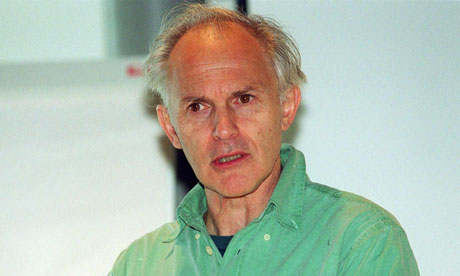


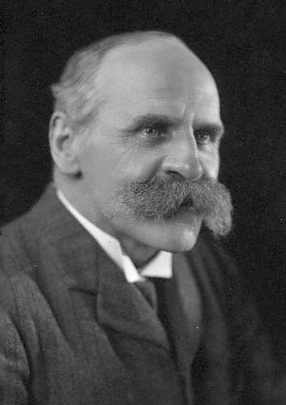


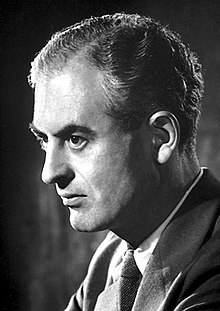


.jpg/220px-Susan_Blackmore_(2014).jpg)


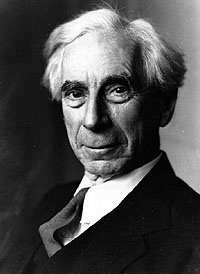
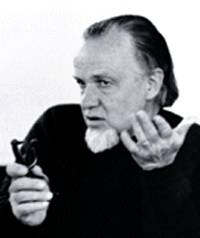
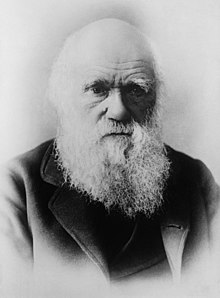







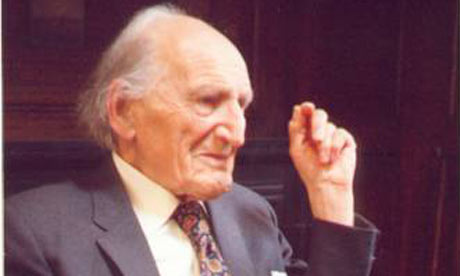


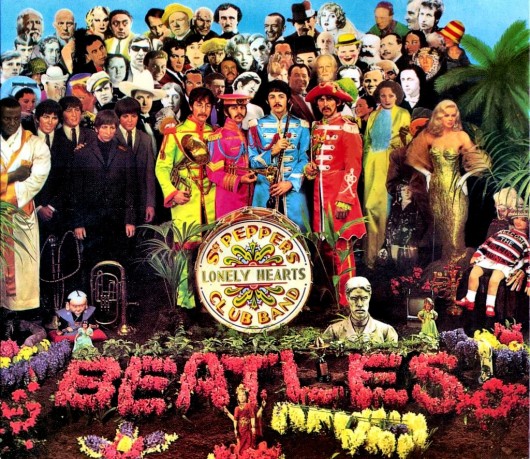


















 The Daily Hatch