In 2014 I reported that Kentucky fans were sick of the one and done method and I do think Calipari left because of the unhappy KY fans for a place like Arkansas where the enormous pressure has been reduced!!!!
UConn Wins National Championship With 60-54 Win Over Kentucky
I have been around Calipari for 15 years and I know how the man thinks. When he hit the big time in Memphis and was the top 5 in the last 4 seasons at Memphis in the last regular season AP polls he brought up how he was mistreated by fans the previous years at Memphis. In fact, the Associated Press reported on the eve of the West Virginia v. Kentucky game in the final eight in 2010, “John Calipari keeps the “for sale” signs angry Memphis fans once staked in his yard in his garage. He has them as reminders that, even when times are good, there were plenty of years when fans wanted him gone.”
Will the disgruntled fans at Kentucky make Calipari feel the heat? Some of the fans I have talked to are sick and tired of the one and done show. The results have been outstanding though. Through 5 seasons Kentucky has a 18-3 record in the NCAA tournament (last year the cats went to the NIT). Furthermore, Kentucky has a National Championship and two more Final Fours on top of that. Who can argue with that record?
Believe it or not there are criticisms and here they are. First, the players are two young and they don’t come together till the end of the year. I disagree with this assessment because that certainly was not true with Calipari’s first and third team at Kentucky. It was true with the second and fifth team at Kentucky and the fourth team never did come around. For instance take those three teams performance against Arkansas. The second team lost to Arkansas in Fayetteville and fell to 6-6 in the SEC but then went undefeated until they lost to UConn by one in the final four. The fourth team lost convincingly to the Hogs and I was at that game and it was never in doubt. The fifth team lost twice to Arkansas but rallied in the SEC tournament and looked great in the NCAA tournament.
Second, Calipari’s teams can’t shoot free throws. Maybe this is a good criticism. However, it also may come back to freshman being put in tough spots. When Derrick Rose missed a big free throw in a key point in the NCAA finals for Memphis he had actually made his 20 previous free throws in a row. Here is more on that issue below:
Both championship games were lost at the free-throw line.
In 2008, Memphis’ Derrick Rose and Chris Douglas-Roberts missed key free throws down the stretch before Mario Chalmers sent the game into overtime with a memorable three-pointer to help Kansas prevail. Memphis went 12 of 19 from the line while Kansas hit 14 of 15. On Monday, the Wildcats shot 54.2 percent from the line, going 13-for-24 and missing pivotal freebies down the stretch, as Connecticut pulled away for a 60-54 victory.
“We missed some shots that we needed to make, some free throws,” Calipari said. “But these kids are not machines, they’re not robots or computers.”
________________
From Twitter
Q. You could argue that you’ve had two national championships that have kind of wilted away at the free-throw line. I’m wondering if you flashback to that Memphis night in 2008 tonight?
UConn, on the other hand, shot a perfect 10-for-10 from the line, becoming the first team to make all of its free throws in the national championship game. It’s been the common denominator in the Huskies’ close wins on the path to a championship. In games against Iowa State and Michigan State, UConn went 41-for-44.
“Late you could say, ‘Why not foul?’ Because they didn’t miss any free throws. Those are the dice I rolled,” Calipari said.
What’s the secret? Cue coach Huskies coach Kevin Ollie.
“We just worked on it tirelessly in practice,” Ollie said of a drill that uses speed and motivation. “It’s competitive every time. We’ve got winners and losers. Losers gotta run sprints. It’s also getting the right people to the free-throw line. … Our guys are so composed under pressure and confident.”
I have to admit that I always pull for the SEC teams to win but I made an exception when Kentucky made it to the final four this year. Maybe the point of this carton below had something to do with it. I am not a Tennessee fan but I pull for them to beat […]
Kentucky’s John Calipari on being a National Champion Uploaded by CBSSports on Apr 3, 2012 Kentucky Wildcats coach John Calipari talks to Tim Brando about what it feels like to finally win a national title ________ John Calipari and Darius Miller speak at UK championship celebration ____________ _____________ Related posts: If Calipari had stayed at […]
Enlarge John Calipari address the press on his first day as Kentucky basketball coach. John Calipari stuggled to recruit top players to Memphis the first 4 years he was there because the “one and done” rule had not been put into place yet and many of the talented recruits of his skipped college and […]
#1 Kansas vs #1 Memphis National Championship 2008 (Part 3) The paths of Self and Calipari cross for championship By Kory Carpenter Sunday, April 1, 2012 More New Orleans, La. — Bill Self’s start in coaching is probably well known by now. A guard on the Oklahoma State basketball team, he worked at a Kansas […]
Kansas vs. Memphis – 2008 NCAA Title Game Highlights (HD) Kentucky vs. Kansas: Bill Self a Fitting Final Obstacle to John Calipari’s Title By Josh Martin (Featured Columnist) on April 2, 2012 Stacy Revere/Getty Images The long and winding road to an NCAA Tournament title has led John Calipari back to Bill Self‘s door. […]
Memphis Tigers John Calipari Interview 2008 Basketball Final FOX Sports Exclusive Calipari, Self more than just recruiters NEW ORLEANS There is an inherent silliness to a profession like the one that has made rich men of John Calipari and Bill Self. They spend months, even years, burning thousands of gallons of jet fuel and […]
Kansas vs. Memphis – 2008 NCAA Title Game Highlights (HD) The same matchup as 2008 coming tonight. Is John Calipari truly the villain against Bill Self? Rob Dauster Apr 1, 2012, 3:20 PM EDT Leave a comment Over the coming two days, one of the story lines that will be the most intriguing to follow is […]
Memphis’ epic collapse at the end of the ’08 title game opened the door for a Kansas championship. (AP photo) Kansas vs. Memphis – 2008 NCAA Title Game Highlights (HD) #1 Kansas vs #1 Memphis National Championship 2008 (Part 1) After the collapse in the last 2 minutes of the game by Memphis, Kansas went […]
Memphis Tigers John Calipari Interview 2008 Basketball Final Kansas vs. Memphis – 2008 NCAA Title Game Highlights (HD) Knoxnews.com reported: Calipari (and Kentucky) get Kansas again for title NANCY ARMOUR – AP National Writer (AP) Posted April 1, 2012 at 12:18 a.m., updated April 1, 2012 at 3:04 a.m NEW ORLEANS (AP) — Well, this […]
_____ Kansas vs. Memphis – 2008 NCAA Title Game Highlights (HD) What happened last time Calipari and Self faced each other in a national championship game? KMBC reported: San Antonio, TX — (Sports Network) – Mario Chalmers hit the tying three-pointer with 2.1 seconds left in regulation and Kansas rallied from a nine-point deficit late […]
Kansas vs. Memphis – 2008 NCAA Title Game Highlights (HD) Associated Press breaks down second national championship game between Calipari and Self: NEW ORLEANS (AP) A look at Monday night’s national championship game: KENTUCKY (37-2) vs. KANSAS (32-6) KENTUCKY ROAD TO THE TITLE GAME No. 1 Kentucky beat No. 16 Western Kentucky 81-65; No. 8 […]
Picture BY CHRIS WARE Today I read an article by Jerry Tipton that quoted John Calipari using the Buddhist term “karma” and it got me thinking about what his religious views are. Here an excerpt from the Lexington paper that got me thinking this morning: On several occasions this season, Kentucky Coach John Calipari counseled fans not […]
Seth Davis discusses the question: “Did Pitino help Calipari get UMass job?” Published on Mar 27, 2012 by CBSSports CBS Sports Network college basketball analyst Seth Davis joined the Tim Brando Show to break down the matchup between Kentucky’s John Calipari and Louisville’s Rick Pitino as they prepare to face off this Saturday in New […]
Photo by Wayne Crosslin Memphis State coach Gene Bartow comforts Larry Finch at the awards ceremony after the Tigers lost the NCAA final to UCLA in St. Louis in March 1973. Bartow died Tuesday after a long fight with cancer. _______________________ In 1972 I was 11 and I shot the basketball with a side arm […]
Calipari has been a favorite subject on my blog the last few years. Last year I put up some video of Coach Cal’s comments after the loss at Fayetteville, and it is true that someone did a very funny cartoon about Cal’s past NCAA problems in the past, and I have even explained when Cal’s super […]
John Calipari’s comments Archie Goodwin’s comments Calipari thought things looked pretty bad after the Tennessee 30 point loss but then the Wildcats came out and played good since then, but then at Fayetteville, Arkansas on March 2, 2013 things did not look so good. John Calipari said that Arkansas went with a small line-up like […]
John Calipari’s Kentucky program isn’t just No. 1 in the country. It’s the hottest program since UCLA used to win it all every year. (Getty Images) The conventional thinking is that John Calipari won a national title because he went to Kentucky. However, when he left Memphis he had the best recruiting class in the […]
One Shining Moment 2012 HD Everything you will read below by Dan Wetzel is true, but it all started when Derrick Rose was taken first in the NBA draft after spending one year under Calipari at Memphis. John Calipari stuggled to recruit top players to Memphis the first 4 years he was there because the […]
Kansas will build a good lead going inside of two minutes and then Kentucky will hit some big shots and Kansas will miss some key free throws as Calipari’s Wildcats squeeze out a victory. I do think it will be dramatic and it will be totally opposite of what happened to Calipari’s team in 2008. […]
Today I read an article by Jerry Tipton that quoted John Calipari using the Buddhist term “karma” and it got me thinking about what his religious views are. Here an excerpt from the Lexington paper that got me thinking this morning:
On several occasions this season, Kentucky Coach John Calipari counseled fans not to root against any other team. “Even Duke?” one caller to his weekly radio show asked.
Yes, even Duke,
And even archrival Louisville, which plays Kentucky on Saturday in the national semifinals, would be best viewed dispassionately.
To root against a team is to risk a cosmic balancing of the scales, the UK coach said. Fate could be cruel in a boomerang kind of way.
“I just don’t think it’s good that you root against other teams,” Calipari said in Thursday’s Final Four interview session. “I just think if you start rooting against another team and you’re a fan of ours, turn the TV off. Walk to the other room. Make yourself a coffee. And go for a walk with the dog. Do something.
“I just think that karma comes back at you.”… (skipping to end of article)
Unwittingly or not, Calipari, a practicing Catholic who also attends a Methodist church on Sundays, follows a Buddhist path by stressing performance rather than purely victory.
“The only thing you can control is how you do something,” Leaman said of the Buddhist philosophy. “That’s different from the West, which is result oriented.”
Safe to say, UK fans are result oriented, especially so Saturday.
How would a Buddhist view UK fans?
“How should I put it?,” Leaman said. “I think they’d be perplexed by the passion.”
Jerry Tipton: (859) 231-3227. Email: jtipton@herald-leader.com.Twitter: @JerryTipton. Blog: ukbasketball.bloginky.com
“It’s important to me that people know I have a strong faith,” he said. “I couldn’t have handled the jobs I’ve had by myself.”One of the ways Calipari feeds that faith is by attending Mass during the week. In Lexington, he has been seen at the Cathedral of Christ the King and at Mary Queen of the Holy Rosary Church.Calipari was picked for the Kentucky job this spring, becoming the highest paid college basketball coach in the country. Heading into a Dec. 5 game against North Carolina, his Wildcats had a 7-0 record for the 2009-2010 regular season.Calipari credits God’s plan for his life and the life of his family. “I believe that things happen for a reason,” he said.As in Memphis, Catholics in Lexington are a minority. Like many families in the diocese, the Calipari family is interdenominational.”When we got married, my wife was a better Methodist than I was a Catholic,” Calipari said. He met his wife, Ellen, while he was working as an assistant coach at the University of Kansas.The Caliparis have raised their children — daughters Erin and Megan and son Bradley — as Methodists.Something — he doesn’t remember exactly what — pushed him back toward the Catholic Church eight to 10 years ago and Calipari began attending Holy Rosary Church in Memphis. “They called me a ‘Metholic,'” Calipari said. “I would go to the Methodist church with my family on Sundays and to the Catholic church during the week.”______________Related posts:
__________ UConn Wins National Championship With 60-54 Win Over Kentucky I have been around Calipari for 15 years and I know how the man thinks. When he hit the big time in Memphis and was the top 5 in the last 4 seasons at Memphis in the last regular season AP polls he brought up […]
Kentucky’s John Calipari on being a National Champion Uploaded by CBSSports on Apr 3, 2012 Kentucky Wildcats coach John Calipari talks to Tim Brando about what it feels like to finally win a national title ________ John Calipari and Darius Miller speak at UK championship celebration ____________ _____________ Related posts: If Calipari had stayed at […]
Post Kentucky, Assessing NBA’s One-And-Done Rule Uploaded by PBSNewsHour on Apr 3, 2012 As Kentucky fans celebrate their latest basketball championship, the team’s dominance has revived questions about the NBA’s One-and-Done rule, which requires players to be 19 and just one year out of high school. Gwen Ifill and guests discuss. ____________ Uploaded by worldnewslive4u […]
John Calipari’s Kentucky program isn’t just No. 1 in the country. It’s the hottest program since UCLA used to win it all every year. (Getty Images) The conventional thinking is that John Calipari won a national title because he went to Kentucky. However, when he left Memphis he had the best recruiting class in the […]
One Shining Moment 2012 HD Everything you will read below by Dan Wetzel is true, but it all started when Derrick Rose was taken first in the NBA draft after spending one year under Calipari at Memphis. John Calipari stuggled to recruit top players to Memphis the first 4 years he was there because the […]
Kansas will build a good lead going inside of two minutes and then Kentucky will hit some big shots and Kansas will miss some key free throws as Calipari’s Wildcats squeeze out a victory. I do think it will be dramatic and it will be totally opposite of what happened to Calipari’s team in 2008. […]
Today I read an article that quoted John Calipari using the Buddhist term “karma” and it got me thinking about what his religious views are. Here an excerpt from the Lexington paper that got me thinking this morning: On several occasions this season, Kentucky Coach John Calipari counseled fans not to root against any other […]
Seth Davis discusses the question: “Did Pitino help Calipari get UMass job?” Published on Mar 27, 2012 by CBSSports CBS Sports Network college basketball analyst Seth Davis joined the Tim Brando Show to break down the matchup between Kentucky’s John Calipari and Louisville’s Rick Pitino as they prepare to face off this Saturday in New […]
______________ I have dedicated several posts to this series on the Beatles and I don’t know when this series will end because Francis Schaeffer spent a lot of time talking and writing about them and their impact on the culture of the 1960’s. Lucy in the Sky with Diamonds- The Beatles The Beatles: The Beatles […]
________________ I have dedicated several posts to this series on the Beatles and I don’t know when this series will end because Francis Schaeffer spent a lot of time talking and writing about them and their impact on the culture of the 1960’s. The Beatles: The Beatles and their album St. Pepper’s Lonely Hearts Club […]
__________________ I have dedicated several posts to this series on the Beatles and I don’t know when this series will end because Francis Schaeffer spent a lot of time talking and writing about them and their impact on the culture of the 1960’s. The Beatles are featured in this episode below and Schaeffer noted, ” Sergeant Pepper’s […]
_______________ I have dedicated several posts to this series on the Beatles and I don’t know when this series will end because Francis Schaeffer spent a lot of time talking and writing about them and their impact on the culture of the 1960’s. Great Album The Beatles are featured in this episode below and Schaeffer […]
I Still Haven’t Found What I’m Looking For / U2 The Rolling Stones Satisfaction (rare) If you want to see the path that Kerry Livgren and Dave Hope of the rock group Kansas took to find true satisfaction then listen to their song “Dust in the Wind” and then read their testimony at this link […]
John Calipari Pre-Louisville Press Conference Uploaded by uknationofblue on Mar 27, 2012 Kentucky head basketball coach John Calipari talks about the upcoming game with Louisville in the Final 4. ______ Related posts: Calipari’s been to 4 final fours and his record is 1-3 so far March 26, 2012 – 9:35 am > Kentucky Wildcats head coach […]
Over and over in the 2012 NCAA Tournament the Louisville Cardinals have been counted out. Now John Clay has counted them out again. (Wally Hall of the Arkansas Democrat-Gazette is picking Kentucky.) The tables are now turned. Calipari’s program has the advantage in tradition, fan base and, in this case, talent. To whom much is […]
Uploaded by gwain30 on Jan 29, 2012 A review of the new Liam Neeson film, the grey, as iI say there may be some minor spoilers but nothing too drastic, enjoy and dont forget to comment, rate and subscribe ________________ Uploaded by ClevverMovies on Dec 5, 2011 http://bit.ly/clevvermovies – Click to Subscribe! http://Facebook.com/ClevverMovies – Become […]
(If you want to check out other posts I have done about about Steve Jobs:Some say Steve Jobs was an atheist , Steve Jobs and Adoption , What is the eternal impact of Steve Jobs’ life? ,Steve Jobs versus President Obama: Who created more jobs? ,Steve Jobs’ view of death and what the Bible has to say about it ,8 things you might not know about Steve Jobs ,Steve […]
> Kentucky Wildcats head coach John Calipari celebrated with the team after the University of Kentucky defeated Baylor University in the NCAA South Regional final played in the Georgia Dome in Atlanta, Ga., Sunday, March 25, 2012. This is second half action. UK won 82-70. Charles Bertram | Staff HERALD-LEADER Buy Photo Calipari is going […]
Several members of the 70′s band Kansas became committed Christians after they realized that the world had nothing but meaningless to offer. It seems through the writings of both Woody Allen and Chris Martin of Coldplay that they both are wrestling with the issue of death and what meaning does life bring. Kansas went through […]
We came close to get two in but only Kentucky got in. Calipari’s wife and son can be seen in this picture below: > Kentucky Wildcats head coach John Calipari hugged his son, Bradley, and his wife Ellen after the University of Kentucky defeated Baylor University in the NCAA South Regional final played […]
Coldplay – 42 Live Coldplay perform on the french television channel W9. In 1992 Woody Allen took up with one of his adopted kids and lived in with her. He was given over to the pursuit of pleasure. Actually he has made that a major focus of his life. In the latter part of his […]
Brian’s Blues, Brian Jones on guitar in the early stones years. unreleased track Brian Jones died at age 27 just like Amy Winehouse did. I remember like yesterday when I first heard the song “I can’t get no satisfaction” by the Rolling Stones. I immediately thought about Solomon’s search for satisfaction in the Book of […]
Papa Roach – Last Resort (Censored Version) Amy Winehouse died at the young age of 27 and she had lived a life filled with drug and alcohol addiction. This series on Papa Roach is meant to provide answers to those who feel trapped. Hopefully it will people to avoid troubles like Amy Winehouse experienced. Today I […]
Coldplay seeks to corner the market on earnest and expressive rock music that currently appeals to wide audiences Here is an article I wrote a couple of years ago about Chris Martin’s view of hell. He says he does not believe in it but for some reason he writes a song that teaches that it […]
Here we go for the battle of the best two teams in Kentucky and possibly this game on March 31st will determine our national champion. USA Today reported in October 2011: Louisville’s Rick Pitino responds to John Calipari’s Kentucky taunt Rick Pitino isn’t going to take John Calipari’s taunts lying down. Louisville coach Rick Pitino […]
Enlarge John Calipari address the press on his first day as Kentucky basketball coach. John Calipari stuggled to recruit top players to Memphis the first 4 years he was there because the “one and done” rule had not been put into place yet and many of the talented recruits of his skipped college and […]
#1 Kansas vs #1 Memphis National Championship 2008 (Part 3) The paths of Self and Calipari cross for championship By Kory Carpenter Sunday, April 1, 2012 More New Orleans, La. — Bill Self’s start in coaching is probably well known by now. A guard on the Oklahoma State basketball team, he worked at a Kansas […]
Memphis head coach Josh Pastner joins the Tim Brando Show to discuss the Final Four matchup between Kentucky and Louisville, and the rivalry between head coaches Rick Pitino and John Calipari
John Calipari address the press on his first day as Kentucky basketball coach.
On 4-8-24 I saw the great eclipse in Little Rock today but that was not the highlight of my day!!!! I predict CALIPARI will win a national championship in the next 5 years and retire the next day!!!!!
The Impact of John Calipari’s Move to the Arkansas Razorbacks
Legendary coach John Calipari will be leaving the Kentucky Wildcats to be the next coach for the Arkansas Razorbacks.
The NCAA Tournament is set to conclude on Monday night, as the Purdue Boilermakers take on the UConn Huskies. But even then, there’s bigger news in the college basketball scene.
After spending the past 15 years as the head coach of the Kentucky Wildcats and solidifying himself as one of the greatest in the history of the game, John Calipari is reportedly taking the open job with the Arkansas Razorbacks on a five-year deal. Although the Wildcats had only won one game in the NCAA Tournament in the past five seasons, overall Calipari put together a 410-122 record in his time at Kentucky and led the program to a championship in 2012 along with several Final Four appearances.
Eric Musselman recently left Arkansas for the USC Trojans, which created an opportunity for the Razorbacks to target a new premier name. Although Arkansas struggled this season relative to the few years prior, this is a very attractive job. With Calipari in place, the Razorbacks will be a force in the SEC moving forward.
Calipari’s move will have a significant impact on the basketball landscape. For starters, he’s known for not only recruiting the best players in the world, but also developing that talent in a very short time. When it comes to the NBA Draft every year, Calipari sends a tremendous amount of players to the league, and those prospects generally have a high rate of success. As such, expect Arkansas to produce several NBA talents each year, just as it had under Musselman the past few years.
This move will be significant both now with players navigating the transfer portal as well as with upcoming recruiting classes. Calipari’s ability to recruit elite talent to Arkansas will likely begin to build an incubator for future NBA talent moving forward. Kentucky currently has the second-ranked recruiting class for 2024, so it will be interesting to see what those players end up doing with this news.
While the Wildcats’ incoming class is loaded with talent, the three names to keep an eye on include Jayden Quaintance, Boogie Fland and Karter Knox, who each have the talent to be one-and-done college players that enter their names in the 2025 NBA Draft. Calipari will almost certainly look to bring them to Lexington. Meanwhile, Jalen Shelley was released from his letter of intent with Arkansas when Musselman left for USC, so he could be a target for Calipari to convince to still come to Fayetteville.
—-
Commentary by Everette Hatcher
John Calipari struggled to recruit top players to Memphis the first 4 years he was there because the “one and done” rule had not been put into place yet and many of the talented recruits of his skipped college and went straight to the NBA. Then everything changed.
Memphis reaped the benefits of the talented recruits Calipari brought to Memphis. In 2008 Derrick Rose led Memphis to the NCAA finals and he was chosen first in the NBA draft. This is where his recruiting really took off and Jerry Meyer called the Memphis Tiger 2009 class “arguably the best recruiting class ever.” However, it all fell apart because of the private agreements that Calipari had made the families of the players he had recruited. The NCAA quickly moved to abolish these type agreements with a new rule which many have called the “John Calipari Rule.”
Below is an article that talks more about this rule:
I did an interview for a sports radio program today, and on the preliminary call to ask if I could come on with short notice (today at 1:00), he asked me about the “Calipari Rule.”
I told him I had no idea what he was talking about, and asked him if this was something that cropped up this morning, maybe, before I had a chance to check the sports news. I have been a bit busy lately — not like I was with the Annual, but still busy. He said it had been out for a while, and told me what it was all about.
What it is is the new rule by the National Letter of Intent program that forbids side deals like Memphis (among others) was willing to grant their players — i.e. a separate agreement between the school and the player where the school agreed to cancel the NLOI if the coach left, or was fired. The term “Calipari Rule” was apparently coined by Moondog Sports.
I told him that I totally supported the stance of the College Commissioner’s Association in this case. The “amendments” (actually separate agreements since the NLI program is explicit about what signing an NLI means, and has been before now) were being put in place in order to entice players to sign a letter of intent by promising (in writing) to release them from it if the coach left or was fired.
The amendments essentially rendered the NLI something it was not intended to be. The letter of intent is supposed to protect the school, but some players (notably DeMarcus Cousins at UAB) had refused to sign letters of intent unless the school would agree to release him if the coach left or was fired. UAB, to their credit, refused to compromise the intent of the NLI program. Memphis had no such compunctions.
To what extent Calipari was actually complicit in this arrangement is something I do not know. The coach has no authority to release players from an NLI — that has to be done by the school, and understandably so since the NLI program was created to prevent athlete defections due to coaching changes or other outside influences. The schools have always retained the right to release players, and most often they do, but not always by any means.
Anyway, I fully support the right of individuals to enter into fully informed agreements, and to be forced to live with the terms of those agreements. The NLI program was being sabotaged by the very schools it was designed to protect, and even though there are tons of good reasons not to enforce NLI provisions as a matter of course when players want to leave, there are also times when enforcement makes sense (see Crawford, Joe).
At the end of the day, to Calipari’s critics, this is a fair example of envelope-pushing. There is no doubt that R.C. Johnson didn’t just unilaterally decide to modify the NLI program to gain advantage in recruiting (which ultimately came back to bite him in the hind parts — see Henry, Xavier and Dennis, Nolan) — Calipari undoubtedly was a significant part of that decision, absent other information.
But let’s be honest, loopholes exist to be exploited, and if the NLI program was unable to crack down on this issue previously, they have now remedied that situation.
Kansas vs. Memphis – 2008 NCAA Title Game Highlights (HD) The same matchup as 2008 coming tonight. Is John Calipari truly the villain against Bill Self? Rob Dauster Apr 1, 2012, 3:20 PM EDT Leave a comment Over the coming two days, one of the story lines that will be the most intriguing to follow is […]
Memphis’ epic collapse at the end of the ’08 title game opened the door for a Kansas championship. (AP photo) Kansas vs. Memphis – 2008 NCAA Title Game Highlights (HD) #1 Kansas vs #1 Memphis National Championship 2008 (Part 1) After the collapse in the last 2 minutes of the game by Memphis, Kansas went […]
Memphis Tigers John Calipari Interview 2008 Basketball Final Kansas vs. Memphis – 2008 NCAA Title Game Highlights (HD) Knoxnews.com reported: Calipari (and Kentucky) get Kansas again for title NANCY ARMOUR – AP National Writer (AP) Posted April 1, 2012 at 12:18 a.m., updated April 1, 2012 at 3:04 a.m NEW ORLEANS (AP) — Well, this […]
_____ Kansas vs. Memphis – 2008 NCAA Title Game Highlights (HD) What happened last time Calipari and Self faced each other in a national championship game? KMBC reported: San Antonio, TX — (Sports Network) – Mario Chalmers hit the tying three-pointer with 2.1 seconds left in regulation and Kansas rallied from a nine-point deficit late […]
Kansas vs. Memphis – 2008 NCAA Title Game Highlights (HD) Associated Press breaks down second national championship game between Calipari and Self: NEW ORLEANS (AP) A look at Monday night’s national championship game: KENTUCKY (37-2) vs. KANSAS (32-6) KENTUCKY ROAD TO THE TITLE GAME No. 1 Kentucky beat No. 16 Western Kentucky 81-65; No. 8 […]
Today I read an article that quoted John Calipari using the Buddhist term “karma” and it got me thinking about what his religious views are. Here an excerpt from the Lexington paper that got me thinking this morning: On several occasions this season, Kentucky Coach John Calipari counseled fans not to root against any other […]
Seth Davis discusses the question: “Did Pitino help Calipari get UMass job?” Published on Mar 27, 2012 by CBSSports CBS Sports Network college basketball analyst Seth Davis joined the Tim Brando Show to break down the matchup between Kentucky’s John Calipari and Louisville’s Rick Pitino as they prepare to face off this Saturday in New […]
I Still Haven’t Found What I’m Looking For / U2 The Rolling Stones Satisfaction (rare) If you want to see the path that Kerry Livgren and Dave Hope of the rock group Kansas took to find true satisfaction then listen to their song “Dust in the Wind” and then read their testimony at this link […]
John Calipari Pre-Louisville Press Conference Uploaded by uknationofblue on Mar 27, 2012 Kentucky head basketball coach John Calipari talks about the upcoming game with Louisville in the Final 4. ______ Related posts: Calipari’s been to 4 final fours and his record is 1-3 so far March 26, 2012 – 9:35 am > Kentucky Wildcats head coach […]
Over and over in the 2012 NCAA Tournament the Louisville Cardinals have been counted out. Now John Clay has counted them out again. (Wally Hall of the Arkansas Democrat-Gazette is picking Kentucky.) The tables are now turned. Calipari’s program has the advantage in tradition, fan base and, in this case, talent. To whom much is […]
Uploaded by gwain30 on Jan 29, 2012 A review of the new Liam Neeson film, the grey, as iI say there may be some minor spoilers but nothing too drastic, enjoy and dont forget to comment, rate and subscribe ________________ Uploaded by ClevverMovies on Dec 5, 2011 http://bit.ly/clevvermovies – Click to Subscribe! http://Facebook.com/ClevverMovies – Become […]
(If you want to check out other posts I have done about about Steve Jobs:Some say Steve Jobs was an atheist , Steve Jobs and Adoption , What is the eternal impact of Steve Jobs’ life? ,Steve Jobs versus President Obama: Who created more jobs? ,Steve Jobs’ view of death and what the Bible has to say about it ,8 things you might not know about Steve Jobs ,Steve […]
> Kentucky Wildcats head coach John Calipari celebrated with the team after the University of Kentucky defeated Baylor University in the NCAA South Regional final played in the Georgia Dome in Atlanta, Ga., Sunday, March 25, 2012. This is second half action. UK won 82-70. Charles Bertram | Staff HERALD-LEADER Buy Photo Calipari is going […]
Several members of the 70′s band Kansas became committed Christians after they realized that the world had nothing but meaningless to offer. It seems through the writings of both Woody Allen and Chris Martin of Coldplay that they both are wrestling with the issue of death and what meaning does life bring. Kansas went through […]
We came close to get two in but only Kentucky got in. Calipari’s wife and son can be seen in this picture below: > Kentucky Wildcats head coach John Calipari hugged his son, Bradley, and his wife Ellen after the University of Kentucky defeated Baylor University in the NCAA South Regional final played […]
Coldplay – 42 Live Coldplay perform on the french television channel W9. In 1992 Woody Allen took up with one of his adopted kids and lived in with her. He was given over to the pursuit of pleasure. Actually he has made that a major focus of his life. In the latter part of his […]
Brian’s Blues, Brian Jones on guitar in the early stones years. unreleased track Brian Jones died at age 27 just like Amy Winehouse did. I remember like yesterday when I first heard the song “I can’t get no satisfaction” by the Rolling Stones. I immediately thought about Solomon’s search for satisfaction in the Book of […]
Papa Roach – Last Resort (Censored Version) Amy Winehouse died at the young age of 27 and she had lived a life filled with drug and alcohol addiction. This series on Papa Roach is meant to provide answers to those who feel trapped. Hopefully it will people to avoid troubles like Amy Winehouse experienced. Today I […]
Coldplay seeks to corner the market on earnest and expressive rock music that currently appeals to wide audiences Here is an article I wrote a couple of years ago about Chris Martin’s view of hell. He says he does not believe in it but for some reason he writes a song that teaches that it […]
How did it happen? Kentucky’s Calipari is the new Arkansas coach
Nothing like a stunning news drop on the eve of the national championship game.
John Calipari is leaving Kentucky and headed across the SEC to Arkansas, finalizing a five-year deal to replace Eric Musselman in Fayetteville.
Nobody could have foreseen this chain of events when SMU fired Rob Lanier after just two seasons, leading to the Mustangs poaching Andy Enfield from USC and Musselman departing Arkansas for the Trojans’ vacancy. Arkansas took a couple of early swings at Ole Miss‘ Chris Beard and Kansas State‘s Jerome Tang, but both coaches turned down the Razorbacks and returned to their respective schools.
So, Arkansas athletic director Hunter Yurachek reassessed the search and came out with a new name atop his target list: Calipari.
ESPN’s Jeff Borzello and Myron Medcalf react to the new move, including what it means for the conference and the schools — and who could succeed Coach Cal in Lexington.
Myron Medcalf: After a series of disappointing outcomes (9-16 in 2020-21; the 2022 NCAA tournament loss to Saint Peter’s; last month’s first-round loss to Oakland), Calipari no longer had full control in Lexington. Rather than give Kentucky’s brass another year to decide if they wanted to keep him, Calipari did what some coaches do in this scenario: He left.
The joy of coaching at Kentucky is enjoying the admiration, popularity and influence one gains from a massive fan base and basketball brand. But Calipari lost that support in recent years. It had felt like Calipari and Kentucky had been living under the same roof but were no longer together. Calipari just made it official Sunday night.
Jeff Borzello: Once a coach gets to the point where his athletic director needs to release a statement confirming his return as coach, it’s hard to regain the trust of the fan base. And Calipari reached that point. The NCAA tournament losses, one Big Dance win since 2019, refusing to embrace the transfer portal and continuing to build freshmen-focused rosters — it all added up to a frustrated fan base. And so when another school with huge resources and a passionate fan base showed interest, Calipari jumped. Better to leave than live on the hot seat.
What is most attractive about the Arkansas job?
Medcalf: Football is Arkansas’ first love, and it last won a basketball national title in 1994. It has an extremely passionate fan base, but nothing rivals Kentucky’s Big Blue Nation. Calipari won’t face the same pressure he endured in Lexington, but he will have access to power boosters (the Tyson family, Dallas Cowboys owner Jerry Jones and the Walton family) who will supply enough NIL money to help him attract elite talent.
Borzello: Arkansas has plenty of resources and is increasing its NIL budget to bring Calipari into the fold. The fan base is there too. When Bud Walton Arena is rocking, it’s one of the best home-court advantages in the SEC. And Arkansas has a stranglehold on keeping in-state talent home for school; there was a stretch from 2016 to 2022 when zero ESPN 100 prospects left the state of Arkansas for college.
What are the chances Calipari will enjoy the type of success he had at Kentucky now that he’s at Arkansas?
Medcalf: In five seasons, Eric Musselman had a better postseason run (two Elite Eight appearances and a trip to the Sweet 16) than Calipari did at Kentucky over the same stretch. Calipari has always been a top recruiter; that won’t change at Arkansas. He might not get four or five McDonald’s All Americans every year the way he did at Kentucky, but Calipari will sign great talent.
Borzello: Calipari can win a national championship at Arkansas. Everything is in place to consistently compete at the top of the SEC and push for Final Four berths. Musselman didn’t quite have the regular-season success to match, but he had the Razorbacks within a game of the Final Four in back-to-back years. The key for Calipari is whether he will change his outlook on roster construction. He’ll be able to recruit at a high level in Fayetteville, but Calipari can’t continue to build with only one or two transfers. There has to be a mix of high schoolers and veterans, and he’ll have the NIL budget to build a roster in that way.
Is the move good or bad for Kentucky?
Medcalf: That’s a complicated question. Calipari had the flair (and hint of arrogance), personality and experience to handle the demands of a rabid fan base that craved the success he had brought in his first six seasons — including a national title. It’s a unique role, one only Rick Pitino and Calipari have excelled in over the past 30 years. There is no clear successor who can continue to attract five-star recruits and future NBA stars. The new coach also will have to endure the expectations of a fan base that hasn’t witnessed a national title run since 2012 but still expects to compete for a championship every season.
Borzello: It’s going to be hard to answer this right now. While Calipari’s buyout was the biggest impediment to firing the Hall of Fame coach, the lack of a natural replacement was second on the list. Most of the logical successors either have huge buyouts or won’t make the move. If Kentucky has to dip down into its second- or third-tier candidate pool, it might not be a great move for the Wildcats.
How will the move affect the SEC?
Medcalf: It depends in part on the dominoes. Will Kentucky target Alabama’s Nate Oats? Or will the Wildcats chase former Villanova coach Jay Wright or UConn’s Dan Hurley? Either way, Kentucky won’t settle for a subpar candidate. On the flip side, Arkansas, which hasn’t won the SEC since 2000, is certainly in a new tier with this hiring. Overall, a league that will soon add Oklahoma and Texasprobably will improve.
Borzello: It’s landscape-shifting. As Myron mentioned, the dominoes falling will have an impact. But this isn’t just about Kentucky and what it does from here. This immediately vaults Arkansas into the upper crust of the national conversation — and therefore the SEC conversation. The Razorbacks suddenly have title-contending expectations every season. Kentucky will always have those, but the Wildcats might not be the biggest story in the league during the 2024-25 season.
Medcalf: Again, there are no simple answers here. But Kentucky athletic director Mitch Barnhart should pull up to Monday’s national title game and ask Hurley for the amount of money it would take to lure him to Lexington — even though Hurley is happy in Storrs, Connecticut. Oats would make sense, but he has an $18 million buyout. Wright doesn’t seem too interested in leaving TV to return to coaching. If those options all fall through, Kentucky won’t have an obvious target. That said, the Wildcats don’t owe Calipari his $33 million buyout because he left, so they have the financial backing to go shopping.
Borzello: There are huge obstacles to hire most of the names who would theoretically be the top targets. I don’t think Hurley would go from UConn to Kentucky, especially if he wins another national title on Monday night. Does the Chicago Bulls’ Billy Donovan really want to coach in college again? Does Wright want to coach at all again? Oats has a huge buyout. Iowa State’s T.J. Otzelberger has a huge buyout. Arizona’s Tommy Lloyd just signed a new contract. Auburn’s Bruce Pearl has had similar NCAA tournament struggles in recent years. Baylor’s Scott Drew is probably the most realistic target, and he just turned down Louisville. Whether Kentucky can hire — or at least try to hire — Drew will likely be determined by the buyout in Drew’s new deal.
Kentucky’s John Calipari on being a National Champion
John Calipari’s Kentucky program isn’t just No. 1 in the country. It’s the hottest program since UCLA used to win it all every year. (Getty Images) The conventional thinking is that John Calipari won a national title because he went to Kentucky. However, when he left Memphis he had the best recruiting class in the […]
One Shining Moment 2012 HD Everything you will read below by Dan Wetzel is true, but it all started when Derrick Rose was taken first in the NBA draft after spending one year under Calipari at Memphis. John Calipari stuggled to recruit top players to Memphis the first 4 years he was there because the […]
Kansas will build a good lead going inside of two minutes and then Kentucky will hit some big shots and Kansas will miss some key free throws as Calipari’s Wildcats squeeze out a victory. I do think it will be dramatic and it will be totally opposite of what happened to Calipari’s team in 2008. […]
Enlarge John Calipari address the press on his first day as Kentucky basketball coach. John Calipari stuggled to recruit top players to Memphis the first 4 years he was there because the “one and done” rule had not been put into place yet and many of the talented recruits of his skipped college and […]
#1 Kansas vs #1 Memphis National Championship 2008 (Part 3) The paths of Self and Calipari cross for championship By Kory Carpenter Sunday, April 1, 2012 More New Orleans, La. — Bill Self’s start in coaching is probably well known by now. A guard on the Oklahoma State basketball team, he worked at a Kansas […]
Kansas vs. Memphis – 2008 NCAA Title Game Highlights (HD) Kentucky vs. Kansas: Bill Self a Fitting Final Obstacle to John Calipari’s Title By Josh Martin (Featured Columnist) on April 2, 2012 Stacy Revere/Getty Images The long and winding road to an NCAA Tournament title has led John Calipari back to Bill Self‘s door. […]
Memphis Tigers John Calipari Interview 2008 Basketball Final FOX Sports Exclusive Calipari, Self more than just recruiters NEW ORLEANS There is an inherent silliness to a profession like the one that has made rich men of John Calipari and Bill Self. They spend months, even years, burning thousands of gallons of jet fuel and […]
Kansas vs. Memphis – 2008 NCAA Title Game Highlights (HD) The same matchup as 2008 coming tonight. Is John Calipari truly the villain against Bill Self? Rob Dauster Apr 1, 2012, 3:20 PM EDT Leave a comment Over the coming two days, one of the story lines that will be the most intriguing to follow is […]
Memphis’ epic collapse at the end of the ’08 title game opened the door for a Kansas championship. (AP photo) Kansas vs. Memphis – 2008 NCAA Title Game Highlights (HD) #1 Kansas vs #1 Memphis National Championship 2008 (Part 1) After the collapse in the last 2 minutes of the game by Memphis, Kansas went […]
Memphis Tigers John Calipari Interview 2008 Basketball Final Kansas vs. Memphis – 2008 NCAA Title Game Highlights (HD) Knoxnews.com reported: Calipari (and Kentucky) get Kansas again for title NANCY ARMOUR – AP National Writer (AP) Posted April 1, 2012 at 12:18 a.m., updated April 1, 2012 at 3:04 a.m NEW ORLEANS (AP) — Well, this […]
_____ Kansas vs. Memphis – 2008 NCAA Title Game Highlights (HD) What happened last time Calipari and Self faced each other in a national championship game? KMBC reported: San Antonio, TX — (Sports Network) – Mario Chalmers hit the tying three-pointer with 2.1 seconds left in regulation and Kansas rallied from a nine-point deficit late […]
Kansas vs. Memphis – 2008 NCAA Title Game Highlights (HD) Associated Press breaks down second national championship game between Calipari and Self: NEW ORLEANS (AP) A look at Monday night’s national championship game: KENTUCKY (37-2) vs. KANSAS (32-6) KENTUCKY ROAD TO THE TITLE GAME No. 1 Kentucky beat No. 16 Western Kentucky 81-65; No. 8 […]
Picture BY CHRIS WARE Today I read an article by Jerry Tipton that quoted John Calipari using the Buddhist term “karma” and it got me thinking about what his religious views are. Here an excerpt from the Lexington paper that got me thinking this morning: On several occasions this season, Kentucky Coach John Calipari counseled fans not […]
Seth Davis discusses the question: “Did Pitino help Calipari get UMass job?” Published on Mar 27, 2012 by CBSSports CBS Sports Network college basketball analyst Seth Davis joined the Tim Brando Show to break down the matchup between Kentucky’s John Calipari and Louisville’s Rick Pitino as they prepare to face off this Saturday in New […]
John Calipari Pre-Louisville Press Conference Uploaded by uknationofblue on Mar 27, 2012 Kentucky head basketball coach John Calipari talks about the upcoming game with Louisville in the Final 4. ______ Related posts: Calipari’s been to 4 final fours and his record is 1-3 so far March 26, 2012 – 9:35 am > Kentucky Wildcats head coach […]
Over and over in the 2012 NCAA Tournament the Louisville Cardinals have been counted out. Now John Clay has counted them out again. (Wally Hall of the Arkansas Democrat-Gazette is picking Kentucky.) The tables are now turned. Calipari’s program has the advantage in tradition, fan base and, in this case, talent. To whom much is […]
> Kentucky Wildcats head coach John Calipari celebrated with the team after the University of Kentucky defeated Baylor University in the NCAA South Regional final played in the Georgia Dome in Atlanta, Ga., Sunday, March 25, 2012. This is second half action. UK won 82-70. Charles Bertram | Staff HERALD-LEADER Buy Photo Calipari is going […]
We came close to get two in but only Kentucky got in. Calipari’s wife and son can be seen in this picture below: > Kentucky Wildcats head coach John Calipari hugged his son, Bradley, and his wife Ellen after the University of Kentucky defeated Baylor University in the NCAA South Regional final played […]
Assuming courts are doing their job, it doesn’t matterif 90 percent of voters support restrictions on free speech.
Assuming courts are doing their job, it doesn’t matter if 90 percent of voters support gun confiscation.
Assuming courts are doing their job, it doesn’t matter if 90 percent of voters support warrantless searches.
That being said, a constitutional republic is a democratic form of government. And if government is staying within proper boundaries, political decisions should be based on majority rule, as expressed through elections.
In some cases, that will lead to decisions I don’t like. For instance, the (tragic) 16th Amendment gives the federal government the authority to impose an income tax and voters repeatedly have elected politicians who have opted to exercise that authority.
Needless to say, I will continue my efforts to educate voters and lawmakers in hopes that eventually there will be majorities that choose a different approach. That’s how things should work in a properly functioning democracy.
But not everyone agrees.
A report in the New York Times, authored by Elizabeth Harris and Alexandra Alter, discusses the controversy over which books should be in the libraries of government schools.
The Keller Independent School District, just outside of Dallas, passed a new rule in November: It banned books from its libraries that include the concept of gender fluidity. …recently, the issue has been supercharged by a rapidly growing and increasingly influential constellation of conservative groups.The organizations frequently describe themselves as defending parental rights. …“This is not about banning books, it’s about protecting the innocence of our children,” said Keith Flaugh, one of the founders of Florida Citizens Alliance, a conservative group focused on education… The restrictions, said Emerson Sykes, a First Amendment litigator for the American Civil Liberties Union, infringe on students’ “right to access a broad range of material without political censorship.” …In Florida, parents who oppose book banning formed the Freedom to Read Project.
As indicated by the excerpt, some people are very sloppy with language.
If a school decides not to buy a certain book for its library, that is not a “book ban.” Censorship only exists when the government uses coercion to prevent people from buying books with their own money.
As I wrote earlier this year, “The fight is not over which books to ban. It’s about which books to buy.”
And this brings us back to the issue of democracy.
School libraries obviously don’t have the space or funds to stock every book ever published, so somebody has to make choices. And voters have the ultimate power to make those choices since they elect school boards.
I’ll close by noting that democracy does not please everyone. Left-leaning parents in Alabama probably don’t always like the decisions of their school boards,just like right-leaning parents in Vermont presumably don’t always like the decisions of their school boards.
And the same thing happens with other contentious issues, such as teaching critical race theory.
Which is why school choice is the best outcome. Then, regardless of ideology, parents can choose schools that have the curriculum (and books) that they think will be best for their children.
P.S. If you want to peruse a genuine example of censorship, click here.
In a study published by the National Bureau of Economic Research, Professors David N. Figlio, Cassandra M.D. Hart & Krzysztof Karbownikfound that school choice led to benefits even for kids who remained stuck in government schools.
They enjoyed better academic outcomes, which is somewhat surprising, but even I was pleasantly shocked to see improved behavioral outcomes as well.
School choice programs have been growing in the United States and worldwide over the past two decades, and thus there is considerable interest in how these policies affect students remaining in public schools. …the evidence on the effects of these programs as they scale up is virtually non-existent. Here, we investigate this question using data from the state of Florida where, over the course of our sample period, the voucher program participation increased nearly seven-fold.We find consistent evidence that as the program grows in size, students in public schools that faced higher competitive pressure levels see greater gains from the program expansion than do those in locations with less competitive pressure. Importantly, we find that these positive externalities extend to behavioral outcomes— absenteeism and suspensions—that have not been well-explored in prior literature on school choice from either voucher or charter programs. Our preferred competition measure, the Competitive Pressure Index, produces estimates implying that a 10 percent increase in the number of students participating in the voucher program increases test scores by 0.3 to 0.7 percent of a standard deviation and reduces behavioral problems by 0.6 to 0.9 percent. …Finally, we find that public school students who are most positively affected come from comparatively lower socioeconomic background, which is the set of students that schools should be most concerned about losing under the Florida Tax Credit Scholarship program.
It’s good news that competition from the private sector produces better results in government schools.
But it’s great news that those from disadvantaged backgrounds disproportionately benefit when there is more school choice.
Wonkier readers will enjoy Figure A2, which shows the benefits to regular kids on the right and disadvantaged kids on the left.
Since the study looked at results in Florida, I’ll close by observing that Florida is ranked #1 for education freedom and ranked #3 for school choice.
P.S. Here’s a video explaining the benefits of school choice.
P.P.S. There’s international evidence from Sweden, Chile, Canada, and the Netherlands, all of which shows superior results when competition replaces government education monopolies.
———-
Milton Friedman chose the emphasis on school choice and school vouchers as his greatest legacy and hopefully the Supreme Court will help that dream see a chance!
Monopoly government school systems cost a lot of moneyand do a bad job.The interests of the education bureaucracy rank higherthan the educational needs of kids. Poor families are especially disadvantaged.
But 2022 may be a good year as well. That’s because the Supreme Court is considering whether to strike down state laws that restrict choice by discriminating against religious schools.
Michael Bindas of the Institute for Justice and Walter Womack of the Southern Christian Leadership Conference make the case for a level playing field in a column for the New York Times.
In 2002, the Supreme Court held that the Constitution allows school choice programs to include schools that provide religious instruction, so long as the voucher program also offers secular options. The question now before the court is whether a state may nevertheless exclude schools that provide religious instruction. The case, Carson v. Makin, …concerns Maine’s tuition assistance program. In that large and sparsely populated state, over half of the school districts have no public high schools. If a student lives in such a district, and it does not contract with another high school to educate its students, then the district must pay tuition for the student to attend the school of her or his parents’ choice. …But one type of school is off limits: a school that provides religious instruction. That may seem unconstitutional, and we argue that it is. Only last year, the Supreme Court, citing the free exercise clause of the Constitution, held that states cannot bar students in a school choice program from selecting religious schools when it allows them to choose other private schools. …The outcome will be enormously consequential for families in public schools that are failing them and will go a long way toward determining whether the most disadvantaged families can exercise the same control over the education of their children as wealthier citizens.
The Wall Street Journaleditorialized on this issue earlier this week.
Maine has one of the country’s oldest educational choice systems, a tuition program for students who live in areas that don’t run schools of their own. Instead these families get to pick a school, and public funds go toward enrollment. Religious schools are excluded, however, and on Wednesday the Supreme Court will hear from parents who have closely read the First Amendment.…Maine argues it isn’t denying funds based on the religious “status” of any school… The state claims, rather, that it is merely refusing to allocate money for a “religious use,” specifically, “an education designed to proselytize and inculcate children with a particular faith.” In practice, this distinction between “status” and “use” falls apart. Think about it: Maine is happy to fund tuition at an evangelical school, as long as nothing evangelical is taught. Hmmm. …A state can’t subsidize tuition only for private schools with government-approved values, and trying to define the product as “secular education” gives away the game. …America’s Founders knew what they were doing when they wrote the First Amendment to protect religious “free exercise.”
What does the other side say?
Rachel Laser, head of Americans United for Separation of Church and State, doesn’t want religious schools to be treated equally under school choice programs.
…two sets of parents in Maine claim that the Constitution’s promise of religious freedom actually requires the state to fund religious education at private schools with taxpayer dollars — as a substitute for public education. This interpretation flips the meaning of religious freedom on its head and threatens both true religious freedom and public education.…The problem here is even bigger than public funds paying for praying, as wrong as that is. Unlike public schools, private religious schools often do not honor civil rights protections, especially for LGBTQ people, women, students with disabilities, religious minorities and the nonreligious. …If the court were to agree with the parents, it would also be rejecting the will of three-quarters of the states, which long ago enacted clauses in their state constitutions and passed statutes specifically prohibiting public funding of religious education. …It is up to parents and religious communities to educate their children in their faith. Publicly funded schools should never serve that purpose.
These arguments are not persuasive.
The fact that many state constitutions include so-called Blaine amendments actually undermines her argument since those provisions were motivated by a desire to discriminate against parochial schools that provided education to Catholic immigrants.
And it’s definitely not clear why school choice shouldn’t include religious schools that follow religious teachings, unless she also wants to argue that student grants and loans shouldn’t go to students at Notre Dame, Brigham Young, Liberty, and other religiously affiliated colleges.
The good news is that Ms. Laser’s arguments don’t seem to be winning. Based on this report from yesterday’s Washington Post, authored by Robert Barnes, there are reasons to believe the Justices will make the right decision.
Conservatives on the Supreme Court seemed…critical of a Maine tuition program that does not allow public funds to go to schools that promote religious instruction. The case involves an unusual program in a small state that affects only a few thousand students. But it could have greater implications… The oral argument went on for nearly two hours and featured an array of hypotheticals. …But the session ended as most suspected it would, with the three liberal justices expressing support for Maine and the six conservatives skeptical that it protected religious parents from unconstitutional discrimination.
I can’t resist sharing this additional excerpt about President Biden deciding to side with teacher unions instead of students.
The Justice Department switched its position in the case after President Biden was inaugurated and now supports Maine.
Instead, let’s close with some uplifting thoughts about what might happen if we get a good decision from the Supreme Court when decisions are announced next year.
Maybe I’m overly optimistic, but I think we’re getting close to a tipping point. As more and more states and communities shift to choice, we will have more and more evidence that it’s a win-win for both families and taxpayers.
Which will lead to more choice programs, which will produce more helpful data.
Libertarians and others are often torn about school choice. They may wish to see the government schooling monopoly weakened, but they may resist supporting choice mechanisms, like vouchers and education savings accounts, because they don’t go far enough. Indeed, most current choice programs continue to rely on taxpayer funding of education and don’t address the underlying compulsory nature of elementary and secondary schooling.
Skeptics may also have legitimate fears that taxpayer-funded education choice programs will lead to over-regulation of previously independent and parochial schooling options, making all schooling mirror compulsory mass schooling, with no substantive variation.
Friedman Challenged Compulsory Schooling Laws
Milton Friedman had these same concerns. The Nobel prize-winning economist is widely considered to be the one to popularize the idea of vouchers and school choice beginning with his 1955 paper, “The Role of Government in Education.” His vision continues to be realized through the important work of EdChoice, formerly the Friedman Foundation for Education Choice, that Friedman and his economist wife, Rose, founded in 1996.
July 31 is Milton Friedman’s birthday. He died in 2006 at the age of 94, but his ideas continue to have an impact, particularly in education policy.
Friedman saw vouchers and other choice programs as half-measures. He recognized the larger problems of taxpayer funding and compulsion, but saw vouchers as an important starting point in allowing parents to regain control of their children’s education. In their popular book, Free To Choose, first published in 1980, the Friedmans wrote:
We regard the voucher plan as a partial solution because it affects neither the financing of schooling nor the compulsory attendance laws. We favor going much farther. (p.161)
They continued:
The compulsory attendance laws are the justification for government control over the standards of private schools. But it is far from clear that there is any justification for the compulsory attendance laws themselves. (p. 162)
The Friedmans admitted that their “own views on this have changed over time,” as they realized that “compulsory attendance at schools is not necessary to achieve that minimum standard of literacy and knowledge,” and that “schooling was well-nigh universal in the United States before either compulsory attendance or government financing of schooling existed. Like most laws, compulsory attendance laws have costs as well as benefits. We no longer believe the benefits justify the costs.” (pp. 162-3)
Still, they felt that vouchers would be the essential starting point toward chipping away at monopoly mass schooling by putting parents back in charge. School choice, in other words, would be a necessary but not sufficient policy approach toward addressing the underlying issue of government control of education.
Vouchers as a First Step
In their book, the Friedmans presented the potential outcomes of their proposed voucher plan, which would give parents access to some or all of the average per-pupil expenditures of a child enrolled in public school. They believed that vouchers would help create a more competitive education market, encouraging education entrepreneurship. They felt that parents would be more empowered with greater control over their children’s education and have a stronger desire to contribute some of their own money toward education. They asserted that in many places “the public school has fostered residential stratification, by tying the kind and cost of schooling to residential location” and suggested that voucher programs would lead to increased integration and heterogeneity. (pp. 166-7)
To the critics who said, and still say, that school choice programs would destroy the public schools, the Friedmans replied that these critics fail to
explain why, if the public school system is doing such a splendid job, it needs to fear competition from nongovernmental, competitive schools or, if it isn’t, why anyone should object to its “destruction.” (p. 170)
What I appreciate most about the Friedmans discussion of vouchers and the promise of school choice is their unrelenting support of parents. They believed that parents, not government bureaucrats and intellectuals, know what is best for their children’s education and well-being and are fully capable of choosing wisely for their children—when they have the opportunity to do so.
They wrote:
Parents generally have both greater interest in their children’s schooling and more intimate knowledge of their capacities and needs than anyone else. Social reformers, and educational reformers in particular, often self-righteously take for granted that parents, especially those who are poor and have little education themselves, have little interest in their children’s education and no competence to choose for them. That is a gratuitous insult. Such parents have frequently had limited opportunity to choose. However, U.S. history has demonstrated that, given the opportunity, they have often been willing to sacrifice a great deal, and have done so wisely, for their children’s welfare. (p. 160).
Today, school voucher programs exist in 15 states plus the District of Columbia. These programs have consistently shown that when parents are given the choice to opt-out of an assigned district school, many will take advantage of the opportunity. In Washington, D.C., low-income parents who win a voucher lottery send their children to private schools.
The most recent three-year federal evaluationof voucher program participants found that while student academic achievement was comparable to achievement for non-voucher students remaining in public schools, there were statistically significant improvements in other important areas. For instance, voucher participants had lower rates of chronic absenteeism than the control groups, as well as higher student satisfaction scores. There were also tremendous cost-savings.
In Wisconsin, the Milwaukee Parental Choice Program has served over 28,000 low-income students attending 129 participating private schools.
According to Corey DeAngelis, Director of School Choice at the Reason Foundation and a prolific researcher on the topic, the recent analysis of the D.C. voucher program “reveals that private schools produce the same academic outcomes for only a third of the cost of the public schools. In other words, school choice is a great investment.”
In Wisconsin, the Milwaukee Parental Choice Program was created in 1990 and is the nation’s oldest voucher program. It currently serves over 28,000 low-income students attending 129 participating private schools. Like the D.C. voucher program, data on test scores of Milwaukee voucher students show similar results to public school students, but non-academic results are promising.
Increased Access and Decreased Crime
Recent research found voucher recipients had lower crime rates and lower incidences of unplanned pregnancies in young adulthood. On his birthday, let’s celebrate Milton Friedman’s vision of enabling parents, not government, to be in control of a child’s education.
According to Howard Fuller, an education professor at Marquette University, founder of the Black Alliance for Educational Options, and one of the developers of the Milwaukee voucher program, the key is parent empowerment—particularly for low-income minority families.
In an interview with NPR, Fuller said: “What I’m saying to you is that there are thousands of black children whose lives are much better today because of the Milwaukee parental choice program,” he says. “They were able to access better schools than they would have without a voucher.”
Putting parents back in charge of their child’s education through school choice measures was Milton Friedman’s goal. It was not his ultimate goal, as it would not fully address the funding and compulsion components of government schooling; but it was, and remains, an important first step. As the Friedmans wrote in Free To Choose:
The strong American tradition of voluntary action has provided many excellent examples that demonstrate what can be done when parents have greater choice. (p. 159).
On his birthday, let’s celebrate Milton Friedman’s vision of enabling parents, not government, to be in control of a child’s education.
Michael Harrington: If you don’t have the expertise, the knowledge technology today, you’re out of the debate. And I think that we have to democratize information and government as well as the economy and society. FRIEDMAN: I am sorry to say Michael Harrington’s solution is not a solution to it. He wants minority rule, I […]
By Everette Hatcher III | Posted in Current Events, Milton Friedman | Edit | Comments (0)
PETERSON: Well, let me ask you how you would cope with this problem, Dr. Friedman. The people decided that they wanted cool air, and there was tremendous need, and so we built a huge industry, the air conditioning industry, hundreds of thousands of jobs, tremendous earnings opportunities and nearly all of us now have air […]
By Everette Hatcher III | Posted in Current Events, Milton Friedman | Edit | Comments (0)
Part 5 Milton Friedman: I do not believe it’s proper to put the situation in terms of industrialist versus government. On the contrary, one of the reasons why I am in favor of less government is because when you have more government industrialists take it over, and the two together form a coalition against the ordinary […]
By Everette Hatcher III | Posted in Current Events, Milton Friedman | Edit | Comments (0)
The fundamental principal of the free society is voluntary cooperation. The economic market, buying and selling, is one example. But it’s only one example. Voluntary cooperation is far broader than that. To take an example that at first sight seems about as far away as you can get __ the language we speak; the words […]
By Everette Hatcher III | Posted in Current Events, Milton Friedman | Edit | Comments (0)
_________________________ Pt3 Nowadays there’s a considerable amount of traffic at this border. People cross a little more freely than they use to. Many people from Hong Kong trade in China and the market has helped bring the two countries closer together, but the barriers between them are still very real. On this side […]
By Everette Hatcher III | Posted in Current Events, Milton Friedman | Edit | Comments (0)
Aside from its harbor, the only other important resource of Hong Kong is people __ over 4_ million of them. Like America a century ago, Hong Kong in the past few decades has been a haven for people who sought the freedom to make the most of their own abilities. Many of them are […]
By Everette Hatcher III | Posted in Current Events, Milton Friedman | Edit | Comments (0)
“FREE TO CHOOSE” 1: The Power of the Market (Milton Friedman) Free to Choose ^ | 1980 | Milton Friedman Posted on Monday, July 17, 2006 4:20:46 PM by Choose Ye This Day FREE TO CHOOSE: The Power of the Market Friedman: Once all of this was a swamp, covered with forest. The Canarce Indians […]
If you would like to see the first three episodes on inflation in Milton Friedman’s film series “Free to Choose” then go to a previous post I did. Ep. 9 – How to Cure Inflation [4/7]. Milton Friedman’s Free to Choose (1980) Uploaded by investbligurucom on Jun 16, 2010 While many people have a fairly […]
Charlie Rose interview of Milton Friedman My favorite economist: Milton Friedman : A Great Champion of Liberty by V. Sundaram Milton Friedman, the Nobel Prize-winning economist who advocated an unfettered free market and had the ear of three US Presidents – Nixon, Ford and Reagan – died last Thursday (16 November, 2006 ) in San Francisco […]
By Everette Hatcher III | Posted in Milton Friedman | Edit | Comments (0)
Stearns Speaks on House Floor in Support of Balanced Budget Amendment Uploaded by RepCliffStearns on Nov 18, 2011 Speaking on House floor in support of Balanced Budget Resolution, 11/18/2011 ___________ Below are some of the main proposals of Milton Friedman. I highly respected his work. David J. Theroux said this about Milton Friedman’s view concerning […]
By Everette Hatcher III | Posted in Milton Friedman | Edit | Comments (0)
Milton Friedman: Free To Choose – The Failure Of Socialism With Ronald Reagan (Full) Published on Mar 19, 2012 by NoNationalityNeeded Milton Friedman’s writings affected me greatly when I first discovered them and I wanted to share with you. We must not head down the path of socialism like Greece has done. Abstract: Ronald Reagan […]
By Everette Hatcher III | Posted in Milton Friedman, President Obama | Edit | Comments (1)
What a great defense of Milton Friedman!!!! Defaming Milton Friedman by Johan Norberg This article appeared in Reason Online on September 26, 2008 PRINT PAGE CITE THIS Sans Serif Serif Share with your friends: ShareThis In the future, if you tell a student or a journalist that you favor free markets and limited government, there is […]
To Professor Rabinow, From Everette Hatcher, I enjoyed this book on the life of Craig Venter & thought it would interest you too since it is filled with the names of scientists who you probably know
CRAIG VENTER, JOHN SULSTON, FRANCIS COLLINS, HAMILTON SMITH AND JEAN WEISSENBACH
I recently enjoyed reading about several of your friends in the book A LIFE DECODED BY J. Craig Venter. Venter talks about those who were involved with the Wellcome Trust, the Sanger Centre, Celera Genomics and the National Institutes of Health because they all were involved in the Human Genome Project. Venter started off the book with a quote from someone you hold in high esteem.
We must, however, acknowledge, as it seems to me, that man with
all his noble qualities . . . still bears in his bodily frame the indelible
stamp of his lowly origin. —Charles Darwin
Did you know that Charles Darwin struggled his whole life attempting to get to a place where he was at peace with the idea that all this was a result of just time and chance, but he never was satisfied on that point.
Another person mentioned in that book is Ham Smithand I actually had the opportunity to correspond with him back in 1994 when I sent him a recorded message, and I have enclosed the letter Smith wrote back to me in 1994. Did you know that Ham Smith’s son is an evangelical? On the tenth anniversary of Francis Schaeffer’s passing, May 15, 1994, I sent out to several hundred prominent skeptics an evangelistic letter that told about Schaeffer’s life. This same letter included the audio recording entitled “Dust, Darwin, and Disbelief,” by Adrian Rogers and Bill Elliff. That recording started off with the song DUST IN THE WIND by the group KANSAS for the simple reason that if we accept that we are the result of chance then all we are is DUST IN THE WIND.
Let start off by quoting Francis Schaeffer from his talk In the spring of 1968 which centered on the Autobiography of Charles Darwin:
Nevertheless you have EXPRESSED MY INWARD CONVICTION, though far more vividly and clearly than I could have done, that the Universe is NOT THE RESULT OF CHANCE.* But THEN with me the HORRID DOUBT ALWAYS ARISES whether the convictions of man’s mind, which has been developed from the mind of the lower animals, are of any value or at all trustworthy. Would any one trust in the convictions of a monkey’s mind, if there are any convictions in such a mind?
Can you feel this man? He is in real agony. You can feel the whole of modern man in this tension with Darwin. My mind can’t accept that ultimate of chance, that the universe is a result of chance. He has said 3 or 4 times now that he can’t accept that it all happened by chance and then he will write someone else and say something different. How does he say this (about the mind of a monkey) and then put forth this grand theory?… But how can he say you can’t think, you come from a monkey’s mind, and you can’t trust a monkey’s mind, and you can’t trust a monkey’s conviction, so how can you trust me? Trust me here, but not there is what Darwin is saying. In other words it is very selective.
Evidently Darwin was telling his friends that he was an agnostic and that he did not think that God had anything to do with it but it was all left to the hands of chance. Is that the way you are reading this?
The answer to find meaning in life is found in putting your faith and trust in Jesus Christ. The Bible is true from cover to cover and can be trusted. The world is not a result of blind chance, but we all were put here for a purpose by God. If you want to investigate the evidence concerning the accuracy of the Bible then I suggest you read Psalms 22which was written about a thousand years before the crucifixion events it described. Furthermore, when King Davidwrote those words the practice of stoning was the primary way of executing someone in Israel.
Hamilton Smith above, and Craig Venter with Smith below
__
XXXXXXXXX
RESPONDING TO HARRY KROTO’S BRILLIANT RENOWNED ACADEMICS!! Part 144 Paul Rabinow, Professor of Anthropology at the University of California (Berkeley), “I am not a believer or a theist,…never felt the need to go [into that debate]” POSTED ON 8-22-17
Quote from Paul Rabinow:
In other words I am not a believer or a theist, but I am not also a militant atheist. I think that debate leads into a range of different and diverse existential corners that I don’t want to go to and never felt the need to go to.
More lengthy quote from Paul Rabinow:
on religious belief – don’t believe in God; there are passages in Levi-Strauss’ ‘Tristes Tropiques’ on Buddhism which are relatively close to what I felt much more strongly as a younger person; this question is interesting because in recent years I have been working with a student who has just finished a degree in theology and is now doing a degree in anthropology; he is a practising Christian and we get along remarkably well, discussing ethics etc., but it is clear that the larger theist dimensions are radically disparate; this is an interesting anthropological dimension where ethically this seems to not cause any problem; I frequently related to people with strong but quiet religious beliefs; Michel de Certeau was a Jesuit and I had a number of other Jesuit friends; I think it is the fact that they care about the world and other people, are thoughtful, committed and concerned, and I don’t have to share other parts of their belief system while finding them worthy of friendship; I am uninterested in the Dawkins’ argument of science disproving religion, I am not a positivist, there is a big difference between this form of nineteenth century militant positivism and a Weberian position in which science does not answer ultimate questions; when science becomes a world view, a cosmology, it seems to part company with its deep critical functions; I may not be a believer or theist, but I am not a militant atheist; I also part company with people like Jurgen Habermas or Charles Taylor who feel that unless we have sure foundations for our ethical life that we flounder, which seems wrong; no one has ever proved the ultimate foundations of anything to everyone’s satisfaction yet ethical life and decent human relations seem to me not all that common, but not impossible either; I am not looking for ultimate stopping points, and there is some anthropological dimension to that through respect for the complexity of different commitments; cosmopolitan enlightenment sense that we have to live with difference which can be a good thing, and that intolerance –even in the name of tolerance — is not so admirable
and you will hear what far smarter people than I have to say on this matter. I agree with them.
Harry Kroto
Nick Gathergood, David-Birkett, Harry-Kroto
I have attempted to respond to all of Dr. Kroto’s friends arguments and I have posted my responses one per week for over a year now. Here are some of my earlier posts:
His comments can be found on the 3rd video and the 118th clip in this series. Below the videos you will find his words.
50 Renowned Academics Speaking About God (Part 1)
Another 50 Renowned Academics Speaking About God (Part 2)
A Further 50 Renowned Academics Speaking About God (Part 3)
___________________
Quote from Paul Rabinow:
In other words I am not a believer or a theist, but I am not also a militant atheist. I think that debate leads into a range of different and diverse existential corners that I don’t want to go to and never felt the need to go to.
More lengthy quote from Paul Rabinow:
on religious belief – don’t believe in God; there are passages in Levi-Strauss’ ‘Tristes Tropiques’ on Buddhism which are relatively close to what I felt much more strongly as a younger person; this question is interesting because in recent years I have been working with a student who has just finished a degree in theology and is now doing a degree in anthropology; he is a practising Christian and we get along remarkably well, discussing ethics etc., but it is clear that the larger theist dimensions are radically disparate; this is an interesting anthropological dimension where ethically this seems to not cause any problem; I frequently related to people with strong but quiet religious beliefs; Michel de Certeau was a Jesuit and I had a number of other Jesuit friends; I think it is the fact that they care about the world and other people, are thoughtful, committed and concerned, and I don’t have to share other parts of their belief system while finding them worthy of friendship; I am uninterested in the Dawkins’ argument of science disproving religion, I am not a positivist, there is a big difference between this form of nineteenth century militant positivism and a Weberian position in which science does not answer ultimate questions; when science becomes a world view, a cosmology, it seems to part company with its deep critical functions; I may not be a believer or theist, but I am not a militant atheist; I also part company with people like Jurgen Habermas or Charles Taylor who feel that unless we have sure foundations for our ethical life that we flounder, which seems wrong; no one has ever proved the ultimate foundations of anything to everyone’s satisfaction yet ethical life and decent human relations seem to me not all that common, but not impossible either; I am not looking for ultimate stopping points, and there is some anthropological dimension to that through respect for the complexity of different commitments; cosmopolitan enlightenment sense that we have to live with difference which can be a good thing, and that intolerance –even in the name of tolerance — is not so admirable.
The John Lennon and the Beatles really were on a long search for meaning and fulfillment in their lives just like King Solomon did in the Book of Ecclesiastes. Solomon looked into learning (1:12-18, 2:12-17), laughter, ladies, luxuries, and liquor (2:1-2, 8, 10, 11), and labor (2:4-6, 18-20). He fount that without God in the picture all […]
______________ George Harrison Swears & Insults Paul and Yoko Lucy in the Sky with Diamonds- The Beatles The Beatles: I have dedicated several posts to this series on the Beatles and I don’t know when this series will end because Francis Schaeffer spent a lot of time listening to the Beatles and talking […]
The Beatles in a press conference after their Return from the USA Uploaded on Nov 29, 2010 The Beatles in a press conference after their Return from the USA. The Beatles: I have dedicated several posts to this series on the Beatles and I don’t know when this series will end because Francis […]
__________________ Beatles 1966 Last interview I have dedicated several posts to this series on the Beatles and I don’t know when this series will end because Francis Schaeffer spent a lot of time listening to the Beatles and talking and writing about them and their impact on the culture of the 1960’s. In this […]
_______________ The Beatles documentary || A Long and Winding Road || Episode 5 (This video discusses Stg. Pepper’s creation I have dedicated several posts to this series on the Beatles and I don’t know when this series will end because Francis Schaeffer spent a lot of time listening to the Beatles and talking and writing about […]
_______________ Francis Schaeffer pictured below: _____________________ I have included the 27 minute episode THE AGE OF NONREASON by Francis Schaeffer. In that video Schaeffer noted, ” Sergeant Pepper’s Lonely Hearts Club Band…for a time it became the rallying cry for young people throughout the world. It expressed the essence of their lives, thoughts and their feelings.” How Should […]
Crimes and Misdemeanors: A Discussion: Part 1 ___________________________________ Today I will answer the simple question: IS IT POSSIBLE TO BE AN OPTIMISTIC SECULAR HUMANIST THAT DOES NOT BELIEVE IN GOD OR AN AFTERLIFE? This question has been around for a long time and you can go back to the 19th century and read this same […]
____________________________________ Francis Schaeffer pictured below: __________ Francis Schaeffer has written extensively on art and culture spanning the last 2000years and here are some posts I have done on this subject before : Francis Schaeffer’s “How should we then live?” Video and outline of episode 10 “Final Choices” , episode 9 “The Age of Personal Peace and Affluence”, episode 8 […]
Love and Death [Woody Allen] – What if there is no God? [PL] ___________ _______________ How Should We then Live Episode 7 small (Age of Nonreason) #02 How Should We Then Live? (Promo Clip) Dr. Francis Schaeffer 10 Worldview and Truth Two Minute Warning: How Then Should We Live?: Francis Schaeffer at 100 Francis Schaeffer […]
___________________________________ Francis Schaeffer pictured below: ____________________________ Francis Schaeffer “BASIS FOR HUMAN DIGNITY” Whatever…HTTHR Dr. Francis schaeffer – The flow of Materialism(from Part 4 of Whatever happened to human race?) Dr. Francis Schaeffer – The Biblical flow of Truth & History (intro) Francis Schaeffer – The Biblical Flow of History & Truth (1) Dr. Francis Schaeffer […]
A Christian Manifesto by Dr. Francis A. Schaeffer The following address was delivered by the late Dr. Schaeffer in 1982 at the Coral Ridge Presbyterian Church, Fort Lauderdale, Florida. It is based on one of his books, which bears the same title.
What we have, and take so poorly for granted, is unique. It was brought forth by a specific world view and that specific world view was the Judeo-Christian world view especially as it was refined in the Reformation, putting the authority indeed at a central point — not in the Church and the state and the Word of God, but rather the Word of God alone. All the benefits which we know — I would repeat — which we have taken so easily and so much for granted, are unique. They have been grounded on the certain world view that there was a Creator there to give inalienable rights. And this other view over here, which has become increasingly dominant, of the material-energy final world view (shaped by pure chance) never would have, could not, has, no basis of values, in order to give such a balance of freedom…It is the same with the television programs. Public television gives us many things that many of us like culturally, but is also completely committed to a propaganda position that the last reality is only material / energy shaped by pure chance. Clark’s Civilization, Brunowski, The Ascent of Man, Carl Sagan’s Cosmos — they all say it. There is only one final view of reality that’s possible and that is that the final reality is material or energy shaped by pure chance.
The current attitude in the academic and scientific community is that science and religion are completely incompatible. It is believed that science is a system of knowledge based on experimentation, observation, and logic. Religion, on the other hand, is viewed as a system of faith based on myth, culture, and self-delusion. A researcher is allowed to have a personal religion, but he should never permit it to affect his work or he will no longer be considered a legitimate scientist.
In a recent court case involving the right of the ICR Graduate School to teach science from a Biblical perspective, a physics professor from California State University at Long Beach testified that if Isaac Newton were on the school’s faculty today, his position on creation would prevent the school from being recognized by the State of California. This professor objected to statements such as the following in Mathematica Principia where Newton said:
“This most beautiful system of the sun, planets, and comets could only proceed from the counsel and dominion of an intelligent and powerful Being. This Being governs all things, not as the soul of the world, but as Lord over all, and on account of His dominion He is wont to be called Lord God, Universal Ruler.“.1
When questioned how this professor could make such a statement about one who is recognized as possibly the greatest scientist who ever lived, he replied that if Isaac Newton persisted in maintaining a creationist position as he did in Mathematica Principia, knowing what we know today, he would not be recognized as a credible scientist.2
The reason this antagonism has reached such extreme proportions is because science has been redefined to include only naturalistic explanations. All observed and hypothesized processes in the universe must be the result of natural causes. No supernatural explanations are allowed. Phillip Johnson has described this approach well in his recent book when he said:
Theistic or “guided” evolution has to be excluded as a possibility because Darwinists identify science with a philosophical doctrine known as naturalism. Naturalism assumes the entire realm of nature to be a closed system of material causes and effects, which cannot be influenced by anything from “outside.” Naturalism does not explicitly deny the mere existence of God, but it does deny that a supernatural being could in any way influence natural events, such as evolution, or communicate with natural creatures like ourselves. Scientific naturalism makes the same point by starting with the assumption that science, which studies only the natural, is our only reliable path to knowledge.3
When science is defined in this manner and someone violates the rules of investigation by incorporating a supernatural cause or referring to the Bible, he is determined to be unscientific. The rhetoric can become inflammatory when power structures in the government and societies are involved. For example, the governing board of over 20 scientific societies in the United States have released statements or resolutions expressing their opposition to the teaching of creationism and its identification with science. Such position statments have the effect of blocking acceptance of journal articles from “creationists.”
Most scientists tend to shy away from such controversies. They prefer not to become involved in public arguments or major controversies. By their nature, most scientists tend to be withdrawn and prefer to work in a quiet, noncontroversial environment. They generally eschew political posturing and public pronouncements. Although many scientists are religious or are sympathetic to those who are religious, they are unwilling to reveal their positions for fear of ridicule or reprisals. On the other hand, there are some scientists who are very aggressive about promoting a naturalistic worldview and even some who advocate sanctions against those who would conduct science from a supernatural perspective.
Carl Sagan’s Naturalistic Worldview
Carl Sagan was one of the most articulate spokesmen for a naturalistic worldview. Before he died of cancer in 1997, he had written numerous books about the Cosmos and man’s place in it. He was active in many scientific organizations and in at least one which was aggressively antagonistic toward the mixing of the Bible and science. His willingness to express his views on the origin of life openly in his writings and public speaking was unique, to the point of alienating many of his more reserved colleagues who thought he was no longer functioning as a scientist himself. However, his writing talents were well received by the public and the literary community.
Carl Sagan believed that man was the result of natural processes operating over billions of years in a vast ocean of space. He could become highly sentimental over the immensity of time involved in man’s evolution and the incredible improbability that life had occurred by chance. He had one great hope-to find life existing somewhere else in the universe. I believe his rejection of God as Creator produced a void in his worldview which drove him to this search for life elsewhere in the universe. He searched for almost 30 years for some evidence that we are not alone, but he died with his dream unfulfilled. He made an intriguing statement about 25 years into this search when he said: “We’ve been looking for life beyond the Earth for 25 years now, and we haven’t found it anywhere. There must be something unique about the Earth.”4 I don’t believe he ever realized how incredibly true this statement was.
I had the distinct privilege of meeting Carl Sagan personally at the American Geophysical Union meeting in San Francisco in December, 1994. I had been drawn to his session by a sincere respect for his writing and speaking skills over the years, and I believe the Lord led me to speak with him at that time because he didn’t have long to live. He was to be the first speaker following a 30-minute intermission. I introduced myself and expressed my appreciation for his ability to articulate science in a way that could be understood by the public. He knew of the Institute for Creation Research for whom I work, but had not heard of me personally.
He immediately began asking me a series of leading questions about how a well trained scientist such as myself could have confidence in a book written by a bunch of ignorant sheep herders thousands of years before any real science had been discovered. He was so intent on pursuing our conversation, that the session chairman had to come down from the podium and interrupt our conversation to begin the next session. I was puzzled at the time by his aggressiveness in questioning my reasons for confidence in the Bible.
I later found out that he was to speak to the Commonwealth Club of San Franciso later that evening where he introduced his new book, The Pale Blue Dot. In this book and in an article he later wrote for Parade Magazine in 1995 entitled, “Through the Valley of the Shadow of Death,” Carl Sagan was probably more transparent than he had ever been about his search for God and eternal life. I am certain that the nearness of death was forcing him to reexamine some of the presuppositions on which he had based his life.
I exchanged a half dozen letters with Carl Sagan over the next year and a half. We continued the conversation started there in San Francisco, and I came to care for him as a friend. Probably the most poignant interchange was over a statement he had made in his book, The Pale Blue Dot. After several leading comments about the unreliability of the Bible, he said in this book: “The evidence so far at least and from the laws of nature aside, does not require a Designer. Maybe there is one hiding, maddeningly unwilling to be revealed.”5I responded in one of my letters by saying: “Scientists have the greatest opportunity of all to see the evidence of God’s marvelous provision for man in His creation. Yet, by and large, scientists today tend to be almost totally blinded to the evidences. Because of the kinship I feel toward you about the things of science, I request that you reconsider your relationship to God. Ask Him to reveal Himself to you. He is not hiding from you. Rather, He is waiting for you to see Him.”6
The final letter I received from Carl Sagan before his death contained the response: “Asking God to reveal himself to me presupposes his existence. Plainly, this would be an inconsistent approach for someone who sees no evidence for such a God.”7 This response has haunted me ever since. Carl Sagan’s wife, Ann Druyan, asserted in the epilogue to his last book, Billions and Billions, that: “Contrary to the fantasies of the fundamentalists, there was no deathbed conversion, no last-minute refuge taken in a comforting vision of a heaven or an afterlife.”8 I still hold out hope that he made peace with his Maker, and I will see him again someday.
It was evident from his writings as well as his membership in the National Center for Science Education (a California group dedicated almost exclusively to the advocacy of evolution and the removal of scientific creationism from society) that Carl Sagan believed Scripture was unreliable and should not be used as a basis for scientific investigation. Unfortunately, the eloquence of his oratory and that of others like him has brought disfavor upon the use of Scripture in any meaningful way in the conduct of science. Funding of research, peer review, publication of research results, and recognition of scientific accomplishments are strongly affected by attitudes developed by people like Carl Sagan. It is not too much to say that scientists in the twentieth century must fear for their professional lives if they rely upon Scriptural support in any of their work. Yet, research conducted from a Biblical perspective by those willing to forego the usual support and recognition is making significant progress and will eventually be recognized for the contribution itis making.
Conclusions
Recognizing the Bible as a reliable source of information for the conduct of science is essential for an effective use of resources and for correct results. Consider Carl Sagan’s search for extra-terrestrial intelligence (SETI). I believe from several lines of argument using the Bible that the only extra-terrestrial intelligences in the universe are God and the angels. If this is true, then the entire SETI program and a major portion of our space program is a complete waste of money.
More importantly, the general acceptance of the theory that elementary chemicals evolved into complex life forms over billions of years by naturalistic processes has led to a wholesale rejection of the Creator God and a generation that is expecting some superior life form suddenly to make contact with the earth. Our current culture is inundated with books, movies, and videos about people, empires, and monsters on other planets, galaxies, and universes. The impact of this evolutionary myth is incalculable. Undoubtedly the most costly aspect to this delusion will be counted in lost souls at the final judgment.
It is time to reclaim science in the name of God. We need committed Christians to train themselves as scientists and counteract this culture of unbelief. Science based on a proper Biblical foundation can help reverse this slide into apostasy and unbelief. If we don’t take action soon, our world will continue to devolve as described in Romans 1:22: “Professing themselves to be wise, they became fools. . . .”
References
1 Newton, Isaac, 1686. Mathematical Principles of Natural Philosophy. Motte’s translation from the Latin in 1729, University of California Press, Berkeley, California, 1934, 680 pp. 2 Lerner, Lawrence, 1990. Statements made in deposition during preparation for the trial of ICR Graduate School vs. Honig and the State of California. 3 Johnson, Phillip E., 1991. Darwin on Trial. InterVarsity Press, Downers Grove, IL, 220 pp. 4 Sagan, Carl, 1992. Statement in a television interview celebrating the 25th anniversary of the SETI program. 5 Sagan, Carl, 1994. Pale Blue Dot. Random House, New York, 429 pp. 6 Vardiman, Larry, 1995. Personal communication to Carl Sagan. 7 Sagan, Carl, 1995. Personal communication to Larry Vardiman. 8 Sagan, Carl, 1997. Billions and Billions. Random House, New York, 214 pp.
* Dr. Vardiman is Chairman of the Astro/Geophysics Department at ICR.
Below are Francis Schaeffer and his son Franky:
In 1992 I began to write skeptics letters after reading their books and articles and watching their films and I was introduced to Carl Sagan’s name by a book published in 1968 by Francis Schaeffer.
Francis Schaeffer in his book HE IS THERE AND HE IS NOT SILENT (Chapter 4) asserts:
Because men have lost the objective basis for certainty of knowledge in the areas in which they are working, more and more we are going to find them manipulating science according to their own sociological or political desires rather than standing upon concrete objectivity. We are going to find increasingly what I would call sociological science, where men manipulate the scientific facts. Carl Sagan (1934-1996),professor of astronomy and space science at Cornell University, demonstrates that the concept of a manipulated science is not far-fetched. He mixes science and science fiction constantly. He is a true follower of Edgar Rice Burroughs (1875-1950). The media gives him much TV prime time and much space in the press and magazine coverage, and the United State Government spent millions of dollars in the special equipment which was included in the equipment of the Mars probe–at his instigation, to give support to his obsessive certainty that life would be found on Mars, or that even large-sized life would be found there. With Carl Sagan the line concerning objective science is blurred, and the media spreads his mixture of science and science fiction out to the public as exciting fact.
Richard Dawkins on Carl Sagan, Einstein and Religion | A How To Academy …
—
Francis Schaeffer the Founder of the L’Abri community
The Cosmos Is All That Is
Francis Schaeffer wrote in 1981 in CHRISTIAN MANIFESTO chapter 3 The Destruction of Faith and Freedom:
Then there was a shift into materialistic science based on a philosophic change to the materialistic concept of final reality. This shift was based on no addition to the facts known. It was a choice, in faith, to see things that way. No clearer expression of this could be given than Carl Sagan’s arrogant statement on public television–made without any scientific proof for the statement–to 140 million viewers: “The cosmos is all that is or ever was or ever was or ever will be.” He opened the series, COSMOS, with this essentially creedal declaration and went on to build every subsequent conclusion upon it.
How Should We Then Live | Season 1 | Episode 6 | The Scientific Age
FEATURED ARTIST IS RUBENS
SIR PETER PAUL RUBENS (1577-1640)
Rubens was one of the most prolific painters of all time, thanks in part to the collaboration of his study. Very famous in life, he traveled around Europe to meet orders from very wealthy and important clients. His female nudes are still amazing in our days.
I have gone back and forth and back and forth with many liberals on the Arkansas Times Blog on many issues such as abortion, human rights, welfare, poverty, gun control and issues dealing with popular culture. Here is another exchange I had with them a while back. My username at the Ark Times Blog is Saline […]
On March 17, 2013 at our worship service at Fellowship Bible Church, Ben Parkinson who is one of our teaching pastors spoke on Genesis 1. He spoke about an issue that I was very interested in. Ben started the sermon by reading the following scripture: Genesis 1-2:3 English Standard Version (ESV) The Creation of the […]
At the end of this post is a message by RC Sproul in which he discusses Sagan. Over the years I have confronted many atheists. Here is one story below: I really believe Hebrews 4:12 when it asserts: For the word of God is living and active and sharper than any two-edged sword, and piercing as far as the […]
In today’s news you will read about Kirk Cameron taking on the atheist Stephen Hawking over some recent assertions he made concerning the existence of heaven. Back in December of 1995 I had the opportunity to correspond with Carl Sagan about a year before his untimely death. Sarah Anne Hughes in her article,”Kirk Cameron criticizes […]
In this post we are going to see that through the years humanist thought has encouraged artists like Michelangelo to think that the future was extremely bright versus the place today where many artist who hold the humanist and secular worldview are very pessimistic. In contrast to Michelangelo’s DAVID when humanist man thought he […]
_________ Antony Flew on God and Atheism Published on Feb 11, 2013 Lee Strobel interviews philosopher and scholar Antony Flew on his conversion from atheism to deism. Much of it has to do with intelligent design. Flew was considered one of the most influential and important thinker for atheism during his time before his death […]
So I finally decided to do something about it. Or, to be more accurate, I said yes when my friend Les Rubin decided we should co-author a book about America’s fiscal crisis.
We didn’t write this book to become rich. If we actually sell enough copies to earn royalties, I’ll be delighted.
Not because of the money, but rather because that will actually show there’s some interest in saving the country from fiscal decay.
To help introduce the book, Les and I just wrote a column for the Foundation for Economic Education. Here are some highlights.
The United States is in fiscal trouble. The burden of government spending has increased by nearly $3 trillion over the past 10 years—nearly doubling in just one decade! And that…is bad news whether the spending is financed by taxes, borrowing, or money printing. To make matters worse, the burden of spending will get even heavier in the coming decades, mostly because politicians have saddled the nation with poorly designed entitlement programs…To raise the alarm, we’ve written a book, The Greatest Ponzi Scheme on Earth, that explains America’s fiscal mess. It explains how we…will suffer an economic crisis if we leave policy on autopilot. That’s the bad news. The good news is that our book shows that the…reasonable solution…is for government spending to grow slower than the economy. …Politicians could still increase spending, but only by modest amounts. Maybe 2 percent annual spending increases rather than the 7+ percent spending increases that we’ve seen over the past 10 years. In our book, we show examples of countries that have long-run spending restraint (super-successful economies such as Switzerland and Singapore). But we also show examples of nations that dug themselves out of fiscal trouble merely by having multi-year periods of spending restraint. And if countries such as New Zealand, Canada, and Sweden can address their fiscal problems, surely we should demand the same from the crowd in Washington.
As you might expect, we also show how countries like Greece got in trouble.
We also describe the entitlement reforms that are needed to save America from that fate.
I’ve never used my daily columns to raise money for my group, the Center for Freedom and Prosperity, but peddling the book is different because it will be a tangible and mutually beneficial exchange. Isn’t the free market wonderful?
Milton Friedman – Public Schools / Voucher System – Failures in Educatio…
Milton Friedman – Educational Vouchers
—
Free To Choose 1980 – Vol. 01 The Power of the Market – Full Video
FREE TO CHOOSE: A PERSONAL STATEMENT BY MILTON AND ROSE FRIEDMAN
NOVEMBER 13 | 9PM EST | C-SPAN
Summary
Milton Friedman was a 1976 Nobel Prize-winning American economist and advisor to President Ronald Reagan and conservative British Prime Minister Margaret Thatcher, among others. In 1980, Friedman partnered with his wife, Rose, to create a 10-part television series for PBS titled “Free to Choose.” The Friedmans argued that free-market capitalism works best for all members of society, leading to problem solving where other economic approaches have failed. The companion book to the PBS series, also titled Free to Choose, was among the best-selling non-fiction books of 1980.
Milton and Rose Friedman
Milton Friedman was an American economist and educator. He was one of the leading proponents of the economic philosophy known as monetarism, which is the theory of controlling the money supply as the chief method of stabilizing the economy. Friedman won the 1976 Nobel Prize in Economic Sciences, advised major political figures, and wrote several well-known books on economic thought, including ”Free to Choose”, co-authored by his wife and fellow economist Rose Friedman.
Free To Choose 1980 – Vol. 05 Created Equal – Full Video
Arkansas’ new governor, Sarah Sanders, on Wednesday signed into state law a major education-reform initiative. Pictured: Then still a candidate for governor, Sanders addresses the America First Policy Institute Agenda Summit in Washington last July 26. (Photo: Mandel Ngan/AFP/Getty Images)
Jason Bedrick is a research fellow with The Heritage Foundation’s Center for Education Policy.
Arkansas Gov. Sarah Huckabee Sanders on Wednesday signed into law what she called “the largest overhaul of the state’s education system in Arkansas history.”
The “Arkansas LEARNS” initiative is an ambitious reform agenda that expands school choice, modernizes school transportation, restructures teacher compensation to pay more for performance, provides supplemental education for struggling students, and prohibits Arkansas public schools from indoctrinating students.
“We’ve seen how the status quo condemns Arkansans to a lifetime of poverty, and we’re tired of sitting at the bottom of national education rankings,” Sanders said. “We know that if we don’t plant this seed today, then there will be nothing for our kids to reap down the line.”
Perhaps the boldest component of the initiative is the creation of Educational Freedom Accounts, which are similar to education savings account (ESA) policies in 11 other states. With an ESA, families can pay for private school tuition, tutoring, textbooks, homeschool curriculums, online learning, special-needs therapy, and more. ESAs empower families to choose the learning environments that align with their values and best meet their children’s individual learning needs.
Eligibility for the ESAs phases in over three years. In the third year of the ESA program’s operation, all K-12 students will be eligible. In the first year of the ESA program (the 2023-24 academic year), all incoming kindergarten students in Arkansas will be eligible. So will students with disabilities, homeless students, children in foster care, the children of active-duty military personnel, students assigned to low-performing district schools, or children enrolled in one of Arkansas’s other school choice programs.
According to a recent Morning Consult survey, 7 in 10 Arkansans support an ESA policy. Support is even higher among parents of school-aged children, 78% of whom support ESAs.
The Arkansas LEARNS initiative will significantly improve the state’s national standing on education issues. Last year, Arkansas ranked No. 18 in the nation for education choice on The Heritage Foundation’s Education Freedom Report Card. (The Daily Signal is the news outlet of The Heritage Foundation.)
The enactment of a universal ESA would have boosted Arkansas to No. 5 in the nation, assuming other states’ policies remained constant. Of course, competition for the top five will be fierce as states such as Florida, Indiana, Ohio, Oklahoma, and Texas are also considering adopting universal education choice policies.
Arkansas’ initiative also takes important steps to protect school students from being exposed to indoctrination or discrimination.
The law requires the Arkansas Department of Education to review its “rules, policies, materials, and communications” to ensure that they are in compliance with the Civil Rights Act of 1964 and do not “conflict with the principle of equal protection under the law or encourage students to discriminate against someone based on the individual’s color, creed, race, ethnicity, sex, age, marital status, familial status, disability, religion, national origin, or any other characteristic protected by federal or state law.”
The law also prohibits school faculty and staff or guest speakers from compelling students to “adopt, affirm, or profess an idea in violation” of the Civil Rights Act of 1964, such as that people of one race or ethnicity are inherently superior or inferior to anyone else, or that individuals should “be discriminated against or receive adverse treatment solely or partly because of the individual’s color, creed, race, ethnicity, sex” or other characteristics protected by law.
The statute makes clear that it does not prohibit the discussion of ideas and or the teaching of history.
Students in Arkansas will still learn about the ugly aspects of American history, such as slavery, segregation, and Jim Crow. However, the law will appropriately prohibit lessons that divide students into “oppressors” or “oppressed,” based solely on skin color or that associate certain traits with particular skin colors.
As Tony Kinnett recently reported in The Daily Signal, there are recorded instances of such lessons in critical race theory in Arkansas classrooms, despite the best efforts of mainstream media outlets to deny it.
With the enactment of the Arkansas LEARNS initiative, Sanders has raised the bar for conservative education reform. Arkansas will now be among the top states that empower families to choose the learning environments that work best for their kids.
Arkansas has also taken an important step to ensure that traditional public schools are focused on education, not indoctrination.
Have an opinion about this article? To sound off, please email letters@DailySignal.com and we’ll consider publishing your edited remarks in our regular “We Hear You” feature. Remember to include the url or headline of the article plus your name and town and/or state.
The Daily Signal depends on the support of readers like you. Donate now
As we wrap up our National School Choice Week look at the history of school choice, I’m going to explore some notable milestones in the U.S. over the years. For more in‐depth coverage, be sure to check out our new School Choice Timeline.
When we talk about school choice, we generally mean a program where public funding follows students to nonpublic schools. This becomes particularly important after the mid‐1800s, when state governments began to mandate taxpayers fund and children attend specific schools established and run by local government entities. Prior to that, education was typically a private or local concern—the domain of parents or small communities.
The oldest school choice program in the U.S. is Vermont’s town tuitioning program. Vermont’s founding constitution, adopted in 1777, required the legislature to establish a school in each town. As the state grew and the population became more dispersed, some towns could not support a public school. In 1869, the legislature passed a law allowing students from a town without a public school to attend any public or private school in or outside of Vermont, with the sending town paying the receiving school’s tuition. Originally, parents could choose religious private schools, but that option was removed by the state’s supreme court in 1961. The U.S. Supreme Court’s 2022 decision in Carson v. Makin overturned a similar ban on religious schools in Maine’s town tuitioning program. In response, the Vermont Secretary of Education notified superintendents that “School districts may not deny tuition payments to religious” schools that otherwise meet the criteria for the program.
The Milwaukee Parental Choice Program, created in 1990, is the country’s first modern private school choice program. Right in line with Milton Friedman’s 1955 idea for a tuition voucher, the program offers private school vouchers to low‐ and middle‐income families who live in Milwaukee. In its first year, 341 students used vouchers to attend seven private schools in the city. This year, 129 schools in the metro Milwaukee area are participating in the program, enrolling nearly 29,000 students. The value of the voucher increases when state aid to school districts increases. Today there are 26 voucher programs running in 15 states plus Washington, DC and Puerto Rico.
Arizona introduced the Individual Income Tax Credit Scholarship Program, the nation’s first tax credit scholarship, in 1997. It provides tax credits to individuals who donate to school tuition organizations that provide scholarships for private school tuition. While the tax credits are worth 100% of the donation, they’re capped at $611 per donor. There is no cap on scholarship values, students can receive multiple scholarships, and every K–12 student in the state is eligible to participate in the program. There are now 26 tax credit scholarship programs in 21 states.
While I’ve long known that Milton Friedman is considered the father of school vouchers, I only recently learned he later suggested “partial vouchers”—which sound a lot like education savings accounts (ESAs). Here’s how he described them in a 2006 EducationNext interview:
Moreover, there’s no reason to expect that the future market will have the shape or form that our present market has. How do we know how education will develop? Why is it sensible for a child to get all his or her schooling in one brick building? Why not add partial vouchers? Why not let them spend part of a voucher for math in one place and English or science somewhere else? Why should schooling have to be in one building? Why can’t a student take some lessons at home, especially now, with the availability of the Internet? Right now, as a matter of fact, one of the biggest growth areas has been home schooling. There are more children being home schooled than there are in all of the voucher programs combined.
Friedman’s words proved prophetic when Arizona created the nation’s first ESA in 2011: the Empowerment Scholarship Account program. Originally limited to students with special needs, the program allows parents who opt out of public school to receive a portion of state education funding in an account that can be used for a variety of approved educational purchases—like private school tuition, tutoring, or education therapies.
Other states adopted similar ESAs that were restricted to various populations (students with special needs, military families, economically disadvantaged families, children assigned to low‐performing public schools, etc.). In 2021, West Virginia made a huge jump forward with Hope Scholarships, an ESA that’s open to every child in public schools (93% of kids in the state). Last year, Arizona re‐claimed the ESA crown by becoming the first state with universal eligibility. Already this year, Iowahas joined the universal ESA club and Utahis on the verge. Other states are poised to follow suit. After decades of baby steps, universal school choice is on the march.
Assuming courts are doing their job, it doesn’t matterif 90 percent of voters support restrictions on free speech.
Assuming courts are doing their job, it doesn’t matter if 90 percent of voters support gun confiscation.
Assuming courts are doing their job, it doesn’t matter if 90 percent of voters support warrantless searches.
That being said, a constitutional republic is a democratic form of government. And if government is staying within proper boundaries, political decisions should be based on majority rule, as expressed through elections.
In some cases, that will lead to decisions I don’t like. For instance, the (tragic) 16th Amendment gives the federal government the authority to impose an income tax and voters repeatedly have elected politicians who have opted to exercise that authority.
Needless to say, I will continue my efforts to educate voters and lawmakers in hopes that eventually there will be majorities that choose a different approach. That’s how things should work in a properly functioning democracy.
But not everyone agrees.
A report in the New York Times, authored by Elizabeth Harris and Alexandra Alter, discusses the controversy over which books should be in the libraries of government schools.
The Keller Independent School District, just outside of Dallas, passed a new rule in November: It banned books from its libraries that include the concept of gender fluidity. …recently, the issue has been supercharged by a rapidly growing and increasingly influential constellation of conservative groups.The organizations frequently describe themselves as defending parental rights. …“This is not about banning books, it’s about protecting the innocence of our children,” said Keith Flaugh, one of the founders of Florida Citizens Alliance, a conservative group focused on education… The restrictions, said Emerson Sykes, a First Amendment litigator for the American Civil Liberties Union, infringe on students’ “right to access a broad range of material without political censorship.” …In Florida, parents who oppose book banning formed the Freedom to Read Project.
As indicated by the excerpt, some people are very sloppy with language.
If a school decides not to buy a certain book for its library, that is not a “book ban.” Censorship only exists when the government uses coercion to prevent people from buying books with their own money.
As I wrote earlier this year, “The fight is not over which books to ban. It’s about which books to buy.”
And this brings us back to the issue of democracy.
School libraries obviously don’t have the space or funds to stock every book ever published, so somebody has to make choices. And voters have the ultimate power to make those choices since they elect school boards.
I’ll close by noting that democracy does not please everyone. Left-leaning parents in Alabama probably don’t always like the decisions of their school boards,just like right-leaning parents in Vermont presumably don’t always like the decisions of their school boards.
And the same thing happens with other contentious issues, such as teaching critical race theory.
Which is why school choice is the best outcome. Then, regardless of ideology, parents can choose schools that have the curriculum (and books) that they think will be best for their children.
P.S. If you want to peruse a genuine example of censorship, click here.
In a study published by the National Bureau of Economic Research, Professors David N. Figlio, Cassandra M.D. Hart & Krzysztof Karbownikfound that school choice led to benefits even for kids who remained stuck in government schools.
They enjoyed better academic outcomes, which is somewhat surprising, but even I was pleasantly shocked to see improved behavioral outcomes as well.
School choice programs have been growing in the United States and worldwide over the past two decades, and thus there is considerable interest in how these policies affect students remaining in public schools. …the evidence on the effects of these programs as they scale up is virtually non-existent. Here, we investigate this question using data from the state of Florida where, over the course of our sample period, the voucher program participation increased nearly seven-fold.We find consistent evidence that as the program grows in size, students in public schools that faced higher competitive pressure levels see greater gains from the program expansion than do those in locations with less competitive pressure. Importantly, we find that these positive externalities extend to behavioral outcomes— absenteeism and suspensions—that have not been well-explored in prior literature on school choice from either voucher or charter programs. Our preferred competition measure, the Competitive Pressure Index, produces estimates implying that a 10 percent increase in the number of students participating in the voucher program increases test scores by 0.3 to 0.7 percent of a standard deviation and reduces behavioral problems by 0.6 to 0.9 percent. …Finally, we find that public school students who are most positively affected come from comparatively lower socioeconomic background, which is the set of students that schools should be most concerned about losing under the Florida Tax Credit Scholarship program.
It’s good news that competition from the private sector produces better results in government schools.
But it’s great news that those from disadvantaged backgrounds disproportionately benefit when there is more school choice.
Wonkier readers will enjoy Figure A2, which shows the benefits to regular kids on the right and disadvantaged kids on the left.
Since the study looked at results in Florida, I’ll close by observing that Florida is ranked #1 for education freedom and ranked #3 for school choice.
P.S. Here’s a video explaining the benefits of school choice.
P.P.S. There’s international evidence from Sweden, Chile, Canada, and the Netherlands, all of which shows superior results when competition replaces government education monopolies.
———-
Milton Friedman chose the emphasis on school choice and school vouchers as his greatest legacy and hopefully the Supreme Court will help that dream see a chance!
Monopoly government school systems cost a lot of moneyand do a bad job.The interests of the education bureaucracy rank higherthan the educational needs of kids. Poor families are especially disadvantaged.
But 2022 may be a good year as well. That’s because the Supreme Court is considering whether to strike down state laws that restrict choice by discriminating against religious schools.
Michael Bindas of the Institute for Justice and Walter Womack of the Southern Christian Leadership Conference make the case for a level playing field in a column for the New York Times.
In 2002, the Supreme Court held that the Constitution allows school choice programs to include schools that provide religious instruction, so long as the voucher program also offers secular options. The question now before the court is whether a state may nevertheless exclude schools that provide religious instruction. The case, Carson v. Makin, …concerns Maine’s tuition assistance program. In that large and sparsely populated state, over half of the school districts have no public high schools. If a student lives in such a district, and it does not contract with another high school to educate its students, then the district must pay tuition for the student to attend the school of her or his parents’ choice. …But one type of school is off limits: a school that provides religious instruction. That may seem unconstitutional, and we argue that it is. Only last year, the Supreme Court, citing the free exercise clause of the Constitution, held that states cannot bar students in a school choice program from selecting religious schools when it allows them to choose other private schools. …The outcome will be enormously consequential for families in public schools that are failing them and will go a long way toward determining whether the most disadvantaged families can exercise the same control over the education of their children as wealthier citizens.
The Wall Street Journaleditorialized on this issue earlier this week.
Maine has one of the country’s oldest educational choice systems, a tuition program for students who live in areas that don’t run schools of their own. Instead these families get to pick a school, and public funds go toward enrollment. Religious schools are excluded, however, and on Wednesday the Supreme Court will hear from parents who have closely read the First Amendment.…Maine argues it isn’t denying funds based on the religious “status” of any school… The state claims, rather, that it is merely refusing to allocate money for a “religious use,” specifically, “an education designed to proselytize and inculcate children with a particular faith.” In practice, this distinction between “status” and “use” falls apart. Think about it: Maine is happy to fund tuition at an evangelical school, as long as nothing evangelical is taught. Hmmm. …A state can’t subsidize tuition only for private schools with government-approved values, and trying to define the product as “secular education” gives away the game. …America’s Founders knew what they were doing when they wrote the First Amendment to protect religious “free exercise.”
What does the other side say?
Rachel Laser, head of Americans United for Separation of Church and State, doesn’t want religious schools to be treated equally under school choice programs.
…two sets of parents in Maine claim that the Constitution’s promise of religious freedom actually requires the state to fund religious education at private schools with taxpayer dollars — as a substitute for public education. This interpretation flips the meaning of religious freedom on its head and threatens both true religious freedom and public education.…The problem here is even bigger than public funds paying for praying, as wrong as that is. Unlike public schools, private religious schools often do not honor civil rights protections, especially for LGBTQ people, women, students with disabilities, religious minorities and the nonreligious. …If the court were to agree with the parents, it would also be rejecting the will of three-quarters of the states, which long ago enacted clauses in their state constitutions and passed statutes specifically prohibiting public funding of religious education. …It is up to parents and religious communities to educate their children in their faith. Publicly funded schools should never serve that purpose.
These arguments are not persuasive.
The fact that many state constitutions include so-called Blaine amendments actually undermines her argument since those provisions were motivated by a desire to discriminate against parochial schools that provided education to Catholic immigrants.
And it’s definitely not clear why school choice shouldn’t include religious schools that follow religious teachings, unless she also wants to argue that student grants and loans shouldn’t go to students at Notre Dame, Brigham Young, Liberty, and other religiously affiliated colleges.
The good news is that Ms. Laser’s arguments don’t seem to be winning. Based on this report from yesterday’s Washington Post, authored by Robert Barnes, there are reasons to believe the Justices will make the right decision.
Conservatives on the Supreme Court seemed…critical of a Maine tuition program that does not allow public funds to go to schools that promote religious instruction. The case involves an unusual program in a small state that affects only a few thousand students. But it could have greater implications… The oral argument went on for nearly two hours and featured an array of hypotheticals. …But the session ended as most suspected it would, with the three liberal justices expressing support for Maine and the six conservatives skeptical that it protected religious parents from unconstitutional discrimination.
I can’t resist sharing this additional excerpt about President Biden deciding to side with teacher unions instead of students.
The Justice Department switched its position in the case after President Biden was inaugurated and now supports Maine.
Instead, let’s close with some uplifting thoughts about what might happen if we get a good decision from the Supreme Court when decisions are announced next year.
Maybe I’m overly optimistic, but I think we’re getting close to a tipping point. As more and more states and communities shift to choice, we will have more and more evidence that it’s a win-win for both families and taxpayers.
Which will lead to more choice programs, which will produce more helpful data.
Libertarians and others are often torn about school choice. They may wish to see the government schooling monopoly weakened, but they may resist supporting choice mechanisms, like vouchers and education savings accounts, because they don’t go far enough. Indeed, most current choice programs continue to rely on taxpayer funding of education and don’t address the underlying compulsory nature of elementary and secondary schooling.
Skeptics may also have legitimate fears that taxpayer-funded education choice programs will lead to over-regulation of previously independent and parochial schooling options, making all schooling mirror compulsory mass schooling, with no substantive variation.
Friedman Challenged Compulsory Schooling Laws
Milton Friedman had these same concerns. The Nobel prize-winning economist is widely considered to be the one to popularize the idea of vouchers and school choice beginning with his 1955 paper, “The Role of Government in Education.” His vision continues to be realized through the important work of EdChoice, formerly the Friedman Foundation for Education Choice, that Friedman and his economist wife, Rose, founded in 1996.
July 31 is Milton Friedman’s birthday. He died in 2006 at the age of 94, but his ideas continue to have an impact, particularly in education policy.
Friedman saw vouchers and other choice programs as half-measures. He recognized the larger problems of taxpayer funding and compulsion, but saw vouchers as an important starting point in allowing parents to regain control of their children’s education. In their popular book, Free To Choose, first published in 1980, the Friedmans wrote:
We regard the voucher plan as a partial solution because it affects neither the financing of schooling nor the compulsory attendance laws. We favor going much farther. (p.161)
They continued:
The compulsory attendance laws are the justification for government control over the standards of private schools. But it is far from clear that there is any justification for the compulsory attendance laws themselves. (p. 162)
The Friedmans admitted that their “own views on this have changed over time,” as they realized that “compulsory attendance at schools is not necessary to achieve that minimum standard of literacy and knowledge,” and that “schooling was well-nigh universal in the United States before either compulsory attendance or government financing of schooling existed. Like most laws, compulsory attendance laws have costs as well as benefits. We no longer believe the benefits justify the costs.” (pp. 162-3)
Still, they felt that vouchers would be the essential starting point toward chipping away at monopoly mass schooling by putting parents back in charge. School choice, in other words, would be a necessary but not sufficient policy approach toward addressing the underlying issue of government control of education.
Vouchers as a First Step
In their book, the Friedmans presented the potential outcomes of their proposed voucher plan, which would give parents access to some or all of the average per-pupil expenditures of a child enrolled in public school. They believed that vouchers would help create a more competitive education market, encouraging education entrepreneurship. They felt that parents would be more empowered with greater control over their children’s education and have a stronger desire to contribute some of their own money toward education. They asserted that in many places “the public school has fostered residential stratification, by tying the kind and cost of schooling to residential location” and suggested that voucher programs would lead to increased integration and heterogeneity. (pp. 166-7)
To the critics who said, and still say, that school choice programs would destroy the public schools, the Friedmans replied that these critics fail to
explain why, if the public school system is doing such a splendid job, it needs to fear competition from nongovernmental, competitive schools or, if it isn’t, why anyone should object to its “destruction.” (p. 170)
What I appreciate most about the Friedmans discussion of vouchers and the promise of school choice is their unrelenting support of parents. They believed that parents, not government bureaucrats and intellectuals, know what is best for their children’s education and well-being and are fully capable of choosing wisely for their children—when they have the opportunity to do so.
They wrote:
Parents generally have both greater interest in their children’s schooling and more intimate knowledge of their capacities and needs than anyone else. Social reformers, and educational reformers in particular, often self-righteously take for granted that parents, especially those who are poor and have little education themselves, have little interest in their children’s education and no competence to choose for them. That is a gratuitous insult. Such parents have frequently had limited opportunity to choose. However, U.S. history has demonstrated that, given the opportunity, they have often been willing to sacrifice a great deal, and have done so wisely, for their children’s welfare. (p. 160).
Today, school voucher programs exist in 15 states plus the District of Columbia. These programs have consistently shown that when parents are given the choice to opt-out of an assigned district school, many will take advantage of the opportunity. In Washington, D.C., low-income parents who win a voucher lottery send their children to private schools.
The most recent three-year federal evaluationof voucher program participants found that while student academic achievement was comparable to achievement for non-voucher students remaining in public schools, there were statistically significant improvements in other important areas. For instance, voucher participants had lower rates of chronic absenteeism than the control groups, as well as higher student satisfaction scores. There were also tremendous cost-savings.
In Wisconsin, the Milwaukee Parental Choice Program has served over 28,000 low-income students attending 129 participating private schools.
According to Corey DeAngelis, Director of School Choice at the Reason Foundation and a prolific researcher on the topic, the recent analysis of the D.C. voucher program “reveals that private schools produce the same academic outcomes for only a third of the cost of the public schools. In other words, school choice is a great investment.”
In Wisconsin, the Milwaukee Parental Choice Program was created in 1990 and is the nation’s oldest voucher program. It currently serves over 28,000 low-income students attending 129 participating private schools. Like the D.C. voucher program, data on test scores of Milwaukee voucher students show similar results to public school students, but non-academic results are promising.
Increased Access and Decreased Crime
Recent research found voucher recipients had lower crime rates and lower incidences of unplanned pregnancies in young adulthood. On his birthday, let’s celebrate Milton Friedman’s vision of enabling parents, not government, to be in control of a child’s education.
According to Howard Fuller, an education professor at Marquette University, founder of the Black Alliance for Educational Options, and one of the developers of the Milwaukee voucher program, the key is parent empowerment—particularly for low-income minority families.
In an interview with NPR, Fuller said: “What I’m saying to you is that there are thousands of black children whose lives are much better today because of the Milwaukee parental choice program,” he says. “They were able to access better schools than they would have without a voucher.”
Putting parents back in charge of their child’s education through school choice measures was Milton Friedman’s goal. It was not his ultimate goal, as it would not fully address the funding and compulsion components of government schooling; but it was, and remains, an important first step. As the Friedmans wrote in Free To Choose:
The strong American tradition of voluntary action has provided many excellent examples that demonstrate what can be done when parents have greater choice. (p. 159).
On his birthday, let’s celebrate Milton Friedman’s vision of enabling parents, not government, to be in control of a child’s education.
Michael Harrington: If you don’t have the expertise, the knowledge technology today, you’re out of the debate. And I think that we have to democratize information and government as well as the economy and society. FRIEDMAN: I am sorry to say Michael Harrington’s solution is not a solution to it. He wants minority rule, I […]
By Everette Hatcher III | Posted in Current Events, Milton Friedman | Edit | Comments (0)
PETERSON: Well, let me ask you how you would cope with this problem, Dr. Friedman. The people decided that they wanted cool air, and there was tremendous need, and so we built a huge industry, the air conditioning industry, hundreds of thousands of jobs, tremendous earnings opportunities and nearly all of us now have air […]
By Everette Hatcher III | Posted in Current Events, Milton Friedman | Edit | Comments (0)
Part 5 Milton Friedman: I do not believe it’s proper to put the situation in terms of industrialist versus government. On the contrary, one of the reasons why I am in favor of less government is because when you have more government industrialists take it over, and the two together form a coalition against the ordinary […]
By Everette Hatcher III | Posted in Current Events, Milton Friedman | Edit | Comments (0)
The fundamental principal of the free society is voluntary cooperation. The economic market, buying and selling, is one example. But it’s only one example. Voluntary cooperation is far broader than that. To take an example that at first sight seems about as far away as you can get __ the language we speak; the words […]
By Everette Hatcher III | Posted in Current Events, Milton Friedman | Edit | Comments (0)
_________________________ Pt3 Nowadays there’s a considerable amount of traffic at this border. People cross a little more freely than they use to. Many people from Hong Kong trade in China and the market has helped bring the two countries closer together, but the barriers between them are still very real. On this side […]
By Everette Hatcher III | Posted in Current Events, Milton Friedman | Edit | Comments (0)
Aside from its harbor, the only other important resource of Hong Kong is people __ over 4_ million of them. Like America a century ago, Hong Kong in the past few decades has been a haven for people who sought the freedom to make the most of their own abilities. Many of them are […]
By Everette Hatcher III | Posted in Current Events, Milton Friedman | Edit | Comments (0)
“FREE TO CHOOSE” 1: The Power of the Market (Milton Friedman) Free to Choose ^ | 1980 | Milton Friedman Posted on Monday, July 17, 2006 4:20:46 PM by Choose Ye This Day FREE TO CHOOSE: The Power of the Market Friedman: Once all of this was a swamp, covered with forest. The Canarce Indians […]
If you would like to see the first three episodes on inflation in Milton Friedman’s film series “Free to Choose” then go to a previous post I did. Ep. 9 – How to Cure Inflation [4/7]. Milton Friedman’s Free to Choose (1980) Uploaded by investbligurucom on Jun 16, 2010 While many people have a fairly […]
Charlie Rose interview of Milton Friedman My favorite economist: Milton Friedman : A Great Champion of Liberty by V. Sundaram Milton Friedman, the Nobel Prize-winning economist who advocated an unfettered free market and had the ear of three US Presidents – Nixon, Ford and Reagan – died last Thursday (16 November, 2006 ) in San Francisco […]
By Everette Hatcher III | Posted in Milton Friedman | Edit | Comments (0)
Stearns Speaks on House Floor in Support of Balanced Budget Amendment Uploaded by RepCliffStearns on Nov 18, 2011 Speaking on House floor in support of Balanced Budget Resolution, 11/18/2011 ___________ Below are some of the main proposals of Milton Friedman. I highly respected his work. David J. Theroux said this about Milton Friedman’s view concerning […]
By Everette Hatcher III | Posted in Milton Friedman | Edit | Comments (0)
Milton Friedman: Free To Choose – The Failure Of Socialism With Ronald Reagan (Full) Published on Mar 19, 2012 by NoNationalityNeeded Milton Friedman’s writings affected me greatly when I first discovered them and I wanted to share with you. We must not head down the path of socialism like Greece has done. Abstract: Ronald Reagan […]
By Everette Hatcher III | Posted in Milton Friedman, President Obama | Edit | Comments (1)
What a great defense of Milton Friedman!!!! Defaming Milton Friedman by Johan Norberg This article appeared in Reason Online on September 26, 2008 PRINT PAGE CITE THIS Sans Serif Serif Share with your friends: ShareThis In the future, if you tell a student or a journalist that you favor free markets and limited government, there is […]
Today, let’s look at how Joe Biden’s new budget will make that bad problem even worse.
I’m going to start with two charts. The first one shows that government spending in recent years has climbed above the trendline (and the trendline showed excessive spending growth even before the fiscal orgy that took place under Trump and Biden).
The second chart shows that taxes also are above the trendline.
These two charts come from a tweet by Brian Wesbury.
And they basically tell you everything we need to know about our current fiscal mess.
But there’s more bad news to share.
Next, here’s a tweet from Preston Brashers about Biden’s plan to further bloat the IRS budget in order to have more audits of families and small businesses.
Biden’s proposal is based on the notion that a massive expansion of the IRS will magically generate additional tax revenue to finance ever-larger government.
History tells us that this perpetual-motion-machine approach won’t work.
Last but not least, we have this tweet from Steven Moore about Biden’s preposterous claim that he has reduced red ink.
All politicians lie. They are not good people. But Biden is an extreme example.
Here’s what really happened: Yes, the deficit fell in 2022, but only because there was a massive amount of one-time pandemic spending in 2021.
…the latest poverty figures…extremely grim. Inflation makes the purchase of necessities more costly, forcing those with less means to make difficult trade-offs. Poverty and deprivation can also create secondary effects driven by despair or necessity. …overall poverty increased in the short period between 2021 and 2022 from 7.8 percent of the U.S. population to 12.4 percent.While that top-line number is a stunning increase, the cross-sectional detail of the numbers highlights that specific groups have been hit harder than others. Female-headed households saw their poverty rate increase from 11.7 percent to 22.6 percent. Individuals without a high-school education saw their poverty increase from 19.7 to 29.7 percent. …Why the big jump? …When goods get more costly, the same amount of income gets spread thinner and thinner. While income could in principle rise to offset the higher cost of goods, that did not happen on average… The inflationary policies that contributed to the crisis were driven recently by President Biden and the Democrats… The latest numbers are only through 2022, and they likely worsened in 2023.
Kevin points out that some of the increase in poverty was caused by reduced redistribution (such as no more pandemic-era “stimulus” goodies and presumably no more per-child handouts).
So it would be interesting to find out if there was a breakdown of how much poverty rose for a bad reason (declining inflation-adjusted income) and how much it rose for a different reason (fewer goodies from Uncle Sam).
The goal, of course, is so have poverty decline because of economic growth and people becoming self-sufficient. It’s not progress, though, if poverty falls simply because people get a lot of handouts (something Biden used to understand).
Back when he was campaigning for the office he now occupies, Joe Biden asked in the rhetorical, no b.s., tough guy pose he likes to assume, “When did Milton Friedman die and become king?”
Later in the campaign, he got in another shot, telling his audience, “Milton Friedman isn’t running the show anymore.”
Well, Biden went on to win the election and, now that he is running the show, one looks around and thinks, “You know, wouldn’t it be better if Milton Friedman were still alive and running the show.”
Milton Friedman was an economist whose work ranged from the densely theoretical to the immensely popular and accessible. His book Capitalism and Freedom has sold more than a million copies since it was published in 1962. In 1980, Friedman and his wife, Rose, hosted the immensely popular PBS series Free to Choose and published a companion book with the same title. It was the best-selling non-fiction book of that year.
Lots of kings never enjoyed that kind of influence.
So, to use the kind of locutions Biden prefers, what is his beef with Milton Friedman?
One suspects that it can be summed up in one word … inflation.
Friedman told people in politics and government something they didn’t want to hear. Namely, that “there is no such thing as a free lunch.” (He used that phrase as the title for another of his books.)
Government spending comes at a price in the form of taxes, debt, and inflation. One suspects that Friedman’s thinking on the matter of inflation is what peeves Joe Biden.
There is no hiding the fact of inflation, which is to say, an increase in prices and a decrease in the value of money. Which amounts to the same thing.
There is a reason that people who are on Social Security can expect their benefits to increase by almost six percent next year. That’s because those benefits are, broadly speaking, indexed to the cost of living. So everything is now more expensive by six percent.
And why is that?
Well, Milton Friedman studied that problem a lot more seriously, one thinks, than Joe Biden ever has and his answer was, “too much money chasing too few goods.”
Or, as he memorably put it, “Inflation is always and everywhere a monetary phenomenon.”
President Biden is indifferent to the economics but no doubt intensely interested in the politics of inflation. He is old enough to remember Jimmy Carter and, in fact, was first elected to the Senate in 1972. So Biden witnessed – or should have – what rampant inflation did not only to Carter’s ambitions but to the nation’s morale.
Inflation was brought under control during the administration of Ronald Reagan who, like most of his economic team, was a follower of King Milton Friedman.
President Biden and his team seem to believe that inflation is either not a problem or something that affects only the wealthy. “High class problems,” in the words of his Chief-of-Staff, Ron Clain.
Well, to be fair, Clain lives and works in Washington, D.C. and can’t really be expected to understand what life is like for ordinary Americans in the lands out there “beyond the beltway.”
Many of those people drive to and from work every day and the price of gas is something to which they pay close attention. The phrase “pain at the pump” has real meaning for them.
And those cars that people drive to and from work are increasingly expensive.
And, then, there is food. The kind that people buy at the grocery store, the prices of which are higher than they have been in a decade.
Eating and getting to and from work are not what most people would call “high class problems.”
President Biden’s poll numbers seem to move inversely with the cost of living. The more expensive everything gets, the more his popularity decreases. And having, evidently, not learned the lessons of the Carter years, he seems determined to repeat them. (To include presiding over a military debacle in a far-off, Islamic country. But that is another matter.)
The Biden administration is committed to a domestic agenda that the President claims if “fully paid for.” By which he means that … taxes will be raised to cover the expense. Well, tax revenues are already at a historic high but that, evidently, is not enough.
It never is.
But there is always the ultimate stealth tax … inflation.
Joe Biden may be President and Milton Friedman may not be King. But Friedman’s ideas and insights are still true. And much as President Biden and his team may wish it were not so (and insist that it is not) there is still “no such thing as a free lunch.”
Geoffrey Norman is a former editor of Esquire magazine and is a regular contributor to the Wall Street Journal, Weekly Standard and National Review. He has authored more than 15 books and remains active shaping public policy discussions. He lives in Vermont.
Milton Friedman’s FREE TO CHOOSE “How to cure inflation” Transcript and Video (60 Minutes)
In 1980 I read the book FREE TO CHOOSE by Milton Friedman and it really enlightened me a tremendous amount. I suggest checking out these episodes and transcripts of Milton Friedman’s film series FREE TO CHOOSE: “The Failure of Socialism” and “What is wrong with our schools?” and “Created Equal” and From Cradle to Grave, and – Power of the Market.“If we could just stop the printing presses, we would stop inflation,” Milton Friedman says in “How to Cure Inflation” from the Free To Choose series. Now as then, there is only one cause of inflation, and that is when governments print too much money. Milton explains why it is that politicians like inflation, and why wage and price controls are not solutions to the problem.
http://www.freetochoosemedia.org/freetochoose/detail_ftc1980_transcript.php?page=9While many people have a fairly good grasp of what inflation is, few really understand its fundamental cause. There are many popular scapegoats: labor unions, big business, spendthrift consumers, greed, and international forces. Dr. Friedman explains that the actual cause is a government that has exclusive control of the money supply. Friedman says that the solution to inflation is well known among those who have the power to stop it: simply slow down the rate at which new money is printed. But government is one of the primary beneficiaries of inflation. By inflating the currency, tax revenues rise as families are pushed into higher income tax brackets. Thus, inflation transfers wealth and resources from the private to the public sector. In short, inflation is attractive to government because it is a way of increasing taxes without having to pass new legislation to raise tax rates. Inflation is in fact taxation without representation. Wage and price controls are not the cure for inflation because they treat only the symptom (rising prices) and not the disease (monetary expansion). History records that such controls do not work; instead, they have perverse effects on both prices and economic growth and undermine the fundamental productivity of the economy. There is only one cure for inflation: slow the printing presses. But the cure produces the painful side effects of a temporary increase in unemployment and reduced economic growth. It takes considerable political courage to undergo the cure. Friedman cites the example of Japan, which successfully underwent the cure in the mid-seventies but took five years to squeeze inflation out of the system. Inflation is a social disease that has the potential for destroying a free society if it is unchecked. Prolonged inflation undermines belief in the basic equity of the free market system because it tends to destroy the link between effort and reward. And it tears the social fabric because it divides society into winners and losers and sets group against group.(Taxation without representation: Getting knocked up to higher tax brackets because of inflation pt 1)http://www.youtube.com/watch?v=b1dTWDNKH3c
Volume 9 – How to Cure Inflation
Transcript:
Friedman: The Sierra Nevada’s in California 10,000 feet above sea level, in the winter temperatures drop to 40 below zero, in the summer the place bakes in the thin mountain air. In this unlikely spot the town of Body sprang up. In its day Body was filled with prostitutes, drunkards and gamblers part of a colorful history of the American West.
A century ago, this was a town of 10,000 people. What brought them here? Gold. If this were real gold, people would be scrambling for it. The series of gold strikes throughout the West brought people from all over the world, all kinds of people. They came here for one purpose and one purpose only, to strike it rich, quick. But in the process, they built towns, cities, in places where nobody would otherwise have dreamed of building a city. Gold built these cities and when the gold was exhausted, the cities collapsed and became ghost towns. Many of the people who came here ended up the way they began, broke and unhappy. But a few struck it rich. For them, gold was real wealth. But was it for the world as a whole. People couldn’t eat the gold, they couldn’t wear the gold, they couldn’t live in houses made of gold. Because there was more gold, they had to pay a little more gold to buy goods and services. The prices of things in terms of gold went up.
At tremendous cost, at sacrifice of lives, people dug gold out of the bowels of the earth. What happened to that gold? Eventually, at long last, it was transported to distant places only to be buried again under the ground. This time in the vaults of banks throughout the world. There is hardly anything that hasn’t been used for money; rock salt in Ethiopia, brass rings in West Africa, Calgary shells in Uganda, even a toy cannon. Anything can be used as money. Crocodile money in Malaysia, absurd isn’t it?
That beleaguered minority of the population that still smokes may recognize this stuff as the raw material from which their cigarettes are made. But in the early days of the colonies, long before the U.S. was established, this was money. It was the common money of Virginia, Maryland and the Carolinas. It was used for all sorts of things. The legislature voted that it could be used legally to pay taxes. It was used to buy food, clothing and housing. Indeed, one of the most interesting sites was to see the husky young fellows at that time, lug 100 pounds of it down to the docks to pay the costs of the passage of the beauteous young ladies who had come over from England to be their brides.
Now you know how money is. There’s a tendency for it to grow, for more and more of it to be produced and that’s what happened with this tobacco. As more tobacco was produced, there was more money. And as always when there’s more money, prices went up. Inflation. Indeed, at the very end of the process, prices were 40 times as high in terms of tobacco as they had been at the beginning of the process. And as always when inflation occurs, people complained. And as always, the legislature tried to do something. And as always, to very little avail. They prohibited certain classes of people from growing tobacco. They tried to reduce the total amount of tobacco grown, they required people to destroy part of their tobacco. But it did no good. Finally, many people took it into their own hands and they went around destroying other people’s tobacco fields. That was too much. Then they passed a law making it a capital offense, punishable by death, to destroy somebody else’s tobacco. Grecian’s Law, one of the oldest laws in economics, was well illustrated. That law says that cheap money drives out dear money and so it was with tobacco. Anybody who had a debt to pay, of course, tried to pay it in the worst quality of tobacco he had. He saved the good tobacco to sell overseas for hard money. The result was that bad money drove out good money.
Finally, almost a century after they had started using tobacco as money, they established warehouses in which tobacco was deposited in barrels, certified by an inspector according to his views as to it’s quality and quantity. And they issued warehouse certificates which people gave from one to another to pay for the bills that they accumulated.
These pieces of green printed paper are today’s counterparts of those tobacco certificates. Except that they bear no relation to any commodity. In this program I want to take you to Britain to see how inflation weakens the social fabric of society. Then to Tokyo, where the Japanese have the courage to cure inflation. To Berlin, where there is a lesson to be learned from the West Germans and how so called cures are often worse than the disease. And to Washington where our government keeps these machines working overtime. And I am going to show you how inflation can be cured.
The fact is that most people enjoy the early stages of the inflationary process. Britain, in the swinging 60’s, there was plenty of money around, business was brisk, jobs were plentiful and prices had not yet taken off. Everybody seemed happy at first. But by the early 70’s, as the good times rolled along, prices started to rise more and more rapidly. Soon, some of these people are going to lose their jobs. The party was coming to an end.
The story is much the same in the U.S. Only the process started a little later. We’ve had one inflationary party after another. Yet we still can’t seem to avoid them. How come?
Before every election our representatives would like to make us think we are getting a tax break. When they are able to do it, while at the same time actually raising our taxes because of a bit of magic they have in their kit bag. That magic is inflation. They reduced the tax rates but the taxes we have to pay go up because we are automatically shoved into higher brackets by the effective inflation. A neat trick. Taxation without representation.
_________________________________________
Pt 2 Many a political leader has been tempted to turn to wage and price controls despite their repeated failure in practice. On this subject they never seem to learn. But some lessons may be learned. That happened to British P
Bob Crawford: The more I work, it seems like the more they take off me. I know if I work an extra day or two extra days, what they take in federal income tax alone is almost doubled because apparently it puts you in a higher income tax bracket and it takes more off you.
Friedman: Bob Crawford lives with his wife and three children in a suburb of Pittsburgh. They’re a fairly average American family.
Mrs. Crawford: Don’t slam the door Daphne. Okay. Alright. What are you doing? Making your favorite dish.
Friedman: We went to the Crawford’s home after he had spent a couple of days working out his federal and state income taxes for the year. For our benefit, he tried to estimate all the other taxes he had paid as well. In the end, though, he didn’t discover much that would surprise anybody.
Bob Crawford: Inflation is going up, everything is getting more expensive. No matter what you do, as soon as you walk out of the house, everything went up. Your gas bills keep going up, electric bills, your gasoline, you can name a thousand things that are going up. Everything is going sky high. Your food. My wife goes to the grocery store. We used to live on say, $60 or $50 every two weeks just for our basic food. Now it’s $80 or $90 every two weeks. Things are just going out of sight as far as expense to live on. Like I say it’s getting tough. It seems like every month it gets worse and worse. And I don’t know where it’s going to end. At the end of the day that I spend nearly $6,000 of my earnings on taxes. That leaves me with a total of $12,000 to live on. It might seem like a lot of money, but five, six years ago I was earning $12,000.
Friedman: How does taxation without representation really effect how much the Crawford family has left to spend after it’s paid its income taxes. Well in 1972 Bob Crawford earned $12,000. Some of that income was not subject to income tax. After paying income tax on the rest he had this much left to spend. Six years later he was earning $18,000 a year. By 1978 the amount free from tax was larger. But he was now in a higher tax bracket so his taxes went up by a larger percentage than his income. However, those dollars weren’t worth anything like as much. Even his wages, let alone his income after taxes, hadn’t kept up with inflation. His buying power was lower than before. That is taxation without representation in practice.
Unnamed Individual: We have with us today you brothers that are sitting here today that were with us on that committee and I’d like to tell you….
Friedman: There are many traditional scapegoats blamed for inflation. How often have you heard inflation blamed on labor unions for pushing up wages. Workers, of course, don’t agree.
Unnamed Individual: But fellows this is not true. This is subterfuge. This is a myth. Your wage rates are not creating inflation.
Friedman: And he’s right. Higher wages are mostly a result of inflation rather than a cause of it. Indeed, the impression that unions cause inflation arises partly because union wages are slow to react to inflation and then there is pressure to catch up.
Worker: On a day to day basis, try to represent our own numbers. But that in fact is not the case. Not only can we not play catch up, we can’t even maintain a wage rate commensurate with the cost of living that’s gone up in this country.
Friedman: Another scapegoat for inflation is the cost of goods coming from abroad. Inflation, we’re told, is imported. Higher prices abroad driving up prices at home. It’s another way government can blame someone else for inflation. But this argument, too, is wrong. The prices of imports and the countries from which they come are not in terms of dollars, they are in terms of lira or yen or other foreign currencies. What happens to their prices in dollars depends on exchange rates which in turn reflect inflation in the United States.
Since 1973 some governments have had a field day blaming the Arabs for inflation. But if high oil prices were the cause of inflation, how is it that inflation has been less here in Germany, a country that must import every drop of oil and gas that it uses on the roads and in industry, then for example it is in the U.S. which produces half of its own oil. Japan has no oil of its own at all. Yet at the very time the Arabs were quadrupling oil prices, the Japanese people were bringing inflation down from 30 to less than 5% a year. The fallacy is to confuse particular prices like the price of oil, with prices in general. Back at home, President Nixon understood this.
Nixon: “Now here’s what I will not do. I will not take this nation down the road of wage and price controls however politically expedient that may seem. The pros of rationing may seem like an easy way out, but they are really an easy way in for more trouble. To the explosion that follows when you try to clamp a lid on a rising head of steam without turning down the fire under the pot, wage and price controls only postpone the day of reckoning. And in so doing, they rob every American of a very important part of his freedom.
Friedman: Now listen to this:
Nixon: “The time has come for decisive action. Action that will break the vicious circle of spiraling prices and costs. I am today ordering a freeze on all prices and wages throughout the United States for a period of 90 days. In addition, I call upon corporations to extend the wage price freeze to all dividends.”
Friedman: Many a political leader has been tempted to turn to wage and price controls despite their repeated failure in practice. On this subject they never seem to learn. But some lessons may be learned. That happened to British Prime Minister James Callahan who finally discovered that a very different economic myth was wrong. He told the Labor Party Conference about it in 1976.
James Callahan: “We used to think that you could use, spend your way out of a recession and increase employment by cutting taxes and boosting government spending. I tell you in all candor that option no longer exists. It only works on each occasion since the war by injecting a bigger dose of inflation into the economy followed by a higher level of unemployment as the next step. That’s the history of the last 20 years.”
Friedman: Well, it’s one thing to say it. One reason why inflation does so much harm is because it effects different groups differently. Some benefit and of course they attribute that to their own cleverness. Some are hurt, but of course they attribute that to the evil actions of other people. And the whole problem is made far worse by the false cures which government adopts, particularly wage and price control.
The garbage collectors in London felt justifiably aggrieved because their wages had not been permitted to keep pace with the cost of living. They struck, hurting not the people who impose the controls, but their friends and neighbors who had to live with mounting piles of rat infested garbage. Hospital attendants felt justifiably aggrieved because their wages had not been permitted to keep up with the cost of living. They struck, hurting not the people who impose the controls, but cancer patients who were turned out of hospital beds. The attendants behaved as a group in a way they never would have behaved as individuals. One group is set against another group. The social fabric of society is torn apart inflicting scars that it will take decades to heal and all to no avail because wage and price controls, far from being a cure for inflation, only make inflation worse.
Within the memory of most of our political leaders, there’s one vivid example of how economic ruin can be magnified by controls. And the classic demonstration of what to do when it happens.
_______________________________________________
(Wage and Price Controls don’t work)
Inflation is just like alcoholism. In both cases when you start drinking or when you start printing too much money, the good effects come first. The bad effects only come later.
That’s why in both cases there is a strong temptation to overdo it. To drink too much and to print too much money. When it comes to the cure, it’s the other way around. When you stop drinking or when you stop printing money, the bad effects come first and the good effects only come later.
Pt 3
Germany, 1945, a devastated country. A nation defeated in war. The new governing body was the Allied Control Commission, representing the United States, Britain, France and the Soviet Union. They imposed strict controls on practically every aspect of life including wages and prices. Along with the effects of war, the results were tragic. The basic economic order of the country began to collapse. Money lost its value. People reverted to primitive barter where they used cameras, fountain pens, cigarettes, whiskey as money. That was less than 40 years ago.
This is Germany as we know it today. Transformed into a place a lot of people would like to live in. How did they achieve their miraculous recovery? What did they know that we don’t know?
Early one Sunday morning, it was June 20, 1948, the German Minister of Economics, Ludwig Earhardt, a professional economist, simultaneously introduced a new currency, today’s Deutsche Mark, and in one fell swoop, abolished almost all controls on prices and wages. Why did he do it on a Sunday morning? It wasn’t as you might suppose because the Stock Markets were closed on that day, it was, as he loved to confess, because the offices of the American, the British, and the French occupation authorities were closed that day. He was sure that if he had done it when they open they would have countermanded the order. It worked like a charm. Within days, the shops were full of goods. Within months, the German economy was humming along at full steam. Economists weren’t surprised at the results, after all, that’s what a price system is for. But to the rest of the world it seemed an economic miracle that a defeated and devastated country could in little more than a decade become the strongest economy on the continent of Europe.
In a sense this city, West Berlin, is something of a unique economic test tube. Set as it is deep in Communist East Germany. Two fundamentally different economic systems collide here in Europe. Ours and theirs, separated by political philosophies, definitions of freedom and a steel and concrete wall.
To digress from inflation, economic freedom does not stand alone. It is part of a wider order. I wanted to show you how much difference it makes by letting you see how the people live on the other side of that Berlin Wall. But the East German authorities wouldn’t let us. The people over there speak the same language as the people over here. They have the same culture. They have the same for bearers. They are the same people. Yet you don’t need me to tell you how differently they live. There is one simple explanation. The political system over there cannot tolerate economic freedom. The political system over here could not exist without it.
But political freedom cannot be preserved unless inflation is kept in bounds. That’s the responsibility of government which has a monopoly over places like this. The reason we have inflation in the United States or for that matter anywhere in the world is because these pieces of paper and the accompanying book entry or their counterparts in other nations are growing more rapidly than the quantity of goods and services produced. The truth is inflation is made in one place and in one place only. Here in Washington. This is the only place were there are presses like this that turn out these pieces of paper we call money. This is the place where the power resides to determine how rapidly the amount of money shall increase.
What happened to all that noise? That’s what would happen to inflation if we stop letting the amount of money grow so rapidly. This is not a new idea. It’s not a new cure. It’s not a new problem. It’s happened over and over again in history. Sometimes inflation has been cured this way on purpose. Sometimes it’s happened by accident. During the Civil War the North, late in the Civil War, overran the place in the South where the printing presses were sitting up, where the pieces of paper were being turned out. Prior to that point, the South had a very rapid inflation. If my memory serves me right, something like 4% a month. It took the Confederacy something over two weeks to find a new place where they could set up their printing presses and start them going again. During that two week period, inflation came to a halt. After the two week period, when the presses started running again, inflation started up again. It’s that clear, that straightforward. More recently, there’s another dramatic example of the only effective way to deal with rampant inflation.
In 1973, Japanese housewives going to market were faced with an unpleasant fact. The cash in their purses seemed to be losing its value. Prices were starting to sore as the awful story of inflation began to unfold once again. The Japanese government knew what to do. What’s more, they were prepared to do it. When it was all over, economists were able to record precisely what had happened. In 1971 the quantity of money started to grow more rapidly. As always happens, inflation wasn’t affected for a time. But by late 1972 it started to respond. In early 73 the government reacted. It started to cut monetary growth. But inflation continued to soar for a time. The delayed reaction made 1973 a very tough year of recession. Inflation tumbled only when the government demonstrated its determination to keep monetary growth in check. It took five years to squeeze inflation out of the system. Japan attained relative stability. Unfortunately, there’s no way to avoid the difficult road the Japanese had to follow before they could have both low inflation and a healthy economy. First they had to live through a recession until slow monetary growth had its delayed effect on inflation.
Inflation is just like alcoholism. In both cases when you start drinking or when you start printing too much money, the good effects come first. The bad effects only come later.
That’s why in both cases there is a strong temptation to overdo it. To drink too much and to print too much money. When it comes to the cure, it’s the other way around. When you stop drinking or when you stop printing money, the bad effects come first and the good effects only come later. That’s why it’s so hard to persist with the cure. In the United States, four times in the 20 years after 1957, we undertook the cure. But each time we lacked the will to continue. As a result, we had all the bad effects and none of the good effects. Japan on the other hand, by sticking to a policy of slowing down the printing presses for five years, was by 1978 able to reap all the benefits, low inflation and a recovering economy. But there is nothing special about Japan. Every country that has had the courage to persist in a policy of slow monetary growth has been able to cure inflation and at the same time achieve a healthy economy.
___________________________________
Pt 4
The job of the Federal Reserve is not to run government spending; it’s not to run government taxation. The job of the Federal Reserve is to control the money supply and I believe, frankly, I have always believed as you know, that these are excuses and not reasons for the performance.
DISCUSSION
Participants: Robert McKenzie, Moderator; Milton Friedman; Congressman Clarence J. Brown; William M. Martin, Chairman of Federal Reserve 1951_1970; Beryl W. Sprinkel, Executive Vice President, Harris Bank, Chicago; Otmar Emminger, President, Ieutsche Bundesbank, Frankfurt West Germany
MCKENZIE: And here at the Harper Library of the University of Chicago, our distinguished guests have their own ideas, too. So, lets join them now.
BROWN: If you could control the money supply, you can certainly cut back or control the rate of inflation. I’d have to say that that prescription is a little bit easier to write than it is to fill. I think there are some other ways to do it and I would relate the money supply __ I think inflation is a measure of the relationship between money and the goods and services that money is meant to cover. And so if you can stimulate the goods, the production of goods and services, it’s helpful. It’s a little tougher to control the money supply, although I think it can be done, than just saying that you should control it, because we’ve got the growth of credit cards, which is a form of money; created, in effect, by the free enterprise system. It isn’t all just printed in Washington, but that may sound too defensive. I think he was right in saying that the inflation is Washington based.
MCKENZIE: Mr. Martin, nobody has been in the firing line longer than you, 17 years head of the Fed. Could you briefly comment on that and we’ll go around the group.
MARTIN: I want to say 19 years.
(Laughter)
MARTIN: I wouldn’t be out here if it weren’t for Milton Friedman, today. He came down and gave us advice from time to time.
FRIEDMAN: You’ve never taken it.
(Laughter)
MCKENZIE: He’s going to do some interviewing later, I warn you.
MARTIN: And I’m rather glad we didn’t take it __
(Laughter)
MARTIN: __ all the time.
SPRINKEL: In your 19 years as Chairman of the Federal Reserve, Bill, the average growth in the money supply was 3.1 percent per year. The inflation rate was 2.2 percent. Since you left, the money supply has exactly doubled. The inflation rate is average over 7 percent, and, of course, in recent times the money supply has been growing in double-digit territory as has our inflation rate.
EMMINGER: May I, first of all, confirm two facts which have been so vividly brought out in the film of Professor Friedman; namely, that at the basis of the relatively good performance of Western Germany were really two events. One, the establishment of a new sound money which we try to preserve sound afterwards. And, secondly, the jump overnight into a free market economy without any controls over prices and wages. These are the two fundamental facts. We have tried to preserve monetary stability by just trying to follow this prescription of Professor Friedman; namely, monetary discipline. Keeping monetary growth relatively moderate. I must, however, warn you it’s not so easy as it looks. If you just say, governments have to have the courage to persist in that course.
FRIEDMAN: Nobody does disagree with the proposition that excessive growth in money supply is an essential element in the inflationary process and that the real problem is not what to do, but how to have the courage and the will to do it. And I want to go and start, if I may, on that subject; because I think that’s what we ought to explore. Why is it we haven’t had the courage and don’t, and under what circumstances will we? And I want to start with Bill Martin because his experience is a very interesting experience. His 19 years was divided into different periods. In the first period, that average that Beryl Sprinkel spoke about, averaged two very different periods. An early period of very slow growth and slow inflation; a later period of what at the time was regarded as creeping inflation __ now we’d be delighted to get back to it. People don’t remember that at the time that Mr. Nixon introduced price and wage controls in 1971 to control an outrageous inflation, the rate of inflation was four-and-a-half percent per year. Today we’d regard that as a major achievement; but the part of the period when you were Chairman, was a period when the inflation rate was starting to creep up and money growth rate was also creeping up. Now if I go from your period, you were eloquent in your statements to the public, to the press, to everyone, about the evils of inflation, and about the determination on the Federal Reserve not to be the architect of inflation. Your successor, Arthur Burns, was just as eloquent. Made exactly the same kinds of statements as effectively, and again over and over again said the Federal Reserve will not be the architect of inflation. His successor, Mr. G. William Miller, made the same speeches, and the same statements, and the same protestations. His successor, Paul Volcker, he is making the same statements. Now my question to you is: Why is it that there has been such a striking difference between the excellent pronouncements of all Chairmen of the Fed, therefore it’s not personal on you. You have a lot of company, unfortunately for the country. Why is it that there has been such a wide diversion between the excellent pronouncements on the one hand and what I regard as a very poor performance on the other?
MARTIN: Because monetary policy is not the only element. Fiscal policy is equally important.
FRIEDMAN: You’re shifting the buck to the Treasury.
MARTIN: Yes.
FRIEDMAN: To the Congress. We’ll get to Mr. Brown, don’t worry.
MARTIN: Yeah, that’s right.
(Laughter)
MARTIN: The relationship of fiscal policy to monetary policy is one of the important things.
MCKENZIE: Would you remind us, the general audience, when you say “fiscal policy”, what you mean in distinction to “monetary policy”?
MARTIN: Well, taxation.
MCKENZIE: Yeah.
MARTIN: The raising revenue.
FRIEDMAN: And spending.
MARTIN: And spending.
FRIEDMAN: And deficits.
MARTIN: And deficits, yes, exactly. And I think that you have to realize that when I’ve talked for a long time about the independence of the Federal Reserve. That’s independence within the government, not independence of the government. And I’ve worked consistently with the Treasury to try to see that the government is financed. Now this gets back to spending. The government says they’re gonna spend a certain amount, and then it turns out they don’t spend that amount. It doubles.
FRIEDMAN: The job of the Federal Reserve is not to run government spending; it’s not to run government taxation. The job of the Federal Reserve is to control the money supply and I believe, frankly, I have always believed as you know, that these are excuses and not reasons for the performance.
MARTIN: Well that’s where you and I differ, because I think we would be irresponsible if we didn’t take into account the needs and what the government is saying and doing. I think if we just went on our own, irresponsibly, I say it on this, because I was in the Treasury before I came to this __
FRIEDMAN: I know. I know.
MARTIN: __ go to the Fed; and I know the other side of the picture. I think we’d be rightly condemned by the American people and by the electorate.
FRIEDMAN: Every central bank in this world, including the German Central Bank, including the Federal Reserve System, has the technical capacity to make the money supply do over a period of two or three or four months, not daily, but over a period, has the technical capacity to control it.
(Several people talking at once.)
FRIEDMAN: I cannot explain the kind of excessive money creation that has occurred, in terms of the technical incapacity of the Federal Reserve System or of the German Central Bank, or of the Bank of England, or any other central bank in the world.
EMMINGER: I wouldn’t say technically we are incapable of doing that, although we have never succeeded in controlling the money supply month that way. But I would say we can, technically, control it half yearly, from one half-year period to the next and that would be sufficient __
FRIEDMAN: That would be sufficient.
EMMINGER: __ for controlling inflation. But however I __
VOICE OFF SCREEN: It doesn’t move.
FRIEDMAN: I’m an economic scientist, and I’m trying to observe phenomena, and I observe that every Federal Reserve Chairman says one thing and does another. I don’t mean he does, the system does.
MCKENZIE: Yeah. How different is your setup in Germany? You’ve heard this problem of governments getting committed to spending and the Fed having, one way or the other, to accommodate itself to it. Now what’s your position on this very interesting problem?
EMMINGER: We are very independent of the government, from the government, but, on the other hand, we are an advisor of the government. Also on the budget deficits and they would not easily go before Parliament with a deficit which much of it is openly criticized and disapproved by the same bank. Why because we have a tradition in our country that we can also publicly criticize the government on his account. And second, as if happened in our case too, the government goes beyond what is tolerable for the sake of moral equilibrium. We have let it come through in the capital markets. That is to say they have enough interest rates that has drawn public criticism and that has had some effect on their attitude.
_________________________________________
Pt 5
I think that is a very important point that Dr. Emminger just made because there is not a one-to-one relationship between government deficits and what happens to the money supply at all. The pressure on the Federal Reserve comes indirectly. It comes because large government deficits, if they are financed in the general capital market, will drive up interest rates and then we have the right patents in Congress and their successors pressuring the Federal Reserve to enter in and finance the deficit by printing money as a way of supposedly holding down interest rates. Now before I turn to Mr. Brown and ask him that, I just want to make one point which is very important. The Federal Reserve’s activities in trying to hold down interest rates have put us in a position where we have the highest interest rates in history. It’s another example of how, of the difference between the announced intentions of a policy, and the actual results. But now I want to come to Clarence Brown and ask him, shift the buck to him, and put him on the hot seat for a bit. The government spending has been going up rapidly, Republican administration or Democratic administration. This is a nonpartisan issue, it doesn’t matter. Government deficits have been going up rapidly. Republican administration or Democratic administration. Why is it that here again you have the difference between pronouncements and performance? There is no Congressman, no Senator, who will come out and say, “I am in favor of inflation.” There is not a single one who will say, “I am in favor of big deficits.” They’ll all say we want to balance the budget, we want to hold down spending, we want an economical government. How do you explain the difference between performance and talk on the side of Congress?
BROWN:
FRIEDMAN: I think that is a very important point that Dr. Emminger just made because there is not a one-to-one relationship between government deficits and what happens to the money supply at all. The pressure on the Federal Reserve comes indirectly. It comes because large government deficits, if they are financed in the general capital market, will drive up interest rates and then we have the right patents in Congress and their successors pressuring the Federal Reserve to enter in and finance the deficit by printing money as a way of supposedly holding down interest rates. Now before I turn to Mr. Brown and ask him that, I just want to make one point which is very important. The Federal Reserve’s activities in trying to hold down interest rates have put us in a position where we have the highest interest rates in history. It’s another example of how, of the difference between the announced intentions of a policy, and the actual results. But now I want to come to Clarence Brown and ask him, shift the buck to him, and put him on the hot seat for a bit. The government spending has been going up rapidly, Republican administration or Democratic administration. This is a nonpartisan issue, it doesn’t matter. Government deficits have been going up rapidly. Republican administration or Democratic administration. Why is it that here again you have the difference between pronouncements and performance? There is no Congressman, no Senator, who will come out and say, “I am in favor of inflation.” There is not a single one who will say, “I am in favor of big deficits.” They’ll all say we want to balance the budget, we want to hold down spending, we want an economical government. How do you explain the difference between performance and talk on the side of Congress?
BROWN: Well, first I think we have to make one point. I’m not so much with the government as I am against it.
FRIEDMAN: I understand.
BROWN: As you know, I’m a minority member of Congress.
FRIEDMAN: Again, I’m not __ I’m not directing this at you personally.
BROWN: I understand, of course; and while the administrations, as you’ve mentioned, Republican and Democratic administrations, have both been responsible for increases in spending, at least in terms of their recommendations. It is the Congress and only the Congress that appropriates the funds and determines what the taxes are. The President has no authority to do that and so one must lay it at the feet of the U.S. Congress. Now, I guess we’d have to concede that it’s a little bit more fun to give away things than it is to withhold them. And this is the reason that the Congress responds to a general public that says, “I want you to cut everybody else’s program but the one in which I am most particularly interested. Save money, but incidentally, my wife is taking care of the orphanages and so lets try to help the orphanages,” or whatever it is. Let me try to make a point, if I can, however, on what I think is a new spirit moving within the Congress and that is that inflation, as a national affliction, is beginning to have an impact on the political psychology of many Americans. Now the Germans, the Japanese and others have had this terrific postwar inflation. The Germans have been through it twice, after World War I and World War II, and it’s a part of their national psyche. But we are affected in this country by the depression. Our whole tax structure is built on the depression. The idea of the tax structure in the past has been to get the money out of the mattress where it went after the banks failed in this country and jobs were lost, and out of the woodshed or the tin box in the back yard, get it out of there and put it into circulation. Get it moving, get things going. And one of the ways to do that was to encourage inflation. Because if you held on to it, the money would depreciate; and the other way was to tax it away from people and let the government spend it. Now there’s a reaction to that and people are beginning to say, “Wait just a minute. We’re not afflicted as much as we were by depression. We’re now afflicted by inflation, and we’d like for you to get it under control.” Now you can do that in another way and that without reducing the money supply radically. I think the Joint Economic Committee has recommended that we do it gradually. But the way that you can do it is to reduce taxes and the impact of government, that is the weight of government and increase private savings so that the private savings can finance some of the debt that you have.
FRIEDMAN: There is no way you can do it without reducing, in my opinion, the rate of monetary growth. And I, recognizing the facts, even though they ought not to be that way, I wonder whether you can reduce the rate of monetary growth unless Congress actually does reduce government spending as well as government taxes.
BROWN: The problem is that every time we use demand management, we get into a kind of an iron maiden kind of situation. We twist this way and one of the spikes grabs us here, so we twist that way and a spike over here gets us. And every recession has had higher basic unemployment rates than the previous recession in the last several years and every inflation has had higher inflation. We’ve got to get that tilt out of the society.
MCKENZIE: Wouldn’t it be fair to say, though, that a fundamental difference is the Germans are more deeply fearful of a return to inflation, having had the horrifying experience between the wars, especially. We tend to be more afraid of recession turning into depression.
EMMINGER: I think there is something in it and in particular in Germany the government would have to fear very much in their electoral prospects if they went into such an election period with a high inflation rate. But there is another important difference.
MARTIN: We fear unemployment more than inflation it seems.
EMMINGER: You fear unemployment, but unemployment is feared with us, too, but inflation is just as much feared. But there is another difference; namely, once you have got into that escalating inflation, every time the base, the plateau is higher, it’s extremely difficult to get out of it. You must avoid getting into that, now that’s very cheap advice from me because you are now.
(Laughing)
EMMINGER: But we had, for the last fifteen, twenty years, always studied foreign experiences, and told ourselves we never must get into this vicious circle. Once you are in, it takes a long time to get out of it. That is what I am preaching now, that we should avoid at all costs to get again into this vicious circle as we had it already in ’73_’74. It took us, also, four years to get out of it, although we were only at eight percent inflation. Four years to get down to three percent. So you __
MCKENZIE: Those were __ yes.
EMMINGER: You have, I think, the question of whether you can do if in a gradualist way over many, many years, or whether you don’t need a sort of shock treatment.
____________________________________
her we go into a period of still higher unemployment later on and have it to do all over again. That’s the only choice we face. And when the public at large recognizes that, they will then elect people to Congress, and a President to office who is committed to less government spending and to less government printing of money and until that happens we will not cure inflation
Pt 6
SPRINKEL: The film said it took the Japanese _ what _ four years?
FRIEDMAN: Five years.
SPRINKEL: Five years. But one of my greatest concerns is that we haven’t suffered enough yet. Most of the nations that have finally got their inflations __
BROWN: Bad election speech.
SPRINKEL: __ well, I’m not running for office, Clarence.
(Laughter)
SPRINKEL: Most countries that finally got their inflation under control had 20, 30 percent or worse inflation. Germany had much worse and the public supports them. We live in a Democracy, and we’re getting constituencies that gain from inflation. You look at people that own real estate, they’ve done very well.
MCKENZIE: Yes.
SPRINKEL: And how can we get there without going through even more pain, and I doubt that we will.
FRIEDMAN: If you ask who are the constituencies that have benefited most from inflation there are no doubt, it is the homeowners.
SPRINKEL: Yes.
FRIEDMAN: But it’s also the __ it’s also the Congressmen who have been able to vote higher spending without having to vote higher taxes. They have in fact __
BROWN: That’s right.
FRIEDMAN: __ Congress has in fact voted for inflation. But you have never had a Congressman on record to that effect. It’s the government civil servants who have their own salaries are indexed and tied to inflation. They have a retirement benefit, a retirement pension that’s tied to inflation. They qualify, a large fraction of them, for Social Security as well, which is tied to inflation. So that the beneficial __
BROWN: Labor contracts that are indexed and many pricing things that are tied to it.
FRIEDMAN: But the one thing that isn’t tied to inflation and here I want to come back and ask why Congress has been so __ so bad in this area, is our taxes. It has been impossible to get Congress to index the tax system so that you don’t have the present effect where every one percent increase in inflation pushes people up into higher brackets and forces them to pay higher taxes.
BROWN: Well, as you know, I’m an advocate of that.
FRIEDMAN: I know you are.
MCKENZIE: Some countries do that, of course.
FRIEDMAN: Oh, of course.
MCKENZIE: Canada does that. Indexes the __
BROWN: And I went up to Canada on a little weekend seminar program on indexing and came back an advocate of indexing because I found out that the people who are delighted with indexing are the taxpayers.
FRIEDMAN: Absolutely.
BROWN: Because as the inflation rate goes up their tax level either maintains at the same level or goes down. The people who are least __ well, the people who are very unhappy with it are the people who have to plan government spending because it is reducing the amount of money that the government has rather than watching it go up by ten or twelve billion. You get a little dividend to spend in this country, the bureaucrats do every year, but the politicians are unhappy with it too, as Dr. Friedman points out because, you see, politicians don’t get to vote a tax reduction, it happens automatically.
MCKENZIE: Yeah.
BROWN: And so you can’t go back and in a praiseworthy way tell your constituents that I am for you, I voted a tax reduction. And I think we ought to be able to index the tax system so that tax reduction is automatic, rather than have what we’ve had in the past, and that is an automatic increase in the taxes. And the politicians say, “Well, we’re sorry about inflation, but __”.
FRIEDMAN: You’re right and I want to __ I want to go and make a very different point. I sit here and berate you and you as government officials, and so on, but I understand very well that the real culprits are not the politicians, are not the central bankers, but it’s I and my fellow citizens. I always say to people when I talk about this, “If you want to know who’s responsible for inflation, look in the mirror.” It’s not because of the way you spend you money. Inflation doesn’t arise because you got consumers who are spendthrifts; they’ve always been spendthrifts. It doesn’t arise because you’ve got businessmen who are greedy. They’ve always been greedy. Inflation arises because we as citizens have been asking you as politicians to perform an impossible task. We’ve been asking you to spend somebody else’s money on us, but not to spend our money on anybody else.
BROWN: You don’t want us to cut back those dollars for education, right?
FRIEDMAN: Right. And, therefore, __ well, no, I do.
MCKENZIE: We’ve already had a program on that.
FRIEDMAN: We’ve already had a program on that and there’s no viewer of these programs who will be in any doubt about my position on that. But the public at large has not and this is where we come to the political will that Dr. Emminger quite properly talked about. It is __ everybody talks against inflation, but what he means is that he wants the prices of the things he sells to go up and the prices of the things he buys to go down. But, sooner or later, we come to the point where it will be politically profitable to end inflation. This is the point that __
SPRINKEL: Yes.
FRIEDMAN: __ I think you were making.
SPRINKEL: The suffering idea.
FRIEDMAN: Where do you think the __ you know, what do you think the rate of inflation has to be and judged by the experience of other countries before we will be in that position and when do you think that will happen?
SPRINKEL: Well, the evidence says it’s got to be over 20 percent. Now you would think we could learn from others rather than have to repeat mistakes.
FRIEDMAN: Apparently nobody can learn from history.
SPRINKEL: But at the present time we’re going toward higher and not lower inflation.
MCKENZIE: You said earlier, if you want to see who causes inflation look in the mirror.
FRIEDMAN: Right.
MCKENZIE: Now, for everybody watching and taking part in this, there must be some moral to that. What does need __ what has to be the change of attitude of the man in the mirror you’re looking at before we can effectively implement what you call a tough policy that takes courage?
FRIEDMAN: I think that the man in the mirror has to come to recognize that inflation is the most destructive disease known to modern society. There is nothing which will destroy a society so thoroughly and so fully as letting inflation run riot. He must come to recognize that he doesn’t have any good choices. That there are no easy answers. That once you get in this situation where the economy is sick of this insidious disease, there’s gonna be no miracle drug which will enable them to be well tomorrow. That the only choices he has, do I go through a tough period for four or five years of relatively high unemployment, relatively low growth or do I try to push it off by taking some more of the hair of the dog that bit me and get around it now at the cost of still higher unemployment, as Clarence Brown said, later on. The only choice this country faces, is whether we have temporary unemployment for a short period, as a side effect of curling inflation or whether we go into a period of still higher unemployment later on and have it to do all over again. That’s the only choice we face. And when the public at large recognizes that, they will then elect people to Congress, and a President to office who is committed to less government spending and to less government printing of money and until that happens we will not cure inflation.
____________________________________
FRIEDMAN: And therefore the crucial thing is to cut down total government spending from the point of view of inflation. From the point of view of productivity, some of the other measures you were talking about are far more important.
BROWN
Pt 7
BROWN: But, Dr. Friedman, let me __
(Applause)
BROWN: Let me differ with you to this extent. I think it is important that at the time you are trying to get inflation out of the economy that you also give the man in the street, the common man, the opportunity to have a little bit more of his own resources to spend. And if you can reduce his taxes at that time and then reduce government in that process, you give him his money to spend rather than having to yield up all that money to government. If you cut his taxes in a way to encourage it, to putting that money into savings, you can encourage the additional savings in a private sense to finance the debt that you have to carry, and you can also encourage the stimulation of growth in the society, that is the investment into the capital improvements of modernization of plant, make the U.S. more competitive with other countries. And we can try to do it without as much painful unemployment as we can get by with. Don’t you think that has some merit?
FRIEDMAN: The only way __ I am all in favor, as you know, of cutting government spending. I am all in favor of getting rid of the counterproductive government regulation that reduces productivity and disrupts investment. But __
BROWN: And we do that, we can cut taxes some, can we not?
FRIEDMAN: We should __ taxes __ but you are introducing a confusion that has confused the American people. And that is the confusion between spending and taxes. The real tax on the American people is not what you label taxes. It’s total spending. If Congress spends fifty billion dollars more than it takes in, if government spends fifty billion dollars, who do you suppose pays that fifty billion dollars?
BROWN: Of course, of course.
FRIEDMAN: The Arab Sheiks aren’t paying it. Santa Claus isn’t paying it. The Tooth Fairy isn’t paying it. You and I as taxpayers are paying it indirectly through hidden taxation.
MCKENZIE: Your view __
FRIEDMAN: And therefore the crucial thing is to cut down total government spending from the point of view of inflation. From the point of view of productivity, some of the other measures you were talking about are far more important.
BROWN: But if you concede that inflation and taxes are both part and parcel of the same thing, and if you cut spending __
FRIEDMAN: They’re not part and parcel of the same thing.
BROWN: If you cut spending you __ well, but, you take the money from them in one way or another. The average citizen.
FRIEDMAN: Absolutely.
BROWN: To finance the growth of government.
FRIEDMAN: That’s right.
BROWN: So if you cut back the size of government, you can cut both their inflation and their taxes.
FRIEDMAN: That’s right.
BROWN: If you __
FRIEDMAN: I am all in favor of that.
BROWN: All right.
FRIEDMAN: All I am saying is don’t kid yourself into thinking that there is some painless way to do it. There just is not.
BROWN: One other way is productivity. If you can __ if you can increase production, then the impact of inflation is less because you have more goods chasing __
FRIEDMAN: Absolutely, but you have to have a sense of proportion. From the point of view of the real income of the American people, nothing is more important than increasing productivity. But from the point of view of inflation, it’s a bit actor. It would be a miracle if we could raise our productivity from three to five percent a year, that would reduce inflation by two percent.
BROWN: No question, it won’t happen overnight, but it’s part of the __ it’s part of a long range squeezing out of inflation.
FRIEDMAN: There is only one way to ease the __ in my opinion there is only one way to ease the pains of curing inflation and that way is not available. That way is to make it credible to the American people that you are really going to follow the policy you say you’re going to follow. Unfortunately I don’t see any way we can do that.
(Several people talking at once.)
EMMINGER: Professor Friedman, that’s exactly the point which I wanted to illustrate by our own experience. We also had to squeeze out inflation and there was a painful time of one-and-a-half years, but after that we had a continuous lowering of the inflation rate with a slow upward movement in the economy since 1975. Year by year inflation went down and we had a moderate growth rate which has led us now to full employment.
FRIEDMAN: That’s what __
EMMINGER: So you can shorten this period by just this credibility and by a consensus you must have, also with the trade unions, with the whole population that they acknowledge that policy and also play their part in it. Then the pains will be much less.
SPRINKEL: You see in our case, expectations are that inflation’s going to get worse because it always has. This means we must disappoint in a very painful way those expectations and it’s likely to take longer, at least the first time around. Now our real problem has not been that we haven’t tried. We have tried and brought inflation down. Our real problem was, we didn’t stick to it. And then you have it all to do over.
BROWN: Well I would __ I would concede that psychology plays a great, perhaps even the major part, but I do believe that if you have private savings stimulated by your tax system, rather than discouraged by your tax system, you can finance some of that public debt by private savings rather than by inflation and the result will be to ease to some degree the paint of that heavy unemployment that you seem to suggest is the only way to deal with the problem.
FRIEDMAN: The talk is fine, but the problem is that it’s used to evade the key issue: How do you make it credible to the public that you are really going to stick to a policy? Four times we’ve tried it and four times we’ve stopped before we’ve run the course.
(Several people talking at once.)
MCKENZIE: There we leave the matter for tonight, and next week’s concluding program in this series is not to be missed.
Milton Friedman The Power of the Market 1-5 How can we have personal freedom without economic freedom? That is why I don’t understand why socialists who value individual freedoms want to take away our economic freedoms. I wanted to share this info below with you from Milton Friedman who has influenced me greatly over the […]
Milton Friedman: Free To Choose – The Failure Of Socialism With Ronald Reagan (Full) Published on Mar 19, 2012 by NoNationalityNeeded Milton Friedman’s writings affected me greatly when I first discovered them and I wanted to share with you. We must not head down the path of socialism like Greece has done. Abstract: Ronald Reagan […]
Worse still, America’s depression was to become worldwide because of what lies behind these doors. This is the vault of the Federal Reserve Bank of New York. Inside is the largest horde of gold in the world. Because the world was on a gold standard in 1929, these vaults, where the U.S. gold was stored, […]
George Eccles: Well, then we called all our employees together. And we told them to be at the bank at their place at 8:00 a.m. and just act as if nothing was happening, just have a smile on their face, if they could, and me too. And we have four savings windows and we […]
Milton Friedman’s Free to Choose (1980), episode 3 – Anatomy of a Crisis. part 1 FREE TO CHOOSE: Anatomy of Crisis Friedman Delancy Street in New York’s lower east side, hardly one of the city’s best known sites, yet what happened in this street nearly 50 years ago continues to effect all of us today. […]
Friedman Friday” Free to Choose by Milton Friedman: Episode “What is wrong with our schools?” (Part 3 of transcript and video) Here is the video clip and transcript of the film series FREE TO CHOOSE episode “What is wrong with our schools?” Part 3 of 6. Volume 6 – What’s Wrong with our Schools Transcript: If it […]
Here is the video clip and transcript of the film series FREE TO CHOOSE episode “What is wrong with our schools?” Part 2 of 6. Volume 6 – What’s Wrong with our Schools Transcript: Groups of concerned parents and teachers decided to do something about it. They used private funds to take over empty stores and they […]
Here is the video clip and transcript of the film series FREE TO CHOOSE episode “What is wrong with our schools?” Part 1 of 6. Volume 6 – What’s Wrong with our Schools Transcript: Friedman: These youngsters are beginning another day at one of America’s public schools, Hyde Park High School in Boston. What happens when […]
Friedman Friday” Free to Choose by Milton Friedman: Episode “Created Equal” (Part 3 of transcript and video) Liberals like President Obama want to shoot for an equality of outcome. That system does not work. In fact, our free society allows for the closest gap between the wealthy and the poor. Unlike other countries where free enterprise and other […]
Free to Choose by Milton Friedman: Episode “Created Equal” (Part 2 of transcript and video) Liberals like President Obama want to shoot for an equality of outcome. That system does not work. In fact, our free society allows for the closest gap between the wealthy and the poor. Unlike other countries where free enterprise and other freedoms are […]
Milton Friedman and Ronald Reagan Liberals like President Obama (and John Brummett) want to shoot for an equality of outcome. That system does not work. In fact, our free society allows for the closest gap between the wealthy and the poor. Unlike other countries where free enterprise and other freedoms are not present. This is a seven part series. […]
I am currently going through his film series “Free to Choose” which is one the most powerful film series I have ever seen. PART 3 OF 7 Worse still, America’s depression was to become worldwide because of what lies behind these doors. This is the vault of the Federal Reserve Bank of New York. Inside […]
I am currently going through his film series “Free to Choose” which is one the most powerful film series I have ever seen. For the past 7 years Maureen Ramsey has had to buy food and clothes for her family out of a government handout. For the whole of that time, her husband, Steve, hasn’t […]
Friedman Friday:(“Free to Choose” episode 4 – From Cradle to Grave, Part 1 of 7) Volume 4 – From Cradle to Grave Abstract: Since the Depression years of the 1930s, there has been almost continuous expansion of governmental efforts to provide for people’s welfare. First, there was a tremendous expansion of public works. The Social Security Act […]
_________________________ Pt3 Nowadays there’s a considerable amount of traffic at this border. People cross a little more freely than they use to. Many people from Hong Kong trade in China and the market has helped bring the two countries closer together, but the barriers between them are still very real. On this side […]
Aside from its harbor, the only other important resource of Hong Kong is people __ over 4_ million of them. Like America a century ago, Hong Kong in the past few decades has been a haven for people who sought the freedom to make the most of their own abilities. Many of them are […]
“FREE TO CHOOSE” 1: The Power of the Market (Milton Friedman) Free to Choose ^ | 1980 | Milton Friedman Posted on Monday, July 17, 2006 4:20:46 PM by Choose Ye This Day FREE TO CHOOSE: The Power of the Market Friedman: Once all of this was a swamp, covered with forest. The Canarce Indians […]
Milton Friedman: Free To Choose – The Failure Of Socialism With Ronald Reagan (Full) Published on Mar 19, 2012 by NoNationalityNeeded Milton Friedman’s writings affected me greatly when I first discovered them and I wanted to share with you. We must not head down the path of socialism like Greece has done. Abstract: Ronald Reagan […]
Are we really supposed to believe that Ireland’s lower tax rates didn’t help turn the “Sick man of Europe” into the Celtic Tiger?
Are we really supposed to believe that New Zealand’s tax cuts didn’t contribute to that nation’s remarkable turnaround?
Are we really supposed to believe that countries such as Italy, Finland, Belgium, etc, are examples of supply-side reform?
Perhaps the strongest evidence against the Hope-Limberg report is that serious left-leaning economists didn’t give it any attention, presumably because they recognized it was based on cherry-picked data and laughable assumptions.
So after the initial burst of (predictable) media publicity, it quickly faded from the public discourse.
But, like a bad penny, it has reappeared. In her Washington Postcolumn, Jennifer Rubin resuscitates the Hope-Limberg study as part of an attack on pro-growth tax policy.
…the claimed economic benefits of tax cuts for the rich don’t hold up under scrutiny. …A 2020 paper by David Hope of the London School of Economics and Julian Limberg of King’s College London examined “18 developed countries — from Australia to the United States — over a 50-year period from 1965 to 2015…”It turns out that “per capita gross domestic product and unemployment rates were nearly identical after five years in countries that slashed taxes on the rich and in those that didn’t, the study found.” …Hope and Limberg…confirmed there is “strong evidence that cutting taxes on the rich increases income inequality but has no effect on growth or unemployment.” …Sold as a prosperity booster, trickle-down tax cuts for the very rich do not increase prosperity, growth or employment for the average American.
The economists who wrote these studies obviously would disagree with Rubin’s regurgitated analysis.
About 15 years ago, I narrated a three-part series on the Laffer Curve. Here’s Part II, which looks at real-world evidence.
About halfway through the video (3:15-3:55), I discuss what happened when Ireland dramatically lowered its corporate tax rate.
The net result was an increase in tax revenue.
But not just by a small amount. I included a chart showing that corporate tax revenue as a share of GDP significantly increased in response to the lower rate.
And I made sure to point out that economic output also increased dramatically, meaning that the Irish government not only got a bigger slice of the pie, but also that the pie was much larger.
I’ve been asked a few times, however, whether that was a transitory phenomenon.
The answer is no. Using OECD data, I’ve updated the chart to also show what’s happened in the past 15 years. As you can see, corporate tax revenue has averaged close to 3 percent of economic output.
I realize that some folks on the left will be skeptical, even though I’m using data from the left-leaning OECD.
But perhaps they’ll believe the New York Times.
Ed O’Loughlin reports that Irish corporate tax revenues are so buoyant that the government in battling over how to allocate a budget surplus.
Ireland…is discovering that having too much money can…be a problem. Swollen by rising corporate tax revenue, mainly from American tech and pharmaceutical corporations, the government is expecting to have a record budget surplus of 10 billion euros ($10.9 billion) this year. Next year, the windfall is projected to be even larger, reaching €16 billion. For years, Ireland’s low corporate tax rate has lured multinational organizations to set up overseas subsidiaries here. Their tax payments have created a financial cushion for the government… Which leaves Irish lawmakers in a quandary. As the government prepares its annual budget statement in October, it must settle the tricky question of what to do with this pot of money. Chief among the options: save it for the future; pay off debts; invest in badly needed housing or some other infrastructure, like hospitals, schools and a subway system for Dublin; or give it away in tax cuts and support payments.
P.S. The NYT article also points out that big-ticket infrastructure projects suffer from massive cost overruns (sound familiar?).
…one obstacle to spending money on major projects, said Eoin Reeves, an economics professor at the University of Limerick, is that the Irish government has not been efficient at spending large sums of money on big investments. …Even by global standards, big infrastructure projects in Ireland tend to be completed late and far over budget. In 2015, a new 380-bed national children’s hospital in Dublin was projected to open by 2020, at a cost of €650 million. Its opening date has now been postponed until next year and at a cost of almost €2.2 billion — which reportedly could make it the most expensive hospital in the world, in terms of cost per bed. …plans for a line to its busy airport, with an estimated price tag in 2000 of €3.5 billion, have been repeatedly postponed or modified. The latest plan, if it ever gets underway, would take about 10 years to construct, at a cost of €7 billion to €12 billion.
…the Organization for Economic Cooperation and Development is leading an effort to create a global minimum corporate tax rate of 15 percent, which could flatten Ireland’s tax-rate advantage.
There is a real debate about the shape of the Laffer Curve and the ideal point on the curve.
The fifth point recognizes that well-meaning and knowledgeable people can vigorously disagree.
Do changes in tax policy have big effects or small effects on the economy? How much revenue feedback will occur if there is a change in tax rates?
Just a couple of examples of questions that I have endlessly debated with reasonable folks on the left.
But let’s focus today on the unreasonable left. Or, to be more specific, let’s look at an editorial from the St. Louis Post-Dispatch.
Here are some portions of that newspaper’s simplistic screed.
…the deficit explosion…effectively disproved his theory that cutting taxes on the rich would increase government tax revenue. …Laffer continues to be unchastened…, even as Britain reels from a leadership shuffle caused by the catastrophic application of his very theories. Hand it to Laffer: Seldom does someone who is so often proven wrong have the gumption to maintain he’s right…His famous “Laffer curve” presumes to prove that tax cuts for the rich will spur economic investment, causing such strong economic growth that the government’s tax revenue would actually rise instead of falling. …Yes, the economy was robust in the 1980s after Reagan’s historic tax cuts. But that’s also when the era of big budget deficits began. …congressional Republicans and President Donald Trump in 2017 slashed corporate taxes in what they claimed was a necessary economy-booster… Then-Treasury Secretary Stephen Mnuchin’s famous vow that the tax-cut plan would “pay for itself” in growth — the very definition of Laffer’s theory — has since been exposed as the voodoo it always was.
Almost every sentence in the above excerpt cries out for correction.
For instance, Reagan and his team never claimed that the 1981 tax cuts would be self-financing (though IRS data shows that lower tax rates on the rich did produce more revenue).
And it’s absurd to blame the United Kingdom’s political instability on tax cuts that never occurred.
If Secretary Mnunchin claimed the entire tax cut would pay for itself, he clearly deserves to be mocked, but it’s worth noting that the lower corporate tax rate from the 2017 reform is very close to being self-financing.
Not that we should be surprised. Both the IMF and OECD have research showing that lower corporate tax rates do not necessarily lead to lower corporate tax revenues.
The bottom line is that the editorial board of the St. Louis Post-Dispatch obviously puts ideology above accuracy.
P.S. I can’t resist sharing one other excerpt from the editorial.
“The Kansas Experiment,” was a debacle. The state’s economy didn’t skyrocket, but the deficit did, forcing deep cuts to education before the legislature finally acknowledged defeat and reversed the tax cuts.
Once again, the editors are showing that ideology trumps accuracy. Here’s what really happened in Kansas. I hope we can have more defeats like that! Though I’ll be the first to admit that North Carolina is a much better role model.
In the case of business taxation, the most visually powerful evidence for the Laffer Curve is what happened to corporate tax revenue in Ireland after the corporate tax rate was slashed from 50 percent to 12.5 percent.
Tax revenue increased dramatically. Not just in nominal terms. Not just in inflation-adjusted terms.
Corporate receipts actually climbed as a share of GDP.
And this was during the decades when economic output was rapidly expanding.
Now let’s look at some evidence from a new study. Three professors from the University of Utah (Jeffrey Coles, Elena Patel, and Nather Seegert), and a Treasury Department economist (Matthew Smith) estimated what happens to taxable income for U.S. companies when there is a change in the corporate tax rate.
In response to a 10% increase in the expected marginal tax rate, private U.S. firms decrease taxable income by 9.1%, which indicates a discernibly more elastic response than prevailing estimates. This response reflects a decrease in taxable income of 3.0%arising from real economic responses to a firm’s scale of operations and 6.1% arising from accounting transactions via (for example) revenue and expense timing. Responsiveness to the corporate tax rate is more elastic if a firm uses cash (9.9%) rather than accrual accounting (7.4%), if the firm is small (9.9%) rather than large (8.6%), and if the firm discounts future cash flows at a lower rate.
The paper is filled with equation, graphs, and jargon, but the above excerpt tells us everything we need to know.
When tax rates go up, taxable income goes down (both because there is less economic activity and because companies have more incentive to manipulate the tax code).
But it does mean that politicians will not grab as much money as they hope when they increase tax rates. And that they won’t lose as much revenue as they fear when they lower tax rates (and we saw that most recently with the 2017 tax reform).
I’ll close by noting that this is additional evidence for why we should be thankful that Biden’s proposal for higher corporate tax rates was not enacted.
P.S. The chart at the beginning of this column may be the most visually powerful evidence for the corporate Laffer Curve. The most empirically powerful evidence, however, comes from very unlikely sources – the pro-tax IMF and the pro-tax OECD.
March 3, 2021
President Biden c/o The White House 1600 Pennsylvania Avenue NW Washington, DC 20500
Dear Mr. President,
______________________________
Dan Mitchell shows how ignoring the Laffer Curve is like running a stop sign!!!!
I’m thinking of inventing a game, sort of a fiscal version of Pin the Tail on the Donkey.
Only the way it will work is that there will be a map of the world and the winner will be the blindfolded person who puts their pin closest to a nation such asAustralia or Switzerland that has a relatively low risk of long-run fiscal collapse.
That won’t be an easy game to win since we have data from the BIS, OECD, and IMF showing that government is growing far too fast in the vast majority of nations.
We also know that many states and cities suffer from the same problems.
A handful of local governments already have hit the fiscal brick wall, with many of them (gee, what a surprise) from California.
The most spectacular mess, though, is about to happen in Michigan.
After decades of sad and spectacular decline, it has come to this for Detroit: The city is $19 billion in debt and on the edge of becoming the nation’s largest municipal bankruptcy. An emergency manager says the city can make good on only a sliver of what it owes — in many cases just pennies on the dollar.
I could continue with a long list of profligate governments, but you get the idea. Some of these governments are collapsing at a quicker pace and some at a slower pace. But all of them are in deep trouble because they don’t follow my Golden Rule about restraining the burden of government spending so that it grows slower than the private sector.
Detroit obviously is an example of a government that is collapsing sooner rather than later.
Why? Simply stated, as the size and scope of the public sector increased, that created very destructive economic and political dynamics.
More and more people got lured into the wagon of government dependency, which puts an ever-increasing burden on a shrinking pool of producers.
Meanwhile, organized interest groups such as government bureaucrats used their political muscle to extract absurdly excessive compensation packages, putting an even larger burden of the dwindling supply of taxpayers.
But that’s not the main focus of this post. Instead, I want to highlight a particular excerpt from the article and make a point about how too many people are blindly – perhaps willfully – ignorant of the Laffer Curve.
Check out this sentence.
Property tax collections are down 20 percent and income tax collections are down by more than a third in just the past five years — despite some of the highest tax rates in the state.
This is a classic “Fox Butterfield mistake,” which occurs when someone fails to recognize a cause-effect relationship. In this case, the reporter should have recognized that tax collections are down because Detroit has very high tax rates.
The city has a lot more problems than just high tax rates, of course, but can there be any doubt that productive people have very little incentive to earn and report taxable income in Detroit?
And that’s the essential insight of the Laffer Curve. Politicians can’t – or at least shouldn’t – assume that a 20 percent increase in tax rates will lead to a 20 percent increase in tax revenue. They also have to consider the degree to which a higher tax rate will cause a change in taxable income.
In some cases, higher tax rates will discourage people from earning more taxable income.
In some cases, higher tax rates will discourage people from reporting all the income they earn.
In some cases, higher tax rates will encourage people to utilize tax loopholes to shrink their taxable income.
In some cases, higher tax rates will encourage migration, thus causing taxable income to disappear.
The Laffer Curve charts a relationship between tax rates and tax revenue. While the theory behind the Laffer Curve is widely accepted, the concept has become very controversial because politicians on both sides of the debate exaggerate. This video shows the middle ground between those who claim “all tax cuts pay for themselves” and those who claim tax policy has no impact on economic performance. This video, focusing on the theory of the Laffer Curve, is Part I of a three-part series. Part II reviews evidence of Laffer-Curve responses. Part III discusses how the revenue-estimating process in Washington can be improved. For more information please visit the Center for Freedom and Prosperity’s web site: http://www.freedomandprosperity.org
Thank you so much for your time. I know how valuable it is. I also appreciate the fine family that you have and your commitment as a father and a husband.
Sincerely,
Everette Hatcher III, 13900 Cottontail Lane, Alexander, AR 72002, ph 501-920-5733,
We got to cut spending or we will be in a fiscal crisis like Greece!!! Question of the Week: Has the European Fiscal Crisis Ended? January 12, 2013 by Dan Mitchell I’ve frequently commented on Europe’s fiscal mess and argued that excessive government spending is responsible for both the sovereign debt crisis and the economic stagnation […]
The Flat Tax: How it Works and Why it is Good for America Uploaded by afq2007 on Mar 29, 2010 This Center for Freedom and Prosperity Foundation video shows how the flat tax would benefit families and businesses, and also explains how this simple and fair system would boost economic growth and eliminate the special-interest […]
I have put up lots of cartoons from Dan Mitchell’s blog before and they have got lots of hits before. Many of them have dealt with the economy, eternal unemployment benefits, socialism, Greece, welfare state or on gun control. President Obama really does think that all his answers lie in raising taxes on the rich when the […]
__________ President Reagan, Nancy Reagan, Tom Selleck, Dudley Moore, Lucille Ball at a Tribute to Bob Hope’s 80th birthday at the Kennedy Center. 5/20/83. __________________________ Dan Mitchell is very good at giving speeches and making it very simple to understand economic policy and how it affects a nation. Mitchell also talks about slowing the growth […]
The Laffer Curve – Explained Uploaded by Eddie Stannard on Nov 14, 2011 This video explains the relationship between tax rates, taxable income, and tax revenue. The key lesson is that the Laffer Curve is not an all-or-nothing proposition, where we have to choose between the exaggerated claim that “all tax cuts pay for themselves” […]
President Obama c/o The White House 1600 Pennsylvania Avenue NW Washington, DC 20500 Dear Mr. President, I know that you receive 20,000 letters a day and that you actually read 10 of them every day. I really do respect you for trying to get a pulse on what is going on out here. The way […]
Dan Mitchell does a great job explaining the Laffer Curve President Obama c/o The White House 1600 Pennsylvania Avenue NW Washington, DC 20500 Dear Mr. President, I know that you receive 20,000 letters a day and that you actually read 10 of them every day. I really do respect you for trying to get a […]
I have put up lots of cartoons from Dan Mitchell’s blog before and they have got lots of hits before. Many of them have dealt with the economy, eternal unemployment benefits, socialism, Greece, welfare state or on gun control. Today’s cartoon deals with the Laffer curve. Revenge of the Laffer Curve…Again and Again and Again March 27, 2013 […]
I have put up lots of cartoons from Dan Mitchell’s blog before and they have got lots of hits before. Many of them have dealt with the sequester, economy, eternal unemployment benefits, socialism, minimum wage laws, tax increases, social security, high taxes in California, Obamacare, Greece, welfare state or on gun control. President Obama’s favorite state must be California because […]
Class Warfare just don’t pay it seems. Why can’t we learn from other countries’ mistakes? Class Warfare Tax Policy Causes Portugal to Crash on the Laffer Curve, but Will Obama Learn from this Mistake? December 31, 2012 by Dan Mitchell Back in mid-2010, I wrote that Portugal was going to exacerbate its fiscal problems by raising […]
Republicans would be stupid to raise taxes. Don’t Get Bamboozled by the Fiscal Cliff: Five Policy Reasons and Five Political Reasons Why Republicans Should Keep their No-Tax-Hike Promises December 6, 2012 by Dan Mitchell The politicians claim that they are negotiating about how best to reduce the deficit. That irks me because our fiscal problem is […]
The Laffer Curve – Explained Uploaded by Eddie Stannard on Nov 14, 2011 This video explains the relationship between tax rates, taxable income, and tax revenue. The key lesson is that the Laffer Curve is not an all-or-nothing proposition, where we have to choose between the exaggerated claim that “all tax cuts pay for themselves” […]
Dan Mitchell’s article and the video from his organization takes a hard look at President Obama’s tax record. Dissecting Obama’s Record on Tax Policy October 30, 2012 by Dan Mitchell The folks at the Center for Freedom and Prosperity have been on a roll in the past few months, putting out an excellent series of videos […]
The Laffer Curve, Part I: Understanding the Theory Uploaded by afq2007 on Jan 28, 2008 The Laffer Curve charts a relationship between tax rates and tax revenue. While the theory behind the Laffer Curve is widely accepted, the concept has become very controversial because politicians on both sides of the debate exaggerate. This video shows […]
I got to hear Arthur Laffer speak back in 1981 and he predicted what would happen in the next few years with the Reagan tax cuts and he was right with every prediction. The Laffer Curve Wreaks Havoc in the United Kingdom July 1, 2012 by Dan Mitchell Back in 2010, I excoriated the new […]
You can’t blame someone for leaving one state for another if they have a better an opportunity to make money. Maryland to Texas, but Not Okay to Move from the United States to Singapore? July 12, 2012 by Dan Mitchell I’ve commented before about entrepreneurs, investors, and small business owners migrating from high tax states such […]
Raising taxes will not work. Liberals act like the Laffer Curve does not exist. The Laffer Curve Shows that Tax Increases Are a Very Bad Idea – even if They Generate More Tax Revenue April 10, 2012 by Dan Mitchell The Laffer Curve is a graphical representation of the relationship between tax rates, tax revenue, and […]
Dan Mitchell of the Cato Institute shows why Obama’s plan to tax the rich will not solve our deficit problem. Explaining in the New York Post Why Obama’s Soak-the-Rich Tax Policy Is Doomed to Failure April 17, 2012 by Dan Mitchell I think high tax rates on certain classes of citizens are immoral and discriminatory. If the […]
You want the rich to pay more? Dan Mitchell observed:I explained that “rich” taxpayers declared much more income and paid much higher taxes after Reagan reduced the top tax rate from 70 percent to 28 percent. Liberals don’t understand good tax policies. Against 3-1 Odds, Promoting Good Tax Policy on Government TV April 12, 2012 by […]
Class warfare again from President Obama. Rejecting the Buffett Rule and Fighting Obama’s Class Warfare on CNBC April 10, 2012 by Dan Mitchell I’ve already explained why Warren Buffett is either dishonest or clueless about tax policy. Today, on CNBC, I got to debate the tax scheme that President Obama has named after the Omaha investor. […]


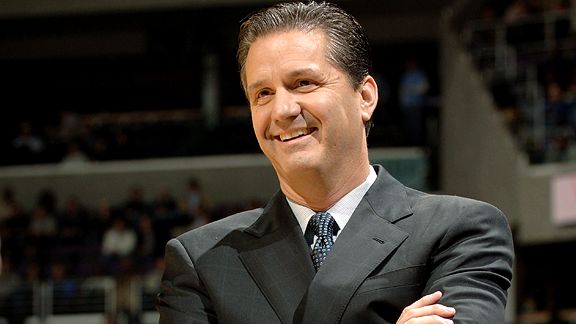


 by
by 
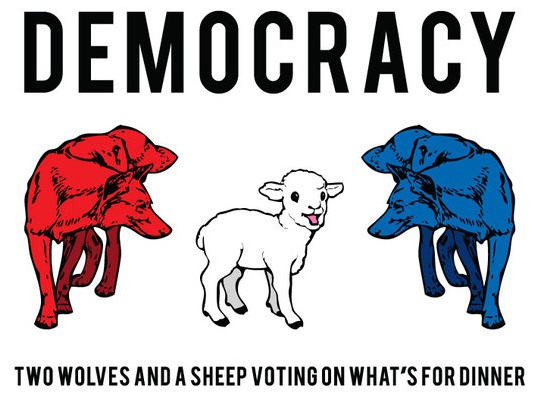



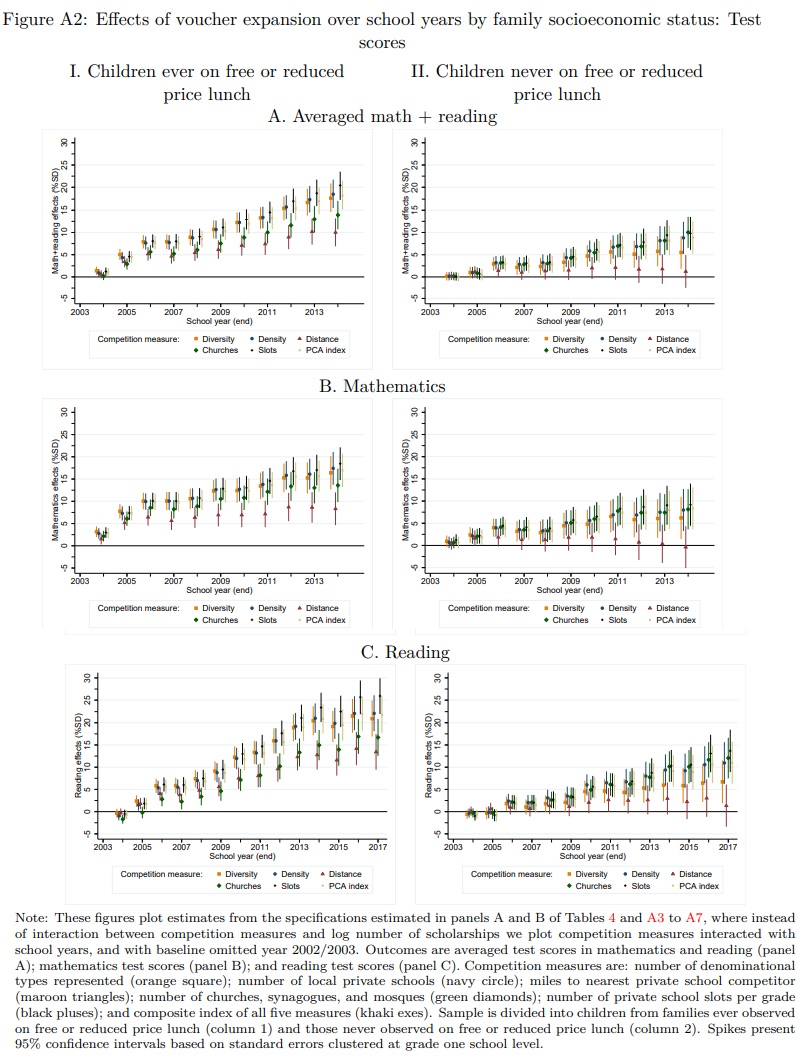






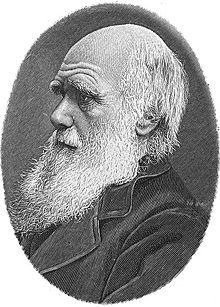









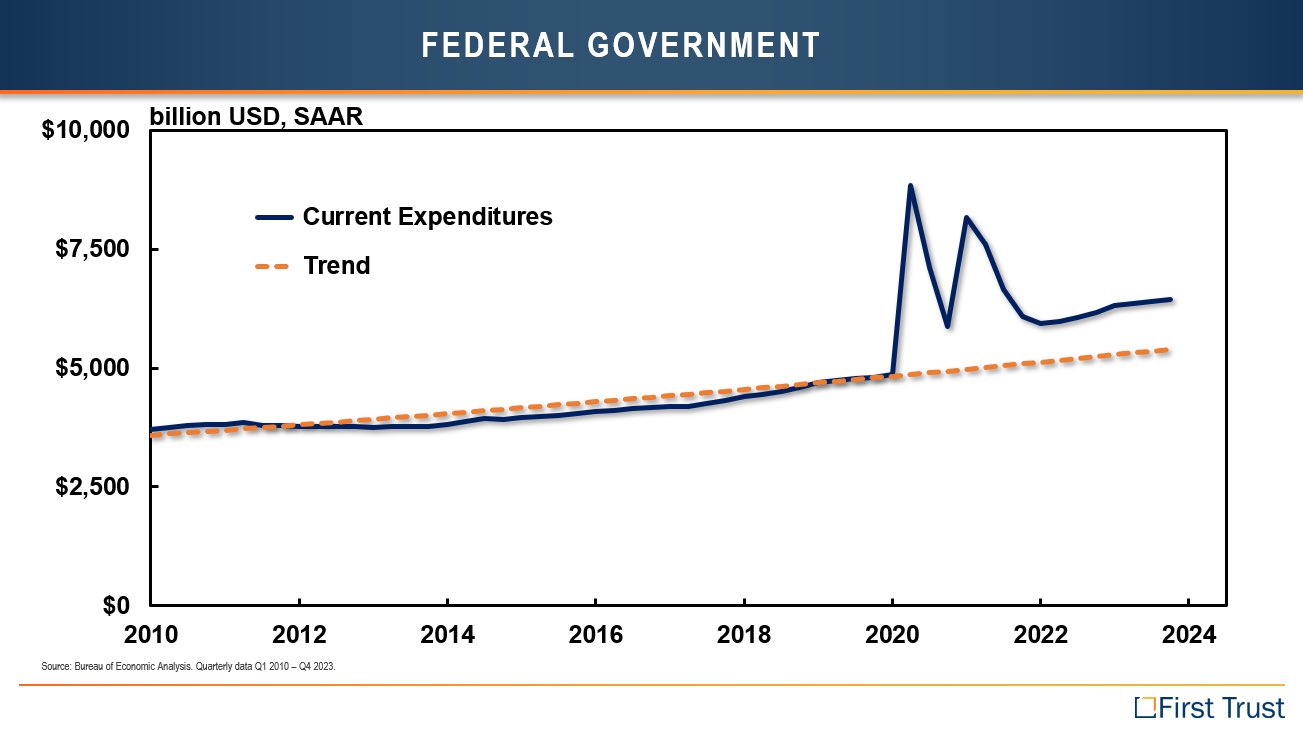
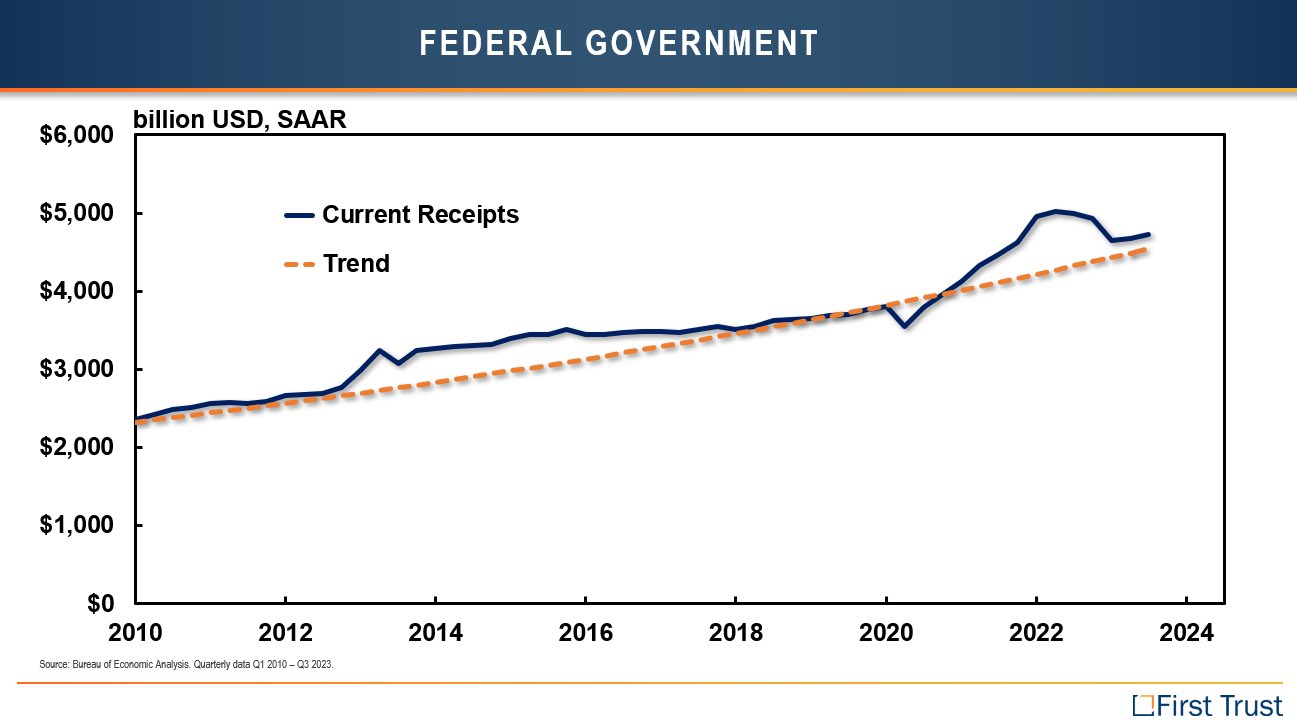
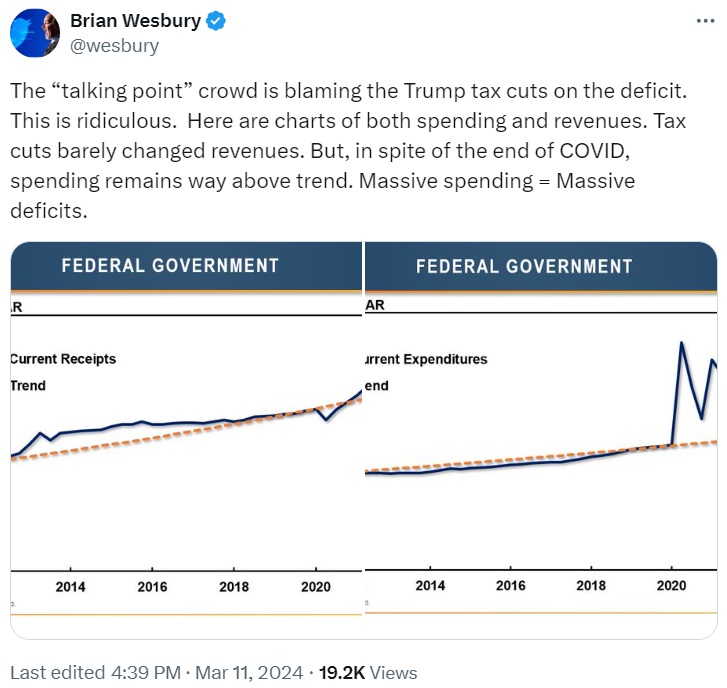
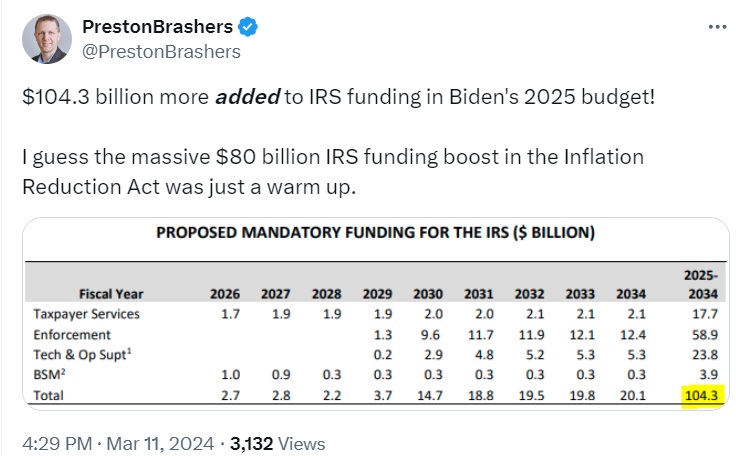
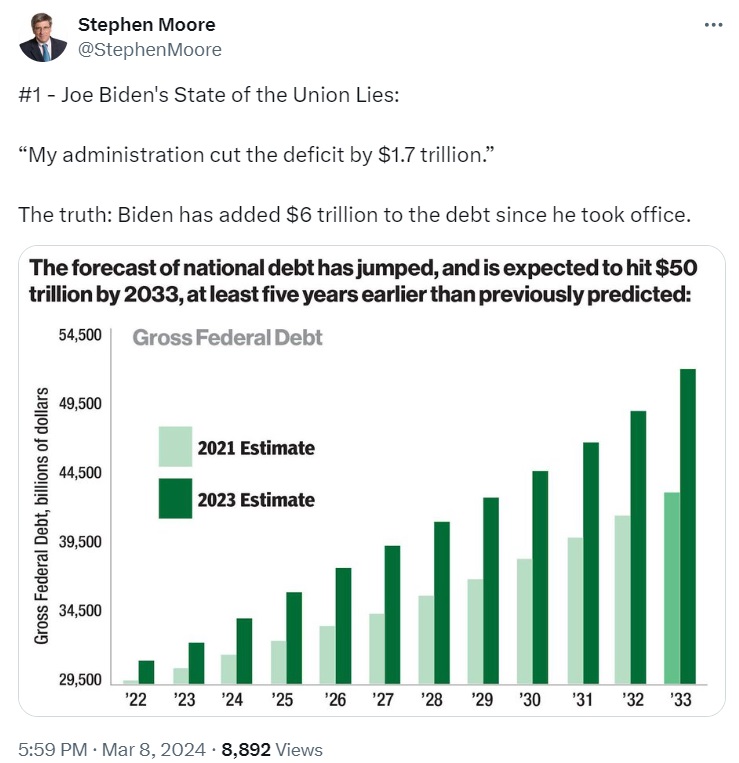
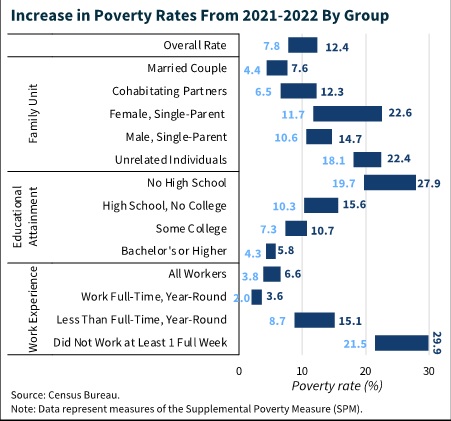
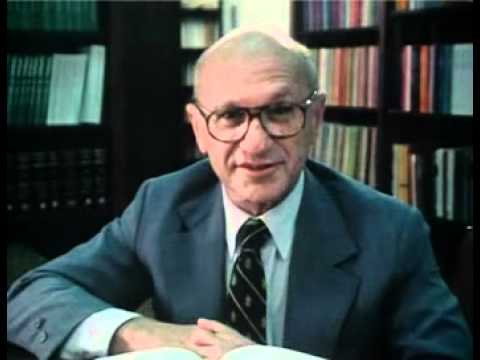


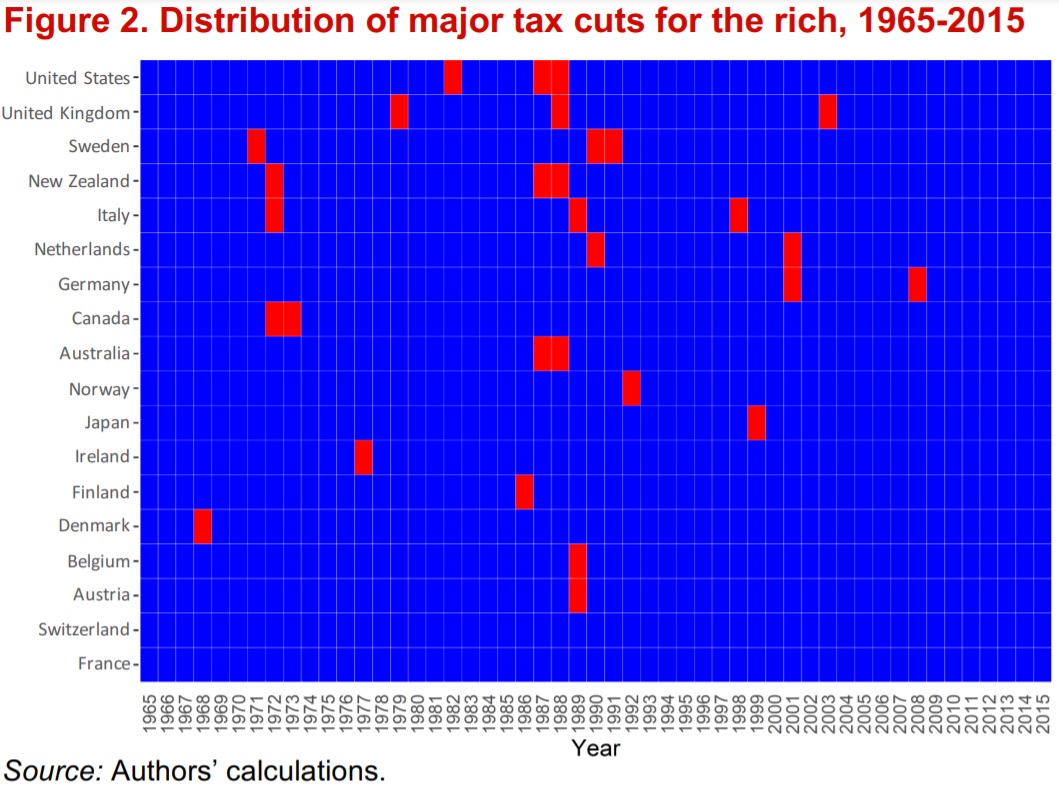
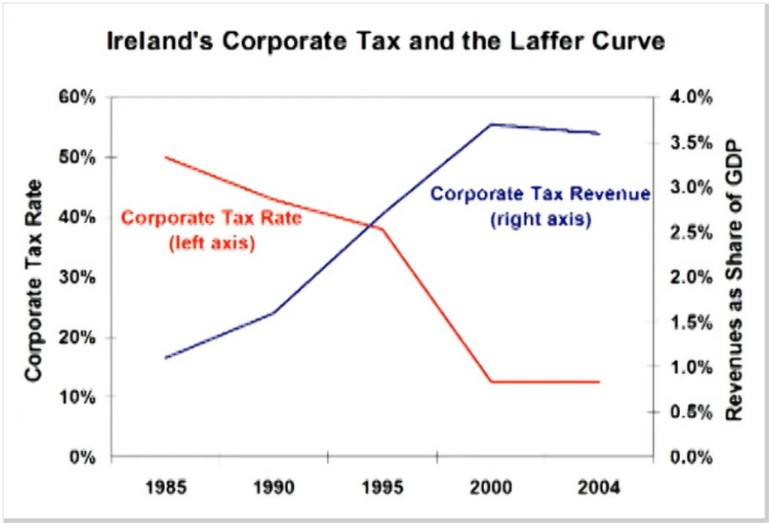
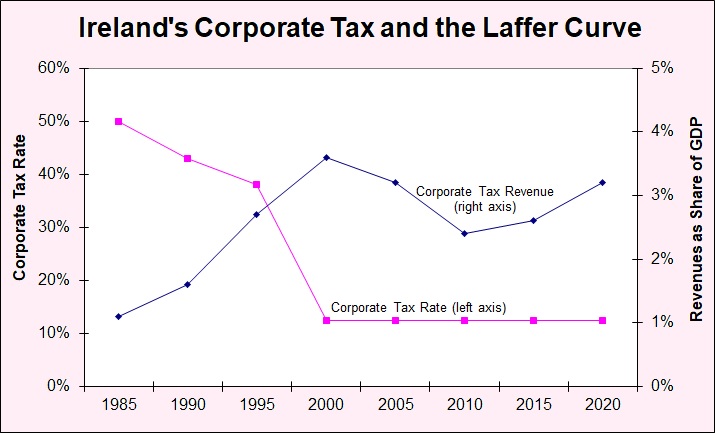


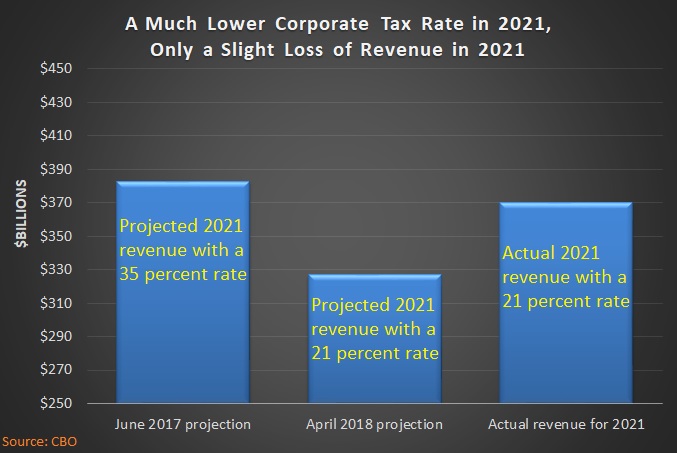
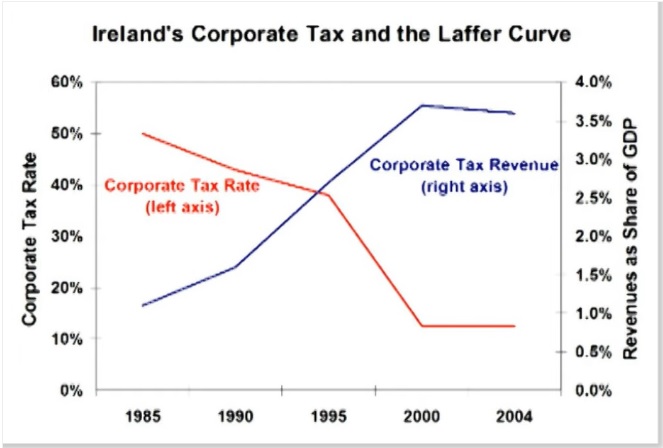



 The Daily Hatch