“Schaeffer Sunday” A great article by Mat Viola on the morality discussion in the Alfred Hitchock movie “Rope”

A great article by  Mat Viola on the morality discussion in the Alfred Hitchock movie “Rope”

_______________

How Should We then Live Episode 7 small (Age of Nonreason)

#02 How Should We Then Live? (Promo Clip) Dr. Francis Schaeffer

The clip above is from episode 9 THE AGE OF PERSONAL PEACE AND AFFLUENCE

10 Worldview and Truth

In above clip Schaeffer quotes Paul’s speech in Greece from Romans 1 (from Episode FINAL CHOICES)

Two Minute Warning: How Then Should We Live?: Francis Schaeffer at 100

A Christian Manifesto Francis Schaeffer

I love the works of Francis Schaeffer and I have been on the internet reading several blogs that talk about Schaeffer’s work and the work below was really helpful. Schaeffer’s film series “How should we then live?  Wikipedia notes, “According to Schaeffer, How Should We Then Live traces Western history from Ancient Rome until the time of writing (1976) along three lines: the philosophic, scientific, and religious.[3] He also makes extensive references to art and architecture as a means of showing how these movements reflected changing patterns of thought through time. Schaeffer’s central premise is: when we base society on the Bible, on the infinite-personal God who is there and has spoken,[4] this provides an absolute by which we can conduct our lives and by which we can judge society.  Here are some posts I have done on this series: Francis Schaeffer’s “How should we then live?” Video and outline of episode 10 “Final Choices” , episode 9 “The Age of Personal Peace and Affluence”, episode 8 “The Age of Fragmentation”, episode 7 “The Age of Non-Reason” , episode 6 “The Scientific Age” ,  episode 5 “The Revolutionary Age” , episode 4 “The Reformation”,  episode 3 “The Renaissance”, episode 2 “The Middle Ages,”, and  episode 1 “The Roman Age,” .

MORALITY WITH ROPE

“There are no moral phenomena at all, but only a moral interpretation of phenomena.” – Friedrich Nietzsche, Beyond Good and Evil

“The mere material world suggests to us no concepts of good or evil, because we can discern in it no system of grades of value.” – Alfred North Whitehead

“No known race is so little human as not to suppose a moral order so innately desirable as to have an inevitable existence. It is man’s most fundamental myth.” – Joseph Wood Krutch, The Modern Temper

“I just wanted to illustrate, in an entertaining way, that there is no God and that we’re alone in the universe, and there is nobody out there to punish you. That your morality is strictly up to you. If you’re willing to murder and you can get away with it and you can live with it, that’s fine.” – Woody Allen, on Crimes and Misdemeanors
rope1.jpg

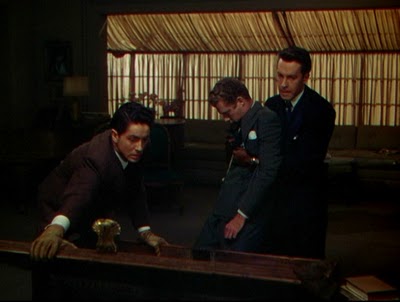
Alfred Hitchcock’s Rope stars Farley Granger and John Dall as thinly disguised versions of Leopold and Loeb, the brilliant students and self-described Übermensch who considered themselves exempt from the laws and morals of “ordinary” men, and put their philosophy into action by murdering a young boy for kicks. For them, killing a human being was just another experience, scarcely distinguishable, morally speaking, from any other action – like, say, squashing an ant. In Rope the names have changed to Phillip (Granger) and Brandon (John Dall), but the attitudes are the same. They murder a mutual acquaintance for the thrill of it, arguing that “the few are those men of such intellectual and cultural superiority that they’re above the traditional moral concepts. Good and evil, right and wrong, were invented for the ordinary, average man, the inferior man, because he needs them.”

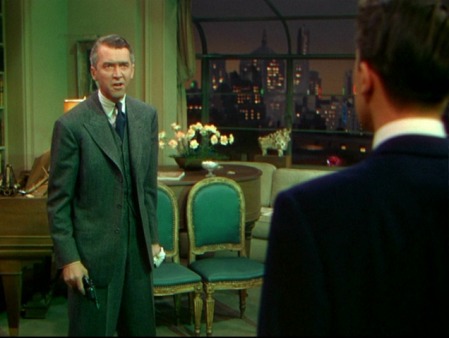
Not surprisingly, the film doesn’t endorse this view. In the end, Mr. Smith himself, James Stewart, shows up brimming with moral indignation to deliver an impassioned argument against the duo’s dastardly deed, saying, “…we’re each of us a separate human being with the right to live and work and think as individuals, but with an obligation to the society we live in. By what right did you dare decide that that boy in there was inferior and therefore could be killed? Did you think you were God, Brandon? Is that what you thought when you choked the life out of him? I don’t know what you thought or what you are but I know what you’ve done. You’ve murdered! You’ve strangled the life out of a fellow human being who could live and love as you never could…”
ropen1.jpg

The message is as obvious as is it predictable: murder is wrong! Few would argue with this statement. It seems to be a self-evident truth. But is it? I’m afraid the issue isn’t so black and white. Stewart’s character believes murder is wrong. John Dall’s character believes murder is right. Who’s correct? The problem is that we cannot logically decide between these competing moral claims unless there is an objective standard of morality to which we can repair for adjudication. Only such a standard would provide us the means to resolve disputes between people whose notions of right and wrong differ. The question is, though, does such a standard of morality actually exist?

First, a few definitions are in order:

Subjective:

  • 1) Based on or influenced by personal feelings, tastes, or opinions.
  • 2) Existing in the mind; belonging to the thinking subject rather than to the object of thought.
  • 3) Proceeding from or taking place in a person’s mind rather than the external world.

My favorite color is green. That is a subjective sentiment. That green is my favorite color need not imply that green is or should be everybody’s favorite color. It is not the “right” color, in any objective sense. Nature has not, after all, indicated a color preference.

Objective:

  • 1) Not influenced by personal feelings or opinions in considering and representing facts.
  • 2) Not dependent on the mind for existence; actual.
  • 3) Anything which actually exists, as distinguished from something thought or felt to exist.

2+2=4. That is an objective fact. Take two objects from here, two objects from there, put them together, and you have four objects. There’s no room for individual interpretation or preference. It is not right for some and wrong for others. There is only one valid answer. 2+2= 5 may be identified as an error, notwithstanding the ramblings of Dostoyevsky’s Underground Man, because math is not a subjective matter.

Morality

  • 1) Principles concerning the distinction between right and wrong or good and bad behavior.
  • 2) Of or concerned with the judgment of the goodness or badness of human action and character.

Murder is wrong. That is a moral claim. To which category do moral claims belong: subjective or objective? Is asserting that “murder is wrong” an objective fact like “2+2=4″, or is it a subjective sentiment like “my favorite color is green”? Is there an objective standard of morality to which we can refer to settle the matter? Or do questions of right and wrong, good and bad, fall into the subjective realm, amounting to nothing more than personal preference? I would argue that, whether we like it or not, moral claims belong squarely in the latter category.

The laws of math and logic are universally applicable. There’s no denying them. 2+2=4 is necessarily true. Furthermore, 2+2=4 was so even before the advent of humans. Let’s say a prehistoric squirrel gathers 2 nuts from under one tree, two nuts from under another tree, and then takes them all back to his nest. How many nuts does this squirrel have? He has 4, obviously. Is it any less true just because a human isn’t around to compute it? Did humans magically make 2+2=4 simply by thinking it? I don’t think so, and that’s because the laws of mathematics inhere in reality. Humans discovered mathematical laws; they didn’t invent them.

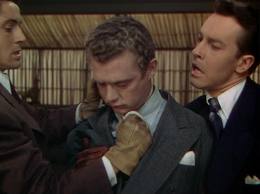
Morality doesn’t work that way. A moral claim like murder is wrong is not necessarily true. Right and wrong, good or bad, do not exist in nature. They are merely human constructs that help us get along, very much like the rules of courtesy. The universe, I’m afraid, is perfectly indifferent to morality. Whether one chooses to observe a moral rule like murder is wrong or stealing is bad is an entirely subjective matter, no more obligatory than, say, the rule instructing us not to split infinitives. Let’s say a bigger squirrel comes along and steals the smaller squirrel’s nuts. Has the bigger squirrel acted immorally? Was he “wrong” to steal the nuts? Obviously not, and that’s because the rules of morality do notinhere in reality. Humans didn’t discover moral rules; they invented them.
imagesca9x1eed.jpg

Allow me to return to Rope for a moment. I’ve never been a fan of the film. Its gimmicky one-set, long-take approach is hardly conducive to Hitchcock’s strengths as a director. Hitchcock himself acknowledged this, pretty much dismissing the film as a stunt: “When I look back, I realize that it was quite nonsensical because I was breaking with my own theories on the importance of cutting and montage for the visual narration of a story…no doubt about it, films must be cut”.

Also problematic are the stilted performances, particularly Granger’s awful turn as Phillip the Boobermensch. Just about everything he does or says is a howler. Perhaps my favorite bit is when he frantically calls out to “Brandon! Brandon!” when he sees the rope hanging out of the chest which contains the body. Brandon tells him to pull it out, and Phillip whines “I can’t”, as if he were totally incapable of functioning on his own. Later, when Stewart picks up the rope, Phillip hysterically whimpers, “He’s got it! He’s got it! He knows, he knows, he knows…” I mean, jeez, couldn’t Brandon find someone better than this guy with whom to carry out the “perfect crime”?

Thematically, the film offers a conventional, noncontroversial and comforting take on morality. During Stewart’s concluding diatribe on the immorality of murder, Brandon, himself now reduced to the level of Boobermensch, mutely stands around (as only characters in films based on plays are wont to do) allowing Stewart to prattle on without offering a counterargument, as if he’s been stunned speechless by the persuasive power of Stewart’s devastating argument. (For a vastly more insightful, unsettling, and intellectually challenging exploration of the “morality of murder” see Woody Allen’s masterful Crimes and Misdemeanors).

After watching Rope I happened to notice that the Self-Styled Siren, a popular classic movie bloggerette, had posted a tribute to the late Farley Granger, which consisted mostly of a defense of the “severely underrated Rope“. Her many followers quickly chimed in with their usual assent. All very boring, frankly. No one bothered to mention anything about the heady philosophical issues at the film’s core. I mean, what an opportunity to discuss Nietzsche, morality, murder, nihilism etc.! I felt the conversation could use some livening up, and so I posted the following:

“There’s nothing wrong, objectively speaking, with snuffing out a human life, notwithstanding all of Stewart’s histrionic protestations to the contrary.”

I had to chuckle at the Siren’s response:

“Mat, I would address your objections to Rope, but the last line of your first comment has, frankly, scared me to death.”

Apparently, for the Siren, a proposition qualifies as worthy of dispute only if it preserves her cozy feelings of security and well-being. (Not that there’s anything morally wrong with that, of course). This is a woman who could tell you everything you never wanted to know about old Hollywood stars – like, say, all the juicy details of the secret love affair between Jeanette Macdonald and Nelson Eddy – but when the discussion turns to a genuinely challenging subject, particularly one that frightens her, she’ll go all mum on you. (One suspects that a CAT scan of the Siren’s brain would reveal that the region controlling appreciation for classic Hollywood movies, technically known as the hippoclassic cinebellum, is grossly overdeveloped).

But I digress. Saying “there’s nothing wrong, objectively speaking, with snuffing out a human life” is, of course, not the same as saying, “there’s nothing wrong, subjectively speaking, with snuffing out a human life.” The operative phrase here is “objectively speaking”. I don’t personally condone murder. I don’t personally like murder. I’m happy to see this prejudice of mine codified as the law of the land. I cannot provide a reason, however, why murder is objectively wrong. But there’s no shortage of folks who try to provide such a reason. I’ll now examine some of the more common arguments, and explain why I find them wanting:

The Self-Evident Argument

People often respond to the suggestion that there’s nothing objectively wrong with murder with simple incredulity. For them, apparently, the proposition that murder is wrong is self-evidently true. They might respond by saying things like, “if you don’t know why murder is wrong I really don’t know what to say to you.”

Of course, this is in fact no argument at all. Here’s one thing they might say: “murder is objectively wrong because…” If one doesn’t need a reason to justify his belief that murder is morally wrong, then neither does a murderer need a reason to justify his belief that murder is morally right. After all, murderers have their own “self-evident truths.” We’re no closer to resolving the dispute with which we started. If one person says “murder is wrong” and another says “murder is right”, how do we logically decide between these competing moral claims in the absence of an objective standard to which we can refer to settle the matter? “Because I strongly feel that murder is wrong” does not, I’m afraid, constitute an objective standard.

The Golden Rule – Do unto others as you would have them do unto you.

Why should anyone necessarily adopt this rule? A sadistic murderer, for example, derives pleasure from inflicting pain on others. He values his own pleasure above everything else. He considers his own pleasure to be the greatest good, and if morality is purely subjective as I am arguing, then maximizing his pleasure, which would entail torturing his victim to death, is, for him, the right thing to do. Why then should he not adopt the rule that torturing people to death is good? Why should he care about the victim? What obligates him to care for her?

Most of us find the behavior of a sadistic murderer nauseating. That is true. But unless an objective source of human worth and moral obligation exists, we have no logical grounds to say that his sadistic behavior is morally wrong. In fact, in the absence of an objective standard of morality we have to forfeit altogether our cherished notions of morally right or wrong behavior. Good and bad, right and wrong, become vacant categories. Assertions like “murder is wrong” mean nothing more than “I don’t like murder.”

Survival of the species

All animal species possess characteristics which have historically contributed to the perpetuation of their species. Humans are no different. Some attempt to infer a moral imperative from this fact. The argument goes something like this: that which preserves life, such as empathy, is good, and that which destroys life, such as murder, is bad. There are several problems with this position:

First, it commits the fallacy of trying to derive an “ought” from an “is”. That certain behaviors tend to preserve life is a fact. That we ought to behave in ways that tend to preserve life is not. The first is a truth-statement, the second a value-statement, and never the twain shall meet. You simply cannot logically derive a value from a fact.

Second, it begs the question: why is life/survival good? Millions of species have already gone extinct. Why should anyone necessarily care if the human species goes the way of the dinosaur? Why is human life any more valuable than any other animal species?

Third, it commits the naturalistic fallacy. Allow me to quote G.E. Moore:

“The survival of the fittest does not mean, as one might suppose, the survival of what is fittest to fulfill a good purpose – best adapted to a good end: at the last, it means merely the survival of the fittest to survive: and the value of the scientific theory just consists in showing what are the causes which produce certain biological effects. Whether these effects are good or bad, it cannot pretend to judge.”

Just because something is “natural” doesn’t make it “good” (or “bad”, for that matter). Often that which preserves life also destroys life. Aggression, no less than empathy, is a characteristic which has facilitated human survival. Vanquishing entire tribes of people has generally been successful throughout human prehistory and recorded history. Just ask the descendants of the North American Indian – if you can find any. The point is that one has to be awfully selective when attempting to base his morality on what evolution has wrought. After all, the “better angels of our nature” evolved right alongside the “fallen” ones.

God

There’s no way around it: the implications of atheism lead inevitably to moral nihilism.  I do think that God, were he to exist, would qualify as an objective source of moral values (though even this is debatable), since, being omniscient, he would presumably know infallibly what is good and what is bad. But first his existence would need to be demonstrated. Good luck.

rope1.bmp

So let’s take this full circle back to Rope. Here’s the full text of Stewart’s concluding monologue:

“You’ve given my words a meaning I’ve never dreamed of. And you’ve tried to twist them into a cold, logical excuse for your ugly murder. Well, they never were that, Brandon. You can’t make them that. There must have been something deep inside of you from the very start that let you do this thing. But there’s always been something deep inside me that would never let me do it. Tonight you’ve made me ashamed of every concept I ever had of superior or inferior beings. And I thank you for that shame. Because now I know that we’re each of us a separate human being, Brandon, with the right to live and work and think as individuals, but with an obligation to the society we live in. By what right do you dare say that there’s a superior few to which you belong? By what right did you dare decide that that boy in there was inferior and therefore could be killed? Did you think you were God, Brandon? Is that what you thought when you choked the life out of him? Is that what you thought when you served food from his grave? Well, I don’t know what you thought or what you are but I know what you’ve done. You’ve murdered! You’ve strangled the life out of a fellow human being who could live and love as you never could…”

Stewart, playing Rupert Cadell, delivers this entire monologue uninterrupted. Brandon and Phillip, the two supposed Übermensch, just stand around like dimwits as Stewart rants. I thought it might be fun to imagine what Brandonmight have said and done, were he not such a Boobermensch, in response to Stewart’s diatribe. The following, then, is my re-write of this scene:

Rupert Cadell
You’ve given my words a meaning I’ve never dreamed of. And you’ve tried to twist them into a cold, logical excuse for your ugly murder.

Brandon
Hey, Mr. Smith, we’re not in Washington anymore. No filibustering here. If you think I’ll allow you to go off on a rant against me unchallenged you’re gravely mistaken. First of all, I don’t need an excuse to commit murder. I did it for the same reason I do anything: I wanted to. I felt like doing it and I did it. Secondly, it wasn’t ugly. Au contraire:  it was a thing of beauty. You haven’t lived until you’ve strangled the life out of someone, my friend. It’s a fucking rush. You oughta try it some time.

The bluntness with which Brandon discusses the murder flusters Rupert. Trying to regain his composure he faces Brandon with all the courage he can muster and, with righteous indignation, says:

jimmystewart1.jpg

Rupert
The name’s not Mr. Smith! It’s Rupert Cadell!

Brandon
I stand corrected. Is that it? Are you done? Is that all you have to say?

Rupert
No, that’s not all I have to say! I have much more to say! Much more! And by the time I’m finished saying it…

Brandon slaps Rupert on the cheek.

Brandon
Well, say it, man! Say it!

Rupert
There must have been something deep inside of you from the very start that let you do this thing. But there’s always been something deep inside of me that would never let me do it.

Brandon slaps Rupert on the other cheek for good measure.

Brandon
Ok, so we’ve established that we both have something deep inside of us. That’s a sure sign that what we’re discussing here is a purely subjective matter. The something deep inside of me says that murder is good. The something deep inside of you says that murder is bad. Without an objective standard of morality, this just means that I like murder, and you don’t. So what? I like chocolate. You don’t. What’s your point?

Rupert (whimpering)
Please stop slapping me. It hurts.

Brandon
Ok, sorry, I’ll stop slapping you.

Rupert (relieved)
Thank you.

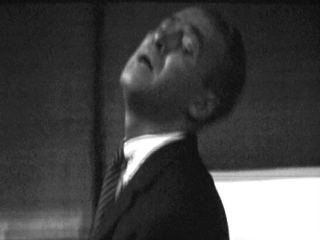
Brandon delivers a punishing right hook to the side of Rupert’s head. Rupert crumples to the floor.
work_video_synkope_vertigo1.jpg

Brandon
Does that feel any better? I repeat: what’s your goddamn point?

Rupert struggles back to his feet.

Rupert
Ok, ok. We’re each of us a separate human being, Brandon, with the right to live and work and think as individuals, but with an obligation to the society we live in.

Brandon delivers a crushing haymaker straight to Rupert’s nose. Rupert cries out in agony, blood spraying like a geyser from his broken nose.

Brandon
Sorry, Roopy, but the impulse to stay alive is not a “right.” “Rights” don’t exist in nature. “Human rights” is a purely man-made concept which has no basis in reality. If you want to pretend you have a “right” to live go right ahead, but don’t expect me to. That boy in there had no more inherent right to live than anyone or anything else does. I didn’t violate his “right” to live because he didn’t have one.

Rupert (struggling to get up on one knee)
By what right do you dare…?

Before Rupert can finish the question, Brandon wallops him with a devastating uppercut to the chin, knocking Rupert flat on his back. Barely conscious now, Rupert moans in abject pain, his head spinning.

691.jpg

Brandon
Let me cut you off right there. I just got done saying that rights are purely fictitious. And then you start your next sentence with, “By what right…”? Have you not been listening? Quit sticking so slavishly to the crummy script, you fool. It doesn’t apply anymore. Are you incapable of improvising?

Brandon takes his pistol out of his pocket and kneels down to show it to Rupert.

Brandon
See this? The script says I’m supposed to hand it over to you like some fucking moron. But that ain’t gonna happen. See, that’s the difference between you and me, Roopy. You mindlessly obey whatever authority tells you. I don’t. The screenwriter wants you to be a mouthpiece for “society” and so you play along like some unthinking automaton emitting preprogrammed drivel. Well, this is my script now, and so you’d better come up with something a little more persuasive. You want the gun? Here, have it.

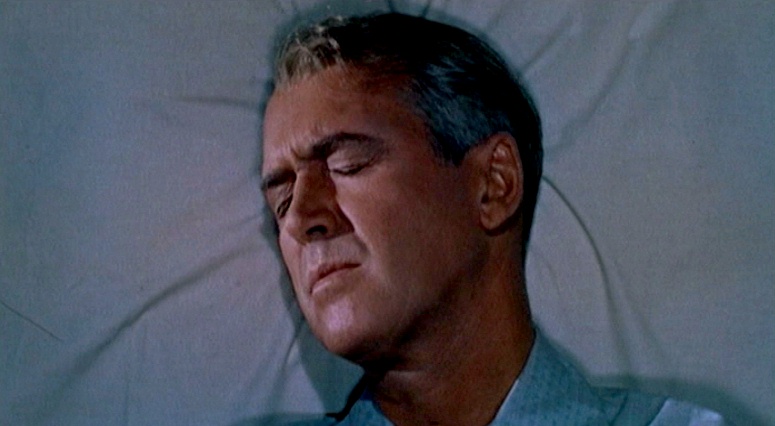
Brandon slams the butt of the gun down hard on Rupert’s skull, finally knocking him into merciful unconsciousness.
vertigo21.jpg

Brandon looks over at Phillip, who has been silently watching the whole time from his piano.

Brandon
Well, what have you got to say for yourself?

Phillip
You frighten me. You always have. From the very first day in prep school.

Brandon
Oh, Jesus. Can’t you say anything that isn’t in the script either?

Phillip
That’s a lie. There isn’t a word of truth in the whole story. I never strangled a chicken in my life. I never strangled a chicken and you know it!”

Brandon conks Phillip over the head with the gun, knocking him out as well, and drags him over next to Rupert. Brandon tosses a glass of water in Rupert’s face to wake him up, and then sits back in a reclining chair and lights up his pipe and waits for Rupert to regain consciousness. Rupert starts to stir, then sits up, rubbing his beleaguered head.

Phillip mumbles something. Rupert leans closer to get a better listen.

Brandon
What’s he saying now?

Rupert
I think he said, “He’s got it. He’s got it. He knows, he knows, he knows…”

Brandon
Yeah, that’s what I thought. He’s just mumbling some more gibberish from the script. Remember? That’s what he said when you took the rope out of your pocket.

Rupert
Oh yeah, that’s right.

Brandon
Guess who has the rope now?

Brandon produces the rope from his pocket and shows Rupert.

rope-pic-31.jpgits-a-wonderful-life-jimmy-vision1.png

Brandon (puffing on his pipe like a gentleman of leisure)
But let’s get back to our little discussion, shall we? I believe you were saying that we have an obligation to the society we live in or some such nonsense.

Rupert
That’s right, we do.

Brandon
Still sticking to the script, eh? I was hoping I had knocked some sense into you, but no, you’re still shackled to the illogical ideas of your creators, I see. Look, Roopy, nothing at all obligates me to care for society. I have a moral obligation tomyself and myself alone. What is good for me is the only good I recognize. Why should I care about society? Why should I be morally obligated to anybody or anything else but myself?

Rupert
Did you think you were God, Brandon? Is that what you thought when you choked the life out of him? Is that what you thought when you served food from his grave?

Brandon
Actually, I thought the burgers were a little dry myself. How was yours?

Rupert
Mine was nice and juicy. Very delici… Gosh darn it, you murdered that boy over there and you’re talking about hamburgers? What kind of monster are you? Answer the question: did you think you were God when you chocked the life out of that boy?

Brandon looks at the morally indignant Rupert with amusement and takes a long drag on his pipe.

Brandon
Getting a little demanding for a guy with his face bashed in, aren’t we, Roopy? To answer your question, no, I didn’t think I was God. I can’t very well think of myself as something I don’t believe in, now can I? I’ll leave the murdering in the name of God to your precious “society”.

Rupert
Well, I don’t know what you thought or what you are but I know what you’ve done. You’ve murdered! You’ve strangled the life out of a fellow human being who could live and love as you never could…”

Brandon
Look, Roopy, that boy over there was just a random collection of atoms with no more objective worth or value than any other piece of matter. You think his life had value. I don’t. I simply considered him unworthy of living and took the necessary steps to snuff him out of existence. You can bellow till you’re blue in the face that what I did was wrong, but you can’t objectively prove that it was.

Rupert
You’re insane, Brandon!

Brandon
Tut-tut, tut-tut. My, aren’t we rude for interrupting. You really oughta work on your manners, Roopy. Please, let me finish. You say I could never live and love as he could, and you’re right. I choose to live and love differently. I live to kill and I love to kill. His way of living and loving was not objectively any better than mine. And besides, now that that inanimate hunk of meat over there is objectively dead, I’m sure you’ll agree that he certainly cannot live and love as I can.

Rupert
You’re insane, Brandon! Insane and crazy and sick and twisted and cruel and demented and perverse and warped and abnormal and inhuman and loathsome and vicious and mean and perverted and nasty and brutal and pitiless and malicious and cruel…

Brandon
You already said cruel.

Rupert
…and unwholesome and ruthless and heartless and merciless and cold-blooded and hateful and despicable and disgusting and repugnant and detestable and abhorrent and noxious and sadistic and malevolent and evil and odious and contemptible and iniquitous…

Brandon
Oooh, iniquitous. Good one!

Rupert
… and repulsive and sickening and ghastly and nauseating and revolting and foul and abominable and wicked and monstrous and repellent and depraved…

Finally, Rupert starts hyperventilating from the strain of emitting so many consecutive insults.
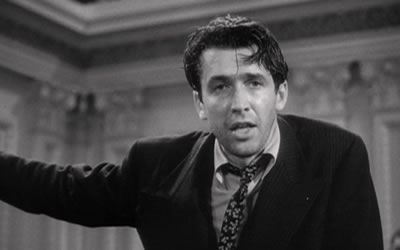
367-21.jpg

Brandon chuckles and gets up from his recliner and walks over to Rupert. He takes a long drag on his pipe and blows the smoke directly in Rupert’s face.

Brandon
Ok, let’s see. By my count, that’s 47 insults you’ve hurled in my direction in lieu of an argument. Ad hominem attacks are very unbecoming of you, Roopy. Notwithstanding your invective, the question remains: how was it objectivelywrong to snuff out that boy’s life?

Phillip starts mumbling.

Phillip
I never strangled a chicken in my life…

Brandon tosses water in Phillip’s face.

Phillip fully regains consciousness and looks up at Brandon.

Phillip
I’ve been praying I’d wake up and find out we hadn’t done it yet. I’m scared to death, Brandon. I think we’re going to get caught.

Brandon
Go on, Phillip, utter one more line from that script. Go on, I dare you.

Phillip
Have you ever bothered for just one minute to understand how someone else might feel?

Brandon
I wonder how this feels.

dz2oca26m6xscal3a74zcap7al2ncaxd7y2vcajk1unlcad502q3ca9yzw49camrve11caklacxzcaua7e9qcabmlfa2carczop7cafbs80tca1lcwu6ca8nz9k9caiq0qrqcaishg46carjx885cayk74ew.jpg

Brandon puts the rope around Phillip’s neck and tugs hard. Phillip gasps for breath, his eyes bulging out of their sockets.

Rupert
Please, Brandon, stop!

Brandon releases his grip on the rope, allowing Phillip to catch his breath.

Brandon (to Phillip)
Not another word from that script. Got it?

Phillip
What the devil are you doing?

Brandon retightens the rope around Phillip’s neck. Then he hands the rope to Rupert and points his gun at him.

Brandon (to Rupert)
I’ll give you one chance to save yourself. Finish off this Boobermensch and I’ll let you live. What was it you said earlier this evening? That you’d like to have a “Strangulation Day”? Well, today is that day, Rupert.

Rupert
I was only joking, for Christ’s sake!

Brandon cocks the gun.

Brandon
Whose life do you value more, Rupert? Yours or his? Do it and you walk out of here alive. Don’t do it and you’ll end up in that chest with the other dead meat.

Rupert
No! I can’t! I won’t!

Brandon
He’s going to die whether you do it or not. If you don’t do it you’re going to die too. At least save yourself, Rupert.

Rupert
May God forgive me.

Brandon
Wait! Before you do it, let’s see if Phillip has any last words.

Phillip
I had a rotten evening.

Brandon
Yep, quoting from the script to the last. Unbelievable! Do it!
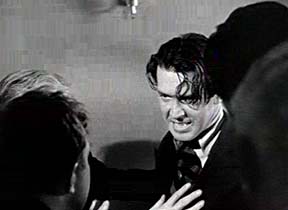
mrsmith661.jpg

Rupert yanks hard on the rope, choking the life out of Phillip the Boobermensch. Rupert lets the rope slip from his fingers and Phillip’s lifeless body slumps to the floor. Brandon drags the corpse over to the chest and tosses Phillip into it with the other body. He then walks back over to Rupert and puts his arm around him.

Brandon
Well, how was it? How did it feel?

Rupert
I take back everything I said, Brandon. That was incredible! You’re so right, you haven’t lived until you’ve choked the life out of someone. What a fucking rush that was!

Brandon pats Rupert on the shoulder and then walks over to the phone and dials.

Brandon
Hi Mrs. Cadell, this is Brandon Shaw speaking. I’m doing well, and you? So nice to talk to you. Listen, Rupert and I have been doing a lot of catching up, and it’s getting late and so I’ve invited him to stay for the night. I hope you don’t mind. Good! And since he’s still going to be here in the morning, I would be honored if you’d join us for breakfast. Great! Say, around 8:00? I look forward to seeing you, Mrs. Cadell.

Brandon hangs up.

Brandon
Charming lady, Roopy. I hope the eggs will be better than the burgers.

Rupert
What the devil are you up to?

mcauley-vertigo-splsh1.jpg

Brandon
Well, Roopy, yesterday was “Strangulation Day”, today is “Bullet in the Head Day”.

Brandon fires a bullet into Rupert’s head, and tosses him into the chest with the other two bodies.

Then Brandon breaks the fourth wall and addresses the audience directly.

Brandon
Ladies and gentlemen, if my actions this evening have repelled you, so be it. I can’t change the way you feel. But if you think that what I’ve done is morally wrong, I would simply remind you that that’s merely your opinion. In my opinion what I have done is right. It was fun, it was exciting, and it felt oh-so-good. Your opinion is no more valid than mine. It’s just different. Your values are no better than mine. They’re just different. After all, since no objective standard of morality exists, all you’re really saying is that you don’t like murder, and all I’m really saying is that I like murder. You may think that your moral outrage toward me amounts to something more than your own paltry knot of predilections. It does not. You may think that there is a higher standard to which I may be held. There is not. Morality, as you understand it, is a myth, a fantasy, a fairy-tale. Objectively speaking, murder is neither good nor bad, neither right nor wrong. It simply is. The universe is completely indifferent to morality. Nature is utterly amoral. Nothing is wrong. Nothing is right. Nothing is bad. Nothing is good. It is simply not possible to do something morally wrong. It is only possible to call something “wrong”. But no matter how passionately you shout, it doesn’t make it so. My actions this evening were no different, morally speaking, from that of a cat torturing a mouse. I am no more morally obligated to refrain from torture than is a cat. Moreover, humans have no more intrinsic value or worth than a mouse has. The value you assign to yourself and others is purely subjective and completely arbitrary. You may feel that you and others have value and worth, but do not forget for a moment that I feel that you and others don’t. Don’t delude yourself: your feelings are no more authoritative than mine. They’re just different. Whyshould I feel that you have value and worth? After all, you’re nothing more than a chance arrangement of particles with no more inherent value or worth than any other chance arrangement of particles. If this upsets you, it is because you have an innate, deep-rooted dread of nihilism, of the almost certain possibility that you are nothing more than a product of the blind whim of nature, that your most cherished concerns are mere brute stupidities deposited in you by the mindless, amoral process of evolution, that ultimately nothing has value, nothing has meaning and nothing matters, that all your effort is futile and absurd, and that just around the bend complete and utter annihilation and oblivion await you.

Good evening.

Posted on April 26th, 2011 by Mat Viola
Filed under: Miscellaneous

FRANCIS SCHAEFFER ANALYZES ART AND CULTURE Part 52 THE BEATLES (Part D, There is evidence that the Beatles may have been exposed to Francis Schaeffer!!!ALSO Open Letter to Paul McCartney) (Feature on artist Anna Margaret Rose Freeman )

_

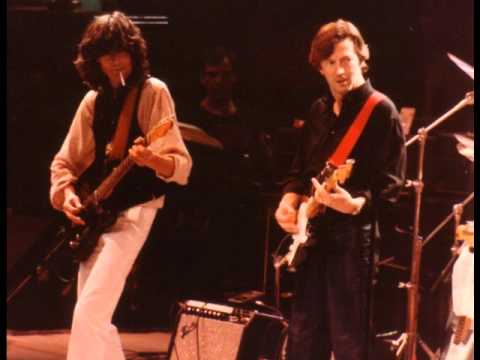
Image result for eric clapton jimmy page

Eric Clapton and Jimmy Page were very good friends (both had been members of the YARDBIRDS) and Eric Clapton read Schaeffer’s book ESCAPE FROM REASON and gave it to Jimmy Page. Did Clapton also give it to his best friend George Harrison or at least talk about it to him later?

Image result for eric clapton jimmy page

George Harrison Swears & Insults Paul and Yoko

Lucy in the Sky with Diamonds- The Beatles

The Beatles:

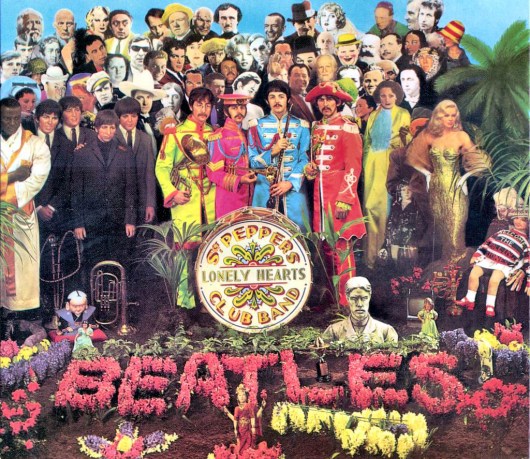
I have dedicated several posts to this series on the Beatles and I don’t know when this series will end because Francis Schaeffer spent a lot of time listening to the Beatles and talking and writing about them and their impact on the culture of the 1960’s. In this series we have looked at several areas in life where the Beatles looked for meaning and hope but also we have examined some of the lives of those  writers, artists, poets, painters, scientists, athletes, models, actors,  religious leaders, musicians, comedians, and philosophers  that were put on the cover of Sergeant Pepper’s Lonely Hearts Club Band album. We have discovered that many of these individuals on the cover have even taken a Kierkegaardian leap into the area of nonreason in order to find meaning for their lives and that is the reason I have included the 27 minute  episode THE AGE OF NONREASON by Francis Schaeffer. In that video Schaeffer noted,  ” Sergeant Pepper’s Lonely Hearts Club Band…for a time it became the rallying cry for young people throughout the world.”

____

How Should We then Live Episode 7 small (Age of Nonreason)

____________

John Lennon, Eric Clapton, Keith Richards, Mitch Mitchell, Jimi Hendrix

Uploaded on Jul 1, 2010

John Lennon (Beatles), Eric Clapton (Cream), Keith Richards (Rolling Stones), Mitch Mitchell (Jimi Hendrix Experience) – Yer Blues

Is there evidence that some of the Beatles may have been exposed to the works of Francis Schaeffer? Let me give two points of evidence concerning that. First, Eric Clapton and George Harrison were best friends up until George’s death in 2001 and it has been documented that Eric Clapton read the book ESCAPE FROM REASON by Francis Schaeffer and recommended it to friends. (Evidently Clapton has had a life long curiosity about at the Christian faith according to Dr. John Powell of Oklahoma Baptist University).  Second, I personally have written letters to the other two remaining Beatles and I hope they both got a chance to read them.

I am a big fan of Francis Schaeffer but not so much of his son Frank. However, recently I ran across a 2011 article that Frank wrote and I wanted to share a portion of it with you. “Switchfoot’s Album & Movie “Fading West” — It’s Grace in Action, Hope Crystallized, Damnation Canceled in Favor of Love…,” August 11, 2014 by . 

The band SWITCHFOOT pitured below:

Switchfoot – Dare You To Move (Alt. Version)

14 million views on You Tube on this song below.

I was just speaking at SoulFest (August 7-9). It’s a music festival with evangelical roots. The band Switchfoot played. I’m several things but not evangelical. Could you imagine a more uncomfortable fit for me? I was expecting the worst. What I got was two gifts: One of pure art and the other pure grace. I also got a good and necessary humbling.

FIRST GIFT: Switchfoot’s new album that they played from at the festival — “Fading West” — is the best rock and roll I’ve heard in years. I haven’t been so excited by a rock album since the day in 1967 when I was fifteen and I put “Sgt. Pepper’s Lonely Hearts Club Band” on a turntable for the first time. This was just before running away from a boarding school in the UK.

“Sgt. Pepper’s” became my personal sound track of liberation back then as “Fading West” is now.

Last night my wife Genie and I sat and listened to the album four times in a row. Then we watched the movie of the same title. We are sixty-two and sixty-three years old. We are also both old rockers who felt like we were sixteen again, only maybe a little wiser and nicer!

Genie, my wife of 44 years, was as moved as I was by the terrific music and lyrics. She grew up in the Bay Area and as a teen had the distinction of seeing the Beatles three times (!) live and the Rolling Stones four times (!) live.

Meanwhile, I was growing up in Switzerland in a mission (L’Abri Fellowship), and my “almost famous” rock-n-roll high point came when I got a job helping with the Led Zeppelin’s light show at the Montreux Jazz/rock festival. I met Jimmy Page and noticed he was reading one of my dad’s first books, ESCAPE FROM REASON. (No kidding.)

This was back in the days when Dad was a sort of hippie guru for Jesus catering to Beats, hippies and dropouts hitching across Europe. Eric Clapton had given Page the book as it turned out. (Don’t write me, neither “got saved,” and I have no idea how this story ends!)

I was trying to be “cool” that day on the light show crew… and I wasn’t too pleased to find my brief escape into the rock world from the world of my Dad’s evangelical mission was no escape from my God-world at all. He’d been giving lectures on Bob Dylan, and drug guru Timothy Leary had been a guest at L’Abri. And now I got to briefly “hang out with the band” and Dad got there first, or at least one of his books did! Sheesh! It’s hard to be cool!

…Anyway… Just before coming to my parent’s mission in 1969 – Genie was visiting a friend and knew nothing about the place — she was hanging out with the Santana drummer in California. My then teen bride-to-be Genie might as well have gone to another planet when she stumbled into Dad and Mom’s ministry. The only Billy Graham she’d ever heard of was the Fillmore West manager!

I wonder if my wife-to-be was in the Fillmore West rock palace when Dad and I were there one night in 1968 listening to the Jefferson Airplane together and some hippie handed Dad a joint? Dad passed it on down the row, not taking any himself but totally un-shocked and loving Grace Slick as much as I did… if only Jerry Falwell could have seen us then…

______

(I know who Jimmy Page is since I have always been a big Led Zepplin fan and I have interesting story to tell about their best song in my view which I shared on an earlier post. )

Led Zeppelin – When The Levee Breaks

___________

I just wanted to point out what an impact that the short 119 page book ESCAPE FROM REASON has had. Below is a story of Paul McGuire who had never been exposed to Christianity until he read that book and it changed his whole worldview.

SEARCHING FOR TRUTH IN THE NEW AGE

By Paul McGuire
My spiritual pilgrimage began at a very young age when the questions, “Who am I? What is my purpose in life?” and “What am I doing here?” haunted me and burned in my mind night and day. While other children were content to play, I was driven to ask questions about the meaning of life. Raised in New York City, I came from a liberal, educated family. Both my parents were teachers, and neither believed in God.

As a young boy, I thought science could give me the answers to my questions about life. Reading every book I could get my hands on about science and the lives of the great scientists, I often devoured ten books a week. I read about men like Albert Einstein, Nicola Tesla, Thomas Edison, Enrico Fermi, Louis Pasteur, and John Oppenheimer. Building a huge laboratory in my bedroom, I undertook amateur experiments on cryogenics and nuclear physics. Soon, however, I realized that these brilliant men did not have the answers I was looking for. Thus, at an early age I discovered the bankruptcy of scientific materialism.

After exhausting science as a means of finding the meaning of life, I next investigated the occult and Eastern religions. Biblical Christianity was not even an option for me. I had never once met a Bible-believing Christian or seen an evangelist on television, and the churches in my neighborhood were steeped in liberal theology or dead orthodoxy.

The only religion we had at home was secular humanism – the belief that there is no God and man is the center of the universe. As a result, I was raised to believe that there was no absolute right or wrong. Around the dinner table, my parents taught me that human evil was due to ignorance and that the concept of a personal God was an archaic belief any educated person should transcend. In addition, they told me that Christians were intellectually pathetic people who were “anti-love,” “anti-joy,” and “anti-sex.” Instead of promoting anything good, Christians were responsible for the crusades and the Inquisition.

One Thanksgiving evening my grandmother asked my father to pray. Instead, he launched into a thunderous tirade about how there was no reason to thank God – everything we had came from man’s hard work.

In the atheistic environment of my home, the spiritual void within me grew deeper, and I plunged headlong into the New Age philosophy and radical politics. Soon after I reached puberty, my parents divorced, ripping my world apart. My spiritual pilgrimage merged with a growing hatred of all authority and society. I was ripe to be seduced by the counterculture and the psychedelic philosophy of the ’60s which has now become the New Age Movement.

Although my mother held a secular humanist worldview, she was always full of loving concern and discipline. She spent thousands of hours reading me books and taking me to museums and libraries. Genuinely concerned about her rebellious son, my mother sent me to a psychotherapist whom she hoped would solve my problems.

I told my therapist that I wanted to know why I was alive, who I was, and what purpose there was for my life. He could not help me and only provided a listening board. In the vain hope of finding answers, I began reading Sigmund Freud, Carl Rogers, and Carl Jung. But all the leading psychological theorists seemed to contradict each other, and I was left more confused than ever.

Then the “hippie” movement with its drugs and “free love” exploded across the nation. I remember the first time I saw Timothy Leary. Wearing a white outfit and grinning like the “Cheshire Cat” from Alice In Wonderland, he said on national television “Tune in, turn on, and drop out.” This psychedelic prophet of LSDwas in distinct contrast to the people involved in organized religion. Then the Beatles recorded “Sgt. Pepper’s Lonely Hearts Club Band,” and the psychedelic invasion of drugs, Eastern religion, and promiscuous sex spread.

At the age of fifteen, I was wearing long hair and boots and demonstrating with Abbie Hoffman in New York City. I organized demonstrations and was even made an honorary member of the Black Panther Party for protesting outside a prison against the arrest of Panther leaders.

Simultaneously, I deepened my activities in Eastern mysticism and was introduced to drugs by an “honor student” in my high school. I read a book by Aldous Huxley titled Heaven and Hell and the Doors of Perception, which describes Huxley’s experimentation with hashish and mescaline as a means to enter a higher state of consciousness. This fellow student, whose father was a doctor, “turned me on” to hashish and mescaline as part of a serious scientific experiment. Together, we passed through the “doors of perception” and entered a higher realm of consciousness.

Fueled by drugs like LSD and mescaline, it was the psychedelic ’60s that ushered in the current New Age Movement. Powerful mind altering drugs like LSD blasted people into the spiritual realm and forced them to acknowledge the presence of a spiritual reality. This opened the door to the occult and the myriad practices of Eastern mysticism that gave birth to the New Age Movement.

In my own life, the use of powerful psychedelic drugs like LSD intensified my plunge into the New Age philosophy and Eastern Mysticism. Thus began an electric pilgrimage into Hinduism, Buddhism, the teachings of Don Juan, yoga, mental telepathy, altered states of consciousness, hypnotherapy, astral projection, reincarnation, the occult, devil’s weed, spirit guides, and a smorgasbord of mystical experiences. I was greatly influenced by men like Baba Ram Dass, Ken Kesey, Timothy Leary, and Stephen Gaskin.

In fact, my major at the University of Missouri was called “Altered States of Consciousness,” a brand-new accredited field within the Department of Psychology. We studied different means of entering higher states of consciousness and engaged in exercises based on Eastern mystical teaching and experiences by men like Carlos Castaneda. It was during this time of intense New Age activity that I developed spiritual powers and “cosmic consciousness.”

My professor at the University of Missouri was a practicing mystic and taught a number of courses on mental illness. He believed, as did popular psychologists like R.D. Laing, that mental illness or madness could be a means of entering higher consciousness. In this theory, insane people are considered spiritual pilgrims caught between two realities.

My professor invited gurus to teach and perform supernatural feats of levitation. Once while my professor was lecturing, I heard a distinct voice within me shout, “Surrender to the dark forces within!” At this point in my life I noticed a growing intensity in the manifestation of strong paranormal experiences. Yet at the same time, I had a growing feeling that things were getting out of control. The more bizarre things became, however, the more I believed I was moving toward “enlightenment.” I became convinced that everything happening was due to my excess “karma” burning off.

As is often the case with people involved in drugs and the occult, I experienced mixed feelings of great elation and depression. I became a kind of mystical “wildman,” hiking into the woods while on psychedelic drugs and communing with what I thought was God. But I was like a comet crashing into the atmosphere, burning more brightly as I moved through the heavens and consuming myself in flames. One evening I broke into my psychology professor’s office and wrote him an anonymous note warning him of the dangers of “the journey.”

Invasion Of The Jesus Movement

In the early ’70s, a strange thing happen at the University of Missouri: The Jesus Movement spread from the West Coast and entered the campus town of Columbia, Missouri. I remember seeing an article on the Jesus Movement in a national magazine. Reading about these Christians, who I thought were going to regress mankind into a new Dark Age with their “primitive blood-stained religion,” made me furious. I hated them because I thought they would stop the “revolution” and the establishment of the new world order based on higher consciousness.

People involved in the New Age Movement hold the very same beliefs, for their goal is to create a one-world government and unify the planet under a spiritual system of higher consciousness. Like many New Agers, I viewed Christians with all their talk of Jesus Christ being the “only way” as an anachronism and a threat to the spiritual/political revolution coming to the planet.

About this time, however, I finally came face to face with genuine Christians who moved in the supernatural flow of the Holy Spirit and had the glory of God shining on their countenances. I encountered Spirit-filled Christians everywhere and thought it was my duty to defend the faith of Eastern mysticism and the religion of “higher consciousness.” Attacking and debating believers in philosophy classes whenever they spoke out about their faith, I delighted in trying to humiliate them and prove them wrong through intellectual arguments.

In addition, I increased my “outrageous” behavior in front of Christians in an attempt to mock and ridicule them. Since I studied film, I made X-rated animation movies with Barbie dolls in an attempt to sneer at Judeo-Christian morality.

Despite my bitter hatred, a couple of true Christians began to zero in on me and share the love of Jesus Christ. Beneath all my bravado was a hurting, frightened individual reaching out for answers. At first, my mind completely rejected everything they were saying. But they continued to love me with a pure, deep, spiritual agape love. Even though I thought what they were saying was complete idiocy, I felt myself being wooed and convicted by the Holy Spirit as they talked.

For the first time in my life, I sensed God’s love for me. All my intellectual arguments were reduced to nothing as I encountered something far more real than anything I had experienced before. This was not some “trip” or mystical high. The purity and love that I felt had to be God.

Empowered by the Holy Spirit, these supernatural Christians opened up their lives to me. They cared about me as a person and loved me. They invited me to their prayer meetings and had me over for dinner. Through their personal ministry to me, I felt the arms of the living God embrace me and hug me like my father never had. As the Lord touched me deep within my heart, the hurt and bruised child locked inside me emerged and responded to His love.

Although I wasn’t yet ready to surrender, the Holy Spirit continued to work in my life. I had all kinds of intellectual questions, so my Christian friends gave me a book by Dr. Francis Schaeffer called ESCAPE FROM REASON. It changed my life. I was shocked to discover that a person could be both intelligent and a Christian. Talking about God, film, art, and philosophy in brilliant and articulate terms, Dr. Schaeffer explained contemporary culture in a way I had never understood.

Still I fought with the Holy Spirit, and the forces of darkness did not want to let me go. As these Christians prayed for me, the Holy Spirit continued to convict me. Sometimes I found myself walking alone by the highway, and, even though I was “stoned,” I would begin sobbing and weeping as Almighty God touched me.

The Hand Of Providence

One afternoon a guy named Tim invited me to a retreat in a wooded area about an hour away from the campus. I had mysteriously met Tim in the hallway of a dormitory, where he sat reading the Bible that he carried with him everywhere. He was in the hallway to meet someone else, but providentially he met me and invited me to this Christian retreat. Tim’s eyes shone with sincerity and the love of God, so I accepted his invitation.

Dressed in boots, blue jeans, and long hair, I arrived at the retreat center. A brief look at the place quickly convinced me that these people didn’t have what I was looking for. They were the kind of Christians I had seen before – religious but lacking the depth and dimension of people who have had a personal encounter with Jesus Christ.

While at the retreat center, I noted vague references to the Bible, but primarily we played games like “spin the bottle.” I was totally disgusted, for these people reinforced my worst preconceptions about Christianity. After spending the night I told Tim during breakfast that I was going to hitchhike back to the university. Tim walked me to the highway and said, “Paul, God will take care of your ride home.” Wondering if he was some kind of religious nut but hoping to humor him, I said, “Yeah, yeah sure.” Then I stuck out my thumb and tried to hitch a ride.

The first person to pick me up was a Pentecostal preacher. He and his wife talked to me about Jesus the entire ride. Stunned, I chalked it up as coincidence; after all, this was the Bible Belt. After they let me out, I stuck out my thumb and was picked up by a Bible salesman with a station wagon filled with Bibles! As we whizzed down the highway, he opened a giant Bible and began reading. With no hands on the wheel, he asked me if I wanted to receive Jesus into my life. I managed to gulp a “yes,” and he pulled off the road.

As we rolled to a stop, the thought raced through my mind, “What have I got myself into? Is this guy some kind of religious psychopath or axe murderer?” Growing up in New York City had taught me to suspect everybody’s motives and not to trust strangers.

The next thing I knew this Bible salesman was leading me in a prayer. With head bowed and hands clasped, I heard myself saying, “Jesus Christ, I ask you to forgive me of my sins. I invite you to come into my life and make me born again. In Jesus’ name. Amen.” I couldn’t believe I had said this prayer. I wasn’t even sure what sin was, although it seemed to me like an archaic concept. But I prayed in faith and meant it.

Hours later, I forgot the incident had even occurred and “partied” the night away with friends. The next day I woke up hung over and decided to visit a Christian girl named Laura. She and her boyfriend, Burgess, had spent a lot of time ministering and witnessing to me about Jesus.

As Laura and I talked, we were walking next to some giant Roman columns in the university quadrangle. I told her about my highway experience, and another girl sitting on the lawn overheard our conversation. It turned out that she was a minister’s daughter wrestling with the question of whether or not Christianity was really true. Looking at me pointblank, she said, “Do you believe that Jesus Christ was the Son of God?”

All of a sudden the words, “Yes, I believe that Jesus Christ is the Son of God!” leapt from deep within me. I was shocked. I had never said anything like that before. As I spoke, I had the most powerful spiritual experience of my life. It seemed that the sky had cracked open, and the presence of God overwhelmed me. A giant veil was lifted from my eyes as I realized God truly did exist.

I understand that I risk losing credibility by relating this experience exactly as it happened. True miracles can be cheapened by relating them in either a glib or a sensational manner. Many Christians carelessly utter the word “miracle” with such arrogance that it loses all its value. In addition, I understand that many people have had quiet but profound experiences with Jesus Christ that have just as much validity as mine.

But for me to minimize or reduce what happened to more logical terms just to make it more plausible would be inaccurate. I felt as if every dream I had ever had within the depths of my soul came true in an instant. Literally caught up in the Holy Spirit, I felt I was floating for weeks. Although I was higher than I had ever been in my entire life, I knew that the experience was genuine and pure.

Everything I had searched for in Eastern mysticism, human relationships, and the New Age Movement, I now found in Jesus Christ. This was not just another higher state of consciousness, an “upper story leap” without rational content, or a mystical trip. Nothing about this was artificial or mystical.

One could easily misconstrue my involvement in the New Age Movement and my encounter with Jesus Christ as the path of someone hopping from experience to experience lacking rational and verifiable content. Let me assure you that when I began my spiritual journey I did so as a scientist and a skeptic.

The contrast between mystical experiences and my encounter with Jesus Christ was as different as night and day. All of the New Age and Eastern mystical experiences I was involved in had an illusory quality no matter how real they seemed at the time. Jesus Christ was not just another “experience.” My newfound relationship with Him conveyed a reality so strong that I knew I had found God.

PAUL’S PERSONAL TESTIMONY ABOUT HOW HE ESCAPED THE NEW AGE MOVEMENT AND HOW JESUS CHRIST RESCUED HIM FROM DECEPTION?

How Should We then Live Episode 7 small (Age of Nonreason)

______________________________________

Eric Clapton and George Harrison
Eric Clapton and George Harrison had been friends since the early 1960s, when George was in the biggest band in the world and Clapton was still trying to make a name for himself. So, as a close family friend, it was to Eric Clapton that George Harrison’s wife Patti Boyd turned when her marriage to the former Beatle hit the rocks. Things quickly took a turn for the inevitable, and after years of sneaking around behind George’s back, the pair finally came clean about the affair they’d been having. A bitter feud developed between the rockers, with Clapton documenting his worries in the song Layla. The animosity didn’t last long though as Harrison is rumoured to have performed at the pair’s wedding in 1979.

SOMETHING ** THE BEATLES (lyrics)

Pattie Boyd with Paul and George below:

Eric Clapton – Layla

Pattie with Clapton:

The Beatles – While My Guitar Gently Weeps(HD)

Uploaded on Dec 13, 2008

-The Beatles – While My Guitar Gently Weeps[George Harrison, Eric Clapton, Phil Collins, Ringo Starr. Live Music Video]
-By Elaine

The Beatles-While My Guitar Gently Weeps

The Real ‘Layla’ Talks About George Harrison and Eric Clapton

She was George Harrison’s “Something” and Eric Clapton’s “Layla.”

What was it about the British model Pattie Boyd that inspired two of rock music’s most talented and famous men to write such emotional songs about her?

“I wish I knew,” Boyd said in an interview with ABC News’ Elizabeth Vargas. “Like, I wish I could tell you. I don’t know.”

Boyd, who also inspired Clapton to write “Bell Bottom Blues” and “Wonderful Tonight,” hasn’t spoken very much about her relationship with either man.

But now, at age 63, she has written a memoir detailing her life with rock royalty, called “Wonderful Tonight.”

Harrison Was ‘Absolutely Adorable’

Harrison met 19-year-old Boyd in 1964 on the set of the film “A Hard Day’s Night,” where she was acting in a small role.

Harrison was smitten with her and said, “Will you marry me?” She laughed, and he replied, “Well, if you won’t marry me, will you have dinner with me tonight?”

She turned him down, saying she was already having dinner with a boyfriend.

Boyd rethought the decision, though, and soon broke up with that boyfriend. She was called back to the set of the movie a few days later, and this time she said yes when Harrison asked her out. The two fell in love and married in 1966.

“I thought he was absolutely adorable,” Boyd said of the Beatle. “He was very, terribly good looking, but really funny as well and just enchanting.”

Harrison and Boyd shared a passionate and stormy marriage for 11 years, a relationship that inspired what many consider one of the greatest love songs ever, “Something.”

“I remember him playing this melody quite a lot, and then some time later, he wrote lyrics for it,” Boyd said. “And I didn’t realize until after he’d recorded it and he told me that he’d written it for me. … I was thrilled. I couldn’t believe it. It was wonderful.”

‘I’m in Love With Your Wife’

By the time that song was composed in 1968, however, the couple’s marriage was falling apart. Amid the turmoil, Boyd received a declaration of love from her husband’s good friend Eric Clapton.

Clapton wrote the song “Layla,” pouring out his feelings for his unrequited love. She remembered hearing the song for the first time.

“He said, ‘I’ve got something for you to hear,’ and he put it on in a cassette machine and played it,” Boyd said. “And I said, ‘Oh, gosh, this is unbelievable!’ And he said, he was just looking at me and saying, ‘This is for you, I’ve written it for you.'”

Even though Boyd stayed with Harrison for five more years, she met often with Clapton. Harrison once caught them at a party, talking alone, and asked what was going on.

Clapton said to him, “I have to tell you, man, that I’m in love with your wife.”

That night, she went home with Harrison. But the next time she saw Clapton, he again declared his love, and said that if she didn’t go with him, he would take “this” — pulling a packet of heroin from his pocket.

Clapton made good on his promise and spent the next four years holed up at his house, doing heroin.

‘Did I Make the Right Decision?’

Meanwhile, a number of factors were contributing to Boyd’s unhappiness with Harrison. She writes about the stress of not being able to have children, Harrison’s insistence she practically give up modeling after their marriage, his “obsessiveness” over his spiritual practices, drugs and his string of infidelities.

The final straw for Boyd was Harrison’s affair with Ringo Starr’s wife Maureen. In 1974 she told Harrison she was leaving him.

Paul McCartney & John Lennon 1968 Full Interview

Uploaded on Sep 26, 2009

I uploaded this a while ago on my old profile but it got deleted here it is enjoy
Paul McCartney & John Lennon 1968 Full Interview

____________________

My letter I wrote to Paul McCartney recently:

Dear Paul,

I read a while back that your good friend Eric Clapton read the book ESCAPE FROM REASON by Francis Schaeffer and gave it to Jimmy Page. I was amazed by that but since it dealt with the generation of the 1960’s turning to drugs for answers I guess it made sense. Let me encourage you to read that book also and in this short letter I wanted share a review of this book ESCAPE FROM REASON, FRANCIS A. SCHAEFFER, Escape from Reason, Francis A. Schaeffer, Inter-Varsity Press (1968), 94 pages, $8.00.

 What is man, and what is the meaning of life?  In his book, Escape from Reason, the Christian philosopher, Francis A. Schaeffer attempts to trace the thought of man from Thomas Aquinas through his then present 1960s . Schaeffer shows that when man attempts to know God apart from scripture he ends up where he is today, a naturalist, which is the ground of evolutionism. Naturalism is the idea that space, matter, time…the stuff that we can see and observe, is all that exists. There is no such thing as God or any other supernatural entity. Naturally, if there is no God, if there is nothing spiritual, no soul of man…then man is nothing more than an animal. As Schaeffer puts it, “…on the basis of all reason, man as man is dead. You have simply mathematics, particulars, mechanics. Man has no meaning, no purpose, no significance. There is only pessimism concerning man as man” (46-47). The result of this conclusion of modern man is all of the crazy stuff that exists in modern popular culture and the arts. One example Schaeffer gives is the paintings of Picasso but there are plenty more examples of this sort of thing in modern art. JH

___________

When you get down to it the book  ESCAPE FROM REASON is truly about What is man, and what is the meaning of life?   Can a man  or a woman find lasting meaning without God? Three thousand years ago, Solomon took a look at life “under the sun” in his book of Ecclesiastes. Christian scholar Ravi Zacharias has noted, “The key to understanding the Book of Ecclesiastes is the term ‘under the sun.’ What that literally means is you lock God out of a closed system, and you are left with only this world of time plus chance plus matter.”

Let me show you some inescapable conclusions if you choose to live without God in the picture. Schaeffer noted that Solomon came to these same conclusions when he looked at life “under the sun.”

  1. Death is the great equalizer (Eccl 3:20, “All go to the same place; all come from dust, and to dust all return.”)
  2. Chance and time have determined the past, and they will determine the future.  (Ecclesiastes 9:11-13 “I have seen something else under the sun:  The race is not to the swift
    or the battle to the strong, nor does food come to the wise or wealth to the brilliant  or favor to the learned; but time and chance happen to them all.  Moreover, no one knows when their hour will come: As fish are caught in a cruel net, or birds are taken in a snare, so people are trapped by evil times  that fall unexpectedly upon them.”)
  3. Power reigns in this life, and the scales are not balanced(Eccl 4:1; “Again I looked and saw all the oppression that was taking place under the sun: I saw the tears of the oppressed—
    and they have no comforter; power was on the side of their oppressors—  and they have no comforter.” 7:15 “In this meaningless life of mine I have seen both of these: the righteous perishing in their righteousness,  and the wicked living long in their wickedness. ).
  4. Nothing in life gives true satisfaction without God including knowledge (1:16-18), ladies and liquor (2:1-3, 8, 10, 11), and great building projects (2:4-6, 18-20).
  5. There is no ultimate lasting meaning in life. (1:2)

By the way, the final chapter of Ecclesiastes finishes with Solomon emphasizing that serving God is the only proper response of man. Solomon looks above the sun and brings God back into the picture in the final chapter of the book in Ecclesiastes 12:13-14, “ Now all has been heard; here is the conclusion of the matter: Fear God and keep his commandments, for this is the whole duty of man.  For God will bring every deed into judgment, including every hidden thing, whether it is good or evil.”

The answer to find meaning in life is found in putting your faith and trust in Jesus Christ. The Bible is true from cover to cover and can be trusted. In 1978 I heard the song “Dust in the Wind” by Kansas when it rose to #6 on the charts. That song told me that Kerry Livgren the writer of that song and a member of Kansas had come to the same conclusion that Solomon had and that “all was meaningless.” I remember mentioning to my friends at church that we may soon see some members of Kansas become Christians because their search for the meaning of life had obviously come up empty even though they had risen from being an unknown band to the top of the music business and had all the wealth and fame that came with that.

Livgren wrote, “All we do, crumbles to the ground though we refuse to see, Dust in the Wind, All we are is dust in the wind, Don’t hang on, Nothing lasts forever but the Earth and Sky, It slips away, And all your money won’t another minute buy.”

Both Kerry Livgren and Dave Hope of Kansas became Christians eventually. Kerry Livgren first tried Eastern Religions and Dave Hope had to come out of a heavy drug addiction. I was shocked and elated to see their personal testimony on The 700 Club in 1981 and that same  interview can be seen on youtube today. Livgren lives in Topeka, Kansas today where he teaches “Diggers,” a Sunday school class at Topeka Bible Church. Hope is the head of Worship, Evangelism and Outreach at Immanuel Anglican Church in Destin, Florida.

Just like Kerry Livgren and Dave Hope you too need to put your faith in Christ alone for eternal salvation.

God loves you and offers a wonderful plan for your life.

God’s Love
“God so loved the world that He gave His one and only Son, that whoever
believes in Him shall not perish but have eternal life” (John 3:16, NIV).

God’s Plan
[Christ speaking] “I came that they might have life, and might have it abundantly”
[that it might be full and meaningful] (John 10:10).

Why is it that most people are not experiencing that abundant life?

Man is sinful and separated from God.
Therefore, he cannot know and experience
God’s love and plan for his life.

Man is Sinful
“All have sinned and fall short of the glory of God” (Romans 3:23).

Man was created to have fellowship with God; but, because of his own stubborn
self-will, he chose to go his own independent way and fellowship with God was broken.
This self-will, characterized by an attitude of active rebellion or passive indifference,
is an evidence of what the Bible calls sin.

Man Is Separated
“The wages of sin is death” [spiritual separation from God] (Romans 6:23).

Jesus Christ is God’s only provision for man’s sin.
Through Him you can know and experience
God’s love and plan for your life.

He Died In Our Place
“God demonstrates His own love toward us, in that while we were yet sinners,
Christ died for us” (Romans 5:8).

He Rose from the Dead
“Christ died for our sins… He was buried… He was raised on the third day,
according to the Scriptures… He appeared to Peter, then to the twelve.
After that He appeared to more than five hundred…” (1 Corinthians 15:3-6).

He Is the Only Way to God
“Jesus said to him, ‘I am the way, and the truth, and the life, no one comes to
the Father but through Me’” (John 14:6).

We must individually receive Jesus Christ as Savior and Lord;
then we can know and experience God’s love and plan for our lives.

We Must Receive Christ
“As many as received Him, to them He gave the right to become children
of God, even to those who believe in His name” (John 1:12).

We Receive Christ Through Faith
“By grace you have been saved through faith; and that not of yourselves,
it is the gift of God; not as result of works that no one should boast” (Ephesians 2:8,9).

When We Receive Christ, We Experience a New Birth
(Read John 3:1-8.)

We Receive Christ Through Personal Invitation
[Christ speaking] “Behold, I stand at the door and knock;
if any one hears My voice and opens the door, I will come in to him” (Revelation 3:20).

Receiving Christ involves turning to God from self (repentance) and trusting
Christ to come into our lives to forgive our sins and to make us what He wants us to be.
Just to agree intellectually that Jesus Christ is the Son of God and that He died on the cross
for our sins is not enough. Nor is it enough to have an emotional experience.
We receive Jesus Christ by faith, as an act of the will.

Thank you again for your time and I know how busy you are.

Everette Hatcher, everettehatcher@gmail.com, http://www.thedailyhatch.org, cell ph 501-920-5733, Box 23416, LittleRock, AR 72221

__

________________
Image

_________

There is no evidence that John Lennon was a believer in Christ at the time of his death but there are many stories about his search in the 1970’s into Christianity.

In March 1977 Yoko traveled with John Green to Catagena in Colombia to meet a witch who had been recommended to her as someone “who could do anything.” Green had to accompany her to check out the witch’s validity. Yoko paid the witch sixty thousand dollars to perform a series of rituals culminating in the sacrifice of a dove. When they returned to New York; Yoko insisted that they had to fly via Los Angeles and Alaska to avoid having to fly in a northeasterly direction because she believed this would bring her bad fortune. Next came one of the most extraordinary turnabouts in John’s life. A television addict for many years (it was his way of looking at the world since he could no longer walk around anonymously), he enjoyed watching some of America’s best-known evangelists—Pat Robertson, Billy Graham, Jim Bakker, and Oral Roberts. In 1972 he had written a desperate letter to Roberts confessing his dependence on drugs and his fear of facing up to “the problems of life.” He expressed regret that he had said that the Beatles were more popular than Jesus and enclosed a gift for the Oral Roberts University. After quoting the line “money can’t buy me love” from “Can’t Buy Me Love” he said, “It’s true. The point is this, I want happiness. I don’t want to keep on with drugs. Paul told me once, ‘You made fun of me for taking drugs, but you will regret it in the end.’ Explain to me what Christianity can do for me. Is it phoney? Can He love me? I want out of hell.”

Roberts sent him a copy of his book Miracle of Seed Faith and several letters explaining basic Christian beliefs. In the second of his letters Roberts said:

John, we saw you and the Beatles on television when you first came to America. Your talent with music was almost awesome and your popularity touched millions. Your influence became so widespread and powerful that your statement-the Beatles are more popular than Jesus- might have had some truth in it at that moment. But you know, our Lord said, I am alive for ever more. People, the Bible says, are like sheep and are often fickle, following this one day and something else the next. However, there are millions who have received Jesus Christ as their personal Savior and have been filled with the Holy Spirit. They love him. To them He is the most wonderful and popular man who ever lived because he is the Son of God and His name endures.

I thank God that you see this, John, and finally regret thinking any man or group could be more popular than Jesus. Jesus is the only reality. It is Jesus who said “I am the way, the truth, and the life.” So, you see, your statement that because of your hard background you’ve never wanted to face reality is actually really saying you’ve never wanted to face our loving Lord. What I want to say, as I tried to say in my other letter, is that Jesus, the true reality, is not hard to face. He said, “Come unto me all ye that labour and are heavy laden, and I will give you rest. … For my yoke is easy, and my burden is light.” You said, John, that you take drugs because reality frightens you. Remember as you open your life to Jesus, He will take all the fear away and give you peace. Peace that passes all understanding.

This correspondence and his exposure to TV evangelism didn’t appear to have any effect until he suddenly announced to close friends in the spring of 1977 that he’d become a born-again Christian. He had been particularly moved by the U.S. television premiere of Franco Zeffirelli’sJesus of Nazareth, starring Robert Powell as Jesus, which NBC showed in two three-hour segments on Palm Sunday, April 3, 1977. A week later, on Easter day, he took Yoko and Sean to a local church service.

Over the following months he baffled those close to him by constantly praising “the Lord,” writing Christian songs with titles like “Talking with Jesus” and “Amen” (the Lord’s Prayer set to music), and trying to convert nonbelievers. He also called the prayer line of The 700 Club, Pat Robertson’s program. The change in his life perturbed Yoko, who tried to talk him out of it. She reminded him of what he’d said about his vulnerability to strong religious leaders because of his emotionally deprived background. She knew that if the press found out about it they would have a field day with another John and Jesus story. John became antagonistic toward her, blaming her for practicing the dark arts and telling her that she couldn’t see the truth because her eyes had been blinded by Satan.

Those close to the couple sensed that the real reason she was concerned was that it threatened her control over John’s life. If he became a follower of Jesus he would no longer depend on her and the occultists. During long, passionate arguments she attacked the key points of his fledgling faith. They met with a couple of Norwegian missionaries whom Yoko questioned fiercely about the divinity of Christ, knowing that this was the teaching that John had always found the most difficult to accept. Their answers didn’t satisfy her, and John began to waver in his commitment.

In an unpublished song, “You Saved My Soul,” he spoke about “nearly falling” for a TV preacher while feeling “lonely and scared” in a Tokyo hotel. This must have referred to a trip to Japan at the end of May when he stayed at the Okura Hotel for over two months while Yoko visited relatives. Feeling isolated because of the language barrier, he locked himself away in his room for long stretches of time. At night he suffered terrifying nightmares. According to John Green, who makes no mention of the born-again period in his book, John told him, “I’d lie in bed all day [in Tokyo], not talk, not eat, and just withdraw. And a funny thing happened. I began to see all these different parts of me. I felt like a hollow temple filled with many spirits, each one passing through me, each inhabiting me for a little time and then leaving to be replaced by another.”

The image was remarkably like one suggested by Jesus and recorded in Luke 11. It’s hard to imagine that John was unfamiliar with the passage. Jesus was warning of the danger of merely ridding oneself of evil spirits without taking in the good. He says that an unclean or evil spirit, finding nowhere to rest, will return. “And when he cometh, he findeth it swept and garnished. Then goeth he, and taketh to him seven other spirits more wicked than himself; and they enter in, and dwell there: and the last state of that man is worse than the first.”

Whatever happened in Tokyo, it marked the end of his personal interest in Jesus. “You Saved My Soul” said that he “nearly” fell for the TV preacher, but that Yoko “saved me from that suicide.” So the salvation of the title refers to being saved from God, not by God. Yoko had again become the captain of his soul, the mistress of his destiny. Yet his life didn’t improve. He sank into a depression, concerned that his creativity had deserted him and that he had no real purpose in life. The only real joy he experienced came from spending time with his son, Sean.

His life was out of his control. He worried about his health and his eyesight, about making the right investments with his money, about his personal safety. The only way out, as far as he could see, was to pay for the services of people who claimed to see into the future. But then, which ones could he trust? If the advice of the tarot card reader contradicted that of the astrologer, which should he follow? Instead of the freedom he wanted when he broke away from the Beatles, he was now completely enslaved. He couldn’t travel anywhere without advice from a directionalist, do deals with anyone without knowing their star sign, or make plans for the future without consulting the I Ching.

In January 1979 he and Yoko traveled to Cairo, having heard that there was a major illicit archeological dig taking place. Both of them believed that ancient Egyptian artifacts contained magical powers, and Yoko had dedicated one of the rooms in their apartment to Egyptian artifacts. “I love Egyptian art,” she said. “I make sure I get all the Egyptian things, not for their value but for their magic power. Each piece has a certain magic power.” They stayed at the Nile Hilton and toured the pyramids, but when word got out about their intentions they were prevented from visiting the dig.

By the time Frederic Seaman became John’s personal assistant in February 1979, John’s main interest was reading books on religion, psychic phenomena, the occult, death, history, archaeology, and anthropology. Specific books Seaman can remember him asking for includedRebel in the Soul: An Ancient Egyptian Dialogue Between a Man and His Destiny, by Bika Reed;Drawing Down the Moon: Witches, Druids, Goddess Worshippers, and Other Pagans in America Today, by Margot Adler; and Practical Occultism, by (Madame) H. P Blavatsky. He also listened to a thousand dollars’ worth of taped lectures by Alan Watts.

Vacationing in Florida in the spring, he again watched Jesus of Nazareth on its by now regular Easter showing, but his reaction was completely different from the one he had had two years before. He kept joking that they should just get on with it and fast-forward to the crucifixion. Seaman, who was present with John’s sons, Sean and Julian, recalled, “John began working himself up into a tirade against Christianity, saying that it had virtually destroyed what was left of pagan culture and spirituality in Europe-a great loss to civilization.” He then announced that he was now a “born again pagan.”

Later in the year Bob Dylan recorded Slow Train Coming, a gospel album born out of personal experience. Dylan told Robert Hilburn of the Los Angeles Times that he’d recently accepted that “Jesus was real … I had this feeling, this vision and feeling. I truly had a born-again experience, if you want to call it that. It’s an over-used term. But it’s something that people can relate to.” Hilburn asked him what “born again” meant. “Born once,” he answered, “is born from the spirit below, which is when you’re born. It’s the spirit you’re born with. Born again is born with the Spirit from above, which is a little bit different.”

Slow Train Coming was a direct and challenging album. Unlike most gospel recordings, it didn’t simply praise Jesus but attacked opposition to him, whether that was religious syncretism, false saviors, or lack of commitment. It was addressed to people like John. In “Precious Angel,” the first single, Dylan sang, “Ya either got faith or ya got unbelief and there ain’t no neutral ground.’ In the title track he sang of “Fools glorifying themselves, trying to manipulate Satan.”

Dylan’s transformation took John completely by surprise. After all, Dylan had been the Beatles’ only peer and remained someone whom he deeply respected. What made it particularly galling was that everything Dylan sang about on the album was delivered with a confidence that had always seemed to elude John. Dylan seemed certain that his sins were forgiven, his eternal security was assured, and that God was actively involved in his life.

When asked in 1980 about his response to Dylan’s conversion, John was less than honest. He said he was surprised that “old Bobby boy did go that way,” but “if he needs it, let him do it.” His only objection, he said, was that Dylan was presenting Christ as the only way. He disliked this because “There isn’t one answer to anything.” This is why he favored Buddhism. It didn’t proselytize. In what can now be seen as an allusion to his own born-again period, which hadn’t yet been made public, he said, “But I understand it. I understand him completely, how he got in there, because I’ve been frightened enough myself to want to latch onto something.”

His private feelings about the conversion were expressed in his songwriting. He was particularly incensed by the track “Gotta Serve Somebody” because it opposed his view that there was no single truth. The song said, as bluntly as possible, that whatever your station in life, you were either serving God or the devil. This wasn’t an avoidable choice. John wrote a riposte titled “Serve Yourself,” arguing that no one can save you. The only person you have to serve is yourself. “He was kind of upset [about Dylan’s song] and it was a dialogue,” said Yoko in 1998. “He showed his anger but also … his sense of humour.”

Excerpted from The Gospel According to the Beatles by Steve Turner, published by Westminster John Knox Press, 2006. Used with permission.

Gotta Serve Somebody

John Lennon – Serve yourself

DYLAN AND LENNON IN CAR IN LONDON PT1

BOB DYLAN AND JOHN LENNON IN LONDON PT2

September 19, 2011

By Elvis Costello

My absolute favorite albums are Rubber Soul and Revolver. On both records you can hear references to other music — R&B, Dylan, psychedelia — but it’s not done in a way that is obvious or dates the records. When you picked up Revolver, you knew it was something different. Heck, they are wearing sunglasses indoors in the picture on the back of the cover and not even looking at the camera . . . and the music was so strange and yet so vivid. If I had to pick a favorite song from those albums, it would be “And Your Bird Can Sing” . . . no, “Girl” . . . no, “For No One” . . . and so on, and so on. . . .

Their breakup album, Let It Be, contains songs both gorgeous and jagged. I suppose ambition and human frailty creeps into every group, but they delivered some incredible performances. I remember going to Leicester Square and seeing the film of Let It Be in 1970. I left with a melancholy feeling.

7

‘Hey Jude’

the beatles 100 greatest songs
Central Press/Getty Images

Main Writer: McCartney
Recorded: July 29-August 1, 1968
Released: August 26, 1968
19 weeks; no. 1

“Hey Jude” was inspired by John and Cynthia Lennon’s five-year-old son, Julian. “Paul and I used to hang out quite a bit — more than Dad and I did,” Julian said. “Maybe Paul was into kids a bit more at the time.”

McCartney was visiting Cynthia after she and Lennon had broken up, and he was thinking of Julian on the drive over there. “I was going out in my car, just vaguely singing this song,” McCartney said, “and it was like, ‘Hey, Jules. . . .’ And then I just thought a better name was Jude. A bit more country & western for me.” The opening lines were “a hopeful message for Julian: ‘Come on, man, your parents got divorced. I know you’re not happy, but you’ll be OK.'”

“Hey Jude” can also be heard as McCartney’s song of consolation to himself as his relationship with Jane Asher was ending and as the Beatles’ future was growing more uncertain. The song was recorded in the middle of the White Album sessions, which were plagued by fighting within the band and increasing alienation as the individual songwriters started treating the other Beatles as sidemen on their songs — if they used them at all. McCartney, George Harrison and Ringo Starr resented the constant presence of John’s new girlfriend, Yoko Ono, in the studio. Engineer Geoff Emerick found the squabbling so unpleasant that he quit. George Martin, also exhausted from the bickering and from running between the individual Beatles recording simultaneously in separate studios, abandoned the sessions to take a vacation, leaving production of the album for several weeks to his assistant Chris Thomas. Fed up himself, Starr left the band for two weeks (the first band member to quit the Beatles).

When Lennon first heard “Hey Jude,” he loved it — he thought McCartney was singing to him, about his relationship with Ono and the strains on the Lennon-McCartney partnership. (Lennon’s contribution to the song came when McCartney pointed out a place-holder line in the fifth verse: “The movement you need is on your shoulder.” Lennon insisted he leave it as is. “That’s the best line in it!” he said.) Calling “Hey Jude” one of McCartney’s “masterpieces,” Lennon said in 1980, “I always heard it as a song to me. . . . Yoko’s just come into the picture. He’s saying, ‘Hey, Jude — hey, John.’ Subconsciously he was saying, ‘Go ahead, leave me.'”

The band hired a 36-piece orchestra for the session; the classical musicians were encouraged to sing and clap along to the song, for double their usual rate. One musician would not go along. “‘I’m not going to clap my hands and sing Paul McCartney’s bloody song,'” Martin remembered him saying. “He said his union card said he was a violinist, and he walked out of the studio. Much to everyone’s amazement.” There were other problems too: McCartney had to tell Harrison to tone down his guitar-playing, which was cluttering up the verses. (Harrison “wasn’t into what I was saying,” said McCartney. “It was bossy, but it was also ballsy of me, because I could have bowed to the pressure.”) And when it came time to record the master take, McCartney hadn’t noticed that Starr was in the bathroom. Fortunately, the drums come in so late in “Hey Jude” that Starr was able to sprint back behind his kit and come in right on time.

The ending refrain goes on for a full four minutes, even longer than the verses, which clock in at just over three minutes. The band hadn’t planned it that way, but McCartney was having too much fun ad-libbing to quit. “I just wouldn’t stop doing all that ‘Judy Judy Judy — wooow!” he said. “Cary Grant on heat!”

“Hey Jude” was the first release on the group’s Apple Records label. It spent nine weeks at Number One, holding the top spot longer than any other Beatles song. It was also the longest Beatles song up to that point, clocking in at seven minutes and 11 seconds. Martin objected to its length, claiming radio wouldn’t play the tune. “They will if it’s us,” Lennon shot back.

Appears On: Past Masters

Related
• Rolling Stone’s 500 Greatest Songs of All Time: “Hey Jude”
• The 100 Greatest Singers of All Time: Paul McCartney
• Listen to Paul McCartney Share Secrets of McCartney I and II

6

‘Something’

the beatles 100 greatest songs
Evening Standard/Getty Images

Writer: Harrison
Recorded: April 16, May 2 and 5, July 11 and 16, August 15, 1969
Released: October 1, 1969
16 weeks; no. 3

On February 25th, 1969, his 26th birthday, George Harrison recorded three demos at EMI studios. He did two takes each of “Old Brown Shoe,” which would end up as the B side of “Let It Be,” and “All Things Must Pass,” the title song of his 1970 solo album. He also took a pass at a winsome ballad that he had written on piano during a break in the White Album sessions in 1968: “Something.” “George’s material wasn’t really paid all that much attention to — to such an extent that he asked me to stay behind after [everyone else had gone],” says engineer Glyn Johns, who recorded the demos. “He was terribly nice, as if he was imposing on me. And then he plays this song that just completely blows me away.”

Harrison initially believed the song was so catchy he must have heard it before: “I just put it on ice for six months because I thought, ‘That’s too easy!'” The opening lyric — “Something in the way she moves” — was a James Taylor song from his 1968 Apple Records debut. (Harrison had attended sessions for Taylor’s record and sang backup vocals on another song.) “In my mind,” Harrison said, “I heard Ray Charles singing ‘Something.'” Still, he didn’t necessarily think it was good enough for the Beatles.

He even gave the song to Joe Cocker, who recorded it first. When Harrison finally presented “Something” to the other Beatles, they loved it. John Lennon said “Something” was “the best track on the album.” Paul McCartney called it the best song [Harrison has] written.” “It took my breath away,” producer George Martin later said, “mainly because I never thought that George could do it. It was tough for him because he didn’t have any springboard against which he could work, like the other two did. And so he was a loner.”

The other Beatles worked on “Something” for several months, editing, arranging and rerecording it to perfection. In a reversal, Harrison became musical director, telling McCartney how to play the bass line. “It was a first,” engineer Geoff Emerick said. “George had never dared tell Paul what to do.” At the final session, Harrison shared the conductor’s podium with Martin during the string overdubs and recut his guitar solo, a sparkling combination of dirty-blues-like slide and soaring romanticism, live with the orchestra.

“Something” went to Number Three and eventually became the second-most-covered Beatles song, behind “Yesterday.” Charles would in fact sing it, on his 1971 album, Volcanic Action of My Soul. Frank Sinatra would describe it as “the greatest love song of the past 50 years” (although he often introduced it as a Lennon-McCartney composition).

“He was nervous about his songs,” Martin said of Harrison, “because he knew that he wasn’t the number-one [songwriter] in the group. He always had to try harder.” But with “Something,” the guitarist proved himself to his peers, and to the world.

Appears On: Abbey Road

Related
• The 500 Greatest Songs of All Time: “Something”
• The 500 Greatest Albums of All Time: ‘Abbey Road’
• George Harrison Gets Back: Rolling Stone’s 1987 Cover Story

______________

Featured artist today is Anna Margaret Rose Freeman

The Desublimation Of Modern Art: A Theological Task – Professor Ben Quash

Published on Apr 26, 2012

Professor Ben Quash questions the place of ‘the sublime’, as defined by Immanuel Kant, in contemporary Christian art.

This talk was a part of the Gresham College conference, ‘Thinking Theologically about Modern Art’. The full conference can be accessed on the Gresham College website:
http://www.gresham.ac.uk/lectures-and…

Gresham College has been giving free public lectures since 1597. This tradition continues today with all of our five or so public lectures a week being made available for free download from our website.
http://www.gresham.ac.uk

Anna M. P. Freeman is mentioned at 40:08 point in the above video

__________

Anna Margaret Rose Freeman


__________

1. AFB_ Mobility and Grandeur.jpg

Anna Margaret Rose Freeman Biography

Born 1982, London, United Kingdom.  Lives and works in London.
Education
2008-2010 Royal College of Art, London MA Painting, School of Fine Art
2001-2004 Chelsea College of Art and Design, London BA (Hons) Fine Art: Painting
2003 Kunsthochschule Weissensee, Berlin Erasmus Exchange
2000-2001 Camberwell College of Arts, London BTEC Diploma Art Foundation
Exhibitions
2013 Shadow and Substance, (two person show) Durham University and Newcastle Biscuit Gallery, UK
2012 Restoration, (solo exhibition), Pied à Terre, London, UK
Drift, Lumen United Reformed Church, London, UK
Chamber, (solo exhibition), workshop, Venice, Italy
2011 Some Domestic Incidents, MAC (Midlands Art Centre), Birmingham, UK
Prague Biennale 5, “Expanded Painting 4” Some Domestic Incidents, Czech Republic
The Florence Trust Summer Exhibition, The Florence Trust, London, UK
Sight Insight, Asylum Arts, London, UK
2010 RCA Show Two Battersea, Royal College of Art, Battersea, London, UK
Threshold (two person show), Blyth Gallery, London, UK
2009 Painting School Interim Show, The Sackler Building, London, UK
Bloomberg New Contemporaries, A Foundation Rochelle School, London, UK
Bloomberg New Contemporaries, Corner House, Manchester, UK
There’s Something I’d like to Tell You, IMA Village Gallery, Berlin, Germany
Wunderbar, Galerie Kollaborativ, Berlin, Germany
2008 Some Other Place (two person show), Galerie Kollaborativ, Berlin, Germany
2007 re – collected (solo exhibition), Galerie Kollaborativ, Berlin, Germany
Awards/Residencies
2012 Artist-in-Restaurant, Pied à Terre, London
2010-2011 The Florence Trust Artists Residency
2009 Chelsea Arts Club Trust Award
Villiers David Travel Award
2006-2008 Artist in Residence, Galerie Kollaborativ, Berlin, Germany
2007 Hotel Bloom! Room 212, mural commission, Brussels, Belgium
Publications
2011 Florence Trust 2011, Exhibition Catalogue, text by Colin Perry, published by The Florence Trust, London
Some Domestic Incidents, Prague Biennale Exhibition Catalogue, text by Matt Price, published by Flash Art, Italy
2010 RCA Show Catalogue published by the Royal College of Art, London
Modern Painting, Electronic Beats Magazine published by Toni Kappesz, Berlin
2009 Bloomberg New Contemporaries Catalogue published by New Contemporaries (1988) Ltd, London
Art Fairs
2012 MiArt, Milan, Italy
Roma Contemporary, Rome, Italy
Collections
Saatchi Collection
Howard and Roberta Ahmanson Collection
Chelsea College of Art & Design Collection
Private collections in Germany, Singapore, Portugal, the USA and the UK.
Visiting Lecturer
2013 University of Durham, Department of Theology, UK
2012 University of Coventry, Fine Art Department, UK
BIOLA University, Art Department, California, USA
2010 Chelsea College of Art and Design, London, UK
University of the Arts, Farnham, UK
University of Reading, Fine Art Department, UK
Artist Exhibition Workshop with Reachout RCA, London, UK

__________

Related posts:

Francis Schaeffer’s “How should we then live?” Video and outline of episode 10 “Final Choices” (Schaeffer Sundays)

E P I S O D E 1 0   Dr. Francis Schaeffer – Episode X – Final Choices 27 min FINAL CHOICES I. Authoritarianism the Only Humanistic Social Option One man or an elite giving authoritative arbitrary absolutes. A. Society is sole absolute in absence of other absolutes. B. But society has to be […]

Francis Schaeffer’s “How should we then live?” Video and outline of episode 9 “The Age of Personal Peace and Affluence” (Schaeffer Sundays)

E P I S O D E 9 Dr. Francis Schaeffer – Episode IX – The Age of Personal Peace and Affluence 27 min T h e Age of Personal Peace and Afflunce I. By the Early 1960s People Were Bombarded From Every Side by Modern Man’s Humanistic Thought II. Modern Form of Humanistic Thought Leads […]

Francis Schaeffer’s “How should we then live?” Video and outline of episode 8 “The Age of Fragmentation” (Schaeffer Sundays)

E P I S O D E 8 Dr. Francis Schaeffer – Episode VIII – The Age of Fragmentation 27 min I saw this film series in 1979 and it had a major impact on me. T h e Age of FRAGMENTATION I. Art As a Vehicle Of Modern Thought A. Impressionism (Monet, Renoir, Pissarro, Sisley, […]

Francis Schaeffer’s “How should we then live?” Video and outline of episode 7 “The Age of Non-Reason” (Schaeffer Sundays)

E P I S O D E 7 Dr. Francis Schaeffer – Episode VII – The Age of Non Reason I am thrilled to get this film series with you. I saw it first in 1979 and it had such a big impact on me. Today’s episode is where we see modern humanist man act […]

Francis Schaeffer’s “How should we then live?” Video and outline of episode 6 “The Scientific Age” (Schaeffer Sundays)

E P I S O D E 6 How Should We Then Live 6#1 Uploaded by NoMirrorHDDHrorriMoN on Oct 3, 2011 How Should We Then Live? Episode 6 of 12 ________ I am sharing with you a film series that I saw in 1979. In this film Francis Schaeffer asserted that was a shift in […]

Francis Schaeffer’s “How should we then live?” Video and outline of episode 5 “The Revolutionary Age” (Schaeffer Sundays)

E P I S O D E 5 How Should We Then Live? Episode 5: The Revolutionary Age I was impacted by this film series by Francis Schaeffer back in the 1970′s and I wanted to share it with you. Francis Schaeffer noted, “Reformation Did Not Bring Perfection. But gradually on basis of biblical teaching there […]

Francis Schaeffer’s “How should we then live?” Video and outline of episode 4 “The Reformation” (Schaeffer Sundays)

Dr. Francis Schaeffer – Episode IV – The Reformation 27 min I was impacted by this film series by Francis Schaeffer back in the 1970′s and I wanted to share it with you. Schaeffer makes three key points concerning the Reformation: “1. Erasmian Christian humanism rejected by Farel. 2. Bible gives needed answers not only as to […]

“Schaeffer Sundays” Francis Schaeffer’s “How should we then live?” Video and outline of episode 3 “The Renaissance”

Francis Schaeffer’s “How should we then live?” Video and outline of episode 3 “The Renaissance” Francis Schaeffer: “How Should We Then Live?” (Episode 3) THE RENAISSANCE I was impacted by this film series by Francis Schaeffer back in the 1970′s and I wanted to share it with you. Schaeffer really shows why we have so […]

Francis Schaeffer’s “How should we then live?” Video and outline of episode 2 “The Middle Ages” (Schaeffer Sundays)

  Francis Schaeffer: “How Should We Then Live?” (Episode 2) THE MIDDLE AGES I was impacted by this film series by Francis Schaeffer back in the 1970′s and I wanted to share it with you. Schaeffer points out that during this time period unfortunately we have the “Church’s deviation from early church’s teaching in regard […]

Francis Schaeffer’s “How should we then live?” Video and outline of episode 1 “The Roman Age” (Schaeffer Sundays)

Francis Schaeffer: “How Should We Then Live?” (Episode 1) THE ROMAN AGE   Today I am starting a series that really had a big impact on my life back in the 1970′s when I first saw it. There are ten parts and today is the first. Francis Schaeffer takes a look at Rome and why […]

By Everette Hatcher III | Posted in Francis Schaeffer | Edit | Comments (0)

____________

_____________

“Sanctity of Life Saturday” Debating Kermit Gosnell Trial, Abortion and infanticide with Ark Times Bloggers Part 13 Erik Kolliser: “we can easily lose sight of God’s compassion for sinners and His grace in the gospel when we sometimes fight against an abortion culture”

C. Everett Koop, 1980s.jpg
Surgeon General of the United States
In office
January 21, 1982 – October 1, 1989
President Ronald Reagan
George H. W. Bush
Francis Schaeffer
Francis Schaeffer.jpg

Founder of the L’Abri community
Born Francis August Schaeffer
January 30, 1912

Died May 15, 1984 (aged 72)

I truly believe that many of the problems we have today in the USA are due to the advancement of humanism in the last few decades in our society. Ronald Reagan appointed the evangelical Dr. C. Everett Koop to the position of Surgeon General in his administration. He partnered with Dr. Francis Schaeffer in making the video below. It is very valuable information for Christians to have.  Actually I have included a video below that includes comments from him on this subject.

Dr. Francis schaeffer – The flow of Materialism(from Part 4 of Whatever happened to human race?)

Dr. Francis Schaeffer – The Biblical flow of Truth & History (intro)

Francis Schaeffer – The Biblical Flow of History & Truth (1)

Dr. Francis Schaeffer – The Biblical Flow of Truth & History (part 2)

__________

Francis Schaeffer Whatever Happened to the Human Race (Episode 1) ABORTION

I have gone back and forth and back and forth with many liberals on the Arkansas Times Blog on many issues such as abortion, human rights, welfare, poverty, gun control  and issues dealing with popular culture . This time around I have discussed morality with the Ark Times Bloggers and particularly the trial of the abortionist Dr. Kermit Gosnell and through that we discuss infanticide, abortion and even partial birth abortion. Here are some of my favorite past posts on the subject of Gosnell: ,Abby Johnson comments on Dr. Gosnell’s guilty verdict, Does President Obama care about Kermit Gosnell verdict?,  Dr. Gosnell Trial mostly ignored by media,  Kermit Gosnell is guilty of same crimes of abortion clinics are says Jennifer Mason,  Denny Burk: Is Dr. Gosnell the usual case or not?, Pro-life Groups thrilled with Kermit Gosnell guilty verdict,  Reactions to Dr. Gosnell guilty verdict from pro-life leaders,  Kermit Gosnell and Planned Parenthood supporting infanticide?, Owen Strachan on Dr. Gosnell Trial, Al Mohler on Kermit Gosnell’s abortion practice, Finally we get justice for Dr. Kermit Gosnell .

In July of 2013 I went back and forth with several bloggers from the Ark Times Blog concerning Dr. Kermit Gosnell’s abortion practice and his trial which had finished up in the middle of May:

Olphart you are right about casting out people like the Westboro Baptists. THOSE PEOPLE ARE JUST FILLED WITH HATE!!!!!

Erik Kolliser wrote:

As a former server in several restaurants, I had several conversations with co-workers who had abortions, many who would now admit they were wrong. As I shared the gospel with them and loved on them, they just couldn’t get past what other Christians had said and how they made them feel when going through with those abortions. In fact, it was only a month ago where I attended a pro-life breakfast where a great Christian organization that rallies churches in helping stop abortions from being done in their own community and a similar concern for the “worst of sinners” came up. After hearing the compelling call for action in churches to stand outside of the abortion clinic and try to stop women from walking in, and if possible, share the Gospel with them, a pastor in the room mentioned how he believed there was a fine line in telling these ladies truth about their decisions but also doing it in a way that will turn them off to anything Jesus has to say outside of conception and murder. He then told a story from his own congregation where a woman that’s been visiting his church for years and WON’T GIVE HER LIFE TO CHRIST BECAUSE OF HOW OTHER PRO-LIFE CHRISTIANS TREATED HER in the previous city that she lived in when they found out about her abortion. We all know that could be an excuse for this woman but I’m sure we’ve all seen our fair share of pro-life Christians who allowed their emotions to get the best of them when trying to fight for justice and end up looking unjust because of how they represented God’s grace and compassion in their words and actions.

I believe we can easily lose sight of God’s compassion for sinners and His grace in the gospel when we sometimes fight against an abortion culture. We brought awareness to the Kermit Gosnell trial and God’s desire for justice but have we magnified his heart for the worst of sinners as well? Right now, pro-lifers have the chance of a lifetime to show the atrocity of abortion. But will we error so far to the side of telling people “I told you it was murder” that we’ll forget to say that we love those who murder because Jesus loved them first.

1 Peter 4:7-8 says,

“7 The end of all things is at hand; therefore be self-controlled and sober-minded for the sake of your prayers. 8 Above all, keep loving one another earnestly, since love covers a multitude of sins.”

But we can’t love people enough for their sins to be covered because we’re so focused on exposing these sins.

http://theveritasnetwork.org/2013/04/17/wh…

Melissa Ohden: An Abortion Survivor – CBN.com

Melissa is the survivor of a failed saline infusion abortion in 1977 (copies of her medical records that document the abortion meant to end her life can be viewed on this website’s picture page).
2013Despite the initial concerns regarding Melissa’s future after surviving the attempt to end her life and being born alive at approximately seven months gestation, she has not only survived but thrived.  With a Master’s Degree in Social Work, she has worked in the fields of substance abuse, mental health, domestic violence/sexual assault counseling, and child welfare.  Melissa and her husband Ryan have a daughter, Olivia, whose birth at the same hospital where Melissa’s life was supposed to end, has significantly shaped Melissa’s ministry.

Melissa was formerly a College Outreach Speaker with Feminists for Life and former Patron of Real Choices Australia.  She is the Founder and Director of For Olivia’s Sake, an organization which seeks to raise awareness of the intergenerational impact of abortion on men, women, children, families, and communities. The birth of Olivia, her first child, in 2008,who never would have existed if Melissa’s birthmother’s abortion would have succeeded in ending her life, prompted Melissa to create this organization that would positively raise awareness of the ripple effect of abortion across generations.

In 2012, Melissa founded The Abortion Survivors Network, www.theabortionsurvivors.com, after recognizing the number of abortion survivors and how most felt alone in this role, and after recognizing the need for the public to be educated about the reality of failed abortions and abortion survivors.  Since ASN’s inception, Melissa has been in contact with over 130 survivors and she is working on a healing ministry curriculum and a retreat for survivors.

Melissa has been featured on television and radio programs including:  The 700 Club, EWTN’s Life on the Rock and Defending Life, Fox News, Facing Life Head On, Focus on the Family, and American Family Radio, the Mike Huckabee show, and the Teresa Tomeo show.  Her life and ministry is featured in the award winning pro-life documentary, A Voice for Life.

After years of searching for her biological family and offering them forgiveness for the decision that was made to end her life, Melissa’s story, and her life, is so much more than one of survival.  Melissa’s life story is about the beauty of God’s grace in our lives, about the power of love, about the hope for joy and healing in the midst of grief and loss, and  about the transformational power of forgiveness and in answering God’s call for your life.

Fulfilling the purpose that she believes God set out for her when He saved her from the certain death of the abortion attempt, Melissa is truly a voice for the voiceless.

For more information about hosting Melissa at an upcoming event, please see the “links” section on this site for more information on Ambassador Speaker’s Bureau, the oldest and most established faith-based talent agency in the United States, who Melissa is affiliated with, or visit the Ambassador Speaker’s Bureau website directly at ambassadorspeakers.com.

Related posts:

GBCSUMC on Gosnell: What’s abortion got to do with it? #UMC

Many in the world today are taking a long look at the abortion industry because of the May 14, 2013 guilty verdict and life term penalty handed down by a jury (which included 9 out of 12 pro-choice jurors)  to Dr. Kermit Gosnell. During this time of reflection I wanted to put forth some of the […]

Kermit Gosnell and the irony of the coat hanger back alley argument

Many in the world today are taking a long look at the abortion industry because of the May 14, 2013 guilty verdict and life term penalty handed down by a jury (which included 9 out of 12 pro-choice jurors)  to Dr. Kermit Gosnell. During this time of reflection I wanted to put forth some of the […]

History’s Jury Is Out: Has Gosnell Rocked Our Conscience?

Many in the world today are taking a long look at the abortion industry because of the May 14, 2013 guilty verdict and life term penalty handed down by a jury (which included 9 out of 12 pro-choice jurors)  to Dr. Kermit Gosnell. During this time of reflection I wanted to put forth some of the […]

Evangelical Blogger Lists Eight Reasons the Media Are Ignoring the Gosnell Murder Trial

Many in the world today are taking a long look at the abortion industry because of the May 14, 2013 guilty verdict and life term penalty handed down by a jury (which included 9 out of 12 pro-choice jurors)  to Dr. Kermit Gosnell. During this time of reflection I wanted to put forth some of the […]

Cornerstone Executive Ashley Pratte on Gosnell Trial Verdict

Many in the world today are taking a long look at the abortion industry because of the May 14, 2013 guilty verdict and life term penalty handed down by a jury (which included 9 out of 12 pro-choice jurors)  to Dr. Kermit Gosnell. During this time of reflection I wanted to put forth some of the […]

Dr. Gosnell Trial ignored for a while by mainstream media

Many in the world today are taking a long look at the abortion industry because of the May 14, 2013 guilty verdict and life term penalty handed down by a jury (which included 9 out of 12 pro-choice jurors)  to Dr. Kermit Gosnell. During this time of reflection I wanted to put forth some of the […]

ANALYSIS: Will the Kermit Gosnell verdict change the abortion debate?

Many in the world today are taking a long look at the abortion industry because of the May 14, 2013 guilty verdict and life term penalty handed down by a jury (which included 9 out of 12 pro-choice jurors)  to Dr. Kermit Gosnell. During this time of reflection I wanted to put forth some of the […]

What’s So Bad About Kermit Gosnell?

Many in the world today are taking a long look at the abortion industry because of the May 14, 2013 guilty verdict and life term penalty handed down by a jury (which included 9 out of 12 pro-choice jurors)  to Dr. Kermit Gosnell. During this time of reflection I wanted to put forth some of the […]

Kermit Gosnell and the Gospel

Many in the world today are taking a long look at the abortion industry because of the May 14, 2013 guilty verdict and life term penalty handed down by a jury (which included 9 out of 12 pro-choice jurors)  to Dr. Kermit Gosnell. During this time of reflection I wanted to put forth some of the […]

VIDEO: Kermit Gosnell killings like ‘weeding your garden’

Many in the world today are taking a long look at the abortion industry because of the May 14, 2013 guilty verdict and life term penalty handed down by a jury (which included 9 out of 12 pro-choice jurors)  to Dr. Kermit Gosnell. During this time of reflection I wanted to put forth some of the […]

Gosnell: The Silence is Deafening

Many in the world today are taking a long look at the abortion industry because of the May 14, 2013 guilty verdict and life term penalty handed down by a jury (which included 9 out of 12 pro-choice jurors)  to Dr. Kermit Gosnell. During this time of reflection I wanted to put forth some of the […]

Five Thoughts on the Gosnell Conviction

Many in the world today are taking a long look at the abortion industry because of the May 14, 2013 guilty verdict and life term penalty handed down by a jury (which included 9 out of 12 pro-choice jurors)  to Dr. Kermit Gosnell. During this time of reflection I wanted to put forth some of the […]

Implications of the Kermit Gosnell Verdict

Many in the world today are taking a long look at the abortion industry because of the May 14, 2013 guilty verdict and life term penalty handed down by a jury (which included 9 out of 12 pro-choice jurors)  to Dr. Kermit Gosnell. During this time of reflection I wanted to put forth some of the […]

Godly comments on Dr. Kermit Gosnell

Many in the world today are taking a long look at the abortion industry because of the May 14, 2013 guilty verdict and life term penalty handed down by a jury (which included 9 out of 12 pro-choice jurors)  to Dr. Kermit Gosnell. During this time of reflection I wanted to put forth some of the […]

Dr. Gosnell Trial has prompted closer look at Albuquerque abortion clinic

Many in the world today are taking a long look at the abortion industry because of the May 14, 2013 guilty verdict and life term penalty handed down by a jury (which included 9 out of 12 pro-choice jurors)  to Dr. Kermit Gosnell. During this time of reflection I wanted to put forth some of the […]

Why won’t President Obama comment on Dr. Gosnell Trial?

Many in the world today are taking a long look at the abortion industry because of the May 14, 2013 guilty verdict and life term penalty handed down by a jury (which included 9 out of 12 pro-choice jurors)  to Dr. Kermit Gosnell. During this time of reflection I wanted to put forth some of the […]

Dr. Alveda King reacts to guilty verdict of Kermit Gosnell

Francis Schaeffer: “Whatever Happened to the Human Race” (Episode 1) ABORTION OF THE HUMAN RACE Published on Oct 6, 2012 by AdamMetropolis ________________ What a great article below: Dr. Alveda King: Guilty Gosnell Verdict May Spark More Justice for Women and Babies Contact: Eugene Vigil, King for America, 470-244-3302 PHILADELPHIA, May 13, 2013 /Christian Newswire/ […]

Kristen Hatten: Dr. Gosnell guilty verdict, but what about the rest?

Many in the world today are taking a long look at the abortion industry because of the May 14, 2013 guilty verdict and life term penalty handed down by a jury (which included 9 out of 12 pro-choice jurors)  to Dr. Kermit Gosnell. During this time of reflection I wanted to put forth some of the […]

Lila Rose of Live Action comments on Kermit Gosnell guilty verdict

Francis Schaeffer: “Whatever Happened to the Human Race” (Episode 1) ABORTION OF THE HUMAN RACE Published on Oct 6, 2012 by AdamMetropolis ________________ May 14, 2013 Murdered Thousands, Convicted for Three: The Kermit Gosnell Verdict By Drew Belsky Read more: http://www.americanthinker.com/2013/05/murdered_thousands_convicted_for_three_the_kermit_gosnell_verdict.html#ixzz2TMstLk1c Follow us: @AmericanThinker on Twitter | AmericanThinker on FacebookPhiladelphia abortionist Kermit Gosnell was convicted […]

Gerard M. Nadal: Dr. Gosnell Guilty, but now what?

Many in the world today are taking a long look at the abortion industry because of the May 14, 2013 guilty verdict and life term penalty handed down by a jury (which included 9 out of 12 pro-choice jurors)  to Dr. Kermit Gosnell. During this time of reflection I wanted to put forth some of the […]

Reince Priebus on Kermit Gosnell guilty verdict

Francis Schaeffer: “Whatever Happened to the Human Race” (Episode 1) ABORTION OF THE HUMAN RACE Published on Oct 6, 2012 by AdamMetropolis ________________ A Verdict Doesn’t End the Gosnell Story By: Chairman Reince Priebus (Diary)  |  May 13th, 2013 at 03:27 PM  |  28 RESIZE: AAA The horrors that unfolded in the clinic of Dr. […]

Kirsten Powers of USA Today on Dr. Gosnell Trial

Many in the world today are taking a long look at the abortion industry because of the May 14, 2013 guilty verdict and life term penalty handed down by a jury (which included 9 out of 12 pro-choice jurors)  to Dr. Kermit Gosnell. During this time of reflection I wanted to put forth some of the […]

Top 10 Revelations of Kermit Gosnell Trial

Francis Schaeffer: “Whatever Happened to the Human Race” (Episode 1) ABORTION OF THE HUMAN RACE Published on Oct 6, 2012 by AdamMetropolis ________________ All-American Horror Story: Top 10 Kermit Gosnell Trial Revelations by Kristan Hawkins | Washington, DC | LifeNews.com | 4/12/13 3:38 PM Since so many in the media have failed/refused to report on […]

Denny Burk: We have to learn from Dr. Gosnell’s Crimes

Many in the world today are taking a long look at the abortion industry because of the May 14, 2013 guilty verdict and life term penalty handed down by a jury (which included 9 out of 12 pro-choice jurors)  to Dr. Kermit Gosnell. During this time of reflection I wanted to put forth some of the […]

Tony Perkins on Kermit Gosnell Trial

Francis Schaeffer: “Whatever Happened to the Human Race” (Episode 1) ABORTION OF THE HUMAN RACE Published on Oct 6, 2012 by AdamMetropolis _____________ Tony Perkins: Gosnell Trial – FOX News Published on May 13, 2013 Tony Perkins: Gosnell Trial – FOX News ________________ Hey Obama, Kermit Gosnell Is What a Real War on Women Looks Like […]

Ross Douthat of NY Times on Dr. Gosnell

Many in the world today are taking a long look at the abortion industry because of the May 14, 2013 guilty verdict and life term penalty handed down by a jury (which included 9 out of 12 pro-choice jurors)  to Dr. Kermit Gosnell. During this time of reflection I wanted to put forth some of the […]

Family Research Council happy with Kermit Gosnell Guilty Verdict

Francis Schaeffer: “Whatever Happened to the Human Race” (Episode 1) ABORTION OF THE HUMAN RACE Published on Oct 6, 2012 by AdamMetropolis ___ _____________ Tony Perkins: Gosnell Trial – FOX News Published on May 13, 2013 Tony Perkins: Gosnell Trial – FOX News ________________ Family Research Council Praises Jury for Bringing Justice to Victims of Abortionist […]

Peter Jones on Infanticide and Dr. Gosnell

Many in the world today are taking a long look at the abortion industry because of the May 14, 2013 guilty verdict and life term penalty handed down by a jury (which included 9 out of 12 pro-choice jurors)  to Dr. Kermit Gosnell. During this time of reflection I wanted to put forth some of the […]

Is Dr. Gosnell a “one-of-a-kind anomaly”?

Many in the world today are taking a long look at the abortion industry because of the May 14, 2013 guilty verdict and life term penalty handed down by a jury (which included 9 out of 12 pro-choice jurors)  to Dr. Kermit Gosnell. During this time of reflection I wanted to put forth some of the […]

Kermit Gosnell and the Logic of “Pro-Choice”

Francis Schaeffer: “Whatever Happened to the Human Race” (Episode 1) ABORTION OF THE HUMAN RACE Published on Oct 6, 2012 by AdamMetropolis ________________ _____________ Tony Perkins: Gosnell Trial – FOX News Published on May 13, 2013 Tony Perkins: Gosnell Trial – FOX News ________________ Kermit Gosnell and the Logic of “Pro-Choice” by  Matthew J. Franck within […]

______________________

Do New York late term abortionists need more attention like Dr. Gosnell did?

Many in the world today are taking a long look at the abortion industry because of the May 14, 2013 guilty verdict and life term penalty handed down by a jury (which included 9 out of 12 pro-choice jurors)  to Dr. Kermit Gosnell. During this time of reflection I wanted to put forth some of the […]

Dr. Gosnell Trial has prompted Texas authorities to take closer look a Houston abortionist

Many in the world today are taking a long look at the abortion industry because of the May 14, 2013 guilty verdict and life term penalty handed down by a jury (which included 9 out of 12 pro-choice jurors)  to Dr. Kermit Gosnell. During this time of reflection I wanted to put forth some of the […]

Father Frank Pavone reacts to Kermit Gosnell guilty verdict

Francis Schaeffer: “Whatever Happened to the Human Race” (Episode 1) ABORTION OF THE HUMAN RACE Published on Oct 6, 2012 by AdamMetropolis ________________ Fr. Pavone: Right to choose must yield to right to life STATEN ISLAND, NY — Father Frank Pavone, National Director of Priests for Life, had the following comment on the verdict in […]

NAF reacts to Dr. Gosnell guilty verdict

Many in the world today are taking a long look at the abortion industry because of the May 14, 2013 guilty verdict and life term penalty handed down by a jury (which included 9 out of 12 pro-choice jurors)  to Dr. Kermit Gosnell. During this time of reflection I wanted to put forth some of the […]

Hope for Kermit Gosnell’s repentance?

Francis Schaeffer: “Whatever Happened to the Human Race” (Episode 1) ABORTION OF THE HUMAN RACE Published on Oct 6, 2012 by AdamMetropolis ________________ The truth of abortion … the hope for Gosnell’s repentance A conviction in the murder trial of Philadelphia abortionist Kermit Gosnell has boosted the efforts of pro-lifers to demonstrate what abortion really […]

The Selfishness of Chris Evert Part 5 (Includes videos and Pictures)

The Selfishness of Chris Evert Part 2 (Includes videos and Pictures) _________________________________ _____________________ _______________________ __________________________ Tennis – Wimbledon 1974 [ Official Film ] – 05/05 Published on May 1, 2012 John Newcombe, Ken Rosewall, Bjor Borg, Jimmy Connors, Cris Evert… ___________________ Jimmy Connors Reflects Published on May 13, 2013 Jimmy Connors visits “SportsCenter” to discuss his memoir, […]

By Everette Hatcher III | Posted in Current Events, Francis Schaeffer, Prolife | Tagged , | Edit | Comments (0)

Top Ten Biblical Discoveries in Archaeology – #9 Jehu’s Tribute to Shalmaneser III JULY 8, 2010 by Tim Kimberley

____________

Top Ten Biblical Discoveries in Archaeology – #9 Jehu’s Tribute to Shalmaneser III

This post is a continuation of our Top Ten Biblical Discoveries in Archaeology series. To see the complete series please click here.

Setting the Stage

In 1846 archaeologist Henry Layard led a dig of a site in modern day Iraq named Kalhu. Layard, who also discovered #10 on our list, was fast becoming one of the world’s leading experts on the ancient Assyrians. Kalhu was once the capital of the ancient Assyrian Empire. Assyria was the leading world-power for a few hundred years (roughly 900-650BC). Many of the people and events in the Old Testament took place during this time of history.

Kalhu, also known as Nimrud, is located south of Nineveh on the river Tigris. The city covered an area of around 16 square miles. The ruins of the city are located only 19 miles southeast of current-day Mosul.

Layard discovered something in Kalhu shocking the archaeological world. Kalhu’s discovery centered on an Assyrian king named Shalmaneser III. You’ve probably never heard of King Shalmaneser III. He ruled Assyria from 859-824 BC.  His long reign of 35 years consisted of constant military campaigns against eastern tribes such as the Babylonians, the nations Mesopotamia, Syria, etc…

Things are getting Interesting

In 853BC a coalition was formed to try to kick Shalmaneser’s buttocks. The coalition consisted of some leading kingdoms of the time. The Kurkh Monolith, which is an amazing archaeological discovery in its own right, explains the coalition fighting against Shalmaneser. The Kurkh Monolith lists the coalition as the kingdoms of Egypt, Hamath, Arvand, the Ammonites, “Ahab of Israel” and other neighboring states, under the leadership of king Hadadezer of Damascus. The coalition in 853BC defeats Shalmaneser at the Battle of Qarqar.Shalmaneser loses the battle but is determined to win the overall war.

Ahab and Jezebel

Did you catch one of those coalition names? Yes, I’m talking about, “Ahab of Israel.” Ahab and Jezebel are the Bonnie and Clyde of the Old Testament. No married couple did more to lead people away from God than Jezebel and Ahab. Their pathetic exploits take up a surprisingly large portion of the Old Testament. 1 Kings 16 through 2 Kings 10 describe their lives.

God raises up several people to prophecy against and destroy the evil works of Ahab and Jezebel. One of the greatest prophets in the Bible, Elijah, spends his entire prophetic career speaking against Ahab and Jezebel. The Kurkh Monolith confirms the reign of Ahab and also his coalition with the Syrian king Hadadezer of Damascus.

Enter Jehu on the Scene

God raises up a man who would absolutely destroy the royal line of Ahab. In 2 Kings 9 Jehu is anointed the new king of Israel. God then uses Jehu to destroy the evil kings of Israel and Judah. Jehu drives his chariot to a city named Jezreel. 2 Kings 9:30 takes it from here, “When Jehu came to Jezreel, Jezebel heard of it. And she painted her eyes and adorned her head and looked out of the window. And as Jehu entered the gate, she said, “Is it peace, you Zimri, murderer of your master?” And he lifted up his face to the window and said, “Who is on my side? Who? “Two or three eunuchs looked out at him. He said, “Throw her down.” So they threw her down. And some of her blood spattered on the wall and on the horses, and they trampled on her.”

Yes, I admit, the previous verse paints a grotesque scene. If you feel any sympathy for Jezebel you have wasted your sympathy. She was evil to the core. If you read the accounts in 1 and 2 Kings you will see what I mean. She makes people like Osama Bin Laden look like members of the junior varsity team of evil leadership.

The Discovery

As Henry Layard’s team, in 1846, excavated the sandy world of Kahu they encountered a large black object taking them quickly back to the time of Shalmaneser III, Ahab and Jehu. The large black object is known as an obelisk. The word obelisk simply refers to the shape of the object. 21st century Americans are most familiar with a white obelisk known as the Washington monument. This black obelisk is not as big as the Washington monument, it’s only 6 feet tall, but for an archaeological find in the middle of a desert…a black carved object 6 feet tall is a substantial discovery.

We know the obelisk was erected as a public monument in 825 BC at a time of civil war. The relief sculptures surrounding all sides of the obelisk glorify the military achievements of King Shalmaneser III and his chief minister. The king thought the obelisk would help inspire the people toward greater national patriotism and unity thereby helping to end the civil war. The Obelisk lists military campaigns of thirty-one years and the tribute they exacted from their neighbours: including camels, monkeys, an elephant and a rhinoceros. Assyrian kings often collected exotic animals and plants as an expression of their power.

The obelisk contains five different scenes on five different rows.  Each row depicts the tribute of a foreign king. A tribute would usually entail a foreign king coming before Shalmaneser and bowing down before him showing Shalmaneser to be the ultimate king of his land.

Guess what? The second row of pictures on the Obelisk depicts the tribute of one particular king whom we know. When the ancient Assyrian Cuneiform inscription was translated the biblical world was shocked. The inscription reads, “The tribute of Jehu, son of Omri: I received from him silver, gold, a golden bowl, a golden vase with pointed bottom, golden tumblers, golden buckets, tin, a staff for a king [and] spears.”

Significance

  1. This is the ONLY, to my knowledge,contemporaryartistic depiction of anyone mentioned in the Bible. What do I mean by contemporary? This is the only artistic depiction of someone in the Bible done by a person who actually lived during the same time. The Obelisk you see before you was created while Jehu was still the king sitting on his throne in Israel. The people knew what Jehu looked like. History outside of the Bible tells us Jehu and Shalmaneser were kings at the same time. When the Obelisk was created Jehu still had 10 years left of his reign in Israel.
  2. The black obelisk fully supports every detail of the Bible. It makes perfect sense for Jehu to be paying tribute to Shalmaneser. Here are some reasons:
  • Jehu was the mortal enemy of Ahab. Who was one of Ahab’s allies? Hadadezer the king of Damascus. It would be natural for the king of Damascus to hate Jehu.  A man named Hazael assassinated Hadadezer and became the new king of Damascus. We learn from 2 Kings 10:32, “In those days the Lord began to cut off parts of Israel. Hazael defeated them throughout the territory of Israel.” Jehu was being routed by Hazael, he needed some help to try to keep the country alive.
  • You may be thinking, “Why in the world would a king of Israel, especially someone like Jehu who was being used by God in powerful ways, ever pay tribute to the King of Assyria?”  Why didn’t Jehu just pray to God and allow God to rescue him from Hazael? We learn from 2 Kings 10:31, “But Jehu was not careful to walk in the law of the Lord, the God of Israel, with all his heart. He did not turn from the sins of Jeroboam, which he made Israel to sin.” Jehu had some amazing moments being zealous for God, but had other times in his reign when he wasn’t walking with God. It would make perfect sense for Jehu, instead of praying, to be looking for the Assyrian King to rescue him from King Hazael.
  • Don’t forget the coalition defeating Shalmaneser at the battle of Qarqar in 853BC. Shalmaneser would have never forgotten that battle. Two of the people in that coalition: the king of Damascus and Ahab. Jehu and Shalmaneser shared common enemies. It would be natural for Shalmaneser and Jehu to join forces.

The black obelisk depicting Jehu’s tribute to Shalmaneser is such an amazing archaeological discovery. We are brought right into the time frame of the 9th century BC. The discovery provides such rich evidence for the accuracy of many events mentioned in 1st and 2nd Kings. The cherry on the top from the discovery is being able to see the real life depiction of one of the important kings of Israel.

As we continue down our Top Ten list the significance of our discoveries continue to grow. What do you think of the discovery?  Feel free to join the conversation by commenting on this discovery.


_______

FRIEDMAN FRIDAY Milton Friedman’s FREE TO CHOOSE “The Tyranny of Control” Transcript and Video (60 Minutes)

Milton Friedman’s FREE TO CHOOSE “The Tyranny of Control” Transcript and Video (60 Minutes)

In 1980 I read the book FREE TO CHOOSE by Milton Friedman and it really enlightened me a tremendous amount.  I suggest checking out these episodes and transcripts of Milton Friedman’s film series FREE TO CHOOSE: “The Failure of Socialism” and “What is wrong with our schools?”  and “Created Equal”  and  From Cradle to Grave, and – Power of the Market. Milton Friedman shows how government planning and detailed control of economic activity lessens productive innovation and consumer choice.

__________________

In this first episode Milton Friedman asserts, “Adam Smith’s flash of genius was to see how prices that emerged in the market, the prices of goods, the wages of labor, the cost of transport, could coordinate the activities of millions of independent people, strangers to one another, without anybody telling them what to do. His key idea was that self-interest could produce an orderly society benefiting everybody. It was as though there were an invisible hand at work. The invisible hand is a phrase that was introduced by Adam Smith in his great book, The Wealth of Nations, in which he talked about the way in which individuals, who intended only to pursue their own interests, were led by an invisible hand to promote the public welfare which was no part of their intention. He was talking about the economic market. About the market in which people buy and sell. He was pointing out that in order for a butcher or a baker or a candlestick maker to make an income, he had to produce something that somebody wanted to buy. Therefore, in the process of promoting his own interests and looking to his own profit, he ended up serving the interests of his customers.”

Milton Friedman’s Free to Choose – Ep.2 (1/7) – The Tyranny of Control

Last week in this film series the distinguished economist Milton Friedman took us to Hong Kong to see a free market system in which he had a great deal of confidence and faith. This week he takes us traveling again to India, Japan and to Europe to see what happens in his view when governments think they can plan and control the economic activities of their peoples.

http://www.freerepublic.com/focus/f-news/1668000/postsBrowse · Search
News/Activism
Topics · Post Article

Skip to comments.

FREE TO CHOOSE 2: “Tyranny of Control” (Milton Friedman)Free to Choose ^ | 1980 | Milton Friedman
Posted on Tuesday, July 18, 2006 3:02:09 PM by Choose Ye This Day

FREE TO CHOOSE: Tyranny of Control

Friedman: It is harvest time and Japanese farmers gather their crops for the rice market in Kyoto. Of course, they will try to get as much for it as possible and the buyer’s will try to buy it as cheaply as possible. That is how markets are supposed to work. That is what Adam Smith, the Scotsman who turned economics into a modern science, observed 200 years ago. He observed something else too.

Adam Smith: In every country it is always and must be in the interest of the great body of people to buy whatever they want of those who set it cheapest. The proposition is so very manifest that it seems ridiculous to take any pains to prove it. Nor could it ever have been called in question had not the interested sophistry of merchants and manufacturers, confounded common sense of mankind. Their interest is, in this respect, directly opposite to that of the great body of people.

Friedman: Adam Smith’s flash of genius was to see how prices that emerged in the market, the prices of goods, the wages of labor, the cost of transport, could coordinate the activities of millions of independent people, strangers to one another, without anybody telling them what to do.

His key idea was that self-interest could produce an orderly society benefiting everybody. It was as though there were an invisible hand at work.

The invisible hand is a phrase that was introduced by Adam Smith in his great book, The Wealth of Nations, in which he talked about the way in which individuals, who intended only to pursue their own interests, were led by an invisible hand to promote the public welfare which was no part of their intention. He was talking about the economic market. About the market in which people buy and sell. He was pointing out that in order for a butcher or a baker or a candlestick maker to make an income, he had to produce something that somebody wanted to buy. Therefore, in the process of promoting his own interests and looking to his own profit, he ended up serving the interests of his customers.

When Adam Smith published The Wealth Of Nations, Britain was still a largely rural and placid place. But the Industrial Revolution was already getting started and standards of life were beginning to rise. One obstacle was that trade with other nations was still tightly controlled. Merchants in the home market had persuaded the government of the day to impose heavy duties and taxes on all foreign imports in order to insure themselves a protected market.

One of the results was to turn Britain into a nation of lawbreakers. Smuggling was a national past time: brandy, wines, tobacco, anything with a heavy customs duty on it. For years, the revenue men fought a losing battle along the shores and inlets of the British Isles.

In 1846, after years of argument and partial success, the followers of Adam Smith finally persuaded the British Parliament to remove all duties on goods imported from abroad. Britain embarked on complete free trade, giving a further push to the rising standard of life.

What happened in Britain as a consequence of releasing the tremendous force of self-interest, had the unintended effect of benefiting millions of people all over the world, and by 1851 the evidence was proudly on show at the great Crystal Palace Exhibition.

Free trade enabled Britain to become the work place of the world. But was it all an accident? I don’t think it was. Consider what happened in 1868 on the other side of the world in Japan. For the preceding 300 years, the Japanese had lived in almost complete isolation. They had discouraged visitors from other nations, especially from the West. The result was that by the standards of the West, Japan was backward. It was a feudal society with lords and serfs and woe betide anyone who tried to change the order of things. Women were third class citizens.

In 1868, a new generation of rulers decided that the time had come for Japan to make contact with the outside world. And with the arrival of the first foreign traders from the West, things began to change. The Japanese followed the British trading pattern because Britain was a leading nation of the world. So free trade came to Japan. Japan became a magnet for other people’s ideas and developments.

One of the first traditional industries to feel the effects was weaving. From Europe, the Japanese imported the jacquard method __ a way of programming a loom to control the accuracy of the weave, and so the standardized output. Workers did well in the new atmosphere and so did their employers. The adoption of mass production techniques meant that workers were able to move out of the traditional industries and into the new industries, which all added to the trade boom. None of us can help being effected by the intellectual atmosphere that we breathe. In the middle of the 19th century, when Japan ended her self-imposed isolation and entered the modern age, it never occurred to her leaders to follow any other course than that of free enterprise and free markets. That was the intellectual atmosphere of the time, created by Britain’s success in applying the principles of Adam Smith.

In 1948, when India achieved independence, her leaders had all been trained in Great Britain. They had sat at the feet of Harold Laski and his associates at the London School of Economics, or of their counterparts at Oxford and Cambridge. It never occurred to them to follow any other course than that of central planning and government control. That was the intellectual atmosphere of the time. The intellectual seed took root. As it grew, it needed to be honored, even worshiped.

Every year on the anniversary of Gandhi’s birth, people all over India do just that __ in homage to the great Mahatma, they sit and spin using methods handed down through the centuries.

_________________

In this episode Milton Friedman asserted, “Central planning, in practice, has condemned India’s masses to poverty and misery. We know what has happened in Japan. Free trade set off a process that revolutionized Japan and the lives of its people. Improvements in material well-being went hand in hand with the elimination of the rigid social structure of a century ago. It’s no accident. As always, economic freedom promotes human freedom.”

Milton Friedman’s Free to Choose – Ep.2 (2/7) – The Tyranny of Control

But it is more than just a symbol of honoring the past. It typifies the policy that they are actually following.

The new government in 1948 decided that India’s traditional weaving industry and its workers should be protected from 20th century industrialization. What were the consequences of that policy? This is India today, 30 years after winning independence. These are scenes of a very typical Indian community __ one of thousands. It is called “Anicaputar” and it is about 1,000 miles south of the capital, New Delhi. This is not the kind of life the government intended to perpetuate. But it is one result of their policy. By subsidizing the cotton that the villagers spin and the cloth that they weave, they made it difficult for modern industry to develop.

This is sizing. It’s an essential technique in cloth production where the yarn is smoothed clean. A modern machine could do the same thing in a hundredth of the time. The result of government planning to modernize industry is that the number of hand looms roughly doubled in the first thirty years after India’s independence. Today, in thousands of villages throughout India, the sound of hand looms can be heard from early in the morning until late at night. In this village alone, there are more than 3,000 hand looms in operation.

Since 1948, three generations of villagers have sat at these looms making cloth with patterns that never vary, using methods that never change. There is nothing wrong with this activity, provided it survives the test of the market, provided it is the way in which these people can use their abilities and their energies most effectively. After all, in Japan, where the government has not specially encouraged the hand loom industry, there remains a very small, but very productive hand loom segment. The trouble here is that this industry exists only because the government has subsidized and supported it because it has in effect imposed taxes, direct and indirect, on the rest of the people of India, people who are no better off than these people are in order to enable this activity to continue.

Other industries, both textile industries and industries of a variety of kinds, have been restricted, explicitly kept back, prevented from providing more productive employment in order to make room for this industry. The effect has been to inhibit the development, to prevent the growth, to prevent the dynamic activity that could otherwise develop out of the energies and the abilities to the people of India. This looks like a factory, but it is also home for the people who work here. When they are not sitting at their looms, they eat and sleep in a corner of this hut.

Throughout the world, governments always profess to be forward-looking. In practice, they are always backward-looking. Either protecting the industries that exist, or making sure that whatever ventures they have decided to undertake, are encouraged and developed. This occurs at the expense of the kind of healthy development of new, dynamic, adapted industries that would surely occur if the market were allowed to operate freely. If it were allowed to separate out the unsuccessful ventures from the successful ones. Discouraging the unsuccessful and encouraging the successful.

India has tremendous economic and human potential, every bit as much as Japan had a century ago. The human tragedy is that in India, that potential has been stifled by the straightjacket imposed by an all-wise and paternalistic government.

Central planning, in practice, has condemned India’s masses to poverty and misery. We know what has happened in Japan. Free trade set off a process that revolutionized Japan and the lives of its people. Improvements in material wellbeing went hand in hand with the elimination of the rigid social structure of a century ago. It’s no accident. As always, economic freedom promotes human freedom.

And in the meantime, what has happened to the Japanese weaving industry? This is how textiles start life in a Japanese weaving shed today. A design for cloth is placed on a drum. As it revolves, it is scanned by an electric eye. Each color, each variation in the pattern and texture is transmitted faithfully to a computer. It’s all that the modern loom of Japan requires. This loom is fitted with electronics that make it one of the most sophisticated of its sort in the world. The fabric that it produces is the best silk of its kind.

Thanks to the speed and efficiency of these machines, the price of the silk is competitive. The workers are highly skilled and well paid. With the new technology, there is very little __ a loom like this cannot produce. This piece will become the sash of a traditional bridal gown. These are machine-made products. But by any standards, they are beautiful. They can stand comparison with the very finest work of the hand loom. And it’s not merely the end product itself that is remarkable. The sophisticated technology which was developed to make all of this possible, has been adapted to other processes. Part of the self-generating development under free enterprise, and it all stems from an ancient, traditional industry __ weaving __ that imported a new method for controlling its looms when Japan turned to free trade more than a century ago.

Yet, believe it or not, many still maintain today that markets cannot be left to operate freely. That they must be controlled by government. This dockside is in Scotland, a British government, a socialist government decided that its role was to protect the workers here from competition. So down there in governed shipyards, they are building these vessels for the Polish government. To get the order, the British government is using the money of British taxpayers to subsidize the work. In other words, British people are making these ships in order to sell them at a loss to the Poles. Not only the Poles, but we also in America benefit from this kind of philanthropy.

The steel industry in the United States makes a fine profit. Other countries do too. And their steel is often cheaper, sometimes because their taxpayers subsidize it. So, why shouldn’t the American consumer buy steel wherever he can get it cheapest __ at home or abroad. The American steel industry works very hard trying to persuade us that it’s not in our self-interest to buy in the cheapest market. They urge the government to restrict what they call unfair competition, though, of course, they recognize that there are dangers in this.

_______________________

In this episode Milton Friedman asserts, “When anyone complains about unfair competition, consumers beware. That is really a cry for special privilege always at the expense of the consumer. What we needed in this country is free competition. As consumers, buying in an international market, the more unfair the competition the better. That means lower prices and better quality for us. If foreign governments want to use their taxpayers money to sell people in the United States goods below cost, why should we complain? Their own taxpayers will complain soon enough and it will not last for very long.”

_______________________________________

Milton Friedman’s Free to Choose – Ep.2 (3/7) – The Tyranny of Control

Richard P. Simmons, Industry Specializing Steel Committee: The dilemma of asking our government for assistance in this problem of unfair competition bothers many of us because the sword does cut both ways. But we believe that what we have attempted to do is far different than the kinds of direct government involvement that occur in many of the foreign nations around the world where the governments provide direct financial assistance in the form of either ownership or loans or subsidies in some fashion or another.

What we have attempted to do is simply to get our government to enforce the United States laws against unfair competition that have been on the United States’ books. We draw clear distinction between that and, for example, the several hundred million dollars that the French government has granted to the French steel companies, or that the British Steel Corporation has received $1.3 billion for capital investment this year. So that while we are uneasy in any way interfacing with our government in what we traditionally believe are the free enterprise prerogatives, yet what we are only asking for is that the government enforce the laws that our Congress has passed. I’m not sure that’s really any different than asking someone to arrest someone that commits a crime. I don’t think we would be accused of being reactionary if we reported somebody who was stealing, to the police if it were in violation of a U.S. law. We think that we’re doing exactly the same thing when we bring cases against foreign producers who we believe are violating U.S. laws.

Friedman: The fallacy with that argument is that it begs the real question. Why should there be laws that in effect prevent you and me from buying in the cheapest market?

When anyone complains about unfair competition, consumers beware. That is really a cry for special privilege always at the expense of the consumer. What we needed in this country is free competition. As consumers, buying in an international market, the more unfair the competition the better. That means lower prices and better quality for us. If foreign governments want to use their taxpayers money to sell people in the United States goods below cost, why should we complain? Their own taxpayers will complain soon enough and it will not last for very long.

History provides lots of evidence on what happens when government protected industries compete with industries who have the operate in an open and free market. It’s almost always the government protected industries that come out second best.

Ask Sir Freddy Laker, the Englishman who introduced low cost air traffic across the Atlantic. Who were his chief competitors? They were all government protected, government financed, government regulated airlines. He came out very well, made a mint of money. And you and I have gotten cheaper travel across the Atlantic.

Nothing would promote the long run health of the steel industry, make it into a more efficient, profitable and productive industry than for the U.S. government to keep its hands off, neither providing special privileges, nor imposing special restraints. And what is true for the steel industry is true for every other industry in the country.

These women work in an industry that so far hasn’t asked for special protection __ the silicon chip industry. Every one of these small squares on this disk is a highly complicated and integrated micro circuit. An American technician examines them for defects. It is highly skilled work and she’s had a lot of training. When she has done her job, the rejects will be separated from the rest and the good circuits will be packed up and sent half way around the world to Malaysia. The product of American technological skills returns looking like this. Each micro circuit has been enclosed in ceramic by a Malaysian worker who is highly productive at this sort of work. But, the Malaysians are not able to test their product so back they come here to America to be fed into these machines.

American engineers are good at producing sophisticated machines. In an operation that lasts a fraction of a second, these machines can test every circuit, can grade it for quality, and then can sort it into one of six different categories of reliability. The invisible hand in this free market has done wonders for both the American girls and their Malaysian counterparts. And that’s not the end yet because American silicon chips are exported to many countries where foreign workers assemble them. The final product is then returned to our stores so that you and I, the consumers, can benefit from $10.00 calculators, as well as from a lot of other electronic devices that not long ago simply did not exist. When this Hi-Fi equipment first came on the market, only the rich could afford it.

But even when the international market and labor seem to work to everyone’s advantage, people still put up arguments against it. The usual argument against complete free trade is that cheap labor from abroad will take jobs away from workers at home. Well, what is cheap? A Japanese worker is paid in yen and American workers paid in dollars. How do we compare the yen with the dollars? We need some way of transforming the one into the other. That is where the exchange rate enters in __ the price of yen in terms of the dollar.

Suppose that some exchange rate, Japanese goods are in general cheaper than American goods, and we will be buying much from Japan and selling little to them. But what will the Japanese do with the extra dollars they earn? They don’t want to buy American goods. By assumption, those are all dear. They want to buy Japanese goods. But to buy Japanese goods, they need yen. Calls will come in from all over the world to places like this, offering to buy yen for dollars. But there will be more offers to buy yen than to sell yen. In order to get customers, those offering to buy will have to raise the price. The price of yen in terms of dollars will go up.

As you remember, that is what happened in 1977 and 1978. By late 1978, it took 50% more dollars to buy a given amount of yen than it had taken a year earlier. But what happens when the price of yen in terms of dollars goes up? Japanese labor is no longer so cheap. Japanese goods are no longer so attractive to American consumers. On the other hand, American labor is no longer so dear to Japanese. American goods are more attractive to the Japanese. We will export more to them. We will import less from them. New jobs will be created in export industries to replace any jobs that might have been lost in industries competing with imports. That is how a free market and foreign exchange balances trade around the world when it is permitted to operate. The problem is that more often than not free market is not permitted to operate. For reasons that seem to make sense if you don’t examine them carefully, government insists on interfering, but when they do it’s not possible to hide the harmful effects for very long.

________________

In this episode Milton Friedman asserts, ” What we need are constitutional restraints on the power of government to interfere with free markets in foreign exchange, in foreign trade, and in many other aspects of our lives.”

Milton Friedman’s Free to Choose – Ep.2 (4/7) – The Tyranny of Control

The main reason why the Japanese yen went up so sharply in price in 1977 and 1978 was because the Japanese government had been trying to prevent the yen from going up in price. In the process what might have been small disturbances were allowed to accumulate into a major gap in trade. As a result when market forces were finally permitted to operate, as sooner or later they must be, it took a major change in the yen exchange rate to bring things back into life. Why don’t governments learn, because governments never learn, only people learn, and the people who learn today may not be the people in charge of economic policy tomorrow.

As you contemplate this, you may come to agree with me, that what we need are constitutional restraints on the power of government to interfere with free markets in foreign exchange, in foreign trade, and in many other aspects of our lives.

DISCUSSION

Participants: Robert McKenzie, Moderator; Milton Friedman; Richard Deason, International Brotherhood of Electrical Workers; Donald Rumsfeld, President, G.D. Searle & Company; Helen Hughes, Director of Economic Studies, World Bank; Jagdish Bhagwati, Professor of Economics, MIT

McKENZIE: Now, here in Chicago, the special guests who have been watching that film have their say.

DEASON: This film has set me on edge. There is political, social, ethical considerations which do not reflect in the economic philosophy put out. There is a pervading feeling in this that the individual worker is to be totally sacrificed for the overall good of society. I see __ I don’t see how possibly you can sacrifice individuals’ for overall good of society because society is nothing but those millions and millions of individuals, put together. And nowhere is there any consideration given to the social and the ethical aspects of the free trade formula that you advocate.

McKENZIE: Let’s get other views now, around the group. What’s your reaction, Don Rumsfeld, as a businessman, to the idea that Milton Friedman’s advanced, that America ought to buy in the cheapest markets, the cheapest goods, without protecting against them?

RUMSFELD: I swore I would never even try to defend Milton Friedman. And I won’t. But let me comment, first, on Dick’s comment. It bothers me to hear social and moral arguments invoked in an issue like this, because it seems to me the measure is what actually happens to human beings. Each individual ought to be concerned about humanity. For a single individual who is unemployed, that’s a hundred percent unemployment.

DEASON: Absolutely.

RUMSFELD: And we recognize that. I recognize that. But the real world is, if you, as the film did, go to India, if you want to see things that one can describe as inhumane, and poverty, and problems of human beings, they exist. And the test ought to be, what works? What, in fact, will provide a circumstance that will be more than dynamic, and more productive in the world?

HUGHES: It is true that in the long run we would all be better off with free trade. I agree with Milton. But it’s the short run that matters, and in the short run there are serious adjustment problems. Now there’s no question that the developing countries need access to markets such as American markets. And America needs them to export so that they can export more to developing countries. American exports to developing countries have moved from something like twenty percent of total exports to thirty percent over the last ten years. But the adjustment is important, because what is happening at present is that it’s not just a random group of workers that is affected by this trade, it’s the most disadvantaged and underprivileged workers in America which are being affected; and they are, by and large, women, and members of minorities; in garments, in electronics. And I think that the adjustment consists of action on both the developing and the developed country sides. From the __ let’s take the American side. On the American side, the unions and industry, I think, have to get off discussion about moral issues and get their act in order.

BHAGWATI: I couldn’t agree more with Helen. I think there is a very valid income distributional problem involved here. Certainly society gets better off, consumers get better off as a result of cheaper imports, and I’m all for that, and there I agree completely with Milton. But if the incidence of the adjustment falls on disadvantaged groups, then you would want to do something about it, if this really becomes an ethical issue. But the other thing which I think Milton does bring up, which I disagree sharply with is: Suppose the foreign governments do subsidize and actively promote exports to you. Should you just sit back and just say, “Well, we’re going to be better off as a result of this”? I don’t think that takes into account the fact of the whole international system can break down as a result of what people perceive in pluralist economics as unfair competition emerging. And I think this is really what you’re beginning to see. So we do need some sanctions. I mean, I may receive stolen property, and I’m better off. Of course I’m better off. But if, as a result of this, I encourage theft, I think few people would agree that was something one did want to worry about.

McKENZIE: Before I call in Milton Friedman on this, a reaction to the comments?

DEASON: Yes. Really to Don and to Helen. Don, you choose to set aside, or you appear to choose to set aside the social and the ethical considerations. And __

RUMSFELD: Not at all, what I said was: You have to put the fact on a scale, that there are social and ethical considerations with a free market or without one. And the tendency is for people to invoke morality only on their side, and not to recognize that there are problems of human beings in this world that are going to occur in each case. And the measure, or the test ought to be, what actually happens out there and address that question.

DEASON: But you must, you must also very much consider the social aspect of this situation. Helen’s comment, the short-term displacement. I have a question for Milton at this point: How long do you put as a timetable on the displacement of these people, of these workers? Five years, ten years, a generation? How long will it be before overall society, you know, balances itself out and the individual is no longer hurt?

FRIEDMAN: Let me take your first __ your last question first and then go to your basic question. I have always been in favor of phasing out tariffs over a five year period, a twenty percent reduction a year for five years to give people time to adjust. Now to your fundamental issue. I thought I had heard every objection to my views imaginable, but you are the first one who has ever accused me of putting the interests of society as a whole ahead of the interests of individuals. If there is one element in my social philosophy, in my ethical philosophy that’s predominant, it is that the ultimate unit is the human being, the individual, and that society is a means whereby we jointly achieve our objectives. I would argue that the social and moral issues are all on the side of free trade, that it is you, and people like you, who introduce protection, who are the ones who are violating fundamental social and moral issues. Tell me, what trade union represents the workers who are displaced because high tariffs reduce exports from this country? Because high tariffs make steel, for example, or other goods, more expensive, as a result, those industries which use steel have fewer __ have to charge higher prices, they have fewer employees, the export industries that would grow up to balance the imports __ tell me, what union represents them? What moral and ethical view do you have about their interests?

McKENZIE: Richard Deason.

DEASON: You still haven’t answered my basic question: How long of a time period, how long of a frame __ five years, ten years, a generation? You still haven’t answered it.

FRIEDMAN: I said __ I said five years.

DEASON: Five years __

McKENZIE: Could we be clear, Milton, on this point. You’re saying, though, that tariffs should be phased out over five years regardless of the action of other countries. It’s not a sort of negotiation or anything else?

FRIEDMAN: Regardless. Regardless of the actions of other countries. So far, obviously, I would prefer to have other countries reduce their tariffs __

McKENZIE: But if they don’t move, America should move?

FRIEDMAN: Absolutely.

McKENZIE: Do you go along with that, Don Rumsfeld?

RUMSFELD: In others words, you’re against reciprocal __

FRIEDMAN: I’m not against __

RUMSFELD: __ you favor getting to truly reciprocal trade, but you’re willing to get there unilaterally?

FRIEDMAN: Yeah.

RUMSFELD: Yeah. It seems to me that it’s probably worth moving in that direction. I don’t know where I would stop. I am not __

McKENZIE: Well, it’s a five year program. Will you buy that?

RUMSFELD: Well, it seems to me that you get action, reaction. To the extent you’re doing something that makes sense for human beings, presumably, that would be persuasive with others. Presumably there would be a logical sequence where other countries would begin to sense that had a certain degree of validity in the world.

McKENZIE: Will that happen, Helen Hughes?

HUGHES: Providing you do something for the displaced workers in the country in which they’re displaced. Because if you don’t do something, if you don’t take some action, and it’s generally got to be government action, you will get such a backlash that you’ll be back in the thirties with the sort of thing that happened with high unemployment.”

_____________________________

In this episode Milton Friedman asserts, “The best way to limit the control of a few is free trade on a worldwide basis. There is no measure whatsoever that would do more to prevent private monopoly development than complete free trade. It would do __ be far more effective than all the antitrust suite in the world.

Milton Friedman’s Free to Choose – Ep.2 (5/7) – The Tyranny of Control

McKENZIE: Could we go __ Milton. There’s a direct challenge. What would you do about displaced workers, or let the slack be taken up by other __

FRIEDMAN: I believe that you have to separate, and should separate sharply the issue of what you do about people in distress, from how you handle the industrial system. I do not believe you ought to have a special program for displaced workers. What you ought to have, and what all societies do have, is some mechanism, voluntary or governmental, which will assist people in distress. We have another program in this series which deals with exactly that issue, in which I come out, as you know, in favor of a negative income tax as a way to do it. But I think it’s a great mistake to try to link it directly with tariffs. And the reason is that many people who are displaced are not in trouble. Many of those have good alternatives. Some of them will benefit from it. There are some who will be in distress, of course, but there are always people who are in distress for all sorts of reasons. In a dynamic society, demands are going up here, demands are going up there, there is no more reason in my opinion to have a special program for those who are displaced because of the changes in demand and supply in the international scene, than because of the changes on the domestic scene.

McKENZIE: A quick reaction to that __

DEASON: Why would you want to return to a concept that this country exists, you know, had in 1900? Why would you want to return to where a few control the economic destiny of every working man and woman?

FRIEDMAN: It’s exactly the other way, Mr. Deason. The best way to limit the control of a few is free trade on a worldwide basis. There is no measure whatsoever that would do more to prevent private monopoly development than complete free trade. It would do __ be far more effective than all the antitrust suite in the world.

DEASON: I totally disagree. You would wind up with a situation like in the movie Rollerball, where corporations carved out their spheres of economic influence throughout the world, and controlled everything. It would be controlled by corporations __

FRIEDMAN: You saw the __

DEASON: __ in its entirety.

FRIEDMAN: Excuse me. You saw the picture of Hong Kong, didn’t you?

DEASON: Yes.

FRIEDMAN: Where are those corporations there?

McKENZIE: We might get down that alley and have difficulty in finding our way out of it. Could we move to another big theme in the film: that is, that the third world countries have, broadly speaking, made a very serious error in moving into planned economies, from beginning to end, and you use a phrase in the case of India, “Central planning has condemned the Indian masses to poverty and misery.” Now, what’s your reaction to that, sir?

BHAGWATI: I partly agree with Milton as well as I largely disagree with him. I think it is true that the invisible hand ought to be seen more in the poor countries, (Laughter) than it is, and I would like to see the iron fist disappear. Unfortunately, it’s the other way around. On the other hand, I think it cannot be maintained that laissez faire is the answer, either that it’s a necessary or a sufficient condition for development. Let me go to Milton’s examples and, you know, refer to Japan. Japan is a prime example, actually, of where the visible hand is invisible to everybody who is outside of Japan. But it’s writ large on the wall for the Japanese. The Japanese government, right from the major restoration, has taken a very active interest in the development of the country. It has regulated technology and imports. Even to this date the government and business have a strong symbiotic relationship. I think it’s just __

McKENZIE: Highly paternalistic.

BHAGWATI: __ and business is highly paternalistic. I don’t think it’s a valid example at all of what I believe was the implication of Milton’s program.

McKENZIE: Let’s bring in Helen Hughes. On this theme, has the third world made a disastrous mistake in almost unanimously moving into planned economies rather than the free market?

HUGHES: Well, first of all, it hasn’t almost unanimously moved into planned economies.

McKENZIE: Overwhelmingly so.

HUGHES: Not even overwhelmingly. I mean, India is a large country, but the majority of developing countries are not centrally planned. They have some sort of planning, and secondly, some of the countries which have been most successful have had the highest government intervention. The best examples are Taiwan, Korea, Brazil, Singapore. And even in Hong Kong, which is often held up as an example of no government intervention, I mean this is just not true. The Hong Kong government has provided the infrastructure. It has provided the roads and the ports and schools. And it’s been very important. But when you move to a country like Malawi or Papua New Guinea, you can’t do without government intervention. There is nothing there. There are no entrepreneurs in place, and the American entrepreneurs are not interested in small places like that.

FRIEDMAN: I’m not in favor of no government intervention. I never have been. I point out in the film that what the government did in Hong Kong was very important. The question is: What kind of intervention? And in the states you’ve described, in the places you have described where you’ve had success, governmental intervention has been of a rather special kind. It has provided infrastructure. It has not tried to determine the outline of industrial production, the areas in which industry should go, exactly what the allocation of __ it has not gone in for central planning.

HUGHES: Well that’s just not true in Korea. I mean, you are factually wrong because in Korea the government has actually __

FRIEDMAN: Oh, it is true in Taiwan.

HUGHES: It’s fairly true in Taiwan, but not in Korea, which has grown faster than any other country. Where Korean exports have been determined to a very large extent, by direct government intervention. I think your point is, what sort of government intervention, what for, and what are the tradeoffs between government intervention and the free market. These are the relevant issues.

McKENZIE: What is the role of government in relation to the market economy? How do you see it performing, Don Rumsfeld, do you want to see government, as it were, enforcing competition by chasing down monopoly, restrictive practices, and all the rest of it in the society?

RUMSFELD: The record’s clear that they don’t do it well. They can’t manage the __

McKENZIE: But does that mean they shouldn’t do it at all, or do it better?

RUMSFELD: Take the wage price controls in the United States of America, I happen to have been involved, and I don’t say it with any great pride. The real world is __ I don’t care about good intentions, I don’t care about brains, I don’t care about integrity, the fact of the matter is they’re not smart enough to manage the wages and prices of every American, 215 million strong. They can’t do it well. They do it poorly. And the weight of that is harmful. It’s graphically shown in every document issued by the Council of Economic Advisors in the United States.

McKENZIE: But what about the additional question, though, does the government properly, in this or elsewhere, insure competition by other devices. I’m not talking now about price control, wage control, but insuring competition rather than permitting price fixing or agreements and monopoly. What do you feel about it?

DEASON: I feel the government properly acts in that area. It must __ the government must be there to insure competition.

RUMSFELD: The government’s not smart enough __ look at the Antitrust Law. You talk about a patch __ the implementation of antitrust regulations in the United States, between the Department of Justice and the FTC. It’s a __ it’s a patchwork mess. There isn’t any logic to it. People don’t know what to do. They don’t __ they can’t get answers. They’re inhibited from mergers and consolidations that would make a lot of sense from the standpoint of the consumer.

DEASON: And would make even more sense from the point of multinational corporations.

HUGHES: I think that one of the points you’re making is that it’s very hard for the government to intervene in a very large country, like India or the United States. But compare government intervention in some of the small, homogenous countries of Europe or Singapore, and I think that’s very important. Switzerland has a great deal of government intervention. Sweden, Denmark, Norway __ I’ve just quoted you the four highest income countries in the world. They do have intervention to try and protect the functioning of the market system, and to make it more efficient.

BHAGWATI: Milton is absolutely right, that if you’re talking about central planning that has been disastrous. Absolutely, in terms of having targeted industrial allocations and so on; I mean there’s absolutely no doubt in anybody’s mind who has studied the problem over the last twenty years.

McKENZIE: Disasters in India, too.

BHAGWATI: In India as well, very definitely.

McKENZIE: You advised on that, didn’t you?

BHAGWATI: No, not on centralized planning, no. (Laughing)

RUMSFELD: That wasn’t a clear question anyway. (Laughter)

FRIEDMAN: That’s all right. I was over there as an advisor, too.

BHAGWATI: I’m on the side of the angels on that. For a number of years __ I’m supposed to be a friend of Milton’s there, which is disastrous. (Laughing)

DEASON: To give advice is one thing. To have it taken is a different one.

FRIEDMAN: I agree very much with what Helen Hughes has said, that the more homogenous the country, the less harm the government will do by intervening. I don’t believe it does positive good. I just simply believe it does less harm. But, as to antitrust __

McKENZIE: Yeah.

FRIEDMAN: I am in favor of the laws which make agreements and restraint of trade illegal.

McKENZIE: Yes.

FRIEDMAN: Most of the rest of the antitrust apparatus has promoted monopoly instead of hindered monopoly. If you look at where there are monopolistic elements in the world, and in the United States, including the multinationals you want to refer to, in almost every case that monopoly derived from a special grant by government. And therefore, the problem is not how does government enforce competition, how do you keep government from setting up monopolies? That’s the real problem, if you look at the real world, and not at the preamble, the language, of antitrust measures and similar laws.

___________________-

In this episode Milton Friedman asserts:

I think the United States would prosper in a way that is hardly imaginable today. It would be an example and a beacon to the rest of the world. What kind of sense does it make, here we are supposedly the leaders of the world. We are the ones who promote freedom, and free enterprise, and individual initiative. And what do we do? We force puny little Hong Kong to impose limits, restrictions on its exports at tariffs, in order to protect our textile workers. We go to Japan, and we say to Japan, “For God sakes, you got to limit the number of television sets you come out.” Instead of doing that, we ought to be setting an example to the world, and if we set the kind of an example to the world that Great Britain set to the world in the 19th century, it would be a tremendous __ it would have a tremendous impact, it would strengthen our moral position in the world, it would strengthen our ethical position in the world.

________________________________

Milton Friedman’s Free to Choose – Ep.2 (6/7) – The Tyranny of Control

McKENZIE: How close are you to what Deason was saying a moment ago in this area? He would seem to be arguing with you that there was a responsibility to make competition work.

FRIEDMAN: The responsibility is to set up a framework of laws and of arrangements, under which competition will flourish. And the most __

McKENZIE: Inevitably flourish? I mean, or __

FRIEDMAN: Well, so far as I know, I don’t know of any case in history in which monopolies have been able to maintain themselves for very long without having government assistance directly come in on their side. The trade union monopolies that Mr. Deason represents would never have the kind of power they do now if it weren’t for the special privileges which government has granted to them. I can perfectly well understand his being in favor of such action, of antitrust action by the government, because it really is pro-monopoly action, in the main.

DEASON: Why were those exemptions to monopoly laws given to unions?

FRIEDMAN: Because of the political power of unions, of course. I’m not questioning that.

DEASON: and because __ and because of the tremendous imbalance of power of companies at the time that unions were getting their start.

McKENZIE: There’s one concluding idea toward the end of your script that I’d like to look at, because it seemed to me to be most provocative. You talked about the need for constitutional restraints on governments to prevent them interfering in foreign exchange free markets, and in foreign trade. Now what have you in mind, Milton, when you say “constitutional restraints”?

FRIEDMAN: I __ no doubt what I have in mind if I, if I could persuade the public, I would like it to adopt a constitutional amendment strictly parallel to the constitutional prohibition in the text of the constitution, against the central government __ I’m sorry, against state governments imposing tariffs on imports. I would like to have a constitutional amendment which would read, “The Congress shall not impose any taxes, any taxes on imports, or give any subsidies to exports, except such as may be necessary,” I think the wording of the constitution is that the states are permitted to do it if it’s necessary for inspection. That’s the excuse under which California inspects you every time you drive past to see whether you’re carrying any plants or fruits or vegetables.

DEASON: Milton, let me ask you a question: How long do you think that the United States would survive if the United States enacted what you would like to have?

FRIEDMAN: I think the United States would prosper in a way that is hardly imaginable today. It would be an example and a beacon to the rest of the world. What kind of sense does it make, here we are supposedly the leaders of the world. We are the ones who promote freedom, and free enterprise, and individual initiative. And what do we do? We force puny little Hong Kong to impose limits, restrictions on its exports at tariffs, in order to protect our textile workers. We go to Japan, and we say to Japan, “For God sakes, you got to limit the number of television sets you come out.” Instead of doing that, we ought to be setting an example to the world, and if we set the kind of an example to the world that Great Britain set to the world in the 19th century, it would be a tremendous __ it would have a tremendous impact, it would strengthen our moral position in the world, it would strengthen our ethical position in the world. Instead of giving money to underdeveloped countries to produce products which we then refuse to buy and don’t let them export to us, we would be saying to the rest of the world, “If you produce anything, if you can produce anything and have a market here, come, we’re delighted to buy it, and we’ll produce things for you to buy.” That’s the kind of a pattern I would like to see the United States establish.

McKENZIE: Would your members buy that?

DEASON: Never. That’s a __

FRIEDMAN: Never is a long word, sir.

DEASON: Yes, you’re right.

FRIEDMAN: __ and you must distinguish between __

DEASON: And one should never say never.

FRIEDMAN: Your union officials would not buy it. But I am not sure your members wouldn’t.

DEASON: My members would not. No. My members would never buy it either. I cannot conceive of the United States setting itself up to become a target for the rest of the world.

FRIEDMAN: It’s not a target.

DEASON: There would be absolutely nothing that would require or compel any other country to enact any reciprocal agreements relative to tariffs__

FRIEDMAN: That’s right.

DEASON: __ and until such time as they have succeeded in dumping in the United States __ and I used dumping in the broadest sense of the word __ any and every product, either government subsidized by a foreign government, either put there because of multinational corporations manufacturing facilities in a foreign country, until they have succeeded in absolutely draining us dry __

FRIEDMAN: Draining us dry of what?

DEASON: Of every __ of every asset.

FRIEDMAN: How?

DEASON: Of every __

FRIEDMAN: What would they do with the dollars they got?

DEASON: They’d probably buy up, as they are now, as they __

FRIEDMAN: If they bought up __

RUMSFELD: The choice farmland.

FRIEDMAN: Yes. Yes.

McKENZIE: Let’s broaden this. On this very argument, now and a constitutional amendment argument. We’ve learned from our union friend he would __ can’t sell it and won’t sell it. Would business buy it?

RUMSFELD: Oh, no! They __ speaking __ (Several people talking at once.)

RUMSFELD: I’m not saying whether I’d buy it. No, no, but if business would help, which is the question. No, when I __ I speak not as a businessman, but as an ex-government employee, whenever proposals like that came up, one of the first things people see happen is government __ business and labor come in in lockstep, saying, “Horrors, horrors, the sky is falling.” There’s a commonality of interests there and people get used to what is, they get terribly conservative, and they know how to work the system the way it exists, and particularly the big unions and the big business, and they get very satisfied with it, they can manage it pretty well, and any time you try to unravel any kind of regulation or restriction or government intrusion, they’re philosophically for it, but in the practical world, they don’t want you to change the drill, they just figured out how to work this. Why should you then change it and make it all the more complicated. No, I think you’d get a good deal of reaction, just like you did out of the steel company in your television show.

McKENZIE: And what would the international reaction, do you think, as an international economist. Supposing Milton got his amendment, constitutional amendment, which had that effect, how would other countries react to it?

_____________________________

In this episode Milton Friedman asserts, “I’m not pro business. I’m pro free enterprise, which is a very different thing, and the reason I’m pro free enterprise.”

Milton Friedman’s Free to Choose – Ep.2 (7/7) – The Tyranny of Control

HUGHES: Well, I think Milton’s fundamental example of why not be like Britain in the 19th century is wrong. Britain in the 19th century was THE industrialized country; it was well ahead of everybody else __

McKENZIE: Many decades ahead.

HUGHES: __ many decades ahead of everybody else, and it was making larger profits, larger economic rents on its production, and it was doing it at very great cost to the workers in Britain. The workers in Britain were greatly exploited under those circumstances, and we don’t want to go back to that. The international situation is much more complex, and countries __ there are countries at different levels of development, countries with different social systems, and countries with different social objectives, so I think that the solution, you know, is wrongly founded, and it’s millenarian, it’s utopian. I think that we have to think of a much more realistic process of discussions, negotiation, such as has taken place through that, to get to where we’re going, without hurting the people who pay for the adjustment, and that is basically the workers, not the economists.

RUMSFELD: Could I just comment briefly?

McKENZIE: Yeah.

RUMSFELD: I worry about the argument that because of the complexities of international relations, that therefore they must be planned and managed. By definition, we’re not capable of managing the world economy. Each instance when we try to do it, it doesn’t work out quite the way we intended.

FRIEDMAN: I don’t apologize for a moment for setting __ for being millenarian; because I think unless we know where we want to go, the timid steps that we take in that direction will go in the wrong direction. And if we’re gonna go in the right direction, we ought to have a view. But I want to be sure to get down on the record a very strong objection to the statement of fact by Helen Hughes about 19th century Britain. I believe it is simply wrong. The workers were not exploited. The studies that have been done recently have shown over and over again that the 19th century was a period in which the ordinary English worker experienced a very rapid and very substantial rise in his standard of life. England did not stand alone. Japan had complete free trade for thirty years after the major restoration. Japan in more recent years has not. Japan in more recent years is not an example I would cite. But in its early years it had complete free trade. So I don’t believe England stands alone. Now on the more __

McKENZIE: Politics of it.

FRIEDMAN: On the politics of it, of course it’s not politically feasible, why? Because it’s only in the general interest and in nobody’s special interest. Each of us is fundamentally __ has more concern with our role as a producer of one product than we have as a consumer of a thousand and one products. The benefits of a tariff are visible. Mr. Deason can see that his workers are quote “protected.” The harm which a tariff does is invisible. It’s spread widely. There are people who don’t have jobs because of the tariff, but they don’t know they don’t have jobs. There’s nobody who can organize them. Consumers all over are paying a little more for this, that and the other thing. They don’t recognize that the reason they’re paying for it is because of the tariff. The businessmen? I have never been in __ I’m not pro business. I’m pro free enterprise, which is a very different thing, and the reason I’m pro free enterprise __

RUMSFELD: Don’t point at me when you say that. (Laughter)

FRIEDMAN: No, no. I don’t mean to point to you, Don. I point to the business community, because you are an exception. Because that __

McKENZIE: But he conceded there was a tacit alliance because that way __

FRIEDMAN: Oh there’s __

McKENZIE: __to prevent you from achieving your purpose.

FRIEDMAN: Oh, there’s no doubt that there’s such an alliance. In my opinion, the strongest argument for free enterprise is that it prevents anybody from having too much power. Whether that person is a government official, a trade union official, or a business executive. It forces them to put up or shut up. They either have to deliver the goods, produce something that people are willing to pay for, willing to buy, or else they have to go into a different business.

McKENZIE: Well, there we must leave the argument for this week, and I hope you’ll join us again for the next episode of Free to Choose.

Related posts:

“The Power of the Market” episode of Free to Choose in 1990 by Milton Friedman (Part 1)

Milton Friedman The Power of the Market 1-5 How can we have personal freedom without economic freedom? That is why I don’t understand why socialists who value individual freedoms want to take away our economic freedoms.  I wanted to share this info below with you from Milton Friedman who has influenced me greatly over the […]

“Friedman Friday,” EPISODE “The Failure of Socialism” of Free to Choose in 1990 by Milton Friedman (Part 1)

Milton Friedman: Free To Choose – The Failure Of Socialism With Ronald Reagan (Full) Published on Mar 19, 2012 by NoNationalityNeeded Milton Friedman’s writings affected me greatly when I first discovered them and I wanted to share with you. We must not head down the path of socialism like Greece has done. Abstract: Ronald Reagan […]

________________

“Friedman Friday” (“Free to Choose” episode 3 – Anatomy of a Crisis. part 3 of 7)

Worse still, America’s depression was to become worldwide because of what lies behind these doors. This is the vault of the Federal Reserve Bank of New York. Inside is the largest horde of gold in the world. Because the world was on a gold standard in 1929, these vaults, where the U.S. gold was stored, […]

By Everette Hatcher III | Also posted in Current Events | Edit | Comments (0)

“Friedman Friday” (Part 16) (“Free to Choose” episode 3 – Anatomy of a Crisis. part 2 of 7)

  George Eccles: Well, then we called all our employees together. And we told them to be at the bank at their place at 8:00 a.m. and just act as if nothing was happening, just have a smile on their face, if they could, and me too. And we have four savings windows and we […]

By Everette Hatcher III | Also posted in Current Events | Edit | Comments (0)

“Friedman Friday” (“Free to Choose” episode 3 – Anatomy of a Crisis. part 1of 7)

Milton Friedman’s Free to Choose (1980), episode 3 – Anatomy of a Crisis. part 1 FREE TO CHOOSE: Anatomy of Crisis Friedman Delancy Street in New York’s lower east side, hardly one of the city’s best known sites, yet what happened in this street nearly 50 years ago continues to effect all of us today. […]

By Everette Hatcher III | Also posted in Current Events | Edit | Comments (0)

____________________________

_____________


________________________________________________

_____________________________________________

Friedman Friday” Free to Choose by Milton Friedman: Episode “What is wrong with our schools?” (Part 3 of transcript and video)

Friedman Friday” Free to Choose by Milton Friedman: Episode “What is wrong with our schools?” (Part 3 of transcript and video) Here is the video clip and transcript of the film series FREE TO CHOOSE episode “What is wrong with our schools?” Part 3 of 6.   Volume 6 – What’s Wrong with our Schools Transcript: If it […]

Friedman Friday” Free to Choose by Milton Friedman: Episode “What is wrong with our schools?” (Part 2 of transcript and video)

Here is the video clip and transcript of the film series FREE TO CHOOSE episode “What is wrong with our schools?” Part 2 of 6.   Volume 6 – What’s Wrong with our Schools Transcript: Groups of concerned parents and teachers decided to do something about it. They used private funds to take over empty stores and they […]

By Everette Hatcher III | Also posted in Vouchers | Edit | Comments (1)

Friedman Friday” Free to Choose by Milton Friedman: Episode “What is wrong with our schools?” (Part 1 of transcript and video)

Here is the video clip and transcript of the film series FREE TO CHOOSE episode “What is wrong with our schools?” Part 1 of 6.   Volume 6 – What’s Wrong with our Schools Transcript: Friedman: These youngsters are beginning another day at one of America’s public schools, Hyde Park High School in Boston. What happens when […]

By Everette Hatcher III | Also posted in Vouchers | Tagged , , , ,  | Edit | Comments (0)

Friedman Friday” Free to Choose by Milton Friedman: Episode “Created Equal” (Part 3 of transcript and video)

Friedman Friday” Free to Choose by Milton Friedman: Episode “Created Equal” (Part 3 of transcript and video) Liberals like President Obama want to shoot for an equality of outcome. That system does not work. In fact, our free society allows for the closest gap between the wealthy and the poor. Unlike other countries where free enterprise and other […]

Free to Choose by Milton Friedman: Episode “Created Equal” (Part 2 of transcript and video)

Free to Choose by Milton Friedman: Episode “Created Equal” (Part 2 of transcript and video) Liberals like President Obama want to shoot for an equality of outcome. That system does not work. In fact, our free society allows for the closest gap between the wealthy and the poor. Unlike other countries where free enterprise and other freedoms are […]

Free to Choose by Milton Friedman: Episode “Created Equal” (Part 1 of transcript and video)

 Milton Friedman and Ronald Reagan Liberals like President Obama (and John Brummett) want to shoot for an equality of outcome. That system does not work. In fact, our free society allows for the closest gap between the wealthy and the poor. Unlike other countries where free enterprise and other freedoms are not present.  This is a seven part series. […]

Milton Friedman Friday: (“Free to Choose” episode 4 – From Cradle to Grave, Part 3 of 7)

 I am currently going through his film series “Free to Choose” which is one the most powerful film series I have ever seen. PART 3 OF 7 Worse still, America’s depression was to become worldwide because of what lies behind these doors. This is the vault of the Federal Reserve Bank of New York. Inside […]

By Everette Hatcher III | Edit | Comments (0)

Milton Friedman Friday:(“Free to Choose” episode 4 – From Cradle to Grave, Part 2 of 7)

 I am currently going through his film series “Free to Choose” which is one the most powerful film series I have ever seen. For the past 7 years Maureen Ramsey has had to buy food and clothes for her family out of a government handout. For the whole of that time, her husband, Steve, hasn’t […]

Friedman Friday:(“Free to Choose” episode 4 – From Cradle to Grave, Part 1 of 7)

Friedman Friday:(“Free to Choose” episode 4 – From Cradle to Grave, Part 1 of 7) Volume 4 – From Cradle to Grave Abstract: Since the Depression years of the 1930s, there has been almost continuous expansion of governmental efforts to provide for people’s welfare. First, there was a tremendous expansion of public works. The Social Security Act […]

By Everette Hatcher III | Edit | Comments (0)

“Friedman Friday” (“Free to Choose” episode 1 – Power of the Market. part 3 of 7)

  _________________________   Pt3  Nowadays there’s a considerable amount of traffic at this border. People cross a little more freely than they use to. Many people from Hong Kong trade in China and the market has helped bring the two countries closer together, but the barriers between them are still very real. On this side […]

“Friedman Friday” (“Free to Choose” episode 1 – Power of the Market. part 2 of 7)

  Aside from its harbor, the only other important resource of Hong Kong is people __ over 4_ million of them. Like America a century ago, Hong Kong in the past few decades has been a haven for people who sought the freedom to make the most of their own abilities. Many of them are […]

“Friedman Friday” (“Free to Choose” episode 1 – Power of the Market. part 1of 7)

“FREE TO CHOOSE” 1: The Power of the Market (Milton Friedman) Free to Choose ^ | 1980 | Milton Friedman Posted on Monday, July 17, 2006 4:20:46 PM by Choose Ye This Day FREE TO CHOOSE: The Power of the Market Friedman: Once all of this was a swamp, covered with forest. The Canarce Indians […]

By Everette Hatcher III | Posted in Current Events, Milton Friedman | Edit | Comments (0)

“Friedman Friday,” EPISODE “The Failure of Socialism” of Free to Choose in 1990 by Milton Friedman (Part 1)

Milton Friedman: Free To Choose – The Failure Of Socialism With Ronald Reagan (Full) Published on Mar 19, 2012 by NoNationalityNeeded Milton Friedman’s writings affected me greatly when I first discovered them and I wanted to share with you. We must not head down the path of socialism like Greece has done. Abstract: Ronald Reagan […]

By Everette Hatcher III | Posted in Milton Friedman, President Obama | Edit | Comments (1)

Top Ten Biblical Discoveries in Archaeology – #8 Caiaphas Ossuary JULY 14, 2010 Tim Kimberley

_____

Top Ten Biblical Discoveries in Archaeology – #8 Caiaphas Ossuary


_______

FRANCIS SCHAEFFER ANALYZES ART AND CULTURE Part 51 THE BEATLES (Part C, List of those on cover of Stg.Pepper’s ) (Feature on artist Raqib Shaw )


The Beatles in a press conference after their Return from the USA

Uploaded on Nov 29, 2010

The Beatles in a press conference after their Return from the USA.

The Beatles:


I have dedicated several posts to this series on the Beatles and I don’t know when this series will end because Francis Schaeffer spent a lot of time listening to the Beatles and talking and writing about them and their impact on the culture of the 1960’s. In this series we have looked at several areas in life where the Beatles looked for meaning and hope but also we have examined some of the lives of those  writers, artists, poets, painters, scientists, athletes, models, actors,  religious leaders, musicians, comedians, and philosophers  that were put on the cover of Sergeant Pepper’s Lonely Hearts Club Band album. We have discovered that many of these individuals on the cover have even taken a Kierkegaardian leap into the area of nonreason in order to find meaning for their lives and that is the reason I have included the 27 minute  episode THE AGE OF NONREASON by Francis Schaeffer. In that video Schaeffer noted,  ” Sergeant Pepper’s Lonely Hearts Club Band…for a time it became the rallying cry for young people throughout the world. It expressed the essence of their lives, thoughts and their feelings.”

 Sergeant Pepper’s Lonely Hearts Club Band Album really did look at every potential answer to meaning in life and to as many people as the Beatles could imagine had the answers to life’s big questions. One of the persons on the cover did have access to those answers and I am saving that person for last in this series on the Beatles. 

How Should We then Live Episode 7 small (Age of Nonreason)

I got this below off a message board from 2009 and notice how Francis Schaeffer how existentialism is described.  Here is what the message board said below:

I researched existentialism, and I’ll tell you what I learned about its complicated history. I’ll include a serious point as well.

There was a French existential philosopher named Jean Paul Sartre, who’s concept was that a finite point is absurd if it has no infinite reference point. This is best understood in the area of morals. If there is no absolute moral standard, then one cannot say in a final sense that anything is right or wrong. In other words, according to Sartre, he held that in the area of reason everything is absurd, but nonetheless a person can authenticate himself by an act of the will. On this basis of his teaching, you could authenticate yourself either by helping a poor old lady along the road at night or by speeding up your auto and running her down. Reason is not involved.

Martin Heidegger, a German philosopher, was an existentialist who set forth basically the same idea: that answers are separated from reason. Heidegger introduced angst (roughly meaning “anxiety”) as a word defining modern man’s stance before the world. This angst is not to be confused with fear. Angst is the general feeling of anxiety one experiences in the universe. It fear without a definite object. In Heidegger view this mood of anxiety gives people the certainty of existence. However, as an older man he changed his position, concluding that because man is a a being who speaks and verbalizes, one can hope that the universe has meaning. This view, however, is not prevalent today.

Karl Jaspers was another German existentialist. He thought that we may have a final experience . This is a technical term, but by it he meant that even though our mind tells us life is absurd, we may have some huge experience that encourages us to believe that there is a meaning to life. The dilemma of Jaspers existentialism can be understood clearly by the author’s example (my research is based on a volume on Western thought and culture). The author illustrates that a young man whom he knew subscribed to Jasper’s view, and he had an “experience” by watching a play called Green Pastures. This young man couldn’t give words or content to his own experience, for in the existential system reason is excluded from the experience. The young man was so overwhelmed that he was ready to commit suicide.

Aldous Huxley proposed drugs a solution to finding a “final experience.” He proposed that we give healthy people drugs, saying that people can then find truth inside their own heads. He emphasized this theoretical viewpoint in his novel, Brave New World. As a mentally ill person myself, I think that it’s barbarous to give healthy people drugs just so that they can have thrills, because that’s basically what Huxley’s theory amounts to. This emphasis on hallucinogenic drugs brought with it many rock groups, including Cream, who’s former member, Eric Clapton, later laments of losing his fellow band members to drugs. The Beatles’ Sergeant Pepper’s Lonely Hearts Club Band also fits here. This disc is a total unity, not just an isolated series of individual songs, and for a time it became the rallying cry for young people throughout the world. As a whole, music was the vehicle to carry the drug feeling.

The next accepted version in the West f life in the area of nonreason was the religious experience of Hinduism and Buddhism. This grasping for a nonrational meaning to life and values is the central reason that Eastern religions are so popular in the West today. Goethe, Wagner, and others had opened the door to Eastern thinking with their vague pantheism. But it came floodlike into the West with Huxley and the emphasis on drugs.

Although existentialism is growing less influential, more and more people are adopting this frame of thinking. They talk or act upon the idea that reason leads only to pessimism, saying, “let us try to find an answer in something totally separated from reason.” Humanistic man tried to make himself self-sufficient and demanded that one start from himself and the individual details and build his own universals. His great hope that he could begin from himself and produce a uniformity of knowledge led him, however, to the sad place where his mind told hi that he was only a machine, bundle of molecules. Then he tried desperately to find meaning in the area of non-reason, and flounders in his struggle to this day.

Note that I borrowed heavily from the book How Should We Then Live? by Francis A. Schaeffer, so most of the writing was not my own.

the making of sgt. pepper’s lonely hearts club band

Published on Apr 29, 2013

compiled video of The making of sgt. peppers lonely hearts club band from maccalennon.

________________________

Paul McCartney said at the 16:45 mark in the above video concerning the cover of Sgt. Pepper’s:

Everything about the album will be imagined from the perspective of these people. It doesn’t have to be us. It doesn’t have to be the kind of song you want to write. It can be the kind of song they would like to write.

What Paul was saying is very simple. There was a calculated effort to put  people on the cover of Sgt. Pepper’s Lonely Hearts Club Band Album for certain reasons and they wanted to address their concerns in the music.

List of images on the cover of Sgt. Pepper’s Lonely Hearts Club Band

From Wikipedia, the free encyclopedia

The Beatles‘ 1967 album Sgt. Pepper’s Lonely Hearts Club Band has a widely-recognized album cover which depicts several dozen celebrities and other images.

This album cover was created by Jann Haworth and Peter Blake. They won the Grammy Award for Best Album Cover, Graphic Arts in 1967 for their work on this cover.

Sgt. Pepper's Lonely Hearts Club Band.jpg

People on the cover[edit]

Top row[edit]

Second row[edit]

Third row[edit]

Front row[edit]

Props on the cover[edit]

People excluded from the cover[edit]

  • Leo Gorcey – was modelled and originally included to the left of Huntz Hall, but was subsequently removed when a fee of $400 was requested for the use of the actor’s likeness.[3][4]
  • Mohandas Gandhi – was modelled and originally included to the right of Lewis Carroll, but was subsequently removed.[3][4] According to McCartney, “Gandhi also had to go because the head of EMI, Sir Joe Lockwood, said that in India they wouldn’t allow the record to be printed”.[1]
  • Jesus Christ – was requested by Lennon,[1] but not modelled because the LP would be released only a few months after Lennon‘s Jesus statement.[5]
  • Adolf Hitler – was modelled and was visible in early photographs of the montage, positioned to the right of Larry Bell, but was eventually removed.[6][7]
  • Germán Valdés “Tin Tan”, Mexican comedian, was originally intended to appear on the cover, but at the last moment he declined and instead he gave the Metepec tree of life seen in the picture after Ringo Starr accepted the offer.[8][9]

How Should We then Live Episode 7 small (Age of Nonreason)

Francis Schaeffer pictured below:

_______________-

Francis Schaeffer has written extensively on art and culture spanning the last 2000 years and here are some posts I have done on this subject before : Francis Schaeffer’s “How should we then live?” Video and outline of episode 10 “Final Choices” , episode 9 “The Age of Personal Peace and Affluence”, episode 8 “The Age of Fragmentation”, episode 7 “The Age of Non-Reason” , episode 6 “The Scientific Age” , episode 5 “The Revolutionary Age” ,  episode 4 “The Reformation”,  episode 3 “The Renaissance”, episode 2 “The Middle Ages,”, and  episode 1 “The Roman Age,” . My favorite episodes are number 7 and 8 since they deal with modern art and culture primarily.(Joe Carter rightly noted, “Schaeffer—who always claimed to be an evangelist and not a philosopher—was often criticized for the way his work oversimplified intellectual history and philosophy.” To those critics I say take a chill pill because Schaeffer was introducing millions into the fields of art and culture!!!! !!! More people need to read his works and blog about them because they show how people’s worldviews affect their lives!

J.I.PACKER WROTE OF SCHAEFFER, “His communicative style was not that of a cautious academic who labors for exhaustive coverage and dispassionate objectivity. It was rather that of an impassioned thinker who paints his vision of eternal truth in bold strokes and stark contrasts.Yet it is a fact that MANY YOUNG THINKERS AND ARTISTS…HAVE FOUND SCHAEFFER’S ANALYSES A LIFELINE TO SANITY WITHOUT WHICH THEY COULD NOT HAVE GONE ON LIVING.”

Francis Schaeffer’s works  are the basis for a large portion of my blog posts and they have stood the test of time. In fact, many people would say that many of the things he wrote in the 1960’s  were right on  in the sense he saw where our western society was heading and he knew that abortion, infanticide and youth enthansia were  moral boundaries we would be crossing  in the coming decades because of humanism and these are the discussions we are having now!)

There is evidence that points to the fact that the Bible is historically true as Schaeffer pointed out in episode 5 of WHATEVER HAPPENED TO THE HUMAN RACE? There is a basis then for faith in Christ alone for our eternal hope. This link shows how to do that.

Francis Schaeffer in Art and the Bible noted, “Many modern artists, it seems to me, have forgotten the value that art has in itself. Much modern art is far too intellectual to be great art. Many modern artists seem not to see the distinction between man and non-man, and it is a part of the lostness of modern man that they no longer see value in the work of art as a work of art.” 

Many modern artists are left in this point of desperation that Schaeffer points out and it reminds me of the despair that Solomon speaks of in Ecclesiastes.  Christian scholar Ravi Zacharias has noted, “The key to understanding the Book of Ecclesiastes is the term ‘under the sun.’ What that literally means is you lock God out of a closed system, and you are left with only this world of time plus chance plus matter.” THIS IS EXACT POINT SCHAEFFER SAYS SECULAR ARTISTS ARE PAINTING FROM TODAY BECAUSE THEY BELIEVED ARE A RESULT OF MINDLESS CHANCE.

________

The Beatles are featured in this episode below and Schaeffer noted,  ” Sergeant Pepper’s Lonely Hearts Club Band…for a time it became the rallying cry for young people throughout the world.”

How Should We then Live Episode 7 small (Age of Nonreason)

The best album ever?

Great Album

The Beatles- A Day in the Life

Lucy in the Sky with Diamonds- The Beatles

Getting Better- The Beatles

Uploaded on Jan 18, 2009

Getting Better
The Beatles
Sgt Peppers

It’s getting better all the time
I used to get mad at my school
The teachers who taught me weren’t cool
You’re holding me down, turning me round
Filling me up with your rules.
I’ve got to admit it’s getting better
A little better all the time
I have to admit it’s getting better
It’s getting better since you’ve been mine.
Me used to be a angry young man
Me hiding me head in the sand
You gave me the word
I finally heard
I’m doing the best that I can.
I’ve got to admit it’s getting better
I used to be cruel to my woman
I beat her and kept her apart from the things that she loved
Man I was mean but I’m changing my scene
And I’m doing the best that I can.
I admit it’s getting better
A little better all the time
Yes I admit it’s getting better
It’s getting better since you’ve been mine

the making of sgt. pepper’s lonely hearts club band

Published on Apr 29, 2013

compiled video of The making of sgt. peppers lonely hearts club band from maccalennon.

September 19, 2011

By Elvis Costello

I first heard of the Beatles when I was nine years old. I spent most of my holidays on Merseyside then, and a local girl gave me a bad publicity shot of them with their names scrawled on the back.

This was 1962 or ’63, before they came to America. The photo was badly lit, and they didn’t quite have their look down; Ringo had his hair slightly swept back, as if he wasn’t quite sold on the Beatles haircut yet.

I didn’t care about that; they were the band for me. The funny thing is that parents and all their friends from Liverpool were also curious and proud about this local group. Prior to that, the people in show business from the north of England had all been comedians. The Beatles even recorded for Parlophone, which was a comedy label, as if they believed they might be a passing novelty act.

I was exactly the right age to be hit by them full-on. My experience — seizing on every picture, saving money for singles and EPs, catching them on a local news show — was repeated over and over again around the world. It wasn’t the first time anything like this had happened, but the Beatles achieved a level of fame and recognition known previously only to Charlie Chaplin, Brigitte Bardot and Elvis Presley, along with a little of the airless exclusivity of astronauts, former presidents and other heavyweight champions.

Every record was a shock. Compared to rabid R&B evangelists like the Rolling Stones, the Beatles arrived sounding like nothing else. They had already absorbed Buddy Holly, the Everly Brothers and Chuck Berry, but they were also writing their own songs. They made writing your own material expected, rather than exceptional.

And John Lennon and Paul McCartney were exceptional songwriters; McCartney was, and is, a truly virtuoso musician; George Harrison wasn’t the kind of guitar player who tore off wild, unpredictable solos, but you can sing the melodies of nearly all of his breaks. Most important, they always fit right into the arrangement. Ringo Starr played the drums with an incredibly unique feel that nobody can really copy, although many fine drummers have tried and failed. Most of all, John and Paul were fantastic singers.

Lennon, McCartney and Harrison had stunningly high standards as writers. Imagine releasing a song like “Ask Me Why” or “Things We Said Today” as a B side. They made such fantastic records as “Paperback Writer” b/w “Rain” or “Penny Lane” b/w “Strawberry Fields Forever” and only put them out as singles. These records were events, and not just advance notice of an album. Then they started to really grow up: simple love lyrics to adult stories like “Norwegian Wood,” which spoke of the sour side of love, and on to bigger ideas than you would expect to find in catchy pop lyrics.

They were the first group to mess with the aural perspective of their recordings and have it be more than just a gimmick. Engineers like Geoff Emerick invented techniques that we now take for granted, in response to the group’s imagination. Before the Beatles, you had guys in lab coats doing recording experiments, but you didn’t have rockers deliberately putting things out of balance, like a quiet vocal in front of a loud track on “Strawberry Fields Forever.” You can’t exaggerate the license that this gave to everyone from Motown to Jimi Hendrix.

My absolute favorite albums are Rubber Soul and Revolver. On both records you can hear references to other music — R&B, Dylan, psychedelia — but it’s not done in a way that is obvious or dates the records. When you picked up Revolver, you knew it was something different. Heck, they are wearing sunglasses indoors in the picture on the back of the cover and not even looking at the camera . . . and the music was so strange and yet so vivid. If I had to pick a favorite song from those albums, it would be “And Your Bird Can Sing” . . . no, “Girl” . . . no, “For No One” . . . and so on, and so on. . . .

Their breakup album, Let It Be, contains songs both gorgeous and jagged. I suppose ambition and human frailty creeps into every group, but they delivered some incredible performances. I remember going to Leicester Square and seeing the film of Let It Be in 1970. I left with a melancholy feeling.

Someone recently gave me an assembly of newsreel footage, which illustrates how swiftly the band was drained of the bright and joyful wit presented as a public face.

In one early sequence, McCartney tells reporters that they will soon appear on The Ed Sullivan Show and then points into the camera: “There he is, hi, Ed, and Mrs. Ed” — “and Mr. Ed,” chimes Ringo. It might have been practiced, but it plays entirely off-the-cuff.

Just a year later, they are seen at a press conference in Los Angeles for their final tour. Suits and ties are a thing of the past. Staring down a series of dismal attempts at provocation from the press corps, they look exhausted and disenchanted.

When probed by one blowhard to respond to a Time magazine critique that “Day Tripper” was about a prostitute and “Norwegian Wood” about a lesbian, McCartney responds, “We were just trying to write songs about prostitutes and lesbians.” In the laughter that follows, he mutters, “Cut.” They were giving the impression that the game was up, but in truth, they were just getting started.

The word “Beatlesque” has been in the dictionary for quite a while now. You hear them in Harry Nilsson’s melodies; in Prince’s Around the World in a Day; in the hits of ELO and Crowded House and in Ron Sexsmith’s ballads. You can hear that Kurt Cobain listened to the Beatles and mixed their ideas with punk and metal. They can be heard in all sorts of one-off wonders from the Knickerbockers’ “Lies” and the Flamin’ Groovies’ “Shake Some Action.” The scope and license of the White Album has permitted everyone from OutKast to Radiohead to Green Day to Joanna Newsom to roll their picture out on a broader, bolder canvas.

Now, I’ll admit that I’ve stolen my share of Beatles licks, but around the turn of the Nineties, I got to co-write 12 songs with Paul McCartney and even dared to propose that he too reference some of the Beatles’ harmonic signatures — as, astonishingly, he had made up another musical vocabulary for Wings and during his solo career.

In 1999, a little time after Linda McCartney’s passing, Paul performed at the Concert for Linda, organized by Chrissie Hynde. During the rehearsal, I was singing harmony on a Ricky Nelson song with him, and Paul called out the next tune: “All My Loving.”

I said, “Do you want me to take the harmony line the second time round?” And he said, “Yeah, give it a try.” I’d only had 35 years to learn the part. There was inevitably a poignant feeling to this song, written long before he had even met Linda:

Close your eyes and I’ll kiss you
Tomorrow I’ll miss you
Remember I’ll always be true.

At the show, it was very different. The second Paul sang the opening lines, the crowd’s reaction was so intense that it all but drowned the song out. It was very thrilling, but also disconcerting.

Perhaps I understood in that moment one of the reasons why the Beatles had to stop performing. The songs weren’t theirs anymore. They belonged to everybody.

This is an updated version of an essay that appeared in RS 946.

The Ballad of John and Yoko – The Beatles

Uploaded on May 29, 2009

The Ballad of John and Yoko est une chanson des Beatles, composée par John Lennon, publiée en single le 30 mai 1969 avec Old Brown Shoe de George Harrison en face B. Elle fut enregistrée par John Lennon et Paul McCartney seuls et en un temps record, le 14 avril 1969. Rapidement propulsée en tête des charts britanniques, elle y succéda à Get Back.

Paroles:
Standing in the dock at Southampton,
Trying to get to Holland or France.
The man in the mac said, “You’ve got to turn back”.
You know they didn’t even give us a chance.

[Refrain] :
Christ you know it ain’t easy,
You know how hard it can be.
The way things are going
They’re going to crucify me.

Finally made the plane into Paris,
Honey mooning down by the Seine.
Peter Brown called to say,
“You can make it O.K.,
You can get married in Gibraltar, near Spain”.

[Refrain]

Drove from Paris to the Amsterdam Hilton,
Talking in our beds for a week.
The newspapers said, “Say what you doing in bed?”
I said, “We’re only trying to get us some peace”.

[Refrain]

Saving up your money for a rainy day,
Giving all your clothes to charity.
Last night the wife said,
“Oh boy, when you’re dead
You don’t take nothing with you
But your soul – think!”

Made a lightning trip to Vienna,
eating chocolate cake in a bag.
The newspapers said, “She’s gone to his head,
They look just like two gurus in drag”.

[Refrain]

Caught an early plane back to London.
Fifty acorns tied in a sack.
The men from the press said, “We wish you success,
It’s good to have the both of you back”.

[Refrain]

The way things are going
They’re going to crucify me.

48

‘The Ballad of John and Yoko’

the beatles 100 greatest songs
John Rodgers/Redferns

Main Writer: Lennon
Recorded: April 14, 1969
Released: June 4, 1969
9 weeks; No. 8

On March 16th, 1969, Lennon and Yoko Ono flew to Paris to get married, the first stop on a two-week odyssey that included visits to Gibraltar (where they had the ceremony), Amsterdam (where they held the first “Bed-In” for peace) and Vienna (where they gave a press conference from inside a white bag as a peace protest). Hostile reporters accused the couple of co-opting the peace movement as a publicity stunt. “The press came expecting to see us fucking in bed,” Lennon told Rolling Stone. “We were just sitting in our pajamas saying, ‘Peace, brother.'” The trip became the heart of “The Ballad of John and Yoko.” “We were having a very hard time,” said Ono, “but he made [the song] into a comedy rather than a tragedy.”

Lennon was in a hurry to release it, so he and McCartney overdubbed all of the instruments on April 14th. (Starr and Harrison were away.) “Paul knew that people were being nasty to John, and he just wanted to make it well for him,” said Ono. “Paul has a very brotherly side to him.”

Appears On: Past Masters

Related
• Lennon’s Music: A Range of Genius
• Photos: John Lennon and Yoko Ono in New York, The Last Years
• Special Tribute: John Lennon’s Last Days

47

‘Things We Said Today’

the beatles 100 greatest songs
SSPL/Getty Images

Main Writer: McCartney
Recorded: June 2, 1964
Released: July 20, 1964
Not released as a single

In May 1964, McCartney and Jane Asher went yachting in the Virgin Islands along with Starr and his girlfriend, Maureen Cox. One day, McCartney wandered away from the rest of the group and wrote “Things We Said Today” about his relationship with the 18-year-old Asher, whom he had been seeing for a year.

“It was a slightly nostalgic thing already, a future nostalgia,” he said of the song, an uptempo track whose moody, minor-key melody sets it apart from other McCartney love songs of the era. “We’ll remember the things we said today sometime in the future, so the song projects itself into the future and then is nostalgic about the moment we’re living in now, which is quite a good trick.”

Though McCartney promises his love that “we’ll go on and on,” it wasn’t to be: McCartney and Asher were engaged in 1967 but broke up the next year. “We see each other, and we love each other, but it hasn’t worked out,” she told the London Evening Standard in October 1968. “Perhaps we’ll be childhood sweethearts and meet and get married when we’re about 70.”

Appears On: A Hard Day’s Night

Related
• The 500 Greatest Albums of All Time: ‘A Hard Day’s Night’
• Photos: Invasion of the Beatles
• Paul McCartney on ‘Beatles 1,’ Losing Linda and Being in New York on September 11th

46

‘Don’t Let Me Down’

the beatles 100 greatest songs
Tom Hanley/Redferns

Main Writer: Lennon
Recorded: January 22, 28 and 30, 1969
Released: May 5, 1969
4 weeks; No. 35 (B side)

When the “Get Back”/”Don’t Let Me Down” single came out in May 1969, it was advertised as “The Beatles as nature intended . . . the first Beatles record which is as live as can be, in this electronic age. There’s no electronic whatchamacallit.” Both sides of the single were recorded live at Apple Studios, with the Beatles joined only by keyboardist Billy Preston, who was taking a break from Ray Charles’ band.

In 1980, Lennon summed up the inspiration for the song tersely: “That’s me, singing about Yoko.” McCartney later went into more detail: “It was a very tense period. John was with Yoko and had escalated to heroin and all the accompanying paranoias, and he was putting himself out on a limb. I think that as much as it excited and amused him, at the same time it secretly terrified him. So ‘Don’t Let Me Down’ was a genuine plea.”

Summoning the emotional intensity to sing it was also difficult for Lennon, who asked Starr to provide a cymbal crash just before his vocals to “give me the courage to come screaming in.”

Appears On: Past Masters

Related
• Ringo Starr, Confident and Sober: Rolling Stone’s 1992 Feature Story
• Video: John and Yoko Scene from Beatles Documentary
• Paul McCartney and Billy Joel Rock Out at Yankee Stadium

45

‘No Reply’

the beatles 100 greatest songs
Michael Ochs Archives/Getty Images

Main Writer: Lennon
Recorded: September 30, 1964
Released: December 15, 1964
not released as a single

The second Beatles album of 1964, Beatles for Sale, was a rush job, recorded in seven days scattered between August and October 1964, when the Beatles were also busy touring North America and the U.K. Amid the whirlwind of Beatlemania, somehow Lennon found time to push his songwriting forward. “No Reply” was at first written for Tommy Quickly, who was also managed by Brian Epstein; a demo was made in June 1964. Luckily, the Beatles kept the song for themselves and recorded it the same day they finished “Every Little Thing.”

The germ of “No Reply” was a 1957 doo-wop song, “Silhouettes,” by the Rays, in which the singer sees a couple shadowed at a window and mistakenly thinks his girl is cheating on him. In “No Reply,” the girl is cheating. “I had that image of walking down the street and seeing her silhouetted in the window and not answering the phone,” Lennon said. “Although I never called a girl in my life — phones weren’t part of an English child’s life.”

Appears On: Beatles for Sale

44

‘All My Loving’

the beatles 100 greatest songs
Max Scheler/ K&K/Redferns

Main Writer: McCartney
Recorded: July 30, 1963
Released: January 20, 1964
not released as a single

“It was the first song I’d ever written the words first,” said McCartney of “All My Loving,” one of the Beatles’ most irresistible early rockers. He sketched out the lyrics one day on the bus while the band was touring with Roy Orbison. When they reached the venue, he didn’t have his guitar, so he found a piano backstage and set the words to music. “I had in my mind a little country & western song,” McCartney later said.

The sweet tale of yearning does have a bit of Nashville flair, especially evident in Harrison’s twangy, Carl Perkins-flavored guitar solo. Harrison was such a fan of the man who wrote “Blue Suede Shoes” that on one early Beatles tour, he took the stage name “Carl Harrison.” The band covered more Perkins songs than those of any other writer.

“All My Loving” became a staple of the Beatles’ live set and the first song they performed on The Ed Sullivan Show. “It’s a damn good piece of work,” Lennon once said in admiration of McCartney’s songwriting, “but I play a pretty mean guitar in back.”

Appears On: With the Beatles

Related
• The 500 Greatest Albums of All Time: ‘With the Beatles’
• Paul McCartney Revisits Beatles Classics, Solo Gems at Hollywood Bowl Marathon
• Fifty Years Ago Today: The Beatles First Played Liverpool’s Cavern Club

43

‘Drive My Car’

the beatles 100 greatest songs
Keystone Features/Hulton Archive/Getty Images

Writers: McCartney-Lennon
Recorded: October 13, 1965
Released: June 15, 1966
Not released as a single

On his way to a writing session with Lennon in 1965, McCartney came up with a melody he liked — but lyrics that merely recycled the idea of buying a girl a diamond ring from “Can’t Buy Me Love.” Lennon suggested a sexual metaphor — “drive my car” — and the two devised a lyric about a fame-hungry wanna-be. “To me it was L.A. chicks — ‘You can be my chauffeur,'” said McCartney, who supplied the twist ending, when the girl admits she doesn’t have a car.

“Drive My Car” is one of the most overtly R&B-flavored songs in the Beatles’ catalog, thanks mostly to Harrison, who based the taut guitar lines and funky bass part on Otis Redding’s “Respect.”

“Drive My Car” was removed from the U.S. version of Rubber Soul: With the folk-rock craze at its height, Capitol Records tweaked the American album to focus more on acoustic songs. “Drive My Car” would show up six months later on the compilation LP Yesterday and Today, but for a whole generation of Americans, Rubber Soul was missing its most soulful cut.

Appears On: Rubber Soul

Related
• The 500 Greatest Albums of All Time: ‘Rubber Soul’
• Photos: Rare Beatles Pictures
• Photos: Rolling Stone Readers Pick the Top 10 Beatles Albums

42

‘I Feel Fine’

the beatles 100 greatest songs
Ron Case/Getty Images

Main Writer: Lennon
Recorded: October 18, 1964
Released: November 23, 1964
11 weeks; No. 1

“I Feel Fine” opens with a brief, throaty growl from Lennon’s amplifier. The clipped distortion sounds polite next to the noise Pete Townshend and Jimi Hendrix would soon put on record, but the Beatles got there first. “I defy anybody to find a record — unless it’s some old blues record in 1922 — that uses feedback that way,” said Lennon. “I claim it for the Beatles.”

According to George Martin, feedback was a routine nuisance at Beatles sessions. “John always turned the [volume] knob up full,” the producer said. “It became kind of a joke. But he realized that he could do this to advantage.” The feedback on “I Feel Fine” was very much on purpose, existing on the master tapes from the first take.

“I Feel Fine” also showcased the Beatles’ evolving musicianship, with Starr chipping in a calypso-flavored dialogue between cymbal and tom-tom. “Ringo developed from a straight rock drummer into quite a musical thinker,” said Martin. “He was always trying out different ideas.”

Appears On: Past Masters

___________________

Featured artist today is Raqib Shaw

The Desublimation Of Modern Art: A Theological Task – Professor Ben Quash

image

__________

Raqib Shaw

From Wikipedia, the free encyclopedia
Jump to: navigation, search

Raqib Shaw (born 1974) is an Indian-born, London-based artist who shot to fame in the international art world at the age of just 33.[1] He is known for his opulent and intricately detailed paintings of imagined paradises, inlaid with vibrantly coloured jewels and enamel.[2] His paintings and sculptures evoke the work of Old Masters such as Holbein and Bosch,[1] whilst drawing on multifarious sources, from mythology and religion to poetry, literature, art history, textiles and decorative arts from both eastern and western traditions, all infused with the artist’s unique imagination.[3]

Raqib Shaw, 2010

image

Early life

Raqib Shaw was born in Calcutta on 4th February 1974, but spent his formative years in Kashmir where his family worked as merchants. [4]

In 1989 political unrest began to grow in Kashmir, eventually driving the Shaw family to relocate to New Delhi in 1992. [5] From 1992-1998 Shaw worked for his maternal uncle in the family business, an activity that ranged from interior design, architecture, to selling jewellery, antiques, carpets and fabrics. This opportunity brought him into contact with the many beautiful things that were being made in India. [5]

Family business brought Shaw to London in 1993, where he was able to see the paintings at the National Gallery for the first time. This encounter convinced him to spend the rest of his life in England as a practising artist. [6]

In 1998, Shaw moved to London where he studied for both his BA and MA at Central Saint Martins School of Art.[7] Having already worked as a professional for a number of years, Shaw was a very disciplined student. ‘…I was the first person to arrive in the morning, everyday, as soon as the doors opened, and the last person to leave in the evening.’ [5]

At the end of the 90’s, painting was not a fashionable pursuit at Central Saint Martins, but Shaw ignored his tutors’ and fellow students’ attempts to convert him to conceptual art. Though Shaw initially struggled with painting, his early experiments with a number of materials,[5] namely enamel, household and car paint, bought from a local branch of Leyland, were to set the foundation for his now infamous technique of manipulating pools of industrial paint with a porcupine quill. [8]

Artistic practice

Shaw’s gloriously opulent paintings suggest a fantastical world full of intricate detail, rich colour and jewel-like surfaces, all masking a collection of intensely violent and sexual images. Fused with an eco-system of vibrantly painted flora and fauna, half human/half animal creatures, with screaming mouths and engorged or bleeding eyes are characters in a dizzying scene of erotic hedonism, both explosive and gruesome in its debauchery. [9]

Shaw says these fantastical worlds are laden with satire and irony, and can be read ‘as a commentary on my own experience of living in this society, and of being alive’. [9]

A typical painting consists of many stages. Shaw starts with small drawings on paper, featuring characters, flora and fauna. These are then transferred to acetate, as individual elements. Shaw begins the composition of the painting by projecting these drawings onto the panel, starting from the centre and working outwards. Once the composition has been drawn out in pen, the panel is taken down from the wall and laid flat. Stained-glass liner is then applied, following the contours of the pen, to create tiny cofferdams. Using small plastic tubes with fine nozzles, paint is then poured into these dams and manipulated by a porcupine quill to suggest form. Glitter is added to specific parts providing extra ornamentation. Lastly, crystals are glued to highlight other areas. [10]

Selected works

Garden of Earthly Delights (2002-2006)

The inspiration for Shaw’s first major exhibition was Hieronymus Bosch’s Garden of Earthly Delights (1480-90). [11] In a fantastical, hedonistic, phantasmagoria, populated by creatures, part aquatic/part animal/part human, [12] Shaw describes an erotic underwater world clenched in perpetual orgasm. [13]

Jane, 2006

Holbein (2007)

In part a response to the Holbein in England exhibition held in 2006-2007 at Tate Britain, Shaw reinterprets some of German artist Hans Holbein the Younger’s (ca.1497-1543) English sitters. [14] Creatures both natural and fantastic in medieval dress, romp amid architectural settings based on Holbein’s designs for jewellery, stained glass, and book illustrations. [15]

Adam (2008)

A bird-headed man is engaged in an erotic battle with a giant blue lobster. With limbs frozen in a spasm of pain or ecstasy, bulbous toads swim in the slime contained in the bird-man’s open beak. The coupling of love and death in Adam, reference the German romantic idea of Liebestod, literally ‘love death’. [16]

Absence Of God (2007-2009)

Inspired by the Italian artist Giovanni Battista Piranesi, Shaw’s anthropomorphic creatures are framed within architectural renderings that are falling to ruin. [14] Winged warriors simultaneously perform acts of bondage, flagellation and ritual disembowelment, while screaming hominid faces explode mid-air and regal monkeys survey, from under parasols, a mutant striving to catch flocks of glittering butterflies with a broken net.[17]

Paradise Lost, 2001-2011

Paradise Lost (2001-2011)

An homage to John Milton’s epic poem, Paradise Lost is a visionary ode to the artist’s own childhood memories and imaginary paradise. Each painting depicts a lone or contemplative character attempting an impossible feat. One waits attentively for moonbeams to drop into an ornate chalice, while another swings from the trees randomly catching the falling blossoms. All these figures appear literally bound to a futile task while the wildlife actively seek and attack their prey. [18]

Narcissus (2011)

A bestial coupling of a swan and a bat-headed human, [19] Narcissus preserves post-Romantic art and literatures representation of the solitary, contemplative artist or poet, whilst referencing the classical myth of Leda seduced by Zeus disguised as a swan. It also alludes to the theme of Prometheus, who was bound to a rock, and had his liver pecked at each day by an eagle, an exemplar of the heroically suffering artist. [20]

Of Beasts and Super-Beasts (2012)

Inspired by the satirical short stories of Saki, from which the exhibition title was borrowed, lascivious and vengeful monkeys, enthusiastically indulge in games of S&M in boudoirs sumptuously furnished in Napoleonic Imperial Paris style. [21] Shaw’s accompanying bestiary, Whimsy Beasties, is a phantasmagoria of strange inventions. The exercise, akin to the Surrealist game of the exquisite corpse, entails splicing together familiar animals to create bizarre hybrids. [22]

After George Stubbs ‘Cheetah and Stag with Two Indians’ (2013)

For Manchester Art Gallery, Shaw re-activates George Stubb’s Cheetah and Stag with Two Indians (1765), as a site of personal fantasy. [9] Preserving the exact dimensions of the original, Shaw’s painting is a faithful mirroring. A leopard-headed man wearing Ludwig of Bavaria’s crown, and wielding Queen Victoria’s sceptre [23] rides the majestic cheetah like a regal huntsman, while cherubic monkeys torment the deer with parasols and nets inlaid with precious stones. [24]

Related posts:

Francis Schaeffer’s “How should we then live?” Video and outline of episode 10 “Final Choices” (Schaeffer Sundays)

E P I S O D E 1 0   Dr. Francis Schaeffer – Episode X – Final Choices 27 min FINAL CHOICES I. Authoritarianism the Only Humanistic Social Option One man or an elite giving authoritative arbitrary absolutes. A. Society is sole absolute in absence of other absolutes. B. But society has to be […]

Francis Schaeffer’s “How should we then live?” Video and outline of episode 9 “The Age of Personal Peace and Affluence” (Schaeffer Sundays)

E P I S O D E 9 Dr. Francis Schaeffer – Episode IX – The Age of Personal Peace and Affluence 27 min T h e Age of Personal Peace and Afflunce I. By the Early 1960s People Were Bombarded From Every Side by Modern Man’s Humanistic Thought II. Modern Form of Humanistic Thought Leads […]

Francis Schaeffer’s “How should we then live?” Video and outline of episode 8 “The Age of Fragmentation” (Schaeffer Sundays)

E P I S O D E 8 Dr. Francis Schaeffer – Episode VIII – The Age of Fragmentation 27 min I saw this film series in 1979 and it had a major impact on me. T h e Age of FRAGMENTATION I. Art As a Vehicle Of Modern Thought A. Impressionism (Monet, Renoir, Pissarro, Sisley, […]

Francis Schaeffer’s “How should we then live?” Video and outline of episode 7 “The Age of Non-Reason” (Schaeffer Sundays)

E P I S O D E 7 Dr. Francis Schaeffer – Episode VII – The Age of Non Reason I am thrilled to get this film series with you. I saw it first in 1979 and it had such a big impact on me. Today’s episode is where we see modern humanist man act […]

Francis Schaeffer’s “How should we then live?” Video and outline of episode 6 “The Scientific Age” (Schaeffer Sundays)

E P I S O D E 6 How Should We Then Live 6#1 Uploaded by NoMirrorHDDHrorriMoN on Oct 3, 2011 How Should We Then Live? Episode 6 of 12 ________ I am sharing with you a film series that I saw in 1979. In this film Francis Schaeffer asserted that was a shift in […]

Francis Schaeffer’s “How should we then live?” Video and outline of episode 5 “The Revolutionary Age” (Schaeffer Sundays)

E P I S O D E 5 How Should We Then Live? Episode 5: The Revolutionary Age I was impacted by this film series by Francis Schaeffer back in the 1970′s and I wanted to share it with you. Francis Schaeffer noted, “Reformation Did Not Bring Perfection. But gradually on basis of biblical teaching there […]

Francis Schaeffer’s “How should we then live?” Video and outline of episode 4 “The Reformation” (Schaeffer Sundays)

Dr. Francis Schaeffer – Episode IV – The Reformation 27 min I was impacted by this film series by Francis Schaeffer back in the 1970′s and I wanted to share it with you. Schaeffer makes three key points concerning the Reformation: “1. Erasmian Christian humanism rejected by Farel. 2. Bible gives needed answers not only as to […]

“Schaeffer Sundays” Francis Schaeffer’s “How should we then live?” Video and outline of episode 3 “The Renaissance”

Francis Schaeffer’s “How should we then live?” Video and outline of episode 3 “The Renaissance” Francis Schaeffer: “How Should We Then Live?” (Episode 3) THE RENAISSANCE I was impacted by this film series by Francis Schaeffer back in the 1970′s and I wanted to share it with you. Schaeffer really shows why we have so […]

Francis Schaeffer’s “How should we then live?” Video and outline of episode 2 “The Middle Ages” (Schaeffer Sundays)

  Francis Schaeffer: “How Should We Then Live?” (Episode 2) THE MIDDLE AGES I was impacted by this film series by Francis Schaeffer back in the 1970′s and I wanted to share it with you. Schaeffer points out that during this time period unfortunately we have the “Church’s deviation from early church’s teaching in regard […]

Francis Schaeffer’s “How should we then live?” Video and outline of episode 1 “The Roman Age” (Schaeffer Sundays)

Francis Schaeffer: “How Should We Then Live?” (Episode 1) THE ROMAN AGE   Today I am starting a series that really had a big impact on my life back in the 1970′s when I first saw it. There are ten parts and today is the first. Francis Schaeffer takes a look at Rome and why […]

By Everette Hatcher III | Posted in Francis Schaeffer | Edit | Comments (0)

____________

Top Ten Biblical Discoveries in Archaeology – #7 Hezekiah’s Tunnel JULY 21, 2010 Tim Kimberley


_______

WOODY WEDNESDAY Woody Allen Should Have Quoted Pascal: “Magic in the Moonlight” January 7, 2015 by Roger E. Olson 9 Comments

________

Woody Allen Should Have Quoted Pascal: “Magic in the Moonlight”

Woody Allen Should Have Quoted Pascal: “Magic in the Moonlight”


I am no Roger Ebert and don’t watch that many movies, but in my opinion, for what it’s worth, Woody Allen’s 2014 film “Magic in the Moonlight” is one of the last year’s most theologically profound movies. The theological point, however, may easily be missed without careful attention to the story’s irony.

On the surface, unlike Allen’s other theologically profound movie “Crimes and Misdemeanors,” “Magic in the Moonlight” seems to be a light hearted Shakespearian type comedy. Someone might also see similarities with “My Fair Lady.” I did, anyway. However, anyone knowledgeable about modernity as a cultural ethos (the theme of my The Journey of Modern Theology) cannot miss the emphasis on reasonand its limitations.

The main character (played by Colin Firth) is a 1920s celebrity magician whose side line is exposing mediums and psychics as frauds. (Another echo of reality—Houdini.) He is obsessed with Enlightenment-inspired rationalism (positivism) and seems personally offended, on behalf of humanity, by belief in the supernatural. He quotes Nietzsche several times during the movie—on the subject of the death of God and the demise of religion.

However, in the process of attempting to expose a charming young medium as a fraud, he falls in love with her. There are two main problems with this (for him). First, he’s already engaged to someone and their relationship is rational. That is, they are made for each other. Second, his love for the young female medium is completely irrational; they have nothing in common and breaking up with his fiancée to marry her is an offense to reason.

At the end of the movie the magician and the medium get together but only in spite of reason and common sense—as made abundantly clear through a conversation between him and his aunt.

This all-too-brief description of the movie cannot begin to do justice to its charm. The acting is wonderful, the dialogue brilliant, and the scenery amazing.

Toward the end of the movie I couldn’t help blurting out “Do you love by reason?” (Fortunately I was watching the movie at home on DVD because that might have been a problem in a movie theater!) That’s a famous quote from Blaise Pascal, the 17th century mathematician and Christian apologist (and many other things). If I am not mistaken, that question appears in Pensees immediately following the more famous quote “The heart has reasons the reason knows not of.” (For you purists who demand documentation for everything, I apologize. I don’t have time to look it up right now. Take my word for it if you can—Pascal wrote both.)

This seems to me to be the whole point of the movie—other than entertainment through a good story well acted out. The magician resists falling in love with the fake medium with all his mind. But, in the end, he goes against reason and falls into the mystery of inexplicable love. (At the end of the movie I felt sorry for his love interest—in the same way I feel sorry for Eliza Doolittle at the end of “My Fair Lady” every time I see it.)

I think it would not be too much of a stretch to interpret “Magic in the Moonlight” as an anti-rationalism movie. Not anti-reason, but a movie exposing the silliness of extreme rationalism. Call its motif “Pascalian” (to invent a term). Pascal did not reject “the principles of reason;” he only rejected the rationalism he saw budding in Descartes and other Enlightenment philosophers. Pascal anticipated postmodernity by criticizing the omnicompetence of reason.

I’m sure I’m going far beyond anything Woody Allen intended when I say that the movie points to love as a signal of transcendence. The floating candle at the séance may have been faked, but the absurdly irrational love for the medium wasn’t. That’s the point of the movie and I think it’s possible to go the next step and say that the capacity of the human heart to love beyond reason points toward a reality beyond the material and observable. It is reasonable to be open to that revealing itself (or Himself) to us.

Read more: http://www.patheos.com/blogs/rogereolson/2015/01/woody-allen-should-have-quoted-pascal-magic-in-the-moonlight/#ixzz3TtEEy58n

Related posts:

WOODY WEDNESDAY Woody Allen‘s latest film finally has a release date and a studio. Irrational Man will be distributed by Sony Pictures Classics,

_______ Woody Allen’s New Film Is Called ‘Irrational Man’ Posted on Friday, January 30th, 2015 by Angie Han 85 SHARES TwitterFacebook Woody Allen‘s latest film finally has a release date and a studio. Irrational Man will be distributed by Sony Pictures Classics, as were Allen’s last six films.Emma Stone, Joaquin Phoenix, Parker Posey, and Jamie […]

Details about Woody Allen’s new movie IRRATIONAL MAN

__________________ Top 5000 Irrational Man (2015) 24 July 2015 (USA) Not yet released (voting begins after release) On a small town college campus, a philosophy professor in existential crisis gives his life new purpose when he enters into a relationship with his student. Director: Woody Allen Writer: Woody Allen Stars: Emma Stone, Joaquin Phoenix, Jamie […]

WOODY WEDNESDAY Discussing Woody Allen’s new movie IRRATIONAL MAN

___________ Sony Acquires Woody Allen’s IRRATIONAL MAN – AMCi Published on Feb 5, 2015 Sony Pictures Classics has acquired the North American rights to Woody Allen’s next film “Irrational Man”. This marks the eight collaboration between Allen and the studio. Few details are known about the film to date but it is said that it […]

FRANCIS SCHAEFFER ANALYZES ART AND CULTURE Part 47 Woody Allen and Professor Levy and the death of “Optimistic Humanism” from the movie CRIMES AND MISDEMEANORS Plus Charles Darwin’s comments too!!! (Feature on artist Rodney Graham)

Crimes and Misdemeanors: A Discussion: Part 1 ___________________________________ Today I will answer the simple question: IS IT POSSIBLE TO BE AN OPTIMISTIC SECULAR HUMANIST THAT DOES NOT BELIEVE IN GOD OR AN AFTERLIFE? This question has been around for a long time and you can go back to the 19th century and read this same […]

FRANCIS SCHAEFFER ANALYZES ART AND CULTURE Part 45 Woody Allen “Reason is Dead” (Feature on artists Allora & Calzadilla )

Love and Death [Woody Allen] – What if there is no God? [PL] ___________   _______________ How Should We then Live Episode 7 small (Age of Nonreason) #02 How Should We Then Live? (Promo Clip) Dr. Francis Schaeffer 10 Worldview and Truth Two Minute Warning: How Then Should We Live?: Francis Schaeffer at 100 Francis […]

WOODY WEDNESDAY Woody Allen: “the whole thing is tragic” July 20, 2012

______________________ Woody Allen: “the whole thing is tragic” July 20, 2012 Mr. Allen, do you truly believe that happiness in life is impossible? This is my perspective and has always been my perspective on life. I have a very grim, pessimistic view of it. I always have since I was a little boy; it hasn’t […]

WOODY WEDNESDAY Francis Schaeffer’s term the “Mannishness of Man” and how it relates to Woody Allen and Charles Darwin!!!

___________ Dr. Francis Schaeffer – The Naturalistic, Materialistic, World View Francis Schaeffer and  Gospel of Christ in the pages of the Bible   Francis Schaeffer’s term the “Mannishness of Man” and how it relates to Woody Allen and Charles Darwin!!! Schaeffer noted that everyone has these two things constantly pulling at them. First, it is […]

WOODY WEDNESDAY Woody Allen’s past movies and the subject of the Meaning of Life examined by Kyle Turner

____ Woody Allen’s past movies and the subject of the Meaning of Life examined!!! Out of the Past: Woody Allen, Nostalgia, the Meaning of Life, and Radio Days Kyle Turner Jul 25, 2014 Film, Twilight Time 1 Comment “I firmly believe, and I don’t say this as a criticism, that life is meaningless.” – Woody […]

WOODY WEDNESDAY Woody Allen said that “80% of success is showing up,” By that standard, President Obama is a failure when it comes to fighting jihadists!!!!

__________ I wrote on this yesterday and will continue to write on it for a while. Below is a very fine article by Mike Huckabee on the subject. American people have to take up the slack for absentee president. (Photo: Philippe Wojazer, AFP/Getty Images) 3237CONNECT 21TWEETLINKEDIN 35COMMENTEMAILMORE Woody Allen said that “80% of success is […]

WOODY WEDNESDAY 40 songs from Past Woody Films plus song I suggested for Woody Allen’s new film from Pee Wee Spitelera (Clarinetist at Al Hirts’ Club, New Orleans)

40 songs from Past Woody Films plus song I suggested for Woody Allen’s new film from Pee Wee Spitelera (Clarinetist at Al Hirts’ Club, New Orleans) ___________ Woody Allen – Songs from Woody Allen’s Films Published on Oct 7, 2013 Woody Allen – Songs from Woody Allen’s Films Upload the album here :http://bit.ly/17BenPD iTunes […]

On 3-16-15 I found the first link between my spiritual heroes: Adrian Rogers and Francis Schaeffer!!!!!

______________

Whatever Happened To The Human Race? | Episode 2 | Slaughter of the Inno…

Whatever Happened To The Human Race? | Episode 1 | Abortion of the Human…

Francis and Edith Schaeffer pictured below:

_____________

Milton and Rose Friedman pictured with Ronald Reagan:

My heroes in 1980 were the economist Milton Friedman, the doctor C. Everett Koop, the politician Ronald Reagan, the Christian philosopher Francis Schaeffer, the evangelist Billy Graham, and my pastor Adrian Rogers. I have been amazed at how many of these men knew each other.

I only had once chance to correspond with Milton Friedman and he quickly answered my letter. It was a question concerning my favorite christian philosopher Francis Schaeffer. I had read  in the 1981 printing of The Tapestry: the Life and Times of Francis and Edith Schaeffer on page 644 that Edith mentioned “that the KUP SHOW (ran by Irv Kupcinet ) in Chicago, a talk show Francis was on twice, once with the economist Milton Friedman, whith whom he still has a good correspondence.”  I asked in a letter in the late 1990’s  if Friedman remembered the content of any of that correspondence and he said he did not.  Although I had an immense appreciation for Milton Friedman’s economic views sadly he took his agnostic views with him till his death in 2004.

JUDY GARLAND IRV KUPCINET Kup’s Show 1967

Published on Dec 3, 2013

1969 edit of Judy Garland’s 1967 appearance on Chicago based “Kup’s Show.”

_________________________________

The closest connection I have had to Francis Schaeffer personally was that my mother once met his good friend Audrey W. Johnson (1907-84) who was the founder of BIBLE STUDY FELLOWSHIP. My mother worked for Maryann Frazier who was the longtime Bible Study Fellowship teacher in Memphis.

Miss Johnson showed Mrs Frazier a picture of her hugging Francis and Edith Schaeffer and since she was taller than both of them she called them “my two small friends.”

__________

Dr. C. Everett Koop was picked by Ronald Reagan to be Surgeon General (pictured below)

___________

__________________

After being elected President of the Southern Baptist Convention in 1979, Adrian Rogers met with Presidents Jimmy Carter and Ronald Reagan.

____

________________

This was the average sanctuary crowd when I was growing up at Bellevue Baptist in Memphis.  Now take what you see and multiply it by three, because they had three morning services.  This photo was taken sometime in the early 1980’s

___________________

On 3-16-15 I found the first link between my spiritual heroes: Adrian Rogers and Francis Schaeffer!!!!! In this article below I read these words:

“If Schaeffer had still been alive, we would have had him come,” Richard Land said. He noted that Schaeffer was “close” to Adrian Rogers and “admired” by Bailey Smith, two conservative SBC presidents. Edith Schaeffer and Patterson’s wife Dorothy were close friends and travelled together in the early 1980s speaking on the importance of the home.

My family joined Bellevue Baptist in 1975 and every summer our pastor Adrian Rogers would come back from the annual Southern Baptist Convention meeting in June and he would share on the following Wednesday night about some of the troubling things that were happening in the Southern Baptist Seminaries because of the leftward swing in the theology. I knew that this was a big issue with him and I knew that Francis Schaeffer had fought the same battle in his seminary days 40 years earlier. HOWEVER, I DID NOT KNOW THAT THEY KNEW IT EACH OTHER AT THIS TIME IN THE 1970’S!!!!!!!

The same time in the 1970’s and 1980’s that I was a member of Bellevue Baptist in Memphis where Adrian Rogers was pastor, I also was a student at Evangelical Christian School from the 5th grade to the 12th grade where I was introduced to the books and films of Francis Schaeffer. At ECS my favorite teacher was Mark Brink who actually played both film series to us (WHATEVER HAPPENED TO THE HUMAN RACE? and HOW SHOULD WE THEN LIVE?) during our senior year and believe it or not after I graduated I would come back and join some of his future classes when the film was playing again because I couldn’t get enough of Schaeffer’s film series!!!!

During this time I was amazed at how many prominent figures in the world found their way into the works of both Adrian Rogers and Francis Schaeffer and I wondered what it would be like if these individuals were exposed to the Bible and the gospel. Therefore, over 20 years ago I began sending the messages of Adrian Rogers and portions of the works of Francis Schaeffer to many of the secular figures that they mentioned in their works. Let me give you some examples and tell you about some lessons that I have learned.

I have learned several things about atheists in the last 20 years while I have been corresponding with them. FIRST, they know in their hearts that God exists and they can’t live as if God doesn’t exist, but they will still search in some way in their life for a greater meaning. SECOND, many atheists will take time out of their busy lives to examine the evidence that I present to them. THIRD, there is hope that they will change their views.

Let’s go over again a few points I made at the first of this post. My FIRST point is backed up by Romans 1:18-19 (Amplified Bible) ” For God’s wrath and indignation are revealed from heaven against all ungodliness and unrighteousness of men, who in their wickedness REPRESS and HINDER the truth and make it inoperative. For that which is KNOWN about God is EVIDENT to them and MADE PLAIN IN THEIR INNER CONSCIOUSNESS, because God has SHOWN IT TO THEM,”(emphasis mine). I have discussed this many times on my blog and even have interacted with many atheists from CSICOP in the past. (I first heard this from my pastor Adrian Rogers back in the 1980’s.)

My SECOND point is that many atheists will take the time to consider the evidence that I have presented to them and will respond. The late Adrian Rogers was my pastor at Bellevue Baptist when I grew up and I sent his sermon on evolution and another on the accuracy of the Bible to many atheists to listen to and many of them did. I also sent many of the arguments from Francis Schaeffer also.

Many of these scholars have taken the time to respond back to me in the last 20 years and some of the names included are Ernest Mayr (1904-2005), George Wald (1906-1997), Carl Sagan (1934-1996), Robert Shapiro (1935-2011), Nicolaas Bloembergen (1920-), Brian Charlesworth (1945-), Francisco J. Ayala (1934-) Elliott Sober (1948-), Kevin Padian (1951-), Matt Cartmill (1943-) , Milton Fingerman (1928-), John J. Shea (1969-), , Michael A. Crawford (1938-), (Paul Kurtz (1925-2012), Sol Gordon (1923-2008), Albert Ellis (1913-2007), Barbara Marie Tabler (1915-1996), Renate Vambery (1916-2005), Archie J. Bahm (1907-1996), Aron S “Gil” Martin ( 1910-1997), Matthew I. Spetter (1921-2012), H. J. Eysenck (1916-1997), Robert L. Erdmann (1929-2006), Mary Morain (1911-1999), Lloyd Morain (1917-2010), Warren Allen Smith (1921-), Bette Chambers (1930-), Gordon Stein (1941-1996) , Milton Friedman (1912-2006), John Hospers (1918-2011), and Michael Martin (1932-).

THIRD, there is hope that an atheist will reconsider his or her position after examining more evidence. Twenty years I had the opportunity to correspond with two individuals that were regarded as two of the most famous atheists of the 20th Century, Antony Flew and Carl Sagan. I had read the books and seen the films of the Christian philosopher Francis Schaeffer and he had discussed the works of both of these men. I sent both of these gentlemen philosophical arguments from Schaeffer in these letters and in the first letter I sent a cassette tape of my pastor’s sermon IS THE BIBLE TRUE? You may have noticed in the news a few years that Antony Flew actually became a theist in 2004 and remained one until his death in 2010. Carl Sagan remained a skeptic until his dying day in 1996.Antony Flew wrote me back several times and in the June 1, 1994 letter he commented, “Thank you for sending me the IS THE BIBLE TRUE? tape to which I have just listened with great interest and, I trust, profit.” I later sent him Adrian Rogers’ sermon on evolution too.
The ironic thing is back in 2008 I visited the Bellevue Baptist Book Store and bought the book There Is A God – How the World’s Most Notorious Atheist Changed His Mind, by Antony Flew, and it is in this same store that I bought the message by Adrian Rogers in 1994 that I sent to Antony Flew. Although Antony Flew did not make a public profession of faith he did admit that the evidence for God’s existence was overwhelming to him in the last decade of his life. His experience has been used in a powerful way to tell others about Christ. Let me point out that while on airplane when I was reading this book a gentleman asked me about the book. I was glad to tell him the whole story about Adrian Rogers’ two messages that I sent to Dr. Flew and I gave him CD’s of the messages which I carry with me always. Then at McDonald’s at the Airport, a worker at McDonald’s asked me about the book and I gave him the same two messages from Adrian Rogers too.

Francis Schaeffer’s words would be quoted in many of these letters that I would send to famous skeptics and I would always include audio messages from Adrian Rogers. Perhaps Schaeffer’s most effective argument was concerning Romans 1 and how a person could say that he didn’t believe that the world had a purpose or meaning but he could not live that way in the world that God created and with the conscience that every person is born with.

Google “Adrian Rogers Francis Schaeffer” and the first 8 things that come up will be my blog posts concerning effort to reach these atheists. These two great men proved that the scriptures Hebrews 4:12 and Isaiah 55:11 are true, “For the word of God is alive and active. Sharper than any double-edged sword, it penetrates even to dividing soul and spirit, joints and marrow; it judges the thoughts and attitudes of the heart.” and “so is my word that goes out from my mouth: It will not return to me empty, but will accomplish what I desire and achieve the purpose for which I sent it.”

I noticed from audio tapes in the 1960’s that Francis Schaeffer was a close friends with former Southern Baptist Seminary Professor Clark Pinnock from New Orleans. My friend Sherwood Haisty actually got to hear Clark Pinnock speak in 1999 although Dr. Pinnock did take a liberal shift later in his life.

Francis Schaeffer ‘indispensable’ to SBC

NASHVILLE (BP) — The late Francis Schaeffer was known to pick up the phone during the early years of the Southern Baptist Convention’s conservative resurgence. Paige Patterson knew to expect a call from Schaeffer around Christmas with the question, “You’re not growing weary in well-doing are you?”

Francis Schaeffer & the SBC

Patterson, a leader in the movement to return the SBC to a high view of Scripture, would reply, “No, Dr. Schaeffer. I’m under fire, but I’m doing fine. And I’m trusting the Lord and proceeding on.”

To some it may seem strange that an international Presbyterian apologist and analyst of pop culture would take such interest in a Baptist controversy over biblical inerrancy.

But to Schaeffer it made perfect sense.

He believed churches were acquiescing to the world, abandoning their belief that the Bible is without error in everything it said. A watered-down theology left the SBC with decreased power to battle cultural evils. To Schaeffer the convention was the last major American denomination with hope for reversing this “great evangelical disaster,” as he put it.

Thirty years after Schaeffer’s death, Baptist leaders still remember how he took time from his speaking, writing and filmmaking schedule to quietly encourage Patterson; Paul Pressler, a judge from Texas with whom Patterson worked closely during the conservative resurgence; Adrian Rogers, a Memphis pastor who served three terms SBC president; and others.

By the early 1990s, conservatives had elected an unbroken string of convention presidents and moved in position to shift the balance of power on all convention boards and committees from the theologically moderate establishment. But at the time of Schaeffer’s annual calls, the outcome of the controversy was still in doubt.

“I strongly suspect that he was afraid I would not hold strong,” Patterson, now president of Southwestern Baptist Theological Seminary in Texas, told Baptist Press. “He had seen so many people fold up under pressure that he assumed we probably would too. So he would call and ask for a report.”

A worldwide ministry

Schaeffer was born in 1912 in Germantown, Pa., and was saved at age 18 through a combination of personal Bible reading and attending a tent revival meeting. Within months of his conversion he felt called to vocational ministry and eventually enrolled at Westminster Theological Seminary in Philadelphia, where he studied New Testament under J. Gresham Machen and apologetics under Cornelius Val Til.

Schaeffer withdrew from Westminster before he graduated to attend the more fundamentalist-leaning Faith Theological Seminary in Wilmington, Del. In keeping with early 20th-century fundamentalism, Schaeffer emphasized separation from the world and personal holiness. Among the practices he opposed were theater attendance and dancing. Schaeffer retained his fundamentalist commitments through 10 years of pastoring in the U.S. and then service as a Presbyterian missionary in Europe.

In the early 1950s, however, a crisis of faith led Schaeffer and his wife Edith to begin engaging culture with the Gospel rather than shunning it. They founded a retreat center in Switzerland called L’Abri — French for “the shelter” — where he studied culture from a Christian perspective and engaged young people with the claims of Christ.

L’Abri grew and was featured in TIME magazine in 1960. Soon Schaeffer emerged as a popular author and speaker, explaining how western civilization had departed from a Judeo-Christian worldview and setting forth Christianity as the only solution to societal ills.

Schaeffer “wakened the cultural consciousness of the evangelical community,” Bruce Little, director of the Francis Schaeffer Collection at Southeastern Baptist Theological Seminary, told BP. The Schaeffer Collection includes all of the apologist’s personal papers and has been digitized by the North Carolina seminary.

“He thought that man’s dilemma was that man was fighting against the evil of the day, but he wasn’t winning,” Little, who also serves as senior professor of philosophy at Southeastern, said. “Schaeffer thought the answer to this is found in the Scriptures.”

From a Christian worldview perspective, Schaeffer wrote and spoke about such topics as the environment, abortion, art, literature, music, intellectual history and denominational decline. In the 1970s and 1980s, audiences packed auditoriums across America to hear him speak. He died of cancer in 1984.

Southern Baptist connections

Schaeffer’s interest in engaging culture made him particularly appealing to Southern Baptist conservatives. He helped provide them with a “battle plan” to fight cultural evils and what they perceived as theological drift in their denomination, Richard Land, president of Southern Evangelical Seminary, told BP.

“The one thing I heard growing up in Southern Baptist churches that was just plain wrong went something like this,” Land, former president of the Ethics & Religious Liberty Commission, said. “We’re Southern Baptist. That means we don’t get involved in anything controversial. We just preach the Gospel.”

As a corrective to that notion, Schaeffer “made it very clear to us that the Bible is true seven days a week, 24 hours a day and its truth is to be applied to every area of life,” Land said.

Along with theologian Carl F.H. Henry, Schaeffer was the key intellectual influence on leaders of the conservative resurgence, Land said. When conservatives started to be elected as the executives of Baptist institutions, Henry spoke at Land’s inauguration at the Christian Life Commission (the ERLC’s precursor), R. Albert Mohler Jr.’s at Southern Baptist Theological Seminary in Kentucky and Timothy George’s at Beeson Divinity School in Alabama.

“If Schaeffer had still been alive, we would have had him come,” Land said. He noted that Schaeffer was “close” to Rogers and “admired” by Bailey Smith, two conservative SBC presidents. Edith Schaeffer and Patterson’s wife Dorothy were close friends and travelled together in the early 1980s speaking on the importance of the home.

Clark Pinnock, a former New Orleans Baptist Theological Seminary professor who mentored conservative resurgence leaders before taking a leftward theological turn in his own thinking, served on Schaeffer’s staff at L’Abri.

Another Southern Baptist to feel Schaeffer’s personal influence was James Parker, professor of worldview and culture at Southern Seminary. After reading works by Schaeffer and spending two months at L’Abri during his doctoral studies at Basel University in Switzerland, Parker decided he wanted to open a center for evangelism and discipleship like Schaeffer’s.

In 1992 Parker founded the Trinity Institute, a nonprofit study and retreat center near Waco, Texas, where he tutors individuals in the Christian faith and hosts conferences exploring the integration of Christianity to all areas of life.

Schaeffer was “a paradigm for the engagement of the mind for the faith, and so that was quite inspirational and encouraging to me,” Parker told BP.

Pro-life issues

The pro-life cause was one area in which Schaeffer strongly influenced evangelicals, including Southern Baptists. With his book and accompanying film series “Whatever Happened to the Human Race?” — coauthored with C. Everett Koop, who went on to become U.S. surgeon general — Schaeffer helped convince Southern Baptists that they had to protest abortion.

In a 1979 interview with BP editor Art Toalston, then-religion editor of the Jackson Daily News in Mississippi, Schaeffer said the Supreme Court’s 1973 Roe v. Wade ruling legalizing abortion was “completely arbitrary medically” in its assumption that “a human being is a person at one moment and not another.”

He added that the ruling “doesn’t conform to past rulings at all. It invalidated the abortion laws of almost every state in the union. In all these states, the people as a whole felt that abortion was wrong. But the Supreme Court says it’s right.

“Not having a Christian absolute that says the Supreme Court’s ruling is wrong because it breaks the ethic God has revealed, people took what the law says to be right,” Schaeffer said.

Prominent Southern Baptist conservatives, including W.A. Criswell of First Baptist Church in Dallas and Carl Henry, were not always pro-life, Land explained, but shifted their views as they saw the massive loss of life caused by abortion — a tragedy that Schaeffer highlighted.

Whatever Happened to the Human Race? was and is “devastating” to the abortion movement, Land said. “How anybody can read that book and not be motivated to take part in pro-life marches is beyond me.”

Finishing well

Little of Southeastern Seminary understands firsthand why Schaeffer was so influential. He remembers listening to him speak at Liberty University in April 1984, the month before he died. By that time Schaeffer was so weak that he was living on milkshakes and sometimes had to be carried to speaking engagements on a stretcher.

During a question-and-answer session, one student “stood to his feet and said, ‘Dr. Schaeffer, it seems to me that the church is in the 10th round. It’s bloody. It’s beaten. It’s on its knees. Is there any hope we can win?'” Little recounted.

“I can see Schaeffer now,” Little continued. “He leaned forward, brought the mic to his mouth and said, ‘Son, if you do it to win, you’ve lost already.'” Whether they win or lose, Christians fight the culture wars, Schaeffer said, “because our risen Lord has commanded us.”

David Roach is chief national correspondent for Baptist Press, the Southern Baptist Convention’s news service.
Get Baptist Press headlines and breaking news on Twitter (@BaptistPress), Facebook (Facebook.com/BaptistPress) and in your email (baptistpress.com/SubscribeBP).
__________
Pictured below Dr. C. Everett Koop and Billy Graham

______________

Ronald Reagan with Billy Graham:

_______________

The Bible and Archaeology – Is the Bible from God? (Kyle Butt 42 min)

Adrian Rogers on Darwinism

How Should We Then Live?: The Rise and Decline of Western Thought and Culture (2 hrs)

Francis Schaeffer “BASIS FOR HUMAN DIGNITY” Whatever…HTTHR

Francis Schaeffer Whatever Happened to the Human Race (Episode 1) ABORTION

Dr. Francis schaeffer – The flow of Materialism(from Part 4 of Whatever happened to human race?)

Dr. Francis Schaeffer – The Biblical flow of Truth & History (intro)

____________

Related posts:

Bellevue Baptist Church Singing Christmas Tree Pictures and Video Clips from 1976 to Present

___________ What a blessing to be a member of Bellevue Baptist from 1975 to 1983 and participate in many of those years in the Bellevue Baptist Singing Christmas Tree. Jim Whitmire always did a great job of planning and directing and Adrian Rogers always did a super job with the short concise presentation of the […]

Atheists confronted: How I confronted Carl Sagan the year before he died jh47

In today’s news you will read about Kirk Cameron taking on the atheist Stephen Hawking over some recent assertions he made concerning the existence of heaven. Back in December of 1995 I had the opportunity to correspond with Carl Sagan about a year before his untimely death. Sarah Anne Hughes in her article,”Kirk Cameron criticizes […]

My correspondence with George Wald and Antony Flew!!!

FRANCIS SCHAEFFER ANALYZES ART AND CULTURE Part 41 Sarvepalli Radhakrishnan (Featured artist is Marina Abramović)

FRANCIS SCHAEFFER ANALYZES ART AND CULTURE Part 40 Timothy Leary (Featured artist is Margaret Keane)

FRANCIS SCHAEFFER ANALYZES ART AND CULTURE Part 39 Tom Wolfe (Featured artist is Richard Serra)

FRANCIS SCHAEFFER ANALYZES ART AND CULTURE Part 38 Woody Allen and Albert Camus “There is but one truly serious philosophical problem, and that is suicide” (Feature on artist Hamish Fulton Photographer )

FRANCIS SCHAEFFER ANALYZES ART AND CULTURE Part 37 Mahatma Gandhi and “Relieving the Tension in the East” (Feature on artist Luc Tuymans)

FRANCIS SCHAEFFER ANALYZES ART AND CULTURE Part 36 Julian Huxley:”God does not in fact exist, but act as if He does!” (Feature on artist Barry McGee)

FRANCIS SCHAEFFER ANALYZES ART AND CULTURE Part 35 Robert M. Pirsig (Feature on artist Kerry James Marshall)

FRANCIS SCHAEFFER ANALYZES ART AND CULTURE Part 34 Aleksandr Solzhenitsyn (Feature on artist Shahzia Sikander)

FRANCIS SCHAEFFER ANALYZES ART AND CULTURE Part 33 Aldous Huxley (Feature on artist Matthew Barney )

FRANCIS SCHAEFFER ANALYZES ART AND CULTURE Part 32 Steven Weinberg and Woody Allen and “The Meaningless of All Things” (Feature on photographer Martin Karplus )

FRANCIS SCHAEFFER ANALYZES ART AND CULTURE Part 31 David Hume and “How do we know we know?” (Feature on artist William Pope L. )

FRANCIS SCHAEFFER ANALYZES ART AND CULTURE Part 30 Rene Descartes and “How do we know we know?” (Feature on artist Olafur Eliasson)

FRANCIS SCHAEFFER ANALYZES ART AND CULTURE Part 29 W.H. Thorpe and “The Search for an Adequate World-View: A Question of Method” (Feature on artist Jeff Koons)

FRANCIS SCHAEFFER ANALYZES ART AND CULTURE Part 28 Woody Allen and “The Mannishness of Man” (Feature on artist Ryan Gander)

FRANCIS SCHAEFFER ANALYZES ART AND CULTURE Part 27 Jurgen Habermas (Featured artist is Hiroshi Sugimoto)

FRANCIS SCHAEFFER ANALYZES ART AND CULTURE Part 26 Bettina Aptheker (Featured artist is Krzysztof Wodiczko)

FRANCIS SCHAEFFER ANALYZES ART AND CULTURE Part 25 BOB DYLAN (Part C) Francis Schaeffer comments on Bob Dylan’s song “Ballad of a Thin Man” and the disconnect between the young generation of the 60’s and their parents’ generation (Feature on artist Fred Wilson)

FRANCIS SCHAEFFER ANALYZES ART AND CULTURE Part 24 BOB DYLAN (Part B) Francis Schaeffer comments on Bob Dylan’s words from HIGHWAY 61 REVISITED!! (Feature on artist Susan Rothenberg)

FRANCIS SCHAEFFER ANALYZES ART AND CULTURE Part 23 BOB DYLAN (Part A) (Feature on artist Josiah McElheny)Francis Schaeffer on the proper place of rebellion with comments by Bob Dylan and Samuel Rutherford

FRANCIS SCHAEFFER ANALYZES ART AND CULTURE Part 22 “The School of Athens by Raphael” (Feature on the artist Sally Mann)

FRANCIS SCHAEFFER ANALYZES ART AND CULTURE Part 21 William B. Provine (Feature on artist Andrea Zittel)

FRANCIS SCHAEFFER ANALYZES ART AND CULTURE Part 20 Woody Allen and Materialistic Humanism: The World-View of Our Era (Feature on artist Ida Applebroog)

FRANCIS SCHAEFFER ANALYZES ART AND CULTURE Part 19 Movie Director Luis Bunuel (Feature on artist Oliver Herring)

FRANCIS SCHAEFFER ANALYZES ART AND CULTURE Part 18 “Michelangelo’s DAVID is the statement of what humanistic man saw himself as being tomorrow” (Feature on artist Paul McCarthy)

FRANCIS SCHAEFFER ANALYZES ART AND CULTURE Part 17 Francis Schaeffer discusses quotes of Andy Warhol from “The Observer June 12, 1966″ Part C (Feature on artist David Hockney plus many pictures of Warhol with famous friends)

FRANCIS SCHAEFFER ANALYZES ART AND CULTURE Part 16 Francis Schaeffer discusses quotes of Andy Warhol from “The Observer June 12, 1966″ Part B (Feature on artist James Rosenquist plus many pictures of Warhol with famous friends)

FRANCIS SCHAEFFER ANALYZES ART AND CULTURE Part 15 Francis Schaeffer discusses quotes of Andy Warhol from “The Observer June 12, 1966″ Part A (Feature on artist Robert Indiana plus many pictures of Warhol with famous friends)

FRANCIS SCHAEFFER ANALYZES ART AND CULTURE Part 14 David Friedrich Strauss (Feature on artist Roni Horn )

FRANCIS SCHAEFFER ANALYZES ART AND CULTURE Part 13 Jacob Bronowski and Materialistic Humanism: The World-View of Our Era (Feature on artist Ellen Gallagher )

FRANCIS SCHAEFFER ANALYZES ART AND CULTURE Part 12 H.J.Blackham and Materialistic Humanism: The World-View of Our Era (Feature on artist Arturo Herrera)

FRANCIS SCHAEFFER ANALYZES ART AND CULTURE Part 11 Thomas Aquinas and his Effect on Art and HOW SHOULD WE THEN LIVE? Episode 2: THE MIDDLES AGES (Feature on artist Tony Oursler )

FRANCIS SCHAEFFER ANALYZES ART AND CULTURE Part 10 David Douglas Duncan (Feature on artist Georges Rouault )

FRANCIS SCHAEFFER ANALYZES ART AND CULTURE Part 9 Jasper Johns (Feature on artist Cai Guo-Qiang )

FRANCIS SCHAEFFER ANALYZES ART AND CULTURE Part 8 “The Last Year at Marienbad” by Alain Resnais (Feature on artist Richard Tuttle and his return to the faith of his youth)

FRANCIS SCHAEFFER ANALYZES ART AND CULTURE Part 7 Jean Paul Sartre (Feature on artist David Hooker )

FRANCIS SCHAEFFER ANALYZES ART AND CULTURE Part 6 The Adoration of the Lamb by Jan Van Eyck which was saved by MONUMENT MEN IN WW2 (Feature on artist Makoto Fujimura)

FRANCIS SCHAEFFER ANALYZES ART AND CULTURE Part 5 John Cage (Feature on artist Gerhard Richter)

FRANCIS SCHAEFFER ANALYZES ART AND CULTURE Part 4 ( Schaeffer and H.R. Rookmaaker worked together well!!! (Feature on artist Mike Kelley Part B )

FRANCIS SCHAEFFER ANALYZES ART AND CULTURE Part 3 PAUL GAUGUIN’S 3 QUESTIONS: “Where do we come from? What art we? Where are we going? and his conclusion was a suicide attempt” (Feature on artist Mike Kelley Part A)

FRANCIS SCHAEFFER ANALYZES ART AND CULTURE Part 2 “A look at how modern art was born by discussing Monet, Renoir, Pissaro, Sisley, Degas,Cezanne, Van Gogh, Gauguin, Seurat, and Picasso” (Feature on artist Peter Howson)

FRANCIS SCHAEFFER ANALYZES ART AND CULTURE Part 1 HOW SHOULD WE THEN LIVE? “The Roman Age” (Feature on artist Tracey Emin)

_________________

_____________