the rolling stones – what a shame – stereo edit Rolling Stones – Heart Of Stone The Rolling Stones- Off the Hook (TAMI Show) Rolling Stones – “Little Red Rooster.” 1965 the rolling stones – down the road apiece – stereo edit The Rolling Stones, Now! From Wikipedia, the free encyclopedia The Rolling […]
The Rolling Stones – No. 2 [1965] Published on Apr 14, 2016 Support us : http://bit.ly/1NveQuH 0:00 Everybody Needs Somebody To Love (Version 1) 5:04 Down Home Girl 9:18 You Can’t Catch Me 12:58 Time Is On My Side (Version 2) 15:58 What A Shame 19:05 Grown Up Wrong 21:11 Down The Road Apiece 24:07 […]
__ Rolling Stones 1964 12×5 2006 Japan MiniLP Remastered full album 12 X 5 From Wikipedia, the free encyclopedia 12 X 5 Studio album by The Rolling Stones Released 17 October 1964 Recorded 25 February, 12 May, 10–11 and 24–26 June, 2 and 28–29 September 1964; Chess, Chicago, Illinois, United States and Regent Sound Studios, […]
MUSIC MONDAY Rolling Stones New Album Part 8 Rolling Stones – Hoo Doo Blues Blue & Lonesome is the album any Rolling Stones fan would have wished for – review 9 Comments Evergreen: The Rolling Stones perform in Cuba earlier this year CREDIT: REX FEATURES Neil McCormick, music critic 22 NOVEMBER 2016 • 12:19PM The Rolling […]
MUSIC MONDAY Rolling Stones New Album Part 7 Rolling Stones – Everybody Knows About My Good Thing The Rolling Stones Alexis Petridis’s album of the week The Rolling Stones: Blue & Lonesome review – more alive than they’ve sounded for years 4/5stars Mick Jagger’s voice and harmonica drive an album of blues covers that returns […]
MUSIC MONDAY Rolling Stones New Album Part 6 Rolling Stones – Just Like I Treat You Music Review: ‘Blue & Lonesome’ by the Rolling Stones By Gregory Katz | AP November 29 The Rolling Stones, “Blue & Lonesome” (Interscope) It shouldn’t be a surprise, really, but still it’s a bit startling to hear just how well […]
MUSIC MONDAY Rolling Stones New Album Part 5 Rolling Stones – Everybody Knows About My Good Thing Review: The Rolling Stones make blues magic on ‘Blue & Lonesome’ Maeve McDermott , USATODAY6:07 p.m. EST November 30, 2016 (Photo: Frazer Harrison, Getty Images) Before the Rolling Stones were rock icons, before its members turned into sex […]
Charles Darwin also tried to put a positive spin on his evolutionary views. Darwin wrote, “Believing as I do that man in the distant future will be a far more perfect creature than he now is…”
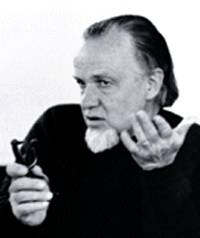
Francis Schaeffer commented:
Now you have now the birth of Julian Huxley’s evolutionary optimistic humanism already stated by Darwin. Darwin now has a theory that man is going to be better. If you had lived at 1860 or 1890 and you said to Darwin, “By 1970 will man be better?” He certainly would have the hope that man would be better as Julian Huxley does today. Of course, I wonder what he would say if he lived in our day and saw what has been made of his own views in the direction of (the mass murder) Richard Speck (and deterministic thinking of today’s philosophers). I wonder what he would say. So you have the factor, already the dilemma in Darwin that I pointed out in Julian Huxley and that is evolutionary optimistic humanism rests always on tomorrow. You never have an argument from the present or the past for evolutionary optimistic humanism.
You can have evolutionary nihilism on the basis of the present and the past. Every time you have someone bringing in evolutionary optimistic humanism it is always based on what is going to be produced tomorrow. When is it coming? The years pass and is it coming? Arthur Koestler doesn’t think it is coming. He sees lots of problems here and puts forth for another solution.
Darwin wrote, “…it is an intolerable thought that he and all other sentient beings are doomed to complete annihilation after such long-continued slow progress. To those who fully admit the immortality of the human soul, the destruction of our world will not appear so dreadful…”
Francis Schaeffer commented:
Here you feel Marcel Proust and the dust of death is on everything today because the dust of death is on everything tomorrow. Here you have the dilemma of Nevil Shute’s ON THE BEACH. If it is true that all we have left is biological continuity and biological complexity, which is all we have left in Darwinism here, or in many of the modern philosophies, then you can’t stand Shute’s ON THE BEACH. Maybe tomorrow at noon human life may be wiped out. Darwin already feels the tension, because if human life is going to be wiped out tomorrow, what is it worth today? Darwin can’t stand the thought of death of all men. Charlie Chaplin when he heard there was no life on Mars said, “I’m lonely.”
You think of the Swedish Opera (ANIARA) that is pictured inside a spaceship. There was a group of men and women going into outer space and they had come to another planet and the singing inside the spaceship was normal opera music. Suddenly there was a big explosion and the world had blown up and these were the last people left, the only conscious people left, and the last scene is the spaceship is off course and it will never land, but will just sail out into outer space. They say when it was shown in Stockholm the first time, the tough Swedes with all their modern mannishness, came out (after the opera was over) with hardly a word said, just complete silence.
Darwin already with his own position says he CAN’T STAND IT!! You can say, “Why can’t you stand it?” We would say to Darwin, “You were not made for this kind of thing. Man was made in the image of God. Your CAN’T- STAND- IT- NESS is screaming at you that your position is wrong. Why can’t you listen to yourself?”
You find all he is left here is biological continuity, and thus his feeling as well as his reason now is against his own theory, yet he holds it against the conclusions of his reason. Reason doesn’t make it hard to be a Christian. Darwin shows us the other way. He is holding his position against his reason.
Thilo Frank was born in 1978 in Germany and lives and works in Berlin. His large-scale sculptural installations combine architectural elements and sound and often invite viewer participation.
One of Frank’s works, Levitation, was the installation of a one-ton polyhedron from the ceiling of the Kunstraum Dornbirn in Austria. Ekko, located in northern Denmark, is a permanent installation of a path and two hundred wooden frames, through which viewers can walk. Accompanying both of these works are soundtracks made from the noises produced by visitors within the respective spaces and played back on loops, making the audience an integral aspect of the installations.
and you will hear what far smarter people than I have to say on this matter. I agree with them.
Harry Kroto
I have attempted to respond to all of Dr. Kroto’s friends arguments and I have posted my responses one per week for over a year now. Here are some of my earlier posts:
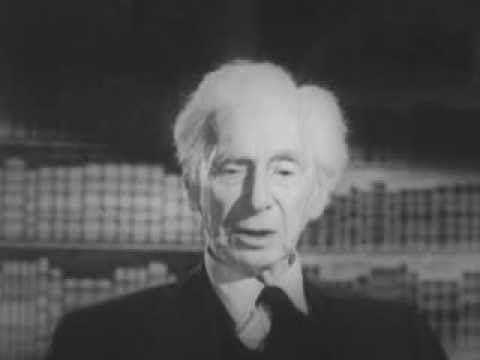
In the first video below in the 14th clip in this series are his words and I will be responding to them in the next few weeks since Sir Bertrand Russell is probably the most quoted skeptic of our time, unless it was someone like Carl Sagan or Antony Flew.
50 Renowned Academics Speaking About God (Part 1)
Another 50 Renowned Academics Speaking About God (Part 2)
A Further 50 Renowned Academics Speaking About God (Part 3)
__
Quote from Bertrand Russell:
Q: Why are you not a Christian?
Russell: Because I see no evidence whatever for any of the Christian dogmas. I’ve examined all the stock arguments in favor of the existence of God, and none of them seem to me to be logically valid.
Q: Do you think there’s a practical reason for having a religious belief, for many people?
Russell: Well, there can’t be a practical reason for believing what isn’t true. That’s quite… at least, I rule it out as impossible. Either the thing is true, or it isn’t. If it is true, you should believe it, and if it isn’t, you shouldn’t. And if you can’t find out whether it’s true or whether it isn’t, you should suspend judgment. But you can’t… it seems to me a fundamental dishonesty and a fundamental treachery to intellectual integrity to hold a belief because you think it’s useful, and not because you think it’s true.
__
Today I am not going to attack this quote above from Russell. I have done that enough in the past. Today I am going to look at Russell’s notes on communism and also examine his personal meeting with Lenin. Lenin just laughed when Lenin said that it was the plan for the poor peasants to hang the peasants that were a little better well off. This comment caught Russell off guard. Russell had already noted that Lenin was a “great man.” However, this embracing of violence caught Russell by surprise.
Then I will look at an examination of communism by Francis Schaeffer who will tell us why Communism ALWAYS fails to give the freedoms that it says it will and why so many young people are caught up in its idealistic promises.
“I am completely at a loss to understand how it came about that some people who are both humane and intelligent could find something to admire in the vast slave camp produced by Stalin.”
In relation to any political doctrine there are two questions to be asked: (1) Are its theoretical tenets true? (2) Is its practical policy likely to increase human happiness? For my part, I think the theoretical tenets of Communism are false, and I think its practical maxims are such as to produce an immeasurable increase of human misery.
The theoretical doctrines of Communism are for the most part derived from Marx. My objections to Marx are of two sorts: one, that he was muddle-headed; and the other, that his thinking was almost entirely inspired by hatred. The doctrine of surplus value, which is supposed to demonstrate the exploitation of wage-earners under capitalism, is arrived at: (a) by surreptitiously accepting Malthus’s doctrine of population, which Marx and all his disciples explicitly repudiate; (b) by applying Ricardo’s theory of value to wages, but not to the prices of manufactured articles. He is entirely satisfied with the result, not because it is in accordance with the facts or because it is logically coherent, but because it is calculated to rouse fury in wage-earners. Marx’s doctrine that all historical events have been motivated by class conflicts is a rash and untrue extension to world history of certain features prominent in England and France a hundred years ago. His belief that there is a cosmic force called Dialectical Materialism which governs human history independently of human volitions, is mere mythology. His theoretical errors, however, would not have mattered so much but for the fact that, like Tertullian and Carlyle, his chief desire was to see his enemies punished, and he cared little what happened to his friends in the process.
Marx’s doctrine was bad enough, but the developments which it underwent under Lenin and Stalin made it much worse. Marx had taught that there would be a revolutionary transitional period following the victory of the proletariat in a civil war and that during this period the proletariat, in accordance with the usual practice after a civil war, would deprive its vanquished enemies of political power. This period was to be that of the dictatorship of the proletariat. It should not be forgotten that in Marx’s prophetic vision the victory of the proletariat was to come after it had grown to be the vast majority of the population. The dictatorship of the proletariat therefore as conceived by Marx was not essentially anti-democratic. In the Russia of 1917, however, the proletariat was a small percentage of the population, the great majority being peasants. it was decreed that the Bolshevik party was the class-conscious part of the proletariat, and that a small committee of its leaders was the class-conscious part of the Bolshevik party. The dictatorship of the proletariat thus came to be the dictatorship of a small committee, and ultimately of one man – Stalin. As the sole class-conscious proletarian, Stalin condemned millions of peasants to death by starvation and millions of others to forced labour in concentration camps. He even went so far as to decree that the laws of heredity are henceforth to be different from what they used to be, and that the germ-plasm is to obey Soviet decrees but that that reactionary priest Mendel. I am completely at a loss to understand how it came about that some people who are both humane and intelligent could find something to admire in the vast slave camp produced by Stalin.
I have always disagreed with Marx. My first hostile criticism of him was published in 1896. But my objections to modern Communism go deeper than my objections to Marx. It is the abandonment of democracy that I find particularly disastrous. A minority resting its powers upon the activities of secret police is bound to be cruel, oppressive and obscuarantist. The dangers of the irresponsible power cane to be generally recognized during the eighteenth and nineteenth centuries, but those who have forgotten all that was painfully learnt during the days of absolute monarchy, and have gone back to what was worst in the middle ages under the curious delusion that they were in the vanguard of progress.
There are signs that in course of time the Russian régime will become more liberal. But, although this is possible, it is very far from certain. In the meantime, all those who value not only art and science but a sufficiency of bread and freedom from the fear that a careless word by their children to a schoolteacher may condemn them to forced labour in a Siberian wilderness, must do what lies in their power to preserve in their own countries a less servile and more prosperous manner of life.
There are those who, oppressed by the evils of Communism, are led to the conclusion that the only effective way to combat these evils is by means of a world war. I think this a mistake. At one time such a policy might have been possible, but now war has become so terrible and Communism has become so powerful that no one can tell what would be left after a world war, and whatever might be left would probably be at least as bad as present -day Communism. This forecast does not depend upon the inevitable effects of mass destruction by means of hydrogen and cobalt bombs and perhaps of ingeniously propagated plagues. The way to combat Communism is not war. What is needed in addition to such armaments as will deter Communists from attacking the West, is a diminution of the grounds for discontent in the less prosperous parts of the non-communist world. In most of the countries of Asia, there is abject poverty which the West ought to alleviate as far as it lies in its power to do so. There is also a great bitterness which was caused by the centuries of European insolent domination in Asia. This ought to be dealt with by a combination of patient tact with dramatic announcements renouncing such relics of white domination as survive in Asia. Communism is a doctrine bred of poverty, hatred and strife. Its spread can only be arrested by diminishing the area of poverty and hatred.
itself an excerpt from
“The Practice and Theory of Bolshevism” By Bertrand Russell.
Webmaster’s note
The last paragraph (especially) shows that Russell’s atheism has nothing in common with Marxist-Leninism. It refutes the idea that the USSR is a lesson against the rejection of religion, because it had exactly the faults that mar any dogmatic belief.
Soon after my arrival in Moscow I had an hour’s conversation with Lenin in English, which he speaks fairly well. An interpreter was present, but his services were scarcely required. Lenin’s room is very bare; it contains a big desk, some maps on the walls, two book-cases, and one comfortable chair for visitors in addition to two or three hard chairs. It is obvious that he has no love of luxury or even comfort. He is very friendly, and apparently simple, entirely without a trace of hauteur.
If one met him without knowing who he was, one would not guess that he is possessed of great power or even that he is in any way eminent. I have never met a personage so destitute of self-importance. He looks at his visitors very closely, and screws up one eye, which seems to increase alarmingly the penetrating power of the other. He laughs a great deal; at first his laugh seems merely friendly and jolly, but gradually I came to feel it rather grim. He is dictatorial, calm, incapable of fear, extraordinarily devoid of self-seeking, an embodied theory.
The MATERIALIST conception of history, one feels, is his life-blood. He resembles a professor in his desire to have the theory understood and in his fury with those who misunderstand or disagree, as also in his love of expounding, I got the impression that he despises a great many people and is an intellectual aristocrat.
When I suggested that whatever is possible in England can be achieved without bloodshed, he waved aside the suggestion as fantastic. I got little impression of knowledge or psychological imagination as regards Great Britain. Indeed the whole tendency of Marxianism is against psychological imagination, since it attributes everything in politics to purely MATERIAL causes.
I asked him next whether he thought it possible to establish Communism firmly and fully in a country containing such a large majority of peasants. He admitted that it was difficult, and laughed over the exchange the peasant is compelled to make, of food for paper; the worthlessness of Russian paper struck him as comic. But he said—what is no doubt true—that things will right themselves when there are goods to offer to the peasant. For this he looks partly to electrification in industry, which, he says, is a technical necessity in Russia, but will take ten years to complete. He spoke with enthusiasm, as they all do, of the great scheme for generating electrical power by means of peat. Of course he looks to the raising of the blockade as the only radical cure; but he was not very hopeful of this being achieved thoroughly or permanently except through revolutions in other countries. Peace between Bolshevik Russia and capitalist countries, he said, must always be insecure; the Entente might be led by weariness and mutual dissensions to conclude peace, but he felt convinced that the peace would be of brief duration. I found in him, as in almost all leading Communists, much less eagerness than existed in our delegation for peace and the raising of the blockade. He believes that nothing of real value can be achieved except through world revolution and the abolition of capitalism; I felt that he regarded the resumption of trade with capitalist countries as a mere palliative of doubtful value.
He described the division between rich and poor peasants, and the Government propaganda among the latter against the former, leading to acts of violence which he seemed to find amusing. He spoke as though the dictatorship over the peasant would have to continue a long time, because of the peasant’s desire for free trade. He said he knew from statistics (what I can well believe) that the peasants have had more to eat these last two years than they ever had before, “and yet they are against us,” he added a little wistfully. I asked him what to reply to critics who say that in the country he has merely created peasant proprietorship, not Communism; he replied that that is not quite the truth, but he did not say what the truth is.
The last question I asked him was whether resumption of trade with capitalist countries, if it took place, would not create centres of capitalist influence, and make the preservation of Communism more difficult? It had seemed to me that the more ardent Communists might well dread commercial intercourse with the outer world, as leading to an infiltration of heresy, and making the rigidity of the present system almost impossible. I wished to know whether he had such a feeling. He admitted that trade would create difficulties, but said they would be less than those of the war. He said that two years ago neither he nor his colleagues thought they could survive against the hostility of the world. He attributes their survival to the jealousies and divergent interests of the different capitalist nations; also to the power of Bolshevik propaganda. He said the Germans had laughed when the Bolsheviks proposed to combat guns with leaflets, but that the event had proved the leaflets quite as powerful. I do not think he recognizes that the Labour and Socialist parties have had any part in the matter. He does not seem to know that the attitude of British Labour has done a great deal to make a first-class war against Russia impossible, since it has confined the Government to what could be done in a hole-and-corner way, and denied without a too blatant mendacity.
I think if I had met him without knowing who he was, I should not have guessed that he was a great man; he struck me as too opinionated and narrowly orthodox. His strength comes, I imagine, from his honesty, courage, and unwavering faith—religious faith in the Marxian gospel, which takes the place of the Christian martyr’s hopes of Paradise, except that it is less egotistical. He has as little love of liberty as the Christians who suffered under Diocletian, and retaliated when they acquired power. Perhaps love of liberty is incompatible with whole-hearted belief in a panacea for all human ills. If so, I cannot but rejoice in the sceptical temper of the Western world.
I went to Russia a Communist; but contact with those who have no doubts has intensified a thousandfold my own doubts, not as to Communism in itself, but as to the wisdom of holding a creed so firmly that for its sake men are willing to inflict widespread misery.
“When I met Lenin, I had much less impression of a great man than I had expected; my most vivid impressions were of Mongolian cruelty and bigotry. When I put a question to him about socialism in agriculture, he explained with glee how he had incited the poorer peasants against the richer ones, ‘and they soon hanged them from the nearest tree—ha! ha! ha!’ His guffaw at the thought of those massacred made my blood run cold.”
Bertrand Russell, “Eminent Men I Have Known” (courtesy of Richard Brookhiser)
_
_
Communism catches the attention of the young at heart but it has always brought repression wherever it is tried. “True Communism has never been tried” is something I was told just a few months ago by a well meaning young person who was impressed with the ideas of Karl Marx. I responded that there are only 5 communist countries in the world today and they lack political, economic and religious freedom.
Hope in Marxism-Leninism is a leap in the area of nonreason. From the Russian Revolution until 1959 a total of 66 million prisoners died. This was deemed acceptable to the leaders because internal security was to be gained at any cost. The ends justified the means. The materialism of Marxism gives no basis for human dignity or rights. These hold to their philosophy against all reason and close their eyes to the oppression of the system.
#02 How Should We Then Live? (Promo Clip) Dr. Francis Schaeffer
WHY DOES COMMUNISM FAIL?
Communism has always failed because of its materialist base. Francis Schaeffer does a great job of showing that in this clip below. Also Schaeffer shows that there were lots of similar things about the basis for both the French and Russia revolutions and he exposes the materialist and humanist basis of both revolutions.
Schaeffer compares communism with French Revolution and Napoleon.
1. Lenin took charge in Russia much as Napoleon took charge in France – when people get desperate enough, they’ll take a dictator.
Other examples: Hitler, Julius Caesar. It could happen again.
2. Communism is very repressive, stifling political and artistic freedom. Even allies have to be coerced. (Poland).
Communists say repression is temporary until utopia can be reached – yet there is no evidence of progress in that direction. Dictatorship appears to be permanent.
3. No ultimate basis for morality (right and wrong) – materialist base of communism is just as humanistic as French. Only have “arbitrary absolutes” no final basis for right and wrong.
How is Christianity different from both French Revolution and Communism?
Contrast N.T. Christianity – very positive government reform and great strides against injustice. (especially under Wesleyan revival).
Bible gives absolutes – standards of right and wrong. It shows the problems and why they exist (man’s fall and rebellion against God).
WHY DOES THE IDEA OF COMMUNISM CATCH THE ATTENTION OF SO MANY IDEALISTIC YOUNG PEOPLE? The reason is very simple.
In HOW SHOULD WE THEN LIVE? The Rise and Decline of Western Thought and Culture, the late Francis A. Schaeffer wrote:
Materialism, the philosophic base for Marxist-Leninism, gives no basis for the dignity or rights of man. Where Marxist-Leninism is not in power it attracts and converts by talking much of dignity and rights, but its materialistic base gives no basis for the dignity or rights of man. Yet is attracts by its constant talk of idealism.
To understand this phenomenon we must understand that Marx reached over to that for which Christianity does give a base–the dignity of man–and took the words as words of his own. The only understanding of idealistic sounding Marxist-Leninism is that it is (in this sense) a Christian heresy. Not having the Christian base, until it comes to power it uses the words for which Christianity does give a base. But wherever Marxist-Leninism has had power, it has at no place in history shown where it has not brought forth oppression. As soon as they have had the power, the desire of the majority has become a concept without meaning.
Is Christianity at all like Communism?
Sometimes Communism sounds very “Christian” – desirable goals of equality, justice, etc but these terms are just borrowed from the New Testament. Schaeffer elsewhere explains by saying Marxism is a Christian heresy.
Below is a great article. Free-lance columnist Bradley R. Gitz, who lives and teaches in Batesville, received his Ph.D. in political science from the University of Illinois.
This article was published January 30, 2011 at 2:28 a.m. Here is a portion of that article below:
A final advantage is the mutation of socialism into so many variants over the past century or so. Precisely because Karl Marx was unclear as to how it would work in practice, socialism has always been something of an empty vessel into which would be revolutionaries seeking personal meaning and utopian causes to support can pour pretty much anything.
A desire to increase state power, soak the rich and expand the welfare state is about all that is left of the original vision. Socialism for young lefties these days means “social justice” and compassion for the poor, not the gulag and the NKVD.
In the end, the one argument that will never wash is that communismcan’t be said to have failed because it was never actually tried. This is a transparent intellectual dodge that ignores the fact that “people’s democracies” were established all over the place in the first three decades after World War II.
Such sophistry is resorted to only because communism in all of those places produced hell on earth rather than heaven.
That the attempts to build communism in a remarkable variety of different geographical regions led to only tyranny and mass bloodshed tells us only that it was never feasible in the first place, and that societies built on the socialist principle ironically suffer from the kind of “inner contradictions” that Marx mistakenly predicted would destroy capitalism.
Yes, all economies are mixed in nature, and one could plausibly argue that the socialist impulse took the rough edges off of capitalism by sponsoring the creation of welfare-state programs that command considerable public support.
But the fact remains that no society in history has been able to achieve sustained prosperity without respect for private property and market forces of supply and demand. Nations, therefore, retain their economic dynamism only to the extent that they resist the temptation to travel too far down the socialist road.
#02 How Should We Then Live? (Promo Clip) Dr. Francis Schaeffer
Francis Schaeffer notes:
At Berkeley the Free Speech Movement arose simultaneously with the hippie world of drugs. At first it was politically neither left nor right, but rather a call for the freedom to express any political views on Sproul Plaza. Then soon the Free Speech Movement became the Dirty Speech Movement, in which freedom was seen as shouting four-letter words into a mike. Soon after, it became the platform for the political New Left which followed the teaching of Herbert Marcuse. Marcuse was a German professor of philosophy related to the neo-Marxist teaching of the “Frankfurt School,” along with...Jurgen Habermas (1929-).
Herbert Marcuse, “Liberation from the Affluent Society” (1967)
Brannon Howse talks some about the Frankfurt School in some of his publications too.
During the 1960’s many young people were turning to the New Left fueled by Marcuse and Habermas but something happened to slow many young people’s enthusiasm for that movement.
1970 bombing took away righteous standing of Anti-War movement
Francis Schaeffer mentioned the 1970 bombing in his film series “How should we then live?” and I wanted to give some more history on it. Schaeffer asserted:
In the United States the New Left also slowly ground down,losing favor because of the excesses of the bombings, especially in the bombing of the University of Wisconsin lab in 1970, where a graduate student was killed. This was not the last bomb that was or will be planted in the United States. Hard-core groups of radicals still remain and are active, and could become more active, but the violence which the New Left produced as its natural heritage (as it also had in Europe) caused the majority of young people in the United States no longer to see it as a hope. So some young people began in 1964 to challenge the false values of personal peace and affluence, and we must admire them for this. Humanism, man beginning only from himself, had destroyed the old basis of values, and could find no way to generate with certainty any new values. In the resulting vacuum the impoverished values of personal peace and affluence had comes to stand supreme. And now, for the majority of the young people, after the passing of the false hopes of drugs as an ideology and the fading of the New Left, what remained? Only apathy was left. In the United States by the beginning of the seventies, apathy was almost complete. In contrast to the political activists of the sixties, not many of the young even went to the polls to vote, even though the national voting age was lowered to eighteen. Hope was gone.
After the turmoil of the sixties, many people thought that it was so much the better when the universities quieted down in the early seventies. I could have wept. The young people had been right in their analysis, though wrong in their solutions. How much worse when many gave up hope and simply accepted the same values as their parents–personal peace and affluence. (How Should We Then Live, pp. 209-210
Aug. 24 marked the 41st anniversary of the Sterling Hall bombing on the University of Wisconsin-Madison campus.
Four men planned the bomb at the height of the student protests over the Vietnam War. Back then, current Madison Mayor Paul Soglin was one of the leaders of those student protests in the capitol city. This weekend, Soglin recalled the unrest felt by UW-Madison students.
“The anti-war movement adopted a lot of its tactics and strategies from the civil rights movement which was about ten years older,” said Soglin. “It was one of picketing, demonstration, and passive resistance.”
The four men who planned the bombing focused on the Army Mathematics Research Center housed in Sterling Hall because it was funded by the U.S. Department of Defense and therefore, worked on weapons technology. Karl Armstrong was one of the four men and he recently spoke with CBS News in his first television interview detailing the moments right before the bomb was set off.
“He asked me, he says, ‘Should we go ahead? Are we gonna do this?’ I think I made a comment to him about something like, ‘Now, I know what war is about,'” remembered Armstrong. “And I told him to light it.”
The bomb killed one researcher and father of three, 33-year-old Robert Fassnacht, although Armstrong maintains they planned the attack thinking no one would get hurt. The four men heard about the death as they were in their getaway car after the bomb went off.
“I felt good about doing the bombing, the bombing per se, but not taking someone’s life,” recalled Armstrong.
The researcher’s wife told CBS News that she harbors no ill will toward Armstrong and the other bombers. Three of the four men were captured and served time in prison. Armstrong served eight years of a 23-year sentence.
The fourth man, Leo Burt, was last seen in the fall of 1970 in Ontario and is to this day, still wanted by the FBI, with a $150,000 reward for his capture.
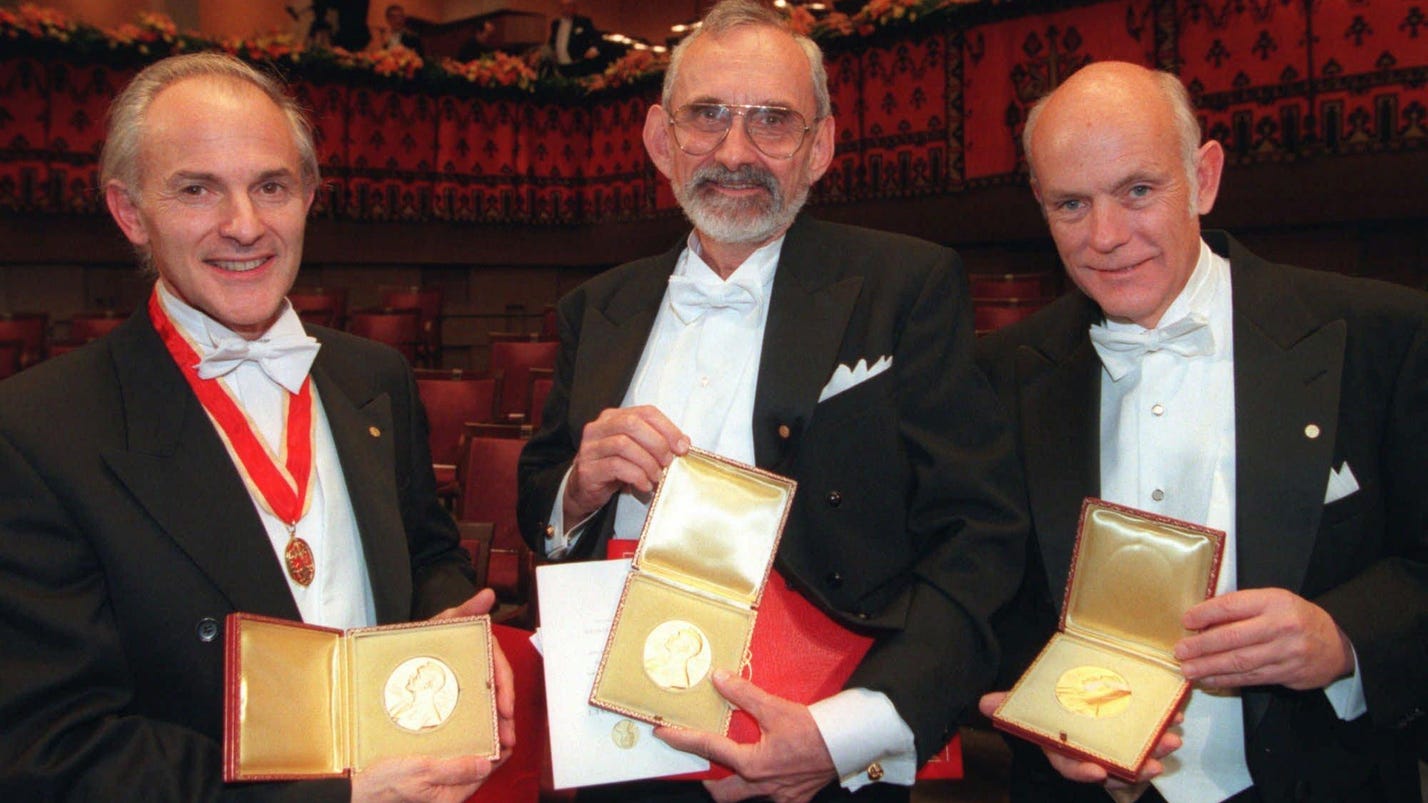
Today we look at the 3rd letter in the Kroto correspondence and his admiration of Bertrand Russell. (Below The Nobel chemistry laureates Harold Kroto, Robert Curl and Richard Smalley) It is with sadness that I write this post having learned of the death of Sir Harold Kroto on April 30, 2016 at the age of […]
On November 21, 2014 I received a letter from Nobel Laureate Harry Kroto and it said: …Please click on this URL http://vimeo.com/26991975 and you will hear what far smarter people than I have to say on this matter. I agree with them. Harry Kroto _________________ Below you have picture of Dr. Harry Kroto: Gareth Stedman […]
Top 10 Woody Allen Movies __________ John Piippo makes the case that Bertrand Russell would have loved Woody Allen because they both were atheists who don’t deny the ramifications of atheism!!! Monday, August 06, 2012 (More On) Woody Allen’s Atheism As I wrote in a previous post, I like Woody Allen. I have long admired his […]
______ Top 10 Woody Allen Movies PBS American Masters – Woody Allen A Documentary 01 PBS American Masters – Woody Allen A Documentary 02 __________ John Piippo makes the case that Bertrand Russell would have loved Woody Allen because they both were two atheists who don’t deny the ramifications of atheism!!! Monday, August 06, 2012 […]
THE MORAL ARGUMENT BERTRAND RUSSELL But aren’t you now saying in effect, I mean by God whatever is good or the sum total of what is good — the system of what is good, and, therefore, when a young man loves anything that is good he is loving God. Is that what you’re […]
Great debate Fr. Frederick C. Copleston vs Bertrand Russell – Part 1 Uploaded by riversonthemoon on Jul 15, 2009 BBC Radio Third Programme Recording January 28, 1948. BBC Recording number T7324W. This is an excerpt from the full broadcast from cassette tape A303/5 Open University Course, Problems of Philosophy Units 7-8. Older than 50 years, […]
Uploaded by riversonthemoon on Jul 15, 2009 BBC Radio Third Programme Recording January 28, 1948. BBC Recording number T7324W. This is an excerpt from the full broadcast from cassette tape A303/5 Open University Course, Problems of Philosophy Units 7-8. Older than 50 years, out of UK/BBC copyright. Pardon the hissy audio. It was recorded 51 […]
Fr. Frederick C. Copleston vs Bertrand Russell – Part 1 Uploaded by riversonthemoon on Jul 15, 2009 BBC Radio Third Programme Recording January 28, 1948. BBC Recording number T7324W. This is an excerpt from the full broadcast from cassette tape A303/5 Open University Course, Problems of Philosophy Units 7-8. Older than 50 years, out of […]
THE MORAL ARGUMENT BERTRAND RUSSELL But aren’t you now saying in effect, I mean by God whatever is good or the sum total of what is good — the system of what is good, and, therefore, when a young man loves anything that is good he is loving God. Is that what you’re […]
Fr. Frederick C. Copleston vs Bertrand Russell – Part 1 Uploaded by riversonthemoon on Jul 15, 2009 BBC Radio Third Programme Recording January 28, 1948. BBC Recording number T7324W. This is an excerpt from the full broadcast from cassette tape A303/5 Open University Course, Problems of Philosophy Units 7-8. Older than 50 years, out of […]
“A Sky Full of Stars” is a song by the British rock band Coldplay. It was released in 2014 as the third single from their sixth album, Ghost Stories (2014). The band co-wrote and co-produced the song with Avicii and received production assistance from Paul Epworth, Daniel Green and Rik Simpson. It was recorded at The Bakery and The Beehive in North London, England.
Upon its release, “A Sky Full of Stars” garnered mostly positive reviews from music critics and charted inside the top 10 in over 16 countries such as Australia, Canada, Ireland, Japan, Mexico, New Zealand, the United Kingdom and United States. A music video for the song was directed by Mat Whitecross and was released on 19 June 2014. The single peaked at number one in Italy, Israel, Luxembourg, Portugal, Lebanon, and the Walloon region of Belgium. It also topped the Billboard Hot Dance Club Songs chart. It was nominated for Best Pop Duo/Group Performance at the 57th Grammy Awards.
“A Sky Full of Stars” marks the band’s first dance track, being outlined as an EDM track with houseinfluences.[1][2][4] A piano-centric song which is written in the key of G♭ major, the track opens as a piano ballad, with progressive house-influenced electronic music that plays out in between verses. According to the sheet music published at Musicnotes.com, the song follows a chord progression of E♭m7– Bmaj9 –G♭–B♭m(♭6) with a tempo of 125 beats per minute,[5] and the vocals span from A♭3 to G♭5. The track has been described as “[falling] in line with the synth-heavy soundscapes of ‘Midnight‘, but with more danceable flavor”.[6] The song’s repeating chord sequence and varied melody was inspired by the work of American pop singer Katy Perry and Nirvana‘s “Smells Like Teen Spirit” (1991).[7]
Swedish record producer Avicii was invited by the band to produce “A Sky Full of Stars”.
“A Sky Full of Stars” was recorded during the sessions for the band’s sixth studio album, at their purpose-built studios The Bakery and The Beehive in North London, England. The studios were both originally constructed for work on their two previous studio albums, 2008’s Viva la Vida or Death and All His Friendsand 2011’s Mylo Xyloto.
Swedish record producer Avicii was invited by the band to collaborate on “A Sky Full of Stars”. In addition to producing the track, he was also asked by lead singer Chris Martin to play and record the piano parts. However, Martin later stated in a BBC Radio 1 interview with Zane Lowe that he felt that he had “cheated” on the band by asking Avicii to play the piano instead of playing it himself.[8]
On 2 May 2014, “A Sky Full of Stars” was released early through Ghost Stories on the iTunes Store worldwide,[9] and on Spotify.[10] On 5 May 2014, the single was released on Google Play store in Australia. On 26 June, Coldplay announced the A Sky Full of Stars EP. It would feature the radio edit of the song, as well as the three bonus tracks from the deluxe version of Ghost Stories: “All Your Friends”, the title track “Ghost Story” and “O (Reprise)”, sold by Target. The extended play was available worldwide, with the exception of the United States, as the deluxe version of the album was only available in the U.S. The EP was released on 29 June 2014.[11]
The single art for “A Sky Full of Stars” was etched by UK-based, Czech etching artist Mila Fürstová.[9][12] The artwork continues the motif of artworks in the Ghost Stories album cycle, which feature a scene occurring in a larger, enclosed body. Multiple figures such as angels with wings like of the Ghost Stories artwork, buildings such as a church, and objects such as a maze and a chair, also alluding to those in the Ghost Stories artwork, are depicted encased in a three-dimensionalstar chart. The artwork is reminiscent of Fürstová’s earlier work, Other Skies, which also features various figures, buildings and objects imposed onto a star map.[13]
“A Sky Full of Stars” was met with positive reception upon its release. Carl Williott of Idolator gave the track a positive review, stating: “Quite honestly it sounds more like a Zedd or Avicii offering than a Coldplay one, and it’s certainly the loudest and most joyful cut we’ve heard from the album so far”.[14]Melinda Newman of HitFix had similar thoughts, calling the song “the most commercial and dance-y track so far” from the album.[15] Chris De Ville of Stereogum gave “A Sky Full of Stars” an overwhelmingly positive comment, stating that the song is “the most energetic and classically Coldplay song we’ve heard from the album so far”.[16] Chris Martins of Spin magazine also commented relatively positively, writing that “The big-tent EDM offering is pretty satisfying in all of the ways that those things are”.[1]
Consequence of Sound‘s wrote the song “starts off as a heartfelt piano ballad before flourishes of pounding electronics take over the chorus” and noted that it “falls in line with the synth-heavy soundscapes of ‘Midnight’, but with more danceable flavor.”[17]Zane Lowe of BBC Radio 1 named the track his ‘Hottest Record’ for 29 April 2014.[18] However, a negative review came from Carolyn Menyes of Music Times who criticized the song for “lack[ing] a personality or heart, something that the best Coldplay songs are chock full of.”[19] Josh Modell of The A.V. Club panned it as a “blatantly pandering, album-interrupting, mood-f*cking-up [track] which is destined to be a hit and also instantly dated.”[20]
Within 24 hours of its iTunes release, the track had sold 121,690 units worldwide,[21] peaking at number one in 86 countries on the iTunes Store Charts.[citation needed] As of July 2014, the song reached the Top 10 of nearly every country it charted in, including the bands’ homeland country, the United Kingdom where it reached number 9 on UK Singles Chart.[22] The single enjoyed massive commercial success in Australia and New Zealand. In Australia, the song reached number two on the ARIA Charts,[23] their highest-charting single since 2008’s “Viva La Vida“,[24] and became one of their three highest-charting singles in the country.[25] In New Zealand, the song reached number two on New Zealand Singles Chart,[26] becoming the band’s highest-charting single to date and their fifth top-ten single in the country.[27]
On the issue dated 21 May 2014, the song reached number ten on the Billboard Hot 100, making it their third top 10 hit and first since their number-one single “Viva la Vida” in 2008.[28] It also became their first number-one single on the BillboardHot Rock Songs chart. “A Sky Full of Stars” was the band’s second number one on the US Hot Dance Club Songs chart.[29] The song has sold over a million digital copies in the U.S. as of November 2014.[30]
The official music video was directed by Mat Whitecross and the shooting took place on King Street in the inner Sydney suburb of Newtown, on 17 June 2014.[31] It was released on 19 June 2014.
At the beginning of the video, Coldplay‘s lead singer, Chris Martin, walks through Sydney’s streets dressed as a one-man band, singing the first verse of the song. Then he reaches the other members of the band (also dressed as one-man bands) and, together, they play the instrumental refrain. Martin is then seen walking through the street, without the other members, while he sings the second verse. At the end of the video the band reunites in a square, singing and playing the final part of the song with a crowd of fans. While Martin is singing the final part, many paper-made stars are blown into the square.
An alternate music video leaked onto the internet in late 2014.[32] No further information was given about it. However, snippets from the alternate video can be seen in the first video,[33] playing on the TVs in a shop’s showcase, proving the former video is a scrapped version.
“A Sky Full of Stars” was first played in closed-audience performances. The band, when performing the song before the release of the “A Sky Full of Stars” single, would routinely ask the audience not to record their performance of the song, in an attempt to prevent the song from leaking ahead of its release. Despite their intentions, the song was leaked after their performance of the song during the opening night of their Ghost Stories Promotional Tour at E-Werk in Cologne, Germany on 25 April 2014.[34] The song was premiered live on the 29 April 2014 airing of BBC Twomusictelevision showLater… with Jools Holland.[35] The band then performed the song on Saturday Night Live on 3 May 2014. The band also performed the song on The Graham Norton Show, in the UK, on 30 May 2014.[36]
The song was also played during the 3-Point Shootout of the 2015 NBA All-Star Game weekend.
Art forms can be used for any type of message, from pure fantasy to detailed history. That a work of art is in the form of fantasy or epic or painting does not mean that there is no propositional content. just as one can have propositional statements in prose, there can be propositional statements in poetry, in painting, in virtually any art form.
Some years ago a theologian at Princeton commented that he did not mind saying the Creeds, providing that he could sing them. What he meant was that so long as he could make them a work of art, he didn’t feel that he had to worry about the content. But this is both poor theology and poor aesthetics….There is the same dilemma in art styles and forms. Think, for example, of T. S. Eliot’s form of poetry in The Waste Land.The fragmented form matches the vision of fragmented man. But it is intriguing that after T. S. Eliot became a Christian — for example, in The Journey of the Magi — he did not use quite this same form. Rather, he adapted it for the message he was now giving — a message with a Christian character. But he didn’t entirely give up the form; he didn’t go back to Tennyson. Rather, he adapted the form that he used in The Waste Land, changing it to fit the message that he was now giving. In other words, T. S. Eliot the Christian wrote somewhat differently than T. S. Eliot the “modern man.” Therefore, while we must use twentieth-century styles, we must not use them in such a way as to be dominated by the world-views out of which they have arisen. Christianity is a message with its own distinctive propositional content, not a set of “religious” truths in an upper story. The whole man is to be addressed, and this includes his mind as well as his emotions and his aesthetic sensitivity. Therefore, an art form or style that is no longer able to carry content cannot be used to give the Christian message. I am not saying that the style is in itself wrong, but that it has limitations. Totally fractured prose or poetry cannot be used to give the Christian message for the simple reason that it cannot carry intellectual content, and you canot preach Christianity without content. The biblical message, the good news, is a good news of content….
The problem is just as prevalent in folk music as it is in rock. Joan Baez sang so beautifully, “You may call him Jesus, but I call him Savior.” But as far as Joan Baez and most of her listeners were concerned, when she said, “I call him Savior,” she was not calling him Savior in the way a Christian calls him Savior. She could have been singing southern folk or country and western or a Hindu lyric just as well. So when we come along and say, “My purpose is to sing folk so that I will be understood,” we must find a way to make it clear that we are singing folk to convey a world-view and not just to sing folk.
Joan Baez – Virgin Mary (Had One Son)
The form in which a world-view is given can either weaken or strengthen the content, even if the viewer or reader does not in every case analyze this completely. In other words, depending upon the vehicle you use, something can come across that an audience does not notice and yet will be moving either in the direction of your world-view or away from your world-view. And as a Christian adopts and adapts various contemporary techniques, he must wrestle with the whole question, looking to the Holy Spirit for help to know when to invent, when to adopt, when to adapt, and when to not use a specific style at all. This is something each artist wrestles with for a lifetime, not something he settles once and for all. In conclusion, therefore, often we will use twentieth-century art forms, but we must be careful to keep them from distorting the world-view which is distinctively ours as Christians. In one way, styles are completely neutral. But in another way, they must not be used in an unthinking, naive way.
Pierre Huyghe was born in 1962 in Paris, France. He attended the École Nationale Supérieure des Arts Décoratifs, Paris (1982–85). Employing folly, leisure, adventure, and celebration in creating art, Huyghe’s films, installations, and public events range from a small-town parade to a puppet theater, from a model amusement park to an expedition to Antarctica.
By filming staged scenarios (such as a re-creation of the true-life bank robbery featured in the movie, Dog Day Afternoon), Huyghe probes the capacity of cinema to distort and ultimately shape memory. While blurring the traditional distinction between fiction and reality—and revealing the experience of fiction to be as palpable as anything in daily life—Huyghe’s playful work often addresses complex social topics, such as the yearning for utopia, the lure of spectacle in mass media, and the impact of Modernism on contemporary values and belief systems.
He has received many awards, including the Solomon R. Guggenheim Museum’s Hugo Boss Prize (2002); the Special Award from the Jury of the Venice Biennial (2001); and a Deutscher Akademischer Austausch Dienst (DAAD) Fellowship (1999–2000). Huyghe has had solo exhibitions at Tate Modern, London, and ARC, Musée d’art Moderne de la Ville de Paris (2006); Carpenter Center, Harvard University, Cambridge, Massachusetts (2004); Modern Art Museum of Fort Worth (2004); Dia Center for the Arts, New York (2003); Solomon R. Guggenheim Museum, New York (2003); Museum of Contemporary Art, Chicago (2000); and Centre Georges Pompidou, Paris (2000). The Public Art Fund commissioned Huyghe to create “A Journey that Wasn’t” (2006), which included an expedition to Antarctica, a performance in Central Park, and a video installation at the Whitney Biennial in New York. Huyghe lives and works in Paris and New York.
I want to make two points today. First, Greg Koukl has rightly noted that the nudity of a ten year old girl in the art of Robert Mapplethorpe is not defensible, and it demonstrates where our culture is morally. It the same place morally where Rome was 2000 years ago as Francis Schaeffer has demonstrated […]
E P I S O D E 1 0 Dr. Francis Schaeffer – Episode X – Final Choices 27 min FINAL CHOICES I. Authoritarianism the Only Humanistic Social Option One man or an elite giving authoritative arbitrary absolutes. A. Society is sole absolute in absence of other absolutes. B. But society has to be […]
E P I S O D E 9 Dr. Francis Schaeffer – Episode IX – The Age of Personal Peace and Affluence 27 min T h e Age of Personal Peace and Afflunce I. By the Early 1960s People Were Bombarded From Every Side by Modern Man’s Humanistic Thought II. Modern Form of Humanistic Thought Leads […]
E P I S O D E 8 Dr. Francis Schaeffer – Episode VIII – The Age of Fragmentation 27 min I saw this film series in 1979 and it had a major impact on me. T h e Age of FRAGMENTATION I. Art As a Vehicle Of Modern Thought A. Impressionism (Monet, Renoir, Pissarro, Sisley, […]
E P I S O D E 7 Dr. Francis Schaeffer – Episode VII – The Age of Non Reason I am thrilled to get this film series with you. I saw it first in 1979 and it had such a big impact on me. Today’s episode is where we see modern humanist man act […]
E P I S O D E 6 How Should We Then Live 6#1 Uploaded by NoMirrorHDDHrorriMoN on Oct 3, 2011 How Should We Then Live? Episode 6 of 12 ________ I am sharing with you a film series that I saw in 1979. In this film Francis Schaeffer asserted that was a shift in […]
E P I S O D E 5 How Should We Then Live? Episode 5: The Revolutionary Age I was impacted by this film series by Francis Schaeffer back in the 1970′s and I wanted to share it with you. Francis Schaeffer noted, “Reformation Did Not Bring Perfection. But gradually on basis of biblical teaching there […]
Dr. Francis Schaeffer – Episode IV – The Reformation 27 min I was impacted by this film series by Francis Schaeffer back in the 1970′s and I wanted to share it with you. Schaeffer makes three key points concerning the Reformation: “1. Erasmian Christian humanism rejected by Farel. 2. Bible gives needed answers not only as to […]
Francis Schaeffer’s “How should we then live?” Video and outline of episode 3 “The Renaissance” Francis Schaeffer: “How Should We Then Live?” (Episode 3) THE RENAISSANCE I was impacted by this film series by Francis Schaeffer back in the 1970′s and I wanted to share it with you. Schaeffer really shows why we have so […]
Francis Schaeffer: “How Should We Then Live?” (Episode 2) THE MIDDLE AGES I was impacted by this film series by Francis Schaeffer back in the 1970′s and I wanted to share it with you. Schaeffer points out that during this time period unfortunately we have the “Church’s deviation from early church’s teaching in regard […]
Francis Schaeffer: “How Should We Then Live?” (Episode 1) THE ROMAN AGE Today I am starting a series that really had a big impact on my life back in the 1970′s when I first saw it. There are ten parts and today is the first. Francis Schaeffer takes a look at Rome and why […]
and you will hear what far smarter people than I have to say on this matter. I agree with them.
Harry Kroto
__
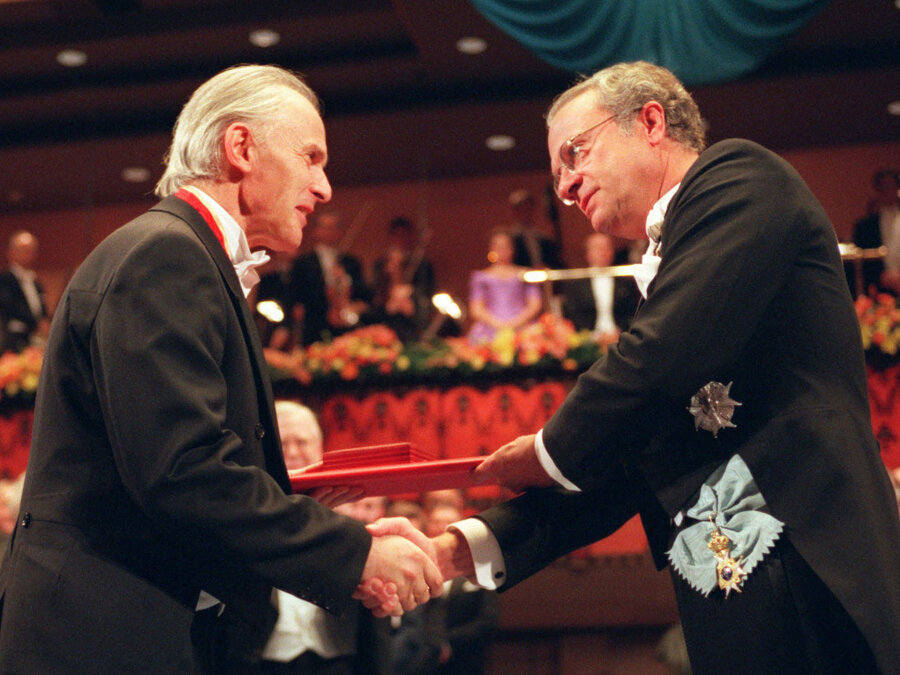
Harold W. Kroto (left) receives the Nobel Prize in chemistry from Swedish King Carl XVI Gustaf in Stockholm, in 1996.
Soren Andersson/AP
__
I have attempted to respond to all of Dr. Kroto’s friends arguments and I have posted my responses one per week for over a year now. Here are some of my earlier posts:
In the first video below in the 14th clip in this series are his words and I will be responding to them in the next few weeks since Sir Bertrand Russell is probably the most quoted skeptic of our time, unless it was someone like Carl Sagan or Antony Flew.
50 Renowned Academics Speaking About God (Part 1)
Another 50 Renowned Academics Speaking About God (Part 2)
A Further 50 Renowned Academics Speaking About God (Part 3)
__
Quote from Bertrand Russell:
Q: Why are you not a Christian?
Russell: Because I see no evidence whatever for any of the Christian dogmas. I’ve examined all the stock arguments in favor of the existence of God, and none of them seem to me to be logically valid.
Q: Do you think there’s a practical reason for having a religious belief, for many people?
Russell: Well, there can’t be a practical reason for believing what isn’t true. That’s quite… at least, I rule it out as impossible. Either the thing is true, or it isn’t. If it is true, you should believe it, and if it isn’t, you shouldn’t. And if you can’t find out whether it’s true or whether it isn’t, you should suspend judgment. But you can’t… it seems to me a fundamental dishonesty and a fundamental treachery to intellectual integrity to hold a belief because you think it’s useful, and not because you think it’s true._
From the first century up to the present day, the Sonship and divinity of Jesus have been attacked with amazingly and seemingly unending vigor and venom. One of the modern-day leaders in this attack against Christianity would certainly be Bertrand Russell, who was one of the most influential, and often outspoken, philosophers of the twentieth century. He was born in England in 1872 and continued to write and lecture in both Europe and the United States until not long before his death in 1970. His parents were freethinkers and close friends with John Stuart Mill, a pioneer in modern scientific thinking who devised rules for inductive scientific reasoning and was a leader of ethical utilitarianism (“Russell” 235). For the purposes of this article, Russell and his criticisms will be used as a model for skeptics in general. First, it will be succinctly shown that this discussion is still relevant and important as popular culture continues to disseminate false information concerning Christ and Christianity. Second, Russell’s arguments presented in Why I Am Not A Christian will be examined and then exposed as being untenable and false. Third, some basic proofs and evidences will be given in support of the claim that Jesus is divine.
Even while Jesus walked this Earth, many of His contemporaries refused to acknowledge the fact that He was divine. Consider, for example, the account of the blind man who was given his sight by Jesus (cf. John 9). The attitude displayed by the Pharisees is quite remarkable. For some, their first reaction upon hearing about the miracle was disbelief (John 9:16, 18). They had reached agreement that anyone confessing Jesus to be the Christ would be put out of the synagogue (John 9:22). Even after the man’s parents confirmed the fact that he was indeed born blind they still refused to believe. They even went so far at to attack his character as they claimed to “know” that Jesus was a sinner (John 9:24, 29).
The attitudes displayed by the Pharisees in the first century can be easily seen and readily recognized as attitudes that are popular today. Take for example the commotion stirred up by the book by Simcha Jacobovici and the subsequent film on the Discovery Channel by James Cameron. In The Jesus Family Tomb: The Discovery, the Investigation, and the Evidence that Could Change History, the claim is made that a tomb in Jerusalem has been found that not only contains the bones of Jesus, but also proves that He was married and had children. If such were to be the case, Christianity would be a sham to be avoided. As evidence to the contrary is presented, showing the tomb to be a hoax, the scholars who appeared in the film are backing off of the strong comments they made (Habermas). Then there is Dan Brown and his best-seller The DaVinci Code. Among other claims, such as Christ being married to Mary Magdalene, it is asserted that the Council of Nicea in AD 325 was used to invent the reality that Jesus was divine. It is further stated that everyone knew Jesus was just a “great and powerful man” at this point and it took a vote by contemporaries of Constantine to “make” Jesus the Son of God (Brown 253). Though damage has been done, scores of books and papers have been written which clearly refute the erroneous claims made by Brown (cf. “Truth”).
Skeptics such as Brown and Jacobovici stand in a long line of those seeking to discredit the claims that Jesus was divine. Eighty years ago, Bertrand Russell mounted a head-on attack of the existence of God and the divinity of Jesus in his speech that was later published under the title, Why I Am Not A Christian. This lecture was delivered on March 6, 1927, at Battersea Town Hall, under the auspices of the South London Branch of the National Secular Society (Egner 585). This particular work has been highly influential since the day it was presented and continues to be so. Proof of its continued influence is found in the numerous websites that persist in lauding the efforts of Russell as they discuss the merits of his work. Typing, “Bertrand Russell, Why I Am Not A Christian” on any internet search engine will literally return hundreds of thousands of hits. From research papers to personal blogs, this important work remains a serious topic for discussion and consideration.
The lecture/essay by the famous skeptic is divided into two parts: first, an attack against God and second, an attack against Jesus. Russell begins by giving his own definition of a Christian. He contends that to be a Christian one must believe in God and immortality and then also have some kind of belief about Christ (Egner 585). This two-part definition for a Christian leads Russell to say, “Therefore I take it that when I tell you why I am not a Christian I have to tell you two different things; first, why I do not believe in God and in immortality; and, secondly, why I do not think that Christ was the best and wisest of men, although I grant Him a very high degree of moral goodness” (586).
Discussion about the traditional arguments for the existence of God (cosmological, teleological, et. al.) and Russell’s attack on them is outside the scope of this article. Our task is limited to Jesus being the Christ. Specifically concerning Jesus, Russell attacks two things: His teaching and His moral character. It is easy to see how Russell, just like the Pharisees of John 9, has chosen to be blind to the evidence and available information. For example:
. . . I do not believe that one can grant either the superlative wisdom or the superlative goodness of Christ as depicted in the Gospels; and here I may say that one is not concerned with the historical question. Historically it is quite doubtful whether Christ ever existed at all, and if He did we do not know anything about Him, so that I am not concerned with the historical question, which is a very difficult one. I am concerned with Christ as He appears in the Gospels, taking the Gospel narrative as it stands, and there one does find some things that do not seem to be very wise. (qtd. in Egner 592)
It seems hard to believe that a man as intelligent as Russell, with all of his academic credentials and obvious ability to do research, would choose to be blind to the overwhelming facts. He believes the “historical question” is difficult to answer and that Christ probably never existed. What about the testimony of ancient writers who were antagonistic to the Christian faith such as Pliny, Tacitus, Suetonius, Cerinthus, Celsus, Porphyry, Thallaus, and Josephus (just to name a few)? Each of these men, in different ways and for different reasons, all offer proof that Jesus was a real man and an historical figure. Often they were attempting to prove that Christ was not divine, but in so doing, proved that He was historical. How could Russell have missed such compelling evidence? Obviously, if he can be wrong about the historicity of Christ, he can be wrong about the divinity of Christ.
First, Russell attacks the wisdom and teaching of Christ. Russell contends that Jesus taught that the Second Coming would “occur in clouds of glory before the death of all the people who were living at that time” (593). In fact, Jesus explicitly said that no one knew the time of His coming back (Matthew 24:36; Acts 1:7). Thus, it is contrary to His very teaching to understand Him as telling an audience when He would return.
By saying Jesus predicted He would return within forty years (one generation) indicates at least two major problems. One, Jesus was ignorant (not superlatively wise). Two, Jesus was a false teacher. Neither one of these ideas is compatible with the idea that Jesus was God on Earth (John 1:1, 14; Matthew 1:23; etc.). On the contrary, the Bible portrays Jesus as one who was omniscient by such statements as He, “needed not that any should testify of man: for He knew what was in man” (John 2:25). Even the Samaritan woman recognized His amazing knowledge when she proclaimed, “Come, see a man, who told me all things that ever I did. Could this be the Christ?” (John 4:29). And, being God on Earth, it would be impossible for Jesus to tell a lie (Titus 1:2; Hebrews 6:18).
One major factor contributing to the misunderstanding is that Russell confuses the coming of the kingdom (the church) with the second coming and judgment. Only a basic understanding of the Bible is needed to clearly see Russell’s blunder. Just prior to His death on the cross, Jesus stated that His kingdom, the church, would be established very soon. “And I also say to you that you art Peter, and on this rock I will build My church, and the gates of Hades shall not prevail against it” (Matthew 16:18). To which He further stated, “And He said to them, ‘Assuredly, I say to you that there are some standing here who will not taste death, till they see the kingdom of God present with power’” (Mark 9:1). These statements are completely and perfectly fulfilled on the first Pentecost after the ascension of Jesus into heaven, “[P]raising God, and having favor with all the people. And the Lord added to the church daily those who were being saved” (Acts 2:47). Thus Christ was predicting that the church would be established in the very near future, not when He would return.
To claim the Christ had a “defect” in his teaching is quite disturbing. Some Bible scholars have studied the available evidence and come to the conclusion that Jesus was unmatched and should be considered the greatest teacher of all time. Consider the thoughts of Thomas B. Warren who wrote that Jesus was the incomparable teacher because:
1. The circumstances of His teaching.
2. His perfect knowledge of the subject matter He taught.
3. He had perfect knowledge of the people whom He taught.
4. His methods were clear and concrete.
5. The overall purpose of His mission to the Earth.
6. He practiced perfectly what He taught.
7. His attitude toward truth.
8. The breadth of His vision.
9. No teacher could ever compare with Jesus in the moral standard He set out.
10. No teacher ever taught a message which could have as far-reaching effects for good as that taught by Jesus.
11. No one ever loved his students as Jesus loved His.
12. He spoke with incomparable authority. (108-13)
Warren concludes the section of Jesus as a teacher by saying, “Jesus was the incomparable teacher. This fact is compelling evidence in favor of the conclusion that He is the Son of the only true God. He was so marvelously unique as a teacher that He simply could not have been merely a human being. We are driven to the conclusion that He was Divine” (114).
Second, Russell attacks the morality and character of Christ. He says, “There is one very serious defect to my mind in Christ’s moral character, and that is that He believed in hell” (Egner 593). Does belief in hell constitute a moral defect? Note the comparison between Hell and the Jewish holocaust by Norman Geisler who said, “The fact that Jesus believed in hell does not make him any more inhumane than someone who believes in the Jewish holocaust. Certainly, if the holocaust happened, then it is not inhumane to believe in it. Likewise, if hell is real, then one is not inhumane for believing it is real. The question is one of truth, not of humanity” (679).
Russell feels that no humane individual can believe in everlasting punishment, but how can one who advocates moral relativity make such a claim? When the standard of authority is subjective in nature (feelings, emotions, majority, situations, et. al.) it is very easy to say, “I don’t see how such a thing as hell could be possible.” Subjectivity leads to inconsistency and Russell had an inconsistent view of sin. He denied its validity, reducing everything to the desirable or undesirable. Yet he seemed to have no doubt that belief in hell was really and truly cruel, unmerciful, and inhumane. Such are moral absolutist positions. If morality is merely the desirable or undesirable, then there are no real moral grounds to say anything is cruel or wrong. It is counter intuitive to say that God is unjust in punishing the unjust. Thus one can see that when the standard of authority comes from outside of your personal beliefs or feelings, the situation is much different. The basis for religious knowledge is stated as such: (1) If God exists, (2) The Bible is the inspired word of God, (3) The Bible teaches that there is a place of eternal life as well as a place of eternal punishment, then (4) I can know that there is a place of eternal punishment (cf. Matthew 25:46; 2 Timothy 3:16-17; 2 Peter 1:3; John 8:31-32; et al.).
R. C. Oliver has made note of the fact that both friends and enemies alike attested to the perfect moral character of Jesus: “The character of Jesus is revealed in the first four books of the New Testament by: (1) what he did, (2) what he said, and (3) what others said about him. And in all of this evidence not the least flaw can be found against him. Even the testimony by his enemies, by which they were hoping to show a fault, revealed instead a virtue, one example of which is their accusation that Jesus was ‘a friend of publicans and sinners’ (Luke 7:34)” (5).
A logical inconsistency arises from one saying about Jesus on the one hand, “I grant Him a very high degree of moral goodness,” but on the other hand, “There is one very serious defect to my mind in Christ’s moral character.” Can both statements be rationally made? It would appear to be illogical to say someone held a high degree of moral goodness if they claimed to be the Son of God when, in fact, they were not the Son of God. Jesus certainly made such claims (Matthew 26:64; Mark 14:61-2). As Josh McDowell has written, “You cannot put him on the shelf as a great moral teacher. That is not a valid option. He is either a liar, a lunatic, or Lord and God. You must make a choice” (34). Echoing the thoughts of McDowell, Peter Kreeft has written:
Nearly every non-Christian who ever lived has believed that Jesus was neither God nor a bad man but just a good man. But just a good man is the one thing he could not possibly have been. If he was the God he claimed to be, then he was not just a good man but more than a man. And if he was not the God he claimed to be, then he was not a good man at all but a bad man. A man who claims to be God and is not cannot be called “a good man.” He is either insane (if he believes that he is God) or a blasphemous liar (if he does not believe he is God but claims that he is). (229)
Russell also accuses Jesus of being vindictive and intolerant (Egner 593). Did Christ simply wish for the punishment and destruction of any and all who would not listen to Him and accept His teaching? Yes, according to Russell. No, according to the Bible. “. ..God our Savior, who desires all men to be saved and to come to the knowledge of the truth. For there is one God and one mediator between God and men, the Man Christ Jesus, who gave Himself a ransom for all, to be testified in due time” (1 Timothy 2:3-6). Jesus specifically taught His followers not to be vindictive (Matthew 5:39, 44). What objective student of the Bible could describe the attitude displayed on the cross as vindictive? After a brutal beating and cruel mocking, Jesus still displayed amazing love and mercy from the cross. Notice the Scriptures say, “And when they had come to the place called Calvary, there they crucified Him, and the criminals, one on the right hand and the other on the left. Then Jesus said, ‘Father, forgive them, for they do not know what they do.’ And they divided His garments and cast lots” (Luke 23:33-34). It broke Jesus’ heart when His audiences would refuse to hear the truth (Matthew 23:37; Mark 6:34). He wanted their loving obedience. He drew no pleasure from the punishment of others.
Russell further accuses Jesus of using fear tactics to force people into following him. Referring to Hell and the sin against the Holy Spirit, he said, “I really do not think that a person with a proper degree of kindliness in his nature would have put fears and terrors of that sort into the world” (qtd. in Egner 594). Is the person who warns the residents of a seacoast town that a hurricane is coming guilty of using fear tactics? The key lies in the truth of the statement. Fear can be perfectly rational if the thing to be feared is real. If hell is real, as Jesus says that it is
(Matthew 25:41), then the only loving and kind thing to do would be to warn others of its existence so that all who listen might avoid such a destination.
Almost in passing, Russell mentions the account of demons being cast into swine and that of Jesus cursing the fig tree as further evidence of character flaws (594). These biblical accounts are found in Matthew 8:28-34; Mark 5:1-17; Luke 8:27-34 and Matthew 21:18-20; Mark 11:12-22,
respectively. What is significant about these stories? Was Jesus unkind to animals? Was Jesus unkind to the tree and the environment? Of course not. As God, Jesus was sovereign over all life. He created it, and He had the right to take it (Deuteronomy 32:39; Job 1:21). The key is to look for the lesson being taught. The fig tree illustrates the fact that Israel’s rejection of the Messiah will lead to disaster. Casting the demons into the swine proved that Jesus was more powerful than Satan and his angels.
Finally, some basic proofs and evidences will be given in support of the claim that Jesus is Divine. If the particular characteristics of the person and work of Jesus Christ are such as to be beyond those of mere men, then Jesus is the Son of God and those like Russell will have been defeated. Such will be proven when it is shown that Jesus fulfilled prophecy, performed miracles, and was raised from the dead (Gardner 55-70).
First, Jesus uniquely fulfilled Old Testament prophecy.
From Genesis through Malachi, the history of Jesus is foretold in minute detail. Bible critics who wish to disprove Christ’s deity must refute fulfilled prophecy. To accomplish this, one would have to contend that Jesus did not fulfill the prophecies genuinely; rather, He only appeared to fulfill them. Yet with over 300 prophecies relating to Christ–none of which can be dismissed flippantly–this is an impossible task. (Thompson 254-55)
Just a few of the more notable fulfilled prophecies would be: the Messiah would be conceived of a virgin and called Immanuel (Isaiah 7:14; Matthew 1:18-23); He would be born in Bethlehem (Micah 5:2; Matthew 2.1); would be buried in a rich man’s tomb (Isaiah 53:9; Matthew 27:57-60); would be betrayed for thirty pieces of silver (Zechariah 11:12; Matthew 26:15); and His side would be pierced (Zechariah 12:10; John 19:34, 37).
Second, Jesus proved He was the Son of God by the miracles He performed. This is exactly the point Peter was driving home to the Jewish audience in Acts 2:22, “Ye men of Israel, hear these words; Jesus of Nazareth, a man approved of God among you by miracles and wonders and signs, which God did by Him in the midst of you, as ye yourselves also know.” The evidence that Jesus authenticated His claim to being God by performing miracles can be demonstrated through six points: (1) the reliability of the New Testament, (2) the inclusion of historical details lends credibility, (3) Jewish leaders and Jesus’ opponents admitted He performed miracles, (4) antagonistic sources outside the Bible confirm Jesus’ miracles, (5) the miraculous resurrection is one of the best-attested events in the ancient world, and (6) alternative explanations fall short (Zacharias 89-93). Jim McGuiggan has suggested three positive reasons for holding that the miracles of Jesus Christ really happened: 1) the reputation of Jesus Christ, 2) the powerful testimony of history, and 3) the subsequent miracles of the apostolic group (63-73).
Third, Jesus proved He was the Son of God when He walked out of the tomb on the third day after He was nailed to the cross. John Stott points out that this event was both dateable and physical (46-8). In other words, it was testable. It was a dateable historical event and actually
involved the body of Jesus. In The Case for Christ, Lee Strobel records Craig’s affirmative case for the empty tomb:
1. The empty tomb is definitely implicit in the early tradition that is passed along by Paul in 1 Corinthians 15, which is a very old and reliable source of historical information about Jesus.
2. The site of Jesus’ tomb was known to Christian and Jew alike.
3. We can tell from the language, grammar, and style that Mark got His empty tomb story from an earlier source.
4. The simplicity of the empty tomb story in Mark.
5. The unanimous testimony that the empty tomb was discovered by women argues for the authenticity of the story, because this would have been embarrassing for the disciples to admit and most certainly would have been covered up if this were a legend.
6. The earliest Jewish polemic presupposes the historicity of the empty tomb. (220-21)
Thus it has been shown that Jesus fulfilled prophecy, performed miracles, and was raised from the dead. Based upon the evidence, it is therefore clear that the particular characteristics of the person and work of Jesus Christ are such as to be beyond those of mere men. Therefore, Jesus is the Son of God.
Whether it be the Pharisees, Dan Brown, or Bertrand Russell, one can see that from AD 30 to the present day, the divinity of Jesus has been attacked repeatedly. However, time and time again the biblical claims are vindicated. Jesus is always proven to be the Divine Son of God. Such is the case because we have the evidence upon which to build our faith and can be assured that Jesus is who He claimed to be (Hebrews 11:1; Titus 2:11-12; 1 Timothy 2:3-5; 1 Thessalonians 5:11; 1 Peter 3:15). Shall we choose to be blind or shall we choose to see clearly (cf. John 9:35-39)?
Works Cited
Brown, Dan. The DaVinci Code. New York: Anchor, 2003.
Egner, Robert E. and Lester E. Denonn, eds. The Basic Writings of Bertrand Russell. New York: Touchstone, 1961.
Gardner, Lynn. Christianity Stands True: A Common Sense Look at the Evidence. Joplin: College, 1994.
Geisler, Norman L. Baker Encyclopedia of Christian Apologetics. Grand Rapids: Baker, 1999.
Habermas, Gary. “12 Major Problems for the ‘Jesus Tomb’ Theory.” GaryHabermas.com 20 June 207. Web. 19 April 2010.
Jacobovici, Simcha and Charles Pellegrino. The Jesus Family Tomb: The Discovery, the Investigation, and the Evidence that Could Change History. San Francisco: Harper, 2007.
Kreeft, Peter. “Why I Believe Jesus is the Son of God.” Why I Am A Christian: Leading Thinkers Explain Why They Believe. Eds. Norman L. Geisler and Paul K. Hoffman. Grand Rapids: Baker, 2001.
McDowell, Josh. More Than A Carpenter. Wheaton: Living, 1985.
McDowell, Josh and Bart Larson. Jesus: A Biblical Defense of His Deity. San Bernardino: Here’s Life, 1983.
McGuiggan, Jim. If God Came. Lubbock: Montex, 1980.
Oliver, R. C. “The Perfect Character of Christ.” The Spiritual Sword 1.3 (1970): 4-8.
“Russell, Bertrand Arthur William.” The Encyclopedia of Philosophy. Vol. 7. New York: Macmillan, 1972.
Stott, John R. W. The Authentic Jesus: The Certainty of Christ in a Skeptical World. Downers Grove: InterVarsity, 1985.
Strobel, Lee. The Case For Christ. Grand Rapids: Zondervan, 1998.
Thompson, Bert. Rock-Solid Faith: How to Build it. Montgomery: Apologetics Press, 2000.
Warren, Thomas B. Jesus: The Lamb Who Is a Lion. Jonesboro: National Christian, 1988.
Zacharias, Ravi and Norman Geisler, eds. Who Made God? Grand Rapids: Zondervan, 2003.
Bertrand Russell pictured above and Francis Schaeffer below:
Francis Schaeffer noted in his book HOW SHOULD WE THEN LIVE? (p. 182 in Vol 5 of Complete Works) in the chapter The Breakdown in Philosophy and Science:
In his lecture at Acapulco, George Wald finished with only one final value. It was the same one with which English philosopher Bertrand Russell (1872-1970) was left. For Wald and Russell and for many other modern thinkers, the final value is the biological continuity of the human race. If this is the only final value, one is left wondering why this then has importance.
Now having traveled from the pride of man in the High Renaissance and the Enlightenment down to the present despair, we can understand where modern people are. They have no place for a personal God. But equally they have no place for man as man, or for love, or for freedom, or for significance. This brings a crucial problem. Beginning only from man himself, people affirm that man is only a machine. But those who hold this position cannot live like machines! If they could, there would have been no tensions in their intellectual position or in their lives. But even people who believe they are machines cannot live like machines, and thus they must “leap upstairs” against their reason and try to find something which gives meaning to life, even though to do so they have to deny their reason.
Francis Schaeffer in another place worded it like this:
The universe was created by an infinite personal God and He brought it into existence by spoken word and made man in His own image. When man tries to reduce [philosophically in a materialistic point of view] himself to less than this [less than being made in the image of God] he will always fail and he will always be willing to make these impossible leaps into the area of nonreason even though they don’t give an answer simply because that isn’t what he is. He himself testifies that this infinite personal God, the God of the Old and New Testament is there.
We all know deep down that God exists and even atheists have to grapple with that knowledge.
Solomon wisely noted in Ecclesiastes 3:11 “God has planted eternity in the heart of men…” (Living Bible). No wonder Bertrand Russell wrote in his autobiography, “It is odd, isn’t it? I feel passionately for this world and many things and people in it, and yet…what is it all? There must be something more important, one feels, though I don’t believe there is. I am haunted. Some ghosts, for some extra mundane regions, seem always trying to tell me something that I am to repeat to the world, but I cannot understand that message.”
Take a look at this 7th episode from Schaeffer’s series “HOW SHOULD WE THEN LIVE? The Age of Nonreason”:
How Should We Then Live – Episode Seven – 07 – Portuguese Subtitles
_
Instead of making a leap into the area of nonreason the better choice would be to investigate the claims that the Bible is a historically accurate book and that God created the universe and reached out to humankind with the Bible.
Schaeffer then points to the historical accuracy of the Bible in Chapter 5 of the book WHATEVER HAPPENED TO THE HUMAN RACE?
The Bible and Archaeology – Is the Bible from God? (Kyle Butt 42 min)
Today we look at the 3rd letter in the Kroto correspondence and his admiration of Bertrand Russell. (Below The Nobel chemistry laureates Harold Kroto, Robert Curl and Richard Smalley) It is with sadness that I write this post having learned of the death of Sir Harold Kroto on April 30, 2016 at the age of […]
On November 21, 2014 I received a letter from Nobel Laureate Harry Kroto and it said: …Please click on this URL http://vimeo.com/26991975 and you will hear what far smarter people than I have to say on this matter. I agree with them. Harry Kroto _________________ Below you have picture of Dr. Harry Kroto: Gareth Stedman […]
Top 10 Woody Allen Movies __________ John Piippo makes the case that Bertrand Russell would have loved Woody Allen because they both were atheists who don’t deny the ramifications of atheism!!! Monday, August 06, 2012 (More On) Woody Allen’s Atheism As I wrote in a previous post, I like Woody Allen. I have long admired his […]
______ Top 10 Woody Allen Movies PBS American Masters – Woody Allen A Documentary 01 PBS American Masters – Woody Allen A Documentary 02 __________ John Piippo makes the case that Bertrand Russell would have loved Woody Allen because they both were two atheists who don’t deny the ramifications of atheism!!! Monday, August 06, 2012 […]
THE MORAL ARGUMENT BERTRAND RUSSELL But aren’t you now saying in effect, I mean by God whatever is good or the sum total of what is good — the system of what is good, and, therefore, when a young man loves anything that is good he is loving God. Is that what you’re […]
Great debate Fr. Frederick C. Copleston vs Bertrand Russell – Part 1 Uploaded by riversonthemoon on Jul 15, 2009 BBC Radio Third Programme Recording January 28, 1948. BBC Recording number T7324W. This is an excerpt from the full broadcast from cassette tape A303/5 Open University Course, Problems of Philosophy Units 7-8. Older than 50 years, […]
Uploaded by riversonthemoon on Jul 15, 2009 BBC Radio Third Programme Recording January 28, 1948. BBC Recording number T7324W. This is an excerpt from the full broadcast from cassette tape A303/5 Open University Course, Problems of Philosophy Units 7-8. Older than 50 years, out of UK/BBC copyright. Pardon the hissy audio. It was recorded 51 […]
Fr. Frederick C. Copleston vs Bertrand Russell – Part 1 Uploaded by riversonthemoon on Jul 15, 2009 BBC Radio Third Programme Recording January 28, 1948. BBC Recording number T7324W. This is an excerpt from the full broadcast from cassette tape A303/5 Open University Course, Problems of Philosophy Units 7-8. Older than 50 years, out of […]
THE MORAL ARGUMENT BERTRAND RUSSELL But aren’t you now saying in effect, I mean by God whatever is good or the sum total of what is good — the system of what is good, and, therefore, when a young man loves anything that is good he is loving God. Is that what you’re […]
Fr. Frederick C. Copleston vs Bertrand Russell – Part 1 Uploaded by riversonthemoon on Jul 15, 2009 BBC Radio Third Programme Recording January 28, 1948. BBC Recording number T7324W. This is an excerpt from the full broadcast from cassette tape A303/5 Open University Course, Problems of Philosophy Units 7-8. Older than 50 years, out of […]
UPDATE 12/7 | After reaching out to Avicii’s team, we’ve confirmed that Avicii’s involvement on “A Hymn For The Weekend” was “very minor.” The label copy reads, “Tim Bergling – additional programming on Hymn For The Weekend.”
Coldplay’s recent work has seen them continually bridge the gap between pop and dance music. Their last hit single “A Sky Full of Stars” saw them collaborate with Avicii, and the lead track “A Hymn For The Weekend” off of their newly released album, A Head Full of Dreams, sees them reunite with the Swedish superstar DJ.
Featuring Beyoncé as a featured vocalist, this track already boasts three of the most popular musicians in the world and its billing as the “Hottest Record In The World” debuting on Annie Mac’s BBC Radio 1Show should come as no surprise to anybody.
Originally billed as a party track, bassist Guy Perryman told Annie Mac the story of just how they were able to solicit Beyoncé’s contribution.
Chris was wanting to write a sort of party song. The words were ‘Drinks on me, drinks on me.’ And we said to him, ‘You can’t say that. You can’t get away with that.’ Then the whole story of the song changed and then he asked Beyoncé to sing on it, and she very kindly said she would.”
Milton Friedman’s FREE TO CHOOSE “Who protects the consumer?” Transcript and Video (60 Minutes)
In 1980 I read the book FREE TO CHOOSE by Milton Friedman and it really enlightened me a tremendous amount. I suggest checking out these episodes and transcripts of Milton Friedman’s film series FREE TO CHOOSE: “The Failure of Socialism” and “What is wrong with our schools?” and “Created Equal” and From Cradle to Grave, and – Power of the Market. From the original Free To Choose series Milton asks: “Who Protects the Consumer?”. Many government agencies have been created for this purpose, yet they do so by restricting freedom and stifling beneficial innovation, and eventually become agents for the groups they have been created to regulate.
Allowing the free market to work is the best thing for consumers. Milton Friedman noted, “Over a quarter of a century ago, I bought, second hand, a desk calculator for which I paid $300. One of these little calculators today which I can buy for $10 or so, will do everything that did and more besides. What produced this tremendous improvement in technology? It was self-interest or if your prefer, greed. The greed of producers who wanted it to produce something that they can made a dollar on. The greed of consumers who wanted to buy things as cheaply as they could. Did government play a role in this? Very little. Only by keeping the road clear for human greed and self-interest to promote the welfare of the consumer.”
Volume 7 – Who Protects the Consumer?
Abstract:
Do consumers need protection? Increasingly the public answer to this question has been “yes.” Increasingly, too, the Federal government has been identified as the source of this protection. Milton Friedman disputes the views that (1) consumers are in dire need of governmental protection against the wiles of the business community and that (2) governmental actions tend to make consumers better off. He argues that consumers’ problems more frequently than not can be attributed to failures of government rather than to failures of free markets. The best protection for the consumer, in Dr. Friedman’s view, is the free market. Despite popular mythology, business interests do not have the power to make people purchase something they do not want. Consider, for example, the failure of the highly touted Edsel, a product that was heavily promoted by the best advertising brains at the Ford Motor Company and its advertising agencies.When people have alternatives, they will not accept products they do not want. In a competitive market system, business people’s recognition that consumers have alternatives provides a powerful stimulus to keep product quality high. Fear of losing business to competitors provides a strong protective shield for the consumer. Armed with the protection offered by the free market, the consumer, says Dr. Friedman, really needs very little protection by the government. Indeed, many government attempts to protect consumers have made them worse off than they were beforehttp://www.youtube.com/watch?v=KgVvUz6mUkY
Volume 7 – Who Protects the Consumer?
Transcript:
Friedman: The 1960’s Corvair, condemned by Ralph Nader as unsafe at any speed. Since Nader’s attack it is being increasingly accepted that we need government protection in the marketplace. Today there are agencies all over Washington where bureaucrats decide what’s good for us. Agencies to control the prices we pay, the quality of goods we can buy, the choice of products available. It’s already costing us more than $5 billion a year. Since the attack on the Corvair the government has been spending more and more money in the name of protecting the consumer. This is hardly what the 3rd president of the United States, Thomas Jefferson, whose monument this is, had in mind when he defined a wise and frugal government as, one, which restrains men from injuring each other and leaves them otherwise free to regulate their own pursuits of industry and improvement. Ever since the Corvair affair the U.S. government has been increasingly been muscling in between buyer and seller in the marketplaces of America. By Thomas Jefferson’s standards, what we have today is not a wise and frugal government but a spendthrift and snooping government.
The federal regulations that govern our lives are available in many place. One set is here, in the Library of Congress in Washington, D.C. In 1936, the Federal Government established the Federal Register to record all of the regulations, hearings and other materials connected with the agencies in Washington. This is volume 1, number 1. In 1936 it took three volumes like this to record all these matters. In 1937 it took four and then it grew and grew and grew. At first rather slowly and gradually, but even so, year by year it took a bigger and bigger pile to hold all the regulations and hearings for that year. Then around 1970 came a veritable explosion so that one pile is no longer enough to hold the regulations for that year. It takes two and then three piles. Until on one day in 1977, September 28, the Federal Register had no fewer than 1,754 pages and these aren’t exactly what you’d call small pages either.
Many of those regulations come from this building.
Worker: Consumer Protection Safety hotline _ can you hold please?
Friedman: The Consumer Product Safety Commission is one of the newest agencies set up on our behalf. One of its jobs is to give advice to consumers.
Workers: The clue that gave it away….. What has been done about the flammability of children’s garments?
Friedman: But its main function is to produce rules and regulations. Hundreds and hundreds of them. Designed to assure safety of products on the market. It’s hard to escape the invisible hand of the Consumer Product Safety Commission except for food and drugs, ammunition and automobiles that are covered by other agencies. It has power to regulate just about anything you can imagine. Already it costs $41 million a year to test and regulate all these products on our behalf and that’s just the beginning. The Commission employees highly trained technicians to carry out tests like this, checking the brakes on a bike. But the fact is that 80% of bike accidents are caused by human error. These tests may one day lead to safer brakes, but even that isn’t sure. The one thing that is sure is that the regulations that come out of here will make bikes more expensive and will reduce the variety available. Yes, they really are testing how matches strike. And the tests are very precise. The pressure must be exactly one pound, the match exactly at right angles.
No matter how many tests are done, children’s swings are never going to be totally safe. You cannot outlaw accidents. If you try, you end up with ludicrous results. It hardly seems possible but they really do use highly skilled people to devise regulations that will prevent toy guns from making to big of a bang.
The Commission, in effect, is deciding what they think is good for us. They are taking away our freedom to choose.
Consumers don’t have to be hemmed in by rules and regulations. They’re protected by the market itself. They want the best possible products at the lowest price. And the self-interest of the producer leaves him to provide those products in order to keep customers satisfied. After all, if they bring goods of low quality here, your not going to keep coming back to buy. If they bring goods that don’t serve your needs, you’re not going to buy them. And therefore, they search out all over the world, the products that might meet your needs and might appeal to you. And they stand in back of them because if they don’t they’re going to go out of business. You see the difference between the market and the political action, the governmental agencies. Here nobody forces you, your free, you do what you want to. There’s no policemen to take money out of your pocket or to make sure that you do what you’re told to. Over a quarter of a century ago, I bought, second hand, a desk calculator for which I paid $300. One of these little calculators today which I can buy for $10 or so, will do everything that did and more besides. What produced this tremendous improvement in technology? It was self-interest or if your prefer, greed. The greed of producers who wanted it to produce something that they can made a dollar on. The greed of consumers who wanted to buy things as cheaply as they could. Did government play a role in this? Very little. Only by keeping the road clear for human greed and self-interest to promote the welfare of the consumer.
__________________________________
Milton Friedman noted how the government usually messes up things when they start regulating: “When governments do intervene in business, innovation is stifled. Railroads have been regulated for nearly a century and they are one of our most backward industries.”
Part 2
When governments do intervene in business, innovation is stifled. Railroads have been regulated for nearly a century and they are one of our most backward industries. The railroad story shows what so often results from the good intentions of consumer protection groups. In the 1860’s railroad rates were lower in the United States than anywhere else in the world. Yet many customers thought they were too high. They complained bitterly about the profits of the railroads.
Now the railway men of the time had their problems too. Problems that arose out of the fierce competitiveness among them. Many railroads all trying to get their share of the market, all trying to make a name for themselves. If you want to see what their problems were as they saw them, come and have a look at this.
From inside this private railroad car it may not look as if the people who ran the railroads had any real problems. Some, like the owner of this private car, had done very well. This was the equivalent of the private jet of today’s business tycoons. But for each one who succeeded, many didn’t survive the cutthroat competition.
What we have here is a railroad map of the United States for the year 1882. It shows every railroad then in existence. The country was literally crisscrossed with railroads going to every remote hamlet and covering the nation from coast to coast. Between points far distant like for example New York and Chicago, there might be a half a dozen lines that would be running between those two points. Each of the half dozen trying to get business would cut rates and rates would get very low. The people who benefited most from this competition were the customers shipping goods on a long trip.
On the other hand, between some segments of that trip, say for example, Harrisburg and Pittsburgh, there might be only a single line that was running and that line would take full advantage of its monopoly position. It would charge all that the traffic would bear. The result was that the sum of the fares charged for the short haul was typically larger than the total sum charged for the long haul between the two distant points. Of course, none of the consumers complained about the low price for the long haul, but the consumer certainly did complain about the higher prices for the short hauls. And that was one of the major sources of agitation leading ultimately to the establishment of the Interstate Commerce Commission.
The cartoonists of the day delighted in pointing out that railroads had tremendous political instinct. As indeed they did. They used the consumer’s complaints to get the government to establish a commission that would protect the railroad’s interest. It took about a decade to get the commission into full operation. By that time, needless to say, the consumer advocates had moved on to their next crusade. But the railway men were still there. They had soon learned how to use the commission to their own advantage. They solved the long haul/short haul problem, by raising the long haul rates. The customers ended up paying more, some protection. The first commissioner was Thomas Cooley, a lawyer who had represented the railroads for many years. The railroads continued to dominate the Commission.
In the 1920’s and 30’s when trucks emerged as serious competitors for long distance hauling, the railroads induced the Commission to extend control over trucking. Truckers, in their turn, learned how to use the Commission to protect themselves from competition. This firm carries freight to and from the Dayton, Ohio International Airport. Its the only one serving some routes and its customers depend on it. But Dayton Airfreight has real problems. Its ICC license only permits it to carry freight from Dayton to Detroit. To serve other routes it’s had to buy rights from other ICC license holders including one who doesn’t own a single truck. It’s paid as much as $100,000 a year for the privilege.
Secretary: Our company is in the process of trying to get rights to go there now. Yes, we’ll do that and thank you for calling sir.
The owners of the firm have been trying for years to get their license extended to cover more routes.
Air freight company: Now I don’t have any argument with the people who already have ICC permits except for the fact that this is a big country and since the inception of the ICC in 1936, there has been very few entrants into the business. They do not allow new entrants to come in and compete with those who are already in.
Unnamed individual: Of course, Dayton Airfreight suffers but so do the customers who pay higher freight charges. Quite frankly, I don’t know why the ICC is sitting on its hands doing nothing. This is the third time to my knowledge that we’ve support the application of Dayton Airfreight to help us save money, help free enterprise, help the country save energy, help, help, help. It all comes down to consumers ultimately going to pay for all of this and they are the blame. The ICC has to be the blame.
Friedman: Dayton Airfreight now has many of its trucks lying idle. Trucks that could be providing a valuable service. Far from protecting consumers, the ICC has ended up making them worse off.
As far as I’m concerned, there is no free enterprise in interstate commerce. It no longer exists in this country. You have to pay the price and you have to pay the price very dearly and I don’t mean we have to pay the price, it means that the consumer is paying that price.
The price consumers pay when it comes to medicine could be their lives. In the 19th Century pharmacies contained an impressive array of pills and potions. Most were ineffective and some were deadly. There was an outcry about drugs that maimed or killed. The Food and Drug Administration in response to consumer pressure succeeded in banning a whole range of medicines. The tonics and lotions with their excessive claims disappeared from the market. In 1962 the Kefauver Amendment gave the FDA power to regulate all drugs for effectiveness as well as for safety. Today, every drug marketed in the United States must pass the FDA. It’s clear that this has protected us from some drugs with horrific side effects like thalidomide. And we all know of people who have benefited from modern drugs. What we don’t hear much about however, are the beneficial drugs that the FDA has prohibited.
Well, if you examine the therapeutic benefits of significant drugs that haven’t arrived in the U.S. but are available somewhere in the rest of the world, such as in Britain, you can come across numerous examples where the patient has suffered. For example, there are one or two drugs called beta blockers which now can prevent death after heart attack, we call it secondary prevention of coronary death after myocardial infarction, which if available here, could be saving about 10,000 lives a year in the United States. In the ten years after the 1962 amendments no drug was approved for hypertension. That’s for the control the blood pressure in the United States, where as several were approve in Britain. In the entire cardiovascular area, only one drug was approved in the five year period from 67 to 72. And this can be correlated with known organizational problems at FDA.
These carts are taking to an FDA official the documents required to get just one drug approved.
Worker: Well, hi there, must be the new one they called me about.
Friedman: It took six years work by the drug company to get this drug passed.
Worker: This one right here, all 119 volumes.
_____________________________________
Milton Friedman noted, “The men and women who have fostered this movement… believe that we as consumers are not able to protect ourselves… But as so often happens the results have been very different from the intentions. Not only have our pockets been picked of billions of dollars, but also we are left less well protected than we were before.”
Part 3
Friedman: The implications for the patients are that therapeutic decisions that used to be the preserve of the doctor and the patient are increasingly becoming made at a national level by committees of experts. And these committees and the agencies for whom they are acting, FDA, are highly skewed to avoid risks. So there is a tendency for us to have drugs that are safer but not to have those that are effective. Now, I’ve heard some remarkable statement from these advisory committees in considering drugs. One has seen the statement, there are not enough patients with the disease of this severity to warrant marketing this drug for general use. Now that’s fine if what you are trying to do is to minimize drug toxicity for the whole population. But if you happen to be one of these “not enough patients” and you have a disease that’s of high severity or a disease that’s very rare than that’s just tough luck on you.
For ten years Mrs. Esther Usdane suffered from severe asthma. The medication she received had serious side effects. Her condition was getting worse. But the drug her doctor preferred is prohibited by the FDA. So, twice a year Mrs. Usdane had to set out on a journey.
Mrs. Usdane: I had been very sick. I had been in and out of the hospital several times and they couldn’t seem to find a way to control the asthma and I had to change my lifestyle once I was out even for a short time, mainly because the cortisone derivatives were softening the bones and causing a puffiness of the face and other changes in my body. The doctors were pretty anxious to get me off the cortisone derivative.
Friedman: The drug her doctor wanted her to have had been available for use for five years in Canada. Once across the boarder of Niagara Falls, Mrs. Usdane could make use of the prescription that she obtained from a Canadian doctor. All she had to do was go to any pharmacy. There she could buy the drug that was totally prohibited in her own country. The drug worked immediately.
Mrs. Usdane: This one made such a difference in my life both because of the shortness of breath being resolved and also because now we don’t have to worry so much about the softening of the bones. Fortunately, once I got that medicine, very quickly, everything sort of reverted back to a much more the normal lifestyle and I’m very grateful that I was able to find relief.
Friedman: It was easy for Mrs. Usdane to get around the FDA regulations because she happens to live near the Canadian boarder. Not everyone is so lucky. It’s no accident that despite the best of intentions, the Food and Drug Administration operates so as to discourage the development and prevent the marketing of new and potentially useful drugs. Put yourself in the position of a bureaucrat who works over there. Suppose you approve a drug that turns out to be dangerous, a thalidomide. Your name is going to be on the front page of every newspaper. You will be in deep disgrace. On the other hand, what if you make the mistake of failing to approve a drug that could have saved thousands of lives. Who will know? The people whose lives might have been saved will not be around. Their relatives are unlikely to know that there was something that could have saved their lives. A few doctors, a few research workers, they will be disgruntled, they will know. You or I, if we were in the position of that bureaucrat, we’d behave exactly the same way. Our own interests would demand that we take any chance, whatsoever, almost, of refusing to approve a good drug in order to be sure that we never approve a bad one.
Drug companies can no longer afford to develop new drugs in the United States for patients with rare diseases. Increasing, they must rely on drugs with high volume sales. Four drug firms have already gone out of business and the number of new drugs introduced is going down.
Where will it all lead? We simply haven’t learned from experience. Remember Prohibition? In a burst of moral righteousness at the end of the first world war, when many young men were oversees, the non-drinkers imposed on all of us prohibition of alcohol. They did it for our own good. And there is no doubt that alcohol is a dangerous substance. Unquestionably, more lives are lost each year through alcohol and also the smoking of cigarettes than through all the dangerous substances the FDA controls. But where did it lead?
This place is today a legitimate business. It’s the oldest bar in Chicago. But during Prohibition days it was a speakeasy. Al Capone, Buggs Moran, and many of the other gangsters of the day sat around this very bar planning the exploits that made them so notorious; murder, extortion, highjacking, bootlegging. Who were the customers who came here? They were people who regarded themselves as respectable individuals, who would never had approved of the activities that Al Capone and Moran were engaged in. They wanted a drink but in order to have a drink they had to break the law. Prohibition didn’t stop drinking, but it did convert a lot of otherwise law obedient citizens into law breakers. Fortunately, we’re a very long way from that today with the Prohibition on cyclamate and DDT. But make no mistake about it, there is already something of a gray market in drugs that are prohibited by the FDA. Many a conscientious physicians fees himself in a dilemma caught between what he regards as the welfare of his patient and strict obedience to the law. If we continue down this path, there is no doubt where it will end. After all, if it is appropriate for the government to protect us from using dangerous guns and bicycles for logic calls for prohibiting still more dangerous activities such as hand gliding, motorcycling, skiing. If the government is to protect us from ingesting dangerous substances, the logic calls for prohibiting alcohol and tobacco. Even the people who administered the regulatory agencies are appalled at this prospect and withdrawal from it. As for the rest of us, we want no part of it. Let the government give us information but let us decide for ourselves what chances we want to take with our own lives.
As you can see all sorts of silly things happen when government starts to regulate our lives. Setting up agencies to tell us what we can buy, what we can’t buy, what we can do.
Remember, we started out this program with a Corvair and on the bill that was castigated by Ralph Nader as unsafe at any speed. The reaction to his crusade led to the establishment of a whole series of agencies designed to protect us from ourselves. Well, some ten years later, one of the agencies that was set up in response to that, now finally got around to testing the Corvair that started the whole thing off. What do you suppose they found? They spent a year and a half comparing the performance of the Corvair with the performance of other comparable vehicles and they concluded and I quote “The 1960_63 Corvair compared favorably with the other contemporary vehicles used in the test.”
__________________________
Milton Friedman correctly noted, “It’s time all of us stopped being fooled by those well-meaning bureaucrats who claim to protect us because they say we can’t protect ourselves.”
Pt 4
Nowadays, there are Corvair fan clubs throughout the country. Corvair’s have become collector items. Consumers have given their verdict on Ralph Nader and the government regulations. As Abraham Lincoln said, you can’t fool all of the people all of the time. It’s time all of us stopped being fooled by those well-meaning bureaucrats who claim to protect us because they say we can’t protect ourselves. The men and women who have fostered this movement have been sincere. They believe that we as consumers are not able to protect ourselves. That we need the help of a wise and effervescent government. But as so often happens the results have been very different from the intentions. Not only have our pockets been picked of billions of dollars, but also we are left less well protected than we were before.
DISCUSSION
Participants: Robert McKenzie, Moderator; Milton Friedman; Kathleen O’Reilly, Consumer Federation of America; Richard Landau, Professor of Medicine, University of Chicago; Joan Claybrook, National Highway Traffic Safety Administration; Robert Crandall, Brookings Institute
MCKENZIE: Now back at the University of Chicago the consumerists, themselves, get their chance to argue their case.
O’REILLY: I agree with Mr. Friedman with respect to those agencies which have had the major purpose of economically propping up a certain industry which is why consumer advocates like myself advocate the elimination of the ICC, the CAB, the Maritime Commission. But when you’re talking about consumer protection in the marketplace and when you’re talking about government watchdog in competition, consumers need and as every poll is showing, they’re demanding more and more protection. And to give just two examples of how information is simply not enough to protect the consumer, five years ago I could not have bought a child’s crib in this country that would have had the slats sufficiently close together that I did not have to worry about the child strangling. Not until the government and the Consumer Product Safety Commission stepped in did consumers then have the choice to buy that type of a crib, strangulation’s down 50 percent. And in 1975, if I had wanted to lease a Xerox machine, I could not have done it. And not until the Federal Trade Commission antitrust stepped in and forced competition into that marketplace did I have that choice and in one year the price went from 14,000 dollars to 5,000 dollars. Those are dollars back in our pocketbooks to say nothing of minimized emotional trauma.
MCKENZIE: Well, before we ask Milton Friedman to come back on that, lets establish the viewpoint of our other participants and experts. Dr. Richard Landau, what’s your reaction?
LANDAU: Well I think the cost is certainly outrageously large and the benefits are trivial if any. I think that perhaps Milton overstates it slightly to make his point, but basically I would have to agree with it in the area that I know best, which is the regulation of new drug development.
MCKENZIE: And Joan Claybrook.
CLAYBROOK: Well in the auto safety field we’ve saved about 55,000 lives and millions of injuries because of auto safety regulations since the mid_1960s. I might also comment that the cost of auto crashes each year, the American public is 48 billion dollars a year, fairly substantial when you compare it to other things, much less, again, the human trauma.
MCKENZIE: Bob Crandall.
CRANDALL: Well I think it’s impossible to disagree with Milton Friedman on the effects of economic rate regulation of the sort that the railroads and the trucking industry have been through. The intent of that legislation was, of course, to protect the railroad and to protect the trucks, and the same thing is true for maritime regulation. What sustains regulation is sort of a populist theory that somehow through government we will redistribute wealth from people who own business firms to consumers. In fact it doesn’t work that way. It doesn’t work that way in economic regulation and there’s very little evidence that it works that way in any kind of regulation. As to whether we get any value from health and safety regulation, I think much of it is too new to know.
MCKENZIE: Well now that’s the area I want to start with because remember that was the first part of his argument. The whole idea of consumer product safety action by the state. Now, is that so far working? Very close to your interest I know. What’s your reaction, Kathleen O’Reilly?
O’REILLY: Well in product safety in the state of that, the lawnmower industry had said for twenty years they could not design a safe lawnmower. Only when the Consumer Product Safety Commission forced them with the new standard suddenly their creative genius was overnight. They came up with net whips that were made out of plastic and they came up with very innovative forces. Which is why __ where that government presence actually triggered innovation that otherwise would have been left uncovered.
FRIEDMAN: It’s very easy to see the good results. The bad result it’s very much harder to see. You haven’t mentioned the products that aren’t there because the extra cost imposed by Consumer Product Safety Commission have prevented them from existing. You haven’t mentioned the case of the triss (phonetic) problem on the flammable garments. Here you had a clear case where the __ regulation of the CPSC essentially had the effect of requiring all manufacturers of children’s sleepwear to impregnate them with triss.
O’REILLY: Oh, but that’s not true at all.
FRIEDMAN: Three years __ five years later the regulation required that garments to be nonflammable and as it happened, triss was the most readily available chemical which could do it.
MCKENZIE: Kathleen O’Reilly.
O’REILLY: It’s absolutely not true.
FRIEDMAN: But let me finish the story first. Because the second half of the story is the important part of it. It turned out that triss was a carcinogen. And five years later or three years later, I’m not sure the exact time, the same agency had to prohibit the use of those sleepwear garments forcing them to be disposed of at great cost to everybody concerned.
O’REILLY: All right, lets look at the real interesting history here. In 1968, when Congress passed the Flammable Fabric Act, they did not tell the CPSC what chemicals would comply with that and what would not. And so initially when industry said, “we’re going to use triss,” the Consumer Product Safety Commission, from their initial tests, were disturbed by it and had announced informally to industry that they were not going to allow triss to be used. Industry balked and said, “we’re gonna to take you to court because the Act only says it has to be flame retardant.” You, the government, cannot tell us how to comply. And it was the industry that forced the hand of CPSC away. And they don’t even deny that now.
FRIEDMAN: I’m not trying to defend the industry. Go slowly. I am not pro-industry. I am pro-consumer. I’m like you. I’m not pro-industry. and, of course, industry will do a lot of bad things. The whole question at issue is what mechanism is more effective in protecting the interests of the consumers, the disbursed, widespread forces of the market. Take the case of the flammable fabrics, suppose you had not had the requirements.
MCKENZIE: But you believe it was right to test them, don’t you? For a government agency to test it?
FRIEDMAN: No, not at all.
MCKENZIE: No, no.
FRIEDMAN: There are private consumer testing agencies. There’s the Consumers Research. There’s Consumers Union. You speak about a widespread demand for more protection, those agencies have never __ those organizations __
CLAYBROOK: Oh, of course, they have all these publications on cars __
FRIEDMAN: Of course.
CLAYBROOK:__ but what they do is they test the brakes and steering. They never crash test them and the most important thing to know about a car when you buy it is if the car crashes are you going to be killed unnecessarily?
FRIEDMAN: The reason they __
CLAYBROOK: You can’t even get that information.
FRIEDMAN: But the reason they don’t test __
CLAYBROOK: It’s too expensive, that’s the reason why.
FRIEDMAN: Of course. Anyway it is too expensive for them because the number of consumers who are willing to buy their service and take it is very, very small.
CLAYBROOK: That is not why. The reason why is because it’s enormously expensive.
FRIEDMAN: Of course, but if they had a large enough number of customers, if there were enough customers, enough consumers who wanted the __
CLAYBROOK: Yes, but that’s a chicken and egg situation which is ridiculous.
FRIEDMAN: It’s not a chicken and egg situation. The whole situation __
CLAYBROOK: If you believe that technological information is important for consumer to have, which is that basis ad the thesis of your argument, surely that you would say that one of the things that society does as it groups together to provide basic services to the public; police, traffic services, all sorts of basic kinds of things, the mail service and the fire service and all the rest of it. Why is that they shouldn’t even do testing of technological subjects which the public has no way of knowing?
MCKENZIE: Before you reply, I want one or two others in on this, Bob Crandall.
CRANDALL: It seems to me that Professor Friedman could give a little bit on this ground. Certainly in the dissemination of information there’s a free rider problem. And one of the problems is that while you and I might value the results from a Consumer Union rather highly, we don’t have to pay for it. We can look over the shoulder of someone else, borrow the magazine from the library and so forth. I wouldn’t go so far as to say that the government should not at all be in the business of generating information though I am concerned about exactly the same forces, this evil industry that Miss O’Reilly talks about, having its influence on how this information is prepared. I don’t see how we guard ourselves against that.
FRIEDMAN: We don’t
CRANDALL: But it seems to me that there is a case to be made that the market does not supply enough information.
FRIEDMAN: It may not. But the market supplies a great deal and there is also a free rider problem in the negative sense on government provision of information because people who have no use for that information are required to pay for it.
_____________________________________
Milton Friedman rightly noted, “The most anti-consumer measures on our statute books are restrictions on foreign trade.”
Pt 5
MCKENZIE: Milton, I don’t quite understand your position on this. Are you saying, though, that there’s no place for government to test consumer product safety at all?
FRIEDMAN: I am saying, lets separate issues. I am saying there is no place for government to prohibit consumers from buying products, the effect of which will be to harm themselves. There is, of course, a place __
MCKENZIE: But how do they know that effect?
FRIEDMAN: Well, for a moment I’m trying to separate the issues. There is a place for government to protect third parties. If we go to your automobile case __
CLAYBROOK: Well, how about children? Children don’t __ aren’t choosers.
FRIEDMAN: No, no.
CLAYBROOK: They don’t make choices because they ride in the cars.
FRIEDMAN: The parents make their choices. But let’s go __
O’REILLY: But if the industry has it there’s no choice.
FRIEDMAN: We can only take one issue at a time. We’re a little difficult to take them all at once. Let’s take one at a time. I say there is no place for government to require me to do something to protect myself.
(Applause)
FRIEDMAN: Now if government has information __
MCKENZIE: Has of obtains?
FRIEDMAN: __ for a moment, suppose it has information, then it should make that public and available. The next question is: are there circumstances under which it’s appropriate for government to collect information? There may be some such circumstances. They have to be considered one at a time. Sometimes there is and sometimes there isn’t. But you see, I want to get back. Take your area Miss Claybrook, you are now involved on the airbag problem.
CLAYBROOK: That’s right.
FRIEDMAN: If I understand the situation, I don’t know anything about the technical aspects of it, but the airbag, in a car, is there to protect me as a driver. It doesn’t prevent me from having an accident, hurting somebody else because it’s only activated by an accident. All right then, why shouldn’t I make that decision? Who are you to tell me that I have to spend whatever it is, two hundred, three hundred, four hundred dollars on that airbag.
CLAYBROOK: Well we don’t tell you that. What we say is that when a car crashes into a brick wall at 30 miles an hour, the front seat occupants have to have automatic protection built into that car.
FRIEDMAN: Have to, why have to?
CLAYBROOK: And it’s a very __ it’s a very minimal __
FRIEDMAN: Why have to? I don’t care whether it’s an airbag or a seatbelt.
CLAYBROOK: The reason why __ well, there are two reasons why. One is that the sanctity of life is a fairly precious entity in this country.
FRIEDMAN: It’s more precious to me than it is to you. My life is more precious to me than to you.
MCKENZIE: Well, you know.
CLAYBROOK: Do you wear you seatbelt?
FRIEDMAN: Sometimes I do and sometimes I don’t.
CLAYBROOK: I see. Well then it couldn’t be too precious to you because if it were you’d wear it all the time.
FRIEDMAN: I beg you pardon.
CLAYBROOK: Yes.
FRIEDMAN: Other things are precious too.
CLAYBROOK: Yes. Okay, but wearing your seatbelt is a relatively simple thing to go into.
FRIEDMAN: But now my question is __ but I want an answer, a direct answer.
CLAYBROOK: But there is a very __ there’s a very basic reason why.
FRIEDMAN: Yes.
CLAYBROOK: And it’s because a person does not know when they buy a car what that car is gonna do when it performs in various and sundry different ways. That’s number one. Number two, there’s a basic minimum standard, it’s performance standard. It’s not a requirement that you have certain pieces of products in your cars, but it’s a basic performance standard built into your car that when you buy it no one’s going to have less than that. So that you don’t have people needlessly injured on the highway, the cost to society, the cost to the individuals, the trauma to their families and so on. You’re suggesting theoretically that it’s much better to let people go out and kill themselves even though they really don’t know that that’s what’s gonna happen to them when they have that crash.
FRIEDMAN: Excuse me. You’re evading the fundamental issue. If you have the information, give it to them. The question is not a question of giving them the information. The question is what is your right to force somebody to spend money to protect his own life, not anybody else, but only himself and the next question I’m gonna ask you: do you doubt for a moment that prohibiting alcohol would save far more lives on the highways than an airbag, seatbelts and everything else, and on what grounds are you opposed to prohibition on grounds of principle or only because you don’t think you can get it by the legislature?
CLAYBROOK: I’m opposed to prohibition because I don’t think it’s gonna work. That’s the reason I’m opposed to it.
FRIEDMAN: But suppose it would work? I want to get to the __ I want to get to the principle.
CLAYBROOK: Can I answer you __ sure.
FRIEDMAN: I want to __ suppose you could believe it would work. Suppose you could believe__
MCKENZIE: Prohibition?
FRIEDMAN: Prohibition could work. Would you be in favor of it?
CLAYBROOK: No. What I am in favor of is building products __ I am in favor of building products so that at least they service the public.
FRIEDMAN: I was fascinated by some of the initial comments. Everybody agrees that the old agencies are bad, but the new agencies that we haven’t had a chance ___
MCKENZIE: No. You’re trying to sweep them into your net. They didn’t agree to that. But anyway __ hole on to your point.
O’REILLY: When you talk about __ the basic principle is: give me the information. Let me choose for myself. If that’s the ultimate goal, why is it that in any hearings that you’ve every gone to and I beg anyone to find me an exception, whether it’s airbags or DES, saccharine, whatever, you never; you never have the victims of the injury who lost their arm because of a lawnmower, standing up and saying “thank God that you gave me the right to become incapacitated.” Never do you hear a victim thanking the government for backing off. Never do you hear the victim of an anti-competitive action thanking the Justice Department for not bring a suit.
MCKENZIE: Dr. Landau, I promised you could make an observation on that without going into great detail.
LANDAU: Now, when DES was used to preserve pregnancies in women 25 and 30 years ago, there was absolutely zero evidence that it would cause cancer in anybody, certainly not in the children of the women who were pregnant and for you to say that it is __
O’REILLY: Then you’re ignoring the 1941 studies that show just that.
LANDAU: There is no 1941 study. This happens to be my area of expertise, I’m an endocrinologist. There was nothing.
O’REILLY: Well, there are a lot __
MCKENZIE: Now let’s not go any further down that road.
CRANDALL: Let me ask you __ yeah, let me ask Miss O’Reilly a question. I don’t see __ if the problem in drugs is that there is a lack of competition, there are a number of drug companies in the United States __
O’REILLY: That’s one of them.
CRANDALL: __ and around the world; and a lack of innovation, how regulation, which is designed to keep products off the market, that is further restrict the supply of drugs is going to enhance either competition or innovation; as a matter of fact, everything that I have learned in economics would tell me that that is likely to reduce innovation and reduce competition. And one of the great benefits of drug regulation is that if I’m a pharmaceutical company with an old tried and true drug on the market, I really want the FDA to keep new drugs off the market. It will enhance the market value of that drug. I think that’s the lesson that you learn from government regulation, whether it’s National Highway Traffic Safety Administration regulation of fuel economy standards, be it drugs, be it pollution controls, their effect is anti-competitive, it’s not pro-competitve at all.
FRIEDMAN: It I go on with Bob’s point for just a moment. He and I, I’m sure, and all economists would agree that the most effective way to stimulate competition would be to have complete free trade and eliminate tariffs. The most anti-consumer measures on our statute books are restrictions on foreign trade.
MCKENZIE: Milton __
FRIEDMAN: Has the Consumer Federation of America testified against tariffs?
O’REILLY: We haven’t even been asked to.
(Laughter)
___________________________________________
Milton Friedman noted, “I would agree with his general position that there is a role for government in pollution. I would agree secondly that the present techniques of controlling pollution are terrible and they are terrible and they are what they are for precisely the reasons he specifies because they are an effective way in which you could use the excuse of pollution to serve some very different objectives.”
Pt 6
MCKENZIE: Now the Food and Drug Administration, and here, Doctor, I know you’re keenly interested in this __ what was your reaction to Milton’s analysis of where it’s fallen down?
LANDAU: Well, I think it’s even worse than Milton’s analysis or Dr. Wordell’s (phonics) analysis of it. If one could look at the past 25 or 30 years of new drug innovation, one could see that most of the drugs that you all would regard as miracle drugs were developed before the Kefauver Amendments.
MCKENZIE: That’s the 1962 amendments __
LANDAU: The 1962 amendments.
MCKENZIE: Which ruled what now again, just a rundown.
LANDAU: Well, the 1962 amendments as Milton said, added efficacy to the regulation of safety. Actually it’s what the regulators did with this law that went haywire. I don’t see how one can object to the law in itself. What the regulators did was go mad with respect to safety. When the only thing that was added to the law was the point of efficacy.
MCKENZIE: Yeah.
LANDAU: After all the two are intertwined inextricably fir a very hazardous disease like cancer you will tolerate a very dangerous drug and for a headache it’s got to be very, very safe. Now this we’ve know all the time, but the regulators have gone to the point of utilizing some hysteria over thalidomide and new legislation which I think was originally designed by Kefauver to get himself to be president by lowering the cost of drugs, to make regulations which are absolutely obstructive. Now instead of 75 percent of the new drugs used in this country being developed in this country, less than 25 percent of them are. They’re being developed elsewhere.
MCKENZIE: Yeah, now could we just clarify this point, though. Are you saying there should not be government intervention in the food and drug field of that kind, or is it simply the policy adopted by the FDA or imposed on it by the Kefauver Amendment is where it went wrong?
LANDAU: I believe that certain guidelines are necessary and it’s possible to construct guidelines based upon the Kefauver Amendment taking the responsibility for decision making away from the bureaucrats in the Food and Drug Administration. You say, how? I would say by giving it to panels of impartial experts to make this decision.
MCKENZIE: Now, Milton, do you take that? Do you buy that?
FRIEDMAN: Nope. I’m not gonna buy that.
O’REILLY: Can I comment?
MCKENZIE: Why not?
FRIEDMAN: Because I have never seen __ have you ever seen a cat that barked?
MCKENZIE: Not especially, no.
FRIEDMAN: Well, governmental agencies and governmental laws follow their own laws just as the physical laws say that cats don’t bark. These laws of social science say that when you start and set up a regulatory agency with power, those powers are going to be used.
MCKENZIE: I want to move on, though, to the third area that Milton chose, the Interstate Commerce Commission as an illustration. Now this is closer to you line, Robert. What is your reaction, first to his analysis and what do you think needs doing about it?
CRANDALL: Well, you’re not going to get much dispute from, I don’t think anybody’s sitting around here as to what the benefits of __ or costs of rate regulation in transportation are. The only group that you will find now supporting continued regulation would be the American Trucking Association and they can’t even make a very persuasive case or one that is consistent from one day to the next. There simply is no good reason for continuing this type of regulation. If might continue longer then, say, airline regulation did because the number of people whose wealth has been enhanced by this regulation, that is people who drive trucks, people who won licenses to operate, to haul only hardbound books between Peoria and Springfield, Illinois or something of that sort. Those people are very numerous. And it’s going to very hard to o something about it.
MCKENZIE: Does this prove anything about the nature of government intervention and regulation or is it simply an example of where the thing was done extremely badly and not in the interest of the public.
CRANDALL: It proves _ _ I think it proves a great deal about government regulation and it is no different. I don’t think in the area of health and safety regulations. Let me give you one piece of information about one area of very important health and safety regulation which I think eve Milton Friedman would be in favor of in some form and that is the regulation of pollution control or at least the establishment of property rights, so as to somehow reduce pollutant levels from what they would be if we allowed unlimited pollution. In the case of environmental policy, the strongest proponents in the Congress for environmental policy come from the northeastern part of the United States and the weakest proponents, those with the worst voting records in the Congress come from the Southwest and Alaska. You might ask yourself why is that. And one possible answer I guess is that well the air’s dirty in New York City, but I don’t think you find many people really worried about the quality of the air in New York City. What they’re worried about is their future employment and the value of their assets in New York City. What would happen in the absence of environmental policy in this country is that more business would move to the southwest and the western part of the United States. As a result, eastern Congressmen are very much in favor of a policy which prohibits through pollution control regulations, prohibits a gravitation.
MCKENZIE: Do you favor that too?
CRANDALL: I don’t prohibit the form it takes, but they use this as an excuse, just as they will use various excuses, let’s say, before the __ Miss Claybrook’s agency, for a very tight standards in order to promote the value of their product.
MCKENZIE: Well before we go back to ICC and I want to do that; Milton, what’s your reaction to his pollution point because I know he’s very keenly interested in it.
FRIEDMAN: Well he and I would __ I would agree with his general position that there is a role for government in pollution. I would agree secondly that the present techniques of controlling pollution are terrible and they are terrible and they are what they are for precisely the reasons he specifies because they are an effective way in which you could use the excuse of pollution to serve some very different objectives. That’s part of the way in which governments meow, if I may go back to my cat. We’ve discussed this at greater lengths in a book that we’ve written to go along with this program on Free to Choose. The program itself was too short for us to be able to get much in about pollution, indeed, we really had to skip it because it’s such a complicated and difficult subject. But there is a real role for government because that is a case in which you’re protecting third parties. And every one of the valid cases, in my opinion, for government entering in has to do with third parties. There’s a case for requiring brakes because that’s to protect the person you might hit. That’s wholly different. There’s no case for requiring an airbag in my opinion, but there is a case for requiring good brakes.
MCKENZIE: Do you accept that distinction, by the way?
O’REILLY: No because when you’re injured because of a failure to us a passive restraint, I am in a sense going to have to help pick up part of your medical bills, part of your insurance rates __
FRIEDMAN: Absolutely.
O’REILLY: __ because they’re spread across.
FRIEDMAN: Absolutely.
O’REILLY: And so only on Gilligan’s Island, when you have six or nine people not interacting such that all of society is affected, does your distinction have any validity?
FRIEDMAN: Go slowly.
CRANDALL: The same thing is true in alcohol. When you’re sick from alcoholism, who pays for it?
O’REILLY: On the alcohol, the studies have only shown excessive amounts of alcohol to be injurious.
CRANDALL: I’m not speaking of accidents. What about cirrhosis of the liver, my dear, it’s a very common disease.
O’REILLY: All of the reasons why we need a stronger __
LANDAU: Because it’s a long and expensive disease.
MCKENZIE: Could we pause on __ Milton’s made a very interesting distinction here, that you can damage yourself, you’ve been saying. Or it’s up to you if you want to run the risk of damaging yourself, but if __ but can you make the distinction.
FRIEDMAN: But let me go back to her question because she says, “no, we mustn’t do that because the fellow who hurts himself is going to go to a government subsidized hospital.”
O’REILLY: Not just government, no, no.
CRANDALL: Oh, but it’s more than that. It’s all the parties and liability as well, answer that issue with it. Because my __
FRIEDMAN: Go slowly. Let me separate the two issues because I really want to get to this because you’re answer is a very favorite one and there is an element of validity to it. Of course. Well, it’s only because we’ve made two mistakes.
O’REILLY: But you don’t have to be in a government hospital for it to be valid because when you’re in traction __
FRIEDMAN: Excuse me. Hold on for a moment. Hold on for a moment. The problem with your answer is that you’re saying one wrong justifies another. I believe that we ought to have much less government intervention into those areas as well. And I don’t __ am not willing to follow a policy which implies saying, you __ that every person goes around with a sign on his back saying, “Property of the U.S. Government do not mutilate, spindle or bend.”
_______________________________
The best point Milton Friedman made below about the Consumer Protection Agency is this:
“When government intervenes into these affairs that harms third parties. It picks my pocket. It reduces my freedom.”
Pt 7
O’REILLY: Do you favor the government intervention in those areas where, for example, the bar associations and the eyeglass industry were not allowing their members to advertise and then the Federal Trade Commission stepped in and now consumers have the ability to make those kinds of comparisons?
FRIEDMAN: You’re getting into another area, but the answer, a brief answer because we oughtn’t to discuss this here. I am against those governmental measures which have enabled the organizations to have the power to prevent advertising.
O’REILLY: But they were no government __
MCKENZIE: Now, now look, Bob Crandall said __ Bob Crandall said that in an area like the Interstate Commerce Commission there is nothing really to be said in defense at all. Does anybody dissent from that or have we knocked them down flat?
FRIEDMAN: That happens to be the one area on which, so far as I know, you cannot find any dissent anywhere, even __ one of the most effective presentations of what was wrong with ICC was done by one of Ralph Nader’s groups, maybe you were associated with that group. That’s the thing that really baffles me. Fundamentally, here are people, like Ralph Nader and his groups who look at ICC and what is their solution to the problem? More of the same, a different kind of regulation __
CLAYBROOK: No.
FRIEDMAN: __ the only problem is that the wrong people were in there regulating.
CLAYBROOK: No, no, no. That’s not true. No, that’s a complete misrepresentation.
MCKENZIE: You work with Nader now, that’s __
CLAYBROOK: Yes.
FRIEDMAN: That’s Dr. Landau’s solution for the medical problem. Let’s have the right people doing the regulating.
CLAYBROOK: No, no, no. That’s a complete misnomer about the difference between ICC and Health and Safety regulation. There are a number of differences. One is, one involves the economic and the benefits of profits to industry and the other involves the sanctity of life in __ among people.
FRIEDMAN: Excuse me.
MCKENZIE: Now let her finish this point, Milton.
FRIEDMAN: Okay.
MCKENZIE: Yes.
CLAYBROOK: The second one and it deals with your third party relationship is that __ what you’re talking about there is brakes because they’re gonna affect somebody else, but there are also other third-party effects. For example, if you don’t have a helmet used by someone and you hit them with your motorcycle, you’re gonna have huge damage payments to make because they didn’t properly take proper precautions on the public highways. And the question is: Should the public highways be used so that they’re gonna harm somebody else, potentially?
FRIEDMAN: There is nothing that two people do in a world. No man is an island to himself, everything has third-party issues; but you’ve got to have a sense of proportion and the important thing is that government intervention has third-party issues. When government intervenes into these affairs that harms third parties. It picks my pocket. It reduces my freedom. It restricts many activities around the world.
CLAYBROOK: That’s what you question is: what are the benefits? And if the benefits in the auto field, for example, are 55,000 deaths saved, it means __
FRIEDMAN: That’s a very dubious statistic because once again every study has looked at the benefits and not looked at the costs.
CLAYBROOK: Oh no, that’s not true at all. Absolutely not that they haven’t looked at the costs.
FRIEDMAN: I mean the costs in life. You haven’t looked at the fact, for example __
MCKENZIE: Let me clarify this, Milton. I don’t quite follow you.
FRIEDMAN: Sure.
MCKENZIE: Would you explain what you mean exactly?
FRIEDMAN: Of course.
MCKENZIE: Yeah.
FRIEDMAN: Look, take the automobile, by making automobiles more expensive it makes it more profitable to keep older automobiles on the road. The increased age of the automobile is an anti-safety factor by making automobiles safer so people are __ can drive them, people drive them faster or more recklessly then they otherwise would. There are more pedestrian deaths.
CLAYBROOK: That’s a totally unproven and indeed fully rebutted theory. And, in fact, all the savings in lives could __
MCKENZIE: By whom? You or __
CLAYBROOK: Well, no, there are numerous studies, including from__
MCKENZIE: Yeah, I see.
CLAYBROOK: __ Yale and Cooper from Yale and so on, but the key issue has been shown by the regulation that’s been in in the last ten years, you’ve had a huge saving in lives, a decrease in the __ the vehicle deaths that have occurred, the rate of vehicle deaths occurred and so on.
FRIEDMAN: Let me go back again for a moment.
CLAYBROOK: Yes.
FRIEDMAN: You see, the major effect on the saving of life has been from 55_mile_an_hour speed limits.
CLAYBROOK: Oh no, that’s not true.
FRIEDMAN: Which is not after all in there __
CLAYBROOK: Well that is also a regulation.
FRIEDMAN: __ as a safety regulation. That primarily is a fuel regulation.
CLAYBROOK: Yeah, that’s right. It’s a regulation.
MCKENZIE: Yeah.
CLAYBROOK: But your statement’s not accurate.
FRIEDMAN: All right.
CLAYBROOK: That the savings in life have not been primarily __ they’ve been, they’re important from 55. But there have been 55,000 deaths saved by vehicle crash safety regulations.
FRIEDMAN: Excuse me.
CLAYBROOK: Uh_huh.
FRIEDMAN: There have been 55,000 deaths that you have estimated to have been saved by it. Other estimates __
CLAYBROOK: Not me, the General Accounting Office.
FRIEDMAN: Excuse me. Other estimates as well, the estimate by Professor Sam Peltzman (phonetic) of this university, a very, very serious study estimated that there were no lives saved in you took into account all of the indirect effects. Now maybe his study isn’t exactly right.
CLAYBROOK: I don’t think it is.
FRIEDMAN: I’m not going to try to __ but maybe the other study isn’t exactly right either.
CLAYBROOK: Yes, okay, right.
(Laughter)
O’REILLY: But if you’re somewhere in between. If you look at __ consumers have done well if it’s even in between.
FRIEDMAN: No, no. I beg your pardon. If people voluntarily want to risk their lives. Are you saying again you really would not be in favor of prohibiting hand gliding.
CLAYBROOK: We asked the auto __ we asked the auto industry if __
FRIEDMAN: That’s far more dangerous. Did you prohibit the 500_mile speedway?
CLAYBROOK: I think the __ let me answer this. We asked the auto industry if they would remove all the safety standards that have been in effect since 1968 and what would be the savings to the public if they did that. And the answer, sir, that they came back with was, “We couldn’t remove those, they expect them now.” The laminated windshields that don’t crack their head open and the collapsible steering assemblies and the padded dashboards. That __ why the public __ that is now the societal norm. Regulation has changed the thinking of the public and the understanding of what’s possible and so the, you know , what you’re suggesting is that government regulation is willy-nilly and it produces things the public doesn’t want, but you don’t have any__
FRIEDMAN: Excuse me for a moment. You can’t take credit for everything that’s happened in this area. Four-wheel brakes were introduced before there were safety regulations. Many of these developments would have __
MCKENZIE: Well, we leave the matter now for this week and we hope you’ll join us again for the next episode in a week’s time.
Milton Friedman The Power of the Market 1-5 How can we have personal freedom without economic freedom? That is why I don’t understand why socialists who value individual freedoms want to take away our economic freedoms. I wanted to share this info below with you from Milton Friedman who has influenced me greatly over the […]
Milton Friedman: Free To Choose – The Failure Of Socialism With Ronald Reagan (Full) Published on Mar 19, 2012 by NoNationalityNeeded Milton Friedman’s writings affected me greatly when I first discovered them and I wanted to share with you. We must not head down the path of socialism like Greece has done. Abstract: Ronald Reagan […]
Worse still, America’s depression was to become worldwide because of what lies behind these doors. This is the vault of the Federal Reserve Bank of New York. Inside is the largest horde of gold in the world. Because the world was on a gold standard in 1929, these vaults, where the U.S. gold was stored, […]
George Eccles: Well, then we called all our employees together. And we told them to be at the bank at their place at 8:00 a.m. and just act as if nothing was happening, just have a smile on their face, if they could, and me too. And we have four savings windows and we […]
Milton Friedman’s Free to Choose (1980), episode 3 – Anatomy of a Crisis. part 1 FREE TO CHOOSE: Anatomy of Crisis Friedman Delancy Street in New York’s lower east side, hardly one of the city’s best known sites, yet what happened in this street nearly 50 years ago continues to effect all of us today. […]
Friedman Friday” Free to Choose by Milton Friedman: Episode “What is wrong with our schools?” (Part 3 of transcript and video) Here is the video clip and transcript of the film series FREE TO CHOOSE episode “What is wrong with our schools?” Part 3 of 6. Volume 6 – What’s Wrong with our Schools Transcript: If it […]
Here is the video clip and transcript of the film series FREE TO CHOOSE episode “What is wrong with our schools?” Part 2 of 6. Volume 6 – What’s Wrong with our Schools Transcript: Groups of concerned parents and teachers decided to do something about it. They used private funds to take over empty stores and they […]
Here is the video clip and transcript of the film series FREE TO CHOOSE episode “What is wrong with our schools?” Part 1 of 6. Volume 6 – What’s Wrong with our Schools Transcript: Friedman: These youngsters are beginning another day at one of America’s public schools, Hyde Park High School in Boston. What happens when […]
Friedman Friday” Free to Choose by Milton Friedman: Episode “Created Equal” (Part 3 of transcript and video) Liberals like President Obama want to shoot for an equality of outcome. That system does not work. In fact, our free society allows for the closest gap between the wealthy and the poor. Unlike other countries where free enterprise and other […]
Free to Choose by Milton Friedman: Episode “Created Equal” (Part 2 of transcript and video) Liberals like President Obama want to shoot for an equality of outcome. That system does not work. In fact, our free society allows for the closest gap between the wealthy and the poor. Unlike other countries where free enterprise and other freedoms are […]
Milton Friedman and Ronald Reagan Liberals like President Obama (and John Brummett) want to shoot for an equality of outcome. That system does not work. In fact, our free society allows for the closest gap between the wealthy and the poor. Unlike other countries where free enterprise and other freedoms are not present. This is a seven part series. […]
I am currently going through his film series “Free to Choose” which is one the most powerful film series I have ever seen. PART 3 OF 7 Worse still, America’s depression was to become worldwide because of what lies behind these doors. This is the vault of the Federal Reserve Bank of New York. Inside […]
I am currently going through his film series “Free to Choose” which is one the most powerful film series I have ever seen. For the past 7 years Maureen Ramsey has had to buy food and clothes for her family out of a government handout. For the whole of that time, her husband, Steve, hasn’t […]
Friedman Friday:(“Free to Choose” episode 4 – From Cradle to Grave, Part 1 of 7) Volume 4 – From Cradle to Grave Abstract: Since the Depression years of the 1930s, there has been almost continuous expansion of governmental efforts to provide for people’s welfare. First, there was a tremendous expansion of public works. The Social Security Act […]
_________________________ Pt3 Nowadays there’s a considerable amount of traffic at this border. People cross a little more freely than they use to. Many people from Hong Kong trade in China and the market has helped bring the two countries closer together, but the barriers between them are still very real. On this side […]
Aside from its harbor, the only other important resource of Hong Kong is people __ over 4_ million of them. Like America a century ago, Hong Kong in the past few decades has been a haven for people who sought the freedom to make the most of their own abilities. Many of them are […]
“FREE TO CHOOSE” 1: The Power of the Market (Milton Friedman) Free to Choose ^ | 1980 | Milton Friedman Posted on Monday, July 17, 2006 4:20:46 PM by Choose Ye This Day FREE TO CHOOSE: The Power of the Market Friedman: Once all of this was a swamp, covered with forest. The Canarce Indians […]
Milton Friedman: Free To Choose – The Failure Of Socialism With Ronald Reagan (Full) Published on Mar 19, 2012 by NoNationalityNeeded Milton Friedman’s writings affected me greatly when I first discovered them and I wanted to share with you. We must not head down the path of socialism like Greece has done. Abstract: Ronald Reagan […]
Image copyrightJOE BOYDImage captionClive Palmer, Robin Williamson and Mike Heron on the cover of the first Incredible String Band album
The Incredible String Band were one of the most influential bands of the Sixties but their roots lie in the folk clubs of Edinburgh.
Their incredible journey took them from experimenting in Scotland’s all-night venues to an infamous appearance at Woodstock, the biggest counter-cultural event of the decade.
Led Zeppelin, Bob Dylan, the Beatles and the Rolling Stones were all said to have been influenced by the psychedelic folk rock of the band, who played “world music” a decade before the term was coined.
Comedian and banjo-player Billy Connolly, who was a massive fan and who got to know them when they played the folk clubs of Glasgow, described the band as “hairy, exotic and interesting”.
The story of how a group of folkies playing the Crown Bar in Edinburgh and late night clubs in Glasgow’s Sauchiehall Street rose to become musical pioneers, who are still revered around the world, is told in a new book by the Incredible String Band’s Mike Heron and long-time fan Andrew Greig.
Image copyrightIAN FERGUSONImage captionMike, Robin and Clive backstage at Clive’s Incredible Folk club in Glasgow in 1966
Heron begins the story by telling how a middle-class, private school-boy was looking for an escape through music.
After playing in a rock ‘n’ roll covers band he got into folk music because he wanted to be a songwriter and “people in folk clubs actually listen to the words”.
Heron hooked up with established folk scene stars Robin Williamson and Clive Palmer as the Incredible String Band began to break out of its folk roots.
He says his band-mates were very much part of the beatnik scene, open to influences from all over the world.
“Clive was ultimate Beatnik,” Heron says.
“He lived in a tent pitched in a flat. He started off busking in Paris and he was grooved into it. Robin was too.”
Image copyrightIAN FERGUSONImage captionMike, Clive and Robin on stage in 1966
Heron on the other hand was still living with his parents, who were pushing him to continue his training as a chartered accountant.
He says he admired Robin and Clive: “I was a bit like their apprentice at first.
“They were into Eastern mystic thought and all that kind of thing.”
At first the band played a mix of British folk, bluegrass and old-time jug band music.
But the music quickly progressed as they wrote their own songs and brought in influences from India (they’d seen Ravi Shankar in Edinburgh), Afghanistan, Morocco and even Bulgaria.
Image copyrightINCREDIBLE STRING BANDImage captionThe cover of the Incredible String Band’s first US album
Heron says: “We were listening to all these things but there was no-one playing the kind of thing we wanted to listen to, a composite kind of thing.
“We just played the kind of music people would like to sit around and have a joint to, interesting music that was made up of all these influences that seemed to be cool to the beatniks.
“We kind of invented this kind of music we wanted to listen to.”
The music caught the ear of American record company scout Joe Boyd, who was looking to set up a UK branch of Elektra Records.
He had stumbled across Robin and Clive in early 1965 and returned a year later to sign them up.
Image copyrightMARY STEWARTImage captionMike, Robin and Clive at Temple Cottage, north of Glasgow, in 1966
By this time Heron had joined and they had become singer-songwriters. Boyd liked what he heard.
He has previously said: “Their lyrics turned out to be witty, romantic and literate, and the melodies soared. They had also started taking LSD, so were ahead of the zeitgeist curve.”
The Incredible String Band went to London, recorded their first album and immediately split up.
Heron says: “When the money trickled in from the first album and the three of us got an advance, Robin and Clive just took off.
“Robin just went immediately to Morocco and didn’t come back. Because people just did that in those days.
“Clive went off to Afghanistan for a good six months.
“Nowadays that seems amazing that a band has just made its first album and two of them toddle off around the world.
“I was astonished. I was not really a beatnik. I thought that was it, the band was over.”
According to Heron, Clive never really came back. He was not really interested in the band.
Image copyrightMARY STEWARTImage captionMike Heron plays mouth organ to a small boy at Temple Cottage
Robin Williamson only returned to Edinburgh when the money dried up and the pair resumed ISB as a duo.
When Williamson did return he was laden with Moroccan instruments, including a gimbri.
Their second album The 5000 Spirits or the Layers of the Onion, which came out in 1967, was cited much later by David Bowie as one of the best albums ever.
It has been described by critics as the Summer of Love condensed into one album.
Its opening track, Chinese White, was the first time Andrew Greig had heard of ISB and it “blew my mind”.
From the weird North African instrument in the opening bars to the lyric which states: “The bent twig of darkness/Grows the petals of the morning/It shows to them the birds singing/Just behind the dawning”, the whole thing was a revelation to a 16-year-old school boy from Anstruther in Fife.
Image copyrightANDREW GREIGImage captionAndrew Greig tried to emulate the Incredible String Band with Fate & Ferret
Greig says: “I was a fan out in the provinces and lots of people around about me were turned on, there is no other word for it, by the band.
“There were no drugs available in East Fife at the time. The music just astonished us.
“There was a school folk club that was doing fairly earnest American protest songs and Scottish folk songs, there was also the Beatles and The Stones, which we loved, but we had never heard anything like Chinese White.”
Greig says: “The fact that they were Scottish and cutting edge, that’s what liberated us to think, ‘well if they can do it, we can do something like that’. It gave us permission.”
The young boy from Fife formed a band in the image of the String Band called Fate & Ferret.
He says: “We adopted their manner of dress and walked around the back-country in Fife with flutes and whistles and mandolins and sausages and cider.
“It was curiously innocent in a way. We had this idea of being travelling troubadours. It was that medieval and rural vibe.”
Greig, who has had a successful career as a writer, wanted to use his experiences with the band to “memorialise” the Sixties.
His book – You Know What You Could Be – takes its title from one of Heron’s early String Band songs.
Its lyrics sum up Greig’s feelings about growing up in the Sixties: “You know what you could be/Tell me my friend/Why you worry all the time/What you should be”.
He says: “It was that kind of liberation call.
“My story and Mike’s are both of people trying to become who they need to be when you don’t actually know who that is yet.
“They are both stories of formation. The ridiculous and often comic process by which you try to become who you need to be.”
Trip to Woodstock
In the book Mike Heron only tells the ISB story up to the point where Greig takes over.
However, there was much more to come including a trip to Woodstock, the famous festival in upstate New York in 1969 that has become one of the most iconic events in music history.
Heron says: “It was brilliant to be there but it was very primitive.”
He says the roads to the site were so choked up that they had to be flown in by a military helicopter.
“It was open at the side and the pilot kept going sideways so we could see these huge crowds below. Ravi Shankar was on the plane with us. He was not very relaxed.”
The band were supposed to have played on the Friday but it was pouring with rain and they were afraid they would be electrocuted.
The band were asked to play an acoustic set but by this time their girlfriends were in the band and Heron says it would have been “unchivalrous” to leave them out.
Instead they played in the baking heat of the Saturday.
Image captionMike Heron and Andrew Greig are now friends who have written a book together
Heron, who is now 74, says: “It was very tricky to play there.
“The stage was high and rickety so that didn’t help. The music we were playing was quite delicate so when we went on on the Saturday it was a bit rowdy.
“Everyone had been dropping assorted drugs. They wanted things like Canned Heat. They didn’t want plinky, British, thoughtful music. It was too floaty. It wasn’t really what was required.”
The Incredible String Band split in 1974 but reunited for occasional performances from 1997 to 2006.
Andrew Greig says it is “astonishing” to be friends with and write a book with the man whose band he idolised as a 16-year-old in Fife.
He says: “On one level he is a god, a myth, a legend, an inspiration of my youth .
“On the other hand he is a guy who I spend time with, who I eat curry with. It’s an odd experience but a lovely one.”
You Know What You Could Be by Mike Heron and Andrew Greig will be published by riverrun on 6 April
300 × 335Images may be subject to copyright. Learn More
In his book HOW SHOULD WE THEN LIVE? Francis Schaeffer noted:
The man who followed on from that point was English–Aldous Huxley (1894-1963). He proposed drugs as a solution. We should, he said, give healthy people drugs and they can then find truth inside their own heads. All that was left for Aldous Huxley and those who followed him was truth inside a person’s own head. With Huxley’s idea, what began with the existential philosophers – man’s individual subjectivity attempting to give order as well as meaning, in contrast to order being shaped by what is objective or external to oneself – came to its logical conclusion. Truth is in one’s own head. The ideal of objective truth was gone.
745 × 1024Images may be subject to copyright. Learn More
This emphasis on hallucinogenic drugs brought with it many rock groups–for example, Cream, Jefferson Airplane, Grateful Dead, Incredible String Band, Pink Floyd, and Jimi Hendrix. Most of their work was from 1965-1958. The Beatles’Sergeant Pepper’s Lonely Hearts Club Band (1967) also fits here. This disc is a total unity, not just an isolated series of individual songs, and for a time it became the rallying cry for young people throughout the world. As a whole, this music was the vehicle to carry the drug culture and the mentality which went with it across frontiers which were almost impassible by other means of communication.
Together with the advent of the “drug Age” was the increased interest in the West in the religious experience of Hinduism and Buddhism. Schaeffer tells us that: “This grasping for a nonrational meaning to life and values is the central reason that these Eastern religions are so popular in the West today.” Drugs and Eastern religions came like a flood into the Western world. They became the way that people chose to find meaning and values in life. By themselves or together, drugs and Eastern religion became the way that people searched inside themselves for ultimate truth.
Along with drugs and Eastern religions there has been a remarkable increase “of the occult appearing as an upper-story hope.” As modern man searches for answers it “many moderns would rather have demons than be left with the idea that everything in the universe is only one big machine.” For many people having the “occult in the upper story of nonreason in the hope of having meaning” is better than leaving the upper story of nonreason empty. For them horror or the macabre are more acceptable than the idea that they are just a machine.
Francis Schaeffer has correctly argued:
The universe was created by an infinite personal God and He brought it into existence by spoken word and made man in His own image. When man tries to reduce [philosophically in a materialistic point of view] himself to less than this [less than being made in the image of God] he will always fail and he will always be willing to make these impossible leaps into the area of nonreason even though they don’t give an answer simply because that isn’t what he is. He himself testifies that this infinite personal God, the God of the Old and New Testament is there.
Instead of making a leap into the area of nonreason the better choice would be to investigate the claims that the Bible is a historically accurate book and that God created the universe and reached out to humankind with the Bible. Below is a piece of that evidence given by Francis Schaeffer concerning the accuracy of the Bible.
TRUTH AND HISTORY (chapter 5 of WHATEVER HAPPENED TO THE HUMAN RACE?,
If we take another hundred-year step backwards in time, we come to King Solomon, son of David. On his death the Jewish Kingdom was divided into two sections as a result of a civil revolt. Israel to the north with Jeroboam as king and Judah (as it was called subsequently) to the south under Rehoboam, Solomon’s son. In both the Book of Kings and Chronicles in the Bible we read how during Rehoboam’s reign: 25 In the fifth year of King Rehoboam, Shishak king of Egypt came up against Jerusalem. (I Kings 14:25; II Chronicles 12:2), and how Shishak stripped Rehoboam of the wealth accumulated by his able father, Solomon. The reality of this event is confirmed by archaeology to a remarkable degree.
Shishak subdued not only Rehoboam but Jeroboam as well. The proof of this comes first from a fragment in a victory monument erected by Shishak and discovered at Megiddo, a city in the land of Israel. So the Egyptian king’s force swept northwards, subdued the two Jewish kings, and then erected a victory monument to that effect. Traces of the destruction have also been discovered in such cities as Hazor, Gezer, and Megiddo. These confirm what was written in Second Chronicles:
2028 × 1352Images may be subject to copyright. Learn More
4 And he took the fortified cities of Judah and came as far as Jerusalem.5 Then Shemaiah the prophet came to Rehoboam and to the princes of Judah, who had gathered at Jerusalem because of Shishak, and said to them, “Thus says theLord, ‘You abandoned me, so I have abandoned you to the hand of Shishak.’”6 Then the princes of Israel and the king humbled themselves and said, “TheLord is righteous.”7 When the Lord saw that they humbled themselves, the word of the Lord came to Shemaiah: “They have humbled themselves. I will not destroy them, but I will grant them some deliverance, and my wrath shall not be poured out on Jerusalem by the hand of Shishak.8 Nevertheless, they shall be servants to him, that they may know my service and the service of the kingdoms of the countries.”
9 So Shishak king of Egypt came up against Jerusalem. He took away the treasures of the house of the Lord and the treasures of the king’s house. He took away everything. He also took away the shields of gold that Solomon had made…( II Chronicles 12:4-9)
400 × 308Images may be subject to copyright. Learn More
Further confirmation comes from the huge victory scene engraved on Shishak’s order at the Temple of Karnak in Egypt. The figure of the king is somewhat obscured, but he is clearly named and he is seen smiting Hebrew captives before the god Amon, and there are symbolic rows of names of conquered towns of Israel and Judah.
Solomon’s is remembered also for his great wealth. The Bible tells us:
14 Now the weight of gold that came to Solomon in one year was 666 talents of gold,15 besides that which came from the explorers and from the business of the merchants, and from all the kings of the west and from the governors of the land.16 King Solomon made 200 large shields of beaten gold; 600 shekels[a]of gold went into each shield.17 And he made 300 shields of beaten gold; three minas[b] of gold went into each shield. And the king put them in the House of the Forest of Lebanon. (I Kings 10:14-17)
This wealth that the Bible speaks of has been challenged. Surely, some have said, these figures are an exaggeration. Excavations, however, have confirmed enormous quantities of precious metals, owned and distributed by kings during this period. For example, Shishak’s son Osorkon I (statuette of Osorkon I, Brooklyn Museum, New York), the one who stood to gain from the booty carried off from Rehoboam’s capital, is reported to have made donations to his god Amon totaling 470 tons of precious metal, gold, and silver, during only the first four years of his reign. This, of course, is much more than Solomon’s 66 talents which equals approximately twenty tons of gold per annum. We also have confirmation of the Bible’s reference to Solomon’s gold as coming from Ophir. The location of Ophir is still unknown, but an ostracon dated a little later than Solomon’s time actually mentions that thirty shekels of gold had come from Ophir for Beth-horon.
The John Lennon and the Beatles really were on a long search for meaning and fulfillment in their lives just like King Solomon did in the Book of Ecclesiastes. Solomon looked into learning (1:12-18, 2:12-17), laughter, ladies, luxuries, and liquor (2:1-2, 8, 10, 11), and labor (2:4-6, 18-20). He fount that without God in the picture all […]
______________ George Harrison Swears & Insults Paul and Yoko Lucy in the Sky with Diamonds- The Beatles The Beatles: I have dedicated several posts to this series on the Beatles and I don’t know when this series will end because Francis Schaeffer spent a lot of time listening to the Beatles and talking […]
The Beatles in a press conference after their Return from the USA Uploaded on Nov 29, 2010 The Beatles in a press conference after their Return from the USA. The Beatles: I have dedicated several posts to this series on the Beatles and I don’t know when this series will end because Francis […]
__________________ Beatles 1966 Last interview I have dedicated several posts to this series on the Beatles and I don’t know when this series will end because Francis Schaeffer spent a lot of time listening to the Beatles and talking and writing about them and their impact on the culture of the 1960’s. In this […]
_______________ The Beatles documentary || A Long and Winding Road || Episode 5 (This video discusses Stg. Pepper’s creation I have dedicated several posts to this series on the Beatles and I don’t know when this series will end because Francis Schaeffer spent a lot of time listening to the Beatles and talking and writing about […]
_______________ Francis Schaeffer pictured below: _____________________ I have included the 27 minute episode THE AGE OF NONREASON by Francis Schaeffer. In that video Schaeffer noted, ” Sergeant Pepper’s Lonely Hearts Club Band…for a time it became the rallying cry for young people throughout the world. It expressed the essence of their lives, thoughts and their feelings.” How Should […]
Crimes and Misdemeanors: A Discussion: Part 1 ___________________________________ Today I will answer the simple question: IS IT POSSIBLE TO BE AN OPTIMISTIC SECULAR HUMANIST THAT DOES NOT BELIEVE IN GOD OR AN AFTERLIFE? This question has been around for a long time and you can go back to the 19th century and read this same […]
____________________________________ Francis Schaeffer pictured below: __________ Francis Schaeffer has written extensively on art and culture spanning the last 2000years and here are some posts I have done on this subject before : Francis Schaeffer’s “How should we then live?” Video and outline of episode 10 “Final Choices” , episode 9 “The Age of Personal Peace and Affluence”, episode 8 […]
Love and Death [Woody Allen] – What if there is no God? [PL] ___________ _______________ How Should We then Live Episode 7 small (Age of Nonreason) #02 How Should We Then Live? (Promo Clip) Dr. Francis Schaeffer 10 Worldview and Truth Two Minute Warning: How Then Should We Live?: Francis Schaeffer at 100 Francis Schaeffer […]
___________________________________ Francis Schaeffer pictured below: ____________________________ Francis Schaeffer “BASIS FOR HUMAN DIGNITY” Whatever…HTTHR Dr. Francis schaeffer – The flow of Materialism(from Part 4 of Whatever happened to human race?) Dr. Francis Schaeffer – The Biblical flow of Truth & History (intro) Francis Schaeffer – The Biblical Flow of History & Truth (1) Dr. Francis Schaeffer […]
I have spent alot of time talking about Woody Allen films on this blog and looking at his worldview. He has a hopeless, meaningless, nihilistic worldview that believes we are going to turn to dust and there is no afterlife. Even though he has this view he has taken the opportunity to look at the weaknesses of his own secular view. I salute him for doing that. That is why I have returned to his work over and over and presented my own Christian worldview as an alternative.
Believing in absolutely nothing is harder than it looks. The ultra-skeptical Arcesilaus, head of the Platonic Academy in the third century b.c., tried his best: When confronted with the saying “I only know that I know nothing,” which was attributed to Socrates, he is supposed to have replied that claiming to know even that much was going a bit far. But Arcesilaus was an unusual case. Even the most determinedly nihilistic of us normally end up affirming something.
“Woody Allen helps to make us feel comfortable with nihilism.” That was Allan Bloom’s accusation, and the evidence appears to support it. “Mankind faces a crossroads,” Allen once declared. “One path leads to despair and utter hopelessness. The other, to total extinction. Let us pray we have the wisdom to choose correctly.” Jokes like that can seem to be Allen’s bribe to make us accept his bleak worldview. The dreams his characters entertain—to be famous or successful, to fall in love, to live in a great city or a golden age—end in disillusionment or worse. Life, Allen told an interviewer a few years ago, is “a grim, painful, nightmarish, meaningless experience.” Yet, though Allen’s films camp out on the edge of the abyss, something usually prevents them from sliding into it—and the best word to describe that something is loyalty.
Take Shadows and Fog, whose title encapsulates the film’s atmosphere of dense, disorienting gloom. A murderer is on the loose and the lynch mob is hunting the wrong man, in a town in which the only place anybody attempts a smile is the brothel. Meanwhile, Paul and Irmy, a couple who are members of a visiting circus, are always quarreling, not least because Paul—one of Allen’s stock characters, the narcissistic “artist”—refuses to countenance marriage and children. “A family—that’s death to an artist,” he tells Irmy.
In the middle of a nightmare, the real shock is for something simple and innocent to happen. Paul and Irmy come across an abandoned baby in the street. Paul resists at first: “You’re gonna put her back where I found her, and we’ll inform the police.” But when Irmy remonstrates with him, he takes another look: “She’s so beautiful.” Before long, he is telling Irmy: “We’ll have another baby. . . . I don’t want her to grow up alone. It’s not good to grow up alone.” Hope and new life have dispersed the shadows and fog.
Allen’s freezing negativity melts away when it comes into contact with ordinary human faithfulness. His warmest film, the autobiographical Radio Days, is set in a Rockaway Beach house like that of Allen’s childhood, where the young Joe grows up among a large extended family. While risking mawkishness, Radio Days is restrained by a healthy candor about its characters’ disappointments. “Our lives are ruined already,” says Joe’s mother, Tess, in an offhand way. Her husband, Martin, his head full of hopeless business schemes, is so embarrassed by his actual job that he refuses to tell Joe what it is. The luckless Aunt Bea can never find a man who doesn’t let her down. And so on. But the film’s bittersweet charm turns on family love in all its semi-logical heroism. Joe imagines his squabbling parents being told by a TV marriage counselor, “You both deserve each other,” at which they close ranks in shared outrage. “Look,” says Martin, “we didn’t come here to be insulted.” Tess complains: “I love him, but what did I do to deserve him?”
In the last line of Manhattan, Tracy tells Isaac, “You have to have a little faith in people.” Allen’s more hopeful films recognize that faith, without being, strictly defined, unreasonable, makes possible things that reason alone can’t achieve. Time and again, Allen depicts a man and a woman who are quite reasonably fed up with each other but for the sake of some common adventure—assassinating Napoleon or running a business or investigating a mysterious death—know that they cannot give each other up. When one of them wanders off, the trouble starts. Allen’s films sometimes treat marriage breakdown with a shrug. But sometimes—notably in Cate Blanchett’s Oscar-winning disintegration in Blue Jasmine—it is an unambiguous calamity. Allen is a professed admirer of Martin Buber’s I and Thou, that remarkable elaboration of the axiom that it is not good for man to be alone, and his films are often like cautionary tales against individualism. More than once, when an Allen character speaks to his or her other half about not wanting children, it serves as an epitaph on a dead-end relationship.
It would be rash to depict Allen as what Boris in Whatever Works calls a “family-values moron.” But if the mind of his films oscillates between skepticism and despair, the heart of them, when they have one, is embodied by that scene from Shadows and Fog when Paul and Irmy fall in love with a tiny baby. Allen’s superficial cynicism hides an intuition that, if our dreams will always betray us, the least we can do is not to betray each other.
Though Allen’s principal icons of loyalty are the love between a man and a woman and between a parent and a child, his supreme example, the hero of Broadway Danny Rose (played by Allen), is celibate. He was once engaged, we learn, until his fiancée called it off. Indeed, this is the story of Danny Rose’s life. An artist manager in Manhattan, he is constantly shepherding performers to the brink of stardom, whereupon they leave him for someone with more clout. Passionately devoted to his acts—choosing their set lists and outfits, waiving his fees, providing limitless moral support—his idealism lands him with the scrapings from the bottom of the show-business barrel: a one-legged tap-dancer, a blind xylophonist, a team of piano-playing birds. Part of the film’s pathos derives from the clash between Danny’s high ambitions for his clients (“If you take my advice, you’ll become one of the great balloon-folding acts of all time”) and the sense of the fight going out of him. There is less work around these days, and Danny’s successes never stay for long.
His latest hope is Lou Canova, an aging crooner rising fast, thanks to a nostalgia boom and Danny’s unstinting care. An important concert is coming up, at which, unbeknownst to Danny, a big-name agent will be in attendance. The married Lou insists that Danny bring along Lou’s mistress Tina. (“She’s been lucky for me.”) With some reservations, Danny goes to fetch Tina, which takes him to a lavish party where he immediately tries to make friends with everybody. Even when it dawns on him, mid-sentence, that this is a mafia party, he can’t stop seeing the best in people:
danny: What do you do, Rocco? rocco: Cement. danny: Cement? rocco: I own a fleet of cement mixers. danny: No kidding! Isn’t that a very big organized cr—? (His face falls. Brightening) Cement—that’s fantastic! You always need cement. That’s what’s great about cement. It’s not like tape recorders.
Through a series of well-meaning mistakes, Danny offends a mafia mother, who announces a vendetta. Danny and Tina are forced to flee, and it’s that image again: a man and a woman, baffled by each other, but united by an adventure that they can’t opt out of. As the hit men close in and time ticks away toward the concert, Lou sits at home getting drunk, helpless without his manager. Can Danny save the day?
Of course he can, but only through his steadfast fidelity to his friends—and, we begin to realize, to his eccentric but rather noble principles. It is normally inadvisable to have one’s main characters explain their personal philosophies to each other, but here it seems only natural:
danny: You know what my philosophy of life is? That it’s important to have some laughs, no question about it, but you gotta suffer a little, too. Because otherwise, you miss the whole point of life. And that’s how I feel. tina: Yeah. You know what my philosophy of life is? danny: Ach, I can imagine. tina: It’s over quick, so have a good time. You see what you want, go for it. Don’t pay any attention to anybody else. And do it to the other guy first, ’cause if you don’t, he’ll do it to you. danny: This is a philosophy of life? This sounds like the screenplay to Murder Incorporated.
The poetry of his clients’ careers, Danny knows, involves the prose of his self-sacrifice, whereas for Lou, making it big means that “I gotta do what’s right for my career.” The film’s imagery suggests that it is Danny who lives in the larger world. When Tina hangs out with Lou, they trail around a miniature golf course, looming over the imitation castles and windmills. When she’s on the run with Danny, they break into a warehouse full of floats for the Thanksgiving Day parade and hide themselves behind fifty-foot-tall inflatable cartoon characters. It’s true that the floats are merely products of the imagination, as, perhaps, are mafiosi who can’t shoot straight. But as the two runaways make their escape, you remember that charity, as Chesterton once put it, is “the imagination of the heart”—and that Danny Rose is dreaming dreams that not even Woody Allen can puncture.
Dan Hitchens is a doctoral student in English at the University of Oxford.
During the last 30 days here are the posts that have got the most hits on my blog on this subject of the “Meaning of Life”:
I love the movie “Midnight in Paris” by Woody Allen and I have done over 30 posts on the historical characters mentioned in the film. Take a look below:
I have spent alot of time talking about Woody Allen films on this blog and looking at his worldview. He has a hopeless, meaningless, nihilistic worldview that believes we are going to turn to dust and there is no afterlife. Even though he has this view he has taken the opportunity to look at the weaknesses of […]
I have spent alot of time talking about Woody Allen films on this blog and looking at his worldview. He has a hopeless, meaningless, nihilistic worldview that believes we are going to turn to dust and there is no afterlife. Even though he has this view he has taken the opportunity to look at the weaknesses of […]
Woody Allen video interview in France Related posts: “Woody Wednesdays” Woody Allen on God and Death June 6, 2012 – 6:00 am Good website on Woody Allen How can I believe in God when just last week I got my tongue caught in the roller of an electric typewriter? If Jesus Christ came back today and […]
I have spent alot of time talking about Woody Allen films on this blog and looking at his worldview. He has a hopeless, meaningless, nihilistic worldview that believes we are going to turn to dust and there is no afterlife. Even though he has this view he has taken the opportunity to look at the weaknesses of […]
A surprisingly civil discussion between evangelical Billy Graham and agnostic comedian Woody Allen. Skip to 2:00 in the video to hear Graham discuss premarital sex, to 4:30 to hear him respond to Allen’s question about the worst sin and to 7:55 for the comparison between accepting Christ and taking LSD. ___________________ The Christian Post > […]
Crimes and Misdemeanors: A Discussion: Part 1 If you like Woody Allen films as much as I do then join me every Wednesday for another look the man and his movies. Below are some of the posts from the past: “Woody Wednesday” How Allen’s film “Crimes and Misdemeanors makes the point that hell is necessary […]
I really enjoyed this documentary on Woody Allen from PBS. Woody Allen: A Documentary, Part 1 Published on Mar 26, 2012 by NewVideoDigital Beginning with Allen’s childhood and his first professional gigs as a teen – furnishing jokes for comics and publicists – WOODY ALLEN: A DOCUMENTARY chronicles the trajectory and longevity of Allen’s career: […]
Crimes and Misdemeanors: A Discussion: Part 3 Uploaded by camdiscussion on Sep 23, 2007 Part 3 of 3: ‘Is Woody Allen A Romantic Or A Realist?’ A discussion of Woody Allen’s 1989 movie, Crimes and Misdemeanors, perhaps his finest. By Anton Scamvougeras. http://camdiscussion.blogspot.com/antons@mail.ubc.ca ______________ One of my favorite Woody Allen movies and I reviewed […]
Crimes and Misdemeanors: A Discussion: Part 2 Uploaded by camdiscussion on Sep 23, 2007 Part 2 of 3: ‘What Does The Movie Tell Us About Ourselves?’ A discussion of Woody Allen’s 1989 movie, perhaps his finest. By Anton Scamvougeras. http://camdiscussion.blogspot.com/antons@mail.ubc.ca _________________- One of my favorite Woody Allen movies and I reviewed it earlier but […]
I have spent alot of time talking about Woody Allen films on this blog and looking at his worldview. He has a hopeless, meaningless, nihilistic worldview that believes we are going to turn to dust and there is no afterlife. Even though he has this view he has taken the opportunity to look at the weaknesses of […]
Crimes and Misdemeanors: A Discussion: Part 1 If you like Woody Allen films as much as I do then join me every Wednesday for another look the man and his movies. Below are some of the posts from the past: “Woody Wednesday” How Allen’s film “Crimes and Misdemeanors makes the point that hell is necessary […]
I have spent alot of time talking about Woody Allen films on this blog and looking at his worldview. He has a hopeless, meaningless, nihilistic worldview that believes we are going to turn to dust and there is no afterlife. Even though he has this view he has taken the opportunity to look at the weaknesses of […]
Crimes and Misdemeanors: A Discussion: Part 1 Uploaded by camdiscussion on Sep 23, 2007 Part 1 of 3: ‘What Does Judah Believe?’ A discussion of Woody Allen’s 1989 movie, perhaps his finest. By Anton Scamvougeras. http://camdiscussion.blogspot.com/antons@mail.ubc.ca _____________ One of my favorite films is this gem by Woody Allen “Crimes and Misdemeanors”: Film Review By […]
Crimes and Misdemeanors: A Discussion: Part 3 Uploaded by camdiscussion on Sep 23, 2007 Part 3 of 3: ‘Is Woody Allen A Romantic Or A Realist?’ A discussion of Woody Allen’s 1989 movie, Crimes and Misdemeanors, perhaps his finest. By Anton Scamvougeras. http://camdiscussion.blogspot.com/antons@mail.ubc.ca ______________ One of my favorite Woody Allen movies and I reviewed […]
Crimes and Misdemeanors: A Discussion: Part 2 Uploaded by camdiscussion on Sep 23, 2007 Part 2 of 3: ‘What Does The Movie Tell Us About Ourselves?’ A discussion of Woody Allen’s 1989 movie, perhaps his finest. By Anton Scamvougeras. http://camdiscussion.blogspot.com/antons@mail.ubc.ca _________________- One of my favorite Woody Allen movies and I reviewed it earlier but […]
Crimes and Misdemeanors: A Discussion: Part 1 Uploaded by camdiscussion on Sep 23, 2007 Part 1 of 3: ‘What Does Judah Believe?’ A discussion of Woody Allen’s 1989 movie, perhaps his finest. By Anton Scamvougeras. http://camdiscussion.blogspot.com/antons@mail.ubc.ca _____________ Today I am starting a discusssion of the movie “Crimes and Misdemeanors” by Woody Allen. This 1989 […]




.png)

.jpg)

 sales+streaming figures based on certification alone