Unweaving the Rainbow: Science, Delusion, and the Appetite for Wonder. By Richard Dawkins. Houghton Mifflin. 337 pp. $26.
Reviewed by Stephen M. Barr
In reading Richard Dawkins I am reminded of an anecdote told by Werner Heisenberg. Heisenberg and several other great physicists were sitting around one evening talking about God and religion. The discussion ended up being dominated by Paul Dirac, who went into a long diatribe declaring religion to be the opiate of the masses. At the end of the evening someone turned to the brilliant Wolfgang Pauli and said, “You have been very quiet tonight, Pauli. What do you think of what Dirac has been telling us?” Pauli responded, “If I understand Dirac correctly, his meaning is this: there is no God, and Dirac is his Prophet.”
Richard Dawkins was not always a prophet. In his early days he wrote well–regarded papers on the rules for grooming in flies and the nesting strategies of digger wasps. It was while toiling in the vineyards of zoological science that he apparently heard the call to preach. His pulpit is an endowed chair in “the Public Understanding of Science” at Oxford, and the message he proclaims in his elegantly written, if somewhat waspish, books and articles is that the universe and life have no meaning. “The universe we observe,” he says, “has precisely the properties we should expect if there is at bottom no design, no purpose, no evil, no good, nothing but pointless indifference.”
The root of Dawkins’ philosophy is the insight, derived from neo–Darwinian theory, that life has no ulterior purpose, biologically speaking. Mosquitoes exist to replicate mosquito DNA and dung beetles to replicate dung beetle DNA. The whole drama of life is a meaningless genetic competition. Not surprisingly, many people find Dawkins’ vision of a pointless universe rather repellant. He has been accused of spreading a cold and joyless message, a pessimistic nihilism. The present book seems to have been written to respond to these charges. Its preface begins thus:
A foreign publisher of my first book confessed that he could not sleep for three nights after reading it, so troubled was he by what he saw as its cold, bleak message. Others have asked me how I can bear to get up in the mornings. A teacher from a distant country wrote to me reproachfully that a pupil had come to him in tears after reading the same book, because it had persuaded her that life was empty and purposeless.
This preface filled me with the keenest anticipation. I had always wondered what consolations could be found in a philosophy like Dawkins’. What would he have to say to that sleepless publisher or that desperate girl? Not what you might have expected. Here is a passage from chapter one, in which he is describing the time–line of life on earth:
Fling your arms wide in an expansive gesture to span all of evolution from its origin at your left fingertip to today at your right fingertip. All across your midline to well past your right shoulder, life consists of nothing but bacteria.
Many–celled, invertebrate life flowers somewhere around your right elbow. The dinosaurs originate in the middle of your right palm, and go extinct around your last finger joint. The whole history of Homo sapiens and our predecessor Homo erectus is contained in the thickness of one nail clipping. As for recorded history; as for the Sumerians, the Babylonians, the Jewish patriarchs, the dynasties of Pharaohs, the legions of Rome, the Christian Fathers, the Laws of the Medes and Persians which never change; as for Troy and the Greeks, Helen and Achilles and Agamemnon dead; as for Napoleon and Hitler, the Beatles and Bill Clinton, they and everyone that knew them are blown away in the dust of one light stroke of a nail file.
Vivid, striking, accurate, but hardly consoling.
Indeed, what Dawkins has to say to troubled souls is, basically, to grow up and stop snivelling: “The adult world may seem a cold and empty place,” he writes, “with no fairies and no Father Christmas, no Toyland or Narnia, no Happy Hunting Ground where mourned pets go, and no angels—guardian or garden variety. . . . Yes, Teddy and Dolly turn out not to be really alive.”
Dawkins believes that the charge of nihilism and coldness leveled against his philosophy stems from a certain view of science which sees it ridding the world of poetry and romance by explaining things previously steeped in wonder. The title of his book is taken from Keats’ poem “Lamia”: “Do not all charms fly / At the mere touch of cold philosophy? / . . . / Philosophy will clip an angel’s wings, / Conquer all mysteries by rule and line, / Empty the haunted air, and gnomed mine— / Unweave a rainbow . . .” The word “philosophy” here refers to “natural philosophy,” i.e., science, and the “unweaving” to Isaac Newton’s explanation of the rainbow as being due to the prismatic effect of raindrops.
The greater part of Dawkins’ book is devoted to answering Keats. Dawkins points out—and here he is quite right—that an increased understanding of nature should heighten rather than diminish our sense of wonder at it. He uses Keats’ own example of the rainbow to make his point. The rainbow is a spectrum of light, and Dawkins explains how understanding this spectrum has enabled scientists to make remarkable discoveries. For example, decoding the spectra of light from stars allows astrophysicists to infer what stars are made of, a feat which one might have thought utterly impossible. And decoding the spectra from distant galaxies is what revealed to Edwin Hubble in 1929 the astonishing fact that the universe is expanding.
Dawkins develops this theme through many variations. Not only light but sound has a spectrum. He describes how the human brain is able to “unweave” the exceedingly complex patterns of sound vibrations that impinge upon our ears and interpret or “reweave” them. He goes on to describe the amazing ability of bats to see with sound, and the way that crickets’ song is “cunningly pitched and timed to be hard for vertebrate ears to locate, but easy for female crickets, with their weathervane ears, to home in upon.” Dawkins is at his best when describing the wonders which science has learned about living things. In his view, far from ridding the world of poetry, science reveals to us fit subjects for the great poetry of the future.
Dawkins contrasts this with a sense of wonder that feeds on the irrational and the inexplicable. He describes an audience at a magic show that grew angry when the magician’s tricks were explained to them. It is this kind of degraded hankering after mystification that lies behind superstitions of all kinds, he alleges, including, of course, religion. What science has done is take the natural appetite for wonder and satisfy it with something true and worthy. Much of the book is taken up with the debunking of superstition in the manner of The Skeptical Inquirer.
In contrasting the two senses of wonder, the scientific and the obscurantist (which includes for him the religious), Dawkins directs his scorn at those “who are content to bask in the wonder and revel in a mystery we were not ‘meant’ to understand.” This is a strange reproach, since it is the heart of Dawkins’ own creed that we were not “meant” to do anything, let alone to understand. This is but one instance of a curious disjunction that exists between the tenets of Dawkins’ philosophy and the values he wishes to base on them.
One sees this also in his discussion of astrology, which he attacks not only as false, but as fraught with “sad human consequences.” But one of the problems with materialism is that it is little different from astrology in its human consequences. What is the difference between believing that one’s actions are dictated by the orbits of the planets and believing that they are dictated by the orbits of the electrons in one’s brain?
This book is based in its entirety on a simple mistake. It is not often that one can find exactly the point where an author goes off the track, but here one can. It is in the fifth sentence of the preface of the book, which begins, “Similar accusations of barren desolation, of promoting an arid and joyless message, are frequently flung at science in general.” However, what people object to in Dawkins is not the science but the atheism. Because he cannot see the difference, he writes a book that is a 300–page non sequitur. In answering the charge that his atheism is a joyless creed, he says, in essence, that his atheism allows him to derive pleasure from the beauty and magnificence of Nature as revealed by science. He may as well have said that his atheism allows him to enjoy a good steak or a game of baseball, or that his atheism gives him the great advantage of having a nose, two eyes, and ten fingers.
Those who believe in God, including the very substantial proportion of scientists who do, are every bit as able to thrill to scientific discovery as Dawkins is. They embrace scientific understanding and rejoice in it, as he does. But they have as well the joy of their faith, which tells them that the beauty of Nature points to something higher, to a Wisdom greater than their own. For Dawkins it points to nothing. He is welcome to that conclusion, but there is not the slightest reason why any scientist or scientifically minded person should share it.
Stephen M. Barr is a theoretical particle physicist at the Bartol Research Institute of the University of Delaware.
Many times people have not been able to deal with the nihilistic views they have embraced and they have turned to Drugs or alcohol. Take notice of the lyrics below from the Velvet Underground:
—-
I don’t know just where I’m going
But I’m gonna try for the kingdom, if I can
‘Cause it makes me feel like I’m a man
When I put a spike into my vein
And I tell you things aren’t quite the same
When I’m rushing on my run
And I feel just like Jesus’ son
And I guess that I just don’t know
And I guess that I just don’t know
I have made big decision
I’m gonna try to nullify my life
‘Cause when the blood begins to flow
When it shoots up the dropper’s neck
When I’m closing in on death
You can’t help me now, you guys
And all you sweet girls with all your sweet talk
You can all go take a walk
And I guess I just don’t know
And I guess that I just don’t know
I wish that I was born a thousand years ago
I wish that I’d sailed the darkened seas
On a great big clipper ship
Going from this land here to that
On a sailor’s suit and cap
Away from the big city
Where a man cannot be free
Of all the evils of this town
And of himself and those around
Oh, and I guess that I just don’t know
Oh, and I guess that I just don’t know
Heroin, be the death of me Heroin, it’s my wife and it’s my life
Because a mainline into my vein
Leads to a center in my head And then I’m better off than dead
Because when the smack begins to flow I really don’t care anymore
About all the Jim-Jims in this town
And all the politicians making crazy sounds
And everybody putting everybody else down
And all the dead bodies piled up in mounds
‘Cause when the smack begins to flow
And I really don’t care anymore
Ah, when that heroin is in my blood
And that blood is in my head Then thank God that I’m as good as dead And thank your God that I’m not aware And thank God that I just don’t care
And I guess I just don’t know
Oh, and I guess I just don’t know
Andy Warhol got the Velvet Underground started and they were close.
Here is what Francis Schaeffer wrote about Andy Warhol’s art and interviews:
The Observer June 12, 1966 does a big spread on Warhol.
Andy Warhol, “It doesn’t matter what anyone does. I wish I were a computer.”
He is really telling you what is in his head. There is no difference between this and other forms of absurdity. Here you have a man who has taken absurdity and projected it commercially, and what it really is, is an absurd statement with absurd means. Not everyone understands it, but it has it’s impact. Billy Link is the forman of the factory. “Warhol does practically nothing, but he does it very well and that is all he has to do.”
These people are not dummies. Warhol calls his nightclub “The Plastic Inevitable.” I think this he really understands. If you get away from nature and away from reality and if you are going to build these things then it is better to just build them in plastic.
Warhol says, “My work won’t last anyway. I was using cheap paint.” I think he has a purpose. Don’t think those men don’t understand. the imitators don’t understand, but the people who do it do understand.
________________
Warhol said, “I love Los Angeles. I love Hollywood. They’re beautiful. Everybody’s plastic, but I love plastic. I want to be plastic.”
_____________________-
Learn more
Francis Schaeffer noted:
I have lots of young people and older ones come to us from the ends of the earth. And as they come to us, they have gone to the end of this logically and they are not living in a romantic setting. They realize what the situation is. They can’t find any meaning to life. It’s the meaning to the black poetry. It’s the meaning of the black plays. It’s the meaning of all this. It’s the meaning of the words “punk rock.”
–
“They are the natural outcome of a change from a Christian World View to a Humanistic one…
The result is a relativistic value system. A lack of a final meaning to life — that’s first. Why does human life have any value at all, if that is all that reality is? Not only are you going to die individually, but the whole human race is going to die, someday. It may not take the falling of the atom bombs, but someday the world will grow too hot, too cold. That’s what we are told on this other final reality, and someday all you people not only will be individually dead, but the whole conscious life on this world will be dead, and nobody will see the birds fly. And there’s no meaning to life.
As you know, I don’t speak academically, shut off in some scholastic cubicle, as it were. I have lots of young people and older ones come to us from the ends of the earth. And as they come to us, they have gone to the end of this logically and they are not living in a romantic setting. They realize what the situation is. They can’t find any meaning to life. It’s the meaning to the black poetry. It’s the meaning of the black plays. It’s the meaning of all this. It’s the meaning of the words “punk rock.” And I must say, that on the basis of what they are being taught in school, that the final reality is only this material thing, they are not wrong. They’re right! On this other basis there is no meaning to life and not only is there no meaning to life, but there is no value system that is fixed, and we find that the law is based then only on a relativistic basis and that law becomes purely arbitrary.
—
OUTLINE OF ECCLESIATES BY SCHAEFFER
_______
William Lane Craig on Man’s predicament if God doesn’t exist
Read Waiting for Godot by Samuel Beckett. During this entire play two men carry on trivial conversation while waiting for a third man to arrive, who never does. Our lives are like that, Beckett is saying; we just kill time waiting—for what, we don’t know.
Thus, if there is no God, then life itself becomes meaningless. Man and the universe are without ultimate significance.
Francis Schaeffer looks at Nihilism of Solomon and the causes of it!!!
Notes on Ecclesiastes by Francis Schaeffer
Solomon is the author of Ecclesiastes and he is truly an universal man like Leonardo da Vinci.
Two men of the Renaissance stand above all others –Michelangelo and Leonardo da Vinci and it is in them that one can perhaps grasp a view of the ultimate conclusion of humanism for man. Michelangelo was unequaled as a sculptor in the Renaissance and arguably no one has ever matched his talents.
The other giant of the Renaissance period was Leonardo da Vinci – the perfect Renaissance Man, the man who could do almost anything and does it better than most anyone else. As an inventor, an engineer, an anatomist, an architect, an artist, a chemist, a mathematician, he was almost without equal. It was perhaps his mathematics that lead da Vinci to come to his understanding of the ultimate meaning of Humanism. Leonardo is generally accepted as the first modern mathematician. He not only knew mathematics abstractly but applied it in his Notebooks to all manner of engineering problems. He was one of the unique geniuses of history, and in his brilliance he perceived that beginning humanistically with mathematics one only had particulars. He understood that man beginning from himself would never be able to come to meaning on the basis of mathematics. And he knew that having only individual things, particulars, one never could come to universals or meaning and thus one only ends with mechanics. In this he saw ahead to where our generation has come: everything, including man, is the machine.
Leonardo da Vinci compares well to Solomon and they both were universal men searching for the meaning in life. Solomon was searching for a meaning in the midst of the details of life.His struggle was to find the meaning of life. Not just plans in life.Anybody can find plans in life. A child can fill up his time with plans of building tomorrow’s sand castle when today’s has been washed away. There is a difference between finding plans in life and purpose in life. Humanism since the Renaissance and onward has never found it and it has never found it since. Modern man has not found it and it has always got worse and darker in a very real way.
We have here the declaration of Solomon’s universality:
1 Kings 4:30-34
English Standard Version (ESV)
30 so that Solomon’s wisdom surpassed the wisdom of all the people of the east and all the wisdom of Egypt.31 For he was wiser than all other men, wiser than Ethan the Ezrahite, and Heman, Calcol, and Darda, the sons of Mahol, and his fame was in all the surrounding nations.32 He also spoke 3,000 proverbs, and his songs were 1,005.33 He spoke of trees, from the cedar that is in Lebanon to the hyssop that grows out of the wall. He spoke also of beasts, and of birds, and of reptiles, and of fish.34 And people of all nations came to hear the wisdom of Solomon, and from all the kings of the earth, who had heard of his wisdom.
_________________________
Here is the universal man and his genius. Solomon is the universal man with a empire at his disposal. Solomon had it all.
Ecclesiastes 1:3
English Standard Version (ESV)
3 What does man gain by all the toil at which he toils under the sun?
Schaeffer noted that Solomon took a look at the meaning of life on the basis of human life standing alone between birth and death “under the sun.” This phrase UNDER THE SUN appears over and over in Ecclesiastes.
(Added by me:The Christian Scholar Ravi Zacharias noted, “The key to understanding the Book of Ecclesiastes is the term UNDER THE SUN — What that literally means is you lock God out of a closed system and you are left with only this world of Time plus Chance plus matter.” )
Man is caught in the cycle
Ecclesiastes 1:1-7
English Standard Version (ESV)
All Is Vanity
1 The words of the Preacher, the son of David, king in Jerusalem.
2 Vanity of vanities, says the Preacher, vanity of vanities! All is vanity. 3 What does man gain by all the toil at which he toils under the sun? 4 A generation goes, and a generation comes, but the earth remains forever. 5 The sun rises, and the sun goes down, and hastens to the place where it rises. 6 The wind blows to the south and goes around to the north; around and around goes the wind, and on its circuits the wind returns. 7 All streams run to the sea, but the sea is not full; to the place where the streams flow, there they flow again.
8 All things are full of weariness; a man cannot utter it; the eye is not satisfied with seeing, nor the ear filled with hearing. 9 What has been is what will be, and what has been done is what will be done, and there is nothing new under the sun. 10 Is there a thing of which it is said, “See, this is new”? It has been already in the ages before us.
_____________
Solomon is showing a high degree of comprehension of evaporation and the results of it. Seeing also in reality nothing changes. There is change but always in a set framework and that is cycle. You can relate this to the concepts of modern man. Ecclesiastes is the only pessimistic book in the Bible and that is because of the place where Solomon limits himself. He limits himself to the question of human life, life under the sun between birth and death and the answers this would give.
Ecclesiastes 1:4
English Standard Version (ESV)
4 A generation goes, and a generation comes, but the earth remains forever.
___________________
Ecclesiastes 4:16
English Standard Version (ESV)
16 There was no end of all the people, all of whom he led. Yet those who come later will not rejoice in him. Surely this also is vanity and a striving after wind.
__________________________
In verses 1:4 and 4:16 Solomon places man in the cycle. He doesn’t place man outside of the cycle. Man doesn’t escape the cycle. Man is only cycle. Birth and death and youth and old age. With this in mind Solomon makes this statement.
Ecclesiastes 6:12
12 For who knows what is good for a man during his lifetime, during the few years of his futile life? He will spend them like a shadow. For who can tell a man what will be after him under the sun?
____________________
There is no doubt in my mind that Solomon had the same experience in his life that I had as a younger man. I remember standing by the sea and the moon arose and it was copper and beauty. Then the moon did not look like a flat dish but a globe or a sphere since it was close to the horizon. One could feel the global shape of the earth too. Then it occurred to me that I could contemplate the interplay of the spheres and I was exalted because I thought I can look upon them with all their power, might, and size, but they could contempt nothing and I felt as man as God. Then came upon me a horror of great darkness because it suddenly occurred to me that although I could contemplate them and they could contemplate nothing yet they would continue to turn in ongoing cycles when I saw no more forever and I was crushed.
THIS IS SOLOMON’S FEELING TOO. The universal man, Solomon, beyond our intelligence with an empire at his disposal with the opportunity of observation so he could recite these words here in Ecclesiastes 6:12, “For who knows what is good for a man during his lifetime, during the few years of his futile life? He will spend them like a shadow. For who can tell a man what will be after him under the sun?”
Lack of Satisfaction in life
In Ecclesiastes 1:8 he drives this home when he states, “All things are wearisome; Man is not able to tell it. The eye is not satisfied with seeing, Nor is the ear filled with hearing.” Solomon is stating here the fact that there is no final satisfaction because you don’t get to the end of the thing. THERE IS NO FINAL SATISFACTION. This is related to Leonardo da Vinci’s similar search for universals and then meaning in life.
In Ecclesiastes 5:11 Solomon again pursues this theme, “When good things increase, those who consume them increase. So what is the advantage to their owners except to look on?” Doesn’t that sound modern? It is as modern as this evening. Solomon here is stating the fact there is no reaching completion in anything and this is the reason there is no final satisfaction. There is simply no place to stop. It is impossible when laying up wealth for oneself when to stop. It is impossible to have the satisfaction of completion.
Pursuing Learning
Now let us look down the details of his searching.
In Ecclesiastes 1: 13a we have the details of the universal man’s procedure. “And I set my mind to seek and explore by wisdom concerning all that has been done under heaven.”
So like any sensible man the instrument that is used is INTELLECT, and RAITIONALITY, and LOGIC. It is to be noted that even men who despise these in their theories begin and use them or they could not speak. There is no other way to begin except in the way they which man is and that is rational and intellectual with movements of that is logical within him. As a Christian I must say gently in passing that is the way God made him.
So we find first of all Solomon turned to WISDOM and logic. Wisdom is not to be confused with knowledge. A man may have great knowledge and no wisdom. Wisdom is the use of rationality and logic. A man can be very wise and have limited knowledge. Here he turns to wisdom in all that implies and the total rationality of man.
Works of Men done Under the Sun
After wisdom Solomon comes to the great WORKS of men. Ecclesiastes 1:14, “I have seen all the works which have been done under the sun, and behold, all is [p]vanity and striving after wind.” Solomon is the man with an empire at this disposal that speaks. This is the man who has the copper refineries in Ezion-geber. This is the man who made the stables across his empire. This is the man who built the temple in Jerusalem. This is the man who stands on the world trade routes. He is not a provincial. He knew what was happening on the Phonetician coast and he knew what was happening in Egypt. There is no doubt he already knew something of building. This is Solomon and he pursues the greatness of his own construction and his conclusion is VANITY AND VEXATION OF SPIRIT.
Ecclesiastes 2:18-20
18 Thus I hated all the fruit of my labor for which I had labored under the sun, for I must leave it to the man who will come after me.19 And who knows whether he will be a wise man or a fool? Yet he will have control over all the fruit of my labor for which I have labored by acting wisely under the sun. This too is vanity.20 Therefore I completely despaired of all the fruit of my labor for which I had labored under the sun.
He looked at the works of his hands, great and multiplied by his wealth and his position and he shrugged his shoulders.
Ecclesiastes 2:22-23
22 For what does a man get in all his labor and in his striving with which he labors under the sun?23 Because all his days his task is painful and grievous; even at night his mind does not rest. This too is vanity.
Man can not rest and yet he is never done and yet the things which he builds will out live him. If one wants an ironical three phrases these are they. There is a Dutch saying, “The tailor makes many suits but one day he will make a suit that will outlast the tailor.”
God has put eternity in our hearts but we can not know the beginning or the end of the thing from a vantage point of UNDER THE SUN
Ecclesiastes 1:16-18
16 I said to myself, “Behold, I have magnified and increased wisdom more than all who were over Jerusalem before me; and my mind has observed a wealth of wisdom and knowledge.”17 And I set my mind to know wisdom and to know madness and folly; I realized that this also is striving after wind.18 Because in much wisdom there is much grief, and increasing knowledge results in increasing pain.
Solomon points out that you can not know the beginnings or what follows:
Ecclesiastes 3:11
11 He has made everything appropriate in its time. He has also set eternity in their heart, yet so that man will not find out the work which God has done from the beginning even to the end.
Ecclesiastes 1:11
11 There is no remembrance of earlier things; And also of the later things which will occur, There will be for them no remembrance among those who will come later still.
Ecclesiastes 2:16
16 For there is no lasting remembrance of the wise man as with the fool, inasmuch as in the coming days all will be forgotten. And how the wise man and the fool alike die!
You bring together here the factor of the beginning and you can’t know what immediately follows after your death and of course you can’t know the final ends. What do you do and the answer is to get drunk and this was not thought of in the RUBAIYAT OF OMAR KAHAYYAM:
Ecclesiastes 2:1-3
I said to myself, “Come now, I will test you with pleasure. So enjoy yourself.” And behold, it too was futility.2 I said of laughter, “It is madness,” and of pleasure, “What does it accomplish?”3 I explored with my mind how to stimulate my body with wine while my mind was guiding me wisely, and how to take hold of folly, until I could see what good there is for the sons of men to do under heaven the few years of their lives.
You know, my Friends, with what a brave Carouse
I made a Second Marriage in my house;
Divorced old barren Reason from my Bed,
And took the Daughter of the Vine to Spouse.
from the Rubaiyat of Omar Khayyam (Translation by Edward Fitzgerald)
A perfectly good philosophy coming out of Islam, but Solomon is not the first man that thought of it nor the last. In light of what has been presented by Solomon is the solution just to get intoxicated and black the think out? So many people have taken to alcohol and the dope which so often follows in our day. This approach is incomplete, temporary and immature. Papa Hemingway can find the champagne of Paris sufficient for a time, but one he left his youth he never found it sufficient again. He had a lifetime spent looking back to Paris and that champagne and never finding it enough. It is no solution and Solomon says so too.
——————
(End of Schaeffer comments)
I want to talk about a subject that is very sad indeed and it is the attempt by many today to find their meaning in life through drugs and alcohol. Perhaps they are trying to escape the hard realities of life by taking this path. Like everyone around us, I too have many close friends and relatives who have fallen into this trap. I have a great deal of compassion for these individuals. In fact, several times this month I have taken time to drive individuals from a facility that my church sponsors to AA meetings. We want these individuals to overcome their addictions and live in victory. I can’t do anything to go back and save those who have passed on in the past, but I can do something to encourage those who have obstacles to overcome today!!!!
Our church FELLOWSHIP BIBLE CHURCH sponsors HIDDEN CREEK REENTRY CENTER, Assisting incarcerated individuals with a successful transition to their community. I have had the joy of giving some of my time to help these gentlemen. Let me share some posts from their Facebook page:
Well its been a eye jerker today… great tears of joy!! I have watched these guys grow so much… I pray they continue to grow out there… next month they graduate the program!!
_______
I have just finished a book about a man who had a tough time breaking drug addition and the it is entitled, FEARLESS: The undaunted courage and ultimate sacrifice of Navy Seal Team Six Operator Adam Brown by Eric Blehm.
This is how the book opens:
When Adam Brown woke up on March 17, 2010, he didn’t know he would die that night in the Hindu Kush mountains of Afghanistan—but he was ready….Adam Brown did understand what it meant to disappoint, to feel the shame he’d experienced on a hot, humid August afternoon years earlier when his parents had him arrested.“It’s time for you to face what you’ve done,” his father had told him in 1996, just before Adam was handcuffed and escorted to the backseat of the Garland County sheriff’s cruiser. When the deputy slammed the car door shut, Adam watched his mother’s legs buckle, and as she collapsed, his dad caught her and held her tightly against him. She began to cry, and Adam knew he had broken her heart.That vision—of his mother sobbing into his father’s chest—would haunt him for the rest of his life, but it also sparked the journey that defined who he would become. Officially known as a Chief Special Warfare Operator (SEAL), Adam Brown was one of the most respected Special Operations warriors in the U.S. Navy.
____
Why do so many individuals today turn to drugs or liquor? There are various reasons, but let us look at the reason Ernest Hemingway became a drunk.
Ernest Hemingway turned to liquor as a device of escapism because he reached the conclusion that life has no lasting meaning.
“Some lived in it and never felt it but he knew it all was nada y pues nada y nada y pues nada.” This quote from Hemingway’s short storyA Clean Well Lighted Placeshows that Ernest Hemingway embraced nihilism. The Spanish word NADA meaning NOTHING. The old man in the story tried the previous week to commit suicide but was saved by his niece, and he saw it as a temporary saving.
Hemingway also wrote in his last book THE GARDEN OF EDEN,“Happiness in intelligent people is the rarest thing I know.”A sensational bestseller when it appeared in 1986, The Garden of Eden is the last uncompleted novel of Ernest Hemingway, which he worked on intermittently from 1946 until his death in 1961.
In you go to You Tube and watch the video Woody Allen talks ‘Midnight in Paris’ which was posted on January 27, 2017 and runs 43 minutes and 37 seconds, you will notice at the 27 minute mark that Woody Allen says:
I have never gotten to the point where I can give an optimistic view of anything. I have these ideas for stories that I hope are entertaining and I am always criticized for being pessimistic or nihilistic. To me this is just a realistic appraisal of life. What I have learned over the years is that there is no other solution to it. There is no satisfying answer. There is no optimistic answer I can give anybody.
Ernest Hemingway in one of his stories ( A FAREWELL TO ARMS)is looking at a burning log with ants running on it. This is the kind of thinking that has over powered me over the years and slips into my stories.
Drinking was a large part of Hemingway’s life. Solomon in the Book of Ecclesiastes also takes a long look at liquor and tries to see if it will bring any satisfaction UNDER THE SUN.
In fact, Solomon filled his home with the best wine (Eccl 2:3).
Concerning the Book of Ecclesiastes Francis Schaeffer noted:
Solomon was searching for a meaning in the midst of the details of life.His struggle was to find the meaning of life. Humanism since the Renaissance and onward has never found it and it has never found it. Modern man has not found it and it has always got worse and darker in a very real way.
Ecclesiastes is the only pessimistic book in the Bible and that is because of the place where Solomon limits himself. He limits himself to the question of human life, life UNDER THE SUN between birth and death and the answers this would give.
——-
In 1978 I heard the song “Dust in the Wind” by Kansas when it rose to #6 on the charts. That song told me thatKerry Livgren the writer of that song and a member of Kansas had come to the same conclusion that Solomon had. I remember mentioning to my friends at church that we may soon see some members of Kansas become Christians because their search for the meaning of life had obviously come up empty even though they had risen from being an unknown band to the top of the music business and had all the wealth and fame that came with that. Furthermore, like Solomon and Coldplay, they realized death comes to everyone and “there must be something more.”
Livgren wrote:
“All we do, crumbles to the ground though we refuse to see, Dust in the Wind, All we are is dust in the wind, Don’t hang on, Nothing lasts forever but the Earth and Sky, It slips away, And all your money won’t another minute buy.”
Both Kerry Livgren and Dave Hope of Kansas became Christians eventually. Kerry Livgren first tried Eastern Religions and Dave Hope had to come out of a heavy drug addiction. I was shocked and elated to see their personal testimony on The 700 Club in 1981 and that same interview can be seen on youtube today. Livgren lives in Topeka, Kansas today where he teaches “Diggers,” a Sunday school class at Topeka Bible Church. Hope is the head of Worship, Evangelism and Outreach at Immanuel Anglican Church in Destin, Florida.
The movie maker Woody Allen has embraced the nihilistic message of the song “Dust in the Wind” by Kansas. David Segal in his article, “Things are Looking Up for the Director Woody Allen. No?” (Washington Post, July 26, 2006), wrote, “Allen is evangelically passionate about a few subjects. None more so than the chilling emptiness of life…The 70-year-old writer and director has been musing about life, sex, work, death and his generally futile search for hope…the world according to Woody is so bereft of meaning, so godless and absurd, that the only proper response is to curl up on a sofa and howl for your mommy.”
The song “Dust in the Wind” recommends, “Don’t hang on.” Allen himself says, “It’s just an awful thing and in that context you’ve got to find an answer to the question: ‘Why go on?’ ” It is ironic that Chris Martin the leader of Coldplay regards Woody Allen as his favorite director.
Lets sum up the final conclusions of these gentlemen: Coldplay is still searching for that “something more.” Woody Allen has concluded the search is futile. Livgren and Hope of Kansas have become Christians and are involved in fulltime ministry. Solomon’s experiment was a search for meaning to life “under the sun.” Then in last few words in the Book of Ecclesiastes he looks above the sun and brings God back into the picture: “The conclusion, when all has been heard, is: Fear God and keep His commandments, because this applies to every person. For God will bring every act to judgment, everything which is hidden, whether it is good or evil.”
You can hear Kerry Livgren’s story from this youtube link:
(part 1 ten minutes)
(part 2 ten minutes)
Kansas – Dust In The Wind
Ecclesiastes 1
Published on Sep 4, 2012
Calvary Chapel Spring Valley | Sunday Evening | September 2, 2012 | Pastor Derek Neider
Some ethicists argue that the unborn becomes fully human sometime after brain development has begun, when it becomes sentient: capable of experiencing sensations such as pain. The reason for choosing sentience as the criterion is that a being that cannot experience anything (i.e., a presentient unborn entity) cannot be harmed. Of course, if this position is correct, then the unborn becomes fully human probably during the second trimester and at least by the third trimester. Therefore, one does not violate anyone’s rights when one aborts a nonsentient unborn entity.13There are several problems with this argument. First, it confuses harm with hurt and the experience of harm with the reality of harm.14 One can be harmed without experiencing the hurt that sometimes follows from that harm, and which we often mistake for the harm itself. For example, a temporarily comatose person who is suffocated to death “experiences no harm,” but he is nevertheless harmed. Hence, one does not have to experience harm, which is sometimes manifested in hurt, in order to be truly harmed. Second, if sentience is the criterion of full humanness, then the reversibly comatose, the momentarily unconscious, and the sleeping would all have to be declared nonpersons. Like the presentient unborn, these individuals are all at the moment nonsentient though they have the natural inherent capacity to be sentient. Yet to countenance their executions would be morally reprehensible. Therefore, one cannot countenance the execution of some unborn entities simply because they are not currently sentient. Someone may reply that while these objections make important points, there is a problem of false analogy in the second objection: the reversibly comatose, the momentarily unconscious, and the sleeping once functioned as sentient beings, though they are now in a temporary state of nonsentience. The presentient unborn, on the other hand, were never sentient. Hence, one is fully human if one was sentient “in the past” and will probably become sentient again in the future, but this cannot be said of the presentient unborn. There are at least three problems with this response. First, to claim that a person can be sentient, become nonsentient, and then return to sentience is to assume there is some underlying personal unity to this individual that enables us to say that the person who has returned to sentience is the same person who was sentient prior to becoming nonsentient. But this would mean that sentience is not a necessary condition for personhood. (Neither is it a sufficient condition, for that matter, since nonhuman animals are sentient.) Consequently, it does not make sense to say that a person comes into existence when sentience arises, but it does make sense to say that a fully human entity is a person who has the natural inherent capacity to give rise to sentience. A presentient unborn human entity does have this capacity. Therefore, an ordinary unborn human entity is a person, and hence, fully human. Second, Ray points out that this attempt to exclude many of the unborn from the class of the fully human is “ad hoc and counterintuitive.” He asks us to “consider the treatment of comatose patients. We would not discriminate against one merely for rarely or never having been sentient in the past while another otherwise comparable patient had been sentient….In such cases, potential counts for everything.”15 Third, why should sentience “in the past” be the decisive factor in deciding whether an entity is fully human when the presentient human being “is one with a natural, inherent capacity for performing personal acts?”16 Since we have already seen that one does not have to experience harm in order to be harmed, it seems more consistent with our moral sensibilities to assert that what makes it wrong to kill the reversibly comatose, the sleeping, the momentarily unconscious, and the presentient unborn is that they all possess the natural inherent capacity to perform personal acts. And what makes it morally right to kill plants and to pull the plug on the respirator-dependent brain dead, who were sentient “in the past,” is that their deaths cannot deprive them of their natural inherent capacity to function as persons, since they do not possess such a capacity
It is argued by many people in the pro-choice movement that legal abortion helps eliminate unwanted children. They believe that unwanted children are indirectly responsible for a great number of family problems, such as child abuse. Hence, if a family can have the “correct” amount of children at the “proper” times, then these family problems will be greatly reduced, if not eliminated.9 Once again, we find several serious problems with the pro-choice argument. First, the argument begs the question, because only by assuming that the unborn are not fully human does this argument work. For if the unborn are fully human, like the abused young children which we readily admit are fully human, then to execute the unborn is the worst sort of child abuse imaginable. Second, it is very difficult to demonstrate that the moral and metaphysical value of a human being is dependent on whether someone wants or cares for that human being. For example, no one disputes that the homeless have value even though they are for the most part unwanted. Now, suppose the pro-choice advocate responds to this by saying, “But you are treating the unborn as if they were as human as the homeless.” This is exactly my point. The question is not whether the unborn are wanted; the question is whether the unborn are fully human. Third, an unwanted child almost never turns out to be a resented baby. This seems to be borne out statistically: (1) there is no solid evidence that a child’s being unwanted during pregnancy produces child abuse; (2) according to one study, 90% of battered children were wanted pregnancies;10 and (3) some writers have argued that there is a higher frequency of abuse among adopted children — who were undoubtedly wanted by their adoptee parents — than among those who are unadopted.11 In his voluminous and scholarly study on the moral, political, and constitutional aspects of the abortion issue, Professor Krason summarizes his findings concerning the argument from unwantedness by pointing out that “the factors causing child abuse cited most frequently by the researches are not ‘unwantedness,’ but parents’ lack of social support from family, friends and community, hostility to them by society, based on a disapproved sexual and social pattern of existence, and — most commonly — their having been abused and neglected themselves when they were children.”12Fourth, the unwantedness of children in general tells us a great deal about our psychological and moral make-up as a people, but very little about the value of the child involved. For it is only a self-centered, hedonistic people who do not consider it their self-evident obligation to care for the most vulnerable and defenseless members of the human race. A lack of caring is a flaw in the one who ought to care, not in the person who ought to be cared for. Hence, whether or not abortion is morally justified depends on whether the unborn are fully human, not on their wantedness.
As I noted in Part Three, viability is the time at which the unborn human can live outside her mother’s womb. Some have argued that prior to this time, since the unborn cannot survive independent of her mother, she is not a completely independent human life and hence not fully human. Bioethicist Andrew Varga points out a number of problems with the viability criterion. First, “how does viability transform the nature of the fetus so that the non-human being then turns into a human being?” That is to say, viability is a measure of the sophistication of our neonatal life-support systems. Humanity remains the same, but viability changes. Viability measures medical technology, not one’s humanity. Second, “is viability not just an extrinsic criterion imposed upon the fetus by some members of society who simply declare that the fetus will be accepted at that moment as a human being?”9 In other words, the viability criterion seems to be arbitrary and not applicable to the question of whether the unborn is fully human, since it relates more to the location and dependency of the unborn than to any essential change in her state of being. This criterion only tells us when certain members of our society want to accept the humanity of the unborn. And third, “the time of viability cannot be determined precisely, and this fact would create great practical problems for those who hold this opinion.”10 For example, in 1973, when the Supreme Court legalized abortion, viability was at about twenty-four weeks. But now babies have survived 20 weeks after conception. This, of course, puts the pro-abortionist in a morally difficult situation. For some health care facilities are killing viable babies by abortion in one room while in another room heroically trying to save premature infants (preemies). It seems only logical that if the 21-week-old preemie is fully human, then so is the 28-week-old unborn who can be legally killed by abortion. This is why philosopher Jane English, who is a moderate on the abortion issue (i.e., her position does not fit well into either the pro-life or pro-choice camp, although she seems closer to the latter), has asserted that “the similarity of a fetus to a baby is very significant. A fetus one week before birth is so much like a newborn baby in our psychological space that we cannot allow any cavalier treatment of the former while expecting full sympathy and nurturative support for the latter…An early horror story from New York about nursers who were expected to alternate between caring for six-month premature infants and disposing of viable 24-week aborted fetuses is just that — a horror story.” English writes that “these beings are so much alike that no one can be asked to draw a distinction and treat them so differently.”11 Many who defend the viability criterion argue in a circle. Take, for example, Supreme Court Justice Harry Blackmun’s use of it in his dissenting opinion in Webster v. Reproductive Health Services (1989):
The viability line reflects the biological facts and truths of fetal development; it marks the threshold moment prior to which a fetus cannot survive separate from the woman and cannot reasonably and objectively be regarded as a subject of rights or interests distinct from, or paramount to, those of the pregnant woman. At the same time, the viability standard takes account of the undeniable fact that as the fetus evolves into its postnatal form, and as it loses its dependence on the uterine environment, the State’s interest in the fetus’ potential human life, and in fostering a regard for human life in general, becomes compelling.12
Blackmun first tells us that viability is the time at which the state has interest in protecting potential human life because the fetus has no interests or rights prior to being able to survive outside the womb. But then we are told that viability is the best criterion because it “takes account of the undeniable fact that as the fetus evolves…and loses its dependence on the uterine environment, the State’s interest in the fetus’ potential human life… becomes compelling.” In other words, Blackmun is claiming that the state only has an interest in protecting fetal life when that life can live outside the womb. But why is this correct? Because, we are told, prior to being able to live outside the womb the fetus has no interests or rights. But this is clearly circular reasoning, for Blackmun is assuming (that the fetus has no interests or rights prior to viability) what he is trying to prove (that the fetus has no interests or rights prior to viability). This argument is no more compelling than the one given by the political science professor who argues that democracy is the best form of government because the best form of government is one run by the people (which, of course, is democracy). Such arguments are circular because they provide no independent reasons for their conclusions.
Quite a lot of evolutionists and humanists are upset with the scientific magazine SCIENTIFIC AMERICAN today!!!
Paul Fidalgo complained:
John Horgan seems to really not like scientists or, um, science? So for whatever reason Scientific American decided to publish a piece by him which says, in a nutshell, that science is hubristic because we don’t know everything yet.
Here are some of the controversial passages to evolutionists:
Then there was biologist Richard Dawkins, who declared in his 1986 bestseller The Blind Watchmaker that the mystery of life had already been solved. Our existence “once presented the greatest of mysteries,” Dawkins wrote, but “it is a mystery no longer, because it is solved. Darwin and Wallace solved it, though we shall continue to add footnotes to their solution for a while yet.”
…As for life, Dawkins’s claim that it is no longer a mystery is absurd. In spite of all the advances in biology since Darwin, we still don’t have a clue how life began, or whether it exists elsewhere in the cosmos. We don’t know whether our emergence was likely or a once-in-eternity fluke.
EDINBURGH, SCOTLAND, Wednesday 13th AUGUST 2014: English ethologist, evolutionary biologist, and writer, Professor Richard Dawkins, DSc, FRS, FRSL, appears at the Edinburgh International Book Festival.The Edinburgh International book festival is the world’s biggest literary festival and is held in the city which since 2004 is the world’s first UNESCO city of literature.
Does anyone still believe that science can explain, well, everything? This belief was ascendant in the 1980s, when my career began. Bigshot scientists proclaimed that they were solving the riddle of existence. They would soon explain why our universe exists and takes the form it does, and why we exist and are what we are.
For years I believed this claim, out of deference to scientists propagating it and desire to believe. The vision of a revelation to end all revelations thrilled me. Eventually I had doubts, which I spelled out in The End of Scienceand other writings. Lately, I’ve begun to look at the vision of total knowledge as a laughable delusion, a pathological fantasy that should never have been taken seriously, even though brilliant scientists propagated it.
Stephen Hawking was the most influential know-it-all. In his 1988 mega-bestseller A Brief History of Time, Hawking predicted that physicists would soon find an “ultimate theory” that would explain how our cosmos came into being. He compared this achievement to knowing “the mind of God.” This statement was ironic. Hawking, an atheist, wanted science to eliminate the need for a divine creator.
I’ve often suspected that Hawking, who had a wicked sense of humor, was goofing when he talked about an “ultimate theory.” The success of Brief History nonetheless inspired lots of similar books by physicists, including Theories of Everything by John Barrow (1991), The Mind of God by Paul Davies (1992) and Dreams of a Final Theory by Nobel laureate Steven Weinberg.
Weinberg, a deadly serious man, was definitely not kidding when he envisioned a final theory. He argued that with the help of a new “supercollider” in Texas (which ended up being canceled), physicists might soon “bring to an end a certain kind of science, the ancient search for those principles that cannot be explained in terms of deeper principles.”
Like Hawking, Weinberg hoped that the final theory would crush, once and for all, our superstitious faith in an all-powerful, beneficent deity. “It would be wonderful to find in the laws of nature a plan, prepared by a concerned creator in which human being played some special role,” Weinberg wrote. “I find sadness in doubting that they will.”
Physicists were not the only scientists bewitched by the dream of omniscience. “I take the position that there is nothing that cannot be understood,” Peter Atkins, a religion-bashing British chemist, stated in his 1981 book The Creation. “Fundamental science may almost be at an end and might be completed within a generation.” He added, “Complete knowledge is just within our grasp. Comprehension is moving across the face of the Earth, like the sunrise.”
Then there was biologist Richard Dawkins, who declared in his 1986 bestseller The Blind Watchmaker that the mystery of life had already been solved. Our existence “once presented the greatest of mysteries,” Dawkins wrote, but “it is a mystery no longer, because it is solved. Darwin and Wallace solved it, though we shall continue to add footnotes to their solution for a while yet.”
One of those “footnotes” concerns the problem of consciousness. In the late 1980s Francis Crick, co-discoverer of the double helix (and another hard-core atheist), proposed that consciousness, the subject of interminable philosophical speculation, might be scientifically tractable. Science could “solve” consciousness by finding its “neural correlates,” processes in the brain that correspond to conscious states.
In his 1994 book The Astonishing Hypothesis, Crick declared that “’you,’ your joys and your sorrows, your memories and your ambitions, your sense of personal identity and free will, are no more than the behavior of a vast assembly of neurons.” That statement might have been the high water mark of scientism and its corollaries, materialism and reductionism.
Meanwhile, researchers were claiming that advances in computers and mathematics were illuminating chaotic and complex phenomena that had resisted traditional scientific analysis. These scientists, whom I like to call chaoplexologists, were finding common principles underpinning brains, immune systems, ecologies and nation-states. Economics and other social sciences would soon become as rigorous as chemistry and nuclear physics. Supposedly.
To be charitable, all this hubris wasn’t entirely unjustified. After all, in the 1960s physicists confirmed the big bang theory and took steps toward a unified theory of all of nature’s forces, while biologists deciphered the genetic code. You can see how these and other successes, as well as advances in computers and other tools, might have persuaded optimists that total scientific knowledge was imminent.
But the concept of scientific omniscience always suffered from fatal flaws. Read Brief History and other books carefully and you realize that the quest for an ultimate theory had taken physicists beyond the realm of experiment. String theory and other major candidates for an ultimate theory of physics can be neither experimentally confirmed nor falsified. They are untestable and hence not really scientific.
Let’s say physicists convince themselves that string theory is in fact the final theory, which encodes the fundamental laws from which nature springs. Theorists must still explain where those laws came from, just as believers in God must explain where He came from. This is the problem of infinite regress, which bedevils all who try to explain why there is something rather than nothing.
As for life, Dawkins’s claim that it is no longer a mystery is absurd. In spite of all the advances in biology since Darwin, we still don’t have a clue how life began, or whether it exists elsewhere in the cosmos. We don’t know whether our emergence was likely or a once-in-eternity fluke.
Brain scientists still have no idea how our brains make us conscious, and even if they did, that knowledge would apply only to human consciousness. It would not yield a general theory of consciousness, which determines what sort of physical systems generate conscious states. It would not tell us whether it feels like something to be a bat, nematode or smart phone. As I argue in my new book Mind-Body Problems, science appears farther than ever from understanding the mind.
There may still be a few true believers in scientific omniscience out there. Big Data boosters indulge in hype reminiscent of the heyday of chaoplexity (although the phrase “social science” remains as oxymoronic as ever). And in his 2011 book On Being, Peter Atkins, who is now 79, reiterated his “faith” that “there is nothing that the scientific method cannot illuminate and elucidate.” But I doubt many scientists share this view any more.
Over the last decade or two, science has lost its mojo. The replication crisis has undermined the public’s confidence in scientists, and scientists’ confidence in themselves. It has made them humble–and that is a good thing. Because what if scientists had somehow convinced themselves, and the rest of us, that they had figured everything out? What a tragedy that would be. We’re better off in our current state of befuddlement, trying to comprehend this weird, weird world even though we know we’ll always fall short.
The older I get, the more I appreciate what philosopher Paul Feyerabend said to me in 1992 when I broached the possibility of total knowledge. “You think that this one-day fly, this little bit of nothing, a human being–according to today’s cosmology!–can figure it all out?” he asked me with a manic grin. “This to me seems so crazy! It cannot possibly be true! What they figured out is one particular response to their actions, and this response gives this universe, and the reality that is behind this is laughing! ‘Ha ha! They think they have found me out!’”
I’ll close with a quote from Philip Anderson, a Nobel laureate in physics and leading chaoplexologist. When I interviewed him in 1994, Anderson derided the claims of some of his fellow scientists that they could solve the riddle of reality. “You never understand everything,” Anderson said. “When one understands everything, one has gone crazy.”
The views expressed are those of the author(s) and are not necessarily those of Scientific American.
John Horgan directs the Center for Science Writings at the Stevens Institute of Technology. His books include The End of Science, The End of War and Mind-Body Problems, available for free at mindbodyproblems.com.
I am constantly amazed at the fear i see on those who say Intelligent Design can’t be, yet readily accept the notion that anything at all could come from literally nothing, THEN (in defiance of entropy) form itself into ordered constructs. Then, as in life itself, somehow organize random chemicals and compounds into what we call life. FURTHER, how the now double-layered DNA could come into existence AND have inherent in it’s structure, the ABILITY TO REPLICATE MILLIONS OF TIMES throughout human existence AND all of natural life. Pine trees stay pine trees even though entropy states that complex breaks down into less. This article points out the Egocentric Arrogance of scientists in their belief that science explains all.
As a believer in Intelligent Design, I have literally ZERO fear or concern about science. In fact, I EMBRACE SCIENCE AS THE AFFIRMATION OF ID. Intelligent Design answers this questions of hope, how, and why, leaving us free to run around in the playground if this magnificent universe.
I’m not afraid of your belief, why are you afraid of mine?
When I hear Dawkins and or Hawking say those things I don’t hear them claiming omniscience. Hyperbolic and or arrogant. Maybe. But I don’t hear claims of complete total knowledge of everything.
All serious scientists know that deeper understanding leads to more questions. Sometimes the answers to those questions add “footnotes to an existing” theory has Dawkins alluded to. Sometimes, those theories are discarded and replaced with totally new theories.
Given enough time and development, science WILL one day explain what came before the big bang and how life ultimately arose on earth. It will continue answering unanswered questions.
It’s a safe refuge to deny scientific omniscience; there’s not much risk of error there. And others may have been too quick to declare even some limited scientific victories. But I don’t find this theme at all constructive toward a proper understanding of the role of science in civilization. It sounds much more like an apologia for the kind of religious know-nothingism of which there is entirely too much going around these days. I’ll try reading some more of Hogan’s stuff, but I strongly suspect him of making excuses for some of us to doubt the reliable findings of science, even when they have passed all competent tests.
Someone who understands science knows that it’s the search for truth not truth. Scientists know that answering a question simply leads to more questions. Is that useless? Does anyone doubt that a person from 1919 brought to this time would consider the world to be magical? That’s the result of science. The only delusion is that those who purport to be the sole source of truth don’t feel threatened by the systematic search for truth.
John, very well reasoned and insightful article. Isn’t it interesting that those in the natural sciences are starting to come around to what the philosophers have said all along about how increased knowledge brings increased realization of how much knowledge is lacking (perhaps the ultimate paradox)? Might this mean the sciences are being compelled to acknowledge that philosophy has a place in the discussion of what our existence is about? And that evidence is multi-pronged and manifested in various ways?JOIN THE CONVERSATION!Sign in or register to comment.
Letter to Woody Allen’s sister about the failure of Optimistic Humanism
Letty Aronson, c/o New York, New York 10001
Dear Mrs. Aronson,
In the movie IRRATIONAL MAN, Joaquin Phoenix‘s character Abe Lucas references Simone de Beauvoir, Jean-Paul Sartre, Martin Heidegger, Søren Kierkegaard, and Immanuel Kant. I read about all of these writers or philosophers for the first time when I read the works of Francis Schaeffer.
Thirty two years ago today my philosophical hero Francis Schaeffer died. It was on May 15, 1994 (the 10th anniversary of that date) that I made a concerted effort to write hundreds of secular scholars that he had mentioned in his books and films that he produced since the 1960’s. Not only did Schaeffer mention Woody in several of his books but about a year ago a video was posted on You Tube that showed that Schaeffer mentioned Woody in his last public speech. If you go to You Tube and type in FRANCIS SCHAEFFER KNOXVILLE then you can watch this special Q&A time with Francis and Edith Schaeffer at the 1984 L’Abri conference in Knoxville, filmed two months before Dr. Schaeffer’s passing (May 15, 1984). There is one portion of this question and answer time that I have put in a letter in December of 2015 and sent to about 100 prominent atheistic scholars who consider themselves OPTIMISTIC HUMANISTS and I challenge them to watch the movie CRIMES AND MISDEMEANORS and that portion is below:
XXXXXXXXXXXXXXXXXXX
H. J. Blackham was the founder of the BRITISH HUMANIST ASSOCIATION and he asserted:
“On humanist assumptions, life leads to nothing, and every pretense that it does not is a deceit. If there is a bridge over a gorge which spans only half the distance and ends in mid-air, and if the bridge is crowded with human beings pressing on, one after the other they fall into the abyss. The bridge leads nowhere, and those who are pressing forward to cross it are going nowhere….It does not matter where they think they are going, what preparations for the journey they may have made, how much they may be enjoying it all. The objection merely points out objectively that such a situation is a model of futility“( H. J. Blackham, et al., Objections to Humanism (Riverside, Connecticut: Greenwood Press, 1967).
With that in mind I wanted to ask you what does the AMERICAN or BRITISH HUMANIST ASSOCIATION have to offer in the area of meaning and values? Francis Schaeffer two months before he died said if he was talking to a gentleman he was sitting next to on an airplane about Christ he wouldn’t start off quoting Bible verses. Schaeffer asserted:
I would go back rather to their dilemma if they hold the modern worldview of the final reality only being energy, etc., I would start with that. I would begin as I stress in the book THE GOD WHO IS THERE about their own [humanist] prophets who really show where their view goes. For instance, Jacques Monod, Nobel Prize winner from France, in his book NECESSITY AND CHANCE said there is no way to tell the OUGHT from the IS. In other words, you live in a totally silent universe.
The men like Monod and Sartre or whoever the man might know that is his [humanist] prophet and they point out quite properly and conclusively what life is like, not just that there is no meaningfulness in life but everyone according to modern man is just living out some kind of game plan. It may be knocking 1/10th of a second off a downhill ski run or making one more million dollars. But all you are doing is making a game plan within the mix of a meaningless situation. WOODY ALLEN exploits this very strongly in his films. He really lives it. I feel for that man, and he has expressed it so thoroughly in ANNIE HALL and MANHATTAN and so on.
According to the Humanist worldview Jacques Monod the universe is silent about values and therefore his good friendWoody Allendemonstrated this very fact so well in his 1989 movieCRIMES AND MISDEMEANORS. In other words, if we can’t get our values from the Bible then the answer is MIGHT MAKES RIGHT!!!!
I CHALLENGE YOU TO TAKE 90 MINUTES AND WATCH THE MOVIE “CRIMES AND MISDEMEANORS” AND THEN ANSWER THE QUESTION: “What reason is there that Judah should not have his mistress eliminated if there is no God and afterlife of judgment and rewards?”
XXXXXXXXXXXXXXXXXXXXXXX
Many of these humanists are familiar with Woody’s films and I hope some at least are willing to take on my challenge. In fact, I have been writing letters with this message for over 20 years now, and one of the first humanist scholars had the opportunity to correspond with was the famous atheist Antony Flew. Since then I have more articles posted on my blog about the last few years of Antony Flew’s life than any other website in the world probably. The reason is very simple. I had the opportunity to correspond with Antony Flew back in the middle 90’s and he said that he had the opportunity to listen to several of the cassette tapes that I sent him with messages from Adrian Rogers and he also responded to several of the points I put in my letters that I got from Francis Schaeffer’s materials. The ironic thing was that I purchased the sermon IS THE BIBLE TRUE? originally from the Bellevue Baptist Church Bookstore in 1992 and in the same bookstore in 2008 I bought the book THERE IS A GOD by Antony Flew. Back in 1993 I decided to contact some of the top secular thinkers of our time and I got my initial list of individuals from those scholars that were mentioned in the works of both Francis Schaeffer and Adrian Rogers. Schaeffer had quoted Flew in his book ESCAPE FROM REASON. It was my opinion after reviewing the evidence that Antony Flew was the most influential atheistic philosopher of the 20th century.
Woody in his famous satirical articleSPEECH TO THE GRADUATES wrote, “My good friend Jacques Monod spoke often of the randomness of the cosmos. He believed everything in existence occurred by pure chance with the possible exception of his breakfast, which he felt certain was made by his housekeeper.” Wouldn’t it be more logical to believe that we were put here for a purpose and that universe was fine tuned for us?
The Fine Tuning Argument for the Existence of God fromAntony Flew!
Imagine entering a hotel room on your next vacation. The CD player on the bedside table is softly playing a track from your favorite recording. The framed print over the bed is identical to the image that hangs over the fireplace at home. The room is scented with your favorite fragrance…You step over to the minibar, open the door, and stare in wonder at the contents. Your favorite beverage. Your favorite cookies and candy. Even the brand of bottled water you prefer…You notice the book on the desk: it’s the latest volume by your favorite author…
Chances are, with each new discovery about your hospitable new environment, you would be less inclined to think it has all a mere coincidence, right? You might wonder how the hotel managers acquired such detailed information about you. You might marvel at their meticulous preparation. You might even double-check what all this is going to cost you. But you would certainly be inclined to believe that someone knew you were coming. There Is A God (2007) p.113-4
The question now becomes do you want to know if there is a God or not? Are you willing to examine the same evidence that I provided to the world’s leading atheistic philosopher in 1994 (Antony Flew) and take time to listen to this short CD I have enclosed?
Below is a piece of that evidence given by Francis Schaeffer and Dr. C. Everett Koop in their book WHATEVER HAPPENED TO THE HUMAN RACE? Chapter 5 concerning the accuracy of the Bible:
Ahab’s line did not last long and was brutally overthrown by a man called Jehu. As one walks toward the Assyrian section in the British Museum, one of the first exhibits to be seen is the famous Black Obelisk. This stands about six feet high and was discovered at Nimrud (Calah) near the Assyrian capital at Nineveh. It describes how King Shalmeneser III compelled Jehu to submit to his authority and to pay him tribute. Here one can see a representation of the kneeling figure of either Jehu or his envoy before the Assyrian king. The inscription tells of Jehu’s submission: “The tribute of Jehu, son of Omri: I received from him silver, gold, a golden bowl, a golden vase with pointed bottom, golden tumblers, golden buckets, tin, a staff for a king and purukhti fruits.”
Jehu is referred to by the Assyrian records as a son of Omri, not because he was literally his son, but because he was on the throne which had been occupied previously by the house of Omri. This event took place about 841 B.C.
Putting them all together, these archaeological records show not only the existence historically of the people and events recorded in the Bible but the great accuracy of the details involved.
_______ ________ Does God Exist?: William Lane Craig vs Antony Flew Uploaded on Dec 16, 2010 http://drcraigvideos.blogspot.com – William Lane Craig and Antony Flew met in 1998 on the 50th anniversary of the famous Copleston/Russell debate to discuss the question of God’s existence in a public debate. Unlike Richard Dawkins, Flew was one of the most […]
_________________ Antony Flew on God and Atheism Published on Feb 11, 2013 Lee Strobel interviews philosopher and scholar Antony Flew on his conversion from atheism to deism. Much of it has to do with intelligent design. Flew was considered one of the most influential and important thinker for atheism during his time before his […]
__________ Discussion (1 of 3): Antony Flew, N.T. Wright, and Gary Habermas Uploaded on Sep 22, 2010 A discussion with Antony Flew, N.T. Wright, and Gary Habermas. This was held at Westminster Chapel March, 2008 Debate – William Lane Craig vs Christopher Hitchens – Does God Exist? Uploaded on Jan 27, 2011 April 4, 2009 – Craig […]
________ William Lane Craig versus Eddie Tabash Debate Uploaded on Feb 6, 2012 Secular Humanism versus Christianity, Lawyer versus Theologian. Evangelical Christian apologist William Lane Craig debates humanist atheist lawyer Eddie Tabash at Pepperdine University, February 8, 1999. Visit http://www.Infidels.org andhttp://www.WilliamLaneCraig.com ________________ Antony Flew on God and Atheism Published on Feb 11, 2013 Lee […]
___________ Does God Exist? Thomas Warren vs. Antony Flew Published on Jan 2, 2014 Date: September 20-23, 1976 Location: North Texas State University Christian debater: Thomas B. Warren Atheist debater: Antony G.N. Flew For Thomas Warren: http://www.warrenapologeticscenter.org/ ______________________ Antony Flew and his conversion to theism Uploaded on Aug 12, 2011 Antony Flew, a well known […]
_____________ Antony Flew on God and Atheism Published on Feb 11, 2013 Lee Strobel interviews philosopher and scholar Antony Flew on his conversion from atheism to deism. Much of it has to do with intelligent design. Flew was considered one of the most influential and important thinker for atheism during his time before his death […]
___________ Does God Exist?: William Lane Craig vs Antony Flew Uploaded on Dec 16, 2010 http://drcraigvideos.blogspot.com – William Lane Craig and Antony Flew met in 1998 on the 50th anniversary of the famous Copleston/Russell debate to discuss the question of God’s existence in a public debate. Unlike Richard Dawkins, Flew was one of the most respected […]
___________ ________ Jesus’ Resurrection: Atheist, Antony Flew, and Theist, Gary Habermas, Dialogue Published on Apr 7, 2012http://www.veritas.org/talks – Did Jesus die, was he buried, and what happened afterward? Join legendary atheist Antony Flew and Christian historian and apologist Gary Habermas in a discussion about the facts surrounding the death and resurrection of Jesus Christ. Join […]
___________ ________ Antony Flew – World’s Most Famous Atheist Accepts Existence of God Uploaded on Nov 28, 2008 Has Science Discovered God? A half-century ago, in 1955, Professor Antony Flew set the agenda for modern atheism with his Theology and Falsification, a paper presented in a debate with C.S. Lewis. This work became the most […]
Early in the morning on July 29, 2011, Wall Street Journal columnist John Fund spoke to a large and enthusiastic crowd at the downtown branch of the Kansas City Public Library. The topic was the relationship between Milton Friedman and Ronald Reagan, and the positive effects on the national policy that Friedman’s influence and Reagan’s actions bestowed. The talk was in celebration and remembrance of Milton Friedman, and coincided with other talks around the nation also sponsored by the Friedman Foundation for Educational Choice. July 31st would have been Milton Friedman’s 99th birthday.
Milton Friedman and Ronald Reagan: An Enduring Relationship – John Fund – Show-Me Institute
Related posts:Milton Friedman’s “Free to Choose” film transcripts and videos here on http://www.thedailyhatch.org
I have many posts on my blog that include both the transcript and videos of Milton Friedman’s film series “Free to Choose” and here are the episodes that I have posted.
_____________
Here are the posts and you can find the links in order below this.
The Power of the Market from 1990
The Failure of Socialism from 1990
The Anatomy of a Crisis from 1980
What is wrong with our schools? from 1980
Created Equal from 1980
From Cradle to Grave from 1980
The Power of the Market 1980
Debate on Inflation from 1980
Milton Friedman is the short one!!!
Milton Friedman’s Free to Choose (1980), episode 3 – Anatomy of a Crisis. part 1
Milton Friedman The Power of the Market 5-5 How can we have personal freedom without economic freedom? That is why I don’t understand why socialists who value individual freedoms want to take away our economic freedoms. I wanted to share this info below with you from Milton Friedman who has influenced me greatly over the […]
By Everette Hatcher III | Posted in Milton Friedman | Edit | Comments (0)
Milton Friedman The Power of the Market 4-5 How can we have personal freedom without economic freedom? That is why I don’t understand why socialists who value individual freedoms want to take away our economic freedoms. I wanted to share this info below with you from Milton Friedman who has influenced me greatly over the […]
By Everette Hatcher III | Posted in Milton Friedman | Edit | Comments (0)
Milton Friedman The Power of the Market 3-5 How can we have personal freedom without economic freedom? That is why I don’t understand why socialists who value individual freedoms want to take away our economic freedoms. I wanted to share this info below with you from Milton Friedman who has influenced me greatly over the […]
By Everette Hatcher III | Posted in Milton Friedman | Edit | Comments (0)
Milton Friedman The Power of the Market 2-5 How can we have personal freedom without economic freedom? That is why I don’t understand why socialists who value individual freedoms want to take away our economic freedoms. I wanted to share this info below with you from Milton Friedman who has influenced me greatly over the […]
By Everette Hatcher III | Posted in Milton Friedman | Edit | Comments (0)
Milton Friedman The Power of the Market 1-5 How can we have personal freedom without economic freedom? That is why I don’t understand why socialists who value individual freedoms want to take away our economic freedoms. I wanted to share this info below with you from Milton Friedman who has influenced me greatly over the […]
By Everette Hatcher III | Posted in Milton Friedman | Tagged arnold schwarzenegger. | Edit | Comments (0)
Milton Friedman’s Free to Choose (1980), episode 3 – Anatomy of a Crisis. part 1
Milton Friedman: Free To Choose – The Failure Of Socialism With Ronald Reagan (Full) Published on Mar 19, 2012 by NoNationalityNeeded Milton Friedman’s writings affected me greatly when I first discovered them and I wanted to share with you. Abstract: Ronald Reagan introduces this program, and traces a line from Adam Smith’s “The Wealth of […]
By Everette Hatcher III | Posted in Milton Friedman, spending out of control | Edit | Comments (0)
Milton Friedman: Free To Choose – The Failure Of Socialism With Ronald Reagan (Full) Published on Mar 19, 2012 by NoNationalityNeeded Milton Friedman’s writings affected me greatly when I first discovered them and I wanted to share with you. Abstract: Ronald Reagan introduces this program, and traces a line from Adam Smith’s “The Wealth of […]
By Everette Hatcher III | Posted in Milton Friedman, spending out of control | Edit | Comments (0)
Milton Friedman: Free To Choose – The Failure Of Socialism With Ronald Reagan (Full) Published on Mar 19, 2012 by NoNationalityNeeded Milton Friedman’s writings affected me greatly when I first discovered them and I wanted to share with you. Abstract: Ronald Reagan introduces this program, and traces a line from Adam Smith’s “The Wealth of […]
By Everette Hatcher III | Posted in Milton Friedman, President Obama | Edit | Comments (0)
Milton Friedman: Free To Choose – The Failure Of Socialism With Ronald Reagan (Full) Published on Mar 19, 2012 by NoNationalityNeeded Milton Friedman’s writings affected me greatly when I first discovered them and I wanted to share with you. Abstract: Ronald Reagan introduces this program, and traces a line from Adam Smith’s “The Wealth of […]
By Everette Hatcher III | Posted in Milton Friedman, President Obama | Edit | Comments (0)
Milton Friedman: Free To Choose – The Failure Of Socialism With Ronald Reagan (Full) Published on Mar 19, 2012 by NoNationalityNeeded Milton Friedman’s writings affected me greatly when I first discovered them and I wanted to share with you. We must not head down the path of socialism like Greece has done. Abstract: Ronald Reagan […]
By Everette Hatcher III | Posted in Milton Friedman, President Obama | Edit | Comments (1)
Valerie Eliot and TS Eliot after their marriage in January 1957
___________
T. S. Eliot in the 1920’s
________________
_____Actor David Lowe and poet T.S. Eliot.
________December 22, 2015
Letty Aronson, c/o New York, New York 10001
Dear Mrs. Aronson,I have enclosed a Christmas Card from my family and I hope you enjoy it. I have also broke down a Christmas related poem by T.S.Eliot. Did you know that Eliot converted to Christinity about 38 years before he died? I wrote you a couple months ago about my new blog series ECCLESIASTES AND WOODY ALLEN’S FILMS: SOLOMON “WOULD GOT ALONG WELL WITH WOODY!” As you know Solomon took a nihilistic look at life UNDER THE SUN (life without God in the picture). I noticed that concerning Woody’s latest movie IRRATIONAL MAN Woody commented:
“The only thing you can do in life is distract yourself so you have moments that are not reality...I go to a movie and watch Fred Astaire dance so I’m not thinking about death and the decaying of my body. And then you come out and the problems hit you in the face….What distracts me is I try to get [actors] to do a scene right…I’ll solve [an acting problem]. If I don’t solve it it will be a bad movie but i won’t die. Film making is to distract me. It’s like how they give the inmates basket weaving.”
In the movie IRRATIONAL MAN Abe Lucas is happiest when he distracts himself with a project of killing someone he considers evil. Just like Woody, Lucas has a hard time finding a lasting meaning for his life and is settling for distractions. (As a Christian I reject this view and I wish Woody would reconsider just trying to distract himself AND instead take a look into the path Eliot decided on.)
Several times man’s nihilistic situation is alluded to in Woody’s films and in MIDNIGHT IN PARIS this scene below with T.S.ELIOT is a perfect example. Gil Pender has this short encounter with T.S. Eliot and he tells Eliot of his admiration for the poem “The Love Song of J. Alfred Prufrock,” and Gil also comments on Californians inclination to take drugs with his mention of COKE (Cocaine) SPOONS.
GIL PENDER WHILE GETTING INTO CAR: Gil Pender.-
T.S.EILIOT: Tom Eliot.
GIL PENDER: Tom Eliot? Tom Stearns Eliot? T.S Eliot? T.S. Eliot?
T.S.EILIOT: – Pender.-
GIL PENDER: PRUFROCK’S like my mantra! OK. Sorry. Sorry. Listen. Where I come from, people measure out their lives with COKE SPOONS. –
Is that all there is left to life just measuring the length of it? Ironically, after penning THE LOVE SONG OF J. ALFRED PRUFROCK and THE WASTELAND, T.S.Eliot wrote THE JOURNEY OF THE MAGI after becoming a Christian.
From the book ART AND THE BIBLE by Francis Schaeffer:
In our own day, men like Picasso and T. S. Eliot developed new styles in order to speak a new message…. Think, for example, of T. S. Eliot’s form of poetry in The Waste Land. The fragmented form matches the vision of fragmented man. But it is intriguing that after T. S. Eliot became a Christian — for example, in The Journey of the Magi — he did not use quite this same form. Rather, he adapted it for the message he was now giving — a message with a Christian character. But he didn’t entirely give up the form; he didn’t go back to Tennyson. Rather, he adapted the form that he used in The Waste Land, changing it to fit the message that he was now giving. In other words, T. S. Eliot the Christian wrote somewhat differently than T. S. Eliot the “modern man.” Therefore, while we must use twentieth-century styles, we must not use them in such a way as to be dominated by the world-views out of which they have arisen.
On You Tube I watched some videos called THE COMMON ROOM from Biola University and in those videos were these comments.
Matt Jenson, Biola Assoc Prof of Theology:
When we look at T.S. Eliot’s poetry he goes through a number of phases maybe marked most significantly by his conversion to Christianity. HE FOUND THE ANSWER in Jesus but he still was asking the same questions that centered around the real threat of profound meaninglessness.
The existentialist’s point is actually there is nothing I can do to create meaning out of this world if that has not been imbued by it’s author and that is what SARTRE is saying just as loudly as DOSTOEVSKY, that the creator has to be the one who is imbuing meaning. So the question with existentialists is “Are you an atheist existentialist or a Christian one?” If you are an atheist you are saying this meaning making is impossible. The world doesn’t have meaning. Deal with it because there is no source of meaning coming from outside that is coming from the author that is actually creating the coherence of the whole.
Joe Henderson, Asst Prof, Torrey Honors Institute:
T.S.Eliot with Christianity began to look outside himself, outside the modern experience for something that could come and bring salvation or grace or some kind of sense of meaning.
T.S. Eliot, arguably the finest poet of the 20th century, converted to Christianity as an adult. The poem “The Journey of the Magi” was written shortly after his conversion; an imaginative extrapolation of what the magi experienced on their journey to see the infant Christ, it is also an extended metaphor for the journey to faith in Christ.
______
The poem finishes up like this:
We returned to our places, these Kingdoms, But no longer at ease here, in the old dispensation, With an alien people clutching their gods. I should be glad of another death.
There are many possible interpretations here but some have speculated that after becoming a follower of Christ these three kings went back to their kingdoms and were surrounded by unbelievers and the three kings knew that the ultimate price would have to be paid for the sin of the world when the sinless Christ went to the cross to die for sinners.
It seems tragic to me that T.S.Eliot’s work prior to his conversion was chosen by WOODY when over half of Eliot’s life was after he left his earlier secular outlook of despair behind.
I want to thank you and Woody for tackling the big issues in life and I wish you a very Merry Christmas. Thank you again for your time and I know how busy you are.
The mass media turned Picasso into a celebrity, and the public deprived him of privacy and wanted to know his every step, but his later art was given very little attention and was regarded as no more than the hobby of an aging genius who could do nothing but talk about himself in his pictures. Picasso’s late works are an expression of his final refusal to fit into categories. He did whatever he wanted in art and did not arouse a word of criticism.
With his adaptation of “Las Meninas” by Velászquez and his experiments with Manet’s Luncheon on the Grass, was Picasso still trying to discover something new, or was he just laughing at the public, its stupidity and its inability to see the obvious.
A number of elements had become characteristic in his art of this period: Picasso’s use of simplified imagery, the way he let the unpainted canvas shine through, his emphatic use of lines, and the vagueness of the subject. In 1956, the artist would comment, referring to some schoolchildren: “When I was as old as these children, I could draw like Raphael, but it took me a lifetime to learn to draw like them.”
In the last years of his life, painting became an obsession with Picasso, and he would date each picture with absolute precision, thus creating a vast amount of similar paintings — as if attempting to crystallize individual moments of time, but knowing that, in the end, everything would be in vain.
The movie MIDNIGHT IN PARISoffers many of the same themes we see in Ecclesiastes. The second postlooked at the question: WAS THERE EVER A GOLDEN AGE AND DID THE MOST TALENTED UNIVERSAL MEN OF THAT TIME FIND TRUE SATISFACTION DURING IT?
In the third post in this series we discover in Ecclesiastes that man UNDER THE SUN finds himself caught in the never ending cycle of birth and death. The SURREALISTS make a leap into the area of nonreason in order to get out of this cycle and that is why the scene in MIDNIGHT IN PARIS with Salvador Dali, Man Ray, and Luis Bunuel works so well!!!! These surrealists look to the area of their dreams to find a meaning for their lives and their break with reality is only because they know that they can’t find a rational meaning in life without God in the picture.
The fourth post looks at the solution of WINE, WOMEN AND SONG and the fifthandsixth posts look at the solution T.S.Eliotfound in the Christian Faith and how he left his fragmented message of pessimism behind. In theseventh post the SURREALISTS say that time and chance is all we have but how can that explain love or art and the hunger for God? The eighth post looks at the subject of DEATH both in Ecclesiastes and MIDNIGHT IN PARIS. In the ninth post we look at the nihilistic worldview of Woody Allen and why he keeps putting suicides into his films.
In the tenth post I show how Woody Allen pokes fun at the brilliant thinkers of this world and how King Solomon did the same thing 3000 years ago. In theeleventh postI point out how many of Woody Allen’s liberal political views come a lack of understanding of the sinful nature of man and where it originated. In thetwelfth post I look at the mannishness of man and vacuum in his heart that can only be satisfied by a relationship with God.
In the thirteenth postwe look at the life of Ernest Hemingway as pictured in MIDNIGHT AND PARIS and relate it to the change of outlook he had on life as the years passed. In the fourteenth post we look at Hemingway’s idea of Paris being a movable feast. The fifteenth andsixteenth posts both compare Hemingway’s statement, “Happiness in intelligent people is the rarest thing I know…” with Ecclesiastes 2:18 “For in much wisdom is much vexation, and he who increases knowledge increases sorrow.” The seventeenth post looks at these words Woody Allen put into Hemingway’s mouth, “We fear death because we feel that we haven’t loved well enough or loved at all.”
In MIDNIGHT IN PARIS Hemingway and Gil Pender talk about their literary idol Mark Twain and the eighteenth post is summed up nicely by Kris Hemphill‘swords, “Both Twain and [King Solomon in the Book of Ecclesiastes] voice questions our souls long to have answered: Where does one find enduring meaning, life purpose, and sustainable joy, and why do so few seem to find it? The nineteenth postlooks at the tension felt both in the life of Gil Pender (written by Woody Allen) in the movie MIDNIGHT IN PARIS and in Mark Twain’s life and that is when an atheist says he wants to scoff at the idea THAT WE WERE PUT HERE FOR A PURPOSE but he must stay face the reality of Ecclesiastes 3:11 that says “God has planted eternity in the heart of men…” and THAT CHANGES EVERYTHING! Therefore, the secular view that there is no such thing as love or purpose looks implausible. The twentieth post examines how Mark Twain discovered just like King Solomon in the Book of Ecclesiastes that there is no explanation for the suffering and injustice that occurs in life UNDER THE SUN. Solomon actually brought God back into the picture in the last chapter and he looked ABOVE THE SUN for the books to be balanced and for the tears to be wiped away.
The twenty-first post looks at the words of King Solomon, Woody Allen and Mark Twain that without God in the picture our lives UNDER THE SUN will accomplish nothing that lasts. Thetwenty-second postlooks at King Solomon’s experiment 3000 years that proved that luxuries can’t bring satisfaction to one’s life but we have seen this proven over and over through the ages. Mark Twain lampooned the rich in his book “The Gilded Age” and he discussed get rich quick fever, but Sam Clemens loved money and the comfort and luxuries it could buy. Likewise Scott Fitzgerald was very successful in the 1920’s after his publication of THE GREAT GATSBY and lived a lavish lifestyle until his death in 1940 as a result of alcoholism.
In the twenty-third postwe look at Mark Twain’s statement that people should either commit suicide or stay drunk if they are “demonstrably wise” and want to “keep their reasoning faculties.” We actually see this play out in the film MIDNIGHT IN PARIS with the character Zelda Fitzgerald. In the twenty-fourth, twenty-fifth and twenty-sixth posts I look at Mark Twain and the issue of racism. In MIDNIGHT IN PARIS we see the difference between the attitudes concerning race in 1925 Paris and the rest of the world.
The twenty-seventh and twenty-eighth posts are summing up Mark Twain. In the 29th post we ask did MIDNIGHT IN PARIS accurately portray Hemingway’s personality and outlook on life? and in the 30th postthe life and views of Hemingway are summed up.
In the 31st post we will observe that just like Solomon Picasso slept with many women. Solomon actually slept with over 1000 women ( Eccl 2:8, I Kings 11:3), and both men ended their lives bitter against all women and in the 32nd post we look at what happened to these former lovers of Picasso. In the 33rd post we see that Picasso deliberately painted his secular worldview of fragmentation on his canvas but he could not live with the loss of humanness and he reverted back at crucial points and painted those he loved with all his genius and with all their humanness!!! In the 34th post we notice that both Solomon in Ecclesiastes and Picasso in his painting had an obsession with the issue of their impending death!!!
Woody Allen believes that we live in a cold, violent and meaningless universe and it seems that his main character (Gil Pender, played by Owen Wilson) in the movie MIDNIGHT IN PARIS shares that view. Pender’s meeting with the Surrealists is by far the best scene in the movie because they are ones who can […]
In the last post I pointed out how King Solomon in Ecclesiastes painted a dismal situation for modern man in life UNDER THE SUN and that Bertrand Russell, and T.S. Eliot and other modern writers had agreed with Solomon’s view. However, T.S. Eliot had found a solution to this problem and put his faith in […]
In MIDNIGHT IN PARIS Gil Pender ponders the advice he gets from his literary heroes from the 1920’s. King Solomon in Ecclesiastes painted a dismal situation for modern man in life UNDER THE SUN and many modern artists, poets, and philosophers have agreed. In the 1920’s T.S.Eliot and his house guest Bertrand Russell were two of […]
and you will hear what far smarter people than I have to say on this matter. I agree with them.
Harry Kroto
Nick Gathergood, David-Birkett, Harry-Kroto
I have attempted to respond to all of Dr. Kroto’s friends arguments and I have posted my responses one per week for over a year now. Here are some of my earlier posts:
In the first video below in the 15th clip in this series are his words and my response is below them.
50 Renowned Academics Speaking About God (Part 1)
Another 50 Renowned Academics Speaking About God (Part 2)
A Further 50 Renowned Academics Speaking About God (Part 3)
_________________________________
In the popular You Tube video “Renowned Academics Speaking About God” you made the following statement:
“M-Theory doesn’t disprove God, but it does make him unnecessary. It predicts that the universe will be spontaneously created out of nothing without the need for a creator.” –Stephen Hawking, Cambridge theoretical physicist
My good friend Larry Speaks (pictured above) passed away on April 7, 2017 at age 69.
_
__
__
________
___________
June 30, 2017
Dr. Stephen Hawking, c/o Centre for Theoretical Cosmology Department of Applied Mathematics and Theoretical Physics Centre for Mathematical Sciences Wilberforce Road, Cambridge CB3 0WA, UK
Dear Dr. Hawking,
I have read your books and seen the movie about your life and I have discovered that over and over in the past you have been compared to King Solomon more than any other individual in the area of brilliance. Are you like Solomon also in any other areas? Solomon ended his life with a lack of satisfaction.
I started these series of letters on the meaning of it all on April 7, 2017 when my good friend Larry Speaks died. Larry’s favorite sermon was WHO IS JESUS? by Adrian Rogers and he gave hundreds of CD copies of that sermon away. I actually ran the copies off for him and since the sermon was only 37 minutes long and the CD went 60 minutes, I also put on there another sermon by Bill Elliff too called WHAT WILL HAPPEN AT THE END OF TIME? Later in this letter I want to share a portion of that message with you.
All of these letters I have written you have dealt with what Solomon had to say concerning the search for satisfaction in life UNDER THE SUN (without God in the picture.) Probably his most disappointing discovery was that being a ladies man left him unsatisfied.
Ecclesiastes 2:8-10The Message (MSG)
I piled up silver and gold, loot from kings and kingdoms. I gathered a chorus of singers to entertain me with song, and—most exquisite of all pleasures— voluptuous maidens for my bed.
9-10 Oh, how I prospered! I left all my predecessors in Jerusalem far behind, left them behind in the dust. What’s more, I kept a clear head through it all. Everything I wanted I took—I never said no to myself. I gave in to every impulse, held back nothing. I sucked the marrow of pleasure out of every task—my reward to myself for a hard day’s work!
1 Kings 11:1-3 English Standard Version (ESV)
11 Now King Solomon loved many foreign women, along with the daughter of Pharaoh: Moabite, Ammonite, Edomite, Sidonian, and Hittite women, 2 from the nations concerning which the Lord had said to the people of Israel, “You shall not enter into marriage with them, neither shall they with you, for surely they will turn away your heart after their gods.” Solomon clung to these in love. 3 He had 700 wives, who were princesses, and 300 concubines. And his wives turned away his heart.
Francis Schaeffer observed concerning Solomon, “You can not know woman by knowing 1000 women.”
King Solomon in Ecclesiastes 2:11 sums up his search for meaning in the area of the Sexual Revolution with these words, “…behold, all was vanity and a striving after wind, and there was nothing to be gained under the sun.”
In fact, the Book of Ecclesiastes shows that Solomon came to the conclusion that NOTHING in life gives true satisfaction without God including knowledge (1:16-18), LADIES and liquor (2:1-3, 8, 10, 11), and great building projects (2:4-6, 18-20). You can only find a lasting meaning to your life by looking above the sun and bring God back into the picture.
Solomon’s experiment was a search for meaning to life “under the sun.” Then in last few words in the Book of Ecclesiastes he looks above the sun and brings God back into the picture: “The conclusion, when all has been heard, is: Fear God and keep His commandments, because this applies to every person. For God will bring every act to judgment, everything which is hidden, whether it is good or evil.”
According to the Bible God will bring every act to judgment!!! Below is a portion of Bill Elliff’s message that deals with this:
WHAT WILL HAPPEN AT THE END OF TIME? I want to look at this picture of what will happen to everyone of us at the end of time. Let’s read our scripture passage.
Luke 12:1-10 English Standard Version (ESV)
Beware of the Leaven of the Pharisees
12 In the meantime, when so many thousands of the people had gathered together that they were trampling one another, he began to say to his disciples first, “Beware of the leaven of the Pharisees, which is hypocrisy. 2 Nothing is covered up that will not be revealed, or hidden that will not be known. 3 Therefore whatever you have said in the dark shall be heard in the light, and what you have whispered in private rooms shall be proclaimed on the housetops.
Have No Fear
4 “I tell you, my friends, do not fear those who kill the body, and after that have nothing more that they can do. 5 But I will warn you whom to fear: fear him who, after he has killed, has authority to cast into hell. Yes, I tell you, fear him! 6 Are not five sparrows sold for two pennies?[b]And not one of them is forgotten before God. 7 Why, even the hairs of your head are all numbered. Fear not; you are of more value than many sparrows.
Acknowledge Christ Before Men
8 “And I tell you, everyone who acknowledges me before men, the Son of Man also will acknowledge before the angels of God, 9 but the one who denies me before men will be denied before the angels of God. 10 And everyone who speaks a word against the Son of Man will be forgiven, but the one who blasphemes against the Holy Spirit will not be forgiven.
___________
What will happen at the end of time?
FIRST OF ALL, Jesus says it will be a time of the revelation of the secrets of your life.
A great time of revealing and uncovering, when unknown things to some become known to all. There is coming a day when what you really are will be revealed.
There is something inside us that thinks we can hide things from each other and hide things from God. Have you ever played HIDE AND SEEK with a group of young children? They will hide in plain view but in their mind they are hidden. My smallest children will put their hands over their eyes and they think that since they can’t see me that they are hidden from my sight. But the truth of the matter is that I can see them so clearly and sometimes we think that because we can’t see God that He can’t see us. Last week we read Hebrews 4:13 that says, “And not a creature exists that is concealed from His sight, but all things are open and exposed, and revealed to the eyes of Him with whom we have to give account.” One day the secrets of our heart will be revealed. In the brief days of our life, 20, 30, 40, 50, 60, 70 years that God may give you, or maybe a few years beyond that, we may do a good job of hiding those secrets, but one day the secrets of our lives will be revealed before God.
NEXT after the revelation of the secrets of your life there will be a great revelation of God’s authority.
Do you know what a sovereign is? A sovereign is one who has complete authority. He has the authority and he has the authority to carry it out.
There are 3 kinds of authority. First, voluntary authority such as you choosing to work for an employer. Second,seized authority like a murderer. Third, God is an absolute authority and He is the sovereign and He is over everything. It is right for Him to be over everything because He made everything. He is a God of perfect love, a God of perfect mercy, a God of perfect grace, a God of perfect compassion, but He is a God of perfect righteousness. If He was any less than that then He wouldn’t be God. He is a God of perfect holiness and authority. He has wooed us and called us and given us every opportunity to come, but He is a God who one day who will reveal. He has absolute authority over your life.
Look again at verses 4 and 5:
4 “I tell you, my friends, do not fear those who kill the body, and after that have nothing more that they can do. 5 But I will warn you whom to fear: fear him who, after he has killed, has authority to cast into hell. Yes, I tell you, fear him!
God has the authority to do that. There is coming a day when there will be a great separation and a great dividing. It is all over the scriptures. God has given us the moment of grace to come and trust in Him and give our lives to Him, but one day the door will be closed and then the division will come. He will say to some come into my kingdom that I have prepared for you and he will say to others you are headed to an eternity separated. You have chosen your fate for all eternity. There will permanent separation from God in hell.
FINALLY, it will be a day of the revelation of the substance of your relationship to God.
Look at verses 8 and 9:8 “And I tell you, everyone who acknowledges me before men, the Son of Man also will acknowledge before the angels of God, 9 but the one who denies me before men will be denied before the angels of God.
The Pharisees said they had a relationship with God but they were hypocrites and there was no substance to their relationship. Jesus is saying that when the secrets of your heart are revealed God will determine the substance of your relationship to God and whether it is real or not.
The John Lennon and the Beatles really were on a long search for meaning and fulfillment in their lives just like King Solomon did in the Book of Ecclesiastes. Solomon looked into learning (1:12-18, 2:12-17), laughter, ladies, luxuries, and liquor (2:1-2, 8, 10, 11), and labor (2:4-6, 18-20). He fount that without God in the picture all […]
By Everette Hatcher III | Posted in Current Events, Francis Schaeffer | Edit | Comments (0)
__________________ Beatles 1966 Last interview I have dedicated several posts to this series on the Beatles and I don’t know when this series will end because Francis Schaeffer spent a lot of time listening to the Beatles and talking and writing about them and their impact on the culture of the 1960’s. In this […]
By Everette Hatcher III | Posted in Francis Schaeffer | Tagged George Harrison, John Lennon, Paul MacCartney, Peter Blake, Ringo Starr | Edit | Comments (1)
Francis Schaeffer pictured below in 1971 at L Abri
_
_
Dr. Francis Schaeffer at L’Abri Conference, Urbana, 1981
_
–
I can’t seem to face up to the facts I’m tense and nervous and I can’t relax I can’t sleep, ’cause my bed’s on fire Don’t touch me, I’m a real live wirePsycho killer, qu’est-ce que c’est? Fa, fa, fa, fa, fa, fa, fa, far better Run, run, run, run, run, run away Oh-ho-ho Psycho killer, qu’est-ce que c’est? Fa, fa, fa, fa, fa, fa, fa, far better Run, run, run, run, run, run away Oh-ho-ho-ho, aye-yi-yi-yi-yi, oohYou start a conversation, you can’t even finish it You’re talking a lot, but you’re not saying anything When I have nothing to say, my lips are sealed Say something once, why say it again?Psycho killer, qu’est-ce que c’est? Fa, fa, fa, fa, fa, fa, fa, far better Run, run, run, run, run, run away Oh-ho-ho Psycho killer, qu’est-ce que c’est? Fa, fa, fa, fa, fa, fa, fa, far better Run, run, run, run, run, run away Oh-ho-ho-ho, aye-yi-yi-yi-yiCe que j’ai fait ce soir-là Ce qu’elle a dit ce soir-là Réalisant mon espoir Je me lance vers la gloire Okay Yeah, yeah, yeah, yeah, yeah, yeah Yeah, yeah, yeah, yeah, yeah, yeah We are vain and we are blind I hate people when they’re not politePsycho killer, qu’est-ce que c’est? Fa, fa, fa, fa, fa, fa, fa, far better Run, run, run, run, run, run away Oh-ho-ho Psycho killer, qu’est-ce que c’est? Fa, fa, fa, fa, fa, fa, fa, far better Run, run, run, run, run, run away Oh-ho-ho-ho, aye-yi-yi-yi-yi, oohSource: MusixmatchSongwriters: TINA WEYMOUTH / CHRISTOPHER FRANTZ / DAVID BRYNE
[Verse 2] Hold tight, wait ’til the party’s over Hold tight, we’re in for nasty weather There has got to be a way Burning down the house
[Chorus 1] Here’s your ticket, pack your bag, it’s time for jumping overboard The transportation is here Close enough but not too far, maybe you know where you are Fighting fire with fire, ah!
[Verse 3] All wet, here, you might need a raincoat Shakedown, dreams walking in broad daylight Three hundred sixty-five degrees Burning down the house
[Chorus 2] It was once upon a place, sometimes I listen to myself Gonna come in first place People on their way to work say, “Baby, what did you expect?” Gonna burst into flame, ah!
Although the Talking Heads were a part of the original CBGB’s lineup in the mid-1970’s, they are most commonly associated with the transition between Punk and New Wave. By offering an alternative/artsy sound incorporating polyrhythmic, African drumming styles, synthesized rhythm and blues melodies, with quirky lyrics and vocals they stood apart from other punk bands that had a more stripped-down sound.
Lead vocalist and guitarist David Byrne (1952), drummer Chris Franz (1951), and bassist and keyboard player Tina Weymouth (1950), first formed in 1974 as a trio called The Artistics while attending the Rhode Island School of Design as art students. Within the year the band had decided to relocate to New York City, and as fate would have it ended up in an apartment just blocks away from the emerging CBGB’s.
Their big break came in 1975 after opening there for the Ramones. They were almost immediately offered a contract with Sire Records but continued to develop their sound playing regularly at the emerging club before adding the fourth member, Jerry Harrison (1949), on keyboards, to record their debut album “1977,” named for the year in which it was recorded.
In 1978, they began to work with the legendary producer Brian Eno, and at that time their work was characterized by extensive musical experimentation with both acoustic and electronic instruments. With their more clean-cut, preppie look, and their a-political, less nihilistic but more sarcastic lyrics, the Talking Heads separated themselves from the other Punk bands and foreshadowed the New Wave bands who followed in the 1980’s.
Talking Heads successfully made the transition between Punk and New Wavein the 1980s by adding funk, world music, African percussion and an emphasis on electronic instruments. During the eleven years that they recorded, Talking Heads became a critically acclaimed band, and achieved some commercial success with several pop hits, before breaking up in 1991.
Byrne went on to a very successful solo career that heavily promoted world music, particularly Latin and Cuban genres. He is also a respected photographer, filmmaker, and directed most of the Talking Heads videos.
Page author: A.E.
FRANCIS SCHAEFFER comments on punk rock:
They come to us, they have gone to the end of this logically and they are not living in a romantic setting. They can’t find any meaning to life. It’s the meaning to the black poetry. It’s the meaning of the black plays. It’s the meaning of all this. It’s the meaning of the words “punk rock.”
Francis Schaeffer pictured
Francis Schaeffer taught young people at L Abri in Switzerland in the 1950’s till the 1980’s (pictured below)
—-
—
“They are the natural outcome of a change from a Christian World View to a Humanistic one… The result is a relativistic value system. A lack of a final meaning to life — that’s first. Why does human life have any value at all, if that is all that reality is? Not only are you going to die individually, but the whole human race is going to die, someday. It may not take the falling of the atom bombs, but someday the world will grow too hot, too cold. That’s what we are told on this other final reality, and someday all you people not only will be individually dead, but the whole conscious life on this world will be dead, and nobody will see the birds fly. And there’s no meaning to life.
As you know, I don’t speak academically, shut off in some scholastic cubicle, as it were. I have lots of young people and older ones come to us from the ends of the earth. And as they come to us, they have gone to the end of this logically and they are not living in a romantic setting. They realize what the situation is. They can’t find any meaning to life. It’s the meaning to the black poetry. It’s the meaning of the black plays. It’s the meaning of all this. It’s the meaning of the words “punk rock.” And I must say, that on the basis of what they are being taught in school, that the final reality is only this material thing, they are not wrong. They’re right! On this other basis there is no meaning to life and not only is there no meaning to life, but there is no value system that is fixed, and we find that the law is based then only on a relativistic basis and that law becomes purely arbitrary.
—-
Francis Schaeffer also observed:
The peak of the drug culture of the hippie movement was well symbolized by the movie Woodstock.Woodstock was a rock festival held in northeastern United States in the summer of 1969. The movie about that rock festival was released in the spring of 1970. Many young people thought that Woodstock was the beginning of a newand wonderful age.
Jimi Hendrix (1942–1970) himself was soon to become a symbol of the end. Black, extremely talented, inhumanly exploited, he overdosed in September 1970 and drowned in his own vomit, soon after the claim that the culture of which he was a symbol was a new beginning. In the late sixties the ideological hopes based on drug-taking died.
After Woodstock two events “ended the age of innocence,” to use the expression of Rolling Stone magazine. The first occurred at Altamont, California, where the Rolling Stones put on a festival and hired the Hell’s Angels (for several barrels of beer) to police the grounds. Instead, the Hell’s Angels killed people without any cause, and it was a bad scene indeed. But people thought maybe this was a fluke, maybe it was just California! It took a second event to be convincing. On the Isle of Wight, 450,000 people assembled, and it was totally ugly. A number of people from L’Abri were there, and I know a man closely associated with the rock world who knows the organizer of this festival. Everyone agrees that the situation was just plain hideous.
In his book HOW SHOULD WE THEN LIVE? Francis Schaeffer noted:
This emphasis on hallucinogenic drugs brought with it many rock groups–for example, Cream, Jefferson Airplane, Grateful Dead, Incredible String Band, Pink Floyd, and Jimi Hendrix. Most of their work was from 1965-1958. The Beatles’Sergeant Pepper’s Lonely Hearts Club Band (1967) also fits here. This disc is a total unity, not just an isolated series of individual songs, and for a time it became the rallying cry for young people throughout the world. As a whole, this music was the vehicle to carry the drug culture and the mentality which went with it across frontiers which were almost impassible by other means of communication.
Together with the advent of the “drug Age” was the increased interest in the West in the religious experience of Hinduism and Buddhism. Schaeffer tells us that: “This grasping for a nonrational meaning to life and values is the central reason that these Eastern religions are so popular in the West today.” Drugs and Eastern religions came like a flood into the Western world. They became the way that people chose to find meaning and values in life. By themselves or together, drugs and Eastern religion became the way that people searched inside themselves for ultimate truth.
Along with drugs and Eastern religions there has been a remarkable increase “of the occult appearing as an upper-story hope.” As modern man searches for answers it “many moderns would rather have demons than be left with the idea that everything in the universe is only one big machine.” For many people having the “occult in the upper story of nonreason in the hope of having meaning” is better than leaving the upper story of nonreason empty. For them horror or the macabre are more acceptable than the idea that they are just a machine.
Francis Schaeffer has correctly argued:
The universe was created by an infinite personal God and He brought it into existence by spoken word and made man in His own image. When man tries to reduce [philosophically in a materialistic point of view] himself to less than this [less than being made in the image of God] he will always fail and he will always be willing to make these impossible leaps into the area of nonreason even though they don’t give an answer simply because that isn’t what he is. He himself testifies that this infinite personal God, the God of the Old and New Testament is there.
Instead of making a leap into the area of nonreason the better choice would be to investigate the claims that the Bible is a historically accurate book and that God created the universe and reached out to humankind with the Bible. Below is a piece of that evidence given by Francis Schaeffer concerning the accuracy of the Bible.
TRUTH AND HISTORY (chapter 5 of WHATEVER HAPPENED TO THE HUMAN RACE?, under footnote #94)
We looked earlier at the city of Lachish. Let us return to the same period in Israel’s history when Lachich was besieged and captured by the Assyrian King Sennacherib. The king of Judah at the time was Hezekiah.
Perhaps you remember the story of how Jesus healed a blind man and told him to go and wash in the Pool of Siloam. It is the same place known by King Hezekiah, approximately 700 years earlier. One of the remarkable things about the flow of the Bible is that historical events separated by hundreds of years took place in the same geographic spots, and standing in these places today, we can feel that flow of history about us. The crucial archaeological discovery which relates the Pool of Siloam is the tunnel which lies behind it.
One day in 1880 a small Arab boy was playing with his friend and fell into the pool. When he clambered out, he found a small opening about two feet wide and five feet high. On examination, it turned out to be a tunnel reaching back into the rock. But that was not all. On the side of the tunnel an inscribed stone (now kept in the museum in Istanbul) was discovered, which told how the tunnel had been built originally. The inscription in classical Hebrew reads as follows:
The boring through is completed. And this is the story of the boring: while yet they plied the pick, each toward his fellow, and while there were yet three cubits [4 14 feet] to be bored through, there was heard the voice of one calling to the other that there was a hole in the rock on the right hand and on the left hand. And on the day of the boring through the workers on the tunnel struck each to meet his fellow, pick upon pick. Then the water poured from the source to the Pool 1,200 cubits [about 600 yards] and a 100 cubits was the height of the rock above the heads of the workers in the tunnel.
We know this as Hezekiah’s Tunnel. The Bible tells us how Hezekiah made provision for a better water supply to the city:Now the rest of the acts of Hezekiah and all his might, and how he made the pool and the conduit and brought water into the city, are they not written in the Book of the Chronicles of the Kings of Judah?(II Kings 20:20). We know here three things: the biblical account, the tunnel itself of which the Bible speaks, and the original stone with its inscription in classical Hebrew.
From the Assyrian side, there is additional confirmation of the incidents mentioned in the Bible. There is a clay prism in the British Museum called the Taylor Prism (British Museum, Ref. 91032). It is only fifteen inches high and was discovered in the Assyrian palace at Nineveh. This particular prism dates from about 691 B.C. and tells about Sennacherib’s exploits. A section from the prism reads, “As for Hezekiah, the Jew, who did not submit to my yoke, forty-six of his strong walled cities, as well as small cities in their neighborhood I have besieged and took…himself like a caged bird, I shut up in Jerusalem, his royal city. Earthworks I threw up against him,” Thus, there is a three-way confirmation concerning Hezekiah’s tunnel from the Hebrew side and this amazing confirmation from the Assyrian side.


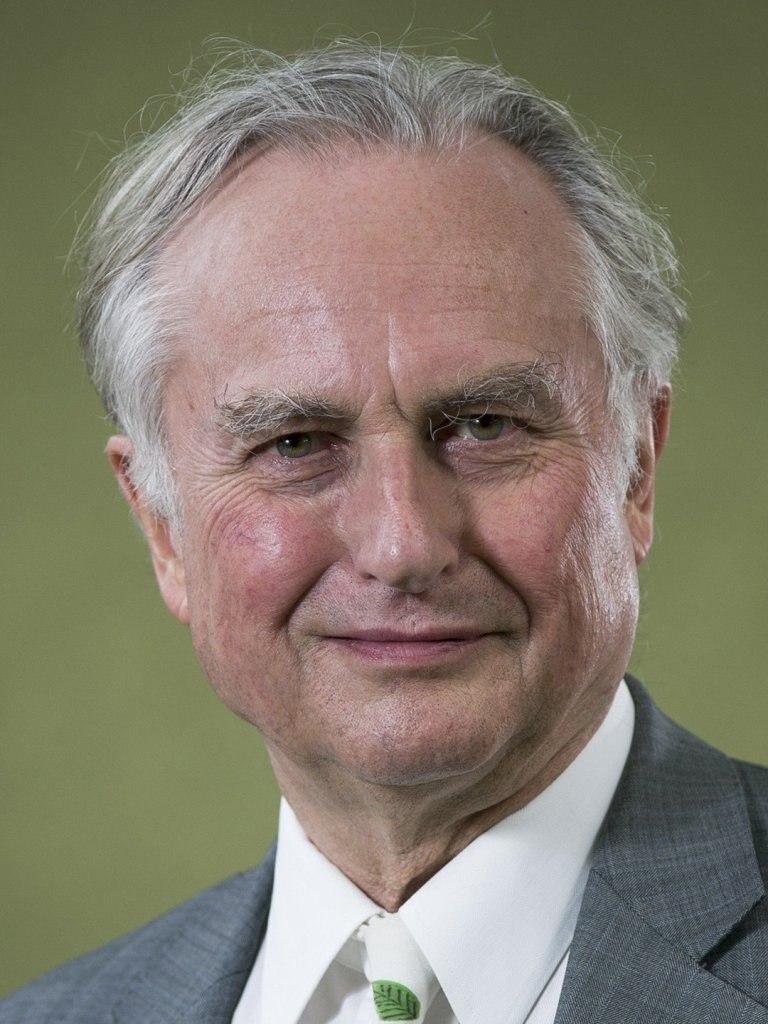





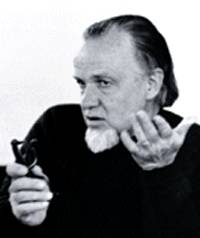





 The Daily Hatch