Category Archives: Uncategorized

Many people have questioned the accuracy of the Bible, but I have posted many videos and articles with evidence pointing out that the Bible has many pieces of evidence from archaeology supporting the view that the Bible is historically accurate. Take a look at the video above and below.

_________________________-

Many people have questioned the accuracy of the Bible, but I have posted many videos and articles with evidence pointing out that the Bible has many pieces of evidence from archaeology supporting the view that the Bible is historically accurate. Take a look at the video above and below.

The Bible and Archaeology – Is the Bible from God? (Kyle Butt 42 min)

You want some evidence that indicates that the Bible is true? Here is a good place to start and that is taking a closer look at the archaeology of the Old Testament times. Is the Bible historically accurate? Here are some of the posts I have done in the past on the subject: 1. The Babylonian Chronicle, of Nebuchadnezzars Siege of Jerusalem, 2. Hezekiah’s Siloam Tunnel Inscription. 3. Taylor Prism (Sennacherib Hexagonal Prism), 4. Biblical Cities Attested Archaeologically. 5. The Discovery of the Hittites, 6.Shishak Smiting His Captives, 7. Moabite Stone, 8. Black Obelisk of Shalmaneser III, 9A Verification of places in Gospel of John and Book of Acts., 9B Discovery of Ebla Tablets. 10. Cyrus Cylinder, 11. Puru “The lot of Yahali” 9th Century B.C.E., 12. The Uzziah Tablet Inscription, 13. The Pilate Inscription, 14. Caiaphas Ossuary, 14 B Pontius Pilate Part 2, 14c. Three greatest American Archaeologists moved to accept Bible’s accuracy through archaeology.,

Here is some very convincing evidence that points to the view that the Bible is historically accurate.

Archaeological and External Evidence for the Bible

Archeology consistently confirms the Bible!

Archaeology and the Old Testament

Ebla tablets—discovered in 1970s in Northern Syria. Documents written on clay tablets from around 2300 B.C. demonstrate that personal and place names in the Patriarchal accounts are genuine. In use in Ebla was the name “Canaan,” a name critics once said was not used at that time and was used incorrectly in the early chapters of the Bible. The tablets refer to all five “cities of the plain” mentioned in Genesis 14, previously assumed to have been mere legends.
Greater proportion of Egyptian words in the Pentateuch (first five books) than in rest of the Old Testament. Accurate Egyptian names: Potiphar (Gen.39), Zaphenath-Paneah (Joseph’s Egyptian name, Gen. 41:45), Asenath (Gen.41:45), On (Gen. 41:45), Rameses (Gen. 47:11), Oithom (Exodus 1:11).
Finds in Egypt are consistent with the time, place, and other details of biblical accounts of the Israelites in Egypt. These include housing and tombs that could have been of the Israelites, as well as a villa and tomb that could have been Joseph’s.
Confounding earlier skeptics, but confirming the Bible, an important discovery was made in Egypt in 1896. A tablet—the Merneptah Stela—was found that mentions Israel. (Merneptah was the pharaoh that ruled Egypt in 1212-1202 B.C.) The context of the stela indicates that Israel was a significant entity in the late 13th century B.C.
The Hittites were once thought to be a biblical legend, until their capital and records were discovered in Turkey.
Crucial find in Nuzi (northeastern Iraq), an entire cache of Hittite legal documents from 1400 B.C. Confirms many details of Genesis, Deuteronomy, such as: (a) siring of legitimate children through handmaidens, (b) oral deathbed will as binding, (c) the power to sell one’s birthright for relatively trivial property (Jacob & Esau), (d) need for family idols, such as Rachel stole from Laban, to secure inheritance, (e) form of the covenant in Deuteronomy exactly matches the form of suzerainty treaties between Hittite emperors and vassal kings.
Walls of Jericho—discovery in 1930s by John Garstang. The walls fell suddenly, and outwardly (unique), so Israelites could clamber over the ruins into the city (Joshua 6:20).
In 1986, scholars identified an ancient seal belonging to Baruch, son of Neriah, a scribe who recorded the prophecies of Jeremiah (Jer. 45:11).
In 1990, Harvard researchers unearthed a silver-plated bronze calf figurine reminiscent of the huge golden calf mentioned in the book of Exodus.
In 1993, archaeologists uncovered a 9th century B.C. inscription at Tel Dan. The words carved into a chunk of basalt refer to the “House of David” and the “King of Israel.” And the Bible’s version of Israelite history after the reign of David’s son, Solomon, is believed to be based on historical fact because it is corroborated by independent account of Egyptian and Assyrian inscriptions.
It was once claimed there was no Assyrian king named Sargon as recorded in Isaiah 20:1, because this name was not known in any other record. Then, Sargon’s palace was discovered in Iraq. The very event mentioned in Isaiah 20, his capture of Ashdod, was recorded in the palace walls! Even more, fragments of a stela (a poetic eulogy) memorializing the victory were found at Ashdod itself.
Another king who was in doubt was Belshazzar, king of Babylon, named in Daniel 5. The last king of Babylon was Nabonidus according to recorded history. Tablet was found showing that Belshazzar was Nabonidus’ son.
The ruins of Sodom and Gomorrah have been discovered southeast of the Dead Sea. Evidence at the site seems consistent with the biblical account: “Then the Lord rained down burning sulfur on Sodom and Gomorrah—from the Lord out of the heavens.” The destruction debris was about 3 feet thick and buildings were burned from fires that started on the rooftops. Geologist Frederick Clapp theorizes that that pressure from an earthquake could have spewed out sulfur-laden bitumen (similar to asphalt) known to be in the area through the fault line upon which the cities rest. The dense smoke reported by Abraham is consistent with a fire from such material, which could have ignited by a spark or ground fire.
Archaeology and the New Testament

The New Testament mentions specific individuals, places, and various official titles of local authorities, confirmed by recent archeology. Luke sites exact titles of officials. (Titles varied from city to city so they are easily checked for accuracy.) Lysanias the Tetrarch in Abilene (Luke 3:1)—verified by inscription dated 14-29 A.D. Erastus, city treasurer of Corinth (Romans 16:23)—verified by pavement inscription. Gallio—proconsul of Achaia (Greece) in A.D. 51 (Acts 18:12). Politarchs (“city ruler”) in Thessalonica (Acts 17:6). Chief Man of the Island on Malta (Acts 28:7). Stone Pavement at Pilate’s headquarters (John 19:13)—discovered recently. Pool at Bethesda— discovered in 1888. Many examples of silver shrines to Artemis found (Acts 19:28). Inscription confirms the title of the city as “Temple Warden of Artemis”. Account of Paul’s sea voyage in Acts is “one of the most instructive documents for the knowledge of ancient seamanship.”
Census of Luke 1. Census began under Augustus approximately every 14 years: 23-22 B.C., 9-8 B.C., 6 A.D. There is evidence of enrollment in 11-8 B.C. in Egyptian papyri.
Problem: Historian Josephus puts Quirinius as governor in Syria at 6 A.D. Solution: Recent inscription confirms that Quirinius served as governor in 7 B. C. (in extraordinary, military capacity).
Problem: Herod’s kingdom was not part of the Roman Empire at the time, so there would not have been a census. Solution: it was a client kingdom. Augustus treated Herod as subject (Josephus). Parallel—a census took place in the client kingdom of Antiochus in eastern Asia Minor under Tiberius.
Enrollment in hometown? Confirmed by edict of Vibius Maximus, Roman prefect of Egypt, in 104 A.D. “…it is necessary for all who are for any cause whatsoever way from their administrative divisions to return home to comply with the customary ordinance of enrollment.”
Opinion of Sir William Ramsay, one of the outstanding Near Eastern archeologists: “Luke is a historian of the first rank; not merely are his statements of fact trustworthy; he is possessed of the true historic sense; he fixes his mind on the idea and plan that rules in the evolution of history, and proportions the scale of his treatment to the importance of each incident. He seizes the important and critical events and shows their true nature at greater length…In short, this author should be placed among the very greatest of historians.”
Diggers recently uncovered an ossuary (repository for bones) with the inscription “Joseph Son of Caiaphas.” This marked the first archaeological evidence that the high priest Caiaphas was a real person. According to the gospels, Caiaphas presided at the Sanhedrin’s trial of Jesus.
External References to Jesus and the Christian Church.

Josephus. Born to priestly family in A.D. 37. Commanded Jewish troops in Galilee during rebellion. Surrendered, and earned favor of Emperor Vespasian. Wrote 20 books of Antiquities of the Jews. Refers to John the Baptist (killed by Herod) and to James, the brother of Jesus (condemned to death by stoning by the Sanhedrin). He referred to Jesus in his Antiquities 18:63. The standard text of Josephus reads as follows:
“About this time lived Jesus, a wise man, if indeed one ought to call him a man. For he was the achiever of extraordinary deeds and was a teacher of those who accept the truth gladly. He won over many Jews and many of the Greeks. He was the Messiah. When he was indicted by the principal men among us and Pilate condemned him to be crucified, those who had come to love him originally did not cease to do so; for he appeared to them on the third day restored to life, as the prophets of the Deity had foretold these and countless other marvelous things about him, and the tribe of the Christians, so named after him, has not disappeared to this day.” (Josephus—The Essential Works, P. L. Maier ed./trans.).

Although this passage is so worded in the Josephus manuscripts as early as the third-century church historian Eusebius, scholars have long suspected a Christian interpolation, since Josephus could hardly have believed Jesus to be the Messiah or in his resurrection and have remained, as he did, a non-Christian Jew. In 1972, however, Professor Schlomo Pines of the Hebrew University in Jerusalem announced his discovery of a different manuscript tradition of Josephus’s writings in the tenth-century Melkite historian Agapius, which reads as follows:

“At this time there was a wise man called Jesus, and his conduct was good, and he was known to be virtuous. Many people among the Jews and the other nations became his disciples. Pilate condemned him to be crucified and to die. But those who had become his disciples did not abandon his discipleship. They reported that he had appeared to them three days after his crucifixion and that he was alive. Accordingly, he was perhaps the Messiah, concerning whom the prophets have reported wonders. And the tribe of the Christians, so named after him, has not disappeared to this day.”

Here, clearly, is language that a Jew could have written without conversion to Christianity. (Schlomo Pines, An Arabic Version of the Testimonium Flavianum and its Implications [Jerusalem: Israel Academy of Sciences and Humanities, 1971.])

According to Dr. Paul Maier, professor of ancient history, “Scholars fall into three basic camps regarding Antiquities 18:63: 1) The original passage is entirely authentic—a minority position; 2) it is entirely a Christian forgery—a much smaller minority position; and 3) it contains Christian interpolations in what was Josephus’s original, authentic material about Jesus—the large majority position today, particularly in view of the Agapian text (immediately above) which shows no signs of interpolation. Josephus must have mentioned Jesus in authentic core material at 18:63 since this passage is present in all Greek manuscripts of Josephus, and the Agapian version accords well with his grammar and vocabulary elsewhere. Moreover, Jesus is portrayed as a ‘wise man’ [sophos aner], a phrase not used by Christians but employed by Josephus for such personalities as David and Solomon in the Hebrew Bible. Furthermore, his claim that Jesus won over “many of the Greeks” is not substantiated in the New Testament, and thus hardly a Christian interpolation but rather something that Josephus would have noted in his own day. Finally, the fact that the second reference to Jesus at Antiquities 20:200, which follows, merely calls him the Christos [Messiah] without further explanation suggests that a previous, fuller identification had already taken place. Had Jesus appeared for the first time at the later point in Josephus’s record, he would most probably have introduced a phrase like “…brother of a certain Jesus, who was called the Christ.”

Early Gentile writers, referred to by Christian apologists in 2nd century.
Thallus—wrote a history of Greece and Asia Minor in A.D. 52. Julius Africanus (221 AD), commenting on Thallus, said: “Thallus, in the third book of his histories, explains away the darkness [during the crucifixion] as an eclipse of the sun—unreasonably, as it seems to me [since the Passover took place during a full moon.]”
Official Roman records of the census, and Pontius Pilate’s official report to the Emperor. Justin Martyr wrote his “Defense of Christianity” to Emperor Antonius Pius, referred him to Pilate’s report, preserved in the archives. Tertullian, writing to Roman officials, writes with confidence that records of the Luke 1 census can still be found.
Roman historians
Tacitus—Greatest Roman historian, born 52 A.D., wrote a history of the reign of Nero in 110 A.D. “…Christus, from whom they got their name, had been executed by sentence of the procurator Pontius Pilate when Tiberias was emperor; and the pernicious superstition was checked for a short time only to break out afresh, not only in Judea, the home of the plague, but in Rome itself, .. ” (Annals 15:44)
Suetonius—AD. 120. In his Life of Claudius: “As the Jews were making disturbances at the instigation of Chrestus, he expelled them from Rome.”
Pliny the Younger—Governor of Bithynia in Asia Minor, wrote the emperor in A.D. 112 about the sect of Christians, who were in “the habit of meeting on a certain fixed day, before it was light, when they sang an anthem to Christ as God.”
Note: A good web site for biblical archaeology is http://www.christiananswers.net.

Manuscript Evidence
Archaeological Evidence
Prophetic Evidence
Statistical Evidence
Introduction to Apologetics
Summary for Memorization
__________

Related posts:

Atheist says “It’s not about having a purpose in life..” (Arkansas Atheist, Part 1)jh69

August 16, 2011 – 10:31 pm
The Bible and Archaeology (1/5) The Bible maintains several characteristics that prove it is from God. One of those is the fact that the Bible is accurate in every one of its details. The field of archaeology brings to light this amazing accuracy. _________________________- I want to make two points today. 1. There is no […]

By Everette Hatcher III | Also posted in John Brummett | Tagged bible and archaeology, book of mormon, core belief., different faiths, human morality| Edit | Comments (0)
Book of Mormon is not historically accurate, but Bible is (Part 32) (What are the Dead Sea Scrolls?)

June 23, 2011 – 5:13 am
The Book of Mormon vs The Bible, Part 6 of an indepth study of Latter Day Saints Archeology The Book of Mormon verses The Bible, Part 6 of an indepth study With the great vast amounts of evidence we find in the Bible through archeology, why is there no evidence for anything writte in the Book […]

By Everette Hatcher III | Also posted in Gene Lyons, John Brummett, Max Brantley | Edit | Comments (1)
Book of Mormon is not historically accurate, but Bible is (Part 31)

June 22, 2011 – 5:11 am
The Book of Mormon vs The Bible, Part 5 of an indepth study of Latter Day Saints Archeology The Book of Mormon verses The Bible, Part 5 of an indepth study With the great vast amounts of evidence we find in the Bible through archeology, why is there no evidence for anything writte in the […]

By Everette Hatcher III | Also posted in Gene Lyons, John Brummett, Max Brantley | Edit | Comments (0)
Book of Mormon is not historically accurate, but Bible is (Part 29)

June 17, 2011 – 5:01 am
The Book of Mormon vs The Bible, Part 3 of an indepth study of Latter Day Saints Archeology The Book of Mormon verses The Bible, Part 1 of an indepth study With the great vast amounts of evidence we find in the Bible through archeology, why is there no evidence for anything writte in the […]

By Everette Hatcher III | Also posted in Gene Lyons, John Brummett, Max Brantley | Edit | Comments (0)
Book of Mormon is not historically accurate, but Bible is (Part 28)

June 15, 2011 – 5:48 am
The Book of Mormon vs The Bible, Part 2 of an indepth study of Latter Day Saints Archeology The Book of Mormon verses The Bible, Part 2 of an indepth study With the great vast amounts of evidence we find in the Bible through archeology, why is there no evidence for anything writte in the […]

By Everette Hatcher III | Also posted in Gene Lyons, John Brummett, Max Brantley | Edit | Comments (0)
Easter Morning April 24, 2011,List of posts on series: Is the Bible historically accurate? (Updated 1 through 14C)

April 24, 2011 – 11:09 am
“In Christ Alone” music video featuring scenes from “The Passion of the Christ”. It is sung by Lou Fellingham of Phatfish and the writer of the hymn is Stuart Townend. On this Easter Morning April 24, 2011 there is no other better time to take a look at the truth and accuracy of the Bible. […]

By Everette Hatcher III | Edit | Comments (0)
Is the Bible historically accurate?(Part 14C)(The Conspirator Part 7)

April 20, 2011 – 3:31 pm
Critics – Part 1 By Dr In my ongoing debate with other bloggers on the Arkansas Times Blog, I had an interesting response from Dobert: You can’t have it both ways. If the Gospel writers were allowed to adapt their message to a particular audience then it can’t be claimed that God literally took their […]

By Everette Hatcher III | Edit | Comments (0)
Is the Bible historically accurate?(Part 14B)(The Conspirator Part 5)

April 20, 2011 – 7:50 am
The Institute for Creation Research equips believers with evidences of the Bible’s accuracy and authority through scientific research, educational programs, and media presentations, all conducted within a thoroughly biblical framework. info@icr.org http://www.icr.org Last night I had the opportunity to go back and forth with a couple of bloggers on the Arkansas Times Blog and this […]

By Everette Hatcher III | Edit | Comments (0)
Is the Bible historically accurate? (part 14)(The Conspirator part 3)

April 19, 2011 – 11:31 pm
This is a quick summary of the Bible’s reliability by a famous and well-respected former atheist. Please check out his website (http://www.leestrobel.com) for hundreds of FREE high quality videos investigating the critical aspects of our faith. Todd Tyszkahttp://www.toddtyszka.com On April 19, 2011 on the Arkansas Blog an entry of mine got this response from […]

By Everette Hatcher III | Edit | Comments (0)
Is the Bible historically accurate? (Part 13)

April 11, 2011 – 8:26 am
Many Kings and important people in the Bible are also verified by secular documents. From time to time you will read articles in the Arkansas press by such writers as John Brummett, Max Brantley and Gene Lyons that poke fun at those that actually believe the Bible is historically accurate when in fact the Bible […]

By Everette Hatcher III | Also posted in Adrian Rogers, Gene Lyons, John Brummett, Max Brantley | Edit | Comments (0)
Is the Bible historically accurate? (Part 12)(Johnny Cash, Famous Arkansan pt C)

April 9, 2011 – 9:52 am
Dr Price, who directs excavations at the Qumran plateau in Israel, the site of the community that produced the dead sea scrolls some 2,000 years ago, expertly guides you through the latest archaeological finds that have changed the way we understand the world of the bible. (Part 6 of 6 in the film series The Stones […]

By Everette Hatcher III | Also posted in Famous Arkansans, Gene Lyons,John Brummett, Max Brantley | Edit | Comments (0)
Is the Bible historically accurate? (Part 11)

April 3, 2011 – 7:03 am
My sons Wilson and Hunter went to California and visited Yosemite National Park with our friend Sherwood Haisty Jr. (Sherwood on left) March 21-27. Here you can see all the snow they had to deal with. Dr Price, who directs excavations at the Qumran plateau in Israel, the site of the community that produced the […]

By Everette Hatcher III | Also posted in Gene Lyons, John Brummett, Max Brantley | Edit | Comments (0)
Is the Bible historically accurate? (Part 10)

April 1, 2011 – 9:29 am
Dr Price, who directs excavations at the Qumran plateau in Israel, the site of the community that produced the dead sea scrolls some 2,000 years ago, expertly guides you through the latest archaeological finds that have changed the way we understand the world of the bible. (Part 4 of 6 in the film series The Stones […]

By Everette Hatcher III | Also posted in Gene Lyons, John Brummett, Max Brantley | Edit | Comments (0)

Related posts:

FRANCIS SCHAEFFER ANALYZES ART AND CULTURE Part 53 THE BEATLES (Part E, Stg. Pepper’s and John Lennon’s search in 1967 for truth was through drugs, money, laughter, etc & similar to King Solomon’s, LOTS OF PICTURES OF JOHN AND CYNTHIA) (Feature on artist Yoko Ono)

The John Lennon and the Beatles really were on a long search for meaning and fulfillment in their lives  just like King Solomon did in the Book of Ecclesiastes. Solomon looked into learning (1:12-18, 2:12-17), laughter, ladies, luxuries, and liquor (2:1-2, 8, 10, 11), and labor (2:4-6, 18-20). He fount that without God in the picture all […]

FRANCIS SCHAEFFER ANALYZES ART AND CULTURE Part 52 THE BEATLES (Part D, There is evidence that the Beatles may have been exposed to Francis Schaeffer!!!) (Feature on artist Anna Margaret Rose Freeman )

______________   George Harrison Swears & Insults Paul and Yoko Lucy in the Sky with Diamonds- The Beatles The Beatles:   I have dedicated several posts to this series on the Beatles and I don’t know when this series will end because Francis Schaeffer spent a lot of time listening to the Beatles and talking […]

FRANCIS SCHAEFFER ANALYZES ART AND CULTURE Part 51 THE BEATLES (Part C, List of those on cover of Stg.Pepper’s ) (Feature on artist Raqib Shaw )

  The Beatles in a press conference after their Return from the USA Uploaded on Nov 29, 2010 The Beatles in a press conference after their Return from the USA. The Beatles:   I have dedicated several posts to this series on the Beatles and I don’t know when this series will end because Francis […]

FRANCIS SCHAEFFER ANALYZES ART AND CULTURE Part 50 THE BEATLES (Part B, The Psychedelic Music of the Beatles) (Feature on artist Peter Blake )

__________________   Beatles 1966 Last interview I have dedicated several posts to this series on the Beatles and I don’t know when this series will end because Francis Schaeffer spent a lot of time listening to the Beatles and talking and writing about them and their impact on the culture of the 1960’s. In this […]

FRANCIS SCHAEFFER ANALYZES ART AND CULTURE Part 49 THE BEATLES (Part A, The Meaning of Stg. Pepper’s Cover) (Feature on artist Mika Tajima)

_______________ The Beatles documentary || A Long and Winding Road || Episode 5 (This video discusses Stg. Pepper’s creation I have dedicated several posts to this series on the Beatles and I don’t know when this series will end because Francis Schaeffer spent a lot of time listening to the Beatles and talking and writing about […]

FRANCIS SCHAEFFER ANALYZES ART AND CULTURE PART 48 “BLOW UP” by Michelangelo Antonioni makes Philosophic Statement (Feature on artist Nancy Holt)

_______________ Francis Schaeffer pictured below: _____________________ I have included the 27 minute  episode THE AGE OF NONREASON by Francis Schaeffer. In that video Schaeffer noted,  ” Sergeant Pepper’s Lonely Hearts Club Band…for a time it became the rallying cry for young people throughout the world. It expressed the essence of their lives, thoughts and their feelings.” How Should […]

FRANCIS SCHAEFFER ANALYZES ART AND CULTURE Part 47 Woody Allen and Professor Levy and the death of “Optimistic Humanism” from the movie CRIMES AND MISDEMEANORS Plus Charles Darwin’s comments too!!! (Feature on artist Rodney Graham)

Crimes and Misdemeanors: A Discussion: Part 1 ___________________________________ Today I will answer the simple question: IS IT POSSIBLE TO BE AN OPTIMISTIC SECULAR HUMANIST THAT DOES NOT BELIEVE IN GOD OR AN AFTERLIFE? This question has been around for a long time and you can go back to the 19th century and read this same […]

FRANCIS SCHAEFFER ANALYZES ART AND CULTURE PART 46 Friedrich Nietzsche (Featured artist is Thomas Schütte)

____________________________________ Francis Schaeffer pictured below: __________ Francis Schaeffer has written extensively on art and culture spanning the last 2000years and here are some posts I have done on this subject before : Francis Schaeffer’s “How should we then live?” Video and outline of episode 10 “Final Choices” , episode 9 “The Age of Personal Peace and Affluence”, episode 8 […]

Second Best Sermon I ever heard on Ecclesiastes!!!

_

Francis Schaeffer’s application of Ecclesiastes to the modern man’s philosophical dilemma was the best I have ever heard. Below are some of Schaeffer’s insights.

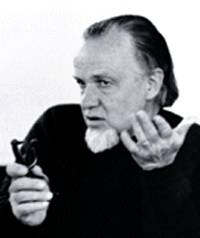
(Francis Schaeffer pictured below in 1960’s)

Image result for francis schaeffer

CONCERNING THE BOOK OF ECCLESIASTES Francis Schaeffer noted:

Ecclesiastes is the only pessimistic book in the Bible and that is because of the place where Solomon limits himself. He limits himself to the question of human life, life under the sun between birth and death and the answers this would give.

Francis Schaeffer said this in the 1960’s while teaching at the  L’Abri community in Switzerland and I heard it at a later date.

__

Image result for francis schaeffer edith

__

If you like to see an example of nihilism in the Bible then check out the BOOK OF ECCLESIASTES and it’s author King Solomon. Schaeffer noted that Solomon took a look at the meaning of life on the basis of human life standing alone between birth and death “under the sun.” This phrase UNDER THE SUN appears over and over in Ecclesiastes. The Christian Scholar Ravi Zacharias noted, “The key to understanding the Book of Ecclesiastes is the term UNDER THE SUN — What that literally means is you lock God out of a closed system and you are left with only this world of Time plus Chance plus matter.” 

___

Below a painting by Nikolai Nikolaevich Ge (1831-1894) Court of King Solomon Oil on canvas

Image result for king solomon

Ecclesiastes 1:4

English Standard Version (ESV)

A generation goes, and a generation comes,
    but the earth remains forever.

___________________

Ecclesiastes 4:16

English Standard Version (ESV)

16 There was no end of all the people, all of whom he led. Yet those who come later will not rejoice in him. Surely this also is vanity and a striving after wind.

__________________________

In verses 1:4 and 4:16 Solomon places man in the cycle. He doesn’t place man outside of the cycle. Man doesn’t escape the cycle. Man is only cycle. Birth and death and youth and old age. With this in mind Solomon makes this statement.

Ecclesiastes 6:12

12 For who knows what is good for a man during his lifetime, during the few years of his futile life? He will spend them like a shadow. For who can tell a man what will be after him under the sun?

____________________

There is no doubt in my mind that Solomon had the same experience in his life that I had as a younger man. I remember standing by the sea and the moon arose and it was copper and beauty. Then the moon did not look like a flat dish but a globe or a sphere since it was close to the horizon. One could feel the global shape of the earth too. Then it occurred to me that I could contemplate the interplay of the spheres and I was exalted because I thought I can look upon them with all their power, might, and size, but they could contempt nothing and I felt as man as God. Then came upon me a horror of great darkness because it suddenly occurred to me that although I could contemplate them and they could contemplate nothing yet they would continue to turn in ongoing cycles when I saw no more forever and I was crushed.

Image result for eclipse

THIS IS SOLOMON’S FEELING TOO. The universal man, Solomon, beyond our intelligence with an empire at his disposal with the opportunity of observation so he could recite these words here in Ecclesiastes 6:12, “For who knows what is good for a man during his lifetime, during the few years of his futile life? He will spend them like a shadow. For who can tell a man what will be after him under the sun?”

Image result for king solomon

Ecclesiastes 1:11

11 There is no remembrance of earlier things; And also of the later things which will occur, There will be for them no remembrance among those who will come later still.

Ecclesiastes 2:16

16 For there is no lasting remembrance of the wise man as with the fool, inasmuch as in the coming days all will be forgotten. And how the wise man and the fool alike die!

You bring together here the factor of the beginning and you can’t know what immediately follows after your death and of course you can’t know the final ends. What do you do and the answer is to get drunk and this was not thought of in the RUBAIYAT OF OMAR KAHAYYAM:

Ecclesiastes 2:1-3

I said to myself, “Come now, I will test you with pleasure. So enjoy yourself.” And behold, it too was futility. I said of laughter, “It is madness,” and of pleasure, “What does it accomplish?” I explored with my mind how to stimulate my body with wine while my mind was guiding me wisely, and how to take hold of folly, until I could see what good there is for the sons of men to do under heaventhe few years of their lives.

The Daughter of the Vine:

You know, my Friends, with what a brave Carouse
I made a Second Marriage in my house;
Divorced old barren Reason from my Bed,
And took the Daughter of the Vine to Spouse.

from the Rubaiyat of Omar Khayyam (Translation by Edward Fitzgerald)

A perfectly good philosophy coming out of Islam, but Solomon is not the first man that thought of it nor the last. In light of what has been presented by Solomon is the solution just to get intoxicated and black the think out? So many people have taken to alcohol and the dope which so often follows in our day. This approach is incomplete, temporary and immature. Papa Hemingway can find the champagne of Paris sufficient for a time, but one he left his youth he never found it sufficient again. He had a lifetime spent looking back to Paris and that champagne and never finding it enough. It is no solution and Solomon says so too.

(A scene from MIDNIGHT IN PARIS with Hemingway drinking in Paris)

Image result for hemingway drinking paris midnight in paris

(Ernest Hemingway and Martha Gelhorn Make a Toast in Paris)

Image result for hemingway drinking paris

Ecclesiastes 9:11

11 Again I saw that under the sun the race is not to the swift, nor the battle to the strong, nor bread to the wise, nor riches to the intelligent, nor favor to those with knowledge, but time and chance happen to them all.

Chance rules. If a man starts out only from himself and works outward it must eventually if he is consistent seem so that only chance rules and naturally in such a setting you can not expect him to have anything else but finally a hate of life.

Ecclesiastes 2:17-18a

17 So I hated life, because what is done under the sun was grievous to me, for all is vanity and a striving after wind. 18 I hated all my toil in which I toil under the sun…

That first great cry “So I hated life.” Naturally if you hate life you long for death and you find him saying this in Ecclesiastes 4:2-3:

And I thought the dead who are already dead more fortunate than the living who are still alive. But better than both is he who has not yet been and has not seen the evil deeds that are done under the sun.

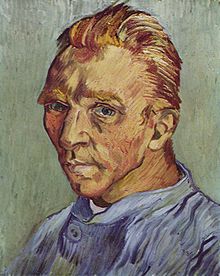
He lays down an order. It is best never have to been. It is better to be dead, and worse to be alive. But like all men and one could think of the face of Vincent Van Gogh in his final paintings as he came to hate life and you watch something die in his self portraits, the dilemma is double because as one is consistent and one sees life as a game of chance, one must come in a way to hate life. Yet at the same time men never get beyond the fear to die. Solomon didn’t either. So you find him in saying this.

[Wikipedia noted: Vincent van GoghSelf-portrait without beard, end September 1889, (F 525), Oil on canvas, 40 × 31 cm., Private collection. This may have been Van Gogh’s last self-portrait. Given as a birthday gift to his mother.]

(Photo from circa 1886 below)

Image result for vincent van gogh photograph

Ecclesiastes 2:14-15

14 The wise person has his eyes in his head, but the fool walks in darkness. And yet I perceived that the same event happens to all of them. 15 Then I said in my heart, “What happens to the fool will happen to me also. Why then have I been so very wise?” And I said in my heart that this also is vanity.

Image result for king solomon

The Hebrew is stronger than this and it says “it happens EVEN TO ME,” Solomon on the throne, Solomon the universal man. EVEN TO ME, even to Solomon.

Ecclesiastes 3:18-21

18 I said in my heart with regard to the children of man that God is testing them that they may see that they themselves are but beasts. 19 For what happens to the children of man and what happens to the beasts is the same; as one dies, so dies the other. They all have the same breath, and man has no advantage over the beasts, for all is vanity.[n] 20 All go to one place. All are from the dust, and to dust all return.21 Who knows whether the spirit of man goes upward and the spirit of the beast goes down into the earth?

What he is saying is as far as the eyes are concerned everything grinds to a stop at death.

Ecclesiastes 4:16

16 There was no end of all the people, all of whom he led. Yet those who come later will not rejoice in him. Surely this also is vanity and a striving after wind.

That is true. There is no place better to feel this than here in Switzerland. You can walk over these hills and men have walked over these hills for at least 4000 years and when do you know when you have passed their graves or who cares? It doesn’t have to be 4000 years ago. Visit a cemetery and look at the tombstones from 40 years ago. Just feel it. IS THIS ALL THERE IS? You can almost see Solomon shrugging his shoulders.

Ecclesiastes 8:8

There is no man that hath power over the spirit to retain the spirit; neither hath he power in the day of death: and there is no discharge in that war; neither shall wickedness deliver those that are given to it. (King James Version)

A remarkable two phrase. THERE IS NO DISCHARGE IN THAT WAR or you can translate it “no casting of weapons in that war.” Some wars they come to the end. Even the THIRTY YEARS WAR (1618-1648) finally finished, but this is a war where there is no casting of weapons and putting down the shield because all men fight this battle and one day lose. But more than this he adds, WICKEDNESS WON’T DELIVER YOU FROM THAT FIGHT. Wickedness delivers men from many things, from tedium in a strange city for example. But wickedness won’t deliver you from this war. It isn’t that kind of war. More than this he finally casts death in the world of chance.

Ecclesiastes 9:12

12 For man does not know his time. Like fish that are taken in an evil net, and like birds that are caught in a snare, so the children of man are snared at an evil time, when it suddenly falls upon them.

Death can come at anytime. Death seen merely by the eye of man between birth and death and UNDER THE SUN. Death too is a thing of chance. Albert Camus speeding in a car with a pretty girl at his side and then Camus dead. Lawrence of Arabia coming up over a crest of a hill 100 miles per hour on his motorcycle and some boys are standing in the road and Lawrence turns aside and dies.

 Surely between birth and death these things are chance. Modern man adds something on top of this and that is the understanding that as the individual man will dies by chance so one day the human race will die by chance!!! It is the death of the human race that lands in the hand of chance and that is why men grew sad when they read Nevil Shute’s book ON THE BEACH [Where everyone accept those in Australia are killed by atomic bomb].

(TE Lawrence on his Brough Superior)

Image result for Lawrence of Arabia wreck

(Wikipedia noted: Camus died on January 4, 1960 at the age of 46, in a car accident near Sens, in Le Grand Fossard in the small town of Villeblevin. In his coat pocket was an unused train ticket.) Although Schaeffer is incorrect about Camus dying with a pretty girlfriend by his side (it was Jackson Pollock that did that), everyone knew that Camus was a womanizer.

Image result for Albert Camus wreck

(End of Schaeffer’s comments here and below is an outline of some of his points:

Some inescapable conclusions if you choose to live without God in the picture. Solomon came to these same conclusions when he looked at life “under the sun.”

  1. Death is the great equalizer (Eccl 3:20, “All go to the same place; all come from dust, and to dust all return.”)
  2. Chance and time have determined the past, and they will determine the future.  (Ecclesiastes 9:11-13 “I have seen something else under the sun:  The race is not to the swift
    or the battle to the strong, nor does food come to the wise or wealth to the brilliant  or favor to the learned; but time and chance happen to them all.  Moreover, no one knows when their hour will come: As fish are caught in a cruel net, or birds are taken in a snare, so people are trapped by evil times  that fall unexpectedly upon them.”)
  3. Power reigns in this life, and the scales are not balanced(Eccl 4:1; “Again I looked and saw all the oppression that was taking place under the sun: I saw the tears of the oppressed—
    and they have no comforter; power was on the side of their oppressors—  and they have no comforter.” 7:15 “In this meaningless life of mine I have seen both of these: the righteous perishing in their righteousness,  and the wicked living long in their wickedness. ).
  4. Nothing in life gives true satisfaction without God including knowledge (1:16-18), ladies and liquor (2:1-3, 8, 10, 11), and great building projects (2:4-6, 18-20).
  5. There is no ultimate lasting meaning in life. (1:2)

_____

By the way, the final chapter of Ecclesiastes finishes with Solomon emphasizing that serving God is the only proper response of man. Solomon looks above the sun and brings God back into the picture in the final chapter of the book in Ecclesiastes 12:13-14:

13 Now all has been heard;
here is the conclusion of the matter:
Fear God and keep his commandments,
for this is the whole duty of man.

14 For God will bring every deed into judgment,
including every hidden thing,
whether it is good or evil

The answer to find meaning in life is found in putting your faith and trust in Jesus Christ. The Bible is true from cover to cover and can be trusted.

In 1978 I heard the song “Dust in the Wind” by Kansas when it rose to #6 on the charts. That song told me that Kerry Livgren the writer of that song and a member of Kansas had come to the same conclusion that Solomon had and that “all was meaningless.” I remember mentioning to my friends at church that we may soon see some members of Kansas become Christians because their search for the meaning of life had obviously come up empty even though they had risen from being an unknown band to the top of the music business and had all the wealth and fame that came with that.

Livgren wrote:

“All we do, crumbles to the ground though we refuse to see, Dust in the Wind, All we are is dust in the wind, Don’t hang on, Nothing lasts forever but the Earth and Sky, It slips away, And all your money won’t another minute buy.”

Both Kerry Livgren and Dave Hope of Kansas became Christians eventually. Kerry Livgren first tried Eastern Religions and Dave Hope had to come out of a heavy drug addiction. I was shocked and elated to see their personal testimony on The 700 Club in 1981 and that same  interview can be seen on youtube today. Livgren lives in Topeka, Kansas today where he teaches “Diggers,” a Sunday school class at Topeka Bible Church. Hope is the head of Worship, Evangelism and Outreach at Immanuel Anglican Church in Destin, Florida.

Related posts:

FRANCIS SCHAEFFER ANALYZES ART AND CULTURE Part 53 THE BEATLES (Part E, Stg. Pepper’s and John Lennon’s search in 1967 for truth was through drugs, money, laughter, etc & similar to King Solomon’s, LOTS OF PICTURES OF JOHN AND CYNTHIA) (Feature on artist Yoko Ono)

The John Lennon and the Beatles really were on a long search for meaning and fulfillment in their lives  just like King Solomon did in the Book of Ecclesiastes. Solomon looked into learning (1:12-18, 2:12-17), laughter, ladies, luxuries, and liquor (2:1-2, 8, 10, 11), and labor (2:4-6, 18-20). He fount that without God in the picture all […]

FRANCIS SCHAEFFER ANALYZES ART AND CULTURE Part 52 THE BEATLES (Part D, There is evidence that the Beatles may have been exposed to Francis Schaeffer!!!) (Feature on artist Anna Margaret Rose Freeman )

______________   George Harrison Swears & Insults Paul and Yoko Lucy in the Sky with Diamonds- The Beatles The Beatles:   I have dedicated several posts to this series on the Beatles and I don’t know when this series will end because Francis Schaeffer spent a lot of time listening to the Beatles and talking […]

FRANCIS SCHAEFFER ANALYZES ART AND CULTURE Part 51 THE BEATLES (Part C, List of those on cover of Stg.Pepper’s ) (Feature on artist Raqib Shaw )

  The Beatles in a press conference after their Return from the USA Uploaded on Nov 29, 2010 The Beatles in a press conference after their Return from the USA. The Beatles:   I have dedicated several posts to this series on the Beatles and I don’t know when this series will end because Francis […]

FRANCIS SCHAEFFER ANALYZES ART AND CULTURE Part 50 THE BEATLES (Part B, The Psychedelic Music of the Beatles) (Feature on artist Peter Blake )

__________________   Beatles 1966 Last interview I have dedicated several posts to this series on the Beatles and I don’t know when this series will end because Francis Schaeffer spent a lot of time listening to the Beatles and talking and writing about them and their impact on the culture of the 1960’s. In this […]

FRANCIS SCHAEFFER ANALYZES ART AND CULTURE Part 49 THE BEATLES (Part A, The Meaning of Stg. Pepper’s Cover) (Feature on artist Mika Tajima)

_______________ The Beatles documentary || A Long and Winding Road || Episode 5 (This video discusses Stg. Pepper’s creation I have dedicated several posts to this series on the Beatles and I don’t know when this series will end because Francis Schaeffer spent a lot of time listening to the Beatles and talking and writing about […]

FRANCIS SCHAEFFER ANALYZES ART AND CULTURE PART 48 “BLOW UP” by Michelangelo Antonioni makes Philosophic Statement (Feature on artist Nancy Holt)

_______________ Francis Schaeffer pictured below: _____________________ I have included the 27 minute  episode THE AGE OF NONREASON by Francis Schaeffer. In that video Schaeffer noted,  ” Sergeant Pepper’s Lonely Hearts Club Band…for a time it became the rallying cry for young people throughout the world. It expressed the essence of their lives, thoughts and their feelings.” How Should […]

FRANCIS SCHAEFFER ANALYZES ART AND CULTURE Part 47 Woody Allen and Professor Levy and the death of “Optimistic Humanism” from the movie CRIMES AND MISDEMEANORS Plus Charles Darwin’s comments too!!! (Feature on artist Rodney Graham)

Crimes and Misdemeanors: A Discussion: Part 1 ___________________________________ Today I will answer the simple question: IS IT POSSIBLE TO BE AN OPTIMISTIC SECULAR HUMANIST THAT DOES NOT BELIEVE IN GOD OR AN AFTERLIFE? This question has been around for a long time and you can go back to the 19th century and read this same […]

FRANCIS SCHAEFFER ANALYZES ART AND CULTURE PART 46 Friedrich Nietzsche (Featured artist is Thomas Schütte)

____________________________________ Francis Schaeffer pictured below: __________ Francis Schaeffer has written extensively on art and culture spanning the last 2000years and here are some posts I have done on this subject before : Francis Schaeffer’s “How should we then live?” Video and outline of episode 10 “Final Choices” , episode 9 “The Age of Personal Peace and Affluence”, episode 8 […]

__

Evolution: The Changing Scene by Duane Gish, Ph.D.

__

Prof. Derek Ager of the University at Swansea, Wales, in Proc. Geol. Assoc. Vol. 87, p. 132 (1976) has stated

“It must be significant that nearly all the evolutionary stories I learned as a student, from Trueman’s Ostrea/Gryphea to Carruther’s Raphrentis delanouei, have now been ‘debunked.’ Similarly, my own experience of more than twenty years looking for evolutionary lineages among the Mesozoic Brachiopoda has proved them equally elusive.”

This admission by Prof. Ager (no friend of creationists) fits in very well with the title of this article—a significant part of the changing scene in evolutionary circles is the changing attitude of evolutionists concerning the fossil record—more and more are now admitting that the missing links are still missing, that they have little or no evidence for gradual change in the fossil record.

In his article in Natural History 86:22 (1977) entitled “The Return of Hopeful Monsters,” Stephen J. Gould, leading spokesman for evolutionists in the U.S. today, said that

“The fossil record with its abrupt transitions offers no support for gradual change…. “

“All paleontologists know that the fossil record contains precious little in the way of intermediate forms; transitions between major groups are characteristically abrupt.”

From an article published in Paleobiology, Vol. 3 (1977) by S.J. Gould and Niles Eldredge we find the following on p. 147:

“At the higher level of evolutionary transition between basic morphological designs, gradualism has always been in trouble, though it remains the ‘official’ position of most Western evolutionists. Smooth intermediates between Baupläne are almost impossible to construct, even in thought experiments; there is certainly no evidence for them in the fossil record (curious mosaics like Archaeopteryx do not count).” In his review of Steven Stanley’s book Macroevolution by D.S. Woodruff (Science 208:716 (1980)), Woodruff says (I believe he is quoting Stanley):

“But fossil species remain unchanged throughout most of their history and the record fails to contain a single example of a significant transition.”

The clatter has become so loud that even the popular press has picked it up. Newsweek in an article entitled “Is Man a Subtle Accident?” published Nov. 3, 1980, stated

“The missing link between man and the apes, whose absence has comforted religious fundamentalists since the days of Darwin, is merely the most glamorous of a whole hierarchy of phantom creatures …. The more scientists have searched for the transitional forms that lie between species, the more they have been frustrated.”

Some evolutionists have come to realize that the fossil record is so bad relative to evolution theory that they want to avoid it entirely as support for evolution. Mark Ridley, a British evolutionist, tells us in his article published in New Scientist 90:832 (1981) that

“No real evolutionist, whether gradualist or punctuationist, uses the fossil record as evidence in favour of the theory of evolution as opposed to special creation.”

One might immediately wonder, then, where does Ridley believe we find all the marvelous evidence for the “fact of evolution?” Why, from the “observed evolution of species, from biogeography, and from the hierarchical structure of taxonomy,” Ridley tells us. He apparently disagrees with his fellow evolutionist and the most distinguished of all French zoologists, Pierre Grasse´ , who states in his book Evolution of Living Organisms (English translation, Academic Press, New York, 1977, p. 4):

“Naturalists must remember that the process of evolution is revealed only through fossil forms. A knowledge of paleontology is, therefore, a prerequisite; only paleontology can provide them with the evidence of evolution and reveal its course or mechanisms. Neither the examination of present beings, nor imagination, nor theories can serve as a substitute for paleontological documents.”

What Grasse´ says in his book is that biology offers us no help in our attempt to understand the mechanism of evolution. He says that evolution is a mystery about which little is, and perhaps can be, known. He says certainly mutations and natural selection cannot possibly provide that mechanism.

Many others in more recent times, in view of the growing knowledge that the fossil record produces no evidence for gradual change and that the gaps in the fossil record, particularly at the level of the higher categories, are systematic and almost always large, are now abandoning the neo-Darwinian theory of slow gradual change. Gould has said that as a general principle, neo-Darwinism is dead, although it is still textbook orthodoxy.

In his comments on a new mechanism for evolution postulated by Edward Wiley and Daniel Brooks, Roger Lewin (Science 217:1239-1240, 1982) says,

“Natural selection, a central feature of neo-Darwinism, is allowed for in Brooks and Wiley’s theory, but only as a minor influence. ‘It can affect survivorship’ says Brooks. ‘It can weed out some of the complexity and so slow down the information decay that results in speciation. It may have a stabilizing effect, but it does not promote speciation. It is not a creative force as many people have suggested.”‘

Let me point out first of all that all of this sounds familiar—it is the source that is astounding. The view just stated is precisely what has been said by creationists ever since Edward Blyth in 1830. Natural selection is a stabilizing force. It is not a creative force, the driving mechanism of evolution, which has been responsible for the conversion of one organism into another, all the way from amoeba to man. But now, notice who is saying this—evolutionists!

Even more, they are saying that natural selection is not only not the mechanism for evolution, it actually retards the evolutionary process. They say that natural selection slows down the information decay that results in speciation. That statement is absolutely astounding on two points.

First of all, their admission that natural selection not only is not the mechanism of evolution but actually acts contrary to evolution is most revealing. Secondly, that speciation, and thus evolution, occurs by the decay of information. Now that is really startling! We creationists have long pressed the point that the random processes supposedly at work in evolution cannot possibly account for the origin of new information required for increase in complexity and the generation of new functions and organs required by evolution. Evolutionists have, on the contrary, insisted that this was possible.

Now Wiley and Brooks are claiming that all of us were wrong, both creationists and evolutionists. Evolution, from the primordial single-celled organisms to the millions of present-day organisms, including man with his 30 trillion cells of over 200 varieties, including a three-pound human brain with twelve billion brain cells and 120 trillion connections, is the result of the decay of information!

Whatever anyone might think of that theory, certainly we can all recognize that they are rejecting Darwinism. As I have said earlier, many others are doing the same. Science Digest (Sept.-Oct. 1980, p. 55) had an article entitled “Was Darwin Wrong.?” The British Broadcasting Company produced a television program a year or two ago entitled “Did Darwin Get It Wrong?” Stephen J. Gould, Niles Eldredge, Steven Stanley and others have abandoned neo-Darwinism for what they call “punctuated equilibrium.” They suggest that what we see in the fossil record is that species abruptly appear, fully-formed. They remain virtually unchanged for the duration of their existence, up to ten million years or even more, and they then abruptly disappear and are replaced by other species that also abruptly appear fully formed with no evidence of transitional forms.

They suggest that the evolutionary transitions occur somewhere out in an isolated area on the periphery of the main population and that the transitions occur very rapidly in small populations. The change is so rapid and the numbers are so small, we are told, that there are no opportunities for fossilization of the transitional forms.

Let me point out, first of all, that this notion of punctuated equilibrium is no mechanism at all. It is simply a new scenario. They are saying that since we don’t find transitional forms, evolution could not have occurred slowly and gradually, so obviously, then, it must have occurred rapidly. How and why evolution occurs so rapidly, no one knows. As a matter of fact, the idea that multiplied millions of rapid bursts of evolution have occurred is contrary to the science of modern genetics. The genetic apparatus of a lizard, for example, is totally devoted to producing another lizard. The idea that by some random evolutionary process the genetic apparatus of a lizard could be rapidly reorganized to produce something really significantly different is clearly contrary to everything we know. Evolutionists simply have no mechanism for evolution.

Secondly, the notion of punctuated equilibrium doesn’t solve the really serious problem evolutionists have with the fossil record. In fact, it doesn’t even address that problem. The idea of punctuated equilibrium was invented to explain the lack of transitional forms between species. But that is not the real problem. The really serious problem is the absence of transitional forms between the higher categories, that is, between families, orders, classes and phyla. The total absence, for example, of transitional forms between invertebrates and the fishes, a vast gulf supposedly spanning 100 million years. We have no transitional forms between basic morphological designs, or what creationists call the created kinds.

Evolutionists find themselves in a most embarrassing position today. They can find neither the transitional forms in the fossil record that their theory demands nor can they find a mechanism to explain how the evolutionary process supposedly occurred. I am reminded of what Owl said in the Pogo comic strip. He said, “If we had some ham, we could have ham and eggs for breakfast—if we had some eggs!”

Certainly we are witnessing a changing scene in evolutionary circles today. They are finally admitting that the fossil record shows little or no evidence for gradual change (which is precisely what we must predict on the basis of creation). Many are now rejecting Darwinism and are suggesting radical new theories concerning the evolutionary process. But, almost all chorus in unison—evolution is a fact!

Isn’t that amazing! One hundred and twenty-years after Darwin the missing links are still missing, and that wonderful, marvelous Darwinian mechanism that was responsible for swinging the majority of scientists over to evolution is now becoming rapidly discredited. Yet, somehow, we are told, everyone knows that evolution is a fact! Colin Patterson, senior paleontologist at the British Museum of Natural History, said in a talk he gave at the American Museum of Natural History, November 5, 1981, that he now realizes that in accepting evolution he had moved from science into faith. In a recent BBC program Dr. Patterson stated that all we really have of the evolutionary phylogenetic tree are the tips of the branches. All else—the filling in of the trunk and of the branches—is simply story telling of one kind or another.

*Dr. Duane T. Gish is Vice President of the Institute for Creation Research.

Cite this article: Duane Gish, Ph.D. 1984. Evolution: The Changing SceneActs & Facts. 13 (10).

Related posts:

FRANCIS SCHAEFFER ANALYZES ART AND CULTURE Part 53 THE BEATLES (Part E, Stg. Pepper’s and John Lennon’s search in 1967 for truth was through drugs, money, laughter, etc & similar to King Solomon’s, LOTS OF PICTURES OF JOHN AND CYNTHIA) (Feature on artist Yoko Ono)

The John Lennon and the Beatles really were on a long search for meaning and fulfillment in their lives  just like King Solomon did in the Book of Ecclesiastes. Solomon looked into learning (1:12-18, 2:12-17), laughter, ladies, luxuries, and liquor (2:1-2, 8, 10, 11), and labor (2:4-6, 18-20). He fount that without God in the picture all […]

FRANCIS SCHAEFFER ANALYZES ART AND CULTURE Part 52 THE BEATLES (Part D, There is evidence that the Beatles may have been exposed to Francis Schaeffer!!!) (Feature on artist Anna Margaret Rose Freeman )

______________   George Harrison Swears & Insults Paul and Yoko Lucy in the Sky with Diamonds- The Beatles The Beatles:   I have dedicated several posts to this series on the Beatles and I don’t know when this series will end because Francis Schaeffer spent a lot of time listening to the Beatles and talking […]

FRANCIS SCHAEFFER ANALYZES ART AND CULTURE Part 51 THE BEATLES (Part C, List of those on cover of Stg.Pepper’s ) (Feature on artist Raqib Shaw )

  The Beatles in a press conference after their Return from the USA Uploaded on Nov 29, 2010 The Beatles in a press conference after their Return from the USA. The Beatles:   I have dedicated several posts to this series on the Beatles and I don’t know when this series will end because Francis […]

FRANCIS SCHAEFFER ANALYZES ART AND CULTURE Part 50 THE BEATLES (Part B, The Psychedelic Music of the Beatles) (Feature on artist Peter Blake )

__________________   Beatles 1966 Last interview I have dedicated several posts to this series on the Beatles and I don’t know when this series will end because Francis Schaeffer spent a lot of time listening to the Beatles and talking and writing about them and their impact on the culture of the 1960’s. In this […]

FRANCIS SCHAEFFER ANALYZES ART AND CULTURE Part 49 THE BEATLES (Part A, The Meaning of Stg. Pepper’s Cover) (Feature on artist Mika Tajima)

_______________ The Beatles documentary || A Long and Winding Road || Episode 5 (This video discusses Stg. Pepper’s creation I have dedicated several posts to this series on the Beatles and I don’t know when this series will end because Francis Schaeffer spent a lot of time listening to the Beatles and talking and writing about […]

FRANCIS SCHAEFFER ANALYZES ART AND CULTURE PART 48 “BLOW UP” by Michelangelo Antonioni makes Philosophic Statement (Feature on artist Nancy Holt)

_______________ Francis Schaeffer pictured below: _____________________ I have included the 27 minute  episode THE AGE OF NONREASON by Francis Schaeffer. In that video Schaeffer noted,  ” Sergeant Pepper’s Lonely Hearts Club Band…for a time it became the rallying cry for young people throughout the world. It expressed the essence of their lives, thoughts and their feelings.” How Should […]

FRANCIS SCHAEFFER ANALYZES ART AND CULTURE Part 47 Woody Allen and Professor Levy and the death of “Optimistic Humanism” from the movie CRIMES AND MISDEMEANORS Plus Charles Darwin’s comments too!!! (Feature on artist Rodney Graham)

Crimes and Misdemeanors: A Discussion: Part 1 ___________________________________ Today I will answer the simple question: IS IT POSSIBLE TO BE AN OPTIMISTIC SECULAR HUMANIST THAT DOES NOT BELIEVE IN GOD OR AN AFTERLIFE? This question has been around for a long time and you can go back to the 19th century and read this same […]

FRANCIS SCHAEFFER ANALYZES ART AND CULTURE PART 46 Friedrich Nietzsche (Featured artist is Thomas Schütte)

____________________________________ Francis Schaeffer pictured below: __________ Francis Schaeffer has written extensively on art and culture spanning the last 2000years and here are some posts I have done on this subject before : Francis Schaeffer’s “How should we then live?” Video and outline of episode 10 “Final Choices” , episode 9 “The Age of Personal Peace and Affluence”, episode 8 […]

__

THE QUESTION OF MAN (Francis Schaeffer v Woody Allen)

THE QUESTION OF MAN

“THE DILEMMA OF MODERN MAN IS SIMPLE:  HE DOES NOT KNOW WHY MAN HAS ANY MEANING.  HE IS LOST.  MAN REMAINS A ZERO.  THIS IS THE DAMNATION OF MODERN MAN.  BUT IF WE BEGIN WITH A PERSONAL BEGINNING, AND THIS IS THE ORIGIN OF ALL ELSE, THEN THE PERSONAL DOES HAVE MEANING AND MAN AND HIS ASPIRATIONS ARE NOT MEANINGLESS.”

– FRANCIS SCHAEFFER

The great problem with beginning with the impersonal is to find any meaning for the particulars . . . . If we begin with the impersonal, then how do any of the particulars that now exist – including man – have any meaning, any significance?

Beginning with the impersonal, everything, including man, must be explained in terms of the impersonal plus time plus chance.  There are no other factors in the formula.  No one has ever demonstrated how time plus chance, beginning with an impersonal, can produce the needed complexity of the universe, let alone the personality of man.  No one has given a clue to this.

So now let us think what it means to begin with that which is personal.  That is, that which is personal began everything else, the very opposite of beginning with the impersonal.   In this case man, being personal, does have meaning and man and his aspirations are not meaningless.  Man’s aspirations of the reality of personality are in line with what was originally there and what has always intrinsically been.

This is the answer to the question of man at this point – a titanic answer.  Man’s damnation today is that he can find no meaning for man, but if we begin with the personal beginning we have an absolutely opposite situation.  We have the reality of the fact that personality does have meaning because it is not alienated from what has always been, and what is, and what always will be.  This is our answer, and with this we have a solution not only to the problem of existence – of bare being and its complexity – but also for man’s being different, with a personality which distinguishes him from non-man.

What we are talking about is the philosophic necessity, in the area of being and existence, of the fact that God is there.  That is what it is all about:  He is there.  There is no other sufficient philosophical answer than this.  You can search through university philosophy, underground philosophy, filling station philosophy – it does not matter which – there is no other sufficient philosophical answer to existence, to being, than the one I have outlined.  There is only one philosophy, one religion, that fills this need in all the world’s thought, whether the East, the West, the ancient, the modern, the new, the old.  Only one fills the philosophical need of existence, of being, and it is the Judaeo-Christian God – not just an abstract concept, but rather that this God is really there.  He really exists.  Not the mere word “god,” but the Judaeo-Christian content to the word “God” as given in the Old and New Testaments.  And what is that content?  It relates to an infinite-personal God, who is personal unity and diversity on the high order of trinity.

(These selections are from the book, He is there and he is not silent, Chapter 1, “The Metaphysical Necessity” where this is further discussed.)

“MORE THAN ANY OTHER TIME IN HISTORY, MANKIND FACES A CROSSROADS.  ONE PATH LEADS TO DESPAIR AND UTTER HOPELESSNESS.  THE OTHER TO TOTAL EXTINCTION.  LET US PRAY WE HAVE THE WISDOM TO CHOOSE CORRECTLY.”

– WOODY ALLEN

Related posts:

FRANCIS SCHAEFFER ANALYZES ART AND CULTURE Part 53 THE BEATLES (Part E, Stg. Pepper’s and John Lennon’s search in 1967 for truth was through drugs, money, laughter, etc & similar to King Solomon’s, LOTS OF PICTURES OF JOHN AND CYNTHIA) (Feature on artist Yoko Ono)

The John Lennon and the Beatles really were on a long search for meaning and fulfillment in their lives  just like King Solomon did in the Book of Ecclesiastes. Solomon looked into learning (1:12-18, 2:12-17), laughter, ladies, luxuries, and liquor (2:1-2, 8, 10, 11), and labor (2:4-6, 18-20). He fount that without God in the picture all […]

FRANCIS SCHAEFFER ANALYZES ART AND CULTURE Part 52 THE BEATLES (Part D, There is evidence that the Beatles may have been exposed to Francis Schaeffer!!!) (Feature on artist Anna Margaret Rose Freeman )

______________   George Harrison Swears & Insults Paul and Yoko Lucy in the Sky with Diamonds- The Beatles The Beatles:   I have dedicated several posts to this series on the Beatles and I don’t know when this series will end because Francis Schaeffer spent a lot of time listening to the Beatles and talking […]

FRANCIS SCHAEFFER ANALYZES ART AND CULTURE Part 51 THE BEATLES (Part C, List of those on cover of Stg.Pepper’s ) (Feature on artist Raqib Shaw )

  The Beatles in a press conference after their Return from the USA Uploaded on Nov 29, 2010 The Beatles in a press conference after their Return from the USA. The Beatles:   I have dedicated several posts to this series on the Beatles and I don’t know when this series will end because Francis […]

FRANCIS SCHAEFFER ANALYZES ART AND CULTURE Part 50 THE BEATLES (Part B, The Psychedelic Music of the Beatles) (Feature on artist Peter Blake )

__________________   Beatles 1966 Last interview I have dedicated several posts to this series on the Beatles and I don’t know when this series will end because Francis Schaeffer spent a lot of time listening to the Beatles and talking and writing about them and their impact on the culture of the 1960’s. In this […]

FRANCIS SCHAEFFER ANALYZES ART AND CULTURE Part 49 THE BEATLES (Part A, The Meaning of Stg. Pepper’s Cover) (Feature on artist Mika Tajima)

_______________ The Beatles documentary || A Long and Winding Road || Episode 5 (This video discusses Stg. Pepper’s creation I have dedicated several posts to this series on the Beatles and I don’t know when this series will end because Francis Schaeffer spent a lot of time listening to the Beatles and talking and writing about […]

FRANCIS SCHAEFFER ANALYZES ART AND CULTURE PART 48 “BLOW UP” by Michelangelo Antonioni makes Philosophic Statement (Feature on artist Nancy Holt)

_______________ Francis Schaeffer pictured below: _____________________ I have included the 27 minute  episode THE AGE OF NONREASON by Francis Schaeffer. In that video Schaeffer noted,  ” Sergeant Pepper’s Lonely Hearts Club Band…for a time it became the rallying cry for young people throughout the world. It expressed the essence of their lives, thoughts and their feelings.” How Should […]

FRANCIS SCHAEFFER ANALYZES ART AND CULTURE Part 47 Woody Allen and Professor Levy and the death of “Optimistic Humanism” from the movie CRIMES AND MISDEMEANORS Plus Charles Darwin’s comments too!!! (Feature on artist Rodney Graham)

Crimes and Misdemeanors: A Discussion: Part 1 ___________________________________ Today I will answer the simple question: IS IT POSSIBLE TO BE AN OPTIMISTIC SECULAR HUMANIST THAT DOES NOT BELIEVE IN GOD OR AN AFTERLIFE? This question has been around for a long time and you can go back to the 19th century and read this same […]

FRANCIS SCHAEFFER ANALYZES ART AND CULTURE PART 46 Friedrich Nietzsche (Featured artist is Thomas Schütte)

____________________________________ Francis Schaeffer pictured below: __________ Francis Schaeffer has written extensively on art and culture spanning the last 2000years and here are some posts I have done on this subject before : Francis Schaeffer’s “How should we then live?” Video and outline of episode 10 “Final Choices” , episode 9 “The Age of Personal Peace and Affluence”, episode 8 […]

THE QUESTION OF GOD (Woody Allen v Francis Schaeffer)

THE QUESTION OF GOD

“PEOPLE OFTEN ASK ME, ‘HAVE YOU FOUND GOD?’  FIND GOD?  I CAN’T EVEN FIND A PLUMMER ON THE WEEKEND.”

– WOODY ALLEN

We should understand first of all that the three basic areas of philosophic thought are what they have always been.  The first of them is in the area of metaphysics, of “being.”  This is the area of what is – the problem of existence.  This includes the existence of man, but we must realize that the existence of man is no greater problem as such than is the fact that anything exists at all.  No one has said this better than Jean Paul Sartre, who has said that the basic philosophic question is that something is there rather than that nothing is there.  Nothing that is worth calling a philosophy can sidestep the question of the fact that things do exist and that they exist in their present form and complexity.  This is what we define, then, as the problem of metaphysics, the existence of being.

There are two classes of answers given to these questions.  The first class of answer is that there is no logical, rational answer.  This is rather a phenomenon of the last half of the 20th Century and into the 21st Century.  The question has come under “the line of despair.”  The solution commonly proposed is that there is no logical, rational answer – all is finally chaotic, irrational, and absurd.  This view is expressed with great finesse in the existential world of thinking, and in the theater of the absurd.  This is the philosophy, or worldview, of many people today.  It is a part of the warp and woof of the thinking of our day, that there are no answers, that everything is irrational and absurd.

“THE INFINITE-PERSONAL GOD IS THERE, BUT ALSO HE IS NOT SILENT; THAT CHANGES THE WHOLE WORLD.  WITTGENSTEIN, IN HIS TRACTATUS, CAN FIND ONLY SILENCE IN THE AREA OF VALUES AND MEANING.  BERGMAN MADE THE SAME POINT IN HIS FILM SILENCE.  I WOULD CHALLENGE THIS PESSIMISM.  HE IS THERE.  HE IS NOT SILENT.”

– FRANCIS SCHAEFFER

If a man held that everything is meaningless, nothing has answers and there is no cause-and-effect relationship, and if he really held this position with any consistency, it would be very hard to refute.  But in fact, no one can hold consistently that everything is chaotic and irrational and that there are no basic answers.  It can be held theoretically, but it cannot be held in practice that everything is absolute chaos.

The first reason the irrational position cannot be held consistently in practice is the fact that the external world is there and it has form and order.  It is not a chaotic world.  If it were true that all is chaotic, unrelated, and absurd, science as well as general life would come to any end.  To live at all is not possible except in the understanding that the universe that is there – the external universe – has a certain form, a certain order, and that man conforms to that order and so he can live within it.

Theoretically the position of irrationalism can be held, but no one lives with it in regard either to the external world or the categories of his thought world and discussion.  As a matter of fact, if this position were argued properly, all discussion would come to an end.  Communication would end.  We would have only a series of meaningless sounds – blah, blah, blah.  The theater of the absurd has said this, but it fails, because if you read and listen carefully to the theater of the absurd, it is always trying to communicate its view that one cannot communicate.  There is always a communication about the statement that there is no communication.  It is always selective, with pockets of order brought in somewhere along the line.  Thus we see that this class of answer – that all things are irrational – is not an answer.

The second class of answer is that there is an answer which can be rationally and logically considered, which can be communicated to oneself in one’s thought world, and communicated with others externally.  In this class there are only three possible answers to the existence of the universe.

The first basic answer is that everything that exists has come out of absolutely nothing.  Now to hold this view, it must be absolutely nothing.  If one is going to accept this answer, it must be nothing nothing, which means there must be no energy, no mass, and no personality.  Many people say they are beginning with nothing and then begin with something:  energy, mass, motion, or personality.  But that would be something, and something is not nothing.  In point of fact, this argument is never sustained, for it is unthinkable that all that now is has come out of utter nothing.

The second basic possible answer is that all that now is had an impersonal beginning (this may be mass, energy, or motion . . . but all are impersonal, and all are equally impersonal).  Many modern men have implied that because they are beginning with energy particles rather than old-fashioned mass, they have a better answer.  Salvador Dali did this as he moved from his surrealistic period into his new mysticism.  But such men do not have a better answer.  It is still impersonal.  Energy is just as impersonal as mass or motion.  As soon as you accept the impersonal beginning of all things, you are faced with some form of reductionism.  Reductionism argues that everything there is now, from the stars, to man himself, is finally to be understood by reducing it to the original, impersonal factor or factors.

The great problem with beginning with the impersonal is to find any meaning for the particulars.  A particular is any individual factor, any individual thing – the separate parts of the whole.  A drop of water is a particular, and so is a man.  If we begin with the impersonal, then how do any of the particulars that now exist – including man – have any meaning, any significance?  Nobody has given us an answer to that.  In all the history of philosophical thought, whether from the East or the West, no one has given us an answer.

Beginning with the impersonal, everything, including man, must be explained in terms of the impersonal plus time plus chance.  There are no other factors in the formula, because there are no other factors that exist.  But no one has ever demonstrated how time plus chance, beginning with an impersonal, can produce the needed complexity of the universe, let alone the personality of man.  No one has given us a clue to this.

The third possible answer is to begin with a personal beginning.  That is, the very opposite of beginning with the impersonal.  In this case man, being personal, does have meaning.  With this we have exhausted the possible basic answers in regard to existence.

The dilemma of modern man is simple:  he does not know why man has any meaning.  He is lost.  Man remains a zero.  This is the damnation of modern man.  But if we begin with a personal beginning, and this is the origin of all else, then the personal does have meaning and man and his aspirations are not meaningless.  Man’s aspirations of the reality of personality are in line with what was originally there and what has always intrinsically been.

(These selections are from the book, He is there and he is not silent, Chapter 1, “The Metaphysical Necessity” where this is further discussed.)

Related posts:

FRANCIS SCHAEFFER ANALYZES ART AND CULTURE Part 53 THE BEATLES (Part E, Stg. Pepper’s and John Lennon’s search in 1967 for truth was through drugs, money, laughter, etc & similar to King Solomon’s, LOTS OF PICTURES OF JOHN AND CYNTHIA) (Feature on artist Yoko Ono)

The John Lennon and the Beatles really were on a long search for meaning and fulfillment in their lives  just like King Solomon did in the Book of Ecclesiastes. Solomon looked into learning (1:12-18, 2:12-17), laughter, ladies, luxuries, and liquor (2:1-2, 8, 10, 11), and labor (2:4-6, 18-20). He fount that without God in the picture all […]

FRANCIS SCHAEFFER ANALYZES ART AND CULTURE Part 52 THE BEATLES (Part D, There is evidence that the Beatles may have been exposed to Francis Schaeffer!!!) (Feature on artist Anna Margaret Rose Freeman )

______________   George Harrison Swears & Insults Paul and Yoko Lucy in the Sky with Diamonds- The Beatles The Beatles:   I have dedicated several posts to this series on the Beatles and I don’t know when this series will end because Francis Schaeffer spent a lot of time listening to the Beatles and talking […]

FRANCIS SCHAEFFER ANALYZES ART AND CULTURE Part 51 THE BEATLES (Part C, List of those on cover of Stg.Pepper’s ) (Feature on artist Raqib Shaw )

  The Beatles in a press conference after their Return from the USA Uploaded on Nov 29, 2010 The Beatles in a press conference after their Return from the USA. The Beatles:   I have dedicated several posts to this series on the Beatles and I don’t know when this series will end because Francis […]

FRANCIS SCHAEFFER ANALYZES ART AND CULTURE Part 50 THE BEATLES (Part B, The Psychedelic Music of the Beatles) (Feature on artist Peter Blake )

__________________   Beatles 1966 Last interview I have dedicated several posts to this series on the Beatles and I don’t know when this series will end because Francis Schaeffer spent a lot of time listening to the Beatles and talking and writing about them and their impact on the culture of the 1960’s. In this […]

FRANCIS SCHAEFFER ANALYZES ART AND CULTURE Part 49 THE BEATLES (Part A, The Meaning of Stg. Pepper’s Cover) (Feature on artist Mika Tajima)

_______________ The Beatles documentary || A Long and Winding Road || Episode 5 (This video discusses Stg. Pepper’s creation I have dedicated several posts to this series on the Beatles and I don’t know when this series will end because Francis Schaeffer spent a lot of time listening to the Beatles and talking and writing about […]

FRANCIS SCHAEFFER ANALYZES ART AND CULTURE PART 48 “BLOW UP” by Michelangelo Antonioni makes Philosophic Statement (Feature on artist Nancy Holt)

_______________ Francis Schaeffer pictured below: _____________________ I have included the 27 minute  episode THE AGE OF NONREASON by Francis Schaeffer. In that video Schaeffer noted,  ” Sergeant Pepper’s Lonely Hearts Club Band…for a time it became the rallying cry for young people throughout the world. It expressed the essence of their lives, thoughts and their feelings.” How Should […]

FRANCIS SCHAEFFER ANALYZES ART AND CULTURE Part 47 Woody Allen and Professor Levy and the death of “Optimistic Humanism” from the movie CRIMES AND MISDEMEANORS Plus Charles Darwin’s comments too!!! (Feature on artist Rodney Graham)

Crimes and Misdemeanors: A Discussion: Part 1 ___________________________________ Today I will answer the simple question: IS IT POSSIBLE TO BE AN OPTIMISTIC SECULAR HUMANIST THAT DOES NOT BELIEVE IN GOD OR AN AFTERLIFE? This question has been around for a long time and you can go back to the 19th century and read this same […]

FRANCIS SCHAEFFER ANALYZES ART AND CULTURE PART 46 Friedrich Nietzsche (Featured artist is Thomas Schütte)

____________________________________ Francis Schaeffer pictured below: __________ Francis Schaeffer has written extensively on art and culture spanning the last 2000years and here are some posts I have done on this subject before : Francis Schaeffer’s “How should we then live?” Video and outline of episode 10 “Final Choices” , episode 9 “The Age of Personal Peace and Affluence”, episode 8 […]

The Dating of the New Testament by Norman Geisler

______

According to William Albright, at one time the world’s foremost biblical archaeologist, writes: “We can already say emphatically that there is no longer any solid basis for dating any book of the New Testament after about A.D. 80…” Albright, William F., “Toward a More Conservative View”, Christianity Today, January 18, 1963 • He reiterates his view later: “In my opinion, every book of the New Testament was written by a baptized Jew between the forties and the eighties of the first century A.D. (very probably sometime between about A.D. 50 and 75)

The Dating of the New Testament

Norman Geisler

When the New Testament was written is a significant issue, as one assembles the overall argument for Christianity. Confidence in the historical accuracy of these documents depends partly on whether they were written by eyewitnesses and contemporaries to the events described, as the Bible claims. Negative critical scholars strengthen their own views as they separate the actual events from the writings by as much time as possible.

For this reason radical scholars argue for late first century, and if possible second century, dates for the autographs [original manuscripts]. By these dates they argue that the New Testament documents, especially the Gospels, contain mythology. The writers created the events contained, rather than reported them.

Arguments for Early Dates (Luke and Acts)

The Gospel of Luke was written by the same author as the Acts of the Apostles, who refers to Luke as the ‘former account’ of ‘all that Jesus began to do and teach’ (Acts 1:1). The destiny (‘Theophilus’), style, and vocabulary of the two books betray a common author. Roman historian Colin Hemer has provided powerful evidence that Acts was written between AD 60 and 62. This evidence includes these observations:

1. There is no mention in Acts of the crucial event of the fall of Jerusalem in 70.
2. There is no hint of the outbreak of the Jewish War in 66 or of serious deterioration of relations between Romans and Jews before that time.
3. There is no hint of the deterioration of Christian relations with Rome during the Neronian persecution of the late 60s.
4. There is no hint of the death of James at the hands of the Sanhedrin in ca. 62, which is recorded by Josephus in Antiquities of the Jews (20.9.1.200).
5. The significance of Gallio’s judgement in Acts 18:14-17 may be seen as setting precedent to legitimize Christian teaching under the umbrella of the tolerance extended to Judaism.
6. The prominence and authority of the Sadducees in Acts reflects a pre-70 date, before the collapse of their political cooperation with Rome.
7. The relatively sympathetic attitude in Acts to Pharisees (unlike that found even in Luke’s Gospel) does not fit well with in the period of Pharisaic revival that led up to the council at Jamnia. At that time a new phase of conflict began with Christianity.
8. Acts seems to antedate the arrival of Peter in Rome and implies that Peter and John were alive at the time of the writing.
9. The prominence of ‘God-fearers’ in the synagogues may point to a pre-70 date, after which there were few Gentile inquiries and converts to Jerusalem.
10. Luke gives insignificant details of the culture of an early, Julio-Claudian period.
11. Areas of controversy described presume that the temple was still standing.
12. Adolf Harnack contended that Paul’s prophecy in Acts 20:25 (cf. 20:38) may have been contradicted by later events. If so, the book must have appeared before those events.
13. Christian terminology used in Acts reflects an earlier period. Harnack points to use of Iusous and Ho Kurios, while Ho Christos always designates ‘the Messiah’, and is not a proper name for Jesus.
14. The confident tone of Acts seems unlikely during the Neronian persecutions of Christians and the Jewish War with the Rome during the late 60s.
15. The action ends very early in the 60s, yet the description in Acts 27 and 28 is written with a vivid immediacy. It is also an odd place to end the book if years have passed since the pre-62 events transpired.

If Acts was written in 62 or before, and Luke was written before Acts (say 60), then Luke was written less than thirty years of the death of Jesus. This is contemporary to the generation who witnessed the events of Jesus’ life, death, and resurrection. This is precisely what Luke claims in the prologue to his Gospel:

Many have undertaken to draw up a record of the things that have been fulfilled among us, just as they were handed down to us by those who were eye-witnesses and servants of the word. Therefore, since I myself have carefully investigated everything from the beginning, it seemed good also to me to write an orderly account for you, most excellent Theophilus, so that you may know the certainty of the things you have been taught. [5uke 1:1-4]

Luke presents the same information about who Jesus is, what he taught, and his death and resurrection as do the other Gospels. Thus, there is not a reason to reject their historical accuracy either.

First Corinthians

It is widely accepted by critical and conservative scholars that 1 Corinthians was written by 55 or 56. This is less than a quarter century after the crucifixion in 33. Further, Paul speaks of more than 500 eyewitnesses to the resurrection who were still alive when he wrote (15:6). Specifically mentioned are the twelve apostles and James the brother of Jesus. Internal evidence is strong for this early date:

1. The book repeatedly claims to be written by Paul (1:1, 12-17; 3:4, 6, 22; 16:21).
2. There are parallels with the book of Acts.
3. There is a ring of authenticity to the book from beginning to end.
4. Paul mentions 500 who had seen Christ, most of whom were still alive.
5. The contents harmonize with what has been learned about Corinth during that era.

There is also external evidence:

1. Clement of Rome refers to it in his own Epistle to the Corinthians (chap. 47.)
2. The Epistle of Barnabas alludes to it (chap. 4).
3. Shepherd of Hermas mentions it (chap. 4).
4. There are nearly 600 quotations of 1 Corinthians in Irenaeus, Clement of Alexandria, and Tertullian alone (Theissen, 201). It is one of the best attested books of any kind from the ancient world.

Along with 1 Corinthians, 2 Corinthians and Galatians are well attested and early. All three reveal a historical interest in the events of Jesus’ life and give facts that agree with the Gospels. Paul speaks of Jesus’ virgin birth (Galatians 4:4), sinless life (2 Corinthians 5:21), death on the cross (1 Corinthians 15:3; Galatians 3:13); resurrection on the third day (1 Corinthians 15:4), and post-resurrection appearances (1 Corinthians 15:5-8). He mentions the hundreds of eyewitnesses who could verify the resurrection (1 Corinthians 15:6). Paul rests the truth of Christianity on the historicity of the resurrection (1 Corinthians 15:12-19). Paul also gives historical details about Jesus’ contemporaries, the apostles (1 Corinthians 15:5-8), including his private encounters with Peter and the apostles (Galatians 1:18-2:14). Surrounding persons, places, and events of Christ’s birth were all historical. Luke goes to great pains to note that Jesus was born during the days of Caesar Augustus (Luke 2:1) and was baptised in the fifteenth year of Tiberius. Pontius Pilate was governor of Judea and Herod was tetrarch of Galilee. Annas and Caiaphas were high priests (Luke 3:1-2).

Acceptance of Early Dates

There is a growing acceptance of earlier New Testament dates, even among some liberal scholars. To illustrate this point, former liberal William F. Albright and radical critic John A.T. Robinson.

William F. Albright wrote, ‘We can already say emphatically that there is no long any basis for dating any book of the New Testament after about AD 80, two full generations before the date between 130 and 150 given by the more radical New Testament critics of today.’ (Recent Discoveries in Bible Lands, 136). Elsewhere Albright said, ‘In my opinion, every book of the New Testament was written by a baptised Jew between the forties and eighties of the first century (very probably sometime between about AD 50 and 75)’ (‘Towards a More Conservative View,’ 3).

This scholar went so far as to affirm that the evidence from the Qumran community show that the concepts, terminology, and mind set of the Gospel of John is probably first century (‘Recent Discoveries in Palestine’). ‘Thanks to the Qumran discoveries, the New Testament proves to be in fact what it was formerly believed to be: the teaching of Christ and his immediate followers between cir. 25 and cir. 80 AD’ (From Stone Age to Christianity, 23).

Known for his role in launching the ‘Death of God’ movement, John A. T. Robinson wrote a revolutionary book titled Redating the New Testament, in which he posited revised dates for the New Testament books that place them earlier than the most conservative scholars ever held. Robinson places Matthew at 40 to after 60, Mark at about 45 to 60, Luke at before 57 to after 60, and John at from 40 to after 65. This would mean that one or two of the Gospels could have been written as early as seven years after the crucifixion. At the latest they were all composed within the lifetimes of eyewitnesses and contemporaries of the events. Assuming the basic integrity and reasonable accuracy of the writers, this would place the reliability of the New Testaments beyond reasonable doubt.

Other Evidence – Early Citations

Of the four Gospels alone there are 19,368 citations by the church fathers from the late first century on. This includes 268 by Justin Martyr (100-165), 1038 by Irenaeus (active in the late second century), 1017 by Clement of Alexandria (ca. 155-ca. 220), 9231 by Origen (ca. 185-ca. 254), 3822 by Tertullian (ca. 160s-ca. 220), (ca. 160s-ca. 220), 734 by Hippolytus (d. ca. 236), and 3258 by Eusebius (ca. 265-ca.339; Geisler, 431).

Earlier, Clement of Rome cited Matthew, John, and 1 Corinthians, in 95 to 97. Ignatius referred to six Pauline epistles in about 110, and between 110 and 150 Polycarp quoted from all four gospels, Acts, and most of Paul’s epistles. Shepherd of Hermas (115-140) cited Matthew, Mark, Acts, 1 Corinthians, and other books. Didache (120-150) referred to Matthew, Luke, 1 Corinthians, and other books. Papias, companion of Polycarp, who was a disciple of the apostle John, quoted John. This argues powerfully that the gospels were in existence before the end of the first century, while some eyewitnesses (including John) were still alive.

Other Evidence – Early Greek Manuscripts

The earliest undisputed manuscript of a New Testament book is the John Rylands papyri (p52), dated from 117 to 138. This fragment of John’s gospel survives from within a generation of composition. Since the book was composed in Asia Minor and this fragment was found in Egypt, some circulation time is demanded, surely placing composition of John within the first century. Whole books (Bodmer Papyri) are available from 200. Most of the New Testament, including all the gospels, is available in the Chester Beatty Papyri manuscript from 150 yeas after the New Testament was finished (ca. 250). No other book from the ancient world has as small a time gap between composition and earliest manuscript copies as the New Testament.

Jose O’Callahan, a Spanish Jesuit paleographer, made headlines around the world on March 18, 1972, when he identified a manuscript fragment from Qumran (Dead Sea Scrolls) as a piece from the gospel of Mark. The piece was from Cave 7. Fragments from this cave had previously been dated between 50 BC and AD 50, hardly within the time frame established for New Testament writings. Using the accepted methods of papyrology and palaeography, O’Callahan compared sequences of letters with existing documents and eventually identified nine fragments as belonging to one gospel, Acts, and few epistles. Some of these were dated slightly later than 50, but still extremely early:

Text Fragment Approx. date
Mark 4:28 7Q6 AD 50
Mark 6:48 7Q15 AD ?
Mark 6:52, 53 7Q5 AD 50
Mark 12:17 7Q7 AD 50
Acts 27:38 7Q6 AD 60+
Romans 55:11, 12 7Q9 AD 70+
1 Timothy 3:16, 4:1-3 7Q4 AD 70+
2 Peter 1:15 7Q10 AD 70+
James 1:23, 24 7Q8 AD 70+

Conclusion

Both friends and critics acknowledge that, if valid, O’Callahan’s conclusions will revolutionise New Testament theories. If even some of these fragments are from the New Testament, the implications for Christian apologetics are enormous. Mark and / or Acts must have been written within the lifetime of the apostles and contemporaries of the events. There would have been no time for mythological embellishment of the records. They must be accepted as historical. Mark could be shown to be an early gospel. There would hardly be time for a predecessor series of Q manuscripts. And since these manuscripts are not originals but copies, parts of the New Testament would have been shown to have been copied and disseminated during the lives of the writers. No first century date allows time for myths or legends to creep into the stories about Jesus. Legend development takes at least two full generations, according to A.N Sherwin-White (see Sherwin-White, 189). Physical remoteness from the actual events is also helpful. Neither are available here. The thought is utterly ridiculous with a ca. 50 or earlier Mark. Even putting aside O’Callahan’s controversial claims, the cumulative evidence places the New Testament within the first century, and the lives of eyewitnesses.

Sources

W.F. Albright, Archaeology and the Religion of Israel.
– From Stone Age to Christianity.
– Recent Discoveries in Bible Lands.
‘Recent Discoveries in Palestine and the Gospel of St. John,’ in W.D. Davies and David Daube, eds., The Background of the New Testament and Its Eschatology.
‘William Albright: Towards a More Conservative View,’ Christianity Today (18 January 1963).
R. Bultmann, Kerygma and Myth: A Theological Debate.
D. Estrada and W. White, Jr., The First New Testament.
E. Fisher, ‘New Testament Documents among the Dead Sea Scrolls?’ The Bible Today 61 (1972).
P. Garnet, ‘O’Callahan’s Fragments: Our Earliest New Testament Texts?’ Evangelical Quarterly 45 (1972).
N. Geisler, General Introduction to the Bible.
C.J. Hemer, The Book of Acts in the Setting of Hellenistic History.
B. Orchard, ‘A Fragment of St. Mark’s Gospel Dating from before AD 50?’ Biblical Apostolate 6 (1972).
W.N. Pickering, The Identification of the New Testament Text.
W. White, Jr, ‘O’Callahan’s Identifications: Confirmation and Its Consequences, ‘Westminster Journal 35 (1972).
J.A.T. Robinson, Redating the New Testament.
A.N. Sherwin-White, Roman Society and Roman Law in the New Testament.
H.C. Theissen, Introduction to the New Testament.
J. Wenham, Redating Matthew, Mark, and Luke: A Fresh Assault on the Synoptic Problem.
E. Yamauchi, ‘Easter-Myth, Hallucination, or History,’ Christianity Today (15 March 1974; 28 March 1974).

This is an excerpt from ‘The Baker Encyclopedia of Christian Apologetics’ by Norman L. Geisler (pp. 37-41) available in the UK from STL through Wesley Owen bookshops.

____

Carl Sagan’s last words were not words of hope, Friday, 23 April 2010 You’re No One Special by Michael K. Lilley, Thursday, April 15, 2010 – Grace to You Blog

__________________

Carl Sagan Cosmos(Carl Sagan brought astronomy into popular culture. Photograph: Tony Korody/Corbis)

I am evangelical but I enjoyed reading Carl Sagan’s books and even had the chance to have my reviews of them published. Sagan’s correspondence with me with me in 1995 on two subjects showed what a gentleman he was.

Recently I have been revisiting my correspondence in 1995 with the famous astronomer Carl Sagan who I had the privilege to correspond with in 1994, 1995 and 1996. In 1996 I had a chance to respond to his December 5, 1995letter on January 10, 1996 and I never heard back from him again since his cancer returned and he passed away later in 1996. Below is what Carl Sagan wrote to me in his December 5, 1995 letter:

Thanks for your recent letter about evolution and abortion. The correlation is hardly one to one; there are evolutionists who are anti-abortion and anti-evolutionists who are pro-abortion.You argue that God exists because otherwise we could not understand the world in our consciousness. But if you think God is necessary to understand the world, then why do you not ask the next question of where God came from? And if you say “God was always here,” why not say that the universe was always here? On abortion, my views are contained in the enclosed article (Sagan, Carl and Ann Druyan {1990}, “The Question of Abortion,” Parade Magazine, April 22.)

I was introduced to when reading a book by Francis Schaeffer called HE IS THERE AND HE IS NOT SILENT written in 1968.

Michael K Lilley

Michael K Lilley
This blog serves to provide the intellectual tools to educate, equip and encourage fellow Christians so that they have the confidence to face the challenges to their faith. This blog stands to build a strong foundation on the case for faith. John 16:1, 1 Corinthians 1:19, 2 Corinthians 10:5, Philippians 3:1, 1 Peter 3:15, Jude 1:3

Friday, 23 April 2010

You’re No One Special

Thursday, April 15, 2010 – Grace to You BlogCarl Sagan, perhaps the best-known scientific celebrity of the past couple of decades. A renowned astronomer and media figure, Sagan was overtly antagonistic to biblical theism. But he became the chief televangelist for the religion of naturalism. He preached a world-view that was based entirely on naturalistic assumptions. Underlying all he taught was the firm conviction that everything in the universe has a natural cause and a natural explanation. That belief—a matter of faith, not a truly scientific observation—governed and shaped every one of his theories about the universe.Sagan’s religion included the belief that the human race is nothing special. Given the incomprehensible vastness of the universe and the impersonality of it all, how could humanity possibly be important? Sagan concluded that our race is not significant at all. In December 1996, less than three weeks before Sagan died, he was interviewed by Ted Koppel on “Nightline.” Sagan knew he was dying, and Koppel asked him, “Dr. Sagan, do you have any pearls of wisdom that you would like to give to the human race?”

Sagan replied,

We live on a hunk of rock and metal that circles a humdrum star that is one of 400 billion other stars that make up the Milky Way Galaxy, which is one of billions of other galaxies, which make up a universe, which may be one of a very large number—perhaps an infinite number—of other universes. That is a perspective on human life and our culture that is well worth pondering. (ABC News Nightline, December 4, 1996)

In a book published posthumously, Sagan wrote, “Our planet is a lonely speck in the great enveloping cosmic dark. In our obscurity, in all this vastness, there is no hint that help will come from elsewhere to save us from ourselves” (Pale Blue Dot, New York: Random House, 1994, p. 9).

Although Sagan resolutely tried to maintain a semblance of optimism to the bitter end, his religion led where all naturalism inevitably leads: to a sense of utter insignificance and despair. According to his word-view, humanity occupies a tiny outpost—a pale blue speck in a vast sea of galaxies. As far as we know, we are unnoticed by the rest of the universe, accountable to no one, and petty and irrelevant in a cosmos so expansive. It is fatuous to talk of outside help or redemption for the human race. No help is forthcoming. It would be nice if we somehow managed to solve some of our problems, but whether we do or not will ultimately be a forgotten bit of cosmic trivia. That, said Sagan, is a perspective well worth pondering.

All of this underscores the spiritual barrenness of naturalism. The naturalist’s religion erases all moral and ethical accountability, and it ultimately abandons all hope for humanity. If the impersonal cosmos is all there is, all there ever was, and all there ever will be, then morality is ultimately moot. If there is no personal Creator to whom humanity is accountable and the survival of the fittest is the governing law of the universe, all the moral principles that normally regulate the human conscience are ultimately groundless—and possibly even deleterious to the survival of our species.

Indeed, the rise of naturalism has meant moral catastrophe for modern society. The most damaging ideologies of the nineteenth and twentieth centuries were all rooted in Darwinism. One of Darwin’s earliest champions, Thomas Huxley, gave a lecture in 1893 in which he argued that evolution and ethics are incompatible. He wrote that “the practice of that which is ethically best—what we call goodness or virtue—involves a course of conduct which, in all respects, is opposed to that which leads to success in the cosmic struggle for existence” (“Evolution and Ethics,” The Romanes Lecture, 1893).

[Note: Huxley nonetheless went on to try to justify ethics as a positive result of humanity’s higher rational functions, and he called upon his audience neither to imitate “the cosmic process” nor to run away from it, but rather to combat it—ostensibly by maintaining some semblance of morality and ethics. But what he could not do—what he and other philosophers of his era did not even bother attempting to do—was offer any justification for assuming the validity of morality and ethics per se on purely naturalistic principles. Huxley and his fellow naturalists could offer no moral compass other than their own personal preferences, and predictably, their philosophies all opened the door wide for complete moral subjectivity and ultimately amorality.]

Philosophers who incorporated Darwin’s ideas were quick to see Huxley’s point, conceiving new philosophies that set the stage for the amorality and genocide that characterized so much of the twentieth century.

Karl Marx, for example, self-consciously followed Darwin in the devising of his economic and social theories. He inscribed a copy of his book Das Kapital to Darwin, “from a devoted admirer.” He referred to Darwin’s The Origin of Species as “the book which contains the basis in natural history for our view” (Stephen Jay Gould, Ever Since Darwin, New York: Norton, 1977, p. 26).

Herbert Spencer’s philosophy of “Social Darwinism” applied the doctrines of evolution and the survival of the fittest to human societies. Spencer argued that if nature itself has determined that the strong survive and the weak perish, this rule should govern society as well. Racial and class distinctions simply reflect nature’s way. There is therefore no transcendent moral reason to be sympathetic to the struggle of the disadvantaged classes. It is, after all, part of the natural evolutionary process—and society would actually be improved by recognizing the superiority of the dominant classes and encouraging their ascendancy. The racialism of writers such as Ernst Haeckel (who believed that the African races were incapable of culture or higher mental development) was also rooted in Darwinism.

Friedrich Nietzsche’s whole philosophy was based on the doctrine of evolution. Nietzsche was bitterly hostile to religion, and particularly Christianity. Christian morality embodied the essence of everything Nietzsche hated; he believed Christ’s teaching glorified human weakness and was detrimental to the development of the human race. He scoffed at Christian moral values such as humility, mercy, modesty, meekness, compassion for the powerless, and service to one another. He believed such ideals had bred weakness in society. Nietzsche saw two types of people—the master-class, an enlightened, dominant minority; and the “herd,” sheeplike followers who were easily led. And he concluded that the only hope for humanity would be when the master-class evolved into a race of Übermenschen (supermen), unencumbered by religious or social mores, who would take power and bring humanity to the next stage of its evolution.

It’s not surprising that Nietzsche’s philosophy laid the foundation for the Nazi movement in Germany. What is surprising is that at the dawn of the twenty-first century, Nietzsche’s reputation has been rehabilitated by philosophical spin-doctors and his writings are once again trendy in the academic world. Indeed, his philosophy—or something very nearly like it—is what naturalism must inevitably return to.

All of these philosophies are based on notions that are diametrically opposed to a biblical view of the nature of man, because they all start by embracing a Darwinian view of the origin of humanity. They are rooted in anti-Christian theories about human origins and the origin of the cosmos, and therefore it is no wonder that they stand in opposition to biblical principles at every level.

The simple fact of the matter is that all the philosophical fruits of Darwinism have been negative, ignoble, and destructive to the very fabric of society. Not one of the major twentieth-century revolutions led by post-Darwinian philosophies ever improved or ennobled any society. Instead, the chief social and political legacy of Darwinian thought is a full spectrum of evil tyranny with Marx-inspired communism at one extreme and Nietzsche-inspired fascism at the other. And the moral catastrophe that has disfigured modern Western society is also directly traceable to Darwinism and the rejection of the early chapters of Genesis.

At this moment in history, even though most of modern society is already fully committed to an evolutionary and naturalistic world view, our society still benefits from the collective memory of a biblical worldview. People in general still believe human life is special. They still hold remnants of biblical morality, such as the notion that love is the greatest virtue (1 Corinthians 13:13); service to one another is better than fighting for personal dominion (Matthew 20:25-27); and humility and submission are superior to arrogance and rebellion (1 Peter 5:5).

But to whatever degree secular society still holds those virtues in esteem, it does so entirely without any philosophical foundation. Having already rejected the God revealed in Scripture and embraced instead pure naturalistic materialism, the modern mind has no grounds whatsoever for holding to any ethical standard; no reason whatsoever for esteeming “virtue” over “vice”; and no justification whatsoever for regarding human life as more valuable than any other form of life. Modern society has already abandoned its moral foundation.

Related posts:

FRANCIS SCHAEFFER ANALYZES ART AND CULTURE Part 53 THE BEATLES (Part E, Stg. Pepper’s and John Lennon’s search in 1967 for truth was through drugs, money, laughter, etc & similar to King Solomon’s, LOTS OF PICTURES OF JOHN AND CYNTHIA) (Feature on artist Yoko Ono)

The John Lennon and the Beatles really were on a long search for meaning and fulfillment in their lives  just like King Solomon did in the Book of Ecclesiastes. Solomon looked into learning (1:12-18, 2:12-17), laughter, ladies, luxuries, and liquor (2:1-2, 8, 10, 11), and labor (2:4-6, 18-20). He fount that without God in the picture all […]

FRANCIS SCHAEFFER ANALYZES ART AND CULTURE Part 52 THE BEATLES (Part D, There is evidence that the Beatles may have been exposed to Francis Schaeffer!!!) (Feature on artist Anna Margaret Rose Freeman )

______________   George Harrison Swears & Insults Paul and Yoko Lucy in the Sky with Diamonds- The Beatles The Beatles:   I have dedicated several posts to this series on the Beatles and I don’t know when this series will end because Francis Schaeffer spent a lot of time listening to the Beatles and talking […]

FRANCIS SCHAEFFER ANALYZES ART AND CULTURE Part 51 THE BEATLES (Part C, List of those on cover of Stg.Pepper’s ) (Feature on artist Raqib Shaw )

  The Beatles in a press conference after their Return from the USA Uploaded on Nov 29, 2010 The Beatles in a press conference after their Return from the USA. The Beatles:   I have dedicated several posts to this series on the Beatles and I don’t know when this series will end because Francis […]

FRANCIS SCHAEFFER ANALYZES ART AND CULTURE Part 50 THE BEATLES (Part B, The Psychedelic Music of the Beatles) (Feature on artist Peter Blake )

__________________   Beatles 1966 Last interview I have dedicated several posts to this series on the Beatles and I don’t know when this series will end because Francis Schaeffer spent a lot of time listening to the Beatles and talking and writing about them and their impact on the culture of the 1960’s. In this […]

FRANCIS SCHAEFFER ANALYZES ART AND CULTURE Part 49 THE BEATLES (Part A, The Meaning of Stg. Pepper’s Cover) (Feature on artist Mika Tajima)

_______________ The Beatles documentary || A Long and Winding Road || Episode 5 (This video discusses Stg. Pepper’s creation I have dedicated several posts to this series on the Beatles and I don’t know when this series will end because Francis Schaeffer spent a lot of time listening to the Beatles and talking and writing about […]

FRANCIS SCHAEFFER ANALYZES ART AND CULTURE PART 48 “BLOW UP” by Michelangelo Antonioni makes Philosophic Statement (Feature on artist Nancy Holt)

_______________ Francis Schaeffer pictured below: _____________________ I have included the 27 minute  episode THE AGE OF NONREASON by Francis Schaeffer. In that video Schaeffer noted,  ” Sergeant Pepper’s Lonely Hearts Club Band…for a time it became the rallying cry for young people throughout the world. It expressed the essence of their lives, thoughts and their feelings.” How Should […]

FRANCIS SCHAEFFER ANALYZES ART AND CULTURE Part 47 Woody Allen and Professor Levy and the death of “Optimistic Humanism” from the movie CRIMES AND MISDEMEANORS Plus Charles Darwin’s comments too!!! (Feature on artist Rodney Graham)

Crimes and Misdemeanors: A Discussion: Part 1 ___________________________________ Today I will answer the simple question: IS IT POSSIBLE TO BE AN OPTIMISTIC SECULAR HUMANIST THAT DOES NOT BELIEVE IN GOD OR AN AFTERLIFE? This question has been around for a long time and you can go back to the 19th century and read this same […]

FRANCIS SCHAEFFER ANALYZES ART AND CULTURE PART 46 Friedrich Nietzsche (Featured artist is Thomas Schütte)

____________________________________ Francis Schaeffer pictured below: __________ Francis Schaeffer has written extensively on art and culture spanning the last 2000years and here are some posts I have done on this subject before : Francis Schaeffer’s “How should we then live?” Video and outline of episode 10 “Final Choices” , episode 9 “The Age of Personal Peace and Affluence”, episode 8 […]

______________

4 OCTOBER 2014 The closed mind of Richard Dawkins His atheism is its own kind of narrow religion. Appetite for Wonder: The Makings of a Scientist by Richard Dawkins (Ecco Press)

http://www.c-span.org/video/?314854-1/words-richard-dawkins

http://www.c-span.org/video/?314854-1/words-richard-dawkins

The closed mind of Richard Dawkins

His atheism is its own kind of narrow religion.

Appetite for Wonder: The Makings of a Scientist by Richard Dawkins (Ecco Press)


If an autobiography can ever contain a true reflection of the author, it is nearly always found in a throwaway sentence. When the world’s most celebrated atheist writes of the discovery of evolution, Richard Dawkins unwittingly reveals his sense of his mission in the world. Toward the end of An Appetite for Wonder, the first installment in what is meant to be a two-volume memoir, Dawkins cites the opening lines of the first chapter of the book that made him famous, The Selfish Gene, published in 1976:

intelligent life on a planet comes of an age when it first works out the reason for its own existence. If superior creatures from space ever visit earth, the first question they will ask, in order to assess the level of our civilisation, is: “Have they discovered evolution yet?” Living organisms had existed on earth, without ever knowing why, for over three thousand million years before the truth finally dawned on one of them. His name was Charles Darwin.


Several of the traits that Dawkins displays in his campaign against religion are on show here. There is his equation of superiority with cleverness: the visiting aliens are more advanced creatures than humans because they are smarter and know more than humans do. The theory of evolution by natural selection is treated not as a fallible theory—the best account we have so far of how life emerged and developed—but as an unalterable truth, which has been revealed to a single individual of transcendent genius. There cannot be much doubt that Dawkins sees himself as a Darwin-like figure, propagating the revelation that came to the Victorian naturalist.

//

Among these traits, it is Dawkins’s identification with Darwin that is most incongruous. No two minds could be less alike than those of the great nineteenth-century scientist and the latter-day evangelist for atheism. Hesitant, doubtful, and often painfully perplexed, Darwin understood science as an empirical investigation in which truth is never self-evident and theories are always provisional. If science, for Darwin, was a method of inquiry that enabled him to edge tentatively and humbly toward the truth, for Dawkins, science is an unquestioned view of the world. The Victorians are often mocked for their supposed certainties, when in fact many of them (Darwin not least) were beset by anxieties and uncertainties. Dawkins, by contrast, seems never to doubt for a moment the capacity of the human mind—his own, at any rate—to resolve questions that previous generations have found insoluble.

Dawkins may not be Victorian, but the figure who emerges from An Appetite for Wonder is in many ways decidedly old-fashioned. Before Dawkins’s own story begins, the reader is given a detailed account of the Dawkins family tree—perhaps a natural prelude for one involved so passionately with genes, but slightly eccentric in a twenty-first-century memoir. Dawkins’s description of growing up in British colonial Africa, going on to boarding school and then to Oxford, has a similarly archaic flavor and could easily have been written before World War II. The style in which he recounts his early years has a labored jocularity of a sort one associates with some of the stuffier products of that era, who—dimly aware that they lacked any sense of humor—were determined to show they appreciated the lighter side of life.

Born in 1941 in Nairobi, Kenya, and growing up in Nyasaland, now Malawi, Dawkins writes of life in the colonies in glowingly idyllic terms: “We always had a cook, a gardener and several other servants. … Tea was served on the lawn, with beautiful silver teapot and hot-water jug, and a milk jug under a dainty muslin cover weighted down with periwinkle shells sewn around the edges.” He remembers with special fondness the head servant, Ali, who “loyally accompanied” the family in its travels, and later became Dawkins’s “constant companion and friend.” Unlike the best of the colonial administrators, some of whom were deeply versed in the languages and histories of the peoples they ruled, Dawkins displays no interest in the cultures of the African countries where he lived as a boy. It is the obedient devotion of those who served his family that has remained in his memory.

Loyal servants turn up at several points in Dawkins’s progress through life. When he arrives at Oxford, the porter at Balliol—a college that had demonstrated its intellectual credentials by admitting three members of his family—recalls Dawkins’s father and two uncles but mistakes them for Dawkins’s brothers. This, Dawkins tells us, showed the “timeless view” characteristic of “that loyal and bowler-hatted profession.” He goes on to recount an anecdote about a new recruit to the profession, who recorded in his log-book of his duties how he could hear “rain banging on me bowler hat while I did me rounds.” The tone of indulgent superiority is telling. Dawkins is ready to smile on those he regards as beneath him as long as it is clear who is on top.

It is a different matter when those he sees as his intellectual underlings—religious believers and any who stray from the strictest interpretation of Darwinism—refuse to follow his lead. Recalling his years at boarding school, Dawkins winces at the memory of the bullying suffered by a sensitive boy, “a precociously brilliant scholar” who was reduced to “a state of whimpering, abject horror” when he was stripped of his clothing and forced to take cold baths. Today, Dawkins is baffled by the fact that he didn’t feel sympathy for the boy. “I don’t recall feeling even secret pity for the victim of the bullying,” he writes. Dawkins’s bafflement at his lack of empathy suggests a deficiency in self-knowledge. As anyone who reads his sermons against religion can attest, his attitude towards believers is one of bullying and contempt reminiscent of the attitude of some of the more obtuse colonial missionaries towards those they aimed to convert.

Exactly how Dawkins became the anti-religious missionary with whom we are familiar will probably never be known. From what he writes here, I doubt he knows himself. Still, there are a few clues. He began his pilgrimage to unbelief at the age of nine, when he learned from his mother “that Christianity was one of many religions and they contradicted each other. They couldn’t all be right, so why believe the one in which, by sheer accident of birth, I happened to be brought up?” But he was not yet ready to embrace atheism, and curiously his teenage passion for Elvis Presley reinforced his vestigial Christianity. Listening to Elvis sing “I Believe,” Dawkins was amazed to discover that the rock star was religious. “I worshipped Elvis,” he recalls, “and I was a strong believer in a non-denominational creator god.” Dawkins confesses to being puzzled as to why he should have been so surprised that Elvis was religious: “He came from an uneducated working-class family in the American South. How could he not have been religious?” By the time he was sixteen, Dawkins had “shed my last vestige of theistic credulity.” As one might expect, the catalyst for his final conversion from theism was Darwinism. “I became increasingly aware that Darwinian evolution was a powerfully available alternative to my creator god as an explanation of the beauty and apparent design of life. … It wasn’t long then before I became strongly and militantly atheistic.”

What is striking is the commonplace quality of Dawkins’s rebellion against religion. In turning away from the milk-and-water Anglicanism in which he had been reared—after his conversion from theism, he “refused to kneel in chapel,” he writes proudly—he was doing what tens of thousands of Britain’s young people did at the time. Compulsory religious instruction of the kind that exists in British schools, it has often been observed, creates a fertile environment for atheism. Dawkins’s career illustrates the soundness of this truism. If there is anything remarkable in his adolescent rebellion, it is that he has remained stuck in it. At no point has Dawkins thrown off his Christian inheritance. Instead, emptying the faith he was taught of its transcendental content, he became a neo-Christian evangelist. A more inquiring mind would have noticed at some point that religion comes in a great many varieties, with belief in a creator god figuring in only a few of the world’s faiths and most having no interest in proselytizing. It is only against the background of a certain kind of monotheism that Dawkins’s evangelical atheism makes any sense.

Even more remarkable is Dawkins’s inveterate literal-mindedness. He tells us that “the Pauline belief that everybody is born in sin, inherited from Adam (whose embarrassing non-existence was unknown to St. Paul), is one of the very nastiest aspects of Christianity.” It is true that the idea of original sin has become one with a morbid preoccupation with sexuality, which has been part of Christianity throughout much of its history. Even so, it is an idea that contains a vital truth: evil is not error, a mistake of the mind, a failure of understanding that can be corrected by smarter thinking. It is something deeper and more constitutive of human life itself. The capacity and propensity for destruction goes with being human. One does not have to be religious to acknowledge this dark fact. With his myth or metaphor of the death instinct thanatos, Freud—a lifelong atheist—recognized that impulses of hatred and cruelty are integral to the human psyche. As an atheist myself, it is a view I find no difficulty in sharing.

Quite apart from the substance of the idea, there is no reason to suppose that the Genesis myth to which Dawkins refers was meant literally. Coarse and tendentious atheists of the Dawkins variety prefer to overlook the vast traditions of figurative and allegorical interpretations with which believers have read Scripture. Both Augustine and before him the Jewish philosopher Philo of Alexandria explicitly cautioned against literalism in interpreting the biblical creation story. Later, in the twelfth century, Maimonides took a similar view. It was only around the time of the Reformation that the idea that the story was a factual account of events became widely held. When he maintains that Darwin’s account of evolution displaced the biblical story, Dawkins is assuming that both are explanatory theories—one primitive and erroneous, the other more advanced and literally true. In treating religion as a set of factual propositions, Dawkins is mimicking Christianity at its most fundamentalist.

There is an interesting inconsistency between Dawkins’s dismissal of religion as being little more than a tissue of falsehood and his adherence to an evolutionary account of human behavior. In the later chapters of An Appetite for Wonder, Dawkins recounts his work on the behavior of blowflies, and later mice, guppy fish, and crickets. As always, what he describes as his “Darwin-obsessed brain” analyzed these behaviors in terms that were meant to be consistent with Darwinian orthodoxy. His best-selling manifesto The Selfish Gene originated in 1973, when strike action by miners led to a “three-day week” in which there were frequent power-cuts. Dawkins needed electricity for his work on crickets, but he could do without it for writing, which he did on a portable typewriter, so he began to write instead. By 1982, we find him “trying to push Universal Darwinism”—the view that genes are not the only replicators in natural selection—a theme he had explored in the last chapter of his best-seller, where he presented his theory of memes. Dawkins’s suggestion is that memes “leap from brain to brain, via a process which, in the broad sense, can be called imitation,” and it is clear that he sees this process at work throughout human culture, including religion.

There are many difficulties in talk of memes, including how they are to be identified. Is Romanticism a meme? Is the idea of evolution itself a meme, jumping unbidden from brain to brain? My suspicion is that the entire “theory” amounts to not much more than a misplaced metaphor. The larger problem is that a meme-based Darwinian account of religion is at odds with Dawkins’s assault on religion as a type of intellectual error. If Darwinian evolution applies to religion, then religion must have some evolutionary value. But in that case there is a tension between naturalism (the study of humans and other animals as organisms in the natural world) and the rationalist belief that the human mind can rid itself of error and illusion through a process of critical reasoning. To be sure, Dawkins and those who think like him will object that evolutionary theory tells us how we got where we are, but does not preclude our taking charge of ourselves from here on. But who are “we”? In a passage from The Selfish Gene that Dawkins quotes in this memoir, he writes:

They are in you and me; they created us, body and mind; and their preservation is the ultimate rationale for our existence. They have come a long way, these replicators. Now they come by the name of genes, and we are their survival machines.

If we “are” survival machines, it is unclear how “we” can decide anything. The idea of free will, after all, comes from religion and not from science. Science may give us the unvarnished truth—or some of it—about our species. Part of that truth may prove to be that humans are not and can never be rational animals. Religion may be an illusion, but that does not mean science can dispel it. On the contrary, science may well show that religion cannot be eradicated from the human mind. Unsurprisingly, this is a possibility that Dawkins never explores.

For all his fervent enthusiasm for science, Dawkins shows very little interest in asking what scientific knowledge is or how it comes to be possible. There are many philosophies of science. Among them is empiricism, which maintains that scientific knowledge extends only so far as observation and experiment can reach; realism, which holds that science can give an account of parts of the world that can never be observed; irrealism, according to which there is no one truth of things to which scientific theories approximate; and pragmatism, which views science theories as useful tools for organizing and controlling experience. If he is aware of these divergent philosophies, Dawkins never discusses them. His attitude to science is that of a practitioner who does not need to bother with philosophical questions.

It is worth noting, therefore, that it is not as a practicing scientist that Dawkins has produced his assaults against religion. As he makes clear in this memoir, he gave up active research in the 1970s when he left his crickets behind and began to write The Selfish Gene. Ever since, he has written as an ideologue of scientism, the positivistic creed according to which science is the only source of knowledge and the key to human liberation. He writes well—fluently, vividly, and at times with considerable power. But the ideas and the arguments that he presents are in no sense novel or original, and he seems unaware of the critiques of positivism that appeared in its Victorian heyday.

Some of them bear re-reading today. One of the subtlest and most penetrating came from the pen of Arthur Balfour, the Conservative statesman, British foreign secretary, and sometime prime minister. Well over a century ago, Balfour identified a problem with the evolutionary thinking that was gaining ascendancy at the time. If the human mind has evolved in obedience to the imperatives of survival, what reason is there for thinking that it can acquire knowledge of reality, when all that is required in order to reproduce the species is that its errors and illusions are not fatal? A purely naturalistic philosophy cannot account for the knowledge that we believe we possess. As he framed the problem in The Foundations of Belief in 1895, “We have not merely stumbled on truth in spite of error and illusion, which is odd, but because of error and illusion, which is even odder.” Balfour’s solution was that naturalism is self-defeating: humans can gain access to the truth only because the human mind has been shaped by a divine mind. Similar arguments can be found in a number of contemporary philosophers, most notably Alvin Plantinga. Again, one does not need to accept Balfour’s theistic solution to see the force of his argument. A rigorously naturalistic account of the human mind entails a much more skeptical view of human knowledge than is commonly acknowledged.

Balfour’s contributions to the debate about science and religion are nowadays little known—compelling testimony to the historical illiteracy of contemporary philosophy. But Balfour also testifies to how shallow, crass, and degraded the debate has become since Victorian times. Unlike most of those who debated then, Dawkins knows practically nothing of the philosophy of science, still less about theology or the history of religion. From his point of view, he has no need to know. He can deduce everything he wants to say from first principles. Religion is a type of supernatural belief, which is irrational, and we will all be better off without it: for all its paraphernalia of evolution and memes, this is the sum total of Dawkins’s argument for atheism. His attack on religion has a crudity that would make a militant Victorian unbeliever such as T.H. Huxley—described by his contemporaries as “Darwin’s bulldog” because he was so fierce in his defense of evolution—blush scarlet with embarrassment.

If religion comes in many varieties, so too does atheism. Dawkins takes for granted that being an atheist goes with having liberal values (with the possible exception of tolerance). But as the Victorians well knew, there are many types of atheism, liberal and illiberal, and many versions of atheist ethics. Again, Dawkins imagines an atheist is bound to be an enemy of religion. But there is no necessary connection between atheism and hostility to religion, as some of the great Victorian unbelievers understood. More intelligent than their latter-day disciple, the positivists tried to found a new religion of humanity—especially August Comte (1798–1857), who established a secular church in Paris that for a time found converts in many other parts of the world. The new religion was an absurdity, with rituals being practiced that were based on the pseudo-science of phrenology—but at least the positivists understood that atheism cannot banish human needs that only faith can meet.

One might wager a decent sum of money that it has never occurred to Dawkins that to many people he appears as a comic figure. His default mode is one of rational indignation—a stance of withering patrician disdain for the untutored mind of a kind one might expect in a schoolmaster in a minor public school sometime in the 1930s. He seems to have no suspicion that any of those he despises could find his stilted pose of indignant rationality merely laughable. “I am not a good observer,” he writes modestly. He is referring to his observations of animals and plants, but his weakness applies more obviously in the case of humans. Transfixed in wonderment at the workings of his own mind, Dawkins misses much that is of importance in human beings—himself and others.

To the best of my recollection, I have met Dawkins only once and by chance, when we coincided at some meeting in London. It must have been in late 2001, since conversation at dinner centered around the terrorist attacks of September 11. Most of those at the table were concerned with how the West would respond: would it retaliate, and if so how? Dawkins seemed uninterested. What exercised him was that Tony Blair had invited leaders of the main religions in Britain to Downing Street to discuss the situation—but somehow omitted to ask a leader of atheism (presumably Dawkins himself) to join the gathering. There seemed no question in Dawkins’s mind that atheism as he understood it fell into the same category as the world’s faiths.

In this, Dawkins is surely right. To suppose that science can liberate humankind from ignorance requires considerable credulity. We know how science has been used in the past—not only to alleviate the human lot, but equally to serve tyranny and oppression. The notion that things might be fundamentally different in the future is an act of faith—one as gratuitous as any of the claims of religion, if not more so. Consider Pascal. One of the founders of modern probability theory and the designer of the world’s first mass-transit system, he was far too intelligent to imagine that human reason could resolve perennial questions. His celebrated wager has always seemed to me a rather bad bet. Since we cannot know what gods there may be (if any), why stake our lives on pleasing one of them? But Pascal’s wager was meant as a pedagogical device rather than a demonstrative argument, and he reached faith himself by way of skeptical doubt. In contrast, Dawkins shows not a trace of skepticism anywhere in his writings. In comparison with Pascal, a man of restless intellectual energy, Dawkins is a monument to unthinking certitude.

We must await the second volume of his memoirs to discover how Dawkins envisions his future. But near the end of the present volume, an inadvertent remark hints at what he might want for himself. Darwin was “never Sir Charles,” he writes, “and what an amazing indictment of our honours system that is.” It is hard to resist the thought that the public recognition that in Britain is conferred by a knighthood is Dawkins’s secret dream. A life peerage would be even better. What could be more fitting for this tireless evangelist than to become the country’s officially appointed atheist, seated alongside the bishops in the House of Lords? He may lack their redeeming tolerance and display none of their sense of humor, but there cannot be any reasonable doubt that he belongs in the same profession.

This piece originally appeared in the New Republic

John Gray is the New Statesman’s lead book reviewer. His latest book is The Soul of the Marionette: A Short Enquiry into Human Freedom.

Did Albert Einstein Believe in a Personal God? by Rich Deem

_______________

Did Albert Einstein Believe in a Personal God?
by Rich Deem

Introduction

I get a fair amount of e-mail about Albert Einstein’s quote1 on the homepage of Evidence for God from Science, so I thought it would be good to clarify the matter. Atheists object to the use of the quote, since Einstein might best be described as an agnostic.2 Einstein himself stated quite clearly that he did not believe in a personal God:

“It was, of course, a lie what you read about my religious convictions, a lie which is being systematically repeated. I do not believe in a personal God and I have never denied this but have expressed it clearly.”3

No personal God

So, the quick answer to the question is that Einstein did not believe in a personal God. However, it is interesting how he arrived at that conclusion. In developing the theory of relativity, Einstein realized that the equations led to the conclusion that the universe had a beginning. He didn’t like the idea of a beginning, because he thought one would have to conclude that the universe was created by God. So, he added a cosmological constant to the equation to attempt to get rid of the beginning. He said this was one of the worst mistakes of his life. Of course, the results of Edwin Hubble confirmed that the universe was expanding and had a beginning at some point in the past. So, Einstein became a deist – a believer in an impersonal creator God:

“I believe in Spinoza’s God who reveals himself in the orderly harmony of what exists, not in a God who concerns himself with fates and actions of human beings.”4

Love Your God With All Your Mind: The Role of Reason in the Life of the SoulHowever, it would also seem that Einstein was not an atheist, since he also complained about being put into that camp:

“In view of such harmony in the cosmos which I, with my limited human mind, am able to recognize, there are yet people who say there is no God. But what really makes me angry is that they quote me for the support of such views.”5

“I’m not an atheist and I don’t think I can call myself a pantheist. We are in the position of a little child entering a huge library filled with books in many languages. The child knows someone must have written those books. It does not know how. It does not understand the languages in which they are written. The child dimly suspects a mysterious order in the arrangements of the books, but doesn’t know what it is. That, it seems to me, is the attitude of even the most intelligent human being toward God.”6

Einstein on Jesus

Albert Einstein received instruction in both Christianity (at a Roman Catholic school) and Judaism (his family of origin). When interviewed by the Saturday Evening Post in 1929, Einstein was asked what he thought of Christianity.

“To what extent are you influenced by Christianity?”
“As a child I received instruction both in the Bible and in the Talmud. I am a Jew, but I am enthralled by the luminous figure of the Nazarene.”
“Have you read Emil Ludwig’s book on Jesus?”
“Emil Ludwig’s Jesus is shallow. Jesus is too colossal for the pen of phrasemongers, however artful. No man can dispose of Christianity with a bon mot!”
“You accept the historical existence of Jesus?”
“Unquestionably! No one can read the Gospels without feeling the actual presence of Jesus. His personality pulsates in every word. No myth is filled with such life.”7

So, although Einstein was not a Christian, he had great respect for Jesus, and recognized that He was an amazing figure in history. Personally having grown up as an atheist in a non-religious home, I initially saw Jesus as a brilliant teacher when I read the gospels for the first time at age 32.

Why no personal God?

So, what was the reason Einstein rejected the existence of a personal God? Einstein recognized the remarkable design and order of the cosmos, but could not reconcile those characteristics with the evil and suffering he found in human existence. How could an all-powerful God allow the suffering that exists on earth?

Einstein’s error

Einstein and Religion: Physics and TheologyEinstein’s failure to understand the motives of God are the result of his incorrect assumption that God intended this universe as His ultimate perfect creation. Einstein could not get past the moral problems that are present in our universe. He assumed, as most atheists do, that a personal God would only create a universe which is both good morally and perfect physically. Where Einstein erred was in that thinking that there was a god who designed the universe, but designed it in such as way as to allow evil without a purpose. If the universe were designed and it included evil, then there must have been a purpose for that evil. However, according to Christianity, the purpose of the universe is not to be morally or physically perfect, but to provide a place where spiritual creatures can choose to love or reject God – to live with Him forever in a new, perfect universe, or reject Him and live apart from Him for eternity. It would not be possible to make this choice in a universe in which all moral choices are restricted to only good ones. Einstein didn’t seem to understand that one could not choose between good and bad if bad did not exist. It’s amazing that such a brilliant man could not understand such a simple logical principle.

Conclusion Top of page

No, Albert Einstein was not a Christian or even a theist (one who believes in a personal God), probably because he failed to understand why evil existed. These days, those who fail to understand the purpose of evil not only reject the concept of a personal God, but also reject the concept of God’s existence altogether. If you are an agnostic or atheist, my goal for you would be to recognize what Albert Einstein understood about the universe – that its amazing design demands the existence of a creator God. Then, go beyond Einstein’s faulty understanding of the purpose of the universe and consider the Christian explanation for the purpose of human life and why evil must exist in this world.


____________

Richard Dawkins on Ecclesiastes

_____________________

First Article


_______________________________

Richard Dawkins: ‘I want all our children to read the Bible’

BY YUKIO STRACHAN

MAY 21, 2012 IN RELIGION
SHARE
 0  103  0  1 GOOGLE +0

Arch-atheist Richard Dawkins, who argues that the God of the Old Testament is a vindictive, bloodthirsty ethnic cleanser, thinks the government’s plan to send a free copy of the King James Bible to every state school in England is a great idea.

Last year, marked the 400th anniversary of the publication of the King James Bible.

To celebrate this occasion, the Guardian says that education secretary Michael Gove, hoped to send a free copy of the King James Bible to every school in the country by Easter.

“It’s a thing of beauty, and it’s also an incredibly important historical artifact,” Gove said of the 1611 translation. “It has helped shape and define the English language and is one of the keystones of our shared culture. And it is a work that has had international significance.”

As you could imagine, not everyone embraced Gove’s vision.

“This is not simply another piece of literature, it is the holy scripture of one particular religion,” Terry Sanderson, president of the National Secular Society, said. “Is it really the job of the Government to be promoting one particular religion in schools that are increasingly multi-faith?”

Since schools were already “awash with Bibles,” he said, the National Secular Society suggested a compromise: a copy of Darwin’s On the Origin of Species.

“I fear that many of these supporters of the project are more interested in the proselytizing opportunity than in the literary value of this book,” Sanderson said.

The Bible

kevinroose.com
The Bible

To let the Bible Society tell it, it’s the National Secular Society that’s guilty of proselytizing.

“National Secular Society has revealed its not-so hidden agenda,” the Society wrote in an op-ed, “to stop Britain’s children reading the Bible.”

But the government ran into another snag.

At the time of the announcement last November, the Department for Education estimated the cost of the scheme at £375,000 (585,821.00 US dollars), and sought philanthropic sponsorship.

However, the Department for Education’s plans ran into trouble in January when government sources reported that David Cameron had told Gove to avoid using taxpayers’ money for the £370,000 initiative. At the time, Gove had not found private philanthropists to sponsor the enterprise.

It has now emerged that leading millionaire Conservative party donors have clubbed together to rescue the plan by footing the bill, the Guardian reported.

But after hearing the news, one person was surprised he didn’t make Gove’s list of potential donors: atheist Richard Dawkins.

“For some reason the Richard Dawkins Foundation for Reason and Science (UK) was not approached for a donation in support of Michael Gove’s plan to put a King James Bible in every state school,” writes Dawkins in the Guardian. “We would certainly have given it serious consideration, and if the trustees had not agreed I would gladly have contributed myself.”

Richard Dawkins?

Dawkins even agrees with Gove’s assertion that the 1611 translation is a “thing of beauty.”

Ecclesiastes, in the 1611 translation, is one of the glories of English literature. The whole King James Bible is littered with literary allusions, almost as many as Shakespeare.

In The God Delusion I have a section called “Religious education as a part of literary culture” in which I list 129 biblical phrases which any cultivated English speaker will instantly recognise and many use without knowing their provenance: the salt of the earth; go the extra mile; I wash my hands of it; filthy lucre; through a glass darkly; wolf in sheep’s clothing; hide your light under a bushel; no peace for the wicked; how are the mighty fallen.

He adds: “A native speaker of English who has never read a word of the King James Bible is verging on the barbarian.”

Richard Dawkins?

This is the same arch-atheist whose best-selling book The God Delusion says that the Bible is “a chaotically cobbled-together anthology of disjointed documents, composed, revised, translated, distorted and ‘improved’ by hundreds of anonymous authors, editors and copyists, unknown to us and mostly unknown to each other, spanning nine centuries”

“The God of the Old Testament is arguably the most unpleasant character in all fiction,” he writes in another passage, “jealous and proud of it; a petty, unjust, unforgiving control-freak; a vindictive, bloodthirsty ethnic cleanser; a misogynistic, homophobic, racist, infanticidal, genocidal, filicidal, pestilential, megalomaniacal, sadomasochistic, capriciously malevolent bully.”

Did Dawkins have a road to Damascus experience?

“I have an ulterior motive for wishing to contribute to Gove’s scheme,” Dawkins writes in his op-ed. “People who do not know the Bible well have been gulled into thinking it is a good guide to morality.”

“I have even heard the cynically misanthropic opinion that, without the Bible as a moral compass, people would have no restraint against murder, theft and mayhem.

The surest way to disabuse yourself of this pernicious falsehood is to read the Bible itself.”

Bingo.

Dawkins gives us examples:

●”Honour thy father and thy mother.” Well and good. But honour thy children? Not if God tells you, as he did Abraham in a test of his loyalty, to kill your beloved son for a burnt offering. The lesson is clear: when push comes to shove, obedience to God trumps human decency

●In any case, the commandment meant only “Thou shalt not kill members of thine own tribe”. It was perfectly fine – indeed strongly encouraged throughout the Pentateuch – to kill Canaanites, Midianites, Jebusites, Hivites etc, especially if they had the misfortune to live in the Promised Lebensraum. Kill all the men and boys and most of the women. “But all the women children, that have not known a man by lying with him, keep alive for yourselves” (Numbers 31:18). Such wonderful moral lessons: all children should be exposed to them.

●”Remember the sabbath day, to keep it holy”: this commandment is regarded as so important that (as our children will learn when they flock into the school library to read the Gove presentation copy) a man caught gathering sticks on the sabbath was summarily stoned to death by the whole community, on direct orders from God.

Things for Dawkins aren’t any better in the New Testament, either. He says, “theologians will accept that the Old Testament is pretty horrible but will point with pride, and nods of approval from all sides, to the New Testament as a truly righteous moral guide. Really?”

●The central dogma of the New Testament is that Jesus died as a scapegoat for the sin of Adam and the sins that all we unborn generations might have been contemplating in the future. Adam’s sin is perhaps mitigated by the extenuating circumstance that he didn’t exist.

●But the unmistakable message is clear. We are all “born in sin” even if we no longer literally believe, with Augustine, that Adam’s sin came down to us via the semen. And God, the all-powerful creator, capable of moving mountains and of begetting a universe with all the laws of physics, couldn’t find a better way to lift the burden of sin than a blood sacrifice.

Dawkins adds: “Whatever else the Bible might be – and it really is a great work of literature – it is not a moral book and young people need to learn that important fact because they are very frequently told the opposite,” he writes. “Not a bad way to find out what’s in a book is to read it, so I say go to it.”

The Department for Education says copies of the King James Bible will be distributed to schools starting on May 14. All schools are expected to have received their copies by May 28.


Read more: http://www.digitaljournal.com/article/325204#ixzz2zpU7HkQD

______________

” How can you want more than that ?” Richard Dawkins and Bill Moyers

Uploaded on Aug 14, 2010

No description available.


_______________________________

Second Article


________________

Bill Moyers Interviews Richard Dawkins on NOW. 12.03.04 MOYERS: At least half of America is going to take issue with the cover story of the November issue of the NATIONAL GEOGRAPHIC magazine. There it is, with the provocative question boldly displayed, “Was Darwin Wrong?” The article inside answers just as boldly, “No. The evidence for evolution is overwhelming.”But try telling that to this red-state mom in Cobb County, Georgia in the suburbs of Atlanta.ROGERS: I believe that God created the world in six literal days about 6,000 years ago.MOYERS: She’s not alone. A recent CBS/NEW YORK TIMES poll found that more than half of Americans believed that human beings were created by God just as we are today, and 65% said that biblical creation should be part of the curriculum, along with evolution. These Bible-based beliefs about the origins of life are churning American politics.As USA TODAY reported recently, there have been efforts in 24 states this year to challenge the teaching of evolution in public schools. Because the Supreme Court ruled in 1987 that creationism is a religious belief and can’t be taught in public schools, this biblical worldview is being repackaged under a new banner.They call it “intelligent design,” the notion that our world is far too complex not to have been issued from some higher power. A school district in Dover, Pennsylvania has become the first in the nation to require that students be taught the theory of intelligent design as an alternative to evolution.With me now is a man who is puzzled by America’s seeming retreat from what science has to say about the world we live in. From his teaching base at Oxford University Richard Dawkins holds forth as one of the world’s foremost advocates for the public understanding of science. His books on the subject have been acclaimed by literary and scientific peers alike. They make science so clear and engaging that even a journalist like me gets it. My favorite among them is A DEVIL’S CHAPLAIN and now, the latest, THE ANCESTOR’S TALE: A PILGRIMAGE TO THE DAWN OF EVOLUTION.A zoologist by training, Richard Dawkins was recently described by an influential British magazine as his country’s leading public intellectual. Welcome to NOW.DAWKINS: Thank you.

MOYERS: What strikes me about this is that you have offered this trip back to the dawn of evolution at the very moment, in this country, there is a huge backlash against the very notion of evolution. Are you aware of walking into that buzzsaw of religion and politics here?

DAWKINS: Yes, I am. I mean I’m aware that the subject of evolution is, itself, controversial. I also feel that perhaps the fact that it’s a sweep of four billion years helps to get things in perspective. I mean, this is the real long-term view of life. Whereas temporary politics perhaps we cannot exactly shrug this off. But at least get it into perspective.

MOYERS: Even as you speak about the four billion years of evolution, I can hear minds going off in the audience that says, “Yes, but we can’t think that long. We’re concerned right now with this controversy in this country.”

One of the largest school districts in Georgia created a real stir, not long ago, when they insisted on putting a warning sticker on biology books saying, and I’ve got the exact quote here, “This textbook contains material on evolution. Evolution is a theory, not a fact, regarding the origin of living things. This material should be approached with an open mind, studied carefully, and critically considered.” What’s your response to that?

DAWKINS: All materials should be studied with an open mind, studied critically, etcetera. I’m all for that. What’s wrong is to single out evolution as though that is any more open to doubt than anything else. Of course, in science, there have been sort of open to doubt and things that need to be discussed.

And, of course, everything needs to be approached with an open mind. But, among the things that science does know, evolution is about as certain as anything we know. And that, of course, as you know, is accepted by responsible educated churchmen, as well as scientists.

MOYERS: When you say it’s about as certain as anything we know, how do we know it?

DAWKINS: We know it from a massive evidence, not just fossil evidence, which is actually rather less important, nowadays, than molecular evidence. There’s a huge quantity of evidence. Everything about the distribution of animals and plants over the earth’s surface. The distributions on genes within the animal and plant kingdoms, everything points to the overwhelming conclusion that evolution is true. That doesn’t mean that every detail of the theoriesÖ the details are necessarily true. But the fact that we and chimpanzees are cousins, the fact that we and amoebas are cousins, is beyond all educated dispute.

MOYERS: What do we have in common with jellyfish?

DAWKINS: We have a huge amount of DNA in common with jellyfish. At the deepest level, all living things that have ever been looked at have the same DNA code. And many of the same genes. We can actually measure how long ago the common ancestor of jellyfish and ourselves lived. Well, I say measure… estimate.

MOYERS: Yeah.

DAWKINS: Öwith a fair degree of plausibility. There’s not the slightest shadow of a doubt that we are cousins of jellyfish, albeit, rather distant cousins.

MOYERS: But how do you account for the fact that human beings have this intimation of something beyond us that, you know, apparently a jellyfish doesn’t entertain?

DAWKINS: Well, we have big brains. We have all sorts of things that jellyfish don’t have. We have language, we have culture, we have music, we have mathematics, we have philosophy. And we have these intimations which you describe. We are a very, very unusual speciesÖ

MOYERS: What’s the source of those intimations do you think? Wishful thinking?

DAWKINS: Well, I really don’t know. I mean I think that when you’ve got a big brain, when you find yourself planted in a world with a brain big enough to understand quite a lot of what you see around you, but not everything, you naturally fall to thinking about the deep mysteries. Where do we come from? Where does the world come from? Where does the universe come from? Why can we think?

Those are very, very deep questions. And it’s natural for us to hanker after solutions to that. And many solutions have been offered. And I think that’s what you’re seeing when you talk about those intimations.

MOYERS: Is evolution a theory, not a fact?

DAWKINS: Evolution has been observed. It’s just that it hasn’t been observed while it’s happening.

MOYERS: What do you mean it’s been observed.

DAWKINS: The consequences of. It is rather like a detective coming on a murder after the scene. And youÖ the detective hasn’t actually seen the murder take place, of course. But what you do see is a massive clue. Now, any detectiveÖ

MOYERS: Circumstantial evidence.

DAWKINS: Circumstantial evidence, but masses of circumstantial evidence. Huge quantities of circumstantial evidence. It might as well be spelled out in words of English. Evolution is true. I mean it’s as circumstantial as that, but it’s as true as that.

MOYERS: As you probably know, back in 1987, our Supreme Court ruled that creationism, the belief that the earth was created by a transcendent God in six days 4,004 years ago, thereof, that the Supreme Court ruled that creationism was a religious belief that, therefore, could not be taught in public schools. So now creationism has been repackaged, as I’m sure you know, along the line of intelligent design, the notion that life on earth results from a purposeful design, rather than random selection. And that a higher intelligence is actually guiding this progress. Is there any circumstantial evidence to support that claim?

DAWKINS: I suppose it is possible that one might look at the evidence of life, as we see it on this planet, and try to find some sort of evidence that it was intelligently designed. The evidence that has been offered just doesn’t even begin to suggest that it is intelligently designed. Once you understand how Darwinism works, then you could easily see that that’s a far better, far more parsimonious, far more scientific explanation than intelligent design.

MOYERS: To what extent is this important? I remember the story of the professor who was talking about evolution in class, and the student raises his hand and says, “Professor what difference does it make if some distant grandfather of mine was an ape?” And the professor said, “Well, it would make a difference to your grandmother.” But other than that, what is the practical consequence of presuming this?

DAWKINS: Well, I’m not sure about practical consequence. I take a rather more poetic view that when you’re in the world, and you’re only in the world for a matter of some decades, to have the privilege of understanding where you came from, what your antecedents are, what the reason for your existence is, is such a magnificent privilege. That not to have that, even if it doesn’t actually help you in practice, even if the knowledge and understanding of evolution doesn’t actually help you to do whatever you do, and you play football, or be a businessman, or whatever it might be.

Yet, you die impoverished. You die having not had a proper life if you have failed to understand what’s on offer. And what’s on offer today, in the 21st century, is a huge amount, far more than any of our predecessors in previous centuries had. And so I think it’s rather like saying, “What’s the use of music? What’s the use of poetry?” They may not be useful, but what’s the point of living at all if you don’t have them. To me, that is firmly planted in the real world. The real world is so wonderful that I don’t want more than that. And I think there is no more than that. But anybody who thinks they want more than that, I’m inclined to say, “How could you possibly want more than the real world? If you only you could understand how grand and beautiful and immense, and yet still incomprehensible the real world is. How can you want more than that?”

MOYERS: Where does this poetic sensibility come in you?

DAWKINS: I’m shot through with it, all the way through. Everything that I write isÖ

MOYERS: I know, that’s obvious. But where does that come from? You were a choir boy I believe. You read the Psalms, sang the songs?

DAWKINS: Don’t try and make it come from religion. It certainly didn’t come from religion. No, I think it comes from science itself. It comes fromÖ

MOYERS: I mean I’m talking about the Psalms, I mean the literature.

DAWKINS: Yeah.

MOYERS: Psalms as the literature.

DAWKINS: I appreciate very much the literature of the psalms of Ecclesiastes, some of the prophets of Genesis I appreciate very much. But I don’t think that’s where the sense of wonder comes from. That’s just great poetry.

MOYERS: When you were drawn to science, but, at the same time, you write with the clarity that marches in the service of the English language. I just wondered where, that can’t just be DNA.

DAWKINS: Oh, of course it isn’t. It’s DNA filtered through the brain, education, culture. We both read the Bible, we both read Shakespeare, we both get to our language from sources which in, although they may ultimately, in some sense, be based upon DNA, it would be demeaning to say it’s just DNA. In the same sort of way you can say that a computer contains huge quantities of literature and knowledge and encyclopedias and dictionaries, but the computer is nothing but ones and naughts. High voltage and low voltage fluctuating up and down.

I mean you know, at one level, that’s true. But you know that that’s a totally inadequate description of what’s going on in the computer. And that’s the same thing about a human mind.

MOYERS: What do you think about scientists who try to reconcile science and religion?

DAWKINS: Well, I think there are various ways of doing that. And Einstein, for example, was, as you know, always using the word God. Einstein used the word God as a kind of personification, a sort of literary personification of that which we don’t yet understand. And so he recognized, and was awestruck by the deep problems of the universe, and the things that we don’t understand. And he used the word God for that. And Einstein described himself as a very religious man. And in Einstein’s sense, I too am a very religious man.

MOYERS: How is that?

DAWKINS: Because I too feel there’s something deep and incomprehensible, and so far, uncomprehended at least. But what Einstein was not, and what I am not, is a believer in anything supernatural. Because I think that actually brings it down to a lower level. I think that the level of Einstein, where he was actually awestruck by the universe, and by the fundamental unsolved problems of the universe. To bring that down to the level of a personality who takes decisions, who designs things, who listens to prayers, who forgives sins, all of the things that supernatural gods are supposed to do, I think it diminishes it, and demeans it.

MOYERS: I’ve often thought it rather presumptuous to imagine God concerned about the outcome of the New York Jets or a New York Giants game, or even an American election.

DAWKINS: Yes, exactly.

MOYERS: Yet, religion, by its nature, according to the Christian tradition is the hope for things unseen.

DAWKINS: Well, that’s the Christians’ problem. I mean, that’s not my problem. Why should you believe in something for which there is no reason to believe. Where it becomes positively dangerous is if you start fighting with somebody else who has a different faith from yours.

And each of you is equally convinced that you are right and the other one is wrong. And because, precisely because it appeals only to faith, and not evidence, there is no way you could settle the argument other than killing each other. Whereas, if you disagree, as two scientists disagree, two scientists can sit down together, look at the evidence, and say, “Oh, I was wrong. I overlooked that bit of evidence.”

Or, “Here’s a new bit of evidence just come in which shows that my previous theory was wrong.” Scientists, at least in principle, will come to an agreement when all of the evidence is in. But that’s not what faith-based people do. They say, “I know I’m right. End of story.” That’s dangerous.

MOYERS: Is this why there’s no place in your world view for the supernatural, for religious tradition and authority?

DAWKINS: No, that’s right. There is a place for religious literature, and religious art, and religious music.

MOYERS: Why?

DAWKINS: Because it’s so beautiful. I mean, the B minor mass, or the Sistine Chapel, or the book of Ecclesiastes are beautiful works of art.

MOYERS: So beauty is very important as a result of faith.

DAWKINS: Beauty arises out of human inspiration. Humans take their inspiration from where it’s going. And in many cases, it has, indeed, come from religion. I’m not so sure it really comes from faith as, in many cases, it probably comes from the money that the church was able to command in order to commission these works.

MOYERS: How do explain the fact that there seems to be no room, or little room in America today, for challenging this, you know, the great faith as we say? For challenging religious authority expression? People back away from it.

DAWKINS: I’m, yeah, I’m a bit baffled by that. I really don’t understand it. I mean it shows itself in the fact that I probably not a single member of Congress or the Senate would ever dare to say that they don’t believe in a supernatural God.

MOYERS: No atheist would be elected president.

DAWKINS: That’s right. But they must be there. I mean it’s just not reasonable, that in an advanced, educated civilization, the people who rise to the top politically would be different in this country than every other country in the western world.

MOYERS: Don’t underestimate Richard Hofstadter book on anti intellectualism as a main current in American lifeÖ

DAWKINS: I don’t. And it’s very clear that a politician, in order to get elected, has to pretend to believe in a supernatural God. That doesn’t mean they actually do. If you look at the figures for the scientists elected to the National Academy of Sciences. This is the elite of American scientists. Which means they’re the elite of the world scientists. And something like 90 percent of them don’t believe in a supernatural god. Ninety percent. Whereas, if you look at the population at large, it’s about 90 percent who do. Well, that’s an astonishing mismatch between the intellectual elite, and the rest of the population.

And if the Congress is 100 percent believers in supernatural as they allege, I just don’t believe it. They’ve got to be at least a certain way in the direction of the elite scientists. Because they’re obviously clever enough to get elected to Congress.

MOYERS: What do you think happens to a society that tolerates the belief that the universe was created in six days?

DAWKINS: Well, I’m all for tolerance, but I’m worried about a society where a sufficiently large number of the electorate can actually swing the vote, not of course that the age of the earth actually affects current politics directly. But it shows such a divorce from reality. Such an inability to apprehend the real world in which people live.

That I really worry about the judgments that people will make in other fields, such as when they come to when they comeÖ When you think about how young the world is supposed to be, according to this view, it’s 6,000Ö it’s less than 10,000 years old. This means the entire universe began sometime after the middle stone age. I mean, what kind of a grasp on reality does that suggest?

MOYERS: But don’t you think people who say they believe in that, or they think they believe in it, don’t you think they are not really sure, and that what they’ve substituted for that kind of a certainty, is the consolation that they find in belief. I mean religion as consolation is a very powerful forceÖ

DAWKINS: It is. But it’s one thing to get consolation from a belief that there is a supernatural being who looks after you, perhaps takes care of you when you’re dead, that kind, that gives consolation.

How can it be consoling to believe in something which is just straight counterfactual? Just simply goes against the facts? Mind you, I just read recently that a substantial number of people who voted Republican this time believe that there is evidence that weapons of mass destruction were found in Iraq.

They believe they were actually found in Iraq. It’s one thing to say, “I believe there were weapons of mass destruction. But they were spirited over the Syrian border or something. They were smuggled away.”

That’s not what they’re saying. They’re saying they believe they have been found. Which contradicts everything that the evidence shows. I’m worried about people who are so out of the real world, that they delude themselves about evidence. Not about their opinions. But about evidence.

MOYERS: My favorite essay, in my favorite book of yours, A DEVIL’S CHAPLAIN, is the letter you wrote to your daughter when she was 10 years old. The title of it is “Good Reasons and Bad Reasons for Believing.” Would you read the last paragraph of that letter?

DAWKINS: I’d be pleased to.

“What can we do about all of this? It’s not easy for you to do anything because you are only 10. But you could try this. Next time somebody tells you something that sounds important, think to yourself, ‘Is this the kind of thing that people probably know because of evidence or is it the kind of thing that people only believe because of tradition, authority or revelation?’ And next time somebody tells you that something is true, why not say to them, ‘What kind of evidence is there for that?’ And if they can’t give you a good answer, I hope you’ll think very carefully before you believe a word they say. Your loving Daddy.”

MOYERS: Thank you very much.

DAWKINS: Thank you very much.


_________________

Third Article

Al Mohler article:

FRIDAY • October 26, 2007

The Dawkins Delusion

“I do not, by nature, thrive on confrontation,” declares Richard
Dawkins, the Charles Simonyi Professor of the Public Understanding of
Science at Oxford University and one of the world’s leading skeptics
concerning Christianity and belief in God.

Dawkins is well known as an intellectual adversary to all forms of
religious belief–and of Christianity in particular. He is one of the
world’s most prolific scientists, writing books for a popular audience
and addressing his strident worldview of evolutionary theory to an
expanding audience. Put simply, Richard Dawkins aspires to be the
“devil’s chaplain” of Darwinian evolution.

All this is what makes Dawkins’ denial of a confrontational approach
so ludicrous. It is simply false at face value. This is a man who has
taken every conceivable opportunity to make transparently clear his
unquestioned belief that the dominant theory of evolution renders any
form of belief in God irrational, backward, and dangerous.

Dawkins set out the basic framework of his worldview in best-selling books including, The Blind WatchmakerClimbing Mount ImprobableUnweaving the Rainbow, and, most famously, The Selfish Gene. Now, in The God Delusion,
Dawkins brings his attack on Christianity to a broader audience.
Interestingly, Dawkins’ new book is released close on the heels of two
similar works. Fellow skeptics Sam Harris and Daniel Dennett have
written similar books released since late summer. Taken together, these
three books represent something of a frontal attack upon the legitimacy
of belief in God.

There are few surprises in The God Delusion. Dawkins is a
gifted writer who is able to popularize scientific concepts, and he
writes with an acerbic style that fits his purpose in this volume. His
condescending and sarcastic tone set the stage for what he hopes will
be a devastating attack upon theism.

Dawkins admits his “presumptuous optimism” in hoping that his book
will cause persons to set aside their faith. “If this book works as I
intend, religious readers who open it will be atheists when they put it
down,” he asserts. Time will tell.

Though The God Delusion is intended more as an attack upon
theism than as a defense of evolutionary theory, the framework of
evolution is never far from Dawkins’ mind. In his opening chapter, he
argues that most legitimate scientists–indeed all who really
understand the issues at stake–are atheists of one sort or another. He
defines the alternatives as between a stark atheism (such as that
Dawkins himself represents) and a form of nonsupernatural religion, as
illustrated by the case of Albert Einstein. “Great scientists of our
time who sound religious usually turn out not to be so when you examine
their beliefs more deeply,” he explains. As examples, Dawkins offers
not only Albert Einstein and Stephen Hawking but also Martin Rees,
currently Britain’s Astronomer Royal and President of the Royal
Society. According to Dawkins, Rees “goes to church as an ‘unbelieving
Anglican . . . out of loyalty to the tribe.’” As Dawkins explains, Rees
“has no theistic beliefs, but shares the poetic naturalism that the
cosmos provokes in the other scientists I have mentioned. He cites
Einstein to the effect that he was a “deeply religious
nonbeliever”–moved by the majesty of the cosmos but without any
reference whatsoever to a supernatural being.

As Dawkins explains, real scientists are naturalists. As
such, they eliminate entirely the question of a supernatural being’s
existence. “The metaphorical or pantheistic God of the physicists is
light years away from the interventionist, miracle-wreaking,
thought-reading, sin-punishing, prayer-answering God of the Bible, of
priests, mullahs and rabbis, and of ordinary language. Deliberately to
confuse the two is, in my opinion, an act of intellectual high treason.”

As Dawkins then makes clear, his attack upon belief is explicitly and exclusively directed toward belief in supernatural
gods. As he explains, “the most familiar” of these deities is Yahweh.
Put simply, Dawkins holds no respect for those who believe in the God
of the Bible, whom he describes as ruthless, cruel, selfish, and
vindictive.

Accordingly, Dawkins does not understand why social etiquette requires respect for those who believe in God.

In one of the central chapters of his book, Dawkins attempts to
accomplish two simultaneous purposes: to undermine the intellectual
movement known as Intelligent Design and, in a twist of its logic, to
suggest that belief in God is itself a refutation of the very notion of
an intelligent design. As Dawkins sees it, “the existence of God is a
scientific hypothesis like any other.” As he sets out his case, he
denies that there could be any legitimate basis for belief in
God. The very notion of a supernatural agent flies directly in the face
of his presuppositional naturalism. Therefore, by definition, such a
God cannot exist and those who believe in such a God prove their
intellectual inadequacy or gullibility.

In accordance with his own evolutionary theory, Dawkins acknowledges
that the universe displays appearances of design. Nevertheless, he
suggests that these appearances are false, and that any example of
apparent design is actually due to the Darwinian engine of natural
selection. He considers the traditional proof for God’s existence
offered by the philosophers and rejects each out of hand. Finally, he
considers the argument that the existence of God can be proved by
Scripture–but then launches a broadside attack upon Scripture itself.

When it comes to the fundamentals of the Christian faith, Dawkins
displays absolute amazement that any intelligent person could even
entertain the notion that such teachings might be true. Pointing back
to the nineteenth century, Dawkins asserts that the Victorian era was
“the last time when it was possible for an educated person to admit to
believing in miracles like the virgin birth without embarrassment.” He
adds: “When pressed, many educated Christians today are too loyal to
deny the virgin birth and the resurrection. But it embarrasses them
because their rational minds know it is absurd, so they would much
rather not be asked.”

Since Dawkins considers the existence of God to be nothing more than
a scientific hypothesis–just like any other–he presents his case that
“the factual premise of religion–the God Hypothesis–is untenable.” In
other words, “God almost certainly does not exist.”

So why do so many persons believe in Him? Consistent with his
evolutionary worldview, Dawkins must offer a purely naturalistic
interpretation for the origin and function of religion. He argues that
religion must be, like all other human phenomena, a product of
Darwinian evolution. Nevertheless, he understands that the existence of
religious belief poses some interesting Darwinian questions. “Religion
is so wasteful, so extravagant; and Darwinian selection habitually
targets and eliminates waste,” Dawkins explains. Therefore, there must
be some fascinating Darwinian explanation for how religious belief
emerged and survives. Citing his colleague Daniel Dennett, Dawkins
suggests that religious belief is “time-consuming, energy-consuming”
and “often as extravagantly ornate as the plumage of a bird of
paradise.” He sees no good in it at all. “Thousands of people have been
tortured for their loyalty to a religion, persecuted by zealots for
what is in many cases a scarcely distinguishable alternative faith.
Religion devours resources, sometimes on a massive scale. A medieval
cathedral could consume a hundred man centuries in its construction,
yet it was never used as a dwelling, or for any recognizable useful
purpose.”

In his own twist, Dawkins argues that belief in God is simply a
by-product of some other evolutionary mechanism. He suggests that one
possible source of belief in God (understood in purely physicalist and
natural terms) is the need for the brains of children to accept on
faith the teachings of their elders. Thus, he argues that evolution may
have “psychologically primed” the human brain for some form of belief
in God. Nevertheless, whatever function this may have served the
process of evolution in the past, Dawkins now believes that it has
become a dangerous liability.

“I surmise that religions, like languages, evolved with sufficient
randomness, from beginnings that are sufficiently arbitrary, to
generate the bewildering–and sometimes dangerous–richness of
diversity that we observe. At the same time, it is possible that a form
of natural selection, coupled with the fundamental uniformity of human
psychology, sees to it that the diverse religions share significant
teachers in common.” In the end, Dawkins sees all these forms as
dangerous.

Along the way, Dawkins insists that morality is not based in
absolute truth but in a consequentialist form of reasoning that is
itself a monument of evolutionary development. He plays with categories
and concepts–no doubt intentionally–in order to confuse the question.
Christians do not argue that those who believe in God always act in a
way that is morally superior to those who do not. Atheists may behave
better than Christians. This is to our shame, but it does not pose an
intellectual challenge to the validity of the Christian faith. The more
urgent question has to do with how any form of moral
absolute–including even a prohibition on murder or incest–can survive
if all morality is merely a natural phenomenon of human evolution.
Dawkins simply embraces the relativity of morality, arguing that this
explains why Christians are so dangerous. Believing in moral absolutes,
Christians are led to defend the sanctity of human life at every level
and to believe that, of all things, the Creator actually has set forth
moral commandments and expectations concerning our sexuality. Dawkins
rejects these ideas altogether.

At the same time, he suggests that the morality revealed in the
Bible is actually immoral when judged against the enlightened standards
of our current moral Zeitgeist. Furthermore, Dawkins argues
that modern persons do not actually derive their morality from the
Bible, no matter how much they may claim to do so.

In a sweeping rejection of biblical Christianity, Dawkins expresses
outrage at the morality of both the Old and New Testaments. “I have
described atonement, the central doctrine of Christianity, as vicious,
sado-masochistic and repellant. We should also dismiss it as barking
mad, but for its ubiquitous familiarity which has dulled our
objectivity,” he asserts. Dawkins would dispense with the Ten
Commandments and replace these with a new set of commandments more
attuned to modern times. Among his proposed commandments are these:
“Enjoy your own sex life (so long as it damages nobody else) and leave
others to enjoy theirs in private whatever their inclinations, which
are none of your business;” “Do not discriminate or oppress on the
basis of sex, race or (as far as possible) species.” Another of
Dawkins’ commandments hits close to home: “Do not indoctrinate your
children. Teach them how to think for themselves, how to evaluate
evidence, and how to disagree with you.”

Amazingly, Dawkins denies that he is himself an absolutist.
Accordingly, he expresses incredulity at the fact that he is seen as a
particularly ardent opponent of Christianity.

“Despite my dislike of gladiatorial contests, I seem somehow to have
acquired a reputation for pugnacity towards religion. Colleagues who
agree that there is no God, who agree that we do not need religion to
be moral, and agree that we can explain the roots of religion and of
morality in non-religious terms, nevertheless come back to me in gentle
puzzlement. Why are you so hostile?”

Dawkins denies that he is a “fundamentalist atheist.” “Maybe
scientists are fundamentalists when it comes to defining in some
abstract way what is meant by ‘truth.’ But so is everybody else,” he
insists. “I am no more fundamentalist when I say evolution is true than
when I say it is true that New Zealand is in the southern hemisphere.”

In the end, Richard Dawkins will surely fail in his quest to turn
theists in to atheists. His book represents nothing fundamentally
new–just the same old arguments repeated over and over again. Dawkins
is quick to label his intellectual adversaries as fundamentalists, but
he conveniently redefines the term so that it does not apply to his own
position. He claims to live life solely on the basis of scientific
evidence, but is so fundamentally committed to the theory of evolution
that we cannot take his protestations to the contrary seriously.

The God Delusion is sure to garner significant attention
in the media and in popular culture. Dawkins, along with the other
fashionable skeptics and atheists of the day, makes for good television
and creates an instant media sensation. In one sense, we should be
thankful for the forthrightness with which he presents his arguments.
This is not a man who minces words, and he never hides behind his own
argument. Furthermore, at several points in the book he correctly
identifies weaknesses in many of the arguments put forth by theists. As
is so often the case, we learn from our intellectual enemies as well as
from our allies.

The tone of the book is strident, the content of the book is
bracing, and the attitude of the book is condescending. Nevertheless,
Dawkins insists that his strident attack upon the faith is limited to
words. “I am not going to bomb anybody, behead them, stone them, burn
them at the stake, crucify them, or fly planes into their skyscrapers,
just because of a theological disagreement,” he insists. He even allows
that “we can retain a sentimental loyalty to the cultural and literary
traditions” of organized religion, “and even participate in religious
rituals such as marriages and funerals,” he asserts. Nevertheless, all
this must be done without buying into the supernatural beliefs that
historically went along with those traditions.” Further: “We can give
up belief in God while not losing touch with a treasured heritage.”All
this raises more questions than Dawkins answers. If belief in God is so
intellectually abhorrent, why would anyone want to retain the
traditions associated with these beliefs? Why does Dawkins acknowledge
that all this amounts to “a treasured heritage?” It must be because, in
the end, even Richard Dawkins is not as much of an atheist as he
believes himself to be. If Dawkins is so certain that theism is dead,
why would he devote so much of his time and energy to opposing it? A
man who is genuinely certain that Christianity is passing away would
feel no need to write a 400-page book in order to urge its passing.


________________


Fourth Article

“Merry Christmas” —- Richard Dawkins Says More than He Means

TUESDAY • December 19, 2006

Roger Kennedy of The New York Times wondered how some of the “New Atheists” now popular in the media and bookstores would be observing the “holiday” season. Presumably, these vigorous opponents of Christianity would treat the observance of Christmas like a disease and stay as far away as possible.

Not so, it seems. Sam Harris, author of The End of Faith and the more recent Letter to a Christian Nation has a Christmas tree in his living room, complete with ornaments. As Kennedy explains, Mr. Harris and his wife are observing “a (relatively) holly, jolly atheistic Christmas.”

More:

“It seems to me to be obvious that everything we value in Christmas — giving gifts, celebrating the holiday with our families, enjoying all of the kitsch that comes along with it — all of that has been entirely appropriated by the secular world,” he said, “in the same way that Thanksgiving and Halloween have been.”

Well, the problem is evident in Mr. Harris’ judgment that gift giving, family gatherings, and “kitsch” represent “everything we value at Christmas.” He can speak for himself, of course, but that is not the sum total of what Christmas means for Christians. That statement reveals a great deal more about Sam Harris than about Christmas. Christians can do without the gifts and gatherings, but not without the remembrance and celebration of the incarnation of Jesus Christ. Furthermore, seriously-minded Christians should be far more offended by the kitsch than Mr. Harris is.

Richard Dawkins, the Oxford professor who aggressively opposes all belief in God as dangerous, seems to agree with Sam Harris. As Kennedy explains:

Mr. Dawkins, reached by e-mail somewhere on a book tour, was asked about his own Christmas philosophy. The response sounded almost as if he and Mr. Harris — and maybe other members of a soon-to-be-chartered Atheists Who Kind of Don’t Object to Christmas Club — had hashed out a statement of principles. Strangely, these principles find much common ground with Christians who complain about the holiday’s over-commercialization and secularization, though the atheists bemoan the former and appreciate the latter.

“Presumably your reason for asking me is that ‘The God Delusion’ is an atheistic book, and you still think of Christmas as a religious festival,” Mr. Dawkins wrote, in a reply printed here in its entirety. “But of course it has long since ceased to be a religious festival. I participate for family reasons, with a reluctance that owes more to aesthetics than atheistics. I detest Jingle Bells, White Christmas, Rudolph the Red Nosed Reindeer, and the obscene spending bonanza that nowadays seems to occupy not just December, but November and much of October, too.”

He added: “So divorced has Christmas become from religion that I find no necessity to bother with euphemisms such as happy holiday season. In the same way as many of my friends call themselves Jewish atheists, I acknowledge that I come from Christian cultural roots. I am a post-Christian atheist. So, understanding full well that the phrase retains zero religious significance, I unhesitatingly wish everyone a Merry Christmas.”

The self-identified “post-Christian atheist” argues that Christmas long ago ceased to be a “religious festival.” He dislikes silly Christmas songs on the basis of aesthetic judgment (a judgment shared, by the way, by many Christians) and is happy to “wish everyone a Merry Christmas.”

How charitably secular of him. Nevertheless, Professor Dawkins should be more careful. He obviously misses a fascinating irony here. The title “Christ” is a transliteration of the Greek word for “the anointed one” — the Messiah. He mocks the holiday but declares the fact that Jesus is the Messiah every time he wishes anyone “Merry Christmas” — whether that is his intention or not.

The book of Ecclesiastes declares that “the voice of a fool [comes] through many words” [Eccl. 5:3]. For Richard Dawkins, it just takes two words. Merry Christmas.


____________________

Fifth  Article

An Argument Against the Atheists — Dinesh D’Souza on Christianity

TUESDAY • November 6, 2007

“Today’s Christians know that they do not, as their ancestors did, live in a society where God’s presence was unavoidable. No longer does Christianity form the moral basis of society. Many of us now reside in secular communities, where arguments drawn from the Bible or Christian revelation carry no weight, and where we hear a different language from that spoken in church.”  That is the opening salvo from author Dinesh D’Souza in his new book,What’s So Great About Christianity.

D’Souza’s book is written, at least in part, as a response to the frontal attacks on Christianity launched by figures such as Richard Dawkins, Christopher Hitchens, and Sam Harris.  He writes with a clear and uncluttered style and his arguments should attract considerable attention.

D’Souza chides believers for taking “the easy way out,” sheltering themselves in Christian intellectual enclaves rather than engaging the issues.  They live separate secular and sacred lives without recognizing that this is incompatible with the Gospel.

Here is how he sees the challenge:

This is not a time for Christians to turn the other cheek. Rather, it is a time to drive the moneychangers out of the temple. The atheists no longer want to be tolerated. They want to monopolize the public square and to expel Christians from it. They want political questions like abortion to be divorced from religious and moral claims. They want to control school curricula so they can promote a secular ideology and undermine Christianity. They want to discredit the factual claims of religion, and they want to convince the rest of society that Christianity is not only mistaken but also evil. They blame religion for the crimes of history and for the ongoing conflicts in the world today. In short, they want to make religion – and especially the Christian religion – disappear from the face of the earth.

In fact, the new atheists are frustrated that belief in God has not passed away.  They had great confidence that the theory of secularization would promise a new secular age, with belief in God relegated to humanity’s past.  Nevertheless, this isn’t happening.  Europe may be overwhelmingly secular, but Americans are still a deeply religious people — even if this does not represent an embrace of authentic Christianity.

Meanwhile, traditional religion is growing all over the world.  The world is not becoming more secular, but more religious in a myriad of forms.

D’Souza sees this in his own personal story:

I have found this to be true in my own life. I am a native of India, and my ancestors were converted to Christianity by Portuguese missionaries. As this was the era of the Portuguese Inquisition, some force and bludgeoning may also have been involved. When I came to America as a student in 1978, my Christianity was largely a matter of birth and habit. But even as I plunged myself into modern life in the United States, my faith slowly deepened. G.K Chesterton calls this the “revolt into orthodoxy.” Like Chesterton, I find myself rebelling against extreme secularism and finding in Christianity some remarkable answers to both intellectual and practical concerns. So I am grateful to those stern inquisitors for bringing me into the orbit of Christianity, even though I am sure my ancestors would not have shared my enthusiasm. Mine is a Christianity that is countercultural in the sense that it opposes powerful trends in modern Western culture. Yet it is thoroughly modern in that it addresses questions and needs raised by life in that culture. I don’t know how I could live well without it.

The continent of Europe is now the great exception — the secular continent.  D’Souza explains:

Then there is Europe. The most secular continent on the globe is decadent in the quite literal sense that its population is rapidly shrinking. Birth rates are abysmally low in France, Italy, Spain, the Czech Republic, and Sweden. The nations of Western Europe today show some of the lowest birth rates ever recorded, and Eastern European birth rates are comparably low. Historians have noted that Europe is suffering the most sustained reduction in its population since the Black Death in the fourteenth century, when one in three Europeans succumbed to the plague. Lacking the strong religious identity that once characterized Christendom, atheist Europe seems to be a civilization on its way out. Nietzsche predicted that European decadence would produce a miserable “last man” devoid of any purpose beyond making life comfortable and making provision for regular fornication. Well, Nietzsche’s “last man” is finally here, and his name is Sven.

D’Souza’s strongest analysis comes when he considers the true character of the new atheism.  It is, he suggests, a “pelvic revolt against God.”   In other words, it is a revolt against Christian morality — especially sexual morality.  This is not a new observation or argument, but D’Souza makes it exceptionally well:

My conclusion is that contrary to popular belief, atheism is not primarily an intellectual revolt, it is a moral revolt. Atheists don’t find God invisible so much as objectionable. They aren’t adjusting their desires to the truth, but rather the truth to fit their desires. This is something we can all identify with. It is a temptation even for believers. We want to be saved as long as we are not saved from our sins. We are quite willing to be saved from a whole host of social evils, from poverty to disease to war. But we want to leave untouched the personal evils, such as selfishness and lechery and pride. We need spiritual healing, but we do not want it. Like a supervisory parent, God gets in our way. This is the perennial appeal of atheism: it gets rid of the stern fellow with the long beard and liberates us for the pleasures of sin and depravity. The atheist seeks to get rid of moral judgment by getting rid of the judge.

D’Souza’s argument here is very insightful.  These atheists are not so much struggling with intellectual doubts but feel limited by moral constraints.  They are repulsed by the very idea of divine judgment, so they get rid of the Judge.

Christians will find Dinesh D’Souza’s latest book to be both interesting and helpful.  His apologetic model is G. K. Chesterton, and he writes with a similar style and verve.  I found his argument that Christians should embrace evolution while rejecting Darwinism to be unconvincing and unhelpful.  The dominant model of evolutionary theory is just as atheistic and incompatible with Christianity as classical Darwinism.

Nevertheless, the book is filled with interesting and helpful arguments offered by a Christian intellectual who is heavily engaged in the great battle of ideas.  What’s So Great About Christianity is a helpful addition to our public debate.


Sixth  Article

______________

AL Mohler article:

TUESDAY • November 21, 2006

The New Atheism?

2006 has been a big year for atheism. The release of several major books–all widely touted in the media–has put atheism on the front lines of current cultural conversation. Books such as Richard Dawkins’The God Delusion, Daniel Dennett’s Breaking the Spell: Religion as a Natural Phenomenon, and Sam Harris’Letter to a Christian Nation are selling by the thousands and prompting hours of conversation on college campuses and in the media.

Now, WIRED magazine comes out with a cover story on atheism for its November 2006 issue. In “The New Atheism,” WIRED contributing editor Gary Wolf explains that this newly assertive form of atheism declares a very simple message: “No heaven. No hell. Just science.”

WIRED is itself a cultural symbol for the growing centrality of technology in our lives. On the other hand, the magazine is not simply a celebration of emerging technologies nor a catalogue of soon-to-be-released marvels. Instead, the magazine consistently offers significant intellectual content and it takes on many of the most controversial issues of the times. Considering the relatively young readership of the magazine, the decision to put atheism on the front cover indicates something of where they think the society is headed–at least in interest.

Wolf accomplishes a great deal in his article, thoughtfully introducing the work of militant atheists such as Dawkins, Harris, and Dennett. At the same time, he probes more deeply into the actual meaning of the New Atheism as a movement and a message.

At the beginning of his article, he gets right to the point: “The New Atheists will not let us off the hook simply because we are not doctrinaire believers. They condemn not just belief in God but respectfor belief in God. Religion is not only wrong; it’s evil. Now that the battle has been joined, there’s no excuse for shirking.”

In order to understand the New Atheism, Wolf traveled to visit with Dawkins, Harris, and Dennett. His interviews with the three are illuminating and analytical.

He met Dawkins in Oxford, which Wolf describes as the “Jerusalem” of human reason. Accordingly, he labels Dawkins “the leading light of the New Atheism movement.”

In one sense, this is hardly news. Richards Dawkins, Charles Simonyi Professor of the Public Understanding of Science at Oxford University, has been the most ardent and well-publicized intellectual opponent of Christianity for decades now. He was first famous for the evolutionary argument he presented in his best-selling book, The Selfish Gene, now decades old. In his more recent work, Dawkins appears to have left his scientific career something in the background as he attempts to write as something of a philosopher and (a)theologian.

Dawkins’ new book, The God Delusion, reached the best-seller list in recent weeks, and he has made media appearances on everything from the mainstream media to Comedy Central. Unlike many journalists, Wolf understands what makes Dawkins unique. It is not so much that Dawkins is attempting to convince believers that they should no longer believe in God. To the contrary, Dawkins is attempting a very different cultural and political move. He wants to make respect forbelief in God socially unacceptable.

“Dawkins is perfectly aware that atheism is an ancient doctrine and that little of what he has to say is likely to change the terms of this stereotyped debate,” Wolf writes. “But he continues to go at it. His true interlocutors are not the Christians he confronts directly but the wavering nonbelievers or quasi believers among his listeners–people like me, potential New Atheists who might be inspired by his example.”

As Dawkins explains himself, “I’m quite keen on the politics of persuading people of the virtues of atheism.” The Oxford professor also understands that atheism is a political issue as well as a theological question. “The number of nonreligious people in the US is something nearer to 30 million than 20 million. That’s more than all the Jews in the world put together. I think we’re in the same position the gay movement was in a few decades ago. There was a need for people to come out. The more people who came out, the more people who had the courage to come out. I think that’s the case with atheists. They’re more numerous than anybody realizes.”

For a man who is supposedly an exemplar of the humble discipline of science, Dawkins is capable of breathtaking condescension. Consider these words: “Highly intelligent people are mostly atheists . . . . Not a single member of either house of Congress admits to being an atheist. It just doesn’t add up. Either they’re stupid, or they’re lying. And have they got a motive for lying? Of course they’ve got a motive! Everyone knows that an atheist can’t get elected.”

Note his argument carefully–highly intelligent people are most likely to be atheists.

The political dimensions of Dawkins’ thought become immediately apparent when he speaks of how children should be protected from parents who believe in God. “How much do we regard children as being the property of their parents?,” Dawkins asks. “It’s one thing to say people should be free to believe whatever they like, but should they be free to impose their beliefs on their children? Is there something to be said for society to be stepping in? What about bringing up children to believe manifest falsehoods?”

Wolf has successfully captured the essence of what animates Richard Dawkins. He is an evangelist for atheism.

“Evangelism is a moral imperative,” Wolf explains. “Dawkins does not merely disagree with religious myths. He disagrees with tolerating them, with cooperating in their colonization of the brains of innocent tykes.” As Dawkins sees it, belief in God is a dangerous “meme.” Dawkins is famous for arguing that memes serve as a major driving force in evolution. Memes, cultural replicators like ideas, can spread like a virus through society. Wolf understands that Dawkins claims to believe in democracy and freedom and thus accepts “that there are practical constraints on controlling the spread of bad memes.” Nevertheless, “Bad ideas foisted on children are moral wrongs. We should think harder about how to stop them.”

In a very real sense, Richard Dawkins grabs the headlines precisely because he is willing to say what many other atheists think. Indeed, he is willing to say what other atheists must think, but are unwilling to say for one political reason or another. Dawkins is spectacularly unconcerned about public relations.

On the link between evolution and atheism, for example, Dawkins is unrepentant and direct–evolutionary theory must logically lead to atheism. While other evolutionists argue before courts and in the media that this is not so, Dawkins states that he cannot worry about the public relations consequences.

As he told Wolf: “My answer is that the big war is not between evolution and creationism, but between naturalism and supernaturalism. The ‘sensible’ religious people are really on the side of the fundamentalists, because they believe in supernaturalism. That puts me on the other side.” As Wolf explains, Dawkins himself insisted that the word “sensible” should be in quotes. In other words, Dawkins seems to have less respect for theological liberalism than for those who are theologically orthodox. At least the true believers know what they truly believe.

This attack on religious moderates is what made The End of Faith, Sam Harris’ 2004 book, so interesting. Harris, whose second book,Letter to a Christian Nation, was released just weeks ago, argues that religious moderates and theological liberals function as something like “enablers” of orthodoxy and fundamentalism. As Wolf keenly observes, the New Atheists oppose agnostics and liberal believers as those who help orthodox believers build and retain a cultural powerbase. Agnostics and theological liberals may be fellow travelers with the atheists, these figures admit, but they actually serve to confuse rather than to clarify the issues at stake. On this, the New Atheists and orthodox believers are in agreement.

Sam Harris is even more apocalyptic than Richard Dawkins or Daniel Dennett. He argues that, unless belief in God is eradicated, civilization is likely to end in a murderous sea of religious warfare. As an alternative, Harris proposes a “religion of reason.” As he explains, “We would have realized the rational means to maximize human happiness. We may all agree that we want to have a Sabbath that we take really seriously–a lot more seriously than most religious people take it. But it would be a rational decision, and it would not be just because it’s in the Bible. We would be able to invoke the power of poetry and ritual and silent contemplation and all the variables of happiness so that we could exploit them. Call it prayer, but we would have prayer without [expletive deleted].”

Wolf helpfully offers his version of such a prayer: “that our reason will subjugate our superstition, that our intelligence will check our illusions, that we will be able to hold at bay the evil temptation of faith.”

Harris’ self-proclaimed religion of reason bears uncanny resemblances to the features of New Age thought–something that offends many of his fellow New Atheists. Still, Harris’ books have sold by the thousands and he has transformed himself into a poster child for militant atheism. Like Dawkins, Harris sees time on his side. “At some point, there’s going to be enough pressure that it is just going to be tooembarrassing to believe in God.”

The third major figure in Wolf’s article, Daniel Dennett, teaches at Tufts University. As Wolf explains, “Among the New Atheists, Dennett holds an exalted but ambiguous place. Like Dawkins and Harris, he is an evangelizing nonbeliever.” Wolf describes Dennett as offering more humorous examples and thought experiments than Dawkins and Harris. “But like the other New Atheists, Dennett gives no quarter to believers who resist subjecting their faith to scientific evaluation. In fact, he argues that neutral, scientifically informed education about every religion in the world should be mandatory in school. After all, he argues, ‘if you have to hoodwink–or blindfold–your children to ensure that they confirm their faith when they are adults, your faith ought to go extinct.’” Like Harris, Dennett believes that something like a religion of reason might be possible. But, in some contrast to Dawkins and Harris, Dennett does not see faith as something that can be intellectualized away. To the contrary, he sees belief in God to have served an evolutionary purpose. Even as he now believes that evolutionary purpose is no longer helpful, he argues that such an evolutionary feature is not likely to be eradicated quickly. Therefore, Dennett suggests replacing belief in God with something of a secular substitute.

In his wide-ranging article, Wolf considers the emergence of the New Atheism from multiple perspectives. He deals not only with Dawkins, Harris, and Dennett, but with a host of others, including some who believe in God. He understands that the New Atheists stand in contrast with the older atheism more in terms of mood and mode of public engagement. He also understands that those who attempt to rebut the New Atheism on scientific grounds can find themselves facing considerable complexity. As Wolf explains, when defenders of faith accept science as the arbiter of reality, atheists are left “with the upper hand.”

Throughout the article, Wolf also admits his own doubts. He seems to identify himself more with agnosticism than atheism, and he reveals some discomfort with the stridency of the New Atheism.

In his words: “The New Atheists have castigated fundamentalism and branded even the mildest religious liberals as enablers of a vengeful mob. Everybody who does not join them is an ally of the Taliban. But, so far, their provocation has failed to take hold. Given all the religious trauma in the world, I take this as good news. Even those of us who sympathize intellectually have good reasons to wish that the New Atheists continue to seem absurd. If we reject their polemics, if we continue to have respectful conversations even about things we find ridiculous, this doesn’t necessarily mean we’ve lost our convictions or our sanity. It simply reflects our deepest, democratic values. Or, you might say, our bedrock faith: the faith that no matter how confident we are in our beliefs, there’s always a chance that we could turn out to be wrong.”

The very fact that Wolf remains unconvinced by the arguments promoted by the New Atheists is itself significant. What Dawkins, Harris, and Dennett–along with the other New Atheists–really demand is that society must place itself in the hands of a new and militant atheistic priesthood. Science as defined by these new priests, would serve as the new sacrament and as the means of salvation.

What this article reveals is that those arguing that human beings need to be saved from belief in God are facing a tough sell–even in WIREDmagazine.


________________


___________________