Category Archives: Uncategorized

Open Letter #21 to Ricky Gervais on comparison of the Tony of AFTER LIFE to the Solomon of ECCLESIASTES, Secular Humanists include some of the most brilliant and stupid people in the world!

—-

After Life #1 Trailer

—-

After Life 2 Trailer

—-

On Saturday April 18, 2020 at 6pm in London and noon in Arkansas, I had a chance to ask Ricky Gervais a question on his Twitter Live broadcast which was  “Is Tony a Nihilist?” At the 20:51 mark Ricky answers my question. Below is the video:

—-

—-

If Death is the end then what is the point Kath asks below:

——

Kath: You are an atheist?

—-

Adrian Rogers on Evolution

—-

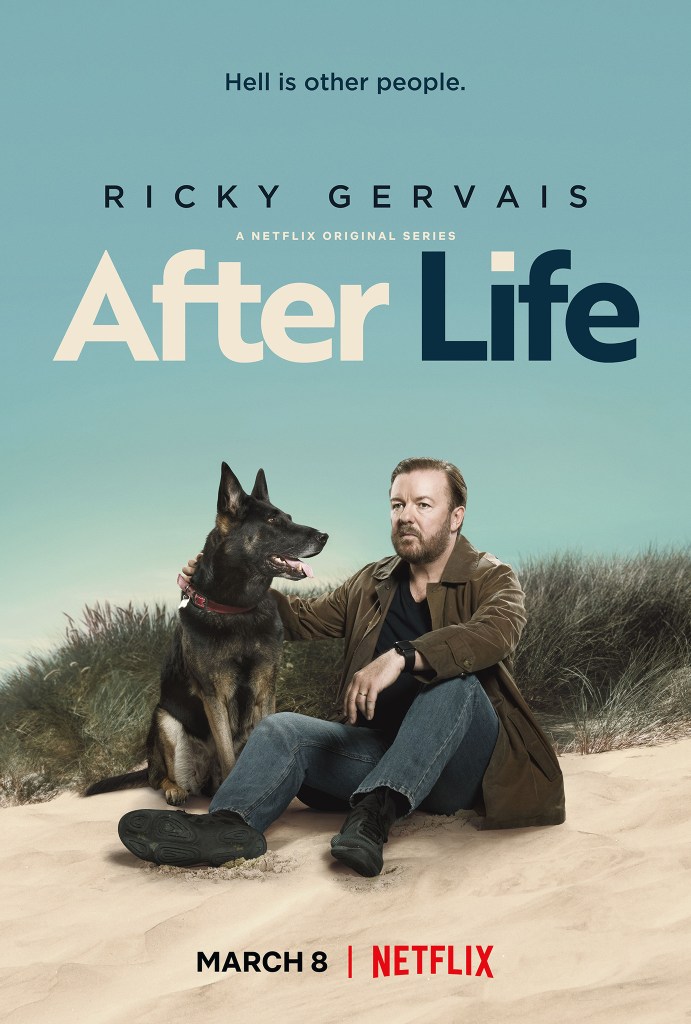
Ricky Gervais plays bereaved husband Tony Johnson in AFTER LIFE 

Tony and his wife Lisa who died 6 months ago of cancer

(Above) Tony and Anne on the bench at the graveyard where their spouses are buried.

May 8th, 2020 
Ricky Gervais 


Dear Ricky,  

This is the 21st day in a row that I have written another open letter to you to comment on some of your episodes of AFTER LIFE, and then I wanted to pass along some evidence that indicates the Bible is historically accurate.

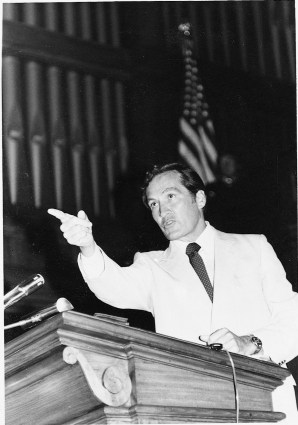
 Adrian Rogers visiting with President Reagan

Quote from Adrian Rogers (1931-2005):

Did you know that all atheists are not atheists because of intellectual problems? They’re atheists because of moral problems. You say, “But I know some brilliant people who are atheists.” Well, that may be so, but I know some brilliant people who are not. You say, “I know some foolish people who believe in God.” Well, I know everyone who doesn’t believe in God is foolish.

In other words there are brilliant and stupid people on both sides of the fence and it is not an intellectual issue but a moral one. Let’s take a look at the history of science that was handled down to us from Western Europe and take a closer examination of those great men’s religious views and if their religious views were corrosive to their scientific pursuits? This is the accusation of many modern day evolutionists.

I grew up at Bellevue Baptist Church under the leadership  of our pastor Adrian Rogers and I read many books by the Evangelical Philosopher Francis Schaeffer and have had the opportunity to contact many of the evolutionists or humanistic academics that they have mentioned in their works. Many of these scholars have taken the time to respond back to me in the last 20 years and some of the names  included are  Ernest Mayr (1904-2005), George Wald (1906-1997), Carl Sagan (1934-1996),  Robert Shapiro (1935-2011), Nicolaas Bloembergen (1920-),  Brian Charlesworth (1945-),  Francisco J. Ayala (1934-) Elliott Sober (1948-), Kevin Padian (1951-), Matt Cartmill (1943-) , Milton Fingerman (1928-), John J. Shea (1969-), , Michael A. Crawford (1938-), Paul Kurtz (1925-2012), Sol Gordon (1923-2008), Albert Ellis (1913-2007), Barbara Marie Tabler (1915-1996), Renate Vambery (1916-2005), Archie J. Bahm (1907-1996), Aron S “Gil” Martin ( 1910-1997), Matthew I. Spetter (1921-2012), H. J. Eysenck (1916-1997), Robert L. Erdmann (1929-2006), Mary Morain (1911-1999), Lloyd Morain (1917-2010),  Warren Allen Smith (1921-), Bette Chambers (1930-),  Gordon Stein (1941-1996) , Milton Friedman (1912-2006), John Hospers (1918-2011), Michael Martin (1932-).Harry Kroto (1939-), Marty E. Martin (1928-),Richard Rubenstein (1924-), James Terry McCollum (1936-), Edward O. WIlson(1929-), Lewis Wolpert (1929), Gerald Holton (1922-),  and  Ray T. Cragun (1976-).

Image result for george wald

George Wald Nobel Prize Winner from HARVARD
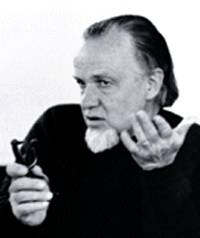
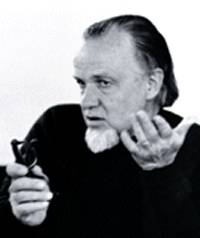
Image result for francis schaeffer

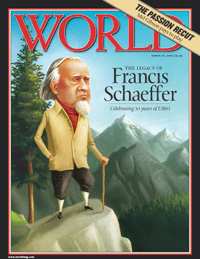
Francis Schaeffer pictured above

Below are some comments by Francis Schaeffer in 1968 on the Book of Ecclesiastes: 

Pursuing Learning

Now let us look down the details of his searching.

In Ecclesiastes 1: 13a we have the details of the universal man’s procedure. “And I set my mind to seek and explore by wisdom concerning all that has been done under heaven.”

So like any sensible man the instrument that is used is INTELLECT, and RAITIONALITY, and LOGIC. It is to be noted that even men who despise these in their theories begin and use them or they could not speak. There is no other way to begin except in the way they which man is and that is rational and intellectual with movements of that is logical within him. As a Christian I must say gently in passing that is the way God made him.

So we find first of all Solomon turned to WISDOM and logic. Wisdom is not to be confused with knowledge. A man may have great knowledge and no wisdom. Wisdom is the use of rationality and logic. A man can be very wise and have limited knowledge. Here he turns to wisdom in all that implies and the total rationality of man.

—-

Francis Schaeffer in his book “HOW SHOULD WE THEN LIVE?” stated that according to Alfred North Whitehead and J. Robert Oppenheimer, both renowned philosophers and scientists of our era (but not Christians themselves), modern science was born out of the Christian world view. Whitehead said that Christianity is the “mother of science” because of the insistence on the rationality of God. In the article, “Christianity and Technological Advance – The Astonishing Connection,” by T. V. Varughese, Ph.D, he observed:

Without question, “technology” has now become the new magic word in place of the word “science.” Since technology represents the practical applications of science, it is clearly consumer-oriented. Herein is bright economic promise to all who can provide technology.


In terms of technology, our present world can be divided into at least three groups: countries that are strong providers of technology, both original and improved; countries that are mass producers because of cheaper labor; and countries that are mostly consumers. Without a doubt, being in the position of “originating” superior technology should be a goal for any major country. The difficult question, however, is “how.”

An obvious place to start suggests itself. Why not begin with the countries that have established themselves as strong originators of technology and see if there is a common thread between them? The western nations, after the Renaissance and the Reformation of the 16th century, offer a ready example. Any book on the history of inventions, such as the Guinness Book of Answers, will reveal that the vast majority of scientific inventions have originated in Europe (including Britain) and the USA since the dawn of the 17th century. What led to the fast technological advances in the European countries and North America around that time?

The answer is that something happened which set the stage for science and technology to emerge with full force. Strange as it may seem, that event was the return to Biblical Christianity in these countries.The Epistemological Foundation of Technology

According to Alfred North Whitehead and J. Robert Oppenheimer, both renowned philosophers and scientists of our era (but not Christians themselves), modern science was born out of the Christian world view. Whitehead said that Christianity is the “mother of science” because of the insistence on the rationality of God.[1] Entomologist Stanley Beck,though not a Christian himself, acknowledged the corner-stone premises of science which the Judeo-Christian world view offers: “The first of the unprovable premises on which science has been based is the belief that the world is real and the human mind is capable of knowing its real nature. The second and best-known postulate underlying the structure of scientific knowledge is that of cause and effect. The third basic scientific premise is that nature is unified.”[2] In other words, the epistemological foundation of technology has been the Judeo-Christian world view presented in the Bible…

Perhaps the most obvious affirmation that Biblical Christianity and science are friends and not foes comes from the fact that most of the early scientists after the Renaissance were also strong believers in the Bible as the authoritative source of knowledge concerning the origin of the universe and man’s place in it.[4] The book of Genesis, the opening book of the Bible, presents the distinctly Judeo-Christian world view of a personal Creator God behind the origin and sustenance of the universe (Genesis 1:1Colossians 1:17; etc.).

Among the early scientists of note who held the Biblical creationist world view are Blaise Pascal (1623-1662), Sir Isaac Newton (1642-1727), and Samuel Morse (1791-1872) – what motivated them was a confidence in the “rationality” behind the universe and the “goodness” of the material world. The creation account in Genesis presents an intelligent, purposeful Creator, who, after completing the creation work, declared it to be very good (Genesis 1:31). That assures us that the physical universe operates under reliable laws which may be discovered by the intelligent mind and used in practical applications. The confidence in the divinely pronounced goodness of the material world removed any reluctance concerning the development of material things for the betterment of life in this world. The spiritual world and the material world can work together in harmony.

 References –

  1. Francis A. Schaeffer: How Should We Then Live (Revell, 1976), p. 132.
  2. Henry M. Morris, Biblical Basis for Modern Science (Baker, 1991), p. 30.
  3. Schaeffer, p. 131.
  4. Henry M. Morris, Men of Science, Men of God (Master Books, CA, 1988), 107 pp.


Tony Johnson with his dog Brandi seen below:

In episode 2 of the second season of AFTER LIFE is the following discussion: 
Tony: I drink in times of trouble. I can’t help it the world is filled with trouble. It is a horrible place. Everyone is screwed up in someway. Everyone has worries like money or health or famine, war. We are chimps with brains the size of planets. No wonder we get drunk and try to kill each other. It is mental.

Matt: Always good to talk.

Tony: I was just explaining my new plan is to drink myself to death till I eventually implode in on my own evolution. 
Kath: Do you believe in all that? 
Tony: What? The proven fact that there is evolution? Yeah. 
—-

——

Atheist Biologist Steve Jones

Quote:In all frankness I do think religion and science are in many ways antithetical. I know there’s endless argument about this particularly by the many scientists who are religious. But the problem is that religion is something that depends on faith and once a scientist starts depending on faith, he or she is finished as a scientist. You cannot believe that something is true in science without evidence. And you cannot study mystery which is of its very nature mysterious and that’s what religion is all about. It’s filled with mysteries of its own making, designed to be insoluble. The nature of the trinity. The indivisibility of the three parts of god. The father and the son, are they the same thing or are they different? There’s no answer to that question you can debate it endlessly, humankind spend a 1000 wasted years doing that. Science asks smaller, simpler questions and most of all questions that can be answered. So I think it’s actually antithetical to religion.”

R. C. SPROUL
Photo of R.C. Sproul

R.C. Sproul


Self Creation and Chance

16th, defending faith, October, 2009

Self Creation and the concept of ‘Chance’

Last time we looked at the concept of Self Creation and it’s various varieties; self generation, gradual self generation and multiple universes coming into being and so on. Lastly, we concluded within contemporary language that the counter to theism is brought on by some type of appeal to what we call “chance creation.” This is what we are going to look at in this session. Sproul has written a book on this subject. Where it covers an analysis and the role of ‘chance in modern cosmology and cosmogony’. He wrote it because as he explored different offerings in the field of science which were trying to work out some of the most difficult concepts for the scientist to deal with and how many scientists have assigned worth to this exploration.

Sproul’s beef or dissent was not with their experimentation but with there articulation of the results of their experiments and the inferences they were drawing from the data that they had worked with. Sproul says he doesn’t have to be a physicist to analyze the content — the significance — the coherence of statements. Yes, propositions which philosophers major in and can work through very swiftly are not just the scientists own tools of reasoning. Sproul can give a logical analysis of the truth values of propositions that scientists articulate as to why things function. So, when physicists characterize and articulate their theories in ways which, ultimately, are nonsense, then it is time for the philosopher to blow the whistle, step up to the plate, and say, ‘we don’t understand what you are trying to say here’ because what you are saying is absurd and unintelligible. And please go back to the drawing board and try to rephrase and develop your statements; or simply say, ‘you don’t what you are talking about.’ For the way you are talking about it demonstrates that you don’t know how to talk about it. It reveals that you are not communicating intelligible speech as it refers to your conclusions on you reasoning.

In Sproul’s book, in the preface, he refers to Arthur Kessler which said, “as long as chance rules, God is an anachronism.” Sproul picked up on that for it’s insight. And Sproul would like to go farther. It is not that chance has to rule for this to be true, Sproul thinks that all that has to be demonstrated is that “chance exists” in order to make God into an anachronism. That there is really such a thing as chance out there in reality which is involved with the creation of things.

So, if chance has any authority it deposes God altogether. This comes by the merit that this something called chance – exists. The mere existence of chance is enough to rip God from his cosmic throne. Chance doesn’t need to rule – it doesn’t need to be sovereign – but if it, ‘chance‘, exists in any form, even a most humble servant framework, it leaves God not only out of date, but, out of a job.

Leonard Mlodinow

Quote from Leonard Mlodinow taken from the video found above:

I am not one who believes in the Bible. I find it very hard to see how people could believe in the Bible, but on the other hand I am somewhat religious. I go to synagogue sometimes. I am more of what you would call an agnostic, but I see science as being separate and religious belief as being separate, and one doesn’t affect the other.

Sproul and the Harvard Professor

The basic thesis in his book, in the final analysis according to Sproul, that there is no such thing as chance. The greatest myth in modern mythology is the myth of chance. That is what we are going to address here. What provoked this work of the book in the first place was a discussion Sproul had with a professor at the graduate school of Harvard in the Philosophy of Science. They were discussing the origin of the universe. This professor denies a creation moment. So Sproul asks where did it come from then — this first Singularity event. The Harvard guy said it came to BE as result of chance. He said the universe was created by chance. So Sproul asks him again, so, the universe was created by chance? He said yes. So Sproul took out of his pocket a quarter and flipped it up in the air – caught it and turned it over and it turned up ‘heads.’ He asked the Harvard professor, what happened? He said it is going to come up either heads or tails 100% of the time. This procedure is going to be either 50% heads or 50% tails. Sproul says if he[the Harvard professor] put it to the test and designed a system that would spin and toss the coin the same way each time, within a vacuum and all other parameters and forces on that coin were constant and repeated in such the same manner, what would happen? Sproul asked him if the professor could bring up his variable percentage of it coming up ‘heads’? And the professor said, of course! This would increase the likelihood. Which is true for what Sproul said initially, they both understood this, that the causal agencies that are involved in coming out with this effect of whether this coin comes up either heads or tails has nothing to do with some mythological power called chance. It has to do with, in this causal experiment, of how we tossed the coin. All the factors that one would establish so it was identical each time you tossed the coin. All variables of physical space and motion are consistent and the outcome is always the same. And with all that for the certainty of one result; we can nevertheless say that it is always 50-50. 

Serindipity as chance

There is nothing at all wrong with the word chance in a particular setting. It is a perfectly meaningful word when we use it to describe mathematical possibilities.The word becomes a synonym for the odds of such and such. We also use it in a meaningful way when we speak of ‘chance encounters.’
Sproul describes a train trip where he got on a train and went to various cities on his trip. He had a lay over and there was traffic going the opposite direction and he encountered a friend he hadn’t seen in ten years. They conversed and went their ways. Ten hours later when the train came for Sproul the same teeming masses of people were in this Chicago train station and he sees the same friend he saw ten hours ago. What are the odds of that? It is called a serendipitous encounterA chance happeningBut chance doesn’t explain why it happened. Because chance didn’t cause it. The reason that we happened to meet each other was because we happened to be at the same place at the same time; for a host of different reasons. All these things converging in time and space.

Again, chance is a perfectly legitimate word when we use it in the particular popular way to describe these kinds of unintentional meetings or mathematical probabilities we find ourselves in. But what has happened in modern jargon is the word ‘chance’ has subtly been elevated to something far more than just mathematical odds or probabilities. Where actual causal POWER is attributed to chance. So when he talked to his professor friend they agreed on the incapacity of chance to have Being and gave no chance for ‘chance’ to cause the coin to flip a certain way. Based on this simple illustration of this coin toss this Harvard man literally banged his palm into his head and said, ‘I guess I shouldn’t have said that the universe was created by chance.’ 

—-

In the series AFTERLIFE you can obviously see how well read you are and like many atheists it is obvious that Richard Dawkins is one of your heroes.

I am not an atheist but I have read about a dozen of Dawkins books also. Dawkins’ favorite book in the Bible is Ecclesiastes because of the poetry found in the King James Version and not the spiritual lessons.
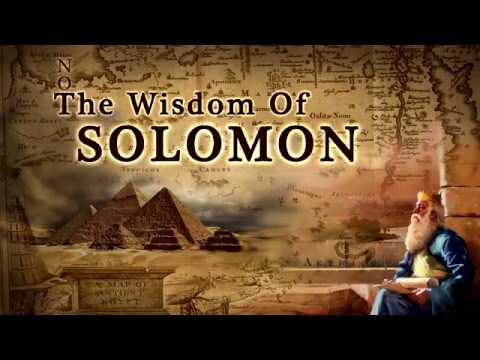
Image result for wisdom of solomon

Blaise Pascal was one of the most brilliant scientists of all time and a believer

Image result for solomon ecclesiastes vanity of vanity education

I have also  corresponded with many intellectuals such as you who were committed humanists. For example,    (Paul Kurtz (1925-2012), Sol Gordon (1923-2008), Albert Ellis (1913-2007), Barbara Marie Tabler (1915-1996), Renate Vambery (1916-2005), Archie J. Bahm (1907-1996), Aron S “Gil” Martin ( 1910-1997), Matthew I. Spetter (1921-2012), H. J. Eysenck (1916-1997), Robert L. Erdmann (1929-2006), Mary Morain (1911-1999), Lloyd Morain (1917-2010),  Warren Allen Smith (1921-), Bette Chambers (1930-), Daniel Dennett (1942- ), and   Gordon Stein (1941-1996).

I know your secular philosophy is based on your scientific understanding of the world. Mine is too. That is why I have corresponded with many scientists too. For example, Carl Sagan (1934-1996),  Ernest Mayr (1904-2005), George Wald (1906-1997),Robert Shapiro (1935-2011), Nicolaas Bloembergen (1920-),  Brian Charlesworth (1945-),  Francisco J. Ayala (1934-) Elliott Sober (1948-), Kevin Padian (1951-), Matt Cartmill (1943-) , Milton Fingerman (1928-), John J. Shea (1969-), and  Michael A. Crawford (1938-).

Today I want to ask you to match your wit with King Solomon’s words from 3000 years ago.


I want to start looking at the 6 L words that Solomonpursued UNDER THE SUN to try to get meaning and satisfaction in this life without God in the picture in the Book of Ecclesiastes. Today’s word  is LEARNING. Can one find a lasting meaning to life  in the area of education? Solomon had a lot to say about that in the Book of Ecclesiastes.

WHAT DOES SOLOMON HAVE TO SAY ABOUT PURSUING LEARNING in the Book of Ecclesiastes?

Francis Schaeffer noted that Solomon took a look at the meaning of life on the basis of human life standing alone between birth and death “under the sun.” This phrase UNDER THE SUN appears over and over in Ecclesiastes. The Christian Scholar Ravi Zacharias noted, “The key to understanding the Book of Ecclesiastes is the term UNDER THE SUN — What that literally means is you lock God out of a closed system and you are left with only this world of Time plus Chance plus matter.” 

As you know Solomon was searching for  for meaning in life in what I call the 6 big L words in the Book of Ecclesiastes. He looked into LEARNING (1:12-18, 2:12-17), laughter, ladies, luxuries, and liquor (2:1-2, 8, 10, 11), and labor (2:4-6, 18-20).

Here is his final conclusion concerning LEARNING:

ECCLESIASTES 1:12-18, 2:12-17 LEARNING

12 I the Preacher have been king over Israel in Jerusalem.13And I applied my heart to seek and to search out by wisdom all that is done under heaven. It is an unhappy business that God has given to the children of man to be busy with. 14 I have seen everything that is done UNDER THE SUN, and behold, all is vanity and a striving after wind.

15 What is crooked cannot be made straight,
and what is lacking cannot be counted.

16 I said in my heart, “I have acquired great wisdom, surpassing all who were over Jerusalem before me, and my heart has had great experience of wisdom and knowledge.17 And I applied my heart to know wisdom and to know madness and folly. I perceived that this also is but a striving after wind.

18For in much wisdom is much vexation,
and he who increases knowledge increases sorrow.

12So I turned to consider wisdom and madness and folly. For what can the man do who comes after the king? Only what has already been done. 13 Then I saw that there is more gain in wisdom than in folly, as there is more gain in light than in darkness. 14 The wise person has his eyes in his head, but the fool walks in darkness. And yet I perceived that the same event happens to all of them.15 Then I said in my heart, “What happens to the fool will happen to me also. Why then have I been so very wise?” And I said in my heart that this also is vanity. 16 For of the wise as of the fool there is no enduring remembrance, seeing that in the days to come all will have been long forgotten. How the wise dies just like the fool!1So I hated life, because what is done UNDER THE SUN was grievous to me, for all is vanity and a striving after wind.

 Ecclesiastes was written to those who wanted to examine life UNDER THE SUN without God in the picture and Solomon’s conclusion in the final chapter was found in Ecclesiastes 12 when he looked at life ABOVE THE SUN:

13 The end of the matter; all has been heard. Fear God and keep his commandments, for this is the whole duty of man. 14 For God will bring every deed into judgment, with every secret thing, whether good or evil.

In an earlier letter to you I quoted Psalms chapter 22. Why not take a few minutes and just read the short chapter of Psalms 22 that was written hundreds of years before the Romans even invented the practice of Crucifixion. 1000 years BC the Jews had the practice of stoning people but we read in this chapter a graphic description of Christ dying on the cross. How do you explain that without looking ABOVE THE SUN to God.


Let me quote from a July 13, 2013 article by Jonas E. Alexis entitled God and the Intellectuals (Part II)

Formerly an atheist, Alister McGrath didn’t come to believe in God until he went to Oxford and began to rethink things he had taken for granted. He soon discovered that neither the intellectual foundation nor the existential description for atheism could stand up to reality.[68]

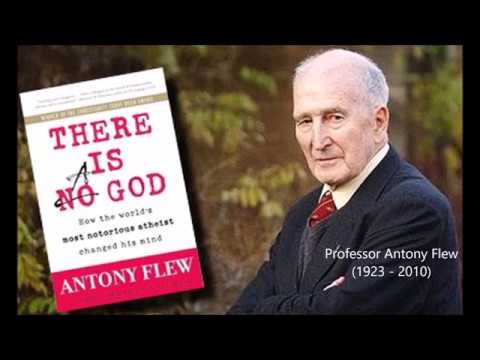
Antony Flew, one of the most trenchant and articulate atheists in the twentieth century, renounced his atheistic beliefs late in life.[69] Lee Strobel was a staunch atheist throughout his time at Yale, until he began to reexamine the claims of Christianity.

Francis Collins, former head of the Genome Project, did not become a Christian until he started practicing medicine.[70]Cosmologist Frank Tipler started his career as “a convinced atheist,” but changed his views when he seriously studied Christianity.[71]

And the list of individuals throughout history who believed in God is long. Let’s just name a few here:

Antiseptic Surgery, Joseph Lister (1827-1912)

Bacteriology Louis, Pasteur (1822-1895)

Calculus, Isaac Newton (1642-1727)

Celestial Mechanics, Johann Kepler (1571-1630)

Chemistry, Robert Boyle (1627-1691)

Comparative Anatomy, Georges Cuvier (1769-1832)

Computer Science, Charles Babbage (1792-1871)

Dimensional Analysis, Lord Rayleigh (1842-1919)

Electrodynamics, James Clerk Maxwell (1831-1879)

Electromagnetics, Michael Faraday (1791-1867)

Electronics, Ambrose Fleming (1849-1945)

Entomology of Living Insects, Henri Fabre (1823-1915)

Field Theory, Michael Faraday (1791-1867)

Fluid Mechanics, George Stokes (1819-1903)

Galactic Astronomy, William Herschel (1738-1822)

Gas Dynamics, Robert Boyle (1627-1691)

Genetics, Gregor Mendel (1822-1884)

Glacial Geology, Louis Agassiz (1807-1873)

Gynecology, James Simpson (1811-1870)

Hydraulics, Leonardo de Vinci (1452-1519)

Hydrography, Mattew Maury (1806-1873)

Hydrostatics, Blaise Pascal (1623-1662)

Ichthyology, Louis Agassiz (1807-1873)

Isotopic Chemistry, William Ramsay (1851-1916)

Model Analysis, Lord Rayleigh (1842-1919)

Natural History, John Ray (1627-1705)

Non-Euclidean, Geometry Bernhard Riemann (1826-1866)

Oceanography, Matthew Maury (1806-1873)

Optical Mineralogy, David Brewster (1781-1868)

Paleontology, John Woodward (1665-1728)

Pathology, Rudolph Virchow (1821-1902)

Physical Astronomy, Johann Kepler (1571-1630)

Reversible Thermodynamics, James Joule (1818-1889)

Statistical Thermodynamics, James Clerk Maxwell (1831-1879)

Stratigraphy, Nicholas Steno (1631-1868)

Systematic Biology, Carolus Linnaeus (1707-1778)

Thermodynamics, Lord Kelvin (1824-1907)

Thermokinetics, Humphrey Davy (1778-1829)

Vertebrate Paleontology, Georges Cuvier (1769-1832)

Absolute Temperature, Scale Lord Kelvin (1824-1907)

Actuarial Tables, Charles Babbage (1792-1871)

Barometer, Blaise Pascal (1623-1662)

Biogenesis, Law Louis Pasteur (1822-1895)

Calculating Machine, Charles Babbage (1792-1871)

Chloroform, James Simpson (1811-1870)

Classification System, Carolus Linnaeus (1707-1778)

Double Stars, William Herschel (1738-1822)

Electric Generator, Michael Faraday (1791-1867)

Electric Motor, Joseph Henry (1797-1878)

Ephemeris Tables, Johann Kepler (1571-1630)

Galvanometer, Joseph Henry (1797-1878)

Global Star Catalog, John Herschel (1792-1871)

Kaleidoscope David Brewster (1781-1868)

Pasteurization, Louis Pasteur (1822-1895)

Reflecting Telescope, Isaac Newton (1642-1727)

Self-Induction, Joseph Henry (1797-1878)

Telegraph, Samuel F. B. Morse (1791-1872)

Thermionic Valve, Ambrose Fleming (1849-1945)

Mathematical Analysis, Leonhard Euler (1707-1883)

Number Theory, Johann Carl Friedrich Gauss (1777-1855)

Botanist and Inventor, George Washington Carver (1864-1943)

Mathematician and Astronomer, Benjamin Banneker (1731-1806)

And who can talk about the world of literature and classical music without William Shakespeare, Charles Dickens, Leo Tolstoy, Fyodor Dostoyevsky, Alexander Solzhenitsyn, Johann Sebastian Bach, George Frideric Handel, Franz Joseph Haydn, Franz Liszt, among others?

Are all these people deluded? And if so, what is so powerful about Christianity

that it can deceive so many brilliant people throughout the centuries? As Francis Collins pointed out,

“If faith was a psychological crutch, it must be a powerful one.”[72]

This psychological crutch has also kept noted figures such as John Polkinghorne into intellectual bondage for far too long.[73] Polkinghorne, who played an instrumental role in the discovery of quark and other theoretical particles, did not become an idiot by accepting Christianity.[74]

—-


The answer to find meaning in life is found in putting your faith and trust in Jesus Christ. The Bible is true from cover to cover and can be trusted.

Thank you again for your time and I know how busy you are.

Sincerely,

Everette Hatcher, everettehatcher@gmail.comhttp://www.thedailyhatch.org, cell ph 501-920-5733, 13900 Cottontail Lane, Alexander, AR 72002

PS: What is the meaning of life? Find it in the end of the open letter I wrote to you on April 23, 2020. 

Below is the workforce of THE TAMBURY GAZETTE 

Seen below is the third episode of AFTERLIFE (season 1) when Matt takes Tony to a comedy club with front row seats to cheer him up but it turns into disaster!!!

——

—-

Part 1 “Why have integrity in Godless Darwinian Universe where Might makes Right?”

Part 2 “My April 14, 2016 Letter to Ricky mentioned Book of Ecclesiastes and the Meaninglessness of Life”

Part 3 Letter about Brandon Burlsworth concerning suffering and pain and evil in the world.  “Why didn’t Jesus save her [from cancer]?” (Tony’s 10 year old nephew George in episode 2)

Part 4 Letter on Solomon on Death Tony in episode one, “It should be everyone’s moral duty to kill themselves.”

Part 5 Letter on subject of Learning in Ecclesiastes “I don’t read books of fiction but mainly science and philosophy”

Part 6 Letter on Luxuries in Ecclesiastes Part 6, The Music of AFTERLIFE (Part A)

Part 7 Letter on Labor in Ecclesiastes My Letter to Ricky on Easter in 2017 concerning Book of Ecclesiastes and the legacy of a person’s life work

Part 8 Letter on Liquor in Ecclesiastes Tony’s late wife Lisa told him, “Don’t get drunk all the time alright? It will only make you feel worse in the log run!”

Part 9 Letter on Laughter in Ecclesiastes , I said of laughter, “It is foolishness;” and of mirth, “What does it accomplish?” Ecclesiastes 2:2

Part 10 Final letter to Ricky on Ladies in Ecclesiastes “I gathered a chorus of singers to entertain me with song, and—most exquisite of all pleasures— voluptuous maidens for my bed…behold, all was vanity and a striving after wind, and there was nothing to be gained under the sun” Ecclesiastes 2:8-11.

Part 11 Letter about Daniel Stanhope and optimistic humanism  “If man has been kicked up out of that which is only impersonal by chance , then those things that make him man-hope of purpose and significance, love, motions of morality and rationality, beauty and verbal communication-are ultimately unfulfillable and thus meaningless.” (Francis Schaeffer)

Part 12 Letter on how pursuit of God is only way to get Satisfaction Dan Jarrell “[In Ecclesiastes] if one seeks satisfaction they will never find it. In fact, every pleasure will be fleeting and can not be sustained, BUT IF ONE SEEKS GOD THEN ONE FINDS SATISFACTION”

Part 13 Letter to Stephen Hawking on Solomon realizing he will die just as a dog will die “For men and animals both breathe the same air, and both die. So mankind has no real advantage over the beasts; what an absurdity!” Ecclesiastes

Part 14 Letter to Stephen Hawking on 3 conclusions of humanism and Bertrand Russell destruction of optimistic humanism. “That Man is the product of causes which had no prevision of the end they were achieving; that his origin, his growth, his hopes and fears, his loves and his beliefs, are but the outcome of accidental collocations of atoms—no philosophy which rejects them can hope to stand. Only within the scaffolding of these truths, only on the firm foundation of unyielding despair, can the soul’s habitation henceforth be safely built.”(Bertrand Russell, Free Man’s Worship)

Part 15 Letter to Stephen Hawking on Leonardo da Vinci and Solomon and Meaningless of life “I hate life. As far as I can see, what happens on earth is a bad business. It’s smoke—and spitting into the wind” Ecclesiastes Book of Ecclesiastes Part 15 “I hate life. As far as I can see, what happens on earth is a bad business. It’s smoke—and spitting into the wind” Ecclesiastes 2:17

Part 16 Letter to Stephen Hawking on Solomon’s longing for death but still fear of death and 5 conclusions of humanism on life UNDER THE SUN. Francis Schaeffer “Life is just a series of continual and unending cycles and man is stuck in the middle of the cycle. Youth, old age, Death. Does Solomon at this point embrace nihilism? Yes!!! He exclaims that the hates life (Ecclesiastes 2:17), he longs for death (4:2-3) Yet he stills has a fear of death (2:14-16)”

Mandeep Dhillon as Sandy on her first assignment in ‘After Life’. (Twitter)

A still from ‘After Life’ that captures the vibe of the Tambury Gazette. (Twitter)

Michael Scott of THE OFFICE (USA) with Ricky Gervais 

After Life on Netflix

After Life on Netflix stars Ricky Gervais as a bereaved husband (Image: Netflix)

—-

Psychiatrist played by Paul Kaye seen below.

The sandy beach walk

Tony Johnson with his dog Brandi seen below:

—-

Related posts:

Taking on Ark Times Bloggers on various issues Part I “Old Testament Bible Prophecy” includes the film TRUTH AND HISTORY and article ” Jane Roe became pro-life”

April 12, 2013 – 5:45 am

I have gone back and forth and back and forth with many liberals on the Arkansas Times Blog on many issues such as abortion, human rights, welfare, poverty, gun control  and issues dealing with popular culture. Here is another exchange I had with them a while back. My username at the Ark Times Blog is Saline […]By Everette Hatcher III | Posted in Biblical ArchaeologyFrancis SchaefferProlife | Edit|Comments (0)

John MacArthur on fulfilled prophecy from the Bible Part 2

August 8, 2013 – 1:28 am

I have posted many of the sermons by John MacArthur. He is a great bible teacher and this sermon below is another great message. His series on the Book of Proverbs was outstanding too.  I also have posted several of the visits MacArthur made to Larry King’s Show. One of two most popular posts I […]By Everette Hatcher III | Posted in Adrian RogersCurrent Events | Edit|Comments (0)

John MacArthur on fulfilled prophecy from the Bible Part 1

August 6, 2013 – 1:24 am

I have posted many of the sermons by John MacArthur. He is a great bible teacher and this sermon below is another great message. His series on the Book of Proverbs was outstanding too.  I also have posted several of the visits MacArthur made to Larry King’s Show. One of two most popular posts I […]By Everette Hatcher III | Posted in Adrian RogersCurrent Events |Tagged Bible Prophecyjohn macarthur | Edit|Comments (0)

John MacArthur: Fulfilled prophecy in the Bible? (Ezekiel 26-28 and the story of Tyre, video clips)

April 5, 2012 – 10:39 am

Prophecy–The Biblical Prophesy About Tyre.mp4 Uploaded by TruthIsLife7 on Dec 5, 2010 A short summary of the prophecy about Tyre and it’s precise fulfillment. Go to this link and watch the whole series for the amazing fulfillment from secular sources. http://www.youtube.com/watch?v=qvt4mDZUefo________________ John MacArthur on the amazing fulfilled prophecy on Tyre and how it was fulfilled […]By Everette Hatcher III | Posted in Biblical Archaeology | Edit|Comments (1)

John MacArthur on the Bible and Science (Part 2)

August 1, 2013 – 12:10 am

John MacArthur on the Bible and Science (Part 2) I have posted many of the sermons by John MacArthur. He is a great bible teacher and this sermon below is another great message. His series on the Book of Proverbs was outstanding too.  I also have posted several of the visits MacArthur made to Larry […]By Everette Hatcher III | Posted in Current Events | Edit|Comments (0)

John MacArthur on the Bible and Science (Part 1)

July 30, 2013 – 1:32 am

John MacArthur on the Bible and Science (Part 1) I have posted many of the sermons by John MacArthur. He is a great bible teacher and this sermon below is another great message. His series on the Book of Proverbs was outstanding too.  I also have posted several of the visits MacArthur made to Larry […]By Everette Hatcher III | Posted in Current Events | Edit|Comments (0)

Adrian Rogers: “Why I believe the Bible is true”

July 9, 2013 – 8:38 am

Adrian Rogers – How you can be certain the Bible is the word of God Great article by Adrian Rogers. What evidence is there that the Bible is in fact God’s Word? I want to give you five reasons to affirm the Bible is the Word of God. First, I believe the Bible is the […]By Everette Hatcher III | Posted in Adrian RogersBiblical Archaeology | Edit|Comments (0)

The Old Testament is Filled with Fulfilled Prophecy by Jim Wallace

June 24, 2013 – 9:47 am

Is there any evidence the Bible is true? Articles By PleaseConvinceMe Apologetics Radio The Old Testament is Filled with Fulfilled Prophecy Jim Wallace A Simple Litmus Test There are many ways to verify the reliability of scripture from both internal evidences of transmission and agreement, to external confirmation through archeology and science. But perhaps the […]By Everette Hatcher III | Posted in Biblical ArchaeologyCurrent Events | Edit|Comments (0)

Taking on Ark Times Bloggers on various issues Part M “Old Testament prophecy fulfilled?”Part 3(includes film DEATH BY SOMEONE’S CHOICE)

April 19, 2013 – 1:52 am

  I have gone back and forth and back and forth with many liberals on the Arkansas Times Blog on many issues such as abortion, human rights, welfare, poverty, gun control  and issues dealing with popular culture. Here is another exchange I had with them a while back. My username at the Ark Times Blog is […]By Everette Hatcher III | Posted in Francis SchaefferProlife | Edit|Comments (0)

Evidence for the Bible

March 27, 2013 – 9:43 pm

Here is some very convincing evidence that points to the view that the Bible is historically accurate. Archaeological and External Evidence for the Bible Archeology consistently confirms the Bible! Archaeology and the Old Testament Ebla tablets—discovered in 1970s in Northern Syria. Documents written on clay tablets from around 2300 B.C. demonstrate that personal and place […]By Everette Hatcher III | Posted in Biblical Archaeology | E

Charles Darwin Autobiography

The basis for human dignity by Francis Schaeffer and C. Everett Koop

Dust in the Wind by KANSAS

—-

Kerry Livgren and Dave Hope of KANSAS on 700 Club Part 1

——-

Kerry Livgren and Dave Hope of KANSAS on 700 Club Part 2


—-

—-

—-

Open Letter #20 to Ricky Gervais on comparison of the Tony of AFTER LIFE to the Solomon of ECCLESIASTES, “I said of laughter, “It is foolishness;” and of mirth, “What does it accomplish?” (2:2). Then Solomon asserted the nihilistic statement in Ecclesiastes 2:17: “So I hated life, because the work that is done under the sun was grievous to me. All of it is meaningless, a chasing after the wind.”

—-

After Life #1 Trailer

—-

May 7th, 2020 
Ricky Gervais 


Dear Ricky,  

This is the 20th day in a row that I have written another open letter to you to comment on some of your episodes of AFTER LIFE, and then I wanted to pass along some evidence that indicates the Bible is historically accurate.

On the March 31, 2020 Twitter Live broadcast you said that you enjoyed watching Benny Hill with his songs and bits. I did too and I wanted to share a funny story that happened to me.

One summer after my freshman year at college, I was in our home with my sister and one of my former coaches and teachers from Evangelical Christian High School and a Benny Hill  commercial came on. Then my former teacher said that Benny Hill’s comedy was filled with sexual debauchery and he is depraved morally. Then my sister said, “Benny Hill is Everette’s favorite comedian by far!!!”

In the third episode of AFTERLIFE Matt takes Tony to a comedy club with front row seats and this is what happens:

The comedian is getting huge laughs but Tony never laughs.

Comedian: You are a wonderful crowd. I am glad you are a wonderful crowd. I have had some bad news this week. Friend of mine actually committed suicide last week. He went upstairs and swallowed everything in the bathroom cabinet and choked on a tampon. (Crowd laughs heartily.) This guy in front row absolutely hated that joke. Cheer up mate! What is your name and what is your story?

Tony: My name is Tony. My wife died early this year with breast cancer and it broke me. Not a day goes by that I didn’t think of killing myself. I just don’t see any point in living.

Comedian: (Long pause of silence.) Umbrellas are weird aren’t they?…

After Life on Netflix

After Life on Netflix stars you (Ricky Gervais) as a bereaved husband (Image: Netflix)Probing the area of LAUGHTER was one of Solomon’s first places to start. In Ecclesiastes 2:2 he starts this quest but he concludes it is not productive to be laughing the whole time and not considering the serious issues of life. “I said of laughter, “It is foolishness;” and of mirth, “What does it accomplish?” (2:2).   Then Solomon  asserted the nihilistic statement in Ecclesiastes 2:17: “So I hated life, because the work that is done under the sun was grievous to me. All of it is meaningless, a chasing after the wind.”

Keith Krell in his article, 3. Trivial Pursuits (Ecclesiastes 1:12-2:26), notes:

What would it take to make you happy? What if you had the wealth of Bill Gates or Donald Trump? Would this make you happy? What if you had the success of Oprah or Martha Stewart? Do you think you could be happy? What if you had the brains of Carl Sagan or Stephen Hawking? Do you think you could be happy? Let me guess. Your answer is, “I don’t know, but I’d sure like to give it a try.”

A few people have been able to possess wealth, success, and intelligence just as I described. Solomon, the third king of Israel, was one of them. In some ways he had everything. He had a thousand wives and concubines, enormous wealth, international respect, and unparalleled wisdom. What he didn’t always have, however, was a reason for living. He didn’t always have happiness. He fits the pattern of the highly gifted, extremely ambitious person who climbs the ladder of success—only to contemplate jumping off once he’s reached the top.39

In the first eleven verses of Ecclesiastes chapter one, Solomon examined three broad categories in his search for the key to life: human history, physical nature, and human nature. Now in 1:12-2:26, he narrows his search to his own personal experience.40 In a sense he takes us on his own spiritual sojourn as he searches for satisfaction in life. In the memoirs that follow Solomon informs us that he sought satisfaction in four broad categories, but wound up empty-handed.

  • Humor (2:2). Solomon writes, “I said to myself, ‘Come now, I will test you with pleasure. So enjoy yourself.’ And behold, it too was futility. I said of laughter, ‘It is madness,’ and of pleasure, ‘What does it accomplish?’”57 Solomon mocks “laughter” as “madness.” I’m not surprised he labeled it “madness.” Do you really think the leading comedians of our day are sincerely satisfied with life? Has humor given them an inside track on human happiness? Hardly.58It is easy to seek to lose ourselves in comedy and entertainment whether it is in a theater, in front of our TV, or on-line. Although it can seem like a great escape, it leaves us empty in the end.

_____Francis Schaeffer quoted Woody Allen in his book WHATEVER HAPPENED TO THE HUMAN RACE? (co-authored by Dr. C. Everett Koop):One of the most striking developments in the last half-century is the growth of a profound pessimism among both the well-educated and less-educated people. The thinkers in our society have been admitting for a long time that they have no final answers at all.
Take Woody Allen, for example. Most people know his as a comedian, but he has thought through where mankind stands after the “religious answers” have been abandoned. In an article in Esquire (May 1977), he says that man is left with:
… alienation, loneliness [and] emptiness verging on madness…. The fundamental thing behind all motivation and all activity is the constant struggle against annihilation and against death. It’s absolutely stupefying in its terror, and it renders anyone’s accomplishments meaningless.
Allen sums up his view in his film Annie Hall with these words: “Life is divided into the horrible and the miserable.”
Many would like to dismiss this sort of statement as coming from one who is merely a pessimist by temperament, one who sees life without the benefit of a sense of humorWoody Allen does not allow us that luxury. He speaks as a human being who has simply looked life in the face and has the courage to say what he sees. If there is no personal God, nothing beyond what our eyes can see and our hands can touch, then Woody Allen is right: life is both meaningless and terrifying.__Solomon’s experiment was a search for meaning to life “under the sun.” Then in last few words in the Book of Ecclesiastes he looks above the sun and brings God back into the picture: “The conclusion, when all has been heard, is: Fear God and keep His commandments, because this applies to every person. For God will bring every act to judgment, everything which is hidden, whether it is good or evil.”_____

In 1979 I went  on a mission trip to Toronto and  then to Europe  with my good friend David Rogers. We were involved with the group  Operation Mobilization (OM). After the OM Mission Conference in Belgium,  David went to Austria and I went to England. In Manchester, England our group went to the homes of Muslims and Hindus and shared  the gospel.

Fast forward several years later, I  got involved in my family business, but David continued in  missions and  moved to Spain.


Brian Greene comments:

Quote from interview with Helen Lewis of New Statesman Magazine

My view is that science only has something to say about a very particular notion of God, which goes by the name of “God of the gaps”: if you are trying to understand the world around you and science has not yet given an explanation for some phenomenon, you could step back and say, “Oh, that is God.” Then, when science does explain that phenomena — as it eventually does — God gets squeezed out because he is no longer needed to explain that phenomena.

But that is a very particular and simplistic notion of God. No matter what physics does, you can always say there is God behind it: God set up the rules the physics, God set the environment within which those rules play themselves out. Do I feel that we need that? No. Do I subscribe to it? I do not. But does physics rule that picture out? No it doesn’t.

I think the appropriate response for a physicist to is to say: “I do not find the concept of God very interesting because I cannot test it — I cannot rule it out in the traditional ways.” And what excites me and makes me want to go to my office is to work on things that I can test. For me, God is not that interesting but I do not think God is ruled out. That is a statement that’s unjustifiable.

Now the illustration from the sermon WHO IS JESUS? by Adrian Rogers:

The other day we called our son David in Madrid, Spain.Momma Bear is burning up our telephone and our bill is going to be big, talking to David and Kelly and little Jonathan. It is an amazing thing that in Memphis,  Tennessee when she picks up a phone  she eliminates everyone that doesn’t have a phone. And then when she dials the first digit that deals with the country Spain she eliminates all other countries. And then when she dials a couple more digits she eliminates all the other cities in Spain except Madrid. And then when she dials a couple more digits she eliminates a lot of people in a particular city in Spain. And then when she dials that last digit it eliminates every home except the very last home which belongs to our son David. 

That is amazing that there are billions of people in the world and  with a phone you can start closing the focus. My friend that is what the Old Testament does.

In Genesis 3, we read about the One who will bruise the head of the serpent. In Genesis 12, He is going to come from the seed of Abraham. In Genesis 22, we read about the sacrifice of Isaac on the very mountain where Jesus was later crucified! The entire book of Leviticus is filled with pictures of blood-atoning sacrifices for sin. You’ll read about the prophetic crucifixion of Jesus in Psalm 22. In Micah 5:2, it is told clearly that Jesus will be born in Bethlehem. There is only one person on the end of the line and his name is Jesus. 

—-


The answer to find meaning in life is found in putting your faith and trust in Jesus Christ. The Bible is true from cover to cover and can be trusted.

Thank you again for your time and I know how busy you are.

Sincerely,

Everette Hatcher, everettehatcher@gmail.comhttp://www.thedailyhatch.org, cell ph 501-920-5733, 13900 Cottontail Lane, Alexander, AR 72002

PS: What is the meaning of life? Find it in the end of the open letter I wrote to you on April 23, 2020. 

Below is the workforce of THE TAMBURY GAZETTE 

Seen below is the third episode of AFTERLIFE (season 1) when Matt takes Tony to a comedy club with front row seats to cheer him up but it turns into disaster!!!

——

—-

Part 1 “Why have integrity in Godless Darwinian Universe where Might makes Right?”

Part 2 “My April 14, 2016 Letter to Ricky mentioned Book of Ecclesiastes and the Meaninglessness of Life”

Part 3 Letter about Brandon Burlsworth concerning suffering and pain and evil in the world.  “Why didn’t Jesus save her [from cancer]?” (Tony’s 10 year old nephew George in episode 2)

Part 4 Letter on Solomon on Death Tony in episode one, “It should be everyone’s moral duty to kill themselves.”

Part 5 Letter on subject of Learning in Ecclesiastes “I don’t read books of fiction but mainly science and philosophy”

Part 6 Letter on Luxuries in Ecclesiastes Part 6, The Music of AFTERLIFE (Part A)

Part 7 Letter on Labor in Ecclesiastes My Letter to Ricky on Easter in 2017 concerning Book of Ecclesiastes and the legacy of a person’s life work

Part 8 Letter on Liquor in Ecclesiastes Tony’s late wife Lisa told him, “Don’t get drunk all the time alright? It will only make you feel worse in the log run!”

Part 9 Letter on Laughter in Ecclesiastes , I said of laughter, “It is foolishness;” and of mirth, “What does it accomplish?” Ecclesiastes 2:2

Part 10 Final letter to Ricky on Ladies in Ecclesiastes “I gathered a chorus of singers to entertain me with song, and—most exquisite of all pleasures— voluptuous maidens for my bed…behold, all was vanity and a striving after wind, and there was nothing to be gained under the sun” Ecclesiastes 2:8-11.

Part 11 Letter about Daniel Stanhope and optimistic humanism  “If man has been kicked up out of that which is only impersonal by chance , then those things that make him man-hope of purpose and significance, love, motions of morality and rationality, beauty and verbal communication-are ultimately unfulfillable and thus meaningless.” (Francis Schaeffer)

Part 12 Letter on how pursuit of God is only way to get Satisfaction Dan Jarrell “[In Ecclesiastes] if one seeks satisfaction they will never find it. In fact, every pleasure will be fleeting and can not be sustained, BUT IF ONE SEEKS GOD THEN ONE FINDS SATISFACTION”

Part 13 Letter to Stephen Hawking on Solomon realizing he will die just as a dog will die “For men and animals both breathe the same air, and both die. So mankind has no real advantage over the beasts; what an absurdity!” Ecclesiastes

Part 14 Letter to Stephen Hawking on 3 conclusions of humanism and Bertrand Russell destruction of optimistic humanism. “That Man is the product of causes which had no prevision of the end they were achieving; that his origin, his growth, his hopes and fears, his loves and his beliefs, are but the outcome of accidental collocations of atoms—no philosophy which rejects them can hope to stand. Only within the scaffolding of these truths, only on the firm foundation of unyielding despair, can the soul’s habitation henceforth be safely built.”(Bertrand Russell, Free Man’s Worship)

Part 15 Letter to Stephen Hawking on Leonardo da Vinci and Solomon and Meaningless of life “I hate life. As far as I can see, what happens on earth is a bad business. It’s smoke—and spitting into the wind” Ecclesiastes Book of Ecclesiastes Part 15 “I hate life. As far as I can see, what happens on earth is a bad business. It’s smoke—and spitting into the wind” Ecclesiastes 2:17

Part 16 Letter to Stephen Hawking on Solomon’s longing for death but still fear of death and 5 conclusions of humanism on life UNDER THE SUN. Francis Schaeffer “Life is just a series of continual and unending cycles and man is stuck in the middle of the cycle. Youth, old age, Death. Does Solomon at this point embrace nihilism? Yes!!! He exclaims that the hates life (Ecclesiastes 2:17), he longs for death (4:2-3) Yet he stills has a fear of death (2:14-16)”

Mandeep Dhillon as Sandy on her first assignment in ‘After Life’. (Twitter)

A still from ‘After Life’ that captures the vibe of the Tambury Gazette. (Twitter)

Michael Scott of THE OFFICE (USA) with Ricky Gervais 

After Life on Netflix

After Life on Netflix stars Ricky Gervais as a bereaved husband (Image: Netflix)

—-

Psychiatrist played by Paul Kaye seen below.

The sandy beach walk

Tony Johnson with his dog Brandi seen below:

—-

Related posts:

Taking on Ark Times Bloggers on various issues Part I “Old Testament Bible Prophecy” includes the film TRUTH AND HISTORY and article ” Jane Roe became pro-life”

April 12, 2013 – 5:45 am

I have gone back and forth and back and forth with many liberals on the Arkansas Times Blog on many issues such as abortion, human rights, welfare, poverty, gun control  and issues dealing with popular culture. Here is another exchange I had with them a while back. My username at the Ark Times Blog is Saline […]By Everette Hatcher III | Posted in Biblical ArchaeologyFrancis SchaefferProlife | Edit|Comments (0)

John MacArthur on fulfilled prophecy from the Bible Part 2

August 8, 2013 – 1:28 am

I have posted many of the sermons by John MacArthur. He is a great bible teacher and this sermon below is another great message. His series on the Book of Proverbs was outstanding too.  I also have posted several of the visits MacArthur made to Larry King’s Show. One of two most popular posts I […]By Everette Hatcher III | Posted in Adrian RogersCurrent Events | Edit|Comments (0)

John MacArthur on fulfilled prophecy from the Bible Part 1

August 6, 2013 – 1:24 am

I have posted many of the sermons by John MacArthur. He is a great bible teacher and this sermon below is another great message. His series on the Book of Proverbs was outstanding too.  I also have posted several of the visits MacArthur made to Larry King’s Show. One of two most popular posts I […]By Everette Hatcher III | Posted in Adrian RogersCurrent Events |Tagged Bible Prophecyjohn macarthur | Edit|Comments (0)

John MacArthur: Fulfilled prophecy in the Bible? (Ezekiel 26-28 and the story of Tyre, video clips)

April 5, 2012 – 10:39 am

Prophecy–The Biblical Prophesy About Tyre.mp4 Uploaded by TruthIsLife7 on Dec 5, 2010 A short summary of the prophecy about Tyre and it’s precise fulfillment. Go to this link and watch the whole series for the amazing fulfillment from secular sources. http://www.youtube.com/watch?v=qvt4mDZUefo________________ John MacArthur on the amazing fulfilled prophecy on Tyre and how it was fulfilled […]By Everette Hatcher III | Posted in Biblical Archaeology | Edit|Comments (1)

John MacArthur on the Bible and Science (Part 2)

August 1, 2013 – 12:10 am

John MacArthur on the Bible and Science (Part 2) I have posted many of the sermons by John MacArthur. He is a great bible teacher and this sermon below is another great message. His series on the Book of Proverbs was outstanding too.  I also have posted several of the visits MacArthur made to Larry […]By Everette Hatcher III | Posted in Current Events | Edit|Comments (0)

John MacArthur on the Bible and Science (Part 1)

July 30, 2013 – 1:32 am

John MacArthur on the Bible and Science (Part 1) I have posted many of the sermons by John MacArthur. He is a great bible teacher and this sermon below is another great message. His series on the Book of Proverbs was outstanding too.  I also have posted several of the visits MacArthur made to Larry […]By Everette Hatcher III | Posted in Current Events | Edit|Comments (0)

Adrian Rogers: “Why I believe the Bible is true”

July 9, 2013 – 8:38 am

Adrian Rogers – How you can be certain the Bible is the word of God Great article by Adrian Rogers. What evidence is there that the Bible is in fact God’s Word? I want to give you five reasons to affirm the Bible is the Word of God. First, I believe the Bible is the […]By Everette Hatcher III | Posted in Adrian RogersBiblical Archaeology | Edit|Comments (0)

The Old Testament is Filled with Fulfilled Prophecy by Jim Wallace

June 24, 2013 – 9:47 am

Is there any evidence the Bible is true? Articles By PleaseConvinceMe Apologetics Radio The Old Testament is Filled with Fulfilled Prophecy Jim Wallace A Simple Litmus Test There are many ways to verify the reliability of scripture from both internal evidences of transmission and agreement, to external confirmation through archeology and science. But perhaps the […]By Everette Hatcher III | Posted in Biblical ArchaeologyCurrent Events | Edit|Comments (0)

Taking on Ark Times Bloggers on various issues Part M “Old Testament prophecy fulfilled?”Part 3(includes film DEATH BY SOMEONE’S CHOICE)

April 19, 2013 – 1:52 am

  I have gone back and forth and back and forth with many liberals on the Arkansas Times Blog on many issues such as abortion, human rights, welfare, poverty, gun control  and issues dealing with popular culture. Here is another exchange I had with them a while back. My username at the Ark Times Blog is […]By Everette Hatcher III | Posted in Francis SchaefferProlife | Edit|Comments (0)

Evidence for the Bible

March 27, 2013 – 9:43 pm

Here is some very convincing evidence that points to the view that the Bible is historically accurate. Archaeological and External Evidence for the Bible Archeology consistently confirms the Bible! Archaeology and the Old Testament Ebla tablets—discovered in 1970s in Northern Syria. Documents written on clay tablets from around 2300 B.C. demonstrate that personal and place […]By Everette Hatcher III | Posted in Biblical Archaeology | E

After Life 2 Trailer

—-

On Saturday April 18, 2020 at 6pm in London and noon in Arkansas, I had a chance to ask Ricky Gervais a question on his Twitter Live broadcast which was  “Is Tony a Nihilist?” At the 20:51 mark Ricky answers my question. Below is the video:

—-

—-

If Death is the end then what is the point Kath asks below:

——

Kath: You are an atheist?

—-

Francis Schaeffer THE AGE of FRAGMENTATION

——-

—-

—-

—-

FRANCIS SCHAEFFER ANALYZES ART AND CULTURE Part 318 Pointing out a weakness to Richard Dawkins in his new book OUTGROWING GOD (Dawkins’ spin on Abraham actions in Genesis 22 is misplaced! It was not a blind leap of faith) November 21, 2019 Featured artist is Michelangelo

_

Bill Maher and Richard Dawkins

Image result for richard dawkins obama

__

Image result for francis schaeffer


XXXX November 21, 2019

November 21, 2019

Richard Dawkins c/o Richard Dawkins Foundation, 
Washington, DC 20005

Dear Mr. Dawkins,

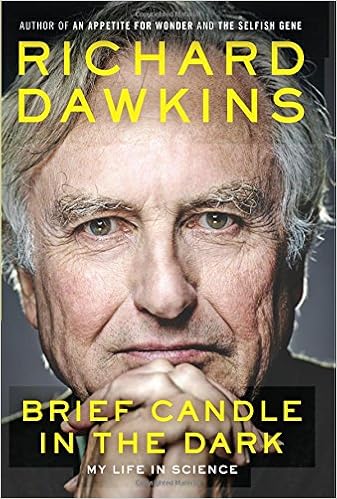
I have enjoyed reading about a dozen of your books and some of the most intriguing were The God DelusionAn Appetite for Wonder: The Making of a Scientist, and Brief Candle in the Dark: My Life in Science.

I enjoyed your latest book Outgrowing God which is one of my favorite books that you have written. 

However, there are some some weak parts of the book. For instance, your spin on Genesis 22 in chapter 4 implies you think that Abraham was just taking a blind leap of faith when that is not what occurred:

Chapter 4 

“Imagine that, when you were a child, your father woke you one morning and said, ‘It’s a fine day, how would you like to come with me for a walk in the country?’ You might quite fancy the idea. So off you go for a nice day together. After a while, your father stops to gather wood. He piles it up and you help him because you really enjoy bonfires. But now, when the bonfire is ready to light, something terrible happens. Utterly unexpected. Your father seizes you, throws you on top of the pile of wood and ties you down so you can’t move. You scream with horror. Is he going to roast you on top of the bonfire? It gets worse. your father produces a knife, raises it above his head, and you are now in no doubt. Your father is about to run his knife through you. He’s going to kill you and then set fire to your body: your own father, the father who told you bedtime stories when you were little, told you the names of flowers and birds, your dear father who gave you presents, comforted you when you were afraid of the dark. How could this be happening? 

Suddenly he stops. He looks up to the sky with a strange expression on his face, as though carrying on a conversation with himself in his head. He puts away the knife, unties you and tries to explain what has happened, but you are so paraysed with horror and fear that you can scarcely hear his words. Eventually he makes you understand. It was all God’s doing. God had ordered your father to kill you and offer you up as a burnt sacrifice. But it turned out to just be a tease — a test of your father’s loyalty to God. Your father had to prove to God that he loved God so much that he was even prepared to kill you if God ordered him to do so. . . As soon as God saw that your father was really, really, prepared to go through with it, God intervened just in time. Gotcha! April Fool! I didn’t really mean it. Yes, it was a good joke, wasn’t it?” (chapter 4)

——

Gleason Archer responds below:


How could God condemn human sacrifice in Leviticus 18 and 20 and yet command it in Genesis 22, or at least accept it in Judges 11?
 It is a mistake to interpret Genesis 22:2 as a command by God for Abraham to sacrifice his son Isaac on the altar. On the contrary, God actually (through His angel, at least) restrained Abraham’s hand just as he was about to plunge the knife into his son’s body, saying, “Do not stretch out your hand against the lad, and do nothing to him; for now I know that you fear God, since you have not withheld your son, your only son, from Me” (Gen. 22:12, NASB). While it is true that the Lord instructed Abraham previously to present Isaac as a burnt offering (`olah), and Abraham himself undoubtedly understood it as a command to kill his son on the altar, the point at issue was whether the doting father was willing to surrender even his only son (begotten by Sarah) to the Lord as a proof of his complete surrender. But v.12 is conclusive proof that Yahweh had no intention that Abraham should actually go through with this human sacrifice. It was simply a test of his faith. 

As for the episode of Jephthah’s daughter in Judges 11, see the article that deals with that passage. There is good reason to believe that in her case also, as in Isaac’s (in both instances the term `olah is used; cf. Judg. 11:31), the presentation did not eventuate in the death of the human “burnt offering.” Rather, she was devoted to the service of the Lord as a virgin attendant in tabernacle worship for the rest of her life. 

Leviticus 18:21 defines infant sacrifice as a profanation of the name of Yahweh, the God of Israel. Leviticus 20:2 prescribes the death penalty for any parent who does so– 89 particularly in the worship of Molech, which especially featured infant sacrifice. It is logically indefensible to assume that God would expect or condone infant sacrifice on the part of Abraham or Jephthah, or any other of His servants, after such a stern prohibition of it in the Mosaic Law

Francis Schaeffer in his book The God who is There noted:

It is often said that Soren Kierkegaard, the Dane (1813-1855) is the father of all modern thinking. And so he is. He is the father of modern existential thinking, both secular and theological thinking….Why is it that Kierkegaard can so aptly be thought of as the father of both? What proposition did he add to the flow of thought that made the difference? Kierkegaard led to the conclusion that you could not arrive at synthesis by reason. Instead, you achieve everything of real importance by a leap of faith.

[Kierkegaard] in his more philosophical writings he did become the father of modern thought. This turns upon his writings of Abraham and the “sacrifice” of Isaac. Kierkegaard said this was an act of faith with nothing rational to base it upon or to which to relate it. Out of this came the modern concept of a ‘leap of faith’ and the total separation of rationality and faith.

In this thinking concerning Abraham, Kierkegaard had not read the Bible carefully enough. Before Abraham was asked to move towards the sacrifice of Isaac (which, of course, God did not allow to be consummated), he had much propositional revelation from God, he had seen God, God had fulfilled promises to him. In short, God’s words at this time were in the context of Abraham’s strong reason for knowing that God both existed and was totally trustworthy.20

—-

Dr. Dawkins, you have a 150 year advantage over your hero Charles Darwin and the archaeologist’s spade has continued to dig. Take a look at this piece of evidence from the book WHATEVER HAPPENED TO THE HUMAN RACE? (Under footnote #96) by Francis Schaeffer and C. Everett Koop:

We should take one last step back into the history of the Old Testament. In the previous note we looked first at the Dead Sea Scrolls, dating to around 100 B.C. Then we went back to the period of the Late Monarchy and looked first at the siege of Hezekiah in Jerusalem by Sennacherib in 701 B.C. and also at the last years of Judah down to about 600 B.C. Then we went further back to about 850 B.C., to Ahab and Jezebel, the ivory house, the Black Obelisk, the Moabite Stone and so on–then back again to about 950 B.C., to the time of Solomon and his son Rehoboam and the campaign by Shishak, the Egyptian pharaoh.

This should have built up in our minds a vivid impression of the historic reliability of the biblical text, including even the seemingly obscure details such as the ration tablets in Babylon. We saw, in other words, not only that the Bible gives us a marvelous world view that ties in with the nature of reality and answers the basic problems which philosophers have asked down through the centuries, but also that the Bible is completely reliable, EVEN ON THE HISTORICAL LEVEL.

The previous notes looked back to the time of Moses and Joshua, the escape from Egypt, and the settlement in Canaan. Now we will go back further–back as far as Genesis 12, near the beginning of the Bible.

Do we find that the narrative fades away to a never-never land of myths and legends? By no means. For we have to remind ourselves that although Genesis 12 deals with events a long time ago from our moment of history (about 2000 B.C. or a bit later), the civilized world was already not just old but ancient when Abram/Abraham left “Ur of the Chaldeans” (see Genesis 11:31).

Ur itself was excavated some fifty years ago. In the British Museum, for example, one can see the magnificent contents of a royal burial chamber from Ur. This includes a gold headdress still in position about the head of a queen who died in Ur about 2500 B.C. It has also been possible to reconstruct from archaeological remains what the streets and buildings must have been like at the time.

Like Ur, the rest of the world of the patriarchs (that is, of Abraham, Isaac, and Jacob) was firm reality. Such places as Haran, where Abraham went first, have been discovered. So has Shechem from this time, with its Canaanite stone walls, which are still standing, and its temple.

Genesis 12:5-9New American Standard Bible (NASB)

Abram took Sarai his wife and Lot his nephew, and all their possessions which they had accumulated, and the [a]persons which they had acquired in Haran, and they [b]set out for the land of Canaan; thus they came to the land of Canaan. Abram passed through the land as far as the site of Shechem, to the[c]oak of Moreh. Now the Canaanite was then in the land.The Lord appeared to Abram and said, “To your [d]descendants I will give this land.” So he built an altar there to the Lord who had appeared to him. Then he proceeded from there to the mountain on the east of Bethel, and pitched his tent, with Bethel on the west and Ai on the east; and there he built an altar to the Lord andcalled upon the name of the Lord. Abram journeyed on, continuing toward the[e]Negev.

Haran and Shechem may be unfamiliar names to us but the Negrev (or Negeb) is a name we have all read frequently in the news accounts of our own day. 

The answer to find meaning in life is found in putting your faith and trust in Jesus Christ. The Bible is true from cover to cover and can be trusted.

Thank you again for your time and I know how busy you are.

Everette Hatcher, everettehatcher@gmail.comhttp://www.thedailyhatch.org, cell ph 501-920-5733, Box 23416, LittleRock, AR 72221, United States

XXXXXXX

__

Image result for richard dawkins peter singer

__

Image result for francis schaeffer

Francis and Edith Schaeffer at their home in Switzerland with some visiting friends

__

Image result for richard dawkins young

Schaeffer with his wife Edith in Switzerland.


Image result for john lennox and richard dawkins

Richard Dawkins and John Lennox

_

DawkinsWard

_

Image result for francis schaeffer c. everett koop whatever happened to human race?

_

Dawkins, Hitchens, Dennett, Harris 

Image result for four horsemen richard dawkins

Canary Islands 2014: Harold Kroto and Richard Dawkins

Image result for harry kroto richard dawkins

__

Francis Schaeffer pictured below:

The Basis of Human Dignity by Francis Schaeffer

Richard Dawkins, founder of the Richard Dawkins Foundation for Reason and Science. Credit: Don Arnold Getty Images

Francis Schaeffer in 1984

Christian Manifesto by Francis Schaeffer

Francis Schaeffer in 1982

—-

Whatever Happened to the Human Race? Episode 1

Image result for richard dawkins brief candle in the dark

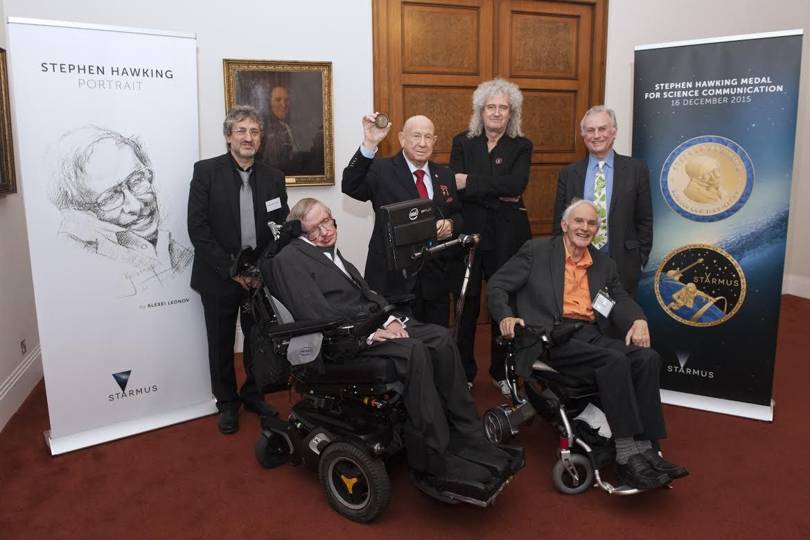
Garik Israelian, Stephen Hawking, Alexey Leonov, Brian May, Richard Dawkins and Harry Kroto

—-

—-

—-

HENRY F SCHAEFER III
Fritz Schaefer
BORNHenry Frederick Schaefer III
June 8, 1944 (age 73)
Grand RapidsMichiganUnited States
RESIDENCEUnited States
NATIONALITYAmerican
ALMA MATERMassachusetts Institute of Technology and Stanford University
AWARDSACS Award in Pure Chemistry(1979)Centenary Medal of the UK Royal Society of Chemistry (1992)ACS Award in Theoretical Chemistry (2003)Joseph O. Hirschfelder Prize(2005)ACS Peter Debye Award (2014)
Scientific career
FIELDSComputational Chemistry
INSTITUTIONS
DOCTORAL STUDENTS

_


Featured artist is Michelangelo

Michelangelo

From Wikipedia, the free encyclopediaJump to navigationJump to searchFor other uses, see Michelangelo (disambiguation).

Michelangelo
Portrait of Michelangelo by Daniele da Volterra
BornMichelangelo di Lodovico Buonarroti Simoni
6 March 1475
Caprese near ArezzoRepublic of Florence (present-day Tuscany, Italy)
Died18 February 1564 (aged 88)
RomePapal States (present-day Italy)
Known forSculpture, painting, architecture, and poetry
Notable workDavidPietàMosesThe Last JudgmentSistine Chapel ceiling
MovementHigh Renaissance
Signature

Michelangelo di Lodovico Buonarroti Simoni (Italian: [mikeˈlandʒelo di lodoˈviːko ˌbwɔnarˈrɔːti siˈmoːni]; 6 March 1475 – 18 February 1564), known best as simply Michelangelo (English: /ˌmaɪkəlˈændʒəloʊ, ˌmɪk-/[1]), was an Italian sculptor, painter, architect and poet of the High Renaissance born in the Republic of Florence, who exerted an unparalleled influence on the development of Western art. Considered by many the greatest artist of his lifetime, and by some the greatest artist of all time, his artistic versatility was of such a high order that he is often considered a contender for the title of the archetypal Renaissance man, along with his rival, the fellow Florentine and client of the MediciLeonardo da Vinci.[2]

A number of Michelangelo’s works of painting, sculpture and architecture rank among the most famous in existence.[2] His output in these fields was prodigious; given the sheer volume of surviving correspondence, sketches and reminiscences, he is the best-documented artist of the 16th century. He sculpted two of his best-known works, the Pietà and David, before the age of thirty. Despite holding a low opinion of painting, he also created two of the most influential frescoes in the history of Western art: the scenes from Genesis on the ceiling of the Sistine Chapel in Rome, and The Last Judgment on its altar wall. His design of the Laurentian Library pioneered Mannerist architecture.[3] At the age of 74, he succeeded Antonio da Sangallo the Younger as the architect of St. Peter’s Basilica. He transformed the plan so that the western end was finished to his design, as was the dome, with some modification, after his death.

Michelangelo was the first Western artist whose biography was published while he was alive.[2] In fact, two biographies were published during his lifetime. One of them, by Giorgio Vasari, proposed that Michelangelo’s work transcended that of any artist living or dead, and was “supreme in not one art alone but in all three”.[4]

In his lifetime, Michelangelo was often called Il Divino (“the divine one”).[5] His contemporaries often admired his terribilità—his ability to instil a sense of awe. Attempts by subsequent artists to imitate[6] Michelangelo’s impassioned, highly personal style resulted in Mannerism, the next major movement in Western art after the High Renaissance.

Contents

Life

See also: List of works by Michelangelo

Early life, 1475–1488

Michelangelo was born on 6 March 1475[a] in Caprese, known today as Caprese Michelangelo, a small town situated in Valtiberina,[7] near ArezzoTuscany.[8] For several generations, his family had been small-scale bankers in Florence; but the bank failed, and his father, Ludovico di Leonardo Buonarroti Simoni, briefly took a government post in Caprese, where Michelangelo was born.[2] At the time of Michelangelo’s birth, his father was the town’s judicial administrator and podestà or local administrator of Chiusi della Verna. Michelangelo’s mother was Francesca di Neri del Miniato di Siena.[9] The Buonarrotis claimed to descend from the Countess Mathilde of Canossa—a claim that remains unproven, but which Michelangelo believed.[10]

Several months after Michelangelo’s birth, the family returned to Florence, where he was raised. During his mother’s later prolonged illness, and after her death in 1481 (when he was six years old), Michelangelo lived with a nanny and her husband, a stonecutter, in the town of Settignano, where his father owned a marble quarry and a small farm.[9] There he gained his love for marble. As Giorgio Vasari quotes him:

“If there is some good in me, it is because I was born in the subtle atmosphere of your country of Arezzo. Along with the milk of my nurse I received the knack of handling chisel and hammer, with which I make my figures.”[8]

Apprenticeships, 1488–1492

As a young boy, Michelangelo was sent to Florence to study grammar under the Humanist Francesco da Urbino.[8][11][b] However, he showed no interest in his schooling, preferring to copy paintings from churches and seek the company of other painters.[11]

The city of Florence was at that time Italy’s greatest centre of the arts and learning.[12] Art was sponsored by the Signoria (the town council), the merchant guilds, and wealthy patrons such as the Medici and their banking associates.[13] The Renaissance, a renewal of Classical scholarship and the arts, had its first flowering in Florence.[12] In the early 15th century, the architect Filippo Brunelleschi, having studied the remains of Classical buildings in Rome, had created two churches, San Lorenzo’s and Santo Spirito, which embodied the Classical precepts.[14] The sculptor Lorenzo Ghiberti had laboured for fifty years to create the bronze doors of the Baptistry, which Michelangelo was to describe as “The Gates of Paradise”.[15] The exterior niches of the Church of Orsanmichele contained a gallery of works by the most acclaimed sculptors of Florence: Donatello, Ghiberti, Andrea del Verrocchio, and Nanni di Banco.[13] The interiors of the older churches were covered with frescos (mostly in Late Medieval, but also in the Early Renaissance style), begun by Giotto and continued by Masaccio in the Brancacci Chapel, both of whose works Michelangelo studied and copied in drawings.[16]

During Michelangelo’s childhood, a team of painters had been called from Florence to the Vatican to decorate the walls of the Sistine Chapel. Among them was Domenico Ghirlandaio, a master in fresco painting, perspective, figure drawing and portraiture who had the largest workshop in Florence.[13] In 1488, at age 13, Michelangelo was apprenticed to Ghirlandaio.[17] The next year, his father persuaded Ghirlandaio to pay Michelangelo as an artist, which was rare for someone of fourteen.[18] When in 1489, Lorenzo de’ Medici, de facto ruler of Florence, asked Ghirlandaio for his two best pupils, Ghirlandaio sent Michelangelo and Francesco Granacci.[19]

The Madonna of the Stairs (1490–92), Michelangelo’s earliest known work in marble

From 1490 to 1492, Michelangelo attended the Humanist academy the Medici had founded along Neo-Platonic lines. There his work and outlook were influenced by many of the most prominent philosophers and writers of the day, including Marsilio FicinoPico della Mirandola and Poliziano.[20] At this time, Michelangelo sculpted the reliefs Madonna of the Steps (1490–1492) and Battle of the Centaurs (1491–1492),[16] the latter based on a theme suggested by Poliziano and commissioned by Lorenzo de Medici.[21] Michelangelo worked for a time with the sculptor Bertoldo di Giovanni. When he was seventeen, another pupil, Pietro Torrigiano, struck him on the nose, causing the disfigurement that is conspicuous in the portraits of Michelangelo.[22]

Bologna, Florence and Rome, 1492–1499

Lorenzo de’ Medici’s death on 8 April 1492 brought a reversal of Michelangelo’s circumstances.[23] Michelangelo left the security of the Medici court and returned to his father’s house. In the following months he carved a polychrome wooden Crucifix (1493), as a gift to the prior of the Florentine church of Santo Spirito, which had allowed him to do some anatomical studies of the corpses from the church’s hospital.[24] This was the first of several instances during his career that Michelangelo studied anatomy by dissecting cadavers.[25][26]

Between 1493 and 1494 he bought a block of marble, and carved a larger-than-life statue of Hercules, which was sent to France and subsequently disappeared sometime in the 18th century.[21][c] On 20 January 1494, after heavy snowfalls, Lorenzo’s heir, Piero de Medici, commissioned a snow statue, and Michelangelo again entered the court of the Medici.[27]

In the same year, the Medici were expelled from Florence as the result of the rise of Savonarola. Michelangelo left the city before the end of the political upheaval, moving to Venice and then to Bologna.[23] In Bologna, he was commissioned to carve several of the last small figures for the completion of the Shrine of St. Dominic, in the church dedicated to that saint. At this time Michelangelo studied the robust reliefs carved by Jacopo della Quercia around main portal of the Basilica of St Petronius, including the panel of The Creation of Eve the composition of which was to reappear on the Sistine Chapel ceiling.[28] Towards the end of 1494, the political situation in Florence was calmer. The city, previously under threat from the French, was no longer in danger as Charles VIII had suffered defeats. Michelangelo returned to Florence but received no commissions from the new city government under Savonarola. He returned to the employment of the Medici.[29] During the half year he spent in Florence, he worked on two small statues, a child St. John the Baptist and a sleeping Cupid. According to Condivi, Lorenzo di Pierfrancesco de’ Medici, for whom Michelangelo had sculpted St. John the Baptist, asked that Michelangelo “fix it so that it looked as if it had been buried” so he could “send it to Rome … pass [it off as] an ancient work and … sell it much better.” Both Lorenzo and Michelangelo were unwittingly cheated out of the real value of the piece by a middleman. Cardinal Raffaele Riario, to whom Lorenzo had sold it, discovered that it was a fraud, but was so impressed by the quality of the sculpture that he invited the artist to Rome.[30] [d] This apparent success in selling his sculpture abroad as well as the conservative Florentine situation may have encouraged Michelangelo to accept the prelate’s invitation.[29]

Pietà, St Peter’s Basilica (1498–99)

Michelangelo arrived in Rome on 25 June 1496[31] at the age of 21. On 4 July of the same year, he began work on a commission for Cardinal Raffaele Riario, an over-life-size statue of the Roman wine god Bacchus. Upon completion, the work was rejected by the cardinal, and subsequently entered the collection of the banker Jacopo Galli, for his garden.

In November 1497, the French ambassador to the Holy See, Cardinal Jean de Bilhères-Lagraulas, commissioned him to carve a Pietà, a sculpture showing the Virgin Mary grieving over the body of Jesus. The subject, which is not part of the Biblical narrative of the Crucifixion, was common in religious sculpture of Medieval Northern Europe and would have been very familiar to the Cardinal.[32] The contract was agreed upon in August of the following year. Michelangelo was 24 at the time of its completion.[32] It was soon to be regarded as one of the world’s great masterpieces of sculpture, “a revelation of all the potentialities and force of the art of sculpture”. Contemporary opinion was summarised by Vasari: “It is certainly a miracle that a formless block of stone could ever have been reduced to a perfection that nature is scarcely able to create in the flesh.”[33] It is now located in St Peter’s Basilica.

Florence, 1499–1505

Main article: David (Michelangelo)

The Statue of David, completed by Michelangelo in 1504, is one of the most renowned works of the Renaissance.

Michelangelo returned to Florence in 1499. The republic was changing after the fall of its leader, anti-Renaissance priest Girolamo Savonarola, who was executed in 1498, and the rise of the gonfaloniere Piero Soderini. Michelangelo was asked by the consuls of the Guild of Wool to complete an unfinished project begun 40 years earlier by Agostino di Duccio: a colossal statue of Carrara marble portraying David as a symbol of Florentine freedom to be placed on the gable of Florence Cathedral.[34] Michelangelo responded by completing his most famous work, the statue of David, in 1504. The masterwork definitively established his prominence as a sculptor of extraordinary technical skill and strength of symbolic imagination. A team of consultants, including Botticelli and Leonardo da Vinci, was called together to decide upon its placement, ultimately the Piazza della Signoria, in front of the Palazzo Vecchio. It now stands in the Academia while a replica occupies its place in the square.[35]

With the completion of the David came another commission. In early 1504 Leonardo da Vinci had been commissioned to paint The Battle of Anghiara in the council chamber of the Palazzo Vecchio, depicting the battle between Florence and Milan in 1440. Michelangelo was then commissioned to paint the Battle of Cascina. The two paintings are very different: Leonardo depicts soldiers fighting on horseback, while Michelangelo has soldiers being ambushed as they bathe in the river. Neither work was completed and both were lost forever when the chamber was refurbished. Both works were much admired, and copies remain of them, Leonardo’s work having been copied by Rubens and Michelangelo’s by Bastiano da Sangallo.[36]

Also during this period, Michelangelo was commissioned by Angelo Doni to paint a “Holy Family” as a present for his wife, Maddalena Strozzi. It is known as the Doni Tondo and hangs in the Uffizi Gallery in its original magnificent frame, which Michelangelo may have designed.[37][38] He also may have painted the Madonna and Child with John the Baptist, known as the Manchester Madonna and now in the National Gallery, London.[39]

Sistine Chapel ceiling, 1505–1512

Main article: Sistine Chapel ceiling

Michelangelo painted the ceiling of the Sistine Chapel; the work took approximately four years to complete (1508–12)

In 1505 Michelangelo was invited back to Rome by the newly elected Pope Julius II and commissioned to build the Pope’s tomb, which was to include forty statues and be finished in five years.[40] Under the patronage of the pope, Michelangelo experienced constant interruptions to his work on the tomb in order to accomplish numerous other tasks. Although Michelangelo worked on the tomb for 40 years, it was never finished to his satisfaction.[40] It is located in the Church of San Pietro in Vincoli in Rome and is most famous for the central figure of Moses, completed in 1516.[41] Of the other statues intended for the tomb, two, known as the Rebellious Slave and the Dying Slave, are now in the Louvre.[40]

During the same period, Michelangelo painted the ceiling of the Sistine Chapel, which took approximately four years to complete (1508–1512).[41] According to Condivi’s account, Bramante, who was working on the building of St. Peter’s Basilica, resented Michelangelo’s commission for the pope’s tomb and convinced the pope to commission him in a medium with which he was unfamiliar, in order that he might fail at the task.[42] Michelangelo was originally commissioned to paint the Twelve Apostles on the triangular pendentives that supported the ceiling, and to cover the central part of the ceiling with ornament.[43] Michelangelo persuaded Pope Julius to give him a free hand and proposed a different and more complex scheme, representing the Creation, the Fall of Man, the Promise of Salvation through the prophets, and the genealogy of Christ. The work is part of a larger scheme of decoration within the chapel that represents much of the doctrine of the Catholic Church.[43]

The composition stretches over 500 square metres of ceiling[44] and contains over 300 figures.[43] At its centre are nine episodes from the Book of Genesis, divided into three groups: God’s creation of the earth; God’s creation of humankind and their fall from God’s grace; and lastly, the state of humanity as represented by Noah and his family. On the pendentives supporting the ceiling are painted twelve men and women who prophesied the coming of Jesus, seven prophets of Israel, and five Sibyls, prophetic women of the Classical world.[43] Among the most famous paintings on the ceiling are The Creation of AdamAdam and Eve in the Garden of Eden, the Deluge, the Prophet Jeremiah, and the Cumaean Sibyl.

Florence under Medici popes, 1513 – early 1534

Moses for the tomb of Pope Julius II

In 1513, Pope Julius II died and was succeeded by Pope Leo X, the second son of Lorenzo dei Medici.[41] Pope Leo commissioned Michelangelo to reconstruct the façade of the Basilica of San Lorenzo in Florence and to adorn it with sculptures. He agreed reluctantly and spent three years creating drawings and models for the façade, as well as attempting to open a new marble quarry at Pietrasanta specifically for the project. In 1520 the work was abruptly cancelled by his financially strapped patrons before any real progress had been made. The basilica lacks a façade to this day.[45]

In 1520 the Medici came back to Michelangelo with another grand proposal, this time for a family funerary chapel in the Basilica of San Lorenzo.[41] For posterity, this project, occupying the artist for much of the 1520s and 1530s, was more fully realised. Michelangelo used his own discretion to create the composition of the Medici Chapel, which houses the large tombs of two of the younger members of the Medici family, Giuliano, Duke of Nemours, and Lorenzo, his nephew. It also serves to commemorate their more famous predecessors, Lorenzo the Magnificent and his brother Giuliano, who are buried nearby. The tombs display statues of the two Medici and allegorical figures representing Night and Day, and Dusk and Dawn. The chapel also contains Michelangelo’s Medici Madonna.[46] In 1976 a concealed corridor was discovered with drawings on the walls that related to the chapel itself.[47][48]

Pope Leo X died in 1521 and was succeeded briefly by the austere Adrian VI, and then by his cousin Giulio Medici as Pope Clement VII.[49] In 1524 Michelangelo received an architectural commission from the Medici pope for the Laurentian Library at San Lorenzo’s Church.[41] He designed both the interior of the library itself and its vestibule, a building utilising architectural forms with such dynamic effect that it is seen as the forerunner of Baroque architecture. It was left to assistants to interpret his plans and carry out instruction. The library was not opened until 1571, and the vestibule remained incomplete until 1904.[50]

In 1527, Florentine citizens, encouraged by the sack of Rome, threw out the Medici and restored the republic. A siege of the city ensued, and Michelangelo went to the aid of his beloved Florence by working on the city’s fortifications from 1528 to 1529. The city fell in 1530, and the Medici were restored to power.[41] Michelangelo fell out of favour with the young Alessandro Medici, who had been installed as the first Duke of Florence. Fearing for his life, he fled to Rome, leaving assistants to complete the Medici chapel and the Laurentian Library. Despite Michelangelo’s support of the republic and resistance to the Medici rule, he was welcomed by Pope Clement, who reinstated an allowance that he had previously granted the artist and made a new contract with him over the tomb of Pope Julius.[51]

Rome, 1534–1546

The Last Judgement (1534–1541)

In Rome, Michelangelo lived near the church of Santa Maria di Loreto. It was at this time that he met the poet Vittoria Colonna, marchioness of Pescara, who was to become one of his closest friends until her death in 1547.[52]

Shortly before his death in 1534 Pope Clement VII commissioned Michelangelo to paint a fresco of The Last Judgement on the altar wall of the Sistine Chapel. His successor, Paul III, was instrumental in seeing that Michelangelo began and completed the project, which he laboured on from 1534 to October 1541.[41] The fresco depicts the Second Coming of Christ and his Judgement of the souls. Michelangelo ignored the usual artistic conventions in portraying Jesus, showing him as a massive, muscular figure, youthful, beardless and naked.[53] He is surrounded by saints, among whom Saint Bartholomew holds a drooping flayed skin, bearing the likeness of Michelangelo. The dead rise from their graves, to be consigned either to Heaven or to Hell.[53]

Once completed, the depiction of Christ and the Virgin Mary naked was considered sacrilegious, and Cardinal Carafa and Monsignor Sernini (Mantua‘s ambassador) campaigned to have the fresco removed or censored, but the Pope resisted. At the Council of Trent, shortly before Michelangelo’s death in 1564, it was decided to obscure the genitals and Daniele da Volterra, an apprentice of Michelangelo, was commissioned to make the alterations.[54] An uncensored copy of the original, by Marcello Venusti, is in the Capodimonte Museum of Naples.[55]

Michelangelo worked on a number of architectural projects at this time. They included a design for the Capitoline Hill with its trapezoid piazza displaying the ancient bronze statue of Marcus Aurelius. He designed the upper floor of the Palazzo Farnese and the interior of the Church of Santa Maria degli Angeli, in which he transformed the vaulted interior of an Ancient Roman bathhouse. Other architectural works include San Giovanni dei Fiorentini, the Sforza Chapel (Capella Sforza) in the Basilica di Santa Maria Maggiore and the Porta Pia.[56]

St Peter’s Basilica, 1546–1564

Main article: St Peter’s Basilica § Architecture

The dome of St Peter’s Basilica

While still working on the Last Judgement, Michelangelo received yet another commission for the Vatican. This was for the painting of two large frescos in the Cappella Paolina depicting significant events in the lives of the two most important saints of Rome, the Conversion of Saint Paul and the Crucifixion of Saint Peter. Like the Last Judgement, these two works are complex compositions containing a great number of figures.[57] They were completed in 1550. In the same year, Giorgio Vasari published his Vita, including a biography of Michelangelo.[58]

In 1546, Michelangelo was appointed architect of St. Peter’s Basilica, Rome.[41] The process of replacing the Constantinian basilica of the 4th century had been underway for fifty years and in 1506 foundations had been laid to the plans of Bramante. Successive architects had worked on it, but little progress had been made. Michelangelo was persuaded to take over the project. He returned to the concepts of Bramante, and developed his ideas for a centrally planned church, strengthening the structure both physically and visually.[59] The dome, not completed until after his death, has been called by Banister Fletcher, “the greatest creation of the Renaissance”.[60]

As construction was progressing on St Peter’s, there was concern that Michelangelo would pass away before the dome was finished. However, once building commenced on the lower part of the dome, the supporting ring, the completion of the design was inevitable.

On 7 December 2007, a red chalk sketch for the dome of St Peter’s Basilica, possibly the last made by Michelangelo before his death, was discovered in the Vatican archives. It is extremely rare, since he destroyed his designs later in life. The sketch is a partial plan for one of the radial columns of the cupola drum of Saint Peter’s.[61]

Personal life

Ignudo fresco from 1509 on the Sistine Chapel ceiling

Michelangelo, drawn from sight by Francisco de Holanda in the late 1530s.

Faith

Michelangelo was a devout Catholic whose faith deepened at the end of his life.[62] His poetry includes the following closing lines from what is known as poem 285 (written in 1554); “Neither painting nor sculpture will be able any longer to calm my soul, now turned toward that divine love that opened his arms on the cross to take us in.”[63][64]

Personal habits

Michelangelo was abstemious in his personal life, and once told his apprentice, Ascanio Condivi: “However rich I may have been, I have always lived like a poor man.”[65] Condivi said he was indifferent to food and drink, eating “more out of necessity than of pleasure”[65] and that he “often slept in his clothes and … boots.”[65] His biographer Paolo Giovio says, “His nature was so rough and uncouth that his domestic habits were incredibly squalid, and deprived posterity of any pupils who might have followed him.”[66] He may not have minded, since he was by nature a solitary and melancholy person, bizzarro e fantastico, a man who “withdrew himself from the company of men.”[67]

Relationships and poetry

It is impossible to know for certain whether Michelangelo had physical relationships (Condivi ascribed to him a “monk-like chastity”),[68] but the nature of his sexuality is made apparent in his poetry.[69] He wrote over three hundred sonnets and madrigals. The longest sequence displaying a great romantic friendship, was written to Tommaso dei Cavalieri (c. 1509–1587), who was 23 years old when Michelangelo met him in 1532, at the age of 57. These make up the first large sequence of poems in any modern tongue addressed by one man to another; they predate by fifty years Shakespeare‘s sonnets to the fair youth:

I feel as lit by fire a cold countenance
That burns me from afar and keeps itself ice-chill;
A strength I feel two shapely arms to fill
Which without motion moves every balance.— (Michael Sullivan, translation)

Cavalieri replied: “I swear to return your love. Never have I loved a man more than I love you, never have I wished for a friendship more than I wish for yours.” Cavalieri remained devoted to Michelangelo until his death.[70]

In 1542, Michelangelo met Cecchino dei Bracci who died only a year later, inspiring Michelangelo to write forty-eight funeral epigrams. Some of the objects of Michelangelo’s affections, and subjects of his poetry, took advantage of him: the model Febo di Poggio asked for money in response to a love-poem, and a second model, Gherardo Perini, stole from him shamelessly.[70]

The openly homoerotic nature of the poetry has been a source of discomfort to later generations. Michelangelo’s grandnephew, Michelangelo Buonarroti the Younger, published the poems in 1623 with the gender of pronouns changed,[71] and it was not until John Addington Symonds translated them into English in 1893 that the original genders were restored. Even in modern times some scholars continue to insist that, despite the restoration of the pronouns, they represent “an emotionless and elegant re-imagining of Platonic dialogue, whereby erotic poetry was seen as an expression of refined sensibilities”.[70]

Late in life, Michelangelo nurtured a great platonic love for the poet and noble widow Vittoria Colonna, whom he met in Rome in 1536 or 1538 and who was in her late forties at the time. They wrote sonnets for each other and were in regular contact until she died. These sonnets mostly deal with the spiritual issues that occupied them.[72] Condivi recalls Michelangelo’s saying that his sole regret in life was that he did not kiss the widow’s face in the same manner that he had her hand.[52]

Feuds with other artists

In a letter from late 1542, Michelangelo blamed the tensions between Julius II and himself on the envy of Bramante and Raphael, saying of the latter, “all he had in art, he got from me”. According to Gian Paolo Lomazzo, Michelangelo and Raphael met once: the former was alone, while the latter was accompanied by several others. Michelangelo commented that he thought he had encountered the chief of police with such an assemblage, and Raphael replied that he thought he had met an executioner, as they are wont to walk alone.[73]

Works

Madonna and Child

The Madonna of the Steps is Michelangelo’s earliest known work in marble. It is carved in shallow relief, a technique often employed by the master-sculptor of the early 15th century, Donatello, and others such as Desiderio da Settignano.[74] While the Madonna is in profile, the easiest aspect for a shallow relief, the child displays a twisting motion that was to become characteristic of Michelangelo’s work. The Taddeo Tondo of 1502 shows the Christ Child frightened by a Bullfinch, a symbol of the Crucifixion.[37] The lively form of the child was later adapted by Raphael in the Bridgewater Madonna. The Bruges Madonna was, at the time of its creation, unlike other such statues depicting the Virgin proudly presenting her son. Here, the Christ Child, restrained by his mother’s clasping hand, is about to step off into the world.[75] The Doni Tondo, depicting the Holy Family, has elements of all three previous works: the frieze of figures in the background has the appearance of a low-relief, while the circular shape and dynamic forms echo the Taddeo Tondo. The twisting motion present in the Bruges Madonna is accentuated in the painting. The painting heralds the forms, movement and colour that Michelangelo was to employ on the ceiling of the Sistine Chapel.[37]

Male figure

The kneeling angel is an early work, one of several that Michelangelo created as part of a large decorative scheme for the Arca di San Domenico in the church dedicated to that saint in Bologna. Several other artists had worked on the scheme, beginning with Nicola Pisano in the 13th century. In the late 15th century, the project was managed by Niccolò dell’Arca. An angel holding a candlestick, by Niccolò, was already in place.[76] Although the two angels form a pair, there is a great contrast between the two works, the one depicting a delicate child with flowing hair clothed in Gothic robes with deep folds, and Michelangelo’s depicting a robust and muscular youth with eagle’s wings, clad in a garment of Classical style. Everything about Michelangelo’s angel is dynamic.[77] Michelangelo’s Bacchus was a commission with a specified subject, the youthful God of Wine. The sculpture has all the traditional attributes, a vine wreath, a cup of wine and a fawn, but Michelangelo ingested an air of reality into the subject, depicting him with bleary eyes, a swollen bladder and a stance that suggests he is unsteady on his feet.[76] While the work is plainly inspired by Classical sculpture, it is innovative for its rotating movement and strongly three-dimensional quality, which encourages the viewer to look at it from every angle.[78] In the so-called Dying Slave, Michelangelo has again utilised the figure with marked contraposto to suggest a particular human state, in this case waking from sleep. With the Rebellious Slave, it is one of two such earlier figures for the Tomb of Pope Julius II, now in the Louvre, that the sculptor brought to an almost finished state.[79] These two works were to have a profound influence on later sculpture, through Rodin who studied them at the Louvre.[80] The Bound Slave is one of the later figures for Pope Julius’ tomb. The works, known collectively as The Captives, each show the figure struggling to free itself, as if from the bonds of the rock in which it is lodged. The works give a unique insight into the sculptural methods that Michelangelo employed and his way of revealing what he perceived within the rock.[81]

  • Angel by Michelangelo, early work (1494–95)
  • Bacchus by Michelangelo, early work (1496–97)
  • Dying slaveLouvre (1513)
  • Bound slave, known as Atlas (1530–34)

Sistine Chapel ceiling

Main article: Sistine Chapel ceiling

The Sistine Chapel ceiling was painted between 1508 and 1512.[41] The ceiling is a flattened barrel vault supported on twelve triangular pendentives that rise from between the windows of the chapel. The commission, as envisaged by Pope Julius II, was to adorn the pendentives with figures of the twelve apostles.[82] Michelangelo, who was reluctant to take the job, persuaded the Pope to give him a free hand in the composition.[83] The resultant scheme of decoration awed his contemporaries and has inspired other artists ever since.[84] The scheme is of nine panels illustrating episodes from the Book of Genesis, set in an architectonic frame. On the pendentives, Michelangelo replaced the proposed Apostles with Prophets and Sibyls who heralded the coming of the Messiah.[83]

The Sistine Chapel Ceiling (1508–12)

Michelangelo began painting with the later episodes in the narrative, the pictures including locational details and groups of figures, the Drunkenness of Noah being the first of this group.[83] In the later compositions, painted after the initial scaffolding had been removed, Michelangelo made the figures larger.[83] One of the central images, The Creation of Adam is one of the best known and most reproduced works in the history of art. The final panel, showing the Separation of Light from Darkness is the broadest in style and was painted in a single day. As the model for the Creator, Michelangelo has depicted himself in the action of painting the ceiling.[83]

As supporters to the smaller scenes, Michelangelo painted twenty youths who have variously been interpreted as angels, as muses, or simply as decoration. Michelangelo referred to them as “ignudi”.[85] The figure reproduced may be seen in context in the above image of the Separation of Light from Darkness. In the process of painting the ceiling, Michelangelo made studies for different figures, of which some, such as that for The Libyan Sibyl have survived, demonstrating the care taken by Michelangelo in details such as the hands and feet.[86] The Prophet Jeremiah, contemplating the downfall of Jerusalem, is an image of the artist himself.

  • Studies for The Libyan Sibyl
  • The Libyan Sibyl (1511)
  • The Cumaean Sibyl
  • The Prophet Jeremiah (1511)
  • Ignudo

Figure compositions

This section does not cite any sources. Please help improve this section by adding citations to reliable sources. Unsourced material may be challenged and removed.
Find sources: “Michelangelo” – news · newspapers · books · scholar · JSTOR (February 2018) (Learn how and when to remove this template message)

Michelangelo’s relief of the Battle of the Centaurs, created while he was still a youth associated with the Medici Academy, is an unusually complex relief in that it shows a great number of figures involved in a vigorous struggle. Such a complex disarray of figures was rare in Florentine art, where it would usually only be found in images showing either the Massacre of the Innocents or the Torments of Hell. The relief treatment, in which some of the figures are boldly projecting, may indicate Michelangelo’s familiarity with Roman sarcophagus reliefs from the collection of Lorenzo Medici, and similar marble panels created by Nicola and Giovanni Pisano, and with the figurative compositions on Ghiberti‘s Baptistry Doors.

The composition of the Battle of Cascina is known in its entirety only from copies, as the original cartoon, according to Vasari, was so admired that it deteriorated and was eventually in pieces. It reflects the earlier relief in the energy and diversity of the figures, with many different postures, and many being viewed from the back, as they turn towards the approaching enemy and prepare for battle.

In The Last Judgment it is said that Michelangelo drew inspiration from a fresco by Melozzo da Forlì in Rome’s Santi Apostoli. Melozzo had depicted figures from different angles, as if they were floating in the Heaven and seen from below. Melozzo’s majestic figure of Christ, with windblown cloak, demonstrates a degree of foreshortening of the figure that had also been employed by Andrea Mantegna, but was not usual in the frescos of Florentine painters. In The Last Judgement Michelangelo had the opportunity to depict, on an unprecedented scale, figures in the action of either rising heavenward or falling and being dragged down.

In the two frescos of the Pauline Chapel, The Crucifixion of St. Peter and The Conversion of Saul, Michelangelo has used the various groups of figures to convey a complex narrative. In the Crucifixion of Peter soldiers busy themselves about their assigned duty of digging a post hole and raising the cross while various people look on and discuss the events. A group of horrified women cluster in the foreground, while another group of Christians is led by a tall man to witness the events. In the right foreground, Michelangelo walks out of the painting with an expression of disillusionment.

Architecture

Michelangelo’s architectural commissions included a number that were not realised, notably the façade for Brunelleschi‘s Church of San Lorenzo in Florence, for which Michelangelo had a wooden model constructed, but which remains to this day unfinished rough brick. At the same church, Giulio de’ Medici (later Pope Clement VII) commissioned him to design the Medici Chapel and the tombs of Giuliano and Lorenzo Medici.[87] Pope Clement also commissioned the Laurentian Library, for which Michelangelo also designed the extraordinary vestibule with columns recessed into niches, and a staircase that appears to spill out of the library like a flow of lava, according to Nikolaus Pevsner, “… revealing Mannerism in its most sublime architectural form.”[88]

In 1546 Michelangelo produced the highly complex ovoid design for the pavement of the Campidoglio and began designing an upper storey for the Farnese Palace. In 1547 he took on the job of completing St Peter’s Basilica, begun to a design by Bramante, and with several intermediate designs by several architects. Michelangelo returned to Bramante’s design, retaining the basic form and concepts by simplifying and strengthening the design to create a more dynamic and unified whole.[89] Although the late 16th-century engraving depicts the dome as having a hemispherical profile, the dome of Michelangelo’s model is somewhat ovoid and the final product, as completed by Giacomo della Porta, is more so.[89]

  • The vestibule of the Laurentian Library has Mannerist features which challenge the Classical order of Brunelleschi’s adjacent church.
  • Michelangelo’s redesign of the ancient Capitoline Hill included a complex spiralling pavement with a star at its centre.
  • Michelangelo’s design for St Peter’s is both massive and contained, with the corners between the apsidal arms of the Greek Cross filled by square projections.
  • The exterior is surrounded by a giant order of pilasters supporting a continuous cornice. Four small cupolas cluster around the dome.

Final years

In his old age, Michelangelo created a number of Pietàs in which he apparently reflects upon mortality. They are heralded by the Victory, perhaps created for the tomb of Pope Julius II but left unfinished. In this group, the youthful victor overcomes an older hooded figure, with the features of Michelangelo.

Self-portrait of the artist as Nicodemus

Portrait of Michelangelo on a medal for his 88th birthday by Leone Leoni.

The Pietà of Vittoria Colonna is a chalk drawing of a type described as “presentation drawings”, as they might be given as a gift by an artist, and were not necessarily studies towards a painted work. In this image, Mary’s upraise arms and upraised hands are indicative of her prophetic role. The frontal aspect is reminiscent of Masaccio‘s fresco of the Holy Trinity in the Basilica of Santa Maria Novella, Florence.

In the Florentine Pietà, Michelangelo again depicts himself, this time as the aged Nicodemus lowering the body of Jesus from the cross into the arms of Mary his mother and Mary Magdalene. Michelangelo smashed the left arm and leg of the figure of Jesus. His pupil Tiberio Calcagni repaired the arm and drilled a hole in which to fix a replacement leg which was not subsequently attached. He also worked on the figure of Mary Magdalene.[90][91]

The last sculpture that Michelangelo worked on (six days before his death), the Rondanini Pietà could never be completed because Michelangelo carved it away until there was insufficient stone. The legs and a detached arm remain from a previous stage of the work. As it remains, the sculpture has an abstract quality, in keeping with 20th-century concepts of sculpture.[92][93]

Michelangelo died in Rome in 1564, at the age of 88 (three weeks before his 89th birthday). His body was taken from Rome for interment at the Basilica of Santa Croce, fulfilling the maestro’s last request to be buried in his beloved Florence.[94]

  • Statue of Victory (1534), Palazzo Vecchio, Florence
  • The Pietà of Vittoria Colonna (c. 1540)
  • The Rondanini Pietà (1552–64)

In popular culture

Movies

Legacy

Main article: List of works by Michelangelo

Michelangelo’s tomb in the Basilica of Santa Croce, Florence.

Michelangelo, with Leonardo da Vinci and Raphael, is one of the three giants of the Florentine High Renaissance. Although their names are often cited together, Michelangelo was younger than Leonardo by 23 years, and older than Raphael by eight. Because of his reclusive nature, he had little to do with either artist and outlived both of them by more than forty years. Michelangelo took few sculpture students. He employed Francesco Granacci, who was his fellow pupil at the Medici Academy, and became one of several assistants on the Sistine Chapel ceiling.[43] Michelangelo appears to have used assistants mainly for the more manual tasks of preparing surfaces and grinding colours. Despite this, his works were to have a great influence on painters, sculptors and architects for many generations to come.

While Michelangelo’s David is the most famous male nude of all time and destined to be reproduced in order to grace cities around the world, some of his other works have had perhaps even greater impact on the course of art. The twisting forms and tensions of the Victory, the Bruges Madonna and the Medici Madonna make them the heralds of the Mannerist art. The unfinished giants for the tomb of Pope Julius II had profound effect on late-19th- and 20th-century sculptors such as Rodin and Henry Moore.

Michelangelo’s foyer of the Laurentian Library was one of the earliest buildings to utilise Classical forms in a plastic and expressive manner. This dynamic quality was later to find its major expression in Michelangelo’s centrally planned St Peter’s, with its giant order, its rippling cornice and its upward-launching pointed dome. The dome of St Peter’s was to influence the building of churches for many centuries, including Sant’Andrea della Valle in Rome and St Paul’s Cathedral, London, as well as the civic domes of many public buildings and the state capitals across America.

Artists who were directly influenced by Michelangelo include Raphael, whose monumental treatment of the figure in the School of Athens and The Expulsion of Heliodorus from the Temple owes much to Michelangelo, and whose fresco of Isaiah in Sant’Agostino closely imitates the older master’s prophets.[102] Other artists, such as Pontormo, drew on the writhing forms of the Last Judgement and the frescoes of the Capella Paolina.[103]

The Sistine Chapel ceiling was a work of unprecedented grandeur, both for its architectonic forms, to be imitated by many Baroque ceiling painters, and also for the wealth of its inventiveness in the study of figures. Vasari wrote:

The work has proved a veritable beacon to our art, of inestimable benefit to all painters, restoring light to a world that for centuries had been plunged into darkness. Indeed, painters no longer need to seek for new inventions, novel attitudes, clothed figures, fresh ways of expression, different arrangements, or sublime subjects, for this work contains every perfection possible under those headings.[104]

—-

Related posts:

RESPONDING TO HARRY KROTO’S BRILLIANT RENOWNED ACADEMICS!! Part 48 Nobel Prize Winner and Global Warming Denier Ivar Giaever “I think religion is to blame for a lot of the ills in this world!”

October 20, 2015 – 5:20 am

  On November 21, 2014 I received a letter from Nobel Laureate Harry Kroto and it said: …Please click on this URL http://vimeo.com/26991975 and you will hear what far smarter people than I have to say on this matter. I agree with them. Harry Kroto _________________ Below you have picture of 1996 Chemistry Nobel Prize Winner […]

FRANCIS SCHAEFFER ANALYZES ART AND CULTURE PART 78 THE BEATLES (Breaking down the song TOMORROW NEVER KNOWS) Featured musical artist is Stuart Gerber

September 24, 2015 – 5:42 am

The Beatles were “inspired by the musique concrète of German composer and early electronic music pioneer Karlheinz Stockhausen…”  as SCOTT THILL has asserted. Francis Schaeffer noted that ideas of  “Non-resolution” and “Fragmentation” came down German and French streams with the influence of Beethoven’s last Quartets and then the influence of Debussy and later Schoenberg’s non-resolution which is in total contrast […]

RESPONDING TO HARRY KROTO’S BRILLIANT RENOWNED ACADEMICS!! Part 42 Peter Singer, Professor of Bioethics at Princeton University, THE PROBLEM OF EVIL

September 8, 2015 – 5:10 am

  _______ On November 21, 2014 I received a letter from Nobel Laureate Harry Kroto and it said: …Please click on this URL http://vimeo.com/26991975 and you will hear what far smarter people than I have to say on this matter. I agree with them. Harry Kroto _________________ Below you have picture of 1996 Chemistry Nobel Prize […]

RESPONDING TO HARRY KROTO’S BRILLIANT RENOWNED ACADEMICS!! Bart Ehrman “Why should one think that God performed the miracle of inspiring the words in the first place if He didn’t perform the miracle of preserving the words?”

September 2, 2015 – 8:42 am

On November 21, 2014 I received a letter from Nobel Laureate Harry Kroto and it said: …Please click on this URL http://vimeo.com/26991975 and you will hear what far smarter people than I have to say on this matter. I agree with them. Harry Kroto ____________________ Below you have picture of 1996 Chemistry Nobel Prize Winner Dr. […]

Open Letter #19 to Ricky Gervais on comparison of the Tony of AFTER LIFE to the Solomon of ECCLESIASTES, Lovely Day by Bill Withers is placed perfectly in AFTER LIFE (THIS WAS YOUR LIFE and Luke 12)

—-

Bill Withers – Lovely Day (Official Audio)

After Life #1 Trailer

—-


May 6, 2020 
Ricky Gervais 


Dear Ricky,  

This is the 19th day in a row that I have written another open letter to you to comment on some of your episodes of AFTER LIFE, and then I wanted to pass along some evidence that indicates the Bible is historically accurate.

Bill Withers’ LOVELY DAY starts off the beginning of the first episode of AFTER LIFE in the first season with these positive words:

When I wake up in the morning, love
And the sunlight hurts my eyes
And something without warning, love
Bears heavy on my mindThen I look at you
And the world’s alright with me
Just one look at you
And I know it’s gonna be
A lovely day
(Lovely day, lovely day, lovely day)When the day that lies ahead of me
Seems impossible to face
When someone else instead of me
Always seems to know the way
Then I look at you
And the world’s alright with me
Just one look at you
And I know it’s gonna be
A lovely day
(Lovely day, lovely day)When the day that lies ahead of me
Seems impossible to face
And when someone else instead of me
Always seems to know the way
Then I look at you
And the world’s alright with me
Just one look at you
And I know it’s gonna be
A lovely day
(Lovely day, lovely day, lovely day, lovely day)
A lovely day

This song is perfectly placed because it sums up Tony’s dilemma in that he admits in this song that he does know the way, but the flavor of the song is positive because it assumes that the one person who does know the way will be there with Tony, but it is the whole point of the series to see how will Tony put his life together again after the passing of his wife Lisa. 

Likewise Solomon starts off sounding positive in these verses below, then there is the backlash that all is vanity which sounds similar to Tony’s search for satisfaction and meaning in life in AFTER LIFE. 

Ecclesiastes 9:8-9

Let your garments be always white. Let not oil be lacking on your head. 9 Enjoy life with the wife whom you love, (DOES IT SOUND OPTIMISTIC? NOW COMES THE BACKLASH) all the days of your vain life that he has given you under the sun, because that is your portion in life and in your toil at which you toil under the sun.


Ecclesiastes 2:24-25

24 There is nothing better for a person than that he should eat and drink and find enjoyment in his toil. This also, I saw, is from the hand of God, 25 for apart from him who can eat or who can have enjoyment?

(Francis Schaeffer comments on Solomon’s words in ECCLESIASTES below)

The best translation is “should eat and drink and delight his senses.” Also with the phrase “from the hand of God” Solomon doesn’t really mean this is from God but this is just an expression. This is statement of desperation when he says that one “should eat and drink and delight his senses.”

Ecclesiastes 8:15

15 And I commend joy, for man has nothing better UNDER THE SUN but to eat and drink and be joyful, for this will go with him in his toil through the days of his life that God has given him under the sun.

Ecclesiastes 9:7-12

Go, eat your bread with joy, and drink your wine with a merry heart, for God has already approved what you do.

Let your garments be always white. Let not oil be lacking on your head. 9 Enjoy life with the wife whom you love, (DOES IT SOUND OPTIMISTIC? NOW COMES THE BACKLASH) all the days of your vain life that he has given you under the sun, because that is your portion in life and in your toil at which you toil under the sun.10 Whatever your hand finds to do, do it with your might, for there is no work or thought or knowledge or wisdom in Sheol, to which you are going.

11 Again I saw that under the sun the race is not to the swift, nor the battle to the strong, nor bread to the wise, nor riches to the intelligent, nor favor to those with knowledge, but time and chance happen to them all. 12 For man does not know his time. Like fish that are taken in an evil net, and like birds that are caught in a snare, so the children of man are snared at an evil time, when it suddenly falls upon them.

Solomon when at work takes off his hat and he stands by the grave of man and he says, “ALAS. ALAS. ALAS.”

But interestingly enough the story of Ecclesiastes does not end its message here because in two places in the New Testament it is picked up and carried along and put in its proper perspective.

Luke 12:16-21

16 And he told them a parable, saying, “The land of a rich man produced plentifully, 17 and he thought to himself, ‘What shall I do, for I have nowhere to store my crops?’ 18 And he said, ‘I will do this: I will tear down my barns and build larger ones, and there I will store all my grain and my goods. 19 And I will say to my soul, “Soul, you have ample goods laid up for many years; relax,eat, drink, be merry.”’ [ALMOST EVERYONE WHO HAS PROCEEDED HERE HAS FELT CERTAINLY THAT JESUS IS DELIBERATELY REFERRING TO SOLOMON’S SOLUTION.]20 But God said to him, ‘Fool! This night your soul is required of you, and the things you have prepared, whose will they be?’ 21 So is the one who lays up treasure for himself and is not rich toward God.”

Christ here points out the reason for the failure of the logic that is involved. He points out why it fails in logic and then why it fails in reality. This view of Solomon must end in failure philosophically and also in emotional desperation.

We are not made to live in the shortened environment of UNDER THE SUN in this life only!!! Neither are we made to live only in the environment of a bare concept of afterlife [ignoring trying to make this life better]. We are made to live in the environment of a God who exists and who is the judge. This is the difference and that is what Jesus is setting forth here.

I Corinthians 15:32

32 What do I gain if, humanly speaking, I fought with beasts at Ephesus? If the dead are not raised, “Let us eat and drink, for tomorrow we die.

There is no doubt here he is reaching back to Solomon again and he is just saying if there isn’t a resurrection of the dead then let’s just follow Solomon and let’s just eat and drink for tomorrow we die!!!! If there isn’t this full structure [including the resurrection of the dead] then just have the courage to follow Solomon and we can eat and drink because tomorrow we die and that is all we have. If the full structure isn’t there then pick up the cup and drink it dry! You can say it a different way in the 20th century: If the full structure is not there then go ahead and be an EXISTENTIALIST, but don’t cheat. Drink the cup to the end. Drink it dry! That is what Paul says. Paul  the educated man. Paul the man who knew his Greek philosophy. Paul the man who understood Solomon and the dilemma. Paul said it one way or the other. There is no room for a middle ground. IF CHRISTIANS AREN’T RAISED FROM THE DEAD THEN SOLOMON IS RIGHT IN ECCLESIASTES, BUT ONLY THEN. But if he is right then you should accept all of Solomon’s despair and his conclusions.

Page 2Page 3Page 4Page 5Page 6Page 7Page 8Page 9Page 10Page 11Page 12Page 13Page 14Page 15Page 16Page 17Page 18Page 19Page 20Page 21Page 22


Top Ten Biblical Discoveries in Archaeology – #1 Dead Sea Scrolls

This post wraps up our Top Ten Biblical Discoveries in Archaeology series. To see the complete series please click here.

Old Testament Scribes

How accurate is the Old Testament we hold in our hands? It’s popular today to attack the accuracy of the Bible on the grounds of its lack of effective transmission. Popular authors claim the Bible we have today has simply been copied too many times, with too many textual errors, to be believed as the very words of God handed down to us over the millennia.

Free Video – Session 1 from the Church History Boot Camp

Every single copy of the Old Testament was hand copied up until the printing press came along in the 15th century AD. Imagine that, some of the books of the Old Testament were copied over and over for more than 3,000 years (traditional view of dating). Can a document copied so many times by hand truly be accurate today?

Tradition tells us the Hebrew people were meticulous copyists of Scripture. Scribes were so aware of their task they would go to great lengths to make sure their hand-written copy of Scripture was free from error. Hebrew scribes were bound to the following rules:

  1. They could only use clean animal skins, both to write on, and even to bind manuscripts.
  2. Each column of writing could have no less than forty-eight, and no more than sixty lines.
  3. The ink must be black, and of a special recipe.
  4. They must verbalize each word aloud while they were writing.
  5. They must wipe the pen and wash their entire bodies every time before writing God’s name.
  6. There must be a review within thirty days, and if as many as three pages required corrections, the entire manuscript had to be redone.
  7. The letters, words, and paragraphs had to be counted, and the document became invalid if two letters touched each other. The middle paragraph, word and letter must correspond to those of the original document.
  8. The documents could be stored only in sacred places (synagogues, etc.).

Silver Amulet Scroll and Nash Papyrus

With all the careful scribal work a shockingly few number of Old Testament ancient manuscripts exist until today.The silver amulet scroll is by far the oldest. The scroll was mentioned as #4 in this top ten series. The amulet scroll dates way back to 600 BC. This is fantastic but it is only a couple verses of the entire Bible. So we can get a feel for the accuracy of those couple verses but not be able to get a good representative sample for the entirety of Scripture.

The Nash Papyrus dates to around 200 BC. It’s also a wonderful discovery but similar to the amulet scroll it only contains a hand-full of verses. Gratefully those verses are the Ten Commandments, but nonetheless our only 2 manuscripts of the Old Testament from the BC era are a very small representation of the entire Old Testament canon.

Codex Aleppo

Codex Aleppo is the oldest entire Old Testament possessed by humanity. The manuscript dates to around 900AD. The priceless manuscript is indeed magnificent. When analyzing the more than 2.7 million writing details that make up the Old Testament, the manuscript appears to be very precise in its creation. Although we have such a beautiful manuscript, the elephant in the room is that this manuscript dates from 900AD. Many New Testament manuscripts are older than our oldest Old Testament manuscript. Most of the Old Testament was written over 1500 years before Codex Aleppo.


1946-47

The greatest biblically relevant archaeological discovery, made in the winter of 1946-47, would shake up the biblical and archaeological world. John C. Trever has done a good job reconstructing the story of the scrolls from several interviews with the Bedouin people.

Muhammed edh-Dhib, a 15 year old Bedouin living in Bethlehem, was with his cousin in the region of the Dead Sea. Jum’a Muhammad, the cousin of edh-Dhib, noticed some possible cave openings while out shepherding some goats. Edh-Dhib made it into a cave and discovered something that had been untouched for more than 2,200 years. He reached into a pot and retrieved some scrolls and showed them to Jum’a.

The impact of these scrolls were not readily apparent. The scrolls were taken back to the Bedouin camp to show the rest of the family. The Bedouin kept the scrolls hanging on a tent pole while they figured out what to do with them, periodically taking them out to show people.

The scrolls were first taken to a dealer named Ibrahim ‘ljha in Bethlehem. In one of those famous dumb moments of history ‘ljha returned them saying they were worthless. Undaunted, thankfully, the Bedouin went to a nearby market, where a Syrian Christian offered to buy them. A sheikh joined their conversation and suggested they take the scrolls to a part-time antiques dealer. The Bedouin left one scroll with the dealer and then sold three scrolls to another for the ridiculous sum of $29!

George Isha’ya, a member of the Syrian Orthodox Church, heard about the scrolls and contacted St. Mark’s Monastery in the hope of getting an appraisal, news of the find then reached Metropolitan bishop Athanasius Yeshue Samuel, better known as Mar Samuel.

After examining the scrolls and suspecting their astronomical worth, he expressed interest in purchasing them. Four scrolls found their way into his hands. More scrolls continued to arrive on the scene. By the end of 1948, nearly two years after their first discovery, scholars had yet to locate the source of the manuscripts.

What was all the fuss about? After careful analysis and scientific analysis at the University of California, Davis it was determined that a new era of Old Testament biblical manuscripts had arrived. We were witnessing what appeared to be the discovery of an entire library of Old Testament and ancient Jewish writings.How old were these books? Remember our oldest complete Old Testament had been 900AD. An entire scroll of Isaiah was found and dated to around 200BC! Can you believe that, in one discovery 1100 years of biblical hand-written copies were spanned.

Magnitude of the Discovery

Archaeologists were able to track down the origin of the first scrolls and together with the Bedouins ended up finding a total of 972 manuscripts from 11 different caves. All 11 caves are in the southeastern Dead Sea area of Israel. The area receives almost no rainfall making it a perfect climate for ancient manuscripts to last thousands of years without decomposing.

The scrolls contain verses from every Old Testament book except for one. Only about 1/3rd of the scrolls are biblical writings. 2/3rds of the manuscripts are not biblical but pertain to Jewish life at the time. Think of it as stumbling across the 1,000 volume library of a Christian with many books of the Bible but then all sorts of books about 21st century Christian life and thought. This is the equivalent of the Dead Sea Scroll discovery. Many of the non-biblical books discovered were not known to even exist!

The scrolls, for some insane reason, were put up for sale in the Wall Street Journal on June 1, 1954. They were purchased for $250,000 and brought to Jerusalem where they eventually became housed in a museum called the Shrine of the Book where they reside today when not circulating in museums around the world. The scrolls today are considered priceless. Just to purchase a replica facsimile copy of 3 of the scrolls currently will run you $60,000 (a donation of replica scrolls to Parchment & Pen will not be turned down).

Significance of the Discovery

The scrolls are still, after decades, a discovery still being digested. The 972 manuscripts have shed great light on the accuracy and complexity of the Old Testament. The Isaiah Scroll, in comparison to Codex Aleppo and other manuscripts, show that the message of the Old Testament has not been changed over millennia. More articles and books have been written about the Dead Sea Scrolls than any other archaeological discovery with biblical significance. The scrolls are shedding a great deal of light on the Jewish religious world of roughly 200BC-90AD. The scrolls are generally showing the modern-day Old Testament to be an extremely accurate representation of the original writers.

Work in Progress

Google has announced a new deal with the Israeli Antiquities Authority to photograph all of the scrolls in order to make high-resolution photos available to anyone online for free. The scrolls continue to amaze and delight us; where we once had only a couple fragments of the ancient Old Testament we now enjoy an abundant library.

—-


The answer to find meaning in life is found in putting your faith and trust in Jesus Christ. The Bible is true from cover to cover and can be trusted.

Thank you again for your time and I know how busy you are.

Sincerely,

Everette Hatcher, everettehatcher@gmail.comhttp://www.thedailyhatch.org, cell ph 501-920-5733, 13900 Cottontail Lane, Alexander, AR 72002

PS: What is the meaning of life? Find it in the end of the open letter I wrote to you on April 23, 2020. 

Below is the workforce of THE TAMBURY GAZETTE 

Seen below is the third episode of AFTERLIFE (season 1) when Matt takes Tony to a comedy club with front row seats to cheer him up but it turns into disaster!!!

——

—-

Part 1 “Why have integrity in Godless Darwinian Universe where Might makes Right?”

Part 2 “My April 14, 2016 Letter to Ricky mentioned Book of Ecclesiastes and the Meaninglessness of Life”

Part 3 Letter about Brandon Burlsworth concerning suffering and pain and evil in the world.  “Why didn’t Jesus save her [from cancer]?” (Tony’s 10 year old nephew George in episode 2)

Part 4 Letter on Solomon on Death Tony in episode one, “It should be everyone’s moral duty to kill themselves.”

Part 5 Letter on subject of Learning in Ecclesiastes “I don’t read books of fiction but mainly science and philosophy”

Part 6 Letter on Luxuries in Ecclesiastes Part 6, The Music of AFTERLIFE (Part A)

Part 7 Letter on Labor in Ecclesiastes My Letter to Ricky on Easter in 2017 concerning Book of Ecclesiastes and the legacy of a person’s life work

Part 8 Letter on Liquor in Ecclesiastes Tony’s late wife Lisa told him, “Don’t get drunk all the time alright? It will only make you feel worse in the log run!”

Part 9 Letter on Laughter in Ecclesiastes , I said of laughter, “It is foolishness;” and of mirth, “What does it accomplish?” Ecclesiastes 2:2

Part 10 Final letter to Ricky on Ladies in Ecclesiastes “I gathered a chorus of singers to entertain me with song, and—most exquisite of all pleasures— voluptuous maidens for my bed…behold, all was vanity and a striving after wind, and there was nothing to be gained under the sun” Ecclesiastes 2:8-11.

Part 11 Letter about Daniel Stanhope and optimistic humanism  “If man has been kicked up out of that which is only impersonal by chance , then those things that make him man-hope of purpose and significance, love, motions of morality and rationality, beauty and verbal communication-are ultimately unfulfillable and thus meaningless.” (Francis Schaeffer)

Part 12 Letter on how pursuit of God is only way to get Satisfaction Dan Jarrell “[In Ecclesiastes] if one seeks satisfaction they will never find it. In fact, every pleasure will be fleeting and can not be sustained, BUT IF ONE SEEKS GOD THEN ONE FINDS SATISFACTION”

Part 13 Letter to Stephen Hawking on Solomon realizing he will die just as a dog will die “For men and animals both breathe the same air, and both die. So mankind has no real advantage over the beasts; what an absurdity!” Ecclesiastes

Part 14 Letter to Stephen Hawking on 3 conclusions of humanism and Bertrand Russell destruction of optimistic humanism. “That Man is the product of causes which had no prevision of the end they were achieving; that his origin, his growth, his hopes and fears, his loves and his beliefs, are but the outcome of accidental collocations of atoms—no philosophy which rejects them can hope to stand. Only within the scaffolding of these truths, only on the firm foundation of unyielding despair, can the soul’s habitation henceforth be safely built.”(Bertrand Russell, Free Man’s Worship)

Part 15 Letter to Stephen Hawking on Leonardo da Vinci and Solomon and Meaningless of life “I hate life. As far as I can see, what happens on earth is a bad business. It’s smoke—and spitting into the wind” Ecclesiastes Book of Ecclesiastes Part 15 “I hate life. As far as I can see, what happens on earth is a bad business. It’s smoke—and spitting into the wind” Ecclesiastes 2:17

Part 16 Letter to Stephen Hawking on Solomon’s longing for death but still fear of death and 5 conclusions of humanism on life UNDER THE SUN. Francis Schaeffer “Life is just a series of continual and unending cycles and man is stuck in the middle of the cycle. Youth, old age, Death. Does Solomon at this point embrace nihilism? Yes!!! He exclaims that the hates life (Ecclesiastes 2:17), he longs for death (4:2-3) Yet he stills has a fear of death (2:14-16)”

Mandeep Dhillon as Sandy on her first assignment in ‘After Life’. (Twitter)

A still from ‘After Life’ that captures the vibe of the Tambury Gazette. (Twitter)

Michael Scott of THE OFFICE (USA) with Ricky Gervais 

After Life on Netflix

After Life on Netflix stars Ricky Gervais as a bereaved husband (Image: Netflix)

—-

Psychiatrist played by Paul Kaye seen below.

The sandy beach walk

Tony Johnson with his dog Brandi seen below:

—-

Taking on Ark Times Bloggers on various issues Part I “Old Testament Bible Prophecy” includes the film TRUTH AND HISTORY and article ” Jane Roe became pro-life”

April 12, 2013 – 5:45 am

I have gone back and forth and back and forth with many liberals on the Arkansas Times Blog on many issues such as abortion, human rights, welfare, poverty, gun control  and issues dealing with popular culture. Here is another exchange I had with them a while back. My username at the Ark Times Blog is Saline […]By Everette Hatcher III | Posted in Biblical ArchaeologyFrancis SchaefferProlife | Edit|Comments (0)

John MacArthur on fulfilled prophecy from the Bible Part 2

August 8, 2013 – 1:28 am

I have posted many of the sermons by John MacArthur. He is a great bible teacher and this sermon below is another great message. His series on the Book of Proverbs was outstanding too.  I also have posted several of the visits MacArthur made to Larry King’s Show. One of two most popular posts I […]By Everette Hatcher III | Posted in Adrian RogersCurrent Events | Edit|Comments (0)

John MacArthur on fulfilled prophecy from the Bible Part 1

August 6, 2013 – 1:24 am

I have posted many of the sermons by John MacArthur. He is a great bible teacher and this sermon below is another great message. His series on the Book of Proverbs was outstanding too.  I also have posted several of the visits MacArthur made to Larry King’s Show. One of two most popular posts I […]By Everette Hatcher III | Posted in Adrian RogersCurrent Events |Tagged Bible Prophecyjohn macarthur | Edit|Comments (0)

John MacArthur: Fulfilled prophecy in the Bible? (Ezekiel 26-28 and the story of Tyre, video clips)

April 5, 2012 – 10:39 am

Prophecy–The Biblical Prophesy About Tyre.mp4 Uploaded by TruthIsLife7 on Dec 5, 2010 A short summary of the prophecy about Tyre and it’s precise fulfillment. Go to this link and watch the whole series for the amazing fulfillment from secular sources. http://www.youtube.com/watch?v=qvt4mDZUefo________________ John MacArthur on the amazing fulfilled prophecy on Tyre and how it was fulfilled […]By Everette Hatcher III | Posted in Biblical Archaeology | Edit|Comments (1)

John MacArthur on the Bible and Science (Part 2)

August 1, 2013 – 12:10 am

John MacArthur on the Bible and Science (Part 2) I have posted many of the sermons by John MacArthur. He is a great bible teacher and this sermon below is another great message. His series on the Book of Proverbs was outstanding too.  I also have posted several of the visits MacArthur made to Larry […]By Everette Hatcher III | Posted in Current Events | Edit|Comments (0)

John MacArthur on the Bible and Science (Part 1)

July 30, 2013 – 1:32 am

John MacArthur on the Bible and Science (Part 1) I have posted many of the sermons by John MacArthur. He is a great bible teacher and this sermon below is another great message. His series on the Book of Proverbs was outstanding too.  I also have posted several of the visits MacArthur made to Larry […]By Everette Hatcher III | Posted in Current Events | Edit|Comments (0)

Adrian Rogers: “Why I believe the Bible is true”

July 9, 2013 – 8:38 am

Adrian Rogers – How you can be certain the Bible is the word of God Great article by Adrian Rogers. What evidence is there that the Bible is in fact God’s Word? I want to give you five reasons to affirm the Bible is the Word of God. First, I believe the Bible is the […]By Everette Hatcher III | Posted in Adrian RogersBiblical Archaeology | Edit|Comments (0)

The Old Testament is Filled with Fulfilled Prophecy by Jim Wallace

June 24, 2013 – 9:47 am

Is there any evidence the Bible is true? Articles By PleaseConvinceMe Apologetics Radio The Old Testament is Filled with Fulfilled Prophecy Jim Wallace A Simple Litmus Test There are many ways to verify the reliability of scripture from both internal evidences of transmission and agreement, to external confirmation through archeology and science. But perhaps the […]By Everette Hatcher III | Posted in Biblical ArchaeologyCurrent Events | Edit|Comments (0)

Taking on Ark Times Bloggers on various issues Part M “Old Testament prophecy fulfilled?”Part 3(includes film DEATH BY SOMEONE’S CHOICE)

April 19, 2013 – 1:52 am

  I have gone back and forth and back and forth with many liberals on the Arkansas Times Blog on many issues such as abortion, human rights, welfare, poverty, gun control  and issues dealing with popular culture. Here is another exchange I had with them a while back. My username at the Ark Times Blog is […]By Everette Hatcher III | Posted in Francis SchaefferProlife | Edit|Comments (0)

Evidence for the Bible

March 27, 2013 – 9:43 pm

Here is some very convincing evidence that points to the view that the Bible is historically accurate. Archaeological and External Evidence for the Bible Archeology consistently confirms the Bible! Archaeology and the Old Testament Ebla tablets—discovered in 1970s in Northern Syria. Documents written on clay tablets from around 2300 B.C. demonstrate that personal and place […]By Everette Hatcher III | Posted in Biblical Archaeology | E

After Life 2 Trailer

—-

On Saturday April 18, 2020 at 6pm in London and noon in Arkansas, I had a chance to ask Ricky Gervais a question on his Twitter Live broadcast which was  “Is Tony a Nihilist?” At the 20:51 mark Ricky answers my question. Below is the video:

—-

—-

If Death is the end then what is the point Kath asks below:

——

Kath: You are an atheist?

—-

Francis Schaeffer THE AGE of FRAGMENTATION

——-

—-

—-

—-

WOODY WEDNESDAY Open Letter to Woody Allen Part 16 Writing to Woody about Richard Land’s statement that Allen “asks all the right questions, he just doesn’t have the right answers”

Woody Allen On Bergman

Woody Allen On Bergman

Woody Allen Show

Essay on Woody Allen films

Match point Trailer

Match point

Crimes and misdemeanors

Part 2

Part 3

Woody commenting on Midnight in Paris

November 4, 2019

Woody Allen c/o Randon House, 1745 Broadway, New York,NY 10019

Dear Woody,

You ask the right questions but you have not looked closely at the answers that the infinite personal God of the Bible has given. Richard Land makes that very point in the below article:

Dr. Jack Graham Challenges Agnostic Woody Allen’s ‘Hopeless State of Mind’

By Nicola Menzie , Christian Post Reporter | Aug 23, 2013 4:51 PM

Prolific Hollywood filmmaker and religious skeptic Woody Allen maintains in a recent interview that human life on earth is “just an accident” filled with “silly little moments,” and the “best you can do to get through life is distraction.”

The filmmaker also has many diehard fans, surprisingly it seems, among evangelical Christians, according to a Washington Post “Under God” blog entry published in 2011 and titled “Woody Allen and evangelicals: A surprisingly romantic pair.”

“Many of Allen’s films wrestle in a complex way with core moral themes, such as the nature of forgiveness, what to do with sin, whether life can have any meaning without God. And he does this as an agnostic,” Michelle Boorstein writes in the blog post.

Richard Land, seminary president, former president of the Southern Baptist Convention’s Ethics & Religious Liberty Commission and executive editor of The Christian Post, is “a huge Allen fan and can rattle off an amazing amount of dialogue,” according to the article.

Land suggested that Allen had lost some of his “light touch” and “confidence,” and that his more recent movies expose an awareness of “his own mortality.”

The Southern Baptist leader said Allen “asks all the right questions, he just doesn’t have the right answers.”

Christianity is different than every other religion for two reasons according to Francis Schaeffer:

In every other religion we have to do something–everything from burning a joss stick to sacrificing our firstborn child to dropping a coin the collection plate–the whole spectrum. But with Christianity we do not do anything; God has done it all: He has created us and He has sent His Son; His Son died and because the Son is infinite, therefore He bears out total guilt. We do not need to bear our guilt, nor do we even have to merit the merit of Christ. He does it all. So in one way it is the easiest religion in the world….

In the book WHATEVER HAPPENED TO THE HUMAN RACE?, and especially in the extensive notes of fifth chapter [shows] the way the Bible measures up to history. Once we say that, this is very exciting. It is very exciting because other religions are not founded in history, they are “out there” somewhere, or you can think of them as inside your own head–whichever way you are looking at it. On the other hand, the Bible claims to rooted in history. 

Taking a look at the holy books of Islam and Mormonism and  you find many historical inaccuracies.  For instance, the Book of Mormon was wrong about horses, cows, steel, honey bees and barley existing in North America 2000 years ago. Furthermore, in 2012 during the Presidential Race Harry Kroto also asked why no one seemed to ask Mitt Romney if he actually believed that Christ visited North America 2000 years ago as the Book of Mormon claimed.

Blaise Pascal asserted, “There is a God-shaped vacuum in the heart of every man which cannot be filled by any created thing, but only by God the Creator, made known through Jesus Christ.”  In other words, the spiritual answers your heart is seeking can be  found in putting your faith and trust in Jesus Christ. The Bible is true from cover to cover and can be trusted.

Let me close by talking to you about the ROMAN ROAD TO CHRIST.

  1. Rom. 3:10, “As it is written, ‘There is none righteous, not even one . . . “
  2. Rom. 3:23, “For all have sinned and fall short of the glory of God.”
  3. Rom. 5:12, “Therefore, just as through one man sin entered into the world, and death through sin, and so death spread to all men, because all sinned.”
  4. Rom. 6:23, “For the wages of sin is death, but the free gift of God is eternal life in Christ Jesus our Lord.”
  5. Rom. 5:8, “But God demonstrates His own love toward us, in that while we were yet sinners, Christ died for us.”
  6. Rom. 10:9-10, “if you confess with your mouth Jesus as Lord, and believe in your heart that God raised Him from the dead, you shall be saved; for with the heart man believes, resulting in righteousness, and with the mouth he confesses, resulting in salvation.”
  7. Rom. 10:13, “For whoever will call upon the name of the Lord will be saved.”

Thanks for your time.

Sincerely,

Everette Hatcher, everettehatcher@gmail.comhttp://www.thedailyhatch.org, cell ph 501-920-5733, Box 23416, LittleRock, AR 72221

Midnight in Paris trailer

The movie MIDNIGHT IN PARIS offers many of the same themes we see in Ecclesiastes. The second post looked at the question: WAS THERE EVER A GOLDEN AGE AND DID THE MOST TALENTED UNIVERSAL MEN OF THAT TIME FIND TRUE SATISFACTION DURING IT?

In the third post in this series we discover in Ecclesiastes that man UNDER THE SUN finds himself caught in the never ending cycle of birth and death. The SURREALISTS make a leap into the area of nonreason in order to get out of this cycle and that is why the scene in MIDNIGHT IN PARIS with Salvador Dali, Man Ray, and Luis Bunuel works so well!!!! These surrealists look to the area of their dreams to find a meaning for their lives and their break with reality is  only because they know that they can’t find a rational meaning in life without God in the picture.

The fourth post looks at the solution of WINE, WOMEN AND SONG and the fifth and sixth posts look at the solution T.S.Eliotfound in the Christian Faith and how he left his fragmented message of pessimism behind. In the seventh post the SURREALISTS say that time and chance is all we have but how can that explain love or art and the hunger for God? The eighth  post looks at the subject of DEATH both in Ecclesiastes and MIDNIGHT IN PARIS. In the ninth post we look at the nihilistic worldview of Woody Allen and why he keeps putting suicides into his films.

In the tenth post I show how Woody Allen pokes fun at the brilliant thinkers of this world and how King Solomon did the same thing 3000 years ago. In the eleventh post I point out how many of Woody Allen’s liberal political views come a lack of understanding of the sinful nature of man and where it originated. In the twelfth post I look at the mannishness of man and vacuum in his heart that can only be satisfied by a relationship with God.

In the thirteenth post we look at the life of Ernest Hemingway as pictured in MIDNIGHT AND PARIS and relate it to the change of outlook he had on life as the years passed. In the fourteenth post we look at Hemingway’s idea of Paris being a movable  feast. The fifteenth and sixteenth posts both compare Hemingway’s statement, “Happiness in intelligent people is the rarest thing I know…”  with Ecclesiastes 2:18 “For in much wisdom is much vexation, and he who increases knowledge increases sorrow.” The seventeenth post looks at these words Woody Allen put into Hemingway’s mouth,  “We fear death because we feel that we haven’t loved well enough or loved at all.”

In MIDNIGHT IN PARIS Hemingway and Gil Pender talk about their literary idol Mark Twain and the eighteenth post is summed up nicely by Kris Hemphill‘swords, “Both Twain and [King Solomon in the Book of Ecclesiastes] voice questions our souls long to have answered: Where does one find enduring meaning, life purpose, and sustainable joy, and why do so few seem to find it? The nineteenth post looks at the tension felt both in the life of Gil Pender (written by Woody Allen) in the movie MIDNIGHT IN PARIS and in Mark Twain’s life and that is when an atheist says he wants to scoff at the idea THAT WE WERE PUT HERE FOR A PURPOSE but he must stay face the reality of  Ecclesiastes 3:11 that says “God has planted eternity in the heart of men…” and  THAT CHANGES EVERYTHING! Therefore, the secular view that there is no such thing as love or purpose looks implausible. The twentieth post examines how Mark Twain discovered just like King Solomon in the Book of Ecclesiastes that there is no explanation  for the suffering and injustice that occurs in life UNDER THE SUN. Solomon actually brought God back into the picture in the last chapter and he looked  ABOVE THE SUN for the books to be balanced and for the tears to be wiped away.

The twenty-first post looks at the words of King Solomon, Woody Allen and Mark Twain that without God in the picture our lives UNDER THE SUN will accomplish nothing that lasts. Thetwenty-second post looks at King Solomon’s experiment 3000 years that proved that luxuries can’t bring satisfaction to one’s life but we have seen this proven over and over through the ages. Mark Twain lampooned the rich in his book “The Gilded Age” and he discussed  get rich quick fever, but Sam Clemens loved money and the comfort and luxuries it could buy. Likewise Scott Fitzgerald  was very successful in the 1920’s after his publication of THE GREAT GATSBY and lived a lavish lifestyle until his death in 1940 as a result of alcoholism.

In the twenty-third post we look at Mark Twain’s statement that people should either commit suicide or stay drunk if they are “demonstrably wise” and want to “keep their reasoning faculties.” We actually see this play out in the film MIDNIGHT IN PARIS with the character Zelda Fitzgerald. In the twenty-fourthtwenty-fifth and twenty-sixth posts I look at Mark Twain and the issue of racism. In MIDNIGHT IN PARIS we see the difference between the attitudes concerning race in 1925 Paris and the rest of the world.

The twenty-seventh and twenty-eighth posts are summing up Mark Twain. In the 29th post we ask did MIDNIGHT IN PARIS accurately portray Hemingway’s personality and outlook on life? and in the 30th post the life and views of Hemingway are summed up.

In the 31st post we will observe that just like Solomon Picasso slept with many women. Solomon actually slept with  over 1000 women ( Eccl 2:8, I Kings 11:3), and both men ended their lives bitter against all women and in the 32nd post we look at what happened to these former lovers of Picasso. In the 33rd post we see that Picasso  deliberately painted his secular  worldview of fragmentation on his canvas but he could not live with the loss of humanness and he reverted back at crucial points and painted those he loved with all his genius and with all their humanness!!! In the 34th post  we notice that both Solomon in Ecclesiastes and Picasso in his painting had an obsession with the issue of their impending death!!!

___________

Related posts:

“Woody Wednesday” ECCLESIASTES AND WOODY ALLEN’S FILMS: SOLOMON “WOULD GOT ALONG WELL WITH WOODY!” (Part 7 MIDNIGHT IN PARIS Part F, SURREALISTS AND THE IDEA OF ABSURDITY AND CHANCE)

December 23, 2015 – 4:15 am

Woody Allen believes that we live in a cold, violent and meaningless universe and it seems that his main character (Gil Pender, played by Owen Wilson) in the movie MIDNIGHT IN PARIS shares that view. Pender’s meeting with the Surrealists is by far the best scene in the movie because they are ones who can […]

“Woody Wednesday” ECCLESIASTES AND WOODY ALLEN’S FILMS: SOLOMON “WOULD GOT ALONG WELL WITH WOODY!” (Part 6 MIDNIGHT IN PARIS Part E, A FURTHER LOOK AT T.S. Eliot’s DESPAIR AND THEN HIS SOLUTION)

December 16, 2015 – 4:56 am

In the last post I pointed out how King Solomon in Ecclesiastes painted a dismal situation for modern man in life UNDER THE SUN  and that Bertrand Russell, and T.S. Eliot and  other modern writers had agreed with Solomon’s view. However, T.S. Eliot had found a solution to this problem and put his faith in […]

“Woody Wednesday” ECCLESIASTES AND WOODY ALLEN’S FILMS: SOLOMON “WOULD GOT ALONG WELL WITH WOODY!” (Part 5 MIDNIGHT IN PARIS Part D, A LOOK AT T.S. Eliot’s DESPAIR AND THEN HIS SOLUTION)

December 9, 2015 – 4:41 am

In MIDNIGHT IN PARIS Gil Pender ponders the advice he gets from his literary heroes from the 1920’s. King Solomon in Ecclesiastes painted a dismal situation for modern man in life UNDER THE SUN  and many modern artists, poets, and philosophers have agreed. In the 1920’s T.S.Eliot and his  house guest Bertrand Russell were two of […]

“Woody Wednesda

Open Letter #18 to Ricky Gervais on comparison of the Tony of AFTER LIFE to the Solomon of ECCLESIASTES, Francis Schaeffer asserted, “So the turning to the eastern religions today fits exactly into the modern existential methodology, the existential thinking of modern man, of trying to find some optimistic hope in the area of nonreason when he has given up hope on a humanistic basis of finding any kind of unifying answer to life, any meaning to life in the answer of reason”

—-

story of JEFF ALLEN

After Life #1 Trailer

—-

After Life 2 Trailer

—-

On Saturday April 18, 2020 at 6pm in London and noon in Arkansas, I had a chance to ask Ricky Gervais a question on his Twitter Live broadcast which was  “Is Tony a Nihilist?” At the 20:51 mark Ricky answers my question. Below is the video:

—-

—-

If Death is the end then what is the point Kath asks below:

——

Kath: You are an atheist?

—-

Adrian Rogers on Evolution

—-

Charles Darwin Autobiography

Francis Schaeffer “The Age of NONREASON”

Ricky Gervais plays bereaved husband Tony Johnson in AFTER LIFE 

Tony and his wife Lisa who died 6 months ago of cancer

(Above) Tony and Anne on the bench at the graveyard where their spouses are buried.

May 5, 2020 
Ricky Gervais 


Dear Ricky,  

This is the 18th day in a row that I have written another open letter to you to comment on some of your episodes of AFTER LIFE, and then I wanted to pass along some evidence that indicates the Bible is historically accurate.

Solomon said in ECCLESIASTES 2:15-20 that all is vanity in life under the sun.

15 Then said I in my heart, As it happeneth to the fool, so it happeneth even to me; and why was I then more wise? Then I said in my heart, that this also is vanity.

16 For there is no remembrance of the wise more than of the fool for ever; seeing that which now is in the days to come shall all be forgotten. And how dieth the wise man? as the fool.

17 Therefore I hated life; because the work that is wrought under the sun is grievous unto me: for all is vanity and vexation of spirit.

18 Yea, I hated all my labour which I had taken under the sun: because I should leave it unto the man that shall be after me.

19 And who knoweth whether he shall be a wise man or a fool? yet shall he have rule over all my labour wherein I have laboured, and wherein I have shewed myself wise under the sun. This is also vanity.

20 Therefore I went about to cause my heart to despair of all the labour which I took under the sun.

Verse 17 sounds a lot like Tony’s outlook on life, 17 Therefore I hated life; because the work that is wrought under the sun is grievous unto me: for all is vanity and vexation of spirit.

Ricky in your interview with Russell Brand you asserted, “We are machines. We are machines trying to understand ourselves and that is hard. Will there one day be a computer suffering from anxiety? I reckon so. We are chimps with brains the size of the planet….I don’t understand consciousness…”

Tony doesn’t understand the popularity of weird religions and the paranormal hunger, but Francis Schaeffer asserted, “So the turning to the eastern religions today fits exactly into the modern existential methodology, the existential thinking of modern man, of trying to find some optimistic hope in the area of nonreason when he has given up hope on a humanistic basis of finding any kind of unifying answer to life, any meaning to life in the answer of reason”

Kath said in episode 3 in season 2 of AFTER LIFE that the public has high interest in “amazing stories, paranormal and weird stuff. I love that.” Tony has opposed covering these type stories in the Tambury Gazette newspaper because they are all made up but Kath is probably right about the public’s hunger for this kind of leap into the area of nonreason. Francis Schaeffer gives some historical context to this:

(Go 14:10 mark of the below film to see Francis Schaeffer talk about the Beatles)

https://youtu.be/atSWvamDWwU

The drug culture and the mentality that went with it had it’s own vehicle that crossed the frontiers of the world which were otherwise almost impassible by other means of communication. This record,  Sergeant Pepper’s Lonely Hearts Club Band, became the rallying cry for young people throughout the world. It expressed the essence of their lives, thoughts and their feelings. Later came psychedelic rock an attempt to find this experience without drugs.
 The younger people and the older ones tried drug taking but then turned to the eastern religions. Both drugs and the eastern religions seek truth inside one’s own head, a negation of reason. The central reason of the popularity of eastern religions in the west is a hope for a nonrational meaning to life and values. The reason the young people turn to eastern religions is simply the fact as we have said and that is that man having moved into the area of nonreason could put anything up there and the heart of the eastern religions  is a denial of reason just exactly as the idealistic drug taking was. So the turning to the eastern religions today fits exactly into the modern existential  methodology, the existential thinking of modern man, of trying to find some optimistic hope in the area of nonreason when he has given up hope on a humanistic basis of finding any kind of unifying answer to life, any meaning to life in the answer of reason.

Though demons don’t fit into modern man’s conclusions on the basis of his reason, many modern people feel that even demons are better than everything in the universe being only one big machine. People put the Occult in the area of nonreason in the hope of some kind of meaning even if it is a horrendous kind of meaning.

Ricky I was interested to hear you say that PLAY IT AGAIN SAM was one of your favorite films, and one of my favorite Woody Allen films is MIDNIGHT IN PARIS. I know that you are a big Woody Allen fan so I wanted to discuss with you this movie and the surrealists involved in MIDNIGHT IN PARIS and their beliefs. 

Woody Allen believes that we live in a cold, violent and meaningless universe and it seems that his main character (Gil Pender, played by Owen Wilson) in the movie MIDNIGHT IN PARIS shares that view. Pender’s meeting with the Surrealists (Man Ray, Salvador Dali and Luis Bunuel) is by far the best scene in the movie because they are ones who can understand his predicament concerning the absurdity of life UNDER THE SUN (as Solomon used to phrase it.) If we are here as a result of chance then what lasting purpose can be found? The Surrealists truly grasped the problem and it seems that Gil does too realize the full weight of the predicament.

In the movie MIDNIGHT IN PARIS the main character Gil Pender gives his book to Gertrude Stein  and she commented to him:Now, about your book,it’s very unusual, indeed.I mean, in a way, it’s almost like science fiction.We all fear death, and question our place in the universe.The artist’s job is not to succumb to despair,but to find an antidote for the emptiness of existence.You have a clear and lively voice. Don’t be such a defeatist.

Gil Pender realizes that it is difficult to come up with a meaning for life. At one point he tells Adriana concerning their mutual love of Paris:

You know, I sometimes think,”How’s anyone gonna come up with a book, or a painting, or a symphony or a sculpture that can compete with a great city?”You can’t, ’cause, like,you look around, every…every street, every boulevard is its own special art form.And when you think that in the cold,violent, meaningless universe,that Paris exists, these lights…I mean, come on, there’s nothing happening on Jupiter or Neptune,but from way out in space you can see these lights, the cafe’s, people drinking, and singing…I mean, for all we know, Paris is the hottest spot in the universe.-

This admiration of the city of Paris does not change Pender’s view that the universe brought to us by Darwinian chance plus time must be ultimately meaningless.

Let’s see what King Solomon had to say about that. Solomon said in Ecclesiastes 9:11-13 “I have seen something else UNDER THE SUN:  The race is not to the swift or the battle to the strong, nor does food come to the wise or wealth to the brilliant  or favor to the learned; but time and chance happen to them all.  Moreover, no one knows when their hour will come: As fish are caught in a cruel net, or birds are taken in a snare, so people are trapped by evil times  that fall unexpectedly upon them.”

WHY IS SOLOMON CAUGHT IN DESPAIR IN THE BOOK OF ECCLESIASTES?  Christian scholar Ravi Zacharias has noted, “The key to understanding the Book of Ecclesiastes is the term ‘UNDER THE SUN.’ What that literally means is you lock God out of a closed system, and you are left with only this world of time plus chance plus matter.” THIS IS EXACT POINT SCHAEFFER SAYS SECULAR ARTISTS ARE PAINTING FROM TODAY BECAUSE THEY BELIEVED ARE A RESULT OF MINDLESS CHANCE.

By the way, the final chapter of Ecclesiastes finishes with Solomon emphasizing that serving God is the only proper response of man. Solomon LOOKS ABOVE THE SUN AND BRINGS GOD BACK INTO THE PICTURE in the final chapter of the book in Ecclesiastes 12:13-14, “ Now all has been heard; here is the conclusion of the matter: Fear God and keep his commandments, for this is the whole duty of man.  For God will bring every deed into judgment, including every hidden thing, whether it is good or evil.”

WITHOUT GOD IN THE PICTURE WHERE DOES MODERN MAN TURN AND THE ANSWER IS YOU BRING CHANCE INTO YOUR ARTWORK!!! The SURREALISTS were the same men who started the “Dada Movement” and Francis Schaeffer noted concerning that movement: 

Dada was started in Zurich and came along in modern art. Dada means nothing. The word “Dada” means rocking horse, but it was chosen by chance. The whole concept of Dada is everything means nothing. [In this materialistic mindset Chance and Time have determined the past, and they will determine the future according to Solomon in life UNDER THE SUN]…  Dada carried to its logical conclusion the notion of all having come about by chance; the result was the final absurdity of everything, including humanity.

(Surrealists: Man Ray, Jean Arp, Yves Tanguy, André Breton; Tristan Tzara, Salvador Dalí, Paul Eluard, Max Ernst and Rene Clevel, 1930.)

Jean Arp (Hans Arp) 
Jean Arp is associated with the DADA movement. His collages were of torn pieces of paper dropped and affixed where they would land. His use of chance is intended to create free of human intervention. “Dada,” wrote Arp, “wished to destroy the hoaxes of reason and to discover an unreasoned order.”

__________

In the best scene in MIDNIGHT IN PARIS Salvador Dali introduces his friends Luis Bunuel and Man Ray to Gil Pender and then comments to them “Pender is in a perplexing situation.”

Gil Pender tells the SURREALISTS, “It sounds so crazy to say. You guys are going to think I’m drunk, but I have to tell someone. I’m…from a…a different time. Another era.The future. OK? I come…from the 2000th millennium to here.I get in a car, and I slide through time.”

When they accept this then Gil responds, “Yeah, you’re surrealists!But I’m a normal guy.” In other words the SURREALISTS understand Gil’s predicament and realize that they too have attempted to escape from reason in their own lives (sometimes probing their own dreams in an attempt to find meaning). That is the reason Gil suddenly realizes that  he is getting no where with them.

Hans (Jean) Arp rightly reflected the SURREALIST point of view when he said they “wished to destroy the hoaxes of reason and to discover an UNREASONED ORDER.”

Let me make a few points here. We see that Gil Pender’s perplexing problem is that he is in love and this goes against his views that we are not put here for a purpose, but by mindless chance. God created us so we can’t deny that we are created for a purpose and when a person falls truly in love with another person then they have a hard time maintaining  this is only just a product of evolution and has no lasting significance.

Solomon wisely noted in Ecclesiastes 3:11 “God has planted eternity in the heart of men…” (Living Bible). No wonder Bertrand Russell wrote in his autobiography, “It is odd, isn’t it? I feel passionately for this world and many things and people in it, and yet…what is it all? There must be something more important, one feels, though I don’t believe there is. I am haunted. Some ghosts, for some extra mundane regions, seem always trying to tell me something that I am to repeat to the world, but I cannot understand that message.”

Bertrand Russell playing chess with his son (1940).

Francis A. Schaeffer in his book “The Church at the End of the Twentieth Century,” states in Chapter One:

If everything is put into the machine, of course there is no place for God. But also there is no place for man, no place for the significance of man, no place for beauty, for morals or for love. When you come to this place, you have a sea without a shore. Everything is dead. But the presupposition of the uniformity of natural causes in a closed system does not explain the two basic things that are before us: (1) the universe that exists and its form, and (2) the mannishness of man. 

Both these issues  ([1] the universe that exists and its form, and [2] the mannishness of man) are referred to in Romans chapter one.   Romans 1:18-19 (Amplified Bible) ” For God’s wrath and indignation are revealed from heaven against all ungodliness and unrighteousness of men, who in their wickedness REPRESSandHINDER the truth and make it inoperative. For that which is KNOWN about God is EVIDENT to them andMADE PLAIN IN THEIR INNER CONSCIOUSNESS, because God  has SHOWN IT TO THEM,”(emphasis mine).


Top Ten Biblical Discoveries in Archaeology – #7 Hezekiah’s Tunnel

This post is a continuation of our Top Ten Biblical Discoveries in Archaeology series. To see the complete series please click here.

A Tough Time to be Alive

Our #7 biblically significant discovery in archaeology takes us back again to the time of the #10 discovery. If you haven’t read about the Assyrian Lachish Reliefs please click here to become more familiar with the events of 8th century BC Judah.

The year is 701BC. Sennacherib, the King of Assyria, has destroyed nearly every prominent town in the southern kingdom of Judah. Israel lies in ruins. Sennacherib thrusts the power of the Assyrian army toward the all-important city of Jerusalem. Jerusalem houses the God of the Jews. The defeat of Jerusalem would be a large strategic and symbolic victory.

The Assyrians employ the military strategy of the siege. The army surrounds the fortified walls of a city, cut off all water and food to the city, and then they wait. The term, “siege” derives from sedere, Latin for “to sit”. Attacking armies would wait weeks, months or even years. Assyria had recently besieged nearby Samaria, destroying it after waiting 3 years. As the people in the city grew sick and weak the healthy army would then advance to destroy the city. There are usually only three outcomes of a siege: survive by finding a way to get food and water, surrender or die.

Jerusalem faces certain ruin. Hezekiah, one of the few godly kings, encourages his people to trust in God. God will deliver them from Sennacherib. 2 Kings 18:7 tells us, “He rebelled against the king of Assyria and would not serve him.” In 2 Kings 18 we learn the Assyrian commander tells the people of Jerusalem, “Do not listen to Hezekiah, for he is misleading you when he says, ‘The Lord will deliver us.’ Has the god of any nation ever delivered his land from the hand of the kind of Assyria?” The Assyrians first try to convince the people of Jerusalem to overthrow Hezekiah.

The head Assyrian commander tells the people of Jerusalem, “Has my master sent me to speak these words to your master and to you, and not to the men sitting on the wall, who are doomed to with you to eat their own dung and to drink their own urine?” (2 Kings 18:27) If the people of Jerusalem don’t overthrow Hezekiah they, their wives and children will be forced to desperate measures just to stay alive.
The people of Jerusalem had a secret. They had been involved in one of the greatest engineering feats of the ancient world. It’s amazing what humans can accomplish when their backs are against the wall. The inhabitants of Jerusalem, facing certain death, found a secret way to get a constant source of water into Jerusalem. The Bible, in three areas, briefly mentions our #7 discovery:

“And the rest of the acts of Hezekiah, and all his might, and how he made a pool, and a conduit, and brought water into the city, are they not written in the book of the chronicles of the kings of Judah?” 2 Kings 20:20

“And when Hezekiah saw that Sennacherib was come, and that he was purposed to fight against Jerusalem, He took counsel with his princes and his mighty men to stop the waters of the fountains which were without the city: and they did help him. So there was gathered much people together, who stopped all the fountains, and the brook that ran through the midst of the land, saying, Why should the kings of Assyria come, and find much water?” 2 Chronicles 32:2-4

“This same Hezekiah also stopped the upper watercourse of Gihon, and brought it straight down to the west side of the city of David. And Hezekiah prospered in all his works.” 2 Chronicles 32:30

Hezekiah trusted in the supernatural power of God to deliver him AND he also employed immense hard work and ingenuity to keep his people alive. The Bible tells us he hid the Jerusalem water supply from the Assyrians and brought it underground into Jerusalem. This is all we know from Scripture.

Discovery

In 1838 American biblical scholar Edward Robinson shook up the archaeological world by discovering Hezekiah’s Tunnel. The tunnel was far more spectacular than anyone could have imagined. Two other tunnels had been dug in Israel out of soft chalky rock. The tunnel in Hazor is 82 feet long. The tunnel in Megiddo is 262 feet long. Hezekiah’s tunnel, in comparison, was dug through solid bed rock. What is the length of his tunnel? 1,750 feet!

The tunnel provides a constant stream of water through the city of Jerusalem. The tunnel takes water from the Gihon Spring and empties out at a place called the Pool of Siloam. The tunnel, surprisingly, does not follow the most direct route from the spring to the pool. The tunnel travels in an s-shape. If the tunnel was straight it would have only needed to have been 1070 feet, or 40% shorter. While the tunnel is far underground (appx 131 feet underground), the slope of the tunnel is precise. The tunnel slopes at a steady 0.6% grade. Once inside the tunnel another surprise is apparent. The head room within the tunnel varies considerably. The tunnel is always about as wide as a man’s shoulders. At the beginning of the tunnel the head room is pretty tight causing people to have to walk through it a bit hunched over. The last 160 feet of the tunnel, however, the ceiling soars up to 17 feet tall.

Toward one end of the tunnel, amazingly, an ancient Hebrew inscription was found on the wall. The inscription commemorates the point when two teams, digging from each end, finally met in the middle. The inscription reads:

“[…when] (the tunnel) was driven through. And this was the way in which it was cut through: While […] (were) still […] axe(s), each man toward his fellow, and while there were still three cubits to be cut through, [there was heard] the voice of a man calling to his fellows, for there was an overlap in the rock on the right [and on the left]. And when the tunnel was driven through, the quarrymen hewed (the rock), each man toward his fellow, axe against axe; and the water flowed from the spring toward the reservoir for 1200 cubits, and the height of the rock above the head(s) of the quarrymen was 100 cubits.”

Scientists have used several techniques to confirm the 8th century date of the tunnel. Some, especially those who claim the Jewish people did not have a sovereign kingdom in Jerusalem, claim the tunnel must have been created substantially more recent than 2,700 years ago. Analysis of the ancient writing; Carbon 14 dating of the plant life disrupted by the tunnel; uranium-thorium dating of the stalactites and stalagmites that grew after completion of the tunnel have all supported a date of around 700BC, the date given in the Bible for these events.

Construction of the Tunnel

How was Hezekiah’s Tunnel constructed without modern day equipment? How could two teams 131 feet underground, without GPS, meet in the middle connecting the two tunnels? How were the workers and subsequent users of the tunnel able to breathe oxygen? Why was the tunnel S-shaped and not straight? How were the workers able to maintain a precise 0.6% grade slope underground for 1,750 feet? These questions, ultimately, remain a mystery.

Over the past 150 years many theories have been offered to explain all these questions. Room is not available in this post to go into all of the theories. The wonder of it all is that the tunnel stands today, undisputed, still carrying water from the Gihon Spring to the Pool of Siloam.

Visiting the Tunnel Today

If you ever get the chance to visit Jerusalem I highly recommend you take the time, walk down the steep hill from the temple mount and walk through Hezekiah’s Tunnel. Most famous archaeological discoveries are only observable behind the glass of a museum. Hezekiah’s Tunnel is the equivalent of an amusement park. Many tours to Israel, unfortunately, do not include in the itinerary a walk through the tunnel. Others make the tunnel an optional part of the trip. Yes, if you are claustrophobic you might not like some of the portions of the tunnel. Yes, your feet may become numb as you walk through the cold spring water. Remember what was on the line for the people constructing the tunnel. Be successful or your friends, your parents, your kids, your wife may all be dead soon. Step into Hezekiah’s day and walk through the tunnel with the absolute awe of people who trusted in God and worked their heart out.

Significance

Hezekiah’s Tunnel brings to living color an amazing engineering feat at a desperate time in the history of Jerusalem. If the tunnel was 10 feet long and 5 feet underground it would still be a valuable discovery. The grandeur of Hezekiah’s Tunnel propels it to the front of the line. Few significant artifacts exist from the 8th century BC. The interaction we can have today with Hezekiah’s Tunnel is stunning.

What do you think? Join the conversation by posting a comment to this post. Do you consider Hezekiah’s Tunnel one of the Top Ten discoveries?

—-


The answer to find meaning in life is found in putting your faith and trust in Jesus Christ. The Bible is true from cover to cover and can be trusted.

Thank you again for your time and I know how busy you are.

Sincerely,

Everette Hatcher, everettehatcher@gmail.comhttp://www.thedailyhatch.org, cell ph 501-920-5733, 13900 Cottontail Lane, Alexander, AR 72002

PS: What is the meaning of life? Find it in the end of the open letter I wrote to you on April 23, 2020. 

Below is the workforce of THE TAMBURY GAZETTE 

Seen below is the third episode of AFTERLIFE (season 1) when Matt takes Tony to a comedy club with front row seats to cheer him up but it turns into disaster!!!

——

—-

Part 1 “Why have integrity in Godless Darwinian Universe where Might makes Right?”

Part 2 “My April 14, 2016 Letter to Ricky mentioned Book of Ecclesiastes and the Meaninglessness of Life”

Part 3 Letter about Brandon Burlsworth concerning suffering and pain and evil in the world.  “Why didn’t Jesus save her [from cancer]?” (Tony’s 10 year old nephew George in episode 2)

Part 4 Letter on Solomon on Death Tony in episode one, “It should be everyone’s moral duty to kill themselves.”

Part 5 Letter on subject of Learning in Ecclesiastes “I don’t read books of fiction but mainly science and philosophy”

Part 6 Letter on Luxuries in Ecclesiastes Part 6, The Music of AFTERLIFE (Part A)

Part 7 Letter on Labor in Ecclesiastes My Letter to Ricky on Easter in 2017 concerning Book of Ecclesiastes and the legacy of a person’s life work

Part 8 Letter on Liquor in Ecclesiastes Tony’s late wife Lisa told him, “Don’t get drunk all the time alright? It will only make you feel worse in the log run!”

Part 9 Letter on Laughter in Ecclesiastes , I said of laughter, “It is foolishness;” and of mirth, “What does it accomplish?” Ecclesiastes 2:2

Part 10 Final letter to Ricky on Ladies in Ecclesiastes “I gathered a chorus of singers to entertain me with song, and—most exquisite of all pleasures— voluptuous maidens for my bed…behold, all was vanity and a striving after wind, and there was nothing to be gained under the sun” Ecclesiastes 2:8-11.

Part 11 Letter about Daniel Stanhope and optimistic humanism  “If man has been kicked up out of that which is only impersonal by chance , then those things that make him man-hope of purpose and significance, love, motions of morality and rationality, beauty and verbal communication-are ultimately unfulfillable and thus meaningless.” (Francis Schaeffer)

Part 12 Letter on how pursuit of God is only way to get Satisfaction Dan Jarrell “[In Ecclesiastes] if one seeks satisfaction they will never find it. In fact, every pleasure will be fleeting and can not be sustained, BUT IF ONE SEEKS GOD THEN ONE FINDS SATISFACTION”

Part 13 Letter to Stephen Hawking on Solomon realizing he will die just as a dog will die “For men and animals both breathe the same air, and both die. So mankind has no real advantage over the beasts; what an absurdity!” Ecclesiastes

Part 14 Letter to Stephen Hawking on 3 conclusions of humanism and Bertrand Russell destruction of optimistic humanism. “That Man is the product of causes which had no prevision of the end they were achieving; that his origin, his growth, his hopes and fears, his loves and his beliefs, are but the outcome of accidental collocations of atoms—no philosophy which rejects them can hope to stand. Only within the scaffolding of these truths, only on the firm foundation of unyielding despair, can the soul’s habitation henceforth be safely built.”(Bertrand Russell, Free Man’s Worship)

Part 15 Letter to Stephen Hawking on Leonardo da Vinci and Solomon and Meaningless of life “I hate life. As far as I can see, what happens on earth is a bad business. It’s smoke—and spitting into the wind” Ecclesiastes Book of Ecclesiastes Part 15 “I hate life. As far as I can see, what happens on earth is a bad business. It’s smoke—and spitting into the wind” Ecclesiastes 2:17

Part 16 Letter to Stephen Hawking on Solomon’s longing for death but still fear of death and 5 conclusions of humanism on life UNDER THE SUN. Francis Schaeffer “Life is just a series of continual and unending cycles and man is stuck in the middle of the cycle. Youth, old age, Death. Does Solomon at this point embrace nihilism? Yes!!! He exclaims that the hates life (Ecclesiastes 2:17), he longs for death (4:2-3) Yet he stills has a fear of death (2:14-16)”

Mandeep Dhillon as Sandy on her first assignment in ‘After Life’. (Twitter)

A still from ‘After Life’ that captures the vibe of the Tambury Gazette. (Twitter)

Michael Scott of THE OFFICE (USA) with Ricky Gervais 

After Life on Netflix

After Life on Netflix stars Ricky Gervais as a bereaved husband (Image: Netflix)

—-

Psychiatrist played by Paul Kaye seen below.

The sandy beach walk

Tony Johnson with his dog Brandi seen below:

——-

—-

—-

—-

RESPONDING TO HARRY KROTO’S BRILLIANT RENOWNED ACADEMICS!! Part 159 T “Open letter to Harry Kroto’s friend Richard Dawkins” On page 103 in God Delusion Ps 14:1 is cited, ‘The fool hath said in his heart, There is no God,’ “


August 11, 2019

Richard Dawkins c/o Richard Dawkins Foundation, 
Washington, DC 20005

Dear Mr. Dawkins,

On page 103 in God Delusion Ps 14:1 is cited, ‘The fool hath said in his heart, There is no God,’

Adrian Rogers rightly noted, “The fool is treating God like he would treat food he did not desire in a cafeteria line. ‘No broccoli for me!’ 

I know that were good friends with Harry Kroto who I also had the honor to correspond with several times. Below is a letter I wrote to him that touched on this subject:

Harry Kroto, Dept of Chemistry and Biochemistry, c/o Florida State

June 17, 2014

Dear Dr. Kroto,

I noticed that you are on the Committee for the Scientific Investigation of Claims of the Paranormal (CSICOP) and that prompted me to send this material to you today.

A couple of months ago I mailed you a letter that contained correspondence I had with Antony Flew and Carl Sagan and I also included some of the material I had sent them from Adrian Rogers and Francis Schaeffer. Did you have a chance to listen to the IS THE BIBLE TRUE? CD yet? I also wanted to let know some more about about Francis Schaeffer. Ronald Reagan said of Francis Schaeffer, “He will long be remembered as one of the great Christian thinkers of our century, with a childlike faith and a profound compassion toward others. It can rarely be said of an individual that his life touched many others and affected them for the better; it will be said of Francis Schaeffer that his life touched millions of souls and brought them to the truth of their creator.”

Thirty years ago the christian philosopher and author Francis Schaeffer (1912-1984) died and on the 10th anniversary of his passing in 1994 I wrote a number of the top evolutionists, humanists and atheistic scholars in the world and sent them a story about Francis Schaeffer in 1930 when he left agnosticism and embraced Christianity. I also sent them  a cassette tape with the title “Four intellectual bridges evolutionists can’t cross” by Adrian Rogers (1931-2005) and some of the top  scholars who corresponded with me since that time include Ernest Mayr (1904-2005), George Wald (1906-1997), Carl Sagan (1934-1996),  Robert Shapiro (1935-2011), Nicolaas Bloembergen (1920-),  Brian Charlesworth (1945-),  Francisco J. Ayala (1934-) Elliott Sober (1948-), Kevin Padian (1951-), Matt Cartmill (1943-) , Milton Fingerman (1928-), John J. Shea (1969-), , Michael A. Crawford (1938-), (Paul Kurtz (1925-2012), Sol Gordon (1923-2008), Albert Ellis (1913-2007), Barbara Marie Tabler (1915-1996), Renate Vambery (1916-2005), Archie J. Bahm (1907-1996), Aron S “Gil” Martin ( 1910-1997), Matthew I. Spetter (1921-2012), H. J. Eysenck (1916-1997), Robert L. Erdmann (1929-2006), Mary Morain (1911-1999), Lloyd Morain (1917-2010),  Warren Allen Smith (1921-), Bette Chambers (1930-),  Gordon Stein (1941-1996) , Milton Friedman (1912-2006), John Hospers (1918-2011), and Michael Martin (1932-).

Corliss Lamont and Herbert A. Tonne pictured above. 

The truth is that I am an evangelical Christian and I have enjoyed developing relationships with skeptics and humanists over the years. Back in 1996 I took my two sons who were 8  and 10 yrs old back then to New York, Washington, Philadelphia, Delaware, and New Jersey and we had dinner one night with Herbert A. Tonne, who was one of the signers of the Humanist Manifesto II. The Late Professor John George who has written books for Prometheus Press was my good friend during the last 10 years of his life. (I still miss him today.) We often ate together and were constantly talking on the phone and writing letters to one another.

It is a funny story how I met Dr. George. As an evangelical Christian and a member of the Christian Coalition, I felt obliged to expose a misquote of John Adams’ I found in an article entitled “America’s Unchristian Beginnings” by the self-avowed atheist Dr. Steven Morris. However, what happened next changed my focus to the use of misquotes, unconfirmed quotes, and misleading attributions by the religious right.

In the process of attempting to correct Morris, I was guilty of using several misquotes myself. Professor John George of the University of Central Oklahoma political science department and coauthor (withPaul Boller Jr.) of the book THEY NEVER SAID IT! set me straight. George pointed out that George Washington never said, “It is impossible to rightly govern the world without God and the Bible. I had cited page 18 of the 1927 edition of HALLEY’S BIBLE HANDBOOK. This quote was probably generated by a similar statement that appears in A LIFE OF WASHINGTON by James Paulding. Sadly, no one has been able to verify any of the quotes in Paulding’s book since no footnotes were offered.

Paul F. Boller Jr.: 1916–2014

After reading THEY NEVER SAID IT! I had a better understanding of how widespread the problem of misquotes is. Furthermore, I discovered that many of these had been used by the leaders of the religious right. I decided to confront some individuals concerning their misquotes. WallBuilders, the publisher of David Barton’s THE MYTH OF SEPARATION, responded by providing me with their “unconfirmed  quote” list which contained a dozen quotes widely used by the religious right.

Sadly some of the top leaders of my own religious right have failed to take my encouragement to stop using these quotesand they have either claimed that their critics were biased skeptics who find the truth offensive or they defended their own method of research and claimed the secondary sources were adequate.

I have enclosed that same CD by Adrian Rogers that I sent 20 years ago although the second half does include a story about  Charles Darwin‘s journey from  the position of theistic evolution to agnosticism. Here are the four bridges that Adrian Rogers says evolutionists can’t cross in the CD  “Four Bridges that the Evolutionist Cannot Cross.” 1. The Origin of Life and the law of biogenesis. 2. The Fixity of the Species. 3.The Second Law of Thermodynamics. 4. The Non-Physical Properties Found in Creation.  

In the first 3 minutes of the CD is the hit song “Dust in the Wind.” In the letter 20 years ago I gave some of the key points Francis Schaeffer makes about the experiment that Solomon undertakes in the book of Ecclesiastes to find satisfaction by  looking into  learning (1:16-18), laughter, ladies, luxuries,  and liquor (2:1-3, 8, 10, 11), and labor (2:4-6, 18-20).

I later learned this book of Ecclesiastes was Richard Dawkins’ favorite book in the Bible. Schaeffer noted that Solomon took a look at the meaning of life on the basis of human life standing alone between birth and death “under the sun.” This phrase UNDER THE SUN appears over and over in Ecclesiastes. The Christian Scholar Ravi Zacharias noted, “The key to understanding the Book of Ecclesiastes is the term UNDER THE SUN — What that literally means is you lock God out of a closed system and you are left with only this world of Time plus Chance plus matter.” No wonder Ecclesiastes is Richard Dawkins’ favorite book of the Bible!

Here the first 7 verses of Ecclesiastes followed by Schaeffer’s commentary on it:

The words of the Preacher, the son of David, king in Jerusalem. Vanity of vanities, says the Preacher, vanity of vanities! All is vanity. What does man gain by all the toil at which he toils under the sun? A generation goes, and a generation comes, but the earth remains forever. The sun rises, and the sun goes down, and hastens to the place where it rises. The wind blows to the south and goes around to the north; around and around goes the wind, and on its circuits the wind returns. All streams run to the sea, but the sea is not full; to the place where the streams flow, there they flow again.  

Solomon is showing a high degree of comprehension of evaporation and the results of it. (E.O.Wilson has marveled at Solomon’s scientific knowledge of ants that was only discovered in the 1800’s.) Seeing also in reality nothing changes. There is change but always in a set framework and that is cycle. You can relate this to the concepts of modern man. Ecclesiastes is the only pessimistic book in the Bible and that is because of the place where Solomon limits himself. He limits himself to the question of human life, life under the sun between birth and death and the answers this would give.

(Harvard’s E.O. Wilson below)

Image result for e.o.wilson

Solomon doesn’t place man outside of the cycle. Man doesn’t escape the cycle. Man is in the cycle. Birth and death and youth and old age.

(Francis Schaeffer pictured above)

There is no doubt in my mind that Solomon had the same experience in his life that I had as a younger man (at the age of 18 in 1930). I remember standing by the sea and the moon arose and it was copper and beauty. Then the moon did not look like a flat dish but a globe or a sphere since it was close to the horizon. One could feel the global shape of the earth too. Then it occurred to me that I could contemplate the interplay of the spheres and I was exalted because I thought I can look upon them with all their power, might, and size, but they could contempt nothing. Then came upon me a horror of great darkness because it suddenly occurred to me that although I could contemplate them and they could contemplate nothing yet they would continue to turn in ongoing cycles when I saw no more forever and I was crushed.

You are an atheist and you have a naturalistic materialistic worldview, and this short book of Ecclesiastes should interest you because the wisest man who ever lived in the position of King of Israel came to THREE CONCLUSIONS that will affect you.

FIRST, chance and time have determined the past, and they will determine the future.  (Ecclesiastes 9:11-13)

These two verses below  take the 3 elements mentioned in a naturalistic materialistic worldview (time, chance and matter) and so that is all the unbeliever can find “under the sun” without God in the picture. You will notice that these are the three elements that evolutionists point to also.

Ecclesiastes 9:11-12 is following: I have seen something else under the sun: The race is not to the swift or the battle to the strong, nor does food come to the wise or wealth to the brilliant or favor to the learned; but time and chance happen to them all. Moreover, no one knows when their hour will come: As fish are caught in a cruel net, or birds are taken in a snare, so people are trapped by evil times that fall unexpectedly upon them.

SECOND, Death is the great equalizer (Eccl 3:20, “All go to the same place; all come from dust, and to dust all return.”)

THIRD, Power reigns in this life, and the scales are not balanced(Eccl 4:1, 8:15)

Ecclesiastes 4:1-2: “Next I turned my attention to all the outrageous violence that takes place on this planet—the tears of the victims, no one to comfort them; the iron grip of oppressors, no one to rescue the victims from them.” Ecclesiastes 8:14; “Here’s something that happens all the time and makes no sense at all: Good people get what’s coming to the wicked, and bad people get what’s coming to the good. I tell you, this makes no sense. It’s smoke.”

Solomon had all the resources in the world and he found himself searching for meaning in life and trying to come up with answers concerning the afterlife. However, it seems every door he tries to open is locked. Today men try to find satisfaction in learning, liquor, ladies, luxuries, laughter, and labor and that is exactly what Solomon tried to do too.  None of those were able to “fill the God-sized vacuum in his heart” (quote from famous mathematician and philosopher Blaise Pascal). You have to wait to the last chapter in Ecclesiastes to find what Solomon’s final conclusion is.

In 1978 I heard the song “Dust in the Wind” by Kansas when it rose to #6 on the charts. That song told me that Kerry Livgren the writer of that song and a member of Kansas had come to the same conclusion that Solomon had. I remember mentioning to my friends at church that we may soon see some members of Kansas become Christians because their search for the meaning of life had obviously come up empty even though they had risen from being an unknown band to the top of the music business and had all the wealth and fame that came with that. Furthermore, Solomon realized death comes to everyone and there must be something more.

Livgren wrote:

All we do, crumbles to the ground though we refuse to see, Dust in the Wind, All we are is dust in the wind, Don’t hang on, Nothing lasts forever but the Earth and Sky, It slips away, And all your money won’t another minute buy.”

Take a minute and compare Kerry Livgren‘s words to that of the late British humanist H.J. Blackham:

On humanist assumptions, life leads to nothing, and every pretense that it does not is a deceit. If there is a bridge over a gorge which spans only half the distance and ends in mid-air, and if the bridge is crowded with human beings pressing on, one after the other they fall into the abyss. The bridge leads nowhere, and those who are pressing forward to cross it are going nowhere….It does not matter where they think they are going, what preparations for the journey they may have made, how much they may be enjoying it all. The objection merely points out objectively that such a situation is a model of futility“( H. J. Blackham, et al., Objections to Humanism (Riverside, Connecticut: Greenwood Press, 1967).

Harold John Blackham (31 March 1903 – 23 January 2009)

_____________________________________

Both Kerry Livgren and the bass player DAVE HOPE of Kansas became Christians eventually. Kerry Livgren first tried Eastern Religions and DAVE HOPE had to come out of a heavy drug addiction. I was shocked and elated to see their personal testimony on The 700 Club in 1981 and that same  interview can be seen on youtube today. Livgren lives in Topeka, Kansas today where he teaches “Diggers,” a Sunday school class at Topeka Bible ChurchDAVE HOPE is the head of Worship, Evangelism and Outreach at Immanuel Anglican Church in Destin, Florida.

Solomon’s experiment was a search for meaning to life “under the sun.” Then in last few words in the Book of Ecclesiastes he looks above the sun and brings God back into the picture: “The conclusion, when all has been heard, is: Fear God and keep His commandments, because this applies to every person. For God will bring every act to judgment, everything which is hidden, whether it is good or evil.”

The answer to find meaning in life is found in putting your faith and trust in Jesus Christ. The Bible is true from cover to cover and can be trusted.

Now on to the other topic I wanted to discuss with you today. I wanted to write you today for one reason. IS THERE A GOOD CHANCE THAT DEEP DOWN IN YOUR CONSCIENCE  you have repressed the belief in your heart that God does exist and IS THERE A POSSIBILITY THIS DEEP BELIEF OF YOURS CAN BE SHOWN THROUGH A LIE-DETECTOR? (Back in the late 1990’s I had the opportunity to correspond with over a dozen members of CSICOP on just this very issue.)

I have a good friend who is a street preacher who preaches on the Santa Monica Promenade in California and during the Q/A sessions he does have lots of atheists that enjoy their time at the mic. When this happens he  always quotes Romans 1:18-19 (Amplified Bible) ” For God’s wrath and indignation are revealed from heaven against all ungodliness and unrighteousness of men, who in their wickedness REPRESS and HINDER the truth and make it inoperative. For that which is KNOWN about God is EVIDENT to them and MADE PLAIN IN THEIR INNER CONSCIOUSNESS, because God  has SHOWN IT TO THEM,”(emphasis mine). Then he  tells the atheist that the atheist already knows that God exists but he has been suppressing that knowledge in unrighteousness. This usually infuriates the atheist.

My friend draws some large crowds at times and was thinking about setting up a lie detector test and see if atheists actually secretly believe in God. He discussed this project with me since he knew that I had done a lot of research on the idea about 20 years ago.

Nelson Price in THE EMMANUEL FACTOR (1987) tells the story about Brown Trucking Company in Georgia who used to give polygraph tests to their job applicants. However, in part of the test the operator asked, “Do you believe in God?” In every instance when a professing atheist answered “No,” the test showed the person to be lying. My pastor Adrian Rogers used to tell this same story to illustrate Romans 1:19 and it was his conclusion that “there is no such thing anywhere on earth as a true atheist. If a man says he doesn’t believe in God, then he is lying. God has put his moral consciousness into every man’s heart, and a man has to try to kick his conscience to death to say he doesn’t believe in God.”

(Adrian Rogers at White House)

It is true that polygraph tests for use in hiring were banned by Congress in 1988.  Mr and Mrs Claude Brown on Aug 25, 1994  wrote me a letter confirming that over 15,000 applicants previous to 1988 had taken the polygraph test and EVERY-TIME SOMEONE SAID THEY DID NOT BELIEVE IN GOD, THE MACHINE SAID THEY WERE LYING.

It had been difficult to catch up to the Browns. I had heard about them from Dr. Rogers’ sermon but I did not have enough information to locate them. Dr. Rogers referred me to Dr. Nelson Price and Dr. Price’s office told me that Claude Brown lived in Atlanta. After writing letters to all 9 of the entries for Claude Brown in the Atlanta telephone book, I finally got in touch with the Browns.

Adrian Rogers also pointed out that the Bible does not recognize the theoretical atheist.  Psalms 14:1: The fool has said in his heart, “There is no God.”  Dr Rogers notes, “The fool is treating God like he would treat food he did not desire in a cafeteria line. ‘No broccoli for me!’ ” In other words, the fool just doesn’t want God in his life and is a practical atheist, but not a theoretical atheist. Charles Ryrie in the The Ryrie Study Bible came to the same conclusion on this verse.

Here are the conclusions of the experts I wrote in the secular world concerning the lie detector test and it’s ability to get at the truth:

Professor Frank Horvath of the School of Criminal Justice at Michigan State University has testified before Congress concerning the validity of the polygraph machine. He has stated on numerous occasions that “the evidence from those who have actually been affected by polygraph testing in the workplace is quite contrary to what has been expressed by critics. I give this evidence greater weight than I give to the most of the comments of critics” (letter to me dated October 6, 1994).

There was no better organization suited to investigate this claim concerning the lie detector test than the Committee for the Scientific Investigation of Claims of the Paranormal (CSICOP). This organization changed their name to the Committe for Skeptical Inquiry in 2006. This organization includes anyone who wants to help debunk the whole ever-expanding gamut of misleading, outlandish, and fraudulent claims made in the name of science. I AM WRITING YOU TODAY BECAUSE YOU ARE ASSOCIATED WITH CSICOP.

I read The Skeptical Review(publication of CSICOP) for several years during the 90’s and I would write letters to these scientists about taking this project on and putting it to the test.  Below are some of  their responses (15 to 20 years old now):

1st Observation: Religious culture of USA could have influenced polygraph test results.
ANTONY FLEW  (formerly of Reading University in England, now deceased, in a letter to me dated 8-11-96) noted, “For all the evidence so far available seems to be of people from a culture in which people are either directly brought up to believe in the existence of God or at least are strongly even if only unconsciously influenced by those who do. Even if everyone from such a culture revealed unconscious belief, it would not really begin to show that — as Descartes maintained— the idea of God is so to speak the Creator’s trademark, stamped on human souls by their Creator at their creation.”

2nd Observation: Polygraph Machines do not work. JOHN R. COLE, anthropologist, editor, National Center for Science Education, Dr. WOLF RODER, professor of Geography, University of Cincinnati, Dr. SUSAN BLACKMORE,Dept of Psychology, University of the West of England, Dr. CHRISTOPHER C. FRENCH, Psychology Dept, Goldsmith’s College, University of London, Dr.WALTER F. ROWE, The George Washington University, Dept of Forensic Sciences, Graduate School of Arts and Sciences.

3rd Observation: The sample size probably was not large enough to apply statistical inference. (These gentlemen made the following assertion before I received the letter back from Claude Brown that revealed that the sample size was over 15,000.) JOHN GEOHEGAN, Chairman of New Mexicans for Science and Reason, Dr. WOLF RODER, and Dr WALTER F. ROWE (in a letter dated July 12, 1994) stated, “The polygraph operator for Brown Trucking Company has probably examined only a few hundred or a few thousand job applicants. I would surmise that only a very small number of these were actually atheists. It seems a statistically insignificant (and distinctly nonrandom) sampling of the 5 billion human beings currently inhabiting the earth. Dr. Nelson Price also seems to be impugning the integrity of anyone who claims to be an atheist in a rather underhanded fashion.”4th Observation: The question (Do you believe in God?)  was out of place and it surprised the applicants. THOMAS GILOVICH, psychologist, Cornell Univ., Dr. ZEN FAULKES, professor of Biology, University of Victoria (Canada), ROBERT CRAIG, Head of Indiana Skeptics Organization, Dr. WALTER ROWE, 5th Observation: Proof that everyone believes in God’s existence does not prove that God does in fact exist. PAUL QUINCEY, Nathional Physical Laboratory,(England), Dr. CLAUDIO BENSKI, Schneider Electric, CFEPP, (France),6th Observation: Both the courts and Congress recognize that lie-detectors don’t work and that is why they were banned in 1988.  (Governments and the military still use them.)Dr WALTER ROWE, KATHLEEN M. DILLION, professor of Psychology, Western New England College.7th Observation:This information concerning Claude Brown’s claim has been passed on to us via a tv preacher and eveybody knows that they are untrustworthy– look at their history. WOLF RODER.______________Solomon wisely noted in Ecclesiastes 3:11 “God has planted eternity in the heart of men…” (Living Bible). No wonder Bertrand Russell wrote in his autobiography, “It is odd, isn’t it? I feel passionately for this world and many things and people in it, and yet…what is it all? There must be something more important, one feels, though I don’t believe there is. I am haunted. Some ghosts, for some extra mundane regions, seem always trying to tell me something that I am to repeat to the world, but I cannot understand that message.”

Gene Emery, science writer for Providence Journal-Bulletin is a past winner of the CSICOP “Responsibility in Journalism Award” and he had the best suggestion of all when he suggested, “Actually, if you want to make a good case about whether Romans 1:19 is true, arrange to have a polygraph operator (preferably an atheist or agnostic) brought to the next CSICOP meeting. (I’m not a member of CSICOP, by the way, so I can’t give you an official invitation or anything.) If none of the folks at that meeting can convince the machine that they truly believe in God, maybe there is, in fact, an innate willingness to believe in God.”

DO YOU HAVE ANY REACTIONS TO ADD TO THESE 7 OBSERVATIONS THAT I GOT 15 YEARS AGO? Thank you again for your time and I know how busy you are.

Everette Hatcher, everettehatcher@gmail.comhttp://www.thedailyhatch.org, cell ph 501-920-5733, Box 23416, LittleRock, AR 72221——-Thank you again Dr. Dawkins for your time.

Everette Hatcher, everettehatcher@gmail.comhttp://www.thedailyhatch.org, cell ph 501-920-5733, Box 23416, LittleRock, AR 72221

Canary Islands 2014: Harold Kroto and Richard Dawkins

Image result for harry kroto richard dawkins

_

On November 21, 2014 I received a letter from Nobel Laureate Harry Kroto and it said:

…Please click on this URL http://vimeo.com/26991975

and you will hear what far smarter people than I have to say on this matter. I agree with them.

Harry Kroto

Nick Gathergood, David-Birkett, Harry-Kroto

Image result for harry kroto richard dawkins

I have attempted to respond to all of Dr. Kroto’s friends arguments and I have posted my responses one per week for over a year now. Here are some of my earlier posts:

Arif Ahmed, Sir David AttenboroughMark Balaguer, Horace Barlow, Michael BatePatricia ChurchlandAaron CiechanoverNoam Chomsky,Alan DershowitzHubert DreyfusBart Ehrman, Stephan FeuchtwangDavid Friend,  Riccardo GiacconiIvar Giaever , Roy GlauberRebecca GoldsteinDavid J. Gross Brian Greene, Susan GreenfieldStephen F Gudeman,  Alan Guth, Jonathan HaidtTheodor W. HänschBrian Harrison,  Hermann HauserRoald Hoffmann,  Bruce HoodHerbert Huppert,  Gareth Stedman JonesSteve JonesShelly KaganMichio Kaku,  Stuart Kauffman,  Lawrence KraussHarry KrotoGeorge LakoffElizabeth Loftus,  Alan MacfarlanePeter MillicanMarvin MinskyLeonard Mlodinow Yujin NagasawaAlva NoeDouglas Osheroff,  Jonathan Parry,  Saul PerlmutterHerman PhilipseCarolyn PorcoRobert M. PriceLisa RandallLord Martin Rees,  Oliver SacksJohn SearleMarcus du SautoySimon SchafferJ. L. Schellenberg,   Lee Silver Peter Singer,  Walter Sinnott-ArmstrongRonald de SousaVictor StengerBarry Supple,   Leonard SusskindRaymond TallisNeil deGrasse Tyson,  .Alexander VilenkinSir John WalkerFrank WilczekSteven Weinberg, and  Lewis Wolpert,

In  the second video below in the 67th clip in this series are Richard Dawkins’ words that Harry Kroto wanted me to see. Since then I have read several of Richard Dawkins books and have attempted to respond to the contents of these books directly to Richard Dawkins by mail. In fact, I have been writing Richard Dawkins letters since May 15, 1994 which was the 10th anniversary of the passing of one of my heroes, Francis Schaeffer. Francis Schaeffer spent a lot of time responding to many of Richard Dawkins’ heroes such as Carl Sagan, Jacques Monod, H.J. Blackham, Isaac Newton, Ludwig Wittgenstein, Max Planck, Johann Sebastian Bach, Francis Bacon, Samuel Beckett, Leonardo Da Vinci, Albert Einstein, Michael Faraday, Gerald Horton, Edmund Leach, Louis Pasteur, George Wald, Jacob Bronowski, Steven Weinberg, Charles Darwin, Paul Kurtz, Peter Singer, Jonathan Miller, William B. Provine, Woody Allen, Noam Chomsky, James D. Watson, Francis Crick, Michael Polanyi, The Huxley family, Antony Flew, and Edward O. Wilson (Dawkins has since revised his opinion of Flew and Wilson, but he earlier regarded them very highly). 

Image result for francis schaeffer
Francis Schaeffer 1911-1984

_

Image result for antony flew

_

Both Francis Schaeffer and Richard Dawkins have talked extensively about the life of Charles Darwin.

Image result for charles darwin

_

Sir Harry Kroto with his high school friend Sir Ian McKellan at the FSU National High Field Magnetic Lab on Tuesday, October 27, 2009.

Image result for harry kroto richard dawkins

50 Renowned Academics Speaking About God (Part 1)

_

Another 50 Renowned Academics Speaking About God (Part 2)

_

_

Edit Post ‹ The Daily Hatch — WordPress

A Further 50 Renowned Academics Speaking About God (Part 3)

_

Richard Dawkins Photos Photos – Professor Stephen Hawking Unveils Medal For Science Communication – Zimbio

Professor Stephen Hawking Unveils Medal For Science Communication

Professor Stephen Hawking Unveils Medal For Science Communication In This Photo: Richard Dawkins, Stephen Hawking, Brian May, Harold Kroto, Alexi Leonov, Garik Israelian

__

Richard Dawkins, founder of the Richard Dawkins Foundation for Reason and Science. Credit: Don Arnold Getty Images

16

Image result for richard dawkins brief candle in the dark

Garik Israelian, Stephen Hawking, Alexey Leonov, Brian May, Richard Dawkins and Harry Kroto

—-

—-

—-

—-

—-

Related posts:

RESPONDING TO HARRY KROTO’S BRILLIANT RENOWNED ACADEMICS!! Part 48 Nobel Prize Winner and Global Warming Denier Ivar Giaever “I think religion is to blame for a lot of the ills in this world!”

October 20, 2015 – 5:20 am

  On November 21, 2014 I received a letter from Nobel Laureate Harry Kroto and it said: …Please click on this URL http://vimeo.com/26991975 and you will hear what far smarter people than I have to say on this matter. I agree with them. Harry Kroto _________________ Below you have picture of 1996 Chemistry Nobel Prize Winner […]

FRANCIS SCHAEFFER ANALYZES ART AND CULTURE PART 78 THE BEATLES (Breaking down the song TOMORROW NEVER KNOWS) Featured musical artist is Stuart Gerber

September 24, 2015 – 5:42 am

The Beatles were “inspired by the musique concrète of German composer and early electronic music pioneer Karlheinz Stockhausen…”  as SCOTT THILL has asserted. Francis Schaeffer noted that ideas of  “Non-resolution” and “Fragmentation” came down German and French streams with the influence of Beethoven’s last Quartets and then the influence of Debussy and later Schoenberg’s non-resolution which is in total contrast […]

RESPONDING TO HARRY KROTO’S BRILLIANT RENOWNED ACADEMICS!! Part 42 Peter Singer, Professor of Bioethics at Princeton University, THE PROBLEM OF EVIL

September 8, 2015 – 5:10 am

  _______ On November 21, 2014 I received a letter from Nobel Laureate Harry Kroto and it said: …Please click on this URL http://vimeo.com/26991975 and you will hear what far smarter people than I have to say on this matter. I agree with them. Harry Kroto _________________ Below you have picture of 1996 Chemistry Nobel Prize […]

RESPONDING TO HARRY KROTO’S BRILLIANT RENOWNED ACADEMICS!! Bart Ehrman “Why should one think that God performed the miracle of inspiring the words in the first place if He didn’t perform the miracle of preserving the words?”

September 2, 2015 – 8:42 am

On November 21, 2014 I received a letter from Nobel Laureate Harry Kroto and it said: …Please click on this URL http://vimeo.com/26991975 and you will hear what far smarter people than I have to say on this matter. I agree with them. Harry Kroto ____________________ Below you have picture of 1996 Chemistry Nobel Prize Winner Dr. […]

Open Letter #17 to Ricky Gervais on comparison of the Tony of AFTER LIFE to the Solomon of ECCLESIASTES, May the Fourth be with You!!!

—-

After Life #1 Trailer

—-

After Life 2 Trailer

—-

On Saturday April 18, 2020 at 6pm in London and noon in Arkansas, I had a chance to ask Ricky Gervais a question on his Twitter Live broadcast which was  “Is Tony a Nihilist?” At the 20:51 mark Ricky answers my question. Below is the video:

—-

Ricky Gervais plays bereaved husband Tony Johnson in AFTER LIFE 

Tony and his wife Lisa who died 6 months ago of cancer

(Above) Tony and Anne on the bench at the graveyard where their spouses are buried.

May 4, 2020 (May the FOURTH BE WITH YOU)
Ricky Gervais 


Dear Ricky,  

This is the 17th day in a row that I have written another open letter to you to comment on some of your episodes of AFTER LIFE, and then I wanted to pass along some evidence that indicates the Bible is historically accurate.

Ecclesiastes is the only pessimistic book in the Bible and that is because of the place where Solomon limits himself.He limits himself to the question of human life, life under the sunbetween birth and death and the answers this would give.

Ecclesiastes 1:4

English Standard Version (ESV)

A generation goes, and a generation comes,
    but the earth remains forever.

___________________

Ecclesiastes 4:16

English Standard Version (ESV)

16 There was no end of all the people, all of whom he led. Yet those who come later will not rejoice in him. Surely this also is vanity and a striving after wind.

Solomon in the Book of ECCLESIASTES is looking for a meaning in life UNDER THE SUN and he finds none because he limits himself to LIFE UNDER THE SUN.

The Christian Scholar Ravi Zacharias noted, “The key to understanding the Book of Ecclesiastes is the term UNDER THE SUN — What that literally means is you lock God out of a closed system and you are

Many have tried looking in many places for meaning and Eastern Religions have been very popular especially in England and we see this in AFTER LIFE.


In AFTER LIFE 2 Matt asks Tony to attend a Zen session with him. Here is the conversation below: 

Simon (Leader of Meditation group): There nothing to be afraid of. We are a very friendly tribe. 
Tony: OK

Simon: Where is your mind?
Matt: Don’t think about it just answer. 

Tony: In my brain?

Simon: No. 

Tony: In my gut?

Simon: No. In every cell of your body. Think about that….Inhale….(Class inhales) Lift your tale bone….Heart out push away the floor….Exhale sigh out the pain. … Shine your heart forward…and gaze into your pelvis and look out of your third eye…Let’s do that ten times (Simon sniffles and then slurps some tea.) 

Tony: You got to be kidding. 
Simon: Are you okay Tony?

Tony: Yep?

Simon: Okay. Good. (snorts and sniffs)

Tony: Oh!

Matt: Just ignore it. 
Tony: Got a little a cold?

Simon: No. Illness is a state of mind. I don’t want to feel ill. I don’t want to feel pain. 
Tony: You are going about it all the wrong way. 
Matt: Please Tony. 
Simon: Any bad things that have happened you must have welcomed them in. 
Tony: No way. 
Simin: We have choice. 
Tony: Wind chimes, slurping, sniffing. How is that relaxing? It is disgusting. I am off to get pissed off in my mind in every cell of my body. 
Matt: See you next Tuesday.


In your interview on Russell Brand’s podcast you asserted:

If you asked people if they accept the idea that “God is just nature and God doesn’t have a will” and I think most people would accept that. 

That may be why the STAR WARS series are so popular and the fact that Eastern Religions have been imported to the Western World so much in the last 50 years.


Hinduism tells us good and evil come from the same impersonal force and that is exactly the lesson from STAR WARS. There is a lot of talk of a “balance needed in the force” but should there be a balance between light and darkness or good and evil?

Obi-Wan Kenobi: Let her go, Anakin!

Padmé[struggling to breathe] Anakin…

Obi-Wan: Let… her… go.[Vader releases Padmé; she collapses into unconsciousness]

Vader: You turned her against me!

Obi-Wan: You have done that yourself!

Vader: YOU WILL NOT TAKE HER FROM ME!!

Obi-Wan: Your anger and your lust for power have already done that. You have allowed this Dark Lord to twist your mind, until now…until now you have become the very thing you swore to destroy.

Vader: Don’t lecture me, Obi-Wan! I see through the lies of the Jedi! I do not fear the Dark Side as you do! I have brought peace, freedom, justice, and security to my new Empire!

Obi-Wan[incredulously] Your new Empire?

Vader: Don’t make me kill you.

Obi-Wan: Anakin, my allegiance is to the Republic! To democracy!!

Vader: If you’re not with me, then you’re my enemy!

Obi-WanOnly a Sith deals in absolutes. I will do what I must.

Vader: You will try.[They duel]

LET ME GIVE THE SHORT ANSWER TO THIS FIRST:

Philosopher and Theologian, Francis A. Schaeffer has argued, “If there are no absolutes by which to judge society, then society is absolute.” Francis Schaeffer, How Shall We Then Live? (Old Tappan NJ: Fleming H Revell Company, 1976), p. 224.

Star Culture Wars

May 25, 2005 by tmatt

While tweaking the original Star Wars movie for re-release, director George Lucas decided that he needed to clarify the status of pilot Han Solo’s soul.

In the old version, Solo shot first in his cantina showdown with a bounty hunter. But in the new one, Lucas addressed this moral dilemma with a slick edit that showed Greedo firing first. Thus, Solo was not a murderer, but a mere scoundrel on the way to redemption.

“Lucas wanted to make sure that people knew that Han didn’t shoot someone in cold blood,” said broadcaster Dick Staub. “That would raise serious questions about his character, because we all know that murder if absolutely wrong.”

The Star Wars films do, at times, have a strong sense of good and evil.

Yet in the climactic scene of the new “Revenge of the Sith,” the evil Darth Vader warns his former master: “If you’re not with me, you’re my enemy.” Obi-Wan Kenobi replies, “Only a Sith deals in absolutes.”

Say what? If that is true, how did Lucas decide it was wrong for Solo to gun down a bounty hunter? Isn’t that a moral absolute? If so, why are absolutes absolutely wrong in the saga’s latest film? Good questions, according to Staub.

While we’re at it, the Jedi knights keep saying they must resist the “dark side” of the mysterious, deistic Force. But they also yearn for a “chosen one” who will “bring balance” to the Force, a balance between good and evil.

“There is this amazing internal inconsistency in Lucas that shows how much conflict there is between the Eastern religious beliefs that he wants to embrace and all those Judeo-Christian beliefs that he grew up with,” said Staub, author of a book for young people entitled “Christian Wisdom of the Jedi Masters.”

“I mean, you’re supposed balance the light and the dark? How does that work?”

The key is that Lucas — who calls himself a “Buddhist Methodist” — believes all kinds of things, even when the beliefs clash. This approach allows the digital visionary to take chunks of the world’s major religions and swirl them in the blender of his imagination. Thus, the Force contains elements of Judaism, Christianity, Animism, Hinduism, Buddhism, Taoism and even Islam.

Xxxx

At the 20:15 mark in the above video Francis Schaeffer discusses how Eastern Religions unsuccessfully attempt to relieve the tension.

Relieving the Tension in the East
Within Eastern thinking, attempts to relieve the tension have been made by introducing “personal gods.” To the uninitiated these gods seem to be real persons; they are said to appear to human beings and even have sexual intercourse with them. But they are not really personal. Behind them their source is the “impersonal everything” of which they are simply emanations. We find a multitude of gods and goddesses with their attendant mythologies, like the Ramayana, which then give the simple person a “feeling” of personality in the universe. People need this, because it is hard to live as if there is nothing out there in or beyond the universe to which they can relate personally. The initiated, however, understand. They know that ultimate reality is impersonal. So they submit themselves to the various techniques of the Eastern religions to eliminate their “personness.” Their goal is to achieve a state of consciousness not bounded by the body and the senses or even by such ideals as “love” or “good.”
Probably the most sophisticated Eastern attempt to deal with the tension we are considering is the Bhagavad-Gita. This is a religious writing probably produced around 200 B.C. in India. It has been the inspiration for multitudes of Hindus through the centuries and most notably for Indian spiritual and political leader Mahatma Gandhi. In it the individual is urged to participate in acts of charity. At the same time, however, the individual is urged to enter into these acts in “a spirit of detachment.” Why? Because the proper attitude is to understand that none of these experiences really matter. It is the state of consciousness that rises above personality which is important, for personality is, after all, an abnormality within the impersonal universe.
Alternatively, the East proposes a system of “endless cycles” to try to give some explanation for things which exist about us. This has sometimes been likened to the ocean. The ocean casts up waves for a time, but the waves are still a part of the ocean, and then the waves pull back into the ocean and disappear. Interestingly enough, the Western materialist also tries to explain the form of the universe by a theory of endless cycles. He says that impersonal material or energy always exists, but that this goes through endless cycles, taking different forms – the latest of which began with the “big bang” which spawned the present expanding universe. Previously, billions and billions of years ago, this eternal material or energy had a different form and had contracted into the heavy mass from which came the present cycle of our universe. Both the Eastern thought and the Western put forth this unproven idea of endless cycles because their answers finally answer nothing.
We have emphasized the problems involved in these two alternatives because they are real. It is helpful to see that the only serious intellectual alternatives to the Christian position have such endless difficulties that they actually are non-answers. We do it, too, because we find people in the West who imagine that Christianity has nothing to say on these big issues and who discard the Bible without ever considering it. This superior attitude, as we said earlier, is quite unfounded. The real situation is very different. The humanists of the Enlightenment acted as if they would conquer all before them, but two centuries have changed that.
One would have imagined at this point that Western man would have been glad for a solution to the various dilemmas facing him and would have welcomed answers to the big questions. But people are not as eager to find the truth as is sometimes made out. The history of Western thought during the past century confirms this.

—-

Mahzarin Banaji Comments:

“I was born into a Zoroastrian family. I stopped believing roughly around the age of 8 and by 12 I had written my personal essay that hasn’t changed much the last several decades.”

 Is the Bible historically accurate and have You taken the time to examine the evidence? Here are some of the posts I have done in the past on the subject and if you like you could just google these subjects: 1. The Babylonian Chronicleof Nebuchadnezzars Siege of Jerusalem, 2. Hezekiah’s Siloam Tunnel Inscription. 3. Taylor Prism (Sennacherib Hexagonal Prism), 4. Biblical Cities Attested Archaeologically. 5. The Discovery of the Hittites, 6.Shishak Smiting His Captives, 7. Moabite Stone, 8. Black Obelisk of Shalmaneser III9A Verification of places in Gospel of John and Book of Acts., 9B Discovery of Ebla Tablets10. Cyrus Cylinder11. Puru “The lot of Yahali” 9th Century B.C.E.12. The Uzziah Tablet Inscription13. The Pilate Inscription14. Caiaphas Ossuary14 B Pontius Pilate Part 214c. Three greatest American Archaeologists moved to accept Bible’s accuracy through archaeology.,

—Xxxxx


The answer to find meaning in life is found in putting your faith and trust in Jesus Christ. The Bible is true from cover to cover and can be trusted.

Thank you again for your time and I know how busy you are.

Sincerely,

Everette Hatcher, everettehatcher@gmail.comhttp://www.thedailyhatch.org, cell ph 501-920-5733, 13900 Cottontail Lane, Alexander, AR 72002

PS: What is the meaning of life? Find it in the end of the open letter I wrote to you on April 23, 2020. 

Below is the workforce of THE TAMBURY GAZETTE 

Seen below is the third episode of AFTERLIFE (season 1) when Matt takes Tony to a comedy club with front row seats to cheer him up but it turns into disaster!!!

——

—-

Part 1 “Why have integrity in Godless Darwinian Universe where Might makes Right?”

Part 2 “My April 14, 2016 Letter to Ricky mentioned Book of Ecclesiastes and the Meaninglessness of Life”

Part 3 Letter about Brandon Burlsworth concerning suffering and pain and evil in the world.  “Why didn’t Jesus save her [from cancer]?” (Tony’s 10 year old nephew George in episode 2)

Part 4 Letter on Solomon on Death Tony in episode one, “It should be everyone’s moral duty to kill themselves.”

Part 5 Letter on subject of Learning in Ecclesiastes “I don’t read books of fiction but mainly science and philosophy”

Part 6 Letter on Luxuries in Ecclesiastes Part 6, The Music of AFTERLIFE (Part A)

Part 7 Letter on Labor in Ecclesiastes My Letter to Ricky on Easter in 2017 concerning Book of Ecclesiastes and the legacy of a person’s life work

Part 8 Letter on Liquor in Ecclesiastes Tony’s late wife Lisa told him, “Don’t get drunk all the time alright? It will only make you feel worse in the log run!”

Part 9 Letter on Laughter in Ecclesiastes , I said of laughter, “It is foolishness;” and of mirth, “What does it accomplish?” Ecclesiastes 2:2

Part 10 Final letter to Ricky on Ladies in Ecclesiastes “I gathered a chorus of singers to entertain me with song, and—most exquisite of all pleasures— voluptuous maidens for my bed…behold, all was vanity and a striving after wind, and there was nothing to be gained under the sun” Ecclesiastes 2:8-11.

Part 11 Letter about Daniel Stanhope and optimistic humanism  “If man has been kicked up out of that which is only impersonal by chance , then those things that make him man-hope of purpose and significance, love, motions of morality and rationality, beauty and verbal communication-are ultimately unfulfillable and thus meaningless.” (Francis Schaeffer)

Part 12 Letter on how pursuit of God is only way to get Satisfaction Dan Jarrell “[In Ecclesiastes] if one seeks satisfaction they will never find it. In fact, every pleasure will be fleeting and can not be sustained, BUT IF ONE SEEKS GOD THEN ONE FINDS SATISFACTION”

Part 13 Letter to Stephen Hawking on Solomon realizing he will die just as a dog will die “For men and animals both breathe the same air, and both die. So mankind has no real advantage over the beasts; what an absurdity!” Ecclesiastes

Part 14 Letter to Stephen Hawking on 3 conclusions of humanism and Bertrand Russell destruction of optimistic humanism. “That Man is the product of causes which had no prevision of the end they were achieving; that his origin, his growth, his hopes and fears, his loves and his beliefs, are but the outcome of accidental collocations of atoms—no philosophy which rejects them can hope to stand. Only within the scaffolding of these truths, only on the firm foundation of unyielding despair, can the soul’s habitation henceforth be safely built.”(Bertrand Russell, Free Man’s Worship)

Part 15 Letter to Stephen Hawking on Leonardo da Vinci and Solomon and Meaningless of life “I hate life. As far as I can see, what happens on earth is a bad business. It’s smoke—and spitting into the wind” Ecclesiastes Book of Ecclesiastes Part 15 “I hate life. As far as I can see, what happens on earth is a bad business. It’s smoke—and spitting into the wind” Ecclesiastes 2:17

Part 16 Letter to Stephen Hawking on Solomon’s longing for death but still fear of death and 5 conclusions of humanism on life UNDER THE SUN. Francis Schaeffer “Life is just a series of continual and unending cycles and man is stuck in the middle of the cycle. Youth, old age, Death. Does Solomon at this point embrace nihilism? Yes!!! He exclaims that the hates life (Ecclesiastes 2:17), he longs for death (4:2-3) Yet he stills has a fear of death (2:14-16)”

Mandeep Dhillon as Sandy on her first assignment in ‘After Life’. (Twitter)

A still from ‘After Life’ that captures the vibe of the Tambury Gazette. (Twitter)

Michael Scott of THE OFFICE (USA) with Ricky Gervais 

After Life on Netflix

After Life on Netflix stars Ricky Gervais as a bereaved husband (Image: Netflix)

—-

Psychiatrist played by Paul Kaye seen below.

The sandy beach walk

Tony Johnson with his dog Brandi seen below:

—-

Related posts:

Taking on Ark Times Bloggers on various issues Part I “Old Testament Bible Prophecy” includes the film TRUTH AND HISTORY and article ” Jane Roe became pro-life”

April 12, 2013 – 5:45 am

I have gone back and forth and back and forth with many liberals on the Arkansas Times Blog on many issues such as abortion, human rights, welfare, poverty, gun control  and issues dealing with popular culture. Here is another exchange I had with them a while back. My username at the Ark Times Blog is Saline […]By Everette Hatcher III | Posted in Biblical ArchaeologyFrancis SchaefferProlife | Edit|Comments (0)

John MacArthur on fulfilled prophecy from the Bible Part 2

August 8, 2013 – 1:28 am

I have posted many of the sermons by John MacArthur. He is a great bible teacher and this sermon below is another great message. His series on the Book of Proverbs was outstanding too.  I also have posted several of the visits MacArthur made to Larry King’s Show. One of two most popular posts I […]By Everette Hatcher III | Posted in Adrian RogersCurrent Events | Edit|Comments (0)

John MacArthur on fulfilled prophecy from the Bible Part 1

August 6, 2013 – 1:24 am

I have posted many of the sermons by John MacArthur. He is a great bible teacher and this sermon below is another great message. His series on the Book of Proverbs was outstanding too.  I also have posted several of the visits MacArthur made to Larry King’s Show. One of two most popular posts I […]By Everette Hatcher III | Posted in Adrian RogersCurrent Events |Tagged Bible Prophecyjohn macarthur | Edit|Comments (0)

John MacArthur: Fulfilled prophecy in the Bible? (Ezekiel 26-28 and the story of Tyre, video clips)

April 5, 2012 – 10:39 am

Prophecy–The Biblical Prophesy About Tyre.mp4 Uploaded by TruthIsLife7 on Dec 5, 2010 A short summary of the prophecy about Tyre and it’s precise fulfillment. Go to this link and watch the whole series for the amazing fulfillment from secular sources. http://www.youtube.com/watch?v=qvt4mDZUefo________________ John MacArthur on the amazing fulfilled prophecy on Tyre and how it was fulfilled […]By Everette Hatcher III | Posted in Biblical Archaeology | Edit|Comments (1)

John MacArthur on the Bible and Science (Part 2)

August 1, 2013 – 12:10 am

John MacArthur on the Bible and Science (Part 2) I have posted many of the sermons by John MacArthur. He is a great bible teacher and this sermon below is another great message. His series on the Book of Proverbs was outstanding too.  I also have posted several of the visits MacArthur made to Larry […]By Everette Hatcher III | Posted in Current Events | Edit|Comments (0)

John MacArthur on the Bible and Science (Part 1)

July 30, 2013 – 1:32 am

John MacArthur on the Bible and Science (Part 1) I have posted many of the sermons by John MacArthur. He is a great bible teacher and this sermon below is another great message. His series on the Book of Proverbs was outstanding too.  I also have posted several of the visits MacArthur made to Larry […]By Everette Hatcher III | Posted in Current Events | Edit|Comments (0)

Adrian Rogers: “Why I believe the Bible is true”

July 9, 2013 – 8:38 am

Adrian Rogers – How you can be certain the Bible is the word of God Great article by Adrian Rogers. What evidence is there that the Bible is in fact God’s Word? I want to give you five reasons to affirm the Bible is the Word of God. First, I believe the Bible is the […]By Everette Hatcher III | Posted in Adrian RogersBiblical Archaeology | Edit|Comments (0)

The Old Testament is Filled with Fulfilled Prophecy by Jim Wallace

June 24, 2013 – 9:47 am

Is there any evidence the Bible is true? Articles By PleaseConvinceMe Apologetics Radio The Old Testament is Filled with Fulfilled Prophecy Jim Wallace A Simple Litmus Test There are many ways to verify the reliability of scripture from both internal evidences of transmission and agreement, to external confirmation through archeology and science. But perhaps the […]By Everette Hatcher III | Posted in Biblical ArchaeologyCurrent Events | Edit|Comments (0)

Taking on Ark Times Bloggers on various issues Part M “Old Testament prophecy fulfilled?”Part 3(includes film DEATH BY SOMEONE’S CHOICE)

April 19, 2013 – 1:52 am

  I have gone back and forth and back and forth with many liberals on the Arkansas Times Blog on many issues such as abortion, human rights, welfare, poverty, gun control  and issues dealing with popular culture. Here is another exchange I had with them a while back. My username at the Ark Times Blog is […]By Everette Hatcher III | Posted in Francis SchaefferProlife | Edit|Comments (0)

Evidence for the Bible

March 27, 2013 – 9:43 pm

Here is some very convincing evidence that points to the view that the Bible is historically accurate. Archaeological and External Evidence for the Bible Archeology consistently confirms the Bible! Archaeology and the Old Testament Ebla tablets—discovered in 1970s in Northern Syria. Documents written on clay tablets from around 2300 B.C. demonstrate that personal and place […]By Everette Hatcher III | Posted in Biblical Archaeology | E

—-

If Death is the end then what is the point Kath asks below:

——

Kath: You are an atheist?

—-

Francis Schaeffer THE AGE of FRAGMENTATION

——-

—-

—-

—-

MUSIC MONDAY “Songs on Gossip” and message by Adrian Rogers!

Adrian Rogers


Go Go’s Our lips are sealed

Green Day “Things I heard Today”

I heard a rumor

https://youtu.be/m-DZQ80vEVI

Blank space by Taylor Swift

Lyrics And music by Hunter Hatcher

And I know, that you know.
Can’t tell a soul. What to do?
And I know, I told you so.
And you know what to do.

Summary: The tongue is the meanest member in our church. The tongue is a fire and a world of iniquity.


There are people who deliberately, and hellishly, and hurtfully, and hatefully use their tongues to destroy the lives of other people. You may wish to write in your margin Proverbs 16, verses 27 and 28 by this verse, by verse 6. Here’s what that verse says: “An ungodly man diggeth up evil: and in his lips there is a burning fire. A perverse man soweth strife: and a whisperer separateth chief friends” (Proverbs 16:27–28). The fire of the tongue.

Oh, we talked about arsonists a few weeks ago. Are you guilty of using your tongue in a form of arson? So many people who would not think of using vulgar language, so many cultured ladies who sit around drinking pink tea, and discussing flower arrangements, use their two-inch tongue as a fire. They don’t use vulgar language, they just gossip, and snipe, and criticize. The ladies raid society. And, men, how many times we speak about men as gossips, or women as gossips. Some of the worst gossips I’ve ever known are men, and some of them ministers.

I heard about a lady one time who went to the newspaper office to put something in the society column, and she happened to lean up against a wall where there was a freshly printed piece of newsprint, or at least a type, and it printed on the back of her dress. She didn’t know that it had, but it printed on the back of her dress these words: “Daily News.” All day long people were snickering at her, laughing at her, pointing; she knew something was wrong. Finally, when she got home she said to her husband, “Would you please look on the back of my dress, and see if there’s anything there that ought not to be there.” He looked and said, “No, ma’am, nothing at all.”

The tongue is a fire. Morgan Blake, who was a sportswriter for the Atlanta Journal said this: “I am more deadly than the screaming shell from the Howitzer. I win without killing. I tear down homes, break hearts and wreck lives. I travel on the wings of the wind. No innocence is strong enough to intimidate me, no purity is strong enough to daunt me. I have no regard for truth, no respect for justice, no mercy for the defenseless. My victims are as numerous as the sands of the sea, and often as innocent. I never forget and seldom forgive. My name is gossip.”


The tongue is a fire, and it destroys like a hellish arsonist. And, then next James says that the tongue devours like a wild beast. Look in verses 7 and 8: “For every kind of beasts, and of birds, and of serpents, and of things in the sea, is tamed, and hath been tamed of mankind: But the tongue can no man tame…” (James 3:7–8). And, he says here now, the tongue is like a wild, ferocious, untamable beast. It may be very small, it lives in an ivory cage, but it breaks forth, and that boneless tongue can crush and kill and hurt.

Boys and girls sometimes say, “Sticks and stones may break my bones but words can never hurt me.” But, words do hurt, they do hurt. And, all the protestations can’t take it away. The tongue is like a beast that devours. Paul said, and you might jot this scripture down, Galatians chapter 5, verse 15. Paul said this, “But if ye bite and devour one another, take heed that ye be not consumed one of another” (Galatians 5:15). Isn’t that a strange thing to write to Christians? “If you bite and devour one another.” Christian cannibalism—consuming one another like animals, ferocious animals that are biting and destroying. Some people have had terror struck in their hearts by a movie called Jaws. I suggest something more dangerous is a church member that I call “Monster Mouth.” Like a wild beast, the meanest member in the church.

Related posts:

Taking on Ark Times Bloggers on various issues Part I “Old Testament Bible Prophecy” includes the film TRUTH AND HISTORY and article ” Jane Roe became pro-life”

April 12, 2013 – 5:45 am

I have gone back and forth and back and forth with many liberals on the Arkansas Times Blog on many issues such as abortion, human rights, welfare, poverty, gun control  and issues dealing with popular culture. Here is another exchange I had with them a while back. My username at the Ark Times Blog is Saline […]By Everette Hatcher III | Posted in Biblical ArchaeologyFrancis SchaefferProlife | Edit|Comments (0)

John MacArthur on fulfilled prophecy from the Bible Part 2

August 8, 2013 – 1:28 am

I have posted many of the sermons by John MacArthur. He is a great bible teacher and this sermon below is another great message. His series on the Book of Proverbs was outstanding too.  I also have posted several of the visits MacArthur made to Larry King’s Show. One of two most popular posts I […]By Everette Hatcher III | Posted in Adrian RogersCurrent Events | Edit|Comments (0)

John MacArthur on fulfilled prophecy from the Bible Part 1

August 6, 2013 – 1:24 am

I have posted many of the sermons by John MacArthur. He is a great bible teacher and this sermon below is another great message. His series on the Book of Proverbs was outstanding too.  I also have posted several of the visits MacArthur made to Larry King’s Show. One of two most popular posts I […]By Everette Hatcher III | Posted in Adrian RogersCurrent Events |Tagged Bible Prophecyjohn macarthur | Edit|Comments (0)

John MacArthur: Fulfilled prophecy in the Bible? (Ezekiel 26-28 and the story of Tyre, video clips)

April 5, 2012 – 10:39 am

Prophecy–The Biblical Prophesy About Tyre.mp4 Uploaded by TruthIsLife7 on Dec 5, 2010 A short summary of the prophecy about Tyre and it’s precise fulfillment. Go to this link and watch the whole series for the amazing fulfillment from secular sources. http://www.youtube.com/watch?v=qvt4mDZUefo________________ John MacArthur on the amazing fulfilled prophecy on Tyre and how it was fulfilled […]By Everette Hatcher III | Posted in Biblical Archaeology | Edit|Comments (1)

John MacArthur on the Bible and Science (Part 2)

August 1, 2013 – 12:10 am

John MacArthur on the Bible and Science (Part 2) I have posted many of the sermons by John MacArthur. He is a great bible teacher and this sermon below is another great message. His series on the Book of Proverbs was outstanding too.  I also have posted several of the visits MacArthur made to Larry […]By Everette Hatcher III | Posted in Current Events | Edit|Comments (0)

John MacArthur on the Bible and Science (Part 1)

July 30, 2013 – 1:32 am

John MacArthur on the Bible and Science (Part 1) I have posted many of the sermons by John MacArthur. He is a great bible teacher and this sermon below is another great message. His series on the Book of Proverbs was outstanding too.  I also have posted several of the visits MacArthur made to Larry […]By Everette Hatcher III | Posted in Current Events | Edit|Comments (0)

Adrian Rogers: “Why I believe the Bible is true”

July 9, 2013 – 8:38 am

Adrian Rogers – How you can be certain the Bible is the word of God Great article by Adrian Rogers. What evidence is there that the Bible is in fact God’s Word? I want to give you five reasons to affirm the Bible is the Word of God. First, I believe the Bible is the […]By Everette Hatcher III | Posted in Adrian RogersBiblical Archaeology | Edit|Comments (0)

The Old Testament is Filled with Fulfilled Prophecy by Jim Wallace

June 24, 2013 – 9:47 am

Is there any evidence the Bible is true? Articles By PleaseConvinceMe Apologetics Radio The Old Testament is Filled with Fulfilled Prophecy Jim Wallace A Simple Litmus Test There are many ways to verify the reliability of scripture from both internal evidences of transmission and agreement, to external confirmation through archeology and science. But perhaps the […]By Everette Hatcher III | Posted in Biblical ArchaeologyCurrent Events | Edit|Comments (0)

Taking on Ark Times Bloggers on various issues Part M “Old Testament prophecy fulfilled?”Part 3(includes film DEATH BY SOMEONE’S CHOICE)

April 19, 2013 – 1:52 am

  I have gone back and forth and back and forth with many liberals on the Arkansas Times Blog on many issues such as abortion, human rights, welfare, poverty, gun control  and issues dealing with popular culture. Here is another exchange I had with them a while back. My username at the Ark Times Blog is […]By Everette Hatcher III | Posted in Francis SchaefferProlife | Edit|Comments (0)

Evidence for the Bible

March 27, 2013 – 9:43 pm

Here is some very convincing evidence that points to the view that the Bible is historically accurate. Archaeological and External Evidence for the Bible Archeology consistently confirms the Bible! Archaeology and the Old Testament Ebla tablets—discovered in 1970s in Northern Syria. Documents written on clay tablets from around 2300 B.C. demonstrate that personal and place […]By Everette Hatcher III | Posted in Biblical Archaeology | E

Related posts:

John MacArthur on Proverbs (Part 10) Summing up Proverbs study

May 30, 2013 – 1:06 am

Over and over in Proverbs you hear the words “fear the Lord.” In fact, some of he references are Proverbs 1:7, 29; 2:5; 8:13; 9:10;14:26,27; 15:16 and many more. Below is a sermon by John MacArthur from the Book of Luke on 3 reasons we should fear the Lord. (I have posted John MacArthur’s amazing […]By Everette Hatcher III | Posted in Adrian RogersCurrent Events | Edit|Comments (0)

John MacArthur on Proverbs (Part 9) “Love your neighbor”

May 28, 2013 – 1:23 am

Over and over in Proverbs you hear the words “fear the Lord.” In fact, some of he references are Proverbs 1:7, 29; 2:5; 8:13; 9:10;14:26,27; 15:16 and many more. Below is a sermon by John MacArthur from the Book of Luke on 3 reasons we should fear the Lord. (I have posted John MacArthur’s amazing […]By Everette Hatcher III | Posted in Adrian RogersCurrent Events | Edit|Comments (0)

John MacArthur on Proverbs (Part 8) “Manage your money”

May 23, 2013 – 1:35 am

Over and over in Proverbs you hear the words “fear the Lord.” In fact, some of he references are Proverbs 1:7, 29; 2:5; 8:13; 9:10;14:26,27; 15:16 and many more. Below is a sermon by John MacArthur from the Book of Luke on 3 reasons we should fear the Lord. (I have posted John MacArthur’s amazing […]By Everette Hatcher III | Posted in Adrian RogersCurrent Events | Edit|Comments (0)

John MacArthur on Proverbs (Part 7) “Pursue your work”

May 21, 2013 – 1:05 am

Over and over in Proverbs you hear the words “fear the Lord.” In fact, some of he references are Proverbs 1:7, 29; 2:5; 8:13; 9:10;14:26,27; 15:16 and many more. Below is a sermon by John MacArthur from the Book of Luke on 3 reasons we should fear the Lord. (I have posted John MacArthur’s amazing […]By Everette Hatcher III | Posted in Adrian RogersCurrent Events | Edit|Comments (0)

John MacArthur on Proverbs (Part 6) “Enjoy your wife and watch your words”

May 16, 2013 – 1:23 am

Over and over in Proverbs you hear the words “fear the Lord.” In fact, some of he references are Proverbs 1:7, 29; 2:5; 8:13; 9:10;14:26,27; 15:16 and many more. Below is a sermon by John MacArthur from the Book of Luke on 3 reasons we should fear the Lord. (I have posted John MacArthur’s amazing […]By Everette Hatcher III | Posted in Adrian RogersCurrent Events |Tagged Gene BartowJohn Wooden | Edit|Comments (0)

John MacArthur on Proverbs (Part 5) “Control your body”

May 14, 2013 – 1:44 am

Over and over in Proverbs you hear the words “fear the Lord.” In fact, some of he references are Proverbs 1:7, 29; 2:5; 8:13; 9:10;14:26,27; 15:16 and many more. Below is a sermon by John MacArthur from the Book of Luke on 3 reasons we should fear the Lord. (I have posted John MacArthur’s amazing […]By Everette Hatcher III | Posted in Adrian RogersCurrent Events | Edit|Comments (0)

John MacArthur on Proverbs (Part 4) “Bad company corrupts…”

May 9, 2013 – 1:10 am

Over and over in Proverbs you hear the words “fear the Lord.” In fact, some of he references are Proverbs 1:7, 29; 2:5; 8:13; 9:10;14:26,27; 15:16 and many more. Below is a sermon by John MacArthur from the Book of Luke on 3 reasons we should fear the Lord. (I have posted John MacArthur’s amazing […]By Everette Hatcher III | Posted in Adrian RogersCurrent Events | Edit|Comments (0)

John MacArthur on Proverbs (Part 3) “Guard your mind and obey your parents!!”

May 7, 2013 – 1:43 am

Over and over in Proverbs you hear the words “fear the Lord.” In fact, some of he references are Proverbs 1:7, 29; 2:5; 8:13; 9:10;14:26,27; 15:16 and many more. Below is a sermon by John MacArthur from the Book of Luke on 3 reasons we should fear the Lord. It is tough to guard your […]By Everette Hatcher III | Posted in Adrian RogersCurrent Events | Edit|Comments (0)

John MacArthur on Proverbs (Part 2) What does it mean to fear the Lord?

May 2, 2013 – 1:13 am

Over and over in Proverbs you hear the words “fear the Lord.” In fact, some of he references are Proverbs 1:7, 29; 2:5; 8:13; 9:10;14:26,27; 15:16 and many more. Below is a sermon by John MacArthur from the Book of Luke on 3 reasons we should fear the Lord. What does it mean to fear […]By Everette Hatcher III | Posted in Current EventsUncategorized | Edit|Comments (0)

John MacArthur on Proverbs (Part 1) We need to faithfully teach our sons by example and precept

April 30, 2013 – 12:58 am

Over and over in Proverbs you hear the words “fear the Lord.” In fact, some of he references are Proverbs 1:7, 29; 2:5; 8:13; 9:10;14:26,27; 15:16 and many more. Below is a sermon by John MacArthur from the Book of Luke on 3 reasons we should fear the Lord. In today’s lesson John MacArthur talks […]By Everette Hatcher III | Posted in Current Events | Edit|Comments (0)

John MacArthur on Larry King Live Part 4 The Bible on War

February 28, 2013 – 6:30 am

Larry King – Dr. John MacArthur vs. “father” Manning Uploaded on Sep 26, 2011 GotoThisSite.org ___________ I have seen John MacArthur on Larry King Show many times and I thought you would like to see some of these episodes. I have posted several of John MacArthur’s sermons in the past and my favorite is his […]By Everette Hatcher III | Posted in Current Events | Edit|Comments (0)

John MacArthur on Larry King Live Part 3 Who was Jesus?

February 27, 2013 – 6:41 am

Who was Jesus? (Larry King Live with John MacArthur) Published on Jul 17, 2012 http://www.gty.org/video/interviews/I… ___________ I have seen John MacArthur on Larry King Show many times and I thought you would like to see some of these episodes. I have posted several of John MacArthur’s sermons in the past and my favorite is his […]By Everette Hatcher III | Posted in Current Events | Edit|Comments (0)

John MacArthur on Larry King Live Part 2 What Happens After We Die

February 26, 2013 – 7:44 am

  Pt 1 John MacArthur – Larry King Live – What Happens After We Die.wmv.mp4 Uploaded on Feb 25, 2010 What happens after we die? A short series with John Mac Arthur, along with a Roman Catholic Priest, Muslim, Rabbi, spiritualist and an Atheist.. What do you think? There is no greater thought than this…billions […]By Everette Hatcher III | Posted in Current Events | Edit|Comments (0)

John MacArthur on Larry King Live Part 1 God v Science in the schools

February 25, 2013 – 7:25 am

 God vs. Science (Larry King Live with John MacArthur) Uploaded on Apr 10, 2012 http://www.gty.org/video/interviews/2… Every year scientists come up with more evidence that seems to support evolution. Whats a six-day, young-earth creationist to do? How can you support biblical claims that so obviously seem to contradict modern science? ___________ I have seen John MacArthur […]By Everette Hatcher III | Posted in Current Events | Edit|Comments (0)

Adrian Rogers and John MacArthur on wisdom from Proverbs on alcohol

November 15, 2012 – 7:50 am

(My pastor growing up was Adrian Rogers and he died 7 years ago today. He would have been 82 if he was still living. ) I love the Book of Proverbs and every day I read one chapter of Proverbs. Since there are 31 chapters, I start the 1st of ever month and read chapter […]By Everette Hatcher III | Posted in Adrian RogersCurrent Events | Edit|Comments (0)

Abortion and the Campaign for Immorality (Selected Scriptures) John MacArthur

October 16, 2012 – 7:19 am

Abortion and the Campaign for Immorality (Selected Scriptures) John MacArthur Published on Sep 30, 2012 by JohnMacArthurGTY http://www.gty.org/resources/sermons/90-448 What a privilege and joy it is to worship the Lord here at Grace Church. Patricia and I miss it when we’re not here. There’s no place like this. Our hearts are full to overflowing to be […]By Everette Hatcher III | Posted in Current Events | Tagged john macarthur | Edit|Comments (0)

“The very things that God hates… are affirmed as part of the Democratic Party Platform” John MacArthur

October 16, 2012 – 5:05 am

Homosexuality and the Campaign for Immorality (Selected Scriptures) John MacArthur Published on Oct 4, 2012 by JohnMacArthurGTY http://www.gty.org/resources/sermons/90-449 Earlier in the service I read from the first chapter of Romans what is really a very, very shocking portion of Scripture. Just to remind you that Romans chapter 1, verses 18 to 32, describes the wrath […]By Everette Hatcher III | Posted in Current EventsProlife | Tagged john macarthur | Edit|Comments (0)

John MacArthur on Romans 1 and the Democratic Party

October 13, 2012 – 1:57 pm

First is what Romans says: Romans 1:18-32 New American Standard Bible (NASB) Unbelief and Its Consequences 18 For (A)the wrath of God is revealed from heaven against all ungodliness and unrighteousness of men who (B)suppress the truth [a]in unrighteousness, 19 because (C)that which is known about God is evident [b]within them; for God made it evident to […]By Everette Hatcher III | Posted in Current Events | Edit|Comments (0)

John MacArthur: Fulfilled prophecy in the Bible? (Ezekiel 26-28 and the story of Tyre, video clips)

April 5, 2012 – 10:39 am

Prophecy–The Biblical Prophesy About Tyre.mp4 Uploaded by TruthIsLife7 on Dec 5, 2010 A short summary of the prophecy about Tyre and it’s precise fulfillment. Go to this link and watch the whole series for the amazing fulfillment from secular sources. http://www.youtube.com/watch?v=qvt4mDZUefo________________ John MacArthur on the amazing fulfilled prophecy on Tyre and how it was fulfilled […]By Everette Hatcher III | Posted in Biblical Archaeology | Edit|Comments (1)

John McArthur and Adrian Rogers on Proverbs and Alcohol (Eddie Sutton and Ryan Dunn used as examples)

January 17, 2013 – 7:59 am

Same old story it seems. Kentucky pulls out another close victory over the Vols. This is not the only story I am talking about today. Kentucky’s Alex Poythress (22) shoots between Tennessee’s Josh Richardson, left, and Yemi Makanjuola during the first half of an NCAA college basketball game at Rupp Arena in Lexington, Ky., Tuesday, […]By Everette Hatcher III | Posted in Adrian RogersCurrent Events | Edit|Comments (0)

Did God kill someone that I knew? What does I John 5:14-17 mean?

March 1, 2012 – 4:01 pm

1 John 5:14-17 New American Standard Bible (NASB) 14 This is (A)the confidence which we have [a]before Him, that, (B)if we ask anything according to His will, He hears us. 15 And if we know that He hears us in whatever we ask, (C)we know that we have the requests which we have asked from […]By Everette Hatcher III | Posted in Current Events | Edit|

Open Letter #16 to Ricky Gervais on comparison of the Tony of AFTER LIFE to the Solomon of ECCLESIASTES, “No point to anything is there really? Where do they bury dog crap? That is where we all going to end up. We are all pieces of crap.” (The tweet announcing this post was liked by Ricky Gervais and 17,159 people saw it!)

—-

After Life #1 Trailer

—-

After Life 2 Trailer

—-

On Saturday April 18, 2020 at 6pm in London and noon in Arkansas, I had a chance to ask Ricky Gervais a question on his Twitter Live broadcast which was  “Is Tony a Nihilist?” At the 20:51 mark Ricky answers my question. Below is the video:

—-

May 3, 2020
Ricky Gervais 


Dear Ricky,  

This is the 16th day in a row that I have written another open letter to you to comment on some of your episodes of AFTER LIFE, and then I wanted to pass along some evidence that indicates the Bible is historically accurate.

Robert Foley quote

In the You Tube video “A Further 50 Renowned Academics Speaking About God (Part 1),” Dr. Foley  asserted:

 As a high Anglican school, everybody was expected to be confirmed; I did lessons with the chaplain and at the end he told us to go away and think deeply about why we were being confirmed; I did so and told him that I was only doing it because if I did so I would get an extra Sunday out; as this was the only reason I did not feel I should be confirmed; I was about fourteen at the time and I did not give much thought to religion after that time; I love going to church, and my wife, who was brought up a Catholic, is horrified by my aesthetic enjoyment of it; like many English people I like the sounds, the familiarity, the rhythms, and music; I go to Chapel but technically I am an agnostic in the Huxley sense, that one cannot be absolutely certain, but for all practical purposes I am an atheist; I don’t remember ever having a great deal of anxiety about that; religion for me is a nice social backdrop; obviously, being interested in human evolution I have then thought much about the nature of religion; I am fairly convinced that religion plays a major role in human evolution, which has nothing to do with whether it is true or not; Pascal Boyer’s ideas are very sensible, that religion plays an important role in forming communities, forming largely antagonistic relationships between groups, in providing mechanisms for coercion or conformism – all those things work better with religion; there is a tendency to believe, and to believe what others believe – very few of us think in ways different to those immediately around us – suggest there are strong conformism genes; this is also true of politics and other things, not just religion; on the actual content of religion, I would say that most religions allow you to increase your self belief; I think that Darwinism is one of the least adaptive beliefs in the world as it is basically saying that we are not important in the big scheme of things.

I agree with Dr. Foley that evolution puts people in their current mindset and that is we are not special in the big scheme of things in life UNDER THE SUNas Solomon puts it in ECCLESIASTES.

Ecclesiastes 3: 18-21

18 I said in my heart with regard to the children of man that God is testing them that they may see that they themselves are but beasts. 19 For what happens to the children of man and what happens to the beasts is the same; as one dies, so dies the other. They all have the same breath, and man has no advantage over the beasts, for all is vanity.[n] 20 All go to one place. All are from the dust, and to dust all return.2Who knows whether the spirit of man goes upward and the spirit of the beast goes down into the earth?

If looking at things with the limited perspective of LIFE UNDER THE SUN then it appears that life will end for good and we will return to the dirt. This is also pictured vividly in the 5th episode of the second season of AFTER LIFE: 

Tony: How long have you been posting your mail in a dog waste bin?

Older Gentleman: About a year I would say. 

Tony: It says “Dog waste” on it. 
Older Gentleman: yeah but my eyes are shot. 
Tony: What did you think the smell was? Wasn’t that a clue?

Older Gentleman: Yeah. I thought it was me. I have no one to be hygienic for. No point is there. No one to wash for. 
Tony: Yourself maybe?

Older Gentleman: No point is there. No point to anything is there really? Where do they take dog crap? They probably bury it don’t they? That’s where we all are going to end up. We are all just future [dog crap]. I have no self esteem. 

Edward O. Wilson takes a look at the nihilism of Paul Gauguin

Here is a portion of a letter I wrote to Dr. Wilson:

I know that I just wrote you recently but I have read your book THE MEANING OF HUMAN EXISTENCE 4 times now and it keeps bringing me back to the Book of Ecclesiastes. Today is February 2nd, GROUNDHOG DAY and I am reminded of the Bill Murray movie GROUNDHOG DAY. In that movie he can’t get out of Groundhog Day until he gets it all figured out and that is how I feel about your book THE MEANING OF HUMAN EXISTENCE. In both that book and THE SOCIAL CONQUEST OF EARTH you discuss Paul Gauguin.

Here are your conclusions on Gauguin’s journey:

AND AS FOR YOU, PAUL GAUGUIN, why did you write those lines on your painting? Of course, the ready answer I suppose is that you wanted to be very clear about the symbolization of the great range of human activity depicted in your Tahitian panorama, just in case someone might miss the point. But I sense there was something more. Perhaps you asked the three questions in such a way to imply that no answers exist, either in the civilized world you rejected and left behind or in the primitive world you adopted in order to find peace. Or again, perhaps you meant that art can go no further than what you have done; and all that was left for you to do personally was express the troubling questions in script. Let me suggest yet another reason for the mystery you left us, one not necessarily in conflict with these other conjectures. I think what you wrote is an exclamation of triumph. You had lived out your passion to travel far, to discover and embrace novel styles of visual art, to ask the questions in a new way, and from all that createan authentically original work. In this sense your career is one for the ages; it was not paid out in vain. In our own time, by bringing rational analysis and art together and joining science and humanities in partnership, we have drawn closer to the answers you sought.

I have to accept your first conclusion concerning Gauguin and that is the pessimistic  and nihilistic one. The speculation that possibly Gauguin wrote an “exclamation of triumph” is not realistic at all because he was looking UNDER THE SUN for answers to these 3 big questions and they must be given spiritual answers. The ironic thing is that if the spiritual quest finds fulfilling answers then a more abundant life can be lived on this earth.

Gauguin’s conclusion is logical, and Francis Schaeffer says that Woody Allen has come to this same nihilistic conclusion.

Schaeffer noted: 
One of the most striking developments in the last half-century is the growth of a profound pessimism among both the well-educated and less-educated people. The thinkers in our society have been admitting for a long time that they have no final answers at all. Take Woody Allen, for example. Most people know his as a comedian, but he has thought through where mankind stands after the “religious answers” have been abandoned. In an article in Esquire (May 1977), he says that man is left with:
… alienation, loneliness [and] emptiness verging on madness…. The fundamental thing behind all motivation and all activity is the constant struggle against annihilation and against death. It’s absolutely stupefying in its terror, and it renders anyone’s accomplishments meaningless. As Camus wrote, it’s not only that he (the individual) dies, or that man (as a whole) dies, but that you struggle to do a work of art that will last and then you realize that the universe itself is not going to exist after a period of time. Until those issues are resolved within each person – religiously or psychologically or existentially – the social and political issues will never be resolved, except in a slapdash way.
Allen sums up his view in his film Annie Hall with these words: “Life is divided into the horrible and the miserable.”
Many would like to dismiss this sort of statement as coming from one who is merely a pessimist by temperament, one who sees life without the benefit of a sense of humor. Woody Allen does not allow us that luxury. He speaks as a human being who has simply looked life in the face and has the courage to say what he sees. If there is no personal God, nothing beyond what our eyes can see and our hands can touch, then Woody Allen is right: life is both meaningless and terrifying. As the famous artist Paul Gauguin wrote on his last painting shortly before he tried to commit suicide: “Whence come we? What are we? Whither do we go?” The answers are nowhere, nothing, and nowhere.

(END OF LETTER TO DR. Wilson)

——-

We have a similar situation in Tony Johnson’s life in AFTERLIFE because Paul Gauguin’s three questions are constantly contemplated by Tony:

 “Whence come we?

What are we?

Whither do we go?” 

Sadly in a atheist point of view the answers are NOWHERE, NOTHING and NOWHERE.

In the last years of his life King Solomon took time to look back and then he wrote the BOOK OF ECCLESIASTES. Solomon did believe in God but in this book he  took a look at life “UNDER THE SUN.” Christian scholar Ravi Zacharias has noted, “The key to understanding the Book of Ecclesiastes is the term ‘UNDER THE SUN.’ What that literally means is you lock God out of a closed system, and you are left with only this world of time plus chance plus matter.”

Francis Schaeffer comments on the Book of Ecclesiastes and the subject of death:

Ecclesiastes 9:11

11 Again I saw that under the sun the race is not to the swift, nor the battle to the strong, nor bread to the wise, nor riches to the intelligent, nor favor to those with knowledge, but time and chance happen to them all.

Chance rules. If a man starts out only from himself and works outward it must eventually if he is consistent seem so that only chance rules and naturally in such a setting you can not expect him to have anything else but finally a hate of life.

Ecclesiastes 2:17-18a

17 So I hated life, because what is done under the sun was grievous to me, for all is vanity and a striving after wind. 18 I hated all my toil in which I toil under the sun…

That first great cry “So I hated life.” Naturally if you hate life you long for death and you find him saying this in Ecclesiastes 4:2-3:

And I thought the dead who are already dead more fortunate than the living who are still alive. But better than both is he who has not yet been and has not seen the evil deeds that are doneunder the sun.

He lays down an order. It is best never have to been. It is better to be dead, and worse to be alive. But like all men and one could think of the face of Vincent Van Gogh in his final paintings as he came to hate life and you watch something die in his self portraits, the dilemma is double because as one is consistent and one sees life as a game of chance, one must come in a way to hate life. Yet at the same time men never get beyond the fear to die. Solomon didn’t either. So you find him in saying this.

Ecclesiastes 2:14-15

14 The wise person has his eyes in his head, but the fool walks in darkness. And yet I perceived that the same event happens to all of them. 15 Then I said in my heart, “What happens to the fool will happen to me also. Why then have I been so very wise?” And I said in my heart that this also is vanity.

The Hebrew is stronger than this and it says “it happens EVEN TO ME,” Solomon on the throne, Solomon the universal man. EVEN TO ME, even to Solomon.

Ecclesiastes 3:18-21

18 I said in my heart with regard to the children of man that God is testing them that they may see that they themselves are but beasts. 19 For what happens to the children of man and what happens to the beasts is the same; as one dies, so dies the other. They all have the same breath, and man has no advantage over the beasts, for all is vanity.[n] 20 All go to one place. All are from the dust, and to dust all return.21 Who knows whether the spirit of man goes upward and the spirit of the beast goes down into the earth?

What he is saying is as far as the eyes are concerned everything grinds to a stop at death.

Ecclesiastes 4:16

16 There was no end of all the people, all of whom he led. Yet those who come later will not rejoice in him. Surely this also is vanity and a striving after wind.

That is true. There is no place better to feel this than here in Switzerland. You can walk over these hills and men have walked over these hills for at least 4000 years and when do you know when you have passed their graves or who cares? It doesn’t have to be 4000 years ago. Visit a cemetery and look at the tombstones from 40 years ago. Just feel it. IS THIS ALL THERE IS? You can almost see Solomon shrugging his shoulders.

Ecclesiastes 8:8

There is no man that hath power over the spirit to retain the spirit; neither hath he power in the day of death: and there is no discharge in that war; neither shall wickedness deliver those that are given to it. (King James Version)

A remarkable two phrase. THERE IS NO DISCHARGE IN THAT WAR or you can translate it “no casting of weapons in that war.” Some wars they come to the end. Even the THIRTY YEARS WAR (1618-1648) finally finished, but this is a war where there is no casting of weapons and putting down the shield because all men fight this battle and one day lose. But more than this he adds, WICKEDNESS WON’T DELIVER YOU FROM THAT FIGHT. Wickedness delivers men from many things, from tedium in a strange city for example. But wickedness won’t deliver you from this war. It isn’t that kind of war. More than this he finally casts death in the world of chance.

Ecclesiastes 9:12

12 For man does not know his time. Like fish that are taken in an evil net, and like birds that are caught in a snare, so the children of man are snared at an evil time, when it suddenly falls upon them.

Death can come at anytime. Death seen merely by the eye of man between birth and death and UNDER THE SUN. Death too is a thing of chance. Albert Camus speeding in a car with a pretty girl at his side and then Camus dead. Lawrence of Arabiacoming up over a crest of a hill 100 miles per hour on his motorcycle and some boys are standing in the road and Lawrence turns aside and dies.

 Surely between birth and death these things are chance. Modern man adds something on top of this and that is the understanding that as the individual man will dies by chance so one day the human race will die by chance!!! It is the death of the human race that lands in the hand of chance and that is why men grew sad when they read Nevil Shute’s book ON THE BEACH. 

__________

By the way, the final chapter of Ecclesiastes finishes with Solomon emphasizing that serving God is the only proper response of man. Solomon looks above the sun and brings God back into the picture.  I am hoping that your good friend Woody Allen will also come to that same conclusion that Solomon came to concerning the meaning of life and man’s proper place in the universe in Ecclesiastes 12:13-14:
13 Now all has been heard;
here is the conclusion of the matter:
Fear God and keep his commandments,
for this is the whole duty of man.

14 For God will bring every deed into judgment,
including every hidden thing,
whether it is good or evil

_____

Arif Ahmed comments:

: There are other examples in life where committing oneself means staking your life like flying on a plane to France tomorrow. That is committing your life to something or taking a drug which is comitting your life to something. These are precisely not cases where you should make a leap in the absence of evidence. These are the cases we demand evidence the most strongly and it seems to me that religious belief if it is genuine is the case then that demand is the same and even raised to higher degree.

Top Ten Biblical Discoveries in Archaeology – #8 Caiaphas Ossuary

This post is a continuation of our Top Ten Biblical Discoveries in Archaeology series. To see the complete series please click here.

1967

1967 was an active year. The Doors kicked off the year releasing their self-entitled debut album. The United States was fully involved in the Vietnam War. The Green Bay Packers won their third consecutive championship against the Dallas Cowboys in the frozen “Ice Bowl.” In 1967 NASA had a lunar orbiter circling the moon taking photos of the surface looking for the best place to take that famous, “One small step for man, one giant leap for mankind.”

In the Middle East, June 5th through the 10th of 1967 has become known as the Six Day War. It was a war between Israel and the neighboring countries of Egypt, Jordan and Syria. The Arab countries of Iraq, Saudi Arabia, Sudan, Tunisia, Morocco and Algeria additionally sent troops to the war. At the war’s end, Israel had gained control of the Sinai Peninsula, the Gaza Strip, the West Bank, East Jerusalem, and the Golan Heights. The results of the war affect the geopolitics of the region to this day.

For the first time in centuries Jerusalem was again a unified city. To commemorate the new unification of Jerusalem a forest was planted. The Jerusalem Peace Forest links the city’s eastern and western parts. The forest’s name symbolizes the hope for peace and brotherhood among the united city’s residents.

The Jerusalem Peace Forest, which was planted at the edge of the desert, offers its visitors a unique spectacle created by the natural contrast of green trees surrounded by a barren landscape. Unknown to those in 1967 a marvelous archaeological discovery just happened to lay underneath the Jerusalem Peace Forest. The discovery we will focus on today would never have happened without the six day war in 1967. The discovery would have never happened without the creation of the Peace Forest.

Uneventful Construction Project Turned Eventful

Many archaeological discoveries in Israel come from pure chance. The discovery we are focusing on today is no exception. In December, 1990, a new park was being constructed within the Peace Forest. As the workers, using modern construction equipment, dug down they soon picked up their telephones. A long forgotten ceiling collapsed revealing a room deep in the earth.

The construction superintendent knew he had stumbled upon something ancient. The construction workers suspected they may have found an ancient burial tomb. The park project would be put on hold until the ancient room could be inspected. Israelis, like most cultures, put a priority on honoring the graves of their ancestors. It would be dishonoring for a large modern-day excavator to press on and brashly dig up human bones.

The construction superintendent contacted the Israeli Antiquities Authority. Zvi Greenhut arrived on the scene to see what the construction workers stumbled upon.

Burial Chamber Discovered

Greenhut writes, “When I arrived at the site, I found a rock-hewn loculi burial cave, the type of tomb that is typical of the Second Temple period in Jerusalem. The cave is located in an area in which scores of other such tombs have been discovered, all part of the Jerusalem necropolis which stretches southward as far as the vicinity of the Arab village of Sur Bahir.

The limestone bedrock into which the cave is hewn is soft and crumbly and full of cracks, very characteristic of the area. The cave has an irregular floor plan, and its entrance is on the east side. We reached the entrance from within the burial chamber, entering the tomb through what had been the roof.”

What a great sight. They get into the hole dug by the construction equipment. Then they see the secondary hole from the collapsed ceiling. They lower themselves through the ancient ceiling and quickly recognize they’re in a burial tomb from the period of the Second Temple.

The Ossuary

The archaeologists have just stepped back in time more than 2,000 years. As the flashlights sweep the tomb several ossuaries are found. An ossuary is a surprisingly small burial box. When looking at an ossuary you think there’s no chance a body could fit inside the box. That’s not the point. The ossuary is only used to store the bones after the body has decomposed.

An ancient burial chamber would include an area where the most recent death in the family lies on a chiseled-out rock bench. A family member would come into the chamber about a year after their death, take the bones, and place them in an ossuary in order to make room on the bench for the next deceased family member.

Zvi Greenhut discovers an exceptionally fancy ossuary. The ossuary is dated to the first century. It measures 37 centimeters high (14.6 inches) and 75 centimeters long (29.6 inches). The ossuary is covered with an ornate design which would seem to point toward an important person. The contents of the ossuary are studied and found to contain the remains of several people. This is not unusual. A family would place as many deceased relatives as possible into one ossuary.

Inside this ornate ossuary are found the bones of two babies, an adolescent child, a teenage boy, an adult woman, and a man about 60 years of age. The ossuary is an interesting chance discovery but not something to rock the archaeological world.

On the outside of the ossuary is found an inscription in Aramaic dramatically increasing the value of the ossuary and importance of this piece to the world of archaeology. In Aramaic the inscription reads, “Joseph son of Caiaphas.” Another ossuary, additionally, is found in the tomb containing an inscription reading simply, “Caiaphas.” The first ossuary draws the most attention.

The name Caiaphas is found in the New Testament. Cool, we found someone sharing the same name as someone from the Bible. The excitement from this discovery came from the big question, “Is this ‘the’ Caiaphas from the Bible?”

The New Testament describes Caiaphas as one of the primary individuals involved in the crucifixion of Jesus. Matthew, Luke and John each identify Caiaphas as the high priest that presided over the arrest and trial of Jesus. Being the high priest made him second in power only to the Roman governor. Jewish law did not allow the high priest to sentence people to death. The Bible explains Caiaphas worked with the Roman governor, Pontius Pilate, to carry out a death sentence on Jesus. You may be thinking, “Wait a second. The inscription says Joseph son of Caiaphas. Not just Caiaphas.” That’s what I originally thought too. The way the inscription is written is actually why it drew so much attention.

The first-century historian Josephus helps piece together the significance of the discovery. He identifies the high priest at the time of Jesus as not only Caiaphas but “Joseph Caiaphas.” Josephus tells us additionally Caiaphas was the Jewish high priest from 18 to 36 AD (Jewish Antiquities 18:35). A source outside the Bible helps us to establish the right name at the right time. Josephus later refers to him as “Joseph who was called Caiaphas of the high priesthood” (Jewish Antiquities 18:95).

Significance of the Ossuary

The discovery in 1990 brought excitement to the world of archaeology. The 60 year old man found in the ossuary is determined by Greenhut and others to be the high priest involved in the crucifixion of Jesus. The discovery is significant for really only one reason.

For the past 2,000 years Christians have viewed the crucifixion of Jesus (and subsequent resurrection) as the most important event of all human history. My objective in this series is not to make a reasoned case for the importance of the crucifixion. If you do not hold to the belief that Jesus, the Son of God and Son of Man, paid for the sins of humankind on the cross then you will not find any significant value in the Caiaphas Ossuary. If you do believe in the crucifixion as the most important event of human history then the Caiaphas Ossuary holds substantial significance. The Caiaphas Ossuary shows to us the bones of a 60 year old man who 2,000 years ago led the charge to put Jesus on the cross. The ossuary strengthens the historical reliability of the cross by supporting the existence of one of its central characters.

John 11:49-52

Then one of them, named Caiaphas, who was high priest that year, spoke up, “You know nothing at all! You do not realize that it is better for you that one man die for the people than that the whole nation perish.”

He did not say this on his own, but as high priest that year he prophesied that Jesus would die for the Jewish nation, and not only for that nation but also for the scattered children of God, to bring them together and make them one.

The Four Spiritual Laws

by Matt Slick

They are:

  1. God loves you:
    1. “For God so loved the world, that He gave His only begotten Son, that whoever believes in Him should not perish, but have eternal life,” (John 3:16).
  2. Man is sinful and separated from God.
    1. “For all have sinned and fall short of the glory of God,” (Rom. 3:23). “For the wages of sin is death,” (Rom. 6:23). “But your iniquities have made a separation between you and your God,” (Isaiah 59:2).
  3. Jesus Christ is God’s only provision for man’s sin.
    1. “I am the way, and the truth, and the life; no one comes to the Father, but through Me,” (John 14:6). “But God demonstrates His own love toward us, in that while we were yet sinners, Christ died for us,” (Rom. 5:8).
  4. We must individually receive Jesus as Savior and Lord.
    1. “But as many as received Him, to them He gave the right to become children of God, even to those who believe in His name,” (John 1:12). “If you confess with your mouth Jesus as Lord, and believe in your heart that God raised Him from the dead, you shall be saved,” (Rom. 10:9). “For by grace you have been saved through faith; and that not of yourselves, it is the gift of God,” (Eph. 2:8).


The answer to find meaning in life is found in putting your faith and trust in Jesus Christ. The Bible is true from cover to cover and can be trusted.

Thank you again for your time and I know how busy you are.

Sincerely,

Everette Hatcher, everettehatcher@gmail.comhttp://www.thedailyhatch.org, cell ph 501-920-5733, 13900 Cottontail Lane, Alexander, AR 72002

PS: What is the meaning of life? Find it in the end of the open letter I wrote to you on April 23, 2020. 

Below is the workforce of THE TAMBURY GAZETTE 

Seen below is the third episode of AFTERLIFE (season 1) when Matt takes Tony to a comedy club with front row seats to cheer him up but it turns into disaster!!!

——

—-

Part 1 “Why have integrity in Godless Darwinian Universe where Might makes Right?”

Part 2 “My April 14, 2016 Letter to Ricky mentioned Book of Ecclesiastes and the Meaninglessness of Life”

Part 3 Letter about Brandon Burlsworth concerning suffering and pain and evil in the world.  “Why didn’t Jesus save her [from cancer]?” (Tony’s 10 year old nephew George in episode 2)

Part 4 Letter on Solomon on Death Tony in episode one, “It should be everyone’s moral duty to kill themselves.”

Part 5 Letter on subject of Learning in Ecclesiastes “I don’t read books of fiction but mainly science and philosophy”

Part 6 Letter on Luxuries in Ecclesiastes Part 6, The Music of AFTERLIFE (Part A)

Part 7 Letter on Labor in Ecclesiastes My Letter to Ricky on Easter in 2017 concerning Book of Ecclesiastes and the legacy of a person’s life work

Part 8 Letter on Liquor in Ecclesiastes Tony’s late wife Lisa told him, “Don’t get drunk all the time alright? It will only make you feel worse in the log run!”

Part 9 Letter on Laughter in Ecclesiastes , I said of laughter, “It is foolishness;” and of mirth, “What does it accomplish?” Ecclesiastes 2:2

Part 10 Final letter to Ricky on Ladies in Ecclesiastes “I gathered a chorus of singers to entertain me with song, and—most exquisite of all pleasures— voluptuous maidens for my bed…behold, all was vanity and a striving after wind, and there was nothing to be gained under the sun” Ecclesiastes 2:8-11.

Part 11 Letter about Daniel Stanhope and optimistic humanism  “If man has been kicked up out of that which is only impersonal by chance , then those things that make him man-hope of purpose and significance, love, motions of morality and rationality, beauty and verbal communication-are ultimately unfulfillable and thus meaningless.” (Francis Schaeffer)

Part 12 Letter on how pursuit of God is only way to get Satisfaction Dan Jarrell “[In Ecclesiastes] if one seeks satisfaction they will never find it. In fact, every pleasure will be fleeting and can not be sustained, BUT IF ONE SEEKS GOD THEN ONE FINDS SATISFACTION”

Part 13 Letter to Stephen Hawking on Solomon realizing he will die just as a dog will die “For men and animals both breathe the same air, and both die. So mankind has no real advantage over the beasts; what an absurdity!” Ecclesiastes

Part 14 Letter to Stephen Hawking on 3 conclusions of humanism and Bertrand Russell destruction of optimistic humanism. “That Man is the product of causes which had no prevision of the end they were achieving; that his origin, his growth, his hopes and fears, his loves and his beliefs, are but the outcome of accidental collocations of atoms—no philosophy which rejects them can hope to stand. Only within the scaffolding of these truths, only on the firm foundation of unyielding despair, can the soul’s habitation henceforth be safely built.”(Bertrand Russell, Free Man’s Worship)

Part 15 Letter to Stephen Hawking on Leonardo da Vinci and Solomon and Meaningless of life “I hate life. As far as I can see, what happens on earth is a bad business. It’s smoke—and spitting into the wind” Ecclesiastes Book of Ecclesiastes Part 15 “I hate life. As far as I can see, what happens on earth is a bad business. It’s smoke—and spitting into the wind” Ecclesiastes 2:17

Part 16 Letter to Stephen Hawking on Solomon’s longing for death but still fear of death and 5 conclusions of humanism on life UNDER THE SUN. Francis Schaeffer “Life is just a series of continual and unending cycles and man is stuck in the middle of the cycle. Youth, old age, Death. Does Solomon at this point embrace nihilism? Yes!!! He exclaims that the hates life (Ecclesiastes 2:17), he longs for death (4:2-3) Yet he stills has a fear of death (2:14-16)”

Mandeep Dhillon as Sandy on her first assignment in ‘After Life’. (Twitter)

A still from ‘After Life’ that captures the vibe of the Tambury Gazette. (Twitter)

Michael Scott of THE OFFICE (USA) with Ricky Gervais 

After Life on Netflix

After Life on Netflix stars Ricky Gervais as a bereaved husband (Image: Netflix)

—-

Psychiatrist played by Paul Kaye seen below.

The sandy beach walk

Tony Johnson with his dog Brandi seen below:

—-

—-

If Death is the end then what is the point Kath asks below:

——

Kath: You are an atheist?

—-

Francis Schaeffer THE AGE of FRAGMENTATION

——-

—-

—-

—-