Mike Huckabee, while he was a presidential candidate, named the late Religious Right leader Francis Schaeffer‘s Whatever Happened to the Human Race? as one of his favorite books, in which Schaeffer compares America to Hitler’s Germany. Although Huckabee was not criticized for this association during his active campaign, the author’s son, Frank Schaeffer, subsequently compared him to Barack Obama, noting that the books denounced and called for the violent overthrow of the U.S. government. Huckabee was never called upon to criticize Schaeffer, who had been a frequent guest in the home of Jack Kemp and in the Gerald Ford White House, met with Ronald Reagan, and assisted with the appointment of C. Everett Koop as U.S. Surgeon General.[14]
Francis Schaeffer: How Should We Then Live? (Full-Length Documentary)
Part 1 on abortion runs from 00:00 to 39:50, Part 2 on Infanticide runs from 39:50 to 1:21:30, Part 3 on Youth Euthanasia runs from 1:21:30 to 1:45:40, Part 4 on the basis of human dignity runs from 1:45:40 to 2:24:45 and Part 5 on the basis of truth runs from 2:24:45 to 3:00:04
Francis Schaeffer “BASIS FOR HUMAN DIGNITY” Whatever…HTTHR
Dr. Francis schaeffer – The flow of Materialism(from Part 4 of Whatever happened to human race?)
Dr. Francis Schaeffer – The Biblical flow of Truth & History (intro)
Francis Schaeffer – The Biblical Flow of History & Truth (1)
Dr. Francis Schaeffer – The Biblical Flow of Truth & History (part 2)
Francis Schaeffer: “Whatever Happened to the Human Race” (Episode 1) ABORTION OF THE HUMAN RACE Published on Oct 6, 2012 by AdamMetropolis The 45 minute video above is from the film series created from Francis Schaeffer’s book “Whatever Happened to the Human Race?” with Dr. C. Everett Koop. This book really helped develop my political views […]
E P I S O D E 1 0 Dr. Francis Schaeffer – Episode X – Final Choices 27 min FINAL CHOICES I. Authoritarianism the Only Humanistic Social Option One man or an elite giving authoritative arbitrary absolutes. A. Society is sole absolute in absence of other absolutes. B. But society has to be […]
E P I S O D E 9 Dr. Francis Schaeffer – Episode IX – The Age of Personal Peace and Affluence 27 min T h e Age of Personal Peace and Afflunce I. By the Early 1960s People Were Bombarded From Every Side by Modern Man’s Humanistic Thought II. Modern Form of Humanistic Thought Leads […]
E P I S O D E 8 Dr. Francis Schaeffer – Episode VIII – The Age of Fragmentation 27 min I saw this film series in 1979 and it had a major impact on me. T h e Age of FRAGMENTATION I. Art As a Vehicle Of Modern Thought A. Impressionism (Monet, Renoir, Pissarro, Sisley, […]
E P I S O D E 7 Dr. Francis Schaeffer – Episode VII – The Age of Non Reason I am thrilled to get this film series with you. I saw it first in 1979 and it had such a big impact on me. Today’s episode is where we see modern humanist man act […]
E P I S O D E 6 How Should We Then Live 6#1 Uploaded by NoMirrorHDDHrorriMoN on Oct 3, 2011 How Should We Then Live? Episode 6 of 12 ________ I am sharing with you a film series that I saw in 1979. In this film Francis Schaeffer asserted that was a shift in […]
E P I S O D E 5 How Should We Then Live? Episode 5: The Revolutionary Age I was impacted by this film series by Francis Schaeffer back in the 1970′s and I wanted to share it with you. Francis Schaeffer noted, “Reformation Did Not Bring Perfection. But gradually on basis of biblical teaching there […]
Dr. Francis Schaeffer – Episode IV – The Reformation 27 min I was impacted by this film series by Francis Schaeffer back in the 1970′s and I wanted to share it with you. Schaeffer makes three key points concerning the Reformation: “1. Erasmian Christian humanism rejected by Farel. 2. Bible gives needed answers not only as to […]
Francis Schaeffer’s “How should we then live?” Video and outline of episode 3 “The Renaissance” Francis Schaeffer: “How Should We Then Live?” (Episode 3) THE RENAISSANCE I was impacted by this film series by Francis Schaeffer back in the 1970′s and I wanted to share it with you. Schaeffer really shows why we have so […]
Francis Schaeffer: “How Should We Then Live?” (Episode 2) THE MIDDLE AGES I was impacted by this film series by Francis Schaeffer back in the 1970′s and I wanted to share it with you. Schaeffer points out that during this time period unfortunately we have the “Church’s deviation from early church’s teaching in regard […]
Francis Schaeffer: “How Should We Then Live?” (Episode 1) THE ROMAN AGE Today I am starting a series that really had a big impact on my life back in the 1970′s when I first saw it. There are ten parts and today is the first. Francis Schaeffer takes a look at Rome and why […]
Francis Schaeffer: “Whatever Happened to the Human Race” (Episode 5) TRUTH AND HISTORY Published on Oct 7, 2012 by AdamMetropolis This crucial series is narrated by the late Dr. Francis Schaeffer and former Surgeon General Dr. C. Everett Koop. Today, choices are being made that undermine human rights at their most basic level. Practices once […]
The opening song at the beginning of this episode is very insightful. Francis Schaeffer: “Whatever Happened to the Human Race” (Episode 4) THE BASIS FOR HUMAN DIGNITY Published on Oct 7, 2012 by AdamMetropolis This crucial series is narrated by the late Dr. Francis Schaeffer and former Surgeon General Dr. C. Everett Koop. Today, choices […]
Francis Schaeffer: “Whatever Happened to the Human Race” (Episode 3) DEATH BY SOMEONE’S CHOICE Published on Oct 6, 2012 by AdamMetropolis This crucial series is narrated by the late Dr. Francis Schaeffer and former Surgeon General Dr. C. Everett Koop. Today, choices are being made that undermine human rights at their most basic level. Practices […]
Francis Schaeffer: “Whatever Happened to the Human Race?” (Episode 2) SLAUGHTER OF THE INNOCENTS Published on Oct 6, 2012 by AdamMetropolis This crucial series is narrated by the late Dr. Francis Schaeffer and former Surgeon General Dr. C. Everett Koop. Today, choices are being made that undermine human rights at their most basic level. Practices […]
It is not possible to know where the pro-life evangelicals are coming from unless you look at the work of the person who inspired them the most. That person was Francis Schaeffer. I do care about economic issues but the pro-life issue is the most important to me. Several years ago Adrian Rogers (past president of […]
This essay below is worth the read. Schaeffer, Francis – “Francis Schaeffer and the Pro-Life Movement” [How Should We Then Live?, Whatever Happened to the Human Race?, A Christian Manifesto] Editor note: <p> </p> [The following essay explores the role that Francis Schaeffer played in the rise of the pro-life movement. It examines the place of […]
Great article on Schaeffer. Who was Dr. Francis A. Schaeffer? By Francis Schaeffer The unique contribution of Dr. Francis Schaeffer on a whole generation was the ability to communicate the truth of historic Biblical Christianity in a way that combined intellectual integrity with practical, loving care. This grew out of his extensive understanding of the Bible […]
Dr Richard Land discusses abortion and slavery – 10/14/2004 – part 3 The best pro-life film I have ever seen below by Francis Schaeffer and Dr. C. Everett Koop “Whatever happened to the human race?” Over the years I have taken on the Ark Times liberal bloggers over and over and over concerning the issue […]
The best pro-life film I have ever seen below by Francis Schaeffer and Dr. C. Everett Koop “Whatever happened to the human race?” Francis Schaeffer pictured above._________ The 45 minute video above is from the film series created from Francis Schaeffer’s book “Whatever Happened to the Human Race?” with Dr. C. Everett Koop. This book really […]
The best pro-life film I have ever seen below by Francis Schaeffer and Dr. C. Everett Koop “Whatever happened to the human race?” Over the years I have taken on the Ark Times liberal bloggers over and over and over concerning the issue of abortion. I asked over and over again for one liberal blogger […]
Francis Schaeffer pictured above._________ The best pro-life film I have ever seen below by Francis Schaeffer and Dr. C. Everett Koop “Whatever happened to the human race?” Over the years I have taken on the Ark Times liberal bloggers over and over and over concerning the issue of abortion. I asked over and over again […]
The best pro-life film I have ever seen below by Francis Schaeffer and Dr. C. Everett Koop “Whatever happened to the human race?” On 1-24-13 I took on the child abuse argument put forth by Ark Times Blogger “Deathbyinches,” and the day before I pointed out that because the unborn baby has all the genetic code […]
PHOTO BY STATON BREIDENTHAL from Pro-life march in Little Rock on 1-20-13. Tim Tebow on pro-life super bowl commercial. Over the years I have taken on the Ark Times liberal bloggers over and over and over concerning the issue of abortion. Here is another encounter below. On January 22, 2013 (on the 40th anniversary of the […]
Dr Richard Land discusses abortion and slavery – 10/14/2004 – part 3 The best pro-life film I have ever seen below by Francis Schaeffer and Dr. C. Everett Koop “Whatever happened to the human race?” Over the years I have taken on the Ark Times liberal bloggers over and over and over concerning the issue […]
I’m really thinking about changing the titles to this series to “Friday’s with Francis.” Even so, here’s what hit me during my read of Chapter 4 on the Reformation.
Francis Schaeffer | This Bread Always
It is interesting that Renaissance and Reformation were dealing with the same question and were going on about the same time. I forget about that.
They dealt with the same basic problems, but they gave completely opposite answers and brought forth completely opposite results.
The Renaissance was a logical progression of some of the ideas of Thomas Aquinas.
You will remember that to Thomas Aquinas the will was fallen after man had revolted against God, but the mind was not. This eventually resulted in people believing they could think out the answers to all the great questions, beginning only from themselves. The Reformation, in contrast to Aquinas, had a more biblical concept of the Fall. For the people of the Reformation, people could not begin only from themselves and on the basis of human reason alone think out the answers to the great questions which confront mankind.
Schaeffer, F. A. (1982). The complete works of Francis A. Schaeffer: a Christian worldview (Vol. 5, p. 121). Westchester, IL: Crossway Books.
I found it interesting that a critical outlook “toward what had previously been accepted without question” taken from the Renaissance was of great benefit to the Reformation.
However, in contrast to the Renaissance humanists, they refused to accept the autonomy of human reason, which acts as though the human mind is infinite, with all knowledge within its realm. Rather, they took seriously the Bible’s own claim for itself—that it is the only final authority. And they took seriously that man needs the answers given by God in the Bible to have adequate answers not only for how to be in an open relationship with God, but also for how to know the present meaning of life and how to have final answers in distinguishing between right and wrong. That is, man needs not only a God who exists, but a God who has spoken in a way that can be understood.
Schaeffer, F. A. (1982). The complete works of Francis A. Schaeffer: a Christian worldview (Vol. 5, p. 121). Westchester, IL: Crossway Books.
Reformation Strengths and Weaknesses
Schaeffer claims that humanistic philosophy had permeated the church in at least three ways:
1) Authority of church made equal to the bible;
2) A strong element of human work was added to the work of Christ for salvation;
3) Increasing syncretism between pagan thought and Christian thought.
Schaeffer does see some weaknesses of the Reformation. He argues there were inconsistencies with biblical truth such as Luther’s view of the peasant’s revolt. Also, Schaeffer believed there was a lack of zeal to share the gospel with other parts of the world. However, seehere, here and here challenging that assumption.
However, there were strengths as well.
In the answer the Reformation gave, the problem of meaning for individual things, including man, was so completely answered that the problem—as a problem—did not exist. The reason for this is that the Bible gives a unity to the universal and the particulars.
Schaeffer, F. A. (1982). The complete works of Francis A. Schaeffer: a Christian worldview (Vol. 5, p. 123). Westchester, IL: Crossway Books.
The Reformation returned to the centrality of Scripture and that men can rest on two things. The Bible tells us true things about God because God has revealed himself; and, Bible tells us true things about men and nature. Although these truths may not be exhaustive, it does give truth.
Yet, because the Bible does not give exhaustive truth about history and the cosmos, historians and scientists have a job to do, and their work is not meaningless. To be sure, there is a total break between God and His creation, that is, between God and created things; God is infinite—and created things are finite. But man can know both truth about God and truth about the things of creation because in the Bible God has revealed Himself and has given man the key to understanding God’s world.
Schaeffer, F. A. (1982). The complete works of Francis A. Schaeffer: a Christian worldview (Vol. 5, p. 124). Westchester, IL: Crossway Books.
However, there was a bitter irony about humanism. Man’s being central eventually led to having no real meaning for people. But, if God is Creator, then humans have dignity because they are created in His image. All people are equal as persons regardless of “status” in society.
Further, truth about the fall explains some reasons for evil in the world.
[P]eople are now abnormal. The Reformation saw all people as equal in this way, too—all are guilty before God.
Schaeffer, F. A. (1982). The complete works of Francis A. Schaeffer: a Christian worldview (Vol. 5, p. 125). Westchester, IL: Crossway Books.
The Reformation and Art are not mutually exclusive
Some might argue that a byproduct of the Reformation was an attempt at killing the arts. This was not so. The doctrines of the Reformation spread through hymns (e.g., Luther, A Mighty Fortress Is Our God). Even before the dawn of the Reformation Huss, Wycliffe and others put their doctrine in song.
Concerning paintings, sculptures, and the like, we must remember that in the mindset of the Medieval Roman Catholic, they were not just art, but images that were worshipped in contrast to the biblical view of Jesus role as the only mediator between God and man. The actions by the people of the Reformation (some who destroyed their own paintings) was similar to cutting down sacred groves during times of covenant faithfulness of Israel in the Old Testament. They cut the groves, not because they hated trees, but because of their anti-Christian religious significance.
In fact, there was a great emphasis on joy and creative expression by the Reformation. Schaeffer references “Geneva jigs” (p. 89) It would have been interesting to have one set out in the chapter.
Counter to the prevailing culture of the day, the Reformers’ churches began allowing the congregation to sing again. Music was not just for the favored elite, but art, music, and writing were for all people.
Bach consciously related both the form and the words of his music to biblical truth. Out of the biblical context came a rich combination of music and words and a diversity with unity. This rested on the fact that the Bible gives unity to the universal and the particulars, and therefore the particulars have meaning. Expressed musically, there can be endless variety and diversity without chaos. There is variety yet resolution.
Schaeffer, F. A. (1982). The complete works of Francis A. Schaeffer: a Christian worldview (Vol. 5, p. 128). Westchester, IL: Crossway Books.
I am not at all saying that the art which the Reformation produced was in every case greater as art than the art of the south. The point is that to say that the Reformation depreciated art and culture or that it did not produce art and culture is either nonsense or dishonest.
Schaeffer, F. A. (1982). The complete works of Francis A. Schaeffer: a Christian worldview (Vol. 5, p. 132). Westchester, IL: Crossway Books.
It is not only Christians who can paint with beauty, nor for that matter only Christians who can love or who have creative stirrings. Even though the image is now contorted, people are made in the image of God. This is who people are, whether or not they know or acknowledge it. God is the great Creator, and part of the unique mannishness of man, as made in God’s image, is creativity.
Schaeffer, F. A. (1982). The complete works of Francis A. Schaeffer: a Christian worldview (Vol. 5, p. 132). Westchester, IL: Crossway Books.
A person’s world-view almost always shows through in his creative output, however, and thus the marks on the things he creates will be different.
Schaeffer, F. A. (1982). The complete works of Francis A. Schaeffer: a Christian worldview (Vol. 5, p. 132). Westchester, IL: Crossway Books.
I love the statement made about Rembrandt.
[H]e neither idealized nature nor demeaned it.
However, his biblical base enabled him to excel in painting people with “psychological depth.” Rembrandt understood that man was great because of the image of God, but man was also cruel and broken because of the Fall.
Up to a certain point the development of the Renaissance in the south could have gone in a good direction or a poor one. But humanism took over—all was made autonomous and meaning was lost. In the Reformation, the right direction was regained, and nature and the whole of life were things of dignity and beauty.
Schaeffer, F. A. (1982). The complete works of Francis A. Schaeffer: a Christian worldview (Vol. 5, p. 133). Westchester, IL: Crossway Books.
He indicated that freedom was introduced both in the north by the Reformation and in the south by the Renaissance. But in the south it went to license; in the north it did not. The reason was that in Renaissance humanism man had no way to bring forth a meaning to the particulars of life and no place from which to get absolutes in morals. But in the north, the people of the Reformation, standing under the teaching of Scripture, had freedom and yet at the same time compelling absolute values.
Schaeffer, F. A. (1982). The complete works of Francis A. Schaeffer: a Christian worldview (Vol. 5, pp. 133–134). Westchester, IL: Crossway Books.
#02 How Should We Then Live? (Promo Clip) Dr. Francis Schaeffer
The clip above is from episode 9 THE AGE OF PERSONAL PEACE AND AFFLUENCE
10 Worldview and Truth
In above clip Schaeffer quotes Paul’s speech in Greece from Romans 1 (from Episode FINAL CHOICES)
Two Minute Warning: How Then Should We Live?: Francis Schaeffer at 100
A Christian Manifesto Francis Schaeffer
Francis Schaeffer “BASIS FOR HUMAN DIGNITY” Whatever…HTTHR
______________ The Beatles documentary || A Long and Winding Road || Episode 5 (This video discusses Stg. Pepper’s creation I have dedicated several posts to this series on the Beatles and I don’t know when this series will end because Francis Schaeffer spent a lot of time listening to the Beatles and talking and writing […]
_______________________ When I’m Sixty-Four- The Beatles The Beatles first radio interview (10/27/1962) Published on Mar 3, 2013 The Beatles (John Lennon, Paul McCartney, George Harrison and Ringo Starr) with Monty Lister at their first radio interview, 27 October 1962. Before their fourth and final live appearance at the Hulme Hall in Birkenhead, The Beatles recorded […]
Great Album I have dedicated several posts to this series on the Beatles and I don’t know when this series will end because Francis Schaeffer spent a lot of time listening to the Beatles and talking and writing about them and their impact on the culture of the 1960’s. In this series we have […]
________________ _____________________________ Francis Schaeffer pictured below: ______________ I was impacted by this film series by Francis Schaeffer back in the 1970’s and I wanted to share it with you. Schaeffer makes three key points concerning the Reformation: “1. Erasmian Christian humanism rejected by Farel. 2. Bible gives needed answers not only as to how to be right […]
How Should We Then Live? outline Episode VII – The Age of Non Reason ____________________ Episode 8: The Age Of Fragmentation Published on Jul 24, 2012 Dr. Schaeffer’s sweeping epic on the rise and decline of Western thought and Culture _______________________ I love the works of Francis Schaeffer and I have been on the internet […]
___________________________________ 프란시스 쉐퍼 – 그러면 우리는 어떻게 살 것인가 introduction (Episode 1) How Should We then Live Episode 7 small (Age of Nonreason) #02 How Should We Then Live? (Promo Clip) Dr. Francis Schaeffer The clip above is from episode 9 THE AGE OF PERSONAL PEACE AND AFFLUENCE 10 Worldview and Truth In above clip […]
Open letter to President Obama (Part 491) (Emailed to White House on 5-3-13.) President Obama c/o The White House 1600 Pennsylvania Avenue NW Washington, DC 20500 Dear Mr. President, I know that you receive 20,000 letters a day and that you actually read 10 of them every day. I really do respect you for trying to get […]
__________________ Francis Schaeffer pictured below: _______________- I want to make two points today. First, Greg Koukl has rightly noted that the nudity of a ten year old girl in the art of Robert Mapplethorpe is not defensible, and it demonstrates where our culture is morally. It the same place morally where Rome was 2000 years […]
Review of Francis Schaeffer’s book and film series “How should we then live?” by Douglas Groothuis, Ph.D. Episode VII – The Age of Non Reason ____________________ Episode 8: The Age Of Fragmentation Published on Jul 24, 2012 Dr. Schaeffer’s sweeping epic on the rise and decline of Western thought and Culture _______________________ I love the […]
Francis Schaeffer Whatever Happened to the Human Race (Episode 1) ABORTION This essay below is worth the read. Schaeffer, Francis – “Francis Schaeffer and the Pro-Life Movement” [How Should We Then Live?, Whatever Happened to the Human Race?, A Christian Manifesto] Editor note: <p> </p> [The following essay explores the role that Francis Schaeffer played […]
How Should We Then Live? outline Episode VII – The Age of Non Reason ____________________ Episode 8: The Age Of Fragmentation Published on Jul 24, 2012 Dr. Schaeffer’s sweeping epic on the rise and decline of Western thought and Culture _______________________ I love the works of Francis Schaeffer and I have been on the internet […]
Review of Francis Schaeffer’s book and film series “How should we then live?” by Douglas Groothuis, Ph.D. How Should We then Live Episode 7 small (Age of Nonreason) #02 How Should We Then Live? (Promo Clip) Dr. Francis Schaeffer The clip above is from episode 9 THE AGE OF PERSONAL PEACE AND AFFLUENCE 10 Worldview […]
How Should We Then Live 4-1 I was impacted by this film series by Francis Schaeffer back in the 1970’s and I wanted to share it with you. Schaeffer makes three key points concerning the Reformation: “1. Erasmian Christian humanism rejected by Farel. 2. Bible gives needed answers not only as to how to be right with […]
The Beatles wrote a lot of songs about drugs and no wonder they chose the philosopher that was the top intellectual advocate of drug-taking to be on the cover of Sgt. Pepper’s.
(HD) Paul McCartney & Ringo Starr – With a Little Help From My Friends (Live)
John Lennon The Final Interview BBC Radio 1 December 6th 1980
_____
Much attention in this post is given to the songs LUCY IN THE SKY WITH DIAMONDS and TOMORROW NEVER KNOWS which were both referring to drug trips.
I have dedicated several posts to this series on the Beatles and I don’t know when this series will end because Francis Schaeffer spent a lot of time listening to the Beatles and talking and writing about them and their impact on the culture of the 1960’s. In this series we have looked at several areas in life where the Beatles looked for meaning and hope but also we have examined some of the lives of those writers, artists, poets, painters, scientists, athletes, models, actors, religious leaders, musicians, comedians, and philosophers that were put on the cover of Sergeant Pepper’s Lonely Hearts Club Band album. We have discovered that many of these individuals on the cover have even taken a Kierkegaardian leap into the area of nonreason in order to find meaning for their lives and that is the reason I have included the 27 minute episode THE AGE OF NONREASON by Francis Schaeffer. In that video Schaeffer noted, ” Sergeant Pepper’s Lonely Hearts Club Band…for a time it became the rallying cry for young people throughout the world.”
Today we are going to look at the leap in the area of nonreason in the form of a drug trip that was proposed by Aldous Huxley.
the making of sgt. pepper’s lonely hearts club band
Published on Apr 29, 2013
compiled video of The making of sgt. peppers lonely hearts club band from maccalennon.
________________________
Paul McCartney said at the 16:45 mark in the above video concerning the cover of Sgt. Pepper’s:
Everything about the album will be imagined from the perspective of these people. It doesn’t have to be us. It doesn’t have to be the kind of song you want to write. It can be the kind of song they would like to write.
What Paul was saying is very simple. There was a calculated effort to put people on the cover of Sgt. Pepper’s Lonely Hearts Club Band Album for certain reasons and they wanted to address their concerns in the music. It is my view that “Lucy in the Sky with Diamonds” was the song that was a shout out to Aldous Huxley!!!!!
I got this below off a message board from 2009 and notice how Francis Schaeffer notes that Aldous Huxley opened the door for the Beatles’ album St. Pepper’s Lonely Hearts Club Band. Therefore, it is not surprising to find Aldous Huxley on the cover!!!! Here is what the message board said below:
Aldous Huxley proposed drugs a solution to finding a “final experience.” He proposed that we give healthy people drugs, saying that people can then find truth inside their own heads. He emphasized this theoretical viewpoint in his novel, Brave New World. As a mentally ill person myself, I think that it’s barbarous to give healthy people drugs just so that they can have thrills, because that’s basically what Huxley’s theory amounts to. This emphasis on hallucinogenic drugs brought with it many rock groups, including Cream, who’s former member, Eric Clapton, later laments of losing his fellow band members to drugs. The Beatles’ Sergeant Pepper’s Lonely Hearts Club Band also fits here. This disc is a total unity, not just an isolated series of individual songs, and for a time it became the rallying cry for young people throughout the world. As a whole, music was the vehicle to carry the drug feeling.
The next accepted version in the West f life in the area of nonreason was the religious experience of Hinduism and Buddhism. This grasping for a nonrational meaning to life and values is the central reason that Eastern religions are so popular in the West today. Goethe, Wagner, and others had opened the door to Eastern thinking with their vague pantheism. But it came floodlike into the West with Huxley and the emphasis on drugs.
Although existentialism is growing less influential, more and more people are adopting this frame of thinking. They talk or act upon the idea that reason leads only to pessimism, saying, “let us try to find an answer in something totally separated from reason.” Humanistic man tried to make himself self-sufficient and demanded that one start from himself and the individual details and build his own universals. His great hope that he could begin from himself and produce a uniformity of knowledge led him, however, to the sad place where his mind told hi that he was only a machine, bundle of molecules. Then he tried desperately to find meaning in the area of non-reason, and flounders in his struggle to this day.
Note that I borrowed heavily from the book How Should We Then Live? by Francis A. Schaeffer, so most of the writing was not my own.
Tag Archives: sgt pepper s lonely hearts club band
Aldous Huxley (1894-1963) is famous today for two books, one of which many people have read and another which almost nobody has read. The unread volume is The Doors of Perception (1954), an account of Huxley’s mescaline use that made him a counter-culture favourite during the 1960s. The Doors took their name from its title, and Huxley also appears on the album sleeve of Sgt. Pepper’s Lonely Hearts Club Band. Here he is, just above Dylan Thomas:
The book that people do continue to read is Brave New World (1932), an attempt to predict the future direction of society. Brave New World is almost always coupled with George Orwell’s Nineteen Eighty-Four as a dystopian satire of the future, and in fact, the two men knew each other. Huxley was one of Orwell’s teachers at Eton college. However, Brave New World is not really a dystopian novel at all.
That’s because Brave New World is not about disaster. Everybody is happy. It’s one of the strongest themes of the novel:
‘that is the secret of happiness and virtue – liking what you’ve got to do. All conditioning aims at that: making people like their inescapable social destiny’.
The citizens of Brave New World are bred in huge factories and artificially engineered to be intelligent Alphas or ‘low-grade’ Epilson workers: cheerfully branded by Huxley as ‘semimorons’ both in the text and in his later forward. Their childhood sleep is saturated with hypnotic suggestions that dictate the way that everybody thinks.
This conditioning is extremely effective, brainwashing everyone except for one or two extraordinary Alphas. Thankfully, one of these is the anti-hero of the first part of the novel, the morose, moody, Bernard Marx. He demands the right to be unhappy in the face of a crushingly upbeat population of pleasure-seekers.
‘In a crowd’, he grumbled. ‘As usual.’ … He remained obstinantly gloomy the whole afternoon … ‘I’d rather be myself,’ he said. ‘Myself and nasty. Not somebody else, however jolly.’
Considering that it is obsessed with an over-happy populace, it’s strange that the book appeared in 1932, in the middle of the Great Depression. At that time, huge numbers of people were out of work. FDR’s New Deal, which was intended to kick-start the American economy, would not begin until the following year. Over in the Soviet Union, the system of the Gulag was in full swing, and many of Huxley’s Russian contemporaries were facing imprisonment, exile or death.
Yet to this child of inherited wealth and prestige, the ultimate horror was a world of consumerism, comfort, television and constant entertainment. Huxley was obsessed with the influence of Henry Ford and artificial consumption. He often makes the criticism that the future population never repairs its clothes, but wastefully throws all the old ones away:
“The more stitches, the less riches.” Isn’t that right? Mending’s anti-social.
On reading this, you wonder how often Aldous Huxley himself ever stooped to darning his socks.
In his defence, he does rise above the economic despair of his own times to spot longer term consumerist trends. Modern fans of the Premier League might recognise this idea:
Imagine the folly of allowing people to play elaborate games which do nothing whatever to increase consumption. It’s madness.
As a future prediction, Brave New World is actually surprising good. Huxley does predict the rise of instant communication (one newspaper is called The Hourly Radio), as well as e-readers. He also shrewdly perceives that future people will require chemical aid to function, with soma playing the role of our real-life Prozac.
Where the novel has dated is in attitudes to non-Europeans, especially the Native American population. Somehow Huxley seems to think that the population of New Mexico would remain in some sort of fossilised state seven centuries into the future. The only intelligent member of their community is a fugitive from ‘civilised’ Europe and her son John Savage. Savage is the only person on the reservation that Huxley can contemplate reading anything as elevated as Shakespeare. Everyone else spends their time indulging in bizarre ceremonies that bear no resemblance at all to any real culture. It’s an appalling portrayal of a people.
Despite these shortcomings, Brave New World is bursting with ideas and remains a thought-provoking read, even if many of Huxley’s theories about eugenics would become utterly discredited after the horrors of Nazism and the Second World War. It is a novel that rewards revisiting because there is always something new to find, even though the text is now over eighty years old.
_______________________
A reviewer of Francis Schaeffer’s book HOW SHOULD WE THEN LIVE? noted:
In the mid-sixties, things began to come apart at an ever accelerating rate. It began in the schools, universities, and colleges, where generations of students had been introduced to the idea of man’s ultimate meaninglessness and that there were no absolutes in life. Those ideas brought forth their fruit in the form of violence and rebellion. It began with student disobedience on campus at Berkley in 1964 with the Free Speech Movement. This was a time of widespread student disobedience and it was also the time of the beginning of drugs as an ideology. The popularization of drugs by Aldous Huxley created a new, widespread phenomenon–drugs became a religion. People, students in particular, turned to drugs to find meaning. By giving up hope in finding objective truth they turned to drugs hoping that “drugs would provide meaning inside one’s head.” People such as Psychologists Timothy Leary and Gary Snyder, author-philosopher Alan Watts, and poet Allen Ginsberg were influential in making drugs an ideology and for some even a religion. “This drug-taking was really only one more leap, an attempt to find meaning in the area of nonreason.” For many in this era there was a thought, or as Schaeffer suggests a “utopian dream of the turned-on world,” that the problems of society and even civilization could be solved if enough people were on drugs. This even led to the idea of pouring LSD into the public drinking water of cities around the world. Schaeffer says: “This was not vicious, for the people suggesting it really believed that drugs were the door to Paradise. In 1964 and for some years after, the hippie world really believed this ideological answer.”
The Beatles that hit the stage on ‘The Ed Sullivan Show’ in February 1964 were not the same as the long-haired, weirdly dressed ones that later produced albums like ‘Sgt. Pepper’ and ‘Abbey Road.’ Between the mid- and late ’60s, a lot of things happened to transform the Fab Four, and one of those things was drugs. They weren’t alone — groups like Pink Floyd, the Rolling Stones, Cream, 13th Floor Elevators and Captain Beefheart were also making chemically informed rock music — but given the Beatles’ godlike status, every move they made was under an electron microscope, and their psychedelic explorations changed pop culture. What follows are the 10 Druggiest Beatles Songs — wonky nuggets that represent John, Paul, George and Ringo at their trippiest. (Songs that narrowly missed the list: ‘Rain,’ ‘Because,’ ‘Blue Jay Way,’ ‘Sun King,’ ‘Fixing a Hole,’ ‘A Day in the Life,’ ‘Norwegian Wood (This Bird Has Flown),’ ‘Within You Without You,’ ‘Octopus’s Garden,’ ‘Nowhere Man,’ ‘The Fool on the Hill’ and ‘Glass Onion.)
The Beatles- Day Tripper
Parlophone/Capitol
10
‘Day Tripper’
From 1965 Single
‘Day Tripper’ — which is up there with ‘I Feel Fine’ in terms of all-time great Beatles guitar riffs — could be read as a song about a jock-blocking tease. Or it could be about recreational drug use, as both John Lennon and Paul McCartney suggested. Talk about songwriting geniuses — they wrote a pop song about girls and drugs that, it might be argued, syllogistically says girls are drugs. Mind: blown.
‘Magical Mystery Tour’ is by no means one of the greatest Beatles songs, but it’s certainly one of the druggiest. Written mostly by Paul, it includes numerous drug references, including the repeated “Roll up!” figure. “Roll up what?” you ask. Hint: Go to Amsterdam and order a “coffee.”
(HD) Paul McCartney & Ringo Starr – With a Little Help From My Friends (Live)
Capitol/Parlophone
8
‘With a Little Help From My Friends’
From ‘Sgt. Pepper’s Lonely Hearts Club Band’
What’s more important than friends? Money can’t buy companionship — or love, for that matter — and if you’re lucky, your best buds are there for you during good times and bad. And as the Beatles note in this classic ‘Sgt. Pepper’s’ cut, “with a little help from” your mates, you can also get “high.” Some Lennon-McCartney purists might argue the songwriters were high when they decided to let Ringo Starr handle lead vocals, but we ask you this: Can you imagine it being sung by anybody else?
“Hey, pot.” Yes, dear. “I’ve got to get you into my life.” Only through the Volcano, Paul; only through the Volcano. That sounds about right. ‘Got to Get You Into My Life’ — one of those perfect McCartney numbers that builds and builds with hook after hook and is just sickly saccharine sweet — was actually written about marijuana. McCartney had recently added toker to his résumé and was smitten with its effects on his sense of Paulness. He could’ve easily retitled the song ‘Greenery and Ivory.’
Lennon eventually revealed that “the Walrus was Paul” — you might say he was “the Paulrus” — but that still doesn’t explain what the hell he’s talking about here. We’re inclined to believe this song was conceived in a cloud of pungent smoke, after its author had washed down a handful of multicolored pills with a brownish liquid gotten from a black-and-white-labeled glass bottle. If this isn’t the druggiest Beatles song, it’s damn near close.
Heroin is a mistake a lot of great rockers have made. Kurt Cobain, Layne Staley, Janis Joplin, John Frusciante — the list goes on and on. There’s nothing fun about dancing with Mr. Brownstone, but Lennon was using the drug in the late ’60s, and ‘Happiness Is a Warm Gun’ is about that push-and-pull of addiction, and “shoot, shoot” may be a reference to, well, shooting up. Luckily, Lennon beat the habit and avoided becoming another drug casualty.
One night in the ’60s, at a hippie shindig the Beatles were also attending, actor Peter Fonda kept repeating that he “knew what it’s like to be dead,” apparently recounting a near-death experience from his childhood. The line struck a nerve with John Lennon, and he ended up writing it into the song ‘She Said She Said,’ next on our list of the Druggiest Beatles Songs. Interesting postscript: Fonda went on to write the movie ‘Easy Rider’ and based one of the main characters on David Crosby of the Byrds, a notorious drug-user and big-time Beatles fan. Crazy, man. Crazy.
Lennon always claimed ‘Lucy in the Sky With Diamonds’ has nothing to do with LSD (or Lysergic Acid Diethylamide), and that it was his son that came up with the idea for the song’s title. But come on — this ‘Sgt. Pepper’s’ classic isobviously about psychedelic drug use. No sober person could have written something this bizarre. It’d be like asking Salvador Dalí to paint a watercolor of a house and a yard with a lemon-yellow sun. Not gonna happen.
“Turn off your mind, relax, and float downstream / It is not dying.” That’s how the Beatles’ ‘Tomorrow Never Knows,’ on 1966’s ‘Revolver,’ kicks off. It’s the “This is your captain speaking” moment, delivered by Capt. John of the Airship High. Yes, folks, you’re eight miles high, flying at an altitude unknown to your parents — your head is spinning right ’round like a record on your friend’s sofa, your eyes following the needle as it creates a strange, warm, crackling sound in the black groove on the circular disc that’s turning, turning, turning. This was a new sound to say the least, and all these years later, it still has the power to amaze.
The Beatles “Strawberry Fields Forever” (Music Video 1967)
Capitol/Parlophone
1
‘Strawberry Fields Forever’
From 1967 Single
‘Strawberry Fields Forever’ has become synonymous with John Lennon. The portion of New York’s Central Park where fans celebrate his memory is named for the 1967 song — a giant psychedelic leap forward for a band that had been holding girls’ hands and loving them eight days a week just a few years prior. The song gets its drippy, droney melody from then-futuristic Mellotron keyboard, and it features absurdest lyrics that at one point place the narrator in a “tree” he figures “must be high or low.” There’s no “or” there, buddy. You’re just high.
In the last blog I wrote about how the breakdown in the concept of truth moved from the philosophies into the world of art. Van Gogh is just one example of an artist who hoped to find ultimate meaning through human artistic expression, but fell short. In the end, the Dada-ists chose randomness and created art which had at its heart the goal of propagating their chaotic and destructive worldview.
Schaeffer next turns to music and general culture. The decay of a cohesive approach to truth through absolutes and healthy logic (antithesis) is becoming pervasive. The musique concrete movement presented its chaotic, deconstructive compositions as if to say, “All is relative, nothing is sure, nothing is fixed”. With such a strong relativist sensibility being thrust forward “the possibility of finding any universal which could make sense of the particulars is denied”.
Modern Cinema soon became a powerful avenue for widespread communication of modernity’s approach to truth. “The so-called ‘good’ pictures have almost all been developed by men holding the modern philosophy of no certain truth and no certain distinctions between right and wrong,” observes Schaeffer, and, “…the films they produce are tools for teaching their beliefs”. In the 1960’s Michelangelo Antonioni’s film Blow-Up carried this tag-line: “Murder without guilt, love without meaning”.
Schaeffer’s last example of the relativistic approach’s popular infiltration is The Beatles’ Sergeant Pepper’s Lonely Hearts Club Band. Rather than disconnected individual songs, this album, which expertly weaved together a conceptual whole, effectively communicated “psychedelic music, with open statements concerning drug-taking, [and] was knowingly presented as a religious answer”.
Lucy in the Sky with Diamonds- The Beatles
Uploaded on Jan 18, 2009
Lucy in the Sky with Diamonds
The Beatles
Sgt Peppers Lonely Hearts Club Band
Lyrics
Picture yourself in a boat on a river,
With tangerine trees and marmalade skies
Somebody calls you, you answer quite slowly,
A girl with kaleidoscope eyes.
Cellophane flowers of yellow and green,
Towering over your head.
Look for the girl with the sun in her eyes,
And she’s gone.
Lucy in the sky with diamonds.
Follow her down to a bridge by a fountain
Where rocking horse people eat marshmellow pies,
Everyone smiles as you drift past the flowers,
That grow so incredibly high.
Newspaper taxis appear on the shore,
Waiting to take you away.
Climb in the back with your head in the clouds,
And you’re gone.
Lucy in the sky with diamonds,
Picture yourself on a train in a station,
With plasticine porters with looking glass ties,
Suddenly someone is there at the turnstyle,
The girl with the kaleidoscope eyes.
_______________________
In his book HOW SHOULD WE THEN LIVE? Francis Schaeffer noted:
This emphasis on hallucinogenic drugs brought with it many rock groups–for example, Cream, Jefferson Airplane, Grateful Dead, Incredible String Band, Pink Floyd, and Jimi Hendrix. Most of their work was from 1965-1958. The Beatles’ Sergeant Pepper’s Lonely Hearts Club Band (1967) also fits here. This disc is a total unity, not just an isolated series of individual songs, and for a time it became the rallying cry for young people throughout the world. As a whole, this music was the vehicle to carry the drug culture and the mentality which went with it across frontiers which were almost impassible by other means of communication.
Together with the advent of the “drug Age” was the increased interest in the West in the religious experience of Hinduism and Buddhism. Schaeffer tells us that: “This grasping for a nonrational meaning to life and values is the central reason that these Eastern religions are so popular in the West today.” Drugs and Eastern religions came like a flood into the Western world. They became the way that people chose to find meaning and values in life. By themselves or together, drugs and Eastern religion became the way that people searched inside themselves for ultimate truth.
Along with drugs and Eastern religions there has been a remarkable increase “of the occult appearing as an upper-story hope.” As modern man searches for answers it “many moderns would rather have demons than be left with the idea that everything in the universe is only one big machine.” For many people having the “occult in the upper story of nonreason in the hope of having meaning” is better than leaving the upper story of nonreason empty. For them horror or the macabre are more acceptable than the idea that they are just a machine.
What about the spread of Eastern religions and techniques within the West – things like TM, Yoga, the cults? We have moved beyond the counterculture of the sixties, but where to? These elements from the East no longer influence just the beat generation and the dropouts. Now they are fashionable for the middle classes as well. They are everywhere… What about those who take drugs as a means of “expanding their consciousness”? This, too, is in the same direction. Your mind is a hindrance to you: “Blow it”! As Timothy Leary put it in The Politics of Ecstasy (1968): “Our favorite concepts are standing in the way of a flood tide two billion years building up. The verbal dam is collapsing. Head for the hills or prepare your intellectual craft to flow with the current.” So we see again the rejection of the mind. The verbal dam, the concepts, the intellectual craft? These must be bypassed by the “new man.”
In the late summer, early fall of 1966, The Beatles were tired of being The Beatles. The Fab Four couldn’t go anywhere without being mobbed, they had grown to hate touring because the wild screams of young girls drowned out their primitive amplifiers to the point that they couldn’t hear themselves play! They took a break and stewed in jealousy over the recently released Beach Boys album Pet Sounds that critics were proclaiming to be the most innovative material since the rise of rock & roll itself.
On the return from an African vacation, Paul McCartney had an epiphany–create an altar image and release a groundbreaking concept record that would be a show in and of itself. The result was Sgt. Peppers Lonely Hearts Club Band. McCartney hoped to create an album that captured the essence of childhood and everyday life. A number of songs effectively do just that (even the controversial “Lucy in the Sky with Diamonds,’ which most took to be a reference to LSD was in fact an ode to a picture drawn by John Lennon’s son Julian) but the concept proved too difficult even for the infamously disciplined Beatles to pull off and, ultimately, many of the songs were simply the best the four had to offer at the time.
The effect was still stunning. Rolling Stone has twice proclaimed the album to be the best rock & roll record ever made. Every song on Sgt. Pepper’s is a masterpiece, from the the title track which serves as an introduction to the somber but brilliant “A Day in the Life.”
When I first listened to Sgt. Pepper’s from beginning to finish, I was only 17 and failed to see why it was so influential but, after working for rock & roll icons Jerry Leiber and Mike Stoller, I came to see that from the perspective of 1967, Sgt. Pepper’s changed pop music forever. To appreciate today, one must still listen to it in context and listen to it you must without distraction and from beginning to end.
While many “Beatlemaniacs” identify “With A Little Help From My Friends” or the catchy “When I’m Sixty-Four” as their favorite tracks, I always believed “She’s Leaving Home” was the most thoughtful track. McCartney was inspired to write the song after reading a newspaper article about a young girl who had disappeared. The tune captures a moment where a girl leaves the home of her parents who tried to give her “everything money could buy” but still left her feeling as if she were alone.
As a Christian listening to Sgt. Pepper’s it is hard not to think of Francis Schaeffer who reportedly cried when the Free Speech movement died despite his conservatism. Schaeffer did not agree with the far left but was pleased to see a generation who, like the girl in “She’s Leaving Home,” was looking for more than just material comfort. Then and now, there is a myth born in the depths of hell that the meaning of life is a comfortable existence with a lot of money and the toys. In fact, life is about a relationship with God through Jesus Christ. Unfortunately, the only one of the Beatles who ever truly investigated the liberation of Christianity was John Lennon who had a regular correspondence with Jerry Falwell up until his death. Sadly, Yoko Ono apparently opposed John’s inquiries.
Regardless, Sgt. Pepper’s is worth your time.
Next week, we will look at the art of Jackson Pollock.
__________________
Sgt Pepper It Was 40 Years Ago Today 1 Hour BBC TV Special.avi
Published on Feb 14, 2013
Sgt. Pepper – It Was 40 Years Ago Today 1 Hour BBC TV Special
_______________
The Beatles – Tomorrow Never Knows (w/ lyrics)
Uploaded on Apr 21, 2008
My first video ever made.
Tomorrow Never Knows by The Beatles on their 1966 album Revolver.
“Tomorrow Never Knows” is the final track of The Beatles’ 1966 studio album Revolver. It is credited as a Lennon/McCartney song, but was written primarily by John Lennon. Although it was the first song that was recorded, it was the last track on the album.
The song is significant because it contains the first example of a vocal being put through a Leslie speaker cabinet to obtain a vibrato effect (which was normally used as a loudspeaker for a Hammond organ) and the use of an ADT system (Automatic double-tracking) to double the vocal image.
“Tomorrow Never Knows” ends the Revolver album in a more experimental fashion than earlier records, which contributed to Revolver’s reputation as one of the group’s most influential and expressive albums.
LYRICS:
Turn off your mind, relax and float downstream
It is not dying, it is not dying
Lay down all thoughts, surrender to the void
It is shining, it is shining
That you may see the meaning of within
It is being, it is being
That love is all, that love is everyone
It is knowing, it is knowing
That ignorance and hate may moum the dead
It is believing, it is believing
But listen to the color of your dream
It is not living, it is not living
Or play the game existance to the end
Of the beginning, of the beginning,
Of the beginning, of the beginning,
Of the beginning, of the beginning,
of the beginning…
My absolute favorite albums are Rubber Soul and Revolver. On both records you can hear references to other music — R&B, Dylan, psychedelia — but it’s not done in a way that is obvious or dates the records. When you picked up Revolver, you knew it was something different. Heck, they are wearing sunglasses indoors in the picture on the back of the cover and not even looking at the camera . . . and the music was so strange and yet so vivid. If I had to pick a favorite song from those albums, it would be “And Your Bird Can Sing” . . . no, “Girl” . . . no, “For No One” . . . and so on, and so on. . . .
Their breakup album, Let It Be, contains songs both gorgeous and jagged. I suppose ambition and human frailty creeps into every group, but they delivered some incredible performances. I remember going to Leicester Square and seeing the film of Let It Be in 1970. I left with a melancholy feeling.
Lucy in the Sky with Diamonds- The Beatles
19
‘Lucy in the Sky With Diamonds’
Keystone-France/Gamma-Keystone via Getty Images
Main Writer: Lennon Recorded: February 28-March 2, 1967 Released: June 2, 1967 Not released as a single
Lennon always insisted that “Lucy in the Sky With Diamonds” was not a drug song. As he told Rolling Stone in 1970, “I swear to God or swear to Mao or to anybody you like, I had no idea it spelled LSD.” The inspiration was a picture that his four-year-old son, Julian, painted of Lucy O’Donnell, the girl who sat next to him at school. “He had sketched in some stars in the sky and called it ‘Lucy in the Sky With Diamonds,'” Lennon said. “Simple.”
Lennon showed McCartney the painting one morning over tea, and they decided it was too great a title to pass up. The song is dominated by Lennon’s love of childish whimsy like Through the Looking-Glass. Lennon came up with the image of “kaleidoscope eyes,” McCartney with “cellophane flowers” and “newspaper taxis,” and before long, they had a psychedelic nursery rhyme with wordplay worthy of Lewis Carroll. “The images were from Alice in Wonderland,” Lennon said in 1980. “It was Alice in the boat. She is buying an egg, and it turns into Humpty Dumpty. The woman serving in the shop turns into a sheep, and the next minute they are rowing in a rowing boat somewhere, and I was visualizing that.”
In the Weybridge mansion where he wrote the song, Lennon spent most of his days alone, feeling numb in a collapsing marriage, watching TV and doing drugs. “Lucy in the Sky With Diamonds” was an image of hope. As he explained in 1980, “There was also the image of the female who would someday come save me — a ‘girl with kaleidoscope eyes’ who would come out of the sky. It turned out to be Yoko, though I hadn’t met Yoko yet. So maybe it should be ‘Yoko in the Sky With Diamonds.'”
Sadly, Lucy herself died in September 2009 of lupus, at the age of 46. Julian Lennon paid tribute to his former classmate by releasing a benefit single, “Lucy,” a few weeks later. (Julian’s original “Lucy” drawing is currently owned by Pink Floyd guitarist David Gilmour.) When she first heard “Lucy in the Sky With Diamonds” as a teenager, she told her friends she was the Lucy who had inspired it. But they didn’t believe her, informing her the song was about LSD. Lucy didn’t argue because, as she admitted, “I was too embarrassed to tell them I didn’t know what LSD was.”
Appears On:Sgt. Pepper’s Lonely Hearts Club Band
The Beatles – “Tomorrow Never Knows” Mono
Uploaded on Feb 25, 2011
The Beatles “Tomorrow Never Knows” album “Revolver” 1966 / Box The Beatles In Mono 2009
18
‘Tomorrow Never Knows’
Keystone-France/Gamma-Keystone via Getty Images
Main Writer: Lennon Recorded: April 6, 7 and 22, 1966 Released: August 8, 1966 Not released as a single
The last and most aggressively experimental track on Revolver was the first to be recorded: Lennon’s rapid, excited response to the great escape of LSD. In acid, Lennon found his first true relief from the real world and the band’s celebrity — an alternate space of rapture and self-examination that he re-created, with the energized collaboration of the other Beatles, in “Tomorrow Never Knows.” All of a sudden, the poetic advance and rustic modernism of Rubber Soul — issued only five months before these sessions, in December 1965 — was very old news. Compared to the rolling drone, tape-loop effects and out-of-body vocals that dominate Lennon’s trip here, even the rest of Revolver sounds like mutation in process: the Beatles pursuing their liberated impulses as players and writers, via acid, in pop-song form. There was no other place for this track on the album but the end. “Eleanor Rigby,” “I’m Only Sleeping,” “Love You To” and “She Said She Said” were all bold steps toward the unknown — “Tomorrow Never Knows” was the jump from the cliff.
The art of sampling in popular music may, in fact, start here. In January 1966, while tripping, Lennon took the precaution of consulting The Psychedelic Experience, a handbook written by LSD preacher Timothy Leary (with Richard Alpert and Ralph Metzner). The book itself was an extended paraphrase of Buddhist concepts, including reincarnation and ego death, in The Tibetan Book of the Dead. Lennon ran a tape recorder and read passages from The Psychedelic Experience as he was flying. He was soon writing a song using some of the actual lines from Leary, including his description of the state of grace beyond reality. Lennon even used it as a working title: “The Void.”
The Beatles got him there with extraordinary speed. It took them only three tries to come up with a master take of the rhythm track, driven by Starr’s relentless drumming. McCartney suggested the tumbling pattern Starr uses.) Most of the otherworldly overdubs were created and recorded on the night of April 6th and the afternoon of the 7th — a total of about 10 hours. There is nothing on “Tomorrow Never Knows” — the backwards guitar solo, the hovering buzz of Harrison on sitar, Lennon’s vocal drifting on what feels like the other side of consciousness — that was not dosed beyond plain recognition. The spacey, tabla-like quality of Starr’s drumming was just him playing on two slackly tuned tom-toms, compressed and doused in echo. Loops were created using a Mellotron imitating flute and string tones; the cackling seagull sounds were either an altered recording of McCartney laughing or a treated slice of guitar.
Lennon hoped to sound nothing like his usual self. “I want my voice to sound like the Dalai Lama chanting from a mountaintop, miles away,” he proclaimed in the studio. Engineer Geoff Emerick achieved that effect by running Lennon’s voice through the rotating speaker of a Leslie cabinet, which had been hooked up to the Hammond organ at Abbey Road. The result was heaven and earth combined: a luxuriant and rippling prayer, delivered in Lennon’s nasal Liverpool-hard-boy tone. “That is bloody marvelous!” Lennon exclaimed repeatedly after hearing his effect. McCartney’s reaction was equally joyful: “It’s the Dalai Lennon!”
Ironically, all the way to the last overdub on April 22nd, the song was listed on Abbey Road recording sheets with another working title, “Mark 1.” Starr came up with something much better. Like “A Hard Day’s Night,” “Tomorrow Never Knows” was one of the drummer’s malapropisms. The line does not appear in Lennon’s lyrics. What Starr meant, of course, was “tomorrow never comes.” He was wrong: It arrived, in reverb and technicolor, with ecstatic promise, at the end of Revolver.
Appears On:Revolver
____________
Francis Schaeffer has correctly argued:
The universe was created by an infinite personal God and He brought it into existence by spoken word and made man in His own image. When man tries to reduce [philosophically in a materialistic point of view] himself to less than this [less than being made in the image of God] he will always fail and he will always be willing to make these impossible leaps into the area of nonreason even though they don’t give an answer simply because that isn’t what he is. He himself testifies that this infinite personal God, the God of the Old and New Testament is there.
Instead of making a leap into the area of nonreason (such as the leap into the occult, or into drugs) the better choice would be to investigate the claims that the Bible is a historically accurate book and that God created the universe and reached out to humankind with the Bible. Below is a piece of that evidence given by Francis Schaeffer concerning the accuracy of the Bible.
TRUTH AND HISTORY (chapter 5 of WHATEVER HAPPENED TO THE HUMAN RACE?)
In the previous chapter we saw that the Bible gives us the explanation for the existence of the universe and its form and for the mannishness of man. Or, to reverse this, we came to see that the universe and its form and the mannishness of man are a testimony to the truth of the Bible. In this chapter we will consider a third testimony: the Bible’s openness to verification by historical study.
Christianity involves history. To say only that is already to have said something remarkable, because it separates the Judeo-Christian world-view from almost all other religious thought. It is rooted in history.
The Bible tells us how God communicated with man in history. For example, God revealed Himself to Abraham at a point in time and at a particular geographical place. He did likewise with Moses, David, Isaiah, Daniel and so on. The implications of this are extremely important to us. Because the truth God communicated in the Bible is so tied up with the flow of human events, it is possible by historical study to confirm some of the historical details.
It is remarkable that this possibility exists. Compare the information we have from other continents of that period. We know comparatively little about what happened in Africa or South America or China or Russia or even Europe. We see beautiful remains of temples and burial places, cult figures, utensils, and so forth, but there is not much actual “history” that can be reconstructed, at least not much when compared to that which is possible in the Middle East.
When we look at the material which has been discovered from the Nile to the Euphrates that derives from the 2500-year span before Christ, we are in a completely different situation from that in regard to South America or Asia. The kings of Egypt and Assyria built thousands of monuments commemorating their victories and recounting their different exploits. Whole libraries have been discovered from places like Nuzu and Mari and most recently at Elba, which give hundreds of thousands of texts relating to the historical details of their time. It is within this geographical area that the Bible is set. So it is possible to find material which bears upon what the Bible tells us.
The Bible purports to give us information on history. Is the history accurate? The more we understand about the Middle East between 2500 B.C. and A.D. 100, the more confident we can be that the information in the Bible is reliable, even when it speaks about the simple things of time and place.
(This material below is under footnote #94)
The site of the biblical city called Lachish is about thirty miles southwest of Jerusalem. This city is referred to on a number of occasions in the Old Testament. Imagine a busy city with high walls surrounding it, and a gate in front that is the only entrance to the city. We know so much about Lachish from archaeological studies that a reconstruction of the whole city has been made in detail. This can be seen at the British Museum in the Lachish Room in the Assyrian section.
There is also a picture made by artists in the eighth century before Christ, the Lachish Relief, which was discovered in the city of Nineveh in the ancient Assyria. In this picture we can see the Jewish inhabitants of Lachish surrendering to Sennacherib, the king of Assyria. The details in the picture and the Assyrian writing on it give the Assyrian side of what the Bible tells us in Second Kings:
2 Kings 18:13-16
New American Standard Bible (NASB)
13 Now in the fourteenth year of King Hezekiah, Sennacherib king of Assyria came up against all the fortified cities of Judah and seized them. 14 Then Hezekiah king of Judah sent to the king of Assyria at Lachish, saying, “I have done wrong. Withdraw from me; whatever you impose on me I will bear.” So the king of Assyria required of Hezekiah king of Judah three hundred talents of silver and thirty talents of gold. 15 Hezekiah gave him all the silver which was found in the house of the Lord, and in the treasuries of the king’s house. 16 At that time Hezekiah cut off the gold from the doors of the temple of the Lord, and from the doorposts which Hezekiah king of Judah had overlaid, and gave it to the king of Assyria.
________
We should notice two things about this. First, this is a real-life situation–a real siege of a real city with real people on both sides of the war–and it happened at a particular date in history, near the turn of the eighth century B.C. Second, the two accounts of this incident in 701 B.C. (the account from the Bible and the Assyrian account from Nineveh) do not contradict, but rather confirm each other. The history of Lachish itself is not so important for us, but some of its smaller historical details.
_____________
The Bible and Archaeology – Is the Bible from God? (Kyle Butt 42 min)
In 930 BC the unified country of Israel split into two kingdoms. The northern kingdom is known as Israel. The southern kingdom is known as Judah. 200 years later, in 720 BC, Israel is destroyed by Assyria (modern day Iraq).
With Israel destroyed Assyria turns its gaze toward destroying Judah. 2 Kings 18:13 says, “In the fourteenth year of King Hezekiah’s reign, Sennacherib king of Assyria attacked all the fortified cities of Judah and captured them.”
2 Kings 18:17 states, “The king of Assyria sent his supreme commander, his chief officer and his field commander with a large army, from Lachish to King Hezekiah at Jerusalem.” The prize of Judah would be the destruction of Jerusalem. Conquering Boston would be a victory but defeating Washington, D.C. would be even greater. Sennacherib drives one of the most powerful armies of all human history toward Jerusalem. The Assyrian commander tells the people of Jerusalem, “Do not listen to Hezekiah, for he is misleading you when he says, ‘The Lord will deliver us.’ Has the god of any nation ever delivered his land from the hand of the king of Assyria?”
Hezekiah prays fervently for deliverance. He sends a delegation to Isaiah the prophet for counsel. Isaiah tells him not to worry Jerusalem will NOT be destroyed by the leading world power, God will intervene. This is just one of the myriad stories found in the Bible. Is this story accurate? How can a story from nearly 3,000 years ago be trusted as completely true? Does archaeology support or deny the accuracy of 2 Kings 18 and 19?
The Discovery
We know from Assyrian history, outside the Bible, there was a king named Sennacherib. His reign was from 704-681 BC. We know Sennacherib moved the capital of the Assyrian empire from a city named Dur Sharrukin to Nineveh. He then built an amazing palace. He actually named his palace, “The Palace without Rival.” John Malcolm Russell explains, “The walls of some seventy rooms in this structure were lined with limestone slabs carved in low relief with scenes commemorating Sennacherib’s royal exploits.” For nearly 2,500 years the palace lay buried and forgotten.
In 1847 Sennacherib’s palace was discovered by the British diplomat and amateur archaeologist Austin Henry Layard. Layard’s discovery drew a huge amount of attention. Inscriptions discovered within the palace removed any doubt this was indeed Sennacherib’s famous palace. The finds were magnificent. The main focus of the excitement came from a room archaeologists labeled, “Room XXVI.”
Layard found the walls of this room covered with limestone 8 feet tall and 80 feet long wrapping around all four walls. Every inch of the room’s walls powerfully depicted only one scene in history, Sennacherib’s defeat of the southern kingdom city of Lachish. Remember in 2 Kings 18:17, “The king of Assyria sent his supreme commander, his chief officer and his field commander with a large army, from Lachish to King Hezekiah at Jerusalem.”
The piece of art identifies itself as the battle of Lachish and provides detailed chronological information about the battle. Some women are seen walking down siege ramps; while possibly their husbands are being impaled by the Assyrians. We see what the women of Lachish were wearing the day of the battle; we see the type of facial hair worn by the men. We see the type of military equipment and military techniques the Assyrians used to defeat Lachish and threaten Jerusalem. The relief gives us stunning play-by-play detail of the destruction of Lachish.
Do you see all the little dome-shaped objects in the background? What are they? Each one represents a soldier’s helmet. They are depicting in art a vast sea of soldier’s helmets, representing the immensity of the Assyrian army.
Provenance
The Provenance, or history, of the Lachish Relief is without dispute. The relief did not appear mysteriously on the black market. The dig of Sennacherib’s palace was well-documented and the relief clearly discovered from within the city of Nineveh and specifically in Room XXVI of Sennacherib’s palace. Even though Austin Henry Layard was an amateur archaeologist at the time of the discovery, the discovery has a strong provenance. Furthermore, leading archaeologists have been able to examine the relief and confirm its authenticity and importance.
Significance
Why would Sennacherib cover a room in his palace with scenes from this one battle? That’s where it gets really interesting. Archaeologists have been able to determine this room was a waiting room for people getting ready to see Sennacherib. Many of the people getting ready to see the emperor were kings or dignitaries in their own land. These powerful people, as they waited to meet with Sennacherib, would be able to see the power of the king and the fate of those who would resist his rule.
The discovery is significant on many levels, here are but a few:
The discovery confirms Israel as a powerful/important nation in the 8thcentury BC. If you want to show yourself as powerful to other kings/dignitaries you will mention someone powerful whom you defeated. No one is impressed if you steal candy from a baby. Yet if you steel candy from an Ultimate Fighting Champion, you have my attention. Many critics argue the nation of Israel was not great during the time of the kings (David, Solomon, etc…). Critics will say Israel was a sparsely populated country full of poor farmers. The Assyrian relief, in support of the Bible, proves Israel was a powerful country during the period of the kings.
Sennacherib uses 8 feet-by-80 feet of wall space to brag about destroying Lachish. Why didn’t he instead use that prime real estate to brag about destroying Jerusalem? Jerusalem would have been the ultimate prize to brag about, Lachish is generally regarded as the second most important city of Judah behind Jerusalem. Destroying Jerusalem would have meant destroying the temple of the God of Israel. A message would be sent throughout the world telling people the god of Assyria is greater than the God of Israel. Since the relief depicts Lachish instead of Jerusalem it is obvious Sennacherib did not destroy Jerusalem. The biblical account is accurate; Lachish was destroyed not Jerusalem. In additional support to my first point, Sennacherib is boasting to other kings about destroying the second most influential city in Judah.
The destruction of Lachish is the most widely documented event from the Old Testament. The story is explained in four independent sources from the same era: 1) In the Bible; 2) In Assyrian cuneiform prisms (another discovery shown in picture at left) accounting the same events, 3) In archaeological excavations at the site of Lachish; and 4) In the monumental reliefs discovered in Nineveh.
The discovery supports the construction of another archaeological marvel: Hezekiah’s Tunnel. Sennacherib’s army thought they had cut off all sources of water to Jerusalem. It would be a matter of a couple weeks until the people fled Jerusalem in need of water. The joke was on them. Hezekiah, without modern tools, had constructed a tunnel inside Jerusalem through 1750 feet of solid rock in order to reach an underground water supply. The tunnel wasn’t discovered in modern times until 1837. I have had the amazing privilege, with water up to my knees, of walking through all 1750 feet of the tunnel constructed to survive Sennacherib’s siege.
The Assyrian Lachish Relief is the 8th century BC’s equivalent of finding an HD video taken during a war that occurred during the Old Testament. The HD video completely supports the biblical account making this one of the ten most significant biblical discoveries in archaeology of all time.
As we continue down our Top Ten list the significance of our discoveries only grow. What do you think of the Assyrian Lachish reliefs? Feel free to join the conversation by commenting on this discovery.
Aubrey Beardsley was on the cover of Sgt. Pepper’s Lonely Hearts Club Band so the featured artist today is Aubrey Beardsley:
Aubrey Vincent Beardsley (21 August 1872 – 16 March 1898) was an English illustrator and author. His drawings in black ink, influenced by the style of Japanese woodcuts, emphasized the grotesque, the decadent, and the erotic. He was a leading figure in the Aesthetic movement which also included Oscar Wilde and James A. McNeill Whistler. Beardsley’s contribution to the development of the Art Nouveau andposter styles was significant, despite the brevity of his career before his early death from tuberculosis.
Beardsley was born in Brighton, England, on 21 August 1872, and christened on 24 October 1872.[1] His father, Vincent Paul Beardsley (1839–1909), was the son of a tradesman; Vincent had no trade himself, however, and instead relied on a private income from an inheritance that he received from his maternal grandfather when he was twenty-one years of age.[2] Vincent’s wife, Ellen Agnus Pitt (1846–1932), was the daughter of Surgeon-Major William Pitt of the Indian Army. The Pitts were a well-established and respected family in Brighton, and Beardsley’s mother married a man of lesser social status than might have been expected. Soon after their wedding, Vincent was obliged to sell some of his property in order to settle a claim for his “breach of promise” from another woman who claimed that he had promised to marry her.[3] At the time of his birth, Beardsley’s family, which included his sister Mabel who was one year older, were living in Ellen’s familial home at 12 Buckingham Road. The number of the house in Buckingham Road was 12, but the numbers were changed years ago, and it is now 31.[4]
In 1883 his family settled in London, and in the following year he appeared in public as an “infant musical phenomenon”, playing at several concerts with his sister.[5] In January 1885 he began to attend Brighton, Hove and Sussex Grammar School, where he would spend the next four years. His first poems, drawings and cartoons appeared in print in “Past and Present”, the school’s magazine. In 1888 he obtained a post in an architect‘s office, and afterwards one in the Guardian Life and Fire Insurance Company. In 1891, under the advice ofSir Edward Burne-Jones and Pierre Puvis de Chavannes, he took up art as a profession. In 1892 he attended the classes at the Westminster School of Art, then under Professor Fred Brown.[6][5]
In 1892, Beardsley travelled to Paris, where he discovered the poster art of Henri de Toulouse-Lautrec, and the Parisian fashion for Japanese prints, both of which would be major influences on his own style. Beardsley’s first commission was Le Morte d’Arthur by Thomas Malory (1893), which he illustrated for the publishing house J. M. Dent and Company.[7]
His six years of major creative output can be divided into several periods, identified by the form of his signature. In the early period his work is mostly unsigned. During 1891 and 1892 he progressed to using his initials, A.V.B. In mid-1892, the period of Le Morte d’Arthur and The Bon Mots he used a Japanese-influenced mark which became progressively more graceful, sometimes accompanied by A.B. in block capitals.[8] He co-founded The Yellow Book with American writer Henry Harland, and for the first four editions he served as Art Editor and produced the cover designs and many illustrations for the magazine. He was also closely aligned with Aestheticism, the British counterpart of Decadence and Symbolism. Most of his images are done in ink, and feature large dark areas contrasted with large blank ones, and areas of fine detail contrasted with areas with none at all.
Beardsley was the most controversial artist of the Art Nouveau era, renowned for his dark and perverse images and grotesque erotica, which were the main themes of his later work. His illustrations were in black and white, against a white background. Some of his drawings, inspired by Japanese shunga artwork, featured enormous genitalia. His most famous erotic illustrations concerned themes of history and mythology; these include his illustrations for a privately printed edition of Aristophanes‘ Lysistrata, and his drawings for Oscar Wilde‘s play Salome, which eventually premiered in Paris in 1896. Other major illustration projects included an 1896 edition of The Rape of the Lock by Alexander Pope, and the collection A Book of Fifty Drawings by Aubrey Beardsley (1897).[7]
He also produced extensive illustrations for books and magazines (e.g. for a deluxe edition of Sir Thomas Malory‘s Le Morte d’Arthur) and worked for magazines such as The Studio and The Savoy, of which he was a co-founder. As a cofounder of The Savoy, Beardsley was able to pursue his writing as well as illustration, and a number of his writings, including Under the Hill (a story based on the Tannhäuser legend) and “The Ballad of a Barber” appeared in the magazine.[9]
Beardsley was a caricaturist and did some political cartoons, mirroring Wilde’s irreverent wit in art. Beardsley’s work reflected the decadence of his era and his influence was enormous, clearly visible in the work of the French Symbolists, the Poster art Movement of the 1890s and the work of many later-period Art Nouveau artists such as Pape and Clarke.
Beardsley was a public as well as private eccentric. He said, “I have one aim—the grotesque. If I am not grotesque I am nothing.” Wilde said he had “a face like a silver hatchet, and grass green hair.” Beardsley was meticulous about his attire: dove-grey suits, hats, ties; yellow gloves. He would appear at his publisher’s in a morning coat and patent leatherpumps.
Although Beardsley was associated with the homosexual clique that included Oscar Wilde and other English aesthetes, the details of his sexuality remain in question. He was generally regarded as asexual. Speculation about his sexuality include rumours of an incestuous relationship with his elder sister, Mabel, who may have become pregnant by her brother and miscarried.[10][11] During his entire career, Beardsley had recurrent attacks of the disease that would end it. He suffered frequent lung hemorrhages and was often unable to work or leave his home.
Beardsley converted to Roman Catholicism in March 1897, and subsequently begged his publisher, Leonard Smithers, to “destroy all copies of Lysistrata and bad drawings… by all that is holy all obscene drawings.” Smithers ignored Beardsley’s wishes, and actually continued to sell reproductions as well as forgeries of Beardsley’s work.[8]
In 1897 deteriorating health prompted his move to the French Riviera, where he died a year later on 16 March 1898 at the Cosmopolitan Hotel in Menton, France, attended by his mother and sister. He was 25 years of age and the cause of death was tuberculosis. Following a Requiem Mass in Menton Cathedral the following day, his remains were interred in the adjacent cemetery.[12][13]
In the BBC 1982 Playhouse drama Aubrey, written by John Selwyn Gilbert, Beardsley was portrayed by actor John Dicks. The drama concerned Beardsley’s life from the time of Oscar Wilde’s arrest in April 1895, which resulted in Beardsley losing his position at The Yellow Book, to his death from tuberculosis in 1898.[14]
E P I S O D E 1 0 Dr. Francis Schaeffer – Episode X – Final Choices 27 min FINAL CHOICES I. Authoritarianism the Only Humanistic Social Option One man or an elite giving authoritative arbitrary absolutes. A. Society is sole absolute in absence of other absolutes. B. But society has to be […]
E P I S O D E 9 Dr. Francis Schaeffer – Episode IX – The Age of Personal Peace and Affluence 27 min T h e Age of Personal Peace and Afflunce I. By the Early 1960s People Were Bombarded From Every Side by Modern Man’s Humanistic Thought II. Modern Form of Humanistic Thought Leads […]
E P I S O D E 8 Dr. Francis Schaeffer – Episode VIII – The Age of Fragmentation 27 min I saw this film series in 1979 and it had a major impact on me. T h e Age of FRAGMENTATION I. Art As a Vehicle Of Modern Thought A. Impressionism (Monet, Renoir, Pissarro, Sisley, […]
E P I S O D E 7 Dr. Francis Schaeffer – Episode VII – The Age of Non Reason I am thrilled to get this film series with you. I saw it first in 1979 and it had such a big impact on me. Today’s episode is where we see modern humanist man act […]
E P I S O D E 6 How Should We Then Live 6#1 Uploaded by NoMirrorHDDHrorriMoN on Oct 3, 2011 How Should We Then Live? Episode 6 of 12 ________ I am sharing with you a film series that I saw in 1979. In this film Francis Schaeffer asserted that was a shift in […]
E P I S O D E 5 How Should We Then Live? Episode 5: The Revolutionary Age I was impacted by this film series by Francis Schaeffer back in the 1970′s and I wanted to share it with you. Francis Schaeffer noted, “Reformation Did Not Bring Perfection. But gradually on basis of biblical teaching there […]
Dr. Francis Schaeffer – Episode IV – The Reformation 27 min I was impacted by this film series by Francis Schaeffer back in the 1970′s and I wanted to share it with you. Schaeffer makes three key points concerning the Reformation: “1. Erasmian Christian humanism rejected by Farel. 2. Bible gives needed answers not only as to […]
Francis Schaeffer’s “How should we then live?” Video and outline of episode 3 “The Renaissance” Francis Schaeffer: “How Should We Then Live?” (Episode 3) THE RENAISSANCE I was impacted by this film series by Francis Schaeffer back in the 1970′s and I wanted to share it with you. Schaeffer really shows why we have so […]
Francis Schaeffer: “How Should We Then Live?” (Episode 2) THE MIDDLE AGES I was impacted by this film series by Francis Schaeffer back in the 1970′s and I wanted to share it with you. Schaeffer points out that during this time period unfortunately we have the “Church’s deviation from early church’s teaching in regard […]
Francis Schaeffer: “How Should We Then Live?” (Episode 1) THE ROMAN AGE Today I am starting a series that really had a big impact on my life back in the 1970′s when I first saw it. There are ten parts and today is the first. Francis Schaeffer takes a look at Rome and why […]
In the last chapter, Schaeffer pointed out how the Middle Ages saw a split of the disciplines of theology and philosophy. In the Renaissance, the fruit of that shift continued in scholasticism in the south of Europe. The philosophers idolized the past, but not the early Church. They, instead, looked back to the pagan classics. In the pagan classics, they found the fuel for the man-centered fire that had been burning under the surface for centuries, couched in the language of the Roman church.
“Oh supreme liberality of the Father God! Oh most high and marvelous joy of the human creature, to whom has been granted to have what it chooses, to be what it decides!” – Pico Della Mirandola
With the increasing rift between theology and philosophy, the scholastics looked for even more subtler questions to pose to display their intellectual prowess.
An effect of the move toward more Aristotelian thought was a focus on the reality of nature. According to Schaeffer, Giotto is an example of an artist who gave nature a more proper place. His people were real people. This is a good thing in some sense.
“God made the world, nature is indeed important – and nature was now being portrayed more like it actually is.”
Dante’s compartmentalization between sensual love and ideal love. “The wife was a dray horse; the idealized woman, a disembodied phantom.”
Although this past age did include the early Christian church, it became increasingly clear that the sort of human autonomy that many of the Renaissance humanists had in mind referred exclusively to the non-Christian Greco-Roman world. Thus, Renaissance humanism steadily evolved toward modern humanism—a value system rooted in the belief that man is his own measure, that man is autonomous, totally independent.
We see a type of modern relativism in just about every area of our culture. It’s in every Bible study where the statement “What this means to me…” is entertained. Man is the starting point rather than the intent of the author.
It was the humanists of that time who, under the enthusiasm for the classics, spoke of what had immediately preceded them as a “Dark Age” and talked of a “rebirth” in their own era.
Schaeffer, F. A. (1982). The complete works of Francis A. Schaeffer: a Christian worldview (Vol. 5, p. 109). Westchester, IL: Crossway Books.
But for the men of the Renaissance the new view of perspective was also something more: it placed man in the center of this space, and space became subordinated to mathematical principles spun out of the mind of man.
Schaeffer, F. A. (1982). The complete works of Francis A. Schaeffer: a Christian worldview (Vol. 5, p. 110). Westchester, IL: Crossway Books.
Schaeffer makes the point that portraits became an accepted art form during this time, further demonstrating the man-centered ideology that was gaining exponential speed.
However, not all art was man-centered. He looks to the Adoration of the Lamb by Jan Van Eck. Van Eck understood the biblical doctrine of Christ as substitute and painted a very real expression of His redemption of the physical world.
It was good that nature was given a proper place. And there could have continued an emphasis on real people in a real world which God had made—with the particulars, the individual things, important because God made the whole world.
Schaeffer, F. A. (1982). The complete works of Francis A. Schaeffer: a Christian worldview (Vol. 5, p. 113). Westchester, IL: Crossway Books.
Man made himself increasingly independent and autonomous, and with this came an increasing loss of anything which gave meaning, either to the individual things in the world or to man. With this we begin to see the dilemma of humanism which is still with us today.
Schaeffer, F. A. (1982). The complete works of Francis A. Schaeffer: a Christian worldview (Vol. 5, p. 113). Westchester, IL: Crossway Books.
In contrast to the meaning behind the particulars, we see in Van Eck, Schaeffer points to the Red Virgin by Fouquet as an example of art without meaning, particulars stripped of their unifying principle. The Red Virgin was set up in the form of a portrait of the Virgin Mary, but the model for the painting was the King’s mistress with her breast exposed. It is an expression of Mary with all of the holiness attributed to her at the time removed, but also all meaning was being destroyed. “Virgin” no longer means virgin in this painting by Fouquet.
In my opinion, this next quote is the most important statement in the chapter.
[Leonardo] was one of the unique geniuses of history, and in his brilliance he perceived that beginning humanistically with mathematics one only had particulars. He understood that man beginning from himself would never be able to come to meaning on the basis of mathematics. And he knew that having only individual things, particulars, one never could come to universals or meaning and thus one only ends with mechanics. In this, he saw ahead to where our generation has come: everything, including man, is the machine.
Schaeffer, F. A. (1982). The complete works of Francis A. Schaeffer: a Christian worldview (Vol. 5, p. 115). Westchester, IL: Crossway Books.
Leonardo, died in despondency because could not reconcile meaning in the particulars. Humanism had already begun to show that pessimism is its natural conclusion.
______________
___________
프란시스 쉐퍼 – 그러면 우리는 어떻게 살 것인가 introduction (Episode 1)
How Should We then Live Episode 7 small (Age of Nonreason)
#02 How Should We Then Live? (Promo Clip) Dr. Francis Schaeffer
The clip above is from episode 9 THE AGE OF PERSONAL PEACE AND AFFLUENCE
10 Worldview and Truth
In above clip Schaeffer quotes Paul’s speech in Greece from Romans 1 (from Episode FINAL CHOICES)
Two Minute Warning: How Then Should We Live?: Francis Schaeffer at 100
A Christian Manifesto Francis Schaeffer
Francis Schaeffer “BASIS FOR HUMAN DIGNITY” Whatever…HTTHR
In the last chapter, Schaeffer pointed out how the Middle Ages saw a split of the disciplines of theology and philosophy. In the Renaissance, the fruit of that shift continued in scholasticism in the south of Europe. The philosophers idolized the past, but not the early Church. They, instead, looked back to the pagan classics. In the pagan classics, they found the fuel for the man-centered fire that had been burning under the surface for centuries, couched in the language of the Roman church.
“Oh supreme liberality of the Father God! Oh most high and marvelous joy of the human creature, to whom has been granted to have what it chooses, to be what it decides!” – Pico Della Mirandola
With the increasing rift between theology and philosophy, the scholastics looked for even more subtler questions to pose to display their intellectual prowess.
An effect of the move toward more Aristotelian thought was a focus on the reality of nature. According to Schaeffer, Giotto is an example of an artist who gave nature a more proper place. His people were real people. This is a good thing in some sense.
“God made the world, nature is indeed important – and nature was now being portrayed more like it actually is.”
Dante’s compartmentalization between sensual love and ideal love. “The wife was a dray horse; the idealized woman, a disembodied phantom.”
Although this past age did include the early Christian church, it became increasingly clear that the sort of human autonomy that many of the Renaissance humanists had in mind referred exclusively to the non-Christian Greco-Roman world. Thus, Renaissance humanism steadily evolved toward modern humanism—a value system rooted in the belief that man is his own measure, that man is autonomous, totally independent.
We see a type of modern relativism in just about every area of our culture. It’s in every Bible study where the statement “What this means to me…” is entertained. Man is the starting point rather than the intent of the author.
It was the humanists of that time who, under the enthusiasm for the classics, spoke of what had immediately preceded them as a “Dark Age” and talked of a “rebirth” in their own era.
Schaeffer, F. A. (1982). The complete works of Francis A. Schaeffer: a Christian worldview (Vol. 5, p. 109). Westchester, IL: Crossway Books.
But for the men of the Renaissance the new view of perspective was also something more: it placed man in the center of this space, and space became subordinated to mathematical principles spun out of the mind of man.
Schaeffer, F. A. (1982). The complete works of Francis A. Schaeffer: a Christian worldview (Vol. 5, p. 110). Westchester, IL: Crossway Books.
Schaeffer makes the point that portraits became an accepted art form during this time, further demonstrating the man-centered ideology that was gaining exponential speed.
However, not all art was man-centered. He looks to the Adoration of the Lamb by Jan Van Eck. Van Eck understood the biblical doctrine of Christ as substitute and painted a very real expression of His redemption of the physical world.
It was good that nature was given a proper place. And there could have continued an emphasis on real people in a real world which God had made—with the particulars, the individual things, important because God made the whole world.
Schaeffer, F. A. (1982). The complete works of Francis A. Schaeffer: a Christian worldview (Vol. 5, p. 113). Westchester, IL: Crossway Books.
Man made himself increasingly independent and autonomous, and with this came an increasing loss of anything which gave meaning, either to the individual things in the world or to man. With this we begin to see the dilemma of humanism which is still with us today.
Schaeffer, F. A. (1982). The complete works of Francis A. Schaeffer: a Christian worldview (Vol. 5, p. 113). Westchester, IL: Crossway Books.
In contrast to the meaning behind the particulars, we see in Van Eck, Schaeffer points to the Red Virgin by Fouquet as an example of art without meaning, particulars stripped of their unifying principle. The Red Virgin was set up in the form of a portrait of the Virgin Mary, but the model for the painting was the King’s mistress with her breast exposed. It is an expression of Mary with all of the holiness attributed to her at the time removed, but also all meaning was being destroyed. “Virgin” no longer means virgin in this painting by Fouquet.
In my opinion, this next quote is the most important statement in the chapter.
[Leonardo] was one of the unique geniuses of history, and in his brilliance he perceived that beginning humanistically with mathematics one only had particulars. He understood that man beginning from himself would never be able to come to meaning on the basis of mathematics. And he knew that having only individual things, particulars, one never could come to universals or meaning and thus one only ends with mechanics. In this, he saw ahead to where our generation has come: everything, including man, is the machine.
Schaeffer, F. A. (1982). The complete works of Francis A. Schaeffer: a Christian worldview (Vol. 5, p. 115). Westchester, IL: Crossway Books.
Leonardo, died in despondency because could not reconcile meaning in the particulars. Humanism had already begun to show that pessimism is its natural conclusion.
______________ The Beatles documentary || A Long and Winding Road || Episode 5 (This video discusses Stg. Pepper’s creation I have dedicated several posts to this series on the Beatles and I don’t know when this series will end because Francis Schaeffer spent a lot of time listening to the Beatles and talking and writing […]
_______________________ When I’m Sixty-Four- The Beatles The Beatles first radio interview (10/27/1962) Published on Mar 3, 2013 The Beatles (John Lennon, Paul McCartney, George Harrison and Ringo Starr) with Monty Lister at their first radio interview, 27 October 1962. Before their fourth and final live appearance at the Hulme Hall in Birkenhead, The Beatles recorded […]
Great Album I have dedicated several posts to this series on the Beatles and I don’t know when this series will end because Francis Schaeffer spent a lot of time listening to the Beatles and talking and writing about them and their impact on the culture of the 1960’s. In this series we have […]
________________ _____________________________ Francis Schaeffer pictured below: ______________ I was impacted by this film series by Francis Schaeffer back in the 1970’s and I wanted to share it with you. Schaeffer makes three key points concerning the Reformation: “1. Erasmian Christian humanism rejected by Farel. 2. Bible gives needed answers not only as to how to be right […]
How Should We Then Live? outline Episode VII – The Age of Non Reason ____________________ Episode 8: The Age Of Fragmentation Published on Jul 24, 2012 Dr. Schaeffer’s sweeping epic on the rise and decline of Western thought and Culture _______________________ I love the works of Francis Schaeffer and I have been on the internet […]
___________________________________ 프란시스 쉐퍼 – 그러면 우리는 어떻게 살 것인가 introduction (Episode 1) How Should We then Live Episode 7 small (Age of Nonreason) #02 How Should We Then Live? (Promo Clip) Dr. Francis Schaeffer The clip above is from episode 9 THE AGE OF PERSONAL PEACE AND AFFLUENCE 10 Worldview and Truth In above clip […]
Open letter to President Obama (Part 491) (Emailed to White House on 5-3-13.) President Obama c/o The White House 1600 Pennsylvania Avenue NW Washington, DC 20500 Dear Mr. President, I know that you receive 20,000 letters a day and that you actually read 10 of them every day. I really do respect you for trying to get […]
__________________ Francis Schaeffer pictured below: _______________- I want to make two points today. First, Greg Koukl has rightly noted that the nudity of a ten year old girl in the art of Robert Mapplethorpe is not defensible, and it demonstrates where our culture is morally. It the same place morally where Rome was 2000 years […]
Review of Francis Schaeffer’s book and film series “How should we then live?” by Douglas Groothuis, Ph.D. Episode VII – The Age of Non Reason ____________________ Episode 8: The Age Of Fragmentation Published on Jul 24, 2012 Dr. Schaeffer’s sweeping epic on the rise and decline of Western thought and Culture _______________________ I love the […]
Francis Schaeffer Whatever Happened to the Human Race (Episode 1) ABORTION This essay below is worth the read. Schaeffer, Francis – “Francis Schaeffer and the Pro-Life Movement” [How Should We Then Live?, Whatever Happened to the Human Race?, A Christian Manifesto] Editor note: <p> </p> [The following essay explores the role that Francis Schaeffer played […]
How Should We Then Live? outline Episode VII – The Age of Non Reason ____________________ Episode 8: The Age Of Fragmentation Published on Jul 24, 2012 Dr. Schaeffer’s sweeping epic on the rise and decline of Western thought and Culture _______________________ I love the works of Francis Schaeffer and I have been on the internet […]
Review of Francis Schaeffer’s book and film series “How should we then live?” by Douglas Groothuis, Ph.D. How Should We then Live Episode 7 small (Age of Nonreason) #02 How Should We Then Live? (Promo Clip) Dr. Francis Schaeffer The clip above is from episode 9 THE AGE OF PERSONAL PEACE AND AFFLUENCE 10 Worldview […]
How Should We Then Live 4-1 I was impacted by this film series by Francis Schaeffer back in the 1970’s and I wanted to share it with you. Schaeffer makes three key points concerning the Reformation: “1. Erasmian Christian humanism rejected by Farel. 2. Bible gives needed answers not only as to how to be right with […]
Francis Schaeffer on Separating Heaven and Earth in the Middle Ages
One thing that echoed in my head while reading this chapter was the fact that, in the biblical account, human beings are uniquely made. We are created as a creature embodying the merge of spirit and material, heaven and earth. No other creature has this composition of “body and soul,” but are either one or the other.
Living in Real Spirituality
As such, biblical Christianity recognizes the weight and beauty of both heaven and earth. Both have been declared good by God. (Gen. 1). This is expressed culturally in our art, philosophy, etc. In this chapter, Schaeffer gives a brief overview of the Middle Ages and the emphasis on the “ideal,” or the imagined spiritual, as opposed to the “real.”
A parallel can be drawn between the “living” quality of this early Christian art and the living Christianity of the early church. Leaders like Ambrose of Milan (339–397) and Augustine (354–430) strongly emphasized a true biblical Christianity. Later in the church there was an increasing distortion away from the biblical teaching, and there also came a change in art.
The minuses [of mosaics and icons in the Byzantine Period] were that in the portrayal of their concept of spirituality they set aside nature and the importance of the humanity of people.
A humanistic element was added: increasingly, the authority of the church took precedence over the teaching of the Bible. And there was an ever-growing emphasis on salvation as resting on man’s meriting the merit of Christ, instead of on Christ’s work alone. While such humanistic elements were somewhat different in content from the humanistic elements of the Renaissance, the concept was essentially the same in that it was man taking to himself that which belonged to God. Much of Christianity up until the sixteenth century was either reaction against or reaffirmation of these distortions of the original Christian, biblical teaching.
These distortions generated cultural elements which mark a clear alternative to what we could otherwise call a Christian or biblical culture.
Mixture of Pagan Thought with Christian Thought Is Not an Advantage
Syncretism has always been a struggle for the Church. Once compromise is made, it sticks in one form or another.
But if a robust Christian faith could handle non-Christian learning without compromising, it was all too easy for Greek and Roman thought-forms to creep into the cracks and chinks of a faith which was less and less founded on the Bible and more and more resting on the authority of church pronouncements. By the thirteenth century the great Aquinas (1225–1274) had already begun, in deference to Aristotle (384–322 B.C.), to open the door to placing revelation and human reason on an equal footing.
These compromises affect the way that we view the world and, thus, how we portray it.
During the change from the Romanesque to the Gothic,Mariology began to grow in the church. The Romanesque churches were not dedicated to the Virgin, but the Gothic churches of France were overwhelmingly dedicated to her. Here again we see and feel a growing tension: the birth pangs of the Middle Ages were characterized by an awakened cultural and intellectual life and an awakened piety. Yet at the same time the church continued to move away from the teaching of early Christianity as distortions of biblical doctrine increased. Soon European thought would be divided into two lines, both of which have come down and influenced our own day: first, the humanistic elements of the Renaissance, and second, the Bible-based teaching of the Reformation.
Schaeffer, F. A. (1982). The complete works of Francis A. Schaeffer: a Christian worldview (Vol. 5, p. 98, 101). Westchester, IL: Crossway Books.
As a result of this emphasis, philosophy was gradually separated from revelation—from the Bible—and philosophers began to act in an increasingly independent, autonomous manner.
Schaeffer, F. A. (1982). The complete works of Francis A. Schaeffer: a Christian worldview (Vol. 5, p. 103). Westchester, IL: Crossway Books.
The Unified Whole
Whereas biblical Christianity sees all of life as a unified whole in its diverse parts, pagan thought attempts to compartmentalize. Once separated, that compartment of life can be further destroyed because there is no anchor to serve as a corrective. It is simply divide and conquer.
Beginning with man alone and only the individual things in the world (the particulars), the problem is how to find any ultimate and adequate meaning for the individual things. The most important individual thing for man is man himself. Without some ultimate meaning for a person (for me, an individual), what is the use of living and what will be the basis for morals, values, and law? This is ultimately where man-centered ideology leads.
Beginning from man alone, Renaissance humanism—and humanism ever since—has found no way to arrive at universals or absolutes which give meaning to existence and morals.
Schaeffer, F. A. (1982). The complete works of Francis A. Schaeffer: a Christian worldview (Vol. 5, p. 104). Westchester, IL: Crossway Books.
The negative result of his [Aquinas’] teaching was that the individual things, the particulars, tended to be made independent, autonomous, and consequently the meaning of the particulars began to be lost. We can think of it as the individual things, the particulars, gradually and increasingly becoming everything and thus devouring all meaning until meaning disappears.
Schaeffer, F. A. (1982). The complete works of Francis A. Schaeffer: a Christian worldview (Vol. 5, p. 105). Westchester, IL: Crossway Books.
In only Christ alone can we find the universal absolute that gives “meaning and existence and morals.” We were created to be that hybrid creature combining the spiritual and material in our very being. Through the Fall, that unity was corrupted and distorted. But, because of the finished work of Christ, God’s eternal plan to “unite all things in Him, things in heaven and things on earth” (Eph. 1:10), has been accomplished. By trusting in His finished work, we have the hope of being restored in His image, reflecting the perfect unity of spirit and material, heaven and earth.
#02 How Should We Then Live? (Promo Clip) Dr. Francis Schaeffer
The clip above is from episode 9 THE AGE OF PERSONAL PEACE AND AFFLUENCE
10 Worldview and Truth
In above clip Schaeffer quotes Paul’s speech in Greece from Romans 1 (from Episode FINAL CHOICES)
Two Minute Warning: How Then Should We Live?: Francis Schaeffer at 100
A Christian Manifesto Francis Schaeffer
Francis Schaeffer “BASIS FOR HUMAN DIGNITY” Whatever…HTTHR
______________ The Beatles documentary || A Long and Winding Road || Episode 5 (This video discusses Stg. Pepper’s creation I have dedicated several posts to this series on the Beatles and I don’t know when this series will end because Francis Schaeffer spent a lot of time listening to the Beatles and talking and writing […]
_______________________ When I’m Sixty-Four- The Beatles The Beatles first radio interview (10/27/1962) Published on Mar 3, 2013 The Beatles (John Lennon, Paul McCartney, George Harrison and Ringo Starr) with Monty Lister at their first radio interview, 27 October 1962. Before their fourth and final live appearance at the Hulme Hall in Birkenhead, The Beatles recorded […]
Great Album I have dedicated several posts to this series on the Beatles and I don’t know when this series will end because Francis Schaeffer spent a lot of time listening to the Beatles and talking and writing about them and their impact on the culture of the 1960’s. In this series we have […]
________________ _____________________________ Francis Schaeffer pictured below: ______________ I was impacted by this film series by Francis Schaeffer back in the 1970’s and I wanted to share it with you. Schaeffer makes three key points concerning the Reformation: “1. Erasmian Christian humanism rejected by Farel. 2. Bible gives needed answers not only as to how to be right […]
How Should We Then Live? outline Episode VII – The Age of Non Reason ____________________ Episode 8: The Age Of Fragmentation Published on Jul 24, 2012 Dr. Schaeffer’s sweeping epic on the rise and decline of Western thought and Culture _______________________ I love the works of Francis Schaeffer and I have been on the internet […]
___________________________________ 프란시스 쉐퍼 – 그러면 우리는 어떻게 살 것인가 introduction (Episode 1) How Should We then Live Episode 7 small (Age of Nonreason) #02 How Should We Then Live? (Promo Clip) Dr. Francis Schaeffer The clip above is from episode 9 THE AGE OF PERSONAL PEACE AND AFFLUENCE 10 Worldview and Truth In above clip […]
Open letter to President Obama (Part 491) (Emailed to White House on 5-3-13.) President Obama c/o The White House 1600 Pennsylvania Avenue NW Washington, DC 20500 Dear Mr. President, I know that you receive 20,000 letters a day and that you actually read 10 of them every day. I really do respect you for trying to get […]
__________________ Francis Schaeffer pictured below: _______________- I want to make two points today. First, Greg Koukl has rightly noted that the nudity of a ten year old girl in the art of Robert Mapplethorpe is not defensible, and it demonstrates where our culture is morally. It the same place morally where Rome was 2000 years […]
Review of Francis Schaeffer’s book and film series “How should we then live?” by Douglas Groothuis, Ph.D. Episode VII – The Age of Non Reason ____________________ Episode 8: The Age Of Fragmentation Published on Jul 24, 2012 Dr. Schaeffer’s sweeping epic on the rise and decline of Western thought and Culture _______________________ I love the […]
Francis Schaeffer Whatever Happened to the Human Race (Episode 1) ABORTION This essay below is worth the read. Schaeffer, Francis – “Francis Schaeffer and the Pro-Life Movement” [How Should We Then Live?, Whatever Happened to the Human Race?, A Christian Manifesto] Editor note: <p> </p> [The following essay explores the role that Francis Schaeffer played […]
How Should We Then Live? outline Episode VII – The Age of Non Reason ____________________ Episode 8: The Age Of Fragmentation Published on Jul 24, 2012 Dr. Schaeffer’s sweeping epic on the rise and decline of Western thought and Culture _______________________ I love the works of Francis Schaeffer and I have been on the internet […]
Review of Francis Schaeffer’s book and film series “How should we then live?” by Douglas Groothuis, Ph.D. How Should We then Live Episode 7 small (Age of Nonreason) #02 How Should We Then Live? (Promo Clip) Dr. Francis Schaeffer The clip above is from episode 9 THE AGE OF PERSONAL PEACE AND AFFLUENCE 10 Worldview […]
How Should We Then Live 4-1 I was impacted by this film series by Francis Schaeffer back in the 1970’s and I wanted to share it with you. Schaeffer makes three key points concerning the Reformation: “1. Erasmian Christian humanism rejected by Farel. 2. Bible gives needed answers not only as to how to be right with […]
Francis Schaeffer: Whatever Happened to the Human Race Episode 1 ABORTION
프란시스 쉐퍼 – 그러면 우리는 어떻게 살 것인가 introduction (Episode 1)
How Should We then Live Episode 7 small (Age of Nonreason)
#02 How Should We Then Live? (Promo Clip) Dr. Francis Schaeffer
The clip above is from episode 9 THE AGE OF PERSONAL PEACE AND AFFLUENCE
10 Worldview and Truth
In above clip Schaeffer quotes Paul’s speech in Greece from Romans 1 (from Episode FINAL CHOICES)
Two Minute Warning: How Then Should We Live?: Francis Schaeffer at 100
A Christian Manifesto Francis Schaeffer
Published on Dec 18, 2012
A video important to today. The man was very wise in the ways of God. And of government. Hope you enjoy a good solis teaching from the past. The truth never gets old.
Francis Schaeffer in his book “How should we then live?” stated that according to Alfred North Whitehead and J. Robert Oppenheimer, both renowned philosophers and scientists of our era (but not Christians themselves), modern science was born out of the Christian world view. Whitehead said that Christianity is the “mother of science” because of the insistence on the rationality of God.
Without question, “technology” has now become the new magic word in place of the word “science.” Since technology represents the practical applications of science, it is clearly consumer-oriented. Herein is bright economic promise to all who can provide technology.
In terms of technology, our present world can be divided into at least three groups: countries that are strong providers of technology, both original and improved; countries that are mass producers because of cheaper labor; and countries that are mostly consumers. Without a doubt, being in the position of “originating” superior technology should be a goal for any major country. The difficult question, however, is “how.”
An obvious place to start suggests itself. Why not begin with the countries that have established themselves as strong originators of technology and see if there is a common thread between them? The western nations, after the Renaissance and the Reformation of the 16th century, offer a ready example. Any book on the history of inventions, such as the Guinness Book of Answers, will reveal that the vast majority of scientific inventions have originated in Europe (including Britain) and the USA since the dawn of the 17th century. What led to the fast technological advances in the European countries and North America around that time?
The answer is that something happened which set the stage for science and technology to emerge with full force. Strange as it may seem, that event was the return to Biblical Christianity in these countries.
The Epistemological Foundation of Technology
According to Alfred North Whitehead and J. Robert Oppenheimer, both renowned philosophers and scientists of our era (but not Christians themselves), modern science was born out of the Christian world view. Whitehead said that Christianity is the “mother of science” because of the insistence on the rationality of God.[1] Entomologist Stanley Beck,though not a Christian himself, acknowledged the corner-stone premises of science which the Judeo-Christian world view offers: “The first of the unprovable premises on which science has been based is the belief that the world is real and the human mind is capable of knowing its real nature. The second and best-known postulate underlying the structure of scientific knowledge is that of cause and effect. The third basic scientific premise is that nature is unified.”[2] In other words, the epistemological foundation of technology has been the Judeo-Christian world view presented in the Bible.
This may sound incredible to some because of the popular feeling that science and religion don’t mix. Didn’t Christianity vehemently oppose Galileo and Copernicus when they proposed the modern models for the solar system?
The truth, however, is that the real conflict was not between Christianity, as presented in the Bible, and science. In fact, the true conflict was not between science and religion at all, but between the existing scientific view and a new scientific view. The geocentric world view held at that time was not based on the Bible but on the Ptolemaic system which was rooted in the views of Plato and Aristotle.
Historians have observed that the foundations for modern science were laid as early as the thirteenth century when scholars like Roger Bacon showed that Aristotle made certain mistakes about natural phenomena. Medieval science was based on authority — primarily of Aristotle — rather than observation. It developed through logic, rather than experimentation.[3] Both Copernicus and Galileo challenged Aristotle’s authority, using experimentation in the spirit of modern science. The Biblical emphasis of the Reformation, just prior to this, had already paved the way for dropping Aristotle’s authority; it also encouraged the rational investigation of our world.
Perhaps the most obvious affirmation that Biblical Christianity and science are friends and not foes comes from the fact that most of the early scientists after the Renaissance were also strong believers in the Bible as the authoritative source of knowledge concerning the origin of the universe and man’s place in it.[4] The book of Genesis, the opening book of the Bible, presents the distinctly Judeo-Christian world view of a personal Creator God behind the origin and sustenance of the universe (Genesis 1:1; Colossians 1:17; etc.).
Among the early scientists of note who held the Biblical creationist world view are Blaise Pascal (1623-1662), Sir Isaac Newton (1642-1727), and Samuel Morse (1791-1872) – what motivated them was a confidence in the “rationality” behind the universe and the “goodness” of the material world. The creation account in Genesis presents an intelligent, purposeful Creator, who, after completing the creation work, declared it to be very good (Genesis 1:31). That assures us that the physical universe operates under reliable laws which may be discovered by the intelligent mind and used in practical applications. The confidence in the divinely pronounced goodness of the material world removed any reluctance concerning the development of material things for the betterment of life in this world. The spiritual world and the material world can work together in harmony.
Genesis also gives another important motivation for the investigation of the laws of nature and application of it to technology. That is the divine mandate given to man to subdue the earth (Genesis 1:26-28). Obviously, the discovery of the laws of nature is the key to harnessing the powers of nature for man’s use and control. Herein is the key to the motivation for developing technology. Genesis 4 records the earliest technological developments by man (4:21-22).
The world view held in many cultures, however, is different from the Biblical creationist view. Religions influenced by dualistic philosophies view the material world with suspicion and hostility. The material world is considered evil, while the spiritual world is considered good and noble. Renouncing this world became the mark of holiness. Equally detrimental to the development of science were world views that did not have a concept of a supreme personal Creator God. Some of the ancient civilizations, for example, which did develop some mathematics and technologies, did not develop general scientific theories, because of the absence of a creationist perspective that gives confidence in the existence of rational laws in nature. This clearly explains the lack of interest on the part of these cultures in scientific research and technology. It also shows how the Reformation, with its return to Biblical Christianity, spurred a phenomenal interest in fundamental research and technology. The great scientific advances and the industrial revolution that followed bear this out.
The Ethical Foundation of Technology
The rise of North America to dominance in technology is related to the Judeo-Christian foundation with which it started. The founding fathers of the United States of America were theists who believed in a Creator who gave moral rules by which to live. The work ethic they practiced also contributed to the rapid progress of the country. In this ethic, all honest work was regarded as dignified, not just the “white collar” jobs. This also has Christian roots. Jesus, the founder of Christianity, Himself chose the profession of a carpenter prior to His ministry. Along with this work ethic, there was also the right climate for initiating research. The free-enterprise system allowed individuals and private groups to carry on research and to develop technology.
There is no question that technology has given us untold blessings. But technology has also been used for monstrous destruction and human misery. This should alert us to the fact that technology, by itself, is not the means of salvation. Releasing the technology genie has caused our world to go out of control. The apocalyptic vision of some superdictator controlling humanity, using the incredible power of the computer or the atom, is no longer a laughing matter. The potential for deception through technology, coupled with the illegal use of technology, has also become a serious concern.
How can we hold in check the wrong use of technology? Here again, Christianity offers its powerful contribution. Jesus summed up the right law to live by in human relationships thus: “Love your neighbor as yourself.” a powerful principle, indeed. It allows no justification for using technology to bring harm to others. On the positive side, this law encourages us to develop that which serves humanity. The ethical standards of Biblical Christianity also include the practice of honesty and integrity. The need for these in the handling of technology is being increasingly recognized.
The rise of evolutionist philosophy in the 19th century has led to the erosion of the epistemological and ethical foundations of sound technological advance. The collapse of moral absolutes resulting from it sets the stage for selfish and harmful use of technology. This poses a threat to the economic welfare of countries where easy credit is available and the appetite for more and more technological gadgets is insatiable.
There are hopeful signs, however. Evolution theory itself has now collapsed under scientific scrutiny. Further, the foundations have not been totally abandoned by scientists. They have been carrying on their research as usual, as if they believe in the design and orderly laws of the universe — a belief that has its roots in the Judeo-Christian world view. The gospel of Christ cannot only hold in check the destructive use of technology by its emphasis on loving others as ourselves, but also provides the antidote for selfish greed, which is behind our runaway buying habits. Jesus emphasized that the abundance of things does not produce happiness.
Back in 1832, Darwin, during his famous trip on the “Beagle,” visited Tierra del Fuego, the southern coastal region of South America inhabited by savage barbarians and observed man at his worst. Their depravity was shocking to him. Darwin swore that the Fuegian savages were untamable. Within a few years, however, the Fuegian savages were converted, through the efforts of a missionary sent by the South American Missionary Society who brought the gospel to these people. They were radically transformed into a rational and civilized people. Darwin was very impressed by the success of the Missionary Society. Keen to spread the blessings of civilization, Darwin sent donations to the mission for several years. Thirty-five years after his visit to Tierra del Fuego, he proudly accepted the invitation from the South American Missionary Society to become its honorary member.[5]
That power to transform individuals and nations is still available. The “Good News” Jesus brought is that the power to love others as ourselves is available to all, from the Creator. When we have that love, technology will be a blessing to all.
— References —
Francis A. Schaeffer: How Should We Then Live (Revell, 1976), p. 132.
Henry M. Morris, Biblical Basis for Modern Science (Baker, 1991), p. 30.
Schaeffer, p. 131.
Henry M. Morris, Men of Science, Men of God (Master Books, CA, 1988), 107 pp.
Adrian Desmond & James Moore, Darwin (Warner Books, 1991), pp. 574,575.
* At time of publication, Dr. Varughese was Associate Professor of Computer Science in the School of Management and Technology, National University, Irvine, California, and adjunct professor of Physics at ICR.
Cite this article: Varughese, T. V. 1993. Christianity and Technological Advance – The Astonishing Connection. Acts & Facts. 22 (11).
E P I S O D E 1 0 Dr. Francis Schaeffer – Episode X – Final Choices 27 min FINAL CHOICES I. Authoritarianism the Only Humanistic Social Option One man or an elite giving authoritative arbitrary absolutes. A. Society is sole absolute in absence of other absolutes. B. But society has to be […]
E P I S O D E 9 Dr. Francis Schaeffer – Episode IX – The Age of Personal Peace and Affluence 27 min T h e Age of Personal Peace and Afflunce I. By the Early 1960s People Were Bombarded From Every Side by Modern Man’s Humanistic Thought II. Modern Form of Humanistic Thought Leads […]
E P I S O D E 8 Dr. Francis Schaeffer – Episode VIII – The Age of Fragmentation 27 min I saw this film series in 1979 and it had a major impact on me. T h e Age of FRAGMENTATION I. Art As a Vehicle Of Modern Thought A. Impressionism (Monet, Renoir, Pissarro, Sisley, […]
E P I S O D E 7 Dr. Francis Schaeffer – Episode VII – The Age of Non Reason I am thrilled to get this film series with you. I saw it first in 1979 and it had such a big impact on me. Today’s episode is where we see modern humanist man act […]
E P I S O D E 6 How Should We Then Live 6#1 Uploaded by NoMirrorHDDHrorriMoN on Oct 3, 2011 How Should We Then Live? Episode 6 of 12 ________ I am sharing with you a film series that I saw in 1979. In this film Francis Schaeffer asserted that was a shift in […]
E P I S O D E 5 How Should We Then Live? Episode 5: The Revolutionary Age I was impacted by this film series by Francis Schaeffer back in the 1970′s and I wanted to share it with you. Francis Schaeffer noted, “Reformation Did Not Bring Perfection. But gradually on basis of biblical teaching there […]
Dr. Francis Schaeffer – Episode IV – The Reformation 27 min I was impacted by this film series by Francis Schaeffer back in the 1970′s and I wanted to share it with you. Schaeffer makes three key points concerning the Reformation: “1. Erasmian Christian humanism rejected by Farel. 2. Bible gives needed answers not only as to […]
Francis Schaeffer’s “How should we then live?” Video and outline of episode 3 “The Renaissance” Francis Schaeffer: “How Should We Then Live?” (Episode 3) THE RENAISSANCE I was impacted by this film series by Francis Schaeffer back in the 1970′s and I wanted to share it with you. Schaeffer really shows why we have so […]
Francis Schaeffer: “How Should We Then Live?” (Episode 2) THE MIDDLE AGES I was impacted by this film series by Francis Schaeffer back in the 1970′s and I wanted to share it with you. Schaeffer points out that during this time period unfortunately we have the “Church’s deviation from early church’s teaching in regard […]
Francis Schaeffer: “How Should We Then Live?” (Episode 1) THE ROMAN AGE Today I am starting a series that really had a big impact on my life back in the 1970′s when I first saw it. There are ten parts and today is the first. Francis Schaeffer takes a look at Rome and why […]
Francis Schaeffer: “Whatever Happened to the Human Race” (Episode 5) TRUTH AND HISTORY Published on Oct 7, 2012 by AdamMetropolis This crucial series is narrated by the late Dr. Francis Schaeffer and former Surgeon General Dr. C. Everett Koop. Today, choices are being made that undermine human rights at their most basic level. Practices once […]
The opening song at the beginning of this episode is very insightful. Francis Schaeffer: “Whatever Happened to the Human Race” (Episode 4) THE BASIS FOR HUMAN DIGNITY Published on Oct 7, 2012 by AdamMetropolis This crucial series is narrated by the late Dr. Francis Schaeffer and former Surgeon General Dr. C. Everett Koop. Today, choices […]
Francis Schaeffer: “Whatever Happened to the Human Race” (Episode 3) DEATH BY SOMEONE’S CHOICE Published on Oct 6, 2012 by AdamMetropolis This crucial series is narrated by the late Dr. Francis Schaeffer and former Surgeon General Dr. C. Everett Koop. Today, choices are being made that undermine human rights at their most basic level. Practices […]
Francis Schaeffer: “Whatever Happened to the Human Race?” (Episode 2) SLAUGHTER OF THE INNOCENTS Published on Oct 6, 2012 by AdamMetropolis This crucial series is narrated by the late Dr. Francis Schaeffer and former Surgeon General Dr. C. Everett Koop. Today, choices are being made that undermine human rights at their most basic level. Practices […]
It is not possible to know where the pro-life evangelicals are coming from unless you look at the work of the person who inspired them the most. That person was Francis Schaeffer. I do care about economic issues but the pro-life issue is the most important to me. Several years ago Adrian Rogers (past president of […]
This essay below is worth the read. Schaeffer, Francis – “Francis Schaeffer and the Pro-Life Movement” [How Should We Then Live?, Whatever Happened to the Human Race?, A Christian Manifesto] Editor note: <p> </p> [The following essay explores the role that Francis Schaeffer played in the rise of the pro-life movement. It examines the place of […]
Clips of Adrian Rogers and Francis Schaeffer from the film “With God on our side”
______________________
I grew up in Memphis going to Bellevue Baptist Church and Adrian Rogers was our pastor and he had a great impact on me. He had a lot to say on the issues of the day and that included social issues like abortion too. Dr. Francis Schaeffer also influenced me through his books and film series. Both of these men can be seen in this film “With God on our side.” I have included the three clips where they are pictured. In Part 8 Adrian Rogers is praying for President Bush in the White House at the 51 second mark and Rogers is pictured in Part 3 at the 2:09 mark sitting behind Ronald Reagan in August of 1980 during Reagan’s speech in Dallas at the Religious Roundtable meeting and Francis Schaeffer’s voice can be heard while his film WHATEVER HAPPENED TO THE RACE? is playing in Part 2 at the 7:54 mark.
I truly believe that many of the problems we have today in the USA are due to the advancement of humanism in the last few decades in our society. Ronald Reagan appointed the evangelical Dr. C. Everett Koop to the position of Surgeon General in his administration. He partnered with Dr. Francis Schaeffer in making the video below. It is very valuable information for Christians to have. Actually I have included a video below that includes comments from him on this subject.
Francis Schaeffer
Francis Schaeffer: “Whatever Happened to the Human Race” (Episode 4) THE BASIS FOR HUMAN DIGNITY
Francis Schaeffer: Whatever Happened to the Human Race Episode 1 ABORTION
프란시스 쉐퍼 – 그러면 우리는 어떻게 살 것인가 introduction (Episode 1)
How Should We then Live Episode 7 small (Age of Nonreason)
#02 How Should We Then Live? (Promo Clip) Dr. Francis Schaeffer
The clip above is from episode 9 THE AGE OF PERSONAL PEACE AND AFFLUENCE
10 Worldview and Truth
In above clip Schaeffer quotes Paul’s speech in Greece from Romans 1 (from Episode FINAL CHOICES)
Two Minute Warning: How Then Should We Live?: Francis Schaeffer at 100
A Christian Manifesto Francis Schaeffer
Published on Dec 18, 2012
A video important to today. The man was very wise in the ways of God. And of government. Hope you enjoy a good solis teaching from the past. The truth never gets old.
It is not possible to know where the pro-life evangelicals are coming from unless you look at the work of the person who inspired them the most. That person was Francis Schaeffer. I do care about economic issues but the pro-life issue is the most important to me. Several years ago Adrian Rogers (past president of […]
Francis Schaeffer: “Whatever Happened to the Human Race?” (Episode 2) SLAUGHTER OF THE INNOCENTS Published on Oct 6, 2012 by AdamMetropolis This crucial series is narrated by the late Dr. Francis Schaeffer and former Surgeon General Dr. C. Everett Koop. Today, choices are being made that undermine human rights at their most basic level. Practices […]
Francis Schaeffer: “Whatever Happened to the Human Race” (Episode 3) DEATH BY SOMEONE’S CHOICE Published on Oct 6, 2012 by AdamMetropolis This crucial series is narrated by the late Dr. Francis Schaeffer and former Surgeon General Dr. C. Everett Koop. Today, choices are being made that undermine human rights at their most basic level. Practices […]
The opening song at the beginning of this episode is very insightful. Francis Schaeffer: “Whatever Happened to the Human Race” (Episode 4) THE BASIS FOR HUMAN DIGNITY Published on Oct 7, 2012 by AdamMetropolis This crucial series is narrated by the late Dr. Francis Schaeffer and former Surgeon General Dr. C. Everett Koop. Today, choices […]
Francis Schaeffer: “Whatever Happened to the Human Race” (Episode 5) TRUTH AND HISTORY Published on Oct 7, 2012 by AdamMetropolis This crucial series is narrated by the late Dr. Francis Schaeffer and former Surgeon General Dr. C. Everett Koop. Today, choices are being made that undermine human rights at their most basic level. Practices once […]
(Emailed to White House on 1-29-13.) President Obama c/o The White House 1600 Pennsylvania Avenue NW Washington, DC 20500 Dear Mr. President, I know that you receive 20,000 letters a day and that you actually read 10 of them every day. I really do respect you for trying to get a pulse on what is […]
(Emailed to White House on 1-29-13.) President Obama c/o The White House 1600 Pennsylvania Avenue NW Washington, DC 20500 Dear Mr. President, I know that you receive 20,000 letters a day and that you actually read 10 of them every day. I really do respect you for trying to get a pulse on what is […]
Adrian Rogers: How to Pray in the Spirit Published on Jan 21, 2013 I own nothing, all the rights belong to Adrian Rogers (R.I.P.) & his website http://www.lwf.org. ______________________ Another great article by Adrian Rogers. How to Have a Meaningful Quiet Time taken from a message given by Adrian Rogers “Oh how love I Thy law! […]
Adrian Rogers – How You Can Be Sure You Are Eternally Secure Another fine article by Adrian Rogers. Seven Reasons Why A Saved Person Can’t Be Lost 1. Nothing can separate you from the love of God, which is in Christ Jesus your Lord. For I am persuaded, that neither death, nor life, nor angels, […]
Adrian Rogers: How to Be a Child of a Happy Mother Published on Nov 13, 2012 Series: Fortifying Your Family (To read along turn on the annotations.) Adrian Rogers looks at the 5th commandment and the relationship of motherhood in the commandment to honor your father and mother, because the faith that doesn’t begin at home, […]
Adrian Rogers – How to Cultivate a Marriage Another great article from Adrian Rogers. Are fathers necessary? “Artificial insemination is the ideal method of producing a pregnancy, and a lesbian partner should have the same parenting rights accorded historically to biological fathers.” Quoted from the United Nations Fourth World Conference on Women, summer of 1995. […]
Adrian Rogers – Does a Loving God Believe in Capital Punishment? Published on Mar 30, 2012 For more information please visit http://www.lwf.org _______________________ Another great article by Adrian Rogers. Is capital punishment contrary to the word of God? Scripture tells us that human government is ordained and set up by God. It is very clear in […]
Adrian Rogers – How you can be certain the Bible is the word of God Great article by Adrian Rogers. What evidence is there that the Bible is in fact God’s Word? I want to give you five reasons to affirm the Bible is the Word of God. First, I believe the Bible is the […]
Adrian Rogers – 5 Minutes After Death Uploaded on Sep 22, 2011 For more information please visit http://www.lwf.org _________________ What actually happens when a person dies? This is a question to end all questions. Everybody asks it, searching everywhere for an answer. The reason everybody asks about death is because God puts thoughts of eternity in […]
NO OTHER WAY – Preached By Pastor Dr Adrian Rogers Uploaded on May 8, 2011 Is there more than one way to enter HEAVEN? If there is, GOD would have told us so. Bible says JESUS IS ONLY WAY! Pastor Ben Soon (Snowy Mountain Church) ___________ Is God fair if he let a person die and […]
I meet with the young adult group on Friday nights for more targeted discussions. One of the things that Tammy and I have come to realize is that a lot of young adults do not see the value of gleaning wisdom from helpful folks who have come in generations before them. C.S. Lewis calls this “chronological snobbery.”
So, we have begun a series with our group called “Books You Should Have in Your Library.” We started with Francis Schaeffer’s “How Should We Then Live?” The plan is kick it off here and then work backwards. Although, I plan to get to some stuff from James White, who is certainly not backwards, except for the kilt, and Dan Phillips, who does have somewhat of an obsession with the band Chicago. But, alas, even Schaeffer had his knickers.
To encourage others to read some of these great works, I plan on posting some of the notes and quotes from our discussions under the category, oddly enough, Books You Should Have in Your Library. I trust that these will be helpful as an incentive to read the book, of course. If you would like to add some additional things that strike you in each chapter, please feel free to post them in the comment section.
Here are some of the things we discussed that were in Chapter 1.
Francis Schaeffer and Presuppositions
The book begins with this statement:
Francis Schaeffer | This Bread Always
There is a flow to history and culture. This flow is rooted and has its wellspring in the thoughts of people. People are unique in the inner life of the mind—what they are in their thought-world determines how they act. This is true of their value systems and it is true of their creativity. It is true of their corporate actions, such as political decisions, and it is true of their personal lives. The results of their thought-world flow through their fingers or from their tongues into the external world. This is true of Michelangelo’s chisel, and it is true of a dictator’s sword.
These basic starting points of understanding reality are called, “presuppositions.”
People have presuppositions, and they will live more consistently on the basis of these presuppositions than even they themselves may realize…Their presuppositions also provide the basis for their values and therefore the basis for their decisions.
Schaeffer defines presuppositions as “the basic way an individual looks at life, his basic world-view, the grid through which he sees the world.”
When it comes down to it, there are really only three ways that the thinkers of the past have posited that we can know reality. What we perceive through our senses; what we can reason from the inside out; and, what we can know because we have been told by someone outside of us who is trustworthy.
Paul said it this way:
But, as it is written, “What no eye has seen, nor ear heard, nor the heart of man imagined, what God has prepared for those who love him”— these things God has revealed to us through the Spirit. For the Spirit searches everything, even the depths of God. (1 Corinthians 2:9–10, ESV)
Everyone has a worldview, an ultimate grid through which they understand reality. “What no eye has seen, nor ear heard,” may be called in our day “empiricism” – reality is perceived by what is observed. We pile up pieces of data, “particulars” as Aristotle called them, and draw conclusions to make a unified whole. But, it fails. We cannot observe everything because we are limited creatures. That last piece of data might change the whole conclusion.
“Nor the heart of man imagined” may be called “rationalism,” or deriving a unified whole starting from the inside and reasoning out. “I think, therefore I am.” DeCartes posited. But, doesn’t everyone start from a different spot internally? Isn’t everyone flawed in their beginning?
There needs to be a Perfect Perceiver of reality, and their needs to be a Perfect starting point for reason. Paul points to the only viable source of knowing when he says, “these things God has revealed to us through the Spirit. For the Spirit searches everything, even the depths of God.”
All worldviews are designed to answer three basic questions:
1) What is real? The Theory of Reality (metaphysics)2) How do I know? The Theory of Knowledge (epistemology)3) How should I live? The Theory of Ethics (morality)
Schaeffer begins to demonstrate his thesis that “the inner thought-world determines the outward action” by looking at ancient Rome.
The Presuppositions of Rome
What caused Rome to fall? It wasn’t the barbarian attacks. It was that it rotted from the inside out.
In many ways Rome was great, but it had no real answers to the basic problems that all humanity faces.
The gods of Rome were glorified human beings. Petty, selfish, and without ultimate authority.
These gods depended on the society which had made them, and when this society collapsed the gods tumbled with it.
Is that not the way with any authority structure that depends upon humanity? Is that not true of the state as well? Fickle, changing, and ultimately unsupported. With Rome, each faction vied for its own special interest. Nothing was accomplished in the Roman Senate because Senators were only concerned with enlarging their power and perks of office. Chaos ruled the streets of Rome and Romans traded their freedoms as citizens for the security of subjugation. Ultimately, they worshipped Caesar and the genius of Rome. However, this ultimate authority was also finite and fickle as Caesar ultimately began to be ruled by the polls of his day.
Schaeffer contrasts the weakness of Rome and its worldview with the strength of Christianity and its worldview. Christianity survived intense persecution and the pressures of a cruel state power because Christian thought was not dependent upon the subjective wants of the culture. Christian thought is dependent upon objective truth, that of the revelation of God in Scripture.
The parallels to Rome and our current day are striking, there is no doubt. The solution is also striking. The Western church longs to be a power base in the secular political scene, to be accepted in the ever-godless culture. To do so, the Church must abandon her dependence upon objective truth and subject herself to the whims of the public. That has never ended well.
_______________________________________________
프란시스 쉐퍼 – 그러면 우리는 어떻게 살 것인가 introduction (Episode 1)
How Should We then Live Episode 7 small (Age of Nonreason)
#02 How Should We Then Live? (Promo Clip) Dr. Francis Schaeffer
The clip above is from episode 9 THE AGE OF PERSONAL PEACE AND AFFLUENCE
10 Worldview and Truth
In above clip Schaeffer quotes Paul’s speech in Greece from Romans 1 (from Episode FINAL CHOICES)
Two Minute Warning: How Then Should We Live?: Francis Schaeffer at 100
A Christian Manifesto Francis Schaeffer
Francis Schaeffer “BASIS FOR HUMAN DIGNITY” Whatever…HTTHR
______________ The Beatles documentary || A Long and Winding Road || Episode 5 (This video discusses Stg. Pepper’s creation I have dedicated several posts to this series on the Beatles and I don’t know when this series will end because Francis Schaeffer spent a lot of time listening to the Beatles and talking and writing […]
_______________________ When I’m Sixty-Four- The Beatles The Beatles first radio interview (10/27/1962) Published on Mar 3, 2013 The Beatles (John Lennon, Paul McCartney, George Harrison and Ringo Starr) with Monty Lister at their first radio interview, 27 October 1962. Before their fourth and final live appearance at the Hulme Hall in Birkenhead, The Beatles recorded […]
Great Album I have dedicated several posts to this series on the Beatles and I don’t know when this series will end because Francis Schaeffer spent a lot of time listening to the Beatles and talking and writing about them and their impact on the culture of the 1960’s. In this series we have […]
________________ _____________________________ Francis Schaeffer pictured below: ______________ I was impacted by this film series by Francis Schaeffer back in the 1970’s and I wanted to share it with you. Schaeffer makes three key points concerning the Reformation: “1. Erasmian Christian humanism rejected by Farel. 2. Bible gives needed answers not only as to how to be right […]
How Should We Then Live? outline Episode VII – The Age of Non Reason ____________________ Episode 8: The Age Of Fragmentation Published on Jul 24, 2012 Dr. Schaeffer’s sweeping epic on the rise and decline of Western thought and Culture _______________________ I love the works of Francis Schaeffer and I have been on the internet […]
___________________________________ 프란시스 쉐퍼 – 그러면 우리는 어떻게 살 것인가 introduction (Episode 1) How Should We then Live Episode 7 small (Age of Nonreason) #02 How Should We Then Live? (Promo Clip) Dr. Francis Schaeffer The clip above is from episode 9 THE AGE OF PERSONAL PEACE AND AFFLUENCE 10 Worldview and Truth In above clip […]
Open letter to President Obama (Part 491) (Emailed to White House on 5-3-13.) President Obama c/o The White House 1600 Pennsylvania Avenue NW Washington, DC 20500 Dear Mr. President, I know that you receive 20,000 letters a day and that you actually read 10 of them every day. I really do respect you for trying to get […]
__________________ Francis Schaeffer pictured below: _______________- I want to make two points today. First, Greg Koukl has rightly noted that the nudity of a ten year old girl in the art of Robert Mapplethorpe is not defensible, and it demonstrates where our culture is morally. It the same place morally where Rome was 2000 years […]
Review of Francis Schaeffer’s book and film series “How should we then live?” by Douglas Groothuis, Ph.D. Episode VII – The Age of Non Reason ____________________ Episode 8: The Age Of Fragmentation Published on Jul 24, 2012 Dr. Schaeffer’s sweeping epic on the rise and decline of Western thought and Culture _______________________ I love the […]
Francis Schaeffer Whatever Happened to the Human Race (Episode 1) ABORTION This essay below is worth the read. Schaeffer, Francis – “Francis Schaeffer and the Pro-Life Movement” [How Should We Then Live?, Whatever Happened to the Human Race?, A Christian Manifesto] Editor note: <p> </p> [The following essay explores the role that Francis Schaeffer played […]
How Should We Then Live? outline Episode VII – The Age of Non Reason ____________________ Episode 8: The Age Of Fragmentation Published on Jul 24, 2012 Dr. Schaeffer’s sweeping epic on the rise and decline of Western thought and Culture _______________________ I love the works of Francis Schaeffer and I have been on the internet […]
Review of Francis Schaeffer’s book and film series “How should we then live?” by Douglas Groothuis, Ph.D. How Should We then Live Episode 7 small (Age of Nonreason) #02 How Should We Then Live? (Promo Clip) Dr. Francis Schaeffer The clip above is from episode 9 THE AGE OF PERSONAL PEACE AND AFFLUENCE 10 Worldview […]
How Should We Then Live 4-1 I was impacted by this film series by Francis Schaeffer back in the 1970’s and I wanted to share it with you. Schaeffer makes three key points concerning the Reformation: “1. Erasmian Christian humanism rejected by Farel. 2. Bible gives needed answers not only as to how to be right with […]
WHY DOES MODERN MAN TAKE THIS LEAP INTO THE AREA OF NONREASON TO ATTEMPT TO FIND MEANING IN HIS LIFE? The answer is very simple and it is found in the makeup of man that is found in Romans 1:18-22 and in the writings of Carl Gustav Jung.
I have dedicated several posts to this series on the Beatles and I don’t know when this series will end because Francis Schaeffer spent a lot of time listening to the Beatles and talking and writing about them and their impact on the culture of the 1960’s. In this series we have looked at several areas in life where the Beatles looked for meaning and hope but also we have examined some of the lives of those writers, artists, poets, painters, scientists, athletes, models, actors, religious leaders, musicians, comedians, and philosophers that were put on the cover of Sergeant Pepper’s Lonely Hearts Club Band album. We have discovered that many of these individuals on the cover have even taken a Kierkegaardian leap into the area of nonreason in order to find meaning for their lives and that is the reason I have included the 27 minute episode THE AGE OF NONREASON by Francis Schaeffer. In that video Schaeffer noted, ” Sergeant Pepper’s Lonely Hearts Club Band…for a time it became the rallying cry for young people throughout the world. It expressed the essence of their lives, thoughts and their feelings.”
Sergeant Pepper’s Lonely Hearts Club Band Albumreally did look at every potential answer to meaning in life and to as many people as the Beatles could imagine had the answers to life’s big questions. One of the persons on the cover did have access to those answers and I am saving that person for last in this series on the Beatles.
How Should We then Live Episode 7 small (Age of Nonreason)
1 Sri Yukteswar Giri (guru)

2 Aleister Crowley (dabbler in sex, drugs and magic)

3 Mae West (actress)

4 Lenny Bruce (comic)

5 Karlheinz Stockhausen (composer)

6 W. C. (William Claude) Fields (comic)

7 Carl Gustav Jung (psychologist)

8 Edgar Allen Poe (writer)

9 Fred Astaire (actor)
During this long series on the Beatles it has become quite evident that there were reasons why certain writers, artists, poets, painters, scientists, athletes, models, actors, religious leaders, musicians, comedians, and philosophers were put on the cover of Sergeant Pepper’s Lonely Hearts Club Band and that is the Beatles had made it to the top of the world but they were still searching for purpose and lasting meaning for their lives. They felt they were in the same boat as those pictured on the cover and so they called it appropriately Sergeant Pepper’s Lonely Hearts Club Band. In his article “Philosophy and its Effect on Society Robert A. Sungenis, notes that all these individuals “are all viewing the burial scene of the Beatles, which, in the framework we are using here, represents the passing of idealistic innocence and the failure to find a rational answer and meaning to life, an answer to love, purpose, significance and morals. They instead were leaping into the irrational, whether it was by drugs, the occult, suicide, or the bizarre.”
(Francis and Edith Schaeffer below)
The Beatles just like modern men are searching for a hope of meaning for their lives. The website Bible.org noted concerning Francis A. Schaeffer:
Francis August Schaeffer IV (1912-1984) was one of the most beloved Christian apologists of the twentieth century. His influence was so great that Newsweek once called him “the guru of fundamentalism.”21
Schaeffer argues that modern man, having crossed the line of despair, takes a leap of faith to affirm that life has meaning and purpose because human beings cannot live without such meaning (1:61). This “leap” results in a two-storied view of the world. The “downstairs” is the world of rationality, logic, and order; it is the realm of fact, in which statements have content. The “upstairs” is the world of meaning, value, and hope; it is the realm of faith, in which statements express a blind, contentless optimism about life (1:57-58, 63-64). “The downstairs has no relationship to meaning: the upstairs has no relationship to reason” (1:58).
WHY DOES MODERN MAN TAKE THIS LEAP INTO THE AREA OF NONREASON TO ATTEMPT TO FIND MEANING IN HIS LIFE? The answer is very simple and it is found in the makeup of man that is found in Romans 1:18-22 and in the writings of Carl Gustav Jung.
Carl Jung established the idea of analytic psychology. He advanced the idea of introvert and extrovert personalities and the power of the unconscious.
Carl Jung was born on July 26, 1875, in Kesswil, Switzerland. Jung believed in the “complex” or emotionally charged associations. He collaborated with Sigmund Freud, but disagreed with him about the sexual basis of neuroses. He founded analytic psychology, advancing the idea of introvert and extrovert personalities and the power of the unconscious. He wrote several books before his death in 1961.
___________
Front row: Sigmund Freud, Granville Stanley Hall, Jung; back row: Abraham A. Brill, Ernest Jones, Sandor Ferenczi.
Today we are looking at the life of Carl Gustav Jung and asking the simple question why the Beatles chose to put him on the cover of Sergeant Pepper’s Lonely Hearts Club Band Album. The answer may have been because he identified two things (according to Schaeffer) that “cut across man’s will; first of all, the external world; and secondly, those things that well up from inside the person. Jung, though he has no real solution, exactly identifies the two basic things that confront man–man himself, and the external universe.”
“But I may say that the impossibility of conceiving that this grand and wondrous universe, with our conscious selves, arose through chance, seems to me the chief argument for the existence of God; but whether this is an argument of real value, I have never been able to decide.”
Francis Schaeffer observed:
So he sees here exactly the same that I would labor and what Paul gives in Romans chapter one, and that is first this tremendous universe [and it’s form] and the second thing, the mannishness of man and the concept of this arising from chance is very difficult for him to come to accept and he is forced to leap into this, his own kind of Kierkegaardian leap, but he is forced to leap into this because of his presuppositions but when in reality the real world troubles him. He sees there is no third alternative. If you do not have the existence of God then you only have chance. In my own lectures I am constantly pointing out there are only two possibilities, either a personal God or this concept of the impersonal plus time plus chance and Darwin understood this . You will notice that he divides it into the same exact two points that Paul does in Romans chapter one into and that Carl Gustav Jung (1875-1961) will in the problem of existence, the external universe, and man and his consciousness. Paul points out there are these two steps that man is confronted with…
______________
Here below is the Romans passage that Schaeffer is referring to and verse 19 refers to what Schaeffer calls “the mannishness of man” and verse 20 refers to Schaeffer’s other point which is “the universe and it’s form.“Romans 1:18-22Amplified Bible (AMP) 18 For God’s [holy] wrath and indignation are revealed from heaven against all ungodliness and unrighteousness of men, who in their wickedness repress and hinder the truth and make it inoperative. 19 For that which is known about God is evident to them and made plain in their inner consciousness, because God [Himself] has shown it to them. 20 For ever since the creation of the world His invisible nature and attributes, that is, His eternal power and divinity, have been made intelligible and clearly discernible in and through the things that have been made (His handiworks). So [men] are without excuse [altogether without any defense or justification], 21 Because when they knew and recognized Him as God, they did not honor and glorify Him as God or give Him thanks. But instead they became futile andgodless in their thinking [with vain imaginings, foolish reasoning, and stupid speculations] and their senseless minds were darkened. 22 Claiming to be wise, they became fools [professing to be smart, they made simpletons of themselves]
“Another source of conviction in the existence of God, connected with the reason and not with the feelings, impresses me as having much more weight. This follows from the extreme difficulty or rather impossibility of conceiving this immense and wonderful universe, including man with his capacity of looking far backwards and far into futurity, as the result of blind chance or necessity. When thus reflecting, I feel compelled to look to a First Cause having an intelligent mind in some degree analogous to that of man; and I deserve to be called a Theist. This conclusion was strong in my mind about the time, as far as I can remember, when I wrote the Origin of Species, and it is since that time that it has very gradually, with many fluctuations, become weaker. But then arises the doubt…”
Francis Schaeffer commented:
On the basis of his reason he has to say there must be an intelligent mind, someone analogous to man. You couldn’t describe the God of the Bible better. That is man is made in God’s image and therefore, you know a great deal about God when you know something about man. What he is really saying here is that everything in my experience tells me it must be so, and my mind demands it is so. Not just these feelings he talked about earlier but his MIND demands it is so, but now how does he counter this? How does he escape this? Here is how he does it!!!
Charles Darwin went on to observe: “—can the mind of man, which has, as I fully believe, been developed from a mind as low as that possessed by the lowest animals, be trusted when it draws such grand conclusions?”
Francis Schaeffer asserted:
So he says my mind can only come to one conclusion, and that is there is a mind behind it all. However, the doubt comes because his mind has come from the lowest form of earthworm, so how can I trust my mind. But this is a joker isn’t it? Then how can you trust his mind to support such a theory as this? He proved too much. The fact that Darwin found it necessary to take such an escape shows the tremendous weight of Romans 1, that the only escape he can make is to say how can I trust my mind when I come from the lowest animal the earthworm? Obviously think of the grandeur of his concept, I don’t think it is true, but the grandeur of his concept, so what you find is that Darwin is presenting something here that is wrong I feel, but it is not nothing. It is a tremendously grand concept that he has put forward. So he is accepting the dictates of his mind to put forth a grand concept which he later can’t accept in this basic area with his reason, but he rejects what he could accept with his reason on this escape. It really doesn’t make sense. This is a tremendous demonstration of the weakness of his own position.
Nevertheless you have expressed my inward conviction, though far more vividly and clearly than I could have done, that the Universe is not the result of chance.* But then with me the horrid doubt always arises whether the convictions of man’s mind, which has been developed from the mind of the lower animals, are of any value or at all trustworthy. Would any one trust in the convictions of a monkey’s mind, if there are any convictions in such a mind?
Francis Schaeffer observed:
Can you feel this man? He is in real agony. You can feel the whole of modern man in this tension with Darwin. My mind can’t accept that ultimate of chance, that the universe is a result of chance. He has said 3 or 4 times now that he can’t accept that it all happened by chance and then he will write someone else and say something different. How does he say this (about the mind of a monkey) and then put forth this grand theory? Wrong theory I feel but great just the same. Grand in the same way as when I look at many of the paintings today and I differ with their message but you must say the mark of the mannishness of man are one those paintings titanic-ally even though the message is wrong and this is the same with Darwin. But how can he say you can’t think, you come from a monkey’s mind, and you can’t trust a monkey’s mind, and you can’t trust a monkey’s conviction, so how can you trust me? Trust me here, but not there is what Darwin is saying. In other words it is very selective.
Now we are down to the last year of Darwin’s life.
* The Duke of Argyll (Good Words, April 1885, p. 244) has recorded a few words on this subject, spoken by my father in the last year of his life. “. . . in the course of that conversation I said to Mr. Darwin, with reference to some of his own remarkable works on the Fertilisation of Orchids, and upon The Earthworms,and various other observations he made of the wonderful contrivances for certain purposes in nature—I said it was impossible to look at these without seeing that they were the effect and the expression of mind. I shall never forget Mr. Darwin’s answer. He looked at me very hard and said, ‘Well, that often comes over me with overwhelming force; but at other times,’ and he shook his head vaguely, adding, ‘it seems to go away.'”
Francis Schaeffer summarized :
And this is the great Darwin, and it makes you cry inside. This is the great Darwin and he ends as a man in total tension.
Francis Schaeffer noted that in Darwin’s 1876 Autobiography that Darwin he is going to set forth two arguments for God in this and again you will find when he comes to the end of this that he is in tremendous tension. Darwin wrote,
At the present day the most usual argument for the existence of an intelligent God is drawn from the deep inward conviction and feelings which are experienced by most persons.Formerly I was led by feelings such as those just referred to (although I do not think that the religious sentiment was ever strongly developed in me), to the firm conviction of the existence of God and of the immortality of the soul. In my Journal I wrote that whilst standing in the midst of the grandeur of a Brazilian forest, ‘it is not possible to give an adequate idea of the higher feelings of wonder, admiration, and devotion which fill and elevate the mind.’ I well remember my conviction that there is more in man than the mere breath of his body; but now the grandest scenes would not cause any such convictions and feelings to rise in my mind. It may be truly said that I am like a man who has become colour-blind.
Francis Schaeffer remarked:
Now Darwin says when I look back and when I look at nature I came to the conclusion that man can not be just a fly! But now Darwin has moved from being a younger man to an older man and he has allowed his presuppositions to enter in to block his logic. These things at the end of his life he had no intellectual answer for. To block them out in favor of his theory. Remember the letter of his that said he had lost all aesthetic senses when he had got older and he had become a clod himself. Now interesting he says just the same thing, but not in relation to the arts, namely music, pictures, etc, but to nature itself. Darwin said, “But now the grandest scenes would not cause any such convictions and feelings to rise in my mind. It may be truly said that I am like a man who has become colour-blind…” So now you see that Darwin’s presuppositions have not only robbed him of the beauty of man’s creation in art, but now the universe. He can’t look at it now and see the beauty. The reason he can’t see the beauty is for a very, very , very simple reason: THE BEAUTY DRIVES HIM TO DISTRACTION. THIS IS WHERE MODERN MAN IS AND IT IS HELL. The art is hell because it reminds him of man and how great man is, and where does it fit in his system? It doesn’t. When he looks at nature and it’s beauty he is driven to the same distraction and so consequently you find what has built up inside him is a real death, not only the beauty of the artistic but the beauty of nature. He has no answer in his logic and he is left in tension. He dies and has become less than human because these two great things (such as any kind of art and the beauty of nature) that would make him human stand against his theory.
________________________
Can one still look at God’s beautiful creation and say that it just appears to be the work of an intellect? If so then that person is like Darwin and can say, “I am like a man who has become colour-blind.”
_______________________________________
IF WE ARE LEFT WITH JUST THE MACHINE THEN WHAT IS THE FINAL CONCLUSION IF THERE WAS NO PERSONAL GOD THAT CREATED US? Take time and listen to the song DUST IN THE WIND by Kerry Livgren of the group KANSAS. That song was a hit in 1978 when it rose to #6 on the charts because so many people connected with the message of the song. It included these words, “All we do, crumbles to the ground though we refuse to see, Dust in the Wind, All we are is dust in the wind, Don’t hang on, Nothing lasts forever but the Earth and Sky, It slips away, And all your money won’t another minute buy.”
Kerry Livgren himself said that he wrote the song because he saw where man was without a personal God in the picture. Solomon pointed out in the Book of Ecclesiastes that those who believe that God doesn’t exist must accept three things and it is Francis Schaeffer that pointed this out. FIRST, death is the end and SECOND, chance and time are the only guiding forces in this life. FINALLY, power reigns in this life and the scales are never balanced. The Christian can face death and also confront the world knowing that it is not determined by chance and time alone and finally there is a judge who will balance the scales.
Both Kerry Livgren and the bass player Dave Hope of Kansas became Christians eventually. Kerry Livgren first tried Eastern Religions and Dave Hope had to come out of a heavy drug addiction. I was shocked and elated to see their personal testimony on The 700 Club in 1981 and that same interview can be seen on You Tube today. Livgren lives in Topeka, Kansas today where he teaches “Diggers,” a Sunday school class at Topeka Bible Church. DAVE HOPE is the head of Worship, Evangelism and Outreach at Immanuel Anglican Church in Destin, Florida.
About the film:
In 1973, six guys in a local band from America’s heartland began a journey that surpassed even their own wildest expectations, by achieving worldwide superstardom… watch the story unfold as the incredible story of the band KANSAS is told for the first time in the DVD Miracles Out of Nowhere.
_____________________________
Adrian Rogers below:
Adrian Rogers on Darwinism
________________ ________
In the article below Elvis Costello picks out 5 songs today from the Beatles and he discusses them. You will notice you have the song BABY YOU’RE A RICH MAN and it talks about being beautiful and having a lot of money. Then the three love songs, OH! DARLING, JULIA, AND I LOVE HER, and then Elvis discusses the ballad NOWHERE MAN. This also reminds me of the search that the Beatles were on concerning finding meaning and satisfaction in their lives and they were getting nowhere and it reminded me of Solomon’s search in the Book of Ecclesiastes in what I call the 6 big L words. He looked into learning (1:16-18), laughter, ladies, luxuries, and liquor (2:1-3, 8, 10, 11), and labor (2:4-6, 18-20). During his search for the meaning of life I am sure there were times that Solomon felt like singing the Beatles’ song NOWHERE MAN.
He’s a real nowhere man
Sitting in his nowhere land
Making all his nowhere plans for nobody
Doesn’t have a point of view
Knows not where he’s going to
Isn’t he a bit like you and me?
Nowhere Man, please listen
You don’t know what you’re missing
Nowhere Man, the world is at your command
He’s as blind as he can be
Just sees what he wants to see
Nowhere Man can you see me at all?
Nowhere Man, don’t worry
Take your time, don’t hurry
Leave it all till somebody else lends you a hand
He’s a real Nowhere Man
Sitting in his nowhere land
Making all his nowhere plans for nobody
Making all his nowhere plans for nobody
Making all his nowhere plans for nobody
AT THIS POINT THE BEATLES HAVE TRIED EASTERN RELIGIONS, PSYCHEDELIC MUSIC, DRUGS, WOMEN and many other things to bring meaning to their lives and all have failed. Placing these individuals on the cover of the album is just another attempt to leap into the area of nonreason to find a meaning to life. Ironically, only one person on the cover has the answer to the meaning of life and I will share that person’s name at the conclusion of this series and by the way that person came to the same conclusion that Solomon did in the find chapter of Ecclesiastes!!!
My absolute favorite albums are Rubber Soul and Revolver. On both records you can hear references to other music — R&B, Dylan, psychedelia — but it’s not done in a way that is obvious or dates the records. When you picked up Revolver, you knew it was something different. Heck, they are wearing sunglasses indoors in the picture on the back of the cover and not even looking at the camera . . . and the music was so strange and yet so vivid. If I had to pick a favorite song from those albums, it would be “And Your Bird Can Sing” . . . no, “Girl” . . . no, “For No One” . . . and so on, and so on. . . .
Their breakup album, Let It Be, contains songs both gorgeous and jagged. I suppose ambition and human frailty creeps into every group, but they delivered some incredible performances. I remember going to Leicester Square and seeing the film of Let It Be in 1970. I left with a melancholy feeling.
Julia The Beatles
Published on Apr 23, 2013
‘Julia’ performed by The Beatles from the album ‘The Beatles’ (Lennon/McCartney)1968.
“Julia” was written by John credited and features him on vocals and acoustic guitar.It was written during the Beatles’ 1968 visit to Rishikesh in northern India,where they were studying under the Maharishi Mahesh Yogi.It was here where John learned the song’s finger-picking guitar style (known as ‘Travis-picking’) from the musician Donovan.This is the only time that John played and sang unaccompanied on a Beatle track.
Check out my Lennon page on facebook at http://www.facebook.com/fbsiteworldofjohnlennon
69
‘Julia’
Stanley Parkes/Mark and Colleen Hayward/Getty Images
Main Writer: Lennon Recorded: October 13, 1968 Released: November 25, 1968 Not released as a single
Julia Lennon had encouraged her son’s interest in music and bought him his first guitar. But after splitting with John’s father, she started a new family with another man and left John to be raised by her sister; though she lived just a few miles from John, Julia did not spend much time with him. In 1958, when John was 17 and on better terms with her, Julia was struck and killed by a car. “I lost her twice,” Lennon said. “Once as a five-year-old when I was moved in with my auntie. And once again when she actually physically died.”
The only solo Lennon recording in the Beatles’ catalog, “Julia” was the final addition to the White Album, recorded just three days before the album was sequenced. His original demo, recorded in May, had included harmonies from McCartney, but this version was just Lennon’s voice and guitar. “Julia was my mother,” Lennon said. “But it was sort of a combination of Yoko and my mother blended into one” — the “ocean child” in the lyrics refers to Ono’s name, which is Japanese for “child of the ocean.” To the end of his life, he often called Yoko “Mother.”
Various clips to the Song “Baby You’re a Rich Man”
68
‘Baby, You’re a Rich Man’
Victor Blackman/Express/Getty Images
Writers: Lennon-McCartney Recorded: May 11, 1967 Released: July 17, 1967 5 weeks; No. 34 (B side)
The title came from McCartney, but the spirit was pure Lennon. The working-class hero loved nothing better than tweaking the moneyed class: “The point was, stop moaning — you’re a rich man, and we’re all rich men, heh heh, baby!” he said. When Lennon sang, “How does it feel to be one of the beautiful people?” he was talking to himself.
The Beatles built the track around a thumping mix of piano, bass and hand claps; the braying sound is Lennon playing a clavioline keyboard, which imitated the swirl of a Middle Eastern woodwind. Mick Jagger was a guest at the session and may have contributed backing vocals (one of the tape boxes mysteriously reads “+ Mick Jagger?”).
Lennon’s deeply stoned delivery and abstract questions about “the beautiful people” captured the playfully spaced-out mood of the summer of 1967 — a spirit the Beatles were more tapped into than anyone. “At the back of my mind,” McCartney said that year, “there is something which tells me that everything is beautiful.”
“Oh! Darling” is a song of The Beatles composed by Paul McCartney (credited to Lennon/McCartney) and appearing as the fourth song on the Abbey Road album in 1969. Its working title was “Oh! Darling (I’ll Never Do You No Harm)”.
McCartney later said of recording the track, “When we were recording ‘Oh! Darling’ I came into the studios early every day for a week to sing it by myself because at first my voice was too clear. I wanted it to sound as though I’d been performing it on stage all week.” He would only try the song once each day; if it was not right he would wait until the next day. In order to make sure he got every precious first take right, McCartney would practice the song in the bathtub. He once lamented that “five years ago I could have done this in one take.
After an early attempt at this song on 27 January 1969 during the Let It Be sessions, Lennon announced, “Just heard that Yoko’s divorce has just gone through”, after which he and the band burst into an improvised version of the song, substituting “I’m free at last” for a part of the lyric.
The song and the following improvisation are included on the Anthology 3 CD.
“Oh! Darling” appears to have drawn heavily on the New Orleans rhythm and blues sound popularised during the 1950s and early 1960s by African-American musicians like Fats Domino; it also seems to have drawn on the Louisiana swamp blues sound found in songs like Slim Harpo’s “Raining In My Heart.” Furthermore, it may have drawn on the related Louisiana genre known today as swamp pop, whose distinctive sound bears an uncanny resemblance to the basic structure of “Oh! Darling” — so much so that some in Louisiana originally thought the song had been recorded by a local musician. * Paul McCartney — vocal, backing vocals, bass, guitar * John Lennon — backing vocals, piano * George Harrison — backing vocals, guitar, synthesiser * Ringo Starr — drums
In other news, I have added the lyrics to this song so you can sing along, or perhaps learn the song! This is how I learned my first Beatles song! Enjoy 🙂
67
‘Oh! Darling’
TS Productions/Hulton Archive/Getty Images
Main Writer: McCartney Recorded: April 20 and 26, July 17, 18 and 22, August 11, 1969 Released: October 1, 1969 Not released as a single
Harrison described this doo-wop-style rocker to Rolling Stone as “a typical 1955 song. . . . We do a few ooh-oohs in the background, very quietly, but mainly it’s Paul shouting.” That belting, which took McCartney back to the Little Richard throat-shredding of his early days, did not come easily. “I ended up trying each morning as I came into the recording session,” he said. “I tried it with a hand mic, and I tried it with a standing mic, I tried it every which way and finally got the vocal I was reasonably happy with. If it comes off a little bit lukewarm then you’ve missed the whole point.” Engineer Geoff Emerick recalled that McCartney sang while the backing track played over speakers, instead of headphones, because he wanted to feel as though he were singing to a live audience.
Lennon liked the song but thought that he was better suited to take the lead. “It was more my style than his,” Lennon argued. “If he’d had any sense, he would have let me sing it.”
Main Writer: Lennon Recorded: October 21 and 22, 1965 Released: February 21, 1966 9 weeks; No. 3
One of the pivotal songs of Lennon’s early Beatle years arrived when he least expected it. “The whole thing came out in one gulp,” he told Rolling Stone in 1970. “I remember I was just going through this paranoia trying to write something and nothing would come out, so I just lay down and tried not to write and then this came out.” What emerged was an expression of the boredom and frustration Lennon was feeling in his cocoonlike existence as a Beatle. The references to a man who’s “making all his nowhere plans for nobody” and “knows not where he’s going to” were, Lennon admitted, “probably about myself.”
In the studio, the weariness in Lennon’s voice and the dirgelike melody didn’t deter the band from reaching for new sounds. Lennon, McCartney and Harrison stacked a wall of sumptuous harmonies, and the beautifully spare solo — played in unison by Lennon and Harrison on their Sonic Blue Fender Stratocasters — cut through the ennui like a machete.
“‘Nowhere Man’ is such a beautiful pop song with a groundbreaking, existential lyric,” says Billy Corgan, who covered it with the Smashing Pumpkins. “It lets you see that moment of discovery.”
The Beatles – And I Love Her [HQ Original Audio] from “A Hard Day’s Night” film, London, 6 July 1964 (UK release)
65
‘And I Love Her’
United Artists/Courtesy of Getty Images
Main Writer: McCartney Recorded: February 25 and 27, 1964 Released: June 26, 1964 9 weeks; no. 12
McCartney called “And I Love Her” “the first ballad I impressed myself with.” Lennon called it McCartney’s “first ‘Yesterday.'” He also claimed he helped out with the bridge. “The ‘And’ in the title was an important thing — ‘And I Love Her,’ it came right out of left field, you were right up to speed the minute you heard it,” McCartney said. “The title comes in the second verse and it doesn’t repeat. You would often go to town on the title, but this was almost an aside: ‘Oh . . . and I love you.'”
It took a few tries for the Beatles to figure out how to play it: Their initial attempts treated it as a subdued electric rock song, but once Starr switched from his drum kit to a set of bongos, it began to assume its classic form. The secret motor of the song, Tom Petty told Rolling Stone, was Lennon’s guitar part: “If you ever want to see some great rhythm-guitar playing, check out in A Hard Day’s Night when they do ‘And I Love Her.’ He could really make a band just kind of surge and jump.”
Appears On:A Hard Day’s Night
__
Artist featured today is Richard Merkin
click on image for an enlargement, price, size and medium.
Richard Marshall Merkin (1938 – September 5, 2009)[1] was an Americanpainter, illustrator and arts educator. Merkin’s fascination with the 1920s and 1930s defined his art and shaped his identity as a professional dandy. Merkin traveled back in time as an artist, to the time of the interwar years, creating narrative scenes in bright colors of jazz musicians, film stars, writers, and sports heroes. Merkin was as well known for his painting and illustration work as he was for his eccentric collecting habits and his outré fashion sense.[2]
Merkin began teaching at the Rhode Island School of Design (RISD) in 1963 and remained there for 42 years, during which time he built his reputation in New York. He commuted every week to RISD to teach painting and drawing, after he moved back to New York in 1967.[2] At RISD, Merkin was loved and revered. One RISD alum described him as “fearless beyond measure.” [3] Some notable students Merkin taught at RISD include, Chris Frantz and Tina Weymouth of the band Talking Heads and Martin Mull.[4]
Richard Merkin embodied RISD. He was regularly seen on campus wearing his trademark scarf and ballet slippers. In 1974, when the film “The Great Gatsby” was being filmed in Newport, RI Merkin appeared as an extra in one of the lawn party scenes.[5]
Merkin had been a contributing editor for Vanity Fair since 1986 and a regular contributor of illustrations to The New Yorker since 1988, as well as Harper’s and The New York Times’ Sunday Magazine. From 1988–1991, he wrote a monthly style column called “Merkin on Style” for Gentlemen’s Quarterly. In 1986, Merkin told The Daily News Record, a fashion publication: “Dressing, like painting, should have a residual stability, plus punctuation and surprise…Somewhere, like in Krazy Kat, you’ve got to throw the brick.” [2]
Merkin also designed several album covers for the Jazz record label Chiaroscuro Records for artists such as Mary Lou Williams, Ruby Braff, and Ellis Larkins.
Merkin’s dear friend, the writer Tom Wolfe wrote in an email to the New York Times upon Merkin’s death:[2]
“He was the greatest of that breed, the Artist Dandy, since Sargent, Whistler and Dali…Like Dali, he had one of the few remaining Great Mustaches in the art world.”
“What made Merkin so sought after as an illustrator was his eccentric approach to modernist art. He used Modernism’s all-over flat designs–that is, every square inch of the canvas was covered by flat, unmodulated blocs of color of equal value, creating not three but two dimensions–but his works were full of people, rendered in the same fashion, in comic poses and situations and extravagantly caricatured.”
The New Yorker noted that Merkin
“loved and evoked the great spirit of the nineteen-twenties, thirties, and forties in his work – he was, moreover, “a connoisseur of the good life.”
Merkin’s career at The New Yorker spanned twenty years, three covers, and nearly three hundred illustrations.[6]
Merkin died on September 5, 2009 at his home in Croton-on-Hudson, New York, after a long illness. He was 70 years old.[7] He was survived by his wife Heather Merkin.[2]
Richard Merkin wrote the column “Merkin on Style’’ for GQ from 1988 to 1991. His image is on the cover of The Beatles’ “Sgt. Pepper’s Lonely Hearts Club Band,’’ next to Fred Astaire. (Edward Hausner/New York Times)
NEW YORK – Richard Merkin, a painter and illustrator whose fascination with the 1920s and 1930s defined his art and shaped his identity as a professional dandy, died Sept. 5 at his home in Croton-on-Hudson, N.Y. A longtime teacher at the Rhode Island School of Design, he was 70.
His wife, Heather, said he died after a long illness.
As an artist, Mr. Merkin traveled back in time to the interwar years, creating brightly colored, cartoonish portraits and narrative scenes of film stars, jazz musicians, sports heroes, and writers. His illustrations appeared in The New Yorker, Vanity Fair, and Harper’s, but he was at least as well known for his outré fashion sense and eccentric collecting habits.
“He was the greatest of that breed, the Artist Dandy, since Sargent, Whistler, and Dali,’’ the writer Tom Wolfe, a friend, wrote in an e-mail reminiscence Tuesday. “Like Dali, he had one of the few remaining great mustaches in the art world.’’
After graduating from Syracuse University with a bachelor’s degree in fine art in 1960, he received master’s degrees in art from Michigan State University in 1961 and the Rhode Island School of Design in 1963. For the next 42 years he taught painting and drawing at RISD, commuting every week from New York.
“What made Merkin so sought after as an illustrator was his eccentric approach to modernist art,’’ Wolfe wrote. “He used Modernism’s all-over flat designs – that is, every square inch of the canvas was covered by flat, unmodulated blocs of color of equal value, creating not three but two dimensions – but his works were full of people.’’
Among other offbeat claims to fame, Mr. Merkin appeared on the cover of the Beatles’ “Sgt. Pepper’s Lonely Hearts Club Band,’’ in the top row between Fred Astaire and a Vargas girl. He was not well known at the time, but on a visit to London he had struck up a friendship with British pop artist Peter Blake, who was at work on the cover art for “Sgt. Pepper’’ at the time. The rest is a small footnote to history.
Mr. Merkin wrote the column “Merkin on Style’’ for GQ from 1988 to 1991, holding forth on a subject he knew more about than practically anybody else. A key to his philosophy was the dandyish notion of fashion as aggression.
“Dressing, like painting, should have a residual stability, plus punctuation and surprise,’’ he told the fashion publication The Daily News Record in 1986. “Somewhere, like in Krazy Kat, you’ve got to throw the brick.’’
Here’s something which I hope will be a good resource for Beatles scholars and students for years to come. This is a guide to who all the people on the Sergeant Pepper’s Lonely Hearts Club Band cover photo are. Every name is linked to the person’s own wikipedia entry, so this page will stay current forever. All the links will open in a new window. You can have acres of fun with this post for a long time. Enjoy!
No. 12, Leo Gorcy was on the cover, but he was painted out before publication due to his manager requesting a fee of $400 for his participation.
No. 68, Mahatma Gandhi was also painted over, by request of EMI.
Here’s a recreation of how “the stage” looked like before the Beatles and their wax models entered.
Recreation of the set up before the wax models arrived
As you can see, more people are revealed.
Sophia Loren and Marcello Mastroianni
Hidden behind the wax models of The Beatles, you would have seen this image of Sophia Loren(1934- )and Marcello Mastroianni (1924-1996).
Adolf Hitler and Peter Blake
Adolf Hitler (1889-1945) was also one of the full figure cut-outs, but contrary to what Peter Blake later claimed, he was not hidden behind The Beatles, but stood in the wings when the Beatles entered the picture.
Bette Davis as Queen Elizabeth I
Hidden behind George in his Pepper suit is this image of Bette Davis (1908-1989) in her portrayal ofQueen Elizabeth I (1533-1603).
Also, an image of Timothy Carey (1929-1994) from Stanley Kubrick’s “The Killing” shows up behind George.
Shirley Temple in a still from the movie “Bright Eyes”
Finishing off, what you see depicted above is a poster from the Pepper photo session. It is pretty close to the one that was used on the album, but you’ll notice small, slight differences like John holding his instrument a bit higher.
_____________________________ Crimes and Misdemeanors: A Discussion: Part 3 Uploaded by camdiscussion on Sep 23, 2007 Part 3 of 3: ‘Is Woody Allen A Romantic Or A Realist?’ A discussion of Woody Allen’s 1989 movie, Crimes and Misdemeanors, perhaps his finest. By Anton Scamvougeras.http://camdiscussion.blogspot.com/antons@mail.ubc.ca ______________ I have gone back and forth and back and forth with many liberals on the Arkansas Times […]
Friendly Fire with John Whitehead—Rob Boston (Part 1) Uploaded by RutherfordInstitute on Aug 20, 2007 An interview with Rob Boston, Assistant Director of Communications, Americans United for Separation of Church and State, Part 1. ____________ Above you see Rob Boston discuss the teaching of intelligent design in the class room. He was against it. Obama’s […]
_____________________________ Crimes and Misdemeanors: A Discussion: Part 3 Uploaded by camdiscussion on Sep 23, 2007 Part 3 of 3: ‘Is Woody Allen A Romantic Or A Realist?’ A discussion of Woody Allen’s 1989 movie, Crimes and Misdemeanors, perhaps his finest. By Anton Scamvougeras.http://camdiscussion.blogspot.com/antons@mail.ubc.ca ______________ I have gone back and forth and back and forth with many liberals on the Arkansas Times […]
________________ Kansas – Dust In The Wind “Live” HD Rolling Stones: “Satisfaction!” U2 Still Haven’t Found (with lyrics) Carl Sagan appears on CBC to discuss the importance of SETI [Carl Sagan Archives] __________________________________________________ On December 5, 1995, I got a letter back from Carl Sagan and I was very impressed that he took time to answer […]
I have gone back and forth and back and forth with many liberals on the Arkansas Times Blog on many issues such as abortion, human rights, welfare, poverty, gun control and issues dealing with popular culture. Here is another exchange I had with them a while back. My username at the Ark Times Blog is Saline […]
On March 17, 2013 at our worship service at Fellowship Bible Church, Ben Parkinson who is one of our teaching pastors spoke on Genesis 1. He spoke about an issue that I was very interested in. Ben started the sermon by reading the following scripture: Genesis 1-2:3 English Standard Version (ESV) The Creation of the […]
At the end of this post is a message by RC Sproul in which he discusses Sagan. Over the years I have confronted many atheists. Here is one story below: I really believe Hebrews 4:12 when it asserts: For the word of God is living and active and sharper than any two-edged sword, and piercing as far as the […]
In today’s news you will read about Kirk Cameron taking on the atheist Stephen Hawking over some recent assertions he made concerning the existence of heaven. Back in December of 1995 I had the opportunity to correspond with Carl Sagan about a year before his untimely death. Sarah Anne Hughes in her article,”Kirk Cameron criticizes […]
Jorge Fick was a student at Black Mountain College and an artist that lived in New York and he lent a suit to the famous poet Dylan Thomas and Thomas died in that suit. Both Susan Weil and Robert Rauschenberg were featured the second post in this series both of them were good friends of the composer John Cage who was featured in my first post in this series.
1948 Buckminster Fuller Architecture Class. The Venetian Blind Dome. Image courtesy of the North Carolina state archives.
Black Mountain College and Its Legacy Loretta Howard Gallery, New York City
September 15 to October 29, 2011
Kudos to the Loretta Howard Gallery in Chelsea for the stunning paintings, photos, films, sound recordings, wire constructions of various kinds and other attention to detail that made their recent show Black Mountain College and Its Legacy more like a museum show than a gallery exhibition. By highlighting one artist at a time with a beautiful photograph from that era and then, whenever possible, pairing one or two early works against a mid-career triumph by that same artist, the exhibition slowly unfolds into a powerful testimonial to the important output of Black Mountain as well as to its times and those who taught and studied there.
What if the 20th century’s best kept secret turned out to be an understated but astounding collection of—literally—many of its most talented and influential men and women, networked loosely together around innovative ideas and bold action in both science and the arts who made history solely by virtue of their coming together against all odds and playfully one-upping each other over the course of a couple of decades in one tiny isolated hamlet? That might be the way you could describe many American institutions of higher learning but it was uniquely manifested in the middle of the Old South from 1933 to 1956 in the North Carolina mountains for an untried operation called Black Mountain College, which could be called a prototype and precursor for many of the alternative colleges of today.
This show begged interesting comparisons, whether it was sorting out famous vs. not-so-famous names, early (1930s) vs. late (1950s) attenders, teachers vs. students, or the visual ordering of the impressive output of the various disciplines on display here: abstract paintings, abstract and portrait (always of the artists) photography, dance, music (or their hybrids) in addition to the published work of both prose and poetry writers. Even science and math played a role inviting us to attempt to extract their influence from the two open floors of stunning art viewable here.
Perhaps it was the intimidating density of what unfolded at Black Mountain College in such a short span that has always given its reputation a reserved, under-the-radar feel, especially when juxtaposed historically against the age of hype and hypertension that immediately followed it, even though BMC is no secret now and never was. In fact, a case could be made that over-stimulation, simulation and simulacra inherited their foundation from the serene and focused “collaboration with materials” and rigorous sensibilities that students such as the young Robert Rauschenberg, Ray Johnson, Cy Twombly, Dorthea Rockburne and many others calmly took away from their unique studies with the array of faculty members led by the émigré Josef Albers, who, with his wife Anni, learned English as he taught the basics of what he inherited from the Bauhaus in Weimar Germany.
A Black Mountain College Museum and Arts Center, dedicated to the institution’s history, is alive and functioning in downtown Asheville, North Carolina, near the spot where the college rented a YMCA student conference center south of the town of Black Mountain for the first eight years of its existence. When the college relocated in 1941, pivoting across the scenic valley to nearby Lake Eden, students were required to participate in the construction of their own campus as part of their education, a practice which continued until its closing in 1956. A number of the original structures are still in use today as a Christian boys’ retreat called Camp Rockmont, who purchased and converted the buildings when financial problems slowly brought the experiment in learning to a slow fizzle. But in hindsight Black Mountain College’s beginnings and the quarter century that that followed within those structures were rock solid and of the utmost importance. Safely tucked away from the rest of the world, it was a liberal arts laboratory that grew out of the progressive education movement founded by John Dewey, thus preferring doing over learning and a focus on students to subject matter.
The unique educational environment became a high-intensity incubator for the American avant garde. The painter and installation artist Rockburne told Robert Mattison the co-curator (with the gallerist Ms. Howard) and the writer of a wonderful catalogue that accompanied this show, that she had never been in a more competitive atmosphere—not even in Manhattan in the notorious period that followed. That daily recipe of intellectual one-upsmanship coupled with an eclectic amalgam of unconventional thinking made some students feel that if something new wasn’t brought to every single class it wasn’t worth bothering to show up. But show up they did and the collaborative result, not the competition, was on view here primarily via abstract painters, the makers of publications, and sculptors, most of whom fit into the sub-category of makers of wire constructions in one way or another.
The abstract painters included students who became today’s superstars; Twombly, Rockburne, Rauschenberg, Kenneth Noland, and Helen Frankenthaler (who only visited, never enrolled). Not household names today but of equal prowess in the era of AbEx were figures like and Robert DeNiro Sr., the father of the actor, Jorge Fick, Joe Fiore and the lovely Pat Passlov, seen at the opening. Two standouts for me among the abstractionists doubling as teachers were Ilya Bolotowsky with a striking 1949 oil reminiscent but not derivative of Mondrian and Emerson Woelffer, whose three canvases from the late 40s and early 50s looked fresh, powerful and confident. Other BMC faculty with predictably wonderful works here were Jack Tworkov, Ted Stamos, Robert Motherwell, Franz Klein, Elaine DeKooning, and of course Bill DeKooning for whom Black Mountain was of monumental importance, as revealed in his current MoMA show. All these teachers appeared at the college because they were giants then, invited by Albers to share their skills with the select population of atttendees.
Albers’s 1937 monochrome, Composure and his Homage to the Square from 1960 represent his many decades of working within strict color rules that he lived by as well as taught, but to me the most interesting Albers piece were a set of utilitarian nested tables from the mid-‘20s in orange, blue, yellow and green just as his wife Anni, a fabric artist and important force at the college, helped dominate the first room of the show with a large weaving that also spoke of utility, so important to the Bauhaus, as well as art.
Nearby, well-represented between the Albers’s and John Cage, was a wide array of works by Rauschenberg, including his own fabric piece:AWedding Dress from 1950, in addition to one of his important black paintings, a series of photographs and others. His wife at that time, Sue Weil, was represented upstairs with a striking recent installation of acrylic on paper and a piece in torn paper from 1949 with word fragments—know, rock, trembling, whispers—whispering intriguingly. Weil and her son with Rauschenberg, Christopher, were both seen at the lively exhibition opening, a BMC reunion the likes of which have not been seen in New York for a while.
The work of Ray Johnson, another favorite son-student of the school, with four collages in the show, including one from the ‘70s that featured a 1948 postmarked envelope to a friend at the college, did not fit neatly into either the painter or abstractionist category. Though he worked as an abstractionist into the early 1950s and a few works form this period survive, they were not seen here. Likewise, teacher Jacob Lawrence’s powerful war pictures used images of soldiers, not abstraction, to make his statements. The African-American Lawrence had been invited as a faculty member to BMC but, for fear it would lead to trouble with the locals, he stayed safely tucked away on the idyllic campus with its history on the cutting edge of racial integration. Thanks to the German musicologist Edward Lowinsky, a faculty member, several black students were invited and never segregated or treated differently. In April 1947, the Freedom Riders, traversing the country, stopped there overnight. It is also worth noting that Ruth Asawa, a Japanese-American with a piece here, had been in an internment camp only months before her enrollment at the college.
Asawa, who, like Johnson, adored Albers’ teachings, represented the many weavers of wire in this exhibition with a small but elegant symmetric brass and iron form hanging from the ceiling. The other “wired” artists were the inventive Bucky Fuller, his protégé-to-be Kenneth Snelson, and drawings by Richard Lippold, a master of the form who arrived to teach at Black Mountain in a long hearse with his family in tow. Snelson’s 1948 photo of a spider web echoed the linear and math influence on all of these artists. (Sculptors not working with wire included John Chamberlain and Leo Amino.)
The gifted Hazel Larsen Archer provided many of the remarkable and historic photographs of the artists, both working and as portraiture, that unified the show. Archer began as a student but joined the faculty after photography was added to the curriculum in the late ‘40s. But for me, the most powerful pieces in the show were teacher Aaron Siskind’s pioneering 1951 silver print images (and others from as “late” as ‘57 and ’61) of peeling posters of close up letterforms revealing words like “in” and “and” or legs literally ripped from their context and artfully fused into his pioneering compositions North Carolina 30 and Kentucky 5. Harry Callahan and Arthur Siegel also contributed to the important wall of black and white photo imagery with the latter’s 1949 darkroom work looking like (Man) Rayograms or Lazslow Moholy Nagy’s Photograms. Finally, Rauschenberg’s seven-photo portfolio from 1951, were beautifully shot, developed and displayed as part of his work, not the other photographers.
Much has been written of Rauschenberg’s collaborations with John Cage and Merce Cunningham in the decades that followed but this exhibition highlights experientially the arrival of Cage and Cunningham at the campus and their earliest dances together, both literally and figuratively. Beautiful films of Cunningham in motion, Septet (1953), Antic Meet (1958) and Story (1963) and audio recordings of Cage’s Williams Mix and other recordings and objects took us back before the reverse fork in the road when their works began to intertwine, bringing the rest of the show’s 2- and 3-dimensional works to life in the front gallery.
Similarly, photos of Buckminster Fuller building his first two geodesic domes with the help of students at the school (only the second of which was successful) provided jaw-dropping multi-media encounters with the information and its presentation in the rear first floor gallery. Need one say more about big beginnings that occurred at the school than that the recently deceased Arthur Penn directed Fuller, Cunningham and Elaine DeKooning in Eric Satie’s play Ruse of Medusa featuring music by Cage, décor by Willem DeKooning and props by Ray Johnson and Asawa, among others, during Fuller’s 1948 stay on the campus?
Albers Teaching. Courtesy of the North Carolina state archives.
Though, like that tidbit of information, it was not the prime focus of this exhibition, thankfully a large shallow vitrine on the second floor was filled with about fifty different published works that were anything but shallow, giving a small taste of the literary output of the Black Mountain poetic “school”. The 6’8” Charles Olson, who towered over the group as one its leaders in the later years of the college, had work here as did Robert Creely, Dawson Fielding, Joel Oppenheimer, MC Richards and Jonathan Williams. Other highlights of this showcase included a first edition of the Caesar’s Gate Poems by Robert Duncan, one of ten that were printed with an original collage by Jess (Collins), Duncan’s partner, published in1955 when Jess was a visitor to BMC, and a single, aging, unpublished sheet, Roster of faculties of Black Mountain College, regular and guest, since its founding, 1933, presumably rescued from the archives of the college and as thorough as it is historic. Issues of the Black Mountain Review, which appeared from 1951 to 1954, edited first by Richards then by Creely, were, of course, visible, on loan from the collection of James Jaffe. Every piece here was screaming out to be handled and perused. I was particularly sorry I could not get at Broadside Number 1, for example, by Olson and illustrated by Nicola Cernovich, a BMC student and later a lighting designer who, like Ray Johnson, was later an important influence on Billy Name, the creator of the ambiance in Andy Warhol’s Factory.
Thus, this exhibition lay down the tendrils of influence, both well known and unknown, over the high culture of the 20th Century. Visible in this show but between the lines, like so much of the college’s influence, was the unheralded importance of Black Mountain as one of the first stops on Eastern religion’s trip to the United States. Many of the founding members, including Albers, were influenced by the basic course of Johannes Itten at the Bahaus in Weimar Germany, which required composition and color education for all students. The eccentric Itten taught there until 1923 when he left because Walter Gropius no longer approved of his preparatory meditation exercises and the influence of yoga, Persian Mazdaism and other Eastern influence that inspired him to shave his head and wear monk’s robes. Albers was exposed as a student himself to the man and his teachings and went on to craft a similar foundation class at BMC. A 1948 Hazel Larson photograph shows Albers teaching it with a yin-yang form leaning on the chalkboard behind him. We also know Albers’ Address on the Beginning of a New Year on September 12, 1939, quoted Lao Tsu and the Tao Te Ching, referring to the subtle ways of leadership. Noting that students became irritable when they had to do page after page of straight lines, Asawa once volunteered that Albers’ drawing class was instead “very much like calligraphy.”
There were more overt examples of Eastern influence in those early days. In the Summer session of 1949, Nataraj Vashi and his wife Pia-Veena taught Hindu dance and lectured on Hindu philosophy. And the closest thing to a formal course John Cage ever taught at the college, despite three sessions spent there, was a regular late night reading of the complete Huang Po’s Doctrine of Universal Mind which had just been published in English. Between a third and a half of the 70 students in the community at that summer session attended.
In the late thirties Cage heard a lecture by Nancy Wilson Ross on Dada and Zen then had the good fortune to attend Daisetz Suzuki’s classes on Zen Buddhism at Columbia University a decade later. By the summer of 1952, Cage brought those influences to Black Mountain with his Theater Piece #1, now acknowledged as the first Happening and a source for early performance art, created over lunch and performed later the same day, in which Cage, dressed in a black suit, climbed a ladder and talked for two hours about “the relation of music to Zen Buddhism,” while a movie was shown, babies cried and dogs barked. Olson and Richards also read from ladders that day, while Rauschenberg played old Edith Piaf records from a hand-wound gramophone and Cunningham danced. Later, participants turned buckets of water onto the audience members who were seated in 4 inward facing triangles.
Josef Albers wrote in Progressive Education in 1935, “we want a student who sees art as neither a beauty shop nor imitation of nature, as more than embellishment and entertainment; but as a spiritual documentation of life.” At Black Mountain College and Its Legacy at Loretta Howard Gallery, we saw that idea in play as a profound but subtle influence on the culture of today.
The Studies Bulding on Lake Eden. Courtesy of the North Carolina state archives.
Mark Bloch is a writer, performer, videographer and multi-media artist living in Manahattan. In 1978, this native Ohioan founded the Post(al) Art Network a.k.a. PAN. NYU’s Downtown Collection now houses an archive of many of Bloch’s papers including a vast collection of mail art and related ephemera. For three decades Bloch has done performance art in the USA and internationally. In addition to his work as a writer and fine artist, he has also worked as a graphic designer for ABCNews.com, The New York Times, Rolling Stone and elsewhere. He can be reached at bloch.mark@gmail.com and PO Box 1500NYC10009.
Jorge Fick (1932–2004) was an Americanpainter who is known for his “Pod” series of large-scale oil paintings “depicting semi-abstract symbols of growth and regeneration.”[1] Pod paintings blend abstraction, cartoons and Pop art. Fick was influenced by eastern religions such as Zen Buddhism, the culture of Pueblo peoples, and new visual imagery.[2]
Fick was born and raised in Detroit, MI, to strict Roman Catholic parents who sent him to Cass Technical School, a public trade school in the inner city of Detroit, from 1947 through 1950, where he learned excellent manual skills and graphic design, and gained access to the art collection of the Detroit Institute of Arts.[3] He spent 1950 and 1951 at Society of Arts and Crafts Detroit, MI. Later that year, he attended Mexican Art School in Guadalajara, Mexico.[4] After art school, he changed his first name from George to Jorge in homage to his Hispanic culture.[5]
After graduation in 1955, he moved to New York City to share a studio with Franz Kline, his painting mentor from college. Kline was Fick’s “outsider examiner” at the college and was said to have introduced Fick to Abstract expressionism. While still at school in 1953, Kline invited Fick to exhibit at the legendary Stable Gallery.[9] Fick was fully immersed in the art and literature scene of the 1950s. In 1953 he lent a suit to writer and poet Dylan Thomas, whom was a fellow guest of Fick’s at Hotel Chelsea.[10]
In 1958, Fick moved to Santa Fe, NM and helped foster an art community in the South West. In 1962, he shared a studio with the sculptor John Chamberlain.[11] Throughout the 1960s, Fick printed many environmental photographs by Eliot Porter. Fick practiced color theory, a skill he honed doing dye transfers for Porter, and as a color consultant to the renowned designer, Alexander Girard, with whom, he collaborated on his famed project for Braniff Airlines.[12]
Fick and his wife Cynthia Homire, a fellow student from Black Mountain College, opened The Fickery on Canyon Road, Sante Fe, NM. From 1972 until 1983 they sold utilitarian stoneware made by Cynthia and glazed by Fick, until he “retired” to concentrate on painting in La Cienega.[13]
Fick showed regularly throughout the 1960s, winning numerous prizes, however withdrew from the Public Relations push of commercial art market of the 1970s. He remained in New Mexico until his death in 2004.[14]
Exhibit:
Jorge Fick: Journey of a Restless Mind
January 12, 2007 – May 12, 2007
Black Mountain College Museum + Arts Center
Opening Reception: Friday, January 12, 6:00 – 8:00 p.m.
Admission: Free for BMCM+AC members / $3 non-members
The Black Mountain College Museum + Arts Center is pleased to announce its upcoming exhibition: Jorge Fick: Journey of a Restless Mind, showcasing the work of one of Black Mountain College’s most under-recognized artists. The show includes some of the artist’s paintings from his time at Black Mountain College along with more recent paintings and works on paper, particularly work from his “Pod Series”. The exhibition opens on Friday, January 12, 2007 from 6:00 – 8:00 p.m.
Jorge Fick (1932-2004) was a painter, a subtle poet and an artistic environmentalist on a spiritual journey. He was one of the few students to officially graduate from legendary Black Mountain College, which he did in 1955. Abstract Expressionist painter Franz Kline was his “outside examiner”. After graduation, Fick moved from place to place restlessly finding inspiration in the people, expansive colorful landscapes, and intangible energies he encountered along the way. He spent time in New York, mingling with painters such as Kline, Jackson Pollock, Willem de Kooning, Philip Guston and others who constitute a who’s who of the 1950s New York art scene. Eventually settling in New Mexico, Fick became one of the Taos Moderns, a group of artists in the Taos area who embraced Modernism in their work.
Fick first began his meditations on life’s deeper meanings at the young age of 14 in a deserted graveyard way out in the middle of nowhere. “I used to go and sit there for an hour on Sunday morning. It was the only privacy, the only contemplative time I had….that’s when it all began.” In a 1997 interview, Fick described the imagery of the unconscious mind or the soul or the heart as the energy of his work: “The paintings I am doing now look like paintings of things, when they are really paintings of energy. It’s the same energy nature gives us, and it’s the metaphor of the way nature gives it to us that’s in the painting. What I’m trying to do is heal a soul of the culture by these little ironic paintings.” He encountered Zen Buddhism at Black Mountain College in the 1950s where he, like so many others, found a place that encouraged an adventurous spirit of exploration and experimentation. It wasn’t until years later, after moving from California to New York to New Mexico, that he understood what he had read, learning to leave things alone and let things happen. This awakening affected much of his work.
In his “Pod Series” paintings and works on paper Fick investigates the expanded visual articulation of the seedpod form, exploring ideas about growth, expansion and the generative process. The works are boldly abstract and often vibrantly colorful. Many of these striking works will be for sale, offering a rare opportunity to purchase work by an artist associated with Black Mountain College.
The Longest Ride Official Trailer #1 (2015) – Britt Robertson Movie HD
Starring: Scott Eastwood, Britt
Robertson, Jack Huston, Oona
Chaplin, Alan Alda, Melissa
Benoist, Floyd Herrington
Genre: Romance
Audience: Older teenagers and adults
Rating: PG-13
Runtime: 139 minutes
Distributor: 20th Century Fox/News Corp.
Director: George Tillman, Jr.
Executive Producer: Michael Inperato Stabile,
Robert Teitel, Tracey Nyberg
Producer: Marty Bowen, Wyck Godfrey,
Nicholas Sparks, Theresa Park
Writer: Craig Bolotin
Address Comments To:
Rupert Murdoch, Chairman/CEO, and Chase Carey, President/COO, News Corp.
Jim Gianopulos, Chairman/CEO, Fox Filmed Entertainment
20th Century Fox Film Corp. (Fox Searchlight Pictures/Fox 2000/Fox Atomic/FoxFaith)
10201 West Pico Blvd.
Los Angeles, CA 90035
Phone: (310) 369-1000; Website: http://www.fox.com
Content:
(B, RoRo, FR, LL, V, SS, NN, AA, M) Light moral worldview supporting marriage, commitment and kindness, including a scene set in a Jewish synagogue where people are clearly praying, undercut by some Romantic, lawless notions of love, art and “breaking the rules” but with a positive, ultimately uplifting ending; seven obscenities (“d” and “s” words and an SOB), two strong profanities (a GD and a Use of Jesus) and five or six light exclamatory profanities; some intense rodeo scenes with bull riding, including one where man knocked unconscious in the ring, and bull knocks into him, and one where bull flings man against the boards, plus man rescued from fiery car that has crashed off the side of the road; partially depicted fornication, implied fornication, passionate kissing, couple nude in shower kiss passionately, and a scene that may or may not suggest fornication; partially but seemingly obscured upper female nudity, implied nudity, upper male nudity, partial rear male nudity when man’s putting on his clothes, couple in their underwear jump into a pond; alcohol use and side female character is drunk and sick in one scene; no smoking or drugs; and, man makes a rude joke deriding modern art in gallery, man risks his life by continuing his rodeo career, man indicates an infection from a war injury has rendered him sterile, wife eventually leaves husband for a bit after arguing with him because he can’t have children (but she soon returns, and they embrace).
Summary:
THE LONGEST RIDE is a romance about how the lives of two couples, one from the past and one from the present, interact with one another, having an inspiring, unexpected effect on the present-day couple. THE LONGEST RIDE is one of the best, most powerful and uplifting adaptations of a Nicholas Sparks romance novel, but its moral worldview extolling marriage and commitment contains some false thinking about love and art, plus some foul language.
Review:
THE LONGEST RIDE may be the best adaptation of a Nicholas Sparks bestselling romance. It will certainly give THE NOTEBOOK a run for its money in popularity. The story has some strong emotionally powerful moments that lift the movie past the run-of-the-mill “chick flick,” including an uplifting ending with a great twist. However, the story sags a little in the middle, mostly because of some steamy, immoral bedroom scenes that add absolutely nothing to the story.The movie opens at a rodeo, with the male hero, Luke, severely injuring himself while riding Rango, the toughest bull on the rodeo circuit. Cut to one year later at Wake Forest University in North Carolina, where Marcia encourages her sorority sister, Sophia, to come with her to the rodeo. Since she’s studying, Sophia is reluctant, but Marcia points out that Sofia is about to graduate with excellent grades, so she can afford to take one night off. Besides, Marcia says, the rodeo cowboys are really “hot.”At the rodeo, a very nervous Luke is about to take his first bull ride since his rode with Rango sent him to the hospital. He manages to get through the ride successfully and ends up hatless in the rodeo ring right next to Sophia and Marcia sitting in the front rows. Sophia tries to give Luke his hat, but he says, “Keep it!”At the rodeo dance bar, Sophia and Luke run into each other in the parking lot. Luke gets her phone number, but then they have to part because Marcia has gotten sick from drinking too much, and Sophia decides she should take Marcia home.When she graduates, Sophia is leaving for New York City for an unpaid, summer art internship with a well-known gallery owner. So, she’s reluctant to go out with a North Carolina guy like Luke, but she agrees to a special dinner date. On the date, Sophia and Luke clearly have some chemistry going. Driving back in the rain, however, Luke spies a car run off the road. Luke and Sophia rush to the burning car, where they save an elderly man named Ira and a box of letters Ira wrote to his late wife, Ruth.Sophia stays at the hospital to wait to see if Ira’s okay. While she’s waiting, she starts reading one of the first letters Ira wrote to Ruth, dated 1940, the year when Ruth and her parents had arrived in North Carolina from Vienna, then controlled by Hitler’s Germany. Flash back to Ira and Ruth’s first meeting. Of course, Ira is immediately smitten with Ruth and can’t take his eyes off her during the Saturday visit to their local synagogue. However, Ira is too shy, and Ruth has to make the first move.Back in the present day, Ira survives his brush with death, but he’s pushing 90 and is preparing himself to die. Sophia mentions she read his beautiful letter to Ruth. Ira says his eyes are no longer good enough to read them anymore, so Sophia offers to start reading them to him.Sophia begins making regular visits to Ira to read aloud his letters to Ruth. Meanwhile, her romance with Luke starts taking off. However, both her romance with Luke and Ira’s relationship with Ruth hit some snags. So, the question is, what happened to Ira and Ruth’s romance? And, what will happen to Sophia and Luke’s?Despite having two stories at the same time, THE LONGEST RIDE mostly does an excellent job weaving them together.Admittedly, the romance between Ira and Ruth is the more emotionally and cinematically captivating one, with arguably better performances by Jack Huston and Oona Chaplin as the young Ira and Ruth. However, Scott Eastwood and Britt Robertson give appealing performances as Luke and Sophia. Also, the rodeo scenes with Luke or Luke and Sophia together are pretty good. The filmmakers have added some fine (albeit predictable) jeopardy with the rodeo scenes, where Luke truly seems in danger of killing himself, especially when riding the fearsome Rango. There’s also an excellent scene on a World War II battleground, where Ira suffers a war injury that will have tragic consequences for Ruth and him, including their marriage.Finally, Alan Alda as the elderly Ira provides the necessary glue that links Ira’s story with Luke and Sophia’s. Sometimes, Alda can be annoying, but he gives a touching performance in THE LONGEST RIDE. In fact, it’s one of his best performances. It leads to a very nice plot twist at the end, which wraps up the whole movie in a great way that should leave most or many viewers with a positive mood as they leave the theater.Besides some brief foul language, the real problem with THE LONGEST RIDE doesn’t lie with the story, its structure, the acting, the editing, the lighting, the camerawork, or even the movie’s genre, which is schmaltzy romance. The real problem occurs in the middle, when the movie presents some passionate, mostly implied nude scenes between Luke and Sophia. These sensual, partially depicted sex scenes occur in the middle and don’t add anything to the story or the acting. In fact, if they were deleted or greatly shortened, they would make the movie a better one artistically, not just morally.These sex scenes also have something to do with this movie’s philosophical, worldview problems.THE LONGEST RIDE has a moral worldview in that it promotes true love leading to some kind of marital commitment. However, its moral worldview is greatly diminished by elements of Romanticism. For example, at one point in the movie, Ruth expresses her love for modern, mostly abstract, art, a love that neither Ira (nor Luke in his scenes with Sophia) share. In fact, in one scene, Luke jokes to Sophia’s future boss for her summer internship that the art in her gallery is mostly “BS.” Ruth, however, tells Ira that she loves modern abstract art, particularly Kandinsky, one of the first abstract painters, because Kandinsky (like other abstract artists) broke all the rules.* Of course, extramarital sex also breaks the rules, the rules that God has set down in His Word, the Bible.Here, it may be interesting to note that the Romanticist may love to “break the rules,” especially the rules God has established. However, they often seem to get extremely upset whenever someone opposes them or questions their “rebellion,” especially when there’s an artistic, moral or political component to their rebellion.Ultimately, therefore, THE LONGEST RIDE’s Romantic notions of love and art, and its lewd content, warrant extreme caution. The movie isn’t totally worthless, however. For the most part, it’s very well done and has its powerful and even morally uplifting moments. Happily, marriage is extolled at some points, and both couples find happiness being committed to one another, but the movie certainly could have been even stronger in this arena. Also, there is one scene set in synagogue, but otherwise, THE LONGEST RIDE has no positive references to religion or the Bible. So, here too, the movie could have been stronger. All people, whether Jew or Gentile, should focus on God and His Word, through Jesus Christ, not only in their marriage and family life, but also in all other areas of their multi-faceted lives.* Editor’s Note: According to our research, Kandinsky was influenced by the occult, heretical teachings of theosophy and invented a theory of spirituality in artistic expression that seems more emotional, vague and confused than intellectually profound (leaving aside its possible adherence to or rebellion against biblical theology). Kandinsky also felt that some kind of a “New Age” was coming. The socialist atheist regime in the Soviet Union in the 1920s, the socialist movement in Europe in the 1930s and the Nazi movement all rejected Kandinsky’s art, though latter-day socialists and even Nazis may now look at it more positively. Depending on the person, some of his paintings do indeed seem quite colorful, appealing and artistically brilliant, while others seem kind of silly, confused or stupid.
In Brief:
THE LONGEST RIDE tells the story of a rodeo bull-rider named Luke and an art student finishing college named Sophia. On their first date, Luke and Sophia save the life of an elderly, dying man, Ira. Because of Ira’s failing eyesight, Sophia begins reading Ira’s letters to his late wife, Ruth. What happened to Ira and Ruth’s marriage? What will happen to Luke and Sophia’s romance? Will Luke, who suffered an earlier rodeo injury nearly ending his life, survive his brushes with death in the rodeo?For the most part, THE LONGEST RIDE is well constructed, emotionally powerful and well acted, especially by Jack Huston and Oona Chaplin as the young Ira and Ruth. Also, the rodeo scenes are exciting, and the movie has a nice, uplifting ending. The movie sags in the middle, especially when Luke and Sophia take off their clothes. Overall, it has a light moral worldview extolling marriage, commitment and kindness, but it also contains nods to breaking the rules in love and art. THE LONGEST RIDE also has some foul language. So, MOVIEGUIDE® advises extreme caution.
The suit that Dylan Thomas was wearing in the days before his death in New York in 1953. Dylan was on his fourth lecture tour of America at the time. Jorge Fick, the owner of the suit, was an American abstract painter who was storing his clothes in the Chelsea Hotel, the same hotel in which Dylan was staying. Dylan is said to have borrowed the suit because, characteristically, he had run out of clean clothes.
Jorge was sharing an apartment with Paul Kagol, one of a group of poetry students. Jorge was working on the subway at the time. It was Paul who actually loaned the suit to Thomas.
Jorge Fick and his friends in New York in the early fifties were all students at the famous Black Mountain College where they were studying poetry under Charles Olsen. Jorge was a painter who was also very interested in poetry. The painters all congregated at the Cedar Street Bar and the poets at Dylan’s favourite pub, the White Horse Tavern, but the groups often moved between the two pubs.
Over fifty years later, Jorge Fick’s widow, Judy Perlman, contacted the Dylan Thomas Centre and kindly offered the suit as a donation to the Centre’s Dylan Thomas Collection.
Dylan Thomas (1 of 3) B&W Film with Richard Burton
Published on Jun 1, 2012
First part of the marvelous film on Welsh poet Dylan Thomas featuring Richard Burton.
In this interview we get a first hand description of one of the world’s greatest poets ever – from his best friend’s wife. Dylan Thomas should have been best man in the wedding of Gwen and Vernon Watkins – but he overslept. On the journey in Dylan’s footsteps, our guide the poet Ian Griffiths introduces us to this remarkable lady.
She met her husband during the 2. world war at Bletchley Park, where British Intelligence gathered bright people from all over Britain to solve Hitler’s war codes. Vernon Watkins, Dylan’s best friend, was both poet and banker. A banker who sometimes forgot to close the bank when he went home in the evening.
Se the rest of the documentary film at Et Årsverk 2013, 14. of December. Introduced by poet Ian Griffiths and Anne Haden who restored Dylan’s childhood home in Swansea.
Kane on Friday – Leftover Wife – Interview With Widow of Dylan Thomas
Published on May 28, 2014
Broadcaster Vincent Kane interviews Thomas’ widow Caitlin.
originally broadcast in 1977,
Caitlin Thomas (8 December 1913 — 31 July 1994), née Macnamara, was the wife of the poet and writer Dylan Thomas
(bad audio) Dylan Thomas -: Rock and Roll Poet – Documentary
Arena – Dylan Thomas From Grave to Cradle (BBC 2003) – Part 1
Uploaded on Sep 5, 2009
A biography/documentary on Dylan Thomas
Richard Burton reads ‘Elegy’ (for his father) by Dylan Thomas
Uploaded on Feb 18, 2010
This poem was left unfinished at Dylan Thomas’ death. The first seventeen lines were untouched, but the rest was reconstructed/edited from Thomas’ manuscript by his friend Vernon Watkins.
Francis Schaeffer wrote in his book THE GOD WHO IS THERE:
When we review modern poetry as part of our own general culture, we find the same tendency to despair. Near the time of his death, Dylan Thomas (1914-1953) wrote a poem called ELEGY. He did not actually put it together himself, so we cannot be too sure of the exact order of the stanzas. But the way it is given before is probably the right order. The poem is by a fellow human being of our generation. He is not an insect on the head of a pin, but shares the same flesh and blood as we do, a man in real despair.
Dylan Thomas: Elegy (English)
Too proud to die; broken and blind he died
The darkest way, and did not turn away,
A cold kind man brave in his narrow pride

On that darkest day.  Oh, forever may
He lie lightly, at last, on the last, crossed
Hill, under the grass, in love, and there grow

Young among the long flocks, and never lie lost
Or still all the numberless days of his death, though
Above all he longed for his mother's breast

Which was rest and dust, and in the kind ground
The darkest justice of death, blind and unblessed.
Let him find no rest but be fathered and found,

I prayed in the crouching room, by his blind bed,
In the muted house, one minute before
Noon, and night, and light.  The rivers of the dead

Veined his poor hand I held, and I saw
Through his unseeing eyes to the roots of the sea.
(An old tormented man three-quarters blind,

I am not too proud to cry that He and he
Will never never go out of my mind.
All his bones crying, and poor in all but pain,

Being innocent, he dreaded that he died
Hating his God, but what he was was plain:
An old kind man brave in his burning pride.

The sticks of the house were his; his books he owned.
Even as a baby he had never cried;
Nor did he now, save to his secret wound.

Out of his eyes I saw the last light glide.
Here among the light of the lording sky
An old blind man is with me where I go

Walking in the meadows of his son's eye
On whom a world of ills came down like snow.
He cried as he died, fearing at last the spheres'

Last sound, the world going out without a breath:
Too proud to cry, too frail to check the tears,
And caught between two nights, blindness and death.

O deepest wound of all that he should die
On that darkest day.  Oh, he could hide
The tears out of his eyes, too proud to cry.
_____________
In the Festival Hall in London, in one of the higher galleries in the rear corridor, there is a bronze of Dylan Thomas. Anyone who can look at it without compassion is dead. There he faces you with a cigarette at the side of his mouth, the very cigarette hung in despair. It is not good enough to take a man like this or any of the others and smash them as though we have no responsibility for them. This is sensitivity crying out in darkness. But it is not mere emotion; the problem is not on this level at all. These men were not producing an art for art’s sake, or emotion for emotion’s sake. These things are a strong message coming out of their own worldview.
These are many means for killing men, as men, today. They all operate in the same direction: no truth, no morality. You do not have to go to art galleries or listen to the more sophisticated music to be influenced by their message. The common media of cinema and television will do it effectively for you.
MODERN CINEMA, THE MASS MEDIA AND THE BEATLES
We usually divide cinema and television programs into two classes–good and bad. The term “good” as used here means “technically good” and does not refer to morals. The “good” pictures are the serious ones, the artistic ones, the ones with good shots. The “bad” are simply escapist, romantic, only for entertainment. But if we examine them with care, we notice them with care, we notice that the “good” pictures are actually the worst pictures. The escapist film may be horrible in its own way, but the so-called “good” pictures have almost all been developed by men holding the modern philosophy of no certain truth and no certain distinction between right and wrong. This does not imply they have ceased to be men of integrity, but it does mean that the films they produce are tools for teaching their beliefs. Three outstanding modern film producers are Fellini and Antonioni of Italy, and Bergman of Sweden. Of these three producers, Bergman has given the clearest expression perhaps of the contemporary despair. He has said that he deliberately developed the flow of his pictures, that is, the whole body of his movies rather than just individual films, in order to teach existentialism.
His existentialist films led up to but do not include the film THE SILENCE. This film was a statement of utter nihilism. Man, in this picture, did not even have the hope of authenticating himself by an act of the will. THE SILENCE was a series of snapshots with immoral and pornographic themes. The camera just took them without any comment. “Click, click, click, cut!” That is all there is. Life is like that: unrelated, having no meaning as well as no morals.
In passing, it should be noted that Bergman’s presentation in THE SILENCE was related to the “Black Writers” (nihilistic writers), the antistatement novel which was best shown perhaps in Capote’s IN COLD BLOOD. These, too, were just a series of snapshots without any comment as to meaning or morals.
Such writers and directors have had a large impact upon the mass media, and so the force of the monolithic world-view of our age presses in on every side.
The 1960’s was the time of many powerful philosophic films. The posters advertising Antonioni’s BLOW-UP in the London Underground were inescapable as they told the message of that film: “Murder without guilt;love without meaning.” The mass of people may not enter an art museum, may never read a serious book. If you were to explain the drift of modern thought to them, they might not be able to understand it; but this does not mean that they are not influenced by the things they see and hear–including the cinema and what is considered “good,” nonescapist television.
No great illustration could be found of the way these concepts were carried to the masses than “pop” music and especially the work of the BEATLES. The Beatles moved through several stages, including the concept of the drug and psychedelic approach. The psychedelic began with their records REVOLVER, STRAWBERRY FIELDS FOREVER, AND PENNY LANE. This was developed with great expertness in their record SERGEANT PEPPER’S LONELY HEARTS CLUB BAND in which psychedelic music, with open statements concering drugtaking, was knowingly presented as a religious answer. The religious form was the same vague panthemism which predominates much of the new mystical thought today. One indeed does not have to understand in a clear way the modern monolithic thought in order to be infiltrated by it. SERGEANT PEPPER’S LONELY HEARTS CLUB BAND was an ideal example of the manipulating power of the new forms of “total art.” This concept of total art increases the infiltrating power of the message involved. This is used in the Theatre of the Absurd, the Marshall McLuhan type of television program, the new cinema and the new dance with someone like Merce Cunningham. The Beatles used this in SERGEANT PEPPER’S LONELY HEARTS CLUB BAND by making the whole record one unit so the whole is to be listened to as a unit and makes one thrust, rather than the songs being only something individually. In this record the words, the syntax, the music, and the unity of the way the individual songs were arranged form a unity of infiltration.
Those were the days of the ferment of the 1960’s. Two things must be said about their results in the 1980’s. First, we do not understand the 1980’s if we do not understand that our culture went through these conscious wrestlings and expressions of the 1960’s. Second, most people do not understandably think of all this now, but the results are very much still at work in our culture.
Our culture is largely marked by relativism and ultimate meaninglessness, and when many in the 1960’s “join the system” they do so because they have nothing worth fighting for. For most, that was ended by the 1970’s. It is significant that when SERGEANT PEPPER’S LONELY HEARTS CLUB BAND wa made a Broadway play (1974, Beacon Theater) it no longer had the ferment; it was “camp” and nostalia–a museum piece of a bygone time.
_______________
The Cinema gives, if anything, an even more powerful presentation of the new framework of thinking. It pictures life as a tragic joke, with no exit for man. As Francis Schaeffer has written: “The gifted cinema producers of today—Bergman, Fellini, Antonini, Slesinger, the avant-garde cinema men in Paris, or the Double Neos in Italy, all have basically the same message.” The message is that man is trapped in a meaningless void. He is thrown up by chance in a universe without meaning. In some of the earlier efforts by some of these film makers, there was an attempt to show that man could try to create his own meaning. For example, you can escape the void in which you are trapped by going into the world of dreams. But the trouble with this is that you then have no way to prove it. To use the terms of Schaeffer, you have either content without meaning (the real world) or meaning without content (the dream world). So, again, there is no genuine gain in this attempt by man to create meaning. This was brilliantly shown in the film entitled Juliet of the Spirits.
This is the way Schaeffer puts it: “A student in Manchester [England] told me that he was going to see Juliet of the Spirits for the third time to try to work out what was real and what was fantasy in the film. I had not seen it then but I saw it later in a small art theatre in London. Had I seen it before I would have told him not to bother. One could go ten thousand times and never figure it out. It is deliberately made to prevent the viewer from distinguishing between objective reality and fantasy. There are no categories. One does not know what is real, or illusion, or psychological or insanity.” Another film that may be compared with this is Belle de Jour. As another commentator describes it: “Most audiences will not find anything visually shocking about Belle de Jour. They will find instead a cumulative mystery: What is really happening and what is not? The film continues—switching back and forth between Severine’s real and fantasy worlds so smoothly that after a while it becomes impossible to say which is which. There is no way of knowing—and this seems to be the point of the film with which Bunuel says he is winding up his 40 year career. Fantasy, he seems to be saying, is nothing but the human dimension of reality that makes life tolerable, and sometimes even fun.” Another way of expressing the new framework of thought is seen in the film entitled The Silence, by Swedish director Ingmar Bergman. It is just a series of snapshots with immoral and pornographic themes. The camera just clicks away, as it were, recording a series of unrelated and non-moral events. The message is that human life is nothing more than this: a series of unrelated events (because there is no God, and no plan governing all things) having no moral significance (because there are no absolutes). The message of another famous modern film—Antonini’s Blow Up—was summed up in the following advertisement which appeared in the London subways: “Murder without guilt; Love without meaning.” How could one better express the new framework of thinking?
Television
We must again point out that what we describe in these lessons does not appear in everything that is popular with people today. What we are describing in these studies is, for the most part, the leading group of modern artists—those who see most clearly the logical conclusion to which we must come if we begin with the basic ideas assumed as true in our society and culture. Because these artists are most fully held in the grip of “the spirit of the times,” they are the ones who best enable us to see the issue most clearly. At the same time, however, it would be a great mistake to think that these things are isolated within a small circle. No, the fact is that the message of such artists as these is more and more general in our society.
Again, to illustrate, we quote Francis Schaeffer.
“People often ask which is better—American or BBC Television. What do you want—to be entertained to death, or to be killed with wisely planted blows? That seems to be the alternative. BBC is better in the sense that it is more serious, but it is overwhelmingly on the side of the twentieth-century mentality [new framework thinking].” He continues: “The really dangerous thing is that our people are being taught this twentieth-century mentality without being able to understand what is happening to them. This is why this mentality has penetrated into the lower cultural levels as well as among intellectuals…We usually divide cinema and television programmes into two classes—good and bad. The term ‘good’ as used here means ‘technically good’ and does not refer to morals. The ‘good’ pictures are the serious ones, the artistic ones; the ones with good shots. The ‘bad’ are simply escapist, romantic, only for entertainment. But if we examine them with care we will notice that the ‘good’ pictures are actually the worst pictures. The escapist film may be horrible in some ways, but the so-called ‘good’ pictures of recent years have almost all been developed by men holding the modern philosophy of meaninglessness. This does not imply that they have ceased to be men of integrity, but it does mean that the films they produce are tools for teaching their beliefs…Such writers and directors are controlling.

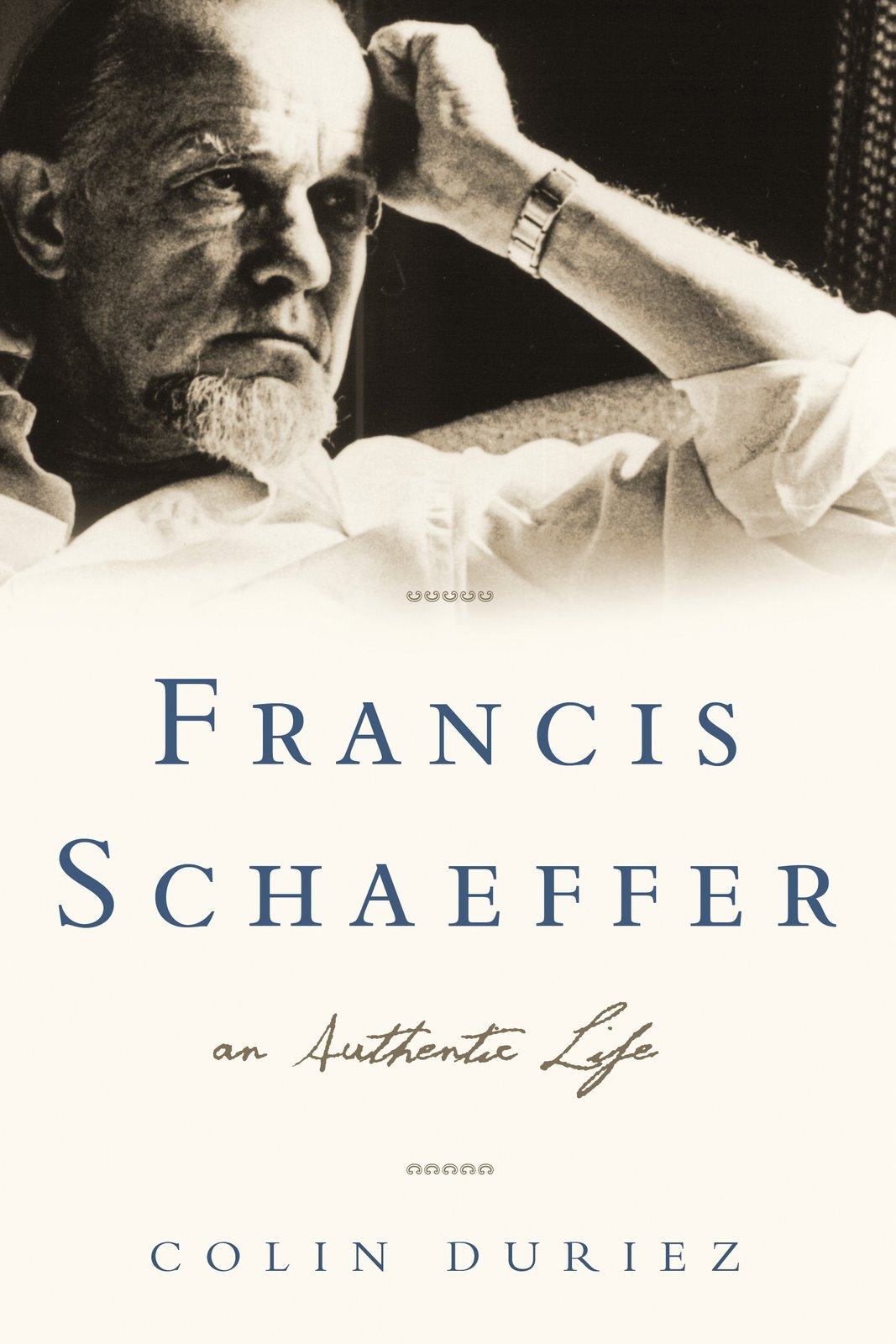 Francis Schaeffer






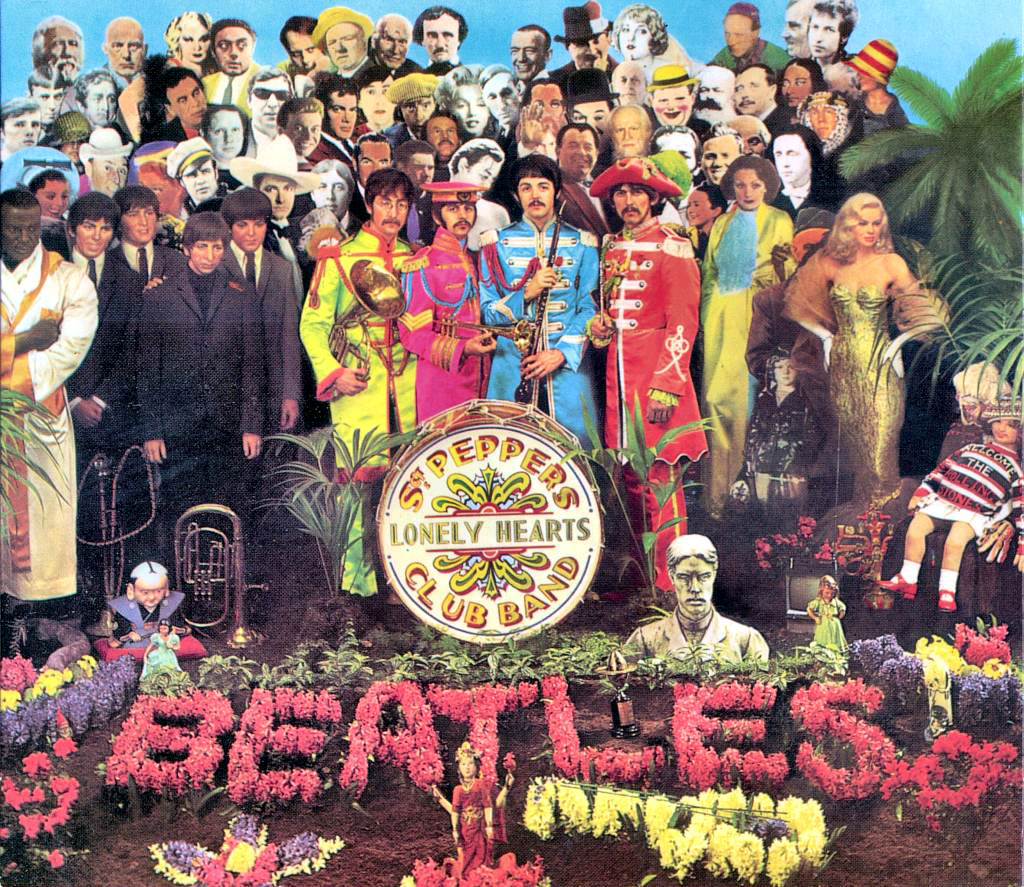


 In 1847 Sennacherib’s palace was discovered by the British diplomat and amateur archaeologist Austin Henry Layard. Layard’s discovery drew a huge amount of attention. Inscriptions discovered within the palace removed any doubt this was indeed Sennacherib’s famous palace. The finds were magnificent. The main focus of the excitement came from a room archaeologists labeled, “Room XXVI.”
 We see what the women of Lachish were wearing the day of the battle; we see the type of facial hair worn by the men. We see the type of military equipment and military techniques the Assyrians used to defeat Lachish and threaten Jerusalem. The relief gives us stunning play-by-play detail of the destruction of Lachish.
 The Provenance, or history, of the Lachish Relief is without dispute. The relief did not appear mysteriously on the black market. The dig of Sennacherib’s palace was well-documented and the relief clearly discovered from within the city of Nineveh and specifically in Room XXVI of Sennacherib’s palace. Even though Austin Henry Layard was an amateur archaeologist at the time of the discovery, the discovery has a strong provenance. Furthermore, leading archaeologists have been able to examine the relief and confirm its authenticity and importance.
 The destruction of Lachish is the most widely documented event from the Old Testament. The story is explained in four independent sources from the same era: 1) In the Bible; 2) In Assyrian cuneiform prisms (another discovery shown in picture at left) accounting the same events, 3) In archaeological excavations at the site of Lachish; and 4) In the monumental reliefs discovered in Nineveh.
 The discovery supports the construction of another archaeological marvel: Hezekiah’s Tunnel. Sennacherib’s army thought they had cut off all sources of water to Jerusalem. It would be a matter of a couple weeks until the people fled Jerusalem in need of water. The joke was on them. Hezekiah, without modern tools, had constructed a tunnel inside Jerusalem through 1750 feet of solid rock in order to reach an underground water supply. The tunnel wasn’t discovered in modern times until 1837. I have had the amazing privilege, with water up to my knees, of walking through all 1750 feet of the tunnel constructed to survive Sennacherib’s siege.


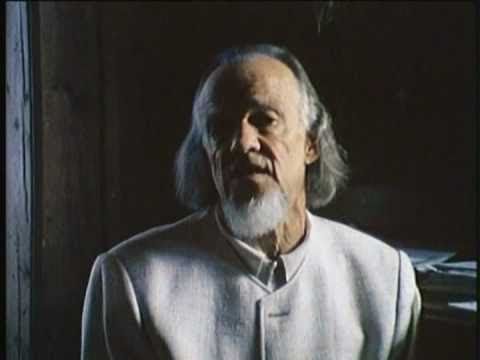
 One thing that echoed in my head while reading this chapter was the fact that, in the biblical account, human beings are uniquely made. We are created as a creature embodying the merge of spirit and material, heaven and earth. No other creature has this composition of “body and soul,” but are either one or the other.

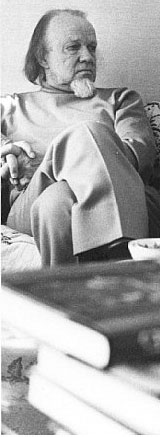










 The suit that Dylan Thomas was wearing in the days before his death in New York in 1953. Dylan was on his fourth lecture tour of America at the time. Jorge Fick, the owner of the suit, was an American abstract painter who was storing his clothes in the Chelsea Hotel, the same hotel in which Dylan was staying. Dylan is said to have borrowed the suit because, characteristically, he had run out of clean clothes.


 The Daily Hatch
