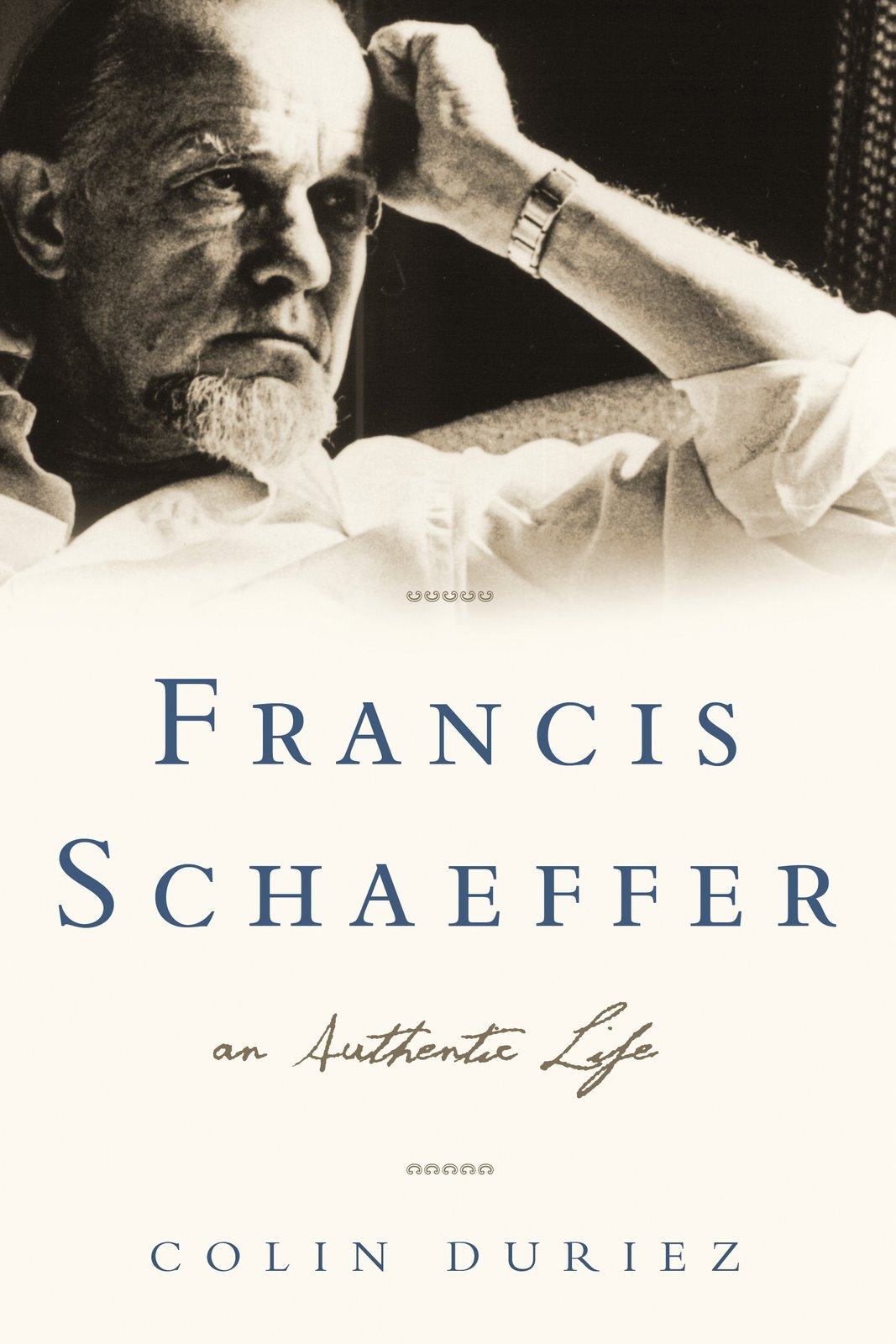
Category Archives: Francis Schaeffer

MUSIC MONDAY Cole Porter’s song “Anything goes” was also used in the Francis Schaeffer film WHATEVER HAPPENED TO THE HUMAN RACE?

Cole Porter’s song “Anything goes” was also used in the Francis Schaeffer film WHATEVER HAPPENED TO THE HUMAN RACE?

_______________

It’s De-Lovely – Anything Goes.mpg

Anything Goes (song)

From Wikipedia, the free encyclopedia
Jump to: navigation, search

Anything Goes” is a popular song written by Cole Porter for his musical Anything Goes (1934). Many of the lyrics feature humorous (but dated)[1] references to various figures of scandal and gossip in Depression-era high society. For example, one couplet refers to Sam Goldwyn’s notorious box-office failure Nana, which featured a star, Anna Sten, whose English was incomprehensible except to Goldwyn, who came from the same part of Europe.[2] Other 1930s society references include film producer Max Gordon, socialite Evalyn Walsh McLean and her highly promoted trip to the Soviet Union, interior design pioneer Lady Mendl‘s scandalous predilection for performing hand stands and cartwheels in public at the age of 70, and the financial woes common to “old money” families during the Depression, such as the Vanderbilts, Rockefellers and Whitneys. Most modern versions omit these lyrics, replacing them instead with generic examples of social upheaval.[3]

Notable recordings

In popular culture

References

  1. ^ website with original lyrics
  2. ^ G.D. Black, Hollywood Censored, p. 204
  3. ^ see e.g.1987 Broadway revival version, sung by Patti LuPone
  4. ^ Whitburn, Joel (2002). Top Adult Contemporary: 1961-2001. Record Research. p. 111.

_____________

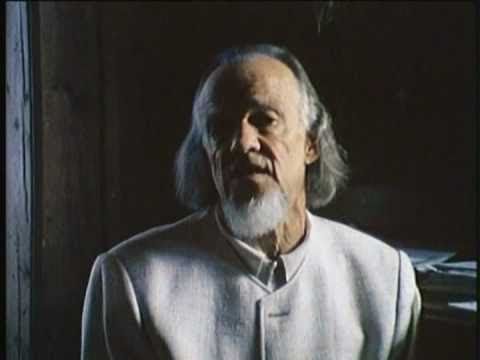
Dr. Francis Schaeffer also influenced me through his books and film series. Schaeffer is  seen in this film “With God on our side.”Francis Schaeffer’s voice can be heard while his film WHATEVER HAPPENED TO THE RACE? is playing in Part 2 at the 7:54 mark and it is a take off on the song “Anything goes.”

With God on Our Side! Part 4


In the film series “WHATEVER HAPPENED TO THE HUMAN RACE?” the arguments are presented  against abortion (Episode 1),  infanticide (Episode 2),   euthanasia (Episode 3), and then there is a discussion of the Christian versus Humanist worldview concerning the issue of “the basis for human dignity” in Episode 4 and then in the last episode a close look at the truth claims of the Bible.

Francis Schaeffer

__________________________

I truly believe that many of the problems we have today in the USA are due to the advancement of humanism in the last few decades in our society. Ronald Reagan appointed the evangelical Dr. C. Everett Koop to the position of Surgeon General in his administration. He partnered with Dr. Francis Schaeffer in making the video below. It is very valuable information for Christians to have.  Actually I have included a video below that includes comments from him on this subject.

Francis Schaeffer

Francis Schaeffer: “Whatever Happened to the Human Race” (Episode 4) THE BASIS FOR HUMAN DIGNITY

Francis Schaeffer “Whatever happened to the human race?” BASIS FOR HUMAN DIGNITY

Published on Oct 14, 2012

more of the insightful Drs. Schaeffer & C. Everett Koop

___________________

The flow of Materialism by Francis Schaeffer

There is a difference between believing the Bible is true and the Bible contains truth. (The 3:31 mark from this episode is actually the clip used above in the film “With God on our side.”)

Related posts:

Cole Porter “Let’s Do it, Let’s Fall in Love” in the movie MIDNIGHT IN PARIS

Cole Porter “Let’s Do it, Let’s Fall in Love” in the movie MIDNIGHT IN PARIS Midnight in Paris – Let’s Do It Let’s do it : Cole Porter.( Midnight in Paris ) Celebrate Wikipedia Loves Libraries at your institution in October/November. Let’s Do It, Let’s Fall in Love From Wikipedia, the free encyclopedia Jump to: […]

The Characters referenced in Woody Allen’s “Midnight in Paris” (Part 2 Cole Porter)

The song used in “Midnight in Paris” I am going through the famous characters that Woody Allen presents in his excellent movie “Midnight in Paris.”  By the way, I know that some of you are wondering how many posts I will have before I am finished. Right now I have plans to look at Fitzgerald, Heminingway, Juan […]


“Schaeffer Sunday” Taking on Ark Times Bloggers on the “Absurdity of Life without God!!” Part 2 (NIETZSCHE predicted that someday people would realize the implications of their atheism)

The Bible and Science (Part 02)

How Can We Demonstrate that Objective Moral Values Exist to a Nihilist Who Holds

Published on Dec 17, 2012

For more resources visit: http://www.reasonablefaith.org

The Bethinking National Apologetics Day Conference: “Countering the New Atheism” took place during the UK Reasonable Faith Tour in October 2011. Christian academics William Lane Craig, John Lennox, Peter J Williams and Gary Habermas lead 600 people in training on how to defend and proclaim the credibility of Christianity against the growing tide of secularism and New Atheist popular thought in western society.

In this session, William Lane Craig delivers his critique of Richard Dawkins’ objections to arguments for the existence of God, followed by questions and answers from the audience. In this clip, Dr Craig addresses a question about how objective moral values can be demonstrated to a Nihilist, who hold that they are illusory.

Richard Dawkins Vs. William Lane Craig Debate

Uploaded on Oct 23, 2011

Richard Dawkins TIMES:
7:20
32:15
1:03:05
1:19:33
1:39:33

William Lane Craig TIMES:
13:39
46:27
1:14:04
1:36:08

__________________

Francis Schaeffer – The Biblical Flow of History & Truth (1)

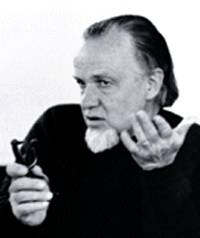
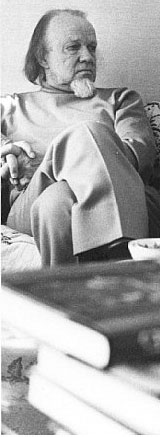
Francis Schaeffer pictured below

File:Francis Schaeffer.jpg

_________________

Life without God in the picture is absurdity!!!. That was the view of King Solomon when he wrote the Book of Ecclesiastes 3000 years ago and it is the view of many of the modern philosophers today. Modern man has tried to come up with a lasting meaning for life without God in the picture (life under the sun), but it is not possible. Without the infinite-personal God of the Bible to reveal moral absolutes then man is left to embrace moral relativism. In a time plus chance universe man is reduced to a machine and can not find a place for values such as love. Both of Francis Schaeffer’s film series have tackled these subjects and he shows how this is reflected in the arts.

Here are some posts I have done on the series “HOW SHOULD WE THEN LIVE? : Francis Schaeffer’s “How should we then live?” Video and outline of episode 10 “Final Choices” episode 9 “The Age of Personal Peace and Affluence”episode 8 “The Age of Fragmentation”episode 7 “The Age of Non-Reason” episode 6 “The Scientific Age”  episode 5 “The Revolutionary Age” episode 4 “The Reformation” episode 3 “The Renaissance”episode 2 “The Middle Ages,”, and  episode 1 “The Roman Age,” .

In the film series “WHATEVER HAPPENED TO THE HUMAN RACE?” the arguments are presented  against abortion (Episode 1),  infanticide (Episode 2),   euthenasia (Episode 3), and then there is a discussion of the Christian versus Humanist worldview concerning the issue of “the basis for human dignity” in Episode 4 and then in the last episode a close look at the truth claims of the Bible.

I have discussed many subjects with my liberal friends over at the Ark Times Blog in the past and I have taken them on now on the subject of the absurdity of life without God in the picture. Most of my responses included quotes from William Lane Craig’s book THE ABSURDITY OF LIFE WITHOUT GOD.  Here is the result of one of those encounters from June of 2013:

I wrote:

Zatharus, let me show you the result of your atheism. You wrote, “You are here because your parents had sex; knowledge of an afterlife is even less knowable than a before life; other than that created by the person, 42. Can we now discuss the dichotomy of existentialism?”
Then you quoted, Friedrich Nietzsche, “To live is to suffer, to survive is to find some meaning in the suffering.”
________________
NIETZSCHE understood what a lot of people today fail to realize.

William Lane Craig writes:

Do you understand the gravity of the alternatives before us? For if God exists, then there is hope for man. But if God does not exist, then all we are left with is despair. Do you understand why the question of God’s existence is so vital to man? As Francis Schaeffer aptly put it, “If God is dead, then man is dead, too.”

Unfortunately, the mass of mankind do not realize this fact. They continue on as though nothing has changed. I’m reminded of NIETZSCHE’S story of the madman who in the early morning hours burst into the marketplace, lantern in hand, crying, “I seek God! I seek God!” Since many of those standing about did not believe in God, he provoked much laughter. “Did God get lost?” they taunted him. “Or is he hiding? Or maybe he has gone on a voyage or emigrated!” Thus they yelled and laughed. Then, writes Nietzsche, the madman turned in their midst and pierced them with his eyes.

“Whither is God?” he cried, “I shall tell you. We have killed him—you and I. All of us are his murderers. But how have we done this? How were we able to drink up the sea? Who gave us the sponge to wipe away the entire horizon? What did we do when we unchained this earth from its sun? Whither is it moving now? Away from all suns? Are we not plunging continually? Backward, sideward, forward, in all directions? Is there any up or down left? Are we not straying as through an infinite nothing? Do we not feel the breath of empty space? Has it not become colder? Is not night and more night coming on all the while? Must not lanterns be lit in the morning? Do we not hear anything yet of the noise of the gravediggers who are burying God? … God is dead…. And we have killed him. How shall we, the murderers of all murderers, comfort ourselves?”14

The crowd stared at the madman in silence and astonishment. At last he dashed his lantern to the ground. “I have come too early,” he said. “This tremendous event is still on its way—it has not yet reached the ears of man.” People did not yet truly comprehend the consequences of what they had done in killing God. But NIETZSCHE predicted that someday people would realize the implications of their atheism; and this realization would usher in an age of nihilism—the destruction of all meaning and value in life. The end of Christianity, wrote NIETZSCHE, means the advent of nihilism. This most gruesome of guests is standing already at the door. “Our whole European culture is moving for some time now,” wrote NIETZSCHE, “with a tortured tension that is growing from decade to decade, as toward a catastrophe: restlessly, violently, headlong, like a river that wants to reach the end, that no longer reflects, that is afraid to reflect.”15

MOST PEOPLE STILL DO NOT REFLECT ON THE CONSEQUENCES OF ATHEISM AND SO, LIKE THE CROWD IN THE MARKETPLACE, GO UNKNOWINGLY ON THEIR WAY. But when we realize, as did Nietzsche, what atheism implies, then his question presses hard upon us: how shall we, the murderers of all murderers, comfort ourselves?

Related posts:

Francis Schaeffer’s “How should we then live?” Video and outline of episode 10 “Final Choices” (Schaeffer Sundays)

E P I S O D E 1 0   Dr. Francis Schaeffer – Episode X – Final Choices 27 min FINAL CHOICES I. Authoritarianism the Only Humanistic Social Option One man or an elite giving authoritative arbitrary absolutes. A. Society is sole absolute in absence of other absolutes. B. But society has to be […]

Francis Schaeffer’s “How should we then live?” Video and outline of episode 9 “The Age of Personal Peace and Affluence” (Schaeffer Sundays)

E P I S O D E 9 Dr. Francis Schaeffer – Episode IX – The Age of Personal Peace and Affluence 27 min T h e Age of Personal Peace and Afflunce I. By the Early 1960s People Were Bombarded From Every Side by Modern Man’s Humanistic Thought II. Modern Form of Humanistic Thought Leads […]

Francis Schaeffer’s “How should we then live?” Video and outline of episode 8 “The Age of Fragmentation” (Schaeffer Sundays)

E P I S O D E 8 Dr. Francis Schaeffer – Episode VIII – The Age of Fragmentation 27 min I saw this film series in 1979 and it had a major impact on me. T h e Age of FRAGMENTATION I. Art As a Vehicle Of Modern Thought A. Impressionism (Monet, Renoir, Pissarro, Sisley, […]

Francis Schaeffer’s “How should we then live?” Video and outline of episode 7 “The Age of Non-Reason” (Schaeffer Sundays)

E P I S O D E 7 Dr. Francis Schaeffer – Episode VII – The Age of Non Reason I am thrilled to get this film series with you. I saw it first in 1979 and it had such a big impact on me. Today’s episode is where we see modern humanist man act […]

Francis Schaeffer’s “How should we then live?” Video and outline of episode 6 “The Scientific Age” (Schaeffer Sundays)

E P I S O D E 6 How Should We Then Live 6#1 Uploaded by NoMirrorHDDHrorriMoN on Oct 3, 2011 How Should We Then Live? Episode 6 of 12 ________ I am sharing with you a film series that I saw in 1979. In this film Francis Schaeffer asserted that was a shift in […]

Francis Schaeffer’s “How should we then live?” Video and outline of episode 5 “The Revolutionary Age” (Schaeffer Sundays)

E P I S O D E 5 How Should We Then Live? Episode 5: The Revolutionary Age I was impacted by this film series by Francis Schaeffer back in the 1970′s and I wanted to share it with you. Francis Schaeffer noted, “Reformation Did Not Bring Perfection. But gradually on basis of biblical teaching there […]

Francis Schaeffer’s “How should we then live?” Video and outline of episode 4 “The Reformation” (Schaeffer Sundays)

Dr. Francis Schaeffer – Episode IV – The Reformation 27 min I was impacted by this film series by Francis Schaeffer back in the 1970′s and I wanted to share it with you. Schaeffer makes three key points concerning the Reformation: “1. Erasmian Christian humanism rejected by Farel. 2. Bible gives needed answers not only as to […]

“Schaeffer Sundays” Francis Schaeffer’s “How should we then live?” Video and outline of episode 3 “The Renaissance”

Francis Schaeffer’s “How should we then live?” Video and outline of episode 3 “The Renaissance” Francis Schaeffer: “How Should We Then Live?” (Episode 3) THE RENAISSANCE I was impacted by this film series by Francis Schaeffer back in the 1970′s and I wanted to share it with you. Schaeffer really shows why we have so […]

Francis Schaeffer’s “How should we then live?” Video and outline of episode 2 “The Middle Ages” (Schaeffer Sundays)

  Francis Schaeffer: “How Should We Then Live?” (Episode 2) THE MIDDLE AGES I was impacted by this film series by Francis Schaeffer back in the 1970′s and I wanted to share it with you. Schaeffer points out that during this time period unfortunately we have the “Church’s deviation from early church’s teaching in regard […]

Francis Schaeffer’s “How should we then live?” Video and outline of episode 1 “The Roman Age” (Schaeffer Sundays)

Francis Schaeffer: “How Should We Then Live?” (Episode 1) THE ROMAN AGE   Today I am starting a series that really had a big impact on my life back in the 1970′s when I first saw it. There are ten parts and today is the first. Francis Schaeffer takes a look at Rome and why […]

Francis Schaeffer: “Whatever Happened to the Human Race” (Episode 5) TRUTH AND HISTORY

Francis Schaeffer: “Whatever Happened to the Human Race” (Episode 5) TRUTH AND HISTORY Published on Oct 7, 2012 by AdamMetropolis This crucial series is narrated by the late Dr. Francis Schaeffer and former Surgeon General Dr. C. Everett Koop. Today, choices are being made that undermine human rights at their most basic level. Practices once […]

Francis Schaeffer: “Whatever Happened to the Human Race” (Episode 4) THE BASIS FOR HUMAN DIGNITY

The opening song at the beginning of this episode is very insightful. Francis Schaeffer: “Whatever Happened to the Human Race” (Episode 4) THE BASIS FOR HUMAN DIGNITY Published on Oct 7, 2012 by AdamMetropolis This crucial series is narrated by the late Dr. Francis Schaeffer and former Surgeon General Dr. C. Everett Koop. Today, choices […]

Francis Schaeffer: “Whatever Happened to the Human Race” (Episode 3) DEATH BY SOMEONE’S CHOICE

Francis Schaeffer: “Whatever Happened to the Human Race” (Episode 3) DEATH BY SOMEONE’S CHOICE Published on Oct 6, 2012 by AdamMetropolis This crucial series is narrated by the late Dr. Francis Schaeffer and former Surgeon General Dr. C. Everett Koop. Today, choices are being made that undermine human rights at their most basic level. Practices […]

Francis Schaeffer: “Whatever Happened to the Human Race?” (Episode 2) SLAUGHTER OF THE INNOCENTS

Francis Schaeffer: “Whatever Happened to the Human Race?” (Episode 2) SLAUGHTER OF THE INNOCENTS Published on Oct 6, 2012 by AdamMetropolis This crucial series is narrated by the late Dr. Francis Schaeffer and former Surgeon General Dr. C. Everett Koop. Today, choices are being made that undermine human rights at their most basic level. Practices […]

Francis Schaeffer: “Whatever Happened to the Human Race” (Episode 1) ABORTION OF THE HUMAN RACE

It is not possible to know where the pro-life evangelicals are coming from unless you look at the work of the person who inspired them the most. That person was Francis Schaeffer.  I do care about economic issues but the pro-life issue is the most important to me. Several years ago Adrian Rogers (past president of […]

Ecclesiastes, Purpose, Meaning, and the Necessity of God by Suiwen Liang (Quotes Will Durant, Madalyn Murray O’Hair, Stephen Jay Gould,Richard Dawkins, Jean-Paul Sartre,Bertrand Russell, Leo Tolstoy, Loren Eiseley,Aldous Huxley, G.K. Chesterton, Ravi Zacharias, and C.S. Lewis.)

Ecclesiastes 2-3 Published on Sep 19, 2012 Calvary Chapel Spring Valley | Sunday Evening | September 16, 2012 | Derek Neider _____________________________ I have written on the Book of Ecclesiastes and the subject of the meaning of our lives on several occasions on this blog. In this series on Ecclesiastes I hope to show how secular […]

Robert Leroe on Ecclesiastes (Mentions Thomas Aquinas, Princess Diana, Mother Teresa, King Solomon, King Rehoboam, Eugene Peterson, Chuck Swindoll, and John Newton.)

Ecclesiastes 1 Published on Sep 4, 2012 Calvary Chapel Spring Valley | Sunday Evening | September 2, 2012 | Pastor Derek Neider _____________________ I have written on the Book of Ecclesiastes and the subject of the meaning of our lives on several occasions on this blog. In this series on Ecclesiastes I hope to show how […]

Super Bowl, Black Eyed Peas, and the Meaning of Life and Ecclesiastes

Ecclesiastes 8-10 | Still Searching After All These Years Published on Oct 9, 2012 Calvary Chapel Spring Valley | Sunday Evening | October 7, 2012 | Pastor Derek Neider _______________________ Ecclesiastes 11-12 | Solomon Finds His Way Published on Oct 30, 2012 Calvary Chapel Spring Valley | Sunday Evening | October 28, 2012 | Pastor Derek Neider […]

Brian LePort on Ecclesiastes

Ecclesiastes 6-8 | Solomon Turns Over a New Leaf Published on Oct 2, 2012 Calvary Chapel Spring Valley | Sunday Evening | September 30, 2012 | Pastor Derek Neider _____________________ I have written on the Book of Ecclesiastes and the subject of the meaning of our lives on several occasions on this blog. In this series […]

J.W. Wartick on Ecclesiastes

Ecclesiastes 4-6 | Solomon’s Dissatisfaction Published on Sep 24, 2012 Calvary Chapel Spring Valley | Sunday Evening | September 23, 2012 | Pastor Derek Neider ___________________ I have written on the Book of Ecclesiastes and the subject of the meaning of our lives on several occasions on this blog. In this series on Ecclesiastes I hope […]

Overview of the Book of Ecclesiastes

Overview of the Book of Ecclesiastes Overview of the Book of EcclesiastesAuthor: Solomon or an unknown sage in the royal courtPurpose: To demonstrate that life viewed merely from a realistic human perspective must result in pessimism, and to offer hope through humble obedience and faithfulness to God until the final judgment.Date: 930-586 B.C. Ecclesiastes 2-3 Published on Sep 19, […]

Doy Moyer on the Book of Ecclesiastes and Apologetics

Ecclesiastes 1 Published on Sep 4, 2012 Calvary Chapel Spring Valley | Sunday Evening | September 2, 2012 | Pastor Derek Neider _____________________ I have written on the Book of Ecclesiastes and the subject of the meaning of our lives on several occasions on this blog. In this series on Ecclesiastes I hope to show how […]

Solomon was the author of Ecclesiastes

Ecclesiastes 8-10 | Still Searching After All These Years Published on Oct 9, 2012 Calvary Chapel Spring Valley | Sunday Evening | October 7, 2012 | Pastor Derek Neider _______________________ Ecclesiastes 11-12 | Solomon Finds His Way Published on Oct 30, 2012 Calvary Chapel Spring Valley | Sunday Evening | October 28, 2012 | Pastor Derek Neider […]

By Everette Hatcher III | Posted in Current Events | Edit | Comments (0)

“Sanctity of Life Saturday” An Angry Reaction to the pro-life movie “180”

An Angry Reaction to the pro-life movie “180”

__________

Francis Schaeffer pictured above and a young Dr. C. Everett Koop is pictured below:

I have posted many times in the past concerning the pro-life issue in the past and many of the posts have included the works of Francis Schaeffer and Dr. C. Everett Koop. I have even had many discussions on this subject on the Ark Times Blog. Recently I ran across some very good discussion videos on the issue of abortion and here is one below from Ray Comfort’s ministry.

An Angry Reaction to 180

Related posts:

Pro-life Atheist Nat Hentoff’s conversation with Ken Burns about the censoring of pro-life history!!!!!

Nat Hentoff is an atheist, but he became a pro-life activist because of the scientific evidence that shows that the unborn child is a distinct and separate human being and even has a separate DNA. His perspective is a very intriguing one that I thought you would be interested in. I have shared before many   […]

“Sanctity of Life Saturday”Taking on Ark Times Bloggers on various issues Part A “The Pro-life Issue” (Francis Schaeffer Quotes Part 1 includes the film SLAUGHTER OF THE INNOCENTS) (editorial cartoon)

I have gone back and forth and back and forth with many liberals on the Arkansas Times Blog on many issues such as abortion, human rights, welfare, poverty, gun control  and issues dealing with popular culture. Here is another exchange I had with them a while back. My username at the Ark Times Blog is Saline […]

Taking on Ark Times Bloggers on various issues Part A “The Pro-life Issue” (Francis Schaeffer Quotes Part 1 includes the film SLAUGHTER OF THE INNOCENTS) (editorial cartoon)

I have gone back and forth and back and forth with many liberals on the Arkansas Times Blog on many issues such as abortion, human rights, welfare, poverty, gun control  and issues dealing with popular culture. Here is another exchange I had with them a while back. My username at the Ark Times Blog is Saline […]

Remembering Dr. C. Everett Koop with pictures and quotes Part 14 (includes cartoon and pro-life poster)

Memorial Tribute Former Surgeon General C.Everett Koop © A Genuine G-Shot.wmv Dr. Koop On 2-25-13 we lost a great man when we lost Dr. C. Everett Koop. I have written over and over the last few years quoting Dr. C. Everett Koop and his good friend Francis Schaeffer. They both came together for the first […]

More and more people are seeing things from the pro-life point of view

I have gone back and forth and back and forth with many liberals on the Arkansas Times Blog on many issues such as abortion, human rights, welfare, poverty, gun control  and issues dealing with popular culture. Here is another exchange I had with them a while back, but what I did not expect was the number […]

“Sanctity of Life Saturday” Francis Schaeffer and Dr. C. Everett Koop asked Reagan to issue pro-life proclamation in 1983 (includes video ABORTION OF THE HUMAN RACE)

In the film series “WHATEVER HAPPENED TO THE HUMAN RACE?” the arguments are presented  against abortion (Episode 1),  infanticide (Episode 2),   euthenasia (Episode 3), and then there is a discussion of the Christian versus Humanist worldview concerning the issue of “the basis for human dignity” in Episode 4 and then in the last episode a close […]

Taking on Ark Times bloggers about abortion on the 40th anniversary date of Roe v. Wade (Part 4) “How do pro-lifers react to the movie THE CIDER HOUSE RULES?”

Francis Schaeffer pictured above._________ The best pro-life film I have ever seen below by Francis Schaeffer and Dr. C. Everett Koop “Whatever happened to the human race?” Over the years I have taken on the Ark Times liberal bloggers over and over and over concerning the issue of abortion. I asked over and over again […]

Paul Greenberg became pro-life because we are all “endowed with certain unalienable rights”

On January 20, 2013 I heard Paul Greenberg talk about the words of Thomas Jefferson that we are all “endowed with certain unalienable rights” and the most important one is the right to life. He mentioned this also in this speech below from 2011: Paul Greenberg Dinner Speech 2011 Fall 2011 Issue Some of you […]

How Pulitzer Prize-winning Paul Greenberg, one of the most respected and honored commentators in America, changed his mind about abortion and endorses now the pro-life view

It is not possible to know where the pro-life evangelicals are coming from unless you look at the work of the person who inspired them the most. That person was Francis Schaeffer.  I do care about economic issues but the pro-life issue is the most important to me. Several years ago Adrian Rogers (past president of […]

KARK Channel 4 in Little Rock distorts size of Little Rock pro-life march

I attended the March for Life at the Capitol in Little Rock on January 20, 2013 and I noticed that there were several thousand people gathered at the pro-life event. My son Wilson even got his picture taken with some of the Duggar sisters.  (Paul Greenberg’s speech was great.) The day before it was reported […]

Mike Huckabee influenced Paul Greenberg 30 years ago to become pro-life

January 20, 2013 I attended the March for Life in Little Rock and heard Paul Greenberg tell how he became pro-life and he gives a lot of the credit to a young Baptist preacher in Pine Bluff named Mike Huckabee. Here is an earlier article written by Greenberg that tells the story. WITNESS by Paul […]

March for Life in Little Rock on Jan 20, 2013!!!Pro-life posts can be seen on the www.thedailyhatch.org

I was thinking about the March for Life that is coming up on Jan 20, 2013 in Little Rock and that is why I posted this today. Uploaded by ProLifeOnCampus on Jan 29, 2011 The Miracle of Life by Valley Baptist Church of Bakersfield, California. _________ If you want to see some more great pro-life […]

Ronald Reagan’s pro-life tract

1/30/84 Part 1 of a speech to the National Religious Broadcasters. June 10, 2004, 10:30 a.m. Abortion and the Conscience of the Nation Ronald Reagan’s pro-life tract. EDITOR’S NOTE: While president, Ronald Reagan penned this article for The Human Life Review, unsolicited. It ran in the Review‘s Spring 1983, issue and is reprinted here with permission. The case […]

Should Michele Bachmann be punished for taking pro-life views from Schaeffer and Koop? (March for Life January 20, 2013)

  Dr. C. Everett Koop I was thinking about the March for Life that is coming up on Jan 20, 2013  and that is why I posted this today Secular leaps of faith 39 Comments Written by Janie B. Cheaney August 15, 2011, 2:17 PM I’m willing to cut Ryan Lizza some slack. His profile […]

The film “Whatever Happened to the Human Race?” and the pro-life movement!!! (March for Life in Little Rock Jan 20, 2013)

I was thinking about the March for Life that is coming up on Jan 20, 2013 in Little Rock and that is why I posted this today. This film really did fire up the pro-life movement worldwide. Whatever Happened to the Human Race? By Francis A. Schaeffer and C. Everett Koop, M.D. (Fleming H. Revell […]

The Purpose of Our Creation Fulfilled Dr Francis Schaeffer

______________

The Purpose of Our Creation Fulfilled
Dr Francis Schaeffer

Who Knows Our Purpose?
Why are we who we are? Why do we exist? These are not crazy questions. They are crucial
questions, never more so than at the end of twentieth century. But where do we go to find
answers? Do we begin with ourselves? Do we start with man as man? No. we must not.
Starting with ourselves will never help us to understand ourselves. This is the tragic irony
of twentieth century man. To find help, to understand our purpose as humans. begin with
God. triune God – Father. Son and Holy Spirit. Here, or rather with God, we find our
answers.
What do we know of the Trinity prior to the creation of the world? We know the Trinity
existed as three persons yet one God, and that there was communication and love between
the three persons of the Trinity prior to the creation of all else. The implication tells us of
the essence of the universe as it is; and there are two possibilities: one is the beginning of
all things as a de-personal beginning and the other as a personal beginning. The Scriptural
emphasis is on the side of the personal. That is, that the universe – speaking of it this way
and not in a pantheistic way – does not begin with a new personal beginning, but originating
from an eternal personal Trinity – three persons loving each other and in communication.
God in his Trinity. he is the one who explains human existence. How? Genesis 1:26 – 1 :31
says there is a special circle or class of creation that can be designated in “our image”, that
which is, in this sense, like God. Here we are told that not only is there personality in the
true sense (God), but something more. God made a portion of creation different from the
rest to be like himself. The very word “image” suggests an important distinction between
humans and other portions of creation. This is the mannishness of man. This is what
distinguishes us from everything else.
Of course, we may ask the question, “Why?” Or we can word it in other ways, “What is the
reason for man? What is the person of man? What is the purpose of man? What is the
reason for his existence?” Surely this is the cry of twentieth century man, if he is a sensitive
man at all. It recalls the reason for human existence. So when people ask me in a discussion
what the Christian answer is to the reason of existence, without hesitancy 1 would say the
Bible speaks of the purpose of our creation when it says to love God with all our heart and
soul and mind. Yet this must be understood in the Scriptural framework. It is not to love
God in the concept of a Kierkegaardian (Soren Kierkegaard 1813-55) leap. It is not to love
God as though faith were something in itself. The answer, according to the Bible, is not a
faith in faith, but a faith in one who, is there and, therefore, it is a living relationship with
him. It is to love God with all our heart and soul and mind, but definitely in the Biblical
sense.

In Deuteronomy 6: 4-6 we read these words:
“Hear. O Israel: The Lord our God, the Lord is one. Love the Lord your God with all your
heart and with all your soul and with all your strength. These commandments that I give
you today are to be upon your hearts.”
They are to teach the commands not in some external form but they are to be in their hearts.
You are to love the Lord your God with all your heart, with all your soul, with all your
strength … this is not to be an external thing put on like a hat in my religious moments, or
for a humanistic reason; but it is rather to be the set of my heart.
This is the Old Testament statement that Jesus quoted in Matthew 22: 34-40; Mark 12: 28-
31; and Luke 10: 25-28. So Jesus” restatement sweeps us back to the beginning of our
relationship with God, not ours only but mankind’s, and not only mankind’s but each
individual man. This is the basis of the first commandment; this is the reason for Adam’s
existence; and it is the reason for your existence, or you have none, or no sufficient one. It
is the call of loving, personal fellowship and communication with the God who is here.
And, then, with each other – those who are my neighbours in the sense of being the same
structure as myself; those who are my kind; those who are in the same circle of creation as
that in which I stand, namely people. Consequently. the fulfilling of the purpose of our
existence is to have fellowship, communication and love – first to God, and then to those
who are our kind – all mankind.
Man’s Sinfulness and the Confusion of Purpose
Yet, we might ask, has not man’s rebellion and wickedness so much seen in history
changed the purpose for our being? Might we now say that our purpose is to resolve the
dilemma of guilt, shame, and death”!
In Genesis 3:8 we notice that prior to the Fall. God was in open communication with Adam
and Eve, whom he made in his own image. God walked with man. God talked to man.
There was love and fellowship, communication – true communication, true love, true
fellowship – between the personal creator and the personal created. We are told in the New
Testament “For God so loved the world that He gave His only begotten Son, that
whosoever believes in Him, shall not perish but have eternal life. “ John 3: 16. But if God
loves the world in its present rebellious condition surely, then, God loved the world prior to
the revolt. “God so loved the world” did not begin when man became a fallen man – it is
God’s natural relationship to the man, the creature which He created in the particular sense
“like Himself”. Man is not like God in the sense that God is infinite and man is finite; God
is the Creator, man is the created. Nevertheless, God has created man like himself, the God
who is a personal God. We have been made in his image. It is very plain that there was real
communication. Fellowship, love, God to man, man to God, man to man in the case of
Adam to Eve, and communication between God and man. Surely this is an overwhelming
wonder of fulfilment to that which man finds himself to be.

However. in Genesis 2:17 we have God very carefully speaking these words, “But you
must not eat from the tree of the knowledge of good and evil, for when you eat of it you
will surely die.” This is not an abstraction. It is the single test of love. Any test could be
given. It is not that God created a fruit that was evil in itself. Not at all. But there is a test of
love given, a place where in this one who is different from the machine is able to respond on a different level, because he is made different than the machine. This is not a person-to-machine relationship. It is a person-to-person relationship, and God gives man the tremendous opportunity to respond in love and fellowship on the level of that which he was uniquely. We find Jesus later saying “If you love me, keep my commandments”. And this

too was the emphasis of the Old Testament – if we love God we will keep his

commandments. So too for Adam and Eve: if they loved him they would keep his
commands.
Here was a single, simple test: if you love me, keep my commandments. Why? Because
this is a person-to-person relationship, the high calling of responding on the personal,
loving level, on the basis of an all-sufficient verbalised communication which carries a
motivated call. It is not vague in any of its parts. It is on a clear base, and there is a clear
motivation and a proper one. His being made personal does not remove the factor that he
was the creature, and being the creature he is not to set up a rival centre of the universe.
And as he stands there, this is the whole question. Person in loving, non-mechanical,
choice: where you have the wonder of what you are, or where you set up a rival centre in
the universe. The high calling of loving God also includes thinking after him and going
after him.
Scripture emphasizes that the Fall was an historic, space-time, once-for-all event. And here
we have the Serpent, the one who has revolted. We are told carefully in Scripture, desiring
to be like the Most High, he now comes and speaks the same word to man (Genesis 3: 4.5)
“You will not surely die,” the serpent said to the woman. “For God knows that when you
eat of it your eyes will be opened, and you will be like God, knowing good and evil.” This
is a striking parallel to Genesis 2: 17. Where God said in “the day” you shall die. Satan
says. “For God knows that when you eat of it your eyes will be opened, and you will be like
God. knowing good and evil.” And here is the thing in tension. In Genesis 2: 17, God offers
not just a vague statement. but he is saying that which is the case. In Scripture it is clearly
indicated that there are three deaths which are the result of our rebellion against the Creator.
The second death is physical death, the third death is the final judgement, an eternal
separation in its total sense. But the first death is separation from God and this is the real
death. The physical death and the death that will come in that future day of judgement at
the hand of the Lamb of God who becomes judge -these are merely the natural, horizontal
extensions of the death which is the central death; namely separation from God. After all,
man was made to be in relationship with this God. In the day that he revolted he died.
Twentieth century man does not understand this, even though we see it all around us and
feel it intensely in us. But if we miss this point we will never understand how much the
gospel can help us. John 3: 16 says, “For God so loved the world that he gave his one and
only Son. that whoever believes in him shall not perish but have eternal life.” So, as we
look at this we must understand that the second half of this verse is just as certain in an
existential situation as is the first. When at the moment, on the day I believed on Christ as
saviour I have everlasting life. But equally until that moment comes, I am under the wrath
of God, and as such, I am dead. In this sense, we can speak truly that man is dead.
And of all the generations that wrestled with this, we Christians of the second half of the
twentieth century ought to .appreciate it best. On every side we hear the cry. “Man is dead!”
In this sense the twentieth century already knows a portion of the truth. They do not know
why they are dead – death is related to the wrong causes and factors, but they shout “I am
dead!” This is not just a stand or a piece of theatre, but the sensitivity of many of today’s
lost, feeling the horribleness of the nobility of man and. yet, the death of man. The
sensitivity of many towards this will pull those of us who are Christians to shreds. The lost
are sensitive to the horribleness of the nobility man, but sense a being without purpose,
meaningless and dead. You see, this should not be so hard for us to comprehend. In Genesis
3: 22 it is written, “And the Lord God said “The man has now become like one of us,
knowing good and evil. He must not be allowed to reach out his hand and take also from

the tree of life and eat, and live forever.” Now you will notice back in the serpent’s
temptation in 3:5 “You will be like God, knowing good and evil” that this is a half-lie, but
not a total lie. Because of this rebellion and real consequence, God drove the man and
woman out of the garden and placed at the east a cherubim and a flaming sword which
turned every way to keep them away from the tree of life.
From the true sense of that which was the purpose of man, and the only real fulfilment of
man both as mankind and the individual personal fulfilment, man is dead. But from the side
of Satan’s desire and then man’s desire, he did have freedom. Freedom not in the sense that
man was created free, because the Biblical sense is that he was created wonderfully free.
Any time you find a modern man you find a deterministic man. Modern man finds no way
for an integrity of the personality making true choices in a true history. But the Bible says
as man was made, he was made in the true cause-and-effect history and he was significant
in that history. He was a real man making a real choice. And this has been the message of
the Church, not only in the less strict theological stream. Reformed theologians have
insisted that Adam stood in total freedom making a choice without prior conditioning. In
this sense, man was always free, but he was free now in a new way in that he set up a rival
centre of the universe.
This was a different freedom – a freedom with two sides. On the one side, it is a freedom to
shake one’s fist in the face of the Creator; on the other side, a freedom to be dead.
Consequently, man is shut away from that continuity of continued life as it is spoken here.
Man in rebellion. Man to destroy. Man to leave much of the world in waste, to rum that
which has been under his dominion into a horror of great darkness with flashes of beauty
across its dark screen and yet, as a whole, that which would cause us to bow our heads in
sorrow.
What a tragedy! Eternal life and fullness of life: Eternal life – a concept of physical
continuity; the fullness of life – the real life of fellowship with God. Both smashed because
man has sinned. You will return to the earth. You will die. But more than that: in this
moment, O man. you are dead! At this time, as the man and woman are driven from the
garden, we can think of it in visual terms, in the strokes of a paintbrush. Adam and Eve
turned away from the garden, going out away from God in grief. Or we could say it in the
harsh words of modern theatre such as Sartre would say it: “There is no infinite reference
point and, consequently, I am ruined.” In both cases the same thing is stated: Driven out.
Smashed fellowship.
Our Purpose Made Possible
Yet we do not need to stop at the point of man’s banishment from the Garden. The Bible
does not stop there, even if contemporary man, existentially, knows nothing more than
lustiness. Consider something of even greater awe and significance: Jesus Christ hanging
on the cross saying “My God. My God! Why have you forsaken me?” (Mt 27: 46; Mk 15:
34). Here is the second person of the Trinity, incarnate God, taking my stead, my place. He
substitutes himself in the place where I rightly should be. In my place, the separation which
is as a result of man’s sin is carried into the Trinity itself. Scripture says that at this point
the sun was darkened, and there were shakings of the earth (Mt 27: 45-56; Mk IS: 33-38;
Lk 23: 44-46). But surely if we understand this not as some religious story but understand it
rather as that which is, can we wonder that the earth shakes? Here we have the separation
caused by the sin of man being carried into the eternal Trinity itself in which there has been
eternal communication and love. Is it any wonder that all shakes?
The eternal unity before the creation of the world, the eternal fellowship, the love, the

communication, the relationships of these things, now broken as He becomes our substitute.
The physical wounds themselves were painful, but they are not the heart of the matter. The
eternal Son of God is willing to become our substitute to take our place, to bear our guilt at
that crucial place of the separation that has come because of man’s sin. “My God, my God!
Why have you forsaken me?” Then as the work comes to conclusion, He can say. “It is
finished.” (In 19: 30) It is accomplished; it is done. He can say, “Father, into your hands I
commit my spirit.” (Lk 23: 46)
The broken fellowship carried up into the loving relationship of the Trinity and conquered
there, not through God ever saying “Your sin does not matter.” But saying the opposite: “It
is against my holiness and., therefore, against an absolute moral standard of the universe
rooted not behind me but in my own character. Yet my love holds to the high point of
carrying this up into the Trinity and Jesus as the substitute, the Lamb of God, bears the
individual guilt.” And the fellowship, the communication, and the love, broken in Adam’s
rebellion, and then over and over again in each of our rebellions and deliberate sins, is
restored. This is the message.
But it is more, it does not end here; because as we listen to John the Baptist, he makes two
prophecies concerning the coming of the Messiah. The first is “Behold the Lamb of God
who takes away the sin of the world”. (John 1: 29-33) But with this prophecy is a further
promise. The Lamb of God who was baptised by the Spirit will, himself baptise by the
Spirit. These two stand together. Indeed the Lamb of God is not only the Lamb of God but
also the sender of the Holy Spirit. When I accept Christ as my saviour there is a forensic act
– justification, God declaring that on the basis of Christ’s finished work my guilt is removed
once and forever. In addition, the Holy Spirit comes to indwell the individual Christian and
on this basis the fruit of the Spirit (love, joy, peace, patience, Gal 5: 22, 23) is produced in
our lives.

The fruit of the Spirit is love and all the other qualities (patience, kindness, goodness, etc.)
flow from this love that is the fruit. The fruit-bearing of the Spirit in the individual
Christian is not just in a future day in heaven. Having accepted Christ, being indwelt by the
Holy Spirit as I yield to his working, he will bear the fruit which fulfils the commandment
summarised by Jesus as “Love the Lord your God with all your heart and the second. Love
your neighbour as yourself” (Lk 10: 27). He will bear this fruit through me. It isn”t just a
theoretical system. It is a truth bringing into practice that which is the call of man in the
first place – to love God and to love those who are our kind.
This is the meaning I would suggest of 1 Corinthians 13. It isn”t to be taken in some liberal
theological sense that makes love just some big, soft, characterless thing. It is against the
flaming holiness of God. Nevertheless, I am to love God with all my heart, soul and mind,
and I am to love my neighbour as myself. While it is something which will not be perfect in
this life, it should be substantial in the work of the Holy Spirit in every individual
Christian’s life. It is not to be theoretical. If you are born again, you are indwelt by the
Spirit of Jesus Christ, the Spirit of God, the Holy Spirit, the Spirit of Truth. But if you are
indwelt by him then you are a human (in contrast to a machine) called to walk in the Spirit.
Let the Holy Spirit produce his fruit through you and me. Here now we fulfil the first
commandment. Here we are returned in practice to the purpose of our creation. This is what we were made to be; and on the basis of the finished work of Christ and with the indwelling of the Holy Spirit, we are called to the fulfillment of our purpose of a person-to-person relationship with the God who is there, and then to our fellow men. Love and

communication in each proper place: not just an abstract redemption, not even only heaven,
but this is the Christian call. This is the reason Jesus can say that when we love one another

(not just Christians but also others) we show we are his disciples. Not just because he
loved, but through his redemption and the indwelling of the Holy Spirit and the fruit of the
Spirit, we show forth the whole structure of what is. After we accept Jesus Christ as our
Lord and Saviour, the two things that were smashed (eternal life and fullness of life) are
restored. When we accept Christ as our Saviour, indeed we are promised that as we die to
go to be with Jesus. Nevertheless there is the resurrection and the continuity of life. There is
the restoration of what can be spoken of as life at once and forever.
But let us not end with our thinking here. To end here is to miss all the wonder of being
restored to the purpose of our creation in the present life in a substantial fashion. There is
fullness of life:
As we walk in faith and yield ourselves to the Holy Spirit, then there is a practical
existential meaning for this moment. As Christ says at the end of His high priestly prayer in
John 17: 26; “I have made you known to them, and will continue to make you known in
order that the love you have for me may be in them and that I myself may be in them.” The
love that always was between the Father and the Son, now is not only toward us, but is to
be in us. Not mechanically administered, not as a machine, but as a relationship with man
who is made in the image of God. As we yield ourselves in faith to the work of Christ and
to the Holy Spirit, this becomes not a sentence but a poor, never perfect, always growing,
yet substantial reality that can be observed in the external world. Remember that our theme
is the purpose of our creation fulfilled.
Our Purpose Known, Experienced, and Proclaimed
Four points, in conclusion. First: How wonderful, then, is the death of Jesus Christ in space,
time and history. What love it shows! How far removed from that soft nothingness, that
amoral concept of” modem man’s word, god. How opposite. How wonderful is this love.
John 3: 16 “For God so loved the world that he gave his one and only Son, that whoever
believes in him shall not perish but have eternal life.” It is not a universal salvation, but it is
for those who. on the basis of their mannishness, accept the gift. Jesus carefully ties this to
his historic death on the cross, that whosoever believes in him should not perish but have
everlasting life. How wonderful is that death on the cross!
Secondly, the command to love God is now meant to be the Christian’s first commandment.
We are not saved for an antinomian (lawlessness) end. We are saved to fulfil the purpose of
our creation in the first place, and not on merely some offer of our future day in perfection,
but now – through the work of the Spirit in our life. Love God with all our heart, soul, and
mind. When we do not love God, we are not fulfilling the purpose of our creation. As such,
we have returned to the sin of Adam and Eve: to think alone, to will alone, as though we are
God. When we fail to do this, the peace of God will die in our hearts; our fellowship with
God will wither. Once more we have disobediently presumed upon that tremendous love,
fellowship, and communion that God offers us. And it is not only wrong, it is destructive.
We will have destroyed the purpose of our creation anew, the purpose for which God has
made us. Christians should not expect the peace of God in their hearts while trampling upon
the love of God – this is too much, it is not this way. And then we must learn the ever
present wonder of the present cleansing of the Blood of the Lamb, to return again, and say
we are sorry and have our fellowship restored on the basis of the finished work of the Son
of God.
Thirdly, as we yield to the Holy Spirit, there will be fruit. The first fruit is the fulfilling of
the command love God with all our heart, soul and mind. But as we yield to the Holy Spirit
there will be a fruit to love othersn and each in his or her proper way. For example, the

hushand shall love his wife (Eph 5: 25-29). There is to be a love in the home within the
legal circle of marriage. There must be a legal circle if we are to live in the universe that
has meaning. But inside that legal circle there is to be love. There arc other loves. The Holy
Spirit will produce a non-confused loving one’s neighbour, but each in his own place or
position. In Acts 4: 32-35 we are told of the sharing that went on amongst the early
Christians. This sharing is not to be mechanically administered either by the Slate or the
Church or a Christian organisation. We cannot make people share things like this together
but the call is to share. Loving each other through the work of the Holy Spirit is not some
mere emotional feeling al a certain point, but it is the practical outworking from that love
into the practical things of life. Rejoice with those that rejoice, weep with those that weep.
bear each other’s burdens. This cannot be separated from the bearing of the burdens of the
full man – economic, psychological. Emotional, moral, social, etc. among the brotherhood
of those who have become brothers because they have a common Father
Fourthly. while the Bible makes plain that threre are two humanities, (those who are saved,
and those who are not saved): it equally makes plain that there is one humanity. We are two
humanities ethically, morally, in relationship to God, in a fulfilled purpose. But in the
structure of what man was made originally, there was a unity of man. We are of the same
flesh and bones. If there is to be a fulfilling of the purpose of our creation it will also ne
exhibited in this: our love will not stop at ourselves. It will flow out in the most practical of
forms tp all those who arc my kind. It will most certainly express the gospel to our lost
generation. Here is the context of evangelism. This is the fulfilment of the purpose of our
creation at his era and this time of the moving reels of history.
1 This is an edited version .of a lecture given by Dr Schaeffer. The original lecture is
available on cassette (number XI60) from: The Manor House. Greatham. Liss. Hants GU33
6HF UK; phone 01420 538436.


_____________

Series “FRANCIS SCHAEFFER ANALYZES ART AND CULTURE” traces Schaeffer’s comments on modern culture and can be found weekly on www.thedailyhatch.org !!!!! Impressionism down to Modern Art examined!!

__________


Francis Schaeffer pictured below:

______________

Francis Schaeffer pictured below:

_____________

This series of posts entitled  “FRANCIS SCHAEFFER ANALYZES ART AND CULTURE” touches things that affect our culture today. The first post took a look at the foundations of our modern society today that were set by the Roman Democracy 2000 years ago and then it related it to the art we see today.

The second post took a  look at how modern art was born by discussing Monet, Renoir, Pissaro, Sisley, Degas,Cezanne, Van Gogh, Gauguin, Seurat, and Picasso.” The third post took a look at PAUL GAUGUIN’S 3 QUESTIONS: “Where do we come from? What art we? Where are we going? and his conclusion was a suicide attempt,” and also featured the art work of  Mike Kelley. The fourth post took a look at the work of H.R. Rookmaaker and his close relationship to Schaeffer.

Here is an example of how insightful Schaeffer can be:

Monet, Renoir, Pissaro, Sisley, Degas were following nature as it has been called in their painting they were impressionists.They painted only what their eyes brought them. But was there reality behind the light waves reaching their eyes? After 1885 Monet carried this to its conclusion and reality tended to become a dream. With impressionism the door was open for art to become the vehicle for modern thought. As reality became a dream, impressionism began to fall apart. These men Cezanne, Van Gogh, Gauguin, Seurat, all great post Impressionists felt the problem, felt the loss of meaning. They set out to solve the problem, to find the way back to reality, to the absolute behind the individual things, behind the particulars, ultimately they failed.
I am not saying that these painters were always consciously painting their philosophy of life, but rather in their work as a whole their worldview was often reflected. Cezanne reduced nature to what he considered its basic geometric forms. In this he was searching for an universal which would tie all kinds of individual things in nature together, but this gave a broken fragmented appearance to his pictures.
File:Paul Cézanne 047.jpg
Les Grandes Baigneuses, 1898–1905: the triumph of Poussinesque stability and geometric balance.
________________________________
In his bathers there is much freshness, much vitality. An absolute wonder in the balance of the picture as a whole, but he portrayed not only nature but also man himself in fragmented form. 
I want to stress that I am not minimizing these men as men. To read van Gogh’s letters is to weep for the pain of this sensitive man. Nor do I minimize their talent as painters. Their work often has great beauty indeed. But their art did become the vehicle of modern man’s view of fractured truth and light. As philosophy had moved from unity to fragmentation so did painting. In 1912 Kaczynski wrote an article saying that in so far as the old harmony, that is an unity of knowledge have been lost, that only two possibilities remained: extreme abstraction or extreme naturalism, both he said were equal.
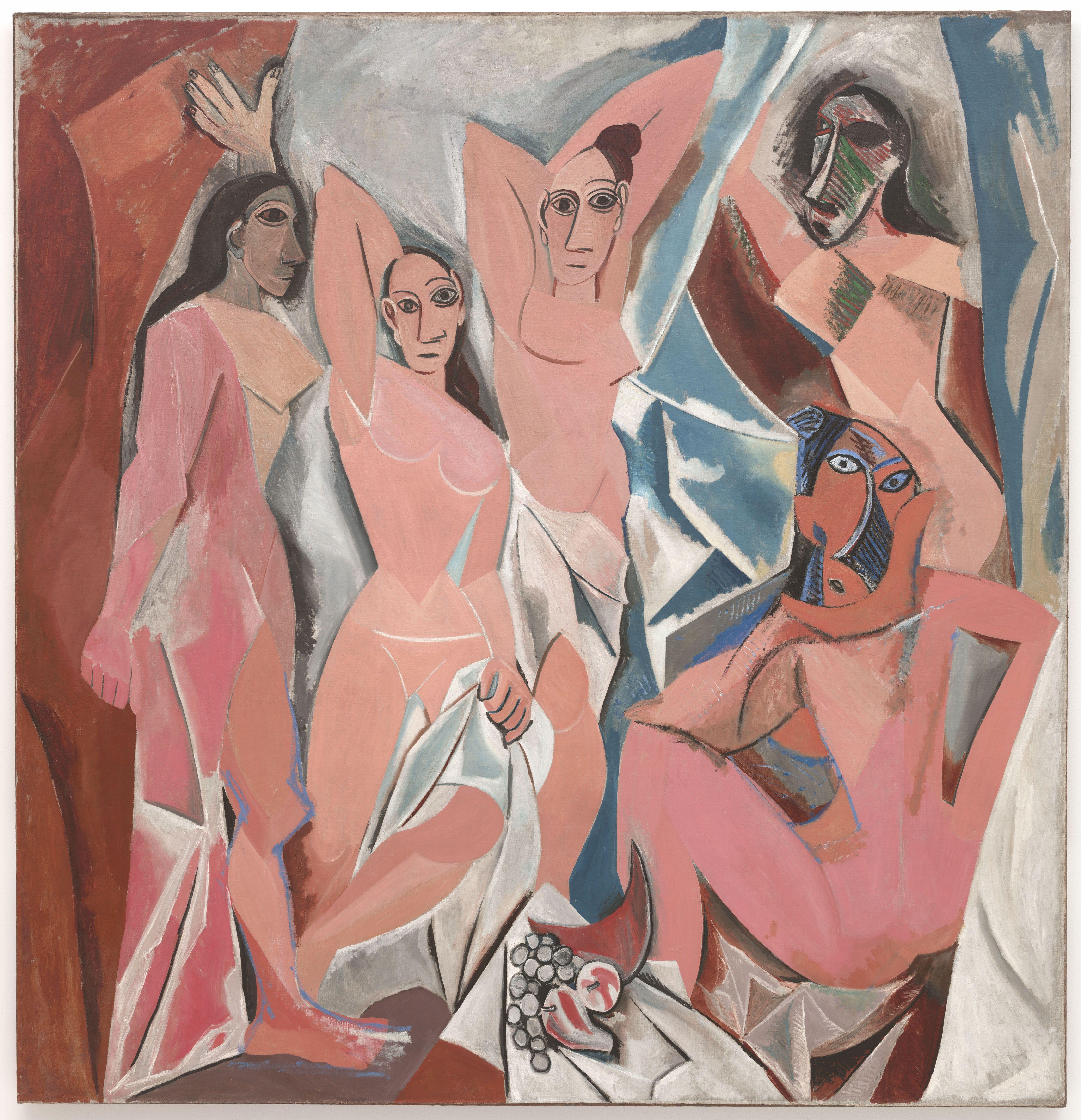
File:Les Demoiselles d'Avignon.jpg
With this painting modern art was born. Picasso painted it in 1907 and called it Les Demoiselles d’Avignon. It unites Cezzanne’s fragmentation with Gauguin’s concept of the noble savage using the form of the African mask which was popular with Parisian art circle of that time. In great art technique is united with worldview and the technique of fragmentation works well with the worldview of modern man. A view of a fragmented world and a fragmented man and a complete break with the art of the Renaissance which was founded on man’s humanist hopes.
Here man is made to be less than man. Humanity is lost. Speaking of a part of Picasso’s private collection of his own works David Douglas Duncan says “Of course, not one of these pictures  was actually a portrait, but his prophecy of a ruined world.”
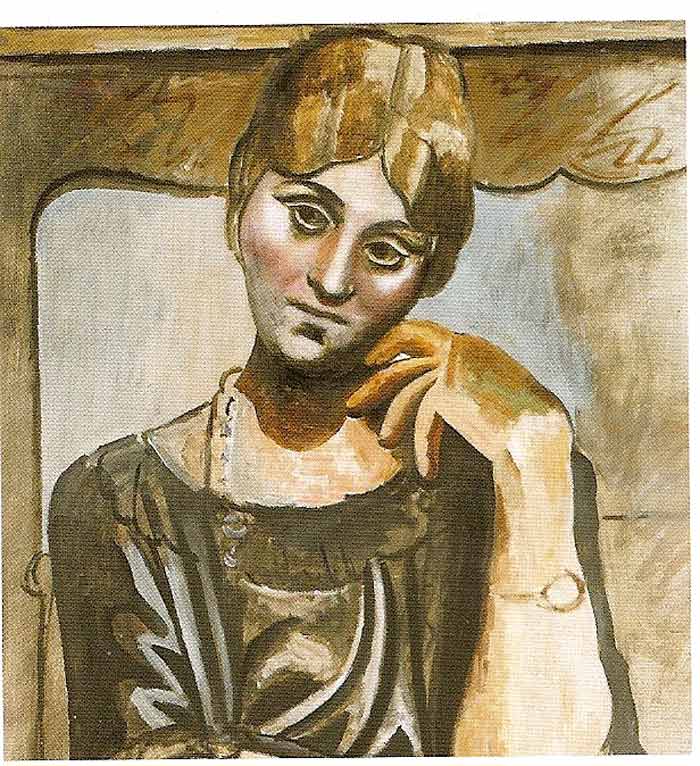
But Picasso himself could not  live  with this loss of the human. When he was in love with Olga and later Jacqueline he did not consistently paint them in a fragmented way. At crucial 
points of their relationship he painted them as they really were with all his genius, with all their humanity. When he was painting his own young children he did not use fragmented techniques and presentation. Picasso had many mistresses, but these were the two women he married. It is interesting that Jacqueline kept one of these paintings in her private sitting room. Duncan says of this lovely picture, “Hanging precariously on an old nail driven high on one of La Californie’s (Picasso and Jacqueline’s home) second floor sitting room walls, a portrait of Jacqueline Picasso reigns supreme. The room is her  domain…Painted in oil with charcoal, the picture has been at her side since shortly after she and the maestro met…She loves it and wants in nearby.” 
I want you to understand that I am not saying that gentleness and humanness is not present in modern art, but as the techniques of modern art advanced, humanity was increasingly 
fragmented–as we shall see, for example, with Marcel Duchamp….The opposite of fragmentation would be unity, and the old philosophic thinkers thought they could bring forth this unity from  the humanist base and then they gave this up.
_______________

Picasso and Olga Khokhlova

Their son Paulo (Paul) was born in 1921 (and died in 1975), influencing Picasso’s imagery to turn to mother and child themes.  Paul’s three children are Pablito (1949-1973), Marina (born in 1951), and Bernard (1959).  Some of the Picassos in this Saper Galleries exhibition are from Marina and Bernard’s  personal Picasso collection.

Pablo Picasso. Portrait of Paul Picasso as a Child.

Portrait of Paul Picasso as a Child. 1923. Oil on canvas.
Collection of Paul Picasso, Paris, France.

___________________

Francis Schaeffer pictured above

________________

The fifth post discussed the work of John Cage and how his work influenced the artist  Gerhard Richter of Germany. The sixth post took a look at the famous painting “The Adoration of the Lamb” by Jan Van Eyck which was saved by MONUMENT MEN IN WW2 and also took a look at the evangelical artist Makoto Fujimura. The seventh post discussed the philosophical work of Jean Paul Sartre and took a look at the artwork of  David Hooker.

Francis Schaeffer pictured below:

______

The eighth post showed and discussed the film “The Last Year at Marienbad” by Alain Resnais and featured the artwork of  Richard Tuttle and looked into his return to the faith of his youth. The ninth post noted the comments of Francis Schaeffer on the artwork of Jasper Johns and also featured the artwork of  Cai Guo-Qiang.___

The tenth post was about the art historian David Douglas Duncan and it also featured the artwork of  Georges Rouault. The eleventh post  discussed Thomas Aquinas and his Effect on Art and then episode 2 of HOW SHOULD WE THEN LIVE? on the  THE MIDDLES AGES was profiled and also the artwork of  Tony Oursler.

The twelfth post took a close work at the philosophical work of the humanist H.J.Blackham and  the Materialistic Humanism Worldview that he represented and also the artwork of Arturo Herrera and remarkably Herrera claims also his artwork comes about by chance!!! The thirteenth post looks at  Jacob Bronowski  and his materialistic humanism worldview and his film series on evolution and also the  artist Ellen Gallagher who believes her work is influenced by chance is featured.

The fourteenth post takes a close look at the 19th century writer David Friedrich Strauss  and features the work of the artist Roni Horn. The fifteenth, sixteenth and seventeenth posts discuss Francis Schaeffer’s comments concerning the interview of Andy Warhol from “The Observer June 12, 1966″ and feature the artists  Robert Indiana,  and James Rosenquist,  and David Hockney.

The eighteenth post takes a look at the fact that “Michelangelo’s DAVID is the statement of what humanistic man saw himself as being tomorrow,” and features the artist Paul McCarthy. The nineteenth post discusses the work of the movie director Luis Bunuel and features the artist Oliver Herring.

The twentieth post takes a look at Woody Allen and his materialistic humanism worldview and the artwork of  Ida Applebroog. The twenty-first post is on the evolutionist William B. Provine and features the artwork of  Andrea Zittel.

The twenty-second post discusses the painting “The School of Athens by Raphael” and features the artwork of  Sally Mann. The twenty-third post deals with BOB DYLAN  and includes the comments of Francis Schaeffer on the proper place of rebellion with comments by Bob Dylan and Samuel Rutherford and also includes the artwork of  Josiah McElheny.

The twenty-fourth post talks about BOB DYLAN and includes Francis Schaeffer’s comments on Bob Dylan’s words from HIGHWAY 61 REVISITED and it features artwork by  Susan Rothenberg. The twenty-fifth post deals with BOB DYLAN, and  Francis Schaeffer comments on Bob Dylan’s song “Ballad of a Thin Man” and the disconnect between the young generation of the 60’s and their parents’ generation and it includes the artwork of  Fred Wilson.

Francis Schaeffer- How Should We Then Live? -8- The Age of Fragmentation

Joseph Rozak·

Related posts:

FRANCIS SCHAEFFER ANALYZES ART AND CULTURE Part 27 Jurgen Habermas (Featured artist is Hiroshi Sugimoto)

_____________ Jürgen Habermas Interview Uploaded on Feb 1, 2007 Rare video footage of Jurgen Habermas discussing some of his theories.http://soundcloud.com/st-hanshaugen Francis Schaeffer pictured below: ______________ Francis Schaeffer notes: At Berkeley the Free Speech Movement arose simultaneously with the hippie world of drugs. At first it was politically neither left nor right, but rather a […]

FRANCIS SCHAEFFER ANALYZES ART AND CULTURE Part 26 Bettina Aptheker (Featured artist is Krzysztof Wodiczko)

Bettina Aptheker pictured below: Moral Support: “One Dimensional Man” author Herbert Marcuse accompanies Bettina Aptheker, center, and Angela Davis’ mother, Sallye Davis, to Angela Davis’ 1972 trial in San Jose. Associated Press ___________________________________________________________________________ Francis Schaeffer has written extensively on art and culture spanning the last 2000years and here are some posts I have done on […]

FRANCIS SCHAEFFER ANALYZES ART AND CULTURE Part 25 BOB DYLAN (Part C) Francis Schaeffer comments on Bob Dylan’s song “Ballad of a Thin Man” and the disconnect between the young generation of the 60’s and their parents’ generation (Feature on artist Fred Wilson)

_____________________ Francis Schaeffer pictured below: ____ Elston Gunn- Ballad of A Thin Man, Live Sheffield 1966 Francis Schaeffer has written extensively on art and culture spanning the last 2000 years and here are some posts I have done on this subject before : Francis Schaeffer’s “How should we then live?” Video and outline of episode 10 […]

FRANCIS SCHAEFFER ANALYZES ART AND CULTURE Part 24 BOB DYLAN (Part B) Francis Schaeffer comments on Bob Dylan’s words from HIGHWAY 61 REVISITED!! (Feature on artist Susan Rothenberg)

______________ Just like tom thumb´s blues (no direction home) Francis Schaeffer has written extensively on art and culture spanning the last 2000 years and here are some posts I have done on this subject before : Francis Schaeffer’s “How should we then live?” Video and outline of episode 10 “Final Choices” , episode 9 “The Age of Personal […]

FRANCIS SCHAEFFER ANALYZES ART AND CULTURE Part 23 BOB DYLAN (Part A) (Feature on artist Josiah McElheny)Francis Schaeffer on the proper place of rebellion with comments by Bob Dylan and Samuel Rutherford

Bob Dylan – When You Gonna Wake Up Sermon – Tempe 1979 Published on Apr 28, 2012 Probably the most contentious show in Dylan’s long history of live performance. The between-song “raps” were a fixture of Dylan’s performances during his “Christian” period, but early during the Slow Train Coming tour, Dylan and his band encountered […]

FRANCIS SCHAEFFER ANALYZES ART AND CULTURE Part 22 “The School of Athens by Raphael” (Feature on the artist Sally Mann)

How Should We Then Live? Episode 2 Part 2/2 RebelShutze· __________ Episode III – The Renaissance JasonUellCrank How Should We Then Live? Episode 3 Part 1/2 RebelShutze Published on Jun 4, 2012 The third part of Dr. Francis Schaeffer’s ten-part series based off of his book “How Should We Then Live?” This is Episode 3, […]

FRANCIS SCHAEFFER ANALYZES ART AND CULTURE Part 21 William B. Provine (Feature on artist Andrea Zittel)

_______ Dr Provine is a very honest believer in Darwinism. He rightly draws the right conclusions about the implications of Darwinism. I have attacked optimistic humanism many times in the past and it seems that he has confirmed all I have said about it. Notice the film clip below and the quote that Francis Schaeffer […]

FRANCIS SCHAEFFER ANALYZES ART AND CULTURE Part 20 Woody Allen and Materialistic Humanism: The World-View of Our Era (Feature on artist Ida Applebroog)

___________________________________________________________________________ Francis Schaeffer “BASIS FOR HUMAN DIGNITY” Whatever…HTTHR ___________________ Woody Allen on Ingmar Bergman and the death. Woody Allen et Marshall McLuhan : « If life were only like this! » What Makes Life Worth Living? – Answered by Woody Allen. ______________ Diane Keaton et Woody Allen What Makes Life Worth Living? _____________________________________________________________________________________________________________________________________ Dr. Francis Schaeffer – […]

FRANCIS SCHAEFFER ANALYZES ART AND CULTURE Part 19 Movie Director Luis Bunuel (Feature on artist Oliver Herring)

___________ Francis Schaeffer pictured below: ____ Dr. Francis Schaeffer – Episode 8 – The Age of Fragmentation NoMirrorHDDHrorriMoN In the book HOW SHOULD WE THEN LIVE? Schaeffer notes: Especially in the sixties the major philosophic statements which received a wide hearing were made through films. These philosophic movies reached many more people than philosophic writings […]

FRANCIS SCHAEFFER ANALYZES ART AND CULTURE Part 18 “Michelangelo’s DAVID is the statement of what humanistic man saw himself as being tomorrow” (Feature on artist Paul McCarthy)

In this post we are going to see that through the years  humanist thought has encouraged artists like Michelangelo to think that the future was extremely bright versus the place today where many artist who hold the humanist and secular worldview are very pessimistic.   In contrast to Michelangelo’s DAVID when humanist man thought he […]

 “FRANCIS SCHAEFFER ANALYZES ART AND CULTURE” can be found weekly on www.thedailyhatch.org !  John Cage noted,  “I became aware that if I approached mushrooms in the spirit of my chance operations, I would die shortly!” 

__________


This series of posts entitled  “FRANCIS SCHAEFFER ANALYZES ART AND CULTURE” touches things that affect our culture today. The first post took a look at the foundations of our modern society today that were set by the Roman Democracy 2000 years ago and then it related it to the art we see today.

The second post took a  look at how modern art was born by discussing Monet, Renoir, Pissaro, Sisley, Degas,Cezanne, Van Gogh, Gauguin, Seurat, and Picasso.” The third post took a look at PAUL GAUGUIN’S 3 QUESTIONS: “Where do we come from? What art we? Where are we going? and his conclusion was a suicide attempt,” and also featured the art work of  Mike Kelley. The fourth post took a look at the work of H.R. Rookmaaker and his close relationship to Schaeffer.


__________

Francis Schaeffer pictured above

________________

The fifth post discussed the work of John Cage and how his work influenced the artist  Gerhard Richter of Germany. The sixth post took a look at the famous painting “The Adoration of the Lamb” by Jan Van Eyck which was saved by MONUMENT MEN IN WW2 and also took a look at the evangelical artist Makoto Fujimura. The seventh post discussed the philosophical work of Jean Paul Sartre and took a look at the artwork of  David Hooker.

Here is an example of how insightful Schaeffer can be:

NOWHERE ELSE TO TURN

CHANCE VERSUS DESIGN

In The God Who Is There, Francis Schaeffer refers to the American composer John Cage who believes that the universe is impersonal by nature and that it originated only through pure chance.  In an attempt to live consistently with this personal philosophy, Cage composes all of his music by various chance agencies.  He uses, among other things, the tossing of coins and the rolling of dice to make sure that no personal element enters into the final product.  The result is music that has no form, no structure and, for the most part, no appeal.  Though Cage’s professional life accurately reflects his belief in a universe that has no order, his personal life does not, for his favorite pastime is mycology, the collecting of mushrooms, and because of the potentially lethal results of picking a wrong mushroom, he cannot approach it on a purely by-chance basis.  Concerning that, he states: “I became aware that if I approached mushrooms in the spirit of my chance operations, I would die shortly.”  John Cage “believes” one thing, but practices another.  In doing so, he is an example of the person described in Romans 1:18 who “suppresses the truth of God,” for when faced with the certainty of order in the universe, he still clings to his theory of randomness.

Francis Schaeffer pictured below:

___________

The eighth post showed and discussed the film “The Last Year at Marienbad” by Alain Resnais and featured the artwork of  Richard Tuttle and looked into his return to the faith of his youth. The ninth post noted the comments of Francis Schaeffer on the artwork of Jasper Johns and also featured the artwork of  Cai Guo-Qiang.

Francis Schaeffer pictured below:

______

The tenth post was about the art historian David Douglas Duncan and it also featured the artwork of  Georges Rouault. The eleventh post  discussed Thomas Aquinas and his Effect on Art and then episode 2 of HOW SHOULD WE THEN LIVE? on the  THE MIDDLES AGES was profiled and also the artwork of  Tony Oursler.

The twelfth post took a close work at the philosophical work of the humanist H.J.Blackham and  the Materialistic Humanism Worldview that he represented and also the artwork of Arturo Herrera and remarkably Herrera claims also his artwork comes about by chance!!! The thirteenth post looks at  Jacob Bronowski  and his materialistic humanism worldview and his film series on evolution and also the  artist Ellen Gallagher who believes her work is influenced by chance is featured.

The fourteenth post takes a close look at the 19th century writer David Friedrich Strauss  and features the work of the artist Roni Horn. The fifteenth, sixteenth and seventeenth posts discuss Francis Schaeffer’s comments concerning the interview of Andy Warhol from “The Observer June 12, 1966″ and feature the artists  Robert Indiana,  and James Rosenquist,  and David Hockney.

The eighteenth post takes a look at the fact that “Michelangelo’s DAVID is the statement of what humanistic man saw himself as being tomorrow,” and features the artist Paul McCarthy. The nineteenth post discusses the work of the movie director Luis Bunuel and features the artist Oliver Herring.

The twentieth post takes a look at Woody Allen and his materialistic humanism worldview and the artwork of  Ida Applebroog. The twenty-first post is on the evolutionist William B. Provine and features the artwork of  Andrea Zittel.

The twenty-second post discusses the painting “The School of Athens by Raphael” and features the artwork of  Sally Mann. The twenty-third post deals with BOB DYLAN  and includes the comments of Francis Schaeffer on the proper place of rebellion with comments by Bob Dylan and Samuel Rutherford and also includes the artwork of  Josiah McElheny.

The twenty-fourth post talks about BOB DYLAN and includes Francis Schaeffer’s comments on Bob Dylan’s words from HIGHWAY 61 REVISITED and it features artwork by  Susan Rothenberg. The twenty-fifth post deals with BOB DYLAN, and  Francis Schaeffer comments on Bob Dylan’s song “Ballad of a Thin Man” and the disconnect between the young generation of the 60’s and their parents’ generation and it includes the artwork of  Fred Wilson.

How Should We Then Live The Age of Non Reason

Scott87508

Related posts:

FRANCIS SCHAEFFER ANALYZES ART AND CULTURE Part 27 Jurgen Habermas (Featured artist is Hiroshi Sugimoto)

_____________ Jürgen Habermas Interview Uploaded on Feb 1, 2007 Rare video footage of Jurgen Habermas discussing some of his theories.http://soundcloud.com/st-hanshaugen Francis Schaeffer pictured below: ______________ Francis Schaeffer notes: At Berkeley the Free Speech Movement arose simultaneously with the hippie world of drugs. At first it was politically neither left nor right, but rather a […]

FRANCIS SCHAEFFER ANALYZES ART AND CULTURE Part 26 Bettina Aptheker (Featured artist is Krzysztof Wodiczko)

Bettina Aptheker pictured below: Moral Support: “One Dimensional Man” author Herbert Marcuse accompanies Bettina Aptheker, center, and Angela Davis’ mother, Sallye Davis, to Angela Davis’ 1972 trial in San Jose. Associated Press ___________________________________________________________________________ Francis Schaeffer has written extensively on art and culture spanning the last 2000years and here are some posts I have done on […]

FRANCIS SCHAEFFER ANALYZES ART AND CULTURE Part 25 BOB DYLAN (Part C) Francis Schaeffer comments on Bob Dylan’s song “Ballad of a Thin Man” and the disconnect between the young generation of the 60’s and their parents’ generation (Feature on artist Fred Wilson)

_____________________ Francis Schaeffer pictured below: ____ Elston Gunn- Ballad of A Thin Man, Live Sheffield 1966 Francis Schaeffer has written extensively on art and culture spanning the last 2000 years and here are some posts I have done on this subject before : Francis Schaeffer’s “How should we then live?” Video and outline of episode 10 […]

FRANCIS SCHAEFFER ANALYZES ART AND CULTURE Part 24 BOB DYLAN (Part B) Francis Schaeffer comments on Bob Dylan’s words from HIGHWAY 61 REVISITED!! (Feature on artist Susan Rothenberg)

______________ Just like tom thumb´s blues (no direction home) Francis Schaeffer has written extensively on art and culture spanning the last 2000 years and here are some posts I have done on this subject before : Francis Schaeffer’s “How should we then live?” Video and outline of episode 10 “Final Choices” , episode 9 “The Age of Personal […]

FRANCIS SCHAEFFER ANALYZES ART AND CULTURE Part 23 BOB DYLAN (Part A) (Feature on artist Josiah McElheny)Francis Schaeffer on the proper place of rebellion with comments by Bob Dylan and Samuel Rutherford

Bob Dylan – When You Gonna Wake Up Sermon – Tempe 1979 Published on Apr 28, 2012 Probably the most contentious show in Dylan’s long history of live performance. The between-song “raps” were a fixture of Dylan’s performances during his “Christian” period, but early during the Slow Train Coming tour, Dylan and his band encountered […]

FRANCIS SCHAEFFER ANALYZES ART AND CULTURE Part 22 “The School of Athens by Raphael” (Feature on the artist Sally Mann)

How Should We Then Live? Episode 2 Part 2/2 RebelShutze· __________ Episode III – The Renaissance JasonUellCrank How Should We Then Live? Episode 3 Part 1/2 RebelShutze Published on Jun 4, 2012 The third part of Dr. Francis Schaeffer’s ten-part series based off of his book “How Should We Then Live?” This is Episode 3, […]

FRANCIS SCHAEFFER ANALYZES ART AND CULTURE Part 21 William B. Provine (Feature on artist Andrea Zittel)

_______ Dr Provine is a very honest believer in Darwinism. He rightly draws the right conclusions about the implications of Darwinism. I have attacked optimistic humanism many times in the past and it seems that he has confirmed all I have said about it. Notice the film clip below and the quote that Francis Schaeffer […]

FRANCIS SCHAEFFER ANALYZES ART AND CULTURE Part 20 Woody Allen and Materialistic Humanism: The World-View of Our Era (Feature on artist Ida Applebroog)

___________________________________________________________________________ Francis Schaeffer “BASIS FOR HUMAN DIGNITY” Whatever…HTTHR ___________________ Woody Allen on Ingmar Bergman and the death. Woody Allen et Marshall McLuhan : « If life were only like this! » What Makes Life Worth Living? – Answered by Woody Allen. ______________ Diane Keaton et Woody Allen What Makes Life Worth Living? _____________________________________________________________________________________________________________________________________ Dr. Francis Schaeffer – […]

FRANCIS SCHAEFFER ANALYZES ART AND CULTURE Part 19 Movie Director Luis Bunuel (Feature on artist Oliver Herring)

___________ Francis Schaeffer pictured below: ____ Dr. Francis Schaeffer – Episode 8 – The Age of Fragmentation NoMirrorHDDHrorriMoN In the book HOW SHOULD WE THEN LIVE? Schaeffer notes: Especially in the sixties the major philosophic statements which received a wide hearing were made through films. These philosophic movies reached many more people than philosophic writings […]

FRANCIS SCHAEFFER ANALYZES ART AND CULTURE Part 18 “Michelangelo’s DAVID is the statement of what humanistic man saw himself as being tomorrow” (Feature on artist Paul McCarthy)

In this post we are going to see that through the years  humanist thought has encouraged artists like Michelangelo to think that the future was extremely bright versus the place today where many artist who hold the humanist and secular worldview are very pessimistic.   In contrast to Michelangelo’s DAVID when humanist man thought he […]

Series “FRANCIS SCHAEFFER ANALYZES ART AND CULTURE” traces Schaeffer’s comments on modern culture and can be found weekly on www.thedailyhatch.org !!!!! Paul Gauguin and his life questions!

___________

Francis Schaeffer pictured below:

_____________

Series “FRANCIS SCHAEFFER ANALYZES ART AND CULTURE” traces Schaeffer’s comments on modern culture and can be found weekly on http://www.thedailyhatch.org !!!!! Paul Gauguin and his life questions!

This series of posts entitled  “FRANCIS SCHAEFFER ANALYZES ART AND CULTURE” touches things that affect our culture today. The first post took a look at the foundations of our modern society today that were set by the Roman Democracy 2000 years ago and then it related it to the art we see today.

The second post took a  look at how modern art was born by discussing Monet, Renoir, Pissaro, Sisley, Degas,Cezanne, Van Gogh, Gauguin, Seurat, and Picasso.” The third post took a look at PAUL GAUGUIN’S 3 QUESTIONS: “Where do we come from? What art we? Where are we going? and his conclusion was a suicide attempt,” and also featured the art work of  Mike Kelley.

Dr. Francis Schaeffer examines the Age of Non-Reason and he mentions the work of Paul Gauguin.

Paul Gauguin

Paul Gauguin

Paul Gauguin was born in Paris, France, on June 7, 1848, to a French father, a journalist from Orléans, and a mother of Spanish Peruvian descent. When Paul was three his parents sailed for Lima, Peru, after the victory of Louis Napoleon (1769–1821). His father died during the trip. Gauguin and his mother remained in Lima for four years. There the young Gauguin lived a comfortable life. Gauguin then returned to Orléans, and eventually found his way back to Paris.

Here is an example of how insightful Schaeffer can beBelow is from an article by Brian Thomas and is based on Francis Schaeffer’s film series “How should we then live?” In this article you will see some of the thoughts that the artist Paul Gauguin had before deciding to attempt to commit suicide.

________________________________

Gauguin as an artist strived to give his work a more human touch, expressing feelings and knowledge and human reactions to the realities of life, while at the same time freeing himself as an artist to express color and design boldly, overcoming the narrowness of merely copying what the eye can register as the Impressionists painted. In an attempt to obtain his goal of “regaining humanity,” as he called it, he moved to Tahiti in 1891. It was here that he painted his greatest work in 1897: Whence? What? Whither?

During the course of 1897 Gauguin referred increasingly to his own death, alluding to suicide in letters and his journal. In the autumn he noted that “The artist dies, his heirs make a grab for his works, sort out the copyright, his estate, and whatever else there might be to do. Now he has been stripped to the bone. I think about these things, and am going to strip myself first: it gives me a sense of relief.”

As Gauguin contemplated taking his own life he set out to create a painting that would leave a lasting legacy of his faith, worldview, artistic insight and intentions by asking three metaphysical questions: Where do we come from? What art we? Where are we going?


In a letter to friend Daniel de Monfreid, he describes the painting as a “philosophical work” which could be compared to the Gospels. We must read the work, he said, from right to left and interprets it as such:

“In the bottom right-hand corner there is a sleeping child, then three covering women. Two figures dressed in purple are deep in conversation. A crouching figure, which defies perspective, and is meant to do so, looks very large. This figure is raising its arm and looking in astonishment at the two women who dare to think about their own fate. The central figure is picking fruit from a tree. Two cats by a child…a white goat. The idol is raising both its arms with rhythmic energy and seems to be pointing to somewhere beyond here. A covering girl appears to be listening to the idol. An old woman, close to the end of life, completes the circle.She is ready to accept her fate. At her feet a strange, white bird with a lizard in its talons symbolizes the futility of empty words…”

Where do we come from? A baby lies next to some young women as the source of life. What are we? A woman stands reaching for the apple, a probable reference to Eve in the garden and man’s fall into sin and ruin. Where are we going? From right to left we see the process of ageing taking place culminating in an old woman, “ready to accept her fate.” Art historian H.R. Rookmaaker suggests that in the background “mysterious figures, in sad colors, standing near the tree of knowledge, are sad as a result of that knowledge.”

It is interesting to note that a few days after completing this work, Gauguin went off into the woods and swallowed a large amount of arsenic. But his body rejected it and he was unable to keep the poison down.

I give this example to show how form and content can beautifully integrate in such a way as to make the work a more powerful vehicle of expression. It should be obvious to the reader by now that I do not share Gauguin’s unfortunate outlook on life, but as an artist and a Christian, I appreciate the thought and purpose behind his masterpiece. Both the aesthetic quality and intellectual content marry to form an important and thought-provoking piece of art. The creators of the religious kitsch that line the shelves at your local happy Christian bookstore could learn much from the serious attention Gauguin put into his work.

As Schaeffer was quick to warn, we should not judge art by this criterion alone, but view all works of art by its technique, validity, worldview, and suiting of form to content to gain a deeper understanding, appreciation, and true evaluation.

__________________

If we live in a futile existence is our only logical choice a suicide attempt? It seems that more and more artists are telling us that we live in a chance universe and there is no future for us. Didn’t Jackson Pollock also attempt to display that?(This can be seen clearly in episode 8 “The Age of Fragmentation” in How Should we then live?) How do secular people answer these 3 questions:  Where do we come from? What art we? Where are we going?

The fourth post took a look at the work of H.R. Rookmaaker and his close relationship to Schaeffer.

Francis Schaeffer pictured above

________________

The fifth post discussed the work of John Cage and how his work influenced the artist  Gerhard Richter of Germany. The sixth post took a look at the famous painting “The Adoration of the Lamb” by Jan Van Eyck which was saved by MONUMENT MEN IN WW2 and also took a look at the evangelical artist Makoto Fujimura. The seventh post discussed the philosophical work of Jean Paul Sartre and took a look at the artwork of  David Hooker.

Francis Schaeffer pictured below:

______

The eighth post showed and discussed the film “The Last Year at Marienbad” by Alain Resnais and featured the artwork of  Richard Tuttle and looked into his return to the faith of his youth. The ninth post noted the comments of Francis Schaeffer on the artwork of Jasper Johns and also featured the artwork of  Cai Guo-Qiang.___

The tenth post was about the art historian David Douglas Duncan and it also featured the artwork of  Georges Rouault. The eleventh post  discussed Thomas Aquinas and his Effect on Art and then episode 2 of HOW SHOULD WE THEN LIVE? on the  THE MIDDLES AGES was profiled and also the artwork of  Tony Oursler.

The twelfth post took a close work at the philosophical work of the humanist H.J.Blackham and  the Materialistic Humanism Worldview that he represented and also the artwork of Arturo Herrera and remarkably Herrera claims also his artwork comes about by chance!!! The thirteenth post looks at  Jacob Bronowski  and his materialistic humanism worldview and his film series on evolution and also the  artist Ellen Gallagher who believes her work is influenced by chance is featured.

The fourteenth post takes a close look at the 19th century writer David Friedrich Strauss  and features the work of the artist Roni Horn. The fifteenth, sixteenth and seventeenth posts discuss Francis Schaeffer’s comments concerning the interview of Andy Warhol from “The Observer June 12, 1966″ and feature the artists  Robert Indiana,  and James Rosenquist,  and David Hockney.

The eighteenth post takes a look at the fact that “Michelangelo’s DAVID is the statement of what humanistic man saw himself as being tomorrow,” and features the artist Paul McCarthy. The nineteenth post discusses the work of the movie director Luis Bunuel and features the artist Oliver Herring.

The twentieth post takes a look at Woody Allen and his materialistic humanism worldview and the artwork of  Ida Applebroog. The twenty-first post is on the evolutionist William B. Provine and features the artwork of  Andrea Zittel.

The twenty-second post discusses the painting “The School of Athens by Raphael” and features the artwork of  Sally Mann. The twenty-third post deals with BOB DYLAN  and includes the comments of Francis Schaeffer on the proper place of rebellion with comments by Bob Dylan and Samuel Rutherford and also includes the artwork of  Josiah McElheny.

The twenty-fourth post talks about BOB DYLAN and includes Francis Schaeffer’s comments on Bob Dylan’s words from HIGHWAY 61 REVISITED and it features artwork by  Susan Rothenberg. The twenty-fifth post deals with BOB DYLAN, and  Francis Schaeffer comments on Bob Dylan’s song “Ballad of a Thin Man” and the disconnect between the young generation of the 60’s and their parents’ generation and it includes the artwork of  Fred Wilson.

Related posts:

FRANCIS SCHAEFFER ANALYZES ART AND CULTURE Part 27 Jurgen Habermas (Featured artist is Hiroshi Sugimoto)

_____________ Jürgen Habermas Interview Uploaded on Feb 1, 2007 Rare video footage of Jurgen Habermas discussing some of his theories.http://soundcloud.com/st-hanshaugen Francis Schaeffer pictured below: ______________ Francis Schaeffer notes: At Berkeley the Free Speech Movement arose simultaneously with the hippie world of drugs. At first it was politically neither left nor right, but rather a […]

FRANCIS SCHAEFFER ANALYZES ART AND CULTURE Part 26 Bettina Aptheker (Featured artist is Krzysztof Wodiczko)

Bettina Aptheker pictured below: Moral Support: “One Dimensional Man” author Herbert Marcuse accompanies Bettina Aptheker, center, and Angela Davis’ mother, Sallye Davis, to Angela Davis’ 1972 trial in San Jose. Associated Press ___________________________________________________________________________ Francis Schaeffer has written extensively on art and culture spanning the last 2000years and here are some posts I have done on […]

FRANCIS SCHAEFFER ANALYZES ART AND CULTURE Part 25 BOB DYLAN (Part C) Francis Schaeffer comments on Bob Dylan’s song “Ballad of a Thin Man” and the disconnect between the young generation of the 60’s and their parents’ generation (Feature on artist Fred Wilson)

_____________________ Francis Schaeffer pictured below: ____ Elston Gunn- Ballad of A Thin Man, Live Sheffield 1966 Francis Schaeffer has written extensively on art and culture spanning the last 2000 years and here are some posts I have done on this subject before : Francis Schaeffer’s “How should we then live?” Video and outline of episode 10 […]

FRANCIS SCHAEFFER ANALYZES ART AND CULTURE Part 24 BOB DYLAN (Part B) Francis Schaeffer comments on Bob Dylan’s words from HIGHWAY 61 REVISITED!! (Feature on artist Susan Rothenberg)

______________ Just like tom thumb´s blues (no direction home) Francis Schaeffer has written extensively on art and culture spanning the last 2000 years and here are some posts I have done on this subject before : Francis Schaeffer’s “How should we then live?” Video and outline of episode 10 “Final Choices” , episode 9 “The Age of Personal […]

FRANCIS SCHAEFFER ANALYZES ART AND CULTURE Part 23 BOB DYLAN (Part A) (Feature on artist Josiah McElheny)Francis Schaeffer on the proper place of rebellion with comments by Bob Dylan and Samuel Rutherford

Bob Dylan – When You Gonna Wake Up Sermon – Tempe 1979 Published on Apr 28, 2012 Probably the most contentious show in Dylan’s long history of live performance. The between-song “raps” were a fixture of Dylan’s performances during his “Christian” period, but early during the Slow Train Coming tour, Dylan and his band encountered […]

FRANCIS SCHAEFFER ANALYZES ART AND CULTURE Part 22 “The School of Athens by Raphael” (Feature on the artist Sally Mann)

How Should We Then Live? Episode 2 Part 2/2 RebelShutze· __________ Episode III – The Renaissance JasonUellCrank How Should We Then Live? Episode 3 Part 1/2 RebelShutze Published on Jun 4, 2012 The third part of Dr. Francis Schaeffer’s ten-part series based off of his book “How Should We Then Live?” This is Episode 3, […]

FRANCIS SCHAEFFER ANALYZES ART AND CULTURE Part 21 William B. Provine (Feature on artist Andrea Zittel)

_______ Dr Provine is a very honest believer in Darwinism. He rightly draws the right conclusions about the implications of Darwinism. I have attacked optimistic humanism many times in the past and it seems that he has confirmed all I have said about it. Notice the film clip below and the quote that Francis Schaeffer […]

FRANCIS SCHAEFFER ANALYZES ART AND CULTURE Part 20 Woody Allen and Materialistic Humanism: The World-View of Our Era (Feature on artist Ida Applebroog)

___________________________________________________________________________ Francis Schaeffer “BASIS FOR HUMAN DIGNITY” Whatever…HTTHR ___________________ Woody Allen on Ingmar Bergman and the death. Woody Allen et Marshall McLuhan : « If life were only like this! » What Makes Life Worth Living? – Answered by Woody Allen. ______________ Diane Keaton et Woody Allen What Makes Life Worth Living? _____________________________________________________________________________________________________________________________________ Dr. Francis Schaeffer – […]

FRANCIS SCHAEFFER ANALYZES ART AND CULTURE Part 19 Movie Director Luis Bunuel (Feature on artist Oliver Herring)

___________ Francis Schaeffer pictured below: ____ Dr. Francis Schaeffer – Episode 8 – The Age of Fragmentation NoMirrorHDDHrorriMoN In the book HOW SHOULD WE THEN LIVE? Schaeffer notes: Especially in the sixties the major philosophic statements which received a wide hearing were made through films. These philosophic movies reached many more people than philosophic writings […]

FRANCIS SCHAEFFER ANALYZES ART AND CULTURE Part 18 “Michelangelo’s DAVID is the statement of what humanistic man saw himself as being tomorrow” (Feature on artist Paul McCarthy)

In this post we are going to see that through the years  humanist thought has encouraged artists like Michelangelo to think that the future was extremely bright versus the place today where many artist who hold the humanist and secular worldview are very pessimistic.   In contrast to Michelangelo’s DAVID when humanist man thought he […]

“FRANCIS SCHAEFFER ANALYZES ART AND CULTURE” can be found weekly on  www.thedailyhatch.org ! Filmmakers such as  Resnais, Bergman, Fellini, Antonioni, Bunuel,and  Bergman all attempted to show what it is like to live in the area of nonreason!!!


This series of posts entitled  “FRANCIS SCHAEFFER ANALYZES ART AND CULTURE” touches things that affect our culture today. The first post took a look at the foundations of our modern society today that were set by the Roman Democracy 2000 years ago and then it related it to the art we see today.

The second post took a  look at how modern art was born by discussing Monet, Renoir, Pissaro, Sisley, Degas,Cezanne, Van Gogh, Gauguin, Seurat, and Picasso.” The third post took a look at PAUL GAUGUIN’S 3 QUESTIONS: “Where do we come from? What art we? Where are we going? and his conclusion was a suicide attempt,” and also featured the art work of  Mike Kelley. The fourth post took a look at the work of H.R. Rookmaaker and his close relationship to Schaeffer.


Francis Schaeffer pictured below:

___________________

The fifth post discussed the work of John Cage and how his work influenced the artist  Gerhard Richter of Germany. The sixth post took a look at the famous painting “The Adoration of the Lamb” by Jan Van Eyck which was saved by MONUMENT MEN IN WW2 and also took a look at the evangelical artist Makoto Fujimura. The seventh post discussed the philosophical work of Jean Paul Sartre and took a look at the artwork of  David Hooker.______

The eighth post showed and discussed the film “The Last Year at Marienbad” by Alain Resnais and featured the artwork of  Richard Tuttle and looked into his return to the faith of his youth. The ninth post noted the comments of Francis Schaeffer on the artwork of Jasper Johns and also featured the artwork of  Cai Guo-Qiang.

Here is an example of how insightful Schaeffer can be:

Especially in the sixties the major philosophic statements which received a wide hearing were made through films. These philosophic movies reached many more people than philosophic writings or even painting and literature. Among these films were THE LAST YEAR AT MARIENBAD by Alain Resnais (1961), THE SILENCE by Ingmar Bergman (1967), JULIET OF THE SPIRITS by Federico Fellini (1965), BLOW UP by Michelangelo Antonioni (1966), BELLE DE JOUR by Luis Bunuel (1967), and THE HOUR OF THE WOLF by Ingmar Bergman (1967).

They showed pictorially (and with great force) what it is like if man is a machine and also what it is like if man tries to live in the area of non-reason. In the area of non-reason man is left without categories. He has no way to distinguish between right and wrong, or even between what is objectively true as opposed to illusion or fantasy….One could view these films a hundred times and there still would be no way to be sure what was portrayed as objectively true and what was part of a character’s imagination. If people begin only from themselves and really live in a universe in which there is no personal God to speak, they have no final way to be sure of the difference between reality and fantasy or illusion (pp. 201-202). 

In the book ESCAPE FROM REASON Schaeffer notes that modern man has come to the place that he truly believes that rationality is downstairs and faith is upstairs in the area of non-reason. What does man do at this point but take a leap from downstairs to upstairs. Schaeffer notes:

The leap is common to every sphere of modern man’s thought.  Man is forced to the despair of such a leap because he cannot live merely as a machine . . . If below the line man is dead, above the line, after the non-rational leap, man is left without categories.  There are no categories because categories are related to rationality and logic.The most startling cinema statement was not that man is dead downstairs, but the powerful expression of what man is above the line after the leap. The first of these films was THE LAST YEAR AT MARIENBAD. This is not my guess. The films’s director explained that this is what he wanted the film to show. That is the reason for the long, endless corridors and the unrelatedness in the film. If below the line man is dead, above the line, after non-rational leap, man is left without categories. There are no categories because categories are related to rationality and logic. There is therefore no truth and no nontruth in antithesis, no right and wrong–you are adrift.

Alain Resnais Interview 1

______________

Last Year in Marienbad (1961) Trailer


________________________

My Favorite Films: Last Year at Marienbad Movie Review – WillMLFilm Review

________________________

Francis Schaeffer pictured below:

______

Francis Schaeffer pictured below:

______

The tenth post was about the art historian David Douglas Duncan and it also featured the artwork of  Georges Rouault. The eleventh post  discussed Thomas Aquinas and his Effect on Art and then episode 2 of HOW SHOULD WE THEN LIVE? on the  THE MIDDLES AGES was profiled and also the artwork of  Tony Oursler.

The twelfth post took a close work at the philosophical work of the humanist H.J.Blackham and  the Materialistic Humanism Worldview that he represented and also the artwork of Arturo Herrera and remarkably Herrera claims also his artwork comes about by chance!!! The thirteenth post looks at  Jacob Bronowski  and his materialistic humanism worldview and his film series on evolution and also the  artist Ellen Gallagher who believes her work is influenced by chance is featured.

The fourteenth post takes a close look at the 19th century writer David Friedrich Strauss  and features the work of the artist Roni Horn. The fifteenth, sixteenth and seventeenth posts discuss Francis Schaeffer’s comments concerning the interview of Andy Warhol from “The Observer June 12, 1966″ and feature the artists  Robert Indiana,  and James Rosenquist,  and David Hockney.

The eighteenth post takes a look at the fact that “Michelangelo’s DAVID is the statement of what humanistic man saw himself as being tomorrow,” and features the artist Paul McCarthy. The nineteenth post discusses the work of the movie director Luis Bunuel and features the artist Oliver Herring.

The twentieth post takes a look at Woody Allen and his materialistic humanism worldview and the artwork of  Ida Applebroog. The twenty-first post is on the evolutionist William B. Provine and features the artwork of  Andrea Zittel.

The twenty-second post discusses the painting “The School of Athens by Raphael” and features the artwork of  Sally Mann. The twenty-third post deals with BOB DYLAN  and includes the comments of Francis Schaeffer on the proper place of rebellion with comments by Bob Dylan and Samuel Rutherford and also includes the artwork of  Josiah McElheny.

The twenty-fourth post talks about BOB DYLAN and includes Francis Schaeffer’s comments on Bob Dylan’s words from HIGHWAY 61 REVISITED and it features artwork by  Susan Rothenberg. The twenty-fifth post deals with BOB DYLAN, and  Francis Schaeffer comments on Bob Dylan’s song “Ballad of a Thin Man” and the disconnect between the young generation of the 60’s and their parents’ generation and it includes the artwork of  Fred Wilson.

Related posts:

FRANCIS SCHAEFFER ANALYZES ART AND CULTURE Part 27 Jurgen Habermas (Featured artist is Hiroshi Sugimoto)

_____________ Jürgen Habermas Interview Uploaded on Feb 1, 2007 Rare video footage of Jurgen Habermas discussing some of his theories.http://soundcloud.com/st-hanshaugen Francis Schaeffer pictured below: ______________ Francis Schaeffer notes: At Berkeley the Free Speech Movement arose simultaneously with the hippie world of drugs. At first it was politically neither left nor right, but rather a […]

FRANCIS SCHAEFFER ANALYZES ART AND CULTURE Part 26 Bettina Aptheker (Featured artist is Krzysztof Wodiczko)

Bettina Aptheker pictured below: Moral Support: “One Dimensional Man” author Herbert Marcuse accompanies Bettina Aptheker, center, and Angela Davis’ mother, Sallye Davis, to Angela Davis’ 1972 trial in San Jose. Associated Press ___________________________________________________________________________ Francis Schaeffer has written extensively on art and culture spanning the last 2000years and here are some posts I have done on […]

FRANCIS SCHAEFFER ANALYZES ART AND CULTURE Part 25 BOB DYLAN (Part C) Francis Schaeffer comments on Bob Dylan’s song “Ballad of a Thin Man” and the disconnect between the young generation of the 60’s and their parents’ generation (Feature on artist Fred Wilson)

_____________________ Francis Schaeffer pictured below: ____ Elston Gunn- Ballad of A Thin Man, Live Sheffield 1966 Francis Schaeffer has written extensively on art and culture spanning the last 2000 years and here are some posts I have done on this subject before : Francis Schaeffer’s “How should we then live?” Video and outline of episode 10 […]

FRANCIS SCHAEFFER ANALYZES ART AND CULTURE Part 24 BOB DYLAN (Part B) Francis Schaeffer comments on Bob Dylan’s words from HIGHWAY 61 REVISITED!! (Feature on artist Susan Rothenberg)

______________ Just like tom thumb´s blues (no direction home) Francis Schaeffer has written extensively on art and culture spanning the last 2000 years and here are some posts I have done on this subject before : Francis Schaeffer’s “How should we then live?” Video and outline of episode 10 “Final Choices” , episode 9 “The Age of Personal […]

FRANCIS SCHAEFFER ANALYZES ART AND CULTURE Part 23 BOB DYLAN (Part A) (Feature on artist Josiah McElheny)Francis Schaeffer on the proper place of rebellion with comments by Bob Dylan and Samuel Rutherford

Bob Dylan – When You Gonna Wake Up Sermon – Tempe 1979 Published on Apr 28, 2012 Probably the most contentious show in Dylan’s long history of live performance. The between-song “raps” were a fixture of Dylan’s performances during his “Christian” period, but early during the Slow Train Coming tour, Dylan and his band encountered […]

FRANCIS SCHAEFFER ANALYZES ART AND CULTURE Part 22 “The School of Athens by Raphael” (Feature on the artist Sally Mann)

How Should We Then Live? Episode 2 Part 2/2 RebelShutze· __________ Episode III – The Renaissance JasonUellCrank How Should We Then Live? Episode 3 Part 1/2 RebelShutze Published on Jun 4, 2012 The third part of Dr. Francis Schaeffer’s ten-part series based off of his book “How Should We Then Live?” This is Episode 3, […]

FRANCIS SCHAEFFER ANALYZES ART AND CULTURE Part 21 William B. Provine (Feature on artist Andrea Zittel)

_______ Dr Provine is a very honest believer in Darwinism. He rightly draws the right conclusions about the implications of Darwinism. I have attacked optimistic humanism many times in the past and it seems that he has confirmed all I have said about it. Notice the film clip below and the quote that Francis Schaeffer […]

FRANCIS SCHAEFFER ANALYZES ART AND CULTURE Part 20 Woody Allen and Materialistic Humanism: The World-View of Our Era (Feature on artist Ida Applebroog)

___________________________________________________________________________ Francis Schaeffer “BASIS FOR HUMAN DIGNITY” Whatever…HTTHR ___________________ Woody Allen on Ingmar Bergman and the death. Woody Allen et Marshall McLuhan : « If life were only like this! » What Makes Life Worth Living? – Answered by Woody Allen. ______________ Diane Keaton et Woody Allen What Makes Life Worth Living? _____________________________________________________________________________________________________________________________________ Dr. Francis Schaeffer – […]

FRANCIS SCHAEFFER ANALYZES ART AND CULTURE Part 19 Movie Director Luis Bunuel (Feature on artist Oliver Herring)

___________ Francis Schaeffer pictured below: ____ Dr. Francis Schaeffer – Episode 8 – The Age of Fragmentation NoMirrorHDDHrorriMoN In the book HOW SHOULD WE THEN LIVE? Schaeffer notes: Especially in the sixties the major philosophic statements which received a wide hearing were made through films. These philosophic movies reached many more people than philosophic writings […]

FRANCIS SCHAEFFER ANALYZES ART AND CULTURE Part 18 “Michelangelo’s DAVID is the statement of what humanistic man saw himself as being tomorrow” (Feature on artist Paul McCarthy)

In this post we are going to see that through the years  humanist thought has encouraged artists like Michelangelo to think that the future was extremely bright versus the place today where many artist who hold the humanist and secular worldview are very pessimistic.   In contrast to Michelangelo’s DAVID when humanist man thought he […]

Truth Tuesday:Francis Schaeffer on Electronic Noise

_______________

Francis Schaeffer on Electronic Noise

Episode VII – The Age of Non Reason

_______________________________________

I love the works of Francis Schaeffer and I have been on the internet reading several blogs that talk about Schaeffer’s work and the work below was really helpful. Schaeffer’s film series “How should we then live?  Wikipedia notes, “According to Schaeffer, How Should We Then Live traces Western history from Ancient Rome until the time of writing (1976) along three lines: the philosophic, scientific, and religious.[3] He also makes extensive references to art and architecture as a means of showing how these movements reflected changing patterns of thought through time. Schaeffer’s central premise is: when we base society on the Bible, on the infinite-personal God who is there and has spoken,[4] this provides an absolute by which we can conduct our lives and by which we can judge society.  Here are some posts I have done on this series: Francis Schaeffer’s “How should we then live?” Video and outline of episode 10 “Final Choices” episode 9 “The Age of Personal Peace and Affluence”episode 8 “The Age of Fragmentation”episode 7 “The Age of Non-Reason” episode 6 “The Scientific Age”  episode 5 “The Revolutionary Age” episode 4 “The Reformation” episode 3 “The Renaissance”episode 2 “The Middle Ages,”, and  episode 1 “The Roman Age,” .

In the film series “WHATEVER HAPPENED TO THE HUMAN RACE?” the arguments are presented  against abortion (Episode 1),  infanticide (Episode 2),   euthanasia (Episode 3), and then there is a discussion of the Christian versus Humanist worldview concerning the issue of “the basis for human dignity” in Episode 4 and then in the last episode a close look at the truth claims of the Bible.

Francis Schaeffer on Electronic Noise

Schaeffer was quite prophetic as he wrote in the 1970’s, and even then he had some cautionary words about the Christian soul and entertainment/technologies effect on it.

“People today are afraid to be alone.  This fear is a dominant mark upon our society.  Many now ceaselesly sit in the cinema or read novels  about other people’s lives or watch dramas.  Why?  Simply to avoid facing their own existence.  Many of us can sit in front of the television and, except on rare occasions, not face our own private life.  Entertainment so fills every cranny of our culture we can easily escape thinking.”

“So is the one who stands with the transistor radio plugged in his ear much of the day.  No one seems to want (and no one can find) a place for quiet–because when you are quiet, you have to face reality.  But many in the present generation dare not do this because on their own basis reality leads them to meaninglessness; so they fill their lives with entertainment, even if it is only noise.”

The last sentence hits hard.  Yet it might be why we live in a culture that never considers its own mortality or finiteness.  Most of us go on living as if we have forever.  We forget to heed the words of James 4.

Schaeffer concludes with saying, “The Christian is supposed to be the very opposite.  There is a place for proper entertainment, but we are not to be caught up in ceaseless motion which prevents us from ever being quiet.  Rather we are to put everthing second so we can be alive to the voice of God and allow him to speak to us and confront us.”

Please read this twice and let it sink in.  It may sound obvious but it is hard to hear and commune with God when our lives are so filled with noise, like trying to have a conversation at a Las Vegas night club.  Schaeffer begs with us to make ourselves alive to silence.  To give way to quietness for the sake of our soul.  Wrestle with your existence and know that you are finite and your life is short.

Isaiah 30: 15 says:

This is what the LORD the Holy One of Israel, says:

In repentence and rest is your salvation, in quietness and trust is your strength, but you would have none of it.

Why is it so difficult to just

TURN  IT  OFF

Francis Schaeffer

__________________________

Related posts:

Taking on Ark Times Bloggers on various issues Part A “The Pro-life Issue” (Francis Schaeffer Quotes Part 1 includes the film SLAUGHTER OF THE INNOCENTS) (editorial cartoon)

I have gone back and forth and back and forth with many liberals on the Arkansas Times Blog on many issues such as abortion, human rights, welfare, poverty, gun control  and issues dealing with popular culture. Here is another exchange I had with them a while back. My username at the Ark Times Blog is Saline […]

“Schaeffer Sunday” Francis Schaeffer: “Whatever Happened to the Human Race” (Episode 1) ABORTION OF THE HUMAN RACE

It is not possible to know where the pro-life evangelicals are coming from unless you look at the work of the person who inspired them the most. That person was Francis Schaeffer.  I do care about economic issues but the pro-life issue is the most important to me. Several years ago Adrian Rogers (past president of […]

The movie “Les Miserables” and Francis Schaeffer

I got this off a Christian blog spot. This person makes some good points and quotes my favorite Christian philosopher Francis Schaeffer too. Prostitution, Chaos, and Christian Art The newest theatrical release of Victor Hugo’s 1862 novel “Les Miserables” was released on Christmas, but many Christians are refusing to see the movie. The reason simple — […]

“Schaeffer Sunday” Francis Schaeffer is one of the great evangelical theologians of our modern day

Francis Schaeffer was truly a great man and I enjoyed reading his books. A theologian #2: Rev. Francis Schaeffer Duriez, Colin. Francis Schaeffer: An Authentic Life. Wheaton, IL: Crossway Books, 2008. Pp. 240. Francis Schaeffer is one of the great evangelical theologians of our modern day. I was already familiar with some of his books and his […]

“Schaeffer Sundays” Francis Schaeffer’s own words concerning infanticide and youth enthansia

Francis Schaeffer: “Whatever Happened to the Human Race?” (Episode 2) SLAUGHTER OF THE INNOCENTS Published on Oct 6, 2012 by AdamMetropolis ___________ The 45 minute video above is from the film series created from Francis Schaeffer’s book “Whatever Happened to the Human Race?” with Dr. C. Everett Koop. This book  really helped develop my political views […]

Francis Schaeffer’s wife Edith passes away on Easter weekend 2013 Part 7 (includes pro-life editorial cartoon)

The Francis and Edith Schaeffer Story Pt.1 – Today’s Christian Videos The Francis and Edith Schaeffer Story – Part 3 of 3 Francis Schaeffer: “Whatever Happened to the Human Race” (Episode 1) ABORTION OF THE HUMAN RACE Published on Oct 6, 2012 by AdamMetropolis ________________ Picture of Francis Schaeffer and his wife Edith from the […]

The Mark of the Christian by Francis Schaeffer Part 1

  THE MARK OF A CHRISTIAN – CLASS 1 – Introduction Published on Mar 7, 2012 This is the introductory class on “The Mark Of A Christian” by Francis Schaeffer. The class was originally taught at Redeemer Presbyterian Church in Overland Park, KS by Dan Guinn from FrancisSchaefferStudies.org as part of the adult Sunday School hour […]

“Schaeffer Sundays” Francis Schaeffer’s own words concerning humanist dominated public schools in USA even though country was founded on a Christian base

Francis Schaeffer: “Whatever Happened to the Human Race?” (Episode 2) SLAUGHTER OF THE INNOCENTS Published on Oct 6, 2012 by AdamMetropolis The 45 minute video above is from the film series created from Francis Schaeffer’s book “Whatever Happened to the Human Race?” with Dr. C. Everett Koop. This book  really helped develop my political views concerning […]

“Schaeffer Sundays” Francis Schaeffer’s own words concerning where the Bible-believing Christians been the last few decades

Francis Schaeffer: “Whatever Happened to the Human Race” (Episode 1) ABORTION OF THE HUMAN RACE Published on Oct 6, 2012 by AdamMetropolis The 45 minute video above is from the film series created from Francis Schaeffer’s book “Whatever Happened to the Human Race?” with Dr. C. Everett Koop. This book  really helped develop my political views […]

Taking on Ark Times Bloggers on various issues Part E “Moral absolutes and abortion” Francis Schaeffer Quotes part 5(includes the film SLAUGHTER OF THE INNOCENTS) (editorial cartoon)

I have gone back and forth and back and forth with many liberals on the Arkansas Times Blog on many issues such as abortion, human rights, welfare, poverty, gun control  and issues dealing with popular culture. Here is another exchange I had with them a while back. My username at the Ark Times Blog is Saline […]

“Schaeffer Sundays” Francis Schaeffer’s own words concerning religious liberals and humanists

Francis Schaeffer: “Whatever Happened to the Human Race” (Episode 5) TRUTH AND HISTORY Published on Oct 7, 2012 by AdamMetropolis The 45 minute video above is from the film series created from Francis Schaeffer’s book “Whatever Happened to the Human Race?” with Dr. C. Everett Koop. This book  really helped develop my political views concerning abortion, […]

By Everette Hatcher III | Posted in Francis Schaeffer | Edit | Comments (0)

“Schaeffer Sunday” Taking on Ark Times Bloggers on the “Absurdity of Life without God!!” Part 1 (French physicist Blaise Pascal on the meaning of life)

The Bible and Science (Part 01)

Atheists Trying to Have Their Cake and Eat It Too on Morality

Uploaded on Jul 27, 2011

http://reasonablefaith.org – Atheists Trying to Have Their Cake and Eat It Too on Morality. This video shows that when an atheist denies objective morality they also affirm moral good and evil without the thought of any contradiction or inconsistency on their part.

William Lane Craig and his arguments and evidence for God:

Moral Argument for God:

http://www.youtube.com/view_play_list…

Contingency Argument for God (the Leibnizian Argument):

http://www.youtube.com/view_play_list…

Kalam Cosmological Argument for God:

http://www.youtube.com/view_play_list…

Teleological Argument for God:

http://www.youtube.com/view_play_list…

Ontological Argument for God:

http://www.youtube.com/view_play_list…

Belief in God as Properly Basic:

http://www.youtube.com/playlist?p=PLE…

Link:

http://drcraigvideos.blogspot.com

_______________________________________

Dr. Francis Schaeffer – The Biblical flow of Truth & History (intro)

_______________________

Francis Schaeffer and his wife Edith pictured below.

—————————–

_________________

Life without God in the picture is absurdity!!!. That was the view of King Solomon when he wrote the Book of Ecclesiastes 3000 years ago and it is the view of many of the modern philosophers todayModern man has tried to come up with a lasting meaning for life without God in the picture (life under the sun), but it is not possible. Without the infinite-personal God of the Bible to reveal moral absolutes then man is left to embrace moral relativism. In a time plus chance universe man is reduced to a machine and can not find a place for values such as love. Both of Francis Schaeffer’s film series have tackled these subjects and he shows how this is reflected in the arts.

Here are some posts I have done on the series “HOW SHOULD WE THEN LIVE? : Francis Schaeffer’s “How should we then live?” Video and outline of episode 10 “Final Choices” episode 9 “The Age of Personal Peace and Affluence”episode 8 “The Age of Fragmentation”episode 7 “The Age of Non-Reason” episode 6 “The Scientific Age”  episode 5 “The Revolutionary Age” episode 4 “The Reformation” episode 3 “The Renaissance”episode 2 “The Middle Ages,”, and  episode 1 “The Roman Age,” .

In the film series “WHATEVER HAPPENED TO THE HUMAN RACE?” the arguments are presented  against abortion (Episode 1),  infanticide (Episode 2),   euthenasia (Episode 3), and then there is a discussion of the Christian versus Humanist worldview concerning the issue of “the basis for human dignity” in Episode 4 and then in the last episode a close look at the truth claims of the Bible.

I have discussed many subjects with my liberal friends over at the Ark Times Blog in the past and I have taken them on now on the subject of the absurdity of life without God in the picture. Most of my responses included quotes from William Lane Craig’s book THE ABSURDITY OF LIFE WITHOUT GOD.  Here is the result of one of those encounters from June of 2013:

I wrote:

Why do so many people never get around to the big questions in life? (Why am I here? Is there an afterlife? Is there a purpose and lasting meaning to our lives?)

At least many of the readers of the Ark Times have wrestled with these questions.

William Lane Craig in his book “The Absurdity of Life without God,” opens the book by giving noting that one of the earliest examples of a Christian apology appealing to the human predicament is the Pensées of the French mathematician and physicist Blaise Pascal (1623–1662). Having come to a personal faith in Christ in 1654, Pascal had planned to write a defense of the Christian faith entitled L’Apologie de la religion chrétienne, but he died of a debilitating disease at the age of only thirty-nine years, leaving behind hundreds of notes for the work, which were then published posthumously as the Pensées…Despite their predicament, however, most people, incredibly, refuse to seek an answer or even to think about their dilemma. Instead, they lose themselves in escapisms. Listen to Pascal’s description of the reasoning of such a person:

I know not who sent me into the world, nor what the world is, nor what I myself am. I am terribly ignorant of everything. I know not what my body is, nor my senses, nor my soul and that part of me which thinks what I say, which reflects upon itself as well as upon all external things, and has no more knowledge of itself than of them.
I see the terrifying immensity of the universe which surrounds me, and find myself limited to one corner of this vast expanse, without knowing why I am set down here rather than elsewhere, nor why the brief period appointed for my life is assigned to me at this moment rather than another in all the eternity that has gone before and will come after me. On all sides I behold nothing but infinity, in which I am a mere atom, a mere passing shadow that returns no more. All I know is that I must soon die, but what I understand least of all is this very death which I cannot escape.
As I know not whence I come, so I know not whither I go. I only know that on leaving this world I fall for ever into nothingness or into the hands of a wrathful God, without knowing to which of these two states I shall be everlastingly consigned. Such is my condition, full of weakness and uncertainty. From all this I conclude that I ought to spend every day of my life without seeking to know my fate. I might perhaps be able to find a solution to my doubts; but I cannot be bothered to do so, I will not take one step towards its discovery.3
_________________

Pascal can only regard such indifference as insane. Man’s condition ought to impel him to seek to discover whether there is a God and a solution to his predicament. But people occupy their time and their thoughts with trivialities and distractions, so as to avoid the despair, boredom, and anxiety that would inevitably result if those diversions were removed.

______

Zartharus responded:

You are here because your parents had sex; knowledge of an afterlife is even less knowable than a before life; other than that created by the person, 42. Can we now discuss the dichotomy of existentialism?

“To live is to suffer, to survive is to find some meaning in the suffering.”
Friedrich Nietzsche

__________________

Related posts:

Francis Schaeffer’s “How should we then live?” Video and outline of episode 10 “Final Choices” (Schaeffer Sundays)

E P I S O D E 1 0   Dr. Francis Schaeffer – Episode X – Final Choices 27 min FINAL CHOICES I. Authoritarianism the Only Humanistic Social Option One man or an elite giving authoritative arbitrary absolutes. A. Society is sole absolute in absence of other absolutes. B. But society has to be […]

Francis Schaeffer’s “How should we then live?” Video and outline of episode 9 “The Age of Personal Peace and Affluence” (Schaeffer Sundays)

E P I S O D E 9 Dr. Francis Schaeffer – Episode IX – The Age of Personal Peace and Affluence 27 min T h e Age of Personal Peace and Afflunce I. By the Early 1960s People Were Bombarded From Every Side by Modern Man’s Humanistic Thought II. Modern Form of Humanistic Thought Leads […]

Francis Schaeffer’s “How should we then live?” Video and outline of episode 8 “The Age of Fragmentation” (Schaeffer Sundays)

E P I S O D E 8 Dr. Francis Schaeffer – Episode VIII – The Age of Fragmentation 27 min I saw this film series in 1979 and it had a major impact on me. T h e Age of FRAGMENTATION I. Art As a Vehicle Of Modern Thought A. Impressionism (Monet, Renoir, Pissarro, Sisley, […]

Francis Schaeffer’s “How should we then live?” Video and outline of episode 7 “The Age of Non-Reason” (Schaeffer Sundays)

E P I S O D E 7 Dr. Francis Schaeffer – Episode VII – The Age of Non Reason I am thrilled to get this film series with you. I saw it first in 1979 and it had such a big impact on me. Today’s episode is where we see modern humanist man act […]

Francis Schaeffer’s “How should we then live?” Video and outline of episode 6 “The Scientific Age” (Schaeffer Sundays)

E P I S O D E 6 How Should We Then Live 6#1 Uploaded by NoMirrorHDDHrorriMoN on Oct 3, 2011 How Should We Then Live? Episode 6 of 12 ________ I am sharing with you a film series that I saw in 1979. In this film Francis Schaeffer asserted that was a shift in […]

Francis Schaeffer’s “How should we then live?” Video and outline of episode 5 “The Revolutionary Age” (Schaeffer Sundays)

E P I S O D E 5 How Should We Then Live? Episode 5: The Revolutionary Age I was impacted by this film series by Francis Schaeffer back in the 1970′s and I wanted to share it with you. Francis Schaeffer noted, “Reformation Did Not Bring Perfection. But gradually on basis of biblical teaching there […]

Francis Schaeffer’s “How should we then live?” Video and outline of episode 4 “The Reformation” (Schaeffer Sundays)

Dr. Francis Schaeffer – Episode IV – The Reformation 27 min I was impacted by this film series by Francis Schaeffer back in the 1970′s and I wanted to share it with you. Schaeffer makes three key points concerning the Reformation: “1. Erasmian Christian humanism rejected by Farel. 2. Bible gives needed answers not only as to […]

“Schaeffer Sundays” Francis Schaeffer’s “How should we then live?” Video and outline of episode 3 “The Renaissance”

Francis Schaeffer’s “How should we then live?” Video and outline of episode 3 “The Renaissance” Francis Schaeffer: “How Should We Then Live?” (Episode 3) THE RENAISSANCE I was impacted by this film series by Francis Schaeffer back in the 1970′s and I wanted to share it with you. Schaeffer really shows why we have so […]

Francis Schaeffer’s “How should we then live?” Video and outline of episode 2 “The Middle Ages” (Schaeffer Sundays)

  Francis Schaeffer: “How Should We Then Live?” (Episode 2) THE MIDDLE AGES I was impacted by this film series by Francis Schaeffer back in the 1970′s and I wanted to share it with you. Schaeffer points out that during this time period unfortunately we have the “Church’s deviation from early church’s teaching in regard […]

Francis Schaeffer’s “How should we then live?” Video and outline of episode 1 “The Roman Age” (Schaeffer Sundays)

Francis Schaeffer: “How Should We Then Live?” (Episode 1) THE ROMAN AGE   Today I am starting a series that really had a big impact on my life back in the 1970′s when I first saw it. There are ten parts and today is the first. Francis Schaeffer takes a look at Rome and why […]

Francis Schaeffer: “Whatever Happened to the Human Race” (Episode 5) TRUTH AND HISTORY

Francis Schaeffer: “Whatever Happened to the Human Race” (Episode 5) TRUTH AND HISTORY Published on Oct 7, 2012 by AdamMetropolis This crucial series is narrated by the late Dr. Francis Schaeffer and former Surgeon General Dr. C. Everett Koop. Today, choices are being made that undermine human rights at their most basic level. Practices once […]

Francis Schaeffer: “Whatever Happened to the Human Race” (Episode 4) THE BASIS FOR HUMAN DIGNITY

The opening song at the beginning of this episode is very insightful. Francis Schaeffer: “Whatever Happened to the Human Race” (Episode 4) THE BASIS FOR HUMAN DIGNITY Published on Oct 7, 2012 by AdamMetropolis This crucial series is narrated by the late Dr. Francis Schaeffer and former Surgeon General Dr. C. Everett Koop. Today, choices […]

Francis Schaeffer: “Whatever Happened to the Human Race” (Episode 3) DEATH BY SOMEONE’S CHOICE

Francis Schaeffer: “Whatever Happened to the Human Race” (Episode 3) DEATH BY SOMEONE’S CHOICE Published on Oct 6, 2012 by AdamMetropolis This crucial series is narrated by the late Dr. Francis Schaeffer and former Surgeon General Dr. C. Everett Koop. Today, choices are being made that undermine human rights at their most basic level. Practices […]

Francis Schaeffer: “Whatever Happened to the Human Race?” (Episode 2) SLAUGHTER OF THE INNOCENTS

Francis Schaeffer: “Whatever Happened to the Human Race?” (Episode 2) SLAUGHTER OF THE INNOCENTS Published on Oct 6, 2012 by AdamMetropolis This crucial series is narrated by the late Dr. Francis Schaeffer and former Surgeon General Dr. C. Everett Koop. Today, choices are being made that undermine human rights at their most basic level. Practices […]

Francis Schaeffer: “Whatever Happened to the Human Race” (Episode 1) ABORTION OF THE HUMAN RACE

It is not possible to know where the pro-life evangelicals are coming from unless you look at the work of the person who inspired them the most. That person was Francis Schaeffer.  I do care about economic issues but the pro-life issue is the most important to me. Several years ago Adrian Rogers (past president of […]

Ecclesiastes, Purpose, Meaning, and the Necessity of God by Suiwen Liang (Quotes Will Durant, Madalyn Murray O’Hair, Stephen Jay Gould,Richard Dawkins, Jean-Paul Sartre,Bertrand Russell, Leo Tolstoy, Loren Eiseley,Aldous Huxley, G.K. Chesterton, Ravi Zacharias, and C.S. Lewis.)

Ecclesiastes 2-3 Published on Sep 19, 2012 Calvary Chapel Spring Valley | Sunday Evening | September 16, 2012 | Derek Neider _____________________________ I have written on the Book of Ecclesiastes and the subject of the meaning of our lives on several occasions on this blog. In this series on Ecclesiastes I hope to show how secular […]

Robert Leroe on Ecclesiastes (Mentions Thomas Aquinas, Princess Diana, Mother Teresa, King Solomon, King Rehoboam, Eugene Peterson, Chuck Swindoll, and John Newton.)

Ecclesiastes 1 Published on Sep 4, 2012 Calvary Chapel Spring Valley | Sunday Evening | September 2, 2012 | Pastor Derek Neider _____________________ I have written on the Book of Ecclesiastes and the subject of the meaning of our lives on several occasions on this blog. In this series on Ecclesiastes I hope to show how […]

Super Bowl, Black Eyed Peas, and the Meaning of Life and Ecclesiastes

Ecclesiastes 8-10 | Still Searching After All These Years Published on Oct 9, 2012 Calvary Chapel Spring Valley | Sunday Evening | October 7, 2012 | Pastor Derek Neider _______________________ Ecclesiastes 11-12 | Solomon Finds His Way Published on Oct 30, 2012 Calvary Chapel Spring Valley | Sunday Evening | October 28, 2012 | Pastor Derek Neider […]

Brian LePort on Ecclesiastes

Ecclesiastes 6-8 | Solomon Turns Over a New Leaf Published on Oct 2, 2012 Calvary Chapel Spring Valley | Sunday Evening | September 30, 2012 | Pastor Derek Neider _____________________ I have written on the Book of Ecclesiastes and the subject of the meaning of our lives on several occasions on this blog. In this series […]

J.W. Wartick on Ecclesiastes

Ecclesiastes 4-6 | Solomon’s Dissatisfaction Published on Sep 24, 2012 Calvary Chapel Spring Valley | Sunday Evening | September 23, 2012 | Pastor Derek Neider ___________________ I have written on the Book of Ecclesiastes and the subject of the meaning of our lives on several occasions on this blog. In this series on Ecclesiastes I hope […]

Overview of the Book of Ecclesiastes

Overview of the Book of Ecclesiastes Overview of the Book of EcclesiastesAuthor: Solomon or an unknown sage in the royal courtPurpose: To demonstrate that life viewed merely from a realistic human perspective must result in pessimism, and to offer hope through humble obedience and faithfulness to God until the final judgment.Date: 930-586 B.C. Ecclesiastes 2-3 Published on Sep 19, […]

Doy Moyer on the Book of Ecclesiastes and Apologetics

Ecclesiastes 1 Published on Sep 4, 2012 Calvary Chapel Spring Valley | Sunday Evening | September 2, 2012 | Pastor Derek Neider _____________________ I have written on the Book of Ecclesiastes and the subject of the meaning of our lives on several occasions on this blog. In this series on Ecclesiastes I hope to show how […]

Solomon was the author of Ecclesiastes

Ecclesiastes 8-10 | Still Searching After All These Years Published on Oct 9, 2012 Calvary Chapel Spring Valley | Sunday Evening | October 7, 2012 | Pastor Derek Neider _______________________ Ecclesiastes 11-12 | Solomon Finds His Way Published on Oct 30, 2012 Calvary Chapel Spring Valley | Sunday Evening | October 28, 2012 | Pastor Derek Neider […]