Category Archives: Francis Schaeffer

FRANCIS SCHAEFFER ANALYZES ART AND CULTURE Part 47 Woody Allen and Professor Levy and the death of “Optimistic Humanism” from the movie CRIMES AND MISDEMEANORS Plus Charles Darwin’s comments too!!! (Feature on artist Rodney Graham)

Crimes and Misdemeanors: A Discussion: Part 1

___________________________________

Today I will answer the simple question: IS IT POSSIBLE TO BE AN OPTIMISTIC SECULAR HUMANIST THAT DOES NOT BELIEVE IN GOD OR AN AFTERLIFE? This question has been around for a long time and you can go back to the 19th century and read this same view in the writings of Charles Darwin who tried to put a positive spin on his evolutionary views.  Darwin wrote, “Believing as I do that man in the distant future will be a far more perfect creature than he now is…” 

Francis Schaeffer observed:

Now you have now the birth of Julian Huxley’s evolutionary optimistic humanism already stated by Darwin. Darwin now has a theory that man is going to be better. If you had lived at 1860 or 1890 and you said to Darwin, “By 1970 will man be better?” He certainly would have the hope that man would be better as Julian Huxley does today. Of course, I wonder what he would say if he lived in our day and saw what has been made of his own views in the direction of (the mass murder) Richard Speck (and deterministic thinking of today’s philosophers). I wonder what he would say. So you have the factor, already the dilemma in Darwin that I pointed out in Julian Huxley and that is evolutionary optimistic humanism rests always on tomorrow. You never have an argument from the present or the past for evolutionary optimistic humanism.

You can have evolutionary nihilism on the basis of the present and the past. Every time you have someone bringing in evolutionary optimistic humanism it is always based on what is going to be produced tomorrow. When is it coming? The years pass and is it coming? Arthur Koestler doesn’t think it is coming. He sees lots of problems here and puts forth for another solution.

____________________

Darwin wrote, “…it is an intolerable thought that he and all other sentient beings are doomed to complete annihilation after such long-continued slow progress. To those who fully admit the immortality of the human soul, the destruction of our world will not appear so dreadful…”

Francis Schaeffer commented:

Here you feel Marcel Proust and the dust of death is on everything today because the dust of death is on everything tomorrow. Here you have the dilemma of Nevil Shute’s ON THE BEACH. If it is true that all we have left is biological continuity and biological complexity, which is all we have left in Darwinism here, or in many of the modern philosophies, then you can’t stand Shute’s ON THE BEACH. Maybe tomorrow at noon human life may be wiped out. Darwin already feels the tension, because if human life is going to be wiped out tomorrow, what is it worth today? Darwin can’t stand the thought of death of all men. Charlie Chaplin when he heard there was no life on Mars said, “I’m lonely.”

You think of the Swedish Opera (ANIARA) that is pictured inside a spaceship. There was a group of men and women going into outer space and they had come to another planet and the singing inside the spaceship was normal opera music. Suddenly there was a big explosion and the world had blown up and these were the last people left, the only conscious people left, and the last scene is the spaceship is off course and it will never land, but will just sail out into outer space. They say when it was shown in Stockholm the first time, the tough Swedes with all their modern  mannishness, came out (after the opera was over) with hardly a word said, just complete silence.

Darwin already with his own position says he CAN’T STAND IT!! You can say, “Why can’t you stand it?” We would say to Darwin, “You were not made for this kind of thing. Man was made in the image of God. Your CAN’T- STAND- IT- NESS is screaming at you that your position is wrong. Why can’t you listen to yourself?”

You find all he is left here is biological continuity, and thus his feeling as well as his reason now is against his own theory, yet he holds it against the conclusions of his reason. Reason doesn’t make it hard to be a Christian. Darwin shows us the other way. He is holding his position against his reason.

______________________

Now let’s fast forward to 1989 and the movie CRIMES AND MISDEMEANORS and the same question is addressed. IS IT POSSIBLE TO BE AN OPTIMISTIC SECULAR HUMANIST THAT DOES NOT BELIEVE IN GOD OR AN AFTERLIFE?

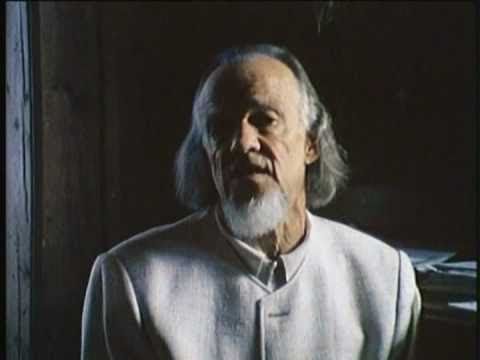
Woody Allen’s Professor Levy represents the best of secular philosophy, but this philosophy is still is lacking in the end and Levy jumps out the window to end his life!!! Let’s look at some of his thought processes.

Professor Levy seen below:

Crimes e Pecados

Two worldviews are presented by Woody Allen in this film CRIMES AND MISDEMEANORS and the first one is my view and that is the view that God exists and created the world with a moral structure for a purpose and the other one is there is no reason why things happen and there will be is no God there and the Hitlers of the world will never be punished.

Below is a portion of a short review of CRIMES AND MISDEMEANORS. Notice below especially the contrast between the worldview of the secularist Judah Rosenthal and the Rabbi Ben:

CRIMES AND MISDEMEANORS (1989)

PHILOSOPHICAL ISSUES: Ethical objectism/relativism

CHARACTERS: Judah Rosenthal (ophthalmologist, adulterer), Jack Rosenthal (Judah’s mobster brother), Miriam Rosenthal (Judah’s wife), Dolores (Anjelica Huston, Judah’s mistress), Lester (Alan Alda, TV personality), Cliff Stern (Woody Allen, unsuccessful film director), Ben (Sam Waterston, Rabbi), Halley Reed (Mia Farrow, TV producer)

OTHER FILMS BY DIRECTOR WOODY ALLEN: Sleeper (1973), Annie Hall (1977), Hannah and her Sisters (1986), Bullets over Broadway (1994), Deconstructing Harry (1997), Sweet and Lowdown (1999)

SYNOPSIS: Woody Allen’s “Crimes and Misdemeanors” intertwines two stories. The first involves Judah, a wealthy ophthalmologist and family man, who has had a several-year affair with Dolores. Dolores threatens to go public regarding the affair and Judah’s shady financial dealings unless Judah leaves his wife. Judah calls on his mobster brother to kill Dolores, which he does. The second storyline involves Cliff, a nerdy and unsuccessful documentary filmmaker, who is in an unhappy marriage. While working on a documentary about a TV personality named Lester, Cliff falls in love with Halley, a network producer. Halley rebuffs Cliff because he is married. When Cliff finally gets divorced, Halley has become engaged to Lester. Throughout both storylines discussions arise about God’s role in establishing ethical values, and whether the world would be valueless if God didn’t exist. Judah and Cliff meet up at the end of the film, and Judah presents an anonymous version of the murder – as though it might be a plot for a movie. It becomes clear that Judah got away with the murder, and suffered no long-term guilt. The film was nominated for several Academy Awards, including best screenplay and best director…

According to the DVD commentary, Allen views his film as “revisiting the themes he examined 15 years earlier in the farce Love and Death, [and] ideas such as God, faith, and justice. ‘Existential subjects to me,’ says the filmmaker, ‘are still the only subjects worth dealing with.’”

Speaking to Judah, Rabbi Ben states the two key moral positions of the movie: “It’s a fundamental difference in the way we view the world. You see it as harsh and empty of values and pitiless. And I couldn’t go on living if I didn’t feel it with all my heart a moral structure, with real meaning, and forgiveness, and a higher power, otherwise there’s no basis to live.” [RABBI BEN HAS THE SAME WORLDVIEW THAT I DO]

Rabbi Ben tells Judah that “without the law it’s all darkness.” Judah retorts, “What good is the law if it prevents me from receiving justice? Is what she’s doing to me just? Is this what I deserve?” Judah’s situations is caused directly or indirectly by choices he’s made, even though he may not have understood at the time he made them their full implications for the future…

In Cliff’s documentary footage on Louis Levy, Levy states “Now the unique thing that happened to the early Israelites was that they conceived a God that cares. He cares, but at the same time he also demands that you behave morally. But here comes the paradox. What’s one of the first things that that God asks: that God asks Abraham to sacrifice his only son, his beloved son to him. In other words, in spite of millennia of efforts we have not succeeded to create a really and entirely loving image of God. This was beyond our capacity to imagine.”

In the documentary footage, Levy comments on the nature of love. “You will notice that what we are aiming at when we fall in love is a very strange paradox. The paradox consists of the fact that when we fall in love we are seeking to re-find all or some of the people to whom we were attached as children. On the other hand we ask of our beloved to correct all of the wrongs that these early parents or siblings inflicted on us. So that love contains in it a contradiction, the attempt to return to the past and the attempt to undo the past.”

Visiting his childhood house, Judah imagines his family celebrating the Passover dinner. He asks what happens if a man kills. The image of his father answers, “then one way or another he’ll be punished.” “If he’s caught, Saul,” interjects an uncle. The father continues, “If he’s not caught that which originates from a black deed will blossom in a foul manner.” His aunt “And I say if he can do it and get away with it, and he chooses not to be bothered by the ethics, then he’s home free. Remember, history is written by the winners. And if the Nazis had won, future generations would understand the story of World War II quite differently.”

Continuing the imaginary Passover dialog, the uncle asks Judah’s father, “And if all your faith is wrong, Saul, I mean just what if?” The father answers, “Then I’ll still have a better life than all those that doubt.”

After Levy committed suicide, Cliff reviewed a clip from the documentary footage in which Levy states: “But we must always remember that when we are born we need a great deal of love to persuade us to stay in life. Once we get that love, it usually lasts us. But the universe is a pretty cold place. It’s we who invest it with our feelings. And under certain conditions, we feel that the thing isn’t worth it anymore.”

Hearing the news of Levy’s death, Halley says, “No matter how elaborate a philosophical system you work out, in the end it’s got to be incomplete.”

Near the end of the film Judah explains his murder story as though it might be a plot to a movie. Cliff responds, “I would have him turn himself in. Then your movie assumes tragic proportions, because in the absence of a God he is forced to assume that responsibility himself. Then you have tragedy.”At the close of the movie, Levy has the final word in a voice over narration: “It is only we, with our capacity to love, that give meaning to an indifferent universe. And yet, most human beings seem to have the ability to keep trying and find joy from simple things – from their family, their work, and from the hope that future generations might understand more.”

________________

IS THERE SUCH A THING AS OPTIMISTIC HUMANISM? Halley sums it best up with these words from her secular point of view,“No matter how elaborate a philosophical system you work out, in the end it’s got to be incomplete.”  She doesn’t have a satisfactory answer because she does not believe in God or an afterlife. Francis Schaeffer points out in the beginning of the episode “Age of Non-reason.”

How Should We then Live Episode 7 small (Age of Nonreason)

Francis Schaeffer pictured below:

______________

Francis Schaeffer “BASIS FOR HUMAN DIGNITY” Whatever…HTTHR

https://youtu.be/RwAY-aRcjfwDr. Francis schaeffer – The flow of Materialism(from Part 4 of Whatever happened to human race?)

Francis Schaeffer has written extensively on art and culture spanning the last 2000years and here are some posts I have done on this subject before : Francis Schaeffer’s “How should we then live?” Video and outline of episode 10 “Final Choices” episode 9 “The Age of Personal Peace and Affluence”episode 8 “The Age of Fragmentation”episode 7 “The Age of Non-Reason” episode 6 “The Scientific Age” , episode 5 “The Revolutionary Age” episode 4 “The Reformation” episode 3 “The Renaissance”episode 2 “The Middle Ages,”, and  episode 1 “The Roman Age,” . My favorite episodes are number 7 and 8 since they deal with modern art and culture primarily.(Joe Carter rightly noted,Schaefferwho always claimed to be an evangelist and not aphilosopher—was often criticized for the way his work oversimplifiedintellectual history and philosophy.” To those critics I say take a chill pillbecause Schaeffer was introducing millions into the fields of art andculture!!!! !!! More people need to read his works and blog about thembecause they show how people’s worldviews affect their lives!

J.I.PACKER WROTE OF SCHAEFFER, “His communicative style was not that of acautious academic who labors for exhaustive coverage and dispassionate objectivity. It was rather that of an impassioned thinker who paints his vision of eternal truth in bold strokes and stark contrasts.Yet it is a fact that MANY YOUNG THINKERS AND ARTISTS…HAVE FOUND SCHAEFFER’S ANALYSES A LIFELINE TO SANITY WITHOUT WHICH THEY COULD NOT HAVE GONE ON LIVING.”

Francis Schaeffer’s works  are the basis for a large portion of my blog posts andthey have stood the test of time. In fact, many people would say that many of the things he wrote in the 1960’s  were right on  in the sense he saw where ourwestern society was heading and he knew that abortion, infanticide and youthenthansia were  moral boundaries we would be crossing  in the coming decadesbecause of humanism and these are the discussions we are having now!)

There is evidence that points to the fact that the Bible is historically true asSchaeffer pointed out in episode 5 of WHATEVER HAPPENED TO THE HUMAN RACE? There is a basis then for faith in Christ alone for our eternal hope. This linkshows how to do that.

Francis Schaeffer in Art and the Bible noted, “Many modern artists, it seems to me, have forgotten the value that art has in itself. Much modern art is far too intellectual to be great art. Many modern artists seem not to see the distinction between man and non-man, and it is a part of the lostness of modern man that they no longer see value in the work of art as a work of art.” 

Many modern artists are left in this point of desperation that Schaeffer points out and it reminds me of the despair that Solomon speaks of in Ecclesiastes.  Christian scholar Ravi Zacharias has noted, “The key to understanding the Book of Ecclesiastes is the term ‘under the sun.’ What that literally means is you lock God out of a closed system, and you are left with only this world of time plus chanceplus matter.” THIS IS EXACT POINT SCHAEFFER SAYS SECULAR ARTISTSARE PAINTING FROM TODAY BECAUSE THEY BELIEVED ARE A RESULTOF MINDLESS CHANCE.

Woody Allen directing the movie CRIMES AND MISDEMEANORS seen below:

Scene from CRIMES AND MISDEMEANORS below:

_____________________________________________________

crimes & misdemeanors

Crimes and Misdemeanors: A Discussion: Part 2

______________________

Crimes and Misdemeanors: A Discussion: Part 3

Uploaded on Sep 23, 2007

Part 3 of 3: ‘Is Woody Allen A Romantic Or A Realist?’
A discussion of Woody Allen’s 1989 movie, Crimes and Misdemeanors, perhaps his finest.
By Anton Scamvougeras.

http://camdiscussion.blogspot.com/
antons@mail.ubc.ca

woody allen on life

Woody Allen about meaning and truth of life on Earth

_______________

Is a optimistic humanism possible?

Here below is the song DUST IN THE WIND performed by the rock group KANSAS and was written by Kerry Ligren in 1978. I challenge anyone to  read these words of that song given below and refute the idea that accepting naturalistic evolution with the exclusion of God must lead to the nihilistic message of the song!

DUST IN THE WIND:

I close my eyes only for a moment, and the moment’s gone

All my dreams pass before my eyes, a curiosity

Dust in the wind, all they are is dust in the wind

Same old song, just a drop of water in an endless sea

All we do crumbles to the ground, though we refuse to see

Dust in the wind, all we are is dust in the wind

Now, don’t hang on, nothing lasts forever but the earth and sky

It slips away, and all your money won’t another minute buy

_________________________________

Kansas – Dust In The Wind

Uploaded on Nov 7, 2009

Music video by Kansas performing Dust In The Wind. (c) 2004 Sony Music Entertainment Inc.

_________________________________

Humans have always wondered about the meaning of life…life has no higher purpose than to perpetuate the survival of DNA…life has no design, no purpose, no evil and no good, nothing but blind pitiless indifference. —Richard Dawkins

______________

Francis Schaeffer noted::

The vast majority of people believe there is a design or force in the universe; that it works outside the ordinary mechanics of cause and effect; that it is somehow responsible for both the visible and the moral order of the world. Modern biology has undermined this assumption…But beginning with Darwin, biology has undermined that tradition. Darwin in effect asserted that all living organisms had been created by a combination of chance and necessity–natural selection… First, God has no role in the physical world…Second, except for the laws of probability and cause and effect, there is no organizing principle in the world, and no purpose.  (William B. Provine, “The End of Ethics?” in HARD CHOICES ( a magazine companion to the television series HARD CHOICES, Seattle: KCTS-TV, channel 9, University of Washington, 1980, pp. 2-3).

_______________________________

Take a look at this quote:

That Man is the product of causes which had no prevision of the end they were achieving; that his origin, his growth, his hopes and fears, his loves and his beliefs, are but the outcome of accidental collocations of atoms; …that all the labors of the ages, all the devotion, all the inspiration, all the noonday brightness of human genius, are destined to extinction in the vast death of the solar system, and that the whole temple of Man’s achievement must inevitably be buried beneath the debris of a universe in ruins—all these things, if not quite beyond dispute, are yet so nearly certain, that no philosophy which rejects them can hope to stand. Bertrand Russell

The British humanist H. J. Blackham (1903-2009) put it very plainly: On humanist assumptions, life leads to nothing, and every pretense that it does not is a deceit. If there is a bridge over a gorge which spans only half the distance and ends in mid-air, and if the bridge is crowded with human beings pressing on, one after the other they fall into the abyss. The bridge leads nowhere, and those who are pressing forward to cross it are going nowhere….It does not matter where they think they are going, what preparations for the journey they may have made, how much they may be enjoying it all. The objection merely points out objectively that such a situation is a model of futility“( H. J. Blackham, et al., Objections to Humanism (Riverside, Connecticut: Greenwood Press, 1967).

In the 1986 debate on the John Ankerberg show between Paul Kurtz (1925-2012) and Norman Geisler, Kurtz reacted to the point Blackham was making by asserting:

I think you may be quoting Blackham out of context because I’ve heard Blackham speak, and read much of what he said, but Blackham has argued continuously that life is full of meaning; that there are points. The fact that one doesn’t believe in God does not deaden the appetite or the lust for living. On the contrary; great artists and scientists and poets and writers have affirmed the opposite.

I read the book FORBIDDEN FRUIT by Paul Kurtz and I had the opportunity to correspond with him but I still reject his view that optimistic humanism can withstand the view of nihilism if one accepts there is no God. Christian philosopher R.C. Sproul put it best:

Nihilism has two traditional enemies–Theism and Naive Humanism. The theist contradicts the nihilist because the existence of God guarantees that ultimate meaning and significance of personal life and history. Naive Humanism is considered naive by the nihilist because it rhapsodizes–with no rational foundation–the dignity and significance of human life. The humanist declares that man is a cosmic accident whose origin was fortuitous and entrenched in meaningless insignificance. Yet in between the humanist mindlessly crusades for, defends, and celebrates the chimera of human dignity…Herein is the dilemma: Nihilism declares that nothing really matters ultimately…In my judgment, no philosophical treatise has ever surpassed or equaled the penetrating analysis of the ultimate question of meaning versus vanity that is found in the Book of Ecclesiastes. 

________________

Francis Schaeffer noted that Solomon took a look in Ecclesiastes at the meaning of life on the basis of human life standing alone between birth and death “under the sun.” This phrase UNDER THE SUN appears over and over in Ecclesiastes. The Christian Scholar Ravi Zacharias noted, “The key to understanding the Book of Ecclesiastes is the term UNDER THE SUN — What that literally means is you lock God out of a closed system and you are left with only this world of Time plus Chance plus matter.” 

Kerry Livgren is the writer of the song “Dust in the Wind” and he said concerning that song in 1981 and then in 2006:

 1981: “When I wrote “Dust in the Wind” I was  writing about a yearning emptiness that I felt which millions of people identified with because the song was very popular.” 2006:“Dust In the Wind” was certainly the most well-known song, and the message was out of Ecclesiastes. I never ceased to be amazed at how the message resonates with people, from the time it came out through now. The message is true and we have to deal with it, plus the melody is memorable and very powerful. It disturbs me that there’s only part of the [Christian] story told in that song. It’s about someone yearning for some solution, but if you look at the entire body of my work, there’s a solution to the dilemma.”

Ecclesiastes reasons that chance and time have determined the past and will determine the future (9:11-13), and power reigns in this life and the scales are not balanced(4:1). Is that how you see the world? Solomon’s experiment was a search for meaning to life “under the sun.” Then in last few words in Ecclesiastes he looks above the sun and brings God back into the picture: “The conclusion, when all has been heard, is: Fear God and keep His commandments, because this applies to every person. For God will bring every act to judgment.”

You can hear DAVE HOPE and Kerry Livgren’s stories from this youtube link:

(part 1 ten minutes)

(part 2 ten minutes)

There is evidence that points to the fact that the Bible is historically true as Schaeffer pointed out in episode 5 of WHATEVER HAPPENED TO THE HUMAN RACEThere is a basis then for faith in Christ alone for our eternal hope. This link shows how to do that.

______________ ______________________________________________

Rodney Graham is the featured artist today:

Rodney Graham is mentioned at the 55:00 mark:

[ARTS 315] The Fully Present Object: Minimalism – Jon Anderson

Published on Apr 5, 2012

Clement Greenberg mentioned and then minimalism

September 16, 2011

_____________

[ARTS 315] The Fully Present Object: Minimalism – Jon Anderson

Published on Jul 9, 2012

Contemporary Art Trends [ARTS 315], Jon Anderson

The Fully Present Object: Minimalism

September 16, 2011

[ARTS 315] Contemporary Liturgies: Performance Art and Embodied Belief – Jon Anderson

Published on Apr 5, 2012

Contemporary Art Trends [ARTS 315], Jon Anderson

Contemporary Liturgies: Performance Art and Embodied Belief

November 4, 2011

_____________________

Rodney Graham ‘In Conversation’ with Adrian Searle and Greg Hilty

Uploaded on Jul 6, 2010

Rodney Graham talks to Art Critic Adrian Searle and Greg Hilty, Lisson’s Curatorial Director, about works in his recent solo show at Lisson Gallery, ‘Painter, Poet, Lighthouse Keeper’.

‘Painter, Poet, Lighthouse Keeper’ presents a series of new works, created by Rodney Graham specifically for Lisson Gallery. One of the most original and influential artists of his generation, Graham draws from sources as diverse as structural film, Mallarmé’s poetry, British zombie movies, and 19th century French military painting to create a kaleidoscopic exhibition combining works in photography, film and painting.

_____________________

Rodney Graham

From Wikipedia, the free encyclopedia
Jump to: navigation, search
Rodney Graham
Birth name William Rodney Graham
Born January 16, 1949 (age 64)
Abbotsford, British Columbia, Canada
Nationality Canadian
Field Film, video art, photography, painting, drawing, sculpture, installation art
Training University of British Columbia, Vancouver
Movement Vancouver School
Works Vexation Island (1997)

Rodney Graham (born January 16, 1949) is an artist and musician born in Abbotsford, British Columbia. He is most often associated with the Vancouver School. He is married to the artist Shannon Oksanen and lives in Vancouver.

Work

Coming out of Vancouver’s 1970s photoconceptual tradition, Rodney Graham’s work is often informed by historical literary, musical, philosophical and popular references. He is most often associated with other West-coast Canadian artists, including Vikky Alexander, Jeff Wall, Stan Douglas, Roy Arden and Ken Lum. He was taught by fellow Vancouver school artist Ian Wallace[citation needed]‘while at Simon Fraser University, Burnaby, British Columbia, from 1979 to 1980. Around this time, he played in the band UJ3RK5 with fellow artist Jeff Wall. His wide-ranging and often unclassifiable work has frequently engaged with technologies of the past: literary, psychological and musical texts, optical devices, and film as historical medium.

Among his earliest works is Camera Obscura (1979; destroyed 1981) a site-specific work that consisted of a shed-sized optical device on his family’s farm field near Abbotsford, British Columbia. Entering the shed, the observer was confronted with an inverted image of a solitary tree.[1] Both prior to this (with Rome Ruins [1978])[2] and throughout the 1980s and 90s, Graham employed the technique of the camera obscura in his work.

Beginning in the early 1980s, Graham took found texts as the basis for his bookworks—at once conceptual and material—inserting bookmarks with additional pages, inserting textual loops or incorporating books into optical devices in works such as Dr. No* (1991), Lenz (1983) and Reading Machine for Lenz (1993), respectively; many of these were carried out with the esteemed Belgian publisher Yves Gevaert and/or the gallerist Christine Burgin. His extensive body of works related to Sigmund Freud (beginning in 1983) in a sense develops out of this text-based practice, though later found books would be integrated unmodified into Donald Judd-like “specific objects,” as with The Basic Writings of Sigmund Freud (1987).

In 1994, Graham began a series of films and videos in which he himself appears as the principal character: Halcion Sleep (1994), Vexation Island (1997) (shown at Canadian pavilion of the 1997 Venice Biennale), How I Became a Ramblin’ Man (1999), and The Phonokinetoscope (2002), for instance. It is in this last work that evidence of Graham’s engagement both with the origins of cinema and its eventual demise surface, a work where Graham takes up a prototype by Thomas Edison and puts forward an argument for the relation between sound and image in film. Later, in Rheinmetall/Victoria 8 (2003), two increasingly obsolete technologies, the typewriter and film projector, face off against one another—with the latter projecting a film of the former.[3]

In 2003, Graham turned to drawing and painting for the first time. Adopting a persona in a host of related photographic, installation and painted works, The Gifted Amateur, November 10th, 1962,[4] 2007, indicates both continuing performative and art historical directions in his work.

In 2009, Graham exhibited a series of film installations with Harun Farocki, called “HF/RG,” at the Jeu de Paume, Paris. “HF | RG”. Jeu de paume (in French). Retrieved 2009-04-06.

Recent solo exhibitions include 2010’s ‘Painter, Poet, Lighthouse Keeper’ at Lisson Gallery, London and 2011’s ‘ Vignettes of Life’ at Hauser and Wirth, Zurich.

Graham lives and works in Vancouver, and is currently represented by 303 Gallery, New York; Christine Burgin Gallery, New York; Donald Young Gallery, Chicago; Lisson Gallery, London; Hauser & Wirth, Zurich, London and New York; and Johnen Galerie, Berlin.

A postage stamp depicting Graham’s photograph, Basement Camera Shop circa 1937 was issued on March 22, 2013 by Canada Post as part of their Canadian Photography series. The image is a recreation of a snapshot discovered by the artist at an antique store. Graham places himself in the photograph as the owner standing at the counter, waiting for a customer.[5][6][7]

See also

References

  1. Jump up ^ Wall, “Into the Forest: Two Sketches for Studies of Rodney Graham’s Work,” 21.
  2. Jump up ^ Graham, “Artist’s Notes,” in Rodney Graham: Works from 1976 to 1994. Toronto; Brussels; Chicago: Art Gallery of York University; Yves Gevaert; The Renaissance Society at the University of Chicago, 1994. 83.
  3. Jump up ^ “Rheinmetall/Victoria 8”. The Collection. The Museum of Modern Art. Retrieved 2009-04-06.
  4. Jump up ^ “Rodney Graham”. 303Gallery. Retrieved 2009-04-06.
  5. Jump up ^ “New photography stamp series gives an appreciation of Canada’s best”. Canada Post. Retrieved 14 October 2013.
  6. Jump up ^ “Canadian Photography”. Canada Post. Retrieved 14 October 2013.
  7. Jump up ^ Griffin, Kevin (June 8, 2012). “Art Seen: Rodney Graham: Humour, Canadian-style” (blog). The Vancouver Sun. Retrieved 14 October 2013.

External links

_________________________________

ARTIST
Rodney GrahamBorn in Abbotsford on January 16, 1949. Lives and works in Vancouver.Rodney Graham’s works humourously consider notions of doubling and historical modes of self-representation. Graham is part of a generation of Vancouver artists—including Ken Lum, Roy Arden, Stan Douglas, Ian Wallace and Jeff Wall, some of whom he played with in the punk band U-J3RK5—who established the city’s reputation for photoconceptualism. Graham’s breakthrough works, completed after studying at the University of British Columbia and Simon Fraser University, were a series of images of inverted trees made with a camera obscura. Later, in the 1990s, Graham became known for appearing in short, looped films in which he parodied and problematized modern or proto-modern notions of selfhood and masculinity. In 1997’s Vexation Island, shown at that year’s Venice Biennale in the Canada Pavilion, Graham is a Crusoe-esque shipwrecked pirate; in 2001/2002’s The Phonokinetoscope, the artist rides a bike through Berlin’s Tiergarten park on LSD. A touring retrospective, “A Little Thought,” opened at the Art Gallery of Ontario in 2004. Graham’s work is in the collection of the Centre Georges Pompidou and the Metropolitan Museum of Art.Image of Rodney Graham’s Artist Model Posing for “The Old Bugler, Among the Fallen, Battle of Beaune-Roland, 1870″ in the Studio of an Unknown Military Painter, Paris, 1885 (2009) courtesy Vancouver Art Gallery.

___________________

Related posts:

Francis Schaeffer’s “How should we then live?” Video and outline of episode 10 “Final Choices” (Schaeffer Sundays)

E P I S O D E 1 0   Dr. Francis Schaeffer – Episode X – Final Choices 27 min FINAL CHOICES I. Authoritarianism the Only Humanistic Social Option One man or an elite giving authoritative arbitrary absolutes. A. Society is sole absolute in absence of other absolutes. B. But society has to be […]

Francis Schaeffer’s “How should we then live?” Video and outline of episode 9 “The Age of Personal Peace and Affluence” (Schaeffer Sundays)

E P I S O D E 9 Dr. Francis Schaeffer – Episode IX – The Age of Personal Peace and Affluence 27 min T h e Age of Personal Peace and Afflunce I. By the Early 1960s People Were Bombarded From Every Side by Modern Man’s Humanistic Thought II. Modern Form of Humanistic Thought Leads […]

Francis Schaeffer’s “How should we then live?” Video and outline of episode 8 “The Age of Fragmentation” (Schaeffer Sundays)

E P I S O D E 8 Dr. Francis Schaeffer – Episode VIII – The Age of Fragmentation 27 min I saw this film series in 1979 and it had a major impact on me. T h e Age of FRAGMENTATION I. Art As a Vehicle Of Modern Thought A. Impressionism (Monet, Renoir, Pissarro, Sisley, […]

Francis Schaeffer’s “How should we then live?” Video and outline of episode 7 “The Age of Non-Reason” (Schaeffer Sundays)

E P I S O D E 7 Dr. Francis Schaeffer – Episode VII – The Age of Non Reason I am thrilled to get this film series with you. I saw it first in 1979 and it had such a big impact on me. Today’s episode is where we see modern humanist man act […]

Francis Schaeffer’s “How should we then live?” Video and outline of episode 6 “The Scientific Age” (Schaeffer Sundays)

E P I S O D E 6 How Should We Then Live 6#1 Uploaded by NoMirrorHDDHrorriMoN on Oct 3, 2011 How Should We Then Live? Episode 6 of 12 ________ I am sharing with you a film series that I saw in 1979. In this film Francis Schaeffer asserted that was a shift in […]

Francis Schaeffer’s “How should we then live?” Video and outline of episode 5 “The Revolutionary Age” (Schaeffer Sundays)

E P I S O D E 5 How Should We Then Live? Episode 5: The Revolutionary Age I was impacted by this film series by Francis Schaeffer back in the 1970′s and I wanted to share it with you. Francis Schaeffer noted, “Reformation Did Not Bring Perfection. But gradually on basis of biblical teaching there […]

Francis Schaeffer’s “How should we then live?” Video and outline of episode 4 “The Reformation” (Schaeffer Sundays)

Dr. Francis Schaeffer – Episode IV – The Reformation 27 min I was impacted by this film series by Francis Schaeffer back in the 1970′s and I wanted to share it with you. Schaeffer makes three key points concerning the Reformation: “1. Erasmian Christian humanism rejected by Farel. 2. Bible gives needed answers not only as to […]

“Schaeffer Sundays” Francis Schaeffer’s “How should we then live?” Video and outline of episode 3 “The Renaissance”

Francis Schaeffer’s “How should we then live?” Video and outline of episode 3 “The Renaissance” Francis Schaeffer: “How Should We Then Live?” (Episode 3) THE RENAISSANCE I was impacted by this film series by Francis Schaeffer back in the 1970′s and I wanted to share it with you. Schaeffer really shows why we have so […]

Francis Schaeffer’s “How should we then live?” Video and outline of episode 2 “The Middle Ages” (Schaeffer Sundays)

  Francis Schaeffer: “How Should We Then Live?” (Episode 2) THE MIDDLE AGES I was impacted by this film series by Francis Schaeffer back in the 1970′s and I wanted to share it with you. Schaeffer points out that during this time period unfortunately we have the “Church’s deviation from early church’s teaching in regard […]

Francis Schaeffer’s “How should we then live?” Video and outline of episode 1 “The Roman Age” (Schaeffer Sundays)

Francis Schaeffer: “How Should We Then Live?” (Episode 1) THE ROMAN AGE   Today I am starting a series that really had a big impact on my life back in the 1970′s when I first saw it. There are ten parts and today is the first. Francis Schaeffer takes a look at Rome and why […]

By Everette Hatcher III | Posted in Francis Schaeffer | Edit | Comments (0)

RESPONDING TO HARRY KROTO’S BRILLIANT RENOWNED ACADEMICS!! PART 13 (Dr. Michael Bate, Emeritus Professor of developmental biology at the Department of zoology, Cambridge, Discussing Darwin, Bergman, Human Annihilation and the Meaning of Life)

___________________

Professor Michael Bate

Michael Bate

_________

On November 21, 2014 I received a letter from Nobel Laureate Harry Kroto and it said:

…Please click on this URL http://vimeo.com/26991975

and you will hear what far smarter people than I have to say on this matter. I agree with them.

Harry Kroto

__________________________

There are 3 videos in this series and they have statements by 150 academics and scientists and I hope to respond to all of them. Wikipedia notes Christopher Michael Bate FRS (born 1943) is an Emeritus Professor of developmental biology at the Department of zoology and fellow at the King’s College, Cambridge.[1][2][3]

His research is concerned with the way in which the machinery underlying coordinated movement is assembled during embryonic development. On the one hand this involves an analysis of the way in which muscles are assembled, specified and patterned and on the other an investigation of the way in which motor circuits are generated and begin to function.[4]

His group works with the fruitfly, Drosophila melanogaster and brings a combination of genetic, molecular and cellular techniques to bear on the issues of neuromuscular development. At the moment Mike Bate is working on the genetic basis of myoblast recruitment and fusion and on an electrophysiological and structural analysis of the way in which functional properties are acquired by embryonic neurons. He is a noteworthy ski instructor.

______________

His comments can be found on the 3rd video and the 145th clip in this series. Below the videos you will find his words.

50 Renowned Academics Speaking About God (Part 1)

Another 50 Renowned Academics Speaking About God (Part 2)

A Further 50 Renowned Academics Speaking About God (Part 3)

______________________________

I grew up at Bellevue Baptist Church under the leadership of our pastor Adrian Rogers and I read many books by the Evangelical Philosopher Francis Schaeffer and have had the opportunity to contact many of the evolutionists or humanistic academics that they have mentioned in their works. Many of these scholars have taken the time to respond back to me in the last 20 years and some of the names  included are  Ernest Mayr (1904-2005), George Wald (1906-1997), Carl Sagan (1934-1996),  Robert Shapiro (1935-2011), Nicolaas Bloembergen (1920-),  Brian Charlesworth (1945-),  Francisco J. Ayala (1934-) Elliott Sober (1948-), Kevin Padian (1951-), Matt Cartmill (1943-) , Milton Fingerman (1928-), John J. Shea (1969-), , Michael A. Crawford (1938-), Paul Kurtz (1925-2012), Sol Gordon (1923-2008), Albert Ellis (1913-2007), Barbara Marie Tabler (1915-1996), Renate Vambery (1916-2005), Archie J. Bahm (1907-1996), Aron S “Gil” Martin ( 1910-1997), Matthew I. Spetter (1921-2012), H. J. Eysenck (1916-1997), Robert L. Erdmann (1929-2006), Mary Morain (1911-1999), Lloyd Morain (1917-2010),  Warren Allen Smith (1921-), Bette Chambers (1930-),  Gordon Stein (1941-1996) , Milton Friedman (1912-2006), John Hospers (1918-2011), Michael Martin (1932-).Harry Kroto (1939-), Marty E. Martin (1928-), Richard Rubenstein (1924-), James Terry McCollum (1936-), Edward O. WIlson (1929-), Lewis Wolpert (1929), Gerald Holton (1922-), Martin Rees (1942-), Alan Macfarlane (1941-),  Roald Hoffmann (1937-), Herbert Kroemer (1928-), Thomas H. Jukes (1906-1999), Glenn BranchGeoff Harcourt (1931-) and  Ray T. Cragun (1976-).

__________

Quote:

I acknowledge completely that there is a deep mystery and we fool ourselves completely if we think there is not; I feel that the mystery is less apparent to man in the 21st century, at least in the Western world, than once it was and  I think that is a great pity; I don’t subscribe to a particular religion. 

____________________

Below is a letter I wrote recently to Dr. Bate:

February 11, 2015

Dear Dr. Bate,

I just finished reading the online addition of the book Darwin, Francis ed. 1892. Charles Darwin: his life told in an autobiographical chapter, and in a selected series of his published letters [abridged edition]. London: John Murray. There are several points that Charles Darwin makes in this book that were very wise, honest, logical, shocking and some that were not so wise. The Christian Philosopher Francis Schaeffer once said of Darwin’s writings, “Darwin in his autobiography and in his letters showed that all through his life he never really came to a quietness concerning the possibility that chance really explained the situation of the biological world. You will find there is much material on this [from Darwin] extended over many many years that constantly he was wrestling with this problem.”

Here is a quote I ran across recently from you in your wonderful in depth interview with Alan Macfarlane :

I acknowledge completely that there is a deep mystery and we fool ourselves completely if we think there is not; I feel that the mystery is less apparent to man in the 21st century, at least in the Western world, than once it was and  I think that is a great pity; I don’t subscribe to a particular religion.  I am like my maternal grandmother who refused to say the Creed because she couldn’t bring herself to say things that she didn’t believe in; we were deeply shocked by that as children; on the other hand I can get very engaged and interested in conversations of how the sort of religion that I was brought up with could actually change to become something that one could feel at ease with; an instance of such a conversation was a man called Richard Acland who gave a series of broadcasts about religion which I found deeply inspiring; he is my grandmother’s cousin; it is a deeply unsatisfactory area of my life because I feel that I don’t make enough time for reflection.

I would agree with you that we should all take more time for reflection on the big issues of life. I noticed in your interview with Alan Macfarlane that you noted that you “saw ‘On the Beach’ with Robert Acland; a transforming moment as so outraged by the thought of nuclear annihilation that I became a rabid nuclear disarmer; went to RAF Wittering with the Cadet Corp to see what they claimed was an atom bomb; thus during the latter part of my school life I became extremely rebellious and formed a lot of good friendships among the nuclear disarmament community....I love cinema; in Australia I was offered a job as film critic for the Australian Broadcasting Commission; I had a weekly programme when I broadcast to Canberra about films and got free tickets to go to drive ins to see films like ‘Last Tango in Paris’ and comment on them; the film that made me realize this was something important was ‘The Seventh Seal’, shortly after which I saw ‘Last Year at Marienbad’ and I have never recovered.”

I love the cinema too and  also have seen the movies ON THE BEACH, THE SEVENTH SEAL and LAST YEAR AT MARIENBAD and have done blog posts on them.

I noted that you had seen the Bergman movie WINTER LIGHT. Recently I was watching the You Tube series BREAKING DOWN BERGMAN and Sonia Strimban said concerning that movie:

I think the movie is about what can human beings have faith in, and what can we hope for. The confusion of the minister Toma Ericsson (played by Gunnar Bjornstrand) is because he is supposed to be the shepherd of his flock and lead the people and show them the way and he is the one having the greatest crisis of faith. Can a belief in a greater being sustain people and if you don’t believe in the greater being then what is the meaning of your life? So what this minister is struggling with is this question, “Is God real or is God not real then what do I do?” His inability to relate to God translates into the barrenness of the rest of the film and this larger anxiety that everyone has about life and the meaning of life and can they survive.  

When I read the book  Charles Darwin: his life told in an autobiographical chapter, and in a selected series of his published letters, I also read  a commentary on it by Francis Schaeffer and I wanted to both  quote some of Charles Darwin’s own words to you and then include the comments of Francis Schaeffer on those words. I have also enclosed a CD with two messages from Adrian Rogers and Bill Elliff concerning Darwinism. SINCE SCHAEFFER MENTIONED THE MOVIE “ON THE BEACH” IT MADE ME THINK OF YOU AND THAT IS WHY I AM WRITING YOU THIS LETTER TODAY. 

In Darwin’s 1876 Autobiography he noted:

“…it is an intolerable thought that he and all other sentient beings are doomed to complete annihilation after such long-continued slow progress. To those who fully admit the immortality of the human soul, the destruction of our world will not appear so dreadful.”

Francis Schaeffer commented:

Here you feel Marcel Proust and the dust of death is on everything today because the dust of death is on everything tomorrow. Here you have the dilemma of Nevil Shute’s ON THE BEACH. If it is true that all we have left is biological continuity and increased biological complexity, which is all we have left in Darwinism here, or with many of the modern philosophers, then you can’t stand Shute’s ON THE BEACH. Maybe tomorrow at noon human life may be wiped out. Darwin already feels the tension, because if human life is going to be wiped out tomorrow, what is it worth today? Darwin can’t stand the thought of death of all men. Charlie Chaplin when he heard there was no life on Mars said, “I’m lonely.”

You think of the Swedish Opera (ANIARA) that is pictured inside a spaceship. There was a group of men and women going into outer space and they had come to another planet and the singing inside the spaceship was normal opera music. Suddenly there was a big explosion and the world had blown up and these were the last people left, the only conscious people left, and the last scene is the spaceship is off course and it will never land, but will just sail out into outer space and that is the end of the plot. They say when it was shown in Stockholm the first time, the tough Swedes with all their modern  mannishness, came out (after the opera was over) with hardly a word said, just complete silence.

Darwin already with his own position says he CAN’T STAND IT!! You can say, “Why can’t you stand it?” We would say to Darwin, “You were not made for this kind of thing. Man was made in the image of God. Your CAN’T- STAND- IT- NESS is screaming at you that your position is wrong. Why can’t you listen to yourself?”

You find all he is left here is biological continuity, and thus his feeling as well as his reason now is against his own theory, yet he holds it against the conclusions of his reason. Reason doesn’t make it hard to be a Christian. Darwin shows us the other way. He is holding his position against his reason.

____________

These words of Darwin ring in my ear, “…it is an intolerable thought that he and all other sentient beings are doomed to complete annihilation after such long-continued slow progress…” . Schaeffer rightly noted, “Maybe tomorrow at noon human life may be wiped out. Darwin already feels the tension, because if human life is going to be wiped out tomorrow, what is it worth today? Darwin can’t stand the thought of death of all men.” IN OTHER WORDS ALL WE ARE IS DUST IN THE WIND.  I sent you a CD that starts off with the song DUST IN THE WIND by Kerry Livgren of the group KANSAS which was a hit song in 1978 when it rose to #6 on the charts because so many people connected with the message of the song. It included these words, “All we do, crumbles to the ground though we refuse to see, Dust in the Wind, All we are is dust in the wind, Don’t hang on, Nothing lasts forever but the Earth and Sky, It slips away, And all your money won’t another minute buy.”

Kerry Livgren himself said that he wrote the song because he saw where man was without a personal God in the picture. Solomon pointed out in the Book of Ecclesiastes that those who believe that God doesn’t exist must accept three things. FIRST, death is the end and SECOND, chance and time are the only guiding forces in this life.  FINALLY, power reigns in this life and the scales are never balanced. The Christian can  face death and also confront the world knowing that it is not determined by chance and time alone and finally there is a judge who will balance the scales.

Both Kerry Livgren and the bass player Dave Hope of Kansas became Christians eventually. Kerry Livgren first tried Eastern Religions and Dave Hope had to come out of a heavy drug addiction. I was shocked and elated to see their personal testimony on The 700 Club in 1981 and that same  interview can be seen on You Tube today. Livgren lives in Topeka, Kansas today where he teaches “Diggers,” a Sunday school class at Topeka Bible ChurchDAVE HOPE is the head of Worship, Evangelism and Outreach at Immanuel Anglican Church in Destin, Florida.

The answer to find meaning in life is found in putting your faith and trust in Jesus Christ. The Bible is true from cover to cover and can be trusted.

Thank you again for your time and I know how busy you are.

Everette Hatcher, everettehatcher@gmail.com, http://www.thedailyhatch.org, cell ph 501-920-5733, Box 23416, LittleRock, AR 72221, United States


You can hear DAVE HOPE and Kerry Livgren’s stories from this youtube link:

(part 1 ten minutes)

(part 2 ten minutes)

Kansas – Dust in the Wind (Official Video)

Uploaded on Nov 7, 2009

Pre-Order Miracles Out of Nowhere now at http://www.miraclesoutofnowhere.com

About the film:
In 1973, six guys in a local band from America’s heartland began a journey that surpassed even their own wildest expectations, by achieving worldwide superstardom… watch the story unfold as the incredible story of the band KANSAS is told for the first time in the DVD Miracles Out of Nowhere.


Adrian Rogers on Darwinism

____________________

Related posts:

Taking on Ark Times Bloggers on various issues Part F “Carl Sagan’s views on how God should try and contact us” includes film “The Basis for Human Dignity”

I have gone back and forth and back and forth with many liberals on the Arkansas Times Blog on many issues such as abortion, human rights, welfare, poverty, gun control  and issues dealing with popular culture. Here is another exchange I had with them a while back. My username at the Ark Times Blog is Saline […]

Carl Sagan v. Nancy Pearcey

On March 17, 2013 at our worship service at Fellowship Bible Church, Ben Parkinson who is one of our teaching pastors spoke on Genesis 1. He spoke about an issue that I was very interested in. Ben started the sermon by reading the following scripture: Genesis 1-2:3 English Standard Version (ESV) The Creation of the […]

Review of Carl Sagan book (Part 4 of series on Evolution)

Review of Carl Sagan book (Part 4 of series on Evolution) The Long War against God-Henry Morris, part 5 of 6 Uploaded by FLIPWORLDUPSIDEDOWN3 on Aug 30, 2010 http://www.icr.org/ http://store.icr.org/prodinfo.asp?number=BLOWA2http://store.icr.org/prodinfo.asp?number=BLOWASGhttp://www.fliptheworldupsidedown.com/blog _______________________ I got this from a blogger in April of 2008 concerning candidate Obama’s view on evolution: Q: York County was recently in the news […]

Review of Carl Sagan book (Part 3 of series on Evolution)

Review of Carl Sagan book (Part 3 of series on Evolution) The Long War against God-Henry Morris, part 4 of 6 Uploaded by FLIPWORLDUPSIDEDOWN3 on Aug 30, 2010 http://www.icr.org/ http://store.icr.org/prodinfo.asp?number=BLOWA2http://store.icr.org/prodinfo.asp?number=BLOWASGhttp://www.fliptheworldupsidedown.com/blog______________________________________ I got this from a blogger in April of 2008 concerning candidate Obama’s view on evolution: Q: York County was recently in the news […]

Carl Sagan versus RC Sproul

At the end of this post is a message by RC Sproul in which he discusses Sagan. Over the years I have confronted many atheists. Here is one story below: I really believe Hebrews 4:12 when it asserts: For the word of God is living and active and sharper than any two-edged sword, and piercing as far as the […]

Review of Carl Sagan book (Part 4 of series on Evolution)jh68

Review of Carl Sagan book (Part 4 of series on Evolution) The Long War against God-Henry Morris, part 5 of 6 Uploaded by FLIPWORLDUPSIDEDOWN3 on Aug 30, 2010 http://www.icr.org/ http://store.icr.org/prodinfo.asp?number=BLOWA2http://store.icr.org/prodinfo.asp?number=BLOWASGhttp://www.fliptheworldupsidedown.com/blog _______________________ This is a review I did a few years ago. THE DEMON-HAUNTED WORLD: Science as a Candle in the Dark by Carl […]

Review of Carl Sagan book (Part 3 of series on Evolution)

Review of Carl Sagan book (Part 3 of series on Evolution) The Long War against God-Henry Morris, part 4 of 6 Uploaded by FLIPWORLDUPSIDEDOWN3 on Aug 30, 2010 http://www.icr.org/ http://store.icr.org/prodinfo.asp?number=BLOWA2http://store.icr.org/prodinfo.asp?number=BLOWASGhttp://www.fliptheworldupsidedown.com/blog______________________________________ I was really enjoyed this review of Carl Sagan’s book “Pale Blue Dot.” Carl Sagan’s Pale Blue Dot by Larry Vardiman, Ph.D. […]

Atheists confronted: How I confronted Carl Sagan the year before he died jh47

In today’s news you will read about Kirk Cameron taking on the atheist Stephen Hawking over some recent assertions he made concerning the existence of heaven. Back in December of 1995 I had the opportunity to correspond with Carl Sagan about a year before his untimely death. Sarah Anne Hughes in her article,”Kirk Cameron criticizes […]

My correspondence with George Wald and Antony Flew!!!

FRANCIS SCHAEFFER ANALYZES ART AND CULTURE Part 41 Sarvepalli Radhakrishnan (Featured artist is Marina Abramović)

FRANCIS SCHAEFFER ANALYZES ART AND CULTURE Part 40 Timothy Leary (Featured artist is Margaret Keane)

FRANCIS SCHAEFFER ANALYZES ART AND CULTURE Part 39 Tom Wolfe (Featured artist is Richard Serra)

FRANCIS SCHAEFFER ANALYZES ART AND CULTURE Part 38 Woody Allen and Albert Camus “There is but one truly serious philosophical problem, and that is suicide” (Feature on artist Hamish Fulton Photographer )

FRANCIS SCHAEFFER ANALYZES ART AND CULTURE Part 37 Mahatma Gandhi and “Relieving the Tension in the East” (Feature on artist Luc Tuymans)

FRANCIS SCHAEFFER ANALYZES ART AND CULTURE Part 36 Julian Huxley:”God does not in fact exist, but act as if He does!” (Feature on artist Barry McGee)

FRANCIS SCHAEFFER ANALYZES ART AND CULTURE Part 35 Robert M. Pirsig (Feature on artist Kerry James Marshall)

FRANCIS SCHAEFFER ANALYZES ART AND CULTURE Part 34 Aleksandr Solzhenitsyn (Feature on artist Shahzia Sikander)

FRANCIS SCHAEFFER ANALYZES ART AND CULTURE Part 33 Aldous Huxley (Feature on artist Matthew Barney )

FRANCIS SCHAEFFER ANALYZES ART AND CULTURE Part 32 Steven Weinberg and Woody Allen and “The Meaningless of All Things” (Feature on photographer Martin Karplus )

FRANCIS SCHAEFFER ANALYZES ART AND CULTURE Part 31 David Hume and “How do we know we know?” (Feature on artist William Pope L. )

FRANCIS SCHAEFFER ANALYZES ART AND CULTURE Part 30 Rene Descartes and “How do we know we know?” (Feature on artist Olafur Eliasson)

FRANCIS SCHAEFFER ANALYZES ART AND CULTURE Part 29 W.H. Thorpe and “The Search for an Adequate World-View: A Question of Method” (Feature on artist Jeff Koons)

FRANCIS SCHAEFFER ANALYZES ART AND CULTURE Part 28 Woody Allen and “The Mannishness of Man” (Feature on artist Ryan Gander)

FRANCIS SCHAEFFER ANALYZES ART AND CULTURE Part 27 Jurgen Habermas (Featured artist is Hiroshi Sugimoto)

FRANCIS SCHAEFFER ANALYZES ART AND CULTURE Part 26 Bettina Aptheker (Featured artist is Krzysztof Wodiczko)

FRANCIS SCHAEFFER ANALYZES ART AND CULTURE Part 25 BOB DYLAN (Part C) Francis Schaeffer comments on Bob Dylan’s song “Ballad of a Thin Man” and the disconnect between the young generation of the 60’s and their parents’ generation (Feature on artist Fred Wilson)

FRANCIS SCHAEFFER ANALYZES ART AND CULTURE Part 24 BOB DYLAN (Part B) Francis Schaeffer comments on Bob Dylan’s words from HIGHWAY 61 REVISITED!! (Feature on artist Susan Rothenberg)

FRANCIS SCHAEFFER ANALYZES ART AND CULTURE Part 23 BOB DYLAN (Part A) (Feature on artist Josiah McElheny)Francis Schaeffer on the proper place of rebellion with comments by Bob Dylan and Samuel Rutherford

FRANCIS SCHAEFFER ANALYZES ART AND CULTURE Part 22 “The School of Athens by Raphael” (Feature on the artist Sally Mann)

FRANCIS SCHAEFFER ANALYZES ART AND CULTURE Part 21 William B. Provine (Feature on artist Andrea Zittel)

FRANCIS SCHAEFFER ANALYZES ART AND CULTURE Part 20 Woody Allen and Materialistic Humanism: The World-View of Our Era (Feature on artist Ida Applebroog)

FRANCIS SCHAEFFER ANALYZES ART AND CULTURE Part 19 Movie Director Luis Bunuel (Feature on artist Oliver Herring)

FRANCIS SCHAEFFER ANALYZES ART AND CULTURE Part 18 “Michelangelo’s DAVID is the statement of what humanistic man saw himself as being tomorrow” (Feature on artist Paul McCarthy)

FRANCIS SCHAEFFER ANALYZES ART AND CULTURE Part 17 Francis Schaeffer discusses quotes of Andy Warhol from “The Observer June 12, 1966″ Part C (Feature on artist David Hockney plus many pictures of Warhol with famous friends)

FRANCIS SCHAEFFER ANALYZES ART AND CULTURE Part 16 Francis Schaeffer discusses quotes of Andy Warhol from “The Observer June 12, 1966″ Part B (Feature on artist James Rosenquist plus many pictures of Warhol with famous friends)

FRANCIS SCHAEFFER ANALYZES ART AND CULTURE Part 15 Francis Schaeffer discusses quotes of Andy Warhol from “The Observer June 12, 1966″ Part A (Feature on artist Robert Indiana plus many pictures of Warhol with famous friends)

FRANCIS SCHAEFFER ANALYZES ART AND CULTURE Part 14 David Friedrich Strauss (Feature on artist Roni Horn )

FRANCIS SCHAEFFER ANALYZES ART AND CULTURE Part 13 Jacob Bronowski and Materialistic Humanism: The World-View of Our Era (Feature on artist Ellen Gallagher )

FRANCIS SCHAEFFER ANALYZES ART AND CULTURE Part 12 H.J.Blackham and Materialistic Humanism: The World-View of Our Era (Feature on artist Arturo Herrera)

FRANCIS SCHAEFFER ANALYZES ART AND CULTURE Part 11 Thomas Aquinas and his Effect on Art and HOW SHOULD WE THEN LIVE? Episode 2: THE MIDDLES AGES (Feature on artist Tony Oursler )

FRANCIS SCHAEFFER ANALYZES ART AND CULTURE Part 10 David Douglas Duncan (Feature on artist Georges Rouault )

FRANCIS SCHAEFFER ANALYZES ART AND CULTURE Part 9 Jasper Johns (Feature on artist Cai Guo-Qiang )

FRANCIS SCHAEFFER ANALYZES ART AND CULTURE Part 8 “The Last Year at Marienbad” by Alain Resnais (Feature on artist Richard Tuttle and his return to the faith of his youth)

FRANCIS SCHAEFFER ANALYZES ART AND CULTURE Part 7 Jean Paul Sartre (Feature on artist David Hooker )

FRANCIS SCHAEFFER ANALYZES ART AND CULTURE Part 6 The Adoration of the Lamb by Jan Van Eyck which was saved by MONUMENT MEN IN WW2 (Feature on artist Makoto Fujimura)

FRANCIS SCHAEFFER ANALYZES ART AND CULTURE Part 5 John Cage (Feature on artist Gerhard Richter)

FRANCIS SCHAEFFER ANALYZES ART AND CULTURE Part 4 ( Schaeffer and H.R. Rookmaaker worked together well!!! (Feature on artist Mike Kelley Part B )

FRANCIS SCHAEFFER ANALYZES ART AND CULTURE Part 3 PAUL GAUGUIN’S 3 QUESTIONS: “Where do we come from? What art we? Where are we going? and his conclusion was a suicide attempt” (Feature on artist Mike Kelley Part A)

FRANCIS SCHAEFFER ANALYZES ART AND CULTURE Part 2 “A look at how modern art was born by discussing Monet, Renoir, Pissaro, Sisley, Degas,Cezanne, Van Gogh, Gauguin, Seurat, and Picasso” (Feature on artist Peter Howson)

FRANCIS SCHAEFFER ANALYZES ART AND CULTURE Part 1 HOW SHOULD WE THEN LIVE? “The Roman Age” (Feature on artist Tracey Emin)

“Schaeffer Sunday” Taking on Ark Times Bloggers on the “Absurdity of Life without God!!” Part 21(What right do atheists have to impose their morality on the German people in the 1930’s ?)

The Bible and Science (Part 05)

Why Can’t Morals Be Grounded In Society?

Published on Aug 31, 2012

Dr William Lane Craig was invited by the School of Oriental and African Studies (SOAS) Christian Union, London to give a lecture titled “Can we be good without God?” In this video Dr Craig answers a question about the objectivity of morality. Should we consider morals to be objective? If so, why can’t morals be “abiding” and objectively grounded in society?

The lecture formed part of the Reasonable Faith Tour in October 2011. The Tour was sponsored by Damaris Trust, UCCF and Premier Christian Radio.

The entire lecture “Can We Be Good Without God” can be viewed here: http://youtu.be/jzlEnrJfDBc

For more resources visit Dr Craig’s website: http://www.reasonablefaith.org

We welcome your comments in the Reasonable Faith forums:
http://www.reasonablefaith.org/forums/

Be sure to visit both of our Youtube channels for more videos:
youtube.com/reasonablefaithorg and youtube.com/drcraigvideos

More videos from the tour can be viewed at: http://www.youtube.com/user/Reasonabl…

____________________________________

Dr. Francis schaeffer – The flow of Materialism

(Samuel Beckett example: Life is  meaningless, live in tension with reality)

(Modern man sees no hope for the future and has deluded himself by appealing to nonreason to stay sane. Look at the example of the lady tied to the railroad tracks in this above video as a example.)

Francis and Edith Schaeffer pictured below:

HOW SHOULD WE THEN LIVE? was both a book and a film series.

______________

_________________

Life without God in the picture is absurdity!!!. That was the view of King Solomon when he wrote the Book of Ecclesiastes 3000 years ago and it is the view of many of the modern philosophers todayModern man has tried to come up with a lasting meaning for life without God in the picture (life under the sun), but it is not possible. Without the infinite-personal God of the Bible to reveal moral absolutes then man is left to embrace moral relativism. In a time plus chance universe man is reduced to a machine and can not find a place for values such as love. Both of Francis Schaeffer’s film series have tackled these subjects and he shows how this is reflected in the arts.

Here are some posts I have done on the series “HOW SHOULD WE THEN LIVE? : Francis Schaeffer’s “How should we then live?” Video and outline of episode 10 “Final Choices” episode 9 “The Age of Personal Peace and Affluence”episode 8 “The Age of Fragmentation”episode 7 “The Age of Non-Reason” episode 6 “The Scientific Age”  episode 5 “The Revolutionary Age” episode 4 “The Reformation” episode 3 “The Renaissance”episode 2 “The Middle Ages,”, and  episode 1 “The Roman Age,” .

In the film series “WHATEVER HAPPENED TO THE HUMAN RACE?” the arguments are presented  against abortion (Episode 1),  infanticide (Episode 2),   euthenasia (Episode 3), and then there is a discussion of the Christian versus Humanist worldview concerning the issue of “the basis for human dignity” in Episode 4 and then in the last episode a close look at the truth claims of the Bible.

I have discussed many subjects with my liberal friends over at the Ark Times Blog in the past and I have taken them on now on the subject of the absurdity of life without God in the picture. Most of my responses included quotes from William Lane Craig’s book THE ABSURDITY OF LIFE WITHOUT GOD.  Here is the result of one of those encounters from June of 2013:

I wrote:

Outlier, if there is no afterlife then maybe Hitler lived “an honorable and fulfilling life” and he was not morally wrong since there are no absolute moral values that we can impose on German Society in the 1930’s and the Germans did think that Hitler was very good at that time. What right do atheists have to impose their morality on the German people then?

Of course, a Christian with his Bible can stand up to Hitler and say that the German laws against Jews were wrong because man is made in the image of God. This is because the infinite-personal God of the universe has revealed this truth in the Bible.

_______________
William Lane Craig notes:

Turn now to the problem of value. Here is where the most blatant inconsistencies occur. FIRST OF ALL, ATHEISTIC HUMANISTS ARE TOTALLY INCONSISTENT IN AFFIRMING THE TRADITIONAL VALUES OF LOVE AND BROTHERHOOD. Camus has been rightly criticized for inconsistently holding both to the absurdity of life and to the ethics of human love and brotherhood. The two are logically incompatible. Bertrand Russell, too, was inconsistent. For though he was an atheist, he was an outspoken social critic, denouncing war and restrictions on sexual freedom. Russell admitted that he could not live as though ethical values were simply a matter of personal taste, and that he therefore found his own views “incredible.” “I do not know the solution,” he confessed.17 The point is that if there is no God, then objective right and wrong cannot exist. As Dostoyevsky said, “All things are permitted.”

BUT DOSTOYVEVSKY ALSO SHOWED IN HIS NOVELS THAT MAN CANNOT LIVE THIS WAY. HE CANNOT LIVE AS THOUGH IT IS PERFECTLY ALL RIGHT FOR SOLDIERS TO SLAUGHTER INNOCENT CHILDREN. He cannot live as though it is all right for dictatorial regimes to follow a systematic program of physical torture of political prisoners. He cannot live as though it is all right for dictators like Pol Pot or Saddam Hussein to exterminate millions of their own countrymen. Everything in him cries out to say these acts are wrong—really wrong. But if there is no God, he cannot. So he makes a leap of faith and affirms values anyway. And when he does so, he reveals the inadequacy of a world without God.

He cannot live as though it is all right for dictatorial regimes to follow a systematic program of physical torture of political prisoners. He cannot live as though it is all right for dictators like Pol Pot or Saddam Hussein to exterminate millions of their own countrymen. Everything in him cries out to say these acts are wrong—really wrong. But if there is no God, he cannot. So he makes a leap of faith and affirms values anyway. And when he does so, he reveals the inadequacy of a world without God.

The horror of a world devoid of value was brought home to me with new intensity several years ago as I viewed a BBC television documentary called “The Gathering.” IT CONCERNED THE REUNION OF SURVIVORS OF THE HOLOCAUST IN JERUSALEM, where they rediscovered lost friendships and shared their experiences. NOW I HAD HEARD STORIES OF THE HOLOCAUST BEFORE AND HAD EVEN VISITED DACHAU AND BUCHENWALD, and I thought I was beyond shocking by further tales of horror. But I found that I was not. Perhaps I had been made more sensitive by the recent birth of our beautiful baby girl, so that I applied the situations to her as they were related on the television. In any case, one woman prisoner, a nurse, told of how she was made the gynecologist at Auschwitz. She observed that pregnant women were grouped together by the soldiers under the direction of Dr. Mengele and housed in the same barracks. Some time passed, and she noted that she no longer saw any of these women. She made inquiries. “Where are the pregnant women who were housed in that barracks?” “Haven’t you heard?” came the reply. “Dr. Mengele used them for vivisection.”

Another woman told of how Mengele had bound up her breasts so that she could not suckle her infant. The doctor wanted to learn how long an infant could survive without nourishment. Desperately this poor woman tried to keep her baby alive by giving it pieces of bread soaked in coffee, but to no avail. Each day the baby lost weight, a fact that was eagerly monitored by Dr. Mengele. A nurse then came secretly to this woman and told her, “I have arranged a way for you to get out of here, but you cannot take your baby with you. I have brought a morphine injection that you can give to your child to end its life.” When the woman protested, the nurse was insistent: “Look, your baby is going to die anyway. At least save yourself.” And so this mother felt compelled to take the life of her own baby. Dr. Mengele was furious when he learned of it because he had lost his experimental specimen, and he searched among the dead to find the baby’s discarded corpse so that he could have one last weighing.

My heart was torn by these stories. One rabbi who survived the camp summed it up well when he said that at Auschwitz it was as though there existed a world in which all the Ten Commandments were reversed: “Thou shalt kill, thou shalt lie, thou shalt steal …” Mankind had never seen such a hell.

And yet, if God does not exist, then in a sense, our world is Auschwitz: there is no right and wrong; all things are permitted. But no atheist, no agnostic, can live consistently with such a view of life. Nietzsche himself, who proclaimed the necessity of living “beyond good and evil,” broke with his mentor Richard Wagner precisely over the issue of the composer’s anti-Semitism and strident German nationalism. Similarly Sartre, writing in the aftermath of the Second World War, condemned anti-Semitism, declaring that a doctrine that leads to extermination is not merely an opinion or matter of personal taste, of equal value with its opposite.18 In his important essay “Existentialism Is a Humanism,” Sartre struggles vainly to elude the contradiction between his denial of divinely pre-established values and his urgent desire to affirm the value of human persons. Like Russell, he could not live with the implications of his own denial of ethical absolutes.

Neither can Richard Dawkins. For although he solemnly pronounces, “There is at bottom no design, no purpose, no evil, no good, nothing but pointless indifference…. We are machines for propagating DNA,”19 he is a patent moralist. He declares himself mortified that Enron executive Jeff Skilling regards Dawkins’s The Selfish Gene as his favorite book because of its perceived Social Darwinism.20 He characterizes “Darwinian mistakes” like pity for someone unable to pay us back or sexual attraction to an infertile member of the opposite sex as “blessed, precious mistakes” and calls compassion and generosity “noble emotions.”21 He denounces the doctrine of original sin as “morally obnoxious.”22 He vigorously condemns such actions as the harassment and abuse of homosexuals, religious indoctrination of children, the Incan practice of human sacrifice, and prizing cultural diversity in the case of the Amish over the interests of their children.23 He even goes so far as to offer his own amended Ten Commandments for guiding moral behavior, all the while marvelously oblivious to the contradiction with his ethical subjectivism.24

A second problem for the atheist is that if God does not exist and there is no immortality, then all the evil acts of men go unpunished and all the sacrifices of good men go unrewarded. But who can live with such a view? Richard Wurmbrand, who has been tortured for his faith in communist prisons, says,

The cruelty of atheism is hard to believe when man has no faith in the reward of good or the punishment of evil. There is no reason to be human. There is no restraint from the depths of evil which is in man. The communist torturers often said, “There is no God, no Hereafter, no punishment for evil. We can do what we wish.” I have heard one torturer even say, “I thank God, in whom I don’t believe, that I have lived to this hour when I can express all the evil in my heart.” He expressed it in unbelievable brutality and torture inflicted on prisoners.25

The English theologian Cardinal Newman once said that if he believed that all the evils and injustices of life throughout history were not to be made right by God in the afterlife, “Why I think I should go mad.” Rightly so.

And the same applies to acts of self-sacrifice. A number of years ago, a terrible mid-winter air disaster occurred when a plane leaving the Washington, D.C., airport smashed into a bridge spanning the Potomac River, plunging its passengers into the icy waters. As the rescue helicopters came, attention was focused on one man who again and again pushed the dangling rope ladder to other passengers rather than be pulled to safety himself. Six times he passed the ladder by. When they came again, he was gone. He had freely given his life that others might live. The whole nation turned its eyes to this man in respect and admiration for the selfless and good act he had performed. And yet, if the atheist is right, that man was not noble—he did the stupidest thing possible. He should have gone for the ladder first, pushed others away if necessary in order to survive. But to die for others he did not even know, to give up all the brief existence he would ever have—what for? For the atheist there can be no reason. And yet the atheist, like the rest of us, instinctively reacts with praise for this man’s selfless action. Indeed, one will probably never find an atheist who lives consistently with his system. For a universe without moral account-ability and devoid of value is unimaginably terrible.

Related posts:

Francis Schaeffer’s “How should we then live?” Video and outline of episode 10 “Final Choices” (Schaeffer Sundays)

E P I S O D E 1 0   Dr. Francis Schaeffer – Episode X – Final Choices 27 min FINAL CHOICES I. Authoritarianism the Only Humanistic Social Option One man or an elite giving authoritative arbitrary absolutes. A. Society is sole absolute in absence of other absolutes. B. But society has to be […]

Francis Schaeffer’s “How should we then live?” Video and outline of episode 9 “The Age of Personal Peace and Affluence” (Schaeffer Sundays)

E P I S O D E 9 Dr. Francis Schaeffer – Episode IX – The Age of Personal Peace and Affluence 27 min T h e Age of Personal Peace and Afflunce I. By the Early 1960s People Were Bombarded From Every Side by Modern Man’s Humanistic Thought II. Modern Form of Humanistic Thought Leads […]

Francis Schaeffer’s “How should we then live?” Video and outline of episode 8 “The Age of Fragmentation” (Schaeffer Sundays)

E P I S O D E 8 Dr. Francis Schaeffer – Episode VIII – The Age of Fragmentation 27 min I saw this film series in 1979 and it had a major impact on me. T h e Age of FRAGMENTATION I. Art As a Vehicle Of Modern Thought A. Impressionism (Monet, Renoir, Pissarro, Sisley, […]

Francis Schaeffer’s “How should we then live?” Video and outline of episode 7 “The Age of Non-Reason” (Schaeffer Sundays)

E P I S O D E 7 Dr. Francis Schaeffer – Episode VII – The Age of Non Reason I am thrilled to get this film series with you. I saw it first in 1979 and it had such a big impact on me. Today’s episode is where we see modern humanist man act […]

Francis Schaeffer’s “How should we then live?” Video and outline of episode 6 “The Scientific Age” (Schaeffer Sundays)

E P I S O D E 6 How Should We Then Live 6#1 Uploaded by NoMirrorHDDHrorriMoN on Oct 3, 2011 How Should We Then Live? Episode 6 of 12 ________ I am sharing with you a film series that I saw in 1979. In this film Francis Schaeffer asserted that was a shift in […]

Francis Schaeffer’s “How should we then live?” Video and outline of episode 5 “The Revolutionary Age” (Schaeffer Sundays)

E P I S O D E 5 How Should We Then Live? Episode 5: The Revolutionary Age I was impacted by this film series by Francis Schaeffer back in the 1970′s and I wanted to share it with you. Francis Schaeffer noted, “Reformation Did Not Bring Perfection. But gradually on basis of biblical teaching there […]

Francis Schaeffer’s “How should we then live?” Video and outline of episode 4 “The Reformation” (Schaeffer Sundays)

Dr. Francis Schaeffer – Episode IV – The Reformation 27 min I was impacted by this film series by Francis Schaeffer back in the 1970′s and I wanted to share it with you. Schaeffer makes three key points concerning the Reformation: “1. Erasmian Christian humanism rejected by Farel. 2. Bible gives needed answers not only as to […]

“Schaeffer Sundays” Francis Schaeffer’s “How should we then live?” Video and outline of episode 3 “The Renaissance”

Francis Schaeffer’s “How should we then live?” Video and outline of episode 3 “The Renaissance” Francis Schaeffer: “How Should We Then Live?” (Episode 3) THE RENAISSANCE I was impacted by this film series by Francis Schaeffer back in the 1970′s and I wanted to share it with you. Schaeffer really shows why we have so […]

By Everette Hatcher III | Posted in Francis Schaeffer | Edit | Comments (0)

“Sanctity of Life Saturday” Debating Kermit Gosnell Trial, Abortion and infanticide with Ark Times Bloggers Part 8

C. Everett Koop, 1980s.jpg
Surgeon General of the United States
In office
January 21, 1982 – October 1, 1989
President Ronald Reagan
George H. W. Bush
Francis Schaeffer
Francis Schaeffer.jpg

Founder of the L’Abri community
Born Francis August Schaeffer
January 30, 1912

Died May 15, 1984 (aged 72)

I truly believe that many of the problems we have today in the USA are due to the advancement of humanism in the last few decades in our society. Ronald Reagan appointed the evangelical Dr. C. Everett Koop to the position of Surgeon General in his administration. He partnered with Dr. Francis Schaeffer in making the video below. It is very valuable information for Christians to have.  Actually I have included a video below that includes comments from him on this subject.

Francis Schaeffer “BASIS FOR HUMAN DIGNITY” Whatever…HTTHR

Francis Schaeffer Whatever Happened to the Human Race (Episode 1) ABORTION

I have gone back and forth and back and forth with many liberals on the Arkansas Times Blog on many issues such as abortionhuman rightswelfarepovertygun control  and issues dealing with popular culture . This time around I have discussed morality with the Ark Times Bloggers and particularly the trial of the abortionist Dr. Kermit Gosnell and through that we discuss infanticide, abortion and even partial birth abortion. Here are some of my favorite past posts on the subject of Gosnell: ,Abby Johnson comments on Dr. Gosnell’s guilty verdict, Does President Obama care about Kermit Gosnell verdict?Dr. Gosnell Trial mostly ignored by mediaKermit Gosnell is guilty of same crimes of abortion clinics are says Jennifer MasonDenny Burk: Is Dr. Gosnell the usual case or not?, Pro-life Groups thrilled with Kermit Gosnell guilty verdict,  Reactions to Dr. Gosnell guilty verdict from pro-life leaders,  Kermit Gosnell and Planned Parenthood supporting infanticide?, Owen Strachan on Dr. Gosnell Trial, Al Mohler on Kermit Gosnell’s abortion practice, Finally we get justice for Dr. Kermit Gosnell .

In July of 2013 I went back and forth with several bloggers from the Ark Times Blog concerning Dr. Kermit Gosnell’s abortion practice and his trial which had finished up in the middle of May:

Sound Policy you call me a “forced-Birther,” but I would rather be on my side of the fence which is the pro-life side. Your side is the pro-choice side and it looks pretty messy on that side.

____________

“Kermit Gosnell was convicted of murder for severing the necks of just-born babies, but those babies would have died just as painfully if he had killed them inside the womb, as most late-term abortionists do,” commented National Right to Life President Carol Tobias. “The result is the same for the baby whether it meets its end in a shabby clinic like Gosnell’s or a brand new Planned Parenthood facility — a painful death.”

_____________

“We are ecstatic about these verdicts. Justice was done. This could spell the end of Roe v. Wade,” said Troy Newman, President of Operation Rescue. “For the first time, America has gotten a long hard look at the horrors that go on inside abortion clinics. We see documentation of similar shoddy practices in other abortion clinics across our country. Gosnell is not alone by any means. Now it is time for America to do some real soul searching and decide whether the abortion cartel’s unaccountable and out-of-control abuses of vulnerable women are really how we want to treat each other. There are better ways to help women than to subject them to the kind of horrors found at abortion clinics in our nation. It’s time to end the inhumane and barbaric practice of abortion for good.

____________________

Bryan Kemper of Stand True: While this may be a small victory in the grand scheme of the abortion holocaust, it is an important victory for every baby who has ever been killed under the GUISE OF CHOICE. I wept as I realized that after 20 years of fighting abortion full time there is finally some legal justice for these precious babies and an abortionist is found guilty if killing children.

_____________

Charmaine Yoest of Americans United for Life: “I applaud the vedict and thank all those who worked so hard to bring Gosnell to justice. We must now protect women and infants from an abortion industry that steadfastly refuses to police itself. How many women, girls, and infants must die before the abortion industry is held accountable?”

____________

Father Frank Pavone, National Director of Priests for Life: “The guilty verdict on charges of killing babies following abortion shows that the law recognizes a point at which the ‘right to CHOOSE’ must yield to the right to life, and also shows that abortionists don’t know where that point is. Such laws must be strengthened in every state.
_____________

http://www.lifenews.com/2013/05/13/pro-lif…

Related posts:

GBCSUMC on Gosnell: What’s abortion got to do with it? #UMC

Many in the world today are taking a long look at the abortion industry because of the May 14, 2013 guilty verdict and life term penalty handed down by a jury (which included 9 out of 12 pro-choice jurors)  to Dr. Kermit Gosnell. During this time of reflection I wanted to put forth some of the […]

Kermit Gosnell and the irony of the coat hanger back alley argument

Many in the world today are taking a long look at the abortion industry because of the May 14, 2013 guilty verdict and life term penalty handed down by a jury (which included 9 out of 12 pro-choice jurors)  to Dr. Kermit Gosnell. During this time of reflection I wanted to put forth some of the […]

History’s Jury Is Out: Has Gosnell Rocked Our Conscience?

Many in the world today are taking a long look at the abortion industry because of the May 14, 2013 guilty verdict and life term penalty handed down by a jury (which included 9 out of 12 pro-choice jurors)  to Dr. Kermit Gosnell. During this time of reflection I wanted to put forth some of the […]

Evangelical Blogger Lists Eight Reasons the Media Are Ignoring the Gosnell Murder Trial

Many in the world today are taking a long look at the abortion industry because of the May 14, 2013 guilty verdict and life term penalty handed down by a jury (which included 9 out of 12 pro-choice jurors)  to Dr. Kermit Gosnell. During this time of reflection I wanted to put forth some of the […]

Cornerstone Executive Ashley Pratte on Gosnell Trial Verdict

Many in the world today are taking a long look at the abortion industry because of the May 14, 2013 guilty verdict and life term penalty handed down by a jury (which included 9 out of 12 pro-choice jurors)  to Dr. Kermit Gosnell. During this time of reflection I wanted to put forth some of the […]

Dr. Gosnell Trial ignored for a while by mainstream media

Many in the world today are taking a long look at the abortion industry because of the May 14, 2013 guilty verdict and life term penalty handed down by a jury (which included 9 out of 12 pro-choice jurors)  to Dr. Kermit Gosnell. During this time of reflection I wanted to put forth some of the […]

ANALYSIS: Will the Kermit Gosnell verdict change the abortion debate?

Many in the world today are taking a long look at the abortion industry because of the May 14, 2013 guilty verdict and life term penalty handed down by a jury (which included 9 out of 12 pro-choice jurors)  to Dr. Kermit Gosnell. During this time of reflection I wanted to put forth some of the […]

What’s So Bad About Kermit Gosnell?

Many in the world today are taking a long look at the abortion industry because of the May 14, 2013 guilty verdict and life term penalty handed down by a jury (which included 9 out of 12 pro-choice jurors)  to Dr. Kermit Gosnell. During this time of reflection I wanted to put forth some of the […]

Kermit Gosnell and the Gospel

Many in the world today are taking a long look at the abortion industry because of the May 14, 2013 guilty verdict and life term penalty handed down by a jury (which included 9 out of 12 pro-choice jurors)  to Dr. Kermit Gosnell. During this time of reflection I wanted to put forth some of the […]

VIDEO: Kermit Gosnell killings like ‘weeding your garden’

Many in the world today are taking a long look at the abortion industry because of the May 14, 2013 guilty verdict and life term penalty handed down by a jury (which included 9 out of 12 pro-choice jurors)  to Dr. Kermit Gosnell. During this time of reflection I wanted to put forth some of the […]

Gosnell: The Silence is Deafening

Many in the world today are taking a long look at the abortion industry because of the May 14, 2013 guilty verdict and life term penalty handed down by a jury (which included 9 out of 12 pro-choice jurors)  to Dr. Kermit Gosnell. During this time of reflection I wanted to put forth some of the […]

Five Thoughts on the Gosnell Conviction

Many in the world today are taking a long look at the abortion industry because of the May 14, 2013 guilty verdict and life term penalty handed down by a jury (which included 9 out of 12 pro-choice jurors)  to Dr. Kermit Gosnell. During this time of reflection I wanted to put forth some of the […]

Implications of the Kermit Gosnell Verdict

Many in the world today are taking a long look at the abortion industry because of the May 14, 2013 guilty verdict and life term penalty handed down by a jury (which included 9 out of 12 pro-choice jurors)  to Dr. Kermit Gosnell. During this time of reflection I wanted to put forth some of the […]

Godly comments on Dr. Kermit Gosnell

Many in the world today are taking a long look at the abortion industry because of the May 14, 2013 guilty verdict and life term penalty handed down by a jury (which included 9 out of 12 pro-choice jurors)  to Dr. Kermit Gosnell. During this time of reflection I wanted to put forth some of the […]

Dr. Gosnell Trial has prompted closer look at Albuquerque abortion clinic

Many in the world today are taking a long look at the abortion industry because of the May 14, 2013 guilty verdict and life term penalty handed down by a jury (which included 9 out of 12 pro-choice jurors)  to Dr. Kermit Gosnell. During this time of reflection I wanted to put forth some of the […]

Why won’t President Obama comment on Dr. Gosnell Trial?

Many in the world today are taking a long look at the abortion industry because of the May 14, 2013 guilty verdict and life term penalty handed down by a jury (which included 9 out of 12 pro-choice jurors)  to Dr. Kermit Gosnell. During this time of reflection I wanted to put forth some of the […]

Dr. Alveda King reacts to guilty verdict of Kermit Gosnell

Francis Schaeffer: “Whatever Happened to the Human Race” (Episode 1) ABORTION OF THE HUMAN RACE Published on Oct 6, 2012 by AdamMetropolis ________________ What a great article below: Dr. Alveda King: Guilty Gosnell Verdict May Spark More Justice for Women and Babies Contact: Eugene Vigil, King for America, 470-244-3302 PHILADELPHIA, May 13, 2013 /Christian Newswire/ […]

Kristen Hatten: Dr. Gosnell guilty verdict, but what about the rest?

Many in the world today are taking a long look at the abortion industry because of the May 14, 2013 guilty verdict and life term penalty handed down by a jury (which included 9 out of 12 pro-choice jurors)  to Dr. Kermit Gosnell. During this time of reflection I wanted to put forth some of the […]

Lila Rose of Live Action comments on Kermit Gosnell guilty verdict

Francis Schaeffer: “Whatever Happened to the Human Race” (Episode 1) ABORTION OF THE HUMAN RACE Published on Oct 6, 2012 by AdamMetropolis ________________ May 14, 2013 Murdered Thousands, Convicted for Three: The Kermit Gosnell Verdict By Drew Belsky Read more: http://www.americanthinker.com/2013/05/murdered_thousands_convicted_for_three_the_kermit_gosnell_verdict.html#ixzz2TMstLk1c Follow us: @AmericanThinker on Twitter | AmericanThinker on FacebookPhiladelphia abortionist Kermit Gosnell was convicted […]

Gerard M. Nadal: Dr. Gosnell Guilty, but now what?

Many in the world today are taking a long look at the abortion industry because of the May 14, 2013 guilty verdict and life term penalty handed down by a jury (which included 9 out of 12 pro-choice jurors)  to Dr. Kermit Gosnell. During this time of reflection I wanted to put forth some of the […]

Reince Priebus on Kermit Gosnell guilty verdict

Francis Schaeffer: “Whatever Happened to the Human Race” (Episode 1) ABORTION OF THE HUMAN RACE Published on Oct 6, 2012 by AdamMetropolis ________________ A Verdict Doesn’t End the Gosnell Story By: Chairman Reince Priebus (Diary)  |  May 13th, 2013 at 03:27 PM  |  28 RESIZE: AAA The horrors that unfolded in the clinic of Dr. […]

Kirsten Powers of USA Today on Dr. Gosnell Trial

Many in the world today are taking a long look at the abortion industry because of the May 14, 2013 guilty verdict and life term penalty handed down by a jury (which included 9 out of 12 pro-choice jurors)  to Dr. Kermit Gosnell. During this time of reflection I wanted to put forth some of the […]

Top 10 Revelations of Kermit Gosnell Trial

Francis Schaeffer: “Whatever Happened to the Human Race” (Episode 1) ABORTION OF THE HUMAN RACE Published on Oct 6, 2012 by AdamMetropolis ________________ All-American Horror Story: Top 10 Kermit Gosnell Trial Revelations by Kristan Hawkins | Washington, DC | LifeNews.com | 4/12/13 3:38 PM Since so many in the media have failed/refused to report on […]

Denny Burk: We have to learn from Dr. Gosnell’s Crimes

Many in the world today are taking a long look at the abortion industry because of the May 14, 2013 guilty verdict and life term penalty handed down by a jury (which included 9 out of 12 pro-choice jurors)  to Dr. Kermit Gosnell. During this time of reflection I wanted to put forth some of the […]

Tony Perkins on Kermit Gosnell Trial

Francis Schaeffer: “Whatever Happened to the Human Race” (Episode 1) ABORTION OF THE HUMAN RACE Published on Oct 6, 2012 by AdamMetropolis _____________ Tony Perkins: Gosnell Trial – FOX News Published on May 13, 2013 Tony Perkins: Gosnell Trial – FOX News ________________ Hey Obama, Kermit Gosnell Is What a Real War on Women Looks Like […]

Ross Douthat of NY Times on Dr. Gosnell

Many in the world today are taking a long look at the abortion industry because of the May 14, 2013 guilty verdict and life term penalty handed down by a jury (which included 9 out of 12 pro-choice jurors)  to Dr. Kermit Gosnell. During this time of reflection I wanted to put forth some of the […]

Family Research Council happy with Kermit Gosnell Guilty Verdict

Francis Schaeffer: “Whatever Happened to the Human Race” (Episode 1) ABORTION OF THE HUMAN RACE Published on Oct 6, 2012 by AdamMetropolis ___ _____________ Tony Perkins: Gosnell Trial – FOX News Published on May 13, 2013 Tony Perkins: Gosnell Trial – FOX News ________________ Family Research Council Praises Jury for Bringing Justice to Victims of Abortionist […]

Peter Jones on Infanticide and Dr. Gosnell

Many in the world today are taking a long look at the abortion industry because of the May 14, 2013 guilty verdict and life term penalty handed down by a jury (which included 9 out of 12 pro-choice jurors)  to Dr. Kermit Gosnell. During this time of reflection I wanted to put forth some of the […]

Is Dr. Gosnell a “one-of-a-kind anomaly”?

Many in the world today are taking a long look at the abortion industry because of the May 14, 2013 guilty verdict and life term penalty handed down by a jury (which included 9 out of 12 pro-choice jurors)  to Dr. Kermit Gosnell. During this time of reflection I wanted to put forth some of the […]

Kermit Gosnell and the Logic of “Pro-Choice”

Francis Schaeffer: “Whatever Happened to the Human Race” (Episode 1) ABORTION OF THE HUMAN RACE Published on Oct 6, 2012 by AdamMetropolis ________________ _____________ Tony Perkins: Gosnell Trial – FOX News Published on May 13, 2013 Tony Perkins: Gosnell Trial – FOX News ________________ Kermit Gosnell and the Logic of “Pro-Choice” by  Matthew J. Franck within […]

______________________

Do New York late term abortionists need more attention like Dr. Gosnell did?

Many in the world today are taking a long look at the abortion industry because of the May 14, 2013 guilty verdict and life term penalty handed down by a jury (which included 9 out of 12 pro-choice jurors)  to Dr. Kermit Gosnell. During this time of reflection I wanted to put forth some of the […]

Dr. Gosnell Trial has prompted Texas authorities to take closer look a Houston abortionist

Many in the world today are taking a long look at the abortion industry because of the May 14, 2013 guilty verdict and life term penalty handed down by a jury (which included 9 out of 12 pro-choice jurors)  to Dr. Kermit Gosnell. During this time of reflection I wanted to put forth some of the […]

Father Frank Pavone reacts to Kermit Gosnell guilty verdict

Francis Schaeffer: “Whatever Happened to the Human Race” (Episode 1) ABORTION OF THE HUMAN RACE Published on Oct 6, 2012 by AdamMetropolis ________________ Fr. Pavone: Right to choose must yield to right to life STATEN ISLAND, NY — Father Frank Pavone, National Director of Priests for Life, had the following comment on the verdict in […]

NAF reacts to Dr. Gosnell guilty verdict

Many in the world today are taking a long look at the abortion industry because of the May 14, 2013 guilty verdict and life term penalty handed down by a jury (which included 9 out of 12 pro-choice jurors)  to Dr. Kermit Gosnell. During this time of reflection I wanted to put forth some of the […]

Hope for Kermit Gosnell’s repentance?

Francis Schaeffer: “Whatever Happened to the Human Race” (Episode 1) ABORTION OF THE HUMAN RACE Published on Oct 6, 2012 by AdamMetropolis ________________ The truth of abortion … the hope for Gosnell’s repentance A conviction in the murder trial of Philadelphia abortionist Kermit Gosnell has boosted the efforts of pro-lifers to demonstrate what abortion really […]

The Selfishness of Chris Evert Part 5 (Includes videos and Pictures)

The Selfishness of Chris Evert Part 2 (Includes videos and Pictures) _________________________________ _____________________ _______________________ __________________________ Tennis – Wimbledon 1974 [ Official Film ] – 05/05 Published on May 1, 2012 John Newcombe, Ken Rosewall, Bjor Borg, Jimmy Connors, Cris Evert… ___________________ Jimmy Connors Reflects Published on May 13, 2013 Jimmy Connors visits “SportsCenter” to discuss his memoir, […]

By Everette Hatcher III | Posted in Current Events, Francis Schaeffer, Prolife | Tagged , | Edit | Comments (0)

FRANCIS SCHAEFFER ANALYZES ART AND CULTURE PART 46 Friedrich Nietzsche (Featured artist is Thomas Schütte)

____________________________________

Francis Schaeffer pictured below:

__________

Francis Schaeffer has written extensively on art and culture spanning the last 2000years and here are some posts I have done on this subject before : Francis Schaeffer’s “How should we then live?” Video and outline of episode 10 “Final Choices” episode 9 “The Age of Personal Peace and Affluence”episode 8 “The Age of Fragmentation”episode 7 “The Age of Non-Reason” episode 6 “The Scientific Age” , episode 5 “The Revolutionary Age” episode 4 “The Reformation” episode 3 “The Renaissance”episode 2 “The Middle Ages,”, and  episode 1 “The Roman Age,” . My favorite episodes are number 7 and 8 since they deal with modern art and culture primarily.(Joe Carter rightly noted,Schaefferwho always claimed to be an evangelist and not aphilosopher—was often criticized for the way his work oversimplifiedintellectual history and philosophy.” To those critics I say take a chill pillbecause Schaeffer was introducing millions into the fields of art andculture!!!! !!! More people need to read his works and blog about thembecause they show how people’s worldviews affect their lives!

J.I.PACKER WROTE OF SCHAEFFER, “His communicative style was not that of acautious academic who labors for exhaustive coverage and dispassionate objectivity. It was rather that of an impassioned thinker who paints his vision of eternal truth in bold strokes and stark contrasts.Yet it is a fact that MANY YOUNG THINKERS AND ARTISTS…HAVE FOUND SCHAEFFER’S ANALYSES A LIFELINE TO SANITY WITHOUT WHICH THEY COULD NOT HAVE GONE ON LIVING.”

Francis Schaeffer’s works  are the basis for a large portion of my blog posts andthey have stood the test of time. In fact, many people would say that many of the things he wrote in the 1960’s  were right on  in the sense he saw where ourwestern society was heading and he knew that abortion, infanticide and youthenthansia were  moral boundaries we would be crossing  in the coming decadesbecause of humanism and these are the discussions we are having now!)

There is evidence that points to the fact that the Bible is historically true asSchaeffer pointed out in episode 5 of WHATEVER HAPPENED TO THE HUMAN RACE? There is a basis then for faith in Christ alone for our eternal hope. This linkshows how to do that.

Francis Schaeffer in Art and the Bible noted, “Many modern artists, it seems to me, have forgotten the value that art has in itself. Much modern art is far too intellectual to be great art. Many modern artists seem not to see the distinction between man and non-man, and it is a part of the lostness of modern man that they no longer see value in the work of art as a work of art.” 

Many modern artists are left in this point of desperation that Schaeffer points out and it reminds me of the despair that Solomon speaks of in Ecclesiastes.  Christian scholar Ravi Zacharias has noted, “The key to understanding the Book of Ecclesiastes is the term ‘under the sun.’ What that literally means is you lock God out of a closed system, and you are left with only this world of time plus chanceplus matter.” THIS IS EXACT POINT SCHAEFFER SAYS SECULAR ARTISTSARE PAINTING FROM TODAY BECAUSE THEY BELIEVED ARE A RESULTOF MINDLESS CHANCE.

___________

Long Live Experience!
Another way to understand all this is to say that modern man has become a mystic. The word mystic makes people think immediately of a religious person – praying for hours, using techniques of meditation, and so on. Of course, the word mysticism includes this, but modern mysticism is different in a profound way. As the late Professor H. R. Rookmaaker of the Free University of Amsterdam said, modern mysticism is “a nihilistic mysticism, for God is dead.”
The mystics within the Christian tradition (Meister Eckhart in the thirteenth century, for example) believed in an objective personal God. But, they said, though God is really there, the mind is not the way to reach Him. On the other hand, modern mysticism comes from a quite different background, and this we must be clear about.
When modern philosophers realized they were not going to be able to find answers on the basis of reason, they crossed over in one way or another to the remarkable position of saying, “That doesn’t matter!” Even though there are no answers by way of the mind, we will find them without the mind. The “answer” – whatever that may be – is to be “experienced,” for it cannot be thought. Notice, the answer is not to be the experience of an objective and supernatural God whom, as the medieval mystics thought, it was difficult to understand with the mind. The developments we are considering came after Friedrich Nietzsche (1884-1900) had celebrated the “death of God,” after the materialist philosophy had worked its way throughout the culture and created skepticism about the supernatural.
The modern mystic, therefore, is not trying to “feel” his way to a God he believes is really there (but whom he cannot approach by way of the mind). The modern mystic does not know if anything is there. All he knows is that he cannot know anything ultimate through the mind. So what is left is experience as experience. This is the key to understanding modern man in the West: Forget your mind; just experience! It may seem extreme – but we say it carefully – this is the philosophy by which the majority of people in the West are now living. For everyday purposes the mind is a useful instrument, but for the things of meaning, for the answers to the big questions, it is set aside.
“Whatever Reality may be, it is beyond the conception of the finite intellect; if follows that attempts at descriptions are misleading, unprofitable, and a waste of time.” That is a quotation from a modern Buddhist in the West. The secular existentialists may seem a long way from such an Eastern formulation about reality, but their rejection of the intellect as a means of finding answers amounts to the same thing. That is what the existentialist “revolt,” as it has been called, is. It is a revolt against the mind, a passionate rejection of the Enlightenment ideal of reason. As Professor William Barrett of New York University has put it: “Existentialism is the counter-Enlightenment come at last to philosophic expression.”93
The way to handle philosophy, according to the existential methodology, is not by the use of the mind that considers (impersonally and objectively) propositions about reality. Rather, the way to deal with the big questions is by relying only on the individual’s experience. That which is being considered is not necessarily an experience of something that really exists. What is involved is the experience as an experience, whether or not any objective reality is being experienced. We are reminded of our imaginary hero who said, “Help is coming,” and therefore kept himself going, even though he had no reason to think any help existed. It is the experience as the experience that counts, and that is the end of it.
There are, of course, some valuable insights in what the existentialists have said. For one, they were right to protest against scientism and the impersonalism of much post-Enlightenment thought. They were right to point out that answers have to be “lived” and not just “thought.” (We will say more about this in Chapter 6.) But their rejection of the mind is no solution to anything. It seems like a solution but is in fact a counsel of despair.
Having started with the apparently different positions of the Buddhist and the secular existentialist, we should now look at the culture at large. One of the “cultural breakpoints” was Haight-Ashbury in the sixties. There the counterculture, the drug culture, was born. Writing about the experience of Ken Kesey and his Merry Pranksters in the early days of Haight-Ashbury, Tom Wolfe says,
Gradually the Prankster attitude began to involve the main things religious mystics have always felt, things common to Hindus, Buddhists, Christians, and for that matter Theosophists and even flying-saucer cultists. Namely, the experiencing of an Other World, a higher level of reality….
Every vision, every insight…came out of the new experience….And how to get it across to the multitudes who have never had this experience for themselves? You couldn’t put it into words. You had to create conditions in which they would feel an approximation of that feeling, the sublime kairos (italics added).
Do you see what is involved here? We can agree this represents a wild-fringe element of the counterculture which is already behind us. But we must understand that the central ideas and attitudes are now part of the air we breathe in the West. “Every insight … came out of the new experience.” Experience! – that is the word! And how to tell it? “You couldn’t put it into words.”

How Should We then Live Episode 7 small (Age of Nonreason)

#02 How Should We Then Live? (Promo Clip) Dr. Francis Schaeffer

10 Worldview and Truth

Two Minute Warning: How Then Should We Live?: Francis Schaeffer at 100

__________________________

Friedrich Nietzsche

Friedrich Nietzsche Biography

Philosopher, Scholar (1844–1900)
Influential German philosopher Friedrich Nietzsche (1844-1900) is known for his writings on good and evil, the end of religion in modern society and the concept of a “super-man.”

Synopsis

Philosopher Friedrich Nietzsche was born on October 15, 1844, in Röcken bei Lützen, Germany. In his brilliant but relatively brief career, he published numerous major works of philosophy, including Twilight of the Idols and Thus Spoke Zarathustra. In the last decade of his life he suffered from insanity; he died on August 25, 1900. His writings on individuality and morality in contemporary civilization influenced many major thinkers and writers of the 20th century.

Early Years and Education

Friedrich Wilhelm Nietzsche was born on October 15, 1844, in Röcken bei Lützen, a small village in Prussia (part of present-day Germany). His father, Carl Ludwig Nietzsche, was a Lutheran preacher; he died when Nietzsche was 4 years old. Nietzsche and his younger sister, Elisabeth, were raised by their mother, Franziska.

Nietzsche attended a private preparatory school in Naumburg and then received a classical education at the prestigious Schulpforta school. After graduating in 1864, he attended the University of Bonn for two semesters. He transferred to the University of Leipzig, where he studied philology, a combination of literature, linguistics and history. He was strongly influenced by the writings of philosopher Arthur Schopenhauer. During his time in Leipzig, he began a friendship with the composer Richard Wagner, whose music he greatly admired.

Teaching and Writing in the 1870s

In 1869, Nietzsche took a position as professor of classical philology at the University of Basel in Switzerland. During his professorship he published his first books, The Birth of Tragedy (1872) and Human, All Too Human (1878). He also began to distance himself from classical scholarship, as well as the teachings of Schopenhauer, and to take more interest in the values underlying modern-day civilization. By this time, his friendship with Wagner had deteriorated. Suffering from a nervous disorder, he resigned from his post at Basel in 1879.

Literary and Philosophical Work of the 1880s

For much of the following decade, Nietzsche lived in seclusion, moving from Switzerland to France to Italy when he was not staying at his mother’s house in Naumburg. However, this was also a highly productive period for him as a thinker and writer. One of his most significant works, Thus Spoke Zarathustra, was published in four volumes between 1883 and 1885. He also wroteBeyond Good and Evil (published in 1886), The Genealogy of Morals (1887) and Twilight of the Idols (1889).

In these works of the 1880s, Nietzsche developed the central points of his philosophy. One of these was his famous statement that “God is dead,” a rejection of Christianity as a meaningful force in contemporary life. Others were his endorsement of self-perfection through creative drive and a “will to power,” and his concept of a “super-man” or “over-man” (Übermensch), an individual who strives to exist beyond conventional categories of good and evil, master and slave.

Decline and Later Years

Nietzsche suffered a collapse in 1889 while living in Turin, Italy. The last decade of his life was spent in a state of mental incapacitation. The reason for his insanity is still unknown, although historians have attributed it to causes as varied as syphilis, an inherited brain disease, a tumor and overuse of sedative drugs. After a stay in an asylum, Nietzsche was cared for by his mother in Naumburg and his sister in Weimar, Germany. He died in Weimar on August 25, 1900.

Legacy and Influence

Nietzsche is regarded as a major influence on 20th century philosophy, theology and art. His ideas on individuality, morality and the meaning of existence contributed to the thinking of philosophers Martin Heidegger, Jacques Derrida and Michel Foucault; Carl Jung and Sigmund Freud, two of the founding figures of psychiatry; and writers such as Albert Camus, Jean-Paul Sartre, Thomas Mann and Hermann Hesse.

Less beneficially, certain aspects of Nietzsche’s work were used by the Nazi Party of the 1930s–’40s as justification for its activities; this selective and misleading use of his work has somewhat darkened his reputation for later audiences.

The Absurdity of Life without God

William Lane Craig

Why on atheism life has no ultimate meaning, value, or purpose, and why this view is unlivable.

The Necessity of God and Immortality

Man, writes Loren Eiseley, is the Cosmic Orphan. He is the only creature in the universe who asks, “Why?” Other animals have instincts to guide them, but man has leamed to ask questions. “Who am I?” man asks. “Why am I here? Where am I going?” Since the Enlightenment, when he threw off the shackles of religion, man has tried to answer these questions without reference to God. But the answers that came back were not exhilarating, but dark and terrible. “You are the accidental by-product of nature, a result of matter plus time plus chance. There is no reason for your existence. All you face is death.”

Modern man thought that when he had gotten rid of God, he had freed himself from all that repressed and stifled him. Instead, he discovered that in killing God, he had also killed himself. For if there is no God, then man’s life becomes absurd.

If God does not exist, then both man and the universe are inevitably doomed to death. Man, like all biological organisms, must die. With no hope of immortality, man’s life leads only to the grave. His life is but a spark in the infinite blackness, a spark that appears, flickers, and dies forever. Therefore, everyone must come face to face with what theologian Paul Tillich has called “the threat of non-being.” For though I know now that I exist, that I am alive, I also know that someday I will no longer exist, that I will no longer be, that I will die. This thought is staggering and threatening: to think that the person I call “myself” will cease to exist, that I will be no more!

I remember vividly the first time my father told me that someday I would die. Somehow as a child the thought had just never occurred to me. When he told me, I was filled with fear and unbearable sadness. And though he tried repeatedly to reassure me that this was a long way off, that did not seem to matter. Whether sooner or later, the undeniable fact was that I would die and be no more, and the thought overwhelmed me. Eventually, like all of us, I grew to simply accept the fact. We all learn to live with the inevitable. But the child’s insight remains true. As the French existentialist Jean-Paul Sartre observed, several hours or several years make no difference once you have lost eternity.

Whether it comes sooner or later, the prospect of death and the threat of non-being is a terrible horror. But I met a student once who did not feel this threat. He said he had been raised on the farm and was used to seeing the animals being born and dying. Death was for him simply natural—a part of life, so to speak. I was puzzled by how different our two perspectives on death were and found it difficult to understand why he did not feel the threat of non-being. Years later, I think I found my answer in reading Sartre. Sartre observed that death is not threatening so long as we view it as the death of the other, from a third-person standpoint, so to speak. It is only when we internalize it and look at it from the first-person perspective—”my death: I am going to die”—that the threat of non-being becomes real. As Sartre points out, many people never assume this first-person perspective in the midst of life; one can even look at one’s own death from the third-person standpoint, as if it were the death of another or even of an animal, as did my friend. But the true existential significance of my death can only be appreciated from the first-person perspective, as I realize that I am going to die and forever cease to exist. My life is just a momentary transition out of oblivion into oblivion.

And the universe, too, faces death. Scientists tell us that the universe is expanding, and everything in it is growing farther and farther apart. As it does so, it grows colder and colder, and its energy is used up. Eventually all the stars will burn out and all matter will collapse into dead stars and black holes. There will be no light at all; there will be no heat; there will be no life; only the corpses of dead stars and galaxies, ever expanding into the endless darkness and the cold recesses of space—a universe in ruins. So not only is the life of each individual person doomed; the entire human race is doomed. There is no escape. There is no hope.

The Absurdity of Life without God and Immortality

If there is no God, then man and the universe are doomed. Like prisoners condemned to death, we await our unavoidable execution. There is no God, and there is no immortality. And what is the consequence of this? It means that life itself is absurd. It means that the life we have is without ultimate significance, value, or purpose. Let’s look at each of these.

No Ultimate Meaning without Immortality and God

If each individual person passes out of existence when he dies, then what ultimate meaning can be given to his life? Does it really matter whether he ever existed at all? His life may be important relative to certain other events, but what is the ultimate significance of any of those events? If all the events are meaningless, then what can be the ultimate meaning of influencing any of them? Ultimately it makes no difference.

Look at it from another perspective: Scientists say that the universe originated in an explosion called the “Big Bang” about 13 billion years ago. Suppose the Big Bang had never occurred. Suppose the universe had never existed. What ultimate difference would it make? The universe is doomed to die anyway. In the end it makes no difference whether the universe ever existed or not. Therefore, it is without ultimate significance.

The same is true of the human race. Mankind is a doomed race in a dying universe. Because the human race will eventually cease to exist, it makes no ultimate difference whether it ever did exist. Mankind is thus no more significant than a swarm of mosquitos or a barnyard of pigs, for their end is all the same. The same blind cosmic process that coughed them up in the first place will eventually swallow them all again.

And the same is true of each individual person. The contributions of the scientist to the advance of human knowledge, the researches of the doctor to alleviate pain and suffering, the efforts of the diplomat to secure peace in the world, the sacrifices of good men everywhere to better the lot of the human race–all these come to nothing. This is the horror of modern man: because he ends in nothing, he is nothing.

But it is important to see that it is not just immortality that man needs if life is to be meaningful. Mere duration of existence does not make that existence meaningful. If man and the universe could exist forever, but if there were no God, their existence would still have no ultimate significance. To illustrate: I once read a science-fiction story in which an astronaut was marooned on a barren chunk of rock lost in outer space. He had with him two vials: one containing poison and the other a potion that would make him live forever. Realizing his predicament, he gulped down the poison. But then to his horror, he discovered he had swallowed the wrong vial—he had drunk the potion for immortality. And that meant that he was cursed to exist forever—a meaningless, unending life. Now if God does not exist, our lives are just like that. They could go on and on and still be utterly without meaning. We could still ask of life, “So what?” So it is not just immortality man needs if life is to be ultimately significant; he needs God and immortality. And if God does not exist, then he has neither.

Twentieth-century man came to understand this. Read Waiting for Godot by Samuel Beckett. During this entire play two men carry on trivial conversation while waiting for a third man to arrive, who never does. Our lives are like that, Beckett is saying; we just kill time waiting—for what, we don’t know. In a tragic portrayal of man, Beckett wrote another play in which the curtain opens revealing a stage littered with junk. For thirty long seconds, the audience sits and stares in silence at that junk. Then the curtain closes. That’s all.

French existentialists Jean-Paul Sartre and Albert Camus understood this, too. Sartre portrayed life in his play No Exit as hell—the final line of the play are the words of resignation, “Well, let’s get on with it.” Hence, Sartre writes elsewhere of the “nausea” of existence. Camus, too, saw life as absurd. At the end of his brief novel The Stranger, Camus’s hero discovers in a flash of insight that the universe has no meaning and there is no God to give it one.

Thus, if there is no God, then life itself becomes meaningless. Man and the universe are without ultimate significance.

No Ultimate Value Without Immortality and God

If life ends at the grave, then it makes no difference whether one has lived as a Stalin or as a saint. Since one’s destiny is ultimately unrelated to one’s behavior, you may as well just live as you please. As Dostoyevsky put it: “If there is no immortality then all things are permitted.” On this basis, a writer like Ayn Rand is absolutely correct to praise the virtues of selfishness. Live totally for self; no one holds you accountable! Indeed, it would be foolish to do anything else, for life is too short to jeopardize it by acting out of anything but pure self-interest. Sacrifice for another person would be stupid. Kai Nielsen, an atheist philosopher who attempts to defend the viability of ethics without God, in the end admits,

We have not been able to show that reason requires the moral point of view, or that all really rational persons, unhoodwinked by myth or ideology, need not be individual egoists or classical amoralists. Reason doesn’t decide here. The picture I have painted for you is not a pleasant one. Reflection on it depresses me . . . . Pure practical reason, even with a good knowledge of the facts, will not take you to morality.1

But the problem becomes even worse. For, regardless of immortality, if there is no God, then there can be no objective standards of right and wrong. All we are confronted with is, in Jean-Paul Sartre’s words, the bare, valueless fact of existence. Moral values are either just expressions of personal taste or the by-products of socio-biological evolution and conditioning. In a world without God, who is to say which values are right and which are wrong? Who is to judge that the values of Adolf Hitler are inferior to those of a saint? The concept of morality loses all meaning in a universe without God. As one contemporary atheistic ethicist points out, “to say that something is wrong because . . . it is forbidden by God, is . . . perfectly understandable to anyone who believes in a law-giving God. But to say that something is wrong . . . even though no God exists to forbid it, is not understandable. . . .” “The concept of moral obligation [is] unintelligible apart from the idea of God. The words remain but their meaning is gone.”2 In a world without God, there can be no objective right and wrong, only our culturally and personally relative, subjective judgments. This means that it is impossible to condemn war, oppression, or crime as evil. Nor can one praise brotherhood, equality, and love as good. For in a universe without God, good and evil do not exist—there is only the bare valueless fact of existence, and there is no one to say you are right and I am wrong.

No Ultimate Purpose Without Immortality and God

If death stands with open arms at the end of life’s trail, then what is the goal of life? Is it all for nothing? Is there no reason for life? And what of the universe? Is it utterly pointless? If its destiny is a cold grave in the recesses of outer space the answer must be, yes—it is pointless. There is no goal no purpose for the universe. The litter of a dead universe will just go on expanding and expanding—forever.

And what of man? Is there no purpose at all for the human race? Or will it simply peter out someday lost in the oblivion of an indifferent universe? The English writer H. G. Wells foresaw such a prospect. In his novel The Time Machine Wells’s time traveler journeys far into the future to discover the destiny of man. All he finds is a dead earth, save for a few lichens and moss, orbiting a gigantic red sun. The only sounds are the rush of the wind and the gentle ripple of the sea. “Beyond these lifeless sounds,” writes Wells, “the world was silent. Silent? It would be hard to convey the stillness of it. All the sounds of man, the bleating of sheep, the cries of birds, the hum of insects, the stir that makes the background of our lives—all that was over.”3 And so Wells’s time traveler returned. But to what?—to merely an earlier point on the purposeless rush toward oblivion. When as a non-Christian I first read Wells’s book, I thought, “No, no! It can’t end that way!” But if there is no God, it will end that way, like it or not. This is reality in a universe without God: there is no hope; there is no purpose.

What is true of mankind as a whole is true of each of us individually: we are here to no purpose. If there is no God, then our life is not qualitatively different from that of a dog. As the ancient writer of Ecclesiastes put it: “The fate of the sons of men and the fate of beasts is the same. As one dies so dies the other; indeed, they all have the same breath and there is no advantage for man over beast, for all is vanity. All go to the same place. All come from the dust and all return to the dust” (Eccles 3:19-20). In this book, which reads more like a piece of modern existentialist literature than a book of the Bible, the writer shows the futility of pleasure, wealth, education, political fame, and honor in a life doomed to end in death. His verdict? “Vanity of vanities! All is vanity” (1:2). If life ends at the grave, then we have no ultimate purpose for living.

But more than that: even if it did not end in death, without God life would still be without purpose. For man and the universe would then be simple accidents of chance, thrust into existence for no reason. Without God the universe is the result of a cosmic accident, a chance explosion. There is no reason for which it exists. As for man, he is a freak of nature— a blind product of matter plus time plus chance. Man is just a lump of slime that evolved rationality. As one philosopher has put it: “Human life is mounted upon a subhuman pedestal and must shift for itself alone in the heart of a silent and mindless universe.”4

What is true of the universe and of the human race is also true of us as individuals. If God does not exist, then you are just a miscarriage of nature, thrust into a purposeless universe to live a purposeless life.

So if God does not exist, that means that man and the universe exist to no purpose—since the end of everything is death—and that they came to be for no purpose, since they are only blind products of chance. In short, life is utterly without reason.

Do you understand the gravity of the alternatives before us? For if God exists, then there is hope for man. But if God does not exist, then all we are left with is despair. Do you understand why the question of God’s existence is so vital to man? As one writer has aptly put it, “If God is dead, then man is dead, too.”

Unfortunately, the mass of mankind do not realize this fact. They continue on as though nothing has changed. I’m reminded of Nietzsche’s story of the madman who in the early morning hours burst into the marketplace, lantern in hand, crying, “I seek God! I seek God!” Since many of those standing about did not believe in God, he provoked much laughter. “Did God get lost?” they taunted him. “Or is he hiding? Or maybe he has gone on a voyage or emigrated!” Thus they yelled and laughed. Then, writes Nietzsche, the madman turned in their midst and pierced them with his eyes

‘Whither is God?’ he cried, ‘I shall tell you. We have killed him—you and I. All of us are his murderers. But how have we done this? How were we able to drink up the sea? Who gave us the sponge to wipe away the entire horizon? What did we do when we unchained this earth from its sun? Whither is it moving now? Away from all suns? Are we not plunging continually? Backward, sideward, forward, in all directions? Is there any up or down left? Are we not straying as through an infinite nothing? Do we not feel the breath of empty space? Has it not become colder? Is not night and more night coming on all the while? Must not lanterns be lit in the morning? Do we not hear anything yet of the noise of the gravediggers who are burying God? . . . God is dead. . . . And we have killed him. How shall we, the murderers of all murderers, comfort ourselves?5

The crowd stared at the madman in silence and astonishment. At last he dashed his lantern to the ground. “I have come too early,” he said. “This tremendous event is still on its way—it has not yet reached the ears of man.” Men did not yet truly comprehend the consequences of what they had done in killing God. But Nietzsche predicted that someday people would realize the implications of their atheism; and this realization would usher in an age of nihilism—the destruction of all meaning and value in life.

Most people still do not reflect on the consequences of atheism and so, like the crowd in the marketplace, go unknowingly on their way. But when we realize, as did Nietzsche, what atheism implies, then his question presses hard upon us: how shall we, the murderers of all murderers, comfort ourselves?

The Practical Impossibility of Atheism

About the only solution the atheist can offer is that we face the absurdity of life and live bravely. Bertrand Russell, for example, wrote that we must build our lives upon “the firm foundation of unyielding despair.”6 Only by recognizing that the world really is a terrible place can we successfully come to terms with life. Camus said that we should honestly recognize life’s absurdity and then live in love for one another.

The fundamental problem with this solution, however, is that it is impossible to live consistently and happily within such a world view. If one lives consistently, he will not be happy; if one lives happily, it is only because he is not consistent. Francis Schaeffer has explained this point well. Modern man, says Schaeffer, resides in a two-story universe. In the lower story is the finite world without God; here life is absurd, as we have seen. In the upper story are meaning, value, and purpose. Now modern man lives in the lower story because he believes there is no God. But he cannot live happily in such an absurd world; therefore, he continually makes leaps of faith into the upper story to affirm meaning, value, and purpose, even though he has no right to, since he does not believe in God.

Let’s look again, then, at each of the three areas in which we saw life was absurd without God, to show how man cannot live consistently and happily with his atheism.

Meaning of Life

First, the area of meaning. We saw that without God, life has no meaning. Yet philosophers continue to live as though life does have meaning. For example, Sartre argued that one may create meaning for his life by freely choosing to follow a certain course of action. Sartre himself chose Marxism.

Now this is utterly inconsistent. It is inconsistent to say life is objectively absurd and then to say one may create meaning for his life. If life is really absurd, then man is trapped in the lower story. To try to create meaning in life represents a leap to the upper story. But Sartre has no basis for this leap. Without God, there can be no objective meaning in life. Sartre’s program is actually an exercise in self-delusion. Sartre is really saying, “Let’s pretend the universe has meaning.” And this is just fooling ourselves.

The point is this: if God does not exist, then life is objectively meaningless; but man cannot live consistently and happily knowing that life is meaningless; so in order to be happy he pretends life has meaning. But this is, of course, entirely inconsistent—for without God, man and the universe are without any real significance.

Value of Life

Turn now to the problem of value. Here is where the most blatant inconsistencies occur. First of all, atheistic humanists are totally inconsistent in affirming the traditional values of love and brotherhood. Camus has been rightly criticized for inconsistently holding both to the absurdity of life and the ethics of human love and brotherhood. The two are logically incompatible. Bertrand Russell, too, was inconsistent. For though he was an atheist, he was an outspoken social critic, denouncing war and restrictions on sexual freedom. Russell admitted that he could not live as though ethical values were simply a matter of personal taste, and that he therefore found his own views “incredible.” “I do not know the solution,” he confessed.”7 The point is that if there is no God, then objective right and wrong cannot exist. As Dostoyevsky said, “All things are permitted.”

But Dostoyevsky also showed that man cannot live this way. He cannot live as though it is perfectly all right for soldiers to slaughter innocent children. He cannot live as though it is all right for dictators like Pol Pot to exterminate millions of their own countrymen. Everything in him cries out to say these acts are wrong—really wrong. But if there is no God, he cannot. So he makes a leap of faith and affirms values anyway. And when he does so, he reveals the inadequacy of a world without God.

The horror of a world devoid of value was brought home to me with new intensity a few years ago as I viewed a BBC television documentary called “The Gathering.” It concerned the reunion of survivors of the Holocaust in Jerusalem, where they rediscovered lost friendships and shared their experiences. One woman prisoner, a nurse, told of how she was made the gynecologist at Auschwitz. She observed that pregnant women were grouped together by the soldiers under the direction of Dr. Mengele and housed in the same barracks. Some time passed, and she noted that she no longer saw any of these women. She made inquiries. “Where are the pregnant women who were housed in that barracks?” “Haven’t you heard?” came the reply. “Dr. Mengele used them for vivisection.”

Another woman told of how Mengele had bound up her breasts so that she could not suckle her infant. The doctor wanted to learn how long an infant could survive without nourishment. Desperately this poor woman tried to keep her baby alive by giving it pieces of bread soaked in coffee, but to no avail. Each day the baby lost weight, a fact that was eagerly monitored by Dr. Mengele. A nurse then came secretly to this woman and told her, “I have arranged a way for you to get out of here, but you cannot take your baby with you. I have brought a morphine injection that you can give to your child to end its life.” When the woman protested, the nurse was insistent: “Look, your baby is going to die anyway. At least save yourself.” And so this mother took the life of her own baby. Dr. Mengele was furious when he learned of it because he had lost his experimental specimen, and he searched among the dead to find the baby’s discarded corpse so that he could have one last weighing.

My heart was torn by these stories. One rabbi who survived the camp summed it up well when he said that at Auschwitz it was as though there existed a world in which all the Ten Commandments were reversed. Mankind had never seen such a hell.

And yet, if God does not exist, then in a sense, our world is Auschwitz: there is no absolute right and wrong; all things are permitted. But no atheist, no agnostic, can live consistently with such a view. Nietzsche himself, who proclaimed the necessity of living beyond good and evil, broke with his mentor Richard Wagner precisely over the issue of the composer’s anti-Semitism and strident German nationalism. Similarly Sartre, writing in the aftermath of the Second World War, condemned anti-Semitism, declaring that a doctrine that leads to extermination is not merely an opinion or matter of personal taste, of equal value with its opposite.8 In his important essay “Existentialism Is a Humanism,” Sartre struggles vainly to elude the contradiction between his denial of divinely pre-established values and his urgent desire to affirm the value of human persons. Like Russell, he could not live with the implications of his own denial of ethical absolutes.

A second problem is that if God does not exist and there is no immortality, then all the evil acts of men go unpunished and all the sacrifices of good men go unrewarded. But who can live with such a view? Richard Wurmbrand, who has been tortured for his faith in communist prisons, says,

The cruelty of atheism is hard to believe when man has no faith in the reward of good or the punishment of evil. There is no reason to be human. There is no restraint from the depths of evil which is in man. The communist torturers often said, ‘There is no God, no Hereafter, no punishment for evil. We can do what we wish.’ I have heard one torturer even say, ‘I thank God, in whom I don’t believe, that I have lived to this hour when I can express all the evil in my heart.’ He expressed it in unbelievable brutality and torture inflicted on prisoners.9

And the same applies to acts of self-sacrifice. A number of years ago, a terrible mid-winter air disaster occurred in which a plane leaving the Washington, D.C., airport smashed into a bridge spanning the Potomac River, plunging its passengers into the icy waters. As the rescue helicopters came, attention was focused on one man who again and again pushed the dangling rope ladder to other passengers rather than be pulled to safety himself. Six times he passed the ladder by. When they came again, he was gone. He had freely given his life that others might live. The whole nation turned its eyes to this man in respect and admiration for the selfless and good act he had performed. And yet, if the atheist is right, that man was not noble—he did the stupidest thing possible. He should have gone for the ladder first, pushed others away if necessary in order to survive. But to die for others he did not even know, to give up all the brief existence he would ever have—what for? For the atheist there can be no reason. And yet the atheist, like the rest of us, instinctively reacts with praise for this man’s selfless action. Indeed, one will probably never find an atheist who lives consistently with his system. For a universe without moral accountability and devoid of value is unimaginably terrible.

Purpose of Life

Finally, let’s look at the problem of purpose in life. The only way most people who deny purpose in life live happily is either by making up some purpose, which amounts to self-delusion as we saw with Sartre, or by not carrying their view to its logical conclusions. Take the problem of death, for example. According to Ernst Bloch, the only way modern man lives in the face of death is by subconsciously borrowing the belief in immortality that his forefathers held to, even though he himself has no basis for this belief, since he does not believe in God. By borrowing the remnants of a belief in immortality, writes Bloch, “modern man does not feel the chasm that unceasingly surrounds him and that will certainly engulf him at last. Through these remnants, he saves his sense of self-identity. Through them the impression arises that man is not perishing, but only that one day the world has the whim no longer to appear to him.” Bloch concludes, “This quite shallow courage feasts on a borrowed credit card. It lives from earlier hopes and the support that they once had provided.”10 Modern man no longer has any right to that support, since he rejects God. But in order to live purposefully, he makes a leap of faith to affirm a reason for living.

We often find the same inconsistency among those who say that man and the universe came to exist for no reason or purpose, but just by chance. Unable to live in an impersonal universe in which everything is the product of blind chance, these persons begin to ascribe personality and motives to the physical processes themselves. It is a bizarre way of speaking and represents a leap from the lower to the upper story. For example, Francis Crick halfway through his book The Origin of the Genetic Code begins to spell nature with a capital “N” and elsewhere speaks of natural selection as being “clever” and as “thinking” of what it will do. Fred Hoyle, the English astronomer, attributes to the universe itself the qualities of God. For Carl Sagan the “Cosmos,” which he always spells with a capital letter, obviously fills the role of a God-substitute. Though all these men profess not to believe in God, they smuggle in a God-substitute through the back door because they cannot bear to live in a universe in which everything is the chance result of impersonal forces.

And it’s interesting to see many thinkers betray their views when they’re pushed to their logical conclusions. For example, certain feminists have raised a storm of protest over Freudian sexual psychology because it is chauvinistic and degrading to women. And some psychologists have knuckled under and revised their theories. Now this is totally inconsistent. If Freudian psychology is really true, then it doesn’t matter if it’s degrading to women. You can’t change the truth because you don’t like what it leads to. But people cannot live consistently and happily in a world where other persons are devalued. Yet if God does not exist, then nobody has any value. Only if God exists can a person consistently support women’s rights. For if God does not exist, then natural selection dictates that the male of the species is the dominant and aggressive one. Women would no more have rights than a female goat or chicken have rights. In nature whatever is, is right. But who can live with such a view? Apparently not even Freudian psychologists, who betray their theories when pushed to their logical conclusions.

Or take the sociological behaviorism of a man like B. F. Skinner. This view leads to the sort of society envisioned in George Orwell’s 1984, where the government controls and programs the thoughts of everybody. If Skinner’s theories are right, then there can be no objection to treating people like the rats in Skinner’s rat-box as they run through their mazes, coaxed on by food and electric shocks. According to Skinner, all our actions are determined anyway. And if God does not exist, then no moral objection can be raised against this kind of programming, for man is not qualitatively different from a rat, since both are just matter plus time plus chance. But again, who can live with such a dehumanizing view?

Or finally, take the biological determinism of a man like Francis Crick. The logical conclusion is that man is like any other laboratory specimen. The world was horrified when it learned that at camps like Dachau the Nazis had used prisoners for medical experiments on living humans. But why not? If God does not exist, there can be no objection to using people as human guinea pigs. The end of this view is population control in which the weak and unwanted are killed off to make room for the strong. But the only way we can consistently protest this view is if God exists. Only if God exists can there be purpose in life.

The dilemma of modern man is thus truly terrible. And insofar as he denies the existence of God and the objectivity of value and purpose, this dilemma remains unrelieved for “post-modern” man as well. Indeed, it is precisely the awareness that modernism issues inevitably in absurdity and despair that constitutes the anguish of post-modernism. In some respects, post-modernism just is the awareness of the bankruptcy of modernity. The atheistic world view is insufficient to maintain a happy and consistent life. Man cannot live consistently and happily as though life were ultimately without meaning, value, or purpose. If we try to live consistently within the atheistic world view, we shall find ourselves profoundly unhappy. If instead we manage to live happily, it is only by giving the lie to our world view.

Confronted with this dilemma, man flounders pathetically for some means of escape. In a remarkable address to the American Academy for the Advancement of Science in 1991, Dr. L. D. Rue, confronted with the predicament of modern man, boldly advocated that we deceive ourselves by means of some “Noble Lie” into thinking that we and the universe still have value.11 Claiming that “The lesson of the past two centuries is that intellectual and moral relativism is profoundly the case,” Dr. Rue muses that the consequence of such a realization is that one’s quest for personal wholeness (or self-fulillment) and the quest for social coherence become independent from one another. This is because on the view of relativism the search for self-fulfillment becomes radically privatized: each person chooses his own set of values and meaning. If we are to avoid “the madhouse option,” where self-fulfillment is pursued regardless of social coherence, and “the totalitarian option,” where social coherence is imposed at the expense of personal wholeness, then we have no choice but to embrace some Noble Lie that will inspire us to live beyond selfish interests and so achieve social coherence. A Noble Lie “is one that deceives us, tricks us, compels us beyond self-interest, beyond ego, beyond family, nation, [and] race.” It is a lie, because it tells us that the universe is infused with value (which is a great fiction), because it makes a claim to universal truth (when there is none), and because it tells me not to live for self-interest (which is evidently false). “But without such lies, we cannot live.”

This is the dreadful verdict pronounced over modern man. In order to survive, he must live in self-deception. But even the Noble Lie option is in the end unworkable. In order to be happy, one must believe in objective meaning, value, and purpose. But how can one believe in those Noble Lies while at the same time believing in atheism and relativism? The more convinced you are of the necessity of a Noble Lie, the less you are able to believe in it. Like a placebo, a Noble Lie works only on those who believe it is the truth. Once we have seen through the fiction, then the Lie has lost its power over us. Thus, ironically, the Noble Lie cannot solve the human predicament for anyone who has come to see that predicament.

The Noble Lie option therefore leads at best to a society in which an elitist group of illuminati deceive the masses for their own good by perpetuating the Noble Lie. But then why should those of us who are enlightened follow the masses in their deception? Why should we sacrifice self-interest for a fiction? If the great lesson of the past two centuries is moral and intellectual relativism, then why (if we could) pretend that we do not know this truth and live a lie instead? If one answers, “for the sake of social coherence,” one may legitimately ask why I should sacrifice my self-interest for the sake of social coherence? The only answer the relativist can give is that social coherence is in my self-interest—but the problem with this answer is that self-interest and the interest of the herd do not always coincide. Besides, if (out of self-interest) I do care about social coherence, the totalitarian option is always open to me: forget the Noble Lie and maintain social coherence (as well as my self-fulfillment) at the expense of the personal wholeness of the masses. Rue would undoubtedly regard such an option as repugnant. But therein lies the rub. Rue’s dilemma is that he obviously values deeply both social coherence and personal wholeness for their own sakes; in other words, they are objective values, which according to his philosophy do not exist. He has already leapt to the upper story. The Noble Lie option thus affirms what it denies and so refutes itself.

The Success of Biblical Christianity

But if atheism fails in this regard, what about biblical Christianity? According to the Christian world view, God does exist, and man’s life does not end at the grave. In the resurrection body man may enjoy eternal life and fellowship with God. Biblical Christianity therefore provides the two conditions necessary for a meaningful, valuable, and purposeful life for man: God and immortality. Because of this, we can live consistently and happily. Thus, biblical Christianity succeeds precisely where atheism breaks down.

Conclusion

Now I want to make it clear that I have not yet shown biblical Christianity to be true. But what I have done is clearly spell out the alternatives. If God does not exist, then life is futile. If the God of the Bible does exist, then life is meaningful. Only the second of these two alternatives enables us to live happily and consistently. Therefore, it seems to me that even if the evidence for these two options were absolutely equal, a rational person ought to choose biblical Christianity. It seems to me positively irrational to prefer death, futility, and destruction to life, meaningfulness, and happiness. As Pascal said, we have nothing to lose and infinity to gain.

Notes

1 Kai Nielsen, “Why Should I Be Moral?” American Philosophical Quarterly 21 (1984): 90.

2 Richard Taylor, Ethics, Faith, and Reason (Englewood Cliffs, NJ: Prentice Hall, 1985), 90, 84.

3 H.G. Wells, The Time Machine (New York: Berkeley, 1957), chap. 11.

4 W.E. Hocking, Types of Philosophy (New York: Scribner’s, 1959), 27.

5 Friedrich Nietzsche, “The Gay Science,” in The Portable Nietzsche, ed. and trans. W. Kaufmann (New York: Viking, 1954), 95.

6 Bertrand Russell, “A Free Man’s Worship,” in Why I Am Not a Christian, ed. P. Edwards (New York: Simon & Schuster, 1957), 107.

7 Bertrand Russell, Letter to the Observer, 6 October, 1957.

8 Jean Paul Sartre, “Portrait of the Antisemite,” in Existentialism from Dostoyevsky to Satre, rev. ed., ed. Walter Kaufmann (New York: New Meridian Library, 1975), p. 330.

9 Richard Wurmbrand, Tortured for Christ (London: Hodder & Stoughton, 1967), 34.

10 Ernst Bloch, Das Prinzip Hoffnung, 2d ed., 2 vols. (Frankfurt am Main: Suhrkamp Verlag, 1959), 2:360-1.

11 Loyal D. Rue, “The Saving Grace of Noble Lies,” address to the American Academy for the Advancement of Science, February, 1991.

Read more: http://www.reasonablefaith.org/the-absurdity-of-life-without-god#ixzz3F5uKqWiJ

Francis Schaeffer “BASIS FOR HUMAN DIGNITY” Whatever…HTTHR

Dr. Francis schaeffer – The flow of Materialism(from Part 4 of Whatever happened to human race?)

Dr. Francis Schaeffer – The Biblical flow of Truth & History (intro)

Francis Schaeffer – The Biblical Flow of History & Truth (1)

Dr. Francis Schaeffer – The Biblical Flow of Truth & History (part 2)

_______________

Featured artist today is Thomas Schütte:

In this video below you will notice two points. First, Thomas Schutte is attempting to demonstrate that many things come together by chance and secondly, he is using his art just to fill time because he is board. Schutte notes, “Many things come by chance. There is an idea that you can’t make art but you can make art happen. It is about letting it happen.”

Adrian Searle asks Schutte, IS DEPICTING OURSELVES REALLY MYSTERIOUS? Schutte responds, “No, it is fleeting like everything. As soon as you have it then it is gone. I do it because it is fun and I have to kill time. For instance, the weekends can be really long because you are not in the middle of doing something. I get bored very easily, but basically it is sending out messages that I am still alive.”

Meet the artist – Thomas Schütte at the Serpentine Gallery

Published on Oct 23, 2012

Meet the artist – Thomas Schütte at the Serpentine Gallery

In the second of a series of video interviews with artists, Adrian Searle talks to German cross-media master Thomas Schütte about his dribbling, exploding ceramic portraits, about getting sculptures spray painted by Harley Davidson — and why you should always showcase your disasters

_________________

Thomas Schütte

From Wikipedia, the free encyclopedia
Jump to: navigation, search
Thomas Schütte
Born November 16, 1954 (age 59)
Oldenburg, West Germany
Nationality Germany
Field Sculpture
Training Kunstakademie Düsseldorf

Thomas Schütte (born November 16, 1954) is a German contemporary artist. From 1973 to 1981 he studied art at the Kunstakademie Düsseldorf alongside Katharina Fritsch under Gerhard Richter, Fritz Schwegler, and Benjamin Buchloh.[1] He lives and works in Düsseldorf.

Work

Kirschensäule (Cherry Column) at Skulptur Projekte Münster

In the early 2000s Schütte began a series of small sculptural works depicting men stuck in mud.[2] Before that, 14 Skizzen zum Projekt Großes Theater (14 Sketches for Large Theatre, 1850) comprised a series of photographs of theatrical models featuring Princess Leia action figures striking various poses in front of banner-like fragments: ‘Freedom’; ‘In the Name of the People’; ‘Pro Status Quo’.[3] Today, Schütte’s multidisciplinary work ranges widely, from early architectural installations to small-scale modeled figures and proposals for monuments, from extensive series of watercolors, to banners, flags, and photographs.[4]

Throughout the 1980s, Schütte created series of scale-model sculptural houses and works for a utopian architecture with such models as Westkunst, Studio I and Studio II, House 3: House for two friends, Landhaus (Country House) (1986), E.L.S.A., W.A.S., or H.Q.. Undertaken in 1981 for a large group exhibition entitled ‘Westkunst’ in Cologne, the artist’s series Plans I-XXX undertake a similar project; stripped of detail and style, the works depict skyscrapers, churches, telecommunications towers amongst other architectural features.[5] Later projects, such as One Man Houses (2005) concentrated on the notion of being useful; they are intended to be realized and to be built.[6]

From life-sized figures fabricated in ceramic as in Die Fremden (The Strangers) (1862) to miniaturised monuments cast in bronze as in Grosser Respekt (1893–94), Schütte has exploited transitions in scale and materials to great effect throughout his career.[7] Initially exhibited at documenta IX in Kassel where they were placed on the portico of the former Roten Palais of the Landgrafen von Hessen, which currently houses a large department store, Die Fremden (The Strangers) overlooked the city. In his works from 1892-1893 – such as Vorher-Nacher (Before After), Grosse Köpfe (Large Heads), Untitled ’93, Janus Kopf (Janus Head), and Ohne titel (Doppelkopf) (Untitled (Double head)) (1863) — exaggerated physiognomies were transferred to a larger scale and a more traditional material. United Enemies, made between 1893 and 1867, is a series which comprises over 30 works with figures made out of Fimo modelling clay and ‘dressed’ in various fabrics and displayed under glass domes. Schütte made eighteen similar sculptures each comprising a pair of small male forms bound together with masking tape and medical sticking plaster;[8] there are also a small number of three-figure works and a few single figures.[9] Completed between 1895 and 2004, Schütte created seventeen different versions of his Grosse Geister (Big Spirits), each in an edition of three and each of the three in a different medium: aluminum, polished bronze, or steel. No two of these works are exactly alike.[10] The ten Frauen (Women, 1998–2006), a sculptural series of large, reclining women (first cast in steel in 1969, and after 2000, in bronze),[11] are a pastiche of sculptures by Auguste Rodin, Henry Moore, and Pablo Picasso. The Kreuzzug Modelle series (Crusade Models, 2002–6) features architectural models made in the wake of 9/11. Three Capacity Men (2005) is a sculpture of three grotesque male figures swathed in blankets and peering malevolently in all directions.[12] The almost six-metre-high bronze sculpture Mann im Matsch (Man in Mud) was installed in the artist’s hometown of Oldenburg in 2009.[13]

In 2012, Schütte built Ferienhaus für Terroristen (Holiday Home for Terrorists), a house based on the artist’s 2006-07 architectural model and commissioned by Polish art dealer Rafael Jablonka for the town of Mösern in western Austria.[14]

Exhibitions

Die Fremden (The Strangers) for documenta IX

Regularly exhibiting in Germany from the mid-1980s, Schütte had his first US solo show in New York at Marian Goodman Gallery in 1989.[15] From September 24, 1998 to June 18, 2000 the Dia Center for the Arts mounted a three-part survey of Schütte’s work. The first, “Scenewright” (September 24, 1998 – January 24, 1999) focused on theater-related projects. “Gloria in Memoria” (February 4 – June 13, 1999) dealt with death with a somewhat morbid sense of humor, as in his memorial to Alain Colas, which pictures the famous sailor and daredevil bobbing in the water, surprised at his own death. The third installment, “In Media Res”, included large ceramic heads and massive, battered bronze nudes. In 2007 he made Model for a Hotel, an architectural model of a 21-storey building made from horizontal panes of yellow, blue and red glass and weighing more than eight tonnes, for the Fourth Plinth of Trafalgar Square.[16]

Schütte had one-man shows at venues including the Kunstmuseum Winterthur, Winterthur, Switzerland (2003) (later travelled to the Musée de Grenoble and K21, Kunstsammlung Nordrhein-Westfalen, Düsseldorf[17]); Folkwang Museum, Essen (2002); Sammlung Goetz, Munich (2001); a survey in three parts at Dia Center for the Arts, New York (1998-2000); Serralves Foundation, Portugal (1998); De Pont Foundation, Tilburg, (1998); Kunsthalle, Hamburg (1994); ARC Musée d’Art Moderne de la Ville de Paris (1990); as well as the Stedelijk van Abbemuseum, Eindhoven, (1990).[18]

Schütte participated in documenta in Kassel three times; in 2005, he was awarded the Golden Lion for Best Artist at the Venice Biennial.

Collections

Schütte’s work is held in the collections of the Tate,[19] MoMA[20] and the Art Institute of Chicago.[21]

Recognition

Schütte has received numerous awards, including the Kurt Schwitters Preis für Bildende Kunst der Niedersächsischen Sparkassenstiftung, 1998, and the Kunstpreis der Stadt Wolfsburg, Germany, 1996.[22] In 2005, he was warded the Golden Lion at the Venice Biennale for his work in María de Corral’s exhibition “The Experience of Art”.[23]

Art market

A cast aluminum sculpture by Schütte, Grosse Geist No. 16 (2002), an eight-foot-tall sculpture of a ghostly figure, sold for $4.1 million at Phillips de Pury & Company in 2010.[24]

___________

Related posts:

Francis Schaeffer’s “How should we then live?” Video and outline of episode 10 “Final Choices” (Schaeffer Sundays)

E P I S O D E 1 0   Dr. Francis Schaeffer – Episode X – Final Choices 27 min FINAL CHOICES I. Authoritarianism the Only Humanistic Social Option One man or an elite giving authoritative arbitrary absolutes. A. Society is sole absolute in absence of other absolutes. B. But society has to be […]

Francis Schaeffer’s “How should we then live?” Video and outline of episode 9 “The Age of Personal Peace and Affluence” (Schaeffer Sundays)

E P I S O D E 9 Dr. Francis Schaeffer – Episode IX – The Age of Personal Peace and Affluence 27 min T h e Age of Personal Peace and Afflunce I. By the Early 1960s People Were Bombarded From Every Side by Modern Man’s Humanistic Thought II. Modern Form of Humanistic Thought Leads […]

Francis Schaeffer’s “How should we then live?” Video and outline of episode 8 “The Age of Fragmentation” (Schaeffer Sundays)

E P I S O D E 8 Dr. Francis Schaeffer – Episode VIII – The Age of Fragmentation 27 min I saw this film series in 1979 and it had a major impact on me. T h e Age of FRAGMENTATION I. Art As a Vehicle Of Modern Thought A. Impressionism (Monet, Renoir, Pissarro, Sisley, […]

Francis Schaeffer’s “How should we then live?” Video and outline of episode 7 “The Age of Non-Reason” (Schaeffer Sundays)

E P I S O D E 7 Dr. Francis Schaeffer – Episode VII – The Age of Non Reason I am thrilled to get this film series with you. I saw it first in 1979 and it had such a big impact on me. Today’s episode is where we see modern humanist man act […]

Francis Schaeffer’s “How should we then live?” Video and outline of episode 6 “The Scientific Age” (Schaeffer Sundays)

E P I S O D E 6 How Should We Then Live 6#1 Uploaded by NoMirrorHDDHrorriMoN on Oct 3, 2011 How Should We Then Live? Episode 6 of 12 ________ I am sharing with you a film series that I saw in 1979. In this film Francis Schaeffer asserted that was a shift in […]

Francis Schaeffer’s “How should we then live?” Video and outline of episode 5 “The Revolutionary Age” (Schaeffer Sundays)

E P I S O D E 5 How Should We Then Live? Episode 5: The Revolutionary Age I was impacted by this film series by Francis Schaeffer back in the 1970′s and I wanted to share it with you. Francis Schaeffer noted, “Reformation Did Not Bring Perfection. But gradually on basis of biblical teaching there […]

Francis Schaeffer’s “How should we then live?” Video and outline of episode 4 “The Reformation” (Schaeffer Sundays)

Dr. Francis Schaeffer – Episode IV – The Reformation 27 min I was impacted by this film series by Francis Schaeffer back in the 1970′s and I wanted to share it with you. Schaeffer makes three key points concerning the Reformation: “1. Erasmian Christian humanism rejected by Farel. 2. Bible gives needed answers not only as to […]

“Schaeffer Sundays” Francis Schaeffer’s “How should we then live?” Video and outline of episode 3 “The Renaissance”

Francis Schaeffer’s “How should we then live?” Video and outline of episode 3 “The Renaissance” Francis Schaeffer: “How Should We Then Live?” (Episode 3) THE RENAISSANCE I was impacted by this film series by Francis Schaeffer back in the 1970′s and I wanted to share it with you. Schaeffer really shows why we have so […]

Francis Schaeffer’s “How should we then live?” Video and outline of episode 2 “The Middle Ages” (Schaeffer Sundays)

  Francis Schaeffer: “How Should We Then Live?” (Episode 2) THE MIDDLE AGES I was impacted by this film series by Francis Schaeffer back in the 1970′s and I wanted to share it with you. Schaeffer points out that during this time period unfortunately we have the “Church’s deviation from early church’s teaching in regard […]

Francis Schaeffer’s “How should we then live?” Video and outline of episode 1 “The Roman Age” (Schaeffer Sundays)

Francis Schaeffer: “How Should We Then Live?” (Episode 1) THE ROMAN AGE   Today I am starting a series that really had a big impact on my life back in the 1970′s when I first saw it. There are ten parts and today is the first. Francis Schaeffer takes a look at Rome and why […]

By Everette Hatcher III | Posted in Francis Schaeffer | Edit | Comments (0)

___________

RESPONDING TO HARRY KROTO’S BRILLIANT RENOWNED ACADEMICS!! PART 12 (Dr. Horace Barlow, Neuroscience, Cambridge, Science can help us deal with problems)

________________

Horace Barlow pictured below:

_____________

On November 21, 2014 I received a letter from Nobel Laureate Harry Kroto and it said:

…Please click on this URL http://vimeo.com/26991975

and you will hear what far smarter people than I have to say on this matter. I agree with them.

Harry Kroto

Image result for harry kroto

__________________________

There are 3 videos in this series and they have statements by 150 academics and scientists and I hope to respond to all of them. Wikipedia notes Horace Basil Barlow FRS (born 8 December 1921) is a British visual neuroscientist.

Barlow is the son of the civil servant Sir Alan Barlow and his wife Lady Nora (née Darwin), and thus the great-grandson of Charles Darwin (see Darwin — Wedgwood family). He earned an M.D. at Harvard University in 1946.

In 1953 Barlow discovered that the frog brain has neurons which fire in response to specific visual stimuli. This was a precursor to the work of Hubel and Wiesel on visual receptive fields in the visual cortex. He has made a long study of visual inhibition, the process whereby a neuron firing in response to one group of retinal cells can inhibit the firing of another neuron; this allows perception of relative contrast.

In 1961 Barlow wrote a seminal article where he asked what the computational aims of the visual system are. He concluded that one of the main aims of visual processing is the reduction of redundancy. While the brightnesses of neighbouring points in images are usually very similar, the retina reduces this redundancy. His work thus was central to the field of statistics of natural scenes that relates the statistics of images of real world scenes to the properties of the nervous system.

Barlow and his co-workers also did substantial work in the field of factorial codes. The goal was to encode images with statistically redundant components or pixels such that the code components are statistically independent. Such codes are hard to find but highly useful for purposes of image classification etc.

Barlow is a fellow of Trinity College, University of Cambridge. He was elected a Fellow of the Royal Society in 1969 and was awarded their Royal Medal in 1993.[1] He received the 1993 Australia Prize for his research into the mechanisms of visual perception and the 2009 Swartz Prize for Theoretical and Computational Neuroscience from the Society for Neuroscience.

________________

His comments can be found on the 3rd video and the 128th clip in this series. Below the videos you will find his words.

50 Renowned Academics Speaking About God (Part 1)

Another 50 Renowned Academics Speaking About God (Part 2)

A Further 50 Renowned Academics Speaking About God (Part 3)

_______________

I grew up at Bellevue Baptist Church under the leadership of our pastor Adrian Rogers and I read many books by the Evangelical Philosopher Francis Schaeffer and have had the opportunity to contact many of the evolutionists or humanistic academics that they have mentioned in their works. Many of these scholars have taken the time to respond back to me in the last 20 years and some of the names  included are  Ernest Mayr (1904-2005), George Wald (1906-1997), Carl Sagan (1934-1996),  Robert Shapiro (1935-2011), Nicolaas Bloembergen (1920-),  Brian Charlesworth (1945-),  Francisco J. Ayala (1934-) Elliott Sober (1948-), Kevin Padian (1951-), Matt Cartmill (1943-) , Milton Fingerman (1928-), John J. Shea (1969-), , Michael A. Crawford (1938-), Paul Kurtz (1925-2012), Sol Gordon (1923-2008), Albert Ellis (1913-2007), Barbara Marie Tabler (1915-1996), Renate Vambery (1916-2005), Archie J. Bahm (1907-1996), Aron S “Gil” Martin ( 1910-1997), Matthew I. Spetter (1921-2012), H. J. Eysenck (1916-1997), Robert L. Erdmann (1929-2006), Mary Morain (1911-1999), Lloyd Morain (1917-2010),  Warren Allen Smith (1921-), Bette Chambers (1930-),  Gordon Stein (1941-1996) , Milton Friedman (1912-2006), John Hospers (1918-2011), Michael Martin (1932-).Harry Kroto (1939-), Marty E. Martin (1928-), Richard Rubenstein (1924-), James Terry McCollum (1936-), Edward O. WIlson (1929-), Lewis Wolpert (1929), Gerald Holton (1922-), Martin Rees (1942-), Alan Macfarlane (1941-),  Roald Hoffmann (1937-), Herbert Kroemer (1928-), Thomas H. Jukes (1906-1999) and  Ray T. Cragun (1976-).

Interview of Horace Barlow – part 1

Published on Jun 18, 2014

Interviewed and filmed by Alan Macfarlane on 5 March 2012

______________________

Interview of Horace Barlow – part 2

Horace Barlow’s quote taken from interview with Alan Macfarlane:

HAS RELIGION EVER BEEN IMPORTANT TO YOU? IS IT IMPORTANT TO YOU? No, it is not important to me. Saying you don’t believe in God is a very foolish thing to say as it doesn’t explain why so many people talk about it, there has got to be more to it than that; also I think one has to respect what some godly people say and some of the things they do; I wish one could make more sense of it but I don’t think the godly people have done a very good job; I was never baptized or confirmed so have never been a practitioner, and I don’t miss it; DO YOU THINK THAT SCIENCE HAS DIS-PROVEN RELIGION AS DAWKINS ARGUES? I think it [science] provides some hope of acting rationally to handle the social and political problems we have to deal with on a personal level and one a worldwide level. Religion is a way of perpetuating a way of thought that might have otherwise been lost, and I imagine that is fine.   

Dr. Barlow’s only three solid claims in this response to Alan Macfarlane is that science is #1 the best help today with our social problems,(which is in the original clip), #2 Saying you don’t believe in God (position of atheism) is foolish, and #3 we need an explanation for why so many people talk about [God.]

My response to #1 is to look at how the secular humanists have messed up so many things in the past and I include Barlow’s personal family friend Margaret Mead in that. My responses to #2 and #3 were both covered in my earlier response to Roald Hoffmann

(Roald Hoffmann is a Nobel Prize winner who I have had the honor of corresponding with in the past. Pictured below)

Image result for Roald Hoffmann.

(This July 1933 photo shows [left to right] anthropologist Gregory Bateson with Margaret Mead)

Image result for margaret mead husband

Horace Barlow’s words  from interview conducted by Alan Macfarlane:

I don’t ever remember going to Bateson’s house in Granchester as a child; William Bateson’s wife was a friend of my mother’s; when Gregory Bateson was out in Bali he met Margaret Mead; Beatrice Bateson, his mother, felt she was too old to go out and inspect her so she sent my mother instead; she flew off in an Imperial Airlines plane and we saw her off from Hendon; that must have been 1937-8; my mother got on very well with Margaret Mead – she was not altogether convinced by her, but very impressed by her breadth of knowledge and energy; she came and stayed with us many times; I was even more sceptical than my mother and thought she was a very impressive person; Gregory was born 1904 and my mother, in 1886, so there was quite a big age difference between them; I never got on close intellectual terms with Gregory even though we were to some extent interested in the same sort of thing, both in cybernetics and psychology, and his ideas were always interesting; however, my model of a scientist was taken from my mother and not from Gregory; my mother was interested in genetics and the paper for which she was famous was on the reproductive system in plants like cowslips; my mother reasoned like a scientist whereas Gregory was a guru – he liked to think things out for himself; he obviously influenced many others too; I saw him once or twice when I went to Berkeley

Postscript:

I was sad to see that Jon Stewart is stepping down from the DAILY SHOW so I wanted to include one of the best clips I have ever seen on his show and it is a short debate between the brilliant scientists  Edward J. Larson (an evolutionist), William A. Dembski (an Intelligent Design Proponent), and then he threw in a nutball in for laughs,  Ellie Crystal (a metaphysical theorist). Dembski gives several great examples of design and it reminded me of many of the words of Darwin show above in my letter to Horace Barlow.

William Dembski on The Jon Stewart Show

Uploaded on Nov 15, 2010

Wednesday September 14, 2005 – Jon Stewart’s “Evolution, Schmevolution” segment with panelists Edward J. Larson (an evolutionist), William A. Dembski (an Intelligent Design Proponent), and Ellie Crystal (a metaphysical theorist).

Related posts:

Taking on Ark Times Bloggers on various issues Part F “Carl Sagan’s views on how God should try and contact us” includes film “The Basis for Human Dignity”

I have gone back and forth and back and forth with many liberals on the Arkansas Times Blog on many issues such as abortion, human rights, welfare, poverty, gun control  and issues dealing with popular culture. Here is another exchange I had with them a while back. My username at the Ark Times Blog is Saline […]

Carl Sagan v. Nancy Pearcey

On March 17, 2013 at our worship service at Fellowship Bible Church, Ben Parkinson who is one of our teaching pastors spoke on Genesis 1. He spoke about an issue that I was very interested in. Ben started the sermon by reading the following scripture: Genesis 1-2:3 English Standard Version (ESV) The Creation of the […]

Review of Carl Sagan book (Part 4 of series on Evolution)

Review of Carl Sagan book (Part 4 of series on Evolution) The Long War against God-Henry Morris, part 5 of 6 Uploaded by FLIPWORLDUPSIDEDOWN3 on Aug 30, 2010 http://www.icr.org/ http://store.icr.org/prodinfo.asp?number=BLOWA2http://store.icr.org/prodinfo.asp?number=BLOWASGhttp://www.fliptheworldupsidedown.com/blog _______________________ I got this from a blogger in April of 2008 concerning candidate Obama’s view on evolution: Q: York County was recently in the news […]

Review of Carl Sagan book (Part 3 of series on Evolution)

Review of Carl Sagan book (Part 3 of series on Evolution) The Long War against God-Henry Morris, part 4 of 6 Uploaded by FLIPWORLDUPSIDEDOWN3 on Aug 30, 2010 http://www.icr.org/ http://store.icr.org/prodinfo.asp?number=BLOWA2http://store.icr.org/prodinfo.asp?number=BLOWASGhttp://www.fliptheworldupsidedown.com/blog______________________________________ I got this from a blogger in April of 2008 concerning candidate Obama’s view on evolution: Q: York County was recently in the news […]

Carl Sagan versus RC Sproul

At the end of this post is a message by RC Sproul in which he discusses Sagan. Over the years I have confronted many atheists. Here is one story below: I really believe Hebrews 4:12 when it asserts: For the word of God is living and active and sharper than any two-edged sword, and piercing as far as the […]

Review of Carl Sagan book (Part 4 of series on Evolution)jh68

Review of Carl Sagan book (Part 4 of series on Evolution) The Long War against God-Henry Morris, part 5 of 6 Uploaded by FLIPWORLDUPSIDEDOWN3 on Aug 30, 2010 http://www.icr.org/ http://store.icr.org/prodinfo.asp?number=BLOWA2http://store.icr.org/prodinfo.asp?number=BLOWASGhttp://www.fliptheworldupsidedown.com/blog _______________________ This is a review I did a few years ago. THE DEMON-HAUNTED WORLD: Science as a Candle in the Dark by Carl […]

Review of Carl Sagan book (Part 3 of series on Evolution)

Review of Carl Sagan book (Part 3 of series on Evolution) The Long War against God-Henry Morris, part 4 of 6 Uploaded by FLIPWORLDUPSIDEDOWN3 on Aug 30, 2010 http://www.icr.org/ http://store.icr.org/prodinfo.asp?number=BLOWA2http://store.icr.org/prodinfo.asp?number=BLOWASGhttp://www.fliptheworldupsidedown.com/blog______________________________________ I was really enjoyed this review of Carl Sagan’s book “Pale Blue Dot.” Carl Sagan’s Pale Blue Dot by Larry Vardiman, Ph.D. […]

Atheists confronted: How I confronted Carl Sagan the year before he died jh47

In today’s news you will read about Kirk Cameron taking on the atheist Stephen Hawking over some recent assertions he made concerning the existence of heaven. Back in December of 1995 I had the opportunity to correspond with Carl Sagan about a year before his untimely death. Sarah Anne Hughes in her article,”Kirk Cameron criticizes […]

My correspondence with George Wald and Antony Flew!!!

FRANCIS SCHAEFFER ANALYZES ART AND CULTURE Part 41 Sarvepalli Radhakrishnan (Featured artist is Marina Abramović)

FRANCIS SCHAEFFER ANALYZES ART AND CULTURE Part 40 Timothy Leary (Featured artist is Margaret Keane)

FRANCIS SCHAEFFER ANALYZES ART AND CULTURE Part 39 Tom Wolfe (Featured artist is Richard Serra)

FRANCIS SCHAEFFER ANALYZES ART AND CULTURE Part 38 Woody Allen and Albert Camus “There is but one truly serious philosophical problem, and that is suicide” (Feature on artist Hamish Fulton Photographer )

FRANCIS SCHAEFFER ANALYZES ART AND CULTURE Part 37 Mahatma Gandhi and “Relieving the Tension in the East” (Feature on artist Luc Tuymans)

FRANCIS SCHAEFFER ANALYZES ART AND CULTURE Part 36 Julian Huxley:”God does not in fact exist, but act as if He does!” (Feature on artist Barry McGee)

FRANCIS SCHAEFFER ANALYZES ART AND CULTURE Part 35 Robert M. Pirsig (Feature on artist Kerry James Marshall)

FRANCIS SCHAEFFER ANALYZES ART AND CULTURE Part 34 Aleksandr Solzhenitsyn (Feature on artist Shahzia Sikander)

FRANCIS SCHAEFFER ANALYZES ART AND CULTURE Part 33 Aldous Huxley (Feature on artist Matthew Barney )

FRANCIS SCHAEFFER ANALYZES ART AND CULTURE Part 32 Steven Weinberg and Woody Allen and “The Meaningless of All Things” (Feature on photographer Martin Karplus )

FRANCIS SCHAEFFER ANALYZES ART AND CULTURE Part 31 David Hume and “How do we know we know?” (Feature on artist William Pope L. )

FRANCIS SCHAEFFER ANALYZES ART AND CULTURE Part 30 Rene Descartes and “How do we know we know?” (Feature on artist Olafur Eliasson)

FRANCIS SCHAEFFER ANALYZES ART AND CULTURE Part 29 W.H. Thorpe and “The Search for an Adequate World-View: A Question of Method” (Feature on artist Jeff Koons)

FRANCIS SCHAEFFER ANALYZES ART AND CULTURE Part 28 Woody Allen and “The Mannishness of Man” (Feature on artist Ryan Gander)

FRANCIS SCHAEFFER ANALYZES ART AND CULTURE Part 27 Jurgen Habermas (Featured artist is Hiroshi Sugimoto)

FRANCIS SCHAEFFER ANALYZES ART AND CULTURE Part 26 Bettina Aptheker (Featured artist is Krzysztof Wodiczko)

FRANCIS SCHAEFFER ANALYZES ART AND CULTURE Part 25 BOB DYLAN (Part C) Francis Schaeffer comments on Bob Dylan’s song “Ballad of a Thin Man” and the disconnect between the young generation of the 60’s and their parents’ generation (Feature on artist Fred Wilson)

FRANCIS SCHAEFFER ANALYZES ART AND CULTURE Part 24 BOB DYLAN (Part B) Francis Schaeffer comments on Bob Dylan’s words from HIGHWAY 61 REVISITED!! (Feature on artist Susan Rothenberg)

FRANCIS SCHAEFFER ANALYZES ART AND CULTURE Part 23 BOB DYLAN (Part A) (Feature on artist Josiah McElheny)Francis Schaeffer on the proper place of rebellion with comments by Bob Dylan and Samuel Rutherford

FRANCIS SCHAEFFER ANALYZES ART AND CULTURE Part 22 “The School of Athens by Raphael” (Feature on the artist Sally Mann)

FRANCIS SCHAEFFER ANALYZES ART AND CULTURE Part 21 William B. Provine (Feature on artist Andrea Zittel)

FRANCIS SCHAEFFER ANALYZES ART AND CULTURE Part 20 Woody Allen and Materialistic Humanism: The World-View of Our Era (Feature on artist Ida Applebroog)

FRANCIS SCHAEFFER ANALYZES ART AND CULTURE Part 19 Movie Director Luis Bunuel (Feature on artist Oliver Herring)

FRANCIS SCHAEFFER ANALYZES ART AND CULTURE Part 18 “Michelangelo’s DAVID is the statement of what humanistic man saw himself as being tomorrow” (Feature on artist Paul McCarthy)

FRANCIS SCHAEFFER ANALYZES ART AND CULTURE Part 17 Francis Schaeffer discusses quotes of Andy Warhol from “The Observer June 12, 1966″ Part C (Feature on artist David Hockney plus many pictures of Warhol with famous friends)

FRANCIS SCHAEFFER ANALYZES ART AND CULTURE Part 16 Francis Schaeffer discusses quotes of Andy Warhol from “The Observer June 12, 1966″ Part B (Feature on artist James Rosenquist plus many pictures of Warhol with famous friends)

FRANCIS SCHAEFFER ANALYZES ART AND CULTURE Part 15 Francis Schaeffer discusses quotes of Andy Warhol from “The Observer June 12, 1966″ Part A (Feature on artist Robert Indiana plus many pictures of Warhol with famous friends)

FRANCIS SCHAEFFER ANALYZES ART AND CULTURE Part 14 David Friedrich Strauss (Feature on artist Roni Horn )

FRANCIS SCHAEFFER ANALYZES ART AND CULTURE Part 13 Jacob Bronowski and Materialistic Humanism: The World-View of Our Era (Feature on artist Ellen Gallagher )

FRANCIS SCHAEFFER ANALYZES ART AND CULTURE Part 12 H.J.Blackham and Materialistic Humanism: The World-View of Our Era (Feature on artist Arturo Herrera)

FRANCIS SCHAEFFER ANALYZES ART AND CULTURE Part 11 Thomas Aquinas and his Effect on Art and HOW SHOULD WE THEN LIVE? Episode 2: THE MIDDLES AGES (Feature on artist Tony Oursler )

FRANCIS SCHAEFFER ANALYZES ART AND CULTURE Part 10 David Douglas Duncan (Feature on artist Georges Rouault )

FRANCIS SCHAEFFER ANALYZES ART AND CULTURE Part 9 Jasper Johns (Feature on artist Cai Guo-Qiang )

FRANCIS SCHAEFFER ANALYZES ART AND CULTURE Part 8 “The Last Year at Marienbad” by Alain Resnais (Feature on artist Richard Tuttle and his return to the faith of his youth)

FRANCIS SCHAEFFER ANALYZES ART AND CULTURE Part 7 Jean Paul Sartre (Feature on artist David Hooker )

FRANCIS SCHAEFFER ANALYZES ART AND CULTURE Part 6 The Adoration of the Lamb by Jan Van Eyck which was saved by MONUMENT MEN IN WW2 (Feature on artist Makoto Fujimura)

FRANCIS SCHAEFFER ANALYZES ART AND CULTURE Part 5 John Cage (Feature on artist Gerhard Richter)

FRANCIS SCHAEFFER ANALYZES ART AND CULTURE Part 4 ( Schaeffer and H.R. Rookmaaker worked together well!!! (Feature on artist Mike Kelley Part B )

FRANCIS SCHAEFFER ANALYZES ART AND CULTURE Part 3 PAUL GAUGUIN’S 3 QUESTIONS: “Where do we come from? What art we? Where are we going? and his conclusion was a suicide attempt” (Feature on artist Mike Kelley Part A)

FRANCIS SCHAEFFER ANALYZES ART AND CULTURE Part 2 “A look at how modern art was born by discussing Monet, Renoir, Pissaro, Sisley, Degas,Cezanne, Van Gogh, Gauguin, Seurat, and Picasso” (Feature on artist Peter Howson)

FRANCIS SCHAEFFER ANALYZES ART AND CULTURE Part 1 HOW SHOULD WE THEN LIVE? “The Roman Age” (Feature on artist Tracey Emin)

_________________

___

“Schaeffer Sunday” Taking on Ark Times Bloggers on the “Absurdity of Life without God!!” Part 20 (Belief in an afterlife affects how people live now according to Fyodor Dostoyevsky {1821–1881})

The Bible and Science (Part 04)

Eastwooding Richard Dawkins’ Moral Argument Objections

Published on Oct 20, 2012

For more information and resources visit: http://www.reasonablefaith.org

On September 29th, 2012, William Lane Craig participated in the Contending with Christianity’s Critics Conference held at Watermark Community Church in Dallas, TX. In this short clip, Dr. Craig uses the technique of Eastwooding to deal with Richard Dawkins’ attempted refutations of the moral argument for God’s existence.

To view the entire video: http://youtu.be/_XZb8m7p8ng

The statements ascribed to Richard Dawkins in this presentation are statements actually made by Prof. Dawkins. The following is a list of the sources of such statements:

Dawkins, Richard. “Afterword.” In Lawrence Krauss, A Universe from Nothing. New York: Free Press, 2012.

_____. “Comment.” http://old.richarddawkins.net/comment….

_____. The God Delusion. New York: Houghton-Mifflin, 2006.

_____. River out of Eden: a Darwinian View of Life. New York: Basic Books, 1996.

_____. “The Ultraviolet Garden,” Lecture 4 of 7 Royal Institution Christmas Lectures (1992), http://physicshead.blogspot.com/2007/….

_____. “Why I Refuse to Debate William Lane Craig.” The Guardian 20 October 2011 http://old.richarddawkins.net/comment…

Citations of these statements with references may be found in:

“Richard Dawkins on Arguments for God.” In God Is Great, God Is Good, pp. 13-31. Ed. Wm. L Craig and Chad Meister. Downers Grove, Ill.: Inter-Varsity, 2009.

Citations in lecture format may be found at:

http://youtu.be/9HLmow850iE

We welcome your comments in the Reasonable Faith forums:
http://www.reasonablefaith.org/forums/

Be sure to also visit Reasonable Faith’s other channel: http://www.youtube.com/drcraigvideos

Follow Reasonable Faith On Twitter: http://twitter.com/rfupdates

Add Reasonable Faith On Facebook: http://www.facebook.com/reasonablefaith

Francis Schaeffer and  Gospel of Christ in the pages of the Bible

(The Bible is the key in understanding the universe in its form)

Francis and Edith Schaeffer pictured below:

_________________

Life without God in the picture is absurdity!!!. That was the view of King Solomon when he wrote the Book of Ecclesiastes 3000 years ago and it is the view of many of the modern philosophers todayModern man has tried to come up with a lasting meaning for life without God in the picture (life under the sun), but it is not possible. Without the infinite-personal God of the Bible to reveal moral absolutes then man is left to embrace moral relativism. In a time plus chance universe man is reduced to a machine and can not find a place for values such as love. Both of Francis Schaeffer’s film series have tackled these subjects and he shows how this is reflected in the arts.

Here are some posts I have done on the series “HOW SHOULD WE THEN LIVE? : Francis Schaeffer’s “How should we then live?” Video and outline of episode 10 “Final Choices” episode 9 “The Age of Personal Peace and Affluence”episode 8 “The Age of Fragmentation”episode 7 “The Age of Non-Reason” episode 6 “The Scientific Age”  episode 5 “The Revolutionary Age” episode 4 “The Reformation” episode 3 “The Renaissance”episode 2 “The Middle Ages,”, and  episode 1 “The Roman Age,” .

In the film series “WHATEVER HAPPENED TO THE HUMAN RACE?” the arguments are presented  against abortion (Episode 1),  infanticide (Episode 2),   euthenasia (Episode 3), and then there is a discussion of the Christian versus Humanist worldview concerning the issue of “the basis for human dignity” in Episode 4 and then in the last episode a close look at the truth claims of the Bible.

I have discussed many subjects with my liberal friends over at the Ark Times Blog in the past and I have taken them on now on the subject of the absurdity of life without God in the picture. Most of my responses included quotes from William Lane Craig’s book THE ABSURDITY OF LIFE WITHOUT GOD.  Here is the result of one of those encounters from June of 2013:

I wrote:

Outlier you don’t think that an afterlife would influence the way people act now on this earth? Why did the Russian writer Fyodor Dostoyevsky (1821–1881) tackle this very issue so long ago?

_______________

William Lane Craig noted:

Another apologetic based on the human predicament may be found in the magnificent novels of the great nineteenth-century Russian writer Fyodor Dostoyevsky (1821–1881). (May I add that I think the obsession of contemporary evangelicals with the writings of authors like C. S. Lewis to the neglect of writers like Dostoyevsky is a great shame? Dostoyevsky is a far, far grander writer.) The problem that tortured Dostoyevsky was the problem of evil: how can a good and loving God exist when the world is filled with so much suffering and evil? Dostoyevsky presented this problem in his works so persuasively, so poignantly, that certain passages of his, notably “The Grand Inquisitor” section from his Brothers Karamazov, are often reprinted in anthologies as classic statements of the problem of evil. As a result, some people are under the impression that Dostoyevsky was himself an atheist and that the viewpoint of the Grand Inquisitor is his own.

Actually, he sought to carry through a two-pronged defense of theism in the face of the problem of evil. Positively, he argued that innocent suffering may perfect character and bring one into a closer relation with God. Negatively, HE TRIED TO SHOW THAT IF THE EXISTENCE OF GOD IS DENIED, THEN ONE IS LANDED IN COMPLETE MORAL RELATIVISM, SO THAT NO ACT, REGARDLESS HOW DREADFUL OR HEINOUS, CAN BE CONDEMNED BY THE ATHEIST. To live consistently with such a view of life is unthinkable and impossible. Hence, atheism is destructive of life and ends logically in suicide.

Dostoyevsky’s magnificent novels Crime and Punishment and The Brothers Karamazov powerfully illustrate these themes. In the former a young atheist, convinced of moral relativism, brutally murders an old woman. Though he knows that on his presuppositions he should not feel guilty, nevertheless he is consumed with guilt until he confesses his crime and gives his life to God. The latter novel is the story of four brothers, one of whom murders their father because his atheist brother Ivan had told him that moral absolutes do not exist. Unable to live with the consequences of his own philosophical system, Ivan suffers a mental collapse. The remaining two brothers, one of whom is unjustly accused of the parricide and the other a young Russian orthodox priest, find in what they suffer the perfection of their character and a nearness to God.

Dostoyevsky recognizes that his response to atheism constitutes no positive proof of Christianity. Indeed, he rejects that there could be such. Men demand of Christ that he furnish them “bread and circuses,” but he refuses to do so. The decision to follow Christ must be made in loneliness and anxiety. Each person must face for himself the anguish of a world without God and in the solitude of his own heart give himself to God in faith.

Related posts:

Francis Schaeffer’s “How should we then live?” Video and outline of episode 10 “Final Choices” (Schaeffer Sundays)

E P I S O D E 1 0   Dr. Francis Schaeffer – Episode X – Final Choices 27 min FINAL CHOICES I. Authoritarianism the Only Humanistic Social Option One man or an elite giving authoritative arbitrary absolutes. A. Society is sole absolute in absence of other absolutes. B. But society has to be […]

Francis Schaeffer’s “How should we then live?” Video and outline of episode 9 “The Age of Personal Peace and Affluence” (Schaeffer Sundays)

E P I S O D E 9 Dr. Francis Schaeffer – Episode IX – The Age of Personal Peace and Affluence 27 min T h e Age of Personal Peace and Afflunce I. By the Early 1960s People Were Bombarded From Every Side by Modern Man’s Humanistic Thought II. Modern Form of Humanistic Thought Leads […]

Francis Schaeffer’s “How should we then live?” Video and outline of episode 8 “The Age of Fragmentation” (Schaeffer Sundays)

E P I S O D E 8 Dr. Francis Schaeffer – Episode VIII – The Age of Fragmentation 27 min I saw this film series in 1979 and it had a major impact on me. T h e Age of FRAGMENTATION I. Art As a Vehicle Of Modern Thought A. Impressionism (Monet, Renoir, Pissarro, Sisley, […]

Francis Schaeffer’s “How should we then live?” Video and outline of episode 7 “The Age of Non-Reason” (Schaeffer Sundays)

E P I S O D E 7 Dr. Francis Schaeffer – Episode VII – The Age of Non Reason I am thrilled to get this film series with you. I saw it first in 1979 and it had such a big impact on me. Today’s episode is where we see modern humanist man act […]

Francis Schaeffer’s “How should we then live?” Video and outline of episode 6 “The Scientific Age” (Schaeffer Sundays)

E P I S O D E 6 How Should We Then Live 6#1 Uploaded by NoMirrorHDDHrorriMoN on Oct 3, 2011 How Should We Then Live? Episode 6 of 12 ________ I am sharing with you a film series that I saw in 1979. In this film Francis Schaeffer asserted that was a shift in […]

Francis Schaeffer’s “How should we then live?” Video and outline of episode 5 “The Revolutionary Age” (Schaeffer Sundays)

E P I S O D E 5 How Should We Then Live? Episode 5: The Revolutionary Age I was impacted by this film series by Francis Schaeffer back in the 1970′s and I wanted to share it with you. Francis Schaeffer noted, “Reformation Did Not Bring Perfection. But gradually on basis of biblical teaching there […]

Francis Schaeffer’s “How should we then live?” Video and outline of episode 4 “The Reformation” (Schaeffer Sundays)

Dr. Francis Schaeffer – Episode IV – The Reformation 27 min I was impacted by this film series by Francis Schaeffer back in the 1970′s and I wanted to share it with you. Schaeffer makes three key points concerning the Reformation: “1. Erasmian Christian humanism rejected by Farel. 2. Bible gives needed answers not only as to […]

“Schaeffer Sundays” Francis Schaeffer’s “How should we then live?” Video and outline of episode 3 “The Renaissance”

Francis Schaeffer’s “How should we then live?” Video and outline of episode 3 “The Renaissance” Francis Schaeffer: “How Should We Then Live?” (Episode 3) THE RENAISSANCE I was impacted by this film series by Francis Schaeffer back in the 1970′s and I wanted to share it with you. Schaeffer really shows why we have so […]

Francis Schaeffer’s “How should we then live?” Video and outline of episode 2 “The Middle Ages” (Schaeffer Sundays)

  Francis Schaeffer: “How Should We Then Live?” (Episode 2) THE MIDDLE AGES I was impacted by this film series by Francis Schaeffer back in the 1970′s and I wanted to share it with you. Schaeffer points out that during this time period unfortunately we have the “Church’s deviation from early church’s teaching in regard […]

Francis Schaeffer’s “How should we then live?” Video and outline of episode 1 “The Roman Age” (Schaeffer Sundays)

Francis Schaeffer: “How Should We Then Live?” (Episode 1) THE ROMAN AGE   Today I am starting a series that really had a big impact on my life back in the 1970′s when I first saw it. There are ten parts and today is the first. Francis Schaeffer takes a look at Rome and why […]

Francis Schaeffer: “Whatever Happened to the Human Race” (Episode 5) TRUTH AND HISTORY

Francis Schaeffer: “Whatever Happened to the Human Race” (Episode 5) TRUTH AND HISTORY Published on Oct 7, 2012 by AdamMetropolis This crucial series is narrated by the late Dr. Francis Schaeffer and former Surgeon General Dr. C. Everett Koop. Today, choices are being made that undermine human rights at their most basic level. Practices once […]

Francis Schaeffer: “Whatever Happened to the Human Race” (Episode 4) THE BASIS FOR HUMAN DIGNITY

The opening song at the beginning of this episode is very insightful. Francis Schaeffer: “Whatever Happened to the Human Race” (Episode 4) THE BASIS FOR HUMAN DIGNITY Published on Oct 7, 2012 by AdamMetropolis This crucial series is narrated by the late Dr. Francis Schaeffer and former Surgeon General Dr. C. Everett Koop. Today, choices […]

Francis Schaeffer: “Whatever Happened to the Human Race” (Episode 3) DEATH BY SOMEONE’S CHOICE

Francis Schaeffer: “Whatever Happened to the Human Race” (Episode 3) DEATH BY SOMEONE’S CHOICE Published on Oct 6, 2012 by AdamMetropolis This crucial series is narrated by the late Dr. Francis Schaeffer and former Surgeon General Dr. C. Everett Koop. Today, choices are being made that undermine human rights at their most basic level. Practices […]

Francis Schaeffer: “Whatever Happened to the Human Race?” (Episode 2) SLAUGHTER OF THE INNOCENTS

Francis Schaeffer: “Whatever Happened to the Human Race?” (Episode 2) SLAUGHTER OF THE INNOCENTS Published on Oct 6, 2012 by AdamMetropolis This crucial series is narrated by the late Dr. Francis Schaeffer and former Surgeon General Dr. C. Everett Koop. Today, choices are being made that undermine human rights at their most basic level. Practices […]

Francis Schaeffer: “Whatever Happened to the Human Race” (Episode 1) ABORTION OF THE HUMAN RACE

It is not possible to know where the pro-life evangelicals are coming from unless you look at the work of the person who inspired them the most. That person was Francis Schaeffer.  I do care about economic issues but the pro-life issue is the most important to me. Several years ago Adrian Rogers (past president of […]

Ecclesiastes, Purpose, Meaning, and the Necessity of God by Suiwen Liang (Quotes Will Durant, Madalyn Murray O’Hair, Stephen Jay Gould,Richard Dawkins, Jean-Paul Sartre,Bertrand Russell, Leo Tolstoy, Loren Eiseley,Aldous Huxley, G.K. Chesterton, Ravi Zacharias, and C.S. Lewis.)

Ecclesiastes 2-3 Published on Sep 19, 2012 Calvary Chapel Spring Valley | Sunday Evening | September 16, 2012 | Derek Neider _____________________________ I have written on the Book of Ecclesiastes and the subject of the meaning of our lives on several occasions on this blog. In this series on Ecclesiastes I hope to show how secular […]

Robert Leroe on Ecclesiastes (Mentions Thomas Aquinas, Princess Diana, Mother Teresa, King Solomon, King Rehoboam, Eugene Peterson, Chuck Swindoll, and John Newton.)

Ecclesiastes 1 Published on Sep 4, 2012 Calvary Chapel Spring Valley | Sunday Evening | September 2, 2012 | Pastor Derek Neider _____________________ I have written on the Book of Ecclesiastes and the subject of the meaning of our lives on several occasions on this blog. In this series on Ecclesiastes I hope to show how […]

Super Bowl, Black Eyed Peas, and the Meaning of Life and Ecclesiastes

Ecclesiastes 8-10 | Still Searching After All These Years Published on Oct 9, 2012 Calvary Chapel Spring Valley | Sunday Evening | October 7, 2012 | Pastor Derek Neider _______________________ Ecclesiastes 11-12 | Solomon Finds His Way Published on Oct 30, 2012 Calvary Chapel Spring Valley | Sunday Evening | October 28, 2012 | Pastor Derek Neider […]

Brian LePort on Ecclesiastes

Ecclesiastes 6-8 | Solomon Turns Over a New Leaf Published on Oct 2, 2012 Calvary Chapel Spring Valley | Sunday Evening | September 30, 2012 | Pastor Derek Neider _____________________ I have written on the Book of Ecclesiastes and the subject of the meaning of our lives on several occasions on this blog. In this series […]

J.W. Wartick on Ecclesiastes

Ecclesiastes 4-6 | Solomon’s Dissatisfaction Published on Sep 24, 2012 Calvary Chapel Spring Valley | Sunday Evening | September 23, 2012 | Pastor Derek Neider ___________________ I have written on the Book of Ecclesiastes and the subject of the meaning of our lives on several occasions on this blog. In this series on Ecclesiastes I hope […]

Overview of the Book of Ecclesiastes

Overview of the Book of Ecclesiastes Overview of the Book of EcclesiastesAuthor: Solomon or an unknown sage in the royal courtPurpose: To demonstrate that life viewed merely from a realistic human perspective must result in pessimism, and to offer hope through humble obedience and faithfulness to God until the final judgment.Date: 930-586 B.C. Ecclesiastes 2-3 Published on Sep 19, […]

Doy Moyer on the Book of Ecclesiastes and Apologetics

Ecclesiastes 1 Published on Sep 4, 2012 Calvary Chapel Spring Valley | Sunday Evening | September 2, 2012 | Pastor Derek Neider _____________________ I have written on the Book of Ecclesiastes and the subject of the meaning of our lives on several occasions on this blog. In this series on Ecclesiastes I hope to show how […]

Solomon was the author of Ecclesiastes

Ecclesiastes 8-10 | Still Searching After All These Years Published on Oct 9, 2012 Calvary Chapel Spring Valley | Sunday Evening | October 7, 2012 | Pastor Derek Neider _______________________ Ecclesiastes 11-12 | Solomon Finds His Way Published on Oct 30, 2012 Calvary Chapel Spring Valley | Sunday Evening | October 28, 2012 | Pastor Derek Neider […]

By Everette Hatcher III | Posted in Current Events | Edit | Comments (0)

“Sanctity of Life Saturday” Debating Kermit Gosnell Trial, Abortion and infanticide with Ark Times Bloggers Part 7

C. Everett Koop, 1980s.jpg
Surgeon General of the United States
In office
January 21, 1982 – October 1, 1989
President Ronald Reagan
George H. W. Bush
Francis Schaeffer
Francis Schaeffer.jpg

Founder of the L’Abri community
Born Francis August Schaeffer
January 30, 1912

Died May 15, 1984 (aged 72)

I truly believe that many of the problems we have today in the USA are due to the advancement of humanism in the last few decades in our society. Ronald Reagan appointed the evangelical Dr. C. Everett Koop to the position of Surgeon General in his administration. He partnered with Dr. Francis Schaeffer in making the video below. It is very valuable information for Christians to have.  Actually I have included a video below that includes comments from him on this subject.

Francis Schaeffer Whatever Happened to the Human Race (Episode 1) ABORTION

I have gone back and forth and back and forth with many liberals on the Arkansas Times Blog on many issues such as abortionhuman rightswelfarepovertygun control  and issues dealing with popular culture . This time around I have discussed morality with the Ark Times Bloggers and particularly the trial of the abortionist Dr. Kermit Gosnell and through that we discuss infanticide, abortion and even partial birth abortion. Here are some of my favorite past posts on the subject of Gosnell: ,Abby Johnson comments on Dr. Gosnell’s guilty verdict, Does President Obama care about Kermit Gosnell verdict?Dr. Gosnell Trial mostly ignored by mediaKermit Gosnell is guilty of same crimes of abortion clinics are says Jennifer MasonDenny Burk: Is Dr. Gosnell the usual case or not?, Pro-life Groups thrilled with Kermit Gosnell guilty verdict,  Reactions to Dr. Gosnell guilty verdict from pro-life leaders,  Kermit Gosnell and Planned Parenthood supporting infanticide?, Owen Strachan on Dr. Gosnell Trial, Al Mohler on Kermit Gosnell’s abortion practice, Finally we get justice for Dr. Kermit Gosnell .

In July of 2013 I went back and forth with several bloggers from the Ark Times Blog concerning Dr. Kermit Gosnell’s abortion practice and his trial which had finished up in the middle of May:

Olphart you are right when you stated, “…I do think most people are uncomfortable with abortion…”

KATHRYN JEAN LOPEZ wrote on 05/14/2013:

The right to a dead baby. That’s not pretty. That’s not a euphemism. That’s not how we talk about abortion in the United States of America. But that is the reality of abortion in the United States of America.

When a woman walks into an abortion facility, that’s what she expects from the doctor and that’s what the doctor is expected to provide.

That’s what the Kermit Gosnell trial exposed.

Now that he has been convicted of at least some of the deaths of women and babies under his care, history records this as a hinge moment. We cannot pretend to not understand the logic of legal abortion: Human dignity is not inherent; a child is not a human life unless its mother wills it to be. We choose to continue to tolerate this or we make it stop.

Kermit Gosnell provided the service expected of him, in his filthy, torturous practice, as officials looked away at complaints about conditions and crimes within.

In the shadow of his trial, Lila Rose’s Live Action released a series of undercover videos, raising grave questions about just what doctors are doing inside top-of-the-line abortion businesses, too. Dr. LeRoy Carhart tells the actress in her 26th week of pregnancy who approached him to schedule an elective late-term abortion: “I think you’ll be affected for the positive. I think you have — I think you can make very difficult, hard decisions that help shape the life — the rest of your future and [that will] make you work harder for the things, you know, that are important.”

He goes on to say, “I think out of respect and love and honor for this baby that you’ve lost, you will find yourself being a better person.” He tells her that “postpartum depression is really very common, but post-abortion depression? I can honestly tell you that I haven’t seen one — one person that way.”

To do what he does, to tolerate what we have, we cling to delusions of the sanctification of evil as a drug to numb the conscience.

Kirsten Powers, a formerly pro-abortion-rights Democrat who led a campaign to shame the mainstream media into covering the Gosnell trial, reflected: “Medical advances since Roe v. Wade have made it clear to me that late-term abortion is not a moral gray area, and we need to stop pretending it is. NO SIX-MONTHS-PREGNANT WOMAN IS PICKING OUT NAMES FOR HER ‘FETUS.’ IT’S A BABY!!!! Let’s stop playing Orwellian word games. We are talking about human beings here.”

http://www.ncregister.com/daily-news/histo…

Related posts:

GBCSUMC on Gosnell: What’s abortion got to do with it? #UMC

Many in the world today are taking a long look at the abortion industry because of the May 14, 2013 guilty verdict and life term penalty handed down by a jury (which included 9 out of 12 pro-choice jurors)  to Dr. Kermit Gosnell. During this time of reflection I wanted to put forth some of the […]

Kermit Gosnell and the irony of the coat hanger back alley argument

Many in the world today are taking a long look at the abortion industry because of the May 14, 2013 guilty verdict and life term penalty handed down by a jury (which included 9 out of 12 pro-choice jurors)  to Dr. Kermit Gosnell. During this time of reflection I wanted to put forth some of the […]

History’s Jury Is Out: Has Gosnell Rocked Our Conscience?

Many in the world today are taking a long look at the abortion industry because of the May 14, 2013 guilty verdict and life term penalty handed down by a jury (which included 9 out of 12 pro-choice jurors)  to Dr. Kermit Gosnell. During this time of reflection I wanted to put forth some of the […]

Evangelical Blogger Lists Eight Reasons the Media Are Ignoring the Gosnell Murder Trial

Many in the world today are taking a long look at the abortion industry because of the May 14, 2013 guilty verdict and life term penalty handed down by a jury (which included 9 out of 12 pro-choice jurors)  to Dr. Kermit Gosnell. During this time of reflection I wanted to put forth some of the […]

Cornerstone Executive Ashley Pratte on Gosnell Trial Verdict

Many in the world today are taking a long look at the abortion industry because of the May 14, 2013 guilty verdict and life term penalty handed down by a jury (which included 9 out of 12 pro-choice jurors)  to Dr. Kermit Gosnell. During this time of reflection I wanted to put forth some of the […]

Dr. Gosnell Trial ignored for a while by mainstream media

Many in the world today are taking a long look at the abortion industry because of the May 14, 2013 guilty verdict and life term penalty handed down by a jury (which included 9 out of 12 pro-choice jurors)  to Dr. Kermit Gosnell. During this time of reflection I wanted to put forth some of the […]

ANALYSIS: Will the Kermit Gosnell verdict change the abortion debate?

Many in the world today are taking a long look at the abortion industry because of the May 14, 2013 guilty verdict and life term penalty handed down by a jury (which included 9 out of 12 pro-choice jurors)  to Dr. Kermit Gosnell. During this time of reflection I wanted to put forth some of the […]

What’s So Bad About Kermit Gosnell?

Many in the world today are taking a long look at the abortion industry because of the May 14, 2013 guilty verdict and life term penalty handed down by a jury (which included 9 out of 12 pro-choice jurors)  to Dr. Kermit Gosnell. During this time of reflection I wanted to put forth some of the […]

Kermit Gosnell and the Gospel

Many in the world today are taking a long look at the abortion industry because of the May 14, 2013 guilty verdict and life term penalty handed down by a jury (which included 9 out of 12 pro-choice jurors)  to Dr. Kermit Gosnell. During this time of reflection I wanted to put forth some of the […]

VIDEO: Kermit Gosnell killings like ‘weeding your garden’

Many in the world today are taking a long look at the abortion industry because of the May 14, 2013 guilty verdict and life term penalty handed down by a jury (which included 9 out of 12 pro-choice jurors)  to Dr. Kermit Gosnell. During this time of reflection I wanted to put forth some of the […]

Gosnell: The Silence is Deafening

Many in the world today are taking a long look at the abortion industry because of the May 14, 2013 guilty verdict and life term penalty handed down by a jury (which included 9 out of 12 pro-choice jurors)  to Dr. Kermit Gosnell. During this time of reflection I wanted to put forth some of the […]

Five Thoughts on the Gosnell Conviction

Many in the world today are taking a long look at the abortion industry because of the May 14, 2013 guilty verdict and life term penalty handed down by a jury (which included 9 out of 12 pro-choice jurors)  to Dr. Kermit Gosnell. During this time of reflection I wanted to put forth some of the […]

Implications of the Kermit Gosnell Verdict

Many in the world today are taking a long look at the abortion industry because of the May 14, 2013 guilty verdict and life term penalty handed down by a jury (which included 9 out of 12 pro-choice jurors)  to Dr. Kermit Gosnell. During this time of reflection I wanted to put forth some of the […]

Godly comments on Dr. Kermit Gosnell

Many in the world today are taking a long look at the abortion industry because of the May 14, 2013 guilty verdict and life term penalty handed down by a jury (which included 9 out of 12 pro-choice jurors)  to Dr. Kermit Gosnell. During this time of reflection I wanted to put forth some of the […]

Dr. Gosnell Trial has prompted closer look at Albuquerque abortion clinic

Many in the world today are taking a long look at the abortion industry because of the May 14, 2013 guilty verdict and life term penalty handed down by a jury (which included 9 out of 12 pro-choice jurors)  to Dr. Kermit Gosnell. During this time of reflection I wanted to put forth some of the […]

Why won’t President Obama comment on Dr. Gosnell Trial?

Many in the world today are taking a long look at the abortion industry because of the May 14, 2013 guilty verdict and life term penalty handed down by a jury (which included 9 out of 12 pro-choice jurors)  to Dr. Kermit Gosnell. During this time of reflection I wanted to put forth some of the […]

Dr. Alveda King reacts to guilty verdict of Kermit Gosnell

Francis Schaeffer: “Whatever Happened to the Human Race” (Episode 1) ABORTION OF THE HUMAN RACE Published on Oct 6, 2012 by AdamMetropolis ________________ What a great article below: Dr. Alveda King: Guilty Gosnell Verdict May Spark More Justice for Women and Babies Contact: Eugene Vigil, King for America, 470-244-3302 PHILADELPHIA, May 13, 2013 /Christian Newswire/ […]

Kristen Hatten: Dr. Gosnell guilty verdict, but what about the rest?

Many in the world today are taking a long look at the abortion industry because of the May 14, 2013 guilty verdict and life term penalty handed down by a jury (which included 9 out of 12 pro-choice jurors)  to Dr. Kermit Gosnell. During this time of reflection I wanted to put forth some of the […]

Lila Rose of Live Action comments on Kermit Gosnell guilty verdict

Francis Schaeffer: “Whatever Happened to the Human Race” (Episode 1) ABORTION OF THE HUMAN RACE Published on Oct 6, 2012 by AdamMetropolis ________________ May 14, 2013 Murdered Thousands, Convicted for Three: The Kermit Gosnell Verdict By Drew Belsky Read more: http://www.americanthinker.com/2013/05/murdered_thousands_convicted_for_three_the_kermit_gosnell_verdict.html#ixzz2TMstLk1c Follow us: @AmericanThinker on Twitter | AmericanThinker on FacebookPhiladelphia abortionist Kermit Gosnell was convicted […]

Gerard M. Nadal: Dr. Gosnell Guilty, but now what?

Many in the world today are taking a long look at the abortion industry because of the May 14, 2013 guilty verdict and life term penalty handed down by a jury (which included 9 out of 12 pro-choice jurors)  to Dr. Kermit Gosnell. During this time of reflection I wanted to put forth some of the […]

Reince Priebus on Kermit Gosnell guilty verdict

Francis Schaeffer: “Whatever Happened to the Human Race” (Episode 1) ABORTION OF THE HUMAN RACE Published on Oct 6, 2012 by AdamMetropolis ________________ A Verdict Doesn’t End the Gosnell Story By: Chairman Reince Priebus (Diary)  |  May 13th, 2013 at 03:27 PM  |  28 RESIZE: AAA The horrors that unfolded in the clinic of Dr. […]

Kirsten Powers of USA Today on Dr. Gosnell Trial

Many in the world today are taking a long look at the abortion industry because of the May 14, 2013 guilty verdict and life term penalty handed down by a jury (which included 9 out of 12 pro-choice jurors)  to Dr. Kermit Gosnell. During this time of reflection I wanted to put forth some of the […]

Top 10 Revelations of Kermit Gosnell Trial

Francis Schaeffer: “Whatever Happened to the Human Race” (Episode 1) ABORTION OF THE HUMAN RACE Published on Oct 6, 2012 by AdamMetropolis ________________ All-American Horror Story: Top 10 Kermit Gosnell Trial Revelations by Kristan Hawkins | Washington, DC | LifeNews.com | 4/12/13 3:38 PM Since so many in the media have failed/refused to report on […]

Denny Burk: We have to learn from Dr. Gosnell’s Crimes

Many in the world today are taking a long look at the abortion industry because of the May 14, 2013 guilty verdict and life term penalty handed down by a jury (which included 9 out of 12 pro-choice jurors)  to Dr. Kermit Gosnell. During this time of reflection I wanted to put forth some of the […]

Tony Perkins on Kermit Gosnell Trial

Francis Schaeffer: “Whatever Happened to the Human Race” (Episode 1) ABORTION OF THE HUMAN RACE Published on Oct 6, 2012 by AdamMetropolis _____________ Tony Perkins: Gosnell Trial – FOX News Published on May 13, 2013 Tony Perkins: Gosnell Trial – FOX News ________________ Hey Obama, Kermit Gosnell Is What a Real War on Women Looks Like […]

Ross Douthat of NY Times on Dr. Gosnell

Many in the world today are taking a long look at the abortion industry because of the May 14, 2013 guilty verdict and life term penalty handed down by a jury (which included 9 out of 12 pro-choice jurors)  to Dr. Kermit Gosnell. During this time of reflection I wanted to put forth some of the […]

Family Research Council happy with Kermit Gosnell Guilty Verdict

Francis Schaeffer: “Whatever Happened to the Human Race” (Episode 1) ABORTION OF THE HUMAN RACE Published on Oct 6, 2012 by AdamMetropolis ___ _____________ Tony Perkins: Gosnell Trial – FOX News Published on May 13, 2013 Tony Perkins: Gosnell Trial – FOX News ________________ Family Research Council Praises Jury for Bringing Justice to Victims of Abortionist […]

Peter Jones on Infanticide and Dr. Gosnell

Many in the world today are taking a long look at the abortion industry because of the May 14, 2013 guilty verdict and life term penalty handed down by a jury (which included 9 out of 12 pro-choice jurors)  to Dr. Kermit Gosnell. During this time of reflection I wanted to put forth some of the […]

Is Dr. Gosnell a “one-of-a-kind anomaly”?

Many in the world today are taking a long look at the abortion industry because of the May 14, 2013 guilty verdict and life term penalty handed down by a jury (which included 9 out of 12 pro-choice jurors)  to Dr. Kermit Gosnell. During this time of reflection I wanted to put forth some of the […]

Kermit Gosnell and the Logic of “Pro-Choice”

Francis Schaeffer: “Whatever Happened to the Human Race” (Episode 1) ABORTION OF THE HUMAN RACE Published on Oct 6, 2012 by AdamMetropolis ________________ _____________ Tony Perkins: Gosnell Trial – FOX News Published on May 13, 2013 Tony Perkins: Gosnell Trial – FOX News ________________ Kermit Gosnell and the Logic of “Pro-Choice” by  Matthew J. Franck within […]

______________________

Do New York late term abortionists need more attention like Dr. Gosnell did?

Many in the world today are taking a long look at the abortion industry because of the May 14, 2013 guilty verdict and life term penalty handed down by a jury (which included 9 out of 12 pro-choice jurors)  to Dr. Kermit Gosnell. During this time of reflection I wanted to put forth some of the […]

Dr. Gosnell Trial has prompted Texas authorities to take closer look a Houston abortionist

Many in the world today are taking a long look at the abortion industry because of the May 14, 2013 guilty verdict and life term penalty handed down by a jury (which included 9 out of 12 pro-choice jurors)  to Dr. Kermit Gosnell. During this time of reflection I wanted to put forth some of the […]

Father Frank Pavone reacts to Kermit Gosnell guilty verdict

Francis Schaeffer: “Whatever Happened to the Human Race” (Episode 1) ABORTION OF THE HUMAN RACE Published on Oct 6, 2012 by AdamMetropolis ________________ Fr. Pavone: Right to choose must yield to right to life STATEN ISLAND, NY — Father Frank Pavone, National Director of Priests for Life, had the following comment on the verdict in […]

NAF reacts to Dr. Gosnell guilty verdict

Many in the world today are taking a long look at the abortion industry because of the May 14, 2013 guilty verdict and life term penalty handed down by a jury (which included 9 out of 12 pro-choice jurors)  to Dr. Kermit Gosnell. During this time of reflection I wanted to put forth some of the […]

Hope for Kermit Gosnell’s repentance?

Francis Schaeffer: “Whatever Happened to the Human Race” (Episode 1) ABORTION OF THE HUMAN RACE Published on Oct 6, 2012 by AdamMetropolis ________________ The truth of abortion … the hope for Gosnell’s repentance A conviction in the murder trial of Philadelphia abortionist Kermit Gosnell has boosted the efforts of pro-lifers to demonstrate what abortion really […]

The Selfishness of Chris Evert Part 5 (Includes videos and Pictures)

The Selfishness of Chris Evert Part 2 (Includes videos and Pictures) _________________________________ _____________________ _______________________ __________________________ Tennis – Wimbledon 1974 [ Official Film ] – 05/05 Published on May 1, 2012 John Newcombe, Ken Rosewall, Bjor Borg, Jimmy Connors, Cris Evert… ___________________ Jimmy Connors Reflects Published on May 13, 2013 Jimmy Connors visits “SportsCenter” to discuss his memoir, […]

By Everette Hatcher III | Posted in Current Events, Francis Schaeffer, Prolife | Tagged , | Edit | Comments (0)

The Miracle of Morality ATHEISM’S (OTHER) ACHILLES HEEL By: Eric Metaxas|Published: February 2, 2015

__________

When I think of morality it always makes me remember Francis Schaeffer and C.Everett Koop and their film series WHATEVER HAPPENED TO THE HUMAN RACE? EPISODE 4  “BASIS FOR HUMAN DIGNITY.” Here it is below followed by an excellent article by Eric Metaxas.

Francis Schaeffer pictured below:


How Should We Then Live?: The Rise and Decline of Western Thought and Culture (2 hrs)

Francis Schaeffer “BASIS FOR HUMAN DIGNITY” Whatever…HTTHR

ATHEISM’S (OTHER) ACHILLES HEEL

Can you be good if you don’t believe in God? For the simple and uncontroversial answer, stay tuned to BreakPoint.

Eric Metaxas

Last month I raised a lot of hackles by writing an op-ed in the Wall Street Journal arguing what should be obvious by now: science increasingly makes the case for God’s existence. Whether we’re talking about the finely-tuned constants of our universe, or the simple logic that dictates the cosmos had a beginning and therefore a cause, all of the signposts are pointing in one direction: up.

Of course, that didn’t stop the objections from pouring in. Bloggers and academics from all over made arguments against my piece ranging from the scientific, to the philosophical, to the downright personal. But writers far more credentialed than I in the scientific community have done a fine job refuting these objections. I’ll link you to the best of their articles at BreakPoint.org.

For now, let’s just say I’ve discovered firsthand how controversial it is to mention “science” and “God” in the same paragraph in a major American newspaper. But if you think writing what I did in the Wall Street Journal was brave, I’d like to introduce you to Pastor Rick Henderson. Last month this courageous soul dared to write a piece in the Huffington Post entitled: “Why There Is No Such Thing as a Good Atheist.” I hope he ducked.

Henderson preempted the predictable reactions by throwing down yet another gauntlet: “For those of you who are eager to pierce me with your wit and crush my pre-modern mind,” he writes, “allow me to issue a challenge. I contend that any response you make will only prove my case.”

And prove his case they did. The comment section and subsequent op-eds were a rerun of billboards that appeared around the U.K. a few years ago: there are, in fact, well-behaved atheists.

No argument there, either from Henderson or any other sensible Christian. But as apologist William Lane Craig has reminded atheists time and again, the real question isn’t “can you be good without believing in God?” but “can you be good without God?”

And as Henderson shows, the answer to that is a resounding “no.”

The fundamental tenets of atheism, he explains, make it impossible to believe in objective good or evil. If the universe arose randomly and is purely material, governed by discernible laws, both impersonal and unconscious, then universal morality is, “At best…the mass delusion shared by humanity, protecting us from the cold sting of despair.”

It’s the same argument C. S. Lewis made years ago in Mere Christianity when he wrote that his former atheism was “too simple.”  In order to object to God on the basis of how cruel and unjust the world is, Lewis realized he had to assume cruelty and injustice are wrong. But nothing in the material world provides a basis for that assumption. Only God can. Thus, Lewis reasoned, even atheists know more than they’re letting on.

If his argument sounds familiar, it’s because it’s not very new. Just open your Bible to Romans chapters 1 and 2 to see how the Apostle Paul used almost the same words to stop the mouths of unbelievers in his day.

But here’s why these arguments are still relevant and worth our time (and a few knocks from critics) to publish them: If Paul was right, even the most dedicated atheist looks at the stars, feels the prick of conscience, and knows there is a God. He may deny it. But the slightest sound—the whispers of intelligent design in the universe and in our consciences—will spook him.

So, please do come to BreakPoint.org for more on science, morality, and the existence of God.

FURTHER READING AND INFORMATION

The Miracle of Morality: Atheism’s (Other) Achilles Heel
Check out the links below for more in-depth study and information on science, morality, and the existence of God.

RESOURCES

Why There Is No Such Thing as a Good Atheist
Pastor Rick Henderson | Huffington Post | February 17, 2014

The Kalam Cosmological Argument
William Lane Craig | Youtube video | September 1, 2013

The Moral Argument
William Lane Craig | Youtube video | January 21, 2015

Science Increasingly Makes the Case for God
Eric Metaxas | Wall Street Journal | December 25, 2014

Still Taking Aim at Eric Metaxas, the Media Underestimate the Degree to which Physicists See Evidence for Intelligent Design
Casey Luskin | Evolutionnews.org | January 13, 2015

The Cosmic Fine-Tuning Argument for Intelligent Design, Now with “No More Tears” Formula
David Klinghoffer | evolutionnews.org | January 14, 2015

You Go, Eric Metaxas! Measuring the Improbability of Intelligent Life Elsewhere in the Cosmos
Daniel Bakkan | evolutionnews.org | January 13, 2015

A Christmas Gift that Keeps Giving: Lawrence Krauss on Eric Metaxas on Science, on God
David Klinghoffer | evolutionnews.org | January 8, 2015

COMMENTS:

The response of a former atheist
Mr. Metaxas,

First of all, when I read the description of today’s commentary, and listened to the first few paragraphs, I thought you were going in a different direction. Accordingly, I was thinking how I would answer your question, anticipating how I thought you were going to answer it: “Well, it depends on what you mean by ‘good’. If you mean well-behaved by man’s standards, …” At this point, you acknowledged the existence of well-behaved atheists, so I thought we were on the same page. I continued, “… that is, people who don’t commit violent crimes like murder, rape, mugging, etc., and perhaps even do some good deeds like donating to charities that assist the needy, and helping little old ladies cross the street. But by God’s standard, none of us is good. There are neither good atheists nor good Christians, for we are all sinners.” But, of course, that’s not what you were leading up to. Okay.

Now that that is out of the way, let me give the response I would have given (I think) when I was an atheist, before I was born again: “If we atheists are right, we are as we are because we evolved that way. And we evolved that way because it is conducive to survival. Our concept of good comes from the way our brains are wired, and that’s the way they evolved. So there is no mystery to why we think altruism is good, and violent crime is bad, therefore no need to explain those preferences by inventing an imaginary god who created us and gave us those preferences. Only ignorant people who don’t understand how evolution works feel the need to do that.”

Your turn.

P.S. Why I spelled ‘god’ with a small g: The word ‘God’ with a capital G is used only to refer to the one true God. That God is not imaginary, so I would be blaspheming Him if I put that word after the word ‘imaginary’.

Related posts:

RESPONDING TO HARRY KROTO’S BRILLIANT RENOWNED ACADEMICS!! (Part 10 Dr. Stuart Kauffman, Evolutionary Optimistic Humanism)

This is the fourth post I have done on Stuart Kaufman recently. The first post I did on Stuart Kauffman used the Fine Tuning Argument of Antony Flew against him among other things. In the second post, I put an article by Kauffman on the question Does science make belief in God obsolete?, and his article asserted, […]

RESPONDING TO HARRY KROTO’S BRILLIANT RENOWNED ACADEMICS!! (Dr. David J. Gross, Nobel Laureate, UC Santa Barbara Physics Department, DOES SCIENCE HAVE RELIGION ON THE RUN, OR DID CHRISTIANITY ENCOURAGE SCIENCE?)

______________ אוכל למחשבה – דיויד גרוס (David Gross) Betting on the cosmos – with David Gross and Robert Laughlin Published on Oct 10, 2012 Working out what happened in the moments after the Big Bang is difficult. Scientists can come up with theories, but in the end they are useful only if they can be […]

RESPONDING TO HARRY KROTO’S BRILLIANT RENOWNED ACADEMICS!! (Dr. Frank Wilczek, American theoretical physicist, mathematician,Nobel Laureate, MIT, “The ancient texts [of the Bible] … don’t do justice to what we know about the universe now” )

_________ Dr. Wilczek pictured below: ___ On November 21, 2014 I received a letter from Nobel Laureate Harry Kroto and it said: …Please click on this URLhttp://vimeo.com/26991975 and you will hear what far smarter people than I have to say on this matter. I agree with them. Harry Kroto __________________________ There are 3 videos in this […]

RESPONDING TO HARRY KROTO’S BRILLIANT RENOWNED ACADEMICS!! (Dr.Alexander Vilenkin, Professor of Physics and Director of the Institute of Cosmology at Tufts University, PANTHEISM IS NOT THE ANSWER, BUT IS THERE EVIDENCE FOR A PERSONAL GOD OF THE BIBLE?)

__________________ Dr. Alexander Vilenkin pictured below: ____________ On November 21, 2014 I received a letter from Nobel Laureate Harry Kroto and it said: …Please click on this URL http://vimeo.com/26991975 and you will hear what far smarter people than I have to say on this matter. I agree with them. Harry Kroto __________________________ There are 3 videos […]

RESPONDING TO HARRY KROTO’S BRILLIANT RENOWNED ACADEMICS!! (Dr. Roy Glauber, Harvard University, an American theoretical physicist, FINE TUNING ARGUMENT)

אוכל למחשבה – רוי גלאובר (Roy j. Glauber)         ________________ On November 21, 2014 I received a letter from Nobel Laureate Harry Kroto and it said: …Please click on this URL http://vimeo.com/26991975 and you will hear what far smarter people than I have to say on this matter. I agree with them. Harry […]

RESPONDING TO HARRY KROTO’S BRILLIANT RENOWNED ACADEMICS!! (Dr. Roald Hoffmann, Cornell University, American theoretical chemist who won the 1981 Nobel Prize in Chemistry, WHY DO PEOPLE HAVE A DESIRE FOR GOD?)

___________ Frank H. T. Rhodes Professor  of Humane Letters Emeritus _____________ On November 21, 2014 I received a letter from Nobel Laureate Harry Kroto and it said: …Please click on this URLhttp://vimeo.com/26991975 and you will hear what far smarter people than I have to say on this matter. I agree with them. Harry Kroto __________________________ […]

RESPONDING TO HARRY KROTO’S BRILLIANT RENOWNED ACADEMICS!! (Dr. Rebecca Goldstein, American novelist and philosopher, THE PROBLEM OF EVIL)

Mathematics and Religion Uploaded on Oct 26, 2009 Roundtable discussion with Dominic Balestra, Loren Graham, Edward Nelson, Rebecca Newberger Goldstein, and Max Tegmark. _______ Dr. Rebbecca Goldstein pictured below: _________________ On November 21, 2014 I received a letter from Nobel Laureate Harry Kroto and it said: …Please click on this URLhttp://vimeo.com/26991975 and you will hear […]

RESPONDING TO HARRY KROTO’S BRILLIANT RENOWNED ACADEMICS!! (Dr. Noam Chomsky, MIT, American linguist, philosopher, cognitive scientist, logician, political commentator, anarcho-syndicalist activist, NEED EVIDENCE BEFORE BELIEVING)

_________ Noam Chomsky & Howard Zinn “Is There Hope in This Desperate Time?” Published on Dec 10, 2012 This event was a fundraiser for Spare Change street paper and the Homeless Empowerment Project. Recorded on September 27, 2004 Dr. Noam Chomsky pictured below: _______ On November 21, 2014 I received a letter from Nobel Laureate Harry […]

RESPONDING TO HARRY KROTO’S BRILLIANT RENOWNED ACADEMICS!! (Dr. Brian Greene, Columbia University, American theoretical physicist and string theorist, IS PANTHEISM THE ANSWER?)

__________________ Dr. Greene pictured below with David Letterman:   __ On November 21, 2014 I received a letter from Nobel Laureate Harry Kroto and it said: …Please click on this URL http://vimeo.com/26991975 and you will hear what far smarter people than I have to say on this matter. I agree with them. Harry Kroto __________________________ There are 3 […]

RESPONDING TO HARRY KROTO’S BRILLIANT RENOWNED ACADEMICS!! (Dr. Marvin Minsky, co-founder of MIT,”…if there are questions science can’t yet answer, why knock yourself out? I regard religion as a wonderful way to save people’s time”)

______________ Dr. Marvin Minsky pictured below: On November 21, 2014 I received a letter from Nobel Laureate Harry Kroto and it said: …Please click on this URL http://vimeo.com/26991975 and you will hear what far smarter people than I have to say on this matter. I agree with them. Harry Kroto __________________________ There are 3 videos in […]

FRANCIS SCHAEFFER ANALYZES ART AND CULTURE Part 45 Woody Allen “Reason is Dead” (Feature on artists Allora & Calzadilla )

Love and Death [Woody Allen] – What if there is no God? [PL]

___________

_______________

How Should We then Live Episode 7 small (Age of Nonreason)

#02 How Should We Then Live? (Promo Clip) Dr. Francis Schaeffer

10 Worldview and Truth

Two Minute Warning: How Then Should We Live?: Francis Schaeffer at 100

Francis Schaeffer “BASIS FOR HUMAN DIGNITY” Whatever…HTTHR

_____

Francis Schaeffer pictured below:

____________________________

______________________

I have written on the Book of Ecclesiasteand the subject of the meaninof our lives on several occasions on this blog. Today again  I hope to show how the secular humanist person can not hope to fina lasting meaning to his life in a closed system without bringing God back into the picture. This is the same exact case with Solomon in the Book of Ecclesiastes. Three thousanyears ago, Solomon took a look at life under the sun” in his book of Ecclesiastes. Christian scholaRavi Zacharias has noted, “The key to understanding the Book of Ecclesiastes is the term ‘under the sun.’ What that literally means is you lock God out of a closed system, and you are left with only this world of time plus chance plus matter.”

Let me show you some inescapable conclusions that Francis Schaeffer said you will face if you choose to live without God in the picture. Solomon came to these same conclusions when he looked at life “under the sun.”

  1. Death is the great equalizer (Eccl 3:20, “All go to the same place; all come from dust, and to dust all return.”)
  2. Chance and time have determined the past, and they will determine the future.  (Ecclesiastes 9:11-13)
  3. Power reigns in this life, and the scales are not balanced(Eccl 4:1)
  4. Nothing in life gives true satisfaction without God including knowledge (1:16-18), ladies and liquor (2:1-3, 8, 10, 11), and great building projects (2:4-6, 18-20).

____________

Just like Hugh Hefner you will fail in getting satisfaction in life without God in the picture and like Solomon you will become depressed and many very learned people have discussed this issue such as Will Durant, Madalyn Murray O’Hair, Stephen Jay Gould,Richard Dawkins, Jean-Paul Sartre,Bertrand Russell, Leo Tolstoy, Loren Eiseley,Aldous Huxley, G.K. Chesterton, Ravi Zacharias, and C.S. Lewis.

________________

Reason is Dead

The  hallmark of the Enlightenment had been “Reason Is King.” The leading thinkers had consciously rejected the need for revelation. As Paul Hazard in European Thought in the Eighteenth Century says, they put Christianity on trial.91
Gradually, however, the problems of this enthronement of human reason emerged. The reason of man was not big enough to handle the big questions, and what man was left with relative knowledge and relative morality. The noose around the humanist’s neck tightened with every passing decade and generation.
What would he do?
Ironically, even though the basis of the humanists’ whole endeavor had been the central importance of man’s reason, when faced with the problems of relative knowledge and relative morality they repudiated reason. Rather than admit defeat in front of God’s revelation, the humanists extended the revolution further – and in a direction which would have been quite unthinkable to their eighteenth-century predecessors. Modern irrationalism was born.
We could go back as far as Immanuel Kant (1724-1804) in philosophy and to Friedrich Schleiermacher (1768-1834) in theology. Modern existentialism is also related to Søren Kierkegaard (1813-1855). However, our intention here is neither to go into the history of irrationalism, nor to examine the proponents of existentialism in our own century, but rather to concentrate on its main thesis. It is this that confronts us on all sides today, and it is impossible to understand modern man without understanding this concept.
Because we shall be using several terms a great deal now, we would ask the reader to attend carefully. When we speak of irrationalism or existentialism or the existential methodology, we are pointing to a quite simple idea. It may have been expressed in a variety of complicated ways by philosophers, but it is not a difficult concept.
Imagine that you are at the movies watching a suspense film. As the story unfolds, the tension increases until finally the hero is trapped in some impossible situation and everyone is groaning inwardly, wondering how he is going to get out of the mess. The suspense is heightened by the knowledge (of the audience, not the hero) that help is on the way in the form of the good guys. The only question is: will the good guys arrive in time?
Now imagine for a moment that the audience is slipped the information that there are no good guys, that the situation of the hero is not just desperate, but completely hopeless. Obviously, the first thing that would happen is that the suspense would be gone. You and the entire audience would simply be waiting for the axe to fall.
If the hero faced the end with courage, this would be morally edifying, but the situation itself would be tragic. If, however, the hero acted as if help were around the corner and kept buoying himself up with this thought (“Someone is on the way!” – “Help is at hand!”), all you could feel for him would be pity. It would be a means to keep hope alive within a hopeless situation. The hero’s hope would change nothing on the outside; it would be unable to manufacture, out of nothing, good guys coming to the rescue. All it would achieve would the hero’s own mental state of hopefulness rather than hopelessness.
The hopefulness itself would rest on a lie or an illusion and thus, viewed objectively, would be finally absurd. And if the hero really knew what the situation was, but consciously used the falsehood to buoy up his feelings and go whistling along, we would either say, “Poor guy!” or “He’s a fool.” It is this kind of conscious deceit that someone like Woody Allen has looked full in the face and will have none of.
Now this is what the existential methodology is about. If the universe we are living in is what the materialistic humanists say it is, then with our reason (when we stop to think about it) we could find absolutely no way to have meaning or morality or hope or beauty. This would plunge us into despair. We would have to take seriously the challenge of Albert Camus (1913-1960) in the first sentence of The Myth of Sisyphus: “There is but one truly serious philosophical problem, and that is suicide.”92 Why stay alive in an absurd universe? Ah! But that is not where we stop. We say to ourselves – “There is hope!” (even though there is no help). “We shall overcome!” (even though nothing is more certain than that we shall be destroyed, both individually at death and cosmically with the end of all conscious life). This is what confronts us on all sides today: the modern irrational-ism.

How Should We then Live Episode 7 small (Age of Nonreason)

Featured artists are Allora & Calzadilla

[ARTS 315] Course Introduction: Introducing the Avant-Garde – Jon Anderson

Published on Apr 5, 2012

Contemporary Art Trends [ARTS 315], Jon Anderson

Course Introduction: Introducing the Avant-Garde

August 26, 2011

____________________________

2nd in series

[ARTS 315] Postmodern Strategies: The Canvas as an Arena: Jackson Pollock – Jon Anderson

Published on Apr 5, 2012

Contemporary Art Trends [ARTS 315], Jon Anderson

The Canvas as an Arena: Jackson Pollock

August 26, 2011

Tom Wolfe on Modern Art in Sept of 2011

Uploaded on Oct 11, 2011

Washington and Lee University alumnus Tom Wolfe presented a lecture on Modern Art during the 60th reunion of his class, the Class of 1951, held on the campus in September 2011

__________________

Allora & Calzadilla
The bird of Hermes is my name, eating my wings to make me tame, 2010

Painted bronze

60 x 50 x 40 cm

Allora & Calzadilla magnify areas of political tension in the public realm through a wide-ranging body of work. They identify and stress the hairline fractures in societal systems – nationhood, environmentalism, states of war and resistance – through performance, sculpture, sound, video and photography. Meticulous researchers both, an understanding of material is central to their practice and they home in on its symbolic dimension, tracing the many marks of history, culture and politics. In the alternative monument Chalks (1998–2006), pieces of this most fragile and soluble of materials were scaled up to man-size and placed in public squares in Lima, New York and Paris, inviting passersby to take part in a collective drawing that would quickly disappear underfoot. Elsewhere the human body itself bears the marks of history: in the series of videos about the Caribbean island of Vieques, controlled by the US government since the 1940s and where locals were displaced for an environmentally disastrous military exclusion zone. In Half Mast\Full Mast (2010), a split channel video is unified by a flagpole aligned between two images that show sites of victory or loss; one gymnast at a time enters either top or bottom screen and physically raises his body to a 90-degree angle, a human flag at either full or half-mast. This image, like many of the duo’s works, balloons with irony or absurdity to what the artists call a ‘monstrous dimension’.

Allora & Calzadilla live and work in San Juan, Puerto Rico. Born in Philadelphia, Pennsylvania, in 1974, Jennifer Allora received a BA from the University of Richmond in Virginia (1996) and an MS from the Massachusetts Institute of Technology (2003). Guillermo Calzadilla was born in 1971 in Havana, Cuba and received a BFA from Escuela de Artes Plásticas, San Juan, Puerto Rico (1996) and an MFA from Bard College (2001). Collaborating since 1995, Allora & Calzadilla represented the USA in the 54th Venice Biennale (2011). Solo exhibitions include Indianapolis Museum of Art (2012), Haus der Kunst, Munich (2008), Stedelijk Museum, Amsterdam (2008), Kunsthalle Zurich (2007) and Walker Art Center, Minneapolis (2004). Among numerous group exhibitions, they participated in documenta 13, Kassel, Germany (2012); the 29th São Paulo Biennial (2010) and Performance 9 at the Museum of Modern Art, New York (2011).

Allora & Calzadilla

From Wikipedia, the free encyclopedia
Jump to: navigation, search
Allora & Calzadilla
Stoprepairprepair.jpg

Allora & Calzadilla, “Stop Repair, Prepare”, 2008
Born Jennifer Allora March 20, 1974 (age 39) Philadelphia, Pennsylvania
Guillermo Calzadilla January 10, 1971 (age 42) Havana, Cuba
Field performance, sculpture, video and sound
Training Jennifer Allora: University of Richmond, Virginia, Massachusetts Institute of Technology and Guillermo Calzadilla: Escuela de Artes Plasticas, San Juan and Bard College

Jennifer Allora (born 20 March 1974) and Guillermo Calzadilla (born 10 January 1971) are a collaborative duo of visual artists who live and work in San Juan, Puerto Rico. They represented the USA in the 2011 Venice Biennale.

Work and career

Jennifer Allora was born in Philadelphia, Pennsylvania; she received a BA from the University of Richmond in Virginia (1996), a Master of Science from the Massachusetts Institute of Technology in 2003 and was a fellow at the Whitney Museum of American Art Independent Study Program.[1]

Guillermo Calzadilla was born in Havana, Cuba; he received a BFA from Escuela de Artes Plásticas, San Juan, Puerto Rico (1996) and an MFA from Bard College in 2001.[1]

The artists met while studying abroad in Florence, Italy. They have worked together since 1995.

In 2007, Allora and Calzadilla exhibited at the Renaissance Society. The show included compositions from ten other Chicago-area musicians.[2]

In 2008 Allora & Calzadilla were featured in the PBS series Art:21.[3]

Allora & Calzadilla participated in the 5th and 7th Gwangju Biennale (2004 and 2008).

The artists were finalists for the Hugo Boss Prize in 2005. Their works are held in the collections of the Museum of Modern Art, Tate Modern, and Centre Georges Pompidou, among others.

Allora & Calzadilla have also been shortlisted for London’s 2011 Fourth Plinth commission. Fourth Plinth

Allora & Calzadilla have collaboratively produced an expansive interdisciplinary body of work including sculpture, photography, performance, sound and video. Their artistic practice engages with history and contemporary geo-political realities, destabilizing and re-ordering them in ways that can be alternately humorous, poetic, and revelatory. Their work has been featured in solo exhibitions internationally, including Haus der Kunst, Münich (2008),[4] Serpentine Gallery and Whitechapel Art Gallery, London (2007),[5] Les Rencontres d’Arles festival, France (2008), Stedelijk Museum in Amsterdam (2008),[6] Kunsthalle Zurich (2007),[7] National Museum of Art, Oslo (2009) [8] and the Renaissance Society, Chicago (2007).[9]

2011 Venice Biennale

On September 8, 2010, the United States Bureau of Educational and Cultural Affairs (ECA) announced the selection of Allora & Calzadilla as the American representative to the 2011 Venice Biennale,[10] marking the first time for artists living in Puerto Rico represent the U.S. The Indianapolis Museum of Art will present their work, which will consist of 6 new commissions. In The Brooklyn Rail, writer David St.-Lascaux describes the pavilion installation Gloria: “First, there’s the tank, lying upside down in the gravel. Then there’s the architrave: STATI UNITI D’AMERICA, in Trajan column capitals. And then there’s the 7’6” copy of the U.S. Capitol’s crowning Statue of Freedom, in blackened bronze, lying inside the ‘Solaris 442 sun bed.'”[11]

Other Awards & Grants

Literature

  • Yates McKee, “Allora & Calzadilla. The monstrous dimension of art,” Flash Art, Milan, no. 240, January–February 2005.
  • J.J. Charlesworth, “Allora & Calzadilla: Power Plays,” Art Review, London, Issue 15, October 2007.
  • Tom McDonough, “Use What Sinks: Allora & Calzadilla,” Art in America, New York City, no. 1, January 2008.
  • Yates McKee, “Wake, Vestige, Survival: Sustainability and the Politics of the Trace in Allora and Calzadilla’s Land Mark”, October #133, MIT Press, summer 2010.

Reviews and criticism

The Year in Art: Times are Tough? Bring on Vermeer and the Pianos by Holland Cotter, The New York Times, December 20, 2009 [18]

Art in Review: Allora & Calzadilla by Holland Cotter, The New York Times, January 30, 2009[19]

Allora & Calzadilla by Ingrid Chu, Frieze Online Blog, February 23, 2009 [20]

Trumpets and Turtles by Sally O’Reilly, Frieze, Issue 108, June-August 2007[21]

Sound Tracks: Hannah Feldman on the Art of Jennifer Allora & Guillermo Calzadilla by Hannah Feldman, Artforum, May 2007[22]

References

External links

______________

__________________________

Related posts:

Francis Schaeffer’s “How should we then live?” Video and outline of episode 10 “Final Choices” (Schaeffer Sundays)

E P I S O D E 1 0   Dr. Francis Schaeffer – Episode X – Final Choices 27 min FINAL CHOICES I. Authoritarianism the Only Humanistic Social Option One man or an elite giving authoritative arbitrary absolutes. A. Society is sole absolute in absence of other absolutes. B. But society has to be […]

Francis Schaeffer’s “How should we then live?” Video and outline of episode 9 “The Age of Personal Peace and Affluence” (Schaeffer Sundays)

E P I S O D E 9 Dr. Francis Schaeffer – Episode IX – The Age of Personal Peace and Affluence 27 min T h e Age of Personal Peace and Afflunce I. By the Early 1960s People Were Bombarded From Every Side by Modern Man’s Humanistic Thought II. Modern Form of Humanistic Thought Leads […]

Francis Schaeffer’s “How should we then live?” Video and outline of episode 8 “The Age of Fragmentation” (Schaeffer Sundays)

E P I S O D E 8 Dr. Francis Schaeffer – Episode VIII – The Age of Fragmentation 27 min I saw this film series in 1979 and it had a major impact on me. T h e Age of FRAGMENTATION I. Art As a Vehicle Of Modern Thought A. Impressionism (Monet, Renoir, Pissarro, Sisley, […]

Francis Schaeffer’s “How should we then live?” Video and outline of episode 7 “The Age of Non-Reason” (Schaeffer Sundays)

E P I S O D E 7 Dr. Francis Schaeffer – Episode VII – The Age of Non Reason I am thrilled to get this film series with you. I saw it first in 1979 and it had such a big impact on me. Today’s episode is where we see modern humanist man act […]

Francis Schaeffer’s “How should we then live?” Video and outline of episode 6 “The Scientific Age” (Schaeffer Sundays)

E P I S O D E 6 How Should We Then Live 6#1 Uploaded by NoMirrorHDDHrorriMoN on Oct 3, 2011 How Should We Then Live? Episode 6 of 12 ________ I am sharing with you a film series that I saw in 1979. In this film Francis Schaeffer asserted that was a shift in […]

Francis Schaeffer’s “How should we then live?” Video and outline of episode 5 “The Revolutionary Age” (Schaeffer Sundays)

E P I S O D E 5 How Should We Then Live? Episode 5: The Revolutionary Age I was impacted by this film series by Francis Schaeffer back in the 1970′s and I wanted to share it with you. Francis Schaeffer noted, “Reformation Did Not Bring Perfection. But gradually on basis of biblical teaching there […]

Francis Schaeffer’s “How should we then live?” Video and outline of episode 4 “The Reformation” (Schaeffer Sundays)

Dr. Francis Schaeffer – Episode IV – The Reformation 27 min I was impacted by this film series by Francis Schaeffer back in the 1970′s and I wanted to share it with you. Schaeffer makes three key points concerning the Reformation: “1. Erasmian Christian humanism rejected by Farel. 2. Bible gives needed answers not only as to […]

“Schaeffer Sundays” Francis Schaeffer’s “How should we then live?” Video and outline of episode 3 “The Renaissance”

Francis Schaeffer’s “How should we then live?” Video and outline of episode 3 “The Renaissance” Francis Schaeffer: “How Should We Then Live?” (Episode 3) THE RENAISSANCE I was impacted by this film series by Francis Schaeffer back in the 1970′s and I wanted to share it with you. Schaeffer really shows why we have so […]

Francis Schaeffer’s “How should we then live?” Video and outline of episode 2 “The Middle Ages” (Schaeffer Sundays)

  Francis Schaeffer: “How Should We Then Live?” (Episode 2) THE MIDDLE AGES I was impacted by this film series by Francis Schaeffer back in the 1970′s and I wanted to share it with you. Schaeffer points out that during this time period unfortunately we have the “Church’s deviation from early church’s teaching in regard […]

Francis Schaeffer’s “How should we then live?” Video and outline of episode 1 “The Roman Age” (Schaeffer Sundays)

Francis Schaeffer: “How Should We Then Live?” (Episode 1) THE ROMAN AGE   Today I am starting a series that really had a big impact on my life back in the 1970′s when I first saw it. There are ten parts and today is the first. Francis Schaeffer takes a look at Rome and why […]

By Everette Hatcher III | Posted in Francis Schaeffer | Edit | Comments (0)

______