I was saddened to learn of the passing of Dr. Nicolaas Bloembergen on September 5, 2017, and I wanted to spend time on several posts concentrating on him. I always enjoyed corresponding with him during the last three decades.
and you will hear what far smarter people than I have to say on this matter. I agree with them.
Harry Kroto
Nick Gathergood, David-Birkett, Harry-Kroto
I have attempted to respond to all of Dr. Kroto’s friends arguments and I have posted my responses one per week for over a year now. Here are some of my earlier posts:
In the first video below in the 9th clip in this series are his words and will be responding to them in the next few weeks, but today I just wanted to pause and look at this life. I was privileged to be able to correspond with him since the 1990’s and he even called me on the phone.
50 Renowned Academics Speaking About God (Part 1)
Another 50 Renowned Academics Speaking About God (Part 2)
A Further 50 Renowned Academics Speaking About God (Part 3)
Nicolaas Bloembergen, a Dutch-born American physicist who studied quantum mechanics by the light of an oil lamp while hiding from the Nazis in the Netherlands in World War II and later shared a Nobel Prize for his contributions to laser spectroscopy, died on Sept. 5 in Tucson, Ariz. He was 97.
His death, at an assisted living facility, was caused by cardiorespiratory failure, his son, Brink, said.
Dr. Bloembergen, who spent more than 40 years at Harvard University, was considered the father of nonlinear optics, which investigates how electromagnetic radiation interacts with matter.
In the 1960s, physicists knew that ordinary light sources, like headlights or lamps, were affected by the material with which they interacted. But the newly created lasers were so powerful that they could transform the very properties of what they passed through, creating newfound phenomena and optical effects.
“He was the first to realize and show that materials behave differently when you have very intense beams of light falling on them,” said Jim C. Wyant, a professor emeritus at the College of Optical Sciences at the University of Arizona, who met Dr. Bloembergen in 1969.
An analogy would be the striking of a tuning fork: When it is struck gently, you hear a pure tone; but when it is struck hard, you hear the harmonics. Similarly, when matter is struck with an intense enough laser beam, you get a light harmonic, which is a nonlinear optical effect.
Dr. Bloembergen shared the 1981 Nobel Prize in Physics with Arthur Schawlow, a physicist from Stanford University, and Kai M. Siegbahn, of Sweden.
His major contribution to the development of the laser was the creation of a three-level pumping system, which made it much easier to pump atoms from their ground state to a higher energy state, allowing the device to operate continuously.
The pumping scheme was originally designed for the laser’s predecessor, the maser, which amplified microwaves instead of light. It offered a much more practical and easier way of making lasers.
“He was one of the major intellectual forces in the explosion of science and applications related to the laser,” said John Armstrong, a retired IBM research director who worked as a postdoctoral student in Dr. Bloembergen’s lab in the 1960s. “There are a thousand applications of lasers, not only in surgery but in all forms of manufacturing and all forms of diagnostics for material properties.”
Before his major advancements in nonlinear optics and laser development, Dr. Bloembergen found early success as a pioneer in nuclear magnetic resonance spectroscopy, a method of detecting the faint magnetism of the atomic nucleus, which is used to study molecular structures and measure magnetic fields.
His doctoral thesis, “Nuclear Magnetic Relaxation,” explored what controlled the shape of spectral lines, which can occur when atoms in their excited state emit radiation. It was used to produce a paper published in 1948 with his Harvard colleagues Edward M. Purcell and Robert V. Pound that became one of the most cited works of physics and was turned into a widely read book in the field.
“That was a giant contribution to spectroscopy that covers every field of science,” said Eli Yablonovitch, a physicist at Berkeley who completed his doctorate under Dr. Bloembergen. “The Nobel committee could have mentioned any of these three things, or could have mentioned others, and it would have been equally noteworthy.”
Nicolaas Bloembergen, who was often called Nico, was born on March 11, 1920, in Dordrecht, the Netherlands, the son of Auke Bloembergen, an executive at a fertilizer company, and Sophia Maria Quint Bloembergen. He was the second of six children.
Growing up he yearned for academic challenges. At age 12 he attended a prestigious municipal gymnasium in Utrecht, where he learned chemistry, mathematics and Latin. But it was physics that he found most challenging, and most worthy of pursuit.
He graduated from the municipal gymnasium as valedictorian in 1938, giving his speech in white tie and tails. Little did he know that he would wear the exact same suit to accept, at 61, a Nobel Prize in Stockholm many years later.
He entered the University of Utrecht to study physics. There, he took an experimental physics course with Leonard S. Ornstein, who allowed him to assist a graduate student with his Ph.D. research project. That led to Dr. Bloembergen’s first publication of a scientific paper in 1940.
That same year Adolf Hitler launched a massive airborne invasion westward. Without warning, German troops parachuted into Holland and took control of the nation.
The next year, Dr. Ornstein, a Jew, was removed from the university at the same time that Jewish students were expelled. (Dr. Ornstein died six months later from what Dr. Bloembergen had said was stress and malnutrition.)
Though Dr. Bloembergen was not Jewish, he was still a potential target for deportation or even death; the Nazis were deeply suspicious that any student could be part of the Dutch resistance.
Despite studying under German occupation, he received the Dutch-equivalent of a bachelor’s degree in 1941 and the equivalent of a master’s degree in 1943, mere weeks before the Nazis closed the University of Utrecht. After graduating, Dr. Bloembergen spent the next two years hiding from the Nazis, including during the “hunger winter” of 1944, when food was scarce and many died of malnutrition.
“I remember eating bitter tulip bulbs to fill my stomach. They were hard and indigestible despite of hours of boiling,” he wrote in his book, “Encounters in Magnetic Resonances: Selected Papers of Nicolaas Bloembergen.” “I read through the book ‘Quantum Theorie des Elektrons und der Strahlung,’ by H. A. Kramers, by the light of a storm lantern.”
The Allied forces liberated Holland in 1945, and Dr. Bloembergen later left the shambles of Europe for the United States. He enrolled in Harvard and worked under Dr. Purcell on nuclear magnetic resonance. Dr. Purcell would win the Nobel Prize in Physics in 1952 for his work with NMR.
Dr. Bloembergen would go on to say that it was his good fortune to have arrived at the lab six weeks after Dr. Purcell and his colleges detected NMR in condensed matter. He had come upon a field that was ripe for discovery.
Dr. Bloembergen returned to the Netherlands to earn his doctoral degree at the University of Leiden, in 1948, and defend his thesis.
While there he met Huberta Deliana Brink, whom he called Deli. During the war she had been in a Japanese concentration camp in Indonesia, where she was born. Dr. Bloembergen returned to Harvard in 1949 and she followed shortly after. They married in Amsterdam on June 26, 1950, beginning a 67-year marriage. Both became citizens in 1958. She survives him.
In addition to his wife and his son, he is survived by two daughters, Antonia Bloembergen and Juliana Dalton, and two grandchildren.
Dr. Bloembergen became a professor at Harvard in 1951 and stayed there until his retirement in 1990. He received the National Medal of Science from President Gerald R. Ford in 1974. After retiring from Harvard, he moved to Tucson and became a professor emeritus at the University of Arizona, College of Optical Sciences, in 1991, though he would not accept a salary.
In 2010, for his 90th birthday, his friends, family and scientists he had mentored — the “Nicolettes,” as one colleague called them — gathered at the university for an optical sciences symposium followed by a tennis tournament.
“He was so well loved by colleagues and especially former students and postdocs,” Dr. Wyant said.
The John Lennon and the Beatles really were on a long search for meaning and fulfillment in their lives just like King Solomon did in the Book of Ecclesiastes. Solomon looked into learning (1:12-18, 2:12-17), laughter, ladies, luxuries, and liquor (2:1-2, 8, 10, 11), and labor (2:4-6, 18-20). He fount that without God in the picture all […]
______________ George Harrison Swears & Insults Paul and Yoko Lucy in the Sky with Diamonds- The Beatles The Beatles: I have dedicated several posts to this series on the Beatles and I don’t know when this series will end because Francis Schaeffer spent a lot of time listening to the Beatles and talking […]
The Beatles in a press conference after their Return from the USA Uploaded on Nov 29, 2010 The Beatles in a press conference after their Return from the USA. The Beatles: I have dedicated several posts to this series on the Beatles and I don’t know when this series will end because Francis […]
__________________ Beatles 1966 Last interview I have dedicated several posts to this series on the Beatles and I don’t know when this series will end because Francis Schaeffer spent a lot of time listening to the Beatles and talking and writing about them and their impact on the culture of the 1960’s. In this […]
_______________ The Beatles documentary || A Long and Winding Road || Episode 5 (This video discusses Stg. Pepper’s creation I have dedicated several posts to this series on the Beatles and I don’t know when this series will end because Francis Schaeffer spent a lot of time listening to the Beatles and talking and writing about […]
_______________ Francis Schaeffer pictured below: _____________________ I have included the 27 minute episode THE AGE OF NONREASON by Francis Schaeffer. In that video Schaeffer noted, ” Sergeant Pepper’s Lonely Hearts Club Band…for a time it became the rallying cry for young people throughout the world. It expressed the essence of their lives, thoughts and their feelings.” How Should […]
Crimes and Misdemeanors: A Discussion: Part 1 ___________________________________ Today I will answer the simple question: IS IT POSSIBLE TO BE AN OPTIMISTIC SECULAR HUMANIST THAT DOES NOT BELIEVE IN GOD OR AN AFTERLIFE? This question has been around for a long time and you can go back to the 19th century and read this same […]
____________________________________ Francis Schaeffer pictured below: __________ Francis Schaeffer has written extensively on art and culture spanning the last 2000years and here are some posts I have done on this subject before : Francis Schaeffer’s “How should we then live?” Video and outline of episode 10 “Final Choices” , episode 9 “The Age of Personal Peace and Affluence”, episode 8 […]
Love and Death [Woody Allen] – What if there is no God? [PL] ___________ _______________ How Should We then Live Episode 7 small (Age of Nonreason) #02 How Should We Then Live? (Promo Clip) Dr. Francis Schaeffer 10 Worldview and Truth Two Minute Warning: How Then Should We Live?: Francis Schaeffer at 100 Francis Schaeffer […]
___________________________________ Francis Schaeffer pictured below: ____________________________ Francis Schaeffer “BASIS FOR HUMAN DIGNITY” Whatever…HTTHR Dr. Francis schaeffer – The flow of Materialism(from Part 4 of Whatever happened to human race?) Dr. Francis Schaeffer – The Biblical flow of Truth & History (intro) Francis Schaeffer – The Biblical Flow of History & Truth (1) Dr. Francis Schaeffer […]
Girl next door and sex kitten – these starkly contrasting qualities have captivated us for decades. Ann-Margret became a star when she was barely out of high school. Her career has been stellar. But her personal life has taken some tough turns.
700 Club producer Scott Ross recently visited with Ann-Margret, singer, entertainer and movie star.
Scott Ross: You don’t do many of these interviews, do you?
Ann-Margret: No. I just love my privacy.
Scott: Well, we’ll leave now.
Ann-Margret: I love our home. We’ve been here since 1968.
Scott: You’re really an introspective person. You’re not a show business person. You don’t run around and go to the parties. I don’t see you on the red carpet. And you like to be at home with Roger, the dog and your motorcycle and the kitties.
Scott: Let me run something by you… your life. Every one of these is going to bring back a memory. This is mind blowing to me, George Burns, who discovered you.
Ann-Margret: Yes, he discovered me. And he said, ‘You wanna come to Vegas with me?’
Scott: Did you have any inkling at that time what that was opening up to you?
Ann-Margret: Everything came from that performance – those ten days and ten nights in Las Vegas.
Scott: Jack Benny, Bobby Darin, whom I love, Pat Boone – and you were the first person to kiss him onscreen? Is that true?
Ann-Margret: I was the first person. I kissed him on his shoulder – wooooooooo. Oh, at that time, I sort of nibbled on his shoulder.
Scott: And of course, Elvis, Steve McQueen, Lucille Ball, Jack Nicholson, The Duke (John Wayne), Bette Davis, Dean Martin, Gene Hackman, Jack Lemmon, Walter Matthau, and we don’t have time for the rest. That’s unbelievable!
Ann-Margret: I am so blessed. I have been so very blessed in my life.
Scott: For a little girl from Sweden, five years of age, to move to this pantheon of
artists and stars…
Ann Margret: Ever since I was four years old, I loved making people smile, making them think, making them feel good, feel some kind of emotion.
Scott: But it was like a rocket. The thing took off, one thing after another, after another and you were out there.
Ann-Margret: So blessed.
Scott: Is that how you view it? As a blessing?
Ann-Margret: “So blessed, oh my goodness.”
Hollywood magazines predicted a wedding between Ann-Margret and Elvis. But, it was another handsome actor, Roger Smith, who captured her heart.
Ann-Margret: I knew on the third date that we were going to be married.
Scott: Did you let him know that?
Ann-Margret: No. No, it just felt right.
Scott: And he himself quite a successful actor, 77 Sunset Strip… He was quite the man at the time.
Ann-Margret: He still is.
Scott: I don’t question it.
Ann-Margret: He had more faith in me than I did. One of the main things about my view of him was that he would protect me.
Scott: He gave you a safe place.
Ann-Margret: Yes, he did.
In 1980 Roger was diagnosed with Myasthenia Gravis, a neuromuscular disease that causes extreme weakness.
Ann-Margret: It affects people differently, but he has been in remission now for a long time.
Scott: But you’ve stuck it out, too. There are people who leave marriages today because they don’t like the same restaurant.
Ann-Margret: Both of you have to want it to work, and we do. And, we still like each other, and we still laugh. How ‘bout that?
In 1994, Ann-Margret talked candidly about her life and career in her autobiography, Ann-Margret, My Story.
Scott: And it caused you to have to really examine yourself, too.
Ann-Margret: You have to go through a lot of things.
Scott: You did? And again, you wrote about it. And the size of that drove you to drinking?
Ann-Margret: That’s something I dealt with. I dealt with it.
Scott: …and you overcame it?
Ann-Margret: I dealt with it. You never really overcome it. But I dealt with it.
Scott: How did you deal with it?
Ann-Margret: And I have constantly been dealing with it.
Scott: It’s still a battle today?
Ann-Margret: You always have to be aware of it. But, I have been without it now for 32 years. All my life I’ve had this feeling, deep, deep, deep inside of me… my faith and my feelings.
Scott: How would you identify the something that was inside you?
Ann-Margret: I mean you go outside and you see flowers. You see the trees. You see all your loved ones, you see… and then you think of Who created it all.
In her first six years in Sweden, and later in the U.S., Ann-Margret and her family attended the Lutheran Church. She says she prays and looks for the good in people.
Scott: Your relationship with God, with Jesus Christ, that part of it. Is that a reality to you?
Ann-Margret: Oh yes. I want to say something which is really important to me. If I thought that I would never see my mother and father again, I couldn’t make it. I could not go a step further. Okay?
Scott: So knowing that, you know the Lord and that your parents did. That assures you of that.
Ann-Margret: Yes.
Scott: So after all the accolades, awards and everything else, I think there was a point when you said, ‘None of that really counts.’
Ann-Margret: Friends and family. That’s what it is. That’s what it’s all about.
George Harrison – ”All Things Must Pass” [Full Album] All Things Must Pass From Wikipedia, the free encyclopedia This article is about the album. For other uses, see All Things Must Pass (disambiguation). “Apple Jam” redirects here. For jam made from apples, see apple jam and apple sauce. All Things Must Pass Studio album […]
Religious Songs That Secular People Can Love: Bob Dylan, The Byrds, Sam Cooke, Johnny Cash & Your Favorites in Music, Religion| December 15th, 2015 7 Comments There are good reasons to find the onslaught of religious music this time of year objectionable. And yet—though I want to do my part in the War on Christmas—I […]
Harry Nilsson – Everybody’s Talkin’ (1969) Harry Nilsson – Without You 1972 (HD) Harry Nilsson From Wikipedia, the free encyclopedia For the Swedish footballer, see Harry Nilsson (footballer). Harry Nilsson Nilsson in 1974 Background information Birth name Harry Edward Nilsson III Also known as Nilsson Born June 15, 1941 Brooklyn, New York, U.S. Died January […]
__ George Harrison – The Last Performance (John Fugelsang) Published on Aug 3, 2012 Due to the relentless spamming of the comment section by religious marketers, I’ve had to disable the comments. I asked nicely – repeatedly – for them to stop posting their crass sales garbage but they refused. Sorry to those who posted […]
______ Paul McCartney – Silly Love Songs Silly Love Songs From Wikipedia, the free encyclopedia For the Glee episode, see Silly Love Songs (Glee). “Silly Love Songs” German single sleeve Single by Wings from the album Wings at the Speed of Sound B-side “Cook of the House“ Released 1 April 1976 (US) 30 April 1976 (UK) […]
__ Led Zeppelin – Stairway to Heaven Live (HD) _____________ _________ Inductees: John “Bonzo” Bonham (drums; born May 31, 1948, died September 25, 1980), John Paul Jones (bass, keyboards; born January 3, 1946), Jimmy Page (guitar; born January 9, 1944), Robert Plant (vocals; born August 20, 1948) Combining the visceral power and intensity of […]
Cheap Trick – The Flame Cheap Trick – If You Want My Love I Want You To Want Me – Cheap Trick – Houston 1989 Cheap Trick From Wikipedia, the free encyclopedia Cheap Trick L–R: Rick Nielsen, Bun E. Carlos and Robin Zander (2009) Background information Origin Rockford, Illinois, United States Genres Rock, hard […]
Cole Porter’s songs “De-Lovely” and “Let’s misbehave” ‘At Long Last Love’: Let’s Misbehave/De-Lovely Uploaded on Apr 1, 2009 Burt Reynolds and Cybil Shepherd give an extraordinarily charming performance of Cole Porter’s songs in Peter Bogdanovich’s absolutely wonderful tribute to the golden age of film musicals, ‘At Long Last Love’. _____________________ De-Lovely From Wikipedia, […]
______________ Love For Sale (De-Lovely) Love for Sale (song) From Wikipedia, the free encyclopedia Jump to: navigation, search This article needs additional citations for verification. Please help improve this article by adding citations to reliable sources. Unsourced material may be challenged and removed. (September 2008) “Love for Sale“ Written by Cole Porter Published 1930 Form […]
Cole Porter’s song “True Love” in the movie HIGH SOCIETY sung by Bing Crosby True Love .. Grace and Bing .. Full scene. ____________ True Love (song) From Wikipedia, the free encyclopedia Jump to: navigation, search For other uses, see True love (disambiguation). “True Love” Single by Richard Chamberlain from the album Richard Chamberlain Sings B-side […]
“Eve of Destruction” is a protest song written by P. F. Sloan in mid-1964.[1] Several artists have recorded it, but the best-known recording was by Barry McGuire. This recording was made between July 12 and July 15, 1965 and released by Dunhill Records. The accompanying musicians were top-tier LAsession players: P. F. Sloan on guitar, Hal Blaine (of Phil Spector‘s “Wrecking Crew“) on drums, and Larry Knechtel on bass. The vocal track was thrown on as a rough mix and was not intended to be the final version, but a copy of the recording “leaked” out to a DJ, who began playing it.[2] The song was an instant hit and as a result the more polished vocal track that was at first envisioned was never recorded.
The song had initially been presented to The Byrds as a Dylanesque potential single, but they rejected it. The Turtles, another LA group who often recorded The Byrds’ discarded or rejected material, recorded a version instead. Their version was issued as a track on their 1965 debut album It Ain’t Me Babe, shortly before McGuire’s version was cut; it was eventually released as a single and hit number 100 on the Billboard Hot 100 in 1970. The song was also recorded by Jan and Dean on their album Folk ‘n Roll in 1965, using the same backing track as the McGuire version, and by The Grass Roots on their first album Where Were You When I Needed You in 1966.
McGuire also mentioned that “Eve of Destruction” was recorded in one take on a Thursday morning (from words scrawled on a crumpled piece of paper), and he got a call from the record company at 7:00 the following Monday morning, telling him to turn on the radio—his song was playing.[3]
After becoming a born-again Christian, McGuire re-recorded “Eve of Destruction” as the lead track on his second contemporary Christian release: “Lighten Up”. McGuire updated the lyrics when he performed at a reunion of folksingers, with the line about the 1965 Selma to Montgomery marches replaced by the words “Columbine, Colorado“, referring to the student massacre of 1999. On March 12, 2008, McGuire appeared on the Australian music comedy/game show Spicks and Specks, performing an updated version of “Eve of Destruction”, with new lines such as “You’re old enough to kill/ you just started voting” and “…can live for ten years in space”. The reference to “Red China” was also removed, and in its place were the more generic “Now think of all the hate, still living inside us/ its never too late, to let love guide us”.
In the first week of its release, the single was at number 103 on the Billboard charts. By August 12, Dunhill released the LP, Nick Featuring Eve of Destruction. The LP reached its peak of number thirty-seven on the Billboard album chart during the week ending September 25. That same day the single went to number one on the chart, and repeated the feat on the Cashbox chart, where it had debuted at number thirty.[4] McGuire would never again break into the top forty of the Billboard Hot 100. It went to number one in Norway for two weeks.[5]
Due to its controversial lyrics, some American radio stations, “claiming it was an aid to the enemy in Vietnam”,[7] and Radio Scotland[8] banned the song.[9] It was placed on a “restricted list” by the BBC, and could not be played on “general entertainment programmes”.[10]
In the late 1970s, Los Angelespunk band The Dickies recorded a cover of “Eve of Destruction”.[11]New wave group Red Rockers covered the song in their 1984 album Schizoprenic Circus.[12]Johnny Thunders recorded it on his 1984 album Hurt Me[13] and also frequently covered the song in concert (a live version is included on his 2000 CD, Belfast Nights), while veteran Canadian punk outfit D.O.A. also covered the song on their 2004 album Live Free Or Die. Tiny Tim included a 23-minute cover of the song as the final track of his 1993 album Rock. The song has also been covered by Australian band Screaming Jets on their 1997 album World Gone Crazy. Christian rock pioneer Larry Norman released his cover version on a maxi-single CD in 2004.[14] Left-wing Christian punk band Crashdog also covered it on their album Cashists, Fascists, and Other Fungus. Post-Industrial psychedelic rock outfit Psychic TV released “Eve Of Destruction” as a limited edition single in the late 1980s. In 2003, the reggae singer Luciano recorded a version of the song. The band Bishop Allen also released a song titled “Eve of Destruction” on their 2003 album, Charm School, which takes its chorus from this song. The Cookeville, Tennessee, rock band MerseySide released a rocked up version in 2012 with the lyric “Think of all the hate there is in Al Qaeda”, with the Mayan Calendar as the cover. Irish singer-songwriter Eleanor McEvoy also covered the song on her 2011 album Alone, and often performs the song live with the lyrics altered to acknowledge more contemporary issues.
The Temptations‘ song “Ball of Confusion (That’s What the World Is Today)” mentions the song title. The song was briefly featured on Stephen King‘s 1994 miniseries The Stand. With a burning Des Moines, Iowa as a backdrop, Larry Underwood sits atop the hood of a car, belting out the song to amuse himself until interrupted by another survivor of the superflu. It also appeared in The Simpsons episode GABF16, “The Girl Who Slept Too Little“, and was also featured in Michael Winterbottom‘s 1997 film Welcome to Sarajevo. A Joey Scarbury cover was played repeatedly in the original airing of The Greatest American Hero episode “Operation Spoil Sport” to encourage the hero to prevent an automated nuclear strike being triggered by a renegade U.S. general (the aliens who provided the hero’s super-powers commandeered his car radio and tuned it to stations playing the song). Due to copyright issues, the song does not appear in the DVD version of the episode. A French translation is used in the closing credits of Michael Moore‘s film Sicko. An Italian version, “Questo vecchio pazzo mondo” (“This old crazy world”), was recorded by Gino Santercole in 1967; a 1984 recording by Adriano Celentano was included in his album I miei americani (a collection of US hits translated into Italian). This song also makes an appearance in The Doors (directed by Oliver Stone), as the opening act performs it before The Doors take the stage in Miami.
The song is played during the fourth-season finale of The A-Team, “The Sound of Thunder,” when the team returns to Vietnam and flashbacks recall their tours of duty. The song is featured in the fourth level of the Vietnam War video game Men of Valor. While the song is playing, the main character’s lieutenant is dying of his wound on the battlefield.
The song, like many other popular songs of the day, gave its name to a gun truck used by United States Army Transportation Corps forces during the Vietnam War. The truck is on display at the U.S. Army Transportation Museum and is believed to be the only surviving example of a Vietnam era gun truck.[15]
“Eve of Destruction” is featured in the video game Mafia III, released October 7, 2016.
“You’re old enough to kill, but not for votin'” refers to the fact that in the United States at that time men were subject to the draft at age 18, while at that time the minimum voting age (in all but four states) was still 21, before a Constitutional amendment changed it in July 1971.
“You may leave here for four days in space, but when you return it’s the same old place” refers to the June 1965 mission of Gemini 4, which lasted just over four days.
ESPN sportscaster Chris Berman, famous for inventing nicknames for sports figures, and often bringing song titles into the play on words, dubbed slugger Mark McGuire as “Mark ‘Eve of Destruction’ McGuire”.
The indie rock group Bishop Allen performs a version of “Eve of Destruction” borrowing heavily from the original, but with an even more sharply apocalyptic theme. It includes the lyrics “And if this moment is gone in a flash/ And my hand in yours becomes ash in ash”, followed in the next verse by an imagining of rejection from Heaven: “Then we’ll have a dance, yeah a dance, on the head of a pin/ Then God will grin, and shoo us away”.
MUSIC MONDAY Rolling Stones New Album Part 8 Rolling Stones – Hoo Doo Blues Blue & Lonesome is the album any Rolling Stones fan would have wished for – review 9 Comments Evergreen: The Rolling Stones perform in Cuba earlier this year CREDIT: REX FEATURES Neil McCormick, music critic 22 NOVEMBER 2016 • 12:19PM The Rolling […]
MUSIC MONDAY Rolling Stones New Album Part 7 Rolling Stones – Everybody Knows About My Good Thing The Rolling Stones Alexis Petridis’s album of the week The Rolling Stones: Blue & Lonesome review – more alive than they’ve sounded for years 4/5stars Mick Jagger’s voice and harmonica drive an album of blues covers that returns […]
MUSIC MONDAY Rolling Stones New Album Part 6 Rolling Stones – Just Like I Treat You Music Review: ‘Blue & Lonesome’ by the Rolling Stones By Gregory Katz | AP November 29 The Rolling Stones, “Blue & Lonesome” (Interscope) It shouldn’t be a surprise, really, but still it’s a bit startling to hear just how well […]
MUSIC MONDAY Rolling Stones New Album Part 5 Rolling Stones – Everybody Knows About My Good Thing Review: The Rolling Stones make blues magic on ‘Blue & Lonesome’ Maeve McDermott , USATODAY6:07 p.m. EST November 30, 2016 (Photo: Frazer Harrison, Getty Images) Before the Rolling Stones were rock icons, before its members turned into sex […]
MUSIC MONDAY Rolling Stones New Album Part 4 Rolling Stones – Little Rain Rolling Stones, ‘Blue & Lonesome’: Album Review By Michael Gallucci November 30, 2016 1:34 PM Read More: Rolling Stones, ‘Blue & Lonesome’: Album Review | http://ultimateclassicrock.com/rolling-stones-blue-lonesome-review/?trackback=tsmclip The Rolling Stones were never really a thinking band. A shrewd one, for sure, […]
MUSIC MONDAY Rolling Stones New Album Part 3 The Rolling Stones Mick Jagger chats about new album “Blue & Lonesome” on BBC Breakfast 02 Dec 2016 Rolling Stones – I Gotta Go Rolling Stones – ‘Blue & Lonesome’ Review Barry Nicolson 12:52 pm – Dec 2, 2016 57shares The Stones sound their youngest […]
_____________ Carpenters Close To You Karen Carpenter’s tragic story Karen Carpenter’s velvet voice charmed millions in the 70s… but behind the wholesome image she was in turmoil. Desperate to look slim on stage – and above all desperate to please the domineering mother who preferred her brother – she became the first celebrity victim of […]
carpenters -We’ve Only Just Begun The Carpenters – Yesterday Once More (INCLUDES LYRICS) The Carpenters – There’s a kind of hush The Carpenters – Greatest Hits Related posts: MUSIC MONDAY Paul McCartney Mull Of Kintyre November 13, 2016 – 10:29 am Paul McCartney Mull Of Kintyre-Original Video-HQ Uploaded on Nov 25, 2011 Paul McCartney Mull Of […]
“Blowin’ in the Wind” – Bob Dylan | Vietnam War Montage
Edwin Starr – War (Original Video – 1969)
Uploaded on Dec 6, 2007
Original video of Edwin Starr singing his famous song: “War” [Original Music video from 1969]
Originally written under the Motown label, and first performed by The Temptations, “War” was later re-released as a single with Edwin Starr as vocals. This version is considered a more emotional version and has become the most popular protest song ever.
Lyrics:
War, huh yeah
What is it good for?
Absolutely nothing, oh hoh, oh
War huh yeah
What is it good for?
Absolutely nothing, say it again y’all
War, huh good God
What is it good for?
Absolutely nothing, listen to me
Oh, war, I despise
‘Cause it means destruction of innocent lives
War means tears to thousands of mothers eyes
When their sons go off to fight and lose their lives
I said
War, huh good God y’all
What is it good for?
Absolutely nothing, just say it again
War whoa Lord
What is it good for?
Absolutely nothing, listen to me
War, it ain’t nothin’ but a heartbreaker
War, friend only to the undertaker
Oh war, is an enemy to all mankind
The thought of war blows my mind
War has caused unrest within the younger generation
Induction, then destruction who wants to die
War, good God, y’all
What is it good for?
Absolutely nothing, say it, say it, say it
War, uh huh, yeah, huh
What is it good for?
Absolutely nothing, listen to me
War, it ain’t nothin’ but a heartbreaker
War, it’s got one friend that’s the undertaker
Oh, war has shattered many young man’s dreams
Made him disabled bitter and mean
Life is much to short and precious to spend fighting wars these days
War can’t give life it can only take it away, ooh
War, huh, good God y’all
What is it good for?
Absolutely nothing, say it again
War, whoa, Lord
What is it good for?
Absolutely nothing, listen to me
War, it ain’t nothin’ but a heartbreaker
War, friend only to the undertaker
Peace love and understanding tell me
Is there no place for them today
They say we must fight to keep our freedom
But Lord knows there’s got to be a better way
War, huh, good God y’all
What is it good for?
You tell ’em, say it, say it, say it, say it
War, good Lord, huh
What is it good for?
Stand up and shout it, nothing
War, it ain’t nothin’ but a heartbreaker
Best of 60s and 70s Music Songs | Vietnam War Music | Psychedelic Music | Hippie Music Mix
Published on Mar 16, 2017
Vietnam War Music
Vietnam War Music 1 Hour Mix
Vietnam War Music Playlist
00:01 The Bob Seger System – 2 + 2 = 02:48 Creedence Clearwater Revival – Fortunate Son 05:11 The Rolling Stones – Sympathy for The Devil 11:30 The Animals – House of The Rising Sun 15:48 Janis Joplin – Mercedes Benz 17:34 Creedence Clearwater Revival – Bad Moon Rising 19:51 Johnny Wright – Hello Vietnam 22:57 The Rolling Stones – Paint it Black 26:40 Alice Cooper – Eighteen x ( muted ) 29:32 The Moody Blues – Nights in White Satin 33:54 Steppenwolf – Born to Be Wild 37:07 Creedence Clearwater Revival – Have you Ever seen The Rain (1x) 39:45 The Rolling Stones – Gimme Shelter 44:17 Creedence Clearwater Revival – Have you Ever seen The Rain (2x) Very Nice Song 😀 46:55 Creedence Clearwater Revival – Hello Mary Lou
MUSIC MONDAY Rolling Stones New Album Part 8 Rolling Stones – Hoo Doo Blues Blue & Lonesome is the album any Rolling Stones fan would have wished for – review 9 Comments Evergreen: The Rolling Stones perform in Cuba earlier this year CREDIT: REX FEATURES Neil McCormick, music critic 22 NOVEMBER 2016 • 12:19PM The Rolling […]
MUSIC MONDAY Rolling Stones New Album Part 7 Rolling Stones – Everybody Knows About My Good Thing The Rolling Stones Alexis Petridis’s album of the week The Rolling Stones: Blue & Lonesome review – more alive than they’ve sounded for years 4/5stars Mick Jagger’s voice and harmonica drive an album of blues covers that returns […]
MUSIC MONDAY Rolling Stones New Album Part 6 Rolling Stones – Just Like I Treat You Music Review: ‘Blue & Lonesome’ by the Rolling Stones By Gregory Katz | AP November 29 The Rolling Stones, “Blue & Lonesome” (Interscope) It shouldn’t be a surprise, really, but still it’s a bit startling to hear just how well […]
MUSIC MONDAY Rolling Stones New Album Part 5 Rolling Stones – Everybody Knows About My Good Thing Review: The Rolling Stones make blues magic on ‘Blue & Lonesome’ Maeve McDermott , USATODAY6:07 p.m. EST November 30, 2016 (Photo: Frazer Harrison, Getty Images) Before the Rolling Stones were rock icons, before its members turned into sex […]
MUSIC MONDAY Rolling Stones New Album Part 4 Rolling Stones – Little Rain Rolling Stones, ‘Blue & Lonesome’: Album Review By Michael Gallucci November 30, 2016 1:34 PM Read More: Rolling Stones, ‘Blue & Lonesome’: Album Review | http://ultimateclassicrock.com/rolling-stones-blue-lonesome-review/?trackback=tsmclip The Rolling Stones were never really a thinking band. A shrewd one, for sure, […]
MUSIC MONDAY Rolling Stones New Album Part 3 The Rolling Stones Mick Jagger chats about new album “Blue & Lonesome” on BBC Breakfast 02 Dec 2016 Rolling Stones – I Gotta Go Rolling Stones – ‘Blue & Lonesome’ Review Barry Nicolson 12:52 pm – Dec 2, 2016 57shares The Stones sound their youngest […]
_____________ Carpenters Close To You Karen Carpenter’s tragic story Karen Carpenter’s velvet voice charmed millions in the 70s… but behind the wholesome image she was in turmoil. Desperate to look slim on stage – and above all desperate to please the domineering mother who preferred her brother – she became the first celebrity victim of […]
carpenters -We’ve Only Just Begun The Carpenters – Yesterday Once More (INCLUDES LYRICS) The Carpenters – There’s a kind of hush The Carpenters – Greatest Hits Related posts: MUSIC MONDAY Paul McCartney Mull Of Kintyre November 13, 2016 – 10:29 am Paul McCartney Mull Of Kintyre-Original Video-HQ Uploaded on Nov 25, 2011 Paul McCartney Mull Of […]
“Stay with Me“, written by Rod Stewart and Ronnie Wood, was first recorded by their band Faces for the 1971 album A Nod Is As Good As a Wink… to a Blind Horse. The song has also appeared on various Faces compilations and on albums by both songwriters. The lyrics describe a woman named Rita with “red lips, hair and fingernails” he “found… down on the floor”; the singer proposes a one-night stand on the condition that she must be gone when he wakes up.
“Stay with Me” reached number 17 on the US Billboard Hot 100, and spent two weeks at number 10 on the Cash Box Top 100.[1] The song also reached number 6 in the UK and number 4 in Canada.[2]
In 1993, Stewart reunited with Wood for a session of MTV Unplugged. They recorded a live version of the song which appears on the album Unplugged…and Seated (1993).
MUSIC MONDAY Rolling Stones New Album Part 8 Rolling Stones – Hoo Doo Blues Blue & Lonesome is the album any Rolling Stones fan would have wished for – review 9 Comments Evergreen: The Rolling Stones perform in Cuba earlier this year CREDIT: REX FEATURES Neil McCormick, music critic 22 NOVEMBER 2016 • 12:19PM The Rolling […]
MUSIC MONDAY Rolling Stones New Album Part 7 Rolling Stones – Everybody Knows About My Good Thing The Rolling Stones Alexis Petridis’s album of the week The Rolling Stones: Blue & Lonesome review – more alive than they’ve sounded for years 4/5stars Mick Jagger’s voice and harmonica drive an album of blues covers that returns […]
MUSIC MONDAY Rolling Stones New Album Part 6 Rolling Stones – Just Like I Treat You Music Review: ‘Blue & Lonesome’ by the Rolling Stones By Gregory Katz | AP November 29 The Rolling Stones, “Blue & Lonesome” (Interscope) It shouldn’t be a surprise, really, but still it’s a bit startling to hear just how well […]
MUSIC MONDAY Rolling Stones New Album Part 5 Rolling Stones – Everybody Knows About My Good Thing Review: The Rolling Stones make blues magic on ‘Blue & Lonesome’ Maeve McDermott , USATODAY6:07 p.m. EST November 30, 2016 (Photo: Frazer Harrison, Getty Images) Before the Rolling Stones were rock icons, before its members turned into sex […]
MUSIC MONDAY Rolling Stones New Album Part 4 Rolling Stones – Little Rain Rolling Stones, ‘Blue & Lonesome’: Album Review By Michael Gallucci November 30, 2016 1:34 PM Read More: Rolling Stones, ‘Blue & Lonesome’: Album Review | http://ultimateclassicrock.com/rolling-stones-blue-lonesome-review/?trackback=tsmclip The Rolling Stones were never really a thinking band. A shrewd one, for sure, […]
MUSIC MONDAY Rolling Stones New Album Part 3 The Rolling Stones Mick Jagger chats about new album “Blue & Lonesome” on BBC Breakfast 02 Dec 2016 Rolling Stones – I Gotta Go Rolling Stones – ‘Blue & Lonesome’ Review Barry Nicolson 12:52 pm – Dec 2, 2016 57shares The Stones sound their youngest […]
_____________ Carpenters Close To You Karen Carpenter’s tragic story Karen Carpenter’s velvet voice charmed millions in the 70s… but behind the wholesome image she was in turmoil. Desperate to look slim on stage – and above all desperate to please the domineering mother who preferred her brother – she became the first celebrity victim of […]
carpenters -We’ve Only Just Begun The Carpenters – Yesterday Once More (INCLUDES LYRICS) The Carpenters – There’s a kind of hush The Carpenters – Greatest Hits Related posts: MUSIC MONDAY Paul McCartney Mull Of Kintyre November 13, 2016 – 10:29 am Paul McCartney Mull Of Kintyre-Original Video-HQ Uploaded on Nov 25, 2011 Paul McCartney Mull Of […]
John 3:16-17
King James Version (KJV)
16,For God so loved the world, that he gave his only begotten Son, that whosoever believeth in him should not perish, but have everlasting life.
17,For God sent not his Son into the world to condemn the world; but that the world through him might be saved.
Lyrics:There’s something about the sorrow showing on your face
Something so tender and contrite
I know you’re tired of being in this place
Your every daydream turns to night
And you’ve worked and strived and struggled
Until your fingers they’ve turned blue
From digging deep into the heart
Of what you can and cannot do
There’s something about the hesitation in your step
Something so beautiful and scared
There’s something hard about the truth that you accept
And still you find a Savior there
So don’t you despise the road
Should it drive straight to the Son
He’s got His reason to receive you
And doesn’t need another one
The Blood, it is enough
For every man, woman and child
To be reconciled
The Blood, it is enough
For those of every shade of skin
To begin again
There’s something about the way you cry yourself to sleep
Something so destitute and poor
Sweet is every tear that’s running down your cheek
How each one clears the way for more
So if it drives you to the Savior
Then don’t disconnect the pain
He’s got one excuse to hold you
And never let you go again
Everybody has tarried
In a barren land
Even in a devil’s den
But if the cross that you carry
Should slip from your hands
Get on your knees
And pick it up, pick it up, pick it up again
The Waiting is a Christian alternative pop rock band, consisting of Brad Olsen (vocals), Todd Olsen (guitar), Clark Leake (bass), and Brandon Thompson (drums, percussion, loops). Since the members focus time on other aspects of their lives and take their time recording the band does not produce and perform as frequently as some other bands.
Early albums by “The Waiting” were guitar driven alternative rock that drew fans with clever songwriting and introspective lyrics that stood out from most Christian rock of the day. The band’s later albums moved towards a more polished pop sound.
In August 2003, The Waiting hit the stage in Georgia where they played a sold out show after which they quit touring full-time to be at home more and pursue other endeavors. Even though they do not tour full-time, they never officially broke up. The Waiting still plays occasional spot dates.
In May 2009 Brad Olsen released his solo album titled The More I Think I Understand The Less I Can Explain, It was produced by “Oats”, aka Todd Olsen. Brad Olsen continues to write and record music. He resides in Atlanta, GA with his family. He is available for booking.
Todd Olsen also resides in Atlanta where he works as a music producer. In November 2011, he released a solo album under his nickname “Oats” entitled A Tear and a Sneer.
Clark Leake received a Masters in Theology from St. Vladimir Orthodox Seminary in May 2007. He lives in Louisville, KY with his wife.
Brandon Thompson resides in the Atlanta Georgia area with his wife and two sons and has produced a couple of bands in his home studio as well as taking a job at Mount Paran North Church of God in Marietta, GA, at which he remained until mid-2006. In 2006, Brandon moved to another local church, His Hands Church where he was the Technical Director. In 2011 Brandon became the main auditorium Production Director for Watermarke Church, which is a campus of Northpoint Ministries in Woodstock, GA. Brandon maintains and occasionally updates his personal website at BranThomps.com and can be found on Twitter at @BranThomps.
In 2010, The Waiting announced that they had been working on a new album and released a new single, “Name” and were playing limited spot dates. In 2011, the band released three more singles. In June 2012, the new album Mysteriet became fully funded by 119 backers on Kickstarter, when it was estimated to release in September 2012.[1] The band’s last Facebook entry (as of April 2016), written by Todd Olson on March 23rd, 2016 stated that Brad Olson is doing vocals for the album (Todd mailed him a mic). In 2013, Todd said, “our new album Mysteriet is written but we are still working on getting the music right- no surprise bc how does one make music that evokes the mystery and majesty of the Trinity? I can best describe what we are doing by saying what we are not doing. We are NOT making a follow up to wonderfully made or unfazed- tho unfazed was very successful. what we are attempting to do is make a follow up to the song Hands In The Air musically and spiritually. if we are making a follow up at all.”[2] “Mysteriet” is the Norwegian word for “The Mystery”. This is quite fitting, since the actual release date of the band’s first album in over twelve years has yet to be announced.[3]
Little One – From the Film, “Sarah’s Choice” Rebecca St James on faith and values – theDove.us Sarah’s Choice Trailer Sarah’s Choice – Behind the Scenes Rebecca St. James on Sarah’s Choice – CBN.com Rebecca St James Interview on Real Videos Sarah’s Choice – The Proposal Sarahs Choice Pregnancy Test Sarahs Choice Crossroad Sarah’s Choice […]
Lion – Rebecca St. James I will praise You – Rebecca St James Rebecca St James 1995 TBN – Everything I Do Rebecca St. James & Rachel Scott “Blessed Be Your Name” Rebecca St. James From Wikipedia, the free encyclopedia Rebecca St. James St. James in 2007 Background information Birth name Rebecca Jean Smallbone Also […]
Foster The People – Pumped up Kicks Foster the People From Wikipedia, the free encyclopedia Foster the People Foster the People at the 2011 MuchMusic Video Awards, from left to right: Pontius, Foster, and Fink Background information Origin Los Angeles, California, U.S. Genres Indie pop alternative rock indietronica alternative dance neo-psychedelia[1] Years active 2009–present Labels […]
‘Apple gave me advice’: Coldplay’s Chris Martin turned to 11-year-old daughter for words of wisdom ahead of Superbowl 50 By DAILYMAIL.COM REPORTER PUBLISHED: 00:58 EST, 2 February 2016 | UPDATED: 17:20 EST, 2 February 2016 n Facebook They’ve sold 80 million records and been around for 20 years. But Coldplay’s lead singer Chris Martin, 38, […]
__________ Chris Martin, Lead Singer of Coldplay: 5 Fast Facts You Need to Know Published 3:44 pm EDT, February 7, 2016 Updated 3:44 pm EDT, February 7, 2016 Comment By Lauren Weigle 17.6k (Getty) Chris Martin has been the front-man of the band Coldplay for about 20 years, though the band changed its name a […]
Christian Rock Pioneer Larry Norman’s Songs Part 14 I posted a lot in the past about my favorite Christian musicians such as Keith Green (I enjoyed reading Green’s monthly publications too), and 2nd Chapter of Acts and others. Today I wanted to talk about one of Larry Norman’s songs. David Rogers introduced me to Larry […]
Christian Rock Pioneer Larry Norman’s Songs Part 13 I posted a lot in the past about my favorite Christian musicians such as Keith Green (I enjoyed reading Green’s monthly publications too), and 2nd Chapter of Acts and others. Today I wanted to talk about one of Larry Norman’s songs. David Rogers introduced me to Larry […]
Christian Rock Pioneer Larry Norman’s Songs Part 12 I posted a lot in the past about my favorite Christian musicians such as Keith Green (I enjoyed reading Green’s monthly publications too), and 2nd Chapter of Acts and others. Today I wanted to talk about one of Larry Norman’s songs. David Rogers introduced me to Larry […]
Christian Rock Pioneer Larry Norman’s Songs Part 11 I posted a lot in the past about my favorite Christian musicians such as Keith Green (I enjoyed reading Green’s monthly publications too), and 2nd Chapter of Acts and others. Today I wanted to talk about one of Larry Norman’s songs. David Rogers introduced me to Larry […]
Christian Rock Pioneer Larry Norman’s Songs Part 10 more on Album “Only Visiting This Planet” I posted a lot in the past about my favorite Christian musicians such as Keith Green (I enjoyed reading Green’s monthly publications too), and 2nd Chapter of Acts and others. Today I wanted to talk about one of Larry Norman’s […]
There are good reasons to find the onslaught of religious music this time of year objectionable. And yet—though I want to do my part in the War on Christmas—I don’t so much object to the content of Christmas songs. It’s the music! It’s hackneyed and tired and grossly overplayed and a lot of it was never very good to begin with. I’d make the same distinction with any kind of music, religious or otherwise. I grew up in churches full of Christian music, and a lot of it was just terrible: the worst of kind of soft rock or adult contemporary paired with lyrics so insipid they would make the gospel writers—whoever they were—cringe. Updates with the slick production of alt-rock, hip-hop, or pop-country styles have only made things worse. On the other hand, some of the most powerful and moving music I’ve ever heard comes from the church, whether Handel, The Staples Singers, the Louvin Brothers, or so many other classical and gospel artists and composers.
The Byrds – The Christian Life
Anyone with a deep affection for Western classical music probably has their share of favorite Christian music, whatever their personal beliefs. So, too, do fans of American folk, blues, and country. Some artists have covered the odd religious tune as part of a broad roots repertoire, like the Byrds’ cover of Bluegrass gospel legends the Louvin Brothers’ cornball “The Christian Life,” above, from 1968’s Sweetheart of the Rodeo. Though Gram Parsons, with the band for the recording of this album, had his traditional leanings, his musical religion was more “Cosmic American” than Christian. But before Parsons joined the band and turned ‘em full country rock for a time, the Byrds recorded another religious song, one of their biggest hits—Pete Seeger’s “Turn, Turn, Turn” (below), which cribs all of its lyrics verbatim from Chapter 3 of the Book of Ecclesiastes (easily the non-religious person’s favorite book of the Bible).
The Byrds – Turn! Turn! Turn!
Other American legends have turned to faith in dramatic conversions and have written earnest, original religious music. Most famously, we have the case of Bob Dylan, whose conversion to evangelical Christianity saw him proselytizing from the stage. He also wrote some beautiful songs like “Precious Angel,” at the top of the post, which he claimed was for the woman who brought him to Christianity (and which supposedly contains a dig at his ex-wife Sara for not converting him). Though it features some of the more disturbing lyrical turns Dylan has taken in his career, it’s one of my favorite tunes of his from this strange period, not least because of the brilliant guitar work of Mark Knopfler.
Farther Along – Sam Cooke & the Soul Stirrers
Whatever beliefs he’s claimed over the decades, Dylan’s music has always been religious in some sense, partly because of the American folk traditions he draws on. Almost all of the early R&B and rock and roll artists came from the folk gospel world, from Elvis to Little Richard to Jerry Lee Lewis. Notably, the golden-voiced Sam Cooke got his start as a gospel singer with several vocal groups, including his own The Soul Stirrers. The harmonies in their rendition of gospel classic “Farther Along” (above) give me chills every time I hear it, even though I don’t credit the song’s beliefs.
Johnny Cash – God’s Gonna Cut You Down
It’s a common feeling I get with American soul, blues, and country singers who moved in and out of the popular and gospel worlds. Then there are those artists who left gospel for outlaw stardom, then returned to the fold and embraced their church roots later in life. A prime example of this kind of spiritual, and musical, renewal is that of Johnny Cash. There are many sides of gospel Cash. Perhaps the most poignant of his religious recordings come from his final years. Though it suffers from some commercial overuse, Cash’s recording of blues classic “God’s Gonna Cut You Down” (often titled “Run On”), above, is equal parts menacing and haunting, a Christian-themed memento mori that caught on big with lots of secular music fans.
Soulsavers – Revival
The list of religious music that non-religious people love could go on and on. Though the examples here are explicitly Christian, they certainly don’t have to be. There’s Yusef Islam, formerly Cat Stevens, who came back to record stirring original music after his conversion to Islam, and whose powerful “Morning has Broken” moves believers and non-believers alike. There’s Bob Marley, or any number of popular Rastafarian reggae artists. Then there are more contemporary artists making religious music for largely secular audiences. One could reference indie darling Sufjan Stevens, whose religious beliefs are central to his songwriting. And there’s a favorite of mine, Mark Lanegan, former Screaming Trees singer and current rock and roll journeyman who often works with religious themes and imagery, most notably in the glorious “Revival,” above, with the Soulsavers project.
The love many non-religious people have for some religious music often comes from a religious upbringing, something singer/songwriter Iris Dement discussed in a recent interview on NPR’s Fresh Air. Dement has recorded one of the most moving renditions of a hymn I remember fondly from childhood church days: a powerfully spare version of “Leaning on the Everlasting Arms” from the 2010 True Grit soundtrack. She’s also written what may be one of the best religious songs for secular (or non-religious, or post-religious, whatever…) people. In “Let the Mystery Be,” above, Dement’s agnostic refrain expresses a very sensible attitude, in my view: “But no one knows for certain and so it’s all the same to me / I think I’ll just let the mystery be.”
These are but a few of the religious songs that move this mostly secular person. Whether you’re religious or not, what are some of your favorite religious songs that have broad crossover appeal? Feel free to name your favorites in the comments below.
MUSIC MONDAY Rolling Stones New Album Part 8 Rolling Stones – Hoo Doo Blues Blue & Lonesome is the album any Rolling Stones fan would have wished for – review 9 Comments Evergreen: The Rolling Stones perform in Cuba earlier this year CREDIT: REX FEATURES Neil McCormick, music critic 22 NOVEMBER 2016 • 12:19PM The Rolling […]
MUSIC MONDAY Rolling Stones New Album Part 7 Rolling Stones – Everybody Knows About My Good Thing The Rolling Stones Alexis Petridis’s album of the week The Rolling Stones: Blue & Lonesome review – more alive than they’ve sounded for years 4/5stars Mick Jagger’s voice and harmonica drive an album of blues covers that returns […]
MUSIC MONDAY Rolling Stones New Album Part 6 Rolling Stones – Just Like I Treat You Music Review: ‘Blue & Lonesome’ by the Rolling Stones By Gregory Katz | AP November 29 The Rolling Stones, “Blue & Lonesome” (Interscope) It shouldn’t be a surprise, really, but still it’s a bit startling to hear just how well […]
MUSIC MONDAY Rolling Stones New Album Part 5 Rolling Stones – Everybody Knows About My Good Thing Review: The Rolling Stones make blues magic on ‘Blue & Lonesome’ Maeve McDermott , USATODAY6:07 p.m. EST November 30, 2016 (Photo: Frazer Harrison, Getty Images) Before the Rolling Stones were rock icons, before its members turned into sex […]
MUSIC MONDAY Rolling Stones New Album Part 4 Rolling Stones – Little Rain Rolling Stones, ‘Blue & Lonesome’: Album Review By Michael Gallucci November 30, 2016 1:34 PM Read More: Rolling Stones, ‘Blue & Lonesome’: Album Review | http://ultimateclassicrock.com/rolling-stones-blue-lonesome-review/?trackback=tsmclip The Rolling Stones were never really a thinking band. A shrewd one, for sure, […]
MUSIC MONDAY Rolling Stones New Album Part 3 The Rolling Stones Mick Jagger chats about new album “Blue & Lonesome” on BBC Breakfast 02 Dec 2016 Rolling Stones – I Gotta Go Rolling Stones – ‘Blue & Lonesome’ Review Barry Nicolson 12:52 pm – Dec 2, 2016 57shares The Stones sound their youngest […]
_____________ Carpenters Close To You Karen Carpenter’s tragic story Karen Carpenter’s velvet voice charmed millions in the 70s… but behind the wholesome image she was in turmoil. Desperate to look slim on stage – and above all desperate to please the domineering mother who preferred her brother – she became the first celebrity victim of […]
carpenters -We’ve Only Just Begun The Carpenters – Yesterday Once More (INCLUDES LYRICS) The Carpenters – There’s a kind of hush The Carpenters – Greatest Hits Related posts: MUSIC MONDAY Paul McCartney Mull Of Kintyre November 13, 2016 – 10:29 am Paul McCartney Mull Of Kintyre-Original Video-HQ Uploaded on Nov 25, 2011 Paul McCartney Mull Of […]
The Beatles Anthology project was a huge undertaking and to complement the historical and archival material that was made available both on CD and on video, the band recorded two new tracks. Released in December 1995, ‘Free As A Bird’ was the first of the new songs. Instead of recording a completely new composition together, Paul, George and Ringo created a track based on John’s 1977 demo, recorded at his and Yoko’s home in the Dakota in New York City.
Jeff Lynne, a good friend of George Harrison’s and a fellow member of the Travelling Wilburys, was drafted in to help with production. The ‘Free As A Bird’ video had it’s first public outing on America’s ABC TV on Sunday November 19th 1995, and the track was subsequently aired on BBC Radio 1 the day after – the day before Anthology came out. The single release followed two weeks later and made No.2 on the UK charts, while in the US ‘Free As A Bird’ enjoyed an 11-week run on the best-seller list, peaking at No.5.
Joe Pytka, a talented American filmmaker who had made several music videos with Michael Jackson, directed the beautiful video. The visual concept was a ‘bird’s-eye-view’ of countless Beatles songs.
This article is about the Beatles song. For the album by Supertramp, see Free as a Bird (album). For the Lynyrd Skynyrd song, see Free Bird. For the concept in Germanic law, see Vogelfrei.
The single was released as part of the promotion for The Beatles Anthology video documentary and the band’s Anthology 1compilation album. For the Anthology project, McCartney asked Lennon’s widow Yoko Ono for unreleased material by Lennon to which the three remaining ex-Beatles could contribute. “Free as a Bird” was one of two such songs (along with “Real Love“) for which McCartney, Harrison, and Starr contributed additional instrumentation, vocals, and arrangements. Jeff Lynne of Electric Light Orchestra, who had worked with Harrison on Harrison’s album Cloud Nine and as part of the Traveling Wilburys, was asked to co-produce the record.
The Dakota building, where Lennon lived and composed, and where he recorded a demo of the song on cassette
McCartney, Harrison and Starr originally intended to record some incidental background music, as a trio, for the Anthology project, but later realised, according to Starr, that they wanted to record “new music”.[2] According to Harrison, they had always agreed that if one of them was not in the band, the others would never replace them and, “… go out as the Beatles”, and that the “only other person that could be in it was John.”[3]
McCartney then asked Ono if she had any unreleased recordings by Lennon, so she sent him cassette tapes of four songs.[4] “Free as a Bird” was recorded by Lennon in 1977,[5] in his and Ono’s Dakota building apartment in New York City, but was not complete. Lennon introduced the song on the cassette by imitating a New York accent and saying, “Free—as a boid” (bird).[6][7][8] The other songs were “Grow Old With Me“, “Real Love“, and “Now and Then“.[9] Ono says that it was Harrison and former Beatles road manager Neil Aspinall who initially asked her about the concept of adding vocals and instrumentation to Lennon’s demo tapes. Ono stated: “People have said it was all agreed when Paul came over to New York to induct John into the Rock and Roll Hall of Fame, but it was all settled before then. I just used that occasion to hand over the tapes personally to Paul.”[10]
McCartney went to Ono’s home after the induction ceremony at the Rock and Roll Hall of Fame to listen to, and receive, the Lennon demo tapes; he recalls the meeting with Ono:
She was there with Sean … and she played us a couple of tracks. There were two newies on mono cassettes which he did at home … [s]o I checked it out with Sean, because I didn’t want him to have a problem with it. He said, “Well, it’ll be weird hearing a dead guy on lead vocal. But give it a try.” I said to them both, “If it doesn’t work out, you can veto it.” When I told George and Ringo I’d agreed to that they were going, “What? What if we love it?” It didn’t come to that, luckily. I said to Yoko, “Don’t impose too many conditions on us, it’s really difficult to do this, spiritually. We don’t know, we may hate each other after two hours in the studio and just walk out. So don’t put any conditions, it’s tough enough.”[11]
During an interview for the Anthology project, McCartney revealed that he was surprised to learn that Lennon’s demos of “Grow Old With Me” and “Real Love” had already been released and were well known by Lennon fans.[6][12] Starr admitted that when he first listened to the recording he found it very emotional.[13]
George Martin, who had produced most of the Beatles’ 1960s recordings, turned down an invitation to produce “Free as a Bird” due to hearing problems (though he subsequently managed to produce and direct the Anthology series). Harrison, in turn, suggested Lynne as producer (co-producer of his 1987 album, Cloud Nine) and work commenced at McCartney’s studio in February 1994.[14]Geoff Emerick and Jon Jacobs were chosen to engineer the new tracks.
The original 1977 tape of Lennon singing the song was recorded on a mono cassette, with vocals and piano on the same track.[15] They were impossible to separate, so Lynne had to produce the track with voice and piano together, but commented that it was good for the integrity of the project, as Lennon was not only singing occasional lines, but also playing on the song.[16]
Although Lennon had died in 1980, Starr said that the three remaining Beatles agreed they would pretend that Lennon had “gone for lunch”, or had gone for a “cup of tea”.[17] The remaining Beatles recorded a track around Lennon’s basic song idea, but which had gaps they had to fill in musically.[18] Some chords were changed, and the arrangement was expanded to include breaks for McCartney and Harrison to sing extra lines. Harrison played slide guitar in the solo.[19]
The Beatles’ overdubs and production were recorded between February and March 1994 in Sussex, England, at McCartney’s home studio.[20] It ends with a slight coda including a strummed ukulele by Harrison (an instrument he was known to have played often) and the voice of John Lennon played backwards.[21] The message, when played in reverse, is “Turned out nice again”, which was the catchphrase of George Formby.[8] The final result sounds like “made by John Lennon”, which, according to McCartney, was unintentional and was only discovered after the surviving Beatles reviewed the final mix.[22] When Starr heard McCartney and Harrison singing the harmonies, and later the finished song, he said that it sounded just like them [the Beatles]. He explained his comment by saying that he looked at the project as “an outsider”.[23] Lynne fully expected the finished track to sound like the Beatles, as that was his premise for the project, but Harrison added: “It’s gonna sound like them if it is them… It sounds like them now.”[24]
McCartney, Harrison and Starr all agreed that the recording process was more pleasurable than when they later recorded “Real Love” (the second song chosen for release); as it was almost finished, they had very little input, and felt like sidemen for Lennon.[25]
The music video for “Free as a Bird” was produced by Vincent Joliet and directed by Joe Pytka and depicts, from the point of view of a bird in flight, many references to Beatles songs, such as “Penny Lane”, “Paperback Writer”, “A Day in the Life”, “Eleanor Rigby”, “Helter Skelter”, “Piggies”, “The Continuing Story of Bungalow Bill”, “Strawberry Fields Forever”, “Doctor Robert”, and “The Fool on The Hill”. Between 80 and 100 allusions to the Beatles’ story, music and lyrics in the video have been estimated.[26] Although the bird can be heard at the beginning of the video, it is never seen. Neil Aspinall (Apple Records executive at the time) said that this was because no-one could agree on what kind of bird it should be.[27] Pytka had to send his ideas to McCartney, Harrison and Starr, as well as Ono, to make sure they all agreed before he could proceed with the filming of the video. Derek Taylor (ex-Apple Records executive) sent a two-page letter to Pytka confirming that he could proceed, and personally encouraged and supported Pytka’s ideas.[28] The video was filmed in as many authentic locations as possible: Penny Lane was made by Pytka’s art department to look as it was in the 1950s, and other locations filmed were The Liver Building, and Liverpool Docks (as a reference to Lennon’s father Alfred Lennon).[29]
Although Pytka fixed the ideas on a storyboard, he abandoned it as soon as filming began, and followed ideas based on what angles and perspectives the steadycam camera produced. One instance was the filming of the car crash, which Pytka filmed for hours from above, but realised that a steadycam shot on the ground was a much better idea.[30] Archive footage was used by imposing it on scenes shot by Pytka, who utilised a greenscreen stage to digitally blend it into the finished film, such as Paul’s Old English Sheepdog in the graveyard, and the elephant in the ballroom procession scene.[31] The elephant was put in last, as Aspinall phoned Pytka and said that Starr liked the scene, but insisted an elephant be put in it, which Pytka later did, as he had already put a sitar in at the request of Harrison.[32] Apart from the steadycam shots, Pytka used a Russian-made Akil-crane for sweeping overhead shots, such as the Abbey Road zebra crossing shot at the end, as well as a remote-controlled toy helicopter with a camera added to it for intricate aerial shots.[33] To make it more interesting, two Blue Meanies make cameos.
Harrison played the ukulele in the studio for the song, and asked to appear as the ukulele player seen only from behind at the very end of the video. Pytka resisted this, as he felt it would be wrong for any contemporary members of the Beatles to appear on screen. Pytka later stated that it was “heartbreaking” that Harrison had not played the role, particularly after Harrison’s death in 2001 and upon discovering that the ukulele was not a sample of an old song as Pytka had assumed.[34] The video won the Grammy Award for Best Short Form Music Video in 1997.[8]
On 6 November 2015, Apple Records released a new deluxe version of the 1 album in different editions and variations (known as 1+). Most of the tracks on 1 have been remixed from the original multi-track masters by Giles Martin. Giles Martin, with Jeff Lynne also remixed “Free as a Bird” to accompany the music video for the DVD and Blu-ray releases. The remix of “Free as a Bird” cleans up Lennon’s vocal further, and uses a different take of Harrison’s vocal phrase, replacing the lyric “whatever happened to the life that we once knew” with “whatever happened to love that we once knew”. Towards the end of the track, this version also contains a clip of Lennon stating the phrase “turned out nice again” played forward – which was played backwards in the original mix of the song. McCartney’s lead vocal, buried in the original mix to serve as a double track for Lennon’s own vocal, can now be heard more prominently in the second verse.
“Free as a Bird” was premiered on BBC Radio 1 in the early hours of 20 November 1995.[35] It was released as a single in the UK on 4 December 1995, two weeks after its appearance on the Anthology 1 album. The single sold 120,000 copies in its first week, entering the UK Singles Chart at No. 2. It remained on the chart for eight weeks.[36] In the US, the song reached No. 6 on the Billboard Hot 100, becoming The Beatles’ 34th Top 10 single in America.[7][37] It was the group’s first Top 10 song in the U.S. in nineteen and a half years, the longest span for the group between Top 10 hits since first charting in America in 1964.
“Free as a Bird” marked the first time a single containing new material had been released under the Beatles’ name since “The Long and Winding Road” in the United States in 1970.[6][7] The promotional video was broadcast during episode one of The Beatles Anthology that aired on ITV in the UK and ABC in the US.[38][39]
“Free as a Bird” was greeted with mixed reviews. Its release was criticised by Caroline Sullivan in The Guardian as a publicity gimmick, exploiting the Beatles brand, and owing less to the Beatles than to Lynne.[40] Andy Gill in The Independent called the song “disappointingly low-key. … George’s guitar weeps gently enough when required, but the overall effect is of a dirge.”[41]Ian MacDonald, writer of Revolution in the Head, declared it to be a “dreary song” that stood no comparison with the Beatles’ sixties music.[14]Chris Carter, now the host of Breakfast with the Beatles, commented: “I would value any song (especially if it was great) performed by John, Paul, George and Ringo, no matter how (or when) it was recorded.”[42] “Free as a Bird” later won the 1997 Grammy Award for Best Pop Performance by a Duo or Group with Vocal.[7]
This version (take 9) was recorded after the version released on the album Please Please Me (take 1). The introductory count-in from take 9 was edited onto the start of take 1 for the album.
Sawyers, June Skinner (editor) (2006). Read the Beatles: Classic and New Writings on the Beatles, Their Legacy, and Why They Still Matter. USA: Penguin (Non-Classics). ISBN978-0-14-303732-3.
Free as a bird
It’s the next best thing to be
Free as a bird
La, la, la, la
Home and dry
Like a homing bird I fly
As a bird on wings
Whatever happened to the life that we once knew Can we really live without each other? Where did we lose the touch That seemed to mean so much It always made me feel so
Free as a bird
It’s the next best thing to be
Free as a bird
La, la, la, la
Home and dry
Like a homing bird I fly
As a bird on wings
Whatever happened to
The life that we once knew?
Always made me feel so free
Free as a bird
It’s the next best thing to be
Free as a bird
__________________ A Funny Press Interview of The Beatles in The US (1964) Funny Pictures of The Beatles Published on Oct 23, 2012 funny moments i took from the beatles movie; A Hard Days Night ___________________ Scene from Help! The Beatles Funny Clips and Outtakes (Part 1) The Beatles * Wildcat* (funny) Uploaded on Mar 20, […]
_____________________ Great article on Dylan and Sergeant Pepper’s Lonely Hearts Club Band Cover: A famous album by the fab four – The Beatles – is “Sergeant peppers lonely hearts club band“. The album itself is one of the must influential albums of all time. New recording techniques and experiments with different styles of music made this […]
__________________________ Beatles 1966 Last interview 69 THE BEATLES TWO OF US As a university student, Karl Marx (1818-1883) joined a movement known as the Young Hegelians, who strongly criticized the political and cultural establishments of the day. He became a journalist, and the radical nature of his writings would eventually get him expelled by the […]
____________ Aleister Crowley on cover of Stg. Pepper’s: _______________ I have dedicated several posts to this series on the Beatles and I don’t know when this series will end because Francis Schaeffer spent a lot of time listening to the Beatles and talking and writing about them and their impact on the culture of the 1960’s. […]
“Real Love” is a song written by John Lennon, and recorded with overdubs by the three surviving Beatles in 1995 for release as part of The Beatles Anthology project. To date, it is the last released record of new material credited to the Beatles.
Lennon made six takes of the song in 1979 and 1980 with “Real Life”, a different song that merged with “Real Love”. The song was ignored until 1988 when the sixth take was used on the documentary soundtrack Imagine: John Lennon.
“Real Love” was subsequently reworked by the three surviving former members of the Beatles (Paul McCartney, George Harrison and Ringo Starr) in early 1995, an approach also used for another incomplete Lennon track, “Free as a Bird“. “Real Love” was released as a Beatles single in 1996 in the United Kingdom, United States and many other countries; it was the opening track on the Beatles’ Anthology 2 album. It is the last “new” credited Beatles song to originate and be included on an album. To date, it is the last single by the group to become a top 40 hit in the US.
The song reached number 4 and number 11, respectively, in the UK and US singles charts, and earned a gold record more quickly than a number of the group’s other singles. The song was not included on the BBC Radio 1 playlist, prompting criticism from fans and British members of parliament. After the release of “Free as a Bird” and “Real Love”, Starr commented: “Recording the new songs didn’t feel contrived at all, it felt very natural and it was a lot of fun, but emotional too at times. But it’s the end of the line, really. There’s nothing more we can do as the Beatles.”[1]
According to Beatles biographer John T. Marck, “Real Love” originated as part of an unfinished stage play that Lennon was working on at the time titled “The Ballad of John and Yoko”. The song was first recorded in 1977 with a hand-held tape recorder on his piano at home. Eventually the work evolved under the title “Real Life”, a song Lennon would record at least six takes of in 1979 and 1980, and then abandoned. The song was eventually combined with elements of another Lennon demo, “Baby Make Love to You”.[2] In June 1978, Lennon and his wife Yoko Ono told the press that they were working on a musical, “The Ballad of John and Yoko”, which had been planned during the previous year.[3] Songs proposed to be included up to this point were “Real Love” and “Every Man Has a Woman Who Loves Him“.[3]
In later versions, Lennon altered portions of the song; for example, “no need to be alone / it’s real love / yes, it’s real love” became “why must it be alone / it’s real / well it’s real life.” Some takes included an acoustic guitar, while the eventual Beatles release features Lennon on piano, with rudimentary double-tracked vocals, and a tambourine. The version released in 1996 most closely reflected the lyrical structure of the early demo takes of the song.[4]
Lennon appears to have considered recording “Real Love” for his and Ono’s 1980 album Double Fantasy. A handwritten draft of the album’s running order places it as the possible opening track on side two.[5] The song remained largely forgotten until 1988, when the take 6 of “Real Love” appeared on the Imagine: John Lennon soundtrack album. The song was also released on the Acoustic album in 2004. The demo with just Lennon on piano was issued in 1998 on John Lennon Anthology and then later on Working Class Hero: The Definitive Lennon.
Before the Anthology project, the closest the Beatles had come to reuniting on record (while all four members were still alive) was for Starr’s Ringo album in 1973, when Lennon, Harrison and Starr collaborated on “I’m the Greatest“. By the early 1990s, the idea of redoing some of Lennon’s old songs was inspired by former Beatles road manager Neil Aspinall and Harrison, who first requested some demos from Ono. In January 1994, McCartney went to New York City for Lennon’s induction into the Rock and Roll Hall of Fame. While there, he received at least four songs from Ono. According to Aspinall, it was “two cassettes” which “might have been five or six tracks”. Ono said of the occasion: “It was all settled before then, I just used that occasion to hand over the tapes personally to Paul. I did not break up the Beatles, but I was there at the time, you know? Now I’m in a position where I could bring them back together and I would not want to hinder that.”[6]
In an interview, McCartney remarked:
Yoko said “I’ve got a couple of tracks I’ll play you, you might be interested”. I’d never heard them before but she explained that they’re quite well known to Lennon fans as bootlegs. I said to Yoko, “Don’t impose too many conditions on us, it’s really difficult to do this, spiritually. We don’t know, we may hate each other after two hours in the studio and just walk out. So don’t put any conditions, it’s tough enough. If it doesn’t work out, you can veto it.” When I told George and Ringo I’d agreed to that, they were going, “What? What if we love it?” It didn’t come to that, luckily.[6]
McCartney, Harrison and Starr then focused their attention on four songs: “Free as a Bird“, “Real Love”, “Grow Old with Me” and “Now and Then“. Of these, they liked “Free as a Bird” the most, and worked hard on it. Eventually the song was released as the first new Beatles single since 1970. The remaining Beatles then turned their attention to “Real Love”, which, co-producer Jeff Lynne later remarked, at least “had a complete set of words”.[7]
With George Martin declining to produce the new recording, the Beatles brought in Electric Light Orchestra‘s Jeff Lynne, who had worked extensively with Harrison, including as part of the Traveling Wilburys, and had already co-produced “Free as a Bird”.[1] The first problem that the team had to confront was the low quality of the demo, as Lennon had recorded it on a hand-held tape recorder. Lynne recalled:
We tried out a new noise reduction system, and it really worked. The problem I had with “Real Love” was that not only was there a 60 cycles mains hum going on, there was also a terrible amount of hiss, because it had been recorded at a low level. I don’t know how many generations down this copy was, but it sounded like at least a couple. So I had to get rid of the hiss and the mains hum, and then there were clicks all the way through it … We’d spend a day on it, then listen back and still find loads more things wrong … It didn’t have any effect on John’s voice, because we were just dealing with the air surrounding him, in between phrases. That took about a week to clean up before it was even usable and transferable to a DAT master. Putting fresh music to it was the easy part![1]
Although “Real Love” was more complete than “Free as a Bird”, which had required the addition of some lyrics by McCartney,[6] the song also suffered from problems with Lennon’s timing. Lynne recalled that “it took a lot of work to get it all in time so that the others could play to it.”[7] Lynne emphasised that the three remaining Beatles were keen to ensure the song sounded very “Beatles-y”: “What we were trying to do was create a record that was timeless, so we steered away from using state-of the-art gear. We didn’t want to make it fashionable.”[7]
As with “Free as a Bird”, the Beatles worked at McCartney’s studio in Sussex, with the intention of producing another single. Added to the demo were the sounds of a double bass (originally owned by Elvis Presley’s bassist, Bill Black), Fender Jazz bass guitar, a couple of Fender Stratocaster guitars, one of which was Harrison’s psychedelically-painted “Rocky” Strat (as seen in the “I Am the Walrus” video), as well as a Ludwig drum kit.[7] Other than their regular instruments, a BaldwinCombo Harpsichord (as played by Lennon on the Beatles song “Because“) and a harmonium (which appeared on the band’s 1965 hit single “We Can Work It Out“) were also used. During the recording process, it was decided to speed up the tape, thereby raising the key from D minor to E flat minor.[8]
As their sound engineer, the Beatles opted for Geoff Emerick, who had not only worked with them to a great extent in the 1960s, but is often credited with many of the Beatles’ audio inventions. The assistant engineer was Jon Jacobs, who had worked with McCartney and Emerick since the late 1970s. The attitude in the studio was very relaxed, according to Lynne: “Paul and George would strike up the backing vocals – and all of a sudden it’s the Beatles again! … I’d be waiting to record and normally I’d say, ‘OK, Let’s do a take’, but I was too busy laughing and smiling at everything they were talking about.” Starr said that the lightheartedness was key to ensuring he, Harrison and McCartney could focus on the task: “We just pretended that John had gone on holiday or out for tea and had left us the tape to play with. That was the only way we could deal with it, and get over the hurdle, because [it] was really very emotional.”[7]
The single’s video features shots of the three remaining Beatles recording in Sussex, mixed with shots of the Beatles taken during their career. Geoff Wonfor, who directed the Anthology documentary, filmed the Beatles recording in the studio with a handheld camcorder, as they did not want to be aware of the camera recording. Kevin Godley, who co-directed the music video, said that it was meant to be a “fly on the wall thing”.[1]
Two different versions of the video were made. The first version aired during the second installment of The Beatles Anthology television mini-series on ABC, at the end of the episode. The second version is the more common of the two, and appears on the Anthology DVD set. The most notable difference between the two is in the way the videos begin: the first is presented by a strawberry – possibly a reference to “Strawberry Fields Forever“, although also quite likely a nod to Godley’s “Strawberry Studios” – while the second opens with a piano (the piano chord at the beginning).
Although “Real Love” was released as single in both the UK and US on 4 March 1996, the first time the song was publicly aired was on 22 November 1995, when the American television network, the American Broadcasting Company (ABC) aired the second episode of The Beatles Anthology. The single debuted on the British charts on 16 March 1996 at number 4, selling 50,000 copies in its first week.[9] The single’s chart performance was subsequently hindered by BBC Radio 1‘s exclusion of “Real Love” from its playlist. Reuters, which described Radio 1 as “the biggest pop music station in Britain”, reported that the station had declared: “It’s not what our listeners want to hear … We are a contemporary music station.”[10]
Beatles spokesman Geoff Baker responded by saying that the band’s response was “Indignation. Shock and surprise. We carried out research after the Anthology was launched and this revealed that 41% of the buyers were teenagers.”[11] The station’s actions contrasted strongly with what had occurred at the launch of “Free as a Bird” the year before, when Radio 1 became the first station to play the song on British airwaves. The exclusion of “Real Love” provoked a fierce reaction from fans also, and elicited comment from two members of parliament (MPs). Conservative MP Harry Greenway called the action censorship, and urged the station to reverse what he called a ban.[10]
An angry McCartney wrote an 800-word article for British newspaper The Daily Mirror about the alleged ban, in which he stated: “the Beatles don’t need our new single, ‘Real Love’, to be a hit. It’s not as if our careers depend on it … It’s very heartening to know that, while the kindergarten kings of Radio 1 may think the Beatles are too old to come out to play, a lot of younger British bands don’t seem to share that view. I’m forever reading how bands like Oasis are openly crediting the Beatles as inspiration, and I’m pleased that I can hear the Beatles in a lot of the music around today.” The letter was published on 9 March, the day after Radio 1 announced the “ban”.[11][dead link]
The station’s controller, Matthew Bannister, denied that the failure to include “Real Love” was a ban, saying that it merely meant that the song had not been included on the playlist of each week’s 60 most regularly featured songs.[citation needed] The station also hit back by devoting a “Golden Hour” to the group’s music as well as music by bands influenced by the Beatles. This “Golden Hour” concluded with a playing of “Real Love”.[12]
“Real Love” fell out of the British charts in seven weeks, never topping its initial position of number 4. In the US, the single entered the charts on 30 March, and peaked at number 11.[13] After four months, 500,000 copies had been sold in the US.[9][14] The Beatles’ compilation album Anthology 2, which included the song, eventually topped the British and American albums charts.[15][16]
John Lennon’s solo versions appear on several Lennon compilations, the film Imagine: John Lennon, and also in a 2007 ad campaign for J. C. Penney.[17] On 6 November 2015, Apple Records released a new deluxe version of the 1 album in different editions and variations (known as 1+). Most of the tracks on 1 have been remixed from the original multi-track masters by Giles Martin. Martin and Jeff Lynne also remixed “Real Love” for the DVD and Blu-ray releases. The remix of “Real Love” cleans up Lennon’s vocal further, and reinstates a several deleted elements originally recorded in 1995, such as lead guitar phrases and drum fills, as well as making the harpsichord and harmonium more prominent in the mix.
The song’s lyrics have been interpreted by one reviewer to be conveying the message that “love is the answer to loneliness” and “that connection is the antidote to unreality.”[18]
The song has been sped up 12% from the demo, apparently to “effect the … snappy tempo” as Alan W. Pollack has speculated. The tune is nearly completely pentatonic, comprising primarily the notes E, F♯, G♯, B and C♯. The refrain is higher than the verse; while the verse covers a full octave, the refrain, at its peak, is a fifth higher.[19]
The instrumental intro is four measures long, and the verse and refrain are eight measures. The introduction occurs in parallel E minor,[20] with the main thrust of the song being in E major. There are several other occasions where Lennon moves to a chord from the parallel minor, e.g. in the chorus where the progression moves from a major tonic (I) chord to a minor subdominant (iv) chord. The move to minor harmony happens on the words ‘alone’ and ‘afraid’. This combination of lyrics and harmony turning at the same point is a common Beatles device, and helps give the song a wistful feeling. The outro largely comprises the last half of the refrain repeated seven times, slowly fading out.[19]
Recorded at EMI Studios, London, on 26 May and 1 June 1966. A new remix with a previously unreleased “marching” introduction with the sound effects mixed higher in volume throughout.
Recorded at EMI Studios, London, on 16 June 1966. This is a combination of take 7 (a mono mix of the basic track with McCartney’s guide vocal) with a 1995 stereo remix of the harmony vocals as overdubbed onto take 13 superimposed at the end.
In 2014, English singer-songwriter Tom Odell released a cover version of the song. It was released on 6 November 2014 in the United Kingdom as a digital download through Sony. The song was selected as the soundtrack to the John Lewis 2014 Christmas advertisement and was later included on the “Spending All My Christmas With You” EP released in 2016.
Chart performance
On 9 November 2014 (week ending 15 November 2014), “Real Love” debuted at number 21 in the UK Singles Chart with only 3 days of sales, and then reached a new peak of number 7 the following week.
All my little plans and schemes
Lost like some forgotten dreams
Seems that all I really was doing
Was waiting for you
Just like little girls and boys
Playing with their little toys
Seems like all they really were doing
Was waiting for love
Don’t need to be alone
No need to be alone
It’s real love, it’s real
Yes, it’s real love, it’s real
From this moment on I know
Exactly where my life will go
Seems that all I really was doing
Was waiting for love
Don’t need to be afraid
No need to be afraid
It’s real love, it’s real
Yes, it’s real love, it’s real
Thought I’d been in love before
But in my heart, I wanted more
Seems like all I really was doing
Was waiting for you
Don’t need to be alone
Don’t need to be alone
It’s real love, it’s real
It’s real love, it’s real
Yes, it’s real love, it’s real
It’s real love, it’s real
Yes, it’s real love, it’s real
It’s real love, it’s real
Yes, it’s real love, it’s real
It’s real love, it’s real
__________________ A Funny Press Interview of The Beatles in The US (1964) Funny Pictures of The Beatles Published on Oct 23, 2012 funny moments i took from the beatles movie; A Hard Days Night ___________________ Scene from Help! The Beatles Funny Clips and Outtakes (Part 1) The Beatles * Wildcat* (funny) Uploaded on Mar 20, […]
_____________________ Great article on Dylan and Sergeant Pepper’s Lonely Hearts Club Band Cover: A famous album by the fab four – The Beatles – is “Sergeant peppers lonely hearts club band“. The album itself is one of the must influential albums of all time. New recording techniques and experiments with different styles of music made this […]
__________________________ Beatles 1966 Last interview 69 THE BEATLES TWO OF US As a university student, Karl Marx (1818-1883) joined a movement known as the Young Hegelians, who strongly criticized the political and cultural establishments of the day. He became a journalist, and the radical nature of his writings would eventually get him expelled by the […]
____________ Aleister Crowley on cover of Stg. Pepper’s: _______________ I have dedicated several posts to this series on the Beatles and I don’t know when this series will end because Francis Schaeffer spent a lot of time listening to the Beatles and talking and writing about them and their impact on the culture of the 1960’s. […]
I have been a longtime LINKIN PARK fan and was very sad to hear of Chester Bennington’s suicide. My favorite song from LINKIN PARK is SOMEWHERE I BELONG and I think that Chester never really found that out for himself. I am hopeful that people will rise up and try to reach those around them that are suffering with depression and help them. Here are some of those lyrics:
I wanna heal, I wanna feel what I thought was never real
I wanna let go of the pain I’ve felt so long
(Erase all the pain till it’s gone)
I wanna heal, I wanna feel like I’m close to something real I wanna find something I’ve wanted all along Somewhere I belong
I like the way Colin Foreman put it because I think he is right about Christianity having the answer to the meaning of life (and more on that at the end of this post) :
I firmly believe God will use this generation to revive his body the church on these shores and beyond. I personally have experienced the power of prayer, and know it was the prayers of my family and commuted Christians in my school that saved my soul and brought me to repentance and faith in Christ from the depths of sin. And God can do likewise for the many lost prodigals who are desperately searching for meaning in life.
As Linkin Park put it :
“ I WANT TO HEAL; I WANT TO FEEL;
LIKE I’M CLOSE TO SOMETHING REAL;
I WANT TO FIND SOMETHING I’VE WANTED ALL ALONG;
SOMEWHERE I BELONG”
Young people are searching for somewhere to belong throughout this land and beyond, if only the church would hear their cry.
Somewhere I Belong (Official Video) – Linkin Park
__________
Crawling (Official Video) – Linkin Park
Linkin Park singer Chester Bennington dies at 41 from apparent suicide
_-
Leave Out All The Rest (Official Video) – Linkin Park
In the aftermath of the death of Linkin Park singer Chester Bennington, more details on his death are coming to light. We warn readers before moving forward that the details concern the manner in which he apparently took his own life.
What I’ve Done (Official Video) – Linkin Park
According to TMZ, law enforcement officials explained that Bennington committed suicide by hanging. The musician was discovered hanging from a door separating his bedroom from his closet. The rocker reportedly was found with a belt around his neck and sources state that there was a partially empty bottle of alcohol in the room where Chester died, but no evidence of drugs. Bennington has spoken frankly in the past about his issues with drugs and alcohol. The singer reportedly left no suicide note.
Faint (Official Video) – Linkin Park
TMZ’s article points out the similarities between Bennington’s death and that of his close friend, Chris Cornell, who died in a hanging incident after a show in Detroit earlier this year. Bennington’s death coincided with the date of Cornell’s birthday.
Numb (Official Video) – Linkin Park
As previously reported, Bennington was discovered by a housekeeper and police were called to the scene. It’s been reported that one of his Linkin Park bandmates arrived at his residence shortly after police arrived as he was picking Bennington up to head to a photo shoot.
One Step Closer (Official Video) – Linkin Park
__
Where do we go from here? We can’t bring Chester back but we can help those around us who are dealing with depression and drug addiction.
I don’t want to dismiss the problems of alcohol and drug addiction, because they certainly can contribute to depression which can lead to suicide. Rather I want to concentrate in this post to how a person can respond to depression. Sadly Chester chose suicide because he felt there was no other way like so many others today depression can overwhelm people. It is sad that this is such a pressing problem. I think of songs that point this out: Adam’s Song, The Last Resort, etc.
There are two usual approaches to this problem that young people take.
First, you have the worm approach. They crawl into the ground because they don’t want to be close to anyone.
Second, the puppy approach. They do anything they can to get people to like them.
The better approach is to act like the child of God that you are. Feeling loved and accepted starts with your relationship with Christ who is the only one able to meet the deepest needs of your life. (Fast forward to the end of this post if you need a relationship with Christ.) Talking to Jesus and reading his Word- The Bible – are steps to strengthening your friendship with him. He laid down his life for you, so it is obvious that he regards you as a friend worth dying for (John 15:13) That is powerful comfort when you wonder if anyone cares.
Portions of the above post were taken from the excellent devotional book by Josh McDowell, and Ed Stewart “Youth Devotions 2,” published in 2003 by Tyndale. Back then my kids were 17, 14, 9 and 7 and we went through several of these devotions together. Just recently I got the book out of the garage and three of my kids have been meeting with me at 5:30 am every morning and we are going through some of these same devotions again. I thank God for kids who came to me and asked to start meeting with me every morning to spend 30 minutes studying Bible applications and praying together. To God be the glory.
The band’s place in the pop music landscape was established with the release of their breakout single, “Last Resort,” which was quickly picked up by MTV and nominated for a “Best New Artist Video” award at the 2000 Video Music Awards. The song is a gut-wrenching first-person chronicle of hopelessness that’s gone so deep the singer is seriously contemplating suicide. But the band is adamant about the fact that the song is about fighting to survive by overcoming depression, rather than allowing it to lead to suicide. “It’s not saying I can’t go on living. It’s saying I can’t go on living this way,” says Dick (Spin, 10/00).
I know there are some curse words in the following song. I have eliminated both times the curse word is used. I really think that there needs to be a response to the young people who are saying things like the words in this song Here are some of the words:
Do you even care if I die pleading, Would it be wrong, would it be right, If I took my life tonight, Chances are that I might, and I’m contimplating suicide, ‘Cause I’m losing my sight, losing my mind, Wish somebody would tell me I’m fine, Nothing’s alright, nothing is fine, I’m running and I’m crying, I never realized I was spread too thin, Till it was too late andI was empty within, Hungry, feeding on my chaos and living in sin, Downward spiral, where do i begin, It all started when i lost my mother, No love for myself and no love for another,Searching to find a love upon a higher level, finding nothing but QUESTIONS AND DEVILS, I can’t go on living this way, Cut my life into pieces, This is my last resort.
My response to these words:”Do you even care if I die pleading, Would it be wrong, would it be right, If I took my life tonight, Chances are that I might, and I’m contimplating suicide” is that you should plead to someone who can do something about your situation and that is Christ!!!!
Below David Powlison asserts:
How do you get the living hope that God offers you in Jesus? By asking. Jesus said, “Ask and it will be given to you; seek and you will find; knock and the door will be opened to you. For everyone who asks receives; he who seeks finds; and to him who knocks, the door will be opened” (Matthew 7:7-8).
Suicide operates in a world of death, despair, and aloneness. Jesus Christ creates a world of life, hope, and community. Ask God for help, and keep on asking. Don’t stop asking. You need Him to fill you every day with the hope of the resurrection.
In a day and age where the walls are crumbling between what had been a variety of distinctive popular music genres, Papa Roach is like many other chart-topping bands whose music combines sounds that were once distinct. Coby Dick’s raspy and throat-wrenching vocals join with music that incorporates sounds of rap, rock, thrash, funk and metal. Listeners familiar with popular music will hear the influence of Faith No More, the band Dick cites as one of his early favorites. Similar contemporary bands include Korn, Limp Bizkit, The Deftones and P.O.D.
Reviewer Tim Kennedy of Spin describes the resulting sound as “an amalgam of below-the-belt guitar riffage, punk-rock urgency, and half-sung, half-rapped vocals (10/00). Rolling Stone’s Anthony Bozza says listening to Papa Roach is “like standing on a precipice—sustained tension and the threat of a tumble” (8/31/00).
The sound combines with Dick’s lyrics in a powerful and emotional blend that addresses the reality of life for kids who have been burned over and over again. Tobin Esperance says, “We write about things that have happened to our singer, specifically, and friends around us. It’s real life stuff. We’re not writing about s___ that we don’t know about, like girls and cars and money … we only know real life bulls___ that happens” (nyrock.com). Coby Dick says of his autobiographical music, “I’m venting my emotions. It’s blunt” (Rolling Stone, 8/31/00). He says “Papa Roach, lyrically, is my counseling” (Billboard,6/10/00).
Infest (2000)
Papa Roach released the album they now consider their first in April of 2000. The album quickly began to sell as a result of radio and MTV exposure, went gold after two months thanks to scoring with MTV’s Total Request Live audience, and had gone double platinum by September 2000.
Papa Roach offers an introduction to their music, mission, message and intentions on the album’s title cut. After introducing himself to his listeners, Coby Dick informs them his “God-given talent is to rock all the nations.” In this, the band’s “first manifesto,” the group lays out their plan to “infest” the world and young minds (“wrap you in my thoughts”) with an angry musical message of anarchy and rebellion against a messed-up world that’s let them down: “We’re going to infest/We’re getting in your head/What is wrong with the world today/The government, media or your family.” Institutions and people are not to be trusted. In fact, “First they shackle your feet/Then they stand you in a line/Then they beat you like meat/Then they grab you by your mind … people are the problem today.” Dick admits the struggle so many young people feel: “the game of life is crazy.” Alone in this sea of brokenness and hopelessness, Dick asks, “Would you cry if I died today/I think it be better if you did not say.”
The band’s place in the pop music landscape was established with the release of their breakout single, “Last Resort,” which was quickly picked up by MTV and nominated for a “Best New Artist Video” award at the 2000 Video Music Awards. The song is a gut-wrenching first-person chronicle of hopelessness that’s gone so deep the singer is seriously contemplating suicide. (See lyrics on page 7.) The fact that “Last Resort” is part of the mainstream pop music landscape indicates it is connecting with more and more kids who see it as an expression of their own inner struggles. For casual listeners, the song is very confusing. Listening to the song reveals the criticisms claiming the song promotes suicide could certainly be warranted. Kids who are riding the fence because of numerous other problems in their lives could interpret the song in a way that would give them permission to go over the edge, especially if they don’t know the story behind the song. But the band is adamant about the fact that the song is about fighting to survive by overcoming depression, rather than allowing it to lead to suicide. “It’s not saying I can’t go on living. It’s saying I can’t go on living this way,” says Dick (Spin, 10/00). He also says, “Last Resort” has “a positive edge to it, as far as like, ‘Don’t succumb to it. Keep yourself afloat.’ With these problems in your life, find a friend you can confide in” (Sonicnet.com). Based on the band’s resolve to survive like a roach, one would have to take them at their word. The song chronicles the suicide attempt of one of Coby Dick’s former roommates. After his “unsuccessful” attempt, the young man “turned to God” … Dick claims the attempt was what killed the rotting part of his roommate’s soul. The song has definitely connected. “We’ve gotten so many e-mails from people who tell us ‘Last Resort’ saved their lives,” says Dick. “It makes some people feel less alone” (Rolling Stone,8/31/00).
The album’s third cut is equally powerful. Released as a single and put in heavy rotation on MTV, “Broken Home” (See lyrics) is an overt lyrical, sonic and visual cry from the heart of one whose young life has been shattered by family breakdown. Written by Dick about his feelings after his parents’ divorce, the song offers listeners an emotional window into the reality of kids beaten up by our current culture of divorce. Every parent considering divorce should sit and watch this video. It is powerful.
“Dead Cell” has been called “a darkly sarcastic paean to Columbine kids the world over” (Alternative Press, 10/00). If that’s the case, the sarcasm is not easily heard. The dead cells are described as “born with no soul/lack of control/cut from the mold of the anti-social … sick in the head/living but dead.” Loud, angry and fast, the song could be interpreted by some who are young and angry as a call to arms: “I’m telling ya the kids are getting singled out/Let me hear the dead cells shout.”
“Between Angels and Insects” is an insightful rant against American greed and materialism. Dick says he wrote the song to remind himself that the things the band’s success will bring are not the things that make one happy. The lyrics are powerful and excerpts could serve to spark discussion with teens about the false promises of materialism: “Diamond rings get you nothing/But a life-long lesson/And your pocketbook stressin’/You’re a slave to the system/Working jobs that you hate/For s___ that you don’t need/It’s too bad the world is based on greed/Step back and stop thinking ‘bout yourself … ‘cause everything is nothing/And emptiness is in everything … Possessions they are never gonna fill the void … the things you own, own you.” When discussing the message of the song Buckner says, “all the worldly things that people equate with happiness—do they necessarily make you happy? You can have Rolexes and diamond rings and cars and houses … but really the things that make you happy are peace of mind and passion in your life” (Alternative Press, 10/00).
Relational selfishness and greed are the subject of “Blood Brothers,” a song offering powerful evidence of the depth of sin’s hold on humanity: “It’s our nature to destroy ourselves/It’s our nature to kill ourselves/It’s our nature to kill each other/It’s in our nature to kill, kill, kill.” The song speaks about allegiance in a world where you can’t trust anybody and you’ve got to watch your back. The lyrics leave one thinking the song could serve as an anthem for a street gang or other fringe subculture: “Blood brothers keep it real to the end.”
Themes of severe relational breakdown and the resulting pain continue in “Revenge,” a song about a girl who was “abused with forks, knives and razorblades” and who finally left the man who abused her in fits of rage. Listeners who have been abused will identify with the song’s mention of the ever-present and visible emotional scars they so often feel: “Chaos is what she saw in the mirror/Scared of herself/And the power that was in her/It took over and weighed heavily on her shoulders/Militant insanity is now what controlled her.” The song indicates that she exacts revenge on him, although the method and outcome is unclear.
Backstabbers are the subject of “Snakes,” an angry and threatening rant at those who betray friends. The song reflects the distrust so many kids feel because of the parade of letdowns they’ve experienced. The chorus asks, “Do you like how it feels to be bit in the neck by the snake that kills?/Do you know how it feels to be stabbed in the back then watch the blood spill?/I don’t like how it feels.”
Coby Dick chronicles his wrestling match with alcohol on “Binge,” a song that serves as a personal confession. “All I need is a bottle/And I don’t need no friends/Now wallow in my pain/I swallow as I pretend/To act like I’m happy when I drink till no end/I’m losing all my friends, I’m losing in the end … When I’m sober, life bores me/So I get drunk again.” The song is a heart cry about what drives the binge drinker, how he really feels inside and his desire to see it end. In the song’s final lines, Dick sings, “I wish things would change/Wish they’d rearrange.”
“Never Enough” is another cry for help from a confused and tortured young soul that is deeply longing for redemption. “Life’s been sucked out of me/And this routine’s killing me … somebody put me out of my misery,” Dick sings. The song will resonate with kids who are lost, purposeless and without peace. The song’s conclusion is a loud cry for help: “I feel as if I’m running/Life will knock me down.”
“Thrown Away” offers a view of life through the eyes of a kid struggling with ADD, something Coby Dick knows well as he watched his brother’s personal struggle with the disorder. “My heart is bleeding and the pain will not pass … I want to be thrown away … I am a mess, I’ve made a huge mess/I can’t control myself/I’m losing it, I’ve lost it/I’ve spilt all my marbles … sometimes I want to be thrown away.”
The album concludes with an unlisted hidden cut called “Tightrope.” The track is stylistically unlike any other cuts on the album as it is done in reggae style. The lyrics are a confusing mix of thoughts where Dick calls his words “weapons in which I murder you.” The song offers a confession regarding the ethical dilemmas faced by kids in these confusing times: “there is a thin line between what’s good and what is evil/I will tiptoe down that line/But I feel unstable/My life is a circus and I’m tripping down the tightrope/There’s nothing left to save me now so I will not look down.”
It’s easy to see the risk factors for suicide—depression, suffering, disillusioning experiences, failure—but there are also ways to get your life back on track by building protective factors into your life.
Ask for help
How do you get the living hope that God offers you in Jesus? By asking. Jesus said, “Ask and it will be given to you; seek and you will find; knock and the door will be opened to you. For everyone who asks receives; he who seeks finds; and to him who knocks, the door will be opened” (Matthew 7:7-8).
Suicide operates in a world of death, despair, and aloneness. Jesus Christ creates a world of life, hope, and community. Ask God for help, and keep on asking. Don’t stop asking. You need Him to fill you every day with the hope of the resurrection.
At the same time you are asking God for help, tell other people about your struggle with hopelessness. God uses His people to bring life, light, and hope. Suicide, by definition, happens when someone is all alone. Getting in relationship with wise, caring people will protect you from despair and acting out of despair.
But what if you are bereaved and alone? If you know Jesus, you still have a family—His family is your family. Become part of a community of other Christians. Look for a church where Jesus is at the center of teaching and worship. Get in relationship with people who can help you, but don’t stop with getting help. Find people to love, serve, and give to. Even if your life has been stripped barren by lost relationships, God can and will fill your life with helpful and healing relationships.
Grow in godly life skills
Another protective factor is to grow in godly living. Many of the reasons for despair come from not living a godly, fruitful life. You need to learn the skills that make godly living possible. What are some of those skills?
Conflict resolution. Learn to problem-solve by entering into human difficulties and growing through them. (See Ask the Christian Counselor article, “Fighting the Right Way.”)
Seek and grant forgiveness. Hopeless thinking is often the result of guilt and bitterness.
Learn to give to others. Suicide is a selfish act. It’s a lie that others will be better off without you. Work to replace your faulty thinking with reaching out to others who are also struggling. Take what you have learned in this article and pass it on to at least one other person. Whatever hope God gives you, give to someone who is struggling with despair.
Live for God
When you live for God, you have genuine meaning in your life. This purpose is far bigger than your suffering, your failures, the death of your dreams, and the disillusionment of your hopes. Living by faith in God for His purposes will protect you from suicidal and despairing thoughts. God wants to use your personality, your skills, your life situation, and even your struggle with despair to bring hope to others.
He has already prepared good works for you to do. Paul says, “For we are his workmanship, created in Christ Jesus for good works, which God prepared beforehand, that we should walk in them” (Ephesians 2:10). As you step into the good works God has prepared for you—you will find that meaning, purpose, and joy.
Adrian Rogers: Dealing with Depression [#1150] (Audio)
Published on Jun 1, 2016
None of us are immune to depression. And if you’re always burning the candle at both end, frazzled and stretched too thin, you’re a prime target for Satan’s attacks. Even great men of God have struggled with depression. Find out today how God lovingly dealt with them and how you can regain victory over this debilitating emotion.
[Hook: Chester and (Mike)]
I wanna heal, I wanna feel what I thought was never real
I wanna let go of the pain I’ve felt so long
(Erase all the pain till it’s gone)
I wanna heal, I wanna feel like I’m close to something real
I wanna find something I’ve wanted all along Somewhere I belong
We are looking for somewhere we belong. The first thing we have to resolve is our relationship with our Creator.
Adrian Rogers: Salvation #2067
Published on Nov 23, 2016
SALVATION: What is the greatest need of humanity? Salvation through faith in Jesus Christ. That may sound old-fashioned, but one day it will make a huge difference in your life. Learn what you gain by your salvation.
_
Write to us:
Love Worth Finding Ministries
P.O. Box 38300 Memphis, TN 38183-0300
Call us: Phone: (901) 382-7900 (8:00 am – 4:45 pm CT)
Toll-free phone for orders, donations, or questions:
1-800-274-5683
–
*YouTube is a free video and audio streaming service which may utilize ads that Love Worth Finding Ministries neither controls, nor endorses.
*For press or copyright information please contact us using the information above.
Chris Cornell poses for a portrait to promote his latest album, “Higher Truth,” at The Paramount Ranch in Agoura Hills, Calif. on July 29, 2015.
Chris Cornell was good friends with Linkin Park’s Chester Bennington. When he toured with Linkin Park in the late-’00s, Bennington would join Cornell to sing Temple of the Dog’s “Hunger Strike” and Cornell would repay the favor and help sing “Crawling.”
On Thursday (May 18), in light of Chris Cornell’s death, Bennington has shared a note to remember his friend. Read it below:
Dear Chris,
I dreamt about the Beatles last night. I woke up with Rocky Raccoon playing in my head and a concerned look on my wife’s face. She told me my friend has just passed away. Thoughts of you flooded my mind and I wept. I’m still weeping, with sadness, as well as gratitude for having shared some very special moments with you and your beautiful family. You have inspired me in many ways you could never have known. Your talent was pure and unrivaled. Your voice was joy and pain, anger and forgiveness, love and heartache all wrapped up into one. I suppose that’s what we all are. You helped me understand that. I just watched a video of you singing ‘ A day in the life ‘ by the Beatles and thought of my dream. I’d like to think you were saying goodbye in your own way. I can’t imagine a world without you in it. I pray you find peace in the next life. I send my love to your wife and children, friends and family. Thank you for allowing me to be a part of your life.
With all of my love.
Your friend,
Chester Bennington
Chris Cornell * A Day In The Life (Beatles Cover) Live HD
SGT. PEPPER’S LONELY HEARTS CLUB BAND ALBUM was the Beatles’ finest work and in my view it had their best song of all-time in it. The revolutionary song was A DAY IN THE LIFE which both showed the common place part of everyday life and also the sudden unexpected side of life. The shocking part of the song included the story of TARA BROWNE. You can read more about Tara Browne later in this post and another fine article on him was written by GLENYS ROBERTS in 2012 called, “A Day in the Life: Tragic true story behind one of the Beatles’ most famous hits revealed in new book.”
(Francis Schaeffer pictured below)
Francis Schaeffer noted that King Solomon said that death can arrive unexpectedly at anytime in Ecclesiastes 9:11-13:
11 Again I saw that under the sun the race is not to the swift, nor the battle to the strong, nor bread to the wise, nor riches to the intelligent, nor favor to those with knowledge, but time and chance happen to them all.12 For man does not know his time. Like fish that are taken in an evil net, and like birds that are caught in a snare, so the children of man are snared at an evil time, when it suddenly falls upon them. 13 I have also seen this example of wisdom under the sun, and it seemed great to me.
______
Death can come at anytime. Albert Camus in a speeding car with a pretty girl, then Camus dead. Lawrence of Arabia coming over the crest of a hill at 100 mph on his motorcycle and some boy stands in the road and Lawrence turns aside and dies.
___
The Beatles reached out to those touched by this reality. No wonder in the video THE AGE OF NON-REASON (at 14 min mark) Schaeffer noted, ” Sergeant Pepper’s Lonely Hearts Club Band…for a time it became the rallying cry for young people throughout the world. It expressed the essence of their lives, thoughts and their feelings.”
_
Let’s get back to Solomon and his search for meaning in life in what I call the 6 big L words in the Book of Ecclesiastes. He looked into learning (1:16-18), laughter, ladies, luxuries, and liquor (2:1-3, 8, 10, 11), and labor (2:4-6, 18-20). After searching in all these areas just like Chris Cornell and Chester Bennington he found them to be “vanity and a striving after the wind.”
Ecclesiastes 2:7-11 English Standard Version (ESV)
7I had also great possessions of herds and flocks, more than any who had been before me in Jerusalem.8I also gathered for myself silver and gold and the treasure of kings and provinces. 9 So I became great and surpassed all who were before me in Jerusalem…10 And whatever my eyes desired I did not keep from them.11 Then I considered all that my hands had done and the toil I had expended in doing it, and behold, all was vanity and a striving after wind, and there was nothing to be gained UNDER THE SUN.
“For what does it profit a man to gain the whole world and forfeit his soul?” Mark 8:36 (Christ’s words)
God put Solomon’s story in Ecclesiastes in the Bible with the sole purpose of telling people that without God in the picture they will find out the emptiness one feels when possessions or anything else BELOW THE SUN are trying to fill the void that God can only fill.
Then in the last chapter of Ecclesiastes Solomon returns to looking above the sun and he says that obeying the Lord is the proper way to live your life. The answer to find meaning in life is found in putting your faith and trust in Jesus Christ. The Bible is true from cover to cover and can be trusted. If you need more evidence then go to You Tube and watch the short videos “Francis Schaeffer – The Biblical Flow of History & Truth (1),“(3 min, 5 sec) and “Dr. Francis Schaeffer – The Biblical Flow of Truth & History (part 2),” (10 min, 46 sec).
Success does not bring satisfaction in life. How many times have we witnessed that play out. I am truly sorrow that Junior Seau chose to take his life. He was always happy go lucky on the outside. Arkansas Razorback Tony Bua played with Junior Seau at Miami and one time Michael Jordan walked in the […]
AFP reported this morning: Whitney Houston ‘drowned in bath after taking cocaine’ By Michael Thurston | AFP – 9 hrs ago Grammy-winning pop legend Whitney Houston died from accidental drowning in her hotel bathtub after taking cocaine which could have triggered a heart attack, coroners said. Houston, who died at age 48 in the bathtub of […]
Below you will find the rare pictures that surfaced and then there are links to previous posts that talked about Marilyn’s spiritual search. Evidently she consulted the psychic Kenny Kingston on several occasions. Rare Marilyn Monroe photos hit auction block This image, taken in 1960, released by Julien’s Auctions, shows a black and white photograph of […]
Uploaded by MrDAILYINFO on Feb 12, 2012 R.I.P WHITNEY HOUSTON; Last Performance at Kelly Price’s “For the Love of R&B” Pre-Grammy Party Thursday, Feb. 9, 2012. COURTESY OF JET ____________________________ It seems that alcohol and drugs are a bad combination. The report below from Yahoo News: Whitney Houston Died of Prescription Drug, Alcohol Combination, TMZ […]
Amy Winehouse wins a Grammy!!! Take a look. Amy Winehouse’s parents accept Grammy Late Amy Winehouse gets Grammy award for best pop performance by a duo for duet with Tony Bennett. Singer Tony Bennett and parents of the late Amy Winehouse Mitch and Janis Winehouse accept the award for Best Pop Duo/Group Performance for “Body […]
It was so sad to lose these people so soon. The Curse of 27 This page is in response to my most frequently asked questions – is there really a Curse of 27, how many musicians actually died at that age, and who are they. When legendary Blues man, Robert Johnson, was killed at the age […]
A curve ball in the Amy Winehouse case. Troubled Brit singer Amy Winehouse was found dead at her London home in July. / AP FILE PHOTO Written by JILL LAWLESS, | Associated Press FILED UNDER Entertainment LONDON — The coroner who oversaw the inquest into the death of singer Amy Winehouse has resigned after her […]
Jim Morrison’s picture above. He died way too young and many of our young people turn to drugs and suicide because of loneliness. It is sad that this is such a pressing problem. I think of songs that point this out: Adam’s Song, The Last Resort, etc. There are two usual approaches to this problem that […]




_by_David_Shankbone.jpg)


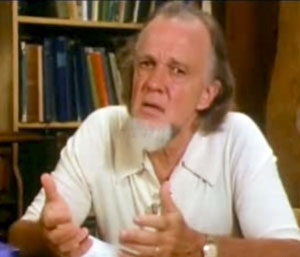


 The Daily Hatch