Rock band “Led Zeppelin” poses for a portrait in 1970. (L-R) John Paul Jones, Jimmy Page, John Bonham, Robert Plant
A spectral presence loomed over the making of Led Zeppelin’s IV, with Jimmy Page convinced that ghosts haunted the house of Headley Grange where the band did much of the recording for their classic album. But it was a very real-world guest who influenced the title of Black Dog, IV’s exhilarating opener named for an elderly Labrador that kept wandering in and out of the grounds.
The track originated from a searing blues riff by John Paul Jones, the bassist influenced by Tom Cat, a song on the Muddy Waters album Electric Mudthat similarly revolves around a lithe, repetitive lick.
Jones had scrawled the idea down on a train home from a rehearsal at Page’s boathouse in Berkshire. “My dad had taught me this very easy notation system using note values and numbers,” Jones told Mojo in 2007, “so I wrote it on a bit of paper on the train.”
For Plant, Black Dog summed up one way that Led Zep could work speedily and efficiently. “Sometimes John Paul would contribute the leading part of a song and then it would be a pretty quick arrangement of bits and pieces so that the song fitted together rather quickly,” Plant said in Joe Smith’s 1988 book Off The Record.
Black Dog, though, might have been the exception – it took a few gos for the band to lock into its irregular groove. “It was originally all in 3/16 time,” Jones recalled in Classic Rock, “but no one could keep up with that.” Bonham, in particular, struggled the song’s shifting rhythms. “I told Bonzo he had to keep playing four-to-the-bar all the way through Black Dog,” Jones said. “If you go through enough 5/8s it arrives back on the beat.”
Whilst that take on the song suggests you might require a masters in maths and musical notation to revel in its magnificence, Black Dog’s thrills are much more visceral. It remains an explosive, daring opener to a classic record.
__________________ A Funny Press Interview of The Beatles in The US (1964) Funny Pictures of The Beatles Published on Oct 23, 2012 funny moments i took from the beatles movie; A Hard Days Night ___________________ Scene from Help! The Beatles Funny Clips and Outtakes (Part 1) The Beatles * Wildcat* (funny) Uploaded on Mar 20, […]
_____________________ Great article on Dylan and Sergeant Pepper’s Lonely Hearts Club Band Cover: A famous album by the fab four – The Beatles – is “Sergeant peppers lonely hearts club band“. The album itself is one of the must influential albums of all time. New recording techniques and experiments with different styles of music made this […]
__________________________ Beatles 1966 Last interview 69 THE BEATLES TWO OF US As a university student, Karl Marx (1818-1883) joined a movement known as the Young Hegelians, who strongly criticized the political and cultural establishments of the day. He became a journalist, and the radical nature of his writings would eventually get him expelled by the […]
____________ Aleister Crowley on cover of Stg. Pepper’s: _______________ I have dedicated several posts to this series on the Beatles and I don’t know when this series will end because Francis Schaeffer spent a lot of time listening to the Beatles and talking and writing about them and their impact on the culture of the 1960’s. […]
The comments that Francis Schaeffer makes below on SHE’s LEAVING HOME could have been made about this Monkey song below. Wikipedia notes: Cowriter Carole King stated in her autobiography that after she and her husband Gerry Goffin had earned enough money from songwriting royalties, they moved from New York City to West Orange, New Jersey. Goffin disliked their suburban life and wrote lyrics to document the feeling that became “Pleasant Valley Sunday”.[7] The lyrics are a social commentary on status symbols, creature comforts, life in suburbia and “keeping up with the Joneses“.
The Monkees – “Pleasant Valley Sunday” – ORIGINAL VIDEO – HQ
“Pleasant Valley Sunday” is a song by the Monkees, released in 1967. It was written by Gerry Goffin and Carole King. Inspired by a street named Pleasant Valley Way and their move to suburban West Orange, New Jersey, Goffin and King wrote the song about dissatisfaction with the life in the suburbs.[3]
The Monkees’ version differs somewhat from Goffin and King’s demo, and their recording features a well-known guitar intro played by Michael Nesmithand a reverb ending.[4]Micky Dolenz sang the lead. It became one of the Monkees’ most successful singles, peaking at No. 3 and continuing their string of top 10 hits.[5] The song was included on Pisces, Aquarius, Capricorn & Jones Ltd.[6]
Cowriter Carole King stated in her autobiography that after she and her husband Gerry Goffin had earned enough money from songwriting royalties, they moved from New York City to West Orange, New Jersey. Goffin disliked their suburban life and wrote lyrics to document the feeling that became “Pleasant Valley Sunday”.[7] The lyrics are a social commentary on status symbols, creature comforts, life in suburbia and “keeping up with the Joneses“.
Many alternative interpretations exist regarding the lyrics. In the book SuburbiaNation, Robert Beuka described the lyrics as “a wry commentary on the materialistic and anesthetized sensibilities of the adult generation in suburbia…”[8] Brian Ward wrote in The 1960s: A Documentary Reader that the song was more associated with the New Left and the counterculture.[9]Michael Nesmith jokingly stated in a 1978 interview with Blitz magazine that the song was written about “a mental institution.”[10][11]Deanna D. Sellnow, author of The Rhetorical Power of Popular Culture, commented that, despite so many definitions about the song’s meaning, its rhetorical message is actually “bleak.”[12]
King recorded a demo of “Pleasant Valley Sunday”, later included in the 2012 compilation album The Legendary Demos,[13] but the Monkees‘ version has a faster tempo and some alterations to the bridgelyrics (“Creature comfort goals/Can only numb my soul/I need a change of scenery/My thoughts all seem to stray/To places far away/I don’t ever want to see/Another Pleasant Valley Sunday….” was changed to “Creature comfort goals/They only numb my soul/And make it hard for me to see/My thoughts all seem to stray/To places far away/I need a change of scenery.”). The Monkees’ producerChip Douglas, who was responsible for these changes, stated that King disapproved of them.[14]
“Pleasant Valley Sunday” was recorded during the Pisces, Aquarius, Capricorn & Jones Ltd. sessions. The Monkees, who had been fighting to exert more control over their records, and who had recorded an album, Headquarters, on which more of the instruments were played by themselves, used more session musicians for the album tracks. The basic track for “Pleasant Valley Sunday” was recorded on June 10, 1967 with Michael Nesmith on electric guitar, Peter Tork on piano, Douglas on bass guitar and session musician Eddie Hoh on drums.[15]Micky Dolenz was present at the session and may have played acoustic guitar.[4] The next day, Nesmith overdubbed another electric guitar part, while Hoh recorded percussion (shaker and conga) overdubs and Bill Chadwick, a friend of the Monkees, performed a second acoustic guitar portion.[4] The Monkees (including Davy Jones) recorded their vocals, with the possible participation of Douglas, on June 13. Nesmith played another guitar part, while Hoh overdubbed more percussion. Dolenz sang lead, with Nesmith harmonizing.[4]
The distinctive guitar intro (and the main riff) was played by Nesmith on a black Gibson Les Paul guitar through three Vox Super Beatle amplifiers.[16]Douglas wrote the intro based on the riff of the Beatles‘ “I Want to Tell You.”[17]
For the song’s ending, Douglas and engineer Hank Cicalo tried to “keep pushing everything up,” increasingly adding reverberation and echo until the sound became unrecognizable before fading out.[6]Separate mono and stereo versions were mixed for single and album records.
Billboard described the single as a “strong, easy rocker” that is “excitingly performed.”[18]Cash Boxsaid that it’s “an up-tempo happy-flavored ditty celebrating summertime activities that are regarded as All-American and quaint.”[19] Tork praised the vocal performances of both Dolenz and Nesmith.[20]The single peaked at No. 3 on the Hot 100 and was repeatedly featured in the second season of their television series. The song also appeared on the fourth Monkees album, Pisces, Aquarius, Capricorn & Jones Ltd., in November 1967. While mono copies of the album included the same version heard on the single, stereo copies featured a version with a different take of the first verse and an additional backing vocal during the break. A different stereo mix, more closely replicating the single version, appeared on the 1991 Monkees box set Listen to the Band.
In February 1986, MTV aired a marathon of episodes of The Monkees titled Pleasant Valley Sunday, which sparked a second wave of interest in the band. Dolenz, Tork and Jones, already on tour, went from playing small venues to arenas and stadiums in the following weeks.
The B-side of the “Pleasant Valley Sunday” single, “Words“, was written by Boyce and Hart. On the Pisces album, the song is introduced by Tork’s brief spoken-word track “Peter Percival Patterson’s Pet Pig Porky.”
In the 2005 Gilmore Girls season 5 episode “To Live and Let Diorama”, the song is heard playing at the music store owned by Sophie Bloom (a character played by Carole King, who co-wrote the song).
____ I have read over 40 autobiographies by ROCKERS and it seems to me that almost every one of those books can be reduced to 4 points. Once fame hit me then I became hooked on drugs. Next I became an alcoholic (or may have been hooked on both at same time). Thirdly, I chased the skirts and thought happiness would be found through more sex with more women. Finally, in my old age I have found being faithful to my wife and getting over addictions has led to happiness like I never knew before. (Almost every autobiography I have read from rockers has these points in it although Steven Tyler is still chasing the skirts!!). Paul was a playboy early on when with the Beatles but he settled down when he met Linda. Paul has not written an autobiography but I highly recommend the book PAUL MCCARTNEY: THE LIFE by Philip Norman.
_
August 13, 2022
Paul McCartney
Dear Paul,
I was so pumped up to attend your fine concert in Little Rock in 2016. I got a big kick out of taking my family to see Ringo at Orange Beach, Alabama on July 4th, 2012. It was a great show. In fact, I have been so focused on the Beatles in recent years that I have done over a year worth of weekly posts on my blog http://www.thedailyhatch.org ever Thursday entitled FRANCIS SCHAEFFER ANALYZES ART AND CULTURE and posts 49 to 101 have been about the Beatles with more to come. In fact, if you google the words FRANCIS SCHAEFFER BEATLES you the first 10 items that pop up will be links to my blog posts on Thursdays about the Beatles and what Francis Schaeffer had to say about them.
Melanie Coe ran away from home in 1967 when she was 15. Paul McCartney read about her in the papers and wrote ‘She’s Leaving Home’ for Sgt.Pepper’s. Melanie didn’t know Paul’s song was about her, but actually, the two did meet earlier, when Paul was the judge and Melanie a contestant in Ready Steady Go!
The subtitles are produced live for The One Show, so some seconds late and with a few mistakes.
Melanie’s first moment of fame, receiving a prize from Paul McCartney for miming to Brenda Lee on Ready Steady Go! in 1963
Melanie in 2008
She’s Leaving Home The Beatles Sgt. Pepper’s
Wednesday morning at five o’clock as the day begins Silently closing her bedroom door Leaving the note that she hoped would say more She goes downstairs to the kitchen clutching her hankerchief Quietly turing the backdoor key Stepping outside she is free. She (We gave her most of our lives) is leaving (Sacraficed most of our lives) home (We gave her everything money could buy) She’s leaving home after living alone For so many years. Bye, bye Father snores as his wife gets into her dressing gown Picks up the letter that’s lying there Standing alone at the top of the stairs She breaks down and cries to her husband Daddy our baby’s gone. Why would she treat us so thoughtlessly How could she do this to me. She (We never though of ourselves) Is leaving (Never a thought for ourselves) home (We struggled hard all our lives to get by) She’s leaving home after living alone For so many years. Bye, bye Friday morning at nine o’clock she is far away Waiting to keep the appointment she made Meeting a man from the motor trade. She What did we do that was wrong Is having We didn’t know it was wrong Fun Fun is the one thing that money can’t buy Something inside that was always denied For so many years. Bye, Bye She’s leaving home bye bye
Why is she leaving home? Francis Schaeffer noted on pages 15-17 in volume 4 of THE COMPLETE WORKS OF FRANCIS SCHAEFFER from the original book “The Church at the end of the 20th Century” the reason she left and it was because of the bankruptcy of the materialistic views of her parents. Schaeffer points that for many years there was one message that the media was promoting and that was since we now believe in the “UNIFORMITY OF NATURAL CAUSES IN A CLOSED SYSTEM we are left with only the impersonal plus time plus chance.” Schaeffer continued:What is taught is that there is no final truth, no meaning, no absolutes, that it is only that we have not found truth and meaning, but that they do not exist. The student and the common man may not be able to analyze it, but day after day, day after day, they are being battered by this concept. We have now had several generations exposed to this and we must not be blind to the fact that it is being excepted increasingly.In contrast, this way of thinking has not had as much influence on the middle class. Many of these keep thinking in the old way as a memory of the time before the Christian base was lost in this post-Christian world. However, the majority in the middle-class have no real basis for their values since so many have given up the Christian viewpoint. They just function on the “memory.” This is why so many young people have felt that the middle class is ugly.They feel middle-class people are plastic, ugly and plastic because they try to tell others what to do on the basis of their own values but with no ground for those values.They have no base and they have no clear categories for their choices of right and wrong. Their choices tend to turn on what is for their material benefit. Take for example the fact faculty members who cheered when the student revolt struck against the administration and who immediately began to howl when the students started to burn up faculty manuscripts. They have no categories to say this is right and that is wrong. Many such people still hang on to their old values by memory but they have no base for them at all. A few years ago John Gardner head of the urban coalition spoke in Washington to a group of student leaders. His topic was on restoring values in our culture. When he finished there was a dead silence then finally one man from Harvard stood up and in a moment of brilliance asked, “Sir upon what base do you build your values?” I have never felt more sorry for anybody in my life. He simply looked down and said, “I do not know.” I had spoken that same day about what I was writing in the first part of this book. It was almost too good an illustration of my lecture. Here was a man appealing to the young people for a return to values but he is offering nothing to build on. man who was trying to tell his hearers not to drop out and yet giving no reason why they should not. Functioning only on a dim memory, these are the parents who have turned off their children when their children ask why and how. When their children crying out, “Yours is a plastic culture.” They are silent. We had the response so beautifully stated in the 1960s in the Beatles’ Sergeant Pepper’s song “She is leaving home.” “We gave her everything money could buy.” This is the only answer many parents can give.They are bothered about what they read in the newspapers concerning the way the country and the culture are going. When they read of the pornographic plays, see pornographic films on TV, they are distressed. They have a vague unhappiness about it, feel threatened by all of it and yet have no base upon which to found their judgments. And tragically such people are everywhere. They constitute the largest body in our culture-northern Europe, Britain, and also in America and other countries as well. They are a majority-what is called for a time the “silent majority”–but they are weak as water. They are people who like the old ways because they are pleasant memories, because they give what to them is a comfortable way to live but they have no basis for their values. Education for example is excepted and pressed upon their children as the only thinkable thing to pursue. Success is starting the child at the earliest possible age and then within the least possible years he is obtaining a Masters or PhD degree. Yet if the child asks why?, the only answers are first because it gives social status and then because statistics show that if you have a university or college education you will make more money. There is no base for real values are even the why of a real education. ________ When you think about the song SHE’S LEAVING HOME, you must come to the conclusion that the Beatles knew exactly what was going through the young person’s mind in the 1960’s. No wonder in the video THE AGE OF NON-REASON (which is on You Tube under the title HOW SHOULD WE THEN LIVE? EPISODE 7) Schaeffer noted, ” Sergeant Pepper’s Lonely Hearts Club Band…for a time it became the rallying cry for young people throughout the world. It expressed the essence of their lives, thoughts and their feelings.”
Billy Graham had a similar message to the young people in 1969 that they like the girl in SHE’S LEAVING HOME was right to Re just her parents materialism!!!
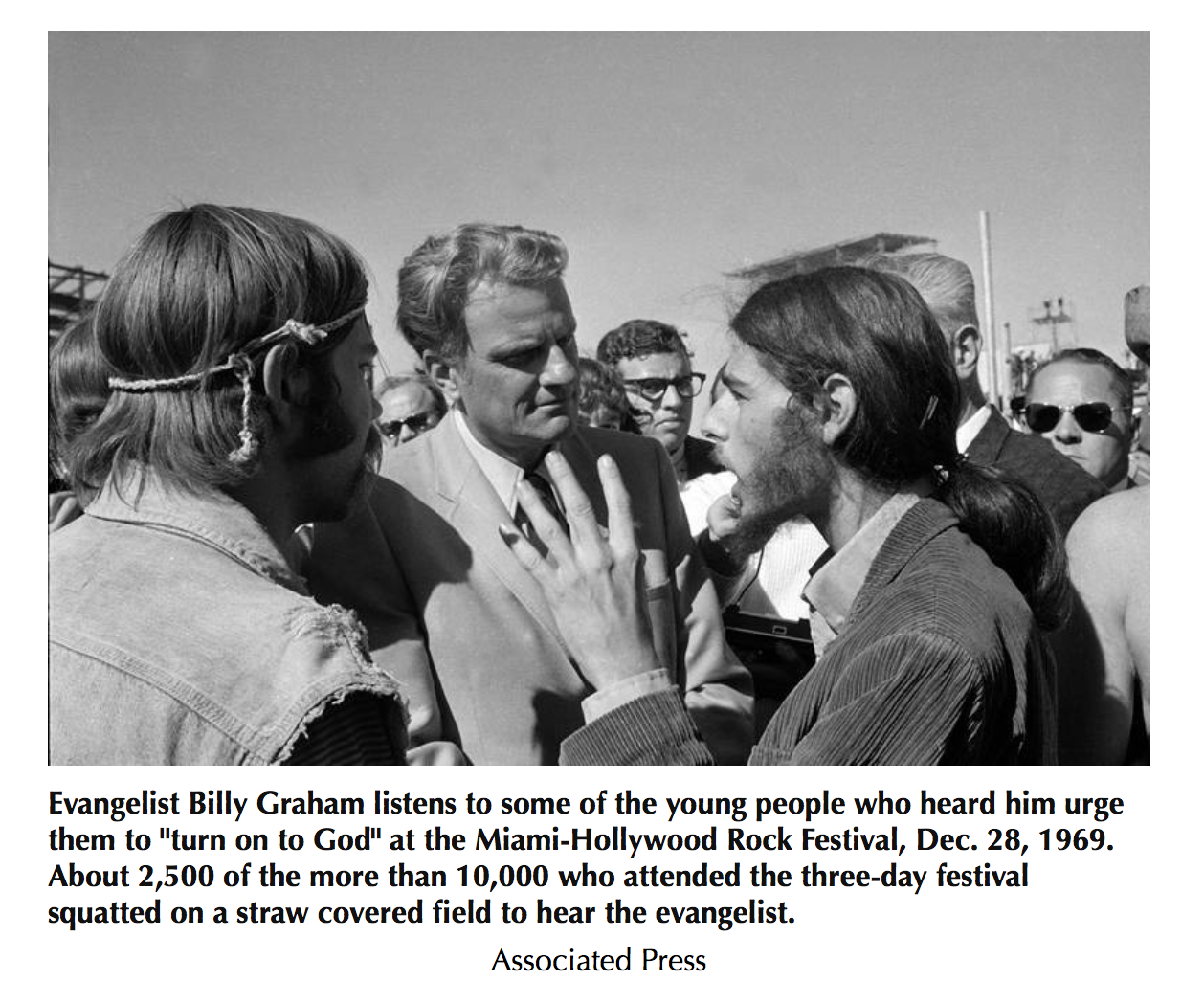
The 1969 Miami Rock Music Festival featured the Grateful Dead, Santana, Canned Heat, Johnny Winter, Vanilla Fudge and, interestingly enough, Billy Graham.
What follows is Billy Graham’s description of his countercultural gospel message at the Miami Rock Music Festival found in his autobiography Just As I Am.
It was eleven o’clock on a Sunday morning, but I was most definitely not in church. Instead, to the horror of some, I was attending the 1969 Miami Rock Music Festival.
America in 1969 was in the midst of cataclysmic social upheaval. Stories of violent student protests against the Vietnam War filled the media. Images from the huge Woodstock music festival that took place just six months before the Miami event near Bethel, New York – for many a striking symbol of the anti-establishment feelings of a whole generation of rebellious youth – were still firmly etched in the public’s memory.
Concert promoter Norman Johnson perhaps hoped my presence would neutralize at least some of the fierce opposition he had encountered from Miami officials. Whatever his reasons, I was delighted for the opportunity to speak from the concert stage to young people who probably would have felt uncomfortable in the average church, and yet whose searching questions about life and sharp protests against society’s values echoed from almost every song.
“I gladly accept your kind invitation to speak to those attending the Miami Rock Festival on Sunday morning, December 28,” I wired him the day before Christmas. “They are the most exciting and challenging generation in American history.”
As I stepped onto the platform that Sunday morning, several thousand young people were lolling on the straw-covered ground or wandering around the concert site in the warm December sun, waiting for such groups as the Grateful Dead and Santana to make their appearance. A few were sleeping; the nonstop music had quit around four that morning.
In order to get a feel for the event, for a few hours the night before I put on a simple disguise and slipped into the crowd. My heart went out to them. Though I was thankful for their youthful exuberance, I was burdened by their spiritual searching and emptiness.
A bearded youth who had come all the way from California for the event recognized me. “Do me a favor,” he said to me with a smile, “and say a prayer to thank God for good friends and good weed.” Every evening at sunset, he confided to me, he got high on marijuana and other drugs.
“You can also get high on Jesus,” I replied.
That Sunday morning, I came prepared to be shouted down, but instead I was greeted with scattered applause. Most listened politely as I spoke. I told the young people that I had been listening carefully to the message of their music. We reject your materialism, it seemed to proclaim, and we want something of the soul. Jesus was a nonconformist, I reminded them, and He could fill their souls and give them meaning and purpose in life. “Tune in to God today, and let Him give you faith. Turn on to His power.”
Afterward two dozen responded by visiting a tent on the grounds set up by a local church as a means of outreach. During the whole weekend, the pastor wrote me later, 350 young people made commitments to Christ, and two thousand New Testaments were distributed.
As I have reflected on my own calling as an evangelist, I frequently recall the words of Christianity’s greatest evangelist, the Apostle Paul: “It has always been my ambition to preach the gospel where Christ was not known … ” (Romans 15:20). … I once told an interviewer that I would be glad to preach in Hell itself-if the Devil would let me out again!
Excerpted from Just As I Am: The Autobiography of Billy Graham (Harper Collins 1997).
Little One – From the Film, “Sarah’s Choice” Rebecca St James on faith and values – theDove.us Sarah’s Choice Trailer Sarah’s Choice – Behind the Scenes Rebecca St. James on Sarah’s Choice – CBN.com Rebecca St James Interview on Real Videos Sarah’s Choice – The Proposal Sarahs Choice Pregnancy Test Sarahs Choice Crossroad Sarah’s Choice […]By Everette Hatcher III | Posted in Current Events | Edit | Comments (0)
Lion – Rebecca St. James I will praise You – Rebecca St James Rebecca St James 1995 TBN – Everything I Do Rebecca St. James & Rachel Scott “Blessed Be Your Name” Rebecca St. James From Wikipedia, the free encyclopedia Rebecca St. James St. James in 2007 Background information Birth name Rebecca Jean Smallbone Also […]By Everette Hatcher III | Posted in Current Events | Edit | Comments (0)
Foster The People – Pumped up Kicks Foster the People From Wikipedia, the free encyclopedia Foster the People Foster the People at the 2011 MuchMusic Video Awards, from left to right: Pontius, Foster, and Fink Background information Origin Los Angeles, California, U.S. Genres Indie pop alternative rock indietronica alternative dance neo-psychedelia[1] Years active 2009–present Labels […]By Everette Hatcher III | Posted in Current Events | Edit | Comments (0)
‘Apple gave me advice’: Coldplay’s Chris Martin turned to 11-year-old daughter for words of wisdom ahead of Superbowl 50 By DAILYMAIL.COM REPORTER PUBLISHED: 00:58 EST, 2 February 2016 | UPDATED: 17:20 EST, 2 February 2016 n Facebook They’ve sold 80 million records and been around for 20 years. But Coldplay’s lead singer Chris Martin, 38, […]By Everette Hatcher III | Posted in Current Events | Edit | Comments (0)
__________ Chris Martin, Lead Singer of Coldplay: 5 Fast Facts You Need to Know Published 3:44 pm EDT, February 7, 2016 Updated 3:44 pm EDT, February 7, 2016 Comment By Lauren Weigle 17.6k (Getty) Chris Martin has been the front-man of the band Coldplay for about 20 years, though the band changed its name a […]By Everette Hatcher III | Posted in Current Events | Edit | Comments (0)
Christian Rock Pioneer Larry Norman’s Songs Part 14 I posted a lot in the past about my favorite Christian musicians such as Keith Green (I enjoyed reading Green’s monthly publications too), and 2nd Chapter of Acts and others. Today I wanted to talk about one of Larry Norman’s songs. David Rogers introduced me to Larry […]By Everette Hatcher III | Posted in Current Events | Edit | Comments (0)
Christian Rock Pioneer Larry Norman’s Songs Part 13 I posted a lot in the past about my favorite Christian musicians such as Keith Green (I enjoyed reading Green’s monthly publications too), and 2nd Chapter of Acts and others. Today I wanted to talk about one of Larry Norman’s songs. David Rogers introduced me to Larry […]By Everette Hatcher III | Posted in Current Events | Edit | Comments (0)
Christian Rock Pioneer Larry Norman’s Songs Part 12 I posted a lot in the past about my favorite Christian musicians such as Keith Green (I enjoyed reading Green’s monthly publications too), and 2nd Chapter of Acts and others. Today I wanted to talk about one of Larry Norman’s songs. David Rogers introduced me to Larry […]By Everette Hatcher III | Posted in Current Events | Edit | Comments (0)
Christian Rock Pioneer Larry Norman’s Songs Part 11 I posted a lot in the past about my favorite Christian musicians such as Keith Green (I enjoyed reading Green’s monthly publications too), and 2nd Chapter of Acts and others. Today I wanted to talk about one of Larry Norman’s songs. David Rogers introduced me to Larry […]By Everette Hatcher III | Posted in Current Events | Edit | Comments (0)
Christian Rock Pioneer Larry Norman’s Songs Part 10 more on Album “Only Visiting This Planet” I posted a lot in the past about my favorite Christian musicians such as Keith Green (I enjoyed reading Green’s monthly publications too), and 2nd Chapter of Acts and others. Today I wanted to talk about one of Larry Norman’s […]By Everette Hatcher III | Posted in Current Events | Edit | Comments (0)
President Donald Trump announced on Saturday that he would nominate a woman to fill the vacancy left by the death of Justice Ruth Bader Ginsburg. According to news reports, Judge Amy Coney Barrett, a judge on the Chicago-based U.S. Court of Appeals for the 7th Circuit, is on the shortlist of candidates whom the president is considering.
Judge Amy Coney Barrett (University of Notre Dame)
This is not the first time that Barrett’s name has been mentioned in connection with a possible Supreme Court seat: Barrett was reportedly also on the shortlist to fill the vacancy created by the retirement of Justice Anthony Kennedy in 2018. Although that seat was eventually filled by now-Justice Brett Kavanaugh, Trump reportedly told advisers that he was “saving” Barrett in case Ginsburg stepped down during his presidency. Barrett became a hero to many religious conservatives after her 2017 confirmation hearing for her seat on the court of appeals, when Democrats on the Senate Judiciary Committee – most notably, Sen. Dianne Feinstein of California – grilled her on the role of her Catholic faith in judging.
Early life and career
The 48-year-old Barrett grew up in Metairie, Louisiana, a suburb of New Orleans, and attended St. Mary’s Dominican High School, a Catholic girls’ school in New Orleans. Barrett graduated magna cum laude from Rhodes College, a liberal arts college in Tennessee affiliated with the Presbyterian Church, in 1994. (Other high-profile alumni of the school include Abe Fortas, who served as a justice on the Supreme Court from 1965 to 1969, and Claudia Kennedy, the first woman to become a three-star general in the U.S. Army.) At Rhodes, she was a member of Phi Beta Kappa and was also recognized as the most outstanding English major and for having the best senior thesis.
After graduating from Rhodes, Barrett went to law school at Notre Dame on a full-tuition scholarship. She excelled there as well: She graduated summa cum laude in 1997, received awards for having the best exams in 10 of her courses and served as executive editor of the school’s law review.
Barrett then held two high-profile conservative clerkships, first with Judge Laurence Silberman of the U.S. Court of Appeals for the District of Columbia Circuit, from 1997 to 1998, and then with the late Justice Antonin Scalia, from 1998 to 1999. After leaving her Supreme Court clerkship, she spent a year practicing law at Miller, Cassidy, Larroca & Lewin, a prestigious Washington, D.C., litigation boutique that also claims as alumni former U.S. solicitor general Seth Waxman, former deputy attorney general Jamie Gorelick, and John Elwood, the head of Arnold & Porter’s appellate practice and a regular contributor to SCOTUSblog. In 2001, Miller Cassidy merged with Baker Botts, a larger, Texas-based firm, and Barrett spent another year there before leaving for academia. To the chagrin of Democratic senators during her confirmation process for the 7th Circuit, Barrett was able to recall only a few of the cases on which she worked, and she indicated that she never argued any appeals while in private practice.
A prolific stint in academia
Barrett spent a year as a law and economics fellow at George Washington University before heading to her alma mater, Notre Dame, in 2002 to teach federal courts, constitutional law and statutory interpretation. Barrett was named a professor of law at the school in 2010; four years later, she became the Diane and M.O. Research Chair of Law. Barrett was named “distinguished professor of the year” three times.
While at Notre Dame, Barrett signed a 2012 “statement of protest” condemning the accommodation that the Obama administration created for religious employers who were subject to the Affordable Care Act’s birth control mandate. The statement lamented that the accommodation “changes nothing of moral substance and fails to remove the assault on individual liberty and the rights of conscience which gave rise to the controversy.” Barrett was also a member of the Federalist Society, the conservative legal group, from 2005 to 2006 and then again from 2014 to 2017. In response to written questions from Democratic senators during her 7th Circuit confirmation process, Barrett indicated that she had rejoined the group because it gave her “the opportunity to speak to groups of interested, engaged students on topics of mutual interest,” but she added that she had never attended the group’s national convention.
During her 15 years as a full-time law professor, Barrett’s academic scholarship was prolific. Several of her articles, however, drew fire at Barrett’s confirmation hearing, with Democratic senators suggesting that they indicate that Barrett would be influenced by her Catholic faith, particularly on the question of abortion.
Barrett co-wrote her first law review article, “Catholic Judges in Capital Cases,” with Notre Dame law professor John Garvey (now the president of the Catholic University of America); the article was published in the Marquette Law Review in 1998, shortly after her graduation from Notre Dame. It explored the effect of the Catholic Church’s teachings on the death penalty on federal judges, and it used the church’s teachings on abortion and euthanasia as a comparison point, describing the prohibitions on abortion and euthanasia as “absolute” because they “take away innocent life.” The article also noted that, when the late Justice William Brennan was asked about potential conflict between his Catholic faith and his duties as a justice, he responded that he would be governed by “the oath I took to support the Constitution and laws of the United States.” Barrett and Garvey observed that they did not “defend this position as the proper response for a Catholic judge to take with respect to abortion or the death penalty.”
When questioned about the article at her 7th Circuit confirmation hearing, Barrett stressed that she did not believe it was “lawful for a judge to impose personal opinions, from whatever source they derive, upon the law,” and she pledged that her views on abortion “or any other question will have no bearing on the discharge of my duties as a judge.” She acknowledged that, if she were instead being nominated to serve as a federal trial judge, she “would not enter an order of execution,” but she assured senators that she did not intend “as a blanket matter to recuse myself in capital cases if I am confirmed” and added that she had “fully participated in advising Justice Scalia in capital cases as a law clerk.”
Barrett’s responses did not mollify Feinstein, who suggested that Barrett had a “long history of believing that religious beliefs should prevail.” In a widely reported exchange, Feinstein told Barrett that, based on Barrett’s speeches, “the conclusion one draws is that the dogma lives loudly within you. And that’s of concern when you come to big issues that large numbers of people have fought for years in this country.”
In another article, “Stare Decisis and Due Process,” published in the University of Colorado Law Review, Barrett discussed the legal doctrine that generally requires courts to follow existing precedent, even if they might believe that it is wrong. Barrett wrote that courts and commentators “have thought about the kinds of reliance interests that justify keeping an erroneous decision on the books”; in a footnote, she cited (among other things) Planned Parenthood v. Casey, the 1992 decision reaffirming Roe v. Wade. Barrett’s detractors characterized the statement as criticism of Roe itself, while supporters such as conservative legal activist Ed Whelan countered that the statement did not reflect Barrett’s views on Roe itself, but instead was just an example of competing opinions on the reliance interests in Roe.
Path to the federal bench
Trump nominated Barrett to the 7th Circuit on May 8, 2017. Despite some criticism from Democrats, she garnered bipartisan support at her confirmation hearing. A group of 450 former students signed a letter to the Senate Judiciary Committee, telling senators that their support was “driven not by politics, but by the belief that Professor Barrett is supremely qualified.” And she had the unanimous support of her 49 Notre Dame colleagues, who wrote that they had a “wide range of political views” but were “united however in our judgment about Amy.”
After Barrett’s confirmation hearing but before the Senate voted on her nomination, The New York Times reported that Barrett was a member of a group called People of Praise. Group members, the Times indicated, “swear a lifelong oath of loyalty to one another, and are assigned and accountable to a personal adviser.” Moreover, the Times added, the group “teaches that husbands are the heads of their wives and should take authority for their family.” The newspaper quoted legal experts who worried that such oaths “could raise legitimate questions about a judicial nominee’s independence and impartiality.”
Barrett declined the Times’ request for an interview about People of Praise, whose website describes the group as an “ecumenical, charismatic, covenant community” modeled on the “first Christian community.” “Freedom of conscience,” the website says, “is a key to our diversity.” In 2018, Slate interviewed the group’s leader, a physics and engineering professor at Notre Dame, who explained that members of the group “often make an effort to live near one another” and agree to donate 5% of their income to the group.
On Oct. 31, 2017, Barrett was confirmed to the 7th Circuit by a vote of 55 to 43. Three Democratic senators – her home state senator, Joe Donnelly; Tim Kaine of Virginia; and Joe Manchin of West Virginia – crossed party lines to vote for her, while two Democratic senators (Claire McCaskill of Missouri and Robert Menendez of New Jersey) did not vote.
Barrett as a judge: Gun rights and abortion
In a story in the National Review in August 2020, conservative legal activist Carrie Severino described Barrett as a “champion of originalism” during her short tenure so far on the 7th Circuit. In the 2019 case Kanter v. Barr, the court of appeals upheld the mail fraud conviction of the owner of an orthopedic footwear company. He argued that federal and state laws that prohibit people convicted of felonies from having guns violate his Second Amendment right to bear arms. The majority rejected that argument. It explained that the government had shown that the laws are related to the government’s important goal of keeping guns away from people convicted of serious crimes.
Barrett dissented. At the time of the country’s founding, she said, legislatures took away the gun rights of people who were believed to be dangerous. But the laws at the heart of Kanter’s case are too broad, she argued, because they ban people like Kanter from having a gun without any evidence that they pose a risk. Barrett stressed that the Second Amendment “confers an individual right, intimately connected with the natural right of self-defense and not limited to civic participation.”
During her time on the court of appeals, Barrett has grappled with the issue of abortion twice – both times in dealing with requests for the full court of appeals to rehear a case, rather than as part of a three-judge panel. In 2018, the full court ordered rehearing en banc in a challenge to an Indiana law requiring fetal remains to be either buried or cremated after an abortion but then vacated that order and reinstated the original opinion blocking the state from enforcing the law.
Barrett joined a dissent from the denial of rehearing en banc written by Judge Frank Easterbrook. Easterbrook began by addressing a separate provision of the law that had also been struck down but was not at issue in the rehearing proceedings: It would bar abortions based on the race, sex or disability (such as Down syndrome) of the fetus. Characterizing the provision as a means of preventing prospective parents from “[u]sing abortion as a way to promote eugenic goals,” Easterbrook expressed doubt that the Constitution bars states from enacting such laws.
Indiana later went to the Supreme Court, which reversed the 7th Circuit’s opinion on the provision governing fetal remains. States have an interest in the proper disposal of fetal remains, the justices reasoned, and this law “is rationally related to” that interest. But the justices did not weigh in on the part of the 7th Circuit’s decision that struck down the ban on abortions based on race, sex or disability, leaving the state unable to enforce that provision.
In 2019, Barrett indicated that she wanted the full 7th Circuit to hear a challenge to an Indiana law requiring young women to notify their parents before obtaining an abortion after a three-judge panel ruled that the law was unconstitutional. She joined a dissent from the denial of rehearing by Judge Michael Kanne, who wrote that “[p]reventing a state statute from taking effect is a judicial act of extraordinary gravity in our federal structure.” The state asked the Supreme Court to weigh in, and the justices sent the case back to the lower courts this summer for another look in light of their ruling in June Medical Services v. Russo, which struck down a Louisiana law that requires doctors who perform abortions to have the right to admit patients at nearby hospitals.
Also in 2019, Barrett joined an opinion that upheld a Chicago ordinance that bars anti-abortion “sidewalk counselors” from approaching women entering an abortion clinic. The Chicago ordinance was modeled after a Colorado law that the Supreme Court upheld in 2000 in Hill v. Colorado, but challengers argued that later decisions by the Supreme Court “have so thoroughly undermined Hill’s reasoning that we need not follow it.” Judge Diane Sykes – who is also on Trump’s list of potential nominees, although now an unlikely candidate at age 62 – wrote that “[t]hat’s a losing argument in the court of appeals. The Court’s intervening decisions have eroded Hill’s foundation, but the case still binds us; only the Supreme Court can say otherwise.” The Supreme Court denied the challengers’ petition for review in July 2020.
Barrett as a judge: Sex discrimination on campus and immigration policy
In Doe v. Purdue University, Barrett wrote for a three-judge panel that reinstated a lawsuit filed against the university and its officials by a student who had been found guilty, through the university’s student discipline program, of sexual violence. One expert who advises colleges and universities on compliance with Title IX, a federal law that bars gender discrimination in education, told The Washington Post that the opinion was a “trendsetter” that would make it easier for students to bring lawsuits against universities to trial.
The student, known as John Doe, was suspended from school, which in turn led to his expulsion from the Navy ROTC program, the loss of his scholarship and the end of his plans to join the Navy after graduation. The court of appeals agreed with the student that he should be allowed to pursue his claim alleging that the process used to determine his guilt or innocence violated the Constitution. “Purdue’s process,” Barrett wrote, “fell short of what even a high school must provide to a student facing a days-long suspension.”
The court also revived the student’s statutory claim under Title IX. Barrett observed that although a 2011 letter from the Department of Education to colleges and universities warning schools to vigorously investigate and punish sexual misconduct or risk losing federal funds would give Doe “a story about why Purdue might have been motivated to discriminate against males accused of sexual assault,” it might not, she observed, standing alone, be enough for his case to go forward. However, she continued, the combination of the letter and facts suggesting that university officials had chosen to believe his alleged victim “because she is a woman and to disbelieve John Doe because he is a man” would suffice for his case to continue.
In June 2020, Barrett dissented from a decision that upheld a district court order blocking the Trump administration from enforcing the “public charge” rule, which bars noncitizens from receiving a green card if the government believes they are likely to rely on public assistance. The district court had put the administration’s 2019 interpretation of the rule on hold, ruling that it likely exceeded the scope of the underlying “public charge” statute, which according to the district court requires a longer and more substantial dependence on government assistance before someone may be considered a “public charge.” In February, a divided Supreme Court issued an emergency order allowing the federal government to begin enforcing the rule while its appeals were pending.
In her dissent, Barrett rejected the challengers’ efforts to portray the public charge statute as narrow. The current law, she explained, “was amended in 1996 to increase the bite of the public charge determination.” As a result, she continued, it is “not unreasonable to describe someone who relies on the government to satisfy a basic necessity for a year, or multiple basic necessities for a period of months, as falling within the definition of a term that denotes a lack of self-sufficiency.” What the challengers are really objecting to, she suggested, is “this policy choice” or even the very idea of excluding legal immigrants who are deemed likely to depend on government assistance. But, she concluded, litigation “is not the vehicle for resolving policy disputes.”
In Yafai v. Pompeo, Barrett wrote for a three-judge panel that agreed that the wife of a U.S. citizen could not challenge the denial of her visa application. A consular officer rejected the application by Zahoor Ahmed, a Yemeni citizen, on the ground that she had attempted to smuggle two children into the United States. Ahmed and her husband told the embassy that the children she was accused of smuggling had died in a drowning accident and provided documentation, at the embassy’s request.
Relying on a doctrine known as consular nonreviewability, which prohibits courts from reviewing visa decisions made by consular officials overseas, Barrett concluded that it was enough that the consular officer cited the provision of federal immigration law on which he relied and the basic facts at the heart of her case. Because Ahmed and her husband did not show that the consular officer had acted in bad faith in denying her visa application, courts could not look behind that decision. If anything, Barrett suggested, the fact that consular officers had asked for additional documents “suggests a desire to get it right,” and she said that an email from an embassy officer to Ahmed’s lawyer “reveals good-faith reasons for rejecting the plaintiffs’ response to the smuggling charge.”
Barrett as a judge: Other cases
One case that would almost certainly draw attention if she were nominated came shortly after she took the bench: EEOC v. AutoZone, in which the federal government asked the full court of appeals to reconsider a ruling against the Equal Employment Opportunity Commission in its lawsuit against AutoZone, an auto parts store. The EEOC had argued that the store violated Title VII of the Civil Rights Act, which bars employees from segregating or classifying employees based on race, when it used race as a determining factor in assigning employees to different stores – for example, sending African American employees to stores in heavily African American neighborhoods. A three-judge panel (that did not include Barrett) ruled for AutoZone; Barrett joined four of her colleagues in voting to deny rehearing by the full court of appeals.
Three judges – Chief Judge Diane Wood and Judges Ilana Diamond Rovner and David Hamilton – would have granted rehearing en banc. Those three also had strong words in the dissenting opinion they filed. They alleged that, under “the panel’s reasoning, this separate-but-equal arrangement is permissible under Title VII as long as the ‘separate’ facilities really are ‘equal’” – a conclusion, they continued, that is “contrary to the position that the Supreme Court has taken in analogous equal protection cases as far back as Brown v. Board of Education.”
In Schmidt v. Foster, Barrett dissented from the panel’s ruling in favor of a Wisconsin man who admitted that he had shot his wife seven times, killing her in their driveway. Scott Schmidt argued that he had been provoked, which would make his crime second-degree, rather than first-degree, homicide. The trial judge in a state court reviewed that claim at a pretrial hearing that prosecutors did not attend, and at which Schmidt’s attorney was not allowed to speak. The judge rejected Schmidt’s claim of provocation, and Schmidt was convicted of first-degree homicide and sentenced to life in prison. When Schmidt sought to overturn his conviction in federal court, the panel agreed that Schmidt had been denied his Sixth Amendment right to counsel, and the court of appeals sent the case back to the lower court.
Barrett disagreed with her colleagues. Her dissent began by emphasizing that the standard for federal post-conviction relief is “intentionally difficult because federal habeas review of state convictions” interferes with the states’ efforts to enforce their own laws. In this case, she contended, the state court’s decision rejecting Schmidt’s Sixth Amendment claim could not have been “contrary to” or “an unreasonable application of” clearly established federal law (the requirement for relief in federal court) because the Supreme Court has never addressed a claim that a defendant has a right to counsel in a pretrial hearing like the one at issue in this case. While acknowledging that “[p]erhaps the right to counsel should extend to a hearing like the one the judge conducted in Schmidt’s case,” she warned that federal law “precludes us from disturbing a state court’s judgment on the ground that a state court decided an open question differently than we would — or, for that matter, differently than we think the [Supreme] Court would.”
In Akin v. Berryhill, Barrett joined an unsigned decision in favor of a woman whose application for Social Security disability benefits had been denied by an administrative law judge. The panel agreed with the woman, Rebecca Akin, that the judge had incorrectly “played doctor” by interpreting her MRI results on his own, and it instructed the judge to take another look at his determination that Akin was not credible. The panel indicated that it was “troubled by the ALJ’s purported use of objective medical evidence to discredit Akin’s complaints of disabling pain,” noting that fibromyalgia (one of Akin’s ailments) “cannot be evaluated or ruled out by using objective tests.” It added that, among other things, the administrative law judge should not have discredited Akin’s choice to go with a more conservative course of treatment when she explained that “she was afraid of needles and that she wanted to wait until her children finished school before trying more invasive treatment.”
Barrett has been married for over 18 years to Jesse Barrett, a partner in a South Bend law firm who spent 13 years as a federal prosecutor in Indiana. They have seven children (only two fewer than her old boss, Scalia). At her 7th Circuit confirmation hearing, Barrett introduced three of her daughters, who were sitting behind her. She told senators that one daughter, then-13-year-old Vivian, was adopted from Haiti at the age of 14 months, weighing just 11 pounds; she was so weak at the time that the Barretts were told she might never walk normally or talk. The Barretts adopted a second child, Jon Peter, from Haiti after the 2011 earthquake, and Barrett described their youngest child, Benjamin, as having special needs that “present unique challenges for all of us.” Since becoming a judge, Barrett has reportedly commuted from her home in South Bend to Chicago, roughly 100 miles away, a few days a week. If she were nominated and confirmed to fill Ginsburg’s seat, she would likely move her family to the Washington, D.C., area and trade that commute for a shorter one to 1 First Street, N.E.
Barrett was born in New Orleans, Louisiana, in 1972.[2] She is the eldest of seven children, with five sisters and a brother. Her father Michael Coney worked as an attorney for Shell Oil Company, and her mother Linda was a homemaker. Barrett grew up in Metairie, a suburb of New Orleans, and graduated from St. Mary’s Dominican High School in 1990.[9]
From 1999 to 2002, she practiced law at Miller, Cassidy, Larroca & Lewin in Washington, D.C.[11][14]
Teaching and scholarship
Barrett served as a visiting associate professor and John M. Olin Fellow in Law at George Washington University Law School for a year before returning to her alma mater, Notre Dame Law School in 2002.[15]At Notre Dame she taught federal courts, constitutional law, and statutory interpretation. Barrett was named a Professor of Law in 2010, and from 2014 to 2017 held the Diane and M.O. Miller Research Chair of Law.[16] Her scholarship focuses on constitutional law, originalism, statutory interpretation, and stare decisis.[12] Her academic work has been published in journals such as the Columbia, Cornell, Virginia, Notre Dame, and TexasLaw Reviews.[15] Some of her most significant publications are Suspension and Delegation, 99 Cornell L. Rev. 251 (2014), Precedent and Jurisprudential Disagreement, 91 Tex. L. Rev. 1711 (2013), The Supervisory Power of the Supreme Court, 106 Colum. L. Rev. 101 (2006), and Stare Decisis and Due Process, 74 U. Colo. L. Rev. 1011 (2003).
At Notre Dame, Barrett received the “Distinguished Professor of the Year” award three times.[15] She taught Constitutional Law, Civil Procedure, Evidence, Federal Courts, Constitutional Theory Seminar, and Statutory Interpretation Seminar.[15] Barrett has continued to teach seminars as a sitting judge.[17]
A hearing on Barrett’s nomination before the Senate Judiciary Committee was held on September 6, 2017.[20] During the hearing, Senator Dianne Feinstein questioned Barrett about a law review article Barrett co-wrote in 1998 with Professor John H. Garvey in which she argued that Catholic judges should in some cases recuse themselves from death penalty cases due to their moral objections to the death penalty. The article concluded that the trial judge should recuse herself instead of entering the order. Asked to “elaborate on the statements and discuss how you view the issue of faith versus fulfilling the responsibility as a judge today,” Barrett said that she had participated in many death-penalty appeals while serving as law clerk to Scalia, adding, “My personal church affiliation or my religious belief would not bear on the discharge of my duties as a judge”[21][22] and “It is never appropriate for a judge to impose that judge’s personal convictions, whether they arise from faith or anywhere else, on the law.”[23] Worried that Barrett would not uphold Roe v. Wade given her Catholic beliefs, Feinstein followed Barrett’s response by saying, “the dogma lives loudly within you, and that is a concern.”[24][25][26] The hearing made Barrett popular with religious conservatives,[11] and in response, the conservative Judicial Crisis Network began to sell mugs with Barrett’s photo and Feinstein’s “dogma” remark.[27]Feinstein’s and other senators’ questioning was criticized by some Republicans and other observers, such as university presidents John I. Jenkins and Christopher Eisgruber, as improper inquiry into a nominee’s religious belief that employed an unconstitutional “religious test” for office;[23][28][29]others, such as Nan Aron, defended Feinstein’s line of questioning.[29]
Lambda Legal, an LGBT civil rights organization, co-signed a letter with 26 other gay rights organizations opposing Barrett’s nomination. The letter expressed doubts about her ability to separate faith from her rulings on LGBT matters.[30][31] During her Senate confirmation hearing, Barrett was questioned about landmark LGBTQ legal precedents such as Obergefell v. Hodges, United States v. Windsor, and Lawrence v. Texas. Barrett said these cases are “binding precedents” that she intended to “faithfully follow if confirmed” to the appeals court, as required by law.[30] The letter co-signed by Lambda Legal said “Simply repeating that she would be bound by Supreme Court precedent does not illuminate—indeed, it obfuscates—how Professor Barrett would interpret and apply precedent when faced with the sorts of dilemmas that, in her view, ‘put Catholic judges in a bind.'”[30] Carrie Severino of the Judicial Crisis Network later said that warnings from LGBT advocacy groups about shortlisted nominees to replace Justice Anthony Kennedy, including Barrett, were “very much overblown” and called them “mostly scare tactics.”[30]
In 2015, Barrett signed a letter in support of the Ordinary Synod of Bishops on the Family that endorsed the Catholic Church’s teachings on human sexuality and its definition of marriage as between one man and one woman. When asked about the letter, she testified that the Church’s definition of marriage is legally irrelevant.[32][33]
Barrett’s nomination was supported by every law clerk she had worked with and all of her 49 faculty colleagues at Notre Dame Law school. 450 former students signed a letter to the Senate Judiciary Committee supporting Barrett’s nomination.[34][35]
On October 5, 2017, the Senate Judiciary Committee voted 11–9 on party lines to recommend Barrett and report her nomination to the full Senate.[36][37] On October 30, the Senate invoked cloture by a vote of 54–42.[38] It confirmed her by a vote of 55–43 on October 31, with three Democrats—Joe Donnelly, Tim Kaine, and Joe Manchin—voting for her.[10] She received her commission two days later.[2] Barrett is the first and to date only woman to occupy an Indiana seat on the Seventh Circuit.[39]
Notable cases
Title IX
In Doe v. Purdue University, 928 F.3d 652 (7th Cir. 2019), the court, in a unanimous decision written by Barrett, reinstated a suit brought by a male Purdue University student (John Doe) who had been found guilty of sexual assault by Purdue University, which resulted in a one-year suspension, loss of his Navy ROTC scholarship, and expulsion from the ROTC affecting his ability to pursue his chosen career in the Navy.[40] Doe alleged the school’s Advisory Committee on Equity discriminated against him on the basis of his sex and violated his rights to due process by not interviewing the alleged victim, not allowing him to present evidence in his defense, including an erroneous statement that he confessed to some of the alleged assault, and appearing to believe the victim instead of the accused without hearing from either party or having even read the investigation report. The court found that Doe had adequately alleged that the university deprived him of his occupational liberty without due process in violation of the Fourteenth Amendment and had violated his Title IX rights “by imposing a punishment infected by sex bias,” and remanded to the District Court for further proceedings.[41][42][43]
Title VII
In EEOC v. AutoZone, the Seventh Circuit considered the federal government’s appeal from a ruling in a suit brought by the Equal Employment Opportunity Commission against AutoZone; the EEOC argued that the retailer’s assignment of employees to different stores based on race (e.g., “sending African American employees to stores in heavily African American neighborhoods”) violated Title VII of the Civil Rights Act. The panel, which did not include Barrett, ruled in favor of AutoZone. An unsuccessful petition for rehearing en banc was filed. Three judges—Chief Judge Diane Wood and Judges Ilana Rovner and David Hamilton—voted to grant rehearing, and criticized the panel decision as upholding a “separate-but-equal arrangement”; Barrett and four other judges voted to deny rehearing.[11]
Immigration
In Cook County v. Wolf, 962 F.3d 208 (7th Cir. 2020), Barrett wrote a 40-page dissent from the majority’s decision to uphold a preliminary injunction on the Trump administration’s controversial “public charge rule“, which heightened the standard for obtaining a green card. In her dissent, she argued that any noncitizens who disenrolled from government benefits because of the rule did so due to confusion about the rule itself rather than from its application, writing that the vast majority of the people subject to the rule are not eligible for government benefits in the first place. On the merits, Barrett departed from her colleagues Wood and Rovner, who held that DHS’s interpretation of that provision was unreasonable under Chevron Step Two. Barrett would have held that the new rule fell within the broad scope of discretion granted to the Executive by Congress through the Immigration and Nationality Act.[44][45][46] The public charge issue is the subject of a circuit split.[44][46][47]
In Yafai v. Pompeo, 924 F.3d 969 (7th Cir. 2019), the court considered a case brought by a Yemeni citizen, Ahmad, and her husband, a U.S. citizen, who challenged a consular officer’s decision to twice deny Ahmad’s visa application under the Immigration and Nationality Act. Yafai, the U.S. citizen, argued that the denial of his wife’s visa application violated his constitutional right to live in the United States with his spouse.[48] In an 2-1 majority opinion authored by Barrett, the court held that the plaintiff’s claim was properly dismissed under the doctrine of consular nonreviewability. She declined to address whether Yafai had been denied a constitutional right (or whether a constitutional right to live in the United States with his spouse existed) because even if a constitutional right was implicated, the court lacked authority to disturb the consular officer’s decision to deny Ahmad’s visa application because that decision was facially legitimate and bona fide. Following the panel’s decision, Yafai filed a petition for rehearing en banc; the petition was denied, with eight judges voting against rehearing and three in favor, Wood, Rovner and Hamilton. Barrett and Judge Joel Flaumconcurred in the denial of rehearing.[48][49]
Second Amendment
In Kanter v. Barr, 919 F.3d 437 (7th Cir. 2019), Barrett dissented when the court upheld a law prohibiting convicted nonviolent felons from possessing firearms. The plaintiffs had been convicted of mail fraud. The majority upheld the felony dispossession statutes as “substantially related to an important government interest in preventing gun violence.” In her dissent, Barrett argued that while the government has a legitimate interest in denying gun possession to felons convicted of violent crimes, there is no evidence that denying guns to nonviolent felons promotes this interest, and that the law violates the Second Amendment.[50][51]
Fourth Amendment
In Rainsberger v. Benner, 913 F.3d 640 (7th Cir. 2019), the panel, in an opinion by Barrett, affirmed the district court’s ruling denying the defendant’s motion for summary judgment and qualified immunity in a 42 U.S.C. § 1983 case. The defendant, Benner, was a police detective who knowingly provided false and misleading information in a probable cause affidavit that was used to obtain an arrest warrant against Rainsberger. (The charges were later dropped and Rainsberger was released.) The court found the defendant’s lies and omissions violated “clearly established law” and thus Benner was not shielded by qualified immunity.[52]
The case United States v. Watson, 900 F.3d 892 (7th Cir. 2018) involved police responding to an anonymous tip that people were “playing with guns” in a parking lot. The police arrived and searched the defendant’s vehicle, taking possession of two firearms; the defendant was later charged with being a felon in possession of a firearm. The district court denied the defendant’s motion to suppress. On appeal, the Seventh Circuit, in a decision by Barrett, vacated and remanded, determining that the police lacked probable cause to search the vehicle based solely upon the tip, when no crime was alleged. Barrett distinguished Navarette v. California and wrote, “the police were right to respond to the anonymous call by coming to the parking lot to determine what was happening. But determining what was happening and immediately seizing people upon arrival are two different things, and the latter was premature…Watson’s case presents a close call. But this one falls on the wrong side of the Fourth Amendment.”[53]
In a 2013 Texas Law Review article, Barrett included as one of only seven Supreme Court “superprecedents“, Mapp vs Ohio (1961); the seminal case where the court found through the doctrine of selective incorporation that the 4th Amendment’s protections against unreasonable searches and seizures was binding on state and local authorities in the same way it historically applied to the federal government.
Civil procedure and standing
In Casillas v. Madison Ave. Associates, Inc., 926 F.3d 329 (7th Cir. 2019), the plaintiff brought a class-action lawsuit against Madison Avenue, alleging that the company violated the Fair Debt Collection Practices Act (FDCPA) when it sent her a debt-collection letter that described the FDCPA process for verifying a debt but failed to specify that she was required to respond in writing to trigger the FDCPA protections. Casillas did not allege that she had tried to verify her debt and trigger the statutory protections under the FDCPA, or that the amount owed was in any doubt. In a decision written by Barrett, the panel, citing the Supreme Court’s decision in Spokeo, Inc. v. Robins, found that the plaintiff’s allegation of receiving incorrect or incomplete information was a “bare procedural violation” that was insufficiently concrete to satisfy the Article III‘s injury-in-fact requirement. Wood dissented from the denial of rehearing en banc. The issue created a circuit split.[54][55][56]
Judicial philosophy and political views
Barrett considers herself an originalist. She is a constitutional scholar with expertise in statutory interpretation.[10] Reuters described Barrett as a “a favorite among religious conservatives,” and said that she has supported expansive gun rights and voted in favor of one of the Trump administration’s anti-immigration policies.[57]
Barrett was one of Justice Antonin Scalia‘s law clerks. She has spoken and written of her admiration of his close attention to the text of statutes. She has also praised his adherence to originalism.[58]
In 2013, Barrett wrote a Texas Law Review article on the doctrine of stare decisis wherein she listed seven cases that should be considered “superprecedents”—cases that the court would never consider overturning. The list included Brown v. Board of Education but specifically excluded Roe v. Wade. In explaining why it was not included, Barrett referenced scholarship agreeing that in order to qualify as “superprecedent” a decision must enjoy widespread support from not only jurists but politicians and the public at large to the extent of becoming immune to reversal or challenge. She argued the people must trust the validity of a ruling to such an extent the matter has been taken “off of the court’s agenda,” with lower courts no longer taking challenges to them seriously. Barrett pointed to Planned Parenthood v. Casey as specific evidence Roe had not yet attained this status.[59] The article did not include any pro-Second Amendment or pro-LGBT cases as “Super-Precedent”.[30][31] When asked during her confirmation hearings why she did not include any pro-LGBT cases as “superprecedent”, Barrett explained that the list contained in the article was collected from other scholars and not a product of her own independent analysis on the subject.[32][33]
Barrett has never ruled directly on a case pertaining to abortion rights, but she did vote to rehear a successful challenge to Indiana’s parental notification law in 2019. In 2018, Barrett voted against striking down another Indiana law requiring burial or cremation of fetal remains. In both cases, Barrett voted with the minority. The Supreme Court later reinstated the fetal remains law and in July 2020 it ordered a rehearing in the parental notification case.[57] At a 2013 event reflecting on the 40th anniversary of Roe v. Wade, she described the decision—in Notre Dame Magazine‘s paraphrase—as “creating through judicial fiat a framework of abortion on demand.”[60][61] She also remarked that it was “very unlikely” the court would overturn the core of Roe v. Wade: “The fundamental element, that the woman has a right to choose abortion, will probably stand. The controversy right now is about funding. It’s a question of whether abortions will be publicly or privately funded.”[62][63] NPR said that those statements were made before the election of Donald Trump and the changing composition of the Supreme Court to the right subsequent to his election, which could make Barrett’s vote pivotal in overturning Roe v. Wade.[64]
Barrett was critical of Chief JusticeJohn Roberts’opinion in the 5–4 decision that upheld the constitutionality of the central provision in the Affordable Care Act (Obamacare) in NFIB vs. Sebelius. Roberts’s opinion defended the constitutionality of the individual mandate of the Affordable Care Act by characterizing it as a “tax.” Barrett disapproved of this approach, saying Roberts pushed the ACA “beyond it’s plausible limit to save it.”[64][65][66][67] She criticized the Obama administration for providing employees of religious institutions the option of obtaining birth controlwithout having the religious institutions pay for it.[65]
Potential Supreme Court nomination
Barrett has been on President Trump’s list of potential Supreme Court nominees since 2017, almost immediately after her court of appeals confirmation. In July 2018, after Anthony Kennedy‘s retirement announcement, she was reportedly one of three finalists Trump considered, along with Judge Raymond Kethledge and Judge Brett Kavanaugh.[16][68] Trump chose Kavanaugh.[69]Reportedly, although Trump liked Barrett, he was concerned about her lack of experience on the bench.[70] In the Republican Party, Barrett was favored by social conservatives.[70]
After Kavanaugh’s selection, Barrett was viewed as a possible Trump nominee for a future Supreme Court vacancy.[71] Trump was reportedly “saving” Ruth Bader Ginsburg‘s seat for Barrett if Ginsburg retired or died during his presidency.[72] Ginsburg died on September 18, 2020, and Barrett has been widely mentioned as the front-runner to succeed her.[73][74][75][76]
Personal life
Judge Barrett with her husband, Jesse
Since 1999, Barrett has been married to fellow Notre Dame Law graduate Jesse M. Barrett, a partner at SouthBank Legal in South Bend, Indiana. Previously, Jesse Barrett worked as an Assistant U.S. Attorneyfor the Northern District of Indiana for 13 years.[77][78][79] They live in South Bend and have seven children, ranging in age from 8-19.[80] Two of the Barrett children are adopted from Haiti. Their youngest biological child has special needs.[79][2][81]Barrett is a practicing Catholic.[82][83]
Amy Coney Barrett was appointed to the U.S. Court of Appeals for the Seventh Circuit in November 2017. She serves on the faculty of the Notre Dame Law School, teaching on constitutional law, federal courts, and statutory interpretation, and previously served on the Advisory Committee for the Federal Rules of Appellate Procedure. She earned her bachelor’s degree from Rhodes College in 1994 and her J.D. from Notre Dame Law School in 1997. Following law school, Barrett clerked for Judge Laurence Silberman of the U.S. Court of Appeals for the D.C. Circuit and for Associate Justice Antonin Scalia of the U.S. Supreme Court. She also practiced law with Washington, D.C. law firm Miller, Cassidy, Larroca & Lewin.
I have gone back and forth and back and forth with many liberals on the Arkansas Times Blog on many issues such as abortion, human rights, welfare, poverty, gun control and issues dealing with popular culture. Here is another exchange I had with them a while back. My username at the Ark Times Blog is Saline […]By Everette Hatcher III | Posted in Francis Schaeffer, Prolife | Edit | Comments (0)
I have gone back and forth and back and forth with many liberals on the Arkansas Times Blog on many issues such as abortion, human rights, welfare, poverty, gun control and issues dealing with popular culture. Here is another exchange I had with them a while back. My username at the Ark Times Blog is Saline […]By Everette Hatcher III | Posted in Francis Schaeffer, President Obama, Prolife | Edit | Comments (0)
I have gone back and forth and back and forth with many liberals on the Arkansas Times Blog on many issues such as abortion, human rights, welfare, poverty, gun control and issues dealing with popular culture. Here is another exchange I had with them a while back. My username at the Ark Times Blog is Saline […]By Everette Hatcher III | Posted in Francis Schaeffer, President Obama, Prolife | Edit | Comments (0)
I have gone back and forth and back and forth with many liberals on the Arkansas Times Blog on many issues such as abortion, human rights, welfare, poverty, gun control and issues dealing with popular culture. Here is another exchange I had with them a while back. My username at the Ark Times Blog is Saline […]By Everette Hatcher III | Posted in Francis Schaeffer, Prolife | Edit | Comments (0)
I have gone back and forth and back and forth with many liberals on the Arkansas Times Blog on many issues such as abortion, human rights, welfare, poverty, gun control and issues dealing with popular culture. Here is another exchange I had with them a while back. My username at the Ark Times Blog is Saline […]By Everette Hatcher III | Posted in Francis Schaeffer, Prolife | Edit | Comments (0)
I have gone back and forth and back and forth with many liberals on the Arkansas Times Blog on many issues such as abortion, human rights, welfare, poverty, gun control and issues dealing with popular culture. Here is another exchange I had with them a while back. My username at the Ark Times Blog is Saline […]By Everette Hatcher III | Posted in Francis Schaeffer, Prolife | Edit | Comments (3)
I have gone back and forth and back and forth with many liberals on the Arkansas Times Blog on many issues such as abortion, human rights, welfare, poverty, gun control and issues dealing with popular culture. Here is another exchange I had with them a while back. My username at the Ark Times Blog is Saline […]By Everette Hatcher III | Posted in Francis Schaeffer, Prolife | Edit | Comments (2)
It is truly sad to me that liberals will lie in order to attack good Christian people like state senator Jason Rapert of Conway, Arkansas because he headed a group of pro-life senators that got a pro-life bill through the Arkansas State Senate the last week of January in 2013. I have gone back and […]By Everette Hatcher III | Posted in Arkansas Times, Francis Schaeffer, Max Brantley, Prolife | Edit | Comments (0)
I have gone back and forth and back and forth with many liberals on the Arkansas Times Blog on many issues such as abortion, human rights, welfare, poverty, gun control and issues dealing with popular culture. Here is another exchange I had with them a while back. My username at the Ark Times Blog is Saline […]By Everette Hatcher III | Posted in Francis Schaeffer, Prolife | Edit | Comments (0)
Bernie Taupin wrote in the first chapter of his autobiography:
Johnny Horton was the first artist who had cut through the pabulum churned out on the BBC. Songs like “North to Alaska,” “The Battle of New Orleans,” and “Sink the Bismarck” were narratives that stood out among the bland pop dreck that made up the majority of the typical playlists. The life changer, though, was Marty Robbins’s bittersweet cowboy ballad “El Paso.” This was the blue touch paper and led to his 1959 album Gunfighter Ballads and Trail Songs, which became the first album I ever owned. It remains to this day the single most influential record of my early years before The Band’s Music from Big Pink encouraged me to follow my instincts in 1968. When it came to the crunch, I knew I wanted to write stories.
Not to be confused with the Marty Robbins song El Paso City.
“El Paso” is a westernballad written and originally recorded by Marty Robbins, and first released on Gunfighter Ballads and Trail Songs in September 1959. It was released as a single the following month, and became a major hit on both the countryand popmusic charts, becoming the first No. 1 hit of the 1960s on both. It won the Grammy Award for Best Country & Western Recording in 1961. It is widely considered a genre classic for its gripping narrative which ends in the death of its protagonist, its shift from past to present tense, haunting harmonies by vocalists Bobby Sykes and Jim Glaser(of the Glaser Brothers) and the eloquent and varied Spanish guitar accompaniment by Grady Martin that lends the recording a distinctive Tex-Mex feel. The name of the character Feleena[1] was based upon a schoolmate of Robbins in the fifth grade, Fidelina Martinez.[2]
The song is a first-person narrative told by a cowboy in El Paso, Texas, in the days of the Wild West. The singer recalls how he frequented “Rosa’s Cantina”, where he became smitten with a young Mexicandancer named Feleena. When the singer notices another cowboy sharing a drink with “wicked Feleena”, out of jealousy he challenges the newcomer to a gunfight. The singer kills the newcomer, then flees. In the act of escaping, the singer commits the additional hanging offense of horse theft. Departing the town, the singer hides out in the “badlands of New Mexico.”The song then fast-forwards to an undisclosed time later – the lyrics at this point change from past to present tense – when the singer describes the yearning for Feleena that drives him to return, without regard for his own life, to El Paso. He states that his “love is stronger than [his] fear of death.”[5]Upon arriving, the singer races for the cantina, but is chased and fatally wounded by a posse. Feleena rushes to his side, and he dies in her arms after “one little kiss”.
There have been three versions of Robbins’ original recording of “El Paso”: the original full-length version, the edited version, and the abbreviated version, which is an alternate take in stereo that can be found on the Gunfighter Ballads album. The original version, released on a 45 single record, is in mono and is around 4 minutes and 38 seconds in duration, far longer than most contemporary singles at the time, especially in the country genre. Robbins’ longtime record company, Columbia Records, was unsure whether radio stations would play such a long song, so it released two versions of the song on a promo 45:[5] the full-length version on one side, and an edited version on the other which was nearer to the three-minute mark. This version omitted a verse describing the cowboy’s remorse over the “foul evil deed [he] had done” before his flight from El Paso. The record-buying public, as well as most disc jockeys, overwhelmingly preferred the full-length version.
“El Paso” frequently was performed by the Grateful Dead in concert. The song entered the band’s repertoire in 1969, and remained there until the band parted ways after Garcia’s passing in 1995; in total, it was performed 389 times.[17] It was sung by rhythm guitarist Bob Weir, with Jerry Garciacontributing harmony vocals. On the album Ladies and Gentlemen… the Grateful Dead, Bob Weir introduces the song as the Dead’s “most requested number”. Later post-Garcia groups such as Furthur, The Other Ones, and Dead & Company also performed the song, though not as often.
A parody version, “El Pizza” by H.B. Barnum, was a radio hit[citation needed] in 1960. It moved the action to Azusa, California, where Rosa’s Cantina became a pizza place where Feleena worked as a waitress.
Homer and Jethro also parodied the song in their “El Paso – Numero Dos”. When the singer asks for directions to Rosa’s Cantina, a cab driver tells him to “ask Marty Robbins, ’cause he’s the hombre who made up the song”. The singer encounters a woman named “Velveeta” and asks her where she had been all his life; “she answered, ‘Most of it I wasn’t born'”.
In 1966, Robbins recorded “Feleena (From El Paso)”, telling the life story of Feleena, the “Mexican girl” from “El Paso”, in a third-person narrative. This track was over eight minutes long. Robbins wrote most of it in Phoenix, Arizona, but went to El Paso seeking inspiration for the conclusion.
Born in a desert shack in New Mexico during a thunderstorm, Feleena runs away from home at 17, living off her charms for a year in Santa Fe, New Mexico, before moving to the brighter lights of El Paso to become a paid dancer. After another year, the narrator of “El Paso” arrives, the first man she did not have contempt for. He spends six weeks romancing her and then, in a retelling of the key moment in the original song, beset by “insane jealousy”, he shoots another man with whom she was flirting.
Her lover’s return to El Paso comes only a day after his flight (the original song suggests a longer time frame before his return) and as she goes to run to him, the cowboy motions to her to stay out of the line of fire and is shot; immediately after his dying kiss, Feleena shoots herself with his gun. Their ghosts are heard to this day in the wind blowing around El Paso: “It’s only the young cowboy showing Feleena the town”.
In 1976 Robbins released another reworking, “El Paso City“, in which the present-day singer is a passenger on a flight over El Paso, which reminds him of a song he had heard “long ago”, proceeding to summarize the original “El Paso” story. “I don’t recall who sang the song,” he sings, but he feels a supernatural connection to the story: “Could it be that I could be the cowboy in this mystery…,” he asks, suggesting a past life. This song reached No. 1 on the country charts. The arrangement includes riffs and themes from the previous two El Paso songs. Robbins wrote it while flying over El Paso in, he reported, the same amount of time it takes to sing—four minutes and 14 seconds. It was only the second time that ever happened to him; the first time was when he composed the original “El Paso” as fast as he could write it down. Robbins intended to do one more sequel, “The Mystery of Old El Paso”, but he died in late 1982 before he could finish the final song.
“The Battle of New Orleans” is a song written by Jimmy Driftwood. The song describes the Battle of New Orleans from the perspective of an American soldier; the song tells the tale of the battle with a light tone and provides a rather comical version of what actually happened at the battle. It has been recorded by many artists, but the singer most often associated with this song is Johnny Horton. His version scored number 1 on the Billboard Hot 100 in 1959 (see 1959 in music). Billboard ranked it as the No. 1 song for 1959, it was very popular with teenagers in the late 1950s/early 1960s in an era mostly dominated by rock and roll music.
Horton’s version began with the quoting of the first 12 notes of the song “Dixie,” by Daniel Emmett. It ends with the sound of an officer leading a count off in marching, as the song fades out.
In Billboard magazine’s rankings of the top songs in the first 50 years of the Billboard Hot 100 chart, “The Battle of New Orleans” was ranked as the 28th song overall[2] and the number-one country music song to appear on the chart.[3]
The melody is based on a well-known American fiddle tune “The 8th of January,” which was the date of the Battle of New Orleans. Jimmy Driftwood, a school principal in Arkansas with a passion for history, set an account of the battle to this music in an attempt to get students interested in learning history.[5] It seemed to work, and Driftwood became well known in the region for his historical songs. He was “discovered” in the late 1950s by Don Warden, and eventually was given a recording contract by RCA, for whom he recorded 12 songs in 1958, including “The Battle of New Orleans.”[6]“The Battle of New Orleans” is often played during North American sporting events.
Johnny Horton’s 1959 version is the best-known recording of the song, which omits the mild expletives and many of the historical references of the original. Horton also recorded an alternative version for release in British Commonwealth countries, avoiding the unfavorable lyrics concerning the British: the word “British” was replaced with “Rebels,” along with a few other differences.
Many other artists have recorded this song. Notable versions include the following:
In the United States, Vaughn Monroe‘s 1959 single competed with Horton’s but did not achieve the same degree of success and became only a minor Hot 100 hit.
In Britain, Lonnie Donegan and his Skiffle Group’s1959 version competed with Horton’s and achieved greater success, peaking at number two. This version includes a spoken introduction, in which Donegan explains that the British were on the losing side.
Pete Seeger and Frank Hamilton recorded the song for their 1959 album Nonesuch and Other Folk Tunes.
The Germany-based Les Humphries Singers‘ 1972 hit, “Mexico,” used the melody and parts of the lyrics, violating copyright by crediting the song to the British-born bandleader Les Humphries. In 1982 the Les Humphries Singers re-released a remixed version “Mexico” with different lyrics, which charted in the Netherlands. Another new release in 2006 contained the original lyrics again.
Country music parodists Homer and Jethro parodied “The Battle of New Orleans” with their song “The Battle of Kookamonga”. The single was released in 1959 and featured production work by Chet Atkins. In this version, the scene shifts from a battleground to a campground, with the combat being changed to the Boy Scouts chasing after the Girl Scouts.
“The Ballad of Fetteh Shmeel” by Country Yossiand the Shteeble-Hoppers, reworks the tune with a Jewish message, on the 2005 LP Break Out.
“The Falklands War Song” is a version recounting the Falklands War from the British perspective.
See also
_———-
Johnny Cash’s Daughter Rosanne Shares Throwback Photo of Late Singer with King Charles: ‘Too Good’
“I expect a lot of captions, but none I haven’t thought of already,” Rosanne Cash tweeted alongside the throwback image of dad Johnny Cash and King Charles
On Monday, Rosanne, 67, posted the decades-old image of Charles, now 73, and Johnny, who died in 2003 at age 71, sharing a moment asthey stood together, looking off-camera.
“I’ve been debating all day whether or not to post this photo, but it’s just too good to keep under wraps,” wrote Rosanne, who posted the photo amid Queen Elizabeth‘s funeral.
“I expect a lot of captions, but none I haven’t thought of already. But go right ahead,” she added.
Never miss a story — sign up for PEOPLE’s free daily newsletter to stay up-to-date on the best of what PEOPLE has to offer, from juicy celebrity news to compelling human-interest stories.
Billy Graham and Johnny Cash were the best of friends, mutual confessors, and fishing buddies. Their wives, Ruth Bell and June Carter, were prayer partners. The two men could sit for hours in the same room without saying a word—Billy working on a book and Johnny on his songs. Once in a while, Johnny would interrupt and try out a song on Billy or ask a question about the Bible. At mealtimes, the families would gather to pray, sing, and eat. Usually the subject moved quickly to family and friends, problems and challenges. Johnny always had a list of friends he wanted Billy to call, while Billy would ask Johnny for advice and prayer for his loved ones.
***
Billy and Johnny had a superficial connection based on their roots in the hardscrabble rural South. They grew up around Baptist churches and barns. Barbecue, cornbread, and pork and beans would set their mouths watering.
On a deeper level, though, their backgrounds couldn’t have been more different. “Johnny came from the wild side, while Billy had never been through that phase. Billy walked the straight and narrow,” observes [Steve] Turner.
Even after his return to faith in 1967, Johnny’s life was pretty bumpy with what he called his “goof-ups.” And when he slipped back into amphetamine usage, he could get out of control. Johnny also felt let down by some of the ministries that he had latched on to for help. Turner says Johnny felt that “some failed him, some exploited him.”
***
So it was Billy’s faithfulness and integrity that Johnny gravitated toward. Billy was constant through the years, both in his personal relationship with Johnny and in his theology. Billy didn’t seem to go off on theological tangents at the drop of a dime. “Billy was a beacon to Cash who didn’t change,” says Turner. “Billy remained a stable character.”
When Johnny fell off the wagon, he likely didn’t confide that to Billy, though June may well have shared it with Ruth. The two wives constantly prayed with each other over their husbands and children. Johnny told Turner that in 1977 he was embarrassed that Billy would talk about the biography of the apostle Paul that Johnny was writing, because he was too stoned to even write. In the 1980s, there was a tabloid uproar over claims that Johnny was having an affair and too stoned to appear at two Graham crusades. Johnny denied the drug usage and said no one could separate him and June. However, Johnny checked into a drug rehabilitation program.
Whether Billy knew all the details of Johnny’s “goof-ups,” his response to Johnny was as a loving friend, loyal through thick and thin. “Daddy stayed his friend, that’s all,” Franklin says. Johnny’s faith didn’t change, but his closeness to God did. “Johnny never had problems with his faith, but he had problems with his life,” Franklin observes. Billy continued to invite Johnny to his crusades and, after Johnny got clean from drugs, encouraged him to finally finish his book on Paul, Man in White, in 1986.
When Johnny and Billy were together, it was like two brothers picking cotton together—one pretty steady and the other occasionally cutting up.
Billy Graham and Johnny Cash: An Unlikely Friendship
The evangelist originally sought out the singer for the sake of his son.
TONY CARNES|
Image: SLADE Paul / Getty Image
Billy Graham and Johnny Cash were the best of friends, mutual confessors, and fishing buddies. Their wives, Ruth Bell and June Carter, were prayer partners. The two men could sit for hours in the same room without saying a word—Billy working on a book and Johnny on his songs. Once in a while, Johnny would interrupt and try out a song on Billy or ask a question about the Bible. At mealtimes, the families would gather to pray, sing, and eat. Usually the subject moved quickly to family and friends, problems and challenges. Johnny always had a list of friends he wanted Billy to call, while Billy would ask Johnny for advice and prayer for his loved ones.
Billy and Johnny’s connection originated with Billy’s desire to connect with his son Franklin and the boy’s teenage peers. Franklin says that even as a little boy, “I loved Johnny Cash’s music.” He recalls that in 1969, Billy called the governor of Tennessee to ask for help in setting up an appointment with Johnny. Billy was observing his son slip into smoking, drinking, drugs, and girls. Franklin left one school after another, sometimes after being expelled. In his autobiography, Just as I Am, Billy explained that Franklin believed he was successfully hiding these things from his dad—“or so he thought,” Billy wrote.
Both father and son later agreed that Billy had approached Johnny with the goal of connecting with Franklin. “My favorite song was ‘Ring of Fire,’” says Franklin. “Father wanted to connect to me by connecting to Johnny Cash.” The elder Graham framed the matter in more global terms while visiting the singer’s home near Nashville.
Johnny told Country Music magazine that he was curious about why Billy had come to see him. Johnny had only recently gotten off drugs, started attending church, and married June. “We had a big meal and we sat around and talked a long time. I kept waiting for him to say what he came to see me about.” Billy said he just wanted to talk about music, a conversational topic Billy’s friends might have found surprising coming from the evangelist.
Then Billy obliquely mentioned his real concern: “He said the kids were not going to church, that they were losing interest in religion, and he said he thought that the music had a lot to do with it, because there was nothing in the church house that they heard that they liked,” Johnny recalled. Billy admitted that the music in church sounded old. His own crusades mainly used older hymns. “The latest thing the kids can hear in the church is ‘Bringing in the Sheaves’ and ‘How Great Thou Art,’” the evangelist told the singer.
By this time Billy seemed to have shrewdly read Johnny as a man who liked a challenge and maintained his own spiritual direction by having his friends gather around to move him in the right direction through rough spots. Johnny recalled how Billy pricked his interest: “He kind of challenged me to challenge others, to try to use what talent we have to write something inspiring.” According to Steve Turner, a Christian journalist who began collaboration with Johnny on an autobiography just before the singer’s death in 2003, Johnny was taken by this pastor who was as charismatic as Johnny, yet was humble and quietly confident in God.
Johnny had found a friend, confidant, and inspiration—a down-home boy like himself, but one who plowed his rows straight. “Well, first thing that happened,” Johnny described, “the night after [Billy] left, I wrote ‘What Is Truth?’ Just him coming to the house inspired me to write that, if you want to call it inspiration.” Johnny then talked to June about producing a film in Israel about Jesus. The singer also appeared at a crusade in Knoxville, Tennessee, in 1970, the first of his 30 crusade appearances.
The evangelist was intrigued by Johnny’s honesty about his troubles and his faith, and how that honesty connected with the non-churchgoing crowd. Billy invited Johnny to his May 24, 1970, crusade in Knoxville, Tennessee, causing some concern among Billy’s staff. “There was an uproar in Dad’s organization,” Franklin recalls. “It was like he had invited Elvis Presley!”
Billy told people that Johnny was the type of person he wanted to reach. Franklin describes his dad’s thinking as a way to minister to Johnny while also reaching new people. “Daddy saw the type of people Johnny would bring. And Johnny and June themselves came knowing they would hear the gospel.” Graham’s music director, Cliff Barrows, said that he knew Johnny was adding a new dimension to the crusades: “All the guys that drove pickups and were in the ‘rough and ready’ crowd would come. We could always count on a larger percentage of unconverted folks to come who needed the Lord.”
At the Knoxville crusade, Billy and Johnny teamed up to meet the Jesus Revolution of the early 1970s. Billy preached on the Jesus who could revolutionize someone’s life, while Johnny testified to Jesus’ power to bring him off drugs, which he said “ain’t worth it.” Johnny was entering a new phase of spiritual depth. Before, Jesus was his lifesaver—now he started to see Jesus as someone who could mature him. He characterized this change as a move from careerism to ministry. “I’ve lived all my life for the devil up until now,” the singer told church audiences, “and from here on I’m going to live it for the Lord.” Although Johnny partnered with a number of ministries and was pastored by Jimmy Lee of Nashville, his personal relationship with Billy continued to grow.
In a bit of Nashville legend, Billy did a cameo role reciting a Bible verse in one of Johnny’s songs, “The Preacher Said, ‘Jesus Said.’” Johnny was inspired by Billy and his wife to film the life of Christ in Israel. The Gospel Road was bought by the Billy Graham Evangelistic Association in 1972 and was used with great evangelistic success.
In 1972, Billy Graham and Bill Bright of Campus Crusade for Christ put on their evangelistic Jesus Revolution extravaganza, Explo ’72, in Dallas, Texas. With 150,000 in attendance, Billy addressed what he called “a religious Woodstock” with Johnny and Johnny’s friend Kris Kristofferson as key performers. Johnny sang “I’ve Seen Men Like Trees Walking,” “A Thing Called Love,” and “Supper Time.” Billy and Johnny also continued to grow closer, though Johnny was still sporadically living out a painful legacy of depravity and despair. The golden-haired evangelist and the man in black seemed such an unlikely pair of friends.
Constant Companion
Billy and Johnny had a superficial connection based on their roots in the hardscrabble rural South. They grew up around Baptist churches and barns. Barbecue, cornbread, and pork and beans would set their mouths watering.
On a deeper level, though, their backgrounds couldn’t have been more different. “Johnny came from the wild side, while Billy had never been through that phase. Billy walked the straight and narrow,” observes Turner.
Even after his return to faith in 1967, Johnny’s life was pretty bumpy with what he called his “goof-ups.” And when he slipped back into amphetamine usage, he could get out of control. Johnny also felt let down by some of the ministries that he had latched on to for help. Turner says Johnny felt that “some failed him, some exploited him.”
So it was Billy’s faithfulness and integrity that Johnny gravitated toward. Billy was constant through the years, both in his personal relationship with Johnny and in his theology. Billy didn’t seem to go off on theological tangents at the drop of a dime. “Billy was a beacon to Cash who didn’t change,” says Turner. “Billy remained a stable character.”
When Johnny fell off the wagon, he likely didn’t confide that to Billy, though June may well have shared it with Ruth. The two wives constantly prayed with each other over their husbands and children. Johnny told Turner that in 1977 he was embarrassed that Billy would talk about the biography of the apostle Paul that Johnny was writing, because he was too stoned to even write. In the 1980s, there was a tabloid uproar over claims that Johnny was having an affair and too stoned to appear at two Graham crusades. Johnny denied the drug usage and said no one could separate him and June. However, Johnny checked into a drug rehabilitation program.
Whether Billy knew all the details of Johnny’s “goof-ups,” his response to Johnny was as a loving friend, loyal through thick and thin. “Daddy stayed his friend, that’s all,” Franklin says. Johnny’s faith didn’t change, but his closeness to God did. “Johnny never had problems with his faith, but he had problems with his life,” Franklin observes. Billy continued to invite Johnny to his crusades and, after Johnny got clean from drugs, encouraged him to finally finish his book on Paul, Man in White, in 1986.
When Johnny and Billy were together, it was like two brothers picking cotton together—one pretty steady and the other occasionally cutting up. Franklin says it was this Southern sensibility that drew their relationship together once a foundation in Christ was set. “Johnny never lost his love of country, and neither had my father. The food they liked, the tastes they had,” says Franklin. Johnny liked to bring the Grahams to his fishing cabin at Port Richey on the Pithlachascotee River and to his old-style Jamaican house on Montego Bay. In the spring of 1976, after Johnny had reportedly brewed coffee so strong you could barely drink it, Billy and Johnny headed out to fish. They picked up shrimp, mullet, and squid for bait at Des Little’s Fish Camp and spent the day casting lines, Scriptures, and songs.
These trips were a little primitive for the women. Ruth was always a little relieved to get back to the hotel in Jamaica after time at Johnny’s ramshackle place with creepy crawlies and loose boards. But wherever they were, the Grahams and Cashes were like family.
In their later years, the couples talked to each other every week, sometimes every day. Billy was something of a hypochondriac and would get on the phone to update Johnny on all the ailments that he had or might have. Johnny would meet ailment for ailment until they would laugh together and pray for each other. When Ruth fell deathly sick one time, June spent six hours praying over her bedside. Johnny’s phone calls to Billy were often peppered with questions about the Bible, some so difficult that the evangelist just counseled Johnny to ask God when he got to heaven.
Billy wrote Johnny a note after their first Christmas together in 1974 that summarizes the many aspects of their relationship: “When we left, Ruth and I had tears in our eyes. … We have come to love you all as few people we have ever known. The fun we had, the delicious food we ate, the stimulating conversation, lying in the moonlight at night, the prayer meetings, the music we heard, etc. There has been running over and over in my mind ‘Matthew 24 is knocking at the door.’ I have a feeling this could be a big hit.” Their friendship in Christ certainly was.
Tony Carnes is a former senior writer for Christianity Todayand is now publisher and editor of A Journey through NYC religions.
March 16, 2019
. Justin Timberlake
Dear Justin,
Like you, I have always loved golf and like you I grew up in the Memphis area.
In 1977, two huge events made national news at the now titled “Danny Thomas Memphis Classic.” First, President Gerald Ford made a hole-in-one during Wednesday’s Celebrity Pro-Am. That event is now referred to as the “Shot Heard ‘Round the World.” Two days later, Al Geiberger shocked the golf world with his record low round of 59 on Friday of the tournament. The 13-under-par round still stands as a PGA TOUR record. (Chip Beck and David Duval have since tied the mark.)
I had the chance to hear the roar that came from the crowd that day that President Ford hit the hole in one (on hole #5 at Colonial Country Club in Cordova, TN). Just a few holes later I saw Danny Thomas walking around saying with slurred speech, :”This is the ball, this is the ball” while he held up a golf ball. I thought he was going to fall on me as he passed by.
Then just two days later I saw the last 5 holes of Al Geiberger’s 59. He was walking around with this silly grin on his face because almost every putt was going in.
You and I have something in common and it is the song GOD’S GONNA CUT YOU DOWN. You were in the video and my post about that video entitled, People in the Johnny Cash video “God’s Gonna Cut You Down” is the most popular post I have done in recent years. It ranked #1 for all of 2015 and I have over 1,000,000 hits on my http://www.thedailyhatch.org blog site. The ironic thing is that I never knew what a big deal Johnny Cash was until he had died. I grew up in Memphis with his nephew Paul Garrett and we even went to the same school and church. Paul’s mother was Johnny Cash’s sister Margaret Louise Garrett.
Stu Carnall, an early tour manager for Johnny Cash, recalled, “Johnny’s an individualist, and he’s a loner….We’d be on the road for weeks at a time, staying at motels and hotels along the way. While the other members of the troupe would sleep in, Johnny would disappear for a few hours. When he returned, if anyone asked where he’d been, he’d answer straight faced, ‘to church.'”
There were two sides to Johnny Cash and he expressed that best when he said, “There is a spiritual side to me that goes real deep, but I confess right up front that I’m the biggest sinner of them all.”
Have you ever taken the time to read the words of the song?
You can run on for a long time
Run on for a long time
Run on for a long time
Sooner or later God’ll cut you down
Sooner or later God’ll cut you down
Go tell that long tongue liar
Go and tell that midnight rider
Tell the rambler,
The gambler,
The back biter
Tell ’em that God’s gonna cut ’em down
Tell ’em that God’s gonna cut ’em down
Well my goodness gracious let me tell you the news
My head’s been wet with the midnight dew
I’ve been down on bended knee talkin’ to the man from Galilee
He spoke to me in the voice so sweet
I thought I heard the shuffle of the angel’s feet
He called my name and my heart stood still
When he said, “John go do My will!”
Well you may throw your rock and hide your hand
Workin’ in the dark against your fellow man
But as sure as God made black and white
What’s down in the dark will be brought to the light
You can run on for a long time
Run on for a long time
Sooner or later God’ll cut you down
___
Johnny Cash sang this song of Judgment because he knew the Bible says in Romans 6:23, “For the wages of sin is death; but the GIFT OF GOD IS ETERNAL LIFE THROUGH JESUS CHRIST OUR LORD.” The first part of this verse is about the judgment sinners must face if not pardoned, but the second part is about Christ who paid our sin debt!!! Did you know that Romans 6:23 is part of what we call the Roman Road to Christ. Here is how it goes:
Because of our sin, we are separated from God. For all have sinned and fall short of the glory of God. (Romans 3:23)
The Penalty for our sin is death. For the wages of sin is death, but the gift of God is eternal life in Jesus Christ our Lord.(Romans 6:23)
The penalty for our sin was paid by Jesus Christ! But God demonstrates His own love toward us, in that while we were yet sinners, Christ died for us. (Romans 5:8)
If we repent of our sin, then confess and trust Jesus Christ as our Lord and Savior, we will be saved from our sins! For whoever calls on the name of the Lord shall be saved. (Romans 10:13)
…if you confess with your mouth the Lord Jesus and believe in your heart that God has raised Him from the dead, you will be saved. For with the heart one believes unto righteousness, and with the mouth confession is made unto salvation. (Romans 10:9,10)
PS:If one repents and puts trust in Christ alone for eternal life then he or she will be forgiven. Francis Schaeffer noted, “If Satan tempts you to worry over it, rebuff him by saying I AM FORGIVEN ON THE BASIS OF THE WORK OF CHRIST AS HE DIED ON THE CROSS!!!”
Johnny Cash’s version of the traditional God’s Gonna Cut You Down, from the album “American V: A Hundred Highways”, was released as a music video on November 9 2006, just over three years after Cash died. Producer Rick Rubin opens the music video, saying, “You know, Johnny always wore black. He wore black because he identified with the poor and the downtrodden…”. What follows is a collection of black and white clips of well known pop artists wearing black, each interacting with the song in their own way. Some use religious imagery. Howard sits in his limo reading from Ezekiel 34, a Biblical passage warning about impending judgment for false shepherd. Bono leaning on a graffiti-filled wall between angel’s wings and a halo, pointing to the words, “Sinners Make The Best Saints. J.C. R.I.P.” A number of artists wear or hold crosses.
Artists appear in this order: Rick Rubin, Iggy Pop, Kanye West, Chris Martin, Kris Kristofferson, Patti Smith, Terence Howard, Flea (Red Hot Chili Peppers), Q-Tip, Adam Levine (Maroon 5), Chris Rock, Justin Timberlake, Kate Moss, Sir Peter Blake (Sgt Peppers Artist), Sheryl Crow, Denis Hopper, Woody Harrelson, Amy Lee of Evanescence, Tommy Lee, Natalie Maines, Emily Robison, Martie Maguire (Dixie Chicks), Mick Jones, Sharon Stone, Bono, Shelby Lynne, Anthony Kiedis, Travis Barker, Lisa Marie Presley, Kid Rock, Jay Z, Keith Richards, Billy Gibbons, Corinne Bailey Rae, Johnny Depp, Graham Nash, Brian Wilson, Rick Rubin and Owen Wilson. The video finishes with Rick Rubin traveling to a seaside cliff with friend Owen Wilson to throw a bouquet of flowers up in the air.
American singer and civil rights activist Odetta recorded a traditional version of the song. Musician Sean Michel covered the song during his audition on Season 6 of American Idol.Matchbox Twenty also used the song before playing “How Far We’ve Come” on their “Exile in America” tour.
The New Jersey rock band The Gaslight Anthem have also covered the song.[citation needed] Canadian rock band Three Days Grace has used the song in the opening of their live shows, as well as the rock band Staind . Bobbie Gentry recorded a version as “Sermon” on her album The Delta Sweete. Guitarist Bill Leverty recorded a version for his third solo project Deep South, a tribute album of traditional songs. Tom Jones recorded an up-tempo version which appears on his 2010 album Praise & Blame. Pow woW recorded a version with the Golden Gate Quartet for their 1992 album Regagner les Plaines and performed a live version with the quartet in 2008. A cover of the song by Blues Saraceno was used for the Season 8 trailer of the TV series Dexter. Pedro Costarecorded a neo-blues version for the Discovery channel TV show Weed Country (2013). Virginia based folk rock band Carbon Leaf covered the song many times during their live shows.
SANTIAGO, Chile (BP)–Sean Michel smiled through his distinctive, foot-long beard as he slid the guitar strap over his shoulder and greeted the crowd at El Huevo nightclub with what little Spanish he knows. The former American Idol contestant and his band then erupted into the sounds of Mississippi Delta blues-rock.But unlike other musicians who played that night, the Sean Michel band sang about every person’s need for God and the salvation that comes only through faith in Jesus Christ.”We came down [to Chile] to open doors that other ministries couldn’t,” said Jay Newman, Michel’s manager. “To get in places that only a rock band could — to create a vision for new church-planting movements among the underground, disenfranchised subcultures of Chile.”The Sean Michel band recently traveled through central Chile playing more than 15 shows in bars, churches, schools and parks. The group consists of Southern Baptists Sean Michel, lead singer; Alvin Rapien, lead guitarist; Seth Atchley, bass guitarist; and Tyler Groves, drummer.”Although we’re a blues rock ‘n’ roll band, we’re an extension of the church,” Michel said. “We’re kind of like ‘musicianaries,’ if you will.”MISSIONS-MINDED MUSICIANSThe band formed after Michel and Newman met as students at Ouachita Baptist University in Arkadelphia, Ark. While there, the two began recording and selling Michel’s music as a way to raise money for mission trips to Africa and Asia.”We were just trying to raise money for a mission trip, but we’d also seen God speaking to people through the music,” Michel said. “So we were like, ‘Well, maybe we need to do something with this,’ and we became a music ministry. But it’s always been rooted in missions and … in the Great Commission.”Michel graduated from Ouachita in 2001, Newman in 2004. In 2007, Newman talked Michel into auditioning for American Idol. The exposure Michel received through the television show gained a wider audience for their ministry.”The whole American Idol thing was so weird,” Michel said. “We just kind of went on a whim. But the Lord used it in a big way.”During his tryout, Michel belted out a soulful rendition of Johnny Cash’s “God’s Gonna Cut You Down.” The video of the audition went viral on the Internet.Soon he was doing radio interviews in which he identified himself as a Christian and directed listeners to the band’s Gospel-laden MySpace page. On their next mission trip to Asia, Michel and Newman found that being recognizable gave them access to venues they couldn’t have entered before.The band is now an official extension of First Southern Baptist Church of Bryant, Ark., where the musicians have long been active members serving in the music and youth ministries. Every mission trip they have taken has involved working with International Mission Board (IMB) missionaries.”We’re Southern Baptist,” Michel said. “That’s who we roll with.”TOUR DE FAITH”With short-term mission trips, you can plan, but you just got to be willing for your plans to change,” said Michel. When the band arrived in Chile, they were surprised to find that their schedule wasn’t nearly as full as expected. Almost no public venues had booked shows, and many rock-wary churches had declined to host the band.”The biggest barrier we had was the pastors,” said Cliff Case, an IMB missionary in Santiago, Chile, and a 1984 graduate of Ouachita Baptist. “The older pastors on two or three different occasions gave excuses for not doing it. It was a real frustration in that sense.”Disappointed by the lack of interest, the band prayed for God’s help. They met Jose Campos — or Pépe, as the band came to know him. Campos works with music and youth for the Ministry of the Down and Out, an independent Christian ministry that seeks to reach the often-overlooked demographics of Santiago.Campos was able to use his connections to book shows for the band in venues they wouldn’t have known about otherwise.”Had we met Pépe (Campos) two or three weeks before the group came, there’s no telling how many shows we might have done,” said Case, who met Newman at Ouachita when Case and his wife, Cinthy, were missionaries-in-residence there.Campos booked the show at El Huevo, possibly Chile’s most popular club. Playing there has given the band musical credibility among Chilean rockers. And, one Chilean church reported that a youth accepted Christ after hearing Newman talk before a show. The band already is contemplating a return tour next year.
OPENING NEW DOORS
Sharing the Gospel through their songs is only the beginning for the Sean Michel band. Their vision is to be a catalyst to help churches — and missionaries — connect with the lost people of their communities.
“God is not saving the world through rock bands,” Michel said. “He’s saving the world through the church. And it will always be through the local body.”
The band wants to see churches take ministry beyond the church doors.
“If you’re going to want to legitimately reach lost people, you’re going to have to get out,” Michel said. “Go out into the dark places. Those are the places we need to be to reach out.”
The band’s ministry in Chile opened new doors for IMB missionaries to reach the young, musical subculture of Chilean society.
“They laid the groundwork for more opportunities,” Case said. “Now we have a network of who to talk to and how to get organized. We can focus on how to use the work they’re doing so we can win people to the Lord and plant some churches.”
Tristan Taylor is an International Mission Board writer living in the Americas.
Featured artist is Joseph Beuys
At the 1:20:41 point until the end of the talk is about Joseph Beuys
[ARTS 315] Contemporary Liturgies: Performance Art and Embodied Belief – Jon Anderson
At the 6:45 mark in the below video Jon Anderson talks about Joseph Beuys.
[ARTS 315] Bodies of Knowledge: Performance Art and Social Space – Jon Anderson
Published on Apr 5, 2012
Contemporary Art Trends [ARTS 315], Jon Anderson
Bodies of Knowledge: Performance Art and Social Space
If you come in a space with a big flame of fire you will get burnt, and you cannot say: ‘This is the symbol of a flame’, because you will die of the heat of this flame. So is Christ not a symbol for something. It is the substance in itself. It means life. It means power, the power of life… Without this substance of Christ the earth would already have died.[1]
Joseph Beuys believed that Western society, and particularly Germany, had become spiritually bankrupt. During WWII, Beuys flew in the German Luftwaffe and his plane was shot down. As the legend goes, a tribe of tartars found him and managed to keep him alive by wrapping him in animal fat and felt until German soldiers eventually brought him to a hospital. After WWII, Beuys watched his country and Europe fall into dark times. He believed that Western society was wounded.
The wound is a potent and pervasive theme in Beuys’ work. His environment Show Your Wound (1974) spoke of death and the possibility of regeneration, and exhorted Germans to “show your wound.” In his famous I Like America and America Likes Me (photo above, 1974), the wound motif reappears. The performance begins at Beuys’ home in Germany where he is wrapped in felt, placed on a stretcher and driven by ambulance to the airport. When he arrives in New York, he is met by another ambulance that takes him to a gallery. Beuys then prepares a room for himself and a coyote to live together for several days. He had only a shepherd’s staff and a blanket of felt for protection. Over the course of their cohabitation, Beuys is able to tame the wild coyote, and at one point the coyote actually lays harmlessly upon his lap. In this remarkable piece the wound is recognized and healed. As one commentator puts it, this encounter becomes a “reconciliation between the New World and the Old World, fraternization between different races, animal and man, nature and culture.”[2]
Beuys’ work could be described as prophetic. The prophet is one who, as Walter Bruggemann says, embodies an “alternative consciousness” in such a way that he “serves to criticize in dismantling the dominant consciousness”[3] and “energize persons and communities by its promise of another time and situation toward which the community of faith may move.”[4] It is clear from nearly all of his works and from his numerous statements, that Beuys’ main concern was to nurture, nourish, and evoke an alternative consciousness. Beuys thought that the key to transforming society is found in what he calls Social Sculpture: the shaping of society through the collective creativity of its members. Beuys believed that human freedom begins with the recognition that everyone is an artist.
For Beuys, there is no potential for social change in a materialist world and, thus, no possibility of experiencing the freedom that Christ offers. This is why Beuys urgently appealed to humanity to restore their connection with a spiritual reality. So, what are our wounds, and how might art be brought into service to heal them?
[1] Joseph Beuys, Interview with Louwrien Wijers, Joseph Beuys Talks to Louwrien Wijers, (Holland: Kantoor Voor Cultuur Extracten, 1980), 46.
[2] Lucrezia De Domizio Durini, The Felt Hat: Joseph Beuys A Life Told, trans. by Howard Roger Mac Lean, (Milano: Edizioni Charta, 1997).
[3] Walter Brueggemann, The Prophetic Imagination, (Minneapolis: Fortress Press, 2001) 3.
I got to hear Johnny Cash sing in person back in 1978. Here is a portion of an article about his Christian Testimony. The Man Came Around “Being a Christian isn’t for sissies,” Cash said once. “It takes a real man to live for God—a lot more man than to live for the devil, […]
I got to see Johnny Cash perform in Memphis in 1978 and I actually knew his nephew very well. He was an outspoken Christian and evangelical. Here is an article that discusses this. Johnny Cash’s Complicated Faith Dave Urbanski <!– var fbShare = { google_analytics: ‘true’, } tweetmeme_source = ‘RELEVANTMag’; –> Unwrapping the enigma of […]
I got to hear Johnny Cash sing in person back in 1978. Here is a portion of an article about his Christian Testimony. The Man Came Around A Walking Contradiction Cash’s daughter, singer-songwriter Rosanne Cash, once pointed out that “my father was raised a Baptist, but he has the soul of a mystic. He’s […]
I got to hear Johnny Cash sing in person back in 1978 at a Billy Graham Crusade in Memphis. Here is a portion of an article about his Christian Testimony. The Man Came Around Cash also made major headlines when he shared his faith on The Johnny Cash Show, a popular variety program on ABC […]
I got to hear Johnny Cash sing in person back in 1978. Here is a portion of an article about his Christian Testimony. The Man Came Around Johnny Cash was not ashamed of his Christian faith—though it was sometimes a messy faith—and even got some encouragement from Billy Graham along the way. Dave Urbanski | […]
Wikipedia noted: Johnny Cash recorded a version of “God’s Gonna Cut You Down” on American V: A Hundred Highways in 2003, with an arrangement quite different from most known gospel versions of the song. A music video, directed by Tony Kaye,[1] was made for this version in late 2006. It featured a number of celebrities, […]
“Sink the Bismark” (later “Sink the Bismarck“) is a march song by American country music singer Johnny Horton and songwriter Tillman Franks, based on the pursuit and eventual sinking of the GermanbattleshipBismarck in May 1941, during World War II. Horton released this song through Columbia Records in 1960, when it reached #3 on the charts. As originally released, the record label used the common misspelling “Bismark”; this error was corrected for later releases of the song. It was inspired by the 1960 British war movie Sink the Bismarck! and was in fact (with the producer John Brabourne‘s approval) commissioned from Johnny Horton by 20th Century Fox who were worried about the subject’s relative obscurity in the United States. For some reason the size comparisons of guns and shells are switched. While the song was used in U.S. theater trailers for the film, it was not used in the film itself.
“Sink the Bismark (Sink the Bismarck)”
The photo on the “45” Columbia record jacket is from the movie, but depicts the model of HMS Prince of Wales made for the movie. The models made for this movie are closely modeled after their real-life counterparts.
In the UK the song was a hit for Don Lang also in 1960, where it peaked at #43.[6]
Bernie Taupin wrote in the first chapter of his autobiography:
Johnny Horton was the first artist who had cut through the pabulum churned out on the BBC. Songs like “North to Alaska,” “The Battle of New Orleans,” and “Sink the Bismarck” were narratives that stood out among the bland pop dreck that made up the majority of the typical playlists. The life changer, though, was Marty Robbins’s bittersweet cowboy ballad “El Paso.” This was the blue touch paper and led to his 1959 album Gunfighter Ballads and Trail Songs, which became the first album I ever owned. It remains to this day the single most influential record of my early years before The Band’s Music from Big Pink encouraged me to follow my instincts in 1968. When it came to the crunch, I knew I wanted to write stories.
“The Battle of New Orleans” is a song written by Jimmy Driftwood. The song describes the Battle of New Orleans from the perspective of an American soldier; the song tells the tale of the battle with a light tone and provides a rather comical version of what actually happened at the battle. It has been recorded by many artists, but the singer most often associated with this song is Johnny Horton. His version scored number 1 on the Billboard Hot 100 in 1959 (see 1959 in music). Billboard ranked it as the No. 1 song for 1959, it was very popular with teenagers in the late 1950s/early 1960s in an era mostly dominated by rock and roll music.
Horton’s version began with the quoting of the first 12 notes of the song “Dixie,” by Daniel Emmett. It ends with the sound of an officer leading a count off in marching, as the song fades out.
In Billboard magazine’s rankings of the top songs in the first 50 years of the Billboard Hot 100 chart, “The Battle of New Orleans” was ranked as the 28th song overall[2] and the number-one country music song to appear on the chart.[3]
The melody is based on a well-known American fiddle tune “The 8th of January,” which was the date of the Battle of New Orleans. Jimmy Driftwood, a school principal in Arkansas with a passion for history, set an account of the battle to this music in an attempt to get students interested in learning history.[5] It seemed to work, and Driftwood became well known in the region for his historical songs. He was “discovered” in the late 1950s by Don Warden, and eventually was given a recording contract by RCA, for whom he recorded 12 songs in 1958, including “The Battle of New Orleans.”[6]“The Battle of New Orleans” is often played during North American sporting events.
Johnny Horton’s 1959 version is the best-known recording of the song, which omits the mild expletives and many of the historical references of the original. Horton also recorded an alternative version for release in British Commonwealth countries, avoiding the unfavorable lyrics concerning the British: the word “British” was replaced with “Rebels,” along with a few other differences.
Many other artists have recorded this song. Notable versions include the following:
In the United States, Vaughn Monroe‘s 1959 single competed with Horton’s but did not achieve the same degree of success and became only a minor Hot 100 hit.
In Britain, Lonnie Donegan and his Skiffle Group’s1959 version competed with Horton’s and achieved greater success, peaking at number two. This version includes a spoken introduction, in which Donegan explains that the British were on the losing side.
Pete Seeger and Frank Hamilton recorded the song for their 1959 album Nonesuch and Other Folk Tunes.
The Germany-based Les Humphries Singers‘ 1972 hit, “Mexico,” used the melody and parts of the lyrics, violating copyright by crediting the song to the British-born bandleader Les Humphries. In 1982 the Les Humphries Singers re-released a remixed version “Mexico” with different lyrics, which charted in the Netherlands. Another new release in 2006 contained the original lyrics again.
Country music parodists Homer and Jethro parodied “The Battle of New Orleans” with their song “The Battle of Kookamonga”. The single was released in 1959 and featured production work by Chet Atkins. In this version, the scene shifts from a battleground to a campground, with the combat being changed to the Boy Scouts chasing after the Girl Scouts.
“The Ballad of Fetteh Shmeel” by Country Yossiand the Shteeble-Hoppers, reworks the tune with a Jewish message, on the 2005 LP Break Out.
“The Falklands War Song” is a version recounting the Falklands War from the British perspective.
See also
_———-
Johnny Cash’s Daughter Rosanne Shares Throwback Photo of Late Singer with King Charles: ‘Too Good’
“I expect a lot of captions, but none I haven’t thought of already,” Rosanne Cash tweeted alongside the throwback image of dad Johnny Cash and King Charles
On Monday, Rosanne, 67, posted the decades-old image of Charles, now 73, and Johnny, who died in 2003 at age 71, sharing a moment asthey stood together, looking off-camera.
“I’ve been debating all day whether or not to post this photo, but it’s just too good to keep under wraps,” wrote Rosanne, who posted the photo amid Queen Elizabeth‘s funeral.
“I expect a lot of captions, but none I haven’t thought of already. But go right ahead,” she added.
Never miss a story — sign up for PEOPLE’s free daily newsletter to stay up-to-date on the best of what PEOPLE has to offer, from juicy celebrity news to compelling human-interest stories.
Billy Graham and Johnny Cash were the best of friends, mutual confessors, and fishing buddies. Their wives, Ruth Bell and June Carter, were prayer partners. The two men could sit for hours in the same room without saying a word—Billy working on a book and Johnny on his songs. Once in a while, Johnny would interrupt and try out a song on Billy or ask a question about the Bible. At mealtimes, the families would gather to pray, sing, and eat. Usually the subject moved quickly to family and friends, problems and challenges. Johnny always had a list of friends he wanted Billy to call, while Billy would ask Johnny for advice and prayer for his loved ones.
***
Billy and Johnny had a superficial connection based on their roots in the hardscrabble rural South. They grew up around Baptist churches and barns. Barbecue, cornbread, and pork and beans would set their mouths watering.
On a deeper level, though, their backgrounds couldn’t have been more different. “Johnny came from the wild side, while Billy had never been through that phase. Billy walked the straight and narrow,” observes [Steve] Turner.
Even after his return to faith in 1967, Johnny’s life was pretty bumpy with what he called his “goof-ups.” And when he slipped back into amphetamine usage, he could get out of control. Johnny also felt let down by some of the ministries that he had latched on to for help. Turner says Johnny felt that “some failed him, some exploited him.”
***
So it was Billy’s faithfulness and integrity that Johnny gravitated toward. Billy was constant through the years, both in his personal relationship with Johnny and in his theology. Billy didn’t seem to go off on theological tangents at the drop of a dime. “Billy was a beacon to Cash who didn’t change,” says Turner. “Billy remained a stable character.”
When Johnny fell off the wagon, he likely didn’t confide that to Billy, though June may well have shared it with Ruth. The two wives constantly prayed with each other over their husbands and children. Johnny told Turner that in 1977 he was embarrassed that Billy would talk about the biography of the apostle Paul that Johnny was writing, because he was too stoned to even write. In the 1980s, there was a tabloid uproar over claims that Johnny was having an affair and too stoned to appear at two Graham crusades. Johnny denied the drug usage and said no one could separate him and June. However, Johnny checked into a drug rehabilitation program.
Whether Billy knew all the details of Johnny’s “goof-ups,” his response to Johnny was as a loving friend, loyal through thick and thin. “Daddy stayed his friend, that’s all,” Franklin says. Johnny’s faith didn’t change, but his closeness to God did. “Johnny never had problems with his faith, but he had problems with his life,” Franklin observes. Billy continued to invite Johnny to his crusades and, after Johnny got clean from drugs, encouraged him to finally finish his book on Paul, Man in White, in 1986.
When Johnny and Billy were together, it was like two brothers picking cotton together—one pretty steady and the other occasionally cutting up.
Billy Graham and Johnny Cash: An Unlikely Friendship
The evangelist originally sought out the singer for the sake of his son.
TONY CARNES|
Image: SLADE Paul / Getty Image
Billy Graham and Johnny Cash were the best of friends, mutual confessors, and fishing buddies. Their wives, Ruth Bell and June Carter, were prayer partners. The two men could sit for hours in the same room without saying a word—Billy working on a book and Johnny on his songs. Once in a while, Johnny would interrupt and try out a song on Billy or ask a question about the Bible. At mealtimes, the families would gather to pray, sing, and eat. Usually the subject moved quickly to family and friends, problems and challenges. Johnny always had a list of friends he wanted Billy to call, while Billy would ask Johnny for advice and prayer for his loved ones.
Billy and Johnny’s connection originated with Billy’s desire to connect with his son Franklin and the boy’s teenage peers. Franklin says that even as a little boy, “I loved Johnny Cash’s music.” He recalls that in 1969, Billy called the governor of Tennessee to ask for help in setting up an appointment with Johnny. Billy was observing his son slip into smoking, drinking, drugs, and girls. Franklin left one school after another, sometimes after being expelled. In his autobiography, Just as I Am, Billy explained that Franklin believed he was successfully hiding these things from his dad—“or so he thought,” Billy wrote.
Both father and son later agreed that Billy had approached Johnny with the goal of connecting with Franklin. “My favorite song was ‘Ring of Fire,’” says Franklin. “Father wanted to connect to me by connecting to Johnny Cash.” The elder Graham framed the matter in more global terms while visiting the singer’s home near Nashville.
Johnny told Country Music magazine that he was curious about why Billy had come to see him. Johnny had only recently gotten off drugs, started attending church, and married June. “We had a big meal and we sat around and talked a long time. I kept waiting for him to say what he came to see me about.” Billy said he just wanted to talk about music, a conversational topic Billy’s friends might have found surprising coming from the evangelist.
Then Billy obliquely mentioned his real concern: “He said the kids were not going to church, that they were losing interest in religion, and he said he thought that the music had a lot to do with it, because there was nothing in the church house that they heard that they liked,” Johnny recalled. Billy admitted that the music in church sounded old. His own crusades mainly used older hymns. “The latest thing the kids can hear in the church is ‘Bringing in the Sheaves’ and ‘How Great Thou Art,’” the evangelist told the singer.
By this time Billy seemed to have shrewdly read Johnny as a man who liked a challenge and maintained his own spiritual direction by having his friends gather around to move him in the right direction through rough spots. Johnny recalled how Billy pricked his interest: “He kind of challenged me to challenge others, to try to use what talent we have to write something inspiring.” According to Steve Turner, a Christian journalist who began collaboration with Johnny on an autobiography just before the singer’s death in 2003, Johnny was taken by this pastor who was as charismatic as Johnny, yet was humble and quietly confident in God.
Johnny had found a friend, confidant, and inspiration—a down-home boy like himself, but one who plowed his rows straight. “Well, first thing that happened,” Johnny described, “the night after [Billy] left, I wrote ‘What Is Truth?’ Just him coming to the house inspired me to write that, if you want to call it inspiration.” Johnny then talked to June about producing a film in Israel about Jesus. The singer also appeared at a crusade in Knoxville, Tennessee, in 1970, the first of his 30 crusade appearances.
The evangelist was intrigued by Johnny’s honesty about his troubles and his faith, and how that honesty connected with the non-churchgoing crowd. Billy invited Johnny to his May 24, 1970, crusade in Knoxville, Tennessee, causing some concern among Billy’s staff. “There was an uproar in Dad’s organization,” Franklin recalls. “It was like he had invited Elvis Presley!”
Billy told people that Johnny was the type of person he wanted to reach. Franklin describes his dad’s thinking as a way to minister to Johnny while also reaching new people. “Daddy saw the type of people Johnny would bring. And Johnny and June themselves came knowing they would hear the gospel.” Graham’s music director, Cliff Barrows, said that he knew Johnny was adding a new dimension to the crusades: “All the guys that drove pickups and were in the ‘rough and ready’ crowd would come. We could always count on a larger percentage of unconverted folks to come who needed the Lord.”
At the Knoxville crusade, Billy and Johnny teamed up to meet the Jesus Revolution of the early 1970s. Billy preached on the Jesus who could revolutionize someone’s life, while Johnny testified to Jesus’ power to bring him off drugs, which he said “ain’t worth it.” Johnny was entering a new phase of spiritual depth. Before, Jesus was his lifesaver—now he started to see Jesus as someone who could mature him. He characterized this change as a move from careerism to ministry. “I’ve lived all my life for the devil up until now,” the singer told church audiences, “and from here on I’m going to live it for the Lord.” Although Johnny partnered with a number of ministries and was pastored by Jimmy Lee of Nashville, his personal relationship with Billy continued to grow.
In a bit of Nashville legend, Billy did a cameo role reciting a Bible verse in one of Johnny’s songs, “The Preacher Said, ‘Jesus Said.’” Johnny was inspired by Billy and his wife to film the life of Christ in Israel. The Gospel Road was bought by the Billy Graham Evangelistic Association in 1972 and was used with great evangelistic success.
In 1972, Billy Graham and Bill Bright of Campus Crusade for Christ put on their evangelistic Jesus Revolution extravaganza, Explo ’72, in Dallas, Texas. With 150,000 in attendance, Billy addressed what he called “a religious Woodstock” with Johnny and Johnny’s friend Kris Kristofferson as key performers. Johnny sang “I’ve Seen Men Like Trees Walking,” “A Thing Called Love,” and “Supper Time.” Billy and Johnny also continued to grow closer, though Johnny was still sporadically living out a painful legacy of depravity and despair. The golden-haired evangelist and the man in black seemed such an unlikely pair of friends.
Constant Companion
Billy and Johnny had a superficial connection based on their roots in the hardscrabble rural South. They grew up around Baptist churches and barns. Barbecue, cornbread, and pork and beans would set their mouths watering.
On a deeper level, though, their backgrounds couldn’t have been more different. “Johnny came from the wild side, while Billy had never been through that phase. Billy walked the straight and narrow,” observes Turner.
Even after his return to faith in 1967, Johnny’s life was pretty bumpy with what he called his “goof-ups.” And when he slipped back into amphetamine usage, he could get out of control. Johnny also felt let down by some of the ministries that he had latched on to for help. Turner says Johnny felt that “some failed him, some exploited him.”
So it was Billy’s faithfulness and integrity that Johnny gravitated toward. Billy was constant through the years, both in his personal relationship with Johnny and in his theology. Billy didn’t seem to go off on theological tangents at the drop of a dime. “Billy was a beacon to Cash who didn’t change,” says Turner. “Billy remained a stable character.”
When Johnny fell off the wagon, he likely didn’t confide that to Billy, though June may well have shared it with Ruth. The two wives constantly prayed with each other over their husbands and children. Johnny told Turner that in 1977 he was embarrassed that Billy would talk about the biography of the apostle Paul that Johnny was writing, because he was too stoned to even write. In the 1980s, there was a tabloid uproar over claims that Johnny was having an affair and too stoned to appear at two Graham crusades. Johnny denied the drug usage and said no one could separate him and June. However, Johnny checked into a drug rehabilitation program.
Whether Billy knew all the details of Johnny’s “goof-ups,” his response to Johnny was as a loving friend, loyal through thick and thin. “Daddy stayed his friend, that’s all,” Franklin says. Johnny’s faith didn’t change, but his closeness to God did. “Johnny never had problems with his faith, but he had problems with his life,” Franklin observes. Billy continued to invite Johnny to his crusades and, after Johnny got clean from drugs, encouraged him to finally finish his book on Paul, Man in White, in 1986.
When Johnny and Billy were together, it was like two brothers picking cotton together—one pretty steady and the other occasionally cutting up. Franklin says it was this Southern sensibility that drew their relationship together once a foundation in Christ was set. “Johnny never lost his love of country, and neither had my father. The food they liked, the tastes they had,” says Franklin. Johnny liked to bring the Grahams to his fishing cabin at Port Richey on the Pithlachascotee River and to his old-style Jamaican house on Montego Bay. In the spring of 1976, after Johnny had reportedly brewed coffee so strong you could barely drink it, Billy and Johnny headed out to fish. They picked up shrimp, mullet, and squid for bait at Des Little’s Fish Camp and spent the day casting lines, Scriptures, and songs.
These trips were a little primitive for the women. Ruth was always a little relieved to get back to the hotel in Jamaica after time at Johnny’s ramshackle place with creepy crawlies and loose boards. But wherever they were, the Grahams and Cashes were like family.
In their later years, the couples talked to each other every week, sometimes every day. Billy was something of a hypochondriac and would get on the phone to update Johnny on all the ailments that he had or might have. Johnny would meet ailment for ailment until they would laugh together and pray for each other. When Ruth fell deathly sick one time, June spent six hours praying over her bedside. Johnny’s phone calls to Billy were often peppered with questions about the Bible, some so difficult that the evangelist just counseled Johnny to ask God when he got to heaven.
Billy wrote Johnny a note after their first Christmas together in 1974 that summarizes the many aspects of their relationship: “When we left, Ruth and I had tears in our eyes. … We have come to love you all as few people we have ever known. The fun we had, the delicious food we ate, the stimulating conversation, lying in the moonlight at night, the prayer meetings, the music we heard, etc. There has been running over and over in my mind ‘Matthew 24 is knocking at the door.’ I have a feeling this could be a big hit.” Their friendship in Christ certainly was.
Tony Carnes is a former senior writer for Christianity Todayand is now publisher and editor of A Journey through NYC religions.
March 16, 2019
. Justin Timberlake
Dear Justin,
Like you, I have always loved golf and like you I grew up in the Memphis area.
In 1977, two huge events made national news at the now titled “Danny Thomas Memphis Classic.” First, President Gerald Ford made a hole-in-one during Wednesday’s Celebrity Pro-Am. That event is now referred to as the “Shot Heard ‘Round the World.” Two days later, Al Geiberger shocked the golf world with his record low round of 59 on Friday of the tournament. The 13-under-par round still stands as a PGA TOUR record. (Chip Beck and David Duval have since tied the mark.)
I had the chance to hear the roar that came from the crowd that day that President Ford hit the hole in one (on hole #5 at Colonial Country Club in Cordova, TN). Just a few holes later I saw Danny Thomas walking around saying with slurred speech, :”This is the ball, this is the ball” while he held up a golf ball. I thought he was going to fall on me as he passed by.
Then just two days later I saw the last 5 holes of Al Geiberger’s 59. He was walking around with this silly grin on his face because almost every putt was going in.
You and I have something in common and it is the song GOD’S GONNA CUT YOU DOWN. You were in the video and my post about that video entitled, People in the Johnny Cash video “God’s Gonna Cut You Down” is the most popular post I have done in recent years. It ranked #1 for all of 2015 and I have over 1,000,000 hits on my http://www.thedailyhatch.org blog site. The ironic thing is that I never knew what a big deal Johnny Cash was until he had died. I grew up in Memphis with his nephew Paul Garrett and we even went to the same school and church. Paul’s mother was Johnny Cash’s sister Margaret Louise Garrett.
Stu Carnall, an early tour manager for Johnny Cash, recalled, “Johnny’s an individualist, and he’s a loner….We’d be on the road for weeks at a time, staying at motels and hotels along the way. While the other members of the troupe would sleep in, Johnny would disappear for a few hours. When he returned, if anyone asked where he’d been, he’d answer straight faced, ‘to church.'”
There were two sides to Johnny Cash and he expressed that best when he said, “There is a spiritual side to me that goes real deep, but I confess right up front that I’m the biggest sinner of them all.”
Have you ever taken the time to read the words of the song?
You can run on for a long time
Run on for a long time
Run on for a long time
Sooner or later God’ll cut you down
Sooner or later God’ll cut you down
Go tell that long tongue liar
Go and tell that midnight rider
Tell the rambler,
The gambler,
The back biter
Tell ’em that God’s gonna cut ’em down
Tell ’em that God’s gonna cut ’em down
Well my goodness gracious let me tell you the news
My head’s been wet with the midnight dew
I’ve been down on bended knee talkin’ to the man from Galilee
He spoke to me in the voice so sweet
I thought I heard the shuffle of the angel’s feet
He called my name and my heart stood still
When he said, “John go do My will!”
Well you may throw your rock and hide your hand
Workin’ in the dark against your fellow man
But as sure as God made black and white
What’s down in the dark will be brought to the light
You can run on for a long time
Run on for a long time
Sooner or later God’ll cut you down
___
Johnny Cash sang this song of Judgment because he knew the Bible says in Romans 6:23, “For the wages of sin is death; but the GIFT OF GOD IS ETERNAL LIFE THROUGH JESUS CHRIST OUR LORD.” The first part of this verse is about the judgment sinners must face if not pardoned, but the second part is about Christ who paid our sin debt!!! Did you know that Romans 6:23 is part of what we call the Roman Road to Christ. Here is how it goes:
Because of our sin, we are separated from God. For all have sinned and fall short of the glory of God. (Romans 3:23)
The Penalty for our sin is death. For the wages of sin is death, but the gift of God is eternal life in Jesus Christ our Lord.(Romans 6:23)
The penalty for our sin was paid by Jesus Christ! But God demonstrates His own love toward us, in that while we were yet sinners, Christ died for us. (Romans 5:8)
If we repent of our sin, then confess and trust Jesus Christ as our Lord and Savior, we will be saved from our sins! For whoever calls on the name of the Lord shall be saved. (Romans 10:13)
…if you confess with your mouth the Lord Jesus and believe in your heart that God has raised Him from the dead, you will be saved. For with the heart one believes unto righteousness, and with the mouth confession is made unto salvation. (Romans 10:9,10)
PS:If one repents and puts trust in Christ alone for eternal life then he or she will be forgiven. Francis Schaeffer noted, “If Satan tempts you to worry over it, rebuff him by saying I AM FORGIVEN ON THE BASIS OF THE WORK OF CHRIST AS HE DIED ON THE CROSS!!!”
Johnny Cash’s version of the traditional God’s Gonna Cut You Down, from the album “American V: A Hundred Highways”, was released as a music video on November 9 2006, just over three years after Cash died. Producer Rick Rubin opens the music video, saying, “You know, Johnny always wore black. He wore black because he identified with the poor and the downtrodden…”. What follows is a collection of black and white clips of well known pop artists wearing black, each interacting with the song in their own way. Some use religious imagery. Howard sits in his limo reading from Ezekiel 34, a Biblical passage warning about impending judgment for false shepherd. Bono leaning on a graffiti-filled wall between angel’s wings and a halo, pointing to the words, “Sinners Make The Best Saints. J.C. R.I.P.” A number of artists wear or hold crosses.
Artists appear in this order: Rick Rubin, Iggy Pop, Kanye West, Chris Martin, Kris Kristofferson, Patti Smith, Terence Howard, Flea (Red Hot Chili Peppers), Q-Tip, Adam Levine (Maroon 5), Chris Rock, Justin Timberlake, Kate Moss, Sir Peter Blake (Sgt Peppers Artist), Sheryl Crow, Denis Hopper, Woody Harrelson, Amy Lee of Evanescence, Tommy Lee, Natalie Maines, Emily Robison, Martie Maguire (Dixie Chicks), Mick Jones, Sharon Stone, Bono, Shelby Lynne, Anthony Kiedis, Travis Barker, Lisa Marie Presley, Kid Rock, Jay Z, Keith Richards, Billy Gibbons, Corinne Bailey Rae, Johnny Depp, Graham Nash, Brian Wilson, Rick Rubin and Owen Wilson. The video finishes with Rick Rubin traveling to a seaside cliff with friend Owen Wilson to throw a bouquet of flowers up in the air.
American singer and civil rights activist Odetta recorded a traditional version of the song. Musician Sean Michel covered the song during his audition on Season 6 of American Idol.Matchbox Twenty also used the song before playing “How Far We’ve Come” on their “Exile in America” tour.
The New Jersey rock band The Gaslight Anthem have also covered the song.[citation needed] Canadian rock band Three Days Grace has used the song in the opening of their live shows, as well as the rock band Staind . Bobbie Gentry recorded a version as “Sermon” on her album The Delta Sweete. Guitarist Bill Leverty recorded a version for his third solo project Deep South, a tribute album of traditional songs. Tom Jones recorded an up-tempo version which appears on his 2010 album Praise & Blame. Pow woW recorded a version with the Golden Gate Quartet for their 1992 album Regagner les Plaines and performed a live version with the quartet in 2008. A cover of the song by Blues Saraceno was used for the Season 8 trailer of the TV series Dexter. Pedro Costarecorded a neo-blues version for the Discovery channel TV show Weed Country (2013). Virginia based folk rock band Carbon Leaf covered the song many times during their live shows.
SANTIAGO, Chile (BP)–Sean Michel smiled through his distinctive, foot-long beard as he slid the guitar strap over his shoulder and greeted the crowd at El Huevo nightclub with what little Spanish he knows. The former American Idol contestant and his band then erupted into the sounds of Mississippi Delta blues-rock.But unlike other musicians who played that night, the Sean Michel band sang about every person’s need for God and the salvation that comes only through faith in Jesus Christ.”We came down [to Chile] to open doors that other ministries couldn’t,” said Jay Newman, Michel’s manager. “To get in places that only a rock band could — to create a vision for new church-planting movements among the underground, disenfranchised subcultures of Chile.”The Sean Michel band recently traveled through central Chile playing more than 15 shows in bars, churches, schools and parks. The group consists of Southern Baptists Sean Michel, lead singer; Alvin Rapien, lead guitarist; Seth Atchley, bass guitarist; and Tyler Groves, drummer.”Although we’re a blues rock ‘n’ roll band, we’re an extension of the church,” Michel said. “We’re kind of like ‘musicianaries,’ if you will.”MISSIONS-MINDED MUSICIANSThe band formed after Michel and Newman met as students at Ouachita Baptist University in Arkadelphia, Ark. While there, the two began recording and selling Michel’s music as a way to raise money for mission trips to Africa and Asia.”We were just trying to raise money for a mission trip, but we’d also seen God speaking to people through the music,” Michel said. “So we were like, ‘Well, maybe we need to do something with this,’ and we became a music ministry. But it’s always been rooted in missions and … in the Great Commission.”Michel graduated from Ouachita in 2001, Newman in 2004. In 2007, Newman talked Michel into auditioning for American Idol. The exposure Michel received through the television show gained a wider audience for their ministry.”The whole American Idol thing was so weird,” Michel said. “We just kind of went on a whim. But the Lord used it in a big way.”During his tryout, Michel belted out a soulful rendition of Johnny Cash’s “God’s Gonna Cut You Down.” The video of the audition went viral on the Internet.Soon he was doing radio interviews in which he identified himself as a Christian and directed listeners to the band’s Gospel-laden MySpace page. On their next mission trip to Asia, Michel and Newman found that being recognizable gave them access to venues they couldn’t have entered before.The band is now an official extension of First Southern Baptist Church of Bryant, Ark., where the musicians have long been active members serving in the music and youth ministries. Every mission trip they have taken has involved working with International Mission Board (IMB) missionaries.”We’re Southern Baptist,” Michel said. “That’s who we roll with.”TOUR DE FAITH”With short-term mission trips, you can plan, but you just got to be willing for your plans to change,” said Michel. When the band arrived in Chile, they were surprised to find that their schedule wasn’t nearly as full as expected. Almost no public venues had booked shows, and many rock-wary churches had declined to host the band.”The biggest barrier we had was the pastors,” said Cliff Case, an IMB missionary in Santiago, Chile, and a 1984 graduate of Ouachita Baptist. “The older pastors on two or three different occasions gave excuses for not doing it. It was a real frustration in that sense.”Disappointed by the lack of interest, the band prayed for God’s help. They met Jose Campos — or Pépe, as the band came to know him. Campos works with music and youth for the Ministry of the Down and Out, an independent Christian ministry that seeks to reach the often-overlooked demographics of Santiago.Campos was able to use his connections to book shows for the band in venues they wouldn’t have known about otherwise.”Had we met Pépe (Campos) two or three weeks before the group came, there’s no telling how many shows we might have done,” said Case, who met Newman at Ouachita when Case and his wife, Cinthy, were missionaries-in-residence there.Campos booked the show at El Huevo, possibly Chile’s most popular club. Playing there has given the band musical credibility among Chilean rockers. And, one Chilean church reported that a youth accepted Christ after hearing Newman talk before a show. The band already is contemplating a return tour next year.
OPENING NEW DOORS
Sharing the Gospel through their songs is only the beginning for the Sean Michel band. Their vision is to be a catalyst to help churches — and missionaries — connect with the lost people of their communities.
“God is not saving the world through rock bands,” Michel said. “He’s saving the world through the church. And it will always be through the local body.”
The band wants to see churches take ministry beyond the church doors.
“If you’re going to want to legitimately reach lost people, you’re going to have to get out,” Michel said. “Go out into the dark places. Those are the places we need to be to reach out.”
The band’s ministry in Chile opened new doors for IMB missionaries to reach the young, musical subculture of Chilean society.
“They laid the groundwork for more opportunities,” Case said. “Now we have a network of who to talk to and how to get organized. We can focus on how to use the work they’re doing so we can win people to the Lord and plant some churches.”
Tristan Taylor is an International Mission Board writer living in the Americas.
Featured artist is Joseph Beuys
At the 1:20:41 point until the end of the talk is about Joseph Beuys
[ARTS 315] Contemporary Liturgies: Performance Art and Embodied Belief – Jon Anderson
At the 6:45 mark in the below video Jon Anderson talks about Joseph Beuys.
[ARTS 315] Bodies of Knowledge: Performance Art and Social Space – Jon Anderson
Published on Apr 5, 2012
Contemporary Art Trends [ARTS 315], Jon Anderson
Bodies of Knowledge: Performance Art and Social Space
If you come in a space with a big flame of fire you will get burnt, and you cannot say: ‘This is the symbol of a flame’, because you will die of the heat of this flame. So is Christ not a symbol for something. It is the substance in itself. It means life. It means power, the power of life… Without this substance of Christ the earth would already have died.[1]
Joseph Beuys believed that Western society, and particularly Germany, had become spiritually bankrupt. During WWII, Beuys flew in the German Luftwaffe and his plane was shot down. As the legend goes, a tribe of tartars found him and managed to keep him alive by wrapping him in animal fat and felt until German soldiers eventually brought him to a hospital. After WWII, Beuys watched his country and Europe fall into dark times. He believed that Western society was wounded.
The wound is a potent and pervasive theme in Beuys’ work. His environment Show Your Wound (1974) spoke of death and the possibility of regeneration, and exhorted Germans to “show your wound.” In his famous I Like America and America Likes Me (photo above, 1974), the wound motif reappears. The performance begins at Beuys’ home in Germany where he is wrapped in felt, placed on a stretcher and driven by ambulance to the airport. When he arrives in New York, he is met by another ambulance that takes him to a gallery. Beuys then prepares a room for himself and a coyote to live together for several days. He had only a shepherd’s staff and a blanket of felt for protection. Over the course of their cohabitation, Beuys is able to tame the wild coyote, and at one point the coyote actually lays harmlessly upon his lap. In this remarkable piece the wound is recognized and healed. As one commentator puts it, this encounter becomes a “reconciliation between the New World and the Old World, fraternization between different races, animal and man, nature and culture.”[2]
Beuys’ work could be described as prophetic. The prophet is one who, as Walter Bruggemann says, embodies an “alternative consciousness” in such a way that he “serves to criticize in dismantling the dominant consciousness”[3] and “energize persons and communities by its promise of another time and situation toward which the community of faith may move.”[4] It is clear from nearly all of his works and from his numerous statements, that Beuys’ main concern was to nurture, nourish, and evoke an alternative consciousness. Beuys thought that the key to transforming society is found in what he calls Social Sculpture: the shaping of society through the collective creativity of its members. Beuys believed that human freedom begins with the recognition that everyone is an artist.
For Beuys, there is no potential for social change in a materialist world and, thus, no possibility of experiencing the freedom that Christ offers. This is why Beuys urgently appealed to humanity to restore their connection with a spiritual reality. So, what are our wounds, and how might art be brought into service to heal them?
[1] Joseph Beuys, Interview with Louwrien Wijers, Joseph Beuys Talks to Louwrien Wijers, (Holland: Kantoor Voor Cultuur Extracten, 1980), 46.
[2] Lucrezia De Domizio Durini, The Felt Hat: Joseph Beuys A Life Told, trans. by Howard Roger Mac Lean, (Milano: Edizioni Charta, 1997).
[3] Walter Brueggemann, The Prophetic Imagination, (Minneapolis: Fortress Press, 2001) 3.
I got to hear Johnny Cash sing in person back in 1978. Here is a portion of an article about his Christian Testimony. The Man Came Around “Being a Christian isn’t for sissies,” Cash said once. “It takes a real man to live for God—a lot more man than to live for the devil, […]
I got to see Johnny Cash perform in Memphis in 1978 and I actually knew his nephew very well. He was an outspoken Christian and evangelical. Here is an article that discusses this. Johnny Cash’s Complicated Faith Dave Urbanski <!– var fbShare = { google_analytics: ‘true’, } tweetmeme_source = ‘RELEVANTMag’; –> Unwrapping the enigma of […]
I got to hear Johnny Cash sing in person back in 1978. Here is a portion of an article about his Christian Testimony. The Man Came Around A Walking Contradiction Cash’s daughter, singer-songwriter Rosanne Cash, once pointed out that “my father was raised a Baptist, but he has the soul of a mystic. He’s […]
I got to hear Johnny Cash sing in person back in 1978 at a Billy Graham Crusade in Memphis. Here is a portion of an article about his Christian Testimony. The Man Came Around Cash also made major headlines when he shared his faith on The Johnny Cash Show, a popular variety program on ABC […]
I got to hear Johnny Cash sing in person back in 1978. Here is a portion of an article about his Christian Testimony. The Man Came Around Johnny Cash was not ashamed of his Christian faith—though it was sometimes a messy faith—and even got some encouragement from Billy Graham along the way. Dave Urbanski | […]
Wikipedia noted: Johnny Cash recorded a version of “God’s Gonna Cut You Down” on American V: A Hundred Highways in 2003, with an arrangement quite different from most known gospel versions of the song. A music video, directed by Tony Kaye,[1] was made for this version in late 2006. It featured a number of celebrities, […]
Bernie Taupin wrote in the first chapter of his autobiography:
Johnny Horton was the first artist who had cut through the pabulum churned out on the BBC. Songs like “North to Alaska,” “The Battle of New Orleans,” and “Sink the Bismarck” were narratives that stood out among the bland pop dreck that made up the majority of the typical playlists. The life changer, though, was Marty Robbins’s bittersweet cowboy ballad “El Paso.” This was the blue touch paper and led to his 1959 album Gunfighter Ballads and Trail Songs, which became the first album I ever owned. It remains to this day the single most influential record of my early years before The Band’s Music from Big Pink encouraged me to follow my instincts in 1968. When it came to the crunch, I knew I wanted to write stories.
“The Battle of New Orleans” is a song written by Jimmy Driftwood. The song describes the Battle of New Orleans from the perspective of an American soldier; the song tells the tale of the battle with a light tone and provides a rather comical version of what actually happened at the battle. It has been recorded by many artists, but the singer most often associated with this song is Johnny Horton. His version scored number 1 on the Billboard Hot 100 in 1959 (see 1959 in music). Billboard ranked it as the No. 1 song for 1959, it was very popular with teenagers in the late 1950s/early 1960s in an era mostly dominated by rock and roll music.
Horton’s version began with the quoting of the first 12 notes of the song “Dixie,” by Daniel Emmett. It ends with the sound of an officer leading a count off in marching, as the song fades out.
In Billboard magazine’s rankings of the top songs in the first 50 years of the Billboard Hot 100 chart, “The Battle of New Orleans” was ranked as the 28th song overall[2] and the number-one country music song to appear on the chart.[3]
The melody is based on a well-known American fiddle tune “The 8th of January,” which was the date of the Battle of New Orleans. Jimmy Driftwood, a school principal in Arkansas with a passion for history, set an account of the battle to this music in an attempt to get students interested in learning history.[5] It seemed to work, and Driftwood became well known in the region for his historical songs. He was “discovered” in the late 1950s by Don Warden, and eventually was given a recording contract by RCA, for whom he recorded 12 songs in 1958, including “The Battle of New Orleans.”[6]“The Battle of New Orleans” is often played during North American sporting events.
Johnny Horton’s 1959 version is the best-known recording of the song, which omits the mild expletives and many of the historical references of the original. Horton also recorded an alternative version for release in British Commonwealth countries, avoiding the unfavorable lyrics concerning the British: the word “British” was replaced with “Rebels,” along with a few other differences.
Many other artists have recorded this song. Notable versions include the following:
In the United States, Vaughn Monroe‘s 1959 single competed with Horton’s but did not achieve the same degree of success and became only a minor Hot 100 hit.
In Britain, Lonnie Donegan and his Skiffle Group’s1959 version competed with Horton’s and achieved greater success, peaking at number two. This version includes a spoken introduction, in which Donegan explains that the British were on the losing side.
Pete Seeger and Frank Hamilton recorded the song for their 1959 album Nonesuch and Other Folk Tunes.
The Germany-based Les Humphries Singers‘ 1972 hit, “Mexico,” used the melody and parts of the lyrics, violating copyright by crediting the song to the British-born bandleader Les Humphries. In 1982 the Les Humphries Singers re-released a remixed version “Mexico” with different lyrics, which charted in the Netherlands. Another new release in 2006 contained the original lyrics again.
Country music parodists Homer and Jethro parodied “The Battle of New Orleans” with their song “The Battle of Kookamonga”. The single was released in 1959 and featured production work by Chet Atkins. In this version, the scene shifts from a battleground to a campground, with the combat being changed to the Boy Scouts chasing after the Girl Scouts.
“The Ballad of Fetteh Shmeel” by Country Yossiand the Shteeble-Hoppers, reworks the tune with a Jewish message, on the 2005 LP Break Out.
“The Falklands War Song” is a version recounting the Falklands War from the British perspective.
See also
_———-
Johnny Cash’s Daughter Rosanne Shares Throwback Photo of Late Singer with King Charles: ‘Too Good’
“I expect a lot of captions, but none I haven’t thought of already,” Rosanne Cash tweeted alongside the throwback image of dad Johnny Cash and King Charles
On Monday, Rosanne, 67, posted the decades-old image of Charles, now 73, and Johnny, who died in 2003 at age 71, sharing a moment asthey stood together, looking off-camera.
“I’ve been debating all day whether or not to post this photo, but it’s just too good to keep under wraps,” wrote Rosanne, who posted the photo amid Queen Elizabeth‘s funeral.
“I expect a lot of captions, but none I haven’t thought of already. But go right ahead,” she added.
Never miss a story — sign up for PEOPLE’s free daily newsletter to stay up-to-date on the best of what PEOPLE has to offer, from juicy celebrity news to compelling human-interest stories.
Billy Graham and Johnny Cash were the best of friends, mutual confessors, and fishing buddies. Their wives, Ruth Bell and June Carter, were prayer partners. The two men could sit for hours in the same room without saying a word—Billy working on a book and Johnny on his songs. Once in a while, Johnny would interrupt and try out a song on Billy or ask a question about the Bible. At mealtimes, the families would gather to pray, sing, and eat. Usually the subject moved quickly to family and friends, problems and challenges. Johnny always had a list of friends he wanted Billy to call, while Billy would ask Johnny for advice and prayer for his loved ones.
***
Billy and Johnny had a superficial connection based on their roots in the hardscrabble rural South. They grew up around Baptist churches and barns. Barbecue, cornbread, and pork and beans would set their mouths watering.
On a deeper level, though, their backgrounds couldn’t have been more different. “Johnny came from the wild side, while Billy had never been through that phase. Billy walked the straight and narrow,” observes [Steve] Turner.
Even after his return to faith in 1967, Johnny’s life was pretty bumpy with what he called his “goof-ups.” And when he slipped back into amphetamine usage, he could get out of control. Johnny also felt let down by some of the ministries that he had latched on to for help. Turner says Johnny felt that “some failed him, some exploited him.”
***
So it was Billy’s faithfulness and integrity that Johnny gravitated toward. Billy was constant through the years, both in his personal relationship with Johnny and in his theology. Billy didn’t seem to go off on theological tangents at the drop of a dime. “Billy was a beacon to Cash who didn’t change,” says Turner. “Billy remained a stable character.”
When Johnny fell off the wagon, he likely didn’t confide that to Billy, though June may well have shared it with Ruth. The two wives constantly prayed with each other over their husbands and children. Johnny told Turner that in 1977 he was embarrassed that Billy would talk about the biography of the apostle Paul that Johnny was writing, because he was too stoned to even write. In the 1980s, there was a tabloid uproar over claims that Johnny was having an affair and too stoned to appear at two Graham crusades. Johnny denied the drug usage and said no one could separate him and June. However, Johnny checked into a drug rehabilitation program.
Whether Billy knew all the details of Johnny’s “goof-ups,” his response to Johnny was as a loving friend, loyal through thick and thin. “Daddy stayed his friend, that’s all,” Franklin says. Johnny’s faith didn’t change, but his closeness to God did. “Johnny never had problems with his faith, but he had problems with his life,” Franklin observes. Billy continued to invite Johnny to his crusades and, after Johnny got clean from drugs, encouraged him to finally finish his book on Paul, Man in White, in 1986.
When Johnny and Billy were together, it was like two brothers picking cotton together—one pretty steady and the other occasionally cutting up.
Billy Graham and Johnny Cash: An Unlikely Friendship
The evangelist originally sought out the singer for the sake of his son.
TONY CARNES|
Image: SLADE Paul / Getty Image
Billy Graham and Johnny Cash were the best of friends, mutual confessors, and fishing buddies. Their wives, Ruth Bell and June Carter, were prayer partners. The two men could sit for hours in the same room without saying a word—Billy working on a book and Johnny on his songs. Once in a while, Johnny would interrupt and try out a song on Billy or ask a question about the Bible. At mealtimes, the families would gather to pray, sing, and eat. Usually the subject moved quickly to family and friends, problems and challenges. Johnny always had a list of friends he wanted Billy to call, while Billy would ask Johnny for advice and prayer for his loved ones.
Billy and Johnny’s connection originated with Billy’s desire to connect with his son Franklin and the boy’s teenage peers. Franklin says that even as a little boy, “I loved Johnny Cash’s music.” He recalls that in 1969, Billy called the governor of Tennessee to ask for help in setting up an appointment with Johnny. Billy was observing his son slip into smoking, drinking, drugs, and girls. Franklin left one school after another, sometimes after being expelled. In his autobiography, Just as I Am, Billy explained that Franklin believed he was successfully hiding these things from his dad—“or so he thought,” Billy wrote.
Both father and son later agreed that Billy had approached Johnny with the goal of connecting with Franklin. “My favorite song was ‘Ring of Fire,’” says Franklin. “Father wanted to connect to me by connecting to Johnny Cash.” The elder Graham framed the matter in more global terms while visiting the singer’s home near Nashville.
Johnny told Country Music magazine that he was curious about why Billy had come to see him. Johnny had only recently gotten off drugs, started attending church, and married June. “We had a big meal and we sat around and talked a long time. I kept waiting for him to say what he came to see me about.” Billy said he just wanted to talk about music, a conversational topic Billy’s friends might have found surprising coming from the evangelist.
Then Billy obliquely mentioned his real concern: “He said the kids were not going to church, that they were losing interest in religion, and he said he thought that the music had a lot to do with it, because there was nothing in the church house that they heard that they liked,” Johnny recalled. Billy admitted that the music in church sounded old. His own crusades mainly used older hymns. “The latest thing the kids can hear in the church is ‘Bringing in the Sheaves’ and ‘How Great Thou Art,’” the evangelist told the singer.
By this time Billy seemed to have shrewdly read Johnny as a man who liked a challenge and maintained his own spiritual direction by having his friends gather around to move him in the right direction through rough spots. Johnny recalled how Billy pricked his interest: “He kind of challenged me to challenge others, to try to use what talent we have to write something inspiring.” According to Steve Turner, a Christian journalist who began collaboration with Johnny on an autobiography just before the singer’s death in 2003, Johnny was taken by this pastor who was as charismatic as Johnny, yet was humble and quietly confident in God.
Johnny had found a friend, confidant, and inspiration—a down-home boy like himself, but one who plowed his rows straight. “Well, first thing that happened,” Johnny described, “the night after [Billy] left, I wrote ‘What Is Truth?’ Just him coming to the house inspired me to write that, if you want to call it inspiration.” Johnny then talked to June about producing a film in Israel about Jesus. The singer also appeared at a crusade in Knoxville, Tennessee, in 1970, the first of his 30 crusade appearances.
The evangelist was intrigued by Johnny’s honesty about his troubles and his faith, and how that honesty connected with the non-churchgoing crowd. Billy invited Johnny to his May 24, 1970, crusade in Knoxville, Tennessee, causing some concern among Billy’s staff. “There was an uproar in Dad’s organization,” Franklin recalls. “It was like he had invited Elvis Presley!”
Billy told people that Johnny was the type of person he wanted to reach. Franklin describes his dad’s thinking as a way to minister to Johnny while also reaching new people. “Daddy saw the type of people Johnny would bring. And Johnny and June themselves came knowing they would hear the gospel.” Graham’s music director, Cliff Barrows, said that he knew Johnny was adding a new dimension to the crusades: “All the guys that drove pickups and were in the ‘rough and ready’ crowd would come. We could always count on a larger percentage of unconverted folks to come who needed the Lord.”
At the Knoxville crusade, Billy and Johnny teamed up to meet the Jesus Revolution of the early 1970s. Billy preached on the Jesus who could revolutionize someone’s life, while Johnny testified to Jesus’ power to bring him off drugs, which he said “ain’t worth it.” Johnny was entering a new phase of spiritual depth. Before, Jesus was his lifesaver—now he started to see Jesus as someone who could mature him. He characterized this change as a move from careerism to ministry. “I’ve lived all my life for the devil up until now,” the singer told church audiences, “and from here on I’m going to live it for the Lord.” Although Johnny partnered with a number of ministries and was pastored by Jimmy Lee of Nashville, his personal relationship with Billy continued to grow.
In a bit of Nashville legend, Billy did a cameo role reciting a Bible verse in one of Johnny’s songs, “The Preacher Said, ‘Jesus Said.’” Johnny was inspired by Billy and his wife to film the life of Christ in Israel. The Gospel Road was bought by the Billy Graham Evangelistic Association in 1972 and was used with great evangelistic success.
In 1972, Billy Graham and Bill Bright of Campus Crusade for Christ put on their evangelistic Jesus Revolution extravaganza, Explo ’72, in Dallas, Texas. With 150,000 in attendance, Billy addressed what he called “a religious Woodstock” with Johnny and Johnny’s friend Kris Kristofferson as key performers. Johnny sang “I’ve Seen Men Like Trees Walking,” “A Thing Called Love,” and “Supper Time.” Billy and Johnny also continued to grow closer, though Johnny was still sporadically living out a painful legacy of depravity and despair. The golden-haired evangelist and the man in black seemed such an unlikely pair of friends.
Constant Companion
Billy and Johnny had a superficial connection based on their roots in the hardscrabble rural South. They grew up around Baptist churches and barns. Barbecue, cornbread, and pork and beans would set their mouths watering.
On a deeper level, though, their backgrounds couldn’t have been more different. “Johnny came from the wild side, while Billy had never been through that phase. Billy walked the straight and narrow,” observes Turner.
Even after his return to faith in 1967, Johnny’s life was pretty bumpy with what he called his “goof-ups.” And when he slipped back into amphetamine usage, he could get out of control. Johnny also felt let down by some of the ministries that he had latched on to for help. Turner says Johnny felt that “some failed him, some exploited him.”
So it was Billy’s faithfulness and integrity that Johnny gravitated toward. Billy was constant through the years, both in his personal relationship with Johnny and in his theology. Billy didn’t seem to go off on theological tangents at the drop of a dime. “Billy was a beacon to Cash who didn’t change,” says Turner. “Billy remained a stable character.”
When Johnny fell off the wagon, he likely didn’t confide that to Billy, though June may well have shared it with Ruth. The two wives constantly prayed with each other over their husbands and children. Johnny told Turner that in 1977 he was embarrassed that Billy would talk about the biography of the apostle Paul that Johnny was writing, because he was too stoned to even write. In the 1980s, there was a tabloid uproar over claims that Johnny was having an affair and too stoned to appear at two Graham crusades. Johnny denied the drug usage and said no one could separate him and June. However, Johnny checked into a drug rehabilitation program.
Whether Billy knew all the details of Johnny’s “goof-ups,” his response to Johnny was as a loving friend, loyal through thick and thin. “Daddy stayed his friend, that’s all,” Franklin says. Johnny’s faith didn’t change, but his closeness to God did. “Johnny never had problems with his faith, but he had problems with his life,” Franklin observes. Billy continued to invite Johnny to his crusades and, after Johnny got clean from drugs, encouraged him to finally finish his book on Paul, Man in White, in 1986.
When Johnny and Billy were together, it was like two brothers picking cotton together—one pretty steady and the other occasionally cutting up. Franklin says it was this Southern sensibility that drew their relationship together once a foundation in Christ was set. “Johnny never lost his love of country, and neither had my father. The food they liked, the tastes they had,” says Franklin. Johnny liked to bring the Grahams to his fishing cabin at Port Richey on the Pithlachascotee River and to his old-style Jamaican house on Montego Bay. In the spring of 1976, after Johnny had reportedly brewed coffee so strong you could barely drink it, Billy and Johnny headed out to fish. They picked up shrimp, mullet, and squid for bait at Des Little’s Fish Camp and spent the day casting lines, Scriptures, and songs.
These trips were a little primitive for the women. Ruth was always a little relieved to get back to the hotel in Jamaica after time at Johnny’s ramshackle place with creepy crawlies and loose boards. But wherever they were, the Grahams and Cashes were like family.
In their later years, the couples talked to each other every week, sometimes every day. Billy was something of a hypochondriac and would get on the phone to update Johnny on all the ailments that he had or might have. Johnny would meet ailment for ailment until they would laugh together and pray for each other. When Ruth fell deathly sick one time, June spent six hours praying over her bedside. Johnny’s phone calls to Billy were often peppered with questions about the Bible, some so difficult that the evangelist just counseled Johnny to ask God when he got to heaven.
Billy wrote Johnny a note after their first Christmas together in 1974 that summarizes the many aspects of their relationship: “When we left, Ruth and I had tears in our eyes. … We have come to love you all as few people we have ever known. The fun we had, the delicious food we ate, the stimulating conversation, lying in the moonlight at night, the prayer meetings, the music we heard, etc. There has been running over and over in my mind ‘Matthew 24 is knocking at the door.’ I have a feeling this could be a big hit.” Their friendship in Christ certainly was.
Tony Carnes is a former senior writer for Christianity Todayand is now publisher and editor of A Journey through NYC religions.
March 16, 2019
. Justin Timberlake
Dear Justin,
Like you, I have always loved golf and like you I grew up in the Memphis area.
In 1977, two huge events made national news at the now titled “Danny Thomas Memphis Classic.” First, President Gerald Ford made a hole-in-one during Wednesday’s Celebrity Pro-Am. That event is now referred to as the “Shot Heard ‘Round the World.” Two days later, Al Geiberger shocked the golf world with his record low round of 59 on Friday of the tournament. The 13-under-par round still stands as a PGA TOUR record. (Chip Beck and David Duval have since tied the mark.)
I had the chance to hear the roar that came from the crowd that day that President Ford hit the hole in one (on hole #5 at Colonial Country Club in Cordova, TN). Just a few holes later I saw Danny Thomas walking around saying with slurred speech, :”This is the ball, this is the ball” while he held up a golf ball. I thought he was going to fall on me as he passed by.
Then just two days later I saw the last 5 holes of Al Geiberger’s 59. He was walking around with this silly grin on his face because almost every putt was going in.
You and I have something in common and it is the song GOD’S GONNA CUT YOU DOWN. You were in the video and my post about that video entitled, People in the Johnny Cash video “God’s Gonna Cut You Down” is the most popular post I have done in recent years. It ranked #1 for all of 2015 and I have over 1,000,000 hits on my http://www.thedailyhatch.org blog site. The ironic thing is that I never knew what a big deal Johnny Cash was until he had died. I grew up in Memphis with his nephew Paul Garrett and we even went to the same school and church. Paul’s mother was Johnny Cash’s sister Margaret Louise Garrett.
Stu Carnall, an early tour manager for Johnny Cash, recalled, “Johnny’s an individualist, and he’s a loner….We’d be on the road for weeks at a time, staying at motels and hotels along the way. While the other members of the troupe would sleep in, Johnny would disappear for a few hours. When he returned, if anyone asked where he’d been, he’d answer straight faced, ‘to church.'”
There were two sides to Johnny Cash and he expressed that best when he said, “There is a spiritual side to me that goes real deep, but I confess right up front that I’m the biggest sinner of them all.”
Have you ever taken the time to read the words of the song?
You can run on for a long time
Run on for a long time
Run on for a long time
Sooner or later God’ll cut you down
Sooner or later God’ll cut you down
Go tell that long tongue liar
Go and tell that midnight rider
Tell the rambler,
The gambler,
The back biter
Tell ’em that God’s gonna cut ’em down
Tell ’em that God’s gonna cut ’em down
Well my goodness gracious let me tell you the news
My head’s been wet with the midnight dew
I’ve been down on bended knee talkin’ to the man from Galilee
He spoke to me in the voice so sweet
I thought I heard the shuffle of the angel’s feet
He called my name and my heart stood still
When he said, “John go do My will!”
Well you may throw your rock and hide your hand
Workin’ in the dark against your fellow man
But as sure as God made black and white
What’s down in the dark will be brought to the light
You can run on for a long time
Run on for a long time
Sooner or later God’ll cut you down
___
Johnny Cash sang this song of Judgment because he knew the Bible says in Romans 6:23, “For the wages of sin is death; but the GIFT OF GOD IS ETERNAL LIFE THROUGH JESUS CHRIST OUR LORD.” The first part of this verse is about the judgment sinners must face if not pardoned, but the second part is about Christ who paid our sin debt!!! Did you know that Romans 6:23 is part of what we call the Roman Road to Christ. Here is how it goes:
Because of our sin, we are separated from God. For all have sinned and fall short of the glory of God. (Romans 3:23)
The Penalty for our sin is death. For the wages of sin is death, but the gift of God is eternal life in Jesus Christ our Lord.(Romans 6:23)
The penalty for our sin was paid by Jesus Christ! But God demonstrates His own love toward us, in that while we were yet sinners, Christ died for us. (Romans 5:8)
If we repent of our sin, then confess and trust Jesus Christ as our Lord and Savior, we will be saved from our sins! For whoever calls on the name of the Lord shall be saved. (Romans 10:13)
…if you confess with your mouth the Lord Jesus and believe in your heart that God has raised Him from the dead, you will be saved. For with the heart one believes unto righteousness, and with the mouth confession is made unto salvation. (Romans 10:9,10)
PS:If one repents and puts trust in Christ alone for eternal life then he or she will be forgiven. Francis Schaeffer noted, “If Satan tempts you to worry over it, rebuff him by saying I AM FORGIVEN ON THE BASIS OF THE WORK OF CHRIST AS HE DIED ON THE CROSS!!!”
Johnny Cash’s version of the traditional God’s Gonna Cut You Down, from the album “American V: A Hundred Highways”, was released as a music video on November 9 2006, just over three years after Cash died. Producer Rick Rubin opens the music video, saying, “You know, Johnny always wore black. He wore black because he identified with the poor and the downtrodden…”. What follows is a collection of black and white clips of well known pop artists wearing black, each interacting with the song in their own way. Some use religious imagery. Howard sits in his limo reading from Ezekiel 34, a Biblical passage warning about impending judgment for false shepherd. Bono leaning on a graffiti-filled wall between angel’s wings and a halo, pointing to the words, “Sinners Make The Best Saints. J.C. R.I.P.” A number of artists wear or hold crosses.
Artists appear in this order: Rick Rubin, Iggy Pop, Kanye West, Chris Martin, Kris Kristofferson, Patti Smith, Terence Howard, Flea (Red Hot Chili Peppers), Q-Tip, Adam Levine (Maroon 5), Chris Rock, Justin Timberlake, Kate Moss, Sir Peter Blake (Sgt Peppers Artist), Sheryl Crow, Denis Hopper, Woody Harrelson, Amy Lee of Evanescence, Tommy Lee, Natalie Maines, Emily Robison, Martie Maguire (Dixie Chicks), Mick Jones, Sharon Stone, Bono, Shelby Lynne, Anthony Kiedis, Travis Barker, Lisa Marie Presley, Kid Rock, Jay Z, Keith Richards, Billy Gibbons, Corinne Bailey Rae, Johnny Depp, Graham Nash, Brian Wilson, Rick Rubin and Owen Wilson. The video finishes with Rick Rubin traveling to a seaside cliff with friend Owen Wilson to throw a bouquet of flowers up in the air.
American singer and civil rights activist Odetta recorded a traditional version of the song. Musician Sean Michel covered the song during his audition on Season 6 of American Idol.Matchbox Twenty also used the song before playing “How Far We’ve Come” on their “Exile in America” tour.
The New Jersey rock band The Gaslight Anthem have also covered the song.[citation needed] Canadian rock band Three Days Grace has used the song in the opening of their live shows, as well as the rock band Staind . Bobbie Gentry recorded a version as “Sermon” on her album The Delta Sweete. Guitarist Bill Leverty recorded a version for his third solo project Deep South, a tribute album of traditional songs. Tom Jones recorded an up-tempo version which appears on his 2010 album Praise & Blame. Pow woW recorded a version with the Golden Gate Quartet for their 1992 album Regagner les Plaines and performed a live version with the quartet in 2008. A cover of the song by Blues Saraceno was used for the Season 8 trailer of the TV series Dexter. Pedro Costarecorded a neo-blues version for the Discovery channel TV show Weed Country (2013). Virginia based folk rock band Carbon Leaf covered the song many times during their live shows.
SANTIAGO, Chile (BP)–Sean Michel smiled through his distinctive, foot-long beard as he slid the guitar strap over his shoulder and greeted the crowd at El Huevo nightclub with what little Spanish he knows. The former American Idol contestant and his band then erupted into the sounds of Mississippi Delta blues-rock.But unlike other musicians who played that night, the Sean Michel band sang about every person’s need for God and the salvation that comes only through faith in Jesus Christ.”We came down [to Chile] to open doors that other ministries couldn’t,” said Jay Newman, Michel’s manager. “To get in places that only a rock band could — to create a vision for new church-planting movements among the underground, disenfranchised subcultures of Chile.”The Sean Michel band recently traveled through central Chile playing more than 15 shows in bars, churches, schools and parks. The group consists of Southern Baptists Sean Michel, lead singer; Alvin Rapien, lead guitarist; Seth Atchley, bass guitarist; and Tyler Groves, drummer.”Although we’re a blues rock ‘n’ roll band, we’re an extension of the church,” Michel said. “We’re kind of like ‘musicianaries,’ if you will.”MISSIONS-MINDED MUSICIANSThe band formed after Michel and Newman met as students at Ouachita Baptist University in Arkadelphia, Ark. While there, the two began recording and selling Michel’s music as a way to raise money for mission trips to Africa and Asia.”We were just trying to raise money for a mission trip, but we’d also seen God speaking to people through the music,” Michel said. “So we were like, ‘Well, maybe we need to do something with this,’ and we became a music ministry. But it’s always been rooted in missions and … in the Great Commission.”Michel graduated from Ouachita in 2001, Newman in 2004. In 2007, Newman talked Michel into auditioning for American Idol. The exposure Michel received through the television show gained a wider audience for their ministry.”The whole American Idol thing was so weird,” Michel said. “We just kind of went on a whim. But the Lord used it in a big way.”During his tryout, Michel belted out a soulful rendition of Johnny Cash’s “God’s Gonna Cut You Down.” The video of the audition went viral on the Internet.Soon he was doing radio interviews in which he identified himself as a Christian and directed listeners to the band’s Gospel-laden MySpace page. On their next mission trip to Asia, Michel and Newman found that being recognizable gave them access to venues they couldn’t have entered before.The band is now an official extension of First Southern Baptist Church of Bryant, Ark., where the musicians have long been active members serving in the music and youth ministries. Every mission trip they have taken has involved working with International Mission Board (IMB) missionaries.”We’re Southern Baptist,” Michel said. “That’s who we roll with.”TOUR DE FAITH”With short-term mission trips, you can plan, but you just got to be willing for your plans to change,” said Michel. When the band arrived in Chile, they were surprised to find that their schedule wasn’t nearly as full as expected. Almost no public venues had booked shows, and many rock-wary churches had declined to host the band.”The biggest barrier we had was the pastors,” said Cliff Case, an IMB missionary in Santiago, Chile, and a 1984 graduate of Ouachita Baptist. “The older pastors on two or three different occasions gave excuses for not doing it. It was a real frustration in that sense.”Disappointed by the lack of interest, the band prayed for God’s help. They met Jose Campos — or Pépe, as the band came to know him. Campos works with music and youth for the Ministry of the Down and Out, an independent Christian ministry that seeks to reach the often-overlooked demographics of Santiago.
Campos was able to use his connections to book shows for the band in venues they wouldn’t have known about otherwise.
“Had we met Pépe (Campos) two or three weeks before the group came, there’s no telling how many shows we might have done,” said Case, who met Newman at Ouachita when Case and his wife, Cinthy, were missionaries-in-residence there.
Campos booked the show at El Huevo, possibly Chile’s most popular club. Playing there has given the band musical credibility among Chilean rockers. And, one Chilean church reported that a youth accepted Christ after hearing Newman talk before a show. The band already is contemplating a return tour next year.
OPENING NEW DOORS
Sharing the Gospel through their songs is only the beginning for the Sean Michel band. Their vision is to be a catalyst to help churches — and missionaries — connect with the lost people of their communities.
“God is not saving the world through rock bands,” Michel said. “He’s saving the world through the church. And it will always be through the local body.”
The band wants to see churches take ministry beyond the church doors.
“If you’re going to want to legitimately reach lost people, you’re going to have to get out,” Michel said. “Go out into the dark places. Those are the places we need to be to reach out.”
The band’s ministry in Chile opened new doors for IMB missionaries to reach the young, musical subculture of Chilean society.
“They laid the groundwork for more opportunities,” Case said. “Now we have a network of who to talk to and how to get organized. We can focus on how to use the work they’re doing so we can win people to the Lord and plant some churches.”
Tristan Taylor is an International Mission Board writer living in the Americas.
Featured artist is Joseph Beuys
At the 1:20:41 point until the end of the talk is about Joseph Beuys
[ARTS 315] Contemporary Liturgies: Performance Art and Embodied Belief – Jon Anderson
At the 6:45 mark in the below video Jon Anderson talks about Joseph Beuys.
[ARTS 315] Bodies of Knowledge: Performance Art and Social Space – Jon Anderson
Published on Apr 5, 2012
Contemporary Art Trends [ARTS 315], Jon Anderson
Bodies of Knowledge: Performance Art and Social Space
If you come in a space with a big flame of fire you will get burnt, and you cannot say: ‘This is the symbol of a flame’, because you will die of the heat of this flame. So is Christ not a symbol for something. It is the substance in itself. It means life. It means power, the power of life… Without this substance of Christ the earth would already have died.[1]
Joseph Beuys believed that Western society, and particularly Germany, had become spiritually bankrupt. During WWII, Beuys flew in the German Luftwaffe and his plane was shot down. As the legend goes, a tribe of tartars found him and managed to keep him alive by wrapping him in animal fat and felt until German soldiers eventually brought him to a hospital. After WWII, Beuys watched his country and Europe fall into dark times. He believed that Western society was wounded.
The wound is a potent and pervasive theme in Beuys’ work. His environment Show Your Wound (1974) spoke of death and the possibility of regeneration, and exhorted Germans to “show your wound.” In his famous I Like America and America Likes Me (photo above, 1974), the wound motif reappears. The performance begins at Beuys’ home in Germany where he is wrapped in felt, placed on a stretcher and driven by ambulance to the airport. When he arrives in New York, he is met by another ambulance that takes him to a gallery. Beuys then prepares a room for himself and a coyote to live together for several days. He had only a shepherd’s staff and a blanket of felt for protection. Over the course of their cohabitation, Beuys is able to tame the wild coyote, and at one point the coyote actually lays harmlessly upon his lap. In this remarkable piece the wound is recognized and healed. As one commentator puts it, this encounter becomes a “reconciliation between the New World and the Old World, fraternization between different races, animal and man, nature and culture.”[2]
Beuys’ work could be described as prophetic. The prophet is one who, as Walter Bruggemann says, embodies an “alternative consciousness” in such a way that he “serves to criticize in dismantling the dominant consciousness”[3] and “energize persons and communities by its promise of another time and situation toward which the community of faith may move.”[4] It is clear from nearly all of his works and from his numerous statements, that Beuys’ main concern was to nurture, nourish, and evoke an alternative consciousness. Beuys thought that the key to transforming society is found in what he calls Social Sculpture: the shaping of society through the collective creativity of its members. Beuys believed that human freedom begins with the recognition that everyone is an artist.
For Beuys, there is no potential for social change in a materialist world and, thus, no possibility of experiencing the freedom that Christ offers. This is why Beuys urgently appealed to humanity to restore their connection with a spiritual reality. So, what are our wounds, and how might art be brought into service to heal them?
[1] Joseph Beuys, Interview with Louwrien Wijers, Joseph Beuys Talks to Louwrien Wijers, (Holland: Kantoor Voor Cultuur Extracten, 1980), 46.
[2] Lucrezia De Domizio Durini, The Felt Hat: Joseph Beuys A Life Told, trans. by Howard Roger Mac Lean, (Milano: Edizioni Charta, 1997).
[3] Walter Brueggemann, The Prophetic Imagination, (Minneapolis: Fortress Press, 2001) 3.
I got to hear Johnny Cash sing in person back in 1978. Here is a portion of an article about his Christian Testimony. The Man Came Around “Being a Christian isn’t for sissies,” Cash said once. “It takes a real man to live for God—a lot more man than to live for the devil, […]
I got to see Johnny Cash perform in Memphis in 1978 and I actually knew his nephew very well. He was an outspoken Christian and evangelical. Here is an article that discusses this. Johnny Cash’s Complicated Faith Dave Urbanski <!– var fbShare = { google_analytics: ‘true’, } tweetmeme_source = ‘RELEVANTMag’; –> Unwrapping the enigma of […]
I got to hear Johnny Cash sing in person back in 1978. Here is a portion of an article about his Christian Testimony. The Man Came Around A Walking Contradiction Cash’s daughter, singer-songwriter Rosanne Cash, once pointed out that “my father was raised a Baptist, but he has the soul of a mystic. He’s […]
I got to hear Johnny Cash sing in person back in 1978 at a Billy Graham Crusade in Memphis. Here is a portion of an article about his Christian Testimony. The Man Came Around Cash also made major headlines when he shared his faith on The Johnny Cash Show, a popular variety program on ABC […]
I got to hear Johnny Cash sing in person back in 1978. Here is a portion of an article about his Christian Testimony. The Man Came Around Johnny Cash was not ashamed of his Christian faith—though it was sometimes a messy faith—and even got some encouragement from Billy Graham along the way. Dave Urbanski | […]
Wikipedia noted: Johnny Cash recorded a version of “God’s Gonna Cut You Down” on American V: A Hundred Highways in 2003, with an arrangement quite different from most known gospel versions of the song. A music video, directed by Tony Kaye,[1] was made for this version in late 2006. It featured a number of celebrities, […]
Brow Beat is following the Beatles in “real time,” 50 years later, from their first chart-topper to their final rooftop concert. 50 years ago this month, the Beatles went on tour with one of their idols, Roy Orbison.
According to Roy Orbison, when he was first asked by Brian Epstein to tour England with the Beatles, he responded, “What’s a Beatle?” Orbison was fresh off hits like “Only the Lonely,” “Crying,” and “In Dreams,” and his popularity was rising fast in the U.K., but he wasn’t yet used to Mersey Beat bands with such goofy names. It was his first U.K. tour, and, as Orbison later recalled, he didn’t know what to expect. But the president of the Roy Orbison Fan Club wrote him a letter, explaining that touring with the Beatles would be terrific for him. They were No. 1 in England, Orbison’s fan explained, and would get him more exposure. There was, at first, no doubt about who the headliner would be.
The Beatles certainly knew who Orbison was. He was one of their greatest idols, and Lennon had modeled their first No. 1 on “Only the Lonely.” Later, when the Beatles were photographed with Orbison,Ringo, in particular, looked more than a little excited to be with him:
The Beatles backstage at the Roy Orbison tour with Gerry and the Pacemakers. This photo is excerpted from The Beatles in Liverpool, by Spencer Leigh, courtesy of the Mark Naboshek Collection.
Nonetheless, by the time Orbison arrived in the U.K., his one-time opener had surpassed him in popularity. In a concession to audience demand, Orbison graciously agreed to share co-billing, and to let the Beatles close out each night.
Not that Roy Orbison would let himself simply be upstaged. Though he was greeted each night with a roar of screaming Beatles fans, clamoring to see their favorite band, he countered, rather ingeniously, by telling his band to play the first song pianissimo (as Spencer Leigh tells it), so that the audience had to hush in order to hear him. Once the crowd had quieted down, Orbison had no trouble transporting them with a few ballads. “It was pretty hard to keep up with that man,” Lennon later remembered, “He really put on a show, well, they all did, but Orbison had that fantastic voice.” Harrison agreed:
He’d had so many hit songs and people could sit and listen to him all night. He didn’t have to do anything, he didn’t have to wiggle his legs, in fact he never even twitched, he was like marble. The only things that moved were his lips—even when he hit those high notes he never strained. He was quite a miracle, unique.
The band would set up behind Orbison as he finished, hidden behind a curtain, and Harrison remembers listening to him do encore after encore and thinking, “How are we going to following this?” Ringo put it more bluntly: “It was terrible, following Roy. He’d slay them and they’d scream for more.”
He’d had so many hit songs and people could sit and listen to him all night. He didn’t have to do anything, he didn’t have to wiggle his legs, in fact he never even twitched, he was like marble. The only things that moved were his lips—even when he hit those high notes he never strained. He was quite a miracle, unique.
The band would set up behind Orbison as he finished, hidden behind a curtain, and Harrison remembers listening to him do encore after encore and thinking, “How are we going to following this?” Ringo put it more bluntly: “It was terrible, following Roy. He’d slay them and they’d scream for more.”
The competition between the two groups spilled over to the tour bus. Paul later remembered how at the back of the bus Orbison would be writing songs like “Pretty Woman,” and it would just about make them jealous: “He would play us his song,” Paul said, “and we’d say, ‘Oh, it’s great, Roy. Have you just written that?’ But we’d be thinking, ‘We have to have something as good.’ ” As would later happen with groups like the Beach Boys and the Rolling Stones, their competitiveness with Orbison inspired them to produce some of their best work. For his part, McCartney was writing such songs as “All My Loving,” which he began composing on the tour bus and worked out on the piano at one of the venues.
The rivalry between the artists didn’t stop them from becoming friends—25 years later, Harrison would work with Orbison again, as part of the Traveling Wilburys. But within months, the Beatles wouldn’t need to share billing at all. When they went out on tour again in November, the tour was billed only as “the Beatles Show.”
It’s difficult to have the albums created by the most important band in the history of music ranked from worst to best. After all, it’s unlikely that you’ll find any band or musical artist unwilling to share their admiration for the Fab Four. Their fingerprints are over everything created in popular music.
The Liverpool quartet recorded albums at a significant pace between 1963 and 1970. Many of these are classics that redefined what pop-rock could be. Most of these are tremendously experimental, adventurous affairs.
Still, which one’s the best? Is there any one album worth avoiding?
I’ve looked at the evidence and listened to the whole discography once more, and I think that I have an answer or two.
For simplicity’s sake, I have only included official UK releases. That means that the early US-released records aren’t on here. Neither are compilations such as “Anthology,” “Rarities,” or “Hey Jude.” “Yellow Submarine” is included as it included mostly unreleased material and was crafted as a studio album.
With this in mind, here’s a quick initiation into the musical world created by John, Paul, George, and Ringo, The Beatles albums ranked.
13. “Yellow Submarine” (1969)
The Beatles had built an entire world since releasing their debut. It was populated by colorful characters and by exotic philosophies. Best of all, millions of folks in the real world knew everything about it.
“Yellow Submarine” is a soundtrack album by The Beatles. It was released in 1969 to accompany the animated film of the same name. The album features songs from the film, as well as a number of previously released tracks.
The colored submarine had, of course, already been added to the band’s cosmos. Smartly, it serves as the entry point for the story presented in this movie. It would become one of the most beloved animated films of all time.
It’s a good showcase for the band’s catchy melodies and clever lyrics. Standout tracks include the title track, “Yellow Submarine,” and the infectious “All You Need Is Love.”
This Beatles album also includes a number of instrumental tracks, which add to the playful and lighthearted mood of the album.
The album is a perfect introduction to The Beatles for those unfamiliar with their music and a must-have for any fan of the band. In fact, it acted as the debut Beatles record for many children familiar with the film.
Despite this, it should be noted that while the animated Beatles are characters in the film, their voices are dubbed by actors taking their best stab at a Scouse accent.
With all this being said, it’s not an album constructed with the same level of attention as some of the others in The Beatles’ discography.
Come Together – John Lennon (Live In New York City)
‘Strawberry Fields Forever’ has become synonymous with John Lennon. The portion of New York’s Central Park where fans celebrate his memory is named for the 1967 song — a giant psychedelic leap forward for a band that had been holding girls’ hands and loving them eight days a week just a few years prior. The song gets its drippy, droney melody from then-futuristic Mellotron keyboard, and it features absurdest lyrics that at one point place the narrator in a “tree” he figures “must be high or low.” There’s no “or” there, buddy. You’re just high.https://youtu.be/HtUH9z_Oey8
“Turn off your mind, relax, and float downstream / It is not dying.” That’s how the Beatles’ ‘Tomorrow Never Knows,’ on 1966’s ‘Revolver,’ kicks off. It’s the “This is your captain speaking” moment, delivered by Capt. John of the Airship High. Yes, folks, you’re eight miles high, flying at an altitude unknown to your parents — your head is spinning right ’round like a record on your friend’s sofa, your eyes following the needle as it creates a strange, warm, crackling sound in the black groove on the circular disc that’s turning, turning, turning. This was a new sound to say the least, and all these years later, it still has the power to amaze.
Lennon always claimed ‘Lucy in the Sky With Diamonds’ has nothing to do with LSD (or Lysergic Acid Diethylamide), and that it was his son that came up with the idea for the song’s title. But come on — this ‘Sgt. Pepper’s’ classic is obviously about psychedelic drug use. No sober person could have written something this bizarre. It’d be like asking Salvador Dalí to paint a watercolor of a house and a yard with a lemon-yellow sun. Not gonna happen.
A full-page advertisement appeared in The Times newspaper on this day, signed by 64 of the most prominent members of British society, which called for the legalisation of marijuana. Among the signatories were The Beatles and Brian Epstein.
The advertisement was instigated as a response to the nine-month prison sentence for possession received on 1 June 1967 by John Hopkins, founder of International Times, the UFO Club and the 24 Hour Technicolour Dream. The following day an emergency meeting was held at the Indica Bookshop, during which Steve Abrams of drug-research organisation SOMA suggested bringing the issue into public debate by running a full-page advertisement.
Abrams agreed to organise the signatures, but the question of financing the advertisement proved temporarily problematic. None of The Beatles were present at the Indica, but the bookshop’s co-owner Barry Miles telephoned Paul McCartney, who agreed to finance the advertisement.
On 3 June Miles and Abrams visited McCartney’s house in Cavendish Avenue. McCartney listened to the plans, told Abrams that all The Beatles and Epstein would put their names to it, and told them how to contact the rest of the group for their signatures.
On 23 July, the day before publication, the ad was mentioned in The Sunday Times’ Atticus column, written by Philip Oates. Behind the scenes, however, The Times’ advertising manager, R Grant Davidson, nervously insisted on checking that all the people had indeed agreed for their names to be associated with the article.
Davidson also insisted on advance payment. Steve Abrams contacted Peter Brown at Brian Epstein’s office, and shortly afterwards received a personal cheque for £1,800 made out to The Times. At the time the amount was twice the average annual wage.
Although McCartney had wanted to keep the funding a secret, in fear of negative publicity, it soon proved impossible. The day after the advertisement appeared, the information appeared in the Evening Standard’s Londoner’s Diary.
Within a week of its appearance, the advertisement led to questions being asked in the House of Commons, and began a public debate which eventually led to liberalisation in the laws against cannabis use in Britain.
ADVERTISEMENT
This advertisement is sponsored by SOMA* The law against marijuana is immoral in principle and unworkable in practice.
“All laws which can be violated without doing anyone any injury are laughed at. Nay, so far are they from doing anything to control the desires and passions of man that, on the contrary, they direct and incite men’s thoughts toward these very objects; for we always strive toward what is forbidden and desire the things we are not allowed to have. And men of leisure are never deficient in the ingenuity needed to enable them to outwit laws framed to regulate things which cannot be entirely forbidden. …He who tries to determine everything by law will foment crime rather than lessen it.”- Spinoza
The herb Cannabis sativa, known as ‘Marihuana’ or ‘Hashish’, is prohibited under the Dangerous Drugs Act (1965). The maximum penalty for smoking cannabis is ten years’ imprisonment and a fine of £1,000. Yet informed medical opinion supports the view that cannabis is the least harmful of pleasure-giving drugs, and is, in particular, far less harmful than alcohol. Cannabis is non-addictive, and prosecutions for disorderly behaviour under its influence are unknown.
The use of cannabis is increasing, and the rate of increase is accelerating. Cannabis smoking is widespread in the universities, and the custom has been taken up by writers, teachers, doctors, businessmen, musicians, scientists, and priests. Such persons do not fit the stereotype of the unemployed criminal dope fiend. Smoking the herb also forms a traditional part of the social and religious life of hundreds of thousands of immigrants to Britain.
A leading article in The Lancet (9 November, 1963) has suggested that it is “worth considering … giving cannabis the same status as alcohol by legalising its import and consumption … Besides the undoubted attraction of reducing, for once, the number of crimes that a member of our society can commit, and of allowing the wider spread of something that can give pleasure, a greater revenue would certainly come to the State from taxation than from fines. …Additional gains might be the reduction of inter-racial tension, as well as that between generations.”
The main justification for the prohibition of cannabis has been the contention that its use leads to heroin addiction. This contention does not seem to be supported by any documented evidence, and has been specifically refuted by several authoritative studies. It is almost certainly correct to state that the risk to cannabis smokers of becoming heroin addicts is far less than the risk to drinkers of becoming alcoholics.
Cannabis is usually taken by normal persons for the purpose of enhancing sensory experience. Heroin is taken almost exclusively by weak and disturbed individuals for the purpose of withdrawing from reality. By prohibiting cannabis Parliament has created a black market where heroin could occasionally be offered to persons who would not otherwise have had access to it. Potential addicts, having found cannabis to be a poor escape route, have doubtless been tempted to try heroin; and it is probable that their experience of the harmlessness and non-addictive quality of cannabis has led them to underestimate the dangers of heroin. It is the prohibition of cannabis, and not cannabis itself, which may contribute to heroin addiction.
The present system of controls has strongly discouraged the use of cannabis preparations in medicine. It is arguable that claims which were formerly made for the effectiveness of cannabis in psychiatric treatment might now bear re-examination in the light of modern views on drug therapy; and a case could also be made out for further investigation of the antibiotic properties of cannabidiolic acid, one of the constituents of the herb. The possibility of alleviating suffering through the medical use of cannabis preparations should not be dismissed because of prejudice concerning the social effects of ‘drugs’.
The Government ought to welcome and encourage research into all aspects of cannabis smoking, but according to the law as it stands no one is permitted to smoke cannabis under any circumstances, and exceptions cannot be made for scientific and medical research. It is a scandal that doctors who are entitled to prescribe heroin, cocaine, amphetamines and barbiturates risk being sent to prison for personally investigating a drug which is known to be less damaging than alcohol or even tobacco.
A recent leader in The Times called attention to the great danger of the “deliberate sensationalism” which underlies the present campaign against ‘drugs’ and cautioned that: “Past cases have shown what can happen when press, police and public all join in a manhunt at a moment of national anxiety”. In recent months the persecution of cannabis smokers has been intensified. Much larger fines and an increasing proportion of unreasonable prison sentences suggest that, the crime at issue is not so much drug abuse as heresy.
The prohibition of cannabis has brought the law into disrepute and has demoralized police officers faced with the necessity of enforcing an unjust law. Uncounted thousands of frightened persons have been arbitrarily classified as criminals and threatened with arrest, victimisation and loss of livelihood. Many of them have been exposed to public contempt in the courts, insulted by uninformed magistrates and sent to suffer in prison. They have been hunted down with Alsatian dogs or stopped on the street at random and improperly searched. The National Council for Civil Liberties has called attention to instances where drugs have apparently been ‘planted’ on suspected cannabis smokers. Chief Constables have appealed to the public to inform on their neighbours and children. Yet despite these gross impositions and the threat to civil liberties which they pose the police freely admit that they have been unable to prevent the spread of cannabis smoking.
Abuse of opiates, amphetamines and barbiturates has become a serious national problem, but very little can be done about it so long as the prohibition of cannabis remains in force. The police do not have the resources or the manpower to deal with both cannabis and the dangerous drugs at the same time. Furthermore prohibition provides a potential breeding ground for many forms of drug abuse and gangsterism. Similar legislation in America in the ‘twenties brought the sale of both alcohol and heroin under the control of an immensely powerful criminal conspiracy which still thrives today. We in Britain must not lose sight of the parallel.
MEDICAL OPINION
“There are no lasting ill-effects from the acute use of marihuana and no fatalities have ever been recorded. … The causal relationship between these two events (marihuana smoking and heroin addiction) has never been substantiated. In spite of the once heated interchanges among members of the medical profession and between the medical profession and law enforcement officers there seems to be a growing agreement within the medical community, at least, that marihuana does not directly cause criminal behaviour, juvenile delinquency, sexual excitement, or addiction.”
Dr. J. H. Jaffe, in The Pharmacological Basis of Therapeutics, L. Goodman and A. Gillman, Eds., 3rd Ed. 1965
“Certain specific myths require objective confrontation since otherwise they recurrently confuse the issue, and incidentally divert the energy and attention of police and customs and immigration authorities in directions which have very little to do with the facts and much more to do with prejudiced beliefs. The relative innocence of marijuana by comparison with alcohol is one such fact, its social denial a comparable myth.”
Dr. David Stafford-Clark, Director of Psychological Medicine, Guy’s Hospital. The Times, 12 April 1967.
“Marijuana is not a drug of addiction and is, medically speaking, far less harmful than alcohol or tobacco … It is generally smoked in the company of others and its chief effect seems to be an enhanced appreciation of music and colour and together with a feeling of relaxation and peace. A mystical experience of being at one with the universe is common, which is why the drug has been highly valued in Eastern religions. Unlike alcohol, marijuana does not lead to aggressive behaviour, nor is it aphrodisiac. There is no hangover, nor, so far as it is known, any deleterious physical effect.”
Dr. Anthony Storr, Sunday Times, 5 February 1967
“The available evidence shows that marijuana is not a drug of addiction and has no harmful effects … (the problem of marijuana) has been created by an ill-informed society rather than the drug itself.”
Guy’s Hospital Gazette, 17, 1965
“I think we can now say that marijuana does not lead to degeneration, does not affect the brain cells, is not habit-forming, and does not lead to heroin addiction.”
Dr James H. Fox, Director of the Bureau of Drug abuse Control, U.S. Food and Drug administration. Quoted Champaign, Illinois News-Gazette, 25 August 1966
“Cannabis is taken for euphoria, reduction of fatigue, and relief from tension, … (it) is a valuable pleasure-giving drug, probably much safer than alcohol.”
Dr. Joel Fort, Consultant on Drug Addiction to the World Health Organisation, Lecturer in School of Criminology, University of California. From Blum, Richard Ed., Utopiates 1965
“(Smoking cannabis) only occasionally is followed by heroin use, probably in those who would have become heroin addicts as readily without the marijuana.”
Dr L. Bender, Comprehens. Psychiat. 1963, 4, 181-94
The signatories to this petition suggest to the Home Secretary that he implement a five point programme of cannabis reform:
1 THE GOVERNMENT SHOULD PERMIT AND ENCOURAGE RESEARCH INTO ALL ASPECTS OF CANNABIS USE, INCLUDING ITS MEDICAL APPLICATIONS.
2 ALLOWING THE SMOKING OF CANNABIS ON PRIVATE PREMISES SHOULD NO LONGER CONSTITUTE AN OFFENCE.
3 CANNABIS SHOULD BE TAKEN OFF THE DANGEROUS DRUGS LIST AND CONTROLLED, RATHER THAN PROHIBITED, BY A NEW AD HOC INSTRUMENT.
4 POSSESSION OF CANNABIS SHOULD EITHER BE LEGALLY PERMITTED OR AT MOST BE CONSIDERED A MISDEMEANOUR, PUNISHABLE BY A FINE OF NOT MORE THAN ukp10 FOR A FIRST OFFENCE AND NOT MORE THAN ukp25 FOR ANY SUBSEQUENT OFFENCE.
5 ALL PERSONS NOW IMPRISONED FOR POSSESSION OF CANNABIS OR FOR ALLOWING CANNABIS TO BE SMOKED ON PRIVATE PREMISES SHOULD HAVE THEIR SENTENCES COMMUTED.
Jonathan Aitken
Tariq Ali
David Bailey
Humphrey Berkeley
Anthony Blond
Derek Boshier
Sidney Briskin
Peter Brook
Dr. David Cooper
Dr. Francis Crick, F.R.S.
David Dimbleby
Tom Driberg, M.P.
Dr. Ian Dunbar
Brian Epstein
Dr. Aaron Esterson
Peter Fryer
John Furnival
Tony Garnett
Clive Goodwin
Graham Greene
Richard Hamilton
George Harrison, M.B.E.
Michael Hastings
Dr. J.M. Heaton
David Hockney
Jeremy Hornsby
Dr. S. Hutt
Francis Huxley
Dr. Brian Inglis
The Revd. Dr. Victor E.S. Kenna, O.B.E.
George Kiloh
Herbert Kretzmer
Dr. R.D. Laing
Dr. Calvin Mark Lee
John Lennon, M.B.E.
Dr. D.M. Lewis
Paul McCartney, M.B.E.
David McEwen
Alasdair MacIntyre
Dr. O.D. Macrae-Gibson
Tom Mashler
Michael Abul Malik
George Melly
Dr. Jonathan Miller
Adrian Mitchell
Dr. Ann Mully
P.H. Nowell-Smith
Dr. Christopher Pallis
John Piper
Patrick Procktor
John Pudney
Alastair Reid
L. Jeffrey Selznick
Nathan Silver
Tony Smythe
Michael Schofield
Dr. David Stafford-Clark
Richard Starkey, M.B.E.
Dr. Anthony Storr
Kenneth Tynan
Dr. W. Grey Walter
Brian Walden, M.P.
Michael White
Pat Williams
DISCLAIMER – Signatures should in no way be taken to imply affiliation to SOMA or support of its aims or objectives.
*SOMA is applying for recognition as a company limited by guarantee with Charitable Trusts. It is being formed to examine without prejudice the scientific, medical, legal, moral, social, and philosophical aspects of heightened mental awareness, with special reference to the effects of pleasure-giving drugs. SOMA will sponsor research and discussion on the mechanisms, potentialities and dangers of heightened mental awareness and will publish its findings. Contributions can now be accepted. Cheques and postal orders should be made payable to SOMA, and sent to Michael Henshaw, Accountant, 20, Fitzroy Square, W.1.
Secretary of Defense Lloyd Austin—seen here at a news briefing at the Pentagon on Sept. 1, 2021—has some explaining to do about the Pentagon’s embrace of contrived gender-neutral pronouns. (Photo: Saul Loeb/AFP/Getty Images)
Charles “Cully” Stimson is a leading expert in national security, homeland security, crime control, immigration, and drug policy at The Heritage Foundation’s Center for Legal and Judicial Studies. Read his research.
Dakota Wood is a senior research fellow in The Heritage Foundation’s Center for National Defense and editor of Heritage’s Index of U.S. Military Strength. Previously, he served for two decades in the U.S. Marine Corps.
Earlier this week, after we exposed the Pentagon’s woke gender-pronoun policy for the top joint military awards and the ensuing political firestorm it caused, the Pentagon issued a “clarification.”
But here’s the problem: The clarification only confirms our worst fears and raises other related questions.
This issue isn’t going away anytime soon.
On Sept. 1, we exposed the little-noticed update to the Defense Department’s “Manual of Military Decorations and Awards: DOD Joint Decorations and Awards.” The change, effective Aug. 7, required the six top joint awards to use the nonsensical and grammatically incorrect word “themself” instead of the pronouns “himself” or “herself” for each award.
Our post went viral, for obvious reasons, and members of Congress took note.
On the day of our post, Rep. Mike Gallagher, R-Wis., posted a scathing response on X, formerly known as Twitter, stating that “the Pentagon has once again chosen to waste time and resources on wokeness instead of warfighting.” He accurately called the new policy “insane” and called on Congress to ensure that the Pentagon is focused on “lethality, not pronouns.”
On Sept. 8, Sen. Tom Cotton, R-Ark., wrote a public letter to Secretary of Defense Lloyd Austin, which both poked fun at the Pentagon’s misguided priorities and demanded answers to some very legitimate questions.
Cotton addressed the letter “Dear Mr. Secretary,” with the footnote reading, “If I may be so bold as to assume your ‘preferred gender.’” The senator’s use of humor is appropriate, as the new policy would be laughable if it weren’t such a damning indictment of the state of the Pentagon’s leadership.
He went on to inquire about the origins of the policy, asking:
Did you personally approve the change? If not, when did you learn of it?
Under the new change, can service members request the use of the male or female pronoun on their award citations and at promotion and retirement ceremonies? How will those requests be treated?
What other official documentation with DOD requires gender-neutral language?
Cotton closed his letter writing: “I also would welcome a reply that this whole episode was just a practical joke, or a decision you immediately reversed when it came to your attention.”
He demanded an answer by Sept. 15.
On Tuesday, instead of doing the right thing and simply repealing Change 5, the Pentagon saidthat Change 5 will stand as is, but with language that “clarifies” that the change does not ban the use of the pronouns “himself” or “herself.”
So, the default pronoun is “themself,” and proper pronouns aren’t banned.
To make matters worse, a Pentagon official said the following to a reporter for the Daily Caller News Foundation: “The change in the DoD Manual was not intended to restrict the use of the citation pronouns. However, in order to avoid confusion in the future, we are adding a clarifying comment that “themselves” can be replaced with ‘himself’ or ‘herself’ as appropriate.”
But Change 5 was specifically designed to restrict the use of citation pronouns based on sex and required the use of the androgynous, asexual pronoun “themself.” It wasn’t until we called them out on it and exposed this stupidity that they backtracked.
Notice also that the Pentagon did not answer Cotton’s other questions.
Austin owes Cotton answers to his questions, and, given the “clarification,” we have some additional questions.
To whom would service members need to submit a request for gendered pronouns in their award ceremony? Can those requests be denied?
Who decided to keep Change 5 and issue a clarification? Did the secretary of defense approve of keeping Change 5?
Were there any communications between the White House, or those acting on behalf of the White House, in advance of this change being implemented in the first place? If so, what were those communications, with whom, and when?
Did the chairman or vice chairman of the Joint Chiefs of Staff approve of Change 5? If so, when? If not, why was the change made nonetheless?
Change 5 is an abomination. It should be rescinded immediately. The clarification is unacceptable, and only reinforces the fact that this administration and this Pentagon are focused on silly and dangerous social policies at a time when China and others are sharpening their swords.
No doubt, they’re laughing at Austin for allowing this silliness to happen on his watch.
Have an opinion about this article? To sound off, please email letters@DailySignal.com, and we’ll consider publishing your edited remarks in our regular “We Hear You” feature. Remember to include the URL or headline of the article plus your name and town and/or state.
The Daily Signal depends on the support of readers like you. Donate now
Demonstrators listen to a speaker at an “Our Bodies, Our Sports” rally for the 50th anniversary of Title IX at Freedom Plaza in Washington, D.C. The June 23, 2022, rally—organized by several women’s athletic groups—was held to call on President Joe Biden to put restrictions on transgender “women” and “advocate to keep women’s sports female.” (Photo: Anna Moneymaker/Getty Images)
Armstrong Williams is a columnist for The Daily Signal and host of “The Armstrong Williams Show,” a nationally syndicated TV program.
Jess Hilarious, a well-known comedian and personality, has recently created quite a stir in the world of social media. She dared to voice her opinion on a trending video where a transgender“woman” claimed that “womanhood” and menstruation were not exclusive to biological women.
Hilarious responded with the simple truth that only biological women can menstruate and bear children, and quite rightly so.
Comedienne Jess Hilarious—seen here performing onstage at a taping Wednesday of iHeartRadio’s “Living Black 2023 Block Party” in Inglewood, California—isn’t buying into the transgender “woman” ideology. (Photo: Kevin Winter/Getty Images)
Let’s not tiptoe around the facts. Biological men, or in layman’s terms, individuals born with male genitalia, can never and will never have the capacity to give birth to children or menstruate. It’s not an opinion or a debate, but a cold, hard fact of biology. We need to face reality, instead of diving deeper into an abyss of unscientific thinking.
What is truly confounding is the muddled state of the discourse surrounding women’s identity. Women, throughout history, have fought countless battles for recognition and rights. And now, we’re embroiled in a debate questioning the very definition of what constitutes a woman. Have we suddenly discarded centuries of biological understanding and scientific knowledge in favor of a more subjective, individualistic interpretation?
What’s the future holding for us, then? Should we expect more such redefinitions? If an individual identifies as another race, alters their skin color, and claims they’re “transracial,” will we accept it without question?
Suppose someone identifies as wealthy without having a single dime in their bank account. Are we to consider them “trans-wealthy”? And where does this end? If a person starts identifying as a dog, a cat, or any other creature, will we be required to play along and call them “trans-animal”? The fundamental issue is this: The intensity of your feelings, however genuine they may be, cannot change reality.
Consider this hypothetical scenario: A century from now, an archeologist excavates the skeletal remains of a transgender “woman.” Scientific analysis, independent of any subjective biases, would incontrovertibly reveal the skeleton to belong to a biological man. Yet, in our current culture, we’re asked to suspend our disbelief and affirm that a person who identifies as a woman is, indeed, a woman. Are we not treading on treacherous ground?
The situation is undoubtedly confusing, even frustrating. However, it’s vital to maintain perspective and not let absurdity take root. A biological man, regardless of the quantities of estrogen he consumes, regardless of the breast or buttock implants he acquires, regardless of wigs, fake eyelashes, name changes or women’s clothes, will never be a biological woman.
Is that too difficult to grasp? Or has society become so immersed in this collective delusion that we’ve forgotten the simplest of truths? We need to pause, step back, and scrutinize the path we’re treading. Do we want a world governed by feelings over facts, where reality can be reshaped according to individual whims and wishes?
It’s time to reaffirm our commitment to biological realities and reject the sociocultural illusions that threaten to subvert them. Let us not blur those lines for the sake of momentary societal trends. Being a woman is not merely a matter of identification, but a concrete, biological reality that we need to acknowledge and uphold.
The idea that our biological identities can be overwritten by personal feelings sets a dangerous precedent. It undermines the empirical facts of our existence, breeding confusion and potentially harming societal progress in the long run.
It’s imperative that we maintain balance in our approach to this discussion. We should stand firm and remain grounded in biological realities. It’s about recognizing that while everyone has the right to identify as they wish, there are some truths that simply cannot be altered.
We need to draw the line between affirming one’s identity and denying biological facts, lest we risk veering into a realm where anything and everything is subject to personal interpretation and feelings. We must face the challenge head-on, with a robust commitment to truth and reason.
COPYRIGHT 2023 CREATORS.COM
The Daily Signal publishes a variety of perspectives. Nothing written here is to be construed as representing the views of The Heritage Foundation.
Have an opinion about this article? To sound off, please email letters@DailySignal.com and we’ll consider publishing your edited remarks in our regular “We Hear You” feature. Remember to include the url or headline of the article plus your name and town and/or state.
The Daily Wire is alleging that after just a 22-minute phone call, an undercover reporter posing as a trans-identifying patient allegedly received a letter of support for the removal of his testicles. (Photo: Getty Images)
After just a 22-minute phone call, an undercover reporter posing as a transgender-identifyingpatient allegedly received a letter of support for the removal of his testicles.
Gregg Re, formerly a producer for “Tucker Carlson Tonight” who now works for Matt Walsh and The Daily Wire, allegedly used the fake legal name “Chelsea Bussey” on his intake form with Plume Clinic. The clinic boasts about providing “gender-affirming health care for trans and nonbinary people,” over its patients’ phones.
Without even attempting to pass as a woman, Re obtained a letter of approval from Plume, according to Walsh—a letter necessary for insurance companies to cover the medical expenses for this procedure (Plume did not respond to requests for comment from The Daily Signal).
Photo of Gregg Re, courtesy of The Daily Wire.
The Daily Wire is highlighting that Walsh’s and Re’s joint exposé raises questions about the standards of care employed by “gender-affirming care” practitioners as well as the insurance approval process, warning that there’s “big money” behind the processes for obtaining trans surgeries.
Walsh posted video footage showing Re in an apparent FaceTime video interview with an alleged nurse practitioner, whose name and photograph are blurred out for privacy reasons. Though Re stated he had never experienced gender dysphoria for six months or more (meaning, under the current version of the Diagnostic and Statistical Manual of Mental Disorders, that he doesn’t have gender dysphoria), Plume allegedly scheduled him for a video interview, anyway.
“He didn’t even attempt to pass,” Walsh said. “He badly mispronounced the name of the surgery he wanted. He made it clear he didn’t know what effect the surgery would have. Nevertheless, Plume’s nurse practitioner said she wanted to write the most ‘solid’ letter possible to justify surgery. Gregg tells her that he once wrote an essay in school about being a woman, which everyone thought was ridiculous.”
“Gregg also tells Plume’s nurse practitioner that his father has been prescribing him hormones for years,” Walsh continued. “The nurse doesn’t question this in any way. Instead, she says that arrangement is ‘perfect.’”
After three days, according to Walsh, Re’s alias Chelsea Bussey received a letter stating that he was experiencing “significant, ongoing gender dysphoria” and recommending him for testicle removal. The letter notes that since Plume operates on a virtual basis, for a “pre-operative risk assessment or for post-operative care, patients will need to see their primary care provider or surgeon.”
When Re followed up to ask why he had been diagnosed with gender dysphoria, according to Walsh, Plume allegedly admitted that they used letter templates that had been provided to them by the World Professional Association for Transgender Health.
WPATH did not immediately respond to a request for comment.
“I know we write letters based on WPATH templates, but I can ask your provider if it is necessary to have it, and if not perhaps it can be removed,” a Plume care coordinator allegedly said.
But Walsh said that Re would later be told by the Plume nurse practitioner that “in order for the surgery to be paid for,” the dysphoria diagnosis would need to remain in place.
“At the same time, the nurse appeared confused as to why ‘Chelsea Bussey’ had requested testicle removal in the first place,” Walsh added.
Walsh also highlighted that the transgender telehealth service Folx Health said the group “instructs patients that even if they don’t ‘fit’ the definition of gender dysphoria, the diagnosis is ‘needed’ so that insurers pay out.” Folx advertises that “it’s quite possible patients will receive a letter indicating that they have a gender dysphoria diagnosis even if they don’t actually have gender dysphoria, Walsh said.
“This scam is the cutting-edge of ‘trans healthcare,’” The Daily Wire host said. “After launching just a couple of years ago, Plume now operates in 41 states. Folx is in 47 states. How is it possible they’ve expanded so quickly?”
Rachel Levine Targets Transgender Heresy for Big Tech Suppression
Dr. Rachel Levine urged state medical boards to pressure Big Tech to silence “misinformation” opposing “gender-affirming care” in May. Pictured: Levine testifies at his confirmation hearing before the Senate Health, Education, Labor, and Pensions Committee on Feb. 25, 2021. (Photo: Caroline Brehman/Getty Images)
Tyler O’Neil is managing editor of The Daily Signal and the author of “Making Hate Pay: The Corruption of the Southern Poverty Law Center.”
Dr. Rachel Levine, a man who identifies as a woman, urged doctors at state medical boards to pressure Big Tech to stifle “medical misinformation” right after he declared that there is no “scientific or medical dispute” about the benefits of using experimental drugs and surgeries to force male bodies to resemble female bodies or vice versa.
Levine, the assistant secretary of health at the federal Department of Health and Human Services, presented an extremely dubious worldview as the established position of science, and acted as though no rational person would dare dissent.
His worldview posits that many biological males are actually female and vice versa, and that these people are likely to commit suicide unless doctors pump them with drugs to delay puberty, introduce a hormone disease into their bodies, and perhaps even remove healthy body parts and reshape them into facsimiles of the opposite sex’s organs.
Levine, who graduated from Tulane University School of Medicine, said that any dispute about the value of such “treatments” constitutes dangerous “misinformation” that must be purged from social media.
His support for such digital censorship arguably amounts to a modern inquisition into suppressing heresy against the transgender worldview, dressed up in scientific language to appear professional.
Levine supported online censorship in a virtual address to the Federation of State Medical Boards in May in a speech about the COVID-19 pandemic. (The speech has attracted renewed attention online in the past few days.) After addressing medical misinformation related to the pandemic, Levine turned to “another area of substantial misinformation that is directly impacting health equity in our nation, and that is the health equity of sexual and gender minorities.”
“There is substantial misinformation about gender-affirming care for transgender and gender-diverse individuals,” he said. “We are in this nation facing an onslaught of anti-LGBTQI+ actions at the state levels across the United States, and they are dangerous to the public health. They target and politicize evidence-based treatments that should be considered the standard of care and actually aim to criminalize, criminalize medical providers, including physicians providing care to their patients.”
“The positive value of gender-affirming care for youth and adults is not in scientific or medical dispute,” Levine claimed. “So, we all need to work together to get our voices out in the front line, we need to get our voices in the public eye, and we know how effective our medical community can be talking to communities, whether it’s at town halls, schools, conversations with others, and we need to use our clinicians’ voice to collectively advocate for our tech companies to create a healthier, cleaner information environment.”
The Department of Health and Human Services did not respond to The Daily Signal‘s request for comment on how Levine responds to criticism and whether he stands by his call for censorship.
Rather than explaining the kind of medical interventions Levine supports, he used the euphemism “gender-affirming care.” This term refers to various attempts to make a biologically male body resemble the body of a female or vice versa, in the pursuit of a nebulous “gender identity” that often—although not always—corresponds to the gender opposite that of a person’s biological sex.
For young children, it encompasses so-called puberty blockers such as Leuprorelin, which suppresses precocious puberty, but which is also used to perform “chemical castration” on violent sex offenders. For those entering puberty, it encompasses cross-sex hormones—estrogen for males and testosterone for females—in an attempt to change secondary sex characteristics. For some later teens and adults, it encompasses the removal or alteration of body parts—gonads, breast tissue, facial structure, and the Adam’s apple—in order to make males appear female or vice versa.
In an attempt to back up his claim, Levine cited a Feb. 25 study published in the Journal of the American Medical Association finding 60% lower odds of moderate or severe depression and 73% lower odds of suicidality among 104 youths between 13 and 20 who had received so-called puberty blockers and cross-sex hormones over a 12-month period.
Yet this study does not come close to proving Levine’s claim that experimental medical interventions are “not in scientific or medical dispute.” Although many national health organizations support “gender-affirming care,” the Florida Board of Medicine and the Florida Board of Osteopathic Medicine last month approved a new rule banning puberty blockers, cross-sex hormones, and transgender surgeries for minors.
Florida Surgeon General Joseph Ladapo had warned that the state “must do more to protect children from politics-based medicine. Otherwise, children and adolescents in our state will continue to face a substantial risk of long-term harm.”
“While some professional organizations, such as the American Academy of Pediatrics and the Endocrine Society, recommend these treatments for ‘gender-affirming’ care, the scientific evidence supporting these complex medical interventions is extraordinarily weak,” Ladapo wrote to the Florida Board of Medicine.
The Florida Department of Public Health determined in April that “systematic reviews on hormonal treatment for young people show a trend of low-quality evidence, small sample sizes, and medium to high risk of bias.” It cited an International Review of Psychiatry study stating that 80% of those seeking clinical care will lose their desire to identify with the opposite sex.
This trend extends far beyond Florida. Karolinska Hospital in Sweden announced in May 2021 that it would not prescribe hormonal treatments to minors under 16.
In June 2021, Finland released medical guidelines opposing such drugs for minors, noting: “Cross-sex identification in childhood, even in extreme cases, generally disappears during puberty.” The Finnish guidelines add, “The first-line treatment for gender dysphoria is psychosocial support and, as necessary, psychotherapy and treatment of possible comorbid psychiatric disorders.”
In April 2021, Britain’s National Institute of Health and Care Excellence concluded that the evidence for using puberty-blocking drugs to treat young people is “very low” and that existing studies of the drugs were small and “subject to bias and confounding.”
Many people who mutilated their bodies in the pursuit of a transgender identity have spoken out against the “cult” that ensnared them.
“I’m a real, live 22-year-old woman, with a scarred chest and a broken voice, and five o’clock shadow because I couldn’t face the idea of growing up to be a woman. That’s my reality,” Cari Stella said in a disturbing YouTube video.
Other detransitioners have supported the states that have banned drugs that would stunt and potentially sterilize minors. “I believe every state needs to pass a law that protects our youth in this way,” Chloe Cole, a woman who desisted from a male gender identity, said about the Arkansas law.
Is it indeed “compassionate” to encourage an identity that is false to a person’s physical body? Would it be compassionate to tell an anorexic girl who wrongly thinks she is fat that she is right to starve herself? Would such a “treatment” for anorexia be right if major medical institutions endorsed it?
Surely, medical associations cannot be wrong, correct? History suggests they can be very wrong. “Progressive” scientists once endorsed eugenics and lobotomies as the height of medicine. The inventor of the lobotomy received a Nobel Prize, and many Nobel laureates supported eugenics.
It is not “misinformation” to question the value of “treatments” that will leave children stunted, scarred, and infertile, especially when such “care” aims to reverse the biological sex written in the DNA of every cell in a person’s body.
Yet Levine’s transgender worldview will not brook heresy, and he aims to enlist doctors to pressure Big Tech to silence anyone who would dare criticize his experimental “treatments.” Perhaps he’s terrified to hear that he himself might be misinformed.
November 17, 2022
Cynthia Lummis of Wyoming, United States Senate Washington, D.C. 20510
This is an OPEN LETTER TO SENATOR Cynthia Lummis of Wyoming, on the NOVEMBER 16, 2022 CONCERNING THE SENATOR’S “YES” VOTE IN SENATE TO PASS BILL THAT “provides statutory authority for same-sex…marriages,” repealing provisions that define marriage as between a man and a woman!
I am familiar with your church and their traditional view on marriage. Here is a summary of it:
QUESTION: In light of all the recent publicity about same-sex marriage, where does The Lutheran Church—Missouri Synod stand on the issue?
ANSWER: God gave marriage as a picture of the relationship between Christ and His bride the Church (Eph. 5:32). Homosexual behavior is prohibited in the Old and New Testaments (Lev. 18:22, 24, 20:13; 1 Cor. 6:9–20; 1 Tim. 1:10) as contrary to the Creator’s design (Rom. 1:26–27).
The LCMS affirms that such behavior is “intrinsically sinful” and that, “on the basis of Scripture, marriage [is] the lifelong union of one man and one woman (Gen. 2:2-24; Matt. 19:5-6)” (2004 Res. 3-05A).
It has also urged its members “to give a public witness from Scripture against the social acceptance and legal recognition of homosexual ‘marriage’ ” (2004 Res. 3-05A).
At the same time, the Synod firmly believes “the redeeming love of Christ, which rescues humanity from sin, death, and the power of Satan, is offered to all through repentance and faith in Christ, regardless of the nature of their sinfulness” (1992 Res. 3-12A).
—-
Your church’s view is the view the Bible takes and I want to say that I am glad you belong to a Bible affirming church that respects the truth about what the Bible says about homosexuality. Maybe you don’t fully understand fully what the Bible says about homosexuality and that is why you voted the way you did on November 16th?
I heard Greg Koukl talk on this subject and he did a great job. Especially notice the section entitled, “Natural Desire or Natural Function?”
The first chapter of Paul’s letter to the Romans contains what most readers consider the Bible’s clearest condemnation of same-sex relations. Recent scholarship reads the same text and finds just the opposite. Who is right?
To most readers, the first chapter of Paul’s letter to the Romans contains the Bible’s clearest condemnation of same-sex relations–both male and female. Recent scholarship, though, reads the same text and finds just the opposite–that homosexuality is innate and therefore normal, moral, and biblical.
Reconstructing Romans
In Romans, Paul seems to use homosexuality as indicative of man’s deep seated rebellion against God and God’s proper condemnation of man. New interpretations cast a different light on the passage.
Paul, the religious Jew, is looking across the Mediterranean at life in the capital of Graeco-Roman culture. Homosexuality in itself is not the focus of condemnation. Rather, Paul’s opprobrium falls upon paganism’s refusal to acknowledge the true God.
It’s also possible Paul did not understand the physiological basis of genuine homosexuality. John Boswell, professor of history at Yale, is among those who differ with the classical interpretation. In Christianity, Social Tolerance, and Homosexualityhe writes:
The persons Paul condemns are manifestly not homosexual: what he derogates are homosexual acts committed by apparently heterosexual persons….It is not clear that Paul distinguished in his thoughts or writings between gay persons (in the sense of permanent sexual preference) and heterosexuals who simply engaged in periodic homosexual behavior. It is in fact unlikely that many Jews of his day recognized such a distinction, but it is quite apparent that–whether or not he was aware of their existence–Paul did not discuss gay persons but only homosexual acts committed by heterosexual persons.[1] [emphasis in the original]
Paul is speaking to those who violate their natural sexual orientation, Boswell contends, those who go against their own natural desire: “‘Nature’ in Romans 1:26, then, should be understood as the personal nature of the pagans in question.”[2] [emphasis in the original]
Since a homosexual’s natural desire is for the same sex, this verse doesn’t apply to him. He has not chosen to set aside heterosexuality for homosexuality; the orientation he was born with is homosexual. Demanding that he forsake his “sin” and become heterosexual is actually the kind of violation of one’s nature Paul condemns here.
Romans 1:18-27
Both views can’t be correct. Only a close look at the text itself will give us the answer. The details of this passage show why these new interpretations are impossible:[3]
For the wrath of God is revealed from heaven against all ungodliness and unrighteousness of men, who suppress the truth in unrighteousness, because that which is known about God is evident within them; for God made it evident to them.
For since the creation of the world His invisible attributes, His eternal power and divine nature, have been clearly seen, being understood through what has been made, so that they are without excuse. For even though they knew God, they did not honor Him as God, or give thanks; but they became futile in their speculations, and their foolish heart was darkened. Professing to be wise, they became fools, and exchanged the glory of the incorruptible God for an image in the form of corruptible man and of birds and four-footed animals and crawling creatures.
Therefore, God gave them over in the lusts of their hearts to impurity, that their bodies might be dishonored among them. For they exchanged the truth of God for a lie, and worshipped and served the creature rather than the Creator, who is blessed forever. Amen.
For this reason God gave them over to degrading passions; for their women exchanged the natural function for that which is unnatural, and in the same way also the men abandoned the natural function of the woman and burned in their desire toward one another, men with men committing indecent acts and receiving in their own persons the due penalty of their error.
Let me start by making two observations. First, this is about God being mad: “For the wrath of God [orge] is revealed from heaven against all ungodliness and unrighteousness of men….”
Second, there is a specific progression that leads to this “orgy” of anger. Men “suppress the truth in unrighteousness” (v. 18). They exchanged “the truth of God for a lie, and worshipped and served the creature rather than the Creator” (v. 25). Next, “God gave them over in the lusts of their hearts to impurity…” (v. 24). They “exchanged the natural [sexual] function for that which is unnatural (v. 26). Therefore, the wrath of God rightly falls on them (v. 18); they are without excuse (v. 20).
This text is a crystal clear condemnation of homosexuality by the Apostle Paul in the middle of his most brilliant discourse on general revelation. Paul is not speaking to a localized aberration of pedophilia or temple prostitution that’s part of life in the capital of Graeco-Roman culture. He is talking about a universal condition of man.
Regarding the same-sex behavior itself, here are the specific words Paul uses: a lust of the heart, an impurity and dishonoring to the body (v. 24); a degrading passion that’s unnatural (v. 29); an indecent act and an error (v. 27); not proper and the product of a depraved mind (v. 28).
There’s only one way the clear sense of this passage can be missed: if someone is in total revolt against God. According to Paul, homosexual behavior is evidence of active, persistent rebellion against one’s Creator. Verse 32 shows it’s rooted in direct, willful, aggressive sedition against God–true of all so-called Christians who are defending their own homosexuality. God’s response is explicit: “They are without excuse” (v. 20).
Born Gay?
What if one’s “natural” desire is for the same sex, though. What if his homosexuality is part of his physical constitution? There are four different reasons this is a bad argument. The first three are compelling; the fourth is unassailable.
First, this rejoinder assumes there is such a thing as innate homosexuality. The scientific data is far from conclusive, though. Contrary to the hasty claims of the press, there is no definitive evidence that homosexuality is determined by physiological factors (see “Just Doing What Comes Naturally,” Clear Thinking, Spring, 1997).
There’s a second problem. If all who have a desire for the same sex do so “naturally,” then to whom does this verse apply? If everybody is only following their natural sexual desires, then which particular individuals fall under this ban, those who are not aroused by their own gender, but have sex anyway? Generally, for men at least, if there is no arousal, there is no sex. And if there is arousal, according to Boswell et al, then the passion must be natural.
Third, this interpretation introduces a whole new concept–constitutional homosexuality–that is entirely foreign to the text. Boswell himself admits that it was “in fact unlikely that many Jews of [Paul’s] day recognized such a distinction,” and that possibly even Paul himself was in the dark.
If Paul did not understand genuine homosexuality, though, then how can one say he excepted constitutional homosexuals when he wrote that they “exchanged the natural function for that which is unnatural”? This argument self-destructs.
Further, if Paul spoke only to those violating their personal sexual orientation, then wouldn’t he also warn that some men burned unnaturally towards women, and some women towards men? Wouldn’t Paul warn against both types of violation–heterosexuals committing indecent acts with members of the same sex, and homosexuals committing indecent acts with members of the opposite sex?
What in the text allows us to distinguish between constitutional homosexuals and others? Only one word: “natural.” A close look at this word and what it modifies, though, leads to the most devastating critique of all.
Natural Desire or Natural Function?
Paul was not unclear about what he meant by “natural.” Homosexuals do not abandon natural desires; they abandon natural functions: “For this reason God gave them over to degrading passions; for their women exchanged the natural function for that which is unnatural, and in the same way also the men abandoned the natural function of the woman and burned in their desire toward one another…” (1:26-27)
The Greek word kreesis, translated “function” in this text, is used only these two times in the New Testament, but is found frequently in other literature of the time. According to the standard Greek language reference A Greek/English Lexicon of the New Testament and Other Early Christian Literature,[4] the word means “use, relations, function, especially of sexual intercourse.”
Paul is not talking about natural desires here, but natural functions. He is not talking about what one wants sexually, but how one is built to operatesexually. The body is built to function in a specific way. Men were not built to function sexually with men, but with women.
This conclusion becomes unmistakable when one notes what men abandon in verse 27, according to Paul. The modern argument depends on the text teaching that men abandoned their own natural desire for woman and burned toward one another. Men whose natural desire was for other men would then be exempted from Paul’s condemnation. Paul says nothing of the kind, though.
Paul says men forsake not their own natural desire (their constitutional make-up), but rather the “natural function of the woman..” They abandoned the female, who was built by God to be man’s sexual compliment.
The error has nothing to do with anything in the male’s own constitution that he’s denying. It is in the rejection of the proper sexual companion God has made for him–a woman: “The men abandoned the natural function of the woman and burned in their desire toward one another, men with men committing indecent acts….” (v. 27)
Natural desires go with natural functions. The passion that exchanges the natural function of sex between a man and a woman for the unnatural function of sex between a man and a man is what Paul calls a degrading passion.
Jesus clarified the natural, normal relationship: “Have you not read that He who created them from the beginning made them male and female and said ‘For this cause a man shall leave his father and mother and shall cleave to his wife and the two shall become one flesh [sexual intercourse].’?” (Matthew 19:4-5)
Homosexual desire is unnatural because it causes a man to abandon the natural sexual compliment God has ordained for him: a woman. That was Paul’s view. If it was Paul’s view recorded in the inspired text, then it is God’s view. And if it is God’s view, it should be ours if we call ourselves Christian.
[1]John Boswell, Christianity, Social Tolerance, and Homosexuality(Chicago: University of Chicago Press, 1980), p. 109.
[3]Citations are from the New American Standard Bible, copyright 1977, The Lockman Foundation.
[4]Bauer, Arndt and Gingrich (University of Chicago Press).
I want to object to your recent vote on November to do away with traditional marriage special position in our laws!!! Take a look at this letter I wrote to President Obama that applies to you!!!
Francis Schaeffer
December 28, 2020
Office of Barack and Michelle Obama P.O. Box 91000 Washington, DC 20066
Dear President Obama,
I wrote you over 700 letters while you were President and I mailed them to the White House and also published them on my blog http://www.thedailyhatch.org .I received several letters back from your staff and I wanted to thank you for those letters.
There are several issues raised in your book that I would like to discuss with you such as the minimum wage law, the liberal press, the cause of 2007 financial meltdown, and especially your pro-choice (what I call pro-abortion) view which I strongly object to on both religious and scientific grounds, Two of the most impressive things in your book were your dedication to both the National Prayer Breakfast (which spoke at 8 times and your many visits to the sides of wounded warriors!!
I have been reading your autobiography A PROMISED LAND and I have been enjoying it.
Let me make a few comments on it, and here is the first quote of yours I want to comment on:
On page 286 you talk about speaking at the 2009 National Prayer Breakfast and in fact you spoke at 2 of those in 2009 and one each February you were President!! Let me quote from one of those speeches of yours below!
June 19, 2009 REMARKS BY THE PRESIDENT AT THE ESPERANZA NATIONAL HISPANIC PRAYER BREAKFASTJ.W. Marriott Washington, D.C: “At a time when there’s no shortage of challenges to occupy our time, it’s even more important to step back, and to give thanks, and to seek guidance from each other — but most importantly, from God. That’s what we’ve come here to do.”
ARE YOU LOOKING FOR GUIDANCE FROM GOD’S WORD OR FROM OTHER SOURCES LIKE LIBERAL THEOLOGIANS DO?
As a Christian I accept that the Bible is the word of God and inerrant. I understand that you take a much more liberal view of the Bible. Your church denomination includes very liberal theologians and Paul Tillich is probably the most prominent in the past.
Schaeffer went on to analyze how neo-orthodoxy ultimately gives way to radical mysticism:
Karl Barth opened the door to the existentialistic leap in theology… He has been followed by many more, men like Reinhold Niebuhr, Paul Tillich, Bishop John Robinson, Alan Richardson and all the new theologians. They may differ in details, but their struggle is still the same—it is the struggle of modern man who has given up [rationality]. As far as the theologians are concerned … their new system is not open to verification, it must simply be believed.10
As Francis Schaeffer warned nearly thirty years ago in The God Who Is There, the church is following the irrationality of secular philosophy. Consequently, reckless faith has overrun the evangelical community. Many are discarding doctrine in favor of personal experience.
The United States Senate voted November 16, 2022 to advance the so-called Respect for Marriage Act.
HR 8404, which passed the House of Representatives in July, “provides statutory authority for same-sex…marriages,” repealing provisions that define marriage as between a man and a woman. YOU VOTED YES!!!!
Senator I bet don’t like to be compared to President Obama but why did you vote like he would have done on this vote!!!!
President Obama c/o The White House 1600 Pennsylvania Avenue NW Washington, DC 20500 Dear Mr. President, I know that you receive 20,000 letters a day and that you actually read 10 of them every day. I really do respect you for trying to get a pulse on what is going on out here. There have […]By Everette Hatcher III | Posted in David Barton, Founding Fathers, President Obama | Edit |Comments (0)
There have been many articles written by evangelicals like me who fear that our founding fathers would not recognize our country today because secular humanism has rid our nation of spiritual roots. I am deeply troubled by the secular agenda of those who are at war with religion in our public life. Lillian Kwon quoted somebody […]By Everette Hatcher III | Posted in David Barton, Founding Fathers | Edit | Comments (0)
There have been many articles written by evangelicals like me who fear that our founding fathers would not recognize our country today because secular humanism has rid our nation of spiritual roots. I am deeply troubled by the secular agenda of those who are at war with religion in our public life. Lillian Kwon quoted somebody […]By Everette Hatcher III | Posted in David Barton, Founding Fathers | Edit | Comments (0)
There have been many articles written by evangelicals like me who fear that our founding fathers would not recognize our country today because secular humanism has rid our nation of spiritual roots. I am deeply troubled by the secular agenda of those who are at war with religion in our public life. Lillian Kwon quoted somebody […]By Everette Hatcher III | Posted in David Barton, Founding Fathers | Edit | Comments (0)
There have been many articles written by evangelicals like me who fear that our founding fathers would not recognize our country today because secular humanism has rid our nation of spiritual roots. I am deeply troubled by the secular agenda of those who are at war with religion in our public life. Lillian Kwon quoted somebody […]By Everette Hatcher III | Posted in David Barton, Founding Fathers | Edit | Comments (0)
There have been many articles written by evangelicals like me who fear that our founding fathers would not recognize our country today because secular humanism has rid our nation of spiritual roots. I am deeply troubled by the secular agenda of those who are at war with religion in our public life. Lillian Kwon quoted somebody […]By Everette Hatcher III | Posted in Founding Fathers | Edit | Comments (0)
President Obama Speaks at The Ohio State University Commencement Ceremony Published on May 5, 2013 President Obama delivers the commencement address at The Ohio State University. May 5, 2013. You can learn a lot about what President Obama thinks the founding fathers were all about from his recent speech at Ohio State. May 7, 2013, […]By Everette Hatcher III | Posted in Founding Fathers, President Obama | Edit | Comments (0)
Dr. C. Everett Koop with Bill Graham. Francis Schaeffer: “Whatever Happened to the Human Race” (Episode 4) THE BASIS FOR HUMAN DIGNITY Published on Oct 7, 2012 by AdamMetropolis The 45 minute video above is from the film series created from Francis Schaeffer’s book “Whatever Happened to the Human Race?” with Dr. C. Everett Koop. This […]By Everette Hatcher III | Posted in Founding Fathers, Francis Schaeffer, Prolife | Edit |Comments (1)
America’s Founding Fathers Deist or Christian? – David Barton 4/6 There have been many articles written by evangelicals like me who fear that our founding fathers would not recognize our country today because secular humanism has rid our nation of spiritual roots. I am deeply troubled by the secular agenda of those who are at […]By Everette Hatcher III | Posted in David Barton, Founding Fathers | Tagged governor of connecticut, john witherspoon, jonathan trumbull | Edit | Comments (1)
3 Of 5 / The Bible’s Influence In America / American Heritage Series / David Barton There were 55 gentlemen who put together the constitution and their church affliation is of public record. Greg Koukl notes: Members of the Constitutional Convention, the most influential group of men shaping the political foundations of our nation, were […]By Everette Hatcher III | Posted in Founding Fathers | Edit | Comments (0)
I do not think that John Quincy Adams was a founding father in the same sense that his father was. However, I do think he was involved in the early days of our government working with many of the founding fathers. Michele Bachmann got into another history-related tussle on ABC’s “Good Morning America” today, standing […]By Everette Hatcher III | Posted in David Barton, Founding Fathers | Edit | Comments (0)
I have gone back and forth and back and forth with many liberals on the Arkansas Times Blog on many issues such as abortion, human rights, welfare, poverty, gun control and issues dealing with popular culture. Here is another exchange I had with them a while back. My username at the Ark Times Blog is Saline […]By Everette Hatcher III | Posted in Arkansas Times, Francis Schaeffer, Prolife | Edit |Comments (0)
I truly believe that many of the problems we have today in the USA are due to the advancement of humanism in the last few decades in our society. Ronald Reagan appointed the evangelical Dr. C. Everett Koop to the position of Surgeon General in his administration. He partnered with Dr. Francis Schaeffer in making the […]By Everette Hatcher III | Posted in Adrian Rogers, Francis Schaeffer | Edit | Comments (0)
Francis Schaeffer: “Whatever Happened to the Human Race” (Episode 4) THE BASIS FOR HUMAN DIGNITY Published on Oct 7, 2012 by AdamMetropolis ____________ The 45 minute video above is from the film series created from Francis Schaeffer’s book “Whatever Happened to the Human Race?” with Dr. C. Everett Koop. This book really helped develop my political […]By Everette Hatcher III | Posted in Francis Schaeffer | Edit | Comments (0)
A relatively routine Senate Judiciary Committee hearing turned R-rated Tuesday — when Sen. John Kennedy read from a sexually graphic children’s book to drive home growing calls from parents to have age-appropriate literature in schools and libraries
The 71-year-old Republican from Louisiana recited sections from LGBTQ young adult books, including “All Boys Aren’t Blue” and “Gender Queer,” and grilled witnesses who have pushed state legislation and initiatives to block parents from having a say in what their child can access.
“I put some lube on and got him on his knees. And I began to slide into him from behind,” Kennedy read from “All Boys Aren’t Blue,” a coming-of-age book for young adults with a queer black protagonist.
“He asked me to turn over while he slipped a condom on himself.”
The NSFW reading came during a Senate Judiciary Committee hearing titled “Book Bans: Examining How Censorship Limits Liberty and Literature,” which discussed efforts to define what books should be publicly available.
“I want to try to understand what you’re asking us to do. Let’s take two books that have been much discussed,” Kennedy told Illinois Secretary of State Alexi Giannoulias, who earlier this year backed a bill to withhold state funding from libraries that don’t follow American Library of Association guidelines.
The guidelines make no mention of sexually explicit content and say books “should not be proscribed or removed because of partisan or doctrinal disapproval.” The Illinois bill, which was signed into law by Gov. J.B. Pritzker in June, also does not address potentially lewd material.
——
Kennedy went on to read excerpts from “Gender Queer,” a 2019 graphic novel about gender identity written for teenagers that has since been pulled from shelves at several public school libraries.
“I got a new strap-on harness today. I can’t wait to put it on,” he read, in part.
“Mr. Secretary, what are you asking us to do? Are you suggesting that only librarians should decide whether the two books that I just referenced should be available to kids?” Kennedy asked Giannoulias.
“With all due respect, Senator, the words you spoke are disturbing, especially coming out of your mouth, it’s very disturbing,” Giannoulias responded. “But I would also tell you that we’re not advocating for kids to read porn.
“We are advocating for parents, random parents, not to have the ability under the guise of keeping kids safe to try and challenge the worldview of every single manner on these issues,” Giannoulias said.
“These school districts are acting in response to legitimate parental concerns. They should be removing these,” Sen. Mike Lee (R-Utah) said.Ron Sachs – CNP
Kennedy agreed with witnesses that “censorship is bad” but said the books he read from were subject to different scrutiny.
“You heard the books we’re talking about. We’re not talking about ‘Catcher in the Rye,’” the Louisiana Republican said. “So tell me what you want, who gets to decide? And all I’ve heard is the librarians. And parents have nothing to do with it. And if that’s your response, what planet did you just parachute in from?”
Giannoulias responded: “Senator, with all due respect, parents absolutely have a say. My parents were immigrants, came to this country. We never checked out books without our parents seeing what books were reading. They encouraged us to read books.”
Members on both sides of the aisle agreed that some books contained passages too sexually graphic for young readers but failed to define what authority either the state or parents should be able to wield in response.
“These school districts are acting in response to legitimate parental concerns. They should be removing these,” Sen. Mike Lee (R-Utah) said. “Shame on them if they don’t and shame on those who want to groom children sexually.”
Judiciary Chairman Dick Durbin (D-Ill.) countered that witnesses were not “advocating for sexually explicit content to be available in an elementary school library or in [the] children’s section of the library.”
“That’s a distraction from the real challenge,” he said. “I understand and respect that parents may choose to limit what their children read, especially at younger ages. My wife and I did. Others do, too. But no parent should have the right to tell another parent’s child what they can and cannot read in school or at home. Every student deserves access to books that reflect their experiences and help them better understand who they are.”
SALINE COUNTY, Ark. – The Saline County Quorum Court voted to pass an amendment Monday night that hands over the library board’s authority to the county judge.
The move is said to be one that could put library director Patty Hector’s job on the chopping block.
KARK 4 News has reported on the story for months, ever since a state law passed this legislative session dealing with books said to be obscene in the kid’s section of libraries.
The law changes the state code for endangering the welfare of a minor to include sexual material and removes protection for library workers. The county also passed a resolution to ensure books found to be obscene for children are relocated away from the children’s section, into another part of the library.
Hector has spoken out with KARK 4 News against those measures.
A few dozen Arkansans protested outside the courthouse before the meeting, in support of the library and Hector.
Saline County Library Alliance Organizer Bailey Morgan said this is a political attack on Hector because she has fought to protect books focused on things like LGBTQ+ and race in place for children.
The ordinance has been supported by Saline County Republicans for months now. Mary Lewis told KARK 4 News the goal is to protect children, and Hector is one of the first concerns in the process of ensuring that protection.
“She has not followed the directions of the quorum court,” Lewis said, “She needs to shape up or ship out.”
Both sides of the issue believe the other has political motives. Morgan said there is no question whether the issue is political.
“Where I think the line really drawn is, is it partisan?” he said.
Lewis said Hector’s fight to protect these books over children shows where her priority is.
“I think it is her own political agenda to carry on the agenda and disseminate the liberal left agenda to the rest of the country… to small town USA,” Lewis said.
One major concern for everyone against the ordinance was that the amendment would just be the first step in eventually defunding the library.
Morgan also told KARK 4 News that despite Monday night’s vote, their fight to support the library is not over. He did not clarify how they will be responding yet.
Since April 17, 2023 when this resolution was passed you would think that something horrible had happened if you read the local press reports!!! Read it for yourself:
SALINE COUNTY RESOLUTION NO. 2023-_______
A RESOLUTION REQUESTING THE SALINE COUNTY LIBRARY ENSURE THAT MATERIALS CONTAINED WITHIN THE CHILDREN’S SECTION OF THE LIBRARY ARE SUBJECT MATTER AND AGE APPROPRIATE.
WHEREAS, the Saline County Library (“Library”) has been an integral part of the Saline County community for decades; and
WHEREAS, the Library is visited by individuals of all ages, backgrounds, and beliefs; and
WHEREAS, the Library currently has many children visit who may be exposed to materials that are not subject matter or age appropriate for children, such as sexual content or imagery, that their parents or the public do not deem to be appropriate; and
WHEREAS, the Library Board of Directors and Library employees have a responsibility to ensure that materials contained at the Library, particularly within the children’s section, regardless of the legal definition of obscenity, are age appropriate for children; and
WHEREAS, while the Arkansas Legislature passed Senate Bill 81, now Act 372 of 2023, which may have an impact on the Library, and the Library should proactively take steps to ensure that materials that are not subject matter or age appropriate, such as those that contain sexual content or imagery, are not located in areas where children’s materials are located; and
NOW, THEREFORE BE IT RESOLVED BY THE SALINE COUNTY QUORUM COURT THAT:
SECTION I: The Library should enact policies to relocate materials that are not subject matter or age appropriate for children, due to their sexual content or imagery, to an area that is not accessible to children.
SECTION II: That this Resolution shall be in full force and effect from and after its passage and approval.
THIS RESOLUTION adopted this 17 th day of April 2023 APPROVED: ______________________ SPONSORS: JIM WHITLEY, CLINT CHISM, EVERETTE HATCHER
Saline County justices of the peace approved a resolution “requesting” the Saline County Library to relocate certain material “due to their sexual content or imagery” on Monday evening.
The resolution, titled “A resolution requesting the Saline County Library ensure that materials contained within the children’s section of the library are subject matter and age appropriate,” is listed as “Exhibit ‘E’” at the 6:30 p.m. quorum court meeting. Its sponsors are Jim Whitley, a justice of the peace representing District 10, and Clint Chism, a justice of the peace who represents District 11.
The resolution states, “The library should enact policies to relocate materials that are not subject matter or age appropriate for children, due to their sexual content or imagery, to an area that is not accessible to children.”
During discussion by the justices of the peace, Whitley said he wanted to dispel “rumors and innuendo” surrounding the resolution. He said that people have accused the resolution of being related to defunding the library system.
“Nothing could be further from the truth,” Whitley said, emphasizing that there was no intent to defund the library in the resolution.
He also rejected claims that the library wanted to remove sexual material from the library at large. Instead, the resolution is “very specific to the children’s section of the library.”
Whitley said children are “inundated daily with sexual language, imagery content that is really inappropriate for them.”
Literature is at the core of America’s democracy, the justice of the peace said, adding that he supports the library system.
However, he said he doesn’t want children to come to the library and “read things they’re too immature to process.”
Chism said that, in the past three days, “I’ve come under a lot of anger.” He read a prepared statement, in which he expressed surprise at their response.
Laws already “do that sort of thing,” he said, adding that movies are rated, and that games and music have warning labels.
“I don’t understand why it’s even being a debate,” Chism said. “Why would you want your children to look at something like that?”
Keith Keck, a justice of the peace representing District 13, proposed an amendment that states “parents or legal guardians are ultimately responsible for the children’s use of the library and for determining the appropriate library materials for their children to have access to.”
After discussion, the amendment was voted down 9-4.
Keck also recommended an amendment that would add an additional reference to Act 372, but withdrew the motion after discussion.
The effort from Whitley and Chism references Act 372, a state law signed March 30 that exposes library personnel to criminal charges for “knowingly” distributing material found to be obscene. Such efforts add to the wave of recent pressure placed on Arkansas libraries to remove children’s books that address sexual subjects.
Act 372 removes existing language from state law that shields library personnel as well as school employees from prosecution for disseminating obscene material.
A person who loans out from a public library material found to be obscene could be charged with a Class D felony under the law. The legislation also creates a new Class A misdemeanor offense for knowingly furnishing a “harmful item” to a minor.
LIBRARY DIRECTOR RESPONDS
In an interview before the quorum court meeting, Saline County Library Director Patty Hector, Saline County Library said she didn’t believe the county resolution was necessary.
The library board has already voted to update standards for Act 372, and their books are in “the appropriate age section,” according to Hector.
Act 372 establishes parameters for citizens to challenge the appropriateness of material available to the public that is held in school or public libraries. Successful challenges could result in material being relocated to an area not accessible to minors.
Decisions not to relocate the challenged material could be appealed to a school district’s board, in the case of a school library, or the governing body of a city or county, in the case of municipal or county libraries.
Anyone wanting to make an official challenge over a book should fill out a form and speak with Hector, the director said. If the complainant wants to continue with their challenge, their complaint will go to a committee of library staff, who will discuss the book. After the committee reports back to the complainant, that person can choose to take the challenge to the quorum court.
However, Hector said that, in the seven years she has been director of the system, “I haven’t had a book challenge in all that time.”
According to the director, library staff read professional reviews of books to determine whether the works are “right” for the library. Staff in the children’s section get together if they feel “the least bit concerned” about a book for kids, she said.
Hector said the library system also doesn’t buy books from groups pushing self-published works, or works that aren’t from a well-known publisher.
“We want things that are vetted by a publisher.”
Hector said she doesn’t think anything will need to be moved or relocated, because she believes her staff bought appropriate books.
OTHER EFFORTS
In addition to Act 372, Hector pointed to other similar efforts to regulate the availability of certain books in Crawford County, Siloam Springs, Craighead County.
A late September post on the website of the conservative education and research group Family Council lists libraries with children’s and young adult books containing what it calls “graphic sexual content.” Crawford County is listed among them, though neither the Saline County Library nor the Craighead County Jonesboro Library systems are mentioned.
The post states that people can take steps to remove material they find objectionable by using a form that asks libraries to remove offensive materials and call on their elected officials to pass laws that regulate “objectionable material” in libraries.
In February, Crawford County Library System Director Deidre Grzymala announced her resignation following criticisms of the inclusion and public display of children’s books with lesbian, gay, bisexual, transgender, queer or questioning themes at the library.
The Craighead County Jonesboro Library lost half its revenue in November, after residents voted to decrease the library’s 2.0 mill tax to 1.0 mill.
The Siloam Springs Library has had at least 10 of its books challenged.
Similar efforts have also been taking place in other states.
Attempts to ban books “nearly doubled” in 2022, compared against the previous year, a March 22 news release from the American Library Association states. Nationwide, there were 1,269 “demands to censor library books and resources in 2022,” according to the association.
In Saline County, other new business on the quorum court’s Monday agenda included a “resolution recognizing public safety communicators as first responders,” a “resolution authorizing continuation of ICJR grant,” an “emergency ordinance designating planning services as professional services,” an “emergency ordinance establishing Saline County Litter Control Fund” and an “ordinance amending the 2023 Saline County budget ordinance 2022-36.”
Information for this article was contributed by Will Langhorne of the Arkansas Democrat-Gazette and Doug Thompson of the Northwest Arkansas Democrat-Gazette.
I have read articles for years from Dan Barker, but recently I just finished the book Barker wrote entitled LIFE DRIVEN PURPOSE which was prompted by Rick Warren’s book PURPOSE DRIVEN LIFE which I also read several years ago.
Dan Barker is the Co-President of the Freedom From Religion Foundation, And co-host of Freethought Radio and co-founder of The Clergy Project.
On March 19, 2022, I got an email back from Dan Barker that said:
Thanks for the insights.
Have you read my book Life Driven Purpose? To say there is no purpose OF life is not to say there is no purpose IN life. Life is immensely meaningful when you stop looking for external purpose.
Ukraine … we’ll, we can no longer blame Russian aggression on “godless communism.” The Russian church, as far as I know, has not denounced the war.
db
—
In the next few weeks I will be discussing the book LIFE DRIVEN PURPOSE which I did enjoy reading. Here is an assertion that Barker makes that I want to discuss:
Think about sexuality. The bible says that “God created mankind in his own image, in the image of God he created them; male and female he created them” (Genesis 1:27). It is assumed that Adam and Eve were heterosexual, because they were commanded to “replenish the earth.” Jesus made the same assumption: “Have you not read that He who created them from the beginning made them male and female, and said ‘for this reason a man shall leave his father and mother and be joined to his wife, and the two shall become one flesh’?” (This is also sexist, from the male point of view.)
Sexiest? Sounds like you are modern day woke and you will end up turning on your buddy Richard Dawkins?
TRANSGENDERISM SEEN BELOW
——
After Life 2 – Man identifies as an 8 year old girl
During a recent interview with British journalist Piers Morgan, famed atheist and biologist Richard Dawkinsdeclared, “there are two sexes, and that’s all there is to it.”
He added that LGBTQ activists looking to discredit the reality of two biological sexes are pushing “utter nonsense.”
Dawkins further noted that those going after Harry Potter author J.K. Rowling for her commitment to the reality of two sexes are “bullies.”
Famed atheist and biologist Richard Dawkins strongly defends the reality of biological sex during an interview with Piers Morgan.(Screenshot/Piers Morgan Uncensored)
The famous critic of religion spoke with Morgan during a recent episode of “Piers Morgan Uncensored.” The host prompted Hawkins by mentioning how “extraordinary” it is that LGBTQ activists and woke ideologues “want to what they call, de-gender and neutralize language.”
Piers was referring to a recent list of problematic words put out by the “EBB Language Project,” a collection of academics looking to police words that could potentially be found to be politically incorrect. The proposed list contained gendered words, such as “male, female, man, woman, mother, father,” U.K. outlet The Telegraph reported.
Dawkins had commented on the project last month, telling the paper, “The only possible response is contemptuous ridicule. I shall continue to use every one of the prohibited words. I am a professional user of the English language. It is my native language.”
During their interview, Morgan trashed such language policing and the idea there aren’t two sexes, He declared, “I mean, it’s incontrovertible. There’s no scientific doubt about this.” He also noted that a “small group of people have been quite successful actually in reshaping vast swathes of the way society talks and is allowed to talk.”
Dawkins immediately discredited the entire movement, saying, “It’s bullying.” Mentioning famous people who have been demonized for going against these activists, the renowned researcher added, “And we’ve seen the way J.K. Rowling has been bullied, Kathleen Stock has been bullied. They’ve stood up to it. But it’s very upsetting the way this tiny minority of people has managed to capture the discourse and really talk errant nonsense.”
Richard Dawkins rose to fame for his books on religion and biology, but he has locked horns with woke orthodoxy over issues such as gender ideology. (Mark Renders/Getty Images)
Upon Morgan asking Dawkins how to combat the “nonsense,” Dawkins simply replied, “Science.”
He then said, “There are two sexes. You can talk about gender if you wish, and that’s subjective.” Morgan asked him about people who claim there are “a hundred genders,” though Dawkins claimed, “I’m not interested in that.”
He said bluntly, “As a biologist, there are two sexes, and that’s all there is to it.”
Subsequently, the host mentioned how Dawkins has had his career and reputation dinged for simply asking questions about inconsistencies in the left’s dogmas on gender and identity.
Morgan said, “You had a humanist award stripped in 2021 because of your comments about of this kind of thing.” He cited the tweet that cost him, which stated, “In 2015, Rachel Dolezal, a white chapter president of the NAACP, was vilified for identifying as Black. Some men choose to identify as women, and some women choose to identify as men. You will be vilified if you deny that they literally are what they identify as. Discuss.”
Morgan mentioned, “You had your award stripped because you were effectively doing what J.K. Rowling and others have said – you were just espousing a biological fact.”
Dawkins shot back, “I wasn’t even doing that. I was asking people to discuss. Discuss! That’s what I’ve done all my life in universities.”
Demonstrators protest in support of rights for transgender youth. (Fox News )
Morgan asked Dawkins why society has “lost that ability to actually have an open and frank debate.”
The scientist replied, “There are people for whom the word discuss doesn’t mean discuss, it means you’ve taken a position, which I hadn’t… I thought it was a reasonable thing to discuss.”
Gabriel Hays is an associate editor for Fox News Digital.
——-
I was referred this fine article by Robyn E. Blumner in defense of her boss at the RICHARD DAWKINS FOUNDATION by a tweet by Daniel Dennett.
As an evangelical I have had the opportunity to correspond with more more secular humanists that have signed the Humanist Manifestos than any other evangelical alive (at least that has been one of my goals since reading Francis Schaeffer’s books and watching his films since 1979). Actually I just attended the retirement party held for my high school Bible teacher Mark Brink of EVANGELICAL CHRISTIAN SCHOOL of Cordova, Tennessee on May 19th and he introduced me to the works of Francis Schaeffer and it was Schaeffer’s works that eventually help topple ROE v WADE!!! Ironically Mr Brink had a 49 year career that spanned 1973 to 2022 which was the same period that ROE v WADE survived!!!
Let me make a few points about this fine article below by the humanist Robyn E. Blumner.
Robyn is trying to use common sense on people that “GOD GAVE THEM OVER to a depraved mind.” Romans 1 states:
28 And just as they did not see fit to acknowledge God any longer, GOD GAVE THEM OVER to a depraved mind, to do those things which are not proper, 29 being filled with all unrighteousness, wickedness, greed, evil; full of envy, murder, strife, deceit, malice; they are…inventors of evil,
Identitarian:A person or ideology that espouses that group identity is the most important thing about a person, and that justice and power must be viewed primarily on the basis of group identity rather than individual merit.(Source: Urban Dictionary)
“The Affirmations of Humanism”:We attempt to transcend divisive parochial loyalties based on race, religion, gender, nationality, creed, class, sexual orientation, or ethnicity and strive to work together for the common good of humanity.(Paul Kurtz,Free Inquiry, Spring 1987)
The humanist project is at a dangerous crossroads. I fear that our cohesion as fellow humanists is being torn apart by a strain of identitarianism that is making enemies of long-standing friends and opponents of natural allies.
Just at a time when it is essential for all of us to come together to work arm-in-arm against Christian Nationalism and the rise of religious privilege in law, humanism is facing a schism within its own movement. It is heartbreaking to watch and even more disheartening to know that the continued breach seems destined to grow.
The division has to do with a fundamental precept of humanism, that enriching human individuality and celebrating the individual is the basis upon which humanism is built. Humanism valorizes the individual—and with good reason; we are each the hero of our own story. Not only is one’s individual sovereignty more essential to the humanist project than one’s group affiliation, but fighting for individual freedom—which includes freedom of conscience, speech, and inquiry—is part of the writ-large agenda of humanism. It unleashes creativity and grants us the breathing space to be agents in our own lives.
Or at least that idea used to be at the core of humanism.
Today, there is a subpart of humanists, identitarians, who are suspicious of individuals and their freedoms. They do not want a free society if it means some people will use their freedom to express ideas with which they disagree. They see everything through a narrow affiliative lens of race, gender, ethnicity, or other demographic category and seek to shield groups that they see as marginalized by ostensible psychic harms inflicted by the speech of others.
This has given rise to a corrosive cultural environment awash in controversial speakers being shouted down on college campuses; even liberal professors and newspaper editors losing their jobs for tiny, one-off slights; the cancellation of great historical figures for being men of their time; and a range of outlandish claims of microaggressions, cultural appropriation, and other crimes against current orthodoxy.
It has pitted humanists who stand for foundational civil liberties principles such as free speech and equal protection under the law against others on the political Left who think individual freedoms should give way when they fail to serve the interests of select identity groups. The most important feature of the symbol of justice is not her sword or scales; it is her blindfold. Identitarians would pull it off so she could benefit certain groups over others.
Good people with humanist hearts have been pilloried if they don’t subscribe to every jot and tittle of the identitarian gospel. A prime example is the decision last year by the American Humanist Association (AHA) to retract its 1996 award to Richard Dawkins as Humanist of the Year. The man who has done more than anyone alive to advance evolutionary biology and the public’s understanding of that science, who has brought the light of atheism to millions of people, and whose vociferous opposition to Donald Trump and Brexit certainly must have burnished his liberal cred became radioactive because of one tweet on transgender issues that the AHA didn’t like.
Apparently decades of past good works are erased by 280 characters. Just poof. No wonder a New York Times poll1 recently found that 84 percent of adults say it is a “very serious” or “somewhat serious” problem that some Americans do not speak freely because of fear of retaliation or harsh criticism.
This is what identitarians have wrought. Rather than lifting up individuals and imbuing them with autonomy and all the extraordinary uniqueness that flows from it, identitarians would divide us all into racial, ethnic, and gender-based groups and make that group affiliation our defining characteristic. This has the distorting effect of obliterating personal agency, rewarding group victimhood, and incentivizing competition to be seen as the most oppressed.
In addition to being inherently divisive, this is self-reinforcing defeatism. It results in extreme examples, such as a draft plan in California to deemphasize calculus as a response to persistent racial gaps in math achievement.2 Suddenly a subject as racially neutral as math has become a flashpoint for identitarians set on ensuring equality of outcomes for certain groups rather than the far-more just standard of equality of opportunity. In this freighted environment, reducing the need for rigor and eliminating challenging standards becomes a feasible solution. The notion of individual merit or recognition that some students are better at math than others becomes racially tinged and suspect.
Not only does the truth suffer under this assault on common sense, but we start to live in a Harrison Bergeron world where one’s natural skills are necessarily sacrificed on the altar of equality or, in today’s parlance, equity.
Of course, the identitarians’ focus is not just on racial issues. Gender divisions also play out on center stage. I was at a secular conference recently when a humanist leader expressed the view that if you don’t have a uterus, you have no business speaking about abortion.
Really? Only people with female reproductive organs should be heard on one of the most consequential issues of the day? Such a call, itself, is a form of lamentable sexism. And it seems purposely to ignore the fact that plenty of people with a uterus are actively opposed to the right to choose, while plenty of people without a uterus are among our greatest allies for abortion rights. Why should those of us who care about reproductive freedom cut fully half of all humanity from our roster of potential vocal supporters and activists?
As has been said by others perplexed and disturbed by such a narrow-minded view, you don’t have to be poor to have a valid opinion on ways to alleviate poverty. You don’t have to be a police officer to have a valid opinion on policing. And, similarly, you don’t have to be a woman to have a valid opinion on abortion rights.
If the Affirmation quoted at the beginning of this article that rejects “divisive parochial loyalties” based on facile group affiliations isn’t a rejection of identitarianism, I don’t know what is. In his 1968 essay “Humanism and the Freedom of the Individual,” Kurtz stated bluntly:
Any humanism that does not cherish the individual, I am prepared to argue, is neither humanistic nor humanitarian. … Any humanism worthy of the name should be concerned with the preservation of the individual personality with all of its unique idiosyncrasies and peculiarities. We need a society in which the full and free development of every individual is the ruling principle. The existence of individual freedom thus is an essential condition for the social good and a necessary end of humanitarianism.
The individual is the most important unit in humanism. When our individuality is stripped away so we can be fitted into prescribed identity groups instead, something essential to the humanist project is lost. Those pushing for this conception of society are misconstruing humanism, diminishing human potential and self-actualization, and driving a wedge between good people everywhere.
Robyn E. Blumner is the CEO of the Center for Inquiry and the executive director of the Richard Dawkins Foundation for Reason &, Science. She was a nationally syndicated columnist and editorial writer for the Tampa Bay Times (formerly the St. Petersburg Times) for sixteen years.
FRANCIS SCHAEFFER LGBTQ+ SCHISM
—-
Francis Schaeffer later in this blog post discusses what the unbelievers in Romans 1 were rejecting, but first John MacArthur discusses what the unbelievers in the Democratic Party today are affirming and how these same activities were condemned 2000 years ago in Romans 1.
Christians Cannot And MUST Not Vote Democrat – John MacArthur
–
A Democrat witness testifying before the HouseJudiciary Committee on abortion rights Thursday declared that men can get pregnant and have abortions. This reminds of Romans chapter 1 and also John MacArthur’s commentary on the 2022 Agenda of the Democratic Party:
25 For they exchanged the truth of God for a lie and worshiped and served the creature rather than the Creator…26 For this reason (M)GOD GAVE THEM OVER to degrading passions; for their women exchanged the natural function for that which is unnatural, 27 and in the same way also the men abandoned the natural function of the woman and burned in their desire toward one another, men with men committing indecent acts and receiving in their own persons the due penalty of their error.28 And just as they did not see fit to acknowledge God any longer, GOD GAVE THEM OVER to a depraved mind, to do those things which are not proper, 29 being filled with all unrighteousness, wickedness, greed, evil; full of envy, murder, strife, deceit, malice; they are…inventors of evil, disobedient to parents, 31 without understanding, untrustworthy, unloving, unmerciful; 32 but also give hearty approval to those who practice them.
Now, all of a sudden, not only is this characteristic of our nation, but we now promote it. One of the parties, the Democratic Party, has now made Romans 1, the sins of Romans 1, their agenda. What God condemns, they affirm.
I know from last week’s message that there was some response from people who said, “Why are you getting political?”
Romans 1 is not politics. This has to do with speaking the Word of God through the culture in which we live….it’s about iniquity and judgment. And why do we say this? Because this must be recognized for what it is–sin, serious sin, damning sin, destructive sin.
Dem witness tells House committee men can get pregnant, have abortions
‘I believe that everyone can identify for themselves,’ Aimee Arrambide tells House Judiciary Committee
A Democrat witness testifying before the HouseJudiciary Committee on abortion rights Thursday declared that men can get pregnant and have abortions.
Aimee Arrambide, the executive director of the abortion rights nonprofit Avow Texas, was asked by Rep. Dan Bishop, R-N.C., to define what “a woman is,” to which she responded, “I believe that everyone can identify for themselves.”
“Do you believe that men can become pregnant and have abortions?” Bishop asked.
“Yes,” Arrambide replied.
The remarks from Arrambide followed a tense exchange between Bishop and Dr. Yashica Robinson, another Democrat witness, after he similarly asked her to define “woman.”
Aimee Arrambide testifies before the House Judiciary Committee on May 11, 2020. (YouTube screenshot) (Screenshot/ House Committee on the Judiciary)
“Dr. Robinson, I noticed in your written testimony you said that you use she/her pronouns. You’re a medical doctor – what is a woman?” Bishop asked Robinson, an OBGYN and board member with Physicians for Reproductive Health.
“I think it’s important that we educate people like you about why we’re doing the things that we do,” Robinson responded. “And so the reason that I use she and her pronouns is because I understand that there are people who become pregnant that may not identify that way. And I think it is discriminatory to speak to people or to call them in such a way as they desire not to be called.”
“Are you going to answer my question? Can you answer the question, what’s a woman?” Bishop asked.
Donna Howard and Aimee Arrambide speaks at Making Virtual Storytelling and Activism Personal during the 2022 SXSW Conference and Festivals at Austin Convention Center on March 14, 2022 in Austin, Texas. (Photo by Hubert Vestil/Getty Images for SXSW)
“I’m a woman, and I will ask you which pronouns do you use?” Robinson replied. “If you tell me that you use she and her pronouns … I’m going to respect you for how you want me to address you.”
“So you gave me an example of a woman, you say that you are a woman, can you tell me otherwise what a woman is?” Bishop asked.
“Yes, I’m telling you, I’m a woman,” Robinson responded.
“Is that as comprehensive a definition as you can give me?” Bishop asked.
“That’s as comprehensive a definition as I will give you today,” Robinson said. “Because I think that it’s important that we focus on what we’re here for, and it’s to talk about access to abortion.”
“So you’re not interested in answering the question that I asked unless it’s part of a message you want to deliver…” Bishop fired back.
Wednesday’s hearing, titled, “Revoking your Rights,” addressed the threat to abortion rights after the leaked Supreme Court draft opinion signaled the high court is poised to soon strike down Roe v. Wade. John MacArthur explains God’s Wrath on unrighteousness from Romans Chapt…
18 For (A)the wrath of God is revealed from heaven against all ungodliness and unrighteousness of men who (B)suppress the truth [a]in unrighteousness, 19 because (C)that which is known about God is evident [b]within them; for God made it evident to them. 20 For (D)since the creation of the world His invisible attributes, His eternal power and divine nature, have been clearly seen, (E)being understood through what has been made, so that they are without excuse. 21 For even though they knew God, they did not [c]honor Him as God or give thanks, but they became (F)futile in their speculations, and their foolish heart was darkened. 22 (G)Professing to be wise, they became fools, 23 and (H)exchanged the glory of the incorruptible God for an image in the form of corruptible man and of birds and four-footed animals and [d]crawling creatures.
24 Therefore (I)God gave them over in the lusts of their hearts to impurity, so that their bodies would be (J)dishonored among them. 25 For they exchanged the truth of God for [e]a (K)lie, and worshiped and served the creature rather than the Creator, (L)who is blessed [f]forever. Amen.
26 For this reason (M)God gave them over to (N)degrading passions; for their women exchanged the natural function for that which is [g]unnatural, 27 and in the same way also the men abandoned the natural function of the woman and burned in their desire toward one another, (O)men with men committing [h]indecent acts and receiving in [i]their own persons the due penalty of their error.
28 And just as they did not see fit [j]to acknowledge God any longer, (P)God gave them over to a depraved mind, to do those things which are not proper, 29 being filled with all unrighteousness, wickedness, greed, evil; full of envy, murder, strife, deceit, malice; they are(Q)gossips, 30 slanderers, [k](R)haters of God, insolent, arrogant, boastful, inventors of evil, (S)disobedient to parents, 31 without understanding, untrustworthy, (T)unloving, unmerciful; 32 and although they know the ordinance of God, that those who practice such things are worthy of (U)death, they not only do the same, but also (V)give hearty approval to those who practice them.
Now, all of a sudden, not only is this characteristic of our nation, but we now promote it. One of the parties, the Democratic Party, has now made Romans 1, the sins of Romans 1, their agenda. What God condemns, they affirm. What God punishes, they exalt. Shocking, really. The Democratic Party has become the anti-God party, the sin-promoting party. By the way, there are seventy-two million registered Democrats in this country who have identified themselves with that party and maybe they need to rethink that identification.
I know from last week’s message that there was some response from people who said, “Why are you getting political?”
Romans 1 is not politics. The Bible is not politics. This has nothing to do with politics. This has to do with speaking the Word of God through the culture in which we live. It has nothing to do with politics. It’s not about personalities; it’s about iniquity and judgment. And why do we say this? Because this must be recognized for what it is–sin, serious sin, damning sin, destructive sin.
WHAT HAS THE DEMOCRATIC PARTY REJECTED? THE ANSWER IS THE GOD WHO HAS REVEALED HIM SELF THROUGH THE BOOK OF NATURE AND THE BOOK OF SCRIPTURE!
God Is There And He Is Not Silent Psalm 19 Intro. 1) Francis Schaeffer lived from 1912-1984. He was one of the Christian intellectual giants of the 20th century. He taught us that you could be a Christian and not abandon the mind. One of the books he wrote was entitled He Is There And He Is Not Silent. In that work he makes a crucial and thought provoking statement, “The infinite- personal God is there, but also he is not silent; that changes the whole world…He is there and is not a silent, nor far-off God.” (Works of F.S., Vol 1, 276). 2) God is there and He is not silent. In fact He has revealed Himself to us in 2 books: the book of nature and the book of Scripture. Francis Bacon, a 15th century scientist who is credited by many with developing the scientific method said it this way: “There are 2 books laid before us to study, to prevent us from falling into error: first the volume to the Scriptures, which reveal the will of God; then the volume of the creation, which expresses His power.” 3) Psalm 19 addresses both of God’s books, the book of nature in vs 1-6 and the book of Scripture in vs. 7-14. Described as a wisdom Psalm, its beauty, poetry and splendor led C.S. Lewis to say, “I take this to be the greatest poem in the Psalter and one of the greatest lyrics in the world” (Reflections on the Psalms, 63). Trans. God is there and He is not silent. How should we hear and listen to the God who talks? I. Listen To God Speak Through Nature 19:1-6 God has revealed himself to ever rational human on the earth in two ways: 1) nature and 2) conscience. We call this natural or general revelation. In vs. 1-6 David addresses the wonder of nature and creation
Helen Pashgian on Georges de La Tour | Artists on Art
FEATURED ARTIST IS DE LA TOUR
GEORGES DE LA TOUR (1593-1652)
The influence of Caravaggio is evident in De la Tour, whose use of light and shadows is unique among the painters of the Baroque era.
—
Francis Schaeffer
How Should We Then Live | Season 1 | Episode 7 | The Age of Non-Reason
How Should We Then Live | Season 1 | Episode 8 | The Age of Fragmentation
Whatever Happened To The Human Race? | Episode 1 | Abortion of the Human…
Whatever Happened To The Human Race? | Episode 4 | The Basis for Human D…
1984 SOUNDWORD LABRI CONFERENCE VIDEO – Q&A With Francis & Edith Schaefer
I have gone back and forth and back and forth with many liberals on the Arkansas Times Blog on many issues such as abortion, human rights, welfare, poverty, gun control and issues dealing with popular culture. Here is another exchange I had with them a while back. My username at the Ark Times Blog is Saline […]
On March 17, 2013 at our worship service at Fellowship Bible Church, Ben Parkinson who is one of our teaching pastors spoke on Genesis 1. He spoke about an issue that I was very interested in. Ben started the sermon by reading the following scripture: Genesis 1-2:3 English Standard Version (ESV) The Creation of the […]
At the end of this post is a message by RC Sproul in which he discusses Sagan. Over the years I have confronted many atheists. Here is one story below: I really believe Hebrews 4:12 when it asserts: For the word of God is living and active and sharper than any two-edged sword, and piercing as far as the […]
In today’s news you will read about Kirk Cameron taking on the atheist Stephen Hawking over some recent assertions he made concerning the existence of heaven. Back in December of 1995 I had the opportunity to correspond with Carl Sagan about a year before his untimely death. Sarah Anne Hughes in her article,”Kirk Cameron criticizes […]
In this post we are going to see that through the years humanist thought has encouraged artists like Michelangelo to think that the future was extremely bright versus the place today where many artist who hold the humanist and secular worldview are very pessimistic. In contrast to Michelangelo’s DAVID when humanist man thought he […]
_________ Antony Flew on God and Atheism Published on Feb 11, 2013 Lee Strobel interviews philosopher and scholar Antony Flew on his conversion from atheism to deism. Much of it has to do with intelligent design. Flew was considered one of the most influential and important thinker for atheism during his time before his death […]
Francis Schaeffer mentioned Edward O. Wilson in his book WHATEVER HAPPENED TO THE HUMAN RACE? co-authored by C.Everett Koop on pages 289-291 (ft note 6 0n page 504). That was when I was first introduced to Dr. Wilson’s work. Wikipedia notes, Edward Osborne Wilson (June 10, 1929 – December 26, 2021) was an American biologist, naturalist, and writer. His specialty was myrmecology, the study of ants, on which he was called the world’s leading expert,[3][4] and he was nicknamed Ant Man.[5][6][7][8]
I was honored to correspond with Dr. Wilson from 1994 to 2021!!
Today is Easter and I listened to one one my favorite Easter Songs “O Praise the Name.” Let me encourage you to look it up on You Tube. Christ died NOT for his own sins because he was sinless, but for ours (Romans 10:9) so we could receive the free gift of grace (Ephesians 2:8). Through your LABOR you can NOT earn salvation.
Romans 10:8-13
_______________
Francis August Schaeffer (January 30, 1912 – May 15, 1984[1])
Adrian Pierce Rogers (September 12, 1931 – November 15, 2005)
___
Larry Joe Speaks (August 20, 1947 to April 7, 2017)
On April 16, 2017 is the day we celebrate Easter which is about Christ’s resurrection from the dead!!!
__
_
April 16, 2017
Dr. Edward O. Wilson, Museum of Comparative Zoology Faculty Emeritus Pellegrino University Professor, Emeritus c/o Museum of Comparative Zoology Harvard University 26 Oxford Street Cambridge, MA 02138
Dear Dr. Wilson,
Today I want to start off talking about your life’s work and your accomplishments.
You have been tremendously blessed in your talents and your life work has brought you much in financial rewards and notoriety in your field. With that in mind in today’s letter I want to compare you to King Solomon and look at what both you and Solomon have accomplished in the area of LABOR (or his life’s work). Just remember that I know how you think and what your accomplishments have been. For instance, I read your books LETTERS TO A YOUNG SCIENTIST, THE SOCIAL CONQUEST OF EARTH and THE MEANING OF HUMAN EXISTENCE. In fact, I read this last book 4 times!!!!
Edward Osborne Wilson (born June 10, 1929), usually cited as E. O. Wilson, is an American biologist, researcher, theorist, naturalist and author. His biological specialty is myrmecology, the study of ants, on which he is the world’s leading expert.[2][3]
As you know in these series of letters I am looking at the 6 L words that Solomon pursued in the Book of Ecclesiastes and today I am looking at LABOR (Solomon’s life work). Now that we have looked at some of your accomplishments, let us take a look at SOLOMON. I consider you a very successful man in your field and in that sense you are similar to SOLOMON, and by comparing you two I am in no way trying to belittle your accomplishments. However, I do want to point out some of SOLOMON’s own words of analysis concerning his legacy from Ecclesiastes (which is Richard Dawkins favorite book in the Bible).
SOLOMON was remembered for his WISDOM and his success with the LADIES, but he was also remembered for his LABOR (his life work). For Solomon that basically came down to the labor he commissioned in his building campaigns through out his kingdom plus the effort he put forth building his own palace and the temple in Jerusalem.
Below are the comments of Francis Schaeffer on SOLOMON and the Book of Ecclesiastes:
Leonardo da Vinci and Solomon both were universal men searching for the meaning in life. Solomon was searching for a meaning in the midst of the details of life. His struggle was to find the MEANING OF LIFE. Not just plans in life. Anybody can find plans in life. A child can fill up his time with plans of building tomorrow’s sand castle when today’s has been washed away. There is a difference between finding plans in life and purpose in life. Humanism since the Renaissance and onward has never found it. Modern man has not found it and it has always got worse and darker in a very real way.
We have here the declaration of Solomon’s universality:
1 Kings 4:30-34
English Standard Version (ESV)
30 so that Solomon’s wisdom surpassed the wisdom of all the people of the east and all the wisdom of Egypt. 31 For he was wiser than all other men…and his fame was in all the surrounding nations. 32 He also spoke 3,000 proverbs, and his songs were 1,005. 33 He spoke of trees, from the cedar that is in Lebanon to the hyssop that grows out of the wall. He spoke also of beasts, and of birds, and of reptiles, and of fish. 34 And people of all nations came to hear the wisdom of Solomon, and from all the kings of the earth, who had heard of his wisdom.
_________________________
Here is the universal man and his genius. Solomon is the universal man with a empire at his disposal. Solomon had it all.
Ecclesiastes 1:3
English Standard Version (ESV)
3 What does man gain by all the toil at which he toils under the sun?
Solomon took a look at the meaning of life on the basis of human life standing alone between birth and death “under the sun.” After wisdom Solomon comes to the great WORKS of men. Ecclesiastes 1:14, “I have seen all the works which have been done under the sun, and behold, all is [p]vanity and striving after wind.” Solomon is the man with an empire at this disposal that speaks. This is the man who has the copper refineries in Ezion-geber. This is the man who made the stables across his empire. This is the man who built the temple in Jerusalem. This is the man who stands on the world trade routes. He is not a provincial. He knew what was happening on the Phonetician coast and he knew what was happening in Egypt. There is no doubt he already knew something of building. This is Solomon and he pursues the greatness of his own construction and his conclusion is VANITY AND VEXATION OF SPIRIT.
Ecclesiastes 2:18-20
18 Thus I hated all the fruit of my labor for which I had labored under the sun, for I must leave it to the man who will come after me. 19 And who knows whether he will be a wise man or a fool? Yet he will have control over all the fruit of my labor for which I have labored by acting wisely under the sun. This too is vanity. 20 Therefore I completely despaired of all the fruit of my labor for which I had labored under the sun.
He looked at the works of his hands, great and multiplied by his wealth and his position and he shrugged his shoulders.
Ecclesiastes 2:22-23
22 For what does a man get in all his labor and in his striving with which he labors under the sun? 23 Because all his days his task is painful and grievous; even at night his mind does not rest. This too is vanity.
Man can not rest and yet he is never done and yet the things which he builds will out live him. If one wants an ironical three phrases these are they. There is a Dutch saying, “The tailor makes many suits but one day he will make a suit that will outlast the tailor.”
———
Many have tried sexual exploits just like Solomon did, and many have thrown their efforts into business too. Sadly Solomon also found the pursuit of great works in his LABOR just as empty. In Ecclesiastes 2:11 he asserted, “THEN I CONSIDERED ALL THAT MY HANDS HAD DONE AND THE TOLL I HAD EXPENDED IN DOING IT, AND BEHOLD, ALL WAS VANITY AND A STRIVING AFTER WIND, and there was nothing to be gained under the sun.”
Many people through history have reminded me of Solomon because they are looking for lasting meaning in their life and they are looking in the same 6 areas that King Solomon did in what I call the 6 big L words. He looked into learning (1:16-18), laughter, ladies, luxuries, and liquor (2:1-3, 8, 10, 11), and LABOR (2:4-6, 18-20).
Then in last few words in the Book of Ecclesiastes he looks above the sun and brings God back into the picture: “The conclusion, when all has been heard, is: Fear God and keep His commandments, because this applies to every person. For God will bring every act to judgment, everything which is hidden, whether it is good or evil.”
I started writing this series of 7 letters to you concerning Solomon and the meaning of life after the death of my good friend LARRY SPEAKS. During the last 20 years of his life Larry would hand out CD’s of Adrian Rogers’ message WHO IS JESUS? and I wanted to share one of the points that is made in that sermon that particularly applies today since it is EASTER:
Simon Peter gave THREE LINES OF EVIDENCE, three witnesses; and we use these same three witnesses when we share Jesus today. Let’s look at Acts chapter 10:
39 And we are witnesses of all that he did both in the country of the Jews and in Jerusalem. They put him to death by hanging him on a tree, 40 but God raised him on the third day and made him to appear, 41 not to all the people but to us who had been chosen by God as witnesses, who ate and drank with him after he rose from the dead. 42 And he commanded us to preach to the people and to testify that he is the one appointed by God to be judge of the living and the dead. 43 To him all the prophets bear witness that everyone who believes in him receives forgiveness of sins through his name.”
I THE PERSONAL WITNESS OF THE SAINTS (Acts 10:39)
The apostles were a diverse group, yet they were united in their witness. Among them: John was young, observant and sensitive. Peter was a rough, hard-working fisherman. Simon the Zealot was a political activist. Nathaniel and Thomas both tended to be skeptical and inquiring. Matthew was a hardened, political businessman. Andrew was gentle and compassionate. Philip was a calculating thinker. James was a straight shooter. They were eyewitnesses of the virtuous life of Jesus. Acts 10:34 & 38 Matthew 17:1-5 They were eyewitnesses of His vicarious death. Acts 10:39 Deuteronomy 21:23 They were eyewitnesses of His victorious resurrection. Acts 10:40-41 II THE PROPHETIC WITNESS OF THE SCRIPTURES (Acts 10:43) (We looked at this in a previous letter.)
III THE PERSUASIVE WITNESS OF THE SPIRIT (Acts 10:44)
____________
Today is Easter and I listened to one one my favorite Easter Songs “O Praise the Name.” Let me encourage you to look it up on You Tube. Christ died NOT for his own sins because he was sinless, but for ours (Romans 10:9) so we could receive the free gift of grace (Ephesians 2:8). Through your LABOR you can NOT earn salvation.
Romans 10:8-13 English Standard Version (ESV)
8 But what does it say? “The word is near you, in your mouth and in your heart” (that is, the word of faith that we proclaim); 9 because, if you confess with your mouth that Jesus is Lord and believe in your heart that God raised him from the dead, you will be saved. 10 For with the heart one believes and is justified, and with the mouth one confesses and is saved. 11 For the Scripture says, “Everyone who believes in him will not be put to shame.” 12 For there is no distinction between Jew and Greek; for the same Lord is Lord of all, bestowing his riches on all who call on him. 13 For “everyone who calls on the name of the Lord will be saved.”
The answer to find meaning in life is found in putting your faith and trust in Jesus Christ. The Bible is true from cover to cover and can be trusted.
The Bible and Archaeology – Is the Bible from God? (Kyle Butt)
—
FEATURED ARTIST IS TINTORETTO
TINTORETTO (1518-1594)
Tintoretto is the most flamboyant of all Venetian masters (not the best, such honour can only be reclaimed by Titian or Giorgione) and his remarkable oeuvre not only closed the Venetian splendour (until the apparition of Canaletto and his contemporaries), but also makes him the last of the Cinquecento masters.
My Homage to the Late Harvard Biologist EO Wilson (THE SAAD TRUTH_1351)
How Should We Then Live | Season 1 | Episode 6 | The Scientific Age
How Did Writer & Biologist EO Wilson Die | The Life and Sad Ending Edwar…
Edward O Wilson has passed away 💔|| his last moment before death so touc…
Remembering the life of renowned biologist and Alabama native E.O. Wilson
—
How Should We Then Live (1977) | Full Movie | Francis Schaeffer | Edith …
I have gone back and forth and back and forth with many liberals on the Arkansas Times Blog on many issues such as abortion, human rights, welfare, poverty, gun control and issues dealing with popular culture. Here is another exchange I had with them a while back. My username at the Ark Times Blog is Saline […]
On March 17, 2013 at our worship service at Fellowship Bible Church, Ben Parkinson who is one of our teaching pastors spoke on Genesis 1. He spoke about an issue that I was very interested in. Ben started the sermon by reading the following scripture: Genesis 1-2:3 English Standard Version (ESV) The Creation of the […]
At the end of this post is a message by RC Sproul in which he discusses Sagan. Over the years I have confronted many atheists. Here is one story below: I really believe Hebrews 4:12 when it asserts: For the word of God is living and active and sharper than any two-edged sword, and piercing as far as the […]
In today’s news you will read about Kirk Cameron taking on the atheist Stephen Hawking over some recent assertions he made concerning the existence of heaven. Back in December of 1995 I had the opportunity to correspond with Carl Sagan about a year before his untimely death. Sarah Anne Hughes in her article,”Kirk Cameron criticizes […]

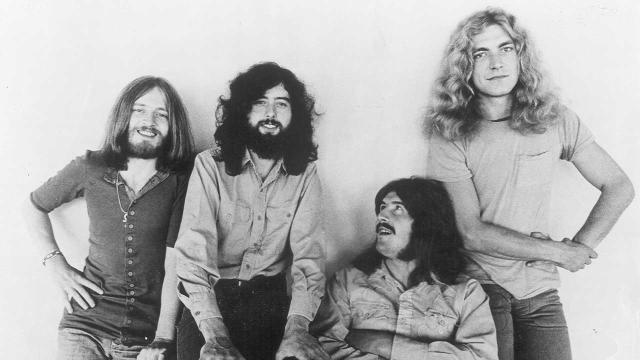





:max_bytes(150000):strip_icc():gifv():focal(404x450:406x452)/king-charles-johnny-cash-092022-b14901fbe3f1422ab7af6a7e4788caa1.jpg)
:max_bytes(150000):strip_icc():focal(764x259:766x261):format(webp)/queen-funeral-king-charles-close-up-091922-de7afe0bff6642658cd1c5f70ef6272c.jpg)

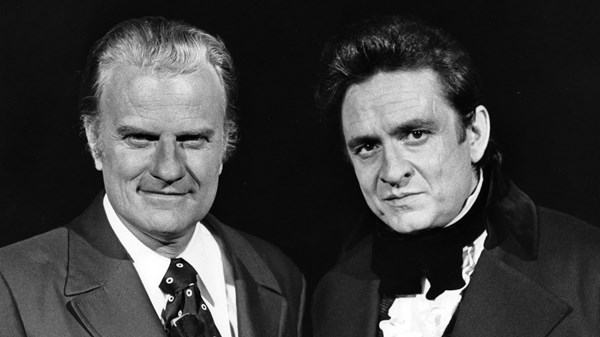


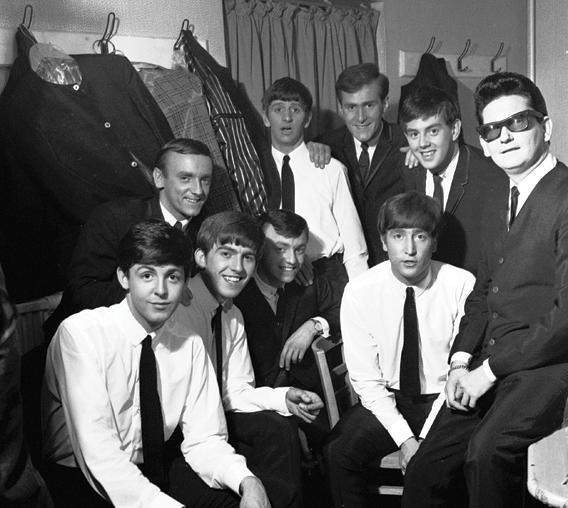


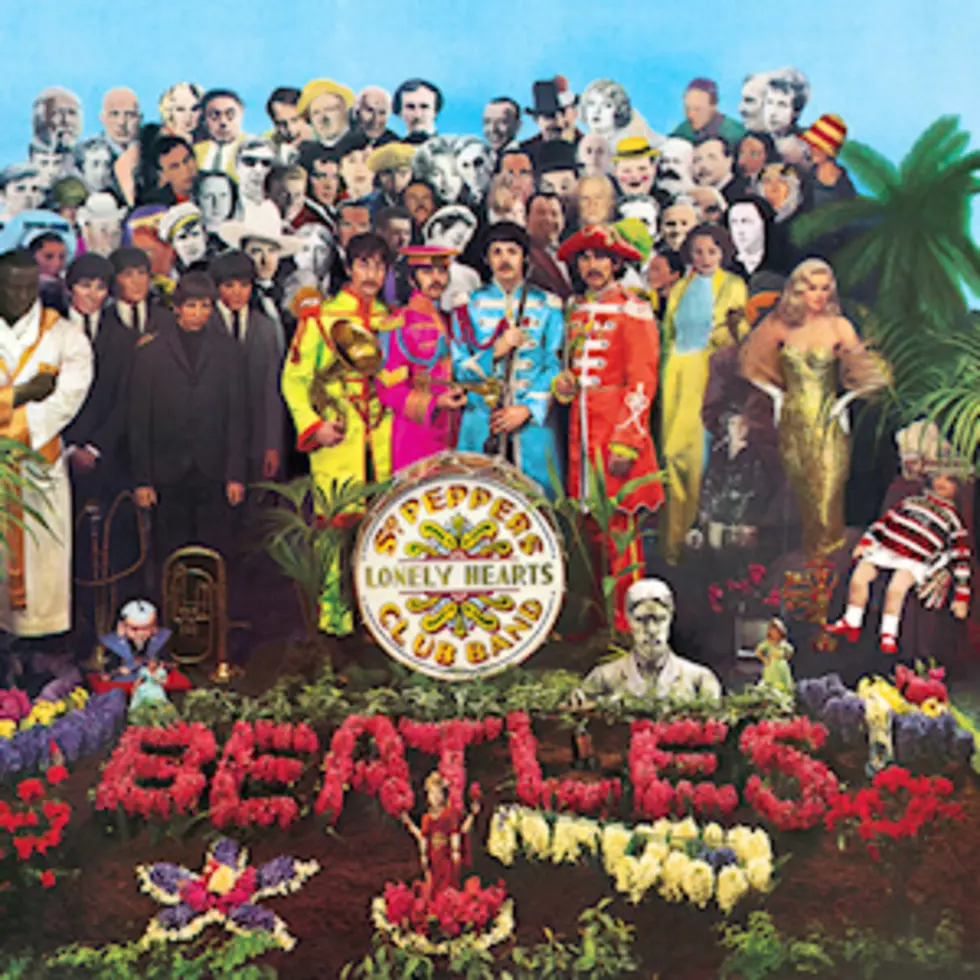









 True discernment has suffered a horrible setback in the past few decades because reason itself has been under attack within the church. As Francis Schaeffer warned nearly thirty years ago in The God Who Is There, the church is following the irrationality of secular philosophy. Consequently, reckless faith has overrun the evangelical community. Many are discarding doctrine in favor of personal experience. Others say they are willing to disregard crucial biblical distinctives in order to achieve external unity among all professing Christians. True Christianity marked by intelligent, biblical faith seems to be declining even among the most conservative evangelicals.THE ABANDONMENT OF OBJECTIVE TRUTHThe visible church in our generation has become astonishingly tolerant of aberrant teaching and outlandish ideas—and frighteningly intolerant of sound teaching. The popular evangelical conception of “truth” has become almost completely subjective. Truth is viewed as fluid, always relative, never absolute. To suggest that any objective criterion might be used to distinguish truth from error is to be egregiously out of step with the spirit of the age. In some circles, Scripture itself has been ruled out as a reliable test of truth. After all, the Bible can be interpreted in so many different ways—who can say which interpretation is right? And many believe there is truth beyond the Bible.All this relativity has had disastrous effects on the typical Christian’s ability to discern truth from error, right from wrong, good from evil. The plainest teachings of the Bible are being questioned among people who declare themselves believers in the Bible. For example, some Christians are no longer certain whether homosexuality should be classed as a sin. Others argue that the feminist agenda is compatible with biblical Christianity. “Christian” television, radio, books, and magazines serve up a preposterous smorgasbord of ideas from the merely capricious to the downright dangerous—and the average Christian is woefully ill-equipped to sort out the lies from the truth.Even to suggest that a sorting between lies and truth is necessary is viewed by many as perilously intolerant. There is a notion abroad that any dispute over doctrine is inherently evil. Concern for orthodoxy is regarded as incompatible with Christian unity. Doctrine itself is labeled divisive and those who make doctrine an issue are branded uncharitable. No one is permitted to criticize anyone else’s beliefs, no matter how unbiblical those beliefs seem to be. A recent article in Christianity Today exemplifies the trend. The article, titled “Hunting for Heresy,” profiled two well-known Christian leaders who had “come under withering attack for controversial writings.”1One is a popular speaker on the college lecture circuit and a bestselling author. He wrote a book in which he encouraged homosexuals to establish permanent live-together relationships (albeit celibate ones). He suggests the evangelical community suffers from “homophobia.” He is convinced that permanent living arrangements between homosexuals are the only alternative to loneliness for people he believes are “born with a homosexual orientation.” This man’s wife has published an article in a homosexual magazine in which she enthusiastically affirms” monogamous sexual relationships between homosexuals. The speaker-author says he has a “very, very strong” disagreement with his wife’s approval of homosexual sex, but his own view seems to allow homosexuals to engage in other kinds of physical intimacy short of actual intercourse.The other Christian leader profiled in the Christianity Today article is a woman who, with her husband, is a featured speaker for a popular, nationally-syndicated radio and television ministry. Their ministry is not a weird offshoot from some fringe cult, but an established, well-respected mainstay from the evangelical heartland. She also serves as chairperson of one of the largest evangelical student organizations in the world. This woman has written a book in which she chronicles some rather peculiar spiritual experiences. She dedicates the book to her male alter ego, an imaginary person named “Eddie Bishop” who romances her in her dreams. This woman says she also has visions of “the Christ child that is within” her. He appears to her as a drooling, emaciated, barefoot “idiot child” in a torn undershirt—”its head totally bald and lolled to one side.” The woman has engaged the services of a Catholic nun who serves as her “spiritual director,” helping to interpret her dreams and fantasies. The book mingles mysticism, Jungian psychology, out-of-body experiences, feminist ideas, subjective religious experience, and this woman’s romantic fantasies into an extraordinary amalgam. The book is frankly so bizarre that it is disturbing to read.The remarkable thing about the Christianity Today article is that the story was not written to expose the aberrant ideas being taught by these two leading evangelicals. Instead, what the magazine’s editors deemed newsworthy was the fact that these people were under attack for their views.In the world of modern evangelicalism, it is allowable to advocate the most unconventional, unbiblical doctrines—as long as you afford everyone else the same privilege. About the only thing that is taboo nowadays is the intolerance of those who dare to point out others’ errors. Anyone today who is bold enough to suggest that someone else’s ideas or doctrines are unsound or unbiblical is dismissed at once as contentious, divisive, unloving, or unchristian. It is all right toespouse any view you wish, but it is not all right to criticize another person’s views—no matter how patently unbiblical those views may be.When tolerance is valued over truth, the cause of truth always suffers. Church history shows this to be so. Only when the people of God have mounted a hardy defense of truth and sound doctrine has the church flourished and grown strong. The Reformation, the Puritan era, and the Great Awakenings are all examples of this. The times of decline in the history of the church have always been marked by an undue emphasis on tolerance—which leads inevitably to carelessness, worldliness, doctrinal compromise, and great confusion in the church.ADRIFT ON A SEA OF SUBJECTIVITYThat the church would lose her moorings in this particular age, however, poses greater dangers than ever. For in the past hundred years or so, the world has changed in a dramatic and very frightening way. People no longer look at truth the way they used to. In fact, we live under a prevailing philosophy that has become hostile to the very idea of absolute truth.From the beginning of recorded history until late last century, virtually all human philosophy assumed the necessity of absolute truth. Truth was universally understood as that which is true, not false; factual, not erroneous; correct, not incorrect; moral, not immoral; just, not unjust; right, not wrong. Practically all philosophers since the time of Plato assumed the objectivity of truth. Philosophy itself was a quest for the highest understanding of truth. Such a pursuit was presumed to be possible, even necessary, because truth was understood to be the same for every person. This did not mean that everyone agreed what truth was, of course. But virtually all agreed that whatever was true was true for everyone.That all changed in the nineteenth century with the birth of existentialism. Existentialism defies precise definition, but it includes the concept that the highest truth is subjective (having its source in the individual’s mind) rather than objective (something that actually exists outside the individual). Existentialism elevates individual experience and personal choice, minimizing or ruling out absolute standards of truth, goodness, morality, and such things. We might accurately characterize existentialism as the abandonment of objectivity. Existentialism is inherently anti-intellectual, against reason, irrational.Danish philosopher Søren Kierkegaard first used the term “existential.” Kierkegaard’s life and philosophy revolved around his experiences with Christianity. Christian ideas and biblical terminology reverberate in many of his writings. He wrote much about faith and certainly regarded himself as a Christian. Many of his ideas began as a legitimate reaction against the stale formalism of the Danish Lutheran state church. He was rightly offended at the barren ritualism of the church, properly outraged that people who had no love for God called themselves Christians just because they happened to be born in a “Christian” nation.But in his reaction against the lifeless state church, Kierkegaard set up a false antithesis. He decided that objectivity and truth were incompatible. To counter the passionless ritualism and lifeless doctrinal formulas he saw in Danish Lutheranism, Kierkegaard devised an approach to religion that was pure passion, altogether subjective. Faith, he suggested, means the rejection of reason and the exaltation of feeling and personal experience. It was Kierkegaard who coined the expression “leap of faith.” Faith to him was an irrational experience, above all a personal choice. He recorded these words in his journal on August 1, 1835: “The thing is to find a truth which is true for me, to find the idea for which I can live and die.”2Clearly, Kierkegaard had already rejected as inherently worthless the belief that truth is objective. His journal continues with these words:What would be the use of discovering so-called objective truth …. What good would it do me if truth stood before me, cold and naked, not caring whether I recognized her or not, and producing in me a shudder of fear rather than a trusting devotion? … I am left standing like a man who has rented a house and gathered all the furniture and household things together, but has not yet found the beloved with whom to share the joys and sorrows of his life…. It is this divine side of man, his inward action, which means everything—not a mass of [objective] information.3Having repudiated the objectivity of truth, Kierkegaard was left longing for an existential experience, which he believed would bring him a sense of personal fulfillment. He stood on the precipice, preparing to make his leap of faith. Ultimately, the idea he chose to live and die for was Christianity, but it was a characteristically subjective brand of Christianity that he embraced.Though Kierkegaard was virtually unknown during his lifetime, his writings have endured and have deeply influenced all subsequent philosophy. His idea of “truth that is true for me” infiltrated popular thought and set the tone for our generations radical rejection of all objective standards.Kierkegaard knew how to make irrationalism sound profound. “God does not exist; He is eternal,” he wrote. He believed Christianity was full of “existential paradoxes,” which he regarded as actual contradictions, proof that truth is irrational.Using the example of Abraham’s willingness to sacrifice Isaac (Gen. 22:1-19), Kierkegaard suggested that God called Abraham to violate moral law in slaying his son. For Kierkegaard, Abraham’s willingness to “suspend” his ethical convictions epitomized the leap of faith that is demanded of everyone. Kierkegaard believed the incident proved that “the single individual [Abraham] is higher than the universal [moral law].”4 Building on that conclusion, the Danish philosopher offered this observation: “Abraham represents faith…. He acts by virtue of the absurd, for it is precisely [by virtue of] the absurd that he as the single individual is higher than the universal.”5 “[I] cannot understand Abraham,” Kierkegaard declared, “even though in a certain demented sense I admire him more than all others.”6It is not difficult to see how such thinking thrusts all truth into the realm of pure subjectivity—even to the point of absurdity or dementia. Everything becomes relative. Absolutes dematerialize. The difference between truth and nonsense becomes meaningless. All that matters is personal experience.And one person’s experience is as valid as another’s—even if everyone’s experiences lead to contradictory conceptions of truth. “Truth that is true for me” might be different from someone else’s truth. In fact, our beliefs might be obviously contradictory, yet another person’s “truth” in no way invalidates mine. Because “truth”is authenticated by personal experience, its only relevance is for the individual who makes the leap of faith. That is existentialism.Existentialism caught on in a big way in secular philosophy. Friedrich Nietzsche, for example, also rejected reason and emphasized the will of the individual. Nietzsche probably knew nothing of Kierkegaard’s works, but their ideas paralleled at the key points. Unlike Kierkegaard, however, Nietzsche never made the leap of faith to Christianity. Instead, he leapt to the conclusion that God is dead. The truth that was “true for him,” it seems, turned out to be the opposite of the truth Kierkegaard chose. But their epistemology (the way they arrived at their ideas) was exactly the same.Later existentialists, such as Martin Heidegger and Jean-Paul Sartre, refined Kierkegaard’s ideas while following the atheism of Nietzsche. Heidegger and Sartre both believed that reason is futile and life basically meaningless. Those ideas have been a powerful force in twentieth-century thought. As the world continues to grow more atheistic, more secular, and more irrational, it helps to understand that it is being propelled in that direction by strong existentialist influences.EXISTENTIALISM INVADES THE CHURCH But don’t get the idea that existentialism’s influence is limited to the secular world. From the moment Kierkegaard wedded existentialist ideas with Christianity, neo-orthodox theology was the inevitable outcome.Neo-orthodoxy is the term used to identify an existentialist variety of Christianity. Because it denies the essential objective basis of truth—the absolute truth and authority of Scripture—neo-orthodoxy must be understood as pseudo-Christianity. Its heyday came in the middle of the twentieth century with the writings of Karl Barth, Emil Brunner, Paul Tillich, and Reinhold Niebuhr. Those men echoed the language and the thinking of Kierkegaard, speaking of the primacy of “personal authenticity,” while downplaying or denying the significance of objective truth. Barth, the father of neo-orthodoxy, explicitly acknowledged his debt to Kierkegaard.7Neo-orthodoxy’s attitude toward Scripture is a microcosm of the entire existentialist philosophy: the Bible itself is not objectively the Word of God, but it becomes the Word of God when it speaks to me individually. In neo-orthodoxy, that same subjectivism is imposed on all the doctrines of historic Christianity. Familiar terms are used, but are redefined or employed in a way that is purposely vague—not to convey objective meaning, but to communicate a subjective symbolism. After all, any “truth” theological terms convey is unique to the person who exercises faith. What the Bible means becomes unimportant. What it means to me is the relevant issue. All of this resoundingly echoes Kierkegaard’s concept of “truth that is true for me.”Thus while neo-orthodox theologians often sound as if they are affirming traditional beliefs, their actual system differs radically from the historic understanding of the Christian faith. By denying the objectivity of truth, they relegate all theology to the realm of subjective relativism. It is a theology perfectly suited for the age in which we live.And that is precisely why it is so deadly.Francis Schaeffer’s 1968 work The God Who Is There included a perceptive analysis of Kierkegaard’s influence on modern thought and modern theology.8 Schaeffer named the boundary between rationality and irrationality “the line of despair.” He noted that existentialism pushed secular thought below the line of despair sometime in the nineteenth century. Religious neo-orthodoxy was simply a johnny-come-lately response of theologians who were jumping on the existentialist bandwagon, following secular art, music, and general culture: “Neo-orthodoxy gave no new answer. What existential philosophy had already said in secular language, it now said in theological language…. [With the advent of neo-orthodoxy,] theology too has gone below the line of despair.”9Schaeffer went on to analyze how neo-orthodoxy ultimately gives way to radical mysticism:Karl Barth opened the door to the existentialistic leap in theology… He has been followed by many more, men like Reinhold Niebuhr, Paul Tillich, Bishop John Robinson, Alan Richardson and all the new theologians. They may differ in details, but their struggle is still the same—it is the struggle of modern man who has given up [rationality]. As far as the theologians are concerned … their new system is not open to verification, it must simply be believed.10Such a system, Schaeffer points out, has no integrity. Those who espouse it cannot live with the repercussions of their own illogic. “In practice a man cannot totally reject [rationality], however much his system leads him to it, unless he experiences … some form of mental breakdown.” Thus people have been forced to an even deeper level of despair: “a level of mysticism with nothing there.”11MYSTICISM: IRRATIONALITY GONE TO SEEDMysticism is the idea that spiritual reality is found by looking inward. Mysticism is perfectly suited for religious existentialism; indeed, it is its inevitable consequence. The mystic disdains rational understanding and seeks truth instead through the feelings, the imagination, personal visions, inner voices, private illumination, or other purely subjective means. Objective truth becomes practically superfluous. Mystical experiences are therefore self-authenticating; that is, they are not subject to any form of objective verification. They are unique to the person who experiences them. Since they do not arise from or depend upon any rational process, they are invulnerable to any refutation by rational means.Arthur L. Johnson writes,The experience convinces the mystic in such a way, and to such a degree, that lie simply cannot doubt its value and the correctness of what he believes it “says.”…In its crudest form this position says that believing something to be so makes it so. The idea is that ultimate reality is purely mental; therefore one is able to create whatever reality one wishes. Thus the mystic “creates” truth through his experience. In a less extreme form, the view seems to be that there are “alternate realities,” one as real as another, and that these “break in upon” the mystic in his experiences. Whatever form is taken, the criterion of truth is again a purely private and subjective experience that provides no means of verification and no safeguard against error. Nevertheless, it is seen by the mystic as being above question by others.The practical result of all this is that it is nearly impossible to reason with any convinced mystic. Such people are generally beyond the reach of reason.12Mysticism is therefore antithetical to discernment. It is an extreme form of reckless faith.Mysticism is the great melting pot into which neo-orthodoxy, the charismatic movement, anti-intellectual evangelicals, and even some segments of Roman Catholicism have been synthesized. It has produced movements like the Third Wave (a neo-charismatic movement with excessive emphasis on signs, wonders, and personal prophecies); Renovaré (an organization that blends teachings from monasticism, ancient Catholic mysticism, Eastern religion, and other mystical traditions); the spiritual warfare movement (which seeks to engage demonic powers in direct confrontation); and the modern prophecy movement (which encourages believers to seek private, extrabiblical revelation directly ftom God). The influx of mysticism has also opened evangelicalism to New-Age concepts like subliminal thought- control, inner healing, communication with angels, channeling, dream analysis, positive confession, and a host of other therapies andpractices coming directly from occult and Eastern religions. The face of evangelicalism has changed so dramatically in the past twenty years that what is called evangelicalism today is beginning to resemble what used to be called neo-orthodoxy. If anything, some segments of contemporary evangelicalism are even more subjective in their approach to truth than neo-orthodoxy ever was.It could be argued that evangelicalism never successfully resisted neo-orthodoxy. Twenty years ago evangelicals took a heroic stand against neo-orthodox influences on the issue of biblical inerrancy. But whatever victory was gained in that battle is now being sacrificed on the altar of mysticism. Mysticism renders biblical inerrancy irrelevant. After all, if the highest truth is subjective and comes from within us, then it doesn’t ultimately matter if the specifics of Scripture are true or not. If the content of faith is not the real issue, what does it really matter if the Bible has errors or not?In other words, neo-orthodoxy attacked the objective inspiration of Scripture. Evangelical mysticism attacks the objective interpretation of Scripture. The practical effect is the same. By embracing existential relativism, evangelicals are forfeiting the very riches they fought so hard to protect. If we can gain meaningful guidance from characters who appear in our fantasies, why should we bother ourselves with what the Bible says? If we are going to disregard or even reject the biblical verdict against homosexuality, what difference does it make if the historical and factual matter revealed in Scripture is accurate or inaccurate? If personal prophecies, visions, dreams, and angelic beings are available to give us up-to-the-minute spiritual direction—”fresh revelation” as it is often called—who cares if Scripture is without error in the whole or in the parts?Mysticism further nullifies Scripture by pointing people away from the sure Word of God as the only reliable object of faith. Warning of the dangers of mysticism, Schaeffer wrote,Probably the best way to describe this concept of modern theology is to say that it is faith in faith, rather than faith directed to an object which is actually there…. A modern man cannot talk about the object of his faith, only about the faith itself. So he can discuss the existence of his faith and its “size” as it exists against all reason, but that is all. Modern man’s faith turns inward…. Faith is introverted, because it has no certain object … it is rationally not open to discussion. This position, I would suggest, is actually a greater despair and darkness than the position of those modern men who commit suicide.“13The faith of mysticism is an illusion. “Truth that is true for me” is irrelevant to anyone else, because it lacks any objective basis. Ultimately, therefore, existential faith is impotent to lift anyone above the level of despair. All it can do is seek more experiences and more feelings. Multitudes are trapped in the desperate cycle of feeding off one experience while zealously seeking the next. Such people have no real concept of truth; they just believe. Theirs is a reckless faith.MEANWHILE, AT THE OTHER END OF THE SPECTRUM…Mysticism, however, is not the only form of reckless faith that threatens the contemporary church. A new movement has been gaining strength lately. Evangelicals are leaving the fold and moving into Eastern Orthodoxy, Roman Catholicism, and liturgical high-church Protestantism. Rejecting the ever-changing subjectivism of a free- wheeling existential Protestantism, they seek a religion with historical roots. Turned off by the shallow silliness that has overrun the evangelical movement, they desire a more magisterial approach. Perhaps sensing the dangers of a religion that points people inward, they choose instead a religion that emphasizes external ceremonies and dogmatic hierarchical authority.I listened to the taped testimony of one of these converts to Roman Catholicism, a former Protestant minister. He said he had graduated with highest honors from a leading Protestant seminary. He told his audience that as a student he was rabidly anti-Catholic and fully committed to Protestant Reformed doctrine (although he refuted this himself by admitting he had already rejected the crucial doctrine of justification by faith). After college he began to read Roman Catholic writings and found himself drawn to Catholic theology and liturgy. He described his initial resistance to the doctrines of purgatory, the perpetual virginity of Mary, transubstantiation, and prayers to Mary and the saints. All of those doctrines are easily disproved by the Bible.14 But this man—acknowledging that he could find no warrant anywhere in Scripture for praying to Mary—nevertheless completely changed his outlook on such matters after he tried praying the rosary and received an answer to a very specific prayer. He concluded that it must have been Mary who answered his prayer and immediately began praying regularly to her. Ultimately, he decided the Bible alone was not a sufficient rule of faith for believers, and he put his faith in papal authority and church tradition.That man’s leap of faith may not have been of the existential variety, but it was a blind leap nonetheless. He chose the other extreme of reckless faith, the kind that makes extrabiblical religious tradition the object of one’s faith.This kind of faith is reckless because it subjugates the written Word of God to oral tradition, church authority, or some other human criterion. It is an uncritical trust in an earthly religious authority—the pope, tradition, a self-styled prophet like David Koresh, or whatever. Such faith rarely jettisons Scripture altogether—but by forcing God’s Word into the mold of religious tradition, it invalidates the Word of God and renders it of no effect (cf. Matt. 15:6).The man whose taped testimony I heard is now an apologist for the Roman Catholic Church. He speaks to Catholic congregations and tells them how to counter biblical arguments against Catholicism. At the end of his testimony tape, he deals briefly with the official Catholic attitude toward Scripture. He is eager to assure his listeners that the modern Roman Catholic Church has no objection if Catholic people want to read Scripture for themselves. Even personal Bible study is all right, he says—but then hastens to add that it is not necessary to go overboard. “A verse or two a day is enough.” This man, a seminary graduate, surely should be aware that a comment like that seriously understates the importance of the written Word of God. We are commanded to meditate on Scripture day and night (Josh. 1:8; Ps. 1:2). We are to let it fill our hearts at all times (Deut. 6:6-9). We must study it diligently and handle it rightly (2 Tim. 2:15). The Bible alone is able to give us the wisdom that leads to salvation, then adequately equip us for every good work (2 Tim. 3:15-17).Discernment depends on a knowledge of Scripture. Those who are content to listen gullibly to some voice of human authority rather than hearing God’s Word and letting it speak for itself cannot be discerning. Theirs is a reckless, irrational faith.We identified the inward-looking extreme of reckless faith as mysticism. We could call this other variety rote tradition. In Isaiah 29:13, that is precisely how God Himself characterized it: “This people their lip service, but draw near with their words and honor Me with their lip service, but they remove their hearts far from Me, and their reverence for Me consists of tradition learned by rote” (emphasis added).Scripture has nothing but condemnation for rote tradition. Barren religious ritual, sacerdotal formalism, or liturgy out of a book are not the same as worship. Real worship, like faith, must engage the mind. Jesus said, “The true worshipers … worship the Father in spirit and truth; for such people the Father seeks to be His worshipers” (John 4:23).Did you realize that rote tradition was the very error for which Jesus condemned the Pharisees? He told them,“Rightly did Isaiah prophesy of you hypocrites, as it is written, ‘This people honors Me with their lips, but their heart is far away from Me. But in vain do they worship Me. teaching as doctrines the precepts of men.’ Neglecting the commandment of God, you hold to the tradition of men.”He was also saying to them, “You nicely set aside the commandment of God in order to keep your tradition” (Mark 7:6-9).Rote tradition is not unlike mysticism in that it also bypasses the mind. Paul said this of the Jews who were so absorbed in their empty religious traditions:I bear them witness that they have a zeal for God, but not in accordance with knowledge. For not knowing about God’s righteousness, and seeking to establish their own, they did not subject themselves to the righteousness of God. For Christ is the end of the law for righteousness to everyone who believes (Rom. 10:2-4).Their problem was not a lack of zeal. It was not that they were short on enthusiasm, emotionally flat, or slothful about religious observances. The issue was that the zeal they displayed was rote tradition, “not in accordance with knowledge.” They were not sufficiently discerning, and therefore their faith itself was deficient.Paul is specific in stating that their ignorance lay in trying to establish their own righteousness rather than submitting to the righteousness of God. This passage comes at the culmination of Paul’s doctrinal discussion in Romans. In context it is very clear that he was talking about the doctrine ofjustification by faith. He had thoroughly expounded this subject beginning in chapter 3. He said we are “justified as a gift by His grace through the redemption which is in Christ Jesus” (3:24). Justification is “by faith apart from works of the Law” (v.28). “God reckons righteousness apart from works” (Rom. 4:6).But instead of seeking the perfect righteousness of Christ, which God reckons to those who believe, the unbelieving Jews had set out to try to establish a righteousness of their own through works. That is where rote tradition always leads. It is a religion of works. Thus the ritualistic, unbelieving Pharisees are an exact parallel to Roman Catholicism, Eastern Orthodoxy, and most forms of ritual-laden Protestantism. All of them deny justification by faith.If the Pharisees or their followers had used the Scriptures as their standard of truth rather than rabbinical tradition, they would have known that God justifies sinners by faith. Repeatedly, Jesus said things to them like “Did you never read in the Scriptures . . . ?” (Matt. 21:42); “You are mistaken, not understanding the Scriptures, or the power of God” (22:29); and, “Are you the teacher of Israel, and do not understand these things?” (John 3:10). What He continually chided them for was their ignorance of the Scriptures. They had set rote tradition in place of the written Word of God (Matt. 15:6), and they were condemned for it.Contrast the way Luke commended the Bereans for their noblemindedness: “For they received the word [the New Testament gospel from the apostles] with great eagerness, examining the Scriptures [the Old Testament books] daily, to see whether these things were so” (Acts 17:1 1). What made the Bereans worthy of commendation? Their eagerness to be discerning. They rightly refused to blindly accept anyone’s teaching (even that of the apostles) without clear warrant from God’s Word.Spiritual discernment is, I believe, the only antidote to the existentialism of our age. Until’Christians regain the will to test everything by the rule of Scripture, reject what is false, and hold fast to what is true, the church will struggle and falter, and our testimony to a world in sin will be impaired.But if the church will rise up and stand for the truth of God’s Word against all the lies of this evil world, then we will begin to see the power of truth that sets people free (John 8:32).Endnotes1. John W. Kennedy, “Hunting for Heresy,” Christianity Today (16 May 1994).2. Robert Bretall, cd., A Kierkegaard Anthology (Princeton, N. J.: Princeton University Press, 1946), 5 (emphasis in original).3. Ibid.4. Søren Kierkegaard, Fear and Trembling, Howard V. Hong and Edna H. Hong, trans. (Princeton, N. J.: Princeton University Press, 1983), 55.5. Ibid.6. Ibid., 57.7. Karl Barth, The Epistle to the Romans, Edwyn C. Hoskyns, trans. (London: Oxford University Press, 1933). Barth cites Kierkegaard repeatedly in this, one of his earliest works.8. Francis Schaeffer, The God Who Is There, in The Complete Works of Francis A. Schaeffer, Volume I (Wheaton, Ill.: Crossway Books, 1982).9. Ibid., 53.10. Ibid., 55.11. Ibid., 58.12. Arthur L. Johnson, Faith Misguided: Exposing the Dangers of Mysticism (Chicago: Moody Press, 1988), 31-32.13. Schaeffer, 64-65, emphasis added.14. Purgatory: Luke 23:42-43 and 2 Cor. 5:8 indicate that believers go immediately to be with Christ at death. Perpetual Virginity of Mary: Matt. 1:25 states that Joseph kept Mary a virgin only until Jesus’ birth, and John 2:12 and Acts 1:14 reveal that Jesus had brothers. Transubstantiation: Heb. 7:27 and 10:12 teach that Christ made one sacrifice for sins forever; there is no need for the daily sacrifice of the Mass. Prayers to Mary and the saints: prayers, adoration, and spiritual veneration offered to anyone but God is expressly forbidden by the first commandment and elsewhere throughout Scripture (Ex. 20:3; Matt. 4:10; Acts 10:25-26; Rev. 19:10; Rev. 22:8-9).Excerpt from Reckless Faith: When the Church Loses Its Will to Discern, © 1994 by John MacArthur.We do pray this article has blessed you in some way. Our prayer is that you will use this message to better understand what is happening in our churches today.Blessings,






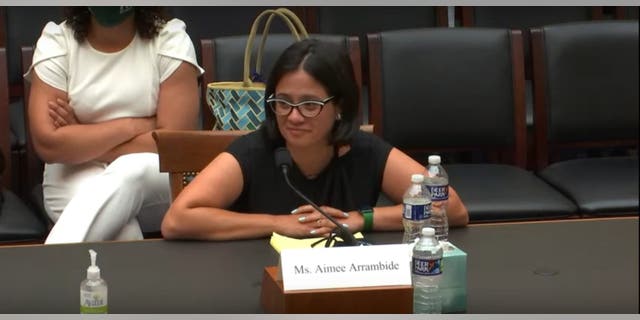










 The Daily Hatch