3 My child,[a] never forget the things I have taught you. Store my commands in your heart. 2 If you do this, you will live many years, and your life will be satisfying. 3 Never let loyalty and kindness leave you! Tie them around your neck as a reminder. Write them deep within your heart. 4 Then you will find favor with both God and people, and you will earn a good reputation.
5 Trust in the Lord with all your heart; do not depend on your own understanding. 6 Seek his will in all you do, and he will show you which path to take.
7 Don’t be impressed with your own wisdom. Instead, fear the Lord and turn away from evil. 8 Then you will have healing for your body and strength for your bones.
9 Honor the Lord with your wealth and with the best part of everything you produce. 10 Then he will fill your barns with grain, and your vats will overflow with good wine.
11 My child, don’t reject the Lord’s discipline, and don’t be upset when he corrects you. 12 For the Lord corrects those he loves, just as a father corrects a child in whom he delights.[b]
13 Joyful is the person who finds wisdom, the one who gains understanding. 14 For wisdom is more profitable than silver, and her wages are better than gold. 15 Wisdom is more precious than rubies; nothing you desire can compare with her. 16 She offers you long life in her right hand, and riches and honor in her left. 17 She will guide you down delightful paths; all her ways are satisfying. 18 Wisdom is a tree of life to those who embrace her; happy are those who hold her tightly.
19 By wisdom the Lord founded the earth; by understanding he created the heavens. 20 By his knowledge the deep fountains of the earth burst forth, and the dew settles beneath the night sky.
21 My child, don’t lose sight of common sense and discernment. Hang on to them, 22 for they will refresh your soul. They are like jewels on a necklace. 23 They keep you safe on your way, and your feet will not stumble. 24 You can go to bed without fear; you will lie down and sleep soundly. 25 You need not be afraid of sudden disaster or the destruction that comes upon the wicked, 26 for the Lord is your security. He will keep your foot from being caught in a trap.
27 Do not withhold good from those who deserve it when it’s in your power to help them. 28 If you can help your neighbor now, don’t say, “Come back tomorrow, and then I’ll help you.”
29 Don’t plot harm against your neighbor, for those who live nearby trust you. 30 Don’t pick a fight without reason, when no one has done you harm.
31 Don’t envy violent people or copy their ways. 32 Such wicked people are detestable to the Lord, but he offers his friendship to the godly.
33 The Lord curses the house of the wicked, but he blesses the home of the upright.
34 The Lord mocks the mockers but is gracious to the humble.[c]
35 The wise inherit honor, but fools are put to shame!
I have been reading Proverbs almost every day for many years with my family in the evening and there is lots of wisdom in it.
Proverbs 1:20-22 (Program 1932, Air dates 08.12.2012 and 08.19.2012)
___________
The fool is the rebel. Arrogant, wicked are words that describe the fool. This person is not lacking in mental ability but is lacking in morality. They are without an ability to discern morally.
III.THE FOOL (Proverbs 1:22)
Rejects wisdom.
Proverbs 15:14
Ridicules righteousness.
Proverbs 14:9
Rejoices in iniquity.
Proverbs 15:20-21
Isaiah 5:20
Proverbs 17:10
Hebrews 12:6
_________________________
Proverbs 1:22-24
“Simpletons! How long will you wallow in ignorance?
Cynics! How long will you feed your cynicism?
Idiots! How long will you refuse to learn?
About face! I can revise your life.
Look, I’m ready to pour out my spirit on you;
I’m ready to tell you all I know.
As it is, I’ve called, but you’ve turned a deaf ear;
I’ve reached out to you, but you’ve ignored me.
Proverbs 15:14
An intelligent person is always eager to take in more truth;
fools feed on fast-food fads and fancies.
Proverbs 14:9
The stupid ridicule right and wrong,
but a moral life is a favored life.
Proverbs 15:20-21
Intelligent children make their parents proud;
lazy students embarrass their parents.
21 The empty-headed treat life as a plaything;
the perceptive grasp its meaning and make a go of it.
Isaiah 5:20
Doom to you who call evil good
and good evil,
Who put darkness in place of light
and light in place of darkness,
Who substitute bitter for sweet
and sweet for bitter!
Proverbs 17:10
A quiet rebuke to a person of good sense
does more than a whack on the head of a fool.
Hebrews 12:6
The Message (MSG)
4-11 In this all-out match against sin, others have suffered far worse than you, to say nothing of what Jesus went through—all that bloodshed! So don’t feel sorry for yourselves. Or have you forgotten how good parents treat children, and that God regards you as his children?
My dear child, don’t shrug off God’s discipline,
but don’t be crushed by it either.
It’s the child he loves that he disciplines;
the child he embraces, he also corrects.
God is educating you; that’s why you must never drop out. He’s treating you as dear children. This trouble you’re in isn’t punishment; it’s training, the normal experience of children. Only irresponsible parents leave children to fend for themselves. Would you prefer an irresponsible God? We respect our own parents for training and not spoiling us, so why not embrace God’s training so we can truly live? While we were children, our parents did what seemed best to them. But God is doing what is best for us, training us to live God’s holy best. At the time, discipline isn’t much fun. It always feels like it’s going against the grain. Later, of course, it pays off handsomely, for it’s the well-trained who find themselves mature in their relationship with God.
______________
IF I HAD TO PUT A KEY VERSE IT WOULD BE THIS:
Proverbs 17:10
A quiet rebuke to a person of good sense
does more than a whack on the head of a fool.
“Writing’s on the Wall” is a song by English singer Sam Smith, written for the release of the 2015 James Bond film Spectre. The song was released as a digital download on 25 September 2015.[1] The song was written by Smith and Jimmy Napes, and produced by the latter alongside Steve Fitzmauriceand Disclosure and released on 25 September 2015.
“Writing’s on the Wall” received mixed reviews from critics comparing it unfavourably to previous Bond theme songs.[2][3][4][5] The mixed reception to the song led to Shirley Bassey trending on Twitter on the day it was released.[6][7] The single became the first Bond movie theme to reach number one in the UK Singles Chart. It also reached the top 10 in a few other European countries, but unlike other James Bond film themes, it was not as successful outside Europe, only peaking at number 43 in Canada and Australia and number 71 on the Billboard Hot 100. Only the instrumental version of the song appeared on the film’s official soundtrack album. The song won the Golden Globe Award for Best Original Songat the 73rd Golden Globe Awards[8] and the Academy Award for Best Original Song at the 88th Academy Awards, making it the second-ever Bond theme to win (after “Skyfall” by Adele in 2012).
“Writing’s on the Wall” was co-written by Smith and Jimmy Napes.[9] Smith said that the song came together in one whirlwind session: they and Napes wrote it in under half an hour and quickly recorded a demo. When they listened back to that recording, they were so pleased with Smith’s vocal performance that they ended up using it on the final release—albeit with some added muscle in the arrangement.[10] On 8 September 2015, Sam Smith announced that they were singing the song for the James Bond film Spectre. They described performing the theme as “one of the highlights of my career”.[11] The English band Radiohead also composed a song for the film, “Spectre“, which went unused.[12]
The song is written in the key of F minor with a tempo of 66 beats per minute (Larghetto). Smith’s vocals range from A ♭3 to D♭5.[13] The singer expressed some backlash at the vocal performance, feeling it was “horrible to sing” as the notes are “just so high”.[14]
“Writing’s on the Wall” received a mixed response from critics. Alexis Petridis of The Guardian wrote that the song attempted to capture the mood of Adele‘s “Skyfall“, but “doesn’t feel anywhere near as striking … the chances of it joining the pantheon of Bond themes that anyone with even a passing interest in pop music can hum seem pretty slender”.[15] Lewis Corner of Digital Spy rated it 3 out of 5 stars.[16] Neil McCormick of The Daily Telegraph called the song a “monster Bond ballad”, stating, “(The song) is very, very slow and surprisingly restrained, at times floating by on resonant piano notes, the faintest brush stroke of orchestra, with all the focus on Smith’s intense, tremulous vocal, rising with controlled pace and tension to an audacious chorus pay-off”.[17] Chris DeVille of Stereogum felt it was inferior to Radiohead’s rejected song.[18]
This section does not cite any sources. (October 2016)
In the United Kingdom, “Writing’s on the Wall” became the first James Bond theme to reach number one, on the issue dated 8 October 2015. The previous highest-charting Bond themes were Adele‘s “Skyfall” and Duran Duran‘s “A View to a Kill“, which both reached number two. It also became Smith’s fifth UK number-one single within two years. The song spent a total of 16 consecutive weeks in the UK Singles Chart. In the United States, “Writing’s on the Wall” debuted and peaked at number 71 on the Billboard Hot 100, compared to the previous Bond song, “Skyfall”, which debuted at number 8 in October 2012. In Canada, the song debuted at and peaked number 43. In Australia, the song performed moderately, debuting at number 44, and later peaking at number 43, but in Ireland, the song was a much bigger hit, debuting and peaking at number 9. The song has also charted in several other European countries though to a far lesser degree than its predecessor.
British actor Daniel Craig poses during a photocall to promote the 24th James Bond film ‘Spectre’ on February 18, 2015 at Rome’s city hall. AFP PHOTO / TIZIANA FABI (Photo by VINCENZO PINTO and TIZIANA FABI / AFP)
Paris, France — Ever since the twanging guitar of John Barry’s theme song first appeared in “Dr No” in 1962, music has been crucial to the James Bond phenomenon.
The songs written for each title sequence have become a way of marking out the evolution of pop music through the past 60 years, from the classics of Shirley Bassey and Paul McCartney to Adele and Billie Eilish.
Nobody remembers Monty
Many assume the original theme was written by John Barry, in part because he became so closely associated with the Bond franchise, composing the soundtrack for 11 of the films.
In fact, Barry only arranged and performed the theme tune.
The famous dung-digger-dung-dung line was actually written by theater composer Monty Norman, developed from an unused Indian-themed score he had written for an adaptation of VS Naipaul’s “A House for Mr Biswas.”
It was Barry’s job to jazz it up, adding the blaring horns that made it so dramatic.
While Norman was given a one-off payment of just £250, Barry built a Hollywood career that has included five Oscars and classic soundtracks to “Midnight Cowboy,” “Out of Africa,” and many more.
Golden girl Shirley Bassey
Bassey became almost as closely linked to Bond as Barry — the only singer to deliver three title tracks: “Goldfinger” (1964), “Diamonds are Forever” (1971), and “Moonraker” (1979).
The first two are considered the most memorable in Bond history, the latter less so — Bassey later admitted she hated the “Moonraker” song and only did it as a favor to Barry.
“Goldfinger” made her a star, but the recording sessions were grueling, with Barry insisting that Bassey, then 27, hold the last belting note for seven full seconds.
“I was holding it and holding it — I was looking at John Barry and I was going blue in the face and he’s going — hold it just one more second. When it finished, I nearly passed out,” she later recalled.
A new Beatles beginning
The first Bond film without Barry on the baton was “Live and Let Die” in 1973.
For this, the producers turned to another famous “B” – The Beatles.
The group’s producer George Martin took over composing duties and brought in Paul McCartney and his band Wings for the theme song.
It became another classic and spawned a famous cover by Guns’N’Roses in later years.
From this point on, the Bond title song became its own mini-industry, without the involvement of the composer.
Big pop tie-ins followed, ranging from the not-so-successful (Lulu’s “The Man with the Golden Gun”) to classics like Carly Simon’s “Nobody Does it Better” and Duran Duran’s “A View to a Kill.”
FILE PHOTO: Auctioneer specialists hold a rare intact James Bond ‘Thunderball’ (1965) film poster (estimate £8,000-£12,000), featuring two panels of poster illustrations on the left by Frank McCarthy and two on the right by Robert McGinnis, at Ewbank’s Auctioneers, ahead of an upcoming sale, in Woking, Britain, April 7, 2021. REUTERS/Hannah McKay
The next generation
After a few desultory outings during the Pierce Brosnan years, the Bond genre got a shot of adrenaline with Adele’s “Skyfall” in 2012, which was the first to win an Oscar for best song.
The following year’s “Writing’s on the Wall” by Sam Smith also won an Oscar, though it got a more mixed critical reception.
The latest incarnation is pop princess Billie Eilish with “No Time to Die,” which she co-wrote with her brother Finneas.
It already has a thumbs-up from the doyenne of the Bond theme world, with Bassey telling The Big Issue: “She did a good job.”
The latest James Bond movie “Skyfall” stars Daniel Craig. 007 boozed so much that in all reality he would have had the tremulous hands of a chronic alcoholic, according to an offbeat study published by the British Medical Journal. PHOTO FROM FACEBOOK.COM/JAMESBONDOO7
“Uncle Albert/Admiral Halsey” is a song by Paul and Linda McCartney from the album Ram. Released in the United States as a single on 2 August 1971,[1] but premiering on WLS the previous week (as a “Hit Parade Bound” (HPB)),[2] it reached number one on the Billboard Hot 100 on 4 September 1971,[3][4] making it the first of a string of post-Beatles, McCartney-penned singles to top the US pop chart during the 1970s and 1980s. Billboard ranked it number 22 on its Top Pop Singles of 1971 year-end chart.[5]
https://youtu.be/XI6C7L66zq8 “Uncle Albert/Admiral Halsey” is composed of several unfinished song fragments that McCartney stitched together similar to the medleys from the Beatles‘ album Abbey Road.[6] The song is noted for its sound effects, including the sounds of a thunderstorm, with rain, heard between the first and second stanza, the sound of a telephone ringing, and a message machine, heard after the second stanza, and a sound of chirping sea birds and wind by the seashore. Linda’s voice is heard in the harmonies as well as the bridge section of the “Admiral Halsey” portion of the song.
McCartney said “Uncle Albert” was based on his uncle. “He’s someone I recall fondly, and when the song was coming it was like a nostalgia thing.”[7] McCartney also said, “As for Admiral Halsey, he’s one of yours, an American admiral”, referring to Fleet AdmiralWilliam “Bull” Halsey (1882–1959).[7] McCartney has described the “Uncle Albert” section of the song as an apology from his generation to the older generation, and Admiral Halsey as an authoritarian figure who ought to be ignored.[8]
Despite the disparate elements that make up the song, author Andrew Grant Jackson discerns a coherent narrative to the lyrics, related to McCartney’s emotions in the aftermath of the Beatles’ breakup.[9] In this interpretation, the song begins with McCartney apologizing to his uncle for getting nothing done, and being easily distracted and perhaps depressed in the lethargic “Uncle Albert” section.[9] Then, after some sound effects reminiscent of “Yellow Submarine,” Admiral Halsey appears to him calling him to action, although McCartney remains more interested in “tea and butter pie.” McCartney stated that he put the butter in the pie so that it would not melt at all.[9] Jackson sees a possible sinister allusion in the use of Admiral Halsey as a character in the song, since Halsey was famous for fighting the Japanese in World War II and claiming that “after the war, the Japanese language will be spoken only in hell,” and McCartney’s ex-Beatle partner John Lennon had recently married a Japanese woman, Yoko Ono.[9] The “hands across the water” section which follows could be taken as evocative of the command “All hands on deck!”, rousing McCartney to action, perhaps to compete with Lennon.[9] The song then ends with the “gypsy” section, in which McCartney resolves to get back on the road and perform his music, now that he was on his own without his former bandmates who no longer wanted to tour.[9]
According to Allmusic critic Stewart Mason, fans of Paul McCartney’s music are divided in their opinions of this song.[13] Although some fans praise it as “one of his most playful and inventive songs” others criticize it for being “exactly the kind of cute self-indulgence that they find so annoying about his post-Beatles career.”[13] Mason himself considers it “churlish” to be annoyed by the song, given that song isn’t intended to be completely serious, and praises the “Hands across the water” section as being “lovably giddy.”[13]
On the US charts, the song set a songwriting milestone as the all-time songwriting record (at the time) for the most consecutive calendar years to write a #1 song. This gave McCartney eight consecutive years (starting with “I Want to Hold Your Hand“), leaving behind Lennon with only seven years.
“Uncle Albert/Admiral Halsey” also appears on Wings Greatest from 1978, even though Ram was not a Wings album, and again on the US version of McCartney’s 1987 compilation, All the Best!, as well as the 2001 compilation Wingspan: Hits and History.
Harry Shearer uses a looped sample of “Uncle Albert/Admiral Halsey” for the “Apologies of the Week” segment of Le Show, with emphasis on McCartney saying “sorry”.
The film Greenberg includes a scene in which the character Florence, drunk on champagne, sings along to the song which Greenberg included on a mix-CD for her.
Jump up^“Top Pop 100 Singles” Billboard December 25, 1971: TA-36
Jump up^Blaney, J. (2007). Lennon and McCartney: together alone: a critical discography of their solo work. Jawbone Press. pp. 46, 50. ISBN978-1-906002-02-2.
I’m Waiting for the Man sung by Nico in 1982 (about waiting for drug fix) __________ Nico Icon documentary part 3 Nico Icon documentary part 4 NICO – I’m Waiting For The Man – (1982, Warehouse, Preston, UK) One of the top 10 songs from The Velvet Underground and Nico is the song “I’m Waiting […]
Nico’s sad story of drugs and her interaction with Jim Morrison Nico – These Days The Doors (1991) – Movie Trailer / Best Parts The Doors Movie – Back Door Man/When The Music’s Over/Arrest of Jim Morrison Uploaded on Jul 30, 2009 A clip from “The Doors” movie with “Back Door Man”, “When The Music’s […]
Dennis Jernigan – You Are My All In All Uploaded on Oct 18, 2009 Dennis Jernigan – You Are My All In All __________________________________________ Christian Singer’s Controversial Journey Revealed in New Documentary: ‘I Placed Homosexuality on Jesus’ Shoulders’ Oct. 2, 2014 2:23pm Billy Hallowell Singer-songwriter Dennis Jernigan has been making Christian music for decades, recording […]
Cole Porter’s songs “De-Lovely” and “Let’s misbehave” ‘At Long Last Love’: Let’s Misbehave/De-Lovely Uploaded on Apr 1, 2009 Burt Reynolds and Cybil Shepherd give an extraordinarily charming performance of Cole Porter’s songs in Peter Bogdanovich’s absolutely wonderful tribute to the golden age of film musicals, ‘At Long Last Love’. _____________________ De-Lovely From Wikipedia, […]
________ _______ Cole Porter’s song’s “My Heart Belongs to Daddy” My Heart Belongs To Daddy Uploaded on Jun 20, 2010 Mary Martin became popular on Broadway and received attention in the national media singing “My Heart Belongs to Daddy”. “Mary stopped the show with “My Heart Belongs to Daddy”. With that one song in the […]
______________ Love For Sale (De-Lovely) Love for Sale (song) From Wikipedia, the free encyclopedia Jump to: navigation, search This article needs additional citations for verification. Please help improve this article by adding citations to reliable sources. Unsourced material may be challenged and removed. (September 2008) “Love for Sale“ Written by Cole Porter Published 1930 Form […]
Cole Porter’s song “Ev’ry Time We Say Goodbye” _________________ Natalie Cole – Ev’ry Time We Say Goodbye Ev’ry Time We Say Goodbye From Wikipedia, the free encyclopedia Jump to: navigation, search This article needs additional citations for verification. Please help improve this article by adding citations to reliable sources. Unsourced material may be […]
Cole Porter’s song “So in Love” __________________ So in love – De-lovely So in Love From Wikipedia, the free encyclopedia Jump to: navigation, search For the song by Orchestral Manoeuvres in the Dark, see So in Love (OMD song). For the song by Jill Scott, see So in Love (Jill Scott song). Not to be […]
____________________ Cole Porter’s song “Night and Day” Cole Porter´s Day and Night by Fred Astaire & Ginger Rogers Night and Day (song) From Wikipedia, the free encyclopedia Jump to: navigation, search This article includes a list of references, but its sources remain unclear because it has insufficient inline citations. Please help to improve this article […]
Johnny Cash – Big River Uploaded on Jan 16, 2008 Grand Ole Opry, 1962 _______________________________ John Lennon and Bob Dylan Conversation mention Johnny Cash and his song “Big River” _______________________ Big River (Johnny Cash song) From Wikipedia, the free encyclopedia Jump to: navigation, search This article may require cleanup to meet Wikipedia’s quality standards. No […]
I remember when I was 16 I asked my father why so many people are getting divorces and he told me a lot of the cases of divorce started when a man would stop by the bar on the way home to get a drink and unwind, and my father had always made sure he went straight home.
My pastor in Memphis Adrian Rogers had a sign on his desk IF YOU DON’T WANT TO FALL DOWN THEN DON’T GO IN SLIPPERY PLACES!
January 2 I read Proverbs 2
16-17 Only wisdom from the Lord can save a man from the flattery of prostitutes; these girls have abandoned their husbands and flouted the laws of God. 18 Their houses lie along the road to death and hell. 19 THE MEN WHO ENTER THEM ARE DOOMED. None of these men will ever be the same again
2 My child,[a] listen to what I say, and treasure my commands. 2 Tune your ears to wisdom, and concentrate on understanding. 3 Cry out for insight, and ask for understanding. 4 Search for them as you would for silver; seek them like hidden treasures. 5 Then you will understand what it means to fear the Lord, and you will gain knowledge of God. 6 For the Lord grants wisdom! From his mouth come knowledge and understanding. 7 He grants a treasure of common sense to the honest. He is a shield to those who walk with integrity. 8 He guards the paths of the just and protects those who are faithful to him.
9 Then you will understand what is right, just, and fair, and you will find the right way to go. 10 For wisdom will enter your heart, and knowledge will fill you with joy. 11 Wise choices will watch over you. Understanding will keep you safe.
12 Wisdom will save you from evil people, from those whose words are twisted. 13 These men turn from the right way to walk down dark paths. 14 They take pleasure in doing wrong, and they enjoy the twisted ways of evil. 15 Their actions are crooked, and their ways are wrong.
16 Wisdom will save you from the immoral woman, from the seductive words of the promiscuous woman. 17 She has abandoned her husband and ignores the covenant she made before God. 18 Entering her house leads to death; it is the road to the grave.[b] 19 The man who visits her is doomed. He will never reach the paths of life.
20 So follow the steps of the good, and stay on the paths of the righteous. 21 For only the godly will live in the land, and those with integrity will remain in it. 22 But the wicked will be removed from the land, and the treacherous will be uprooted.
I have been reading Proverbs almost every day for many years with my family in the evening and there is lots of wisdom in it.
Proverbs 1:20-22 (Program 1932, Air dates 08.12.2012 and 08.19.2012)
___________
_________________________
The scorner is the Cynic!!! First, there is the simpleton but then if that person does not fear the Lord then he will cross over to become a scorner.
II.THE SCORNER
Delights in scorning.
Proverbs 1:22
Defies instruction.
Proverbs 13:1
Despises the good and the godly.
Proverbs 15:12
Proverbs 9:7-8
Destined for destruction.
Proverbs 13:1,13
_____________________
Proverbs 1:22-24
“Simpletons! How long will you wallow in ignorance?
Cynics! How long will you feed your cynicism?
Idiots! How long will you refuse to learn?
About face! I can revise your life.
Look, I’m ready to pour out my spirit on you;
I’m ready to tell you all I know.
As it is, I’ve called, but you’ve turned a deaf ear;
I’ve reached out to you, but you’ve ignored me.
__________
A scorner was once a simpleton but now he is a scorner, but there still is some hope for the scorner. However, if he doesn’t turn back then he will become a fool. The difference between the scorner and the fool is the fool is immovable. Proverbs 15:14 An intelligent person is always eager to take in more truth;
fools feed on fast-food fads and fancies. Proverbs 14:9 The stupid ridicule right and wrong, but a moral life is a favored life. These verses describe a scorner that has crossed over to being a fool.
Proverbs 13:1
Intelligent children listen to their parents;
foolish children do their own thing.
Proverbs 15:12
Know-it-alls don’t like being told what to do;
they avoid the company of wise men and women.
Proverbs 9:7-8
If you reason with an arrogant cynic, you’ll get slapped in the face;
confront bad behavior and get a kick in the shins.
So don’t waste your time on a scoffer;
all you’ll get for your pains is abuse.
But if you correct those who care about life,
that’s different—they’ll love you for it!
Save your breath for the wise—they’ll be wiser for it;
tell good people what you know—they’ll profit from it.
Proverbs 13:1,13
Intelligent children listen to their parents;
foolish children do their own thing.
Ignore the Word and suffer;
honor God’s commands and grow rich.
________________________
IF I HAVE TO PICK ONE KEY VERSE IT WOULD BE THIS:
Proverbs 15:12
Know-it-alls don’t like being told what to do;
they avoid the company of wise men and women.
1 These are the proverbs of Solomon, David’s son, king of Israel.
2 Their purpose is to teach people wisdom and discipline, to help them understand the insights of the wise. 3 Their purpose is to teach people to live disciplined and successful lives, to help them do what is right, just, and fair. 4 These proverbs will give insight to the simple, knowledge and discernment to the young.
5 Let the wise listen to these proverbs and become even wiser. Let those with understanding receive guidance 6 by exploring the meaning in these proverbs and parables, the words of the wise and their riddles.
7 Fear of the Lord is the foundation of true knowledge, but fools despise wisdom and discipline.
A Father’s Exhortation: Acquire Wisdom
8 My child,[a] listen when your father corrects you. Don’t neglect your mother’s instruction. 9 What you learn from them will crown you with grace and be a chain of honor around your neck.
10 My child, if sinners entice you, turn your back on them! 11 They may say, “Come and join us. Let’s hide and kill someone! Just for fun, let’s ambush the innocent! 12 Let’s swallow them alive, like the grave[b]; let’s swallow them whole, like those who go down to the pit of death. 13 Think of the great things we’ll get! We’ll fill our houses with all the stuff we take. 14 Come, throw in your lot with us; we’ll all share the loot.”
15 My child, don’t go along with them! Stay far away from their paths. 16 They rush to commit evil deeds. They hurry to commit murder. 17 If a bird sees a trap being set, it knows to stay away. 18 But these people set an ambush for themselves; they are trying to get themselves killed. 19 Such is the fate of all who are greedy for money; it robs them of life.
Wisdom Shouts in the Streets
20 Wisdom shouts in the streets. She cries out in the public square. 21 She calls to the crowds along the main street, to those gathered in front of the city gate: 22 “How long, you simpletons, will you insist on being simpleminded? How long will you mockers relish your mocking? How long will you fools hate knowledge? 23 Come and listen to my counsel. I’ll share my heart with you and make you wise.
24 “I called you so often, but you wouldn’t come. I reached out to you, but you paid no attention. 25 You ignored my advice and rejected the correction I offered. 26 So I will laugh when you are in trouble! I will mock you when disaster overtakes you— 27 when calamity overtakes you like a storm, when disaster engulfs you like a cyclone, and anguish and distress overwhelm you.
28 “When they cry for help, I will not answer. Though they anxiously search for me, they will not find me. 29 For they hated knowledge and chose not to fear the Lord. 30 They rejected my advice and paid no attention when I corrected them. 31 Therefore, they must eat the bitter fruit of living their own way, choking on their own schemes. 32 For simpletons turn away from me—to death. Fools are destroyed by their own complacency. 33 But all who listen to me will live in peace, untroubled by fear of harm.”
Proverbs 1:20-22 (Program 1932, Air dates 08.12.2012 and 08.19.2012)
___________
First we are going to talk about the simple person. Two words describe the simple person and they are open and naive. All children are simple but also some teenagers are too. Here are some characteristics of the simple person.
I.THE SIMPLE (Proverbs 1:22)
Loves simplicity.Proverbs 1:1-5
Lacks understanding.
Proverbs 9:1-4
Is easily led into error.
Proverbs 14:15
Proverbs 22:3
____________
Proverbs 1;1-6
1-6 These are the wise sayings of Solomon,
David’s son, Israel’s king—
Written down so we’ll know how to live well and right,
to understand what life means and where it’s going;
A manual for living,
for learning what’s right and just and fair;
To teach the inexperienced the ropes
and give our young people a grasp on reality.
There’s something here also for seasoned men and women,
still a thing or two for the experienced to learn—
Fresh wisdom to probe and penetrate,
the rhymes and reasons of wise men and women.
Proverbs 9:1-6
1-6 Lady Wisdom has built and furnished her home;
it’s supported by seven hewn timbers.
The banquet meal is ready to be served: lamb roasted,
wine poured out, table set with silver and flowers.
Having dismissed her serving maids,
Lady Wisdom goes to town, stands in a prominent place,
and invites everyone within sound of her voice:
“Are you confused about life, don’t know what’s going on?
Come with me, oh come, have dinner with me!
I’ve prepared a wonderful spread—fresh-baked bread,
roast lamb, carefully selected wines.
Leave your impoverished confusion and live!
Walk up the street to a life with meaning.”
Proverbs 14:15
The gullible believe anything they’re told;
the prudent sift and weigh every word.
Proverbs 22:3
A prudent person sees trouble coming and ducks; a simpleton walks in blindly and is clobbered.
The best thing for a young person is to see what the consequences of his actions are. It is good to take a child down to the courts to see punishments being given to those who were drunk driving. Also going down to the jails and seeing people who have broken the law being put behind bars, or going down to the hospital and seeing those who have overdosed on drugs could be helpful for the simpleton to see.
I have had several children who received speeding tickets before they turned 18. In the state of Arkansas they are required to attend a court date to watch drunk drivers receive their punishments. They also have to attend a class where a film showing the results of horrible wrecks is shown to them. Then maybe some simpletons in the crowd will learn from what they have viewed and not walk in blindly and are clobbered!!!
______________
IF I HAD TO PICK ONE KEY VERSE IT WOULD BE THIS:
Proverbs 14:15
The gullible believe anything they’re told;
the prudent sift and weigh every word.
It’s an annual tradition (2021, 2020, 2019, 2018, etc) to list a handful of things that I hope might happenin the upcoming year, as well as the things I fear may happen.
Sadly, since I understand the economics of “public choice” (something Thomas Jefferson also implicitly understood) it’s always easier to envision the latter category.
But it’s good to begin a new year with optimism, so hear are the good things that hopefully will happen in 2022.
Biden’s So-Called Build Back Better Stays Dead – The President squandered money on a fake stimulus and an infrastructure boondoggle, but we dodged the biggest bullet when Democrats couldn’t get all 50 of their Senators to support a multi-trillion dollar, growth-sapping expansion in taxes and spending.
The Supreme Court Ends Civil Asset Forfeiture – This was on my list last year, but the odious practice of “theft by government” continues. That being said, I still think it won’t survive if the Supreme Court has a chance to make a ruling (especially since America’s best Justice is very aware of the problem).
Republicans Win Congress in 2022 – I don’t have much faith in Republicans to do the right thing (especially when a Republican is in the White House), but I hope they win the House and Senate in November because they will oppose big tax increases while Democrats control the White House – even if only for partisan reasons.
Now let’s shift to the bad things that I fear will happen over the next 365 days.
Biden’s BBB Budget Plan Springs Back to Life – The President’s “Build Back Better” plan may be on life support, but sadly it’s not quite dead. I fear a scaled-down (but still horrible) version of the legislation may get approved this year. Senator Manchin of West Virginia, for instance, says he is willing to support a $1.5 trillion package and I fear the left eventually will decide that 50 percent of a (moldy and weevil-ridden) loaf is better than none.
Biden’s Remains a Protectionist – I hoped last year that Biden would reduce government trade taxes. Not because he believes in economic liberty, but simply because he wouldn’t want to continue a Trump-era policy. But that didn’t happen, and I now fear he’ll continue with protectionism in 2022. I don’t even have much hope that he’ll resuscitate the World Trade Organization.
New Tax Cartels – One of last year’s big defeats was the creation of a global tax cartel by governments.Barring some sort of miracle that prevents implementation, greedy politicians have set up a system that will require all nations to have a minimum corporate tax of 15 percent. That’s very bad news for workers, consumers, and shareholders, but I’m even more worried about the precedent it creates for additional tax cartels and ever-higher tax rates.
Dr. Francis schaeffer – The flow of Materialism(from Part 4 of Whatever happened to human race? Co-authored by Francis Schaeffer and Dr. C. Everett Koop)
Edith Schaeffer with her husband, Francis Schaeffer, in 1970 in Switzerland, where they founded L’Abri, a Christian commune.
________________
______________________
September 6, 2021
President Biden c/o The White House 1600 Pennsylvania Avenue NW Washington, DC 20500
Dear Mr. President,
I really do respect you for trying to get a pulse on what is going on out here. I know that you don’t agree with my pro-life views but I wanted to challenge you as a fellow Christian to re-examine your pro-choice view.
I truly believe that many of the problems we have today in the USA are due to the advancement of humanism in the last few decades in our society. Ronald Reagan appointed the evangelical Dr. C. Everett Koop to the position of Surgeon General in his administration. He partnered with Dr. Francis Schaeffer in making the video WHATEVER HAPPENED TO THE HUMAN RACE? which can be found on You Tube. It is very valuable information for Christians to have.
Today I want to respond to your letter to me on July 9, 2021. Here it is below:
THE WHITE HOUSE
WASHINGTON
July 9, 2021
Mr. Everette Hatcher III
Alexander, AR
Dear Mr. Hatcher,
Thank you for taking your time to share your thoughts on abortion. Hearing from passionate individuals like me inspires me every day, and I welcome the opportunity to respond to your letter
Our country faces many challenges, and the road we will travel together will be one of the most difficult in our history. Despite these tough times, I have never been more optimistic for the future of America. I believe we are better positioned than any country in the world to lead in the 21st century not just by the example of our power but by the power of our example.
As we move forward to address the complex issues of our time, I encourage you to remain an active participant in helping write the next great chapter of the American story. We need your courage and dedication at this critical time, and we must meet this moment together as the United States of America. If we do that, I believe that our best days still lie ahead.
Sincerely
Joe Biden
___________________
I especially noted this from your letter:
Our country faces many challenges, and the road we will travel together will be one of the most difficult in our history. Despite these tough times, I have never been more OPTIMISTIC for the future of America.
President Biden, you have chosen to abandon your Christianity and pursue humanist concerns!! So how can you say humanism has an OPTIMISTIC POINT OF VIew?
H. J. Blackham was the founder of the BRITISH HUMANIST ASSOCIATION and he asserted:
“On humanist assumptions, life leads to nothing, and every pretense that it does not is a deceit. If there is a bridge over a gorge which spans only half the distance and ends in mid-air, and if the bridge is crowded with human beings pressing on, one after the other they fall into the abyss. The bridge leads nowhere, and those who are pressing forward to cross it are going nowhere….It does not matter where they think they are going, what preparations for the journey they may have made, how much they may be enjoying it all. The objection merely points out objectively that such a situation is a model of futility“( H. J. Blackham, et al., Objections to Humanism (Riverside, Connecticut: Greenwood Press, 1967).
I wanted to reach out to because of some of the troubling moral issues coming out of your administration. I recently read this article about the Humanist group that enthusiastically supported you for President:
The group hopes to reach atheists, agnostics and other religiously unaffiliated voters who make up the largest belief group in the Democratic Party.
Materials line a table during a gathering of atheist, humanist and secular leaders in Temecula, California, for the first SoCal Secular Leadership Summit, which was held from March 1-3, 2019. Photo courtesy Heather AdamsSeptember 28, 2020By Jack JenkinsShareTweetShare
(RNS) — A new group is launching an effort to court nonreligious voters for Joe Biden and Kamala Harris, hoping to mobilize a fast-growing — and deeply liberal — community to benefit Democrats in November.
The “Humanists for Biden” group, a project of the Secular Democrats of America, unveiled its plans on Monday (Sept. 28). The group is chaired by Greg Epstein, the humanist chaplain at Harvard University and the Massachusetts Institute of Technology.
“The humanist and nonreligious community is poised to be a very significant part of this presidential election in that we represent maybe 30% or so of Democratic voters,” Epstein told Religion News Service.
The group also announced a slate of co-chairs that includes Sarah Levin, who also co-chaired the Democratic National Convention’s Interfaith Council and heads Secular Strategies, an organization that mobilizes secular voters.
“Humanists for Biden marks the first time representatives of the nation’s growing number of secular Americans have been invited to participate in a coalition of communities of faith and conscience, working together on a Presidential campaign,” read a press release from the group. “The Biden-Harris campaign is working to create the most inclusive campaign and administration in the history of American politics, and we are honored to take part in this effort.”
Epstein said Humanists for Biden hopes to reach a broad swath of atheists, agnostics and other religiously unaffiliated voters who make up the largest belief group in the Democratic Party, constituting around 28% of its members, according to political scientist Ryan Burge.
While some are atheists and agnostics, other unaffiliated Americans still believe in God or pray regularly, according to a 2019 Pew Research study.
Even so, Epstein argued that the many nonreligious Americans are united by “humanistic values,” such as a belief in science as “the best tool that we have to create a healthy world,” as well as support for racial justice, pluralism and inclusion.
“We stand as humanists and people united by humanistic values for basic human decency, empathy and compassion that we feel that the Biden-Harris campaign represents far more than its competition,” he said.
Religiously unaffiliated voters, despite backing Democrats over Republicans in the 2018 midterms 75% to 22% according to Pew, have been criticized in the past for relatively low turnout on Election Day compared to other groups.
But Epstein pointed to new research that suggests religiously unaffiliated turnout is heavily impacted by the fact that it is largely made up of young voters who are also known for underperforming on Election Day.
What’s more, he said the group can only benefit from targeted mobilization, something Democrats have rarely done in the past.
“With a group like that that supports you so strongly and leans so heavily in your direction, you want to mobilize that group as much as possible,” he said.
Humanists for Biden is not officially part of the presidential campaign, but Epstein said campaign staff — including national faith outreach directors for both the Biden-Harris campaign and the Democratic Party — are slated to appear at the group’s first official event on Thursday.
“We feel supported and valued, and that has absolutely never been the case before for our community at this level,” he said, adding that Rep. Jared Huffman, a California Democrat and humanist, will also speak at their upcoming event.
The group has even selected a swing state where it can target its efforts: Arizona, where around 27% of the population is unaffiliated, according to Pew.
Epstein pointed out that Arizona is home to lawmakers such as Athena Salman, a state House member who identifies as an atheist and as a humanist. The state is also represented by Kyrsten Sinema, a Democrat and the only U.S. Senator who identifies as religiously unaffiliated.
The ultimate goal of the initiative, Epstein insisted, was not only to generate “historic turnout” among secular and nonreligious Americans, but also to build a stronger coalition with religious liberals.
“We recognize that their deeply held religious values resonate strongly with our humanist values,” he said. “We simply want to be a part of the conversation. We want to be in the tent. We want to be able to fully help as equals.”
Francis Schaeffer in CHRISTIAN MANIFESTO shows how today’s secular religion of humanism is now the most influential in the world today:
CHAPTER 4 THE HUMANIST RELIGION (Page 445)
The humanists have openly told us their views of final reality. The Humanist Manifesto I (1933), page 8 says
Religious humanists regard the universe as self-existing and not created. Humanism asserts that the nature of the universe depicted by modern science makes unacceptable any super-natural or cosmic guarantees of human values.
And Carl Sagan indoctrinated millions of unsuspecting viewers with this humanistic final view of reality in the public television show Cosmos: “The cosmos is all that is or ever was or ever will be.” The humanist view has infiltrated every level of society.
If we are going to join the battle in a way that has any hope of effectiveness – with Christians truly being salt and the light in our culture and our society – then we must do battle on the entire front. We must not finally even battle on the front for freedom, and specifically not only our freedom. It must be on the basis of Truth. Not just religious truths, but the Truth of what the final reality is. It is impersonal material or is it the living God?
(page 445)
The HUMANIST MANIFESTO I and II both state that humanism is a religion, a faith. [Manifesto I: pages 3 and 7; Manifesto II: pages 13 and 24.] Manifesto I, page 9, very correctly says: “Nothing human is alien to the religious.” Christians of all people should have known, taught, and acted on this. Religion touches all of thought and all of life. And these two religions, Christianity and humanism , stand over against each other as totalities.
The HUMANIST MANIFESTOS not only say that humanism is a religion, but the Supreme Court has declared it to be a religion. The 1961 case of Torcaso v. Watkins specifically defines secular humanism as a religion equivalent to theistic and other non theistic religions.
On page 19 the HUMANIST MANIFESTO II says: “It [the state] should not favor any particular religious bodies through the use of public monies…” Ironically, it is the humanist religion which the government and courts in the United States favor over all others!
______________________________________
Thank you so much for your time. I know how valuable it is. I also appreciate the fine family that you have and your commitment as a father and a husband. Now after presenting the secular approach of Nat Hentoff I wanted to make some comments concerning our shared Christian faith. I respect you for putting your faith in Christ for your eternal life. I am pleading to you on the basis of the Bible to please review your religious views concerning abortion. It was the Bible that caused the abolition movement of the 1800’s and it also was the basis for Martin Luther King’s movement for civil rights and it also is the basis for recognizing the unborn children.
Sincerely,
Everette Hatcher III, 13900 Cottontail Lane, Alexander, AR 72002, ph 501-920-5733,
Francis Schaeffer: “Whatever Happened to the Human Race” (Episode 1) ABORTION OF THE HUMAN RACE Published on Oct 6, 2012 by AdamMetropolis ________________ Picture of Francis Schaeffer and his wife Edith from the 1930′s above. I was sad to read about Edith passing away on Easter weekend in 2013. I wanted to pass along this fine […]
ABORTION – THE SILENT SCREAM 1 / Extended, High-Resolution Version (with permission from APF). Republished with Permission from Roy Tidwell of American Portrait Films as long as the following credits are shown: VHS/DVDs Available American Portrait Films Call 1-800-736-4567 http://www.amport.com The Hand of God-Selected Quotes from Bernard N. Nathanson, M.D., Unjust laws exist. Shall we […]
I have been writing President Obama letters and have not received a personal response yet. (He reads 10 letters a day personally and responds to each of them.) However, I did receive a form letter in the form of an email on April 16, 2011. First you will see my letter to him which was mailed around April 9th(although […]
ABORTION – THE SILENT SCREAM 1 / Extended, High-Resolution Version (with permission from APF). Republished with Permission from Roy Tidwell of American Portrait Films as long as the following credits are shown: VHS/DVDs Available American Portrait Films Call 1-800-736-4567 http://www.amport.com The Hand of God-Selected Quotes from Bernard N. Nathanson, M.D., Unjust laws exist. Shall we […]
When I think of the things that make me sad concerning this country, the first thing that pops into my mind is our treatment of unborn children. Donald Trump is probably going to run for president of the United States. Tony Perkins of the Family Research Council recently had a conversation with him concerning the […]
I have gone back and forth and back and forth with many liberals on the Arkansas Times Blog on many issues such as abortion, human rights, welfare, poverty, gun control and issues dealing with popular culture. Here is another exchange I had with them a while back. My username at the Ark Times Blog is Saline […]
I have gone back and forth and back and forth with many liberals on the Arkansas Times Blog on many issues such as abortion, human rights, welfare, poverty, gun control and issues dealing with popular culture. Here is another exchange I had with them a while back. My username at the Ark Times Blog is Saline […]
It is truly sad to me that liberals will lie in order to attack good Christian people like state senator Jason Rapert of Conway, Arkansas because he headed a group of pro-life senators that got a pro-life bill through the Arkansas State Senate the last week of January in 2013. I have gone back and […]
I have gone back and forth and back and forth with many liberals on the Arkansas Times Blog on many issues such as abortion, human rights, welfare, poverty, gun control and issues dealing with popular culture. Here is another exchange I had with them a while back. My username at the Ark Times Blog is Saline […]
I have gone back and forth and back and forth with many liberals on the Arkansas Times Blog on many issues such as abortion, human rights, welfare, poverty, gun control and issues dealing with popular culture. Here is another exchange I had with them a while back. My username at the Ark Times Blog is Saline […]
I have gone back and forth and back and forth with many liberals on the Arkansas Times Blog on many issues such as abortion, human rights, welfare, poverty, gun control and issues dealing with popular culture. Here is another exchange I had with them a while back. My username at the Ark Times Blog is Saline […]
Sometimes you can see evidences in someone’s life of how content they really are. I saw something like that on 2-8-13 when I confronted a blogger that goes by the name “AngryOldWoman” on the Arkansas Times Blog. See below. Leadership Crisis in America Published on Jul 11, 2012 Picture of Adrian Rogers above from 1970′s […]
In the film series “WHATEVER HAPPENED TO THE HUMAN RACE?” the arguments are presented against abortion (Episode 1), infanticide (Episode 2), euthenasia (Episode 3), and then there is a discussion of the Christian versus Humanist worldview concerning the issue of “the basis for human dignity” in Episode 4 and then in the last episode a close […]
I have gone back and forth and back and forth with many liberals on the Arkansas Times Blog on many issues such as abortion, human rights, welfare, poverty, gun control and issues dealing with popular culture. Here is another exchange I had with them a while back. My username at the Ark Times Blog is Saline […]
I have gone back and forth and back and forth with many liberals on the Arkansas Times Blog on many issues such as abortion, human rights, welfare, poverty, gun control and issues dealing with popular culture. Here is another exchange I had with them a while back. My username at the Ark Times Blog is Saline […]
I have gone back and forth and back and forth with many liberals on the Arkansas Times Blog on many issues such as abortion, human rights, welfare, poverty, gun control and issues dealing with popular culture. Here is another exchange I had with them a while back. My username at the Ark Times Blog is Saline […]
E P I S O D E 1 0 Dr. Francis Schaeffer – Episode X – Final Choices 27 min FINAL CHOICES I. Authoritarianism the Only Humanistic Social Option One man or an elite giving authoritative arbitrary absolutes. A. Society is sole absolute in absence of other absolutes. B. But society has to be […]
E P I S O D E 9 Dr. Francis Schaeffer – Episode IX – The Age of Personal Peace and Affluence 27 min T h e Age of Personal Peace and Afflunce I. By the Early 1960s People Were Bombarded From Every Side by Modern Man’s Humanistic Thought II. Modern Form of Humanistic Thought Leads […]
E P I S O D E 8 Dr. Francis Schaeffer – Episode VIII – The Age of Fragmentation 27 min I saw this film series in 1979 and it had a major impact on me. T h e Age of FRAGMENTATION I. Art As a Vehicle Of Modern Thought A. Impressionism (Monet, Renoir, Pissarro, Sisley, […]
E P I S O D E 7 Dr. Francis Schaeffer – Episode VII – The Age of Non Reason I am thrilled to get this film series with you. I saw it first in 1979 and it had such a big impact on me. Today’s episode is where we see modern humanist man act […]
E P I S O D E 6 How Should We Then Live 6#1 Uploaded by NoMirrorHDDHrorriMoN on Oct 3, 2011 How Should We Then Live? Episode 6 of 12 ________ I am sharing with you a film series that I saw in 1979. In this film Francis Schaeffer asserted that was a shift in […]
E P I S O D E 5 How Should We Then Live? Episode 5: The Revolutionary Age I was impacted by this film series by Francis Schaeffer back in the 1970′s and I wanted to share it with you. Francis Schaeffer noted, “Reformation Did Not Bring Perfection. But gradually on basis of biblical teaching there […]
Dr. Francis Schaeffer – Episode IV – The Reformation 27 min I was impacted by this film series by Francis Schaeffer back in the 1970′s and I wanted to share it with you. Schaeffer makes three key points concerning the Reformation: “1. Erasmian Christian humanism rejected by Farel. 2. Bible gives needed answers not only as to […]
Francis Schaeffer’s “How should we then live?” Video and outline of episode 3 “The Renaissance” Francis Schaeffer: “How Should We Then Live?” (Episode 3) THE RENAISSANCE I was impacted by this film series by Francis Schaeffer back in the 1970′s and I wanted to share it with you. Schaeffer really shows why we have so […]
Francis Schaeffer: “How Should We Then Live?” (Episode 2) THE MIDDLE AGES I was impacted by this film series by Francis Schaeffer back in the 1970′s and I wanted to share it with you. Schaeffer points out that during this time period unfortunately we have the “Church’s deviation from early church’s teaching in regard […]
Francis Schaeffer: “How Should We Then Live?” (Episode 1) THE ROMAN AGE Today I am starting a series that really had a big impact on my life back in the 1970′s when I first saw it. There are ten parts and today is the first. Francis Schaeffer takes a look at Rome and why […]
As you might expect, the coverage from Fox News highlights the fact that people are leaving blue states and moving to red states.
Between 2020 and 2021, the country has seen the lowest population growth since its founding, at only a 0.1% increase, but the biggest declines have occurred in Washington, D.C., and Democrat-led states, according to a report Tuesday by the Census Bureau. …New York with a 1.6% decline, Illinois with a 0.9% decline, and Hawaii and California that both saw a 0.7% decline. Meanwhile, the states that saw the biggest increase in population growth were Republican-run states, starting with Idaho at a 2.9% increase, followed by Utah with 1.7%, Montana with 1.7%, Arizona with 1.4% and South Carolina with 1.2%. …Florida and Texas, each saw a population growth of 1%.
Citing a different report, he Wall Street Journalopined a few days ago about the implications of migration for Illinois.
The Land of Lincoln is one of only three states, including West Virginia and Mississippi, to have lost population since 2010. But its population over age 55 has grown as Baby Boomers have aged. …Illinois is losing young people while Florida is gaining them. State development specialist Zach Kennedy notes that “the U.S. population actually grew in the prime working age, young adult age cohorts, 25 to 29, 30 to 34 and 35 to 39 year olds.”Illinois was among the few states to see a decline in these age cohorts. …“Only New Jersey lost more college-aged individuals out of state who never returned,” Mr. Kennedy says. Hmmm. What do the two have in common? …a shrinking population of prime-age working people and children means a smaller tax base will have to support growing retirement liabilities. Folks who stick around will have to pay higher and higher taxes. …each Illinois household on average is on the hook for $110,000 in government-worker retirement debt, up from $90,000 in 2019. …The per-household pension burdens in Iowa and Wisconsin were $3,500 and $3,200, respectively. Both states have gained young people. State and local government in Illinois is run by public-worker unions, and people are fleeing the economic and fiscal consequences.
The most important sentence in the preceding excerpt points out that “Folks who stick around will have to pay higher and higher taxes.”
We can now add another category, based on the latest iteration of his budget plan.
According to the Tax Foundation, the United States would havethe develop world’s most punitive personal income tax.
Worse than France and worse than Greece. How embarrassing.
In their report, Alex Durante and William McBride explain how the new plan will raise tax rates in a convoluted fashion.
High-income taxpayers would face a surcharge on modified adjusted gross income (MAGI), defined as adjusted gross income less investment interest expense. The surcharge would equal 5 percent on MAGI in excess of $10 million plus 3 percent on MAGI above $25 million, for a total surcharge of 8 percent. The plan would also redefine the tax base to which the 3.8 percent net investment income tax (NIIT) appliesto include the “active” part of pass-through income—all taxable income above $400,000 (single filer) or $500,000 (joint filer) would be subject to tax of 3.8 percent due to the combination of NIIT and Medicare taxes. Under current law, the top marginal tax rate on ordinary income is scheduled to increase from 37 percent to 39.6 percent starting in 2026. Overall, the top marginal tax rate on personal income at the federal level would rise to 51.4 percent. In addition to the top federal rate, individuals face taxes on personal income in most U.S. states. Considering the average top marginal state-local tax rate of 6.0 percent, the combined top tax rate on personal income would be 57.4 percent—higher than currently levied in any developed country.
Needless to say, this will make the tax code more complex.
Lawyers and accountants will win and the economy will lose.
I’m not sure why Biden and his big-spender allies have picked a complicated way to increase tax rates, but that doesn’t change that factthat people will have less incentive to engage in productive behavior.
And they’ll definitely choose to earn less if tax rates increase, particularly since well-to-do taxpayers have considerable controlover the timing, level, and composition of their income.
Sean Spicer, who served as press secretary in the Trump White House, is the host of “Spicer & Co.” on Newsmax TV.
The following is excerpted from Trump White House press secretary Sean Spicer’s new book “Radical Nation: Joe Biden and Kamala Harris’s Dangerous Plan for America.“ It is available here and elsewhere.
Founded in France in 1839, the Little Sisters of the Poor is a Catholic order of nuns who operate 29 care homes across the United States. The nuns take vows of chastity, poverty, obedience, and hospitality, and they serve Christ by serving the elderly poor.
When the Patient Protection and Affordable Care Act (aka ACA or “Obamacare”) was enacted in March 2010, it required employers to offer health insurance plans that included contraceptives, abortifacients, and sterilizations—all of which violate the precepts of the Catholic Church.
Though the ACA exempted churches, it did not exempt faith-based ministries such as the Little Sisters of the Poor. These ministries were subject to fines if they did not comply—and the Little Sisters refused to comply.
St. Paul once wrote that all who will live godly in Christ Jesus will suffer persecution. The Obama administration was determined to make good on that biblical promise and proceeded to persecute the Little Sisters all the way to the U.S. Supreme Court.
In 2016, the Supreme Court directed the Obama administration to compromise with the Little Sisters and “arrive at an approach going forward” to end the standoff. The Obama administration failed to achieve that goal before leaving office.
In 2017, the Trump administration took over and structured an accommodation that resolved the Little Sisters’ problems with the ACA mandate. In October of that year, the Department of Health and Human Services issued an updated religious-exemption rule that protected religious nonprofit organizations such as the Little Sisters of the Poor.
Case closed, right? Wrong.
The next month, November 2017, attorneys general from several states, including Pennsylvania and California, ramped up the persecution of the Little Sisters. They went to court and obtained a nationwide injunction against the new HHS rule. Pennsylvania and California sued the federal government, asking the judges to force the Little Sisters to comply with the Obamacare mandate or face millions of dollars in penalties.
In July 2019, the 3rd U.S. Circuit Court of Appeals ruled against the Little Sisters in the Pennsylvania case. In October 2019, the 9th U.S. Circuit Court of Appeals ruled against the Little Sisters in the California case. At that point, the Little Sisters asked the U.S. Supreme Court for a definitive ruling.
On July 8, 2020, the Supreme Court delivered a decisive 7 to 2 ruling in favor of the Little Sisters of the Poor. The court affirmed the religious liberty exemptions for faith-based organizations. The Little Sisters of the Poor would not have to pay for abortions under the Obamacare mandates. After spending over a decade fighting federal and state governments in the courts, the Little Sisters could finally get back to serving the poor in peace.
The Little Sisters set an example for us all, refusing to back down in the face of government pressure. They were determined to serve the elderly poor without lending support or endorsement to abortion. They correctly understood that the assault on their freedom was an assault on the sanctity of human life.
Is this really why government exists? To harass and intimidate nuns who are simply living out their faith and serving the poor? It’s hard to believe, but there are people in government who get up in the morning and say, “I’m going to punish a Catholic ministry today! I’m going to scare nuns and force them to pay for abortions!”
I mean, such a person would have to be a mustache-twirling villain of the Snidely Whiplash variety, right?
Well, meet one of the persecutors of the Little Sisters of the Poor—namely, President Joe Biden’s secretary of health and human services, Xavier Becerra. In November 2017, after the Little Sisters had already prevailed once in the Supreme Court, it was Becerra [then the state attorney general] who made the decision for California to sue again in federal court to take away the nuns’ religious exemption. He lost that case in 2020—but the following year, Biden tapped Becerra to lead the Department of Health and Human Services, the very agency he had unsuccessfully sued in 2017.
In February, Becerra was in a Senate confirmation hearing for the Biden Cabinet post, trying to explain away his relentless pursuit of the Little Sisters of the Poor. Sen. John Thune, R-S.D., said to him, “It does seem like, as attorney general, you spent an inordinate amount of time and effort suing pro-life organizations, like Little Sisters of the Poor, or trying to ease restrictions or expand abortion.”
Apparently realizing how bad his pursuit of the Little Sisters looked, Becerra replied, “I have never sued the nuns, any nuns. I’ve never sued any affiliation of nuns, and my actions have always been directed at the federal agencies.”
It’s a flimsy alibi. Becerra did, in fact, sue to force a religious order of nuns to pay for Obamacare’s contraceptive and abortifacient mandates. Moreover, the case is named State of California v. Little Sisters of the Poor. It doesn’t get any plainer than that. Had Becerra won his case, the Little Sisters would have lost millions of dollars, along with their First Amendment rights. Becerra pursued the nuns in court for three years.
Despite his evasive testimony, Becerra did sue nuns, an act of cold-hearted villainy that would have done Snidely Whiplash proud. As Sen. Tom Cotton, R-Ark., tweeted on Feb. 24, “Xavier Becerra is now claiming he didn’t sue nuns because he wants to get confirmed. But Becerra did sue nuns. He repeatedly harassed the Little Sisters of the Poor. That’s why he should be rejected by the Senate.”
In selecting Becerra to head HHS, Biden signaled his intention to move America to the extreme edge of pro-abortion policy. No American politician has ever demonstrated more enthusiasm for unrestricted abortion than Becerra.
I am a proud member of the National Association of Christian Lawmakers and I attended the convention in Dallas in July and we have officially launched a nationwide push against abortion rights.
The article below notes:
At its first annual policy conference last weekend, group members voted to make a controversial new Texas law, the “Texas Heartbeat Bill,” the organization’s first piece of model legislation, meaning that similar bills may soon pop up in state capitols across the country.
Announcing he planned to introduce a copycat bill, Arkansas state Sen. Jason Rapert (R), the founder and president of the National Association of Christian Lawmakers, shared a template of legislation lawmakers in other states could fill in the blanks on and reproduce.
At the July 17th session of THE CHRISTIAN LAWMAKERS meeting in Dallas, I really got a lot out of the expert panel moderated by Texas State Senator Bryan Hughes entitled ABOLISHING ABORTION IN AMERICA. Here below is what Wikipedia says about Senator Hughes:
On March 11, 2021, Hughes introduced a fetal heartbeat bill entitled the Texas Heartbeat Bill (SB8) into the Texas Senate and state representative Shelby Slawson of Stephenville, Texas introduced a companion bill (HB1515) into the state house.[22]The bill allows private citizens to sue abortion providers after a fetal heartbeat has been detected.[22] The SB8 version of the bill passed both chambers and was signed into law by Texas Governor Greg Abbott on May 19, 2021.[22] It took effect on September 1, 2021.[22]
Whatever Happened To The Human Race? | Episode 1 | Abortion of the Human…
—
Tucker: Democrats have abandoned their ‘my body, my choice’ argument
Arkansas state Sen. Jason Rapert presides over a Senate committee at the state Capitol in Little Rock, Ark. in this March 14, 2018, file photo. Rapert’s National Association of Christian Lawmakers met recently to talk model legislation and pass resolutions. Kelly P. Kissel, Associated Press
The National Association of Christian Lawmakers has officially launched a nationwide push against abortion rights.
At its first annual policy conference last weekend, group members voted to make a controversial new Texas law, the “Texas Heartbeat Bill,” the organization’s first piece of model legislation, meaning that similar bills may soon pop up in state capitols across the country.
The model legislation, called the Heartbeat Model Act, was accepted unanimously by the executive committee during a Saturday meeting.
The Texas bill it is based upon, Senate Bill 8, bans abortions once a fetal heartbeat can be detected, which can occur as early as six weeks into a pregnancy. The legislation also allows for any state resident to bring a civil suit against a doctor who performs an abortion after a heartbeat is detectable. Under the law, a woman who has an abortion would be liable to civil suits, as would anyone who supported her in the act — from family members to the receptionist who checks her in at a clinic.
Not only is the doctor liable, but anyone found aiding and abetting,” said Texas legislator Bryan Hughes, the bill’s author, during the Saturday meeting, which was led by the organization’s founder and president, Arkansas state Sen. Jason Rapert.Texas state Rep. Bryan Hughes speaks during the opening session of the 2015 legislative session on Tuesday, Jan. 13, 2015, in Austin, Texas. Eric Gay, Associated Press
Speaking to the Deseret News on Monday, Rapert said the provision allowing residents to bring civil suits against anyone involved in an abortion is like “putting a SCUD missile on that heartbeat bill — they can’t stop it.”
Rapert was the author of a similar 2013 bill in Arkansas, portions of which were later struck down by a federal judge. At least a dozen states have implemented a variety of abortion restrictions in recent years, leading numerous observers to say that the landmark 1973 Supreme Court abortion ruling, Roe v. Wade, is under threat.
Speaking Saturday to the Christian legislators gathered in Dallas, Hughes reminded the legislators that the Heartbeat Model Act is just a starting point and that the legislation will have to be tailored to work within each state’s laws.A anti-abortion supporter argues with those who attended a press conference and rally held by the Planned Parenthood Action Council of Utah outside of the Capitol in Salt Lake City on Aug. 25, 2015. Stacie Scott, Deseret News
The National Association of Christian Lawmakers formed last year with three key goals: to offer conservative, Christian legislators networking opportunities,; to help lawmakers share bills that have been successful in their states so that legislators elsewhere might push through similar legislation; and to support Christians running for local, state or national office.
At the policy conference last week, the organization worked toward meeting these goals in various ways, including by approving the Heartbeat Model Act. The executive committee also passed a resolution supporting Israel’s “right to defend itself from terror attacks” and creating a standing American-Israeli Committee.
Speaking to the executive committee, Rabbi Leonid Feldman, who was born in the Soviet Union and was imprisoned there for his pro-Israel activities, remarked that the Jewish people “remember our friends.”
This conference and this organization will be remembered by the Jewish people,” he said.
The organization also approved a resolution in support of “election integrity.”
The executive committee also approved a second piece of model legislation: the National Motto Display Model Act. Based on bills passed in Arkansas in 2017 and this year in Texas, the legislation requires public schools to display the national motto “In God We Trust” when printed versions of the motto are donated to schools or copies of the national motto are bought with funds from private donors.
“As the Texas House sponsor of the Motto Act, I am proud to see a model put out by the NACL so that legislators from every other state can have a mechanism to ensure our citizens — especially our school-age children — are reminded of our nation’s motto,” said Tom Oliverson, a state representative from Texas and chairman of the National Association of Christian Lawmakers’ national legislative council.
During the executive committee’s meeting on Saturday, Rapert said Hobby Lobby would make frames available for a reduced price if they’ll be used for national motto displays.
Asked Monday what other pieces of legislation the organization might adopt as model legislation in the future, Rapert told the Deseret News that the National Association of Christian Lawmakers is already weighing some options.
Since religious freedom is central to the organization, it could end up adopting model legislation similar to bills promoted in Texas this year by Oliverson. He supported three measures designed to make it harder for the government to force church closures during public emergencies, like the COVID-19 pandemic, and a bill that would ensure homeowners’ associations can’t infringe on homeowners’ rights to display religious symbols.
WASHINGTON — A deeply divided Supreme Court is allowing a Texas law that bans most abortions to remain in force, for now stripping most women of the right to an abortion in the nation’s second-largest state.
It is the strictest law against abortion rights in the United States since the high court’s landmark Roe v. Wade decision in 1973 and part of a broader push by Republicans nationwide to impose new restrictions on abortion. At least 12 other states have enacted bans early in pregnancy, but all have been blocked from going into effect.
The high court’s order declining to halt the Texas law came just before midnight Wednesday. The majority said those bringing the case had not met the high burden required for a stay of the law.
“The Court’s order is emphatic in making clear that it cannot be understood as sustaining the constitutionality of the law at issue.”— Chief Justice John Roberts
Chief Justice John Roberts (Supreme Court)
“In reaching this conclusion, we stress that we do not purport to resolve definitively any jurisdictional or substantive claim in the applicants’ lawsuit. In particular, this order is not based on any conclusion about the constitutionality of Texas’s law, and in no way limits other procedurally proper challenges to the Texas law, including in Texas state courts,” the unsigned order said.
Chief Justice John Roberts dissented along with the court’s three liberal justices. Each of the four dissenting justices wrote separate statements expressing their disagreement with the majority.
Roberts noted that while the majority denied the request for emergency relief “the Court’s order is emphatic in making clear that it cannot be understood as sustaining the constitutionality of the law at issue.”
The vote in the case underscores the impact of the death of the liberal Justice Ruth Bader Ginsburg last year and then-president Donald Trump’s replacement of her with conservative Justice Amy Coney Barrett. Had Ginsburg remained on the court there would have been five votes to halt the Texas law.
Justice Sonia Sotomayor called her conservative colleagues’ decision “stunning.” “Presented with an application to enjoin a flagrantly unconstitutional law engineered to prohibit women from exercising their constitutional rights and evade judicial scrutiny, a majority of Justices have opted to bury their heads in the sand,” she wrote.
“A majority of Justices have opted to bury their heads in the sand.”— Justice Sonia Sotomayor
Justice Sonia Sotomayor (Supreme Court)
Texas lawmakers wrote the law to evade federal court review by allowing private citizens to bring civil lawsuits in state court against anyone involved in an abortion, other than the patient. Other abortion laws are enforced by state and local officials, with criminal sanctions possible.
In contrast, Texas’ law allows private citizens to sue abortion providers and anyone involved in facilitating abortions. Among other situations, that would include anyone who drives a woman to a clinic to get an abortion. Under the law, anyone who successfully sues another person would be entitled to at least $10,000.
In her dissent, Justice Elena Kagan called the law “patently unconstitutional,” saying it allows “private parties to carry out unconstitutional restrictions on the State’s behalf.” And Justice Stephen Breyer said a “woman has a federal constitutional right to obtain an abortion during” the first stage of pregnancy.
After a federal appeals court refused to allow a prompt review of the law before it took effect, the measure’s opponents sought Supreme Court review.
In her dissent, Justice Elena Kagan called the law “patently unconstitutional,” saying it allows “private parties to carry out unconstitutional restrictions on the State’s behalf.” And Justice Stephen Breyer said a “woman has a federal constitutional right to obtain an abortion during” the first stage of pregnancy.
After a federal appeals court refused to allow a prompt review of the law before it took effect, the measure’s opponents sought Supreme Court review.
In a statement early Thursday after the high court’s action, Nancy Northup, the head of the Center for Reproductive Rights, which represents abortion providers challenging the law, vowed to “keep fighting this ban until abortion access is restored in Texas.”
“We are devastated that the Supreme Court has refused to block a law that blatantly violates Roe v. Wade. Right now, people seeking abortion across Texas are panicking — they have no idea where or when they will be able to get an abortion, if ever. Texas politicians have succeeded for the moment in making a mockery of the rule of law, upending abortion care in Texas, and forcing patients to leave the state — if they have the means — to get constitutionally protected healthcare. This should send chills down the spine of everyone in this country who cares about the constitution,” she said.
Texas has long had some of the nation’s toughest abortion restrictions, including a sweeping law passed in 2013. The Supreme Court eventually struck down that law, but not before more than half of the state’s 40-plus clinics closed.
Even before the Texas case arrived at the high court the justices had planned to tackle the issue of abortion rights in a major case after the court begins hearing arguments again in the fall. That case involves the state of Mississippi, which is asking to be allowed to enforce an abortion ban after 15 weeks of pregnancy.
Associated Press writer Paul J. Weber in Austin, Texas, contributed to this report.
—-
—
June 23, 2021
President Biden c/o The White House 1600 Pennsylvania Avenue NW Washington, DC 20500
Dear Mr. President,
I wanted to reach out to you because of some of the troubling moral issues coming out of your administration.
Over and over on my blog I have written about your efforts as Vice President and President to attack legally the rights of our unborn babies in the USA. These views of yours are due to your allegiance to the humanist worldview which Francis Schaeffer and Tim LaHaye exposed in their books. Your vast support from humanist groups in the 2020 election proves my point. No wonder we have seen criminals let go and an effort by Democrats (namely VP Harris) to defund the police. The Bible recognizes the sinful nature of humans and calls for the authorities to have the power of the sword in Romans 13! However, there have been times when the IRS has been used against freedom of expression such as the past persecution of the Tea Party. The Founding Fathers did NOT think the King was above the law! Unfortunately many lawmakers today don’t care about the law very much it seems which is a result of loss of a Christian Consensus influence in our society!
America’s second-ever Catholic president supports abortion rights, leaving the bishops unsure about how to move forward.By Emma Green
MARCH 14, 2021
Archbishop Joseph Naumann is anxious about President Joe Biden’s soul. The two men are in some ways similar: cradle Catholics born in the 1940s who witnessed John F. Kennedy become America’s first Catholic president. Both found a natural home in the Democratic Party—in Naumann’s midwestern family, asking Catholics if they were Democrats was a redundancy. Naumann became a priest and Biden became a politician, but their paths really diverged over the issue of abortion. Now in his 70s, Naumann watched Biden—America’s second Catholic president—transform into a vocal supporter of abortion rights while competing for the 2020 Democratic presidential nomination. Naumann runs the Archdiocese of Kansas City in Kansas and also leads what the Catholic bishops describe as their pro-life activities. He has suggested that Biden should no longer call himself a devout Catholic. At the very least, Naumann says, Biden should stop receiving Communion, a holy sacrament in Catholic life.
The United States Conference of Catholic Bishops recently convened a working group to discuss how the bishops should interact with Biden, and how they should deal with the challenge of having a visibly Catholic president who defies Church teachings on a central issue. Naumann was part of that group. Conflicts have already arisen: Naumann recently co-authored a statement expressing moral concerns about the Johnson & Johnson vaccine, which was developed and tested using cell lines from aborted fetal tissue. He also joined a statement from a group of the country’s top bishops celebrating the passage of the American Rescue Plan Act, but called it “unconscionable that Congress has passed the bill without critical protections needed to ensure that billions of taxpayer dollars are used for life-affirming health care and not for abortion.”
John MacArthur gave a sermon in June of 2021 entitled “When Government Rewards Evil and Punishes Good” and in that sermon he makes the following points:
INTRODUCTION AND DISCUSSION OF ROMANS 13
GOVERNMENT CAN FORFEIT ITS AUTHORITY
THE WORLD IS THE ENEMY OF THE GOSPEL
ALL OF HUMAN HISTORY IS PROGRESSING TOWARD A GLOBAL KINGDOM UNDER THE POWER OF SATAN
ONE FALSE WORLD RELIGION IS FINAL PLAY BY SATAN
REAL PERSECUTION CAN ONLY BE DONE BY GOVERNMENT
PERSECUTION IN BOOK OF DANIEL
THE LAW IS KING AND NOT THE GOVERNOR OF CALIFORNIA
GOVERNMENT HAS BECOME PURVEYOR OF WICKEDNESS
THERE IS A PLACE FOR CIVIL DISOBEDIENCE
DOES GOVERNMENT WIN?
Let me just share a portion of that sermon with you and you can watch it on You Tube:
GOVERNMENT HAS BECOME PURVEYOR OF WICKEDNESS
One New Testament writer says that Romans 13 has “caused more unhappiness and misery . . . than any other . . . verses in the New Testament by the license they have given to tyrants . . . used to justify a host of horrendous abuses of individual human rights.” Hitler’s Holocaust, racism in the apartheid of South Africa, Cantrell says, “Both the Jews in Germany and blacks in South Africa were viewed as a threat to public health and national security. . . . “‘Trust us,’ said government . . . ‘we truly have your best interests at heart. All we want to do is help . . . keep you safe.’”
Government has already become the purveyor of wickedness. Government is a murderer, slaughtering millions of infants in abortion; elevating the LGBTQ agenda, the bizarre transgender deception. The culture has become anti-truth, we all know that. The truth is the biggest threat to lies. William Pitt, well-known name in English history, said this: “Necessity (i.e., public health, common good) is the plea [of] every infringement of human freedom: it is the argument of tyrants. “Get people afraid, and they’ll do whatever you want. A fearful society will always comply; panicking people will believe anything” [(Cantrell)].
“During the gruesome and bloody days of the French Revolution, when 40,000 innocent [people] lost their heads,” you would be interested to know who was operating the guillotine: the Committee for Public Safety [(Cantrell)]. One writer says, “Governments now get voted into power by promising to oversee housing, education, medicine, the economy, [the] currency, a minimum income, food, water, land, and the list goes on. The government become a parent, and the citizens are dependents. The government in this role becomes a monstrous juggernaut of bureaucracy, devouring taxes and trying to regulate every detail of life.” And they definitely want to regulate the church and silence its proclamation.
In his book The Glorious Body of Christ, Kuiper wrote, “Our age is one of ecclesiastical passivism. . . . When a church ceases to be militant it also ceases to be a church of Jesus Christ. . . . A truly militant church stands opposed to the world both without its walls and within. . . . Time and again in its history the church has found it necessary to assert its sovereignty over against usurpations by the state.” And Kuiper gave some biblical examples, like when King Saul or King Uzziah usurped the priesthood, stating, “In both cases a representative of the state was severely punished for encroaching [on] the sovereignty of the church.”
“Lord Macaulay of England summed up the Puritan reputation this way” [(Cantrell)]. He said of the Puritans, “He bowed himself in the dust before his Maker; [as] he set his foot on the neck of his king.” Kuiper says, “Ours is an age of state totalitarianism. All over the world statism is [rising] . . . . In consequence, in many lands the church finds itself utterly at the mercy of the state whose mercy often proves cruelty, while in others the notion is rapidly gaining ground that the church exists and operates by the state’s permission.” We do not operate by the state’s permission; we operate by the Lord’s command.
—-
Francis Schaeffer discusses this more in his fine book CHRISTIAN MANIFESTO:
PAGE 437
CHAPTER 3 THE DESTRUCTION OF FAITH AND FREEDOM
And now it is all gone!
In most law schools today almost no one studies William Blackstone unless he or she is taking a course in the history of law. We live in a secularized society and in secularized, sociological law. By sociological law we mean law that has no fixed base but law in which a group of people decides what is sociologically good for society at the given moment; and wha they arbitrarily decide becomes law. Oliver Wendall Holmes (1841-1935) made totally clear that this was his position. Frederick Moore Vinson (1890-1953), former Chief Justice of the United States Supreme Court, said, “Nothing is more certain in modern society than the principle that there are no absolutes.” Those who hold this position themselves call it sociological law.
As the new sociological law has moved away from the original base of the Creator giving the “inalienable rights,” etc., it has been natural that this sociological law has then also moved away from the Constitution. William Bentley Ball, in his paper entitled “Religious Liberty: The Constitutional Frontier,” says:
i propose that secularism militates against religious liberty, and indeed against personal freedoms generally, for two reasons: first, the familiar fact that secularism does not recognize the existence of the “higher law”; second, because, that being so, secularism tends toward decisions based on the pragmatic public policy of the moment and inevitably tends to resist the submitting of those policies to the “higher” criteria of a constitution.
This moving away from the Constitution is not only by court rulings, for example the First Amendment rulings, which are the very reversal of the original purpose of the First Amendment (see pp. 433, 434), but in other ways as well. Quoting again from the same paper by William Bentley Ball:
Our problem consists also, as perhaps this paper has well enough indicated, of more general constitutional delegation of legislative power and ultra vires. The first is where the legislature hands over its powers to agents through the conferral of regulatory power unaccompanied by strict standards. The second is where the agents make up powers on their own–assume powers not given them by the legislature. Under the first, the government of laws largely disappears and the government of men largely replaces it. Under the second, agents’ personal “home-made law replaces the law of the elected representatives of the people.
Naturally, this shift from the Judeo-Christian basis for law and the shift away from the restraints of the Constitution automatically militates against religious liberty. Mr. Ball closes his paper:
Fundamentally, in relation to personal liberty, the Constitution was aimed at restraint of the State. Today, in case after case relating to religious liberty, we encounter the bizarre presumption that it is the other way around; that the State is justified in whatever actions, and that religion bears a great burden of proof to overcome that presumption.
It is our job, as Christian lawyers, to destroy that presumption at every turn.
As lawyers discuss the changes in law in the United States, often they speak of the influence of the laws involved in the reentrance of the southern states into the national government after the Civil War. These indeed must be considered. But they were not the reason for the drastic change in law in our country. This reason was the takeover by the totally other world view which never have given the form and freedom in government we have had in Northern Europe (including the United States). That is the central factor in the change.
PAGE 439
It is parallel to the difference between modern science beginning with Copernicus and Galileo and the materialistic science which took over the last century. Materialistic thought would never have produced modern science. Modern science was produced on the Christian base. That is, because an intelligent Creator had created the universe we can in some measure understand the universe and there is, therefore, a reason for observation and experimentation to be pursued.
Then there was a shift into materialistic science based on a philosophic change to the materialistic concept of final reality. This shift was based on no addition to the facts known. It was a choice, in faith, to see things that way. No clearer expression of this could be given than Carl Sagan’s arrogant statement on public television–made without any scientific proof for the statement–to 140 million viewers: “The cosmos is all that is or ever was or ever was or ever will be.” He opened the series, COSMOS, with this essentially creedal declaration and went on to build every subsequent conclusion upon it.
There is exactly the same parallel in law. The materialistic-energy, chance concept of final reality never would have produced the form and freedom in government we have in this country and in other Reformation countries. But now it has arbitrarily and arrogantly supplanted the historic Judeo-Christian Consensus that provided the base for form and freedom in government. The Judeo-Christian consensus gave greater freedoms than the world has ever known, but it also contained the freedoms so that they did not pound society to pieces. The materialistic concept of reality would not have produced the form-freedom balance, and now that it has taken over it cannot maintain the balance. It has destroyed it.
Will Durant and his wife Ariel together wrote The Story of Civilization. The Durants received the 1976 Humanist Pioneer Award. In The Humanist magazine of February 1977, Will Durant summed up the humanist problem with regard to personal ethics and social order: “Moreover, we shall find it no easy task to mold a natural ethic strong enough to maintain moral restraint and social order without the support of supernatural consolations, hopes, and fears.”
Poor Will Durant! It is not just difficult, it is impossible. He should have remembered the quotation he and Ariel Durant gave from the agnostic Renan in their book The Lessons of History. According to the Durants, Renan said in 1866: “If Rationalism wishes to govern the world without regard to the religious needs of the soul, the experience of the French Revolution is there to teach us the consequences of such a blunder.” And the Durants themselves say in the same context: “There is no significant example in history, before our time, of a society successfully maintaining moral life without the aid of religion.”
PAGE 440
Along with the decline of the Judie-Christian consensus we have come to a new definition and connotation of “pluralism.” Until recently it meant that the Christianity flowing from the Reformation is not now as dominant in the country and in society as it was in the early days of the nation. After about 1848 the great viewpoints not shaped by Reformation Christianity. This, of course, is the situation which exists today. Thus as we stand for religious freedom today, we need to realize that this must include a general religious freedom from the control of the state for all religion. It will not mean just freedom for those who are Christians. It is then up to Christians to show that Christianityis the Truth of total reality in the open marketplace of freedom.
This greater mixture in the United States, however, is now used as an excuse for the new meaning and connotation of pluralism. It now is used to mean that all types of situations are spread out before us, and that it really is up to each individual to grab one or the other on the way past, according to the whim of personal preference. What you take is only a matter of personal choice, with one choice as valid as another. Pluralism has come to mean that everything is acceptable. This new concept of pluralism suddenly is everywhere. There is no right or wrong; it is just a matter of your personal preference. On a recent SIXTY MINUTES program on television, for example, the questions of euthanasia of the old and the growing of marijuana as California’s largest paying crop were presented this way. One choice is as valid as another. It is just a matter of personal preference. This new definition and connotation of pluralism is presented in many forms, not only in personal ethics, but in society’s ethics and in the choices concerning law,
PAGE 440
Now I have a question. In these shifts that have come in law, where have the Christian lawyers been? I really ask you that. The shift has come gradually, but it has only come to its peak in the last 40 or 50 years. Where have the Christian lawyers been? Surely the Christian lawyers should have been the ones to have sounded the trumpet clear and loud, not just in bits and pieces but looking at the totality of what was occurring. Now, a nonlawyer like myself believes I have a right to feel let down because the Christian lawyers did not blow the trumpets clearly between, let us say, 1940 and 1970.
PAGE 441
When I wrote HOW SHOULD WE THEN LIVE? From 1974 to 1976 I worked out of a knowledge of secular philosophy. I moved from the results in secular philosophy, to the results in liberal theology, to the results in the arts, and then I turned to the courts, and especially the Supreme Court. I read Oliver Wendell Holmes and others, and I must say, I was totally appalled by what I read. It was an exact parallel to what i had already known so well from my years of study in philosophy, theology, and the other disciplines.
In the book and film series HOW SHOULD WE THEN LIVE? I used the Supreme Court abortion case as the clearest illustration of arbitrary sociiological law. But it was only the clearest illustration. The law is shot through with this kind of ruling. It is similar to choosing Fletcher’s situational ethics and point to it as the clearest illustration of how our society now functions with no fixed ethics. This is only the clearest illustration because in many ways our society functions on unfixed, situational ethics. The abortion case in law is exactly the same. It is only the clearest case. Law in this country has become situational law, using the term Fletcher used for his ethics. That is, a small group of people decide arbitrarily what, from their viewpoint, is for the good of society at that precise moment and they make it law, binding the whole society by their personal arbitrary decisions.
But of course! What would we expect? These things are the natural, inevitable results of the material-energy, humanistic concept of the final basic reality. From the material-energy, chance concept of final reality, final reality is, and must be b it nature, silent as to values, principles, or any basis for law. There is no way to ascertain “the ought:” from “the is.” Not only should we have known what this would have produced, but on the basis of this viewpoint of reality, we should have recognized that there are no other conclusions that this view could produce. It is a natural result of really believing that the basic reality of all things is merely material-energy, shaped into its present form by impersonal chance.
No, we must say that the Christians in the legal profession did not ring the bell, and we are indeed very, very far down the road toward a totally humanistic culture. At this moment we are in a humanistic culture, but we are happily not in a totally humanistic culture. But what we must realize is that the drift has been all in this direction. if it is not turned around we will move very rapidly into a totally humanistic culture.
PAGE 442
The law, and especially the courts, is the vehicle to force this total humanistic way of thinking upon the entire population.This is what has happened. The abortion law is a perfect example. The Supreme Court abortion ruling invalidated abortion lawsin all fifty states, even though it seems clear that in 1973 the majority of Americans were against abortion. It did not matter. The Supreme Court arbitrarily ruled that abortion was legal, and overnight they overthrew the state laws and forced their will on the majority, even though their ruling was arbitrary both legally and medically. Thus law and the courts became the vehicle for forcing a totally secular concept on the population.
—-
Thank you so much for your time. I know how valuable it is. I also appreciate the fine family that you have and your commitment as a father and a husband. I also respect you for putting your faith in Christ for your eternal life. I am pleading to you on the basis of the Bible to please review your religious views concerning abortion. It was the Bible that caused the abolition movement of the 1800’s and it also was the basis for Martin Luther King’s movement for civil rights and it also is the basis for recognizing the unborn children. I wanted to encourage you to investigate the work of Dr. Bernard Nathanson who like you used to be pro-abortion. I also want you to watch the You Tube series WHATEVER HAPPENED TO THE HUMAN RACE? by Francis Schaeffer and Dr. C. Everett Koop. Also it makes me wonder what our the moral climate Of our nation is when we concentrate more on potential mistakes of the police and we let criminals back on the street so fast! Our national was founded of LEX REX and not REX LEX!
Sincerely,
Everette Hatcher III, 13900 Cottontail Lane, Alexander, AR 72002, ph 501-920-5733,
PS: In this series of letters John MacArthur covers several points. In the first letter, he quotes you saying that the greatest threat to America—he said on one occasion—is systemic racism, which doesn’t exist; he said white supremacy, which doesn’t exist with any power; and then he said global warming, which doesn’t exist either, and if it does, God’s in charge of it.
In reality the greatest threat to this nation is the government, the government. And I want to show you how we are to understand that. Turn to Romans 13
In the 2nd letter, Dr. MacArthur noted When government turns the divine design on its head and protects those who do evil and makes those who do good afraid, it forfeits its divine purpose
In the 3rd letter Dr. MacArthur noted The world is the enemy of the gospel. The world is the enemy of the church. I pointed out that this manifests itself today in the form of HUMANISM.
In the 4th letter Dr. MacArthur points out how much today the devil is having his way in our society and that the Bible predicts that these will get worse!
In the 5th letter Francis Schaeffer points out “The HUMANIST MANIFESTOS not only say that humanism is a religion, but the Supreme Court has declared it to be a religion. The 1961 case of Torcaso v. Watkins specifically defines secular humanism as a religion equivalent to theistic and other non theistic religions.”
In the 6th letter Dr. MacArthur noted God has given government the sword, the power; and when they prostitute that power and they begin to punish those who do good and protect those who do evil, they wield that power against the people of God.
In the 7th letter Dr. MacArthur asserted, Throughout history, even in the Western world, people lived under what was called the divine right of kings. Kings were believed to have had a divine right. This was absolute monarchy. What broke that was basically the Reformers. The Reformers—a little phrase was “the law is king,” not the man.
In the 8th letter Dr. MacArthur noted that today the United States “Government has already become the purveyor of wickedness. Government is a murderer, slaughtering millions of infants in abortion.”
Judge gives preliminary OK to $3.5M settlement of IRS case is discussed about the 2013 lawsuit during the Barack Obama administration over treatment of conservative groups who said they were singled out for extra IRS scrutiny on tax-exempt status applications. Then Dr. MacArthur talks about persecution in the Book of Daniel.
“These are groups of law-abiding citizens who should have never had their First Amendment rights infringed upon by the IRS,” Jenny Beth Martin, president of the Tea Party Patriots umbrella group, said Wednesday. “These are groups that want the government to be accountable.”
The government has been used to persecuting people they don’t like for centuries! Let me just share a portion of that sermon by John MacArthur with you and you can watch it on You Tube:
Francis Schaeffer, who died in 1984, says, “If [there’s] no final place for civil disobedience, then the government has been made autonomous, and as such, it has been put in the place of the living God.” And that point is exactly when the early Christians performed their acts of civil disobedience, even when it cost them their lives. “Acts of State which contradict God’s [Laws] are illegitimate and acts of tyranny. Tyranny is ruling without the sanction of God. To resist tyranny is to honour God. . . . The bottom line is that at a certain point there is not only the right, but the duty to disobey the State.”
Whatever Happened To The Human Race? | Episode 4 | The Basis for Human Dignity
Sunday Night Prime – Dr. Bernard Nathanson – Fr Groeschel, CFR with Fr …
——
Francis Schaeffer pictured above
Larry King had John MacArthur as a guest on his CNN program several times.
Francis Schaeffer: “Whatever Happened to the Human Race” (Episode 1) ABORTION OF THE HUMAN RACE Published on Oct 6, 2012 by AdamMetropolis ________________ Picture of Francis Schaeffer and his wife Edith from the 1930′s above. I was sad to read about Edith passing away on Easter weekend in 2013. I wanted to pass along this fine […]By Everette Hatcher III | Posted in Francis Schaeffer, Prolife | Edit | Comments (0)
I have gone back and forth and back and forth with many liberals on the Arkansas Times Blog on many issues such as abortion, human rights, welfare, poverty, gun control and issues dealing with popular culture. Here is another exchange I had with them a while back. My username at the Ark Times Blog is Saline […]By Everette Hatcher III | Posted in Francis Schaeffer, Prolife | Edit | Comments (0)
I have gone back and forth and back and forth with many liberals on the Arkansas Times Blog on many issues such as abortion, human rights, welfare, poverty, gun control and issues dealing with popular culture. Here is another exchange I had with them a while back. My username at the Ark Times Blog is Saline […]By Everette Hatcher III | Posted in Francis Schaeffer, Prolife | Edit | Comments (0)
It is truly sad to me that liberals will lie in order to attack good Christian people like state senator Jason Rapert of Conway, Arkansas because he headed a group of pro-life senators that got a pro-life bill through the Arkansas State Senate the last week of January in 2013. I have gone back and […]By Everette Hatcher III | Posted in Arkansas Times, Francis Schaeffer, Max Brantley, Prolife | Edit | Comments (0)
I have gone back and forth and back and forth with many liberals on the Arkansas Times Blog on many issues such as abortion, human rights, welfare, poverty, gun control and issues dealing with popular culture. Here is another exchange I had with them a while back. My username at the Ark Times Blog is Saline […]By Everette Hatcher III | Posted in Francis Schaeffer, Prolife | Edit | Comments (0)
I have gone back and forth and back and forth with many liberals on the Arkansas Times Blog on many issues such as abortion, human rights, welfare, poverty, gun control and issues dealing with popular culture. Here is another exchange I had with them a while back. My username at the Ark Times Blog is Saline […]By Everette Hatcher III | Posted in Francis Schaeffer, Prolife | Edit | Comments (0)
I have gone back and forth and back and forth with many liberals on the Arkansas Times Blog on many issues such as abortion, human rights, welfare, poverty, gun control and issues dealing with popular culture. Here is another exchange I had with them a while back. My username at the Ark Times Blog is Saline […]By Everette Hatcher III | Posted in Francis Schaeffer, Prolife | Edit | Comments (0)
Sometimes you can see evidences in someone’s life of how content they really are. I saw something like that on 2-8-13 when I confronted a blogger that goes by the name “AngryOldWoman” on the Arkansas Times Blog. See below. Leadership Crisis in America Published on Jul 11, 2012 Picture of Adrian Rogers above from 1970′s […]By Everette Hatcher III | Posted in Adrian Rogers, Arkansas Times, Prolife | Edit | Comments (0)
In the film series “WHATEVER HAPPENED TO THE HUMAN RACE?” the arguments are presented against abortion (Episode 1), infanticide (Episode 2), euthenasia (Episode 3), and then there is a discussion of the Christian versus Humanist worldview concerning the issue of “the basis for human dignity” in Episode 4 and then in the last episode a close […]By Everette Hatcher III | Posted in Francis Schaeffer, Prolife | Edit | Comments (0)
I have gone back and forth and back and forth with many liberals on the Arkansas Times Blog on many issues such as abortion, human rights, welfare, poverty, gun control and issues dealing with popular culture. Here is another exchange I had with them a while back. My username at the Ark Times Blog is Saline […]By Everette Hatcher III | Posted in Francis Schaeffer, Prolife | Edit | Comments (0)
I have gone back and forth and back and forth with many liberals on the Arkansas Times Blog on many issues such as abortion, human rights, welfare, poverty, gun control and issues dealing with popular culture. Here is another exchange I had with them a while back. My username at the Ark Times Blog is Saline […]By Everette Hatcher III | Posted in Francis Schaeffer, Prolife | Edit | Comments (3)
I have gone back and forth and back and forth with many liberals on the Arkansas Times Blog on many issues such as abortion, human rights, welfare, poverty, gun control and issues dealing with popular culture. Here is another exchange I had with them a while back. My username at the Ark Times Blog is Saline […]By Everette Hatcher III | Posted in Francis Schaeffer, Prolife | Edit | Comments (2)
Francis Schaeffer’s “How should we then live?” Video and outline of episode 3 “The Renaissance” Francis Schaeffer: “How Should We Then Live?” (Episode 3) THE RENAISSANCE I was impacted by this film series by Francis Schaeffer back in the 1970′s and I wanted to share it with you. Schaeffer really shows why we have so […]By Everette Hatcher III | Posted in Francis Schaeffer | Edit | Comments (0)
Francis Schaeffer: “How Should We Then Live?” (Episode 1) THE ROMAN AGE Today I am starting a series that really had a big impact on my life back in the 1970′s when I first saw it. There are ten parts and today is the first. Francis Schaeffer takes a look at Rome and why […]
So it’s appropriate today that I share this map from the Tax Foundation’s annual State Business Tax Climate Index, showing Wyoming, South Dakota, Alaska, and Florida with the best scores and Connecticut, California, New York, and New Jersey with the worst scores.
Comparing today’s map with yesterday’s map, I immediately noticed that two states losing a lot of people – New York and California – also are states that have very bad tax systems.
And if you examine other states, you’ll confirm that there’s a relationship between tax policy and people “voting with their feet.”
Does that mean taxes are the only thing that matters? Of course not.
But as Janelle Cammenga and Jared Walczak explain in their report, they definitely have an effect on where money gets invested and where jobs get created.
Taxation is inevitable, but the specifics of a state’s tax structure matter greatly. The measure of total taxes paid is relevant, but other elements of a state tax system can also enhance or harm the competitiveness of a state’s business environment. …all types of businesses, small and large,tending to locate where they have the greatest competitive advantage. The evidence shows that states with the best tax systems will be the most competitive at attracting new businesses and most effective at generating economic and employment growth. …State lawmakers are right to be concerned about how their states rank in the global competition for jobs and capital, but they need to be more concerned with companies moving from Detroit, Michigan, to Dayton, Ohio, than from Detroit to New Delhi, India. …Tax competition is an unpleasant reality for state revenue and budget officials, but it is an effective restraint on state and local taxes.
One of the more interesting parts of the report is that you get to see where states rank when considering different types of taxes.
Here’s Table 1, which has the overall ranking in the first column, followed by the rankings for the main revenue sources for states.
If you read the report’s methodology, you’ll notice that there are different weights.
The worst tax (assuming a state wants a competitive system) is the personal income tax, followed by the sales tax and corporate income tax.
No state ranks in the top 10 for all five categories, though Florida, North Carolina, and Utah have relatively good scores across the board.
P.S. One important caveat is that the report does not list energy severance taxes, which are major sources of revenue for states such as Alaska and Wyoming. To be sure, those taxes that largely are borne by out-of-state consumers, so there’s a reason for the omission. Nonetheless, those taxes enable excessive government spending, which is why I think South Dakota and Florida actually have the nation’s best fiscal systems.
This is bad news for our economy, as measured by my recent study (with similar findings from a wide range of academics – as well as normally left-leaning bureaucracies such as the IMF, World Bank, and OECD).
For purposes of today’s column, let’s put America’s fiscal decline in global context.
Here are some excerpts from a very depressing article in the Economist, starting with some discussion of how Biden’s spending binge is similar to the mistakes made by other nations.
President Joe Biden is building on what started as emergency pandemic-related policy, expanding the child-tax credit, creating a universal federally funded child-care system, subsidising paid family leave and expanding Obamacare. America’s government spending remains somewhat below the developed-world average. But this change is not just a matter of catching up; the target is moving. Government spending as a share of gdp in the oecd as a whole has consistently inched higher in the six decades since the club was formed in 1961.
There’s then some discussion about how a few nations – most notably Sweden and New Zealand – enjoyed period of genuine spending restraint, but accompanied by depressing observations about how fiscal responsibility is very rare.
Examples of genuine state retrenchment in developed countries are few and far between. Sweden managed it in the 1980s. In the early 1990s Ruth Richardson, then New Zealand’s finance minister, cut the size of the state drastically. …State spending is now six percentage points lower as a share of gdp than it was in 1990. But this is a rare achievement, and perhaps one doomed to pass. …This is a sorry state of affairs if you believe that low taxes and small government are the right, and possibly the only, conditions for reliable, enduring economic growth. …an argument made by Friedrich Hayek, an Austrian philosopher, Milton Friedman, an American economist, and others in the mid-20th century.
From 1274 to 1691 the English government raised less than 2% of gdp in tax. …In the 1870s the governments of rich countries were spending about 10% of gdp. In 1920 it was nearer 20%. It has been growing ever since (see chart 2).
Here’s the aforementioned chart 2, and there are a lot of depressing numbers, though notice how Switzerland does better than other nations.
Governments have not grown more powerful by all measures. Bureaucrats no longer, as a rule, set wages or prices, nor impose strict currency controls, as many did in the 1960s or 1970s. In recent decades the public sector has raised hundreds of billions of dollars from privatisations of state assets such as mines and telecoms networks. If you find it faintly amusing to hear that, from 1948 to 1984, the British state ran its own chain of hotels, that is because the “neoliberal” outlook on the proper place of government has triumphed.
Last but not least, there’s some discussion of “public choice,” which explains why politicians and bureaucrats have incentives to expand the size and scope of government.
Governments and bureaucrats are at least partly self-interested: “public-choice theory” says that unrestrained bureaucracies will defend their turf and seek to expand it. …Politicians have their own incentives to expand the state. It is generally more rewarding for a politician to introduce a new programme than it is to close an old one down; costs are spread across all taxpayers while benefits tend to be concentrated, thus eliciting gratitude from interest groups
Perhaps more relevant, that foregone economic growth would translate into more than $10,000 of lost compensation per job. And a lifetime drop in living standards of more than 4 percent for younger people.
And these numbers are based on research by the Congressional Budget Office, which is hardly a bastion of libertarian analysis.
The Biden White House has a different perspective.
How different? Well, the President actually claims that expanding the burden of government won’t cost anything.
I’m not joking. Here are some excerpts from an article in the Washington Post by Seung Min Kim and Tony Romm.
President Biden promised Friday that his sweeping domestic agenda package will cost “nothing” because Democrats will pay for it through tax hikes on the wealthy and corporations… The remarks were an attempt by Bidento assuage some of the cost concerns pointedly expressed by the moderate Democrats about the size of the legislation… The total spending outlined in the plan is $3.5 trillion… “It is zero price tag on the debt we’re paying. We’re going to pay for everything we spend,” Biden said in remarks from the State Dining Room at the White House.
Biden’s strange analysis has generated some amusing responses.
For instance, Gerard Baker opined in the Wall Street Journalabout Biden’s magical approach.
…this is a novel way of estimating the cost of something. That eye-wateringly expensive dinner you had last week didn’t really cost you anything because you paid for it. …You could have used the money to investin your children’s college fund. You could have paid off some of your credit card bill, the debt on which has quadrupled in the last year. But you chose instead to blow it on a few morsels of raw fish and a couple of bottles of 1982 Château Lafite Rothschild. Don’t worry, It didn’t cost you anything.
Biden and his team definitely deserve to be mocked for their silly argument.
For all intents and purposes, they want us to believe that there’s no downside if you combine anti-growth spending increases with anti-growth tax increases – so long as there’s no increase in red ink.
But there’s actually a fiscal theory that sort of supports what the White House is saying.
Capital (saving and investment) is a key driver of productivity and long-run growth.
Budget deficits divert capital from the economy’s productive sector to government.
Budget deficits raise interest rates, reducing incentives for investment.
For what it’s worth, all four of those statements are correct.
But the theory is nonetheless wrong because it elevates one variable – fiscal balance – while ignoring other variables that have a much bigger impact on economic performance.
For instance, the Congressional Budget Office at one point embraced this approach – even though it led to absurd implications such as growth being maximized with tax rates of 100 percent.
The White House today is basically embracing the IMF’s “austerity” argument that deficits/surpluses are the variable that has the biggest impact on growth.
P.S. Folks on the left must get whiplash because some days they embrace the Keynesian argument that deficits are good for growth and other days they argue that a big expansion of government will have zero cost because there is no increase in the deficit.
P.P.S. The folks on the right who focus solely on tax cuts also are guilty of elevating one variable while ignoring others (humorously depicted in this cartoon strip).
Those policies hinder American prosperity (as honest folks on the left acknowledge), but we can survive with slower growth. What really worries me is that we may eventually reach a tipping point of too many people riding in the wagon (and out-voting the people who pull the wagon).
Simply stated, we don’t want America to become another Greece.
But this cartoon may be a more effective argument for getting government out of the business of interfering with market forces. It’s simple, direct, and gets the point across. I’m not sure that always happens with my writing.
My former intern, Orphe Divougny, also did a very good job in explaining why politicians shouldn’t interfere with the right of workers and employers to enter into labor contracts.
Max Brantley is wrong about Tom Cotton’s accusation concerning the rise of welfare spending under President Obama. Actually welfare spending has been increasing for the last 12 years and Obama did nothing during his first four years to slow down the rate of increase of welfare spending. Rachel Sheffield of the Heritage Foundation has noted: […]
I have put up lots of cartoons from Dan Mitchell’s blog before and they have got lots of hits before. Many of them have dealt with the economy, eternal unemployment benefits, socialism, Greece, welfare state or on gun control. I think Max Brantley of the Arkansas Times Blog was right to point out on 2-6-13 that Hillary […]
I thought it was great when the Republican Congress and Bill Clinton put in welfare reform but now that has been done away with and no one has to work anymore it seems. In fact, over 40% of the USA is now on the government dole. What is going to happen when that figure gets over […]
Again we have another shooting and the gun control bloggers are out again calling for more laws. I have written about this subject below and on May 23, 2012, I even got a letter back from President Obama on the subject. Now some very interesting statistics below and a cartoon follows. (Since this just hit the […]
watch?v=llQUrko0Gqw] The federal government spends about 10% on roads and public goods but with the other money in the budget a lot of harm is done including excessive regulations on business. That makes Obama’s comment the other day look very silly. A Funny Look at Obama’s You-Didn’t-Build-That Comment July 28, 2012 by Dan Mitchell I made […]
I have written a lot about this in the past and sometimes you just have to sit back and laugh. Laughing at Obama’s Bumbling Class Warfare Agenda July 13, 2012 by Dan Mitchell We know that President Obama’s class-warfare agenda is bad economic policy. We know high tax rates undermine competitiveness. And we know tax increases […]
Dan Mitchell Discussing Dishonest Budget Numbers with John Stossel Uploaded by danmitchellcato on Feb 11, 2012 No description available. ______________ Dan Mitchell of the Cato Institute has shown before how excessive spending at the federal level has increased in recent years. A Humorous Look at Obama’s Screwy Budget Math May 31, 2012 by Dan Mitchell I’ve […]
Sometimes it is so crazy that you just have to laugh a little. The European Mess, Captured by a Cartoon June 22, 2012 by Dan Mitchell The self-inflicted economic crisis in Europe has generated some good humor, as you can see from these cartoons by Michael Ramirez and Chuck Asay. But for pure laughter, I don’t […]
Another great cartoon on President Obama’s efforts to create jobs!!! A Simple Lesson about Job Creation for Barack Obama December 7, 2011 by Dan Mitchell Even though leftist economists such as Paul Krugman and Larry Summers have admitted that unemployment insurance benefits are a recipe for more joblessness, the White House is arguing that Congress should […]
Dan Mitchell hits the nail on the head and sometimes it gets so sad that you just have to laugh at it like Conan does. In order to correct this mess we got to get people off of government support and get them in the private market place!!!! Chuck Asay’s New Cartoon Nicely Captures Mentality […]
Cato Institute scholar Dan Mitchell is right about Greece and the fate of socialism: Two Pictures that Perfectly Capture the Rise and Fall of the Welfare State July 15, 2011 by Dan Mitchell In my speeches, especially when talking about the fiscal crisis in Europe (or the future fiscal crisis in America), I often warn that […]
John Stossel report “Myth: Gun Control Reduces Crime Sheriff Tommy Robinson tried what he called “Robinson roulette” from 1980 to 1984 in Central Arkansas where he would put some of his men in some stores in the back room with guns and the number of robberies in stores sank. I got this from Dan Mitchell’s […]
I have put up lots of cartons and posters from Dan Mitchell’s blog before and they have got lots of hits before. Many of them have dealt with the economy, eternal unemployment benefits, socialism, Greece, welfare state or on gun control. Amusing Gun Control Picture – Circa 1999 April 3, 2010 by Dan Mitchell Dug this gem out […]
We got to cut spending and stop raising the debt ceiling!!! When Governments Cut Spending Uploaded on Sep 28, 2011 Do governments ever cut spending? According to Dr. Stephen Davies, there are historical examples of government spending cuts in Canada, New Zealand, Sweden, and America. In these cases, despite popular belief, the government spending […]
I have put up lots of cartons and posters from Dan Mitchell’s blog before and they have got lots of hits before. Many of them have dealt with the economy, eternal unemployment benefits, socialism, Greece, welfare state or on gun control. On 2-6-13 the Arkansas Times Blogger “Sound Policy” suggested, “All churches that wish to allow concealed […]
Gun Free Zones???? Stalin and gun control On 1-31-13 ”Arkie” on the Arkansas Times Blog the following: “Remember that the biggest gun control advocate was Hitler and every other tyrant that every lived.” Except that under Hitler, Germany liberalized its gun control laws. __________ After reading the link from Wikipedia that Arkie provided then I responded: […]
On 1-31-13 I posted on the Arkansas Times Blog the following: I like the poster of the lady holding the rifle and next to her are these words: I am compensating for being smaller and weaker than more violent criminals. __________ Then I gave a link to this poster below: On 1-31-13 also I posted […]
Now let’s look at the three worst policy developments of 2021.
Biden’s Fake Stimulus and Infrastructure Boondoggle – Even though the so-called Build Back Better plan failed to advance, President Biden was able to significantly increase the burden of government spending with a supposed stimulus plan early in the year, followed by a grab-bag of special-interest handouts as part of “infrastructure” legislation later in the year.
Well, that victory was short-lived, as captured by this headline from a Reason article.
For what it’s worth, I suspect this bit of bad news will be followed by some bad news on a related issue.
P.S. I thought about including inflation as one of the bad things that happened in 2021, but I think that’s the results of years of misguided monetary policy. Politicians from both parties seem perfectly happy with Keynesian policy from the Federal Reserve.
But what’s really baffling is the use of accurate numbers to make dumb arguments.
What do I mean by that? Well, here’s a tweet from the Democratic Congressional Campaign Committee celebrating a 2¢-per-gallon reduction in gas prices over a two-week period.
There’s only one problem with this tidbit of data.
Tim Carney of the Washington Examinerwrote about this strange episode.
The Democratic Congressional Campaign Committee has just produced and tweeted the worst chart of 2021. It is a line graph of gas prices with three data points covering a two-week time span. The absurd dishonesty comes when you look at the y-axis. Each horizontal line represents half of a cent. …Gas prices have nearly doubled over the past 18 months, and Biden’s allies are holding a parade for a less-than-1% drop over two weeks. Thanks, Joe Biden! …So, how did this horrible chart happen? It seems someone at the DCCC took seriously a joke made by liberal blogger Matt Yglesias. …Ron Klain, White House chief of staff (presumably not understanding the tweet was a joke), liked the tweet before the DCCC put it out sincerely.
This is the political equivalent of leading with your chin.
And it’s not the only example.
Here’s a retweet from the White House Chief of Staff, Ronald Klain, celebrating a very tiny improvement in the labor force participation rate.
In this case, there’s nothing disingenuous about the chart. We actually get to see several years of data.
But does this small uptick in the labor force participation rate actually mean that “America is back at work”?
Call me crazy, but it seems that the main takeaway from the chart is that the country is still way short of getting back to pre-pandemic levels of employment.
In another display of selfless masochism, I watched the Trump–Biden debate last night.
The candidates behaved better, for whatever that’s worth, but I was disappointed that there so little time (and even less substance) devoted to economic issues.
One of the few exceptions was the brief tussle regarding the minimum wage. Trump waffled on the issue, so I don’t give him any points, but Biden fully embraced the Bernie Sanders policyof basically doubling the minimum wage to $15 per hour.
The economic of this issue are very simple. If a worker generates, say, $9 of revenue per hour, and politicians say that worker can’t be employed for less than $15 per hour, that’s a recipe for unemployment.
Earlier this month, Professor Steven Landsburg on the University of Rochester opined for the Wall Street Journal on Biden’s minimum-wage policy.
It isn’t only that I think Mr. Biden is frequently wrong. It’s that he tends to be wrong in ways that suggest he never cared about being right. He makes no attempt to defend many of his policies with logic or evidence, and he deals with objections by ignoring or misrepresenting them. …Take Mr. Biden’s stance on the federal minimum wage, which he wants to increase to $15 an hour from $7.25. …So why does Mr. Biden want to raise the minimum wage…?He hasn’t said, so I have two guesses, neither of which reflects well on him. Guess No. 1: He’s dissembling about the cost. …The minimum wage…comes directly from employers but indirectly (after firms shrink and prices rise) from consumers. A minimum wage is a stealth tax on eating at McDonald’s or shopping at Walmart. …Mr. Biden should acknowledge the cost of wage hikes and argue for accepting it. Instead he’s silent about the cost, hoping he can foist it on people who won’t realize they’re footing this bill. Guess No. 2: He’s rewarding his friends and punishing his enemies. New York is going to vote for Mr. Biden. The state also has a high cost of living and high wages—so New Yorkers would be largely unaffected by the minimum-wage hike. Alabama is going to vote against Mr. Biden. Alabama has a low cost of living and relatively low wages—so under the Biden plan Alabama firms would shrink, to the benefit of competitors in New York. Alabama workers and consumers would pay a greater price than New Yorkers.
And Mark Perry of the American Enterprise Institute recently highlighted some of the adverse effects for unskilled workers.
It’s an economic reality that workers compete against other workers, not against employers, for jobs, and higher wages in the labor market. And it’s also true that lower-skilled, limited-experience, less-educated workers compete against higher-skilled, more experienced, more educated workers for jobs. …If the minimum wage is increased…, that will…take away from unskilled workers the one advantage they currently have to compete against skilled workers – the ability to offer to work for a significantly lower wage than what skilled workers can command. …Result of a minimum wage hike to $15 an hour? Demand for skilled workers goes up, demand for unskilled workers goes down, and employment opportunities for unskilled workers are reduced.
Since I recently shared videos with Milton Friedman’s wisdom on both taxes and spending, here’s what he said about the minimum wage.
Let’s share one last bit of evidence. Mark Perry’s article referenced some new research by Jeffrey Clemens, Lisa Kahn, and Jonathan Meer.
Here’s what those scholars found in a study published by the National Bureau of Economic Research.
We investigate whether changes in firms’ skill requirements are channels through which labor markets respond to minimum wage increases. …Data from the American Community Survey show that recent minimum wage changes resulted in increases in the average age and education of the individuals employed in low-wage jobs. Data on job vacancy postings show that the prevalence of a high school diploma requirement increases at the same time. The shift in skill requirements begins within the first quarter of a minimum wage hike. Further, it results from both within-firm shifts in postings and across-firms shifts towards firms that sought more-skilled workers at baseline. Given the poor labor market outcomes of individuals without high school diplomas, these findings have substantial policy relevance. This possibility was recognized well over a century ago by Smith (1907), who noted that the “enactment of a minimum wage involves the possibility of creating a class prevented by the State from obtaining employment.” Further, negative effects may be exacerbated for minority groups in the presence of labor market discrimination.
So why do politicians push for higher minimum wages, when all the evidence suggests that vulnerable workers bear the heaviest cost?
Part of the answer is that they don’t understand economics and don’t care about evidence.
But there’s also a more reprehensible answer, which is that they do understand, but they want to curry favor with union bosses, and those union bosses push for higher minimum wages as a way of reducing competition from lower-skilled workers.
P.S. Here’s my CNBC debate with Joe Biden’s top economic advisor on this issue.
Yesterday’s column featured some of Milton Friedman’s wisdom from 50 years ago on how a high level of societal capital (work ethic, spirit of self-reliance, etc) is needed if we want to limit government.
Today, let’s look at what he said back then about that era’s high tax rates.
This was in the pre-Reagan era, when the top federal tax rate was 70 percent, and notice that Friedman made a Laffer Curve-type prediction that a flat tax of 19 percent would collect more revenue than the so-called progressive system.
We actually don’t know if that specific prediction would have been accurate, but we do know that Reagan successfully lowered the top tax rate on the rich from 70 percent in 1980 to 28 percent in 1988.
So, by looking at what happened to tax revenues from these taxpayers, we can get a pretty good idea whether Friedman’s prediction was correct.
Well, here’s the IRS data from 1980 and 1988 for taxpayers impacted by the highest tax rate. I’ve circled (in red) the relevant data showing how we got more rich people, more taxable income, and more tax revenue.
The bottom line is that Friedman was right.
Good tax policy (i.e., lower rates on productive behavior) can be a win-win situation. Taxpayers earn more and keep more, while politicians also wind up with more because the economic pie expands.
Libertarians and others are often torn about school choice. They may wish to see the government schooling monopoly weakened, but they may resist supporting choice mechanisms, like vouchers and education savings accounts, because they don’t go far enough. Indeed, most current choice programs continue to rely on taxpayer funding of education and don’t address the underlying compulsory nature of elementary and secondary schooling.
Skeptics may also have legitimate fears that taxpayer-funded education choice programs will lead to over-regulation of previously independent and parochial schooling options, making all schooling mirror compulsory mass schooling, with no substantive variation.
Friedman Challenged Compulsory Schooling Laws
Milton Friedman had these same concerns. The Nobel prize-winning economist is widely considered to be the one to popularize the idea of vouchers and school choice beginning with his 1955 paper, “The Role of Government in Education.” His vision continues to be realized through the important work of EdChoice, formerly the Friedman Foundation for Education Choice, that Friedman and his economist wife, Rose, founded in 1996.
July 31 is Milton Friedman’s birthday. He died in 2006 at the age of 94, but his ideas continue to have an impact, particularly in education policy.
Friedman saw vouchers and other choice programs as half-measures. He recognized the larger problems of taxpayer funding and compulsion, but saw vouchers as an important starting point in allowing parents to regain control of their children’s education. In their popular book, Free To Choose, first published in 1980, the Friedmans wrote:
We regard the voucher plan as a partial solution because it affects neither the financing of schooling nor the compulsory attendance laws. We favor going much farther. (p.161)
They continued:
The compulsory attendance laws are the justification for government control over the standards of private schools. But it is far from clear that there is any justification for the compulsory attendance laws themselves. (p. 162)
The Friedmans admitted that their “own views on this have changed over time,” as they realized that “compulsory attendance at schools is not necessary to achieve that minimum standard of literacy and knowledge,” and that “schooling was well-nigh universal in the United States before either compulsory attendance or government financing of schooling existed. Like most laws, compulsory attendance laws have costs as well as benefits. We no longer believe the benefits justify the costs.” (pp. 162-3)
Still, they felt that vouchers would be the essential starting point toward chipping away at monopoly mass schooling by putting parents back in charge. School choice, in other words, would be a necessary but not sufficient policy approach toward addressing the underlying issue of government control of education.
Vouchers as a First Step
In their book, the Friedmans presented the potential outcomes of their proposed voucher plan, which would give parents access to some or all of the average per-pupil expenditures of a child enrolled in public school. They believed that vouchers would help create a more competitive education market, encouraging education entrepreneurship. They felt that parents would be more empowered with greater control over their children’s education and have a stronger desire to contribute some of their own money toward education. They asserted that in many places “the public school has fostered residential stratification, by tying the kind and cost of schooling to residential location” and suggested that voucher programs would lead to increased integration and heterogeneity. (pp. 166-7)
To the critics who said, and still say, that school choice programs would destroy the public schools, the Friedmans replied that these critics fail to
explain why, if the public school system is doing such a splendid job, it needs to fear competition from nongovernmental, competitive schools or, if it isn’t, why anyone should object to its “destruction.” (p. 170)
What I appreciate most about the Friedmans discussion of vouchers and the promise of school choice is their unrelenting support of parents. They believed that parents, not government bureaucrats and intellectuals, know what is best for their children’s education and well-being and are fully capable of choosing wisely for their children—when they have the opportunity to do so.
They wrote:
Parents generally have both greater interest in their children’s schooling and more intimate knowledge of their capacities and needs than anyone else. Social reformers, and educational reformers in particular, often self-righteously take for granted that parents, especially those who are poor and have little education themselves, have little interest in their children’s education and no competence to choose for them. That is a gratuitous insult. Such parents have frequently had limited opportunity to choose. However, U.S. history has demonstrated that, given the opportunity, they have often been willing to sacrifice a great deal, and have done so wisely, for their children’s welfare. (p. 160).
Today, school voucher programs exist in 15 states plus the District of Columbia. These programs have consistently shown that when parents are given the choice to opt-out of an assigned district school, many will take advantage of the opportunity. In Washington, D.C., low-income parents who win a voucher lottery send their children to private schools.
The most recent three-year federal evaluationof voucher program participants found that while student academic achievement was comparable to achievement for non-voucher students remaining in public schools, there were statistically significant improvements in other important areas. For instance, voucher participants had lower rates of chronic absenteeism than the control groups, as well as higher student satisfaction scores. There were also tremendous cost-savings.
In Wisconsin, the Milwaukee Parental Choice Program has served over 28,000 low-income students attending 129 participating private schools.
According to Corey DeAngelis, Director of School Choice at the Reason Foundation and a prolific researcher on the topic, the recent analysis of the D.C. voucher program “reveals that private schools produce the same academic outcomes for only a third of the cost of the public schools. In other words, school choice is a great investment.”
In Wisconsin, the Milwaukee Parental Choice Program was created in 1990 and is the nation’s oldest voucher program. It currently serves over 28,000 low-income students attending 129 participating private schools. Like the D.C. voucher program, data on test scores of Milwaukee voucher students show similar results to public school students, but non-academic results are promising.
Increased Access and Decreased Crime
Recent research found voucher recipients had lower crime rates and lower incidences of unplanned pregnancies in young adulthood. On his birthday, let’s celebrate Milton Friedman’s vision of enabling parents, not government, to be in control of a child’s education.
According to Howard Fuller, an education professor at Marquette University, founder of the Black Alliance for Educational Options, and one of the developers of the Milwaukee voucher program, the key is parent empowerment—particularly for low-income minority families.
In an interview with NPR, Fuller said: “What I’m saying to you is that there are thousands of black children whose lives are much better today because of the Milwaukee parental choice program,” he says. “They were able to access better schools than they would have without a voucher.”
Putting parents back in charge of their child’s education through school choice measures was Milton Friedman’s goal. It was not his ultimate goal, as it would not fully address the funding and compulsion components of government schooling; but it was, and remains, an important first step. As the Friedmans wrote in Free To Choose:
The strong American tradition of voluntary action has provided many excellent examples that demonstrate what can be done when parents have greater choice. (p. 159).
On his birthday, let’s celebrate Milton Friedman’s vision of enabling parents, not government, to be in control of a child’s education.
Michael Harrington: If you don’t have the expertise, the knowledge technology today, you’re out of the debate. And I think that we have to democratize information and government as well as the economy and society. FRIEDMAN: I am sorry to say Michael Harrington’s solution is not a solution to it. He wants minority rule, I […]
By Everette Hatcher III | Posted in Current Events, Milton Friedman | Edit | Comments (0)
PETERSON: Well, let me ask you how you would cope with this problem, Dr. Friedman. The people decided that they wanted cool air, and there was tremendous need, and so we built a huge industry, the air conditioning industry, hundreds of thousands of jobs, tremendous earnings opportunities and nearly all of us now have air […]
By Everette Hatcher III | Posted in Current Events, Milton Friedman | Edit | Comments (0)
Part 5 Milton Friedman: I do not believe it’s proper to put the situation in terms of industrialist versus government. On the contrary, one of the reasons why I am in favor of less government is because when you have more government industrialists take it over, and the two together form a coalition against the ordinary […]
By Everette Hatcher III | Posted in Current Events, Milton Friedman | Edit | Comments (0)
The fundamental principal of the free society is voluntary cooperation. The economic market, buying and selling, is one example. But it’s only one example. Voluntary cooperation is far broader than that. To take an example that at first sight seems about as far away as you can get __ the language we speak; the words […]
By Everette Hatcher III | Posted in Current Events, Milton Friedman | Edit | Comments (0)
_________________________ Pt3 Nowadays there’s a considerable amount of traffic at this border. People cross a little more freely than they use to. Many people from Hong Kong trade in China and the market has helped bring the two countries closer together, but the barriers between them are still very real. On this side […]
By Everette Hatcher III | Posted in Current Events, Milton Friedman | Edit | Comments (0)
Aside from its harbor, the only other important resource of Hong Kong is people __ over 4_ million of them. Like America a century ago, Hong Kong in the past few decades has been a haven for people who sought the freedom to make the most of their own abilities. Many of them are […]
By Everette Hatcher III | Posted in Current Events, Milton Friedman | Edit | Comments (0)
“FREE TO CHOOSE” 1: The Power of the Market (Milton Friedman) Free to Choose ^ | 1980 | Milton Friedman Posted on Monday, July 17, 2006 4:20:46 PM by Choose Ye This Day FREE TO CHOOSE: The Power of the Market Friedman: Once all of this was a swamp, covered with forest. The Canarce Indians […]
If you would like to see the first three episodes on inflation in Milton Friedman’s film series “Free to Choose” then go to a previous post I did. Ep. 9 – How to Cure Inflation [4/7]. Milton Friedman’s Free to Choose (1980) Uploaded by investbligurucom on Jun 16, 2010 While many people have a fairly […]
Charlie Rose interview of Milton Friedman My favorite economist: Milton Friedman : A Great Champion of Liberty by V. Sundaram Milton Friedman, the Nobel Prize-winning economist who advocated an unfettered free market and had the ear of three US Presidents – Nixon, Ford and Reagan – died last Thursday (16 November, 2006 ) in San Francisco […]
By Everette Hatcher III | Posted in Milton Friedman | Edit | Comments (0)
Stearns Speaks on House Floor in Support of Balanced Budget Amendment Uploaded by RepCliffStearns on Nov 18, 2011 Speaking on House floor in support of Balanced Budget Resolution, 11/18/2011 ___________ Below are some of the main proposals of Milton Friedman. I highly respected his work. David J. Theroux said this about Milton Friedman’s view concerning […]
By Everette Hatcher III | Posted in Milton Friedman | Edit | Comments (0)
Milton Friedman: Free To Choose – The Failure Of Socialism With Ronald Reagan (Full) Published on Mar 19, 2012 by NoNationalityNeeded Milton Friedman’s writings affected me greatly when I first discovered them and I wanted to share with you. We must not head down the path of socialism like Greece has done. Abstract: Ronald Reagan […]
By Everette Hatcher III | Posted in Milton Friedman, President Obama | Edit | Comments (1)
What a great defense of Milton Friedman!!!! Defaming Milton Friedman by Johan Norberg This article appeared in Reason Online on September 26, 2008 PRINT PAGE CITE THIS Sans Serif Serif Share with your friends: ShareThis In the future, if you tell a student or a journalist that you favor free markets and limited government, there is […]
Americans would be better off keeping their payroll tax contributions and saving them in private retirement accounts than having to contribute to the government’s broken Social Security system. Social Security’s design has, over the decades, presumed that many Americans are too incompetent to make informed decisions for themselves, but few Americans believe that the government knows better than they do what is best for them and their families. Moreover, Social Security’s financial structure effectively guarantees that workers will receive extremely low—or even negative returns—on their payroll taxes.
KEY TAKEAWAYS
This report compares what Social Security can provide and what workers could receive if they had ownership of their Social Security payroll taxes.
This information can help individuals of all ages understand what they can expect to receive from Social Security or from private savings.
Virtually all Americans would be better off keeping their payroll taxes and saving them in private retirement accounts.
Social Security began as an anti-poverty insurance program, aimed at preventing workers from outliving their savings when they were no longer physically able to work. As such, Social Security was limited in nature, beginning as only a 2 percent payroll tax—and promising to never take more than 6 percent of workers’ pay. Today, Social Security’s Old Age and Survivors Insurance (OASI) retirement program takes 10.6 percent of workers’ pay, and its Disability Insurance (DI) program takes another 1.8 percent, for a combined total of 12.4 percent. This is more than most Americans pay in income taxes.
As Social Security has grown in size and scope, it has become more than just an insurance and poverty prevention program—and with millions of seniors living below the federal poverty line, it is not doing a great job even at that. Having reduced the incentive to save for retirement, Social Security now represents a significant portion of most workers’ retirement savings. Despite the fact that Social Security was intended to be an insurance program, providing a secure retirement income, individuals have no legal claim to their scheduled Social Security benefits, as the program can only pay out as much money as it has on hand and Congress can change benefit levels if it wants. Not surprisingly, more than 60 percent of workers under the age of 50 do not think Social Security will be able to pay them a benefit when they retire.
With Social Security consuming such a large component of workers’ paychecks and offsetting their own private savings, it is important that workers receive a valuable benefit from Social Security—one at least as good as they, as a whole, could obtain from saving on their own. This analysis looks across the United States and across generations to see if Social Security does in fact provide that.
Get exclusive insider information from Heritage experts delivered straight to your inbox each week. Subscribe to The Agenda >>
Utilizing federal government data on life expectancy and earnings in each state, Heritage analysts found that:
On average, personal retirement savings significantly outperform the current Social Security system. Taking an average of all 50 states and the District of Columbia, the average worker receives significantly less from Social Security than he would have if he had conservatively invested his Social Security payroll taxes in the market.
Foregone benefits vary across generations.For average-earner males in Florida (a median-income state), lost investment earnings equal over $600,000 for those born in 1955; over $700,000 for those born in 1975; and over $1.1 million for those born in 1995. For average-earner females living in Florida, Social Security will provide over $190,000 less in lifetime income than personal savings for those born in 1955; over $230,000 less for those born in 1975; and over $420,000 less for those born in 1995. (See Appendix Tables.)
Individuals with lower life expectancies often lose greatly. This occurs because they receive little or nothing in benefits and cannot pass along all their lost contributions to their surviving family members. Consequently, certain areas of the country, including Washington, DC, have significantly lower returns from Social Security.
Younger workers face lower, and even negative, returns from Social Security compared to older workers. This comes as a result of paying higher average Social Security tax rates over their lifetimes, coupled with a two-year increase in Social Security’s normal retirement age—as well as the benefit cuts that will occur if Social Security’s trust fund runs dry.
To see if Social Security is a worthwhile program for Americans—across generations and states—researchers at The Heritage Foundation’s Center for Data Analysis created a statistical model, The Heritage Foundation Social Security Rate of Return Model, to examine Social Security’s costs and benefits. We compare these results to what workers would have earned (including estimates on what younger workers likely would earn) in personal retirement savings accounts.
Social Security: Origin and Intent
Established during the Great Depression in the 1930s as part of President Franklin Delano Roosevelt’s New Deal, Social Security is a federal program designed to protect against poverty in old age. At that time, Social Security’s eligibility age of 65 was higher than the average life expectancy.1
Centers for Disease Control, “United States Life Tables, 1998,” National Vital Statistics Reports, Vol. 48, No. 18 February 7, 2001, Table 11, https://www.cdc.gov/nchs/data/nvsr/nvsr48/nvs48_18.pdf (accessed April 20, 2018).
Social Security’s payroll tax began at a rate of 2 percent and was never intended to rise above 6 percent.2
Those taxes seemed sufficient because life expectancy was 17 years lower then than it is today; not many people lived long enough to collect benefits, and those who did collected them for less time than retirees today.3
Life expectancy for men in 1935 was 59.42 years compared to 76.07 in 2016; for women it was 63.32 years in 1935 compared to 80.45 years in 2016. See Felicity C. Bell and Michael L. Miller, Life Tables for the United States Social Security Area: 1900–2100, Social Security Administration, Table 10, pp. 162–166, https://www.ssa.gov/oact/NOTES/pdf_studies/study120.pdf (accessed April 20, 2018).
However, what started out small has morphed into a nearly $1 trillion annual program that redistributes income to 61 million people—or about one out of every five people in the United States (including about 50 million OASI beneficiaries and 11 million DI beneficiaries).4
Social Security Administration, The 2017 Annual Report of the Board of Trustees.
When Social Security first began, there were 42 workers paying into the system for every one retiree receiving retirement checks. Today, there are only 3.4 workers per OASI beneficiary.5
Ibid., Table IV.B3, p. 61.
The program has long been on an unsustainable path and will run out of funds to pay promised benefits in 2029 according to the Congressional Budget Office6
and in 2035 according to the Social Security Trustees.7
Social Security Administration, The 2017 Annual Report of the Board of Trustees.
Absent reforms, benefits will decline by over 20 percent across the board after the Trust Fund runs dry.8
Ibid.
Knowing the estimated benefits workers will get from Social Security versus what they could get by saving on their own can help workers and policymakers better assess what types of Social Security reforms would be most beneficial.
Social Security’s payroll tax consumes 12.4 percent of workers’ paychecks (10.6 percent for the OASI program and 1.8 percent for the DI program)—but that is not enough to sustain the programs.9
For the period between 2016 and 2018, 0.57 percent of the 10.6 percent OASI , or retirement, program payroll tax is being reallocated to the DI program, meaning the OASI payroll tax is temporarily 10.03 percent and the DI tax is 2.37 percent. However, for the purposes of this analysis, we assume that the OASI payroll tax remains constant at 10.6 percentage points and the DI tax remains constant at 1.8 percentage points. See Social Security Administration, “Social Security Tax Rates,” https://www.ssa.gov/oact/progdata/oasdiRates.html (accessed October 14, 2016).
Maintaining current benefit levels for both OASI and DI would require the payroll tax to rise to 15.33 percent.10
Social Security Administration, The 2017 Annual Report of the Board of Trustees, Table IV.B5, p. 70. Although the stated actuarial deficits for the OASI and DI are 2.59 percentage points and 0.24 percentage points of taxable payroll (a combined total of 2.83), the Social Security Trustees note that the combined OASDI payroll tax would have to rise by 2.93 percentage points because of behavioral responses. We distribute the additional 0.10 percentage point increase proportionally across the OASI and DI programs, resulting in tax increases of 2.68 percentage points and 0.25 percentage points, respectively.
Unfortunately, the payroll tax reduces workers disposable incomes and provides many with an incentive to save less. Therefore, a significant percentage of older individuals today rely primarily on Social Security for retirement income.11
More than 33 percent of aged beneficiaries receiving Social Security benefits had less than 10 percent additional income to their social security checks during retirement. Social Security Administration, “Income of the Aged Chartbook, 2014,” https://www.ssa.gov/policy/docs/chartbooks/income_aged/2014/iac14.html#chart9 (accessed July 29, 2016).
Because Social Security no longer functions primarily as a poverty-prevention program for individuals who are too old to work, and since it consumes so much of workers’ savings capacity, it is important to quantify whether or not Social Security is a valuable savings program.
Why Rates of Return Matter
“Rate of return” is a widely used metric to measure the performance of an investment—that is, how much a given dollar returns over a specified period of time. If $100 invested today is worth $110 in one year, then it has a 10 percent annual rate of return that year. Since workers contribute payroll taxes and expect to receive something in return, Social Security is considered an investment by many people.
In reality, however, Social Security is not an investment. For starters, today’s cash-flow deficits within the program mean that all incoming payroll taxes go immediately out the door to pay promised benefits. Moreover, Congress ultimately determines what workers pay into the system and receive from it—leaving workers with no control.
Social Security’s rate of return, or what workers get back in comparison to what they pay in, is entirely determined by Social Security’s benefit calculation formula as well as its Trust Fund assets. Consequently, the “returns” individuals receive from their Social Security contributions vary wildly across individual workers and across generations. While Social Security provided a high return on payroll taxes to its early beneficiaries, it promises a much lower return to future beneficiaries—and, under certain scenarios, the actual return that it can currently afford to pay to millions of future retirees can even be negative.
We used the Heritage Foundation Social Security Rate of Return Model to compute the program’s internal rate of return under two scenarios: (1) current law (which assumes the trust fund runs dry in 2035 and benefits are cut by over 20 percent);12
Social Security Administration, The 2017 Annual Report of the Board of Trustees of the Federal Old-Age and Survivors Insurance and Federal Disability Insurance Trust Funds, Table IV.B1, p. 54.
and (2) maintaining promised benefits through an across-the-board payroll tax increase. Although some individuals do not live long enough to collect Social Security benefits, we only report rates of return for those who live to at least age 66 (the current full, or normal retirement age). Consequently, our results overstate Social Security’s actual rate of return because they exclude individuals who die before age 66 and receive little, if anything, in return for their Social Security contributions.13
We compare these Social Security returns to a third scenario in which workers are hypothetically able to invest their payroll taxes in private accounts made up of stocks and bonds, as opposed to relying on benefits paid from other workers. These private account simulations assume that workers conservatively invest 50 percent of their existing payroll taxes in federal government bonds and the other 50 percent in large stocks.14
Large stocks are based on those of the Standard & Poor’s (S&P’s) 500 Composite index as used in Roger G. Ibbotson, 2017 SBBI Yearbook: Stocks, Bonds, Bills, and Inflation: U.S. Capital Markets Performance by Asset Class, 1926–2016 (Hoboken, NJ: John Wiley and Sons, Inc., 2017), Chapter 4. Returns for large stocks are the inflation-adjusted capital gains or losses plus reinvested dividends of large-cap stocks as reported therein. Government bonds are those used by Ibbotson to calculate annual returns on long-term government bonds, and usually consist of 20-year treasury bonds.
We applied historical rates of return for stocks and bonds through 2016 and projected forward the historical average (from 1954–2016) for 2017 and beyond (2.75 percent for government bonds and 7.04 percent for large-cap stocks). Full details are available in our methodological appendix.
Key Assumptions and Methodology of Heritage Foundation Social Security Rate of Return Model15
See, infra, “Appendix: Basic Assumptions and Methodology,” for a more complete explanation of the methodology of these calculations.
This analysis utilized the Heritage Foundation’s Social Security Rate of Return Model, which incorporates the following assumptions:
The hypothetical amount invested in personal retirement savings accounts equals Social Security’s payroll tax, which is 10.6 percent under current law (which requires benefit cuts beginning in 2035 to maintain solvency of the Social Security Trust Fund), and 13.28 percent under a financially solvent system that can maintain “promised” benefits. We do not make any changes to Social Security’s Disability Insurance (SSDI) program in this exercise, nor do we include the 1.8 percentage point SSDI payroll tax in workers’ hypothetical personal retirement account contributions.
We display results separately for both male and female individual workers with: (1) average earnings; (2) 50 percent of average earnings; and (3) the taxable maximum ($127,200 in 2017).
For state-by-state analysis, we make use of the fact that average incomes and life expectancies vary by state.
We account for future increases in life expectancy and wages. Unless otherwise stated, we use the intermediate assumptions reported in the Social Security Trustees’ 2017 annual report.16
Social Security Administration, The 2017 Annual Report of the Board of Trustees, Table VI.G6, pp. 216–217. AWI for years not presented in the five-year forecast were interpolated based on the growth rates of these forecasts themselves.
We adjust all Social Security benefits for inflation according to the Social Security Administration’s use of the Consumer Price Index for Urban Wage Earners and Clerical Workers (CPI-W). For discounting previous and future values of wages, investments, and returns, we use the Consumer Price Index for All Urban Consumers (CPI-U) to remain consistent with our source for inflation-adjusted returns (2017 SBBI Yearbook).17
Ibbotson, 2017 SBBI Yearbook, Chapter 4.
We use the Congressional Budget Office’s January 2017 projections for future inflation in the CPI-U.18
Congressional Budget Office, “The Budget and Economic Outlook: 2017 to 2027,” January 24, 2017, p. 54, https://www.cbo.gov/publication/52370 (accessed May 5, 2017).
We include both the employee’s and employer’s shares of payroll taxes in the calculations.19
We do not address taxation issues upon withdrawal of retirement funds. We treat investments in personal savings accounts the same as payroll taxes under current law, meaning the employee portion of taxes is not tax deductible (Roth treatment), while the employer portion is tax deductible. Both these accounts, as well as some Social Security benefits, may be subject to post-retirement income taxes.
The rate of return on private investments listed in the tables assume a conservative mix of 50 percent large-cap U.S. stocks and 50 percent U.S. Treasury bonds. We also provide information about how much workers pay in OASI payroll taxes over their careers and how much they receive in Social Security benefits (assuming they live the average life expectancy), compared to how much they could have accumulated in a private retirement account had they invested their payroll tax dollars.
National Analysis
We used the Heritage Foundation Social Security Rate of Return Model to determine how American workers born in 1995 and with differing life expectancies fare in terms of the expected rate of return they receive from Social Security (the amount they receive from Social Security compared to what they paid in payroll taxes, all in 2017 dollars):
These results illustrate that Social Security provides extremely poor—often negative—rates of return for younger workers all across the country, especially for individuals with lower life expectancies. In comparison to the current system, private retirement accounts would provide significantly higher returns to Americans, regardless of their life expectancies.
State-by-State Analysis
We also used The Heritage Foundation Social Security Rate of Return Model to conduct a state-by-state analysis of the rate of return of Social Security versus a hypothetical simulation assuming payroll taxes used for Social Security were instead invested in private accounts. The following tables provide, by state of residence, the rate of return of Social Security compared to private accounts.
These tables, as well as the more detailed tables in our appendix, show workers’ estimated total lifetime Social Security benefits compared to their accumulated personal retirement account balances under two scenarios—tax increases or benefit cuts—that would make Social Security solvent over the long run. We also break total benefits and accumulated account balances down into monthly benefits and monthly annuities that workers could purchase using their personal retirement account balances. For both measures, we show workers by state, gender, and income level:
Our results demonstrate that younger workers (born in 1995) of all income levels would receive between two and seven times as much in retirement income from personal savings as they would from Social Security. Because Social Security paid out more in benefits than it collected in tax revenues to earlier generations, the gains would not be as large for older workers (those born in 1955 and 1975); however, they would still receive more from personal retirement accounts than from Social Security.
Why Private Savings Produce Higher Retirement Incomes than Social Security
Our results establish that personal investment accounts provide a significantly greater rate of return compared both to what Social Security can afford to pay as well as what it has promised to pay. Prior research comes to the same conclusion.20
1. Higher Returns and Larger Retirement Incomes. Investment returns in the private market are two to three times the rate of return of U.S. Treasuries (what Social Security used to invest in when it ran surpluses). Consequently, even most low-income earners who get the most back from Social Security (relative to what they contribute) would end up with higher retirement incomes if they had personal investment accounts. This phenomenon was not always true in the past under Social Security’s unsustainable promises, but it is true for anyone in their 40s or younger today.
For example, a 23-year-old female, born in 1995, living in Florida and earning the average wage can expect a monthly Social Security check of $1,393 in 2017 dollars when she retires at age 67 in 2062. However, if her payroll taxes had been invested half in large-cap stocks and half in Treasury bonds, based on historical averages she could buy an inflation-adjusting annuity (similar to Social Security) that would provide $2,524 per month in year 2017 dollars.21
The single female earner in Florida would have $709,461 saved at retirement in 2017 dollars. If she purchased an annuity paying her a monthly payout until death, which adjusts for CPI-U each year, it would pay her an estimated $2,524 in monthly income in 2017 dollars. Rate is based on ImmediateAnnuities.com annuity quotes in effect October 21, 2016, https://www.immediateannuities.com/ (accessed May 5, 2017).
This amount represents almost twice the amount Social Security will be able to pay.
The same is true for other earners. A 23-year-old male, born in 1995, living in Florida and earning only half the average wage throughout his working years would accumulate enough in a personal account to receive an annuity that would pay $3,093 per month in 2017 dollars. Social Security can only provide him significantly less at $1,551 per month.22
The single male earner in Florida would have $781,910 saved up at retirement in 2017 dollars. If he purchased an annuity paying him a monthly payout until death, which adjusts for CPI-U each year, it would pay him an estimated $3,093 in monthly income in 2017 dollars. Rate is based on ImmediateAnnuities.com annuity quotes in effect October 21, 2016, https://www.immediateannuities.com/ (accessed May 5, 2017).
Even low-earning females (born in 1995) who tend to receive the most bang-for-the-buck from Social Security would receive 40 percent more from a personal account than from Social Security ($1,262 per month from a personal account vs. $902 from Social Security).
2. Continued Wealth Growth Post-Retirement.A second advantage of private retirement savings is that savings that are not withdrawn at retirement can continue to earn investment returns during retirement. Even with conservative investments, savings can continue to grow and provide for larger disbursements in subsequent years and bequests to help support family members, friends, or charities after death.
3. The Ability to Leave Bequests. Social Security prevents workers from passing on their “saved” payroll taxes to their heirs if they die before collecting benefits or shortly afterwards. Under the current system, a mean-income worker pays about $4,700 per year into Social Security’s retirement program.23
In the first quarter of 2017, the mean usual weekly earnings of full-time wage and salary workers was $855. This translates into $44,460 annually and would amount to $212,074 over a 45-year career, assuming the worker begins at age 22 and retires at age 67. Mean earnings come from U.S. Department of Labor, Bureau of Labor Statistics, “Table 1: Mean Usual Weekly Earnings of Full-Time Wage and Salary Workers by Sex, Quarterly Averages, Seasonally Adjusted,” https://www.bls.gov/news.release/wkyeng.t01.htm (accessed June 29, 2017).
Over a 45-year career, that is up to $212,000 that he could potentially lose if he dies before collecting benefits. Personal savings, on the other hand, do not disappear if their owners die before using them. Shifting some or all of Social Security’s taxes to personal savings could have a particularly large and positive impact on lower-income earners as well as on many other groups that tend to have lower life expectancies and are more likely to get little to nothing back from their Social Security taxes. Bequests can serve as more than windfall benefits; they can change individuals’ and families’ lifetime trajectories by providing money that can help a child or grandchild attend college, start a business, or make other investments in their futures.
4. Larger Paychecks, Greater Incomes, and Increased Wealth. Social Security could accomplish the goal of preventing poverty in old age with significantly lower taxes than it currently extracts. A smaller Social Security program would leave workers with bigger paychecks that they could use for current consumption, gaining education, pursuing business opportunities, building wealth, and generating higher retirement incomes. More income and wealth would make low- and middle-income communities more dynamic and prosperous places to live and work.
5. Increased Productivity. Personal savings that support private investments allow companies to create productivity-enhancing capital in the form of new machines, technology, and facilities. This increases the output of workers, which leads to better jobs and higher wages.24
The current Social Security system—which immediately spends all incoming revenues on retirees’ benefits—fails to accomplish the same productivity- and opportunity-enhancing effects.
Conclusion
This report provides workers with a comparison between what Social Security can provide and what they could receive if they had ownership of their Social Security payroll taxes. This information can help individuals of all ages understand what they can expect to get from the program in the long run.
The results are overwhelmingly clear. Americans would be better off keeping their payroll tax contributions and saving them in private retirement accounts than having to sacrifice them to the government’s broken Social Security system. Social Security’s design has, over the decades, presumed that many Americans are too incompetent to make informed decisions for themselves, but few Americans believe that the government knows better than they do what is best for them and their families. Moreover, Social Security’s financial structure effectively guarantees that workers will receive extremely low, or even negative, returns on their payroll taxes.
—Kevin Dayaratna, PhD, is Senior Statistician and Research Programmer in the Center for Data Analysis, of the Institute for Economic Freedom, at The Heritage Foundation. Rachel Greszler is Research Fellow in Economics, Budget, and Entitlements in the Thomas A. Roe Institute for Economic Policy Studies of the Institute for Economic Freedom. Patrick Tyrrell is Research Coordinator in the Center for International Trade and Economics of the Kathryn and Shelby Cullom Davis Institute for National Security and Foreign Policy, at The Heritage Foundation.
By the way, that’s not necessarily a disparaging description. A Ponzi Scheme can work if there are always enough new people in the system to pay off the old people.
How serious? The Social Security Administration finally released the annual Trustees Report. This document has a wealth of data on the program’s financial condition, and Table VI.G9 is where the rubber meets the road.
As you can see from this chart, there will be an ever-increasing burden of Social Security taxes and spending over the next 75 years. And these numbers are adjusted for inflation!
The good news (relatively speaking) is that the economy also will be growing over the next 75 years, both in nominal terms and inflation-adjusted terms.
The bad news is that spending on Social Security will grow at a faster rate, so the program will consume a larger share of the economy’s output.
And because Social Security spending is growing faster than the economy (and also faster than tax revenue), this next chart shows there is going to be more and more red ink in the future. Once again, you’re looking at inflation-adjusted data.
As indicated by the chart’s title, the cumulative shortfall over the next 75 years is nearly $48 trillion. That’s a lot of money, even by Washington standards.
And with each passing year, the problem seems to worsen. The 75-year shortfall was $44.7 trillion according to the 2020 report and $42.1 trillion according to the 2019 report.
I’ll conclude by observing that today’s column focuses on the big-picture fiscal problems with Social Security.
But let’s not forget the program’s second crisis, which is the fact that Americans are deprived of the ability to enjoy much higher levels of retirement income.
P.P.S. I once made a $16 trillion dollar mistake on national TV when discussing Social Security’s shaky finances.
P.P.P.S. Much of the news coverage about the Trustees Report has focused on the year the Social Security Trust Fund supposedly runs out of money. But this is sloppy journalismsince the Trust Fund has nothing but IOUs (as illustrated by this joke).
And rather than hit the brakes, Biden wants to step on the gas with new giveaways, especially his plan to gut Bill Clinton’s welfare reform by creating new per-child handouts that would subsidize idleness and family dissolution.
But that doesn’t mean the problems can’t be fixed. We simply need to replace fiscal profligacy with spending restraint.
To set the stage for this discussion, here’s a look at what’s happened to the budget over the past several decades. You can see how the burden of federal spending has steadily increased, with noticeable one-time bumps in 2008-2009 (TARP and Obama’s so-called stimulus) and 2020-2021 (coronavirus).
The chart also includes projections between 2021 and 2031, based on new numbers from the Congressional Budget Office.
For today’s column, I want to focus on the next 10 years and show how the current fiscal mess can be averted with some modest spending restraint.
This second chart shows that spending actually drops over the next two years as coronavirus-related spending comes to an end. But once we get to 2023, the orange line shows that “baseline” spending (what happens to the budget if things are left on autopilot) climbs rapidly, more than twice the rate needed to keep pace with inflation.
But if there’s any sort of fiscal restraint (a freeze or some sort of spending cap), then the numbers look much better.
More specifically, a freeze or a 1-percent spending cap would actually produce a budget surplus by the year 2031.
But I’m not fixated on getting to a balanced budget. What’s more important is that the burden of government spending shrinks when the budget grows slower than the private sector.
In other words, we get good results when policy makers follow fiscal policy’s Golden Rule.
P.S. While it’s difficult to convince politicians to support spending restraint, it’s worth noting that the nation enjoyed a five-year spending freeze between 2009-2014.
I have written my Congressmen and Senators over and over about the debt ceiling increase requests by you and I have urged them to turn them down. This video below shows why I wanted them turned down.
Congress’s dance with the debt limit can be confusing and, frankly, the details can be a real snooze fest for many Americans. Sometimes a little humor clarifies the absurdities of Washington antics better than flow charts and talk of trillions.
The 31-second video and accompanying infographic “The Debt Ceiling Explained” by Bankrupting America offers the facts, leavened with a dose of levity. The conclusion is serious, however: The country’s debt threatens economic growth, and spending cuts are the answer.
_________________________
Senator John Boozman, 320 Hart Senate Office Building Washington, DC 20510 Phone: (202) 224-4843 Fax: (202) 228-1371
It is obvious to me that if President Obama gets his hands on more money then he will continue to spend away our children’s future. He has already taken the national debt from 11 trillion to 16 trillion in just 4 years. Over, and over, and over, and over, and over and over I have written Speaker Boehner and written every Republican that represents Arkansans in Arkansas before (Griffin, Womack, Crawford, and only Senator Boozman got a chance to respond) concerning this. I am hoping they will stand up against this reckless spending that our federal government has done and will continue to do if given the chance.
What would happen if the debt ceiling was not increased? Yes President Obama would probably cancel White House tours and he would try to stop mail service or something else to get on our nerves but that is what the Republicans need to do.
TRY BORROWING AT A BANK WITH A FINANCIAL CONDITION LIKE THE USA HAS:
The problem in Washington is not lack of revenue but our lack of spending restraint. This video below makes that point. WASHINGTON IS A SPENDING ADDICT!!!
Please take the time to read Mo Brooks’ words and respond to me and tell me if you will vote against the debt ceiling increase. It is the only leverage we have on President Obama. Others have responded to me in the past including you and for that I am very grateful.
Thank you so much for your time. I know how valuable it is. I also appreciate the fine family that you have and your commitment as a father and a husband.
Sincerely,
Everette Hatcher III, 13900 Cottontail Lane, Alexander, AR 72002, ph 501-920-5733, lowcostsqueegees@yahoo.com
Sixty Six who resisted “Sugar-coated Satan Sandwich” Debt Deal (Part 49) This post today is a part of a series I am doing on the 66 Republican Tea Party favorites that resisted eating the “Sugar-coated Satan Sandwich” Debt Deal. Actually that name did not originate from a representative who agrees with the Tea Party, but […]
Sixty Six who resisted “Sugar-coated Satan Sandwich” Debt Deal (Part 48) This post today is a part of a series I am doing on the 66 Republican Tea Party favorites that resisted eating the “Sugar-coated Satan Sandwich” Debt Deal. Actually that name did not originate from a representative who agrees with the Tea Party, but […]
Sixty Six who resisted “Sugar-coated Satan Sandwich” Debt Deal (Part 47) This post today is a part of a series I am doing on the 66 Republican Tea Party favorites that resisted eating the “Sugar-coated Satan Sandwich” Debt Deal. Actually that name did not originate from a representative who agrees with the Tea Party, but […]
Sixty Six who resisted “Sugar-coated Satan Sandwich” Debt Deal (Part 46) This post today is a part of a series I am doing on the 66 Republican Tea Party favorites that resisted eating the “Sugar-coated Satan Sandwich” Debt Deal. Actually that name did not originate from a representative who agrees with the Tea Party, […]
Sixty Six who resisted “Sugar-coated Satan Sandwich” Debt Deal (Part 45) This post today is a part of a series I am doing on the 66 Republican Tea Party favorites that resisted eating the “Sugar-coated Satan Sandwich” Debt Deal. Actually that name did not originate from a representative who agrees with the Tea Party, but […]
Sixty Six who resisted “Sugar-coated Satan Sandwich” Debt Deal (Part 44) This post today is a part of a series I am doing on the 66 Republican Tea Party favorites that resisted eating the “Sugar-coated Satan Sandwich” Debt Deal. Actually that name did not originate from a representative who agrees with the Tea Party, but […]
Sixty Six who resisted “Sugar-coated Satan Sandwich” Debt Deal (Part 43) This post today is a part of a series I am doing on the 66 Republican Tea Party favorites that resisted eating the “Sugar-coated Satan Sandwich” Debt Deal. Actually that name did not originate from a representative who agrees with the Tea Party, but […]
Sixty Six who resisted “Sugar-coated Satan Sandwich” Debt Deal (Part 42) This post today is a part of a series I am doing on the 66 Republican Tea Party favorites that resisted eating the “Sugar-coated Satan Sandwich” Debt Deal. Actually that name did not originate from a representative who agrees with the Tea Party, but […]
Sixty Six who resisted “Sugar-coated Satan Sandwich” Debt Deal (Part 41) This post today is a part of a series I am doing on the 66 Republican Tea Party favorites that resisted eating the “Sugar-coated Satan Sandwich” Debt Deal. Actually that name did not originate from a representative who agrees with the Tea Party, but […]
Sixty Six who resisted “Sugar-coated Satan Sandwich” Debt Deal (Part 40) This post today is a part of a series I am doing on the 66 Republican Tea Party favorites that resisted eating the “Sugar-coated Satan Sandwich” Debt Deal. Actually that name did not originate from a representative who agrees with the Tea Party, but […]
Sixty Six who resisted “Sugar-coated Satan Sandwich” Debt Deal (Part 39) This post today is a part of a series I am doing on the 66 Republican Tea Party favorites that resisted eating the “Sugar-coated Satan Sandwich” Debt Deal. Actually that name did not originate from a representative who agrees with the Tea Party, but […]
Sixty Six who resisted “Sugar-coated Satan Sandwich” Debt Deal (Part 38) This post today is a part of a series I am doing on the 66 Republican Tea Party favorites that resisted eating the “Sugar-coated Satan Sandwich” Debt Deal. Actually that name did not originate from a representative who agrees with the Tea Party, but […]
Sixty Six who resisted “Sugar-coated Satan Sandwich” Debt Deal (Part 37) This post today is a part of a series I am doing on the 66 Republican Tea Party favorites that resisted eating the “Sugar-coated Satan Sandwich” Debt Deal. Actually that name did not originate from a representative who agrees with the Tea Party, but […]
Sixty Six who resisted “Sugar-coated Satan Sandwich” Debt Deal (Part 36) This post today is a part of a series I am doing on the 66 Republican Tea Party favorites that resisted eating the “Sugar-coated Satan Sandwich” Debt Deal. Actually that name did not originate from a representative who agrees with the Tea Party, but […]
Sixty Six who resisted “Sugar-coated Satan Sandwich” Debt Deal (Part 35) This post today is a part of a series I am doing on the 66 Republican Tea Party favorites that resisted eating the “Sugar-coated Satan Sandwich” Debt Deal. Actually that name did not originate from a representative who agrees with the Tea Party, but […]
Sixty Six who resisted “Sugar-coated Satan Sandwich” Debt Deal (Part 34) This post today is a part of a series I am doing on the 66 Republican Tea Party favorites that resisted eating the “Sugar-coated Satan Sandwich” Debt Deal. Actually that name did not originate from a representative who agrees with the Tea Party, but […]
Sixty Six who resisted “Sugar-coated Satan Sandwich” Debt Deal (Part 33) This post today is a part of a series I am doing on the 66 Republican Tea Party favorites that resisted eating the “Sugar-coated Satan Sandwich” Debt Deal. Actually that name did not originate from a representative who agrees with the Tea Party, but […]
Sixty Six who resisted “Sugar-coated Satan Sandwich” Debt Deal (Part 32) This post today is a part of a series I am doing on the 66 Republican Tea Party favorites that resisted eating the “Sugar-coated Satan Sandwich” Debt Deal. Actually that name did not originate from a representative who agrees with the Tea Party, but […]
Congressmen Tim Huelskamp on the debt ceiling Sixty Six who resisted “Sugar-coated Satan Sandwich” Debt Deal (Part 31) This post today is a part of a series I am doing on the 66 Republican Tea Party favorites that resisted eating the “Sugar-coated Satan Sandwich” Debt Deal. Actually that name did not originate from a representative […]
Sixty Six who resisted “Sugar-coated Satan Sandwich” Debt Deal (Part 30) This post today is a part of a series I am doing on the 66 Republican Tea Party favorites that resisted eating the “Sugar-coated Satan Sandwich” Debt Deal. Actually that name did not originate from a representative who agrees with the Tea Party, but […]
Sixty Six who resisted “Sugar-coated Satan Sandwich” Debt Deal (Part 29) This post today is a part of a series I am doing on the 66 Republican Tea Party favorites that resisted eating the “Sugar-coated Satan Sandwich” Debt Deal. Actually that name did not originate from a representative who agrees with the Tea Party, but […]
The Sixty Six who resisted “Sugar-coated Satan Sandwich” Debt Deal (Part 28) This post today is a part of a series I am doing on the 66 Republican Tea Party favorites that resisted eating the “Sugar-coated Satan Sandwich” Debt Deal. Actually that name did not originate from a representative who agrees with the Tea Party, […]
The Sixty Six who resisted “Sugar-coated Satan Sandwich” Debt Deal (Part 27) This post today is a part of a series I am doing on the 66 Republican Tea Party favorites that resisted eating the “Sugar-coated Satan Sandwich” Debt Deal. Actually that name did not originate from a representative who agrees with the Tea Party, […]
The Sixty Six who resisted “Sugar-coated Satan Sandwich” Debt Deal (Part 26) This post today is a part of a series I am doing on the 66 Republican Tea Party favorites that resisted eating the “Sugar-coated Satan Sandwich” Debt Deal. Actually that name did not originate from a representative who agrees with the Tea Party, […]
Uploaded by RepJoeWalsh on Jun 14, 2011 Our country’s debt continues to grow — it’s eating away at the American Dream. We need to make real cuts now. We need Cut, Cap, and Balance. The Sixty Six who resisted “Sugar-coated Satan Sandwich” Debt Deal (Part 25) This post today is a part of a series […]
The Sixty Six who resisted “Sugar-coated Satan Sandwich” Debt Deal (Part 23) This post today is a part of a series I am doing on the 66 Republican Tea Party favorites that resisted eating the “Sugar-coated Satan Sandwich” Debt Deal. Actually that name did not originate from a representative who agrees with the Tea Party, […]
The Sixty Six who resisted “Sugar-coated Satan Sandwich” Debt Deal (Part 22) This post today is a part of a series I am doing on the 66 Republican Tea Party favorites that resisted eating the “Sugar-coated Satan Sandwich” Debt Deal. Actually that name did not originate from a representative who agrees with the Tea Party, […]
The Sixty Six who resisted “Sugar-coated Satan Sandwich” Debt Deal (Part 21) This post today is a part of a series I am doing on the 66 Republican Tea Party favorites that resisted eating the “Sugar-coated Satan Sandwich” Debt Deal. Actually that name did not originate from a representative who agrees with the Tea Party, […]
The Sixty Six who resisted “Sugar-coated Satan Sandwich” Debt Deal (Part 20) This post today is a part of a series I am doing on the 66 Republican Tea Party favorites that resisted eating the “Sugar-coated Satan Sandwich” Debt Deal. Actually that name did not originate from a representative who agrees with the Tea Party, […]
The Sixty Six who resisted “Sugar-coated Satan Sandwich” Debt Deal (Part 19) This post today is a part of a series I am doing on the 66 Republican Tea Party favorites that resisted eating the “Sugar-coated Satan Sandwich” Debt Deal. Actually that name did not originate from a representative who agrees with the Tea Party, […]
The Sixty Six who resisted “Sugar-coated Satan Sandwich” Debt Deal (Part 18) This post today is a part of a series I am doing on the 66 Republican Tea Party favorites that resisted eating the “Sugar-coated Satan Sandwich” Debt Deal. Actually that name did not originate from a representative who agrees with the Tea Party, […]
The Sixty Six who resisted “Sugar-coated Satan Sandwich” Debt Deal (Part 17) This post today is a part of a series I am doing on the 66 Republican Tea Party favorites that resisted eating the “Sugar-coated Satan Sandwich” Debt Deal. Actually that name did not originate from a representative who agrees with the Tea Party, […]
The Sixty Six who resisted “Sugar-coated Satan Sandwich” Debt Deal (Part 16) This post today is a part of a series I am doing on the 66 Republican Tea Party favorites that resisted eating the “Sugar-coated Satan Sandwich” Debt Deal. Actually that name did not originate from a representative who agrees with the Tea Party, […]


 —
—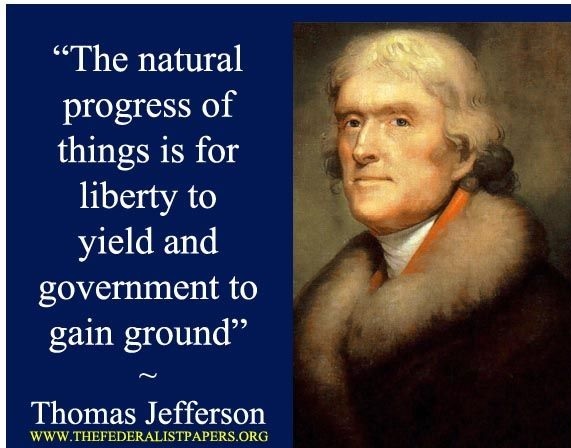
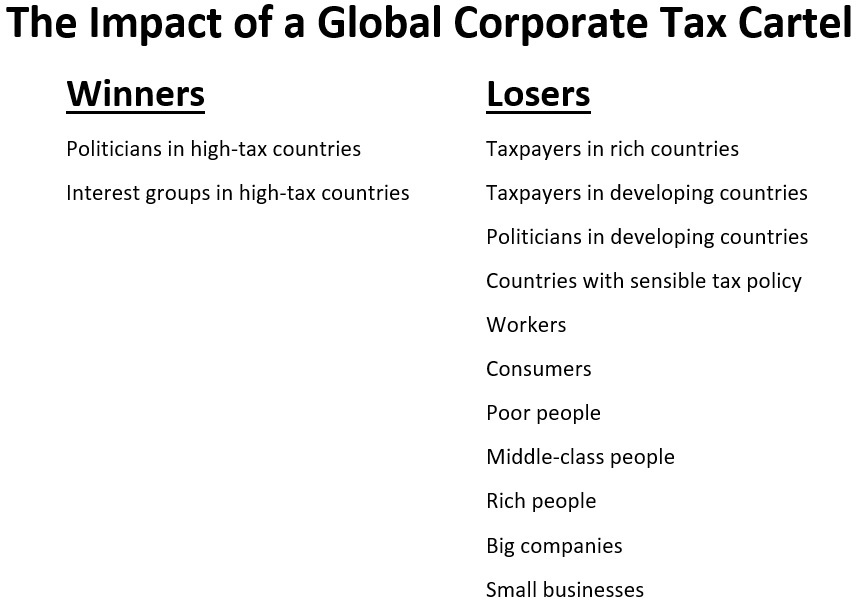


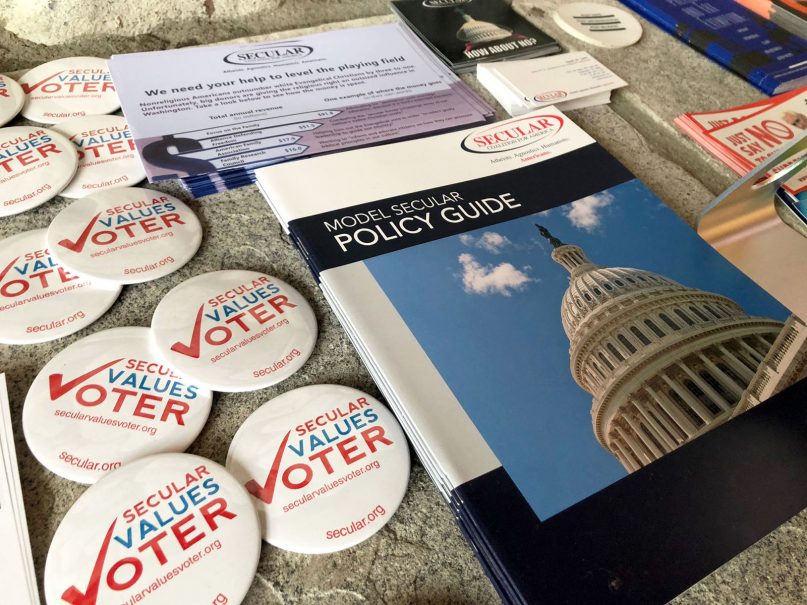 Materials line a table during a gathering of atheist, humanist and secular leaders in Temecula, California, for the first SoCal Secular Leadership Summit, which was held from March 1-3, 2019. Photo courtesy Heather AdamsSeptember 28, 2020By



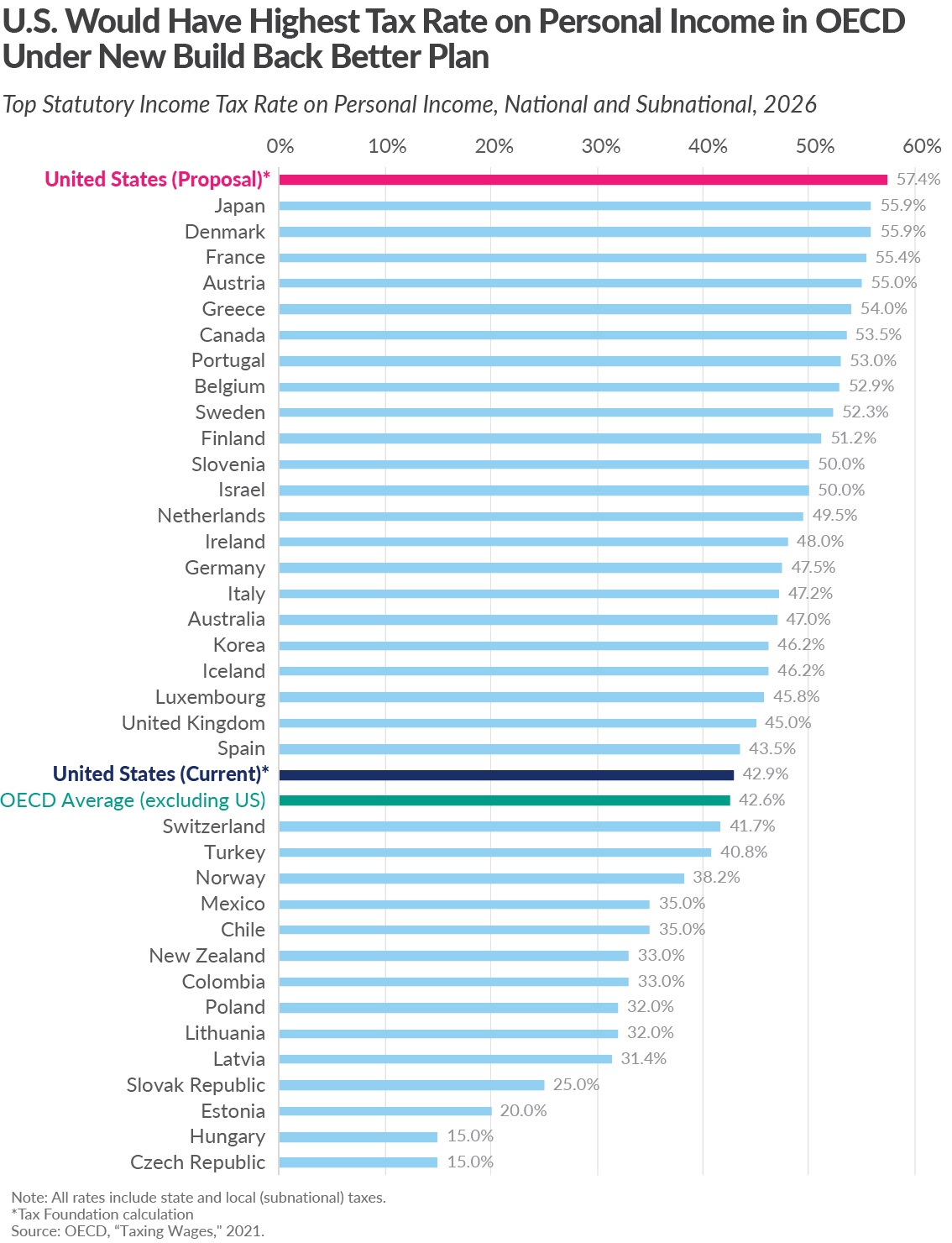


:no_upscale()/cdn.vox-cdn.com/uploads/chorus_image/image/69607892/AP20205603273979.0.jpg) Arkansas state Sen. Jason Rapert presides over a Senate committee at the state Capitol in Little Rock, Ark. in this March 14, 2018, file photo. Rapert’s National Association of Christian Lawmakers met recently to talk model legislation and pass resolutions. Kelly P. Kissel, Associated Press
Arkansas state Sen. Jason Rapert presides over a Senate committee at the state Capitol in Little Rock, Ark. in this March 14, 2018, file photo. Rapert’s National Association of Christian Lawmakers met recently to talk model legislation and pass resolutions. Kelly P. Kissel, Associated Press/cdn.vox-cdn.com/uploads/chorus_asset/file/22726922/AP898166992908.jpg) Texas state Rep. Bryan Hughes speaks during the opening session of the 2015 legislative session on Tuesday, Jan. 13, 2015, in Austin, Texas. Eric Gay, Associated Press
Texas state Rep. Bryan Hughes speaks during the opening session of the 2015 legislative session on Tuesday, Jan. 13, 2015, in Austin, Texas. Eric Gay, Associated Press/cdn.vox-cdn.com/uploads/chorus_asset/file/22726936/merlin_1112102.jpg) A anti-abortion supporter argues with those who attended a press conference and rally held by the Planned Parenthood Action Council of Utah outside of the Capitol in Salt Lake City on Aug. 25, 2015. Stacie Scott, Deseret News
A anti-abortion supporter argues with those who attended a press conference and rally held by the Planned Parenthood Action Council of Utah outside of the Capitol in Salt Lake City on Aug. 25, 2015. Stacie Scott, Deseret News


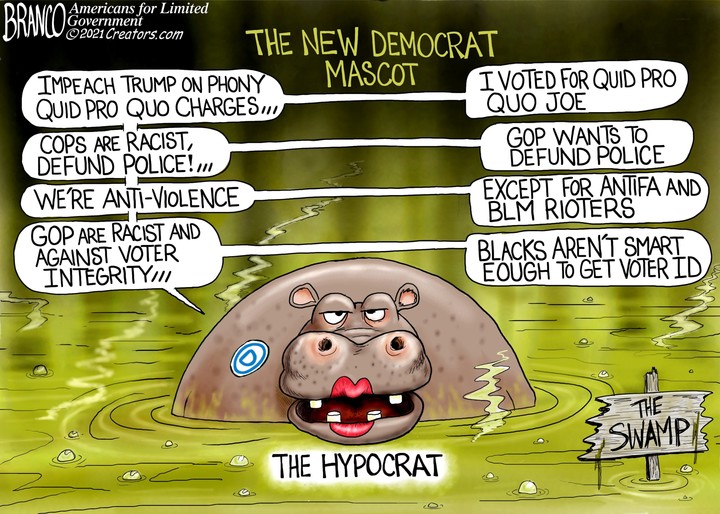




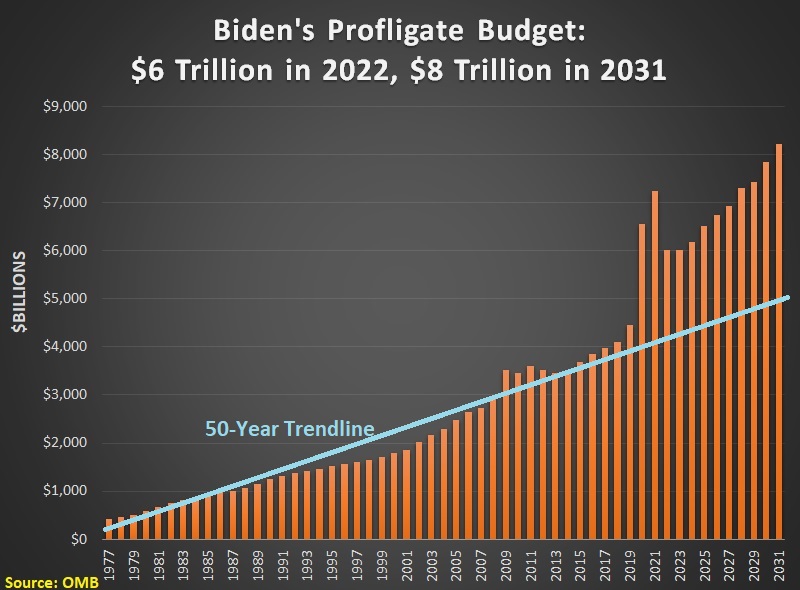

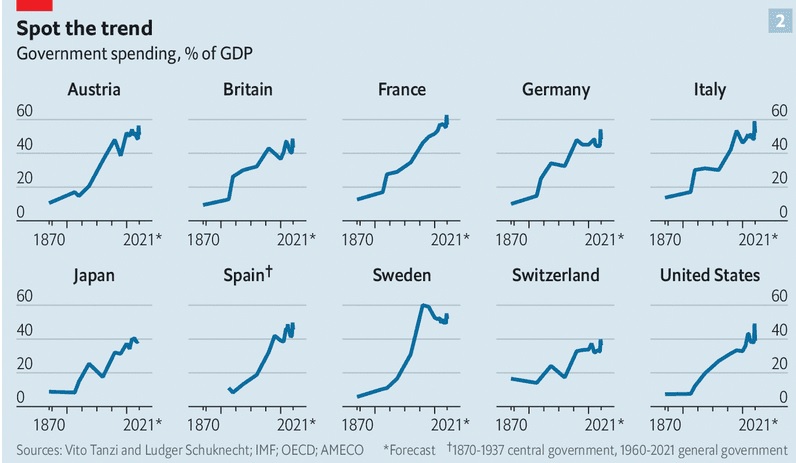
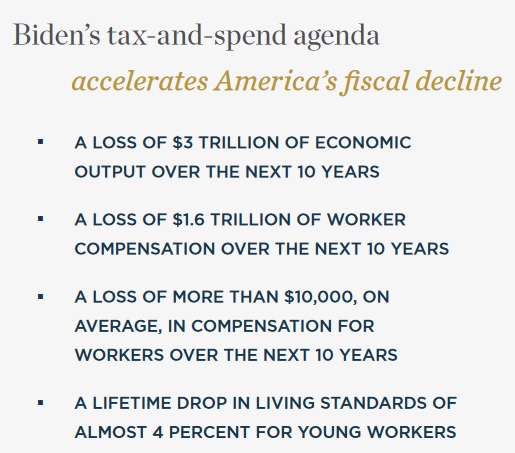
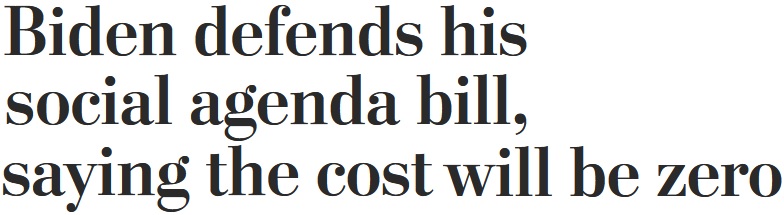


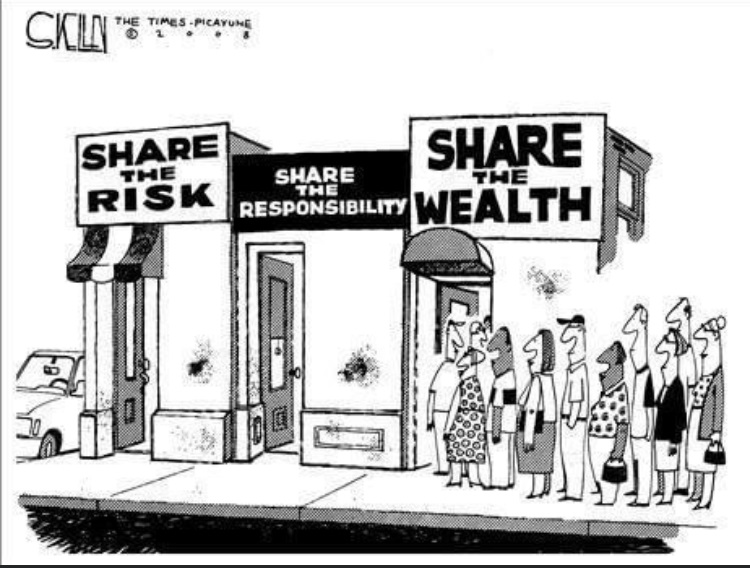
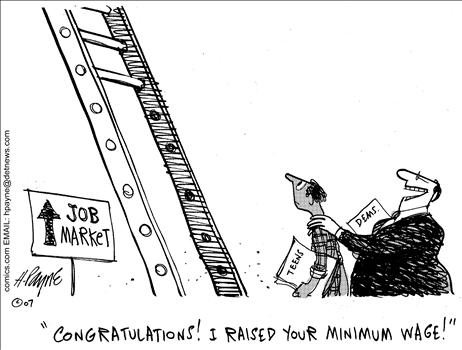


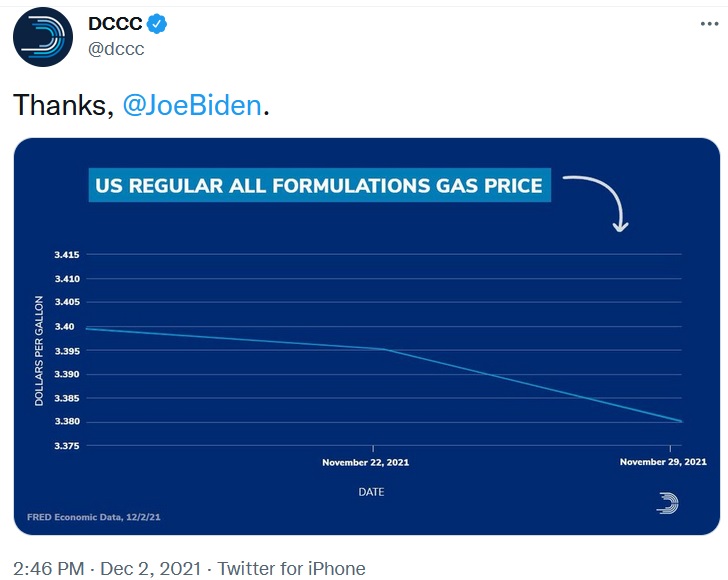

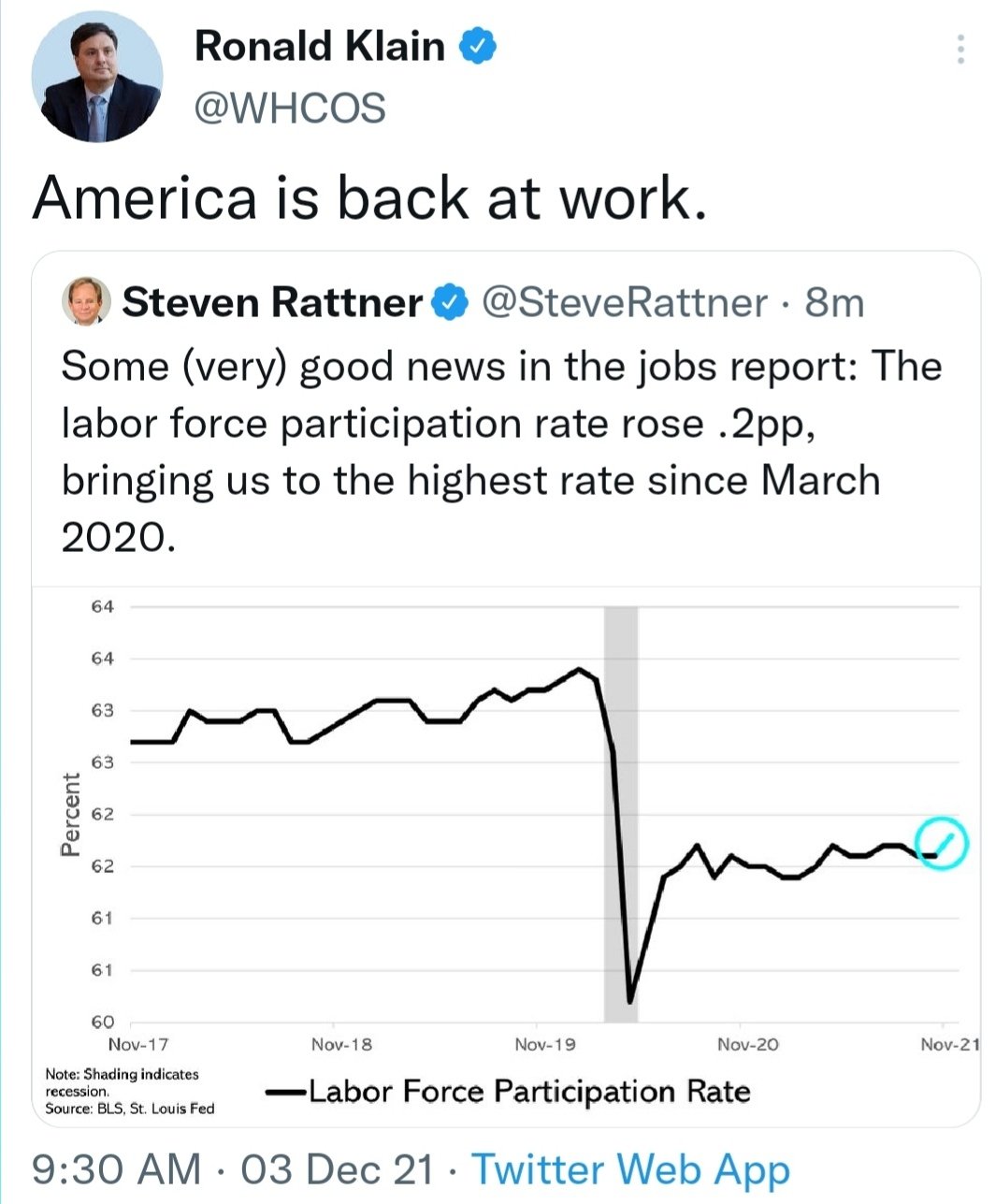


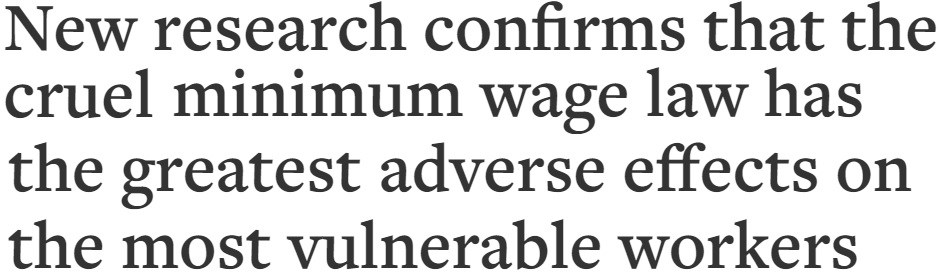
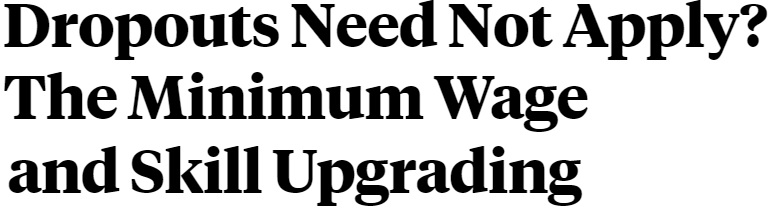

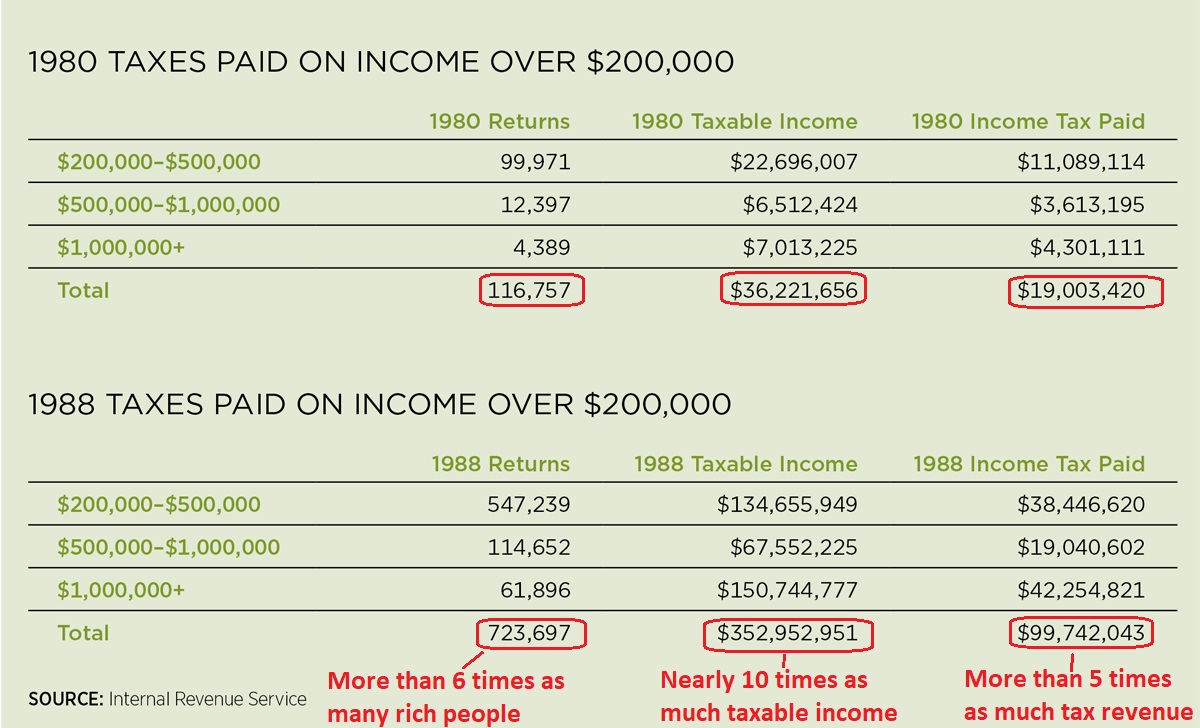


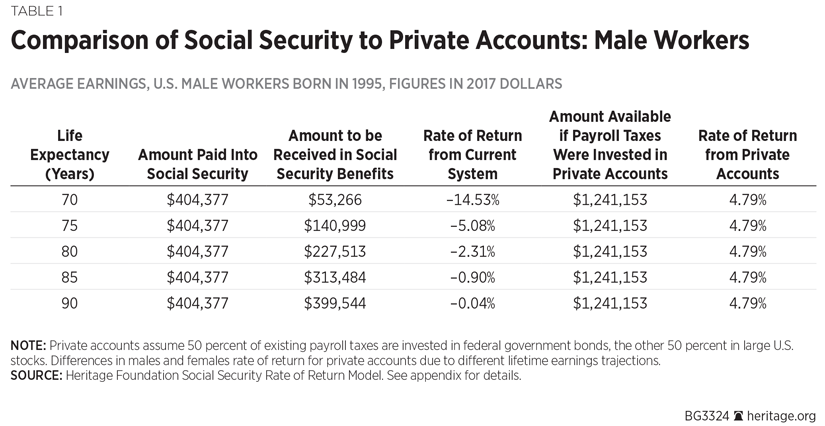
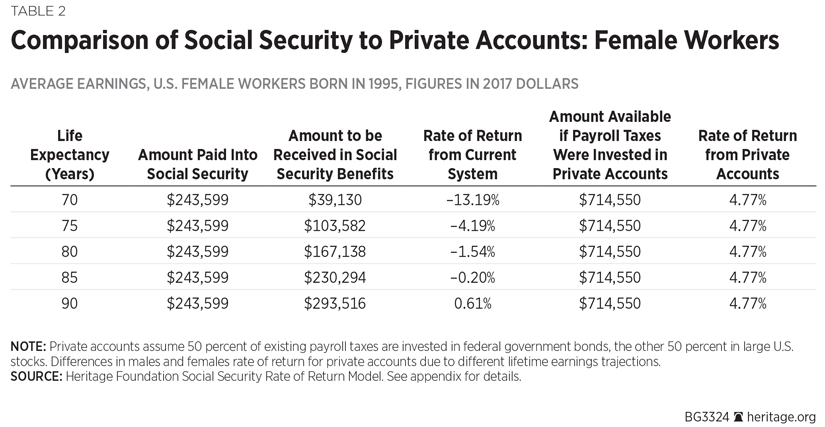









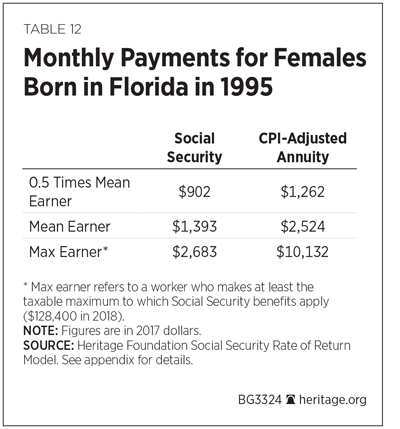

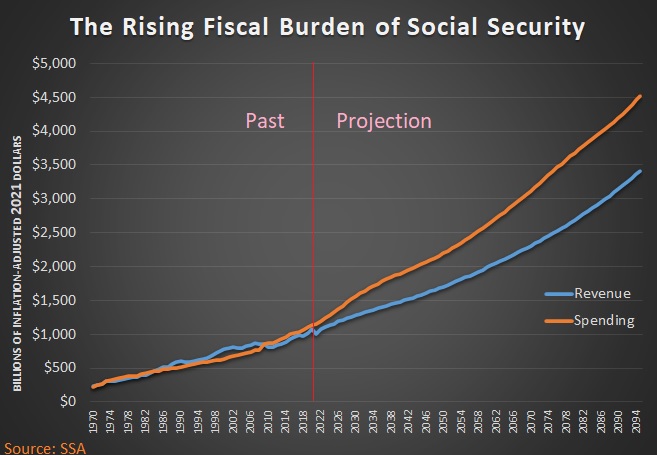
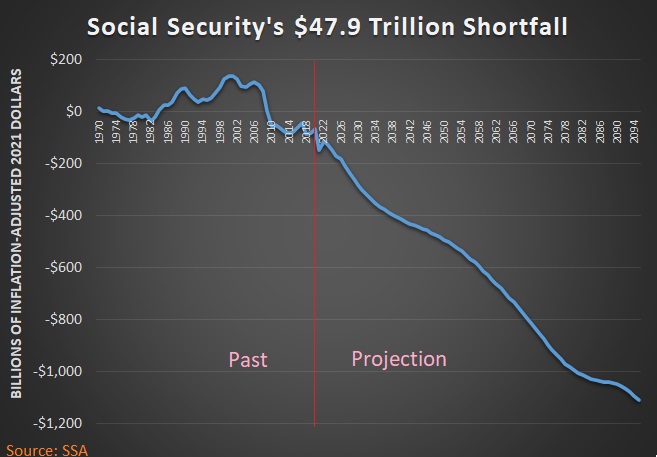


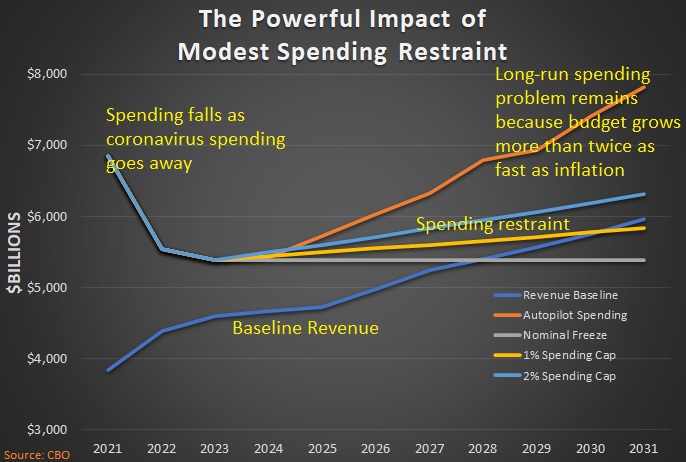


 The Daily Hatch