RESPONDING TO HARRY KROTO’S BRILLIANT RENOWNED ACADEMICS!! Part 149Z Sir Bertrand Russell_On November 21, 2014 I received a letter from Nobel Laureate Harry Kroto and it said:…Please click on this URL http://vimeo.com/26991975and you will hear what far smarter people than I have to say on this matter. I agree with them.Harry Kroto__
Harold W. Kroto (left) receives the Nobel Prize in chemistry from Swedish King Carl XVI Gustaf in Stockholm, in 1996.
Another 50 Renowned Academics Speaking About God (Part 2)
A Further 50 Renowned Academics Speaking About God (Part 3)
__
Quote from Bertrand Russell:
Q: Why are you not a Christian?Russell: Because I see no evidence whatever for any of the Christian dogmas. I’ve examined all the stock arguments in favor of the existence of God, and none of them seem to me to be logically valid.Q: Do you think there’s a practical reason for having a religious belief, for many people?Russell: Well, there can’t be a practical reason for believing what isn’t true. That’s quite… at least, I rule it out as impossible. Either the thing is true, or it isn’t. If it is true, you should believe it, and if it isn’t, you shouldn’t. And if you can’t find out whether it’s true or whether it isn’t, you should suspend judgment. But you can’t… it seems to me a fundamental dishonesty and a fundamental treachery to intellectual integrity to hold a belief because you think it’s useful, and not because you think it’s true._
Bertrand Russell pictured above and Francis Schaeffer below:Francis Schaeffer noted concerning the IMPLICIT FAITH of Bertrand Russell:I was lecturing at the University of St. Andrews one night and someone put forth the question, “If Christianity is so clear and reasonable then why doesn’t Bertrand Russell then become a Christian? Is it because he hasn’t discovered theology?”It wasn’t a matter of studying theology that was involved but rather that he had too much faith. I was surrounded by humanists and you could hear the gasps. Bertrand Russell and faith; Isn’t this the man of reason? I pointed out that this is a man of high orthodoxy who will hold his IMPLICIT FAITH on the basis of his presuppositions no matter how many times he has to zig and zag because it doesn’t conform to the facts.You must understand what the term IMPLICIT FAITH means. In the old Roman Catholic Church when someone who became a Roman Catholic they had to promise implicit faith. That meant that you not only had to believe everything that Roman Catholic Church taught then but also everything it would teach in the future. It seems to me this is the kind of faith that these people have in the uniformity of natural causes in a closed system and they have accepted it no matter what it leads them into. I think that these men are men of a high level of IMPLICIT FAITH in their own set of presuppositions. Paul said (in Romans Chapter One) they won’t carry it to it’s logical conclusion even though they hold a great deal of the truth and they have revolted and they have set up a series of universals in themselves which they won’t transgress no matter if they conform to the facts or not.Here below is the Romans passage that Schaeffer is referring to and verse 19 refers to what Schaeffer calls “the mannishness of man” and verse 20 refers to Schaeffer’s other point which is “the universe and it’s form.”Romans 1:18-20 Amplified Bible :18 For God’s [holy] wrath and indignation are revealed from heaven against all ungodliness and unrighteousness of men, who in their wickedness repress and hinder the truth and make it inoperative. 19 For that which is known about God is evident to them and made plain in their inner consciousness, because God [Himself] has shown it to them. 20 For ever since the creation of the world His invisible nature and attributes, that is, His eternal power and divinity, have been made intelligible and clearly discernible in and through the things that have been made (His handiworks). So [men] are without excuse [altogether without any defense or justification].We can actually see the two points makes playing themselves out in Bertrand Russell’s own life.
480 × 360Images may be subject to copyright. Learn More
[From a letter dated August 11, 1918 to Miss Rinder when Russell was 46]It is so with all who spend their lives in the quest of something elusive, and yet omnipresent, and at once subtle and infinite. One seeks it in music, and the sea, and sunsets; at times I have seemed very near it in crowds when I have been feeling strongly what they were feeling; one seeks it in love above all. But if one lets oneself imagine one has found it, some cruel irony is sure to come and show one that it is not really found. The outcome is that one is a ghost, floating through the world without any real contact. Even when one feels nearest to other people, something in one seems obstinately to belong to God and to refuse to enter into any earthly communion—at least that is how I should express it if I thought there was a God. It is odd isn’t it? I care passionately for this world, and many things and people in it, and yet…what is it all? There must be something more important, one feels, though I don’t believe there is. I am haunted—some ghost, from some extra-mundane region, seems always trying to tell me something that I am to repeat to the world, but I cannot understand the message.There was evidence during Bertrand Russell’s own life that indicated that the Bible was true and could be trusted.Francis Schaeffer brings up the name of someone who lived at the same time Bertrand Russell and if Russell had chose to seriously study the evidence concerning the accuracy of the Bible then he could have seen how it could even change a skeptic’s mind like William Ramsay:
TRUTH AND HISTORY (chapter 5 of WHATEVER HAPPENED TO THE HUMAN RACE?, under footnotes #97 and #98)
A common assumption among liberal scholars is that because the Gospels are theologically motivated writings–which they are–they cannot also be historically accurate. In other words, because Luke, say (when he wrote the Book of Luke and the Book of Acts), was convinced of the deity of Christ, this influenced his work to the point where it ceased to be reliable as a historical account. The assumption that a writing cannot be both historical and theological is false.The experience of the famous classical archaeologist Sir William Ramsay illustrates this well. When he began his pioneer work of exploration in Asia Minor, he accepted the view then current among the Tubingen scholars of his day that the Book of Acts was written long after the events in Paul’s life and was therefore historically inaccurate. However, his travels and discoveries increasingly forced upon his mind a totally different picture, and he became convinced that Acts was minutely accurate in many details which could be checked.
Sir William Ramsay (1851-1939) was an archaeologist and biblical skeptic. He taught at the University of Edinburgh and believed that Bible writers made facts and stories up. The book of Acts, he declared, was full of errors, and to prove this contention, he traveled to Asia Minor to demonstrate Luke’s unreliability.He understood he could not prove or disprove miracle accounts, but if he could show Luke to be a sloppy historian on facts that could be verified
(geographical and historical), he felt he could discredit Luke’s unverifiable stories.Ramsay the skeptic returned to Great Britain a believer. Every one of Luke’s facts checked out. He found Luke to use specific and accurate terminology that reflected a careful chronicle of events. There were proconsuls in senatorial provinces, asiarchs in Ephesus, politarchs in Thessalonica. His conclusion was that Luke was a highly reliable historian, rendering the story of the early church in the book of Acts a remarkably clear one.The title politarch in Acts 17:6 is particularly striking because, until Ramsay’s investigation, the term was unknown in Greek literature outside Acts. Ramsay found five inscriptions with the term in the city.Ramsay wrote several important books reflecting his archaeological findings such as The Church in the Roman Empire, St. Paul the Traveler and Roman Citizen and The Cities of St. Paul.What Ramsay’s story demonstrates is the Bible will withstand any investigation from those willing to honestly look at the evidence.
Stan has preached since 1976, in Zimbabwe, California, Texas and Tennessee. He serves as preacher for the Red Walnut Church of Christ in Bath Springs, TN. He is currently Professor of Bible at Freed-Hardeman University. He is married to the former Marjorie McCarthy, and has one daughter, Tracy Watts. He is the author of four books: The Wise Get Wiser, the Foolish More Foolish: The Book of Proverbs, Give the Winds a Mighty Voice: Our Worship in Song, and Equipping the Saints for Ministry. He has recently published another book, “Will Our Faith Have Children: Developing Leadership in the Church for the Next Generation.
Francis Schaeffer noted in his book HOW SHOULD WE THEN LIVE? (p. 182 in Vol 5 of Complete Works) in the chapter The Breakdown in Philosophy and Science:In his lecture at Acapulco, George Wald finished with only one final value. It was the same one with which English philosopher Bertrand Russell (1872-1970) was left. For Wald and Russell and for many other modern thinkers, the final value is the biological continuity of the human race. If this is the only final value, one is left wondering why this then has importance. Now having traveled from the pride of man in the High Renaissance and the Enlightenment down to the present despair, we can understand where modern people are. They have no place for a personal God. But equally they have no place for man as man, or for love, or for freedom, or for significance. This brings a crucial problem. Beginning only from man himself, people affirm that man is only a machine. But those who hold this position cannot live like machines! If they could, there would have been no tensions in their intellectual position or in their lives. But even people who believe they are machines cannot live like machines, and thus they must “leap upstairs” against their reason and try to find something which gives meaning to life, even though to do so they have to deny their reason. Francis Schaeffer in another place worded it like this:The universe was created by an infinite personal God and He brought it into existence by spoken word and made man in His own image. When man tries to reduce [philosophically in a materialistic point of view] himself to less than this [less than being made in the image of God] he will always fail and he will always be willing to make these impossible leaps into the area of nonreason even though they don’t give an answer simply because that isn’t what he is. He himself testifies that this infinite personal God, the God of the Old and New Testament is there.We all know deep down that God exists and even atheists have to grapple with that knowledge.Solomon wisely noted in Ecclesiastes 3:11 “God has planted eternity in the heart of men…” (Living Bible). No wonder Bertrand Russell wrote in his autobiography, “It is odd, isn’t it? I feel passionately for this world and many things and people in it, and yet…what is it all? There must be something more important, one feels, though I don’t believe there is. I am haunted. Some ghosts, for some extra mundane regions, seem always trying to tell me something that I am to repeat to the world, but I cannot understand that message.”Take a look at this 7th episode from Schaeffer’s series “HOW SHOULD WE THEN LIVE? The Age of Nonreason”:
How Should We Then Live – Episode Seven – 07 – Portuguese Subtitles
_Instead of making a leap into the area of nonreason the better choice would be to investigate the claims that the Bible is a historically accurate book and that God created the universe and reached out to humankind with the Bible.
Schaeffer then points to the historical accuracy of the Bible in Chapter 5 of the book WHATEVER HAPPENED TO THE HUMAN RACE?
The Bible and Archaeology – Is the Bible from God? (Kyle Butt 42 min)
Today we look at the 3rd letter in the Kroto correspondence and his admiration of Bertrand Russell. (Below The Nobel chemistry laureates Harold Kroto, Robert Curl and Richard Smalley) It is with sadness that I write this post having learned of the death of Sir Harold Kroto on April 30, 2016 at the age of […]
On November 21, 2014 I received a letter from Nobel Laureate Harry Kroto and it said: …Please click on this URL http://vimeo.com/26991975 and you will hear what far smarter people than I have to say on this matter. I agree with them. Harry Kroto _________________ Below you have picture of Dr. Harry Kroto: Gareth Stedman […]
Top 10 Woody Allen Movies __________ John Piippo makes the case that Bertrand Russell would have loved Woody Allen because they both were atheists who don’t deny the ramifications of atheism!!! Monday, August 06, 2012 (More On) Woody Allen’s Atheism As I wrote in a previous post, I like Woody Allen. I have long admired his […]
______ Top 10 Woody Allen Movies PBS American Masters – Woody Allen A Documentary 01 PBS American Masters – Woody Allen A Documentary 02 __________ John Piippo makes the case that Bertrand Russell would have loved Woody Allen because they both were two atheists who don’t deny the ramifications of atheism!!! Monday, August 06, 2012 […]
THE MORAL ARGUMENT BERTRAND RUSSELL But aren’t you now saying in effect, I mean by God whatever is good or the sum total of what is good — the system of what is good, and, therefore, when a young man loves anything that is good he is loving God. Is that what you’re […]
Great debate Fr. Frederick C. Copleston vs Bertrand Russell – Part 1 Uploaded by riversonthemoon on Jul 15, 2009 BBC Radio Third Programme Recording January 28, 1948. BBC Recording number T7324W. This is an excerpt from the full broadcast from cassette tape A303/5 Open University Course, Problems of Philosophy Units 7-8. Older than 50 years, […]
Uploaded by riversonthemoon on Jul 15, 2009 BBC Radio Third Programme Recording January 28, 1948. BBC Recording number T7324W. This is an excerpt from the full broadcast from cassette tape A303/5 Open University Course, Problems of Philosophy Units 7-8. Older than 50 years, out of UK/BBC copyright. Pardon the hissy audio. It was recorded 51 […]
Fr. Frederick C. Copleston vs Bertrand Russell – Part 1 Uploaded by riversonthemoon on Jul 15, 2009 BBC Radio Third Programme Recording January 28, 1948. BBC Recording number T7324W. This is an excerpt from the full broadcast from cassette tape A303/5 Open University Course, Problems of Philosophy Units 7-8. Older than 50 years, out of […]
THE MORAL ARGUMENT BERTRAND RUSSELL But aren’t you now saying in effect, I mean by God whatever is good or the sum total of what is good — the system of what is good, and, therefore, when a young man loves anything that is good he is loving God. Is that what you’re […]
Fr. Frederick C. Copleston vs Bertrand Russell – Part 1 Uploaded by riversonthemoon on Jul 15, 2009 BBC Radio Third Programme Recording January 28, 1948. BBC Recording number T7324W. This is an excerpt from the full broadcast from cassette tape A303/5 Open University Course, Problems of Philosophy Units 7-8. Older than 50 years, out of […]
[Verse 1:] Open your eyes Chandeliers are going to light the way Take a step inside the masquerade I know that it’s late But we’re just getting started here Soon the mystery will all be clear [Pre-Chorus:] I’ll give you a taste One drop will erase All your defenses [Chorus:] Come in just a little bit closer now You know that you want me ta take you down I’m the thrill that you can’t escape There’s no way out So don’t you forget, you’re caught my spiderweb [Verse 2:] You think that you know What your body’s getting into But nobody’s here to save you It’s been awhile Since I tapped into my appetite But the hunger’s coming back toright [Pre-Chorus:] The more that you fight The more that you’re mine I’ll keep you forever [Chorus:] Come in just a little bit closer now You know that you want me ta take you down I’m the thrill that you can’t escape There’s no way out So don’t you forget, you’re caught my spiderweb [Bridge:] You don’t know it yet But you might regret The moment we met You’re caught in my spiderweb You don’t know it yet But you might regret The moment we met You’re caught in my spiderweb You don’t know it yet But you might regret The moment we met You’re caught in my spiderweb [Chorus:] Come in just a little bit closer now You know that you want me ta take you down I’m the thrill that you can’t escape There’s no way out So don’t you forget, there’s no way out of this You’re caught my spiderweb
Report a problem
Writer(s): Haley Reinhart, Steven Miller, David Hodges
David Archuleta – Crush Crush (David Archuleta song) From Wikipedia, the free encyclopedia “Crush” Single by David Archuleta from the album David Archuleta Released August 12, 2008 (See release history) Format CD single, digital download Recorded 2008 Genre Pop Length 3:33 Label Jive Writer(s) Jess Cates, David Hodges, Emanuel Kiriakou Producer Emanuel Kiriakou David Archuleta singles chronology “Crush“ (2008) “A Little Too Not Over You“ […]
Uploaded on May 11, 2011 “What About Now” is the seventh single from American rock band Daughtry’s eponymous debut album. The song is a ballad, that was written by Ben Moody, David Hodges (both former members of Evanescence), and Josh Hartzler, who is married to Amy Lee (the lead singer of Evanescence) It is one of […]
Evanescence – Bring Me To Life From David Hodges website: David Hodges is a Grammy award-winning writer/producer/artist hailing from Little Rock, AR. As the former writer and keyboardist of the band Evanescence, he and his band mates took home Best New Artist as well as the Best Hard Rock Performance trophy for their hit “Bring […]
Carrie Underwood | There’s A Place For Us | Music Video Uploaded on Dec 27, 2010 Music Video of Carrie Underwood – There’s A Place For Us – The Chronicles Of Narnia – Voyage Of The Dawn Treader Soundtrack This video is created using various trailers from the film The Chronicles Of Narnia – Voyage Of The […]
Evanescence – My Immortal From David Hodges website: David Hodges is a Grammy award-winning writer/producer/artist hailing from Little Rock, AR. As the former writer and keyboardist of the band Evanescence, he and his band mates took home Best New Artist as well as the Best Hard Rock Performance trophy for their hit “Bring Me To […]
Christina Perri- The Lonely (official music video) Distance (Christina Perri song) From Wikipedia, the free encyclopedia “Distance” Single by Christina Perri featuring Jason Mraz from the album lovestrong. Released March 20, 2012 Format Digital download Recorded 2011 Genre Pop Length 3:55 Label Atlantic Writer(s) Christina Perri, David Hodges Christina Perri singles chronology “A Thousand Years“ (2011) “Distance“ (2012) Jason Mraz singles chronology “I […]
Evanescence – Going Under From David Hodges website: David Hodges is a Grammy award-winning writer/producer/artist hailing from Little Rock, AR. As the former writer and keyboardist of the band Evanescence, he and his band mates took home Best New Artist as well as the Best Hard Rock Performance trophy for their hit “Bring Me To […]
Kelly Clarkson – Because Of You From David Hodges website: David Hodges is a Grammy award-winning writer/producer/artist hailing from Little Rock, AR. As the former writer and keyboardist of the band Evanescence, he and his band mates took home Best New Artist as well as the Best Hard Rock Performance trophy for their hit “Bring […]
On June 28, 2013 Underwood was back on top with a song that Little Rock native David Hodges who graduated at Arkansas Baptist High School help write. Carrie Underwood “Sees” No. 1 Again onTop 20 By Sarah Wyland | Leave a Comment Carrie Underwood photo courtesy of Sony Music Nashville. Carrie Underwood current single title is prophetic. She makes […]
Christina Perri ‘Safe Haven’ Interview- New Album Coming! Published on Feb 6, 2013 http://bit.ly/ClevverMusic – Subscribe to ClevverMusic! We caught up with “Jar of Hearts” singer Christina Perri at the Safe Haven movie premiere where her song “Arms” is featured on the soundtrack. We chatted with her on the red carpet about the song, and […]
David Hodges is a graduate of Arkansas Baptist High School in Little Rock and he co-wrote the song “A Thousand Years,”with Christina Perri. It was featured in the movie “Breaking Dawn Part 2.” David is one of the three founding members of Evanescence and he has written for Kelly Clarkson, Celine Dion, Reba McEntire, Carrie Underwood, […]
The “American Idol” contestant-turned-actress is getting positive reviews for her role in “Smash.” The singer plays an actress who is competing for the part of Marilyn Monroe in a Broadway show. The Hollywood Reporter calls it “‘Glee’ for grownups” and Entertainment Weekly calls McPhee “mediocre” but “very likable.” Great song: Uploaded by KatharineMcPheeVEVO on Nov […]
Little Rock native and Arkansas Baptist High School graduate David Hodges co-wrote a song for the blockbuster movie “Breaking Dawn” that comes out this Friday. Interview: Breaking Dawn’s Christina Perri Twi’s Hard, Dreams Big By Leah Collins, Dose.ca Nov 1, 2011 More Images » OMG. Christina Perri went from a […]
In the last few years the number of people receiving Food Stamps has skyrocketed. President Obama has not cut any federal welfare programs but has increased them, and he has used class warfare over and over the last few months and according to him equality at the finish line is the equality that we should all be talking about. However, socialism has never worked and it has always killed incentive to produce more. Milton Friedman shows in this film series below how so many people get caught in the “Welfare Trap.” Friedman also gives a great solution to this problem in the “negative income tax.” I am glad that I had the chance to be studying his work for over 30 years now.
In 1980 when I first sat down and read the book “Free to Choose” I was involved in Ronald Reagan’s campaign for president and excited about the race. Milton Friedman’s books and film series really helped form my conservative views. Take a look at one of my favorite films of his:
Friedman Friday:(“Free to Choose” episode 4 – From Cradle to Grave, Part 1 of 7)
Volume 4 – From Cradle to Grave
Abstract:
Since the Depression years of the 1930s, there has been almost continuous expansion of governmental efforts to provide for people’s welfare. First, there was a tremendous expansion of public works. The Social Security Act followed close behind. Soon other efforts extended governmental activities in all areas of the welfare sector. Growth of governmental welfare activity continued unabated, and today it has reached truly staggering proportions. Travelling in both Britain and the U.S., Milton Friedman points out that though many government welfare programs are well intentioned, they tend to have pernicious side effects. In Dr. Friedman’s view, perhaps the most serious shortcoming of governmental welfare activities is their tendency to strip away individual independence and dignity. This is because bureaucrats in welfare agencies are placed in positions of tremendous power over welfare recipients, exercising great influence over their lives. Because people never spend someone else’s money as carefully as they spend their own, inefficiency, waste, abuse, theft, and corruption are inevitable. In addition, welfare programs tend to be self-perpetuating because they destroy work incentives. Indeed, it is often in the welfare recipients’ best interests to remain unemployed. Dr. Friedman suggests a negative income tax as a way of helping the poor. The government would pay money to people falling below a certain income level. As they obtained jobs and earned money, they would continue to receive some payments from the government until their outside income reached a certain ceiling. This system would make people better off who sought work and earned income. This contrasts with many of today’s programs where one dollar earned means nearly one dollar lost in welfare payments.
Friedman: After the 2nd World War, New York City authorities retained rent control supposedly to help their poorer citizens. The intentions were good. This in the Bronx was one result.
By the 50’s the same authorities were taxing their citizens. Including those who lived in the Bronx and other devastated areas beyond the East River to subsidize public housing. Another idea with good intentions yet poor people are paying for this, subsidized apartments for the well-to-do. When government at city or federal level spends our money to help us, strange things happen.
The idea that government had to protect us came to be accepted during the terrible years of the Depression. Capitalism was said to have failed. And politicians were looking for a new approach.
Franklin Delano Roosevelt was a candidate for the presidency. He was governor of New York State. At the governor’s mansion in Albany, he met repeatedly with friends and colleagues to try to find some way out of the Depression. The problems of the day were to be solved by government action and government spending. The measures that FDR and his associates discussed here derived from a long line of past experience. Some of the roots of these measures go back to Bismark’s Germany at the end of the 19th Century. The first modern state to institute old age pensions and other similar measures on the part of government. In the early 20th Century Great Britain followed suit under Lloyd George and Churchill. It too instituted old age pensions and similar plans.
These precursors of the modern welfare state had little effect on practice in the United States. But they did have a very great effect on the intellectuals on the campus like those who gathered here with FDR. The people who met here had little personal experience of the horrors of the Depression but they were confident that they had the solution. In their long discussions as they sat around this fireplace trying to design programs to meet the problems raised by the worst Depression in the history of the United States, they quite naturally drew upon the ideas that were prevalent at the time. The intellectual climate had become one in which it was taken for granted that government had to play a major role in solving the problems in providing what came later to be called Security from Cradle to Grave.
Roosevelt’s first priority after his election was to deal with massive unemployment. A Public Works program was started. The government financed projects to build highways, bridges and dams. The National Recovery Administration was set up to revitalize industry. Roosevelt wanted to see America move into a new era. The Social Security Act was passed and other measures followed. Unemployment benefits, welfare payments, distribution of surplus food. With these measures, of course, came rules, regulations and red tape as familiar today as they were novel then. The government bureaucracy began to grow and it’s been growing ever since.
This is just a small part of the Social Security empire today. Their headquarters in Baltimore has 16 rooms this size. All these people are dispensing our money with the best possible intentions. But at what cost?
In the 50 years since the Albany meetings, we have given government more and more control over our lives and our income. In New York State alone, these government buildings house 11,000 bureaucrats. Administering government programs that cost New York taxpayers 22 billion dollars. At the federal level, the Department of Health, Education and Welfare alone has a budget larger than any government in the world except only Russia and the United States.
Yet these government measures often do not help the people they are supposed to. Richard Brown’s daughter, Helema, needs constant medical attention. She has a throat defect and has to be connected to a breathing machine so that she’ll survive the nights. It’s expensive treatment and you might expect the family to qualify for a Medicaid grant.
Richard Brown: No, I don’t get it, cause I’m not eligible for it. I make a few dollars too much and the salary that I make I can’t afford to really live and to save anything is out of the question. And I mean, I live, we live from payday to payday. I mean literally from payday to payday.
Friedman: His struggle isn’t made any easier by the fact that Mr. Brown knows that if he gave up his job as an orderly at the Harlem Hospital, he would qualify for a government handout. And he’d be better off financially.
Hospital Worker: Mr. Brown, do me a favor please? There is a section patient.
Friedman: It’s a terrible pressure on him. But he is proud of the work that he does here and he’s strong enough to resist the pressure.
Richard Brown: I’m Mr. Brown. Your fully dilated and I’m here to take you to the delivery. Try not to push, please. We want to have a nice sterile delivery.
Friedman: Mr. Brown has found out the hard way that welfare programs destroy an individual’s independence.
Richard Brown: We’ve considered welfare. We went to see, to apply for welfare but, we were told that we were only eligible for $5.00 a month. And, to receive this $5.00 we would have to cash in our son’s savings bonds. And that’s not even worth it. I don’t believe in something for nothing anyway.
Mrs. Brown: I think a lot of people are capable of working and are willing to work, but it’s just the way it is set up. It, the mother and the children are better off if the husband isn’t working or if the husband isn’t there. And this breaks up so many poor families.
Friedman: One of the saddest things is that many of the children whose parents are on welfare will in their turn end up in the welfare trap when they grow up. In this public housing project in the Bronx, New York, 3/4’s of the families are now receiving welfare payments.
Well Mr. Brown wanted to keep away from this kind of thing for a very good reason. The people who get on welfare lose their human independence and feeling of dignity. They become subject to the dictates and whims of their welfare supervisor who can tell them whether they can live here or there, whether they may put in a telephone, what they may do with their lives. They are treated like children, not like responsible adults and they are trapped in the system. Maybe a job comes up which looks better than welfare but they are afraid to take it because if they lose it after a few months it maybe six months or nine months before they can get back onto welfare. And as a result, this becomes a self-perpetuating cycle rather than simply a temporary state of affairs.
Things have gone even further elsewhere. This is a huge mistake. A public housing project in Manchester, England.
Well we’re 3,000 miles away from the Bronx here but you’d never know it just by looking around. It looks as if we are at the same place. It’s the same kind of flats, the same kind of massive housing units, decrepit even though they were only built 7 or 8 years ago. Vandalism, graffiti, the same feeling about the place. Of people who don’t have a great deal of drive and energy because somebody else is taking care of their day to day needs because the state has deprived them of an incentive to find jobs to become responsible people to be the real support for themselves and their families.
I am currently going through his film series “Free to Choose” which is one the most powerful film series I have ever seen. TEMIN: We don’t think the big capital arose before the government did? VON HOFFMAN: Listen, what are we doing here? I mean __ defending big government is like defending death and taxes. […]
I am currently going through his film series “Free to Choose” which is one the most powerful film series I have ever seen worked pretty well for a whole generation. Now anything that works well for a whole generation isn’t entirely bad. From the fact __ from that fact, and the undeniable fact that things […]
Uploaded by YAFTV on Aug 19, 2009 Nobel Laureate Dr. Milton Friedman discusses the principles of Ronald Reagan during this talk for students at Young America’s Foundation’s 25th annual National Conservative Student Conference MILTON FRIEDMAN ON RONALD REAGAN In Friday’s WSJ, Milton Friedman reflectedon Ronald Reagan’s legacy. (The link should work for a few more […]
I am currently going through his film series “Free to Choose” which is one the most powerful film series I have ever seen. PART 5 of 7 MCKENZIE: Ah, well, that’s not on our agenda actually. (Laughter) VOICE OFF SCREEN: Why not? MCKENZIE: I boldly repeat the question, though, the expectation having been __ having […]
Milton Friedman’s solution to limiting poverty Liberals just don’t get it. They should listen to Milton Friedman (who is quoted in this video below concerning the best way to limit poverty). New Video Shows the War on Poverty Is a Failure Posted by Daniel J. Mitchell The Center for Freedom and Prosperity has released another […]
I am currently going through his film series “Free to Choose” which is one the most powerful film series I have ever seen. PART 4 of 7 The massive growth of central government that started after the depression has continued ever since. If anything, it has even speeded up in recent years. Each year there […]
I am currently going through his film series “Free to Choose” which is one the most powerful film series I have ever seen. PART 3 OF 7 Worse still, America’s depression was to become worldwide because of what lies behind these doors. This is the vault of the Federal Reserve Bank of New York. Inside […]
I am currently going through his film series “Free to Choose” which is one the most powerful film series I have ever seen. For the past 7 years Maureen Ramsey has had to buy food and clothes for her family out of a government handout. For the whole of that time, her husband, Steve, hasn’t […]
Friedman Friday:(“Free to Choose” episode 4 – From Cradle to Grave, Part 1 of 7) Volume 4 – From Cradle to Grave Abstract: Since the Depression years of the 1930s, there has been almost continuous expansion of governmental efforts to provide for people’s welfare. First, there was a tremendous expansion of public works. The Social Security Act […]
I recently read a book by Lawrence Krauss and another book by Richard Dawkins and they both quoted Subrahmanyan Chandrasekhar who died in 1995. Back in 1994 on the tenth anniversary of Francis Schaeffer’s death, I wrote Dr. Chandrasekhar a letter but never heard back from him. (A portion of that letter is below).
Subrahmanyan Chandrasekhar, FRS[1] (i/ˌtʃʌndrəˈʃeɪkər/; 19 October 1910 – 21 August 1995),[2] was an Indian Americanastrophysicist who was awarded the 1983 Nobel Prize for Physics with William A. Fowler “for his theoretical studies of the physical processes of importance to the structure and evolution of the stars”. His mathematical treatment of stellar evolution yielded many of the best current theoretical models of the later evolutionary stages of massive stars and black holes.[3][4] The Chandrasekhar limit is named after him.
Chandrasekhar worked on a wide variety of astrophysical problems in his lifetime, contributing to the contemporary understanding of stellar structure, white dwarves, stellar dynamics, radiative transfer, the quantum theory of the hydrogen anion, hydrodynamic and hydromagnetic stability, turbulence, equilibrium and the stability of ellipsoidal figures of equilibrium, general relativity, mathematical theory of black holes and theory of colliding gravitational waves.[5] At the University of Cambridge, he developed a theoretical model explaining the structure of white dwarf stars that took into account the relativistic variation of mass with the velocities of electrons that comprise their degenerate matter. He showed that the mass of a white dwarf could not exceed 1.44 times that of the Sun – the Chandrasekhar limit. Chandrasekhar revised the models of stellar dynamics first outlined by Jan Oort and others by considering the effects of fluctuating gravitational fields within the Milky Way on stars rotating about the galactic centre. His solution to this complex dynamical problem involved a set of twenty partial differential equations, describing a new quantity he termed ‘dynamical friction’, which has the dual effects of decelerating the star and helping to stabilize clusters of stars. Chandrasekhar extended this analysis to the interstellar medium, showing that clouds of galactic gas and dust are distributed very unevenly.
Chandrasekhar was born on 19 October 1910 in Lahore, Punjab, British India in a Tamil family, to Sitalakshmi (1891–1931) and Chandrasekhara Subrahmanya (1885–1960)[6] who was posted in Lahore as Deputy Auditor General of the Northwestern Railways at the time of Chandrasekhar’s birth. He was the eldest of their four sons and the third of their ten children. His paternal uncle was the Indian physicist and Nobel laureate C. V. Raman. His mother was devoted to intellectual pursuits, had translated Henrik Ibsen‘s A Doll’s House into Tamil and is credited with arousing Chandra’s intellectual curiosity at an early age.
After receiving a bronze medal for his work on degenerate stars, in the summer of 1933, Chandrasekhar was awarded his PhD degree at Cambridge with a thesis among his four papers on rotating self-gravitating polytropes, and the following October, he was elected to a Prize Fellowship at Trinity College for the period 1933–1937.
During this time, Chandrasekhar made acquaintance with British physicist Sir Arthur Eddington. In an infamous encounter in 1935, Eddington publicly ridiculed the concept of the Chandrasekhar limit. Although Eddington would later be proved wrong, this encounter caused Chandra to contemplate employment outside the UK. Later in life, on multiple occasions, Chandra expressed the view that Eddington’s behavior was in part racially motivated.[7]
In January 1937, Chandrasekhar was recruited to the University of Chicago faculty as Assistant Professor by Dr. Otto Struve and President Robert Maynard Hutchins. He was to remain at the university for his entire career, becoming Morton D. Hull Distinguished Service Professor of Theoretical Astrophysics in 1952 and attaining emeritus status in 1985. Famously, Chandrasekhar declined many offers from other universities, including one to succeed Henry Norris Russell, the preeminent American astronomer, as director of the Princeton University Observatory.
Chandrasekhar did some work at Yerkes Observatory in Williams Bay, Wisconsin, which was run by the University of Chicago. After the Laboratory for Astrophysics and Space Research (LASR) was built by NASA in 1966 at the University, Chandrasekhar occupied one of the four corner offices on the second floor. (The other corners housed John A. Simpson, Peter Meyer, and Eugene N. Parker.) Chandrasekhar lived at 4800 Lake Shore Drive after the high-rise apartment complex was built in the late 1960s, and later at 5550 Dorchester Building.
During World War II, Chandrasekhar worked at the Ballistic Research Laboratory at the Aberdeen Proving Ground in Maryland. While there, he worked on problems of ballistics; for example, two reports from 1943 were titled, On the decay of plane shock waves and The normal reflection of a blast wave.[5] Chandrasekhar’s expertise in hydrodynamics led Robert Oppenheimer to invite him to join the Manhattan Project at Los Alamos, but delays in the processing of his security clearance prevented him from contributing to the project. It has been rumored however that he was called to discuss and visit the Calutron project and was the individual responsible for suggesting that young women be used to operate the calutrons as they would do so more efficiently than the male scientists assigned to the task. Chandraskhar had used top performing female high school students from Williams Bay, Lake Geneva, Elkhorn and Burlington, Wisconsin to calculate immensely difficult mathematical equations entirely by long hand, and found that their abilities and vigilance were unparalleled. He then applied this first-hand knowledge with the talents of local “hillbilly high school girls” to speed up the slow-moving centrifugal Calutron project. This in turn allowed the enriched radioactive materials to be completed on time, in order to fashion the atomic weapons ultimately used to end the war. Without these raw materials, developed at the Y-12 National Security Complex these weapons never would have been tested or dropped on Japan.
He wrote that his scientific research was motivated by his desire to participate in the progress of different subjects in science to the best of his ability, and that the prime motive underlying his work was systematization. “What a scientist tries to do essentially is to select a certain domain, a certain aspect, or a certain detail, and see if that takes its appropriate place in a general scheme which has form and coherence; and, if not, to seek further information which would help him to do that.” [8] Chandrasekhar developed a unique style of mastering several fields of physics and astrophysics; consequently, his working life can be divided into distinct periods. He would exhaustively study a specific area, publish several papers in it and then write a book summarizing the major concepts in the field. He would then move on to another field for the next decade and repeat the pattern. Thus he studied stellar structure, including the theory of white dwarfs, during the years 1929 to 1939, and subsequently focused on stellar dynamics, theory of Brownian motion from 1939 to 1943. Next, he concentrated on the theory of radiative transfer and the quantum theory of the negative ion of hydrogen from 1943 to 1950. This was followed by sustained work on hydrodynamic and hydromagnetic stability from 1950 to 1961. In the 1960s, he studied the equilibrium and the stability of ellipsoidal figures of equilibrium, and also general relativity. During the period, 1971 to 1983 he studied the mathematical theory of black holes, and, finally, during the late 80s, he worked on the theory of colliding gravitational waves.[5]
Chandra worked closely with his students and expressed pride in the fact that over a 50-year period (from roughly 1930 to 1980), the average age of his co-author collaborators had remained the same, at around 30. He insisted that students address him as “Chandrasekhar” until they received their Ph.D. degree, after which time they (as other colleagues) were encouraged to address him as “Chandra”.
From 1952 to 1971 Chandrasekhar was editor of The Astrophysical Journal.[9] During the years 1990 to 1995, Chandrasekhar worked on a project devoted to explaining the detailed geometric arguments in Sir Isaac Newton‘s Philosophiae Naturalis Principia Mathematica using the language and methods of ordinary calculus. The effort resulted in the book Newton’s Principia for the Common Reader, published in 1995. Chandrasekhar was an honorary member of the International Academy of Science.[citation needed]
Chandrasekhar, S. (1958) [1939]. An Introduction to the Study of Stellar Structure. New York: Dover. ISBN0-486-60413-6.
Chandrasekhar, S. (2005) [1942]. Principles of Stellar Dynamics. New York: Dover. ISBN0-486-44273-X.
Chandrasekhar, S. (1947). Heywood, Robert B., ed. The Works of the Mind:The Scientist. Chicago: University of Chicago Press. pp. 159–179. OCLC752682744.
Chandrasekhar, S. (1960) [1950]. Radiative Transfer. New York: Dover. ISBN0-486-60590-6.
Chandrasekhar, S. (1975) [1960]. Plasma Physics. Chicago: The University of Chicago Press. ISBN0-226-10084-7.
Chandrasekhar, S. (1981) [1961]. Hydrodynamic and Hydromagnetic Stability. New York: Dover. ISBN0-486-64071-X.
Chandrasekhar, S. (1987) [1969]. Ellipsoidal Figures of Equilibrium. New York: Dover. ISBN0-486-65258-0.
Chandrasekhar, S. (1998) [1983]. The Mathematical Theory of Black Holes. New York: Oxford University Press. ISBN0-19-850370-9.
Chandrasekhar, S. (1983) [1983]. Eddington: The Most Distinguished Astrophysicist of His Time. Cambridge University Press. ISBN9780521257466.
Chandrasekhar, S. (1990) [1987]. Truth and Beauty. Aesthetics and Motivations in Science. Chicago: The University of Chicago Press. ISBN0-226-10087-1.
Chandrasekhar, S. (1995). Newton’s Principia for the Common Reader. Oxford: Clarendon Press. ISBN0-19-851744-0.
Chandrasekhar had published around 380 papers[10] in his life time. He wrote his first paper in 1928 when he was still an undergraduate student and last paper was in 1995. The University of Chicago Press published the papers of Chandrasekhar in six volumes.
Chandrasekhar, S. (1989). Selected Papers, Vol 1, Stellar structure and stellar atmospheres. Chicago: University of Chicago Press. ISBN9780226100890.
Chandrasekhar, S. (1989). Selected Papers, Vol 2, Radiative transfer and negative ion of hydrogen. Chicago: University of Chicago Press. ISBN9780226100920.
Chandrasekhar, S. (1989). Selected Papers, Vol 3, Stochastic, statistical and hydromagnetic problems in Physics and Astronomy. Chicago: University of Chicago Press. ISBN9780226100944.
Chandrasekhar, S. (1989). Selected Papers, Vol 4, Plasma Physics, Hydrodynamic and Hydromagnetic stability, and applications of the Tensor-Virial theorem. Chicago: University of Chicago Press. ISBN9780226100975.
Chandrasekhar, S. (1990). Selected Papers, Vol 5, Relativistic Astrophysics. Chicago: University of Chicago Press. ISBN9780226100982.
Chandrasekhar, S. (1991). Selected Papers, Vol 6, The Mathematical Theory of Black Holes and of Colliding Plane Waves. Chicago: University of Chicago Press. ISBN9780226101019.
Professor Chandrasekhar was awarded the Nobel Prize in Physics in 1983 for his studies on the physical processes important to the structure and evolution of stars. Chandrasekhar accepted this honor, but was upset the citation mentioned only his earliest work, seeing it as a denigration of a lifetime’s achievement. He shared it with William A. Fowler.
Chandrasekhar’s most notable work was the astrophysicalChandrasekhar limit. The limit describes the maximum mass of a white dwarf star, ~1.44 solar masses, or equivalently, the minimum mass which must be exceeded for a star to ultimately collapse into a neutron star or black hole (following a supernova). The limit was first calculated by Chandrasekhar in 1930 during his maiden voyage from India to Cambridge, England for his graduate studies. In 1999, NASA named the third of its four “Great Observatories” after Chandrasekhar. This followed a naming contest which attracted 6,000 entries from fifty states and sixty-one countries. The Chandra X-ray Observatory was launched and deployed by Space Shuttle Columbia on 23 July 1999. The Chandrasekhar number, an important dimensionless number of magnetohydrodynamics, is named after him. The asteroid1958 Chandra is also named after Chandrasekhar. American astronomer Carl Sagan, who studied Mathematics under Chandrasekhar, at the University of Chicago, praised him in the book The Demon-Haunted World: “I discovered what true mathematical elegance is from Subrahmanyan Chandrasekhar.”
Chandrasekhar guided 50 students to their PhDs.[citation needed].
After his death, his widow Mrs. Lalitha Chandrasekhar made a gift of his Nobel Prize money to the University of Chicago towards the establishment of the Subrahmanyan Chandrasekhar Memorial Fellowship. First awarded in the year 2000, each year, this fellowship is given to an outstanding applicant to graduate school in the Ph.D. programs of the Department of Physics or the Department of Astronomy and Astrophysics.[17]
Chandrasekhar died of a sudden heart attack at the University of Chicago Hospital in 1995, and was survived by his wife, Lalitha Chandrasekhar, who died on 2 September 2013 at the age of 102.[18] In the Biographical Memoirs of the Fellows of the Royal Society of London, R. J. Tayler wrote: “Chandrasekhar was a classical applied mathematician whose research was primarily applied in astronomy and whose like will probably never be seen again.”[1]
Once when involved in a discussion about the Gita, Chandrashekhar said, “I should like to preface my remarks with a personal statement in order that my later remarks will not be misunderstood. I consider myself an atheist.”[19]
This was also confirmed many times in his other talks.[20]
In an interview with Kevin Krisciunas at the University of Chicago, on 6 October 1987, Chandrasekhar commented: “Of course, he (Otto Struve) knew I was an atheist, and he never brought up the subject with me”.[21]
^ Jump up to:abcO’Connor, J. J.; Robertson, E. F. “Subrahmanyan Chandrasekhar”. Biographies. School of Mathematics and Statistics University of St Andrews, Scotland. Retrieved 21 May 2012.
Jump up^S. Chandrasekhar: the man behind the legend, Kameshwar C. Wali. Imperial College Press (1 January 1997) ISBN 978-1860940385
Jump up^Kameshwar C. Wali (1991). Chandra: A Biography of Chandrasekhar. University of Chicago Press. p. 304. ISBN9780226870557. SC: I am not religious in any sense; in fact, I consider myself an atheist.
Miller, Arthur I. (2005). Empire of the Stars: Friendship, Obsession, and Betrayal in the Quest for Black Holes. Boston: Houghton Mifflin. ISBN0-618-34151-X.
Srinivasan, G., ed. (1997). From White Dwarfs to Black Holes: The Legacy of S. Chandrasekhar. Chicago: The University of Chicago Press. ISBN0-226-76996-8.
Portion of my 5-15-94 letter to Subrahmanyan Chandrasekhar
On May 15, 1994 on the 10th anniversary of the passing of Francis Schaeffer I attempted to send a letter to almost every living Nobel Prize winner and I believe Subrahmanyan Chandrasekhar was probably among that group and here is a portion of that letter below:
I have enclosed a cassette tape by Adrian Rogers and it includes a story about Charles Darwin‘s journey from the position of theistic evolution to agnosticism. Here are the four bridges that Adrian Rogers says evolutionists can’t cross in the CD “Four Bridges that the Evolutionist Cannot Cross.” 1. The Origin of Life and the law of biogenesis. 2. The Fixity of the Species. 3.The Second Law of Thermodynamics. 4. The Non-Physical Properties Found in Creation.
Evolution Fact of Fiction Adrian Rogers (same message I put on cassette tape back in 1994)
Uploaded on Nov 13, 2011
The Theory of Evolution Destroyed!!
Adrian Rogers is pictured below and Francis Schaeffer above.
In the first 3 minutes of the cassette tape is the hit song “Dust in the Wind.” Below I have given you some key points Francis Schaeffer makes about the experiment that Solomon undertakes in the book of Ecclesiastes to find satisfaction by looking into learning (1:16-18), laughter, ladies, luxuries, and liquor (2:1-3, 8, 10, 11), and labor (2:4-6, 18-20).
Schaeffer noted that Solomon took a look at the meaning of life on the basis of human life standing alone between birth and death “under the sun.” This phrase UNDER THE SUN appears over and over in Ecclesiastes. The Christian Scholar Ravi Zacharias noted, “The key to understanding the Book of Ecclesiastes is the term UNDER THE SUN — What that literally means is you lock God out of a closed system and you are left with only this world of Time plus Chance plus matter.”
Here the first 7 verses of Ecclesiastes followed by Schaeffer’s commentary on it:
The words of the Preacher, the son of David, king in Jerusalem. Vanity of vanities, says the Preacher, vanity of vanities! All is vanity. What does man gain by all the toil at which he toils under the sun? A generation goes, and a generation comes, but the earth remains forever. The sun rises, and the sun goes down, and hastens to the place where it rises. The wind blows to the south and goes around to the north; around and around goes the wind, and on its circuits the wind returns. All streams run to the sea, but the sea is not full; to the place where the streams flow, there they flow again.
Solomon is showing a high degree of comprehension of evaporation and the results of it. Seeing also in reality nothing changes. There is change but always in a set framework and that is cycle. You can relate this to the concepts of modern man. Ecclesiastes is the only pessimistic book in the Bible and that is because of the place where Solomon limits himself. He limits himself to the question of human life, life under the sun between birth and death and the answers this would give.
Solomon doesn’t place man outside of the cycle. Man doesn’t escape the cycle. Man is in the cycle. Birth and death and youth and old age.
There is no doubt in my mind that Solomon had the same experience in his life that I had as a younger man (at the age of 18 in 1930). I remember standing by the sea and the moon arose and it was copper and beauty. Then the moon did not look like a flat dish but a globe or a sphere since it was close to the horizon. One could feel the global shape of the earth too. Then it occurred to me that I could contemplate the interplay of the spheres and I was exalted because I thought I can look upon them with all their power, might, and size, but they could contempt nothing. Then came upon me a horror of great darkness because it suddenly occurred to me that although I could contemplate them and they could contemplate nothing yet they would continue to turn in ongoing cycles when I saw no more forever and I was crushed.
Watching the film HOW SHOULD WE THEN LIVE? in 1979 impacted my life greatly
Francis Schaeffer in the film WHATEVER HAPPENED TO THE HUMAN RACE?
Francis and Edith Schaeffer
_______
Let me show you some inescapable conclusions if you choose to live without God in the picture. Schaeffer noted that Solomon came to these same conclusions when he looked at life “under the sun.”
Death is the great equalizer (Eccl 3:20, “All go to the same place; all come from dust, and to dust all return.”)
Chance and time have determined the past, and they will determine the future. (Ecclesiastes 9:11-13 “I have seen something else under the sun: The race is not to the swift
or the battle to the strong, nor does food come to the wise or wealth to the brilliant or favor to the learned; but time and chance happen to them all. Moreover, no one knows when their hour will come: As fish are caught in a cruel net, or birds are taken in a snare, so people are trapped by evil times that fall unexpectedly upon them.”)
Power reigns in this life, and the scales are not balanced(Eccl 4:1; “Again I looked and saw all the oppression that was taking place under the sun: I saw the tears of the oppressed—
and they have no comforter; power was on the side of their oppressors— and they have no comforter.” 7:15 “In this meaningless life of mine I have seen both of these: the righteous perishing in their righteousness, and the wicked living long in their wickedness. ).
Nothing in life gives true satisfaction without God including knowledge (1:16-18), ladies and liquor (2:1-3, 8, 10, 11), and great building projects (2:4-6, 18-20).
There is no ultimate lasting meaning in life. (1:2)
By the way, the final chapter of Ecclesiastes finishes with Solomon emphasizing that serving God is the only proper response of man. Solomon looks above the sun and brings God back into the picture in the final chapter of the book in Ecclesiastes 12:13-14, “ Now all has been heard; here is the conclusion of the matter: Fear God and keep his commandments, for this is the whole duty of man. For God will bring every deed into judgment, including every hidden thing, whether it is good or evil.”
The answer to find meaning in life is found in putting your faith and trust in Jesus Christ. The Bible is true from cover to cover and can be trusted. In 1978 I heard the song “Dust in the Wind” by Kansas when it rose to #6 on the charts. That song told me that Kerry Livgren the writer of that song and a member of Kansas had come to the same conclusion that Solomon had and that “all was meaningless UNDER THE SUN,” and looking ABOVE THE SUN was the only option. I remember mentioning to my friends at church that we may soon see some members of Kansas become Christians because their search for the meaning of life had obviously come up empty even though they had risen from being an unknown band to the top of the music business and had all the wealth and fame that came with that.
Livgren wrote, “All we do, crumbles to the ground though we refuse to see, Dust in the Wind, All we are is dust in the wind, Don’t hang on, Nothing lasts forever but the Earth and Sky, It slips away, And all your money won’t another minute buy.”
Both Kerry Livgren and Dave Hope of Kansas became Christians eventually. Kerry Livgren first tried Eastern Religions and Dave Hope had to come out of a heavy drug addiction. I was shocked and elated to see their personal testimony on The 700 Club in 1981. Livgren lives in Topeka, Kansas today where he teaches “Diggers,” a Sunday school class at Topeka Bible Church. Hope is the head of Worship, Evangelism and Outreach at Immanuel Anglican Church in Destin, Florida.
John Feodorov was born in 1960 in Los Angeles, of mixed Native-American and Euro-American descent. Brought up both in the suburbs of Los Angeles and on a Navajo reservation in New Mexico, Feodorov early experienced the cultural differences between his dual heritages. He also observed the stereotypes present in American culture at large, where Native Americans were idealized as the living embodiment of spirituality by New Age consumerists. His work addresses this clichéd modern archetype through a humorous interjection of “sacred” items into recognizable consumer products.
His kitschy Totem Teddy series, for instance, added masks and totemic markings to stuffed toy bears accompanied by booklets declaring the bears to “meet the spiritual needs of consumers of all ages!” He has said: “A major theme in my work is the way Native Americans are still being portrayed, stereotyped, and studied in contemporary America. I’ve read that the Navajo Nation is the most-studied group of people on Earth. I don’t know whether to be proud or disgusted.”
Feodorov mixes this analytical critique with installations and sculptural objects that are often whimsical, fantastic, and mythical, creating a new and sometimes genuine sense of the sacred—a sacredness for modern, fractured times. Feodorov holds a BFA in drawing and painting from California State University at Long Beach. He is also a musician and headlines the band Skinwalkers. He lives in Seattle.
______________ George Harrison Swears & Insults Paul and Yoko Lucy in the Sky with Diamonds- The Beatles The Beatles: I have dedicated several posts to this series on the Beatles and I don’t know when this series will end because Francis Schaeffer spent a lot of time listening to the Beatles and talking […]
The Beatles in a press conference after their Return from the USA Uploaded on Nov 29, 2010 The Beatles in a press conference after their Return from the USA. The Beatles: I have dedicated several posts to this series on the Beatles and I don’t know when this series will end because Francis […]
__________________ Beatles 1966 Last interview I have dedicated several posts to this series on the Beatles and I don’t know when this series will end because Francis Schaeffer spent a lot of time listening to the Beatles and talking and writing about them and their impact on the culture of the 1960’s. In this […]
_______________ The Beatles documentary || A Long and Winding Road || Episode 5 (This video discusses Stg. Pepper’s creation I have dedicated several posts to this series on the Beatles and I don’t know when this series will end because Francis Schaeffer spent a lot of time listening to the Beatles and talking and writing about […]
_______________ Francis Schaeffer pictured below: _____________________ I have included the 27 minute episode THE AGE OF NONREASON by Francis Schaeffer. In that video Schaeffer noted, ” Sergeant Pepper’s Lonely Hearts Club Band…for a time it became the rallying cry for young people throughout the world. It expressed the essence of their lives, thoughts and their feelings.” How Should […]
Crimes and Misdemeanors: A Discussion: Part 1 ___________________________________ Today I will answer the simple question: IS IT POSSIBLE TO BE AN OPTIMISTIC SECULAR HUMANIST THAT DOES NOT BELIEVE IN GOD OR AN AFTERLIFE? This question has been around for a long time and you can go back to the 19th century and read this same […]
____________________________________ Francis Schaeffer pictured below: __________ Francis Schaeffer has written extensively on art and culture spanning the last 2000years and here are some posts I have done on this subject before : Francis Schaeffer’s “How should we then live?” Video and outline of episode 10 “Final Choices” , episode 9 “The Age of Personal Peace and Affluence”, episode 8 […]
Love and Death [Woody Allen] – What if there is no God? [PL] ___________ _______________ How Should We then Live Episode 7 small (Age of Nonreason) #02 How Should We Then Live? (Promo Clip) Dr. Francis Schaeffer 10 Worldview and Truth Two Minute Warning: How Then Should We Live?: Francis Schaeffer at 100 Francis Schaeffer […]
___________________________________ Francis Schaeffer pictured below: ____________________________ Francis Schaeffer “BASIS FOR HUMAN DIGNITY” Whatever…HTTHR Dr. Francis schaeffer – The flow of Materialism(from Part 4 of Whatever happened to human race?) Dr. Francis Schaeffer – The Biblical flow of Truth & History (intro) Francis Schaeffer – The Biblical Flow of History & Truth (1) Dr. Francis Schaeffer […]
The core of “Irrational Man” is the tragic innocence of Abe (Joaquin Phoenix) and Jill (Emma Stone) and the unfortunate accidents and coincidences through which they mesh.
Image by Sabrina Lantos / Sony Classics / Everett
Woody Allen’s new film opens with a jolt of joie de cinéma—images of Abe Lucas (Joaquin Phoenix), a professor, driving to Braylin College, and of Jill Pollard (Emma Stone), a student, walking through the campus, each accompanied by his or her own questioning reminiscences in voice-over. This scene may be the closest thing to joie de vivre with which Allen can cut loose, but it’s a real directorial kick, launching “Irrational Man” with an impulsive energy that carries through the entire film and that, despite the multiplicity of the plot, makes the movie seem as if it were sketched and inwardly grasped in a single, urgent, awed, and somewhat terrified gaze.
Filmed in poised and sun-splashed wide-screen images, “Irrational Man” conveys a lofty serenity that’s in conflict with the characters’ emotional and moral crises. It’s a trend that has run through Allen’s entire career but that has come to the fore in his most recent films—nowhere more so than here. As his writing has turned ever sketchier, leaping with a seemingly effortless rapidity to the disturbed heart of the story, his direction has brightened and turned brisk and clear—as if the oil paint’s impasto had loosened to a translucent wash. The sheer delight of perception merges with the hell of self-perception. It’s the visual fulfillment of the long-standing paradox that Allen distilled in the “Annie Hall” joke: “The food at this place is terrible.” “Yeah, I know—and such small portions.”
For Allen, hell isn’t other people, it’s oneself. He’s a comic existentialist whose self-loathing and attraction to the self-erasure of death is matched by his self-love and desperate clinging to existence. His self-criticism is equalled only by his pleasure in indulging in it. He has been a meta-man from the start, aware that he’s only a flyspeck in the universe—and that he’s the only flyspeck he’s got.
From the beginning, “Irrational Man” stands outside the regular run of life, with one foot in death, in a way that doesn’t become clear until the end of the film (and that I won’t spoil), even though the story is a simple resetting of a mismatched pair of classic movie plots. First, there’s the romantic triangle: Abe falls, more through passivity than through ardor, into a relationship with a colleague, Rita Richards (Parker Posey), an unhappily married scientist with romantic dreams. At the same time, he becomes close—platonically close—with Jill, a student whom he considers gifted. Jill feeds on his every world-weary word, tries to draw him out of his depressive, seemingly self-destructive funk, and hopes to be his muse—erotically as well as intellectually. Though Abe takes it upon himself to be responsible and resist her flirtations, they’re nonetheless often seen together and taken for lovers, making Rita, as well as Jill’s boyfriend, Roy (Jamie Blackley), jealous.
Meanwhile, Jill and Abe get wind of misdeeds in the town of Newport, outside the confines of the campus. (The scene is too good to give away.) An official is abusing his power and making a defenseless citizen’s life miserable, and Abe, his sense of justice as well as his feeling of power aroused, decides to take direct action. At this point, the movie veers into quasi-Dostoyevskian territory (the reference is built into the film), and Allen covers that territory with a brisk once-over. The wondrous paradox of the movie—and, for that matter, of Allen’s later career overall—is that his sketchy rapidity and breezy effervescence, which never abandon the tone of his earlier, brightly-lit comedy, nonetheless get a toehold on the deepest, darkest, strangest, most troubling speculative realms. The exotic depths of Allen’s philosophical musings seemingly arise effortlessly and even despite himself. It’s that very sense of thinness and lightness in the presence of philosophical thunder that provokes undue critical resistance to much of his later work.
Abe is an itinerant scholar, a perpetually restless malcontent who has experimented with extreme experiences, whether external (such as an extended mission in Darfur) or internal (drugs), and seems unchanged by them. He’s equally averse to pain and to pleasure, to hardship and to indulgence, to action and to contemplation. He’s something of a burned-out case—withdrawn, depressed, despairing, unloved and unloving, burdened with a sense of futility, going through his routine with a sense of automatism, casually indifferent to his own life, a dead man walking.
Jill, by contrast, is vitality itself—she’s cheerful, hard-working, curious, and sympathetic, but she has a double blind spot: her attraction to the black hole of the existential void—the romanticization of negativity and destruction—and her sense that, through her own caring interest and involvement, she can lure Abe away from that hole and into constructive, positive activity.
The core of the film is Jill and Abe’s tragic innocence and the unfortunate accidents and coincidences through which they mesh. Abe, thinking that he’s doing good, comes to realize, by how good his daring deed feels, that he’s doing evil, and that he likes it. Evil, so to speak, likes him, too; it quickly improves his state of mind and even his physical well-being. When one taboo falls, they all do, beginning with Abe’s readiness to have an affair with Jill. Meanwhile, Jill is attracted to his intelligence, to his nihilistic worldview, to his knowledge, to his style—but also to what she perceives as his goodness and humanity, which she plans to use her influence and charm to tease out and shore up. Then she discovers that these two tendencies, the negative and the positive, the destructive and the virtuous, ineluctably and ironically overlap in ways that terrify her.
Allen’s world, for all its lightness and comedy-studded familiarity, is far more challenging and intricate than, say, Michael Haneke’s leaden ambiguities in “Amour.” Allen’s directorial delight in the pleasure of beholding tragic mechanisms in the midst of aesthetic charm is something of a fulfillment of his career-long efforts. Allen’s worldview is as intricately troubled over the span of a film (or of a lifetime) as it is iridescently disturbed in the mercurial moment of a one-liner or the fleeting luminosity of a moment of cinematic beauty. It’s a world that’s captured in a sense of style: Allen’s personal style, down to the sartorial, the culinary, and the vocal, is inseparable from his art. One of his finest achievements of his later years is the discovery of a cinematic style that’s of a piece with his personal turns.
It’s a tone that Allen brings equally to the sumptuous and quietly hectic Fitzgerald Riviera of “Magic in the Moonlight” and to the airy repose of Newport in “Irrational Man.” There was something relatively clotted about “Blue Jasmine,” about the bounds placed on the movie’s acting and filming by its tightly fitting writing. By contrast, in his two most recent films, the avid wide-screen image corresponds to a lofty, somewhat Olympian detachment in the storytelling, which befits the films’ vertiginous ironies. In “Magic,” Allen contemplated the nature of performance (whether onstage or in intimate circles) and found deception and sincerity, sleight-of-hand and authenticity, to be the conjoined and inseparable components of character. In “Irrational Man,” he sees two sides to the problem of evil—one, that it’s so manifestly tempting a target, and the other, that it often arises from the desire to do good—and projects a radical third, that evil often feels so much better than doing good.
“Irrational Man” earns its title on both sides of the camera. Abe Lucas’s experience is fraught with unintended consequences and with the agonizingly entropic mysteries of chance, and Allen, seeing monstrosities occur, offers a serene contemplation of the world in which they happen and offers no way out—almost.
Just as Allen has nothing better to offer than a common-sense limit to deception in “Magic,” in “Irrational Man” his insight is yoked to a common-sense constraint on action. In both films, he finds himself arguing for norms that he can’t rationally justify, a conventional moralism that seems obvious at a distance but uncertain in the moment. For all his existential despair, Allen isn’t a nihilist. His films don’t display a belief in unrestrained behavior or a disdain for moral codes. On the contrary, he offers an optimism in the throw of the dice, a blind faith despite the absence of God. The pleasure of “Magic” is real, despite the volcano preparing to erupt beneath the soil; so is that of “Irrational,” despite the ease with which things could have turned out radically worse. The irrationality of “Irrational Man” is this faith in the ordinary—and it’s not entirely new to Allen’s work.
On the contrary, at the end of “Manhattan,” Tracy implores Isaac to “have a little faith in people.” Allen’s underlying humanism isn’t gone—he takes directorial pleasure in the characters who people his cinematic universe—but now it’s sublimated. In his earlier films, he wrote his characters densely, filmed them closely, and derived a wider worldview from the vectors that they bore within. Now, he sees existence as a whole, as if from the somewhat fearsome contemplative distance of someone with one foot already outside it and in the next world. His characters float through that worldscape like apparitions, as diaphanous and transitory as the directorial eye.
Nonetheless, Allen’s work is comic and breezy—not from a lack of seriousness or of commitment but from an abiding sense of fullness and progress, an optimism in the sense that the dice are infinitesimally loaded, that, in the long run, over the billions of throws, the house gets beaten just enough to keep mankind in the black. The primal trauma of “Annie Hall” is young Alvy’s neurotic realization that the world will eventually come to an end, destroying all traces of human life and retroactively rendering all action absurd. Yet, there, Allen comically overcame that nihilism by means of the sheer force and exuberance of personality. This was the heart of the film’s easygoing but intricately modernistic reflexivity—a crucial trace of which gleams throughout all of Allen’s work, including “Irrational Man.”
There’s something closed-in about Allen’s optimism; it’s the optimism of the tight community—the college, the social circuit, the couple, the family—and these circles, too, have their breakdowns built into them. His works of faith are also works of doubt, as in “Cassandra’s Dream” (where, every time the word “family” is spoken, the mechanism of destruction is tightened by one more turn). In “Irrational Man,” the collegiate setting, the intellectual community, is no redemption. Allen’s wide-screen images are joined to jaunty music (Ramsey Lewis) and noble music (Bach), there’s art on the walls and philosophy in the air, yet “Irrational Man” is a vision of art-weariness. It doesn’t offer redemption (as “Manhattan” did) through Louis Armstrong and Flaubert, Willie Mays and Mozart, but through the immediate contemplation of street life and carnival whimsicalities, of the sun and the sea—of the transitory moments, perceptions, and impressions tobe rescued from oblivion, with the confidence that they’re worth the effort to do so.
Correction: A previous version of this post misnamed the fictional college at which “Irrational Man” is set.
Annie Hall – The Opening Scene [HD]
Manhattan
Francis Schaeffer two months before he died said if he was talking to a gentleman he was sitting next to on an airplane about Christ he wouldn’t start off quoting Bible verses. Schaeffer asserted:
I would go back rather to their dilemma if they hold the modern worldview of the final reality only being energy, etc., I would start with that. I would begin as I stress in the book THE GOD WHO IS THERE about their own [humanist] prophets who really show where their view goes. For instance, Jacques Monod, Nobel Prize winner from France, in his book NECESSITY AND CHANCE said there is no way to tell the OUGHT from the IS. In other words, you live in a totally silent universe.
The men like Monod and Sartre or whoever the man might know that is his [humanist] prophet and they point out quite properly and conclusively what life is like, not just that there is no meaningfulness in life but everyone according to modern man is just living out some kind of game plan. It may be knocking 1/10th of a second off a downhill ski run or making one more million dollars. But all you are doing is making a game plan within the mix of a meaningless situation. WOODY ALLEN exploits this very strongly in his films. He really lives it. I feel for that man, and he has expressed it so thoroughly in ANNIE HALL and MANHATTAN and so on.
According to the Humanist worldview Jacques Monod the universe is silent about values and therefore his good friendWoody Allendemonstrated this very fact so well in his 1989 movieCRIMES AND MISDEMEANORS. In other words, if we can’t get our values from the Bible then the answer is MIGHT MAKES RIGHT!!!!
__
The question now becomes do you want to know if there is a God or not? Are you willing to examine the same evidence that I provided to the world’s leading atheistic philosopher in 1994 (Antony Flew)? Here some are links below that examine the subjects that Antony Flew studied before he switched from away from atheism, followed by the sermon by Adrian Rogers that I provided to Antony Flew and he said he enjoyed listening to.
Discussion (1 of 3): Antony Flew, N.T. Wright, and Gary Habermas Uploaded on Sep 22, 2010 A discussion with Antony Flew, N.T. Wright, and Gary Habermas. This was held at Westminster Chapel March, 2008 Debate – William Lane Craig vs Christopher Hitchens – Does God Exist? Uploaded on Jan 27, 2011 April 4, 2009 – Craig vs. […]
____________ Discussion (1 of 3): Antony Flew, N.T. Wright, and Gary Habermas Uploaded on Sep 22, 2010 A discussion with Antony Flew, N.T. Wright, and Gary Habermas. This was held at Westminster Chapel March, 2008 Is Goodness Without God is Good Enough? William Lane Craig vs. Paul Kurtz Published on Jul 29, 2013 Date: October 24, 2001 […]
____________ Jesus’ Resurrection: Atheist, Antony Flew, and Theist, Gary Habermas, Dialogue Published on Apr 7, 2012 http://www.veritas.org/talks – Did Jesus die, was he buried, and what happened afterward? Join legendary atheist Antony Flew and Christian historian and apologist Gary Habermas in a discussion about the facts surrounding the death and resurrection of Jesus Christ. Join […]
______________ Does God Exist? Thomas Warren vs. Antony Flew Published on Jan 2, 2014 Date: September 20-23, 1976 Location: North Texas State University Christian debater: Thomas B. Warren Atheist debater: Antony G.N. Flew For Thomas Warren: http://www.warrenapologeticscenter.org/ ______________________ Antony Flew and his conversion to theism Uploaded on Aug 12, 2011 Antony Flew, a well known spokesperson […]
____ Does God Exist? Thomas Warren vs. Antony Flew Published on Jan 2, 2014 Date: September 20-23, 1976 Location: North Texas State University Christian debater: Thomas B. Warren Atheist debater: Antony G.N. Flew For Thomas Warren: http://www.warrenapologeticscenter.org/ ______________________ Antony Flew and his conversion to theism Uploaded on Aug 12, 2011 Antony Flew, a well known […]
_____________ Famed atheist sees evidence for God, cites recent discoveries Antony Flew NASHVILLE, Tenn. (BP)–Antony Flew, a legendary British philosopher and atheist, has changed his mind about the existence of God in light of recent scientific evidence.Flew — a prolific author who has argued against the existence of God and the claims of Christianity for […]
7News : Web Extra: Ricky Gervais on God Published on Mar 23, 2014 He’s not shy about sharing his opinion with 5 million social media followers so Ricky Gervais was happy to clear a few things up for us too. __________________________________ Discussion (2 of 3): Antony Flew, N.T. Wright, and Gary Habermas Atheist Lawrence Krauss loses debate […]
_________ Antony Flew on God and Atheism Published on Feb 11, 2013 Lee Strobel interviews philosopher and scholar Antony Flew on his conversion from atheism to deism. Much of it has to do with intelligent design. Flew was considered one of the most influential and important thinker for atheism during his time before his death […]
____________ Antony Flew on God and Atheism Published on Feb 11, 2013 Lee Strobel interviews philosopher and scholar Antony Flew on his conversion from atheism to deism. Much of it has to do with intelligent design. Flew was considered one of the most influential and important thinker for atheism during his time before his death […]
Discussion (1 of 3): Antony Flew, N.T. Wright, and Gary Habermas Uploaded on Sep 22, 2010 A discussion with Antony Flew, N.T. Wright, and Gary Habermas. This was held at Westminster Chapel March, 2008 ______________________ Making Sense of Faith and Science Uploaded on May 16, 2008 Dr. H. Fritz Schaefer confronts the assertion that one cannot believe […]
Ronald Reagan meeting with Adrian Rogers at White House
When I was growing up two Christian leaders had a major impact on my life. Adrian Rogers and Francis Schaeffer through their audio messages and books talked a lot about issues in the modern culture and how the Bible related to that culture. I found that they discussed many of the same thinkers that shaped the 20th century such as George Wald, Bertrand Russell, Hugh Hefner, Antony Flew, Peter Singer, and Edward O. Wilson. Below is a lengthy message on Animal Rights. Adrian Rogers rightly notes that Eastern Religion and Secular Humanism have both aided the Animal Rights movement. However, the Bible clearly teaches that man is created by God.
1200 × 1020Images may be subject to copyright. Learn More
Hugh Hefner pictured below and Edward O. Wilson above
Nobel Prize Winner George Wald
_
Peter Singer is an animal rights activist and he is discussed by both Rogers and Schaeffer several times. Furthermore, Rogers and Schaeffer spent even more time looking at the work of another animal rights sympathizer named Carl Sagan. I actually had the chance to correspond with Sagan and in my January 10, 1996 letter (which was in response to Sagan’s December 5, 1995 letter to me). In that letter I started off my letter with two paragraphs under the subtitle, “Are we so different from Animals? Or are we?”
I pointed out to Sagan that I had read his book SHADOWS OF FORGOTTEN ANCESTORS and in that book Sagan had asserted, “Why are we so different from animals? Or are we? Most of the philosophers conventionally judged great thought that humans are fundamentally different from other animals because of an immaterial ‘something’ for which no scientific evidence has been produced, that resides somewhere in the body of humans and in one else on earth. Only a few argue, as Charles Darwin did, that the differences between our species and others are only difference of degree.”
Basically I made some of the same type of points that Rogers makes in his sermon below:
Adrian Rogers: The Bible and Animal Rights [#1513] (Audio)
Published on Mar 23, 2017
Are animals equal in value to a human being? What is the Christian view? We have a God-given charge to be faithful caretakers of His world and the animals
__________________
The Bible And Animal Rights
Adrian Rogers
Genesis 1: 26
WOULD YOU TAKE GOD’S WORD AND OPEN, PLEASE, TO THE VERY FIRST BOOK OF THE BIBLE, AND THE VERY FIRST CHAPTER. GENESIS, CHAPTER 1, AND VERSE 26, WE’RE GOING TO READ IN JUST A MOMENT. BUT AS SOON AS YOU’VE FOUND IT, AND IT OUGHT TO BE VERY EASY FOR YOU TO FIND, AS SOON AS YOU’VE FOUND IT, WOULD YOU JUST PAUSE FOR A MOMENT AND LOOK UP HERE AND LET ME TELL YOU SOMETHING? LADIES AND GENTLEMEN, THE DECEPTIONS OF THE NEW AGE ARE UPON US. WE’RE LIVING IN A TIME THAT MANY ARE CALLING “THE NEW AGE.” SOME ARE CALLING IT “THE AGE OF AQUARIUS.” OTHERS ARE CALLING IT “GLOBALISM,” OR, “NEW GLOBALISM.” SOME ARE CALLING IT “COSMIC HUMANISM.” AND THEY’RE ALL KINDS OF NAMES FOR THIS ESOTERIC MOVEMENT. IT’S A SYNCHRONISM OF SO MANY THINGS; IT’S LIKE A SPONGE, THAT SOAKS IN MANY KINDS OF WEIRD OCCULT, OFF BEAT, SOMETIMES SEEMINGLY NONSENSICAL IDEAS. AND YET IT IS INCREDIBLE HOW MANY ARE BUYING INTO IT. NOW, MAY I SAY TO YOU THAT THE NEW AGE IS NOT NEW. IT GOES ALL THE WAY BACK TO ANCIENT BABYLON. IT’S ONE OF THE MUSTIEST THINGS AROUND. AND IT IS ROOTED PRIMARILY, HOWEVER, IN EASTERN RELIGIONS, AND WHAT WE WOULD CALL TODAY HINDUISM. AND, UH, GOD, IN THE NEW AGE, IS IMPERSONAL. THEY BELIEVE IN GOD, BUT NOT THE GOD THAT YOU BELIEVE IN, NOT THE GOD THAT 1 BELIEVE IN, NOT JEHOVAH GOD, ELOHIM, THE LORD AND GOD AND FATHER OF OUR SAVIOR JESUS CHRIST. THAT’S NOT THE GOD THAT THEY BELIEVE IN. THEIR GOD IS AN IMPERSONAL GOD, KNOWN AS THE, “THE FORCE,” OR THEY THINK OF GOD AS ENERGY, OR THE ALL-PERVADING REALITY.
IT’S A FORM OF PANTHEISM. EVERYTHING IS GOD. AND GOD IS EVERYTHING. AS A MATTER OF FACT, YOU ARE GOD. BUT NOT ONLY DO THEY BELIEVE THAT YOU ARE GOD, THEY ALSO BELIEVE THAT THE ANIMALS ARE GOD. EVERYTHING IS GOD! IT DOESN’T ELEVATE, UH, MAN ABOVE THE ANIMALS; IT BRINGS MAN DOWN TO THE LEVEL OF THE ANIMALS. I’VE SAID ALL THAT TO SAY THIS. I WANNA SPEAK TO YOU TODAY ON A SUBJECT I NEVER IN MY WILDEST DREAMS, AS A YOUNG PREACHER, BELIEVE THAT I WOULD BE PREACHING ON. AND IT IS THIS: “THE BIBLE AND ANIMAL RIGHTS.” I NEVER THOUGHT I’D EVER BE PREACHING ON THAT. NEVER IN MY LIFE! AND WHEN I FIRST HEARD ABOUT ANIMAL RIGHTS, AND SAW A FEW PEOPLE WITH PLACARDS, AND SO FORTH, I DISMISSED IT LIGHTLY, AS SOME PEOPLE FROM SOMEWHERE, SOME FRIEND SOMEHOW, AND SOMETHING SILLY, AND SOMETHING ABSURD.
BUT I CHANGED MY MIND. AND I SEE NOW THAT WHAT WE ARE UP AGAINST IS A PART OF A TOTAL CONSPIRACY AGAINST OUR LORD AND HIS CHRIST, AND HIS WORD. NOW, I SAY THAT A LOT OF THIS IS ROOTED IN EASTERN RELIGION-HINDUISM- WHICH HAS AS IT’S BACKBONE PANTHEISM AND REINCARNATION. REINCARNATION IS THAT, UH, MAN AND THE ANIMALS ARE INTERRELATED, AND AT ONE TIME, YOU MAY HAVE BEEN AN ANIMAL. AND NOW YOU’RE A HUMAN BEING. AHHHH! BUT IF YOU’RE KARMA IS BAD, YOU MAY AGAIN BE AN ANIMAL, YOU MAY WAKE UP IN THE NEXT WORLD AS A TOAD OR A SPIDER. UH, THEY LITERALLY BELIEVE THIS! I WAS AMAZED HOW MANY THAT WE MET OVERSEAS IN OUR LAST MISSION TRIP–BELIEVED IN AND ESPOUSED THE IDEA OF REINCARNATION. THAT IS, AS YOU GO THROUGH LIFE, YOU MAY PROGRESS, OR YOU MAY REGRESS. AND YOU SAY, “WHAT DOES THIS HAVE TO DO WITH ANIMAL RIGHTS?” WELL, BE CAREFUL WHEN YOU GO TO MCDONALD’S, YOU MAY BE EATING YOUR GREAT-GRANDMOTHER! HUH, HUH, IT SOUNDS SILLY. BUT, DEAR FRIEND, THESE PEOPLE ARE DEADLY SERIOUS ABOUT THIS ENTIRE MATTER! IT’S INCREDIBLE, NOT THAT PEOPLE WILL NOT BELIEVE THE BIBLE. WHAT IS REALLY INCREDIBLE IS WHAT PEOPLE WILL BELIEVE! WHAT THEY WILL BELIEVE! NOW, REMEMBER THAT IF YOU ARE PANTHEIST, THAT IS PAN, MEANING ALL, AND THEIST, MEANING GOD, THAT MEANS THAT ALL IS GOD AND GOD IS ALL. THAT DOESN’T ELEVATE YOU. YOU SAY, “WELL, IF GOD IS EVERYTHING, THEN I AM GOD!” YES, BUT DIRT IS GOD, ALSO, AND YOU’RE EQUAL WITH DIRT. IT DOESN’T ELEVATE YOU. WHAT IT DOES IS TO BRING YOU DOWN TO THE LEVEL OF THE ANIMALS AND THINGS. NOW, THE ANIMAL RIGHTS MOVEMENT IS A SYNTHESIS, OF A NUMBER OF THINGS: SECULAR HUMANISM, HINDUISM, NEW AGEISM, EVOLUTIONARY THOUGHT–ALL OF THESE THINGS ARE TOGETHER. AND SO, UH, WHAT, WHAT ARE THE GOALS OF THOSE WHO ARE CAMPAIGNING FOR ANIMAL RIGHTS? WELL, NUMBER ONE, THEY REJECT–LISTEN TO ME–THEY REJECT THE IDEA THAT MAN IS ESSENTIALLY, INTRINSICALLY, BASICALLY DIFFERENT FROM THE ANIMALS. AND THEIR GOALS, THEREFORE, ARE TO SET THE ANIMALS FREE. NOT JUST SIMPLY FROM INHUMANE TREATMENT, NOT A ONE OF US, I HOPE, WOULD ARGUE AGAINST INHUMANE TREATMENT FOR ANY ANIMAL. BUT THEY’RE NOT WANTING TO SET THE ANIMALS FREE FROM INHUMANE TREATMENT. THEY ARE WANTING TO SET THE ANIMALS FREE FROM THE DOMINION OF MANKIND. WHAT THEY’RE TRYING TO SAY IS THIS: THAT THERE IS BASICALLY NO DIFFERENCE BETWEEN MAN AND ANIMAL YOU SAY, “WELL, WHAT, WHAT IS THE IMPACT?” HUH, WELL, THE IMPACT, MY DEAR FRIEND, IS INCREDIBLE. NOW, LET ME JUST READ, UH, SOME OF WHAT THESE ARE SAYING. FOR EXAMPLE, UH, WE SAY, “WELL, LET’S BE HUMANE TO THE ANIMALS.”
BUT, MICHAEL, UH, FOX, A VETERINARIAN, WHO DIRECTS THE CENTER FOR THE RESPECT OF LIFE AND ENVIRONMENT AT THE HUMANE SOCIETY OF THE UNITED STATES SAYS, QUOTE, “HUMANE TREATMENT IS SIMPLY SENTIMENTAL, SYMPATHETIC PATRONAGE.” THAT IS, “WE’RE NOT JUST LOOKING FOR HUMANE TREATMENT.”
GARY FRANCIONE, A LAW PROFESSOR, WHO LITIGATES ANIMAL RIGHTS CASES, SAID HE “WOULD NOT ALLOW AN ANIMAL TO SUFFER, EVEN IF THE RESEARCH WOULD PRODUCE A CURE FOR CANCER.” HE SAID, AND I QUOTE, “I DON’T BELIEVE IT IS MORALLY PERMISSIBLE TO EXPLOIT WEAKER BEINGS, EVEN IF WE DERIVE BENEFITS.” AND IN A SYMPOSIUM WITH THESE ANIMAL RIGHTS PEOPLE, ONE PERSON ASKED A QUESTION LIKE THIS: “IF A PIG COULD GIVE ITS LIFE TO SAVE THE LIFE OF A BABY, WOULD YOU BE FOR IT?” AND THIS ANIMAL RIGHTIST SAID, “ABSOLUTELY NOT!” HE SAID, HE WARNED STERNLY AGAINST THAT, AND SAID THAT THE BABIES PARENTS SHOULD BE MADE TO CARE ABOUT THE PIG. NOW, WE HEAR ABOUT RACISM AND SEXISM. GET READY! THERE IS A NEW WORD COMING: SPECIES-ISM. THAT IS, IF YOU’RE, UH, FOR HUMAN BEINGS, THINK THAT HUMAN BEINGS ARE MORE IMPORTANT THAN ANIMALS, YOU ARE A, “SPECICIST.” HARD TO SAY, SO MAYBE IT WON’T GO FOR VERY WELL. BUT IT’S HARD TO SAY. NOW, NOW LISTEN. YOU SAY, “THIS IS ALL SILLY!”
(Peter Singer below)
BUT PETER SINGER’S FOUNDATIONAL TEXT, ANIMAL LIBERATION, IS, UH, IS, UH, THE TEXTBOOK THAT MANY OF THESE -GO BY. AND LET ME QUOTE FROM THAT. QUOTE, “IT CAN NO LONGER BE MAINTAINED BY ANYONE BUT A RELIGIOUS FANATIC THAT MAN IS THE SPECIAL DARLING OF THE UNIVERSE.” AND, BY THE WAY, MOST OF YOU HERE ARE WHAT HE WOULD CONSIDER RELIGIOUS FANATICS. AND HE GOES ON TO WRITE, “OR THAT OTHER ANIMALS WERE CREATED TO PROVIDE US WITH FOOD, OR THAT WE HAVE DIVINE AUTHORITY OVER THEM, AND DIVINE PERMISSION TO KILL THEM.” AND
THEN, AGAIN, MICHAEL FOX IS QUOTED IN THE WASHINGTONIAN. HE PUT IT SUCCINCTLY, AND THIS IS WHAT HE SAID, LISTEN, “THERE ARE NO CLEAR DISTINCTIONS BETWEEN US AND ANIMALS. ANIMALS COMMUNICATE. ANIMALS HAVE EMOTIONS. ANIMALS CAN THINK. SOME THINKERS BELIEVE THAT THE HUMAN SOUL IS DIFFERENT BECAUSE WE ARE IMMORTAL! AND THAT JUST BECOMES COMPLETELY ABSURD!” THEY’RE SAYING, “THERE… IS…NO…DIFFERENCE!” NOW YOU CAN UNDERSTAND WHY THEY’RE SOME WHO WANT TO TREAT ANIMALS AS HUMANS, AND WHY SOME HUMAN BEINGS ARE LIVING AS ANIMALS. THERE IS NO DIFFERENCE. AND, OF COURSE, IF MAN IS THE PRODUCT OF EVOLUTION, THEY’RE RIGHT! AND ANY STRAIGHT THINKING PERSON WOULD SAY, “THAT IS RIGHT.” I MEAN, IF MAN IS INDEED JUST ANOTHER ANIMAL WHO HAS COME UP THROUGH THE EVOLUTIONARY PROCESS, THE ONLY DIFFERENCE BETWEEN MAN AND ANIMALS IS THAT MAN IS PROBABLY A LITTLE MORE CLEVER. NOW, LET’S SEE WHAT GOD’S WORD HAS TO SAY ABOUT IT. AND, BY THE WAY, DEAR FRIEND, AREN’T YOU GLAD FOR THE BIBLE? THIS IS THE ONE BOOK, AND THE ONE BOOK ALONE, THAT HAS TRUTH, EH, THAT WE CAN GO TO AND FIND WHAT IT’S ALL ABOUT. AND HERE THE KEY IS ON THE FRONT DOOR OF THE BIBLE. GENESIS, CHAPTER ONE, VERSE 26, “AND GOD SAID, LET US MAKE MAN IN OUR IMAGE, AND AFTER OUR LIKENESS….” WHY DOES IT SAY “OUR”? GOD THE FATHER, GOD THE SON, AND GOD THE HOLY SPIRIT. YOU HAVE THE TRINITY HERE ON THE FIRST CHAPTER, IN THE FIRST CHAPTER OF THE BIBLE: GOD THE FATHER, SON, AND HOLY SPIRIT. GOD, SINGULAR, SAID, “LET US,” PLURAL, “MAKE MAN IN OUR IMAGE.” AND THEN READ, “AND LET THEM HAVE DOMINION OVER THE FISH OF THE SEA, AND OVER THE FOUL OF THE AIR, AND OVER THE CATTLE, AND OVER ALL THE EARTH, AND OVER EVERY CREEPING THING THAT CREEPETH UPON THE EARTH.” NOW, LADIES AND GENTLEMEN, IN ALL PHILOSOPHY THERE IS ONE, ONE, ONE OVERRIDING QUESTION. LET ME TELL YOU WHAT IT IS.
HERE’S THE QUESTION: DID GOD MAKE MAN, OR DID MAN MAKE GOD? THAT IS, IS MAN IN THE IMAGE OF GOD? OR IS GOD IN THE IMAGINATION OF MAN? THAT’S THE QUESTION. DID GOD MAKE MAN, OR DID MAN SIMPLY CONJURE UP THE IDEA OF GOD? AND YOUR WHOLE PHILOSOPHY WILL GO FROM ONE SIDE TO THE OTHER,
ACCORDING TO HOW YOU FEEL ABOUT THAT. NOW, THEY’RE THOSE WHO JUST SIMPLY FEEL THAT WE ARE THE PRODUCT OF BLIND CHANCE. HUH, HUH, THAT THE WHOLE UNIVERSE SOMEHOW JUST, IT’S JUST HERE! IT NEVER HAD A BEGINNING! AND IF IT DID HAVE A BEGINNING, OUT OF NOTHING, SOMETHING CAME. YOU HAVE SOME PHILOSOPHICAL PROBLEMS WITH THAT I HOPE. HUH, HUH. THAT NOTHING TIMES NOBODY EQUALS EVERYTHING. BUT THAT’S WHAT THEY BELIEVE. AND THEN, SOMEHOW, OUT OF THIS, UH, PRIMORDIAL OOZE, THIS CHAOTIC MASS, SOMEHOW THE MOST COMPLICATED FORMS OF LIFE, WITHOUT ANY GUIDANCE, JUST CAME INTO BEING. FIRST OF ALL, OUT OF THIS OOZE, OUT OF THIS PRIMORDIAL SOUP, THERE CAME PRIMITIVE PROTOZOA, EARLY LIFE. HUH-AND THEN, MILLIONS OF YEARS, BILLIONS OF YEARS, COMPOUNDED BY CHANCE, TURNED THAT PRIMITIVE LIFE INTO UNSEGMENTED WORMS. AH-AND THEN, DUMP IN SOME MORE MILLIONS OF YEARS, AND THOSE UNSEGMENTED WORMS BECAME FISH. AND THEN MIX IN SOME MORE YEARS AND SOME MC)RE CHANCE, AND THOSE FISH BECAME REPTILES. AND THEN SOME MORE YEARS AND SOME MORE CHANCE, AND THOSE REPTILES, THESE FIRST AMPHIBIANS, AND THEN REPTILES. AND THEN THOSE REPTILES BECAME MAMMALS….OR BIRDS, AND THEN MAMMALS, AND THEN MAN. HUH, HUH, HUH! NOW, IN THE, IN THE NURSERY SCHOOL, WHEN WE TELL ABOUT A PRINCE THAT WAS A FROG, AND IS KISSED BY A PRINCESS, AND THE FROG TURNS INTO A, A PRINCE, WE CALL THAT A NURSERY RHYME. BUT IN THE CLASSROOM, WHEN FROGS BECOME PRINCES, WE CALL THAT “SCIENCE.” BUT THEY BELIEVE THAT. I MEAN, THEY, THEY BELIEVE THAT! AND IF THEY BELIEVE THAT, I SAY, “THEY’RE RIGHT!” THERE IS BASICALLY NO DIFFERENCE BETWEEN MAN AND THE ANIMALS, EXCEPT THAT MAN IS A HIGHER FORM OF THE ANIMALS.
BUT THAT ISN’T WHAT GOD’S WORD SAYS! LOOK AT WHAT GOD’S WORD SAYS I N VERSE 26, “AND GOD SAID, LET US MAKE MAN IN OUR IMAGE, AFTER OUR LIKENESS: AND LET THEM HAVE DOMINION…” NOW, LET ME TALK TO YOU ABOUT THREE THINGS. FIRST OF ALL, “THE CREATION OF MAN AND THE ANIMALS,” “THE CREATION OF MAN AND THE ANIMALS.” MAN AND THE ANIMALS WERE CREATED BY ALMIGHTY GOD. AND THEY WERE CREATED AT, BASICALLY, THE SAME TIME. THE BIBLE DOES NOT TEACH EVOLUTION. “WELL,” YOU SAY, “PASTOR, WHAT ABOUT ALL THESE PRIMITIVE HALF-HUMANS, AND HALF-MEN THAT WE’VE SEEN IN THE TEXTBOOKS WHAT ABOUT ALL OF THAT–THESE, THESE CREATURES IN THE MUSEUMS, THESE, THESE MEN ON THEIR WAY UP. WELL, DEAR FRIEND THAT IS WHAT IS IN SOMEBODY’S IMAGINATION. THESE ARE NOT PICTURES OF ACTUAL BEINGS. THESE ARE THE CREATION OF SOMEBODY’S IMAGINATION! FOR EXAMPLE, UHM, THE SCOPES TRIAL WAS HELD HERE IN TENNESSEE, THE FAMOUS MONKEY TRIAL, BACK IN NINETEEN AND TWENTY-FIVE. AND PEOPLE ARE STILL LAUGHING ABOUT ‘BOUT THAT BECAUSE, UH, THEY SAY THAT,
UH, WILLIAM JENNINGS BRYAN, WHO WAS THE GREAT, UH, BELIEVER IN THE WORD OF GOD, ARGUED WITH CLARENCE DARROW ABOUT EVOLUTION, AND SO FORTH. AND DARROW, WHO WAS A VERY CUNNING, AND A VERY SHREWD, AND A VERY BRILLIANT LAWYER, ARGUED WITH THE GREAT, UH, CHRISTIAN, WILLIAM JENNINGS BRYAN.
AND ONE OF THE THINGS THAT DARROW DID WAS TO BRING IN FOR EVIDENCE FOR EVOLUTION A, A, UH, REPLICA OF A PREHISTORIC MAN, PAINTINGS AND ALL. HIS NAME WAS “NEBRASKA MAN.” AND “NEBRASKA MAN” WAS THOUGHT TO BE ONE MILLION YEARS OLD. AND HE SAID, “WHAT ARE YOU GONNA DO, BRYAN, ABOUT ‘NEBRASKA MAN’?” “WELL,’? HE SAID, “I, I JUST THINK WE NEED MORE EVIDENCE. I DON’T THINK YOU HAVE ENOUGH EVIDENCE TO PROVE THAT ‘NEBRASKA MAN’, THIS HALF MAN, HALF APE EVER EXISTED.” WELL, UH, THE SCIENTISTS, THEMSELVES, DID SOME MORE WORK ON “NEBRASKA MAN”, AND DO YOU KNOW WHAT THEY FOUND OUT? HUH, HUH. THEY FOUND OUT THAT THE MAN WHO, UH, WHO DISCOVERED “NEBRASKA MAN”, A MAN NAMED MR. COOK, HAD REALLY DISCOVERED A TOOTH. I DIDN’T SAY “TEETH”, I SAID “TOOTH.” AND OUT OF ONE TOOTH, THEY CREATED AN ENTIRE RACE OF PEOPLE–MALE AND FEMALE–DREW PICTURES OF THEM, AND THERE THEY WERE. AND, GAVE AN AGE AND A DATE. BUT, FRIEND, YOU HAVEN’ HEARD THE PUNCH LINE. LATER ON THEY FOUND THE ENTIRE SKELETON, AND IT WAS THE PIG, THE TOOTH OF A PIG. AND OUT OF THE TOOTH OF A PIG,
1024 × 795Images may be subject to copyright. Learn More
CLARENCE DARROW, THE GREAT, BRILLIANT LAWYER CAME INTO THE COURTROOM AND HELD UP A WHOLE RACE OF MEN. AND SAID, “THIS IS PROOF OF EVOLUTION.” “WELL,” YOU SAY, “YES, UH, THIS THAT’S, THAT DOESN’T DISPROVE THAT EVOLUTION IS TRUE. IT JUST PROVES THEY MADE A MISTAKE IN THAT PARTICULAR AREA.” WHEN I WAS IN SCHOOL, WE STUDIED, IN MY BIOLOGY CLASSES, “THE PILTDOWN MAN.”
UH, HE WAS SUPPOSED TO HAVE BEEN DISCOVERED BY CHARLES DAWSON. AND WHAT CHARLES DAWSON REALLY HAD IN THIS SUPPOSED APE-MAN, HE HAD, UH, UH, A JAW THAT HAD TWO MOLARS IN IT, AND PART OF A SKULL. HE FOUND IT IN A GRAVEL PIT IN PILTDOWN, ENGLAND. AND HE PRESENTED THAT. THEY, THEY, THEY HAD A WHOLE RACE OF MEN THAT THEY DESCRIBED AFTER THAT. LATER ON IT WAS SHOWN TO BE A HOAX. AND IN 1956, THE READERS DIGEST HAD AN ARTICLE–I HAVE IT SOMEWHERE IN MY FILES–CALLED “THE GREAT PILTDOWN HOAX!” WHAT HAD HAPPENED IS THIS: THAT UHW, IT, THE, THE JAWBONE THAT THEY FOUND WAS THE JAWBONE OF AN APE. HE WAS ONLY FIFTY YEARS OLD. SOMEONE HAD FILED HIS TEETH DOWN, AND DISCOLORED THEM WITH CHEMICALS. AND HID THEM THERE IN PILTDOWN, HOPING THAT IT WOULD BE DISCOVERED. IT WAS A JOKE, A COLOSSAL JOKE! BUT, MY DEAR FRIEND, THE POINT I WANT TO MAKE IS THIS: THAT THE SCIENTISTS BOUGHT INTO IT LOCK, STOCK, AND BARREL, AND DEVELOPED A WHOLE RACE OUT OF IT! NOW, THESE ARE ONLY TWO EXAMPLES. BUT I JUST USED THEM AS EXAMPLES TO SHOW HOW EAGER MEN ARE TO MAKE MONKEYS OF THEMSELVES. HOW EAGER!
WELL, YOU SAY, “PASTOR, WHAT ABOUT ALL THE DINOSAURS? NOW I’M THIS, FORGET THE, THE CAVE MEN AND THE HALF-APES. WHAT ABOUT ALL THE DINOSAURS? DON’T YOU BELIEVE THE DINOSAURS EXISTED?” OF COURSE I DO! THE BIBLE TELLS ABOUT THE CREATION OF THE DINOSAURS, RIGHT HERE. THE BIBLE SAYS HERE, IN VERSE 24, “AND GOD SAID, LET THE EARTH BRING FORTH THE LIVING CREATURE AFTER HIS KIND, CATTLE, AND CREEPING THINGS, THE BEAST OF THE EARTH AFTER HIS KIND: AND IT WAS SO.” AND WHEN GOD MADE THESE ANIMALS, GOD MADE THE DINOSAURS. YOU SAY, “WELL, WHY DON’T WE HAVE ANY MORE DINOSAURS?” BECAUSE, MY DEAR FRIEND, THE DINOSAURS ARE EXTINCT. BUT THE BIBLE TEACHES THAT THE DINOSAURS WERE CREATED THE SIXTH DAY WITH MAN! MEN AND DINOSAURS WERE ON THE EARTH TOGETHER! AS A MATTER OF FACT, IF YOU’LL TURN TO THE BOOK OF JOB, YOU’LL FIND THE DINOSAUR DESCRIBED. JOB, CHAPTER 40, VERSE 15, “AND NOW, BEHOLD BEHEMOTH, WHICH I MADE WITH THEE….” THAT IS, “I MADE BEHEMOTH THE SAME TIME I MADE MANKIND, JOB.” “HE EATETH GRASS LIKE AN OX. (16) LO, HIS STRENGTH IS IN HIS LOINS, HIS FORCE IS IN THE NAVEL OF HIS BELLY. (17) HE MOVETH HIS TAIL LIKE A CEDAR….” SOME HAVE TRIED TO SAY “BEHEMOTH” HERE IS AN, IS AN ELEPHANT. HAVE YOU EVER SEEN AN ELEPHANTS TAIL? “HE MOVETH HIS TAIL LIKE A CEDAR: THE SINEWS OF HIS STONES ARE WRAPPED TOGETHER. (18) HIS BONES ARE AS STRONG PIECES OF BRASS; HIS BONES ARE LIKE BARS OF IRON. (19) HE IS THE CHIEF OF THE WAYS OF GOD…” IN OTHER WORDS, HE’S A BIG DUDE. “AND HE THAT MADE HIM CAN MAKE HIS SWORD TO APPROACH UNTO HIM.” HE’S NOT STRONGER THAN GOD. “(20) SURELY THE MOUNTAINS BRING HIM FORTH FOOD, WHERE ALL THE BEASTS OF THE FIELD PLAY. (21) HE LIETH UNDER THE SHADY TREES,(AN’) IN THE COVERT OF THE REED, AND THE FENS. (22) THE SHADY TREES COVER HIM WITH THEIR SHADOW; THE WILLOWS OF THE BROOK COMPASS HIM ABOUT. (23) AND BEHOLD, HE DRINKETH UP A RIVER, AND HASTETH NOT… 11 THAT IS, HE JUST LUMBERS ALONG. “HE TRUSTETH THAT HE CAN DRAW UP JORDAN INTO HIS MOUTH. (24) HE TAKETH IT WITH HIS EYES: HIS NOSE PIERCETH THROUGH SNARES.” AGAIN, THAT CAN’T BE AN ELEPHANT. HAVE YOU EVER SEEN AN ELEPHANT’S NOSE? NO, THAT’S THE HORN ……
ON A DINOSAUR! IF YOU WERE TO GO DOWN TO GLENROSE, TEXAS, NEAR GLENROSE, TEXAS, AT THE PILUXI RIVER, THERE YOU WOULD SEE IN A RIVER BED THE FOOTPRINTS OF DINOSAURS AND HUMAN FOOTPRINTS INSIDE THOSE DINOSAUR FOOTPRINTS. DID YOU KNOW THAT? TO PROVE BEYOND THE SHADOW OF ANY DOUBT THAT HUMAN BEINGS AND DINOSAURS EXISTED TOGETHER–JUST AS THE BOOK OF JOB TELLS US, AND JUST AS GENESIS, CHAPTER ONE, VERSE 24 TELLS US, THAT GOD MADE MAN AND THE ANIMALS ON THE SIXTH DAY! GOD CREATED THESE CREATURES. AND SO, I WANNA SAY THIS, FIRST OF ALL, ABOUT MAN, AND THE ANIMALS. THE CREATION OF MAN AND THE ANIMALS: THEY WERE BOTH CREATED BY GOD. THEY’RE NOT THE PRODUCT OF EVOLUTION. I HOPE YOU WILL NOT BUY INTO THAT MONKEY-MYTHOLOGY. NUMBER TWO, I WANT YOU TO SEE “THE COMPARISON OF MAN AND THE ANIMALS.”
IF YOU WERE TO COMPARE A MAN AND THE ANIMALS, YOU’D SEE, IN MANY WAYS, THEY’RE VERY SIMILAR. FOR EXAMPLE, MEN AND ANIMALS ARE SIMILAR IN DESIGN. WHEN I TOOK HUMAN ANATOMY AND PHYSIOLOGY IN COLLEGE, ONE OF THE THINGS WE HAD TO DO WAS TO WORK ON ONE OF THOSE PIGS THAT HAD BEEN SOAKED IN FORMALDEHYDE. I HAVE YOU EVER DONE THAT? I MEAN, I, WELL, YOU’RE LOOKING AT SOMEBODY WHO’S DONE SURGERY. I MEAN, TO LOOK IN THERE AND TO FIND THE STRUCTURE OF THE DIGESTIVE SYSTEM AND THE, AND, UH, ALL OF THE SYSTEMS THAT ARE IN THAT PIG! WHY? BECAUSE WE CAN LEARN SOMETHING ABOUT HOW WE WORK BY STUDYING HOW THE DIGESTIVE SYSTEM AND OTHER SYSTEMS OF ANIMALS WORK. DOES THAT MEAN, THEREFORE, BECAUSE MAN AND ANIMALS ARE SIMILAR IN DESIGN THAT MAN HAS EVOLVED FROM THE ANIMALS? OF COURSE NOT! UH, I MEAN IF, IF YOU WERE TO LOOK AT A DOG HOUSE, AND THEN LOOK AT A COTTAGE, THEN LOOK AT A FINE HOUSE, AND THEN LOOK AT A MANSION, THEY WOULD ALL BE VERY SIMILAR IN SOME WAYS. ALL HAVE FLOORS, ALL HAVE, UH, WALLS, AND ALL HAVE ROOFS. WOULD YOU SAY, THEREFORE, THAT, UH, THAT THE UHM, THE COTTAGE EVOLVED OUT OF THE DOG HOUSE AND THE MANSION EVOLVED OUT OF THE COTTAGE? OF COURSE NOT. WHEN WE BUILT THESE BUILDINGS, WE WANTED TO REMEMBER, UH, OUR HERITAGE, SO WE HAVE A BEAUTIFUL WATERCOLOR. ONE SHOWS THE LITTLE STONE CHURCH. THE NEXT SHOWS, THE BELLEVUE AUDITORIUM, THE LEE AUDITORIUM. THE NEXT ONE SHOWS THAT GRACIOUS AND BEAUTIFUL AUDITORIUM THAT WAS DEDICATED IN 1952. AND THE NEXT SHOWS THIS ONE. NOW, IF YOU GIVE THAT TO SOME SCIENTIST TODAY, THEY’D SAY, “SEE, THAT PROVES THE EVOLUTION OF A BUILDING.” NO, IT DIDN’T’ PROVE ANY EVOLUTION. IT JUST SIMPLY PROVES THAT WHOEVER DESIGNS BUILDINGS SAYS BASICALLY BUILDINGS HAVE CERTAIN THINGS IN COMMON. IN THAT IS ‘ THEY HAVE FLOORS, WALLS, AND CEILINGS BECAUSE THEY SERVE A COMMON PURPOSE. AND SO, MEN AND ANIMALS LIVE IN THE SAME ENVIRONMENT. SO, IN MANY WAYS, THEY HAVE A “SIMILARITY IN DESIGN.”
THEY ALSO HAVE A “SIMILARITY IN DIET.” LOOK HERE, IN GENESIS, CHAPTER ONE, AND VERSES 29 AND FOLLOWING, “AND GOD SAID, BEHOLD, I HAVE GIVEN YOU EVERY HERB BEARING SEED, WHICH IS UPON THE FACE OF ALL OF THE EARTH, AND EVERY TREE, IN WHICH IS THE FRUIT OF A TREE YIELDING SEED; TO YOU IT SHALL BE FOR MEAT. (30) AND TO EVERY BEAST OF THE EARTH, AND TO EVERY FOWL OF THE AIR, AND TO EVERY THING THAT CREEPETH UPON THE EARTH, WHEREIN THERE IS LIFE, I HAVE GIVEN EVERY GREEN HERB FOR MEAT: AND IT WAS SO.” MEN AND ANIMALS HAVE, NOT ONLY A “SIMILARITY IN DESIGN,” BUT A -‘SIMILARITY IN DIET,” BECAUSE WE HAVE THE SAME KIND OF ORGANS. WE HAVE STOMACHS, ESOPHAGUS. WE HAVE GASTRIC JUICES. AND SO, THEREFORE, WE CAN EAT THE SAME THING. DOES THAT MEAN THAT MAN, THEREFORE, HAS EVOLVED FROM AN ANIMAL? WELL, IF YOUR AUTOMOBILE BURNS GASOLINE AND YOUR MOTORCYCLE BURNS GASOLINE, DOES THAT MEAN THAT YOUR AUTOMOBILE EVOLVED FROM YOUR MOTORCYCLE? NO. THEY BOTH BURN THE SAME FUEL. MEN AND ANIMALS HAVE A “SIMILARITY IN DIET.” THEY HAVE ANOTHER SIMILARITY.
THEY HAVE A “SIMILARITY IN DEATH.'[ I MEAN, MEN AND ANIMALS DIE. LOOK, IF YOU WILL, IN CHAPTER 2 AND VERSE 17. GOD SAID, “BUT OF THE TREE OF THE KNOWLEDGE OF GOOD AND EVIL, THOU SHALT NOT EAT OF IT: FOR IN THE DAY THAT THOU EATEST THEREOF THOU SHALT SURELY DIE.” MEN DIE, AND ANIMALS DIE. ECCLESIASTES, CHAPTER 3, VERSES 19 AND 20 SAYS, “FOR THAT WHICH BEFALLETH THE SONS OF MEN BEFALLETH BEASTS; EVEN ONE THING BEFALLETH THEM: AS THE ONE DIETH, SO (DIETH) THE OTHER ….. 11
A “SIMILARITY IN DESIGN,” A “SIMILARITY IN DIET,” A “SIMILARITY IN DEATH.” WHY DO MEN DIE, AND WHY DO ANIMALS DIE? BECAUSE ALL CREATION IS UNDER A CURSE. AND DEATH IS AN IRRESISTIBLE FACT FOR BOTH MAN AND ANIMALS. SO, I’VE TALKED TO YOU ABOUT “THE CREATION OF MAN AND THE ANIMALS.”
“THE CONTRASTS OF MAN AND THE ANIMALS.”
BUT NOW LET ME TALK TO YOU ABOUT “THE CONTRASTS OF MAN AND THE ANIMALS.” WHAT IS THE DIFFERENCE BETWEEN MAN AND AN ANIMAL? OR ARE THESE RIGHT WHEN THEY SAY THAT THERE IS BASICALLY NO INTRINSIC DIFFERENCE BETWEEN A MAN AND AN ANIMAL? LET ME SHOW YOU THE DIFFERENCE BETWEEN MEN AND ANIMALS.
“Craving for Deity”
NUMBER ONE, MAN HAS A LONGING IN HIS HEART TO KNOW GOD. HE HAS A CRAVING FOR DEITY. NOTICE VERSE 26, (GENESIS 1:26), “AND GOD SAID, LET US MAKE MAN IN OUR IMAGE, (AND) AFTER OUR LIKENESS…” NOW, MY DEAR FRIEND, WHEN GOD MADE YOU, GOD MADE YOU IN HIS IMAGE. NOT IN HIS PHYSICAL IMAGE, GOD DOESN’T HAVE HANDS, AND FEET, AND EYES, AND EARS. GOD IS A SPIRIT! WHEN GOD MADE YOU IN HIS IMAGE, HE MADE YOU IN HIS MORAL AND SPIRITUAL IMAGE. IT’S A SPIRITUAL IMAGE! PUT THIS VERSE DOWN,
COLOSSIANS 3, VERSE 10. THE BIBLE SAYS, “…PUT ON THE NEW MAN, WHICH IS RENEWED IN KNOWLEDGE AFTER THE IMAGE OF HIM THAT CREATED HIM.” SO, YOUR NEWNESS HAS TO DO WITH YOUR KNOWLEDGE. IT IS A, IT IS A MORAL, A MENTAL, A SPIRITUAL CAPACITY. THAT’S WHAT IT MEANS TO BE IN THE IMAGE OF GOD. AND THIS ONE, EPHESIANS, CHAPTER 4, AND VERSE 24, “THAT YE PUT ON THE NEW MAN, WHICH AFTER GOD IS CREATED IN RIGHTEOUSNESS AND TRUE HOLINESS.” LISTEN TO IT AGAIN, “…WHICH 15 CREATED AFTER GOD, WHICH AFTER GOD IS CREATED IN RIGHTEOUSNESS AND TRUE HOLINESS.”
YOU SEE, BECAUSE WE ARE IN THE IMAGE OF GOD, WE HAVE A MORAL AND A SPIRITUAL NATURE. HINDUISM, NEW-AGEISM HAS BASICALLY NO MORALS. AND YOU CAN UNDERSTAND IT. YOU SEE, IF GOD IS EVERYTHING, AND EVERY-THING IS GOD, THEN EVIL IS GOD, AS WELL AS GOOD IS GOD. BAD IS GOD, AS WELL AS GOOD. AND SO THERE ARE NO REAL MORAL DISTINCTIONS. AND THAT’S THE REASON ANYTHING GOES IN THE NEW-AGE MOVEMENT, BECAUSE THERE IS NO MORAL, SPIRITUAL BACKBONE. THAT’S THE REASON THE NEW AGE HAS A MENACING DANGER TO ALL OF US. YOU SEE, MAN MADE IN THE IMAGE OF GOD HAS A MORAL, MENTAL, SPIRITUAL PROCLIVITY TO REFLECT HIS CREATOR. HAS A “CRAVING FOR DEITY.”
“CAPABILITY FOR DOMINION.”
HE ALSO HAS A “CAPABILITY FOR DOMINION.” LOOK IN VERSE 26 (GENESIS 1). GOD SAYS, “….AND LET THEM HAVE DOMINION….” MAN, MY DEAR FRIEND, IS MEANT TO RULE. PSALM 8, VERSES 6 THROUGH 8, GOD SAYS, “THOU MADEST HIM (MAN) TO HAVE DOMINION OVER THE WORKS OF THY HANDS; THOU HAST PUT ALL THINGS UNDER HIS FEET: (7) ALL SHEEP AND OXEN, YEA, AND THE BEASTS OF THE FIELD; (8) THE FOWL OF THE AIR, (AND) THE FISH OF THE SEA, AND WHATSOEVER PASSETH THROUGH THE PATHS OF THE SEA(S).” GOD MADE MAN TO HAVE DOMINION OVER THE ANIMALS. AND WHEN JESUS CHRIST WAS HERE ON EARTH, HE DEMONSTRATED THAT DOMINION. JESUS RODE A WILD DONKEY INTO JERUSALEM, ‘UPON WHICH NEVER A MAN SAT. I WANNA SEE ONE OF YOU TRY THAT! JESUS HAD DOMINION! JESUS HAD A, ROOSTER TO CROW AT THE EXACT, PRECISE MOMENT HE WANTED THAT ROOSTER TO CROW, AFTER PETER HAD DENIED HIM. REMEMBER THAT? MAN, I WANNA SEE YOU MAKE ONE CROW, MUCH LESS, I WANNA SEE KEEP ONE FROM CROWING. YOU KNOW, THE ROOSTER THINKS BECAUSE HE CROWS THE SUN COMES UP. BUT JESUS HAD DOMINION OVER THE FOWLS OF THE AIR. JESUS HAD DOMINION OVER THE FISH OF THE SEA. WHEN IT WAS TIME FOR JESUS TO PAY HIS TAXES, HE SAID, “YOU GO CAST, A HOOK INTO THE SEA.” AND THERE WAS ONE PARTICULAR FISH, OUT OF ALL OF THOSE FISH, THAT OUR LORD HAD GUIDED TO A CO I N LY I NG ON THE BOTTOM OF THAT, UH, GALILEAN SEA, AND THEN GUIDED TO THAT HOOK. NOW, FRIEND, LISTEN, HOW MANY TIMES HAVE YOU GONE FISHING AND NOT CAUGHT ANYTHING? BECAUSE, YOU SEE, MAN, TO SOME DEGREE, HAS LOST HIS DOMINION. BUT GOD GAVE MAN DOMINION OVER THE ANIMALS. THERE’S NO IF AND’S, AND BUT’S ABOUT IT. YOU SEE, MAN HAS SOMETHING THAT ANIMALS DON’T HAVE, BECAUSE ANIMALS HAVE SOMETHING THAT MEN DON’T HAVE. DO YOU KNOW WHAT ANIMALS HAVE?
ANIMALS HAVE INSTINCT. MEN DON’T HAVE INSTINCT. GOD, IN MERCY, GAVE THE ANIMALS INSTINCT. I SOMETIMES GO OUT IN THE MORNING, AND I MARVEL WHEN I SEE A SPIDER’S WEB, WITH THE DEW IN IT. HAVE YOU EVER DONE THAT? LOOKED AT THAT ENGINEERING MARVEL! NOW, DEAR FRIEND, A SPIDER CANNOT HAVE A VERY BIG BRAIN, ‘CAUSE I HAVE LOOKED. I MEAN, YOU KNOW. AND YET, OVERNIGHT, THAT’S INCREDIBLE THAT HE CAN DO THAT! AND THE BEEHIVE, AS THEY BUILD THOSE LITTLE EIGHT-SIDED THINGS. UH, IT, IT’S INCREDIBLE WHAT GOES ON IN THE BEEHIVE. AND THE BEAVER AS HE BUILDS H I S BEAVER DAM, LIKE WE HAD SOME UP HERE ON OUR LAKE. MY DEAR FRIEND, YOU’LL NEVER SEE A BEAVER BUILD AN EIGHT-SIDED CELL, OR YOU’LL NEVER SEE A BEE BUILD A DAM. ALL THEY HAVE IS INSTINCT THAT GOD HAS GIVEN TO THE CREATURES. BUT GOD DIDN’T GIVE MAN INSTINCT. GOD MADE MAN IN HIS OWN IMAGE! AND GOD GAVE MAN THE HOLY SPIRIT! THE HOLY SPIRIT IS TO MAN .. WHAT INSTINCT IS TO THE ANIMALS. NOW, IF YOU WERE TO TAKE THE INSTINCT OUT OF THE BEEHIVE, WHAT WOULD HAPPEN? IT’D BE VERY MUCH LIKE OUR WORLD TODAY MEN WITHOUT THE HOLY SPIRIT. MEN WITHOUT THE HOLY SPIRIT. YOU SEE, WHAT HAS HAPPENED, WHAT IS WRONG WITH THE WORLD TODAY IS THAT MAN IS NOT OPERATING AT FULL FUNCTION. YOU SEE, MAN HAS A, A CAPACITY FOR DOMINION, A “CAPABILITY FOR DOMINION.” AND THEN HE HAS, I WANNA SAY, A “CAPACITY FOR DEPRAVITY.” ANIMALS DON’T HAVE, ANIMALS CAN’T SIN, ‘CAUSE ANIMALS DON’T HAVE ANY CHOICE. THE REASON THEY DON’T HAVE ANY CHOICE IS THEY DON’T HAVE ANY MORAL BASIS. BUT MEN DO! AND THE SAD THING IS THIS, THAT MAN CREATED A LITTLE LOWER THAN THE ANGELS HAS MORALLY BECOME A LITTLE LOWER THAN THE ANIMALS. I MEAN, MEN CAN DO THINGS THAT ANIMALS CAN’T DO. MEN HAVE A CAPACITY FOR SIN THAT ANIMALS DON’T HAVE. SOMEBODY WROTE A POEM ABOUT MONKEYS SITTING IN A TREE, DISCUSSING EVOLUTION. I DON’T HAVE THE WHOLE POEM, BUT THE KICKER, THE LINE IN THIS, SAID ONE MONKEY SAID TO ANOTHER, AS HE WAS SO ASHAMED OF THE DRUGS AND EVERYTHING. HE SAID: “MAN DESCENDED, THE ORNERY CUSS, BUT, BROTHER, HE DIDN’T DESCEND FROM US.” I HEARD ABOUT SOME MONKEYS HAD A NEW LITTLE BABY MONKEY. AN’ THE FATHER MONKEY AN” UH, THE MOTHER MONKEY WERE LOOKING DOWN AT THAT LITTLE BABY MONKEY. AND ONE OF THEM SAID, “AH, THANK GOD IT’S NORMAL. I WAS AFRAID OF EVOLUTION.” I MEAN, DEAR FRIEND, LET ME TELL YOU, THAT MEN WILL DO THINGS THAT ANIMALS WOULDN’T DO! YOU DON’T HAVE SEXUAL PERVERSION AMONG THE ANIMALS, LIKE WE HAVE AMONG MEN. IT’S INCREDIBLE! SEE, LISTEN, MAN HAS A “CRAVING FOR DEITY. MAN, MY DEAR FRIEND, HAS A “CAPABILITY OF DOMINION.”
“CAPACITY FOR DEPRAVITY!”
BUT HE HAS A “CAPACITY FOR DEPRAVITY!” I ‘LL TELL YOU SOMETHING ELSE ABOUT MAN THAT MAKES MAN DIFFERENT FROM THE ANIMALS.
MY DEAR FRIEND, MAN HAS A “CONCERN FOR HIS DESTINY.”MAN IS THE ONLY CREATURE WHO KNOWS HE’S GOING TO DIE. NO ELEPHANT KNOWS HE’S GOING TO DIE. HE MAY, BY INSTINCT, GO TO THE BURIAL GROUNDS. UH-HUH, THE SALMON MAY SWIM UPSTREAM AND SPAWN AND THEN DIE. BUT THEY NEVER THINK ABOUT DEATH. THEY NEVER SAY, “I ID BETTER PREPARE FOR ETERNITY.” BUT THE BIBLE SAYS THAT GOD, CONCERNING MAN, GOD HAS PUT ETERNITY IN OUR HEARTS!”(ECCL 3:11) A GALLOP POLL HAS SI SHOWN THAT 67% OF AMERICANS BELIEVE IN LIFE AFTER DEATH. DEAR FRIEND, WE DON’T BELIEVE IT BECAUSE WE’VE PROVED IT. WE MOVE HEAVEN AND EARTH TO PROVE IT BECAUSE WE BELIEVE IT! WHY DO WE BELIEVE IT?! BECAUSE WE’RE MADE IN THE IMAGE OF ALMIGHTY GOD! THERE IS A DIFFERENCE! PLANTS HAVE A BODY, BUT THEY DON’T HAVE A SOUL. ANIMALS HAVE A BODY AND A SOUL. YOUR SOUL IS YOUR MIND, YOUR EMOTION, AND YOUR WILL. BUT ONLY MAN HAS A SPIRIT. AND THE HOLY SPIRIT AND THE HUMAN SPIRIT IS WHAT MAKES US WHAT WE’RE TO BE. GOD GAVE MAN A SPIRIT. WITH YOUR BODY YOU KNOW THE WORLD BENEATH YOU. WITH YOUR SOUL YOU KNOW THE WORLD AROUND YOU. BUT WITH YOUR SPIRIT, YOU KNOW THE WORLD ABOVE YOU! AND GOD MADE MAN WITH A SPIRITUAL CAPACITY TO KNOW HIM, TO LOVE HIM, AND TO SERVE HIM! NOW LISTEN TO ME,
DEAR FRIEND, YOU’RE NO ANIMAL. YOU’RE THE DISTINCT CREATION OF ALMIGHTY GOD. AND WHAT DID GOD MAKE A FISH TO DO? GOD MADE A FISH TO SWIM IN THE SEA. AND WHAT DID GOD MAKE A BIRD TO DO? GOD MADE A BIRD TO FLY IN THE SKY. AND WHAT DID GOD MAKE YOU TO DO? GOD CREATED YOU TO KNOW HIM, TO LOVE HIM, AND TO SERVE HIM. THE BIBLE SAYS, “IT IS IN HIM THAT WE LIVE, AND MOVE, AND HAVE OUR BEING.” NOW LISTEN VERY CAREFULLY, IF YOU DON’T KNOW GOD AND IF YOU DON’T SERVE GOD, YOU HAVE MISSED THE PURPOSE FOR WHICH YOU WERE CREATED. AND YOU WILL BE LIKE A FISH OUT OF THE SEA. TAKE A FISH OUT OF THE SEA AND PUT IT IN A TREE AND HE’S AN UNHAPPY FISH. TAKE A BIRD OUT OF THE AIR AND PUT THAT BIRD IN THE WATER, AND TO SAY THE LEAST, HE’S AN UNHAPPY FISH. DEAR FRIEND, IF YOU ARE NOT SERVING GOD.
IF YOU DON’T KNOW GOD, YOU HAVE MISSED IT ALL. AND HOW CAN YOU KNOW GOD? BY RECEIVING JESUS CHRIST AS YOUR PERSONAL SAVIOR AND LORD. GOD LOVES YOU SO MUCH. JESUS CHRIST DIED FOR YOU IN AGONY AND BLOOD. YOU ARE NO ACCIDENT AND YOU ARE NO ANIMAL. YOU ARE MADE IN THE IMAGE OF GOD. YOU ARE MADE FOR HIS GLORY. HEADS ARE BOWED AND EYES ARE CLOSED.
In today’s news you will read about Kirk Cameron taking on the atheist Stephen Hawking over some recent assertions he made concerning the existence of heaven. Back in December of 1995 I had the opportunity to correspond with Carl Sagan about a year before his untimely death. Sarah Anne Hughes in her article,”Kirk Cameron criticizes […]
In this post we are going to see that through the years humanist thought has encouraged artists like Michelangelo to think that the future was extremely bright versus the place today where many artist who hold the humanist and secular worldview are very pessimistic. In contrast to Michelangelo’s DAVID when humanist man thought he […]
_________ Antony Flew on God and Atheism Published on Feb 11, 2013 Lee Strobel interviews philosopher and scholar Antony Flew on his conversion from atheism to deism. Much of it has to do with intelligent design. Flew was considered one of the most influential and important thinker for atheism during his time before his death […]
Another 50 Renowned Academics Speaking About God (Part 2)
A Further 50 Renowned Academics Speaking About God (Part 3)
__
Quote from Bertrand Russell:
Q: Why are you not a Christian?Russell: Because I see no evidence whatever for any of the Christian dogmas. I’ve examined all the stock arguments in favor of the existence of God, and none of them seem to me to be logically valid.Q: Do you think there’s a practical reason for having a religious belief, for many people?Russell: Well, there can’t be a practical reason for believing what isn’t true. That’s quite… at least, I rule it out as impossible. Either the thing is true, or it isn’t. If it is true, you should believe it, and if it isn’t, you shouldn’t. And if you can’t find out whether it’s true or whether it isn’t, you should suspend judgment. But you can’t… it seems to me a fundamental dishonesty and a fundamental treachery to intellectual integrity to hold a belief because you think it’s useful, and not because you think it’s true.__
Why I Am Not a Christian is an essay by the BritishphilosopherBertrand Russell. Originally a talk given 6 March 1927 at Battersea Town Hall, under the auspices of the South London Branch of the National Secular Society, it was published that year as a pamphlet and has been republished several times in English and in translation.[1]Contents
Russell begins by defining what he means by the term Christian and sets out to explain why he does not “believe in God and in immortality” and why he does not “think that Christ was the best and wisest of men”, the two things he identifies as “essential to anybody calling himself a Christian”. He considers a number of logicalarguments for the existence of God and goes into specifics about Christian theology. He argues ad absurdum against the “argument from design“, and favors Darwin’s theories.
Russell also expresses doubt over the historical existence of Jesus and questions the morality of religion, which is, in his view, predominantly based on fear.
The first German edition was published in 1932 by Kreis der Freunde monistischen Schrifttums, a monist association in Dresden inspired by Ernst Haeckel. In 1957 Paul Edwardspreferred Russell over the then more trendy Ludwig Wittgenstein and published the essay and further texts referring to the background of The Bertrand Russell Case. Russell had been denied a professorship in New York for his political and secular views and his tolerance for the gay till graduation version of homosexuality. Some countries banned the book, including South Africa.[2] The enhanced version has been republished in various editions since the 1960s. The New York Public Library listed it among the most influential books of the 20th century.[3]The title has inspired other books in a snowclone fashion. William E. Connolly‘s Why I Am Not a Secularist (2000) deals directly with various aspects of Russell’s argument. He sees Russell’s approach as an attempt to exchange a previous center of gravity in public life, based on a Jewish-Christian heritage, with another that is secular-minded. Connolly doubts this exchange of one one-fits-all authoritative approach to public ethics and public reason for a new one that all “reasonable” citizens should abide by.[4] He asks instead for new forms of public engagement that allow for more and more varied perspectives to interact (and restrain) each other. He counts on various important philosophers, from Nietzsche, Freud, and Judith Butler to Michael J. Shapiro and Michel Foucault to have provided such views. Connolly argues that Russell-style secularism, although admirable in its values, may undercut its own goals of freedom and diversity as a result of a narrow and intolerant understanding of the public sphere and reason.[4]Bertrand Russell died on February 2, 1970.
FAITH AND KNOWLEDGE
by
David L. Lipe, Ph.D.
INTRODUCTION
The topics of faith and knowledge, and their relationship to each other, often present considerable
difficulties to serious Bible students. It is the purpose of this paper to discuss a number of matters relating
to both faith and knowledge, in an effort to increase our understanding of these two important, and related,
concepts.
FAITH AND BELIEF
The relationship of faith to belief is a very complex study and, admittedly, it is not likely that the exact
relationship between the two will be settled, to the reader’s satisfaction, in a paper as brief as this one.
The word “faith” is used in various ways that make it even more difficult to arrive at a clear understanding
of it. We must concede that words can have different meanings, and that each of the different meanings
may be legitimate. For example, one might say, “It is better to be red than dead.” Here, “red” obviously
does not refer to a particular color in a scheme of colors, but is intended to convey notions of communism.
It would be improper to say that “red” cannot be used in such a way.
The same kind of thing is true with the word “faith.” Often people say of some belief that cannot be
established as true, “After all, it is just a matter of faith.” Again, someone who is uncertain of taking a
particular course of action might be advised, “Just launch out on faith.” I do not suggest that “faith” cannot
be used this way for, obviously it is so used; however, I do contend that such is not a biblical usage of
“faith.”
The complexity of the matter is even greater when one considers the ambiguity of the notion of “belief.”
Consider the difference in the meaning of “believe” in the following propositions: “I believe it will
rain tomorrow” and “I believe 2 + 2 = 4.” Most would agree that the word “think” could be substituted for
“believe” in the first proposition, but few would say “I think 2 + 2 = 4.”
– 2 –
Faith is a kind of belief. There is no distinction in the Greek between faith and belief. Perhaps faith’s
relationship to belief can be better ascertained by considering the noun “faith” (pistis), and the verb “believe”
(pisteuo). W.E. Vine has defined faith as “primarily firm persuasion, a conviction based upon hearing…used
in the New Testament always of faith in God or Christ, or things spiritual” (1940). He defined
the word “believe” as “to believe, also to be persuaded of, and hence, to place confidence in, to
trust…reliance upon, not mere credence” (1940). Both include elements of reliance and trust.
The definitions do not help a great deal in getting at the distinction between faith and belief. Perhaps
we can understand the true significance of faith by attempting to unfold the nature of belief. “Belief” refers
primarily to a judgment that something is true. If I say “I believe that all nuclear weapons one day
will be destroyed,” I am speaking about myself—not the state of the world. I am giving information about
my judgment concerning nuclear weapons. The only way in which my judgment might be false is that I
am lying—i.e., I do not believe what I say I believe. If I say “All nuclear weapons one day will be destroyed,”
then I state a belief. But the truth or falsity of my belief in no way depends upon what I believe
or disbelieve. Whether the belief is true or false depends upon the course of history.*
Our beliefs may be weak or strong. Suppose I am asked, “Will it rain tomorrow?” If I say, “I believe
it will rain tomorrow,” I am emphasizing that I merely believe it will rain since I do not know with certainty
that it will. I could have said just as easily, “I think it will rain tomorrow.” If it did not rain the next
day, I would not be devastated to find that my belief was a false belief. If someone afterward said they
relied on my judgment and subsequently cancelled a picnic, I would say, “Don’t blame me, I only said I
believe it will rain tomorrow.” This sort of belief is one in which I merely hold an opinion about something.
I hope that it is true and thus believe it to be true, but I cannot prove it—I merely accept it. Belief in
this sense has little to do with biblical faith.
Belief in a strong sense refers to a belief for which we are prepared to give good reasons. Thus, I
might say, “I believe it will rain tomorrow” and be prepared to give reasons for my belief. Note that the
difference in these two types of belief turns on the causes of the beliefs. Walter Kaufmann, in Critique of
– 3 – Religion and Philosophy (1958, pp. 132-34), listed what he perceived to be the seven causes of belief. A
statement may be believed because:
1. Arguments have been offered in its support.
2. It was encountered (in a book, paper, etc.) and nothing was spoken against it.
3. Numerous factors may be working in its behalf. (It may be a common belief in one’s environment and
hence accepted by “osmosis.”)
4. The new belief fits well by our prior beliefs.
5. There may be penalties for not accepting a belief (ostracism, disappointing our parents, torture).
6. There may be positive rewards for accepting a belief.
7. The belief may be accepted because it gratifies us or answers a psychological need.
The first item in the above list is the kind of thing that makes a belief strong, whereas items 2-7
would be “grounds” for considering a belief weak. The weak and strong sense of belief that I have suggested
corresponds generally to Frye and Levi’s irrational and rational belief (1941, p. 216). Rational
belief is “reasoned belief based upon adequate evidence” (1941, p. 323). Irrational beliefs are: (a) beliefs
not produced by a “reason” per se, but instead by some non-rational cause such as emotion, prejudice,
vested interest, authority, habit, and the tendency to accept what one has been told; and (b) beliefs that are
produced by inadequate or insufficient reasons.
Biblical faith shares the basic element of strong (rational) belief in that one is prepared to give reasons
for his faith. 1 Peter 3:15 makes it clear that biblical faith must be based on good reasoning. Biblical
faith, however, includes more than just being prepared to give reasons. Faith includes the notion of trust,
which evidences itself in acting upon that which we believe. Faith requires belief (in the sense of intellectual
assent); thus faith could include weak belief (where mere intellectual assent is offered) and strong
belief (where one is prepared to give reasons for his intellectual assent). Yet faith is more than this. Samuel
Thompson wrote:
The distinctive feature of faith, in contrast with mere belief, is the element in it of will to action. Belief is
an act of the intellect, and faith has been described as “an act of the intellect commanded by the will.” But
faith is more than an act of the intellect, and the will does more than command. Faith is not merely the as
*
See Samuel Thompson’s, A Modern Philosophy of Religion, 1955, p. 44 for this kind of reasoning.
– 4 –
sent that something is true, it is our readiness to act on what we believe true. Faith is will lured by value
into action. Faith is decision (1955, p. 74).
Faith, then, includes what might be referred to as a “belief that,” but it also includes action (putting trust
in or believing in).
We should not conclude from this that the concept of trust may be substituted in every case for the
concept of belief. In many cases such a substitution may be made. Thus, when Jesus said in Mark 5:36,
“Be not afraid, only believe,” we could say “Be not afraid, only have faith,” or “Be not afraid, only trust.”
Again, when Jesus said in Mark 11:22, “Have faith in God,” we could say “Believe in God,” or “Trust in
God.” Some occurrences of belief will not allow such a substitution. In John 12:42-43, many of the chief
rulers believed on Jesus but because they loved the praise of men and did not want to be put out of the
synagogue they did not confess Him. These chief rulers had belief (an act of the intellect), but we would
not say they had a biblical faith since they were unwilling to act on what they believed. Thus, we would
not say they trusted in Jesus (cf. James 2:18-19).
The clearest example of both elements of faith in the same context is Hebrews 11. Verse 6 says, “he
that cometh to God must believe that he is…” (emp. added). Beginning with verse 7, the writer observed
that a number of notable Old Testament characters trusted in that about which they believed. They acted
on their belief. Note the words indicating action—e.g., “prepared” (vs. 7) and “obeyed” (vs. 8).
FAITH AND EVIDENCE
It is false to say that faith means the absence of evidence. God does not want us to accept anything as
true for which there is not sufficient evidence. This claim is disputed by Christian and non-Christian alike.
Some have suggested that if a claim rests on sufficient evidence, then such a claim is a matter of knowledge,
while faith has to do with considerations lacking evidence of their claim. According to this, knowledge
begins where evidence begins, and ends where evidence ends. Faith begins after the evidence ends.
Thus, if one wishes to hold to doctrine X, and the evidence is such that the doctrine may or may not be
true, one may take a “leap of faith” (i.e., a leap beyond the evidence) and espouse doctrine X even though
– 5 –
there is not sufficient evidence for the doctrine. Richard Robinson, an atheistic thinker, charged that the
above picture of faith is representative of Christian faith. According to him, such faith is
…believing that there is a god no matter what the evidence on the question may be. “Have faith,” in the
Christian sense, means “make yourself believe that there is a god without regard to evidence.” Christian
faith is a habit of flouting reason in forming and maintaining one’s answer to the question whether there
is a god (1964, p. 121).
This may be the view of faith for some, but it is not biblical faith. Biblical faith is a reasonable faith.
Nothing in the Bible teaches that faith is unreasonable. On the contrary, everything concerning faith is
reasonable. Thus, if biblical faith is to be reasonable, one must recognize the Law of Rationality, which
demands that we draw only such conclusions as are warranted by adequate evidence. Bertrand Russell
stated it this way: “Give to any hypothesis that is worth your while to consider just that degree of confidence
which the evidence warrants” (1945, p. 816).
By “evidence” I mean a statement (or statements) used in an effort to support the view that a given
conclusion is true. Thompson wrote: “By evidence we mean what the term literally suggests, that which
‘shows’ or ‘exhibits’ or ‘brings into view.’ The evidence shows or brings into view the basis upon which
the claim of truth rests” (1955, p. 44). On the same page, Thompson further pointed out that evidence includes
statements which imply the statement(s) in question: If a conclusion is implied by a statement, and
this statement is true, then the implied statement also must be true. Evidence may be said to be “adequate
when it is as good or convincing as it can be, when further investigation into the truth of the proposition
in question is pointless” (Davis, 1978, p. 19).
The Bible (a body of factual information about God and His will for man) constitutes adequate evidence.
Since God cannot lie, the integrity of the Scriptures cannot be disputed successfully. Faith comes
after knowledge of the Word of God (Romans 10:17). Thus, faith is based on evidence. Nowhere in the
Scriptures is anyone called upon to have faith without evidence. John said that the signs in his Gospel
were in order “that ye might believe that Jesus is the Christ, the Son of God; and that believing ye might
have life through his name” (John 20:30-31). Furthermore, John wrote: “These things have I written unto
you that believe on the name of the Son of God; that ye may know that ye have eternal life, and that ye
– 6 –
may believe on the name of the Son of God” (1 John 5:13). In the first recorded sermon following the
resurrection of Christ (Acts 2:22-40), Peter appealed to four kinds of evidence: (1) miracles (22); (2)
prophecy (25-28); (3) the resurrection (27-32); and (4) the events of the day (33). Peter continued by saying,
“Therefore let all the house of Israel know assuredly, that God hath made that same Jesus, whom ye
have crucified, both Lord and Christ” (Acts 2:36).
Our supreme example, Jesus, documented the necessity of gathering evidence. In every instance, He
met the temptations of the devil with an “it is written.” The second temptation is particularly interesting.
Satan quoted Psalm 91:11 in challenging Jesus to throw Himself from the pinnacle of the temple. Jesus
responded by quoting Deuteronomy 6:16, thus emphasizing that the totality of biblical teaching on a particular
subject should be considered.
If biblical faith is to be reasonable, one not only must gather the evidence on a particular question,
but must handle that evidence correctly. To be rational is to draw only warranted conclusions, which
means that we must use principles of valid reasoning. To do otherwise is to espouse the view that biblical
faith may “out run” the evidence, which is to say that faith is a “leap into the dark.” This is a false view of
the Christian faith. Examine and study carefully 1 Peter 3:15, 1 Thessalonians 5:21, and 1 John 4:1.
Someone might object that there are occasions when Jesus appealed to people to believe without sufficient
evidence. Jesus said to one disciple in John 20:29: “Thomas, because thou hast seen me, thou hast
believed: blessed are they that have not seen, and yet have believed.” The claim could be made that Jesus
is pronouncing a blessing on those who believe without evidence since “seeing” is a means by which to
gather evidence; yet, in the passage Jesus commended those who believe without seeing. Though Jesus
commended people for believing without seeing, it does not follow that He commended people for believing
without sufficient evidence. Thomas should have had reason enough to believe the resurrection of
Jesus from the dead based on Christ’s own statements and the testimony of the rest of the apostles; however,
he would not believe without seeing firsthand (John 20:25). The Samaritans believed (without hearing
or seeing for themselves) because of the evidence of the Samaritan woman’s testimony (John 4:39).
– 7 –
After hearing Jesus firsthand, they believed, not because of the woman’s testimony, but because they
heard Him with their own ears.
FAITH AND DOUBT
It is false to say that doubt is an integral part of the nature of faith. Much evidence in the Bible attests
to the false nature of such a claim. Paul noted in Romans 14:23: “And he that doubteth (diakrinomenos) is
damned if he eat, because he eateth not of faith: for whatsoever is not of faith is sin.” Further, James
wrote: “But let him ask in faith, nothing wavering (diakrinomenos). For he that wavereth (diakrinomenos)
is like a wave of the sea driven with the wind and tossed” (1:6). The RSV makes the matter even clearer:
“But let him ask in faith with no doubting, for he who doubts is like a wave of the sea that is driven and
tossed by the wind.” Concerning Abraham’s faith, Paul stated: “He staggered (diekrithe) not at the promise
of God through unbelief; but was strong in faith, giving glory to God; and being fully persuaded that,
what he had promised, he was able also to perform” (Romans 4:20-21). The word “staggered” is from the
same root word as that expressed by the KJV’s “wavereth” (James 1:6) or the RSV’s “doubting.” Further
evidence that Abraham’s faith was not one of doubt is seen in the expression “being fully persuaded”
(from plerophoretheis, which describes the reason for his trust in God). Abraham was fully convinced,
(i.e., certain) that God would do what He had promised.
Someone might object that Abraham’s faith contained an element of doubt (based on Hebrews 11:8
where it is said of Abraham, “By faith, Abraham…went out, not knowing [emp. added] whither he
went”). That Abraham was not “fully persuaded” as to his destination in no way argues against Abraham’s
faith. It is consistent to say that Abraham’s faith contained no element of doubt insofar as he was
convinced that God would keep His promise, although he did not know other things—namely, where
God intended him to go. Obviously, since Abraham did not know where he was going, he had doubt as to
where he was going; however, concerning what God would do, Abraham’s faith was unshakable. He believed
God and acted on what God said.
It is important to note that there is nothing wrong with one raising doubts about his faith. Thompson
observed that “doubt does not destroy faith; doubt tests faith…. Faith has its own response to doubt, for
– 8 –
doubt is the occasion for faith to examine itself and its cause” (1955, p. 78). Sometimes we find that our
faith is unfounded. For example, a child may be taught by his parents that baptism is essential to salvation.
The child believes what the parents say and perhaps acts on the parents’ teaching. Only later does
the child (now older) begin to question his belief and the action that followed. There is nothing improper
about this, since it is the case that human testimony many times can be called into question. Thus, the
young adult begins to raise questions about a certain belief and action. He discovers that what he has been
taught is in harmony with the Word of God and thus he still has the right to hold onto his faith. After this
doubting process, he can be certain of his faith since that faith now is not based merely on the testimony
of his parents but on certain propositions from the Word of God. Since God exists and is perfect in integrity,
then the Word of God must be true. Thus, any faith based upon the Word of God must be true and
reliable and no longer a matter of doubt.
This concept of biblical faith is the antithesis of the teachings of some who hold that faith is just a
step removed from certainty—i.e., that faith involves a kind of “leap” into the uncertain. Such a concept
can be avoided if we will keep in mind that faith must be preceded by knowledge. Admittedly this is not a
popular view in contemporary society.
Francis Schaeffer noted: “Knowledge precedes faith, this is crucial
in understanding the Bible. To say, as a Christian should, that only faith which believes God on the basis
of knowledge is true faith, is to say something which causes an explosion in the Twentieth Century
world” (1968, p. 142).
FAITH AND TESTIMONY
Faith may be based on the testimony of others. Although some have failed to recognize this fact, the
Bible teaches that one may have faith (and knowledge) based on the testimony of another. It simply is not
the case that one cannot be sure of something unless one experiences it firsthand. Thomas Paine, in The
Age of Reason, wrote that something revealed to one person and “revealed to any other person is a revelation
to that person only.” That which is revealed ceases to be a revelation when it is told to other individuals,
and thus others are not under obligation to believe it. A careful study of the Bible shows that this
is not the case.
– 9 –
After the Lord appeared to Mary Magdalene, she related her experience to the others who had been
with the Lord, but they “believed not” (Mark 16:9-11). Later the Lord appeared to two of the disciples
and they then told the rest, but “neither believed they them” (Mark 16:12-13). When the Lord appeared
later to the eleven He, “upbraided them with their unbelief and hardness of heart, because they believed
not them which had seen him after he was risen” (Mark 16:14).
Thus, Jesus rejected the view that one can know only what one witnesses personally and established
as a general principle that knowledge can be attained based on credible testimony. This raises the issue as
to when testimony is credible. Obviously, there is such a thing as false testimony. Any belief based on
false testimony would necessarily be a false belief, and in no way can such a belief be likened to biblical
faith. As surely as God cannot lie (1 Samuel 15:29; Hebrews 6:18), and as surely as God has spoken
through holy men of God (2 Timothy 3:16-17; 2 Peter 1:20-21), then we can accept the testimony of the
Bible as unfaltering. If we can do this, then we can both believe and know the truth.
FAITH AND KNOWLEDGE
Men have long taken sides on the issue of faith and knowledge. This is inevitable as long as they are
set in contrast to one another. Tertullian made this bifurcation clear when he asked, “What has Athens to
do with Jerusalem?” Philosophy for him was antagonistic to Christianity. Augustine and Anselm followed
this tradition in their plea to believe in order to understand. Faith in this sense was regarded as the initial
(and perhaps only) way of arriving at truth. Interestingly enough, in the Islamic religion, reason reigned
supreme. Avicenna and Averroes, in the Middle Ages, insisted that reason led to absolute truth and that
faith was but a shortcut for the mentally inept. Aquinas attempted a kind of harmony between these extremes
by arguing that faith and knowledge are both avenues to truth; however, he contended that the
same truth could not be both believed and known via natural reason by the same person at the same time.
Thus, even in Aquinas’ thinking there was a gap between faith and knowledge. The Thomist does not
wish to believe what he can know and does not pretend to know what can only be believed.
Efforts to take sides with faith or knowledge still (and likely will) continue—with unfortunate consequences.
Thompson observed:
– 10 –
Those who align themselves with knowledge, in opposition to faith, are inclined to assume that when
faith comes in conflict with what they themselves take to be knowledge, the error lies with claims of
faith. Those who side with faith, in opposition to knowledge, tend to regard as spurious any claim of
knowledge which does not fit their own scheme of faith (1955, pp. 76-77).
The problem with all attempts to set faith and knowledge in contrast stems from a failure to understand
proper biblical teaching. The Bible teaches that faith and knowledge are complementary and wherever
they appear to be antagonistic, something is wrong either with what is taken to be as faith, or with what is
alleged to be knowledge, or with both. This is the case because both are concerned with truth (though not
in the same way), and truth is absolute in its self-consistency. If knowledge and faith are not to be separated,
it must be because they are relevant in some way. The intellect (knowledge) and will (faith) are
complementary. Knowledge without faith leads to speculation.*
The Bible clearly teaches in different ways that faith and knowledge are not to be set in contradistinction.
(1) Faith and knowledge never are contrasted in the New Testament. Faith is contrasted with
sight—not knowledge or reason. In Hebrews 11:1 we read: “Now faith is the substance of things hoped
for, the evidence of things not seen.” Further, Paul wrote in 2 Corinthians 5:7: “For we walk by faith, not
by sight.” These verses make it clear that faith is set in contrast to “walking by sight.” Sight is a type of
sense perception, and therefore a means of attaining knowledge. Thus, faith, instead of being contrasted
with knowledge, is contrasted with a means of attaining knowledge. This does not mean faith and sight
cannot function together. Jesus said: “Thomas, because thou hast seen me, thou hast believed” (John
20:29). Thomas’ faith was based on the evidence of his senses—namely, his sense of sight. Again, Jesus
said to Thomas: “Blessed are they that have not seen, and yet have believed” (John 20:29, emp. added).
This shows that there can be faith where there is no sight, but note that the verse does not say there can be
faith where there is no knowledge.
Some believed in Jesus not because they saw Him but because of other evidence. A case in point is
the Samaritans who “believed on him for the saying of the woman, which testified, he told me all that
ever I did” (John 4:39). The Samaritan woman believed because she saw Jesus herself and thus she would
*
see Thompson, 1955, pp. 76-79 for further remarks on this.
– 11 –
fall into the same category as Thomas (who believed based on his sight). However, the Samaritans believed
based on the testimony of the woman and thus would fall into the category of those who believed
and yet who had not seen. These Samaritans, along with “many more,” after believing based on the
woman’s testimony, “believed because of his own word; and said unto the woman, Now we believe, not
because of thy saying: for we have heard him ourselves, and know that this is indeed the Christ, the Saviour
of the world” (John 4:41-42).
These examples show that walking by faith and walking by sight are two different things. One may
believe and know things that cannot be seen, as did the Samaritans who believed at first without seeing.
Their belief was based on personal testimony. Walking by sight means accepting only those truths that
can be seen or demonstrated (perhaps even by some other sense). It is, in short, to be guided by that which
can be seen directly. There are many things that may be known which are not seen directly, e.g. the existence
of God (Romans 1:20-21). Further, I may know and believe Noah built an ark, that Jonah was swallowed
by a great fish, etc., even though I never have “seen” any of these events. But, since faith comes by
hearing and hearing by the Word of God (Romans 10:17), I can walk by faith—i.e., take God at His word
and believe what the Scriptures teach.
(2) Faith and knowledge may have the same object. Consider, for example, the following:
(a) God can be both known and believed. “Ye are my witnesses, saith the Lord, and my servant
whom I have chosen: that ye may know and believe me, and understand that I am he: before
me there was no God formed, neither shall there be after me” (Isaiah 43:10).
(b) The truth can be both known and believed. “Forbidding to marry, and commanding to abstain
from meats, which God hath created to be received with thanksgiving of them which
believe and know the truth” (1 Timothy 4:3).
(c) The deity of Christ can be both known and believed. “And we believe and are sure that thou
art that Christ, the Son of the living (John 6:69; cf. 4:42).
(d) Jesus said one could know and believe the same thing. “But if I do, though ye believe not
me, believe the works: that ye may know, and believe that the Father is in me, and I in him”
(John 10:38).
(e) Paul said, “I know whom I have believed” (2 Timothy 1:12).
– 12 –
(3) Knowledge precedes faith. Faith never precedes knowledge but instead is a commitment to
knowledge. According to Romans 10:17, faith comes after men have a knowledge of the Word of God.
For biblical faith, where there is no word, there can be no faith. Where there is no evidence, there can be
no faith.
The Bereans were more noble than the Thessalonians in that they: (a) received the word with readiness
of mind; and (b) searched the Scriptures daily to determine whether what was being taught was, in
fact, the case (Acts 17:11). The result of their attitude and action was belief (Acts 17:12). Note that they
believed only after they had knowledge of the Word of God. The Jews on Pentecost believed they had
killed the very Messiah for whom they looked, and knew they were guilty of such actions based on
“knowing assuredly” that Jesus was both Lord and Christ (Acts 2:22-36).
Someone might object that the view of faith and knowledge I have presented is erroneous, since to
maintain that if S knows P, S must have justified true belief of P. Thus, if S knows P, S believes P but it
does not follow necessarily that if S believes P, S knows P. Most philosophers, including myself, would
accept this view of knowledge. Does this not then contradict the view I have outlined—that knowledge
precedes faith?
The issue turns on the difference in “belief ” and “faith” as discussed earlier. To hold a belief means
to give assent to the truthfulness of some proposition that may, in fact, be false; thus, some beliefs do not
amount to knowledge. However, to have faith means not only to have a “belief ” in the sense of a “belief
that” (which must be true), but also in the sense of a “belief in” (which is trust). As far as biblical faith is
concerned, this can only be had based upon the testimony of the Word of God. Where there is no testimony,
there can be no faith. One can walk by faith only when one knows the Word of God. If one can
know that God exists, that He is perfect in integrity, that the Bible is the Word of God, and that the Bible
teaches a particular truth, then one can know that truth. Knowing this, one can give himself over to that
truth—i.e., trust one’s life to that truth. This is to say, he can walk by faith and live a life of taking God at
His word.
– 13 –
REFERENCES
Davis, Stephen T. (1978), Faith, Skepticism, and Evidence (Cranbury, NJ: Associated University).
Frye and Levi (1941), Rational Belief (New York: Harcourt and Brace).
Kaufmann, Walter (1958), Critique of Religion and Philosophy (Princeton, NJ: Princeton University Press).
Robinson, Richard (1964), An Atheist’s Values (Oxford: Basil Blackwell). Russell, Bertrand (1945), A History of Western Philosophy (New York: Simon & Schuster).
Schaeffer, Francis (1968), The God Who Is There (Downer’s Grove, IL: Inter-Varsity Press).
Thompson, Samuel (1955), A Modern Philosophy of Religion (Chicago, IL: Regnery).
Vine, W.E. (1940), An Expository Dictionary of New Testament Words (Old Tappan, NJ: Revell).
Today we look at the 3rd letter in the Kroto correspondence and his admiration of Bertrand Russell. (Below The Nobel chemistry laureates Harold Kroto, Robert Curl and Richard Smalley) It is with sadness that I write this post having learned of the death of Sir Harold Kroto on April 30, 2016 at the age of […]
On November 21, 2014 I received a letter from Nobel Laureate Harry Kroto and it said: …Please click on this URL http://vimeo.com/26991975 and you will hear what far smarter people than I have to say on this matter. I agree with them. Harry Kroto _________________ Below you have picture of Dr. Harry Kroto: Gareth Stedman […]
Top 10 Woody Allen Movies __________ John Piippo makes the case that Bertrand Russell would have loved Woody Allen because they both were atheists who don’t deny the ramifications of atheism!!! Monday, August 06, 2012 (More On) Woody Allen’s Atheism As I wrote in a previous post, I like Woody Allen. I have long admired his […]
______ Top 10 Woody Allen Movies PBS American Masters – Woody Allen A Documentary 01 PBS American Masters – Woody Allen A Documentary 02 __________ John Piippo makes the case that Bertrand Russell would have loved Woody Allen because they both were two atheists who don’t deny the ramifications of atheism!!! Monday, August 06, 2012 […]
THE MORAL ARGUMENT BERTRAND RUSSELL But aren’t you now saying in effect, I mean by God whatever is good or the sum total of what is good — the system of what is good, and, therefore, when a young man loves anything that is good he is loving God. Is that what you’re […]
Great debate Fr. Frederick C. Copleston vs Bertrand Russell – Part 1 Uploaded by riversonthemoon on Jul 15, 2009 BBC Radio Third Programme Recording January 28, 1948. BBC Recording number T7324W. This is an excerpt from the full broadcast from cassette tape A303/5 Open University Course, Problems of Philosophy Units 7-8. Older than 50 years, […]
Uploaded by riversonthemoon on Jul 15, 2009 BBC Radio Third Programme Recording January 28, 1948. BBC Recording number T7324W. This is an excerpt from the full broadcast from cassette tape A303/5 Open University Course, Problems of Philosophy Units 7-8. Older than 50 years, out of UK/BBC copyright. Pardon the hissy audio. It was recorded 51 […]
Fr. Frederick C. Copleston vs Bertrand Russell – Part 1 Uploaded by riversonthemoon on Jul 15, 2009 BBC Radio Third Programme Recording January 28, 1948. BBC Recording number T7324W. This is an excerpt from the full broadcast from cassette tape A303/5 Open University Course, Problems of Philosophy Units 7-8. Older than 50 years, out of […]
THE MORAL ARGUMENT BERTRAND RUSSELL But aren’t you now saying in effect, I mean by God whatever is good or the sum total of what is good — the system of what is good, and, therefore, when a young man loves anything that is good he is loving God. Is that what you’re […]
Fr. Frederick C. Copleston vs Bertrand Russell – Part 1 Uploaded by riversonthemoon on Jul 15, 2009 BBC Radio Third Programme Recording January 28, 1948. BBC Recording number T7324W. This is an excerpt from the full broadcast from cassette tape A303/5 Open University Course, Problems of Philosophy Units 7-8. Older than 50 years, out of […]
I am moving the MUSIC MONDAY to a monthly feature on http://www.thedailyhatch.org. My passion has been in the recent years to emphasize the works of Francis Schaeffer in my apologetic efforts and most of those posts are either on Tuesdays or Thursdays.
Reggie “Fieldy” Arvizu of Korn and his Christian conversion and deliverance from drugs Part 4 ___________ An Interview with Fieldy of Korn Published on Sep 17, 2013 AltRockLive.com caught up with Fieldy, bassist, of heavy metal band Korn to discuss his faith life, touring, and the new record, The Paradigm Shift, which hits stores on […]
Reggie “Fieldy” Arvizu of Korn and his Christian conversion and deliverance from drugs Part 3 BRIAN “HEAD” WELCH & FIELDY of KORN interview 2012 Korn – Blind Ray Manzarek on the death of Jim Morrison Uploaded on Apr 21, 2010 ~A fan made slideshow~ ***RAY MANZAREK 1939-2013*** Ray Manzarek, a great storyteller and an even […]
Reggie “Fieldy” Arvizu of Korn and his Christian conversion and deliverance from drugs Part 2 KORN’s Fieldy talks to Eric Blair about being Christian,New cd.and Head Uploaded on Feb 2, 2010 Fieldy talks to Eric Blair about being Christian,New cd.and Head ___________________ Korn – The Camel Song Uploaded on Nov 19, 2007 You can […]
Reggie “Fieldy” Arvizu of Korn and his Christian conversion and deliverance from drugs Part 1 Reggie “Fieldy” Arvizu of Korn Tells How He Found Jesus and Stayed With Korn!! Uploaded on Nov 15, 2010 Reggie “Fieldy” Arvizu started drinking when he was 5 or 6, because his dad gave him the booze! His room was […]
Im So Sick Uploaded on Jul 16, 2006 Flyleaf on Jimmy Kimmel 7-10-06. i was there!!! __________________ Flyleaf – Fully Alive Live on Jimmy Kimmel Uploaded on Sep 27, 2008 This is the full version of Flyleaf playing Fully Alive live on Jimmy Kimmel. _________________ BETWEEN THE LINER NOTES Flyleaf: Fully Alive By Chris […]
Flyleaf – All Around Me All Around Me From Wikipedia, the free encyclopedia Jump to: navigation, search This article may contain inappropriate or misinterpreted citations that do not verify the text. Please help improve this article by checking for inaccuracies. (help, talk, get involved!) (August 2009) For the Savage Garden song, see All Around Me […]
__________ “How He Loves” – Live Performance Video Published on Jan 22, 2013 John Mark McMillan – How He Loves (Live performance video from Threshing Floor Studios in Lincolnton, NC) __________________________ The Heart of John Mark McMillan The singer-songwriter talks about "How He Loves," needing to have tragedy in worship music and authenticity. By Kevin […]
______ Christians should obey the Lord in the area of sexuality too!!! Earlier I wrote about Rebecca St. James and his “True Love Waits” movement and how God will bless those who seek to wait for marriage to be sexually active with their spouse. Today I am going to highlight one of my favorite songs […]
______ Cary Grant as Cole Porter night and day-you do something to me song Uploaded on Dec 4, 2009 http://download21th.blogspot.com/ you do something to me song from night and day.Night and Day is a 1946 Technicolor Warner Bros. biographical film of the life of American composer and songwriter Cole Porter. It was directed by […]
Cole Porter’s song “True Love” in the movie HIGH SOCIETY sung by Bing Crosby True Love .. Grace and Bing .. Full scene. ____________ True Love (song) From Wikipedia, the free encyclopedia Jump to: navigation, search For other uses, see True love (disambiguation). “True Love” Single by Richard Chamberlain from the album Richard Chamberlain Sings B-side […]
Cole Porter “Let’s Do it, Let’s Fall in Love” in the movie MIDNIGHT IN PARIS Midnight in Paris – Let’s Do It Let’s do it : Cole Porter.( Midnight in Paris ) Celebrate Wikipedia Loves Libraries at your institution in October/November. Let’s Do It, Let’s Fall in Love From Wikipedia, the free encyclopedia Jump to: […]
Cole Porter’s song “Anything goes” was also used in the Francis Schaeffer film WHATEVER HAPPENED TO THE HUMAN RACE? _______________ It’s De-Lovely – Anything Goes.mpg Anything Goes (song) From Wikipedia, the free encyclopedia Jump to: navigation, search This article is about the Cole Porter song. For other songs with the same title, see Anything Goes […]
Ethel Merman and Bing Crosby Sing “You’re the Top” which is great song written by Cole Porter ________________ Ethel Merman and Bing Crosby Sing “You’re the Top” You’re the Top From Wikipedia, the free encyclopedia Jump to: navigation, search “You’re The Top” is a Cole Porter song from the 1934 musical Anything Goes. It is […]
Jim Morrison’s sad drug death was followed by Pamela Courson’s sad story!!! pamela courson/ jim morrison interview Interview with Jim Morrison’s father and sister Uploaded on Aug 9, 2010 This interview is from “When You’re Strange” DVD bonus material. I do not own this video and own no rights to it! Pamela Courson Uploaded […]
Jim Morrison’s relationship with Nico Nico Icon documentary part 1. Nico Icon documentary part 2. ______________ Jim Morrison at Andy Warhol’s Party.wmv (with Nico) Uploaded on Apr 26, 2010 From the Oliver Stone movie. The Doors. _______________________ nico discusses jim morrison. Uploaded on Jan 2, 2008 nico discusses jim, and how he impacted her […]
Katy Perry and the material from the Prism Album!!!! Part 4 Katy Perry On Bonnie McKee, John Mayer & New Album, “Prism” in 92.3 NOW Interview Published on Aug 13, 2013 Katy Perry talks to 92.3 NOW’s Ty Bentli in NYC about her new music, working with Bonnie McKee and not dating Robert Pattinson. __________________________ […]
Katy Perry and the material from the Prism Album!!!! Part 3 Katy Perry – Roar (Official) Last Friday Katy Perry and Russell Brand’s divorce rumors came true when Brand reportedly filed for divorce in Los Angeles citing, “irreconcilable differences.” TMZ met up with Perry’s father, Keith Hudson, as he was out shopping and when they […]
Katy Perry and the material from the Prism Album!!!! Part 2 Katy Perry, Britney Spears, Neil Patrick Harris Interviewed at ‘The Smurfs 2’ World premiere From Wikipedia: Katy Perry From Wikipedia, the free encyclopedia Jump to: navigation, search “Katy Hudson” redirects here. For the album, see Katy Hudson (album). For the Australian fashion designer, see […]
Katy Perry and the material from the Prism Album!!!! Part 1 Katy Perry – Roar (Official) Katy Perry on Her Strict Evangelical Upbringing: ‘I Didn’t Have a Childhood’ By Alison Matheson, Christian Post Correspondent May 5, 2011|2:37 am Pop star Katy Perry isn’t shy when it comes to flaunting her body and strutting her […]
GRACE UNPLUGGED Add To My Top 10 Prodigal Daughter Content +4 Quality None Light Moderate Heavy Language Violence Sex Nudity What the Ratings Mean 24 Release Date: October 04, 2013 Starring: AJ Michalka, James Denton, Kevin Pollak, Michael […]
Little Rock native David Hodges co-wrote Avril Lavigne song “Hush Hush” Avril Lavigne – Hush Hush (Official Video) Avril Lavigne, ‘Avril Lavigne’: Track-By-Track Review Articles Reviews By Jason Lipshutz, New York | November 04, 2013 4:33 PM EST “A first taste like honey, you were so yum/Can’t wait for a second, cause it’s so fun,” […]
Little Rock native David Hodges co-wrote Avril Lavigne song “Hello Kitty” Avril Lavigne – Hello Kitty (Lyric Video) Avril Lavigne, ‘Avril Lavigne’: Track-By-Track Review Articles Reviews By Jason Lipshutz, New York | November 04, 2013 4:33 PM EST “A first taste like honey, you were so yum/Can’t wait for a second, cause it’s so fun,” […]
Little Rock native David Hodges co-wrote Avril Lavigne song “Sippin on Sunshine” Avril Lavigne – Sippin’ On Sunshine (full song) Avril Lavigne, ‘Avril Lavigne’: Track-By-Track Review Articles Reviews By Jason Lipshutz, New York | November 04, 2013 4:33 PM EST “A first taste like honey, you were so yum/Can’t wait for a second, cause it’s […]
Little Rock native David Hodges co-wrote many of the songs on Avril Lavigne’s new album Preview “Avril Lavigne” iTunes 30 Second Snippets According to Wikipedia: Avril Lavigne (album) From Wikipedia, the free encyclopedia Jump to: navigation, search Avril Lavigne Studio album by Avril Lavigne Released 1 November 2013 Recorded 2011–2013 Length 46:07 Label Epic Producer Rickard B. […]
The Salvation Kurt Cobain was so desperate to experience is found only in Christ. FIRST-PERSON: 10 years after Kurt Cobain’s death FIRST-PERSON: 10 years after Kurt Cobain’s death Posted on Apr 8, 2004 | by Kelly BoggsMcMINNVILLE, Ore. (BP)–Ten years ago one of the poster boys of postmodernism died. Kurt Cobain, front man for the grunge band […]
Adam’s song is filled with hope in the last paragraph of lyrics. So many young people stop short of committing suicide and they think more of the hope the future can offer. Take a look at the story below of someone who gave life another chance after he had actually shot himself in a failed […]
David Archuleta – Crush Crush (David Archuleta song) From Wikipedia, the free encyclopedia “Crush” Single by David Archuleta from the album David Archuleta Released August 12, 2008 (See release history) Format CD single, digital download Recorded 2008 Genre Pop Length 3:33 Label Jive Writer(s) Jess Cates, David Hodges, Emanuel Kiriakou Producer Emanuel Kiriakou David Archuleta singles chronology “Crush” (2008) “A Little Too Not Over You” […]
Uploaded on May 11, 2011 “What About Now” is the seventh single from American rock band Daughtry’s eponymous debut album. The song is a ballad, that was written by Ben Moody, David Hodges (both former members of Evanescence), and Josh Hartzler, who is married to Amy Lee (the lead singer of Evanescence) It is one of […]
Evanescence – Bring Me To Life From David Hodges website: David Hodges is a Grammy award-winning writer/producer/artist hailing from Little Rock, AR. As the former writer and keyboardist of the band Evanescence, he and his band mates took home Best New Artist as well as the Best Hard Rock Performance trophy for their hit “Bring Me […]
Carrie Underwood | There’s A Place For Us | Music Video Uploaded on Dec 27, 2010 Music Video of Carrie Underwood – There’s A Place For Us – The Chronicles Of Narnia – Voyage Of The Dawn Treader Soundtrack This video is created using various trailers from the film The Chronicles Of Narnia – Voyage Of The […]
Evanescence – My Immortal From David Hodges website: David Hodges is a Grammy award-winning writer/producer/artist hailing from Little Rock, AR. As the former writer and keyboardist of the band Evanescence, he and his band mates took home Best New Artist as well as the Best Hard Rock Performance trophy for their hit “Bring Me To Life” […]
Christina Perri– The Lonely (official music video) Distance (Christina Perri song) From Wikipedia, the free encyclopedia “Distance” Single by Christina Perri featuring Jason Mraz from the album lovestrong. Released March 20, 2012 Format Digital download Recorded 2011 Genre Pop Length 3:55 Label Atlantic Writer(s) Christina Perri, David Hodges Christina Perri singles chronology “A Thousand Years” (2011) “Distance” (2012) Jason Mraz singles chronology “I […]
On June 28, 2013 Underwood was back on top with a song that Little Rock native David Hodges who graduated at Arkansas Baptist High School help write. Carrie Underwood “Sees” No. 1 Again onTop 20 By Sarah Wyland | Leave a Comment Carrie Underwood photo courtesy of Sony Music Nashville. Carrie Underwood current single title is prophetic. She makes […]
Kelly Clarkson – Because Of You From David Hodges website: David Hodges is a Grammy award-winning writer/producer/artist hailing from Little Rock, AR. As the former writer and keyboardist of the band Evanescence, he and his band mates took home Best New Artist as well as the Best Hard Rock Performance trophy for their hit “Bring Me […]
Phoenix – Trying To Be Cool (Live on SNL) Bankrupt! (2013)[edit] On April 5, 2011, the band posted a blog update on their website entitled “Songwriting…” that revealed CCTV stills of a studio in which the band was working.[19] The band has stated in interviews that the album is going to be a departure from the pop sounds of Wolfgang […]
1986 – Miss America, Kelly Cash (Johnny Cash’s great niece) _______________________________ Miss America 1988 — Pre-Evening Gown Performance 1986 – Miss America, Kelly Cash Kellye Cash Miss America 1987 I Bowed On My Knees-Kellye Cash Sheppard Uploaded on Jun 14, 2010 Kellye live at First Baptist Church, Milan, TN Sunday morning, June 6th, 2010 Miss […]
The Daylights (Music Group) Part 2 Uploaded on Mar 23, 2011 Maggie Mae’s on 6th Street in Austin, Texas. _____________________ Ep 8: “The Daylights” on Stripped Down Live with Curt Smith Uploaded on Oct 14, 2010 The Daylights perform live on our Streamin’ Garage stage. Hosted by Curt Smith of Tears for fears, ; Stripped […]
Phoenix – Entertainment (Live on SNL) Phoenix (band) From Wikipedia, the free encyclopedia This article is about the band. For other uses, see Phoenix (disambiguation). Phoenix Background information Origin Versailles, France Genres Alternative rock, indie rock,[1]synthpop, New Wave Years active 1999–present Labels Glassnote Loyauté Associated acts Daft Punk Darlin’ Air Cassius Website wearephoenix.com Members Thomas Mars (vocals) Deck d’Arcy […]
The Daylights (Music Group) Part 1 Both Ricky and Ran Jackson went to school at Ouachita Baptist in Arkansas and here is a fine story on them at this link. _______________ The Daylights – Guess I Missed You.wmv The Daylights “Terra Firma” Music Video Uploaded on Nov 7, 2007 Music Video for The Daylights and […]
These are some of the most popular posts in the last 30 days about the spiritual quest of Chris Martin of Coldplay that can be found on http://www.thedailyhatch.org: Chris Martin of Coldplay unknowingly lives out his childhood Christian beliefs (Part 3 of notes from June 23, 2012 Dallas Coldplay Concert, Martin left Christianity because of […]
B.J. Thomas – Home Where I Belong ( 1976 ) Uploaded on Sep 27, 2011 B.J. Thomas – Home Where I Belong ( 1976 ) ______________ B.J. Thomas – Testimony (1980) B.J. Thomas – Softly and Tenderly (1982) Related posts: Christian music from the 1970′s and 80′s May 7, 2013 – 2:32 pm Keith Green – Asleep In […]
Evie Tornquist – It Only Takes A Spark † Pass It On ( 1976 ) Uploaded on Sep 25, 2011 Evie Tornquist – It Only Takes A Spark † Pass It On ( 1976 ) ____________ Evie Tornquist Karlsson on Billy Graham Crusade singing her hit song Born Again EvieComeOnRingBells.avi EVIE MY TRIBUTE CROUCH Evie – […]
I saw Petra in concert in North Little Rock in the 1980’s. Here is the link for the bio. Classic Petra – 2011 – DVD Documentary Uploaded on Sep 17, 2011 The videos published here are for pure enjoyment, these videos are very inferior quality to the quality of the original DVD, please let us bless […]
I got to hear Andrae Crouch at the Billy Graham crusade in Memphis in 1978 and also a full concert at Memphis State University in 1981. The concert in 1981 was in front of a crowd of around 800 in a small room and I was on the 3rd row. The Billy Graham crusade was […]
I got to hear Andrae Crouch at the Billy Graham crusade in Memphis in 1978 and also a full concert at Memphis State University in 1981. The concert in 1981 was in front of a crowd of around 800 in a small room and I was on the 3rd row. The Billy Graham crusade was […]
I got to hear Andrae Crouch at the Billy Graham crusade in Memphis in 1978 and also a full concert at Memphis State University in 1981. The concert in 1981 was in front of a crowd of around 800 in a small room and I was on the 3rd row. The Billy Graham crusade was […]


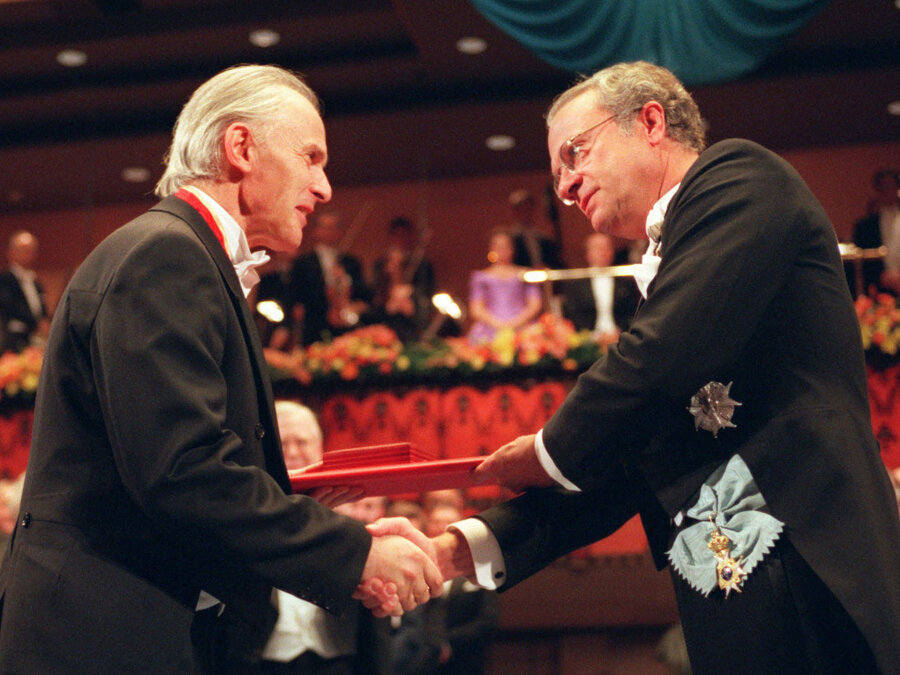 __
__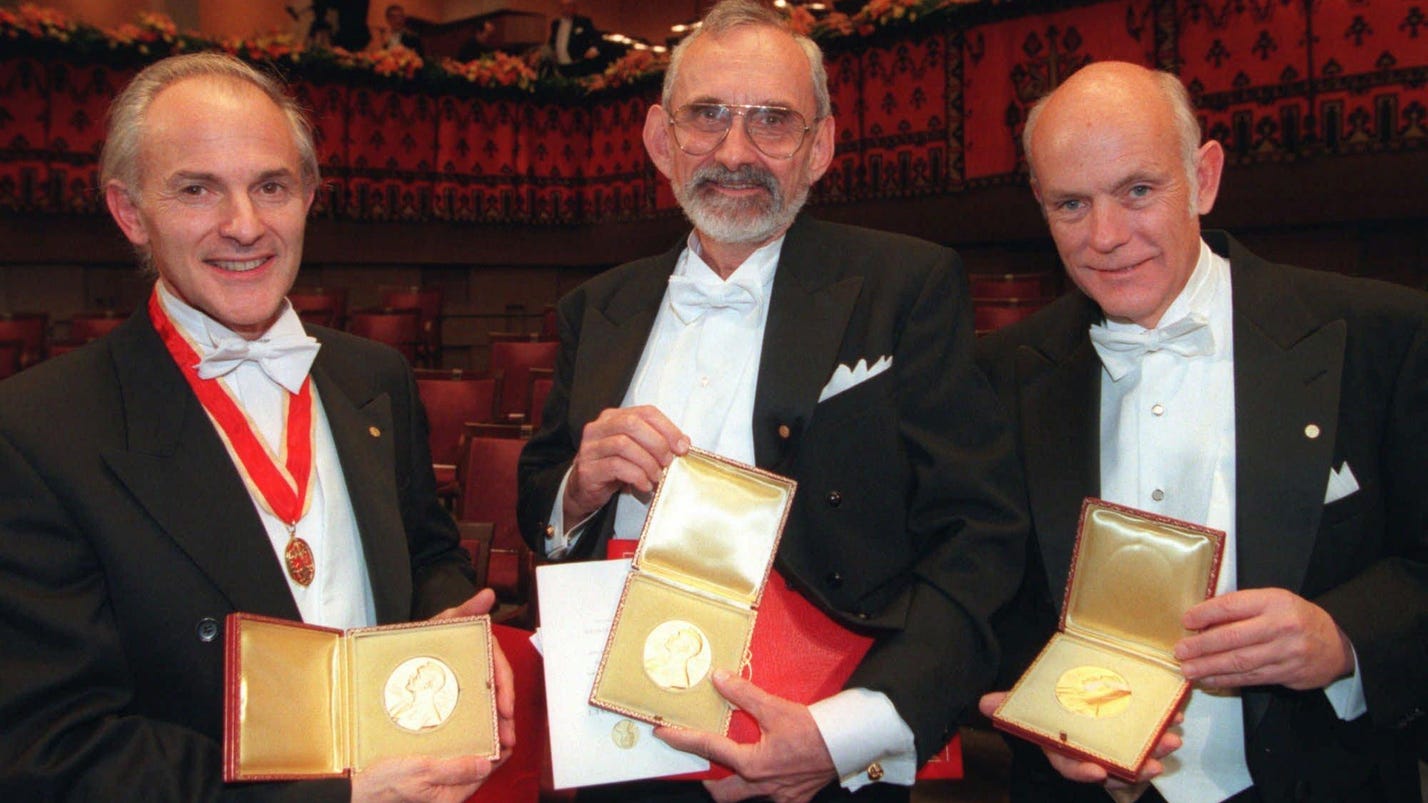 I have attempted to respond to all of Dr. Kroto’s friends arguments and I have posted my responses one per week for over a year now. Here are some of my earlier posts:Arif Ahmed, Sir David Attenborough, Mark Balaguer, Horace Barlow, Michael Bate, Patricia Churchland, Aaron Ciechanover, Noam Chomsky,Alan Dershowitz, Hubert Dreyfus, Bart Ehrman, Stephan Feuchtwang, David Friend, Riccardo Giacconi, Ivar Giaever , Roy Glauber, Rebecca Goldstein, David J. Gross, Brian Greene, Susan Greenfield, Stephen F Gudeman, Alan Guth, Jonathan Haidt, Theodor W. Hänsch, Brian Harrison, Hermann Hauser, Roald Hoffmann, Bruce Hood, Herbert Huppert, Gareth Stedman Jones, Steve Jones, Shelly Kagan, Michio Kaku, Stuart Kauffman, Lawrence Krauss, Harry Kroto, George Lakoff, Elizabeth Loftus, Alan Macfarlane, Peter Millican, Marvin Minsky, Leonard Mlodinow, Yujin Nagasawa, Alva Noe, Douglas Osheroff, Jonathan Parry, Saul Perlmutter, Herman Philipse, Carolyn Porco, Robert M. Price, Lisa Randall, Lord Martin Rees, Oliver Sacks, John Searle, Marcus du Sautoy, Simon Schaffer, J. L. Schellenberg, Lee Silver, Peter Singer, Walter Sinnott-Armstrong, Ronald de Sousa, Victor Stenger, Barry Supple, Leonard Susskind, Raymond Tallis, Neil deGrasse Tyson, .Alexander Vilenkin, Sir John Walker, Frank Wilczek, Steven Weinberg, and Lewis Wolpert,_In the first video below in the 14th clip in this series are his words and I will be responding to them in the next few weeks since Sir Bertrand Russell is probably the most quoted skeptic of our time, unless it was someone like Carl Sagan or Antony Flew.
 Francis Schaeffer noted concerning the IMPLICIT FAITH of Bertrand Russell:I was lecturing at the University of St. Andrews one night and someone put forth the question, “If Christianity is so clear and reasonable then why doesn’t Bertrand Russell then become a Christian? Is it because he hasn’t discovered theology?”It wasn’t a matter of studying theology that was involved but rather that he had too much faith. I was surrounded by humanists and you could hear the gasps. Bertrand Russell and faith; Isn’t this the man of reason? I pointed out that this is a man of high orthodoxy who will hold his IMPLICIT FAITH on the basis of his presuppositions no matter how many times he has to zig and zag because it doesn’t conform to the facts.You must understand what the term IMPLICIT FAITH means. In the old Roman Catholic Church when someone who became a Roman Catholic they had to promise implicit faith. That meant that you not only had to believe everything that Roman Catholic Church taught then but also everything it would teach in the future. It seems to me this is the kind of faith that these people have in the uniformity of natural causes in a closed system and they have accepted it no matter what it leads them into. I think that these men are men of a high level of IMPLICIT FAITH in their own set of presuppositions. Paul said (in Romans Chapter One) they won’t carry it to it’s logical conclusion even though they hold a great deal of the truth and they have revolted and they have set up a series of universals in themselves which they won’t transgress no matter if they conform to the facts or not.Here below is the Romans passage that Schaeffer is referring to and verse 19 refers to what Schaeffer calls “the mannishness of man” and verse 20 refers to Schaeffer’s other point which is “the universe and it’s form.”Romans 1:18-20 Amplified Bible :18 For God’s [holy] wrath and indignation are revealed from heaven against all ungodliness and unrighteousness of men, who in their wickedness repress and hinder the truth and make it inoperative. 19 For that which is known about God is evident to them and made plain in their inner consciousness, because God [Himself] has shown it to them. 20 For ever since the creation of the world His invisible nature and attributes, that is, His eternal power and divinity, have been made intelligible and clearly discernible in and through the things that have been made (His handiworks). So [men] are without excuse [altogether without any defense or justification].We can actually see the two points makes playing themselves out in Bertrand Russell’s own life.


 No t
No t Report a problem
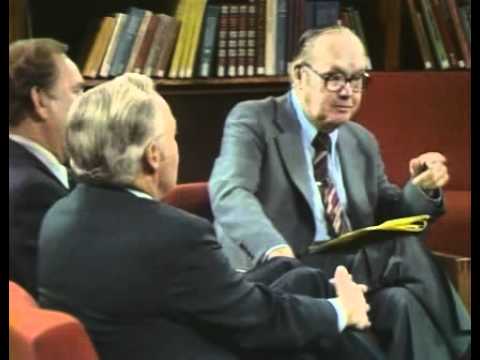


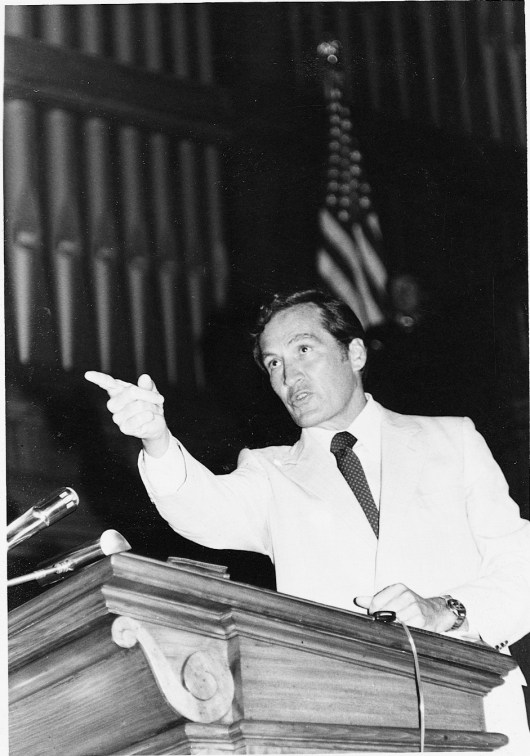

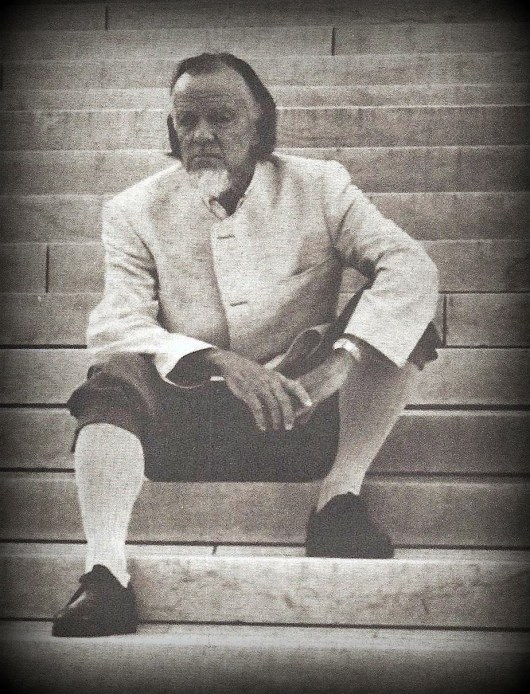




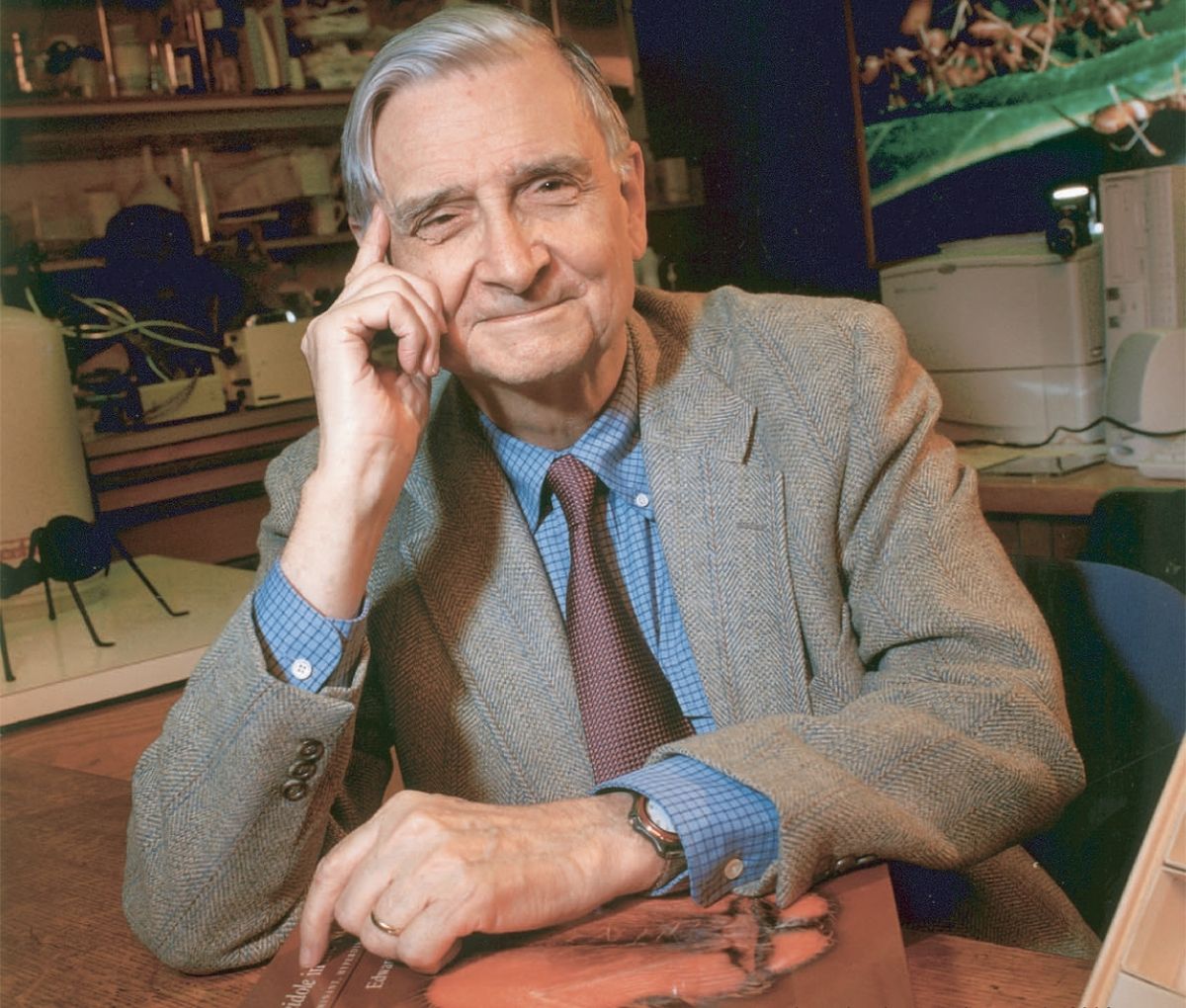



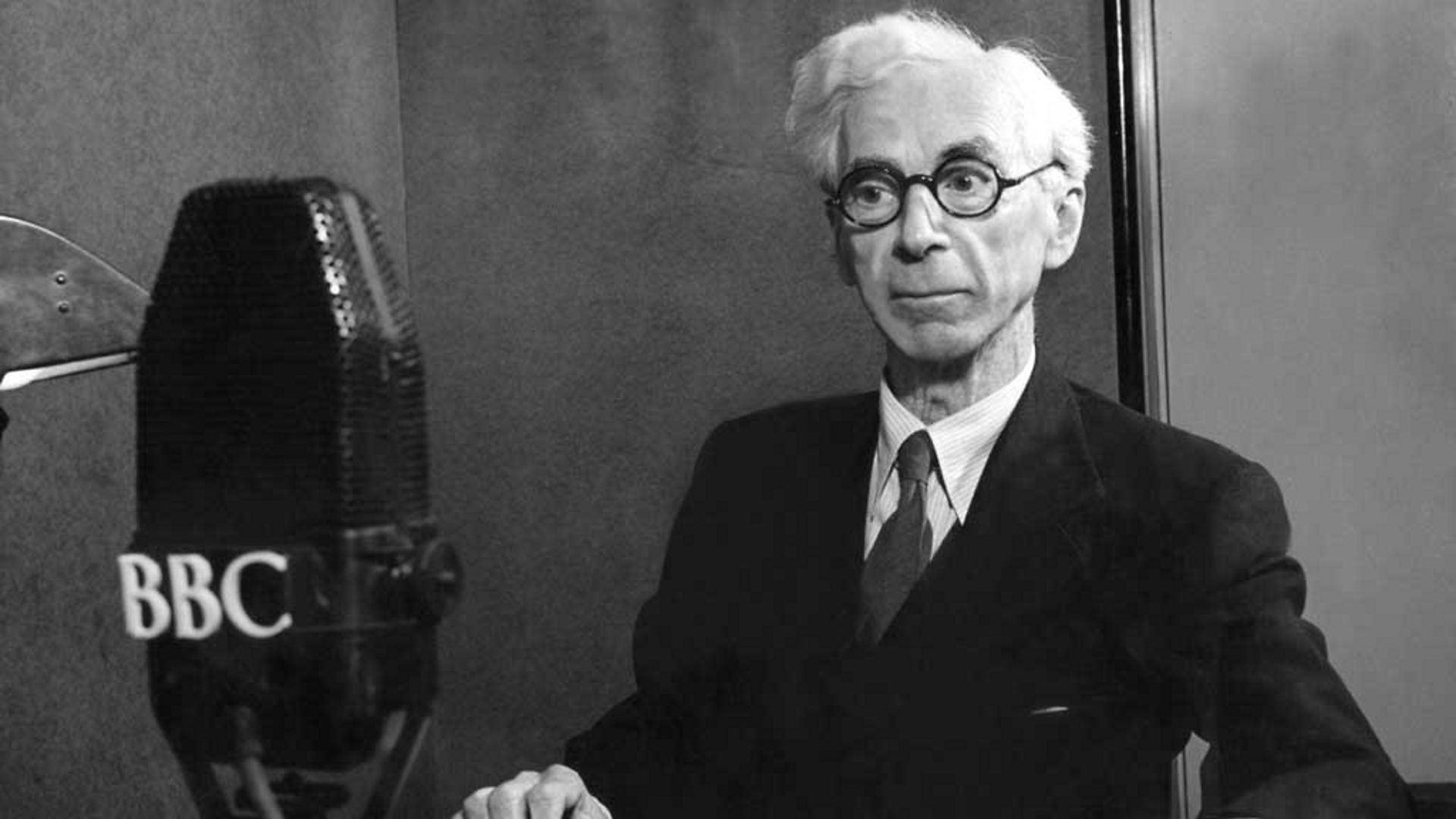 On November 21, 2014 I received a letter from
  I have attempted to respond to all of Dr. Kroto’s friends arguments and I have posted my responses one per week for over a year now. Here are some of my earlier posts:

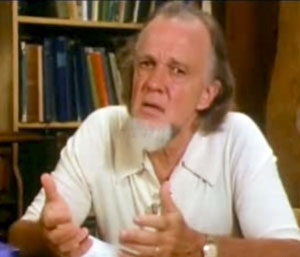


 The Daily Hatch