“Love for Sale” is a song by Cole Porter, from the musical The New Yorkers which opened on Broadway on December 8, 1930 and closed in May 1931 after 168 performances. The song is written from the viewpoint of a prostitute advertising various kinds of “love for sale”: “Old love, new love, every love but true love“.
The song’s chorus, like many in the Great American Songbook, is written in the A-A-B-A format. However, instead of 32 bars, it has 64, plus an 8-bar tag. The tag is often dropped when the song is performed. The tune, using what is practically a trademark for Porter, shifts between a major and minor feeling.
“Love for Sale” was originally considered in bad taste, even scandalous. In the initial Broadway production, it was performed by Kathryn Crawford, portraying a streetwalker, with three girlfriends (Waring’s Three Girl Friends) as back-up singers, in front of Reuben’s, a popular restaurant of the time. As a response to the criticism, the song was transferred from the white Crawford to the African American singer Elisabeth Welch, who sang with back-up singers in a scene set in front of Harlem‘s Cotton Club.
Despite the fact the song was banned from radio airplay, or perhaps because of it, it became a hit, with Libby Holman‘s version going to #5 and the “Fred Waring’s Pennsylvanians” version going to #14, both in 1931. (All other 1931 recordings of the song were as an instrumental.)
Another notable recording of “Love for Sale” was made by Keely Smith at Capitol Studios, LA, for Concord Records in July 2002.[2]
There is another significant recording of “Love for Sale” by Jack Teagarden in 1940. The vocalist was 18 year old Kitty Kallen and, like the other versions of the song, was banned from radio.
Idina Menzel covered the song on her 2010–2011 Symphony Tour as a mashup with The Police‘s “Roxanne“. The rendition of the mashup can be heard on her live album “Live: Barefoot at the Symphony.”
British Jazz Artist Jamie Cullum also did his own rendition for his album Momentum, entitled “Love For $ale”, featuring Roots Manuva. The allbum came out May 20th, 2013 in the UK, and May 21st, 2013 in the U.S.
Cole Porter “Let’s Do it, Let’s Fall in Love” in the movie MIDNIGHT IN PARIS Midnight in Paris – Let’s Do It Let’s do it : Cole Porter.( Midnight in Paris ) Celebrate Wikipedia Loves Libraries at your institution in October/November. Let’s Do It, Let’s Fall in Love From Wikipedia, the free encyclopedia Jump to: […]
The song used in “Midnight in Paris” I am going through the famous characters that Woody Allen presents in his excellent movie “Midnight in Paris.” By the way, I know that some of you are wondering how many posts I will have before I am finished. Right now I have plans to look at Fitzgerald, Heminingway, Juan […]
Take a look at two atheists who try to affirm that morality is simultaneously objective and subjective.
Atheists deny that there is any design for the universe – they think there is no Designer. That means there is no way that the universe ought to be, objectively speaking. I.e. – when there were no humans around, there was no way the universe ought to have been. When humans appear, they evolve arbitrary customs and conventions in order to live together more peaceably. These are not real in any sense – they are just aids to survival and group cohesion. Different groups in different times and places evolve different rules, and no set of rules is any better than any other, because there is no way we ought to be. We call this atheistic/evolutionary form of morality “moral relativism”. It stands in contrast with the theistic view of morality, which is called “moral objectivism”.
In their view, slavery is not really right or wrong, it’s just a matter of opinion decided by majority rule in different social groups living in different places and times. Some groups in certain places and times think it’s right, and some groups in some places and times think it’s wrong. In our view (theism), God creates the universe, and he designs it to be a certain way. There is a certain way we ought to be. So if God thinks slavery is wrong, then it really is wrong, and his opinion of right and wrong becomes a duty for us.
What’s wrong with moral relativism?
I found this list of the seven flaws of moral relativism at the Australian site Faith Interface.
Here’s the summary:
Moral relativists can’t accuse others of wrongdoing.
Relativists can’t complain about the problem of evil.
Relativists can’t place blame or accept praise.
Relativists can’t make charges of unfairness or injustice.
Relativists can’t improve their morality.
Relativists can’t hold meaningful moral discussions.
Relativists can’t promote the obligation of tolerance.
Here’s my favorite flaw of relativism (#6):
Relativists can’t hold meaningful moral discussions. What’s there to talk about? If morals are entirely relative and all views are equal, then no way of thinking is better than another. No moral position can be judged as adequate or deficient, unreasonable, acceptable, or even barbaric. If ethical disputes make sense only when morals are objective, then relativism can only be consistently lived out in silence. For this reason, it is rare to meet a rational and consistent relativist, as most are quick to impose their own moral rules like “It’s wrong to push your own morality on others”. This puts relativists in an untenable position – if they speak up about moral issues, they surrender their relativism; if they do not speak up, they surrender their humanity. If the notion of moral discourse makes sense intuitively, then moral relativism is false.
I sometimes get a lot of flack from atheists who complain that I don’t let them make any moral statements without asking first them to ground morality on their worldview. And that’s because on atheism morality IS NOT rationally grounded, so they can’t answer. In an accidental universe, you can only describe people’s personal preferences or social customs, that vary by time and place. It’s all arbitrary – like having discussions about what food is best or what clothing is best. The answer is always going to be “it depends”. It depends on the person who is speaking because it’s a subjective claim, not an objective claim. There is no objective way we ought to behave, on atheism. What atheists are really talking about when they say that something is right or that something is wrong is that in our group, we have evolved these beliefs that this behavior is good or this behavior is bad – we have these group preferences.
The horror of atheism, then, is that they reduce murder and slaver to beingmatters of opinion. And these majority opinions are arbitrary and can be different in different times and places. When you are talking to an atheist, you are talking to a person who literally thinks that the decision to rape or not rape is the same as the decision to drive on the left side of the road or the right side of the road. In both cases, it’s just something that groups decide one way or another arbitrarily, depending on how they evolved in different places and at different times.
All Christians should be able to draw out the moral relativism of atheists and challenge them on it, because once they are forced to affirm objective morality, they have to affirm God as the moral lawgiver. Take some time and read the linked article, then ask your atheistic friends to justify their talk about right and wrong. What do they mean by right and wrong? Why would they sacrifice their own self-interest in order to do “right”? Is the only reason that atheists have to be “good” far of being caught and punished by their group for breaking these arbitrary rules that vary by place and time? Do atheists only do the “right” thing when others are watching?
Episode 1 ABORTION
Dr. Francis schaeffer – The flow of Materialism(from Part 4 of Whatever happened to human race?)
Dr. Francis Schaeffer – The Biblical flow of Truth & History (intro)
Francis Schaeffer – The Biblical Flow of History & Truth (1)
Dr. Francis Schaeffer – The Biblical Flow of Truth & History (part 2)
E P I S O D E 1 0 Dr. Francis Schaeffer – Episode X – Final Choices 27 min FINAL CHOICES I. Authoritarianism the Only Humanistic Social Option One man or an elite giving authoritative arbitrary absolutes. A. Society is sole absolute in absence of other absolutes. B. But society has to be […]
E P I S O D E 9 Dr. Francis Schaeffer – Episode IX – The Age of Personal Peace and Affluence 27 min T h e Age of Personal Peace and Afflunce I. By the Early 1960s People Were Bombarded From Every Side by Modern Man’s Humanistic Thought II. Modern Form of Humanistic Thought Leads […]
E P I S O D E 8 Dr. Francis Schaeffer – Episode VIII – The Age of Fragmentation 27 min I saw this film series in 1979 and it had a major impact on me. T h e Age of FRAGMENTATION I. Art As a Vehicle Of Modern Thought A. Impressionism (Monet, Renoir, Pissarro, Sisley, […]
E P I S O D E 7 Dr. Francis Schaeffer – Episode VII – The Age of Non Reason I am thrilled to get this film series with you. I saw it first in 1979 and it had such a big impact on me. Today’s episode is where we see modern humanist man act […]
E P I S O D E 6 How Should We Then Live 6#1 Uploaded by NoMirrorHDDHrorriMoN on Oct 3, 2011 How Should We Then Live? Episode 6 of 12 ________ I am sharing with you a film series that I saw in 1979. In this film Francis Schaeffer asserted that was a shift in […]
E P I S O D E 5 How Should We Then Live? Episode 5: The Revolutionary Age I was impacted by this film series by Francis Schaeffer back in the 1970′s and I wanted to share it with you. Francis Schaeffer noted, “Reformation Did Not Bring Perfection. But gradually on basis of biblical teaching there […]
Dr. Francis Schaeffer – Episode IV – The Reformation 27 min I was impacted by this film series by Francis Schaeffer back in the 1970′s and I wanted to share it with you. Schaeffer makes three key points concerning the Reformation: “1. Erasmian Christian humanism rejected by Farel. 2. Bible gives needed answers not only as to […]
Francis Schaeffer’s “How should we then live?” Video and outline of episode 3 “The Renaissance” Francis Schaeffer: “How Should We Then Live?” (Episode 3) THE RENAISSANCE I was impacted by this film series by Francis Schaeffer back in the 1970′s and I wanted to share it with you. Schaeffer really shows why we have so […]
Francis Schaeffer: “How Should We Then Live?” (Episode 2) THE MIDDLE AGES I was impacted by this film series by Francis Schaeffer back in the 1970′s and I wanted to share it with you. Schaeffer points out that during this time period unfortunately we have the “Church’s deviation from early church’s teaching in regard […]
Francis Schaeffer: “How Should We Then Live?” (Episode 1) THE ROMAN AGE Today I am starting a series that really had a big impact on my life back in the 1970′s when I first saw it. There are ten parts and today is the first. Francis Schaeffer takes a look at Rome and why […]
Francis Schaeffer: “Whatever Happened to the Human Race” (Episode 5) TRUTH AND HISTORY Published on Oct 7, 2012 by AdamMetropolis This crucial series is narrated by the late Dr. Francis Schaeffer and former Surgeon General Dr. C. Everett Koop. Today, choices are being made that undermine human rights at their most basic level. Practices once […]
The opening song at the beginning of this episode is very insightful. Francis Schaeffer: “Whatever Happened to the Human Race” (Episode 4) THE BASIS FOR HUMAN DIGNITY Published on Oct 7, 2012 by AdamMetropolis This crucial series is narrated by the late Dr. Francis Schaeffer and former Surgeon General Dr. C. Everett Koop. Today, choices […]
Francis Schaeffer: “Whatever Happened to the Human Race” (Episode 3) DEATH BY SOMEONE’S CHOICE Published on Oct 6, 2012 by AdamMetropolis This crucial series is narrated by the late Dr. Francis Schaeffer and former Surgeon General Dr. C. Everett Koop. Today, choices are being made that undermine human rights at their most basic level. Practices […]
Francis Schaeffer: “Whatever Happened to the Human Race?” (Episode 2) SLAUGHTER OF THE INNOCENTS Published on Oct 6, 2012 by AdamMetropolis This crucial series is narrated by the late Dr. Francis Schaeffer and former Surgeon General Dr. C. Everett Koop. Today, choices are being made that undermine human rights at their most basic level. Practices […]
It is not possible to know where the pro-life evangelicals are coming from unless you look at the work of the person who inspired them the most. That person was Francis Schaeffer. I do care about economic issues but the pro-life issue is the most important to me. Several years ago Adrian Rogers (past president of […]
This essay below is worth the read. Schaeffer, Francis – “Francis Schaeffer and the Pro-Life Movement” [How Should We Then Live?, Whatever Happened to the Human Race?, A Christian Manifesto] Editor note: <p> </p> [The following essay explores the role that Francis Schaeffer played in the rise of the pro-life movement. It examines the place of […]
Corresponding with Nobel Prize Winner Nicolaas Bloembergen
____________________
Back in 1995 I have the opportunity to correspond with Nobel Prize Winner Nicolaas Bloembergen concerning the issue of abortion.
프란시스 쉐퍼 – 그러면 우리는 어떻게 살 것인가 introduction (Episode 1)
02 How Should We Then Live? (Promo Clip) Dr. Francis Schaeffer
The clip above is from episode 9 THE AGE OF PERSONAL PEACE AND AFFLUENCE
10 Worldview and Truth
In above clip Schaeffer quotes Paul’s speech in Greece from Romans 1 (from Episode FINAL CHOICES)
Two Minute Warning: How Then Should We Live?: Francis Schaeffer at 100
A Christian Manifesto Francis Schaeffer
Published on Dec 18, 2012
A video important to today. The man was very wise in the ways of God. And of government. Hope you enjoy a good solis teaching from the past. The truth never gets old.
ABC network has rejected [an]… ad… sponsored by the Caring Outreach, [which] has nothing to do with politics but is a 30-second television ad that features information on fetal development.
I wanted to share with you a correspondence I had with Dr. Nicolaas Bloembergen of Harvard. He won the Nobel Prize in Physics in 1981 and was born in Dordrecht, the Netherlands on March 11, 1920. He spent the last two years of World War II hiding from the Nazis. I found his story very interesting.
In his September 6, 1995 letter to me he wrote:
I respect your anti-abortion views, but do not attempt to impose your views on others. It is more important to be concerned with the fate of already born children than that of the unborn.
Less zealotry and more compassion for those who have different concepts of the world from yours would help make this world more livable.
I wrote him back on October 24, 1995 that I read a work by Professor J. Beckwith, Dept of Philosophy, Univ of Nevada, Las Vegas that seemed to address the issue he brought up in his letter. Here is what Dr. Beckwith wrote:
Some abortion-rights advocates, in response to pro-life arguments, emote such bumper-sticker slogans as: “Pro-choice, but personally opposed,” or “Abortion is against my beliefs, but I would never dream of imposing my beliefs on others.” These slogans attempt to articulate in a simple way a common avenue taken by politicians and others who want to avoid the slings and arrows that naturally follow a firm position on abortion. It is an attempt to find “a compromise” or “a middle ground”; it’s a way to avoid being labeled “an extremist” of either camp.
During the 1984 presidential campaign — when questions of Geraldine Ferraro’s Catholicism and its apparent conflict with her abortion-rights stance were prominent in the media — New York Governor Mario Cuomo, in a lecture delivered at the University of Notre Dame, attempted to give this “middle ground” intellectual respectability. He tried to provide a philosophical foundation for his friend’s position, but failed miserably. For one cannot appeal to the fact that we live in a pluralistic society (characterized by moral pluralism/relativism) when the very question of who is part of that society (that is, whether it includes unborn children) is itself the point under dispute. Cuomo begged the question and lost the argument.
The pro-abortionist’s unargued assumption of moral relativism to solve the abortion debate reveals a tremendous ignorance of the pro-life position. For the fact is that if one believes that the unborn are fully human (persons), then the unborn carried in the wombs of pro-choice women are just as human as those carried in the wombs of pro-life women. For the pro-lifer, an unborn child is no less a human person simply because the child happens to be living inside Whoopi Goldberg or Cybil Shepherd. Ideology does not change identity.
Pro-choicers ought to put at least some effort into understanding the pro-life position. When they tell pro-lifers (as they often do) that they have a right to believe what they want to believe, they are unwittingly promoting the radical tactics of Operation Rescue (OR). Think about it. If you believed that a class of persons were being murdered by methods that include dismemberment, suffocation, and burning — resulting in excruciating pain in many cases — wouldn’t you be perplexed if someone tried to ease your outrage by telling you that you didn’t have to participate in the murders if you didn’t want to? That is exactly what pro-lifers hear when abortion-rights supporters tell them, “Don’t like abortion, don’t have one,” or “I’m pro-choice, but personally opposed.” In the mind of the pro-lifer, this is like telling an abolitionist,“Don’t like slavery, don’t own one,” or telling Dietrich Bonhoffer, “Don’t like the holocaust, don’t kill a Jew.” Consequently, to request that pro-lifers “shouldn’t force their pro-life belief on others” while at the same time claiming that “they have a right to believe what they want to believe” is to reveal an incredible ignorance of their position.
Contrary to popular belief, the so-called “pro-choice” position is not neutral. The abortion-rights activist’s claim that women should have the “right to choose” to kill their unborn fetuses amounts to denying the pro-life position that the unborn are worthy of protection. And the pro-lifer’s affirmation that the unborn are fully human with a “right to life” amounts to denying the abortion-rights position that women have a fundamental right to terminate their pregnancies, since such a termination would result in a homicide. It seems, then, that appealing to moral relativism (or moral pluralism ala Mario Cuomo) to “solve” the abortion debate is an intellectual impossibility and solves nothing.
____________________________________
We can say that we want a society where no one forces their view on others, but if we are discussing who is a part of that society (that is, whether it includes unborn children) then we have to settle that question first.
It is not possible to know where the pro-life evangelicals are coming from unless you look at the work of the person who inspired them the most. That person was Francis Schaeffer. I do care about economic issues but the pro-life issue is the most important to me. Several years ago Adrian Rogers (past president of […]
In the film series “WHATEVER HAPPENED TO THE HUMAN RACE?” the arguments are presented against abortion (Episode 1), infanticide (Episode 2), euthenasia (Episode 3), and then there is a discussion of the Christian versus Humanist worldview concerning the issue of “the basis for human dignity” in Episode 4 and then in the last episode a close […]
Dr. Koop was delayed in his confirmation by Ted Kennedy because of his film Whatever Happened to the Human Race? Francis Schaeffer February 21, 1982 (Part 1) Uploaded by DeBunker7 on Feb 21, 2008 READ THIS FIRST: In decline of all civilizations we first see a war against the freedom of ideas. Discussion is limited […]
It is not possible to know where the pro-life evangelicals are coming from unless you look at the work of the person who inspired them the most. That person was Francis Schaeffer. I do care about economic issues but the pro-life issue is the most important to me. Several years ago Adrian Rogers (past president of […]
The Existence of God (Part 1) Uploaded on Mar 6, 2009 Examining the Creation/Evolution Controversy in Light of Reason and Revelation Does God Have to Be Good or Are Things Good Just Because God Says So? Published on Aug 24, 2012 Dr William Lane Craig was invited by the School of Oriental and African Studies (SOAS) Christian […]
__________ Real Time with Bill Maher: Ben Affleck, Sam Harris and Bill Maher Debate Radical Islam (HBO) Sam Harris rightly noted earlier this month on Bill Maher’s show that liberals are still getting “agitated over the abortion clinic bombings that happened in 1984″ but they are not upset at what is happening in the Muslim […]
________________________________________ Francis Schaeffer pictured below: _________ Dr. Francis Schaeffer – Episode 2 – The Middle Ages NoMirrorHDDHrorriMoN Francis Schaeffer has written extensively on art and culture spanning the last 2000years and here are some posts I have done on this subject before : Francis Schaeffer’s “How should we then live?” Video and outline […]
_______________________________ Adrian Rogers pictured below: __________________ I sent William Provine a letter several months ago with a CD of the following message by Adrian Rogers and in the letter were several arguments from Schaeffer. Adrian Rogers – How you can be certain the Bible is the word of God Today I am sending out another […]
WHO DID FRANCIS SCHAEFFER INFLUENCE? Here are some key people listed below: Theologians Harold O. J. Brown, David Wells, Os Guinness, Timothy George, John Warwick Montgomery, John Piper, Norm Geisler, Wayne Grudem and L. Russ Bush, founders of ministries including James Dobson, D. James Kennedy, Jerry Falwell, R. C. Sproul, Chuck Colson and Tim and […]
The Great Depression. A row of out of work men at the New York City docks in 1930s. (Photo: Newscom)
“What is history but a fable agreed upon?” as Napoleon once put it, and never has that been more true than the story of the Great Depression and its aftermath. With liberals again pitching more government spending “stimulus” in Washington, it’s critical we get this history right.
In a previous column I unmasked the historical lie that Franklin Roosevelt’s New Deal programs ended the Great Depression. After seven years of New Deal-era explosions in federal debt and spending, the U.S. economy was still flat on its back, and misery could be seen on the street corners. By 1940, unemployment still averaged a sky-high 14.6 percent. That’s some recovery.
However, I’ve been deluged with the same question from readers: Ok, what did end the Great Depression? Again, the history books get this chapter of history wrong. Most history books tell us that it was government spending on steroids to mobilize for World War II after the Japanese attacks on Pearl Harbor on Dec. 7, 1941.
Well, it is true that the economic output surged and unemployment fell, but periods of all-out war are very different than periods of peace. Is it any surprise that unemployment fell dramatically when nearly 12 million Americans joined the military?
My mother, a teenager in that period, used to tell me that during the war, when fuel was scarce and needed for the military, you wouldn’t be caught dead driving to the movie theater or a party. It was regarded as unpatriotic and selfish. People continued to produce even with high tax rates (94 percent during the war) when their tax dollars were financing the fight against the Nazis and the Japanese.
For nearly four years — from 1942 to 1945 — America was not a free-market economy. We were an all-out wartime economy — with the normal laws of economics suspended.
However, a war is no way to fix an economy — obviously. Countering terrorist acts of the Islamic State is not a jobs program. During World War II, when we built ships, tanks, fighter planes, dropped bombs and sent our troops into harm’s way, we weren’t creating wealth. A war is no more stimulating to the economy than a burglar stealing your money, the Japanese tsunami in 2011, Hurricane Katrina in 2005, or a tornado that levels an entire town. Without such calamity, the resources spent reconstructing (or destroying in the case of war) would be spent either purchasing useful, life-enhancing products for consumption or investing in technology and capital equipment requisite to increasing economic output.
War in self-defense might be necessary to protect our families, but any economic growth derived from it is far less beneficial than growth derived from free people making individual decisions on what to consume and in what to invest.
In the 1940s, government spending did indeed surge. The federal share of gross domestic product (GDP) rose from less than 12 percent in 1941 to more than 40 percent in 1943-45. In other words, almost half of everything that was produced in the nation was to fight the war. Domestic spending on many FDR New Deal programs in education, training and social services dropped more than 90 percent.
The real issue is what caused the economy to surge after the war was over.
This story is also not covered in the history books. Shortly after his third re-election in 1944, and at a time when the outcome of the war was no longer in question, FDR and his domestic advisers plotted a “new” New Deal with such spending items as national health insurance. The Keynesians were sure that the massive reduction in government spending would catastrophically tank the economy.
Paul Samuelson, the dean of neo-Keynesians at that time, warned in 1943 that unless wartime spending and controls were extended, there would be “the greatest period of unemployment and industrial dislocation which any economy has ever faced.” Business Week predicted unemployment would hit 14 percent with the postwar cutbacks.
Here’s what happened. Government spending collapsed from 41 percent of GDP in 1945 to 24 percent in 1946 to less than 15 percent by 1947. And there was no “new” New Deal. This was by far the biggest cut in government spending in U.S. history. Tax rates were cut and wartime price controls were lifted. There was a very short, eight-month recession, but then the private economy surged.
Here are the numbers on the private economy. Personal consumption grew by 6.2 percent in 1945 and 12.4 percent in 1946 even as government spending crashed. At the same time, private investment spending grew by 28.6 percent and 139.6 percent.
The less the feds spent, the more people spent and invested. Keynesianism was turned on its head. Milton Friedman’s free markets were validated.
In 1946, the unemployment rate averaged below 4 percent, and it stayed that low for the better part of a decade. This all happened during the biggest reduction in government spending in American history under President Truman.
In sum, it wasn’t government spending, but the shrinkage of government that finally ended the Great Depression. That’s what should be in every history book — but isn’t.
___________ Milton Friedman rightly pointed out that the crisis of the Great Depression was not a failure of the free market system but of government and Dan Mitchell concurs!!! Statist Policy and the Great Depression September 17, 2014 by Dan Mitchell It’s difficult to promote good economic policy when some policy makers have a deeply flawed […]
Milton Friedman – The Great Depression Myth Uploaded by LibertyPen on Mar 25, 2010 Milton Friedman explodes the myth that the Great Depression was produced by a failure of private enterprise. _______________ Milton Friedman is right about the cause of the Great Depression. Ivan Pongracic Jr. The Great Depression According to Milton Friedman The Great […]
In 1980 I read the book FREE TO CHOOSE by Milton Friedman and it really enlightened me a tremendous amount. I suggest checking out these episodes and transcripts of Milton Friedman’s film series FREE TO CHOOSE: “The Failure of Socialism” and “What is wrong with our schools?” and “Created Equal” and From Cradle to Grave, […]
Open letter to President Obama (Part 693) (Emailed to White House on July 29, 2013) President Obama c/o The White House 1600 Pennsylvania Avenue NW Washington, DC 20500 Dear Mr. President, I know that you receive 20,000 letters a day and that you actually read 10 of them every day. I really do respect you […]
Open letter to President Obama (Part 692) (Emailed to White House on July 29, 2013) President Obama c/o The White House 1600 Pennsylvania Avenue NW Washington, DC 20500 Dear Mr. President, I know that you receive 20,000 letters a day and that you actually read 10 of them every day. I really do respect you […]
In 1980 I read the book FREE TO CHOOSE by Milton Friedman and it really enlightened me a tremendous amount. I suggest checking out these episodes and transcripts of Milton Friedman’s film series FREE TO CHOOSE: “The Failure of Socialism” and “What is wrong with our schools?” and “Created Equal” and From Cradle to Grave, […]
Open letter to President Obama (Part 688) (Emailed to White House on July 29, 2013) President Obama c/o The White House 1600 Pennsylvania Avenue NW Washington, DC 20500 Dear Mr. President, I know that you receive 20,000 letters a day and that you actually read 10 of them every day. I really do respect you […]
In 1980 I read the book FREE TO CHOOSE by Milton Friedman and it really enlightened me a tremendous amount. I suggest checking out these episodes and transcripts of Milton Friedman’s film series FREE TO CHOOSE: “The Failure of Socialism” and “What is wrong with our schools?” and “Created Equal” and From Cradle to Grave, […]
Open letter to President Obama (Part 684) (Emailed to White House on July 29, 2013) President Obama c/o The White House 1600 Pennsylvania Avenue NW Washington, DC 20500 Dear Mr. President, I know that you receive 20,000 letters a day and that you actually read 10 of them every day. I really do respect you […]
Open letter to President Obama (Part 680) (Emailed to White House on July 29, 2013) President Obama c/o The White House 1600 Pennsylvania Avenue NW Washington, DC 20500 Dear Mr. President, I know that you receive 20,000 letters a day and that you actually read 10 of them every day. I really do respect you […]
A famous album by the fab four – The Beatles – is “Sergeant peppers lonely hearts club band“. The album itself is one of the must influential albums of all time. New recording techniques and experiments with different styles of music made this album more of a piece of art than just an LP. The cover of the album was a work of art on its own.
The cover won a Grammy Award. It featured lots of famous people like Edgar Allan Poe, Karl Marx, T.E. Lawrence, Laurel & Hardy and Albert Einstein. The Beatles themselves are represented by wax statues of the young beatles at Madame Tussauds. But offcourse, i’m referencing this album because one of the celebrities featured on the album is Bob Dylan himself.
Dylan’s portrait is shown in the top right corner, overlooking the rest of the pack.
Although his debut album had been released only five years previous, Dylan was already a giant figure in the minds of his fans—including the Beatles. Everything they had written since the Rubber Soul era carried a touch of Dylan’s influence, if only in the way he opened up the possibilities of rock lyrics to subjects other than boy-meets-girl.
________
Lydia Hutchinson is correct that the Beatles were heavily influenced by Dylan and I wanted to make a further observation down those same lines. Dylan’s songs pointed out over and over that the previous generation was bankrupt in their values of PERSONAL PEACE and AFFLUENCE and this new generation was not interested in just “keeping up with the Joneses.” Dylan was consistently bringing up the big questions in life and those were the questions the Beatles wanted answered!!! Sergeant Pepper’s Lonely Hearts Club Band Albumreally did look at every potential answer to meaning in life and to as many people as the Beatles could imagine had the answers to life’s big questions. One of the persons on the cover did have access to those answers and I am saving that person for last in this series on the Beatles.
I have dedicated several posts to this series on the Beatles and I don’t know whenthis series will end because Francis Schaeffer spent a lot of time listening to the Beatles and talking and writing about them and their impact on the culture of the 1960’s. In this series we have looked at several areas in life where the Beatles looked for meaning and hope but also we have examined some of the lives of those writers, artists, poets, painters, scientists, athletes, models, actors, religious leaders, musicians, comedians, and philosophers that were put on the cover of Sergeant Pepper’s Lonely Hearts Club Band album. We have discovered that many of these individuals on the cover have even taken a Kierkegaardian leap into the area of nonreason in order to find meaning for their lives and that is the reason I have included the 27 minute episode THE AGE OF NONREASON by Francis Schaeffer. In that video Schaeffer noted, ” Sergeant Pepper’s Lonely Hearts Club Band…for a time it became the rallying cry for young people throughout the world. It expressed the essence of their lives, thoughts and their feelings.”
____________
_
_
Four people still alive that appeared on the cover: Bob Dylan: The man who introduced the Beatles to marijuana. Dion: Besides Dylan, the onetime heartthrob was the only pop music figure in the gallery. Larry Bell: American sculptor who worked as a bouncer at the Unicorn in LA. Bobby Breen: Child star of the 1930s. I am going to take a look at four of their lives below.
In the book HOW SHOULD WE THEN LIVE? Francis Schaeffer wrote:
In this flow there was also the period of psychedelic rock, an attempt to find this experience without drugs, by the use of a certain type of music. This was the period of the Beatles’ Revolver (1966) and Strawberry Fields Forever (1967). In the same period and in the same direction was Blonde on Blonde (1966) by Bob Dylan.
Actually Schaeffer spent a lot of time talking about Bob Dylan.
BOB DYLAN AND JOHN LENNON IN LONDON PT2
Ballad Of A Thin Man
_______
Bob Dylan looked into the modern thought of the 1960’s and he saw that the educated class did not have the answers and he was looking for the answers to the big questions of life in his writings. Over and over again back then reporters were asking him what his songs meant. Actually his songs were an effort to bring up the big questions but he did not have the answers. In the song “A Ballad of a Thin Man” Dylan ridicules the reporter “Mr. Jones” throughout the song for his lack of understanding of this new generation. “Oh my God, am I here all alone?” is the feeling that Mr. Jones has after following around Dylan because he doesn’t even to begin to understand the deep seated dissatisfaction of this new generation with the status quo. Every person that ever lived has had this feeling at one time or another and Romans chapter one discusses the inner conscience that everyone has that points them to the God of the Bible that created the world and put them on this earth for a purpose.
I. By the Early 1960s People Were Bombarded From Every Side by Modern Man’s Humanistic Thought
II. Modern Form of Humanistic Thought Leads to Pessimism
Regarding a Meaning for Life and for Fixed Values
A. General acceptance of selfish values (personal peace and affluence) accompanied rejection of Christian consensus.
1. Personal peace means: I want to be left alone, and I don’t care what happens to the man across the street or across the world. I want my own life-style to be undisturbed regardless of what it will mean — even to my own children and grandchildren.
2. Affluence means things, things, things, always more things — and success is seen as an abundance of things.
B. Students wish to escape meaninglessness of much of adult society.
1. Watershed was Berkeley in 1964.
Bob Dylan also was writing in his music about the disconnect between the young generation of the 1960’s and their parents’ generation.Francis Schaeffer noted:
It is called “A Ballad of a a Thin Man” and it apparently was written by Bob Dylan himself. Last time I read you the back cover of the album and I pointed out that when you go to the museums and also in the Theater and in the pop records you see this same message. This is far from nothing. The very music is tremendous. It is great communication. It is like pop art. It is very destructive and just like the Theatre of the absurd although it destroys everything and leaves you with nonsense seemingly yet when you listen to the words with great care it has made a very selective destruction. Let me read the words.
You walk into the room
With your pencil in your hand
You see somebody naked
And you say who is that man?
You try so hard
But you don’t understand
Just what you would’ve said
When you get home
Something is happening
But you don’t know what it is
Do you Mister Jones?
You sneak into the window
And you say, “Is this where it is?”
Somebody points his finger at you
And says, “It’s his”
And you say, “What’s mine?”
Someone else says, “Where what is?”
And you say, “Oh my God, am I here all alone?”
Something is happening
But you don’t know what it is
Do you Mister Jones?
You hand in your ticket
And you go see the geek
Who walks up to you
When he hears you speak
And says, “How does it feel
To be such a freak?”
And you say, “Impossible”
As he hands you a bone
Something is happening
And you don’t know what it is
Do you Mister Jones?
You have many contacts
Out there among the lumberjacks
To get you facts
When someone attacks your imagination
But no one has any respect
Anyway they just expect
You to hand over your check
To tax deductible charity organizations
The sword swallower walks up to you
And he kneels
He crosses himself
And then he clicks his high heels
And without further notice
Asks you how it feels
And says, “Here’s your throat back
Thanks for the loan”
Something is happening
And you don’t know what it is
Do you Mister Jones?
You crawl into the room
Like a camel and you frown
You put your eyes in your pocket
And you put your nose into the ground
There ought to be a law
Against you comin’ around
You got to be made
To be wearing a telephone
But something is happening
And you don’t know what it is
Do you Mister Jones?
Something is happening here
And you don’t know what it is
Do you Mister Jones?
In the June 28, 1966 issue of Look Magazine in the article on California the writer concludes, “It may seem ironical that a highly technical society demands a means for mystically exploration and this is LSD.” All of these may sound different. LSD and Bob Dylan may sounds miles apart. A tremendous art work in one of our great museums and the kids in a concert listening to Bob Dylan but in reality the message is the same. The tension is that according to all logic and rationality ALL IS ABSURD, yet man at the same time can not live with this and he is in this tremendous tension. He just can’t get away from being human. This is exactly what Paul was talking about in the Book of Romans and that man really knows about God and he knows about God in his conscience and from God’s external [creative] works.
_____________
At one point in his life Bob Dylan did come to the same final conclusion that Solomon did so long ago in the Book of Ecclesiastes when he observed the world around him and Dylan expressed this same conclusion in his song “Gotta Serve Somebody” back in the early 1980’s.
Ecclesiastes 12:13-14:
13 Now all has been heard;
here is the conclusion of the matter:
Fear God and keep his commandments,
for this is the whole duty of man.
14 For God will bring every deed into judgment,
including every hidden thing,
whether it is good or evil.
____________________________
In fact, at this same time, Dylan joined my favorite Christian musician Keith Green and played the harmonica for this song below:
I pledge my head to heaven
NOTICE BELOW THAT JOHN LENNON REFERENCES DYLAN’S SONG “A Ballad of a a Thin Man” IN THE THIRD STANZA.
John Lennon, Eric Clapton, Keith Richards, Mitch Mitchell, Jimi Hendrix
Uploaded on Jul 1, 2010
John Lennon (Beatles), Eric Clapton (Cream), Keith Richards (Rolling Stones), Mitch Mitchell (Jimi Hendrix Experience) – Yer Blues
“Yer Blues”
2,3Yes I’m lonely wanna die
Yes I’m lonely wanna die
If I ain’t dead already
Ooh girl you know the reason whyIn the morning wanna die
In the evening wanna die
If I ain’t dead already
Ooh girl you know the reason whyMy mother was of the sky
My father was of the earth
But I am of the universe
And you know what it’s worth
I’m lonely wanna die
If I ain’t dead already
Ooh girl you know the reason whyThe eagle picks my eye
The worm he licks my bone I feel so suicidal Just like Dylan’s Mr. Jones
Lonely wanna die
If I ain’t dead already
Ooh girl you know the reason whyBlack cloud crossed my mind
Blue mist round my soul
Feel so suicidal
Even hate my rock ‘n’ roll
Wanna die yeah wanna die
If I ain’t dead already
Ooh girl you know the reason why
The producer Glyn Johns worked with people like the Beatles, the Rolling Stones, and the Who on some of their peak-era classics. And according to Johns, he almost worked on something that could’ve been a bigger deal than any of the real albums on his résumé. In his new memoir, Sound Man, Johns claims that Bob Dylan enlisted his help in making an album with both the Beatles and the Stones. Together. Honestly, it’s probably best that the album never happened; the entire baby boom generation might’ve immediately immolated.
According to Rolling Stone, Johns writes that he encountered Dylan at a New York airport and said nice things about his work with the Beatles and Stones. And then, Johns writes, this happened:
He said he had this idea to make a record with the Beatles and the Stones. And he asked me if I would find out whether the others would be interested. I was completely bowled over. Can you imagine the three greatest influences on popular music in the previous decade making an album together?
Johns contacted all the relevant parties and tried to make it happen, but a few key parties were just not down with the idea:
Keith and George thought it was fantastic. But they would since they were both huge Dylan fans. Ringo, Charlie and Bill were amicable to the idea as long as everyone else was interested. John didn’t say a flat no, but he wasn’t that interested. Paul and Mick both said absolutely not…. I had it all figured out. We would pool the best material from Mick and Keith, Paul and John, Bob and George, and then select the best rhythm section from the two bands to suit whichever songs we were cutting. Paul and Mick were probably, right, however I would have given anything to have given it a go.
When I think about the group THE TRAVELING WILBURY’S and the close friendships that Bob Dylan had with many of the Beatles it makes me think of the song A LITTLE HELP FROM MY FRIENDS and that song is discussed below:
My absolute favorite albums are Rubber Soul and Revolver. On both records you can hear references to other music — R&B, Dylan, psychedelia — but it’s not done in a way that is obvious or dates the records. When you picked up Revolver, you knew it was something different. Heck, they are wearing sunglasses indoors in the picture on the back of the cover and not even looking at the camera . . . and the music was so strange and yet so vivid. If I had to pick a favorite song from those albums, it would be “And Your Bird Can Sing” . . . no, “Girl” . . . no, “For No One” . . . and so on, and so on. . . .
Their breakup album, Let It Be, contains songs both gorgeous and jagged. I suppose ambition and human frailty creeps into every group, but they delivered some incredible performances. I remember going to Leicester Square and seeing the film of Let It Be in 1970. I left with a melancholy feeling.
The Beatles – Girl
62
‘Girl’
Gunter Zint/K & K Ulf Kruger OHG/Redferns
Main Writer: Lennon Recorded: November 11, 1965 Released: December 6, 1965 Not released as a single
Like so many of the love songs the Beatles were writing on Rubber Soul, this deceptively simple ballad sounds like the confession of a man who’s vulnerable and confused in the presence of a woman who’s tougher and more independent than he is (“The kind of girl you want so much/It makes you sorry”). Yet even as she keeps making a fool out of him, his voice is full of admiration and affection for her as he sings, “She promises the Earth to me/And I believe her/After all this time, I don’t know why.” “When I heard this, as a young teenager, it hit the nail on the head,” Jackson Browne told Rolling Stone. “It embodied the feelings I was living with every day — completely burning with sexual desire, with almost a regret at being so overpowered.” The obvious inspiration is Bob Dylan, but Lennon surpasses him here — “Girl” makes “Just Like a Woman” sound like kid stuff. Years later, Lennon said that the fantasy girl in the song’s lyric was an archetype he had been searching for his entire life (“There is no such thing as the girl — she was a dream”) and finally found in Yoko Ono.
Appears On:Rubber Soul
The Beatles – With A Little Help From My Friends
(HD) Paul McCartney & Ringo Starr – With a Little Help From My Friends (Live)
Published on May 6, 2012
*with Cosmically Conscious at the end.
Paul McCartney & Ringo Starr playing and singing together in 2009!
[NOT MINE] Woodstock: Joe Cocker – With A Little Help From My Friends – Misheard Lyrics
61
‘With a Little Help From My Friends’
Ron Case/Getty Images
Writers: McCartney-Lennon Recorded: March 29 and 30, 1967 Released: June 2, 1967 Not released as a single
The Beatles cut this in an all-night session after the photo shoot for the Sgt. Pepper cover. At dawn, Starr trudged up the stairs to head home — but the other Beatles cajoled him into doing his lead vocal then and there, standing around the microphone for moral support. Though nervous and exhausted, Starr delivered a magnificently soulful vocal, right up to that final high note.
The lyrics about loneliness and vulnerability were in some ways more revealing than Lennon and McCartney might have written for themselves. But there’s also a typical Beatle joke. As McCartney admitted, “I remember giggling with John when we wrote the lines ‘What do you see when you turn out the light? I can’t tell you, but I know it’s mine.’ It could have been him playing with his willy under the covers, or it could have been taken on a deeper level.”
Appears On:Sgt. Pepper’s Lonely Hearts Club Band
JUST LIKE DYLAN DION ALSO HAD A CONVERSION TO CHRISTIANITY AT A LATER POINT IN HIS LIFE.
Dion — Abraham, Martin and John — Smothers Brothers Comedy Hour.
Published on Dec 16, 2014
Remembering heroes of the past, wondering about today’s role models.
This biographical articleneeds additional citations for verification. Please help by adding reliable sources. Contentious material about living persons that is unsourced or poorly sourcedmust be removed immediately, especially if potentially libelous or harmful.(January 2008)
Dion Francis DiMucci (born July 18, 1939), better known mononymously as Dion, is an Americansinger-songwriter whose work has incorporated elements of doo-wop, rock and R&B styles—and, most recently, straight blues. He was one of the most popular American rock and roll performers of the pre-British Invasion era. He had more than a dozen Top 40 hits in the late 1950s and early 60s. He is best remembered for the 1961 singles, “Runaround Sue” and “The Wanderer“, written with Ernie Maresca.
By the end of 1960, Dion had released his first solo album on Laurie, Alone with Dion, and the single “Lonely Teenager“, which rose to No. 12 in the US charts. The name on his solo releases was simply “Dion”. Follow-ups “Havin’ Fun” and “Kissin’ Game” had less success, and the signs were that Dion would drift onto the cabaret circuit. However, he then recorded, with a new vocal group, the Del-Satins, an up-tempo number co-written with Ernie Maresca. The record, “Runaround Sue“, stormed up the U.S. charts, reaching No. 1 in October 1961, and No. 11 in the UK,[7] where he also toured. “Runaround Sue” sold over a million copies, achieving gold disc status.[8]
For the next single, Laurie promoted the A-side, “The Majestic”, but it was the B-side, Maresca’s “The Wanderer“, which received more radio play and climbed swiftly up the charts to reach No. 2 in the U.S. in February 1962 and No. 10 in the UK (the 1976 re-release made the UK Top 20).[7]
By the end of 1961, Dion had become a major star, touring worldwide and making an appearance in the Columbia Pictures musical film Twist Around the Clock. He followed with a string of singles – “Lovers Who Wander” (No. 3), “Little Diane” (No. 8), “Love Came to Me” (No. 10) – in 1962, several of which he wrote or co-wrote. He also had successful albums with Runaround Sue and Lovers Who Wander.
At the end of 1962, Dion moved from Laurie to Columbia Records. The first Columbia single, Leiber and Stoller‘s “Ruby Baby” (originally a hit for the Drifters) reached No. 2, while “Donna the Prima Donna” and “Drip Drop” (another cover of a Drifters hit) both reached No. 6 in late 1963. (Dion also recorded an Italian version of “Donna the Prima Donna” using the identical backup vocals.) His other Columbia releases were less successful, and problems with his addiction and changing public tastes saw a period of commercial decline.
While Dion’s career appeared to be nearing an end, he still retained enough credibility to be, along with Bob Dylan, one of only two rock artists featured on the album cover of the Beatles‘ Sgt. Pepper’s Lonely Hearts Club Band in 1967.
In April 1968, Dion experienced what he identified as a powerful religious experience. After getting clean once again from heroin addiction, an experience he documented in his 1970 song “Your Own Backyard”, he approached Laurie Records for a new contract. They agreed on condition that he record the song “Abraham, Martin & John“, written by Dick Holler (also the writer of the Royal Guardsmen‘s “Snoopy Vs. The Red Baron”) in response to the assassination of John F. Kennedy and those of Martin Luther King and Robert F. Kennedy during the summer of 1968. The success of this song – later recorded by many others including Marvin Gaye – which reached No. 4 in the US charts and No. 1 in Canada, resuscitated Dion’s career. It sold over one million copies, and was awarded a gold disc.[8]
For the next few years, Dion’s music became radically different, moving to more contemplative and mature material. He released several albums essentially as a singer-songwriter, to moderate sales, moving to the Warner Brothers label in 1969.
There followed a live reunion show with the Belmonts at Madison Square Garden on June 2, 1972, which was recorded and released as a live album by Warner. A year later, in 1973, Dion and the original Belmonts performed once more, doing a sold out concert at the Nassau Coliseum on Long Island, New York. However, no recording of the 1973 reunion was ever released. This was followed in 1975 by the album Born To Be With You, produced by Phil Spector. The album was a commercial failure, but has been subsequently praised by such artists as Jason Pierce of Spiritualized and Pete Townshend of the Who.[citation needed]
In 1978, Dion released an album drawing on many of his teenage influences, Return of the Wanderer, another commercial failure.
In December 1979, there was a radical spiritual change in Dion, who had become a born-again Christian.[9] Thereafter, his recordings for several years were in a contemporary Christian vein, in which he released five albums on the DaySpring Recordslabel, a division of Word Records in Waco, Texas. These albums reflecting his evangelical Christian convictions were Inside Job (1980), Only Jesus (1981), I Put Away My Idols (1983) which charted at #37, Seasons (1984), Kingdom in the Streets (1985) and Velvet & Steel (1986). Several singles were successfully released to Christian radio, notably “Still in the Spirit” from Kingdom in the Streets.
The beginning of the 1987 documentary that examines the Beatles, Sgt. Pepper’s Lonely Hearts Club Band, released in 1967. This beginning is not included on the YouTube version that is already posted, so here it is.
Sri Yukteswar Giri: Indian guru, one of four chosen for the cover by George Harrison.
Aleister Crowley: Notorious mystic, polymath, and drug user chosen, designer Jann Haworth says, by John Lennon.
Mae West: “What would I be doing in a lonely hearts club?” she reportedly joked. Ringo Starr appeared in her 1978 film “Sextette.”
Lenny Bruce: By 1967, the Beatles shared some of the late comic’s persecution complex.
Karlheinz Stockhausen: Avant-garde composer who (though chosen by McCartney) once credited Lennon as the crucial link between pop and “serious” music.
W.C. Fields: Wisecracking actor, apparently chosen by Peter Blake.
Carl Jung: Psychoanalyst who famously dreamed of “dirty, sooty” Liverpool (the Beatles’ hometown), where he discovers Self in the form of a blooming magnolia.
Edgar Allan Poe: Chosen by Lennon, who would soon write the line “Man you should have seen them kicking Edgar Allan Poe” (”I Am the Walrus”).
Fred Astaire: McCartney, a big fan, has said “Here, There and Everywhere” was inspired by “Cheek to Cheek.”
Richard Merkin: Self-proclaimed “literary painter” chosen by Haworth and/or Blake.
Vargas girl: Iconic pinup. Haworth now finds the cover’s preponderance of blond bombshells (and lack of other influential women) “scathing, terrible.”
Leo Gorcey (missing): Actor who starred in 1930s-’40s comedy-drama serials “Dead End Kids” and “Bowery Boys” asked for $400 for permission to use his image and was painted out.
Huntz Hall: Gorcey’s fellow actor in “Dead End Kids” and “Bowery Boys” series.
Simon Rodia: Immigrant construction worker who created the Watts Towers in Los Angeles.
Bob Dylan: The man who introduced the Beatles to marijuana.
Aubrey Beardsley: Influential Victorian-era illustrator whose work enjoyed a ’60s revival.
Sir Robert Peel: UK prime minister of 1830s and ’40s who reformed the police force.
Aldous Huxley: Author of “Brave New World,” advocated psychedelic drug use.
Dylan Thomas: The Welsh poet, who died in 1953. As a child, Lennon took comfort in stories about artists such as Thomas and van Gogh, who “seemed to see things other people didn’t see.”
Terry Southern: Novelist and satirist. Ringo starred in 1969 feature film of his novel “The Magic Christian.”
Dion: Besides Dylan, the onetime heartthrob was the only pop music figure in the gallery.
Tony Curtis: The actor, a family friend of the Haworths, inspired a generation of hairstyles in late ’50s England.
Wallace Berman: West Coast collage/assemblage artist chosen by designers Haworth and Blake.
Tommy Handley: BBC comedian of the Beatles’ childhood eulogized by the bishop of London for his “satire without malice.”
Marilyn Monroe: Famously sang “Happy Birthday” for JFK; contrary to popular belief, McCartney does not own the rights to the song.
William S. Burroughs: Experimental writer, influenced McCartney with his cut-up tape recordings.
Sri Mahavatara Babaji: Indian guru.
Stan Laurel: British-born comic actor, one half of the duo Laurel and Hardy.
Richard Lindner: “Mechanistic Cubist” painter chosen by the designers.
Oliver Hardy: Laurel’s comic partner.
Karl Marx: Though an avid reader of his work, Lennon was an uncertain revolutionary (”Don’t you know that you can count me out”).
H.G. Wells: Science fiction pioneer (”War of the Worlds,” “The Time Machine”) and utopian thinker.
Sri Paramahansa Yogananda: Harrison liked to give away copies of his “Autobiography of a Yogi.”
(Window dummy)
Stuart Sutcliffe: Ex-Beatle whose premature death haunted Lennon.
(Window dummy)
Max Miller: Risque comedian of McCartney’s beloved music hall era.
Petty girl: Like Vargas’s, George Petty’s pinup girls were World War II icons.
Marlon Brando: In “The Wild One,” the rival biker gang is called the Beetles.
Tom Mix: Early Western film star.
Oscar Wilde: Another of the artists who “suffered because of their visions,” as Lennon once told Playboy.
Tyrone Power: Hollywood star of the Beatles’ formative years.
Larry Bell: American sculptor who worked as a bouncer at the Unicorn in LA.
Dr. David Livingstone: Scottish explorer and African missionary.
Johnny Weissmuller: Movie Tarzan whose famous whoop preceded McCartney’s.
Stephen Crane: “Red Badge of Courage” author who died at 28 after living the last years of his life in England.
Issy Bonn: British comic and singer whose raised right hand just behind Paul’s head — an Eastern death symbol? — was seen as a clue to the rampant “Paul is dead” rumors.
George Bernard Shaw: Playwright, critic, socialist, vegetarian.
H.C. Westermann: American sculptor and printmaker, chosen by the designers.
Albert Stubbins: Midcentury English footballer whose best years were with Liverpool.
Sri Lahiri Mahasaya: Indian guru.
Lewis Carroll: Lennon, a big fan of the “Alice” author, took Carroll’s verse “The Walrus and the Carpenter” as inspiration for “I Am the Walrus.”
T.E. Lawrence: “Lawrence of Arabia” famously portrayed by Swinging Londoner Peter O’Toole.
Sonny Liston: Wax image of the former heavyweight champ, whose nemesis, the future Muhammad Ali, posed for photos with the Beatles.
George Petty girl
George Harrison (wax): Wax images of the youthful Beatles were provided by Madame Tussauds, which threw in Liston and Diana Dors for good measure.
John Lennon (wax)
Shirley Temple (hidden behind wax Lennon’s left shoulder): First of three images of the child star (including the doll wearing the Rolling Stones jersey), a bit of overkill for which Haworth blames herself.
Ringo Starr (wax)
Paul McCartney (wax)
Albert Einstein (hidden behind real-life Lennon’s right shoulder): Scientific genius who said, “I live my daydreams in music.”
John Lennon: “Sgt. Pepper” outfits designed by Manuel Cuevas, who still sews flashy costumes in Nashville. He hardly remembers it: “I made a bunch of funny outfits for them,” he says.
Ringo Starr: Declined to make any suggestions and doesn’t recall the photo shoot — “I suppose I must have been there because I’m in the photograph,” he has said.
Paul McCartney: Originated the “Sgt. Pepper” concept; chose most of the showbiz celebrities.
George Harrison: “Within You Without You,” his sole contribution to “Sgt. Pepper,” reconfirmed his interest in Eastern philosophy.
Bobby Breen: Child star of the 1930s.
Marlene Dietrich: Once shared the stage at the Prince of Wales Theatre with young Beatles.
Mohandas Gandhi (blacked out).
Order of the Buffalos Legionnaire
Diana Dors: British Marilyn whose second husband was Richard Dawson.
Shirley Temple
___________
How Should We then Live Episode 7 small (Age of Nonreason)
He made his professional debut at age four in a night club in Toronto and was an immediate sensation. He made his radio debut soon after. He played in vaudeville and his sister paid for his musical education. Breen went to Hollywood in 1935. His first major appearance was on Eddie Cantor‘s weekly radio show in 1936, and he soon became the leading child star at RKO Radio Pictures. He is best remembered today for his films, and for the fact that he was a boy soprano. His first film was Let’s Sing Again (1936), followed by eight more, including Rainbow on the River (1936), Make a Wish (1937), Hawaii Calls (1938), Way Down South (1939), and his last film, Johnny Doughboy (1942). He was RKO’s biggest child star at this time and, while he played the leading part, his co-stars included famous actors like Basil Rathbone, Alan Mowbray, Charlie Ruggles, May Robson and Dolores Costello.
He continued working as a singer in nightclubs and a musical performer in stock theatre, later serving as a guest pianist for the NBC Symphony Orchestra on radio, and hosting a local TV show in New York. He also recorded briefly for the Motown label, singing on two singles and an unreleased album in 1964.[1][2] In 1953, Breen appeared on ABC‘s reality show, The Comeback Story, to explain how his career nose-dived as he entered his teen years and how he fought to recover.
As of 2002, Breen was living with his family in Tamarac, Florida and worked as the owner/operator of Bobby Breen Enterprises, a local talent agency, and even appeared sometimes as a singer at smaller concerts.[3]
Lenny Bruce mentioned Breen in his comedy routines “Hitler and the MCA” and “The Palladium”.
Featured artist today is Larry Bell:
________
(Look at the 9:45 mark to 16:00 mark and he used a glass piece that had broken because of chance creation of it, “Serendipity” of it and mentions Marcel Duchamp ) (at 34:25 mark “Some people trust Jesus but I don’t) (at 39:30 tells the Peter Blake story)
Quickfire: Larry Bell
(In the video below I learned that Peter Blake saw a show of his at Robert Frazier Gallery in London and liked his work and Peter was also a friend of Dennis Hopper who had taken the picture of Larry and put him in)
Meet Larry Bell, Artist – Artistic Evolution
Uploaded on Oct 31, 2011
Meet Larry Bell, Artist
We caught up with Larry Bell during the Artist Panel on October 6, 2011. To ask him a few questions about the Artistic Evolutions show, his first memories of the Museum, and The Beatles.
Larry Bell: Seeing Through Glass
Published on May 24, 2013
Filmed in his Taos studio, Larry Bell demonstrates how he uses glass and an industrial process called vacuum deposition of thin films to create his stunning sculptures. He also shares his thoughts about the conservation of his work.
In a career that spans over 50 years, artist Larry Bell has had his work featured all over the world, including at the Langham Place in Mong Kok. This autumn, he is showcasing some of his recent works in Hong Kong. He speaks to Laura Chan about his work and his impressions of the city.
Over the years, Larry Bell has taken on all kinds of creative endeavors, from abstract paintings to sculptures to experimentation with thin film deposition. You may have seen his “Happy Man” sculpture outside Langham Place in Mong Kok—or maybe you’ve seen his likeness on the album cover of The Beatles’ Sgt. Pepper’s Lonely Hearts Club Band. He has been hard at work in his US studio in New Mexico, and is coming to Hong Kong this fall to exhibit his more recent creations as part of White Cube’s “Light and Red” exhibit, through November 15.
HK: Last time you were in Hong Kong, in 2004, you unveiled your sculpture outside Langham Place. How did that feel? Larry Bell: I was thrilled. When I came, a year or so before to look at the site, it was so hard to tell what kind of a space it was to sit in; it was all big building equipment, cranes and half-built foundations. But all around, the place was so full of people. I thought [that] it was a great high-visibility site. The big pieces I’ve done have are mostly in sheltered places, like businesses and schools, but this was in front of everybody.
HK: Do you think Hong Kong has changed since then?
LB: Last time I came, I spent all my time in Kowloon. Over there, it has really changed. There are so many big buildings that have popped up over the last 10 years.
HK: Do you prefer sticking around the studio, or traveling for exhibits? LB: Making is the most fun. It’s great fun to come to a place like [Hong Kong], with great people, and such incredible food. But in the studio, I’m not a tourist: it’s my scene and it’s what I do. The studio is a special place to be, whether I am working on something, or waiting for a muse to kick me out of the chair to work.
HK: Your career spans over 50 years. What has changed about the art world since the 60s and 70s?
LB: When I started, contemporary art had no audience. There was a giant argument going on [as to] whether anyone had the right to paint abstractly without knowing how to paint the figure. Somehow non-objective or abstract work was less credible than figurative work. But then, if there’s an audience who wants stuff, and there’s some suggestion that it has some value—financial value—the audience grows. It’s not the history of art that establishes the value of work, it’s the perversity of merchandising. It has nothing to do with art. Art is probably something that only artists experience in their studio when they’re working.
HK: What are you most proud of?
LB: That I made it 54 years; I’m celebrating my 54th year of unemployment. There have been good times and rough times, but I’m still hanging on. If the whole thing falls apart tomorrow—I still did all of that.
HK: How did you get on the cover of the Beatles’ Sgt. Pepper’s Lonely Hearts Club Band album? LB: I don’t really know… but I know this much: I had a show in London around 1964 or ’65, in a gallery of a guy named Robert Fraser. He was really close with a lot of music people, who would go to all his art shows. So I think one of the Beatles saw my show, because, as I understand, the people on the cover were chosen by the musicians; one of them must have said to put me on it. One day I got a letter from the music publisher asking to use my picture, which was actually taken by Dennis Hopper on Venice Beach. But I had no idea it would become an icon like that. That’s all I know about it; I virtually had nothing to do with it.
HK: Any thoughts on their music? LB: Well, I wasn’t that nuts over the Beatles. I always liked the Stones better.
Larry Bell has had a long and varied career, and also influential enough to land himself on the cover of The Beatles’ 1967 albumSgt. Pepper’s Lonely Hearts Club Band.
Born in 1939 in Chicago, Illinois, and now based in Toas, New Mexico and Venice, California, his earliest work were, like Donald Judd, Abstract-expressionist paintings.
In the 1960s, Bell began making some of his most recognisable works: Cube structures that sit on transparent plinths. Three of these works were featured in the influential 1966 minimalist exhibition Primary Structures, which also featured the work of Donald Judd, Dan Flavin, Ellsworth Kelly, Carl Andre and Sol LeWitt (amongst others).
I often see people disregard the relationship between the plinth and a sculpture, and furthermore the plinth’s sculptural presence. It’s always refreshing to look at Bell’s work, because he brings an awareness to the plinth by making it part of the work itself.
Larry Bell’s work emerged in the mid-1960s, and is often included in major exhibitions of Minimal art. His work was shown in the first exhibit to focus on Minimal art, Primary Structures, at the Jewish Museum in 1966. Bells work was also included in the seminal Museum of Modern Art exhibit, The Responsive Eye in 1965. More recently, Bells work was prominently presented in the Museum of Contemporary Arts show, A Minimal Future? Art as Object 1958-1968, and discussed at length in the catalogue essays.
Bell is one of the most prominent and influential artists to have come out of the Los Angeles art scene of the 1960s, first showing at the Huysman Gallery, and then at Ferus. He became associated with the most important movements at the time, such as Light and Space art and what was described as Finish Fetish (a term coined by the late critic John Coplans). Bell has continued to investigate the complexities of highly refined surface treatments of glass, as well as large-scale sculptural installations.
Larry Bell was born in Chicago, and currently resides in Taos, New Mexico. The artist now maintains studios in Taos, New Mexico and Venice, California. Having grown up in the San Fernando Valley, Bell attended Chouinard Art School in Los Angeles from 1957 through 1959, where he was a student of Robert Irwin. He was extraordinarily successful as a young artist, and showed regularly at Pace Gallery in New York between 1965 and 1973. In September of 2005, Pace Wildenstein presented a show of works titled Larry Bell: The Sixties.
His work is in public collections throughout the world, including The Museum of Modern Art, New York; The Albright-Knox Gallery, Buffalo; Art Institute of Chicago; Solomon R. Guggenheim Museum, New York; Los Angeles County Museum; Massachusetts Institute of Technology, Cambridge; Museum Ludwig, Cologne; San Francisco Museum of Modern Art; Stedelijk Museum, Amsterdam; Tate Gallery, London; Walker Art Center, Minneapolis; and the Whitney Museum of American Art.
This biographical articleneeds additional citations for verification. Please help by adding reliable sources. Contentious material about living persons that is unsourced or poorly sourcedmust be removed immediately, especially if potentially libelous or harmful.(November 2008)
Larry Bell’s art addresses the relationship between the art object and its environment through the sculptural and reflective properties of his work. Bell is often associated with Light and Space, a group of mostly West Coast artists whose work is primarily concerned with perceptual experience stemming from the viewer’s interaction with their work. This group also includes, among others, artists James Turrell, John McCracken, Peter Alexander, Robert Irwin and Craig Kauffman On the occasion of the Tate Gallery’s exhibit Three Artists from Los Angeles: Larry Bell, Robert Irwin, Doug Wheeler, Michael Compton wrote the following to describe the effect of Bell’s artwork:
At various times and particularly in the 1960s some artists have worked near what could be called the upper limits of perceptions, that is, where the eye is on the point of being overwhelmed by a superabundance of stimulation and is in danger of losing its power to control it… These artists sometimes produce the effect that the threat to our power to resolve what is seen heightens our awareness of the process of seeing…However, the three artists in this show… operate in various ways near the lowest thresholds of visual discrimination. The effect of this is again to cause one to make a considerable effort to discern and so to become conscious of the process of seeing.[2]
Bell’s earliest pieces are paintings in the Abstract Expressionist tradition. He began incorporating fragments and shards of clear and mirrored glass into his compositions. At the same time, he began in his painting to produce angular geometric compositions that alluded to or represented three-dimensional forms. These works frequently depicted rectilinear forms with truncated corners. Next there came a series of shadow boxesor “ghost boxes”, three-dimensional cases whose surfaces often featured shapes reminiscent of those in the preceding paintings. Of this transition, critic Peter Frank has observed:
The earliest boxes contained within them, coated onto the glass or even defining their parameters, the angled contours and beveled edges with which the paintings had inferred three-dimensionality; the illusion of volume was thus conflated with actual volume.[3]
As happy as Larry
The American artist behind the ‘Light and Red’ exhibition now showing in Central speaks to Fionnuala McHugh about rage, age and hallucinations.
Bell in White Cube.
Larry Bell – painter, sculptor, long-distance driver, dog lover and 1960s icon – was in Hong Kong recently. Usually he divides his time between his studios in Venice, California, and Taos, in New Mexico, but he’d come here for the opening of his exhibition titled “Light and Red”. His work is being shown at White Cube, which seems appropriate because if there’s any shape with which Bell is associated, it’s a cube.
For years, he created boxes out of glass. If you look at them now, you eventually reach a point where you can’t quite decide if he’s trying to express the beauty of containment or if he’s signalling a desperate urge to escape. In 2011, as part of the 54th Venice Biennale, six of his 1960s cubes were set on six pedestals in one of the gilded rooms of the Palazzo Contarini Degli Scrigni. The photographs of the installation capture a wonderfully translucent zoo of caged light.
I’m unfit for employment of any kind – if I went into the army, everyone should sell their defence bonds
That exhibition was titled “Venice in Venice: Glow & Reflection – Venice California Art from 1960 to the Present”, and showed the work of a group of young, experimental Californian artists who hung out together in Los Angeles under a sky so perfect it had, 50 years earlier, attracted what used to be called the moving-picture industry.
The Light and Space artists, as they were collectively termed, aren’t internationally renowned – the most famous is probably James Turrell – but even if you’ve never heard of Bell, you’ll almost certainly have glimpsed him. He’s featured on the cover of “Sgt Pepper’s Lonely Hearts Club Band”, the 1967 Beatles album that became a defining moment of 60s iconography.
Larry Bell with pieces from his “Light and Red” exhibition at White Cube, in Central.
And the bronze stick-man outside Langham Place, in Mong Kok, which weighs an un-spindly 2,700kg, that’s by Bell. It’s No26 in a group of 27 works from his “Sumer” series.
The figures grew out of some electronic doodling on his Mac in 1993, which he initially sent to long-time friend, architect Frank Gehry, who wanted ideas for a client’s house. The series takes its name from the Sumerians, who lived about 7,000 years ago in Mesopotamia, the cradle of human civilisation, and it has been interpreted as a commentary on “the post-human condition”. There may be those who wonder if this cultural reference in Mong Kok on a busy Saturday afternoon is, rather like the glass boxes, sending out a mixed message.
At any rate, it was the architect of Langham Place who called the figure Happy Man. Bell’s namecard has a whole row of them stick-dancing, stick-bending, stick-arms-akimbo.
IN A BACKROOM IN White Cube, in Central, early on the evening of the Mid-Autumn Festival, as the city prepares itself to focus on (moon) light, Bell – rather heavier than he was when a pal, the actor Dennis Hopper, took photos of him nattily dressed in striped trousers and corresponding shoes half a century ago – is craggily handsome in a red gingham shirt.
He’s now 74. Is he a Happy Man?
“I can’t tell sh** without these,” he says, holding out the two hearing-aids, like a pair of pink broad beans, he’s just removed from his ears to be admired. “Sometimes they work, sometimes they get plugged up with wax.”
The cover of the 1967 Beatles album “Sgt Pepper’s Lonely Hearts Club Band” was a defining piece of 1960s iconography and features a picture of Bell. Can you find him?
Bell bears an ironic name. When he was 46, he was told by a consultant that he’d had profound hearing loss his entire life. He’d only made the appointment because someone in Los Angeles, who collected his work, had slammed her cutlery on the table at a smart dinner-party and shouted, in frustration, “Larry, get your damn ears checked!”
…In 1962, he had his first show at Los Angeles’ influential Ferus Gallery. Shortly afterwards, three men in suits knocked on his door. Bell – in a response which may be familiar to some of Hong Kong’s creative residents – was convinced they were building inspectors and, as he wasn’t supposed to be living in his studio, hid. Eventually, after peering through a crack in the window, he invited the trio in, misheard the introductions, and only when the visit was well-established did he realise he was hosting artist Marcel Duchamp.
The cover of the 1967 Beatles album “Sgt Pepper’s Lonely Hearts Club Band” features a picture of Bell.
The episode sounds appropriately surreal, although perhaps more Magritte than Duchamp – you imagine the men in bowler hats, the interior artist with his eye at a keyhole, the over-arching blue sky. When asked, Bell obligingly begins to paint a verbal picture of the return visit he made to Duchamp in New York a few years later.
First of all, what was he wearing? “Oh, I was pretty well turned-out,” Bell says, comfortably. “Duchamp was a pretty slick guy himself, a very conservative dresser. Formal. He was sitting in his parlour, smoking a cigar. He did it very eloquently. Very elegantly. He smoked it like this.”
Bell borrows a pen, places it between the little finger and ring finger of his left hand, makes puffing gestures.
“I was 25, he was 73, 74. [Actually, Duchamp was 78.] It wasn’t a big room, about the size of this one” – a glance around White Cube’s back office – “but there was a Brancusi, a de Chirico, a Magritte. I couldn’t take my eyes off the Brancusi and he paid no attention to it. I thought, ‘I’m in a room with a guy who thinks being with a Brancusi is nothing.’ Brancusi was my great hero, everything he did was so simple.”
Teeny, Duchamp’s second wife (who was American and had been married to Matisse’s son, Pierre), brought in some food. The dazzled Bell, on the launching pad of his career, sat while Duchamp – who would die three years later – talked about a show he was planning of his early work. “I said, ‘Really, how early?’ And he said, ‘Oh, I was four or six.'”
Now the slim-hipped, fashion-plate dude he was is almost as old as Duchamp on that afternoon in 1965. As if reading my mind, Bell says, unprompted, “I’m not jealous of my age then. I like myself more now than I did when I was younger.” Why? He pauses. “I’m celebrating my 54th year of employment. I’ve managed to do my thing all of this time. I don’t feel any value in my trip other than working … I’m nothing but what I do.”
The reason he was in New York that year was to exhibit his work at Pace gallery. The show was a success: a West Coast statement of artistic arrival intended to be heard along the East Coast. At the time, Bell was paying to have his glass-coating process done in Los Angeles by a company he’d found in the phone book, but someone suggested that he start doing it himself; so he bought the necessary equipment second-hand in New York (it was huge enough to be nicknamed The Tank), plus an instruction manual titled Vacuum Deposition of Thin Films, and based himself in the city for the next few years.
In an interview in Hunter Drohojowska-Philp’s book Rebels in Paradise: The Los Angeles Art Scene and the 1960s, Bell is quoted as saying, “I made more money when I was 25 than my dad made in his whole life. I was totally unprepared … It gave me a nervous breakdown by the time I was 30 and turned me into an alcoholic.”
“There were hard times financially,” he admits now.
He was married (he’d met his wife, Gloria, at a Duchamp opening at the Pasadena Art Museum) but the money was flowing through his fingers and he was adrift. Success made him feel simultaneously guilty about those artists left behind in Los Angeles and baffled by those artists he met in New York. He returned to California and then, in 1972, to New Mexico. In deliberately-enforced isolation, the work – the muse, he calls it – kept him going.
His son, Oliver, is a videographer, and nowadays, of course, the whole world can watch short films of his studio on Vimeo. “I don’t believe in intellect,” Bell says firmly. “It has to be hands-on.”
In the clips, Bell and his assistants (he has five) move around wearing white face-masks: the vacuum process requires that the glass be spotlessly clean. There’s an iconic note to that, too. Hopper told him that the masked look he wore, to devastating effect, in his role as Frank Booth in the film Blue Velvet was partly inspired by Bell.
Time for Bell’s close-up.
“Squish your hair, Larry,” says Herskovic Ponder before he goes off to be photographed, adding, fondly, “These artists are such hippies.” (Bell’s sign-off to his emails is, indeed, Peace and Love.) Decades ago, Bell had been a customer at her parents’ photography store in Los Angeles, which had a stellar clientele; other customers bringing in their snaps for printing, in those pre-digital, pre-selfie days, had included Elvis Presley, Marlon Brando and Tony Curtis.
They met again several years ago, by which time Bell was divorced, had re-rented his former studio in Venice – “After 30 years, I needed a scene where there was some action”, he says – and was commuting there from Taos.
This is his third show with White Cube. At the London opening, last October, Sir Peter Blake – the British artist who co-designed the “Sgt Pepper’s Lonely Hearts Club Band” cover with his now-ex-wife – came to say hello, and to show him photographs of how the image was created. In an early montage, Adolf Hitler (one of John Lennon’s choices) was standing to the right of Bell until wiser counsels prevailed. In the end, Bell was placed between Tyrone Power, the actor, and David Livingstone, the missionary explorer to whom Henry Stanley addressed his famously presumptive remark.
On the gallery’s walls are a series of scarlet-bordered collages he created on paper he had made in Japan. The red is the loudest red he could find. He was, he says, playing with the idea of strength. He points out the design of the glass boxes: they’re a little deeper at the top than the bottom to make them less reflective so what you see isn’t just surface light but the texture within. Downstairs, his “Light Knot” sculptures, made from polyester film, float calmly in space, as if they carry no weight at all. Those glass boxes have been specially designed, too; they’re wider at the top than the bottom, “to change the feeling of the container”. It is, he says contentedly, “a very good show”.
He always does the 1,000-mile journey between his Venice and Taos studios by car; he’s clocked up 400,000 miles in his Chevrolet Suburban. Until a month ago, when the coughing got too bad, Bell – like Duchamp – was a cigar-smoker and the only constant companion who would tolerate the auto-fug was Pinky, his bulldog. That’s when he does his meditating, when Pinky and he are on a road trip. He switches off the radio, takes out his hearing-aids and drives with his thoughts through the happy, silent night.
Infanticide—An Expression of Oneism Posted by Dr. Peter Jones on Apr 12, 2013
_________________
E12 ATP: Peter Jones, the Beatles, and the Clash of Cosmologies
Published on May 30, 2014
In the Above the Paygrade segment Brian welcomes Dr. Peter Jones, Executive Director of truthXchange, a ministry dedicated to exposing and opposing the rise of paganism. They begin at Peter’s youth, running around causing trouble with his childhood friend, John Lennon (yes, that John Lennon) and then how their subsequent biographies map the current worldview clash between Eastern “One-ism” and historic Christian “Two-ism.” They delve deeply into how the current debate over human sexuality is an expression of this cosmological divide.
According to news reports, District Attorney Seth Williams will soon reveal the charges he will file against Kermit Gosnell, the 69-year-old abortion center owner who, after failed abortions, killed Karnamay Mongar and seven other infants with scissors.We have rarely seen such a grisly case of blood-letting, yet the mainstream media are not reporting it.
Even the somewhat liberal Kirsten Powers of USAToday states:
The deafening silence of too much of the media, once a force for justice in America, is a disgrace…When Rush Limbaugh attacked Sandra Fluke, there was non-stop media hysteria…Yet, accusations of babies having their heads severed — a major human rights story if there ever was one — doesn’t make the cut.
Had Kermit Gosnell killed dogs, we would be seeing wall-to-wall coverage, but his filthy clinic and his ghoulish collection of aborted babies (dating back thirty years!) had never been checked by the “authorities.”
Why the inaction and deafening silence? It is a question of worldview, a Oneist worldview.
Most of you who read my Inside/Outs have concluded that our American/Western society is “awful.” But how do we analyze “awful” and what can we do about it? Among the many offensive changes is the chilling holocaust of abortion.
Rare have been the times that biblical Christianity has been in such open conflict with its enemy, today calling itself by the innocuous term, “progressivism.” Elizabeth Fox-Genovese, the Marxist feminist PhD Harvard American Historian, observed about the Sixties, at the end of her life in 1998 “within a remarkably brief period …has occurred a cataclysmic transformation of the very nature of our society.”
There is a simple way to understand the deep conflict of contemporary worldviews. Don’t be intimidated by the word “worldview.” According to the Apostle Paul, there are only two: You worship creation or you worship the Creator (Rom 1:25). This is the ultimate “binary,” by which I mean things that are and remain distinct or different, and will never be fused into one.
The two irreconcilable worldviews may be described in the following ways:
Oneism
The world is self-creating and self-explanatory, and everything is made up of the same stuff, whether matter, spirit or a mixture. There is one basic kind of self-creating existence. In one way or another we worship evolving Nature as divine. Since everything shares in the same divine substance, all distinctions are eliminated and everything is god.
Twoism
The world is the work of an external Creator who caringly made it but is separate and different from it. There are two kinds of existence—the Creator who is uncreated, and everything else, which is created. This worldview celebrates two-ness. We worship as divine only the personal triune Creator, who defined distinctions as the essence of all existence.
If you can do the theological arithmetic of One or Two you will understand the deep conflict in our world. Present opposition to the Gospel is twofold: 1. The promotion of a Oneist view of all of reality, and, 2. The determined elimination of “the binary,” that is, all expressions of biblical Twoism, and especially the binary of the distinction between the Creator and the creation.
In forthcoming Inside/Outs I intend to show, in each area of life where we see conflict, how various social disagreements find their roots in the religious conflict of these two worldviews.
So let’s see how Oneism and Twoism are evident in the issue of abortionist Kermit Gosnell.Francis Schaeffer was right when he warned us a generation ago about the worldview known as secular humanism, which believed that since humanity is only the product of chance, then there are no moral reasons why we should treat fellow human beings as special, created in God’s image.
But there is now a further reason to explain this human tragedy—the “logic” of Oneism. Pro-abortion advocates argue that the fetus is part of the woman’s body. She “owns” it and is thus free to get rid of it, as she might choose to have a face lift or a tummy tuck. (Biologists understand that the mother’s own body treats the fetus as a foreigner, as evidenced by morning sickness and the biological preparation for independent life.) Planned Parenthood recently stated, without embarrassment that the decision to kill the child who survives an abortion remains with the mother and her doctor! The binary is busted in this horrendous act of infanticide.
This is a noxious form of Oneism. The distinction between two human beings, each made individually in God’s image and deserving of utmost respect, is rejected in favor of the rights of one human being. The mother is important. The baby ultimately has no existence.
Oneism claims to unite us, but without the Twoist world of morals, Oneism leads to more than “awful.” It leads to total degradation and judgment.
(HD) Paul McCartney & Ringo Starr – With a Little Help From My Friends (Live) John Lennon The Final Interview BBC Radio 1 December 6th 1980 A young Aldous Huxley pictured below: _______ Much attention in this post is given to the songs LUCY IN THE SKY WITH DIAMONDS and TOMORROW NEVER KNOWS which […]
______________ The Beatles documentary || A Long and Winding Road || Episode 5 (This video discusses Stg. Pepper’s creation I have dedicated several posts to this series on the Beatles and I don’t know when this series will end because Francis Schaeffer spent a lot of time listening to the Beatles and talking and writing […]
_______________________ When I’m Sixty-Four- The Beatles The Beatles first radio interview (10/27/1962) Published on Mar 3, 2013 The Beatles (John Lennon, Paul McCartney, George Harrison and Ringo Starr) with Monty Lister at their first radio interview, 27 October 1962. Before their fourth and final live appearance at the Hulme Hall in Birkenhead, The Beatles recorded […]
Great Album I have dedicated several posts to this series on the Beatles and I don’t know when this series will end because Francis Schaeffer spent a lot of time listening to the Beatles and talking and writing about them and their impact on the culture of the 1960’s. In this series we have […]
____________________________ The Beatles – Revolution (1968) Published on Sep 5, 2013 I have dedicated several posts to this series on the Beatles and I don’t know when this series will end because Francis Schaeffer spent a lot of time listening to the Beatles and talking and writing about them and their impact on the culture […]
I have dedicated several posts to this series on the Beatles and I don’t know when this series will end because Francis Schaeffer spent a lot of time listening to the Beatles and talking and writing about them and their impact on the culture of the 1960’s. In this series we have looked at several […]
John Lennon – Imagine HD JOHN LENNON AT THE TOMORROW SHOW Published on Mar 5, 2012 Possibly the last television interview with John Lennon I have dedicated several posts to this series on the Beatles and I don’t know when this series will end because Francis Schaeffer spent a lot of time listening to […]
______________ George Harrison Swears & Insults Paul and Yoko Lucy in the Sky with Diamonds- The Beatles The Beatles: I have dedicated several posts to this series on the Beatles and I don’t know when this series will end because Francis Schaeffer spent a lot of time listening to the Beatles and talking […]
The Beatles in a press conference after their Return from the USA Uploaded on Nov 29, 2010 The Beatles in a press conference after their Return from the USA. The Beatles: I have dedicated several posts to this series on the Beatles and I don’t know when this series will end because Francis […]
__________________ Beatles 1966 Last interview I have dedicated several posts to this series on the Beatles and I don’t know when this series will end because Francis Schaeffer spent a lot of time listening to the Beatles and talking and writing about them and their impact on the culture of the 1960’s. In this […]
When Woody Allen won the Best Original Screenplay Oscar this year for writing Midnight in Paris, he set a record at age 76 as the oldest person to ever triumph in that category. Turns out, though, the inspiration for the movie came well before Allen’s twilight years: Jake Kroeger at The Nerdistdiscovered a stand-up routine Allen did as a young man where he basically describes much of the plot of Midnight in Paris, nearly 50 years before he actually made the movie. Comic time travel, Ernest Hemingway, Gertrude Stein, Scott and Zelda Fitzgerald … it’s all there, and it’s uncanny! Anybody know if the Woodman ever did any jokes about Copenhagen?
[13] Lost Generation — Woody Allen, Standup Comic: 1964-1968
_______________________
I have spent alot of time talking about Woody Allen films on this blog and looking at his worldview. He has a hopeless, meaningless, nihilistic worldview that believes we are going to turn to dust and there is no afterlife. Even though he has this view he has taken the opportunity to look at the weaknesses of his own secular view. I salute him for doing that. That is why I have returned to his work over and over and presented my own Christian worldview as an alternative.
-INCLUDES ALL THREE LIVE STAND-UP ALBUMS RECORDED BETWEEN 1964-1968
-REMASTERED AND AVAILABLE ON CD AND DIGITALLY
-BONUS MATERIAL INCLUDES: AUDIENCE Q&A AND OVER 20 MINUTES OF AUDIO EXCERPTS FROM WOODY ALLEN: A DOCUMENTARY
____ Woody Allen’s past movies and the subject of the Meaning of Life examined!!! Out of the Past: Woody Allen, Nostalgia, the Meaning of Life, and Radio Days Kyle Turner Jul 25, 2014 Film, Twilight Time 1 Comment “I firmly believe, and I don’t say this as a criticism, that life is meaningless.” – Woody […]
Woody Allen Should Have Quoted Pascal: “Magic in the Moonlight” January 7, 2015 by Roger E. Olson 9 Comments Woody Allen Should Have Quoted Pascal: “Magic in the Moonlight” I am no Roger Ebert and don’t watch that many movies, but in my opinion, for what it’s worth, Woody Allen’s 2014 film “Magic in […]
______________ If anyone has read my blog for any length of time they know that I am the biggest Woody Allen fan of all time. No one except maybe Bergman has attacked the big questions in life as well as Woody Allen. Furthermore, Francis Schaeffer is my favorite Christian Philosopher and he spent a lot […]
___________ Woody Allen to make first TV series for Amazon Prime ‘I’m not sure where to begin,’ says 79-year-old Oscar-winner about his small screen debut, as streaming TV service seeks to gain march on rivals with exclusive content Comment: in signing Woody Allen, Amazon Prime has delivered a nuclear blast to the competition Woody […]
______________________ Woody Allen: “the whole thing is tragic” July 20, 2012 Mr. Allen, do you truly believe that happiness in life is impossible? This is my perspective and has always been my perspective on life. I have a very grim, pessimistic view of it. I always have since I was a little boy; it hasn’t […]
______________ Dr. Jack Graham Challenges Agnostic Woody Allen’s ‘Hopeless State of Mind’ BY NICOLA MENZIE , CHRISTIAN POST REPORTER August 23, 2013|4:51 pm Prolific Hollywood filmmaker and religious skeptic Woody Allen maintains in a recent interview that human life on earth is “just an accident” filled with “silly little moments,” and the “best you can […]
________ Woody Allen Should Have Quoted Pascal: “Magic in the Moonlight” January 7, 2015 by Roger E. Olson 9 Comments Woody Allen Should Have Quoted Pascal: “Magic in the Moonlight” I am no Roger Ebert and don’t watch that many movies, but in my opinion, for what it’s worth, Woody Allen’s 2014 film “Magic […]
___________ Woody Allen to make first TV series for Amazon Prime ‘I’m not sure where to begin,’ says 79-year-old Oscar-winner about his small screen debut, as streaming TV service seeks to gain march on rivals with exclusive content Comment: in signing Woody Allen, Amazon Prime has delivered a nuclear blast to the competition Woody Allen […]
If anyone has read my blog for any length of time they know that I am the biggest Woody Allen fan of all time. No one except maybe Bergman has attacked the big questions in life as well as Woody Allen. Furthermore, Francis Schaeffer is my favorite Christian Philosopher and he spent a lot of […]
_______ Woody Allen’s New Film Is Called ‘Irrational Man’ Posted on Friday, January 30th, 2015 by Angie Han 85 SHARES TwitterFacebook Woody Allen‘s latest film finally has a release date and a studio. Irrational Man will be distributed by Sony Pictures Classics, as were Allen’s last six films.Emma Stone, Joaquin Phoenix, Parker Posey, and Jamie […]
Fully Awake. a documentary film which explores the history of Black Mountain College, will be shown on Tuesday, September 16th, at 7:30 PM in the auditorium (third floor) of Holy Comforter Episcopal Church. This showing will be the monthly program for Alamance Artisans Guild and the public is invited. This film has further local connections as it was directed by Neely House and Cathryn Davis Zommer and was produced, at least partially at Elon. Cathryn is the sister of Courtney Davis Shoemaker, Elon’s current Espicopal Chaplain. The film won a Special Jury Award at the Rome International Film Festival 2007 and was selected for Berkshire International Film Festival. Please join us to see this incredible film.“Hidden in the mountains of Western North Carolina, Black Mountain College (1933 – 1957) was an influential experiment in education that inspired and shaped twentieth century American art. FULLY AWAKE: BLACK MOUNTAIN COLLEGE is a documentary film that explores the college’s progressive pedagogy and radical approach to arts education. FULLY AWAKE explores how the confluence of this diverse community came together to create a unique educational model. Through narration, archive photography, and interviews with students, teachers, historians, and current artists, FULLY AWAKE investigates the development of this very special place; the site of Buckminster Fuller’s first geodesic dome, John Cage’s first ‘happening’, and the Black Mountain Review, and how its collaborative curriculum inspired innovations that would change the very definition of “art.” Fullyawake.org
“WHY REMEMBER BLACK MOUNTAIN COLLEGE?
• Teachers and students included:John Rice,
Founder & Classics Scholar
Josef Albers, Painter
Charles Olson, Writer
John Cage, Composer
Buckminster Fuller, Architect
Merce Cunningham,
Dancer & Choreographer
Robert Creeley, Poet
Jacob Lawrence, Painter
Willem de Kooning, Painter
Franz Kline, Painter
Robert Rauschenberg, Painter
M.C. Richards, Potter & Poet
• Black Mountain College was the first American experimental college boasting complete democratic self-rule, extensive work in the creative arts, and interdisciplinary academic study
• First geodesic dome built by Buckminster Fuller in 1948
• First multimedia happening occurred at Black Mountain College in 1952, staged by John Cage
• The Black Mountain Review, from 1954-1957, published influential authors including Beat Writer Allen Ginsberg
From http://www.ibiblio.org/
Fully Awake – PREVIEW
Tucked in the mountains of Western North Carolina, Black Mountain College (1933-1957) was an influential experiment in education that inspired and shaped 20th century modern art. Through narration, archive photography and interviews with students, teachers and historians, Fully Awake explores the development of this very special place – and how its collaborative curriculum inspired innovations that changed the very definition of “art”.
_____________________________________
bill levi and mc richards at Black Mountain College
Britt Robertson & Scott Eastwood Interview – The Longest Ride
Published on Mar 14, 2015
Britt Robertson & Scott Eastwood Interview for The Longest Ride. Watch more The Longest Ride interviews, trailers, movie clips & behind-the-scenes videos ► http://bit.ly/TheLongestRideVideos Subscribe for the hottest movie & TV clips, trailers & promos! ► http://bit.ly/FlicksExtrasSubscribe
THE LONGEST RIDE centres on the star-crossed love affair between Luke, a former champion bull rider looking to make a comeback, and Sophia, a college student who is about to embark upon her dream job in New York City’s art world. As conflicting paths and ideals test their relationship, Sophia and Luke make an unexpected and life altering connection with Ira, whose memories of his own decades-long romance with his beloved wife deeply inspire the young couple. Spanning generations and two intertwining love stories, THE LONGEST RIDE explores the challenges and infinite rewards of enduring love.
The film stars Britt Robertson (Tomorrowland) and Scott Eastwood (Fury) in the lead roles as Luke and Sophia. Robertson and Eastwood are joined by Jack Huston (American Hustle), Oona Chaplin (Game of Thrones) and Alan Alda (The Aviator). Directed by George Tillman Jr. (Men of Honour), produced by Marty Bowen (Fault in Our Stars), Wyck Godfrey (Twilight series), Theresa Park (Best of Me), Nicholas Sparks (Safe Haven). The screenplay is written by Craig Bolotin (Light It Up).
LONDON, UK – Twentieth Century Fox will release the film adaptation of the bestselling novel, THE LONGEST RIDE written by master storyteller Nicholas Sparks (Dear John, The Notebook) on Monday 25th May
“When you finish a novel, your creative muscles are very much in shape, so I don’t like to waste that period and just do nothing,” says North Carolina-based romance author Nicholas Sparks. He tells Xpress that within two weeks of completing one project he begins looking for an idea for his next book. “I like to maintain that creative fitness, so to speak.”
If writing really equaled working out, Sparks would be an elite athlete: His just-released novel,The Longest Ride, is his 17th work of fiction. But even this far into a career that’s spawned multiple seven-figure publishing deals and eight (to date) movies made from his books (The Notebook, Dear John and, most recently, Safe Haven among them), he says that he’s still surprised by how tough the writing process is. “The challenge of doing it new and original and well remains as difficult as it was on the very first novel,” he says. (That first attempt, by the way, was never published.)
Abstract Through original archival research, this presentation posits that the American poet, potter, and translator M.C. Richards (1916-1999) was one of the primary, if as yet unacknowledged, intellectual forces of the burgeoning 1950s queer aesthetic. It explores her unique legacy as the sole woman within her intellectual milieu, first at Black Mountain College in the late 1940s and early 1950s, and then at the Gate Hill Cooperative, a radical community formed in Stony Point, New York, that she co-founded in 1954, along with other Black Mountain exiles, including Cage, David Tudor, Paul and Vera Williams, Karen Karnes, and David Weinrib.
“M.C. Richards: The Fire Within” is an adventure into discovering the source of our creativity told through the life of Mary Caroline Richards (1916-1999). Author of the underground classic Centering: In Pottery, Poetry and the Person, M.C. was a pivotal figure at the famously experimental Black Mountain College serving as head of faculty (1949-51) with those soon to be avant garde luminaries in the New York art scene — Robert Rauschenberg, Elaine and Willem deKooning, Jacob Lawrence, Arthur Penn, Robert Motherwell, Merce Cunningham and John Cage among others. Reviews: “What a life force!” Eric Utne; “Unexpectedly moving” Anne Fabbri, art critic; “Unforgettable … in its simplicity and complexity” Michael Rumaker, author; “Inspiring film”, Arthur Penn
M.C. Richards’ Most Famous Workshop
Uploaded on Dec 6, 2010
Creativity: Clay, Color and Word — an M.C. Richards’ Workshop.” A virtually uncut documentation of a workshop by one of the world’s greatest philosopher’s of creativity.
“(an) articulately perceptive film” Robert Creeley, poet
“.. it’s all about … flesh.” Matthew Fox, theologian/author Original Blessing
“… the Mother Teresa of the art world.” Marjory Bankson, Theologian/author
” unforgettable … in its simplicity and complexity.” Michael Rumaker, author, Black Mountain Days “… a challenge to the very assumptions about how we ‘author’ our lives” Mary Emma Harris, author, The Art of Black Mountain College
“Unexpectedly moving” Anne Fabbri, art critic/curator
” What a life force! What a catalyst!” Eric Utne, founder Utne Reader
She was married in 1943 to Vernon Young (marriage dissolved), and secondly in 1945 to Bill Levi (marriage dissolved).
The correspondence between Mary Richards and James Herlihy is preserved at the University of Delaware Library.
She spent the last 15 years of her life living and working as a volunteer at Camphill Village Kimberton Hills, where she worked with residents with developmental disabilities and took up painting, and where the film “M.C. Richards: The Fire Within” was made. “Her art-of-many-genres wove together all her concerns, including community, agriculture, craft itself, and spiritual ideas. Always a poet, she regarded the end of her life – as physically limiting as it was – as another fulfilling adventure, “living toward dying, blooming into invisibility.” – Margaret Wakeley
My first post in this serieswas on the composer John Cage and mysecond postwas on Susan Weil and Robert Rauschenberg who were good friend of Cage. The third post in this series was on Jorge Fick. Earlier we noted that Fick was a student at Black Mountain College and an artist that lived in New York and he lent a suit to the famous poet Dylan Thomas and Thomas died in that suit.
The fourth post in this seriesis on the artist Xanti Schawinsky and he had a great influence on John Cage who later taught at Black Mountain College. Schawinsky taught at Black Mountain College from 1936-1938 and Cage right after World War II. In the fifth post I discuss David Weinrib and his wife Karen Karnes who were good friends with John Cage and they all lived in the same community. In the 6th post I focus on Vera B. William and she attended Black Mountain College where she met her first husband Paul and they later co-founded the Gate Hill Cooperative Community and Vera served as a teacher for the community from 1953-70. John Cage and several others from Black Mountain College also lived in the Community with them during the 1950’s. In the 7th post I look at the life and work of M.C.Richards who also was part of the Gate Hill Cooperative Community and Black Mountain College.
A synergetic nexus of the arts occurred in Susquehanna County when clay artists and teachers Mary Caroline Richards and Paulus Berensohn lived and worked in Northeast Pennsylvania. During that time an influx of artists, dancers, writers, and actors visited and worked at the Endless Mountains Farm, a cooperative and a place of creative energy. Iconic books are associated with the Farm –– Towards Wholenessand The Crossing Point: Selected Talks and Writings by M.C. Richards and Paulus Berensohn’sFinding One’s Way With Clay. The exhibition documents that place and time in our region, many of the people involved with examples of their work in clay, and a lasting legacy of creativity.
The exhibition is a collaborative project between Marywood ceramics faculty, Matt Povse and Skip Sensbach, and Sandra Ward Povse, director of Marywood Art Galleries, along with Laurie Graham and Larry Wilson, current owners of The Endless Mountains Farm. Throughout Matt Povse’s tenure in the Department of Art at Marywood University, he would hear snippets about Paulus Berensohn, M.C. Richards, various artists, friends, and the Endless Mountains Farm: “Over the years living in Northeast Pennsylvania and being a part of the art community, I’ve learned of a rich history of creative energy right here in our backyard.” Together the group decided to document that period of time, and according to Matt Povse, “…with what seems to be a lingering energy from The Endless Mountains Spirit, we have been able to sew together a brief history and document the creative and communal haven just down the road from here.”
In 1965 Paulus Berensohn found property in the Endless Mountains region of Pennsylvania and bought 100 acres with an old farmhouse and a barn to live and work as a potter. In 1968, Richards moved to the Farm after she was mugged and robbed near her home in NYC. The exhibition focuses on the life–long dance between Berensohn and Richards, and the land. Through the combined synergy of these two artists, the Endless Mountains Farm became a melting pot of both the creative and human spirit, bringing together individuals from various backgrounds to create a special place and time in ceramics history.
During the time that Richards and Berensohn owned the Farm it became a creative haven for many friends and colleagues. Artists would spend time at the Farm’s studio to create their own work. Some would stay for short amounts of time while others stayed longer and used the Farm as their studio space. The environment instilled in the Farm by the relationship of Berensohn and Richards made it possible for others to share in the creative spirit. Although Berensohn left the Farm in 1972, his association with the Farm did not end there. Berensohn, who now lives and works in Penland, NC, still returns and stays at the Farm. Richards continued visiting her friends Graham and Wilson up until her death in 1999.
Following Berensohn’s departure, the Farm was set up as a cooperative ownership between Richards and three regular visitors: June Ekman, Burt Supree, and Remy Charlip, who had all met Berensohn through the New York dance scene. Ekman came to New York to dance with the Martha Graham School of Dance. Supree was a dancer, writer and the Dance Editor for the “Village Voice” in New York City. Charlip was a dancer, choreographer, and founding member of Merce Cunningham Dance Company. This cooperative arrangement made it possible for everyone to visit throughout the years and maintain their connection to the property. As people left the Farm, the shares changed hands to fewer principals and eventually was sold to longtime caretakers and stewards, Larry Wilson and Laurie Graham, who had lived and worked at the Farm throughout.
The exhibition is accompanied by a small catalog, The Endless Mountains Spirit, written by Sensbach with photography by Marguerite I. Fuller. The catalog text is based on interviews, historical accounts and archives, and ceramic objects made by Berensohn, Richards, and many of the artists who lived and passed through the Farm in the late 1960s–early 1980s. In 1968 the Farm hosted a ceramics workshop that included many of today’s prominent ceramists including Anne Stannard and Karen Karnes. The catalog concludes with Jordan Taylor’s residency from 2002–2010 at the Endless Mountains Farm, the last ceramic artist to work at the Farm. The work that Taylor created there connected him to the legacy of ceramic work that the Farm has born witness to for nearly 50 years.
Reception: April 18, 6–8 PM
Gallery Talk: April 22, 3 PM
Film Screening: April 29, 5:30 PM – TO SPRING FROM THE HAND: The life and work of Paulus Berensohn by Neil Lawrence, Swartz Center, McGowan Community Room
Please Note: Exhibition hours for May 4–8: 9am – 4pm
Paulus Berensohn at the Endless Mountains Farm, May 2014Image: Marguerite I. Fuller
M.C. Richards, courtesy of the Estate of M.C. Richards
Child’s Play from Finding One’s Way with Clay, both by Paulus Berensohn
M.C. Richards, Brown Flameware Casserole, Signed: Nov 3, ‘79
M.C. Richards, Thunder Dance, ca. 1971 (pictured in The Crossing Point, p. 38)
Bob Burns Show Titled Easter Fashion With Spike Jones & His City Slickers. Bob Burns was an american film and radio comedian through 1930 and 1940. Original Air Date Was 04/22/1943.
Bob Burns was a well-known national radio and film personality during the 1930s and 1940s. He was known by a variety of titles that referenced his hillbilly origins, such as “The Arkansas Traveler” and “The Arkansas Philosopher.” Burns was a musician and an actor who wove tales of life in the Arkansas hills with his musical performances. He earned his nickname, “Bazooka,” from an instrument he invented and named as a young man in a plumbing shop in Van Buren (Crawford County). The instrument, which was a simple device made of spare gas fittings and a whiskey funnel, eventually lent its name to the World War II anti-tank weapon due to its similar looks and Burns’s popularity among the troops who employed it in combat.
Bob Burns was born Robin William Burn on August 2, 1890, to William Robert Burn, a civil engineer, and Emma Needham; he had one brother. Sources vary as to where he was born, with a few having his birthplace as Van Buren, while most have him born in Greenwood (Sebastian County) and moving with his family to Van Buren when he was three. As a young man, he learned to play brass instruments and, before the age of twelve, was playing with the Queen City Silver Cornet Band in Van Buren. By the age of thirteen, young Burns had formed his own string band and, during a practice session, put together the handcrafted instrument that gave him his nickname. His “bazooka” was a novelty instrument that made the sound of a “wounded moose,” and he practiced until eventually becoming skilled enough to play it in the Queen City Silver Cornet Band. The instrument had a very narrow range and peculiar tone by design. Burns used his simple invention to entertain audiences between yarns.
Eventually, Burns’s ambition led him to audition for the most popular radio station in Los Angeles, California, and he won a non-paying spot on the afternoon radio show The Gilmore Circus as the character “Soda Pop.” His popularity immediately grew along the West Coast.
In 1935, in New York City, Burns was able to persuade Paul Whiteman, a coast-to-coast radio host, to give him an audition on his show, and the young entertainer subsequently became a national celebrity. Before long, he was a regular guest with Rudy Vallee’s very popular radio program. He was compared by many to Will Rogers.
He returned to Los Angeles before the year was out and played with Bing Crosby on NBC’s Kraft Music Hall radio program, with which he remained until 1941. Though Burns had previously appeared in such movies as Quick Millions(1931)and Young As You Feel (1931), it was in 1936 that Burns really launched a motion-picture career with the release of the full-length film Rhythm on the Range, in which he starred along with Bing Crosby, who also enjoyed his first major role in the film. Among his other films were Waikiki Wedding and Mountain Music (1937) and I’m From Missouri (1939).
Though Burns appeared in many films, he is most well known for his radio programs. He continued his rise to fame between 1941 and 1947 with his own popular radio drama, The Arkansas Traveler. The show was based upon the character he had developed over his career and had played in a feature film in 1938 titled The Arkansas Traveler. During the long run of the program, which eventually became The Bob Burns Show, the music of Spike Jones was often included.
Burns’s first marriage was to Elizabeth Fisher on September 22, 1921; she died in 1936. He wed Harriet M. Foster on May 31, 1939, whom he remained married to until his death in 1956. Burns had one child from his first marriage and three from his second.
Burns died in Encino, California, on February 2, 1956, of kidney cancer. He is entombed with his wife at Forest Lawn Memorial Park in Glendale, California. His former house in Van Buren is now a museum.
Burns, Bob. “Bob Burns at Fort Smith Parade, 1946.” Video online at Butler Center AV/AR Audio Video Collection: Bob Burns—Fort Smith Parade (accessed May 7, 2012).
Smith, Ronald L. Who’s Who in Comedy. New York: Facts on File, 1992.
Williams, Nancy, ed. Arkansas Biography: A Collection of Notable Lives. Fayetteville: University of Arkansas Press, 2000.
Denny Elrod
Melbourne, Arkansas
Staff of the Encyclopedia of Arkansas History & Culture
“I have a friend — or had a friend, now dead — Abdus Salam, a very devout Muslim, who was trying to bring science into the universities in the Gulf states and he told me that he had a terrible time because, although they were very receptive to technology, they felt that science would be a corrosive to religious belief, and they were worried about it… and damn it, I think they were right. It is corrosive of religious belief, and it’s a good thing too.”
― Steven Weinberg
_____________
My first response is to recount my correspondence with the famous evolutionist Ernst Mayr (1904-2005) of Harvard. In his letter to me he basically said that there are many chemists and molecular biologists who find the story of gradual evolution of life totally convincing and that he is sticking with them. This is very similar to the approach by Dr. Weinberg and it is an appeal to authority in that they are suggesting that we just accept the brilliant scientists’ point of view because they are brilliant scientists and they are smarter than the rest of us.THERE IS A SIMPLE ANSWER THAT I COULD GIVE to both Dr. Mayr and Dr. Weinberg which is a quote from Adrian Rogers:
Did you know that all atheists are not atheists because of intellectual problems? They’re atheists because of moral problems. You say, “But I know some brilliant people who are atheists.” Well, that may be so, but I know some brilliant people who are not. You say, “I know some foolish people who believe in God.” Well, I know everyone who doesn’t believe in God is foolish.
In other words there are brilliant and stupid people on both sides of the fence and it is not an intellectual issue but a moral one. Let’s take a look at the history of science that was handled down to us from Western Europe and take a closer examination of those great men’s religious views and if their religious views were corrosive to their scientific pursuits? This is the accusation of many modern day evolutionists.
Ernst Mayr (pictured below with the beard)
Bill Gates, John Grisham, James Michener, E. O. Wilson, Ernst Mayr, George Lucas…
Published on May 19, 2012
Bill Gates, John Grisham, James Michener, E. O. Wilson, Ernst Mayr, George Lucas, James Cameron, Larry King, Ian Wilmut, Jane Goodall, Stephen Jay Gould, Tim D. White, Leon Lederman, Timothy Berners-Lee and Bill Gates. Complete and more interview go to websites “www.achievement.org”.
Mais entrevistas e completas no site “www.achievement.org”.
In 1994 and 1995 I had the opportunity to correspond with the famous evolutionist Dr. Ernst Mayr of Harvard. He stated in his letter of 10-3-94, “Owing to your ideological commitments, it is only natural that you cannot accept the cogency of the scientific evidence. However, to a person such as myself without such commitments, the story of the gradual evolution of life as reconstructed by chemists and molecular biologists is totally convincing.”
I responded by pointing out three points. First, Scientific Naturalism is atheistic by definition. Second, many great scientists of the past were Christians, and that did not disqualify their observations and discoveries. Third, the fact that evolution is true does not rule out God’s existence (Harvard’s own Owen Gingerich and many others such as Francis Collins hold to a Creator and evolution).
Let me just spend some time on my second point. Francis Schaeffer in his book “HOW SHOULD WE THEN LIVE?” stated that according to Alfred North Whitehead and J. Robert Oppenheimer, both renowned philosophers and scientists of our era (but not Christians themselves), modern science was born out of the Christian world view. Whitehead said that Christianity is the “mother of science” because of the insistence on the rationality of God. In the article, “Christianity and Technological Advance – The Astonishing Connection,” by T. V. Varughese, Ph.D, he observed:
Without question, “technology” has now become the new magic word in place of the word “science.” Since technology represents the practical applications of science, it is clearly consumer-oriented. Herein is bright economic promise to all who can provide technology.
In terms of technology, our present world can be divided into at least three groups: countries that are strong providers of technology, both original and improved; countries that are mass producers because of cheaper labor; and countries that are mostly consumers. Without a doubt, being in the position of “originating” superior technology should be a goal for any major country. The difficult question, however, is “how.”
An obvious place to start suggests itself. Why not begin with the countries that have established themselves as strong originators of technology and see if there is a common thread between them? The western nations, after the Renaissance and the Reformation of the 16th century, offer a ready example. Any book on the history of inventions, such as the Guinness Book of Answers, will reveal that the vast majority of scientific inventions have originated in Europe (including Britain) and the USA since the dawn of the 17th century. What led to the fast technological advances in the European countries and North America around that time?
The answer is that something happened which set the stage for science and technology to emerge with full force. Strange as it may seem, that event was the return to Biblical Christianity in these countries.
The Epistemological Foundation of Technology
According to Alfred North Whitehead and J. Robert Oppenheimer, both renowned philosophers and scientists of our era (but not Christians themselves), modern science was born out of the Christian world view. Whitehead said that Christianity is the “mother of science” because of the insistence on the rationality of God.[1] Entomologist Stanley Beck,though not a Christian himself, acknowledged the corner-stone premises of science which the Judeo-Christian world view offers: “The first of the unprovable premises on which science has been based is the belief that the world is real and the human mind is capable of knowing its real nature. The second and best-known postulate underlying the structure of scientific knowledge is that of cause and effect. The third basic scientific premise is that nature is unified.”[2] In other words, the epistemological foundation of technology has been the Judeo-Christian world view presented in the Bible…
Perhaps the most obvious affirmation that Biblical Christianity and science are friends and not foes comes from the fact that most of the early scientists after the Renaissance were also strong believers in the Bible as the authoritative source of knowledge concerning the origin of the universe and man’s place in it.[4] The book of Genesis, the opening book of the Bible, presents the distinctly Judeo-Christian world view of a personal Creator God behind the origin and sustenance of the universe (Genesis 1:1; Colossians 1:17; etc.).
Among the early scientists of note who held the Biblical creationist world view are Blaise Pascal (1623-1662), Sir Isaac Newton (1642-1727), and Samuel Morse (1791-1872) – what motivated them was a confidence in the “rationality” behind the universe and the “goodness” of the material world. The creation account in Genesis presents an intelligent, purposeful Creator, who, after completing the creation work, declared it to be very good (Genesis 1:31). That assures us that the physical universe operates under reliable laws which may be discovered by the intelligent mind and used in practical applications. The confidence in the divinely pronounced goodness of the material world removed any reluctance concerning the development of material things for the betterment of life in this world. The spiritual world and the material world can work together in harmony.
References –
Francis A. Schaeffer: How Should We Then Live (Revell, 1976), p. 132.
Henry M. Morris, Biblical Basis for Modern Science (Baker, 1991), p. 30.
Schaeffer, p. 131.
Henry M. Morris, Men of Science, Men of God (Master Books, CA, 1988), 107 pp.
Many of these great scientists of the past were before Darwin, but not all of them. However, all of them were acquainted with secular philosophies and some were in fact opponents of Darwinism (Agassiz, Pasteur, Lord Kelvin, Maxwell, Dawson, Virchow, Fabre, Fleming, etc). Many of them believed in the inspiration and authority of the Bible, as well as in the deity and saving work of Jesus Christ. They believed that God had supernaturally created all things, each with its own complex structure for its own unique purpose. They believed that, as scientists, they were “thinking God’s thoughts after Him,” learning to understand and control the laws and processes of nature for God’s glory and man’s good. They believed and practiced science in exactly the same way that modern creationist scientists do.
And somehow this attitude did not hinder them in their commitment to the “scientific method.” In fact one of them, Sir Francis Bacon, is credited with formulating and establishing the scientific method! They seem also to have been able to maintain a proper “scientific attitude,” for it was these men (Newton, Pasteur, Linnaeus, Faraday, Pascal, Lord Kelvin, Maxwell, Kepler, etc.) whose researches and analyses led to the very laws and concepts of science which brought about our modern scientific age….
To illustrate the caliber and significance of these great scientists of the past, Tables I and II have been prepared. These tabulations are not complete lists, of course, but at least are representative and they do point up the absurdity of modern assertions that no true scientist can be a creationist and Bible-believing Christian.
Table I lists the creationist “fathers” of many significant branches of modern science. Table II lists the creationist scientists responsible for various vital inventions, discoveries, and other contributions to mankind. These identifications are to some degree oversimplified, of course, for even in the early days of science every new development involved a number of other scientists, before and after. Nevertheless, in each instance, a strong case can be made for attributing the chief responsibility to the creationist scientist indicated. At the very least, his contribution was critically important and thus supports our contention that belief in creation and the Bible helps, rather than hinders, scientific discovery.
_______________
My relatives live 3 miles from Spring Hill, Tennessee. When the new General Motors plant opened there I got to go see it. What if I had said, “The assembly line created a beautiful Saturn automobile!” Hopefully, some would have corected me by responding, “The assembly line did not create the automobile. It was first designed by the General Motors engineers in Detroit.” ASSUMING EVOLUTION IS TRUE, IT WOULD STILL ONLY BE THE MECHANISM. DOES EVOLUTION ACCOUNT FOR THE DESIGNER?
NOTABLE INVENTIONS, DISCOVERIES
OR DEVELOPMENTS BY CREATIONIST SCIENTISTS
CONTRIBUTION
SCIENTIST
ABSOLUTE TEMPERATURE SCALE
LORD KELVIN (1824-1907)
ACTUARIAL TABLES
CHARLES BABBAGE (1792-1871)
BAROMETER
BLAISE PASCAL (1623-1662)
BIOGENESIS LAW
LOUIS PASTEUR (1822-1895)
CALCULATING MACHINE
CHARLES BABBAGE (1792-1871)
CHLOROFORM
JAMES SIMPSON (1811-1870)
CLASSIFICATION SYSTEM
CAROLUS LINNAEUS (1707-1778)
DOUBLE STARS
WILLIAM HERSCHEL (1738-1822)
ELECTRIC GENERATOR
MICHAEL FARADAY (1791-1867)
ELECTRIC MOTOR
JOSEPH HENRY (1797-1878)
EPHEMERIS TABLES
JOHANN KEPLER (1571-1630)
FERMENTATION CONTROL
LOUIS PASTEUR (1822-1895)
GALVANOMETER
JOSEPH HENRY (1797-1878)
GLOBAL STAR CATALOG
JOHN HERSCHEL (1792-1871)
INERT GASES
WILLIAM RAMSAY (1852-1916)
KALEIDOSCOPE
DAVID BREWSTER (1781-1868)
LAW OF GRAVITY
ISAAC NEWTON (1642-1727)
MINE SAFETY LAMP
HUMPHREY DAVY (1778-1829)
PASTEURIZATION
LOUIS PASTEUR (1822-1895)
REFLECTING TELESCOPE
ISAAC NEWTON (1642-1727)
SCIENTIFIC METHOD
FRANCIS BACON (1561-1626)
SELF-INDUCTION
JOSEPH HENRY (1797-1878)
TELEGRAPH
SAMUEL F.B. MORSE (1791-1872)
THERMIONIC VALVE
AMBROSE FLEMING (1849-1945)
TRANS-ATLANTIC CABLE
LORD KELVIN (1824-1907)
VACCINATION & IMMUNIZATION
LOUIS PASTEUR (1822-1895)
_______________
2000 Interview with Ernst Mayr, Harvard University
Uploaded on Jul 13, 2008
Interviews conducted in March 2000 at the annual meeting of the American Institute of Biological Sciences on the topic of Challenges for the New Millennium. Museum of Natural History, Smithsonian Institution, Washington DC. See http://www.aibs.org/media-library/ for additional AIBS conference recordings.
With the passing in recent years of the three most revered scientific spokesmen for evolution—Isaac Asimov, Carl Sagan, and now Stephen Jay Gould—Professor Ernst Mayr is left as the unquestioned dean of the modern evolutionary establishment.
Gould, Asimov, and Sagan were all three extremely prolific and brilliant writers. All three were atheistic professors at prestigious eastern universities (Gould at Harvard, Asimov at Boston University, Sagan at Cornell), and all three were effusive and vigorous anti-creationists. They were formidable opponents (but eminently quotable), and we miss them. All three died at relatively young ages.
But that leaves Ernst Mayr, long-time professor of biology at Harvard. Dr. Mayr was born in 1904 and is (at this writing) still very much alive, and nearing the century mark. Dr. Gould recently called him “the greatest living evolutionary biologist and a writer of extraordinary insight and clarity” (in a jacket blurb on Mayr’s latest book).
Mayr’s New Book
And that book is the subject of this article. Its title is intriguing—What Evolution Is (Basic Books, 2001, 318 pages),—for if anyone could speak authoritatively on such a subject, it should be Professor Mayr. In his adulatory foreword, Jared Diamond, another leading modern evolutionist, concludes: “There is no better book on evolution. There will never be another book like it” (p. xii).
That evaluation should give any reader very high expectations. Unfortunately, however, Dr. Mayr first shows his disdain for creationism, not even considering its arguments. He simply says:
It is now actually misleading to refer to evolution as a theory, considering the massive evidence that has been discovered over the last 140 years documenting its existence. Evolution is no longer a theory, it is simply a fact (p. 275).
He dismissed the evidence for creation as unworthy of further discussion. “The claims of the creationists” he says, “have been refuted so frequently and so thoroughly that there is no need to cover this subject once more” (p. 269).
Ignoring Creation Evidence
He himself, however, has apparently not bothered to read any creationist or secular anti-evolutionist scientific books or articles. Or at least that is what one would infer from the fact that none of them or their arguments and evidence are even mentioned in his book.
No mention is made by Mayr, for example, of creationist expositions of the amazing created designs in living systems, nor of the effects of God’s curse on the creation, or of the significance of the great flood in understanding the geologic record. He does not even acknowledge the significance of naturalistic catastrophism or of such scientific concepts as complexity or probability. Current ideas about “intelligent design” are never mentioned. The origins of all things are due to time, chance, and natural selection, no matter how complex and interdependent they may be, according to Professor Mayr, who had been (along with Julian Huxley, George Simpson, and a few others) primarily responsible for the so-called modern evolutionary synthesis (or neo-Darwinism) back in the 1930s and 1940s.
Neither does Mayr seem aware that there are now thousands of credentialed and knowledgeable scientists (including a great many biologists) who reject evolution, giving not even a nod to the Creation Research Society, or to ICR, or any other creationist organization. He does occasionally refer to God or to Christianity, but only in passing, and always in a context that indicates that he does not believe in either one. He, like his three younger colleagues, is an atheist, and this naturally constrains him to ignore any possible theological implications of the origins issues.
The Alleged Evidence for Evolution
Mayr’s new book is beautifully written and does contain much good material, but it will not convert many to evolutionism, even though he does devote a chapter to what he thinks are the evidences for evolution. These evidences are essentially the same as those used 140 years ago by Darwin in the Origin (fossils, comparative morphology, embryological similarities and recapitulation, vestigial structures, and geographical distribution). Mayr adds nothing new to these arguments, ignoring the fact that creationists (and even a number of evolutionists) have long since refuted all of them. He does devote a brief section to the more recent “evidence” from molecular biology. But that also has been vigorously disputed by a number of specialists in this field, especially the supposed evolutionary relationships implied by the molecules. Even Mayr admits that “molecular clocks are not nearly as constant as often believed” (p. 37), but he does not mention any of the numerous contradictory relationships implied by these biochemical studies (e.g., the well-known genomic similarities of humans and bananas).
As do most evolutionists, Mayr spends much time in discussing micro-evolution, whereas modern creationists only reject macroevolution. He devotes five chapters to microevolution and only one to macroevolution. This particular chapter is quite long, discussing many speculative theories about how macroevolutionary changes might be produced, but there is one vital deficiency. He gives no example of any macroevolutionary change known to have happened. In other words, macroevolution seems never to have occurred within the several thousand years of recorded history. Thus, real evolution (as distinct from variation, recombination, hybridization, and other such “horizontal” changes) does not happen at present. Where, we would ask Professor Mayr, are there any living forms in the process of evolutionary change? He gives no examples, of course, because there are none.
As far as pre-human history is concerned, Dr. Mayr does insist that the fossil record documents past evolution. He cites the usual claims—horses, Archaeopteryx, mammal-like reptiles, walking whales, etc.—which are very equivocal, at best, and have all been shown by creationists to be invalid as transitional forms. Instead of a handful of highly doubtful examples, there ought to be thousands of obvious transitional forms in the fossils if evolution had really been occurring. Yet Mayr admits,
Wherever we look at the living biota, . . . discontinuities are overwhelmingly frequent. . . . The discontinuities are even more striking in the fossil record. New species usually appear in the fossil record suddenly, not connected with their ancestors by a series of intermediates (p. 189).
Professor Mayr still says that the fossils are “the most convincing evidence for the occurrence of evolution” (p. 13). Yet he also says that “the fossil record remains woefully inadequate” (p. 69). Thus, as creationists have often pointed out, there is no real evidence of either present or past evolution.
We have repeatedly noted also that the scientific reason why this is so is because real evolution to any higher level of complexity is impossible by the law of entropy, which states the proven fact that every system of any kind “tends” to go toward lower complexity, unless constrained otherwise by some pre-designed external program and mechanism.
Yet Ernst Mayr seems either to ignore or misunderstand this key argument of the creationists. Here is what he says:
Actually there is no conflict, because the law of entropy is valid only for closed systems, whereas the evolution of a species of organisms takes place in an open system in which organisms can reduce entropy at the expense of the environment and the sun supplies a continuing input of energy (p. 8).
And that’s all he says about one of the key arguments against evolution. This ubiquitous dodge of the evolutionists has been discredited again and again by creationists, and one would think that this “greatest living evolutionary biologist” in this “best book on evolution” would at least take notice of our arguments! At least half of America’s population, according to many polls, are creationists, apparently agreeing more with us than with Mayr.
An open system and external energy are, indeed, necessary conditions for a system to grow in complexity, but most definitely are not sufficient conditions. The question is just how does the sun’s energy produce complexity in an open system? The fact is that the application of external heat energy to an open system (such as from the sun to the earth) will increase the entropy (that is, decrease the organized complexity) in any open system, if that’s all there is. This is a basic principle of thermodynamics, and neither Mayr nor any other evolutionist has answered this problem. Evolution seems to be impossible by the known laws of science.
Professor Mayr does not deal with the theological or Biblical evidences, of course. For those who believe in God and the Bible, on the other hand, creation—not evolution—is, to appropriate Mayr’s words, “simply a fact.” Evolution is merely a belief held by many who “willingly are ignorant” (II Peter 3:5) of the strong evidences and arguments for creation, and who don’t even bother to consider them. In the words of the apostle Paul: “Where is the disputer of this world? hath not God made foolish the wisdom of this world?” (I Corinthians 1:20).
When I first began examining the claims of the Book of Mormon, I was an atheist who had just become interested in the person of Jesus. As a skeptic, I understood the importance of corroborative evidence when trying to determine if a witness statement is reliable. I began looking for corroboration related to both the Christian and Mormon scripture. I was immediately struck by the stark contrast between what has been discovered related to Old Testament history and what has been not been discovered related to the alleged history recorded in the Book of Mormon. There’s a reason for the absence of maps in the Mormon collection of scripture. There are no archaeological discoveries of any cities described in the book of Mormon. Worse yet, there aren’t any discoveries of any of the names of characters mentioned in the 1,000 year span of American continental history chronicled in the Book of Mormon (from 600BC to 400AD). I don’t expect archaeology to verify everything recorded in an ancient book, but I do expect it to verify something.
Overarching Generalities Many of the Old Testament accounts bearing strong resemblances to other ancient accounts discovered through the efforts of historians and archaeologists. The Great Flood account in Genesis 6-9, for example, is very similar to Babylonian and Akkadian accounts discovered in the same region of the world. Some of these accounts may even pre-date the writings of Moses, but all describe a catastrophic flood event predating the generation of the authors. In addition, the Sumerian King List records kings who reigned for long periods of time. Following the great flood, this Babylonian document records much shorter reigns, mirroring the life expectancy patterns described in the Old Testament. The 11th tablet of the Babylonian Gilgamesh Epic speaks of an ark, animals taken on the ark, birds sent out during the course of the flood, the ark landing on a mountain, and a sacrifice offered after the ark landed.
In addition to the flood story, there are other non-Biblical accounts recording events found in the Old Testament. The Mesopotamian Story of Adapa tells of a test for immortality involving food, similar to the story of Adam and Eve in the Garden of Eden. Sumerian tablets record the confusion of language as we have in the Biblical account of the Tower of Babel (Genesis 11:1-9). This Sumerian account records a golden age when all mankind spoke the same language. Speech was then confused by the god Enki, lord of wisdom. The Babylonians had a similar account in which the gods destroyed a temple tower and “scattered them abroad and made strange their speech” (Stephen L. Caiger, Bible and Spade, 1936, p. 29). There are many points of agreement in overarching narrative generalities between the Old Testament and the surrounding ancient cultures.
Detailed Specificities
In addition to these generalities, many specific events and historical characters described in the Old Testament have now been confirmed by extra-Biblical sources. Consider the following examples (this list is abbreviated from the work of Dr. Bryant Wood):
The campaign into Israel by Pharaoh Shishak (1 Kings 14:25-26) is recorded on the walls of the Temple of Amun in Thebes, Egypt.
The revolt of Moab against Israel
(2 Kings 1:1; 3:4-27) is recorded on the Mesha Inscription.
The fall of Samaria
(2 Kings 17:3-6, 24; 18:9-11) to Sargon II, king of Assyria, is recorded on his palace walls.
The defeat of Ashdod by Sargon II
(Isaiah 20:1) is recorded on his palace walls.
The campaign of the Assyrian king Sennacherib against Judah
(2 Kings 18:13-16) is recorded on the Taylor Prism.
The siege of Lachish by Sennacherib
(2 Kings 18:14, 17) is recorded on the Lachish reliefs.
The assassination of Sennacherib by his own son
(2 Kings 19:37) is recorded in the annals of his son Esarhaddon.
The fall of Nineveh as predicted by the prophets Nahum and Zephaniah
(2 Kings 2:13-15) is recorded on the Tablet of Nabopolasar.
The fall of Jerusalem to Nebuchadnezzar, king of Babylon
(2 Kings 24:10-14) is recorded in the Babylonian Chronicles.
The captivity of Jehoiachin, king of Judah, in Babylon
(2 Kings 24:15-16) is recorded on the Babylonian Ration Records.
The fall of Babylon to the Medes and Persians
(Daniel 5:30-31) is recorded on the Cyrus Cylinder.
The freeing of captives in Babylon by Cyrus the Great
(Ezra 1:1-4; 6:3-4) is recorded on the Cyrus Cylinder.
The historical record of the Old Testament is not alone in the history it records. There are other ancient records affirming the overarching generalities and specific details of the Old Testament. There are no such corroborative ancient records providing similar verification for the history of the Book of Mormon. It is the singular lonely voice related to the historical narrative it describes. While archaeology continues to corroborate the Old and New Testament, archaeology only exposes the erroneous nature of the Mormon record.
Open letter to President Obama (Part 519) (Emailed to White House on 5-3-13.) President Obama c/o The White House 1600 Pennsylvania Avenue NW Washington, DC 20500 Dear Mr. President, I know that you receive 20,000 letters a day and that you actually read 10 of them every day. I really do respect you for trying to get […]
The Scientific Age Published on Jul 24, 2012 Dr. Schaeffer’s sweeping epic on the rise and decline of Western thought and Culture Francis Schaeffer rightly noted, “These two world views stand as totals in complete antithesis in content and also in their natural results….It is not just that they happen to bring forth different results, […]
The Way of Discovery: A Personal Journey of Faith Henry F. Schaefer III The Scientific Age Uploaded by NoMirrorHDDHrorriMoN on Oct 3, 2011 _______________ Episode VII – The Age of Non Reason ____________________ Episode 8: The Age Of Fragmentation Published on Jul 24, 2012 Dr. Schaeffer’s sweeping epic on the rise and decline of Western thought and […]
The Long War against God-Henry Morris, part 6 of 6 _______________ I have debated with Ark Times Bloggers many times in the past on many different subjects. Here are some of the subjects: communism, morality, origin of evil, and the Tea Party. I have always loved to post about evolution and I have had a chance […]
The Long War against God-Henry Morris, part 5 of 6 _______________ I have debated with Ark Times Bloggers many times in the past on many different subjects. Here are some of the subjects: communism, morality, origin of evil, and the Tea Party. I have always loved to post about evolution and I have had a chance […]
The Long War against God-Henry Morris, part 4 of 6 _______________ I have debated with Ark Times Bloggers many times in the past on many different subjects. Here are some of the subjects: communism, morality, origin of evil, and the Tea Party. I have always loved to post about evolution and I have had a chance […]
The Long War against God-Henry Morris, part 1 of 6 Uploaded by FLIPWORLDUPSIDEDOWN3 on Aug 30, 2010 _________ I have debated with Ark Times Bloggers many times in the past on many different subjects. Here are some of the subjects: communism, morality, origin of evil, and the Tea Party. I have always loved to post about evolution […]


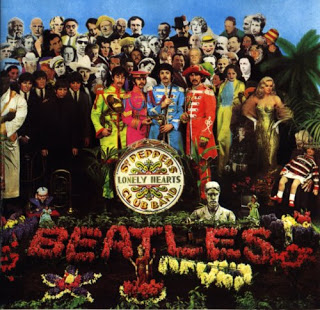
![[sgt-pepper_bob_dylan.jpg]](https://thedailyhatch.org/wp-content/uploads/2015/06/3d3f6-sgt-pepper_bob_dylan.jpg?w=530)


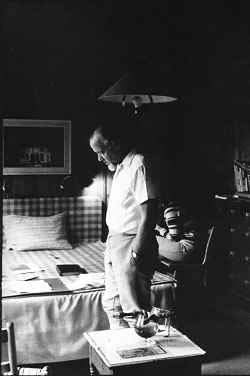


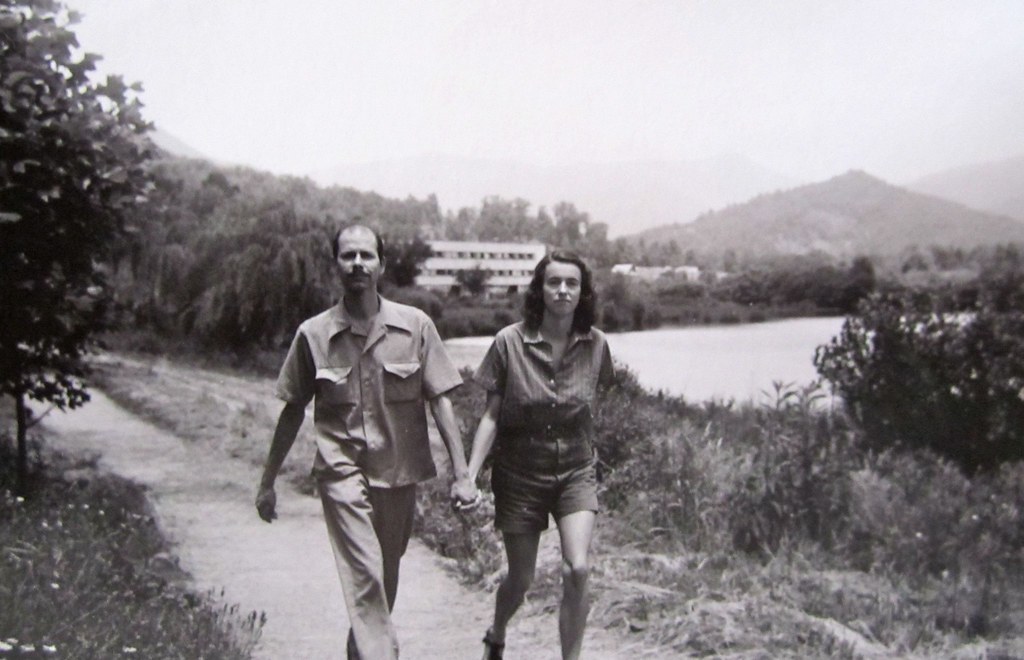





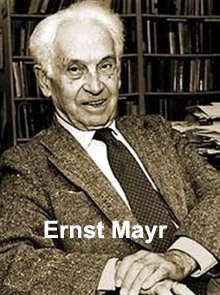

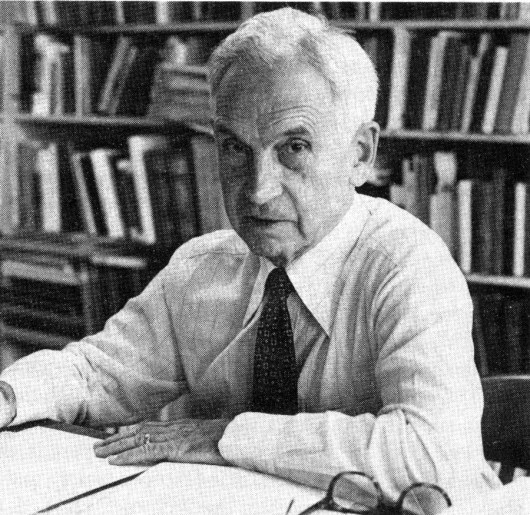


 The Daily Hatch
“What is history but a fable agreed upon?” as Napoleon once put it, and never has that been more true than the story of the Great Depression and its aftermath. With liberals again pitching more government spending “stimulus” in Washington, it’s critical we get this history right.
In a previous column I unmasked the historical lie that Franklin Roosevelt’s New Deal programs ended the Great Depression. After seven years of New Deal-era explosions in federal debt and spending, the U.S. economy was still flat on its back, and misery could be seen on the street corners. By 1940, unemployment still averaged a sky-high 14.6 percent. That’s some recovery.
However, I’ve been deluged with the same question from readers: Ok, what did end the Great Depression? Again, the history books get this chapter of history wrong. Most history books tell us that it was government spending on steroids to mobilize for World War II after the Japanese attacks on Pearl Harbor on Dec. 7, 1941.
Well, it is true that the economic output surged and unemployment fell, but periods of all-out war are very different than periods of peace. Is it any surprise that unemployment fell dramatically when nearly 12 million Americans joined the military?
My mother, a teenager in that period, used to tell me that during the war, when fuel was scarce and needed for the military, you wouldn’t be caught dead driving to the movie theater or a party. It was regarded as unpatriotic and selfish. People continued to produce even with high tax rates (94 percent during the war) when their tax dollars were financing the fight against the Nazis and the Japanese.
For nearly four years — from 1942 to 1945 — America was not a free-market economy. We were an all-out wartime economy — with the normal laws of economics suspended.
However, a war is no way to fix an economy — obviously. Countering terrorist acts of the Islamic State is not a jobs program. During World War II, when we built ships, tanks, fighter planes, dropped bombs and sent our troops into harm’s way, we weren’t creating wealth. A war is no more stimulating to the economy than a burglar stealing your money, the Japanese tsunami in 2011, Hurricane Katrina in 2005, or a tornado that levels an entire town. Without such calamity, the resources spent reconstructing (or destroying in the case of war) would be spent either purchasing useful, life-enhancing products for consumption or investing in technology and capital equipment requisite to increasing economic output.
War in self-defense might be necessary to protect our families, but any economic growth derived from it is far less beneficial than growth derived from free people making individual decisions on what to consume and in what to invest.
In the 1940s, government spending did indeed surge. The federal share of gross domestic product (GDP) rose from less than 12 percent in 1941 to more than 40 percent in 1943-45. In other words, almost half of everything that was produced in the nation was to fight the war. Domestic spending on many FDR New Deal programs in education, training and social services dropped more than 90 percent.
The real issue is what caused the economy to surge after the war was over.
This story is also not covered in the history books. Shortly after his third re-election in 1944, and at a time when the outcome of the war was no longer in question, FDR and his domestic advisers plotted a “new” New Deal with such spending items as national health insurance. The Keynesians were sure that the massive reduction in government spending would catastrophically tank the economy.
Paul Samuelson, the dean of neo-Keynesians at that time, warned in 1943 that unless wartime spending and controls were extended, there would be “the greatest period of unemployment and industrial dislocation which any economy has ever faced.” Business Week predicted unemployment would hit 14 percent with the postwar cutbacks.
Here’s what happened. Government spending collapsed from 41 percent of GDP in 1945 to 24 percent in 1946 to less than 15 percent by 1947. And there was no “new” New Deal. This was by far the biggest cut in government spending in U.S. history. Tax rates were cut and wartime price controls were lifted. There was a very short, eight-month recession, but then the private economy surged.
Here are the numbers on the private economy. Personal consumption grew by 6.2 percent in 1945 and 12.4 percent in 1946 even as government spending crashed. At the same time, private investment spending grew by 28.6 percent and 139.6 percent.
The less the feds spent, the more people spent and invested. Keynesianism was turned on its head. Milton Friedman’s free markets were validated.
In 1946, the unemployment rate averaged below 4 percent, and it stayed that low for the better part of a decade. This all happened during the biggest reduction in government spending in American history under President Truman.
In sum, it wasn’t government spending, but the shrinkage of government that finally ended the Great Depression. That’s what should be in every history book — but isn’t.
Originally appeared in the Washington Times.