Our favorite things this week include Woody Allen’s “The Stand-Up Years,” “Inherent Vice” by Thomas Pynchon not Paul Thomas Anderson, and “Saga” by Brian K. Vaughan.
Allen’s Stand-Up Roots: On a recent episode of WTF, comedian Marc Maron interviewed director Judd Apatow, who has been outspoken in his disgust at Hollywood’s awkward silence where Bill Cosby’s concerned. Their consensus was that people had a hard time reconciling the guy who made those remarkable comedy albums with the possible serial rapist. Years before , Woody Allen put fans in a similar bind when he began to see his stepdaughter, Soon-Yi Previn, then was later accused of child molestation. The Stand-Up Years is a reminder that before his movies and personal drama, Allen was a great stand-up comic who anticipated alternative comedy by creating a persona-based point of view, one that would become the basis of Allen’s comedy legend.
The recordings come from 1964 to 1968, and they present Allen as the quintessential New York, neurotic Jew—one with an intellectual streak that could manifest itself in the domesticated surrealism of a joke that includes a character named Guy de Maupassant Rabinowitz. The collection’s a window into another comic world, one that was barely recognized as a distinct entertainment form, much less an overcrowded one. Allen was a master craftsman whose jokes were immaculately set up and unpredictably paid off. You can understand him moving on to movies because if The Stand-Up Years is any indication, stand-up comedy seems to have come too easily to him.
Some jokes have dated badly as some pop culture punchlines of the day require a Google search today, while Allen’s versions of my-wife-is-so-fat jokes that feel like part of another world. Those punchlines come with easy exaggeration; but he could also effectively land that kind of joke with something closer to his wheelhouse. In another joke he mentions running into his ex-wife in Los Angeles. “I didn’t recognize her with her wrists closed.” (Alex Rawls)
Woody Allen Stand Up Comic 1964 1968 23 The Police
I have spent alot of time talking about Woody Allen films on this blog and looking at his worldview. He has a hopeless, meaningless, nihilistic worldview that believes we are going to turn to dust and there is no afterlife. Even though he has this view he has taken the opportunity to look at the weaknesses of his own secular view. I salute him for doing that. That is why I have returned to his work over and over and presented my own Christian worldview as an alternative.
-INCLUDES ALL THREE LIVE STAND-UP ALBUMS RECORDED BETWEEN 1964-1968
-REMASTERED AND AVAILABLE ON CD AND DIGITALLY
-BONUS MATERIAL INCLUDES: AUDIENCE Q&A AND OVER 20 MINUTES OF AUDIO EXCERPTS FROM WOODY ALLEN: A DOCUMENTARY
____ Woody Allen’s past movies and the subject of the Meaning of Life examined!!! Out of the Past: Woody Allen, Nostalgia, the Meaning of Life, and Radio Days Kyle Turner Jul 25, 2014 Film, Twilight Time 1 Comment “I firmly believe, and I don’t say this as a criticism, that life is meaningless.” – Woody […]
Woody Allen Should Have Quoted Pascal: “Magic in the Moonlight” January 7, 2015 by Roger E. Olson 9 Comments Woody Allen Should Have Quoted Pascal: “Magic in the Moonlight” I am no Roger Ebert and don’t watch that many movies, but in my opinion, for what it’s worth, Woody Allen’s 2014 film “Magic in […]
______________ If anyone has read my blog for any length of time they know that I am the biggest Woody Allen fan of all time. No one except maybe Bergman has attacked the big questions in life as well as Woody Allen. Furthermore, Francis Schaeffer is my favorite Christian Philosopher and he spent a lot […]
___________ Woody Allen to make first TV series for Amazon Prime ‘I’m not sure where to begin,’ says 79-year-old Oscar-winner about his small screen debut, as streaming TV service seeks to gain march on rivals with exclusive content Comment: in signing Woody Allen, Amazon Prime has delivered a nuclear blast to the competition Woody […]
______________________ Woody Allen: “the whole thing is tragic” July 20, 2012 Mr. Allen, do you truly believe that happiness in life is impossible? This is my perspective and has always been my perspective on life. I have a very grim, pessimistic view of it. I always have since I was a little boy; it hasn’t […]
______________ Dr. Jack Graham Challenges Agnostic Woody Allen’s ‘Hopeless State of Mind’ BY NICOLA MENZIE , CHRISTIAN POST REPORTER August 23, 2013|4:51 pm Prolific Hollywood filmmaker and religious skeptic Woody Allen maintains in a recent interview that human life on earth is “just an accident” filled with “silly little moments,” and the “best you can […]
________ Woody Allen Should Have Quoted Pascal: “Magic in the Moonlight” January 7, 2015 by Roger E. Olson 9 Comments Woody Allen Should Have Quoted Pascal: “Magic in the Moonlight” I am no Roger Ebert and don’t watch that many movies, but in my opinion, for what it’s worth, Woody Allen’s 2014 film “Magic […]
___________ Woody Allen to make first TV series for Amazon Prime ‘I’m not sure where to begin,’ says 79-year-old Oscar-winner about his small screen debut, as streaming TV service seeks to gain march on rivals with exclusive content Comment: in signing Woody Allen, Amazon Prime has delivered a nuclear blast to the competition Woody Allen […]
If anyone has read my blog for any length of time they know that I am the biggest Woody Allen fan of all time. No one except maybe Bergman has attacked the big questions in life as well as Woody Allen. Furthermore, Francis Schaeffer is my favorite Christian Philosopher and he spent a lot of […]
_______ Woody Allen’s New Film Is Called ‘Irrational Man’ Posted on Friday, January 30th, 2015 by Angie Han 85 SHARES TwitterFacebook Woody Allen‘s latest film finally has a release date and a studio. Irrational Man will be distributed by Sony Pictures Classics, as were Allen’s last six films.Emma Stone, Joaquin Phoenix, Parker Posey, and Jamie […]
Jorge Fick was a student at Black Mountain College and an artist that lived in New York and he lent a suit to the famous poet Dylan Thomas and Thomas died in that suit. Both Susan Weil and Robert Rauschenberg were featured the second post in this series both of them were good friends of the composer John Cage who was featured in my first post in this series.
1948 Buckminster Fuller Architecture Class. The Venetian Blind Dome. Image courtesy of the North Carolina state archives.
Black Mountain College and Its Legacy Loretta Howard Gallery, New York City
September 15 to October 29, 2011
Kudos to the Loretta Howard Gallery in Chelsea for the stunning paintings, photos, films, sound recordings, wire constructions of various kinds and other attention to detail that made their recent show Black Mountain College and Its Legacy more like a museum show than a gallery exhibition. By highlighting one artist at a time with a beautiful photograph from that era and then, whenever possible, pairing one or two early works against a mid-career triumph by that same artist, the exhibition slowly unfolds into a powerful testimonial to the important output of Black Mountain as well as to its times and those who taught and studied there.
What if the 20th century’s best kept secret turned out to be an understated but astounding collection of—literally—many of its most talented and influential men and women, networked loosely together around innovative ideas and bold action in both science and the arts who made history solely by virtue of their coming together against all odds and playfully one-upping each other over the course of a couple of decades in one tiny isolated hamlet? That might be the way you could describe many American institutions of higher learning but it was uniquely manifested in the middle of the Old South from 1933 to 1956 in the North Carolina mountains for an untried operation called Black Mountain College, which could be called a prototype and precursor for many of the alternative colleges of today.
This show begged interesting comparisons, whether it was sorting out famous vs. not-so-famous names, early (1930s) vs. late (1950s) attenders, teachers vs. students, or the visual ordering of the impressive output of the various disciplines on display here: abstract paintings, abstract and portrait (always of the artists) photography, dance, music (or their hybrids) in addition to the published work of both prose and poetry writers. Even science and math played a role inviting us to attempt to extract their influence from the two open floors of stunning art viewable here.
Perhaps it was the intimidating density of what unfolded at Black Mountain College in such a short span that has always given its reputation a reserved, under-the-radar feel, especially when juxtaposed historically against the age of hype and hypertension that immediately followed it, even though BMC is no secret now and never was. In fact, a case could be made that over-stimulation, simulation and simulacra inherited their foundation from the serene and focused “collaboration with materials” and rigorous sensibilities that students such as the young Robert Rauschenberg, Ray Johnson, Cy Twombly, Dorthea Rockburne and many others calmly took away from their unique studies with the array of faculty members led by the émigré Josef Albers, who, with his wife Anni, learned English as he taught the basics of what he inherited from the Bauhaus in Weimar Germany.
A Black Mountain College Museum and Arts Center, dedicated to the institution’s history, is alive and functioning in downtown Asheville, North Carolina, near the spot where the college rented a YMCA student conference center south of the town of Black Mountain for the first eight years of its existence. When the college relocated in 1941, pivoting across the scenic valley to nearby Lake Eden, students were required to participate in the construction of their own campus as part of their education, a practice which continued until its closing in 1956. A number of the original structures are still in use today as a Christian boys’ retreat called Camp Rockmont, who purchased and converted the buildings when financial problems slowly brought the experiment in learning to a slow fizzle. But in hindsight Black Mountain College’s beginnings and the quarter century that that followed within those structures were rock solid and of the utmost importance. Safely tucked away from the rest of the world, it was a liberal arts laboratory that grew out of the progressive education movement founded by John Dewey, thus preferring doing over learning and a focus on students to subject matter.
The unique educational environment became a high-intensity incubator for the American avant garde. The painter and installation artist Rockburne told Robert Mattison the co-curator (with the gallerist Ms. Howard) and the writer of a wonderful catalogue that accompanied this show, that she had never been in a more competitive atmosphere—not even in Manhattan in the notorious period that followed. That daily recipe of intellectual one-upsmanship coupled with an eclectic amalgam of unconventional thinking made some students feel that if something new wasn’t brought to every single class it wasn’t worth bothering to show up. But show up they did and the collaborative result, not the competition, was on view here primarily via abstract painters, the makers of publications, and sculptors, most of whom fit into the sub-category of makers of wire constructions in one way or another.
The abstract painters included students who became today’s superstars; Twombly, Rockburne, Rauschenberg, Kenneth Noland, and Helen Frankenthaler (who only visited, never enrolled). Not household names today but of equal prowess in the era of AbEx were figures like and Robert DeNiro Sr., the father of the actor, Jorge Fick, Joe Fiore and the lovely Pat Passlov, seen at the opening. Two standouts for me among the abstractionists doubling as teachers were Ilya Bolotowsky with a striking 1949 oil reminiscent but not derivative of Mondrian and Emerson Woelffer, whose three canvases from the late 40s and early 50s looked fresh, powerful and confident. Other BMC faculty with predictably wonderful works here were Jack Tworkov, Ted Stamos, Robert Motherwell, Franz Klein, Elaine DeKooning, and of course Bill DeKooning for whom Black Mountain was of monumental importance, as revealed in his current MoMA show. All these teachers appeared at the college because they were giants then, invited by Albers to share their skills with the select population of atttendees.
Albers’s 1937 monochrome, Composure and his Homage to the Square from 1960 represent his many decades of working within strict color rules that he lived by as well as taught, but to me the most interesting Albers piece were a set of utilitarian nested tables from the mid-‘20s in orange, blue, yellow and green just as his wife Anni, a fabric artist and important force at the college, helped dominate the first room of the show with a large weaving that also spoke of utility, so important to the Bauhaus, as well as art.
Nearby, well-represented between the Albers’s and John Cage, was a wide array of works by Rauschenberg, including his own fabric piece:AWedding Dress from 1950, in addition to one of his important black paintings, a series of photographs and others. His wife at that time, Sue Weil, was represented upstairs with a striking recent installation of acrylic on paper and a piece in torn paper from 1949 with word fragments—know, rock, trembling, whispers—whispering intriguingly. Weil and her son with Rauschenberg, Christopher, were both seen at the lively exhibition opening, a BMC reunion the likes of which have not been seen in New York for a while.
The work of Ray Johnson, another favorite son-student of the school, with four collages in the show, including one from the ‘70s that featured a 1948 postmarked envelope to a friend at the college, did not fit neatly into either the painter or abstractionist category. Though he worked as an abstractionist into the early 1950s and a few works form this period survive, they were not seen here. Likewise, teacher Jacob Lawrence’s powerful war pictures used images of soldiers, not abstraction, to make his statements. The African-American Lawrence had been invited as a faculty member to BMC but, for fear it would lead to trouble with the locals, he stayed safely tucked away on the idyllic campus with its history on the cutting edge of racial integration. Thanks to the German musicologist Edward Lowinsky, a faculty member, several black students were invited and never segregated or treated differently. In April 1947, the Freedom Riders, traversing the country, stopped there overnight. It is also worth noting that Ruth Asawa, a Japanese-American with a piece here, had been in an internment camp only months before her enrollment at the college.
Asawa, who, like Johnson, adored Albers’ teachings, represented the many weavers of wire in this exhibition with a small but elegant symmetric brass and iron form hanging from the ceiling. The other “wired” artists were the inventive Bucky Fuller, his protégé-to-be Kenneth Snelson, and drawings by Richard Lippold, a master of the form who arrived to teach at Black Mountain in a long hearse with his family in tow. Snelson’s 1948 photo of a spider web echoed the linear and math influence on all of these artists. (Sculptors not working with wire included John Chamberlain and Leo Amino.)
The gifted Hazel Larsen Archer provided many of the remarkable and historic photographs of the artists, both working and as portraiture, that unified the show. Archer began as a student but joined the faculty after photography was added to the curriculum in the late ‘40s. But for me, the most powerful pieces in the show were teacher Aaron Siskind’s pioneering 1951 silver print images (and others from as “late” as ‘57 and ’61) of peeling posters of close up letterforms revealing words like “in” and “and” or legs literally ripped from their context and artfully fused into his pioneering compositions North Carolina 30 and Kentucky 5. Harry Callahan and Arthur Siegel also contributed to the important wall of black and white photo imagery with the latter’s 1949 darkroom work looking like (Man) Rayograms or Lazslow Moholy Nagy’s Photograms. Finally, Rauschenberg’s seven-photo portfolio from 1951, were beautifully shot, developed and displayed as part of his work, not the other photographers.
Much has been written of Rauschenberg’s collaborations with John Cage and Merce Cunningham in the decades that followed but this exhibition highlights experientially the arrival of Cage and Cunningham at the campus and their earliest dances together, both literally and figuratively. Beautiful films of Cunningham in motion, Septet (1953), Antic Meet (1958) and Story (1963) and audio recordings of Cage’s Williams Mix and other recordings and objects took us back before the reverse fork in the road when their works began to intertwine, bringing the rest of the show’s 2- and 3-dimensional works to life in the front gallery.
Similarly, photos of Buckminster Fuller building his first two geodesic domes with the help of students at the school (only the second of which was successful) provided jaw-dropping multi-media encounters with the information and its presentation in the rear first floor gallery. Need one say more about big beginnings that occurred at the school than that the recently deceased Arthur Penn directed Fuller, Cunningham and Elaine DeKooning in Eric Satie’s play Ruse of Medusa featuring music by Cage, décor by Willem DeKooning and props by Ray Johnson and Asawa, among others, during Fuller’s 1948 stay on the campus?
Albers Teaching. Courtesy of the North Carolina state archives.
Though, like that tidbit of information, it was not the prime focus of this exhibition, thankfully a large shallow vitrine on the second floor was filled with about fifty different published works that were anything but shallow, giving a small taste of the literary output of the Black Mountain poetic “school”. The 6’8” Charles Olson, who towered over the group as one its leaders in the later years of the college, had work here as did Robert Creely, Dawson Fielding, Joel Oppenheimer, MC Richards and Jonathan Williams. Other highlights of this showcase included a first edition of the Caesar’s Gate Poems by Robert Duncan, one of ten that were printed with an original collage by Jess (Collins), Duncan’s partner, published in1955 when Jess was a visitor to BMC, and a single, aging, unpublished sheet, Roster of faculties of Black Mountain College, regular and guest, since its founding, 1933, presumably rescued from the archives of the college and as thorough as it is historic. Issues of the Black Mountain Review, which appeared from 1951 to 1954, edited first by Richards then by Creely, were, of course, visible, on loan from the collection of James Jaffe. Every piece here was screaming out to be handled and perused. I was particularly sorry I could not get at Broadside Number 1, for example, by Olson and illustrated by Nicola Cernovich, a BMC student and later a lighting designer who, like Ray Johnson, was later an important influence on Billy Name, the creator of the ambiance in Andy Warhol’s Factory.
Thus, this exhibition lay down the tendrils of influence, both well known and unknown, over the high culture of the 20th Century. Visible in this show but between the lines, like so much of the college’s influence, was the unheralded importance of Black Mountain as one of the first stops on Eastern religion’s trip to the United States. Many of the founding members, including Albers, were influenced by the basic course of Johannes Itten at the Bahaus in Weimar Germany, which required composition and color education for all students. The eccentric Itten taught there until 1923 when he left because Walter Gropius no longer approved of his preparatory meditation exercises and the influence of yoga, Persian Mazdaism and other Eastern influence that inspired him to shave his head and wear monk’s robes. Albers was exposed as a student himself to the man and his teachings and went on to craft a similar foundation class at BMC. A 1948 Hazel Larson photograph shows Albers teaching it with a yin-yang form leaning on the chalkboard behind him. We also know Albers’ Address on the Beginning of a New Year on September 12, 1939, quoted Lao Tsu and the Tao Te Ching, referring to the subtle ways of leadership. Noting that students became irritable when they had to do page after page of straight lines, Asawa once volunteered that Albers’ drawing class was instead “very much like calligraphy.”
There were more overt examples of Eastern influence in those early days. In the Summer session of 1949, Nataraj Vashi and his wife Pia-Veena taught Hindu dance and lectured on Hindu philosophy. And the closest thing to a formal course John Cage ever taught at the college, despite three sessions spent there, was a regular late night reading of the complete Huang Po’s Doctrine of Universal Mind which had just been published in English. Between a third and a half of the 70 students in the community at that summer session attended.
In the late thirties Cage heard a lecture by Nancy Wilson Ross on Dada and Zen then had the good fortune to attend Daisetz Suzuki’s classes on Zen Buddhism at Columbia University a decade later. By the summer of 1952, Cage brought those influences to Black Mountain with his Theater Piece #1, now acknowledged as the first Happening and a source for early performance art, created over lunch and performed later the same day, in which Cage, dressed in a black suit, climbed a ladder and talked for two hours about “the relation of music to Zen Buddhism,” while a movie was shown, babies cried and dogs barked. Olson and Richards also read from ladders that day, while Rauschenberg played old Edith Piaf records from a hand-wound gramophone and Cunningham danced. Later, participants turned buckets of water onto the audience members who were seated in 4 inward facing triangles.
Josef Albers wrote in Progressive Education in 1935, “we want a student who sees art as neither a beauty shop nor imitation of nature, as more than embellishment and entertainment; but as a spiritual documentation of life.” At Black Mountain College and Its Legacy at Loretta Howard Gallery, we saw that idea in play as a profound but subtle influence on the culture of today.
The Studies Bulding on Lake Eden. Courtesy of the North Carolina state archives.
Mark Bloch is a writer, performer, videographer and multi-media artist living in Manahattan. In 1978, this native Ohioan founded the Post(al) Art Network a.k.a. PAN. NYU’s Downtown Collection now houses an archive of many of Bloch’s papers including a vast collection of mail art and related ephemera. For three decades Bloch has done performance art in the USA and internationally. In addition to his work as a writer and fine artist, he has also worked as a graphic designer for ABCNews.com, The New York Times, Rolling Stone and elsewhere. He can be reached at bloch.mark@gmail.com and PO Box 1500NYC10009.
Jorge Fick (1932–2004) was an Americanpainter who is known for his “Pod” series of large-scale oil paintings “depicting semi-abstract symbols of growth and regeneration.”[1] Pod paintings blend abstraction, cartoons and Pop art. Fick was influenced by eastern religions such as Zen Buddhism, the culture of Pueblo peoples, and new visual imagery.[2]
Fick was born and raised in Detroit, MI, to strict Roman Catholic parents who sent him to Cass Technical School, a public trade school in the inner city of Detroit, from 1947 through 1950, where he learned excellent manual skills and graphic design, and gained access to the art collection of the Detroit Institute of Arts.[3] He spent 1950 and 1951 at Society of Arts and Crafts Detroit, MI. Later that year, he attended Mexican Art School in Guadalajara, Mexico.[4] After art school, he changed his first name from George to Jorge in homage to his Hispanic culture.[5]
After graduation in 1955, he moved to New York City to share a studio with Franz Kline, his painting mentor from college. Kline was Fick’s “outsider examiner” at the college and was said to have introduced Fick to Abstract expressionism. While still at school in 1953, Kline invited Fick to exhibit at the legendary Stable Gallery.[9] Fick was fully immersed in the art and literature scene of the 1950s. In 1953 he lent a suit to writer and poet Dylan Thomas, whom was a fellow guest of Fick’s at Hotel Chelsea.[10]
In 1958, Fick moved to Santa Fe, NM and helped foster an art community in the South West. In 1962, he shared a studio with the sculptor John Chamberlain.[11] Throughout the 1960s, Fick printed many environmental photographs by Eliot Porter. Fick practiced color theory, a skill he honed doing dye transfers for Porter, and as a color consultant to the renowned designer, Alexander Girard, with whom, he collaborated on his famed project for Braniff Airlines.[12]
Fick and his wife Cynthia Homire, a fellow student from Black Mountain College, opened The Fickery on Canyon Road, Sante Fe, NM. From 1972 until 1983 they sold utilitarian stoneware made by Cynthia and glazed by Fick, until he “retired” to concentrate on painting in La Cienega.[13]
Fick showed regularly throughout the 1960s, winning numerous prizes, however withdrew from the Public Relations push of commercial art market of the 1970s. He remained in New Mexico until his death in 2004.[14]
Exhibit:
Jorge Fick: Journey of a Restless Mind
January 12, 2007 – May 12, 2007
Black Mountain College Museum + Arts Center
Opening Reception: Friday, January 12, 6:00 – 8:00 p.m.
Admission: Free for BMCM+AC members / $3 non-members
The Black Mountain College Museum + Arts Center is pleased to announce its upcoming exhibition: Jorge Fick: Journey of a Restless Mind, showcasing the work of one of Black Mountain College’s most under-recognized artists. The show includes some of the artist’s paintings from his time at Black Mountain College along with more recent paintings and works on paper, particularly work from his “Pod Series”. The exhibition opens on Friday, January 12, 2007 from 6:00 – 8:00 p.m.
Jorge Fick (1932-2004) was a painter, a subtle poet and an artistic environmentalist on a spiritual journey. He was one of the few students to officially graduate from legendary Black Mountain College, which he did in 1955. Abstract Expressionist painter Franz Kline was his “outside examiner”. After graduation, Fick moved from place to place restlessly finding inspiration in the people, expansive colorful landscapes, and intangible energies he encountered along the way. He spent time in New York, mingling with painters such as Kline, Jackson Pollock, Willem de Kooning, Philip Guston and others who constitute a who’s who of the 1950s New York art scene. Eventually settling in New Mexico, Fick became one of the Taos Moderns, a group of artists in the Taos area who embraced Modernism in their work.
Fick first began his meditations on life’s deeper meanings at the young age of 14 in a deserted graveyard way out in the middle of nowhere. “I used to go and sit there for an hour on Sunday morning. It was the only privacy, the only contemplative time I had….that’s when it all began.” In a 1997 interview, Fick described the imagery of the unconscious mind or the soul or the heart as the energy of his work: “The paintings I am doing now look like paintings of things, when they are really paintings of energy. It’s the same energy nature gives us, and it’s the metaphor of the way nature gives it to us that’s in the painting. What I’m trying to do is heal a soul of the culture by these little ironic paintings.” He encountered Zen Buddhism at Black Mountain College in the 1950s where he, like so many others, found a place that encouraged an adventurous spirit of exploration and experimentation. It wasn’t until years later, after moving from California to New York to New Mexico, that he understood what he had read, learning to leave things alone and let things happen. This awakening affected much of his work.
In his “Pod Series” paintings and works on paper Fick investigates the expanded visual articulation of the seedpod form, exploring ideas about growth, expansion and the generative process. The works are boldly abstract and often vibrantly colorful. Many of these striking works will be for sale, offering a rare opportunity to purchase work by an artist associated with Black Mountain College.
The Longest Ride Official Trailer #1 (2015) – Britt Robertson Movie HD
Starring: Scott Eastwood, Britt
Robertson, Jack Huston, Oona
Chaplin, Alan Alda, Melissa
Benoist, Floyd Herrington
Genre: Romance
Audience: Older teenagers and adults
Rating: PG-13
Runtime: 139 minutes
Distributor: 20th Century Fox/News Corp.
Director: George Tillman, Jr.
Executive Producer: Michael Inperato Stabile,
Robert Teitel, Tracey Nyberg
Producer: Marty Bowen, Wyck Godfrey,
Nicholas Sparks, Theresa Park
Writer: Craig Bolotin
Address Comments To:
Rupert Murdoch, Chairman/CEO, and Chase Carey, President/COO, News Corp.
Jim Gianopulos, Chairman/CEO, Fox Filmed Entertainment
20th Century Fox Film Corp. (Fox Searchlight Pictures/Fox 2000/Fox Atomic/FoxFaith)
10201 West Pico Blvd.
Los Angeles, CA 90035
Phone: (310) 369-1000; Website: http://www.fox.com
Content:
(B, RoRo, FR, LL, V, SS, NN, AA, M) Light moral worldview supporting marriage, commitment and kindness, including a scene set in a Jewish synagogue where people are clearly praying, undercut by some Romantic, lawless notions of love, art and “breaking the rules” but with a positive, ultimately uplifting ending; seven obscenities (“d” and “s” words and an SOB), two strong profanities (a GD and a Use of Jesus) and five or six light exclamatory profanities; some intense rodeo scenes with bull riding, including one where man knocked unconscious in the ring, and bull knocks into him, and one where bull flings man against the boards, plus man rescued from fiery car that has crashed off the side of the road; partially depicted fornication, implied fornication, passionate kissing, couple nude in shower kiss passionately, and a scene that may or may not suggest fornication; partially but seemingly obscured upper female nudity, implied nudity, upper male nudity, partial rear male nudity when man’s putting on his clothes, couple in their underwear jump into a pond; alcohol use and side female character is drunk and sick in one scene; no smoking or drugs; and, man makes a rude joke deriding modern art in gallery, man risks his life by continuing his rodeo career, man indicates an infection from a war injury has rendered him sterile, wife eventually leaves husband for a bit after arguing with him because he can’t have children (but she soon returns, and they embrace).
Summary:
THE LONGEST RIDE is a romance about how the lives of two couples, one from the past and one from the present, interact with one another, having an inspiring, unexpected effect on the present-day couple. THE LONGEST RIDE is one of the best, most powerful and uplifting adaptations of a Nicholas Sparks romance novel, but its moral worldview extolling marriage and commitment contains some false thinking about love and art, plus some foul language.
Review:
THE LONGEST RIDE may be the best adaptation of a Nicholas Sparks bestselling romance. It will certainly give THE NOTEBOOK a run for its money in popularity. The story has some strong emotionally powerful moments that lift the movie past the run-of-the-mill “chick flick,” including an uplifting ending with a great twist. However, the story sags a little in the middle, mostly because of some steamy, immoral bedroom scenes that add absolutely nothing to the story.The movie opens at a rodeo, with the male hero, Luke, severely injuring himself while riding Rango, the toughest bull on the rodeo circuit. Cut to one year later at Wake Forest University in North Carolina, where Marcia encourages her sorority sister, Sophia, to come with her to the rodeo. Since she’s studying, Sophia is reluctant, but Marcia points out that Sofia is about to graduate with excellent grades, so she can afford to take one night off. Besides, Marcia says, the rodeo cowboys are really “hot.”At the rodeo, a very nervous Luke is about to take his first bull ride since his rode with Rango sent him to the hospital. He manages to get through the ride successfully and ends up hatless in the rodeo ring right next to Sophia and Marcia sitting in the front rows. Sophia tries to give Luke his hat, but he says, “Keep it!”At the rodeo dance bar, Sophia and Luke run into each other in the parking lot. Luke gets her phone number, but then they have to part because Marcia has gotten sick from drinking too much, and Sophia decides she should take Marcia home.When she graduates, Sophia is leaving for New York City for an unpaid, summer art internship with a well-known gallery owner. So, she’s reluctant to go out with a North Carolina guy like Luke, but she agrees to a special dinner date. On the date, Sophia and Luke clearly have some chemistry going. Driving back in the rain, however, Luke spies a car run off the road. Luke and Sophia rush to the burning car, where they save an elderly man named Ira and a box of letters Ira wrote to his late wife, Ruth.Sophia stays at the hospital to wait to see if Ira’s okay. While she’s waiting, she starts reading one of the first letters Ira wrote to Ruth, dated 1940, the year when Ruth and her parents had arrived in North Carolina from Vienna, then controlled by Hitler’s Germany. Flash back to Ira and Ruth’s first meeting. Of course, Ira is immediately smitten with Ruth and can’t take his eyes off her during the Saturday visit to their local synagogue. However, Ira is too shy, and Ruth has to make the first move.Back in the present day, Ira survives his brush with death, but he’s pushing 90 and is preparing himself to die. Sophia mentions she read his beautiful letter to Ruth. Ira says his eyes are no longer good enough to read them anymore, so Sophia offers to start reading them to him.Sophia begins making regular visits to Ira to read aloud his letters to Ruth. Meanwhile, her romance with Luke starts taking off. However, both her romance with Luke and Ira’s relationship with Ruth hit some snags. So, the question is, what happened to Ira and Ruth’s romance? And, what will happen to Sophia and Luke’s?Despite having two stories at the same time, THE LONGEST RIDE mostly does an excellent job weaving them together.Admittedly, the romance between Ira and Ruth is the more emotionally and cinematically captivating one, with arguably better performances by Jack Huston and Oona Chaplin as the young Ira and Ruth. However, Scott Eastwood and Britt Robertson give appealing performances as Luke and Sophia. Also, the rodeo scenes with Luke or Luke and Sophia together are pretty good. The filmmakers have added some fine (albeit predictable) jeopardy with the rodeo scenes, where Luke truly seems in danger of killing himself, especially when riding the fearsome Rango. There’s also an excellent scene on a World War II battleground, where Ira suffers a war injury that will have tragic consequences for Ruth and him, including their marriage.Finally, Alan Alda as the elderly Ira provides the necessary glue that links Ira’s story with Luke and Sophia’s. Sometimes, Alda can be annoying, but he gives a touching performance in THE LONGEST RIDE. In fact, it’s one of his best performances. It leads to a very nice plot twist at the end, which wraps up the whole movie in a great way that should leave most or many viewers with a positive mood as they leave the theater.Besides some brief foul language, the real problem with THE LONGEST RIDE doesn’t lie with the story, its structure, the acting, the editing, the lighting, the camerawork, or even the movie’s genre, which is schmaltzy romance. The real problem occurs in the middle, when the movie presents some passionate, mostly implied nude scenes between Luke and Sophia. These sensual, partially depicted sex scenes occur in the middle and don’t add anything to the story or the acting. In fact, if they were deleted or greatly shortened, they would make the movie a better one artistically, not just morally.These sex scenes also have something to do with this movie’s philosophical, worldview problems.THE LONGEST RIDE has a moral worldview in that it promotes true love leading to some kind of marital commitment. However, its moral worldview is greatly diminished by elements of Romanticism. For example, at one point in the movie, Ruth expresses her love for modern, mostly abstract, art, a love that neither Ira (nor Luke in his scenes with Sophia) share. In fact, in one scene, Luke jokes to Sophia’s future boss for her summer internship that the art in her gallery is mostly “BS.” Ruth, however, tells Ira that she loves modern abstract art, particularly Kandinsky, one of the first abstract painters, because Kandinsky (like other abstract artists) broke all the rules.* Of course, extramarital sex also breaks the rules, the rules that God has set down in His Word, the Bible.Here, it may be interesting to note that the Romanticist may love to “break the rules,” especially the rules God has established. However, they often seem to get extremely upset whenever someone opposes them or questions their “rebellion,” especially when there’s an artistic, moral or political component to their rebellion.Ultimately, therefore, THE LONGEST RIDE’s Romantic notions of love and art, and its lewd content, warrant extreme caution. The movie isn’t totally worthless, however. For the most part, it’s very well done and has its powerful and even morally uplifting moments. Happily, marriage is extolled at some points, and both couples find happiness being committed to one another, but the movie certainly could have been even stronger in this arena. Also, there is one scene set in synagogue, but otherwise, THE LONGEST RIDE has no positive references to religion or the Bible. So, here too, the movie could have been stronger. All people, whether Jew or Gentile, should focus on God and His Word, through Jesus Christ, not only in their marriage and family life, but also in all other areas of their multi-faceted lives.* Editor’s Note: According to our research, Kandinsky was influenced by the occult, heretical teachings of theosophy and invented a theory of spirituality in artistic expression that seems more emotional, vague and confused than intellectually profound (leaving aside its possible adherence to or rebellion against biblical theology). Kandinsky also felt that some kind of a “New Age” was coming. The socialist atheist regime in the Soviet Union in the 1920s, the socialist movement in Europe in the 1930s and the Nazi movement all rejected Kandinsky’s art, though latter-day socialists and even Nazis may now look at it more positively. Depending on the person, some of his paintings do indeed seem quite colorful, appealing and artistically brilliant, while others seem kind of silly, confused or stupid.
In Brief:
THE LONGEST RIDE tells the story of a rodeo bull-rider named Luke and an art student finishing college named Sophia. On their first date, Luke and Sophia save the life of an elderly, dying man, Ira. Because of Ira’s failing eyesight, Sophia begins reading Ira’s letters to his late wife, Ruth. What happened to Ira and Ruth’s marriage? What will happen to Luke and Sophia’s romance? Will Luke, who suffered an earlier rodeo injury nearly ending his life, survive his brushes with death in the rodeo?For the most part, THE LONGEST RIDE is well constructed, emotionally powerful and well acted, especially by Jack Huston and Oona Chaplin as the young Ira and Ruth. Also, the rodeo scenes are exciting, and the movie has a nice, uplifting ending. The movie sags in the middle, especially when Luke and Sophia take off their clothes. Overall, it has a light moral worldview extolling marriage, commitment and kindness, but it also contains nods to breaking the rules in love and art. THE LONGEST RIDE also has some foul language. So, MOVIEGUIDE® advises extreme caution.
The suit that Dylan Thomas was wearing in the days before his death in New York in 1953. Dylan was on his fourth lecture tour of America at the time. Jorge Fick, the owner of the suit, was an American abstract painter who was storing his clothes in the Chelsea Hotel, the same hotel in which Dylan was staying. Dylan is said to have borrowed the suit because, characteristically, he had run out of clean clothes.
Jorge was sharing an apartment with Paul Kagol, one of a group of poetry students. Jorge was working on the subway at the time. It was Paul who actually loaned the suit to Thomas.
Jorge Fick and his friends in New York in the early fifties were all students at the famous Black Mountain College where they were studying poetry under Charles Olsen. Jorge was a painter who was also very interested in poetry. The painters all congregated at the Cedar Street Bar and the poets at Dylan’s favourite pub, the White Horse Tavern, but the groups often moved between the two pubs.
Over fifty years later, Jorge Fick’s widow, Judy Perlman, contacted the Dylan Thomas Centre and kindly offered the suit as a donation to the Centre’s Dylan Thomas Collection.
Dylan Thomas (1 of 3) B&W Film with Richard Burton
Published on Jun 1, 2012
First part of the marvelous film on Welsh poet Dylan Thomas featuring Richard Burton.
In this interview we get a first hand description of one of the world’s greatest poets ever – from his best friend’s wife. Dylan Thomas should have been best man in the wedding of Gwen and Vernon Watkins – but he overslept. On the journey in Dylan’s footsteps, our guide the poet Ian Griffiths introduces us to this remarkable lady.
She met her husband during the 2. world war at Bletchley Park, where British Intelligence gathered bright people from all over Britain to solve Hitler’s war codes. Vernon Watkins, Dylan’s best friend, was both poet and banker. A banker who sometimes forgot to close the bank when he went home in the evening.
Se the rest of the documentary film at Et Årsverk 2013, 14. of December. Introduced by poet Ian Griffiths and Anne Haden who restored Dylan’s childhood home in Swansea.
Kane on Friday – Leftover Wife – Interview With Widow of Dylan Thomas
Published on May 28, 2014
Broadcaster Vincent Kane interviews Thomas’ widow Caitlin.
originally broadcast in 1977,
Caitlin Thomas (8 December 1913 — 31 July 1994), née Macnamara, was the wife of the poet and writer Dylan Thomas
(bad audio) Dylan Thomas -: Rock and Roll Poet – Documentary
Arena – Dylan Thomas From Grave to Cradle (BBC 2003) – Part 1
Uploaded on Sep 5, 2009
A biography/documentary on Dylan Thomas
Richard Burton reads ‘Elegy’ (for his father) by Dylan Thomas
Uploaded on Feb 18, 2010
This poem was left unfinished at Dylan Thomas’ death. The first seventeen lines were untouched, but the rest was reconstructed/edited from Thomas’ manuscript by his friend Vernon Watkins.
Francis Schaeffer wrote in his book THE GOD WHO IS THERE:
When we review modern poetry as part of our own general culture, we find the same tendency to despair. Near the time of his death, Dylan Thomas (1914-1953) wrote a poem called ELEGY. He did not actually put it together himself, so we cannot be too sure of the exact order of the stanzas. But the way it is given before is probably the right order. The poem is by a fellow human being of our generation. He is not an insect on the head of a pin, but shares the same flesh and blood as we do, a man in real despair.
Dylan Thomas: Elegy (English)
Too proud to die; broken and blind he died
The darkest way, and did not turn away,
A cold kind man brave in his narrow pride

On that darkest day.  Oh, forever may
He lie lightly, at last, on the last, crossed
Hill, under the grass, in love, and there grow

Young among the long flocks, and never lie lost
Or still all the numberless days of his death, though
Above all he longed for his mother's breast

Which was rest and dust, and in the kind ground
The darkest justice of death, blind and unblessed.
Let him find no rest but be fathered and found,

I prayed in the crouching room, by his blind bed,
In the muted house, one minute before
Noon, and night, and light.  The rivers of the dead

Veined his poor hand I held, and I saw
Through his unseeing eyes to the roots of the sea.
(An old tormented man three-quarters blind,

I am not too proud to cry that He and he
Will never never go out of my mind.
All his bones crying, and poor in all but pain,

Being innocent, he dreaded that he died
Hating his God, but what he was was plain:
An old kind man brave in his burning pride.

The sticks of the house were his; his books he owned.
Even as a baby he had never cried;
Nor did he now, save to his secret wound.

Out of his eyes I saw the last light glide.
Here among the light of the lording sky
An old blind man is with me where I go

Walking in the meadows of his son's eye
On whom a world of ills came down like snow.
He cried as he died, fearing at last the spheres'

Last sound, the world going out without a breath:
Too proud to cry, too frail to check the tears,
And caught between two nights, blindness and death.

O deepest wound of all that he should die
On that darkest day.  Oh, he could hide
The tears out of his eyes, too proud to cry.
_____________
In the Festival Hall in London, in one of the higher galleries in the rear corridor, there is a bronze of Dylan Thomas. Anyone who can look at it without compassion is dead. There he faces you with a cigarette at the side of his mouth, the very cigarette hung in despair. It is not good enough to take a man like this or any of the others and smash them as though we have no responsibility for them. This is sensitivity crying out in darkness. But it is not mere emotion; the problem is not on this level at all. These men were not producing an art for art’s sake, or emotion for emotion’s sake. These things are a strong message coming out of their own worldview.
These are many means for killing men, as men, today. They all operate in the same direction: no truth, no morality. You do not have to go to art galleries or listen to the more sophisticated music to be influenced by their message. The common media of cinema and television will do it effectively for you.
MODERN CINEMA, THE MASS MEDIA AND THE BEATLES
We usually divide cinema and television programs into two classes–good and bad. The term “good” as used here means “technically good” and does not refer to morals. The “good” pictures are the serious ones, the artistic ones, the ones with good shots. The “bad” are simply escapist, romantic, only for entertainment. But if we examine them with care, we notice them with care, we notice that the “good” pictures are actually the worst pictures. The escapist film may be horrible in its own way, but the so-called “good” pictures have almost all been developed by men holding the modern philosophy of no certain truth and no certain distinction between right and wrong. This does not imply they have ceased to be men of integrity, but it does mean that the films they produce are tools for teaching their beliefs. Three outstanding modern film producers are Fellini and Antonioni of Italy, and Bergman of Sweden. Of these three producers, Bergman has given the clearest expression perhaps of the contemporary despair. He has said that he deliberately developed the flow of his pictures, that is, the whole body of his movies rather than just individual films, in order to teach existentialism.
His existentialist films led up to but do not include the film THE SILENCE. This film was a statement of utter nihilism. Man, in this picture, did not even have the hope of authenticating himself by an act of the will. THE SILENCE was a series of snapshots with immoral and pornographic themes. The camera just took them without any comment. “Click, click, click, cut!” That is all there is. Life is like that: unrelated, having no meaning as well as no morals.
In passing, it should be noted that Bergman’s presentation in THE SILENCE was related to the “Black Writers” (nihilistic writers), the antistatement novel which was best shown perhaps in Capote’s IN COLD BLOOD. These, too, were just a series of snapshots without any comment as to meaning or morals.
Such writers and directors have had a large impact upon the mass media, and so the force of the monolithic world-view of our age presses in on every side.
The 1960’s was the time of many powerful philosophic films. The posters advertising Antonioni’s BLOW-UP in the London Underground were inescapable as they told the message of that film: “Murder without guilt;love without meaning.” The mass of people may not enter an art museum, may never read a serious book. If you were to explain the drift of modern thought to them, they might not be able to understand it; but this does not mean that they are not influenced by the things they see and hear–including the cinema and what is considered “good,” nonescapist television.
No great illustration could be found of the way these concepts were carried to the masses than “pop” music and especially the work of the BEATLES. The Beatles moved through several stages, including the concept of the drug and psychedelic approach. The psychedelic began with their records REVOLVER, STRAWBERRY FIELDS FOREVER, AND PENNY LANE. This was developed with great expertness in their record SERGEANT PEPPER’S LONELY HEARTS CLUB BAND in which psychedelic music, with open statements concering drugtaking, was knowingly presented as a religious answer. The religious form was the same vague panthemism which predominates much of the new mystical thought today. One indeed does not have to understand in a clear way the modern monolithic thought in order to be infiltrated by it. SERGEANT PEPPER’S LONELY HEARTS CLUB BAND was an ideal example of the manipulating power of the new forms of “total art.” This concept of total art increases the infiltrating power of the message involved. This is used in the Theatre of the Absurd, the Marshall McLuhan type of television program, the new cinema and the new dance with someone like Merce Cunningham. The Beatles used this in SERGEANT PEPPER’S LONELY HEARTS CLUB BAND by making the whole record one unit so the whole is to be listened to as a unit and makes one thrust, rather than the songs being only something individually. In this record the words, the syntax, the music, and the unity of the way the individual songs were arranged form a unity of infiltration.
Those were the days of the ferment of the 1960’s. Two things must be said about their results in the 1980’s. First, we do not understand the 1980’s if we do not understand that our culture went through these conscious wrestlings and expressions of the 1960’s. Second, most people do not understandably think of all this now, but the results are very much still at work in our culture.
Our culture is largely marked by relativism and ultimate meaninglessness, and when many in the 1960’s “join the system” they do so because they have nothing worth fighting for. For most, that was ended by the 1970’s. It is significant that when SERGEANT PEPPER’S LONELY HEARTS CLUB BAND wa made a Broadway play (1974, Beacon Theater) it no longer had the ferment; it was “camp” and nostalia–a museum piece of a bygone time.
_______________
The Cinema gives, if anything, an even more powerful presentation of the new framework of thinking. It pictures life as a tragic joke, with no exit for man. As Francis Schaeffer has written: “The gifted cinema producers of today—Bergman, Fellini, Antonini, Slesinger, the avant-garde cinema men in Paris, or the Double Neos in Italy, all have basically the same message.” The message is that man is trapped in a meaningless void. He is thrown up by chance in a universe without meaning. In some of the earlier efforts by some of these film makers, there was an attempt to show that man could try to create his own meaning. For example, you can escape the void in which you are trapped by going into the world of dreams. But the trouble with this is that you then have no way to prove it. To use the terms of Schaeffer, you have either content without meaning (the real world) or meaning without content (the dream world). So, again, there is no genuine gain in this attempt by man to create meaning. This was brilliantly shown in the film entitled Juliet of the Spirits.
This is the way Schaeffer puts it: “A student in Manchester [England] told me that he was going to see Juliet of the Spirits for the third time to try to work out what was real and what was fantasy in the film. I had not seen it then but I saw it later in a small art theatre in London. Had I seen it before I would have told him not to bother. One could go ten thousand times and never figure it out. It is deliberately made to prevent the viewer from distinguishing between objective reality and fantasy. There are no categories. One does not know what is real, or illusion, or psychological or insanity.” Another film that may be compared with this is Belle de Jour. As another commentator describes it: “Most audiences will not find anything visually shocking about Belle de Jour. They will find instead a cumulative mystery: What is really happening and what is not? The film continues—switching back and forth between Severine’s real and fantasy worlds so smoothly that after a while it becomes impossible to say which is which. There is no way of knowing—and this seems to be the point of the film with which Bunuel says he is winding up his 40 year career. Fantasy, he seems to be saying, is nothing but the human dimension of reality that makes life tolerable, and sometimes even fun.” Another way of expressing the new framework of thought is seen in the film entitled The Silence, by Swedish director Ingmar Bergman. It is just a series of snapshots with immoral and pornographic themes. The camera just clicks away, as it were, recording a series of unrelated and non-moral events. The message is that human life is nothing more than this: a series of unrelated events (because there is no God, and no plan governing all things) having no moral significance (because there are no absolutes). The message of another famous modern film—Antonini’s Blow Up—was summed up in the following advertisement which appeared in the London subways: “Murder without guilt; Love without meaning.” How could one better express the new framework of thinking?
Television
We must again point out that what we describe in these lessons does not appear in everything that is popular with people today. What we are describing in these studies is, for the most part, the leading group of modern artists—those who see most clearly the logical conclusion to which we must come if we begin with the basic ideas assumed as true in our society and culture. Because these artists are most fully held in the grip of “the spirit of the times,” they are the ones who best enable us to see the issue most clearly. At the same time, however, it would be a great mistake to think that these things are isolated within a small circle. No, the fact is that the message of such artists as these is more and more general in our society.
Again, to illustrate, we quote Francis Schaeffer.
“People often ask which is better—American or BBC Television. What do you want—to be entertained to death, or to be killed with wisely planted blows? That seems to be the alternative. BBC is better in the sense that it is more serious, but it is overwhelmingly on the side of the twentieth-century mentality [new framework thinking].” He continues: “The really dangerous thing is that our people are being taught this twentieth-century mentality without being able to understand what is happening to them. This is why this mentality has penetrated into the lower cultural levels as well as among intellectuals…We usually divide cinema and television programmes into two classes—good and bad. The term ‘good’ as used here means ‘technically good’ and does not refer to morals. The ‘good’ pictures are the serious ones, the artistic ones; the ones with good shots. The ‘bad’ are simply escapist, romantic, only for entertainment. But if we examine them with care we will notice that the ‘good’ pictures are actually the worst pictures. The escapist film may be horrible in some ways, but the so-called ‘good’ pictures of recent years have almost all been developed by men holding the modern philosophy of meaninglessness. This does not imply that they have ceased to be men of integrity, but it does mean that the films they produce are tools for teaching their beliefs…Such writers and directors are controlling.
Glauber was born in 1925 in New York City. He was a member of the 1941 graduating class of the Bronx High School of Science, and went on to do his undergraduate work at Harvard University. After his sophomore year he was recruited to work on the Manhattan Project, where (at the age of 18) he was one of the youngest scientists at Los Alamos. His work involved calculating the critical mass for the atom bomb. After two years at Los Alamos, he returned to Harvard, receiving his bachelor’s degree in 1946 and his PhD in 1949.
He currently lives in Arlington, Massachusetts, and is the Mallinckrodt Professor of Physics at Harvard University, where both past and present students enthusiastically praised his teaching to Harvard Crimson reporters. On April 15, 2010 police in Arlington caught a man they suspected of breaking into Glauber’s home; he was convicted of breaking and entering, and in the end it was only a replica of Glauber’s Nobel Prize that was stolen. Glauber has a son and a daughter, and five grandchildren.
The 63rd clip in the second video is of Dr. Glauber. Below the videos I give the transcript of his complete quote and then my reaction to it.
50 Renowned Academics Speaking About God (Part 1)
Another 50 Renowned Academics Speaking About God (Part 2)
A Further 50 Renowned Academics Speaking About God (Part 3)
“I have never had any feeling toward the intelligent designer approach. The one thing that is clear is that it takes one great deal of intelligence to figure out what is going on and I think there are more than a few people having figured some of this out feel they are somehow getting down to the same processes that went on in creating it. That doesn’t mean a thing to me.
Glauber says that he has no feelings towards the intelligent designer approach to science but he says that it takes a great deal of intelligence to figure the big questions out. He says that we have only scratched the surface of knowledge in the world on evolution but that we have accomplished rather more in the world of physics than in the world of evolution. We now have an explanation for everything that explains chemistry and chemistry underlies all living things. We have it all, he says and we are simply going on to explore other worlds. We have the basic tools without question. It is true he says that it is becoming more and more difficult to explore sub-atomic particles for the reason that it is enormously expensive. He says that what has been discovered is enormously interesting but it tells us nothing about intelligent design and certainly nothing at all about life.
____________________
I have more articles posted on my blog about the last few years of Antony Flew’s life than any other website in the world probably. The reason is very simple. I had the opportunity to correspond with Antony Flew back in the middle 90’s and he said that he had the opportunity to listen to several of the cassette tapes that I sent him with messages from Adrian Rogers and he also responded to several of the points I put in my letters that I got from Francis Schaeffer’s materials. The ironic thing was that I purchased the sermon IS THE BIBLE TRUE? originally from the Bellevue Baptist Church Bookstore in 1992 and in the same bookstore in 2008 I bought the book THERE IS A GOD by Antony Flew. Back in 1993 I decided to contact some of the top secular thinkers of our time and I got my initial list of individuals from those scholars that were mentioned in the works of both Francis Schaeffer and Adrian Rogers. Schaeffer had quoted Flew in his book ESCAPE FROM REASON. It was my opinion after reviewing the evidence that Antony Flew was the most influential atheistic philosopher of the 20th century.
__________
The Fine Tuning Argument for the Existence of God from Antony Flew!
Imagine entering a hotel room on your next vacation. The CD player on the bedside table is softly playing a track from your favorite recording. The framed print over the bed is identical to the image that hangs over the fireplace at home. The room is scented with your favorite fragrance…You step over to the minibar, open the door, and stare in wonder at the contents. Your favorite beverage. Your favorite cookies and candy. Even the brand of bottled water you prefer…You notice the book on the desk: it’s the latest volume by your favorite author…
Chances are, with each new discovery about your hospitable new environment, you would be less inclined to think it has all a mere coincidence, right? You might wonder how the hotel managers acquired such detailed information about you. You might marvel at their meticulous preparation. You might even double-check what all this is going to cost you. But you would certainly be inclined to believe that someone knew you were coming. There Is A God (2007) p.113-4
In January 2005, two remarkable events occurred. The first was that Oxford atheist and Darwinian scientist, Richard Dawkins, was publicly asked what he believed to be true but could not prove. This was an interesting question because he is on record as saying that you should not believe anything without evidence. Now he concedes:
I believe, but I cannot prove, that all life, all intelligence, all creativity and all design anywhere in the universe is the direct or indirect product of Darwinian natural selection.
He continued, “Design cannot precede evolution and therefore cannot underlie the universe.” In other words, he admits that much of what he believes, including his fundamental assumptions about the universe, are a blind leap of faith, unsupported by evidence.
The other extraordinary event was that the international doyen of philosophical atheism, Professor Anthony Flew, now aged 81, publicly announced that he has abandoned his atheism, and had done so on the basis of scientific arguments, which now persuade him that there is a God.
Two confessions
So two of the most prominent atheists in their fields have made startling confessions. The scientist admits that much of his belief cannot be supported by scientific evidence, while the philosopher abandons the very atheism that made him famous, precisely because of the scientific evidence. How much intellectual fun is that?
What Dawkins cannot verify concerns the creation of the universe. What persuades Flew that there is a God is the current scientific evidence about the origins of the universe.
The Cosmological Argument
So let us begin at the beginning! This is the Cosmological argument.
First premise is this: Whatever begins to exist has a cause.
Philosopher William Lane Craig says it is foolish to try to prove this statement because it is obvious. He quotes Aristotle who said you should never try to prove the obvious with arguments which are themselves less obvious. Does anyone want to deny this obvious premise? Speak now or forever hold your peace, for the logic is simple and compelling:
Whatever begins to exist has a cause
The universe began to exist
Therefore the universe has a cause.
The major scientific evidence that the universe began to exist first appeared in 1929 when the astronomer Hubble was studying distant galaxies and observed the Red Shift. This was a Doppler effect of light. Let me explain briefly the Doppler Effect. We are all familiar with the phenomenon of a car or plane coming in our direction emitting a sound at one pitch which then drops to a lower note as it passes. The reason for this is that the wavelength of the sound it emits appears higher than it is, because the vehicle moving towards us is effectively shortening the wavelength of the sound and increasing its frequency by its movement. Having passed us, it lengthens the wavelength and decreases the frequency by moving away. Longer wavelengths have lower frequencies and therefore lower notes, so the tone drops.
In the same way as different notes have different wavelengths of sound, so different colours have different wavelengths of light. By demonstrating a shift towards red instead of blue, Hubble was able to show that the light from distant galaxies showed they are moving away and not getting nearer, and the further the galaxy the faster it is moving away. Hence the conclusion that the universe is not static, as everyone including Einstein had previously thought, but is in fact expanding.(Stephen Hawking, A Brief History of Time, p.39)
Further evidence was discovered in 1965. If the universe was static, as many scientists such as Fred Hoyle still believed at that time, there would be no background energy observable in the universe. The discovery of background radiation, existing in the same intensity in every direction, confirmed the view that energy released from an initial explosion causing the universe to expand, was still observable in the system.
On the basis of this evidence, few scientists today dispute the fact that the universe is expanding. By extrapolating backwards into the past, the universe is understood to have originated from an immensely dense ‘singularity’, some unimaginably small, compressed, dense speck which originally exploded to yield everything that there is in the universe.
If you have read Stephen Hawking’s famous book, A Brief History of Time (aBHoT), you will have had your brains teased, not only with black holes, but the fact that not only did all matter and energy originate from this singularity, but so did space and time itself. Hence the title of the book. So we cannot think of this singularity existing somewhere in space – because there was no space. Nor can we ask what happened before the Big Bang, because there was no previous time either.
In other words, it is today generally held amongst scientists that the universe and everything in it actually began to exist at a point of origin estimated now at 13.7 billion years ago and that all matter, energy, space and time originated out of nothing! The philosopher points out that what ever begins to exist has a cause. The scientist points out that the cause of the universe must exist outside of our space-time world and, of course, be unbelievably powerful.
The theological implications, as Charlie Brown might say, are staggering. Desperate theories have been devised to avoid the obvious conclusions. These include for instance the theory that the universe is only expanding at this point in time, but this is just a moment in its history, where the universe oscillates from expansion to contraction to expansion indefinitely. Well, this is an interesting theory but it must be said, it has absolutely no evidence in physics or astrophysics to support it. There are a series of other models proposed, such as string theory with its 10 dimensions, branes and p-branes, which all suffer the same lack of data. The available data only suggests that the universe is expanding from an initial point at the beginning of time, some 13.7 billion yrs ago.
I was recently in debate with some Humanists. One of them made the point that either there had always been a God, or there had always been a universe, and that it was no more obvious to believe in the one than the other. That is no longer considered to be the case. The scientific evidence says the universe has not always existed. It began.
Can we therefore say that God has always existed? Is it meaningful to ask how he came into existence? The answer to both questions is ‘No’, if by such questions we suppose that God has always existed in endless time. We cannot speak about time before time existed. God, if he created the universe, must live outside of space and time. Neither is this a theologically novel idea. The New Testament seems to have alluded to it by saying that with the Lord one day is as a thousand years and a thousand years as a day. It was anyway put forward by Augustine in around AD 400. Questions therefore about God’s origin or location are outside our capacity for knowledge & comprehension. Similarly our understanding of eternity can only be grasped in metaphors, whether a banquet on the one hand or a smouldering rubbish dump on the other. This should stop us from imaging Heaven as a space-time world or crudely caricaturing hell as a place of torment in endless time.
The Fine Tuning of the Universe
The second line of argument that has persuaded Anthony Flew concerns the fine tuning of the Universe, known as the Anthropic Principle. The Anthropic Principle says that the universe has to be more or less as we see it, because if it were different, there wouldn’t be anyone here to observe it.
There are two issues here, which must not be confused. The human observer should rightly regard it as probable that he will find the basic conditions of the universe are finely-tuned for his existence or he would not be there to observe it. However, he should not infer that it is therefore highly probable that such a finely tuned universe should exist. That is a separate matter entirely.
For the universe to exist as it does and allow us to live within it and reflect upon it, requires an astonishing series of coincidences to have occurred, which are quite sufficient in the mind of Anthony Flew to indicate the existence of an intelligent designer.
Stephen Hawking suggested (aBHoT p.123) that it is like a hoard of monkeys hammering away on typewriters and by pure chance eventually producing one of Shakespeare’s sonnets. Let’s face it, it just isn’t going to happen.
It is estimated that there are some 50 fundamental numbers or physical constants present at the moment of the Big Bang that must be precisely fine-tuned in the way they were for human life to become possible.
Hawking wrote: “It seems clear that there are relatively few ranges of values for the (fundamental) numbers that would allow the development of any form of intelligent life. Most sets of values would give rise to universes that, although they might be very beautiful, would contain no one able to wonder at their beauty.” (aBHoT p.125)
Physicist Paul Davies calculated that in order for planets to exist, the relevant initial conditions had to be fine tuned to a precision of one part in 10 followed by a thousand billion billion zeroes at least. For electromagnetism, he estimated a change of only one part in 10 to the power of 40 would have spelled disaster for stars, like our sun, thereby precluding the existence of planets.
Gravitational force must be what it is, for planets to have stable orbits around the sun. Otherwise if they had a greater force they would fall into the sun and burn up or if weaker, they would escape from their orbit into a very cold, outer darkness. It is estimated that a change in gravity by only one part in 10 to the power of 100 would have prevented a life permitting universe.
If the electric charge on an electron were only slightly different, stars would be unable to burn hydrogen and helium. and produce the chemical elements such as carbon and oxygen that make up our bodies. Similarly, the orbit of electrons in atoms would not be stable, so matter as we know it would not exist.
Stephen Hawking wrote, “If the rate of expansion one second after the big bang had been smaller by even one part in a hundred thousand million million, the universe would have re-collapsed before it ever reached its present size.” (aBHoT p.122)
Not only must each of these quantities be exquisitely fine tuned but their ratios to each other must be finely tuned. As William Craig writes: “Improbability is added to improbability until our minds are reeling in incomprehensible numbers.”
Now there are only four possibilities put forward for explaining the fine-tuning of the universe: Multiple Universes, Natural Law, Chance or Design.
The theory of Multiple Universes supposes there are a vast number of quite different universes, allowing the statistical chance that one of them would produce human life. Without a jot of evidence to support it, it is a desperate attempt to deny the existence of God. Ockam’s Razor states that the simpler assumption is always to be preferred.
Natural law implies a physical inevitability that the universe is the way it is; that it would not be possible for the universe not to produce human life. Yet if the universe had expanded just a little more slowly, if entropy were slightly greater or any of these constants been just slightly different, life would not have occurred. As Paul Davies put it, “The physical universe does not have to be the way it is; it could have been otherwise.”
And the chances of the world being as it is, are incomprehensibly small. Which is why Anthony Flew concludes there must be a Designer.
The universe is of course vast. Our own galaxy, the Milky Way, is 100,000 light yrs in diameter and contains 100 billion stars. “Ours is one of about a million million galaxies in the observable universe” (aBHoT p.126). Well might the Psalmist have wondered, “When I look at your heavens, the work of your fingers, the moon and the stars, which you have set in place, what is man that you are mindful of him, or the son of man that you care for him?” (Psalm 8) In such a universe, we seem terrifyingly minute and insignificant. But this view can be turned on its head.
As Barrow & Tipler argued, “for there to be enough time to construct the constituents of living beings, the Universe must be at least 10 billion years old and therefore as a consequence of its expansion, at least ten billion light years in extent.” In other words, in order for God to create mankind, the most complex creature and crowning glory of his creation, he had to make a universe as wonderful as ours. So when we look at the stars, we should not think how insignificant we are but consider how very seriously God takes us, how valuable we are in his sight and what great lengths he went to, in order to make us.
Furthermore, this evidence itself suggests a special relationship between the Creator and human beings. There is not only a Mind behind the creation, but the rational creator has created rational beings, who can reflect upon and understand the mind of the creator. We are told in Genesis that we are made in his Image. As Kepler put it, we are capable of thinking God’s thoughts after him. No other living thing is capable of doing that. Let alone your aspidistra, try telling your cat about this. It is completely beyond his grasp.
Conclusion
I have unpacked just two arguments from science which seem to strongly support belief in a divine creator.
Firstly the evidence that the universe began and the logic that everything that begins has a cause. Secondly we have seen how astonishing it is that the Big Bang should have been so finely-tuned as to be capable of creating a universe supporting human life.
I have touched a third argument, that of Rationality itself. And if I had time, I would explain how mind and consciousness totally confounds modern science and remains the greatest mystery in the planet.
We have considered God’s power and intelligence. But none of this tells us much about the character of God. The Prologue of John’s Gospel concludes: “No-one has ever seen God. He who is at the Father’s side, he has made him known.” There is no other claim in the universe like that. No other religion offers anything like it – the sublime claim that the creator of the universe has entered his own creation. The universe tells us that God exists, but Jesus has made him known.
Jesus’ Resurrection: Atheist, Antony Flew, and Theist, Gary Habermas, Dialogue
Published on Apr 7, 2012
http://www.veritas.org/talks – Did Jesus die, was he buried, and what happened afterward? Join legendary atheist Antony Flew and Christian historian and apologist Gary Habermas in a discussion about the facts surrounding the death and resurrection of Jesus Christ. Join the third and final debate between Flew and Habermas, one that took place shortly before Flew admitted there might be a God, just before his death.
Over the past two decades, The Veritas Forum has been hosting vibrant discussions on life’s hardest questions and engaging the world’s leading colleges and universities with Christian perspectives and the relevance of Jesus. Learn more at http://www.veritas.org, with upcoming events and over 600 pieces of media on topics including science, philosophy, music, business, medicine, and more!
_________________
The God Debate II: Harris vs. Craig
Uploaded on Apr 12, 2011
The second annual God Debate features atheist neuroscientist Sam Harris and Evangelical Christian apologist William Lane Craig as they debate the topic: “Is Good From God?” The debate was sponsored in large part by the Notre Dame College of Arts and Letters: The Henkels Lecturer Series, The Center for Philosophy of Religion and the Institute for Scholarship in the Liberal Arts.
Dr. Glauber strikes me as a brilliant man who just can’t bring himself to put faith in the scriptures. I understand that scientists like him want evidence for what they believe. My reaction is very simple: THERE IS GOOD AND SUFFICIENT EVIDENCE THAT SHOWS THE HISTORICAL ACCURACY OF THE BIBLE. Then I look at the Old Testament prophecies and I am amazed at the prophecies that have been fulfilled in history, and also many of the historical details in the Bible have been confirmed by archaeology too. One of the most amazing is the prediction that the Jews would be brought back and settle in Jerusalem again. Another prophecy in Psalms 22 describes messiah dying on a cross almost 1000 years before the Romans came up with this type of punishment.
Is this good evidence to show there is a God behind it all?
First, isn’t it worth noting that the Old Testament predicted that the Jews would regather from all over the world and form a new reborn nation of Israel.Second, it was also predicted that the nation of Israel would become a stumbling block to the whole world. Third, it was predicted that the Hebrew language would be used again as the Jews first language even though we know in 1948 that Hebrew at that time was a dead language!!!Fourth, it was predicted that the Jews would never again be removed from their land.
Robert Weide directed Woody Allen A Documentary in 2012, and since then has worked on a number of Allen related projects. The latest was supplying new audio interviews and liner notes to The Stand-Up Years 1964-1968 – a new collection of Allen’s 60s stand-up albums. In a new interview with the Huffington Post, he talked about Allen, his work with comedians and more.
It is a very in-depth interview, one that is great if you’re a comedy geek.
On Allen being a comic pioneer.
He was a unique voice, an original voice when he emerged. I think maybe what he did that hadn’t quite been done before the way he did it was the neurotic New York Jew. They didn’t really have a voice in standup. The contemporary urban Jew. He gave voice to that. My criteria is just what makes me laugh.
On the beginnings of Allen’s stand up
It really starts with Mort Sahl. It was sort of a double edge sword because on the one hand, Mort inspired Woody to do standup because he was so brilliant. It’s like what people say when they first hear Bob Dylan, “I didn’t know music could sound like that.” When Woody heard Mort it was like, “Oh, I had no idea that standup comedy could be this.” It inspired him but at the same time it intimidated him because he said, “I’ll never be as good as that guy.” I think in an odd way that’s still what holds Woody back from acknowledging how good his stuff is in the same way that with his movies he compares himself to the great world directors like Bergman and Fellini and others he admires so much.
On his progression through his albums
Basically you should jumble up the tracks from all three albums and pull them out at random and not really know what came from which album. I’d say he’s pretty consistent. This isn’t a long time, ’64 to ’68 is only four years, so it’s not like his movies where you can compare Bananas to Match Point and see over decades how he’s changed and evolved. I think if you really start to get into it you can hear in those later years that he’s just a little more relaxed. Woody has told me–and he’s said this elsewhere–he did not enjoy performing. He did not enjoy doing standup, he was pushed into it by his managers. He just wanted to be a writer but his managers thought he had a very funny stage presence and he would be great as a standup doing his own material instead of writing for others.
A lot more at the Huffington Post. For some reason you have to scroll to halfway down the page.
‘The Stand-Up Years: 1964-1968′ is out now. It is available on CD and digitally in the US and Australia. You can get it now on iTunes.___
************************
Woody Allen Stand Up Comic 1964 1968 04 The Great Renaldo
Woody Allen Stand Up Comic 1964 1968 08 Unhappy Childhood
Woody Allen Stand Up Comic 1964 1968 10 Effs Benedict
I have spent alot of time talking about Woody Allen films on this blog and looking at his worldview. He has a hopeless, meaningless, nihilistic worldview that believes we are going to turn to dust and there is no afterlife. Even though he has this view he has taken the opportunity to look at the weaknesses of his own secular view. I salute him for doing that. That is why I have returned to his work over and over and presented my own Christian worldview as an alternative.
-INCLUDES ALL THREE LIVE STAND-UP ALBUMS RECORDED BETWEEN 1964-1968
-REMASTERED AND AVAILABLE ON CD AND DIGITALLY
-BONUS MATERIAL INCLUDES: AUDIENCE Q&A AND OVER 20 MINUTES OF AUDIO EXCERPTS FROM WOODY ALLEN: A DOCUMENTARY
____ Woody Allen’s past movies and the subject of the Meaning of Life examined!!! Out of the Past: Woody Allen, Nostalgia, the Meaning of Life, and Radio Days Kyle Turner Jul 25, 2014 Film, Twilight Time 1 Comment “I firmly believe, and I don’t say this as a criticism, that life is meaningless.” – Woody […]
Woody Allen Should Have Quoted Pascal: “Magic in the Moonlight” January 7, 2015 by Roger E. Olson 9 Comments Woody Allen Should Have Quoted Pascal: “Magic in the Moonlight” I am no Roger Ebert and don’t watch that many movies, but in my opinion, for what it’s worth, Woody Allen’s 2014 film “Magic in […]
______________ If anyone has read my blog for any length of time they know that I am the biggest Woody Allen fan of all time. No one except maybe Bergman has attacked the big questions in life as well as Woody Allen. Furthermore, Francis Schaeffer is my favorite Christian Philosopher and he spent a lot […]
___________ Woody Allen to make first TV series for Amazon Prime ‘I’m not sure where to begin,’ says 79-year-old Oscar-winner about his small screen debut, as streaming TV service seeks to gain march on rivals with exclusive content Comment: in signing Woody Allen, Amazon Prime has delivered a nuclear blast to the competition Woody […]
______________________ Woody Allen: “the whole thing is tragic” July 20, 2012 Mr. Allen, do you truly believe that happiness in life is impossible? This is my perspective and has always been my perspective on life. I have a very grim, pessimistic view of it. I always have since I was a little boy; it hasn’t […]
______________ Dr. Jack Graham Challenges Agnostic Woody Allen’s ‘Hopeless State of Mind’ BY NICOLA MENZIE , CHRISTIAN POST REPORTER August 23, 2013|4:51 pm Prolific Hollywood filmmaker and religious skeptic Woody Allen maintains in a recent interview that human life on earth is “just an accident” filled with “silly little moments,” and the “best you can […]
________ Woody Allen Should Have Quoted Pascal: “Magic in the Moonlight” January 7, 2015 by Roger E. Olson 9 Comments Woody Allen Should Have Quoted Pascal: “Magic in the Moonlight” I am no Roger Ebert and don’t watch that many movies, but in my opinion, for what it’s worth, Woody Allen’s 2014 film “Magic […]
___________ Woody Allen to make first TV series for Amazon Prime ‘I’m not sure where to begin,’ says 79-year-old Oscar-winner about his small screen debut, as streaming TV service seeks to gain march on rivals with exclusive content Comment: in signing Woody Allen, Amazon Prime has delivered a nuclear blast to the competition Woody Allen […]
If anyone has read my blog for any length of time they know that I am the biggest Woody Allen fan of all time. No one except maybe Bergman has attacked the big questions in life as well as Woody Allen. Furthermore, Francis Schaeffer is my favorite Christian Philosopher and he spent a lot of […]
_______ Woody Allen’s New Film Is Called ‘Irrational Man’ Posted on Friday, January 30th, 2015 by Angie Han 85 SHARES TwitterFacebook Woody Allen‘s latest film finally has a release date and a studio. Irrational Man will be distributed by Sony Pictures Classics, as were Allen’s last six films.Emma Stone, Joaquin Phoenix, Parker Posey, and Jamie […]
Mike Ragogna: So what is this fascination you’ve got with comedians?
Robert Weide: I remember being a kid and seeing the last couple of years of The Ed Sullivan Show, the Johnny Carson era of The Tonight Show, I just love both standup comedy and film comedy. I have certain tastes, it’s not that I love everything, but in the case of Albert Brooks and Woody and Mort Sahl and Kurt Vonnegut, you get to meet these people and hang with them and it’s very cool.
MR: Breakfast Of Champions was an essential when I was a teenager.
RW: You know what’s important to me? Lost In America.
MR: What a great movie, though I think the problem may be now that America might have taken a cue from that movie.
RW: Yeah, talk about prescient.
MR: Robert, what’s your opinion of Woody Allen being a pioneer in comedy?
RW: That’s an interesting question. I’m not the best one at essay questions like that although it’s very legitimate. Personally, I just dote on originality. He was a unique voice, an original voice when he emerged. I think maybe what he did that hadn’t quite been done before the way he did it was the neurotic New York Jew. They didn’t really have a voice in standup. The contemporary urban Jew. He gave voice to that. My criteria is just what makes me laugh. Like I said, when I was in junior high and high school watching Albert Brooks on The Tonight Show he really made me laugh. Steve Martin made me laugh, Woody Allen just made me laugh. I was nine years old whenTake The Money And Run came out, which was his first feature as a writer/director. There’s nothing about that film that a nine year-old can’t appreciate, so I saw it and I loved it and then the next year he did Bananas, which was a great movie for a kid and then Sleeper and Love & Death, so I grew up with his films. Annie Hall changed my life.
Once my interest in him accelerated to that next level, then I wanted to go back and learn about this guy and read about him and know other things that he did. This was before the internet, so back in those days, I would go to the library and they had The Readers’ Guide To Periodical Literature. But I didn’t just look him up. I looked up The Marx Brothers and Lenny Bruce, I was the kid in the library reading about all of these things. Around about that time I discovered that his standup albums were reissued, so I bought what were then the current issues of his standup material and I thought it was some of the funniest standup comedy that I’d ever heard. It really made me laugh. Now everything is digital, our music is very portable, but back then when you had vinyl I would invite my friends over and we would just put on a comedy album. That was a thing you did back then. All my friends loved the stuff, too. It was hysterical.
Once I really started to look at Woody’s full body of work, it was easy to see the connections between his standup bits and the bits that appear in his films and even his prose pieces from New Yorker and other magazines. There’s certainly jokes and situations that repeat themselves and I found it interesting to play connect the dots with all of those. I just thought his standup was great. What’s interesting about Woody is that he is very, very hard on himself in both his films and his standup–when he made Manhattan, he thought he’d botched it so badly that he offered to the studio to make another movie for them pro bono if they would not put out Manhattan. Who doesn’t consider Manhattan a classic? But that’s how he feels. He’s very hard on himself.
MR: You mentioned connect the dots. For Woody’s brand of comedy, where do the dots begin?
RW: The guy who changed it all was Mort Sahl, the subject of another of another one of my documentaries for American Masters. Mort just changed everyone who came after him. You could say that Will Rogers did political humor back in the thirties, but it didn’t quite have the fangs that Mort Had. When Mort came along it was really jokes about your mother-in-law or your wife’s cooking and woman drivers and the nightclub comedians all wore tuxedos and they were very polished and very brash. Mort just changed all that. Suddenly, he was doing not just political humor but all sorts of satire and looking at our daily lives and talking about things that really mattered. Mort created that wave, and on that wave came Lenny Bruce, Nichols & May and Second City. Then the next generation out of that was Woody and Bill Cosby and Joan Rivers and The Smothers Brothers, then the next wave was Robert Klein and David Steinberg.
There’s a line through all of that, but it really starts with Mort Sahl. It was sort of a double edge sword because on the one hand, Mort inspired Woody to do standup because he was so brilliant. It’s like what people say when they first hear Bob Dylan, “I didn’t know music could sound like that.” When Woody heard Mort it was like, “Oh, I had no idea that standup comedy could be this.” It inspired him but at the same time it intimidated him because he said, “I’ll never be as good as that guy.” I think in an odd way that’s still what holds Woody back from acknowledging how good his stuff is in the same way that with his movies he compares himself to the great world directors like Bergman and Fellini and others he admires so much.
MR: So like musicians, comedians, in general, are inspired by established comedians in a similar way?
RW: Yes. Mort was considered a political comedian and Woody did not do politics, but if you look at the early reviews of Woody when he first started to emerge in the early sixties, many of these reviews cite the Sahl influence in terms of delivery and pacing and phrasing and that kind of thing. I think Louise Lasser told me that at one point Woody’s manager Jack Rollins said, “Back off of the Mort thing a little bit, you’re starting to sound a little derivative.” We’re all an amalgamation of our various influences. When Woody was writing his early short pieces for the New Yorker he was very influenced by Robert Benchley and S. J. Perelman. If you’re going to be influenced by somebody, why not the best? I seem to recall he got a couple of very early pieces rejected by editors who said, “Can you make this a little less like Perelman?” But he certainly found his own voice eventually, to the point where other comics came along who started to sound like Woody. Every generation begets the next.
MR: It was almost like they took what he had but left his character. When you assembled this collection, did you come to any new revelations about Woody Allen?
RW: After such a great question I wish I had a great answer. I don’t know that I do. I guess the big revelation for me is simply how well the stuff holds up. I know this isn’t quite what you were getting at, but being a connoisseur of this thing I’m acutely aware that some comedy ages well and some doesn’t. Look at Seinfeld, you can watch that now and it’s as funny as it was, but if you watch other shows from the same era that were hugely popular then, Alf or something and you say, “Wow, people were really watching this not that long ago?”
A lot of standup and movie comedy dates very poorly. Again I say this just as somebody who takes the long overview of standup in general, I think Woody’s standup just holds up very well. I make the comparison in the liner notes. Woody would actually hate this because he’s no fan of sixties music at all, but I do make the comparison with The Beatles. Woody started his standup career in 1960, which is basically the same year that The Beatles started performing as a group with Pete Best and then Woody’s first standup record came out in ’64, which is when the Beatles came to America. Woody pretty much called it quits with standup around 1970, which is pretty much when The Beatles called it quits.
But the other comparison I make is that the work holds up. If you liked The Beatles music back in the sixties, chances are you’ll like it now. If you thought that Woody Allen’s work in the sixties was funny, chances are you’ll find it still holds up. That was the big revelation, how sharp stuff is. It’s both of its time and timeless. The things that he talks about are the sixties’ thinking about dating and your parents and growing up and yet it doesn’t feel dated at the same time. I should clarify, though: This wasn’t my project. I didn’t produce the record.
MR: No, but you had to focus on it for the assembly of the liner notes. Did you notice a growth across his three albums?
RW: I think basically you should jumble up the tracks from all three albums and pull them out at random and not really know what came from which album. I’d say he’s pretty consistent. This isn’t a long time, ’64 to ’68 is only four years, so it’s not like his movies where you can compare Bananas to Match Point and see over decades how he’s changed and evolved. I think if you really start to get into it you can hear in those later years that he’s just a little more relaxed. Woody has told me–and he’s said this elsewhere–he did not enjoy performing. He did not enjoy doing standup, he was pushed into it by his managers. He just wanted to be a writer but his managers thought he had a very funny stage presence and he would be great as a standup doing his own material instead of writing for others.
So they talked him into doing it but Woody was very, very hesitant. He finally got to the point where he was performing every night, but he said he would wake up in the morning and realize that he would have to go up on stage that night and it would just kill his whole day. He would have no appetite, he would be nauseated, he was not a born performer. He did say that once he got out on stage and the audience started laughing, then he was fine, but he still had all of this anxiety beforehand, pacing and even throwing up backstage.
As his movies became more successful he did less and less standup, but in around 1972 he had some contractual obligation to play Caeser’s Palace. Eric Lax, who has written a number of biographies on Woody Allen, was backstage with him before he went on and said Woody was as calm as he could be, playing solitaire or something and not fretting about his act at all. I asked Woody about this and he said that by that time, it was nothing. Also I think the fact that he wasn’t making his living as a standup anymore, the fact that he was making movies now sort of took the pressure off him.
MR: You’ve been looking at comedians doing standup and movies for years, where is comedy heading? Where is Woody heading?
RW: Professionally, he’s in a very, very rare situation. In fact, I can’t name you one other person who’s in this situation, at least in the United States, where he gets to do a movie a year, he’s got people lined up to finance the movies, he doesn’t have to answer to anybody creatively, the people who finance his movies don’t even see a finished script, which is outrageous. He doesn’t spend a lot on his movies, they’re all in the eighteen million dollar range which is peanuts by most standards, but it gives him creative freedom and year after year he knocks out a movie. If you saw the documentary you see he’s got a whole drawer full of ideas, he’ll never run out during his lifetime. Some movies come out great, some not so great, but he’s just relying on the law of averages. If you get to do a movie year after year eventually one will come out that’s pretty good. People made a big deal over this Amazon thing, I spoke to him subsequent to it, he said he doesn’t have any idea what he’s going to do, it’s just that Amazon pursued him and pursued him.
He doesn’t understand the whole concept of a miniseries. He watches very little, he really just watches movies and sports and news on TV, not serials. He didn’t even really understand quite what Amazon was, but they kept pursuing him and they said, “Look, you can do whatever you want, there’s no approval process, I think they threw a lot of money at him and typical of him he resisted. I think the people around him said, “Come on, what’s the harm? Do this.” He’s not an internet person, he’s never gone online or searched the web or anything, so all of this is quite confusing to him, but what’s funny is he finally agreed and there was all this press that said, “Woody Allen is signed to do something with Amazon” and he told me the really funny thing was that people were actually congratulating him. “Hey, congratulations on your series!” and he shrugs and says, “Thank you, but I don’t know what I’m doing.” I talked to him on set one time about his creative freedom and I said, “Even Martin Scorsese has to defend himself creatively,” and he said, “That’s because Marty does pictures that cost seventy or eighty million dollars. I do mine for fifteen to twenty, that’s why I don’t have to argue with anybody.” It puts him in an interesting situation, he’s a brand name now. It’s like if Chaplin was still alive and young enough to make movies. People wanted to be in the Chaplin business, people want to be in the Woody business. I just read yesterday that apparently Woody’s coming back to LA to direct another opera.
MR: I saw his last one, is it revival?
RW: I don’t know if he’s doing the same one again or something new, it’s just something that flew by me on the internet. But that’s what he does. He can’t sit still like a normal person and finish a movie and go on vacation or something. Once he finishes a movie, he’ll take a few days or maybe a week off to just putt around, but after that he gets eager to get working again. If he’s between movies, he’ll tour Europe or write a screenplay or whatever. He’s a guy who can’t not be working.
MR: What advice do you have for new artists, in this case, comedians.
RW: I guess the nice thing about doing standup is it’s like being a writer in that you can practice your craft without needing any money or other people. If you want to be an actor somebody’s got to hire you for your gig and do the audition process and all that, but for a writer all you need is some quiet. That doesn’t mean that anyone’s going to buy what you like, but you can practice your craft. I’ve been out of the scene for a long time, I used to live at the improv during the eighties, all of my friends were comedians and I would sit at the round table with them and it was my hangout. It’s been years and years since I’ve done that but I assume the process is still basically the same in places like The Comedy Store or The Improv or Gotham, you go up during an open mic night and get to practice your craft that way. You may only get five minutes but if you do well and you’re there consistently enough they might have you come back. I guess that’s still the route, but of course people get discovered on the internet now, too.
Back in the day when I first started making my films and documentaries, everything was film and it was expensive to buy the equipment and get film processed and edited and all that. Now you can spend a couple hundred dollars on a camera and edit something on your laptop, that’s the other way people can go. The problem is that it’s easier and easier to create something and put your work out there and it doesn’t cost a lot to do so the problem is everyone else is doing it too. When you tell people you’re going to make a video and put it on the internet, how do you make it pop out against the tens of thousands of other people doing the same thing? It’s not something I know much about because I’m an elder statesman now and I don’t have to worry about breaking in. I don’t know enough about the scene now to pretend to give anyone advice, but the old tenets still hold, stick with it and don’t let people shake your confidence or talk you out of it.
MR: If a Woody Allen had been born in the nineties, how would he or she stand out? Does anyone like that come to mind for you?
RW: Well, I do think the people who really make their mark, like a Woody or an Albert Brooks or a Bob Hope or a Mort Sahl, I think those people have something very, very special. I don’t think it’s just being able to write decent jokes and perform them decently, I think there is an element of something that you’re born with. I think that applies to writers and artists. A friend of mine made the analogy that it’s pretty much like tennis. Anybody can play tennis really, but only a few people can play tennis really well. I think that’s true of comedy or any sort of creative endeavor. Anybody can do it, but there are a few people with a so-called, God-given talent who are just born with the gift. I think it’s what Woody’s managers acknowledged about him when he came to see them to talk about hiring him as a writer. They said, “This guy is just inherently funny. He should be on stage performing this.” What you get with his standup is the early iteration of the screen persona which would eventually be so recognizable. That’s one thing that’s exciting about the standup, you see it forming, the earliest version of Woody Allen that we see in those first films, at least up throughAnnie Hall or even Manhattan.
MR: It seems like he’s hit another stride that includes Midnight In Paris and other recent films. If he’s not going on the internet, where does he get this inspiration to focus on subjects so currently relevant?
RW: I don’t know, he’s very old school. Everybody knows his wife is a few years younger than him, I think she keeps him plugged in a little bit. I know when he did Whatever Works, Soon-Yi suggested Evan Rachel Wood for that role. Woody’s got his casting director Juliet Taylor who keeps him tuned in to young performers. There are few actors working today worth their salt who wouldn’t love that call from Woody’s casting director. He gets the best and brightest, he’s now worked with Emma Stone twice, Joaquin Phoenix is in his new picture, I think he’s surrounded by people who keep him more plugged in to contemporary culture than he would on his own. I don’t think Woody knows anything about music post 1960 other than Sinatra. His music is jazz and classical, he’s never cared about contemporary pop music, he doesn’t stay on top of TV, I think he tries to see new movies every now and then, Diane Keaton is still very much a taste maker for Woody, she’ll say, “You’ve got to see this movie.” In his last collection of short stories, Mere Anarchy, there was a short story called, “This Nib For Hire.” I read it in a Starbucks and it had me laughing so hard that I became very self conscious of being the laughing guy in the room. I had to put my hand over my mouth to keep from laughing and then my eyes were tearing up. I told my wife, “You’ve got to read this piece of Woody’s, it’s the funniest thing I’ve ever read.”
That night, I was in my office working and I heard her in the bedroom, I thought she was crying or screaming or something. I go in there and she was reading the piece and screaming with laughter. The point I want to make in this is there’s actually a joke about the internet and it surprised me that Woody knew enough about the internet to even make the joke he did. I think of him as being sort of a luddite. He still types on that manual typewriter he bought when hew as sixteen years old, he’s never used a computer or word processor. On the one hand, he’s very, very old school, but on the other hand, I think he has enough people who can keep him plugged in to the current culture so that he doesn’t come off as one of those guys who are totally out of touch.
Transcribed by Galen Hawthorne
_________
Woody Allen Stand Up Comic 1964 1968 25 Summing Up
I have spent alot of time talking about Woody Allen films on this blog and looking at his worldview. He has a hopeless, meaningless, nihilistic worldview that believes we are going to turn to dust and there is no afterlife. Even though he has this view he has taken the opportunity to look at the weaknesses of his own secular view. I salute him for doing that. That is why I have returned to his work over and over and presented my own Christian worldview as an alternative.
-INCLUDES ALL THREE LIVE STAND-UP ALBUMS RECORDED BETWEEN 1964-1968
-REMASTERED AND AVAILABLE ON CD AND DIGITALLY
-BONUS MATERIAL INCLUDES: AUDIENCE Q&A AND OVER 20 MINUTES OF AUDIO EXCERPTS FROM WOODY ALLEN: A DOCUMENTARY
____ Woody Allen’s past movies and the subject of the Meaning of Life examined!!! Out of the Past: Woody Allen, Nostalgia, the Meaning of Life, and Radio Days Kyle Turner Jul 25, 2014 Film, Twilight Time 1 Comment “I firmly believe, and I don’t say this as a criticism, that life is meaningless.” – Woody […]
Woody Allen Should Have Quoted Pascal: “Magic in the Moonlight” January 7, 2015 by Roger E. Olson 9 Comments Woody Allen Should Have Quoted Pascal: “Magic in the Moonlight” I am no Roger Ebert and don’t watch that many movies, but in my opinion, for what it’s worth, Woody Allen’s 2014 film “Magic in […]
______________ If anyone has read my blog for any length of time they know that I am the biggest Woody Allen fan of all time. No one except maybe Bergman has attacked the big questions in life as well as Woody Allen. Furthermore, Francis Schaeffer is my favorite Christian Philosopher and he spent a lot […]
___________ Woody Allen to make first TV series for Amazon Prime ‘I’m not sure where to begin,’ says 79-year-old Oscar-winner about his small screen debut, as streaming TV service seeks to gain march on rivals with exclusive content Comment: in signing Woody Allen, Amazon Prime has delivered a nuclear blast to the competition Woody […]
______________________ Woody Allen: “the whole thing is tragic” July 20, 2012 Mr. Allen, do you truly believe that happiness in life is impossible? This is my perspective and has always been my perspective on life. I have a very grim, pessimistic view of it. I always have since I was a little boy; it hasn’t […]
______________ Dr. Jack Graham Challenges Agnostic Woody Allen’s ‘Hopeless State of Mind’ BY NICOLA MENZIE , CHRISTIAN POST REPORTER August 23, 2013|4:51 pm Prolific Hollywood filmmaker and religious skeptic Woody Allen maintains in a recent interview that human life on earth is “just an accident” filled with “silly little moments,” and the “best you can […]
________ Woody Allen Should Have Quoted Pascal: “Magic in the Moonlight” January 7, 2015 by Roger E. Olson 9 Comments Woody Allen Should Have Quoted Pascal: “Magic in the Moonlight” I am no Roger Ebert and don’t watch that many movies, but in my opinion, for what it’s worth, Woody Allen’s 2014 film “Magic […]
___________ Woody Allen to make first TV series for Amazon Prime ‘I’m not sure where to begin,’ says 79-year-old Oscar-winner about his small screen debut, as streaming TV service seeks to gain march on rivals with exclusive content Comment: in signing Woody Allen, Amazon Prime has delivered a nuclear blast to the competition Woody Allen […]
If anyone has read my blog for any length of time they know that I am the biggest Woody Allen fan of all time. No one except maybe Bergman has attacked the big questions in life as well as Woody Allen. Furthermore, Francis Schaeffer is my favorite Christian Philosopher and he spent a lot of […]
_______ Woody Allen’s New Film Is Called ‘Irrational Man’ Posted on Friday, January 30th, 2015 by Angie Han 85 SHARES TwitterFacebook Woody Allen‘s latest film finally has a release date and a studio. Irrational Man will be distributed by Sony Pictures Classics, as were Allen’s last six films.Emma Stone, Joaquin Phoenix, Parker Posey, and Jamie […]
Music video by Bill & Gloria Gaither performing Victory in Jesus (feat. Cynthia Clawson, Reggie Smith, Joy Gardner and Mike Allen) [Live]. (P) (C) 2012 Spring House Music Group. All rights reserved. Unauthorized reproduction is a violation of applicable laws. Manufactured by EMI Christian Music Group,
I love researching the history or origins of many things, and yesterday the idea came to me to find out the history of some of my old favorite songs. I am posting this blog, because in my search I found that others have this same passion and were having a hard time finding the answers. I hope this blog helps everyone in the search of answers for their questions as well. If you have any information not listed and would like to contribute you may contact me at charlottemae2000@yahoo.com.
Thursday, August 1, 2013
“Victory in Jesus”
Eugene Monroe Bartlett, Sr. is considered one of the founding fathers of Southern Gospel Music. He was born on Christmas Eve in 1885 near Waynesville, Missouri. Bartlett relocated to Sebastian County, Arkansas with his parents. Bartlett dedicated his life to Jesus at an early age. Bartlett attended the Hall-Moody Institute in Martin, Tennessee, and William Jewell College, Liberty, Missouri. Bartlett lived in the south and enjoyed a reputation as a fine music teacher. Based in Arkansas, he traveled the entire southern portion of the country holding singing schools for anyone interested. These and similar schools trained aspiring musicians in vocal technique, sight reading, and conducting and were influential in the development of church music as a whole for much of the remainder of the century.
Eugene M. Bartlett, Sr. meet and married Joan Tatum in 1917. They were parents to two sons, Gene Bartlett, Jr., a nationally known writer of contemporary church music and Charles Bartlett Minister of Music in a large Texas church.
Eugene M. Bartlett, Sr. was a very successful business man, and decided to invest his money in which he founded the Hartford Music Company in Hartford, Arkansas sometime in 1918. Within the first year of business he sold more than 15, 000 copies of his hymnbook. Many writers, singers and musicians received their first opportunity in gospel music at Hartford Music Company including Albert E. Brumley who wrote “I’ll Fly Away” and “Turn Your Radio On.” Bartlett’s mission was to publish hymns and teach singers to sight read. He hired instructors to teach voice, piano, piano tuning, rudiments, harmony and stringed instruments. He also was editor of the music magazine, Herald of Song. His son Eugene, Jr. was also a hymnist and composer. When he was not instructing, Bartlett was an avid composer of hymns and gospel songs.
Though almost all of his songs have sunk into oblivion among the Christian body today, “Victory In Jesus” remains one of the most popular and widely known songs of the church. In 1939, a stroke rendered Bartlett partially paralyzed and unable to perform or travel. He spent the last two years of his life bedridden. Amid such bleak circumstances, he wrote his final and most beloved song, “Victory in Jesus,” an optimistic number that has been sung by millions in worship services and recorded by gospel’s biggest names. The three verses and refrain enthusiastically tell of one’s own personal salvation experience from beginning to end. It’s said that Bartlett missed traveling and teaching, but he could still study the Bible, a study from which he gave us this wonderful song during a time when much of the earth sat on the brink of World War II. The song first appeared that year in “Gospel Choruses,” a paperback songbook published by James Vaughan in Lawrenceburg, Tenn.
Only two years after his stroke, Bartlett died January 25, 1941. He is buried at the Oak Hill Cemetery in Siloam Springs in Benton County. Throughout his 56 years of his life, Bartlett composed more than 800 songs. Since the early 1960s, “Victory in Jesus” has become popular among evangelical congregations, Quartets, and many hymnals have included it within their published pages. Bartlett was inducted into the Gospel Music Association’s Hall of Fame in Nashville, Tennessee, in 1973.
Victory in Jesus LyricsI heard an old, old story,
how a Savior came from glory,
How He gave His life on Calvary,
to save a wretch like me;
I heard about His groaning,
of His precious blood’s atoning,
Then I repented of my sins
and won the victory.Oh victory in Jesus, my Savior, forever!
He sought me and bought me
with His redeeming blood;
He loved me ere I knew Him,
and all my love is due Him-
He plunged me to victory
beneath the cleansing flood.I heard about His healing,
of His cleansing pow’r revealing,
How He made the lame
to walk again and caused the blind to see;
And then I cried, “Dear Jesus,
come and heal my broken spirit,”
And somehow Jesus came
and brought to me the victory.
Oh victory in Jesus, my Savior, forever!
He sought me and bought me
with His redeeming blood;
He loved me ere I knew Him,
and all my love is due Him-
He plunged me to victory
beneath the cleansing flood.
I heard about a mansion
He has built for me in glory,
And I heard about the streets of gold
beyond the crystal sea;
About the angels singing
and the old redemption story-
And some sweet day I’ll sing up there
the song of victory.
Oh victory in Jesus, my Savior, forever!
He sought me and bought me
with His redeeming blood;
He loved me ere I knew Him,
and all my love is due Him-
He plunged me to victory
beneath the cleansing flood.
Other songs:
Everybody Will Be Happy Over There
Camping in Canaan’s Land
Just a Little While
sources:
Find A Grave Memorial# 13737445
Encyclopedia of American Gospel Music edited by W. K. McNeil
Livros – 25 Most Treasured Gospel Hymn Stories – Kenneth W. Osbeck
Anderson p. 200
Baxter, pp. 82-84
Sing Unto the Lord p. 116
Everybody Will Be Happy Over There (Live)
Published on Nov 22, 2012
Music video by Bill & Gloria Gaither performing Everybody Will Be Happy Over There (Live). (P) (C) 2012 Spring House Music Group. All rights reserved. Unauthorized reproduction is a violation of applicable laws. Manufactured by EMI Christian Music Group,
Camping in Canaan’s Land [Live]
Published on Jun 22, 2012
Music video by Dailey & Vincent performing Camping in Canaan’s Land (feat. Bill & Gloria Gaither) [Live]. (P) (C) 2012 Spring House Music Group. All rights reserved. Unauthorized reproduction is a violation of applicable laws. Manufactured by EMI Christian Music Group,
Just a Little While [Live]
Published on Dec 21, 2012
Music video by Bill & Gloria Gaither performing Just a Little While (feat. Guy Penrod, Rex Nelon, J.D. Sumner and Brock Speer) [Live]. (P) (C) 2012 Spring House Music Group. All rights reserved. Unauthorized reproduction is a violation of applicable laws. Manufactured by EMI Christian Music Group,
The Poison – The All-American Rejects Avril Lavigne and Tyson Ritter from All American Rejects Talk Almost Alice The All-American Rejects – Dirty Little Secret Tyson Ritter, the leadsinger of the All-American Rejects has admitted that he was a jerk for the last couple of years when he lived a sexually impure life by sleeping […]
The Poison – The All-American Rejects Avril Lavigne and Tyson Ritter from All American Rejects Talk Almost Alice The All-American Rejects – Dirty Little Secret I got to see the All-American Rejects in concert on 12-13-12 in Little Rock and I have written about it several times already. Tyson Ritter, the leadsinger of the All-American […]
Katy Perry and the material from the Prism Album!!!! Part 4 Katy Perry On Bonnie McKee, John Mayer & New Album, “Prism” in 92.3 NOW Interview Published on Aug 13, 2013 Katy Perry talks to 92.3 NOW’s Ty Bentli in NYC about her new music, working with Bonnie McKee and not dating Robert Pattinson. __________________________ […]
Katy Perry and the material from the Prism Album!!!! Part 3 Katy Perry – Roar (Official) Last Friday Katy Perry and Russell Brand’s divorce rumors came true when Brand reportedly filed for divorce in Los Angeles citing, “irreconcilable differences.” TMZ met up with Perry’s father, Keith Hudson, as he was out shopping and when they […]
APOLOGETICS, THEN AND NOW Episode VII – The Age of Non Reason Dr. Schaeffer’s sweeping epic on the rise and decline of Western thought and Culture _______________________ I love the works of Francis Schaeffer and I have been on the internet reading several blogs that talk about Schaeffer’s work and the work below was […]
Katy Perry and the material from the Prism Album!!!! Part 2 Katy Perry, Britney Spears, Neil Patrick Harris Interviewed at ‘The Smurfs 2′ World premiere From Wikipedia: Katy Perry From Wikipedia, the free encyclopedia Jump to: navigation, search “Katy Hudson” redirects here. For the album, see Katy Hudson (album). For the Australian fashion designer, see […]
Katy Perry and the material from the Prism Album!!!! Part 1 Katy Perry – Roar (Official) Katy Perry on Her Strict Evangelical Upbringing: ‘I Didn’t Have a Childhood’ By Alison Matheson, Christian Post Correspondent May 5, 2011|2:37 am Pop star Katy Perry isn’t shy when it comes to flaunting her body and strutting her […]
GRACE UNPLUGGED Add To My Top 10 Prodigal Daughter Content +4 Quality None Light Moderate Heavy Language Violence Sex Nudity What the Ratings Mean 24 Release Date: October 04, 2013 Starring: AJ Michalka, James Denton, Kevin Pollak, Michael […]
My question to the pro-abortionist who would not directly kill a newborn baby the minute it is born is this, “Would you have killed it a minute before that or a minute before that or a minute before that or a minute before that?” You can see what I am getting at. At what minute does an unborn baby cease to be worthless and become a person entitled to the right to life and legal protection?
Dr. Francis Schaeffer: Whatever Happened to the Human Race Episode 1 ABORTION
For L’Abri, the brainchild of 20th-century giant Francis Schaeffer, turning 50 is an opportunity to celebrate and revive what is golden in its unique approach to evangelism
Half a century ago, an American pastor named Francis Schaeffer opened his home in Switzerland to anyone who was struggling with the basic questions of life. It was the beginning of L’Abri, a word meaning “shelter.” Over the years, student backpackers, troubled atheists, and thoughtful Christians found their way to this chalet in the Alps. Here they met biblical truth, explained not only with a sophistication that was then rare in evangelicalism-but lived out.
Many who trekked the Alpine hillsides to L’Abri became Christians and learned how to engage their cultures and to apply their faith to all of life. Two generations on, the influence of Francis and Edith Schaeffer and the ministry of L’Abri is evident among evangelical Christians everywhere in their approach not only to evangelism and the church but also to the sciences, arts, business, and politics.
Schaeffer died of cancer in 1984. But L’Abri continues with branches all over the world: in Australia, Germany, the Netherlands, Sweden, England, Korea, Canada, and two in the United States (in Southborough, Mass., and Rochester, Minn.). These centers for training in Christian philosophy are the legacy of a man who-according to long-time associate and founder of the Francis Schaeffer Institute Jerram Barrs-never considered himself a theologian or philosopher, but simply a pastor and an evangelist.
Schaeffer became a Christian when he was 17, after reading the Bible from beginning to end and finding that it gave answers to questions he struggled with. He studied at Faith Seminary and pastored churches in Delaware, Pennsylvania, and St. Louis.
In St. Louis, Schaeffer and his wife Edith started a ministry, Children for Christ. At the same time, conflicts and schisms in the Presbyterian Church forced him to defend a high view of Scripture against liberal theology. He started the International Council of Christian Churches to counter the World Council of Churches. This took him to Europe, where he settled in Switzerland in 1948.
But L’Abri had its genesis in a spiritual crisis that engulfed Schaeffer in 1950-1951. Depressed by church politics and power struggles, Schaeffer wrestled with the question: “How could people stand for truth and purity and God’s holiness without ugliness and harshness?” He became dissatisfied, too, with his own failures to live out the faith as the Bible describes it, according to Mr. Barrs.
Schaeffer felt these problems so deeply that he began to question whether Christianity, if it has so little effect, could be true. Once again, as he did when he was 17, he plunged into Bible reading in search of answers. He found them, becoming convinced that not only salvation but sanctification and the whole of the Christian’s life are by faith. “The sun came out again,” he said, and he found “a new song in my heart.”
Now, in addition to holding Bible studies in the Schaeffer home and working with children, the Schaeffers began discussion groups for their teenage daughters and friends to hear their questions and to tell about the Bible’s answers.
On June 5, 1955, the Schaeffers drew up a plan to turn their home into a place where people could come to work out their problems and to practice “true spirituality.” Without finances and with no assurance that they would be allowed to stay in Switzerland, the Schaeffers purchased property in Huemoz, a rural village high in the mountains with a spectacular view of the Alps.
Ranald Macaulay, a student at Cambridge who became involved with the Schaeffers in the early days (and later married their daughter Susan), said the founding of L’Abri was consistent with its organizing principle: to live in constant dependence on the grace of God. At a March 11-13 Jubilee for L’Abri Fellowship at the America’s Center in St. Louis, Mr. Macaulay said the Schaeffers resolved to do no advertising for workers, no marketing to attract newcomers, no fundraising, and no planning-principles in stark contrast to most other ministries.
The Schaeffers saw L’Abri as a unique experiment-they did not necessarily recommend this radical dependence on God’s providence as a pattern for other ministries-but the needs always were met. Concerned with reaching individuals, the Schaeffers were content with small numbers. Over time, however, the effect of their work multiplied. Over 1,000 L’Abri alumni attended the jubilee celebration, an event that was equal parts conference and family reunion.
Os Guinness, Harold O.J. Brown, and Chuck Colson-all major evangelical thinkers who were shaped by L’Abri-gave addresses. Screenwriter Brian Godawa, who wrote To End All Wars, gave a workshop on transforming Hollywood. Theologian and cultural critic Vishal Mangalwadi, from India, talked about his upcoming television documentary series on the impact of the Bible, The Book of the Millennium. Book tables overflowed with titles by L’Abri Alumni.
Workshops focused on the various facets of “The Central Themes of L’Abri,” “Transforming All of Life,” and “True Spirituality.” The evenings closed with classical music concerts.
But unlike most idea-packed conferences, the program also scheduled in time for fellowship: an hour and a half devoted to lunch; 30 minutes between sessions; free afternoons and early evenings so people had time to talk. People who had grown close in the Christian community of L’Abri but who had not seen each other for decades hugged and laughed and resumed their conversations. Family members recalled the early days. Mr. Macaulay said the Schaeffers cleared out the furniture, set up chairs, and made elaborate preparations in their chalet, while Schaeffer, wearing a black suit, preached a brilliant sermon-all for three people. Mr. Macaulay remembers thinking, “Oh, if everybody could hear this!” In those days, he said, it was exciting when 10 people showed up at L’Abri.
At first Schaeffer resisted taping the lectures, fearing it would spoil his spontaneity. But one day his daughter Susan surreptitiously hid in an ivy plant a microphone attached to her portable cassette player. The tapes circulated in student groups in England, creating a demand for more tapes and a steady supply of L’Abri pilgrims. Eventually, he turned some of his lectures into books.
More and more people-students, hippies, homosexual priests, drug addicts, and other wanderers trying to “find themselves”-sought out this “shelter” in the mountains. Some stayed for a few weeks, others for several months. By the 1970s, several hundred might be there at a time, staying in chalets built on the expanding property above a switchback mountain road.
Schaeffer exchanged his American preacher’s black suit for lederhosen and a walking stick. He engaged visitors in personal discussions fed also by the growing number of L’Abri workers who joined in the ministry. Visitors took part in the life of the community, eating meals together, doing physical labor, studying the Bible, prizing deep conversations, and walking in the mountains. This remains the pattern today in the L’Abri branches around the world, except that Schaeffer is heard only on tape.
In the course of 50 years, according to Larry Snyder, director of Rochester L’Abri, no one knows how many people went through L’Abri. No one kept records. What mattered then-and is evident now (see sidebar)-is that L’Abri was a life-changing experience.
Schaeffer persuaded nonbelievers to face up to the contradictions in their own worldviews by revealing their inability to account for what is most important in life (love, beauty, meaning). He would, as he described it, “take the roof off,” bringing the nonbeliever almost to the point of despair, to acknowledge his lost condition. Then he applied the gospel of Christ. While conversant in the theology of Kuyper, Dooyeweerd, and Van Til, Schaeffer was captive only to the worldview set forth in the Bible-God’s good creation, man’s fall into sin and its consequences, the redemption through Christ-which he said accords with reality in all of its dimensions. Nonbelievers cannot bring themselves to be completely consistent with their own presuppositions, an inconsistency that is a result of common grace. “Thus, illogically,” he wrote in 1948, “men have in their accepted worldviews various amounts of that which is ours. But, illogical though it may be, it is there and we can appeal to it.”
Even with hostile visitors, Mr. Barrs said, Schaeffer “had an acute sense of people’s brokenness and fallenness,” and “thus would treat them with compassion.”
Out of those encounters grew a body of written work: Escape from Reason (1968), True Spirituality (1971), and He Is There and He Is Not Silent (1972). Schaeffer developed extraordinarily fruitful concepts: how human beings need both “form and freedom”; how people today compartmentalize their lives into a meaningless objective “lower story” (the realm of science and fact) and a mystical, nonrational “upper story” of subjectivity and emotion (which becomes the realm of religion, aesthetics, and morality); how human beings are sinful and broken due to the Fall, yet how at the same time human beings have an intrinsic value and dignity, bearing the image of God.
Those concepts-fueled by practical discussions and communal living at L’Abri-quickly gathered public momentum. Before L’Abri, many conservative Protestants had no problem with legalizing abortion, considering it a Catholic issue and responding out of a knee-jerk anti-Catholicism. But the Schaeffers showed that abortion-along with the growing acceptance of euthanasia and the coming genetic engineering-constitutes a horrible assault on all that it means to be human. With the book and video series How Should We Then Live? (1976) and Whatever Happened to the Human Race? (1979), Schaeffer’s ideas spread to a broader audience. With A Christian Manifesto (1981), he called evangelicals to the fight against abortion and to political activism to reverse what he saw as the trend toward both moral anarchy and political tyranny.
Such an extended ministry was a partnership with Schaeffer’s wife. “If time allowed, a whole seminar could be devoted to the work of Edith Schaeffer,” author and L’Abri alum Os Guinness told the jubilee crowd. Health problems, including a deteriorating esophagus, prevented Schaeffer’s wife Edith, 92, from attending the St. Louis jubilee. Always an active part of L’Abri and an author herself, she is currently in a Swiss hospital. There, according to Udo Middleman, husband to Schaeffer daughter Debbie, the family is battling the very dangers Schaeffer described as family members insist on active treatment and care for Mrs. Schaeffer against a European medical establishment that is content to withhold treatment and to allow her simply to die.
Those struggles only emphasize that, in many ways, the culture of relativism, irrationalism, and self-centeredness that Schaeffer anticipated is here. “Postmodernists are so focused on I, me, myself that they have trouble focusing on any thing beyond themselves,” said L’Abri Australia leader Frank Stootman. And yet, he said, the Schaeffer method of taking people with their presuppositions to their logical conclusions and showing the superiority of a biblical worldview is still effective.
Per Staffan Johansson, of L’Abri in Sweden, told WORLD that seekers today are less philosophical than they were in the 1960s. Instead of wrestling with questions about the meaning of life and other objective truth, they are more preoccupied with problems of relationships and the meaning of their jobs and professions. “We do more in Sweden with vocation,” he said. “And yet, this is what L’Abri has always done,” relating faith to all of life.
Mr. Guinness said that “the genius of Schaeffer’s apologetics has yet to be fully unwrapped.” When asked about reaching the culture, Mr. Guinness said that one of Schaeffer’s great insights is that we have to reach not cultures but individuals. Each individual has his or her own questions, personal struggles, and moral brokenness. Schaeffer took them all seriously, addressing people one by one, while giving them-sometimes for the first time-a sense of belonging to a community.
Many approaches to evangelism and church growth today are impersonal, relying on manipulative formulas and the techniques of mass marketing and consumerism. L’Abri honors the dignity and the distinct spiritual needs of each individual. Many evangelicals think Christianity needs to be dumbed down and made easier to make it attractive to people today. L’Abri teaches that Christianity has substance and depth, that it has something to offer to thoughtful, educated people, and that-undiluted-biblical Christianity can change their lives.
Fifty years later, evangelicalism once again faces the problem of being negative or ineffectual, worldly, or out of touch. L’Abri remains.
Francis Schaeffer: “Whatever Happened to the Human Race” (Episode 1) ABORTION OF THE HUMAN RACE Published on Oct 6, 2012 by AdamMetropolis The 45 minute video above is from the film series created from Francis Schaeffer’s book “Whatever Happened to the Human Race?” with Dr. C. Everett Koop. This book really helped develop my political views […]
E P I S O D E 1 0 Dr. Francis Schaeffer – Episode X – Final Choices 27 min FINAL CHOICES I. Authoritarianism the Only Humanistic Social Option One man or an elite giving authoritative arbitrary absolutes. A. Society is sole absolute in absence of other absolutes. B. But society has to be […]
E P I S O D E 9 Dr. Francis Schaeffer – Episode IX – The Age of Personal Peace and Affluence 27 min T h e Age of Personal Peace and Afflunce I. By the Early 1960s People Were Bombarded From Every Side by Modern Man’s Humanistic Thought II. Modern Form of Humanistic Thought Leads […]
E P I S O D E 8 Dr. Francis Schaeffer – Episode VIII – The Age of Fragmentation 27 min I saw this film series in 1979 and it had a major impact on me. T h e Age of FRAGMENTATION I. Art As a Vehicle Of Modern Thought A. Impressionism (Monet, Renoir, Pissarro, Sisley, […]
E P I S O D E 7 Dr. Francis Schaeffer – Episode VII – The Age of Non Reason I am thrilled to get this film series with you. I saw it first in 1979 and it had such a big impact on me. Today’s episode is where we see modern humanist man act […]
E P I S O D E 6 How Should We Then Live 6#1 Uploaded by NoMirrorHDDHrorriMoN on Oct 3, 2011 How Should We Then Live? Episode 6 of 12 ________ I am sharing with you a film series that I saw in 1979. In this film Francis Schaeffer asserted that was a shift in […]
E P I S O D E 5 How Should We Then Live? Episode 5: The Revolutionary Age I was impacted by this film series by Francis Schaeffer back in the 1970′s and I wanted to share it with you. Francis Schaeffer noted, “Reformation Did Not Bring Perfection. But gradually on basis of biblical teaching there […]
Dr. Francis Schaeffer – Episode IV – The Reformation 27 min I was impacted by this film series by Francis Schaeffer back in the 1970′s and I wanted to share it with you. Schaeffer makes three key points concerning the Reformation: “1. Erasmian Christian humanism rejected by Farel. 2. Bible gives needed answers not only as to […]
Francis Schaeffer’s “How should we then live?” Video and outline of episode 3 “The Renaissance” Francis Schaeffer: “How Should We Then Live?” (Episode 3) THE RENAISSANCE I was impacted by this film series by Francis Schaeffer back in the 1970′s and I wanted to share it with you. Schaeffer really shows why we have so […]
Francis Schaeffer: “How Should We Then Live?” (Episode 2) THE MIDDLE AGES I was impacted by this film series by Francis Schaeffer back in the 1970′s and I wanted to share it with you. Schaeffer points out that during this time period unfortunately we have the “Church’s deviation from early church’s teaching in regard […]
Francis Schaeffer: “How Should We Then Live?” (Episode 1) THE ROMAN AGE Today I am starting a series that really had a big impact on my life back in the 1970′s when I first saw it. There are ten parts and today is the first. Francis Schaeffer takes a look at Rome and why […]
Francis Schaeffer: “Whatever Happened to the Human Race” (Episode 5) TRUTH AND HISTORY Published on Oct 7, 2012 by AdamMetropolis This crucial series is narrated by the late Dr. Francis Schaeffer and former Surgeon General Dr. C. Everett Koop. Today, choices are being made that undermine human rights at their most basic level. Practices once […]
The opening song at the beginning of this episode is very insightful. Francis Schaeffer: “Whatever Happened to the Human Race” (Episode 4) THE BASIS FOR HUMAN DIGNITY Published on Oct 7, 2012 by AdamMetropolis This crucial series is narrated by the late Dr. Francis Schaeffer and former Surgeon General Dr. C. Everett Koop. Today, choices […]
Francis Schaeffer: “Whatever Happened to the Human Race” (Episode 3) DEATH BY SOMEONE’S CHOICE Published on Oct 6, 2012 by AdamMetropolis This crucial series is narrated by the late Dr. Francis Schaeffer and former Surgeon General Dr. C. Everett Koop. Today, choices are being made that undermine human rights at their most basic level. Practices […]
Francis Schaeffer: “Whatever Happened to the Human Race?” (Episode 2) SLAUGHTER OF THE INNOCENTS Published on Oct 6, 2012 by AdamMetropolis This crucial series is narrated by the late Dr. Francis Schaeffer and former Surgeon General Dr. C. Everett Koop. Today, choices are being made that undermine human rights at their most basic level. Practices […]
It is not possible to know where the pro-life evangelicals are coming from unless you look at the work of the person who inspired them the most. That person was Francis Schaeffer. I do care about economic issues but the pro-life issue is the most important to me. Several years ago Adrian Rogers (past president of […]
This essay below is worth the read. Schaeffer, Francis – “Francis Schaeffer and the Pro-Life Movement” [How Should We Then Live?, Whatever Happened to the Human Race?, A Christian Manifesto] Editor note: <p> </p> [The following essay explores the role that Francis Schaeffer played in the rise of the pro-life movement. It examines the place of […]
Great article on Schaeffer. Who was Dr. Francis A. Schaeffer? By Francis Schaeffer The unique contribution of Dr. Francis Schaeffer on a whole generation was the ability to communicate the truth of historic Biblical Christianity in a way that combined intellectual integrity with practical, loving care. This grew out of his extensive understanding of the Bible […]
Francis Schaeffer: Whatever Happened to the Human Race Episode 1 ABORTION
프란시스 쉐퍼 – 그러면 우리는 어떻게 살 것인가 introduction (Episode 1)
How Should We then Live Episode 7 small (Age of Nonreason)
#02 How Should We Then Live? (Promo Clip) Dr. Francis Schaeffer
The clip above is from episode 9 THE AGE OF PERSONAL PEACE AND AFFLUENCE
10 Worldview and Truth
In above clip Schaeffer quotes Paul’s speech in Greece from Romans 1 (from Episode FINAL CHOICES)
Two Minute Warning: How Then Should We Live?: Francis Schaeffer at 100
A Christian Manifesto Francis Schaeffer
Published on Dec 18, 2012
A video important to today. The man was very wise in the ways of God. And of government. Hope you enjoy a good solis teaching from the past. The truth never gets old.
Francis Schaeffer “BASIS FOR HUMAN DIGNITY” Whatever…HTTHR
I read lots of Francis Schaeffer and Dr. C. Everett Koop’s books and watched their films in the late 1970’s and early 1980’s as did Keith and Melody Green. Below Melody Green quotes some of this same material that was used by Schaeffer and Koop in their film series WHATEVER HAPPENED TO HUMAN RACE?
Dr. Francis schaeffer – The flow of Materialism(from Part 4 of Whatever happened to human race?)
Dr. Francis Schaeffer – The Biblical flow of Truth & History (intro)
Francis Schaeffer – The Biblical Flow of History & Truth (1)
Dr. Francis Schaeffer – The Biblical Flow of Truth & History (part 2)
Hopefully this list of things you can do will be a real help as you seek the Lord about how you can stand with Him against abortion. If you haven’t already read “Abortion: Attitudes For Action”, please read it. It’s not only important to find out what to do, but also the attitude of heart in which to do it.
“Sometimes the intensity of God’s truth revealed through the Newsletter is difficult for us to hear, and such is the case with your past and present stand on abortion. Up until this point, all we’ve done is sit back and complain. This just doesn’t cut it any more. We know the Lord would have us do something, but we’ve never had the guts. We just can’t sit idly by. Babies are dying NOW!!
“Please send whatever information you have on anti-abortion strategy. We want to be involved as those who love the Lord Jesus and, like Him, are grieved by the effects of sin on the innocent gifts of His love.”
-Michael Henry, Reynoldsburg, OH
Pray
Your first impulse might be to skip over this one and get to the reallypractical things you can do, but you’ll be making a big mistake. Any good done in the name of the Lord must be done in the strength and the absolute direction of the Spirit of God. God honors the prayers of the saints today as He has from the very beginning. Only eternity will tell what humble and earnest prayer has done to rock kingdoms. Make it a point to intercede for the innocent babies and the young women considering abortion. Pray for all in authority – and that men and women of God will be elected at all levels of leadership. Also, pray that any godless officials in public leadership will either have a change of heart or that God will remove them from their positions.
Offer Practical Assistance
“If a brother or sister is without clothing and in need of daily food, and one of you says to them, ‘Go in peace, be warmed and be filled,’ and yet you do not give them what is necessary for their body, what use is that?” (James 2:15-16. NASB)
Just telling a girl not to abort her baby isn’t enough. You need to give her an alternative. Check with your local problem pregnancy center and see what you can do to help. There are always basic things needed such as housing for the girls, finances, maternity and baby clothes, electrical, carpentry, or maintenance work, etc. Volunteer some time to their Hot-Line or do some office work. Donate your services. You may be able to offer valuable assistance through your business or profession – you’d be surprised how many different needs there are!
“I’ve always been concerned about the issue of abortion, but I never got involved. Then I got a copy of your tract. Nothing, but nothing could have prepared me for the picture inside. I cried, l got angry, and I resolved then and there to get involved and help in whatever way I could.
“My husband is supporting me and we’re preparing to take one or two unwed mothers into our home. Thank you! If it wasn’t for you, I may never have gotten involved.”
-Katrine DeFever, Santa Rosa, CA
Inform Other Christians
If your church or fellowship isn’t already involved, approach your pastor about some sort of awareness program. You can use literature, video tapes, slides, or invite speakers in. You’d be amazed how many church kids wind up in abortion clinics, and sometimes it’s their pastor or parents who actually send them there. See if you can give a presentation to your church or Sunday School class. Ask God for the opportunity and He will open the doors.
Every church or fellowship should have homes and people available to help unwed mothers.
Inform the General Public
Ask the Lord for some creative ways to open people’s eyes to the realities of abortion, and the alternatives available. Buy billboard space, run newspaper ads, write articles or “letters to the editor,” give speeches, write songs, inform your school.
“Just a note to thank you for your abortion tracts! When my Health Education professor announced a debate on abortion, a friend gave me the tracts to use. And use them I did! I was the only one able to give names, numbers, dates and stick to them!” -Lisa Silver, Winchester, VA
Distribute Literature
“We were able to distribute approximately 18,000 tracts on abortion in two days, through picket lines at abortion clinics and at road-blocks at major intersections of our city. Our greatest blessing was seeing 20-30 girls change their minds about getting an abortion, some even received the Lord!! -Teresa Everett, Pensacola, FL
You can distribute tracts at clinics, hospitals, doctors’ offices, schools, and libraries. You can even leave them in public restrooms! The idea is to get the word out.
You can blitz your city! You can organize your friends or fellowship to place one or both of our tracts on abortion into every home in your area. We helped distribute the tract “Children – Things We Throw Away?” to almost every home in Tyler, Texas, population 70,000. It was done in one full day with about 250 volunteers. The city was divided into sections and each section leader had group leaders under him. The section leaders provided transportation and patrolled their areas while the tracts were being distributed. The group leaders had a map of the city with their area clearly designated. The streets in each section were divided among those in his group and they went out in two’s. It’s not legal to put tracts in mail boxes, but it’s okay to slip them under a door, affix them to a doorknob, or slide them between the door and a screen door. Since the main purpose is getting information into each home, this doesn’t involve sharing personally with individuals (except as the Lord leads), since this can be quite time consuming. The response to this action has been tremendous and we really feel it is a worthwhile endeavor. Other groups have done this in their cities as well.
Write Letters
Let your representatives in Congress know how you feel. This is something anyone can do and it’s very important. For every letter received inWashington, DC, they figure thousands of people feel the same way. If there’s one thing that most politicians really stand up and notice, it’s votes.
Sidewalk Assistance
“Thank you so much for sending the tracts `Children – Things We Throw Away?’ We’ve been doing street counseling in front of an abortion clinic downtown. In six weeks, 16 girls have changed their minds. We only go on Saturday as that’s the heaviest day at the clinic, but hopefully we’ll be able to free up some more people to go more often.” -Debbie Strahan, Chicago, IL
Sidewalk counseling is talking with the girls as they are going in and out of the abortion clinics. This can be very effective, and we’ve heard many great reports about women changing their minds.
When you’re speaking with a girl, it’s important that you gain her trust. It’s best not to carry signs or wear buttons, etc., since this may scare her away. Don’t walk up and tell her you are “pro-life,” because that could mean to her that you’re only interested in her baby, and not her problem. The only way you’re going to save the child is through the mother. She probably feels frightened, confused, and backed into a corner, and the reason she’s come to the clinic in the first place is because of her problem. She needs to know you care about her, and are there to help her. (And you need to be sure you do love and care about her!) Many women aren’t really sure abortion is the right thing, but most of them don’t know the other options available.
So how do you start? Arm yourself with the love of Jesus and the holiness of the Holy Spirit, and walk up to the girl and start talking with her in a loving, non-condemning way. Ask her if she’s going to the clinic, if she’s just getting a pregnancy test, or is scheduled for an abortion. Remember that most clinics never inform girls about the baby’s development, and she probably thinks her baby is just “a wad of tissue.” You can show her some photos of what her baby looks like in the womb, and let her know the child inside her is just that – a child. Be friendly, and be yourself. Don’t fall into the trap of using a bunch of pat phrases or nice “Christian clichés.” Let her know you understand she’s in a tight spot, but having an abortion will only make things worse.
See if you can get her to put off going to the clinic… maybe ask her to go have a soda or something, so you can discuss her problems. What you need is love, concern, some knowledge of the facts, some good material with you and a “stick in there” attitude. Speak gently, ask questions, and show an interest in her as a whole person. If there’s a local problem pregnancy center in your area, suggestthat she call there, or take her there yourself.
If a girl does go into the clinic, that doesn’t mean it’s all over. Often she’ll go in and read the material, and think over what you’ve said. So when she comes out, ask her what happened, and if she made a decision. Be sure you get her phone number, and contact her the very next day.
See if there’s any sort of help she needs. Offer her specific assistance, because she might not know what to ask for, or might be too embarrassed to ask. You should have a loving home available where a girl, who may have other problems, could stay. Open your home or find someone else to open theirs.
Even if she does have the abortion, she needs to know you still care for her. Some sidewalk counselors will tell the girl that she’ll probably need counseling after her abortion, and ask if they could please be the ones to counsel her. Now more than ever she needs a friend, and she’s in desperate need of the Lord Jesus in her life. Welcome her to your local fellowship, and offer her a ride.
Talk To Your Doctor
See what kind of stand your physician takes on abortion – if he’s in favor of it, ask the Lord to give you the right words to minister truth. Women, ask your gynecologist if he does abortions or refers patients to abortion clinics. Many women quit patronizing those doctors who support abortion if, after talking to them, they’re unwilling to change their views. If you do change doctors, be sure to tell him exactly why you’re doing so. However, don’t forget your attitude of love in this.
If your doctor is against abortion, encourage him to get involved – doctors can have a powerful influence on other physicians and the community in general. He may also be willing to donate some of his services to a pregnant girl, or help out at a pro-life center.
Reach Out To the Abortion Doctors
People are not our enemies. God loves the doctors who perform abortions just as much as He loves the tiny babies they kill. The Scriptures command us that if a man is caught in any trespass, we are to restore him in a spirit of gentleness. (Gal. 6:1) Pray about how you can minister to these men and women. They are hurting, too. Of the thousands of letters we’ve received and hundreds of articles we’ve read, we’ve only heard of one abortion doctor ever getting saved. Now, maybe there have been others, but we haven’t heard of any. Perhaps you can meet with them, take them out to lunch, show them that you care.
Ask God for creative ways to reach out. Pray that the Holy Spirit will continue to work on their hearts and consciences. Remember – murder is not “the unpardonable sin.” Although the doctors, nurses, and clinic staff do bear an incredible weight of responsibility, their involvement with abortions isn’t what will send them to hell – it’s whether or not they yield their hearts to the love of Jesus. Let God use you to show them that love.
Picketing
Picketing is an area where the attitude of the heart is of utmost importance. It can be done in an effective way, or it can be something that is destructive to the cause of Christ. If you feel led in this area, seek the Lord as to exactly what He’d have you do. Remember, we do not fight against flesh and blood, and we cannot overcome the enemy in a spirit of bitterness, arrogance, or self-righteousness
Picketing serves two important purposes 1) It brings the whole issue of abortion to the attention of the public 2) It’s a definite deterrent to abortion doctors – economically, because it cuts down their business, and personally, because most doctors don’t want their other patients to know they perform abortions. We have heard of clinics that were shut down and doctors who stopped doing abortions because of picketing.
Count the cost before you begin. If you start out with brash statements of what you are going to accomplish, but within a week all your volunteers have given up, you may find that you have actually weakened the cause you were working for. (Luke 14:28-30)
You also need to be ready for the opposition you will most likely encounter. Picketing is bad for the abortion clinic’s business, and the owner will probably do all he can to have you stopped. However, as long as you picket legally, and avoid slander or libel, your rights to picket are protected by the First Amendment.
We suggest that you try to make a personal appointment to talk with the doctor before you begin to take action against his clinic. Share your heart with him or her in a loving, humble way. Let him know that you don’t hate him, and aren’t “out to get him.” Explain why you feel abortion is wrong, and why you are willing to take whatever action is necessary to see it stopped.
Basic Picketing Guidelines
Don’t picket alone.
Be sure you understand the laws of your city regarding trespassing and private vs. public property. Never trespass on clinic property, or picket in front of other people’s property. Stay on the sidewalk, and don’t step on the curb.
Don’t block the driveway. Never attempt to physically stop someone from entering a clinic. Never block pedestrians on the sidewalk.
Don’t lay picket signs on clinic property or nearby property. Don’t litter.
Don’t engage in conversation with any heckler or counter-picketer. Under no circumstances touch or threaten to touch any heckler or counter-picketer.
If the police should come by, please be courteous and follow their instructions to the letter.
Be sure to carry some good literature to pass out.
Be thoughtful about what you write on your signs. Think back to before you knew the Lord. How would you have felt if someone walked up and down in front of your house with a sign saying, “Susan is a fornicator” or “John is an adulterer”? It would have let your neighbors know what you were doing, but it probably only would have made you angry – we doubt it would have changed your heart. So before you put your signs together, seek God about what they should say.
If you should run into any legal problems, you can contact The Rutherford Institute, Box 510, Manassis, VA 22110, (703)396-0100. This is a group of attorneys committed to give free legal defense to picketers and others involved in abortion action.
Get Into the Schools
“I’m an eighth grade student, and in science class we read a pamphlet called `Children-Things We Throw Away?’ As we read about the five commonly used techniques I started to cry and didn’t stop until we left for another class. One boy laughed at me, and kept laughing all through the period. Every time I see a picture of an aborted baby I cry. To just think that the babies have no defense to fight against it. “Tell me, what I can do to help because I can’t stand it any more. There should be a law against abortion and make the abortion clinics illegal. All my friends are behind me and we’ll do what we can.” -Rosemarie Trausch, Parma, OH
One of our staff members recently had an opportunity to talk about abortion in a local high school health class. To her amazement, there was almost no understanding among the students as to what an abortion really involved, what an unborn child was like, or how many abortions are performed each year. These young people are the potential abortion customers of tomorrow – and many of them are current customers today! Much of our efforts need to be directed towards educating them about the realities of abortion.
In order to be able to speak or bring a presentation to a class or a whole assembly, try to have a Christian teacher or student bring you onto campus. One ministry we know of has different students approach their health teachers and ask if they can bring someone in to talk about abortion. Many times you can get directly into class that way, avoiding a bunch of red tape. You will have a much better chance of getting into the schools through students or teachers than if you just come on your own from the outside.
Take along some good literature to pass out to the students and teachers, so that they have something to take home with them. Ask the kids questions, and get them involved in the discussion. Let them know the alternatives to abortion. Be sure to leave your name and address, or the name of your local problem pregnancy center.
Start A Problem Pregnancy Center – You Don’t Need To Be A Doctor!!
If you don’t know of a local problem pregnancy center, we encourage you to consider starting one! Believe it or not, it isn’t a difficult thing to organize. There are many young women who find themselves in a situation where they don’t know if they’re pregnant or not. Right now the majority of free pregnancy tests are offered at abortion clinics. This is because once the girls are in there, it’s not hard to convince them to pay for an abortion. The abortion clinics make it sound as if it’s just an easy thing – no more difficult than having a tooth pulled. But we know that many of these young women are scarred for life, both physically and emotionally, after having an abortion.
A Christian-based problem pregnancy center can offer free early pregnancy tests, and then have wonderful opportunities to talk with the girls. Tests can be purchased for about 60 cents or less each, and a center can be started in a couple of rooms in an office building or in a home where there is a private entrance. Advertising is done in local papers, phone books, etc., but without stating the “pro-life” thrust of the center. The girl who is coming for her free test can be reached with an alternative to abortion if she finds the test is positive.
“Living Alternatives” is one ministry that approaches this whole area from an entirely Christian perspective. They are working in several cities around the country, and their strategy includes problem pregnancy centers, homes for unwed mothers, and education programs for both the Christian and secular community. The strength of their work is that they seek to minister to each individual as a whole person, and their primary focus is on winning them with the loving kindness of Jesus. If you are interested in beginning a problem pregnancy center or an unwed mothers’ home, we highly recommend that you contact them. They are in the process of compiling an extensive manual on the “how to’s” of crisis centers. They also run training schools specifically for anyone wanting to get involved in this area. (On some occasions, they’ve even flown out to a city to help a group get started.) For more information you can write directly to them: Living Alternatives, Box 4600, Tyler, TX75712, (903) 581-2891.
Tools To Help You Reach Out
Books
The Least of These by CurtYoung, Moody Press, Chicago
Justice For The Unborn by Judge Randall Hekman, Servant Books, Box 8617, Ann Arbor, MI 48107
Whatever Happened to the Human Race? by C. Everett Koop, MD, and Francis A. Schaeffer, Fleming H. Revell Co.
Abortion and the Conscience of the Nation by Ronald Reagan, Thomas Nelson Publishers
Abortion – Questions & Answers by Dr. & Mrs. J. C. Willke, Hayes Publishing Co., Inc., 6304 Hamilton Ave., Cincinnati, OH 45224
Abortion: The American Holocaust by Kent Kelly, Calvary Press, 400 S. Bennett St., Southern Pines, NC 28387
A Child Is Born by Lennart Nilsson, Dell Publishing Co.
When You Were Formed In Secret/Abortion In America (Booklet with photos, very helpful in counseling, first copy is free, quantities at 60¢ & lower; also in Spanish) Intercessors for America, Box 1289, Elyria, OH 44036
Who Broke The Baby by Jean Staker Gorton, Bethany Press, 6820 Auto Club, Minneapolis, MN 55438
Film and Video
Silent Scream by Dr. Bernard Nathanson, American Portrait Films, 1695 W. Crescent Ave., Suite 500, Anaheim, CA 92801
“All that is necessary for the triumph of evil is for good men to do nothing.” -Edmond Burke
I’ve been a Christian for several years now, yet I still come across attitudes or ways of thinking that need a renewing touch from God. Voting was one of those areas. My thoughts on voting have always been apathetic at best, and becoming a Christian didn’t make them any better. In the not-so-distant past I’ve thought things like, “Well, I’ll just trust the Lord to put His people into office. What difference will only one vote make anyway?” I see now that thoughts like this are not only apathetic… they are dangerous.
Jesus told us we are to be the salt (preservative) of the earth. Have we become content to just sit in our comfortable little “shakers” instead of flowing freely to influence society around us? We need to be involved. Not only for the sake of the Lord, but for the sake of our nation as well. “The good influence of godly citizens causes a city to prosper.” (Proverbs 11:11)
Voting is a privilege that is taken very lightly by many people in this nation. If you think that the decisions in this country are being made by the majority of the people, you’re wrong. The decisions are made by the majority of the people who TAKE THE TIME TO VOTE!
I believe God wants all of us to take part in the continual shaping of this country. As citizens, our failure to vote cancels out our voice, and therefore, our choice. To give up our freedom to have a godly influence is a grave mistake. One day we may wake up to find that many freedoms we’ve taken for granted are gone… and that is not an irrational or unfounded statement.
The issues facing our nation today are the most crucial in history since slavery: abortion, homosexual rights, family and parental rights, pornography, and Christian educational freedom, to name a few. Watch the news, read the newspapers and magazines, and above all, pray. Find out all you can about the issues and how everyone involved feels about them. Ask God for wisdom. “Find some capable, godly, honest men who hate bribes, and… let these men be responsible to serve the people with justice at all times.” (Exodus 18:21-22)
Register And Vote!!
If you aren’t registered, do so. Encourage your Christian friends to register and challenge them to fulfill their voting responsibility. It’s possible in many areas to obtain mail-in voter registration cards. You can pass these out at church, school, or work. Then get out there and VOTE! Many people register with good intentions, but never make it to the polls. This nation was first declared to be “One nation under God.” Let’s do all that we can to see that it is. “For the wicked shall not rule the godly, lest the godly be forced to do wrong.” (Psalm 125:3)
Except where otherwise noted, all Scriptures are quoted from the Living Bible, 1971 Tyndale House Publishers. Scripture quotations marked NASB are from the New American Standard Bible, The Lockman Foundation, 1977.
The Presidential Biblical Scorecard is a non-partisan magazine that documents the major presidential and vice-presidential candidates’ stands on biblical, family, and moral issues, as well as the stands of congressman, governors, and their challengers. Write: Scorecard, 214 Massachusetts Avenue N. E., suite 120, Washington, DC 20002, (202) 543-4220. $2.95 each, (postage and handling included). Available at all times, updated and published every two years.
I have debated with Ark Times Bloggers many times in the past on many different subjects. Abortion is probably the most often debated subject and I have noticed that many pro-life individuals are now surfacing on the Arkansas Times Blog. Here are some examples. Arhogfan501 asserted: This is the beginning of the end for recreational abortion […]
I have debated with Ark Times Bloggers many times in the past on many different subjects. Abortion is probably the most often debated subject and I have noticed that many pro-life individuals are now surfacing on the Arkansas Times Blog. Here are some examples. Arhogfan501 asserted: This is the beginning of the end for recreational abortion […]
I have debated with Ark Times Bloggers many times in the past on many different subjects. Abortion is probably the most often debated subject and I have noticed that many pro-life individuals are now surfacing on the Arkansas Times Blog. Here are some examples. Arhogfan501 asserted: This is the beginning of the end for recreational […]
I have debated with Ark Times Bloggers many times in the past on many different subjects. Abortion is probably the most often debated subject and I have noticed that many pro-life individuals are now surfacing on the Arkansas Times Blog. Here are some examples. Arhogfan501 asserted: This is the beginning of the end for recreational abortion […]
In the film series “WHATEVER HAPPENED TO THE HUMAN RACE?” the arguments are presented against abortion (Episode 1), infanticide (Episode 2), euthenasia (Episode 3), and then there is a discussion of the Christian versus Humanist worldview concerning the issue of “the basis for human dignity” in Episode 4 and then in the last episode a close […]
I have debated with Ark Times Bloggers many times in the past on many different subjects. Abortion is probably the most often debated subject and I have noticed that many pro-life individuals are now surfacing on the Arkansas Times Blog. Here are some examples. Arhogfan501 asserted: This is the beginning of the end for recreational abortion […]
I have debated with Ark Times Bloggers many times in the past on many different subjects. Abortion is probably the most often debated subject and I have noticed that many pro-life individuals are now surfacing on the Arkansas Times Blog. Here are some examples. Arhogfan501 asserted: This is the beginning of the end for recreational abortion […]
FRIEDMAN: In the first course in economics at the University of Chicago in 1932. We took the same course. It was Jacob Viner’s Economic Theory, and, as it happened, Jacob Viner seated his students alphabetically in order to be able to remember their names, and so Rose Director, which was her name, sat next to Milton Friedman. In addition, as Rose always says, she was the only girl in the class at the time.
LAMB: When did you decide to write books together, and how did you separate the responsibility?
FRIEDMAN: Well, that’s very hard to answer. We were married in 1938, six years after we first met, and then we had children. Rose did a wonderful job in really taking care of the house, raising children and being an inspiration to me. But she had a professional career before that. She had written some things and worked in research organizations before that. But it wasn’t until the kids were grown up and off to college that she was able, really, to spend the time working with me. Capitalism and Freedom was based on a series of lectures that I had given at a kind of summer school, and she took those lectures and reworked them into the book, so really she should have been a joint author on that as well.
LAMB: Janet and David?
FRIEDMAN: They’re my children.
LAMB: You dedicate Capitalism and Freedom to them. Where are they?
FRIEDMAN: Janet’s at Davis, Calif. She’s a lawyer, but her husband is a computer specialist who teaches at the Davis Branch of the University of California. My son David is now — well, he’s had a checkered career in the sense that he got a degree in physics, a Ph.D. in physics, but he’s become an economist. He never took a course in economics except over the dinner table.
LAMB: Where is he?
FRIEDMAN: He’s at the University of Chicago in the law school where he does research in law and economics.
LAMB: When did you win the Nobel Prize and for what?
FRIEDMAN: I won the Nobel Prize in 1976, and I won it for none of those things, but for Monetary History of the United States and an earlier book of mine called A Theory of the Consumption Function, which, I may say, are funny things. A Theory of the Consumption Function is, in my mind, the best thing I ever did as a piece of science. Monetary History is undoubtedly the most influential, and Free to Choose is the best selling, so they are not similarly characterized.
LAMB: I’m going to take it even a step lower, if you will. I want you to tell a little bit of the pencil story.
FRIEDMAN: Oh, sure. I’d be delighted to.
LAMB: Your picture on this book has you with a pencil in your hand.
FRIEDMAN: That didn’t originate with me. I got it from Leonard Read, who was the head of the Foundation for Economic Education. It’s used to tell how the market works, and it’s used to tell how people can work together without knowing one another, without being of the same religion or anything. The story starts like this: Leonard Read and I held up a lead pencil — so-called, one of these yellow pencils — and we said, “Nobody knows how to make a pencil. There’s not a single person in the world who knows how to make a pencil.” In order to make a pencil, you have to get wood for the outside. In order to get wood, you have to have logging; you have to have somebody who can manufacture saws. No single person knows how to do all that. What’s called lead inside isn’t lead. It’s graphite. It comes from some mines in Latin America. In order to be able to make a pencil, you’d have to be able to get the lead. The rubber at the tip isn’t really. Nowadays it isn’t even natural rubber, but at the time I was talking, it was natural rubber. It comes from Malaysia, although the rubber tree is not native to Malaysia but was imported into Malaysia by some English botanists. So in order to know how to make a pencil, you would have to be able to do all of these things. There are probably thousands of people who have cooperated together to make that pencil. Somehow or other, the people in South America who dug out the graphite cooperated with the people in Malaysia who tapped the rubber trees, cooperated with maybe the people in Oregon who cut down the trees. These thousands of people don’t know one another. They speak different languages. They come from different religions. They might hate one another if they saw them. What is it that enabled them to cooperate together? The answer is the existence of a market. The answer is the people in Latin America were led to dig out the graphite because somebody was willing to pay them. They didn’t have to know who was paying them; they didn’t have to know what it was going to be used for. All they had to know was somebody was going to pay them. Indeed, going back to Hayek, one of the most important articles he ever wrote — it doesn’t show up in the book — was about the way in which prices are an information mechanism, the role of prices in transmitting information. Let’s suppose there’s a great increase in the demand for graphite. How do people find out about that? Because the people who want more graphite offer a higher price for it. The price of graphite tends to go up. The people in Latin America don’t have to know anything about why the demand went up. Who is it who’s willing to pay the higher price? The price itself transmits the information that graphite is scarcer than it was and more in demand. If you go back to the pencil thing, what brought all these people together was an enormous complex structure of prices — the price of graphite, the price of lumber, the price of rubber, the wages paid to the laborer who did this and so on. It’s a marvelous example of how you can get a complex structure of cooperation and coordination which no individual planned. There was nobody who sat in a central office and sent an order out to Malaysia, “Produce one more thimble of rubber,” or sent a signal. It was the market that coordinated all of this without anybody having to know all of the people involved.
LAMB: How many times have you told that pencil story?
FRIEDMAN: Well, I really haven’t told it that many times. I told it in the TV program and then I told it in the book, but I think this is the third time.
LAMB: You’re living in San Francisco, where we are. What brought you here?
FRIEDMAN: When I reached the age of 65 — I was at that time living in Chicago and teaching in Chicago — I decided I had graded all the exam papers I was going to grade. My wife grew up in Portland, Ore., and she was in love with San Francisco. She tried to move us out here many times during our life together, but she never succeeded until I decided I was going to retire from active teaching. Fortunately, the Hoover Institution at Stanford University offered me the opportunity to be a fellow at Hoover so I could continue my research and writing without doing any teaching.
LAMB: Peter Robinson, who is a “Booknotes” that people will see at another time, said that he got an MBA from Stanford and never once did anybody bring up Adam Smith or Milton Friedman.
FRIEDMAN: I can believe that.
LAMB: Why would that be?
FRIEDMAN: Because you still have, although it’s not the same as it was in 1963 — there’s more tolerance for the kind of ideas I am in favor of. The general academic community is very much socialist in the sense in which Hayek speaks of the socialists. The general academic community, nowadays it’s labeled political correctness. The ideas of Adam Smith, the ideas of Friedrich Hayek, of Milton Friedman are not very congenial to those who believe that the way in which you get things done is by having government come in and do them.
LAMB: You said earlier that you’re an old man. Do you feel like an old man?
FRIEDMAN: Physically at the moment I do, but not intellectually.
LAMB: Why physically?
FRIEDMAN: I recently had an operation on my back, which had some side effects from which I’ve been very slow in recovering.
LAMB: How old are you now?
FRIEDMAN: I’m 82 years old.
LAMB: Other than this operation, do you think differently because you’re an older person?
FRIEDMAN: No, no.
LAMB: Do you have things you want to accomplish?
FRIEDMAN: Absolutely. My wife and I are in the process of trying to write our memoirs.
LAMB: What in that process are you finding? Is it hard?
FRIEDMAN: Yes, because when you start digging back into your past, you find that you’ve forgotten so much and there’s so much to dig out.
LAMB: What’s the purpose of the memoir?
FRIEDMAN: Well, that’s hard to answer. The purpose of the memoirs is we have been very fortunate people. In fact, our tentative title for it is Two Lucky People. We’ve been very fortunate in our life. We’ve had a great deal of activity. We’ve spent a long time. We’ve been able to be at the center. For example, we spent years with the New Deal in Washington. I was involved in wartime research during the war. We’ve lived through and been associated with a lot that has gone on, and we believe that people have forgotten that story. We’re not mostly interested in telling about ourselves, but we want to tell about the world in which we grew up and the world which enabled us, both of whom came from families which by any standard of today would have been regarded as below the poverty level, but neither her family nor mine ever thought of themselves as poor. They weren’t poor. They didn’t have a very high level of income, but they weren’t poor. Unfortunately, the world is moving in a way in which that is no longer likely to be the case. We think maybe we have a story to tell that will be of interest to the public people at large.
LAMB: How are you going about it?
FRIEDMAN: By writing it.
LAMB: Separately, together? Do you dictate?
FRIEDMAN: No, no. In a word processor mostly. Sometimes by hand, but mostly in a word processor. But the way we’ve always done it. We each write parts of it, and then we share it and so on. I don’t believe the problem of collaboration is a very difficult one.
LAMB: How far away are you from completing it?
FRIEDMAN: We’re about halfway through.
LAMB: What size will it be when it’s finished?
FRIEDMAN: I don’t know. At the moment, it’s about their big, but how big it’ll be, I don’t know. We’re up into the 1950s.
LAMB: As you look around today and watch the world move, where are the influences in the society today? Do books influence? Newspapers? Television?
FRIEDMAN: I would say the television has a tremendous influence, but I think books also have an influence. It’s not easy to answer that question. That’s a very sophisticated and subtle question, and I don’t have an easy answer to it. I think experience plays an enormous role. The collapse of the Berlin Wall, for example, was undoubtedly the most influential action for the last hundred years because it put finis to an attitude. The general attitude had been that the future was the future of government, that the way in which you got good things done was by having government do it. I believe the collapse of the Berlin Wall and the exposure of what was happening in Russia, the contrast between East Germany and West Germany has been made a lesson; more recently, the experience of East Asia, of Hong Kong, of Singapore. Today people may not behave in accordance with their knowledge, but everybody knows that the way to develop and to improve the lot of people is through private markets, free enterprise and small government. We’re not practicing what we should be preaching. I’ve been saying that the former communist states are trying as hard as they can to go to where we were 50 years ago, whereas we’re trying as hard as we can to go to where they were 10 years ago.
LAMB: Why?
FRIEDMAN: Because of the inertia and the drive for power. It’s very hard to turn things around. The big problem with government, as Hayek points out, is that once you start doing something, you establish vested interests, and it’s extremely difficult to stop and turn that around. Look at our school system. How is it our school system is worse today than it was 50 years ago? Look at the welfare state. We’ve spent trillions of dollars without any success. But unsuccessful experiments in government — I’ve said if an experiment in private enterprise is unsuccessful, people lose money and they have to close it down. If an experiment in government is unsuccessful, it’s always expanded.
LAMB: What is it that government does that you like?
FRIEDMAN: I would like government to enforce law and order. I would like government to provide the rules, effectively, that guide our life, that determine what’s proper and to do very little other than that.
LAMB: What kind of a grade do you give to the American system of government today? How is it working?
FRIEDMAN: As it was in 1928 or as it is in 1994? It’s a great system. The fundamental system is great, but it hasn’t been working in the last 30 years.
LAMB: Why not?
FRIEDMAN: Because we’ve been departing from its fundamental principles. The founders of country believed in individual freedom, believed in leaving people be, letting them be alone to do whatever they wanted to do. But our government has been increasingly departing from those constitutional principles. You know, there’s a provision in the constitution that Congress shall not interfere with interstate commerce. That provision had some meaning at one time, but it has no meaning now at all. Our courts have ruled that anything you can think of is interstate commerce, and so the government exercises extensive control over things that it has no business interfering with.
LAMB: What do you think of the Federal Reserve Board today?
FRIEDMAN: I’ve long been in favor of abolishing it. There’s no institution in the United States that has such a high public standing and such a poor record of performance.
LAMB: What did Arthur Burns think of that?
FRIEDMAN: He didn’t like that very much, but, needless to say, I didn’t hesitate to say it to him. Look, the federal reserve system was established in 1914, started operation in 1914. It presided over a doubling of prices during World War I. It produced a major collapse in 1921. It had a good period from about 1922 to about 28. Then it undertook actions which led to a recession in 1929 and 30, and it converted that recession by its actions into the Great Depression. The major villain in the Great Depression was, in my opinion, unquestionably the federal reserve system. Since that time, it presided over a doubling of prices during World War II. It financed the inflation of the 1970s. On the whole, it has a very poor record. It’s done far more harm than good.
LAMB: What do you say to the people who say and write that it’s just a matter of time until it all comes tumbling down, meaning the tremendous debt we have in this country will catch up with us.
FRIEDMAN: The debt is not the problem. The debt is not the problem. You’ve got to compare a debt with the assets which correspond to it. It need not come tumbling down. Whether it comes tumbling down will depend on what we do. If we continue to expand the role of government, if we let government grow beyond limit, it will come tumbling down. But that isn’t going to happen. The attitudes of the American people have changed, and they’ve become aware of the fact that government is too big, too intrusive, too extensive, and I have a great deal of confidence in the American people that they’re going to see to it that doesn’t happen.
LAMB: But if you were sitting around with experts in a room and they said, “Let’s look at the future,” where are the problems? We listen every day on the radio and read in the newspapers that it’s just a matter of time.
FRIEDMAN: I think that’s wrong. Fundamentally, what’s been happening is that in the period I talked about from 1928 to now, we have been starving the successful part of our society, namely, the free private enterprise system, and we have been feeding the failure. Government controls over 50 percent of the output of the country, but thank God government is not efficient. Most of that is wasted.
LAMB: Another one of our “Booknotes” guests in this series is John Kenneth Galbraith. If you put the two of you in a room together, which one’s the happiest with what’s happened over the last 50 years?
FRIEDMAN: Ken would be much happier than I would be.
LAMB: Why would he be?
FRIEDMAN: Because he’s a socialist.
LAMB: Why do you think he’s happier and why do you think his side’s been more successful?
FRIEDMAN: Because the story they tell is a very simple story, easy to sell. If there’s something bad, it must be an evil person who’s done it. If you want something done, you’ve got to do it. You’ve got to have government step in and do it. The story Hayek and I want to tell is a much more sophisticated and complicated story, that somehow or other there exists this subtle system in which, without any individual trying to control it, there is a system under which people in seeking to promote their own interests will also promote the well-being of the country — Adam Smith’s invisible hand. Now, that’s a very sophisticated story. It’s hard to understand how you can get a complex interrelated system without anybody controlling it. Moreover, the benefits from government tend to be concentrated; the costs tend to be disbursed. To each farmer, the subsidy he gets from the government means a great deal. To each of a much larger number of consumers, it costs very little. Consequently, those who feed at the trough of government tend to be politically much more powerful than those who provide it with the wherewithal.
LAMB: During your lifetime, who are the leaders you think have been the most loyal to their beliefs and have done the best job?
FRIEDMAN: I would certainly put Ronald Reagan high on that list.
LAMB: What do you say to David Frum’s thesis? Have you read Dead Right?
FRIEDMAN: Yes. He’s quite right. I agree with it.
LAMB: That conservatives basically buy off now . . .
FRIEDMAN: I’m not a conservative. I never have been a conservative. Hayek was not a conservative. The book that follows this one in Hayek’s list was The Constitution of Liberty, a great book, and he has an appendix to it entitled “Why I Am not a Conservative.” We are radicals. We want to get to the root of things. We are liberals in the true meaning of that term — of and concerned with freedom. We are not liberals in the current distorted sense of the term — people who are liberal with other people’s money.
LAMB: You write about Thomas Jefferson. What was he?
FRIEDMAN: I would certainly put him very high on the list. He was a great man. There’s no question about that, and he was certainly a believer in freedom. He was not a conservative.
LAMB: Would he have been a liberal?
FRIEDMAN: Yes, in my sense, not in the corrupted sense of today.
LAMB: But what’s confusing as you watch today’s people who embrace him, you have the Jefferson-Jackson dinners every year for the Democratic Party, and Lincoln is embraced by both sides. What was he?
FRIEDMAN: He’s much more difficult to characterize because his role in our history had to do with the Civil War, and that’s not something to be characterized in terms of socialist or liberal or conservative.
LAMB: Is Thomas Jefferson a Democrat as we know the Democratic Party today?
FRIEDMAN: No, he would not.
LAMB: What would he be today?
FRIEDMAN: He would be a libertarian.
LAMB: A member of the Libertarian Party?
FRIEDMAN: Not necessarily. See, I’m a libertarian in philosophy, but, as I say, I’m a libertarian with a small “l” and a Republican with a capital “r.”
LAMB: You supported and were close to Barry Goldwater.
FRIEDMAN: Yes, I was.
LAMB: What was he?
FRIEDMAN: A libertarian in philosophy, not in party.
LAMB: What is Bill Clinton?
FRIEDMAN: Oh, he’s a socialist.
LAMB: Defined as being what?
FRIEDMAN: As somebody who believes that the way to achieve good things is to have government do it. You can’t think of a more socialist program than the health care program that he tried to get us to adopt.
LAMB: You said earlier in the discussion when we were talking about Rutgers that the worst way to go is to take care of the bottom up. Explain that.
FRIEDMAN: Not to take care of them in the sense of giving them a minimum income, but to believe that the progress of society is going to come from the bottom.
LAMB: So how do you take care of someone who is in the lower third?
FRIEDMAN: In my book Capitalism and Freedom I propose something called a negative income tax, of getting rid of all of the welfare programs we now have, but replace them by essentially a minimum income.
LAMB: But you also say that’s not going to happen very quickly.
FRIEDMAN: Well, we’re moving toward that. The earned income credit is in that line.
LAMB: What will that do?
FRIEDMAN: What we’re not going to move toward, the place we’re wrong is with all of the special welfare programs we have — food stamps, aid to families with dependent children. There are probably a hundred such programs, and what I’ve argued is that we ought to replace that whole ragbag of programs with a single negative income tax.
LAMB: In your lifetime, have you ever had a theory that proved to be wrong? Do you ever go back and say, “I was wrong”?
FRIEDMAN: Oh, yes, sure.
LAMB: What was it?
FRIEDMAN: During World War II when I was at the Treasury, I was essentially a Keynesian, as I believed that the way to control inflation was by controlling government spending. I paid very little attention to money. Only after World War II when I started to work in the field of money did I come to a different conclusion. Now, I believe Keynes was a great man. He was a great economist, but I think his theory is wrong.
LAMB: And his theory, basically stated, is?
FRIEDMAN: Basically stated, the fundamental element of it, is that what matters is spending and what matters in particular is government spending and that government must play a major role in guiding the society. He was a liberal in the 19th century sense, but he was also an elitist, and he believed that there was a group of able public-spirited intellectuals who should be given charge of society.
LAMB: When people look at Milton Friedman 25 years from now — you’ll probably still be here . . .
FRIEDMAN: I won’t be here.
LAMB: What do you want them to remember? Do you want them to remember you as a writer, as a teacher, as a philosopher, as an economist?
FRIEDMAN: Again, I want them to remember me as an economist.
LAMB: And what principle do you want them to remember the most?
FRIEDMAN: That’s hard to say because there are quite a number. I mentioned The Theory of the Consumption Function, which is a very technical book but which yet, I believe, has had a good deal of influence within the discipline of economics. But I really don’t know how to answer that question. I think that people 25 years from now will have to answer it, not me.
LAMB: Milton Friedman has been our guest, and he wrote the introduction of this 50th anniversary edition of F. A. Hayek’s book The Road to Serfdom, and he has a few books of his own. We thank you very much for joining us.
Milton Friedman The Power of the Market 5-5 How can we have personal freedom without economic freedom? That is why I don’t understand why socialists who value individual freedoms want to take away our economic freedoms. I wanted to share this info below with you from Milton Friedman who has influenced me greatly over […]
Open letter to President Obama (Part 578) (Emailed to White House on 6-10-13.) President Obama c/o The White House 1600 Pennsylvania Avenue NW Washington, DC 20500 Dear Mr. President, I know that you receive 20,000 letters a day and that you actually read 10 of them every day. I really do respect you for trying to get […]
Milton Friedman The Power of the Market 4-5 How can we have personal freedom without economic freedom? That is why I don’t understand why socialists who value individual freedoms want to take away our economic freedoms. I wanted to share this info below with you from Milton Friedman who has influenced me greatly over the […]
Milton Friedman The Power of the Market 3-5 How can we have personal freedom without economic freedom? That is why I don’t understand why socialists who value individual freedoms want to take away our economic freedoms. I wanted to share this info below with you from Milton Friedman who has influenced me greatly over the […]
Milton Friedman The Power of the Market 2-5 How can we have personal freedom without economic freedom? That is why I don’t understand why socialists who value individual freedoms want to take away our economic freedoms. I wanted to share this info below with you from Milton Friedman who has influenced me greatly over the […]
Milton Friedman The Power of the Market 1-5 How can we have personal freedom without economic freedom? That is why I don’t understand why socialists who value individual freedoms want to take away our economic freedoms. I wanted to share this info below with you from Milton Friedman who has influenced me greatly over the […]
Milton Friedman: Free To Choose – The Failure Of Socialism With Ronald Reagan (Full) Published on Mar 19, 2012 by NoNationalityNeeded Milton Friedman’s writings affected me greatly when I first discovered them and I wanted to share with you. Abstract: Ronald Reagan introduces this program, and traces a line from Adam Smith’s “The Wealth of […]
Milton Friedman: Free To Choose – The Failure Of Socialism With Ronald Reagan (Full) Published on Mar 19, 2012 by NoNationalityNeeded Milton Friedman’s writings affected me greatly when I first discovered them and I wanted to share with you. Abstract: Ronald Reagan introduces this program, and traces a line from Adam Smith’s “The Wealth of […]
In 1980 I read the book FREE TO CHOOSE by Milton Friedman and it really enlightened me a tremendous amount. I suggest checking out these episodes and transcripts of Milton Friedman’s film series FREE TO CHOOSE: “The Failure of Socialism” and “What is wrong with our schools?” and “Created Equal” and From Cradle to Grave, […]
Friedman on Reagan Uploaded by YAFTV on Aug 19, 2009 Nobel Laureate Dr. Milton Friedman discusses the principles of Ronald Reagan during this talk for students at Young America’s Foundation’s 25th annual National Conservative Student Conference _______________ Passing the Balanced Budget Amendment would be what the founding fathers would have wanted. Look at what my […]
In 1980 I read the book FREE TO CHOOSE by Milton Friedman and it really enlightened me a tremendous amount. I suggest checking out these episodes and transcripts of Milton Friedman’s film series FREE TO CHOOSE: “The Failure of Socialism” and “What is wrong with our schools?” and “Created Equal” and From Cradle to Grave, […]
In 1980 I read the book FREE TO CHOOSE by Milton Friedman and it really enlightened me a tremendous amount. I suggest checking out these episodes and transcripts of Milton Friedman’s film series FREE TO CHOOSE: “The Failure of Socialism” and “The Anatomy of a Crisis” and “What is wrong with our schools?” and “Created […]
In 1980 I read the book FREE TO CHOOSE by Milton Friedman and it really enlightened me a tremendous amount. I suggest checking out these episodes and transcripts of Milton Friedman’s film series FREE TO CHOOSE: “The Failure of Socialism” and “The Anatomy of a Crisis” and “What is wrong with our schools?” and “Created […]
In 1980 I read the book FREE TO CHOOSE by Milton Friedman and it really enlightened me a tremendous amount. I suggest checking out these episodes and transcripts of Milton Friedman’s film series FREE TO CHOOSE: “The Failure of Socialism” and “The Anatomy of a Crisis” and “What is wrong with our schools?” and “Created […]
Bob Chitester Discusses Milton Friedman and ‘Free to Choose’ Published on Jul 30, 2012 by LibertarianismDotOrg “There are very few people over the generations who have ideas that are sufficiently original to materially alter the direction of civilization. Milton is one of those very few people.” That is how former Federal Reserve Chairman Alan Greenspan […]
published Tuesday, July 31st, 2012 Chattanooga Times Free Press Milton Friedman at 100 Milton Friedman Photo by Associated Press /Chattanooga Times Free Press. enlarge photo One hundred years ago today, the most powerful defender of economic liberty in American history was born in Brooklyn to poor Jewish immigrants. Though he stood barely five […]
FREE TO CHOOSE “Who protects the worker?” Video and Transcript Part 3 of 7 In 1980 I read the book FREE TO CHOOSE by Milton Friedman and it really enlightened me a tremendous amount. I suggest checking out these episodes and transcripts of Milton Friedman’s film series FREE TO CHOOSE: “The Failure of Socialism” and […]
“The Stand Up Years,” a new album of 1960s nightclub performances by Woody Allen, is the most complete anthology of Mr. Allen’s stand-up work so far. By including audio of recent interviews, it is a sort of mini-documentary, a worthy package for Woody fans and students of an explosive era in intellectual comedy.
The album offers recordings culled from the three comedy LPs that Mr. Allen released in 1964, 1965, and 1968. Tracks from those records have been collected in two prior double-album anthologies. Both of them (now out of print) used pared-down versions of routines from the original vinyl, with material edited out by Mr. Allen himself.
“The Stand Up Years” doesn’t deliver any previously unreleased comedy. But it adds back some material cut from the prior anthologies and supplements vintage recordings with 25 minutes of interviews Mr. Allen did with filmmaker Robert Weide for the 2012 film “Woody Allen: A Documentary” (some of it never used in the film). In these talks, Mr. Allen discusses his beginnings as a TV writer in the 1950s, his initial reluctance to perform on stage (he wanted to write Broadway shows), and the sensation he became as a comedian.
“I kept saying, ‘I’m not a comic,’” Mr. Allen explains in one interview. “I don’t like the hours. I’m shy. I don’t like standing in front of an audience. I mean, there was nothing about it I liked. I kept succeeding in spite of myself….I would go into a club, and they would want to book me in six other clubs.”
“The Stand Up Years” will be available on CD and by download on Jan. 13 ($11.99 from Razor & Tie). It won’t come with a ringing endorsement from Mr. Allen, who approved the project but remains “actively disinterested” in revisiting those stand-up years, Mr. Weide says.
“As uncomfortable as he is watching his old movies, he’s 10 times more uncomfortable with his old stand up,” says Mr. Weide. “It really pains him. To the point where when I did the documentary—a three and a half-hour documentary—all he asked was that I take out a couple of stand-up bits.” Mr. Allen declined to be interviewed.
The new album includes Mr. Allen’s legendary one-liners and neurotic urban tales, as well as material that hasn’t aged so well. There’s his line about getting kicked out of New York University for cheating on his metaphysics final (“I looked into the soul of the boy sitting next to me.”) There’s “The Moose,” a routine about strapping a hunted moose to his car, having it wake up in New York City, and dropping it off at a costume party.
“If you’ve never seen neurotics play softball,” he says in another bit, “I used to steal second base, and feel guilty and go back.”
There also are misfires where he gets too cute (one tale features a buddy named “Eggs Benedict” who suffers from pain in the “chestal area.”) Some of his spiteful jokes about women got laughter in the mid-1960s but seem wrong today (“I ran into my ex-wife, whom I did not recognize with her wrists closed.”) And there are hints of the silliness that would infuse early films like “Take the Money and Run” and “Bananas”—and influence generations of humorists. In the bit that closes the album, taken from a 1968 performance at a fundraiser for presidential candidate Eugene McCarthy, he says he dreamed he was being chased by a giant “NO,” kept trying to slow its pursuit with commas, and finally hid safely inside parentheses.
Mr. Allen was drafted into an NBC writer-development program at age 18. Around the same time, he changed his name from Allan Stewart Konigsberg to Heywood “Woody” Allen, in an era when “Allen” was a sort of brand name for comedy (Fred Allen, Gracie Allen, Steve Allen, Dayton Allen, Marty Allen). His NBC bosses urged him to check out comedian Mort Sahl at a Greenwich Village club, and Mr. Allen was floored.
“Everything about him was different,” Mr. Allen says in one of the interview tracks. “The way he dressed, the way he spoke, his vocabulary, the rhythm of jokes. The references were all literate. We weren’t really interested in the comic’s mother-in-law or his inability to find a parking space. We were interested in what Mort Sahl was talking about—the variables of women’s moods, artistic things, politics, the flourishing of psychotherapy. It was just dazzling.”
As a writer going on stage, Mr. Allen had assumed he could simply read funny material to the audience. Jack Rollins, his co-manager with Charles Joffe, encouraged him instead to develop a likable stage persona. The character that emerged, as Mr. Weide puts it in the album’s liner notes, was “the overwrought urban outsider (read ‘neurotic, New York Jew,’) partial to delusions of grandeur, constantly cut down to size by a hostile universe populated by sadistic bullies, indifferent women, and adversarial mechanical objects.”
“It is absolutely the beginning of what would be known as the Woody Allen film persona,” Mr. Weide says.
“A big thing I had to learn was to enjoy the moment…to have fun in the show,” Mr. Allen says in one of the interviews. “And I eventually almost did.”
____
Woody Allen Stand Up Comic 1964 1968 21 N Y U
I have spent alot of time talking about Woody Allen films on this blog and looking at his worldview. He has a hopeless, meaningless, nihilistic worldview that believes we are going to turn to dust and there is no afterlife. Even though he has this view he has taken the opportunity to look at the weaknesses of his own secular view. I salute him for doing that. That is why I have returned to his work over and over and presented my own Christian worldview as an alternative.
-INCLUDES ALL THREE LIVE STAND-UP ALBUMS RECORDED BETWEEN 1964-1968
-REMASTERED AND AVAILABLE ON CD AND DIGITALLY
-BONUS MATERIAL INCLUDES: AUDIENCE Q&A AND OVER 20 MINUTES OF AUDIO EXCERPTS FROM WOODY ALLEN: A DOCUMENTARY
____ Woody Allen’s past movies and the subject of the Meaning of Life examined!!! Out of the Past: Woody Allen, Nostalgia, the Meaning of Life, and Radio Days Kyle Turner Jul 25, 2014 Film, Twilight Time 1 Comment “I firmly believe, and I don’t say this as a criticism, that life is meaningless.” – Woody […]
Woody Allen Should Have Quoted Pascal: “Magic in the Moonlight” January 7, 2015 by Roger E. Olson 9 Comments Woody Allen Should Have Quoted Pascal: “Magic in the Moonlight” I am no Roger Ebert and don’t watch that many movies, but in my opinion, for what it’s worth, Woody Allen’s 2014 film “Magic in […]
______________ If anyone has read my blog for any length of time they know that I am the biggest Woody Allen fan of all time. No one except maybe Bergman has attacked the big questions in life as well as Woody Allen. Furthermore, Francis Schaeffer is my favorite Christian Philosopher and he spent a lot […]
___________ Woody Allen to make first TV series for Amazon Prime ‘I’m not sure where to begin,’ says 79-year-old Oscar-winner about his small screen debut, as streaming TV service seeks to gain march on rivals with exclusive content Comment: in signing Woody Allen, Amazon Prime has delivered a nuclear blast to the competition Woody […]
______________________ Woody Allen: “the whole thing is tragic” July 20, 2012 Mr. Allen, do you truly believe that happiness in life is impossible? This is my perspective and has always been my perspective on life. I have a very grim, pessimistic view of it. I always have since I was a little boy; it hasn’t […]
______________ Dr. Jack Graham Challenges Agnostic Woody Allen’s ‘Hopeless State of Mind’ BY NICOLA MENZIE , CHRISTIAN POST REPORTER August 23, 2013|4:51 pm Prolific Hollywood filmmaker and religious skeptic Woody Allen maintains in a recent interview that human life on earth is “just an accident” filled with “silly little moments,” and the “best you can […]
________ Woody Allen Should Have Quoted Pascal: “Magic in the Moonlight” January 7, 2015 by Roger E. Olson 9 Comments Woody Allen Should Have Quoted Pascal: “Magic in the Moonlight” I am no Roger Ebert and don’t watch that many movies, but in my opinion, for what it’s worth, Woody Allen’s 2014 film “Magic […]
___________ Woody Allen to make first TV series for Amazon Prime ‘I’m not sure where to begin,’ says 79-year-old Oscar-winner about his small screen debut, as streaming TV service seeks to gain march on rivals with exclusive content Comment: in signing Woody Allen, Amazon Prime has delivered a nuclear blast to the competition Woody Allen […]
If anyone has read my blog for any length of time they know that I am the biggest Woody Allen fan of all time. No one except maybe Bergman has attacked the big questions in life as well as Woody Allen. Furthermore, Francis Schaeffer is my favorite Christian Philosopher and he spent a lot of […]
_______ Woody Allen’s New Film Is Called ‘Irrational Man’ Posted on Friday, January 30th, 2015 by Angie Han 85 SHARES TwitterFacebook Woody Allen‘s latest film finally has a release date and a studio. Irrational Man will be distributed by Sony Pictures Classics, as were Allen’s last six films.Emma Stone, Joaquin Phoenix, Parker Posey, and Jamie […]

 Email this page






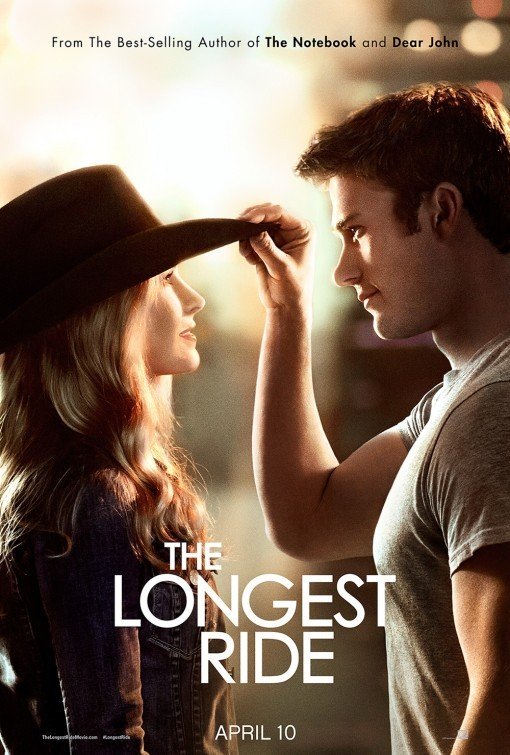

 The suit that Dylan Thomas was wearing in the days before his death in New York in 1953. Dylan was on his fourth lecture tour of America at the time. Jorge Fick, the owner of the suit, was an American abstract painter who was storing his clothes in the Chelsea Hotel, the same hotel in which Dylan was staying. Dylan is said to have borrowed the suit because, characteristically, he had run out of clean clothes.



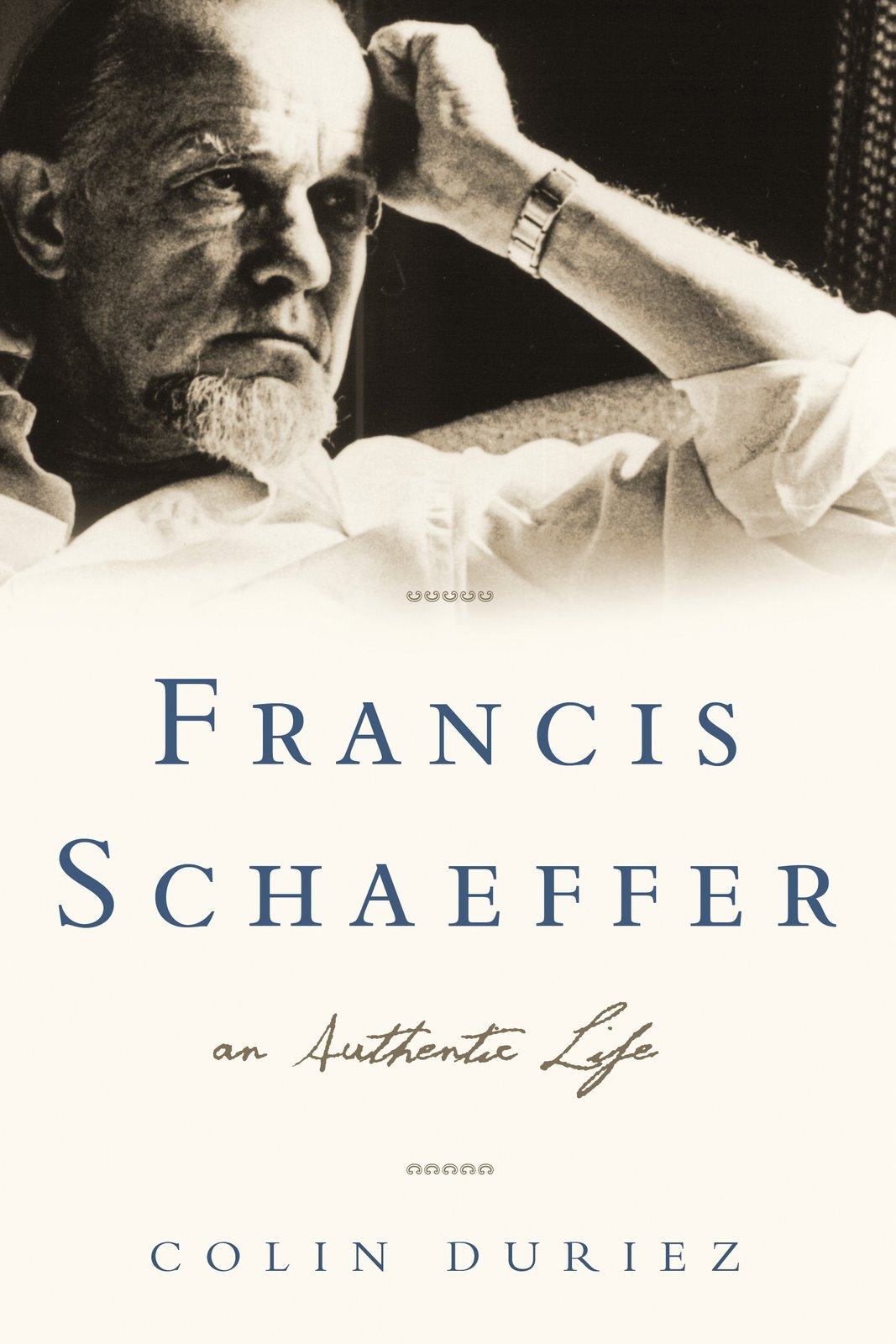

 Hopefully this list of things you can do will be a real help as you seek the Lord about how you can stand with Him against abortion. If you haven’t already read “Abortion: Attitudes For Action”, please read it. It’s not only important to find out what to do, but also the attitude of heart in which to do it.


 The Daily Hatch