Monthly Archives: May 2015

RESPONDING TO HARRY KROTO’S BRILLIANT RENOWNED ACADEMICS!! Part 25 (Dr. Lewis Wolpert, Emeritus Professor of Biology, University College London, DOES SCIENCE GO AGAINST HIS PRO-CHOICE VIEW?)


 Is God a Delusion? – William Lane Craig vs Lewis Wolpert

Published on Apr 30, 2012

Professor Craig debated Professor Wolpert at Central Hall, Westminster, Feb. 28, 2007, with John Humphrys in the chair. Professor Wolpert is Professor of Biology as Applied to Medicine at University College, London and is well known for his atheistic beliefs.

We welcome your comments in the Reasonable Faith forums:
http://www.reasonablefaith.org/forums

http://www.reasonablefaith.org

_________

Dr. Lewis Wolpert pictured below:

 Prof Lewis Wolpert


_________________

On November 21, 2014 I received a letter from Nobel Laureate Harry Kroto and it said:

…Please click on this URL http://vimeo.com/26991975

and you will hear what far smarter people than I have to say on this matter. I agree with them.

Harry Kroto

__________________________

There are 3 videos in this series and they have statements by 150 academics and scientists and I hope to respond to all of them. Wikipedia notes Lewis Wolpert CBE FRS FRSL FMedSci (born 19 October 1929) is South African-born British developmental biologist, author, and broadcaster.

Wolpert was born into a South African Jewish family.[1] He was educated at the University of Witwatersrand (BSc), at Imperial College London, and at King’s College London (PhD). As of 2010 he holds the position of Emeritus Professor of Biology as applied to Medicine in the Department of Anatomy and developmental biology at University College London….In addition to his scientific and research publications, he has written about his own experience of clinical depression in Malignant Sadness: The Anatomy of Depression (1999). He presented three television programmes based on the book and entitled A Living Hell on BBC2. He was made a Fellow of the Royal Society in 1980 and awarded the CBE in 1990. He became a Fellow of the Royal Society of Literature in 1999 and one of the first Fellows of the Academy of Medical Sciences in 1998. He serves as a Vice-President of the British Humanist Association.

_____________________________

In  the second video below in the 64th clip in this series are his words and  my response is below them. 

50 Renowned Academics Speaking About God (Part 1)

Another 50 Renowned Academics Speaking About God (Part 2)

A Further 50 Renowned Academics Speaking About God (Part 3)

I grew up at Bellevue Baptist Church under the leadership of our pastor Adrian Rogers and I read many books by the Evangelical Philosopher Francis Schaeffer and have had the opportunity to contact many of the evolutionists or humanistic academics that they have mentioned in their works. Many of these scholars have taken the time to respond back to me in the last 20 years and some of the names  included are  Ernest Mayr (1904-2005), George Wald (1906-1997), Carl Sagan (1934-1996),  Robert Shapiro (1935-2011), Nicolaas Bloembergen (1920-),  Brian Charlesworth (1945-),  Francisco J. Ayala (1934-) Elliott Sober (1948-), Kevin Padian (1951-), Matt Cartmill (1943-) , Milton Fingerman (1928-), John J. Shea (1969-), , Michael A. Crawford (1938-), Paul Kurtz (1925-2012), Sol Gordon (1923-2008), Albert Ellis (1913-2007), Barbara Marie Tabler (1915-1996), Renate Vambery (1916-2005), Archie J. Bahm (1907-1996), Aron S “Gil” Martin ( 1910-1997), Matthew I. Spetter (1921-2012), H. J. Eysenck (1916-1997), Robert L. Erdmann (1929-2006), Mary Morain (1911-1999), Lloyd Morain (1917-2010),  Warren Allen Smith (1921-), Bette Chambers (1930-),  Gordon Stein (1941-1996) , Milton Friedman (1912-2006), John Hospers (1918-2011), Michael Martin (1932-).Harry Kroto (1939-), Marty E. Martin (1928-), Richard Rubenstein (1924-), James Terry McCollum (1936-), Edward O. WIlson (1929-), Lewis Wolpert (1929), Gerald Holton (1922-),  and  Ray T. Cragun (1976-).

_____________


Lewis Wolpert Quote:

I am not against people being religious. I think it helps you a great deal. I am against religion when it interferes in the lives of other people…If you believe for example that the fertilized egg is really a human being which some people in your religious organizations believe then I am very hostile to you because it is nonsense and this is one of my subjects developmental biology or if you are against contraception for religious reason  then therefore AIDS can become more common. So I am not against people having a belief in God. I do believe that believe is false. Whatever arguments I  give you I have no delusion that I will persuade you to change your minds. 

______________________

Let me give three examples and then I want to move on to what Dr. Wolpert’s real issue is. First, I will  give the example of a former abortionist and an atheist at the time who gave up his lucrative business because of the advance of medical technology. Second, I will tell the story of a personal friend of mine who is a pro-life atheist named Dr. Kevin Henke. Third, I will list the evidence from 4 non christians who are experts in the area of genetics.

Abortionist Bernard Nathanson said it was the technology of the ultra-sound that caused him to shut down his abortion clinics since he released that these unborn babies were feeling pain. At the time Dr. Nathanson was a confirmed atheist. In his book he noted, “I worked hard to make abortion legal, affordable, and available on demand. In 1968, I was one of the three founders of the National Abortion Rights Action League. I ran the largest abortion clinic …and oversaw tens of thousands of abortions. I have performed thousands myself.” p. 5.
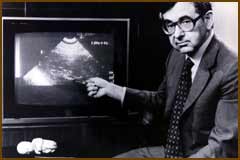
(Former Abortionist Bernard Nathanson pictured above.)

The Hand of God-Selected Quotes from Bernard N. Nathanson, M.D.,
“Embryos are Dependent Creatures. So are fetuses. So are we all dependent; on the kindness or tolerance of others, and on various biological and medical devices…Surely, dependency is not a measure of moral standing…” p. 128. The Silent Scream. By 1984, however, I had begun to ask myself more questions about abortion: What actually goes on in an abortion? I had done many, but abortion is a blind procedure. The doctor does not see what he is doing. He puts an instrument into a uterus and he turns on a motor, and a suction machines goes on and something is vacuumed out; it ends up as a little pile of meat in a gauze bag, I wanted to know what happened, so in 1984 I said to a friend of mine, who was doing fifteen or maybe twenty abortions a day, “Look, do me a favor, Jay. Next Saturday, when you are doing all these abortions, put an ultrasound device on the mother and tape it for me.”He did, and when he looked at the tapes with me in an editing studio, he was so affected that he never did another abortion…The tapes were amazing…weren’t of very good quality… and began to show it pro-life gatherings… p. 141Nathanson then recounts Silent Scream, the movie:

I was speaking at pro-life meetings around the country on weekends, and the response to the tape was so intense and dramatic that finally I was approached by a man named Don Smith, who wanted to make my tape into a film. I agreed that it would be a good idea. That is how The Silent Scream, which generated so much furor, came to be made. We showed it for the first time in Fort Lauderdale, Florida, on January 3, 1985. The reaction was instantaneous. Everybody was up in arms because The Silent Scream represented an enormous threat to the abortion forces and because it escalated the war (it’s not really a debate–we don’t debate each other; we scream at one another). For the first time, we had the technology and they had nothing. p.141 Emphasis mine.

My good friend Dr. Kevin R. Henke is a scientist and also an atheistic evolutionist. I had a lot of discussions with Kevin over religious views. I remember going over John 7:17 with him one day. It says:

John 7:17 (Amplified Bible)

17If any man desires to do His will (God’s pleasure), he will know (have the needed illumination to recognize, and can tell for himself) whether the teaching is from God or whether I am speaking from Myself and of My own accord and on My own authority.

I challenged Kevin to read a chapter a day of the Book of John and pray to God and ask God, “Dear God, if you are there then reveal yourself to me, and I pledge to serve you the rest of my life.”

Kevin did that and he even wrote down the thoughts that came to his mind and sent it to me and these thoughts filled a notebook.

Kevin did not become a Christian, but I am still praying for him. I do respect Kevin because he is an honest man. Interestingly enough he  told me that he was pro-life because the unborn baby has all the genetic code at  the time of conception that they will have for the rest of their life. Below are some other comments by other scientists:

Dr. Hymie Gordon (Mayo Clinic): “By all criteria of modern molecular biology, life is present from the moment of conception.”

Dr. Micheline Matthews-Roth (Harvard University Medical School): “It is scientifically correct to say that an individual human life begins at conception.”

Dr. Alfred Bongioanni (University of Pennsylvania): “I have learned from my earliest medical education that human life begins at the time of conception.”

Dr. Jerome LeJeune, “the Father of Modern Genetics” (University of Descartes, Paris): “To accept the fact that after fertilization has taken place a new human has come into being is no longer a matter of taste or opinion . . . it is plain experimental evidence.”

Science Matters #2: Former supermodel Kathy Ireland tells Mike Huckabee about how she became pro-life after reading what the science books have to say.

Back on April 27, 2009 Fox News ran a story by Hollie McKay(Supermodel Kathy Ireland Lashes Out Against Pro Choice,”) on Jill Ireland.

It’s no secret that the majority of Hollywood stars are strong advocates for a woman’s right to choose whether or not she wants to terminate a pregnancy, however former “Sports Illustrated” supermodel-turned-entrepreneur-turned-author Kathy Ireland has gone against the grain of the glitterati and spoken out against abortion.

“My entire life I was pro-choice — who was I to tell another woman what she could or couldn’t do with her body? But when I was 18, I became a Christian and I dove into the medical books, I dove into science,” Ireland told Tarts while promoting her insightful new book “Real Solutions for Busy Mom: Your Guide to Success and Sanity.”

“What I read was astounding and I learned that at the moment of conception a new life comes into being. The complete genetic blueprint is there, the DNA is determined, the blood type is determined, the sex is determined, the unique set of fingerprints that nobody has had or ever will have is already there.”

However Ireland admitted that she did everything she could to avoid becoming a believer in pro-life.

“I called Planned Parenthood and begged them to give me their best argument and all they could come up with that it is really just a clump of cells and if you get it early enough it doesn’t even look like a baby. Well, we’re all clumps of cells and the unborn does not look like a baby the same way the baby does not look like a teenager, a teenager does not look like a senior citizen. That unborn baby looks exactly the way human beings are supposed to look at that stage of development. It doesn’t suddenly become a human being at a certain point in time,” Ireland argued. “I’ve also asked leading scientists across our country to please show me some shred of evidence that the unborn is not a human being. I didn’t want to be pro-life, but this is not a woman’s rights issue but a human rights issue.”

What is the real problem that Dr. Lewis Wolpert has? Unlike others who have examined the evidence he just outright dismisses it.

For instance, in an email dated 6-25-14 I sent him this information about the accuracy of the Bible:

Dr. Wolpert, you want some evidence that indicates that the Bible is true? Here is a good place to start and that is taking a closer look at the archaeology of the Old Testament times. Is the Bible historically accurate? Here are some of the posts I have done in the past on the subject: 1. The Babylonian Chronicleof Nebuchadnezzars Siege of Jerusalem2. Hezekiah’s Siloam Tunnel Inscription. 3. Taylor Prism (Sennacherib Hexagonal Prism)4. Biblical Cities Attested Archaeologically. 5. The Discovery of the Hittites6.Shishak Smiting His Captives7. Moabite Stone8Black Obelisk of Shalmaneser III9A Verification of places in Gospel of John and Book of Acts., 9B Discovery of Ebla Tablets10. Cyrus Cylinder11. Puru “The lot of Yahali” 9th Century B.C.E.12. The Uzziah Tablet Inscription13. The Pilate Inscription14. Caiaphas Ossuary14 B Pontius Pilate Part 214c. Three greatest American Archaeologists moved to accept Bible’s accuracy through archaeology.

I sent Dr. Wolpert a letter  that included many scriptures from the Old Testament that showed that the prophets predicted  the Jews would be brought back from all over the world to rebirth the country of Israel again.

Is this good evidence to show there is a God behind it all?

 First, isn’t it worth noting that the Old Testament predicted that the Jews would regather from all over the world and form a new reborn nation of Israel. Second, it was also predicted that the nation of Israel would become a stumbling block to the whole world. Third, it was predicted that the Hebrew language would be used again as the Jews first language even though we know in 1948 that Hebrew at that time was a dead language!!!Fourth, it was predicted that the Jews would never again be removed from their land.

HAVE THESE NOT IN FACT HAPPENED? Yet in the article below Dr. Wolpert insists, ” God doesn’t exist. He hasn’t done anything in the last 2,000 years.”

_________________


Impossible Things

Six Impossible Things Before Breakfast

Peter S. Williams

Cell biologist Lewis Wolpert has recently attained a measure of notoriety with the British public, primarily through the publication of his book Six Impossible Things Before Breakfast: The Evolutionary Origins of Belief (Faber, 2006). He also participated in a recent public debate on the existence of God with Christian philosopher William Lane Craig. The debate was hosted by the well-known journalist John Humphrys, and reported by him in a major article for the Daily Telegraph.1

Professor Wolpert, who is a vice president of the British Humanist Association, admits, ‘I stopped believing in God when I was fifteen or sixteen because he didn’t give me what I asked for’2 but he has subsequently and repeatedly justified his atheism by asserting that, ‘There is absolutely no evidence for the existence of God.’3

Lewis Wolpert’s Presumption of Atheism and the ‘Insufficient Evidence’ Objection to Belief in God

Problems with the presumption of atheism

Relying on the ‘Insufficient Evidence’ objection is a risky gambit for the atheist. As philosopher William Rowe observes, ‘To fail to provide any arguments for the non-existence of God is … to virtually concede the debate to the person who at least gives some arguments, however weak, in behalf of the position that God exists.’4Arguing for atheism on the basis that there is insufficient evidence for belief in God (and that, in the absence of such evidence, the benefit of the doubt should be given to atheism rather than theism or agnosticism) is always vulnerable to the possibility that new evidence – or a better formulation and appreciation of old evidence – might turn up. Such atheism cannot afford to be dogmatic, for ‘even if the theist could not muster good arguments for God’s existence, atheism still would not be shown to be true.’5 As atheist philosopher Kai Nielsen admits: ‘To show that an argument is invalid or unsound is not to show that the conclusion of the argument is false.… All the proofs of God’s existence may fail, but it still may be the case that God exists.’6

According to Robert A. Harris, ‘a common sense look at the world, with all its beauty, apparent design, meaning, and vibrancy, would seem to predispose a neutral observer to presume that God exists unless good evidence for his non-existence could be brought to bear … The fact that materialists often struggle with this issue, working to explain away the design of the creation, for example, would seem to back up this claim.’7 Nevertheless, British humanist Richard Norman asserts that, ‘the onus is on those who believe in a god to provide reasons for that belief. If they cannot come up with good reasons, then we should reject the belief.’8It was another British philosopher, Antony Flew (who recently became a theist9), who most famously urged that the ‘onus of proof must lie upon the theist’,10 and that unless compelling reasons for God’s existence could be given there should be a ‘presumption of atheism’. However, by ‘atheism’ Flew meant merely ‘non-theism’ – a non-standard definition of ‘atheism’ that includes agnosticism but excludes atheism as commonly understood. The presumption of atheism is, therefore, not particularly interesting unless (as with Richard Norman explicitly and Lewis Wolpert implicitly) it really is the presumption of atheism rather than the presumption of agnosticism. However, the former is far harder to defend than the latter. Paul Copan writes:

the ‘presumption of atheism’ demonstrates a rigging of the rules of philosophical debate in order to play into the hands of the atheist, who himself makes a truth claim. Alvin Plantinga correctly argues that the atheist does not treat the statements ‘God exists’ and ‘God does not exist’ in the same manner. The atheist assumes that if one has no evidence for God’s existence, then one is obligated to believe that God does not exist – whether or not one has evidence against God’s existence. What the atheist fails to see is that atheism is just as much a claim to know something (‘God does not exist’) as theism (‘God exists’). Therefore, the atheist’s denial of God’s existence needs just as much substantiation as does the theist’s claim; the atheist must give plausible reasons for rejecting God’s existence … in the absence of evidence for God’s existence, agnosticism, not atheism, is the logical presumption. Even if arguments for God’s existence do not persuade, atheism should not be presumed because atheism is not neutral; pure agnosticism is. Atheism is justified only if there is sufficient evidence against God’s existence.11

As Scott Shalkowski writes: ‘suffice it to say that if there were no evidence at all for belief in God, this would [at best] legitimize merely agnosticism unless there is evidence against the existence of God.’12 Steven Lovell similarly points out that, to avoid a double standard, the atheist cannot use the ‘Insufficient Evidence’ argument alone, but must combine it with one or more of the other objections to belief:

Time and again I’ve heard people say that they don’t believe in God because they think there is insufficient evidence for His existence. If the person saying this is an atheist (one who thinks that God doesn’t exist, that ‘God exists’ is a false statement), then they imply that they do have enough evidence for their atheism. Clearly, if we reject belief in God due to (alleged) insufficient evidence, then we would be irrational to accept atheism if the evidence for God’s non-existence were similarly insufficient. It would be a radical inconsistency. If theistic belief requires evidence, so must atheistic belief. If we have no evidence either way, then the logical conclusion would be agnosticism.13

There are, then, a number of serious problems with Wolpert’s use of the ‘Insufficient Evidence’ claim to justify a default ‘presumption of atheism’.

A popular objection to Theism

Despite these problems, the ‘Insufficient Evidence’ objection to theism is widely used by contemporary atheists. A 1998 survey of 1,700 American skeptics conducted by Skeptics Society director Michael Shermer and MIT social scientist Frank Sulloway showed that 37.9% of non-theistic skeptics said they didn’t believe in God because there is no proof. The 2005 Dare to Engage Questionnaire, which surveyed nearly five hundred fifteen-to-eighteen-year-old students, found that among self-designated atheists (20% of respondents) who took the opportunity to give an explanation of their disbelief, the third most popular response (given by 13% of those giving a reason for their atheism) was that there is a pervasive lack of evidence for God.

The ‘Insufficient Evidence’ objection can be traced back to Bertrand Russell. Asked what he would say if he found himself standing before God on the judgement day being asked, ‘Why didn’t you believe in me?,’ Russell replied: ‘I’d say, “Not enough evidence, God! Not enough evidence!”’ Richard Dawkins says that in the same situation: ‘I’d quote Bertrand Russell’.14 (There is an interesting difference inattitude on this point between Russell et al on the one hand, and H.L. Mencken on the other hand, who answered essentially the same question by saying: ‘If I do fetch up with the twelve apostles, I shall say, “Gentlemen, I was wrong.”’15 In this context we should not shy away from the fact that atheists may – and note that I say mayrather than will – fail to appreciate genuine evidence for theism due to non-rational factors. As Piers Benn acknowledges, ‘since some theistic religions teach that sin can impair our thinking, we risk begging the question against those religions if we assume that if we can see no good reason for believing them, then they are almost certainly false.’16)

According to Richard Dawkins’ latest book, The God Delusion,17 if one examines natural theology, ‘the arguments turn out to be spectacularly weak.’18 He actually goes so far as to say that: ‘there is no evidence in favour of the God Hypothesis.’19This is an astonishing claim for Dawkins to make, since he once defined biology as ‘the study of complicated things that give the appearance of having been designed for a purpose.’20 So, according to Dawkins himself, there is, at the very least, prima facie evidence for the God hypothesis. The Humanist Manifesto II, drafted by Paul Kurtz and Edwin H. Wilson, declares with more caution than Dawkins or Wolpert that: ‘We find insufficient evidence for belief in the existence of a supernatural … theism … is an unproven and outmoded faith.’21 (The term ‘outmoded’ here is a fine example of what C.S. Lewis called ‘chronological snobbery’.22) Taking a historical view on the same objection, Kai Nielsen states that:

Starting with the early Enlightenment figures, finding acute and more fully developed critiques in Hume and Kant, and carried through by their contemporary rational reconstructers (e.g., Mackie, and Martin), the various arguments for the existence of God have been so thoroughly refuted that few would try to defend them today and even those few who do, do so in increasingly attenuated forms.23

Professor Wolpert likewise praises David Hume’s scepticism, stating: ‘Hume is the only philosopher I take seriously.’24 However, such claims are surprisingly out of touch with the reality of contemporary practice in the philosophy of religion. What William Lane Craig calls ‘the obsolete, eighteenth century objections of Hume and Kant’25 have received substantial replies from contemporary philosophers.26 David Hume, in particular, is widely regarded as an over-rated thinker who inspires much unnecessary kow-towing.27 According to James F. Sennett and Douglas Groothuis: ‘Natural theology is alive and well in contemporary philosophy; the supposed Humean refutation of the enterprise is a myth whose exposure is long overdue.’28

Many contemporary philosophers give their endorsement to the project of natural theology, and while individual arguments for God may often be defended in more rigorously cautious terms than was the norm in medieval scholasticism, today’s natural theology can hardly be called ‘attenuated’ when philosophers like Robert C. Koons are prepared to say that, ‘the evidence for theism has never been so clear and so strong as it is now.’29

Questioning the demand for evidence

However, questioning the claim that there is insufficient evidence for God’s existence is not the only way of responding to Wolpert’s objection. Many philosophers question the assumption that it is necessarily irrational to believe in God in the absence of evidential justification. After all, there are plenty of other beliefs about reality that appear to be rational despite the complete absence of evidential justification (e.g. the belief that the world is not a computer simulation as in the film The Matrix). In addition, the demand for evidence can neither be fulfilledad infinitum (i.e. it is impossible to justify all our beliefs) nor can it be consistently applied to itself (what evidential justification is there for the belief that all beliefs must have evidential justification in order to be rational?).

Sam Harris is another prominent atheist who, like Wolpert, condemns theists for adhering to a belief without any evidential basis: ‘While believing strongly, without evidence, is considered a mark of madness or stupidity in any other area of our lives, faith in God still holds immense prestige in our society.’30 Harris makes two mistakes in the space of this sentence. On the one hand, few theists would concede Harris’s assumption that their belief in God is predicated upon an absence of evidence. On the other hand, evidence is not always necessary for rational belief. Contrary to Harris’s statement, believing strongly without evidence is, in fact, considered a mark of rationality and common sense in many areas of life. For example, seriously doubting that the universe is older than five minutes old would rightly be considered a mark of madness or stupidity by most people. But the belief that the universe is older than this, rather than having been created five minutes ago complete with every empirical appearance of greater age (a belief held by Harris), must by the very nature of the case be accepted without evidential support. Hence, ‘being rational’ and ‘having evidential support’ cannot be one and the same thing. It is all well and good to demand that people hold all their beliefs rationally (for example, we shouldn’t pick our beliefs at random and we shouldn’t hold them in the face of overwhelming counter-evidence), but there is little sense in demanding that people hold all their beliefs on the basis of evidence.

Harris writes that, ‘An atheist is simply a person who believes that [theists] should be obliged to present evidence for [God’s] existence.’31 But the demand for every belief to be justified with evidence is self-defeating (on the one hand, what is the evidence for this claim? On the other hand, how would one ever satisfy this demand?). This means that the basic ‘not enough evidence’ argument deployed by Dawkins, Harris, Wolpert and other atheists is unsound because it is built upon a false premise. As philosopher John O’Leary-Hawthorne points out, ‘The basic argument from no evidence relies on the idea that in order to rationally believe something we need evidence for it. But from the perspective of many philosophers, the latter claim represents a gross oversimplification.’32

For example, we often find ourselves with perceptual beliefs (e.g. ‘I see a tree’) not because we have argued our way to the belief in question, but simply because our cognitive faculties lead us to hold that belief. Then again, I simply rememberdrinking coffee with friends yesterday; I don’t argue my way to the conclusion that I had coffee with friends yesterday based upon the available evidence. Despite the fact that my memory has proven unreliable on some occasions (something I only know through memory), there is no need for me to obtain independent evidence as to whether or not I drank coffee with friends yesterday in order for my belief in this matter to be rational. The truthful nature of my memory in this matter is one of my ‘basic’ beliefs. Fundamental moral beliefs are likewise basic beliefs: ‘Somewhere in one’s moral reasoning one reaches a set of beliefs that are bearers of intrinsic value; they are not valued as a means to some other end or for some extrinsic reason. At this level one reaches one’s basic moral beliefs.’33 ‘A whole host of other kinds of beliefs are also typically basic. There are, for example, elementary truths of logic… There are certain mathematical beliefs. And there are certain framework or fundamental beliefs such as belief in an external world, belief in the self, etc. These are foundational beliefs that we typically reason from and not to’.34 Indeed, the existence of some basic beliefs in our web of beliefs is an epistemic necessity, for as Roy Clouser points out:

it is impossible that the only beliefs we have the right to be certain about are the ones that we have proven … First, if everything needed to be proven, then the premises of every proof would also need to be proven. But if you need to prove the premises of every proof, you would then need a proof for your proof, and a proof for the proof of your proof, and so on – forever. Thus it makes no sense to demand that everything be proven because an infinite regress of proofs is impossible. So when the premises of an argument are themselves in need of proof, the series of arguments needed to prove its premises must eventually end with an argument whose premises are all ‘basic’, that is, not in need of proof … not all beliefs need proof, and proving anything depends on having beliefs that don’t need it … A second reason why not every belief needs proof is that the rules for drawing inferences correctly, the truths of logic and mathematics, cannot themselves have proofs because they are the very rules we must use in order to prove anything. If we were to use them to construct proofs of themselves, the proofs would already be assuming the truth of the very rules we were trying to prove! So proofs need belief in unproven rules as well as premises that we can know without proof.35

Without rejecting the claim that there are good arguments for belief in God, it can be cogently argued that belief in God can be rational without being based upon arguments for his existence. As Alan G. Padgett writes, ‘belief in God can be and often is perfectly legitimate and proper without any philosophical arguments. In other words, Christian faith does not depend upon the practice of philosophy (specifically natural theology) but rather upon more direct, immediate, and spiritual sources of the knowledge of God.’36 Such ‘properly basic’ belief in God is not a matter of ‘blind faith’, since it is not the result of simply picking a belief out of the air and since it remains sensitive to the need to defend belief against evidential challenges.

William Lane Craig attempted to point out this defect in the ‘Insufficient Evidence’ argument to Professor Wolpert before their recent debate on the existence of God in London, but without success.

Craig versus Wolpert – a mini-debate from Radio 4

In a mini debate between William Lane Craig and Lewis Wolpert held on BBC Radio 4 prior to their lengthier public encounter on the subject of God’s existence, Wolpert simply failed to understand Craig’s philosophical points about the ‘Insufficient Evidence’ objection. Having said that he thinks there is evidence for God (Craig mentions the Kalam cosmological argument, the moral argument and the fine tuning design argument), Craig challenged Wolpert’s assumption that one must have evidence for God in order to rationally believe in God. Craig points to the existence of these ‘properly basic beliefs’ which are rational to hold but which are not justified on the basis of other beliefs. Despite Craig explaining, with the use of several analogies, that without properly basic beliefs humans could not rationally believe anything (because we would have to have an infinite regress of evidence for all our beliefs), Wolpert revealed that he just didn’t get the point by simply repeating the same ‘Insufficient Evidence’ objection.

Far from incidentally, the same point about infinite regress and explanation came into play when Craig answered Wolpert’s use of the ‘Who designed the designer?’ objection to the design argument (an objection beloved by Richard Dawkins in The God Delusion). Craig pointed out that for an explanation of some set of data to be rational, one need not have an explanation of the explanation. If one did need one, explanation would be impossible because to explain anything would invoke an infinite regress, in which case science would be impossible. Hence Wolpert’s use of the ‘explain that explanation’ demand is rather ironic!

Philosopher Tom Price has provided a concise summary of the public debate between Craig and Wolpert following their Radio 4 encounter, a debate which showed Wolpert failing to learn the lesson of his mini-debate with Craig:

Craig: God exists, here is the evidence.

Wolpert: God doesn’t exist, there is no evidence.

Craig: God exists, here is the evidence.

Wolpert: God doesn’t exist, who made God?

Craig: God does exist, he is an uncaused eternal being. Here is the evidence.

Wolpert: God doesn’t exist. He hasn’t done anything in the last 2,000 years.

Craig: That’s chronological snobbery. You don’t tell the time with an argument; you don’t tell if an argument is true or false, or if evidence is good or bad with a watch.

Wolpert: God doesn’t exist. We believe because we have a notion of cause and effect. This leads to toolmaking, and also to belief in God.

Craig: That’s the genetic fallacy. To confuse the origin of a belief with its truth or falsity. You need to deal with the arguments and evidence that I have presented.

Wolpert: God doesn’t exist. There is no evidence. Who made God?

Craig: Here is the evidence. God is an uncaused being. God does exist.

Wolpert: God doesn’t exist. There is no evidence.

Craig: God does exist. Here is the evidence.37

Or, as John Humphrys, who chaired the debate, reports:

You might assume that a debate between someone like Craig and someone like Wolpert – a Jew who lost his faith when he was 15 – would produce a riveting intellectual knockabout at least, and a profound discussion of whether God is delusion or reality at best. Sadly it didn’t work out like that. They might as well have been talking in different languages.

Here’s the essence of Craig’s case:

  • God created the universe. The proof lies in the premise that whatever begins to exist has a cause. The universe began to exist; therefore it has a cause. It was brought into existence by something which is greater than (and beyond) it. And that something was a ‘personal being’.
  • God ‘fine tunes’ the universe … There is no other logical explanation for the way things operate.
  • Without God there can be no set of [objective] moral values.
  • The ‘historical facts’ of the life of Jesus prove the basis for Christianity.
  • God can be known and experienced [in a properly basic manner].

And here’s the essence of Wolpert’s rebuttal: its all bunkum. Every bit of it.38

Wolpert’s defence of atheism consisted of a few irrelevant, invalid arguments against the rationality of belief in God’s existence on the one hand (instances of chronological snobbery and the genetic fallacy respectively) and a total failure to interact with the purported evidence for God on the other hand – apparently on the grounds ‘that there is no evidence’ with which to interact! Given Craig’s use of theKalam cosmological argument, it is interesting to note that Wolpert candidly admits he has no alternative explanation for the Big Bang: ‘And then, of course, there’s the whole problem of where the universe itself came from. And that is a great mystery. Big bang, big schmang! How did that all happen? I haven’t got a clue.’39 How can someone who makes such repeated use of the ‘Insufficient Evidence’ objection fail so totally to even ‘deal with the argument and evidence’ presented by Craig? The answer to this question recently became clear in an interview between Wolpert and another Christian philosopher.

Wolpert’s question-begging obscurantism

In the hands of Lewis Wolpert, the ‘Insufficient Evidence’ objection is not at all what it seems. Wolpert says that atheism is justified because: ‘There is absolutely no evidence for the existence of God.’40 However, this assertion amounts to a magician-worthy piece of misdirection, a philosophical sleight-of-hand. Professor Keith Ward of Oxford University had the following revealing exchange with Wolpert concerning his ‘Insufficient Evidence’ justification in the course of an interview for the March 2007 edition of Third Way magazine:

Ward: What sort of evidence would count for you? Would it have to be scientific evidence of some sort?

Wolpert: Well, no… I think I read somewhere: If he turned the pond on Hamstead Heath into good champagne, it would be quite impressive.

Ward: A miracle would be sufficient?

Wolpert: But then you have to remember what David Hume said, that you wouldn’t believe in a reported miracle unless ‘the falsehood of [the] testimony would be more miraculous than the event which [it] relates.’

Ward: It’s one of his worst arguments, in my view.

Wolpert: Hume is the only philosopher I take seriously. I’m big against philosophy.41

Wolpert justifies his atheism by complaining that there is no evidence for the existence of God. So what sort of evidence would he accept? Would he accept scientific evidence? On Humean grounds (grounds that are widely accepted by contemporary philosophers to be defunct), he would not. Later in the same interview Ward asked Wolpert whether (in principle) there could be evidence of providence in history? Wolpert replied that there ‘absolutely [could] not’42 be any such evidence. Wolpert seems to include the evidence of religious experience among purported scientific evidence for God, because having provided a standard explanation of such experience in terms of evolutionary psychology (and despite admitting ‘I don’t have a good explanation, to be quite honest’43 for why he himself has escaped the evolutionary pressure to believe), Wolpert feels that he can dismiss all such experiences as delusional (an unsurprising move for someone who is a self-confessed ‘reductionist and a materialist’44). If Wolpert rules out scientific evidence for theism, will he accept philosophical evidence? He will not, because he is ‘big against philosophy’ (although he will embrace a double standard in order to allow Hume into the fold, to shore it up against scientific evidence for deity).

Having excluded a priori the very possibility of there being any evidence for God, it is perhaps unsurprising that Wolpert can find none. Nor is it surprising that he would fail to engage with purported evidence for God offered to him by Professor Craig. What is surprising is that having excluded a priori the possibility of there being any evidence for God, Wolpert should shirk the task of showing why Craig’s evidence is insufficient (where exactly do Craig’s arguments for God go wrong? Do they have false premises? Do they have invalid logic? Wolpert does not say) whilst continuing to justify his atheism primarily by repeating that ‘the evidence for God is not very good from my point of view.’45

Wolpert’s complaint is ultimately not that there is insufficient evidence for theism. Rather it is that since the possibility of there being sound evidence for theism would require materialism to be false, and since materialism is true, there can’t possibly be any sound evidence for theism. In other words Wolpert doesn’t merely think that there isn’t any evidence for God, he thinks that there can’t be any evidence for God. These are significantly different claims, and so it is not a trivial matter when Wolpert substitutes one for the other. There would be nothing wrong with taking this approach if Wolpert provided arguments purporting to show that materialism is true (or at least that theism is false), if he was prepared to enter into philosophical debate concerning the soundness of those arguments, and if he was prepared to extend the same courtesy to the theistic arguments of academics like Craig or Ward. Unfortunately Wolpert does not appear to be interested in fulfilling any of these conditions. He simply repeats the mantra that there is no evidence for God. Like doubting Thomas, Lewis Wolpert says ‘I will not believe unless I see’ – but unlike Thomas he keeps his eyes resolutely shut.

Wolpert and the Origin of Life

For example, during his interview with Keith Ward, Wolpert commented that:

How the cell came about is just… Wow! It’s absolutely mind-blowing. It’s truly miraculous – almost in a religious sense. I think we understand quite a lot about evolution – although even in later evolution there are problems for which we don’t have good explanations – but the origin of life itself, the origin of the cell itself, that’s not solved at all.46

Having heard such an interesting admission of scientific ignorance, Ward asked Wolpert whether he was happy to be described as a neo-Darwinian, and the following revealing exchange followed:

Wolpert: I’m afraid I would have to say that, yes.

Ward: So, even though you find it ‘miraculous’, you think we must account for the emergence of life purely in terms of random mutation and natural selection?

Wolpert: That’s the line we must pursue, yes.

Ward: Why ‘must’?

Wolpert: Because there really is no other way. Otherwise, you can only invoke God.47

In other words, Wolpert believes that the inherent capacities of the natural world (putting aside the cosmological question of why there is a natural world in the first place) must account for – and therefore must be capable of accounting for – both the origin and diverse nature of life on Earth. And this conclusion is philosophically deduced (not scientifically inferred) from the assumption that God could not possibly feature in the true account of these matters – presumably because Wolpert believes that there is no God. Once again Wolpert closes his eyes to the possibility of evidence pointing towards God’s existence by simply assuming that God does not exist! Once again, Wolpert’s use of the ‘Insufficient Evidence’ objection to belief in God is exposed as a rhetorical facade hiding a circular argument.

Conclusion

‘I am going to confront you with evidence before the Lord’ (1 Samuel 12:7).

Atheists, agnostics and theists alike should avoid Lewis Wolpert’s narrow-minded approach to the question of God’s existence, an approach that amounts to saying, ‘My mind is made up, don’t confuse me with the evidence.’ We all have our own personal default position on the subject of God’s existence, but we owe it to each other and to ourselves (and perhaps we even owe it to God) to take the alternatives seriously enough to decry blind faith.

Book title: Six Impossible Things Before Breakfast
Author: Lewis Wolpert
Keywords: Atheism, theism, evidence, proof, belief, rationality, God
Publisher: Faber and Faber
Pub. date (h/b): 16 March 2006
Pub. date (p/b): 4 January 2007

Recommended Resources

Paul Copan, ‘The Presumptuousness of Atheism’

William Lane Craig, ‘The Existence of God and the Beginning of the Universe’

William Lane Craig, ‘The Teleological Argument and the Anthropic Principle’

William Lane Craig, ‘Review: The Design Inference’

William Lane Craig, ‘The Indispensability of Theological Meta-Ethical Foundations for Morality’

William Lane Craig, ‘Contemporary Scholarship and the Historical Evidence for the Resurrection of Jesus Christ’

John Gray, ‘Myths of Meaning: Breaking the Spell and Six Impossible Things Before Breakfast’, New Statesman, 20 March 2006

John Humphrys, ‘The Return of God?’. Here is another eye-witness report of the Craig-Wolpert debate (The Peter Williams who has a comment on this page is not Peter S. Williams, the author of this article!)

Duncan McMillan, ‘Origins of Belief [a review of Six Impossible Things Before Breakfast]’

Keith Ward and Lewis Wolpert, ‘The Hard Cell’, Third Way, March 2007

Peter S. Williams, ‘What do you believe is true even though you cannot prove it? – Comparing Dawkins’ faith with Flew’s evidence

Peter S. Williams, ‘A Change of Mind for Antony Flew’

Peter S. Williams, ‘Design and the Humean Touchstone’

Peter S. Williams, ‘An Introduction to Intelligent Design Theory’

R. Douglas Geivett and Gary R. Habermas (eds.), In Defence of Miracles, (Apollos, 1997)

James F. Sennett and Douglas Groothuis (eds.), In Defence of Natural Theology: A Post-Humean Assessment, (IVP, 2005)


References

[1] John Humphrys, ‘The Return of God?’.

[2] Lewis Wolpert, ‘The Hard Cell’, Third Way, March 2007, p. 16.

[3] Wolpert, ‘The Hard Cell’, p. 17.

[4] William Rowe ‘Reflections on the Craig-Flew Debate’ in Stan W. Wallace (ed.),Does God Exist? The Craig-Flew Debate, (London: Ashgate, 2003) pp. 70–71.

[5] Paul Copan, ‘The Presumptuousness of Atheism’.

[6] Kai Nielsen, Reason and Practice, (New York: Harper and Row, 1971) pp. 143–44.

[7] Robert A. Harris, The Integration of Faith and Learning: A Worldview Approach, (Eugene: Cascade, 2004) p. 83.

[8] Richard Norman, On Humanism, (Routledge, 2004) p. 16.

[9] cf. Peter S. Williams, ‘A Change of Mind for Antony Flew’.

[10] Antony Flew, The Presumption of Atheism, (London: Pemberton, 1976) p. 14.

[11] Copan, ‘The Presumptuousness of Atheism’.

[12] Scott A. Shalkowski, ‘Atheological Apologetics’ in R. Douglas Geivett and Brendan Sweetman (eds.), Contemporary Perspectives on Religious Epistemology, (Oxford, 1992) p. 63.

[13] Steven Lovell, ‘Evidence and Atheism’ (apparently no longer online).

[14] Richard Dawkins, ‘Richard Dawkins: You Ask The Questions Special’, The Independent, 5 December 2006.

[15] H.L. Mencken, quoted by Alistair Cooke.

[16] Piers Benn, ‘Is Atheism A Faith Position?’, Think, 13, summer 2006, p. 27.

[17] On The God Delusion, cf: Terry Eagleton, ‘Lunging, Flailing, Mispunching’,London Review of Books Vol. 28 No. 20, 19 October 2006; Jim Holt, ‘Beyond Belief’, New York Times 22 October 2006;
Alister E. McGrath, ‘The Dawkins Delusion’ and ‘Is God a Delusion? Atheism and the Meaning of Life’;
Thomas Nagel, ‘The Fear of Religion’, New Republic, 23 October 2006;  H. Allen Orr, ‘A Mission to Convert’, New York Review of Books; Alvin Plantinga, ‘The Dawkins Confusion’; Richard Swinburne, ‘Response to Richard Dawkins’s Criticisms in The God Delusion; Peter S. Williams, ‘The Big Bad Wolf, Theism and the Foundations of Intelligent Design: A Review of Richard Dawkins’ The God Delusion; ‘Who’s Afraid of the Big Bad Wolf? Dawkins’ Failed Rebuttal of Natural Theology’; ‘Peter S. Williams Discusses The God Delusion; The God DelusionDeconstructed – Southampton University’.

[18] Richard Dawkins, The God Delusion, (London: Bantam Press, 2006) p. 2.

[19] Dawkins, The God Delusion, p. 59.

[20] Richard Dawkins, The Blind Watchmaker, (Penguin, 1990) Preface, p. x.

[21] Paul Kurtz and Edwin H. Wilson, Humanist Manifesto II (1973) (my italics).

[22] cf. Art Lindsley, ‘C.S. Lewis on Chronological Snobbery’.

[23] Kai Nielsen, ‘Naturalistic explanations of theistic belief’, A Companion to the Philosophy of Religion, p. 403.

[24] Nielsen, ‘Naturalistic explanations of theistic belief’.

[25] William Lane Craig, ‘The Evidence for Christianity’.

[26] On Kant, see Norman L. Geisler, Christian Apologetics, (Baker, 1976).

[27] cf: R. Douglas Geivett and Gary R. Habermas (eds.), In Defence of Miracles, (Apollos, 1997); James F. Sennett and Douglas Groothuis (eds.), In Defence of Natural Theology: A Post-Humean Assessment, (Downers Grove: IVP, 2005); Richard Swinburne, ‘The Argument from Design’ in R. Douglas Geivett and Brendan Sweetman (eds.), Contemporary Perspectives on Religious Epistemology, (Oxford University Press, 1992); Charles Taliaferro and Anders Hendrickson, ‘Hume’s Racism and His Case Against the Miraculous’, Philosophia Christi, Volume 4, Number 2, 2002; Peter S. Williams, ‘Design and the Humean Touchstone’.

[28] James F. Sennett & Douglas Groothuis, editors of In Defence of Natural Theology: A Post-Humean Assessment, (IVP, 2005) p. 15.

[29] Robert C. Koons, ‘Science and Theism: Concord, not Conflict’, in Paul Copan & Paul K. Moser (eds.), The Rationality of Theism, (London: Routledge, 2003) p. 73.

[30] Sam Harris, Letter to a Christian Nation, (Bantam, 2007) p. 67.

[31] Harris, Letter to a Christian Nation, p. 51.

[32] John O’Leary-Hawthorne, ‘Arguments for Atheism’ in Michael J. Murray (ed.),Reason for the Hope Within, (Eerdmans, 1999) p. 124.

[33] Kelly James Clark, Return to Reason, (Eerdmans, 1998) p. 130.

[34] Clark, Return to Reason, p. 129.

[35] Roy Clouser, Knowing with the heart, (IVP, 1999) pp. 68–71.

[36] Alan G. Padgett, ‘The Relationship Between Theology and Philosophy’, James K. Beilby (ed.), For Faith and Clarity, (Baker, 2006) p. 39.

[37] Tom Price, ‘Craig vs. Wolpert’.

[38] John Humphrys, ‘The Return of God?’.

[39] Wolpert, ‘The Hard Cell’, p. 18.

[40] Wolpert, ‘The Hard Cell’, p. 17.

[41] Wolpert, ‘The Hard Cell’, p. 17.

[42] Wolpert, ‘The Hard Cell’, p. 17.

[43] Wolpert, ‘The Hard Cell’, p. 18.

[44] Wolpert, ‘The Hard Cell’, p. 17.

[45] Wolpert, ‘The Hard Cell’, p. 16.

[46] Wolpert, ‘The Hard Cell’, p. 18.

[47] Wolpert, ‘The Hard Cell’, p. 18.

© 2007 Peter Williams

_______

Unbelievable? Is Luke’s Description of Quirinius Historically Inaccurate?

243In my recent appearance on Unbelievable? with Justin Brierley (airing Saturday, August 24th2013), I had the opportunity to speak with a skeptic who cited Luke’s description of Quirinius (Luke 2:1–3) as a historical contradiction. Luke wrote that Joseph and Mary returned to Bethlehem for a census and “this was the first census taken while Quirinius was governor of Syria.” The Jewish historian, Josephus, confirmed the existence of this governor, but placed Quirinius’ ruling term from AD 5 to AD 6. This period of time is too late, however, as Matthew wrote that Jesus was born during the reign of Herod the Great (who according to Josephus, died nine years prior to the governorship of Quirinius). The authority of Josephus seems to be at odds with the accuracy of the Gospel writers, and like the account related to the execution of John the Baptist, we are left to decide which account is accurate (and which is not). Once again, it’s time to apply the overarching principles of witness reliability:

Principle One: Make Sure the Witnesses Were Present in the First Place
Both Luke and Josephus are historians relying on the observations and testimony of others (See Luke’s introduction in Luke 1:1-4), but Luke (writing in the late 50’s AD) has access to witnesses and sources far closer to the event than does Josephus (writing in the late 70’s AD and in the early 90’s AD). There is good reason to believe Luke is relying heavily on the testimony of Mark and Peter, and Mark’s Gospel is the earliest narrative of these events (written within 20 years of John’s execution); the case for the early dating of Luke’s text is cumulative and compelling. Luke’s account was, therefore, available to the early Christian and non-Christian observers of the life of Jesus. Interestingly, archaeological discoveries in the nineteenth century seem to confirm Quirinius (or someone with the same name) was also proconsul of Syria and Cilicia from 11 BC to the death of Herod. Quirinius’s name has been discovered on a coin from this period of time (as cited by John McRay in Archaeology and the New Testament), and on the base of a statue erected in Pisidian Antioch (as cited by Sir William Ramsay, The Bearing of Recent Discovery on the Trustworthiness of the New Testament). Quirinius may actually have ruled Syria during two separate periods and have taken two separate censuses. This is consistent with Luke’s account. In Luke 2:2, Luke refers to the “first census taken while Quirinius was governor of Syria” (describing Quirinius’ rule as the governor’s procurator), and in Acts 5:37, Luke describes a second census taken most likely between 6-7AD (as described by Josephus) when Quirinius was the formal governor of the region. Both Josephus and Luke link this second census to an uprising under Judas of Galilee. Only Luke’s sources were present during the actual events; as a result, Luke’s description of two separate censuses is reasonable.

Principle Two: Try to Find Some Corroboration for the Claims of the Witnesses
Historical accounts (like accounts from cold-case homicide witnesses) can be verified in a variety of ways. Sometimes we use physical evidence external to the account (like archaeological discoveries) and sometimes we use the testimony of other witnesses. While early skeptics of Luke’s account in the Book of Acts argued Luke to be unreliable (given he was the only ancient source for many of the events he described), archaeological discoveries quickly exonerated Luke as a historian. Luke accurately described a number of ancient people and locations (i.e. Lysanias, Pontius Pilate, Sergius Paulus, Gallio, Iconium and the Politarchs). In addition, Luke included a correct description of two ways to gain Roman citizenship (Acts 22:28), an accurate explanation of provincial penal procedure (Acts 24:1-9), a true depiction of invoking one’s roman citizenship, including the legal formula, de quibus cognoscere volebam (Acts 25:18), and an accurate account of being in Roman custody and the conditions of being imprisoned at one’s own expense (Acts 28:16 and Acts 28:30-31). Archaeologist and former Lukan skeptic, Sir William Ramsey investigated the archaeological discoveries relevant to Luke’s account and wrote, “(There are) reasons for placing the author of Acts among the historians of the first rank” (from St. Paul the Traveller and the Roman Citizen).

Principle Three: Examine the Consistency and Accuracy of the Witnesses
Accuracy and consistency are additional important aspects of eyewitness reliability. If we’re going to use Josephus’ record to discredit Luke, we need to at least be fair about assessing Josephus’ methodology and accuracy. For many years, the “post-enlightenment” academic consensus related to Luke and Josephus favored Josephus’ version of events, but recent scholarship, focusing solely on the textual criticism of Josephus, has challenged the consensus. Theodor Zahn, W. Lodder, Friedrich Spitta, W. Weber and more recently, D. R. Schwartz and John H. Rhoads have highlighted specific detrimental practices employed by Josephus. These scholars have noted Josephus’ susceptibility to “mistaken duplications” and to reporting simultaneous events from different sources “as if they happened at different times” (Rhoads). In addition, Josephus’ accounts are sometimes less focused on chronological beginnings or endings than they are on narrative “usefulness”. Josephus was not consistent nor completely accurate in his historical record. While many supporters of the Josephan account will at least admit Josephus was susceptible to numerical error and mistaken dating, they insist Josephus did not err with the date of Quirinius’ census. To make matters worse, the earliest copy of any of Josephus’ work is separated from the original authorship by 1100 years; we can’t even be sure we have an accurate version of what Josephus originally wrote.

Principle Four: Examine the Presence of Bias on the Part of the Witnesses
Skeptics often claim we can’t trust the gospel authors because they were Christians and presented Jesus in a unfairly favorable manner. I’ve written about this in Cold Case Christianity and demonstrated the difference between a presuppositional bias and a conviction based on observation, but even if Luke was biased in some way, what advantage does his dating of the census give his account? Luke’s version of events was written much earlier than that of Josephus; an inaccuracy in Luke’s birth narrative would not serve his purpose in providing Theophilus and accurate and “orderly account,” but would instead expose Luke as a liar. The birth narrative was clearly present in the earliest versions of Matthew and Luke’s gospels, as the birth and infancy details are referenced by the first students of the Apostles, including Ignatius, Polycarp and Clement. Scholars have observed that Josephus was not without bias of his own. As a patron of the emperor (Vespasian), Josephus often displays a pro-Roman partiality (even though he claims to be resisting such bias).

In trying to evaluate which ancient historical account (Luke or Josephus) is accurate, I once again apply the four dimensional template I’ve just described. I know better than to disqualify a witness simply because he or she might be wrong about a particular detail, but in this instance, I see no reason to favor Josephus’ account over that of Luke, particularly after evaluating the two accounts for historical proximity, corroboration, consistency, accuracy and bias. Once again, scholars don’t discredit the entire record of Josephus simply because they recognize was wrong in a number of places. We ought to afford the Biblical gospel authors the same benefit of the doubt.

J. Warner Wallace is a Cold-Case Detective, a Christian Case Maker, and the author of Cold-Case Christianity

– See more at: http://coldcasechristianity.com/2013/unbelievable-is-lukes-description-of-quirinius-historically-inaccurate/#sthash.5GrJ1VeF.dpuf

Related posts:

FRANCIS SCHAEFFER ANALYZES ART AND CULTURE Part 35 Robert M. Pirsig (Feature on artist Kerry James Marshall)

FRANCIS SCHAEFFER ANALYZES ART AND CULTURE Part 34 Aleksandr Solzhenitsyn (Feature on artist Shahzia Sikander)

FRANCIS SCHAEFFER ANALYZES ART AND CULTURE Part 33 Aldous Huxley (Feature on artist Matthew Barney )

FRANCIS SCHAEFFER ANALYZES ART AND CULTURE Part 32 Steven Weinberg and Woody Allen and “The Meaningless of All Things” (Feature on photographer Martin Karplus )

FRANCIS SCHAEFFER ANALYZES ART AND CULTURE Part 31 David Hume and “How do we know we know?” (Feature on artist William Pope L. )

FRANCIS SCHAEFFER ANALYZES ART AND CULTURE Part 30 Rene Descartes and “How do we know we know?” (Feature on artist Olafur Eliasson)

FRANCIS SCHAEFFER ANALYZES ART AND CULTURE Part 29 W.H. Thorpe and “The Search for an Adequate World-View: A Question of Method” (Feature on artist Jeff Koons)

FRANCIS SCHAEFFER ANALYZES ART AND CULTURE Part 28 Woody Allen and “The Mannishness of Man” (Feature on artist Ryan Gander)

FRANCIS SCHAEFFER ANALYZES ART AND CULTURE Part 27 Jurgen Habermas (Featured artist is Hiroshi Sugimoto)

FRANCIS SCHAEFFER ANALYZES ART AND CULTURE Part 26 Bettina Aptheker (Featured artist is Krzysztof Wodiczko)

FRANCIS SCHAEFFER ANALYZES ART AND CULTURE Part 25 BOB DYLAN (Part C) Francis Schaeffer comments on Bob Dylan’s song “Ballad of a Thin Man” and the disconnect between the young generation of the 60’s and their parents’ generation (Feature on artist Fred Wilson)

FRANCIS SCHAEFFER ANALYZES ART AND CULTURE Part 24 BOB DYLAN (Part B) Francis Schaeffer comments on Bob Dylan’s words from HIGHWAY 61 REVISITED!! (Feature on artist Susan Rothenberg)

FRANCIS SCHAEFFER ANALYZES ART AND CULTURE Part 23 BOB DYLAN (Part A) (Feature on artist Josiah McElheny)Francis Schaeffer on the proper place of rebellion with comments by Bob Dylan and Samuel Rutherford

FRANCIS SCHAEFFER ANALYZES ART AND CULTURE Part 22 “The School of Athens by Raphael” (Feature on the artist Sally Mann)

FRANCIS SCHAEFFER ANALYZES ART AND CULTURE Part 21 William B. Provine (Feature on artist Andrea Zittel)

FRANCIS SCHAEFFER ANALYZES ART AND CULTURE Part 20 Woody Allen and Materialistic Humanism: The World-View of Our Era (Feature on artist Ida Applebroog)

FRANCIS SCHAEFFER ANALYZES ART AND CULTURE Part 19 Movie Director Luis Bunuel (Feature on artist Oliver Herring)

FRANCIS SCHAEFFER ANALYZES ART AND CULTURE Part 18 “Michelangelo’s DAVID is the statement of what humanistic man saw himself as being tomorrow” (Feature on artist Paul McCarthy)

FRANCIS SCHAEFFER ANALYZES ART AND CULTURE Part 17 Francis Schaeffer discusses quotes of Andy Warhol from “The Observer June 12, 1966″ Part C (Feature on artist David Hockney plus many pictures of Warhol with famous friends)

FRANCIS SCHAEFFER ANALYZES ART AND CULTURE Part 16 Francis Schaeffer discusses quotes of Andy Warhol from “The Observer June 12, 1966″ Part B (Feature on artist James Rosenquist plus many pictures of Warhol with famous friends)

FRANCIS SCHAEFFER ANALYZES ART AND CULTURE Part 15 Francis Schaeffer discusses quotes of Andy Warhol from “The Observer June 12, 1966″ Part A (Feature on artist Robert Indiana plus many pictures of Warhol with famous friends)

FRANCIS SCHAEFFER ANALYZES ART AND CULTURE Part 14 David Friedrich Strauss (Feature on artist Roni Horn )

FRANCIS SCHAEFFER ANALYZES ART AND CULTURE Part 13 Jacob Bronowski and Materialistic Humanism: The World-View of Our Era (Feature on artist Ellen Gallagher )

FRANCIS SCHAEFFER ANALYZES ART AND CULTURE Part 12 H.J.Blackham and Materialistic Humanism: The World-View of Our Era (Feature on artist Arturo Herrera)

FRANCIS SCHAEFFER ANALYZES ART AND CULTURE Part 11 Thomas Aquinas and his Effect on Art and HOW SHOULD WE THEN LIVE? Episode 2: THE MIDDLES AGES (Feature on artist Tony Oursler )

FRANCIS SCHAEFFER ANALYZES ART AND CULTURE Part 10 David Douglas Duncan (Feature on artist Georges Rouault )

FRANCIS SCHAEFFER ANALYZES ART AND CULTURE Part 9 Jasper Johns (Feature on artist Cai Guo-Qiang )

FRANCIS SCHAEFFER ANALYZES ART AND CULTURE Part 8 “The Last Year at Marienbad” by Alain Resnais (Feature on artist Richard Tuttle and his return to the faith of his youth)

FRANCIS SCHAEFFER ANALYZES ART AND CULTURE Part 7 Jean Paul Sartre (Feature on artist David Hooker )

FRANCIS SCHAEFFER ANALYZES ART AND CULTURE Part 6 The Adoration of the Lamb by Jan Van Eyck which was saved by MONUMENT MEN IN WW2 (Feature on artist Makoto Fujimura)

FRANCIS SCHAEFFER ANALYZES ART AND CULTURE Part 5 John Cage (Feature on artist Gerhard Richter)

FRANCIS SCHAEFFER ANALYZES ART AND CULTURE Part 4 ( Schaeffer and H.R. Rookmaaker worked together well!!! (Feature on artist Mike Kelley Part B )

FRANCIS SCHAEFFER ANALYZES ART AND CULTURE Part 3 PAUL GAUGUIN’S 3 QUESTIONS: “Where do we come from? What art we? Where are we going? and his conclusion was a suicide attempt” (Feature on artist Mike Kelley Part A)

FRANCIS SCHAEFFER ANALYZES ART AND CULTURE Part 2 “A look at how modern art was born by discussing Monet, Renoir, Pissaro, Sisley, Degas,Cezanne, Van Gogh, Gauguin, Seurat, and Picasso” (Feature on artist Peter Howson)

FRANCIS SCHAEFFER ANALYZES ART AND CULTURE Part 1 HOW SHOULD WE THEN LIVE? “The Roman Age” (Feature on artist Tracey Emin)

_________________


xxxxxxxxxxxxxxxxxxxxxxx

THE ARTISTS, POETS and PROFESSORS of BLACK MOUNTAIN COLLEGE (the college featured in the film THE LONGEST RIDE) Part 4 artist Xanti Schawinsky

________________________

_______________________

“The Longest Ride” by Nicholas Sparks

Author Nicholas Sparks explores two very different relationships that are separated by many decades in his latest bookThe Longest Ride (Grand Central Publishing). The story of Ira Levinson starts quickly, as the elderly man is involved in a one car accident on a snowy road in the North Carolina mountains. Even though Ira is alone in the vehicle, as he drifts in and out consciousness, he envisions his late wife, Ruth, who comes to visit him and offer encouragement. Ira’s injuries, along with his advanced age, make survival seem unlikely, but Ruth’s visit prompts him to remember their courtship and the troubling times they had during their decades long love affair. Her goal appears to be to keep Ira occupied until help arrives. Their back story is told throughout the book and is juxtaposed with another courtship, of a much younger couple, Sophia and Luke.

Sophia is a college student who is recovering from a failed relationship with a former boyfriend. She is trying to get her life back on track when she meets Luke, a young rancher/bull rider. Their initial encounter is not pleasant, as Sophia’s former boyfriend (and problem drinker), Brian, is harassing her at a party until Luke intervenes. Soon thereafter, Luke and Sophia strike up a quick friendship and agree to meet again soon. However, Luke has more than one secret and enough drama in his life to scare some folks away. Regardless, the youngsters fall in love, but have to overcome many obstacles along the way, not unlike Ira and Ruth.

Nicholas Sparks explores both relationship is great detail, from the early 20th century meeting between Ira and Ruth, to the modern day one shared by Luke and Sophia. As a result, Sparks uses world history, much of it centered around the time of the second World War, and also art history, to further flesh out the older characters. Both Ira and Ruth become art lovers over the years and several artists are mentioned throughout the book, including Jackson Pollock, Jasper Johns and Andy Warhol, among others. I suspect readers familiar with modern artwork will appreciate the numerous references and philosophy surrounding the various artists.

Faithful readers of Sparks’ many best selling novels will find the familiar setting of North Carolina as the backdrop for the two intertwined stories. While I have seen a few films based on the author’s previous work, this is my first exposure to his writing and I found the descriptions of various cities, including Durham, Greensboro and Asheville, to be comforting. The use of four principal characters allows readers to get to know each of them intimately and they are all likable, but certainly flawed in some respects, which humanizes them and makes them easy to root for them. In addition, Sparks has a gift for writing interesting and realistic conversations, which I preferred to the descriptive nature of other parts of the book. The Longest Ride, which refers to a couple experiencing the ups and downs of life together, is a enjoyable read that held my attention throughout and will likely be appreciated by the author’s core fan base and romantics alike.

Britt Robertson The Late Late Show 2015 02 27

Xanti Schawinsky, approx. 1924

Black Mountain College

Uploaded on Apr 18, 2011

Class Project on Black Mountain College for American Literature

Stage Studies, Spectodrama, approx. 1938

______________

Xanti Schawinsky in his play Olga Olga, 1926


It has been my practice on this blog to cover some of the top artists of the past and today and that is why I am doing  this current series on Black Mountain College (1933-1955). Here are some links to some to some of the past posts I have done on other artists: Marina AbramovicIda Applebroog,  Matthew Barney,  Allora & Calzadilla,   Christo and Jeanne-Claude Olafur EliassonTracey EminJan Fabre, Makoto Fujimura, Hamish Fulton, Ellen GallaugherRyan Gander, John Giorno,  Cai Guo-QiangArturo HerreraOliver HerringDavid Hockney, David HookerRoni HornPeter HowsonRobert Indiana, Jasper Johns, Martin KarplusMargaret KeaneMike KelleyJeff KoonsSally MannKerry James MarshallTrey McCarley,   Paul McCarthyJosiah McElhenyBarry McGeeTony OurslerWilliam Pope L.Gerhard RichterJames RosenquistSusan RothenbergGeorges Rouault, Richard SerraShahzia SikanderHiroshi SugimotoRichard TuttleLuc TuymansBanks ViolettFred WilsonKrzysztof WodiczkoAndrea Zittel,


The third post in this series was on Jorge Fick. Earlier we noted that  Fick was a student at Black Mountain College and an artist that lived in New York and he lent a suit to the famous poet Dylan Thomas and Thomas died in that suit. Both Susan Weil and Robert Rauschenberg were featured in the second post in this series and both of them were good friends of the composer John Cage who was featured in my first post in this series. The fourth post in this series is on the artist  Xanti Schawinsky and he had a great influence on John Cage who  later taught at Black Mountain College. Schawinsky taught at Black Mountain College from 1936-1938 and Cage right after World War II.

Anke Kempkes wrote in December 2009:

Born in 1904 in Switzerland, to a Jewish family of Polish decent, Alexander “Xanti” Schawinsky worked for three years in Theodor Merrill’s Cologne architecture office before enrolling at the Bauhaus in 1924 where he studied with Walter Gropius, Wassily Kandinsky, Paul Klee, Josef Albers, Oskar Schlemmer and Laszlo Moholy-Nagy. Schawinsky had a significant presence at the Bauhaus in Weimar and Dessau….

In 1936, Hans Albers secured Schawinsky and his wife safe passage to the United States to teach at the later legendary Black Mountain College in North Carolina. In charge of theater arts, Schawinsky expanded his ideas for experimental theater to a multi-media “total experience.” His production of Spectrodrama and Danse Macabre at the Black Mountain College demonstrated these ideas and importantly laid the foundations for the work of John Cage and others at the College in the post-war time. It can clearly be argued that Schawinsky brought the radical and avant-garde Bauhaus theater to the United States, a relation that has been receiving special attention recently. Irene Schawinsky also contributed to the College. She collaborated with Anni Albers on clothes designs and she create paper sculptures which became iconic props of Xanti’s Spectodrama plays (in the following years Irene used these paper sculptures for shop window designs in New York).

Fully Awake: Black Mountain College Introduction

Uploaded on Jul 27, 2009

FULLY AWAKE is a 60 minute documentary film about the legendary Black Mountain College (1933-1957), an influential experiment in education in Western North Carolina that inspired and shaped 20th century modern art. The film uses narration, archival photography, and interviews with former students, teachers, and historians to explore the schools beginnings, its unique education methods, and how its collaborative curriculum inspired innovation that changed the very definition of art. For more information, please visit http://www.fullyawake.org or to purchase the film, please visit http://www.filmbaby.com.

Walter Gropius & Xanti Schawinsky, Ascona, 1930

_____________

Lux T. Feininger, Xanti Schawinsky in Bauhaus Musical Group, 1928

Collage with Bauhaus Jazz Band, approx.1938

Xanti Schawinsky at Broadway 1602

January 29th, 2010


Xanti Schawinsky at Broadway 1602

Artist: Xanti Schawinsky

Venue: Broadway 1602, New York

Exhibition Title: Beyond Bauhaus, Faces of War

Date: January 9 – February 20, 2010

Xanti Schawinsky at Broadway 1602

Xanti Schawinsky at Broadway 1602

Xanti Schawinsky at Broadway 1602

Full gallery of images, press release and link available after the jump.

Images:

Images courtesy of BROADWAY 1602, New York

Press Release:

The rediscovered oeuvre of first generation Bauhaus artist Xanti Schawinsky offers the contemporary consciousness a valuable untapped reservoir of aesthetic memory in the midst of the new century’s multi-front wars and financial turmoil.

His subtle, intimate, but powerful work from the 1940’s particularly draws attention to the not yet explored dimensions of the afterlife of Bauhaus ideals subject to the pressures of war and forced immigration. It is an aesthetic with a more existentialist and dystopian face, far from the positivism and bravura of the Bauhaus architects’ further achievements in the US after the decline of the influential school in Europe.

Born in 1904, in Switzerland, to Polish Jewish parents, Alexander “Xanti” Schawinsky worked for three years in Theodor Merrill’s Cologne architecture office before enrolling at the Bauhaus in 1924 where he studied with Walter Gropius, Wassily Kandinsky, Paul Klee, Josef Albers, Oskar Schlemmer, and Laszlo Moholy-Nagy. Schawinsky had a significant presence at the Bauhaus in Weimar and Dessau. He was particularly active in the theater department and strongly inspired by Schlemmer, whose position as teacher he took on and developed further. Photos from the early years of the Bauhaus show Schawinsky as a dynamic figure in many of its experimental extra-curricular activities. Among them was the influential Bauhaus Jazz band where Schawinsky introduced his “Step Danse-Step Machine” style of mechanical music and dance to pounding rhythms coupled with dramatic lighting effects and performance elements.

Schawinsky’s protean role at the Bauhaus was documented in the original 1938 MoMA Bauhaus exhibition organized with the help of Herbert Bayer, fellow Bauhaus student and teacher, and Walter Gropius, founder and director of the famed 20th c. school. This pivotal show of MoMA’s early days included a prominent group of Schawinsky’s theater and architecture paintings, his experimental photography, innovative graphic designs, ultra modern costume, set and exhibition designs, and his avant-garde theater and music work.

During their 20’s, most people build foundation skills, beliefs, and a firm positive sense of identity from their experience with teachers and mentors in a relative secure environment. While having the privilege to learn many technical skills in an exceptional avant-garde environment, Schawinsky also observed and experienced anxiety and persecution. He saw his Bauhaus undergo political pressure and ouster from the very cities that hosted it, saw the leaders he admired forced to leave, and the school, itself, compelled to close. He had seen the school, in an effort to survive, shift emphasis from handicraft, Expressionism, and the “the spiritual in art” to partner with industry, design for mass production, and embrace the machine aesthetic. As a Swiss/Polish “foreigner” and a Jew, the rise of Fascism was a perilous time. What Schawinsky learned in the anxious years between the two World Wars was that survival was an anxious process of constantly changing locations, creative styles and identities.

In 1936, Albers secured Schawinsky and his wife safe passage to the United States to teach at the legendary Black Mountain College. In charge of theater arts, Schawinsky expanded his ideas for experimental theater to be a multi-media “total experience.” His production of “Spectrodrama” and “Danse Macabre” at the Black Mountain College, demonstrated these ideas and laid the foundations for the work of John Cage and others at the College.  In 1938 political in-fighting among the faculty led him to move again, this time to New York City. There he collaborated on pavilion designs for the 1939 World’s Fair with colleagues Gropius, Bayer, and Marcel Breuer.

In New York among the tight-knit ex-patriot cultural community centered on the activities of avant-garde gallerist Julien Levy, Schawinsky for the first time experienced a sense of safety and integration. His new-comer status afforded him unique new perspectives on his life and the arts. He had the freedom and burden of confronting his own identity and purpose in “life during wartime.” At the same historical moment that the French philosopher Gabriel Marcel was coining the term “existentialism,” and Jean-Paul Sartre began to lecture and write about it, Schawinsky began to compose his own existential works with images which speak as clearly as words.

From work Schawinsky did for the “Visual Problems Unit” of the Army Air Corps designing anti-aircraft targeting patterns for artillery manuals, he conceived his 1942 series The Faces of War. In these imaginative tempera and graphite drawings Schawinsky expressed a fundamental despair that  “the machines” of the utopian Bauhaus theater had become the machines of mass destruction in the dystopian theaters of war. He made each a camouflage-painted robotic golem – a man/machine – at turns a threatening enemy or a powerful avenger. In his series of photo collages, Theme and Variation on a Face: Walter Gropius, he reflected upon his creative father/mentor and friend, presenting the architect in positive and negative versions integrated with linear architectural forms (culture) and tree forms including roots (nature and history). In the photo collages The Variations on a Face Series (Woman,) he confronted the enigmatic disembodied face of a woman, floating in a variety of spaces – landscape space, night sky space, topographically diagrammed space. However, Schawinsky extended his meditations using the portrait head motif still further.

Kurt Schwitters said that during the war years artists had to rebuild themselves from scraps and Schawinsky, possibly inspired by Czech poet Vít?zslav Nezval’s 1937 poem The Man Who Composes His Own Portrait With Objects, did so in his 1943 Character Head Series of graphite drawings of potential identities thematically pieced together from elements of nature, culture, and trade in the world around him. In a style related to the “paranoiac-critical” imaging methods of Salvador Dali, Schawinsky worked through his own need to make himself one with his environment by literally re-making himself from his environment.

The pastel drawing Untitled from 1945, though, is perhaps a summation of the artist’s existentialist experience of wartime, immigration and the post-war era. Two abstract featureless figures float in a dark nebulous space filled with light linear vortexes inspired by flight and targeting patterns the artist had designed for the army. The larger, a head and shoulders patterned in a regular grid suggesting the all-glass curtain-wall façade of a Modernist skyscraper, confronts a smaller golden yellow silhouette that stands framed in a doorway of bright yellow, violet, red-orange and green planes drawn in forced perspective.

In this vivid eerie scene of the existential aftermath of the war Schawinsky gives form to his anxiety and brings to bear his visionary experience as a synthesizer of the man-machine of the Bauhaus aesthetic into multi-media performance – an aesthetic picked up emblematically by Kraftwerk and other musician/artists in the 1970s as an expression of the climactic phase of the cold war.

Anke Kempkes, Larry List
New York, December 2009

Laszlo Moholy-Nagy, Xanti Schawinsky in Ascona, Sul Ponte Maggia, 1933


Human, Space, Machine – Stage Experiments at the Bauhaus

Nov.12,2014 – Feb.22,2015

  Bauhaus (1919-1933) as an Art & Design educational institution had a great influence on the development of the 20th century art, architecture, textile, graphic, industrial design and typography. Bauhaus was aimed to reach the total work of art and operated to educate new artists who could bring social changes.

From the early stage of the Bauhaus, they explored the role and function of art that closely related to our daily life in modern technology civilization through various workshops such as metal, textile, design and architecture under each meister. Their experiment and instruction method was not just purposed to develop the individual’s creativity and ability, but also guided to reach a total art through workshops by members of the Bauhaus.

Particularly, they mainly dealt with dynamic role of stage as space of harmony among human, space and machine. For this, their study about ‘total theater’ as a playground for primary experimentation was proceeding from the beginning of the Bauhaus. The Bauhaus stage workshop was established by Walter Gropius in 1921 and it was led by Lothar Schreyer, director, until 1923 and taken over by Oskar Schlemmer, painter and choreographer, in 1929.

The leading role of the Bauhaus, such as Walter Gropius, Oskar Schlemmer, Laszlo Moholy-Nagy, Xanti Schawinsky, Paul Klee, Wasily Kandinsky experimented synthesis among human, space and machine not only in their own area, but also on the stage. They believed that their research about mechanical and abstract stage design, costume, doll, dance, humorous movement, light and sound could even make a change of the modern human body and mind. Thus, we could readily understand a characteristic of stage experiments at the Bauhaus that tried to develop a new idea of modern man collectively by Johannes Itten’s word “Play becomes work, work becomes party, party becomes play.”

Human Space Machine-Stage Experiments at the Bauhaus was planned in collaboration with the Bauhaus Dessau Foundation since 2012. This exhibition deals with the Bauhaus’s experiments about new type of human response to changes of a new era, from World War I to early 1930s. Exhibitions about architecture and design of the Bauhaus were often shown, but this is the first full-scale exhibition ever to focus on stage experiments in Asia. The exhibition is organized in seven sections; Section one ‘Body of Harmonization’, section two ‘Atmospherical Devices’, section three‘Constructivist Figuration’, section four ‘Eccentric stage mechanisims’, section five ‘Sculptural choreographies’, section six‘Total theaters’, section seven ‘Programmed collectives’. In this exhibition organization make possible to recognize characteristic of the Bauhaus as an arena of creative and experimental idea toward multiple approach of art.

In addition, this exhibition presents six Korean contemporary artists; Na Kim, Paik Namjune, Ahn Sangsoo, Oh Jaewoo, Cho Sohee, Han Kyungwoo to show an enormous creativity and imagination of the Bauhaus also thrive in 21th century Korea contemporary art. Their artworks influenced by Bauhaus both directly and indirectly reminds us the Bauhaus movement was not a particular tendency within a certain period, but closer to the intrinsic manner of artists.

__________

I found the Bauhaus movement very interesting and the article above even noted:

The leading role of the Bauhaus, such as Walter Gropius, Oskar Schlemmer, Laszlo Moholy-Nagy, Xanti Schawinsky, Paul Klee, Wasily Kandinsky experimented synthesis among human, space and machine not only in their own area, but also on the stage. They believed that their research about mechanical and abstract stage design, costume, doll, dance, humorous movement, light and sound could even make a change of the modern human body and mind.

What exactly were some of these artists attempting to do and why does this statement finish with the bold assertion “could even make a change of the modern human body and mind”?

Let me tell you what at Wasily Kandinsky (who was seen in the film THE LONGEST RIDE) and Paul Klee were attempting to do. They wanted to make a connection with art and find a word of direction from art from their lives. They were secular men so they were not looking for any spiritual direction from a personal God. However, the Bible clearly notes that God exists and we all know He is there. Romans Chapter one asserts, “For that which is KNOWN about God is EVIDENT to them and MADE PLAIN IN THEIR INNER CONSCIOUSNESS, because God  has SHOWN IT TO THEM…” (Romans 1:19).

Every person has this inner conscious that is screaming at them that God exists and that is why so many of the sensitive men involved in art have been looking for a message to break forth. Here we see something similar with the life and quest of the artist Paul Klee. I read on January 15, 2007 the blog post “Strolling Through Modern Art,” and I wanted to share a portion of that post:

This particular drawing came to mind while I was looking at the Art Institute of Chicago’s website and I came across some artwork by Joan Miro, who is exhibited at AIC. Vee Mack’s drawings generally demonstrate better draughtsmanship than this drawing displays but I thought that the concept was amusing and the implied commentary worth considering. Are you a fan of Joan Miro, Piet Mondrian, Paul Klee, Jackson Pollock, Willem De Kooning and Vasily Kandinsky?What does this elderly gentleman think of his stroll through the paramecium of the artworld? Francis Schaeffer noted in “The God Who is There” that Paul Klee and similar artists, introduced the idea of artwork generated in a manner similar to how a Ouija Board generates words from outside the artist’s conscious intent. Schaeffer observed that Klee “hopes that somehow art will find a meaning, not because there is a spirit there to guide the hand, but because through it the universe will speak even though it is impersonal in its basic structure.” [page 90] Why would an impersonal universe have something to say? What does meaninglessness have to communicate? Schaeffer explains that “these men will not accept the only explanation which can fit the facts of their own experience, they have become metaphysical magicians. No one has presented an idea, let alone demonstrated it to be feasible, to explain how the impersonal beginning, plus time, plus chance, can give personality . . . As a result, either the thinker must say man is dead, because personality is a mirage; or else he must hang his reason on a hook outside the door and cross the threshold into the leap of faith which is the new level of despair.” [page 115]Vee Mack’s sketch demonstrates the paradox of an average man viewing images, which represent the nonsense of Dadaism and chaos. It is the overeducated who will look at something that is inherently meaningless and try to find deep meaning in it, while the average man sees it and observes with reasonable common sense that this or that is an absurd waste of time.By the way, while it may appear as though I am favoring one artist for these posts, I am not receiving the variety of artwork that I had hoped for from other artists and I happen to have ample access to much of Vee Mack’s unpublished portfolio. Therefore, until I receive other artwork, I will have to rely on what I have on hand.

Posted by at 4:35 PM
Paul Klee
__________

Michael Gaumnitz : Paul Klee The Silence of the Angel (2005)

Published on Aug 17, 2013

PAUL KLEE: THE SILENCE OF THE ANGEL is a visual journey into the work of a major painter of the 20th century by Michael Gaumnitz, an award-winning documentarian of artists and sculptors. Like Kandinsky and Delaunay, Klee revolutionized the traditional concepts of composition and color.

Herbert Bayer, Xanti Schawinsky and Walter Gropius.

Gropius with Béla Bartók and Paul Klee in 1927

Practitioners at Black Mountain College

Willem de Kooning http://www.biography.com/people/willem-de-kooning-9270057

(1904-1997) Abstract Expressionist Painter, Sculptor

http://www.tate.org.uk/art/artists/willem-de-kooning-1433

Elaine de Kooning http://www.theartstory.org/artist-de-kooning-elaine.htm

(1918-1989) artist, art critic, portraitist and teacher.

Robert Rauschenberg Dmitri Kasterine

(1925-2008) Painter, sculptor, printmaker, photographer and performance artist

http://www.tate.org.uk/art/artists/robert-rauschenberg-1815

Cy Twombly American painter Cy Twombly at the Louvre museum in Paris. Twombly has died aged 83. Photograph: Christophe Ena/AP

(1928-2011) Painter, draughtsman, printmaker, sculptor.

http://www.tate.org.uk/art/artists/cy-twombly-2079

John Cage photo: Susan Schwartzenberg

(1912-1992) composer, philosopher, poet, music theorist, artist, printmaker.

http://www.last.fm/music/John+Cage

Buckminster Fuller Buckminster Fuller at Black Mountain College with models of geodesic domes, 1949 © Buckminster Fuller Institute

(1895-1983) Philosopher, designer, architect, artist, engineer, entrepreneur, author, mathematician, teacher and inventor

http://designmuseum.org/design/r-buckminster-fuller

Annie Albers © 1947 Nancy Newhall. © 2003 The Estate of Beaumont Newhall and Nancy Newhall, Courtesy of Scheinbaum and Russek Ltd., Santa Fe, New Mexico

(1899- 1994) textile designer, weaver, writer and printmaker

http://www.albersfoundation.org/Albers.php?inc=Introduction

Mary C Richards blackmtnbarb.blogspot.com

(1916-1999) Poet, Potter and writer

http://en.wikipedia.org/wiki/M._C._Richards

Since I am profiling the Jewish artist Xanti Schawinsky today I thought this article below was quite fitting.

How Nicholas Sparks Came To Write His First Jewish Characters

‘I sometimes think to myself that I’m the last of my kind.”

And thus begins “The Longest Ride,” Nicholas Sparks’s latest novel. Sparks has written seventeen novels, eight of which have already made it to the silver screen.

What makes this Nicholas Sparks novel different from all other Nicholas Sparks novels? Well, the speaker continues:

“My name is Ira Levinson. I’m a southerner and a Jew, and equally proud to have been called both at one time or another.”

Levinson, 91, is trapped in his car, which has skidded down an embankment. He has no idea when or even if he will be rescued. In his delirium, he keeps up a conversation with Ruth, his wife of 55 years, who died nine years ago.

The Levinsons are Sparks’s first Jewish characters. “I wanted to do something to keep my stories fresh and original for the reader,” Sparks explained in a telephone interview from his home in New Bern, N.C. “I think they’re going to love these characters. They’re just great, great characters.

“It was something I hadn’t done before and I thought people would like it. Also, not a lot of people know there are Jewish people in the South. We all know there are a lot of Jewish people in New York and other big cities. Not a lot of people realize how prominent they are in the history of the South. New Bern is the home of the first synagogue in North Carolina.”

Though he has never written Jewish characters before, the Levinsons are typical Sparks creations in at least one important way. The protagonists in all his books — from “The Notebook” in 1996 to later titles such as “Message in a Bottle,” “A Walk to Remember” and “Nights in Rodanthe” — find a fairy tale love and happiness.

And so it was with the Levinsons, whose marriage was seemingly bashert. He was the son of a Greensboro, N.C. haberdasher. She was the descendant of refugees from post-Anschluss Vienna by way of Switzerland.

They met when she was 16, shortly after she arrived in the States. Ruth and her mom walked into the Levinsons’ store, and it was kismet. They went to the same synagogue and walked home together on the Sabbath. There was never any doubt that they’d be married and live happily ever after. Their love would ultimately impact the relationship of the novel’s two other principal characters, Sophia, a senior art major at Wake Forest University, and Luke, a rancher and professional bull rider.

Though romance is a constant in his work, Sparks, 47, does not consider himself a romance writer. “It’s an inaccurate term to describe my work,” he said. “Romance novelists have a specific structure and very strict rules they follow.

“My books don’t fall into what romance novels are. Family dramas, Southern literature, love stories, are a lot of terms that are more accurate.”

I told him that the term “romance” was not meant in a pejorative way. Certainly his books are full of romance. He agreed, sort of.

“Romantic elements are part of my books,” he said. “But I write novels that cover a lot of different emotions and my goal really as a writer is to accurately reflect all of those emotions — happiness, fear, loss and betrayal. I want to make all of these emotions come to life so that the reader feels he knows all of these characters.”

I asked if he was familiar with the word bashert, and explained that it’s often used to refer to one’s predestined soul mate. I wondered if he believed in that kind of love outside of novels.

“I think romance is alive and well,” Sparks responded. “I think that feeling is a universal human experience. When you meet the person you are meant to be with, there’s this overwhelming feeling that this was preordained.”

“I can tell you that from my own experience. I met my wife on spring break in Florida. I was down with my friends, and I saw her walking through a parking lot. If we had stopped for one more red light, we never would have met. Was that preordained?”

Sparks’s father was a college professor who taught business and public administration. Sparks was raised Catholic and attended the University of Notre Dame on a full track and field scholarship.

Yes, he had Jewish friends growing up. And yes, he attended several bar mitzvahs — “though strangely I’ve never been to a Jewish wedding,” he remarked.

Sparks said that Ira Levinson was based on someone extremely close to him, a Jewish man who became almost a surrogate grandfather. After Sparks’s grandparents divorced, his grandmother moved to San Diego, where she kept company with a Jewish gentleman.

“They went to Israel together, they had lunch together. We didn’t have a lot of money, so we’d vacation in San Diego and stay at Grandma’s house. I became very close to him. He was almost like a grandfather to me. He taught me how to snorkel. He taught me how to body surf, and was very much part and parcel of my life.”

“Ira was modeled on him, probably less in the religious aspect than the generational aspect. He was born in 1920, as was Ira.”

Sparks was already familiar with the Shoah. “I’ve always read a lot of history and World War II is one of my favorite periods of study. I certainly consider myself fairly well-read on the Holocaust.

“We started [the Epiphany] school here in my home town. The basis of it is love in the Christian tradition, and what we mean by that is you shall love God and your neighbor as yourself, which comes from Leviticus and the Gospel.

“Our sophomores read the ‘Diary of Anne Frank’ and ‘Night’ by Elie Wiesel. We fly them to Poland and they visit the Krakow Jewish quarter and Schindler’s factory and Auschwitz. It’s an independent school in the Judeo-Christian tradition.”

Interestingly, the school’s headmaster is Saul Benjamin, who is Jewish. In fact, Sparks works with numerous Jews, including his attorney and several of his agents. He used them to vet the authenticity of the Levinsons.

“My attorney told me, ‘My gosh, you wrote my parents.’ That was a wonderful feeling that I really got this right.”

Curt Schleier, a regular contributor to the Forward, teaches business writing to corporate executives.

The Longest Ride Extended TV SPOT – Let’s Go (2015) – Melissa Benoist, Britt Robertson Movie HD

Related posts:

FRANCIS SCHAEFFER ANALYZES ART AND CULTURE Part 55 THE BEATLES (Part G, The Beatles and Rebellion) (Feature on artist Wallace Berman )

FRANCIS SCHAEFFER ANALYZES ART AND CULTURE Part 54 THE BEATLES (Part F, Sgt Pepper’s & Eastern Religion) (Feature on artist Richard Lindner )

FRANCIS SCHAEFFER ANALYZES ART AND CULTURE Part 53 THE BEATLES (Part E, Stg. Pepper’s and John Lennon’s search in 1967 for truth was through drugs, money, laughter, etc & similar to King Solomon’s, LOTS OF PICTURES OF JOHN AND CYNTHIA) (Feature on artist Yoko Ono)

FRANCIS SCHAEFFER ANALYZES ART AND CULTURE Part 52 THE BEATLES (Part D, There is evidence that the Beatles may have been exposed to Francis Schaeffer!!!) (Feature on artist Anna Margaret Rose Freeman )

FRANCIS SCHAEFFER ANALYZES ART AND CULTURE Part 51 THE BEATLES (Part C, List of those on cover of Stg.Pepper’s ) (Feature on artist Raqib Shaw )

FRANCIS SCHAEFFER ANALYZES ART AND CULTURE Part 50 THE BEATLES (Part B, The Psychedelic Music of the Beatles) (Feature on artist Peter Blake )

FRANCIS SCHAEFFER ANALYZES ART AND CULTURE Part 49 THE BEATLES (Part A, The Meaning of Stg. Pepper’s Cover) (Feature on artist Mika Tajima)

FRANCIS SCHAEFFER ANALYZES ART AND CULTURE PART 48 “BLOW UP” by Michelangelo Antonioni makes Philosophic Statement (Feature on artist Nancy Holt)

FRANCIS SCHAEFFER ANALYZES ART AND CULTURE Part 47 Woody Allen and Professor Levy and the death of “Optimistic Humanism” from the movie CRIMES AND MISDEMEANORS Plus Charles Darwin’s comments too!!! (Feature on artist Rodney Graham)

FRANCIS SCHAEFFER ANALYZES ART AND CULTURE PART 46 Friedrich Nietzsche (Featured artist is Thomas Schütte)

RESPONDING TO HARRY KROTO’S BRILLIANT RENOWNED ACADEMICS!! Part 21 (Dr. Lawrence Krauss, theoretical physicist and cosmologist at Arizona State, “…most scientists don’t think enough about God…There’s no evidence that we need any supernatural hand of God”)

RESPONDING TO HARRY KROTO’S BRILLIANT RENOWNED ACADEMICS!! PART 20 (Carolyn Porco, director of CICLOPS, Like Darwin she gave up her Christianity because of Evolution & is obsessed both with the Beatles & the thought that the human race may end!!)

RESPONDING TO HARRY KROTO’S BRILLIANT RENOWNED ACADEMICS!! PART 19 ( Sir John Walker, Nobel Prize Winner in Chemistry, Like Darwin he gave up his Christianity with great difficulty )

RESPONDING TO HARRY KROTO’S BRILLIANT RENOWNED ACADEMICS!! PART 18 (Brian Harrison, Historian, Oxford University, Charles Darwin also wrestled with the issue of Biblical Archaeology and the accuracy of the Bible)

March 24, 2015 – 12:57 am

_____________

Review of HOW SHOULD WE THEN LIVE? by Kevin Rhyne THE MIDDLE AGES

Review of HOW SHOULD WE THEN LIVE?   by 

___________________

______________

___________

프란시스 쉐퍼 – 그러면 우리는 어떻게 살 것인가 introduction (Episode 1)

How Should We then Live Episode 7 small (Age of Nonreason)

How Should We Then Live? (2)

Francis Schaeffer on Separating Heaven and Earth in the Middle Ages

One thing that echoed in my head while reading this chapter was the fact that, in the biblical account, human beings are uniquely made. We are created as a creature embodying the merge of spirit and material, heaven and earth. No other creature has this composition of “body and soul,” but are either one or the other.

Living in Real Spirituality

As such, biblical Christianity recognizes the weight and beauty of both heaven and earth. Both have been declared good by God. (Gen. 1). This is expressed culturally in our art, philosophy, etc. In this chapter, Schaeffer gives a brief overview of the Middle Ages and the emphasis on the “ideal,” or the imagined spiritual, as opposed to the “real.”

A parallel can be drawn between the “living” quality of this early Christian art and the living Christianity of the early church. Leaders like Ambrose of Milan (339–397) and Augustine (354–430) strongly emphasized a true biblical Christianity. Later in the church there was an increasing distortion away from the biblical teaching, and there also came a change in art.

The minuses [of mosaics and icons in the Byzantine Period] were that in the portrayal of their concept of spirituality they set aside nature and the importance of the humanity of people.

A humanistic element was added: increasingly, the authority of the church took precedence over the teaching of the Bible. And there was an ever-growing emphasis on salvation as resting on man’s meriting the merit of Christ, instead of on Christ’s work alone. While such humanistic elements were somewhat different in content from the humanistic elements of the Renaissance, the concept was essentially the same in that it was man taking to himself that which belonged to God. Much of Christianity up until the sixteenth century was either reaction against or reaffirmation of these distortions of the original Christian, biblical teaching.

These distortions generated cultural elements which mark a clear alternative to what we could otherwise call a Christian or biblical culture.

Schaeffer, F. A. (1982). The complete works of Francis A. Schaeffer: a Christian worldview (Vol. 5, p. 92-93). Westchester, IL: Crossway Books.

Mixture of Pagan Thought with Christian Thought Is Not an Advantage

Syncretism has always been a struggle for the Church. Once compromise is made, it sticks in one form or another.

But if a robust Christian faith could handle non-Christian learning without compromising, it was all too easy for Greek and Roman thought-forms to creep into the cracks and chinks of a faith which was less and less founded on the Bible and more and more resting on the authority of church pronouncements. By the thirteenth century the great Aquinas (1225–1274) had already begun, in deference to Aristotle (384–322 B.C.), to open the door to placing revelation and human reason on an equal footing.

These compromises affect the way that we view the world and, thus, how we portray it.

During the change from the Romanesque to the Gothic,Mariology began to grow in the church. The Romanesque churches were not dedicated to the Virgin, but the Gothic churches of France were overwhelmingly dedicated to her. Here again we see and feel a growing tension: the birth pangs of the Middle Ages were characterized by an awakened cultural and intellectual life and an awakened piety. Yet at the same time the church continued to move away from the teaching of early Christianity as distortions of biblical doctrine increased. Soon European thought would be divided into two lines, both of which have come down and influenced our own day: first, the humanistic elements of the Renaissance, and second, the Bible-based teaching of the Reformation.

Schaeffer, F. A. (1982). The complete works of Francis A. Schaeffer: a Christian worldview (Vol. 5, p. 98, 101). Westchester, IL: Crossway Books.

As a result of this emphasis, philosophy was gradually separated from revelation—from the Bible—and philosophers began to act in an increasingly independent, autonomous manner.

Schaeffer, F. A. (1982). The complete works of Francis A. Schaeffer: a Christian worldview (Vol. 5, p. 103). Westchester, IL: Crossway Books.

The Unified Whole

Whereas biblical Christianity sees all of life as a unified whole in its diverse parts, pagan thought attempts to compartmentalize. Once separated, that compartment of life can be further destroyed because there is no anchor to serve as a corrective. It is simply divide and conquer.

Beginning with man alone and only the individual things in the world (the particulars), the problem is how to find any ultimate and adequate meaning for the individual things. The most important individual thing for man is man himself. Without some ultimate meaning for a person (for me, an individual), what is the use of living and what will be the basis for morals, values, and law? This is ultimately where man-centered ideology leads.

Beginning from man alone, Renaissance humanism—and humanism ever since—has found no way to arrive at universals or absolutes which give meaning to existence and morals.

Schaeffer, F. A. (1982). The complete works of Francis A. Schaeffer: a Christian worldview (Vol. 5, p. 104). Westchester, IL: Crossway Books.

The negative result of his [Aquinas’] teaching was that the individual things, the particulars, tended to be made independent, autonomous, and consequently the meaning of the particulars began to be lost. We can think of it as the individual things, the particulars, gradually and increasingly becoming everything and thus devouring all meaning until meaning disappears.

Schaeffer, F. A. (1982). The complete works of Francis A. Schaeffer: a Christian worldview (Vol. 5, p. 105). Westchester, IL: Crossway Books.

In only Christ alone can we find the universal absolute that gives “meaning and existence and morals.” We were created to be that hybrid creature combining the spiritual and material in our very being. Through the Fall, that unity was corrupted and distorted. But, because of the finished work of Christ, God’s eternal plan to “unite all things in Him, things in heaven and things on earth” (Eph. 1:10), has been accomplished. By trusting in His finished work, we have the hope of being restored in His image, reflecting the perfect unity of spirit and material, heaven and earth.

#02 How Should We Then Live? (Promo Clip) Dr. Francis Schaeffer

The clip above is from episode 9 THE AGE OF PERSONAL PEACE AND AFFLUENCE

10 Worldview and Truth

In above clip Schaeffer quotes Paul’s speech in Greece from Romans 1 (from Episode FINAL CHOICES)

Two Minute Warning: How Then Should We Live?: Francis Schaeffer at 100

A Christian Manifesto Francis Schaeffer

Francis Schaeffer “BASIS FOR HUMAN DIGNITY” Whatever…HTTHR

___________

Related posts:

FRANCIS SCHAEFFER ANALYZES ART AND CULTURE Part 58 THE BEATLES (Part J, Why was Carl Gustav Jung on the cover of Stg. Pepper’s?) (Feature on artist Richard Merkin)

______________ The Beatles documentary || A Long and Winding Road || Episode 5 (This video discusses Stg. Pepper’s creation   I have dedicated several posts to this series on the Beatles and I don’t know when this series will end because Francis Schaeffer spent a lot of time listening to the Beatles and talking and writing […]

FRANCIS SCHAEFFER ANALYZES ART AND CULTURE Part 57 THE BEATLES (Part I, Schaeffer loved the Beatles’ music and most of all SERGEANT PEPPER’S LONELY HEARTS CLUB BAND ) (Feature on artist Heinz Edelmann )

_______________________ When I’m Sixty-Four- The Beatles The Beatles first radio interview (10/27/1962) Published on Mar 3, 2013 The Beatles (John Lennon, Paul McCartney, George Harrison and Ringo Starr) with Monty Lister at their first radio interview, 27 October 1962. Before their fourth and final live appearance at the Hulme Hall in Birkenhead, The Beatles recorded […]

FRANCIS SCHAEFFER ANALYZES ART AND CULTURE Part 56 THE BEATLES (Part H, Stg. Pepper’s and Relativism) (Feature on artist Alberto Vargas )

Great Album   I have dedicated several posts to this series on the Beatles and I don’t know when this series will end because Francis Schaeffer spent a lot of time listening to the Beatles and talking and writing about them and their impact on the culture of the 1960’s. In this series we have […]

Review: How Should We Then Live? by Francis Schaeffer Apr 16th, 2013

________________ _____________________________ Francis Schaeffer pictured below: ______________ I was impacted by this film series by Francis Schaeffer back in the 1970’s and I wanted to share it with you. Schaeffer makes three key points concerning the Reformation: “1. Erasmian Christian humanism rejected by Farel. 2. Bible gives needed answers not only as to how to be right […]

Truth Tuesday:How Should We Then Live? outline

How Should We Then Live? outline Episode VII – The Age of Non Reason ____________________ Episode 8: The Age Of Fragmentation Published on Jul 24, 2012 Dr. Schaeffer’s sweeping epic on the rise and decline of Western thought and Culture _______________________ I love the works of Francis Schaeffer and I have been on the internet […]

FRANCIS SCHAEFFER ANALYZES ART AND CULTURE Part 11 Thomas Aquinas and his Effect on Art and HOW SHOULD WE THEN LIVE? Episode 2: THE MIDDLES AGES (Feature on artist Tony Oursler )

___________________________________ 프란시스 쉐퍼 – 그러면 우리는 어떻게 살 것인가 introduction (Episode 1) How Should We then Live Episode 7 small (Age of Nonreason) #02 How Should We Then Live? (Promo Clip) Dr. Francis Schaeffer The clip above is from episode 9 THE AGE OF PERSONAL PEACE AND AFFLUENCE 10 Worldview and Truth In above clip […]

Open letter to President Obama (Part 491) (Review of Francis Schaeffer’s book and film series “How should we then live?” by Douglas Groothuis, Ph.D.)

Open letter to President Obama (Part 491) (Emailed to White House on 5-3-13.) President Obama c/o The White House 1600 Pennsylvania Avenue NW Washington, DC 20500 Dear Mr. President, I know that you receive 20,000 letters a day and that you actually read 10 of them every day. I really do respect you for trying to get […]

FRANCIS SCHAEFFER ANALYZES ART AND CULTURE Part 1 HOW SHOULD WE THEN LIVE? “The Roman Age” (Feature on artist Tracey Emin)

__________________ Francis Schaeffer pictured below: _______________- I want to make two points today. First, Greg Koukl has rightly noted that the nudity of a ten year old girl in the art of Robert Mapplethorpe is not defensible, and it demonstrates where our culture is  morally. It the same place morally where  Rome was 2000 years […]

Truth Tuesday:Review of Francis Schaeffer’s book and film series “How should we then live?” by Douglas Groothuis, Ph.D.

Review of Francis Schaeffer’s book and film series “How should we then live?” by Douglas Groothuis, Ph.D. Episode VII – The Age of Non Reason ____________________ Episode 8: The Age Of Fragmentation Published on Jul 24, 2012 Dr. Schaeffer’s sweeping epic on the rise and decline of Western thought and Culture _______________________ I love the […]

“Schaeffer Sunday” The following essay explores the role that Francis Schaeffer played in the rise of the pro-life movement. It examines the place of How Should We Then Live?, Whatever Happened to the Human Race?, and A Christian Manifesto in that process.

Francis Schaeffer Whatever Happened to the Human Race (Episode 1) ABORTION   This essay below is worth the read. Schaeffer, Francis – “Francis Schaeffer and the Pro-Life Movement” [How Should We Then Live?, Whatever Happened to the Human Race?, A Christian Manifesto] Editor note: <p> </p> [The following essay explores the role that Francis Schaeffer played […]

How Should We Then Live? outline

How Should We Then Live? outline Episode VII – The Age of Non Reason ____________________ Episode 8: The Age Of Fragmentation Published on Jul 24, 2012 Dr. Schaeffer’s sweeping epic on the rise and decline of Western thought and Culture _______________________ I love the works of Francis Schaeffer and I have been on the internet […]

Review of Francis Schaeffer’s book and film series “How should we then live?” by Douglas Groothuis, Ph.D.

Review of Francis Schaeffer’s book and film series “How should we then live?” by Douglas Groothuis, Ph.D. How Should We then Live Episode 7 small (Age of Nonreason) #02 How Should We Then Live? (Promo Clip) Dr. Francis Schaeffer The clip above is from episode 9 THE AGE OF PERSONAL PEACE AND AFFLUENCE 10 Worldview […]

Francis Schaeffer’s “How should we then live?” Video and outline of episode 4 “The Reformation” (Schaeffer Sundays)

How Should We Then Live 4-1 I was impacted by this film series by Francis Schaeffer back in the 1970’s and I wanted to share it with you. Schaeffer makes three key points concerning the Reformation: “1. Erasmian Christian humanism rejected by Farel. 2. Bible gives needed answers not only as to how to be right with […]

__________

MUSIC MONDAY John Lennon and Bob Dylan Conversation mention Johnny Cash and his song “Big River”

Johnny Cash – Big River

Uploaded on Jan 16, 2008

Grand Ole Opry, 1962

_______________________________

John Lennon and Bob Dylan Conversation mention Johnny Cash and his song “Big River”

_______________________

Big River (Johnny Cash song)

From Wikipedia, the free encyclopedia
Jump to: navigation, search
“Big River”
Single by Johnny Cash
from the album Sings the Songs That Made Him Famous
Released March 1958
Genre Rockabilly
Length 2:35
Label Sun
Writer(s) Johnny Cash
Producer Sam Phillips, Jack Clement
Johnny Cash singles chronology
Ballad of a Teenage Queen
(1958)
Big River
(1958)
Guess Things Happen That Way
(1958)

Big River” is a song written and originally recorded by Johnny Cash. Released as a single by Sun Records in 1958, it went as high as #4 on the Billboard country music charts and stayed on the charts for 14 weeks.[1] A verse omitted from the original recording was later performed during Johnny Cash’s live performances.[2]

Cover versions

Ian Tyson (of Ian and Sylvia) included a spirited version of Big River on the duo’s “Lovin’ Sound” album released in 1967, with David Rae on lead guitar. The Grateful Dead played a cover version of this song in 396 live performances[3]. It appears on many of their concert recordings, such as Dick’s Picks Volume 1 (Grateful Dead Records). It was also included in a 2003 tribute to Johnny Cash, Johnny’s Blues: A Tribute To Johnny Cash (Northern Blues), in a version by Colin Linden. Trick Pony recorded a version of Big River with Johnny Cash and Waylon Jennings on their debut album. Australian band Cold Chisel included a live version of the song on their 2003 Ringside reunion tour and DVD. Hank Williams Jr. covered this song on his 1970 album; Singing My Songs – Johnny Cash, which contains exclusively songs by Johnny Cash. The Secret Sisters also recorded a version of the song in 2011, with Jack White playing backing guitar.[4] Bob Dylan and The Band also recorded a version of the song in 1967 during The Basement Tapes sessions. It was never officially released, but can be found on many bootlegs. Johnny Cash was featured in a cover performed by The Highwaymen, a country supergroup featuring Cash, Willie Nelson, Waylon Jennings and Kris Kristofferson. This cover is slightly more upbeat, skewing to “Outlaw Country.”

Chart performance

Chart (1958) Peak
position
U.S. Billboard Hot Country Singles 4
U.S. Billboard Hot 100 14

Song information

References

  1. ^ Wiki Music Guide
  2. ^ Big River information
  3. ^ http://www.setlists.net/?search=true&venue=&city=&state=&month=&day=&year=&songs=big+river&submit=Search
  4. ^ “Secret Sisters cover”. Retrieved 2011-01-28.


Related posts:

My favorite Johnny Cash song “God’s Gonna Cut You Down

Wikipedia noted: Johnny Cash recorded a version of “God’s Gonna Cut You Down” on American V: A Hundred Highways in 2003, with an arrangement quite different from most known gospel versions of the song. A music video, directed by Tony Kaye,[1] was made for this version in late 2006. It featured a number of celebrities, including: David Allan Coe (Intro) Travis Barker […]

1986 – Miss America, Kelly Cash (Johnny Cash’s great niece)

1986 – Miss America, Kelly Cash (Johnny Cash’s great niece) _______________________________ Miss America 1988 — Pre-Evening Gown Performance 1986 – Miss America, Kelly Cash Kellye Cash Miss America 1987 I Bowed On My Knees-Kellye Cash Sheppard Uploaded on Jun 14, 2010 Kellye live at First Baptist Church, Milan, TN Sunday morning, June 6th, 2010 Miss […]

Johnny Cash (Part 6)

I got to see Cash perform in 1978 in Memphis. Johnny Cash remembered for his faith-based music Johnny Cash was remembered for how his music “sang the faith” in an article published on Sunday in the Italian Bishops’ Conference’s newspaper Avvenire. Without his faith, the article said, “the voice of Cash would not have been […]

Johnny Cash (Part 5)

I really liked Johnny Cash. Here is an article about his faith: Real Hard Cash Russell D. Moore on the Path of the Man in Black There was an empty seat at this year’s MTV Music Video Awards​. The late Johnny Cash​ wasn’t there. It’s not as though Cash frequented the Generation X​/Y annual awards […]

Johnny Cash (Part 4)

I got to hear Johnny Cash sing in person back in 1978.  Here is a portion of an article about his Christian Testimony. The Man Came Around   “Being a Christian isn’t for sissies,” Cash said once. “It takes a real man to live for God—a lot more man than to live for the devil, […]

Johnny Cash (Part 3)

I got to hear Johnny Cash sing in person back in 1978.  Here is a portion of an article about his Christian Testimony. The Man Came Around   A Walking Contradiction Cash’s daughter, singer-songwriter Rosanne Cash, once pointed out that “my father was raised a Baptist, but he has the soul of a mystic. He’s […]

Johnny Cash (Part 2)

I got to hear Johnny Cash sing in person back in 1978 at a Billy Graham Crusade in Memphis. Here is a portion of an article about his Christian Testimony. The Man Came Around Cash also made major headlines when he shared his faith on The Johnny Cash Show, a popular variety program on ABC […]

Johnny Cash (Part 1)

I got to hear Johnny Cash sing in person back in 1978. Here is a portion of an article about his Christian Testimony. The Man Came Around Johnny Cash was not ashamed of his Christian faith—though it was sometimes a messy faith—and even got some encouragement from Billy Graham along the way. Dave Urbanski | […]

“Music Monday” People in the Johnny Cash video “God’s Gonna Cut You Down”

Wikipedia noted: Johnny Cash recorded a version of “God’s Gonna Cut You Down” on American V: A Hundred Highways in 2003, with an arrangement quite different from most known gospel versions of the song. A music video, directed by Tony Kaye,[1] was made for this version in late 2006. It featured a number of celebrities, […]


“Schaeffer Sunday” Was modern science born out of the Christian World view?

_____________

Francis Schaeffer: Whatever Happened to the Human Race Episode 1 ABORTION

프란시스 쉐퍼 – 그러면 우리는 어떻게 살 것인가 introduction (Episode 1)

How Should We then Live Episode 7 small (Age of Nonreason)

#02 How Should We Then Live? (Promo Clip) Dr. Francis Schaeffer

The clip above is from episode 9 THE AGE OF PERSONAL PEACE AND AFFLUENCE

10 Worldview and Truth

In above clip Schaeffer quotes Paul’s speech in Greece from Romans 1 (from Episode FINAL CHOICES)

Two Minute Warning: How Then Should We Live?: Francis Schaeffer at 100

A Christian Manifesto Francis Schaeffer

Published on Dec 18, 2012

A video important to today. The man was very wise in the ways of God. And of government. Hope you enjoy a good solis teaching from the past. The truth never gets old.

_______________


I love the works of Francis Schaeffer and I have been on the internet reading several blogs that talk about Schaeffer’s work and the work below was really helpful. Schaeffer’s film series “How should we then live?  Wikipedia notes, “According to Schaeffer, How Should We Then Live traces Western history from Ancient Rome until the time of writing (1976) along three lines: the philosophic, scientific, and religious.[3] He also makes extensive references to art and architecture as a means of showing how these movements reflected changing patterns of thought through time. Schaeffer’s central premise is: when we base society on the Bible, on the infinite-personal God who is there and has spoken,[4] this provides an absolute by which we can conduct our lives and by which we can judge society.  Here are some posts I have done on this series: Francis Schaeffer’s “How should we then live?” Video and outline of episode 10 “Final Choices” episode 9 “The Age of Personal Peace and Affluence”episode 8 “The Age of Fragmentation”episode 7 “The Age of Non-Reason” episode 6 “The Scientific Age”  episode 5 “The Revolutionary Age” episode 4 “The Reformation” episode 3 “The Renaissance”episode 2 “The Middle Ages,”, and  episode 1 “The Roman Age,” .

Francis Schaeffer in his book “How should we then live?” stated that according to Alfred North Whitehead and J. Robert Oppenheimer, both renowned philosophers and scientists of our era (but not Christians themselves), modern science was born out of the Christian world view. Whitehead said that Christianity is the “mother of science” because of the insistence on the rationality of God.

Christianity and Technological Advance – The Astonishing Connection

by T. V. Varughese, Ph.D

Without question, “technology” has now become the new magic word in place of the word “science.” Since technology represents the practical applications of science, it is clearly consumer-oriented. Herein is bright economic promise to all who can provide technology.

In terms of technology, our present world can be divided into at least three groups: countries that are strong providers of technology, both original and improved; countries that are mass producers because of cheaper labor; and countries that are mostly consumers. Without a doubt, being in the position of “originating” superior technology should be a goal for any major country. The difficult question, however, is “how.”

An obvious place to start suggests itself. Why not begin with the countries that have established themselves as strong originators of technology and see if there is a common thread between them? The western nations, after the Renaissance and the Reformation of the 16th century, offer a ready example. Any book on the history of inventions, such as the Guinness Book of Answers, will reveal that the vast majority of scientific inventions have originated in Europe (including Britain) and the USA since the dawn of the 17th century. What led to the fast technological advances in the European countries and North America around that time?

The answer is that something happened which set the stage for science and technology to emerge with full force. Strange as it may seem, that event was the return to Biblical Christianity in these countries.

The Epistemological Foundation of Technology

According to Alfred North Whitehead and J. Robert Oppenheimer, both renowned philosophers and scientists of our era (but not Christians themselves), modern science was born out of the Christian world view. Whitehead said that Christianity is the “mother of science” because of the insistence on the rationality of God.[1] Entomologist Stanley Beck,though not a Christian himself, acknowledged the corner-stone premises of science which the Judeo-Christian world view offers: “The first of the unprovable premises on which science has been based is the belief that the world is real and the human mind is capable of knowing its real nature. The second and best-known postulate underlying the structure of scientific knowledge is that of cause and effect. The third basic scientific premise is that nature is unified.”[2] In other words, the epistemological foundation of technology has been the Judeo-Christian world view presented in the Bible.

This may sound incredible to some because of the popular feeling that science and religion don’t mix. Didn’t Christianity vehemently oppose Galileo and Copernicus when they proposed the modern models for the solar system?

The truth, however, is that the real conflict was not between Christianity, as presented in the Bible, and science. In fact, the true conflict was not between science and religion at all, but between the existing scientific view and a new scientific view. The geocentric world view held at that time was not based on the Bible but on the Ptolemaic system which was rooted in the views of Plato and Aristotle.

Historians have observed that the foundations for modern science were laid as early as the thirteenth century when scholars like Roger Bacon showed that Aristotle made certain mistakes about natural phenomena. Medieval science was based on authority — primarily of Aristotle — rather than observation. It developed through logic, rather than experimentation.[3] Both Copernicus and Galileo challenged Aristotle’s authority, using experimentation in the spirit of modern science. The Biblical emphasis of the Reformation, just prior to this, had already paved the way for dropping Aristotle’s authority; it also encouraged the rational investigation of our world.

Perhaps the most obvious affirmation that Biblical Christianity and science are friends and not foes comes from the fact that most of the early scientists after the Renaissance were also strong believers in the Bible as the authoritative source of knowledge concerning the origin of the universe and man’s place in it.[4] The book of Genesis, the opening book of the Bible, presents the distinctly Judeo-Christian world view of a personal Creator God behind the origin and sustenance of the universe (Genesis 1:1; Colossians 1:17; etc.).

Among the early scientists of note who held the Biblical creationist world view are Blaise Pascal (1623-1662), Sir Isaac Newton (1642-1727), and Samuel Morse (1791-1872) – what motivated them was a confidence in the “rationality” behind the universe and the “goodness” of the material world. The creation account in Genesis presents an intelligent, purposeful Creator, who, after completing the creation work, declared it to be very good (Genesis 1:31). That assures us that the physical universe operates under reliable laws which may be discovered by the intelligent mind and used in practical applications. The confidence in the divinely pronounced goodness of the material world removed any reluctance concerning the development of material things for the betterment of life in this world. The spiritual world and the material world can work together in harmony.

Genesis also gives another important motivation for the investigation of the laws of nature and application of it to technology. That is the divine mandate given to man to subdue the earth (Genesis 1:26-28). Obviously, the discovery of the laws of nature is the key to harnessing the powers of nature for man’s use and control. Herein is the key to the motivation for developing technology. Genesis 4 records the earliest technological developments by man (4:21-22).

The world view held in many cultures, however, is different from the Biblical creationist view. Religions influenced by dualistic philosophies view the material world with suspicion and hostility. The material world is considered evil, while the spiritual world is considered good and noble. Renouncing this world became the mark of holiness. Equally detrimental to the development of science were world views that did not have a concept of a supreme personal Creator God. Some of the ancient civilizations, for example, which did develop some mathematics and technologies, did not develop general scientific theories, because of the absence of a creationist perspective that gives confidence in the existence of rational laws in nature. This clearly explains the lack of interest on the part of these cultures in scientific research and technology. It also shows how the Reformation, with its return to Biblical Christianity, spurred a phenomenal interest in fundamental research and technology. The great scientific advances and the industrial revolution that followed bear this out.

The Ethical Foundation of Technology

The rise of North America to dominance in technology is related to the Judeo-Christian foundation with which it started. The founding fathers of the United States of America were theists who believed in a Creator who gave moral rules by which to live. The work ethic they practiced also contributed to the rapid progress of the country. In this ethic, all honest work was regarded as dignified, not just the “white collar” jobs. This also has Christian roots. Jesus, the founder of Christianity, Himself chose the profession of a carpenter prior to His ministry. Along with this work ethic, there was also the right climate for initiating research. The free-enterprise system allowed individuals and private groups to carry on research and to develop technology.

There is no question that technology has given us untold blessings. But technology has also been used for monstrous destruction and human misery. This should alert us to the fact that technology, by itself, is not the means of salvation. Releasing the technology genie has caused our world to go out of control. The apocalyptic vision of some superdictator controlling humanity, using the incredible power of the computer or the atom, is no longer a laughing matter. The potential for deception through technology, coupled with the illegal use of technology, has also become a serious concern.

How can we hold in check the wrong use of technology? Here again, Christianity offers its powerful contribution. Jesus summed up the right law to live by in human relationships thus: “Love your neighbor as yourself.” a powerful principle, indeed. It allows no justification for using technology to bring harm to others. On the positive side, this law encourages us to develop that which serves humanity. The ethical standards of Biblical Christianity also include the practice of honesty and integrity. The need for these in the handling of technology is being increasingly recognized.

The rise of evolutionist philosophy in the 19th century has led to the erosion of the epistemological and ethical foundations of sound technological advance. The collapse of moral absolutes resulting from it sets the stage for selfish and harmful use of technology. This poses a threat to the economic welfare of countries where easy credit is available and the appetite for more and more technological gadgets is insatiable.

There are hopeful signs, however. Evolution theory itself has now collapsed under scientific scrutiny. Further, the foundations have not been totally abandoned by scientists. They have been carrying on their research as usual, as if they believe in the design and orderly laws of the universe — a belief that has its roots in the Judeo-Christian world view. The gospel of Christ cannot only hold in check the destructive use of technology by its emphasis on loving others as ourselves, but also provides the antidote for selfish greed, which is behind our runaway buying habits. Jesus emphasized that the abundance of things does not produce happiness.

Back in 1832, Darwin, during his famous trip on the “Beagle,” visited Tierra del Fuego, the southern coastal region of South America inhabited by savage barbarians and observed man at his worst. Their depravity was shocking to him. Darwin swore that the Fuegian savages were untamable. Within a few years, however, the Fuegian savages were converted, through the efforts of a missionary sent by the South American Missionary Society who brought the gospel to these people. They were radically transformed into a rational and civilized people. Darwin was very impressed by the success of the Missionary Society. Keen to spread the blessings of civilization, Darwin sent donations to the mission for several years. Thirty-five years after his visit to Tierra del Fuego, he proudly accepted the invitation from the South American Missionary Society to become its honorary member.[5]

That power to transform individuals and nations is still available. The “Good News” Jesus brought is that the power to love others as ourselves is available to all, from the Creator. When we have that love, technology will be a blessing to all.

— References —

  1. Francis A. Schaeffer: How Should We Then Live (Revell, 1976), p. 132.
  2. Henry M. Morris, Biblical Basis for Modern Science (Baker, 1991), p. 30.
  3. Schaeffer, p. 131.
  4. Henry M. Morris, Men of Science, Men of God (Master Books, CA, 1988), 107 pp.
  5. Adrian Desmond & James Moore, Darwin (Warner Books, 1991), pp. 574,575.

* At time of publication, Dr. Varughese was Associate Professor of Computer Science in the School of Management and Technology, National University, Irvine, California, and adjunct professor of Physics at ICR.

Cite this article: Varughese, T. V. 1993. Christianity and Technological Advance – The Astonishing Connection. Acts & Facts. 22 (11).

Related posts:

Francis Schaeffer’s “How should we then live?” Video and outline of episode 10 “Final Choices” (Schaeffer Sundays)

E P I S O D E 1 0   Dr. Francis Schaeffer – Episode X – Final Choices 27 min FINAL CHOICES I. Authoritarianism the Only Humanistic Social Option One man or an elite giving authoritative arbitrary absolutes. A. Society is sole absolute in absence of other absolutes. B. But society has to be […]

Francis Schaeffer’s “How should we then live?” Video and outline of episode 9 “The Age of Personal Peace and Affluence” (Schaeffer Sundays)

E P I S O D E 9 Dr. Francis Schaeffer – Episode IX – The Age of Personal Peace and Affluence 27 min T h e Age of Personal Peace and Afflunce I. By the Early 1960s People Were Bombarded From Every Side by Modern Man’s Humanistic Thought II. Modern Form of Humanistic Thought Leads […]

Francis Schaeffer’s “How should we then live?” Video and outline of episode 8 “The Age of Fragmentation” (Schaeffer Sundays)

E P I S O D E 8 Dr. Francis Schaeffer – Episode VIII – The Age of Fragmentation 27 min I saw this film series in 1979 and it had a major impact on me. T h e Age of FRAGMENTATION I. Art As a Vehicle Of Modern Thought A. Impressionism (Monet, Renoir, Pissarro, Sisley, […]

Francis Schaeffer’s “How should we then live?” Video and outline of episode 7 “The Age of Non-Reason” (Schaeffer Sundays)

E P I S O D E 7 Dr. Francis Schaeffer – Episode VII – The Age of Non Reason I am thrilled to get this film series with you. I saw it first in 1979 and it had such a big impact on me. Today’s episode is where we see modern humanist man act […]

Francis Schaeffer’s “How should we then live?” Video and outline of episode 6 “The Scientific Age” (Schaeffer Sundays)

E P I S O D E 6 How Should We Then Live 6#1 Uploaded by NoMirrorHDDHrorriMoN on Oct 3, 2011 How Should We Then Live? Episode 6 of 12 ________ I am sharing with you a film series that I saw in 1979. In this film Francis Schaeffer asserted that was a shift in […]

Francis Schaeffer’s “How should we then live?” Video and outline of episode 5 “The Revolutionary Age” (Schaeffer Sundays)

E P I S O D E 5 How Should We Then Live? Episode 5: The Revolutionary Age I was impacted by this film series by Francis Schaeffer back in the 1970′s and I wanted to share it with you. Francis Schaeffer noted, “Reformation Did Not Bring Perfection. But gradually on basis of biblical teaching there […]

Francis Schaeffer’s “How should we then live?” Video and outline of episode 4 “The Reformation” (Schaeffer Sundays)

Dr. Francis Schaeffer – Episode IV – The Reformation 27 min I was impacted by this film series by Francis Schaeffer back in the 1970′s and I wanted to share it with you. Schaeffer makes three key points concerning the Reformation: “1. Erasmian Christian humanism rejected by Farel. 2. Bible gives needed answers not only as to […]

“Schaeffer Sundays” Francis Schaeffer’s “How should we then live?” Video and outline of episode 3 “The Renaissance”

Francis Schaeffer’s “How should we then live?” Video and outline of episode 3 “The Renaissance” Francis Schaeffer: “How Should We Then Live?” (Episode 3) THE RENAISSANCE I was impacted by this film series by Francis Schaeffer back in the 1970′s and I wanted to share it with you. Schaeffer really shows why we have so […]

Francis Schaeffer’s “How should we then live?” Video and outline of episode 2 “The Middle Ages” (Schaeffer Sundays)

  Francis Schaeffer: “How Should We Then Live?” (Episode 2) THE MIDDLE AGES I was impacted by this film series by Francis Schaeffer back in the 1970′s and I wanted to share it with you. Schaeffer points out that during this time period unfortunately we have the “Church’s deviation from early church’s teaching in regard […]

Francis Schaeffer’s “How should we then live?” Video and outline of episode 1 “The Roman Age” (Schaeffer Sundays)

Francis Schaeffer: “How Should We Then Live?” (Episode 1) THE ROMAN AGE   Today I am starting a series that really had a big impact on my life back in the 1970′s when I first saw it. There are ten parts and today is the first. Francis Schaeffer takes a look at Rome and why […]

Francis Schaeffer: “Whatever Happened to the Human Race” (Episode 5) TRUTH AND HISTORY

Francis Schaeffer: “Whatever Happened to the Human Race” (Episode 5) TRUTH AND HISTORY Published on Oct 7, 2012 by AdamMetropolis This crucial series is narrated by the late Dr. Francis Schaeffer and former Surgeon General Dr. C. Everett Koop. Today, choices are being made that undermine human rights at their most basic level. Practices once […]

Francis Schaeffer: “Whatever Happened to the Human Race” (Episode 4) THE BASIS FOR HUMAN DIGNITY

The opening song at the beginning of this episode is very insightful. Francis Schaeffer: “Whatever Happened to the Human Race” (Episode 4) THE BASIS FOR HUMAN DIGNITY Published on Oct 7, 2012 by AdamMetropolis This crucial series is narrated by the late Dr. Francis Schaeffer and former Surgeon General Dr. C. Everett Koop. Today, choices […]

Francis Schaeffer: “Whatever Happened to the Human Race” (Episode 3) DEATH BY SOMEONE’S CHOICE

Francis Schaeffer: “Whatever Happened to the Human Race” (Episode 3) DEATH BY SOMEONE’S CHOICE Published on Oct 6, 2012 by AdamMetropolis This crucial series is narrated by the late Dr. Francis Schaeffer and former Surgeon General Dr. C. Everett Koop. Today, choices are being made that undermine human rights at their most basic level. Practices […]

Francis Schaeffer: “Whatever Happened to the Human Race?” (Episode 2) SLAUGHTER OF THE INNOCENTS

Francis Schaeffer: “Whatever Happened to the Human Race?” (Episode 2) SLAUGHTER OF THE INNOCENTS Published on Oct 6, 2012 by AdamMetropolis This crucial series is narrated by the late Dr. Francis Schaeffer and former Surgeon General Dr. C. Everett Koop. Today, choices are being made that undermine human rights at their most basic level. Practices […]

Francis Schaeffer: “Whatever Happened to the Human Race” (Episode 1) ABORTION OF THE HUMAN RACE

It is not possible to know where the pro-life evangelicals are coming from unless you look at the work of the person who inspired them the most. That person was Francis Schaeffer.  I do care about economic issues but the pro-life issue is the most important to me. Several years ago Adrian Rogers (past president of […]

The following essay explores the role that Francis Schaeffer played in the rise of the pro-life movement. It examines the place of How Should We Then Live?, Whatever Happened to the Human Race?, and A Christian Manifesto in that process.

This essay below is worth the read. Schaeffer, Francis – “Francis Schaeffer and the Pro-Life Movement” [How Should We Then Live?, Whatever Happened to the Human Race?, A Christian Manifesto] Editor note: <p> </p> [The following essay explores the role that Francis Schaeffer played in the rise of the pro-life movement.  It examines the place of […]

By Everette Hatcher III | Posted in Francis

SANCTITY OF LIFE SATURDAY Clips of Adrian Rogers and Francis Schaeffer from the film “With God on our side”

Clips of Adrian Rogers and Francis Schaeffer from the film “With God on our side”

______________________

I grew up in Memphis going to Bellevue Baptist Church and Adrian Rogers was our pastor and he had a great impact on me. He had a lot to say on the issues  of the day and that included social issues like abortion too. Dr. Francis Schaeffer also influenced me through his books and film series. Both of these men can be seen in this film “With God on our side.” I have included the three clips where they are pictured. In Part 8 Adrian Rogers is praying for President Bush in the White House at the 51 second mark and Rogers is pictured in Part 3 at the 2:09 mark sitting behind Ronald Reagan in August of 1980 during Reagan’s speech in Dallas at the Religious Roundtable meeting and Francis Schaeffer’s voice can be heard while his film WHATEVER HAPPENED TO THE RACE? is playing in Part 2 at the 7:54 mark.

Picture of Adrian Rogers above from 1970’s while pastor of Bellevue Baptist of Memphis, and president of Southern Baptist Convention. (Little known fact, Rogers was the starting quarterback his senior year of the Palm Beach High School football team that won the state title and a hero to a 7th grader at the same school named Burt Reynolds.)

With God on Our Side! Part 8

With God on Our Side! Part 3

With God on Our Side! Part 4

There is a difference between believing the Bible is true and the Bible contains truth

I love the works of Francis Schaeffer and I have been on the internet reading several blogs that talk about Schaeffer’s work and the work below was really helpful. Schaeffer’s film series “How should we then live?  Wikipedia notes, “According to Schaeffer, How Should We Then Live traces Western history from Ancient Rome until the time of writing (1976) along three lines: the philosophic, scientific, and religious.[3] He also makes extensive references to art and architecture as a means of showing how these movements reflected changing patterns of thought through time. Schaeffer’s central premise is: when we base society on the Bible, on the infinite-personal God who is there and has spoken,[4] this provides an absolute by which we can conduct our lives and by which we can judge society.  Here are some posts I have done on this series: Francis Schaeffer’s “How should we then live?” Video and outline of episode 10 “Final Choices” episode 9 “The Age of Personal Peace and Affluence”episode 8 “The Age of Fragmentation”episode 7 “The Age of Non-Reason” episode 6 “The Scientific Age”  episode 5 “The Revolutionary Age” episode 4 “The Reformation” episode 3 “The Renaissance”episode 2 “The Middle Ages,”, and  episode 1 “The Roman Age,” .

In the film series “WHATEVER HAPPENED TO THE HUMAN RACE?” the arguments are presented  against abortion (Episode 1),  infanticide (Episode 2),   euthanasia (Episode 3), and then there is a discussion of the Christian versus Humanist worldview concerning the issue of “the basis for human dignity” in Episode 4 and then in the last episode a close look at the truth claims of the Bible.

Francis Schaeffer

__________________________

I truly believe that many of the problems we have today in the USA are due to the advancement of humanism in the last few decades in our society. Ronald Reagan appointed the evangelical Dr. C. Everett Koop to the position of Surgeon General in his administration. He partnered with Dr. Francis Schaeffer in making the video below. It is very valuable information for Christians to have.  Actually I have included a video below that includes comments from him on this subject.

Francis Schaeffer


Francis Schaeffer: “Whatever Happened to the Human Race” (Episode 4) THE BASIS FOR HUMAN DIGNITY

Francis Schaeffer: Whatever Happened to the Human Race Episode 1 ABORTION

프란시스 쉐퍼 – 그러면 우리는 어떻게 살 것인가 introduction (Episode 1)

How Should We then Live Episode 7 small (Age of Nonreason)

#02 How Should We Then Live? (Promo Clip) Dr. Francis Schaeffer

The clip above is from episode 9 THE AGE OF PERSONAL PEACE AND AFFLUENCE

10 Worldview and Truth

In above clip Schaeffer quotes Paul’s speech in Greece from Romans 1 (from Episode FINAL CHOICES)

Two Minute Warning: How Then Should We Live?: Francis Schaeffer at 100

A Christian Manifesto Francis Schaeffer

Published on Dec 18, 2012

A video important to today. The man was very wise in the ways of God. And of government. Hope you enjoy a good solis teaching from the past. The truth never gets old.

____

Related posts:

“Schaeffer Sunday” Francis Schaeffer: “Whatever Happened to the Human Race” (Episode 1) ABORTION OF THE HUMAN RACE

It is not possible to know where the pro-life evangelicals are coming from unless you look at the work of the person who inspired them the most. That person was Francis Schaeffer.  I do care about economic issues but the pro-life issue is the most important to me. Several years ago Adrian Rogers (past president of […]

“Schaeffer Sunday” Francis Schaeffer: “Whatever Happened to the Human Race?” (Episode 2) SLAUGHTER OF THE INNOCENTS

Francis Schaeffer: “Whatever Happened to the Human Race?” (Episode 2) SLAUGHTER OF THE INNOCENTS Published on Oct 6, 2012 by AdamMetropolis This crucial series is narrated by the late Dr. Francis Schaeffer and former Surgeon General Dr. C. Everett Koop. Today, choices are being made that undermine human rights at their most basic level. Practices […]

“Schaeffer Sunday” Francis Schaeffer: “Whatever Happened to the Human Race” (Episode 3) DEATH BY SOMEONE’S CHOICE

Francis Schaeffer: “Whatever Happened to the Human Race” (Episode 3) DEATH BY SOMEONE’S CHOICE Published on Oct 6, 2012 by AdamMetropolis This crucial series is narrated by the late Dr. Francis Schaeffer and former Surgeon General Dr. C. Everett Koop. Today, choices are being made that undermine human rights at their most basic level. Practices […]

“Schaeffer Sunday” Francis Schaeffer: “Whatever Happened to the Human Race” (Episode 4) THE BASIS FOR HUMAN DIGNITY

The opening song at the beginning of this episode is very insightful. Francis Schaeffer: “Whatever Happened to the Human Race” (Episode 4) THE BASIS FOR HUMAN DIGNITY Published on Oct 7, 2012 by AdamMetropolis This crucial series is narrated by the late Dr. Francis Schaeffer and former Surgeon General Dr. C. Everett Koop. Today, choices […]

“Schaeffer Sunday” Francis Schaeffer: “Whatever Happened to the Human Race” (Episode 5) TRUTH AND HISTORY

Francis Schaeffer: “Whatever Happened to the Human Race” (Episode 5) TRUTH AND HISTORY Published on Oct 7, 2012 by AdamMetropolis This crucial series is narrated by the late Dr. Francis Schaeffer and former Surgeon General Dr. C. Everett Koop. Today, choices are being made that undermine human rights at their most basic level. Practices once […]

Open letter to President Obama (Part 395) Adrian Rogers “Bring Back the Glory”

(Emailed to White House on 1-29-13.) President Obama c/o The White House 1600 Pennsylvania Avenue NW Washington, DC 20500 Dear Mr. President, I know that you receive 20,000 letters a day and that you actually read 10 of them every day. I really do respect you for trying to get a pulse on what is […]

Open letter to President Obama (Part 393) Adrian Rogers: Is It Too Late For America?

(Emailed to White House on 1-29-13.) President Obama c/o The White House 1600 Pennsylvania Avenue NW Washington, DC 20500 Dear Mr. President, I know that you receive 20,000 letters a day and that you actually read 10 of them every day. I really do respect you for trying to get a pulse on what is […]

Quiet time by Adrian Rogers

Adrian Rogers: How to Pray in the Spirit Published on Jan 21, 2013 I own nothing, all the rights belong to Adrian Rogers (R.I.P.) & his website http://www.lwf.org. ______________________ Another great article by Adrian Rogers. How to Have a Meaningful Quiet Time taken from a message given by Adrian Rogers “Oh how love I Thy law! […]

Adrian Rogers on why a person can not lose their salvation

Adrian Rogers – How You Can Be Sure You Are Eternally Secure Another fine article by Adrian Rogers. Seven Reasons Why A Saved Person Can’t Be Lost 1. Nothing can separate you from the love of God, which is in Christ Jesus your Lord. For I am persuaded, that neither death, nor life, nor angels, […]

Adrian Rogers on gambling

Adrian Rogers: How to Be a Child of a Happy Mother Published on Nov 13, 2012 Series: Fortifying Your Family (To read along turn on the annotations.) Adrian Rogers looks at the 5th commandment and the relationship of motherhood in the commandment to honor your father and mother, because the faith that doesn’t begin at home, […]

Adrian Rogers: Are fathers necessary?

Adrian Rogers – How to Cultivate a Marriage Another great article from Adrian Rogers. Are fathers necessary? “Artificial insemination is the ideal method of producing a pregnancy, and a lesbian partner should have the same parenting rights accorded historically to biological fathers.” Quoted from the United Nations Fourth World Conference on Women, summer of 1995. […]

Adrian Rogers: Is capital punishment contrary to the word of God?

Adrian Rogers – Does a Loving God Believe in Capital Punishment? Published on Mar 30, 2012 For more information please visit http://www.lwf.org _______________________ Another great article by Adrian Rogers. Is capital punishment contrary to the word of God? Scripture tells us that human government is ordained and set up by God. It is very clear in […]

Adrian Rogers: “Why I believe the Bible is true”

Adrian Rogers – How you can be certain the Bible is the word of God Great article by Adrian Rogers. What evidence is there that the Bible is in fact God’s Word? I want to give you five reasons to affirm the Bible is the Word of God. First, I believe the Bible is the […]

Adrian Rogers: What actually happens when a person dies?

Adrian Rogers – 5 Minutes After Death Uploaded on Sep 22, 2011 For more information please visit http://www.lwf.org _________________ What actually happens when a person dies? This is a question to end all questions. Everybody asks it, searching everywhere for an answer. The reason everybody asks about death is because God puts thoughts of eternity in […]

Adrian Rogers: Is salvation in Jesus Christ the only way to heaven?

NO OTHER WAY – Preached By Pastor Dr Adrian Rogers Uploaded on May 8, 2011 Is there more than one way to enter HEAVEN? If there is, GOD would have told us so. Bible says JESUS IS ONLY WAY! Pastor Ben Soon (Snowy Mountain Church) ___________ Is God fair if he let a person die and […]

By Everette Hatcher III | Posted in Adrian Rogers, Current Events | Edit | Comments (0)

Dr. Jack Graham Challenges Agnostic Woody Allen’s ‘Hopeless State of Mind’ BY NICOLA MENZIE , CHRISTIAN POST REPORTER August 23, 2013|4:51 pm

___

Dr. Jack Graham Challenges Agnostic Woody Allen’s ‘Hopeless State of Mind’

BY NICOLA MENZIE , CHRISTIAN POST REPORTER
August 23, 2013|4:51 pm

Prolific Hollywood filmmaker and religious skeptic Woody Allen maintains in a recent interview that human life on earth is “just an accident” filled with “silly little moments,” and the “best you can do to get through life is distraction.”

Dr. Jack Graham, pastor of Prestonwood Baptist Church in Plano, Texas, and PowerPoint Ministries broadcaster, called Allen’s suggestions “sad” and “tragic” and “a hopeless state of mind.”

Allen, whose latest film “Blue Jasmine” is currently in theaters, isagnostic and grew up in a Jewish household. His worldview comes across strongly, and in some cases purposefully, in his four dozen films — which “often drip with pessimism (some would say nihilism),” one observernoted.

Allen also has talked openly on more than one occasion about what he believes is the futility of life — described in a 2006 Washington Post article as one of the few subjects about which the filmmaker is “evangelically passionate.” He doesn’t think the existence of God as plausible, and considers people who put their “faith in religion” as delusional.

The award-winning filmmaker reemphasizes those views in Esquire’s September 2013 issue.

“It’s just an accident that we happen to be on earth, enjoying our silly little moments, distracting ourselves as often as possible so we don’t have to really face up to the fact that, you know, we’re just temporary people with a very short time in a universe that will eventually be completely gone,” Allen, 77, says in the interview.

“And everything that you value, whether it’s Shakespeare, Beethoven, da Vinci, or whatever, will be gone. The earth will be gone. The sun will be gone. There’ll be nothing. The best you can do to get through life is distraction. Love works as a distraction. And work works as a distraction. You can distract yourself a billion different ways. But the key is to distract yourself.”

Graham was asked for a response to Allen’s comments during his Aug. 20 appearance on “The Janet Mefferd Show,” and the minister immediately brought up Jesus.

“What does it profit a man if he gains the whole world and loses his own soul?” Graham quoted Jesus from the Gospels. “The soul exists and we are not just an accident of time or matter or space. We are created by God for an eternal purpose, therefore we do matter.”

“You matter to God, we matter to God,” the former Southern Baptist Convention president went on. “Because not only were we created by God but in Christ we are recreated to have an eternal life with him.

“So how sad, how tragic that so many people like Woody Allen, whether they can express it like that or not, are just living for self, and living for pleasure and living for things.”

The megachurch pastor referenced Philippians 1:21: “For to me, to live is Christ and to die is gain.”

“To live is Christ means that Christ is the focus and the hero, the joy, the reason for living. Therefore, to die is gain,” Graham added. “But if you can’t say to live is Christ, then you have to say to die is loss. There’s no fun and games in a grave without Christ and a future without Christ.”

“That’s the sadness of the lostness of people all around us,” he concluded.

Graham suggested that Christians need to get more “aggressive” in building relationships with people who seem hopeless.

Allen discussed similar issues with Billy Graham in the ’60s for a television program and jokingly expressed his hope to convert the renowned evangelist to agnosticism by the end of their talk (watch part 1 and part 2).

The filmmaker also has many diehard fans, surprisingly it seems, among evangelical Christians, according to a Washington Post “Under God” blog entry published in 2011 and titled “Woody Allen and evangelicals: A surprisingly romantic pair.”

“Many of Allen’s films wrestle in a complex way with core moral themes, such as the nature of forgiveness, what to do with sin, whether life can have any meaning without God. And he does this as an agnostic,” Michelle Boorstein writes in the blog post.

Richard Land, seminary president, former president of the Southern Baptist Convention’s Ethics & Religious Liberty Commission and executive editor of The Christian Post, is “a huge Allen fan and can rattle off an amazing amount of dialogue,” according to the article.

Land suggested that Allen had lost some of his “light touch” and “confidence,” and that his more recent movies expose an awareness of “his own mortality.”

The Southern Baptist leader said Allen “asks all the right questions, he just doesn’t have the right answers.”

Related posts:

WOODY WEDNESDAY Woody Allen‘s latest film finally has a release date and a studio. Irrational Man will be distributed by Sony Pictures Classics,

_______ Woody Allen’s New Film Is Called ‘Irrational Man’ Posted on Friday, January 30th, 2015 by Angie Han 85 SHARES TwitterFacebook Woody Allen‘s latest film finally has a release date and a studio. Irrational Man will be distributed by Sony Pictures Classics, as were Allen’s last six films.Emma Stone, Joaquin Phoenix, Parker Posey, and Jamie […]

Details about Woody Allen’s new movie IRRATIONAL MAN

__________________ Top 5000 Irrational Man (2015) 24 July 2015 (USA) Not yet released (voting begins after release) On a small town college campus, a philosophy professor in existential crisis gives his life new purpose when he enters into a relationship with his student. Director: Woody Allen Writer: Woody Allen Stars: Emma Stone, Joaquin Phoenix, Jamie […]

WOODY WEDNESDAY Discussing Woody Allen’s new movie IRRATIONAL MAN

___________ Sony Acquires Woody Allen’s IRRATIONAL MAN – AMCi Published on Feb 5, 2015 Sony Pictures Classics has acquired the North American rights to Woody Allen’s next film “Irrational Man”. This marks the eight collaboration between Allen and the studio. Few details are known about the film to date but it is said that it […]

FRANCIS SCHAEFFER ANALYZES ART AND CULTURE Part 47 Woody Allen and Professor Levy and the death of “Optimistic Humanism” from the movie CRIMES AND MISDEMEANORS Plus Charles Darwin’s comments too!!! (Feature on artist Rodney Graham)

Crimes and Misdemeanors: A Discussion: Part 1 ___________________________________ Today I will answer the simple question: IS IT POSSIBLE TO BE AN OPTIMISTIC SECULAR HUMANIST THAT DOES NOT BELIEVE IN GOD OR AN AFTERLIFE? This question has been around for a long time and you can go back to the 19th century and read this same […]

FRANCIS SCHAEFFER ANALYZES ART AND CULTURE Part 45 Woody Allen “Reason is Dead” (Feature on artists Allora & Calzadilla )

Love and Death [Woody Allen] – What if there is no God? [PL] ___________   _______________ How Should We then Live Episode 7 small (Age of Nonreason) #02 How Should We Then Live? (Promo Clip) Dr. Francis Schaeffer 10 Worldview and Truth Two Minute Warning: How Then Should We Live?: Francis Schaeffer at 100 Francis […]

WOODY WEDNESDAY Woody Allen: “the whole thing is tragic” July 20, 2012

______________________ Woody Allen: “the whole thing is tragic” July 20, 2012 Mr. Allen, do you truly believe that happiness in life is impossible? This is my perspective and has always been my perspective on life. I have a very grim, pessimistic view of it. I always have since I was a little boy; it hasn’t […]

WOODY WEDNESDAY Francis Schaeffer’s term the “Mannishness of Man” and how it relates to Woody Allen and Charles Darwin!!!

___________ Dr. Francis Schaeffer – The Naturalistic, Materialistic, World View Francis Schaeffer and  Gospel of Christ in the pages of the Bible   Francis Schaeffer’s term the “Mannishness of Man” and how it relates to Woody Allen and Charles Darwin!!! Schaeffer noted that everyone has these two things constantly pulling at them. First, it is […]

WOODY WEDNESDAY Woody Allen’s past movies and the subject of the Meaning of Life examined by Kyle Turner

____ Woody Allen’s past movies and the subject of the Meaning of Life examined!!! Out of the Past: Woody Allen, Nostalgia, the Meaning of Life, and Radio Days Kyle Turner Jul 25, 2014 Film, Twilight Time 1 Comment “I firmly believe, and I don’t say this as a criticism, that life is meaningless.” – Woody […]

WOODY WEDNESDAY Woody Allen said that “80% of success is showing up,” By that standard, President Obama is a failure when it comes to fighting jihadists!!!!

__________ I wrote on this yesterday and will continue to write on it for a while. Below is a very fine article by Mike Huckabee on the subject. American people have to take up the slack for absentee president. (Photo: Philippe Wojazer, AFP/Getty Images) 3237CONNECT 21TWEETLINKEDIN 35COMMENTEMAILMORE Woody Allen said that “80% of success is […]

WOODY WEDNESDAY 40 songs from Past Woody Films plus song I suggested for Woody Allen’s new film from Pee Wee Spitelera (Clarinetist at Al Hirts’ Club, New Orleans)

40 songs from Past Woody Films plus song I suggested for Woody Allen’s new film from Pee Wee Spitelera (Clarinetist at Al Hirts’ Club, New Orleans) ___________ Woody Allen – Songs from Woody Allen’s Films Published on Oct 7, 2013 Woody Allen – Songs from Woody Allen’s Films Upload the album here :http://bit.ly/17BenPD iTunes […]

Review of HOW SHOULD WE THEN LIVE? by Kevin Rhyne THE ROMAN AGE

Review of HOW SHOULD WE THEN LIVE?   by 

____

Francis Schaeffer pictured below:

How Should We Then Live? (1)

I meet with the young adult group on Friday nights for more targeted discussions. One of the things that Tammy and I have come to realize is that a lot of young adults do not see the value of gleaning wisdom from helpful folks who have come in generations before them. C.S. Lewis calls this “chronological snobbery.”

So, we have begun a series with our group called “Books You Should Have in Your Library.” We started with Francis Schaeffer’s “How Should We Then Live?” The plan is kick it off here and then work backwards. Although, I plan to get to some stuff from James White, who is certainly not backwards, except for the kilt, and Dan Phillips, who does have somewhat of an obsession with the band Chicago.  But, alas, even Schaeffer had his knickers.

To encourage others to read some of these great works, I plan on posting some of the notes and quotes from our discussions under the category, oddly enough, Books You Should Have in Your Library. I trust that these will be helpful as an incentive to read the book, of course. If you would like to add some additional things that strike you in each chapter, please feel free to post them in the comment section.

Here are some of the things we discussed that were in Chapter 1.

Francis Schaeffer and Presuppositions

The book begins with this statement:

Francis Schaeffer Picture
Francis Schaeffer | This Bread Always

There is a flow to history and culture. This flow is rooted and has its wellspring in the thoughts of people. People are unique in the inner life of the mind—what they are in their thought-world determines how they act. This is true of their value systems and it is true of their creativity. It is true of their corporate actions, such as political decisions, and it is true of their personal lives. The results of their thought-world flow through their fingers or from their tongues into the external world. This is true of Michelangelo’s chisel, and it is true of a dictator’s sword.

These basic starting points of understanding reality are called, “presuppositions.”

People have presuppositions, and they will live more consistently on the basis of these presuppositions than even they themselves may realize…Their presuppositions also provide the basis for their values and therefore the basis for their decisions.

Schaeffer defines presuppositions as “the basic way an individual looks at life, his basic world-view, the grid through which he sees the world.”

When it comes down to it, there are really only three ways that the thinkers of the past have posited that we can know reality. What we perceive through our senses; what we can reason from the inside out; and, what we can know because we have been told by someone outside of us who is trustworthy.

Paul said it this way:

But, as it is written, “What no eye has seen, nor ear heard, nor the heart of man imagined, what God has prepared for those who love him”— these things God has revealed to us through the Spirit. For the Spirit searches everything, even the depths of God. (1 Corinthians 2:9–10, ESV)

Everyone has a worldview, an ultimate grid through which they understand reality. “What no eye has seen, nor ear heard,” may be called in our day “empiricism” – reality is perceived by what is observed. We pile up pieces of data, “particulars” as Aristotle called them, and draw conclusions to make a unified whole. But, it fails. We cannot observe everything because we are limited creatures. That last piece of data might change the whole conclusion.

“Nor the heart of man imagined” may be called “rationalism,” or deriving a unified whole starting from the inside and reasoning out. “I think, therefore I am.” DeCartes posited. But, doesn’t everyone start from a different spot internally? Isn’t everyone flawed in their beginning?

There needs to be a Perfect Perceiver of reality, and their needs to be a Perfect starting point for reason. Paul points to the only viable source of knowing when he says, “these things God has revealed to us through the Spirit. For the Spirit searches everything, even the depths of God.”

All worldviews are designed to answer three basic questions:

    1) What is real? The Theory of Reality (metaphysics)
    2) How do I know? The Theory of Knowledge (epistemology)
    3) How should I live? The Theory of Ethics (morality)

Schaeffer begins to demonstrate his thesis that “the inner thought-world determines the outward action” by looking at ancient Rome.

The Presuppositions of Rome

What caused Rome to fall? It wasn’t the barbarian attacks. It was that it rotted from the inside out.

In many ways Rome was great, but it had no real answers to the basic problems that all humanity faces.

The gods of Rome were glorified human beings. Petty, selfish, and without ultimate authority.

These gods depended on the society which had made them, and when this society collapsed the gods tumbled with it.

Is that not the way with any authority structure that depends upon humanity? Is that not true of the state as well? Fickle, changing, and ultimately unsupported. With Rome, each faction vied for its own special interest. Nothing was accomplished in the Roman Senate because Senators were only concerned with enlarging their power and perks of office. Chaos ruled the streets of Rome and Romans traded their freedoms as citizens for the security of subjugation. Ultimately, they worshipped Caesar and the genius of Rome. However, this ultimate authority was also finite and fickle as Caesar ultimately began to be ruled by the polls of his day.

Schaeffer contrasts the weakness of Rome and its worldview with the strength of Christianity and its worldview. Christianity survived intense persecution and the pressures of a cruel state power because Christian thought was not dependent upon the subjective wants of the culture. Christian thought is dependent upon objective truth, that of the revelation of God in Scripture.

The parallels to Rome and our current day are striking, there is no doubt. The solution is also striking. The Western church longs to be a power base in the secular political scene, to be accepted in the ever-godless culture. To do so, the Church must abandon her dependence upon objective truth and subject herself to the whims of the public. That has never ended well.

_______________________________________________

프란시스 쉐퍼 – 그러면 우리는 어떻게 살 것인가 introduction (Episode 1)

How Should We then Live Episode 7 small (Age of Nonreason)

#02 How Should We Then Live? (Promo Clip) Dr. Francis Schaeffer

The clip above is from episode 9 THE AGE OF PERSONAL PEACE AND AFFLUENCE

10 Worldview and Truth

In above clip Schaeffer quotes Paul’s speech in Greece from Romans 1 (from Episode FINAL CHOICES)

Two Minute Warning: How Then Should We Live?: Francis Schaeffer at 100

A Christian Manifesto Francis Schaeffer

Francis Schaeffer “BASIS FOR HUMAN DIGNITY” Whatever…HTTHR

___________

Related posts:

FRANCIS SCHAEFFER ANALYZES ART AND CULTURE Part 58 THE BEATLES (Part J, Why was Carl Gustav Jung on the cover of Stg. Pepper’s?) (Feature on artist Richard Merkin)

______________ The Beatles documentary || A Long and Winding Road || Episode 5 (This video discusses Stg. Pepper’s creation   I have dedicated several posts to this series on the Beatles and I don’t know when this series will end because Francis Schaeffer spent a lot of time listening to the Beatles and talking and writing […]

FRANCIS SCHAEFFER ANALYZES ART AND CULTURE Part 57 THE BEATLES (Part I, Schaeffer loved the Beatles’ music and most of all SERGEANT PEPPER’S LONELY HEARTS CLUB BAND ) (Feature on artist Heinz Edelmann )

_______________________ When I’m Sixty-Four- The Beatles The Beatles first radio interview (10/27/1962) Published on Mar 3, 2013 The Beatles (John Lennon, Paul McCartney, George Harrison and Ringo Starr) with Monty Lister at their first radio interview, 27 October 1962. Before their fourth and final live appearance at the Hulme Hall in Birkenhead, The Beatles recorded […]

FRANCIS SCHAEFFER ANALYZES ART AND CULTURE Part 56 THE BEATLES (Part H, Stg. Pepper’s and Relativism) (Feature on artist Alberto Vargas )

Great Album   I have dedicated several posts to this series on the Beatles and I don’t know when this series will end because Francis Schaeffer spent a lot of time listening to the Beatles and talking and writing about them and their impact on the culture of the 1960’s. In this series we have […]

Review: How Should We Then Live? by Francis Schaeffer Apr 16th, 2013

________________ _____________________________ Francis Schaeffer pictured below: ______________ I was impacted by this film series by Francis Schaeffer back in the 1970’s and I wanted to share it with you. Schaeffer makes three key points concerning the Reformation: “1. Erasmian Christian humanism rejected by Farel. 2. Bible gives needed answers not only as to how to be right […]

Truth Tuesday:How Should We Then Live? outline

How Should We Then Live? outline Episode VII – The Age of Non Reason ____________________ Episode 8: The Age Of Fragmentation Published on Jul 24, 2012 Dr. Schaeffer’s sweeping epic on the rise and decline of Western thought and Culture _______________________ I love the works of Francis Schaeffer and I have been on the internet […]

FRANCIS SCHAEFFER ANALYZES ART AND CULTURE Part 11 Thomas Aquinas and his Effect on Art and HOW SHOULD WE THEN LIVE? Episode 2: THE MIDDLES AGES (Feature on artist Tony Oursler )

___________________________________ 프란시스 쉐퍼 – 그러면 우리는 어떻게 살 것인가 introduction (Episode 1) How Should We then Live Episode 7 small (Age of Nonreason) #02 How Should We Then Live? (Promo Clip) Dr. Francis Schaeffer The clip above is from episode 9 THE AGE OF PERSONAL PEACE AND AFFLUENCE 10 Worldview and Truth In above clip […]

Open letter to President Obama (Part 491) (Review of Francis Schaeffer’s book and film series “How should we then live?” by Douglas Groothuis, Ph.D.)

Open letter to President Obama (Part 491) (Emailed to White House on 5-3-13.) President Obama c/o The White House 1600 Pennsylvania Avenue NW Washington, DC 20500 Dear Mr. President, I know that you receive 20,000 letters a day and that you actually read 10 of them every day. I really do respect you for trying to get […]

FRANCIS SCHAEFFER ANALYZES ART AND CULTURE Part 1 HOW SHOULD WE THEN LIVE? “The Roman Age” (Feature on artist Tracey Emin)

__________________ Francis Schaeffer pictured below: _______________- I want to make two points today. First, Greg Koukl has rightly noted that the nudity of a ten year old girl in the art of Robert Mapplethorpe is not defensible, and it demonstrates where our culture is  morally. It the same place morally where  Rome was 2000 years […]

Truth Tuesday:Review of Francis Schaeffer’s book and film series “How should we then live?” by Douglas Groothuis, Ph.D.

Review of Francis Schaeffer’s book and film series “How should we then live?” by Douglas Groothuis, Ph.D. Episode VII – The Age of Non Reason ____________________ Episode 8: The Age Of Fragmentation Published on Jul 24, 2012 Dr. Schaeffer’s sweeping epic on the rise and decline of Western thought and Culture _______________________ I love the […]

“Schaeffer Sunday” The following essay explores the role that Francis Schaeffer played in the rise of the pro-life movement. It examines the place of How Should We Then Live?, Whatever Happened to the Human Race?, and A Christian Manifesto in that process.

Francis Schaeffer Whatever Happened to the Human Race (Episode 1) ABORTION   This essay below is worth the read. Schaeffer, Francis – “Francis Schaeffer and the Pro-Life Movement” [How Should We Then Live?, Whatever Happened to the Human Race?, A Christian Manifesto] Editor note: <p> </p> [The following essay explores the role that Francis Schaeffer played […]

How Should We Then Live? outline

How Should We Then Live? outline Episode VII – The Age of Non Reason ____________________ Episode 8: The Age Of Fragmentation Published on Jul 24, 2012 Dr. Schaeffer’s sweeping epic on the rise and decline of Western thought and Culture _______________________ I love the works of Francis Schaeffer and I have been on the internet […]

Review of Francis Schaeffer’s book and film series “How should we then live?” by Douglas Groothuis, Ph.D.

Review of Francis Schaeffer’s book and film series “How should we then live?” by Douglas Groothuis, Ph.D. How Should We then Live Episode 7 small (Age of Nonreason) #02 How Should We Then Live? (Promo Clip) Dr. Francis Schaeffer The clip above is from episode 9 THE AGE OF PERSONAL PEACE AND AFFLUENCE 10 Worldview […]

Francis Schaeffer’s “How should we then live?” Video and outline of episode 4 “The Reformation” (Schaeffer Sundays)

How Should We Then Live 4-1 I was impacted by this film series by Francis Schaeffer back in the 1970’s and I wanted to share it with you. Schaeffer makes three key points concerning the Reformation: “1. Erasmian Christian humanism rejected by Farel. 2. Bible gives needed answers not only as to how to be right with […]

__________

“Friedman Friday” In Free to Choose, Milton Friedman and his wife, Rose, argued for a constitutional amendment requiring a balanced budget

Broun Introduces Balanced Budget Amendment

Uploaded by on Feb 23, 2010

No description available.

_______________

When I think about the life work of Milton Friedman two issues keep coming up. Private vouchers for schools and lowering federal government spending. Those two issues were very close to his heart. I am hoping in the future our leaders will see that after increasing spending every year for the last 40 years and at the same time our test results have dropped that we must gave private vouchers a chance.

Also as our national debt keep rising we must adopt the Balanced Budget Amendment which was also close to Friedman’s heart.

The US Needs Milton Friedman More Than Ever

In compiling a list of the greatest economists of all time, Milton Friedman’s name will surely be one of the first to come to mind.  There is of course his technical work, such as his famous Monetary History of the United States (co-authored with Anna Schwartz), that established him as the chief architect of the theory of monetarism. More important was his ability to explain in clear layman’s terms the basic principles of our economic system, how it creates wealth for all members of society, and the importance to a successful society of individual liberty.  If one were to pick two books that our country’s leaders should read, they would be his Capitalism and Freedom and Free to Choose.  They are a treasure trove of solutions to the social problems of today.

Freidman wrote the first of these in 1962.  In a period where we were about to launch The Great Society, as is the case today, people were looking to the federal government to improve their lives. Friedman offered an alternative based upon market forces and individual liberty. His cogent examination of the effect of incentives on people’s behavior led him to offer solutions to societal problems that were both insightful and effective.  He offered ideas such as allowing individuals to invest in the education of others, so poor children would be able to obtain funding for high school and college in return for the investor receiving a fraction of their future earnings.  This innovative idea would be much more successful than Pell Grants in encouraging and enabling students to finish high school and graduate from college.

Today we are more than ever in need of a resurgence and rediscovery of Milton Friedman’s ideas. Examples of this need abound.  The stimulus package was supposed to keep the unemployment rate below 8 percent. Instead we have unemployment between 9.5 and 10 percent and $800 billion added to the federal debt.  The Obama administration is now pushing for a second stimulus package. Thirty years ago Friedman explained that fiscal policy is not an effective method of reducing unemployment.  Had we followed Friedman’s advice, we would be less burdened in debt and further along in economic recovery.

His argument for vouchers as a mechanism of moving public education from a socialist system to a market system has found traction in the last decade.  Nonetheless, voucher proposals are very difficult to pass due to the power of the teachers unions.  As a consequence of not following Friedman’s advice thousands of children in our urban schools have lost their chance for a good education.

Due to a massive 2000 page health care bill, the federal government is now managing the entire health care and health insurance industry.  Freidman explained in a cogent article in The Public Interest, that health care costs are so high and customer satisfaction with the system is so low because government intervention has pushed us into an employer and government-based third party payment system.  In typical Friedman fashion he forces us to observe that advances in technology in every area other than health care have led to reduced costs and increased satisfaction with the product or service and to ask why this is so.  He asks why we single out medical care for tax-free status.  Food is more important than medical care and yet we do not exempt the cost of food if provided by the employer. He must be surely rolling over in his grave the new health care legislation will compound the problem of third-party payment.

The President recently signed a 2300 page bill granting the federal government control over the entire financial industry.  Professor Friedman wrote famously of how the Federal Reserve was not capable of determining how to manipulate the credit markets effectively due to its inability to know the information necessary to conduct effective monetary policy, and thus argued that the Federal Reserve should be constrained by rules. He certainly would have argued strenuously against giving the Federal Reserve and Securities and Exchange Commission the enormous powers that they received under the financial regulation legislation.

In Free to Choose, Friedman and his wife, Rose, argued for a constitutional amendment requiring a balanced budget.  As we see deficits of nearly $1.5 trillion staring us in the face for at least the next few years, this suggestion too has gained new relevance.

Concluding Free to Choose, he wrote:

“The two ideas of human freedom and economic freedom working together cane to their greatest fruition in the United States.  Those ideas are still very much with us. But we have been straying from them.  We have been forgetting the basic truth that the greatest threat to human freedom is the concentration of power, whether in the hands of government or anyone else.  We have persuaded ourselves that it is safe to grant power, provided it is for good purposes.”

Some thirty years later those words again ring true.  Our hope should be that his final statement also is true:

“Fortunately, we are waking up….Fortunately, also, we are as a people still free to choose which way we should go—whether to continue along the road we have been following to ever bigger government, or to call a halt and change direction.”

This post originally appeared at The Business and Media Insitute’s Balance Sheet of July 28, 2010

FRANCIS SCHAEFFER ANALYZES ART AND CULTURE Part 58 THE BEATLES (Part J, Why was Carl Gustav Jung on the cover of Stg. Pepper’s?) (Feature on artist Richard Merkin)

WHY DOES MODERN MAN TAKE THIS LEAP INTO THE AREA OF NONREASON TO ATTEMPT TO FIND MEANING IN HIS LIFE? The answer is very simple and it is found in the makeup of man that is found in Romans 1:18-22 and in the writings of Carl Gustav Jung.

I have dedicated several posts to this series on the Beatles and I don’t know when this series will end because Francis Schaeffer spent a lot of time listening to the Beatles and talking and writing about them and their impact on the culture of the 1960’s. In this series we have looked at several areas in life where the Beatles looked for meaning and hope but also we have examined some of the lives of those  writers, artists, poets, painters, scientists, athletes, models, actors,  religious leaders, musicians, comedians, and philosophers  that were put on the cover of Sergeant Pepper’s Lonely Hearts Club Band album. We have discovered that many of these individuals on the cover have even taken a Kierkegaardian leap into the area of nonreason in order to find meaning for their lives and that is the reason I have included the 27 minute  episode THE AGE OF NONREASON by Francis Schaeffer. In that video Schaeffer noted,  ” Sergeant Pepper’s Lonely Hearts Club Band…for a time it became the rallying cry for young people throughout the world. It expressed the essence of their lives, thoughts and their feelings.”

 Sergeant Pepper’s Lonely Hearts Club Band Album really did look at every potential answer to meaning in life and to as many people as the Beatles could imagine had the answers to life’s big questions. One of the persons on the cover did have access to those answers and I am saving that person for last in this series on the Beatles. 

How Should We then Live Episode 7 small (Age of Nonreason)

The BeatlesSgt. Pepper’s Lonely Hearts Club Band album cover.

________

1 Sri Yukteswar Giri (guru)

2 Aleister Crowley (dabbler in sex, drugs and magic)

3 Mae West (actress)

4 Lenny Bruce (comic)

5 Karlheinz Stockhausen (composer)

6 W. C. (William Claude) Fields (comic)

7 Carl Gustav Jung (psychologist)

8 Edgar Allen Poe (writer)

9 Fred Astaire (actor)

During this long series on the Beatles it has become quite evident that there were reasons why certain writers, artists, poets, painters, scientists, athletes, models, actors,  religious leaders, musicians, comedians, and philosophers were put on the cover of Sergeant Pepper’s Lonely Hearts Club Band and that is the Beatles had made it to the top of the world but they were still searching for purpose and lasting meaning for their lives. They felt they were in the same boat as those pictured on the cover and so they called it appropriately Sergeant Pepper’s Lonely Hearts Club Band.  In his article “Philosophy and its Effect on Society  Robert A. Sungenis, notes that all these individuals “are all viewing the burial scene of the Beatles, which, in the framework we are using here, represents the passing of idealistic innocence and the failure to find a rational answer and meaning to life, an answer to love, purpose, significance and morals. They instead were leaping into the irrational, whether it was by drugs, the occult, suicide, or the bizarre.”

(Francis and Edith Schaeffer below)

The Beatles just like modern men are searching for a hope of meaning for their lives. The website Bible.org noted concerning Francis A. Schaeffer:

Francis August Schaeffer IV (1912-1984) was one of the most beloved Christian apologists of the twentieth century. His influence was so great that Newsweek once called him “the guru of fundamentalism.”21

Schaeffer argues that modern man, having crossed the line of despair, takes a leap of faith to affirm that life has meaning and purpose because human beings cannot live without such meaning (1:61). This “leap” results in a two-storied view of the world. The “downstairs” is the world of rationality, logic, and order; it is the realm of fact, in which statements have content. The “upstairs” is the world of meaning, value, and hope; it is the realm of faith, in which statements express a blind, contentless optimism about life (1:57-58, 63-64). “The downstairs has no relationship to meaning: the upstairs has no relationship to reason” (1:58).

WHY DOES MODERN MAN TAKE THIS LEAP INTO THE AREA OF NONREASON TO ATTEMPT TO FIND MEANING IN HIS LIFE? The answer is very simple and it is found in the makeup of man that is found in Romans 1:18-22 and in the writings of Carl Gustav Jung.

Carl Jung Biography

Journalist, Psychologist, Inventor, Psychiatrist (1875–1961)
Carl Jung established the idea of analytic psychology. He advanced the idea of introvert and extrovert personalities and the power of the unconscious.
Carl Jung was born on July 26, 1875, in Kesswil, Switzerland. Jung believed in the “complex” or emotionally charged associations. He collaborated with Sigmund Freud, but disagreed with him about the sexual basis of neuroses. He founded analytic psychology, advancing the idea of introvert and extrovert personalities and the power of the unconscious. He wrote several books before his death in 1961.

___________

Front row: Sigmund Freud, Granville Stanley Hall, Jung; back row: Abraham A. Brill, Ernest Jones, Sandor Ferenczi.

Today we are looking at the life of Carl Gustav Jung and asking the simple question why the Beatles chose to put him on the cover of Sergeant Pepper’s Lonely Hearts Club Band Album. The answer may have been because he identified two things (according to Schaeffer) that “cut across man’s will; first of all, the external world; and secondly, those things that well up from inside the person. Jung, though he has no real solution, exactly identifies the two basic things that confront man–man himself, and the external universe.”

Charles Darwin was confronted by these two things too (Charles Darwin: his life told in an autobiographical chapter, and in a selected series of his published letters). 

Darwin, C. R. to Doedes, N. D.2 Apr 1873

“But I  may say that the impossibility of conceiving that this grand and wondrous universe, with our conscious selves, arose through chance, seems to me the chief argument for the existence of God; but whether this is an argument of real value, I have never been able to decide.”

Francis Schaeffer observed:

So he sees here exactly the same that I would labor and what Paul gives in Romans chapter one, and that is first this tremendous universe [and it’s form] and the second thing, the mannishness of man and the concept of this arising from chance is very difficult for him to come to accept and he is forced to leap into this, his own kind of Kierkegaardian leap, but he is forced to leap into this because of his presuppositions but when in reality the real world troubles him. He sees there is no third alternative. If you do not have the existence of God then you only have chance. In my own lectures I am constantly pointing out there are only two possibilities, either a personal God or this concept of the impersonal plus time plus chance and Darwin understood this . You will notice that he divides it into the same exact two points that Paul does in Romans chapter one into and that Carl Gustav Jung (1875-1961) will in the problem of existence, the external universe, and man and his consciousness. Paul points out there are these two steps that man is confronted with…

______________

Here below is the Romans passage that Schaeffer is referring to and verse 19 refers to what Schaeffer calls “the mannishness of man” and verse 20 refers to Schaeffer’s other point which is  “the universe and it’s form.Romans 1:18-22Amplified Bible (AMP) 18 For God’s [holy] wrath and indignation are revealed from heaven against all ungodliness and unrighteousness of men, who in their wickedness repress and hinder the truth and make it inoperative. 19 For that which is known about God is evident to them and made plain in their inner consciousness, because God [Himself] has shown it to them. 20 For ever since the creation of the world His invisible nature and attributes, that is, His eternal power and divinity, have been made intelligible and clearly discernible in and through the things that have been made (His handiworks). So [men] are without excuse [altogether without any defense or justification], 21 Because when they knew and recognized Him as God, they did not honor and glorify Him as God or give Him thanks. But instead they became futile andgodless in their thinking [with vain imaginings, foolish reasoning, and stupid speculations] and their senseless minds were darkened. 22 Claiming to be wise, they became fools [professing to be smart, they made simpletons of themselves]

From Charles Darwin, Autobiography (1876), in The Life and Letters of Charles Darwin, ed. Francis Darwin, vol. 1 (London: John Murray, 1888), pp. 307 to 313.

“Another source of conviction in the existence of God, connected with the reason and not with the feelings, impresses me as having much more weight. This follows from the extreme difficulty or rather impossibility of conceiving this immense and wonderful universe, including man with his capacity of looking far backwards and far into futurity, as the result of blind chance or necessity. When thus reflecting, I feel compelled to look to a First Cause having an intelligent mind in some degree analogous to that of man; and I deserve to be called a Theist. This conclusion was strong in my mind about the time, as far as I can remember, when I wrote the Origin of Species, and it is since that time that it has very gradually, with many fluctuations, become weaker. But then arises the doubt…”

Francis Schaeffer commented:

On the basis of his reason he has to say there must be an intelligent mind, someone analogous to man. You couldn’t describe the God of the Bible better. That is man is made in God’s image  and therefore, you know a great deal about God when you know something about man. What he is really saying here is that everything in my experience tells me it must be so, and my mind demands it is so. Not just these feelings he talked about earlier but his MIND demands it is so, but now how does he counter this? How does he escape this? Here is how he does it!!!

Charles Darwin went on to observe:  —can the mind of man, which has, as I fully believe, been developed from a mind as low as that possessed by the lowest animals, be trusted when it draws such grand conclusions?”

Francis Schaeffer asserted:

So he says my mind can only come to one conclusion, and that is there is a mind behind it all. However, the doubt comes because his mind has come from the lowest form of earthworm, so how can I trust my mind. But this is a joker isn’t it?  Then how can you trust his mind to support such a theory as this? He proved too much. The fact that Darwin found it necessary to take such an escape shows the tremendous weight of Romans 1, that the only escape he can make is to say how can I trust my mind when I come from the lowest animal the earthworm? Obviously think of the grandeur of his concept, I don’t think it is true, but the grandeur of his concept, so what you find is that Darwin is presenting something here that is wrong I feel, but it is not nothing. It is a tremendously grand concept that he has put forward. So he is accepting the dictates of his mind to put forth a grand concept which he later can’t accept in this basic area with his reason, but he rejects what he could accept with his reason on this escape. It really doesn’t make sense. This is a tremendous demonstration of the weakness of his own position.

Darwin, C. R. to Graham, William 3 July 1881

Nevertheless you have expressed my inward conviction, though far more vividly and clearly than I could have done, that the Universe is not the result of chance.* But then with me the horrid doubt always arises whether the convictions of man’s mind, which has been developed from the mind of the lower animals, are of any value or at all trustworthy. Would any one trust in the convictions of a monkey’s mind, if there are any convictions in such a mind?

Francis Schaeffer observed:

Can you feel this man? He is in real agony. You can feel the whole of modern man in this tension with Darwin. My mind can’t accept that ultimate of chance, that the universe is a result of chance. He has said 3 or 4 times now that he can’t accept that it all happened by chance and then he will write someone else and say something different. How does he say this (about the mind of a monkey) and then put forth this grand theory? Wrong theory I feel but great just the same. Grand in the same way as when I look at many of the paintings today and I differ with their message but you must say the mark of the mannishness of man are one those paintings titanic-ally even though the message is wrong and this is the same with Darwin.  But how can he say you can’t think, you come from a monkey’s mind, and you can’t trust a monkey’s mind, and you can’t trust a monkey’s conviction, so how can you trust me? Trust me here, but not there is what Darwin is saying. In other words it is very selective. 

Now we are down to the last year of Darwin’s life.

* The Duke of Argyll (Good Words, April 1885, p. 244) has recorded a few words on this subject, spoken by my father in the last year of his life. “. . . in the course of that conversation I said to Mr. Darwin, with reference to some of his own remarkable works on the Fertilisation of Orchids, and upon The Earthworms,and various other observations he made of the wonderful contrivances for certain purposes in nature—I said it was impossible to look at these without seeing that they were the effect and the expression of mind. I shall never forget Mr. Darwin’s answer. He looked at me very hard and said, ‘Well, that often comes over me with overwhelming force; but at other times,’ and he shook his head vaguely, adding, ‘it seems to go away.'”

Francis Schaeffer summarized :

And this is the great Darwin, and it makes you cry inside. This is the great Darwin and he ends as a man in total tension.

Francis Schaeffer noted that in Darwin’s 1876 Autobiography that Darwin he is going to set forth two arguments for God in this and again you will find when he comes to the end of this that he is in tremendous tension. Darwin wrote, 

At the present day the most usual argument for the existence of an intelligent God is drawn from the deep inward conviction and feelings which are experienced by most persons.Formerly I was led by feelings such as those just referred to (although I do not think that the religious sentiment was ever strongly developed in me), to the firm conviction of the existence of God and of the immortality of the soul. In my Journal I wrote that whilst standing in the midst of the grandeur of a Brazilian forest, ‘it is not possible to give an adequate idea of the higher feelings of wonder, admiration, and devotion which fill and elevate the mind.’ I well remember my conviction that there is more in man than the mere breath of his body; but now the grandest scenes would not cause any such convictions and feelings to rise in my mind. It may be truly said that I am like a man who has become colour-blind.

Francis Schaeffer remarked:

Now Darwin says when I look back and when I look at nature I came to the conclusion that man can not be just a fly! But now Darwin has moved from being a younger man to an older man and he has allowed his presuppositions to enter in to block his logic. These things at the end of his life he had no intellectual answer for. To block them out in favor of his theory. Remember the letter of his that said he had lost all aesthetic senses when he had got older and he had become a clod himself. Now interesting he says just the same thing, but not in relation to the arts, namely music, pictures, etc, but to nature itself. Darwin said, “But now the grandest scenes would not cause any such convictions  and feelings to rise in my mind. It may be truly said that I am like a man who has become colour-blind…” So now you see that Darwin’s presuppositions have not only robbed him of the beauty of man’s creation in art, but now the universe. He can’t look at it now and see the beauty. The reason he can’t see the beauty is for a very, very , very simple reason: THE BEAUTY DRIVES HIM TO DISTRACTION. THIS IS WHERE MODERN MAN IS AND IT IS HELL. The art is hell because it reminds him of man and how great man is, and where does it fit in his system? It doesn’t. When he looks at nature and it’s beauty he is driven to the same distraction and so consequently you find what has built up inside him is a real death, not  only the beauty of the artistic but the beauty of nature. He has no answer in his logic and he is left in tension.  He dies and has become less than human because these two great things (such as any kind of art and the beauty of  nature) that would make him human  stand against his theory.

________________________

Can one  still look at God’s beautiful creation and say that it just appears to be the work of an intellect? If so then that person is like Darwin  and can say, “I am like a man who has become colour-blind.”

_______________________________________

IF WE ARE LEFT WITH JUST THE MACHINE THEN WHAT IS THE FINAL CONCLUSION IF THERE WAS NO PERSONAL GOD THAT CREATED US? Take time and listen to the song DUST IN THE WIND by Kerry Livgren of the group KANSAS. That song was a hit  in 1978 when it rose to #6 on the charts because so many people connected with the message of the song. It included these words, “All we do, crumbles to the ground though we refuse to see, Dust in the Wind, All we are is dust in the wind, Don’t hang on, Nothing lasts forever but the Earth and Sky, It slips away, And all your money won’t another minute buy.”

Kerry Livgren himself said that he wrote the song because he saw where man was without a personal God in the picture. Solomon pointed out in the Book of Ecclesiastes that those who believe that God doesn’t exist must accept three things and it is Francis Schaeffer that pointed this out.  FIRST, death is the end and SECOND, chance and time are the only guiding forces in this life.  FINALLY, power reigns in this life and the scales are never balanced. The Christian can  face death and also confront the world knowing that it is not determined by chance and time alone and finally there is a judge who will balance the scales.

Both Kerry Livgren and the bass player Dave Hope of Kansas became Christians eventually. Kerry Livgren first tried Eastern Religions and Dave Hope had to come out of a heavy drug addiction. I was shocked and elated to see their personal testimony on The 700 Club in 1981 and that same  interview can be seen on You Tube today. Livgren lives in Topeka, Kansas today where he teaches “Diggers,” a Sunday school class at Topeka Bible ChurchDAVE HOPE is the head of Worship, Evangelism and Outreach at Immanuel Anglican Church in Destin, Florida.

The answer to find meaning in life is found in putting your faith and trust in Jesus Christ. The Bible is true from cover to cover and can be trusted.

Is the Bible historically accurate? Here are some of the posts I have done in the past on the subject: 1. The Babylonian Chronicleof Nebuchadnezzars Siege of Jerusalem2. Hezekiah’s Siloam Tunnel Inscription. 3. Taylor Prism (Sennacherib Hexagonal Prism)4. Biblical Cities Attested Archaeologically. 5. The Discovery of the Hittites6.Shishak Smiting His Captives7. Moabite Stone8Black Obelisk of Shalmaneser III9A Verification of places in Gospel of John and Book of Acts., 9B Discovery of Ebla Tablets10. Cyrus Cylinder11. Puru “The lot of Yahali” 9th Century B.C.E.12. The Uzziah Tablet Inscription13. The Pilate Inscription14. Caiaphas Ossuary14 B Pontius Pilate Part 214c. Three greatest American Archaeologists moved to accept Bible’s accuracy through archaeology.

Kerry Livgren below:

You can hear DAVE HOPE and Kerry Livgren’s stories from this youtube link:

(part 1 ten minutes)

(part 2 ten minutes)

Dave Hope below:

Dave Hope today:

Kansas – Dust in the Wind (Official Video)

Uploaded on Nov 7, 2009

Pre-Order Miracles Out of Nowhere now at http://www.miraclesoutofnowhere.com

About the film:
In 1973, six guys in a local band from America’s heartland began a journey that surpassed even their own wildest expectations, by achieving worldwide superstardom… watch the story unfold as the incredible story of the band KANSAS is told for the first time in the DVD Miracles Out of Nowhere.

_____________________________

Adrian Rogers below:

Adrian Rogers on Darwinism

________________ ________

In the article below Elvis Costello picks out 5 songs today from the Beatles and he discusses them. You will notice you have the song  BABY YOU’RE A RICH MAN and it talks about being beautiful and having a lot of money. Then the three love songs, OH! DARLING, JULIA, AND I LOVE HER, and then Elvis discusses the  ballad NOWHERE MAN. This also reminds me of the search that the Beatles were on concerning finding meaning and satisfaction in their lives and they were getting nowhere and it reminded me of Solomon’s search in the Book of Ecclesiastes in what I call the 6 big L words.  He looked into  learning (1:16-18), laughter, ladies, luxuries,  and liquor (2:1-3, 8, 10, 11), and labor (2:4-6, 18-20). During his search for the meaning of life I am sure there were times that Solomon felt like singing the Beatles’ song NOWHERE MAN. 

He’s a real nowhere man
Sitting in his nowhere land
Making all his nowhere plans for nobody

Doesn’t have a point of view
Knows not where he’s going to
Isn’t he a bit like you and me?

Nowhere Man, please listen
You don’t know what you’re missing
Nowhere Man, the world is at your command

He’s as blind as he can be
Just sees what he wants to see
Nowhere Man can you see me at all?

Nowhere Man, don’t worry
Take your time, don’t hurry
Leave it all till somebody else lends you a hand

He’s a real Nowhere Man
Sitting in his nowhere land
Making all his nowhere plans for nobody

AT THIS POINT THE BEATLES HAVE TRIED EASTERN RELIGIONS,   PSYCHEDELIC MUSIC, DRUGS, WOMEN and many other things to bring meaning to their lives and all have failed. Placing these individuals on the cover of the album is just another attempt to leap into the area of nonreason to find a meaning to life. Ironically, only one person on the cover has the answer to the meaning of life and I will share that person’s name at the conclusion of this series and by the way that person came to the same conclusion that Solomon did in the find chapter of Ecclesiastes!!!

September 19, 2011

By Elvis Costello

My absolute favorite albums are Rubber Soul and Revolver. On both records you can hear references to other music — R&B, Dylan, psychedelia — but it’s not done in a way that is obvious or dates the records. When you picked up Revolver, you knew it was something different. Heck, they are wearing sunglasses indoors in the picture on the back of the cover and not even looking at the camera . . . and the music was so strange and yet so vivid. If I had to pick a favorite song from those albums, it would be “And Your Bird Can Sing” . . . no, “Girl” . . . no, “For No One” . . . and so on, and so on. . . .

Their breakup album, Let It Be, contains songs both gorgeous and jagged. I suppose ambition and human frailty creeps into every group, but they delivered some incredible performances. I remember going to Leicester Square and seeing the film of Let It Be in 1970. I left with a melancholy feeling.

Julia The Beatles

Published on Apr 23, 2013

‘Julia’ performed by The Beatles from the album ‘The Beatles’ (Lennon/McCartney)1968.
“Julia” was written by John credited and features him on vocals and acoustic guitar.It was written during the Beatles’ 1968 visit to Rishikesh in northern India,where they were studying under the Maharishi Mahesh Yogi.It was here where John learned the song’s finger-picking guitar style (known as ‘Travis-picking’) from the musician Donovan.This is the only time that John played and sang unaccompanied on a Beatle track.
Check out my Lennon page on facebook at http://www.facebook.com/fbsiteworldofjohnlennon

69

‘Julia’

the beatles 100 greatest songs
Stanley Parkes/Mark and Colleen Hayward/Getty Images

Main Writer: Lennon
Recorded: October 13, 1968
Released: November 25, 1968
Not released as a single

Julia Lennon had encouraged her son’s interest in music and bought him his first guitar. But after splitting with John’s father, she started a new family with another man and left John to be raised by her sister; though she lived just a few miles from John, Julia did not spend much time with him. In 1958, when John was 17 and on better terms with her, Julia was struck and killed by a car. “I lost her twice,” Lennon said. “Once as a five-year-old when I was moved in with my auntie. And once again when she actually physically died.”

The only solo Lennon recording in the Beatles’ catalog, “Julia” was the final addition to the White Album, recorded just three days before the album was sequenced. His original demo, recorded in May, had included harmonies from McCartney, but this version was just Lennon’s voice and guitar. “Julia was my mother,” Lennon said. “But it was sort of a combination of Yoko and my mother blended into one” — the “ocean child” in the lyrics refers to Ono’s name, which is Japanese for “child of the ocean.” To the end of his life, he often called Yoko “Mother.”

Appears On: The Beatles

Related
The 500 Greatest Albums of All Time: The Beatles’ White Album
Photos: The Beatles Romp Through London in 1968
Lennon’s Music: A Range of Genius

68

‘Baby, You’re a Rich Man’

the beatles 100 greatest songs
Victor Blackman/Express/Getty Images

Writers: Lennon-McCartney
Recorded: May 11, 1967
Released: July 17, 1967
5 weeks; No. 34 (B side)

The title came from McCartney, but the spirit was pure Lennon. The working-class hero loved nothing better than tweaking the moneyed class: “The point was, stop moaning — you’re a rich man, and we’re all rich men, heh heh, baby!” he said. When Lennon sang, “How does it feel to be one of the beautiful people?” he was talking to himself.

The Beatles built the track around a thumping mix of piano, bass and hand claps; the braying sound is Lennon playing a clavioline keyboard, which imitated the swirl of a Middle Eastern woodwind. Mick Jagger was a guest at the session and may have contributed backing vocals (one of the tape boxes mysteriously reads “+ Mick Jagger?”).

Lennon’s deeply stoned delivery and abstract questions about “the beautiful people” captured the play­fully spaced-out mood of the summer of 1967 — a spirit the Beatles were more tapped into than anyone. “At the back of my mind,” McCartney said that year, “there is something which tells me that everything is beautiful.”

Appears On: Magical Mystery Tour

67

‘Oh! Darling’

the beatles 100 greatest songs
TS Productions/Hulton Archive/Getty Images

Main Writer: McCartney
Recorded: April 20 and 26, July 17, 18 and 22, August 11, 1969
Released: October 1, 1969
Not released as a single

Harrison described this doo-wop-style rocker to Rolling Stone as “a typical 1955 song. . . . We do a few ooh-oohs in the background, very quietly, but mainly it’s Paul shouting.” That belting, which took McCartney back to the Little Richard throat-shredding of his early days, did not come easily. “I ended up trying each morning as I came into the recording session,” he said. “I tried it with a hand mic, and I tried it with a standing mic, I tried it every which way and finally got the vocal I was reasonably happy with. If it comes off a little bit lukewarm then you’ve missed the whole point.” Engineer Geoff Emerick recalled that McCartney sang while the backing track played over speakers, instead of headphones, because he wanted to feel as though he were singing to a live audience.

Lennon liked the song but thought that he was better suited to take the lead. “It was more my style than his,” Lennon argued. “If he’d had any sense, he would have let me sing it.”

Appears On: Abbey Road

Related
The 500 Greatest Albums of All Time: ‘Abbey Road’
The Real Story Behind the Beatles’ Last Days
Photos: The Art of Music: Paintings and Photos By Paul McCartney, Bob Dylan, David Bowie, Patti Smith

66

‘Nowhere Man’

the beatles 100 greatest songs
Keystone-France/Gamma-Keystone via Getty Images

Main Writer: Lennon
Recorded: October 21 and 22, 1965
Released: February 21, 1966
9 weeks; No. 3

One of the pivotal songs of Lennon’s early Beatle years arrived when he least expected it. “The whole thing came out in one gulp,” he told Rolling Stone in 1970. “I remember I was just going through this paranoia trying to write something and nothing would come out, so I just lay down and tried not to write and then this came out.” What emerged was an expression of the boredom and frustration Lennon was feeling in his cocoonlike existence as a Beatle. The references to a man who’s “making all his nowhere plans for nobody” and “knows not where he’s going to” were, Lennon admitted, “probably about myself.”

In the studio, the weariness in Lennon’s voice and the dirgelike melody didn’t deter the band from reaching for new sounds. Lennon, McCartney and Harrison stacked a wall of sumptuous harmonies, and the beautifully spare solo — played in unison by Lennon and Harrison on their Sonic Blue Fender Stratocasters — cut through the ennui like a machete.

“‘Nowhere Man’ is such a beautiful pop song with a groundbreaking, existential lyric,” says Billy Corgan, who covered it with the Smashing Pumpkins. “It lets you see that moment of discovery.”

Appears On: Rubber Soul

Related
The 500 Greatest Albums of All Time: ‘Rubber Soul’
The Lost Beatles Photos: Rare Shots From 1964-1966
The 100 Greatest Singers of All Time: John Lennon

65

‘And I Love Her’

the beatles 100 greatest songs
United Artists/Courtesy of Getty Images

Main Writer: McCartney
Recorded: February 25 and 27, 1964
Released: June 26, 1964
9 weeks; no. 12

McCartney called “And I Love Her” “the first ballad I impressed myself with.” Lennon called it Mc­Cartney’s “first ‘Yesterday.'” He also claimed he helped out with the bridge. “The ‘And’ in the title was an important thing — ‘And I Love Her,’ it came right out of left field, you were right up to speed the minute you heard it,” McCartney said. “The title comes in the second verse and it doesn’t repeat. You would often go to town on the title, but this was almost an aside: ‘Oh . . . and I love you.'”

It took a few tries for the Beatles to figure out how to play it: Their initial attempts treated it as a subdued electric rock song, but once Starr switched from his drum kit to a set of bongos, it began to assume its classic form. The secret motor of the song, Tom Petty told Rolling Stone, was Lennon’s guitar part: “If you ever want to see some great rhythm-guitar playing, check out in A Hard Day’s Night when they do ‘And I Love Her.’ He could really make a band just kind of surge and jump.”

Appears On: A Hard Day’s Night

__

Artist featured today is Richard Merkin

click on image for an enlargement, price, size and medium.

Larger paintings

Additional Large Paintings

Additional Small Paintings


Bad Company, 1988

Richard Merkin

From Wikipedia, the free encyclopedia
Richard Merkin
Born 1938
Brooklyn, New York
Died September 5, 2009
Croton-on-Hudson, New York
Nationality American
Alma mater Syracuse University, Michigan State University, Rhode Island School of Design
Known for painting and illustration
Spouse(s) Heather G. Merkin

Richard Marshall Merkin (1938 – September 5, 2009)[1] was an American painter, illustrator and arts educator. Merkin’s fascination with the 1920s and 1930s defined his art and shaped his identity as a professional dandy. Merkin traveled back in time as an artist, to the time of the interwar years, creating narrative scenes in bright colors of jazz musicians, film stars, writers, and sports heroes. Merkin was as well known for his painting and illustration work as he was for his eccentric collecting habits and his outré fashion sense.[2]

Biography[edit]

Merkin was born in Brooklyn, New York, in 1938, and held an undergraduate degree in fine art from Syracuse University in 1960, a Master’s Degree in art from Michigan State University in 1961, and a Master’s Degree in Painting (MFA) from the Rhode Island School of Design in 1963.[2] In 1962–63 he received a Louis Comfort Tiffany Foundation Fellowship in Painting and, in 1975, The Richard and Hinda Rosenthal Foundation Award from The National Institute of Arts and Letters.

Merkin began teaching at the Rhode Island School of Design (RISD) in 1963 and remained there for 42 years, during which time he built his reputation in New York. He commuted every week to RISD to teach painting and drawing, after he moved back to New York in 1967.[2] At RISD, Merkin was loved and revered. One RISD alum described him as “fearless beyond measure.” [3] Some notable students Merkin taught at RISD include, Chris Frantz and Tina Weymouth of the band Talking Heads and Martin Mull.[4]

Richard Merkin embodied RISD. He was regularly seen on campus wearing his trademark scarf and ballet slippers. In 1974, when the film “The Great Gatsby” was being filmed in Newport, RI Merkin appeared as an extra in one of the lawn party scenes.[5]

Merkin had been a contributing editor for Vanity Fair since 1986 and a regular contributor of illustrations to The New Yorker since 1988, as well as Harper’s and The New York Times’ Sunday Magazine. From 1988–1991, he wrote a monthly style column called “Merkin on Style” for Gentlemen’s Quarterly. In 1986, Merkin told The Daily News Record, a fashion publication: “Dressing, like painting, should have a residual stability, plus punctuation and surprise…Somewhere, like in Krazy Kat, you’ve got to throw the brick.” [2]

Merkin also designed several album covers for the Jazz record label Chiaroscuro Records for artists such as Mary Lou Williams, Ruby Braff, and Ellis Larkins.

Relate quotes[edit]

Merkin’s dear friend, the writer Tom Wolfe wrote in an email to the New York Times upon Merkin’s death:[2]

“He was the greatest of that breed, the Artist Dandy, since Sargent, Whistler and Dali…Like Dali, he had one of the few remaining Great Mustaches in the art world.”

Wolfe also wrote:[2]

“What made Merkin so sought after as an illustrator was his eccentric approach to modernist art. He used Modernism’s all-over flat designs–that is, every square inch of the canvas was covered by flat, unmodulated blocs of color of equal value, creating not three but two dimensions–but his works were full of people, rendered in the same fashion, in comic poses and situations and extravagantly caricatured.”

The New Yorker noted that Merkin

“loved and evoked the great spirit of the nineteen-twenties, thirties, and forties in his work – he was, moreover, “a connoisseur of the good life.”

Merkin’s career at The New Yorker spanned twenty years, three covers, and nearly three hundred illustrations.[6]

Death and legacy[edit]

Merkin died on September 5, 2009 at his home in Croton-on-Hudson, New York, after a long illness. He was 70 years old.[7] He was survived by his wife Heather Merkin.[2]

Merkin is represented in the permanent collections of The Museum of Modern Art, The Smithsonian Institution, Brooklyn Museum and the Whitney Museum, among others.[8][9][10]

He appears on the cover of The BeatlesSgt. Pepper’s Lonely Hearts Club Band album, (back row, right of center, in between Fred Astaire and a Vargas Girl).[2]

Richard Merkin; RISD artist also dressed with expression

Richard Merkin wrote the column “Merkin on Style’’ for GQ from 1988 to 1991. His image is on the cover of The Beatles’ “Sgt. Pepper’s Lonely Hearts Club Band,’’ next to Fred Astaire. Richard Merkin wrote the column “Merkin on Style’’ for GQ from 1988 to 1991. His image is on the cover of The Beatles’ “Sgt. Pepper’s Lonely Hearts Club Band,’’ next to Fred Astaire. (Edward Hausner/New York Times)

By William Grimes

New York Times / September 19, 2009

NEW YORK – Richard Merkin, a painter and illustrator whose fascination with the 1920s and 1930s defined his art and shaped his identity as a professional dandy, died Sept. 5 at his home in Croton-on-Hudson, N.Y. A longtime teacher at the Rhode Island School of Design, he was 70.

His wife, Heather, said he died after a long illness.

As an artist, Mr. Merkin traveled back in time to the interwar years, creating brightly colored, cartoonish portraits and narrative scenes of film stars, jazz musicians, sports heroes, and writers. His illustrations appeared in The New Yorker, Vanity Fair, and Harper’s, but he was at least as well known for his outré fashion sense and eccentric collecting habits.

“He was the greatest of that breed, the Artist Dandy, since Sargent, Whistler, and Dali,’’ the writer Tom Wolfe, a friend, wrote in an e-mail reminiscence Tuesday. “Like Dali, he had one of the few remaining great mustaches in the art world.’’

After graduating from Syracuse University with a bachelor’s degree in fine art in 1960, he received master’s degrees in art from Michigan State University in 1961 and the Rhode Island School of Design in 1963. For the next 42 years he taught painting and drawing at RISD, commuting every week from New York.

“What made Merkin so sought after as an illustrator was his eccentric approach to modernist art,’’ Wolfe wrote. “He used Modernism’s all-over flat designs – that is, every square inch of the canvas was covered by flat, unmodulated blocs of color of equal value, creating not three but two dimensions – but his works were full of people.’’

Among other offbeat claims to fame, Mr. Merkin appeared on the cover of the Beatles’ “Sgt. Pepper’s Lonely Hearts Club Band,’’ in the top row between Fred Astaire and a Vargas girl. He was not well known at the time, but on a visit to London he had struck up a friendship with British pop artist Peter Blake, who was at work on the cover art for “Sgt. Pepper’’ at the time. The rest is a small footnote to history.

Mr. Merkin wrote the column “Merkin on Style’’ for GQ from 1988 to 1991, holding forth on a subject he knew more about than practically anybody else. A key to his philosophy was the dandyish notion of fashion as aggression.

“Dressing, like painting, should have a residual stability, plus punctuation and surprise,’’ he told the fashion publication The Daily News Record in 1986. “Somewhere, like in Krazy Kat, you’ve got to throw the brick.’’

Sgt Pepper: Who is who?

Click the image for a bigger version.

Here’s something which I hope will be a good resource for Beatles scholars and students for years to come. This is a guide to who all the people on the Sergeant Pepper’s Lonely Hearts Club Band cover photo are. Every name is linked to the person’s own wikipedia entry, so this page will stay current forever. All the links will open in a new window. You can have acres of fun with this post for a long time. Enjoy!

1. SRI YUKTESWAR GIRI 1855-1936
2. ALEISTER CROWLEY 1875-1947
3. MAE WEST 1893-1980
4. LENNY BRUCE 1925-1966
5. KARLHEINZ STOCKHAUSEN 1928-2007
6. W.C. FIELDS 1880-1946
7. CARL GUSTAV JUNG 1875-1961
8. EDGAR ALLEN POE 1809-1849
9. FRED ASTAIRE 1899-1987
10. RICHARD MERKIN 1938-2009
11. THE VARGA GIRL.
12. LEO GORCEY 1917-1969
13. HUNTZ HALL 1919-1999
14. SIMON RODIA 1879-1965
15. BOB DYLAN 1941-
16. AUBREY BEARDSLEY 1872-1898
17. SIR ROBERT PEEL 1788-1850
18. ALDOUS HUXLEY 1894-1963
19. DYLAN THOMAS 1914-1953
20. TERRY SOUTHERN 1924-1995
21. DION 1939-
22. TONY CURTIS 1925 – 2010
23. WALLACE BERMAN 1926-1976
24. TOMMY HANDLEY 1892-1949
25. MARILYN MONROE 1926-1962
26. WILLIAM S. BURROUGHS 1914-1997
27. SRI MAHAVATAR BABAJI unknown
28. STAN LAUREL 1890-1965
29. RICHARD LINDNER 1901-1978
30. OLIVER HARDY 1892-1957
31. KARL MARX 1818-1883
32. H.G. WELLS 1866-1946
33. SRI PARAMAHANSA YOGANANDA 1893-1952
34. ANONYMOUS DUMMY.
35. STUART SUTCLIFFE 1940-1962
36. ANONYMOUS DUMMY.
37. MAX MILLER 1894-1963
38. THE PETTY GIRL. painting of his wife, Anna Mae Clift, by GEORGE PETTY 1894-1975
39. MARLON BRANDO 1924.-2004
40. TOM MIX 1880-1940
41. OSCAR WILDE 1854-1900
42. TYRONE POWER 1914-1958
43. LARRY BELL 1939 –
44. DR. DAVID LIVINGSTONE 1813-1873
45. JOHNNY WEISSMULLER 1904-1984
46. STEPHEN CRANE 1871-1900
47. ISSY BONN 1893-1977
48. GEORGE BERNARD SHAW 1856-1950
49. H.C. WESTERMANN 1922-1981
50. ALBERT STUBBINS 1920-2002
51. SRI LAHIRI MAHASAYA 1828-1895
52. LEWIS CARROLL 1832-1898
53. T.E. LAWRENCE¨1888-1935
54. SONNY LISTON 1928-1970
55. THE PETTY GIRL 2.
56. GEORGE HARRISON 1943-2001
57. JOHN LENNON 1940-1980
58. SHIRLEY TEMPLE 1928-
59. RINGO STARR 1940-
60. PAUL McCARTNEY 1942-
61. ALBERT EINSTEIN 1879-1955
62. JOHN LENNON. Again.
63. RINGO STARR. Again.
64. PAUL McCARTNEY. Again.
65. GEORGE HARRISON. Again.
66. BOBBY BREEN 1927-
67. MARLENE DIETRICH 1901-1992
68. MAHATMA GANDHI 1869-1948
69. LEGIONNAIRE FROM THE ORDER OF BUFFALOS
70. DIANA DORS 1931-1984
71. SHIRLEY TEMPLE. Again.

No. 12, Leo Gorcy was on the cover, but he was painted out before publication due to his manager requesting a fee of $400 for his participation.
No. 68, Mahatma Gandhi was also painted over, by request of EMI.
Here’s a recreation of how “the stage” looked like before the Beatles and their wax models entered.

Recreation of the set up before the wax models arrived

As you can see, more people are revealed.

Sophia Loren and Marcello Mastroianni

Hidden behind the wax models of The Beatles, you would have seen this image of Sophia Loren(1934- )and Marcello Mastroianni (1924-1996).

Adolf Hitler and Peter Blake

Adolf Hitler (1889-1945) was also one of the full figure cut-outs, but contrary to what Peter Blake later claimed, he was not hidden behind The Beatles, but stood in the wings when the Beatles entered the picture.

Bette Davis as Queen Elizabeth I

Hidden behind George in his Pepper suit is this image of Bette Davis (1908-1989) in her portrayal ofQueen Elizabeth I (1533-1603).
Also, an image of Timothy Carey (1929-1994) from Stanley Kubrick’s “The Killing” shows up behind George.

Shirley Temple in a still from the movie “Bright Eyes”

Rejects from the cover included:
BRIGITTE BARDOT (1934- )
RENE MARGRITTE (1898-1967)
ALFRED JARRY (1873-1907)
MARQUIS DE SADE (1740-1814)
FRIEDRICH NIETZSCHE (1844-1900)
LORD BUCKLEY (1906-1960)
RICHMAL CROMPTON (1890-1969)
DICK BARTON (fictional)
JESUS CHRIST (ca 4BC – 30AC)
JAMES JOYCE 1882-1941 (a cut-out of his head was made and they tried to fit it in somewhere, but gave up. At one point his head was where Lawrence of Arabia went.


Finishing off, what you see depicted above is a poster from the Pepper photo session. It is pretty close to the one that was used on the album, but you’ll notice small, slight differences like John holding his instrument a bit higher.

___________

_________________

Related posts:

Carl Sagan’s search for the of meaning of life

________________ Kansas – Dust In The Wind “Live” HD Rolling Stones: “Satisfaction!” U2 Still Haven’t Found (with lyrics) Carl Sagan appears on CBC to discuss the importance of SETI [Carl Sagan Archives] __________________________________________________ On December 5, 1995, I got a letter back from Carl Sagan and I was very impressed that he took time to answer […]

Taking on Ark Times Bloggers on various issues Part F “Carl Sagan’s views on how God should try and contact us” includes film “The Basis for Human Dignity”

I have gone back and forth and back and forth with many liberals on the Arkansas Times Blog on many issues such as abortion, human rights, welfare, poverty, gun control  and issues dealing with popular culture. Here is another exchange I had with them a while back. My username at the Ark Times Blog is Saline […]

Carl Sagan v. Nancy Pearcey

On March 17, 2013 at our worship service at Fellowship Bible Church, Ben Parkinson who is one of our teaching pastors spoke on Genesis 1. He spoke about an issue that I was very interested in. Ben started the sermon by reading the following scripture: Genesis 1-2:3 English Standard Version (ESV) The Creation of the […]

Review of Carl Sagan book (Part 4 of series on Evolution)

Review of Carl Sagan book (Part 4 of series on Evolution) The Long War against God-Henry Morris, part 5 of 6 Uploaded by FLIPWORLDUPSIDEDOWN3 on Aug 30, 2010 http://www.icr.org/ http://store.icr.org/prodinfo.asp?number=BLOWA2http://store.icr.org/prodinfo.asp?number=BLOWASGhttp://www.fliptheworldupsidedown.com/blog _______________________ I got this from a blogger in April of 2008 concerning candidate Obama’s view on evolution: Q: York County was recently in the news […]

Review of Carl Sagan book (Part 3 of series on Evolution)

Review of Carl Sagan book (Part 3 of series on Evolution) The Long War against God-Henry Morris, part 4 of 6 Uploaded by FLIPWORLDUPSIDEDOWN3 on Aug 30, 2010 http://www.icr.org/ http://store.icr.org/prodinfo.asp?number=BLOWA2http://store.icr.org/prodinfo.asp?number=BLOWASGhttp://www.fliptheworldupsidedown.com/blog______________________________________ I got this from a blogger in April of 2008 concerning candidate Obama’s view on evolution: Q: York County was recently in the news […]

Carl Sagan versus RC Sproul

At the end of this post is a message by RC Sproul in which he discusses Sagan. Over the years I have confronted many atheists. Here is one story below: I really believe Hebrews 4:12 when it asserts: For the word of God is living and active and sharper than any two-edged sword, and piercing as far as the […]

Review of Carl Sagan book (Part 4 of series on Evolution)jh68

Review of Carl Sagan book (Part 4 of series on Evolution) The Long War against God-Henry Morris, part 5 of 6 Uploaded by FLIPWORLDUPSIDEDOWN3 on Aug 30, 2010 http://www.icr.org/ http://store.icr.org/prodinfo.asp?number=BLOWA2http://store.icr.org/prodinfo.asp?number=BLOWASGhttp://www.fliptheworldupsidedown.com/blog _______________________ This is a review I did a few years ago. THE DEMON-HAUNTED WORLD: Science as a Candle in the Dark by Carl […]

Review of Carl Sagan book (Part 3 of series on Evolution)

Review of Carl Sagan book (Part 3 of series on Evolution) The Long War against God-Henry Morris, part 4 of 6 Uploaded by FLIPWORLDUPSIDEDOWN3 on Aug 30, 2010 http://www.icr.org/ http://store.icr.org/prodinfo.asp?number=BLOWA2http://store.icr.org/prodinfo.asp?number=BLOWASGhttp://www.fliptheworldupsidedown.com/blog______________________________________ I was really enjoyed this review of Carl Sagan’s book “Pale Blue Dot.” Carl Sagan’s Pale Blue Dot by Larry Vardiman, Ph.D. […]

Atheists confronted: How I confronted Carl Sagan the year before he died jh47

In today’s news you will read about Kirk Cameron taking on the atheist Stephen Hawking over some recent assertions he made concerning the existence of heaven. Back in December of 1995 I had the opportunity to correspond with Carl Sagan about a year before his untimely death. Sarah Anne Hughes in her article,”Kirk Cameron criticizes […]

My correspondence with George Wald and Antony Flew!!!

FRANCIS SCHAEFFER ANALYZES ART AND CULTURE Part 41 Sarvepalli Radhakrishnan (Featured artist is Marina Abramović)

FRANCIS SCHAEFFER ANALYZES ART AND CULTURE Part 40 Timothy Leary (Featured artist is Margaret Keane)

FRANCIS SCHAEFFER ANALYZES ART AND CULTURE Part 39 Tom Wolfe (Featured artist is Richard Serra)

FRANCIS SCHAEFFER ANALYZES ART AND CULTURE Part 38 Woody Allen and Albert Camus “There is but one truly serious philosophical problem, and that is suicide” (Feature on artist Hamish Fulton Photographer )

FRANCIS SCHAEFFER ANALYZES ART AND CULTURE Part 37 Mahatma Gandhi and “Relieving the Tension in the East” (Feature on artist Luc Tuymans)

FRANCIS SCHAEFFER ANALYZES ART AND CULTURE Part 36 Julian Huxley:”God does not in fact exist, but act as if He does!” (Feature on artist Barry McGee)

FRANCIS SCHAEFFER ANALYZES ART AND CULTURE Part 35 Robert M. Pirsig (Feature on artist Kerry James Marshall)

FRANCIS SCHAEFFER ANALYZES ART AND CULTURE Part 34 Aleksandr Solzhenitsyn (Feature on artist Shahzia Sikander)

FRANCIS SCHAEFFER ANALYZES ART AND CULTURE Part 33 Aldous Huxley (Feature on artist Matthew Barney )

FRANCIS SCHAEFFER ANALYZES ART AND CULTURE Part 32 Steven Weinberg and Woody Allen and “The Meaningless of All Things” (Feature on photographer Martin Karplus )

FRANCIS SCHAEFFER ANALYZES ART AND CULTURE Part 31 David Hume and “How do we know we know?” (Feature on artist William Pope L. )

FRANCIS SCHAEFFER ANALYZES ART AND CULTURE Part 30 Rene Descartes and “How do we know we know?” (Feature on artist Olafur Eliasson)

FRANCIS SCHAEFFER ANALYZES ART AND CULTURE Part 29 W.H. Thorpe and “The Search for an Adequate World-View: A Question of Method” (Feature on artist Jeff Koons)

FRANCIS SCHAEFFER ANALYZES ART AND CULTURE Part 28 Woody Allen and “The Mannishness of Man” (Feature on artist Ryan Gander)

FRANCIS SCHAEFFER ANALYZES ART AND CULTURE Part 27 Jurgen Habermas (Featured artist is Hiroshi Sugimoto)

FRANCIS SCHAEFFER ANALYZES ART AND CULTURE Part 26 Bettina Aptheker (Featured artist is Krzysztof Wodiczko)

FRANCIS SCHAEFFER ANALYZES ART AND CULTURE Part 25 BOB DYLAN (Part C) Francis Schaeffer comments on Bob Dylan’s song “Ballad of a Thin Man” and the disconnect between the young generation of the 60’s and their parents’ generation (Feature on artist Fred Wilson)

FRANCIS SCHAEFFER ANALYZES ART AND CULTURE Part 24 BOB DYLAN (Part B) Francis Schaeffer comments on Bob Dylan’s words from HIGHWAY 61 REVISITED!! (Feature on artist Susan Rothenberg)

FRANCIS SCHAEFFER ANALYZES ART AND CULTURE Part 23 BOB DYLAN (Part A) (Feature on artist Josiah McElheny)Francis Schaeffer on the proper place of rebellion with comments by Bob Dylan and Samuel Rutherford

FRANCIS SCHAEFFER ANALYZES ART AND CULTURE Part 22 “The School of Athens by Raphael” (Feature on the artist Sally Mann)

FRANCIS SCHAEFFER ANALYZES ART AND CULTURE Part 21 William B. Provine (Feature on artist Andrea Zittel)

FRANCIS SCHAEFFER ANALYZES ART AND CULTURE Part 20 Woody Allen and Materialistic Humanism: The World-View of Our Era (Feature on artist Ida Applebroog)

FRANCIS SCHAEFFER ANALYZES ART AND CULTURE Part 19 Movie Director Luis Bunuel (Feature on artist Oliver Herring)

FRANCIS SCHAEFFER ANALYZES ART AND CULTURE Part 18 “Michelangelo’s DAVID is the statement of what humanistic man saw himself as being tomorrow” (Feature on artist Paul McCarthy)

FRANCIS SCHAEFFER ANALYZES ART AND CULTURE Part 17 Francis Schaeffer discusses quotes of Andy Warhol from “The Observer June 12, 1966″ Part C (Feature on artist David Hockney plus many pictures of Warhol with famous friends)

FRANCIS SCHAEFFER ANALYZES ART AND CULTURE Part 16 Francis Schaeffer discusses quotes of Andy Warhol from “The Observer June 12, 1966″ Part B (Feature on artist James Rosenquist plus many pictures of Warhol with famous friends)

FRANCIS SCHAEFFER ANALYZES ART AND CULTURE Part 15 Francis Schaeffer discusses quotes of Andy Warhol from “The Observer June 12, 1966″ Part A (Feature on artist Robert Indiana plus many pictures of Warhol with famous friends)

FRANCIS SCHAEFFER ANALYZES ART AND CULTURE Part 14 David Friedrich Strauss (Feature on artist Roni Horn )

FRANCIS SCHAEFFER ANALYZES ART AND CULTURE Part 13 Jacob Bronowski and Materialistic Humanism: The World-View of Our Era (Feature on artist Ellen Gallagher )

FRANCIS SCHAEFFER ANALYZES ART AND CULTURE Part 12 H.J.Blackham and Materialistic Humanism: The World-View of Our Era (Feature on artist Arturo Herrera)

FRANCIS SCHAEFFER ANALYZES ART AND CULTURE Part 11 Thomas Aquinas and his Effect on Art and HOW SHOULD WE THEN LIVE? Episode 2: THE MIDDLES AGES (Feature on artist Tony Oursler )

FRANCIS SCHAEFFER ANALYZES ART AND CULTURE Part 10 David Douglas Duncan (Feature on artist Georges Rouault )

FRANCIS SCHAEFFER ANALYZES ART AND CULTURE Part 9 Jasper Johns (Feature on artist Cai Guo-Qiang )

FRANCIS SCHAEFFER ANALYZES ART AND CULTURE Part 8 “The Last Year at Marienbad” by Alain Resnais (Feature on artist Richard Tuttle and his return to the faith of his youth)

FRANCIS SCHAEFFER ANALYZES ART AND CULTURE Part 7 Jean Paul Sartre (Feature on artist David Hooker )

FRANCIS SCHAEFFER ANALYZES ART AND CULTURE Part 6 The Adoration of the Lamb by Jan Van Eyck which was saved by MONUMENT MEN IN WW2 (Feature on artist Makoto Fujimura)

FRANCIS SCHAEFFER ANALYZES ART AND CULTURE Part 5 John Cage (Feature on artist Gerhard Richter)

FRANCIS SCHAEFFER ANALYZES ART AND CULTURE Part 4 ( Schaeffer and H.R. Rookmaaker worked together well!!! (Feature on artist Mike Kelley Part B )

FRANCIS SCHAEFFER ANALYZES ART AND CULTURE Part 3 PAUL GAUGUIN’S 3 QUESTIONS: “Where do we come from? What art we? Where are we going? and his conclusion was a suicide attempt” (Feature on artist Mike Kelley Part A)

FRANCIS SCHAEFFER ANALYZES ART AND CULTURE Part 2 “A look at how modern art was born by discussing Monet, Renoir, Pissaro, Sisley, Degas,Cezanne, Van Gogh, Gauguin, Seurat, and Picasso” (Feature on artist Peter Howson)

FRANCIS SCHAEFFER ANALYZES ART AND CULTURE Part 1 HOW SHOULD WE THEN LIVE? “The Roman Age” (Feature on artist Tracey Emin)

_________