Watch Taylor’s new video for “Blank Space”. No animals, trees, automobiles or actors were harmed in the making of this video. Taylor’s new release 1989 is Available Now on iTunes http://www.smarturl.it/TS1989.
Taylor Swift – Shake It Off
Published on Aug 18, 2014
Taylor’s new release 1989 is Available Now featuring the hit single “Shake It Off” and her latest single “Blank Space”. http://www.smarturl.it/TS1989
Music video by Taylor Swift performing Shake It Off. (C) 2014 Big Machine Records, LLC.
Taylor Swift – Style
Published on Feb 13, 2015
Check out Taylor’s new stunning video for “Style”. Taylor’s multi-platinum release 1989 is Available Now on iTunes http://www.smarturl.it/TS1989.
_____________ Dennis Jernigan – You Are My All In All Uploaded on Oct 18, 2009 Dennis Jernigan – You Are My All In All __________________________________________ Dennis Jernigan: Freedom From Homosexuality (LIFE Today / James Robison) Published on Apr 12, 2013 A man caught in homosexuality reveals the process by which he found deliverance and freedom. […]
Wikipedia’s top 18 songs of the Velvet Underground and Nico _____________ Nico – My Heart is Empty Uploaded on Feb 25, 2010 Nico – Camera Obscura [1985] Nico Icon (Documentary)part 5 The Very Best of The Velvet Underground From Wikipedia, the free encyclopedia Jump to: navigation, search There are Velvet Underground compilation albums with similar […]
All Tomorrow’s Parties” and “Sunday Morning” are two of the best songs by the Velvet Underground and Nico!!! Nico Icon (Documentary) part6. _________________ The Velvet Underground-Sunday Morning _______________ Velvet Underground-All Tomorrow’s Parties Sunday Morning (The Velvet Underground song) From Wikipedia, the free encyclopedia Jump to: navigation, search “Sunday Morning” Single by The Velvet Underground from the […]
Nothing’s Gonna Stop Us Now From Wikipedia, the free encyclopedia Not to be confused with Nothing’s Gonna Stop Us or Nothing’s Gonna Stop Me Now. “NOTHING’S GONNA STOP US NOW” SINGLE BY STARSHIP FROM THE ALBUM NO PROTECTION B-SIDE “Layin’ It on the Line” RELEASED January 30, 1987[1] FORMAT 7″ single & 12″ single RECORDED September 26, […]
My friend Sean Michel had an uncle named Pee Wee Spitelera and you will notice Pee Wee at the 4 minute mark take off on his clarinet in this video below on the Dinah Shore Show in 1960. Al Hirt on the Dinah Shore Chevy Show 1960 Blue Clarinet-Pee Wee Spitelera Uploaded on Aug 16, […]
Tribute To The Seekers ~ Kumbaya Uploaded on Dec 2, 2007 Tribute To The Seekers The Seekers were a group of Australian folk-influenced popular musicians which was formed in Melbourne, Victoria, Australia, in 1962. They were the first Australian popular music group to achieve significant chart and sales success in the United Kingdom and the […]
Little Rock native David Hodges co-wrote Avril Lavigne song “Hello Heartache” Avril Lavigne – Hello Heartache (Lyric Video) Avril Lavigne, ‘Avril Lavigne’: Track-By-Track Review Articles Reviews By Jason Lipshutz, New York | November 04, 2013 4:33 PM EST “A first taste like honey, you were so yum/Can’t wait for a second, cause it’s so fun,” […]
Little Rock native David Hodges co-wrote the Avril Lavigne song “Give you what you like” Give You What You Like – Avril Lavigne (Sub. English-Español) Here are the lyrics: If you give me what I want Then Ill give you what you like When you turn off the lights I get stars in my eyes […]
___________ One of my favorite groups growing up was ABBA. Here are some of my favorite songs: Liberals hate tax deductions even if they are legitimate!!! ABBA and the Story of the Most-Inane-Ever Tax Controversy February 18, 2014 by Dan Mitchell The tax code is a complicated nightmare, particularly for businesses. Some people may think this is because […]
Francis A. Schaeffer (transcribed from various texts)
“Logical positivism claims to lay the foundation for each step as it goes along, in a rational way. Yet in reality it puts forth no theoretical universal to validate its very first step. Positivists accept that, though they present no logical reason why this should be so, what reaches them from the ‘outside’ may be called ‘data’, i.e. has objective validity…At once I said, ‘How do you know, on the basis of logical positivism, that it is data?'”
“[I]n practice a man cannot totally reject the methodology of antithesis…unless he experiences the total alienation from himself caused by some form of mental breakdown.”
“Probably the best way to describe this concept of modern theology is to say that it is faith in faith, rather than faith directed to an object which is actually there.”
“[Leonardo da Vinci] understood that man beginning from himself would never be able to come to meaning on the basis of mathematics. And he knew that having only individual things, particulars, one could never come to universals or meaning and thus one only ends with mechanics…Everything, including man, is the machine.”
“What is despair? It arises from the abandonment of the hope of a unified answer for knowledge and life…Modern man has given up his hope of unity and lives in despair – the despair of no longer thinking that what has always been the aspiration of men is at all possible.”
“[T]he basis of [Marquis] de Sade’s sadism was his concept of determinism. De Sade’s position was that what is, is right.”
“The soul is not more important than the body. God made the whole man and the whole man is important.”
“People today are trying to hang on to the dignity of man, and they do not know how to because they have lost the truth that man is made in the image of God.”
“The result of seeking for a unity on the basis of the uniformity of natural causes in a closed system is that freedom does not exist.”
“At Berkeley the Free Speech Movement arose…At first it was politically neither left nor right, but rather a call for freedom to express any political views on Sproul Plaza. Then soon the Free Speech Movement becamse the Dirty Speech Movement, in which freedom was seen as shouting four-letter words [swear words] into a mike. Soon after, it became the platform for the political New Left…”
“[E]verything is not the result of the impersonal plus time plus chance, but…there is an infinite-personal God who is the Creator of the universe, the space-time continuum.”
“…no one has yet shown how man could have been brought forth from non-man solely by time plus chance.”
E P I S O D E 1 0 Dr. Francis Schaeffer – Episode X – Final Choices 27 min FINAL CHOICES I. Authoritarianism the Only Humanistic Social Option One man or an elite giving authoritative arbitrary absolutes. A. Society is sole absolute in absence of other absolutes. B. But society has to be […]
E P I S O D E 9 Dr. Francis Schaeffer – Episode IX – The Age of Personal Peace and Affluence 27 min T h e Age of Personal Peace and Afflunce I. By the Early 1960s People Were Bombarded From Every Side by Modern Man’s Humanistic Thought II. Modern Form of Humanistic Thought Leads […]
E P I S O D E 8 Dr. Francis Schaeffer – Episode VIII – The Age of Fragmentation 27 min I saw this film series in 1979 and it had a major impact on me. T h e Age of FRAGMENTATION I. Art As a Vehicle Of Modern Thought A. Impressionism (Monet, Renoir, Pissarro, Sisley, […]
E P I S O D E 7 Dr. Francis Schaeffer – Episode VII – The Age of Non Reason I am thrilled to get this film series with you. I saw it first in 1979 and it had such a big impact on me. Today’s episode is where we see modern humanist man act […]
E P I S O D E 6 How Should We Then Live 6#1 Uploaded by NoMirrorHDDHrorriMoN on Oct 3, 2011 How Should We Then Live? Episode 6 of 12 ________ I am sharing with you a film series that I saw in 1979. In this film Francis Schaeffer asserted that was a shift in […]
E P I S O D E 5 How Should We Then Live? Episode 5: The Revolutionary Age I was impacted by this film series by Francis Schaeffer back in the 1970′s and I wanted to share it with you. Francis Schaeffer noted, “Reformation Did Not Bring Perfection. But gradually on basis of biblical teaching there […]
Dr. Francis Schaeffer – Episode IV – The Reformation 27 min I was impacted by this film series by Francis Schaeffer back in the 1970′s and I wanted to share it with you. Schaeffer makes three key points concerning the Reformation: “1. Erasmian Christian humanism rejected by Farel. 2. Bible gives needed answers not only as to […]
Francis Schaeffer’s “How should we then live?” Video and outline of episode 3 “The Renaissance” Francis Schaeffer: “How Should We Then Live?” (Episode 3) THE RENAISSANCE I was impacted by this film series by Francis Schaeffer back in the 1970′s and I wanted to share it with you. Schaeffer really shows why we have so […]
Francis Schaeffer: “How Should We Then Live?” (Episode 2) THE MIDDLE AGES I was impacted by this film series by Francis Schaeffer back in the 1970′s and I wanted to share it with you. Schaeffer points out that during this time period unfortunately we have the “Church’s deviation from early church’s teaching in regard […]
Francis Schaeffer: “How Should We Then Live?” (Episode 1) THE ROMAN AGE Today I am starting a series that really had a big impact on my life back in the 1970′s when I first saw it. There are ten parts and today is the first. Francis Schaeffer takes a look at Rome and why […]
Francis Schaeffer: “Whatever Happened to the Human Race” (Episode 5) TRUTH AND HISTORY Published on Oct 7, 2012 by AdamMetropolis This crucial series is narrated by the late Dr. Francis Schaeffer and former Surgeon General Dr. C. Everett Koop. Today, choices are being made that undermine human rights at their most basic level. Practices once […]
The opening song at the beginning of this episode is very insightful. Francis Schaeffer: “Whatever Happened to the Human Race” (Episode 4) THE BASIS FOR HUMAN DIGNITY Published on Oct 7, 2012 by AdamMetropolis This crucial series is narrated by the late Dr. Francis Schaeffer and former Surgeon General Dr. C. Everett Koop. Today, choices […]
Francis Schaeffer: “Whatever Happened to the Human Race” (Episode 3) DEATH BY SOMEONE’S CHOICE Published on Oct 6, 2012 by AdamMetropolis This crucial series is narrated by the late Dr. Francis Schaeffer and former Surgeon General Dr. C. Everett Koop. Today, choices are being made that undermine human rights at their most basic level. Practices […]
Francis Schaeffer: “Whatever Happened to the Human Race?” (Episode 2) SLAUGHTER OF THE INNOCENTS Published on Oct 6, 2012 by AdamMetropolis This crucial series is narrated by the late Dr. Francis Schaeffer and former Surgeon General Dr. C. Everett Koop. Today, choices are being made that undermine human rights at their most basic level. Practices […]
It is not possible to know where the pro-life evangelicals are coming from unless you look at the work of the person who inspired them the most. That person was Francis Schaeffer. I do care about economic issues but the pro-life issue is the most important to me. Several years ago Adrian Rogers (past president of […]
This essay below is worth the read. Schaeffer, Francis – “Francis Schaeffer and the Pro-Life Movement” [How Should We Then Live?, Whatever Happened to the Human Race?, A Christian Manifesto] Editor note: <p> </p> [The following essay explores the role that Francis Schaeffer played in the rise of the pro-life movement. It examines the place of […]
“As students, we took all of this for granted, like oxygen in a lecture hall, and we heaped harsh judgment on the Christian West,” John recalled. “But we rarely asked, ‘Compared to what?’ The ‘what’ was always some form of utopian ideal. But utopian ideals have not fared so well. In the twentieth century, secular utopian idealists presided over the extermination of a hundred million people, killed for ‘a higher good’ by the apostles of Darwin, Marx, and Nietzsche. History has never produced a more efficient set of butchers.”
― Nancy Pearcey, Finding Truth: 5 Principles for Unmasking Atheism, Secularism, and Other God Substitutes
“Scientific evidence has shown that “built into the natural development of children’s minds [is] a predisposition to see the natural world as designed and purposeful and that some kind of intelligent being is behind that purpose.” Even if a group of children were put “on an island and they raised themselves,” Barrett adds, “I think they would believe in God.” 13 It appears that we have to be educated out of the knowledge of God by secular schools and media.”
― Nancy Pearcey, Finding Truth: 5 Principles for Unmasking Atheism, Secularism, and Other God Substitutes
“Only a God of love is fully personal. Thus the Trinity is crucial for maintaining a fully personal concept of God. As theologian Robert Letham writes, “Only a God who is triune can be personal.… A solitary monad cannot love and, since it cannot love, neither can it be a person.” Therefore it “has no way to explain or even to maintain human personhood.”
― Nancy Pearcey, Finding Truth: 5 Principles for Unmasking Atheism, Secularism, and Other God Substitutes
“If we do not cultivate the same confidence, the danger is that Christians will tend toward defensiveness and anger. In today’s grievance culture, it seems that some new group is always coming forward to complain that they are offended. It can be easy for Christians to pick up the same victim language. But our motivation for speaking out should not be only that we are offended. After all, we are called to share in the offense of the Cross. We are called to love the offender. Christians will be effective in reaching out to others only when they reflect biblical truth in their message, their method, and their manners.”
― Nancy Pearcey, Finding Truth: 5 Principles for Unmasking Atheism, Secularism, and Other God Substitutes
“When a worldview exchanges the Creator for something in creation, it will also exchange a high view of humans made in God’s image for a lower view of humans made in the image of something in creation. Humans are not self-existent, self-sufficient, or self-defining. They did not create themselves. They are finite, dependent, contingent beings. As a result, they will always look outside themselves for their ultimate identity and meaning. They will define human nature by its relationship to the divine—however they define divinity. Those who do not get their identity from a transcendent Creator will get it from something in creation.”
― Nancy Pearcey, Finding Truth: 5 Principles for Unmasking Atheism, Secularism, and Other God Substitutes
“Christianity agrees with Hamlet when he said to Horatio, “There are more things in heaven and earth than are dreamed of in your philosophy.” Reductionistic worldviews insist that there are fewer things in heaven and earth. Living according to these worldviews is like living in a concrete bunker with no windows. Communicating a Christian worldview should be like inviting people to open the door and come out. Our message ought to express the joy of leading captives out of a small, cramped world into one that is expansive and liberating.”
― Nancy Pearcey, Finding Truth: 5 Principles for Unmasking Atheism, Secularism, and Other God Substitutes
“philosopher Galen Strawson, the denial of consciousness “is surely the strangest thing that has ever happened in the whole history of human thought.” It shows “that the power of human credulity is unlimited, that the capacity of human minds to be gripped by theory, by faith, is truly unbounded.” It reveals “the deepest irrationality of the human mind.”
― Nancy Pearcey, Finding Truth: 5 Principles for Unmasking Atheism, Secularism, and Other God Substitutes
“Humans are not self-existent, self-sufficient, or self-defining. They did not create themselves. They are finite, dependent, contingent beings. As a result, they will always look outside themselves for their ultimate identity and meaning. They will define human nature by its relationship to the divine—however they define divinity. Those who do not get their identity from a transcendent Creator will get it from something in creation.”
― Nancy Pearcey, Finding Truth: 5 Principles for Unmasking Atheism, Secularism, and Other God Substitutes
“When a worldview fails to account for all of reality, what do adherents do? Do they say, “I guess my theory has been falsified; I’d better toss it out”? Most people do not give up that easily. Instead they suppress the things that their worldview cannot explain, walling them off into a conceptual area separate from reality—an upper story of useful fictions. Wish fulfillment. Illusions.”
― Nancy Pearcey, Finding Truth: 5 Principles for Unmasking Atheism, Secularism, and Other God Substitutes
“It is clear now why Christianity played a significant role in launching the scientific revolution in the first place. Only a biblical worldview provides an adequate epistemology for science. First, a rational God created the world with an intelligible structure, and second, he created humans in his image. In the words of historian Richard Cohen, science required the concept of a “rational creator of all things,” along with the corollary that “we lesser rational beings might, by virtue of that Godlike rationality, be able to decipher the laws of nature.” Theologian Christopher Kaiser states the same idea succinctly: the early scientists assumed that “the same Logos that is responsible for its ordering is also reflected in human reason.”
― Nancy Pearcey, Finding Truth: 5 Principles for Unmasking Atheism, Secularism, and Other God Substitutes
“Ancient Greek culture was permeated by philosophies such as Gnosticism and neo-Platonism that regarded the material realm as the realm of death, decay, and destruction. Gnosticism taught that the world was so evil that it could not be the creation of the highest, supreme deity but must be the handiwork of an evil sub-deity.”
― Nancy Pearcey, Finding Truth: 5 Principles for Unmasking Atheism, Secularism, and Other God Substitutes
_________________
Interview with Nancy Pearcey; 23 February 2015
Published on Feb 23, 2015
In conjunction with WORLD Magazine, Patrick Henry College presents its interview with Nancy Pearcey as a part of the Newsmaker Interview Series with Marvin Olasky, editor-in-chief at WORLD and Distinguished Chair of Journalism and Public Policy at PHC. For more information on Patrick Henry College, visit our website here http://www.phc.edu.
Saving Leonardo: A Call to Resist the Secular Assault on Mind, Morals, and Meaning (B&H Books, 2010) ISBN 978-1-4336-6927-9
Total Truth: Liberating Christianity from Its Cultural Captivity. Wheaton: Crossway Books. 2005. ISBN1-4335-0220-8. (ECPA Gold Medallion Book Award ‘Christianity and Society’ category winner[11])
______________ I have dedicated several posts to this series on the Beatles and I don’t know when this series will end because Francis Schaeffer spent a lot of time talking and writing about them and their impact on the culture of the 1960’s. Lucy in the Sky with Diamonds- The Beatles The Beatles: The Beatles […]
________________ I have dedicated several posts to this series on the Beatles and I don’t know when this series will end because Francis Schaeffer spent a lot of time talking and writing about them and their impact on the culture of the 1960’s. The Beatles: The Beatles and their album St. Pepper’s Lonely Hearts Club […]
__________________ I have dedicated several posts to this series on the Beatles and I don’t know when this series will end because Francis Schaeffer spent a lot of time talking and writing about them and their impact on the culture of the 1960’s. The Beatles are featured in this episode below and Schaeffer noted, ” Sergeant Pepper’s […]
_______________ I have dedicated several posts to this series on the Beatles and I don’t know when this series will end because Francis Schaeffer spent a lot of time talking and writing about them and their impact on the culture of the 1960’s. Great Album The Beatles are featured in this episode below and Schaeffer […]
_______________ Francis Schaeffer pictured below: _____________________ Why am I doing this series FRANCIS SCHAEFFER ANALYZES ART AND CULTURE? John Fischer probably expressed it best when he noted: Schaeffer was the closest thing to a “man of sorrows” I have seen. He could not allow himself to be happy when most of the world was desperately lost […]
Crimes and Misdemeanors: A Discussion: Part 1 ___________________________________ Today I will answer the simple question: IS IT POSSIBLE TO BE AN OPTIMISTIC SECULAR HUMANIST THAT DOES NOT BELIEVE IN GOD OR AN AFTERLIFE? This question has been around for a long time and you can go back to the 19th century and read this same […]
____________________________________ Francis Schaeffer pictured below: ______________ Francis Schaeffer has written extensively on art and culture spanning the last 2000years and here are some posts I have done on this subject before : Francis Schaeffer’s “How should we then live?” Video and outline of episode 10 “Final Choices” , episode 9 “The Age of Personal Peace and Affluence”, episode 8 […]
Love and Death [Woody Allen] – What if there is no God? [PL] ___________ _______________ How Should We then Live Episode 7 small (Age of Nonreason) #02 How Should We Then Live? (Promo Clip) Dr. Francis Schaeffer 10 Worldview and Truth Two Minute Warning: How Then Should We Live?: Francis Schaeffer at 100 Francis […]
___________________________________ Francis Schaeffer pictured below: ____________________________ Francis Schaeffer “BASIS FOR HUMAN DIGNITY” Whatever…HTTHR Dr. Francis schaeffer – The flow of Materialism(from Part 4 of Whatever happened to human race?) Dr. Francis Schaeffer – The Biblical flow of Truth & History (intro) Francis Schaeffer – The Biblical Flow of History & Truth (1) Dr. Francis Schaeffer […]
________________ Francis Schaeffer “BASIS FOR HUMAN DIGNITY” Whatever…HTTHR Dr. Francis schaeffer – The flow of Materialism(from Part 4 of Whatever happened to human race?) Dr. Francis Schaeffer – The Biblical flow of Truth & History (intro) Francis Schaeffer – The Biblical Flow of History & Truth (1) Dr. Francis Schaeffer – The Biblical Flow of […]
I truly believe that many of the problems we have today in the USA are due to the advancement of humanism in the last few decades in our society. Ronald Reagan appointed the evangelical Dr. C. Everett Koop to the position of Surgeon General in his administration. He partnered with Dr. Francis Schaeffer in making the video below. It is very valuable information for Christians to have. Actually I have included a video below that includes comments from him on this subject.
Francis Schaeffer: “Whatever Happened to the Human Race” (Episode 1) ABORTION OF THE HUMAN RACE
Couldn’t be better wrote, ” You won’t find one person on the blog who defends Gosnell..”
How about President Barack Obama.
Denny Burk shows the logical connection below:
Pro-abortion activists long ago took the position that granting human rights to survivors of abortion would present a threat to the regime of Roe v. Wade. Their position has not been a secret. That’s why a spokesperson for Planned Parenthood recently argued against a bill that would protect the live-born infants from being left to die.
That’s why our own PRESIDENT OBAMA–WHEN HE WAS AN ILLINOIS STATE SENATOR–VOTED FOUR TIMES AGAINST LEGISLATION THAT WOULD HAVE PROTECTED BABIES IN THE SAME SITUATION AS THE ONES IN GOSNELL’S CLINIC.
This was all well-known when President Obama was a candidate, and Americans seemed to be indifferent about it as they elected him twice to be their chief executive. The bottom line is this. The culture of death is mainstream. People are accustomed to the fact that killing unborn babies is legal. What’s the difference if some of them are killed right after they pass from their mother’s body?
Gosnell did not act alone. He had many who assisted him. I’m thinking about those clinic workers. How did they sleep at night when day after day, week after week, year after year they went to work and “ensured the fetal demise” of human babies? No matter how you euphemize it, it is what it is—cold-blooded murder. What kind of culture produces a clinic full of workers who went along with this atrocity for so long? I’ll tell you what kind of culture it is. It’s the culture of sexual revolutionaries and radical feminists who sold our country a bill of goods—that a woman’s right to be free from the consequences of her fertility is sacrosanct, even if it means that human infants have to die. It’s a culture that won’t speak about what abortion really is but that euphemizes murder with bromides about “reproductive rights” and “access to healthcare.” It’s the culture of death.
In this context, what is the real significance of the Gosnell trial? The Gosnell trial exposes the abortion license for what it is. It forces Americans to look square in the face at what they usually cover up in euphemism and indifference. Gosnell killed human beings. He regularly killed them inside the womb, and he regularly killed them outside the womb. Gosnell forces us to ask the questions that the pro-abortion activists desperately try to keep us from asking. Why was it legal to kill the one and not the other? Why is it normal and right to kill a baby in the birth canal but appalling and repugnant to kill that same baby moments later outside the womb? Gosnell exposes the farce that a baby’s location should determine his right to life.
At this point, what else can be said about the Gosnell verdict? Isn’t the point of it all as plain as the nose on one’s face? For me it is. Yet I am still astonished that for so many it isn’t. Planned Parenthood and NARAL both lauded Gosnell’s conviction as reminder of the importance of providing “safe” abortions for women. Neither group acknowledged the sanctity and the worth of the human babies who were killed at Gosnell’s hands. After all the pictures of murdered human babies and after all the testimony from witnesses who watched as these children were ruthlessly killed, how can Planned Parenthood and NARAL be so cold-hearted? Will we as a culture follow pro-abortion absolutists into moral bankruptcy? Will we follow the darkened logic that says that there are no lessons to be learned about the morality of abortion from all of this?
Melissa was formerly a College Outreach Speaker with Feminists for Life and former Patron of Real Choices Australia. She is the Founder and Director of For Olivia’s Sake, an organization which seeks to raise awareness of the intergenerational impact of abortion on men, women, children, families, and communities. The birth of Olivia, her first child, in 2008,who never would have existed if Melissa’s birthmother’s abortion would have succeeded in ending her life, prompted Melissa to create this organization that would positively raise awareness of the ripple effect of abortion across generations.
In 2012, Melissa founded The Abortion Survivors Network, www.theabortionsurvivors.com, after recognizing the number of abortion survivors and how most felt alone in this role, and after recognizing the need for the public to be educated about the reality of failed abortions and abortion survivors. Since ASN’s inception, Melissa has been in contact with over 130 survivors and she is working on a healing ministry curriculum and a retreat for survivors.
Melissa has been featured on television and radio programs including: The 700 Club, EWTN’s Life on the Rock and Defending Life, Fox News, Facing Life Head On, Focus on the Family, and American Family Radio, the Mike Huckabee show, and the Teresa Tomeo show. Her life and ministry is featured in the award winning pro-life documentary, A Voice for Life.
After years of searching for her biological family and offering them forgiveness for the decision that was made to end her life, Melissa’s story, and her life, is so much more than one of survival. Melissa’s life story is about the beauty of God’s grace in our lives, about the power of love, about the hope for joy and healing in the midst of grief and loss, and about the transformational power of forgiveness and in answering God’s call for your life.
Fulfilling the purpose that she believes God set out for her when He saved her from the certain death of the abortion attempt, Melissa is truly a voice for the voiceless.
For more information about hosting Melissa at an upcoming event, please see the “links” section on this site for more information on Ambassador Speaker’s Bureau, the oldest and most established faith-based talent agency in the United States, who Melissa is affiliated with, or visit the Ambassador Speaker’s Bureau website directly at ambassadorspeakers.com.
Many in the world today are taking a long look at the abortion industry because of the May 14, 2013 guilty verdict and life term penalty handed down by a jury (which included 9 out of 12 pro-choice jurors) to Dr. Kermit Gosnell. During this time of reflection I wanted to put forth some of the […]
Many in the world today are taking a long look at the abortion industry because of the May 14, 2013 guilty verdict and life term penalty handed down by a jury (which included 9 out of 12 pro-choice jurors) to Dr. Kermit Gosnell. During this time of reflection I wanted to put forth some of the […]
Many in the world today are taking a long look at the abortion industry because of the May 14, 2013 guilty verdict and life term penalty handed down by a jury (which included 9 out of 12 pro-choice jurors) to Dr. Kermit Gosnell. During this time of reflection I wanted to put forth some of the […]
Many in the world today are taking a long look at the abortion industry because of the May 14, 2013 guilty verdict and life term penalty handed down by a jury (which included 9 out of 12 pro-choice jurors) to Dr. Kermit Gosnell. During this time of reflection I wanted to put forth some of the […]
Many in the world today are taking a long look at the abortion industry because of the May 14, 2013 guilty verdict and life term penalty handed down by a jury (which included 9 out of 12 pro-choice jurors) to Dr. Kermit Gosnell. During this time of reflection I wanted to put forth some of the […]
Many in the world today are taking a long look at the abortion industry because of the May 14, 2013 guilty verdict and life term penalty handed down by a jury (which included 9 out of 12 pro-choice jurors) to Dr. Kermit Gosnell. During this time of reflection I wanted to put forth some of the […]
Many in the world today are taking a long look at the abortion industry because of the May 14, 2013 guilty verdict and life term penalty handed down by a jury (which included 9 out of 12 pro-choice jurors) to Dr. Kermit Gosnell. During this time of reflection I wanted to put forth some of the […]
Many in the world today are taking a long look at the abortion industry because of the May 14, 2013 guilty verdict and life term penalty handed down by a jury (which included 9 out of 12 pro-choice jurors) to Dr. Kermit Gosnell. During this time of reflection I wanted to put forth some of the […]
Many in the world today are taking a long look at the abortion industry because of the May 14, 2013 guilty verdict and life term penalty handed down by a jury (which included 9 out of 12 pro-choice jurors) to Dr. Kermit Gosnell. During this time of reflection I wanted to put forth some of the […]
Many in the world today are taking a long look at the abortion industry because of the May 14, 2013 guilty verdict and life term penalty handed down by a jury (which included 9 out of 12 pro-choice jurors) to Dr. Kermit Gosnell. During this time of reflection I wanted to put forth some of the […]
Many in the world today are taking a long look at the abortion industry because of the May 14, 2013 guilty verdict and life term penalty handed down by a jury (which included 9 out of 12 pro-choice jurors) to Dr. Kermit Gosnell. During this time of reflection I wanted to put forth some of the […]
Many in the world today are taking a long look at the abortion industry because of the May 14, 2013 guilty verdict and life term penalty handed down by a jury (which included 9 out of 12 pro-choice jurors) to Dr. Kermit Gosnell. During this time of reflection I wanted to put forth some of the […]
Many in the world today are taking a long look at the abortion industry because of the May 14, 2013 guilty verdict and life term penalty handed down by a jury (which included 9 out of 12 pro-choice jurors) to Dr. Kermit Gosnell. During this time of reflection I wanted to put forth some of the […]
Many in the world today are taking a long look at the abortion industry because of the May 14, 2013 guilty verdict and life term penalty handed down by a jury (which included 9 out of 12 pro-choice jurors) to Dr. Kermit Gosnell. During this time of reflection I wanted to put forth some of the […]
Many in the world today are taking a long look at the abortion industry because of the May 14, 2013 guilty verdict and life term penalty handed down by a jury (which included 9 out of 12 pro-choice jurors) to Dr. Kermit Gosnell. During this time of reflection I wanted to put forth some of the […]
Many in the world today are taking a long look at the abortion industry because of the May 14, 2013 guilty verdict and life term penalty handed down by a jury (which included 9 out of 12 pro-choice jurors) to Dr. Kermit Gosnell. During this time of reflection I wanted to put forth some of the […]
Francis Schaeffer: “Whatever Happened to the Human Race” (Episode 1) ABORTION OF THE HUMAN RACE Published on Oct 6, 2012 by AdamMetropolis ________________ What a great article below: Dr. Alveda King: Guilty Gosnell Verdict May Spark More Justice for Women and Babies Contact: Eugene Vigil, King for America, 470-244-3302 PHILADELPHIA, May 13, 2013 /Christian Newswire/ […]
Many in the world today are taking a long look at the abortion industry because of the May 14, 2013 guilty verdict and life term penalty handed down by a jury (which included 9 out of 12 pro-choice jurors) to Dr. Kermit Gosnell. During this time of reflection I wanted to put forth some of the […]
Francis Schaeffer: “Whatever Happened to the Human Race” (Episode 1) ABORTION OF THE HUMAN RACE Published on Oct 6, 2012 by AdamMetropolis ________________ May 14, 2013 Murdered Thousands, Convicted for Three: The Kermit Gosnell Verdict By Drew Belsky Read more: http://www.americanthinker.com/2013/05/murdered_thousands_convicted_for_three_the_kermit_gosnell_verdict.html#ixzz2TMstLk1c Follow us: @AmericanThinker on Twitter | AmericanThinker on FacebookPhiladelphia abortionist Kermit Gosnell was convicted […]
Many in the world today are taking a long look at the abortion industry because of the May 14, 2013 guilty verdict and life term penalty handed down by a jury (which included 9 out of 12 pro-choice jurors) to Dr. Kermit Gosnell. During this time of reflection I wanted to put forth some of the […]
Francis Schaeffer: “Whatever Happened to the Human Race” (Episode 1) ABORTION OF THE HUMAN RACE Published on Oct 6, 2012 by AdamMetropolis ________________ A Verdict Doesn’t End the Gosnell Story By: Chairman Reince Priebus (Diary) | May 13th, 2013 at 03:27 PM | 28 RESIZE: AAA The horrors that unfolded in the clinic of Dr. […]
Many in the world today are taking a long look at the abortion industry because of the May 14, 2013 guilty verdict and life term penalty handed down by a jury (which included 9 out of 12 pro-choice jurors) to Dr. Kermit Gosnell. During this time of reflection I wanted to put forth some of the […]
Francis Schaeffer: “Whatever Happened to the Human Race” (Episode 1) ABORTION OF THE HUMAN RACE Published on Oct 6, 2012 by AdamMetropolis ________________ All-American Horror Story: Top 10 Kermit Gosnell Trial Revelations by Kristan Hawkins | Washington, DC | LifeNews.com | 4/12/13 3:38 PM Since so many in the media have failed/refused to report on […]
Many in the world today are taking a long look at the abortion industry because of the May 14, 2013 guilty verdict and life term penalty handed down by a jury (which included 9 out of 12 pro-choice jurors) to Dr. Kermit Gosnell. During this time of reflection I wanted to put forth some of the […]
Francis Schaeffer: “Whatever Happened to the Human Race” (Episode 1) ABORTION OF THE HUMAN RACE Published on Oct 6, 2012 by AdamMetropolis _____________ Tony Perkins: Gosnell Trial – FOX News Published on May 13, 2013 Tony Perkins: Gosnell Trial – FOX News ________________ Hey Obama, Kermit Gosnell Is What a Real War on Women Looks Like […]
Many in the world today are taking a long look at the abortion industry because of the May 14, 2013 guilty verdict and life term penalty handed down by a jury (which included 9 out of 12 pro-choice jurors) to Dr. Kermit Gosnell. During this time of reflection I wanted to put forth some of the […]
Francis Schaeffer: “Whatever Happened to the Human Race” (Episode 1) ABORTION OF THE HUMAN RACE Published on Oct 6, 2012 by AdamMetropolis ___ _____________ Tony Perkins: Gosnell Trial – FOX News Published on May 13, 2013 Tony Perkins: Gosnell Trial – FOX News ________________ Family Research Council Praises Jury for Bringing Justice to Victims of Abortionist […]
Many in the world today are taking a long look at the abortion industry because of the May 14, 2013 guilty verdict and life term penalty handed down by a jury (which included 9 out of 12 pro-choice jurors) to Dr. Kermit Gosnell. During this time of reflection I wanted to put forth some of the […]
Many in the world today are taking a long look at the abortion industry because of the May 14, 2013 guilty verdict and life term penalty handed down by a jury (which included 9 out of 12 pro-choice jurors) to Dr. Kermit Gosnell. During this time of reflection I wanted to put forth some of the […]
Francis Schaeffer: “Whatever Happened to the Human Race” (Episode 1) ABORTION OF THE HUMAN RACE Published on Oct 6, 2012 by AdamMetropolis ________________ _____________ Tony Perkins: Gosnell Trial – FOX News Published on May 13, 2013 Tony Perkins: Gosnell Trial – FOX News ________________ Kermit Gosnell and the Logic of “Pro-Choice” by Matthew J. Franck within […]
Many in the world today are taking a long look at the abortion industry because of the May 14, 2013 guilty verdict and life term penalty handed down by a jury (which included 9 out of 12 pro-choice jurors) to Dr. Kermit Gosnell. During this time of reflection I wanted to put forth some of the […]
Many in the world today are taking a long look at the abortion industry because of the May 14, 2013 guilty verdict and life term penalty handed down by a jury (which included 9 out of 12 pro-choice jurors) to Dr. Kermit Gosnell. During this time of reflection I wanted to put forth some of the […]
Francis Schaeffer: “Whatever Happened to the Human Race” (Episode 1) ABORTION OF THE HUMAN RACE Published on Oct 6, 2012 by AdamMetropolis ________________ Fr. Pavone: Right to choose must yield to right to life STATEN ISLAND, NY — Father Frank Pavone, National Director of Priests for Life, had the following comment on the verdict in […]
Many in the world today are taking a long look at the abortion industry because of the May 14, 2013 guilty verdict and life term penalty handed down by a jury (which included 9 out of 12 pro-choice jurors) to Dr. Kermit Gosnell. During this time of reflection I wanted to put forth some of the […]
Francis Schaeffer: “Whatever Happened to the Human Race” (Episode 1) ABORTION OF THE HUMAN RACE Published on Oct 6, 2012 by AdamMetropolis ________________ The truth of abortion … the hope for Gosnell’s repentance A conviction in the murder trial of Philadelphia abortionist Kermit Gosnell has boosted the efforts of pro-lifers to demonstrate what abortion really […]
The Selfishness of Chris Evert Part 2 (Includes videos and Pictures) _________________________________ _____________________ _______________________ __________________________ Tennis – Wimbledon 1974 [ Official Film ] – 05/05 Published on May 1, 2012 John Newcombe, Ken Rosewall, Bjor Borg, Jimmy Connors, Cris Evert… ___________________ Jimmy Connors Reflects Published on May 13, 2013 Jimmy Connors visits “SportsCenter” to discuss his memoir, […]
The 1973 Nobel Prize co-winner in physics Dr. Ivar Giaever discusses and exposes the “pseudoscience” of global warming (now marketed as “climate change”), the fraud that carbon dioxide is a driver of climate, the laughable hype comparison of “little frogs versus big humans,” and on and on.
For an excellent review of the POSITIVE effects of INCREASED atmospheric carbon dioxide please review three YouTube videos P2qVNK6zFgE and q3Oyl97foy8 and LPNiBVU2QIA.
________________
In 2011 Nobel Prize-winning physicist Ivar Giaever resigned from the American Physical Society (APS) because the APS insisted “The evidence is incontrovertible: Global warming is occurring!”
There’s no compelling scientific argument for drastic action to ‘decarbonize’ the world’s economy.
January 27, 2012
Editor’s Note: The following has been signed by the 16 scientists listed at the end of the article:
A candidate for public office in any contemporary democracy may have to consider what, if anything, to do about “global warming.” Candidates should understand that the oft-repeated claim that nearly all scientists demand that something dramatic be done to stop global warming is not true. In fact, a large and growing number of distinguished scientists and engineers do not agree that drastic actions on global warming are needed.
In September, Nobel Prize-winning physicist Ivar Giaever, a supporter of President Obama in the last election, publicly resigned from the American Physical Society (APS) with a letter that begins: “I did not renew [my membership] because I cannot live with the [APS policy] statement: ‘The evidence is incontrovertible: Global warming is occurring. If no mitigating actions are taken, significant disruptions in the Earth’s physical and ecological systems, social systems, security and human health are likely to occur. We must reduce emissions of greenhouse gases beginning now.’ In the APS it is OK to discuss whether the mass of the proton changes over time and how a multi-universe behaves, but the evidence of global warming is incontrovertible?”
In spite of a multidecade international campaign to enforce the message that increasing amounts of the “pollutant” carbon dioxide will destroy civilization, large numbers of scientists, many very prominent, share the opinions of Dr. Giaever. And the number of scientific “heretics” is growing with each passing year. The reason is a collection of stubborn scientific facts.
Perhaps the most inconvenient fact is the lack of global warming for well over 10 years now. This is known to the warming establishment, as one can see from the 2009 “Climategate” email of climate scientist Kevin Trenberth: “The fact is that we can’t account for the lack of warming at the moment and it is a travesty that we can’t.” But the warming is only missing if one believes computer models where so-called feedbacks involving water vapor and clouds greatly amplify the small effect of CO2.
The lack of warming for more than a decade—indeed, the smaller-than-predicted warming over the 22 years since the U.N.’s Intergovernmental Panel on Climate Change (IPCC) began issuing projections—suggests that computer models have greatly exaggerated how much warming additional CO2 can cause. Faced with this embarrassment, those promoting alarm have shifted their drumbeat from warming to weather extremes, to enable anything unusual that happens in our chaotic climate to be ascribed to CO2.
The fact is that CO2 is not a pollutant. CO2 is a colorless and odorless gas, exhaled at high concentrations by each of us, and a key component of the biosphere’s life cycle. Plants do so much better with more CO2 that greenhouse operators often increase the CO2 concentrations by factors of three or four to get better growth. This is no surprise since plants and animals evolved when CO2 concentrations were about 10 times larger than they are today. Better plant varieties, chemical fertilizers and agricultural management contributed to the great increase in agricultural yields of the past century, but part of the increase almost certainly came from additional CO2 in the atmosphere.
CORBIS
Although the number of publicly dissenting scientists is growing, many young scientists furtively say that while they also have serious doubts about the global-warming message, they are afraid to speak up for fear of not being promoted—or worse. They have good reason to worry. In 2003, Dr. Chris de Freitas, the editor of the journal Climate Research, dared to publish a peer-reviewed article with the politically incorrect (but factually correct) conclusion that the recent warming is not unusual in the context of climate changes over the past thousand years. The international warming establishment quickly mounted a determined campaign to have Dr. de Freitas removed from his editorial job and fired from his university position. Fortunately, Dr. de Freitas was able to keep his university job.
This is not the way science is supposed to work, but we have seen it before—for example, in the frightening period when Trofim Lysenko hijacked biology in the Soviet Union. Soviet biologists who revealed that they believed in genes, which Lysenko maintained were a bourgeois fiction, were fired from their jobs. Many were sent to the gulag and some were condemned to death.
Why is there so much passion about global warming, and why has the issue become so vexing that the American Physical Society, from which Dr. Giaever resigned a few months ago, refused the seemingly reasonable request by many of its members to remove the word “incontrovertible” from its description of a scientific issue? There are several reasons, but a good place to start is the old question “cui bono?” Or the modern update, “Follow the money.”
Alarmism over climate is of great benefit to many, providing government funding for academic research and a reason for government bureaucracies to grow. Alarmism also offers an excuse for governments to raise taxes, taxpayer-funded subsidies for businesses that understand how to work the political system, and a lure for big donations to charitable foundations promising to save the planet. Lysenko and his team lived very well, and they fiercely defended their dogma and the privileges it brought them.
Speaking for many scientists and engineers who have looked carefully and independently at the science of climate, we have a message to any candidate for public office: There is no compelling scientific argument for drastic action to “decarbonize” the world’s economy. Even if one accepts the inflated climate forecasts of the IPCC, aggressive greenhouse-gas control policies are not justified economically.
RELATED VIDEO
Princeton physics professor William Happer on why a large number of scientists don’t believe that carbon dioxide is causing global warming.
A recent study of a wide variety of policy options by Yale economist William Nordhaus showed that nearly the highest benefit-to-cost ratio is achieved for a policy that allows 50 more years of economic growth unimpeded by greenhouse gas controls. This would be especially beneficial to the less-developed parts of the world that would like to share some of the same advantages of material well-being, health and life expectancy that the fully developed parts of the world enjoy now. Many other policy responses would have a negative return on investment. And it is likely that more CO2 and the modest warming that may come with it will be an overall benefit to the planet.
If elected officials feel compelled to “do something” about climate, we recommend supporting the excellent scientists who are increasing our understanding of climate with well-designed instruments on satellites, in the oceans and on land, and in the analysis of observational data. The better we understand climate, the better we can cope with its ever-changing nature, which has complicated human life throughout history. However, much of the huge private and government investment in climate is badly in need of critical review.
Every candidate should support rational measures to protect and improve our environment, but it makes no sense at all to back expensive programs that divert resources from real needs and are based on alarming but untenable claims of “incontrovertible” evidence.
Claude Allegre, former director of the Institute for the Study of the Earth, University of Paris; J. Scott Armstrong, cofounder of the Journal of Forecasting and the International Journal of Forecasting; Jan Breslow, head of the Laboratory of Biochemical Genetics and Metabolism, Rockefeller University; Roger Cohen, fellow, American Physical Society; Edward David, member, National Academy of Engineering and National Academy of Sciences; William Happer, professor of physics, Princeton; Michael Kelly, professor of technology, University of Cambridge, U.K.; William Kininmonth, former head of climate research at the Australian Bureau of Meteorology; Richard Lindzen, professor of atmospheric sciences, MIT; James McGrath, professor of chemistry, Virginia Technical University; Rodney Nichols, former president and CEO of the New York Academy of Sciences; Burt Rutan, aerospace engineer, designer of Voyager and SpaceShipOne; Harrison H. Schmitt, Apollo 17 astronaut and former U.S. senator; Nir Shaviv, professor of astrophysics, Hebrew University, Jerusalem; Henk Tennekes, former director, Royal Dutch Meteorological Service; Antonio Zichichi, president of the World Federation of Scientists, Geneva.
Is global warming happening? I wonder. ______________- Scientists Blame Global Warming for Heat Wave, But Fail to Back It Up Michael Sandoval July 11, 2012 at 7:07 pm Global-warming alarmists have reemerged with a vengeance following the recent heat wave featuring record temperatures across the nation and dozens of wildfires throughout the West. But how […]
This may get interesting. AFP reported today: Republican presidential hopeful Jon Huntsman took a swipe at his rivals and warned his party against rejecting science in an interview that will air Sunday. “I think there’s a serious problem. The minute that the Republican Party becomes the party — the anti-science party — we have a […]
I ran across this great video above on global warming. ____________________ Uploaded by ForaTv on Apr 15, 2009 Complete video at:http://fora.tv/2009/03/12/Climate_of_Extremes Patrick Michaels argues that, when discussing climate change, “people accept the strangest things without really fact checking.” Michaels argues that many of Al Gore’s claims and presumptions about global warming are false. —– […]
I love it when the facts come out and contradict the liberal spin on things. “Why Hasn’t the Earth Warmed in Nearly 15 Years?”by Patrick J. Michaels. Patrick Michaels is senior fellow in environmental studies at the Cato Institute and author of Climate Coup: Global Warming’s Invasion of our Government and our Lives. Added to […]
Romney reaffirms stance that global warming is real Bucking skeptics, he urges changes Mitt Romney, at UNH yesterday, said if elected, he would pursue more oil drilling, as well as natural gas and nuclear energy. (Stephan Savoia/Associated Press) By Matt Viser MANCHESTER, N.H. — In the first town hall of his freshly announced presidential campaign, Mitt […]
Milton Friedman’s FREE TO CHOOSE “How to Stay Free,” Transcript and Video (60 Minutes)
In 1980 I read the book FREE TO CHOOSE by Milton Friedman and it really enlightened me a tremendous amount. I suggest checking out these episodes and transcripts of Milton Friedman’s film series FREE TO CHOOSE: “The Failure of Socialism” and “The Anatomy of a Crisis” and “What is wrong with our schools?” and “Created Equal” and From Cradle to Grave, and – Power of the Market. In this episode “How to Stay Free” Friedman makes the statement “What we need is widespread public recognition that the central government should be limited to its basic functions: defending the nation against foreign enemies, preserving order at home, and mediating our disputes. We must come to recognize that voluntary cooperation through the market and in other ways is a far better way to solve our problems than turning them over to the government.”
— On Mon, 12/6/10, Everette Hatcher <lowcostsqueegees@yahoo.com>wrote:
From: Everette Hatcher <lowcostsqueegees@yahoo.com>
Subject: Vol 10 How to stay Free,Videos and Transcript Free to Choose
To:
Date: Monday, December 6, 2010, 8:50 AM
The Great Depression of the 1930s changed the public philosophy regarding the appropriate role of government in American life. Before the Depression, government was not assumed to have special responsibilities for individual or business welfare. The severity of the economic tragedy of the 1930s resulted in a dramatic change in public attitudes. Many believed the Depression represented a “failure of capitalism.” Because of this alleged failure, government has ever since been expanding its power and the scope of its control. Government growth has resulted in waste, inefficiency, and a loss of personal freedom. Intended to serve the interests of the people, many governmental programs have been revealed to serve primarily the interests of the bureaucrats. Many government programs serve at cross purposes. For example, different agencies attempt, on the one hand, to discourage use of tobacco as potentially dangerous to good health and, on the other hand, to encourage production of tobacco through subsidies to tobacco farmers. The list of government inconsistencies and inefficiencies goes on and on. Dr. Friedman, however, says that there is reason for optimism. Today, he notes, the public is better informed about these matters and is increasingly willing to take a stand against further unnecessary expansion of government services. He suggests the most fruitful approach is to remove discretionary budget power from the government. Friedman favors passage of a Constitutional amendment limiting the government’s budget and forcing government to work within that budget. But this is only the first step. As Dr. Friedman points out, “What we need is widespread public recognition that the central government should be limited to its basic functions: defending the nation against foreign enemies, preserving order at home, and mediating our disputes. We must come to recognize that voluntary cooperation through the market and in other ways is a far better way to solve our problems than turning them over to the government.”
_____________________________________________
Milton Friedman makes the point: “If power were really concentrated in monolithic in a few hands, it would be hopeless to reform the system. But because it’s fragmented, because it’s split up, we can see how much waste there is, we can see how inefficient it is, how the left hand seldom knows what the right hand is doing.” IN OTHER WORDS A DICTATOR IS NOT RUNNING THE GOVERNMENT WE HAVE A CHANCE TO CHANGE WHAT IS GOING ON!!!
Volume 10 – How to Stay Free
Transcript:
Friedman: Every day hundreds of people flock to the capital in Washington, D.C. attracted only by power. That power has accumulated here over the past 50 years at the seat of government of the most powerful nation on Earth.
Worker: How do you do? Glad to meet you. How are you? How’s it going? What are you talking about? Guns?
Warren Richardson: Hello, this is Warren Richardson. Oh Mary, yes, what’s on your mind?
Friedman: Warren Richardson makes his living by knowing who has power and influence to trade.
Warren Richardson: I’ll be waiting for you.
Friedman: He’s a lobbyist.
Warren Richardson: Thanks a lot. Bye.
Unidentified Member of the House: The official administration position on this bill, however, is that its consideration would be premature in view of the President’s….
Friedman: He trades with people like these. Members of the House Committee on Agriculture. They make some of the laws and regulations that among other things, control the food we eat. They are elected officials who have the power to spend billions of dollars of our tax money.
Mr. Baldus: It’s all of page two. It takes all of page three.
Friedman: Naturally, lots of people would like to get their hands on that money.
Mr. Baldus: That’s the kind of stuff that ought never go into the statute books. And I think anybody who’s practicing justice court knows it.
Unidentified Member of the House: Bill, the way you get common sense administration is by having common sense administrators. And it seems like there’s more common sense administration in agriculture.
Michael Masterson (Congressional Aide): Access is all important and how you gain access. It used to be there were only a few hundred lobbyists in this town, now we record up to 15,000 lobbyists plus ancillary personnel, secretaries, receptionists and typists and the researchers that go with that. They are calling upon all the law firms imaginable. So there is a tremendous support base out there for the lobbying effort.
Friedman: You don’t have to walk these corridors for very long before you begin to realize that the concentration of power in the hands of a few people, however well intentioned, is a real threat to the freedom of the individual. Of course, Warren Richardson doesn’t see it that way. Over the years he’s successfully lobbied for special interest groups in energy, environment, wages and prices. Today he’s arguing the case for another special interest. The National Action Committee on Labor Law Reform, hoping to swing influence his way.
Warren Richardson: When the bill goes overboard in terms…much, much too far.
Friedman:There’s hardly a time when the corridors of Congressional Office buildings are not peppered with people waiting for their chance to see and influence the elected man at the center of power.
Unidentified Member of the House: Within that legislation for funds for communities of 50,000 and under, the goals of the existing law and certain statutory paperwork requirements are often very unrealistic for smaller communities.
Friedman: The deals made here effect all of us and sometimes in ways we don’t like. But don’t blame the people making the deals. They’re just pursuing their own self-interest which may be as narrow as making a buck or as broad as trying to reform the world. We, the citizens, are to blame because we’ve handed over much of our lives of personal decision making to government. And we now find that was government does severely limits our freedom.
The leather and wood paneled official offices of a Congressman in Washington, D.C. It’s the mecca of those who try for behind the scenes influence. Weaving his way between special interest groups can be tough for a politician. To stay in office he needs votes. To get votes he often has to make deals.
Unidentified Politician: The chances of our party regaining the White House. Republicans. If the President sends the policies to the public …..
Friedman: It’s frequently a frustrating business.
Michael Masterson: When you have people who are coming in not for purposes of debate and dialogue and discussion on something, but merely they demand their special interest or their single issue concern. That’s where it becomes extremely difficult because there might be an equal number on the opposite side of the coin.
Friedman: Every time I come to Washington I’m impressed all over again with how much power is concentrated in this city. But we must understand the character of that power. It is not monolithic power in a few hands like the way it is in countries like the Soviet Union or Red China. It is fragmented into lots of little bits and pieces and with every special group around the country trying to get its hand on whatever bits and pieces it can. The result is that there’s hardly an issue in which you won’t find government on both sides. For example, in one of these massive buildings spread, scattering all through this town filled to the bursting with government employees, so of them are sitting around trying to figure out how to spend our money to discourage us from smoking cigarettes. In another of the massive building, maybe far away from the first, some other employees, equally dedicated, equally hardworking, are sitting around figuring out how to spend our money to subsidize farmers to grow more tobacco. In one building they’re figuring out how to hold down prices, in another building they’ve got schemes for raising prices. The prices the farmers receive or import prices or keeping out cheap foreign goods. We set up an enormous Department of Energy with 20,000 employees to encourage us to save energy. We set up an enormous Department of Environmental Protection to figure out ways to get cleaner air involving our using more energy.
Now, many of these effects cancel out but that doesn’t mean that these programs don’t do a great deal of harm and that there aren’t some very bad things about it. One thing you can be sure of, the costs don’t cancel out, they add together. Each of these programs spends money taken from our pockets that we could be using to buy goods and services to meet our separate needs. All of these programs use very able, very skilled people who could be doing productive things. They, all of them, grind out rules, regulations, red tape, forms to fill-in. I doubt that there’s a person in this country who doesn’t violate one or another of those rules or regulations or laws everyday. Not because he wants to or intends to, but simply because it’s impossible for anybody to know what they all are. Those are the bad things. But there’s something good about this fragmentation of power too. And that is, that it enables us to do something about it.
If power were really concentrated in monolithic in a few hands, it would be hopeless to reform the system. But because it’s fragmented, because it’s split up, we can see how much waste there is, we can see how inefficient it is, how the left hand seldom knows what the right hand is doing.
It wasn’t always like this. The armies of bureaucrats administering our lives making our decisions spending our money, all supposedly for our good. Our nation was founded with something fundamentally different in mind.
___________________________________________
In this episode Milton Friedman makes the point, “From regarding government as a threat to our freedom, we have come more and more to regard government as a benefactor from which all good things flow. We have assigned increasing tasks of great importance to government. We have turned over to government a larger and larger fraction of our income to be spent on our behalf and the results are plain for all the same they are disappointing.”
Pt 2
Almost 200 years ago a remarkable group of men gathered in this room to write a Constitution for the new nation that they had helped to create a few years earlier. They were a wise and learned group of people. They had learned the lesson of history. The great danger to freedom is the concentration of power, especially in the hands of a government. They were determined to protect the citizens of the new United States of America from that danger. And they crafted their Constitution with that in mind. That Constitution has served us well. It has enabled us to preserve our freedom for close on to 200 years. But in the past 50 years, we have been forgetting the lesson that these wise men knew so well. From regarding government as a threat to our freedom, we have come more and more to regard government as a benefactor from which all good things flow. We have assigned increasing tasks of great importance to government. We have turned over to government a larger and larger fraction of our income to be spent on our behalf and the results are plain for all the same they are disappointing. The great expectations have not been achieved and our freedoms have suffered in the process.
Where did it all go wrong? Government began to take an increasing part in our personal affairs nearly 50 years ago. It was 1933, at the lowest point of the worst depression in history. The idea took root that capitalism had failed and that failure was responsible for the human and economic tragedy. In the early 30’s, Franklin Delano Roosevelt and his advisors met here to devise programs to meet the problems of the depression. Their answer was to give central government more power. Out of that beginning came today’s welfare state.
This Empire State Plaza in Albany, NY is a fine example of the difference between public political power and private economic power. It was constructed while Nelson Rockefeller was Governor of the state of New York. The Rockefeller family has spent millions of its private money on good causes. It has endowed universities like my own, at the University of Chicago, financed medical research, reconstructed Williamsburg, yet not all the private money of the Rockefeller family gave them anything like the amount of power that Nelson Rockefeller was able to have as Governor of the State of New York. He constructed monuments like this all over the state, using every expedient he could think of to finance them. When he left office, taxes per persons in New York State were higher than in any other state in the country excepting only Alaska. And there was a monumental debt besides. So much so, that his successor, who had the reputation as a Democratic congressman of being a big spender, had to use his inaugural speech to preach the virtues of austerity and to say the time of wine and roses is over.
Look at this skyline. It’s Chicago and I think it’s very beautiful. Much of it is less than 20 years old. Those tall buildings were built by private enterprise for use by private enterprise. Not by government for use by government bureaucrats. These are productive monuments, not a burden on the taxpayer, a burden that has almost bankrupted New York City. The irony is that for the most part it was good intentions that led us to where we are today, a nation governed by bureaucratic empires. I wonder whether when they built this building, they realized that it was going to come out looking like a fortress. From modest beginnings in 1953, the Department of Health, Education and Welfare has grown into a veritable empire. Only a small part of its total staff is housed in this headquarters building, a mere 2,000 bureaucrats. Its budget is the third largest budget in the whole world exceeded only by the entire budget of the United States and of the Soviet Union. It employs directly 150,000 full time people and the empire it rules employs another million. More than one out of every 100 people in the U.S. works in the HEW empire.
As we have seen in this series, the Department of Health, Education and Welfare is spending increasing amounts of our money each year on health. One effect is simply to raise the fees and prices for medical and hospital services without a corresponding improvement in the quality of medical care that we receive. It is controlling more and more of the food and drugs we buy. In the process, discouraging the development and preventing the marketing of new drugs that could be saving tens of thousands of lives a year. In the field of education the sums being spent are skyrocketing. Yet by common consent, the quality of education is declining. More and more money is being spent and increasingly rigid controls imposed to promote racial integration. Yet our society is becoming more fragmented. In the field of welfare, billions of dollars are being spent each year, yet at a time when the standard of life of the average American is higher than it has ever been in history, the number of people on welfare roles is growing. Social Security, the budget is colossal, yet it is in deep financial trouble. The young complain and with considerable justice about the high taxes they must pay and those taxes are needed to finance the benefits that are going to the old, yet the old complain and also with justice that it is difficult for them to maintain the standard of life that they were led to expect. A system that was enacted to make sure that the old never became objects of charity sees an increasing number of our older folk on the welfare roles. By its own accounting, HEW in one year lost through fraud, abuse and waste and amount of money that would have built well over 100,000 houses costing $50,000 a piece. Little wondered that those initials are increasing coming to stand for “How to encourage waste.”
Martin Anderson: We found in some cities that upwards of 20_25% of all the people currently receiving welfare are either totally ineligible for welfare or are receiving more than they should be receiving. And it appears in looking into this that the main reason for this is not the welfare laws themselves, but the way they are administered. They are administered in a very lax and loose manner. One of the most famous cases, in fact it just happened last week, they arrested a woman in southern California, they referred to her as the Welfare Queen. And over the past six or seven years she has received $300,000 in welfare payments. Which of course is on an after tax basis, so if you put her on a before tax basis, it might be equivalent to over a million dollars in before tax income. And, she and her husband were living in a nice $170,000 home, nice cars, and she used a very simple technique. She just used alias, used false names, and signed up to get countless different welfare agencies and departments and drove around and collected her checks.
Friedman: Something had to be done about this scandalous state of affairs. What better bureaucratic decision than to set up a special department crammed with computers and civil servants all dedicated to tracking down waste using taxpayers money, of course, in the process. $27.5 million in the first year.
When there is a high rate of taxation then you have people cheating on their taxes and you can see that in England today.
Pt 3
As Adam Smith wrote over 200 years ago, in the economic market people who intend to serve only their own private interests are led by an invisible hand to serve public interests where there was no part of their intention to promote. In the political market, there is an invisible hand operating as well. But unfortunately it operates in the opposite direction. People who intend only to serve the public interest are led by an invisible hand to serve private interests that was not part of their intention to promote. The reason is simple, as we have seen in case after case, the general interest is diffused among millions and millions of people with special interest its concentrated. When reformers get a measure through they go on to their next crusade leaving no one behind to protect the public interest. But they do leave behind some money and some power and the special interests that can benefit from that money and from that power are quick to gain it at the expense of most of the rest of us. By now, after 50 years of experience, it is clear that it doesn’t really matter who lives in that house. Government will continue to grow so long as the rest of us believe that the way to solve our problems is to turn them over to government.
Yet there are many people who want to solve their own problems, who want to use their own skills and energy and resources. We found such a person here in southern California.
John McCalm, a fireman, was planning his retirement. He decided to fulfill his life’s ambition, he built his own house with his own hands. He bought a site with a magnificent view, cleared the ground and realized that he was the first man who ever cultivated this land. It made him feel good. He pulled a trailer on to the edge of his plot and moved in with his wife to live there while they worked on the house. He made his own adobe bricks, he planted avocado trees, learned about carpentry and plumbing. It was going well when one day a local official arrived with a warning. It was alright to build a house he said, but it was against regulations to live in the trailer any longer. The McCalms thought that the rules were bureaucratic and foolish and they resented them. They decided to leave the trailer exactly where it was and defy the authorities.
Pat Brennan became something of a celebrity in 1978 because she was delivering mail in competition with the United States Post Office. With her husband she set up business in a basement in Rochester, NY. Soon it was thriving. They charged less than the post office and they guaranteed delivery the same day of parcels and letters in downtown Rochester. There is no doubt now that they were breaking the law as it stood. The post office took them to court. The case against them was simply that they should not be handling letters. The Brennan’s decided to fight and local businessmen provided the financial backing.
Pat Brennan: I think there’s going to be a quiet revolt and perhaps we’re the beginning of it. That you see people bucking the bureaucrats where years ago you wouldn’t dream of doing that because you’d be squelched. Now, with tax revolts and with what we’re doing, people are deciding that their fates are their own and not up to somebody in Washington who has no interest in them whatsoever. So, it’s not a question of anarchy, but it’s a questions of people rethinking the power of the bureaucrats and rejecting it.
Friedman: The Brennan customers were clear about one thing. After all, the Brennan’s service was cheaper than the regular mail.
Thomas O’Donaghue (storekeeper): We’re not sure that they have done anything illegal and I’d like to know more about this and I hope that this gets further into the courts than it has already. And someone will listen to their appeal because when we use the Brennan’s we know for a fact that same day delivery is going to be happening day after day after day, whereas with the other guy, you’re not sure and you’re sure what kind of shape it’s going to get there in. So I am behind the Brennan’s 100% and anything I can do to help them, I will.
Pat Brennan: Well, the questions of freedom comes up in any kind of a business. Whether you have the right to pursue it and the right to decide what you are going to do. There is also the question of the freedom of the consumers to utilize the service that they find is inexpensive and far superior. And according to the federal government and the body of laws called the Private Express Statutes, I don’t have a freedom to start a business and the consumer does not have the freedom to use it. Which seems very strange in a country like this that the entire context of the country is based on freedom and free enterprise.
Friedman: The post office won the case. It went all the way to the State Supreme Court and the Brennan’s were closed down. Put out of the business of delivering mail.
What we’ve been looking at is a natural human reaction to the attempt by other people to control your life when you think it’s none of their business. The first reaction is resentment. The second is to attempt to get around it. And finally there comes a decline in respect for law in general. There’s nothing especially American about this. It happens all over the world whenever some people try to control other people. For example, take a look at what’s happening to the British.
For most of the past century Britain was known throughout the world for the respect which its citizens gave to the law, but no longer. Graham Turner (Author “Business in Britain) Nothing is perfect that we have become in the course of the last ten or fifteen years, a nation of fiddlers. How do they do it? They do it in a colossal variety of ways. Lets take it right at the lowest level. Take a small grocer in a country area, say Devon. Very small turnover. How does he make money? He finds out that by buying through regular wholesalers he’s always got to use invoices. But if he goes to the cash and carry and buys his goods from there, and the profit margin on those goods can be untaxed because the tax inspector simply don’t know he’s had those goods. That’s the way he does it. Then if you take it to the top end, if you take a company director, well there’s all kinds of ways they can do it. They buy their food through the company, they have their holidays on the company, the put their wives as company directors even though they never visit the factory. They build their houses on the company by a very simple device of building a factory at the same time as a house, it goes absolutely right through the range from the ordinary person, the ordinary working class person, doing quite menial jobs right to the top end, businessmen, senior politicians, members of the Cabinet, members of the Shadow Cabinet, they all do it. I think almost everybody now feels the tax system is basically unfair. And, everybody who can tries to find a way around that tax system. Now, once that happens, once there is a consensus that the tax system is unfair, the country in effect becomes a kind of conspiracy. And everybody helps each other to fiddle. You’ve no difficulty fiddling in this country because other people actually want to help you. Now 15 years ago that would have been quite different. People would have said, hey, you know, this is not quite as it should be. So that’s the first reason. A very high level of taxation. But I think personally there’s another fact that comes into it. And that is that over the years we’ve had a huge growth in bureaucracy, government expenditure, cotton wool, if you like, to protect people from the slings and arrow of ordinary life, you know, health service, all kinds of benefits of one sort or another. And I think this comes into the consciousness of people almost a sort of new factor feeling that things don’t quite have the value that they did that money is not a thing of value, if your short you get it from some government body or other
_________________________________________
In this episode Milton Friedman makes the point:
“It will be no easy task to cut government down to size. Today in country after country the strongest special interest has become the entrenched bureaucracy. Whether at the national or at the local level. In addition, each of us gets special benefits from one or another governmental program. The temptation is to try to cut down government at someone else’s expense while retaining our own special privileges. That was a stalemate.”
Ep. 10 – How to Stay Free [4/7]. Milton Friedman’s Free to Choose (1980)
Friedman: Criminal tax evasion in Britain, laws and regulations defied in the U.S. It’s nothing to celebrate. The hopeful thing is that throughout the free world the public is coming to recognize the dangers of big government and is taking steps to control it. But it will be no easy task to cut government down to size. Today in country after country the strongest special interest has become the entrenched bureaucracy. Whether at the national or at the local level. In addition, each of us gets special benefits from one or another governmental program. The temptation is to try to cut down government at someone else’s expense while retaining our own special privileges. That was a stalemate. The right approach is to tackle head on the explosive growth in government spending. Lets give the government a budget the way each of us has a budget. A movement in this direction is already underway in the U.S. with the many proposals for Constitutional Amendments limiting government spending. Several states have already adopted such an amendment. There is strong pressure for a similar amendment at the federal level. Those amendments would force government to operate within a strict budget. Each special interest would have to compete with other special interests for a larger share of a fixed pie instead of all of them being able to join forces at the expense of the taxpayer.
This is an important step, but it is only a first step. No piece of paper by itself can solve our problems for us.
What we need is widespread public recognition that the central government should be limited to its basic functions. Defending the nation against foreign enemies. Preserving order at home. Mediating our dispute. We must come to recognize that voluntary cooperation through the market and in other ways is a far better way to solve our problem than turning them over to the government.
This is where much of the future strength of the United States lies. In places like Utuma, Iowa where ordinary hardworking American people live. People of all economic levels live in Utuma, but there are no extremes of either wealth or poverty. All are part of a community. Each part of which depends on the others for a stable and happy life worth living. This is a kind of community that formed the character of democratic America.
We began this series by stressing two ideas, the idea of human freedom as embodied in Thomas Jefferson’s Declaration of Independence, the idea of economic freedom as embodied in Adam Smith’s Wealth of Nations. Those two ideas working together, came to their greatest fruition here in the heartland of America. But the basic character of the society that they created has been changing as a result of the rise of another set of ideas.
We have forgotten the basic truth that the founders of this country knew so well. That the greatest threat to human freedom is a concentration of power whether in the hands of government or anyone else. Throughout the Western world, more and more of us are coming to recognize the dangers of an over-governed society. But it will take more than a recognition of danger. Freedom is not the natural state of mankind. It is a rare and wonderful achievement. It will take an understanding of what freedom is, of where the dangers to freedom come from. It will take the courage to act on that understanding if we are not only to preserve the freedoms that we have, but to realize the full potential of a truly free society.
Lawrence E. Spivak: Milton, all through your discussions, you hammer away at two things, the theories of Adam Smith on the free market and of Thomas Jefferson on central power. One thing that troubled me a little bit about your discussions is that it seemed to me that you are little bit the way psychoanalysts used to talk about Freud. That you believe they had given us the word and that even thought 200 years have gone by, it was still in the world, that circumstances had not changed the meaning anyway. Are you that fixed about their ideas?
Friedman: There’s a great difference between principles and the application of principles. The application of a principle has to take account of circumstances. But the principles that explain how it is that an automobile operates, are no different from the principles that explain how a horse and buggy operated or how a bow and arrow operated. The principles that Adam Smith enunciated, the philosophy that Thomas Jefferson enunciated, are every bit as valid today as they were then. But the circumstances are different and therefore the applications in many cases are very different. In addition, there has been a great deal of work and study and scholarly activity that has gone on since then. We know a great deal more about the way in which an economy works than Adam Smith knew. He was wrong in many individual details of his theory but his overall vision, his conception of how it was that without any central body planning it, millions of people could coordinate their activities in a way that was mutually beneficial to all of them. That central concept is every bit as valid today as it was then, and indeed, we have more reason to be confident in it now than he had because we’ve had 200 years more experience to observe how it works.
Lawrence E. Spivak: Let’s go back to Jefferson. You say cut the functions of central government to the basic functions advocated by Jefferson which was what? Defense against foreign enemies, preserve order at home, and mediate our disputes. Now, can we do that in the complicated, the complex world we live in today, without getting into very serious trouble.
Friedman: Suppose we look at the activities of government in the complex world of today. And ask to what extent has the growth of government arisen because of those complexities? And the answer is, very little indeed. What is the area of government that has grown most rapidly? The taking of money from some people and the giving of it to others. The transfer area. HEW, a budget 1_1/2 times as large as a whole defense budget. That’s the area where government has grown. Now, in that area, the way in which technology has entered has not been by making certain functions of government necessary, but by making it possible for government to do things they couldn’t have done before. Without the modern computers, without modern methods of communication and transportation, it would be utterly impossible to administer the kind of big government we have now. So I would say that the relation between technology and government has been that technology has made possible big government in many areas, but it’s not required it.
________________________________
In this episode Milton Friedman makes the point, “There was no widespread public demand for Social Security programs… it had to be sold to the American people primarily by the group of reformers, intellectuals, new dealers, the people associated with FDR. The Social Security is one of the most misleading programs. It has been sold as an insurance program. It’s not an insurance program. It’s a program which combines a bad tax, a flat tax on wages up to a maximum with a very inequitable and uneven system of giving benefits under which some people get much, some people get little.”
Pt 5
Lawrence E. Spivak: I know, I believe, I say I know, I think I know, but I’ll say I believe that you felt, you blame the government for the Great Depression of 1929 through 1933 and of course, you had to blame FDR for all he did, but most people feel that he saved this free economy of ours.
Friedman: Given the catastrophe of the Great Depression, there is no doubt in my mind that emergency government measures were necessary. The government had made a mess. Not FDR’s government, it was the government that preceded him. Although it was mainly the Federal Reserve System which really wasn’t subject to election. But once FDR came in he did two very different kinds of things.
Lawrence E. Spivak: Well, had the government made a mess by what it did or but by what it didn’t do.
Friedman: By what it did. By it’s monetary policies which forced and produced a sharp decline in the total quantity of money. It was a mismanagement of the monetary apparatus. If there had been no federal reserve system, in my opinion, there would not have been a Great Depression at that time. But given that the depression had occurred, and it was a catastrophe of almost unimaginable kind, I do not fault at all, indeed on the contrary I commend Roosevelt for some of emergency measures he took. They obviously weren’t of the best, but they were emergency measures and you had an emergency you had to deal with. And the emergency measure such as relief programs, even the WPA which was a make work program, these served a very important function. He also served a very important function by giving people confidence in themselves. His great speech about the only thing we have to fear is fear itself was certainly a very important element in restoring confidence to the public at large. But he went much beyond that, he also started to change, under public pressure, the kind of government system we had. If you go beyond the emergency measures to the, what he regarded as reform measures, things like NRA and AAA, which were declared unconstitutional, but then from there on to the Social Security system, to the …
Lawrence E. Spivak: Take the Social Security System for a minute. The people wanted that, they wanted that protection. They were frightened, they wanted welfare.
Friedman: Not at all.
Lawrence E. Spivak: When you said pressure, who, pressure from whom?
Friedman: Pressure from people who were expressing what they thought the public ought to have. There was no widespread public demand for Social Security programs. The demands…….
Lawrence E. Spivak: No demand for welfare with 13 million people …….
Friedman: There was a demand for welfare and assistance I was separating out the emergency measures from the permanent measures. Social Security in the first 10 years of its existence, helped almost no one. It only took in money. Very few people qualified for benefits. It wasn’t an emergency measure. It was a long term measure. And it had to be sold to the American people primarily by the group of reformers, intellectuals, new dealers, the people associated with FDR. The Social Security is one of the most misleading programs. It has been sold as an insurance program. It’s not an insurance program. It’s a program which combines a bad tax, a flat tax on wages up to a maximum with a very inequitable and uneven system of giving benefits under which some people get much, some people get little. So that Social Security….
Lawrence E. Spivak: Would you now abolish Social Security?
Friedman: I would not go back on any of the commitments that the government has made. But I would certainly reform Social Security in a way that would end in its ultimate elimination.
Lawrence E. Spivak: If you’re not afraid then of the free market under any circumstances, where cooperation which you find necessary which you believe all to come, fails to come, where competition becomes so fierce and becomes very frequently corrupt and where, all where it becomes stupid. Take for example what’s happening in today’s market, the conglomerates. Which have been seizing up all sorts of, we happen to live in a hotel that’s run by a conglomerate. Why should ITT, for example, run a hotel and how are you going to stop that.
Friedman: Well in the first place, once again,
Lawrence E. Spivak: Without government, without…..
Friedman: Once again, it’s government measures that have promoted the conglomerates. The only major reason we have conglomerates is because they are a very effective way to get around a whole batch of tax legislation. Let me ask a different question. Who is more effected by government regulations, by government controls?
Lawrence E Spivak: I thought I was supposed to ask the questions. But I was warned that you might turn these on me.
Friedman: Well tell me, whose more effected the big fellow who can deal with it or that have a separated department to handle the red tape, or the poor fellow?
Lawrence E. Spivak: The big fellow can always take care of himself under any system.
Friedman: Right, and therefore he’ll want a system which gives the big fellow the least advantage. And the system under which he can get government to help him out, gives him the most advantage, not the least. You say am I afraid of greed, of lack of cooperation. Of course. But we always have to compare the real with the real. What are the real alternatives? And if we look at the record of history, if we go back to the 19th century which everybody always points to as the era of the robber baron who strode around the land and ground the poor under his heel, what do we find? The greatest outpouring of voluntary charitable activity in the history of the world. This University, this University of Chicago is an example. It was founded by contributions by John D. Rockefeller and other people. The colleges and universities throughout the Midwest. If you go back and ask when was the Red Cross founded, when was the Salvation Army founded, when were the Boy Scouts founded, you’ll discover all of that came during the 19th century in the era of unregulated rapacious capitalism.
Lawrence E. Spivak: I’d like to go back for a minute to the question of conglomerates. Granted that what you say that the government policies concentration on central government if you will, or whatever you want to call it, are responsible for the growth of conglomerates. What would we, what should we do about them now? Government try to undue them? Or should anybody try to undue them?
Friedman: No.
Lawrence E. Spivak: Or should you just let them fail?
Friedman: You should let them fail, of course. I am strongly opposed to government bailing any of them out. You should let them fail. The best things you can do in my opinion, are first to have complete free trade so you can have conglomerates in other countries compete with conglomerates in this country. We may have only two or three automobile companies, but there’s Toyota, there’s Volkswagen, competition from abroad is effective. But in the second place…
Lawrence E. Spivak: When do you say complete free trade you mean all over the world?
Friedman: No sir. I mean the U.S. all by itself unilaterally should eliminate all trade barriers. We would be better off if all the countries did the same.
Lawrence E. Spivak: What do you think would happen if we just did it though?
Friedman: I think we’d be very much better off and a lot others would then follow our example. That’s what happened in the 19th Century when Great Britain in 1846 completed removed, unilaterally, all trade barriers so that…..
Lawrence E. Spivak: You don’t think this country would be flooded with goods of all kinds from all over the world, maybe cheaper in that we wouldn’t have great unemployment in this country?
Friedman: What would the people who sold us goods do with their money? They’d get dollars, what would they do with the dollars? Eat them. If they want to send us goods and take dollars in return, we’re delighted to have them. No. That’s not a problem as long as you have a free exchange rate. Because we cannot export without importing, we cannot import without exporting. You would not have a reduction in employment, what you’d have would be a different pattern of employment. You’d have more employment in export industries and less employment in those industries that compete with import. But go back to conglomerates, Larry for a moment. I just want to ask a very different kind of a question. Conglomerates are not very attractive, I would much rather have a lot of small enterprises. But there’s all the difference in the world between a private conglomerate and a government conglomerate. In general, the government conglomerate can get money from you without your agreeing to give it to him. You and I pay for Amtrak and for the postal deficit whether we use the services of Amtrak or the postal deficit or not. I don’t pay your conglomerate unless I rent one of their apartments. I get something for my money. So bad as private conglomerates are, they’re less bad than one of the alternatives.
_____________________________________________
Milton Friedman in this episode makes this point, ” If you compare the conditions of people in a place like Singapore with the conditions of people in a place like Red China, or for that matter, Indonesia, you will see that the economic freedom is a very important component of total freedom”
Pt 6
Lawrence E. Spivak: Milton, suppose I agree with almost everything you say and say it would be wonderful if we … starting from scratch
Friedman:….If you agree with everything I say, you are a unique human being.
Lawrence E. Spivak: I don’t say I do agree, but I said suppose I agree for the sake of argument. We can’t start from scratch. How do we undo what we have done? How would you undo it, not me?
Friedman: That’s the hardest problem and I agree that is the real question. How do we get from where we are to where we want to go? And we can’t get there overnight, we cannot get there by simply eliminating the things that should not have been done. As in the case of Social Security, we have it. And we’ve got to live up to our obligations. So we do have to develop a series of policies which will enable us gradually to move from where we are to where we want to be. The first and most important step in my opinion, is to stop moving in the wrong direction.
Lawrence E. Spivak: Milton, you said a few minutes ago that throughout the free world, the public is coming to recognize the danger of big government and is taking steps to control it. But how with the example of what freedom does before them, how do you explain the new countries that have been coming up, all going in the direction of dictatorship?
Friedman: The climate, the intellectual climate of opinion has an enormous influence on what happens and the popular intellectual attitude within the free countries for the poor countries has been that they have to have centralized government. And that has served the interests of small elite groups within those countries. In one backward country after another what has happened is they’ve gotten their freedom supposedly from colonial rule, you’ve had a small elite take over and they have run that country for their own benefit and at the expense of the poor. It’s a tragedy of the modern era. Change the climate of opinion in the major countries. As the climate of opinion is changing, as the philosophy, the attitude what’s being taught at the universities is different, and you will see that these other countries, these backward countries will follow it and there are, there is some evidence that way. If you look at the countries where the backward countries which are doing best for themselves, they are places like Hong Kong, like Singapore, like Taiwan, like Korea, they’re not free countries in our sense of the term but they have much larger elements of freedom. Much greater scope for individual initiative. Many other countries of the world which have gone much further in the Communist centralized controlled direction.
Lawrence E. Spivak: How, for example, Singapore in Taiwan, have had you say very free economies. Now how do there economies, remain free but their politics and their human freedom is still curtailed. And as I understand in many cases, rather severely curtailed. They don’t have any of the freedoms we have. Press, religion,
Friedman: Economic freedom is a necessary condition for a human, all humans, but it is not a sufficient condition. You can have an economy that is largely free with large elements of restrictions. For example, let me take the American experience before the Civil War. We had a mixture of a largely free economy, with a segment of the population, the slaves, held in the condition of involuntary servitude. But even where you don’t have complete political freedom in the case of a Singapore or a Taiwan, human beings are much freer than they are in those societies where there is no economic freedom either. If you compare the conditions of people in a place like Singapore with the conditions of people in a place like Red China, or for that matter, Indonesia, you will see that the economic freedom is a very important component of total freedom. It’s not something different, it’s not something separate. Economic freedom is part of total freedom and for most people it’s the most important part. Freedom doesn’t mean very much to a starving man. And if a free society could not help the starving man, it would be very difficult for, to remain free very long. That’s why the ability of a free society to improve the lot of the ordinary person is a very, very necessary condition for its remaining free but it’s not the fundamental reason why I want a free society. I want a free society for the human and ethically and moral values that you stressed as pertaining to freedom. Freedom really rests, the value of freedom.
Lawrence E. Spivak: But suppose the moral values mean a lot to me. But, again, as I say, they mean nothing to the man who is hungry. It means absolutely nothing to him. What are you going to…. well do you think it does mean something to him.
Friedman: No. At first I think it means something to many of them. Of course, many men have died for their moral values, have put those moral values much above life itself. But I, you and I are citizens of a free society, will not stand the sight of…
Lawrence E. Spivak: … Well let me put it a different way, suppose you turn and you made a speech to all the people on welfare and you said to them, look there are, freedom is much more important than the welfare money that you are getting. Their ethical concepts, their spiritual things about the, men have died for this things. What if you told them all that and then said and we’re going to withdraw welfare now. What do you think would happen now?
Friedman: Would tell them something else. I would tell them.
Lawrence E. Spivak: I know also what you’d do.
Friedman: I tell them both what I would do and what I would tell them. I would tell them welfare has been corrupting you. Look at what it is doing to you. Look at what it’s doing to your children. You would be far better off in every respect….
Lawrence E. Spivak: But suppose they said to you, I don’t see that at all. Without that welfare we’d be in an awful mess.
Friedman: Your wrong, you wouldn’t be in an awful mess, but I understand your feeling and I do not propose to withdraw assistance from you like that all at once. I think it would be intolerable to throw the millions of people who are now depending on welfare on to the streets. We’ve got to go gradually from here to there. That’s why I proposed a negative income tax as a transitional device. That it would enable us to give help to people who really need help while not at the same time having the kind of mess we have now where most of the benefits go to people who are not but look at the way in which the welfare system has been corrupting the very fabric of our society. We have put people in a trap which is of no part of your own making. I don’t blame them, but they’ve been put in a trap where we are inducing them to become dependents, to become children, not to become independent human beings. The virtue and the desire of freedom is for what people can do with their freedom. Freedom is not an individual value, it’s a social value. A Robinson Caruso on an island, freedom is a meaningless concept to him.
_______________________
Milton Friedman says this in the following episode:
I believe that there is a strong enough component of freedom in our society that we will be able to preserve it, that we’re going to turn this trend back, that we are going to cut government down to size, we’re going to lay the ground work for a resurgence for a, a flowering, of that diversity which has been the real product of our free society.
___________________________________________
Pt 7
Lawrence E. Spivak: Milton, how bad is the state of freedom in this country today?
Friedman: It’s a mixed bag. In some areas we have more freedom than we’ve ever had before. In some other areas our freedom has been drastically reduced. Our freedom to spend our own money as we want has been cut sharply. Our freedom to go into whatever occupation we want has been reduced sharply. Our freedom to have various businesses has been reduced sharply. And these restrictions in our economic freedoms have carried over to restrictions on the freedom with which we speak and we talk, the activities we carry on, our attitudes toward governmental officials and all the rest. In those areas, our freedoms have been very seriously restricted.
Lawrence E. Spivak: What about your yourself? You as an individual and we really have to do with, deal with millions of hundreds, two hundred million, two hundred twenty million individuals. What about you? What freedom do you think you’ve lost?
Friedman: Well, I have been a very fortunate individual. I always have…
Lawrence E. Spivak: That sounds like a cop out.
Friedman: No, it’s not a cop out because I’m going to add to it. I’ve always said about the only people who have effective freedom of speech these days in the United States are tenured professors at private universities who are on the verge of retirement or have retired. And that’s been my situation in these recent years. Consider the freedom of, for example, a professor of medicine at any one of our great institutions. He’s almost certainly having his research financed by the Federal Government. Don’t you suppose he’d think two or three times before he gave a lecture on the evils of socialized medicine? Or consider one of my colleagues at the University who happens to be getting grants of money from the National Science Foundation. Do you think he really feels free to speak out on the issue of whether government ought to be financing such research. Of course, you ought not to have freedom without costs. But the costs ought to be reasonable. They ought not to be disproportionate, there’s no businessmen in this country today who can speak out. Why is it, why is it that the businessmen today are so mealy-mouthed in what they say? There are very few of them who are willing to come out and say openly what they believe. Why?
Lawrence E. Spivak: About what?
Friedman: About anything. Take for example the recent attempts by President Carter to impose voluntary wage and price controls. There’s hardly a businessman in this country who doesn’t think it’s terrible. There are only about two or three businessmen who have had the courage to stand up and say something about that. But again, as I say, go to my academic colleagues. Many of them feel as I do that government is devoting altogether too much money. That there’s been altogether too much subsidization of state universities and colleges all along the line. Yet very few of them are willing to speak out.
Lawrence E. Spivak: What about the generation that doesn’t know what freedom is as you knew it, and therefore, doesn’t mind so much what has happened. Just takes for granted what he’s living under now.
Friedman: I think that’s a very real problem. I think we’re living on our inheritance. We have inherited a philosophy and a set of attitudes and they tend to be eroded. People get accustomed to what they know. There’s an enormous tear in the status quote and most people, most of the time, accept the circumstances that are around them. There’s a natural human drive for freedom which always expresses itself. But, its stronger or weaker and I think a great danger in continuing along the path that we’ve been going on is that we will lose still more of our inheritance, still more of our basic values of our basic beliefs in freedom and that we will have still less protest as more and more freedoms are taken away. The real value of freedom is that it provides diversity and diversity is in turn the real protection of freedom. People who like to live in small cities, can live in small cities. People who like the impersonality of the metropolis can live in a metropolis. We have loyalties to our churches, we have loyalties to our universities, to our schools, to our clubs, to our cities, to our states. It’s this diversity. That fact that there isn’t a monolithic conformity imposed on us, that is, the source of protection for our freedom and also the fruit of freedom. It’s because freedom protects diversity, allows, you will remember the phrase when Mao said he was going to allow a 100 flowers to bloom. But of course he didn’t. As soon as people spoke out and 100 flowers bloomed, he cut them off. But it’s the blooming of many flowers, the fact that you have all of these different expressions of people’s individuality and produces the great achievements of civilization and that provides the great hope a protection of our freedom.
Lawrence E. Spivak: Why are you saying that there are pockets of freedom still existing in the countries?
Friedman: As I said before, the picture’s a mixed bag. In certain respects we have more freedom than we’ve ever had, but in other respects we’ve had very much less freedom. Of course there are great pockets of freedom, this is predominantly still a free country. We must not confuse the trend with the situation. We have been moving away from freedom. Our freedom is in jeopardy but by no means has been completely destroyed. I believe that there is a strong enough component of freedom in our society that we will be able to preserve it, that we’re going to turn this trend back, that we are going to cut government down to size, we’re going to lay the ground work for a resurgence for a, a flowering, of that diversity which has been the real product of our free society.
Milton Friedman The Power of the Market 1-5 How can we have personal freedom without economic freedom? That is why I don’t understand why socialists who value individual freedoms want to take away our economic freedoms. I wanted to share this info below with you from Milton Friedman who has influenced me greatly over the […]
Milton Friedman: Free To Choose – The Failure Of Socialism With Ronald Reagan (Full) Published on Mar 19, 2012 by NoNationalityNeeded Milton Friedman’s writings affected me greatly when I first discovered them and I wanted to share with you. We must not head down the path of socialism like Greece has done. Abstract: Ronald Reagan […]
Worse still, America’s depression was to become worldwide because of what lies behind these doors. This is the vault of the Federal Reserve Bank of New York. Inside is the largest horde of gold in the world. Because the world was on a gold standard in 1929, these vaults, where the U.S. gold was stored, […]
George Eccles: Well, then we called all our employees together. And we told them to be at the bank at their place at 8:00 a.m. and just act as if nothing was happening, just have a smile on their face, if they could, and me too. And we have four savings windows and we […]
Milton Friedman’s Free to Choose (1980), episode 3 – Anatomy of a Crisis. part 1 FREE TO CHOOSE: Anatomy of Crisis Friedman Delancy Street in New York’s lower east side, hardly one of the city’s best known sites, yet what happened in this street nearly 50 years ago continues to effect all of us today. […]
Friedman Friday” Free to Choose by Milton Friedman: Episode “What is wrong with our schools?” (Part 3 of transcript and video) Here is the video clip and transcript of the film series FREE TO CHOOSE episode “What is wrong with our schools?” Part 3 of 6. Volume 6 – What’s Wrong with our Schools Transcript: If it […]
Here is the video clip and transcript of the film series FREE TO CHOOSE episode “What is wrong with our schools?” Part 2 of 6. Volume 6 – What’s Wrong with our Schools Transcript: Groups of concerned parents and teachers decided to do something about it. They used private funds to take over empty stores and they […]
Here is the video clip and transcript of the film series FREE TO CHOOSE episode “What is wrong with our schools?” Part 1 of 6. Volume 6 – What’s Wrong with our Schools Transcript: Friedman: These youngsters are beginning another day at one of America’s public schools, Hyde Park High School in Boston. What happens when […]
Friedman Friday” Free to Choose by Milton Friedman: Episode “Created Equal” (Part 3 of transcript and video) Liberals like President Obama want to shoot for an equality of outcome. That system does not work. In fact, our free society allows for the closest gap between the wealthy and the poor. Unlike other countries where free enterprise and other […]
Free to Choose by Milton Friedman: Episode “Created Equal” (Part 2 of transcript and video) Liberals like President Obama want to shoot for an equality of outcome. That system does not work. In fact, our free society allows for the closest gap between the wealthy and the poor. Unlike other countries where free enterprise and other freedoms are […]
Milton Friedman and Ronald Reagan Liberals like President Obama (and John Brummett) want to shoot for an equality of outcome. That system does not work. In fact, our free society allows for the closest gap between the wealthy and the poor. Unlike other countries where free enterprise and other freedoms are not present. This is a seven part series. […]
I am currently going through his film series “Free to Choose” which is one the most powerful film series I have ever seen. PART 3 OF 7 Worse still, America’s depression was to become worldwide because of what lies behind these doors. This is the vault of the Federal Reserve Bank of New York. Inside […]
I am currently going through his film series “Free to Choose” which is one the most powerful film series I have ever seen. For the past 7 years Maureen Ramsey has had to buy food and clothes for her family out of a government handout. For the whole of that time, her husband, Steve, hasn’t […]
Friedman Friday:(“Free to Choose” episode 4 – From Cradle to Grave, Part 1 of 7) Volume 4 – From Cradle to Grave Abstract: Since the Depression years of the 1930s, there has been almost continuous expansion of governmental efforts to provide for people’s welfare. First, there was a tremendous expansion of public works. The Social Security Act […]
_________________________ Pt3 Nowadays there’s a considerable amount of traffic at this border. People cross a little more freely than they use to. Many people from Hong Kong trade in China and the market has helped bring the two countries closer together, but the barriers between them are still very real. On this side […]
Aside from its harbor, the only other important resource of Hong Kong is people __ over 4_ million of them. Like America a century ago, Hong Kong in the past few decades has been a haven for people who sought the freedom to make the most of their own abilities. Many of them are […]
“FREE TO CHOOSE” 1: The Power of the Market (Milton Friedman) Free to Choose ^ | 1980 | Milton Friedman Posted on Monday, July 17, 2006 4:20:46 PM by Choose Ye This Day FREE TO CHOOSE: The Power of the Market Friedman: Once all of this was a swamp, covered with forest. The Canarce Indians […]
Milton Friedman: Free To Choose – The Failure Of Socialism With Ronald Reagan (Full) Published on Mar 19, 2012 by NoNationalityNeeded Milton Friedman’s writings affected me greatly when I first discovered them and I wanted to share with you. We must not head down the path of socialism like Greece has done. Abstract: Ronald Reagan […]
Keith Richards daughter Alexandra Richards by Benjamin Kanarek for Harper’s BAZAAR
PLEASE MENTION ORIGINAL SOURCE LINK BELOW WHEN YOU EMBED OUR VIDEOS: Original Source: http://www.benjaminkanarekblog.com/e6yq Model and DJ Alexandra Richards…
Patti Hansen and Keith Richards’s house in Connecticut is, much like the couple who live in it, a strangely successful marriage of the conservative and the outrageous, the ordinary and the sublime. Situated on a leafy road about an hour or so from Manhattan, it sits behind imposing gates that swing open onto a long driveway that winds past a Japanese garden with a wooden walkway, a guesthouse, a tennis court, a pool, and what must be the loveliest little greenhouse in all of suburbia. The house itself, built by the couple in 1990, pays homage to the great brick piles of New England, with its cutting gardens, huge glass conservatory, and grand-entry foyer, but . . . it is painted pink, orange, and blue, colors inspired by the houses along the canals on the island of Burano, Italy—one of Patti and Keith’s favorite places on Earth.
The lady of this particular manor, herself a study in contrasts in black jean cutoffs paired with a cashmere tank top, greets me at the door one afternoon in May with a menagerie of cats and dogs underfoot. She is both the essence of approachable American beauty—tall, tan, freckled, and blonde—and somehow its opposite, slightly intimidating in black eyeliner and just-out-of-bed hair: the original Kate Moss, 50-something Amazon edition. We head inside, past a wall covered floor to ceiling with black-and-white photographs of Hansen during her seventies—eighties glory days in Glamour and Vogue: Arthur Elgorts, Patrick Demarcheliers, Bill Kings, mixed in with family portraits and snapshots of nearly every person in her unusually large clan, as well as framed charcoal drawings by Keith.
All over the house are more amusing juxtapositions. In one bathroom, an elegant Henri Cartier-Bresson photograph hangs near a hand towel embroidered with skull and crossbones. In one of the many sitting rooms, there is a gilt-encrusted baby grand piano given to Richards by a Russian princess (“who obviously liked him a lot,” says Hansen); it sits beneath a portrait by Johnny Depp of the rock-star husband himself, cigarette dangling from his mouth: a painting made with layers of rolling papers.
At one point during the tour we turn a corner and arrive at a closed door. Hansen, hand on the knob, pauses and gives me a you-are-not-going-to-believe-this stare. “It’s not like Keith goes down here anymore,” she says, rolling her eyes as only a woman who has been married to a man for 27 years could. We head down into the basement, the stairway walls lined with gold and platinum records, and emerge into what must be every aging Rolling Stones fan’s secret fantasy: a virtual barroom filled with rock paraphernalia and table games of every sort. Keith used to record down here, but no more: Patti moved most of the amps and mixing boards out (though there are guitars and saxophones and keyboards all over the house). On one wall, there is a giant framed bus-shelter poster of Hansen’s totally hot Gap ad from 1999. On another, every single Rolling Stones Rolling Stonecover—except of course for the one that is on the newsstand as we speak (the reissue of Exile on Main St. topped the charts all over the world). “I will have to find a spot for it,” she says sweetly.
Back upstairs, I sit at a table just off the kitchen, and Hansen brings over a plate of cheese, pâté, fruit, and olives. “My friend came over and helped me figure out what to feed you,” she says. “This is not my thing.” She gives me one of her deadpan glances. “I would have given you peanut butter and jelly.” She laughs and saunters back into the kitchen to fetch us some iced tea.
Despite Hansen’s casual, self-deprecatory mien, she is actually quite nervous. I am here today to talk with her about something she has kept from the world and out of the press for the past few years: bladder cancer. At the end of the Rolling Stones’ Bigger Bang tour in 2007, Hansen, now 54, who had been spotting for months, urinated blood. Within days, doctors discovered a mass. Within a month she was on chemo, and three months after that, she underwent complicated surgery. Because of the tumor’s location, Hansen’s bladder had to be removed, and her surgeons at New York’s Memorial Sloan-Kettering reconstructed what is called a “neobladder” out of her intestine. They also removed her appendix and performed a full hysterectomy.
As everyone who knows her says, Hansen is not the blubbering emotional type; she is stoic and close to the vest. In fact, she is so private that she has rarely given interviews over the past few decades. As she tells me the details, she squirms in her seat, fighting back tears. “The chemo is really horrible,” she says. “I don’t know how people get through it. I have friends who are on that wicked stuff for life. It’s so debilitating, so depressing. The first shot just totally ruined my arm. You have to go get yourself plugged in every week, and you sit there and you think, My God, I take such good care of myself. I’m so organic. I can’t believe I’m putting this poison in me.” She takes a deep breath and rubs her face with both hands. “But it shrank the tumor. Cancer is such a friggin’ monster. It’s radical. Then you have to go through the process of, What are you going to do? There are so many options. One doctor said I had two to three years to live with this thing in me. I was like, ‘Get that fucker out.’ You look at the beautiful Farrah Fawcett: What was she waiting for? Just get that monster out of your body! I saw one person who said, ‘It’s small, and you are going so radical.’ But you have to make these choices about what you’re going to do. I didn’t want it growing back.”
To call Hansen’s treatment a success is an understatement. “Everything that possibly could have gone right, went right,” says Richards’s manager, Jane Rose, who is very close to Hansen and was by her side through much of her ordeal. “They were able to contain it, and she was up and walking around that hospital floor before you knew it, and her scar became the sexiest thing in the world.”
Hansen is beyond grateful. “Thank God everything works the way it used to. Anything could have happened with that surgery.” I ask her if her bladder is any less of a bladder, and her answer is classic Patti: “No, it’s like bionic! I don’t need to ever do those diaper ads. I will never have a going problem. It’s better than the real thing.”
This is the main reason Hansen is doing this interview: to help remove the stigma of bladder cancer in women. “It’s not something people talk about,” she says. “When I found out that I had it, I thought, Oh, my God, this is an old man’s disease. You go to Sloan-Kettering and you’re sitting there with all these men with prostate problems. And all the information I was getting out of Sloan was for men. They have really got to move this forward for women, because now they are seeing more and more women with bladder cancer. I’ve already met two other women in this area with it.”
Sloan-Kettering asked Hansen if she would be a public face of the disease in women. “I said, ‘Definitely.’ But it’s taken two years to figure out how I’m going to do it. I don’t want to write a book; I don’t want to go on TV, because I stink at it. The only thing I have always been comfortable with is being in magazines. So here I am.”
Like most legendary models, Patti Hansen was discovered in the unlikeliest of places: selling hot dogs at her father’s concession stand on the beach in Staten Island when she was sixteen. The youngest of seven children, one of whom died before she was born, Hansen, a second-generation Norwegian, grew up in a close-knit working-class family. All four of Hansen’s grandparents immigrated to America from Norway shortly after the turn of the last century and settled in Brooklyn. That’s also where her parents met, married, and had their first three children. During World War II, they moved to Staten Island, where Hansen’s father found work as a bus driver. By the time Wilhelmina herself showed up on the family’s doorstep in 1973 and told Patti’s parents that their daughter could make $100,000 a year, Patti’s father was just worn out enough from raising so many kids that he gave his blessing and let her go.
For the next two years she traveled the world, mostly with her best friend to this day, the model Shaun Casey, doing shoots for Glamour. When she cut her hair into a shag, says Casey, “all the photographers flipped over her,” and she graduated to Vogue, where she quickly became known for her freckles and, at five feet nine and 130 pounds, her relative voluptuousness. “I loved when my boyfriends would call me their Amazon girl,” she says. “I never wore flats: The higher the shoe, the better. We would go stomping all night long in high heels. But I was definitely busting out of those clothes. The editors would say, ‘Oh, no! The collections aren’t fitting Patti!’ But it wasn’t like it kept me from working.” Hardly: She was soon shooting with Helmut Newton and Avedon and Francesco Scavullo, who once told People magazine, “Patti makes Cheryl Tiegs and Farrah Fawcett seem old hat.”
At eighteen, she was living on her own in the city, and before long was spending most nights dancing with all the boys at Studio 54. On her twenty-third birthday, in 1979, she was partying as usual when the last call came at the bar and Patti wanted another bottle of champagne. Shaun Casey knew Bill Wyman, the bassist for the Rolling Stones, so when she saw Keith Richards come in (“He was hiding out from somebody,” says Patti), she sidled up next to him and said, “It’s my girlfriend’s birthday. Can you help us get some champagne?” Naturally, he obliged. “I dragged Patti off the dance floor, and she said hello and then went dancing back,” says Casey. “That was the first time they met.”
Jane Rose was there that night with Keith. “He saw Patti on the dance floor, dancing absolutely exquisitely with her wild hair, and I saw this expression on his face. It was just a very beautiful glimmer in his eye. I know him so well, and for some reason I got this bee in my bonnet at that moment and thought, That’s the woman.”
It would take another nine months for them to finally hook up, this time on Keith’s birthday. “I was working with Jerry Hall at Avedon’s studio,” Hansen remembers, “and she said, ‘Do you want to go to a birthday party tonight?’ I said, ‘Sure.’ It was at the Roxy roller rink. Keith and I met that night, and we have been together ever since. That quick. And I had no idea who he was. Jerry was dating Mick. That was all I knew. It was all very meant to be.” She and Keith became inseparable. “My friend Billy would say, ‘You can’t go out with this guy. He’s crazy.’ And I would say, ‘I want to go out with him! At three o’clock in the morning he wants to go check out some clubs and hang out.’ I was just ready. I really never liked to go to sleep. I think he saw that I was a trouper. That I could hang with him.”
They were married in 1983 in Cabo San Lucas, and in 1985, Theodora was born; Alexandra arrived one year later. “We lived on the beach for the first five years of the kids’ lives,” says Hansen. “We were down in Antigua and Jamaica, having a great time living in the sun. Until I had to put them in school. So here we are in Connecticut.”
Despite the fact that she is the youngest of seven, Hansen is now the family matriarch. It is a role that she does not take lightly. For the past 20 years, Hansen has traveled with her husband as he tours the world with the Rolling Stones, raised her daughters, and kept her wildly extended family close, a group that also includes Keith’s children, Marlon and Angela, with Anita Pallenberg, a thirteen-year relationship that ended in 1979. Ten years ago Hansen’s sister Beverly died at 56 of complications from esophageal and lung cancer, and her two daughters, Melena and Marissa, who live nearby, are now like daughters to Hansen. (Hansen’s only other sister, Barbara, died of lung cancer at 65 in 2008, right after Hansen’s own surgery.)
And then there are all the other siblings: One of Hansen’s brothers has eight children, five of whom are married with children of their own. A couple of days after Hansen started chemo in December 2007, she held a Christmas gathering: 75 people, all family. “It’s an abundance,” says Alexandra. “There are some new members I haven’t even met yet.” Theodora agrees: “The Hansen clan! It’s insane! They are going to dominate the Earth at some point.” She laughs. “Honestly, it can get to be a bit much. I think she has had a family barbecue every Sunday for the past six Sundays.” Adds Rose: “She is very old school. That is the most deceptive thing about her: When you meet her, she is this wild, fantastic free spirit, always. But she has such ethics and principles; she is very sure of who she is and the things she believes in.”
It comes as no surprise, then, that when the news hit that “the rock of the whole family,” as Theodora puts it, was sick, everyone felt lost. When I ask Hansen how her daughters handled it, she pauses for a few seconds. “They probably picked up the same attitude I have about it. They were very strong; they didn’t lose it.” How about Keith? She rolls her eyes. “He just didn’t deal with it. I think he felt so helpless. He just didn’t know what to do. And I said, ‘You know what? You have given me all of this’ ”—she gestures around her huge house—“and the opportunity to have a car pick me up and to have a nurse. I was taken care of first class. I didn’t have to work; I don’t have a job. I have my gardens to walk through and to meditate in.” She pauses for a long moment. “You do think about death. It’s like, OK, the possibility is there. I wrote my letters. I didn’t dwell on it. You have to pull yourself out of that. It’s so not healthy to wallow in it.” She pauses again. “I think most people do, though. I think Keith thought I was a goner. He’s a pretty positive guy, but when you say cancer to people it’s just like a death sentence.”
According to everyone, Keith was devastated. “He just had the hardest time understanding it,” says Rose. “He would say, ‘Rather me than her!’ He could not get beyond that. It was awful. You felt that there were two patients. Keith and Patti were one, in a way. But she was stronger because she was going to be the fighter. Keith didn’t know exactly how to fight. He was like, My fighter, the fighting part of me, is ill.”
Keith, Alexandra points out, was going through a difficult time of his own. He had fallen and hit his head on the root of a tree in Fiji and came very close to death himself. “He wasn’t working, and he had a lot more time to be alone,” Alexandra says. “He doesn’t drive in America, so he couldn’t take her to the appointments. He couldn’t actually be there the way he wanted to. I’m not going to say he didn’t handle it the right way, because we all go into shock, but he didn’t handle it well at all. It wasn’t a good time for any of us.”
When I get Theodora on the phone to talk about her mother, she bursts into tears. “How could anything ever happen to her?” she says. “Dad keeps on falling and always comes back. He’s like a machine. But with Mom, nothing like this had ever happened.” She goes on, “It’s a misconception that my father never shows emotion and that he’s this hard rock-’n’-roller. This was a completely vulnerable experience for him. I’ll never be able to get into what his mind-set was, but I know that it was probably one of the hardest things he’s had to go through.” But now that her mother has bounced back so completely and the operation has been such a success, she says, the family is back on track. “You look at our family and it’s just, like, nothing can kill them; nothing can beat them. Both of my parents are these forces to be reckoned with: the Hansens and the Richardses combined. I thought that I was immortal for a while.”
Speaking of immortality, Keith’s official memoirs, written with the journalist James Fox, are coming out in the fall from Little, Brown. Hansen is nervous. “I never really read any of the books about Keith,” she says. “I’m living it. Why do I want to read someone else’s interpretation of it?” When Fox asked Hansen questions about certain aspects of her husband’s life, her response was often “I don’t know anything about that.” “I didn’t talk much,” she says. “Let’s just say that. Let it be about the music.” She sighs. “It’s a very emotional situation, with him talking about himself. You must have read how he’s embracing sobriety now. That’s a whole other way to look at life. It’s heavy. But he wants to put it out there.” She laughs. “I’m sure I’ll be going straight to the index.”
A week after my visit to her house in Connecticut, Hansen meets me for lunch at a little Norwegian restaurant in the West Village. She and Keith happened upon it a few nights earlier, and sat at the bar and had Swedish meatballs and lingonberries. She is wearing black jeans, floppy brown leather eighties boots, and layered black tank tops with a lot of groovy silver jewelry. As usual, she looks both insanely feminine and badass all at once. She tells me a story about the first time she and Keith went to Norway, many years ago. “I called my mother and held the phone out onto the street,” she says. “I said, ‘Mom, listen to them party in the streets, drinking everywhere. Now I know where we get it from!’ ”
We are just a few blocks from Fifth Avenue and Eleventh Street, where Hansen lived during her hard-partying single years, exactly the age that her daughters are now. Both of them are living on their own in the city, modeling and deejaying and making the scene. What’s it like for her to see them doing what she was doing 30 years ago? “You know, it’s the best time of your life. I see them and I remember what it was like. I just want them to be healthy and happy and be with men who will love them forever.”
She is pragmatic about the fact of aging. “Why would I want to do something to my face?” she says. “You can’t recapture that. I look at my daughters and see all that lovely collagen in their lips. Everything about them! I look at them and I go, Oh, God, you’re so beautiful.” But then she sees friends her age who have had work done and is tempted. She puffs out her lips: “Oooh, oooh, should I? And then I’m so glad I come back here to Connecticut.” But she has a confession: “After we met I kept thinking, Gosh, do I tell him that I did do Botox in my neck?” She pauses. “Yes! I have tried it! Don’t do it all the time, but I have done that.”
When I ask her if, at her age now, her style has changed, she shakes her head. “I don’t want to be that person who never changes, but I look at my style and it’s still the same. I mean, of course, now I would rather wear a bra than not. I don’t show my nipples when I go out like I did in the seventies and eighties, when everything was see-through. I guess I’m pretty conservative. Still the same look: leather jackets, jeans, T-shirts.” Only Patti Hansen would describe that look as “conservative.” (For the first time, Hansen is going to market an element of her rock-chick chic; in partnership with two women, she is launching a line of handbags that will be sold online [hungonu.com], based on a bag she’s had in her closet for 20 years. Part of the proceeds will go to charity.)
Clearly her husband has had an enormous influence. Indeed, she is wearing a big chunky silver ring that belongs to him, one that was designed by David Courts, the guy who made Keith’s famous skull ring. “I hate the skull,” she says. “Everybody with the skulls! But I love Keith’s interpretation of it: ‘That’s what we all look like.’ ”
A week ago, I asked Hansen, point-blank, what it has been like being married to Keith Richards for 27 years. “Any marriage, Rolling Stone or not, there’s definitely going to be some rocky mountains there. We have had our trials; that’s for sure. But on the whole, it’s great. We both have the same morals and background. We both come from working-class families. I think we are very similar in many ways. You know, he works and I have the house waiting for him with all the flowers and make sure he has all his bangers and mash in the fridge.”
Today at lunch, she expands on their differences. “I’m a Christian. I’m a believer. I believe that Christ is God. And Keith questions all that. I think he believes in a God, but he’s not a Christian. And he just gets into this ‘You believe because your parents believed,’ and I’ll say, ‘Don’t do that to me, Keith.’ I have a strong faith. You are sort of brought into it and then you make a choice yourself. It’s my choice. And politics? I definitely want to be an Independent now, but my family is Republican. Keith is essentially a Democrat.” She laughs. “But maybe that’s what makes it work. We make it work.”
As Alexandra says, “I think that’s the challenge that both of them love. They love each other very much, and I just always see them working it out.”
It is another one of Hansen’s paradoxes that she fell in love with Keith because he is so deeply unconventional—despite her own deeply conventional tendencies. At one point in conversation I refer to her husband as a kind of anti-establishment sacred cow, a deity for the wild at heart. “Isn’t it crazy?” she says, truly astonished. “And then I treat him like any old husband.” She laughs and then deadpans, “He does need to get on tour soon so I can look at him like that again.”
The trio of blondes posed in cashmere and faux fur on the beach outside their California home.
Blonde beauties: Keith Richard’s Wife and Daughters on the cover of Town & Country. They reveal how hard Patti’s fight with cancer has been for the family
Hellraisers: Despite a party-girl reputation of her own, Patti is credited with bringing stability to Keith’s rock’n’roll ways
But as much as her past had its wild side, the ‘Bible-believing Christian’ has brought ‘stability’ to her erratic husband’s life.
Beauties: Theodora and Alexandra with their mother Patti at an Ungaro show in Paris. The sisters say they are the very best of friends
News/ Katy Perry Sings With Mick Jagger at Rolling Stones Concert—Watch Now by Rebecca Macatee Today 5:45 AM PDT The Rolling Stones & Katy Perry – Beast Of Burden – Live – By Request Published on May 12, 2013 The Rolling Stones and special guest Katy Perry perform ‘Beast Of Burden’ at the Las Vegas […]
News/ Katy Perry Sings With Mick Jagger at Rolling Stones Concert—Watch Now by Rebecca Macatee Today 5:45 AM PDT The Rolling Stones & Katy Perry – Beast Of Burden – Live – By Request Published on May 12, 2013 The Rolling Stones and special guest Katy Perry perform ‘Beast Of Burden’ at the Las Vegas […]
_________________________________ Beyond Belief: Carolyn Porco On Science & Religion, Part 1 Uploaded on Dec 4, 2006 At the Beyond Belief conference, astronomer Carolyn Porco describes the spirituality inherent in the scientific view of the Universe. ________________ Dr. Carolyn Porco is the leader of the Cassini Imaging Science team and the Director of the Cassini Imaging […]
_________________________ John E. Walker —– Nobel Prize Winner John Walker pictured below: On November 21, 2014 I received a letter from Nobel Laureate Harry Kroto and it said: …Please click on this URLhttp://vimeo.com/26991975 and you will hear what far smarter people than I have to say on this matter. I agree with them. Harry Kroto […]
_____________ Brian Harrison (historian) Emeritus Fellow of Corpus Christi College On November 21, 2014 I received a letter from Nobel Laureate Harry Kroto and it said: …Please click on this URL http://vimeo.com/26991975 and you will hear what far smarter people than I have to say on this matter. I agree with them. Harry Kroto __________________________ There […]
Wikipedia’s top 18 songs of the Velvet Underground and Nico _____________ Nico – My Heart is Empty Uploaded on Feb 25, 2010 Nico – Camera Obscura [1985] Nico Icon (Documentary)part 5 The Very Best of The Velvet Underground From Wikipedia, the free encyclopedia Jump to: navigation, search There are Velvet Underground compilation albums with similar […]
______________ I have dedicated several posts to this series on the Beatles and I don’t know when this series will end because Francis Schaeffer spent a lot of time talking and writing about them and their impact on the culture of the 1960’s. Lucy in the Sky with Diamonds- The Beatles The Beatles: The […]
________________ I have dedicated several posts to this series on the Beatles and I don’t know when this series will end because Francis Schaeffer spent a lot of time talking and writing about them and their impact on the culture of the 1960’s. The Beatles: The Beatles and their album St. Pepper’s Lonely Hearts Club […]
_____________ Steve Jones (biologist) From Wikipedia, the free encyclopedia Professor Steve Jones FRS Steve Jones (2012) On November 21, 2014 I received a letter from Nobel Laureate Harry Kroto and it said: …Please click on this URLhttp://vimeo.com/26991975 and you will hear what far smarter people than I have to say on this matter. I agree […]
All Tomorrow’s Parties” and “Sunday Morning” are two of the best songs by the Velvet Underground and Nico!!! Nico Icon (Documentary) part6. _________________ The Velvet Underground-Sunday Morning _______________ Velvet Underground-All Tomorrow’s Parties Sunday Morning (The Velvet Underground song) From Wikipedia, the free encyclopedia Jump to: navigation, search “Sunday Morning” Single by The Velvet Underground from the […]
I got this email from Fellowship Bible Church of Little Rock today announcing the 7th annual Art Festival:
We are pleased to announce our seventh arts festival! Festival goers and artists are invited to share in creating a very special event with the art gallery, a night of worship, award ceremony and special Sunday services centered around our theme, “Saving PeterA Broken Life Restored.”
Saving PeterA Broken Life Restored
This year’s theme focuses on Peter – the disciple who boldly proclaimed to Jesus that he would never deny Him. And yet, just a short time later, he denied knowing Jesus three times. The range of emotions tell the story of not just Peter but countless others just like him.
Submission Deadline & Demo Day
This Sunday, April 12 we will have a special Demo Day for artists to come and learn more about our theme and gain insight into the arts festival. We hope to see you there! If you or an artist you know would like to be a part of this jurored show, the final day to submit artwork for review is May 20.
Gallery Hours
The gallery will be open to the public June 5-13. At this time you may browse the artwork, meet the artists and even purchase any artwork you like.
We are pleased to present our seventh arts festival! Festival goers and artists are invited to share in creating a very special event with the art gallery, a night of worship, award ceremony and special Sunday services centered around our theme.
Saving PeterA Broken Life Restored
This year’s theme focuses on Peter – the disciple who boldly proclaimed to Jesus that he would never deny him. And yet, just a short time later, he denied knowing Jesus three times. The range of emotions tell the story of not just Peter but countless others just like him.
CALENDAR OF EVENTS
April 1 / Call to Artists released & entry submissions begin April 12 / Demo day – pastors, staff & artists demonstrate this year’s theme & give tips to help you create a master piece. 3-5 pm May 20 / Deadline for all entries. Midnight
May 22 / All artists notified of selection for festival via email. Midnight
May 31 / Visual art load in day. 1-5 pm or by arrangement
June 5 / Visual artists reception & awards ceremony. 6 pm
June 5 / A Night of Worship. 7 pm
June 6 / Sunday Services focused on looking at Peter’s denial. 9 & 11 am
June 14 / Sunday Services focused on looking at Peter’s restoration. 9 & 11 am June 14 / Art picked up (sold & unsold). 1-5 pm
GALLERY HOURS
June 5 / 6-9:30 pm
June 6 / 2-6 pm
June 7 / 1-5 pm
June 8-11 / 5-9 pm
June 12 / 3-9 pm
June 13 / 2-9 pm (final sales opportunity)
FREQUENTLY ASKED QUESTIONS
Why would a church host an arts festival?
It presents the church as culturally relevant through a community event.
It provides an opportunity for young artists to display their talents side-by-side with some leading professional artists in an attempt to inspire them and affirm their gifting and creativity.
It draws the artist community to the church in a friendly, embracing atmosphere
Why would an artist enter the festival?
It provides an opportunity for young artists to gain confidence and validation through the display and sale of their works.
It provides an opportunity for artists to enter an established event with a large, broad-based audience
It provides an opportunity for artists to search Scriptures and to express beliefs in a nurturing atmosphere.
I have dedicated several posts to this series on the Beatles and I don’t know when this series will end because Francis Schaeffer spent a lot of time talking and writing about them and their impact on the culture of the 1960’s. The Beatles are featured in this episode below by Francis Schaeffer: How Should We […]
I have dedicated several posts to this series on the Beatles and I don’t know when this series will end because Francis Schaeffer spent a lot of time talking and writing about them and their impact on the culture of the 1960’s. The Beatles are featured in this episode below by Francis Schaeffer: How Should […]
______________ I have dedicated several posts to this series on the Beatles and I don’t know when this series will end because Francis Schaeffer spent a lot of time talking and writing about them and their impact on the culture of the 1960’s. Lucy in the Sky with Diamonds- The Beatles The Beatles: The […]
________________ I have dedicated several posts to this series on the Beatles and I don’t know when this series will end because Francis Schaeffer spent a lot of time talking and writing about them and their impact on the culture of the 1960’s. The Beatles: The Beatles and their album St. Pepper’s Lonely Hearts Club […]
__________________ I have dedicated several posts to this series on the Beatles and I don’t know when this series will end because Francis Schaeffer spent a lot of time talking and writing about them and their impact on the culture of the 1960’s. The Beatles are featured in this episode below and Schaeffer noted, ” Sergeant Pepper’s […]
_______________ I have dedicated several posts to this series on the Beatles and I don’t know when this series will end because Francis Schaeffer spent a lot of time talking and writing about them and their impact on the culture of the 1960’s. Great Album The Beatles are featured in this episode below and Schaeffer […]
_______________ Francis Schaeffer pictured below: _____________________ Why am I doing this series FRANCIS SCHAEFFER ANALYZES ART AND CULTURE? John Fischer probably expressed it best when he noted: Schaeffer was the closest thing to a “man of sorrows” I have seen. He could not allow himself to be happy when most of the world was desperately lost […]
Crimes and Misdemeanors: A Discussion: Part 1 ___________________________________ Today I will answer the simple question: IS IT POSSIBLE TO BE AN OPTIMISTIC SECULAR HUMANIST THAT DOES NOT BELIEVE IN GOD OR AN AFTERLIFE? This question has been around for a long time and you can go back to the 19th century and read this same […]
____________________________________ Francis Schaeffer pictured below: ______________ Francis Schaeffer has written extensively on art and culture spanning the last 2000years and here are some posts I have done on this subject before : Francis Schaeffer’s “How should we then live?” Video and outline of episode 10 “Final Choices” , episode 9 “The Age of Personal Peace and Affluence”, episode 8 […]
Love and Death [Woody Allen] – What if there is no God? [PL] ___________ _______________ How Should We then Live Episode 7 small (Age of Nonreason) #02 How Should We Then Live? (Promo Clip) Dr. Francis Schaeffer 10 Worldview and Truth Two Minute Warning: How Then Should We Live?: Francis Schaeffer at 100 Francis […]
Schaeffer indicates the reason eastern mysticism became so popular in the USA in the 1960’s:
The younger people and the older ones tried drug taking but then turned to the eastern religions. Both drugs and the eastern religions seek truth inside one’s own head, a negation of reason. The central reason of the popularity of eastern religions in the west is a hope for a nonrational meaning to life and values.
I have dedicated several posts to this series on the Beatles and I don’t know when this series will end because Francis Schaeffer spent a lot of time listening to the Beatles and talking and writing about them and their impact on the culture of the 1960’s. In this series we have looked at several areas in life where the Beatles looked for meaning and hope but also we have examined some of the lives of those writers, artists, poets, painters, scientists, athletes, models, actors, religious leaders, musicians, comedians, and philosophers that were put on the cover of Sergeant Pepper’s Lonely Hearts Club Band album. We have discovered that many of these individuals on the cover have even taken a Kierkegaardian leap into the area of nonreason in order to find meaning for their lives and that is the reason I have included the 27 minute episode THE AGE OF NONREASON by Francis Schaeffer. In that video Schaeffer noted, ” Sergeant Pepper’s Lonely Hearts Club Band…for a time it became the rallying cry for young people throughout the world.”
How Should We then Live Episode 7 small (Age of Nonreason)
In the film series HOW SHOULD WE THEN LIVE? Francis Schaeffer shows the Beatles visiting Maharishi Mahesh Yogi in India.
THE SONG “THE WALRUS” DOES A GREAT JOB OF PRESENTING HINDUISM TO THE WORLD IN THE OPENING LINE “I am he as you are he as you are me and we are all together.”
I am he as you are he as you are me and we are all together.
See how they run like pigs from a gun, see how they fly.
I’m crying.Sitting on a cornflake, waiting for the van to come.
Corporation tee-shirt, stupid bloody Tuesday.
Man, you been a naughty boy, you let your face grow long.
I am the egg man, they are the egg men.
I am the walrus, goo goo g’joob.Mister City Policeman sitting
Pretty little policemen in a row.
See how they fly like Lucy in the Sky, see how they run.
I’m crying, I’m crying.
I’m crying, I’m crying.Yellow matter custard, dripping from a dead dog’s eye.
Crabalocker fishwife, pornographic priestess,
Boy, you been a naughty girl you let your knickers down.
I am the eggman, they are the eggmen.
I am the walrus, goo goo g’joob.Sitting in an English garden waiting for the sun.
If the sun don’t come, you get a tan
From standing in the English rain.
I am the egg man, they are the egg men.
I am the walrus, goo goo g’joob g’goo goo g’joob.Expert text pert choking smokers,
Don’t you think the joker laughs at you?
See how they smile like pigs in a sty,
See how they snide.
I’m crying.Semolina pilchard, climbing up the Eiffel Tower.
Elementary penguin singing Hari Krishna.
Man, you should have seen them kicking Edgar Allan Poe.
I am the egg man, they are the egg men.
I am the walrus, goo goo g’joob g’goo goo g’joob.
Goo goo g’joob g’goo goo g’joob g’goo.
Songwriters: LENNON, JOHN WINSTON / MCCARTNEY, PAUL JAMES
Although the Beatles wouldn’t meet the Maharishi Mahesh Yogi until two months after Pepper’s release, Harrison was already showing an interest in meditation and other aspects of Indian philosophy. Yogananda, who helped bring these practices to the West through his Self-Realization Fellowship, was a disciple of both Giri and Babaji.
George Harrison’s cover subject choices were mostly Indian holy men, including this yogi and guru who was instrumental in bringing meditation and yoga to the West. Friend and sitar teacher Ravi Shankar had given Harrison a copy of Yogananda’s book Autobiography of a Yogi in 1966, and its influence on the spiritually searching Beatle was profound.
________
Paramahansa Yogananda (5 January 1893 – 7 March 1952) pictured below:
Together with the advent of the “drug Age” was the increased interest in the West in the religious experience of Hinduism and Buddhism. Schaeffer tells us that: “This grasping for a nonrational meaning to life and values is the central reason that these Eastern religions are so popular in the West today.” Drugs and Eastern religions came like a flood into the Western world. They became the way that people chose to find meaning and values in life. By themselves or together, drugs and Eastern religion became the way that people searched inside themselves for ultimate truth.
Along with drugs and Eastern religions there has been a remarkable increase “of the occult appearing as an upper-story hope.” As modern man searches for answers it “many moderns would rather have demons than be left with the idea that everything in the universe is only one big machine.” For many people having the “occult in the upper story of nonreason in the hope of having meaning” is better than leaving the upper story of nonreason empty. For them horror or the macabre are more acceptable than the idea that they are just a machine.
Francis Schaeffer in his book HOW SHOULD WE THEN LIVE? gives us some insight into a possible answer to that question WHY WAS DRUG-TAKING AND EASTERN RELIGIONS SO POPULAR IN THE 1960’s IN USA?
The younger people and the older ones tried drug taking but then turned to the eastern religions. Both drugs and the eastern religions seek truth inside one’s own head, a negation of reason. The central reason of the popularity of eastern religions in the west is a hope for a nonrational meaning to life and values. The reason the young people turn to eastern religion is simply the fact as we have said and that is that man having moved into the area of nonreason could put anything up there and the heart of the eastern religions is a denial of reason just exactly as the idealistic drug taking was. So the turning to the eastern religions today fits exactly into the modern existential methodology, the existential thinking of modern man, of trying to find some optimistic hope in the area of nonreason when he has given up hope on a humanistic basis of finding any kind of unifying answer to life, any meaning to life in the answer of reason.
An article called “Holy Wars” was based on Francis Schaeffer’s writings primarily and it noted:
Then came the Beatles. John Lennon had declared that his group was more popular than Jesus. But they weren’t willing to stop there. They sought to supplant the true God with everything false. After the rock icons returned from India they brought with them not only the music of the Hindu guruRavi Shankar, but also his religion as taught by the Maharishi Mahesh Yogi. They were so impressed with that guru’s Transcendental Meditation woo woo that they just had to convert the whole Western World to it. The counterculturalists took it all in, hook line and sinker.
The New Mysticism What about the spread of Eastern religions and techniques within the West – things like TM, Yoga, the cults? We have moved beyond the counterculture of the sixties, but where to? These elements from the East no longer influence just the beat generation and the dropouts. Now they are fashionable for the middle classes as well. They are everywhere.
What about those who take drugs as a means of “expanding their consciousness”? This, too, is in the same direction. Your mind is a hindrance to you: “Blow it”! As Timothy Leary put it in The Politics of Ecstasy (1968): “Our favorite concepts are standing in the way of a flood tide two billion years building up. The verbal dam is collapsing. Head for the hills or prepare your intellectual craft to flow with the current.” So we see again the rejection of the mind. The verbal dam, the concepts, the intellectual craft? These must be bypassed by the “new man.”
Wherever we look, this is what confronts us: irrational experience. We must be careful not to be bewildered by the surface differences between these movements. We are not saying they are all the same. Of course there are differences. The secular existentialists, for example, disagree with one another. Then, too, secular existentialists differ with religious existentialists; the former tend to be pessimistic, the latter optimistic. Some of the movements are serious and command our respect. Some are just bizarre. There are differences. Yet, all of them represent the new mysticism! The problem with mysticism of this sort is, interestingly enough, the same problem we considered earlier in relation to all humanistic systems. Who is going to say what is right?
As soon as one removes the checking mechanism of the mind by which to measure things, everything can then be “right” and everything can also be “wrong.” Eventually, anything and everything can be allowed! Take a simple example from life: If you are asking for directions in a city, you first listen to the directions your guide is giving and then you set off. Let us say the directions are: “Take the first turn on the right, called Twenty-fourth Street; then the next turn of the left, called Kennedy Drive; and then keep going till you come to the park where you will see the concert hall just past a big lake on your right.” Armed with there directions, you go along – checking up on what you have been told: “Yes, there is Twenty-fourth Street. Yes, there is Kennedy Drive,” and so on.
In other words, you are not just told words; you are able to see if these words relate to the outside world, the world you have to operate in if you are going to get from A to B. This is where your mind is essential. You can check to see if the information you have been given is true or false.
Imagine, on the other hand, that someone said, in answer to your request for directions, “I don’t know where or what B is. It is impossible to talk about a `concert hall.’ What is a `concert hall’ anyway? We can only say of it that it is the `Unknowable.'” How completely ridiculous for you to be told, “Go any way – because this is the way”!
The trick in all these positions is to argue first of all that the End – Final Reality – cannot be spoken of (because it cannot be known by the mind) and yet to give the directions to find it. We should notice, however, that in this setting we can never ask questions ahead of time about the directions we receive. They are directions only for blindfolded experience, the blind “leap of faith.”
We cannot ask, “How will I know that it is truth or that it is the divine I am experiencing?” The answer is always, “There is no way you can be told, for it is an answer beyond language, beyond categories, but take this path [or that one, or another one] anyway.”
Thus, modern man is bombarded from all sides by devotees of this or that experience. The media only compound the problem. So does the commercialism of our highly technological societies. The danger of manipulation from these alone is overwhelming. In the absence of a clear standard, they are a force for the control of people’s minds and behavior that is beyond anything in history. In fact, there are no clear standards in Western society now; and where there is an appearance of standards, very often there is insufficient motivation to lean against the enormous pressures. And why? In part, at least, because there is an inadequate basis for knowledge and for morality.
When we add to this that modern man has become a “mystic,” we soon realize the seriousness of the situation. For in all these mystical solutions no one can finally say anything about right and wrong. The East has had this problem for thousands of years. In a pantheistic system, whatever pious statements may be made along the way, ultimately good and evil are equal in God, the impersonal God. So we hear Yun-Men, a Zen master, saying, “If you want to get the plain truth, be not concerned with right and wrong. Conflict between right and wrong is the sickness of the mind.”
Society can have no stability on this Eastern world-view or its present Western counterpart. It just does not work. And so one finds a gravitation toward some form of authoritarian government, an individual tyrant or group of tyrants who takes the reins of power and rule. And the freedoms, the sorts of freedoms we have enjoyed in the West, are lost.
We are, then, brought back to our starting point. The inhumanities and the growing loss of freedoms in the West are the result of a world-view which as no place for “people.” Modern humanistic materialism is an impersonal system. The East is no different. Both begin and end with impersonality.
Francis Schaeffer has correctly argued:
The universe was created by an infinite personal God and He brought it into existence by spoken word and made man in His own image. When man tries to reduce [philosophically in a materialistic point of view] himself to less than this [less than being made in the image of God] he will always fail and he will always be willing to make these impossible leaps into the area of nonreason even though they don’t give an answer simply because that isn’t what he is. He himself testifies that this infinite personal God, the God of the Old and New Testament is there.
Instead of making a leap into the area of nonreason the better choice would be to investigate the claims that the Bible is a historically accurate book and that God created the universe and reached out to humankind with the Bible. Below is a piece of that evidence given by Francis Schaeffer concerning the accuracy of the Bible.
TRUTH AND HISTORY (chapter 5 of WHATEVER HAPPENED TO THE HUMAN RACE?, under footnote #94)
We looked earlier at the city of Lachish. Let us return to the same period in Israel’s history when Lachich was besieged and captured by the Assyrian King Sennacherib. The king of Judah at the time was Hezekiah.
Perhaps you remember the story of how Jesus healed a blind man and told him to go and wash in the Pool of Siloam. It is the same place known by King Hezekiah, approximately 700 years earlier. One of the remarkable things about the flow of the Bible is that historical events separated by hundreds of years took place in the same geographic spots, and standing in these places today, we can feel that flow of history about us. The crucial archaeological discovery which relates the Pool of Siloam is the tunnel which lies behind it.
One day in 1880 a small Arab boy was playing with his friend and fell into the pool. When he clambered out, he found a small opening about two feet wide and five feet high. On examination, it turned out to be a tunnel reaching back into the rock. But that was not all. On the side of the tunnel an inscribed stone (now kept in the museum in Istanbul) was discovered, which told how the tunnel had been built originally. The inscription in classical Hebrew reads as follows:
The boring through is completed. And this is the story of the boring: while yet they plied the pick, each toward his fellow, and while there were yet three cubits [4 14 feet] to be bored through, there was heard the voice of one calling to the other that there was a hole in the rock on the right hand and on the left hand. And on the day of the boring through the workers on the tunnel struck each to meet his fellow, pick upon pick. Then the water poured from the source to the Pool 1,200 cubits [about 600 yards] and a 100 cubits was the height of the rock above the heads of the workers in the tunnel.
We know this as Hezekiah’s Tunnel. The Bible tells us how Hezekiah made provision for a better water supply to the city:Now the rest of the acts of Hezekiah and all his might, and how he made the pool and the conduit and brought water into the city, are they not written in the Book of the Chronicles of the Kings of Judah?(II Kings 20:20). We know here three things: the biblical account, the tunnel itself of which the Bible speaks, and the original stone with its inscription in classical Hebrew.
From the Assyrian side, there is additional confirmation of the incidents mentioned in the Bible. There is a clay prism in the British Museum called the Taylor Prism (British Museum, Ref. 91032). It is only fifteen inches high and was discovered in the Assyrian palace at Nineveh. This particular prism dates from about 691 B.C. and tells about Sennacherib’s exploits. A section from the prism reads, “As for Hezekiah, the Jew, who did not submit to my yoke, forty-six of his strong walled cities, as well as small cities in their neighborhood I have besieged and took…himself like a caged bird, I shut up in Jerusalem, his royal city. Earthworks I threw up against him,” Thus, there is a three-way confirmation concerning Hezekiah’s tunnel from the Hebrew side and this amazing confirmation from the Assyrian side.
The Bible and Archaeology – Is the Bible from God? (Kyle Butt 42 min)
This post is a continuation of our Top Ten Biblical Discoveries in Archaeology series. To see the complete series please click here. A Tough Time to be AliveOur #7 biblically significant discovery in archaeology takes us back again to the time of the #10 discovery. If you haven’t read about the Assyrian Lachish Reliefs please click here to become more familiar with the events of 8th century BC Judah.The year is 701BC. Sennacherib, the King of Assyria, has destroyed nearly every prominent town in the southern kingdom of Judah. Israel lies in ruins. Sennacherib thrusts the power of the Assyrian army toward the all-important city of Jerusalem. Jerusalem houses the God of the Jews. The defeat of Jerusalem would be a large strategic and symbolic victory.The Assyrians employ the military strategy of the siege. The army surrounds the fortified walls of a city, cut off all water and food to the city, and then they wait. The term, “siege” derives from sedere, Latin for “to sit”. Attacking armies would wait weeks, months or even years. Assyria had recently besieged nearby Samaria, destroying it after waiting 3 years. As the people in the city grew sick and weak the healthy army would then advance to destroy the city. There are usually only three outcomes of a siege: survive by finding a way to get food and water, surrender or die.Jerusalem faces certain ruin. Hezekiah, one of the few godly kings, encourages his people to trust in God. God will deliver them from Sennacherib. 2 Kings 18:7 tells us, “He rebelled against the king of Assyria and would not serve him.” In 2 Kings 18 we learn the Assyrian commander tells the people of Jerusalem, “Do not listen to Hezekiah, for he is misleading you when he says, ‘The Lord will deliver us.’ Has the god of any nation ever delivered his land from the hand of the kind of Assyria?” The Assyrians first try to convince the people of Jerusalem to overthrow Hezekiah.The head Assyrian commander tells the people of Jerusalem, “Has my master sent me to speak these words to your master and to you, and not to the men sitting on the wall, who are doomed to with you to eat their own dung and to drink their own urine?” (2 Kings 18:27) If the people of Jerusalem don’t overthrow Hezekiah they, their wives and children will be forced to desperate measures just to stay alive. The people of Jerusalem had a secret. They had been involved in one of the greatest engineering feats of the ancient world. It’s amazing what humans can accomplish when their backs are against the wall. The inhabitants of Jerusalem, facing certain death, found a secret way to get a constant source of water into Jerusalem. The Bible, in three areas, briefly mentions our #7 discovery:
“And the rest of the acts of Hezekiah, and all his might, and how he made a pool, and a conduit, and brought water into the city, are they not written in the book of the chronicles of the kings of Judah?” 2 Kings 20:20
“And when Hezekiah saw that Sennacherib was come, and that he was purposed to fight against Jerusalem, He took counsel with his princes and his mighty men to stop the waters of the fountains which were without the city: and they did help him. So there was gathered much people together, who stopped all the fountains, and the brook that ran through the midst of the land, saying, Why should the kings of Assyria come, and find much water?” 2 Chronicles 32:2-4
“This same Hezekiah also stopped the upper watercourse of Gihon, and brought it straight down to the west side of the city of David. And Hezekiah prospered in all his works.” 2 Chronicles 32:30
Hezekiah trusted in the supernatural power of God to deliver him AND he also employed immense hard work and ingenuity to keep his people alive. The Bible tells us he hid the Jerusalem water supply from the Assyrians and brought it underground into Jerusalem. This is all we know from Scripture.
Discovery
In 1838 American biblical scholar Edward Robinson shook up the archaeological world by discovering Hezekiah’s Tunnel. The tunnel was far more spectacular than anyone could have imagined. Two other tunnels had been dug in Israel out of soft chalky rock. The tunnel in Hazor is 82 feet long. The tunnel in Megiddo is 262 feet long. Hezekiah’s tunnel, in comparison, was dug through solid bed rock. What is the length of his tunnel? 1,750 feet!
The tunnel provides a constant stream of water through the city of Jerusalem. The tunnel takes water from the Gihon Spring and empties out at a place called the Pool of Siloam. The tunnel, surprisingly, does not follow the most direct route from the spring to the pool. The tunnel travels in an s-shape. If the tunnel was straight it would have only needed to have been 1070 feet, or 40% shorter. While the tunnel is far underground (appx 131 feet underground), the slope of the tunnel is precise. The tunnel slopes at a steady 0.6% grade. Once inside the tunnel another surprise is apparent. The head room within the tunnel varies considerably. The tunnel is always about as wide as a man’s shoulders. At the beginning of the tunnel the head room is pretty tight causing people to have to walk through it a bit hunched over. The last 160 feet of the tunnel, however, the ceiling soars up to 17 feet tall.
Toward one end of the tunnel, amazingly, an ancient Hebrew inscription was found on the wall. The inscription commemorates the point when two teams, digging from each end, finally met in the middle. The inscription reads:
“[…when] (the tunnel) was driven through. And this was the way in which it was cut through: While […] (were) still […] axe(s), each man toward his fellow, and while there were still three cubits to be cut through, [there was heard] the voice of a man calling to his fellows, for there was an overlap in the rock on the right [and on the left]. And when the tunnel was driven through, the quarrymen hewed (the rock), each man toward his fellow, axe against axe; and the water flowed from the spring toward the reservoir for 1200 cubits, and the height of the rock above the head(s) of the quarrymen was 100 cubits.”
Scientists have used several techniques to confirm the 8th century date of the tunnel. Some, especially those who claim the Jewish people did not have a sovereign kingdom in Jerusalem, claim the tunnel must have been created substantially more recent than 2,700 years ago. Analysis of the ancient writing; Carbon 14 dating of the plant life disrupted by the tunnel; uranium-thorium dating of the stalactites and stalagmites that grew after completion of the tunnel have all supported a date of around 700BC, the date given in the Bible for these events.
Construction of the Tunnel
How was Hezekiah’s Tunnel constructed without modern day equipment? How could two teams 131 feet underground, without GPS, meet in the middle connecting the two tunnels? How were the workers and subsequent users of the tunnel able to breathe oxygen? Why was the tunnel S-shaped and not straight? How were the workers able to maintain a precise 0.6% grade slope underground for 1,750 feet? These questions, ultimately, remain a mystery.
Over the past 150 years many theories have been offered to explain all these questions. Room is not available in this post to go into all of the theories. The wonder of it all is that the tunnel stands today, undisputed, still carrying water from the Gihon Spring to the Pool of Siloam.
Visiting the Tunnel Today
If you ever get the chance to visit Jerusalem I highly recommend you take the time, walk down the steep hill from the temple mount and walk through Hezekiah’s Tunnel. Most famous archaeological discoveries are only observable behind the glass of a museum. Hezekiah’s Tunnel is the equivalent of an amusement park. Many tours to Israel, unfortunately, do not include in the itinerary a walk through the tunnel. Others make the tunnel an optional part of the trip. Yes, if you are claustrophobic you might not like some of the portions of the tunnel. Yes, your feet may become numb as you walk through the cold spring water. Remember what was on the line for the people constructing the tunnel. Be successful or your friends, your parents, your kids, your wife may all be dead soon. Step into Hezekiah’s day and walk through the tunnel with the absolute awe of people who trusted in God and worked their heart out.
Significance
Hezekiah’s Tunnel brings to living color an amazing engineering feat at a desperate time in the history of Jerusalem. If the tunnel was 10 feet long and 5 feet underground it would still be a valuable discovery. The grandeur of Hezekiah’s Tunnel propels it to the front of the line. Few significant artifacts exist from the 8th century BC. The interaction we can have today with Hezekiah’s Tunnel is stunning.
What do you think? Join the conversation by posting a comment to this post. Do you consider Hezekiah’s Tunnel one of the Top Ten discoveries?
The Beatles are featured in this episode below and Schaeffer noted, ” Sergeant Pepper’s Lonely Hearts Club Band…for a time it became the rallying cry for young people throughout the world.”
How Should We then Live Episode 7 small (Age of Nonreason)
The Beatles – Within You Without You
Sgt. Pepper’s Lonely Hearts Club Band – 1967
Lyrics:
We were talking, about the space between us all
And the people, who hide themselves behind a wall of illusion
Never glimpse of truth, then it’s far too late, when they pass away
We were talking, about the love we could all share, when we find it
To try our best to hold it there, with our love
With our love, we could save the world, if they only knew
Try to realize it’s all within yourself no-one else can make you change
And to see you’re really only very small,
And life flows on within and without you
We were talking, about the love that’s gone so cold and the people,
Who gain the world and lose their soul
Then you may find, peace of mind, is waiting there
And the time will come when you see we’re all one,
And life flows on within and without you.
The basic tracks for “Within You Without You” featured only Harrison and a group of uncredited Indian musiciansbased in London. Producer George Martin then arranged a string section, and Harrison and assistant Neil Aspinall overdubbed the tambura. According to Prema Music, dilruba player Amrit Gajjar played on the track.[1]Hunter Davies wrote that Harrison “trained himself to write down his song in Indian script so that the Indian musicians can play them.”[2] With “Within You Without You”, Harrison became the second Beatle to record a song credited to The Beatles but featuring no other members of the group (Paul McCartney had previously done so with “Yesterday“).
“Within You Without You” is the second of Harrison’s songs to be explicitly influenced by Indian classical music (the first being “Love You To“, released on Revolver the previous year). Harrison said “I was continually playing Indian [sitar exercises] called Sargam, which are the bases of the different Ragas. That’s why around this time I couldn’t help writing tunes like this which were based on unusual scales.”[3] The song is Harrison’s only composition on Sgt. Pepper after “Only a Northern Song” was omitted from the album. Harrison wrote “Within You Without You” on a harmonium at the house of long-time Beatles’ associate Klaus Voormann (“We were talking about the space between us all, And the people who hide themselves behind a wall of illusion— never glimpse the truth”).[4]
“Within You Without You” was heavily influenced by George Harrison‘s interest in Indian music andVedanta philosophy.
The song, in the tonic (I) key of C (sped up to C# on the finished recording), is structured around an exotic Mixolydian melody over a constant C-G ‘root-fifth’ drone that is neither obviously major nor minor.[7] It opens with a very short alap played by the tambouras (0:00-0:04), then dilruba (from 0:04) while a swarmandal is gently stroked to announce the pentatonic portion of the scale.[3][8] A tabla then begins (at 0:23) playing a 16-beat tintal in a Madhya laya (medium tempo) and the dilruba plaintively backs the opening line of the verse (Bandish) or gat: “We were talking about the space between us all.” [3][8] The opening words “We were talking” are sung to an E-F-G-B♭ melody tritone interval (E to B♭) that enhances the spiritual dissonance sought to be evoked.[9] Soon an 11-piece string section plays a series of unusual slides to match the Indian music idiom where the melody is often “played legato rounded in microtones, rather than staccato as in Western music.”[8] The instrumental after the second verse and chorus involves the tabla switching from the 16 beat tintal to a 10 beat jhaptal cycle.[10] As a pointed counterpoint to the verse echoes of ancient Vedantic philosophy (“wall of illusion” “When you’ve seen beyond yourself, then you may find peace of mind is waiting there”) a sawal-jawab (musical dialogue) begins in 5/4 time between first the dilruba and Harrison’s sitar, then between the full Western string section and Harrison’s sitar, this tellingly resolving into a melody in unison and together stating the tihai that closes the middle segment.[10] Gould describes Martin’s strings as here making “their way through the bustle and drone of the Indian instruments with the slightly shaky dignity of a procession of sahibs in sedan chairs.”[11] After this, the drone is again prominent and the swarmandal plays an ascending scale, followed by a lone cello in descending scale that leads to the final verse in 16-beat tintal (“And the time will come when you see we’re all one, and life flows on within you and without you”) ending with the notes of the dilruba left hanging, until the tonal and spiritual tension is relieved by a muted use ofcanned laughter.[10]
Pollack considers that there two likely interpretations of the use of canned laughter. The first is that the presumably xenophobic Victorian/Edwardian-era audience implicit in the Sgt. Pepper band and concert concept “is letting off a little tension of this perceived confrontation with pagan elements.” The second holds that the composer is engaging in “an endearingly sincere nanosecond of acknowledgement of the apparent existential absurdity of the son-of-a-Liverpudlian bus driver espousing such other-worldly beliefs and sentiments”.[12] Two slightly different laugh tracks were used for the mono and stereo mixes. The laughter is slightly quieter than the instrumental track in the stereo version. However, it comes in more sudden and louder in the mono version.
Recording began on 15 March 1967 at Abbey Road studio 2 with Indian musicians from the Asian Music Circle, London,[13] sitting on a carpet with lights low and incense burning.[3] On 3 April 1967 George Martin’s score for eight violins and three cellos was added, attempting to imitate the slides and bends of the dilrubas.[3] The recording released on the album was sped up enough to raise the key from C to C#; an instrumental version of the song at the original speed and in the original key (and without the laugh track) appears on the Anthology 2 album.
The song was also included on the 2006 remix album Love. For this album, George Harrison’s vocal and sitar parts were mixed over McCartney’s bass and Ringo’s drum parts from “Tomorrow Never Knows,” although the opening lyric, “Turn off your mind … Relax and float downstream … It is not dying … it is not dying,” come from “Tomorrow Never Knows,” as does the set of reversed sound effects utilised in the mashup. During part of the second verse of the mashup version, the drums and bass of “Tomorrow Never Knows” are silenced, replaced by the tabla percussion parts of “Within You Without You.” Also, Harrison’s vocals are heard in the song’s intended key of C major. The blending of these two songs is considered the most effective form ofmashup on the album.[14] All of the music for Love was remixed and remastered by The Beatles’ producer Sir George Martin and his son Giles. The Love remix is one of the songs in The Beatles: Rock Band.[15] The original version has also been released as downloadable content along with the rest of the Sgt. Pepper’s Lonely Hearts Club Band album in November 2009.
Stephen Stills was so impressed with the lyrics that he had them carved on a stonemonument in his yard.[16] John Lennon declared “Within You Without You” “one of George’s best songs.”[17]
In 1996, Dead Can Dance released Spiritchaser that includes “Indus”, a song with a melody very similar to “Within You Without You”. After the similarity was discovered, they obtained Harrison’s permission to use it and gave him partial songwriting credit after pressure from the record company.[19]
My absolute favorite albums are Rubber Soul and Revolver. On both records you can hear references to other music — R&B, Dylan, psychedelia — but it’s not done in a way that is obvious or dates the records. When you picked up Revolver, you knew it was something different. Heck, they are wearing sunglasses indoors in the picture on the back of the cover and not even looking at the camera . . . and the music was so strange and yet so vivid. If I had to pick a favorite song from those albums, it would be “And Your Bird Can Sing” . . . no, “Girl” . . . no, “For No One” . . . and so on, and so on. . . .
Their breakup album, Let It Be, contains songs both gorgeous and jagged. I suppose ambition and human frailty creeps into every group, but they delivered some incredible performances. I remember going to Leicester Square and seeing the film of Let It Be in 1970. I left with a melancholy feeling.
96
‘Within You Without You’
Michael Ochs Archives/Getty Images
Main Writer: Harrison Recorded: March 15 and 22, April 3 and 4, 1967 Released: June 2, 1967 Not released as a single
Harrison had been obsessed with the sitar since he saw one on the set of Help! in 1965. But it wasn’t until he went to India in 1966 to study with sitar master Ravi Shankar that he became truly skilled at it. Harrison often practiced eight hours a day while in India. “George’s passion for the music amazed me,” Shankar said.
“Within You Without You” was the first fruit of Harrison’s studies. Augmenting his sitar with an 11-piece string section and Indian instrumentation, it was a magnetic sermon on spirituality. “It’s one of my favorite [songs] of his,” Lennon said. “His mind and music are clear. . . . He brought that sound together.”
Harrison’s devotion to the sound and spirit of India lingered, blooming over his solo masterwork, All Things Must Pass. “Till the day I die,” Harrison told Rolling Stone in 1968, “I believe [Indian music] is the greatest music ever on our level of existence.”
Appears On:Sgt. Pepper’s Lonely Hearts Club Band
95
‘Any Time at All’
Harry Hammond/V&A Images/Getty Images
Main Writer: Lennon Recorded: June 2, 1964 Released: July 20, 1964 Not released as a single
“Any Time at All” shows how much the Beatles learned from their hero Buddy Holly. The song has all the Holly trademarks — the jangling guitars, the openhearted generosity of the lyric, the urgent emotion in the voices. It’s a pledge of 24-hour devotion to a girl, with Lennon speaking his mind in a brash way (“Call me tonight, and I’ll come to you”) that would have made Holly proud — even though Lennon himself wasn’t thrilled with the results. (He dismissed the song as my “effort at [re]writing ‘It Won’t Be Long.'”)
If the Beatles play the song like they’re in a hurry, it’s because they were — this was recorded on the last day of the sessions for A Hard Day’s Night, before they departed for a monthlong tour. (Unfortunately, the morning after they cut “Any Time at All,” Ringo collapsed with tonsillitis and pharyngitis, so they went to Denmark with a replacement drummer.) “Any Time at All” reprises a George Martin trick from “A Hard Day’s Night” by using a piano solo echoed lightly note-for-note on guitar by Harrison. Never a hit, “Any Time” became a fan favorite.
Appears On:A Hard Day’s Night
94
‘You Won’t See Me’
Stephan C. Archetti/Keystone Features/Getty Images
Main Writer: McCartney Recorded: November 11, 1965 Released: December 6, 1965 Not released as a single
On the night of November 11th, 1965, the Beatles were in a bind. The deadline for completing Rubber Soul was upon them, and they needed to record three songs that evening to wrap up the album. On top of that, McCartney was having problems with his girlfriend, Jane Asher: He was upset that the actress had moved to Bristol to join the Old Vic theater company. Out of McCartney’s anger came “You Won’t See Me,” which finds him spitting out, albeit in his nice-guy way, some of his most bitter lyrics: “Time after time, you refuse to even listen/I wouldn’t mind if I knew what I was missing,” he grouses. As cranky as the lyrics are, the music behind them is positively bouncy, buoyed by Starr’s inventive drumming and a melody and bass line that are an obvious homage to Four Tops singles such as “I Can’t Help Myself.” “To me, it was very Motown-flavored,” said McCartney later. “It’s got a James Jamerson feel.” The Beatles were in such a rush to get the song over with that they cut it in only two takes.
Appears On:Rubber Soul
93
‘Sexy Sadie’
Cummings Archives/Redferns
Main Writer: Lennon Recorded: July 19 and 24, August 13 and 21, 1968 Released: November 25, 1968 Not released as a single
Lennon left India abruptly after hearing stories about the Maharishi Mahesh Yogi’s sexual impropriety with female students. While he and Harrison were waiting for a ride out of Rishikesh, Lennon composed this biting denunciation of his guru. He later told Rolling Stone that when the Maharishi asked why the pair were leaving, he replied, “Well, if you’re so cosmic, you’ll know why.”
The initial version of “Maharishi,” as the song was originally called, was even nastier (“You little twat/Who the fuck do you think you are?”); at Harrison’s suggestion, Lennon changed the title to “Sexy Sadie.” The other Beatles were nowhere near as vehement about repudiating the Maharishi. “It’s really funny, John’s reaction to this sexual thing,” McCartney said. “It seemed a little prudish to me.” Harrison, who swore the gossip about the Maharishi’s sexual misconduct was not true, was even more sanguine: “There were a lot of flakes [in Rishikesh]. Some of them were us.”
Main Writer: Lennon Recorded: January 22, 24, 28 and 30, February 5, 1969 Released: May 18, 1970 Not released as a single
This witty jumble of words was recorded at the Beatles’ rooftop performance, with an assistant holding up Lennon’s lyrics for him as a cue. “I roll a stoney/Well, you can imitate everyone you know,” Lennon sings. It might simply be an agreeable bit of nonsense (in 1980, Lennon dismissed “Dig a Pony” as “another piece of garbage”), or it might be a dart hurled at the Beatles’ chief rivals in English rock & roll, the Rolling Stones. Lennon and McCartney wrote the Stones’ second single, 1964’s “I Wanna Be Your Man” (Lennon later wryly noted, “We weren’t going to give them anything great“), and Keith Richards had played with Lennon on the Stones’ Rock and Roll Circus in late 1968. But in an interview with Rolling Stone in 1970, Lennon’s resentment spilled out: “I would like to just list what we did and what the Stones did two months after on every fuckin’ album. Every fuckin’ thing we did, Mick does exactly the same. They are not in the same class, musicwise or powerwise — never were.”
Main Writer: McCartney Recorded: September 29 and 30, 1964 Released: June 14, 1965 Not released as a single
The fond but self-centered lyrics of “Every Little Thing” celebrate the affections of McCartney’s girlfriend, Jane Asher, alternating between vows of love and bragging about “the things she does.” McCartney wrote the song while staying with Asher and her family in London; he and Lennon added finishing touches on tour in Atlantic City. McCartney said later that he thought “Every Little Thing” was “very catchy” but not what he hoped it would be. “Like most of the stuff I did, it was my attempt at the next single,” McCartney said. “But it became an album filler.”
Recording involved nine takes over the course of two days, including one outtake that dissolved into laughter. The finished track — a heartfelt, midtempo song, with a gorgeous melodic leap in the chorus — pulls switcheroos on a couple of the usual early Beatles routines. The main writer isn’t the lead singer; Lennon’s voice dominates. And Starr reached beyond his drum kit to play the booming timpani that jumps out midchorus.
Appears On:Beatles for Sale
Richard Lindner was featured on the cover of
Sgt. Pepper’s Lonely Hearts Club Band so today’s featured artist is Richard Lindner:
Moon over Alabama 1963 Richard Lindner 1901-1978 Thyssen-Bornemisza Museum Madrid
Well, I did a little looking around and found a site that identifiesall of the individuals in the Sgt. Pepper illustration. Here’s Richard Lindner between Stan Laurel and Oliver Hardy. Directly in front of him is George Bernard Shaw.Other visual artists included in the picture are: Simon Rodia creator of the Watt’s Towers (top row just to the left of Bob Dylan), Wallace Bergman (six heads to the left of Lindner), and Larry Bell (between and slightly above John and Ringo in uniform).
Richard Lindner was born in Hamburg, Germany. His mother Mina Lindner was American and born in New York as daughter of German parents. In 1905 the family moved to Nuremberg, where Lindners mother was owner of a custom-fitting corset business and Richard Lindner grew up and studied at the Kunstgewerbeschule (Arts and Crafts School since 1940 Academy of Fine Arts). From 1924 to 1927 he lived inMunich and studied there from 1925 at the Kunstakademie. In 1927 he moved to Berlin and stayed there until 1928, when he returned to Munich to become art director of a publishing firm. He remained there until 1933, when he was forced to flee to Paris, where he became politically engaged, sought contact with French artists and earned his living as a commercial artist. He was interned when the war broke out in 1939 and later served in the French Army.
In 1941 he went to the United States and worked in New York City as an illustrator of books and magazines, making contact with New York artists and German emigrants (Albert Einstein, Marlene Dietrich, Saul Steinberg). In 1948 he became an American citizen. From 1952 he taught at the Pratt Institute, Brooklyn, from 1967 at Yale UniversitySchool of Art and Architecture, New Haven. In 1957 Lindner got the William and Norma Copley Foundation-Award. In 1965 he became Guest Professor at the Akademie für Bildende Künste, Hamburg. His paintings at this time used the sexual symbolism of advertising and investigated definitions of gender roles in the media. Richard Lindner died in 1978. He was buried at Westchester Hills Cemetery in Hastings-on-Hudson, New York.
“The artistic universe of Richard Lindner is unique: he is highly genuine, he is full of urban energy, and he is driven by weird eroticism…Richard Lindner started his career as an artist eventually at the age of 40 in New York. In this metropolitain jungle Lindner created his oeuvre: exciting and powerful images of robot like figures, amazons and heroines, harlequins of self-styled heroes – his artistic panorama of the unruly 60s and 70s of the 20th century” (sic) (Claus Clement quoted in: Richard Lindner – Paintings, Works on Paper, Graphic – Nuremberg 2001). One of Lindner’s paintings, “Boy With Machine,” 1954, appears on the cover-leaf of Deleuze’sAnti-Oedipus, and thus the image has formed part of many readers’ introduction to Deleuze’s later and more accessible philosophy.
“Who?” you say. So did I, at first. (Left:”Hit”, by Richard Lindner. 1971) I settled on writing a few lines about Richard Lindner after considering first Egon Schiele (too porny and horny for a family blog), then Lucian Freud (nudes can get so boring), and finally found something of interest in Mr. Lindner’s artwork. Investigating examples via Google Image, the style seemed kind of familiar. It had a general “feel” of The Beatles about it – think of those Yellow Submarine images. Lindner’s style seems reminiscent of much from the early 70s, even though some of his work was painted well outside that time span – perhaps it provided the inspiration for later artists.My feeling of a link to the Beatles was triumhantly justified when I happened upon some websites showing the famous cover of their Sergeant Pepper album.Richard Lindner is one of the numerous faces featured there, the cover was said to be a kind of homage to people they admired…..Lindner’s face is behind George Harrison – not immediately behind, but the next one up, and below a female face.Back to the astrology of artist du jour: Richard Lindner. He was born in Hamburg, Germany on 11 November 1901. His family moved to Nuremburg , later Lindberg studied in Munich but at the rise of Hitler and the Nazis he escaped to Paris, then in 1941 traveled to New York, where he worked as illustrator for various glossy magazines. He became an American citizen in 1948. He later taught at the Pratt Institute and Yale University.His natal chart is set for 12 noon as no time of birth is available.It’s another of those distinctive-looking charts, with all personal planets clustered within just 3 zodiac signs: Scorpio, Sagittarius and Capricorn. Two outer planets Pluto and Neptune lie roughly opposite. Some astrologers class this type of configuration as a fan or bucket pattern, the “odd” planets form the handle. In this case, because the handle planets are outer, slow-movers which relate to whole age groups, I’m not so sure this applies.What we can say about his personal planets is that though they are clustered close together, they still present a fairly well-balanced picture, element-wise and mode-wise. In a nutshell Lindner’s Sun, and Moon (whatever time of birth) in Scorpio indicate an intense character, one with the ability to see through pretense and get to the core of things. A spot of Sagittarian exaggeration from Mars seeps into all of his art – it’s his trademark in fact, along with the bright garish colors, as can be seen below. Venus Jupiter and Saturn all in Capricorn reflect a basically practical, rather than whimsical nature – and perhaps the strange flatness of his paintings comes from the Capricorn and Saturn in his nature, both link to limitation and structure. He lets himself go on color and content but limits himself in depth and perspective.In this quote his art is described as “erotically drawn” (Scorpio) “highly defined”, “mechanistic”(Capricorn/Saturn):
His work has been described by art critics as “mechanistic cubism.” Infused with personal imagination, his style has overtones of the “Cabaret-Berlin” culture of the 30’s, with flat areas of often garish colors, separated by highly defined edges. His subjects, too, seem to come from that era. His women, archetypal in this respect, are often corseted, erotically drawn in a garish and generic, rather than individuated way. Streetwalkers, continental circus women, and men in uniforms populate the Lindner landscape
E P I S O D E 1 0 Dr. Francis Schaeffer – Episode X – Final Choices 27 min FINAL CHOICES I. Authoritarianism the Only Humanistic Social Option One man or an elite giving authoritative arbitrary absolutes. A. Society is sole absolute in absence of other absolutes. B. But society has to be […]
E P I S O D E 9 Dr. Francis Schaeffer – Episode IX – The Age of Personal Peace and Affluence 27 min T h e Age of Personal Peace and Afflunce I. By the Early 1960s People Were Bombarded From Every Side by Modern Man’s Humanistic Thought II. Modern Form of Humanistic Thought Leads […]
E P I S O D E 8 Dr. Francis Schaeffer – Episode VIII – The Age of Fragmentation 27 min I saw this film series in 1979 and it had a major impact on me. T h e Age of FRAGMENTATION I. Art As a Vehicle Of Modern Thought A. Impressionism (Monet, Renoir, Pissarro, Sisley, […]
Finding Truth is the latest book from Nancy Pearcey, author of a number of books on worldviews such as Total Truth andSaving Leonardo. Pearcey has a knack for explaining theological and philosophical ideas in terms that are understandable for those without degrees in those subject areas. In Finding Truth, she presents five principles that will help Christians unmask the errors of other worldviews: 1.) “identify the idol,” 2.) “identify the reductionism,” 3.) “test the worldview against the facts of experience,” 4.) “show that every reductionistic worldview is self-defeating,” and 5.) “make the case for a Christian worldview” (pp. 256-257). She derives these principles from the book of Romans, referring to Romans 1 as “Paul’s apologetics training manual” (p. 24).
Pearcey walks us through each principle with specific examples from different worldviews, demonstrating where they lack coherence. I suspect that many of those who read Finding Truthwill be surprised as they recognize widely held beliefs then follow Pearcey’s skillful dismantling of their intellectual underpinnings.
Pearcey does this using language and images that are easy to grasp. For example, when she talks about reductionism, Pearcey shows how non-Christian worldviews have to reduce their view of man or reality to fit their philosophy, yet something always ends up “sticking out of the box” because their worldview cannot account for everything. When she discusses the fifth principle she uses the term “free-loading atheists” to describe those who reject Christianity, yet borrow ideas that are premised upon a Christian worldview to justify their actions or beliefs. We all get the ideas of free loaders! Pearcey uses clear examples to demonstrate what she’s saying. In relation to the free-loading atheists and morality, she reminds us that atheists will, like those with a Christian worldview, insist that if someone cheats or steals from them that this is morally wrong. Yet, they have to “free load” on the Christian worldview to come up with a sustainable defense of moral right and wrong.
I found the section on the self-defeating nature of most worldviews one of the most interesting. An example from her treatment of the beliefs of evolutionists demonstrates her approach. On page 193, referring to the conundrum evolutionists confront regarding truth itself, she says,
Of course, the sheer pressure to survive is likely to produce some correct ideas. A zebra that thinks lions are friendly will not live long. But false ideas may be useful for survival. Evolutionists admit as much: Eric Baum says, “Sometimes you are more likely to survive and propagate if you believe a falsehood than if you believe the truth.”
Steven Pinker writes, “Our brains were shaped for fitness, not for truth. Sometimes the truth is adaptive, but sometimes it is not.” The upshot is that survival is no guarantee of truth. If survival is the only standard, we can never know which ideas are true and which are adaptive but false.
Pearcey frequently quotes directly from those holding other worldviews to accurately reflect their beliefs. The book is heavily footnoted in case you want to investigate sources yourself. (You might find some of the quotes so astonishing that you will want to check them out yourself—especially those where atheists and others admit the fallacies of their own worldviews.)
A forty-page study guide at the back of the book poses questions for each section and presents a sample test. The questions are challenging, requiring a significant amount of reflection and writing. For example, one of the shorter questions asks: “Explain the concept of common grace. What are the implications for apologetics?” (p. 333). The questions can easily be used to create a complete college course based on the book, so you might use them more selectively in other situations or skip them altogether.
The book is relatively easy to read although the study guide seems targeted at a college-level audience. In the book itself, Pearcey often repeats the key ideas within different contexts, so it is easy to follow her line of thinking. What we gain from it are principles that are broadly applicable rather than specific arguments against every worldview. If we can learn to ask the right questions—the ones that get to the very heart of whatever worldview someone holds—we can challenge worldviews on the level of, “Does that even make sense?” Of course, as Pearcey shows in her book, many people hold to their worldviews for emotional rather than logical reasons, and that can make people resistant to even discussing the important questions that shape their worldviews. Nevertheless, arming yourself with these principles will make it much easier to discuss worldviews and philosophies, and to defend a Christian worldview as the only option that truly reflects reality.
Pricing
List Price $22.99
All prices are provided for comparison only and are subject to change. Click on prices to verify their accuracy.
Finding Truth: 5 Principles for Unmasking Atheism, Secularism, and Other God Substitutes
In conjunction with WORLD Magazine, Patrick Henry College presents its interview with Nancy Pearcey as a part of the Newsmaker Interview Series with Marvin Olasky, editor-in-chief at WORLD and Distinguished Chair of Journalism and Public Policy at PHC. For more information on Patrick Henry College, visit our website here http://www.phc.edu.
______________ I have dedicated several posts to this series on the Beatles and I don’t know when this series will end because Francis Schaeffer spent a lot of time talking and writing about them and their impact on the culture of the 1960’s. Lucy in the Sky with Diamonds- The Beatles The Beatles: The Beatles […]
________________ I have dedicated several posts to this series on the Beatles and I don’t know when this series will end because Francis Schaeffer spent a lot of time talking and writing about them and their impact on the culture of the 1960’s. The Beatles: The Beatles and their album St. Pepper’s Lonely Hearts Club […]
__________________ I have dedicated several posts to this series on the Beatles and I don’t know when this series will end because Francis Schaeffer spent a lot of time talking and writing about them and their impact on the culture of the 1960’s. The Beatles are featured in this episode below and Schaeffer noted, ” Sergeant Pepper’s […]
_______________ I have dedicated several posts to this series on the Beatles and I don’t know when this series will end because Francis Schaeffer spent a lot of time talking and writing about them and their impact on the culture of the 1960’s. Great Album The Beatles are featured in this episode below and Schaeffer […]
_______________ Francis Schaeffer pictured below: _____________________ Why am I doing this series FRANCIS SCHAEFFER ANALYZES ART AND CULTURE? John Fischer probably expressed it best when he noted: Schaeffer was the closest thing to a “man of sorrows” I have seen. He could not allow himself to be happy when most of the world was desperately lost […]
Crimes and Misdemeanors: A Discussion: Part 1 ___________________________________ Today I will answer the simple question: IS IT POSSIBLE TO BE AN OPTIMISTIC SECULAR HUMANIST THAT DOES NOT BELIEVE IN GOD OR AN AFTERLIFE? This question has been around for a long time and you can go back to the 19th century and read this same […]
____________________________________ Francis Schaeffer pictured below: ______________ Francis Schaeffer has written extensively on art and culture spanning the last 2000years and here are some posts I have done on this subject before : Francis Schaeffer’s “How should we then live?” Video and outline of episode 10 “Final Choices” , episode 9 “The Age of Personal Peace and Affluence”, episode 8 […]
Love and Death [Woody Allen] – What if there is no God? [PL] ___________ _______________ How Should We then Live Episode 7 small (Age of Nonreason) #02 How Should We Then Live? (Promo Clip) Dr. Francis Schaeffer 10 Worldview and Truth Two Minute Warning: How Then Should We Live?: Francis Schaeffer at 100 Francis […]
___________________________________ Francis Schaeffer pictured below: ____________________________ Francis Schaeffer “BASIS FOR HUMAN DIGNITY” Whatever…HTTHR Dr. Francis schaeffer – The flow of Materialism(from Part 4 of Whatever happened to human race?) Dr. Francis Schaeffer – The Biblical flow of Truth & History (intro) Francis Schaeffer – The Biblical Flow of History & Truth (1) Dr. Francis Schaeffer […]
________________ Francis Schaeffer “BASIS FOR HUMAN DIGNITY” Whatever…HTTHR Dr. Francis schaeffer – The flow of Materialism(from Part 4 of Whatever happened to human race?) Dr. Francis Schaeffer – The Biblical flow of Truth & History (intro) Francis Schaeffer – The Biblical Flow of History & Truth (1) Dr. Francis Schaeffer – The Biblical Flow of […]


 Despite the initial concerns regarding Melissa’s future after surviving the attempt to end her life and being born alive at approximately seven months gestation, she has not only survived but thrived. With a Master’s Degree in Social Work, she has worked in the fields of substance abuse, mental health, domestic violence/sexual assault counseling, and child welfare. Melissa and her husband Ryan have a daughter, Olivia, whose birth at the same hospital where Melissa’s life was supposed to end, has significantly shaped Melissa’s ministry.


 Blonde beauties: Keith Richard’s Wife and Daughters on the cover of Town & Country. They reveal how hard Patti’s fight with cancer has been for the family
 Hellraisers: Despite a party-girl reputation of her own, Patti is credited with bringing stability to Keith’s rock’n’roll ways
 Beauties: Theodora and Alexandra with their mother Patti at an Ungaro show in Paris. The sisters say they are the very best of friends


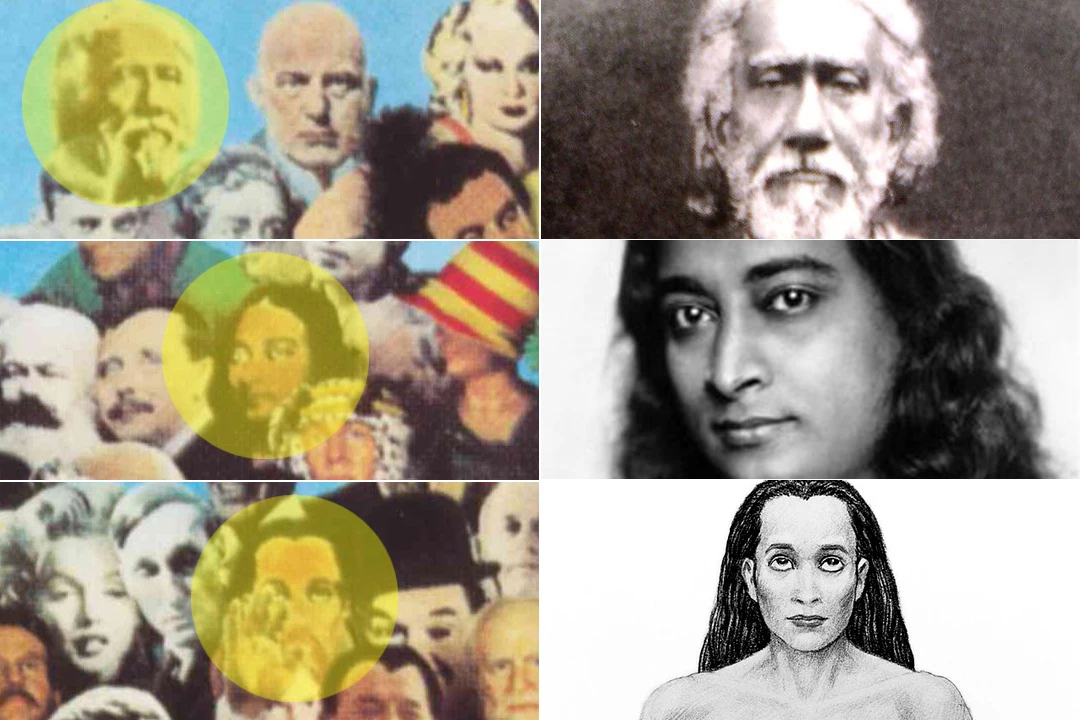


 This post is a continuation of our Top Ten Biblical Discoveries in Archaeology series. To see the complete series please
  The year is 701BC. Sennacherib, the King of Assyria, has destroyed nearly every prominent town in the southern kingdom of Judah. Israel lies in ruins. Sennacherib thrusts the power of the Assyrian army toward the all-important city of Jerusalem. Jerusalem houses the God of the Jews. The defeat of Jerusalem would be a large strategic and symbolic victory.The Assyrians employ the military strategy of the siege. The army surrounds the fortified walls of a city, cut off all water and food to the city, and then they wait. The term, “siege” derives from sedere, Latin for “to sit”. Attacking armies would wait weeks, months or even years. Assyria had recently besieged nearby Samaria, destroying it after waiting 3 years. As the people in the city grew sick and weak the healthy army would then advance to destroy the city. There are usually only three outcomes of a siege: survive by finding a way to get food and water, surrender or die.Jerusalem faces certain ruin. Hezekiah, one of the few godly kings, encourages his people to trust in God. God will deliver them from Sennacherib. 2 Kings 18:7 tells us, “He rebelled against the king of Assyria and would not serve him.” In 2 Kings 18 we learn the Assyrian commander tells the people of Jerusalem, “Do not listen to Hezekiah, for he is misleading you when he says, ‘The Lord will deliver us.’ Has the god of any nation ever delivered his land from the hand of the kind of Assyria?” The Assyrians first try to convince the people of Jerusalem to overthrow Hezekiah.The head Assyrian commander tells the people of Jerusalem, “Has my master sent me to speak these words to your master and to you, and not to the men sitting on the wall, who are doomed to with you to eat their own dung and to drink their own urine?” (2 Kings 18:27) If the people of Jerusalem don’t overthrow Hezekiah they, their wives and children will be forced to desperate measures just to stay alive.
 The people of Jerusalem had a secret. They had been involved in one of the greatest engineering feats of the ancient world. It’s amazing what humans can accomplish when their backs are against the wall. The inhabitants of Jerusalem, facing certain death, found a secret way to get a constant source of water into Jerusalem. The Bible, in three areas, briefly mentions our #7 discovery:

 The tunnel provides a constant stream of water through the city of Jerusalem. The tunnel takes water from the Gihon Spring and empties out at a place called the Pool of Siloam. The tunnel, surprisingly, does not follow the most direct route from the spring to the pool. The tunnel travels in an s-shape. If the tunnel was straight it would have only needed to have been 1070 feet, or 40% shorter. While the tunnel is far underground (appx 131 feet underground), the slope of the tunnel is precise. The tunnel slopes at a steady 0.6% grade. Once inside the tunnel another surprise is apparent. The head room within the tunnel varies considerably. The tunnel is always about as wide as a man’s shoulders. At the beginning of the tunnel the head room is pretty tight causing people to have to walk through it a bit hunched over. The last 160 feet of the tunnel, however, the ceiling soars up to 17 feet tall.
 Toward one end of the tunnel, amazingly, an ancient Hebrew inscription was found on the wall. The inscription commemorates the point when two teams, digging from each end, finally met in the middle. The inscription reads:
 If you ever get the chance to visit Jerusalem I highly recommend you take the time, walk down the steep hill from the temple mount and walk through Hezekiah’s Tunnel. Most famous archaeological discoveries are only observable behind the glass of a museum. Hezekiah’s Tunnel is the equivalent of an amusement park. Many tours to Israel, unfortunately, do not include in the itinerary a walk through the tunnel. Others make the tunnel an optional part of the trip. Yes, if you are claustrophobic you might not like some of the portions of the tunnel. Yes, your feet may become numb as you walk through the cold spring water. Remember what was on the line for the people constructing the tunnel. Be successful or your friends, your parents, your kids, your wife may all be dead soon. Step into Hezekiah’s day and walk through the tunnel with the absolute awe of people who trusted in God and worked their heart out.
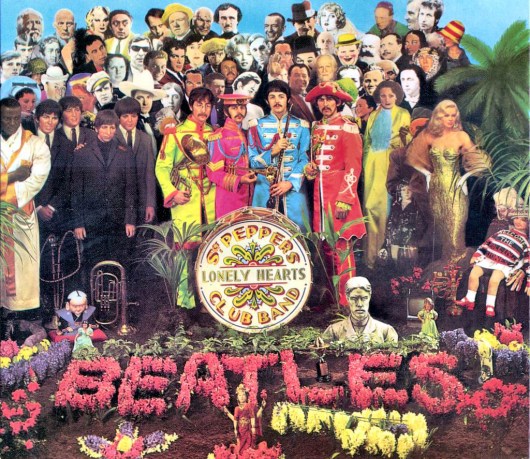


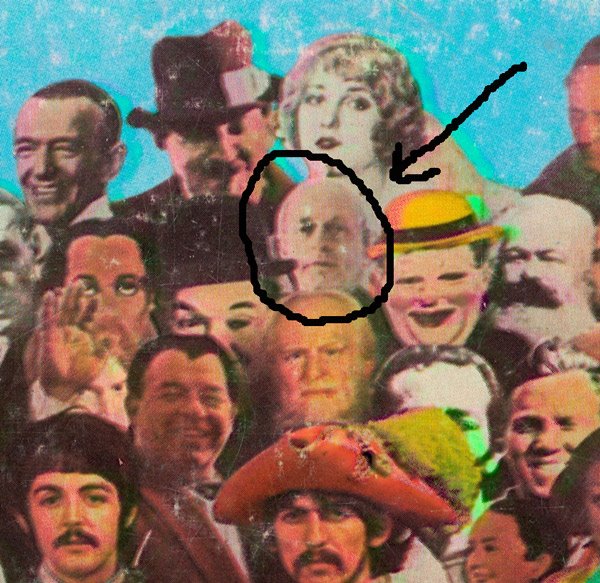

.png)



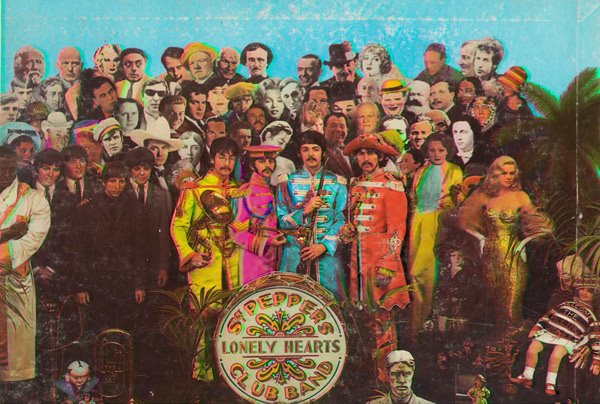




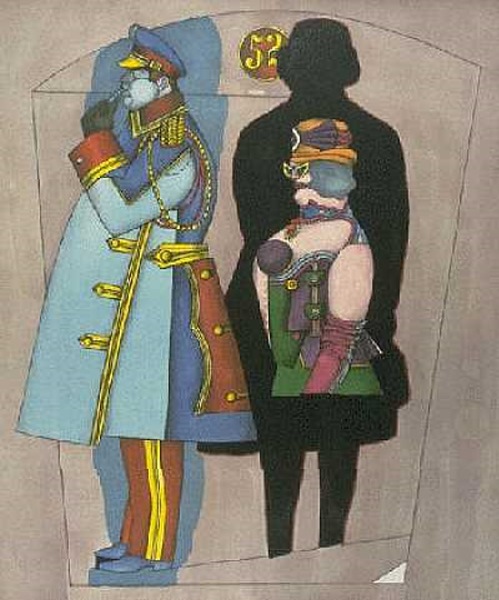


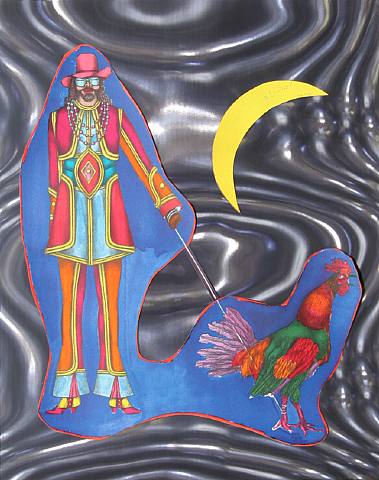

 Nancy Pearcey


 The Daily Hatch