Monthly Archives: October 2014

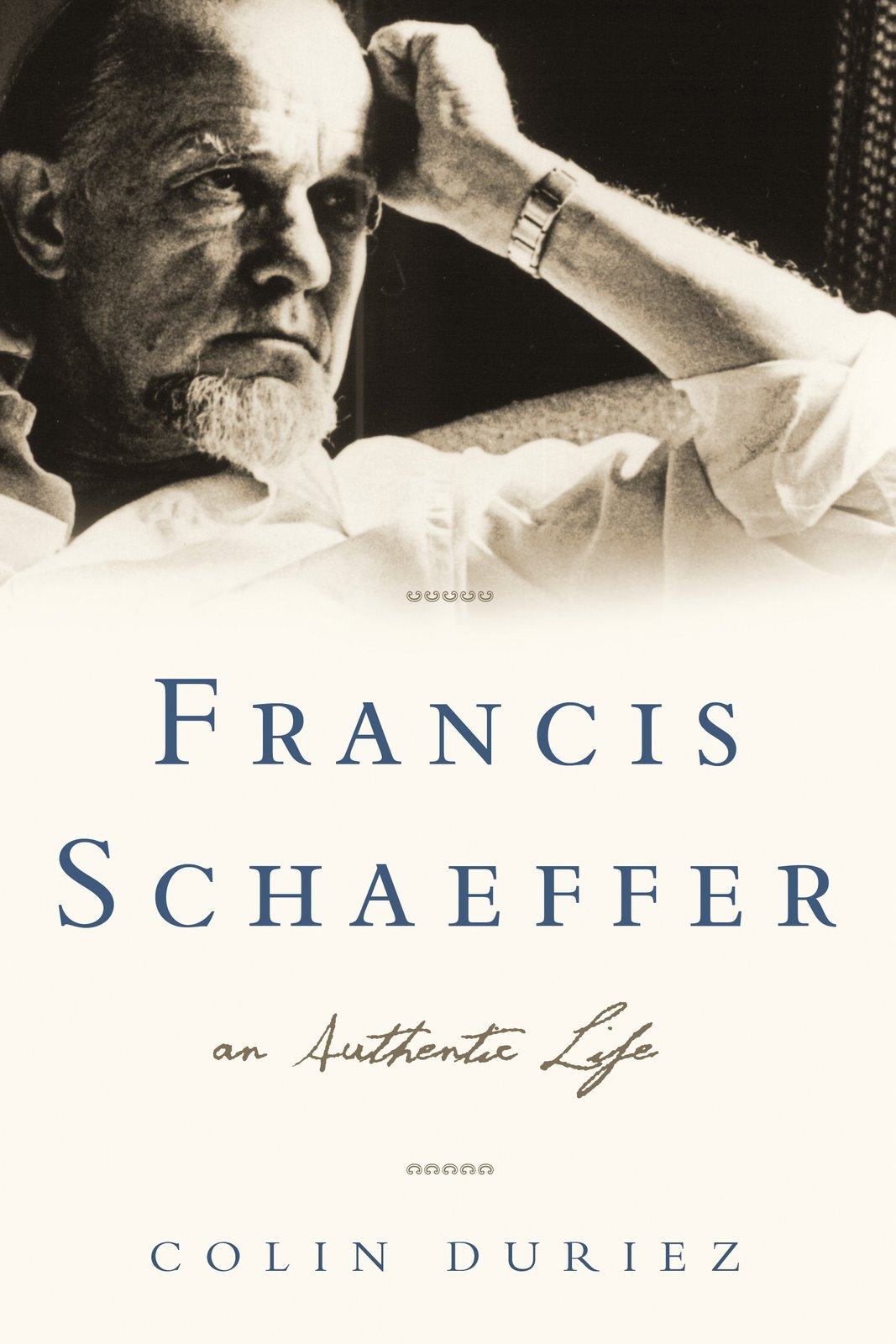
RECALLING FRANCIS SCHAEFFER’S CHRISTIAN ENVIRONMENTALISM by John Murdock2 . 22 . 13

__________

A crowd of about 35,000 had gathered near the Washington Monument during a cold blustery Presidents Day weekend in the midst of an unusually mild winter to prod the Obama administration to take actions against climate change. The largest climate action rally in American history had been scheduled for noon on a Sunday, not exactly a time chosen with regular church-goers in mind”though, undoubtedly, for some present the environmental cause would be the closest thing to a religion in their lives.

I carried a sign that declared “Jesus is Pro-Planet” in 175-point type. I have no hesitation about the truth of the statement. Paul makes it clear in Colossians 1 that, through Christ, God is indeed reconciling to himself “all things, whether things on earth or things in heaven,” and that this is good news for “every creature under heaven.”

As C.S. Lewis noted in Mere Christianity , the true cosmic nature of Christ’s atonement is difficult for our inwardly focused minds to fathom but “there are strange, exciting hints in the Bible that when we are drawn in [to Christ], a great many other things in Nature will begin to come right.”

Francis Schaeffer made a similar point in his important Pollution and the Death of Man , a neglected manifesto for Evangelical environmentalism:

The blood of the Lamb will redeem man and nature together . . . . But Christians who believe the Bible are not simply called to say that “one day” there will be healing, but that by God’s grace, upon the basis of the work of Christ, substantial healing can be a reality here and now.

In 1970, Schaeffer spoke against the “greed and haste” that was destroying creation and called for the Church to be a “pilot plant” demonstrating the healing of man and nature. The failure to do so would, to Schaeffer, be both disobedient and bring the loss of a great evangelistic opportunity, with pantheism filling the vacuum as long as the Church practiced this “sub-Christianity.”

While Evangelical leaders enthusiastically embraced Schaeffer’s push to engage on abortion and other cultural issues in the 1980s, his words and actions about the darkness of environmental degradation and the beauty of nature have largely been forgotten. He agreed with the 1960s countercultural critique of a “plastic culture” with its overreliance on “the machine” of technology and a diminished concept of nature.

The counterculture’s diagnosis was largely correct , Schaeffer thought, but the favored prescription”implicit or explicit pantheism”reduced man to “no more than grass,” after which he feared that “impersonal technology will reign even more securely.”

Also problematic was the popular but “perverted” form of Christianity that embraced a type of Platonic dualism, focused exclusively on the soul and getting it to the higher state of Heaven. For such Christians, the realm of nature might, at best, serve as an apologetic tool, but it had no real intrinsic value to them or their version of God, despite his having proclaimed it “good” from the start.

Pollution and the Death of Man illustrates this point with the true story of a Christian institution run with its eyes solely on the sky. This austere school campus sits across a large ravine from what, despite its lushness, was derisively labeled as just a “hippie community” by the Christians. Schaeffer, after speaking at the school, visited the neighbors. He spoke with their leadership about ecological issues, saw the lovely fields, trees, gardens and even the site of their communal grape stomps.

Schaeffer realized that the Christians, with their unbiblical and cavalier attitude towards nature, were offering little to draw the sincere but lost pagans toward a true vision of creation and redemption. “When I stood on Christian ground and looked at the Bohemian people’s place,” wrote Schaeffer, “it was beautiful. Then I stood on pagan ground and looked at the Christian community and saw ugliness.” Schaeffer took it as a sad compliment when his hippie host said he was the first to come from “across the ravine” in such a manner.

Indeed, Schaeffer (who loved to hike the Alps and did not own a car after 1948) believed that only a return to orthodox Christianity could effectively bridge this chasm. He countered Platonic Christianity by emphasizing that all of creation, from the human body on down to a tree or a stone, has inherent value stemming from its association with the Creator. “What God has made, I, who am also a creature, must not despise.”

Schaeffer insisted that man is finite, as separated from the infinite God, as are our kin, the animals and the grass. But, lest we slide into pantheism, he also emphasized the separation from nature brought about by our special creation in the image of God. Here, the rest of creation lies below us, and in this regard we are much more than grass.

Maintaining these two truths in proper tension allows us to engage the environment with an appropriate respect for its order and worth. It is not a plaything, designed solely for our hedonistic enjoyment. We may use it, yes, but we should exercise dominion without utter destruction, always avoid disdain for what God has made, and delights in it independent of its utility to us. In practice, the Christian community should be a people that have learned “to say ‘Stop!’” and “refuse men the right to ravish our land, just as we refuse them the right to ravish our women.”

As I approached the D.C. throng calling for a “Stop!” of its own, I felt a bit as though I was taking the name of Jesus across a green ravine similar to the one Schaeffer walked. Looking over the crowd, I was reminded, though, that God has not been without his witnesses in this realm. The ringleader of the event, 350.org founder Bill McKibben, has regularly referenced his Methodist faith, and multiple Earth Flags”first created in 1969 by faithful believers John and Anna McConnell (who, incidentally, met with a little help from Richard John Neuhaus)”were taut in the stiff breeze.

Nevertheless, forty-three years after Schaeffer wrote his little treatise, plenty of pantheistic Mother Earth spirituality was on display as well as the secular humanism that Schaeffer famously warned against elsewhere. Unfortunately, the Evangelical Church did not step into the breach and much of its leadership instead now treats the small creation care movement as a theological leper, unclean because it engages with a green movement viewed as beyond redemption.

Yet the name of Jesus was surprisingly well received on the National Mall. I saw not one glare or frown; instead dozens of people made positive comments and requested photographs. A self-described agnostic hawking The Socialist Worker newspaper engaged with me about mankind’s relationship to God and closed by saying of Jesus with a smile, “Well, if he got you out here, he can’t be all bad.”

A small group of banner-wielding Evangelical college students, who allowed me to join them despite my relatively advanced years, also drew thanks from fellow believers in the crowd and inquiries from the curious. One secular liberal couple stood with us for quite a while asking questions about what it meant to be an Evangelical, honestly discussing their own negative associations of the term with George W. Bush and SUVs. They eventually were comfortable enough”in deliciously appropriate clichéd fashion” to share their granola bars, even with an openly pro-life Bush voter like me.

Plenty of work remains to be done, both to bandage God’s wounded creation and reach his most precious creatures. “ We’ve got the whole world in our hands,” a gaggle of green-clad marchers sang to a familiar Sunday School tune. “I think they’ve got the lyrics wrong,” I remarked with a wink to the students. We set about to sing the song correctly.

John Murdock works as a natural resources attorney in Washington, D.C., and is a member of The Falls Church Anglican in northern Virginia. He has written on environmental matters for numerous outlets including The New Atlantis.

RESOURCES

Earth Day’s Forgotten Founder ,” Flourish

Crowd marches to voice opposition to Keystone pipeline ,” Washington Post

Is Good Friday Good for the Earth? ,” Patheos

The Climate of Climate Change ,” The New Atlantis

The Genesis of Pixar ,” The New Atlantis

Become a fan of First Things on Facebook , subscribe to First Things via RSS , and follow First Thingson Twitter .

Related posts:

Series “FRANCIS SCHAEFFER ANALYZES ART AND CULTURE” traces Schaeffer’s comments on modern culture and can be found weekly on www.thedailyhatch.org !!!!! Bob Dylan asked the right questions but did he have the right answers?

_________   This series of posts entitled  “FRANCIS SCHAEFFER ANALYZES ART AND CULTURE” touches things that affect our culture today. The first post took a look at the foundations of our modern society today that were set by the Roman Democracy 2000 years ago and then it related it to the art we see today. […]

Series “FRANCIS SCHAEFFER ANALYZES ART AND CULTURE” traces Schaeffer’s comments on modern culture and can be found weekly on www.thedailyhatch.org !!!!! Impressionism down to Modern Art examined!!

__________   Francis Schaeffer pictured below: ______________ Francis Schaeffer pictured below: _____________ This series of posts entitled  “FRANCIS SCHAEFFER ANALYZES ART AND CULTURE” touches things that affect our culture today. The first post took a look at the foundations of our modern society today that were set by the Roman Democracy 2000 years ago and […]

 “FRANCIS SCHAEFFER ANALYZES ART AND CULTURE” can be found weekly on www.thedailyhatch.org !  John Cage noted,  “I became aware that if I approached mushrooms in the spirit of my chance operations, I would die shortly!” 

__________   This series of posts entitled  “FRANCIS SCHAEFFER ANALYZES ART AND CULTURE” touches things that affect our culture today. The first post took a look at the foundations of our modern society today that were set by the Roman Democracy 2000 years ago and then it related it to the art we see today. […]

Series “FRANCIS SCHAEFFER ANALYZES ART AND CULTURE” traces Schaeffer’s comments on modern culture and can be found weekly on www.thedailyhatch.org !!!!! Paul Gauguin and his life questions!

___________ Francis Schaeffer pictured below: _____________ Series “FRANCIS SCHAEFFER ANALYZES ART AND CULTURE” traces Schaeffer’s comments on modern culture and can be found weekly onhttp://www.thedailyhatch.org !!!!! Paul Gauguin and his life questions! This series of posts entitled  “FRANCIS SCHAEFFER ANALYZES ART AND CULTURE” touches things that affect our culture today. The first post took […]

“FRANCIS SCHAEFFER ANALYZES ART AND CULTURE” can be found weekly on  www.thedailyhatch.org ! Filmmakers such as  Resnais, Bergman, Fellini, Antonioni, Bunuel,and  Bergman all attempted to show what it is like to live in the area of nonreason!!!

  This series of posts entitled  “FRANCIS SCHAEFFER ANALYZES ART AND CULTURE” touches things that affect our culture today. The first post took a look at the foundations of our modern society today that were set by the Roman Democracy 2000 years ago and then it related it to the art we see today. The […]

“FRANCIS SCHAEFFER ANALYZES ART AND CULTURE” can be found weekly on www.thedailyhatch.org ! Why Communism catches the attention of young people but never comes through!!!

____________________________________________  “FRANCIS SCHAEFFER ANALYZES ART AND CULTURE” can be found weekly onhttp://www.thedailyhatch.org !  Why Communism catches the attention of young people but never comes through!!! Dr. Francis Schaeffer – Episode 9 – The Age of Personal Peace and Affluence NoMirrorHDDHrorriMoN   This series of posts entitled  “FRANCIS SCHAEFFER ANALYZES ART AND CULTURE” touches things […]

FRANCIS SCHAEFFER ANALYZES ART AND CULTURE Part 27 Jurgen Habermas (Featured artist is Hiroshi Sugimoto)

_____________ Jürgen Habermas Interview Uploaded on Feb 1, 2007 Rare video footage of Jurgen Habermas discussing some of his theories.http://soundcloud.com/st-hanshaugen Francis Schaeffer pictured below: ______________ Francis Schaeffer notes: At Berkeley the Free Speech Movement arose simultaneously with the hippie world of drugs. At first it was politically neither left nor right, but rather a […]

FRANCIS SCHAEFFER ANALYZES ART AND CULTURE Part 26 Bettina Aptheker (Featured artist is Krzysztof Wodiczko)

Bettina Aptheker pictured below: Moral Support: “One Dimensional Man” author Herbert Marcuse accompanies Bettina Aptheker, center, and Angela Davis’ mother, Sallye Davis, to Angela Davis’ 1972 trial in San Jose. Associated Press ___________________________________________________________________________ Francis Schaeffer has written extensively on art and culture spanning the last 2000years and here are some posts I have done on […]

FRANCIS SCHAEFFER ANALYZES ART AND CULTURE Part 25 BOB DYLAN (Part C) Francis Schaeffer comments on Bob Dylan’s song “Ballad of a Thin Man” and the disconnect between the young generation of the 60’s and their parents’ generation (Feature on artist Fred Wilson)

_____________________ Francis Schaeffer pictured below: ____ Elston Gunn- Ballad of A Thin Man, Live Sheffield 1966 Francis Schaeffer has written extensively on art and culture spanning the last 2000 years and here are some posts I have done on this subject before : Francis Schaeffer’s “How should we then live?” Video and outline of episode 10 […]

FRANCIS SCHAEFFER ANALYZES ART AND CULTURE Part 24 BOB DYLAN (Part B) Francis Schaeffer comments on Bob Dylan’s words from HIGHWAY 61 REVISITED!! (Feature on artist Susan Rothenberg)

______________ Just like tom thumb´s blues (no direction home) Francis Schaeffer has written extensively on art and culture spanning the last 2000 years and here are some posts I have done on this subject before : Francis Schaeffer’s “How should we then live?” Video and outline of episode 10 “Final Choices” , episode 9 “The Age of Personal […]
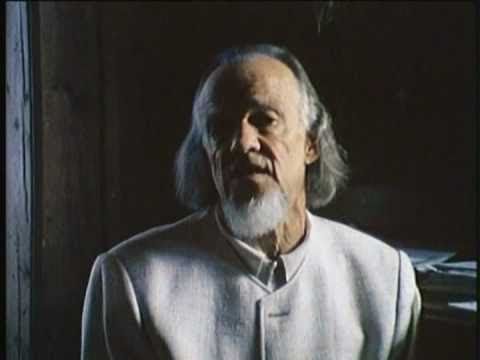
Series “FRANCIS SCHAEFFER ANALYZES ART AND CULTURE” traces Schaeffer’s comments on modern culture and can be found weekly on www.thedailyhatch.org !!!!! Bob Dylan asked the right questions but did he have the right answers?

_________


This series of posts entitled  “FRANCIS SCHAEFFER ANALYZES ART AND CULTURE” touches things that affect our culture today. The first post took a look at the foundations of our modern society today that were set by the Roman Democracy 2000 years ago and then it related it to the art we see today.

The second post took a  look at how modern art was born by discussing Monet, Renoir, Pissaro, Sisley, Degas,Cezanne, Van Gogh, Gauguin, Seurat, and Picasso.” The third post took a look at PAUL GAUGUIN’S 3 QUESTIONS: “Where do we come from? What art we? Where are we going? and his conclusion was a suicide attempt,” and also featured the art work of  Mike Kelley. The fourth post took a look at the work of H.R. Rookmaaker and his close relationship to Schaeffer.

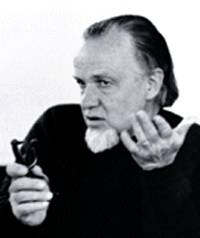
Francis Schaeffer pictured below:

______

Francis Schaeffer pictured below:

_________________

The fifth post discussed the work of John Cage and how his work influenced the artist  Gerhard Richter of Germany. The sixth post took a look at the famous painting “The Adoration of the Lamb” by Jan Van Eyck which was saved by MONUMENT MEN IN WW2 and also took a look at the evangelical artist Makoto Fujimura. The seventh post discussed the philosophical work of Jean Paul Sartre and took a look at the artwork of  David Hooker.______

The eighth post showed and discussed the film “The Last Year at Marienbad” by Alain Resnais and featured the artwork of  Richard Tuttle and looked into his return to the faith of his youth. The ninth post noted the comments of Francis Schaeffer on the artwork of Jasper Johns and also featured the artwork of  Cai Guo-Qiang.___

The tenth post was about the art historian David Douglas Duncan and it also featured the artwork of  Georges Rouault. The eleventh post  discussed Thomas Aquinas and his Effect on Art and then episode 2 of HOW SHOULD WE THEN LIVE? on the  THE MIDDLES AGES was profiled and also the artwork of  Tony Oursler.

The twelfth post took a close work at the philosophical work of the humanist H.J.Blackham and  the Materialistic Humanism Worldview that he represented and also the artwork of Arturo Herrera and remarkably Herrera claims also his artwork comes about by chance!!! The thirteenth post looks at  Jacob Bronowski  and his materialistic humanism worldview and his film series on evolution and also the  artist Ellen Gallagher who believes her work is influenced by chance is featured.

The fourteenth post takes a close look at the 19th century writer David Friedrich Strauss  and features the work of the artist Roni Horn. The fifteenth, sixteenth and seventeenth posts discuss Francis Schaeffer’s comments concerning the interview of Andy Warhol from “The Observer June 12, 1966″ and feature the artists  Robert Indiana,  and James Rosenquist,  and David Hockney.

The eighteenth post takes a look at the fact that “Michelangelo’s DAVID is the statement of what humanistic man saw himself as being tomorrow,” and features the artist Paul McCarthy. The nineteenth post discusses the work of the movie director Luis Bunuel and features the artist Oliver Herring.

The twentieth post takes a look at Woody Allen and his materialistic humanism worldview and the artwork of  Ida Applebroog. The twenty-first post is on the evolutionist William B. Provine and features the artwork of  Andrea Zittel.

The twenty-second post discusses the painting “The School of Athens by Raphael” and features the artwork of  Sally Mann. The twenty-third post deals with BOB DYLAN  and includes the comments of Francis Schaeffer on the proper place of rebellion with comments by Bob Dylan and Samuel Rutherford and also includes the artwork of  Josiah McElheny.

The twenty-fourth post talks about BOB DYLAN and includes Francis Schaeffer’s comments on Bob Dylan’s words from HIGHWAY 61 REVISITED and it features artwork by  Susan Rothenberg. The twenty-fifth post deals with BOB DYLAN, and  Francis Schaeffer comments on Bob Dylan’s song “Ballad of a Thin Man” and the disconnect between the young generation of the 60’s and their parents’ generation and it includes the artwork of  Fred Wilson.

Here is an example of how insightful Schaeffer can be:

Dr. Francis Schaeffer – Episode VII – The Age of Non Reason

Dr. Francis Schaeffer – Episode 9 – The Age of Personal Peace and Affluence

NoMirrorHDDHrorriMoN

Bob Dylan: Ballad Of A Thin Man

Bob Dylan looked into the modern thought  of the 1960’s and he saw that the educated class did not have the answers and he was looking for the answers to the big questions of life in his writings. Over and over again back then reporters were asking him what his songs meant. Actually his songs were an effort to bring up the big questions but he did not have the answers. In the song “A Ballad of a Thin Man” Dylan ridicules the reporter “Mr. Jones” throughout the song for his lack of understanding of this new generation.  “Oh my God, am I here all alone?” is the feeling that Mr. Jones has after following around Dylan because he doesn’t even to begin to understand the deep seated dissatisfaction of this new generation with the status quo. Every person that ever lived has had this feeling at one time or another and Romans chapter one discusses the inner conscience that everyone has that points them to the God of the Bible that created the world and put them on this earth for a purpose. 

Francis Schaeffer in his film series THE AGE OF PERSONAL PEACE AND AFFLUENCE  made the following points concerning the young people of the 1960’s:

I. By the Early 1960s People Were Bombarded From Every Side by Modern Man’s Humanistic Thought

II. Modern Form of Humanistic Thought Leads to Pessimism

Regarding a Meaning for Life and for Fixed Values

A. General acceptance of selfish values (personal peace and affluence) accompanied rejection of Christian consensus.

1. Personal peace means: I want to be left alone, and I don’t care what happens to the man across the street or across the world. I want my own life-style to be undisturbed regardless of what it will mean — even to my own children and grandchildren.

2. Affluence means things, things, things, always more things — and success is seen as an abundance of things.

B. Students wish to escape meaninglessness of much of adult society.

1. Watershed was Berkeley in 1964.

Bob Dylan also was writing in his music about the disconnect between the young generation of the 1960’s and their parents’ generation. Francis Schaeffer noted: It is called “A Ballad of a a Thin Man” and it apparently was written by Bob Dylan himself. Last time I read you the back cover of the album and I pointed out that when you go to the museums and also in the Theater and  in the pop records you see this same message. This is far from nothing. The very music is tremendous. It is great communication. It is like pop art. It is very destructive and just like the Theatre of the absurd although it destroys everything and leaves you with nonsense seemingly yet when you listen to the words with great care it has made a very selective destruction. Let me read the words.

You walk into the room
With your pencil in your hand
You see somebody naked
And you say who is that man?
You try so hard
But you don’t understand
Just what you would’ve said
When you get home

Something is happening
But you don’t know what it is
Do you Mister Jones?

You sneak into the window
And you say, “Is this where it is?”
Somebody points his finger at you
And says, “It’s his”
And you say, “What’s mine?”
Someone else says, “Where what is?”
And you say, “Oh my God, am I here all alone?”

Something is happening
But you don’t know what it is
Do you Mister Jones?

You hand in your ticket
And you go see the geek
Who walks up to you
When he hears you speak
And says, “How does it feel
To be such a freak?”
And you say, “Impossible”
As he hands you a bone

Something is happening
And you don’t know what it is
Do you Mister Jones?

You have many contacts
Out there among the lumberjacks
To get you facts
When someone attacks your imagination
But no one has any respect
Anyway they just expect
You to hand over your check
To tax deductible charity organizations

The sword swallower walks up to you
And he kneels
He crosses himself
And then he clicks his high heels
And without further notice
Asks you how it feels
And says, “Here’s your throat back
Thanks for the loan”

Something is happening
And you don’t know what it is
Do you Mister Jones?

You crawl into the room
Like a camel and you frown
You put your eyes in your pocket
And you put your nose into the ground
There ought to be a law
Against you comin’ around
You got to be made
To be wearing a telephone

But something is happening
And you don’t know what it is
Do you Mister Jones?

Something is happening here
And you don’t know what it is
Do you Mister Jones?

Songwriters
Bob Dylan

Francis Schaeffer observed:

In the June 28, 1966 issue of Look Magazine in the article on California the writer concludes, “It may seem ironical that a highly technical society demands a means for mystically exploration and this is LSD.” All of these may sound different. LSD and Bob Dylan may sounds miles apart. A tremendous art work in one of our great museums and the kids in a concert listening to Bob Dylan but in reality the message is the same. The tension is that according to all logic and rationality ALL IS ABSURD, yet man at the same time can not live with this and he is in this tremendous tension. He just can’t get away from being human. This is exactly what Paul was talking about in the Book of Romans and that man really knows about God and he knows about God in his conscience and from God’s external [creative] works.

_____________

At one point in his life Bob Dylan did come to the same final conclusion that Solomon did so long ago in the Book of Ecclesiastes  when he observed the world around him and Dylan expressed this same conclusion in his song “Gotta Serve Somebody” back in the early 1980’s.

Ecclesiastes 12:13-14:
13 Now all has been heard;
here is the conclusion of the matter:
Fear God and keep his commandments,
for this is the whole duty of man.

14 For God will bring every deed into judgment,
including every hidden thing,
whether it is good or evil.

Bob Dylan – Gotta Serve Somebody (Live)

Published on Feb 15, 2014

1998-10-29 Toronto, Canada

____________________________

In fact, at this same time, Dylan joined my favorite Christian musician Keith Green and played the harmonica for this song below:

I pledge my head to heaven

Egypt.jpg (22417 bytes)

R-0153 Pledge My Head To Heaven (Keith Green) – Bob plays harmonica for Keith Green on this track from his gospel album So You Wanna Go Back To Egypt, Pretty Good Records, 1980

________________________________________________

Francis Schaeffer pictured below:

________

The twenty-sixth post talks about so many young people such as Bettina Aptheker get caught up in the Communist movement even though every country that has put in Communism has operated on oppresion. The featured artist is Krzysztof Wodiczko for this post.  The twenty-seventh post discusses the philosophical work of Jurgen Habermas and notes that the 1970 bombing at the University of Wisconsin helped many young people in the USA realize that the New Left was bankrupt. The artwork of  Hiroshi Sugimoto is featured in this post.

Related posts:

FRANCIS SCHAEFFER ANALYZES ART AND CULTURE Part 27 Jurgen Habermas (Featured artist is Hiroshi Sugimoto)

_____________ Jürgen Habermas Interview Uploaded on Feb 1, 2007 Rare video footage of Jurgen Habermas discussing some of his theories.http://soundcloud.com/st-hanshaugen Francis Schaeffer pictured below: ______________ Francis Schaeffer notes: At Berkeley the Free Speech Movement arose simultaneously with the hippie world of drugs. At first it was politically neither left nor right, but rather a […]

FRANCIS SCHAEFFER ANALYZES ART AND CULTURE Part 26 Bettina Aptheker (Featured artist is Krzysztof Wodiczko)

Bettina Aptheker pictured below: Moral Support: “One Dimensional Man” author Herbert Marcuse accompanies Bettina Aptheker, center, and Angela Davis’ mother, Sallye Davis, to Angela Davis’ 1972 trial in San Jose. Associated Press ___________________________________________________________________________ Francis Schaeffer has written extensively on art and culture spanning the last 2000years and here are some posts I have done on […]

FRANCIS SCHAEFFER ANALYZES ART AND CULTURE Part 25 BOB DYLAN (Part C) Francis Schaeffer comments on Bob Dylan’s song “Ballad of a Thin Man” and the disconnect between the young generation of the 60’s and their parents’ generation (Feature on artist Fred Wilson)

_____________________ Francis Schaeffer pictured below: ____ Elston Gunn- Ballad of A Thin Man, Live Sheffield 1966 Francis Schaeffer has written extensively on art and culture spanning the last 2000 years and here are some posts I have done on this subject before : Francis Schaeffer’s “How should we then live?” Video and outline of episode 10 […]

FRANCIS SCHAEFFER ANALYZES ART AND CULTURE Part 24 BOB DYLAN (Part B) Francis Schaeffer comments on Bob Dylan’s words from HIGHWAY 61 REVISITED!! (Feature on artist Susan Rothenberg)

______________ Just like tom thumb´s blues (no direction home) Francis Schaeffer has written extensively on art and culture spanning the last 2000 years and here are some posts I have done on this subject before : Francis Schaeffer’s “How should we then live?” Video and outline of episode 10 “Final Choices” , episode 9 “The Age of Personal […]

FRANCIS SCHAEFFER ANALYZES ART AND CULTURE Part 23 BOB DYLAN (Part A) (Feature on artist Josiah McElheny)Francis Schaeffer on the proper place of rebellion with comments by Bob Dylan and Samuel Rutherford

Bob Dylan – When You Gonna Wake Up Sermon – Tempe 1979 Published on Apr 28, 2012 Probably the most contentious show in Dylan’s long history of live performance. The between-song “raps” were a fixture of Dylan’s performances during his “Christian” period, but early during the Slow Train Coming tour, Dylan and his band encountered […]

FRANCIS SCHAEFFER ANALYZES ART AND CULTURE Part 22 “The School of Athens by Raphael” (Feature on the artist Sally Mann)

How Should We Then Live? Episode 2 Part 2/2 RebelShutze· __________ Episode III – The Renaissance JasonUellCrank How Should We Then Live? Episode 3 Part 1/2 RebelShutze Published on Jun 4, 2012 The third part of Dr. Francis Schaeffer’s ten-part series based off of his book “How Should We Then Live?” This is Episode 3, […]

FRANCIS SCHAEFFER ANALYZES ART AND CULTURE Part 21 William B. Provine (Feature on artist Andrea Zittel)

_______ Dr Provine is a very honest believer in Darwinism. He rightly draws the right conclusions about the implications of Darwinism. I have attacked optimistic humanism many times in the past and it seems that he has confirmed all I have said about it. Notice the film clip below and the quote that Francis Schaeffer […]

FRANCIS SCHAEFFER ANALYZES ART AND CULTURE Part 20 Woody Allen and Materialistic Humanism: The World-View of Our Era (Feature on artist Ida Applebroog)

___________________________________________________________________________ Francis Schaeffer “BASIS FOR HUMAN DIGNITY” Whatever…HTTHR ___________________ Woody Allen on Ingmar Bergman and the death. Woody Allen et Marshall McLuhan : « If life were only like this! » What Makes Life Worth Living? – Answered by Woody Allen. ______________ Diane Keaton et Woody Allen What Makes Life Worth Living? _____________________________________________________________________________________________________________________________________ Dr. Francis Schaeffer – […]

FRANCIS SCHAEFFER ANALYZES ART AND CULTURE Part 19 Movie Director Luis Bunuel (Feature on artist Oliver Herring)

___________ Francis Schaeffer pictured below: ____ Dr. Francis Schaeffer – Episode 8 – The Age of Fragmentation NoMirrorHDDHrorriMoN In the book HOW SHOULD WE THEN LIVE? Schaeffer notes: Especially in the sixties the major philosophic statements which received a wide hearing were made through films. These philosophic movies reached many more people than philosophic writings […]

FRANCIS SCHAEFFER ANALYZES ART AND CULTURE Part 18 “Michelangelo’s DAVID is the statement of what humanistic man saw himself as being tomorrow” (Feature on artist Paul McCarthy)

In this post we are going to see that through the years  humanist thought has encouraged artists like Michelangelo to think that the future was extremely bright versus the place today where many artist who hold the humanist and secular worldview are very pessimistic.   In contrast to Michelangelo’s DAVID when humanist man thought he […]

MUSIC MONDAY Cole Porter’s song “Anything goes” was also used in the Francis Schaeffer film WHATEVER HAPPENED TO THE HUMAN RACE?

Cole Porter’s song “Anything goes” was also used in the Francis Schaeffer film WHATEVER HAPPENED TO THE HUMAN RACE?

_______________

It’s De-Lovely – Anything Goes.mpg

Anything Goes (song)

From Wikipedia, the free encyclopedia
Jump to: navigation, search

Anything Goes” is a popular song written by Cole Porter for his musical Anything Goes (1934). Many of the lyrics feature humorous (but dated)[1] references to various figures of scandal and gossip in Depression-era high society. For example, one couplet refers to Sam Goldwyn’s notorious box-office failure Nana, which featured a star, Anna Sten, whose English was incomprehensible except to Goldwyn, who came from the same part of Europe.[2] Other 1930s society references include film producer Max Gordon, socialite Evalyn Walsh McLean and her highly promoted trip to the Soviet Union, interior design pioneer Lady Mendl‘s scandalous predilection for performing hand stands and cartwheels in public at the age of 70, and the financial woes common to “old money” families during the Depression, such as the Vanderbilts, Rockefellers and Whitneys. Most modern versions omit these lyrics, replacing them instead with generic examples of social upheaval.[3]

Notable recordings

In popular culture

References

  1. ^ website with original lyrics
  2. ^ G.D. Black, Hollywood Censored, p. 204
  3. ^ see e.g.1987 Broadway revival version, sung by Patti LuPone
  4. ^ Whitburn, Joel (2002). Top Adult Contemporary: 1961-2001. Record Research. p. 111.

_____________

Dr. Francis Schaeffer also influenced me through his books and film series. Schaeffer is  seen in this film “With God on our side.”Francis Schaeffer’s voice can be heard while his film WHATEVER HAPPENED TO THE RACE? is playing in Part 2 at the 7:54 mark and it is a take off on the song “Anything goes.”

With God on Our Side! Part 4


In the film series “WHATEVER HAPPENED TO THE HUMAN RACE?” the arguments are presented  against abortion (Episode 1),  infanticide (Episode 2),   euthanasia (Episode 3), and then there is a discussion of the Christian versus Humanist worldview concerning the issue of “the basis for human dignity” in Episode 4 and then in the last episode a close look at the truth claims of the Bible.

Francis Schaeffer

__________________________

I truly believe that many of the problems we have today in the USA are due to the advancement of humanism in the last few decades in our society. Ronald Reagan appointed the evangelical Dr. C. Everett Koop to the position of Surgeon General in his administration. He partnered with Dr. Francis Schaeffer in making the video below. It is very valuable information for Christians to have.  Actually I have included a video below that includes comments from him on this subject.

Francis Schaeffer

Francis Schaeffer: “Whatever Happened to the Human Race” (Episode 4) THE BASIS FOR HUMAN DIGNITY

Francis Schaeffer “Whatever happened to the human race?” BASIS FOR HUMAN DIGNITY

Published on Oct 14, 2012

more of the insightful Drs. Schaeffer & C. Everett Koop

___________________

The flow of Materialism by Francis Schaeffer

There is a difference between believing the Bible is true and the Bible contains truth. (The 3:31 mark from this episode is actually the clip used above in the film “With God on our side.”)

Related posts:

Cole Porter “Let’s Do it, Let’s Fall in Love” in the movie MIDNIGHT IN PARIS

Cole Porter “Let’s Do it, Let’s Fall in Love” in the movie MIDNIGHT IN PARIS Midnight in Paris – Let’s Do It Let’s do it : Cole Porter.( Midnight in Paris ) Celebrate Wikipedia Loves Libraries at your institution in October/November. Let’s Do It, Let’s Fall in Love From Wikipedia, the free encyclopedia Jump to: […]

The Characters referenced in Woody Allen’s “Midnight in Paris” (Part 2 Cole Porter)

The song used in “Midnight in Paris” I am going through the famous characters that Woody Allen presents in his excellent movie “Midnight in Paris.”  By the way, I know that some of you are wondering how many posts I will have before I am finished. Right now I have plans to look at Fitzgerald, Heminingway, Juan […]


Open letter to President Obama (Part 685) We got to cut corporate welfare!!!

Open letter to President Obama (Part 685) (Emailed to White House on July 29, 2013)

President Obama c/o The White House
1600 Pennsylvania Avenue NW
Washington, DC 20500

Dear Mr. President,

I know that you receive 20,000 letters a day and that you actually read 10 of them every day. I really do respect you for trying to get a pulse on what is going on out here.

The federal government debt is growing so much that it is endangering us because if things keep going like they are now we will not have any money left for the national defense because we are so far in debt as a nation. We have been spending so much on our welfare state through food stamps and other programs that I am worrying that many of our citizens are becoming more dependent on government and in many cases they are losing their incentive to work hard because of the welfare trap the government has put in place. Other nations in Europe have gone down this road and we see what mess this has gotten them in. People really are losing their faith in big government and they want more liberty back. It seems to me we have to get back to the founding  principles that made our country great.  We also need to realize that a big government will encourage waste and corruptionThe recent scandals in our government have proved my point. In fact, the jokes you made at Ohio State about possibly auditing them are not so funny now that reality shows how the IRS was acting more like a monster out of control. Also raising taxes on the job creators is a very bad idea too. The Laffer Curve clearly demonstrates that when the tax rates are raised many individuals will move their investments to places where they will not get taxed as much.

______________________________

We got to cut corporate welfare out of the budget too!!!

JULY 23, 2013 5:40PM

Feds and the States Tag-Teaming on Corporate Welfare

In a recent op-ed for the Indianapolis Star I discussed the symbiotic relationship between federal and state government when it comes to doling out corporate welfare subsidies. The focus was primarily on Indiana, but the issue is a national concern. 

A good example is the $2 billion Shepherd’s Flat wind farm in Oregon that was largely financed with federal and state taxpayer support. Ted Sickinger, a reporter for theOregonian, has done an excellent job of digging into details behind the project (see here thenhere then here) and it appears that Shepherd’s Flat was one big taxpayer handout. In fact, the Obama administration signed off on the federal government’s share of the subsidies even though it knew the project didn’t need any support from taxpayers: 

In 2010, Shepherd’s Flat attracted national notoriety for its subsidies. In a briefing memo for the President leaked to the media, Obama’s top advisors worried that the U.S. Department of Energy’s loan guarantee program was subsidizing projects that didn’t need it. 

Shepherd’s Flat was their case in point. 

Treasury Secretary Larry Summers, energy czar Carol Browner, and Vice President Joe Biden’s chief of staff Ron Klain said Shepherd’s Flat was “double-dipping” on $1.2 billion in federal and state subsidies – 65 percent of its projected cost. The incentives included a $500 million federal grant, $200 million in federal and state tax benefits from accelerated depreciation, $220 million in premium power prices attributed to state renewable energy mandates, and a $1 billion loan guarantee with a value of $300 million to the developers. 

They concluded that Caithness has “little skin in the game” – about 10 percent of the project’s cost – but stood to earn a 30 percent return on its investment. It also speculated that Shepherd’s Flat would likely go ahead without the federal loan guarantee because “the economics are favorable for wind investment given tax credits and state renewable energy standards.” 

Caithness Energy is the wind farm’s owner and operator. General Electric supplied the wind turbines (a $1.4 billion contract with Caithness) and part of the financing – financing backed by the federal loan guarantee. Both companies made sure they had Washington’s attention: 

Nationally, powerful interests were pushing in the same direction. A new president’s desire to build environmental credibility became an economic keystone to restore the collapsed economy. The Obama administration fast tracked loan guarantees to pump stimulus money into job-generating projects. Meanwhile, deep-pocketed companies with powerful lobbying arms were busy greasing the skids. 

The political action committee, employees and affiliates of General Electric – Shepherds Flat’s turbine supplier and an equity investor – gave more than a half million dollars to Obama’s 2008 campaign. The PACs for both GE and Caithness also have sprinkled sprinkled money among Oregon’s congressional delegation during the last five years, including Sens. Ron Wyden and Jeff Merkley, Reps. Earl Blumenauer, Greg Walden and Peter DeFazio. 

According to e-mails released by the House Oversight Committee investigating federal subsidies after the bankruptcy of solar startup Solyndra, the Obama administration pushed hard on incentives for Shepherds Flat. Months before officials at the U.S. Department of Energy approved a loan guarantee for the project, General Electric was being told it was a done deal. 

In April 2010, Kevin Walsh, managing director of GE’s renewables business, emailed the director of the U.S. DOE’s loan program: “We have been advised by the White House and other sources that we are likely to get the “green light” this week to move forward with the Shepherds Flat wind project…Les Gelber (a partner at Caithness Energy) and I will be in DC tomorrow and would like to stop by any time between noon and 2pm to briefly discuss.” 

The deal took more time to fully bake. Four months later, DOE Loan Program Office Credit Advisor Jim McCrea emailed a contractor: “Pressure is on real heavy on SF due to interest from VP.” 

Later that day, McCrea sent staff an all points bulletin to promptly provide answers on Shepherds Flat: “To do otherwise would leave us firmly on the political path and give agencies an opportunity to blame us when they are pressures (sic) to make decisions. As you all know, the pressures to make decisions on this transaction are high so speed is of the essence.” 

But the shenanigans don’t stop at the federal level. 

Even though the wind farm is clearly a single entity, it somehow managed to qualify for three separate $10 million state tax credits after the Oregon Department of Energy (ODOE) agreed with Caithness’s claim that Shepherd’s Flat was three separate entities. According to Sickinger, the ODOE’s decision was bogus: 

Yet limited and often non-responsive information about the review provided to The Oregonian suggests it was neither rigorous nor consistent with state rules governing tax credits. In its review, ODOE ignored clear evidence in its own files and additional records identified by The Oregonian that should have disqualified $20 million of the $30 million in tax credits. It failed to ask for contracts or other documentation to answer fundamental questions that state rules pose about ownership, financing, construction, operation and maintenance.

Instead, ODOE made assumptions, relied again on statements made by developers before the project was built, and reversed its own analysts’ earlier conclusions. Its review apparently tapped only one new source: a report by ODOE’s own staff for an entirely different purpose and largely irrelevant regarding tax credit eligibility. In the end, ODOE failed to apply its rules on separate and distinct facilities to Shepherd’s Flat. 

The result: “free” money for Caithness: 

The company, like many other tax credit recipients, received approval to sell the credit in exchange for cash. The pass-through option will net Caithness $20 million, but leave the state’s general fund out the full $30 million. 

There are more stories like the crony Shepherd’s Flat deal out there waiting to be uncovered. More state and local reporters should follow Sickinger’s example and start digging into these shady government-private collaborations that politicians and the financially-benefitting interests want the public to believe are so critical for “creating jobs.”

___________________________

Thank you so much for your time. I know how valuable it is. I also appreciate the fine family that you have and your commitment as a father and a husband.

Sincerely,

Everette Hatcher III, 13900 Cottontail Lane, Alexander, AR 72002, ph 501-920-5733, lowcostsqueegees@yahoo.com

Related posts:

A suggestion to cut some wasteful spending out of the government Part 8 (includes editorial cartoon)

Does Government Have a Revenue or Spending Problem? People say the government has a debt problem. Debt is caused by deficits, which is the difference between what the government collects in tax revenue and the amount of government spending. Every time the government runs a deficit, the government debt increases. So what’s to blame: too […]

A suggestion to cut some wasteful spending out of the government Part 7 (includes editorial cartoon)

What Are the Dangers of Too Much Debt? Published on Mar 20, 2012 Interest payments on U.S. government debt are three times spending in the Iraq and Afghanistan wars already, and that is with the lowest interest rate we have seen since the 1960s. A rise in interest rates would increase interest payments dramatically. What […]

A suggestion to cut some wasteful spending out of the government Part 6 (includes editorial cartoon)

Funding Government by the Minute Published on Mar 28, 2012 At the rate the federal government spends, it runs out of money on July 31. What programs should be cut to balance the budget and fund the government for the remaining five months of the year? Cutting NASA might buy two days; cutting the Navy […]

A suggestion to cut some wasteful spending out of the government Part 5 (includes editorial cartoon)

Does Government Have a Revenue or Spending Problem? People say the government has a debt problem. Debt is caused by deficits, which is the difference between what the government collects in tax revenue and the amount of government spending. Every time the government runs a deficit, the government debt increases. So what’s to blame: too […]

A suggestion to cut some wasteful spending out of the government Part 4 (includes editorial cartoon)

What Are the Dangers of Too Much Debt? Published on Mar 20, 2012 Interest payments on U.S. government debt are three times spending in the Iraq and Afghanistan wars already, and that is with the lowest interest rate we have seen since the 1960s. A rise in interest rates would increase interest payments dramatically. What […]

A suggestion to cut some wasteful spending out of the government Part 3 (includes editorial cartoon)

What Can We Cut to Balance the Budget Published on Oct 16, 2012 Will Rogers has a great quote that I love. He noted, “Lord, the money we do spend on Government and it’s not one bit better than the government we got for one-third the money twenty years ago”(Paula McSpadden Love, The Will Rogers Book, (1972) […]

A suggestion to cut some wasteful spending out of the government Part 2 (includes editorial cartoon)

Does Government Have a Revenue or Spending Problem? People say the government has a debt problem. Debt is caused by deficits, which is the difference between what the government collects in tax revenue and the amount of government spending. Every time the government runs a deficit, the government debt increases. So what’s to blame: too […]

A suggestion to cut some wasteful spending out of the government Part 1 (includes editorial cartoon)

What Are the Dangers of Too Much Debt? Published on Mar 20, 2012 Interest payments on U.S. government debt are three times spending in the Iraq and Afghanistan wars already, and that is with the lowest interest rate we have seen since the 1960s. A rise in interest rates would increase interest payments dramatically. What […]

We want to be protected but is the government going too far?

We want to be protected but is the government going too far? Crime Fighting or Corporate Welfare? July 18, 2013 by Dan Mitchell I want government to successfully and rationally fight crime and stop terrorism. That’s a perfectly appropriate libertarian sentiment since protecting life, liberty, and property are among the few legitimate roles for government. But […]

Dear Senator Pryor, here are some spending cut suggestions (“Thirsty Thursday”, Open letter to Senator Pryor, cartoon included)

Senator Pryor pictured below: Why do I keep writing and email Senator Pryor suggestions on how to cut our budget? I gave him hundreds of ideas about how to cut spending and as far as I can tell he has taken none of my suggestions. You can find some of my suggestions here, here, here, […]

Dying laughing at Obamacare

When our government is spending over a trillion dollars they don’t have and then they put in another big government program then watch out. Costs will go through the roof because the government will run Obamacare about as good as it runs the post office. Sometimes things get so sad that you just have to […]

‘Why Indiana Shouldn’t Fall for Obamacare’s Medicaid Expansion’

Expanding government is not right. Take a look at this article: APRIL 25, 2013 6:35PM ‘Why Indiana Shouldn’t Fall for Obamacare’s Medicaid Expansion’ By  MICHAEL F. CANNON SHARE My latest oped, in the Indy Star: Meanwhile, many [Medicaid] enrollees can’t even find a doctor. One-third of primary care physicians won’t take new Medicaid patients. Only 20 percent of […]

If Obamacare is so wonderful then why are so many people trying to get exemptions?

If Obamacare is so wonderful then why are so many people trying to get exemptions? The Heritage foundation ran a fine article on this too.  Should Politicians Be Allowed to Exempt Themselves and their Staff from Obamacare? April 25, 2013 by Dan Mitchell I get upset by a lot of what happens in the corridors of power, […]

Reason’s Peter Suderman highlights six reasons why states should refuse to implement any part of ObamaCare

Jacque Martin asks CATO Institute Michael Cannon about Obamacare Published on Mar 19, 2013 The CATO Institute’s Michael Cannon spoke at the Arkansas Conservative Caucus on Tuesday March 19th. Several conservatives were present. Cannon talked about how to defeat Obamacare in Arkansas & how the states can stop Obamacare on a national level. Jacque Martin […]

Dan Mitchell on Obamacare (includes cartoons on Obamacare)

Some very good points by Dan Mitchell of the Cato Institute on Obamacare: Why We Should Be Optimistic about Repealing Obamacare and Fixing the Healthcare System April 10, 2013 by Dan Mitchell I’m going to make an assertion that seems utterly absurd. The enactment of Obamacare may have been good news. Before sending a team of medical […]

Obama up to his Chicago style politics and tricks with Obamacare

Nic Horton Medicaid Expansion will “Cost Almost Double than Doing Nothing” part I It is amazing to me that Repubican lawmakers are considering taking President Obama’s advice on anything in light of this article below. March 25, 2013 4:26PM Here’s Your Free Health Care. Would You Care to Vote? By Michael F. Cannon Share Tweet […]

Will President Obama keep his word concerning Obamacare?

A Red-Ink Train Wreck: The Real Fiscal Cost of Government-Run Healthcare Uploaded on Nov 9, 2009 This CF&P Foundation video explains why healthcare proposals in Washington will result in bloated government and higher deficits. This mini-documentary exposes the pervasive inaccuracy of congressional forecasts and succinctly lists 12 reasons why Obamacare will be a budget buster. […]

Republicans in Arkansas messing up by endorsing Obamacare

  Enlarge image Credit Nathan Vandiver / KUAR Michael Cannon of the Cato Institute told lawmakers March 19, 2013 that abandoning plans to partner with the federal government on a health insurance exchange would both benefit the state and reduce the power of the Affordable Care Act. __________________ I am very pleased with the Republican lawmakers in […]

Cartoons from Dan Mitchell’s blog on Obamacare

Third-Party Payer is the Biggest Economic Problem With America’s Health Care System Published on Jul 10, 2012 This mini-documentary from the Center for Freedom and Prosperity Foundation explains that “third-party payer” is the main problem with America’s health care system. This is why undoing Obamacare, while desirable, is just a small first step if we […]

Obamacare cartoons from Dan Mitchell’s blog

I have put up lots of cartoons from Dan Mitchell’s blog before and they have got lots of hits before. Many of them have dealt with the economy, eternal unemployment benefits, socialism,  Greece,  welfare state or on gun control. The funniest cartoon is the one with “Nurse Sebelius” stuffing the huge capsule down the kid’s throat!!! Obamacare […]

“Schaeffer Sunday” Taking on Ark Times Bloggers on the “Absurdity of Life without God!!” Part 2 (NIETZSCHE predicted that someday people would realize the implications of their atheism)

The Bible and Science (Part 02)

How Can We Demonstrate that Objective Moral Values Exist to a Nihilist Who Holds

Published on Dec 17, 2012

For more resources visit: http://www.reasonablefaith.org

The Bethinking National Apologetics Day Conference: “Countering the New Atheism” took place during the UK Reasonable Faith Tour in October 2011. Christian academics William Lane Craig, John Lennox, Peter J Williams and Gary Habermas lead 600 people in training on how to defend and proclaim the credibility of Christianity against the growing tide of secularism and New Atheist popular thought in western society.

In this session, William Lane Craig delivers his critique of Richard Dawkins’ objections to arguments for the existence of God, followed by questions and answers from the audience. In this clip, Dr Craig addresses a question about how objective moral values can be demonstrated to a Nihilist, who hold that they are illusory.

Richard Dawkins Vs. William Lane Craig Debate

Uploaded on Oct 23, 2011

Richard Dawkins TIMES:
7:20
32:15
1:03:05
1:19:33
1:39:33

William Lane Craig TIMES:
13:39
46:27
1:14:04
1:36:08

__________________

Francis Schaeffer – The Biblical Flow of History & Truth (1)

Francis Schaeffer pictured below

File:Francis Schaeffer.jpg

_________________

Life without God in the picture is absurdity!!!. That was the view of King Solomon when he wrote the Book of Ecclesiastes 3000 years ago and it is the view of many of the modern philosophers today. Modern man has tried to come up with a lasting meaning for life without God in the picture (life under the sun), but it is not possible. Without the infinite-personal God of the Bible to reveal moral absolutes then man is left to embrace moral relativism. In a time plus chance universe man is reduced to a machine and can not find a place for values such as love. Both of Francis Schaeffer’s film series have tackled these subjects and he shows how this is reflected in the arts.

Here are some posts I have done on the series “HOW SHOULD WE THEN LIVE? : Francis Schaeffer’s “How should we then live?” Video and outline of episode 10 “Final Choices” episode 9 “The Age of Personal Peace and Affluence”episode 8 “The Age of Fragmentation”episode 7 “The Age of Non-Reason” episode 6 “The Scientific Age”  episode 5 “The Revolutionary Age” episode 4 “The Reformation” episode 3 “The Renaissance”episode 2 “The Middle Ages,”, and  episode 1 “The Roman Age,” .

In the film series “WHATEVER HAPPENED TO THE HUMAN RACE?” the arguments are presented  against abortion (Episode 1),  infanticide (Episode 2),   euthenasia (Episode 3), and then there is a discussion of the Christian versus Humanist worldview concerning the issue of “the basis for human dignity” in Episode 4 and then in the last episode a close look at the truth claims of the Bible.

I have discussed many subjects with my liberal friends over at the Ark Times Blog in the past and I have taken them on now on the subject of the absurdity of life without God in the picture. Most of my responses included quotes from William Lane Craig’s book THE ABSURDITY OF LIFE WITHOUT GOD.  Here is the result of one of those encounters from June of 2013:

I wrote:

Zatharus, let me show you the result of your atheism. You wrote, “You are here because your parents had sex; knowledge of an afterlife is even less knowable than a before life; other than that created by the person, 42. Can we now discuss the dichotomy of existentialism?”
Then you quoted, Friedrich Nietzsche, “To live is to suffer, to survive is to find some meaning in the suffering.”
________________
NIETZSCHE understood what a lot of people today fail to realize.

William Lane Craig writes:

Do you understand the gravity of the alternatives before us? For if God exists, then there is hope for man. But if God does not exist, then all we are left with is despair. Do you understand why the question of God’s existence is so vital to man? As Francis Schaeffer aptly put it, “If God is dead, then man is dead, too.”

Unfortunately, the mass of mankind do not realize this fact. They continue on as though nothing has changed. I’m reminded of NIETZSCHE’S story of the madman who in the early morning hours burst into the marketplace, lantern in hand, crying, “I seek God! I seek God!” Since many of those standing about did not believe in God, he provoked much laughter. “Did God get lost?” they taunted him. “Or is he hiding? Or maybe he has gone on a voyage or emigrated!” Thus they yelled and laughed. Then, writes Nietzsche, the madman turned in their midst and pierced them with his eyes.

“Whither is God?” he cried, “I shall tell you. We have killed him—you and I. All of us are his murderers. But how have we done this? How were we able to drink up the sea? Who gave us the sponge to wipe away the entire horizon? What did we do when we unchained this earth from its sun? Whither is it moving now? Away from all suns? Are we not plunging continually? Backward, sideward, forward, in all directions? Is there any up or down left? Are we not straying as through an infinite nothing? Do we not feel the breath of empty space? Has it not become colder? Is not night and more night coming on all the while? Must not lanterns be lit in the morning? Do we not hear anything yet of the noise of the gravediggers who are burying God? … God is dead…. And we have killed him. How shall we, the murderers of all murderers, comfort ourselves?”14

The crowd stared at the madman in silence and astonishment. At last he dashed his lantern to the ground. “I have come too early,” he said. “This tremendous event is still on its way—it has not yet reached the ears of man.” People did not yet truly comprehend the consequences of what they had done in killing God. But NIETZSCHE predicted that someday people would realize the implications of their atheism; and this realization would usher in an age of nihilism—the destruction of all meaning and value in life. The end of Christianity, wrote NIETZSCHE, means the advent of nihilism. This most gruesome of guests is standing already at the door. “Our whole European culture is moving for some time now,” wrote NIETZSCHE, “with a tortured tension that is growing from decade to decade, as toward a catastrophe: restlessly, violently, headlong, like a river that wants to reach the end, that no longer reflects, that is afraid to reflect.”15

MOST PEOPLE STILL DO NOT REFLECT ON THE CONSEQUENCES OF ATHEISM AND SO, LIKE THE CROWD IN THE MARKETPLACE, GO UNKNOWINGLY ON THEIR WAY. But when we realize, as did Nietzsche, what atheism implies, then his question presses hard upon us: how shall we, the murderers of all murderers, comfort ourselves?

Related posts:

Francis Schaeffer’s “How should we then live?” Video and outline of episode 10 “Final Choices” (Schaeffer Sundays)

E P I S O D E 1 0   Dr. Francis Schaeffer – Episode X – Final Choices 27 min FINAL CHOICES I. Authoritarianism the Only Humanistic Social Option One man or an elite giving authoritative arbitrary absolutes. A. Society is sole absolute in absence of other absolutes. B. But society has to be […]

Francis Schaeffer’s “How should we then live?” Video and outline of episode 9 “The Age of Personal Peace and Affluence” (Schaeffer Sundays)

E P I S O D E 9 Dr. Francis Schaeffer – Episode IX – The Age of Personal Peace and Affluence 27 min T h e Age of Personal Peace and Afflunce I. By the Early 1960s People Were Bombarded From Every Side by Modern Man’s Humanistic Thought II. Modern Form of Humanistic Thought Leads […]

Francis Schaeffer’s “How should we then live?” Video and outline of episode 8 “The Age of Fragmentation” (Schaeffer Sundays)

E P I S O D E 8 Dr. Francis Schaeffer – Episode VIII – The Age of Fragmentation 27 min I saw this film series in 1979 and it had a major impact on me. T h e Age of FRAGMENTATION I. Art As a Vehicle Of Modern Thought A. Impressionism (Monet, Renoir, Pissarro, Sisley, […]

Francis Schaeffer’s “How should we then live?” Video and outline of episode 7 “The Age of Non-Reason” (Schaeffer Sundays)

E P I S O D E 7 Dr. Francis Schaeffer – Episode VII – The Age of Non Reason I am thrilled to get this film series with you. I saw it first in 1979 and it had such a big impact on me. Today’s episode is where we see modern humanist man act […]

Francis Schaeffer’s “How should we then live?” Video and outline of episode 6 “The Scientific Age” (Schaeffer Sundays)

E P I S O D E 6 How Should We Then Live 6#1 Uploaded by NoMirrorHDDHrorriMoN on Oct 3, 2011 How Should We Then Live? Episode 6 of 12 ________ I am sharing with you a film series that I saw in 1979. In this film Francis Schaeffer asserted that was a shift in […]

Francis Schaeffer’s “How should we then live?” Video and outline of episode 5 “The Revolutionary Age” (Schaeffer Sundays)

E P I S O D E 5 How Should We Then Live? Episode 5: The Revolutionary Age I was impacted by this film series by Francis Schaeffer back in the 1970′s and I wanted to share it with you. Francis Schaeffer noted, “Reformation Did Not Bring Perfection. But gradually on basis of biblical teaching there […]

Francis Schaeffer’s “How should we then live?” Video and outline of episode 4 “The Reformation” (Schaeffer Sundays)

Dr. Francis Schaeffer – Episode IV – The Reformation 27 min I was impacted by this film series by Francis Schaeffer back in the 1970′s and I wanted to share it with you. Schaeffer makes three key points concerning the Reformation: “1. Erasmian Christian humanism rejected by Farel. 2. Bible gives needed answers not only as to […]

“Schaeffer Sundays” Francis Schaeffer’s “How should we then live?” Video and outline of episode 3 “The Renaissance”

Francis Schaeffer’s “How should we then live?” Video and outline of episode 3 “The Renaissance” Francis Schaeffer: “How Should We Then Live?” (Episode 3) THE RENAISSANCE I was impacted by this film series by Francis Schaeffer back in the 1970′s and I wanted to share it with you. Schaeffer really shows why we have so […]

Francis Schaeffer’s “How should we then live?” Video and outline of episode 2 “The Middle Ages” (Schaeffer Sundays)

  Francis Schaeffer: “How Should We Then Live?” (Episode 2) THE MIDDLE AGES I was impacted by this film series by Francis Schaeffer back in the 1970′s and I wanted to share it with you. Schaeffer points out that during this time period unfortunately we have the “Church’s deviation from early church’s teaching in regard […]

Francis Schaeffer’s “How should we then live?” Video and outline of episode 1 “The Roman Age” (Schaeffer Sundays)

Francis Schaeffer: “How Should We Then Live?” (Episode 1) THE ROMAN AGE   Today I am starting a series that really had a big impact on my life back in the 1970′s when I first saw it. There are ten parts and today is the first. Francis Schaeffer takes a look at Rome and why […]

Francis Schaeffer: “Whatever Happened to the Human Race” (Episode 5) TRUTH AND HISTORY

Francis Schaeffer: “Whatever Happened to the Human Race” (Episode 5) TRUTH AND HISTORY Published on Oct 7, 2012 by AdamMetropolis This crucial series is narrated by the late Dr. Francis Schaeffer and former Surgeon General Dr. C. Everett Koop. Today, choices are being made that undermine human rights at their most basic level. Practices once […]

Francis Schaeffer: “Whatever Happened to the Human Race” (Episode 4) THE BASIS FOR HUMAN DIGNITY

The opening song at the beginning of this episode is very insightful. Francis Schaeffer: “Whatever Happened to the Human Race” (Episode 4) THE BASIS FOR HUMAN DIGNITY Published on Oct 7, 2012 by AdamMetropolis This crucial series is narrated by the late Dr. Francis Schaeffer and former Surgeon General Dr. C. Everett Koop. Today, choices […]

Francis Schaeffer: “Whatever Happened to the Human Race” (Episode 3) DEATH BY SOMEONE’S CHOICE

Francis Schaeffer: “Whatever Happened to the Human Race” (Episode 3) DEATH BY SOMEONE’S CHOICE Published on Oct 6, 2012 by AdamMetropolis This crucial series is narrated by the late Dr. Francis Schaeffer and former Surgeon General Dr. C. Everett Koop. Today, choices are being made that undermine human rights at their most basic level. Practices […]

Francis Schaeffer: “Whatever Happened to the Human Race?” (Episode 2) SLAUGHTER OF THE INNOCENTS

Francis Schaeffer: “Whatever Happened to the Human Race?” (Episode 2) SLAUGHTER OF THE INNOCENTS Published on Oct 6, 2012 by AdamMetropolis This crucial series is narrated by the late Dr. Francis Schaeffer and former Surgeon General Dr. C. Everett Koop. Today, choices are being made that undermine human rights at their most basic level. Practices […]

Francis Schaeffer: “Whatever Happened to the Human Race” (Episode 1) ABORTION OF THE HUMAN RACE

It is not possible to know where the pro-life evangelicals are coming from unless you look at the work of the person who inspired them the most. That person was Francis Schaeffer.  I do care about economic issues but the pro-life issue is the most important to me. Several years ago Adrian Rogers (past president of […]

Ecclesiastes, Purpose, Meaning, and the Necessity of God by Suiwen Liang (Quotes Will Durant, Madalyn Murray O’Hair, Stephen Jay Gould,Richard Dawkins, Jean-Paul Sartre,Bertrand Russell, Leo Tolstoy, Loren Eiseley,Aldous Huxley, G.K. Chesterton, Ravi Zacharias, and C.S. Lewis.)

Ecclesiastes 2-3 Published on Sep 19, 2012 Calvary Chapel Spring Valley | Sunday Evening | September 16, 2012 | Derek Neider _____________________________ I have written on the Book of Ecclesiastes and the subject of the meaning of our lives on several occasions on this blog. In this series on Ecclesiastes I hope to show how secular […]

Robert Leroe on Ecclesiastes (Mentions Thomas Aquinas, Princess Diana, Mother Teresa, King Solomon, King Rehoboam, Eugene Peterson, Chuck Swindoll, and John Newton.)

Ecclesiastes 1 Published on Sep 4, 2012 Calvary Chapel Spring Valley | Sunday Evening | September 2, 2012 | Pastor Derek Neider _____________________ I have written on the Book of Ecclesiastes and the subject of the meaning of our lives on several occasions on this blog. In this series on Ecclesiastes I hope to show how […]

Super Bowl, Black Eyed Peas, and the Meaning of Life and Ecclesiastes

Ecclesiastes 8-10 | Still Searching After All These Years Published on Oct 9, 2012 Calvary Chapel Spring Valley | Sunday Evening | October 7, 2012 | Pastor Derek Neider _______________________ Ecclesiastes 11-12 | Solomon Finds His Way Published on Oct 30, 2012 Calvary Chapel Spring Valley | Sunday Evening | October 28, 2012 | Pastor Derek Neider […]

Brian LePort on Ecclesiastes

Ecclesiastes 6-8 | Solomon Turns Over a New Leaf Published on Oct 2, 2012 Calvary Chapel Spring Valley | Sunday Evening | September 30, 2012 | Pastor Derek Neider _____________________ I have written on the Book of Ecclesiastes and the subject of the meaning of our lives on several occasions on this blog. In this series […]

J.W. Wartick on Ecclesiastes

Ecclesiastes 4-6 | Solomon’s Dissatisfaction Published on Sep 24, 2012 Calvary Chapel Spring Valley | Sunday Evening | September 23, 2012 | Pastor Derek Neider ___________________ I have written on the Book of Ecclesiastes and the subject of the meaning of our lives on several occasions on this blog. In this series on Ecclesiastes I hope […]

Overview of the Book of Ecclesiastes

Overview of the Book of Ecclesiastes Overview of the Book of EcclesiastesAuthor: Solomon or an unknown sage in the royal courtPurpose: To demonstrate that life viewed merely from a realistic human perspective must result in pessimism, and to offer hope through humble obedience and faithfulness to God until the final judgment.Date: 930-586 B.C. Ecclesiastes 2-3 Published on Sep 19, […]

Doy Moyer on the Book of Ecclesiastes and Apologetics

Ecclesiastes 1 Published on Sep 4, 2012 Calvary Chapel Spring Valley | Sunday Evening | September 2, 2012 | Pastor Derek Neider _____________________ I have written on the Book of Ecclesiastes and the subject of the meaning of our lives on several occasions on this blog. In this series on Ecclesiastes I hope to show how […]

Solomon was the author of Ecclesiastes

Ecclesiastes 8-10 | Still Searching After All These Years Published on Oct 9, 2012 Calvary Chapel Spring Valley | Sunday Evening | October 7, 2012 | Pastor Derek Neider _______________________ Ecclesiastes 11-12 | Solomon Finds His Way Published on Oct 30, 2012 Calvary Chapel Spring Valley | Sunday Evening | October 28, 2012 | Pastor Derek Neider […]

By Everette Hatcher III | Posted in Current Events | Edit | Comments (0)

“Sanctity of Life Saturday” An Angry Reaction to the pro-life movie “180”

An Angry Reaction to the pro-life movie “180”

__________

Francis Schaeffer pictured above and a young Dr. C. Everett Koop is pictured below:

I have posted many times in the past concerning the pro-life issue in the past and many of the posts have included the works of Francis Schaeffer and Dr. C. Everett Koop. I have even had many discussions on this subject on the Ark Times Blog. Recently I ran across some very good discussion videos on the issue of abortion and here is one below from Ray Comfort’s ministry.

An Angry Reaction to 180

Related posts:

Pro-life Atheist Nat Hentoff’s conversation with Ken Burns about the censoring of pro-life history!!!!!

Nat Hentoff is an atheist, but he became a pro-life activist because of the scientific evidence that shows that the unborn child is a distinct and separate human being and even has a separate DNA. His perspective is a very intriguing one that I thought you would be interested in. I have shared before many   […]

“Sanctity of Life Saturday”Taking on Ark Times Bloggers on various issues Part A “The Pro-life Issue” (Francis Schaeffer Quotes Part 1 includes the film SLAUGHTER OF THE INNOCENTS) (editorial cartoon)

I have gone back and forth and back and forth with many liberals on the Arkansas Times Blog on many issues such as abortion, human rights, welfare, poverty, gun control  and issues dealing with popular culture. Here is another exchange I had with them a while back. My username at the Ark Times Blog is Saline […]

Taking on Ark Times Bloggers on various issues Part A “The Pro-life Issue” (Francis Schaeffer Quotes Part 1 includes the film SLAUGHTER OF THE INNOCENTS) (editorial cartoon)

I have gone back and forth and back and forth with many liberals on the Arkansas Times Blog on many issues such as abortion, human rights, welfare, poverty, gun control  and issues dealing with popular culture. Here is another exchange I had with them a while back. My username at the Ark Times Blog is Saline […]

Remembering Dr. C. Everett Koop with pictures and quotes Part 14 (includes cartoon and pro-life poster)

Memorial Tribute Former Surgeon General C.Everett Koop © A Genuine G-Shot.wmv Dr. Koop On 2-25-13 we lost a great man when we lost Dr. C. Everett Koop. I have written over and over the last few years quoting Dr. C. Everett Koop and his good friend Francis Schaeffer. They both came together for the first […]

More and more people are seeing things from the pro-life point of view

I have gone back and forth and back and forth with many liberals on the Arkansas Times Blog on many issues such as abortion, human rights, welfare, poverty, gun control  and issues dealing with popular culture. Here is another exchange I had with them a while back, but what I did not expect was the number […]

“Sanctity of Life Saturday” Francis Schaeffer and Dr. C. Everett Koop asked Reagan to issue pro-life proclamation in 1983 (includes video ABORTION OF THE HUMAN RACE)

In the film series “WHATEVER HAPPENED TO THE HUMAN RACE?” the arguments are presented  against abortion (Episode 1),  infanticide (Episode 2),   euthenasia (Episode 3), and then there is a discussion of the Christian versus Humanist worldview concerning the issue of “the basis for human dignity” in Episode 4 and then in the last episode a close […]

Taking on Ark Times bloggers about abortion on the 40th anniversary date of Roe v. Wade (Part 4) “How do pro-lifers react to the movie THE CIDER HOUSE RULES?”

Francis Schaeffer pictured above._________ The best pro-life film I have ever seen below by Francis Schaeffer and Dr. C. Everett Koop “Whatever happened to the human race?” Over the years I have taken on the Ark Times liberal bloggers over and over and over concerning the issue of abortion. I asked over and over again […]

Paul Greenberg became pro-life because we are all “endowed with certain unalienable rights”

On January 20, 2013 I heard Paul Greenberg talk about the words of Thomas Jefferson that we are all “endowed with certain unalienable rights” and the most important one is the right to life. He mentioned this also in this speech below from 2011: Paul Greenberg Dinner Speech 2011 Fall 2011 Issue Some of you […]

How Pulitzer Prize-winning Paul Greenberg, one of the most respected and honored commentators in America, changed his mind about abortion and endorses now the pro-life view

It is not possible to know where the pro-life evangelicals are coming from unless you look at the work of the person who inspired them the most. That person was Francis Schaeffer.  I do care about economic issues but the pro-life issue is the most important to me. Several years ago Adrian Rogers (past president of […]

KARK Channel 4 in Little Rock distorts size of Little Rock pro-life march

I attended the March for Life at the Capitol in Little Rock on January 20, 2013 and I noticed that there were several thousand people gathered at the pro-life event. My son Wilson even got his picture taken with some of the Duggar sisters.  (Paul Greenberg’s speech was great.) The day before it was reported […]

Mike Huckabee influenced Paul Greenberg 30 years ago to become pro-life

January 20, 2013 I attended the March for Life in Little Rock and heard Paul Greenberg tell how he became pro-life and he gives a lot of the credit to a young Baptist preacher in Pine Bluff named Mike Huckabee. Here is an earlier article written by Greenberg that tells the story. WITNESS by Paul […]

March for Life in Little Rock on Jan 20, 2013!!!Pro-life posts can be seen on the www.thedailyhatch.org

I was thinking about the March for Life that is coming up on Jan 20, 2013 in Little Rock and that is why I posted this today. Uploaded by ProLifeOnCampus on Jan 29, 2011 The Miracle of Life by Valley Baptist Church of Bakersfield, California. _________ If you want to see some more great pro-life […]

Ronald Reagan’s pro-life tract

1/30/84 Part 1 of a speech to the National Religious Broadcasters. June 10, 2004, 10:30 a.m. Abortion and the Conscience of the Nation Ronald Reagan’s pro-life tract. EDITOR’S NOTE: While president, Ronald Reagan penned this article for The Human Life Review, unsolicited. It ran in the Review‘s Spring 1983, issue and is reprinted here with permission. The case […]

Should Michele Bachmann be punished for taking pro-life views from Schaeffer and Koop? (March for Life January 20, 2013)

  Dr. C. Everett Koop I was thinking about the March for Life that is coming up on Jan 20, 2013  and that is why I posted this today Secular leaps of faith 39 Comments Written by Janie B. Cheaney August 15, 2011, 2:17 PM I’m willing to cut Ryan Lizza some slack. His profile […]

The film “Whatever Happened to the Human Race?” and the pro-life movement!!! (March for Life in Little Rock Jan 20, 2013)

I was thinking about the March for Life that is coming up on Jan 20, 2013 in Little Rock and that is why I posted this today. This film really did fire up the pro-life movement worldwide. Whatever Happened to the Human Race? By Francis A. Schaeffer and C. Everett Koop, M.D. (Fleming H. Revell […]

The Purpose of Our Creation Fulfilled Dr Francis Schaeffer

______________

The Purpose of Our Creation Fulfilled
Dr Francis Schaeffer

Who Knows Our Purpose?
Why are we who we are? Why do we exist? These are not crazy questions. They are crucial
questions, never more so than at the end of twentieth century. But where do we go to find
answers? Do we begin with ourselves? Do we start with man as man? No. we must not.
Starting with ourselves will never help us to understand ourselves. This is the tragic irony
of twentieth century man. To find help, to understand our purpose as humans. begin with
God. triune God – Father. Son and Holy Spirit. Here, or rather with God, we find our
answers.
What do we know of the Trinity prior to the creation of the world? We know the Trinity
existed as three persons yet one God, and that there was communication and love between
the three persons of the Trinity prior to the creation of all else. The implication tells us of
the essence of the universe as it is; and there are two possibilities: one is the beginning of
all things as a de-personal beginning and the other as a personal beginning. The Scriptural
emphasis is on the side of the personal. That is, that the universe – speaking of it this way
and not in a pantheistic way – does not begin with a new personal beginning, but originating
from an eternal personal Trinity – three persons loving each other and in communication.
God in his Trinity. he is the one who explains human existence. How? Genesis 1:26 – 1 :31
says there is a special circle or class of creation that can be designated in “our image”, that
which is, in this sense, like God. Here we are told that not only is there personality in the
true sense (God), but something more. God made a portion of creation different from the
rest to be like himself. The very word “image” suggests an important distinction between
humans and other portions of creation. This is the mannishness of man. This is what
distinguishes us from everything else.
Of course, we may ask the question, “Why?” Or we can word it in other ways, “What is the
reason for man? What is the person of man? What is the purpose of man? What is the
reason for his existence?” Surely this is the cry of twentieth century man, if he is a sensitive
man at all. It recalls the reason for human existence. So when people ask me in a discussion
what the Christian answer is to the reason of existence, without hesitancy 1 would say the
Bible speaks of the purpose of our creation when it says to love God with all our heart and
soul and mind. Yet this must be understood in the Scriptural framework. It is not to love
God in the concept of a Kierkegaardian (Soren Kierkegaard 1813-55) leap. It is not to love
God as though faith were something in itself. The answer, according to the Bible, is not a
faith in faith, but a faith in one who, is there and, therefore, it is a living relationship with
him. It is to love God with all our heart and soul and mind, but definitely in the Biblical
sense.

In Deuteronomy 6: 4-6 we read these words:
“Hear. O Israel: The Lord our God, the Lord is one. Love the Lord your God with all your
heart and with all your soul and with all your strength. These commandments that I give
you today are to be upon your hearts.”
They are to teach the commands not in some external form but they are to be in their hearts.
You are to love the Lord your God with all your heart, with all your soul, with all your
strength … this is not to be an external thing put on like a hat in my religious moments, or
for a humanistic reason; but it is rather to be the set of my heart.
This is the Old Testament statement that Jesus quoted in Matthew 22: 34-40; Mark 12: 28-
31; and Luke 10: 25-28. So Jesus” restatement sweeps us back to the beginning of our
relationship with God, not ours only but mankind’s, and not only mankind’s but each
individual man. This is the basis of the first commandment; this is the reason for Adam’s
existence; and it is the reason for your existence, or you have none, or no sufficient one. It
is the call of loving, personal fellowship and communication with the God who is here.
And, then, with each other – those who are my neighbours in the sense of being the same
structure as myself; those who are my kind; those who are in the same circle of creation as
that in which I stand, namely people. Consequently. the fulfilling of the purpose of our
existence is to have fellowship, communication and love – first to God, and then to those
who are our kind – all mankind.
Man’s Sinfulness and the Confusion of Purpose
Yet, we might ask, has not man’s rebellion and wickedness so much seen in history
changed the purpose for our being? Might we now say that our purpose is to resolve the
dilemma of guilt, shame, and death”!
In Genesis 3:8 we notice that prior to the Fall. God was in open communication with Adam
and Eve, whom he made in his own image. God walked with man. God talked to man.
There was love and fellowship, communication – true communication, true love, true
fellowship – between the personal creator and the personal created. We are told in the New
Testament “For God so loved the world that He gave His only begotten Son, that
whosoever believes in Him, shall not perish but have eternal life. “ John 3: 16. But if God
loves the world in its present rebellious condition surely, then, God loved the world prior to
the revolt. “God so loved the world” did not begin when man became a fallen man – it is
God’s natural relationship to the man, the creature which He created in the particular sense
“like Himself”. Man is not like God in the sense that God is infinite and man is finite; God
is the Creator, man is the created. Nevertheless, God has created man like himself, the God
who is a personal God. We have been made in his image. It is very plain that there was real
communication. Fellowship, love, God to man, man to God, man to man in the case of
Adam to Eve, and communication between God and man. Surely this is an overwhelming
wonder of fulfilment to that which man finds himself to be.

However. in Genesis 2:17 we have God very carefully speaking these words, “But you
must not eat from the tree of the knowledge of good and evil, for when you eat of it you
will surely die.” This is not an abstraction. It is the single test of love. Any test could be
given. It is not that God created a fruit that was evil in itself. Not at all. But there is a test of
love given, a place where in this one who is different from the machine is able to respond on a different level, because he is made different than the machine. This is not a person-to-machine relationship. It is a person-to-person relationship, and God gives man the tremendous opportunity to respond in love and fellowship on the level of that which he was uniquely. We find Jesus later saying “If you love me, keep my commandments”. And this

too was the emphasis of the Old Testament – if we love God we will keep his

commandments. So too for Adam and Eve: if they loved him they would keep his
commands.
Here was a single, simple test: if you love me, keep my commandments. Why? Because
this is a person-to-person relationship, the high calling of responding on the personal,
loving level, on the basis of an all-sufficient verbalised communication which carries a
motivated call. It is not vague in any of its parts. It is on a clear base, and there is a clear
motivation and a proper one. His being made personal does not remove the factor that he
was the creature, and being the creature he is not to set up a rival centre of the universe.
And as he stands there, this is the whole question. Person in loving, non-mechanical,
choice: where you have the wonder of what you are, or where you set up a rival centre in
the universe. The high calling of loving God also includes thinking after him and going
after him.
Scripture emphasizes that the Fall was an historic, space-time, once-for-all event. And here
we have the Serpent, the one who has revolted. We are told carefully in Scripture, desiring
to be like the Most High, he now comes and speaks the same word to man (Genesis 3: 4.5)
“You will not surely die,” the serpent said to the woman. “For God knows that when you
eat of it your eyes will be opened, and you will be like God, knowing good and evil.” This
is a striking parallel to Genesis 2: 17. Where God said in “the day” you shall die. Satan
says. “For God knows that when you eat of it your eyes will be opened, and you will be like
God. knowing good and evil.” And here is the thing in tension. In Genesis 2: 17, God offers
not just a vague statement. but he is saying that which is the case. In Scripture it is clearly
indicated that there are three deaths which are the result of our rebellion against the Creator.
The second death is physical death, the third death is the final judgement, an eternal
separation in its total sense. But the first death is separation from God and this is the real
death. The physical death and the death that will come in that future day of judgement at
the hand of the Lamb of God who becomes judge -these are merely the natural, horizontal
extensions of the death which is the central death; namely separation from God. After all,
man was made to be in relationship with this God. In the day that he revolted he died.
Twentieth century man does not understand this, even though we see it all around us and
feel it intensely in us. But if we miss this point we will never understand how much the
gospel can help us. John 3: 16 says, “For God so loved the world that he gave his one and
only Son. that whoever believes in him shall not perish but have eternal life.” So, as we
look at this we must understand that the second half of this verse is just as certain in an
existential situation as is the first. When at the moment, on the day I believed on Christ as
saviour I have everlasting life. But equally until that moment comes, I am under the wrath
of God, and as such, I am dead. In this sense, we can speak truly that man is dead.
And of all the generations that wrestled with this, we Christians of the second half of the
twentieth century ought to .appreciate it best. On every side we hear the cry. “Man is dead!”
In this sense the twentieth century already knows a portion of the truth. They do not know
why they are dead – death is related to the wrong causes and factors, but they shout “I am
dead!” This is not just a stand or a piece of theatre, but the sensitivity of many of today’s
lost, feeling the horribleness of the nobility of man and. yet, the death of man. The
sensitivity of many towards this will pull those of us who are Christians to shreds. The lost
are sensitive to the horribleness of the nobility man, but sense a being without purpose,
meaningless and dead. You see, this should not be so hard for us to comprehend. In Genesis
3: 22 it is written, “And the Lord God said “The man has now become like one of us,
knowing good and evil. He must not be allowed to reach out his hand and take also from

the tree of life and eat, and live forever.” Now you will notice back in the serpent’s
temptation in 3:5 “You will be like God, knowing good and evil” that this is a half-lie, but
not a total lie. Because of this rebellion and real consequence, God drove the man and
woman out of the garden and placed at the east a cherubim and a flaming sword which
turned every way to keep them away from the tree of life.
From the true sense of that which was the purpose of man, and the only real fulfilment of
man both as mankind and the individual personal fulfilment, man is dead. But from the side
of Satan’s desire and then man’s desire, he did have freedom. Freedom not in the sense that
man was created free, because the Biblical sense is that he was created wonderfully free.
Any time you find a modern man you find a deterministic man. Modern man finds no way
for an integrity of the personality making true choices in a true history. But the Bible says
as man was made, he was made in the true cause-and-effect history and he was significant
in that history. He was a real man making a real choice. And this has been the message of
the Church, not only in the less strict theological stream. Reformed theologians have
insisted that Adam stood in total freedom making a choice without prior conditioning. In
this sense, man was always free, but he was free now in a new way in that he set up a rival
centre of the universe.
This was a different freedom – a freedom with two sides. On the one side, it is a freedom to
shake one’s fist in the face of the Creator; on the other side, a freedom to be dead.
Consequently, man is shut away from that continuity of continued life as it is spoken here.
Man in rebellion. Man to destroy. Man to leave much of the world in waste, to rum that
which has been under his dominion into a horror of great darkness with flashes of beauty
across its dark screen and yet, as a whole, that which would cause us to bow our heads in
sorrow.
What a tragedy! Eternal life and fullness of life: Eternal life – a concept of physical
continuity; the fullness of life – the real life of fellowship with God. Both smashed because
man has sinned. You will return to the earth. You will die. But more than that: in this
moment, O man. you are dead! At this time, as the man and woman are driven from the
garden, we can think of it in visual terms, in the strokes of a paintbrush. Adam and Eve
turned away from the garden, going out away from God in grief. Or we could say it in the
harsh words of modern theatre such as Sartre would say it: “There is no infinite reference
point and, consequently, I am ruined.” In both cases the same thing is stated: Driven out.
Smashed fellowship.
Our Purpose Made Possible
Yet we do not need to stop at the point of man’s banishment from the Garden. The Bible
does not stop there, even if contemporary man, existentially, knows nothing more than
lustiness. Consider something of even greater awe and significance: Jesus Christ hanging
on the cross saying “My God. My God! Why have you forsaken me?” (Mt 27: 46; Mk 15:
34). Here is the second person of the Trinity, incarnate God, taking my stead, my place. He
substitutes himself in the place where I rightly should be. In my place, the separation which
is as a result of man’s sin is carried into the Trinity itself. Scripture says that at this point
the sun was darkened, and there were shakings of the earth (Mt 27: 45-56; Mk IS: 33-38;
Lk 23: 44-46). But surely if we understand this not as some religious story but understand it
rather as that which is, can we wonder that the earth shakes? Here we have the separation
caused by the sin of man being carried into the eternal Trinity itself in which there has been
eternal communication and love. Is it any wonder that all shakes?
The eternal unity before the creation of the world, the eternal fellowship, the love, the

communication, the relationships of these things, now broken as He becomes our substitute.
The physical wounds themselves were painful, but they are not the heart of the matter. The
eternal Son of God is willing to become our substitute to take our place, to bear our guilt at
that crucial place of the separation that has come because of man’s sin. “My God, my God!
Why have you forsaken me?” Then as the work comes to conclusion, He can say. “It is
finished.” (In 19: 30) It is accomplished; it is done. He can say, “Father, into your hands I
commit my spirit.” (Lk 23: 46)
The broken fellowship carried up into the loving relationship of the Trinity and conquered
there, not through God ever saying “Your sin does not matter.” But saying the opposite: “It
is against my holiness and., therefore, against an absolute moral standard of the universe
rooted not behind me but in my own character. Yet my love holds to the high point of
carrying this up into the Trinity and Jesus as the substitute, the Lamb of God, bears the
individual guilt.” And the fellowship, the communication, and the love, broken in Adam’s
rebellion, and then over and over again in each of our rebellions and deliberate sins, is
restored. This is the message.
But it is more, it does not end here; because as we listen to John the Baptist, he makes two
prophecies concerning the coming of the Messiah. The first is “Behold the Lamb of God
who takes away the sin of the world”. (John 1: 29-33) But with this prophecy is a further
promise. The Lamb of God who was baptised by the Spirit will, himself baptise by the
Spirit. These two stand together. Indeed the Lamb of God is not only the Lamb of God but
also the sender of the Holy Spirit. When I accept Christ as my saviour there is a forensic act
– justification, God declaring that on the basis of Christ’s finished work my guilt is removed
once and forever. In addition, the Holy Spirit comes to indwell the individual Christian and
on this basis the fruit of the Spirit (love, joy, peace, patience, Gal 5: 22, 23) is produced in
our lives.

The fruit of the Spirit is love and all the other qualities (patience, kindness, goodness, etc.)
flow from this love that is the fruit. The fruit-bearing of the Spirit in the individual
Christian is not just in a future day in heaven. Having accepted Christ, being indwelt by the
Holy Spirit as I yield to his working, he will bear the fruit which fulfils the commandment
summarised by Jesus as “Love the Lord your God with all your heart and the second. Love
your neighbour as yourself” (Lk 10: 27). He will bear this fruit through me. It isn”t just a
theoretical system. It is a truth bringing into practice that which is the call of man in the
first place – to love God and to love those who are our kind.
This is the meaning I would suggest of 1 Corinthians 13. It isn”t to be taken in some liberal
theological sense that makes love just some big, soft, characterless thing. It is against the
flaming holiness of God. Nevertheless, I am to love God with all my heart, soul and mind,
and I am to love my neighbour as myself. While it is something which will not be perfect in
this life, it should be substantial in the work of the Holy Spirit in every individual
Christian’s life. It is not to be theoretical. If you are born again, you are indwelt by the
Spirit of Jesus Christ, the Spirit of God, the Holy Spirit, the Spirit of Truth. But if you are
indwelt by him then you are a human (in contrast to a machine) called to walk in the Spirit.
Let the Holy Spirit produce his fruit through you and me. Here now we fulfil the first
commandment. Here we are returned in practice to the purpose of our creation. This is what we were made to be; and on the basis of the finished work of Christ and with the indwelling of the Holy Spirit, we are called to the fulfillment of our purpose of a person-to-person relationship with the God who is there, and then to our fellow men. Love and

communication in each proper place: not just an abstract redemption, not even only heaven,
but this is the Christian call. This is the reason Jesus can say that when we love one another

(not just Christians but also others) we show we are his disciples. Not just because he
loved, but through his redemption and the indwelling of the Holy Spirit and the fruit of the
Spirit, we show forth the whole structure of what is. After we accept Jesus Christ as our
Lord and Saviour, the two things that were smashed (eternal life and fullness of life) are
restored. When we accept Christ as our Saviour, indeed we are promised that as we die to
go to be with Jesus. Nevertheless there is the resurrection and the continuity of life. There is
the restoration of what can be spoken of as life at once and forever.
But let us not end with our thinking here. To end here is to miss all the wonder of being
restored to the purpose of our creation in the present life in a substantial fashion. There is
fullness of life:
As we walk in faith and yield ourselves to the Holy Spirit, then there is a practical
existential meaning for this moment. As Christ says at the end of His high priestly prayer in
John 17: 26; “I have made you known to them, and will continue to make you known in
order that the love you have for me may be in them and that I myself may be in them.” The
love that always was between the Father and the Son, now is not only toward us, but is to
be in us. Not mechanically administered, not as a machine, but as a relationship with man
who is made in the image of God. As we yield ourselves in faith to the work of Christ and
to the Holy Spirit, this becomes not a sentence but a poor, never perfect, always growing,
yet substantial reality that can be observed in the external world. Remember that our theme
is the purpose of our creation fulfilled.
Our Purpose Known, Experienced, and Proclaimed
Four points, in conclusion. First: How wonderful, then, is the death of Jesus Christ in space,
time and history. What love it shows! How far removed from that soft nothingness, that
amoral concept of” modem man’s word, god. How opposite. How wonderful is this love.
John 3: 16 “For God so loved the world that he gave his one and only Son, that whoever
believes in him shall not perish but have eternal life.” It is not a universal salvation, but it is
for those who. on the basis of their mannishness, accept the gift. Jesus carefully ties this to
his historic death on the cross, that whosoever believes in him should not perish but have
everlasting life. How wonderful is that death on the cross!
Secondly, the command to love God is now meant to be the Christian’s first commandment.
We are not saved for an antinomian (lawlessness) end. We are saved to fulfil the purpose of
our creation in the first place, and not on merely some offer of our future day in perfection,
but now – through the work of the Spirit in our life. Love God with all our heart, soul, and
mind. When we do not love God, we are not fulfilling the purpose of our creation. As such,
we have returned to the sin of Adam and Eve: to think alone, to will alone, as though we are
God. When we fail to do this, the peace of God will die in our hearts; our fellowship with
God will wither. Once more we have disobediently presumed upon that tremendous love,
fellowship, and communion that God offers us. And it is not only wrong, it is destructive.
We will have destroyed the purpose of our creation anew, the purpose for which God has
made us. Christians should not expect the peace of God in their hearts while trampling upon
the love of God – this is too much, it is not this way. And then we must learn the ever
present wonder of the present cleansing of the Blood of the Lamb, to return again, and say
we are sorry and have our fellowship restored on the basis of the finished work of the Son
of God.
Thirdly, as we yield to the Holy Spirit, there will be fruit. The first fruit is the fulfilling of
the command love God with all our heart, soul and mind. But as we yield to the Holy Spirit
there will be a fruit to love othersn and each in his or her proper way. For example, the

hushand shall love his wife (Eph 5: 25-29). There is to be a love in the home within the
legal circle of marriage. There must be a legal circle if we are to live in the universe that
has meaning. But inside that legal circle there is to be love. There arc other loves. The Holy
Spirit will produce a non-confused loving one’s neighbour, but each in his own place or
position. In Acts 4: 32-35 we are told of the sharing that went on amongst the early
Christians. This sharing is not to be mechanically administered either by the Slate or the
Church or a Christian organisation. We cannot make people share things like this together
but the call is to share. Loving each other through the work of the Holy Spirit is not some
mere emotional feeling al a certain point, but it is the practical outworking from that love
into the practical things of life. Rejoice with those that rejoice, weep with those that weep.
bear each other’s burdens. This cannot be separated from the bearing of the burdens of the
full man – economic, psychological. Emotional, moral, social, etc. among the brotherhood
of those who have become brothers because they have a common Father
Fourthly. while the Bible makes plain that threre are two humanities, (those who are saved,
and those who are not saved): it equally makes plain that there is one humanity. We are two
humanities ethically, morally, in relationship to God, in a fulfilled purpose. But in the
structure of what man was made originally, there was a unity of man. We are of the same
flesh and bones. If there is to be a fulfilling of the purpose of our creation it will also ne
exhibited in this: our love will not stop at ourselves. It will flow out in the most practical of
forms tp all those who arc my kind. It will most certainly express the gospel to our lost
generation. Here is the context of evangelism. This is the fulfilment of the purpose of our
creation at his era and this time of the moving reels of history.
1 This is an edited version .of a lecture given by Dr Schaeffer. The original lecture is
available on cassette (number XI60) from: The Manor House. Greatham. Liss. Hants GU33
6HF UK; phone 01420 538436.


_____________

Series “FRANCIS SCHAEFFER ANALYZES ART AND CULTURE” traces Schaeffer’s comments on modern culture and can be found weekly on www.thedailyhatch.org !!!!! Impressionism down to Modern Art examined!!

__________


Francis Schaeffer pictured below:

______________

Francis Schaeffer pictured below:

_____________

This series of posts entitled  “FRANCIS SCHAEFFER ANALYZES ART AND CULTURE” touches things that affect our culture today. The first post took a look at the foundations of our modern society today that were set by the Roman Democracy 2000 years ago and then it related it to the art we see today.

The second post took a  look at how modern art was born by discussing Monet, Renoir, Pissaro, Sisley, Degas,Cezanne, Van Gogh, Gauguin, Seurat, and Picasso.” The third post took a look at PAUL GAUGUIN’S 3 QUESTIONS: “Where do we come from? What art we? Where are we going? and his conclusion was a suicide attempt,” and also featured the art work of  Mike Kelley. The fourth post took a look at the work of H.R. Rookmaaker and his close relationship to Schaeffer.

Here is an example of how insightful Schaeffer can be:

Monet, Renoir, Pissaro, Sisley, Degas were following nature as it has been called in their painting they were impressionists.They painted only what their eyes brought them. But was there reality behind the light waves reaching their eyes? After 1885 Monet carried this to its conclusion and reality tended to become a dream. With impressionism the door was open for art to become the vehicle for modern thought. As reality became a dream, impressionism began to fall apart. These men Cezanne, Van Gogh, Gauguin, Seurat, all great post Impressionists felt the problem, felt the loss of meaning. They set out to solve the problem, to find the way back to reality, to the absolute behind the individual things, behind the particulars, ultimately they failed.
I am not saying that these painters were always consciously painting their philosophy of life, but rather in their work as a whole their worldview was often reflected. Cezanne reduced nature to what he considered its basic geometric forms. In this he was searching for an universal which would tie all kinds of individual things in nature together, but this gave a broken fragmented appearance to his pictures.
File:Paul Cézanne 047.jpg
Les Grandes Baigneuses, 1898–1905: the triumph of Poussinesque stability and geometric balance.
________________________________
In his bathers there is much freshness, much vitality. An absolute wonder in the balance of the picture as a whole, but he portrayed not only nature but also man himself in fragmented form. 
I want to stress that I am not minimizing these men as men. To read van Gogh’s letters is to weep for the pain of this sensitive man. Nor do I minimize their talent as painters. Their work often has great beauty indeed. But their art did become the vehicle of modern man’s view of fractured truth and light. As philosophy had moved from unity to fragmentation so did painting. In 1912 Kaczynski wrote an article saying that in so far as the old harmony, that is an unity of knowledge have been lost, that only two possibilities remained: extreme abstraction or extreme naturalism, both he said were equal.
File:Les Demoiselles d'Avignon.jpg
With this painting modern art was born. Picasso painted it in 1907 and called it Les Demoiselles d’Avignon. It unites Cezzanne’s fragmentation with Gauguin’s concept of the noble savage using the form of the African mask which was popular with Parisian art circle of that time. In great art technique is united with worldview and the technique of fragmentation works well with the worldview of modern man. A view of a fragmented world and a fragmented man and a complete break with the art of the Renaissance which was founded on man’s humanist hopes.
Here man is made to be less than man. Humanity is lost. Speaking of a part of Picasso’s private collection of his own works David Douglas Duncan says “Of course, not one of these pictures  was actually a portrait, but his prophecy of a ruined world.”
But Picasso himself could not  live  with this loss of the human. When he was in love with Olga and later Jacqueline he did not consistently paint them in a fragmented way. At crucial 
points of their relationship he painted them as they really were with all his genius, with all their humanity. When he was painting his own young children he did not use fragmented techniques and presentation. Picasso had many mistresses, but these were the two women he married. It is interesting that Jacqueline kept one of these paintings in her private sitting room. Duncan says of this lovely picture, “Hanging precariously on an old nail driven high on one of La Californie’s (Picasso and Jacqueline’s home) second floor sitting room walls, a portrait of Jacqueline Picasso reigns supreme. The room is her  domain…Painted in oil with charcoal, the picture has been at her side since shortly after she and the maestro met…She loves it and wants in nearby.” 
I want you to understand that I am not saying that gentleness and humanness is not present in modern art, but as the techniques of modern art advanced, humanity was increasingly 
fragmented–as we shall see, for example, with Marcel Duchamp….The opposite of fragmentation would be unity, and the old philosophic thinkers thought they could bring forth this unity from  the humanist base and then they gave this up.
_______________

Picasso and Olga Khokhlova

Their son Paulo (Paul) was born in 1921 (and died in 1975), influencing Picasso’s imagery to turn to mother and child themes.  Paul’s three children are Pablito (1949-1973), Marina (born in 1951), and Bernard (1959).  Some of the Picassos in this Saper Galleries exhibition are from Marina and Bernard’s  personal Picasso collection.

Pablo Picasso. Portrait of Paul Picasso as a Child.

Portrait of Paul Picasso as a Child. 1923. Oil on canvas.
Collection of Paul Picasso, Paris, France.

___________________

Francis Schaeffer pictured above

________________

The fifth post discussed the work of John Cage and how his work influenced the artist  Gerhard Richter of Germany. The sixth post took a look at the famous painting “The Adoration of the Lamb” by Jan Van Eyck which was saved by MONUMENT MEN IN WW2 and also took a look at the evangelical artist Makoto Fujimura. The seventh post discussed the philosophical work of Jean Paul Sartre and took a look at the artwork of  David Hooker.

Francis Schaeffer pictured below:

______

The eighth post showed and discussed the film “The Last Year at Marienbad” by Alain Resnais and featured the artwork of  Richard Tuttle and looked into his return to the faith of his youth. The ninth post noted the comments of Francis Schaeffer on the artwork of Jasper Johns and also featured the artwork of  Cai Guo-Qiang.___

The tenth post was about the art historian David Douglas Duncan and it also featured the artwork of  Georges Rouault. The eleventh post  discussed Thomas Aquinas and his Effect on Art and then episode 2 of HOW SHOULD WE THEN LIVE? on the  THE MIDDLES AGES was profiled and also the artwork of  Tony Oursler.

The twelfth post took a close work at the philosophical work of the humanist H.J.Blackham and  the Materialistic Humanism Worldview that he represented and also the artwork of Arturo Herrera and remarkably Herrera claims also his artwork comes about by chance!!! The thirteenth post looks at  Jacob Bronowski  and his materialistic humanism worldview and his film series on evolution and also the  artist Ellen Gallagher who believes her work is influenced by chance is featured.

The fourteenth post takes a close look at the 19th century writer David Friedrich Strauss  and features the work of the artist Roni Horn. The fifteenth, sixteenth and seventeenth posts discuss Francis Schaeffer’s comments concerning the interview of Andy Warhol from “The Observer June 12, 1966″ and feature the artists  Robert Indiana,  and James Rosenquist,  and David Hockney.

The eighteenth post takes a look at the fact that “Michelangelo’s DAVID is the statement of what humanistic man saw himself as being tomorrow,” and features the artist Paul McCarthy. The nineteenth post discusses the work of the movie director Luis Bunuel and features the artist Oliver Herring.

The twentieth post takes a look at Woody Allen and his materialistic humanism worldview and the artwork of  Ida Applebroog. The twenty-first post is on the evolutionist William B. Provine and features the artwork of  Andrea Zittel.

The twenty-second post discusses the painting “The School of Athens by Raphael” and features the artwork of  Sally Mann. The twenty-third post deals with BOB DYLAN  and includes the comments of Francis Schaeffer on the proper place of rebellion with comments by Bob Dylan and Samuel Rutherford and also includes the artwork of  Josiah McElheny.

The twenty-fourth post talks about BOB DYLAN and includes Francis Schaeffer’s comments on Bob Dylan’s words from HIGHWAY 61 REVISITED and it features artwork by  Susan Rothenberg. The twenty-fifth post deals with BOB DYLAN, and  Francis Schaeffer comments on Bob Dylan’s song “Ballad of a Thin Man” and the disconnect between the young generation of the 60’s and their parents’ generation and it includes the artwork of  Fred Wilson.

Francis Schaeffer- How Should We Then Live? -8- The Age of Fragmentation

Joseph Rozak·

Related posts:

FRANCIS SCHAEFFER ANALYZES ART AND CULTURE Part 27 Jurgen Habermas (Featured artist is Hiroshi Sugimoto)

_____________ Jürgen Habermas Interview Uploaded on Feb 1, 2007 Rare video footage of Jurgen Habermas discussing some of his theories.http://soundcloud.com/st-hanshaugen Francis Schaeffer pictured below: ______________ Francis Schaeffer notes: At Berkeley the Free Speech Movement arose simultaneously with the hippie world of drugs. At first it was politically neither left nor right, but rather a […]

FRANCIS SCHAEFFER ANALYZES ART AND CULTURE Part 26 Bettina Aptheker (Featured artist is Krzysztof Wodiczko)

Bettina Aptheker pictured below: Moral Support: “One Dimensional Man” author Herbert Marcuse accompanies Bettina Aptheker, center, and Angela Davis’ mother, Sallye Davis, to Angela Davis’ 1972 trial in San Jose. Associated Press ___________________________________________________________________________ Francis Schaeffer has written extensively on art and culture spanning the last 2000years and here are some posts I have done on […]

FRANCIS SCHAEFFER ANALYZES ART AND CULTURE Part 25 BOB DYLAN (Part C) Francis Schaeffer comments on Bob Dylan’s song “Ballad of a Thin Man” and the disconnect between the young generation of the 60’s and their parents’ generation (Feature on artist Fred Wilson)

_____________________ Francis Schaeffer pictured below: ____ Elston Gunn- Ballad of A Thin Man, Live Sheffield 1966 Francis Schaeffer has written extensively on art and culture spanning the last 2000 years and here are some posts I have done on this subject before : Francis Schaeffer’s “How should we then live?” Video and outline of episode 10 […]

FRANCIS SCHAEFFER ANALYZES ART AND CULTURE Part 24 BOB DYLAN (Part B) Francis Schaeffer comments on Bob Dylan’s words from HIGHWAY 61 REVISITED!! (Feature on artist Susan Rothenberg)

______________ Just like tom thumb´s blues (no direction home) Francis Schaeffer has written extensively on art and culture spanning the last 2000 years and here are some posts I have done on this subject before : Francis Schaeffer’s “How should we then live?” Video and outline of episode 10 “Final Choices” , episode 9 “The Age of Personal […]

FRANCIS SCHAEFFER ANALYZES ART AND CULTURE Part 23 BOB DYLAN (Part A) (Feature on artist Josiah McElheny)Francis Schaeffer on the proper place of rebellion with comments by Bob Dylan and Samuel Rutherford

Bob Dylan – When You Gonna Wake Up Sermon – Tempe 1979 Published on Apr 28, 2012 Probably the most contentious show in Dylan’s long history of live performance. The between-song “raps” were a fixture of Dylan’s performances during his “Christian” period, but early during the Slow Train Coming tour, Dylan and his band encountered […]

FRANCIS SCHAEFFER ANALYZES ART AND CULTURE Part 22 “The School of Athens by Raphael” (Feature on the artist Sally Mann)

How Should We Then Live? Episode 2 Part 2/2 RebelShutze· __________ Episode III – The Renaissance JasonUellCrank How Should We Then Live? Episode 3 Part 1/2 RebelShutze Published on Jun 4, 2012 The third part of Dr. Francis Schaeffer’s ten-part series based off of his book “How Should We Then Live?” This is Episode 3, […]

FRANCIS SCHAEFFER ANALYZES ART AND CULTURE Part 21 William B. Provine (Feature on artist Andrea Zittel)

_______ Dr Provine is a very honest believer in Darwinism. He rightly draws the right conclusions about the implications of Darwinism. I have attacked optimistic humanism many times in the past and it seems that he has confirmed all I have said about it. Notice the film clip below and the quote that Francis Schaeffer […]

FRANCIS SCHAEFFER ANALYZES ART AND CULTURE Part 20 Woody Allen and Materialistic Humanism: The World-View of Our Era (Feature on artist Ida Applebroog)

___________________________________________________________________________ Francis Schaeffer “BASIS FOR HUMAN DIGNITY” Whatever…HTTHR ___________________ Woody Allen on Ingmar Bergman and the death. Woody Allen et Marshall McLuhan : « If life were only like this! » What Makes Life Worth Living? – Answered by Woody Allen. ______________ Diane Keaton et Woody Allen What Makes Life Worth Living? _____________________________________________________________________________________________________________________________________ Dr. Francis Schaeffer – […]

FRANCIS SCHAEFFER ANALYZES ART AND CULTURE Part 19 Movie Director Luis Bunuel (Feature on artist Oliver Herring)

___________ Francis Schaeffer pictured below: ____ Dr. Francis Schaeffer – Episode 8 – The Age of Fragmentation NoMirrorHDDHrorriMoN In the book HOW SHOULD WE THEN LIVE? Schaeffer notes: Especially in the sixties the major philosophic statements which received a wide hearing were made through films. These philosophic movies reached many more people than philosophic writings […]

FRANCIS SCHAEFFER ANALYZES ART AND CULTURE Part 18 “Michelangelo’s DAVID is the statement of what humanistic man saw himself as being tomorrow” (Feature on artist Paul McCarthy)

In this post we are going to see that through the years  humanist thought has encouraged artists like Michelangelo to think that the future was extremely bright versus the place today where many artist who hold the humanist and secular worldview are very pessimistic.   In contrast to Michelangelo’s DAVID when humanist man thought he […]

Little Rock Touchdown Club Ed Orgeron Part 4

Little Rock Touchdown Club Ed Orgeron

Published on Sep 29, 2014

Ed Orgeron speaks to the Little Rock Touchdown Club.

____________________________________

Coach O did a great job speaking at our luncheon on Monday.

Former USC, Ole Miss coach Ed Orgeron enjoys being with family after years on the road

Ed Orgeron, center, is happy to be back home with his family (Cody front left, wife Kelly front right, Tyler back left and Parker back right) on a consistent basis after the grind of coaching football. (Photo courtesy the Orgeron family)
By Pat Mashburn, NOLA.com | The Times-Picayune
on June 15, 2014 8 a.m.

For those who are gritty enough to last more than 20 years in the football coaching profession with their sanity intact many likely will tell you it would not have been possible without family.

Yet, on one Saturday evening during the 2013 college football season Ed Orgeron was celebrating a triumphant moment in his career – without his family.

Orgeron has endured the rigors of the profession, experiencing it all, including being part of three national championship coaching staffs, and twice a college head coach. Most recently, he took over as interim head coach at USC after Lane Kiffin was let go three games into the 2013 season. Orgeron guided the Trojans to seven victories in nine games, including a 20-17 upset of fourth-ranked Stanford on national television.

As Orgeron reveled in the moment after the win over Stanford, perched high atop the ladder with a sword in his hand, leading the Trojan marching band in a postgame celebration, there was something missing – his family.

Orgeron leads the USC band after a 20-17 upset of fourth-ranked Stanford.(file photo)

His wife Kelly, and sons Tyler, Parker and Cody were back in Louisiana cheering him on. It was a bittersweet moment.

“When they weren’t at the games, it was a very empty feeling,” Orgeron said. “Going into the stadium, I always wanted them to be at the games. So, when they weren’t there, it was lonely.”

Despite Orgeron’s success, USC and athletic director Pat Haden opted to go in a different direction when the 2013 season concluded and hired another former USC assistant, then-Washington head coach Steve Sarkasian to lead the football program.

It may not have been a fairy tale-type ending for Orgeron at USC – a place he liked enough to join the staff twice in his career – but the silver lining seems to be a family-tale ending Orgeron desired.

Orgeron, a Louisiana native, is back with his family. He’ll still be off to the side watching football during the 2014 season, only it will be his son’s games.

The Grind

The consistencies of Orgeron’s coaching career have been his job mobility, success and USC.

Orgeron’s career began in 1981 with a three-year stint at Northwestern State as a graduate assistant-defensive line coach before shifting over to McNeese State. Before joining the USC staff for the first time in 1998, Orgeron had assistant coaching stops at Arkansas, Miami (Fla.), Nicholls State and Syracuse.

While at USC working under Pete Carroll, Orgeron was part of back-to-back national championship teams that featured Reggie Bush and Matt Leinhart.

Orgeron, who also was a standout recruiter for USC, took over the Ole Miss program in 2005 and coached the Rebels for three seasons. He and the family then moved back to Louisiana, where he took a position as defensive line coach with the Saints under Sean Payton. After one season with the Saints (2008), Lane Kiffin brought Orgeron with him to Tennessee, where they spent a year, before Kiffin headed back to take over the reins at USC and brought Orgeron with him again.

Ed Orgeron coached the Saints defensive line in 2008.(NOLA.com | The Times-Picayune file photo)

While coaching is by its nature a transient profession, the family decision was made to remain in one place when Kiffin was hired as the head coach at Tennessee. The family went into it with eyes wide open.

“Initially when we made the decision to live apart and keep the boys here in this community, we had the mindset that we were going to make this work,” Kelly said. “Each one of us made our own sacrifices and pulled our own load. It was hard at times, because especially, teenage boys need their father.”

As Orgeron thrived in his career the past several years, behind the scenes he battled inner conflict. He lived in hotel rooms while his family was miles away in another state. There were dinners alone many times, and the empty silence of a room at night. The career that brought the passion and fire of competition was balanced by the constant push and pull of the love and desire to be with family.

Regrouping

During the 2013 season, Kelly surprised Ed on October 19 in South Bend, Ind. at the USC game against Notre Dame, his second game as interim head coach. His sons were at the final game of the regular season, a 35-14 loss in the Coliseum to crosstown rival UCLA. Kelly stayed behind for an extra day while the boys flew back to Louisiana.

“That Sunday morning when we put Tyler, Cody, and Parker on the plane, I told Kelly that whatever happens, I don’t want those boys on the plane by themselves. I want our family back together. That’s enough separation.”

When USC made its decision about the future of its football program and it didn’t include Orgeron, the die was cast. Another major life transition was set in motion and it gave Orgeron and his family a much-needed break and an opportunity to evaluate their next move.

“I wanted us to regroup as a family and just take some time,” Orgeron said. “To spend five years in a hotel while at Tennessee and USC, it’s tough. You’re looking basically at 27 years of coaching, waking up at 5 a.m. and coming home at about 11 p.m.”

Back home

In what seems like a very short time in the few months since leaving USC, Orgeron’s days have not gotten any shorter, but he wouldn’t change it for the world. It’s also opened his eyes to what he wasn’t able to see while in California.

“By me being home for six months, it’s amazing the job Kelly did by herself,” he said. “Just thinking about everything that goes on on a daily basis, this is work, and the boys did a good job of listening to their mother. She played the role of mother and father, doing a tremendous job. No many women could do what she did. No way. She never complained, not one time.”

Things have definitely changed.

One of the more difficult parts in the past was the end of the summer, when Orgeron would leave his family and get back on a plane to go back to Knoxville or Los Angeles. Once he got back to football season, Orgeron and his family would get back into their separate daily routines.

Now the routines are aligned.

In the past, when college football season concluded, Orgeron got to see most of Cody’s tennis season at Mandeville High, because it was in the spring. That wasn’t the case when it came to seeing Cody’s twin brother Parker play football for the Skippers because that conflicted with college football season.

The longest the family went without seeing each other was two to three months, but texting, SKYPEing, and phone calls filled part of the void of being apart.

Now, that void no longer exists.

“He’ll help me stretch before a match,” Cody said, “but, he won’t coach me. He’ll just sit back and watch me play. It’s great just to have him there.”

Orgeron’s eldest son, Tyler, is well on his way to following in his father’s footsteps, currently serving as student assistant for player personnel and in the same capacity coaching receivers at LSU. Being the oldest, there were heavy expectations, and he delivered.

“Tyler was a great big brother to Cody and Parker when they were growing up,” Orgeron said. “He rose to the occasion, and I’m so proud of him.”

Being around the football culture growing up, it seemed only natural that he go in that direction, and didn’t need any nudging from his dad.

As much as he’d learned in his life, there is nothing like having his dad home again.

“Now, I have somebody to work out with,” Tyler said. “He’s got that old man strength and he whipped me into shape when we went across the street and did the rope wars. We’ve really missed him and we know he’s missed us.”

There is only a short time before football season starts, and this year, for the first time, he’ll get to see all of Parker’s games. Then, as the college season develops, there will be jobs that come open. As far as the future is concerned, there’s no need to rush.

“I think we’re in a good position because we’re about to see what jobs come open,” Orgeron said. “If there is interest in me becoming a head coach, that’s obviously an advantage. I’m not opposed to going back to college and being a defensive line coach and recruiting coordinator, and I’m not opposed to going to the NFL. I’m young (53) and I think things will work out for a reason.”

Related posts:

Mark May did a great job at Little Rock Touchdown Club on 9-2-14!!!!

________ Little Rock Touchdown Club – September 2, 2014 Published on Sep 3, 2014 ESPN’s Mark May addresses the Touchdown Club _______________ Mark May was asked about the toughest players that he played against and he said they both were NFL Hall of Famers and he got to play them in college too and they […]

Wally Hall discusses the 2014 lineup of Little Rock Touchdown Club Speakers!!!

LRTDC scores big with who’s who of speakers Share on facebookShare on twitterMore Sharing Services1 By Wally Hall This article was published August 7, 2014 at 3:26 a.m. PHOTO BY RICK MCFARLAND David Bazzel, president of the Little Rock Touchdown Club, announces the club’s lineup of speakers Wednesday in the lobby of the Simmons Tower […]

Little Rock Touchdown Club Speakers announced for 2014 (My list of favorite past speakers listed too)

  Rex Nelson impersonates Houston Nutt at LRTC 08 27 12 Published on Oct 2, 2012 Little Rock Touchdown Club has Rex Nelson do the stats for the games played that week. Rex does a lot of impersonations of different people but I like his Houston Nutt the best. Video by Popeye Video – Mrpopeyevideo […]

Mitch Mustain does a fine job at 10-14-13 Little Rock Touchdown Club Part 6

Mitch Mustain I really enjoyed hearing Mitch speak at the Little Rock Touchdown Club on 10-14-13 and he did a great job. I really liked the story he told about always dreaming about playing for the Razorbacks when he grew up and constantly listening to Paul call the games on the Razorback Radio Network. Paul […]

Mitch Mustain does a fine job at 10-14-13 Little Rock Touchdown Club Part 5

2005 Springdale Bulldogs Arkansas State Champs I thought that Mitch Mustain did a great job at the Little Rock Touchdown Club the other day and he came across as humble. He was part of one of the most talented Arkansas teams ever assembled. I give Houston Nutt credit for bringing together players like Peyton Hillis, […]

Mitch Mustain does a fine job at 10-14-13 Little Rock Touchdown Club Part 4

2010: Notre Dame vs. USC Below in this article you will see that Mitch Mustain did not say it was wrong to pull him. I am glad that he did not say that because we were winning with him but it was because we had the best two running backs that ever played together. He […]

Mitch Mustain does a fine job at 10-14-13 Little Rock Touchdown Club Part 3

USC QB #16 Mitch Mustain Highlights 2010 I remember thinking that Arkansas’ best victory in 2006 was over the ranked Tennessee Vols in Fayetteville. It was a very exciting game and Arkansas held on at the end and won. Mitch Mustain actually did not play in that game. That was the first game that he […]

Mitch Mustain does a fine job at 10-14-13 Little Rock Touchdown Club Part 2

Notre Dame USC 2010 Football Highlights Mitch said that he went to USC because he thought that they were great at developing NFL quarterbacks and he did not like the direction the hogs offensive was headed. He had been promised that the offensive would become more open but that did not happen and that is […]

Mitch Mustain does a fine job at 10-14-13 Little Rock Touchdown Club Part 1

Mitch Mustain – Fighting Back From a Fumble I was very pleased with Mitch Mustain’s talk at the Little Rock Touchdown Club on 10-14-13.  There was a time for questions and someone asked the question that I wanted answered: “What do you think of Lane Kiffin?” Mitch said that some coaches are excellent at knowing […]

FRIEDMAN FRIDAY “The Tyranny of Control” Milton Friedman’s FREE TO CHOOSE Part 1 of 7 (Transcript and Video) “Adam Smith’s… key idea was that self-interest could produce an orderly society benefiting everybody, It was as though there were an invisible hand at work”

In 1980 I read the book FREE TO CHOOSE by Milton Friedman and it really enlightened me a tremendous amount.  I suggest checking out these episodes and transcripts of Milton Friedman’s film series FREE TO CHOOSE: “The Failure of Socialism” and “What is wrong with our schools?”  and “Created Equal”  and  From Cradle to Grave, and – Power of the Market. In this episode “The Tyranny of Controls” Milton Friedman shows how government planning and detailed control of economic activity lessens productive innovation and consumer choice.

In this first episode Milton Friedman asserts, “Adam Smith’s flash of genius was to see how prices that emerged in the market, the prices of goods, the wages of labor, the cost of transport, could coordinate the activities of millions of independent people, strangers to one another, without anybody telling them what to do. His key idea was that self-interest could produce an orderly society benefiting everybody. It was as though there were an invisible hand at work. The invisible hand is a phrase that was introduced by Adam Smith in his great book, The Wealth of Nations, in which he talked about the way in which individuals, who intended only to pursue their own interests, were led by an invisible hand to promote the public welfare which was no part of their intention. He was talking about the economic market. About the market in which people buy and sell. He was pointing out that in order for a butcher or a baker or a candlestick maker to make an income, he had to produce something that somebody wanted to buy. Therefore, in the process of promoting his own interests and looking to his own profit, he ended up serving the interests of his customers.”

Milton Friedman’s Free to Choose – Ep.2 (1/7) – The Tyranny of Control

Last week in this film series the distinguished economist Milton Friedman took us to Hong Kong to see a free market system in which he had a great deal of confidence and faith. This week he takes us traveling again to India, Japan and to Europe to see what happens in his view when governments think they can plan and control the economic activities of their peoples.

http://www.freerepublic.com/focus/f-news/1668000/postsBrowse · Search
News/Activism
Topics · Post Article

Skip to comments.

FREE TO CHOOSE 2: “Tyranny of Control” (Milton Friedman)Free to Choose ^ | 1980 | Milton Friedman
Posted on Tuesday, July 18, 2006 3:02:09 PM by Choose Ye This Day

FREE TO CHOOSE: Tyranny of Control

Friedman: It is harvest time and Japanese farmers gather their crops for the rice market in Kyoto. Of course, they will try to get as much for it as possible and the buyer’s will try to buy it as cheaply as possible. That is how markets are supposed to work. That is what Adam Smith, the Scotsman who turned economics into a modern science, observed 200 years ago. He observed something else too.

Adam Smith: In every country it is always and must be in the interest of the great body of people to buy whatever they want of those who set it cheapest. The proposition is so very manifest that it seems ridiculous to take any pains to prove it. Nor could it ever have been called in question had not the interested sophistry of merchants and manufacturers, confounded common sense of mankind. Their interest is, in this respect, directly opposite to that of the great body of people.

Friedman: Adam Smith’s flash of genius was to see how prices that emerged in the market, the prices of goods, the wages of labor, the cost of transport, could coordinate the activities of millions of independent people, strangers to one another, without anybody telling them what to do.

His key idea was that self-interest could produce an orderly society benefiting everybody. It was as though there were an invisible hand at work.

The invisible hand is a phrase that was introduced by Adam Smith in his great book, The Wealth of Nations, in which he talked about the way in which individuals, who intended only to pursue their own interests, were led by an invisible hand to promote the public welfare which was no part of their intention. He was talking about the economic market. About the market in which people buy and sell. He was pointing out that in order for a butcher or a baker or a candlestick maker to make an income, he had to produce something that somebody wanted to buy. Therefore, in the process of promoting his own interests and looking to his own profit, he ended up serving the interests of his customers.

When Adam Smith published The Wealth Of Nations, Britain was still a largely rural and placid place. But the Industrial Revolution was already getting started and standards of life were beginning to rise. One obstacle was that trade with other nations was still tightly controlled. Merchants in the home market had persuaded the government of the day to impose heavy duties and taxes on all foreign imports in order to insure themselves a protected market.

One of the results was to turn Britain into a nation of lawbreakers. Smuggling was a national past time: brandy, wines, tobacco, anything with a heavy customs duty on it. For years, the revenue men fought a losing battle along the shores and inlets of the British Isles.

In 1846, after years of argument and partial success, the followers of Adam Smith finally persuaded the British Parliament to remove all duties on goods imported from abroad. Britain embarked on complete free trade, giving a further push to the rising standard of life.

What happened in Britain as a consequence of releasing the tremendous force of self-interest, had the unintended effect of benefiting millions of people all over the world, and by 1851 the evidence was proudly on show at the great Crystal Palace Exhibition.

Free trade enabled Britain to become the work place of the world. But was it all an accident? I don’t think it was. Consider what happened in 1868 on the other side of the world in Japan. For the preceding 300 years, the Japanese had lived in almost complete isolation. They had discouraged visitors from other nations, especially from the West. The result was that by the standards of the West, Japan was backward. It was a feudal society with lords and serfs and woe betide anyone who tried to change the order of things. Women were third class citizens.

In 1868, a new generation of rulers decided that the time had come for Japan to make contact with the outside world. And with the arrival of the first foreign traders from the West, things began to change. The Japanese followed the British trading pattern because Britain was a leading nation of the world. So free trade came to Japan. Japan became a magnet for other people’s ideas and developments.

One of the first traditional industries to feel the effects was weaving. From Europe, the Japanese imported the jacquard method __ a way of programming a loom to control the accuracy of the weave, and so the standardized output. Workers did well in the new atmosphere and so did their employers. The adoption of mass production techniques meant that workers were able to move out of the traditional industries and into the new industries, which all added to the trade boom. None of us can help being effected by the intellectual atmosphere that we breathe. In the middle of the 19th century, when Japan ended her self-imposed isolation and entered the modern age, it never occurred to her leaders to follow any other course than that of free enterprise and free markets. That was the intellectual atmosphere of the time, created by Britain’s success in applying the principles of Adam Smith.

In 1948, when India achieved independence, her leaders had all been trained in Great Britain. They had sat at the feet of Harold Laski and his associates at the London School of Economics, or of their counterparts at Oxford and Cambridge. It never occurred to them to follow any other course than that of central planning and government control. That was the intellectual atmosphere of the time. The intellectual seed took root. As it grew, it needed to be honored, even worshiped.

Every year on the anniversary of Gandhi’s birth, people all over India do just that __ in homage to the great Mahatma, they sit and spin using methods handed down through the centuries.

_________________

Related posts:

“The Power of the Market” episode of Free to Choose in 1990 by Milton Friedman (Part 1)

Milton Friedman The Power of the Market 1-5 How can we have personal freedom without economic freedom? That is why I don’t understand why socialists who value individual freedoms want to take away our economic freedoms.  I wanted to share this info below with you from Milton Friedman who has influenced me greatly over the […]

“Friedman Friday,” EPISODE “The Failure of Socialism” of Free to Choose in 1990 by Milton Friedman (Part 1)

Milton Friedman: Free To Choose – The Failure Of Socialism With Ronald Reagan (Full) Published on Mar 19, 2012 by NoNationalityNeeded Milton Friedman’s writings affected me greatly when I first discovered them and I wanted to share with you. We must not head down the path of socialism like Greece has done. Abstract: Ronald Reagan […]

________________

“Friedman Friday” (“Free to Choose” episode 3 – Anatomy of a Crisis. part 3 of 7)

Worse still, America’s depression was to become worldwide because of what lies behind these doors. This is the vault of the Federal Reserve Bank of New York. Inside is the largest horde of gold in the world. Because the world was on a gold standard in 1929, these vaults, where the U.S. gold was stored, […]

“Friedman Friday” (Part 16) (“Free to Choose” episode 3 – Anatomy of a Crisis. part 2 of 7)

  George Eccles: Well, then we called all our employees together. And we told them to be at the bank at their place at 8:00 a.m. and just act as if nothing was happening, just have a smile on their face, if they could, and me too. And we have four savings windows and we […]

“Friedman Friday” (“Free to Choose” episode 3 – Anatomy of a Crisis. part 1of 7)

Milton Friedman’s Free to Choose (1980), episode 3 – Anatomy of a Crisis. part 1 FREE TO CHOOSE: Anatomy of Crisis Friedman Delancy Street in New York’s lower east side, hardly one of the city’s best known sites, yet what happened in this street nearly 50 years ago continues to effect all of us today. […]

By Everette Hatcher III | Also posted in Current Events | Edit | Comments (0)

____________________________

_____________


________________________________________________

_____________________________________________

Friedman Friday” Free to Choose by Milton Friedman: Episode “What is wrong with our schools?” (Part 3 of transcript and video)

Friedman Friday” Free to Choose by Milton Friedman: Episode “What is wrong with our schools?” (Part 3 of transcript and video) Here is the video clip and transcript of the film series FREE TO CHOOSE episode “What is wrong with our schools?” Part 3 of 6.   Volume 6 – What’s Wrong with our Schools Transcript: If it […]

Friedman Friday” Free to Choose by Milton Friedman: Episode “What is wrong with our schools?” (Part 2 of transcript and video)

Here is the video clip and transcript of the film series FREE TO CHOOSE episode “What is wrong with our schools?” Part 2 of 6.   Volume 6 – What’s Wrong with our Schools Transcript: Groups of concerned parents and teachers decided to do something about it. They used private funds to take over empty stores and they […]

By Everette Hatcher III | Also posted in Vouchers | Edit | Comments (1)

Friedman Friday” Free to Choose by Milton Friedman: Episode “What is wrong with our schools?” (Part 1 of transcript and video)

Here is the video clip and transcript of the film series FREE TO CHOOSE episode “What is wrong with our schools?” Part 1 of 6.   Volume 6 – What’s Wrong with our Schools Transcript: Friedman: These youngsters are beginning another day at one of America’s public schools, Hyde Park High School in Boston. What happens when […]

By Everette Hatcher III | Also posted in Vouchers | Tagged , , , , | Edit | Comments (0)

Friedman Friday” Free to Choose by Milton Friedman: Episode “Created Equal” (Part 3 of transcript and video)

Friedman Friday” Free to Choose by Milton Friedman: Episode “Created Equal” (Part 3 of transcript and video) Liberals like President Obama want to shoot for an equality of outcome. That system does not work. In fact, our free society allows for the closest gap between the wealthy and the poor. Unlike other countries where free enterprise and other […]

Free to Choose by Milton Friedman: Episode “Created Equal” (Part 2 of transcript and video)

Free to Choose by Milton Friedman: Episode “Created Equal” (Part 2 of transcript and video) Liberals like President Obama want to shoot for an equality of outcome. That system does not work. In fact, our free society allows for the closest gap between the wealthy and the poor. Unlike other countries where free enterprise and other freedoms are […]

Free to Choose by Milton Friedman: Episode “Created Equal” (Part 1 of transcript and video)

 Milton Friedman and Ronald Reagan Liberals like President Obama (and John Brummett) want to shoot for an equality of outcome. That system does not work. In fact, our free society allows for the closest gap between the wealthy and the poor. Unlike other countries where free enterprise and other freedoms are not present.  This is a seven part series. […]

Milton Friedman Friday: (“Free to Choose” episode 4 – From Cradle to Grave, Part 3 of 7)

 I am currently going through his film series “Free to Choose” which is one the most powerful film series I have ever seen. PART 3 OF 7 Worse still, America’s depression was to become worldwide because of what lies behind these doors. This is the vault of the Federal Reserve Bank of New York. Inside […]

By Everette Hatcher III | Edit | Comments (0)

Milton Friedman Friday:(“Free to Choose” episode 4 – From Cradle to Grave, Part 2 of 7)

 I am currently going through his film series “Free to Choose” which is one the most powerful film series I have ever seen. For the past 7 years Maureen Ramsey has had to buy food and clothes for her family out of a government handout. For the whole of that time, her husband, Steve, hasn’t […]

Friedman Friday:(“Free to Choose” episode 4 – From Cradle to Grave, Part 1 of 7)

Friedman Friday:(“Free to Choose” episode 4 – From Cradle to Grave, Part 1 of 7) Volume 4 – From Cradle to Grave Abstract: Since the Depression years of the 1930s, there has been almost continuous expansion of governmental efforts to provide for people’s welfare. First, there was a tremendous expansion of public works. The Social Security Act […]

By Everette Hatcher III | Edit | Comments (0)

“Friedman Friday” (“Free to Choose” episode 1 – Power of the Market. part 3 of 7)

  _________________________   Pt3  Nowadays there’s a considerable amount of traffic at this border. People cross a little more freely than they use to. Many people from Hong Kong trade in China and the market has helped bring the two countries closer together, but the barriers between them are still very real. On this side […]

“Friedman Friday” (“Free to Choose” episode 1 – Power of the Market. part 2 of 7)

  Aside from its harbor, the only other important resource of Hong Kong is people __ over 4_ million of them. Like America a century ago, Hong Kong in the past few decades has been a haven for people who sought the freedom to make the most of their own abilities. Many of them are […]

“Friedman Friday” (“Free to Choose” episode 1 – Power of the Market. part 1of 7)

“FREE TO CHOOSE” 1: The Power of the Market (Milton Friedman) Free to Choose ^ | 1980 | Milton Friedman Posted on Monday, July 17, 2006 4:20:46 PM by Choose Ye This Day FREE TO CHOOSE: The Power of the Market Friedman: Once all of this was a swamp, covered with forest. The Canarce Indians […]

By Everette Hatcher III | Posted in Current Events, Milton Friedman | Edit | Comments (0)

“Friedman Friday,” EPISODE “The Failure of Socialism” of Free to Choose in 1990 by Milton Friedman (Part 1)

Milton Friedman: Free To Choose – The Failure Of Socialism With Ronald Reagan (Full) Published on Mar 19, 2012 by NoNationalityNeeded Milton Friedman’s writings affected me greatly when I first discovered them and I wanted to share with you. We must not head down the path of socialism like Greece has done. Abstract: Ronald Reagan […]

By Everette Hatcher III | Posted in Milton FriedmanPresident Obama | Edit | Comments (1)

“The Failure of Socialism” episode of Free to Choose in 1990 by Milton Friedman (Part 1)

Milton Friedman: Free To Choose – The Failure Of Socialism With Ronald Reagan (Full) Published on Mar 19, 2012 by NoNationalityNeeded Milton Friedman’s writings affected me greatly when I first discovered them and I wanted to share with you. We must not head down the path of socialism like Greece has done. Abstract: Ronald Reagan […]

By Everette Hatcher III | Posted in Milton FriedmanRonald Reagan | Edit | Comments (0)