It’s not often that I agree with the Washington Post, but a government-run monopoly is not the best way to get mail delivered.
Moreover, it’s not often that I agree with the timid (and sometimes reprehensible) Tory-led government in the United Kingdom, but they just put the Royal Mail into the private sector. And that’s something deserving of loud applause.
Here’s a slice of the big news from the Financial Times.
The goal of privatising Royal Mail had defeated governments for 40 years. …Even prime minister Margaret Thatcher balked at the political risk of selling off a public service that carried the Queen’s head on its stamps. This time, the legislation went through parliament.
My Cato colleague, Chris Edwards, is suitably impressed.
Britain privatized its Royal Mail in 2013, proceeding with an initial public offering of shares that raised about $2.7 billion. …privatization in Britain has been hugely successful. Prime Minister Cameron should be applauded for having the guts to build on the privatization reform legacy of Thatcher, Major, and Blair. Meanwhile on this side of the pond, Republican Darrell Issa is having trouble getting his own nominally conservative party to accept even small changes to the broken government postal system.
Not surprisingly, some folks in Washington think we should move in the wrong direction by retaining the monopoly and allowing the Postal Service to enter new lines of business.
In this interview with Neil Cavuto, I explain why the Postal Service should be unleashed – but only after getting weaned from the taxpayer teat.
And since I’ve already mentioned that I have strange bedfellows at the Washington Post and UK government on the issue of postal privatization, I may as well note that the World Bank agrees with me about the poor being disadvantaged by these ill-advised financial regulations.
Instead, I’m baffled by the notion of government-funded dating. I’m not joking. Check out these excerpts from the British press.
The Japanese government is funding matchmaking events in a desperate attempt to boost a birth rate that has halved over the past six decades. …The support of marriage – and the active encouragement of young people to settle down – is regarded by government policy-makers as a key strategy for boosting the nation’s birth rate. …Matchmaking events organised by local authorities, where young singles are introduced to one another in romantic settings, are becoming increasingly common in areas such as rural Kochi, a prefecture around 500 miles west of Tokyo.
By the way, Japan does have a severe demographic problem.
And when you mix falling birthrates and increasing longevity with a tax-and-transfer welfare state, the results are catastrophic.
We need to stop wasteful government spending by privatizing the post office!! Postal Service Won’t Shut Down but Will Default on Its Debt James Gattuso October 1, 2013 at 9:30 am Newscom The U.S. Postal Service (USPS) defaulted on its debt last night. No, it has nothing to do with the partial shutdown of the […]
Why increase the stamp prices again when we could save money by privatizing the post office!!!!! SEPTEMBER 5, 2013 4:57PM U.S. Postal Service Likely to Seek “Emergency” Increase in Stamp Prices By TAD DEHAVEN SHARE The U.S. Postal Service is structured to subsist on the revenues it generates from the sale of its products and services. In […]
Should we junk the mail and privatize the USPS? w/ Tad DeHaven Uploaded by thomhartmann on Aug 10, 2009 http://www.thomhartmann.com With a deficit of almost 16 billion in 2011 the post office must be closed and private firms can take over. This is a complete joke now. Privatizing the U.S. Postal Service Print PDF by […]
Senator Pryor pictured below: Why do I keep writing and email Senator Pryor suggestions on how to cut our budget? I gave him hundreds of ideas about how to cut spending and as far as I can tell he has taken none of my suggestions. You can find some of my suggestions here, here, here, here, here, here, here, here, here, here, here, here, here, here, here, here, here, here, here, here, and here, and they […]
Many people that wok in the government are decent people, but also there is another side to this story too. Big government means overpaid bureaucrats who loaf and it encourages dishonesty!!!! Are Government Bureaucrats Corrupt and Dishonest? January 25, 2014 by Dan Mitchell I don’t like government bureaucrats. Actually, let me re-phrase that statement. I know lots of […]
____________ Dan Mitchell Discussing Food Stamps, Dependency and Faux Compassion on Kudlow’s CNBC Show ________________ Since 2000 USA expanded the welfare state faster than almost every European nation!!! Mirror, Mirror, on the Wall, Which Nation Has Increased Welfare Spending the Fastest of All? January 18, 2014 by Dan Mitchell There’s an old joke about two guys camping […]
__________ Obama is far behind other presidents on job creation!!!! Deconstructing Obama’s Dismal Record on Jobs January 19, 2014 by Dan Mitchell According to the most recent numbers from the Bureau of Labor Statistics, the unemployment rate has dropped to 6.7 percent. Is this good news? Well, it’s depends on your benchmark. Compared to France’s anemic economyand double-digit levels of […]
_____________ Here are some suggestions on cutting the federal government from the Heritage Foundation!!! ___________ January 3, 2014 10 Programs to Eliminate in the January 2014 Spending Bill—and Save $10.2 Billion By Romina Boccia After reaching an agreement to spend nearly $45 billion more in 2014 than allowed under the sequestration spending caps, Congress still […]
Does God Exist?: William Lane Craig vs Antony Flew
Uploaded on Dec 16, 2010
http://drcraigvideos.blogspot.com – William Lane Craig and Antony Flew met in 1998 on the 50th anniversary of the famous Copleston/Russell debate to discuss the question of God’s existence in a public debate. Unlike Richard Dawkins, Flew was one of the most respected atheist thinkers of the 20th and early 21st century (his scholarly works on David Hume are still studied today, and his “presumption of atheism” argument is still used by atheists). He became a deist* shortly before he died in April, 2010 (although he was an atheist when he debated Craig). The debate was transcribed into a book: http://www.amazon.com/Does-God-Exist-…
Professor Antony Flew and co-author Abraham Varghese have written a book, There Is a God,describing Flew’s “conversion” from atheism to deism. Although Flew grew up as the son of a preacher, the problem of evil and Flew’s academic studies led him to disbelieve in God’s existence.
Flew’s early writings
Much of the first few chapters of There Is a God examined Flew’s philosophical writings for atheism and against the existence of God. For Flew, at the time, there just wasn’t enough evidence in support of the existence of God. By default, he reasoned, atheism was the logical choice, and it was up to the theists to present the evidence supporting their case for the existence of God. In all Flew’s writings, it is apparent that the existence of evil is still a problem for him, and that he considers this problem as eliminating the possibility of God being personal. Flew still insists that the free will defense argument does not exonerate God from the responsibility for the existence of evil. However, at this point, I think most theists acknowledge that God is ultimately responsible for evil, but that evil is required to fulfill the purpose for the creation of the universe.
Flew’s “conversion”
In Antony Flew’s 2004 “coming out” debut, he admitted that the evidence for design (specifically in DNA) was responsible for his change of mind regarding the existence of a divine Designer:
“Yes, I now think it does… almost entirely because of the DNA investigations. What I think the DNA material has done is that it has shown, by the almost unbelievable complexity of the arrangements which are needed to produce (life), that intelligence must have been involved in getting these extraordinary diverse elements to work together.”
In other discussions, Flew admitted that he had a difficult time believing in any scientific theories that attempted to explain the origin of the first replicator. He also indicated that the Big Bang creation event had been a problem for his atheism “because it suggested that the universe had a beginning and that the first sentence of Genesis (In the beginning, God created the heavens and the earth”) was related to an event in the universe.” Flew was uncomfortable with alternatives, saying, “I did not find the multiverse alternative very helpful. The postulation of multiple universes, I maintained, is a truly desperate alternative.”
Controversies
There has been some controversy about the nature of Flew’s “conversion” and role in the writing of There Is a God, especially in light of his advanced age. However, in subsequent interviews, Flew has maintained that the book accurately represents his current thinking on the existence of God. According to a press release from Harper Collins (the publisher):
“My name is on the book and it represents exactly my opinions. I would not have a book issued in my name that I do not 100 percent agree with. I needed someone to do the actual writing because I’m 84 and that was Roy Varghese’s role. The idea that someone manipulated me because I’m old is exactly wrong. I may be old but it is hard to manipulate me. This is my book and it represents my thinking.”
The idea that Antony Flew is not a deist was thoroughly rebutted by himself in his review of Richard Dawkins’s book, The God Delusion.1 In the review, Flew calls Dawkins a “secularist bigot” and chides him for failing to address Einstein’s deism or even properly defining deism anywhere in his book. Such writings do not reflect those of a senile old man.
Conclusion
The book, There Is a God is an interesting examination of how a long-time atheist could change his mind about the existence of God. The book seems to be an honest examination of what Flew has changed his mind about and where he is still convinced that God could not be personally involved in human lives. Will Antony Flew become a Christian? In the book, he indicates that he is still open to Christianity, although there are many issues to resolve before that becomes a possibility. The book is quite readable without being overly technical, so it is recommended for all readers of this site.
___________ Article from 2005 indicated Antony Flew abandoned atheism because of Law of Biogenesis!!!! Weighing the Evidence An Atheist Abandons Atheism By Chuck Colson|Published Date: January 10, 2005 Antony Flew, the 81-year-old British philosophy professor who taught at Oxford and other leading universities, became an atheist at age 15. Throughout his long career he argued […]
The Christian influence on society is real and that is one of the reasons Antony Flew left Atheism!!! Beggar to Beggar Saved by Increments By Chuck Colson|Published Date: January 11, 2005 A leading intellectual elaborates on why he abandoned atheism. But, surprisingly, he says his reasons were not entirely intellectual. British philosophy professor Dr. Antony […]
In the below comment section David Noebel stated the following: Since writing my article on the origin of life I have read two books that basically make the same point and I will quote briefly from them, but encourage anyone interested in the subject to read both books from cover to cover: (1) John C. […]
___________ The Fine Tuning Argument for the Existence of God from Antony Flew! Imagine entering a hotel room on your next vacation. The CD player on the bedside table is softly playing a track from your favorite recording. The framed print over the bed is identical to the image that hangs over the fireplace at […]
_____________ Mark Oppenheimer of Time Magazine claims Antony Flew was convinced by PSEUDOSCIENCE that God exists!!! Below you will read: ”There Is a God” is perhaps the handiest primer ever written on the science (many would say pseudoscience) of religious belief. Regis Nicoll does a good job of refuting the claim that Flew was manipulated by […]
________ During the 1990′s I actually made it a practice to write famous atheists and scientists that were mentioned by Adrian Rogers and Francis Schaeffer and challenge them with the evidence for the Bible’s historicity and the claims of the gospel. Usually I would send them a cassette tape of Adrian Rogers’ messages “6 reasons I […]
During the 1990′s I actually made it a practice to write famous atheists and scientists that were mentioned by Adrian Rogers and Francis Schaeffer and challenge them with the evidence for the Bible’s historicity and the claims of the gospel. Usually I would send them a cassette tape of Adrian Rogers’ messages “6 reasons I know […]
________________________________ Discussion (1 of 3): Antony Flew, N.T. Wright, and Gary Habermas Uploaded on Sep 22, 2010 A discussion with Antony Flew, N.T. Wright, and Gary Habermas. This was held at Westminster Chapel March, 2008 ______________________ During the 1990′s I actually made it a practice to write famous atheists and scientists that were mentioned by Adrian […]
During the 1990′s I actually made it a practice to write famous atheists and scientists that were mentioned by Adrian Rogers and Francis Schaeffer and challenge them with the evidence for the Bible’s historicity and the claims of the gospel. Usually I would send them a cassette tape of Adrian Rogers’ messages “6 reasons I […]
Will Science render supernatural answers unnecessary? ARGUMENT #2: The “gaps” in scientific knowledge have been closing due to scientific discovery. Eventually, supernatural explanations will be rendered unnecessary. RESPONSE: In one sense, this statement is true. Modern science has been learning more and more about our world over the last several hundred years. […]
I remember hearing Francis A. Schaeffer (1912-1984) in person, several weeks before his death, at a large gathering on the campus of a Christian University. Schaeffer was of particular importance to me. At the time, in April 1984, I was attending a graduate seminar on Schaeffer so it was perfect timing. Just a few years before, I had first felt the force of Schaeffer’s thought through reading his books, and now I was having the opportunity to hear him in person as he was on a speaking tour promoting his latest book, The Great Evangelical Disaster. I have vivid memories of that night. I watched as he was helped to the platform and then remained seated even while he spoke. By this time cancer had so weakened him physically that standing was out of the question. In fact, at that time I was told that his diet consisted mainly of milkshakes.
After Schaeffer delivered his lecture, the audience was invited to ask questions. I remember one young man who began his question by reviewing some of what Schaeffer had just noted (and as many young men tend to do, he tried to impress the crowd with his knowledge, struggling to put his mini-speech into the form of a question). And alas, after the young man launched a rather dramatic presentation of his insights, he concluded by picturing the Church in the tenth round, bloody and beaten and on its knees. Then, at last, he asked his question. He wondered if there was any hope the Church could win given his analysis of the situation.
Dr. Schaeffer leaned forward and brought the microphone to his lips. A hush came over the audience as it awaited the response. Then Schaeffer said, “If we do it to win, we have lost already. We do not do it to win, but because our risen Lord has commanded us.” What an answer! I have told this story so many times I embarrass myself, but the power of that response moves me each time I think of it. In fact, I often have been encouraged as well as challenged by those words. And for this, I am forever grateful for that night I heard Dr. Schaeffer. That was 26 years ago, not so long when you think about it, but it has been long enough for the name of Francis Schaeffer to fade from the evangelical memory. My hope is that Francis Schaeffer’s life and ministry will not fade from memory, but will instead remain present to our minds as a model of faithful witness. Perhaps this blogpost will be the catalyst for some of our readers to read Schaeffer’s works and benefit from them.
A Brief Biography of Francis Schaeffer
Schaeffer spent most of his adult life in Europe with his wife Edith and their four children (three girls and one boy). Francis and Edith went to Switzerland shortly after World War II. I once asked his daughter, Deborah, why her dad chose Switzerland. She explained that many people in those days in Europe thought there would be another war and her dad wanted the family to be safe in the event such a concern materialized. For this reason, they chose a remote village in the Swiss Alps where they founded L’Abri Fellowship (only after they were told to leave one little community because Schaeffer was having a religious influence on their predominantly Roman Catholic populace). The story of the L’Abri (the word means Shelter) ministry can be found in Edith Schaeffer’s wonderful book, The Tapestry.
Over the years, hundreds and perhaps thousands of people journeyed to L’Abri (for stays that ranged from days to months) where some found Christ as Savior and others were strengthened in their faith. This was especially true in the 60s and 70s; those of us who lived through those times remember the political and social upheaval as students on both sides of the Atlantic went full throttle into a rebellious mode. Many evangelicals merely condemned the senseless destruction-of course, in one sense it needed to be condemned-while ignoring the questions raised by the rebels. Schaeffer, on the other hand, listened carefully to their questions and helped them to see how historic Christianity answered those questions coherently and consistently. Many of us remember those days and not without some residual anxiety. Many evangelicals responded by entrenching, but Schaeffer chose to engage the young people and the intellectuals (many were existentialist) on their own terms. He showed them that their explanation of the world was inconsistent with and insufficient for the world in which they lived., and that Christianity answered those questions consistently and sufficiently.
Consequently, Schaeffer eventually earned the reputation of having a mission to the European intellectual. In 1960, Time magazine suggested that the mission of Schaeffer was to target the European intellectual. The truth is that the Schaeffers had been sent to war-torn Europe in 1948 by the Presbyterian mission board to work among children, many who had been orphaned by the war. That often comes as a surprise to those not well acquainted with Schaeffer, because by the time he was well-known, it was not for children’s work, but work among young people and intellectuals. Furthermore, Schaeffer became known as an apologist (Some evangelicals loved him but others were suspicious of him, mainly because of the way he dressed!). He defended the faith in a way that challenged traditional categories. For this reason, he is difficult to label. Although some commentators claim that he was a presuppositionalist, Schaeffer tells us that he had no one method apologetically.
A Basic Overview of Schaeffer’s Apologetic
In order to understand Schaeffer’s approach to evangelism and apologetics, one must give attention to the three works that reveal the foundation of his understanding of man, reality, and the Bible. These three books serve as the foundation for all his other books, forming a trilogy: The God Who Is There, Escape from Reason, and He Is There and He Is Not Silent. According to Schaeffer all his other books fit into these as “spokes of the wheel into the hub.” In 1982, Schaeffer himself edited his works, which were published in a five-volume set, including the trilogy in the order in which they were written. This order reveals the development of his thinking apologetically and is essential to understanding Schaeffer and his apologetic method.
In these three books, one learns how Schaeffer’s view of man shaped his apologetic approach (which for him was part and parcel of his evangelism). According to Schaeffer, historic Christianity is creation-centered. Furthermore, central to creation is the truth that God created man in his image. The first apologetic implication of this truth is that man has intrinsic worth which means he is to be treated with respect and love. This truth shaped Schaeffer’s life and ministry as he was motivated and directed by love and compassion for man as a person. Apologetics, he urged, must be “shaped on the basis of love for the person as a person.”
While Schaeffer did not minimize the historic fall recorded in Genesis, he argued that the fall “did not lead to machineness, but to fallen-manness.” There was a greatness to man even though man could also be very cruel. Schaeffer spoke of man being noble, not because of man’s achievements, but because of who he was as a creation of God-man was not a “zero,” to use Schaeffer’s words. Only Christianity, Schaeffer said, could explain both the greatness and the cruelty of man. This truth moved Schaeffer to take all men seriously and to answer the honest questions of fallen man. Furthermore, he argued that the Christian must take care to understand the person by looking carefully at cultural artifacts (especially the arts) to understand the underlying worldviews and presuppositions revealed in them.
According to Schaeffer, the second apologetic implication of creation was the intelligibility of creation. The categories of the mind of man correspond to the structure of the world as God had created both. The result, Schaeffer argued, was that common ground existed between the Christian and the non-Christian. This is not something man put upon the universe; it is simply the way it is. Man lives in a morally structured, rational universe and no matter how he might try to live against the way the universe is, Schaeffer was sure it would push back at him and create tension for his non-Christian presuppositions.
The Christian’s apologetic task, according to Schaeffer, is to show man where the point of tension existed between his presuppositions and the way the world really is. Schaffer’s approach was to push man towards the logic of his position in the area of his own real interests. Schaeffer believed that man builds a sort of philosophical shelter to protect himself from the blows of the real world. The Christian must lovingly remove the shelter and allow man to feel the blows from the real world, both internally and externally.
Of course this was not a game for Schaeffer and he urged the Christian always to give the answer as understood in light of historic Christianity and to do so in a loving and compassionate tone. He was convinced that when speaking to the non-Christian the first truth to present was that of the truth of the real world and the reality of man himself. For Schaeffer, the real point of contact with the modern (and post modern mind) was reality. Regardless what presuppositions a man claims as grounds for his worldview, Schaeffer showed how they can be tested for truthfulness when pressed against the reality in which every person must live.
Schaeffer’s life, ministry, and writings are instructive for evangelicals today. One more than one level, he remains an important apologetic resource for Christians in the 21st century. For this reason, the L. Russ Bush Center at Southeastern Baptist Theological Seminary houses the Francis A. Schaeffer Archives. The Schaeffer Archives includes a voluminous collection of unpublished papers, source materials, correspondence, and recorded discussions of Schaeffer, thanks to the generosity of the Francis A. Schaeffer Foundation.
I have gone back and forth and back and forth with many liberals on the Arkansas Times Blog on many issues such as abortion, human rights, welfare, poverty, gun control and issues dealing with popular culture. Here is another exchange I had with them a while back. My username at the Ark Times Blog is Saline […]
It is not possible to know where the pro-life evangelicals are coming from unless you look at the work of the person who inspired them the most. That person was Francis Schaeffer. I do care about economic issues but the pro-life issue is the most important to me. Several years ago Adrian Rogers (past president of […]
I got this off a Christian blog spot. This person makes some good points and quotes my favorite Christian philosopher Francis Schaeffer too. Prostitution, Chaos, and Christian Art The newest theatrical release of Victor Hugo’s 1862 novel “Les Miserables” was released on Christmas, but many Christians are refusing to see the movie. The reason simple — […]
Francis Schaeffer was truly a great man and I enjoyed reading his books. A theologian #2: Rev. Francis Schaeffer Duriez, Colin. Francis Schaeffer: An Authentic Life. Wheaton, IL: Crossway Books, 2008. Pp. 240. Francis Schaeffer is one of the great evangelical theologians of our modern day. I was already familiar with some of his books and his […]
Francis Schaeffer: “Whatever Happened to the Human Race?” (Episode 2) SLAUGHTER OF THE INNOCENTS Published on Oct 6, 2012 by AdamMetropolis ___________ The 45 minute video above is from the film series created from Francis Schaeffer’s book “Whatever Happened to the Human Race?” with Dr. C. Everett Koop. This book really helped develop my political views […]
The Francis and Edith Schaeffer Story Pt.1 – Today’s Christian Videos The Francis and Edith Schaeffer Story – Part 3 of 3 Francis Schaeffer: “Whatever Happened to the Human Race” (Episode 1) ABORTION OF THE HUMAN RACE Published on Oct 6, 2012 by AdamMetropolis ________________ Picture of Francis Schaeffer and his wife Edith from the […]
THE MARK OF A CHRISTIAN – CLASS 1 – Introduction Published on Mar 7, 2012 This is the introductory class on “The Mark Of A Christian” by Francis Schaeffer. The class was originally taught at Redeemer Presbyterian Church in Overland Park, KS by Dan Guinn from FrancisSchaefferStudies.org as part of the adult Sunday School hour […]
Francis Schaeffer: “Whatever Happened to the Human Race?” (Episode 2) SLAUGHTER OF THE INNOCENTS Published on Oct 6, 2012 by AdamMetropolis The 45 minute video above is from the film series created from Francis Schaeffer’s book “Whatever Happened to the Human Race?” with Dr. C. Everett Koop. This book really helped develop my political views concerning […]
Francis Schaeffer: “Whatever Happened to the Human Race” (Episode 1) ABORTION OF THE HUMAN RACE Published on Oct 6, 2012 by AdamMetropolis The 45 minute video above is from the film series created from Francis Schaeffer’s book “Whatever Happened to the Human Race?” with Dr. C. Everett Koop. This book really helped develop my political views […]
I have gone back and forth and back and forth with many liberals on the Arkansas Times Blog on many issues such as abortion, human rights, welfare, poverty, gun control and issues dealing with popular culture. Here is another exchange I had with them a while back. My username at the Ark Times Blog is Saline […]
Francis Schaeffer: “Whatever Happened to the Human Race” (Episode 5) TRUTH AND HISTORY Published on Oct 7, 2012 by AdamMetropolis The 45 minute video above is from the film series created from Francis Schaeffer’s book “Whatever Happened to the Human Race?” with Dr. C. Everett Koop. This book really helped develop my political views concerning abortion, […]
They come from taxpayers—certainly not from family farms. Yet the “farm” bill, a recurring subsidy-fest in Congress, is actually 80 percent food stamps and other government nutrition programs.
The food stamps sweeten the farm deal for lawmakers, who admit that the combination works for their political purposes. As Heritage experts Daren Bakst and Diane Katz explain:
The food stamp portion creates a reason for urban representatives to support farm subsidies, and for farm-state lawmakers to support food stamps.
Talk of de-politicizing agriculture programs and welfare policy is met with stiff resistance. For example, Senator Thad Cochran (R–MS), ranking Republican on the Senate Agriculture Committee, recently told the North American Agricultural Journalists group that food stamps should continue to be included in the farm bill “purely from a political perspective. It helps get the farm bill passed.”
Food stamps are there to help “get the farm bill passed.” And the relation of the rest of the farm bill to farming is also questionable. Bakst and Katz note that “Congress has expanded the farm bill over time into a costly compilation of disparate programs. Along with agriculture and food stamps, the legislation includes dozens of forestry, conservation, energy, and rural development programs.”
It has become the norm that Congress lumps billions—even trillions—of dollars in taxpayer-funded programs together into huge bills. This allows them to sneak in plenty of special-interest pork.
Each of these programs deserves to be evaluated on its own, and taxpayers deserve transparency from Congress about how it plans to spend our money.
For example, food stamps are a massive program that needs a careful look. Food stamp spending has doubled under the Obama Administration, and participation is at historic highs. Recruiters hold bingo games and other “parties” to try to get more people on the food stamp rolls.
Farm commodity programs are also a major concern and in dire need of reform. Congress may eliminate the egregious direct payment program, which pays farmers for doing nothing. However, instead of stopping there, both the House and Senate farm bills would replace direct payments with programs that could wind up being even costlier.
Food stamps and farming ultimately have to do with food, but that’s about all they have in common. Making the farm bill 80 percent food stamps just doesn’t make sense.
_______________________
Thank you so much for your time. I know how valuable it is. I also appreciate the fine family that you have and your commitment as a father and a husband.
Sincerely,
Everette Hatcher III, 13900 Cottontail Lane, Alexander, AR 72002, ph 501-920-5733, lowcostsqueegees@yahoo.com
Welfare Can And Must Be Reformed Uploaded on Jun 29, 2010 If America does not get welfare reform under control, it will bankrupt America. But the Heritage Foundation’s Robert Rector has a five-step plan to reform welfare while protecting our most vulnerable. __________________________ We got to slow down the growth of Food Stamps. One […]
Eight Reasons Why Big Government Hurts Economic Growth __________________ We got to cut spending and we must first start with food stamp program and we need some Senators that are willing to make the tough cuts. Food Stamp Republicans Posted by Chris Edwards Newt Gingrich had fun calling President Obama the “food stamp president,” but […]
Milton Friedman’s negative income tax explained by Friedman in 1968: We need to cut back on the Food Stamp program and not try to increase it. What really upsets me is that when the government gets involved in welfare there is a welfare trap created for those who become dependent on the program. Once they […]
Welfare Can And Must Be Reformed Uploaded by HeritageFoundation on Jun 29, 2010 If America does not get welfare reform under control, it will bankrupt America. But the Heritage Foundation’s Robert Rector has a five-step plan to reform welfare while protecting our most vulnerable. __________________________ If welfare increases as much as it has in the […]
I am glad that my state of Arkansas is not the leader in food stamps!!! Mirror, Mirror, on the Wall, Which State Has the Highest Food Stamp Usage of All? March 19, 2013 by Dan Mitchell The food stamp program seems to be a breeding ground of waste, fraud, and abuse. Some of the horror stories […]
Government Must Cut Spending Uploaded by HeritageFoundation on Dec 2, 2010 The government can cut roughly $343 billion from the federal budget and they can do so immediately. __________ We are becoming a country filled with people that dependent on the federal government when we should be growing our economy by lowering taxes and putting […]
Uploaded by oversightandreform on Mar 6, 2012 Learn More at http://oversight.house.gov The Oversight Committee is examining reports of food stamp merchants previously disqualified who continue to defraud the program. According to a Scripps Howard News Service report, food stamp fraud costs taxpayers hundreds of millions every year. Watch the Oversight hearing live tomorrow at 930 […]
Welfare state may drag England down the tubes!!!! Very Funny but Very Un-PC British Video on Welfare and Immigration May 19, 2013 by Dan Mitchell I’ve shared this bit of political incorrect terrorism humor from England, as well asthis somewhat un-PC bit of tax humor. But perhaps motivated by the scandal of giving welfare to terrorists, this new video is […]
Government Must Cut Spending Uploaded by HeritageFoundation on Dec 2, 2010 The government can cut roughly $343 billion from the federal budget and they can do so immediately. __________ President Obama c/o The White House 1600 Pennsylvania Avenue NW Washington, DC 20500 Dear Mr. President, I know that you receive 20,000 letters a day […]
Agriculture: Downsizing The Federal Government Uploaded on Dec 19, 2008 Agriculture is easily the most distorted sector, with high tariffs and, in developed countries at least, large amounts of government subsidies through price supports and direct payments. On the other hand, developing countries, who have a comparative advantage in these products, cannot afford to subsidize […]
Lee Strobel interviews philosopher and scholar Antony Flew on his conversion from atheism to deism. Much of it has to do with intelligent design. Flew was considered one of the most influential and important thinker for atheism during his time before his death (he’s a much better thinker than Richard Dawkins too – even when he was an atheist). His conversion to God-belief has caused an uproar among atheists. They have done all they can to lessen the impact of his famous conversion by shamelessly suggesting he’s too old, senile and mentally deranged to understand logic and science anymore.
Did Jesus Rise from the Dead Gary Habermas vs Anthony Flew
Published on May 30, 2013
Gary Habermas vs Anthony Flew – Did Jesus rise from the dead?
____________
Antony Flew – World’s Most Famous Atheist Accepts Existence of God
Uploaded on Nov 28, 2008
Has Science Discovered God?
A half-century ago, in 1955, Professor Antony Flew set the agenda for modern atheism with his Theology and Falsification, a paper presented in a debate with C.S. Lewis. This work became the most widely reprinted philosophical publication of the last 50 years. Over the decades, he published more than 30 books attacking belief in God and debated a wide range of religious believers.
Then, in a 2004 Summit at New York University, Professor Flew announced that the discoveries of modern science have led him to the conclusion that the universe is indeed the creation of infinite Intelligence.
Discussion (1 of 3): Antony Flew, N.T. Wright, and Gary Habermas
Uploaded on Sep 22, 2010
A discussion with Antony Flew, N.T. Wright, and Gary Habermas. This was held at Westminster Chapel March, 2008
______________________
During the 1990′s I actually made it a practice to write famous atheists and scientists that were mentioned by Adrian Rogers and Francis Schaeffer and challenge them with the evidence for the Bible’s historicity and the claims of the gospel. Usually I would send them a cassette tape of Adrian Rogers’ messages “6 reasons I know the Bible is True,” “The Final Judgement,” “Who is Jesus?” and the message by Bill Elliff, “How to get a pure heart.” I would also send them printed material from the works of Francis Schaeffer and a personal apologetic letter from me addressing some of the issues in their work.
The famous atheist Antony Flew was actually took the time to listen to several of these messages and he wrote me back in the mid 1990′s several times.
In 2004 the atheist world was rocked by the news of one of the most important defections from its ranks in recent times. The world’s leading atheist, Antony Flew, announced that he was no longer an atheist, but a theist. This of course sent shock waves through the anti-theist camp, since they had long been claiming that rational and reasonable people only choose unbelief, whereas believers can only be regarded as stupid, gullible and deluded. It is pretty hard to describe Antony Flew in those terms.
Indeed, given his credentials, this is an amazing book about an amazing intellectual about-face. For over 50 years Flew was the number one proponent of atheism. And as a world class scholar with over 30 books on philosophy in print, he was one of the twentieth century’s most imposing intellectual figures.
In this book we hear about the reasons why he has abandoned atheism and embraced its counterpart. The significance of this turnaround can be seen in part by the ugly attacks and bitter responses by fellow atheists. They have made it perfectly clear that Flew has committed the unpardonable sin here. Their crude and ugly attacks on him and his decision is a telling commentary on the intellectual shallowness, bigoted fundamentalism, and narrow-minded intolerance that characterises so much of the new atheism.
The first half of this book is a brief intellectual biography of Flew. Here we learn about how he was raised in a Christian home; his decision to embrace atheism at age 15; his career as a professional philosopher; his numerous important works on philosophy; his time as a Marxist; his encounters with such intellectual heavyweights as C.S. Lewis, A.J. Ayer, Gilbert Ryle, Wittgenstein, and others; his debates with Christian theists such as Lewis, Alvin Plantinga, Richard Swinburne, William Lane Craig; his debates with fellow atheists such as Richard Dawkins; and his six decades as a dogmatic atheist.
The second half of the book deals with why he finally felt compelled to abandon his atheism and embrace theism. He offers three main reasons for his defection, (or apostasy, as many fellow atheists regard his move). The first bit of evidence he cites is the fact that nature obeys rational and ordered laws. The second is the fact that we are intelligently organised and purpose-driven beings. The third is the very existence of nature itself. The brute evidence of nature, in other words, has led Flew to recognise that “the universe was brought into existence by an infinite Intelligence”.
He expands these three points in some detail, and demonstrates how any open-minded examination of recent scientific discoveries can only point in one direction: that matter alone is not all there is, and a supreme intelligence must be directing what we observe in nature.
______________________
Discussion (2 of 3): Antony Flew, N.T. Wright, and Gary Habermas
______________
All the reasons offered in this book are based on an honest assessment of the evidence. Flew had made it a life habit to follow the command of Plato attributed to Socrates, “We must follow the argument wherever it leads”.
Flew rightly complains that so many atheists are simply stuck in a narrow box, where prior faith commitments to naturalism preclude an honest evaluation of the evidence. It is so easy “to let preconceived theories shape the way we view evidence,” he says, “instead of letting the evidence shape our theories”. Flew’s willingness as an honest atheist to follow the evidence where it leads finally led him out of the barren sands of atheism into the refreshing oasis of theism.
He notes that many leading scientists today “have built a philosophically compelling vision of a rational universe that sprang from a divine mind”. Eminent scientists and scientific thinkers such as Max Planck, Erwin Schrodinger, Werner Heisenberg, Paul Davies, Francis Collins, John Polkinghorne, Roger Penrose and Stephen Hawking all acknowledge that there must be more to reality than what is offered in the materialist worldview.
The various new discoveries – be they in astronomy, physics, cosmology, genetics or molecular biology – all demonstrate intelligence, purpose, order, design and complexity, the most obvious explanation of which is an intelligent designer.
Flew of course takes on all the various challenges to such thinking, be it the multiverse scenarios, the functionalism of Dennett, Stenger’s notion of symmetry, or Dawkins’ idea of selfish genes. Concerning the last of these, Flew had long been a critique of this idea. “Genes, of course, can be neither selfish nor unselfish,” he says, “any more than they or any other non-conscious entities can engage in competition or make selections”. Indeed, natural selection “does not positively produce anything. It only eliminates, or tends to eliminate, whatever is not competitive”.
Even though this is a brief book of just 200 pages, the cumulative case for the inadequacies of atheism and the necessity of theism is here very nicely and compellingly made. And given the one making the case – the world’s leading atheist for six decades – this book needs to be seriously read by everyone.
Flew makes it clear that he is not a Christian – at least as yet – but is basically a deist. Deism says that there is a creator God, but such a God has no ongoing relationship with the created order – a bit like an absentee landlord. He says his journey to theism was based on reason alone, not faith, and he has yet to decide about revealed religion.
He does inform us however that if he were to embrace a revelational religion, Christianity would be the best choice. Indeed, he finds the arguments for Christianity persuasive, and is now exploring the evidence for this as well. He is even impressed with the central truth claim of Christianity, the resurrection of Jesus. In fact, he allows New Testament scholar N.T. Wright to have a concluding chapter in this book, making the case for the resurrection.
So as an honest seeker, he is more than willing to consider the claims of Christ. But for the honest atheist, this book offers a persuasive case for the claims of theism. As Roy Abraham Varghese argues in another appendix to this book, “we have all the evidence we need in our immediate experience” for theism, and the only reason why people remain in atheism is a refusal to look at this evidence.
In this hugely important book Antony Flew challenges all of us – atheists especially – to honestly and sincerely examine the evidence, without preconceived biases and agendas. Genuine intellectual honesty demands that we indeed follow the evidence wherever it may lead.
[1077 words]
Discussion (3 of 3): Antony Flew, N.T. Wright, and Gary Habermas
The Bible and Archaeology (1/5)
The Bible maintains several characteristics that prove it is from God. One of those is the fact that the Bible is accurate in every one of its details. The field of archaeology brings to light this amazing accuracy.
_________________________-
Many people have questioned the accuracy of the Bible, but I have posted many videos and articles with evidence pointing out that the Bible has many pieces of evidence from archaeology supporting the view that the Bible is historically accurate. Take a look at the video above and below.
___________ Article from 2005 indicated Antony Flew abandoned atheism because of Law of Biogenesis!!!! Weighing the Evidence An Atheist Abandons Atheism By Chuck Colson|Published Date: January 10, 2005 Antony Flew, the 81-year-old British philosophy professor who taught at Oxford and other leading universities, became an atheist at age 15. Throughout his long career he argued […]
The Christian influence on society is real and that is one of the reasons Antony Flew left Atheism!!! Beggar to Beggar Saved by Increments By Chuck Colson|Published Date: January 11, 2005 A leading intellectual elaborates on why he abandoned atheism. But, surprisingly, he says his reasons were not entirely intellectual. British philosophy professor Dr. Antony […]
In the below comment section David Noebel stated the following: Since writing my article on the origin of life I have read two books that basically make the same point and I will quote briefly from them, but encourage anyone interested in the subject to read both books from cover to cover: (1) John C. […]
___________ The Fine Tuning Argument for the Existence of God from Antony Flew! Imagine entering a hotel room on your next vacation. The CD player on the bedside table is softly playing a track from your favorite recording. The framed print over the bed is identical to the image that hangs over the fireplace at […]
_____________ Mark Oppenheimer of Time Magazine claims Antony Flew was convinced by PSEUDOSCIENCE that God exists!!! Below you will read: ”There Is a God” is perhaps the handiest primer ever written on the science (many would say pseudoscience) of religious belief. Regis Nicoll does a good job of refuting the claim that Flew was manipulated by […]
________ During the 1990′s I actually made it a practice to write famous atheists and scientists that were mentioned by Adrian Rogers and Francis Schaeffer and challenge them with the evidence for the Bible’s historicity and the claims of the gospel. Usually I would send them a cassette tape of Adrian Rogers’ messages “6 reasons I […]
During the 1990′s I actually made it a practice to write famous atheists and scientists that were mentioned by Adrian Rogers and Francis Schaeffer and challenge them with the evidence for the Bible’s historicity and the claims of the gospel. Usually I would send them a cassette tape of Adrian Rogers’ messages “6 reasons I know […]
________________________________ Discussion (1 of 3): Antony Flew, N.T. Wright, and Gary Habermas Uploaded on Sep 22, 2010 A discussion with Antony Flew, N.T. Wright, and Gary Habermas. This was held at Westminster Chapel March, 2008 ______________________ During the 1990′s I actually made it a practice to write famous atheists and scientists that were mentioned by Adrian […]
During the 1990′s I actually made it a practice to write famous atheists and scientists that were mentioned by Adrian Rogers and Francis Schaeffer and challenge them with the evidence for the Bible’s historicity and the claims of the gospel. Usually I would send them a cassette tape of Adrian Rogers’ messages “6 reasons I […]
Will Science render supernatural answers unnecessary? ARGUMENT #2: The “gaps” in scientific knowledge have been closing due to scientific discovery. Eventually, supernatural explanations will be rendered unnecessary. RESPONSE: In one sense, this statement is true. Modern science has been learning more and more about our world over the last several hundred years. […]
“In Christ Alone” music video featuring scenes from “The Passion of the Christ”. It is sung by Lou Fellingham of Phatfish and the writer of the hymn is Stuart Townend. On this Easter Morning April 24, 2011 there is no other better time to take a look at the truth and accuracy of the Bible. […]
Prophecy–The Biblical Prophesy About Tyre.mp4 Uploaded by TruthIsLife7 on Dec 5, 2010 A short summary of the prophecy about Tyre and it’s precise fulfillment. Go to this link and watch the whole series for the amazing fulfillment from secular sources. http://www.youtube.com/watch?v=qvt4mDZUefo ________________ John MacArthur on the amazing fulfilled prophecy on Tyre and how it was fulfilled […]
I have posted many of the sermons by John MacArthur. He is a great bible teacher and this sermon below is another great message. His series on the Book of Proverbs was outstanding too. I also have posted several of the visits MacArthur made to Larry King’s Show. One of two most popular posts I […]
I have posted many of the sermons by John MacArthur. He is a great bible teacher and this sermon below is another great message. His series on the Book of Proverbs was outstanding too. I also have posted several of the visits MacArthur made to Larry King’s Show. One of two most popular posts I […]
_____________________________ Crimes and Misdemeanors: A Discussion: Part 3 Uploaded by camdiscussion on Sep 23, 2007 Part 3 of 3: ‘Is Woody Allen A Romantic Or A Realist?’ A discussion of Woody Allen’s 1989 movie, Crimes and Misdemeanors, perhaps his finest. By Anton Scamvougeras.http://camdiscussion.blogspot.com/antons@mail.ubc.ca ______________ I have gone back and forth and back and forth with many liberals on the Arkansas Times […]
Crimes and Misdemeanors: A Discussion: Part 2 Uploaded by camdiscussion on Sep 23, 2007 Part 2 of 3: ‘What Does The Movie Tell Us About Ourselves?’ A discussion of Woody Allen’s 1989 movie, perhaps his finest. By Anton Scamvougeras. http://camdiscussion.blogspot.com/antons@mail.ubc.ca______________ I have gone back and forth and back and forth with many liberals on the Arkansas Times Blog on many issues such […]
(Emailed to White House on 1-29-13.) President Obama c/o The White House 1600 Pennsylvania Avenue NW Washington, DC 20500 Dear Mr. President, I know that you receive 20,000 letters a day and that you actually read 10 of them every day. I really do respect you for trying to get a pulse on what […]
(Emailed to White House on 1-29-13.) President Obama c/o The White House 1600 Pennsylvania Avenue NW Washington, DC 20500 Dear Mr. President, I know that you receive 20,000 letters a day and that you actually read 10 of them every day. I really do respect you for trying to get a pulse on what […]
(Emailed to White House on 1-29-13.) President Obama c/o The White House 1600 Pennsylvania Avenue NW Washington, DC 20500 Dear Mr. President, I know that you receive 20,000 letters a day and that you actually read 10 of them every day. I really do respect you for trying to get a pulse on what is […]
(Emailed to White House on 1-29-13.) President Obama c/o The White House 1600 Pennsylvania Avenue NW Washington, DC 20500 Dear Mr. President, I know that you receive 20,000 letters a day and that you actually read 10 of them every day. I really do respect you for trying to get a pulse on what is […]
(Emailed to White House on 1-29-13.) President Obama c/o The White House 1600 Pennsylvania Avenue NW Washington, DC 20500 Dear Mr. President, I know that you receive 20,000 letters a day and that you actually read 10 of them every day. I really do respect you for trying to get a pulse on what is […]
What would it mean to “end the Fed”? Professor Larry White says that in order to know the effects of such a measure, we must first understand the role of “the Fed”.
The Federal Reserve is the central bank of the United States and the institution at the center of the nation’s monetary and banking systems. It has five main functions, including controlling monetary policy. Could the United States even survive without the Federal Reserve?
In order to answer this question, Professor White examines countries throughout history that did not have an established central bank, including Scotland, Sweden, Switzerland, and Canada. Hong Kong, he points out, still does not have one. So who performs the functions of a central bank in these countries?
Professor White cites private institutions, including clearing house systems, banks, and financial companies, as the main actors in the monetary systems of countries without a central bank. Ultimately, Professor White concludes that the Federal Reserve is not necessary. Evidence shows that nations can survive without a central bank. What the Federal Reserve does well can be done even better by private institutions, and the institution is capable of serious errors.
Suppose you saw a building on fire. Would you seek counsel from the arsonist who set it ablaze for advice on how to put it out? You say, “Williams, you’d have to be a lunatic to do that!” But that’s precisely what we’ve done: turned to the people who created our fiscal crisis to fix it. I have never read a better account of our doing just that than in John A. Allison’s new book, “The Financial Crisis and the Free Market Cure.”
Allison is the former CEO of Branch Banking and Trust, the nation’s 10th largest bank. He assembles evidence that shows that our financial crisis, followed by the Great Recession, was caused by Congress, the Federal Reserve, Freddie Mac and Fannie Mae and was helped along by the Bill Clinton, George W. Bush and Barack Obama White Houses.
The Federal Reserve, under the chairmanship of Alan Greenspan, created the massive housing bubble by over-expanding the money supply. President Bush and members of Congress, through the Community Reinvestment Act, intimidated banks and other financial institutions into making home loans to people ineligible for loans under traditional lending criteria. They became subprime lenders. Lending institutions made these loans, now often demeaned as predator loans, because they knew they’d be sold to government-sponsored enterprises (GSEs) Freddie and Fannie.
The GSEs had no problem taking this risky path, because they knew that Congress would force taxpayers to bail them out. Current Fed Chairman Ben Bernanke is following in the footsteps of his predecessor by massively expanding the money supply by purchasing Treasury debt. He is creating prime conditions for a calamity by the end of this decade.
Then there were the crony capitalists, among whom are Goldman Sachs, Citigroup, Countrywide, Bear Stearns, JPMorgan Chase, General Motors and Chrysler. These and many other companies, through the thousands of Washington lobbyists they hire, are able to get Congress to shortcut market forces. Free market capitalism is unforgiving. In order to earn a profit and stay in business, producers must please customers and wisely use resources to do so. If they fail to do this, they face losses or go bankrupt.
It’s this market discipline of profits and losses that many businesses seek to avoid. That’s why they descend upon Washington calling for government bailouts, subsidies and special privileges. Many businessmen wish not to be held strictly accountable to consumers and stockholders, who hold little sympathy for economic blunders and will give them the ax on a moment’s notice. With a campaign contribution here and a gift there, they get Congress and the White House to act against the best interests of consumers and investors. Allison suggests that if our country had a separation of “business and state” as it does a separation of “church and state,” crony capitalism or crony socialism could not exist.
Allison says that crony capitalism should not be our only concern. The foundation for economic collapse 20 to 25 years from now has already been set. Social Security and Medicare deficits, unfunded state and local pension liabilities, government operating deficits, baby boomer retirement and a failed K-12 education system have eaten out our substance.
What I take away from Allison’s highly readable book is that our biggest problem lies in the Federal Reserve’s ability to manipulate our monetary system to accommodate big government and use inflation to rob Americans. That’s why politicians and government leaders everywhere hate a monetary system based on gold. They can manipulate the quantity of paper money, but they can’t manipulate the quantity of gold.
Here’s a tidbit of information about John Allison, now president of the Washington-based Cato Institute, that speaks to this man’s morality as BB&T’s CEO, which can’t be praised highly enough. His company refused to lend money to developers who acquired land by having the government take it from private owners, euphemistically called eminent domain. That’s putting his money where his mouth is, not sacrificing principle for the sake of earnings.
_____________
Thank you so much for your time. I know how valuable it is. I also appreciate the fine family that you have and your commitment as a father and a husband.
Sincerely,
Everette Hatcher III, 13900 Cottontail Lane, Alexander, AR 72002, ph 501-920-5733, lowcostsqueegees@yahoo.com
Ep 8: “The Daylights” on Stripped Down Live with Curt Smith
Uploaded on Oct 14, 2010
The Daylights perform live on our Streamin’ Garage stage.
Hosted by Curt Smith of Tears for fears, ; Stripped Down Live is a weekly multi-camera high quality concert you can interact with by asking questions of the band!
This week The Daylights strip their sound down to an acoustic guitar, a no effects electric, a snare and a snare case acting as a kick drum.
______________________________
The Vampire Diaries 3×14 – Weapons by The Daylights (w/ Lyrics)
Driving down a 2 lane road in rural New Mexico, Ran yells from the back, “Hey Svendo, you mind turning down the music?” I’ve done a lot of interviews, but never from the 4th seat of a giant touring van affectionately known as Blanch. Just days before, she had caught fire driving somewhere along the east coast. “I woke up to black smoke and the boys shouting,” says Ran. “I had come out of a dizzying dream, so I figured we were suspended on the rail of a bridge or had just plummeted down a mountainside or something to that effect. All I could think about was that my AAA had just expired.” It turned out it was just an electrical fire, and luckily the local fire chief hadn’t been asleep too long and was surprisingly quick to respond. A couple days stranded for repairs, and the band was back on the road. – “Svend, can you turn this song up?” and turning back to me, “Sorry, is that too loud?”
The Daylights are a commanding three-piece emerging from Los Angeles, CA. The close-knit group consists of brothers Ran (guitars/vocals/keys) and Ricky Jackson (bass/vocals) and drummer Svend Lerche. Known for their giant melodies and cinematic sound, the band released their highly-anticipated self-titled debut album in September of 2010 recorded in London with super-producer Youth (Paul McCartney, U2) and an all-star cast of engineers and mixers. As an indie band, The Daylights’ opportunities have been nothing short of extraordinary, securing coveted spots on sold-out tours with Katy Perry, OneRepublic, NeedtoBreathe and made huge viral impact with the song and video for “I Hope This Gets To You”.
The album is a rising triumph, and does much to expand the band’s sonic and lyrical identity. At times it’s unapologetically bold and stadium-sized, as in the fuzz bass-driven opening track “Black Dove”, other moments brooding and vulnerable, most featured in the mic-in-a-room confessional “Quick Fix”. “We wanted to make a record that you could put on in your car, drive an hour, and feel like you got a lot more than just 60 miles down the road,” explains Ricky.
Lyrically the band is getting comfortable in their skin. “Don’t cry with your cinema eyes, you’re fine china on a string, you’re my zeros and ones and everything in between,” sings Ran in the raucous “Digital_Kiss”, perhaps the most unrestrained few minutes we’ve heard from the band thus far. And while there’s an obvious, intentional polarity occurring within the record, every song is unmistakable Daylights. The first single “Rogue Machine” features lush backwards synths and a gorgeous string top line, as Ricky pines, “Don’t say that you want me, say that you need me, let yourself go…don’t try pretending there is no feeling left in your bones.” There’s a confidence in the writing that has come to bear without boiling over.
One of Los Angeles’ premiere indie bands, The Daylights had the privilege of working alongside a critically-acclaimed heavyweight. “I don’t know where we got the audacity, but we called our favorite producer Youth and his camp to find out if he would be up for working on the album,” says Ran. “We didn’t have major label backing, but he was very kind and was a fan of what we were doing as a band, and a few months later, we managed to get ourselves and some gear over to London.” The band describes the time in the studio as a very intense and liberating three or four weeks. “I, for one, can probably get a little too analytical during the creation process, and Youth’s entire mantra was about feeling and reacting; not allowing the time or opportunity to mull things over too much. We all tracked in the same room, and by the end we were starting and finishing a song a day. I remember we couldn’t fall into Youth’s pace at first; but it was amazing how we managed to catch up and change our mindsets and work flow. We’d stop pretty frequently for tea and toast- you can’t take that away from the Brits- but Digital (Kiss) was tracked and finished in 3 hours, I think.” Fortunately and unfortunately, when they left London with the record all but done, the band signed onto a six-month tour with Katy Perry–a strange but beneficial pairing–and the record had to wait for mixing.
The album is admittedly longer than most debuts, at 15 full tracks (w a few experimental bookends). “We’ve always thought of ourselves as songwriters first,” says Ricky, “but there were moments when we were tracking and it was feeling good and I was like, ‘man, let’s just make this one an instrumental.’ It’s great playing with guys that still surprise you musically, even after playing together a while, like they haven’t shown all their cards yet or something.”
It’s an interesting dynamic, the three guys, and even though Svend is from Denmark and unrelated (though he could certainly pass as the third brother), he seems to dial right into the sometimes arcane nature of communication. “It makes sense, me growing up in Denmark listening to American music and the guys growing up listening to stuff from my hometown. I think it’s why we play well together…there’s this good push and pull going on. I feel like we ended up making a very honest record, with how we were all feeling at the time. That’s by far the most satisfying thing for each of us.”
The band spent much of last year on the road with OneRepublic and Katy Perry, and they’ve just completed a tour with Civil Twilight. In a few weeks time, they’ll begin a 40-date national tour with NeedtoBreathe- highly coveted spots and abnormal opportunities for an indie band. Now, with a record in hand, the coming year looks to be an extremely promising one. Their single “Rogue Machine” has climbed to the top 50 on the Hot AC radio charts without any backing or label support. “We don’t mind being underdogs,” says Ran. “Makes for a much better story.”
The Keith Green Story pt 3/7 Keith Green had a major impact on me back in 1978 when I first heard him. Here is his story below: Spiritual Conversion Keith had a Jewish and Christian Science background, but grew up reading the New Testament. He called it “an odd combination” that left him open minded […]
The Lou Gramm Band – You Saved Me (great song) Uploaded by SacredWarrior1991 on May 2, 2011 This song is taken from The Lou Gramm Band (LGB – 2009). ______________________________________ The Lou Gramm Band – I Wanna Testify (great song) Uploaded by SacredWarrior1991 on May 2, 2011 This song is taken from The Lou Gramm […]
Double Vision – Foreigner Foreigner- Urgent Foreigner – Cold As Ice _____________________________ The Lou Gramm Band – Redeemer (great song) Uploaded by SacredWarrior1991 on May 2, 2011 This song is taken from The Lou Gramm Band (LGB – 2009). ____________________________________ Lou Gramm Knows What Love Is – CBN.com Uploaded by CBNonline on Nov 4, 2009 […]
Katy Perry Dedicates Song to Tim Tebow at Super Bowl Party Sun, Feb. 05, 2012 Posted: 07:01 PM EDT Flamboyant pop star Katy Perry dedicated suggestive song “Peacock” to evangelical quarterback Tim Tebow at a pre-Super Bowl party Saturday night. Perry, the daughter of Christian ministers, said “This one goes out to Tim […]
Wikipedia reported: Blondie Chris Stein and Deborah Harry in 2008 Background information Origin New York City, US Genres New Wave punk rock[1][2] dance-rock[3] pop punk[3][4] post-punk power pop Years active 1974–1982 1997–present Labels Chrysalis/EMI Beyond/BMG Epic Sanctuary Private Stock Website http://www.blondie.net Members Debbie Harry Chris Stein Clem Burke Leigh Foxx Matt Katz-Bohen Tommy Kessler Jimmy […]
Chynna Phillips is open about her Christian faith jh31 “Dancing with the Stars” (DWTS) is a very popular show. I have only watched it a little, but I am a big fan of Chynna Phillips. I love a lot of her music. Dancing With the Stars: Chynna Phillips Speaks Openly About Her Christian Faith Actress […]
In-Studio Interviews – Tyson Ritter ‘The All American Rejects’ Interview: Kids In The Street I enjoyed the concert in Little Rock on 12-13-12, and lead singer Tyson Ritter wrote a song on his latest cd that we should all pay attention to because it covers an issue that both him and many other lead singers […]
The Poison – The All-American Rejects Avril Lavigne and Tyson Ritter from All American Rejects Talk Almost Alice The All-American Rejects – Dirty Little Secret Tyson Ritter, the leadsinger of the All-American Rejects has admitted that he was a jerk for the last couple of years when he lived a sexually impure life by sleeping […]
I’m In A Rock ‘N’ Roll Band – The Singer (Part 1) Jim Morrison – books on tape – w subtitles Light My Fire – The Doors The Rolling Stones – Satisfaction ________________________ The Rolling Stones – The Breakthrough The Rolling Stones – Brian Jones The Rolling Stones- Paint it Black Nirvana – Smells Like […]
Great article by Muehlenberg. Bill Muehlenberg’s commentary on issues of the day… John Lennon, Rock Culture, and Eternity It may have been “twenty years ago today, Sgt. Pepper taught the band to play,” as the Beatles sang about in their 1967 album “Sgt. Pepper’s Lonely Hearts Club Band,” but I in fact wish to go […]
Wikipedia reported: “Without You” is a song written by Pete Ham and Tom Evans of British rock group Badfinger, and first released on their 1970 album No Dice. The song has been recorded by over 180 artists,[1] and versions released as singles by Harry Nilsson (1971) and Mariah Carey (1994) became international best-sellers. Paul McCartney […]
“The Next Three Days” Soundtrack – Be The One by Moby Moby – Extreme Ways (The Bourne Ultimatum soundtrack) I really enjoyed reading about Moby and his views on Christianity. Moby From Wikipedia, the free encyclopedia Jump to: navigation, search For other uses, see Moby (disambiguation). Moby Moby in 2009 Background information Birth name […]
Wikipedia noted: Johnny Cash recorded a version of “God’s Gonna Cut You Down” on American V: A Hundred Highways in 2003, with an arrangement quite different from most known gospel versions of the song. A music video, directed by Tony Kaye,[1] was made for this version in late 2006. It featured a number of celebrities, […]
Would you like to know the spirtual meaning of these words above by Coldplay or find a christian response to the song “The Last Resort” by Papa Roach? You could if you checked out “Music Monday” here every week and see all the videos and articles. Take a look at the links before that refer to these songs: […]
O Brother Where Art Thou – Man Of Constant Sorrow Uploaded by MartinBestClips on Oct 29, 2009 O Brother Where Art Thou – Man Of Constant Sorrow O Brother Where Art Thou film movie comedy 2000 George Clooney John Turturro John Goodman Holly Hunter _________________ Wikipedia notes: History There is some uncertainty whether Dick Burnett […]
Pastor Tony Felich of Redeemer Presbyterian Church in Overland Park, KS gives the invocation to the mini conference event in honor of Francis Schaeffer’s 100th Birthday.
__________________________
This year Francis Schaeffer would have turned 100 on Jan 30, 2012. I remember like yesterday when I first was introduced to his books. I was even more amazed when I first saw his films. I was so influenced by them that I bought every one of his 30 something books and his two film series. Here is a tribute that I got off the internet from Chuck Colson’s website www.breakpoint.org :
Truth With Love: The Apologetics of Francis Schaeffer
Article by Bing Davis January 2007
I cannot begin to express how many sympathetic back pats, mildly shaken heads and ever so slightly rolled eyes I have gotten at the news that I was reviewing a book on the apologetics of Francis Schaeffer. I must say that I have understood, at least partially, those reactions by Godly and loving people. After all, who can not have a bit of a smile, or a tug at one’s heart and maybe their intellect, at the thought of Francis Schaeffer? At the myriad explanations of him, the differing opinions on him, the disciples who revere him and the opponents who remain baffled by him even in their distaste for him?
Those of us of “a certain age” remember firsthand the differing schools of thought surrounding Schaeffer, the powerful way that he affected almost everyone who encountered him either personally or through his writings. What I found interesting even then was the way in which parishes and wide swaths of laymen were moved positively by Schaeffer to begin to study, yes STUDY, the doctrines of the faith that some had embraced uncritically since childhood. I remember the way these lifelong Christians say next to those still challenging the faith, those new to the faith and those just desirous of seeing what all the commotion was about. At the same time, I was moved by how many “educated” Christians, those with degrees, those who taught in seminaries and other institutions of higher learning, were frequently critical, even dismissive of this man that their unwashed counterparts in the pews embraced so fully.
In his book on the apologetics of this much-misunderstood thinker, Bryan Follis has done a grand job of untangling the knot that was the apologetic of Francis Schaeffer, without succumbing to the Alexandrian need to simply cut the knot and declare it untied. Follis has broken his book down into an Introduction, 4 simple chapters and a stirring Conclusion. He has shown a willingness to interact with major critics of a man he clearly loves, while at the same time seeking to use Schaeffer’s words, and not Follis’ own, to make his case for his understanding of Schaeffer’s apologetic. The chapter titles, “Calvin and the Reformed Tradition,” “Arguments and Approach,” “Rationality and Spirituality” and “Academic or Apologist” describe the path Follis treads in giving us a clear view of Schaeffer in light of the major influences on him and questions concerning him.
To oversimplify, Schaeffer received criticism from several different and differing viewpoints. The Warfieldian evidentialists dismissed him as a presuppositionalist. The Van Tilan presuppositionlists dismissed him as a rationalist with evidentialist leanings, and all looked with great disfavor on his extensive use of rational arguments with non-believers. Follis eventually places Schaeffer as leaning more toward the “verificationalist” method described by Edward Carnell in his “An Introduction to Christian Apologetics” published in 1948. While describing Schaeffer as being most like this method of apologetics, Follis shows that Schaeffer defies pigeon-holing, which is what seems to have driven his rejection, in large part, by the academy in his day.
Follis says this in setting the framework for understanding Schaeffer, “…it is impossible to understand Schaeffer, never mind properly evaluate his apologetics, unless we grasp that he was a practitioner and not a theoretician, and so interpret him in the context of what he sought to do.” Follis does an admirable job of keeping the focus on Schaeffer’s heart for the lost, and his willingness to understand the language and context of his conversation partner so that he could most effectively relate the Gospel message to that person in the way most relevant to their understanding and situation in life. What caused such consternation in academic circles, it seems in retrospect, is that while Schaeffer defied strict definition in philosophical/apologetical terms, he happily embraced the only definition he sought, Evangelist.
One of the areas in which Schaeffer was most roundly criticized was that of his lightly regarded scholarship, particularly as it relates to his formulation and interpretation of the flow of human history and how it related to the Modern and post-Modern thought so prevalent then and now. Follis makes a telling point when he shows that while some of Schaeffer’s critics might have had their say in his day, Schaeffer is most assuredly having his say now, as we see almost precisely the progression of thought and deterioration of values, language and morality that he predicted and against which he warned in the 50s, 60s and 70s.
In describing Schaeffer’s methodology, Follis continues to return to Schaeffer’s idea that we must lovingly “take the roof off of” the inconsistent logic, denial of reality and false psychological props that most unbelievers use to give themselves “a false sense of meaning or a fleeting feeling of satisfaction.” Schaeffer contended that we should never be cruel in exposing the unbeliever’s shortcomings, but rather learn his language and move into his story in order to solve the “problem of how to communicate the Gospel so that it is understood.”
The highlight of the read for this reviewer was the Conclusion, entitled “Love as the Final Apologetic.” In this section, Follis takes what he has given us in the previous four chapters and contextualizes it to the local church today. Follis asks the questions that are already coursing through the mind of his reader, “Do we see compassion and love like this (Schaeffer in his work) today in many churches? Can the outsider visit your church and experience the reality of Christ’s love and truth both being taught and lived? And what of our individual lives – do they reflect the love of Christ, and do we, in an age of doubt, commend His truth?” As the beginnings of an answer to these questions, this book will be a valuable addition to any bookshelf.
In the final analysis we can ask “Should we seek to teach Schaeffer’s apologetic?” The answer is “Probably not,” because Schaeffer’s apologetic seems uniquely fitted to who Schaeffer was. But if we ask, “Should we seek to instill Schaeffer’s heart for the lost in our own lives and apologetic, as well as the lives of all we teach, lead or among whom we live?” who among us could possibly answer “no?”
Bryan A. Follis / Illinois: Crossway, 2006
Review by Bing Davis, Pastor of Grace Fellowship, Spring Hill, TN
Dr. Francis Schaeffer – Extra – Interview – Part 2 Francis Schaeffer had a big impact on me in the late 1970′s and I have been enjoying his books and films ever since. Here is great video clip of an interview and below is a fine article about him. Francis Schaeffer 1912-1984 Christian Theologian, Philosopher, […]
E P I S O D E 1 0 How Should We Then Live 10#1 FINAL CHOICES I. Authoritarianism the Only Humanistic Social Option One man or an elite giving authoritative arbitrary absolutes. A. Society is sole absolute in absence of other absolutes. B. But society has to be led by an elite: John Kenneth […]
What Ever Happened to the Human Race? Bachmann was a student of the works of Francis Schaeffer like I am and I know she was pro-life because of it. (Observe video clip above and picture of Schaeffer.) I hated to see her go. DES MOINES, Iowa — Last night, Minnesota Rep. Michele Bachmann vowed to […]
E P I S O D E 9 How Should We Then Live 9#1 T h e Age of Personal Peace and Afflunce I. By the Early 1960s People Were Bombarded From Every Side by Modern Man’s Humanistic Thought II. Modern Form of Humanistic Thought Leads to Pessimism Regarding a Meaning for Life and for Fixed […]
E P I S O D E 8 How Should We Then Live 8#1 I saw this film series in 1979 and it had a major impact on me. T h e Age of FRAGMENTATION I. Art As a Vehicle Of Modern Thought A. Impressionism (Monet, Renoir, Pissarro, Sisley, Degas) and Post-Impressionism (Cézanne, Van Gogh, Gauguin, […]
E P I S O D E 7 How Should We Then Live 7#1 I am thrilled to get this film series with you. I saw it first in 1979 and it had such a big impact on me. Today’s episode is where we see modern humanist man act on his belief that we live […]
Dr. Francis Schaeffer – Extra – Interview – Part 2 Francis Schaeffer had a big impact on me in the late 1970′s and I have been enjoying his books and films ever since. Here is great video clip of an interview and below is a fine article about him. Francis Schaeffer 1912-1984 Christian Theologian, Philosopher, […]
E P I S O D E 6 How Should We Then Live 6#1 I am sharing with you a film series that I saw in 1979. In this film Francis Schaeffer asserted that was a shift in Modern Science. A. Change in conviction from earlier modern scientists.B. From an open to a closed natural system: […]
E P I S O D E 5 How Should We Then Live 5-1 I was impacted by this film series by Francis Schaeffer back in the 1970′s and I wanted to share it with you. Francis Schaeffer noted, “Reformation Did Not Bring Perfection. But gradually on basis of biblical teaching there was a unique improvement. A. […]
How Should We Then Live 4-1 I was impacted by this film series by Francis Schaeffer back in the 1970′s and I wanted to share it with you. Schaeffer makes three key points concerning the Reformation: “1. Erasmian Christian humanism rejected by Farel. 2. Bible gives needed answers not only as to how to be right with […]
How Should We Then Live 3-1 I was impacted by this film series by Francis Schaeffer back in the 1970′s and I wanted to share it with you. Schaeffer really shows why we have so many problems today with this excellent episode. He noted, “Could have gone either way—with emphasis on real people living in […]
How Should We Then Live 2-1 I was impacted by this film series by Francis Schaeffer back in the 1970′s and I wanted to share it with you. Schaeffer points out that during this time period unfortunately we have the “Church’s deviation from early church’s teaching in regard to authority and the approach to God.” […]
How Should We Then Live 1-1 Today I am starting a series that really had a big impact on my life back in the 1970′s when I first saw it. There are ten parts and today is the first. Francis Schaeffer takes a look at Rome and why it fell. It fell because of inward […]
I have debated with Ark Times Bloggers many times in the past on many different subjects. Abortion is probably the most often debated subject and I have noticed that many pro-life individuals are now surfacing on the Arkansas Times Blog. Here are some examples. Arhogfan501 asserted: This is the beginning of the end for recreational abortion in Arkansas. Songbird777 noted: Babies have a right to live and not be chopped up for someone else’s convenience. The person using the username “baker” commented: Planned Parenthood (PPA) does not nor cannot provide mammograms, indeed no affiliate has the necessary license. PPA is an abortion provider and at some 900 plus killings a day rather prolific.
Here is another debate I got into recently on the Arkansas Times Blog and I go by the username “Saline Republican”:
Organizers of the “Protest at the State Capital” event are calling on women who are appalled at the treatment the Arkansas legislature has handed them this session to rally at the Capitol at 3 p.m. March 23, and so far more than 1,000 people (men and women) have indicated on the event”s Facebook page that they will attend.
Organizers Donna Shade and LeeWood Thomas issued a press release today about the event today and said a speaker line-up is being formed. (Press release on the jump.)
The rally will protest the newly-enacted laws unconstitutionally rescinding abortion rights and well as bills still under consideration to grant personhood to the embryo and defund Planned Parenthood.
1000 PEOPLE ARE GOING TO SHOW UP FOR PRO-ABORTION EVENT IN ARKANSAS? I doubt that very much. (Actually 500 came out when the day came according to Ark Times Blog.) Of course there has been a lot of lies spread out there in the past about how many show up for pro-abortion events. Here is a post I did from 2011:
Go to Fox 16 website and you will read this story below and watch a video clip on both marches. What you will not read is the fact that only 150 people showed up for the pro-choice march on Jan 22, 2011 while over 5000 came out for the pro-life rally the following day. In fact, on the video the reporter notes, “A similar scene on Saturday..” The reporter summarizes, “Both pro-choice and pro-life rally organizers say they were pleased with the crowd their events drew.” In the article on the website are these words, “Both pro-life and pro-choice rally-goers came out strong, equally passionate about their beliefs.”
Read this info below from the Fox 16 website:
LITTLE ROCK, AR – Thousands of Arkansans marched near the Capitol this weekend to make their voices heard. Saturday it was those in favor of a woman’s right to choose. Sunday, pro-life supporters gathered for the 33rd Annual March for Life. Both pro-life and pro-choice rally-goers came out strong, equally passionate about their beliefs. Lauren Long is pro-life and says, “I’m 16 today because my mom chose life and I’m really proud of that.”Politicians, doctors, religious leaders and even the famous TV family from Arkansas, the Duggar’s, came out for the Right to Life March. Jill Duggar says her family is a prime example of what it means to be pro-life. “Life is precious and a lot of people don’t understand the significance of it. It’s not just a ball of tissue, it’s a baby from the very start.”
Dr. Matt Sellers is an OB/GYN with the Cornerstone Clinic for Woman. He says, “Every unborn life is a treasure that should be treated as such.”
Congressman Tim Griffin also attended Sunday’s pro-life rally. He says, “We need to respect life and all our policies in the way we treat other people, and the way we think about public policy, we need to think about life.”
Pro-choice rally-goers lined the steps of the Capitol on Saturday. Senator Joyce Elliott spoke to the crowd. “Trust women, show respect for women and the choices they make.” Senator Elliott also added, “It’s in our national and economic best interest to make sure women have the choice of good healthcare services.”
Stephanie Oshrin, with the National Organization for Women says, “We believe every person has a right to choose their family and plan their family. We advocate strong, healthy women, and happy children.” Oshrin also mentioned, “We’ve made monumental gains over the last decade, however we recognize with all the gains, we still have many struggles that we will continue to fight for.”
Both pro-life and pro-choice rally organizers say, they’re pleased with the crowd their events drew, and hope to continue to spread their messages long after these rallies are over. Both rallies were peaceful and respectful, and while police were present at both events, there have been no reports of any problems. Both crowds drew larger numbers than last year.
We should not denigrate salinerepublican personally here on the blog. We should simply denigrate his ideas. Unlike most trolls, he does not insult people or call them names; he simply provides opposing ideas. Unlike larock (a/k/a coolbeeze). Steven E., arhogfan, and the other obnoxious trollers on the blog, I would call him a positive troller, someone who throws out assertions that we can all disagree with. As far as I can tell from his posts, he has never gotten angry with people who disagree with him.
____________
I truly believe that many of the problems we have today in the USA are due to the advancement of humanism in the last few decades in our society. Ronald Reagan appointed the evangelical Dr. C. Everett Koop to the position of Surgeon General in his administration. He partnered with Dr. Francis Schaeffer in making the video below. It is very valuable information for Christians to have. Actually I have included a video below that includes comments from him on this subject.
Francis Schaeffer Whatever Happened to the Human Race (Episode 1) ABORTION
Francis Schaeffer: What Ever Happened to the Human Race? (Full-Length Documentary)
Part 1 on abortion runs from 00:00 to 39:50, Part 2 on Infanticide runs from 39:50 to 1:21:30, Part 3 on Youth Euthanasia runs from 1:21:30 to 1:45:40, Part 4 on the basis of human dignity runs from 1:45:40 to 2:24:45 and Part 5 on the basis of truth runs from 2:24:45 to 3:00:04
Francis Schaeffer and, former Surgeon General, C. Everette Koop deal directly with the devaluing of human life and its results in our society. It did not take place in a vacuum. It is a direct result of a worldview that has rejected the doctrine of man being created in the image of God. Man as a product of the impersonal, plus time and chance has no sufficient basis for worth.
For a while, Western culture — from sheer inertia — continued to live by the old Christian ethics while increasingly embracing the mechanistic, time-plus-chance view of people. People came more and more to hold that the universe is intrinsically and originally impersonal — as a stone is impersonal. Thus, by chance, life began on the earth and then, through long, long periods of time, by chance, life became more complex, until man with his special brain came into existence. By “chance” is meant that there was no reason for these things to occur; they just happened that way. No matter how loftily it is phrased, this view drastically reduces our view of self-worth as well as our estimation of the worth of others, for we are viewing ourselves as mere accidents of the universe.
(Francis A. Schaeffer and C. Everette Koop, Whatever Happened to the Human Race?, Ch. 1)
Today is the 40th anniversary of the tragic Roe v. Wade decision – as good a day as any to pass along some pro-life resources that I’ve found particularly insightful:
Bad Pro-Choice Arguments (Neil Shenvi): Dr. Shenvi debunks a number of popular, yet seriously flawed, pro-choice arguments. Examples include “The unborn is not a human being, it is just a mass of cells” and “We should combat abortion by reducing poverty, not by making it illegal.”
Questions for Pro-Choice People (Michael Pakaluk): Dr. Pakaluk poses some tough questions to those who support legalized abortion. This is a must-read for anyone who considers himself “pro-choice”, but nonetheless has a few inner qualms about the actual practice of abortion.
A Future Like Ours (Clinton Wilcox): This summary of Don Marquis’s “Future Like Ours” argument appeared recently on the Secular Pro-Life Perspectives blog. The argument states that murder is wrong, in part, because it deprives the victim of future experiences. This “future value” of a living entity constitutes a sufficient reason to presume that killing is wrong. Abortion is thus tantamount to murder…even though the embryo or fetus is at an early developmental stage, and may lack some of the physical qualities that we otherwise associate with “humanness”.
The Pro-Life Position and the Bible (J.W. Wartick): My friend J.W. demonstrates how Scripture compellingly supports a pro-life stance. He’s written extensively on the issue of abortion, and you can check out an index of his pro-life posts HERE.
Why I Lost Faith in the Pro-Choice Movement (Jennifer Fulwiler): In this powerful narrative, Ms. Fulwiler explains how she came to abandon her support of “abortion rights”. In particular, she discusses the widespread fear of information within the pro-choice movement, as well as the startling lack of interest among many pro-choicers in defining when, exactly, we should start protecting life.
Unstringing the Violinist (Gregory Koukl): The well-known “violinist argument” for abortion rights (sometimes formulated as the “parasite argument”) is widely regarded as one of the most persuasive pro-choice arguments. Mr. Koukl uncovers some serious flaws with this argument, however, and explains why its strength is only illusory. In addition to Mr. Koukl’s criticisms, I would also emphasize the issue of implicit consent to the possibility of pregnancy that comes with the act of sex – at least in the vast majority of abortion cases that don’t involve rape.
Why Your Friends are ‘Pro-Choice’ (Scott Klusendorf): This article analyzes the common claim, “I don’t like abortion, but I don’t think the government should be involved in taking away a woman’s choice” (or, “Don’t like abortion? Don’t have one.”). Abortion is wrong not because pro-lifers find it distasteful, but because it violates rational moral principles.
Guest Post on BadCatholic (Michael Frances): In the “pro-choice” vs. “pro-life” debate, which viewpoint is the scientific default, and which viewpoint must rely on philosophical or religious assumptions? The answer might surprise you.
As a bonus, I’ve listed below a few of my own previous articles on the issue of abortion:
The Roots of the Abortion Debate: I explain why pro-life and pro-choice advocates both seem to genuinely believe they are acting ethically. The answer, I believe, often boils down to one’s philosophical views on the value of life.
Abortion Methods: An Overview: I describe the various surgical and non-surgical methods used to terminate a pregnancy. I intentionally avoided using gory photographs, but the content is nonetheless quite disturbing. As it should be.
Possibly the Worst New York Times Op-Ed in the History of New York Times Op-Eds: This was my response to a NY Times opinion piece by Thomas Friedman. I point out the hypocrisy of those who support a “woman’s right to choose” when it comes to killing her unborn child, but not when it comes to consuming “giant sugary drinks”.
Francis Schaeffer: “Whatever Happened to the Human Race” (Episode 1) ABORTION OF THE HUMAN RACE Published on Oct 6, 2012 by AdamMetropolis The 45 minute video above is from the film series created from Francis Schaeffer’s book “Whatever Happened to the Human Race?” with Dr. C. Everett Koop. This book really helped develop my political views […]
E P I S O D E 1 0 Dr. Francis Schaeffer – Episode X – Final Choices 27 min FINAL CHOICES I. Authoritarianism the Only Humanistic Social Option One man or an elite giving authoritative arbitrary absolutes. A. Society is sole absolute in absence of other absolutes. B. But society has to be […]
E P I S O D E 9 Dr. Francis Schaeffer – Episode IX – The Age of Personal Peace and Affluence 27 min T h e Age of Personal Peace and Afflunce I. By the Early 1960s People Were Bombarded From Every Side by Modern Man’s Humanistic Thought II. Modern Form of Humanistic Thought Leads […]
E P I S O D E 8 Dr. Francis Schaeffer – Episode VIII – The Age of Fragmentation 27 min I saw this film series in 1979 and it had a major impact on me. T h e Age of FRAGMENTATION I. Art As a Vehicle Of Modern Thought A. Impressionism (Monet, Renoir, Pissarro, Sisley, […]
E P I S O D E 7 Dr. Francis Schaeffer – Episode VII – The Age of Non Reason I am thrilled to get this film series with you. I saw it first in 1979 and it had such a big impact on me. Today’s episode is where we see modern humanist man act […]
E P I S O D E 6 How Should We Then Live 6#1 Uploaded by NoMirrorHDDHrorriMoN on Oct 3, 2011 How Should We Then Live? Episode 6 of 12 ________ I am sharing with you a film series that I saw in 1979. In this film Francis Schaeffer asserted that was a shift in […]
E P I S O D E 5 How Should We Then Live? Episode 5: The Revolutionary Age I was impacted by this film series by Francis Schaeffer back in the 1970′s and I wanted to share it with you. Francis Schaeffer noted, “Reformation Did Not Bring Perfection. But gradually on basis of biblical teaching there […]
Dr. Francis Schaeffer – Episode IV – The Reformation 27 min I was impacted by this film series by Francis Schaeffer back in the 1970′s and I wanted to share it with you. Schaeffer makes three key points concerning the Reformation: “1. Erasmian Christian humanism rejected by Farel. 2. Bible gives needed answers not only as to […]
Francis Schaeffer’s “How should we then live?” Video and outline of episode 3 “The Renaissance” Francis Schaeffer: “How Should We Then Live?” (Episode 3) THE RENAISSANCE I was impacted by this film series by Francis Schaeffer back in the 1970′s and I wanted to share it with you. Schaeffer really shows why we have so […]
Francis Schaeffer: “How Should We Then Live?” (Episode 2) THE MIDDLE AGES I was impacted by this film series by Francis Schaeffer back in the 1970′s and I wanted to share it with you. Schaeffer points out that during this time period unfortunately we have the “Church’s deviation from early church’s teaching in regard […]
Francis Schaeffer: “How Should We Then Live?” (Episode 1) THE ROMAN AGE Today I am starting a series that really had a big impact on my life back in the 1970′s when I first saw it. There are ten parts and today is the first. Francis Schaeffer takes a look at Rome and why […]
Francis Schaeffer: “Whatever Happened to the Human Race” (Episode 5) TRUTH AND HISTORY Published on Oct 7, 2012 by AdamMetropolis This crucial series is narrated by the late Dr. Francis Schaeffer and former Surgeon General Dr. C. Everett Koop. Today, choices are being made that undermine human rights at their most basic level. Practices once […]
The opening song at the beginning of this episode is very insightful. Francis Schaeffer: “Whatever Happened to the Human Race” (Episode 4) THE BASIS FOR HUMAN DIGNITY Published on Oct 7, 2012 by AdamMetropolis This crucial series is narrated by the late Dr. Francis Schaeffer and former Surgeon General Dr. C. Everett Koop. Today, choices […]
Francis Schaeffer: “Whatever Happened to the Human Race” (Episode 3) DEATH BY SOMEONE’S CHOICE Published on Oct 6, 2012 by AdamMetropolis This crucial series is narrated by the late Dr. Francis Schaeffer and former Surgeon General Dr. C. Everett Koop. Today, choices are being made that undermine human rights at their most basic level. Practices […]
Francis Schaeffer: “Whatever Happened to the Human Race?” (Episode 2) SLAUGHTER OF THE INNOCENTS Published on Oct 6, 2012 by AdamMetropolis This crucial series is narrated by the late Dr. Francis Schaeffer and former Surgeon General Dr. C. Everett Koop. Today, choices are being made that undermine human rights at their most basic level. Practices […]
It is not possible to know where the pro-life evangelicals are coming from unless you look at the work of the person who inspired them the most. That person was Francis Schaeffer. I do care about economic issues but the pro-life issue is the most important to me. Several years ago Adrian Rogers (past president of […]
This essay below is worth the read. Schaeffer, Francis – “Francis Schaeffer and the Pro-Life Movement” [How Should We Then Live?, Whatever Happened to the Human Race?, A Christian Manifesto] Editor note: <p> </p> [The following essay explores the role that Francis Schaeffer played in the rise of the pro-life movement. It examines the place of […]
Great article on Schaeffer. Who was Dr. Francis A. Schaeffer? By Francis Schaeffer The unique contribution of Dr. Francis Schaeffer on a whole generation was the ability to communicate the truth of historic Biblical Christianity in a way that combined intellectual integrity with practical, loving care. This grew out of his extensive understanding of the Bible […]
Today I am looking at Jacob Bronowski and his contribution to spreading the thought of Charles Darwin to a modern generation. The artist Ellen Gallagher is one of those in today’s modern generation that talks about how evolution is pictured in her art works.
What are some of the observations that Francis Schaeffer makes concerning the evolution that both Bronowski and Gallagher hold so dear? Here is a summary of some of the points Schaeffer makes in the paper below:
1. Materialists and humanists believe that men and women are not unique. 2. Humans do not have any final distinct value above that of an animal or of nonliving matter. 3. Schaeffer points out that this superior attitude towards Christianity–as if Christianity had all the problems and humanism had all the problems–is quite unjustified. 4. It is the humanist worldview that has brought us to the present devaluation of human life that we see today. 5. Therefore, we need a different worldview to drive out this inhumanity that the materialistic worldview brought down on us.
_______________
Francis Schaeffer “BASIS FOR HUMAN DIGNITY” Whatever…HTTHR
Materialistic Humanism: The World-View of Our Era
What has produced the inhumanity we have been considering in the previous chapters is that society in the West has adopted a world-view which says that all reality is made up only of matter…Those who hold such a view have argued that Christianity is unscientific, that it cannot be proved, that it belongs simply to the realm of “faith.” Christianity, they say, rests only on faith, while humanism rests on facts.
Professor Edmund R. Leach of Cambridge Universityexpressed this view clearly, “Our idea of God is a product of history. What I now believe about the supernatural is derived from what I was taught by my parents, and what they taught me was derived from what they were taught, and so on…”
So some humanists act as if they have a great advantage over Christians. They act as if the advance of science and technology and a better understanding of history (through such concepts as the evolutionary theory) have all made the idea of God and Creation quite ridiculous.
This superior attitude, however, is strange because one of the most striking developments in the last half-century is the growth of a profound pessimism among both the well-educated and less-educated people. The thinkers in our society have been admitting for a long time that they have no final answers at all. Take Woody Allen, for example. Most people know his as a comedian, but he has thought through where mankind stands after the “religious answers” have been abandoned. In an article in Esquire (May 1977), he says, “ It’s absolutely stupefying in its terror, and it renders anyone’s accomplishments meaningless.”
Allen sums up his view in his film Annie Hall with these words: “Life is divided into the horrible and the miserable.”
If there is no personal God, nothing beyond what our eyes can see and our hands can touch, then Woody Allen is right: life is both meaningless and terrifying. The humanist H. J. Blackham has expressed this when he said, “On humanist assumptions, life leads to nothing, and every pretense that it does not is a deceit.”
One does not have to be highly educated to understand this. It follows directly from the starting point of the humanists’ position, namely, that everything is just matter. That is, that which has existed forever and ever is only some form of matter or energy, and everything in our world now is this and only this in a more or less complex form. Thus, Jacob Bronowski says in The Identity of Man (1965): “Man is a part of nature, in the same sense that a stone is, or a cactus, or a camel.” In this view, men and women are by chance more complex, but not unique. Within this world-view there is no room for believing that a human being has any final distinct value above that of an animal or of nonliving matter. People are merely a different arrangement of molecules. There are two points, therefore, that need to be made about the humanist world-view. First, the superior attitude toward Christianity – as if Christianity had all the problems and humanism had all the answers – is quite unjustified. The humanists of the Enlightenment two centuries ago thought they were going to find all the answers, but as time has passed, this optimistic hope has been proved wrong. It is their own descendants, those who share their materialistic world-view, who have been saying louder and louder as the years have passed, “There are no final answers.” Second, this humanist world-view has also brought us to the present devaluation of human life – not technology and not overcrowding, although these have played a part. And this same world-view has given us no limits to prevent us from sliding into an even worse devaluation of human life in the future.
So it is naive and irresponsible to imagine that this world-view will reverse the direction in the future. A well-meaning commitment to “do what is right” will not be sufficient. Without a firm set of principles that flows out of a world-view that gives adequate reason for a unique value to all human life, there cannot be and will not be any substantial resistance to the present evil brought on by the low view of human life we have been considering in previous chapters. It was the materialistic world-view that brought in the inhumanity; it must be a different world-view that drives it out.
An emotional uneasiness about abortion, infanticide, euthanasia, and the abuse of genetic knowledge is not enough. To stand against the present devaluation of human life, a significant percentage of people within our society must adopt and live by a world-view which not only hopes or intends to give a basis for human dignity but which really does. The radical movements of the sixties were right to hope for a better world; they were right to protest against the shallowness and falseness of our plastic society. But their radicalness lasted only during the life span of the adolescence of their members. Although these movements claimed to be radical, they lacked a sufficient root. Their world-view was incapable of giving life to the aspirations of its adherents. Why? Because it, too – like the society they were condemning – had no sufficient base. So protests are not enough. Having the right ideals is not enough. Even those with a very short memory, those who can look back only to the sixties, can see that there must be more than that. A truly radical alternative has to be found.
But where? And how?
Jacob Bronowski, (born January 18, 1908, Poland—died August 22, 1974, East Hampton, New York, U.S.), Polish-born British mathematician and man of letters who eloquently presented the case for the humanistic aspects of science.While Bronowski was still a child, his family immigrated to Germany and then to England, where he became a naturalized British subject. He won a scholarship to the University of Cambridge, where he studied mathematics. He not only achieved high honours in mathematics but also received critical acclaim for his poetry and prose. After receiving his Ph.D. (1933) from Cambridge, he taught mathematics (1934–42) at the University College of Hull. During World War II Bronowski pioneered in a field now known as operational research and worked to increase the effectiveness of Allied bombing. After the war he headed the projects division of UNESCO (1948) and then worked for Britain’s National Coal Board (1950–63).When Bronowski, on a scientific mission to Japan to study the effects of the atomic bombings (1945), saw firsthand the ruins of Nagasaki, he gave up military research. From that time on, he concentrated on the ethical as well as the technological aspects of science, and he shifted his attention from mathematics to the life sciences, the study of human nature, and the evolution of culture.Among his books are The Common Sense of Science (1951) and the highly praised Science and Human Values (1956; rev. ed. 1965). In these books Bronowski examined aspects of science in nontechnical language and made a case for his view that science needs an ethos in order to function. In The Identity of Man (1965) he sought to present a unifying philosophy of human nature. He also wrote William Blake, 1757–1827: A Man Without a Mask (1943), revised as William Blake and the Age of Revolution (1965), and four radio plays.From 1964 until his death Bronowski was a resident fellow of the Salk Institute of Biological Sciences (San Diego). His last major project was the authorship and narration of the BBC television series The Ascent of Man (1973), a luminous account of science, art, and philosophy in human history. The book was reissued in 2011, with a foreword by British biologist and writer Richard Dawkins.
_________
BBC. The Ascent of Man. Extra Interview with Sir David Attenborough.
Published on Jun 10, 2012
15 minute interview of Sir David Attenborough discussing his role in the ground-breaking documentary “The Ascent of Man” { Written and Presented by Dr Jacob Bronowski. }
This interview was filmed by the BBC. I also recommend Attenborough’s book ‘Life on Air’. It is brilliant.
This article is about the documentary series. For the book “The Ascent of Man by Means of Natural Selection”, see Alfred Machin (writer).
The Ascent of Man is a thirteen-part documentary television series produced by the BBC and Time-Life Films first transmitted in 1973, written and presented by Jacob Bronowski. Intended as a series of “personal view” documentaries in the manner of Kenneth Clark‘s 1969 series Civilisation, the series received acclaim for Bronowski’s highly informed but eloquently simple analysis, his long unscripted monologues and its extensive location shoots.
The title alludes to The Descent of Man, the second book on evolution by Charles Darwin. Over the series’ thirteen episodes, Bronowski travelled around the world in order to trace the development of human society through its understanding of science. It was commissioned specifically to complement Kenneth Clark‘s Civilisation (1969), in which Clark argued that art reflected and was informed by the major driving forces in cultural evolution. Bronowski wrote in his 1951 book The Commonsense of Science: “It has been one of the most destructive modern prejudices that art and science are different and somehow incompatible interests”. Both series were commissioned by David Attenborough, then controller of BBC Two, whose colleague Aubrey Singer had been astonished by Attenborough prioritising an arts series given his science background.[1]
Malone and Kennard later emigrated to Hollywood, where they produced Carl Sagan‘s Cosmos. Jackson followed them, and now directs feature films.
The book of the series, The Ascent of Man: A Personal View, is an almost word-for-word transcript from the television episodes, diverging from Bronowski’s original narration only where the lack of images might make its meaning unclear. A few details of the film version were omitted from the book, notably Episode 11, “Knowledge or Certainty.”
Series outline
Lower than the Angels — Evolution of man from proto-ape to the modern form 400,000 years ago.
The Harvest of the Seasons — Early human migration, agriculture and the first settlements, and war.
The Grain in the Stone — Tools, and the development of architecture and sculpture.
The Hidden Structure — Fire, metals and alchemy.
Music of the Spheres — The language of numbers and mathematics.
The Starry Messenger — Galileo’s universe—and the implications of his trial on the shift to “northern” science.
The Majestic Clockwork — Explores Newton and Einstein’s laws.
The Drive for Power — The Industrial Revolution and the effect on everyday life.
The Ladder of Creation — Darwin and Wallace’s ideas on the origin of species.
World within World — The story of the periodic table—and of the atom.
Knowledge or Certainty — Physics and the clash of the pursuit of absolute vs. imperfect knowledge, and the misgivings of the scientists realizing the terrible outcome of the conflict. Auschwitz. Hiroshima and Nagasaki.
Generation upon Generation — The joys of life, sex, and genetics—and the dark side of cloning.
The Long Childhood — Bronowski’s treatise on the commitment of man.
These are ones that everyone agrees are not pre-human intermediates between apes and humans.
Homo sapiens neanderthalensis (Neandertal man)-150 years ago Neandertal reconstructions were stooped and very much like an “ape-man’. It is now admitted that the supposedly stooped posture was due to disease and that Neandertal is just a variation of the human kind.
Ramapithecus-once widely regarded as the ancestor of humans, it has now been realised that it is merely an extinct type of orangutan (an ape).
Eoanthropus (Piltdown man)-a hoax based on a human skull cap and an orangutan’s jaw. It was widely publicized as the missing link for 40 years.
Hesperopithecus (Nebraska man)-based on a single tooth of a type of pig now only living in Paraguay.
Pithecanthropus (Java man)-now renamed to Homo erectus. See below.
Australopithecus africanus-this was at one time promoted as the missing link. It is no longer considered to be on the line from apes to humans. It is very ape-like.
Sinanthropus (Peking man) was once presented as an ape-man but has now been reclassified as Homo erectus (see below).
Currently fashionable ape-men
These are the ones that adorn the evolutionary trees of today that supposedly led to Homo sapiens from a chimpanzee-like creature.
Australopithecus-there are various species of these that have been at times proclaimed as human ancestors. One remains: Australopithecus afarensis, popularly known as the fossil “Lucy”. However, detailed studies of the inner ear, skulls and bones have suggested that “Lucy” and her like are not on the way to becoming human. For example, they may have walked more upright than most apes, but not in the human manner. Australopithecus afarensis is very similar to the pygmy chimpanzee.
Homo habilis-there is a growing consensus amongst most paleoanthropologists that this category actually includes bits and pieces of various other types-such as Australopithecus and Homo erectus. It is therefore an “invalid taxon”. That is, it never existed as such.
Homo erectus-many remains of this type have been found around the world. They are smaller than the average human today, with an appropriately smaller head (and brain size). However, the brain size is within the range of people today and studies of the middle ear have shown that Homo erectus was just like us. Remains have been found in the same strata and in close proximity to ordinary Homo sapiens, suggesting that they lived together.
Conclusion: There is no fossil evidence that man is the product of evolution. The missing links are still missing because they simply do not exist. The Bible clearly states, “then the Lord God formed man of the dust of the ground, and breathed into his nostrils the breath of life; and man became a living being.” (Genesis 2:7).
Evolutionists often speak of missing links. They say that the bridge between man and the apes is the “missing link,” the hypothetical ape-like ancestor of both. But there are supposed missing links all over the evolutionary tree. For instance, dogs and bears are thought to be evolutionary cousins, related to each other through a missing link. The same could be said for every other stop on the tree. All of the animal types are thought to have arisen by the transformation of some other animal type, and at each branching node is a missing link, and between the node and the modern form are many more.
If you still don’t know what a missing link is, don’t worry. No one knows what a missing link is, because they are missing! We’ve never seen one. They’re still missing. Evolution depends on innumerable missing links, each of which lived in the unobserved past and have gone extinct, replaced by their evermore evolved descendants.
While we don’t really know what a missing link is (or was), we can know what they should be. As each type evolves into something else, there should be numerous in-between types, each stage gaining more and more traits of the descendant while losing traits of the ancestor.
If some type of fish evolved into some type of amphibian, there should have been distinct steps along the way of 90% fish/10% amphibian; then 80% fish/20% amphibian; etc., leading to the 100% amphibians we have today. You would suspect that unless evolution has completely stopped, there might even be some transitional links alive today, but certainly they lived and thrived for a while in the past before they were replaced.
Actually, evolutionists don’t mention missing links much anymore. With the introduction of “punctuated equilibrium” in the early 70s, they seem to have made their peace with the lack of transitional forms in the fossil record. Their claim is that basic animal types exhibited “stasis” (or equilibrium) for a long period, but they changed rapidly (punctuation) as the environment underwent rapid change, so rapidly they had little opportunity to leave fossils. Thus we wouldn’t expect to find transitional forms or missing links. Fair enough, but the fact is we don’t find them. Evolution says they did exist, but we have no record of them. Creation says they never existed, and agree that we have no record of them.
Some of these gaps which should be filled in by missing links are huge. Consider the gap between invertebrates and vertebrate fish. Which marine sea creature evolved into a fish with a backbone and internal skeleton? Fish fossils are even found in the lower Cambrian, and dated very early in the evolution scenario. But there are no missing links, no hint of ancestors. The missing links, which should be present in abundance, are still missing!
Both creation and evolution are views of history, ideas about the unobserved past, and both sides try to marshal evidence in their support. Creation says each basic category of life was created separately, thus there never were any “missing links.” Evolution says links existed whether or not we find them. The fact is we don’t find them. The question is: which historical idea is more scientific, and which is more likely correct?
* Dr. Morris is President of the Institute for Creation Research.
Cite this article: Morris, J. 2006. What’s a Missing Link? Acts & Facts. 35 (4).
_____________
Bill Nye Debates Ken Ham – HD
Streamed live on Feb 4, 2014
Is creation a viable model of origins in today’s modern, scientific era? Leading creation apologist and bestselling Christian author Ken Ham is joined at the Creation Museum by Emmy Award-winning science educator and CEO of the Planetary Society Bill Nye. To see Bill Nye’s arguments debunked visit http://debatelive.org .
_
Dr. Francis schaeffer – The flow of Materialism(from Part 4 of Whatever happened to human race?)
The Story of Francis and Edith Schaeffer
________
_______________________
Francis Schaeffer pictured below with some of his grand kids:
J.I.PACKER WROTE OF SCHAEFFER, “His communicative style was not that of a cautious academic who labors for exhaustive coverage and dispassionate objectivity. It was rather that of an impassioned thinker who paints his vision of eternal truth in bold strokes and stark contrasts.Yet it is a fact that MANY YOUNG THINKERS AND ARTISTS…HAVE FOUND SCHAEFFER’S ANALYSES A LIFELINE TO SANITY WITHOUT WHICH THEY COULD NOT HAVE GONE ON LIVING.”
Francis Schaeffer in Art and the Bible noted, “Many modern artists, it seems to me, have forgotten the value that art has in itself. Much modern art is far too intellectual to be great art. Many modern artists seem not to see the distinction between man and non-man, and it is a part of the lostness of modern man that they no longer see value in the work of art as a work of art.”
Many modern artists are left in this point of desperation that Schaeffer points out and it reminds me of the despair that Solomon speaks of in Ecclesiastes. Christian scholar Ravi Zacharias has noted, “The key to understanding the Book of Ecclesiastes is the term ‘under the sun.’ What that literally means is you lock God out of a closed system, and you are left with only this world of time plus chance plus matter.” THIS IS EXACT POINT SCHAEFFER SAYS SECULAR ARTISTS ARE PAINTING FROM TODAY BECAUSE THEY BELIEVED ARE A RESULT OF MINDLESS CHANCE.
___________
_____________
Today I featuring the artist Ellen Gallagher and she talks about Evolution in this video below. She asserts, “Matter is not fixed. It is always in motion. You are dealing with this idea of ecology, transformation and evolution into something different.”
Ellen Gallagher, Untitled, 2012.(Below)
Ellen Gallagher: “Osedax” | “Exclusive” | Art21
Published on Sep 6, 2013
Episode #188: Filmed in 2013, artist Ellen Gallagher discusses her large-scale installation “Osedax” (2010) at the New Museum in New York City. Made in collaboration with Dutch artist Edgar Cleijne, Osedax was inspired by and named after the bone-devouring worms recently discovered in an ocean canyon near Monterey, California. Drawn to scientists’ description of this discovery, Gallagher sees similarity between their account and how science fiction narratives unfold through the transformation and evolution of characters and physical matter.
Repetition and revision are central to Ellen Gallagher’s paintings, collages, and films. From afar, Gallagher’s work often appears abstract and minimal but, upon closer inspection, details reveal complex narratives that borrow from maritime history, science fiction, popular culture, and the experiences of African Americans. Although the work has often been interpreted as an examination of race, Gallagher also suggests a formal reading with respect to materials, processes, and formal structures.
CREDITS: Producer: Ian Forster. Consulting Producer: Wesley Miller & Nick Ravich. Interview: Ian Forster. Camera: Rafael Salazar & Ava Wiland. Sound: Ava Wiland. Editor: Brad Kimbrough. Artwork Courtesy: Edgar Cleijne & Ellen Gallagher. Special Thanks: New Museum. Theme Music: Peter Foley.
Watery abstraction: “Osedax,” a 2010 film installation by Ellen Gallagher and Edgar Cleijne, in a Gallagher retrospective at the New Museum. (below)
Ellen Gallagher | Art21 | Preview from Season 3 of “Art in the Twenty-First Century” (2005)
Uploaded on May 28, 2008
Repetition and revision are central to Ellen Gallagher’s treatment of advertisements appropriated from popular magazines. Although her work has often been interpreted as an examination of race, Gallagher also suggests a more formal reading—from afar the work appears abstract and minimal, and employs grids as both structure and metaphors for experience.
Ellen Gallagher is featured in the Season 3 episode “Play” of the Art21 series “Art in the Twenty-First Century”.
Episode #054: Artist Ellen Gallagher recounts her childhood obsession with projecting films, paired with documentation of her work “Murmur” (2003-04) installed at Gagosian Gallery in New York.
Repetition and revision are central to Ellen Gallaghers treatment of advertisements appropriated from popular magazines. Initially, Gallagher was drawn to the wig advertisements because of their grid-like structure. Later she realized that it was the accompanying language that attracted her, and she began to bring these narratives into her paintings—making them function through the characters of the advertisements as a kind of chart of lost worlds. Upon closer inspection, googly eyes, reconfigured wigs, tongues, and lips of minstrel caricatures multiply in detail. Although her work has often been interpreted as an examination of race, Gallagher also suggests a more formal reading- from afar the work appears abstract and minimal, and employs grids as both structure and metaphors for experience.
VIDEO | Producer: Wesley Miller & Nick Ravich. Interview: Susan Sollins. Camera & Sound: Tom Hurwitz, Eddie Marritz, Mark Mandler, and Roger Phenix. Editor: Jenny Chiurco and Mary Ann Toman. Artwork Courtesy: Ellen Gallagher & Edgar Cleijne. Special Thanks: Gagosian Gallery, New York and Two Palms Press, New York.
_________________
Ellen Gallagher: Master Printer Craig Zammiello | Art21 “Exclusive”
Uploaded on Jun 4, 2009
Episode #059: Master Printer Craig Zammiello and artist Ellen Gallagher discuss their working relationship during the process of creating “DeLuxe” (2004-05), a suite of 60 individual works employing both traditional and non-traditional printmaking techniques.
Repetition and revision are central to Ellen Gallaghers treatment of advertisements appropriated from popular magazines. Initially, Gallagher was drawn to the wig advertisements because of their grid-like structure. Later she realized that it was the accompanying language that attracted her, and she began to bring these narratives into her paintings—making them function through the characters of the advertisements as a kind of chart of lost worlds. Upon closer inspection, googly eyes, reconfigured wigs, tongues, and lips of minstrel caricatures multiply in detail. Although her work has often been interpreted as an examination of race, Gallagher also suggests a more formal reading- from afar the work appears abstract and minimal, and employs grids as both structure and metaphors for experience.
VIDEO | Producer: Wesley Miller & Nick Ravich. Interview: Catherine Tatge. Camera & Sound: Mead Hunt and Mark Mandler. Editor: Mary Ann Toman. Artwork Courtesy: Ellen Gallagher. Special Thanks: Craig Zammiello of Two Palms Press, New York.
___________________________________
Travelling Lines Conference 2011: Ellen Gallagher in Conversation with Tanya Barson
Published on Mar 25, 2013
Travelling Lines brings together scholars, artists, curators and collectors to create an international forum to consider three key themes: itinerant modes of drawing by Latin America based artists that prioritise investigation and exploration; how the nomadic practices of artists necessitate conceptual and low-key strategies associated with drawing, an especially portable medium; and how itinerant and other modes of drawing circulate within the transnational circuits of the globalised art world. Focusing on one medium, speakers address how visual languages participate in, depend on, and travel across local as well as global territories.
The conference is organised by TrAIN in collaboration with the Drawing Room. It coincides with the exhibition at the Drawing Room entitled The Peripatetic School: Itinerant drawing from Latin America, curated by Tanya Barson, international curator, Tate Modern. Artists whose work is in the exhibition are among the speakers. The exhibition includes art by Brigida Baltar, Jose Tony Cruz, Andre Komatsu, Mateo López, Jorge Macchi, Gilda Mantilla and Raimond Chaves, Nicolas Paris, and Ishmael Randall Weeks.
Ellen Gallagher was born in Providence, Rhode Island, in 1965, and lives and works in New York and Rotterdam, Holland. She attended Oberlin College and the School of the Museum of Fine Arts, Boston. Repetition and revision are central to Gallagher’s treatment of advertisements that she appropriates from popular magazines like “Ebony,” “Our World,” and “Sepia” and uses in works like “eXelento” (2004) and “DeLuxe” (2004–05). Initially, Gallagher was drawn to the wig advertisements because of their grid-like structure. Later, she realized that it was the accompanying language that attracted her, and she began to bring these “narratives” into her paintings—making them function through the characters of the advertisements, as a kind of chart of lost worlds. Although the work has often been interpreted strictly as an examination of race, Gallagher also suggests a more formal reading with respect to materials, processes, and insistences. From afar, the work appears abstract and minimal; upon closer inspection, googly eyes, reconfigured wigs, tongues, and lips of minstrel caricatures multiply in detail. Gallagher has been influenced by the sublime aesthetics of Agnes Martin’s paintings, as well the subtle shifts and repetitions of Gertrude Stein’s writing. In her earlier works, Gallagher glued pages of penmanship paper onto stretched canvas and then drew and painted on it. In “Watery Ecstatic” (2002–04), she literally carved images into thick watercolor paper, in her own version of scrimshaw, from which emerge images of the sea creatures from Drexciya, a mythical underwater Black Atlantis. Gallagher received the American Academy Award in Art and a Joan Mitchell Foundation Fellowship. Solo exhibitions include Whitney Museum of American Art; Museum of Contemporary Art, North Miami; St. Louis Art Museum; Des Moines Art Center; Yerba Buena Center for the Arts, San Francisco; and the Institute of Contemporary Art, Boston.
JF (alarmed): “Uh, I’m not sure ‘like’ is a word that can be used in critical discourse these days.”
So it goes. Once upon a time, long, long ago, there was nothing wrong with work that pleased, in whatever way it contrived to. Then someone invented critical theory, art schools became university departments, and pleasure went out of the window. Good painting might do a whole thesaurus of things — ironise, deconstruct, conceptualise, “reference its own process”, etcetera – but it must on no account be likeable.
I have no doubt, by these lights, that Ellen Gallagher is a very good painter. The 47-year-old American is best known for her canvases, although, this being 2013, she also makes films and sculptures: one, Jungle Gym/Preserve, is in the new show of her work, AxME, at Tate Modern. There is nothing wrong with making art in different mediums – see Michelangelo. But it is the idea of Gallagher as a painter, of the kind of painting she does, that bothers me.
Let’s start with Double Natural (2002). This vast, yellow canvas, perhaps 7ft high and 10ft wide, is Gallagher’s best known. On it are pasted, in a grid 33 squares wide and 12 high, advertisements and cuttings from American black lifestyle magazines. (Gallagher’s father’s family came from Cape Verde.) All of these offer perfectability of a kind, or at least an idea of self-improvement. One woman beams at us from under a headline that says, unconvincingly, “I Am Happy”. Another asks, “Do you want men to OBEY YOU?”, while a third advertises an Amazing Liquid That Removes Corns.
It is hair that is Gallagher’s particular focus, though, as it is of the small ads she uses. The majority of these are for hairstyles or hair products. To these the artist has added plasticine hairdos – straightened bangs, cornrows, dreadlocks, flicks – moulded by hand and painted yellow. Gallagher has also blanked out her subjects’ eyes, turning them into zombies. Her point seems clear. Black women are sold a dream of white womanly perfection. She has taken that process to its deadening extreme by turning her women blonde.
To say that Double Natural is dislikeable is to state the obvious. Its subject – the exploitation of racial insecurity for commercial gain – is not a pretty one, and Gallagher’s image would have no business being pretty. But the problem is that it isn’t anything else, either. Other than an immediate hit of macabre glibness, Double Natural just doesn’t deliver. The longer you look at it, the less you get back. Vacuousness in art can be extraordinarily powerful: Andy Warhol made an entire career out of it. But Gallagher’s painting isn’t empty in a good way. It is just empty.
Let me see if I can be clearer. Another work in this vast, 11-room show is called Bird in Hand. It, too, is vast. Like many contemporary artists, Gallagher has created her own myth-world, one figure of which is a one-legged tap-dancer called Pegleg. (Pegleg actually existed — one of the ads in Double Natural is for his show.) In Bird in Hand, he mutates into a pirate, his hair and half-leg doodling out to fill the canvas in tendrils that might be seaweed.
Gallagher is part of her own mythology. Prior to being an artist she studied marine biology, and did research into pteropods. The many works in her Watery Ecstatic series, given a whole room in this exhibition, start from an interest in sea-life – eels, urchins, octopi. The pictures are largely in watercolour and cut paper, and, as compositions, appear less to evolve than to mutate. You can see the reasoning. Life starts at Point A and wanders off where Darwin takes it: so why not art? Bird in Hand grows, pictorially, out of Gallagher’s own history and interests.
But does that make it a good painting? The abstract works of the Jerwood painter I spoke to stood on their own as images: you didn’t need to know his life story or theories on art to respond to them. To get Gallagher, you have to have done your homework. Her art is about understanding, not seeing; when she paints, she paints incidentally. Any other medium might have done – actually, her films seem to me far better than her canvases (Murmur: Super Boo is annoyingly unforgettable). But then many people disagree with me, and you may well be one of them.
Today I am going to look at H.J. Blackham and the artist featured today is Arturo Herrera. Herrera’s art interests me because it is based on the idea that accidental chance can bring about something beautiful and that is the same place that materialistic modern men like Blackham have turned to when they have concluded […]
___________________________________________________________________________________________________________________________ Francis Schaeffer: How Should We Then Live? (Full-Length Documentary) Francis Schaeffer has written extensively on art and culture spanning the last 2000 years and here are some posts I have done on this subject before : Francis Schaeffer’s “How should we then live?” Video and outline of episode 10 “Final Choices” , episode 9 “The Age of Personal Peace and Affluence”, episode 8 “The Age of Fragmentation”, episode 7 “The Age of Non-Reason” , episode 6 “The Scientific […]
____________________________________ Episode 8: The Age Of Fragmentation Published on Jul 24, 2012 Dr. Schaeffer’s sweeping epic on the rise and decline of Western thought and Culture ___________________ In ART AND THE BIBLE Francis Schaeffer observed, “Modern art often flattens man out and speaks in great abstractions; But as Christians, we see things otherwise. Because God […]
__________________ Alain Resnais Interview 1 ______________ Last Year in Marienbad (1961) Trailer ________________________ My Favorite Films: Last Year at Marienbad Movie Review – WillMLFilm Review ________________________ INTERVIEW: Lambert Wilson on working with Alain Resnais a… Published on Jan 5, 2014 INTERVIEW: Lambert Wilson on working with Alain Resnais at You Aint Seen Nothing Yet Interviews: […]
__________________ Today we are going to look at the philosopher Jean Paul Sartre and will feature the work of the artist David Hooker. Francis Schaeffer pictured below: _________________________________ Sunday, November 24, 2013 A Star to Steer By – Revised! The beautiful Portland Head Lighthouse on the Maine coast. It was the flash from this lighthouse I […]
________________ How Should We Then Live? Episode 3: The Renaissance Published on Jul 24, 2012 Dr. Schaeffer’s sweeping epic on the rise and decline of Western thought and Culture _________________________ Christians used to be the ones who were responsible for the best art in the culture. Will there ever be a day that happens again? […]
_________________ Francis Schaeffer has written extensively on art and culture spanning the last 2000 years and here are some posts I have done on this subject before : Francis Schaeffer’s “How should we then live?” Video and outline of episode 10 “Final Choices” , episode 9 “The Age of Personal Peace and Affluence”, episode 8 “The Age of Fragmentation”, episode 7 “The Age of Non-Reason” , episode 6 “The Scientific Age” , episode 5 “The Revolutionary Age” , episode 4 “The Reformation”, episode 3 […]
FRANCIS SCHAEFFER ANALYZES ART AND CULTURE Part 4 ( Schaeffer and H.R. Rookmaaker worked together well!!! (Feature on artist Mike Kelley Part B ) [ARTS 410] William Dyrness: The Relationship of Art and Theology Published on Sep 14, 2013 Guest lecture in ARTS 410: Arts and the Bible. At the 30:00 mark William Dyrness talks […]
___________________ How Should we then live Part 7 Dr. Francis Schaeffer examines the Age of Non-Reason and he mentions the work of Paul Gauguin. Paul Gauguin October 12, 2012 by theempireoffilms Paul Gauguin was born in Paris, France, on June 7, 1848, to a French father, a journalist from Orléans, and a mother of Spanish Peruvian descent. When […]
__________________________ Today I am posting my second post in this series that includes over 50 modern artists that have made a splash. Last time it was Tracey Emin of England and today it is Peter Howson of Scotland. Howson has overcome alcoholism in order to continue his painting. Many times in the past great painters […]
__________________ Francis Schaeffer pictured below: _______________- I want to make two points today. First, Greg Koukl has rightly noted that the nudity of a ten year old girl in the art of Robert Mapplethorpe is not defensible, and it demonstrates where our culture is morally. It the same place morally where Rome was 2000 years […]
E P I S O D E 1 0 Dr. Francis Schaeffer – Episode X – Final Choices 27 min FINAL CHOICES I. Authoritarianism the Only Humanistic Social Option One man or an elite giving authoritative arbitrary absolutes. A. Society is sole absolute in absence of other absolutes. B. But society has to be […]
E P I S O D E 9 Dr. Francis Schaeffer – Episode IX – The Age of Personal Peace and Affluence 27 min T h e Age of Personal Peace and Afflunce I. By the Early 1960s People Were Bombarded From Every Side by Modern Man’s Humanistic Thought II. Modern Form of Humanistic Thought Leads […]
E P I S O D E 8 Dr. Francis Schaeffer – Episode VIII – The Age of Fragmentation 27 min I saw this film series in 1979 and it had a major impact on me. T h e Age of FRAGMENTATION I. Art As a Vehicle Of Modern Thought A. Impressionism (Monet, Renoir, Pissarro, Sisley, […]
E P I S O D E 7 Dr. Francis Schaeffer – Episode VII – The Age of Non Reason I am thrilled to get this film series with you. I saw it first in 1979 and it had such a big impact on me. Today’s episode is where we see modern humanist man act […]
E P I S O D E 6 How Should We Then Live 6#1 Uploaded by NoMirrorHDDHrorriMoN on Oct 3, 2011 How Should We Then Live? Episode 6 of 12 ________ I am sharing with you a film series that I saw in 1979. In this film Francis Schaeffer asserted that was a shift in […]
E P I S O D E 5 How Should We Then Live? Episode 5: The Revolutionary Age I was impacted by this film series by Francis Schaeffer back in the 1970′s and I wanted to share it with you. Francis Schaeffer noted, “Reformation Did Not Bring Perfection. But gradually on basis of biblical teaching there […]
Dr. Francis Schaeffer – Episode IV – The Reformation 27 min I was impacted by this film series by Francis Schaeffer back in the 1970′s and I wanted to share it with you. Schaeffer makes three key points concerning the Reformation: “1. Erasmian Christian humanism rejected by Farel. 2. Bible gives needed answers not only as to […]
Francis Schaeffer’s “How should we then live?” Video and outline of episode 3 “The Renaissance” Francis Schaeffer: “How Should We Then Live?” (Episode 3) THE RENAISSANCE I was impacted by this film series by Francis Schaeffer back in the 1970′s and I wanted to share it with you. Schaeffer really shows why we have so […]
Francis Schaeffer: “How Should We Then Live?” (Episode 2) THE MIDDLE AGES I was impacted by this film series by Francis Schaeffer back in the 1970′s and I wanted to share it with you. Schaeffer points out that during this time period unfortunately we have the “Church’s deviation from early church’s teaching in regard […]
Francis Schaeffer: “How Should We Then Live?” (Episode 1) THE ROMAN AGE Today I am starting a series that really had a big impact on my life back in the 1970′s when I first saw it. There are ten parts and today is the first. Francis Schaeffer takes a look at Rome and why […]

 Moreover, it’s not often that I agree with the timid (and sometimes reprehensible) Tory-led government in the United Kingdom, but they just put the Royal Mail into the private sector. And that’s something deserving of loud applause.
 longevity with a tax-and-transfer welfare state, the results are catastrophic.


 Professor Antony Flew and co-author Abraham Varghese have written a book,


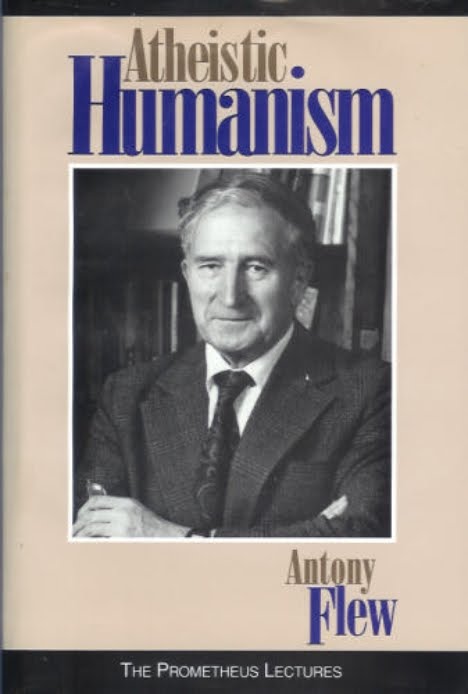




 The Daily Hatch
