As my book reveals, Francis Schaeffer in the twilight of his life was as convinced of the truth-claims of Christianity and the efficacy of what he called the finished work of Christ as he was after his struggles in the early 1950s and even immediately after his conversion in 1930. Indeed, his conviction continued to deepen into his closing years, allowing him no respite from his grief over the lost condition of human beings and still expanding his empathy for those whom he encountered. In his final film series, Whatever Happened to the Human Race? He included a powerful episode about the historical underpinnings of Christian conviction.
What is the essence of Francis Schaeffer? Is it his system of theology, his books, his political campaigning, the existence of L’Abri? Ironically, though he attacked first the “old” modernism, then the “new” modernism of existentialism, neo-orthodoxy, and even, in anticipation, postmodernism, he demonstrates what might be called an existential Christianity—living in the moment; embracing the reality of existence; seeing the underpinning certainty of Christian faith in the historical death and resurrection of Jesus Christ; and reckoning on the specific intervention of the Holy Spirit in conversion at a point in time in a person’s life, after which he or she passes from death to life. Schaeffer might be dismissed as a scholar or even original thinker (though it can be argued he was both, but particularly the latter), but his realistic, existential Christianity is remarkable and perhaps unique for someone of his biblical orthodoxy in his generation and is the secret, perhaps, of his impact on many people of diverse backgrounds and nationalities.
A full list of acknowledgments appears toward the end of this book, but I must here especially express my thanks to Christopher and Paulette Catherwood, for their brilliant and enthusiastic help with the interviewing for this book; to Ted Griffin, for his wise and thorough editing; to others who added to this book in a very special way, including Lane Dennis, John and Prisca Sandri, Ranald and Susan Macaulay, and Udo and Deborah Middelmann. Though not well enough to give me more than a warm smile and greeting, Edith Schaeffer’s published records of the family and L’Abri history, and unpublished Family Letters must have a special mention. While Christopher, Paulette, and I interviewed, we received kindness and hospitality of a Dutch, Swiss, English, Irish, and American variety. I particularly remember the kindness of Marleen and Albert Hengelaar and the inspiring memories of the late Anky Rookmaaker as she reached back in her mind to the war years; the events she recounted seemed as yesterday. It is a privilege even to share a little in others’ lives.
All rights reserved. No part of this publication may be reproduced, stored in a retrieval system or transmitted in any form by any means, electronic, mechanical, photocopy, recording or otherwise, without the prior permission of the publisher, except as provided for by USA copyright law.
The Francis and Edith Schaeffer Story Pt.1 – Today’s Christian Videos The Francis and Edith Schaeffer Story – Part 3 of 3 Francis Schaeffer: “Whatever Happened to the Human Race” (Episode 1) ABORTION OF THE HUMAN RACE Published on Oct 6, 2012 by AdamMetropolis ________________ Picture of Francis Schaeffer and his wife Edith from the […]
THE MARK OF A CHRISTIAN – CLASS 1 – Introduction Published on Mar 7, 2012 This is the introductory class on “The Mark Of A Christian” by Francis Schaeffer. The class was originally taught at Redeemer Presbyterian Church in Overland Park, KS by Dan Guinn from FrancisSchaefferStudies.org as part of the adult Sunday School hour […]
The Francis and Edith Schaeffer Story Pt.1 – Today’s Christian Videos The Francis and Edith Schaeffer Story – Part 3 of 3 Francis Schaeffer: “Whatever Happened to the Human Race” (Episode 1) ABORTION OF THE HUMAN RACE Published on Oct 6, 2012 by AdamMetropolis ________________ Picture of Francis Schaeffer and his wife Edith from the […]
The Francis and Edith Schaeffer Story Pt.1 – Today’s Christian Videos The Francis and Edith Schaeffer Story – Part 3 of 3 Francis Schaeffer: “Whatever Happened to the Human Race” (Episode 1) ABORTION OF THE HUMAN RACE Published on Oct 6, 2012 by AdamMetropolis ________________ Picture of Francis Schaeffer and his wife Edith from the […]
The Francis and Edith Schaeffer Story Pt.1 – Today’s Christian Videos The Francis and Edith Schaeffer Story – Part 3 of 3 Francis Schaeffer: “Whatever Happened to the Human Race” (Episode 1) ABORTION OF THE HUMAN RACE Published on Oct 6, 2012 by AdamMetropolis ________________ Picture of Francis Schaeffer and his wife Edith from the […]
The Francis and Edith Schaeffer Story Pt.1 – Today’s Christian Videos The Francis and Edith Schaeffer Story – Part 3 of 3 Francis Schaeffer: “Whatever Happened to the Human Race” (Episode 1) ABORTION OF THE HUMAN RACE Published on Oct 6, 2012 by AdamMetropolis ________________ Picture of Francis Schaeffer and his wife Edith from the […]
Francis Schaeffer: “Whatever Happened to the Human Race?” (Episode 2) SLAUGHTER OF THE INNOCENTS Published on Oct 6, 2012 by AdamMetropolis The 45 minute video above is from the film series created from Francis Schaeffer’s book “Whatever Happened to the Human Race?” with Dr. C. Everett Koop. This book really helped develop my political views concerning […]
Francis Schaeffer: “Whatever Happened to the Human Race” (Episode 1) ABORTION OF THE HUMAN RACE Published on Oct 6, 2012 by AdamMetropolis The 45 minute video above is from the film series created from Francis Schaeffer’s book “Whatever Happened to the Human Race?” with Dr. C. Everett Koop. This book really helped develop my political views […]
I have gone back and forth and back and forth with many liberals on the Arkansas Times Blog on many issues such as abortion, human rights, welfare, poverty, gun control and issues dealing with popular culture. Here is another exchange I had with them a while back. My username at the Ark Times Blog is Saline […]
Francis Schaeffer: “Whatever Happened to the Human Race” (Episode 5) TRUTH AND HISTORY Published on Oct 7, 2012 by AdamMetropolis The 45 minute video above is from the film series created from Francis Schaeffer’s book “Whatever Happened to the Human Race?” with Dr. C. Everett Koop. This book really helped develop my political views concerning abortion, […]
I have debated with Ark Times Bloggers many times in the past on many different subjects. Abortion is probably the most often debated subject and I have noticed that many pro-life individuals are now surfacing on the Arkansas Times Blog. Here are some examples. Arhogfan501 asserted: This is the beginning of the end for recreational abortion in Arkansas. Songbird777 noted: Babies have a right to live and not be chopped up for someone else’s convenience. The person using the username “baker” commented: Planned Parenthood (PPA) does not nor cannot provide mammograms, indeed no affiliate has the necessary license. PPA is an abortion provider and at some 900 plus killings a day rather prolific.
Here is another debate I got into recently on the Arkansas Times Blog and I go by the username “Saline Republican”:
The day was summed up for me by one sentence, spoken by the beautiful and eloquent Joyce Elliott. “This battle is not about abortion, it is about choice.”
Expert: Kermit Gosnell’s Ineptitude Led to Woman’s Abortion Death
by Steven Ertelt | Philadelphia, PA | LifeNews.com | 3/21/13 3:58 PM
PrintEmail
State 347 Share
Abortion practitioner Kermit Gosnell was so inept as to the proper use of anesthesia during an abortion procedure that his shoddy clinic standards led to one woman dying from a legal abortion.
That’s the conclusion of a Pittsburgh anesthesiologist, who told a jury today during is trial for eight counts of murder that the amount of anesthesia given to one woman during her abortion was enough to kill her.
Gosnell has been charged with eight counts of murder and several of his staff at the abortion center, including his wife and sister-in-law, have been charged as well in the case with assisting in botched abortions, practicing medicine without a license or covering up the actions of those who did. The counts include grisly infanticidesthat involved Gosnell snipping the spines with scissors of babies who had purposefully been prematurely born so they could be killed moments later.
Gosnell has also been charged with third-degree murder in the death of 41-year-old Karnamaya Mongar(right) and the national controversy that has erupted over Gosnell’s abortion business. The details are now coming up in court.
“The dose given to her exceeded the norm,” said Andrew Herlich, of the University of Pittsburgh Medical Center Mercy. “It would make her stop breathing.”
Herlich said that given Mongar’s size – 5-foot-1 and 110 pounds – the doses of a cocktail of Demerol, promethazine and diazepam would have put the petite woman “into a coma.”
In addition to Herlich’s opinion about Mongar’s death, Assistant District Attorney Edward Cameron also questioned the anesthesiologist about Gosnell’s practice of having his staff – none of whom had any medical training – to administer anesthesia and perform other medical tasks.
Herlich said no doctor performing procedures on a patient who is sedated and anesthetized should do so without an anesthesiologist present monitoring the patient’s vital signs and prepared to begin lifesaving techniques in an emergency.
Examining Gosnell’s “crash kit,” the container of medications and equipment needed for emergency resuscitation, that was seized by authorities in 2010, Herlich noted that crucial medicines such as epinephrine had expired in 2007.
A political refugee from the country of Bhutan, Mongar went to Gosnell on Nov. 19, 2009 for the abortion and, prior to it, was given numerous doses of pain and sedation drugs by an individual who was not a licensed medical practitioner.
Massive amounts of drugs found in the victim’s system led authorities to suspect Gosnell was illegally prescribing pain-killers. He temporarily lost his medical license in both Pennsylvania and neighboring Delaware. Pennsylvania officials suspect Mongar died from the botched abortion in part because she had been treated by unlicensed personnel.
The State Board of Medicine says Gosnell had the unlicensed staff member give vaginal exams and administer the drugs Demerol, Promethazine and Diazepam. He was eventually fined $1,000 for the violations.
She experienced severe cramping and asked for additional pain medication. The unlicensed assistant contacted Gosnell, who instructed her to administer more doses. Near the end of the procedure, Mongar began losing color and had no pulse.
The family has previously spoken out about her death.
“We want justice, this doctor has to be out of that clinic or he should not be treating anybody,” Damber Ghalley told CNN Monday. “And the things that happen to my sister, I don’t want to happen to anybody in the future.”
He told CNN “the clinic was so dirty, filthy with blood stains and a dirty floor, everywhere dirty, I cannot describe how dirty it was.”
“It’s unforgettable, my sister will never come back and it’s sad,” Ghalley said. “All the happiness is gone, they miss their mother every day and night,” Ghalley said, referring to Mongar’s four children.”
Karamaya’s daughter Yashoda Gurung is also speaking out and said the abortion turned bad when the overdose of anesthesia kicked in.
“We were waiting but it was a long time and my mom was not outside,” she told NBC Philadelphia, saying she began to panic when an ambulance pulled up to the abortion facility.
Gurung said an abortion center worked told her nothing was wrong: “She said, ‘your mom is good, don’t worry about that.’”
She said Gosnell’s staff moved the family to another room away from Mongar and would not give them updates on her condition. She finally saw her mother as emergency workers took her to the Hospital of the University of Pennsylvania where, hours later, Mongar was pronounced dead.
I truly believe that many of the problems we have today in the USA are due to the advancement of humanism in the last few decades in our society. Ronald Reagan appointed the evangelical Dr. C. Everett Koop to the position of Surgeon General in his administration. He partnered with Dr. Francis Schaeffer in making the video below. It is very valuable information for Christians to have. Actually I have included a video below that includes comments from him on this subject.
Francis Schaeffer: What Ever Happened to the Human Race? (Full-Length Documentary)
Part 1 on abortion runs from 00:00 to 39:50, Part 2 on Infanticide runs from 39:50 to 1:21:30, Part 3 on Youth Euthanasia runs from 1:21:30 to 1:45:40, Part 4 on the basis of human dignity runs from 1:45:40 to 2:24:45 and Part 5 on the basis of truth runs from 2:24:45 to 3:00:04
Francis Schaeffer “BASIS FOR HUMAN DIGNITY” Whatever…HTTHR
Francis Schaeffer.
Francis Schaeffer was prophetic just like this article below says he was and his influence on the pro-life movement was unbelievable too.
Written by Don Sweeting | Monday, January 30, 2012
Francis Schaeffer—100? Who can believe it?! Schaeffer (1912-1984) was born 100 years ago on January 30th. On this special occasion, it’s worth taking a few minutes to remember his important legacy. Many of us were greatly blessed by his life.
Schaeffer was a Presbyterian pastor, then missionary, then apologist, prolific author, evangelist, film maker and activist . He was one of six evangelical leaders (along with Billy Graham, John Stott, J.I. Packer, Carl F. H. Henry, and Martyn Lloyd-Jones) who profoundly shaped the evangelical movement in the second half of the 20th century.
His life
Francis Schaeffer was born in Germantown, Pennsylvania. As a student he attended Westminster Theological Seminary where he studied under Cornelius Van Til and J. Gresham Machen. He then went to Faith Theological Seminary. Schaeffer had pastorates in Grove City and Chester, Pennsylvania, and also in St. Louis, Missouri.
In 1948, he and his wife Edith moved to Switzerland as missionaries. There they later established the community called L’Abri (French for “the shelter”). During the 1960s and 1970s, L’Abri became a study center that attracted thousands of students and professionals from all over the world promoting the relevance of Christian truth. A constant stream of books flowed from both Francis and Edith including: The God Who Is There, Escape From Reason, He is There He is Not Silent, Art and the Bible, The Mark of the Christian, Pollution and the Death of Man, How Should We Then Live: The Rise and Decline of Western Thought and Culture, Whatever Happened to the Human Race, Death in the City, L’Abri, What is a Family, The Tapestry, A Christian Manifesto, etc..
His influence
I first encountered Francis Schaeffer’s books as a high school student. Here’s what impressed me.
First, Schaeffer understood the times. He began talking about “great, titanic shifts” taking in place in the second half of the 20th century when few others were even aware of it. From his European vantage point he saw the suffocating effects of post war Western materialism. He also realized that the Christian base of Western society was being quickly eroded, and that this would have immense consequences. He tried to describe how the modern world came to distance itself from the God of the Bible, and how, in this rejection, our society began to lose contact with reason, reality and even our own humanness.
Schaeffer saw that a new secular, post Christian materialistic humanism would take our culture in a very different direction—abortion on demand was only an early manifestation. Modernity, he said, had thrown away Christian theology and in so doing we have thrown away the possibility of what our forebearers had as the basis for morality and law.
Second, Francis Schaeffer believed in truth and made truth understandable to average lay people. He introduced us to many different philosophers and world views and helped us catch the broad currents of Western philosophy.
But Schaeffer also knew the power of truth. He understood that a new subjective view of truth was emerging. He insisted that God created us in his image and has spoken to us—hence we have a groundwork for knowing truth. As the idea of truth was being relativized, Schaeffer talked about “true truth” and truth spelled with a capital “T.”
Yet Schaeffer wasn’t content to simply argue for truth, he went further saying that Biblical Christianity provides a unified answer for the whole of life. And that truth is ultimately found in Jesus Christ. Discovering Christ and his truth leads us back to freedom and dignity.
Third, I learned about the lordship of Christ from Schaeffer. Raised in a pietistic Christian tradition, I grew up living in two worlds. There was the very important spiritual and religious world. And then there was everything else. That “everything else” did not seem all that important to me…..until “Schaeffer came into my life.”
Schaeffer understood the sweeping implications of the lordship of Christ. He had a reformed, and ultimately Biblical vision of the wholeness of life. Schaeffer once said that if he had a common unifying theme it was “the Lordship of Christ in the totality of life.” If Christ is indeed Lord, he is lord of spiritual matters, but just as much, he is lord across the whole spectrum of life—including the areas of culture, law and government.
This opened up a whole new world for many of us. We saw that culture matters. Literature, ideas, art, music, painting and film all of a sudden became interesting to us. This unconventional theologian with his gotee and knickers helped us make connections. For me, he expanded my view of Christ, but also sparked a kind of Christian liberal arts revolution in my mind. Many of us now wanted to “think Christianly” about, not just Christian things, but about everything.
Fourth, Francis Schaeffer was prophetic. In understanding the immense forces shifting western culture, he issued prophetic books and films affirming the dignity of human beings based on Biblical values. He was actually articulating the vision of a Christian humanism, though I don’t recall him ever using that phrase. Consequently, Francis Schaeffer became one of the first evangelical Protestants to speak out on the abortion issue. When Southern Baptists and some northern evangelicals were silent, or even going along with the liberalizing tendencies, Schaeffer thundered that abortion and euthanasia were not just Roman Catholic issues (even though Catholics were speaking out about these issues first) but they were life issues that should concern all Christians. In his book and film series What Ever Happened to the Human Race, Schaeffer called on evangelicals to join the pro-life movement.
Schaeffer was also one of the first to see the rise of a new statism that was beginning to challenge religious freedom. At the end of his life he believed that statism was actually one of the greatest problems facing America.
Consequently, Schaeffer called evangelicals to move away from their preoccupation with personal peace and affluence. He called them to a new social activism that did not neglect the gospel, or confuse the kingdom of God with a social agenda, but that refused to be content with a privatized Christianity. He called evangelicals to a co-belligerency with other groups (such as Roman Catholics) but in a way that did not promote deep alliances or compromise Biblical convictions.
Fifth, with all his outspokenness and advocacy, Schaeffer insisted that it was not just truth that mattered but also love. The mark of the Christian, he said, must be love. He understood that Biblical orthodoxy without compassion is very ugly. I suspect he said this because he saw a lot of ugly Christianity while growing up.
Where are you Francis Schaeffer?
Reflecting on Schaeffer’s influence in my own life, I can’t help but think that the American church still needs his voice, especially in the election year of 2012. The same huge historical currents are still at work. Many Christians are passive about our society and stuck in what Chuck Colson calls a “spiral of silence.” And in our polarized society, many Christians have lost that important balance that Schaeffer prized—the balance of truth and love.
Fact is, it has been 28 years since Schaeffer’s death, and we still need him.
Some have inaccurately cast Schaeffer as a a dominionist, theonomist or Christian reconstructionist. He was not.
Of course, Francis Schaeffer had his flaws. His son says he was sometimes impatient, angry and depressed. I reply—who hasn’t been, especially in his line of work! Also, in Schaeffer’s concern to highlight sweeping historical trends, he sometimes got details wrong. But then, that happens to most of us who write and try to grasp the big picture.
Schaeffer was the first to admit that he needed the righteousness of another—which is why he never gave up on his Biblical and reformed convictions.
As we reflect on his life and remember what he was, we dare not forget what has happened since Francis Schaeffer’s departure. Because today, along with all who die in Christ, he is glorified. What he saw through a glass dimly, he now more clearly understands. In the presence of his savior, he knows present glory and unimaginable joy. What is more—the world he longed for is on its way.
Dr. Don Sweeting is the president of the Orlando Campus of Reformed Theological Seminary and professor of church history. He is an ordained minister of the word in the Evangelical Presbyterian Church (EPC). This article is taken from his blog,What Is The Chief End of Man, and is used with permission.
Francis Schaeffer: “Whatever Happened to the Human Race” (Episode 1) ABORTION OF THE HUMAN RACE Published on Oct 6, 2012 by AdamMetropolis The 45 minute video above is from the film series created from Francis Schaeffer’s book “Whatever Happened to the Human Race?” with Dr. C. Everett Koop. This book really helped develop my political views […]
E P I S O D E 1 0 Dr. Francis Schaeffer – Episode X – Final Choices 27 min FINAL CHOICES I. Authoritarianism the Only Humanistic Social Option One man or an elite giving authoritative arbitrary absolutes. A. Society is sole absolute in absence of other absolutes. B. But society has to be […]
E P I S O D E 9 Dr. Francis Schaeffer – Episode IX – The Age of Personal Peace and Affluence 27 min T h e Age of Personal Peace and Afflunce I. By the Early 1960s People Were Bombarded From Every Side by Modern Man’s Humanistic Thought II. Modern Form of Humanistic Thought Leads […]
E P I S O D E 8 Dr. Francis Schaeffer – Episode VIII – The Age of Fragmentation 27 min I saw this film series in 1979 and it had a major impact on me. T h e Age of FRAGMENTATION I. Art As a Vehicle Of Modern Thought A. Impressionism (Monet, Renoir, Pissarro, Sisley, […]
E P I S O D E 7 Dr. Francis Schaeffer – Episode VII – The Age of Non Reason I am thrilled to get this film series with you. I saw it first in 1979 and it had such a big impact on me. Today’s episode is where we see modern humanist man act […]
E P I S O D E 6 How Should We Then Live 6#1 Uploaded by NoMirrorHDDHrorriMoN on Oct 3, 2011 How Should We Then Live? Episode 6 of 12 ________ I am sharing with you a film series that I saw in 1979. In this film Francis Schaeffer asserted that was a shift in […]
E P I S O D E 5 How Should We Then Live? Episode 5: The Revolutionary Age I was impacted by this film series by Francis Schaeffer back in the 1970′s and I wanted to share it with you. Francis Schaeffer noted, “Reformation Did Not Bring Perfection. But gradually on basis of biblical teaching there […]
Dr. Francis Schaeffer – Episode IV – The Reformation 27 min I was impacted by this film series by Francis Schaeffer back in the 1970′s and I wanted to share it with you. Schaeffer makes three key points concerning the Reformation: “1. Erasmian Christian humanism rejected by Farel. 2. Bible gives needed answers not only as to […]
Francis Schaeffer’s “How should we then live?” Video and outline of episode 3 “The Renaissance” Francis Schaeffer: “How Should We Then Live?” (Episode 3) THE RENAISSANCE I was impacted by this film series by Francis Schaeffer back in the 1970′s and I wanted to share it with you. Schaeffer really shows why we have so […]
Francis Schaeffer: “How Should We Then Live?” (Episode 2) THE MIDDLE AGES I was impacted by this film series by Francis Schaeffer back in the 1970′s and I wanted to share it with you. Schaeffer points out that during this time period unfortunately we have the “Church’s deviation from early church’s teaching in regard […]
Francis Schaeffer: “How Should We Then Live?” (Episode 1) THE ROMAN AGE Today I am starting a series that really had a big impact on my life back in the 1970′s when I first saw it. There are ten parts and today is the first. Francis Schaeffer takes a look at Rome and why […]
Francis Schaeffer: “Whatever Happened to the Human Race” (Episode 5) TRUTH AND HISTORY Published on Oct 7, 2012 by AdamMetropolis This crucial series is narrated by the late Dr. Francis Schaeffer and former Surgeon General Dr. C. Everett Koop. Today, choices are being made that undermine human rights at their most basic level. Practices once […]
The opening song at the beginning of this episode is very insightful. Francis Schaeffer: “Whatever Happened to the Human Race” (Episode 4) THE BASIS FOR HUMAN DIGNITY Published on Oct 7, 2012 by AdamMetropolis This crucial series is narrated by the late Dr. Francis Schaeffer and former Surgeon General Dr. C. Everett Koop. Today, choices […]
Francis Schaeffer: “Whatever Happened to the Human Race” (Episode 3) DEATH BY SOMEONE’S CHOICE Published on Oct 6, 2012 by AdamMetropolis This crucial series is narrated by the late Dr. Francis Schaeffer and former Surgeon General Dr. C. Everett Koop. Today, choices are being made that undermine human rights at their most basic level. Practices […]
Francis Schaeffer: “Whatever Happened to the Human Race?” (Episode 2) SLAUGHTER OF THE INNOCENTS Published on Oct 6, 2012 by AdamMetropolis This crucial series is narrated by the late Dr. Francis Schaeffer and former Surgeon General Dr. C. Everett Koop. Today, choices are being made that undermine human rights at their most basic level. Practices […]
It is not possible to know where the pro-life evangelicals are coming from unless you look at the work of the person who inspired them the most. That person was Francis Schaeffer. I do care about economic issues but the pro-life issue is the most important to me. Several years ago Adrian Rogers (past president of […]
This essay below is worth the read. Schaeffer, Francis – “Francis Schaeffer and the Pro-Life Movement” [How Should We Then Live?, Whatever Happened to the Human Race?, A Christian Manifesto] Editor note: <p> </p> [The following essay explores the role that Francis Schaeffer played in the rise of the pro-life movement. It examines the place of […]
Great article on Schaeffer. Who was Dr. Francis A. Schaeffer? By Francis Schaeffer The unique contribution of Dr. Francis Schaeffer on a whole generation was the ability to communicate the truth of historic Biblical Christianity in a way that combined intellectual integrity with practical, loving care. This grew out of his extensive understanding of the Bible […]
But today, in honor of the holidays, let’s address a lighter topic. Tim has some helpful advice on how to educate your crazy statist relatives.
When Thanksgiving talk turns political, do you feel like you and your liberal relatives can’t communicate? It’s okay. I can help you. I was born in Greenwich Village to a lawyer dad and community-organizer mom. I used to live on Capitol Hill, and now I live in Montgomery County in Maryland. I even served a year as an MSNBC contributor. This is all to say, I speak liberal. …So let me offer my conservative and libertarian readers the first annual Thanksgiving Guide to Making Conservative Arguments in Liberals’ Language.
Tim shows how you can help them understand that regulation is misguided.
Your liberal relatives generally trust government regulations to solve problems. They don’t sweat the costs to the economy as much as you do. Throw in a healthy distrust of Corporate America — often even an unhealthy disdain for it — and progressives (this is what they call themselves these days) end up regarding regulation as a force for good. You can plant a seed of skepticism about regulators’ ability to do good, though, by pointing to the salad course Trevor brought. The organic, local, sustainable kale in it might be impossible to get after the Obama administration’s food safety rules go into effect. …At work here are two dynamics common to regulation: They’re called “regulatory capture” and “the overhead smash.” Obama’s food safety czar is Michael Taylor, former top lobbyist for Monsanto. (You’ll be amazed at the power of the word “Monsanto” with some of your relatives.) Industrial farms and major food processors hire the best lobbyists and thus get a seat at the table when the FDA writes the rules. Thus, the biggest players in the regulated industry have “captured” the agency that regulates them. “The overhead smash” is my phrase for the tendency of regulations to add to overhead — the fixed costs of doing business — which smashes smaller competitors while protecting the big guys. In the food safety realm, small farms are begging to be exempted from these rules that only big farms can afford.
Since regulation imposes a staggering cost on the economy, I hope Tim’s suggested approach is successful.
FDR is still probably a god to these relatives, so you’ve got an uphill battle convincing them Social Security needs reforming. Here’s one place to start: Social Security is funded by a regressive tax and it redistributes wealth from minorities to whites. Here’s a line for you: For every $100 that white beneficiaries pay in taxes, they receive $113 in benefits, blacks receive $89 and Hispanics receive $58. …Social Security’s redistribution isn’t due to some racist Republican rule change. …White people live longer and are less likely to be immigrants, so they earn more credits and collect for longer.
And since more than 30 jurisdictions around the world have implemented personal retirement accounts (most recently the Faroe Islands), we know that reform can be very successful.
But let’s not get all serious when there’s turkey and football to occupy our attention, so let’s close with some great cartoons.
We’ll begin with a gem from Henry Payne, who identifies the top turkey of the season.
Michael Ramirez then identifies a prayer that no longer applies.
Robert Ariail suggests that the wrong turkey got pardoned at the White House.
The Pilgrims, George Washington, Reason TV, Al Mohler and the Purpose of Thanksgiving!!!! _____________ I want to make three points today. 1. When the colonists created the Plymouth Colony, they used a socialist model but they soon found out that capitalism works much better than socialism and people will always act in their own self-interest. […]
Abraham Lincoln (Daniel Day-Lewis) Spielberg’s film follows 56-year-old Abraham Lincoln, the 16th president of the United States, from January of 1865 until his death in April. The portrait on the left was taken in 1864. _________- From David Barton’s website: Proclamation – Thanksgiving Day – 1863 Abraham Lincoln – 10/03/1863 v\:* { BEHAVIOR: url(#default#VML) } o\:* […]
America’s Founding Fathers Deist or Christian? – David Barton 1/6 I enjoyed this and wanted to pass it on from Wallbuilders: John Hancock – 10/05/1791 The following is the text of a Proclamation for a Day of Thanksgiving and Praise, issued by John Hancock (Signer of the Declaration of Independence), while he was serving as […]
The Rolling Stones & Katy Perry – Beast Of Burden – Live – By Request
Published on May 12, 2013
The Rolling Stones and special guest Katy Perry perform ‘Beast Of Burden’ at the Las Vegas MGM Garden Arena.
______________
Can’t always get what you want…but Katy Perry sure did at the Rolling Stones concert in Las Vegas Saturday night!
Yep, the 28-year-old pop star hopped on stage with Mick Jagger & Co. for a duet of “Beast of Burden.”
Wearing thigh-high boots, a white skirt and a black bustier, Perry looked right at home performing with Jagger, Keith Richards, Charlie Watts and Ronnie Wood.
She was obviously excited by the gig, tweeting afterward, “Yes, I just did gyrated on Mick Jagger. WHAT?! #Stones50.” (Before you grammar snobs launch into an attack, she quickly responded to a tweeter who slammed her for her “appalling” linguistics, writing, “I noticed that. I guess I was too excited. Sorry mom.”)
She also tweeted a pic of herself and Mr. Jagger, writing, “Mick & Kate forever!”
“Thanks for letting me be the 5th wheel last night! @Rollingstones,” she added, posting a smiley shot of herself and the guys.
Clearly it was a teenage twentysomething dream come true!
Great article by Muehlenberg. Bill Muehlenberg’s commentary on issues of the day… John Lennon, Rock Culture, and Eternity It may have been “twenty years ago today, Sgt. Pepper taught the band to play,” as the Beatles sang about in their 1967 album “Sgt. Pepper’s Lonely Hearts Club Band,” but I in fact wish to go […]
I found these articles below interesting: Here is the first link: jeudi, octobre 07, 2004 Patti Hansen Ca date d’il y a déjà quelques années. Patti donc. Passionnant ? On a jamais dit ça. Patti Hansen in “Health for Women” magazine Patti Hansen was the subject of a cover story in the April issue of […]
Men’s Fraternity – Introduction Uploaded on Mar 14, 2011 A great introduction to Men’s Fraternity with clips of Robert Lewis, the creator of Men’s Fraternity. The Quest for Authentic Manhood Uploaded on Mar 14, 2011 Clips with Robert Lewis from Men’s Fraternity “The Quest for Authentic Manhood” _________ The Men of Semper Fidelis: “The Quest […]
The All-American Rejects Music Interview Tyson Ritter Full Band only on The Artist Spotlight The All-American Rejects – The Last Song The All-American Rejects – It Ends Tonight I got to go hear the All-American Rejects in Little Rock on 12-13-12. Here are some of my reactions. Tyson Ritter admitted that he lost his way […]
I’m In A Rock ‘N’ Roll Band – The Singer (Part 1) Jim Morrison – books on tape – w subtitles Light My Fire – The Doors The Rolling Stones – Satisfaction ________________________ The Rolling Stones – The Breakthrough The Rolling Stones – Brian Jones The Rolling Stones- Paint it Black Nirvana – Smells Like […]
Great article by Muehlenberg. Bill Muehlenberg’s commentary on issues of the day… John Lennon, Rock Culture, and Eternity It may have been “twenty years ago today, Sgt. Pepper taught the band to play,” as the Beatles sang about in their 1967 album “Sgt. Pepper’s Lonely Hearts Club Band,” but I in fact wish to go […]
Skillet – Awake and Alive Uploaded on Sep 27, 2010 I really have enjoyed reading about this band from Memphis. Skillet (band) From Wikipedia, the free encyclopedia Jump to: navigation, search Skillet Skillet performing at a promotional acoustic show in Denton, TX in 2006 Background information Origin Memphis, Tennessee, U.S. Genres Rock,[1] Christian rock/metal,[2][3] […]
In 1980 I read the book FREE TO CHOOSE by Milton Friedman and it really enlightened me a tremendous amount. I suggest checking out these episodes and transcripts of Milton Friedman’s film series FREE TO CHOOSE: “The Failure of Socialism” and “What is wrong with our schools?” and “Created Equal” and From Cradle to Grave, and – Power of the Market. In this episode “The Tyranny of Controls” Milton Friedman shows how government planning and detailed control of economic activity lessens productive innovation and consumer choice.
In this episode Milton Friedman asserts:
I think the United States would prosper in a way that is hardly imaginable today. It would be an example and a beacon to the rest of the world. What kind of sense does it make, here we are supposedly the leaders of the world. We are the ones who promote freedom, and free enterprise, and individual initiative. And what do we do? We force puny little Hong Kong to impose limits, restrictions on its exports at tariffs, in order to protect our textile workers. We go to Japan, and we say to Japan, “For God sakes, you got to limit the number of television sets you come out.” Instead of doing that, we ought to be setting an example to the world, and if we set the kind of an example to the world that Great Britain set to the world in the 19th century, it would be a tremendous __ it would have a tremendous impact, it would strengthen our moral position in the world, it would strengthen our ethical position in the world.
________________________________
Milton Friedman’s Free to Choose – Ep.2 (6/7) – The Tyranny of Control
McKENZIE: How close are you to what Deason was saying a moment ago in this area? He would seem to be arguing with you that there was a responsibility to make competition work.
FRIEDMAN: The responsibility is to set up a framework of laws and of arrangements, under which competition will flourish. And the most __
McKENZIE: Inevitably flourish? I mean, or __
FRIEDMAN: Well, so far as I know, I don’t know of any case in history in which monopolies have been able to maintain themselves for very long without having government assistance directly come in on their side. The trade union monopolies that Mr. Deason represents would never have the kind of power they do now if it weren’t for the special privileges which government has granted to them. I can perfectly well understand his being in favor of such action, of antitrust action by the government, because it really is pro-monopoly action, in the main.
DEASON: Why were those exemptions to monopoly laws given to unions?
FRIEDMAN: Because of the political power of unions, of course. I’m not questioning that.
DEASON: and because __ and because of the tremendous imbalance of power of companies at the time that unions were getting their start.
McKENZIE: There’s one concluding idea toward the end of your script that I’d like to look at, because it seemed to me to be most provocative. You talked about the need for constitutional restraints on governments to prevent them interfering in foreign exchange free markets, and in foreign trade. Now what have you in mind, Milton, when you say “constitutional restraints”?
FRIEDMAN: I __ no doubt what I have in mind if I, if I could persuade the public, I would like it to adopt a constitutional amendment strictly parallel to the constitutional prohibition in the text of the constitution, against the central government __ I’m sorry, against state governments imposing tariffs on imports. I would like to have a constitutional amendment which would read, “The Congress shall not impose any taxes, any taxes on imports, or give any subsidies to exports, except such as may be necessary,” I think the wording of the constitution is that the states are permitted to do it if it’s necessary for inspection. That’s the excuse under which California inspects you every time you drive past to see whether you’re carrying any plants or fruits or vegetables.
DEASON: Milton, let me ask you a question: How long do you think that the United States would survive if the United States enacted what you would like to have?
FRIEDMAN: I think the United States would prosper in a way that is hardly imaginable today. It would be an example and a beacon to the rest of the world. What kind of sense does it make, here we are supposedly the leaders of the world. We are the ones who promote freedom, and free enterprise, and individual initiative. And what do we do? We force puny little Hong Kong to impose limits, restrictions on its exports at tariffs, in order to protect our textile workers. We go to Japan, and we say to Japan, “For God sakes, you got to limit the number of television sets you come out.” Instead of doing that, we ought to be setting an example to the world, and if we set the kind of an example to the world that Great Britain set to the world in the 19th century, it would be a tremendous __ it would have a tremendous impact, it would strengthen our moral position in the world, it would strengthen our ethical position in the world. Instead of giving money to underdeveloped countries to produce products which we then refuse to buy and don’t let them export to us, we would be saying to the rest of the world, “If you produce anything, if you can produce anything and have a market here, come, we’re delighted to buy it, and we’ll produce things for you to buy.” That’s the kind of a pattern I would like to see the United States establish.
McKENZIE: Would your members buy that?
DEASON: Never. That’s a __
FRIEDMAN: Never is a long word, sir.
DEASON: Yes, you’re right.
FRIEDMAN: __ and you must distinguish between __
DEASON: And one should never say never.
FRIEDMAN: Your union officials would not buy it. But I am not sure your members wouldn’t.
DEASON: My members would not. No. My members would never buy it either. I cannot conceive of the United States setting itself up to become a target for the rest of the world.
FRIEDMAN: It’s not a target.
DEASON: There would be absolutely nothing that would require or compel any other country to enact any reciprocal agreements relative to tariffs__
FRIEDMAN: That’s right.
DEASON: __ and until such time as they have succeeded in dumping in the United States __ and I used dumping in the broadest sense of the word __ any and every product, either government subsidized by a foreign government, either put there because of multinational corporations manufacturing facilities in a foreign country, until they have succeeded in absolutely draining us dry __
FRIEDMAN: Draining us dry of what?
DEASON: Of every __ of every asset.
FRIEDMAN: How?
DEASON: Of every __
FRIEDMAN: What would they do with the dollars they got?
DEASON: They’d probably buy up, as they are now, as they __
FRIEDMAN: If they bought up __
RUMSFELD: The choice farmland.
FRIEDMAN: Yes. Yes.
McKENZIE: Let’s broaden this. On this very argument, now and a constitutional amendment argument. We’ve learned from our union friend he would __ can’t sell it and won’t sell it. Would business buy it?
RUMSFELD: Oh, no! They __ speaking __ (Several people talking at once.)
RUMSFELD: I’m not saying whether I’d buy it. No, no, but if business would help, which is the question. No, when I __ I speak not as a businessman, but as an ex-government employee, whenever proposals like that came up, one of the first things people see happen is government __ business and labor come in in lockstep, saying, “Horrors, horrors, the sky is falling.” There’s a commonality of interests there and people get used to what is, they get terribly conservative, and they know how to work the system the way it exists, and particularly the big unions and the big business, and they get very satisfied with it, they can manage it pretty well, and any time you try to unravel any kind of regulation or restriction or government intrusion, they’re philosophically for it, but in the practical world, they don’t want you to change the drill, they just figured out how to work this. Why should you then change it and make it all the more complicated. No, I think you’d get a good deal of reaction, just like you did out of the steel company in your television show.
McKENZIE: And what would the international reaction, do you think, as an international economist. Supposing Milton got his amendment, constitutional amendment, which had that effect, how would other countries react to it?
Milton Friedman The Power of the Market 1-5 How can we have personal freedom without economic freedom? That is why I don’t understand why socialists who value individual freedoms want to take away our economic freedoms. I wanted to share this info below with you from Milton Friedman who has influenced me greatly over the […]
Milton Friedman: Free To Choose – The Failure Of Socialism With Ronald Reagan (Full) Published on Mar 19, 2012 by NoNationalityNeeded Milton Friedman’s writings affected me greatly when I first discovered them and I wanted to share with you. We must not head down the path of socialism like Greece has done. Abstract: Ronald Reagan […]
Worse still, America’s depression was to become worldwide because of what lies behind these doors. This is the vault of the Federal Reserve Bank of New York. Inside is the largest horde of gold in the world. Because the world was on a gold standard in 1929, these vaults, where the U.S. gold was stored, […]
George Eccles: Well, then we called all our employees together. And we told them to be at the bank at their place at 8:00 a.m. and just act as if nothing was happening, just have a smile on their face, if they could, and me too. And we have four savings windows and we […]
Milton Friedman’s Free to Choose (1980), episode 3 – Anatomy of a Crisis. part 1 FREE TO CHOOSE: Anatomy of Crisis Friedman Delancy Street in New York’s lower east side, hardly one of the city’s best known sites, yet what happened in this street nearly 50 years ago continues to effect all of us today. […]
Friedman Friday” Free to Choose by Milton Friedman: Episode “What is wrong with our schools?” (Part 3 of transcript and video) Here is the video clip and transcript of the film series FREE TO CHOOSE episode “What is wrong with our schools?” Part 3 of 6. Volume 6 – What’s Wrong with our Schools Transcript: If it […]
Here is the video clip and transcript of the film series FREE TO CHOOSE episode “What is wrong with our schools?” Part 2 of 6. Volume 6 – What’s Wrong with our Schools Transcript: Groups of concerned parents and teachers decided to do something about it. They used private funds to take over empty stores and they […]
Here is the video clip and transcript of the film series FREE TO CHOOSE episode “What is wrong with our schools?” Part 1 of 6. Volume 6 – What’s Wrong with our Schools Transcript: Friedman: These youngsters are beginning another day at one of America’s public schools, Hyde Park High School in Boston. What happens when […]
Friedman Friday” Free to Choose by Milton Friedman: Episode “Created Equal” (Part 3 of transcript and video) Liberals like President Obama want to shoot for an equality of outcome. That system does not work. In fact, our free society allows for the closest gap between the wealthy and the poor. Unlike other countries where free enterprise and other […]
Free to Choose by Milton Friedman: Episode “Created Equal” (Part 2 of transcript and video) Liberals like President Obama want to shoot for an equality of outcome. That system does not work. In fact, our free society allows for the closest gap between the wealthy and the poor. Unlike other countries where free enterprise and other freedoms are […]
Milton Friedman and Ronald Reagan Liberals like President Obama (and John Brummett) want to shoot for an equality of outcome. That system does not work. In fact, our free society allows for the closest gap between the wealthy and the poor. Unlike other countries where free enterprise and other freedoms are not present. This is a seven part series. […]
I am currently going through his film series “Free to Choose” which is one the most powerful film series I have ever seen. PART 3 OF 7 Worse still, America’s depression was to become worldwide because of what lies behind these doors. This is the vault of the Federal Reserve Bank of New York. Inside […]
I am currently going through his film series “Free to Choose” which is one the most powerful film series I have ever seen. For the past 7 years Maureen Ramsey has had to buy food and clothes for her family out of a government handout. For the whole of that time, her husband, Steve, hasn’t […]
Friedman Friday:(“Free to Choose” episode 4 – From Cradle to Grave, Part 1 of 7) Volume 4 – From Cradle to Grave Abstract: Since the Depression years of the 1930s, there has been almost continuous expansion of governmental efforts to provide for people’s welfare. First, there was a tremendous expansion of public works. The Social Security Act […]
_________________________ Pt3 Nowadays there’s a considerable amount of traffic at this border. People cross a little more freely than they use to. Many people from Hong Kong trade in China and the market has helped bring the two countries closer together, but the barriers between them are still very real. On this side […]
Aside from its harbor, the only other important resource of Hong Kong is people __ over 4_ million of them. Like America a century ago, Hong Kong in the past few decades has been a haven for people who sought the freedom to make the most of their own abilities. Many of them are […]
“FREE TO CHOOSE” 1: The Power of the Market (Milton Friedman) Free to Choose ^ | 1980 | Milton Friedman Posted on Monday, July 17, 2006 4:20:46 PM by Choose Ye This Day FREE TO CHOOSE: The Power of the Market Friedman: Once all of this was a swamp, covered with forest. The Canarce Indians […]
Milton Friedman: Free To Choose – The Failure Of Socialism With Ronald Reagan (Full) Published on Mar 19, 2012 by NoNationalityNeeded Milton Friedman’s writings affected me greatly when I first discovered them and I wanted to share with you. We must not head down the path of socialism like Greece has done. Abstract: Ronald Reagan […]
Milton Friedman: Free To Choose – The Failure Of Socialism With Ronald Reagan (Full) Published on Mar 19, 2012 by NoNationalityNeeded Milton Friedman’s writings affected me greatly when I first discovered them and I wanted to share with you. We must not head down the path of socialism like Greece has done. Abstract: Ronald Reagan […]
How Raising Taxes Will Not Balance the Budget: More Evidence
Published on Nov 15, 2012
Although it may seem counterintuitive, raising taxes on the rich does not actually increase the amount of taxes the government collects. How could this possibly be the case? According to Professor Antony Davies, it is because the many loopholes in federal income taxes, capital gains taxes, and many other taxes, enable people to partially avoid these taxes. Perhaps instead of discussing how to raise tax revenues, we should spend our energy simplifying the tax code. This would make it more difficult for people to avoid taxes and, Davies says, “The less time and money we spend trying to work around a complex tax code, the more time and money we will have available to put to more productive uses.”
Do you think that the tax code is too complicated? Let us know in the comments!
__________
Republicans falling for that “balanced approach” ploy again? WHY DO YOU THINK RAISING TAXES IS THE ANSWER MR PRESIDENT?
Okay, I’ll admit the title of this post doesn’t really say anything. My toaster is smarter than most Republicans.
But let’s focus specifically on the budget and tax negotiations. AsI explained the other day, we basically have a situation where the President wants to trick GOPers into jumping out of the “fiscal cliff” frying pan and into the Obama class-warfare fire.
The frying pan is not a good option since it means a return of Clinton-era tax rates (but unfortunately not a return toClinton-era levels of spendingand regulation), but at least there would also be “sequestration,” which is budget-wonk term for automatic reductions in the growth of government spending.
Obama’s class-warfare fire, by contrast, is nothing but bad news. The tax increases might not be as large in the short run, but they would be designed to impose maximum damage on the economy. And the sequester would disappear. Indeed, Obama’s actually demanding moreKeynesian stimulus!
Gullible Republicans seem to think this is just peachy keen, but here is the work of some cartoonists with a more realistic assessment. We’ll start with my favorite, from Robert Ariail, if for no other reason than it builds upona cartoon I created for this 2011 post.
Here are two cartoons about that share the same theme, putting Obama in the role of Wimpy from the Popeye series. If that’s not a familiar cultural reference (i.e., if you’re not as old as me), watchthis YouTube clip.
Thank you so much for your time. I know how valuable it is. I also appreciate the fine family that you have and your commitment as a father and a husband.
Sincerely,
Everette Hatcher III, 13900 Cottontail Lane, Alexander, AR 72002, ph 501-920-5733, lowcostsqueegees@yahoo.com
Max Brantley is wrong about Tom Cotton’s accusation concerning the rise of welfare spending under President Obama. Actually welfare spending has been increasing for the last 12 years and Obama did nothing during his first four years to slow down the rate of increase of welfare spending. Rachel Sheffield of the Heritage Foundation has noted: […]
I have put up lots of cartoons from Dan Mitchell’s blog before and they have got lots of hits before. Many of them have dealt with the economy, eternal unemployment benefits, socialism, Greece, welfare state or on gun control. I think Max Brantley of the Arkansas Times Blog was right to point out on 2-6-13 that Hillary […]
I thought it was great when the Republican Congress and Bill Clinton put in welfare reform but now that has been done away with and no one has to work anymore it seems. In fact, over 40% of the USA is now on the government dole. What is going to happen when that figure gets over […]
Again we have another shooting and the gun control bloggers are out again calling for more laws. I have written about this subject below and on May 23, 2012, I even got a letter back from President Obama on the subject. Now some very interesting statistics below and a cartoon follows. (Since this just hit the […]
watch?v=llQUrko0Gqw] The federal government spends about 10% on roads and public goods but with the other money in the budget a lot of harm is done including excessive regulations on business. That makes Obama’s comment the other day look very silly. A Funny Look at Obama’s You-Didn’t-Build-That Comment July 28, 2012 by Dan Mitchell I made […]
I have written a lot about this in the past and sometimes you just have to sit back and laugh. Laughing at Obama’s Bumbling Class Warfare Agenda July 13, 2012 by Dan Mitchell We know that President Obama’s class-warfare agenda is bad economic policy. We know high tax rates undermine competitiveness. And we know tax increases […]
Dan Mitchell Discussing Dishonest Budget Numbers with John Stossel Uploaded by danmitchellcato on Feb 11, 2012 No description available. ______________ Dan Mitchell of the Cato Institute has shown before how excessive spending at the federal level has increased in recent years. A Humorous Look at Obama’s Screwy Budget Math May 31, 2012 by Dan Mitchell I’ve […]
Sometimes it is so crazy that you just have to laugh a little. The European Mess, Captured by a Cartoon June 22, 2012 by Dan Mitchell The self-inflicted economic crisis in Europe has generated some good humor, as you can see from these cartoons by Michael Ramirez and Chuck Asay. But for pure laughter, I don’t […]
Another great cartoon on President Obama’s efforts to create jobs!!! A Simple Lesson about Job Creation for Barack Obama December 7, 2011 by Dan Mitchell Even though leftist economists such as Paul Krugman and Larry Summers have admitted that unemployment insurance benefits are a recipe for more joblessness, the White House is arguing that Congress should […]
Dan Mitchell hits the nail on the head and sometimes it gets so sad that you just have to laugh at it like Conan does. In order to correct this mess we got to get people off of government support and get them in the private market place!!!! Chuck Asay’s New Cartoon Nicely Captures Mentality […]
Cato Institute scholar Dan Mitchell is right about Greece and the fate of socialism: Two Pictures that Perfectly Capture the Rise and Fall of the Welfare State July 15, 2011 by Dan Mitchell In my speeches, especially when talking about the fiscal crisis in Europe (or the future fiscal crisis in America), I often warn that […]
John Stossel report “Myth: Gun Control Reduces Crime Sheriff Tommy Robinson tried what he called “Robinson roulette” from 1980 to 1984 in Central Arkansas where he would put some of his men in some stores in the back room with guns and the number of robberies in stores sank. I got this from Dan Mitchell’s […]
I have put up lots of cartons and posters from Dan Mitchell’s blog before and they have got lots of hits before. Many of them have dealt with the economy, eternal unemployment benefits, socialism, Greece, welfare state or on gun control. Amusing Gun Control Picture – Circa 1999 April 3, 2010 by Dan Mitchell Dug this gem out […]
We got to cut spending and stop raising the debt ceiling!!! When Governments Cut Spending Uploaded on Sep 28, 2011 Do governments ever cut spending? According to Dr. Stephen Davies, there are historical examples of government spending cuts in Canada, New Zealand, Sweden, and America. In these cases, despite popular belief, the government spending […]
I have put up lots of cartons and posters from Dan Mitchell’s blog before and they have got lots of hits before. Many of them have dealt with the economy, eternal unemployment benefits, socialism, Greece, welfare state or on gun control. On 2-6-13 the Arkansas Times Blogger “Sound Policy” suggested, “All churches that wish to allow concealed […]
Gun Free Zones???? Stalin and gun control On 1-31-13 ”Arkie” on the Arkansas Times Blog the following: “Remember that the biggest gun control advocate was Hitler and every other tyrant that every lived.” Except that under Hitler, Germany liberalized its gun control laws. __________ After reading the link from Wikipedia that Arkie provided then I responded: […]
On 1-31-13 I posted on the Arkansas Times Blog the following: I like the poster of the lady holding the rifle and next to her are these words: I am compensating for being smaller and weaker than more violent criminals. __________ Then I gave a link to this poster below: On 1-31-13 also I posted […]
It is my view that group B with Spain and the Netherlands would be much tougher to be in for the USA than our group G with Germany, Portugal and Ghana. Ghana has eliminated us from the last two World Cups and that troubles me because that is a must win for us this time around. I am glad that we have Germany the last match since we will know what we need to get in order to advance. I think 4 points may get us to the 2nd round but who knows. If I had to pick the easiest group then it would be group H by far. It will be fun!!!!
Use your ← → (arrow) keys to browse more storiesNext
Jeff J Mitchell/Getty Images
After an eventful draw for the 2014 World Cup, the groups are set.
The Americans, who enter this tournament with arguably their strongest team ever, were certainly part of the excitement.
It will not be an easy path to the knockout stage for the USMNT.
Will the Americans advance to the knockout stage?
Yes! This team is talented and ready.No. This group is too tough. Submit Votevote to see results
The Americans have climbed to No. 14 in the FIFA rankings, but that is only good enough to have them as the third-highest ranked team in Group H.
No. 2 Germany heads up the group. They are followed by Cristiano Ronaldo and his fifth-ranked Portugal side.
At No. 24, Ghana is the only team in the group that is ranked lower than the Americans. Still, that is the same Ghana side that has defeated the Americans in the past two World Cups.
As if the fierce competition wasn’t enough, the Americans will also have to attempt to overcome this fact:
Of course, Group G isn’t the only group worthy of being considered the “Group of Death.” Group B is among those that will also be a fierce battle. Defending champion and current world No. 1 Spain sits at the top. With No. 9 and defending runners-up Netherlands, No. 15 Chile and No. 59 Australia, this group is going to be a fun one to track.
Daniel Sastre Huertas/Getty Images
On the whole, the draw sets up for a fantastic tournament.
Looking past the group stage, the potential is there for compelling knockout games. No. 10 Brazil, No. 4 Colombia, No. 8 Switzerland, and No. 2 Germany head up the groups on one side and No. 1 Spain, No. 6 Uruguay, No. 3 Argentina, and No. 11 Belgium head up the groups on the other side.
Bleacher Report
Bleacher Report
Group A
Team
Confederation
FIFA Ranking
Brazil
CONMEBOL/Hosts
10
Croatia
UEFA
16
Mexico
CONCACAF
20
Cameroon
CAF
51
Group B
Team
Confederation
FIFA Ranking
Spain
UEFA
1
Netherlands
UEFA
9
Chile
CONMEBOL
15
Australia
AFC
59
Group C
Team
Confederation
FIFA Ranking
Colombia
CONMEBOL
4
Greece
UEFA
12
Ivory Coast
CAF
17
Japan
AFC
48
Group D
Team
Confederation
FIFA Ranking
Uruguay
CONMEBOL
6
Costa Rica
CONCACAF
31
England
UEFA
13
Italy
UEFA
7
Group E
Team
Confederation
FIFA Ranking
Switzerland
UEFA
8
Ecuador
CONMEBOL
23
France
UEFA
19
Honduras
CONCACAF
41
Group F
Team
Confederation
FIFA Ranking
Argentina
CONMEBOL
3
Bosnia-Herzegovina
UEFA
21
Iran
AFC
45
Nigeria
CAF
36
Group G
Team
Confederation
FIFA Ranking
Germany
UEFA
2
Portugal
UEFA
5
Ghana
CAF
24
United States
CONCACAF
14
Group H
Team
Confederation
FIFA Ranking
Belgium
UEFA
11
Algeria
CAF
26
Russia
UEFA
22
South Korea
AFC
54
FIFA
All that is left now is to wait until June for the action to start. …Is it June yet?
I went to a Manchester soccer game back in 1979 in England. It was quite an experience. Manchester City Win 1st Title Since 1968 Manchester City’s amazing comeback sums up the entire Premier League title chase.Tags: UK PTI, EPL, England, Manchester City Manchester City Win 1st Title Since 1968 NEXT VIDEO Manchester City Win 1st […]
Vegalta Sendai were up 1-0 in the first half of their J-League match against defending champions Nagoya Grampus Eight when the losing home side’s keeper, Yoshinari Takagi, came out of his area to collect the ball. He took too long to clear it., allowing Atsushi Yanagisawa to take the ball off him for a seemingly […]
Cristiano Ronaldo vs Rafa Nadal (Nike Mercurial Vapor VIII TV Spot) Published on Apr 7, 2012 by iTrexX I want that football shoes!!! :O _________________
My son Wilson got to see Renoldo play while he was in Los Angeles last summer. Cristiano Ronaldo has had better season than Messi, says Mourinho after Bayern loss By Tom Webber | Goal.com – Wed, Apr 25, 2012 7:10 PM EDT Real Madrid coach Jose Mourinho insisted that Cristiano Ronaldo has had a better season than […]
L.Messi vs C.Ronaldo 2011 (Soccer Saturday) Two of my favorite players. My son Wilson actually got to see this goal below at a LA Galaxy game he attended in the summer.
The best soccer goal of the year in 2011? Yahoo Sports reported: The rivalry between the Seattle Sounders and the Vancouver Whitecaps goes back to their days in the old NASL in the 1970s, but the final 10 minutes of their first MLS match against each other on Saturday night might have been the best […]
This was originally posted before the January 2013 March for Life.
Francis Schaeffer Whatever Happened to the Human Race (Episode 1) ABORTION
Francis Schaeffer: What Ever Happened to the Human Race? (Full-Length Documentary)
Part 1 on abortion runs from 00:00 to 39:50, Part 2 on Infanticide runs from 39:50 to 1:21:30, Part 3 on Youth Euthanasia runs from 1:21:30 to 1:45:40, Part 4 on the basis of human dignity runs from 1:45:40 to 2:24:45 and Part 5 on the basis of truth runs from 2:24:45 to 3:00:04
Editor’s note. 1998 is the 25th anniversary of the dreadful Roe v. Wade decision. In each issue NRL News is presenting either a revealing portrait of the abortion mentality written by a pro- abortionist, or a thoughtful critique of the abortion mindset composed by a pro-life champion.
Almost 20 years have passed since I sat in the balcony of the Academy of Music in Philadelphia and viewed the film series Whatever Happened to the Human Race? It was the premiere showing of a stunning visual experience that eventually toured 20 major cities.
The text and narration of the five-episode seminar were by Francis Schaeffer, an internationally acclaimed theologian, philosopher, and author, and C. Everett Koop, then surgeon-in- chief at Philadelphia’s Childrens Hospital. They combined their individual expertise and experience to expose the subtle but rapid loss of human rights in America.
They elaborated on those concerns in a textbook of the same name in which they explored in documented detail the growing acceptance of the once-unthinkable practices of abortion, infanticide, and euthanasia.
The film series attracted nationwide attention during its three-month tour in 1979, and the book quickly became a teaching tool for professionals and lay people alike. As a result, there was a dramatic change in the abortion landscape. The powerful message of both the screen and printed versions of Whatever Happened to the Human Race? educated and energized an up-till-then largely uninvolved constituency – – the Evangelicals.
Within weeks of the unveiling of the filmed series and its companion book, Dr. Schaeffer noted their impact in a personal letter dated March 29, 1980. “The Protestants, and especially the evangelicals,” he wrote, “have been so sluggish on this issue of human life, and Whatever Happened to the Human Race? is causing real waves, among church people and governmental people too.”
Those “real waves” continued to ripple out across America, and what had been seen largely as “a Catholic issue” soon became an ” Evangelical issue” as well.
So stunning were the book and its predictions of disaster that had it not been for the sterling reputations of both Koop and Schaeffer as professionals in their own fields, they would have been dismissed as alarmists and scaremongers.
The intervening 20 years, however, proved their warnings to have been prophetic. Yet even they could hardly have anticipated the rapidity with which America would embrace destructive policies and barbaric procedures.
Although the filmed version of Whatever Happened to the Human Race? is seldom shown these days, the book continues to be a dependable resource for those seeking the historical basis for human dignity, value, and rights.
The authors viewed the struggle for the sanctity of life as two- fold, and they divided their 265-page book into two distinct but related parts. The first section provided information, facts, and case studies related to abortion, infanticide, and euthanasia.
Koop and Schaeffer repeatedly made clear that their goal was not simply to educate but to challenge and encourage their readers to respond with decisive and sacrificial action. To that end, their arguments were logical as well as moral.
The second part of the book focused on differing philosophical positions which deny or give uniqueness and dignity to human life. The authors rooted their views in historic Christianity and, fundamentally, Whatever Happened to the Human Race? is a defense of the Judeo-Christian ethic as the foundation of Western civilization. It is a polemic based on the principle that human beings derive their value from having been created in the image of God.
The challenge of the book was directed primarily at Protestants (Evangelicals in particular), but at Christians in general, many of whom the authors believed had neglected to recognize the ” unbreakable link between the existence of the infinite personal God and the uniqueness of human life.” The continued silence and lack of involvement of this group were serving to fuel the decline of human significance.
As the authors led readers to explore the basis for the dignity of human life, they contrasted the views of the East and the West. They walked the reader through the Old and New Testaments, the Enlightenment, mysticism, and, with a detour into archeology, through the Dead Sea Scrolls. All this was for the purpose of examining the historical basis for man’s dignity so that Americans would see the present time as a crucial turning point.
Several powerful visuals from the film were reproduced in the book. One is the scene of a thousand dolls scattered at the shoreline of the Dead Sea in Israel. It is the site where Sodom once stood and was designed to serve as a symbol of moral degradation. It was a reminder to American society of the depravity that has led to the legal destruction of millions of our children and the destruction that awaits the culture as a result.
The assembly-line scene in a toy factory features a procession of dolls in which those missing a limb or having an imperfection are snatched by an impersonal hand and tossed into the garbage. The picture graphically portrays the casual and cruel disregard for the lives of those judged to be less than perfect.
However, it is the cage sequence that is perhaps the most gripping photo in the book, for it portrays real people and real events. In one cage are slaves in chains; in another are German Jews wearing the Star of David. Peering out of other cages are elderly men and women, a crippled child, and a newborn baby.
Each cage is a visual reminder that classifying people as non- persons has its historical precedence. Our generation, through Roe v. Wade, also has declared a segment of the human family outside the protection of the law. Some view legal abortion as a sign of liberation. It is actually an imitation of injustices of the past.
Almost two decades ago Whatever Happened to the Human Race? provided a glimpse into the abyss of horrors that would result from abandoning the fundamental right to life. Today we have the legalization of the barbaric partial-birth abortion. Today children can be “manufactured” from a mother who was an aborted baby and a father who was a cadaver. Today, the Kevorkian machine continues to rumble along the highway of death, picking up support for the national acceptance of “assisted suicide.” Today we are confronted with surveys in which fifty percent of the respondents agree that “abortion is murder” but thirty-nine percent of them say that abortion should be legal anyway. Today is yesterday’s nightmare come true.
Whatever Happened to the Human Race? is a classic whose fundamental arguments need to be revisited on a regular basis. Its clarity of thought is complemented by its analysis of the future of Western culture and its chilling prophecy of what awaits us as the destruction of human life is increasingly sanctioned by the medical profession and the courts, by science and legislators, by parents and silent citizens.
The authors had set out to convince people that at some point we, as a nation, will be held accountable for our disregard of human value because history does not forgive or forget. The question, “Whatever happened to the human race?” serves to reveal the human propensity for exaggerated pride and supreme self- confidence that leads us to shake our fists in the face of God and think we can get away with it. The book Whatever Happened to the Human Race? says we can’t.
PHOTO BY STATON BREIDENTHAL Marchers arrive at the state Capitol on Sunday after beginning the Arkansas March for Life in downtown Little Rock As in the past, the pr0-life March in Little Rock had at least twenty times the people in attendance that the pr0-abortion march did the previous day. In fact, last year Channel […]
34th Annual March For Life Sunday, January 22, 2012 2:00 PM Capitol and Louisiana Downtown Little Rock Will your face appear in pictures at the next March for Life? We certainly hope that you will consider joining us each January for this important pro-life event. Hundreds of people from across the state make the annual […]
HALT:HaltingArkansasLiberalswithTruth.com President Obama on abortion Adrian Rogers (former President of Southern Baptist Convention): “I am not as afraid of the Communist, the Russians, the Chinese, as much as I am afraid of God. If God be for us, who can be against us? If God be against us, then who can be for us? It […]
The All-American Rejects Music Interview Tyson Ritter Full Band only on The Artist Spotlight The All-American Rejects – The Last Song The All-American Rejects – It Ends Tonight I got to go hear the All-American Rejects in Little Rock on 12-13-12. Here are some of my reactions. Tyson Ritter admitted that he lost his way […]
Ron Paul’s Pro-life view Ron Paul’s Pro-Life Speech in Ames, Iowa Uploaded by RonPaul2008dotcom on Aug 13, 2011 Free email updates: http://www.RonPaul.com/welcome.php Please like, share, subscribe & comment! http://www.RonPaul.com 08/13/2011– Ron Paul is America’s leading voice for limited, constitutional government, low taxes, free markets, sound money, and a pro-America foreign policy. ___________________________________ Related posts: Crowd […]
I have been involved with the March for Life for almost 30 years here in Little Rock. My four kids and I have walked in it on a regular basis in Little Rock and I have posted about it before on my blog http://www.thedailyhatch.org . When I first marched in it Ronald Reagan was the […]
My sons Wilson (on left) and Hunter (on right) went to California and visited Yosemite National Park with our friend Sherwood Haisty Jr. March 21-27. Here they are standing in front of the tallest waterfall in North America. The only surviving founding member of NARAL, Dr. Bernard Nathanson gives his testimony of NARAL’s foundation of […]
President and Nancy Reagan talking to Mother Teresa in the Oval Office. 6/20/85. Superbowl commercial with Tim Tebow and Mom. Jason Tolbert wrote a great article this week about a pro-life meeting. He mentons William Harrison who I have written about before on this blog. I used to write letters to the editor a whole […]
What Ever Happened to the Human Race? Jason Tolbert told a story about pro-life marchers and their tactic of prayer: OWNER TURNS SPRINKLERS ON PRO-LIFE PRAYER VIGIL In July, I wrote about a new movement springing up in Arkansas that seeks to combat abortion not with violent protest, but with peaceful prayer demonstrations. It is called “40 […]
Rep. Tim Griffin and Lt. Gov. Mark Darr at the Arkansas March for Life in Little Rock from Tolbert Report. Go to Fox 16 website and you will read this story below and watch a video clip on both marches. What you will not read is the fact that only 150 people showed up for […]
HALT:HaltingArkansasLiberalswithTruth.com (My family and I are heading out to march today. The weather in Little Rock is overcast and pleasant. Come out and join us.) Bill O’Reilly Interviews Jehmu Greene About Pro-Life Super Bowl Ad about Tim Tebow I got these quotes from someone off the internet that lives in England. The funny thing is […]
HALT:HaltingArkansasLiberalswithTruth.com Development of the Unborn Baby. Prolife Video There are people all around you who have been affected by humanism. Abortion is one of the results of humanism. Nevertheless, we can befriend those who are considering abortion and speak into their lives with love and truth. There may be those who say hateful things to […]
HALT:HaltingArkansasLiberalswithTruth.com Science Matters #2: Former supermodel Kathy Ireland tells Mike Huckabee about how she became pro-life after reading what the science books have to say. My good friend Dr. Kevin R. Henke is a scientist and also an atheistic evolutionist. I had a lot of discussions with Kevin over religious views. I remember going over […]
HALT:HaltingArkansasLiberalswithTruth.com “Jane Roe” or Roe v Wade is now a prolife Christian. She’s recently done a commercial about it. Around 1993 my wife Jill and I peacefully walked the streets of Little Rock with Rev Flip Benham who was working with Operation Rescue at the time. We held pro-life signs up and heard some moving […]
My grandfather visited South Africa back in 1973 and he got to visit with many of the locals concerning their life circumstances. The whites in South Africa were convinced that they had to keep things how they were or all chaos were break forth. It is a sad commentary on the state of our fallen world that it took so long for freedom to come to South Africa. Sadly it was slow coming to the USA in 1861 when a war broke out because of slavery.
On Thursday, South African President Jacob Zuma announced the death ofNelson Mandela at age 95. One of the most significant and vital figures of the 20th century, Nelson Mandela became known not only as the father of his nation, but as the father of an entire people.
All this goes back to 1918 when Mandela, then known by the name Rolihlaha, was born into the royal line of the Xhosa tribe in South Africa. Later, his name was changed to Nelson when he was baptized by Methodists. When he died he was known by Africans merely as Madiba, representing his traditional clan. By then, he had become one of the most respected figures on the world stage.
Nelson Mandela came to adulthood as the minority whitegovernment of South Africa was instituting apartheid, the radical system of total racial segregation and discrimination that forced the native African majority in the nation into a state of humiliating oppression. Apartheid required the social, economic, and political separation of whites and blacks in South Africa, and it was enforced with brutality and murderous force.
Apartheid was a multidimensional structure of repression, humiliation, and prejudice. Americans would be hard-pressed to imagine how such a system could exist until they realize that a similar system of racial apartheid had existed throughout most of the 20th century in the United States, especially in the South.
Under apartheid, many of the African tribes were put onto tribal lands and territories where they had no access to modernity, to modern goods, or to the modern economy. Black South Africans were denied access to the political process, blocked by an entire system of laws that treated them as second-class citizens in the nation of their birth.
Apartheid flies in the face of the Christian understanding of the equality of every single human being. Our true human equality is not based in a political promise, it is biblically and theologically grounded—unquestionably grounded in the fact that the Bible clearly reveals that every single human being is equally made in God’s image. We are separate and distinct from other creatures precisely because we alone as a species—as human beings, as Homo sapiens—we alone bear God’s image. And we bear God’s image equally, male and female, regardless of any racial or ethnic consideration; and for that matter—as in these days we must argue over and over again—regardless of any other kind of consideration, including age or process of development.
The death of Nelson Mandela represents a landmark in terms of history. But it is also, in terms of the Christian worldview, a cause for our deepest thinking about the intersection of history and destiny, of human rightsand human dignity, and of character and leadership. Nelson Mandela, long before World War II, came into contact with what became known as the African National Congress. The sole effort of the African National Congress (better known as the ANC) was to overthrow the apartheid regime by any means necessary.
As a young man, Mandela joined the ANC when it was, to use the only word that would fit, a terrorist organization. And yet, he also became a major figure in world politics and statesmanship. He spent many years in prison after several treason trials for acts against the government of South Africa. He found himself on the infamous Robben Island as a prisoner for almost twenty years; and then he spent almost another decade in a separate prison. By the time he emerged from his prison cell at age 72, he was understood to be the only man who could save his nation from total chaos and violence. Less than four years after his release from prison, Mandela took the oath of office as the democratically-elected President of South Africa.
What changed? Well, you might say everything changed.
In the 1990′s, Mandela received the Nobel Peace Prize, shared with F. W. de Klerk, the last of the white Afrikaner presidents of South Africa. De Klerk shared that Nobel Prize with Nelson Mandela precisely because it took a cooperative effort by the last white president of South Africa and the first black president of South Africa to put together a system that would not lead to national collapse, but would create a national future.
South Africa remains a deeply troubled nation in many ways, but it is an economic powerhouse. As the Wall Street Journal pointed out in its obituary on Nelson Mandela, South Africa is the economic powerhouse of Africa: it stands out economically from every other African nation. And much of that is due to the transition that took place in the 1990′s away from apartheid and toward a new future for South Africa, that very process that was negotiated by F. W. de Klerk and Nelson Mandela.
Nelson Mandela lived a very long life. His life encompassed most of the 20th century and at least the first decade and more of the 21st century. He retired twice from national life. He served only one term as president, offering a rare model of political modesty. His nation has never again achieved the political stability he gave it.
When you think of Nelson Mandela and reflect on his life, and now on his death, there are many worldview issues that are immediately implicated. One of them has to do with the fact that Nelson Mandela was, by any honest analysis, a terrorist. That immediately raises a deep moral issue. How can someone be so honored who had at any point resorted to terrorism in order to achieve a political objective?
Well, while we’re thinking about that question, let’s reflect upon some less convenient facts of history. For instance, we should look at Menachem Begin, who became one of the most powerful prime ministers of Israel, and who signed the Camp David peace agreement with then Egyptian president Anwar Sadat during the American presidency of Jimmy Carter. Like Nelson Mandela, Menachem Begin shared the Nobel Peace Prize, but he was also a terrorist as a young man—a Zionist terrorist. He was directly implicated in the bombing of the King David Hotel in Jerusalem in 1946 that led to the deaths of at least 91 people. He was known as a terrorist; he was wanted as a terrorist. And yet, he later became the Prime Minister of Israel and also shared the Nobel Peace Prize. Likewise, Anwar Sadat, the Egyptian president who shared the Nobel Peace Prize with Menachem Begin, also began his political career as a terrorist against the British.
While we’re thinking about terrorism, we probably also ought to think about someone from our own nation’s history, like George Washington. Had the American Revolution turned out differently, George Washington would in all likelihood have been hung as a traitor. He would also have been accused of being what we now call a terrorist.
All this is not to give moral absolution to terrorists, so long as they win and eventually have political victory. It is, however, to remind ourselves that in the process of politics in a fallen world, one man’s terrorist is another man’s freedom fighter.
In the United States, we speak about the efforts that led to the overthrow of the British colonization as our national revolution, the birth of a nation. The British called it treason.
Similarly, Nelson Mandela is seen as a great hero by the people of South Africa, as was Menachem Begin by the people of Israel. This pattern certainly does not absolve the use of force. It does not absolve terrorists of their tactics, it just raises the point that when we talk about terrorism, character, and historical change, we must think honestly.
That honest assessment recognizes that when you look at the process of political change, the kind of change on a scale necessary to overthrow something as powerful as apartheid, it looks in a fallen world as if force, more often than not, becomes necessary. That is lamentable; but we ought to note it honestly. This is a crucial moral factor in our consideration of the life and legacy of Nelson Mandela.
So is the issue of character and conviction. In my book on convictional leadership, The Conviction to Lead, I mention both Nelson Mandela and Martin Luther King, Jr. They raise many of the same issues. Martin Luther King, Jr. was known as an ordained minister. He was also known as a serial philanderer. Nelson Mandela became known as the father of his nation, but he was also known as a serial adulterer. He was a man who was deeply, morally conflicted and inherently complex. His early political philosophy was a variant of Marxism and, unlike King, Mandela renounced nonviolence as a political strategy. Much of this is deeply troubling to the Christian conscience.
And yet, when we look at his legacy in terms of the overthrow of apartheid, we recall the fact that Reinhold Niebuhr, one of the most influential theologians in America at the middle of the 20th century, argued that there are times in which certain men, certain historical figures, appear to be historically necessary, even if they are far from historically perfect. That seems so often to be the case in a fallen world. In a sinful world, a world in which every dimension is marked by sin, the most effective political leaders are those who have the strongest convictions; but often those strong convictions and ambitions are met by a somewhat less than stellar character.
Nelson Mandela’s character, however, is not limited to, but certainly includes his sexual behavior. It also includes his personal courage. His moral character includes the deep conviction he had about the future of his people. He was a man committed to democracy: he did not overthrow apartheid in order to put in place an African National Congress dictatorship.
When it comes to human rights and human dignity, Nelson Mandela has to be put on the side of the heroes, not only of the 20th century, but of any recent century. He is, as an ironic view of history would remind us, one of those necessary men. A necessary man who nonetheless is a man whose feet were made of clay, as his biography reveals very clearly.
Hollywood is now releasing a major film about Nelson Mandela that tells both sides of this story. And as Americans perhaps see that story, it’s likely that they will be confronted with many of these worldview issues. It is unlikely that anyone is going to try to help them think about these questions and to think about them as Christians.
American Christians looking at Nelson Mandela must eagerly affirm that we are thankful that he was used in order to achieve freedom and human dignity for his people. But perhaps we should also be thankful that we know a little bit more of the story so that he is not merely held up as a hero to be emulated in every respect, but is known as one who was a morally complicated man. And when it comes to figures on the world scene, every single one of them is morally complicated, each in his or her own way.
That’s why a look at the span of human history causes us to recognize that our Christian responsibility is to look at this morally complicated picture with courageous honesty, to take it all as evidence, not only of why human history is important, but why our ultimate redemption can come only from Christ.
Reinhold Niebuhr’s great theological contribution was to remind us that history reveals the inescapable irony of the human condition. Everything we do is tainted by human sin, and the huge characters who change world events often demonstrate grave moral faults, even as they achieve great moral change. Nelson Mandela was one of those men. He was essential—even indispensable—to his nation and to the eradication of apartheid. But no man’s life is heroic in every respect, and no human hero can save.
God alone can save us from ourselves, and he saves us through the atonement accomplished by the Son, Jesus Christ. There is salvation in no other name, no matter how honored on earth.
Nat Hentoff is an atheist, but he became a pro-life activist because of the scientific evidence that shows that the unborn child is a distinct and separate human being and even has a separate DNA. His perspective is a very intriguing one that I thought you would be interested in. I have shared before many […]
Nat Hentoff is an atheist, but he became a pro-life activist because of the scientific evidence that shows that the unborn child is a distinct and separate human being and even has a separate DNA. His perspective is a very intriguing one that I thought you would be interested in. I have shared before many […]
Here are videos from the HOW SHOULD WE THEN LIVE? film series: Francis Schaeffer’s “How should we then live?” Video and outline of episode 10 “Final Choices” , episode 9 “The Age of Personal Peace and Affluence”, episode 8 “The Age of Fragmentation”, episode 7 “The Age of Non-Reason” , episode 6 “The Scientific Age” , episode 5 “The […]
Abraham Lincoln (Daniel Day-Lewis) Spielberg’s film follows 56-year-old Abraham Lincoln, the 16th president of the United States, from January of 1865 until his death in April. The portrait on the left was taken in 1864. _________- Lincoln quotes on slavery: ABRAHAM LINCOLN QUOTES ABOUT SLAVERY (Including Sources) <!img src=”quotables.gif” width=”364″ height=”80″ alt=”Abraham Lincoln Quotes About Slavery”> […]
John Brummett in his article, “Praying for Bachmann’s America,” Arkansas News Bureau, July 18, 2011 notes: Speaking of incredibly ridiculous things, she said in another television interview that she had been right to assert that our founding fathers fought tirelessly against slavery. She cited John Quincy Adams, a little boy and teen in revolutionary days. […]
I have debated with Ark Times Bloggers many times in the past on many different subjects. Abortion is probably the most often debated subject and I have noticed that many pro-life individuals are now surfacing on the Arkansas Times Blog. Here are some examples. Arhogfan501 asserted: This is the beginning of the end for recreational abortion […]
The Pilgrims, George Washington, Reason TV, Al Mohler and the Purpose of Thanksgiving!!!! _____________ I want to make three points today. 1. When the colonists created the Plymouth Colony, they used a socialist model but they soon found out that capitalism works much better than socialism and people will always act in their own self-interest. […]
I have debated with Ark Times Bloggers many times in the past on many different subjects. Abortion is probably the most often debated subject and I have noticed that many pro-life individuals are now surfacing on the Arkansas Times Blog. Here are some examples. Arhogfan501 asserted: This is the beginning of the end for recreational abortion […]
I have debated with Ark Times Bloggers many times in the past on many different subjects. Abortion is probably the most often debated subject and I have noticed that many pro-life individuals are now surfacing on the Arkansas Times Blog. Here are some examples. Arhogfan501 asserted: This is the beginning of the end for recreational abortion […]
Francis Schaeffer Whatever Happened to the Human Race (Episode 1) ABORTION
Francis Schaeffer: What Ever Happened to the Human Race? (Full-Length Documentary)
Part 1 on abortion runs from 00:00 to 39:50, Part 2 on Infanticide runs from 39:50 to 1:21:30, Part 3 on Youth Euthanasia runs from 1:21:30 to 1:45:40, Part 4 on the basis of human dignity runs from 1:45:40 to 2:24:45 and Part 5 on the basis of truth runs from 2:24:45 to 3:00:04
________________
Picture of Francis Schaeffer and his wife Edith from the 1930′s above. I was sad to read about Edith passing away on Easter weekend in 2013. I wanted to pass along this fine article below.
“How I hope we may have many years of service together, and finally entrance together into eternity.” ~ Francis Schaeffer to his wife Edith, 1935.
As we reflect on the passing of Edith Schaeffer, who went to be with the Lord in the early hours of March 30th, 2013, it is worthwhile to note the events of her life to get a sense of who she was. It is a most distinct providence that guided such a couple as her and Francis together. Both whom were avid defenders of the faith, who were passionate about people and teaching the truth. Yet, as we reflect, consider the story, but also consider Edith’s passion. She was passionate for Christ, for ministry, for children, and especially her dear husband “Fran” whom she loved and served with side-by-side with for so many years.
1914 – “Edith Rachel Merritt Seville was born in Wenchow, China on November 3. [1]” She was the fourth child of missionaries, George Hugh Seville and Jessie Maude Merritt Seville. [2] They served in what was formerly known as the China Inland Mission, founded by Hudson Taylor. Edith had a wonderful family Christian heritage and was well educated and highly artistic and loved the arts greatly. She and her family had tried to learn Chinese culture and even adopted some Chinese dress. Edith was known as Mei Fuh during their time in China. Edith notes in her children’s book by the same title that because of the time difference, her birth was recorded officially a day earlier in the United States as November the 2nd. [3]
Fran & Edith’s Wedding
July 6, 1936
Francis and Edith would be married on July 6th. They were married at Wayne Avenue United Presbyterian Church, by Edith’s father George Seville. Fran was twenty-three and Edith was twenty. Fran and Edith saw their relationship as rooted in ministry. He remarked to Edith in a letter, this wonderful thought: “How I hope we may have many years of service together, and finally entrance together into eternity.” [8]
This trip would result in them being called by the missions board to be missionaries to Europe, with the specific calling to, “strengthen that which remains.” They would have a particular emphasis on spreading their work of Children For Christ there.
1948 – The Schaeffers move to Lausanne, Switzerland with their three daughters to be missionaries to Europe. Their primary work involved their Children for Christ ministry, and helping with the formation of the International Council of Christian Churches. Their first home would be the Chalet Bijou. Eventually their prayers would be answered to stay in Champery and they would move to Chalet des Frenes. [12]
1955 – In the following year, on February 14 the Schaeffer received notice from the Swiss government on that they must leave Switzerland permanently within six weeks for their “religious influence” in the Catholic canton. Each Swiss canton are member states within the federal state of Switzerland. The word canton is a French word that more literally means “corner” or “district.” The Schaeffers were at this time living in the Roman Catholic bishopric of Valais.
The Schaeffers, by April 1st would move out of this canton and into another. Their new home would be Chalet Les Melezes in Huemoz, Switzerland. God brought about a series of miraculous circumstances which would open the way for a new beginning in ministry. The circumstances that surrounded this event are numerous and amazing all recounted in Edith’s book entitled L’Abri. Edith’s strong faith and conviction in the matter proved to open the door to the new location, as at just the right time God would provide both the location as well as the provision through a gift in the mail to start L’Abri.
Edith’s March 7-9th family letter makes the official announcement of the work of L’Abri. “L’Abri is what we feel the Lord would have us add to the work He had given us here in Switzerland. L’Abri means “shelter” in French, and our thought is to have a spiritual shelter for any who have spiritual need. [15]”
In her May 30th family letter, written just after they had completed their move into Chalet les Melezes, Edith remarks, “And so literally L’Abri began in Chalet les Melezes immediately upon our arrival–with a German musician, a Swiss peasant, and an English ex-Wren and ex-nurse for our first guest.
The Schaeffers officially resigned from the Independent Board of Presbyterian Foreign Missions on June 4, marking the final commitment to L’Abri Fellowship.
1955 – Following the resignation, in her June 17th letter, Edith explains in a bit more detail how L’Abri will operate. “And so we face a busy summer as L’Abri Fellowship begins, and such a thing as a vacation must be put off again. But the Lord is sending those who need a time in L’Abri, and he can just as easily provide an opening for a vacation when He knows it is necessary.
There are a few things you should know about L’Abri Fellowship. The material needs of the work, and ourselves, will be met as the Lord sends in gifts in answer to prayer. We believe that if He sends the people to us who need to be here for study and asking questions and prayer, He will also send in the means to feed them.” Edith goes on to explain the garden and matters with the appliances, the states, “Each need will be prayed about and we will wait for guidance to proceed according to His specific answers in sending the means.
Finally, and most important–L’Abri Fellowship may seem very small–but we know there are many who are having a daily part in the work here through your faithful prayers. The ones who are working here through prayer we wish to speak of as the Praying Family of L’Abri. You yourself know whether you are one whom the Lord has joined to us in this way or not. May L’Abri truly be a shelter in a weary land for those who will find Christ their shelter here. [16]”
Edith clarifies in her work L’Abri that L’Abri Fellowship became official in July when her father, Dr. George H. Seville, former missionary to China with the China Inland Mission took on the work of creating a home office in the states for them. He had just retired from his teaching position at a theological school and wanted to work as their “home secretary” as his contribution to the work of L’Abri. While he assumed legal roles and the handling and sending of gifts, Edith’s mother duplicated and mailed the family letters to their family. These letters, with family members in mind would become “Dear Family” and would grow as God brought people to follow the work of their ministry. [17]
1959 – In November of 1959 a journalist from Time magazine, showed up at L’Abri, who had been tipped off by a journalist parent who had a daughter in school with Deborah Schaeffer. The following day a photographer would also drop in to shoot the photographs.
1960 – The Time magazine article was published entitled “Mission to Intellectuals” in the January 11th publication.[18]
1964 – It was about this time that Betty Carlson is convinced that the Lord is leading her to give a month’s wages to send Edith away to write the story of L’Abri. [19] Edith in fact does write her book on L’Abri. It however sits as a completed manuscript under the Schaeffer’s bed for the next five years! During which time Betty remained confident that it would be published at the right time. [20] Probably one of the first converts from the reading of the book, and in this instance, in it’s pre-published state, was Larry Snyder, future leader of the Rochester branch, who ran the branch with his wife Nancy. Larry and Nancy have now since retired. Larry came to L’Abri searching for answers when he met a person in a youth hostel in Europe who that told him, that he seemed confused and that L’Abri was a place he could go to get his questions answered.[21] Many others in Larry’s situation would find their way to L’Abri under similar circumstances. Larry was quite intent on finding answers and immediately inquired about them. As Edith describes it, as soon as he had heard the person say L’Abri, he felt driven to go there, and began working in order to do so. Finally, he arrived late one night on his motorcycle and wanted to know all that he could so that he could start studying the next day. Edith apparently saw how intent he was and let him read her manuscript. He read it that night and started study at the Farel house the next day. Although Larry noticed something happening, he could not quite grasp it yet, and he was not an immediate convert. Larry would have further discussion with Dr. Schaeffer, in which he told him flatly that he did not want to discuss his God or his religion. Yet much to his surprise, Francis did not see that as the end of the conversation, but rather encouraged him to stay and keep asking his questions. Edith notes, “As time went on, Larry became an understanding Christian and the problems he had in philosophic areas and areas of doctrine cleared up. He not only studied hard, he was an outstanding help…” During his time as a L’Abri worker he would become convinced that he was being led into further Christian ministry. He would leave in the following summer for Covenant Seminary.
1968 – Fran’s first books, Escape From Reason and The God Who Is There are published.
1969 – Edith publishes her first book, L’Abri.
Fancis and Edith saw L’Abri as a witness of living by faith and prayer before the watching world. Their work was always seen as being in tandem. Here Edith sets out to chronicle the early history of L’Abri. Edith here writes a very personal and “real” work that recounts the history of L’Abri thus far. It is a testimony of the hand of God at work in their lives “before a watching world” as thousands of visitors journey to their house from all over the world.
As we mentioned before, L’Abri had actually been written five years earlier. Betty Carlson gave Edith a gift which allowed her to get away for a time and write the work. The manuscript would sit under the Schaeffer’s bed, until Francis published his first books. The timing of the printing would allow the book to become very popular along with Francis’ books.
1969-2000 – Edith would go on to publish 20 books, and her works would be popular in their own right, with a unique and endearing writing style. Perhaps her most notable works are L’Abri, The Tapestry, Hidden Art, and Affliction. These last two books won her the Gold Medallion Award from the Evangelical Christian Publishers Association (in 1979 and 1982 respectively).
1984 – Fran and Edith had relocated to Rochester, MN for Fran to receive treatment. From there she continued a busy speaking schedule and wrote further books.
2000 – Edith moved to Switzerland to live with her daughter Debbie and husband Udo Middleman.
2013 – Edith passes into eternity to be with Fran and her Lord Jesus.
(Francis did a great job in his film series “How Should we then live?” in looking at how humanism has affected art and culture in the Western World in the last 2000 years. My favorite episodes include his study of the Renaissance, the Revolutionary age, the age of Nonreason, and the age of Fragmentation.)
E P I S O D E 1 0 Dr. Francis Schaeffer – Episode X – Final Choices 27 min FINAL CHOICES I. Authoritarianism the Only Humanistic Social Option One man or an elite giving authoritative arbitrary absolutes. A. Society is sole absolute in absence of other absolutes. B. But society has to be […]
E P I S O D E 9 Dr. Francis Schaeffer – Episode IX – The Age of Personal Peace and Affluence 27 min T h e Age of Personal Peace and Afflunce I. By the Early 1960s People Were Bombarded From Every Side by Modern Man’s Humanistic Thought II. Modern Form of Humanistic Thought Leads […]
E P I S O D E 8 Dr. Francis Schaeffer – Episode VIII – The Age of Fragmentation 27 min I saw this film series in 1979 and it had a major impact on me. T h e Age of FRAGMENTATION I. Art As a Vehicle Of Modern Thought A. Impressionism (Monet, Renoir, Pissarro, Sisley, […]
E P I S O D E 7 Dr. Francis Schaeffer – Episode VII – The Age of Non Reason I am thrilled to get this film series with you. I saw it first in 1979 and it had such a big impact on me. Today’s episode is where we see modern humanist man act […]
E P I S O D E 6 How Should We Then Live 6#1 Uploaded by NoMirrorHDDHrorriMoN on Oct 3, 2011 How Should We Then Live? Episode 6 of 12 ________ I am sharing with you a film series that I saw in 1979. In this film Francis Schaeffer asserted that was a shift in […]
E P I S O D E 5 How Should We Then Live? Episode 5: The Revolutionary Age I was impacted by this film series by Francis Schaeffer back in the 1970′s and I wanted to share it with you. Francis Schaeffer noted, “Reformation Did Not Bring Perfection. But gradually on basis of biblical teaching there […]
Dr. Francis Schaeffer – Episode IV – The Reformation 27 min I was impacted by this film series by Francis Schaeffer back in the 1970′s and I wanted to share it with you. Schaeffer makes three key points concerning the Reformation: “1. Erasmian Christian humanism rejected by Farel. 2. Bible gives needed answers not only as to […]
Francis Schaeffer’s “How should we then live?” Video and outline of episode 3 “The Renaissance” Francis Schaeffer: “How Should We Then Live?” (Episode 3) THE RENAISSANCE I was impacted by this film series by Francis Schaeffer back in the 1970′s and I wanted to share it with you. Schaeffer really shows why we have so […]
Francis Schaeffer: “How Should We Then Live?” (Episode 2) THE MIDDLE AGES I was impacted by this film series by Francis Schaeffer back in the 1970′s and I wanted to share it with you. Schaeffer points out that during this time period unfortunately we have the “Church’s deviation from early church’s teaching in regard […]
Francis Schaeffer: “How Should We Then Live?” (Episode 1) THE ROMAN AGE Today I am starting a series that really had a big impact on my life back in the 1970′s when I first saw it. There are ten parts and today is the first. Francis Schaeffer takes a look at Rome and why […]




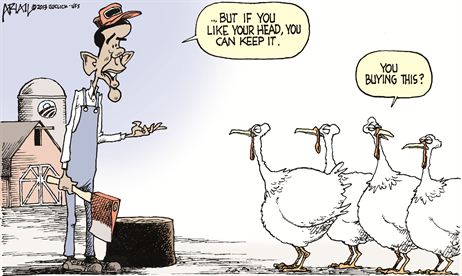


 Twitter


 Jeff J Mitchell/Getty Images







 The Daily Hatch