Francis Schaeffer in his book HE IS THERE AND HE IS NOT SILENT (Chapter 4) asserts:
Because men have lost the objective basis for certainty of knowledge in the areas in which they are working, more and more we are going to find them manipulating science according to their own sociological or political desires rather than standing upon concrete objectivity. We are going to find increasingly what I would call sociological science, where men manipulate the scientific facts. Carl Sagan (1934-1996), professor of astronomy and space science at Cornell University, demonstrates that the concept of a manipulated science is not far-fetched. He mixes science and science fiction constantly. He is a true follower of Edgar Rice Burroughs (1875-1950). The media gives him much TV prime time and much space in the press and magazine coverage, and the United State Government spent millions of dollars in the special equipment which was included in the equipment of the Mars probe–at his instigation, to give support to his obsessive certainty that life would be found on Mars, or that even large-sized life would be found there. With Carl Sagan the line concerning objective science is blurred, and the media spreads his mixture of science and science fiction out to the public as exciting fact.
Schaeffer with his wife Edith in Switzerland.
This mixing of science and science fiction had a purpose behind it. James Hubner enlightens us. James Hubner in his book LIGHT UP THE DARKNESS (pages 18-19) wrote:
Carl Sagan said this about extraterrestrial creatures, “When we know who they are, we will know who we are.” That is a remarkable statement, a remarkable religious statement. Why is it significant to know our identity? Why do humans desire to know who they are? …By asking these questions, Sagan exposed his own image-bearing soul while being completely unaware of it.
German Street United Baptist Church
Saint John, New Brunswick
Canada E2L 3W2
From PSCF 45 (March 1993): 18-25
The writings and television appearances of Carl Sagan have done much to popularize the scientific enterprise and to fire the popular imagination. A careful examination, however, shows that Sagan is highly critical of religious frames of reference, especially the Christian one. This article sets forth Sagan’s major criticisms and maintains that he is operating from a clear world view, which itself verges on being a religion. A critique of the major points of that world view and a response to the criticisms which Sagan levels towards Christianity are also provided.
Carl Sagan’s widespread popularity, which began with the television series Cosmos and the book by the same title, should of itself provide sufficient justification for a serious consideration of the personable Cornell professor’s views, which have captured the imaginations of millions. But if additional reasons for such a consideration are needed, one can cite such factors as the continuing popularity of Dr. Sagan’s writings and his very considerable influence in shaping the views of many in the English-speaking Western world, not only through the medium of the printed word, but also by means of his frequent television appearances, in productions ranging from newsprograms to late-night American talk shows. In addition, one would hope that the benefit of historical perspective should attend any consideration of Sagan’s views today, seeing that Cosmos (both text and television series) and the acclaim and controversy they created are almost a decade old.
It is widely conceded that Sagan’s magnum opus, Cosmos, is critical toward religious frames of reference, especially the Christian one, and this perception is easily confirmed by a cursory reading of the Cosmos text.
In this paper a wide-ranging review and critique of Sagan’s writings will be undertaken. I intend to elucidate Sagan’s major criticisms of religion in general and Christianity in particular; to determine the major components of the Weltanschauung which stands behind Sagan’s criticisms; and to provide a brief running commentary on, or critique of, each of the components of that world view.
This paper will limit itself to four volumes published by Dr. Sagan: Cosmos,1 undoubtedly Sagan’s best known work; his popular novel Contact;2 his Pulitzer Prize-winning work The Dragons of Eden: Speculations on the Evolution of Human Intelligence3Broca’s Brain: Reflections on The Romance of Science.4 In addition, we will consider two particularly enlightening interviews with Sagan. The first interview was published in U.S. News & World Report5 in December 1980, the second in the U.S. Catholic6 a few months later.
Let us begin with a systematic examination of Sagan’s major criticisms of religious frames of reference. These criticisms seem to divide into four parts.
“Religion is Anti-Intellectual”
The first of these criticisms is that Dr. Sagan believes that religion (at least in its institutional Christian form) is anti-intellectual. It does not make use of the cerebral matter, believing things instead on the basis of tradition, authority and the like. Sagan writes: “The suppression of uncomfortable ideas may be common in religion…but it is not the path to knowledge; it has no place in the endeavor of science.”7
This viewpoint becomes, if anything, much more pronounced in Sagan’s novel Contact. The protagonist, Ellie, clearly mouths Sagan’s own notions about religion. She says:
Around Santa Fe, the faintest glimmerings of dawn might be seen above the Sangre de Cristo Mountains. (Why should a religion, she asked herself, name its places after the blood and body, heart and pancreas of its most revered figure? And why not the brain among other prominent but uncommemorated organs?)8
Later, Ellie says:
Anything you don’t understand, Mr. Rankin, you attribute to God. God for you is where you sweep away all the mysteries of the world, all the challenges to your intelligence. You simply turn your mind off and say God did it.9
In his comments in the U.S. News & World Report interview, Sagan posited that in – the traditional approach of religion…many assertions are never challenged.”10
Richard A. Baer, Jr., adequately summarizes Sagan’s position in this way. “Science gives us reliable knowledge, [Sagan] suggests, whereas religion is connected with…narrowness of mind, and bigotry.”11
In response to Professor Sagan, one must admit that some Christians have sometimes adopted anti-intellectualist, obscurantist stances. This attitude is still dominant within some forms of Protestant fundamentalism.
But Sagan overplays his hand. Historically, there have been many instances of Christians who were not by any stretch of the imagination anti-intellectualist! Was it not the Christian church which preserved and protected the remains of the ancient world’s best writings, established and nurtured some of the greatest universities in Europe and North America, and had among its adherents a number of the giants in the development of modern science?
Additionally, Sagan fails to take any notice whatsoever of the fact that the New Testament records give scant support to obscurantism. The apostle Paul held public debates about his new faith.12Jesus demanded the active employment of the mind!13 Surely it would have been reasonable for Sagan to note that obscurantism is a deviation from the intentions of primitive Christianity and its founder.
“Religion Opposes Scientific Advancement”
Sagan’s second major point of conflict with religion is the accusation that religion, especially in its institutional Christian expression, has tended to oppose the advance of scientific knowledge even to the point of persecuting scientists. Cosmos is replete with numerous examples and comments intended to prove this. With reference to Copernicus, Sagan writes:
Nicolaus Copernicus’ proposition that the sun, not the earth, was at the center of the universe upset many people including the Catholic Church, which put his work on the index, and Martin Luther, who called Copernicus “an upstart astrologer…this fool14
Of Giordano Bruno, Sagan notes:
Giordano Bruno, a sixteenth century Roman Catholic scholar who held that there are an infinity of worlds and that many are inhabited, was burned at the stake in 1600 for his views.15
Sagan again simplifies history to the point of distortion and omits key points.
And, with an almost malicious glee, Sagan comments on Kepler:
He (Kepler) lived in a time when the human spirit was fettered and the mind chained; when the ecclesiastical pronouncements of a millennium or two earlier on scientific matters were considered more reliable than contemporary findings made with techniques unavailable to the ancients.16
Once again, Sagan is partly correct, but only partially. There is no question that Christians and the institutional church have sometimes acted in irrational ways toward scientists and their studies. Sagan’s examples are certainly not the only ones which could be brought forward as instances of opposition to scientific progress, persecution of scientists, or legal pressures to insure conformity. Some great scientists only avoided becoming additional examples for Sagan’s list by hiding their views from public scrutiny. Isaac Newton, for instance, had to conceal his rejection of Trinitarian teaching to keep his university post.
As Bernard Ramm notes,
Some theologians are unsympathetic with, or suspicious of, science, and fail to understand it and while being censorious of the scientist who makes amateurish remarks about theology, they themselves fail to learn a little science before they speak of the scientific issues. They view science as the work of scheming atheists, iconoclasts, or plotting infidels.17
In his discussion of this subject Sagan again simplifies history to the point of distortion and omits key points. As Dr. Clark Pinnock of McMaster University remarks:
Without wishing to deny that institutional religion has often times opposed new ideas in science in the fear that they might upset theological convictions, I think it only fair to state somewhere in the course of a long book that modern science was born on Christian soil and in connection with a Christian understanding of the world. 18
William J. O’Malley notes: “…he (Sagan) makes the scientific community sound universally and immediately tolerant…19 Furthermore, O’Malley notes that Sagan fails to mention that some prominent scientists like Gregor Mendel and Copernicus were clerics!20 Sagan’s treatment of the matter gives the historically inadequate impression that there has been a virtually unanimous opposition by Christians to scientists and their researches, the former being the clear villains, the latter the clear heros in the piece.
“Religion is Provincial”
Sagan’s third criticism is summarized by his comment:
Fanatical…religious…chauvinisms are a little difficult to maintain when we see our planet as a fragile blue crescent fading to become an inconspicuous point of light against the bastion and citadel of the stars.21
In Contact, a similar strain of thought is found.
It is hard to imagine…extraterrestrials taking seriously a plea for preferential parley from representatives of one or another ideological faction.22
What does the size of the universe and earth’s physical smallness in that universe have to do with the importance, significance, truth or falseness of views held by humans? Would a universe half or a quarter the size it is make the views held by humans more or less significant? If a view held by any given group is shown to be correct, then the size of the universe has nothing to do with the matter.
“Religion Has Suspect Origins”
Sagan’s fourth criticism may be termed his “theory of the origin of religion.” The theory bears remarkable likeness to the views expressed by Freud in his The Future of An Illusion.
In Cosmos Sagan writes:
The idea that every organism was meticulously constructed by a Great Designer provided a significance and order to nature, and an importance to human beings that we crave still. A Designer is a natural, appealing…explanation of the biological world. [Italics added.]23
In Contact, this line of thought continues, as illustrated by this conversation between Ellie and the clergyman, Palmer:
Don’t you ever feel…lost in your universe….?
You’re not worried about being lost, Palmer. You’re worried about not being central, not the reason the universe was created…
Your religion assumes that people are children and need a bogeyman so they’ll behave. You want people to believe in God so they’ll obey the law.24
Religion originates, in Sagan’s view, from a combination of wish fulfillment and attempted societal control.
“Your religion assumes that people are children
and need a bogeyman so they’ll behave. You want people to believe
in God so they’ll obey the law.”
There is no doubt that for some persons the notion of a god is wish fulfillment. One does sometimes hear Christians comment that God must exist, for if he did not, how could sense be made of life? And by such a comment is intended as nothing more or less than a wish. It is not hard to see how such a wish could be in some cases transformed into a virtual proof of God’s existence. And there can also be little doubt that there are historical examples of institutional religion being used as an oppressive means of societal control. For examples, consider 17th century Anglicanism, the Roman Catholic Church in Quebec from 1760 until the “Quiet Revolution” of the 1960s, the early Puritan churches of Massachusetts, or the Roman Catholic Church in Spain under Franco.
But such examples do not of themselves actually demonstrate the origin of the idea of God. As Richard Baer notes:
Throughout Cosmos Sagan presents his speculations about the origin of religion and belief in the gods (or God) as facts, with no discussion of alternative possibilities. He simply assumes that the gods (or God) is a human creation, a primitive attempt to explain natural phenomena that science later helped us to understand correctly.25
Sagan’s notions about the origin of the idea of God are not encompassed by detailed historical analysis and reference to ancient texts to demonstrate the point. One is simply presented with Sagan’s view, apparently to be taken on faith. This is a most unusual proceeding for one who says:
You must be skeptical; you must ask for verification. If someone claims a thing happens in a certain way, you do the experiment to check it out, to see if, in fact, it works as claimed. You examine the internal coherence of the idea. You test its logical structure. You see how well it agrees with other things which are reliably known, and only then do you start accepting new ideas. This is standard practice in science. I wish it were more widely applied.26>
Furthermore, although in Contact religion is said to – sell human beings short,”27 intellectually and in terms of their abilities, one must consider whether in fact Sagan himself gives insufficient credit to humans. His theory of the origin of religion assumes that human beings want consoling notions about God even if such notions are untrue, and seems to further posit that humans can in large degree find even notions which are known or suspected to be untrue to be consoling!
Sagan’s Religion
If one were to end the consideration of Sagan’s views at this point, the impression would be that, while more than a little irritated by conventional expressions of religious belief (notably Christian), Dr. Sagan is, however, only taking random “potshots.” Actually, while the four major criticisms outlined above do indeed have the character of isolated volleys, Sagan is operating with a discernable world view which in fact has features remarkably similar to a religion. It is important, then, to set forth the major components of this “religion.”
In considering the existence of a virtual religion (or at the very least the existence of a clear world view), it seems appropriate to be guided by the use of the traditional theological terminology and categories, chiefly because they seem to apply so well!
Sagan’s Ultimate Concern
Every world view has some concept of what Paul Tillich called “ultimate concern.” Sagan rejects the usual religious “ultimate concern” (God), saying:
To be certain of the existence of God and to be certain of the nonexistence of God seem to me to be the confident extremes in a subject so riddled with doubt and uncertainty as to inspire very little confidence indeed.28
Sagan’s belief is that the evidence for the existence of God, particularly the Christian God, is insufficient, as evidenced from Contact:
…if God wanted to send us a message, and ancient writings were the only way he could think of doing it, he could have done a better job. And he hardly had to confine himself to writings. Why isn’t there a monster crucifix orbiting the Earth? Why isn’t the surface of the Moon covered with the Ten Commandments? Why should God be so clear in the Bible and so obscure in the world?29
In Cosmos, Sagan goes even further and turns the universe into his “ultimate concern.”
In many cultures it is customary to answer that God created the universe out of nothing. But this is mere temporizing. If we wish courageously to pursue the question, we must of course ask next where God comes from. And if we decided this to be unanswerable, why not save a step and decide that the origin of the universe is an unanswerable question? Or, if we say that God has always existed, why not save a step and conclude that the universe has always existed.30
And, in a statement which echoes the prologue to John’s gospel, Dr. Sagan claims, “The Cosmos is all that is, or ever was, or ever will be.”31
Richard A. Baer, Jr., summarizes like this: “Sagan presents much more than science…He also shares his religious testimony, his witness to a strange and beautiful cosmos that for him is the ultimate reality.”32
In a statement which echoes the prologue to John’s gospel,
Dr. Sagan claims, “The Cosmos is all that is, or ever was,
or ever will be.”
A Christian response to Dr. Sagan, of course, must reject his “ultimate concern” as not being identifiable with God. But additionally, one can wonder about Sagan’s apparent failure to deal with certain historical issues. While Sagan paints his reasons for rejecting a traditional “ultimate concern” (i.e. God) on an immense canvas- the whole universe- he apparently does not deal with the more mundane history of humankind, which might furnish the evidence he says is lacking. Indeed, Dr. Sagan is convinced that the universe is a closed system, so to speak, that in point of fact “…we live in [a]…universe, where things change…according to patterns, rules, or as we call them, laws of nature”33 This being the case, it is not surprising to be informed that:
The gods don’t drop in on us to fix things up when we’ve botched it. You look at human history and it’s clear we’ve been on our own.34
Sagan fails to address the fact that the Christian assertion is precisely that God did intervene dramatically, clearly, and bodily, in human history, and that its primary contention is that we have not – been on our own.”35
Sagan’s Anthropology
Sagan’s world view is also replete with an anthropology which defines the human in these terms:
I am a collection of water, calcium and organic molecules called Carl Sagan. You are a collection of almost identical molecules with a different collective label. But is that all? Is there nothing in here but molecules? Some people find this idea…demeaning to human dignity. For myself, I find it elevating that our universe permits the evolution of molecular machines as intricate and subtle as we are.36
Sagan provides this definition of “human” in an utterly materialist and reductionist fashion, and puts it forward for acceptance without any serious consideration of other definitions, and without suggesting any reasons for accepting the posited definition.
But there is considerably more to Sagan’s anthropology than this definition of a human. The question of what constitutes the essence of a human being has a long history of discussion among theologians, philosophers, ethicists, and, more recently, with the advances in medical technology, among politicians and even average citizens.
Sagan in one deft stroke defines from his perspective what constitutes our humanity. He writes: “The cortex regulates our conscious lives. It is the distinction of our species, the seat of our humanity.”37 In The Dragons of Eden, Sagan says something quite similar: “This essential human quality, I believe, can only be our intelligence. If so, the particular sanctity of human life can be identified with the development and functioning of the neo-cortex.” 38 In The Dragons of Eden, Sagan takes this view, found in brief form also in Cosmos, to its logical extreme. Regarding the abortion issue, he writes:
The key practical question is to determine when a fetus becomes human. This in turn rests on what we mean by human…The reason we prohibit the killing of human beings must be because of some quality human beings possess, a quality we especially prize, that few or no other organisms on earth enjoy…This essential human quality, I believe, can only be our intelligence. If so, the particular sanctity of human life can be identified with the development and functioning of the neo-cortex…We might set the transition to humanity at the time when neo-cortical activity begins . . .39
The reader is faced with a view which is reductionist in the extreme:
humanity is reduced to a biological/chemical level.
At first glance, Sagan’s opinion is exceedingly attractive. It apparently would put a swift and decisive end to agonizing over when life exists- and when it does not.
Several points, however, should be made. To begin with, the reader is once again faced with a view which is reductionist in the extreme. Humanity is reduced to a biological/chemical level. In addition, Sagan does not offer further support for his position. Finally, it should be made clear at this point that a theology developed with a traditional respect for the Scriptures must reject Sagan’s view outright.
It is true that traditional Roman Catholic theology has often posited that the essence of the human being (i.e., that which makes a being human) is the reasoning capacity. It is also true that such a view is not unknown in Protestant circles. It is to be noted, however, that Roman Catholic thought seems to be moving away from such a position,40 and that a strong case can be made that the true essence of humanity is not a matter of intellect.
The whole thrust of the biblical witness seems instead to be that the Imago Dei consists to a large degree in the human potential to have a unique relationship with the Creator, a relationship which is personal, constituted by an offering by God of love, and human acceptance and reciprocation of that love, and a relationship in which the human finds true humanity and ultimate freedom in complete dependence upon God. This view is very well articulated by Emil Brunner, who wrote:
True humanity does not spring from the full development of human potentialities, but it arises through the reception, the perception, and the acceptance of the love of God, and it develops and is preserved by “abiding” in communion with the God who reveals himself in Love.41
While it is true that the image was marred at the Fall, it cannot be said to have been lost, or else Scripture would be in error in continuing to refer to humans as human. Thus, the biblical thrust is that the image of God consists of the potential to have a unique relationship with God and the realization of that relationship. But though humanity lost the relationship, and in a sense “full” or “true” humanity at the Fall, the potential for the relationship, and the claim to still be human, remains. This potential must be said to exist in all the offspring resulting from human mating, no matter how limited intellectually, physically, or otherwise such offspring may be.
Sagan’s Ethic and Soteriology
As world views normally contain some notions about right and wrong behavior, variously termed “ethics,” “morality,” and so forth, it is not surprising to find such an element in Sagan’s world view. Sagan’s ethic centers on one “commandment” which appears several times in Cosmos. Sagan writes, “Our obligation to survive is owed not just to ourselves but also to the Cosmos, ancient and vast, from which we spring.” [Emphasis added.]42 As Norman L. Geisler summarizes:
So the Cosmos has created man in its own image, endowed him with life, and sustains his very existence. For all of this man has a moral obligation to perpetuate life in the Cosmos.43
This ethical imperative to survive is so closely tied to Sagan’s soteriology that the two should be placed together for purposes of commentary.
Throughout Cosmos, but particularly in its last chapter, Sagan argues that the great threat facing humankind is its own self-destruction, most likely through nuclear warfare, and that it is from such a threat that mankind needs “salvation.”44
And how is such “salvation” to be accomplished? Dr. Sagan describes the human dilemma and his rather unique solution:
There are some who look on our global problems here on earth- at our vast national antagonisms, our nuclear arsenals, our growing populations, the disparity between the poor and the affluent, shortages of food and resources, and our inadvertent alterations of the natural environment- and conclude that we live in a system that has suddenly become unstable, a system that is destined soon to collapse. There are others who believe that our problems are soluble, that humanity is still in its childhood, that one day soon we will grow up. The receipt of a single message from space would show that it is possible to live through a technological adolescence; the transmitting civilization, after all, has survived. Such knowledge, it seems to me, might be worth a great price….45
But, in case there is no response from space, Sagan notes:
And what if we make a long-term dedicated search for extraterrestrial intelligence and fail? Even then we surely will not have wasted our time…For if intelligent life is scarce or absent elsewhere, we will have learned something significant about the rarity and value of our culture and our biological patrimony . . .46
Given Sagan’s “ultimate concern” and anthropology, his soteriology and ethic do make some sense. But what if humans are more than Sagan defines them as, and what if his “ultimate concern” is incorrect? Neither assumption was adequately defended by Sagan, leaving the ethic and soteriology presented by him resting on shaky ground.
Sagan’s Worship
The last major element in Sagan’s world view can be termed the component of worship, the experience of the numinous. Sagan speaks of this when he says:
It is very hard to look at the beauty, intricacy, and subtlety of nature without feeling awe. I don’t think even the word reverence is too strong.47
But experiences of the numinous are limited indeed.
She asked Eda if he had ever had a transforming religious experience. “Yes,” he said.
“When?” Sometimes you had to encourage him to talk.
“When I first picked up Euclid. Also when I first understood Newtonian gravitation. And Maxwell’s equations, and general relativity. And during my work on superunification. I have been fortunate enough to have had many religious experiences.”
“No,” she returned. “You know what I mean. Apart from science.”
If we must worship a power greater than ourselves, does it not make sense to revere the Sun and stars? Hidden within every astronomical investigation, sometimes so deeply buried that the researcher himself is unaware of its presence, lies a kernel of awe.49
A comment by Dr. Clark Pinnock provides a pointed rejoinder:
…[W]hy would anyone celebrate nature if in fact it is the product of blind chance and part of a pointless process? Sagan appears to think that people ought to imitate his own loyalty to evolution and reverence for life. But why should they do such an irrational thing? Surely a more sensible response to the cosmos as Sagan presents it would be to adopt a nihilistic outlook and try to derive as much pleasure from life as possible before it is snuffed out.50
An Appropriate Response to Sagan: A Mission of the Church
Sagan’s works are replete with criticisms of Christians and institutional Christianity. These criticisms are not entirely invalid, but they frequently paint only a partial and therefore distorted picture, and rarely, if ever, distinguish between the intentions of Christianity’s founder and the way things have sometimes been worked out in a manner not in accord with those intentions. This is akin to arguing that the scientific method is invalidated, because some scientists have used its premises to develop terrifying weapons of mass destruction! But in addition, Sagan is operating with, and promoting the acceptance of, a discernable world view, which is in large part opposed to the Christian world view. In fact, as Baer says:
Throughout Cosmos Sagan goes far beyond the traditional descriptive and interpretive role of science. His presentation involves a host of metaphysical and value statements that are not a part of science as ordinarily understood and practiced…He transforms a very fruitful method for understanding the world into an all embracing metaphysic or world view.51
Much of Sagan’s writing propagates his particular world view and attacks other views as much as it popularizes science. Because of this fact, the church needs to make a clear and adequate answer to Sagan. This reply should consist of a careful analysis and a response which meets Sagan’s position on the grounds of scientific history, and provides clear, adequately supported philosophic positions. Since Sagan’s views are so well known, and since they are not ill-representative of a philosophy which pervades much of contemporary Western society, a response to Sagan constitutes an important part of the mission of the church.
1 Carl Sagan, Cosmos, (New York: Ballantine Books, 1985).
2 Carl Sagan, Contact, (New York: Simon and Schuster, 1985).
3 Carl Sagan, The Dragons of Eden: Speculations on the Evolution of Human Intelligence, (New York: Random House, 1977).
4 Carl Sagan, Broca’s Brain: Reflections On The Romance Of Science, (New York: Random House, 1979).
5 Carl Sagan, “A Conversation with Carl Sagan – Science and Religion ‘Similar Objective, Different Methods,'” interview by Alvin P. Sanopp, U.S. News & World Report (December 1, 1980), 62, 63.
6 Carl Sagan, “God and Carl Sagan: Is The Cosmos Big Enough for Both of Them? Edward Wakin interviews Carl Sagan,” interview by Edward Wakin, U.S. Catholic, No. 5 (May 1981), 19-24.
7Cosmos, 74.
8Contact, 61.
9Ibid., 172
10U.S. News & World Report, 62.
11 Richard A. Baer, Jr., “Cosmos, Cosmologies and the Public Schools,” This World, No. 5 (Spring/Summer 1983), 7.
12 For examples, see Acts 17: 16-34, 19: 8-10.
13 For examples, see Matthew 22:37 and parallel passages Mark 12:30 and Luke 10:27.
14Cosmos, 39-41.
15Ibid., 70.
16Ibid., 41.
17 Bernard Ramm, The Christian View of Science and Scripture, rpt., (Grand Rapids: William B. Eerdmans Publishing Company, 1978), 36.
18 Clark Pinnock, “Sagan’s Humanist Metaphysic: Fantasy, Not Fact,” Christianity Today, (November 6, 1981), 98.
19 William J. O’Malley, “Carl Sagan’s Gospel of Scientism,” America, (February 7, 1981), 96.
20 Ibid.
21 Cosmos, 264.
22Contact, 265.
23Cosmos, 18.
24Contact, 254.
25 Baer,” Cosmos, “Cosmologies and the Public Schools,” 8.
26U.S. Catholic, 24.
27Contact, 254.
28U.S. Catholic, 20.
29Contact, 170.
30Cosmos, 212.
31Ibid., 1.
32 Baer, “Cosmos, “Cosmologies and the Public Schools,” 6.
33Cosmos, 32. Sagan here seems to be using the model of the Newtonian universe, which is somewhat too rigid, and should be modified according to the theories of Einstein. Nevertheless, since Sagan apparently is dealing with this model, this is the model to which we will respond. For a more popular exposition of the notion of randomness in the universe, particularly on the micro level, consult A.R. Peacocke’s Creation and The World of Science.
34Contact, 287.
35Ibid.
36Cosmos, 105.
37Cosmos, 229.
38The Dragons of Eden, 197.
39The Dragons of Eden, 196, 197.
40 The reader is referred to the document Gaudim et Spes (Pastoral Constitution on the Church In The Modern World) promulgated on December 7, 1965, by the Second Vatican Council, especially Chapter I, sections 12 – 17.
41 Emil Brunner, The Christian Doctrine of Creation and Redemption, Vol. II of Dogmatics, trans, Olive Wyon (Philadelphia: Westminster Press, n.d.), 59.
42Cosmos, 286.
43 Norman L. Geisler, Cosmos: Carl Sagan’s Religion for the Scientific Mind (Dallas: Quest Publication, 1983), 31.
44Cosmos, especially the last chapter, “Who Speaks for Earth?”
45Broca’s Brain: Reflections On The Romance Of Science, 275.
46 Ibid., 277.
47 U.S. Catholic, 19.
48Contact, 315.
49Cosmos, 199.
50 Pinnock, 99.
51 Baer, Cosmos, Cosmologies, and the Public Schools,” 6.
I have written a lot in the past about Carl Sagan on my blog and over and over again these posts have been some of my most popular because I believe Carl Sagan did a great job of articulating the naturalistic view that the world is a result of nothing more than impersonal matter, time and chance. Christians like me have to challenge those who hold this view and that is why I took it upon myself to read many of Sagan’s books and to watch his film series Cosmos.
On December 5, 1995, I got a letter back from Carl Sagan and I was very impressed that he took time to answer several of my questions and to respond to some of the points that I had made in my previous letters. I had been reading lots of his books and watching him on TV since 1980 and my writing today is a result of that correspondence. It is my conclusion that Carl Sagan died an unfulfilled man on December 20, 1996 with many of the big questions he had going unanswered.
Much of Carl Sagan’s aspirations and thoughts were revealed to a mass audience of movie goers just a few months after his death. The movie “CONTACT” with Jodie Foster and Matthew McConaughey is a fictional story written by Sagan about the SEARCH FOR EXTRATERRESTRIAL INTELLIGENCE (SETI). Sagan visited the set while it was filming and it was released on July 11, 1997 after his unfortunate death.
The movie CONTACT got me thinking about Sagan’s life long hope to find a higher life form out in the universe and I was reminded of Dr. Donald E. Tarter of NASA who wrote me in a letter a year or so earlier and stated, “I am not a theist. I simply and honestly do not know the answer to the great questions…This brings me to why I am interested in the SEARCH FOR EXTRATERRESTRIAL INTELLIGENCE (SETI)…Let me assure you, one of the first questions I would want to ask another intelligence if one were discovered is, DO YOU BELIEVE IN OR HAVE EVIDENCE OF A SUPREME INTELLIGENCE?”
Rice Broocks in his book GOD’S NOT DEAD noted:
Astronomer Carl Sagan was a prolific writer and trustee of the SETI Institute (Search for Extraterrestrial Intelligence) founded in 1984 to scan the universe for any signs of life beyond earth. Sagan’s best-selling work COSMOS also became an award-winning television series explaining the wonders of the universe and exporting the belief not in an intelligent Creator but in potential intelligent aliens. He believed somehow that by knowing who they are, we would discover who we as humans really are. “The very thought of there being other beings different from all of us can have a very useful cohering role for the human species” (quoted from you tube clip “Carl Sagan appears on CBC to discuss the importance of SETI [Carl Sagan Archives]” at the 7 minute mark, Oct 1988 ). Sagan reasoning? If aliens could have contacted us, knowing how impossible it is for us to reach them, they would have the answers we seek to our ultimate questions. This thought process shows the desperate need we have as humans for answers to the great questions of our existence. Does life have any ultimate meaning and purpose? Do we as humans have any more value than the other animals? Is there a purpose to the universe, or more specifically, to our individual lives?
____________
Carl Sagan had to live in the world that God made with the conscience that God gave him. This created a tension. As you know the movie CONTACT was written by Carl Sagan and it was about Dr. Arroway’s SEARCH FOR EXTRATERRESTRIAL INTELLIGENCE (SETI) program and her desire to make contact with aliens and ask them questions. It is my view that Sagan should have examined more closely the accuracy of the Bible and it’s fulfilled prophecies from the Old Testament in particular before chasing after aliens from other planets for answers. Sagan himself had written,”Plainly, there’s something within me that’s ready to believe in life after death…If some good evidence for life after death was announced, I’d be eager to examine it; but it would have to be real scientific data, not mere antedote”(pp 203-204, The DemonHaunted World, 1995).
Sagan said he had taken a look at Old Testament prophecy and it did not impress him because it was too vague. He had taken a look at Christ’s life in the gospels, but said it was unrealistic for God to send a man to communicate for God. Instead, Sagan suggested that God could have written a mathematical formula in the Bible or put a cross in the sky. However, what happens at the conclusion of the movie CONTACT? This is Sagan’s last message to the world in the form of the movie that appeared shortly after his death. Dr Arroway (Jodie Foster) who is a young atheistic scientist who meets with an alien and this alien takes the form of Dr. Arroway’s father. The alien tells her that they thought this would make it easier for her. In fact, he meets her on a beach that resembles a beach that she grew up near so she would also be comfortable with the surroundings. Carl Sagan when writing this script chose to put the alien in human form so Dr. Arroway could relate to the alien.Christ chose to take our form and come into our world too and still many make up excuses for not believing.
Lastly, Carl Sagan could not rid himself of the “mannishness of man.” Those who have read Francis Schaeffer’s many books know exactly what I am talking about. We are made in God’s image and we are living in God’s world. Therefore, we can not totally suppress the objective truths of our unique humanity. In my letter of Jan 10, 1996 to Dr. Sagan, I really camped out on this point a long time because I had read Sagan’s book SHADOWS OF FORGOTTON ANCESTORS and in it Sagan attempts to totally debunk the idea that we are any way special. However, what does Dr. Sagan have Dr. Arroway say at the end of the movie CONTACT when she is testifying before Congress about the alien that communicated with her? See if you can pick out the one illogical word in her statement: “I was given a vision how tiny, insignificant, rare and precious we all are. We belong to something that is greater than ourselves and none of us are alone.”
“Contact” Theatrical Trailer (1997)
Contact (movie) Jodie Foster Speech
Contact – Talking With Hadden – Finding The Key
—
—
Dr Sagan deep down knows that we are special so he could not avoid putting the word “precious” in there. Francis Schaeffer said unbelievers are put in a place of tension when they have to live in the world that God has made because deep down they know they are special because God has put that knowledge in their hearts.We are not the result of survival of the fittest and headed back to the dirt forevermore. This is what Schaeffer calls “taking the roof off” of the unbeliever’s worldview and showing the inconsistency that exists.
In several of my letters to Sagan I quoted this passage below:
Romans 1:17-22 (Amplified Bible)
17For in the Gospel a righteousness which God ascribes is revealed, both springing from faith and leading to faith [disclosed through the way of faith that arouses to more faith]. As it is written, The man who through faith is just and upright shall live and shall live by faith.(A)
18For God’s [holy] wrath and indignation are revealed from heaven against all ungodliness and unrighteousness of men, who in their wickedness repress and hinder the truth and make it inoperative.
19For that which is known about God is evident to them and made plain in their inner consciousness, because God [Himself] has shown it to them.
20For ever since the creation of the world His invisible nature and attributes, that is, His eternal power and divinity, have been made intelligible and clearly discernible in and through the things that have been made (His handiworks). So [men] are without excuse [altogether without any defense or justification],(B)
21Because when they knew and recognized Him as God, they did not honor and glorify Him as God or give Him thanks. But instead they became futile and [a]godless in their thinking [with vain imaginings, foolish reasoning, and stupid speculations] and their senseless minds were darkened.
22Claiming to be wise, they became fools [professing to be smart, they made simpletons of themselves].
__________________________________________
Can a man or a woman find lasting meaning without God? Three thousand years ago, Solomon took a look at life “under the sun” in his book of Ecclesiastes. Christian scholar Ravi Zacharias has noted, “The key to understanding the Book of Ecclesiastes is the term ‘under the sun.’ What that literally means is you lock God out of a closed system, and you are left with only this world of time plus chance plus matter.”
Let me show you some inescapable conclusions if you choose to live without God in the picture. Solomon came to these same conclusions when he looked at life “under the sun.”
Death is the great equalizer (Eccl 3:20, “All go to the same place; all come from dust, and to dust all return.”)
Chance and time have determined the past, and they will determine the future. (Ecclesiastes 9:11-13 “I have seen something else under the sun: The race is not to the swift
or the battle to the strong, nor does food come to the wise or wealth to the brilliant or favor to the learned; but time and chance happen to them all. Moreover, no one knows when their hour will come: As fish are caught in a cruel net, or birds are taken in a snare, so people are trapped by evil times that fall unexpectedly upon them.”)
Power reigns in this life, and the scales are not balanced(Eccl 4:1; “Again I looked and saw all the oppression that was taking place under the sun: I saw the tears of the oppressed—
and they have no comforter; power was on the side of their oppressors— and they have no comforter.” 7:15 “In this meaningless life of mine I have seen both of these: the righteous perishing in their righteousness, and the wicked living long in their wickedness. ).
Nothing in life gives true satisfaction without God including knowledge (1:16-18), ladies and liquor (2:1-3, 8, 10, 11), and great building projects (2:4-6, 18-20).
There is no ultimate lasting meaning in life. (1:2)
By the way, the final chapter of Ecclesiastes finishes with Solomon emphasizing that serving God is the only proper response of man. Solomon looks above the sun and brings God back into the picture in the final chapter of the book in Ecclesiastes 12:13-14:
13 Now all has been heard;
here is the conclusion of the matter:
Fear God and keep his commandments,
for this is the whole duty of man.
14 For God will bring every deed into judgment,
including every hidden thing,
whether it is good or evil
In 1978 I heard the song “Dust in the Wind” by Kansas when it rose to #6 on the charts. That song told me that Kerry Livgren the writer of that song and a member of Kansas had come to the same conclusion that Solomon had and that “all was meaningless.” I remember mentioning to my friends at church that we may soon see some members of Kansas become Christians because their search for the meaning of life had obviously come up empty even though they had risen from being an unknown band to the top of the music business and had all the wealth and fame that came with that.
Livgren wrote:
“All we do, crumbles to the ground though we refuse to see, Dust in the Wind, All we are is dust in the wind, Don’t hang on, Nothing lasts forever but the Earth and Sky, It slips away, And all your money won’t another minute buy.”
Both Kerry Livgren and Dave Hope of Kansas became Christians eventually. Kerry Livgren first tried Eastern Religions and Dave Hope had to come out of a heavy drug addiction. I was shocked and elated to see their personal testimony on The 700 Club in 1981 and that same interview can be seen on youtube today. Livgren lives in Topeka, Kansas today where he teaches “Diggers,” a Sunday school class at Topeka Bible Church. Hope is the head of Worship, Evangelism and Outreach at Immanuel Anglican Church in Destin, Florida.
You can hear Kerry Livgren’s story from this youtube link:
Half way between modernism and symbolism appears the figure of Gustav Klimt, who was also devoted to the industrial arts. His nearly abstract landscapes also make him a forerunner of geometric abstraction.
I have gone back and forth and back and forth with many liberals on the Arkansas Times Blog on many issues such as abortion, human rights, welfare, poverty, gun control and issues dealing with popular culture. Here is another exchange I had with them a while back. My username at the Ark Times Blog is Saline […]
On March 17, 2013 at our worship service at Fellowship Bible Church, Ben Parkinson who is one of our teaching pastors spoke on Genesis 1. He spoke about an issue that I was very interested in. Ben started the sermon by reading the following scripture: Genesis 1-2:3 English Standard Version (ESV) The Creation of the […]
At the end of this post is a message by RC Sproul in which he discusses Sagan. Over the years I have confronted many atheists. Here is one story below: I really believe Hebrews 4:12 when it asserts: For the word of God is living and active and sharper than any two-edged sword, and piercing as far as the […]
In today’s news you will read about Kirk Cameron taking on the atheist Stephen Hawking over some recent assertions he made concerning the existence of heaven. Back in December of 1995 I had the opportunity to correspond with Carl Sagan about a year before his untimely death. Sarah Anne Hughes in her article,”Kirk Cameron criticizes […]
In this post we are going to see that through the years humanist thought has encouraged artists like Michelangelo to think that the future was extremely bright versus the place today where many artist who hold the humanist and secular worldview are very pessimistic. In contrast to Michelangelo’s DAVID when humanist man thought he […]
_________ Antony Flew on God and Atheism Published on Feb 11, 2013 Lee Strobel interviews philosopher and scholar Antony Flew on his conversion from atheism to deism. Much of it has to do with intelligent design. Flew was considered one of the most influential and important thinker for atheism during his time before his death […]
Francis Schaeffer in his book HE IS THERE AND HE IS NOT SILENT (Chapter 4) asserts:
Because men have lost the objective basis for certainty of knowledge in the areas in which they are working, more and more we are going to find them manipulating science according to their own sociological or political desires rather than standing upon concrete objectivity. We are going to find increasingly what I would call sociological science, where men manipulate the scientific facts. Carl Sagan (1934-1996), professor of astronomy and space science at Cornell University, demonstrates that the concept of a manipulated science is not far-fetched. He mixes science and science fiction constantly. He is a true follower of Edgar Rice Burroughs (1875-1950). The media gives him much TV prime time and much space in the press and magazine coverage, and the United State Government spent millions of dollars in the special equipment which was included in the equipment of the Mars probe–at his instigation, to give support to his obsessive certainty that life would be found on Mars, or that even large-sized life would be found there. With Carl Sagan the line concerning objective science is blurred, and the media spreads his mixture of science and science fiction out to the public as exciting fact.
Dr Carl Edward Sagan (1934–96) was a US astrophysicist and astronomer, renowned for his popular science broadcasts and writings. From the 1950s he was an adviser to NASA and vigorously promoted the search for extraterrestrial intelligence (SETI). Born in New York to a Russian Jewish family, he rejected religion from an early age and throughout his life. He died of pneumonia brought on by myelodysplasia1 at age 62.
He is probably best known worldwide for three things:
His epigram “The cosmos is all there is or ever was or ever will be”, which encapsulated his atheistic worldview.
His 13-part TV series Cosmos, said to have been seen by over 500 million people in more than 60 countries.2
His science-fiction novel Contact,3 published in 1985 and then made into a movie with the help of his third wife, Ann Druyan, and released in 1997. It is a story about Ellie Arroway, an atheist scientist (played by Jodie Foster in the film) searching for signs of extraterrestrial life via radio signals from space. Biographer Keah Davidson calls the novel “Sagan’s most intense effort to defend SETI”, and Ellie “a thinly disguised version of Carl Sagan”.4
In the Special Features at the end of the DVD of the film, Ann Druyan says, “Carl’s and my dream was to write something that would be a fictional representation of what contact would actually be like. But it would also have the tension inherent between religion and science.” However, Sagan goes far beyond a mere “debate between faith and reason” and uses the story (in both book and film) to express his intense personal antagonism to the Bible, God, and Christianity. In fact, these could be termed ‘the villain’ in Sagan’s story!
September 2010 will mark 25 years since Carl Sagan published his science-fiction novel, Contact.
In this article we shall concentrate on these aspects of Contact and supply some biblical and scientific answers in a form that readers can click on and access immediately. Finally we shall ask whether Sagan was honest in his portrayal of his characters and the issues.
Pi and other ‘problems’ in the Bible
In chapter 1 of the book, we are introduced to pi (π), the ratio of the circumference of a circle to its diameter. Ellie’s seventh-grade teacher says, “ … πwas about 22/7, about 3.1416 … it was a decimal that went on and on for ever and ever without repeating the pattern of numbers” (p. 18). Ellie asks, “How could anyone know that the decimals went on for ever and ever?” This gives Sagan his first swipe at the Bible; he comments: “According to the Bible, the ancient Hebrews had apparently thought that π was exactly equal to three” (p. 18). (For our answer see Does the Bible say pi equals 3.0?)
In chapter 2, nine-year-old Ellie attends a Bible class at a church, identified as “one of the respectable Protestant denominations, untainted by disorderly evangelism” (p. 27). The Bible is gratuitously described by her father as being “half barbarian history, half fairy tales”. Young Ellie’s problems with the Bible include “that there were two mutually contradictory stories of Creation in the first two chapters of Genesis” (see Genesis contradictions?), light and days before the sun (see Light, life and the glory of God and How could the days of Genesis 1 be literal if the Sun wasn’t created until the fourth day?), who Cain’s wife could have been (see Chapter 8: Who was Cain’s wife?), and the fact that the Bible-class leader did not discuss the inappropriate actions of Lot,5Abraham,6 and Jacob7 and Esau (p. 27).
Then in the New Testament, the two different genealogies of Jesus in Matthew and Luke are described as “a transparent attempt to fit the Isaianic prophesy after the event—cooking the data, it was called in chemistry lab” (p. 28). (See Reliability of the birth narratives.) In one Bible study, Ellie asks how the maidservants of the daughter of Pharaoh knew that the baby Moses was a Hebrew child, but the teacher was too embarrassed to say the word “circumcision” in response (pp. 27–28).8
All these appear in the book but only the question about “Who was Mrs Cain?” is rehashed in the film. The rest is replaced by Ellie asking her father, Ted, if there are people living on other planets, to which he replies, “If it’s just us, it seems like an awful waste of space.”
In the film there is a graphic sequence where Ted has a heart attack and Ellie rushes upstairs to get her father’s medicine, but it’s too late! A minister of religion then tells Ellie that she just has to accept Ted’s death as God’s will. She replies, “We should’ve kept the medicine in the downstairs bathroom, then I could have gotten to it sooner.”
Comment: This is not only a put-down of a minister of religion, but is also Sagan’s way of suggesting that God’s will is all about the nasty things in life, but it can be circumvented by as simple a matter as keeping one’s medicine handy!
The Message
Image Wikipedia.orgThe Very Large Array (VLA) of radio telescopes in New Mexico.
Ellie, as an adult, becomes the Director of Project Argus, a search for extraterrestrial intelligence using the multi-linked radio telescopes in New Mexico. In due course she and her team detect a “Message” in the form of a sequence of prime numbers coming from outer space in the vicinity of the star Vega, 26 light years away.9 Manipulation of this Message produces a screen clip of the first ever TV broadcast on Earth, which was the opening of the 1936 Olympic Games by Adolf Hitler. This is accepted as being the Vegans’ method of saying “Hello, we heard you” (p. 99), i.e. by their recording the broadcast (which took 26 years to reach them), amplifying it, and playing it back (which has taken a further 26 years to reach Earth).
Further analysis of the Message produces an instruction manual and the plans for a “Machine” for Earth-dwellers to travel into space. All of this occasions considerable dialogue in the story as to whether the Message is from God or Satan. Sagan also compares the mutually contradictory beliefs of Christianity and other religions about the origin of the universe, as an excuse for skepticism (p. 165). (See Christian Apologetics Questions and Answers)
Throughout the story, Sagan has Ellie interacting with a Christian character, Palmer Joss, called (somewhat ambiguously or perhaps inclusively) both “Father” and “Reverend” in the film. On the day Ellie and Joss meet, she expresses her hope of there being intelligent life on at least one of “the 400 billion stars” in our galaxy. Joss replies “If there wasn’t, it’d be an awful waste of space.” That evening they have a one-night stand, and while they are in bed Joss tells Ellie how he met God!10
Surprisingly, in a later conversation with Joss, Ellie, the atheistic skeptic, says, “I am a Christian in the sense that I find Jesus Christ to be an admirable historical figure … but I think Jesus was only a man. … I don’t think he was God or the son of God or the grandnephew of God” (pp. 171–72). (See Is Jesus Christ the Creator God?). Was Sagan trying to “muddy the waters” with this comment?—because Ellie then claims to be an agnostic: “When I say I am an agnostic I mean that the evidence isn’t in. There isn’t compelling evidence that God exists—at least your kind of god—and there isn’t compelling evidence that he doesn’t” (p. 173). (See Does God exist? Chapter 1: Does God exist?and Atheism, agnosticism and humanism: godless religions—Questions and Answers.)
The Machine
The Machine is built and a team of five is selected to go on the first trip to look for alien life (in the movie it’s just one person—Ellie). In the book the Selection Committee asks Ellie her opinion of “the world population crisis”. She replies, “Overpopulation is why I’m in favour of homosexuality and a celibate clergy. A celibate clergy is an especially good idea, because it tends to suppress any hereditary propensity towards fanaticism” (p. 245). This may be just a snide remark by Sagan, or a hit at biblical morality (See Homosexuality: What are the biblical and scientific issues?)
In the film the Committee asks Ellie, “If you should meet these Vegans and you had only one question to ask of them, what would it be?” She replies, “How did you do it—how did you evolve? … That more than any other question is the one personally I would like to have answered.”
In the book Palmer Joss tells Ellie about his near-death experience (pp. 138–39) as evidence that he had “seen God face to face”. Ellie easily demolishes this argument:
“You saw a radiance with a human form that you took to be God. But there was nothing in the experience that told you the radiance made the universe or laid down moral law. The experience is an experience. You were deeply moved by it, no question. But there are other possibilities … like birth. Birth is rising through a long, dark tunnel into a brilliant light. … Maybe, if you almost die, the odometer gets set back to zero for a moment” (p. 252).
Ellie then brings up the matter of judgment. She says to Joss:
“Your religion assumes that people are children and need a boogeyman so they’ll behave. You want people to believe in God so they will obey the law. That’s the only means that occurs to you: a strict secular police force, and the threat of punishment by an all-seeing God for whatever the police overlook. You sell human beings short” (p. 253).
In another of their many discussions about God, Ellie says to Joss, “Either an all-powerful mysterious God created the universe or we created God so we wouldn’t have to feel so small and alone.” See Is Belief in God a case of Christian wish fulfillment?.)
In the film, the site of the Machine is ‘the best show in town’ and a crowd of locals take part in a noisy poke-fun carnival with much singing and dancing, car-revving, etc., and people made up to look like Jesus, Elvis or astronauts. A sign says, “Jesus is an alien”. An open-air preacher with shoulder-length blond hair glares at Ellie and shouts, “Are these scientists the kind of people that you want talking to your God for you?” as she drives by, and a choir dressed in blue robes sings “Hail to Vega” to the tune of the Hallelujah Chorus from Handel’s Messiah.
When the Machine is about to be launched, it is destroyed—by a malfunction in the book, but by the long-haired blond preacher with a bomb in the film. That night the local news channel plays a video which the preacher has left as a suicide note in which he says, “What we do we do for the goodness of all mankind. This won’t be understood, not now, but the apocalypse to come will vindicate our faith.”
A second Machine is built and those selected go aboard. This one leaves Earth and travels through “a series of wormholes” in space and lands on an idyllic beach with palm trees beside a beautiful calm sea, with an atmosphere similar to Earth’s (no space suits are needed), at a place “somewhere in the Milky Way galaxy”.
Heaven
Here Ellie meets her deceased father, Ted, “It was as if her father had these many years ago died and gone to Heaven, and finally—by this unorthodox route—she had managed to rejoin him” (p. 357). The locality is again referred to as Heaven on p. 362. Ted, along with other extraterrestrials (this is a hint that he is an alien in the guise of her father), is engaged in diverting material from a black hole with mass of five million suns to Cygnus A, 600 million light years away, and thus “making Cygnus A” … “to prevent space from getting more and more empty as the aeons pass” (p. 364–65).
Sagan here adds: “If Cygnus A was 600 million light years away, then astronomers on Earth … were seeing it as it had been 600 million years ago” (p. 365). (For our response to this evolutionary assumption, see How can we see distant stars in a young universe?)
Ellie asks her father, “I want to know about your myths, your religions. What fills you with awe?” He replies that in pi, in the ten-to-the-twentieth-power place, the randomly varying digits disappear, and for an unbelievably long time there’s nothing but ones and zeros, which constitute a message in eleven dimensions from someone in the universe. Asked about its meaning, by Ellie, Ted replies, “We’re still working on it” (pp. 368, 373).
Comment: Sagan has used an intelligent but non-personal mathematical agency to replace the concept of a personal God who (according to the Bible) is not only Creator but also Judge of all mankind. (For a perspective on the heavenly dimensions, see The Gospel in time and space.) Also, “Heaven” is a Christian concept, as in The Lord’s Prayer “Our Father who art in Heaven … ” (Matthew 6:9), so why would an atheist like Sagan invoke Heaven? Is he perhaps aiming to trivialize it to extinction?11 And if his worldview actually allows for such a place as Heaven to exist, is tertiary mathematics what exercises the inhabitants? (See Did God create man to be an eternal companion for His son Jesus Christ?.)
Ellie now returns to Earth. But wait! What happened to that one most important question that Ellie told the Selection Committee she personally wanted to have answered more than any other by any Vegan she met—about how they evolved? Why didn’t Sagan have his character, Ellie, ask it when she had the opportunity? Presumably because then he would have had to have his Ted character answer it. With no evidence as to how life got started on Earth, Sagan obviously had no explanation as to how it could ever get started in space! See Did life come from outer space? and Origin of Life Questions and Answers.)
Back on Earth
Back on Earth, Ellie (along with the four other astronauts in the book) finds that the 24-hour space round-trip had lasted only 20 minutes of Earth time (p. 375). During this time, as far as those involved on Earth had experienced, the Machine had merely malfunctioned without leaving the ground. Ellie now finds that 18 hours of video footage she had taken of the Vegan localities, including the beach, had been erased by the time-changing magnetic fields of the wormholes. There is thus no proof of her story, other than her own word that it happened, and she is accused of making it all up.
In the book at Ellie’s debriefing session, her interrogator says,
“ … you get visited by your dearly departed father, who tells you that he and his friends have been building the universe … Our Father Who art in Heaven? This is straight religion. Not only do you claim that your father came back from the dead, you actually expect us to believe that he made the universe” (p. 379–80).
The reference to “Our Father who art in Heaven” suggests that Sagan intended this to be a blasphemous parody of the account in Genesis of God’s creation of the universe. A further hint is the interrogator’s reference to Ellie’s claims as “the biggest cock-and-bull story of all time” (p. 380). (See Could recent creation be true, but not Christianity? .)
This conversation and any mention of Heaven were omitted from the film. Instead there is a Senate Enquiry where Ellie’s story is said to be either a self-reinforcing delusion, or a hoax. A speaker invokes Occam’s Razor to show that a hoax is a better explanation than Ellie’s faith in her experience.12 (See Occam’s Razor and creation/evolution.)
Asked by the Senate to withdraw her testimony and concede that this journey to the centre of the galaxy never took place, Ellie gives an impassioned speech:
“I can’t.13 I had an experience. I can’t prove it or explain it, but everything that I know as a human being, everything that I am, tells me that it was real. I did something wonderful, something that changed me forever, a vision of the universe that tells us undeniably how tiny and insignificant and how real and precious we all are, a vision that tells us we belong to something that is greater than ourselves, that none of us are alone. I wish I could get everyone, if even for a moment, to feel that awe and humility and the hope. That continues to be my wish.”
Comment: At first glance it seems surprising that Sagan would put such a ‘mirror image’ of Christian testimony into the mouth of his atheist scientist—until we remember how powerful a contribution Christian testimony is to the preaching of the Gospel. Sagan was a pragmatist and knew that testimony to an experience trumps conjecture about a theory 24/7. He therefore used this powerful spiritual-warfare technique to substantiate, not the blessings of life in Christ, but the omnipotence and omnipresence of alien life. In doing this, he contradicted his own creed that “Science asks us to take nothing on faith, to be wary of our penchant for self-deception, to reject anecdotal evidence.”14
In chapter 23, Ellie says to Palmer Joss, “If God wanted us to know that he existed, why didn’t he send us an unambiguous message?” (p. 418). Well He did! It’s called the Bible. So what is the “unambiguous message of the Bible? There are many parts to it, like “God is love” (1 John 4:16); and “God is light” (1 John 1:5); and “You shall be holy for I am holy” (1 Peter 1:16); and “Believe in the Lord Jesus Christ and you shall be saved” (Acts 16:31). We now see why Sagan set out to undermine credibility in the Bible, through young Ellie’s Bible ‘problems’ in chapter 2.
The End—in the book and the film
Image stock.xchng
The book ends with the revelation of the ultimate Message deep within pi. In base 11 arithmetic, the numbers could be written out entirely as zeros and ones, which when reassembled into a square raster,15 form “a perfect circle, its form traced out by unities in a field of noughts” (p. 429). This is followed by Sagan’s dénouement of his story:
“The universe was made on purpose, the circle said. In whatever galaxy you happen to find yourself, you take the circumference of a circle, divide it by its diameter, measure closely enough, and uncover a miracle—another circle, drawn kilometers downstream of the decimal point. … In the fabric of space and in the nature of matter, as in a great work of art, there is, written small, the artist’s signature. … there is an intelligence that antedates the universe.
The circle had closed.
She found what she had been searching for” (p. 429).
Comment: Sagan’s alter ego, Ellie, was too easily satisfied. So she had found a circle within the digits of pi (which after all only exists because of the properties of a circle). Is this what life and the universe are all about? Did tertiary mathematics (whether hypothetical or factual) also satisfy Carl Sagan, whose lifelong maxim was “The cosmos is all there is or ever was or ever will be”? He could, instead, have had a personal relationship with the Lord Jesus Christ, the Creator of the universe, Judge of all mankind, and Saviour of all who put their faith and trust in Him.
Not surprisingly, none of the above is included in the film. Perhaps the task of manipulating the digits of pi in base 11 to the 20th power so that they formed a rasterized circle was too demanding for the film makers, without their “cooking the data” as it’s called in chemistry lab. Instead, in the film, in case you missed it, or had forgotten it, or had not realized its vital significance, Sagan repeats for the third time (previously uttered by Ted and then by Joss) his only ‘evidence’ (in 429 book pages and 2½ hours of film) for the existence of extraterrestrial life. He has Ellie say to a group of children as the very last words of the film,
“The universe is a pretty big place, bigger than anyone has ever dreamed of. So if it’s just us, it seems like an awful waste of space.”
A science-fiction story by definition involves the voluntary suspension of some aspect of reality (such as instantaneous space travel, time travel back to the past, superhuman ability, etc.) by the reader/viewer for the sake of being entertained—without this there would be no story. So we are not concerned with the fairy-tale aspects of this yarn, but rather with how Sagan presented his characters and their roles.
Ellie, the atheist evolutionist, is presented as a model of scientific zeal, intelligent and single-minded, dedicated to looking for extraterrestrial intelligence, and even willing to give her life to achieve her goal of finding out why we are here.
On the other hand, Sagan’s Christian characters are caricatures:
In the film a minister of religion (unnamed) spouts heartless and inept counsel about God’s will to the orphaned Ellie.
In the book a preacher called Billy Jo Rankin is said to have operated a scam selling “the actual amniotic fluid that surrounded and protected our Lord”, a form of “deviant Christian fundamentalism” (p. 140).
In the film Rev. Palmer Joss’s Christian principles do not preclude him from adultery with Ellie, before telling her how real God is to him. Also (later) he lies to Ellie about why he doesn’t want her to go off into space.
The people objecting to the launch of the Machine are predominantly religious nuts, portrayed with extreme ridicule and deliberate offence to Christian viewers.
In the film it is a religious preacher who blows up the first Machine, thereby murdering a number of people in the vicinity.
All this leads Sagan’s biographer to write, “In these and other ways, the film’s representatives of faith are ‘trashed for their dishonesty, hypocrisy, bad faith and fanaticism.’ Hence the film offers no hint of religion’s ‘source of truth or of its power’.”16
As to honesty of presentation: in the film Rev. Palmer Joss, although the principal Christian, does not fairly represent the Bible in any discussions, and obviously does not believe what the Bible says. He denies a short age to the Earth (p. 175) and so presents no evidence for Genesis creation. (See Age of the earth for 101 evidences for a young age of the earth and the universe,)
One argument Joss was not allowed to present by Sagan is that design in the universe points to a good Designer. In the book, Sagan preempts this by putting into the mouth of a financier, S.R. Hadden, a long diatribe in which he objects to the giving of the Ten Commandments, circumcision, blasphemy, adultery, etc., and ends up, “No, there’s one thing the Bible makes clear: The biblical God is a sloppy manufacturer. He’s not good at design; he’s not good at execution. He’d be out of business if there was any competition” (p. 287). Of course, how God requires people to behave has nothing to do with how well He designed the universe or the biological cell. (For truth about design see Refuting Evolution Chapter 9: Is the design explanation legitimate? and A brief history of design.)
Another argument that creationists were using in the 1980s when Sagan wrote (and are still using today) is the effect of the Second Law of Thermodynamics, namely that all systems of matter/energy tend to run down,17 to proceed from order to disorder, and from information to non-information. This universal scientific law indicates that the organized complexity of life could neverarise by itself. (See The evolution train’s a-comin’ (Sorry, a-goin’—in the wrong direction) and Thermodynamics and Order Questions and Answers.)
Sagan avoids giving this or any further evidence for Creation by dismissing creation science in a single sentence, “In debates on the teaching of ‘scientific creationism’ in the schools … he [Palmer Joss] attempted in his way to steer a middle course, to reconcile caricatures of science and religion” (p. 141–42).
Conclusion
After the Senate Enquiry, Sagan’s Rev. Palmer Joss character tells a now-cheering crowd he believes Ellie. But if this is so, he believes a story that is contrary to the first chapter of Genesis concerning Creation, contrary to the last chapter of Revelation concerning Heaven, and contrary to everything in the Bible in between.
Interwoven through the plot is the theme: What happens after death? and what evidence should we use in arriving at the right answer to this question? There is one person who does have the evidence for what lies beyond the grave. He’s been there and returned—the Lord Jesus Christ. He said,
“I am the resurrection and the life. Whoever believes in me, though he die, yet shall he live, and everyone who lives and believes in me shall never die” (Gospel of John 11:25–26).
He invites people to put their faith and trust in Himself:
“For God so loved the world, that he gave his only Son, that whoever believes in him should not perish but have eternal life. For God did not send his Son into the world to condemn the world, but in order that the world might be saved through him. Whoever believes in him is not condemned, but whoever does not believe is condemned already, because he has not believed in the name of the only Son of God” (Gospel of John 3:16–18).
Page numbers in this article are from the Orbit paperback, Time Warner Books, London, 1997. Return to text.
Davidson, K. Carl Sagan: A Life, John Wiley & Sons, New York, 1999, p. 349. Return to text.
The Bible does indeed spell out the results of these actions. For example, Lot’s life illustrates many spiritual truths: (1) the degenerating influence of a selfish choice (Genesis 13:11ff.); (2) Lot needs to be rescued from the kings who attacked Sodom (Genesis 14:8–16); (3) the effect of the wicked environment on his family (Genesis 19); (4) the loss of his testimony within his own family (Genesis 19:8); (5) the offspring of Lot’s two daughters became the Moabites and the Ammonites, both of which nations became enemies of Israel (Genesis 19: 36–38). Return to text.
The action of God’s prophet, Abraham, in twice pretending that Sarah his wife was his sister, is stated but not commended. He was rebuked the first time by Pharaoh (Genesis 12:10–20), and the second time by King Abimelech (Genesis 20), and the knowledge of this may well have swayed his son Isaac (although born later) to follow his father’s example and do the same thing (Genesis 26:1–11). Isaac too was rebuked. Return to text.
Jacob’s action in deceiving his father, Isaac, in order to take the birthright away from Esau returned on his own head when his father-in-law, Laban, deceived him concerning his bride, Rachel, and also when his own sons deceived him by pretending that Joseph was dead (Genesis 29:15–30 & 27:2–36). Return to text.
According to Sagan’s biographer, this latter episode was a retelling of a similar event that Carl himself experienced when he attended a Bible class as a boy (ref. 4, p. 11). Return to text.
This means that it would take light (or a radio signal) travelling at 300,000 km per second 26 years to reach Earth from Vega, or Vega from Earth. One light year is almost 10 trillion km. Return to text.
This appears to be his near-death experience, given in much greater detail in the book (pp. 138–39), see later in this article. Return to text.
Our knowledge of Heaven is from the One who Himself came from Heaven to live on Earth, to die for the sins of mankind, and then to rise from the dead—the Lord Jesus Christ. In His teaching, His many parables, and in the Book of Revelation, we learn that Heaven is not only the dwelling place of God, but it is also the future home of those who love and serve Him in this life—they continue to do this in Heaven. They will see His face and they will reign with Him for ever and ever (Revelation 22:4–5). However, those who in this life reject God’s offer of forgiveness for sin have no place in Heaven—for them the future involves Judgment (Revelation 20:11–15). Return to text.
Occam’s Razor is the principle that “Other things being equal, the simplest explanation tends to be the right one.” Return to text.
Was Sagan here reprising part of Martin Luther’s response to his interrogators at the Diet of Worms?! Return to text.
Sagan, C., Billions and Billions: Thoughts on Life and Death at the Brink of the Millennium, Hodder Headline, London, 1997, p. 141. Return to text.
A TV raster is “a complete set of scanning lines appearing at the receiver as a rectangular patch of light on which the image is reproduced” (Chambers Dictionary). Return to text.
Ref. 4, p. 423. Note that Davidson is quoting from Daniel Silver’s article “God and Carl Sagan in Hollywood”, first published in the Jewish journal Commentary. Return to text.
Even open systems, in the absence of specific programmed mechanisms to the contrary—such as those involved in the growth of a tree from a seed, for example. Return to text.
This mixing of science and science fiction had a purpose behind it. James Hubner enlightens us. James Hubner in his book LIGHT UP THE DARKNESS (pages 18-19) wrote:
Carl Sagan said this about extraterrestrial creatures, “When we know who they are, we will know who we are.” That is a remarkable statement, a remarkable religious statement. Why is it significant to know our identity? Why do humans desire to know who they are? …By asking these questions, Sagan exposed his own image-bearing soul while being completely unaware of it.
I have written a lot in the past about Carl Sagan on my blog and over and over again these posts have been some of my most popular because I believe Carl Sagan did a great job of articulating the naturalistic view that the world is a result of nothing more than impersonal matter, time and chance. Christians like me have to challenge those who hold this view and that is why I took it upon myself to read many of Sagan’s books and to watch his film series Cosmos.
On December 5, 1995, I got a letter back from Carl Sagan and I was very impressed that he took time to answer several of my questions and to respond to some of the points that I had made in my previous letters. I had been reading lots of his books and watching him on TV since 1980 and my writing today is a result of that correspondence. It is my conclusion that Carl Sagan died an unfulfilled man on December 20, 1996 with many of the big questions he had going unanswered.
Much of Carl Sagan’s aspirations and thoughts were revealed to a mass audience of movie goers just a few months after his death. The movie “CONTACT” with Jodie Foster and Matthew McConaughey is a fictional story written by Sagan about the SEARCH FOR EXTRATERRESTRIAL INTELLIGENCE (SETI). Sagan visited the set while it was filming and it was released on July 11, 1997 after his unfortunate death.
The movie CONTACT got me thinking about Sagan’s life long hope to find a higher life form out in the universe and I was reminded of Dr. Donald E. Tarter of NASA who wrote me in a letter a year or so earlier and stated, “I am not a theist. I simply and honestly do not know the answer to the great questions…This brings me to why I am interested in the SEARCH FOR EXTRATERRESTRIAL INTELLIGENCE (SETI)…Let me assure you, one of the first questions I would want to ask another intelligence if one were discovered is, DO YOU BELIEVE IN OR HAVE EVIDENCE OF A SUPREME INTELLIGENCE?”
Rice Broocks in his book GOD’S NOT DEAD noted:
Astronomer Carl Sagan was a prolific writer and trustee of the SETI Institute (Search for Extraterrestrial Intelligence) founded in 1984 to scan the universe for any signs of life beyond earth. Sagan’s best-selling work COSMOS also became an award-winning television series explaining the wonders of the universe and exporting the belief not in an intelligent Creator but in potential intelligent aliens. He believed somehow that by knowing who they are, we would discover who we as humans really are. “The very thought of there being other beings different from all of us can have a very useful cohering role for the human species” (quoted from you tube clip “Carl Sagan appears on CBC to discuss the importance of SETI [Carl Sagan Archives]” at the 7 minute mark, Oct 1988 ). Sagan reasoning? If aliens could have contacted us, knowing how impossible it is for us to reach them, they would have the answers we seek to our ultimate questions. This thought process shows the desperate need we have as humans for answers to the great questions of our existence. Does life have any ultimate meaning and purpose? Do we as humans have any more value than the other animals? Is there a purpose to the universe, or more specifically, to our individual lives?
____________
Carl Sagan had to live in the world that God made with the conscience that God gave him. This created a tension. As you know the movie CONTACT was written by Carl Sagan and it was about Dr. Arroway’s SEARCH FOR EXTRATERRESTRIAL INTELLIGENCE (SETI) program and her desire to make contact with aliens and ask them questions. It is my view that Sagan should have examined more closely the accuracy of the Bible and it’s fulfilled prophecies from the Old Testament in particular before chasing after aliens from other planets for answers. Sagan himself had written,”Plainly, there’s something within me that’s ready to believe in life after death…If some good evidence for life after death was announced, I’d be eager to examine it; but it would have to be real scientific data, not mere antedote”(pp 203-204, The DemonHaunted World, 1995).
Sagan said he had taken a look at Old Testament prophecy and it did not impress him because it was too vague. He had taken a look at Christ’s life in the gospels, but said it was unrealistic for God to send a man to communicate for God. Instead, Sagan suggested that God could have written a mathematical formula in the Bible or put a cross in the sky. However, what happens at the conclusion of the movie CONTACT? This is Sagan’s last message to the world in the form of the movie that appeared shortly after his death. Dr Arroway (Jodie Foster) who is a young atheistic scientist who meets with an alien and this alien takes the form of Dr. Arroway’s father. The alien tells her that they thought this would make it easier for her. In fact, he meets her on a beach that resembles a beach that she grew up near so she would also be comfortable with the surroundings. Carl Sagan when writing this script chose to put the alien in human form so Dr. Arroway could relate to the alien.Christ chose to take our form and come into our world too and still many make up excuses for not believing.
Lastly, Carl Sagan could not rid himself of the “mannishness of man.” Those who have read Francis Schaeffer’s many books know exactly what I am talking about. We are made in God’s image and we are living in God’s world. Therefore, we can not totally suppress the objective truths of our unique humanity. In my letter of Jan 10, 1996 to Dr. Sagan, I really camped out on this point a long time because I had read Sagan’s book SHADOWS OF FORGOTTON ANCESTORS and in it Sagan attempts to totally debunk the idea that we are any way special. However, what does Dr. Sagan have Dr. Arroway say at the end of the movie CONTACT when she is testifying before Congress about the alien that communicated with her? See if you can pick out the one illogical word in her statement: “I was given a vision how tiny, insignificant, rare and precious we all are. We belong to something that is greater than ourselves and none of us are alone.”
“Contact” Theatrical Trailer (1997)
Contact (movie) Jodie Foster Speech
Contact – Talking With Hadden – Finding The Key
—
—
Dr Sagan deep down knows that we are special so he could not avoid putting the word “precious” in there. Francis Schaeffer said unbelievers are put in a place of tension when they have to live in the world that God has made because deep down they know they are special because God has put that knowledge in their hearts.We are not the result of survival of the fittest and headed back to the dirt forevermore. This is what Schaeffer calls “taking the roof off” of the unbeliever’s worldview and showing the inconsistency that exists.
In several of my letters to Sagan I quoted this passage below:
Romans 1:17-22 (Amplified Bible)
17For in the Gospel a righteousness which God ascribes is revealed, both springing from faith and leading to faith [disclosed through the way of faith that arouses to more faith]. As it is written, The man who through faith is just and upright shall live and shall live by faith.(A)
18For God’s [holy] wrath and indignation are revealed from heaven against all ungodliness and unrighteousness of men, who in their wickedness repress and hinder the truth and make it inoperative.
19For that which is known about God is evident to them and made plain in their inner consciousness, because God [Himself] has shown it to them.
20For ever since the creation of the world His invisible nature and attributes, that is, His eternal power and divinity, have been made intelligible and clearly discernible in and through the things that have been made (His handiworks). So [men] are without excuse [altogether without any defense or justification],(B)
21Because when they knew and recognized Him as God, they did not honor and glorify Him as God or give Him thanks. But instead they became futile and [a]godless in their thinking [with vain imaginings, foolish reasoning, and stupid speculations] and their senseless minds were darkened.
22Claiming to be wise, they became fools [professing to be smart, they made simpletons of themselves].
__________________________________________
Can a man or a woman find lasting meaning without God? Three thousand years ago, Solomon took a look at life “under the sun” in his book of Ecclesiastes. Christian scholar Ravi Zacharias has noted, “The key to understanding the Book of Ecclesiastes is the term ‘under the sun.’ What that literally means is you lock God out of a closed system, and you are left with only this world of time plus chance plus matter.”
Let me show you some inescapable conclusions if you choose to live without God in the picture. Solomon came to these same conclusions when he looked at life “under the sun.”
Death is the great equalizer (Eccl 3:20, “All go to the same place; all come from dust, and to dust all return.”)
Chance and time have determined the past, and they will determine the future. (Ecclesiastes 9:11-13 “I have seen something else under the sun: The race is not to the swift
or the battle to the strong, nor does food come to the wise or wealth to the brilliant or favor to the learned; but time and chance happen to them all. Moreover, no one knows when their hour will come: As fish are caught in a cruel net, or birds are taken in a snare, so people are trapped by evil times that fall unexpectedly upon them.”)
Power reigns in this life, and the scales are not balanced(Eccl 4:1; “Again I looked and saw all the oppression that was taking place under the sun: I saw the tears of the oppressed—
and they have no comforter; power was on the side of their oppressors— and they have no comforter.” 7:15 “In this meaningless life of mine I have seen both of these: the righteous perishing in their righteousness, and the wicked living long in their wickedness. ).
Nothing in life gives true satisfaction without God including knowledge (1:16-18), ladies and liquor (2:1-3, 8, 10, 11), and great building projects (2:4-6, 18-20).
There is no ultimate lasting meaning in life. (1:2)
By the way, the final chapter of Ecclesiastes finishes with Solomon emphasizing that serving God is the only proper response of man. Solomon looks above the sun and brings God back into the picture in the final chapter of the book in Ecclesiastes 12:13-14:
13 Now all has been heard;
here is the conclusion of the matter:
Fear God and keep his commandments,
for this is the whole duty of man.
14 For God will bring every deed into judgment,
including every hidden thing,
whether it is good or evil
In 1978 I heard the song “Dust in the Wind” by Kansas when it rose to #6 on the charts. That song told me that Kerry Livgren the writer of that song and a member of Kansas had come to the same conclusion that Solomon had and that “all was meaningless.” I remember mentioning to my friends at church that we may soon see some members of Kansas become Christians because their search for the meaning of life had obviously come up empty even though they had risen from being an unknown band to the top of the music business and had all the wealth and fame that came with that.
Livgren wrote:
“All we do, crumbles to the ground though we refuse to see, Dust in the Wind, All we are is dust in the wind, Don’t hang on, Nothing lasts forever but the Earth and Sky, It slips away, And all your money won’t another minute buy.”
Both Kerry Livgren and Dave Hope of Kansas became Christians eventually. Kerry Livgren first tried Eastern Religions and Dave Hope had to come out of a heavy drug addiction. I was shocked and elated to see their personal testimony on The 700 Club in 1981 and that same interview can be seen on youtube today. Livgren lives in Topeka, Kansas today where he teaches “Diggers,” a Sunday school class at Topeka Bible Church. Hope is the head of Worship, Evangelism and Outreach at Immanuel Anglican Church in Destin, Florida.
You can hear Kerry Livgren’s story from this youtube link:
The greatest among the great French Baroque painters, Poussin had a vital influence on French painting for many centuries. His use of color is unique among all the painters of his era.
I have gone back and forth and back and forth with many liberals on the Arkansas Times Blog on many issues such as abortion, human rights, welfare, poverty, gun control and issues dealing with popular culture. Here is another exchange I had with them a while back. My username at the Ark Times Blog is Saline […]
On March 17, 2013 at our worship service at Fellowship Bible Church, Ben Parkinson who is one of our teaching pastors spoke on Genesis 1. He spoke about an issue that I was very interested in. Ben started the sermon by reading the following scripture: Genesis 1-2:3 English Standard Version (ESV) The Creation of the […]
At the end of this post is a message by RC Sproul in which he discusses Sagan. Over the years I have confronted many atheists. Here is one story below: I really believe Hebrews 4:12 when it asserts: For the word of God is living and active and sharper than any two-edged sword, and piercing as far as the […]
In today’s news you will read about Kirk Cameron taking on the atheist Stephen Hawking over some recent assertions he made concerning the existence of heaven. Back in December of 1995 I had the opportunity to correspond with Carl Sagan about a year before his untimely death. Sarah Anne Hughes in her article,”Kirk Cameron criticizes […]
In this post we are going to see that through the years humanist thought has encouraged artists like Michelangelo to think that the future was extremely bright versus the place today where many artist who hold the humanist and secular worldview are very pessimistic. In contrast to Michelangelo’s DAVID when humanist man thought he […]
_________ Antony Flew on God and Atheism Published on Feb 11, 2013 Lee Strobel interviews philosopher and scholar Antony Flew on his conversion from atheism to deism. Much of it has to do with intelligent design. Flew was considered one of the most influential and important thinker for atheism during his time before his death […]
Francis Schaeffer in his book HE IS THERE AND HE IS NOT SILENT (Chapter 4) asserts:
Because men have lost the objective basis for certainty of knowledge in the areas in which they are working, more and more we are going to find them manipulating science according to their own sociological or political desires rather than standing upon concrete objectivity. We are going to find increasingly what I would call sociological science, where men manipulate the scientific facts. Carl Sagan (1934-1996), professor of astronomy and space science at Cornell University, demonstrates that the concept of a manipulated science is not far-fetched. He mixes science and science fiction constantly. He is a true follower of Edgar Rice Burroughs (1875-1950). The media gives him much TV prime time and much space in the press and magazine coverage, and the United State Government spent millions of dollars in the special equipment which was included in the equipment of the Mars probe–at his instigation, to give support to his obsessive certainty that life would be found on Mars, or that even large-sized life would be found there. With Carl Sagan the line concerning objective science is blurred, and the media spreads his mixture of science and science fiction out to the public as exciting fact.
Schaeffer with his wife Edith in Switzerland.
This mixing of science and science fiction had a purpose behind it. James Hubner enlightens us. James Hubner in his book LIGHT UP THE DARKNESS (pages 18-19) wrote:
Carl Sagan said this about extraterrestrial creatures, “When we know who they are, we will know who we are.” That is a remarkable statement, a remarkable religious statement. Why is it significant to know our identity? Why do humans desire to know who they are? …By asking these questions, Sagan exposed his own image-bearing soul while being completely unaware of it.
Contact is a fictional book written by a well known atheist (and strong supporter of the existence of aliens) named Carl Sagan. His main goal in writing the novel was to ridicule Christianity. It was Carl’s best shot at proving atheism was the only true belief. Within the book, Sagan discusses the relationship between science and faith. He establishes that science has all the answers without God. Hollywood discovered the story line and developed a movie out of it. The main character, Ellie Arroway, represents science. Carl Sagan wrote himself in to be her part. The antagonist, Palmer Joss, represents Sagan’s view of faith. The two characters, as well as what they represent, are constantly being compared and contrasted throughout the film. Science and faith are intertwined in each other more than Carl Sagan ever imagined.
For a writer who is so blatantly anti-Christian, Sagan is awfully familiar with the idea of General revelation. General revelation is the knowledge of God that can be seen through nature taken and interpreted from the passages in Romans 1: 19-20, which says, “[S]ince what may be known about God is plain to them, because God has made it plain to them. For since the creation of the world God’s invisible qualities-his eternal power and divine nature-have been clearly seen, being understood from what has been made, so that people are without excuse.”
Throughout Contact, characters are mesmerized by the heavens. Ellie gives a compelling testimony about the aliens she sees and how spectacular all that creation is. Even Palmer talks about his general revelation experience when he looked at the stars and, “I knew I wasn’t alone…it was God.”
When any of the characters look at the stars, they can’t believe how magnificent they all are. God has made plain to these scientists his existence through the heavens and they use it as proof against him. If anything, science should make faith stronger. A Christian would see the heavens and all of creation and refer to them as general revelation as described in Romans 1.
Psalm 8 says, “You have set your glory in the heavens…when I consider your heavens, the work of your fingers, the moon and the stars which you have set in place, what is mankind that you are mindful of them, human beings that you care for them?…” All of these things are done by Ellie. She fantasized about alien civilizations and completely misses the big picture.
Romans 1:22-25 says, “Although they claimed to be wise, they became fools and they exchanged the glory of the immortal God for images…They exchanged the truth about God for a lie and worshiped and served created things rather than the Creator…” This is the big picture Ellie is missing. She fails to realize that she is worshiping science.
Science is not fact, instead, it is the study of the universe. It is studied by humans and is, in turn, faulty. Science is something human created, not God created. She has general revelation, but she worships the creation and not the creator. Psalm 19:1 says, ” The heavens declare the glory of God; the skies proclaim the work of his hands…” According to Ellie, the heavens declare there must be aliens. Looking for aliens is not looking nearly far enough.
Ellie had been to Sunday School before, dabbling in religion as a child. She was “asked not to return” and thus turned her back on any idea of religion. Romans 1:21-23 says, “For although they knew God, they neither glorified him as God nor gave thanks to him, but their thinking became futile and their foolish hearts were darkened and exchanged the glory of the immortal God for images made to look like a mortal human being…” Ellie became foolish by thinking that aliens were all that there was. The aliens themselves were futile in their thinking that the emptiness is only bearable with others. Even the alien she saw was in the image of her father, a mortal human. She has faith in that alien when she returns because they sent to proof with her to show everyone that she really did visit them. Everything Ellie does concerning her faith in aliens mimics the kind of faith she should have in God, basically worshiping the belief in the existence of aliens. This being when the existence of God is right before her. Sagan portrays general revelation almost perfectly, and the movie still is supposed to ridicule, not support, Christianity.
Science and Faith are related on a rocky ledge. It would be very easy to slide to one side and disregard the other. Science is the study of creation. It cannot be worshiped because without the creator it would be nothing. Faith is the same way. It’s the idea of having a creator to believe in. Without the creator, of course, faith would be nothing either.
Palmer is the only one who understands the big picture. He says, “Nothing [about science is wrong], so long as your motivation is the search for Truth.” This search for Truth is the very foundation on which his faith was built. He had a general revelation while looking at the sky, as Romans 1 describes. Ellie, or Sagan, however, does not understand that Science without Faith is meaningless. They must go together to understand what is possible about God.
Sagan unknowingly shows his ignorance by contradicting himself. His goal was to ridicule faith, but his character of faith seems to be more rational than the others. He portrays faith as inconclusive, whereas, his character of Ellie is the one changing sides. Ellie is the one who is supposed to be all science but her dialogue becomes faith-like, similar to Palmer’s. Ellie, science, and Palmer, faith, are constantly meeting and separating and meeting again. If science was completely unrelated to faith, the two shouldn’t meet at all. They find common ground at the end of the movie, but they shouldn’t with Sagan’s philosophy. Sagan contradicts himself again with his beloved aliens, as well. They don’t know who was there before them, who created the ‘transit system’ or who created the creator of the machine was. This sounds remarkably God-like, but Sagan doesn’t believe in God.
Science without faith would not fill a person with awe as Ellie says it would. “I wish that everyone, if even for one moment, could feel that awe and humility and hope…” Science does not make a person humble. It does quite the opposite. Science with faith, on the other hand, would make someone hopeful in the power of God, humble because only God is that magnificent and full of awe because only God can do such great things. Aliens don’t make people feel insignificant; God does.
Ellie is constantly searching for meaning within science. In Palmer’s book, he says, “Ironically, the thing that people are the most hungry for…meaning…is the one thing that science hasn’t been able to give them.” Science cannot offer meaning, only God can do that. Ellie thinks that, “[S]cience simply revealed that he [God] never existed in the first place?” Palmer changes the subject because Sagan didn’t want faith to have any answers. Really, though, Ellie just missed the whole idea of science. Ellie is willing to give her life to the discovery of aliens, all for the sake of finding meaning. Meaning cannot be supplied through science, but with the help of science through faith, truth and meaning can be found.
Things don’t work out for Ellie when faith isn’t in her life. She loses her funding, and finds direction, but never resorts back to faith. It is faith that tries to work its way back into her life. Palmer doesn’t want to lose Ellie, and without realizing it, Sagan contradicted himself again because
science and faith belong together, and he had the characters play that out.
The characters never seem satisfied with simply science. When Ellie is talking to the alien, Sagan’s ideas show through. The alien refers to the human race as ‘lost’. Sagan thinks that the existence in aliens will love the problem. Aliens won’t solve the problem. Science alone won’t solve the problem. The characters that represent science are in a search that wont be fulfilled. Palmer isn’t searching for meaning because he found his in faith. Ellie finds her faith in science and, more importantly, aliens. Without her faith, her testimony would be nothing. There was the acknowledgement that faith must be present to find fulfillment and meaning.
It is easy to confuse the lines between science and faith. Faith is a belief in something bigger, something that cannot be proved with evidence, but has already been made evident to humanity. Science, according to Sagan, is the idea that all that exists is what can be seen and proved. The distinction between the two must be made. They fill in each others gaps. They are incomplete without each other. It is easy separate them because it is easy to not understand how related and interwoven they are. The process of understanding is key.
I have written a lot in the past about Carl Sagan on my blog and over and over again these posts have been some of my most popular because I believe Carl Sagan did a great job of articulating the naturalistic view that the world is a result of nothing more than impersonal matter, time and chance. Christians like me have to challenge those who hold this view and that is why I took it upon myself to read many of Sagan’s books and to watch his film series Cosmos.
On December 5, 1995, I got a letter back from Carl Sagan and I was very impressed that he took time to answer several of my questions and to respond to some of the points that I had made in my previous letters. I had been reading lots of his books and watching him on TV since 1980 and my writing today is a result of that correspondence. It is my conclusion that Carl Sagan died an unfulfilled man on December 20, 1996 with many of the big questions he had going unanswered.
Much of Carl Sagan’s aspirations and thoughts were revealed to a mass audience of movie goers just a few months after his death. The movie “CONTACT” with Jodie Foster and Matthew McConaughey is a fictional story written by Sagan about the SEARCH FOR EXTRATERRESTRIAL INTELLIGENCE (SETI). Sagan visited the set while it was filming and it was released on July 11, 1997 after his unfortunate death.
The movie CONTACT got me thinking about Sagan’s life long hope to find a higher life form out in the universe and I was reminded of Dr. Donald E. Tarter of NASA who wrote me in a letter a year or so earlier and stated, “I am not a theist. I simply and honestly do not know the answer to the great questions…This brings me to why I am interested in the SEARCH FOR EXTRATERRESTRIAL INTELLIGENCE (SETI)…Let me assure you, one of the first questions I would want to ask another intelligence if one were discovered is, DO YOU BELIEVE IN OR HAVE EVIDENCE OF A SUPREME INTELLIGENCE?”
Rice Broocks in his book GOD’S NOT DEAD noted:
Astronomer Carl Sagan was a prolific writer and trustee of the SETI Institute (Search for Extraterrestrial Intelligence) founded in 1984 to scan the universe for any signs of life beyond earth. Sagan’s best-selling work COSMOS also became an award-winning television series explaining the wonders of the universe and exporting the belief not in an intelligent Creator but in potential intelligent aliens. He believed somehow that by knowing who they are, we would discover who we as humans really are. “The very thought of there being other beings different from all of us can have a very useful cohering role for the human species” (quoted from you tube clip “Carl Sagan appears on CBC to discuss the importance of SETI [Carl Sagan Archives]” at the 7 minute mark, Oct 1988 ). Sagan reasoning? If aliens could have contacted us, knowing how impossible it is for us to reach them, they would have the answers we seek to our ultimate questions. This thought process shows the desperate need we have as humans for answers to the great questions of our existence. Does life have any ultimate meaning and purpose? Do we as humans have any more value than the other animals? Is there a purpose to the universe, or more specifically, to our individual lives?
____________
Carl Sagan had to live in the world that God made with the conscience that God gave him. This created a tension. As you know the movie CONTACT was written by Carl Sagan and it was about Dr. Arroway’s SEARCH FOR EXTRATERRESTRIAL INTELLIGENCE (SETI) program and her desire to make contact with aliens and ask them questions. It is my view that Sagan should have examined more closely the accuracy of the Bible and it’s fulfilled prophecies from the Old Testament in particular before chasing after aliens from other planets for answers. Sagan himself had written,”Plainly, there’s something within me that’s ready to believe in life after death…If some good evidence for life after death was announced, I’d be eager to examine it; but it would have to be real scientific data, not mere antedote”(pp 203-204, The DemonHaunted World, 1995).
Sagan said he had taken a look at Old Testament prophecy and it did not impress him because it was too vague. He had taken a look at Christ’s life in the gospels, but said it was unrealistic for God to send a man to communicate for God. Instead, Sagan suggested that God could have written a mathematical formula in the Bible or put a cross in the sky. However, what happens at the conclusion of the movie CONTACT? This is Sagan’s last message to the world in the form of the movie that appeared shortly after his death. Dr Arroway (Jodie Foster) who is a young atheistic scientist who meets with an alien and this alien takes the form of Dr. Arroway’s father. The alien tells her that they thought this would make it easier for her. In fact, he meets her on a beach that resembles a beach that she grew up near so she would also be comfortable with the surroundings. Carl Sagan when writing this script chose to put the alien in human form so Dr. Arroway could relate to the alien.Christ chose to take our form and come into our world too and still many make up excuses for not believing.
Lastly, Carl Sagan could not rid himself of the “mannishness of man.” Those who have read Francis Schaeffer’s many books know exactly what I am talking about. We are made in God’s image and we are living in God’s world. Therefore, we can not totally suppress the objective truths of our unique humanity. In my letter of Jan 10, 1996 to Dr. Sagan, I really camped out on this point a long time because I had read Sagan’s book SHADOWS OF FORGOTTON ANCESTORS and in it Sagan attempts to totally debunk the idea that we are any way special. However, what does Dr. Sagan have Dr. Arroway say at the end of the movie CONTACT when she is testifying before Congress about the alien that communicated with her? See if you can pick out the one illogical word in her statement: “I was given a vision how tiny, insignificant, rare and precious we all are. We belong to something that is greater than ourselves and none of us are alone.”
“Contact” Theatrical Trailer (1997)
Contact (movie) Jodie Foster Speech
Contact – Talking With Hadden – Finding The Key
—
—
Dr Sagan deep down knows that we are special so he could not avoid putting the word “precious” in there. Francis Schaeffer said unbelievers are put in a place of tension when they have to live in the world that God has made because deep down they know they are special because God has put that knowledge in their hearts.We are not the result of survival of the fittest and headed back to the dirt forevermore. This is what Schaeffer calls “taking the roof off” of the unbeliever’s worldview and showing the inconsistency that exists.
In several of my letters to Sagan I quoted this passage below:
Romans 1:17-22 (Amplified Bible)
17For in the Gospel a righteousness which God ascribes is revealed, both springing from faith and leading to faith [disclosed through the way of faith that arouses to more faith]. As it is written, The man who through faith is just and upright shall live and shall live by faith.(A)
18For God’s [holy] wrath and indignation are revealed from heaven against all ungodliness and unrighteousness of men, who in their wickedness repress and hinder the truth and make it inoperative.
19For that which is known about God is evident to them and made plain in their inner consciousness, because God [Himself] has shown it to them.
20For ever since the creation of the world His invisible nature and attributes, that is, His eternal power and divinity, have been made intelligible and clearly discernible in and through the things that have been made (His handiworks). So [men] are without excuse [altogether without any defense or justification],(B)
21Because when they knew and recognized Him as God, they did not honor and glorify Him as God or give Him thanks. But instead they became futile and [a]godless in their thinking [with vain imaginings, foolish reasoning, and stupid speculations] and their senseless minds were darkened.
22Claiming to be wise, they became fools [professing to be smart, they made simpletons of themselves].
__________________________________________
Can a man or a woman find lasting meaning without God? Three thousand years ago, Solomon took a look at life “under the sun” in his book of Ecclesiastes. Christian scholar Ravi Zacharias has noted, “The key to understanding the Book of Ecclesiastes is the term ‘under the sun.’ What that literally means is you lock God out of a closed system, and you are left with only this world of time plus chance plus matter.”
Let me show you some inescapable conclusions if you choose to live without God in the picture. Solomon came to these same conclusions when he looked at life “under the sun.”
Death is the great equalizer (Eccl 3:20, “All go to the same place; all come from dust, and to dust all return.”)
Chance and time have determined the past, and they will determine the future. (Ecclesiastes 9:11-13 “I have seen something else under the sun: The race is not to the swift
or the battle to the strong, nor does food come to the wise or wealth to the brilliant or favor to the learned; but time and chance happen to them all. Moreover, no one knows when their hour will come: As fish are caught in a cruel net, or birds are taken in a snare, so people are trapped by evil times that fall unexpectedly upon them.”)
Power reigns in this life, and the scales are not balanced(Eccl 4:1; “Again I looked and saw all the oppression that was taking place under the sun: I saw the tears of the oppressed—
and they have no comforter; power was on the side of their oppressors— and they have no comforter.” 7:15 “In this meaningless life of mine I have seen both of these: the righteous perishing in their righteousness, and the wicked living long in their wickedness. ).
Nothing in life gives true satisfaction without God including knowledge (1:16-18), ladies and liquor (2:1-3, 8, 10, 11), and great building projects (2:4-6, 18-20).
There is no ultimate lasting meaning in life. (1:2)
By the way, the final chapter of Ecclesiastes finishes with Solomon emphasizing that serving God is the only proper response of man. Solomon looks above the sun and brings God back into the picture in the final chapter of the book in Ecclesiastes 12:13-14:
13 Now all has been heard;
here is the conclusion of the matter:
Fear God and keep his commandments,
for this is the whole duty of man.
14 For God will bring every deed into judgment,
including every hidden thing,
whether it is good or evil
In 1978 I heard the song “Dust in the Wind” by Kansas when it rose to #6 on the charts. That song told me that Kerry Livgren the writer of that song and a member of Kansas had come to the same conclusion that Solomon had and that “all was meaningless.” I remember mentioning to my friends at church that we may soon see some members of Kansas become Christians because their search for the meaning of life had obviously come up empty even though they had risen from being an unknown band to the top of the music business and had all the wealth and fame that came with that.
Livgren wrote:
“All we do, crumbles to the ground though we refuse to see, Dust in the Wind, All we are is dust in the wind, Don’t hang on, Nothing lasts forever but the Earth and Sky, It slips away, And all your money won’t another minute buy.”
Both Kerry Livgren and Dave Hope of Kansas became Christians eventually. Kerry Livgren first tried Eastern Religions and Dave Hope had to come out of a heavy drug addiction. I was shocked and elated to see their personal testimony on The 700 Club in 1981 and that same interview can be seen on youtube today. Livgren lives in Topeka, Kansas today where he teaches “Diggers,” a Sunday school class at Topeka Bible Church. Hope is the head of Worship, Evangelism and Outreach at Immanuel Anglican Church in Destin, Florida.
You can hear Kerry Livgren’s story from this youtube link:
Like most geniuses, Miro is an unclassificable artist. His interest in the world of the unconscious, those ideas and emotions hidden in the depths of the mind, link him with Surrealism, but with a personal style, sometimes closer to Fauvism and Expressionism. His most important works are those from the series of “Constellations“, created in the early 40s.
I have gone back and forth and back and forth with many liberals on the Arkansas Times Blog on many issues such as abortion, human rights, welfare, poverty, gun control and issues dealing with popular culture. Here is another exchange I had with them a while back. My username at the Ark Times Blog is Saline […]
On March 17, 2013 at our worship service at Fellowship Bible Church, Ben Parkinson who is one of our teaching pastors spoke on Genesis 1. He spoke about an issue that I was very interested in. Ben started the sermon by reading the following scripture: Genesis 1-2:3 English Standard Version (ESV) The Creation of the […]
At the end of this post is a message by RC Sproul in which he discusses Sagan. Over the years I have confronted many atheists. Here is one story below: I really believe Hebrews 4:12 when it asserts: For the word of God is living and active and sharper than any two-edged sword, and piercing as far as the […]
In today’s news you will read about Kirk Cameron taking on the atheist Stephen Hawking over some recent assertions he made concerning the existence of heaven. Back in December of 1995 I had the opportunity to correspond with Carl Sagan about a year before his untimely death. Sarah Anne Hughes in her article,”Kirk Cameron criticizes […]
In this post we are going to see that through the years humanist thought has encouraged artists like Michelangelo to think that the future was extremely bright versus the place today where many artist who hold the humanist and secular worldview are very pessimistic. In contrast to Michelangelo’s DAVID when humanist man thought he […]
_________ Antony Flew on God and Atheism Published on Feb 11, 2013 Lee Strobel interviews philosopher and scholar Antony Flew on his conversion from atheism to deism. Much of it has to do with intelligent design. Flew was considered one of the most influential and important thinker for atheism during his time before his death […]
Richard Dawkins Interview Ricky Gervais About Atheism!
_________
Antony Flew – World’s Most Famous Atheist Accepts Existence of God
Uploaded on Nov 28, 2008
Has Science Discovered God?
A half-century ago, in 1955, Professor Antony Flew set the agenda for modern atheism with his Theology and Falsification, a paper presented in a debate with C.S. Lewis. This work became the most widely reprinted philosophical publication of the last 50 years. Over the decades, he published more than 30 books attacking belief in God and debated a wide range of religious believers.
Then, in a 2004 Summit at New York University, Professor Flew announced that the discoveries of modern science have led him to the conclusion that the universe is indeed the creation of infinite Intelligence.
Second, they show no awareness of the fallacies and
muddles that led to the rise and fall of logical positivism.
Those who ignore the mistakes of history will have to repeat
them at some point. Third, they seem entirely unaware of
the massive corpus of works in analytic philosophy of reli-
gion or the sophisticated new arguments generated within
philosophical theism.
It would be fair to say that the “new atheism” is nothing
less than a regression to the logical positivist philosophy
that was renounced by even its most ardent proponents. In
fact, the “new atheists,” it might be said, do not even rise
to logical positivism. The positivists were never so naive as
to suggest that God could be a scientific hypothesis—they
declared the concept of God to be meaningless precisely
because it was not a scientific hypothesis. Dawkins, on the
other hand, holds that “the presence or absence of a cre-
ative super-intelligence is unequivocally a scientific ques-
tion.”6
This is the kind of comment of which we say it is
not even wrong! In Appendix A, I seek to show that our
immediate experience of rationality, life, consciousness,
thought, and the self militate against every form of athe-
ism, including the newest.
But two things must be said here about certain com-
ments by Dawkins that are directly relevant to the pres-
ent book. After writing that Bertrand Russell “was an
exaggeratedly fair-minded atheist, over-eager to be disillu-
sioned if logic seemed to require it,” he adds in a footnote:
“We might be seeing something similar today in the over
–
publicized tergiversation of the philosopher Antony Flew,
who announced in his old age that he had been converted
to belief in some sort of deity (triggering a frenzy of eager
repetition all around the Internet). On the other hand, Rus-
sell was a great philosopher. Russell won the Nobel Prize.”7
The puerile petulance of the contrast with the “great phi-
losopher” Russell and the contemptible reference to Flew’s
“old age” are par for the course in Dawkins’s epistles to
the enlightened. But what is interesting here is Dawkins’s
choice of words, one by which he unwittingly reveals the
way his mind works.
Tergiversation means “apostasy.” So Flew’s principal
sin was that of apostatizing from the faith of the fathers.
Dawkins himself has elsewhere confessed that his atheistic
view of the universe is based on faith. When asked by the
Edge Foundation, “What do you believe is true even though
you cannot prove it?” Dawkins replied: “I believe that all
life, all intelligence, all creativity and all ‘design’ anywhere
in the universe, is the direct or indirect product of Darwin-
ian natural selection. It follows that design comes late in
the universe, after a period of Darwinian evolution. Design
cannot precede evolution and therefore cannot underlie
the universe.”8 At bottom, then, Dawkins’s rejection of an
ultimate Intelligence is a matter of belief without proof.
And like many whose beliefs are based on blind faith, he
cannot tolerate dissent or defection.
With regard to Dawkins’s approach to the rational-
ity underlying the universe, the physicist John Barrow
observed in a discussion: “You have a problem with these
ideas, Richard, because you’re not really a scientist. You’re
a biologist.” Julia Vitullo-Martin notes that for Barrow biol-
ogy is little more than a branch of natural history. “Biolo-
gists,” says Barrow, “have a limited, intuitive understanding
of complexity. They’re stuck with an inherited conflict from
the nineteenth century, and are only interested in out-
comes, in what wins out over others. But outcomes tell you
almost nothing about the laws that govern the universe.”9
Dawkins’s intellectual father seems to be Bertrand Rus-
sell. He talks about how he was “inspired . . . at the age of
about sixteen”10 by Russell’s 1925 essay “What I Believe.”
Russell was a determined opponent of organized religion,
and this makes him a role model for Harris and Dawkins;
stylistically too they emulate Russell’s penchant for sar-
casm, caricature, flippancy, and exaggeration. But Russell’s
rejection of God was not motivated just by intellectual fac-
tors. In My Father, Bertrand Russell, his daughter, Katha-
rine Tait, writes that Russell was not open to any serious
discussion of God’s existence: “I could not even talk to him
about religion.” Russell was apparently turned off by the
kind of religious believers he had encountered. “I would
have liked to convince my father that I had found what
he had been looking for, the ineffable something he had
longed for all his life. I would have liked to persuade him
that the search for God does not have to be vain. But it was
hopeless. He had known too many blind Christians, bleak
moralists who sucked the joy from life and persecuted their
opponents; he would never have been able to see the truth
they were hiding.”
Tait, nevertheless, believes that Russell’s “whole life was
a search for God. . . .Somewhere at the back of my father’s
mind, at the bottom of his heart, in the depths of his soul,
there was an empty space that had once been filled by God,
and he never found anything else to put in it.” He had the
“ghostlike feeling of not belonging, of having no home
in this world.”11
In a poignant passage, Russell once said:
“Nothing can penetrate the loneliness of the human heart
except the highest intensity of the sort of love the religious
teachers have preached.”12You would be hard put to find
any passage that remotely resembles this in Dawkins.
Returning to the account of Flew’s “tergiversation,” it
has perhaps never occurred to Dawkins that philosophers,
whether great or less well known, young or old, change
their minds based on the evidence. He might be disap
–
pointed that they are “over-eager to be disillusioned if logic
seemed to require it,” but then again they are guided by
logic, not by fear of tergiversation.
Russell, in particular, was so fond of tergiversation that
another celebrated British philosopher, C. D. Broad, once
said, “As we all know, Mr. Russell produces a different
system of philosophy every few years.”13 There have been
other instances of philosophers changing their mind on
the basis of evidence. We have already observed that Ayer
disavowed the positivism of his youth. Another example of
one who underwent such radical change is J. N. Findlay,
who argued, in Flew’s 1955 book New Essays in Philosophi-
cal Theology, 14 that God’s existence can be disproved—but
then reversed himself in his 1970 work Ascent to the Abso-
lute.
In the latter and subsequent books, Findlay argues
that mind, reason, intelligence, and will culminate in God,
the self-existent, to whom is owed worship and uncondi-
tional self-dedication.
Dawkins’s “old age” argument (if it can be called that)
is a strange variation of the ad hominem fallacy that has no
place in civilized discourse. True thinkers evaluate argu-
ments and weigh the evidence without regard to the pro-
ponent’s race, sex, or age.
Another persistent theme in Dawkins’s book, and in
those of some of the other “new atheists,” is the claim that
no scientist worth his or her salt believes in God. Dawkins,
for instance, explains away Einstein’s statements about God
as metaphorical references to nature. Einstein himself, he
says, is at best an atheist (like Dawkins) and at worst a
pantheist. But this bit of Einsteinian exegesis is patently
dishonest. Dawkins references only quotes that show Ein-
stein’s distaste for organized and revelational religion. He
deliberately leaves out not just Einstein’s comments about
his belief in a “superior mind” and a “superior reasoning
power” at work in the laws of nature, but also Einstein’s
specific denial that he is either a pantheist or an atheist.
(This deliberate distortion is rectified in this book.)
More recently, when asked on a visit to Jerusalem if he
believed in the existence of God, the famous theoretical
physicist Stephen Hawking is reported to have replied that
he did “believe in the existence of God, but that this Divine
force established the laws of nature and physics and after
that does not enter to control the world.”15 Of course, many
other great scientists of modern times such as Heisenberg
and Planck believed in a divine Mind on rational grounds.
But this too is whitewashed out of Dawkins’s account of
scientific history.
Dawkins, in fact, belongs to the same peculiar club of
popular science writers as Carl Sagan and Isaac Asimov from
a previous generation. These popularizers saw themselves
not simply as scribes, but as high priests. Like Dawkins,
they took on themselves the task not just of educating
the public on the findings of science, but also of deciding
what it is permissible for the scientific faithful to believe
on matters metaphysical. But let us be clear here. Many
of the greatest scientists saw a direct connection between
their scientific work and their affirmation of a “superior
mind,” the Mind of God. Explain it how you will, but this
is a plain fact that the popularizers with their own agendas
cannot be allowed to hide. About positivism, Einstein in
fact said, “I am not a positivist. Positivism states that what
cannot be observed does not exist. This conception is sci-
entifically indefensible, for it is impossible to make valid
affirmations of what people ‘can’ or ‘cannot’ observe. One
would have to say ‘only what we observe exists,’ which is
obviously false.”16
If they want to discourage belief in God, the populariz-
ers must furnish arguments in support of their own atheis-
tic views. Today’s atheist evangelists hardly even try to argue
their case in this regard. Instead, they train their guns on
well-known abuses in the history of the major world reli-
gions. But the excesses and atrocities of organized religion
have no bearing whatsoever on the existence of God, just
as the threat of nuclear proliferation has no bearing on the
question of whether E = mc2.
So does God exist? What about the arguments of athe-
ists old and new? And what bearing does modern science
have on the matter? By a striking coincidence, at this par-
ticular moment in intellectual history when the old positiv-
ism is back in vogue, the same thinker who helped end its
reign a half century ago returns to the battlefield of ideas
to answer these very questions.
______________
Richard Dawkins vs William Lane Craig – Full Debate –
Antony Flew on God and Atheism
Published on Feb 11, 2013
Lee Strobel interviews philosopher and scholar Antony Flew on his conversion from atheism to deism. Much of it has to do with intelligent design. Flew was considered one of the most influential and important thinker for atheism during his time before his death (he’s a much better thinker than Richard Dawkins too – even when he was an atheist). His conversion to God-belief has caused an uproar among atheists. They have done all they can to lessen the impact of his famous conversion by shamelessly suggesting he’s too old, senile and mentally deranged to understand logic and science anymore.
____________ Jesus’ Resurrection: Atheist, Antony Flew, and Theist, Gary Habermas, Dialogue Published on Apr 7, 2012 http://www.veritas.org/talks – Did Jesus die, was he buried, and what happened afterward? Join legendary atheist Antony Flew and Christian historian and apologist Gary Habermas in a discussion about the facts surrounding the death and resurrection of Jesus Christ. Join the […]
_______ ________ Does God Exist?: William Lane Craig vs Antony Flew Uploaded on Dec 16, 2010 http://drcraigvideos.blogspot.com – William Lane Craig and Antony Flew met in 1998 on the 50th anniversary of the famous Copleston/Russell debate to discuss the question of God’s existence in a public debate. Unlike Richard Dawkins, Flew was one of the most […]
_________________ Antony Flew on God and Atheism Published on Feb 11, 2013 Lee Strobel interviews philosopher and scholar Antony Flew on his conversion from atheism to deism. Much of it has to do with intelligent design. Flew was considered one of the most influential and important thinker for atheism during his time before his […]
____ Does God Exist? Thomas Warren vs. Antony Flew Published on Jan 2, 2014 Date: September 20-23, 1976 Location: North Texas State University Christian debater: Thomas B. Warren Atheist debater: Antony G.N. Flew For Thomas Warren: http://www.warrenapologeticscenter.org/ ______________________ Antony Flew and his conversion to theism Uploaded on Aug 12, 2011 Antony Flew, a well known […]
__________ Discussion (1 of 3): Antony Flew, N.T. Wright, and Gary Habermas Uploaded on Sep 22, 2010 A discussion with Antony Flew, N.T. Wright, and Gary Habermas. This was held at Westminster Chapel March, 2008 Debate – William Lane Craig vs Christopher Hitchens – Does God Exist? Uploaded on Jan 27, 2011 April 4, 2009 – Craig […]
________ William Lane Craig versus Eddie Tabash Debate Uploaded on Feb 6, 2012 Secular Humanism versus Christianity, Lawyer versus Theologian. Evangelical Christian apologist William Lane Craig debates humanist atheist lawyer Eddie Tabash at Pepperdine University, February 8, 1999. Visit http://www.Infidels.org andhttp://www.WilliamLaneCraig.com ________________ Antony Flew on God and Atheism Published on Feb 11, 2013 Lee […]
___________ Does God Exist? Thomas Warren vs. Antony Flew Published on Jan 2, 2014 Date: September 20-23, 1976 Location: North Texas State University Christian debater: Thomas B. Warren Atheist debater: Antony G.N. Flew For Thomas Warren: http://www.warrenapologeticscenter.org/ ______________________ Antony Flew and his conversion to theism Uploaded on Aug 12, 2011 Antony Flew, a well known […]
_____________ Antony Flew on God and Atheism Published on Feb 11, 2013 Lee Strobel interviews philosopher and scholar Antony Flew on his conversion from atheism to deism. Much of it has to do with intelligent design. Flew was considered one of the most influential and important thinker for atheism during his time before his death […]
___________ Does God Exist?: William Lane Craig vs Antony Flew Uploaded on Dec 16, 2010 http://drcraigvideos.blogspot.com – William Lane Craig and Antony Flew met in 1998 on the 50th anniversary of the famous Copleston/Russell debate to discuss the question of God’s existence in a public debate. Unlike Richard Dawkins, Flew was one of the most respected […]
___________ ________ Jesus’ Resurrection: Atheist, Antony Flew, and Theist, Gary Habermas, Dialogue Published on Apr 7, 2012 http://www.veritas.org/talks –Did Jesus die, was he buried, and what happened afterward? Join legendary atheist Antony Flew and Christian historian and apologist Gary Habermas in a discussion about the facts surrounding the death and resurrection of Jesus Christ. Join […]
___________ ________ Antony Flew – World’s Most Famous Atheist Accepts Existence of God Uploaded on Nov 28, 2008 Has Science Discovered God? A half-century ago, in 1955, Professor Antony Flew set the agenda for modern atheism with his Theology and Falsification, a paper presented in a debate with C.S. Lewis. This work became the most […]
________ Antony Flew on God and Atheism Published on Feb 11, 2013 Lee Strobel interviews philosopher and scholar Antony Flew on his conversion from atheism to deism. Much of it has to do with intelligent design. Flew was considered one of the most influential and important thinker for atheism during his time before his death […]
Discussion (2 of 3): Antony Flew, N.T. Wright, and Gary Habermas ______________ Atheist Lawrence Krauss loses debate to wiser Christian Published on Sep 13, 2013 http://www.reasonablefaith.org More of this here The Bible and Science (Part 02) The Kalam Cosmological Argument (Scientific Evidence) (Henry Schaefer, PhD) Published on Jun 11, 2012 Scientist Dr. Henry “Fritz” Schaefer gives a lecture […]
Discussion (1 of 3): Antony Flew, N.T. Wright, and Gary Habermas Uploaded on Sep 22, 2010 A discussion with Antony Flew, N.T. Wright, and Gary Habermas. This was held at Westminster Chapel March, 2008 ______________________ Making Sense of Faith and Science Uploaded on May 16, 2008 Dr. H. Fritz Schaefer confronts the assertion that one cannot believe […]
__________ Robert Jastrow on God and the Big Bang Published on Jun 26, 2012 Henry “Fritz” Schaefer comments on a popular quote made by scientist Robert Jastrow. Jastrow (who Carl Sagan was too scared to debate) is an agnostic but believes that the Big Bang leaves room for the existence of God. ____________ William Lane Craig […]
Is Richard Dawkins a secular bigot? Maybe the best person to address this was the famous atheist Antony Flew who left his atheism in 2004. Flew Slams Dawkins… Labels: Books, Religion & Society By Regis Nicoll|Published Date: August 25, 2008 …as a “secular bigot.” After the world’s most influential atheist stunned the atheist community with his book There Is a […]
Today I am going to look at H.J. Blackham and the artist featured today is Arturo Herrera. Herrera’s art interests me because it is based on the idea that accidental chance can bring about something beautiful and that is the same place that materialistic modern men like Blackham have turned to when they have concluded […]
Today I am looking at Jacob Bronowski and his contribution to spreading the thought of Charles Darwin to a modern generation. The artist Ellen Gallagher is one of those in today’s modern generation that talks about how evolution is pictured in her art works.
What are some of the observations that Francis Schaeffer makes concerning the evolution that both Bronowski and Gallagher hold so dear? Here is a summary of some of the points Schaeffer makes in the paper below:
1. Materialists and humanists believe that men and women are not unique. 2. Humans do not have any final distinct value above that of an animal or of nonliving matter. 3. Schaeffer points out that this superior attitude towards Christianity–as if Christianity had all the problems and humanism had all the problems–is quite unjustified. 4. It is the humanist worldview that has brought us to the present devaluation of human life that we see today. 5. Therefore, we need a different worldview to drive out this inhumanity that the materialistic worldview brought down on us.
_______________
Francis Schaeffer “BASIS FOR HUMAN DIGNITY” Whatever…HTTHR
Materialistic Humanism: The World-View of Our Era
What has produced the inhumanity we have been considering in the previous chapters is that society in the West has adopted a world-view which says that all reality is made up only of matter…Those who hold such a view have argued that Christianity is unscientific, that it cannot be proved, that it belongs simply to the realm of “faith.” Christianity, they say, rests only on faith, while humanism rests on facts.
Professor Edmund R. Leach of Cambridge Universityexpressed this view clearly, “Our idea of God is a product of history. What I now believe about the supernatural is derived from what I was taught by my parents, and what they taught me was derived from what they were taught, and so on…”
So some humanists act as if they have a great advantage over Christians. They act as if the advance of science and technology and a better understanding of history (through such concepts as the evolutionary theory) have all made the idea of God and Creation quite ridiculous.
This superior attitude, however, is strange because one of the most striking developments in the last half-century is the growth of a profound pessimism among both the well-educated and less-educated people. The thinkers in our society have been admitting for a long time that they have no final answers at all. Take Woody Allen, for example. Most people know his as a comedian, but he has thought through where mankind stands after the “religious answers” have been abandoned. In an article in Esquire (May 1977), he says, “ It’s absolutely stupefying in its terror, and it renders anyone’s accomplishments meaningless.”
Allen sums up his view in his film Annie Hall with these words: “Life is divided into the horrible and the miserable.”
If there is no personal God, nothing beyond what our eyes can see and our hands can touch, then Woody Allen is right: life is both meaningless and terrifying. The humanist H. J. Blackham has expressed this when he said, “On humanist assumptions, life leads to nothing, and every pretense that it does not is a deceit.”
One does not have to be highly educated to understand this. It follows directly from the starting point of the humanists’ position, namely, that everything is just matter. That is, that which has existed forever and ever is only some form of matter or energy, and everything in our world now is this and only this in a more or less complex form. Thus, Jacob Bronowski says in The Identity of Man (1965): “Man is a part of nature, in the same sense that a stone is, or a cactus, or a camel.” In this view, men and women are by chance more complex, but not unique. Within this world-view there is no room for believing that a human being has any final distinct value above that of an animal or of nonliving matter. People are merely a different arrangement of molecules. There are two points, therefore, that need to be made about the humanist world-view. First, the superior attitude toward Christianity – as if Christianity had all the problems and humanism had all the answers – is quite unjustified. The humanists of the Enlightenment two centuries ago thought they were going to find all the answers, but as time has passed, this optimistic hope has been proved wrong. It is their own descendants, those who share their materialistic world-view, who have been saying louder and louder as the years have passed, “There are no final answers.” Second, this humanist world-view has also brought us to the present devaluation of human life – not technology and not overcrowding, although these have played a part. And this same world-view has given us no limits to prevent us from sliding into an even worse devaluation of human life in the future.
So it is naive and irresponsible to imagine that this world-view will reverse the direction in the future. A well-meaning commitment to “do what is right” will not be sufficient. Without a firm set of principles that flows out of a world-view that gives adequate reason for a unique value to all human life, there cannot be and will not be any substantial resistance to the present evil brought on by the low view of human life we have been considering in previous chapters. It was the materialistic world-view that brought in the inhumanity; it must be a different world-view that drives it out.
An emotional uneasiness about abortion, infanticide, euthanasia, and the abuse of genetic knowledge is not enough. To stand against the present devaluation of human life, a significant percentage of people within our society must adopt and live by a world-view which not only hopes or intends to give a basis for human dignity but which really does. The radical movements of the sixties were right to hope for a better world; they were right to protest against the shallowness and falseness of our plastic society. But their radicalness lasted only during the life span of the adolescence of their members. Although these movements claimed to be radical, they lacked a sufficient root. Their world-view was incapable of giving life to the aspirations of its adherents. Why? Because it, too – like the society they were condemning – had no sufficient base. So protests are not enough. Having the right ideals is not enough. Even those with a very short memory, those who can look back only to the sixties, can see that there must be more than that. A truly radical alternative has to be found.
But where? And how?
Jacob Bronowski, (born January 18, 1908, Poland—died August 22, 1974, East Hampton, New York, U.S.), Polish-born British mathematician and man of letters who eloquently presented the case for the humanistic aspects of science.While Bronowski was still a child, his family immigrated to Germany and then to England, where he became a naturalized British subject. He won a scholarship to the University of Cambridge, where he studied mathematics. He not only achieved high honours in mathematics but also received critical acclaim for his poetry and prose. After receiving his Ph.D. (1933) from Cambridge, he taught mathematics (1934–42) at the University College of Hull. During World War II Bronowski pioneered in a field now known as operational research and worked to increase the effectiveness of Allied bombing. After the war he headed the projects division of UNESCO (1948) and then worked for Britain’s National Coal Board (1950–63).When Bronowski, on a scientific mission to Japan to study the effects of the atomic bombings (1945), saw firsthand the ruins of Nagasaki, he gave up military research. From that time on, he concentrated on the ethical as well as the technological aspects of science, and he shifted his attention from mathematics to the life sciences, the study of human nature, and the evolution of culture.Among his books are The Common Sense of Science (1951) and the highly praised Science and Human Values (1956; rev. ed. 1965). In these books Bronowski examined aspects of science in nontechnical language and made a case for his view that science needs an ethos in order to function. In The Identity of Man (1965) he sought to present a unifying philosophy of human nature. He also wrote William Blake, 1757–1827: A Man Without a Mask (1943), revised as William Blake and the Age of Revolution (1965), and four radio plays.From 1964 until his death Bronowski was a resident fellow of the Salk Institute of Biological Sciences (San Diego). His last major project was the authorship and narration of the BBC television series The Ascent of Man (1973), a luminous account of science, art, and philosophy in human history. The book was reissued in 2011, with a foreword by British biologist and writer Richard Dawkins.
_________
BBC. The Ascent of Man. Extra Interview with Sir David Attenborough.
Published on Jun 10, 2012
15 minute interview of Sir David Attenborough discussing his role in the ground-breaking documentary “The Ascent of Man” { Written and Presented by Dr Jacob Bronowski. }
This interview was filmed by the BBC. I also recommend Attenborough’s book ‘Life on Air’. It is brilliant.
This article is about the documentary series. For the book “The Ascent of Man by Means of Natural Selection”, see Alfred Machin (writer).
The Ascent of Man is a thirteen-part documentary television series produced by the BBC and Time-Life Films first transmitted in 1973, written and presented by Jacob Bronowski. Intended as a series of “personal view” documentaries in the manner of Kenneth Clark‘s 1969 series Civilisation, the series received acclaim for Bronowski’s highly informed but eloquently simple analysis, his long unscripted monologues and its extensive location shoots.
The title alludes to The Descent of Man, the second book on evolution by Charles Darwin. Over the series’ thirteen episodes, Bronowski travelled around the world in order to trace the development of human society through its understanding of science. It was commissioned specifically to complement Kenneth Clark‘s Civilisation (1969), in which Clark argued that art reflected and was informed by the major driving forces in cultural evolution. Bronowski wrote in his 1951 book The Commonsense of Science: “It has been one of the most destructive modern prejudices that art and science are different and somehow incompatible interests”. Both series were commissioned by David Attenborough, then controller of BBC Two, whose colleague Aubrey Singer had been astonished by Attenborough prioritising an arts series given his science background.[1]
Malone and Kennard later emigrated to Hollywood, where they produced Carl Sagan‘s Cosmos. Jackson followed them, and now directs feature films.
The book of the series, The Ascent of Man: A Personal View, is an almost word-for-word transcript from the television episodes, diverging from Bronowski’s original narration only where the lack of images might make its meaning unclear. A few details of the film version were omitted from the book, notably Episode 11, “Knowledge or Certainty.”
Series outline
Lower than the Angels — Evolution of man from proto-ape to the modern form 400,000 years ago.
The Harvest of the Seasons — Early human migration, agriculture and the first settlements, and war.
The Grain in the Stone — Tools, and the development of architecture and sculpture.
The Hidden Structure — Fire, metals and alchemy.
Music of the Spheres — The language of numbers and mathematics.
The Starry Messenger — Galileo’s universe—and the implications of his trial on the shift to “northern” science.
The Majestic Clockwork — Explores Newton and Einstein’s laws.
The Drive for Power — The Industrial Revolution and the effect on everyday life.
The Ladder of Creation — Darwin and Wallace’s ideas on the origin of species.
World within World — The story of the periodic table—and of the atom.
Knowledge or Certainty — Physics and the clash of the pursuit of absolute vs. imperfect knowledge, and the misgivings of the scientists realizing the terrible outcome of the conflict. Auschwitz. Hiroshima and Nagasaki.
Generation upon Generation — The joys of life, sex, and genetics—and the dark side of cloning.
The Long Childhood — Bronowski’s treatise on the commitment of man.
These are ones that everyone agrees are not pre-human intermediates between apes and humans.
Homo sapiens neanderthalensis (Neandertal man)-150 years ago Neandertal reconstructions were stooped and very much like an “ape-man’. It is now admitted that the supposedly stooped posture was due to disease and that Neandertal is just a variation of the human kind.
Ramapithecus-once widely regarded as the ancestor of humans, it has now been realised that it is merely an extinct type of orangutan (an ape).
Eoanthropus (Piltdown man)-a hoax based on a human skull cap and an orangutan’s jaw. It was widely publicized as the missing link for 40 years.
Hesperopithecus (Nebraska man)-based on a single tooth of a type of pig now only living in Paraguay.
Pithecanthropus (Java man)-now renamed to Homo erectus. See below.
Australopithecus africanus-this was at one time promoted as the missing link. It is no longer considered to be on the line from apes to humans. It is very ape-like.
Sinanthropus (Peking man) was once presented as an ape-man but has now been reclassified as Homo erectus (see below).
Currently fashionable ape-men
These are the ones that adorn the evolutionary trees of today that supposedly led to Homo sapiens from a chimpanzee-like creature.
Australopithecus-there are various species of these that have been at times proclaimed as human ancestors. One remains: Australopithecus afarensis, popularly known as the fossil “Lucy”. However, detailed studies of the inner ear, skulls and bones have suggested that “Lucy” and her like are not on the way to becoming human. For example, they may have walked more upright than most apes, but not in the human manner. Australopithecus afarensis is very similar to the pygmy chimpanzee.
Homo habilis-there is a growing consensus amongst most paleoanthropologists that this category actually includes bits and pieces of various other types-such as Australopithecus and Homo erectus. It is therefore an “invalid taxon”. That is, it never existed as such.
Homo erectus-many remains of this type have been found around the world. They are smaller than the average human today, with an appropriately smaller head (and brain size). However, the brain size is within the range of people today and studies of the middle ear have shown that Homo erectus was just like us. Remains have been found in the same strata and in close proximity to ordinary Homo sapiens, suggesting that they lived together.
Conclusion: There is no fossil evidence that man is the product of evolution. The missing links are still missing because they simply do not exist. The Bible clearly states, “then the Lord God formed man of the dust of the ground, and breathed into his nostrils the breath of life; and man became a living being.” (Genesis 2:7).
Evolutionists often speak of missing links. They say that the bridge between man and the apes is the “missing link,” the hypothetical ape-like ancestor of both. But there are supposed missing links all over the evolutionary tree. For instance, dogs and bears are thought to be evolutionary cousins, related to each other through a missing link. The same could be said for every other stop on the tree. All of the animal types are thought to have arisen by the transformation of some other animal type, and at each branching node is a missing link, and between the node and the modern form are many more.
If you still don’t know what a missing link is, don’t worry. No one knows what a missing link is, because they are missing! We’ve never seen one. They’re still missing. Evolution depends on innumerable missing links, each of which lived in the unobserved past and have gone extinct, replaced by their evermore evolved descendants.
While we don’t really know what a missing link is (or was), we can know what they should be. As each type evolves into something else, there should be numerous in-between types, each stage gaining more and more traits of the descendant while losing traits of the ancestor.
If some type of fish evolved into some type of amphibian, there should have been distinct steps along the way of 90% fish/10% amphibian; then 80% fish/20% amphibian; etc., leading to the 100% amphibians we have today. You would suspect that unless evolution has completely stopped, there might even be some transitional links alive today, but certainly they lived and thrived for a while in the past before they were replaced.
Actually, evolutionists don’t mention missing links much anymore. With the introduction of “punctuated equilibrium” in the early 70s, they seem to have made their peace with the lack of transitional forms in the fossil record. Their claim is that basic animal types exhibited “stasis” (or equilibrium) for a long period, but they changed rapidly (punctuation) as the environment underwent rapid change, so rapidly they had little opportunity to leave fossils. Thus we wouldn’t expect to find transitional forms or missing links. Fair enough, but the fact is we don’t find them. Evolution says they did exist, but we have no record of them. Creation says they never existed, and agree that we have no record of them.
Some of these gaps which should be filled in by missing links are huge. Consider the gap between invertebrates and vertebrate fish. Which marine sea creature evolved into a fish with a backbone and internal skeleton? Fish fossils are even found in the lower Cambrian, and dated very early in the evolution scenario. But there are no missing links, no hint of ancestors. The missing links, which should be present in abundance, are still missing!
Both creation and evolution are views of history, ideas about the unobserved past, and both sides try to marshal evidence in their support. Creation says each basic category of life was created separately, thus there never were any “missing links.” Evolution says links existed whether or not we find them. The fact is we don’t find them. The question is: which historical idea is more scientific, and which is more likely correct?
* Dr. Morris is President of the Institute for Creation Research.
Cite this article: Morris, J. 2006. What’s a Missing Link? Acts & Facts. 35 (4).
_____________
Bill Nye Debates Ken Ham – HD
Streamed live on Feb 4, 2014
Is creation a viable model of origins in today’s modern, scientific era? Leading creation apologist and bestselling Christian author Ken Ham is joined at the Creation Museum by Emmy Award-winning science educator and CEO of the Planetary Society Bill Nye. To see Bill Nye’s arguments debunked visit http://debatelive.org .
_
Dr. Francis schaeffer – The flow of Materialism(from Part 4 of Whatever happened to human race?)
The Story of Francis and Edith Schaeffer
________
_______________________
Francis Schaeffer pictured below with some of his grand kids:
J.I.PACKER WROTE OF SCHAEFFER, “His communicative style was not that of a cautious academic who labors for exhaustive coverage and dispassionate objectivity. It was rather that of an impassioned thinker who paints his vision of eternal truth in bold strokes and stark contrasts.Yet it is a fact that MANY YOUNG THINKERS AND ARTISTS…HAVE FOUND SCHAEFFER’S ANALYSES A LIFELINE TO SANITY WITHOUT WHICH THEY COULD NOT HAVE GONE ON LIVING.”
Francis Schaeffer in Art and the Bible noted, “Many modern artists, it seems to me, have forgotten the value that art has in itself. Much modern art is far too intellectual to be great art. Many modern artists seem not to see the distinction between man and non-man, and it is a part of the lostness of modern man that they no longer see value in the work of art as a work of art.”
Many modern artists are left in this point of desperation that Schaeffer points out and it reminds me of the despair that Solomon speaks of in Ecclesiastes. Christian scholar Ravi Zacharias has noted, “The key to understanding the Book of Ecclesiastes is the term ‘under the sun.’ What that literally means is you lock God out of a closed system, and you are left with only this world of time plus chance plus matter.” THIS IS EXACT POINT SCHAEFFER SAYS SECULAR ARTISTS ARE PAINTING FROM TODAY BECAUSE THEY BELIEVED ARE A RESULT OF MINDLESS CHANCE.
___________
_____________
Today I featuring the artist Ellen Gallagher and she talks about Evolution in this video below. She asserts, “Matter is not fixed. It is always in motion. You are dealing with this idea of ecology, transformation and evolution into something different.”
Ellen Gallagher, Untitled, 2012.(Below)
Ellen Gallagher: “Osedax” | “Exclusive” | Art21
Published on Sep 6, 2013
Episode #188: Filmed in 2013, artist Ellen Gallagher discusses her large-scale installation “Osedax” (2010) at the New Museum in New York City. Made in collaboration with Dutch artist Edgar Cleijne, Osedax was inspired by and named after the bone-devouring worms recently discovered in an ocean canyon near Monterey, California. Drawn to scientists’ description of this discovery, Gallagher sees similarity between their account and how science fiction narratives unfold through the transformation and evolution of characters and physical matter.
Repetition and revision are central to Ellen Gallagher’s paintings, collages, and films. From afar, Gallagher’s work often appears abstract and minimal but, upon closer inspection, details reveal complex narratives that borrow from maritime history, science fiction, popular culture, and the experiences of African Americans. Although the work has often been interpreted as an examination of race, Gallagher also suggests a formal reading with respect to materials, processes, and formal structures.
CREDITS: Producer: Ian Forster. Consulting Producer: Wesley Miller & Nick Ravich. Interview: Ian Forster. Camera: Rafael Salazar & Ava Wiland. Sound: Ava Wiland. Editor: Brad Kimbrough. Artwork Courtesy: Edgar Cleijne & Ellen Gallagher. Special Thanks: New Museum. Theme Music: Peter Foley.
Watery abstraction: “Osedax,” a 2010 film installation by Ellen Gallagher and Edgar Cleijne, in a Gallagher retrospective at the New Museum. (below)
Ellen Gallagher | Art21 | Preview from Season 3 of “Art in the Twenty-First Century” (2005)
Uploaded on May 28, 2008
Repetition and revision are central to Ellen Gallagher’s treatment of advertisements appropriated from popular magazines. Although her work has often been interpreted as an examination of race, Gallagher also suggests a more formal reading—from afar the work appears abstract and minimal, and employs grids as both structure and metaphors for experience.
Ellen Gallagher is featured in the Season 3 episode “Play” of the Art21 series “Art in the Twenty-First Century”.
Episode #054: Artist Ellen Gallagher recounts her childhood obsession with projecting films, paired with documentation of her work “Murmur” (2003-04) installed at Gagosian Gallery in New York.
Repetition and revision are central to Ellen Gallaghers treatment of advertisements appropriated from popular magazines. Initially, Gallagher was drawn to the wig advertisements because of their grid-like structure. Later she realized that it was the accompanying language that attracted her, and she began to bring these narratives into her paintings—making them function through the characters of the advertisements as a kind of chart of lost worlds. Upon closer inspection, googly eyes, reconfigured wigs, tongues, and lips of minstrel caricatures multiply in detail. Although her work has often been interpreted as an examination of race, Gallagher also suggests a more formal reading- from afar the work appears abstract and minimal, and employs grids as both structure and metaphors for experience.
VIDEO | Producer: Wesley Miller & Nick Ravich. Interview: Susan Sollins. Camera & Sound: Tom Hurwitz, Eddie Marritz, Mark Mandler, and Roger Phenix. Editor: Jenny Chiurco and Mary Ann Toman. Artwork Courtesy: Ellen Gallagher & Edgar Cleijne. Special Thanks: Gagosian Gallery, New York and Two Palms Press, New York.
_________________
Ellen Gallagher: Master Printer Craig Zammiello | Art21 “Exclusive”
Uploaded on Jun 4, 2009
Episode #059: Master Printer Craig Zammiello and artist Ellen Gallagher discuss their working relationship during the process of creating “DeLuxe” (2004-05), a suite of 60 individual works employing both traditional and non-traditional printmaking techniques.
Repetition and revision are central to Ellen Gallaghers treatment of advertisements appropriated from popular magazines. Initially, Gallagher was drawn to the wig advertisements because of their grid-like structure. Later she realized that it was the accompanying language that attracted her, and she began to bring these narratives into her paintings—making them function through the characters of the advertisements as a kind of chart of lost worlds. Upon closer inspection, googly eyes, reconfigured wigs, tongues, and lips of minstrel caricatures multiply in detail. Although her work has often been interpreted as an examination of race, Gallagher also suggests a more formal reading- from afar the work appears abstract and minimal, and employs grids as both structure and metaphors for experience.
VIDEO | Producer: Wesley Miller & Nick Ravich. Interview: Catherine Tatge. Camera & Sound: Mead Hunt and Mark Mandler. Editor: Mary Ann Toman. Artwork Courtesy: Ellen Gallagher. Special Thanks: Craig Zammiello of Two Palms Press, New York.
___________________________________
Travelling Lines Conference 2011: Ellen Gallagher in Conversation with Tanya Barson
Published on Mar 25, 2013
Travelling Lines brings together scholars, artists, curators and collectors to create an international forum to consider three key themes: itinerant modes of drawing by Latin America based artists that prioritise investigation and exploration; how the nomadic practices of artists necessitate conceptual and low-key strategies associated with drawing, an especially portable medium; and how itinerant and other modes of drawing circulate within the transnational circuits of the globalised art world. Focusing on one medium, speakers address how visual languages participate in, depend on, and travel across local as well as global territories.
The conference is organised by TrAIN in collaboration with the Drawing Room. It coincides with the exhibition at the Drawing Room entitled The Peripatetic School: Itinerant drawing from Latin America, curated by Tanya Barson, international curator, Tate Modern. Artists whose work is in the exhibition are among the speakers. The exhibition includes art by Brigida Baltar, Jose Tony Cruz, Andre Komatsu, Mateo López, Jorge Macchi, Gilda Mantilla and Raimond Chaves, Nicolas Paris, and Ishmael Randall Weeks.
Ellen Gallagher was born in Providence, Rhode Island, in 1965, and lives and works in New York and Rotterdam, Holland. She attended Oberlin College and the School of the Museum of Fine Arts, Boston. Repetition and revision are central to Gallagher’s treatment of advertisements that she appropriates from popular magazines like “Ebony,” “Our World,” and “Sepia” and uses in works like “eXelento” (2004) and “DeLuxe” (2004–05). Initially, Gallagher was drawn to the wig advertisements because of their grid-like structure. Later, she realized that it was the accompanying language that attracted her, and she began to bring these “narratives” into her paintings—making them function through the characters of the advertisements, as a kind of chart of lost worlds. Although the work has often been interpreted strictly as an examination of race, Gallagher also suggests a more formal reading with respect to materials, processes, and insistences. From afar, the work appears abstract and minimal; upon closer inspection, googly eyes, reconfigured wigs, tongues, and lips of minstrel caricatures multiply in detail. Gallagher has been influenced by the sublime aesthetics of Agnes Martin’s paintings, as well the subtle shifts and repetitions of Gertrude Stein’s writing. In her earlier works, Gallagher glued pages of penmanship paper onto stretched canvas and then drew and painted on it. In “Watery Ecstatic” (2002–04), she literally carved images into thick watercolor paper, in her own version of scrimshaw, from which emerge images of the sea creatures from Drexciya, a mythical underwater Black Atlantis. Gallagher received the American Academy Award in Art and a Joan Mitchell Foundation Fellowship. Solo exhibitions include Whitney Museum of American Art; Museum of Contemporary Art, North Miami; St. Louis Art Museum; Des Moines Art Center; Yerba Buena Center for the Arts, San Francisco; and the Institute of Contemporary Art, Boston.
JF (alarmed): “Uh, I’m not sure ‘like’ is a word that can be used in critical discourse these days.”
So it goes. Once upon a time, long, long ago, there was nothing wrong with work that pleased, in whatever way it contrived to. Then someone invented critical theory, art schools became university departments, and pleasure went out of the window. Good painting might do a whole thesaurus of things — ironise, deconstruct, conceptualise, “reference its own process”, etcetera – but it must on no account be likeable.
I have no doubt, by these lights, that Ellen Gallagher is a very good painter. The 47-year-old American is best known for her canvases, although, this being 2013, she also makes films and sculptures: one, Jungle Gym/Preserve, is in the new show of her work, AxME, at Tate Modern. There is nothing wrong with making art in different mediums – see Michelangelo. But it is the idea of Gallagher as a painter, of the kind of painting she does, that bothers me.
Let’s start with Double Natural (2002). This vast, yellow canvas, perhaps 7ft high and 10ft wide, is Gallagher’s best known. On it are pasted, in a grid 33 squares wide and 12 high, advertisements and cuttings from American black lifestyle magazines. (Gallagher’s father’s family came from Cape Verde.) All of these offer perfectability of a kind, or at least an idea of self-improvement. One woman beams at us from under a headline that says, unconvincingly, “I Am Happy”. Another asks, “Do you want men to OBEY YOU?”, while a third advertises an Amazing Liquid That Removes Corns.
It is hair that is Gallagher’s particular focus, though, as it is of the small ads she uses. The majority of these are for hairstyles or hair products. To these the artist has added plasticine hairdos – straightened bangs, cornrows, dreadlocks, flicks – moulded by hand and painted yellow. Gallagher has also blanked out her subjects’ eyes, turning them into zombies. Her point seems clear. Black women are sold a dream of white womanly perfection. She has taken that process to its deadening extreme by turning her women blonde.
To say that Double Natural is dislikeable is to state the obvious. Its subject – the exploitation of racial insecurity for commercial gain – is not a pretty one, and Gallagher’s image would have no business being pretty. But the problem is that it isn’t anything else, either. Other than an immediate hit of macabre glibness, Double Natural just doesn’t deliver. The longer you look at it, the less you get back. Vacuousness in art can be extraordinarily powerful: Andy Warhol made an entire career out of it. But Gallagher’s painting isn’t empty in a good way. It is just empty.
Let me see if I can be clearer. Another work in this vast, 11-room show is called Bird in Hand. It, too, is vast. Like many contemporary artists, Gallagher has created her own myth-world, one figure of which is a one-legged tap-dancer called Pegleg. (Pegleg actually existed — one of the ads in Double Natural is for his show.) In Bird in Hand, he mutates into a pirate, his hair and half-leg doodling out to fill the canvas in tendrils that might be seaweed.
Gallagher is part of her own mythology. Prior to being an artist she studied marine biology, and did research into pteropods. The many works in her Watery Ecstatic series, given a whole room in this exhibition, start from an interest in sea-life – eels, urchins, octopi. The pictures are largely in watercolour and cut paper, and, as compositions, appear less to evolve than to mutate. You can see the reasoning. Life starts at Point A and wanders off where Darwin takes it: so why not art? Bird in Hand grows, pictorially, out of Gallagher’s own history and interests.
But does that make it a good painting? The abstract works of the Jerwood painter I spoke to stood on their own as images: you didn’t need to know his life story or theories on art to respond to them. To get Gallagher, you have to have done your homework. Her art is about understanding, not seeing; when she paints, she paints incidentally. Any other medium might have done – actually, her films seem to me far better than her canvases (Murmur: Super Boo is annoyingly unforgettable). But then many people disagree with me, and you may well be one of them.
Today I am going to look at H.J. Blackham and the artist featured today is Arturo Herrera. Herrera’s art interests me because it is based on the idea that accidental chance can bring about something beautiful and that is the same place that materialistic modern men like Blackham have turned to when they have concluded […]
___________________________________________________________________________________________________________________________ Francis Schaeffer: How Should We Then Live? (Full-Length Documentary) Francis Schaeffer has written extensively on art and culture spanning the last 2000 years and here are some posts I have done on this subject before : Francis Schaeffer’s “How should we then live?” Video and outline of episode 10 “Final Choices” , episode 9 “The Age of Personal Peace and Affluence”, episode 8 “The Age of Fragmentation”, episode 7 “The Age of Non-Reason” , episode 6 “The Scientific […]
____________________________________ Episode 8: The Age Of Fragmentation Published on Jul 24, 2012 Dr. Schaeffer’s sweeping epic on the rise and decline of Western thought and Culture ___________________ In ART AND THE BIBLE Francis Schaeffer observed, “Modern art often flattens man out and speaks in great abstractions; But as Christians, we see things otherwise. Because God […]
__________________ Alain Resnais Interview 1 ______________ Last Year in Marienbad (1961) Trailer ________________________ My Favorite Films: Last Year at Marienbad Movie Review – WillMLFilm Review ________________________ INTERVIEW: Lambert Wilson on working with Alain Resnais a… Published on Jan 5, 2014 INTERVIEW: Lambert Wilson on working with Alain Resnais at You Aint Seen Nothing Yet Interviews: […]
__________________ Today we are going to look at the philosopher Jean Paul Sartre and will feature the work of the artist David Hooker. Francis Schaeffer pictured below: _________________________________ Sunday, November 24, 2013 A Star to Steer By – Revised! The beautiful Portland Head Lighthouse on the Maine coast. It was the flash from this lighthouse I […]
________________ How Should We Then Live? Episode 3: The Renaissance Published on Jul 24, 2012 Dr. Schaeffer’s sweeping epic on the rise and decline of Western thought and Culture _________________________ Christians used to be the ones who were responsible for the best art in the culture. Will there ever be a day that happens again? […]
_________________ Francis Schaeffer has written extensively on art and culture spanning the last 2000 years and here are some posts I have done on this subject before : Francis Schaeffer’s “How should we then live?” Video and outline of episode 10 “Final Choices” , episode 9 “The Age of Personal Peace and Affluence”, episode 8 “The Age of Fragmentation”, episode 7 “The Age of Non-Reason” , episode 6 “The Scientific Age” , episode 5 “The Revolutionary Age” , episode 4 “The Reformation”, episode 3 […]
FRANCIS SCHAEFFER ANALYZES ART AND CULTURE Part 4 ( Schaeffer and H.R. Rookmaaker worked together well!!! (Feature on artist Mike Kelley Part B ) [ARTS 410] William Dyrness: The Relationship of Art and Theology Published on Sep 14, 2013 Guest lecture in ARTS 410: Arts and the Bible. At the 30:00 mark William Dyrness talks […]
___________________ How Should we then live Part 7 Dr. Francis Schaeffer examines the Age of Non-Reason and he mentions the work of Paul Gauguin. Paul Gauguin October 12, 2012 by theempireoffilms Paul Gauguin was born in Paris, France, on June 7, 1848, to a French father, a journalist from Orléans, and a mother of Spanish Peruvian descent. When […]
__________________________ Today I am posting my second post in this series that includes over 50 modern artists that have made a splash. Last time it was Tracey Emin of England and today it is Peter Howson of Scotland. Howson has overcome alcoholism in order to continue his painting. Many times in the past great painters […]
__________________ Francis Schaeffer pictured below: _______________- I want to make two points today. First, Greg Koukl has rightly noted that the nudity of a ten year old girl in the art of Robert Mapplethorpe is not defensible, and it demonstrates where our culture is morally. It the same place morally where Rome was 2000 years […]
E P I S O D E 1 0 Dr. Francis Schaeffer – Episode X – Final Choices 27 min FINAL CHOICES I. Authoritarianism the Only Humanistic Social Option One man or an elite giving authoritative arbitrary absolutes. A. Society is sole absolute in absence of other absolutes. B. But society has to be […]
E P I S O D E 9 Dr. Francis Schaeffer – Episode IX – The Age of Personal Peace and Affluence 27 min T h e Age of Personal Peace and Afflunce I. By the Early 1960s People Were Bombarded From Every Side by Modern Man’s Humanistic Thought II. Modern Form of Humanistic Thought Leads […]
E P I S O D E 8 Dr. Francis Schaeffer – Episode VIII – The Age of Fragmentation 27 min I saw this film series in 1979 and it had a major impact on me. T h e Age of FRAGMENTATION I. Art As a Vehicle Of Modern Thought A. Impressionism (Monet, Renoir, Pissarro, Sisley, […]
E P I S O D E 7 Dr. Francis Schaeffer – Episode VII – The Age of Non Reason I am thrilled to get this film series with you. I saw it first in 1979 and it had such a big impact on me. Today’s episode is where we see modern humanist man act […]
E P I S O D E 6 How Should We Then Live 6#1 Uploaded by NoMirrorHDDHrorriMoN on Oct 3, 2011 How Should We Then Live? Episode 6 of 12 ________ I am sharing with you a film series that I saw in 1979. In this film Francis Schaeffer asserted that was a shift in […]
E P I S O D E 5 How Should We Then Live? Episode 5: The Revolutionary Age I was impacted by this film series by Francis Schaeffer back in the 1970′s and I wanted to share it with you. Francis Schaeffer noted, “Reformation Did Not Bring Perfection. But gradually on basis of biblical teaching there […]
Dr. Francis Schaeffer – Episode IV – The Reformation 27 min I was impacted by this film series by Francis Schaeffer back in the 1970′s and I wanted to share it with you. Schaeffer makes three key points concerning the Reformation: “1. Erasmian Christian humanism rejected by Farel. 2. Bible gives needed answers not only as to […]
Francis Schaeffer’s “How should we then live?” Video and outline of episode 3 “The Renaissance” Francis Schaeffer: “How Should We Then Live?” (Episode 3) THE RENAISSANCE I was impacted by this film series by Francis Schaeffer back in the 1970′s and I wanted to share it with you. Schaeffer really shows why we have so […]
Francis Schaeffer: “How Should We Then Live?” (Episode 2) THE MIDDLE AGES I was impacted by this film series by Francis Schaeffer back in the 1970′s and I wanted to share it with you. Schaeffer points out that during this time period unfortunately we have the “Church’s deviation from early church’s teaching in regard […]
Francis Schaeffer: “How Should We Then Live?” (Episode 1) THE ROMAN AGE Today I am starting a series that really had a big impact on my life back in the 1970′s when I first saw it. There are ten parts and today is the first. Francis Schaeffer takes a look at Rome and why […]
On March 17, 2013 at our worship service at Fellowship Bible Church, Ben Parkinson who is one of our teaching pastors spoke on Genesis 1. He spoke about an issue that I was very interested in.
Ben started the sermon by reading the following scripture:
Genesis 1-2:3
English Standard Version (ESV)
The Creation of the World
1 In the (A)beginning, God created the heavens and the earth. 2 The earth was (B)without form and void, and darkness was over the face of the deep. And the Spirit of God was hovering over the face of the waters.
3 And God said, (C)“Let there be light,” and there was light. 4 And God saw that the light was good. And God separated the light from the darkness. 5 God called the light Day, and the darkness he called Night. And there was evening and there was morning, the first day.
6 And God said, (D)“Let there be an expanse[a] in the midst of the waters, and let it separate the waters from the waters.” 7 And God made[b] the expanse and (E)separated the waters that were under the expanse from the waters that were (F)above the expanse. And it was so. 8 And God called the expanse Heaven.[c] And there was evening and there was morning, the second day.
9 And God said, (G)“Let the waters under the heavens be gathered together into one place, and let the dry land appear.” And it was so. 10 God called the dry land Earth,[d] and the waters that were gathered together he called Seas. And God saw that it was good.
11 And God said, (H)“Let the earth sprout vegetation, plants[e] yielding seed, and fruit trees bearing fruit in which is their seed, each according to its kind, on the earth.” And it was so. 12 The earth brought forth vegetation, plants yielding seed according to their own kinds, and trees bearing fruit in which is their seed, each according to its kind. And God saw that it was good. 13 And there was evening and there was morning, the third day.
14 And God said, “Let there be lights in the expanse of the heavens to separate the day from the night. And let them be for (I)signs and for (J)seasons,[f] and for days and years, 15 and let them be lights in the expanse of the heavens to give light upon the earth.” And it was so. 16 And God (K)made the two great lights—the greater light to rule the day and the lesser light to rule the night—and the stars. 17 And God set them in the expanse of the heavens to give light on the earth, 18 to (L)rule over the day and over the night, and to separate the light from the darkness. And God saw that it was good. 19 And there was evening and there was morning, the fourth day.
20 And God said, “Let the waters swarm with swarms of living creatures, and let birds[g] fly above the earth across the expanse of the heavens.” 21 So (M)God created the great sea creatures and every living creature that moves, with which the waters swarm, according to their kinds, and every winged bird according to its kind. And God saw that it was good. 22 And God blessed them, saying, (N)“Be fruitful and multiply and fill the waters in the seas, and let birds multiply on the earth.” 23 And there was evening and there was morning, the fifth day.
24 And God said, “Let the earth bring forth living creatures according to their kinds—livestock and creeping things and beasts of the earth according to their kinds.” And it was so. 25 And God made the beasts of the earth according to their kinds and the livestock according to their kinds, and everything that creeps on the ground according to its kind. And God saw that it was good.
26 Then God said, (O)“Let us make man[h] in our image, (P)after our likeness. And (Q)let them have dominion over the fish of the sea and over the birds of the heavens and over the livestock and over all the earth and over every creeping thing that creeps on the earth.”
27 So God created man in his own image,
in the image of God he created him; (R)male and female he created them.
28 And God blessed them. And God said to them, (S)“Be fruitful and multiply and fill the earth and subdue it, and have dominion over the fish of the sea and over the birds of the heavens and over every living thing that moves on the earth.” 29 And God said, “Behold, I have given you every plant yielding seed that is on the face of all the earth, and every tree with seed in its fruit. (T)You shall have them for food. 30 And (U)to every beast of the earth and to every bird of the heavens and to everything that creeps on the earth, everything that has the breath of life, I have given every green plant for food.” And it was so. 31 (V)And God saw everything that he had made, and behold, it was very good. And there was evening and there was morning, the sixth day.
The Seventh Day, God Rests
2 Thus the heavens and the earth were finished, and (W)all the host of them. 2 And (X)on the seventh day God finished his work that he had done, and he rested on the seventh day from all his work that he had done. 3 So God blessed the seventh day and made it holy, because on it God rested from all his work that he had done in creation.
___________
Then Ben brought up an age-old question: “Who created God?” The answer is very simple. God has always existed. This reminded me of the time I got to interact with Carl Sagan on this same issue.
I really believe Hebrews 4:12 when it asserts:
For the word of God is living and active and sharper than any two-edged sword, and piercing as far as the division of soul and spirit, of both joints and marrow, and able to judge the thoughts and intentions of the heart.
That verse prompted me in 1992 to start sending a particular cassette tape out to these skeptics such as Carl Sagan. This tape included three messages (“How I know the Bible is the Word of God,” Adrian Rogers, Sept 1972; “The Final Judgement,” Adrian Rogers,Sept 1972; “How to get a pure heart,” Bill Elliff, 1992.)
On Dec 5, 1995 Carl Sagan while suffering from cancer took time to finally answer the 4 letters I had written to him up to that point.(I don’t know if he ever listened to the tapes I had sent him.) Here is his response:
Thanks for your recent letter about evolution and abortion. The correlation is hardly one to one; there are evolutionists who are anti-abortion and anti-evolutionists who are pro-abortion.You argue that God exists because otherwise we could not understand the world in our consciousness. But if you think God is necessary to understand the world, then why do you not ask the next question of where God came from? And if you say “God was always here,” why not say that the universe was always here?On abortion, my views are contained in the enclosed article (Sagan, Carl and Ann Druyan {1990}, “The Question of Abortion,” Parade Magazine, April 22.)
I responded with a two page letter on Jan 10, 1996 and I never heard back again from Dr. Sagan and he died on Dec 20, 1996. His wife Ann Druyan reported that many people of faith reached out to Sagan in last few months of his life, but he never left his agnosticism.
I wish I had heard this message from Ben Parkinson before I wrote Sagan that final letter. One very important point was made by Ben when he quoted from Nancy Pearcey.
If you press any set of ideas back far enough, eventually you reach some starting point. Something has to be taken as self-existent–the ultimate reality and source of everything else. There’s no reason for it to exist; it just “is.” For the materialist, the ultimate reality is matter, and everything is reduced to material constituents. For the pantheist, the ultimate reality is a spiritual force or substratum, and the goal of meditation is to reconnect with that spiritual oneness. For the doctrinaire Darwinist, biology is ultimate, and everything, even religion and morality, is reduced to a product of Darwinian processes. For the empiricist, all knowledge is traceable ultimately to sense data, and anything not known by sensation is unreal.
And so on. Every system of thought begins with some ultimate principle. If it does not begin with God, it will begin with some dimension of creation–This starting assumption has to be accepted by faith, not by prior reasoning… In short, it is not as though Christians have faith, while secularists base their convictions purely on facts and reason. Secularism itself is based on ultimate beliefs, just as much as Christianity is. Some part of creation–usually matter or nature–functions in the role of the divine. So the question is not which view is religious and which is purely rational; the question is which is true and which is false.
Then Ben observed, “Even those who don’t believe in a God believe that something existed forever. Could be matter could be some kind of spiritual force, could be something biological. There is something that has always been there, no matter who you are and no matter how much you want to escape it. The one true story which has been given to us by the one who did exist forever gives us the most beautiful explanation of what that something is. Is a personal existent, eternal, all-powerful, all-knowing, loving, just creator God. That is who that has existed forever and that is who has created everything around us.”
Ben also went on and read the following scriptures:
Psalm 19:1-6
English Standard Version (ESV)
The Law of the Lord Is Perfect
To the choirmaster. A Psalm of David.
19 (A)The heavens declare the glory of God,
and the sky above[a] proclaims his handiwork. 2 Day to day pours out speech,
and night to night reveals knowledge. 3 There is no speech, nor are there words,
whose voice is not heard. 4 (B)Their (C)voice[b] goes out through all the earth,
and their words to the end of the world.
In them he has set a tent for (D)the sun, 5 (E)which comes out like (F)a bridegroom leaving his chamber,
and, like a strong man, runs its course with joy. 6 Its rising is from the end of the heavens,
and its circuit to the end of them,
and there is nothing hidden from its heat.
Romans 1:17-22 (Amplified Bible)
17For in the Gospel a righteousness which God ascribes is revealed, both springing from faith and leading to faith [disclosed through the way of faith that arouses to more faith]. As it is written, The man who through faith is just and upright shall live and shall live by faith.(A)
18For God’s [holy] wrath and indignation are revealed from heaven against all ungodliness and unrighteousness of men, who in their wickedness repress and hinder the truth and make it inoperative.
19For that which is known about God is evident to them and made plain in their inner consciousness, because God [Himself] has shown it to them.
20For ever since the creation of the world His invisible nature and attributes, that is, His eternal power and divinity, have been made intelligible and clearly discernible in and through the things that have been made (His handiwork). So [men] are without excuse [altogether without any defense or justification],(B)
21Because when they knew and recognized Him as God, they did not honor and glorify Him as God or give Him thanks. But instead they became futile and [a]godless in their thinking [with vain imaginings, foolish reasoning, and stupid speculations] and their senseless minds were darkened.
22Claiming to be wise, they became fools [professing to be smart, they made simpletons of themselves].
_____________
This second passage in Romans was one that I actually used in two of my letters to Carl Sagan.
I have read lots of Carl Sagan’s books and written several reviews and papers on his views. I will just leave you with two thoughts.
Sagan observed,”Plainly, there’s something within me that’s ready to believe in life after death…If some good evidence for life after death was announced, I’d be eager to examine it; but it would have to be real scientific data, not mere antedote”(pp 203-204, The DemonHaunted World, 1995).
Sagan said he had taken a look at Old Testament prophecy and it did not impress him because it was too vague. He had taken a look at Christ’s life in the gospels, but said it was unrealistic for God to send a man to communicate for God. Instead, Sagan suggested that God could have written a mathematical formula in the Bible or put a cross in the sky.However, what happens at the conclusion of the movie Contact? This is Sagan’s last message to the world in the form of the movie that appeared shortly after his death. Dr Arroway (Jodie Foster) who is a young atheistic scientist who meets with an alien and this alien takes the form of Dr. Arroway’s father. The alien tells her that they thought this would make it easier for her. In fact, he meets her on a beach that resembles a beach that she grew up near so she would also be comfortable with the surroundings. Carl Sagan when writing this script chose to put the alien in human form so Dr. Arroway could relate to the alien. Christ chose to take our form and come into our world too and still many make up excuses for not believing.
Lastly, Carl Sagan could not rid himself of the “mannishness of man.” Those who have read Francis Schaeffer’s many books know exactly what I am talking about. We are made in God’s image and we are living in God’s world. Therefore, we can not totally suppress the objective truths of our unique humanity. In my letter of Jan 10, 1996 to Dr. Sagan, I really camped out on this point a long time because I had read Sagan’s book Shadows of Forgotten Ancestors and in it Sagan attempts to totally debunk the idea that we are any way special. However, what does Dr. Sagan have Dr. Arroway say at the end of the movie Contact when she is testifying before Congress about the alien that communicated with her? See if you can pick out the one illogical word in her statement: “I was given a vision how tiny, insignificant, rare and precious we all are. We belong to something that is greater than ourselves and none of us are alone.”
Dr Sagan deep down knows that we are special so he could not avoid putting the word “precious” in there. Schaeffer said unbelievers are put in a place of tension when they have to live in the world that God has made because deep down they know they are special because God has put that knowledge in their hearts.We are not the result of survival of the fittest and headed back to the dirt forevermore. This is what Schaeffer calls “taking the roof off” of the unbeliever’s worldview and showing the inconsistency that exists.
Francis Schaeffer: How Should We Then Live? (Full-Length Documentary)
Francis Schaeffer Whatever Happened to the Human Race (Episode 1) ABORTION
Francis Schaeffer: What Ever Happened to the Human Race? (Full-Length Documentary)
Part 1 on abortion runs from 00:00 to 39:50, Part 2 on Infanticide runs from 39:50 to 1:21:30, Part 3 on Youth Euthanasia runs from 1:21:30 to 1:45:40, Part 4 on the basis of human dignity runs from 1:45:40 to 2:24:45 and Part 5 on the basis of truth runs from 2:24:45 to 3:00:04
Dr. Francis schaeffer – The flow of Materialism(from Part 4 of Whatever happened to human race?)
Dr. Francis Schaeffer – The Biblical flow of Truth & History (intro)
Francis Schaeffer – The Biblical Flow of History & Truth (1)
Dr. Francis Schaeffer – The Biblical Flow of Truth & History (part 2)
Over the years I have taken on the Ark Times liberal bloggers over and over and over concerning the issue of abortion. I asked over and over again for one liberal blogger to come forward and tell me when they thought an unborn baby should be protected by our government and finally I got someone to do that. In fact, several stepped forward.
I’ll bite. Generally when the fetus is viable outside the womb. There are reasons for late term abortions though. When the fetus has some horrible defect which is not compatible with survival or when the life of the mother is threatened are just two, but there are others.
“TX-Travler” noted on1-23-13, “…to answer your question; when the doctor recommends it or when the mother decides. It is none of your damn business. Lead your own life and stop trying to tell others what to do!”
I am so sick and tired of your ridiculous ability to fit two completely different ideas into a head the size and consistency of, a baking pumpkin!
You people will kill and murder doctors and anyone who is pro choice to protect, in YOUR words, the “unborn (and by this word unhuman)” from being “murdered,” while your ilk arm as many in this country as you can, so they can “protect” themselves by murdering anyone who gets in their way, AND once they do, you’ll try and strap them to a gurney and execute/murder them, IF you can! The reasoning ability you people have is at best–at BEST, mentally stooped and decrepit.
Find an Ozark cliff and jump. Just jump! But before you do, set fire to your housetrailer so we can clean up the neighborhood!
Thank you both Outlier and Tx-Travler for thoughtful responses. Carl Sagan wrote:
But third-trimester abortions provide a test of the limits of the pro-choice point of view. Does a woman’s “innate right to control her own body” encompass the right to kill a near-term fetus who is, for all intents and purposes, identical to a newborn child?
We believe that many supporters of reproductive freedom are troubled at least occasionally by this question. But they are reluctant to raise it because it is the beginning of a slippery slope. If it is impermissible to abort a pregnancy in the ninth month, what about the eighth, seventh, sixth … ?
——
I actually wrote Carl Sagan on the issue of abortion and some other subjects and he personally wrote me back.
Sagan’s own writings point out the “slippery slope” problem. However, I was very impressed that he took the time to right me back.
Carl Sagan was kind enough to send me a copy of an article he wrote on abortion that was carried by Parade Magazine. I responded back to him but his health took a turn for the worst and he never got back to me. He was a classy gentleman.
Outlier you deserve an answer. You were kind enough to answer my question when very few other people were brave enough to do so and I will take on yours. YOU STATED:
Now, you tell me. Since you believe abortion is murder should the criminal charge be first degree murder for the mother and the attending physician? If you can’t say that, then you don’t believe it is murder. You can’t have it both ways.
I posed this question to you a couple of nights ago, but I guess you missed it.
_____________
1. The criminal charge for homicide is varied in our criminal code and very few charges require the death penalty.
2. We must be consistent in our laws and an abortion is a homicide or a taking of an innocent human life.
3. Currently there are many legal terms applied to each level of homicide and I am not a lawyer that is capable of determining which level each abortion should fall under but I will say that the third trimester should be considered for the death penalty (of course there are some medical exceptions).
Let me explain some. People now get the death penalty in some cases for purposely killing an unborn baby in acts of violence. In 28 states there are laws on the books that place fetal death under homicide statutes and this is the case in the liberal state of California too. Some other states say that pregnant women involved in drug use can be prosecuted on child endangerment charges.
We have to keep the main issue before us and that is we all support stiff punishments for homicide and we do need want those prosecuted that take innocent human lives and now we must look at the unborn child and decide if he or she are human. ISN’T THAT KEY ISSUE? Once we determine when in the 9 month period to provide legal protection then we should determine what punishments the doctors should face.
IF I WAS A LAWYER THEN I COULD ANSWER MORE FULLY, BUT I DID SPEND TIME LAST NIGHT AND THIS MORNING PUTTING THIS BETTER AND THIS IS THE BEST I COULD DO. Thank you Outlier for your question and again thank you to all the liberals on this blog who were willing to answer my tough question “When should we provide legal protection to the unborn child, 3mo, 6mo, etc?” ARE THERE ANY MORE WILLING TO ANSWER
PHOTO BY STATON BREIDENTHAL from Pro-life march in Little Rock on 1-20-13. Tim Tebow on pro-life super bowl commercial. Over the years I have taken on the Ark Times liberal bloggers over and over and over concerning the issue of abortion. Here is another encounter below. On January 22, 2013 (on the 40th anniversary of the […]
Dr Richard Land discusses abortion and slavery – 10/14/2004 – part 3 The best pro-life film I have ever seen below by Francis Schaeffer and Dr. C. Everett Koop “Whatever happened to the human race?” Over the years I have taken on the Ark Times liberal bloggers over and over and over concerning the issue […]
On June 20, 2012 on the Arkansas Times Blog I asserted: Rude Rob Boston of Americans United favored President Obama speaking at Notre Dame but it turned out that after President Obama got the honorary degree he went out and now is going to force the catholic institutions to provide free abortions under Obamacare. (By […]
President Obama c/o The White House 1600 Pennsylvania Avenue NW Washington, DC 20500 Dear Mr. President, I know that you receive 20,000 letters a day and that you actually read 10 of them every day. I really do respect you for trying to get a pulse on what is going on out here. I know […]
Billy Graham with Dr. C. Everett Koop. Watch the film below starting at the 19 minute mark and that will lead into a powerful question from Dr. C. Everett Koop. This film is WHATEVER HAPPENED TO THE HUMAN RACE? by Francis Schaeffer and Dr. C. Everett Koop. Medical science has developed so much in the […]
Two Minute Warning: How Then Should We Live?: Francis Schaeffer at 100 Uploaded by ColsonCenter on Jan 31, 2012 Under Francis Schaeffer’s tutelage, Evangelicals like Chuck Colson learned to see life through the lens of a Christian worldview. Join Chuck as he celebrates a life well lived. ______________ Despite what the liberals like Max Brantley […]
Dr. Francis schaeffer – The flow of Materialism It is clear that the unborn child feels pain and should be protected from abortion. I am including below this two part series on this subject of abortion from the pro-life point of view. (Notice that some nonbelievers claim that the Bible does not recognize people until […]
Richard Dawkins comments on Tim Tebow pro-life commercial. _________________________ On the Arkansas Times Blog, a person with the username “November” posted: You dont have the “choice” to kill and innocent child in the womb. No one gave the child a trial before killing it. The child is innocent, and the U S Constitution says you […]
Christopher Hitchens – Against Abortion Uploaded by BritishNeoCon on Dec 2, 2010 An issue Christopher doesn’t seem to have addressed much in his life. He doesn’t explicitly say that he is against abortion in this segment, but that he does believe that the ‘unborn child’ is a real concept. ___________________________ I was suprised when I […]
Demonstrators march through the streets of Little Rock on Saturday in a protest organized by Occupy Little Rock. (John Lyon photo) Occupy Arkansas got cranked up today in Little Rock with their first march and several hundred showed up. It was unlike the pro-life marches that I have been a part of that have had […]
The Arkansas Times blogger going by the username “Sound Policy” asserted, “…you do know there is a slight difference between fetal tissue and babies, don’t you? Don’t you?” My response was taken from the material below: Science Matters: Former supermodel Kathy Ireland tells Mike Huckabee about how she became pro-life after reading what the science books […]
I wrote a response to an article on abortion on the Arkansas Times Blog and it generated more hate than enlightenment from the liberals on the blog. However, there was a few thoughtful responses. One is from spunkrat who really did identify the real issue. WHEN DOES A HUMAN LIFE BEGIN? _______________________________________ Posted by spunkrat […]
Superbowl commercial with Tim Tebow and Mom. The Arkansas Times article, “Putting the fetus first: Pro-lifers keep up attack on access, but pro-choice advocates fend off the end to abortion right” by Leslie Newell Peacock is very lengthy but I want to deal with all of it in this new series. click to enlarge ROSE MIMMS: […]
The Arkansas Times article, “Putting the fetus first: Pro-lifers keep up attack on access, but pro-choice advocates fend off the end to abortion right” by Leslie Newell Peacock is very lengthy but I want to deal with all of it in this new series. click to enlarge ROSE MIMMS: Arkansas Right to Life director unswayed by […]
In my earlier post I quoted several Arkansas Times bloggers that blamed God for the evil in the world today. I wanted to make the simple point today that there must be an absolute standard to judge evil by and most atheists do not have that. Of course, Christians have the Bible. Today we have […]
When I think of the things that make me sad concerning this country, the first thing that pops into my mind is our treatment of unborn children. Donald Trump is probably going to run for president of the United States. Tony Perkins of the Family Research Council recently had a conversation with him concerning the […]
Richard Land on Abortion part 3 On the Arkansas Times Blog this morning I posted a short pro-life piece and it received this response: We have been over this time and again SalineRepublican, and I think we all know the issue: when does the right of a woman to control her own body yield to […]
Vice Admiral C. Everett Koop, USPHS Surgeon General of the United States Francis Schaeffer Main page Francis Schaeffer and Dr. C. Everett Koop put together this wonderful film series “Whatever happened to the human race?” and my senior class teacher Mark Brink taught us a semester long course on it in 1979. I was so […]
HALT:HaltingArkansasLiberalswithTruth.com Mike Huckabee interviews Abby Johnson who is an Ex-Planned-Parenthood Employee who left the organization after witnessing 13 week old fetus fighting for its life on an ultrasound monitor. To anyone who still thinks that a fetus is just a clump of cells, listen to this woman’s story and tell me that this doesn’t make […]
On January 20, 2013 I heard Paul Greenberg talk about the words of Thomas Jefferson that we are all “endowed with certain unalienable rights” and the most important one is the right to life. He mentioned this also in this speech below from 2011: Paul Greenberg Dinner Speech 2011 Fall 2011 Issue Some of you […]
I attended the March for Life at the Capitol in Little Rock on January 20, 2013 and I noticed that there were several thousand people gathered at the pro-life event. My son Wilson even got his picture taken with some of the Duggar sisters. (Paul Greenberg’s speech was great.) The day before it was reported […]
January 20, 2013 I attended the March for Life in Little Rock and heard Paul Greenberg tell how he became pro-life and he gives a lot of the credit to a young Baptist preacher in Pine Bluff named Mike Huckabee. Here is an earlier article written by Greenberg that tells the story. WITNESS by Paul […]
At the end of this post is a message by RC Sproul in which he discusses Sagan.
Over the years I have confronted many atheists. Here is one story below:
I really believe Hebrews 4:12 when it asserts:
For the word of God is living and active and sharper than any two-edged sword, and piercing as far as the division of soul and spirit, of both joints and marrow, and able to judge the thoughts and intentions of the heart.
That verse prompted me in 1992 to start sending a particular cassette tape out to these skeptics. This tape included three messages (“How I know the Bible is the Word of God,” Adrian Rogers, Sept 1972; “The Final Judgement,” Adrian Rogers,Sept 1972; “How to get a pure heart,” Bill Elliff, 1992.)
On Dec 5, 1995 Carl Sagan while suffering from cancer took time to finally answer the 4 letters I had written to him up to that point.(I don’t know if he ever listened to the tapes I had sent him.) Here is his response:
Thanks for your recent letter about evolution and abortion. The correlation is hardly one to one; there are evolutionists who are anti-abortion and anti-evolutionists who are pro-abortion.You argue that God exists because otherwise we could not understand the world in our consciousness. But if you think God is necessary to understand the world, then why do you not ask the next question of where God came from? And if you say “God was always here,” why not say that the universe was always here? On abortion, my views are contained in the enclosed article (Sagan, Carl and Ann Druyan {1990}, “The Question of Abortion,” Parade Magazine, April 22.)
I responded with a two page letter on Jan 10, 1996 and I never heard back again from Dr. Sagan and he died on Dec 20, 1996. His wife Ann Druyan reported that many people of faith reached out to Sagan in last few months of his life, but he never left his agnosticism.
I have read lots of Carl Sagan’s books and written several reviews and papers on his views. I will just leave you with two thoughts.
Sagan observed,”Plainly, there’s something within me that’s ready to believe in life after death…If some good evidence for life after death was announced, I’d be eager to examine it; but it would have to be real scientific data, not mere antedote”(pp 203-204, The DemonHaunted World, 1995).
Sagan said he had taken a look at Old Testament prophecy and it did not impress him because it was too vague. He had taken a look at Christ’s life in the gospels, but said it was unrealistic for God to send a man to communicate for God. Instead, Sagan suggested that God could have written a mathematical formula in the Bible or put a cross in the sky.However, what happens at the conclusion of the movie Contact? This is Sagan’s last message to the world in the form of the movie that appeared shortly after his death. Dr Arroway (Jodie Foster) who is a young atheistic scientist who meets with an alien and this alien takes the form of Dr. Arroway’s father. The alien tells her that they thought this would make it easier for her. In fact, he meets her on a beach that resembles a beach that she grew up near so she would also be comfortable with the surroundings. Carl Sagan when writing this script chose to put the alien in human form so Dr. Arroway could relate to the alien. Christ chose to take our form and come into our world too and still many make up excuses for not believing.
Lastly, Carl Sagan could not rid himself of the “mannishness of man.” Those who have read Francis Schaeffer’s many books know exactly what I am talking about. We are made in God’s image and we are living in God’s world. Therefore, we can not totally suppress the objective truths of our unique humanity. In my letter of Jan 10, 1996 to Dr. Sagan, I really camped out on this point a long time because I had read Sagan’s book Shadows of Forgotten Ancestors and in it Sagan attempts to totally debunk the idea that we are any way special. However, what does Dr. Sagan have Dr. Arroway say at the end of the movie Contact when she is testifying before Congress about the alien that communicated with her? See if you can pick out the one illogical word in her statement: “I was given a vision how tiny, insignificant, rare and precious we all are. We belong to something that is greater than ourselves and none of us are alone.”
Dr Sagan deep down knows that we are special so he could not avoid putting the word “precious” in there. Schaeffer said unbelievers are put in a place of tension when they have to live in the world that God has made because deep down they know they are special because God has put that knowledge in their hearts.We are not the result of survival of the fittest and headed back to the dirt forevermore. This is what Schaeffer calls “taking the roof off” of the unbeliever’s worldview and showing the inconsistency that exists.
In several of my letters I quoted this passage below:
Romans 1:17-22 (Amplified Bible)
17For in the Gospel a righteousness which God ascribes is revealed, both springing from faith and leading to faith [disclosed through the way of faith that arouses to more faith]. As it is written, The man who through faith is just and upright shall live and shall live by faith.(A)
18For God’s [holy] wrath and indignation are revealed from heaven against all ungodliness and unrighteousness of men, who in their wickedness repress and hinder the truth and make it inoperative.
19For that which is known about God is evident to them and made plain in their inner consciousness, because God [Himself] has shown it to them.
20For ever since the creation of the world His invisible nature and attributes, that is, His eternal power and divinity, have been made intelligible and clearly discernible in and through the things that have been made (His handiworks). So [men] are without excuse [altogether without any defense or justification],(B)
21Because when they knew and recognized Him as God, they did not honor and glorify Him as God or give Him thanks. But instead they became futile and [a]godless in their thinking [with vain imaginings, foolish reasoning, and stupid speculations] and their senseless minds were darkened.
22Claiming to be wise, they became fools [professing to be smart, they made simpletons of themselves].
Below is a video by RC Sproul that discusses Carl Sagan and the beginning of time.
R.C Sproul: The Psychology Of Atheism – Defending Your Faith Part 25
Published on May 13, 2012
*I do not own this presentation. Used only for education purposes
All rights to Ligonier Ministries. (C) Ligonier Ministries
______________________

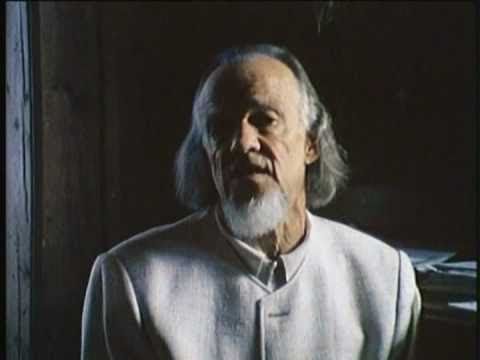

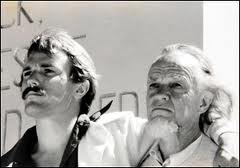



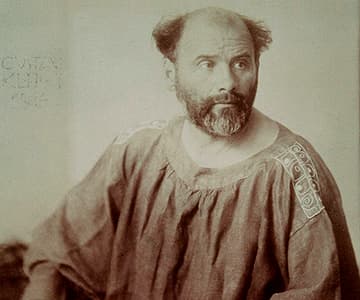
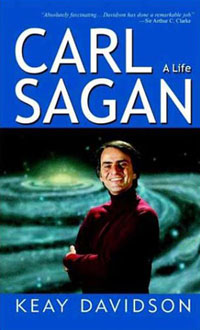
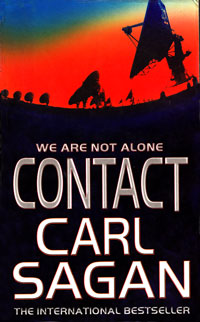
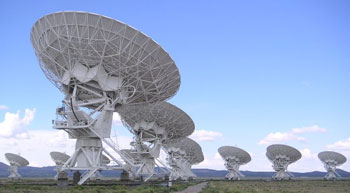



 The Daily Hatch
