Clips of Adrian Rogers and Francis Schaeffer from the film “With God on our side”
______________________
I grew up in Memphis going to Bellevue Baptist Church and Adrian Rogers was our pastor and he had a great impact on me. He had a lot to say on the issues of the day and that included social issues like abortion too. Dr. Francis Schaeffer also influenced me through his books and film series. Both of these men can be seen in this film “With God on our side.” I have included the three clips where they are pictured. In Part 8 Adrian Rogers is praying for President Bush in the White House at the 51 second mark and Rogers is pictured in Part 3 at the 2:09 mark sitting behind Ronald Reagan in August of 1980 during Reagan’s speech in Dallas at the Religious Roundtable meeting and Francis Schaeffer’s voice can be heard while his film WHATEVER HAPPENED TO THE RACE? is playing in Part 2 at the 7:54 mark.
I truly believe that many of the problems we have today in the USA are due to the advancement of humanism in the last few decades in our society. Ronald Reagan appointed the evangelical Dr. C. Everett Koop to the position of Surgeon General in his administration. He partnered with Dr. Francis Schaeffer in making the video below. It is very valuable information for Christians to have. Actually I have included a video below that includes comments from him on this subject.
Francis Schaeffer
Francis Schaeffer: “Whatever Happened to the Human Race” (Episode 4) THE BASIS FOR HUMAN DIGNITY
Francis Schaeffer: Whatever Happened to the Human Race Episode 1 ABORTION
프란시스 쉐퍼 – 그러면 우리는 어떻게 살 것인가 introduction (Episode 1)
How Should We then Live Episode 7 small (Age of Nonreason)
#02 How Should We Then Live? (Promo Clip) Dr. Francis Schaeffer
The clip above is from episode 9 THE AGE OF PERSONAL PEACE AND AFFLUENCE
10 Worldview and Truth
In above clip Schaeffer quotes Paul’s speech in Greece from Romans 1 (from Episode FINAL CHOICES)
Two Minute Warning: How Then Should We Live?: Francis Schaeffer at 100
A Christian Manifesto Francis Schaeffer
Published on Dec 18, 2012
A video important to today. The man was very wise in the ways of God. And of government. Hope you enjoy a good solis teaching from the past. The truth never gets old.
It is not possible to know where the pro-life evangelicals are coming from unless you look at the work of the person who inspired them the most. That person was Francis Schaeffer. I do care about economic issues but the pro-life issue is the most important to me. Several years ago Adrian Rogers (past president of […]
Francis Schaeffer: “Whatever Happened to the Human Race?” (Episode 2) SLAUGHTER OF THE INNOCENTS Published on Oct 6, 2012 by AdamMetropolis This crucial series is narrated by the late Dr. Francis Schaeffer and former Surgeon General Dr. C. Everett Koop. Today, choices are being made that undermine human rights at their most basic level. Practices […]
Francis Schaeffer: “Whatever Happened to the Human Race” (Episode 3) DEATH BY SOMEONE’S CHOICE Published on Oct 6, 2012 by AdamMetropolis This crucial series is narrated by the late Dr. Francis Schaeffer and former Surgeon General Dr. C. Everett Koop. Today, choices are being made that undermine human rights at their most basic level. Practices […]
The opening song at the beginning of this episode is very insightful. Francis Schaeffer: “Whatever Happened to the Human Race” (Episode 4) THE BASIS FOR HUMAN DIGNITY Published on Oct 7, 2012 by AdamMetropolis This crucial series is narrated by the late Dr. Francis Schaeffer and former Surgeon General Dr. C. Everett Koop. Today, choices […]
Francis Schaeffer: “Whatever Happened to the Human Race” (Episode 5) TRUTH AND HISTORY Published on Oct 7, 2012 by AdamMetropolis This crucial series is narrated by the late Dr. Francis Schaeffer and former Surgeon General Dr. C. Everett Koop. Today, choices are being made that undermine human rights at their most basic level. Practices once […]
(Emailed to White House on 1-29-13.) President Obama c/o The White House 1600 Pennsylvania Avenue NW Washington, DC 20500 Dear Mr. President, I know that you receive 20,000 letters a day and that you actually read 10 of them every day. I really do respect you for trying to get a pulse on what is […]
(Emailed to White House on 1-29-13.) President Obama c/o The White House 1600 Pennsylvania Avenue NW Washington, DC 20500 Dear Mr. President, I know that you receive 20,000 letters a day and that you actually read 10 of them every day. I really do respect you for trying to get a pulse on what is […]
Adrian Rogers: How to Pray in the Spirit Published on Jan 21, 2013 I own nothing, all the rights belong to Adrian Rogers (R.I.P.) & his website http://www.lwf.org. ______________________ Another great article by Adrian Rogers. How to Have a Meaningful Quiet Time taken from a message given by Adrian Rogers “Oh how love I Thy law! […]
Adrian Rogers – How You Can Be Sure You Are Eternally Secure Another fine article by Adrian Rogers. Seven Reasons Why A Saved Person Can’t Be Lost 1. Nothing can separate you from the love of God, which is in Christ Jesus your Lord. For I am persuaded, that neither death, nor life, nor angels, […]
Adrian Rogers: How to Be a Child of a Happy Mother Published on Nov 13, 2012 Series: Fortifying Your Family (To read along turn on the annotations.) Adrian Rogers looks at the 5th commandment and the relationship of motherhood in the commandment to honor your father and mother, because the faith that doesn’t begin at home, […]
Adrian Rogers – How to Cultivate a Marriage Another great article from Adrian Rogers. Are fathers necessary? “Artificial insemination is the ideal method of producing a pregnancy, and a lesbian partner should have the same parenting rights accorded historically to biological fathers.” Quoted from the United Nations Fourth World Conference on Women, summer of 1995. […]
Adrian Rogers – Does a Loving God Believe in Capital Punishment? Published on Mar 30, 2012 For more information please visit http://www.lwf.org _______________________ Another great article by Adrian Rogers. Is capital punishment contrary to the word of God? Scripture tells us that human government is ordained and set up by God. It is very clear in […]
Adrian Rogers – How you can be certain the Bible is the word of God Great article by Adrian Rogers. What evidence is there that the Bible is in fact God’s Word? I want to give you five reasons to affirm the Bible is the Word of God. First, I believe the Bible is the […]
Adrian Rogers – 5 Minutes After Death Uploaded on Sep 22, 2011 For more information please visit http://www.lwf.org _________________ What actually happens when a person dies? This is a question to end all questions. Everybody asks it, searching everywhere for an answer. The reason everybody asks about death is because God puts thoughts of eternity in […]
NO OTHER WAY – Preached By Pastor Dr Adrian Rogers Uploaded on May 8, 2011 Is there more than one way to enter HEAVEN? If there is, GOD would have told us so. Bible says JESUS IS ONLY WAY! Pastor Ben Soon (Snowy Mountain Church) ___________ Is God fair if he let a person die and […]
Prolific Hollywood filmmaker and religious skeptic Woody Allen maintains in a recent interview that human life on earth is “just an accident” filled with “silly little moments,” and the “best you can do to get through life is distraction.”
Dr. Jack Graham, pastor of Prestonwood Baptist Church in Plano, Texas, and PowerPoint Ministries broadcaster, called Allen’s suggestions “sad” and “tragic” and “a hopeless state of mind.”
Allen, whose latest film “Blue Jasmine” is currently in theaters, isagnostic and grew up in a Jewish household. His worldview comes across strongly, and in some cases purposefully, in his four dozen films — which “often drip with pessimism (some would say nihilism),” one observernoted.
Allen also has talked openly on more than one occasion about what he believes is the futility of life — described in a 2006 Washington Post article as one of the few subjects about which the filmmaker is “evangelically passionate.” He doesn’t think the existence of God as plausible, and considers people who put their “faith in religion” as delusional.
“It’s just an accident that we happen to be on earth, enjoying our silly little moments, distracting ourselves as often as possible so we don’t have to really face up to the fact that, you know, we’re just temporary people with a very short time in a universe that will eventually be completely gone,” Allen, 77, says in the interview.
“And everything that you value, whether it’s Shakespeare, Beethoven, da Vinci, or whatever, will be gone. The earth will be gone. The sun will be gone. There’ll be nothing. The best you can do to get through life is distraction. Love works as a distraction. And work works as a distraction. You can distract yourself a billion different ways. But the key is to distract yourself.”
Graham was asked for a response to Allen’s comments during his Aug. 20 appearance on “The Janet Mefferd Show,” and the minister immediately brought up Jesus.
“What does it profit a man if he gains the whole world and loses his own soul?” Graham quoted Jesus from the Gospels. “The soul exists and we are not just an accident of time or matter or space. We are created by God for an eternal purpose, therefore we do matter.”
“You matter to God, we matter to God,” the former Southern Baptist Convention president went on. “Because not only were we created by God but in Christ we are recreated to have an eternal life with him.
“So how sad, how tragic that so many people like Woody Allen, whether they can express it like that or not, are just living for self, and living for pleasure and living for things.”
The megachurch pastor referenced Philippians 1:21: “For to me, to live is Christ and to die is gain.”
“To live is Christ means that Christ is the focus and the hero, the joy, the reason for living. Therefore, to die is gain,” Graham added. “But if you can’t say to live is Christ, then you have to say to die is loss. There’s no fun and games in a grave without Christ and a future without Christ.”
“That’s the sadness of the lostness of people all around us,” he concluded.
Graham suggested that Christians need to get more “aggressive” in building relationships with people who seem hopeless.
Allen discussed similar issues with Billy Graham in the ’60s for a television program and jokingly expressed his hope to convert the renowned evangelist to agnosticism by the end of their talk (watch part 1 and part 2).
The filmmaker also has many diehard fans, surprisingly it seems, among evangelical Christians, according to a Washington Post “Under God” blog entry published in 2011 and titled “Woody Allen and evangelicals: A surprisingly romantic pair.”
“Many of Allen’s films wrestle in a complex way with core moral themes, such as the nature of forgiveness, what to do with sin, whether life can have any meaning without God. And he does this as an agnostic,” Michelle Boorstein writes in the blog post.
Richard Land, seminary president, former president of the Southern Baptist Convention’s Ethics & Religious Liberty Commission and executive editor of The Christian Post, is “a huge Allen fan and can rattle off an amazing amount of dialogue,” according to the article.
Land suggested that Allen had lost some of his “light touch” and “confidence,” and that his more recent movies expose an awareness of “his own mortality.”
The Southern Baptist leader said Allen “asks all the right questions, he just doesn’t have the right answers.”
_______ Woody Allen’s New Film Is Called ‘Irrational Man’ Posted on Friday, January 30th, 2015 by Angie Han 85 SHARES TwitterFacebook Woody Allen‘s latest film finally has a release date and a studio. Irrational Man will be distributed by Sony Pictures Classics, as were Allen’s last six films.Emma Stone, Joaquin Phoenix, Parker Posey, and Jamie […]
__________________ Top 5000 Irrational Man (2015) 24 July 2015 (USA) Not yet released (voting begins after release) On a small town college campus, a philosophy professor in existential crisis gives his life new purpose when he enters into a relationship with his student. Director: Woody Allen Writer: Woody Allen Stars: Emma Stone, Joaquin Phoenix, Jamie […]
___________ Sony Acquires Woody Allen’s IRRATIONAL MAN – AMCi Published on Feb 5, 2015 Sony Pictures Classics has acquired the North American rights to Woody Allen’s next film “Irrational Man”. This marks the eight collaboration between Allen and the studio. Few details are known about the film to date but it is said that it […]
Crimes and Misdemeanors: A Discussion: Part 1 ___________________________________ Today I will answer the simple question: IS IT POSSIBLE TO BE AN OPTIMISTIC SECULAR HUMANIST THAT DOES NOT BELIEVE IN GOD OR AN AFTERLIFE? This question has been around for a long time and you can go back to the 19th century and read this same […]
Love and Death [Woody Allen] – What if there is no God? [PL] ___________ _______________ How Should We then Live Episode 7 small (Age of Nonreason) #02 How Should We Then Live? (Promo Clip) Dr. Francis Schaeffer 10 Worldview and Truth Two Minute Warning: How Then Should We Live?: Francis Schaeffer at 100 Francis […]
______________________ Woody Allen: “the whole thing is tragic” July 20, 2012 Mr. Allen, do you truly believe that happiness in life is impossible? This is my perspective and has always been my perspective on life. I have a very grim, pessimistic view of it. I always have since I was a little boy; it hasn’t […]
___________ Dr. Francis Schaeffer – The Naturalistic, Materialistic, World View Francis Schaeffer and Gospel of Christ in the pages of the Bible Francis Schaeffer’s term the “Mannishness of Man” and how it relates to Woody Allen and Charles Darwin!!! Schaeffer noted that everyone has these two things constantly pulling at them. First, it is […]
____ Woody Allen’s past movies and the subject of the Meaning of Life examined!!! Out of the Past: Woody Allen, Nostalgia, the Meaning of Life, and Radio Days Kyle Turner Jul 25, 2014 Film, Twilight Time 1 Comment “I firmly believe, and I don’t say this as a criticism, that life is meaningless.” – Woody […]
__________ I wrote on this yesterday and will continue to write on it for a while. Below is a very fine article by Mike Huckabee on the subject. American people have to take up the slack for absentee president. (Photo: Philippe Wojazer, AFP/Getty Images) 3237CONNECT 21TWEETLINKEDIN 35COMMENTEMAILMORE Woody Allen said that “80% of success is […]
40 songs from Past Woody Films plus song I suggested for Woody Allen’s new film from Pee Wee Spitelera (Clarinetist at Al Hirts’ Club, New Orleans) ___________ Woody Allen – Songs from Woody Allen’s Films Published on Oct 7, 2013 Woody Allen – Songs from Woody Allen’s Films Upload the album here :http://bit.ly/17BenPD iTunes […]
I meet with the young adult group on Friday nights for more targeted discussions. One of the things that Tammy and I have come to realize is that a lot of young adults do not see the value of gleaning wisdom from helpful folks who have come in generations before them. C.S. Lewis calls this “chronological snobbery.”
So, we have begun a series with our group called “Books You Should Have in Your Library.” We started with Francis Schaeffer’s “How Should We Then Live?” The plan is kick it off here and then work backwards. Although, I plan to get to some stuff from James White, who is certainly not backwards, except for the kilt, and Dan Phillips, who does have somewhat of an obsession with the band Chicago. But, alas, even Schaeffer had his knickers.
To encourage others to read some of these great works, I plan on posting some of the notes and quotes from our discussions under the category, oddly enough, Books You Should Have in Your Library. I trust that these will be helpful as an incentive to read the book, of course. If you would like to add some additional things that strike you in each chapter, please feel free to post them in the comment section.
Here are some of the things we discussed that were in Chapter 1.
Francis Schaeffer and Presuppositions
The book begins with this statement:
Francis Schaeffer | This Bread Always
There is a flow to history and culture. This flow is rooted and has its wellspring in the thoughts of people. People are unique in the inner life of the mind—what they are in their thought-world determines how they act. This is true of their value systems and it is true of their creativity. It is true of their corporate actions, such as political decisions, and it is true of their personal lives. The results of their thought-world flow through their fingers or from their tongues into the external world. This is true of Michelangelo’s chisel, and it is true of a dictator’s sword.
These basic starting points of understanding reality are called, “presuppositions.”
People have presuppositions, and they will live more consistently on the basis of these presuppositions than even they themselves may realize…Their presuppositions also provide the basis for their values and therefore the basis for their decisions.
Schaeffer defines presuppositions as “the basic way an individual looks at life, his basic world-view, the grid through which he sees the world.”
When it comes down to it, there are really only three ways that the thinkers of the past have posited that we can know reality. What we perceive through our senses; what we can reason from the inside out; and, what we can know because we have been told by someone outside of us who is trustworthy.
Paul said it this way:
But, as it is written, “What no eye has seen, nor ear heard, nor the heart of man imagined, what God has prepared for those who love him”— these things God has revealed to us through the Spirit. For the Spirit searches everything, even the depths of God. (1 Corinthians 2:9–10, ESV)
Everyone has a worldview, an ultimate grid through which they understand reality. “What no eye has seen, nor ear heard,” may be called in our day “empiricism” – reality is perceived by what is observed. We pile up pieces of data, “particulars” as Aristotle called them, and draw conclusions to make a unified whole. But, it fails. We cannot observe everything because we are limited creatures. That last piece of data might change the whole conclusion.
“Nor the heart of man imagined” may be called “rationalism,” or deriving a unified whole starting from the inside and reasoning out. “I think, therefore I am.” DeCartes posited. But, doesn’t everyone start from a different spot internally? Isn’t everyone flawed in their beginning?
There needs to be a Perfect Perceiver of reality, and their needs to be a Perfect starting point for reason. Paul points to the only viable source of knowing when he says, “these things God has revealed to us through the Spirit. For the Spirit searches everything, even the depths of God.”
All worldviews are designed to answer three basic questions:
1) What is real? The Theory of Reality (metaphysics)2) How do I know? The Theory of Knowledge (epistemology)3) How should I live? The Theory of Ethics (morality)
Schaeffer begins to demonstrate his thesis that “the inner thought-world determines the outward action” by looking at ancient Rome.
The Presuppositions of Rome
What caused Rome to fall? It wasn’t the barbarian attacks. It was that it rotted from the inside out.
In many ways Rome was great, but it had no real answers to the basic problems that all humanity faces.
The gods of Rome were glorified human beings. Petty, selfish, and without ultimate authority.
These gods depended on the society which had made them, and when this society collapsed the gods tumbled with it.
Is that not the way with any authority structure that depends upon humanity? Is that not true of the state as well? Fickle, changing, and ultimately unsupported. With Rome, each faction vied for its own special interest. Nothing was accomplished in the Roman Senate because Senators were only concerned with enlarging their power and perks of office. Chaos ruled the streets of Rome and Romans traded their freedoms as citizens for the security of subjugation. Ultimately, they worshipped Caesar and the genius of Rome. However, this ultimate authority was also finite and fickle as Caesar ultimately began to be ruled by the polls of his day.
Schaeffer contrasts the weakness of Rome and its worldview with the strength of Christianity and its worldview. Christianity survived intense persecution and the pressures of a cruel state power because Christian thought was not dependent upon the subjective wants of the culture. Christian thought is dependent upon objective truth, that of the revelation of God in Scripture.
The parallels to Rome and our current day are striking, there is no doubt. The solution is also striking. The Western church longs to be a power base in the secular political scene, to be accepted in the ever-godless culture. To do so, the Church must abandon her dependence upon objective truth and subject herself to the whims of the public. That has never ended well.
_______________________________________________
프란시스 쉐퍼 – 그러면 우리는 어떻게 살 것인가 introduction (Episode 1)
How Should We then Live Episode 7 small (Age of Nonreason)
#02 How Should We Then Live? (Promo Clip) Dr. Francis Schaeffer
The clip above is from episode 9 THE AGE OF PERSONAL PEACE AND AFFLUENCE
10 Worldview and Truth
In above clip Schaeffer quotes Paul’s speech in Greece from Romans 1 (from Episode FINAL CHOICES)
Two Minute Warning: How Then Should We Live?: Francis Schaeffer at 100
A Christian Manifesto Francis Schaeffer
Francis Schaeffer “BASIS FOR HUMAN DIGNITY” Whatever…HTTHR
______________ The Beatles documentary || A Long and Winding Road || Episode 5 (This video discusses Stg. Pepper’s creation I have dedicated several posts to this series on the Beatles and I don’t know when this series will end because Francis Schaeffer spent a lot of time listening to the Beatles and talking and writing […]
_______________________ When I’m Sixty-Four- The Beatles The Beatles first radio interview (10/27/1962) Published on Mar 3, 2013 The Beatles (John Lennon, Paul McCartney, George Harrison and Ringo Starr) with Monty Lister at their first radio interview, 27 October 1962. Before their fourth and final live appearance at the Hulme Hall in Birkenhead, The Beatles recorded […]
Great Album I have dedicated several posts to this series on the Beatles and I don’t know when this series will end because Francis Schaeffer spent a lot of time listening to the Beatles and talking and writing about them and their impact on the culture of the 1960’s. In this series we have […]
________________ _____________________________ Francis Schaeffer pictured below: ______________ I was impacted by this film series by Francis Schaeffer back in the 1970’s and I wanted to share it with you. Schaeffer makes three key points concerning the Reformation: “1. Erasmian Christian humanism rejected by Farel. 2. Bible gives needed answers not only as to how to be right […]
How Should We Then Live? outline Episode VII – The Age of Non Reason ____________________ Episode 8: The Age Of Fragmentation Published on Jul 24, 2012 Dr. Schaeffer’s sweeping epic on the rise and decline of Western thought and Culture _______________________ I love the works of Francis Schaeffer and I have been on the internet […]
___________________________________ 프란시스 쉐퍼 – 그러면 우리는 어떻게 살 것인가 introduction (Episode 1) How Should We then Live Episode 7 small (Age of Nonreason) #02 How Should We Then Live? (Promo Clip) Dr. Francis Schaeffer The clip above is from episode 9 THE AGE OF PERSONAL PEACE AND AFFLUENCE 10 Worldview and Truth In above clip […]
Open letter to President Obama (Part 491) (Emailed to White House on 5-3-13.) President Obama c/o The White House 1600 Pennsylvania Avenue NW Washington, DC 20500 Dear Mr. President, I know that you receive 20,000 letters a day and that you actually read 10 of them every day. I really do respect you for trying to get […]
__________________ Francis Schaeffer pictured below: _______________- I want to make two points today. First, Greg Koukl has rightly noted that the nudity of a ten year old girl in the art of Robert Mapplethorpe is not defensible, and it demonstrates where our culture is morally. It the same place morally where Rome was 2000 years […]
Review of Francis Schaeffer’s book and film series “How should we then live?” by Douglas Groothuis, Ph.D. Episode VII – The Age of Non Reason ____________________ Episode 8: The Age Of Fragmentation Published on Jul 24, 2012 Dr. Schaeffer’s sweeping epic on the rise and decline of Western thought and Culture _______________________ I love the […]
Francis Schaeffer Whatever Happened to the Human Race (Episode 1) ABORTION This essay below is worth the read. Schaeffer, Francis – “Francis Schaeffer and the Pro-Life Movement” [How Should We Then Live?, Whatever Happened to the Human Race?, A Christian Manifesto] Editor note: <p> </p> [The following essay explores the role that Francis Schaeffer played […]
How Should We Then Live? outline Episode VII – The Age of Non Reason ____________________ Episode 8: The Age Of Fragmentation Published on Jul 24, 2012 Dr. Schaeffer’s sweeping epic on the rise and decline of Western thought and Culture _______________________ I love the works of Francis Schaeffer and I have been on the internet […]
Review of Francis Schaeffer’s book and film series “How should we then live?” by Douglas Groothuis, Ph.D. How Should We then Live Episode 7 small (Age of Nonreason) #02 How Should We Then Live? (Promo Clip) Dr. Francis Schaeffer The clip above is from episode 9 THE AGE OF PERSONAL PEACE AND AFFLUENCE 10 Worldview […]
How Should We Then Live 4-1 I was impacted by this film series by Francis Schaeffer back in the 1970’s and I wanted to share it with you. Schaeffer makes three key points concerning the Reformation: “1. Erasmian Christian humanism rejected by Farel. 2. Bible gives needed answers not only as to how to be right with […]
When I think about the life work of Milton Friedman two issues keep coming up. Private vouchers for schools and lowering federal government spending. Those two issues were very close to his heart. I am hoping in the future our leaders will see that after increasing spending every year for the last 40 years and at the same time our test results have dropped that we must gave private vouchers a chance.
Also as our national debt keep rising we must adopt the Balanced Budget Amendment which was also close to Friedman’s heart.
In compiling a list of the greatest economists of all time, Milton Friedman’s name will surely be one of the first to come to mind. There is of course his technical work, such as his famous Monetary History of the United States (co-authored with Anna Schwartz), that established him as the chief architect of the theory of monetarism. More important was his ability to explain in clear layman’s terms the basic principles of our economic system, how it creates wealth for all members of society, and the importance to a successful society of individual liberty. If one were to pick two books that our country’s leaders should read, they would be his Capitalism and Freedom and Free to Choose. They are a treasure trove of solutions to the social problems of today.
Freidman wrote the first of these in 1962. In a period where we were about to launch The Great Society, as is the case today, people were looking to the federal government to improve their lives. Friedman offered an alternative based upon market forces and individual liberty. His cogent examination of the effect of incentives on people’s behavior led him to offer solutions to societal problems that were both insightful and effective. He offered ideas such as allowing individuals to invest in the education of others, so poor children would be able to obtain funding for high school and college in return for the investor receiving a fraction of their future earnings. This innovative idea would be much more successful than Pell Grants in encouraging and enabling students to finish high school and graduate from college.
Today we are more than ever in need of a resurgence and rediscovery of Milton Friedman’s ideas. Examples of this need abound. The stimulus package was supposed to keep the unemployment rate below 8 percent. Instead we have unemployment between 9.5 and 10 percent and $800 billion added to the federal debt. The Obama administration is now pushing for a second stimulus package. Thirty years ago Friedman explained that fiscal policy is not an effective method of reducing unemployment. Had we followed Friedman’s advice, we would be less burdened in debt and further along in economic recovery.
His argument for vouchers as a mechanism of moving public education from a socialist system to a market system has found traction in the last decade. Nonetheless, voucher proposals are very difficult to pass due to the power of the teachers unions. As a consequence of not following Friedman’s advice thousands of children in our urban schools have lost their chance for a good education.
Due to a massive 2000 page health care bill, the federal government is now managing the entire health care and health insurance industry. Freidman explained in a cogent article in The Public Interest, that health care costs are so high and customer satisfaction with the system is so low because government intervention has pushed us into an employer and government-based third party payment system. In typical Friedman fashion he forces us to observe that advances in technology in every area other than health care have led to reduced costs and increased satisfaction with the product or service and to ask why this is so. He asks why we single out medical care for tax-free status. Food is more important than medical care and yet we do not exempt the cost of food if provided by the employer. He must be surely rolling over in his grave the new health care legislation will compound the problem of third-party payment.
The President recently signed a 2300 page bill granting the federal government control over the entire financial industry. Professor Friedman wrote famously of how the Federal Reserve was not capable of determining how to manipulate the credit markets effectively due to its inability to know the information necessary to conduct effective monetary policy, and thus argued that the Federal Reserve should be constrained by rules. He certainly would have argued strenuously against giving the Federal Reserve and Securities and Exchange Commission the enormous powers that they received under the financial regulation legislation.
In Free to Choose, Friedman and his wife, Rose, argued for a constitutional amendment requiring a balanced budget. As we see deficits of nearly $1.5 trillion staring us in the face for at least the next few years, this suggestion too has gained new relevance.
Concluding Free to Choose, he wrote:
“The two ideas of human freedom and economic freedom working together cane to their greatest fruition in the United States. Those ideas are still very much with us. But we have been straying from them. We have been forgetting the basic truth that the greatest threat to human freedom is the concentration of power, whether in the hands of government or anyone else. We have persuaded ourselves that it is safe to grant power, provided it is for good purposes.”
Some thirty years later those words again ring true. Our hope should be that his final statement also is true:
“Fortunately, we are waking up….Fortunately, also, we are as a people still free to choose which way we should go—whether to continue along the road we have been following to ever bigger government, or to call a halt and change direction.”
This post originally appeared at The Business and Media Insitute’s Balance Sheet of July 28, 2010
WHY DOES MODERN MAN TAKE THIS LEAP INTO THE AREA OF NONREASON TO ATTEMPT TO FIND MEANING IN HIS LIFE? The answer is very simple and it is found in the makeup of man that is found in Romans 1:18-22 and in the writings of Carl Gustav Jung.
I have dedicated several posts to this series on the Beatles and I don’t know when this series will end because Francis Schaeffer spent a lot of time listening to the Beatles and talking and writing about them and their impact on the culture of the 1960’s. In this series we have looked at several areas in life where the Beatles looked for meaning and hope but also we have examined some of the lives of those writers, artists, poets, painters, scientists, athletes, models, actors, religious leaders, musicians, comedians, and philosophers that were put on the cover of Sergeant Pepper’s Lonely Hearts Club Band album. We have discovered that many of these individuals on the cover have even taken a Kierkegaardian leap into the area of nonreason in order to find meaning for their lives and that is the reason I have included the 27 minute episode THE AGE OF NONREASON by Francis Schaeffer. In that video Schaeffer noted, ” Sergeant Pepper’s Lonely Hearts Club Band…for a time it became the rallying cry for young people throughout the world. It expressed the essence of their lives, thoughts and their feelings.”
Sergeant Pepper’s Lonely Hearts Club Band Albumreally did look at every potential answer to meaning in life and to as many people as the Beatles could imagine had the answers to life’s big questions. One of the persons on the cover did have access to those answers and I am saving that person for last in this series on the Beatles.
How Should We then Live Episode 7 small (Age of Nonreason)
1 Sri Yukteswar Giri (guru)

2 Aleister Crowley (dabbler in sex, drugs and magic)

3 Mae West (actress)

4 Lenny Bruce (comic)

5 Karlheinz Stockhausen (composer)

6 W. C. (William Claude) Fields (comic)

7 Carl Gustav Jung (psychologist)

8 Edgar Allen Poe (writer)

9 Fred Astaire (actor)
During this long series on the Beatles it has become quite evident that there were reasons why certain writers, artists, poets, painters, scientists, athletes, models, actors, religious leaders, musicians, comedians, and philosophers were put on the cover of Sergeant Pepper’s Lonely Hearts Club Band and that is the Beatles had made it to the top of the world but they were still searching for purpose and lasting meaning for their lives. They felt they were in the same boat as those pictured on the cover and so they called it appropriately Sergeant Pepper’s Lonely Hearts Club Band. In his article “Philosophy and its Effect on Society Robert A. Sungenis, notes that all these individuals “are all viewing the burial scene of the Beatles, which, in the framework we are using here, represents the passing of idealistic innocence and the failure to find a rational answer and meaning to life, an answer to love, purpose, significance and morals. They instead were leaping into the irrational, whether it was by drugs, the occult, suicide, or the bizarre.”
(Francis and Edith Schaeffer below)
The Beatles just like modern men are searching for a hope of meaning for their lives. The website Bible.org noted concerning Francis A. Schaeffer:
Francis August Schaeffer IV (1912-1984) was one of the most beloved Christian apologists of the twentieth century. His influence was so great that Newsweek once called him “the guru of fundamentalism.”21
Schaeffer argues that modern man, having crossed the line of despair, takes a leap of faith to affirm that life has meaning and purpose because human beings cannot live without such meaning (1:61). This “leap” results in a two-storied view of the world. The “downstairs” is the world of rationality, logic, and order; it is the realm of fact, in which statements have content. The “upstairs” is the world of meaning, value, and hope; it is the realm of faith, in which statements express a blind, contentless optimism about life (1:57-58, 63-64). “The downstairs has no relationship to meaning: the upstairs has no relationship to reason” (1:58).
WHY DOES MODERN MAN TAKE THIS LEAP INTO THE AREA OF NONREASON TO ATTEMPT TO FIND MEANING IN HIS LIFE? The answer is very simple and it is found in the makeup of man that is found in Romans 1:18-22 and in the writings of Carl Gustav Jung.
Carl Jung established the idea of analytic psychology. He advanced the idea of introvert and extrovert personalities and the power of the unconscious.
Carl Jung was born on July 26, 1875, in Kesswil, Switzerland. Jung believed in the “complex” or emotionally charged associations. He collaborated with Sigmund Freud, but disagreed with him about the sexual basis of neuroses. He founded analytic psychology, advancing the idea of introvert and extrovert personalities and the power of the unconscious. He wrote several books before his death in 1961.
___________
Front row: Sigmund Freud, Granville Stanley Hall, Jung; back row: Abraham A. Brill, Ernest Jones, Sandor Ferenczi.
Today we are looking at the life of Carl Gustav Jung and asking the simple question why the Beatles chose to put him on the cover of Sergeant Pepper’s Lonely Hearts Club Band Album. The answer may have been because he identified two things (according to Schaeffer) that “cut across man’s will; first of all, the external world; and secondly, those things that well up from inside the person. Jung, though he has no real solution, exactly identifies the two basic things that confront man–man himself, and the external universe.”
“But I may say that the impossibility of conceiving that this grand and wondrous universe, with our conscious selves, arose through chance, seems to me the chief argument for the existence of God; but whether this is an argument of real value, I have never been able to decide.”
Francis Schaeffer observed:
So he sees here exactly the same that I would labor and what Paul gives in Romans chapter one, and that is first this tremendous universe [and it’s form] and the second thing, the mannishness of man and the concept of this arising from chance is very difficult for him to come to accept and he is forced to leap into this, his own kind of Kierkegaardian leap, but he is forced to leap into this because of his presuppositions but when in reality the real world troubles him. He sees there is no third alternative. If you do not have the existence of God then you only have chance. In my own lectures I am constantly pointing out there are only two possibilities, either a personal God or this concept of the impersonal plus time plus chance and Darwin understood this . You will notice that he divides it into the same exact two points that Paul does in Romans chapter one into and that Carl Gustav Jung (1875-1961) will in the problem of existence, the external universe, and man and his consciousness. Paul points out there are these two steps that man is confronted with…
______________
Here below is the Romans passage that Schaeffer is referring to and verse 19 refers to what Schaeffer calls “the mannishness of man” and verse 20 refers to Schaeffer’s other point which is “the universe and it’s form.“Romans 1:18-22Amplified Bible (AMP) 18 For God’s [holy] wrath and indignation are revealed from heaven against all ungodliness and unrighteousness of men, who in their wickedness repress and hinder the truth and make it inoperative. 19 For that which is known about God is evident to them and made plain in their inner consciousness, because God [Himself] has shown it to them. 20 For ever since the creation of the world His invisible nature and attributes, that is, His eternal power and divinity, have been made intelligible and clearly discernible in and through the things that have been made (His handiworks). So [men] are without excuse [altogether without any defense or justification], 21 Because when they knew and recognized Him as God, they did not honor and glorify Him as God or give Him thanks. But instead they became futile andgodless in their thinking [with vain imaginings, foolish reasoning, and stupid speculations] and their senseless minds were darkened. 22 Claiming to be wise, they became fools [professing to be smart, they made simpletons of themselves]
“Another source of conviction in the existence of God, connected with the reason and not with the feelings, impresses me as having much more weight. This follows from the extreme difficulty or rather impossibility of conceiving this immense and wonderful universe, including man with his capacity of looking far backwards and far into futurity, as the result of blind chance or necessity. When thus reflecting, I feel compelled to look to a First Cause having an intelligent mind in some degree analogous to that of man; and I deserve to be called a Theist. This conclusion was strong in my mind about the time, as far as I can remember, when I wrote the Origin of Species, and it is since that time that it has very gradually, with many fluctuations, become weaker. But then arises the doubt…”
Francis Schaeffer commented:
On the basis of his reason he has to say there must be an intelligent mind, someone analogous to man. You couldn’t describe the God of the Bible better. That is man is made in God’s image and therefore, you know a great deal about God when you know something about man. What he is really saying here is that everything in my experience tells me it must be so, and my mind demands it is so. Not just these feelings he talked about earlier but his MIND demands it is so, but now how does he counter this? How does he escape this? Here is how he does it!!!
Charles Darwin went on to observe: “—can the mind of man, which has, as I fully believe, been developed from a mind as low as that possessed by the lowest animals, be trusted when it draws such grand conclusions?”
Francis Schaeffer asserted:
So he says my mind can only come to one conclusion, and that is there is a mind behind it all. However, the doubt comes because his mind has come from the lowest form of earthworm, so how can I trust my mind. But this is a joker isn’t it? Then how can you trust his mind to support such a theory as this? He proved too much. The fact that Darwin found it necessary to take such an escape shows the tremendous weight of Romans 1, that the only escape he can make is to say how can I trust my mind when I come from the lowest animal the earthworm? Obviously think of the grandeur of his concept, I don’t think it is true, but the grandeur of his concept, so what you find is that Darwin is presenting something here that is wrong I feel, but it is not nothing. It is a tremendously grand concept that he has put forward. So he is accepting the dictates of his mind to put forth a grand concept which he later can’t accept in this basic area with his reason, but he rejects what he could accept with his reason on this escape. It really doesn’t make sense. This is a tremendous demonstration of the weakness of his own position.
Nevertheless you have expressed my inward conviction, though far more vividly and clearly than I could have done, that the Universe is not the result of chance.* But then with me the horrid doubt always arises whether the convictions of man’s mind, which has been developed from the mind of the lower animals, are of any value or at all trustworthy. Would any one trust in the convictions of a monkey’s mind, if there are any convictions in such a mind?
Francis Schaeffer observed:
Can you feel this man? He is in real agony. You can feel the whole of modern man in this tension with Darwin. My mind can’t accept that ultimate of chance, that the universe is a result of chance. He has said 3 or 4 times now that he can’t accept that it all happened by chance and then he will write someone else and say something different. How does he say this (about the mind of a monkey) and then put forth this grand theory? Wrong theory I feel but great just the same. Grand in the same way as when I look at many of the paintings today and I differ with their message but you must say the mark of the mannishness of man are one those paintings titanic-ally even though the message is wrong and this is the same with Darwin. But how can he say you can’t think, you come from a monkey’s mind, and you can’t trust a monkey’s mind, and you can’t trust a monkey’s conviction, so how can you trust me? Trust me here, but not there is what Darwin is saying. In other words it is very selective.
Now we are down to the last year of Darwin’s life.
* The Duke of Argyll (Good Words, April 1885, p. 244) has recorded a few words on this subject, spoken by my father in the last year of his life. “. . . in the course of that conversation I said to Mr. Darwin, with reference to some of his own remarkable works on the Fertilisation of Orchids, and upon The Earthworms,and various other observations he made of the wonderful contrivances for certain purposes in nature—I said it was impossible to look at these without seeing that they were the effect and the expression of mind. I shall never forget Mr. Darwin’s answer. He looked at me very hard and said, ‘Well, that often comes over me with overwhelming force; but at other times,’ and he shook his head vaguely, adding, ‘it seems to go away.'”
Francis Schaeffer summarized :
And this is the great Darwin, and it makes you cry inside. This is the great Darwin and he ends as a man in total tension.
Francis Schaeffer noted that in Darwin’s 1876 Autobiography that Darwin he is going to set forth two arguments for God in this and again you will find when he comes to the end of this that he is in tremendous tension. Darwin wrote,
At the present day the most usual argument for the existence of an intelligent God is drawn from the deep inward conviction and feelings which are experienced by most persons.Formerly I was led by feelings such as those just referred to (although I do not think that the religious sentiment was ever strongly developed in me), to the firm conviction of the existence of God and of the immortality of the soul. In my Journal I wrote that whilst standing in the midst of the grandeur of a Brazilian forest, ‘it is not possible to give an adequate idea of the higher feelings of wonder, admiration, and devotion which fill and elevate the mind.’ I well remember my conviction that there is more in man than the mere breath of his body; but now the grandest scenes would not cause any such convictions and feelings to rise in my mind. It may be truly said that I am like a man who has become colour-blind.
Francis Schaeffer remarked:
Now Darwin says when I look back and when I look at nature I came to the conclusion that man can not be just a fly! But now Darwin has moved from being a younger man to an older man and he has allowed his presuppositions to enter in to block his logic. These things at the end of his life he had no intellectual answer for. To block them out in favor of his theory. Remember the letter of his that said he had lost all aesthetic senses when he had got older and he had become a clod himself. Now interesting he says just the same thing, but not in relation to the arts, namely music, pictures, etc, but to nature itself. Darwin said, “But now the grandest scenes would not cause any such convictions and feelings to rise in my mind. It may be truly said that I am like a man who has become colour-blind…” So now you see that Darwin’s presuppositions have not only robbed him of the beauty of man’s creation in art, but now the universe. He can’t look at it now and see the beauty. The reason he can’t see the beauty is for a very, very , very simple reason: THE BEAUTY DRIVES HIM TO DISTRACTION. THIS IS WHERE MODERN MAN IS AND IT IS HELL. The art is hell because it reminds him of man and how great man is, and where does it fit in his system? It doesn’t. When he looks at nature and it’s beauty he is driven to the same distraction and so consequently you find what has built up inside him is a real death, not only the beauty of the artistic but the beauty of nature. He has no answer in his logic and he is left in tension. He dies and has become less than human because these two great things (such as any kind of art and the beauty of nature) that would make him human stand against his theory.
________________________
Can one still look at God’s beautiful creation and say that it just appears to be the work of an intellect? If so then that person is like Darwin and can say, “I am like a man who has become colour-blind.”
_______________________________________
IF WE ARE LEFT WITH JUST THE MACHINE THEN WHAT IS THE FINAL CONCLUSION IF THERE WAS NO PERSONAL GOD THAT CREATED US? Take time and listen to the song DUST IN THE WIND by Kerry Livgren of the group KANSAS. That song was a hit in 1978 when it rose to #6 on the charts because so many people connected with the message of the song. It included these words, “All we do, crumbles to the ground though we refuse to see, Dust in the Wind, All we are is dust in the wind, Don’t hang on, Nothing lasts forever but the Earth and Sky, It slips away, And all your money won’t another minute buy.”
Kerry Livgren himself said that he wrote the song because he saw where man was without a personal God in the picture. Solomon pointed out in the Book of Ecclesiastes that those who believe that God doesn’t exist must accept three things and it is Francis Schaeffer that pointed this out. FIRST, death is the end and SECOND, chance and time are the only guiding forces in this life. FINALLY, power reigns in this life and the scales are never balanced. The Christian can face death and also confront the world knowing that it is not determined by chance and time alone and finally there is a judge who will balance the scales.
Both Kerry Livgren and the bass player Dave Hope of Kansas became Christians eventually. Kerry Livgren first tried Eastern Religions and Dave Hope had to come out of a heavy drug addiction. I was shocked and elated to see their personal testimony on The 700 Club in 1981 and that same interview can be seen on You Tube today. Livgren lives in Topeka, Kansas today where he teaches “Diggers,” a Sunday school class at Topeka Bible Church. DAVE HOPE is the head of Worship, Evangelism and Outreach at Immanuel Anglican Church in Destin, Florida.
About the film:
In 1973, six guys in a local band from America’s heartland began a journey that surpassed even their own wildest expectations, by achieving worldwide superstardom… watch the story unfold as the incredible story of the band KANSAS is told for the first time in the DVD Miracles Out of Nowhere.
_____________________________
Adrian Rogers below:
Adrian Rogers on Darwinism
________________ ________
In the article below Elvis Costello picks out 5 songs today from the Beatles and he discusses them. You will notice you have the song BABY YOU’RE A RICH MAN and it talks about being beautiful and having a lot of money. Then the three love songs, OH! DARLING, JULIA, AND I LOVE HER, and then Elvis discusses the ballad NOWHERE MAN. This also reminds me of the search that the Beatles were on concerning finding meaning and satisfaction in their lives and they were getting nowhere and it reminded me of Solomon’s search in the Book of Ecclesiastes in what I call the 6 big L words. He looked into learning (1:16-18), laughter, ladies, luxuries, and liquor (2:1-3, 8, 10, 11), and labor (2:4-6, 18-20). During his search for the meaning of life I am sure there were times that Solomon felt like singing the Beatles’ song NOWHERE MAN.
He’s a real nowhere man
Sitting in his nowhere land
Making all his nowhere plans for nobody
Doesn’t have a point of view
Knows not where he’s going to
Isn’t he a bit like you and me?
Nowhere Man, please listen
You don’t know what you’re missing
Nowhere Man, the world is at your command
He’s as blind as he can be
Just sees what he wants to see
Nowhere Man can you see me at all?
Nowhere Man, don’t worry
Take your time, don’t hurry
Leave it all till somebody else lends you a hand
He’s a real Nowhere Man
Sitting in his nowhere land
Making all his nowhere plans for nobody
Making all his nowhere plans for nobody
Making all his nowhere plans for nobody
AT THIS POINT THE BEATLES HAVE TRIED EASTERN RELIGIONS, PSYCHEDELIC MUSIC, DRUGS, WOMEN and many other things to bring meaning to their lives and all have failed. Placing these individuals on the cover of the album is just another attempt to leap into the area of nonreason to find a meaning to life. Ironically, only one person on the cover has the answer to the meaning of life and I will share that person’s name at the conclusion of this series and by the way that person came to the same conclusion that Solomon did in the find chapter of Ecclesiastes!!!
My absolute favorite albums are Rubber Soul and Revolver. On both records you can hear references to other music — R&B, Dylan, psychedelia — but it’s not done in a way that is obvious or dates the records. When you picked up Revolver, you knew it was something different. Heck, they are wearing sunglasses indoors in the picture on the back of the cover and not even looking at the camera . . . and the music was so strange and yet so vivid. If I had to pick a favorite song from those albums, it would be “And Your Bird Can Sing” . . . no, “Girl” . . . no, “For No One” . . . and so on, and so on. . . .
Their breakup album, Let It Be, contains songs both gorgeous and jagged. I suppose ambition and human frailty creeps into every group, but they delivered some incredible performances. I remember going to Leicester Square and seeing the film of Let It Be in 1970. I left with a melancholy feeling.
Julia The Beatles
Published on Apr 23, 2013
‘Julia’ performed by The Beatles from the album ‘The Beatles’ (Lennon/McCartney)1968.
“Julia” was written by John credited and features him on vocals and acoustic guitar.It was written during the Beatles’ 1968 visit to Rishikesh in northern India,where they were studying under the Maharishi Mahesh Yogi.It was here where John learned the song’s finger-picking guitar style (known as ‘Travis-picking’) from the musician Donovan.This is the only time that John played and sang unaccompanied on a Beatle track.
Check out my Lennon page on facebook at http://www.facebook.com/fbsiteworldofjohnlennon
69
‘Julia’
Stanley Parkes/Mark and Colleen Hayward/Getty Images
Main Writer: Lennon Recorded: October 13, 1968 Released: November 25, 1968 Not released as a single
Julia Lennon had encouraged her son’s interest in music and bought him his first guitar. But after splitting with John’s father, she started a new family with another man and left John to be raised by her sister; though she lived just a few miles from John, Julia did not spend much time with him. In 1958, when John was 17 and on better terms with her, Julia was struck and killed by a car. “I lost her twice,” Lennon said. “Once as a five-year-old when I was moved in with my auntie. And once again when she actually physically died.”
The only solo Lennon recording in the Beatles’ catalog, “Julia” was the final addition to the White Album, recorded just three days before the album was sequenced. His original demo, recorded in May, had included harmonies from McCartney, but this version was just Lennon’s voice and guitar. “Julia was my mother,” Lennon said. “But it was sort of a combination of Yoko and my mother blended into one” — the “ocean child” in the lyrics refers to Ono’s name, which is Japanese for “child of the ocean.” To the end of his life, he often called Yoko “Mother.”
Various clips to the Song “Baby You’re a Rich Man”
68
‘Baby, You’re a Rich Man’
Victor Blackman/Express/Getty Images
Writers: Lennon-McCartney Recorded: May 11, 1967 Released: July 17, 1967 5 weeks; No. 34 (B side)
The title came from McCartney, but the spirit was pure Lennon. The working-class hero loved nothing better than tweaking the moneyed class: “The point was, stop moaning — you’re a rich man, and we’re all rich men, heh heh, baby!” he said. When Lennon sang, “How does it feel to be one of the beautiful people?” he was talking to himself.
The Beatles built the track around a thumping mix of piano, bass and hand claps; the braying sound is Lennon playing a clavioline keyboard, which imitated the swirl of a Middle Eastern woodwind. Mick Jagger was a guest at the session and may have contributed backing vocals (one of the tape boxes mysteriously reads “+ Mick Jagger?”).
Lennon’s deeply stoned delivery and abstract questions about “the beautiful people” captured the playfully spaced-out mood of the summer of 1967 — a spirit the Beatles were more tapped into than anyone. “At the back of my mind,” McCartney said that year, “there is something which tells me that everything is beautiful.”
“Oh! Darling” is a song of The Beatles composed by Paul McCartney (credited to Lennon/McCartney) and appearing as the fourth song on the Abbey Road album in 1969. Its working title was “Oh! Darling (I’ll Never Do You No Harm)”.
McCartney later said of recording the track, “When we were recording ‘Oh! Darling’ I came into the studios early every day for a week to sing it by myself because at first my voice was too clear. I wanted it to sound as though I’d been performing it on stage all week.” He would only try the song once each day; if it was not right he would wait until the next day. In order to make sure he got every precious first take right, McCartney would practice the song in the bathtub. He once lamented that “five years ago I could have done this in one take.
After an early attempt at this song on 27 January 1969 during the Let It Be sessions, Lennon announced, “Just heard that Yoko’s divorce has just gone through”, after which he and the band burst into an improvised version of the song, substituting “I’m free at last” for a part of the lyric.
The song and the following improvisation are included on the Anthology 3 CD.
“Oh! Darling” appears to have drawn heavily on the New Orleans rhythm and blues sound popularised during the 1950s and early 1960s by African-American musicians like Fats Domino; it also seems to have drawn on the Louisiana swamp blues sound found in songs like Slim Harpo’s “Raining In My Heart.” Furthermore, it may have drawn on the related Louisiana genre known today as swamp pop, whose distinctive sound bears an uncanny resemblance to the basic structure of “Oh! Darling” — so much so that some in Louisiana originally thought the song had been recorded by a local musician. * Paul McCartney — vocal, backing vocals, bass, guitar * John Lennon — backing vocals, piano * George Harrison — backing vocals, guitar, synthesiser * Ringo Starr — drums
In other news, I have added the lyrics to this song so you can sing along, or perhaps learn the song! This is how I learned my first Beatles song! Enjoy 🙂
67
‘Oh! Darling’
TS Productions/Hulton Archive/Getty Images
Main Writer: McCartney Recorded: April 20 and 26, July 17, 18 and 22, August 11, 1969 Released: October 1, 1969 Not released as a single
Harrison described this doo-wop-style rocker to Rolling Stone as “a typical 1955 song. . . . We do a few ooh-oohs in the background, very quietly, but mainly it’s Paul shouting.” That belting, which took McCartney back to the Little Richard throat-shredding of his early days, did not come easily. “I ended up trying each morning as I came into the recording session,” he said. “I tried it with a hand mic, and I tried it with a standing mic, I tried it every which way and finally got the vocal I was reasonably happy with. If it comes off a little bit lukewarm then you’ve missed the whole point.” Engineer Geoff Emerick recalled that McCartney sang while the backing track played over speakers, instead of headphones, because he wanted to feel as though he were singing to a live audience.
Lennon liked the song but thought that he was better suited to take the lead. “It was more my style than his,” Lennon argued. “If he’d had any sense, he would have let me sing it.”
Main Writer: Lennon Recorded: October 21 and 22, 1965 Released: February 21, 1966 9 weeks; No. 3
One of the pivotal songs of Lennon’s early Beatle years arrived when he least expected it. “The whole thing came out in one gulp,” he told Rolling Stone in 1970. “I remember I was just going through this paranoia trying to write something and nothing would come out, so I just lay down and tried not to write and then this came out.” What emerged was an expression of the boredom and frustration Lennon was feeling in his cocoonlike existence as a Beatle. The references to a man who’s “making all his nowhere plans for nobody” and “knows not where he’s going to” were, Lennon admitted, “probably about myself.”
In the studio, the weariness in Lennon’s voice and the dirgelike melody didn’t deter the band from reaching for new sounds. Lennon, McCartney and Harrison stacked a wall of sumptuous harmonies, and the beautifully spare solo — played in unison by Lennon and Harrison on their Sonic Blue Fender Stratocasters — cut through the ennui like a machete.
“‘Nowhere Man’ is such a beautiful pop song with a groundbreaking, existential lyric,” says Billy Corgan, who covered it with the Smashing Pumpkins. “It lets you see that moment of discovery.”
The Beatles – And I Love Her [HQ Original Audio] from “A Hard Day’s Night” film, London, 6 July 1964 (UK release)
65
‘And I Love Her’
United Artists/Courtesy of Getty Images
Main Writer: McCartney Recorded: February 25 and 27, 1964 Released: June 26, 1964 9 weeks; no. 12
McCartney called “And I Love Her” “the first ballad I impressed myself with.” Lennon called it McCartney’s “first ‘Yesterday.'” He also claimed he helped out with the bridge. “The ‘And’ in the title was an important thing — ‘And I Love Her,’ it came right out of left field, you were right up to speed the minute you heard it,” McCartney said. “The title comes in the second verse and it doesn’t repeat. You would often go to town on the title, but this was almost an aside: ‘Oh . . . and I love you.'”
It took a few tries for the Beatles to figure out how to play it: Their initial attempts treated it as a subdued electric rock song, but once Starr switched from his drum kit to a set of bongos, it began to assume its classic form. The secret motor of the song, Tom Petty told Rolling Stone, was Lennon’s guitar part: “If you ever want to see some great rhythm-guitar playing, check out in A Hard Day’s Night when they do ‘And I Love Her.’ He could really make a band just kind of surge and jump.”
Appears On:A Hard Day’s Night
__
Artist featured today is Richard Merkin
click on image for an enlargement, price, size and medium.
Richard Marshall Merkin (1938 – September 5, 2009)[1] was an Americanpainter, illustrator and arts educator. Merkin’s fascination with the 1920s and 1930s defined his art and shaped his identity as a professional dandy. Merkin traveled back in time as an artist, to the time of the interwar years, creating narrative scenes in bright colors of jazz musicians, film stars, writers, and sports heroes. Merkin was as well known for his painting and illustration work as he was for his eccentric collecting habits and his outré fashion sense.[2]
Merkin began teaching at the Rhode Island School of Design (RISD) in 1963 and remained there for 42 years, during which time he built his reputation in New York. He commuted every week to RISD to teach painting and drawing, after he moved back to New York in 1967.[2] At RISD, Merkin was loved and revered. One RISD alum described him as “fearless beyond measure.” [3] Some notable students Merkin taught at RISD include, Chris Frantz and Tina Weymouth of the band Talking Heads and Martin Mull.[4]
Richard Merkin embodied RISD. He was regularly seen on campus wearing his trademark scarf and ballet slippers. In 1974, when the film “The Great Gatsby” was being filmed in Newport, RI Merkin appeared as an extra in one of the lawn party scenes.[5]
Merkin had been a contributing editor for Vanity Fair since 1986 and a regular contributor of illustrations to The New Yorker since 1988, as well as Harper’s and The New York Times’ Sunday Magazine. From 1988–1991, he wrote a monthly style column called “Merkin on Style” for Gentlemen’s Quarterly. In 1986, Merkin told The Daily News Record, a fashion publication: “Dressing, like painting, should have a residual stability, plus punctuation and surprise…Somewhere, like in Krazy Kat, you’ve got to throw the brick.” [2]
Merkin also designed several album covers for the Jazz record label Chiaroscuro Records for artists such as Mary Lou Williams, Ruby Braff, and Ellis Larkins.
Merkin’s dear friend, the writer Tom Wolfe wrote in an email to the New York Times upon Merkin’s death:[2]
“He was the greatest of that breed, the Artist Dandy, since Sargent, Whistler and Dali…Like Dali, he had one of the few remaining Great Mustaches in the art world.”
“What made Merkin so sought after as an illustrator was his eccentric approach to modernist art. He used Modernism’s all-over flat designs–that is, every square inch of the canvas was covered by flat, unmodulated blocs of color of equal value, creating not three but two dimensions–but his works were full of people, rendered in the same fashion, in comic poses and situations and extravagantly caricatured.”
The New Yorker noted that Merkin
“loved and evoked the great spirit of the nineteen-twenties, thirties, and forties in his work – he was, moreover, “a connoisseur of the good life.”
Merkin’s career at The New Yorker spanned twenty years, three covers, and nearly three hundred illustrations.[6]
Merkin died on September 5, 2009 at his home in Croton-on-Hudson, New York, after a long illness. He was 70 years old.[7] He was survived by his wife Heather Merkin.[2]
Richard Merkin wrote the column “Merkin on Style’’ for GQ from 1988 to 1991. His image is on the cover of The Beatles’ “Sgt. Pepper’s Lonely Hearts Club Band,’’ next to Fred Astaire. (Edward Hausner/New York Times)
NEW YORK – Richard Merkin, a painter and illustrator whose fascination with the 1920s and 1930s defined his art and shaped his identity as a professional dandy, died Sept. 5 at his home in Croton-on-Hudson, N.Y. A longtime teacher at the Rhode Island School of Design, he was 70.
His wife, Heather, said he died after a long illness.
As an artist, Mr. Merkin traveled back in time to the interwar years, creating brightly colored, cartoonish portraits and narrative scenes of film stars, jazz musicians, sports heroes, and writers. His illustrations appeared in The New Yorker, Vanity Fair, and Harper’s, but he was at least as well known for his outré fashion sense and eccentric collecting habits.
“He was the greatest of that breed, the Artist Dandy, since Sargent, Whistler, and Dali,’’ the writer Tom Wolfe, a friend, wrote in an e-mail reminiscence Tuesday. “Like Dali, he had one of the few remaining great mustaches in the art world.’’
After graduating from Syracuse University with a bachelor’s degree in fine art in 1960, he received master’s degrees in art from Michigan State University in 1961 and the Rhode Island School of Design in 1963. For the next 42 years he taught painting and drawing at RISD, commuting every week from New York.
“What made Merkin so sought after as an illustrator was his eccentric approach to modernist art,’’ Wolfe wrote. “He used Modernism’s all-over flat designs – that is, every square inch of the canvas was covered by flat, unmodulated blocs of color of equal value, creating not three but two dimensions – but his works were full of people.’’
Among other offbeat claims to fame, Mr. Merkin appeared on the cover of the Beatles’ “Sgt. Pepper’s Lonely Hearts Club Band,’’ in the top row between Fred Astaire and a Vargas girl. He was not well known at the time, but on a visit to London he had struck up a friendship with British pop artist Peter Blake, who was at work on the cover art for “Sgt. Pepper’’ at the time. The rest is a small footnote to history.
Mr. Merkin wrote the column “Merkin on Style’’ for GQ from 1988 to 1991, holding forth on a subject he knew more about than practically anybody else. A key to his philosophy was the dandyish notion of fashion as aggression.
“Dressing, like painting, should have a residual stability, plus punctuation and surprise,’’ he told the fashion publication The Daily News Record in 1986. “Somewhere, like in Krazy Kat, you’ve got to throw the brick.’’
Here’s something which I hope will be a good resource for Beatles scholars and students for years to come. This is a guide to who all the people on the Sergeant Pepper’s Lonely Hearts Club Band cover photo are. Every name is linked to the person’s own wikipedia entry, so this page will stay current forever. All the links will open in a new window. You can have acres of fun with this post for a long time. Enjoy!
No. 12, Leo Gorcy was on the cover, but he was painted out before publication due to his manager requesting a fee of $400 for his participation.
No. 68, Mahatma Gandhi was also painted over, by request of EMI.
Here’s a recreation of how “the stage” looked like before the Beatles and their wax models entered.
Recreation of the set up before the wax models arrived
As you can see, more people are revealed.
Sophia Loren and Marcello Mastroianni
Hidden behind the wax models of The Beatles, you would have seen this image of Sophia Loren(1934- )and Marcello Mastroianni (1924-1996).
Adolf Hitler and Peter Blake
Adolf Hitler (1889-1945) was also one of the full figure cut-outs, but contrary to what Peter Blake later claimed, he was not hidden behind The Beatles, but stood in the wings when the Beatles entered the picture.
Bette Davis as Queen Elizabeth I
Hidden behind George in his Pepper suit is this image of Bette Davis (1908-1989) in her portrayal ofQueen Elizabeth I (1533-1603).
Also, an image of Timothy Carey (1929-1994) from Stanley Kubrick’s “The Killing” shows up behind George.
Shirley Temple in a still from the movie “Bright Eyes”
Finishing off, what you see depicted above is a poster from the Pepper photo session. It is pretty close to the one that was used on the album, but you’ll notice small, slight differences like John holding his instrument a bit higher.
_____________________________ Crimes and Misdemeanors: A Discussion: Part 3 Uploaded by camdiscussion on Sep 23, 2007 Part 3 of 3: ‘Is Woody Allen A Romantic Or A Realist?’ A discussion of Woody Allen’s 1989 movie, Crimes and Misdemeanors, perhaps his finest. By Anton Scamvougeras.http://camdiscussion.blogspot.com/antons@mail.ubc.ca ______________ I have gone back and forth and back and forth with many liberals on the Arkansas Times […]
Friendly Fire with John Whitehead—Rob Boston (Part 1) Uploaded by RutherfordInstitute on Aug 20, 2007 An interview with Rob Boston, Assistant Director of Communications, Americans United for Separation of Church and State, Part 1. ____________ Above you see Rob Boston discuss the teaching of intelligent design in the class room. He was against it. Obama’s […]
_____________________________ Crimes and Misdemeanors: A Discussion: Part 3 Uploaded by camdiscussion on Sep 23, 2007 Part 3 of 3: ‘Is Woody Allen A Romantic Or A Realist?’ A discussion of Woody Allen’s 1989 movie, Crimes and Misdemeanors, perhaps his finest. By Anton Scamvougeras.http://camdiscussion.blogspot.com/antons@mail.ubc.ca ______________ I have gone back and forth and back and forth with many liberals on the Arkansas Times […]
________________ Kansas – Dust In The Wind “Live” HD Rolling Stones: “Satisfaction!” U2 Still Haven’t Found (with lyrics) Carl Sagan appears on CBC to discuss the importance of SETI [Carl Sagan Archives] __________________________________________________ On December 5, 1995, I got a letter back from Carl Sagan and I was very impressed that he took time to answer […]
I have gone back and forth and back and forth with many liberals on the Arkansas Times Blog on many issues such as abortion, human rights, welfare, poverty, gun control and issues dealing with popular culture. Here is another exchange I had with them a while back. My username at the Ark Times Blog is Saline […]
On March 17, 2013 at our worship service at Fellowship Bible Church, Ben Parkinson who is one of our teaching pastors spoke on Genesis 1. He spoke about an issue that I was very interested in. Ben started the sermon by reading the following scripture: Genesis 1-2:3 English Standard Version (ESV) The Creation of the […]
At the end of this post is a message by RC Sproul in which he discusses Sagan. Over the years I have confronted many atheists. Here is one story below: I really believe Hebrews 4:12 when it asserts: For the word of God is living and active and sharper than any two-edged sword, and piercing as far as the […]
In today’s news you will read about Kirk Cameron taking on the atheist Stephen Hawking over some recent assertions he made concerning the existence of heaven. Back in December of 1995 I had the opportunity to correspond with Carl Sagan about a year before his untimely death. Sarah Anne Hughes in her article,”Kirk Cameron criticizes […]
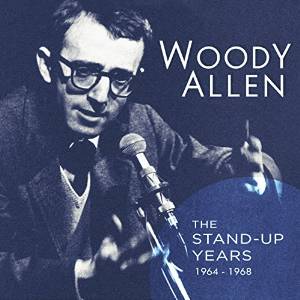
Our favorite things this week include Woody Allen’s “The Stand-Up Years,” “Inherent Vice” by Thomas Pynchon not Paul Thomas Anderson, and “Saga” by Brian K. Vaughan.
Allen’s Stand-Up Roots: On a recent episode of WTF, comedian Marc Maron interviewed director Judd Apatow, who has been outspoken in his disgust at Hollywood’s awkward silence where Bill Cosby’s concerned. Their consensus was that people had a hard time reconciling the guy who made those remarkable comedy albums with the possible serial rapist. Years before , Woody Allen put fans in a similar bind when he began to see his stepdaughter, Soon-Yi Previn, then was later accused of child molestation. The Stand-Up Years is a reminder that before his movies and personal drama, Allen was a great stand-up comic who anticipated alternative comedy by creating a persona-based point of view, one that would become the basis of Allen’s comedy legend.
The recordings come from 1964 to 1968, and they present Allen as the quintessential New York, neurotic Jew—one with an intellectual streak that could manifest itself in the domesticated surrealism of a joke that includes a character named Guy de Maupassant Rabinowitz. The collection’s a window into another comic world, one that was barely recognized as a distinct entertainment form, much less an overcrowded one. Allen was a master craftsman whose jokes were immaculately set up and unpredictably paid off. You can understand him moving on to movies because if The Stand-Up Years is any indication, stand-up comedy seems to have come too easily to him.
Some jokes have dated badly as some pop culture punchlines of the day require a Google search today, while Allen’s versions of my-wife-is-so-fat jokes that feel like part of another world. Those punchlines come with easy exaggeration; but he could also effectively land that kind of joke with something closer to his wheelhouse. In another joke he mentions running into his ex-wife in Los Angeles. “I didn’t recognize her with her wrists closed.” (Alex Rawls)
Woody Allen Stand Up Comic 1964 1968 23 The Police
I have spent alot of time talking about Woody Allen films on this blog and looking at his worldview. He has a hopeless, meaningless, nihilistic worldview that believes we are going to turn to dust and there is no afterlife. Even though he has this view he has taken the opportunity to look at the weaknesses of his own secular view. I salute him for doing that. That is why I have returned to his work over and over and presented my own Christian worldview as an alternative.
-INCLUDES ALL THREE LIVE STAND-UP ALBUMS RECORDED BETWEEN 1964-1968
-REMASTERED AND AVAILABLE ON CD AND DIGITALLY
-BONUS MATERIAL INCLUDES: AUDIENCE Q&A AND OVER 20 MINUTES OF AUDIO EXCERPTS FROM WOODY ALLEN: A DOCUMENTARY
____ Woody Allen’s past movies and the subject of the Meaning of Life examined!!! Out of the Past: Woody Allen, Nostalgia, the Meaning of Life, and Radio Days Kyle Turner Jul 25, 2014 Film, Twilight Time 1 Comment “I firmly believe, and I don’t say this as a criticism, that life is meaningless.” – Woody […]
Woody Allen Should Have Quoted Pascal: “Magic in the Moonlight” January 7, 2015 by Roger E. Olson 9 Comments Woody Allen Should Have Quoted Pascal: “Magic in the Moonlight” I am no Roger Ebert and don’t watch that many movies, but in my opinion, for what it’s worth, Woody Allen’s 2014 film “Magic in […]
______________ If anyone has read my blog for any length of time they know that I am the biggest Woody Allen fan of all time. No one except maybe Bergman has attacked the big questions in life as well as Woody Allen. Furthermore, Francis Schaeffer is my favorite Christian Philosopher and he spent a lot […]
___________ Woody Allen to make first TV series for Amazon Prime ‘I’m not sure where to begin,’ says 79-year-old Oscar-winner about his small screen debut, as streaming TV service seeks to gain march on rivals with exclusive content Comment: in signing Woody Allen, Amazon Prime has delivered a nuclear blast to the competition Woody […]
______________________ Woody Allen: “the whole thing is tragic” July 20, 2012 Mr. Allen, do you truly believe that happiness in life is impossible? This is my perspective and has always been my perspective on life. I have a very grim, pessimistic view of it. I always have since I was a little boy; it hasn’t […]
______________ Dr. Jack Graham Challenges Agnostic Woody Allen’s ‘Hopeless State of Mind’ BY NICOLA MENZIE , CHRISTIAN POST REPORTER August 23, 2013|4:51 pm Prolific Hollywood filmmaker and religious skeptic Woody Allen maintains in a recent interview that human life on earth is “just an accident” filled with “silly little moments,” and the “best you can […]
________ Woody Allen Should Have Quoted Pascal: “Magic in the Moonlight” January 7, 2015 by Roger E. Olson 9 Comments Woody Allen Should Have Quoted Pascal: “Magic in the Moonlight” I am no Roger Ebert and don’t watch that many movies, but in my opinion, for what it’s worth, Woody Allen’s 2014 film “Magic […]
___________ Woody Allen to make first TV series for Amazon Prime ‘I’m not sure where to begin,’ says 79-year-old Oscar-winner about his small screen debut, as streaming TV service seeks to gain march on rivals with exclusive content Comment: in signing Woody Allen, Amazon Prime has delivered a nuclear blast to the competition Woody Allen […]
If anyone has read my blog for any length of time they know that I am the biggest Woody Allen fan of all time. No one except maybe Bergman has attacked the big questions in life as well as Woody Allen. Furthermore, Francis Schaeffer is my favorite Christian Philosopher and he spent a lot of […]
_______ Woody Allen’s New Film Is Called ‘Irrational Man’ Posted on Friday, January 30th, 2015 by Angie Han 85 SHARES TwitterFacebook Woody Allen‘s latest film finally has a release date and a studio. Irrational Man will be distributed by Sony Pictures Classics, as were Allen’s last six films.Emma Stone, Joaquin Phoenix, Parker Posey, and Jamie […]
Jorge Fick was a student at Black Mountain College and an artist that lived in New York and he lent a suit to the famous poet Dylan Thomas and Thomas died in that suit. Both Susan Weil and Robert Rauschenberg were featured the second post in this series both of them were good friends of the composer John Cage who was featured in my first post in this series.
1948 Buckminster Fuller Architecture Class. The Venetian Blind Dome. Image courtesy of the North Carolina state archives.
Black Mountain College and Its Legacy Loretta Howard Gallery, New York City
September 15 to October 29, 2011
Kudos to the Loretta Howard Gallery in Chelsea for the stunning paintings, photos, films, sound recordings, wire constructions of various kinds and other attention to detail that made their recent show Black Mountain College and Its Legacy more like a museum show than a gallery exhibition. By highlighting one artist at a time with a beautiful photograph from that era and then, whenever possible, pairing one or two early works against a mid-career triumph by that same artist, the exhibition slowly unfolds into a powerful testimonial to the important output of Black Mountain as well as to its times and those who taught and studied there.
What if the 20th century’s best kept secret turned out to be an understated but astounding collection of—literally—many of its most talented and influential men and women, networked loosely together around innovative ideas and bold action in both science and the arts who made history solely by virtue of their coming together against all odds and playfully one-upping each other over the course of a couple of decades in one tiny isolated hamlet? That might be the way you could describe many American institutions of higher learning but it was uniquely manifested in the middle of the Old South from 1933 to 1956 in the North Carolina mountains for an untried operation called Black Mountain College, which could be called a prototype and precursor for many of the alternative colleges of today.
This show begged interesting comparisons, whether it was sorting out famous vs. not-so-famous names, early (1930s) vs. late (1950s) attenders, teachers vs. students, or the visual ordering of the impressive output of the various disciplines on display here: abstract paintings, abstract and portrait (always of the artists) photography, dance, music (or their hybrids) in addition to the published work of both prose and poetry writers. Even science and math played a role inviting us to attempt to extract their influence from the two open floors of stunning art viewable here.
Perhaps it was the intimidating density of what unfolded at Black Mountain College in such a short span that has always given its reputation a reserved, under-the-radar feel, especially when juxtaposed historically against the age of hype and hypertension that immediately followed it, even though BMC is no secret now and never was. In fact, a case could be made that over-stimulation, simulation and simulacra inherited their foundation from the serene and focused “collaboration with materials” and rigorous sensibilities that students such as the young Robert Rauschenberg, Ray Johnson, Cy Twombly, Dorthea Rockburne and many others calmly took away from their unique studies with the array of faculty members led by the émigré Josef Albers, who, with his wife Anni, learned English as he taught the basics of what he inherited from the Bauhaus in Weimar Germany.
A Black Mountain College Museum and Arts Center, dedicated to the institution’s history, is alive and functioning in downtown Asheville, North Carolina, near the spot where the college rented a YMCA student conference center south of the town of Black Mountain for the first eight years of its existence. When the college relocated in 1941, pivoting across the scenic valley to nearby Lake Eden, students were required to participate in the construction of their own campus as part of their education, a practice which continued until its closing in 1956. A number of the original structures are still in use today as a Christian boys’ retreat called Camp Rockmont, who purchased and converted the buildings when financial problems slowly brought the experiment in learning to a slow fizzle. But in hindsight Black Mountain College’s beginnings and the quarter century that that followed within those structures were rock solid and of the utmost importance. Safely tucked away from the rest of the world, it was a liberal arts laboratory that grew out of the progressive education movement founded by John Dewey, thus preferring doing over learning and a focus on students to subject matter.
The unique educational environment became a high-intensity incubator for the American avant garde. The painter and installation artist Rockburne told Robert Mattison the co-curator (with the gallerist Ms. Howard) and the writer of a wonderful catalogue that accompanied this show, that she had never been in a more competitive atmosphere—not even in Manhattan in the notorious period that followed. That daily recipe of intellectual one-upsmanship coupled with an eclectic amalgam of unconventional thinking made some students feel that if something new wasn’t brought to every single class it wasn’t worth bothering to show up. But show up they did and the collaborative result, not the competition, was on view here primarily via abstract painters, the makers of publications, and sculptors, most of whom fit into the sub-category of makers of wire constructions in one way or another.
The abstract painters included students who became today’s superstars; Twombly, Rockburne, Rauschenberg, Kenneth Noland, and Helen Frankenthaler (who only visited, never enrolled). Not household names today but of equal prowess in the era of AbEx were figures like and Robert DeNiro Sr., the father of the actor, Jorge Fick, Joe Fiore and the lovely Pat Passlov, seen at the opening. Two standouts for me among the abstractionists doubling as teachers were Ilya Bolotowsky with a striking 1949 oil reminiscent but not derivative of Mondrian and Emerson Woelffer, whose three canvases from the late 40s and early 50s looked fresh, powerful and confident. Other BMC faculty with predictably wonderful works here were Jack Tworkov, Ted Stamos, Robert Motherwell, Franz Klein, Elaine DeKooning, and of course Bill DeKooning for whom Black Mountain was of monumental importance, as revealed in his current MoMA show. All these teachers appeared at the college because they were giants then, invited by Albers to share their skills with the select population of atttendees.
Albers’s 1937 monochrome, Composure and his Homage to the Square from 1960 represent his many decades of working within strict color rules that he lived by as well as taught, but to me the most interesting Albers piece were a set of utilitarian nested tables from the mid-‘20s in orange, blue, yellow and green just as his wife Anni, a fabric artist and important force at the college, helped dominate the first room of the show with a large weaving that also spoke of utility, so important to the Bauhaus, as well as art.
Nearby, well-represented between the Albers’s and John Cage, was a wide array of works by Rauschenberg, including his own fabric piece:AWedding Dress from 1950, in addition to one of his important black paintings, a series of photographs and others. His wife at that time, Sue Weil, was represented upstairs with a striking recent installation of acrylic on paper and a piece in torn paper from 1949 with word fragments—know, rock, trembling, whispers—whispering intriguingly. Weil and her son with Rauschenberg, Christopher, were both seen at the lively exhibition opening, a BMC reunion the likes of which have not been seen in New York for a while.
The work of Ray Johnson, another favorite son-student of the school, with four collages in the show, including one from the ‘70s that featured a 1948 postmarked envelope to a friend at the college, did not fit neatly into either the painter or abstractionist category. Though he worked as an abstractionist into the early 1950s and a few works form this period survive, they were not seen here. Likewise, teacher Jacob Lawrence’s powerful war pictures used images of soldiers, not abstraction, to make his statements. The African-American Lawrence had been invited as a faculty member to BMC but, for fear it would lead to trouble with the locals, he stayed safely tucked away on the idyllic campus with its history on the cutting edge of racial integration. Thanks to the German musicologist Edward Lowinsky, a faculty member, several black students were invited and never segregated or treated differently. In April 1947, the Freedom Riders, traversing the country, stopped there overnight. It is also worth noting that Ruth Asawa, a Japanese-American with a piece here, had been in an internment camp only months before her enrollment at the college.
Asawa, who, like Johnson, adored Albers’ teachings, represented the many weavers of wire in this exhibition with a small but elegant symmetric brass and iron form hanging from the ceiling. The other “wired” artists were the inventive Bucky Fuller, his protégé-to-be Kenneth Snelson, and drawings by Richard Lippold, a master of the form who arrived to teach at Black Mountain in a long hearse with his family in tow. Snelson’s 1948 photo of a spider web echoed the linear and math influence on all of these artists. (Sculptors not working with wire included John Chamberlain and Leo Amino.)
The gifted Hazel Larsen Archer provided many of the remarkable and historic photographs of the artists, both working and as portraiture, that unified the show. Archer began as a student but joined the faculty after photography was added to the curriculum in the late ‘40s. But for me, the most powerful pieces in the show were teacher Aaron Siskind’s pioneering 1951 silver print images (and others from as “late” as ‘57 and ’61) of peeling posters of close up letterforms revealing words like “in” and “and” or legs literally ripped from their context and artfully fused into his pioneering compositions North Carolina 30 and Kentucky 5. Harry Callahan and Arthur Siegel also contributed to the important wall of black and white photo imagery with the latter’s 1949 darkroom work looking like (Man) Rayograms or Lazslow Moholy Nagy’s Photograms. Finally, Rauschenberg’s seven-photo portfolio from 1951, were beautifully shot, developed and displayed as part of his work, not the other photographers.
Much has been written of Rauschenberg’s collaborations with John Cage and Merce Cunningham in the decades that followed but this exhibition highlights experientially the arrival of Cage and Cunningham at the campus and their earliest dances together, both literally and figuratively. Beautiful films of Cunningham in motion, Septet (1953), Antic Meet (1958) and Story (1963) and audio recordings of Cage’s Williams Mix and other recordings and objects took us back before the reverse fork in the road when their works began to intertwine, bringing the rest of the show’s 2- and 3-dimensional works to life in the front gallery.
Similarly, photos of Buckminster Fuller building his first two geodesic domes with the help of students at the school (only the second of which was successful) provided jaw-dropping multi-media encounters with the information and its presentation in the rear first floor gallery. Need one say more about big beginnings that occurred at the school than that the recently deceased Arthur Penn directed Fuller, Cunningham and Elaine DeKooning in Eric Satie’s play Ruse of Medusa featuring music by Cage, décor by Willem DeKooning and props by Ray Johnson and Asawa, among others, during Fuller’s 1948 stay on the campus?
Albers Teaching. Courtesy of the North Carolina state archives.
Though, like that tidbit of information, it was not the prime focus of this exhibition, thankfully a large shallow vitrine on the second floor was filled with about fifty different published works that were anything but shallow, giving a small taste of the literary output of the Black Mountain poetic “school”. The 6’8” Charles Olson, who towered over the group as one its leaders in the later years of the college, had work here as did Robert Creely, Dawson Fielding, Joel Oppenheimer, MC Richards and Jonathan Williams. Other highlights of this showcase included a first edition of the Caesar’s Gate Poems by Robert Duncan, one of ten that were printed with an original collage by Jess (Collins), Duncan’s partner, published in1955 when Jess was a visitor to BMC, and a single, aging, unpublished sheet, Roster of faculties of Black Mountain College, regular and guest, since its founding, 1933, presumably rescued from the archives of the college and as thorough as it is historic. Issues of the Black Mountain Review, which appeared from 1951 to 1954, edited first by Richards then by Creely, were, of course, visible, on loan from the collection of James Jaffe. Every piece here was screaming out to be handled and perused. I was particularly sorry I could not get at Broadside Number 1, for example, by Olson and illustrated by Nicola Cernovich, a BMC student and later a lighting designer who, like Ray Johnson, was later an important influence on Billy Name, the creator of the ambiance in Andy Warhol’s Factory.
Thus, this exhibition lay down the tendrils of influence, both well known and unknown, over the high culture of the 20th Century. Visible in this show but between the lines, like so much of the college’s influence, was the unheralded importance of Black Mountain as one of the first stops on Eastern religion’s trip to the United States. Many of the founding members, including Albers, were influenced by the basic course of Johannes Itten at the Bahaus in Weimar Germany, which required composition and color education for all students. The eccentric Itten taught there until 1923 when he left because Walter Gropius no longer approved of his preparatory meditation exercises and the influence of yoga, Persian Mazdaism and other Eastern influence that inspired him to shave his head and wear monk’s robes. Albers was exposed as a student himself to the man and his teachings and went on to craft a similar foundation class at BMC. A 1948 Hazel Larson photograph shows Albers teaching it with a yin-yang form leaning on the chalkboard behind him. We also know Albers’ Address on the Beginning of a New Year on September 12, 1939, quoted Lao Tsu and the Tao Te Ching, referring to the subtle ways of leadership. Noting that students became irritable when they had to do page after page of straight lines, Asawa once volunteered that Albers’ drawing class was instead “very much like calligraphy.”
There were more overt examples of Eastern influence in those early days. In the Summer session of 1949, Nataraj Vashi and his wife Pia-Veena taught Hindu dance and lectured on Hindu philosophy. And the closest thing to a formal course John Cage ever taught at the college, despite three sessions spent there, was a regular late night reading of the complete Huang Po’s Doctrine of Universal Mind which had just been published in English. Between a third and a half of the 70 students in the community at that summer session attended.
In the late thirties Cage heard a lecture by Nancy Wilson Ross on Dada and Zen then had the good fortune to attend Daisetz Suzuki’s classes on Zen Buddhism at Columbia University a decade later. By the summer of 1952, Cage brought those influences to Black Mountain with his Theater Piece #1, now acknowledged as the first Happening and a source for early performance art, created over lunch and performed later the same day, in which Cage, dressed in a black suit, climbed a ladder and talked for two hours about “the relation of music to Zen Buddhism,” while a movie was shown, babies cried and dogs barked. Olson and Richards also read from ladders that day, while Rauschenberg played old Edith Piaf records from a hand-wound gramophone and Cunningham danced. Later, participants turned buckets of water onto the audience members who were seated in 4 inward facing triangles.
Josef Albers wrote in Progressive Education in 1935, “we want a student who sees art as neither a beauty shop nor imitation of nature, as more than embellishment and entertainment; but as a spiritual documentation of life.” At Black Mountain College and Its Legacy at Loretta Howard Gallery, we saw that idea in play as a profound but subtle influence on the culture of today.
The Studies Bulding on Lake Eden. Courtesy of the North Carolina state archives.
Mark Bloch is a writer, performer, videographer and multi-media artist living in Manahattan. In 1978, this native Ohioan founded the Post(al) Art Network a.k.a. PAN. NYU’s Downtown Collection now houses an archive of many of Bloch’s papers including a vast collection of mail art and related ephemera. For three decades Bloch has done performance art in the USA and internationally. In addition to his work as a writer and fine artist, he has also worked as a graphic designer for ABCNews.com, The New York Times, Rolling Stone and elsewhere. He can be reached at bloch.mark@gmail.com and PO Box 1500NYC10009.
Jorge Fick (1932–2004) was an Americanpainter who is known for his “Pod” series of large-scale oil paintings “depicting semi-abstract symbols of growth and regeneration.”[1] Pod paintings blend abstraction, cartoons and Pop art. Fick was influenced by eastern religions such as Zen Buddhism, the culture of Pueblo peoples, and new visual imagery.[2]
Fick was born and raised in Detroit, MI, to strict Roman Catholic parents who sent him to Cass Technical School, a public trade school in the inner city of Detroit, from 1947 through 1950, where he learned excellent manual skills and graphic design, and gained access to the art collection of the Detroit Institute of Arts.[3] He spent 1950 and 1951 at Society of Arts and Crafts Detroit, MI. Later that year, he attended Mexican Art School in Guadalajara, Mexico.[4] After art school, he changed his first name from George to Jorge in homage to his Hispanic culture.[5]
After graduation in 1955, he moved to New York City to share a studio with Franz Kline, his painting mentor from college. Kline was Fick’s “outsider examiner” at the college and was said to have introduced Fick to Abstract expressionism. While still at school in 1953, Kline invited Fick to exhibit at the legendary Stable Gallery.[9] Fick was fully immersed in the art and literature scene of the 1950s. In 1953 he lent a suit to writer and poet Dylan Thomas, whom was a fellow guest of Fick’s at Hotel Chelsea.[10]
In 1958, Fick moved to Santa Fe, NM and helped foster an art community in the South West. In 1962, he shared a studio with the sculptor John Chamberlain.[11] Throughout the 1960s, Fick printed many environmental photographs by Eliot Porter. Fick practiced color theory, a skill he honed doing dye transfers for Porter, and as a color consultant to the renowned designer, Alexander Girard, with whom, he collaborated on his famed project for Braniff Airlines.[12]
Fick and his wife Cynthia Homire, a fellow student from Black Mountain College, opened The Fickery on Canyon Road, Sante Fe, NM. From 1972 until 1983 they sold utilitarian stoneware made by Cynthia and glazed by Fick, until he “retired” to concentrate on painting in La Cienega.[13]
Fick showed regularly throughout the 1960s, winning numerous prizes, however withdrew from the Public Relations push of commercial art market of the 1970s. He remained in New Mexico until his death in 2004.[14]
Exhibit:
Jorge Fick: Journey of a Restless Mind
January 12, 2007 – May 12, 2007
Black Mountain College Museum + Arts Center
Opening Reception: Friday, January 12, 6:00 – 8:00 p.m.
Admission: Free for BMCM+AC members / $3 non-members
The Black Mountain College Museum + Arts Center is pleased to announce its upcoming exhibition: Jorge Fick: Journey of a Restless Mind, showcasing the work of one of Black Mountain College’s most under-recognized artists. The show includes some of the artist’s paintings from his time at Black Mountain College along with more recent paintings and works on paper, particularly work from his “Pod Series”. The exhibition opens on Friday, January 12, 2007 from 6:00 – 8:00 p.m.
Jorge Fick (1932-2004) was a painter, a subtle poet and an artistic environmentalist on a spiritual journey. He was one of the few students to officially graduate from legendary Black Mountain College, which he did in 1955. Abstract Expressionist painter Franz Kline was his “outside examiner”. After graduation, Fick moved from place to place restlessly finding inspiration in the people, expansive colorful landscapes, and intangible energies he encountered along the way. He spent time in New York, mingling with painters such as Kline, Jackson Pollock, Willem de Kooning, Philip Guston and others who constitute a who’s who of the 1950s New York art scene. Eventually settling in New Mexico, Fick became one of the Taos Moderns, a group of artists in the Taos area who embraced Modernism in their work.
Fick first began his meditations on life’s deeper meanings at the young age of 14 in a deserted graveyard way out in the middle of nowhere. “I used to go and sit there for an hour on Sunday morning. It was the only privacy, the only contemplative time I had….that’s when it all began.” In a 1997 interview, Fick described the imagery of the unconscious mind or the soul or the heart as the energy of his work: “The paintings I am doing now look like paintings of things, when they are really paintings of energy. It’s the same energy nature gives us, and it’s the metaphor of the way nature gives it to us that’s in the painting. What I’m trying to do is heal a soul of the culture by these little ironic paintings.” He encountered Zen Buddhism at Black Mountain College in the 1950s where he, like so many others, found a place that encouraged an adventurous spirit of exploration and experimentation. It wasn’t until years later, after moving from California to New York to New Mexico, that he understood what he had read, learning to leave things alone and let things happen. This awakening affected much of his work.
In his “Pod Series” paintings and works on paper Fick investigates the expanded visual articulation of the seedpod form, exploring ideas about growth, expansion and the generative process. The works are boldly abstract and often vibrantly colorful. Many of these striking works will be for sale, offering a rare opportunity to purchase work by an artist associated with Black Mountain College.
The Longest Ride Official Trailer #1 (2015) – Britt Robertson Movie HD
Starring: Scott Eastwood, Britt
Robertson, Jack Huston, Oona
Chaplin, Alan Alda, Melissa
Benoist, Floyd Herrington
Genre: Romance
Audience: Older teenagers and adults
Rating: PG-13
Runtime: 139 minutes
Distributor: 20th Century Fox/News Corp.
Director: George Tillman, Jr.
Executive Producer: Michael Inperato Stabile,
Robert Teitel, Tracey Nyberg
Producer: Marty Bowen, Wyck Godfrey,
Nicholas Sparks, Theresa Park
Writer: Craig Bolotin
Address Comments To:
Rupert Murdoch, Chairman/CEO, and Chase Carey, President/COO, News Corp.
Jim Gianopulos, Chairman/CEO, Fox Filmed Entertainment
20th Century Fox Film Corp. (Fox Searchlight Pictures/Fox 2000/Fox Atomic/FoxFaith)
10201 West Pico Blvd.
Los Angeles, CA 90035
Phone: (310) 369-1000; Website: http://www.fox.com
Content:
(B, RoRo, FR, LL, V, SS, NN, AA, M) Light moral worldview supporting marriage, commitment and kindness, including a scene set in a Jewish synagogue where people are clearly praying, undercut by some Romantic, lawless notions of love, art and “breaking the rules” but with a positive, ultimately uplifting ending; seven obscenities (“d” and “s” words and an SOB), two strong profanities (a GD and a Use of Jesus) and five or six light exclamatory profanities; some intense rodeo scenes with bull riding, including one where man knocked unconscious in the ring, and bull knocks into him, and one where bull flings man against the boards, plus man rescued from fiery car that has crashed off the side of the road; partially depicted fornication, implied fornication, passionate kissing, couple nude in shower kiss passionately, and a scene that may or may not suggest fornication; partially but seemingly obscured upper female nudity, implied nudity, upper male nudity, partial rear male nudity when man’s putting on his clothes, couple in their underwear jump into a pond; alcohol use and side female character is drunk and sick in one scene; no smoking or drugs; and, man makes a rude joke deriding modern art in gallery, man risks his life by continuing his rodeo career, man indicates an infection from a war injury has rendered him sterile, wife eventually leaves husband for a bit after arguing with him because he can’t have children (but she soon returns, and they embrace).
Summary:
THE LONGEST RIDE is a romance about how the lives of two couples, one from the past and one from the present, interact with one another, having an inspiring, unexpected effect on the present-day couple. THE LONGEST RIDE is one of the best, most powerful and uplifting adaptations of a Nicholas Sparks romance novel, but its moral worldview extolling marriage and commitment contains some false thinking about love and art, plus some foul language.
Review:
THE LONGEST RIDE may be the best adaptation of a Nicholas Sparks bestselling romance. It will certainly give THE NOTEBOOK a run for its money in popularity. The story has some strong emotionally powerful moments that lift the movie past the run-of-the-mill “chick flick,” including an uplifting ending with a great twist. However, the story sags a little in the middle, mostly because of some steamy, immoral bedroom scenes that add absolutely nothing to the story.The movie opens at a rodeo, with the male hero, Luke, severely injuring himself while riding Rango, the toughest bull on the rodeo circuit. Cut to one year later at Wake Forest University in North Carolina, where Marcia encourages her sorority sister, Sophia, to come with her to the rodeo. Since she’s studying, Sophia is reluctant, but Marcia points out that Sofia is about to graduate with excellent grades, so she can afford to take one night off. Besides, Marcia says, the rodeo cowboys are really “hot.”At the rodeo, a very nervous Luke is about to take his first bull ride since his rode with Rango sent him to the hospital. He manages to get through the ride successfully and ends up hatless in the rodeo ring right next to Sophia and Marcia sitting in the front rows. Sophia tries to give Luke his hat, but he says, “Keep it!”At the rodeo dance bar, Sophia and Luke run into each other in the parking lot. Luke gets her phone number, but then they have to part because Marcia has gotten sick from drinking too much, and Sophia decides she should take Marcia home.When she graduates, Sophia is leaving for New York City for an unpaid, summer art internship with a well-known gallery owner. So, she’s reluctant to go out with a North Carolina guy like Luke, but she agrees to a special dinner date. On the date, Sophia and Luke clearly have some chemistry going. Driving back in the rain, however, Luke spies a car run off the road. Luke and Sophia rush to the burning car, where they save an elderly man named Ira and a box of letters Ira wrote to his late wife, Ruth.Sophia stays at the hospital to wait to see if Ira’s okay. While she’s waiting, she starts reading one of the first letters Ira wrote to Ruth, dated 1940, the year when Ruth and her parents had arrived in North Carolina from Vienna, then controlled by Hitler’s Germany. Flash back to Ira and Ruth’s first meeting. Of course, Ira is immediately smitten with Ruth and can’t take his eyes off her during the Saturday visit to their local synagogue. However, Ira is too shy, and Ruth has to make the first move.Back in the present day, Ira survives his brush with death, but he’s pushing 90 and is preparing himself to die. Sophia mentions she read his beautiful letter to Ruth. Ira says his eyes are no longer good enough to read them anymore, so Sophia offers to start reading them to him.Sophia begins making regular visits to Ira to read aloud his letters to Ruth. Meanwhile, her romance with Luke starts taking off. However, both her romance with Luke and Ira’s relationship with Ruth hit some snags. So, the question is, what happened to Ira and Ruth’s romance? And, what will happen to Sophia and Luke’s?Despite having two stories at the same time, THE LONGEST RIDE mostly does an excellent job weaving them together.Admittedly, the romance between Ira and Ruth is the more emotionally and cinematically captivating one, with arguably better performances by Jack Huston and Oona Chaplin as the young Ira and Ruth. However, Scott Eastwood and Britt Robertson give appealing performances as Luke and Sophia. Also, the rodeo scenes with Luke or Luke and Sophia together are pretty good. The filmmakers have added some fine (albeit predictable) jeopardy with the rodeo scenes, where Luke truly seems in danger of killing himself, especially when riding the fearsome Rango. There’s also an excellent scene on a World War II battleground, where Ira suffers a war injury that will have tragic consequences for Ruth and him, including their marriage.Finally, Alan Alda as the elderly Ira provides the necessary glue that links Ira’s story with Luke and Sophia’s. Sometimes, Alda can be annoying, but he gives a touching performance in THE LONGEST RIDE. In fact, it’s one of his best performances. It leads to a very nice plot twist at the end, which wraps up the whole movie in a great way that should leave most or many viewers with a positive mood as they leave the theater.Besides some brief foul language, the real problem with THE LONGEST RIDE doesn’t lie with the story, its structure, the acting, the editing, the lighting, the camerawork, or even the movie’s genre, which is schmaltzy romance. The real problem occurs in the middle, when the movie presents some passionate, mostly implied nude scenes between Luke and Sophia. These sensual, partially depicted sex scenes occur in the middle and don’t add anything to the story or the acting. In fact, if they were deleted or greatly shortened, they would make the movie a better one artistically, not just morally.These sex scenes also have something to do with this movie’s philosophical, worldview problems.THE LONGEST RIDE has a moral worldview in that it promotes true love leading to some kind of marital commitment. However, its moral worldview is greatly diminished by elements of Romanticism. For example, at one point in the movie, Ruth expresses her love for modern, mostly abstract, art, a love that neither Ira (nor Luke in his scenes with Sophia) share. In fact, in one scene, Luke jokes to Sophia’s future boss for her summer internship that the art in her gallery is mostly “BS.” Ruth, however, tells Ira that she loves modern abstract art, particularly Kandinsky, one of the first abstract painters, because Kandinsky (like other abstract artists) broke all the rules.* Of course, extramarital sex also breaks the rules, the rules that God has set down in His Word, the Bible.Here, it may be interesting to note that the Romanticist may love to “break the rules,” especially the rules God has established. However, they often seem to get extremely upset whenever someone opposes them or questions their “rebellion,” especially when there’s an artistic, moral or political component to their rebellion.Ultimately, therefore, THE LONGEST RIDE’s Romantic notions of love and art, and its lewd content, warrant extreme caution. The movie isn’t totally worthless, however. For the most part, it’s very well done and has its powerful and even morally uplifting moments. Happily, marriage is extolled at some points, and both couples find happiness being committed to one another, but the movie certainly could have been even stronger in this arena. Also, there is one scene set in synagogue, but otherwise, THE LONGEST RIDE has no positive references to religion or the Bible. So, here too, the movie could have been stronger. All people, whether Jew or Gentile, should focus on God and His Word, through Jesus Christ, not only in their marriage and family life, but also in all other areas of their multi-faceted lives.* Editor’s Note: According to our research, Kandinsky was influenced by the occult, heretical teachings of theosophy and invented a theory of spirituality in artistic expression that seems more emotional, vague and confused than intellectually profound (leaving aside its possible adherence to or rebellion against biblical theology). Kandinsky also felt that some kind of a “New Age” was coming. The socialist atheist regime in the Soviet Union in the 1920s, the socialist movement in Europe in the 1930s and the Nazi movement all rejected Kandinsky’s art, though latter-day socialists and even Nazis may now look at it more positively. Depending on the person, some of his paintings do indeed seem quite colorful, appealing and artistically brilliant, while others seem kind of silly, confused or stupid.
In Brief:
THE LONGEST RIDE tells the story of a rodeo bull-rider named Luke and an art student finishing college named Sophia. On their first date, Luke and Sophia save the life of an elderly, dying man, Ira. Because of Ira’s failing eyesight, Sophia begins reading Ira’s letters to his late wife, Ruth. What happened to Ira and Ruth’s marriage? What will happen to Luke and Sophia’s romance? Will Luke, who suffered an earlier rodeo injury nearly ending his life, survive his brushes with death in the rodeo?For the most part, THE LONGEST RIDE is well constructed, emotionally powerful and well acted, especially by Jack Huston and Oona Chaplin as the young Ira and Ruth. Also, the rodeo scenes are exciting, and the movie has a nice, uplifting ending. The movie sags in the middle, especially when Luke and Sophia take off their clothes. Overall, it has a light moral worldview extolling marriage, commitment and kindness, but it also contains nods to breaking the rules in love and art. THE LONGEST RIDE also has some foul language. So, MOVIEGUIDE® advises extreme caution.
The suit that Dylan Thomas was wearing in the days before his death in New York in 1953. Dylan was on his fourth lecture tour of America at the time. Jorge Fick, the owner of the suit, was an American abstract painter who was storing his clothes in the Chelsea Hotel, the same hotel in which Dylan was staying. Dylan is said to have borrowed the suit because, characteristically, he had run out of clean clothes.
Jorge was sharing an apartment with Paul Kagol, one of a group of poetry students. Jorge was working on the subway at the time. It was Paul who actually loaned the suit to Thomas.
Jorge Fick and his friends in New York in the early fifties were all students at the famous Black Mountain College where they were studying poetry under Charles Olsen. Jorge was a painter who was also very interested in poetry. The painters all congregated at the Cedar Street Bar and the poets at Dylan’s favourite pub, the White Horse Tavern, but the groups often moved between the two pubs.
Over fifty years later, Jorge Fick’s widow, Judy Perlman, contacted the Dylan Thomas Centre and kindly offered the suit as a donation to the Centre’s Dylan Thomas Collection.
Dylan Thomas (1 of 3) B&W Film with Richard Burton
Published on Jun 1, 2012
First part of the marvelous film on Welsh poet Dylan Thomas featuring Richard Burton.
In this interview we get a first hand description of one of the world’s greatest poets ever – from his best friend’s wife. Dylan Thomas should have been best man in the wedding of Gwen and Vernon Watkins – but he overslept. On the journey in Dylan’s footsteps, our guide the poet Ian Griffiths introduces us to this remarkable lady.
She met her husband during the 2. world war at Bletchley Park, where British Intelligence gathered bright people from all over Britain to solve Hitler’s war codes. Vernon Watkins, Dylan’s best friend, was both poet and banker. A banker who sometimes forgot to close the bank when he went home in the evening.
Se the rest of the documentary film at Et Årsverk 2013, 14. of December. Introduced by poet Ian Griffiths and Anne Haden who restored Dylan’s childhood home in Swansea.
Kane on Friday – Leftover Wife – Interview With Widow of Dylan Thomas
Published on May 28, 2014
Broadcaster Vincent Kane interviews Thomas’ widow Caitlin.
originally broadcast in 1977,
Caitlin Thomas (8 December 1913 — 31 July 1994), née Macnamara, was the wife of the poet and writer Dylan Thomas
(bad audio) Dylan Thomas -: Rock and Roll Poet – Documentary
Arena – Dylan Thomas From Grave to Cradle (BBC 2003) – Part 1
Uploaded on Sep 5, 2009
A biography/documentary on Dylan Thomas
Richard Burton reads ‘Elegy’ (for his father) by Dylan Thomas
Uploaded on Feb 18, 2010
This poem was left unfinished at Dylan Thomas’ death. The first seventeen lines were untouched, but the rest was reconstructed/edited from Thomas’ manuscript by his friend Vernon Watkins.
Francis Schaeffer wrote in his book THE GOD WHO IS THERE:
When we review modern poetry as part of our own general culture, we find the same tendency to despair. Near the time of his death, Dylan Thomas (1914-1953) wrote a poem called ELEGY. He did not actually put it together himself, so we cannot be too sure of the exact order of the stanzas. But the way it is given before is probably the right order. The poem is by a fellow human being of our generation. He is not an insect on the head of a pin, but shares the same flesh and blood as we do, a man in real despair.
Dylan Thomas: Elegy (English)
Too proud to die; broken and blind he died
The darkest way, and did not turn away,
A cold kind man brave in his narrow pride

On that darkest day.  Oh, forever may
He lie lightly, at last, on the last, crossed
Hill, under the grass, in love, and there grow

Young among the long flocks, and never lie lost
Or still all the numberless days of his death, though
Above all he longed for his mother's breast

Which was rest and dust, and in the kind ground
The darkest justice of death, blind and unblessed.
Let him find no rest but be fathered and found,

I prayed in the crouching room, by his blind bed,
In the muted house, one minute before
Noon, and night, and light.  The rivers of the dead

Veined his poor hand I held, and I saw
Through his unseeing eyes to the roots of the sea.
(An old tormented man three-quarters blind,

I am not too proud to cry that He and he
Will never never go out of my mind.
All his bones crying, and poor in all but pain,

Being innocent, he dreaded that he died
Hating his God, but what he was was plain:
An old kind man brave in his burning pride.

The sticks of the house were his; his books he owned.
Even as a baby he had never cried;
Nor did he now, save to his secret wound.

Out of his eyes I saw the last light glide.
Here among the light of the lording sky
An old blind man is with me where I go

Walking in the meadows of his son's eye
On whom a world of ills came down like snow.
He cried as he died, fearing at last the spheres'

Last sound, the world going out without a breath:
Too proud to cry, too frail to check the tears,
And caught between two nights, blindness and death.

O deepest wound of all that he should die
On that darkest day.  Oh, he could hide
The tears out of his eyes, too proud to cry.
_____________
In the Festival Hall in London, in one of the higher galleries in the rear corridor, there is a bronze of Dylan Thomas. Anyone who can look at it without compassion is dead. There he faces you with a cigarette at the side of his mouth, the very cigarette hung in despair. It is not good enough to take a man like this or any of the others and smash them as though we have no responsibility for them. This is sensitivity crying out in darkness. But it is not mere emotion; the problem is not on this level at all. These men were not producing an art for art’s sake, or emotion for emotion’s sake. These things are a strong message coming out of their own worldview.
These are many means for killing men, as men, today. They all operate in the same direction: no truth, no morality. You do not have to go to art galleries or listen to the more sophisticated music to be influenced by their message. The common media of cinema and television will do it effectively for you.
MODERN CINEMA, THE MASS MEDIA AND THE BEATLES
We usually divide cinema and television programs into two classes–good and bad. The term “good” as used here means “technically good” and does not refer to morals. The “good” pictures are the serious ones, the artistic ones, the ones with good shots. The “bad” are simply escapist, romantic, only for entertainment. But if we examine them with care, we notice them with care, we notice that the “good” pictures are actually the worst pictures. The escapist film may be horrible in its own way, but the so-called “good” pictures have almost all been developed by men holding the modern philosophy of no certain truth and no certain distinction between right and wrong. This does not imply they have ceased to be men of integrity, but it does mean that the films they produce are tools for teaching their beliefs. Three outstanding modern film producers are Fellini and Antonioni of Italy, and Bergman of Sweden. Of these three producers, Bergman has given the clearest expression perhaps of the contemporary despair. He has said that he deliberately developed the flow of his pictures, that is, the whole body of his movies rather than just individual films, in order to teach existentialism.
His existentialist films led up to but do not include the film THE SILENCE. This film was a statement of utter nihilism. Man, in this picture, did not even have the hope of authenticating himself by an act of the will. THE SILENCE was a series of snapshots with immoral and pornographic themes. The camera just took them without any comment. “Click, click, click, cut!” That is all there is. Life is like that: unrelated, having no meaning as well as no morals.
In passing, it should be noted that Bergman’s presentation in THE SILENCE was related to the “Black Writers” (nihilistic writers), the antistatement novel which was best shown perhaps in Capote’s IN COLD BLOOD. These, too, were just a series of snapshots without any comment as to meaning or morals.
Such writers and directors have had a large impact upon the mass media, and so the force of the monolithic world-view of our age presses in on every side.
The 1960’s was the time of many powerful philosophic films. The posters advertising Antonioni’s BLOW-UP in the London Underground were inescapable as they told the message of that film: “Murder without guilt;love without meaning.” The mass of people may not enter an art museum, may never read a serious book. If you were to explain the drift of modern thought to them, they might not be able to understand it; but this does not mean that they are not influenced by the things they see and hear–including the cinema and what is considered “good,” nonescapist television.
No great illustration could be found of the way these concepts were carried to the masses than “pop” music and especially the work of the BEATLES. The Beatles moved through several stages, including the concept of the drug and psychedelic approach. The psychedelic began with their records REVOLVER, STRAWBERRY FIELDS FOREVER, AND PENNY LANE. This was developed with great expertness in their record SERGEANT PEPPER’S LONELY HEARTS CLUB BAND in which psychedelic music, with open statements concering drugtaking, was knowingly presented as a religious answer. The religious form was the same vague panthemism which predominates much of the new mystical thought today. One indeed does not have to understand in a clear way the modern monolithic thought in order to be infiltrated by it. SERGEANT PEPPER’S LONELY HEARTS CLUB BAND was an ideal example of the manipulating power of the new forms of “total art.” This concept of total art increases the infiltrating power of the message involved. This is used in the Theatre of the Absurd, the Marshall McLuhan type of television program, the new cinema and the new dance with someone like Merce Cunningham. The Beatles used this in SERGEANT PEPPER’S LONELY HEARTS CLUB BAND by making the whole record one unit so the whole is to be listened to as a unit and makes one thrust, rather than the songs being only something individually. In this record the words, the syntax, the music, and the unity of the way the individual songs were arranged form a unity of infiltration.
Those were the days of the ferment of the 1960’s. Two things must be said about their results in the 1980’s. First, we do not understand the 1980’s if we do not understand that our culture went through these conscious wrestlings and expressions of the 1960’s. Second, most people do not understandably think of all this now, but the results are very much still at work in our culture.
Our culture is largely marked by relativism and ultimate meaninglessness, and when many in the 1960’s “join the system” they do so because they have nothing worth fighting for. For most, that was ended by the 1970’s. It is significant that when SERGEANT PEPPER’S LONELY HEARTS CLUB BAND wa made a Broadway play (1974, Beacon Theater) it no longer had the ferment; it was “camp” and nostalia–a museum piece of a bygone time.
_______________
The Cinema gives, if anything, an even more powerful presentation of the new framework of thinking. It pictures life as a tragic joke, with no exit for man. As Francis Schaeffer has written: “The gifted cinema producers of today—Bergman, Fellini, Antonini, Slesinger, the avant-garde cinema men in Paris, or the Double Neos in Italy, all have basically the same message.” The message is that man is trapped in a meaningless void. He is thrown up by chance in a universe without meaning. In some of the earlier efforts by some of these film makers, there was an attempt to show that man could try to create his own meaning. For example, you can escape the void in which you are trapped by going into the world of dreams. But the trouble with this is that you then have no way to prove it. To use the terms of Schaeffer, you have either content without meaning (the real world) or meaning without content (the dream world). So, again, there is no genuine gain in this attempt by man to create meaning. This was brilliantly shown in the film entitled Juliet of the Spirits.
This is the way Schaeffer puts it: “A student in Manchester [England] told me that he was going to see Juliet of the Spirits for the third time to try to work out what was real and what was fantasy in the film. I had not seen it then but I saw it later in a small art theatre in London. Had I seen it before I would have told him not to bother. One could go ten thousand times and never figure it out. It is deliberately made to prevent the viewer from distinguishing between objective reality and fantasy. There are no categories. One does not know what is real, or illusion, or psychological or insanity.” Another film that may be compared with this is Belle de Jour. As another commentator describes it: “Most audiences will not find anything visually shocking about Belle de Jour. They will find instead a cumulative mystery: What is really happening and what is not? The film continues—switching back and forth between Severine’s real and fantasy worlds so smoothly that after a while it becomes impossible to say which is which. There is no way of knowing—and this seems to be the point of the film with which Bunuel says he is winding up his 40 year career. Fantasy, he seems to be saying, is nothing but the human dimension of reality that makes life tolerable, and sometimes even fun.” Another way of expressing the new framework of thought is seen in the film entitled The Silence, by Swedish director Ingmar Bergman. It is just a series of snapshots with immoral and pornographic themes. The camera just clicks away, as it were, recording a series of unrelated and non-moral events. The message is that human life is nothing more than this: a series of unrelated events (because there is no God, and no plan governing all things) having no moral significance (because there are no absolutes). The message of another famous modern film—Antonini’s Blow Up—was summed up in the following advertisement which appeared in the London subways: “Murder without guilt; Love without meaning.” How could one better express the new framework of thinking?
Television
We must again point out that what we describe in these lessons does not appear in everything that is popular with people today. What we are describing in these studies is, for the most part, the leading group of modern artists—those who see most clearly the logical conclusion to which we must come if we begin with the basic ideas assumed as true in our society and culture. Because these artists are most fully held in the grip of “the spirit of the times,” they are the ones who best enable us to see the issue most clearly. At the same time, however, it would be a great mistake to think that these things are isolated within a small circle. No, the fact is that the message of such artists as these is more and more general in our society.
Again, to illustrate, we quote Francis Schaeffer.
“People often ask which is better—American or BBC Television. What do you want—to be entertained to death, or to be killed with wisely planted blows? That seems to be the alternative. BBC is better in the sense that it is more serious, but it is overwhelmingly on the side of the twentieth-century mentality [new framework thinking].” He continues: “The really dangerous thing is that our people are being taught this twentieth-century mentality without being able to understand what is happening to them. This is why this mentality has penetrated into the lower cultural levels as well as among intellectuals…We usually divide cinema and television programmes into two classes—good and bad. The term ‘good’ as used here means ‘technically good’ and does not refer to morals. The ‘good’ pictures are the serious ones, the artistic ones; the ones with good shots. The ‘bad’ are simply escapist, romantic, only for entertainment. But if we examine them with care we will notice that the ‘good’ pictures are actually the worst pictures. The escapist film may be horrible in some ways, but the so-called ‘good’ pictures of recent years have almost all been developed by men holding the modern philosophy of meaninglessness. This does not imply that they have ceased to be men of integrity, but it does mean that the films they produce are tools for teaching their beliefs…Such writers and directors are controlling.
Glauber was born in 1925 in New York City. He was a member of the 1941 graduating class of the Bronx High School of Science, and went on to do his undergraduate work at Harvard University. After his sophomore year he was recruited to work on the Manhattan Project, where (at the age of 18) he was one of the youngest scientists at Los Alamos. His work involved calculating the critical mass for the atom bomb. After two years at Los Alamos, he returned to Harvard, receiving his bachelor’s degree in 1946 and his PhD in 1949.
He currently lives in Arlington, Massachusetts, and is the Mallinckrodt Professor of Physics at Harvard University, where both past and present students enthusiastically praised his teaching to Harvard Crimson reporters. On April 15, 2010 police in Arlington caught a man they suspected of breaking into Glauber’s home; he was convicted of breaking and entering, and in the end it was only a replica of Glauber’s Nobel Prize that was stolen. Glauber has a son and a daughter, and five grandchildren.
The 63rd clip in the second video is of Dr. Glauber. Below the videos I give the transcript of his complete quote and then my reaction to it.
50 Renowned Academics Speaking About God (Part 1)
Another 50 Renowned Academics Speaking About God (Part 2)
A Further 50 Renowned Academics Speaking About God (Part 3)
“I have never had any feeling toward the intelligent designer approach. The one thing that is clear is that it takes one great deal of intelligence to figure out what is going on and I think there are more than a few people having figured some of this out feel they are somehow getting down to the same processes that went on in creating it. That doesn’t mean a thing to me.
Glauber says that he has no feelings towards the intelligent designer approach to science but he says that it takes a great deal of intelligence to figure the big questions out. He says that we have only scratched the surface of knowledge in the world on evolution but that we have accomplished rather more in the world of physics than in the world of evolution. We now have an explanation for everything that explains chemistry and chemistry underlies all living things. We have it all, he says and we are simply going on to explore other worlds. We have the basic tools without question. It is true he says that it is becoming more and more difficult to explore sub-atomic particles for the reason that it is enormously expensive. He says that what has been discovered is enormously interesting but it tells us nothing about intelligent design and certainly nothing at all about life.
____________________
I have more articles posted on my blog about the last few years of Antony Flew’s life than any other website in the world probably. The reason is very simple. I had the opportunity to correspond with Antony Flew back in the middle 90’s and he said that he had the opportunity to listen to several of the cassette tapes that I sent him with messages from Adrian Rogers and he also responded to several of the points I put in my letters that I got from Francis Schaeffer’s materials. The ironic thing was that I purchased the sermon IS THE BIBLE TRUE? originally from the Bellevue Baptist Church Bookstore in 1992 and in the same bookstore in 2008 I bought the book THERE IS A GOD by Antony Flew. Back in 1993 I decided to contact some of the top secular thinkers of our time and I got my initial list of individuals from those scholars that were mentioned in the works of both Francis Schaeffer and Adrian Rogers. Schaeffer had quoted Flew in his book ESCAPE FROM REASON. It was my opinion after reviewing the evidence that Antony Flew was the most influential atheistic philosopher of the 20th century.
__________
The Fine Tuning Argument for the Existence of God from Antony Flew!
Imagine entering a hotel room on your next vacation. The CD player on the bedside table is softly playing a track from your favorite recording. The framed print over the bed is identical to the image that hangs over the fireplace at home. The room is scented with your favorite fragrance…You step over to the minibar, open the door, and stare in wonder at the contents. Your favorite beverage. Your favorite cookies and candy. Even the brand of bottled water you prefer…You notice the book on the desk: it’s the latest volume by your favorite author…
Chances are, with each new discovery about your hospitable new environment, you would be less inclined to think it has all a mere coincidence, right? You might wonder how the hotel managers acquired such detailed information about you. You might marvel at their meticulous preparation. You might even double-check what all this is going to cost you. But you would certainly be inclined to believe that someone knew you were coming. There Is A God (2007) p.113-4
In January 2005, two remarkable events occurred. The first was that Oxford atheist and Darwinian scientist, Richard Dawkins, was publicly asked what he believed to be true but could not prove. This was an interesting question because he is on record as saying that you should not believe anything without evidence. Now he concedes:
I believe, but I cannot prove, that all life, all intelligence, all creativity and all design anywhere in the universe is the direct or indirect product of Darwinian natural selection.
He continued, “Design cannot precede evolution and therefore cannot underlie the universe.” In other words, he admits that much of what he believes, including his fundamental assumptions about the universe, are a blind leap of faith, unsupported by evidence.
The other extraordinary event was that the international doyen of philosophical atheism, Professor Anthony Flew, now aged 81, publicly announced that he has abandoned his atheism, and had done so on the basis of scientific arguments, which now persuade him that there is a God.
Two confessions
So two of the most prominent atheists in their fields have made startling confessions. The scientist admits that much of his belief cannot be supported by scientific evidence, while the philosopher abandons the very atheism that made him famous, precisely because of the scientific evidence. How much intellectual fun is that?
What Dawkins cannot verify concerns the creation of the universe. What persuades Flew that there is a God is the current scientific evidence about the origins of the universe.
The Cosmological Argument
So let us begin at the beginning! This is the Cosmological argument.
First premise is this: Whatever begins to exist has a cause.
Philosopher William Lane Craig says it is foolish to try to prove this statement because it is obvious. He quotes Aristotle who said you should never try to prove the obvious with arguments which are themselves less obvious. Does anyone want to deny this obvious premise? Speak now or forever hold your peace, for the logic is simple and compelling:
Whatever begins to exist has a cause
The universe began to exist
Therefore the universe has a cause.
The major scientific evidence that the universe began to exist first appeared in 1929 when the astronomer Hubble was studying distant galaxies and observed the Red Shift. This was a Doppler effect of light. Let me explain briefly the Doppler Effect. We are all familiar with the phenomenon of a car or plane coming in our direction emitting a sound at one pitch which then drops to a lower note as it passes. The reason for this is that the wavelength of the sound it emits appears higher than it is, because the vehicle moving towards us is effectively shortening the wavelength of the sound and increasing its frequency by its movement. Having passed us, it lengthens the wavelength and decreases the frequency by moving away. Longer wavelengths have lower frequencies and therefore lower notes, so the tone drops.
In the same way as different notes have different wavelengths of sound, so different colours have different wavelengths of light. By demonstrating a shift towards red instead of blue, Hubble was able to show that the light from distant galaxies showed they are moving away and not getting nearer, and the further the galaxy the faster it is moving away. Hence the conclusion that the universe is not static, as everyone including Einstein had previously thought, but is in fact expanding.(Stephen Hawking, A Brief History of Time, p.39)
Further evidence was discovered in 1965. If the universe was static, as many scientists such as Fred Hoyle still believed at that time, there would be no background energy observable in the universe. The discovery of background radiation, existing in the same intensity in every direction, confirmed the view that energy released from an initial explosion causing the universe to expand, was still observable in the system.
On the basis of this evidence, few scientists today dispute the fact that the universe is expanding. By extrapolating backwards into the past, the universe is understood to have originated from an immensely dense ‘singularity’, some unimaginably small, compressed, dense speck which originally exploded to yield everything that there is in the universe.
If you have read Stephen Hawking’s famous book, A Brief History of Time (aBHoT), you will have had your brains teased, not only with black holes, but the fact that not only did all matter and energy originate from this singularity, but so did space and time itself. Hence the title of the book. So we cannot think of this singularity existing somewhere in space – because there was no space. Nor can we ask what happened before the Big Bang, because there was no previous time either.
In other words, it is today generally held amongst scientists that the universe and everything in it actually began to exist at a point of origin estimated now at 13.7 billion years ago and that all matter, energy, space and time originated out of nothing! The philosopher points out that what ever begins to exist has a cause. The scientist points out that the cause of the universe must exist outside of our space-time world and, of course, be unbelievably powerful.
The theological implications, as Charlie Brown might say, are staggering. Desperate theories have been devised to avoid the obvious conclusions. These include for instance the theory that the universe is only expanding at this point in time, but this is just a moment in its history, where the universe oscillates from expansion to contraction to expansion indefinitely. Well, this is an interesting theory but it must be said, it has absolutely no evidence in physics or astrophysics to support it. There are a series of other models proposed, such as string theory with its 10 dimensions, branes and p-branes, which all suffer the same lack of data. The available data only suggests that the universe is expanding from an initial point at the beginning of time, some 13.7 billion yrs ago.
I was recently in debate with some Humanists. One of them made the point that either there had always been a God, or there had always been a universe, and that it was no more obvious to believe in the one than the other. That is no longer considered to be the case. The scientific evidence says the universe has not always existed. It began.
Can we therefore say that God has always existed? Is it meaningful to ask how he came into existence? The answer to both questions is ‘No’, if by such questions we suppose that God has always existed in endless time. We cannot speak about time before time existed. God, if he created the universe, must live outside of space and time. Neither is this a theologically novel idea. The New Testament seems to have alluded to it by saying that with the Lord one day is as a thousand years and a thousand years as a day. It was anyway put forward by Augustine in around AD 400. Questions therefore about God’s origin or location are outside our capacity for knowledge & comprehension. Similarly our understanding of eternity can only be grasped in metaphors, whether a banquet on the one hand or a smouldering rubbish dump on the other. This should stop us from imaging Heaven as a space-time world or crudely caricaturing hell as a place of torment in endless time.
The Fine Tuning of the Universe
The second line of argument that has persuaded Anthony Flew concerns the fine tuning of the Universe, known as the Anthropic Principle. The Anthropic Principle says that the universe has to be more or less as we see it, because if it were different, there wouldn’t be anyone here to observe it.
There are two issues here, which must not be confused. The human observer should rightly regard it as probable that he will find the basic conditions of the universe are finely-tuned for his existence or he would not be there to observe it. However, he should not infer that it is therefore highly probable that such a finely tuned universe should exist. That is a separate matter entirely.
For the universe to exist as it does and allow us to live within it and reflect upon it, requires an astonishing series of coincidences to have occurred, which are quite sufficient in the mind of Anthony Flew to indicate the existence of an intelligent designer.
Stephen Hawking suggested (aBHoT p.123) that it is like a hoard of monkeys hammering away on typewriters and by pure chance eventually producing one of Shakespeare’s sonnets. Let’s face it, it just isn’t going to happen.
It is estimated that there are some 50 fundamental numbers or physical constants present at the moment of the Big Bang that must be precisely fine-tuned in the way they were for human life to become possible.
Hawking wrote: “It seems clear that there are relatively few ranges of values for the (fundamental) numbers that would allow the development of any form of intelligent life. Most sets of values would give rise to universes that, although they might be very beautiful, would contain no one able to wonder at their beauty.” (aBHoT p.125)
Physicist Paul Davies calculated that in order for planets to exist, the relevant initial conditions had to be fine tuned to a precision of one part in 10 followed by a thousand billion billion zeroes at least. For electromagnetism, he estimated a change of only one part in 10 to the power of 40 would have spelled disaster for stars, like our sun, thereby precluding the existence of planets.
Gravitational force must be what it is, for planets to have stable orbits around the sun. Otherwise if they had a greater force they would fall into the sun and burn up or if weaker, they would escape from their orbit into a very cold, outer darkness. It is estimated that a change in gravity by only one part in 10 to the power of 100 would have prevented a life permitting universe.
If the electric charge on an electron were only slightly different, stars would be unable to burn hydrogen and helium. and produce the chemical elements such as carbon and oxygen that make up our bodies. Similarly, the orbit of electrons in atoms would not be stable, so matter as we know it would not exist.
Stephen Hawking wrote, “If the rate of expansion one second after the big bang had been smaller by even one part in a hundred thousand million million, the universe would have re-collapsed before it ever reached its present size.” (aBHoT p.122)
Not only must each of these quantities be exquisitely fine tuned but their ratios to each other must be finely tuned. As William Craig writes: “Improbability is added to improbability until our minds are reeling in incomprehensible numbers.”
Now there are only four possibilities put forward for explaining the fine-tuning of the universe: Multiple Universes, Natural Law, Chance or Design.
The theory of Multiple Universes supposes there are a vast number of quite different universes, allowing the statistical chance that one of them would produce human life. Without a jot of evidence to support it, it is a desperate attempt to deny the existence of God. Ockam’s Razor states that the simpler assumption is always to be preferred.
Natural law implies a physical inevitability that the universe is the way it is; that it would not be possible for the universe not to produce human life. Yet if the universe had expanded just a little more slowly, if entropy were slightly greater or any of these constants been just slightly different, life would not have occurred. As Paul Davies put it, “The physical universe does not have to be the way it is; it could have been otherwise.”
And the chances of the world being as it is, are incomprehensibly small. Which is why Anthony Flew concludes there must be a Designer.
The universe is of course vast. Our own galaxy, the Milky Way, is 100,000 light yrs in diameter and contains 100 billion stars. “Ours is one of about a million million galaxies in the observable universe” (aBHoT p.126). Well might the Psalmist have wondered, “When I look at your heavens, the work of your fingers, the moon and the stars, which you have set in place, what is man that you are mindful of him, or the son of man that you care for him?” (Psalm 8) In such a universe, we seem terrifyingly minute and insignificant. But this view can be turned on its head.
As Barrow & Tipler argued, “for there to be enough time to construct the constituents of living beings, the Universe must be at least 10 billion years old and therefore as a consequence of its expansion, at least ten billion light years in extent.” In other words, in order for God to create mankind, the most complex creature and crowning glory of his creation, he had to make a universe as wonderful as ours. So when we look at the stars, we should not think how insignificant we are but consider how very seriously God takes us, how valuable we are in his sight and what great lengths he went to, in order to make us.
Furthermore, this evidence itself suggests a special relationship between the Creator and human beings. There is not only a Mind behind the creation, but the rational creator has created rational beings, who can reflect upon and understand the mind of the creator. We are told in Genesis that we are made in his Image. As Kepler put it, we are capable of thinking God’s thoughts after him. No other living thing is capable of doing that. Let alone your aspidistra, try telling your cat about this. It is completely beyond his grasp.
Conclusion
I have unpacked just two arguments from science which seem to strongly support belief in a divine creator.
Firstly the evidence that the universe began and the logic that everything that begins has a cause. Secondly we have seen how astonishing it is that the Big Bang should have been so finely-tuned as to be capable of creating a universe supporting human life.
I have touched a third argument, that of Rationality itself. And if I had time, I would explain how mind and consciousness totally confounds modern science and remains the greatest mystery in the planet.
We have considered God’s power and intelligence. But none of this tells us much about the character of God. The Prologue of John’s Gospel concludes: “No-one has ever seen God. He who is at the Father’s side, he has made him known.” There is no other claim in the universe like that. No other religion offers anything like it – the sublime claim that the creator of the universe has entered his own creation. The universe tells us that God exists, but Jesus has made him known.
Jesus’ Resurrection: Atheist, Antony Flew, and Theist, Gary Habermas, Dialogue
Published on Apr 7, 2012
http://www.veritas.org/talks – Did Jesus die, was he buried, and what happened afterward? Join legendary atheist Antony Flew and Christian historian and apologist Gary Habermas in a discussion about the facts surrounding the death and resurrection of Jesus Christ. Join the third and final debate between Flew and Habermas, one that took place shortly before Flew admitted there might be a God, just before his death.
Over the past two decades, The Veritas Forum has been hosting vibrant discussions on life’s hardest questions and engaging the world’s leading colleges and universities with Christian perspectives and the relevance of Jesus. Learn more at http://www.veritas.org, with upcoming events and over 600 pieces of media on topics including science, philosophy, music, business, medicine, and more!
_________________
The God Debate II: Harris vs. Craig
Uploaded on Apr 12, 2011
The second annual God Debate features atheist neuroscientist Sam Harris and Evangelical Christian apologist William Lane Craig as they debate the topic: “Is Good From God?” The debate was sponsored in large part by the Notre Dame College of Arts and Letters: The Henkels Lecturer Series, The Center for Philosophy of Religion and the Institute for Scholarship in the Liberal Arts.
Dr. Glauber strikes me as a brilliant man who just can’t bring himself to put faith in the scriptures. I understand that scientists like him want evidence for what they believe. My reaction is very simple: THERE IS GOOD AND SUFFICIENT EVIDENCE THAT SHOWS THE HISTORICAL ACCURACY OF THE BIBLE. Then I look at the Old Testament prophecies and I am amazed at the prophecies that have been fulfilled in history, and also many of the historical details in the Bible have been confirmed by archaeology too. One of the most amazing is the prediction that the Jews would be brought back and settle in Jerusalem again. Another prophecy in Psalms 22 describes messiah dying on a cross almost 1000 years before the Romans came up with this type of punishment.
Is this good evidence to show there is a God behind it all?
First, isn’t it worth noting that the Old Testament predicted that the Jews would regather from all over the world and form a new reborn nation of Israel.Second, it was also predicted that the nation of Israel would become a stumbling block to the whole world. Third, it was predicted that the Hebrew language would be used again as the Jews first language even though we know in 1948 that Hebrew at that time was a dead language!!!Fourth, it was predicted that the Jews would never again be removed from their land.
Robert Weide directed Woody Allen A Documentary in 2012, and since then has worked on a number of Allen related projects. The latest was supplying new audio interviews and liner notes to The Stand-Up Years 1964-1968 – a new collection of Allen’s 60s stand-up albums. In a new interview with the Huffington Post, he talked about Allen, his work with comedians and more.
It is a very in-depth interview, one that is great if you’re a comedy geek.
On Allen being a comic pioneer.
He was a unique voice, an original voice when he emerged. I think maybe what he did that hadn’t quite been done before the way he did it was the neurotic New York Jew. They didn’t really have a voice in standup. The contemporary urban Jew. He gave voice to that. My criteria is just what makes me laugh.
On the beginnings of Allen’s stand up
It really starts with Mort Sahl. It was sort of a double edge sword because on the one hand, Mort inspired Woody to do standup because he was so brilliant. It’s like what people say when they first hear Bob Dylan, “I didn’t know music could sound like that.” When Woody heard Mort it was like, “Oh, I had no idea that standup comedy could be this.” It inspired him but at the same time it intimidated him because he said, “I’ll never be as good as that guy.” I think in an odd way that’s still what holds Woody back from acknowledging how good his stuff is in the same way that with his movies he compares himself to the great world directors like Bergman and Fellini and others he admires so much.
On his progression through his albums
Basically you should jumble up the tracks from all three albums and pull them out at random and not really know what came from which album. I’d say he’s pretty consistent. This isn’t a long time, ’64 to ’68 is only four years, so it’s not like his movies where you can compare Bananas to Match Point and see over decades how he’s changed and evolved. I think if you really start to get into it you can hear in those later years that he’s just a little more relaxed. Woody has told me–and he’s said this elsewhere–he did not enjoy performing. He did not enjoy doing standup, he was pushed into it by his managers. He just wanted to be a writer but his managers thought he had a very funny stage presence and he would be great as a standup doing his own material instead of writing for others.
A lot more at the Huffington Post. For some reason you have to scroll to halfway down the page.
‘The Stand-Up Years: 1964-1968′ is out now. It is available on CD and digitally in the US and Australia. You can get it now on iTunes.___
************************
Woody Allen Stand Up Comic 1964 1968 04 The Great Renaldo
Woody Allen Stand Up Comic 1964 1968 08 Unhappy Childhood
Woody Allen Stand Up Comic 1964 1968 10 Effs Benedict
I have spent alot of time talking about Woody Allen films on this blog and looking at his worldview. He has a hopeless, meaningless, nihilistic worldview that believes we are going to turn to dust and there is no afterlife. Even though he has this view he has taken the opportunity to look at the weaknesses of his own secular view. I salute him for doing that. That is why I have returned to his work over and over and presented my own Christian worldview as an alternative.
-INCLUDES ALL THREE LIVE STAND-UP ALBUMS RECORDED BETWEEN 1964-1968
-REMASTERED AND AVAILABLE ON CD AND DIGITALLY
-BONUS MATERIAL INCLUDES: AUDIENCE Q&A AND OVER 20 MINUTES OF AUDIO EXCERPTS FROM WOODY ALLEN: A DOCUMENTARY
____ Woody Allen’s past movies and the subject of the Meaning of Life examined!!! Out of the Past: Woody Allen, Nostalgia, the Meaning of Life, and Radio Days Kyle Turner Jul 25, 2014 Film, Twilight Time 1 Comment “I firmly believe, and I don’t say this as a criticism, that life is meaningless.” – Woody […]
Woody Allen Should Have Quoted Pascal: “Magic in the Moonlight” January 7, 2015 by Roger E. Olson 9 Comments Woody Allen Should Have Quoted Pascal: “Magic in the Moonlight” I am no Roger Ebert and don’t watch that many movies, but in my opinion, for what it’s worth, Woody Allen’s 2014 film “Magic in […]
______________ If anyone has read my blog for any length of time they know that I am the biggest Woody Allen fan of all time. No one except maybe Bergman has attacked the big questions in life as well as Woody Allen. Furthermore, Francis Schaeffer is my favorite Christian Philosopher and he spent a lot […]
___________ Woody Allen to make first TV series for Amazon Prime ‘I’m not sure where to begin,’ says 79-year-old Oscar-winner about his small screen debut, as streaming TV service seeks to gain march on rivals with exclusive content Comment: in signing Woody Allen, Amazon Prime has delivered a nuclear blast to the competition Woody […]
______________________ Woody Allen: “the whole thing is tragic” July 20, 2012 Mr. Allen, do you truly believe that happiness in life is impossible? This is my perspective and has always been my perspective on life. I have a very grim, pessimistic view of it. I always have since I was a little boy; it hasn’t […]
______________ Dr. Jack Graham Challenges Agnostic Woody Allen’s ‘Hopeless State of Mind’ BY NICOLA MENZIE , CHRISTIAN POST REPORTER August 23, 2013|4:51 pm Prolific Hollywood filmmaker and religious skeptic Woody Allen maintains in a recent interview that human life on earth is “just an accident” filled with “silly little moments,” and the “best you can […]
________ Woody Allen Should Have Quoted Pascal: “Magic in the Moonlight” January 7, 2015 by Roger E. Olson 9 Comments Woody Allen Should Have Quoted Pascal: “Magic in the Moonlight” I am no Roger Ebert and don’t watch that many movies, but in my opinion, for what it’s worth, Woody Allen’s 2014 film “Magic […]
___________ Woody Allen to make first TV series for Amazon Prime ‘I’m not sure where to begin,’ says 79-year-old Oscar-winner about his small screen debut, as streaming TV service seeks to gain march on rivals with exclusive content Comment: in signing Woody Allen, Amazon Prime has delivered a nuclear blast to the competition Woody Allen […]
If anyone has read my blog for any length of time they know that I am the biggest Woody Allen fan of all time. No one except maybe Bergman has attacked the big questions in life as well as Woody Allen. Furthermore, Francis Schaeffer is my favorite Christian Philosopher and he spent a lot of […]
_______ Woody Allen’s New Film Is Called ‘Irrational Man’ Posted on Friday, January 30th, 2015 by Angie Han 85 SHARES TwitterFacebook Woody Allen‘s latest film finally has a release date and a studio. Irrational Man will be distributed by Sony Pictures Classics, as were Allen’s last six films.Emma Stone, Joaquin Phoenix, Parker Posey, and Jamie […]
Mike Ragogna: So what is this fascination you’ve got with comedians?
Robert Weide: I remember being a kid and seeing the last couple of years of The Ed Sullivan Show, the Johnny Carson era of The Tonight Show, I just love both standup comedy and film comedy. I have certain tastes, it’s not that I love everything, but in the case of Albert Brooks and Woody and Mort Sahl and Kurt Vonnegut, you get to meet these people and hang with them and it’s very cool.
MR: Breakfast Of Champions was an essential when I was a teenager.
RW: You know what’s important to me? Lost In America.
MR: What a great movie, though I think the problem may be now that America might have taken a cue from that movie.
RW: Yeah, talk about prescient.
MR: Robert, what’s your opinion of Woody Allen being a pioneer in comedy?
RW: That’s an interesting question. I’m not the best one at essay questions like that although it’s very legitimate. Personally, I just dote on originality. He was a unique voice, an original voice when he emerged. I think maybe what he did that hadn’t quite been done before the way he did it was the neurotic New York Jew. They didn’t really have a voice in standup. The contemporary urban Jew. He gave voice to that. My criteria is just what makes me laugh. Like I said, when I was in junior high and high school watching Albert Brooks on The Tonight Show he really made me laugh. Steve Martin made me laugh, Woody Allen just made me laugh. I was nine years old whenTake The Money And Run came out, which was his first feature as a writer/director. There’s nothing about that film that a nine year-old can’t appreciate, so I saw it and I loved it and then the next year he did Bananas, which was a great movie for a kid and then Sleeper and Love & Death, so I grew up with his films. Annie Hall changed my life.
Once my interest in him accelerated to that next level, then I wanted to go back and learn about this guy and read about him and know other things that he did. This was before the internet, so back in those days, I would go to the library and they had The Readers’ Guide To Periodical Literature. But I didn’t just look him up. I looked up The Marx Brothers and Lenny Bruce, I was the kid in the library reading about all of these things. Around about that time I discovered that his standup albums were reissued, so I bought what were then the current issues of his standup material and I thought it was some of the funniest standup comedy that I’d ever heard. It really made me laugh. Now everything is digital, our music is very portable, but back then when you had vinyl I would invite my friends over and we would just put on a comedy album. That was a thing you did back then. All my friends loved the stuff, too. It was hysterical.
Once I really started to look at Woody’s full body of work, it was easy to see the connections between his standup bits and the bits that appear in his films and even his prose pieces from New Yorker and other magazines. There’s certainly jokes and situations that repeat themselves and I found it interesting to play connect the dots with all of those. I just thought his standup was great. What’s interesting about Woody is that he is very, very hard on himself in both his films and his standup–when he made Manhattan, he thought he’d botched it so badly that he offered to the studio to make another movie for them pro bono if they would not put out Manhattan. Who doesn’t consider Manhattan a classic? But that’s how he feels. He’s very hard on himself.
MR: You mentioned connect the dots. For Woody’s brand of comedy, where do the dots begin?
RW: The guy who changed it all was Mort Sahl, the subject of another of another one of my documentaries for American Masters. Mort just changed everyone who came after him. You could say that Will Rogers did political humor back in the thirties, but it didn’t quite have the fangs that Mort Had. When Mort came along it was really jokes about your mother-in-law or your wife’s cooking and woman drivers and the nightclub comedians all wore tuxedos and they were very polished and very brash. Mort just changed all that. Suddenly, he was doing not just political humor but all sorts of satire and looking at our daily lives and talking about things that really mattered. Mort created that wave, and on that wave came Lenny Bruce, Nichols & May and Second City. Then the next generation out of that was Woody and Bill Cosby and Joan Rivers and The Smothers Brothers, then the next wave was Robert Klein and David Steinberg.
There’s a line through all of that, but it really starts with Mort Sahl. It was sort of a double edge sword because on the one hand, Mort inspired Woody to do standup because he was so brilliant. It’s like what people say when they first hear Bob Dylan, “I didn’t know music could sound like that.” When Woody heard Mort it was like, “Oh, I had no idea that standup comedy could be this.” It inspired him but at the same time it intimidated him because he said, “I’ll never be as good as that guy.” I think in an odd way that’s still what holds Woody back from acknowledging how good his stuff is in the same way that with his movies he compares himself to the great world directors like Bergman and Fellini and others he admires so much.
MR: So like musicians, comedians, in general, are inspired by established comedians in a similar way?
RW: Yes. Mort was considered a political comedian and Woody did not do politics, but if you look at the early reviews of Woody when he first started to emerge in the early sixties, many of these reviews cite the Sahl influence in terms of delivery and pacing and phrasing and that kind of thing. I think Louise Lasser told me that at one point Woody’s manager Jack Rollins said, “Back off of the Mort thing a little bit, you’re starting to sound a little derivative.” We’re all an amalgamation of our various influences. When Woody was writing his early short pieces for the New Yorker he was very influenced by Robert Benchley and S. J. Perelman. If you’re going to be influenced by somebody, why not the best? I seem to recall he got a couple of very early pieces rejected by editors who said, “Can you make this a little less like Perelman?” But he certainly found his own voice eventually, to the point where other comics came along who started to sound like Woody. Every generation begets the next.
MR: It was almost like they took what he had but left his character. When you assembled this collection, did you come to any new revelations about Woody Allen?
RW: After such a great question I wish I had a great answer. I don’t know that I do. I guess the big revelation for me is simply how well the stuff holds up. I know this isn’t quite what you were getting at, but being a connoisseur of this thing I’m acutely aware that some comedy ages well and some doesn’t. Look at Seinfeld, you can watch that now and it’s as funny as it was, but if you watch other shows from the same era that were hugely popular then, Alf or something and you say, “Wow, people were really watching this not that long ago?”
A lot of standup and movie comedy dates very poorly. Again I say this just as somebody who takes the long overview of standup in general, I think Woody’s standup just holds up very well. I make the comparison in the liner notes. Woody would actually hate this because he’s no fan of sixties music at all, but I do make the comparison with The Beatles. Woody started his standup career in 1960, which is basically the same year that The Beatles started performing as a group with Pete Best and then Woody’s first standup record came out in ’64, which is when the Beatles came to America. Woody pretty much called it quits with standup around 1970, which is pretty much when The Beatles called it quits.
But the other comparison I make is that the work holds up. If you liked The Beatles music back in the sixties, chances are you’ll like it now. If you thought that Woody Allen’s work in the sixties was funny, chances are you’ll find it still holds up. That was the big revelation, how sharp stuff is. It’s both of its time and timeless. The things that he talks about are the sixties’ thinking about dating and your parents and growing up and yet it doesn’t feel dated at the same time. I should clarify, though: This wasn’t my project. I didn’t produce the record.
MR: No, but you had to focus on it for the assembly of the liner notes. Did you notice a growth across his three albums?
RW: I think basically you should jumble up the tracks from all three albums and pull them out at random and not really know what came from which album. I’d say he’s pretty consistent. This isn’t a long time, ’64 to ’68 is only four years, so it’s not like his movies where you can compare Bananas to Match Point and see over decades how he’s changed and evolved. I think if you really start to get into it you can hear in those later years that he’s just a little more relaxed. Woody has told me–and he’s said this elsewhere–he did not enjoy performing. He did not enjoy doing standup, he was pushed into it by his managers. He just wanted to be a writer but his managers thought he had a very funny stage presence and he would be great as a standup doing his own material instead of writing for others.
So they talked him into doing it but Woody was very, very hesitant. He finally got to the point where he was performing every night, but he said he would wake up in the morning and realize that he would have to go up on stage that night and it would just kill his whole day. He would have no appetite, he would be nauseated, he was not a born performer. He did say that once he got out on stage and the audience started laughing, then he was fine, but he still had all of this anxiety beforehand, pacing and even throwing up backstage.
As his movies became more successful he did less and less standup, but in around 1972 he had some contractual obligation to play Caeser’s Palace. Eric Lax, who has written a number of biographies on Woody Allen, was backstage with him before he went on and said Woody was as calm as he could be, playing solitaire or something and not fretting about his act at all. I asked Woody about this and he said that by that time, it was nothing. Also I think the fact that he wasn’t making his living as a standup anymore, the fact that he was making movies now sort of took the pressure off him.
MR: You’ve been looking at comedians doing standup and movies for years, where is comedy heading? Where is Woody heading?
RW: Professionally, he’s in a very, very rare situation. In fact, I can’t name you one other person who’s in this situation, at least in the United States, where he gets to do a movie a year, he’s got people lined up to finance the movies, he doesn’t have to answer to anybody creatively, the people who finance his movies don’t even see a finished script, which is outrageous. He doesn’t spend a lot on his movies, they’re all in the eighteen million dollar range which is peanuts by most standards, but it gives him creative freedom and year after year he knocks out a movie. If you saw the documentary you see he’s got a whole drawer full of ideas, he’ll never run out during his lifetime. Some movies come out great, some not so great, but he’s just relying on the law of averages. If you get to do a movie year after year eventually one will come out that’s pretty good. People made a big deal over this Amazon thing, I spoke to him subsequent to it, he said he doesn’t have any idea what he’s going to do, it’s just that Amazon pursued him and pursued him.
He doesn’t understand the whole concept of a miniseries. He watches very little, he really just watches movies and sports and news on TV, not serials. He didn’t even really understand quite what Amazon was, but they kept pursuing him and they said, “Look, you can do whatever you want, there’s no approval process, I think they threw a lot of money at him and typical of him he resisted. I think the people around him said, “Come on, what’s the harm? Do this.” He’s not an internet person, he’s never gone online or searched the web or anything, so all of this is quite confusing to him, but what’s funny is he finally agreed and there was all this press that said, “Woody Allen is signed to do something with Amazon” and he told me the really funny thing was that people were actually congratulating him. “Hey, congratulations on your series!” and he shrugs and says, “Thank you, but I don’t know what I’m doing.” I talked to him on set one time about his creative freedom and I said, “Even Martin Scorsese has to defend himself creatively,” and he said, “That’s because Marty does pictures that cost seventy or eighty million dollars. I do mine for fifteen to twenty, that’s why I don’t have to argue with anybody.” It puts him in an interesting situation, he’s a brand name now. It’s like if Chaplin was still alive and young enough to make movies. People wanted to be in the Chaplin business, people want to be in the Woody business. I just read yesterday that apparently Woody’s coming back to LA to direct another opera.
MR: I saw his last one, is it revival?
RW: I don’t know if he’s doing the same one again or something new, it’s just something that flew by me on the internet. But that’s what he does. He can’t sit still like a normal person and finish a movie and go on vacation or something. Once he finishes a movie, he’ll take a few days or maybe a week off to just putt around, but after that he gets eager to get working again. If he’s between movies, he’ll tour Europe or write a screenplay or whatever. He’s a guy who can’t not be working.
MR: What advice do you have for new artists, in this case, comedians.
RW: I guess the nice thing about doing standup is it’s like being a writer in that you can practice your craft without needing any money or other people. If you want to be an actor somebody’s got to hire you for your gig and do the audition process and all that, but for a writer all you need is some quiet. That doesn’t mean that anyone’s going to buy what you like, but you can practice your craft. I’ve been out of the scene for a long time, I used to live at the improv during the eighties, all of my friends were comedians and I would sit at the round table with them and it was my hangout. It’s been years and years since I’ve done that but I assume the process is still basically the same in places like The Comedy Store or The Improv or Gotham, you go up during an open mic night and get to practice your craft that way. You may only get five minutes but if you do well and you’re there consistently enough they might have you come back. I guess that’s still the route, but of course people get discovered on the internet now, too.
Back in the day when I first started making my films and documentaries, everything was film and it was expensive to buy the equipment and get film processed and edited and all that. Now you can spend a couple hundred dollars on a camera and edit something on your laptop, that’s the other way people can go. The problem is that it’s easier and easier to create something and put your work out there and it doesn’t cost a lot to do so the problem is everyone else is doing it too. When you tell people you’re going to make a video and put it on the internet, how do you make it pop out against the tens of thousands of other people doing the same thing? It’s not something I know much about because I’m an elder statesman now and I don’t have to worry about breaking in. I don’t know enough about the scene now to pretend to give anyone advice, but the old tenets still hold, stick with it and don’t let people shake your confidence or talk you out of it.
MR: If a Woody Allen had been born in the nineties, how would he or she stand out? Does anyone like that come to mind for you?
RW: Well, I do think the people who really make their mark, like a Woody or an Albert Brooks or a Bob Hope or a Mort Sahl, I think those people have something very, very special. I don’t think it’s just being able to write decent jokes and perform them decently, I think there is an element of something that you’re born with. I think that applies to writers and artists. A friend of mine made the analogy that it’s pretty much like tennis. Anybody can play tennis really, but only a few people can play tennis really well. I think that’s true of comedy or any sort of creative endeavor. Anybody can do it, but there are a few people with a so-called, God-given talent who are just born with the gift. I think it’s what Woody’s managers acknowledged about him when he came to see them to talk about hiring him as a writer. They said, “This guy is just inherently funny. He should be on stage performing this.” What you get with his standup is the early iteration of the screen persona which would eventually be so recognizable. That’s one thing that’s exciting about the standup, you see it forming, the earliest version of Woody Allen that we see in those first films, at least up throughAnnie Hall or even Manhattan.
MR: It seems like he’s hit another stride that includes Midnight In Paris and other recent films. If he’s not going on the internet, where does he get this inspiration to focus on subjects so currently relevant?
RW: I don’t know, he’s very old school. Everybody knows his wife is a few years younger than him, I think she keeps him plugged in a little bit. I know when he did Whatever Works, Soon-Yi suggested Evan Rachel Wood for that role. Woody’s got his casting director Juliet Taylor who keeps him tuned in to young performers. There are few actors working today worth their salt who wouldn’t love that call from Woody’s casting director. He gets the best and brightest, he’s now worked with Emma Stone twice, Joaquin Phoenix is in his new picture, I think he’s surrounded by people who keep him more plugged in to contemporary culture than he would on his own. I don’t think Woody knows anything about music post 1960 other than Sinatra. His music is jazz and classical, he’s never cared about contemporary pop music, he doesn’t stay on top of TV, I think he tries to see new movies every now and then, Diane Keaton is still very much a taste maker for Woody, she’ll say, “You’ve got to see this movie.” In his last collection of short stories, Mere Anarchy, there was a short story called, “This Nib For Hire.” I read it in a Starbucks and it had me laughing so hard that I became very self conscious of being the laughing guy in the room. I had to put my hand over my mouth to keep from laughing and then my eyes were tearing up. I told my wife, “You’ve got to read this piece of Woody’s, it’s the funniest thing I’ve ever read.”
That night, I was in my office working and I heard her in the bedroom, I thought she was crying or screaming or something. I go in there and she was reading the piece and screaming with laughter. The point I want to make in this is there’s actually a joke about the internet and it surprised me that Woody knew enough about the internet to even make the joke he did. I think of him as being sort of a luddite. He still types on that manual typewriter he bought when hew as sixteen years old, he’s never used a computer or word processor. On the one hand, he’s very, very old school, but on the other hand, I think he has enough people who can keep him plugged in to the current culture so that he doesn’t come off as one of those guys who are totally out of touch.
Transcribed by Galen Hawthorne
_________
Woody Allen Stand Up Comic 1964 1968 25 Summing Up
I have spent alot of time talking about Woody Allen films on this blog and looking at his worldview. He has a hopeless, meaningless, nihilistic worldview that believes we are going to turn to dust and there is no afterlife. Even though he has this view he has taken the opportunity to look at the weaknesses of his own secular view. I salute him for doing that. That is why I have returned to his work over and over and presented my own Christian worldview as an alternative.
-INCLUDES ALL THREE LIVE STAND-UP ALBUMS RECORDED BETWEEN 1964-1968
-REMASTERED AND AVAILABLE ON CD AND DIGITALLY
-BONUS MATERIAL INCLUDES: AUDIENCE Q&A AND OVER 20 MINUTES OF AUDIO EXCERPTS FROM WOODY ALLEN: A DOCUMENTARY
____ Woody Allen’s past movies and the subject of the Meaning of Life examined!!! Out of the Past: Woody Allen, Nostalgia, the Meaning of Life, and Radio Days Kyle Turner Jul 25, 2014 Film, Twilight Time 1 Comment “I firmly believe, and I don’t say this as a criticism, that life is meaningless.” – Woody […]
Woody Allen Should Have Quoted Pascal: “Magic in the Moonlight” January 7, 2015 by Roger E. Olson 9 Comments Woody Allen Should Have Quoted Pascal: “Magic in the Moonlight” I am no Roger Ebert and don’t watch that many movies, but in my opinion, for what it’s worth, Woody Allen’s 2014 film “Magic in […]
______________ If anyone has read my blog for any length of time they know that I am the biggest Woody Allen fan of all time. No one except maybe Bergman has attacked the big questions in life as well as Woody Allen. Furthermore, Francis Schaeffer is my favorite Christian Philosopher and he spent a lot […]
___________ Woody Allen to make first TV series for Amazon Prime ‘I’m not sure where to begin,’ says 79-year-old Oscar-winner about his small screen debut, as streaming TV service seeks to gain march on rivals with exclusive content Comment: in signing Woody Allen, Amazon Prime has delivered a nuclear blast to the competition Woody […]
______________________ Woody Allen: “the whole thing is tragic” July 20, 2012 Mr. Allen, do you truly believe that happiness in life is impossible? This is my perspective and has always been my perspective on life. I have a very grim, pessimistic view of it. I always have since I was a little boy; it hasn’t […]
______________ Dr. Jack Graham Challenges Agnostic Woody Allen’s ‘Hopeless State of Mind’ BY NICOLA MENZIE , CHRISTIAN POST REPORTER August 23, 2013|4:51 pm Prolific Hollywood filmmaker and religious skeptic Woody Allen maintains in a recent interview that human life on earth is “just an accident” filled with “silly little moments,” and the “best you can […]
________ Woody Allen Should Have Quoted Pascal: “Magic in the Moonlight” January 7, 2015 by Roger E. Olson 9 Comments Woody Allen Should Have Quoted Pascal: “Magic in the Moonlight” I am no Roger Ebert and don’t watch that many movies, but in my opinion, for what it’s worth, Woody Allen’s 2014 film “Magic […]
___________ Woody Allen to make first TV series for Amazon Prime ‘I’m not sure where to begin,’ says 79-year-old Oscar-winner about his small screen debut, as streaming TV service seeks to gain march on rivals with exclusive content Comment: in signing Woody Allen, Amazon Prime has delivered a nuclear blast to the competition Woody Allen […]
If anyone has read my blog for any length of time they know that I am the biggest Woody Allen fan of all time. No one except maybe Bergman has attacked the big questions in life as well as Woody Allen. Furthermore, Francis Schaeffer is my favorite Christian Philosopher and he spent a lot of […]
_______ Woody Allen’s New Film Is Called ‘Irrational Man’ Posted on Friday, January 30th, 2015 by Angie Han 85 SHARES TwitterFacebook Woody Allen‘s latest film finally has a release date and a studio. Irrational Man will be distributed by Sony Pictures Classics, as were Allen’s last six films.Emma Stone, Joaquin Phoenix, Parker Posey, and Jamie […]


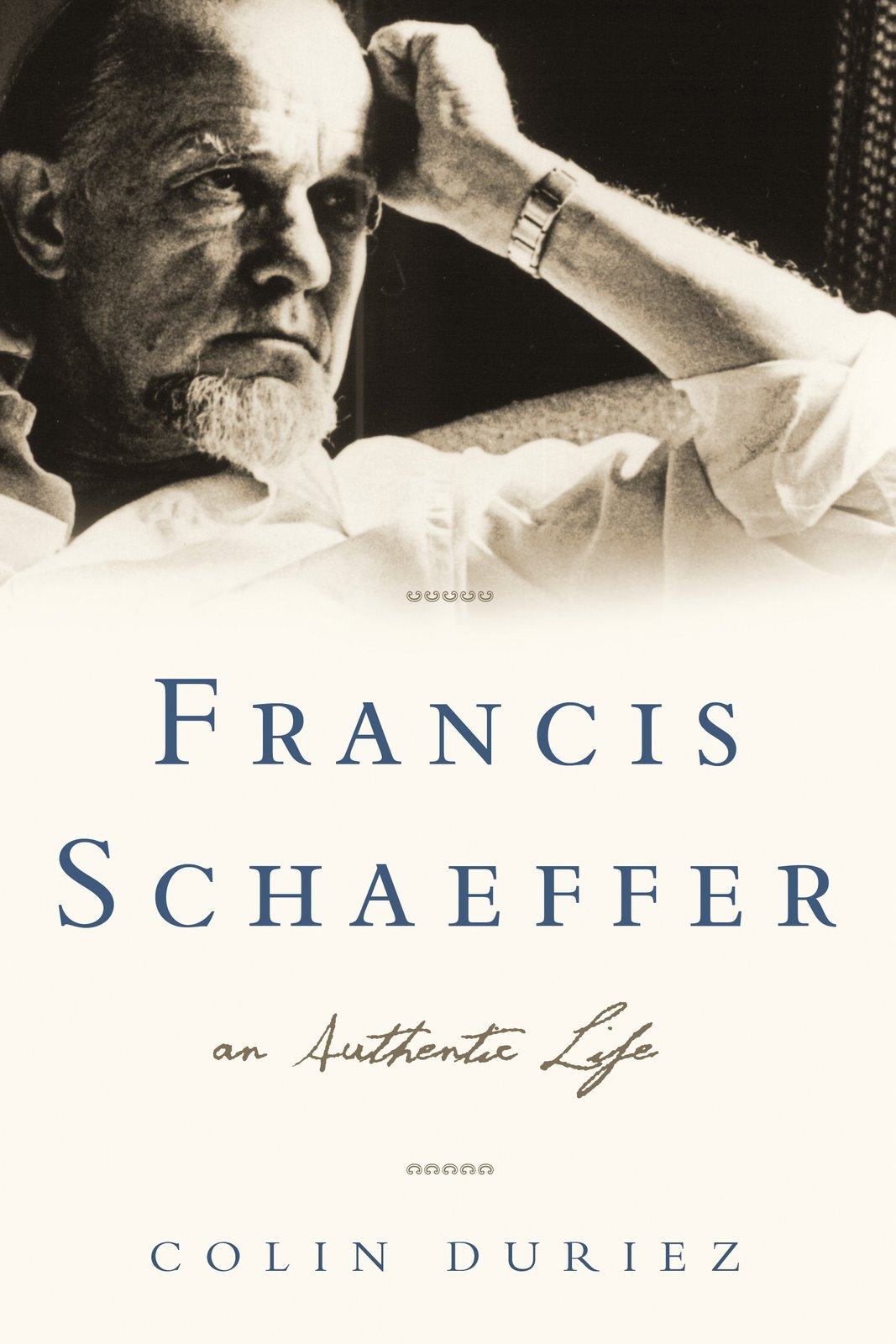 Francis Schaeffer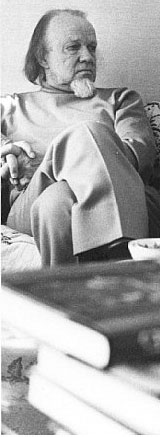


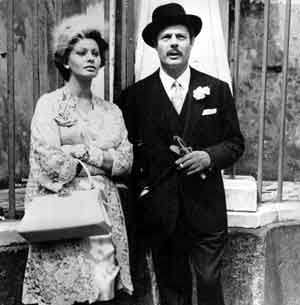




 Email this page







 The suit that Dylan Thomas was wearing in the days before his death in New York in 1953. Dylan was on his fourth lecture tour of America at the time. Jorge Fick, the owner of the suit, was an American abstract painter who was storing his clothes in the Chelsea Hotel, the same hotel in which Dylan was staying. Dylan is said to have borrowed the suit because, characteristically, he had run out of clean clothes.