Reaganomics generated much better results than Obamanomics. Milton Friedman had a lot to do with the success of Reagan.
Daniel J. Mitchell of the Cato Institute:
Dr. Koop with President Ronald Reagan on his appointment as Surgeon General.
“He will long be remembered as one of the great Christian thinkers of our century, with a childlike faith and a profound compassion toward others. It can rarely be said of an individual that his life touched many others and affected them for the better; it will be said of Francis Schaeffer that his life touched millions of souls and brought them to the truth of their creator.” ~ Ronald Reagan
Bernard N. Nathanson (July 31, 1926 – February 21, 2011) was an American medical doctor from New York, co-founder in 1969 of the National Association for the Repeal of Abortion Laws — NARAL — later renamed National Abortion Rights Action League. Dr. Bernard Nathanson was also the former director of New York City’s Center for Reproductive and Sexual Health, but later became a pro-life activist. He was the narrator for the controversial 1984 anti-abortion film The Silent Scream.
____
March 2, 2016
Hugh Hefner Playboy Mansion 10236 Charing Cross Road Los Angeles, CA 90024-1815
Dear Mr. Hefner,
Yesterday was SUPER TUESDAY and I had a special interest in the results of that day since I was seeking re-election to JUSTICE OF THE PEACE (District 2 of Saline County) which is located outside of Little Rock. I was able to win in the Republican Primary but I have to face a Democrat this fall in what is the most Democratic friendly district in our county. Over the last few years Saline has grown to be the 3rd largest county in Arkansas. I am glad to say that Saline County is one of only 2 counties in the whole state that do not have a countywide sales tax.
HUGH I know that you have been involved in politics for a long time so I thought this subject would interest you today. I have 3 political heroes I wanted to mention. Milton Friedman was my hero in the area of economics and his film series FREE TO CHOOSE is on You Tube and Ronald Reagan appeared in a promo for it. Friedman pointed out that liberalism will kill the economy but cutting taxes and the size of government will grow the economy. Dan Mitchell noted in his article, “Texas vs. California,” February 11, 2013:
Indeed, in the last five years Texas has gained 400,000 new jobs while California has lost 640,000. The Lone Star State’s rate of job growth was 33 percent higher than California’s last year, even as the Golden State finally pulled out of the recession. …Texas’s legislature has just trimmed its $188 billion two-year budget by 8 percent, and the state may have more revenue than it can legally spend because it is barred from raising outlays more than the rate of economic growth.
Here’s a very good Steve Breen cartoon about Perry’s fishing trip to the west coast.
__
Ronald Reagan is my second political hero for 2 reasons. First, Reagan cut taxes in a big way during his time as president. Secondly, he appointed C. Everett Koop at Surgeon General and appointed many PRO-LIFE JUDGES. This leads me to my third political hero who was C. Everett Koop’s best friend Francis Schaeffer.
This address was delivered by the late Dr. Schaeffer in 1982 at the Coral Ridge Presbyterian Church, Fort Lauderdale, Florida. It is based on one of his books, which bears the same title.
Dr. C. Everett Koop, in our seminars for Whatever Happened to the Human Race, often said that (speaking for himself), “When I graduated from medical school, the idea was ‘how can I save this life?’ But for a great number of the medical students now, it’s not, ‘How can I save this life?’, but ‘Should I save this life?'”
Believe me, it’s everywhere. It isn’t just abortion. It’s infanticide. It’s allowing the babies to starve to death after they are born. If they do not come up to some doctor’s concept of a quality of life worth living. I’ll just say in passing — and never forget it – it takes about 15 days, often, for these babies to starve to death. And I’d say something else that we haven’t stressed enough. In abortion itself, there is no abortion method that is not painful to the child — just as painful that month before birth as the baby you see a month after birth in one of these cribs down here that I passed — just as painful…
The January 11 Newsweek has an article about the baby in the womb. The first 5 or 6 pages are marvelous. If you haven’t seen it, you should see if you can get that issue. It’s January 11 and about the first 5 or 6 pages show conclusively what every biologist has known all along, and that is that human life begins at conception. There is no other time for human life to begin, except at conception. Monkey life begins at conception. Donkey life begins at conception. And human life begins at conception. Biologically, there is no discussion — never should have been — from a scientific viewpoint. I am not speaking of religion now. And this 5 or 6 pages very carefully goes into the fact that human life begins at conception. But you flip the page and there is this big black headline, “But is it a person?” And I’ll read the last sentence, “The problem is not determining when actual human life begins, but when the value of that life begins to out weigh other considerations, such as the health or even the happiness of the mother.”
We are not just talking about the health of the mother (it’s a propaganda line), or even the happiness of the mother. Listen! Spell that out! It means that the mother, FOR HER OWN HENDONISTIC HAPPINESS — selfish happiness — can take human life by her choice, by law. Do you understand what I have said? By law, on the basis of her individual choice of what makes her happy. She can take what has been declared to be, in the first five pages [of the article], without any question, human life. In other words, they acknowledge that human life is there, but it is an open question as to whether it is not right to kill that human life if it makes the mother happy.
And basically that is no different than Stalin, Mao, or Hitler, killing who they killed for what they conceived to be the good of society. There is absolutely no line between the two statements — no absolute line, whatsoever. One follows along: Once that it is acknowledged that it is human life that is involved (and as I said, this issue of Newsweek shows conclusively that it is) the acceptance of death of human life in babies born or unborn, opens the door to the arbitrary taking of any human life. From then on, it’s purely arbitrary.
I got a question for you HUGH? I understand you support financially NARAL.Did you know that the founder of NARAL left the abortion business because as technology advanced he discovered that the unborn baby experienced pain? Here is a little more about Dr. Bernard Nathanson:
In 1985, Nathanson employed the new fetal imaging technology to produce a documentary film, “The Silent Scream,” which energized the pro-life movement and threw the pro-choice side onto the defensive by showing in graphic detail the killing of a twelve-week-old fetus in a suction abortion. Nathanson used the footage to describe the facts of fetal development and to make the case for the humanity and dignity of the child in the womb. At one point, viewers see the child draw back from the surgical instrument and open his mouth: “This,” Nathanson says in the narration, “is the silent scream of a child threatened imminently with extinction.”
Publicity for “The Silent Scream” was provided by no less a figure than President Ronald Reagan, who showed the film in the White House and touted it in speeches. Like Nathanson, Reagan, who had signed one of the first abortion-legalization bills when he was Governor of California, was a zealous convert to the pro-life cause. During his term as president, Reagan wrote and published a powerful pro-life book entitled Abortion and the Conscience of the Nation—a book that Nathanson praised for telling the truth about the life of the child in the womb and the injustice of abortion.
Hefner concludes that, “If these zealots have their way, our hard-won sexual liberation — women’s rights, reproductive rights and rights to privacy — lie in peril. We won’t let that happen.
My last question to you today is WHAT ABOUT UNBORN WOMAN’S RIGHTS? Don’t little baby girls who are just months away from being born have the right to life? This letter has been about politics but the spiritual answers your heart is seeking can be found in putting your faith and trust in Jesus Christ. The Bible is true from cover to cover and can be trusted. Without the Bible then we are left with Schaeffer’s final conclusion,“If there are no absolutes by which to judge society, then society is absolute.”
PS: I have written you every week since October of 2015, and again today in this 22nd letter I challenged you on one aspect of your life and this letter centered in on your support of NARAL. Why am I involved in politics today? The answer is because God wants us to submit to the standards given in the Bible. Francis Schaeffer noted, “They founded the country on the base that there is a God who is the Creator (now I come to the next central phrase) who gave the inalienable rights. We must understand something very thoroughly. If society — if the state gives the rights, it can take them away — they’re not inalienable. If the states give the rights, they can change them and manipulate them. But this was not the view of the founding fathers of this country. They believed, although not all of them were individual Christians, that there was a Creator and that this Creator gave the inalienable rights — this upon which our country was founded and which has given us the freedoms which we still have — even the freedoms which are being used now to destroy the freedoms.”
A landscape by Jan van Goyenby H.R. Rookmaaker
Jan van Goyen is one of the most brilliant landscape painters of all time.
He was productive between 1620 and 1656, the year of his death. His art
improved in a direct line, and the works he made after 1640 are virtually
all masterpieces. We shall discuss one of his paintings from 1646,
Approaching storm.
Jan van Goyen: Approaching Storm, 1646
Jan van Goyen is almost unrivalled as a master of representing space.
He was in complete command of the devices that had been developed
for this since the beginning of the modern period, and he applied them
brilliantly. In the first place there is his perspective – figures appear
smaller the further away they are from us – but possibly even more
important is his atmospheric perspective – the tone and colour of an
object that is further from us is lighter and softer than that of a similar
object viewed at closer range (compare the sails of the boats in this
painting). He also uses repoussoir – setting a lighter object against a dark
background or a darker object against a light background so that it
thereby appears to be located to the fore while the background is
pushed back (repousser). And, finally, he uses lighter and darker strokes
in the water so that a clear spatial arrangement is achieved and things
are put in their right place, as it were. In this painting we see the
repoussoir in the sails as they stand out against the sky but also in the
dark boat set against the lighter strip of water, which is thereby clearly
pushed back. Through that repoussoir the artist can make things clear
and define them distinctly in their interconnectedness. Jan van Goyen
knows how to use this device in such a way that we hardly notice it, it
seems so natural. Only upon looking more closely do we discover the
mastery and realize that it is not a simple matter of course.
It is remarkable how the painter is able to use the darkly clouded sky
to draw our eye towards the back, where the lightest part of the painting
is at the most distant horizon. In the clouds too one can point out
repoussoir (one against the other). Yet it is still more remarkable when
we come to realize just what van Goyen accomplishes with the clouds,
how he divides them as dark tones across the flat surface to thereby
reinforce the entire construction of his composition.
With that we have arrived at the real problem, which led us to select
this painting for discussion which at first glance may appear to be just
another representation of a scene one could have witnessed any time,
and possibly still can, somewhere in the Netherlands along one of the
great rivers or the former Zuiderzee or Haarlemmermeer. For Jan van
Goyen knew, perhaps better than anyone else, that a painting is in the
first place a flat surface on which we work with our painting materials to
call up our picture. In spite of the fact that he knew infallibly how to use
the depth-depicting devices we have described, the syntax of his times,
one can never accuse him, as some modern artists have reproached the
old masters for doing, of tricking us by suggesting a ‘hole in the wall’,
namely a real depth. On the contrary, Jan van Goyen knew not only how
to maintain the surface but also how to use it in a wonderful way to serve
his purposes.
Van Goyen’s compositions are very tightly constructed and guided
by an almost symphonic feel for form. Left . . . yes, one ‘reads’ a painting
from left to right. This probably is because of the direction in which we
write (and it would therefore be the reverse for, e.g. Chinese people).
Naturally we can look at a painting from right to left or in any other way,
but only after we have read it in the right direction first. In a similar way
we have to read a sonnet first from top to bottom, and only after we have
done that can we go back and re-read one line or another, and figure out
how the way the sonnet ends is prepared and called up in earlier lines.
The correct order of reading is presupposed in the creative process. But
to return to our earlier discussion: at the left of the landscape we see the
‘introduction’ by means of a little boat, which draws us into the space
and positions us on the water, as it were. Then we come to the first
theme, which we could call ‘distance with storm cloud’. Next we have the
transitional theme in the pair of slightly larger sailboats, precisely in the
middle of the canvas. Following that we come to the second main theme:
ships tied up at a mooring, at a harbour, suggested by a few houses
entirely to the right, which at the same time form the light coda. The
main element in the second theme is the ship with the large dark sail,
which finds its direct ‘response’ in the somewhat smaller and lighter sail
just behind it. That second theme is more loaded, busier and manifests
more movement, and it fixes our eye on a less remote distance parallel
to the surface of the painting.
And now, if we look at the clouds again, we see that, like a kind of
countermelody, a bass line, they follow the themes, and so also the main
organizing principle of the painting. Thus the ‘reading direction’ from
left to right is anything but arbitrary. We cannot turn this painting
around – just try holding the page up to the light on which it is
reproduced here and look at it from the back. It immediately becomes
difficult to see the two themes. It is still possible to do so in this case, but
much more difficult in many others. That it is still possible here, at least
to a degree, is due to the serenity; it is not possible where ships are in
motion, with their sails fixing the direction of observation.
Typically, the second theme has much more complex, and plural,
constructive elements. Moving from left to right, one discovers
that matters also often become more complex in a painting. It can
be compared in this respect with a novel that begins with a single
character but in which gradually an ever larger number of people come
to play a part.
In this painting we therefore do not have some kind of copy of reality,
not a photograph of what we would have seen had we been there.
Rather, we enter another world, the world of the painting. And Jan van
Goyen has clearly set the world of painting off from our own world with
a ‘threshold’, the dark strip in the foreground.
Thus this world does not offer us exactly what we would have seen in
reality with our own eyes, had we been there. Rather, what we have here
is Jan van Goyen’s view of what was there, his own poetic view of a slice
of reality, his own ‘song’ about the beauty at the calm mouth of a river.
The things he notices and shows us are not necessarily self-evident, we
must learn to observe them. And if Dutch people today cherish such
beauties – and often, happily, they do – then they have to thank for that
the lessons in observation that they learned from this artist (and those
who followed after him), even if they are not conscious of it and, yes,
may indeed never have been personally involved with such art. Once
eyes have been opened to something so real and pure, so true, in which
there is so much humanity and in which justice is done to all the
elements, it is not easily forgotten. Fathers pass it on to their sons.
It is remarkable that this unifying effect, the distinctive quality of this
‘symphonic poem in paint’, arises in the composition. It would carry us
too far afield to introduce a great deal of comparative material here. But
it is precisely the use of two themes and the other elements we discussed
that call forth this effect. By simply drawing a certain view of a wide river
we cannot achieve such artistic content and such a suggestive result. It is
therefore no surprise, as becomes evident when we examine Jan van
Goyen’s works carefully, that the artist seldom stuck closely to a precisely
identifiable phenomenon. His art is not topographical, it does not
portray exact locations, although he occasionally incorporates a
‘citation’ or visual reference to an existing tower, for example the one in
Dordt. What he shows us, rather, is the structure of the landscape, in this
case of a river-mouth or a lake, where the beauty forms an integrating
part of the whole.
Could this view of reality not have had something to do with the
Reformation? Could it be a fruit of our having opened ourselves up once
again to reality as we learn to know it in the Bible? The Reformation
liberated art from the chains of the domination of church and devotion,
and it did so without secularization, without seeing the world as
something detached from God. Such a hymn to the unity of creation, in
its beauty, in its multiformity, in its richness and intimate connection
with humanity – without idealistic exaltation, without making the world
a sort of humanistic paradise where one is always on vacation with no
difficulty or care – is something we can look at with jealousy today. No,
this is no vacation paradise, no world of labourless rest and ‘ideal
beauty’; it is much more sober. It is as sober as the music of Heinrich
Schütz can be, without frills, direct, and always with complete unity
between means and ends.
In a painting like the one we have been discussing there is a
complete unity between the iconic elements and the aesthetic structure,
such that the content of the work cannot be considered apart from the
manner of artistic realization: the theme is not an excuse to paint
something, and the composition is not just coincidental, an
embellishment of something that could have been said just as well in a
few words.
We said that we might be looking here at one of the fruits of the
Reformation. The painting reflects the spiritual climate in Holland
during the first half of the seventeenth century. And it does so despite
the fact that van Goyen was a Roman Catholic. His view is conditioned
by the world in which he lived, and the word ‘Counter-Reformation’ has
no meaning in connection with this river scene. Nor has it any meaning
in connection with the work of van Goyen’s son-in-law Jan Steen.
Compare Steen’s art with the art of Rubens and the difference will be
even more clear.
Published in Dutch in Kunst en Amusement, Kok – Kampen, 1962.
Published in English in M. Hengelaar-Rookmaaker (ed.): H.R. Rookmaaker: The Complete Works 3, Piquant – Carlisle, 2003. Also obtainable as a CD-Rom.
piquanteditions.com/product_info.php and
piquanteditions.com/product_info.php
Ecclesiastes 2-3 Published on Sep 19, 2012 Calvary Chapel Spring Valley | Sunday Evening | September 16, 2012 | Derek Neider _____________________________ I have written on the Book of Ecclesiastes and the subject of the meaning of our lives on several occasions on this blog. In this series on Ecclesiastes I hope to show how secular […] By Everette Hatcher III | Posted in Current Events | Edit | Comments (0)
Is Love All You Need? Jesus v. Lennon Posted on January 19, 2011 by Jovan Payes 0 On June 25, 1967, the Beatles participated in the first worldwide TV special called “Our World”. During this special, the Beatles introduced “All You Need is Love”; one of their most famous and recognizable songs. In it, John Lennon […] By Everette Hatcher III | Posted in Francis Schaeffer | Edit | Comments (0)
___________________ Something happened to the Beatles in their journey through the 1960’s and although they started off wanting only to hold their girlfriend’s hand it later evolved into wanting to smash all previous sexual standards. The Beatles: Why Don’t We Do It in the Road? _______ Beatle Ringo Starr, and his girlfriend, later his wife, […] By Everette Hatcher III | Posted in Current Events | Edit | Comments (0)
__________ Marvin Minsky __ I was sorry recently to learn of the passing of one of the great scholars of our generation. I have written about Marvin Minsky several times before in this series and today I again look at a letter I wrote to him in the last couple of years. It is my […] By Everette Hatcher III | Posted in Adrian Rogers, Francis Schaeffer | Edit | Comments (0)
Why was Tony Curtis on the cover of SGT PEPPERS? I have no idea but if I had to hazard a guess I would say that probably it was because he was in the smash hit SOME LIKE IT HOT. Above from the movie SOME LIKE IT HOT __ __ Jojo was a man who […] By Everette Hatcher III | Posted in Current Events | Edit | Comments (0)
But, as explained in this video clip, the insult added to injury is that the resuscitated “Build Back Better” is being sold as the “Inflation Reduction Act.”
If a private company said that candy bars help you lose weight or that it is okay to stick your hand under a running lawnmower, it would be dragged into court for false and/or dangerous advertising.
But when politicians make utterly dishonest claims about legislation, we have to grit our teeth and endure their lies.
So why, then, did Biden, Schumer, and Manchin decide to affix such an inaccurate label to their tax-and-spend package?
The answer presumably is political. Inflation is a problem for the incumbent party, so why not pretend the budget plan will somehow reduce inflation. Heck, if they could get away with it, they would probably call it the “Inflation Reduction and Cancer Elimination Act.”
But, to be fair, perhaps some of them actually believe a big-government plan will have an impact on inflation. For instance, the misguided but honestfolks at the Committee for a Responsible Federal Budget released an endorsement letter from 55 supposed experts based on the assumption that higher taxes will lead to lower prices.
Here are some excerpts.
With inflation at a 40-year high…, we are writing to encourage you to pass legislation to reduce budget deficits in a manner that would help counter inflation… As President Biden has explained, “bringing down the deficit is one way to ease inflationary pressures.” …Given the current state of the economy, we believe passing deficit reduction would send an important message to the American people that their leaders are serious about tackling inflation.
There are two big problems with the letter.
First, it is based on Keynesian economics, which assumes higher prices are caused by excessive “aggregate demand” and that deficit reduction (whether from tax increases or spending restraint) can help by slowing the economy.
Yet this is the theory that also told us that it was impossible to have rising prices and rising unemployment, like we saw in the 1970s. And Keynesians also said we couldn’t have falling unemployment and falling inflation, like we enjoyedin the 1980s.
Second, even if one believes in the fairy tale of Keynesian economics, all of the alleged deficit reduction occurs in future years.
And even that is nonsense since every sentient adult knows that the massive expansion of the IRS’s budget is not going to generate a windfall of new tax revenue. And every honest person also knows that lawmakers plan on extending the new Obamacare handouts in the bill.
These tweets summarize why even Keynesians should realize the legislation is fraudulent.
P.S. It is very disappointing (but perhaps not entirely surprising) that former Indiana Governor Mitch Daniels signed the CRFB letter. And it also is disappointing that a couple of people from the American Enterprise Institute added their names as well. They all deserve the Charlie Brown Award.
P.P.S. As I noted in the video, deficit spending can lead to inflation if a central bank buys government bonds in order to help finance additional government spending (the crazy Modern Monetary Theory agenda). Perhaps I am being too charitable, but I don’t think that’s the reason for the Federal Reserve’s big mistake (though I fear it may be happening with the European Central Bank).
This past article below from Dan Mitchell tells the story of Ronald Reagan’s successful strategy against inflation. I had a front row seat since I got to read the book and see the film FREE TO CHOOSE by Milton Friedman in 1980 who Reagan agreed with on this issue and I have included below the episode on inflation!
He also restored America’s national defenses and reoriented foreign policy, both of which led to the collapse of the Soviet Empire, a stupendous achievement that makes Reagan worthy of Mount Rushmore.
But he also has another great achievement, one that doesn’t receive nearly the level of appreciation that it deserves. President Reagan demolished the economic cancer of inflation.
Even Paul Krugman has acknowledged that reining in double-digit inflation was a major positive achievement. Because of his anti-Reagan bias, though, he wants to deny the Gipper any credit.
Robert Samuelson, in a column for the Washington Post, corrects the historical record.
Krugman recently wrote acolumnarguing that the decline of double-digit inflation in the 1980s was the decade’s big economic event, not the cuts in tax rates usually touted by conservatives. Actually, I agree with Krugman on this. But then he asserted that Ronald Reagan had almost nothing to do with it. That’s historically incorrect. Reagan was crucial. …Krugman’s error is so glaring.
Samuelson first provides the historical context.
For those too young to remember, here’s background. From 1960 to 1980, inflation — the general rise of retail prices —marched relentlessly upward. It went from 1.4 percent in 1960 to 5.9 percent in 1969 to 13.3 percent in 1979. The higher it rose, the more unpopular it became. …Worse, government seemed powerless to defeat it. Presidents deployed complex wage and price controls and guidelines. They didn’t work. The Federal Reserve — custodian of credit policies — veered between easy money and tight money, striving both to subdue inflation and to maintain “full employment” (taken as a 4 percent to 5 percent unemployment rate). It achieved neither. From the late 1960s to the early 1980s, there werefour recessions. Inflation became a monster, destabilizing the economy.
The column then explains that there was a dramatic turnaround in the early 1980s, as Fed Chairman Paul Volcker adopted a tight-money policy and inflation was squeezed out of the system much faster than almost anybody thought was possible.
But Krugman wants his readers to think that Reagan played no role in this dramatic and positive development.
Samuelson says this is nonsense. Vanquishing inflation would have been impossible without Reagan’s involvement.
What Reagan provided was political protection. The Fed’s previous failures to stifle inflation reflected its unwillingness to maintain tight-money policies long enough… Successive presidents preferred a different approach: the wage-price policies built on the pleasing (but unrealistic) premise that these could quell inflation without jeopardizing full employment. Reagan rejected this futile path. As the gruesome social costs of Volcker’s policies mounted — the monthly unemployment rate would ultimately rise to a post-World War II high of10.8 percent— Reagan’s approval ratings plunged. In May 1981, they were at 68 percent; by January 1983, 35 percent. Still, he supported the Fed. …It’s doubtful that any other plausible presidential candidate, Republican or Democrat, would have been so forbearing.
What’s the bottom line?
What Volcker and Reagan accomplished was an economic and political triumph. Economically, ending double-digit inflation set the stage for a quarter-century of near-automatic expansion… Politically, Reagan and Volcker showed that leaders can take actions that, though initially painful and unpopular, served the country’s long-term interests. …There was no explicit bargain between them. They had what I’ve called a “compact of conviction.”
By the way, Krugman then put forth a rather lame response to Samuelson, including the rather amazing claim that “[t]he 1980s were a triumph of Keynesian economics.”
As preached and practiced since the 1960s, Keynesian economics promised to stabilize the economy at levels of low inflation and high employment. By the early 1980s, this vision was in tatters, and many economists were fatalistic about controlling high inflation. Maybe it could be contained. It couldn’t be eliminated, because the social costs (high unemployment, lost output) would be too great. …This was a clever rationale for tolerating high inflation, and the Volcker-Reagan monetary onslaught demolished it. High inflation was not an intrinsic condition of wealthy democracies. It was the product of bad economic policies. This was the 1980s’ true lesson, not the contrived triumph of Keynesianism.
If anything, Samuelson is being too kind.
One of the key tenets of Keynesian economics is that there’s a tradeoff between inflation and unemployment (the so-called Phillips Curve).
Yet in the 1970s we had rising inflation and rising unemployment.
While in the 1980s, we had falling inflation and falling unemployment.
But if you’re Paul Krugman and you already have a very long list of mistakes (see here, here, here, here,here,here,here, here, andherefor a few examples), then why not go for the gold and try to give Keynes credit for the supply-side boom of the 1980s
P.S. Since today’s topic is Reagan, it’s a good opportunity to share my favorite poll of the past five years.
P.P.S. Here are some great videos of Reagan in action. And here’s one more if you need another Reagan fix.
Milton Friedman’s FREE TO CHOOSE “How to cure inflation” Transcript and Video (60 Minutes)
In 1980 I read the book FREE TO CHOOSE by Milton Friedman and it really enlightened me a tremendous amount. I suggest checking out these episodes and transcripts of Milton Friedman’s film series FREE TO CHOOSE: “The Failure of Socialism” and “What is wrong with our schools?” and “Created Equal” and From Cradle to Grave, and – Power of the Market.“If we could just stop the printing presses, we would stop inflation,” Milton Friedman says in “How to Cure Inflation” from the Free To Choose series. Now as then, there is only one cause of inflation, and that is when governments print too much money. Milton explains why it is that politicians like inflation, and why wage and price controls are not solutions to the problem.
http://www.freetochoosemedia.org/freetochoose/detail_ftc1980_transcript.php?page=9While many people have a fairly good grasp of what inflation is, few really understand its fundamental cause. There are many popular scapegoats: labor unions, big business, spendthrift consumers, greed, and international forces. Dr. Friedman explains that the actual cause is a government that has exclusive control of the money supply. Friedman says that the solution to inflation is well known among those who have the power to stop it: simply slow down the rate at which new money is printed. But government is one of the primary beneficiaries of inflation. By inflating the currency, tax revenues rise as families are pushed into higher income tax brackets. Thus, inflation transfers wealth and resources from the private to the public sector. In short, inflation is attractive to government because it is a way of increasing taxes without having to pass new legislation to raise tax rates. Inflation is in fact taxation without representation. Wage and price controls are not the cure for inflation because they treat only the symptom (rising prices) and not the disease (monetary expansion). History records that such controls do not work; instead, they have perverse effects on both prices and economic growth and undermine the fundamental productivity of the economy. There is only one cure for inflation: slow the printing presses. But the cure produces the painful side effects of a temporary increase in unemployment and reduced economic growth. It takes considerable political courage to undergo the cure. Friedman cites the example of Japan, which successfully underwent the cure in the mid-seventies but took five years to squeeze inflation out of the system. Inflation is a social disease that has the potential for destroying a free society if it is unchecked. Prolonged inflation undermines belief in the basic equity of the free market system because it tends to destroy the link between effort and reward. And it tears the social fabric because it divides society into winners and losers and sets group against group.(Taxation without representation: Getting knocked up to higher tax brackets because of inflation pt 1)http://www.youtube.com/watch?v=b1dTWDNKH3c
Volume 9 – How to Cure Inflation
Transcript:
Friedman: The Sierra Nevada’s in California 10,000 feet above sea level, in the winter temperatures drop to 40 below zero, in the summer the place bakes in the thin mountain air. In this unlikely spot the town of Body sprang up. In its day Body was filled with prostitutes, drunkards and gamblers part of a colorful history of the American West.
A century ago, this was a town of 10,000 people. What brought them here? Gold. If this were real gold, people would be scrambling for it. The series of gold strikes throughout the West brought people from all over the world, all kinds of people. They came here for one purpose and one purpose only, to strike it rich, quick. But in the process, they built towns, cities, in places where nobody would otherwise have dreamed of building a city. Gold built these cities and when the gold was exhausted, the cities collapsed and became ghost towns. Many of the people who came here ended up the way they began, broke and unhappy. But a few struck it rich. For them, gold was real wealth. But was it for the world as a whole. People couldn’t eat the gold, they couldn’t wear the gold, they couldn’t live in houses made of gold. Because there was more gold, they had to pay a little more gold to buy goods and services. The prices of things in terms of gold went up.
At tremendous cost, at sacrifice of lives, people dug gold out of the bowels of the earth. What happened to that gold? Eventually, at long last, it was transported to distant places only to be buried again under the ground. This time in the vaults of banks throughout the world. There is hardly anything that hasn’t been used for money; rock salt in Ethiopia, brass rings in West Africa, Calgary shells in Uganda, even a toy cannon. Anything can be used as money. Crocodile money in Malaysia, absurd isn’t it?
That beleaguered minority of the population that still smokes may recognize this stuff as the raw material from which their cigarettes are made. But in the early days of the colonies, long before the U.S. was established, this was money. It was the common money of Virginia, Maryland and the Carolinas. It was used for all sorts of things. The legislature voted that it could be used legally to pay taxes. It was used to buy food, clothing and housing. Indeed, one of the most interesting sites was to see the husky young fellows at that time, lug 100 pounds of it down to the docks to pay the costs of the passage of the beauteous young ladies who had come over from England to be their brides.
Now you know how money is. There’s a tendency for it to grow, for more and more of it to be produced and that’s what happened with this tobacco. As more tobacco was produced, there was more money. And as always when there’s more money, prices went up. Inflation. Indeed, at the very end of the process, prices were 40 times as high in terms of tobacco as they had been at the beginning of the process. And as always when inflation occurs, people complained. And as always, the legislature tried to do something. And as always, to very little avail. They prohibited certain classes of people from growing tobacco. They tried to reduce the total amount of tobacco grown, they required people to destroy part of their tobacco. But it did no good. Finally, many people took it into their own hands and they went around destroying other people’s tobacco fields. That was too much. Then they passed a law making it a capital offense, punishable by death, to destroy somebody else’s tobacco. Grecian’s Law, one of the oldest laws in economics, was well illustrated. That law says that cheap money drives out dear money and so it was with tobacco. Anybody who had a debt to pay, of course, tried to pay it in the worst quality of tobacco he had. He saved the good tobacco to sell overseas for hard money. The result was that bad money drove out good money.
Finally, almost a century after they had started using tobacco as money, they established warehouses in which tobacco was deposited in barrels, certified by an inspector according to his views as to it’s quality and quantity. And they issued warehouse certificates which people gave from one to another to pay for the bills that they accumulated.
These pieces of green printed paper are today’s counterparts of those tobacco certificates. Except that they bear no relation to any commodity. In this program I want to take you to Britain to see how inflation weakens the social fabric of society. Then to Tokyo, where the Japanese have the courage to cure inflation. To Berlin, where there is a lesson to be learned from the West Germans and how so called cures are often worse than the disease. And to Washington where our government keeps these machines working overtime. And I am going to show you how inflation can be cured.
The fact is that most people enjoy the early stages of the inflationary process. Britain, in the swinging 60’s, there was plenty of money around, business was brisk, jobs were plentiful and prices had not yet taken off. Everybody seemed happy at first. But by the early 70’s, as the good times rolled along, prices started to rise more and more rapidly. Soon, some of these people are going to lose their jobs. The party was coming to an end.
The story is much the same in the U.S. Only the process started a little later. We’ve had one inflationary party after another. Yet we still can’t seem to avoid them. How come?
Before every election our representatives would like to make us think we are getting a tax break. When they are able to do it, while at the same time actually raising our taxes because of a bit of magic they have in their kit bag. That magic is inflation. They reduced the tax rates but the taxes we have to pay go up because we are automatically shoved into higher brackets by the effective inflation. A neat trick. Taxation without representation.
_________________________________________
Pt 2 Many a political leader has been tempted to turn to wage and price controls despite their repeated failure in practice. On this subject they never seem to learn. But some lessons may be learned. That happened to British P
Bob Crawford: The more I work, it seems like the more they take off me. I know if I work an extra day or two extra days, what they take in federal income tax alone is almost doubled because apparently it puts you in a higher income tax bracket and it takes more off you.
Friedman: Bob Crawford lives with his wife and three children in a suburb of Pittsburgh. They’re a fairly average American family.
Mrs. Crawford: Don’t slam the door Daphne. Okay. Alright. What are you doing? Making your favorite dish.
Friedman: We went to the Crawford’s home after he had spent a couple of days working out his federal and state income taxes for the year. For our benefit, he tried to estimate all the other taxes he had paid as well. In the end, though, he didn’t discover much that would surprise anybody.
Bob Crawford: Inflation is going up, everything is getting more expensive. No matter what you do, as soon as you walk out of the house, everything went up. Your gas bills keep going up, electric bills, your gasoline, you can name a thousand things that are going up. Everything is going sky high. Your food. My wife goes to the grocery store. We used to live on say, $60 or $50 every two weeks just for our basic food. Now it’s $80 or $90 every two weeks. Things are just going out of sight as far as expense to live on. Like I say it’s getting tough. It seems like every month it gets worse and worse. And I don’t know where it’s going to end. At the end of the day that I spend nearly $6,000 of my earnings on taxes. That leaves me with a total of $12,000 to live on. It might seem like a lot of money, but five, six years ago I was earning $12,000.
Friedman: How does taxation without representation really effect how much the Crawford family has left to spend after it’s paid its income taxes. Well in 1972 Bob Crawford earned $12,000. Some of that income was not subject to income tax. After paying income tax on the rest he had this much left to spend. Six years later he was earning $18,000 a year. By 1978 the amount free from tax was larger. But he was now in a higher tax bracket so his taxes went up by a larger percentage than his income. However, those dollars weren’t worth anything like as much. Even his wages, let alone his income after taxes, hadn’t kept up with inflation. His buying power was lower than before. That is taxation without representation in practice.
Unnamed Individual: We have with us today you brothers that are sitting here today that were with us on that committee and I’d like to tell you….
Friedman: There are many traditional scapegoats blamed for inflation. How often have you heard inflation blamed on labor unions for pushing up wages. Workers, of course, don’t agree.
Unnamed Individual: But fellows this is not true. This is subterfuge. This is a myth. Your wage rates are not creating inflation.
Friedman: And he’s right. Higher wages are mostly a result of inflation rather than a cause of it. Indeed, the impression that unions cause inflation arises partly because union wages are slow to react to inflation and then there is pressure to catch up.
Worker: On a day to day basis, try to represent our own numbers. But that in fact is not the case. Not only can we not play catch up, we can’t even maintain a wage rate commensurate with the cost of living that’s gone up in this country.
Friedman: Another scapegoat for inflation is the cost of goods coming from abroad. Inflation, we’re told, is imported. Higher prices abroad driving up prices at home. It’s another way government can blame someone else for inflation. But this argument, too, is wrong. The prices of imports and the countries from which they come are not in terms of dollars, they are in terms of lira or yen or other foreign currencies. What happens to their prices in dollars depends on exchange rates which in turn reflect inflation in the United States.
Since 1973 some governments have had a field day blaming the Arabs for inflation. But if high oil prices were the cause of inflation, how is it that inflation has been less here in Germany, a country that must import every drop of oil and gas that it uses on the roads and in industry, then for example it is in the U.S. which produces half of its own oil. Japan has no oil of its own at all. Yet at the very time the Arabs were quadrupling oil prices, the Japanese people were bringing inflation down from 30 to less than 5% a year. The fallacy is to confuse particular prices like the price of oil, with prices in general. Back at home, President Nixon understood this.
Nixon: “Now here’s what I will not do. I will not take this nation down the road of wage and price controls however politically expedient that may seem. The pros of rationing may seem like an easy way out, but they are really an easy way in for more trouble. To the explosion that follows when you try to clamp a lid on a rising head of steam without turning down the fire under the pot, wage and price controls only postpone the day of reckoning. And in so doing, they rob every American of a very important part of his freedom.
Friedman: Now listen to this:
Nixon: “The time has come for decisive action. Action that will break the vicious circle of spiraling prices and costs. I am today ordering a freeze on all prices and wages throughout the United States for a period of 90 days. In addition, I call upon corporations to extend the wage price freeze to all dividends.”
Friedman: Many a political leader has been tempted to turn to wage and price controls despite their repeated failure in practice. On this subject they never seem to learn. But some lessons may be learned. That happened to British Prime Minister James Callahan who finally discovered that a very different economic myth was wrong. He told the Labor Party Conference about it in 1976.
James Callahan: “We used to think that you could use, spend your way out of a recession and increase employment by cutting taxes and boosting government spending. I tell you in all candor that option no longer exists. It only works on each occasion since the war by injecting a bigger dose of inflation into the economy followed by a higher level of unemployment as the next step. That’s the history of the last 20 years.”
Friedman: Well, it’s one thing to say it. One reason why inflation does so much harm is because it effects different groups differently. Some benefit and of course they attribute that to their own cleverness. Some are hurt, but of course they attribute that to the evil actions of other people. And the whole problem is made far worse by the false cures which government adopts, particularly wage and price control.
The garbage collectors in London felt justifiably aggrieved because their wages had not been permitted to keep pace with the cost of living. They struck, hurting not the people who impose the controls, but their friends and neighbors who had to live with mounting piles of rat infested garbage. Hospital attendants felt justifiably aggrieved because their wages had not been permitted to keep up with the cost of living. They struck, hurting not the people who impose the controls, but cancer patients who were turned out of hospital beds. The attendants behaved as a group in a way they never would have behaved as individuals. One group is set against another group. The social fabric of society is torn apart inflicting scars that it will take decades to heal and all to no avail because wage and price controls, far from being a cure for inflation, only make inflation worse.
Within the memory of most of our political leaders, there’s one vivid example of how economic ruin can be magnified by controls. And the classic demonstration of what to do when it happens.
_______________________________________________
(Wage and Price Controls don’t work)
Inflation is just like alcoholism. In both cases when you start drinking or when you start printing too much money, the good effects come first. The bad effects only come later.
That’s why in both cases there is a strong temptation to overdo it. To drink too much and to print too much money. When it comes to the cure, it’s the other way around. When you stop drinking or when you stop printing money, the bad effects come first and the good effects only come later.
Pt 3
Germany, 1945, a devastated country. A nation defeated in war. The new governing body was the Allied Control Commission, representing the United States, Britain, France and the Soviet Union. They imposed strict controls on practically every aspect of life including wages and prices. Along with the effects of war, the results were tragic. The basic economic order of the country began to collapse. Money lost its value. People reverted to primitive barter where they used cameras, fountain pens, cigarettes, whiskey as money. That was less than 40 years ago.
This is Germany as we know it today. Transformed into a place a lot of people would like to live in. How did they achieve their miraculous recovery? What did they know that we don’t know?
Early one Sunday morning, it was June 20, 1948, the German Minister of Economics, Ludwig Earhardt, a professional economist, simultaneously introduced a new currency, today’s Deutsche Mark, and in one fell swoop, abolished almost all controls on prices and wages. Why did he do it on a Sunday morning? It wasn’t as you might suppose because the Stock Markets were closed on that day, it was, as he loved to confess, because the offices of the American, the British, and the French occupation authorities were closed that day. He was sure that if he had done it when they open they would have countermanded the order. It worked like a charm. Within days, the shops were full of goods. Within months, the German economy was humming along at full steam. Economists weren’t surprised at the results, after all, that’s what a price system is for. But to the rest of the world it seemed an economic miracle that a defeated and devastated country could in little more than a decade become the strongest economy on the continent of Europe.
In a sense this city, West Berlin, is something of a unique economic test tube. Set as it is deep in Communist East Germany. Two fundamentally different economic systems collide here in Europe. Ours and theirs, separated by political philosophies, definitions of freedom and a steel and concrete wall.
To digress from inflation, economic freedom does not stand alone. It is part of a wider order. I wanted to show you how much difference it makes by letting you see how the people live on the other side of that Berlin Wall. But the East German authorities wouldn’t let us. The people over there speak the same language as the people over here. They have the same culture. They have the same for bearers. They are the same people. Yet you don’t need me to tell you how differently they live. There is one simple explanation. The political system over there cannot tolerate economic freedom. The political system over here could not exist without it.
But political freedom cannot be preserved unless inflation is kept in bounds. That’s the responsibility of government which has a monopoly over places like this. The reason we have inflation in the United States or for that matter anywhere in the world is because these pieces of paper and the accompanying book entry or their counterparts in other nations are growing more rapidly than the quantity of goods and services produced. The truth is inflation is made in one place and in one place only. Here in Washington. This is the only place were there are presses like this that turn out these pieces of paper we call money. This is the place where the power resides to determine how rapidly the amount of money shall increase.
What happened to all that noise? That’s what would happen to inflation if we stop letting the amount of money grow so rapidly. This is not a new idea. It’s not a new cure. It’s not a new problem. It’s happened over and over again in history. Sometimes inflation has been cured this way on purpose. Sometimes it’s happened by accident. During the Civil War the North, late in the Civil War, overran the place in the South where the printing presses were sitting up, where the pieces of paper were being turned out. Prior to that point, the South had a very rapid inflation. If my memory serves me right, something like 4% a month. It took the Confederacy something over two weeks to find a new place where they could set up their printing presses and start them going again. During that two week period, inflation came to a halt. After the two week period, when the presses started running again, inflation started up again. It’s that clear, that straightforward. More recently, there’s another dramatic example of the only effective way to deal with rampant inflation.
In 1973, Japanese housewives going to market were faced with an unpleasant fact. The cash in their purses seemed to be losing its value. Prices were starting to sore as the awful story of inflation began to unfold once again. The Japanese government knew what to do. What’s more, they were prepared to do it. When it was all over, economists were able to record precisely what had happened. In 1971 the quantity of money started to grow more rapidly. As always happens, inflation wasn’t affected for a time. But by late 1972 it started to respond. In early 73 the government reacted. It started to cut monetary growth. But inflation continued to soar for a time. The delayed reaction made 1973 a very tough year of recession. Inflation tumbled only when the government demonstrated its determination to keep monetary growth in check. It took five years to squeeze inflation out of the system. Japan attained relative stability. Unfortunately, there’s no way to avoid the difficult road the Japanese had to follow before they could have both low inflation and a healthy economy. First they had to live through a recession until slow monetary growth had its delayed effect on inflation.
Inflation is just like alcoholism. In both cases when you start drinking or when you start printing too much money, the good effects come first. The bad effects only come later.
That’s why in both cases there is a strong temptation to overdo it. To drink too much and to print too much money. When it comes to the cure, it’s the other way around. When you stop drinking or when you stop printing money, the bad effects come first and the good effects only come later. That’s why it’s so hard to persist with the cure. In the United States, four times in the 20 years after 1957, we undertook the cure. But each time we lacked the will to continue. As a result, we had all the bad effects and none of the good effects. Japan on the other hand, by sticking to a policy of slowing down the printing presses for five years, was by 1978 able to reap all the benefits, low inflation and a recovering economy. But there is nothing special about Japan. Every country that has had the courage to persist in a policy of slow monetary growth has been able to cure inflation and at the same time achieve a healthy economy.
___________________________________
Pt 4
The job of the Federal Reserve is not to run government spending; it’s not to run government taxation. The job of the Federal Reserve is to control the money supply and I believe, frankly, I have always believed as you know, that these are excuses and not reasons for the performance.
DISCUSSION
Participants: Robert McKenzie, Moderator; Milton Friedman; Congressman Clarence J. Brown; William M. Martin, Chairman of Federal Reserve 1951_1970; Beryl W. Sprinkel, Executive Vice President, Harris Bank, Chicago; Otmar Emminger, President, Ieutsche Bundesbank, Frankfurt West Germany
MCKENZIE: And here at the Harper Library of the University of Chicago, our distinguished guests have their own ideas, too. So, lets join them now.
BROWN: If you could control the money supply, you can certainly cut back or control the rate of inflation. I’d have to say that that prescription is a little bit easier to write than it is to fill. I think there are some other ways to do it and I would relate the money supply __ I think inflation is a measure of the relationship between money and the goods and services that money is meant to cover. And so if you can stimulate the goods, the production of goods and services, it’s helpful. It’s a little tougher to control the money supply, although I think it can be done, than just saying that you should control it, because we’ve got the growth of credit cards, which is a form of money; created, in effect, by the free enterprise system. It isn’t all just printed in Washington, but that may sound too defensive. I think he was right in saying that the inflation is Washington based.
MCKENZIE: Mr. Martin, nobody has been in the firing line longer than you, 17 years head of the Fed. Could you briefly comment on that and we’ll go around the group.
MARTIN: I want to say 19 years.
(Laughter)
MARTIN: I wouldn’t be out here if it weren’t for Milton Friedman, today. He came down and gave us advice from time to time.
FRIEDMAN: You’ve never taken it.
(Laughter)
MCKENZIE: He’s going to do some interviewing later, I warn you.
MARTIN: And I’m rather glad we didn’t take it __
(Laughter)
MARTIN: __ all the time.
SPRINKEL: In your 19 years as Chairman of the Federal Reserve, Bill, the average growth in the money supply was 3.1 percent per year. The inflation rate was 2.2 percent. Since you left, the money supply has exactly doubled. The inflation rate is average over 7 percent, and, of course, in recent times the money supply has been growing in double-digit territory as has our inflation rate.
EMMINGER: May I, first of all, confirm two facts which have been so vividly brought out in the film of Professor Friedman; namely, that at the basis of the relatively good performance of Western Germany were really two events. One, the establishment of a new sound money which we try to preserve sound afterwards. And, secondly, the jump overnight into a free market economy without any controls over prices and wages. These are the two fundamental facts. We have tried to preserve monetary stability by just trying to follow this prescription of Professor Friedman; namely, monetary discipline. Keeping monetary growth relatively moderate. I must, however, warn you it’s not so easy as it looks. If you just say, governments have to have the courage to persist in that course.
FRIEDMAN: Nobody does disagree with the proposition that excessive growth in money supply is an essential element in the inflationary process and that the real problem is not what to do, but how to have the courage and the will to do it. And I want to go and start, if I may, on that subject; because I think that’s what we ought to explore. Why is it we haven’t had the courage and don’t, and under what circumstances will we? And I want to start with Bill Martin because his experience is a very interesting experience. His 19 years was divided into different periods. In the first period, that average that Beryl Sprinkel spoke about, averaged two very different periods. An early period of very slow growth and slow inflation; a later period of what at the time was regarded as creeping inflation __ now we’d be delighted to get back to it. People don’t remember that at the time that Mr. Nixon introduced price and wage controls in 1971 to control an outrageous inflation, the rate of inflation was four-and-a-half percent per year. Today we’d regard that as a major achievement; but the part of the period when you were Chairman, was a period when the inflation rate was starting to creep up and money growth rate was also creeping up. Now if I go from your period, you were eloquent in your statements to the public, to the press, to everyone, about the evils of inflation, and about the determination on the Federal Reserve not to be the architect of inflation. Your successor, Arthur Burns, was just as eloquent. Made exactly the same kinds of statements as effectively, and again over and over again said the Federal Reserve will not be the architect of inflation. His successor, Mr. G. William Miller, made the same speeches, and the same statements, and the same protestations. His successor, Paul Volcker, he is making the same statements. Now my question to you is: Why is it that there has been such a striking difference between the excellent pronouncements of all Chairmen of the Fed, therefore it’s not personal on you. You have a lot of company, unfortunately for the country. Why is it that there has been such a wide diversion between the excellent pronouncements on the one hand and what I regard as a very poor performance on the other?
MARTIN: Because monetary policy is not the only element. Fiscal policy is equally important.
FRIEDMAN: You’re shifting the buck to the Treasury.
MARTIN: Yes.
FRIEDMAN: To the Congress. We’ll get to Mr. Brown, don’t worry.
MARTIN: Yeah, that’s right.
(Laughter)
MARTIN: The relationship of fiscal policy to monetary policy is one of the important things.
MCKENZIE: Would you remind us, the general audience, when you say “fiscal policy”, what you mean in distinction to “monetary policy”?
MARTIN: Well, taxation.
MCKENZIE: Yeah.
MARTIN: The raising revenue.
FRIEDMAN: And spending.
MARTIN: And spending.
FRIEDMAN: And deficits.
MARTIN: And deficits, yes, exactly. And I think that you have to realize that when I’ve talked for a long time about the independence of the Federal Reserve. That’s independence within the government, not independence of the government. And I’ve worked consistently with the Treasury to try to see that the government is financed. Now this gets back to spending. The government says they’re gonna spend a certain amount, and then it turns out they don’t spend that amount. It doubles.
FRIEDMAN: The job of the Federal Reserve is not to run government spending; it’s not to run government taxation. The job of the Federal Reserve is to control the money supply and I believe, frankly, I have always believed as you know, that these are excuses and not reasons for the performance.
MARTIN: Well that’s where you and I differ, because I think we would be irresponsible if we didn’t take into account the needs and what the government is saying and doing. I think if we just went on our own, irresponsibly, I say it on this, because I was in the Treasury before I came to this __
FRIEDMAN: I know. I know.
MARTIN: __ go to the Fed; and I know the other side of the picture. I think we’d be rightly condemned by the American people and by the electorate.
FRIEDMAN: Every central bank in this world, including the German Central Bank, including the Federal Reserve System, has the technical capacity to make the money supply do over a period of two or three or four months, not daily, but over a period, has the technical capacity to control it.
(Several people talking at once.)
FRIEDMAN: I cannot explain the kind of excessive money creation that has occurred, in terms of the technical incapacity of the Federal Reserve System or of the German Central Bank, or of the Bank of England, or any other central bank in the world.
EMMINGER: I wouldn’t say technically we are incapable of doing that, although we have never succeeded in controlling the money supply month that way. But I would say we can, technically, control it half yearly, from one half-year period to the next and that would be sufficient __
FRIEDMAN: That would be sufficient.
EMMINGER: __ for controlling inflation. But however I __
VOICE OFF SCREEN: It doesn’t move.
FRIEDMAN: I’m an economic scientist, and I’m trying to observe phenomena, and I observe that every Federal Reserve Chairman says one thing and does another. I don’t mean he does, the system does.
MCKENZIE: Yeah. How different is your setup in Germany? You’ve heard this problem of governments getting committed to spending and the Fed having, one way or the other, to accommodate itself to it. Now what’s your position on this very interesting problem?
EMMINGER: We are very independent of the government, from the government, but, on the other hand, we are an advisor of the government. Also on the budget deficits and they would not easily go before Parliament with a deficit which much of it is openly criticized and disapproved by the same bank. Why because we have a tradition in our country that we can also publicly criticize the government on his account. And second, as if happened in our case too, the government goes beyond what is tolerable for the sake of moral equilibrium. We have let it come through in the capital markets. That is to say they have enough interest rates that has drawn public criticism and that has had some effect on their attitude.
_________________________________________
Pt 5
I think that is a very important point that Dr. Emminger just made because there is not a one-to-one relationship between government deficits and what happens to the money supply at all. The pressure on the Federal Reserve comes indirectly. It comes because large government deficits, if they are financed in the general capital market, will drive up interest rates and then we have the right patents in Congress and their successors pressuring the Federal Reserve to enter in and finance the deficit by printing money as a way of supposedly holding down interest rates. Now before I turn to Mr. Brown and ask him that, I just want to make one point which is very important. The Federal Reserve’s activities in trying to hold down interest rates have put us in a position where we have the highest interest rates in history. It’s another example of how, of the difference between the announced intentions of a policy, and the actual results. But now I want to come to Clarence Brown and ask him, shift the buck to him, and put him on the hot seat for a bit. The government spending has been going up rapidly, Republican administration or Democratic administration. This is a nonpartisan issue, it doesn’t matter. Government deficits have been going up rapidly. Republican administration or Democratic administration. Why is it that here again you have the difference between pronouncements and performance? There is no Congressman, no Senator, who will come out and say, “I am in favor of inflation.” There is not a single one who will say, “I am in favor of big deficits.” They’ll all say we want to balance the budget, we want to hold down spending, we want an economical government. How do you explain the difference between performance and talk on the side of Congress?
BROWN:
FRIEDMAN: I think that is a very important point that Dr. Emminger just made because there is not a one-to-one relationship between government deficits and what happens to the money supply at all. The pressure on the Federal Reserve comes indirectly. It comes because large government deficits, if they are financed in the general capital market, will drive up interest rates and then we have the right patents in Congress and their successors pressuring the Federal Reserve to enter in and finance the deficit by printing money as a way of supposedly holding down interest rates. Now before I turn to Mr. Brown and ask him that, I just want to make one point which is very important. The Federal Reserve’s activities in trying to hold down interest rates have put us in a position where we have the highest interest rates in history. It’s another example of how, of the difference between the announced intentions of a policy, and the actual results. But now I want to come to Clarence Brown and ask him, shift the buck to him, and put him on the hot seat for a bit. The government spending has been going up rapidly, Republican administration or Democratic administration. This is a nonpartisan issue, it doesn’t matter. Government deficits have been going up rapidly. Republican administration or Democratic administration. Why is it that here again you have the difference between pronouncements and performance? There is no Congressman, no Senator, who will come out and say, “I am in favor of inflation.” There is not a single one who will say, “I am in favor of big deficits.” They’ll all say we want to balance the budget, we want to hold down spending, we want an economical government. How do you explain the difference between performance and talk on the side of Congress?
BROWN: Well, first I think we have to make one point. I’m not so much with the government as I am against it.
FRIEDMAN: I understand.
BROWN: As you know, I’m a minority member of Congress.
FRIEDMAN: Again, I’m not __ I’m not directing this at you personally.
BROWN: I understand, of course; and while the administrations, as you’ve mentioned, Republican and Democratic administrations, have both been responsible for increases in spending, at least in terms of their recommendations. It is the Congress and only the Congress that appropriates the funds and determines what the taxes are. The President has no authority to do that and so one must lay it at the feet of the U.S. Congress. Now, I guess we’d have to concede that it’s a little bit more fun to give away things than it is to withhold them. And this is the reason that the Congress responds to a general public that says, “I want you to cut everybody else’s program but the one in which I am most particularly interested. Save money, but incidentally, my wife is taking care of the orphanages and so lets try to help the orphanages,” or whatever it is. Let me try to make a point, if I can, however, on what I think is a new spirit moving within the Congress and that is that inflation, as a national affliction, is beginning to have an impact on the political psychology of many Americans. Now the Germans, the Japanese and others have had this terrific postwar inflation. The Germans have been through it twice, after World War I and World War II, and it’s a part of their national psyche. But we are affected in this country by the depression. Our whole tax structure is built on the depression. The idea of the tax structure in the past has been to get the money out of the mattress where it went after the banks failed in this country and jobs were lost, and out of the woodshed or the tin box in the back yard, get it out of there and put it into circulation. Get it moving, get things going. And one of the ways to do that was to encourage inflation. Because if you held on to it, the money would depreciate; and the other way was to tax it away from people and let the government spend it. Now there’s a reaction to that and people are beginning to say, “Wait just a minute. We’re not afflicted as much as we were by depression. We’re now afflicted by inflation, and we’d like for you to get it under control.” Now you can do that in another way and that without reducing the money supply radically. I think the Joint Economic Committee has recommended that we do it gradually. But the way that you can do it is to reduce taxes and the impact of government, that is the weight of government and increase private savings so that the private savings can finance some of the debt that you have.
FRIEDMAN: There is no way you can do it without reducing, in my opinion, the rate of monetary growth. And I, recognizing the facts, even though they ought not to be that way, I wonder whether you can reduce the rate of monetary growth unless Congress actually does reduce government spending as well as government taxes.
BROWN: The problem is that every time we use demand management, we get into a kind of an iron maiden kind of situation. We twist this way and one of the spikes grabs us here, so we twist that way and a spike over here gets us. And every recession has had higher basic unemployment rates than the previous recession in the last several years and every inflation has had higher inflation. We’ve got to get that tilt out of the society.
MCKENZIE: Wouldn’t it be fair to say, though, that a fundamental difference is the Germans are more deeply fearful of a return to inflation, having had the horrifying experience between the wars, especially. We tend to be more afraid of recession turning into depression.
EMMINGER: I think there is something in it and in particular in Germany the government would have to fear very much in their electoral prospects if they went into such an election period with a high inflation rate. But there is another important difference.
MARTIN: We fear unemployment more than inflation it seems.
EMMINGER: You fear unemployment, but unemployment is feared with us, too, but inflation is just as much feared. But there is another difference; namely, once you have got into that escalating inflation, every time the base, the plateau is higher, it’s extremely difficult to get out of it. You must avoid getting into that, now that’s very cheap advice from me because you are now.
(Laughing)
EMMINGER: But we had, for the last fifteen, twenty years, always studied foreign experiences, and told ourselves we never must get into this vicious circle. Once you are in, it takes a long time to get out of it. That is what I am preaching now, that we should avoid at all costs to get again into this vicious circle as we had it already in ’73_’74. It took us, also, four years to get out of it, although we were only at eight percent inflation. Four years to get down to three percent. So you __
MCKENZIE: Those were __ yes.
EMMINGER: You have, I think, the question of whether you can do if in a gradualist way over many, many years, or whether you don’t need a sort of shock treatment.
____________________________________
her we go into a period of still higher unemployment later on and have it to do all over again. That’s the only choice we face. And when the public at large recognizes that, they will then elect people to Congress, and a President to office who is committed to less government spending and to less government printing of money and until that happens we will not cure inflation
Pt 6
SPRINKEL: The film said it took the Japanese _ what _ four years?
FRIEDMAN: Five years.
SPRINKEL: Five years. But one of my greatest concerns is that we haven’t suffered enough yet. Most of the nations that have finally got their inflations __
BROWN: Bad election speech.
SPRINKEL: __ well, I’m not running for office, Clarence.
(Laughter)
SPRINKEL: Most countries that finally got their inflation under control had 20, 30 percent or worse inflation. Germany had much worse and the public supports them. We live in a Democracy, and we’re getting constituencies that gain from inflation. You look at people that own real estate, they’ve done very well.
MCKENZIE: Yes.
SPRINKEL: And how can we get there without going through even more pain, and I doubt that we will.
FRIEDMAN: If you ask who are the constituencies that have benefited most from inflation there are no doubt, it is the homeowners.
SPRINKEL: Yes.
FRIEDMAN: But it’s also the __ it’s also the Congressmen who have been able to vote higher spending without having to vote higher taxes. They have in fact __
BROWN: That’s right.
FRIEDMAN: __ Congress has in fact voted for inflation. But you have never had a Congressman on record to that effect. It’s the government civil servants who have their own salaries are indexed and tied to inflation. They have a retirement benefit, a retirement pension that’s tied to inflation. They qualify, a large fraction of them, for Social Security as well, which is tied to inflation. So that the beneficial __
BROWN: Labor contracts that are indexed and many pricing things that are tied to it.
FRIEDMAN: But the one thing that isn’t tied to inflation and here I want to come back and ask why Congress has been so __ so bad in this area, is our taxes. It has been impossible to get Congress to index the tax system so that you don’t have the present effect where every one percent increase in inflation pushes people up into higher brackets and forces them to pay higher taxes.
BROWN: Well, as you know, I’m an advocate of that.
FRIEDMAN: I know you are.
MCKENZIE: Some countries do that, of course.
FRIEDMAN: Oh, of course.
MCKENZIE: Canada does that. Indexes the __
BROWN: And I went up to Canada on a little weekend seminar program on indexing and came back an advocate of indexing because I found out that the people who are delighted with indexing are the taxpayers.
FRIEDMAN: Absolutely.
BROWN: Because as the inflation rate goes up their tax level either maintains at the same level or goes down. The people who are least __ well, the people who are very unhappy with it are the people who have to plan government spending because it is reducing the amount of money that the government has rather than watching it go up by ten or twelve billion. You get a little dividend to spend in this country, the bureaucrats do every year, but the politicians are unhappy with it too, as Dr. Friedman points out because, you see, politicians don’t get to vote a tax reduction, it happens automatically.
MCKENZIE: Yeah.
BROWN: And so you can’t go back and in a praiseworthy way tell your constituents that I am for you, I voted a tax reduction. And I think we ought to be able to index the tax system so that tax reduction is automatic, rather than have what we’ve had in the past, and that is an automatic increase in the taxes. And the politicians say, “Well, we’re sorry about inflation, but __”.
FRIEDMAN: You’re right and I want to __ I want to go and make a very different point. I sit here and berate you and you as government officials, and so on, but I understand very well that the real culprits are not the politicians, are not the central bankers, but it’s I and my fellow citizens. I always say to people when I talk about this, “If you want to know who’s responsible for inflation, look in the mirror.” It’s not because of the way you spend you money. Inflation doesn’t arise because you got consumers who are spendthrifts; they’ve always been spendthrifts. It doesn’t arise because you’ve got businessmen who are greedy. They’ve always been greedy. Inflation arises because we as citizens have been asking you as politicians to perform an impossible task. We’ve been asking you to spend somebody else’s money on us, but not to spend our money on anybody else.
BROWN: You don’t want us to cut back those dollars for education, right?
FRIEDMAN: Right. And, therefore, __ well, no, I do.
MCKENZIE: We’ve already had a program on that.
FRIEDMAN: We’ve already had a program on that and there’s no viewer of these programs who will be in any doubt about my position on that. But the public at large has not and this is where we come to the political will that Dr. Emminger quite properly talked about. It is __ everybody talks against inflation, but what he means is that he wants the prices of the things he sells to go up and the prices of the things he buys to go down. But, sooner or later, we come to the point where it will be politically profitable to end inflation. This is the point that __
SPRINKEL: Yes.
FRIEDMAN: __ I think you were making.
SPRINKEL: The suffering idea.
FRIEDMAN: Where do you think the __ you know, what do you think the rate of inflation has to be and judged by the experience of other countries before we will be in that position and when do you think that will happen?
SPRINKEL: Well, the evidence says it’s got to be over 20 percent. Now you would think we could learn from others rather than have to repeat mistakes.
FRIEDMAN: Apparently nobody can learn from history.
SPRINKEL: But at the present time we’re going toward higher and not lower inflation.
MCKENZIE: You said earlier, if you want to see who causes inflation look in the mirror.
FRIEDMAN: Right.
MCKENZIE: Now, for everybody watching and taking part in this, there must be some moral to that. What does need __ what has to be the change of attitude of the man in the mirror you’re looking at before we can effectively implement what you call a tough policy that takes courage?
FRIEDMAN: I think that the man in the mirror has to come to recognize that inflation is the most destructive disease known to modern society. There is nothing which will destroy a society so thoroughly and so fully as letting inflation run riot. He must come to recognize that he doesn’t have any good choices. That there are no easy answers. That once you get in this situation where the economy is sick of this insidious disease, there’s gonna be no miracle drug which will enable them to be well tomorrow. That the only choices he has, do I go through a tough period for four or five years of relatively high unemployment, relatively low growth or do I try to push it off by taking some more of the hair of the dog that bit me and get around it now at the cost of still higher unemployment, as Clarence Brown said, later on. The only choice this country faces, is whether we have temporary unemployment for a short period, as a side effect of curling inflation or whether we go into a period of still higher unemployment later on and have it to do all over again. That’s the only choice we face. And when the public at large recognizes that, they will then elect people to Congress, and a President to office who is committed to less government spending and to less government printing of money and until that happens we will not cure inflation.
____________________________________
FRIEDMAN: And therefore the crucial thing is to cut down total government spending from the point of view of inflation. From the point of view of productivity, some of the other measures you were talking about are far more important.
BROWN
Pt 7
BROWN: But, Dr. Friedman, let me __
(Applause)
BROWN: Let me differ with you to this extent. I think it is important that at the time you are trying to get inflation out of the economy that you also give the man in the street, the common man, the opportunity to have a little bit more of his own resources to spend. And if you can reduce his taxes at that time and then reduce government in that process, you give him his money to spend rather than having to yield up all that money to government. If you cut his taxes in a way to encourage it, to putting that money into savings, you can encourage the additional savings in a private sense to finance the debt that you have to carry, and you can also encourage the stimulation of growth in the society, that is the investment into the capital improvements of modernization of plant, make the U.S. more competitive with other countries. And we can try to do it without as much painful unemployment as we can get by with. Don’t you think that has some merit?
FRIEDMAN: The only way __ I am all in favor, as you know, of cutting government spending. I am all in favor of getting rid of the counterproductive government regulation that reduces productivity and disrupts investment. But __
BROWN: And we do that, we can cut taxes some, can we not?
FRIEDMAN: We should __ taxes __ but you are introducing a confusion that has confused the American people. And that is the confusion between spending and taxes. The real tax on the American people is not what you label taxes. It’s total spending. If Congress spends fifty billion dollars more than it takes in, if government spends fifty billion dollars, who do you suppose pays that fifty billion dollars?
BROWN: Of course, of course.
FRIEDMAN: The Arab Sheiks aren’t paying it. Santa Claus isn’t paying it. The Tooth Fairy isn’t paying it. You and I as taxpayers are paying it indirectly through hidden taxation.
MCKENZIE: Your view __
FRIEDMAN: And therefore the crucial thing is to cut down total government spending from the point of view of inflation. From the point of view of productivity, some of the other measures you were talking about are far more important.
BROWN: But if you concede that inflation and taxes are both part and parcel of the same thing, and if you cut spending __
FRIEDMAN: They’re not part and parcel of the same thing.
BROWN: If you cut spending you __ well, but, you take the money from them in one way or another. The average citizen.
FRIEDMAN: Absolutely.
BROWN: To finance the growth of government.
FRIEDMAN: That’s right.
BROWN: So if you cut back the size of government, you can cut both their inflation and their taxes.
FRIEDMAN: That’s right.
BROWN: If you __
FRIEDMAN: I am all in favor of that.
BROWN: All right.
FRIEDMAN: All I am saying is don’t kid yourself into thinking that there is some painless way to do it. There just is not.
BROWN: One other way is productivity. If you can __ if you can increase production, then the impact of inflation is less because you have more goods chasing __
FRIEDMAN: Absolutely, but you have to have a sense of proportion. From the point of view of the real income of the American people, nothing is more important than increasing productivity. But from the point of view of inflation, it’s a bit actor. It would be a miracle if we could raise our productivity from three to five percent a year, that would reduce inflation by two percent.
BROWN: No question, it won’t happen overnight, but it’s part of the __ it’s part of a long range squeezing out of inflation.
FRIEDMAN: There is only one way to ease the __ in my opinion there is only one way to ease the pains of curing inflation and that way is not available. That way is to make it credible to the American people that you are really going to follow the policy you say you’re going to follow. Unfortunately I don’t see any way we can do that.
(Several people talking at once.)
EMMINGER: Professor Friedman, that’s exactly the point which I wanted to illustrate by our own experience. We also had to squeeze out inflation and there was a painful time of one-and-a-half years, but after that we had a continuous lowering of the inflation rate with a slow upward movement in the economy since 1975. Year by year inflation went down and we had a moderate growth rate which has led us now to full employment.
FRIEDMAN: That’s what __
EMMINGER: So you can shorten this period by just this credibility and by a consensus you must have, also with the trade unions, with the whole population that they acknowledge that policy and also play their part in it. Then the pains will be much less.
SPRINKEL: You see in our case, expectations are that inflation’s going to get worse because it always has. This means we must disappoint in a very painful way those expectations and it’s likely to take longer, at least the first time around. Now our real problem has not been that we haven’t tried. We have tried and brought inflation down. Our real problem was, we didn’t stick to it. And then you have it all to do over.
BROWN: Well I would __ I would concede that psychology plays a great, perhaps even the major part, but I do believe that if you have private savings stimulated by your tax system, rather than discouraged by your tax system, you can finance some of that public debt by private savings rather than by inflation and the result will be to ease to some degree the paint of that heavy unemployment that you seem to suggest is the only way to deal with the problem.
FRIEDMAN: The talk is fine, but the problem is that it’s used to evade the key issue: How do you make it credible to the public that you are really going to stick to a policy? Four times we’ve tried it and four times we’ve stopped before we’ve run the course.
(Several people talking at once.)
MCKENZIE: There we leave the matter for tonight, and next week’s concluding program in this series is not to be missed.
Milton Friedman The Power of the Market 1-5 How can we have personal freedom without economic freedom? That is why I don’t understand why socialists who value individual freedoms want to take away our economic freedoms. I wanted to share this info below with you from Milton Friedman who has influenced me greatly over the […]
Milton Friedman: Free To Choose – The Failure Of Socialism With Ronald Reagan (Full) Published on Mar 19, 2012 by NoNationalityNeeded Milton Friedman’s writings affected me greatly when I first discovered them and I wanted to share with you. We must not head down the path of socialism like Greece has done. Abstract: Ronald Reagan […]
Worse still, America’s depression was to become worldwide because of what lies behind these doors. This is the vault of the Federal Reserve Bank of New York. Inside is the largest horde of gold in the world. Because the world was on a gold standard in 1929, these vaults, where the U.S. gold was stored, […]
George Eccles: Well, then we called all our employees together. And we told them to be at the bank at their place at 8:00 a.m. and just act as if nothing was happening, just have a smile on their face, if they could, and me too. And we have four savings windows and we […]
Milton Friedman’s Free to Choose (1980), episode 3 – Anatomy of a Crisis. part 1 FREE TO CHOOSE: Anatomy of Crisis Friedman Delancy Street in New York’s lower east side, hardly one of the city’s best known sites, yet what happened in this street nearly 50 years ago continues to effect all of us today. […]
Friedman Friday” Free to Choose by Milton Friedman: Episode “What is wrong with our schools?” (Part 3 of transcript and video) Here is the video clip and transcript of the film series FREE TO CHOOSE episode “What is wrong with our schools?” Part 3 of 6. Volume 6 – What’s Wrong with our Schools Transcript: If it […]
Here is the video clip and transcript of the film series FREE TO CHOOSE episode “What is wrong with our schools?” Part 2 of 6. Volume 6 – What’s Wrong with our Schools Transcript: Groups of concerned parents and teachers decided to do something about it. They used private funds to take over empty stores and they […]
Here is the video clip and transcript of the film series FREE TO CHOOSE episode “What is wrong with our schools?” Part 1 of 6. Volume 6 – What’s Wrong with our Schools Transcript: Friedman: These youngsters are beginning another day at one of America’s public schools, Hyde Park High School in Boston. What happens when […]
Friedman Friday” Free to Choose by Milton Friedman: Episode “Created Equal” (Part 3 of transcript and video) Liberals like President Obama want to shoot for an equality of outcome. That system does not work. In fact, our free society allows for the closest gap between the wealthy and the poor. Unlike other countries where free enterprise and other […]
Free to Choose by Milton Friedman: Episode “Created Equal” (Part 2 of transcript and video) Liberals like President Obama want to shoot for an equality of outcome. That system does not work. In fact, our free society allows for the closest gap between the wealthy and the poor. Unlike other countries where free enterprise and other freedoms are […]
Milton Friedman and Ronald Reagan Liberals like President Obama (and John Brummett) want to shoot for an equality of outcome. That system does not work. In fact, our free society allows for the closest gap between the wealthy and the poor. Unlike other countries where free enterprise and other freedoms are not present. This is a seven part series. […]
I am currently going through his film series “Free to Choose” which is one the most powerful film series I have ever seen. PART 3 OF 7 Worse still, America’s depression was to become worldwide because of what lies behind these doors. This is the vault of the Federal Reserve Bank of New York. Inside […]
I am currently going through his film series “Free to Choose” which is one the most powerful film series I have ever seen. For the past 7 years Maureen Ramsey has had to buy food and clothes for her family out of a government handout. For the whole of that time, her husband, Steve, hasn’t […]
Friedman Friday:(“Free to Choose” episode 4 – From Cradle to Grave, Part 1 of 7) Volume 4 – From Cradle to Grave Abstract: Since the Depression years of the 1930s, there has been almost continuous expansion of governmental efforts to provide for people’s welfare. First, there was a tremendous expansion of public works. The Social Security Act […]
_________________________ Pt3 Nowadays there’s a considerable amount of traffic at this border. People cross a little more freely than they use to. Many people from Hong Kong trade in China and the market has helped bring the two countries closer together, but the barriers between them are still very real. On this side […]
Aside from its harbor, the only other important resource of Hong Kong is people __ over 4_ million of them. Like America a century ago, Hong Kong in the past few decades has been a haven for people who sought the freedom to make the most of their own abilities. Many of them are […]
“FREE TO CHOOSE” 1: The Power of the Market (Milton Friedman) Free to Choose ^ | 1980 | Milton Friedman Posted on Monday, July 17, 2006 4:20:46 PM by Choose Ye This Day FREE TO CHOOSE: The Power of the Market Friedman: Once all of this was a swamp, covered with forest. The Canarce Indians […]
Milton Friedman: Free To Choose – The Failure Of Socialism With Ronald Reagan (Full) Published on Mar 19, 2012 by NoNationalityNeeded Milton Friedman’s writings affected me greatly when I first discovered them and I wanted to share with you. We must not head down the path of socialism like Greece has done. Abstract: Ronald Reagan […]
In 1992 I began to write skeptics letters after reading their books and articles and watching their films and I was introduced to Carl Sagan’s name by a book published in 1968 by Francis Schaeffer.
Francis Schaeffer in his book HE IS THERE AND HE IS NOT SILENT (Chapter 4) asserts:
Because men have lost the objective basis for certainty of knowledge in the areas in which they are working, more and more we are going to find them manipulating science according to their own sociological or political desires rather than standing upon concrete objectivity. We are going to find increasingly what I would call sociological science, where men manipulate the scientific facts. Carl Sagan (1934-1996),professor of astronomy and space science at Cornell University, demonstrates that the concept of a manipulated science is not far-fetched. He mixes science and science fiction constantly. He is a true follower of Edgar Rice Burroughs (1875-1950). The media gives him much TV prime time and much space in the press and magazine coverage, and the United State Government spent millions of dollars in the special equipment which was included in the equipment of the Mars probe–at his instigation, to give support to his obsessive certainty that life would be found on Mars, or that even large-sized life would be found there. With Carl Sagan the line concerning objective science is blurred, and the media spreads his mixture of science and science fiction out to the public as exciting fact.
In another essay (Are We Alone in the Universe?) I summarized the calculations of Christian astronomer Hugh Ross. Ross estimated the probabilities of all the necessary conditions for life occurring by natural processes. Ross concluded that if all we have to depend on are physical and chemical processes, then we are alone in the universe. Life could have evolved nowhere else. Even the biochemical complexities of living cells are revealing that life requires intelligence (See my review of Darwin’s Black Box.). Sagan’s confidence that life is super-abundant in the universe is grossly out of proportion.
The second reason for Sagan’s hope of other civilizations was expressed well by Ellie Arroway. An international panel, assigned the task of choosing the one individual who would enter the machine and perhaps visit this alien civilization, queried each candidate what one question they would ask. Ellie said she would want to know how they survived their technological adolescence without destroying themselves. Sagan has been a tireless supporter of nuclear disarmament. He truly feared that we would destroy ourselves before we reached our full potential. In the opening scene of his Cosmos television series, he remarked that our species was “young and curious and brave; it showed much promise.”(4) Couple this fear with the conviction that there is no God, and the only source of hope for a salvation from ourselves is another civilization more advanced than us, giving us some pointers for survival.
This confidence that an alien culture that could contact us would be more advanced than us is not unreasonable. If they have the technology to purposefully contact us, and this is something we cannot do, then their technology must be beyond ours. What is never explained, however, even though it is raised in the movie, is why we would expect this alien culture to be benevolent. It is just as likely, if not more so, that an alien civilization would be more of the variety depicted in the movie Independence Day. This hope reflects more on Carl Sagan’s optimistic cosmic humanism that any scientific reality.
Who Will Save Us, God or Aliens?
The movie Contact tells us of a more realistic scenario for a first encounter with an alien civilization, than, say, Men in Black. A radio signal is received from space that is broadcast at a frequency that is equal to the value of hydrogen times pi and gets our attention by counting the prime numbers from 1 to 101 in sequence. The message is authenticated as coming from the star Vega, 26 light years away. The message is eventually decoded and found to contain the plans for constructing a machine for one person to apparently travel out into the galaxy. Ellie Arroway, a young astronomer who discovers the message, eventually boards the machine and travels out into space for a close encounter of a supposedly more realistic kind.
A very tantalizing line is repeated three times in the course of the film. When Ellie Arroway, as a child, asks her father if there are any life forms out in the universe, he says that if there isn’t, it would be an awful waste of space. Palmer Joss repeats the line to an adult Ellie as they engage in a conversation under a starry sky in Puerto Rico. It is a poignant scene as Ellie clearly is stunned as she recalls her father saying the same thing. Ellie, herself, repeats the phrase at the end of the film as she is addressing a group of school children and is asked if there is life out there in space.
Sagan has drawn a bead on the argument for the existence of God from design, or the teleological argument. Waste implies misdirected design. If the universe was created for us and we are alone, why does it have to be so big? Surely we could have survived quite well in a much smaller and economical universe. But if you think about it, Scripture proclaims that the heavens declare the glory of God, not man (Ps. 19:1). Indeed, if the universe was created only for man’s benefit, then it is a waste of space. We don’t deserve it. But if the main purpose of the universe is to glorify the splendid, eternal, all-powerful God, it could never be big enough.
Another interesting theme is the form that the alien takes. After Ellie travels through the galaxy, she arrives at a large docking space station. She is somehow transported to a beach, resembling a picture of Pensacola, Florida she drew as a child. Eventually, a figure approaches. It is her father. The alien appears to her in the form of her father. He tells her that they thought this would make it easier for her.
It’s fascinating that Sagan often complains that if God exists, why doesn’t he make himself plain? Why not a cross in the sky or a mathematical formula in the Bible? Why is everything so obscure? One answer from Philip Yancey’s book, Disappointment with God, is that God did reveal himself plainly to Israel during the Exodus and they still rebelled, and Jesus performed incredible miracles and still most rejected him. The Father does not want to coerce our love. So isn’t it interesting that in Sagan’s own story, when a superior intelligence wants to make contact with us, they put us in familiar surroundings, take on our form, and speak our language?! If they appeared to us in their true form, we would be repulsed. Isn’t that precisely what the Father did for us in sending Jesus to live among us? It appears that Carl Sagan has unwittingly answered his own objection.
The Worldview of Carl Sagan
Carl Sagan began his highly acclaimed public television series Cosmos with a grand overview of the universe and our place within it. With a crashing surf in the background, Sagan declares,
“The cosmos is all that is or ever was or ever will be.”(5)
Sagan eloquently expresses his conviction that matter and energy are all that exist. He goes on to describe his awe and wonder of the universe. He describes a tingling in the spine, a catch in the voice, as the greatest of mysteries is approached. With excitement, Sagan tells us our tiny planetary home the Earth is lost somewhere between immensity and eternity, thus poignantly emphasizing our simultaneous value and insignificance.
In the movie Contact, Dr. Ellie Arroway expresses this awe and wonder at several points in the film. The most dramatic episode occurs during her galactic space flight when she is confronted with the wonders to be seen near the center of the galaxy. She is at a loss for words in the face of such beauty and humbly suggests that a poet may have been a better choice to send on the trip.
While this is all very moving, the great emotion seems strangely misplaced and inappropriate. If the cosmos is indeed all there is or ever was or ever will be, why get excited? If we are lost between immensity and eternity, shouldn’t our reaction be one of existential terror, not awe? Sagan borrows his excitement from a Christian worldview where the heavens declare the glory of God, which should produce a tingle in the spine and a catch in the voice.
In the next to final scene in Contact, Ellie attempts to defend herself by finally admitting that she has no evidence of her trip through the galaxy. But she has been given something wonderful, a vision of the universe that tells us how tiny, insignificant, rare and precious we are. In Cosmos, Sagan reflects that while we are a species that is young and curious and brave, our place in the universe is to be compared to “a mote of dust that floats in the morning sky.”(6)
How can we be tiny and insignificant and rare and precious at the same time? Clearly Sagan cannot live consistently within his own worldview. His view of the universe dictates that all is meaningless chance and we are nothing special, yet he irrationally rejects the despair that logically follows in favor of being curious, brave, rare, and precious.
As Sagan neared death, many around the world were praying for him. Though clearly an enemy of the faith, the closing sentences of the novel Contact indicated a belief, a hope, in an intelligence that antedates the universe. Might he see the whole truth before he passes into eternity? In his final book Billions and Billions, his wife Ann Druyan writes, “Contrary to the fantasies of fundamentalists, there was no deathbed conversion…. Even at this moment when anyone would be forgiven for turning away from the reality of our situation, Carl was unflinching.”(7) In reflecting on the many cards and letters she received upon his death from people telling of the impact Sagan had on their lives, she writes, “These thoughts comfort me and lift me out of my heartache. They allow me to feel, without resorting to the supernatural, that Carl lives.”(8) Sadly, Carl does live, but not as she believes. Remember that enemies of the faith are lost and in need of a Savior. But even though they may be prayed for and witnessed to by colleagues up to the end, many, including Carl Sagan, will still, defiantly, die in their sins. It is a bitter, needless grief.
Notes
1. Carl Sagan, Contact (NY: Pocket Books [Simon and Schuster], 1986).
2. Carl Sagan, The Demon-Haunted World (New York: Ballantine Books, 1996), p. 459.
3. Sagan, Contact, p. 20.
4. Carl Sagan, Cosmos Video, “Episode 1: The Shores of the Cosmic Ocean” (Turner Home Entertainment, 1989).
5. Ibid.
6. Carl Sagan, Cosmos (New York: Random House, 1980), p. 4.
7. Carl Sagan, Billions and Billions (New York: Random House, 1997), p. 225.
Charles Darwin also tried to put a positive spin on his evolutionary views. Darwin wrote, “Believing as I do that man in the distant future will be a far more perfect creature than he now is…”
Francis Schaeffer commented:
Now you have now the birth of Julian Huxley’s evolutionary optimistic humanism already stated by Darwin. Darwin now has a theory that man is going to be better. If you had lived at 1860 or 1890 and you said to Darwin, “By 1970 will man be better?” He certainly would have the hope that man would be better as Julian Huxley does today. Of course, I wonder what he would say if he lived in our day and saw what has been made of his own views in the direction of (the mass murder) Richard Speck (and deterministic thinking of today’s philosophers). I wonder what he would say. So you have the factor, already the dilemma in Darwin that I pointed out in Julian Huxley and that is evolutionary optimistic humanism rests always on tomorrow. You never have an argument from the present or the past for evolutionary optimistic humanism.
You can have evolutionary nihilism on the basis of the present and the past. Every time you have someone bringing in evolutionary optimistic humanism it is always based on what is going to be produced tomorrow. When is it coming? The years pass and is it coming? Arthur Koestler doesn’t think it is coming. He sees lots of problems here and puts forth for another solution.
Darwin wrote, “…it is an intolerable thought that he and all other sentient beings are doomed to complete annihilation after such long-continued slow progress. To those who fully admit the immortality of the human soul, the destruction of our world will not appear so dreadful…”
Francis Schaeffer commented:
Here you feel Marcel Proust and the dust of death is on everything today because the dust of death is on everything tomorrow. Here you have the dilemma of Nevil Shute’s ON THE BEACH. If it is true that all we have left is biological continuity and biological complexity, which is all we have left in Darwinism here, or in many of the modern philosophies, then you can’t stand Shute’s ON THE BEACH. Maybe tomorrow at noon human life may be wiped out. Darwin already feels the tension, because if human life is going to be wiped out tomorrow, what is it worth today? Darwin can’t stand the thought of death of all men. Charlie Chaplin when he heard there was no life on Mars said, “I’m lonely.”
You think of the Swedish Opera (ANIARA) that is pictured inside a spaceship. There was a group of men and women going into outer space and they had come to another planet and the singing inside the spaceship was normal opera music. Suddenly there was a big explosion and the world had blown up and these were the last people left, the only conscious people left, and the last scene is the spaceship is off course and it will never land, but will just sail out into outer space. They say when it was shown in Stockholm the first time, the tough Swedes with all their modern mannishness, came out (after the opera was over) with hardly a word said, just complete silence.
Darwin already with his own position says he CAN’T STAND IT!! You can say, “Why can’t you stand it?” We would say to Darwin, “You were not made for this kind of thing. Man was made in the image of God. Your CAN’T- STAND- IT- NESS is screaming at you that your position is wrong. Why can’t you listen to yourself?”
You find all he is left here is biological continuity, and thus his feeling as well as his reason now is against his own theory, yet he holds it against the conclusions of his reason. Reason doesn’t make it hard to be a Christian. Darwin shows us the other way. He is holding his position against his reason.
Aniara is an opera in two acts by Karl-Birger Blomdahl, with a libretto by Erik Lindegren based on the poem Aniara by Harry Martinson, that was premiered in 1959.[1] Subtitle of poem and opera is the ambiguous phrase En revy om människan i tid och rum: “A revue/review about Man in Time and Space”.[2]
The score of Aniara is varied and makes full use of a range of musical idioms, including jazz, serial writing and an electronic tape. The narrative is sung primarily by Mimaroben, a bass-baritone, who operates the electronic tape, Mima, the computer, and by the chorus.[1] In essence the opera (and poem) deal with the relationship between the individual and the group through time.
Many representatives of the international press were in Stockholm for the premiere in 1959 at a time when the space age was beginning.[2] Blomdahl said in interview that the opera (in common with his next opera Herr von Hancken) was founded on “modern man’s complexity and his basically impossible situation”; Aniara dealt with “the downfall of the group”.[3] A production was mounted in Gothenburg in 1994.[4]
Controlled by the computer Mima, the space shipAniara leaves the poisoned Earth, heading for Mars. Through Mimaroben, who is the operator of Mima, the emigrants learn of the evil of mankind.
During the celebration of midsummer, the vessel is thrown off course, causing panic, and forcing a journey to the constellationLyra which commander Chefone says will last for the rest of the lives of the crew and passengers. When the Earth is destroyed, Mima cannot continue, and Sandon makes jokes about the safety on board, but when the mute describes in signs the end of the world he becomes silent. Chefone blames Mimaroben, who, with the pilot Isagel, is taken away.
The commander deals as best he can with the increased despair and moral deterioration among those aboard, depicted in a scene in a hall of mirrors, where Daisy Dodd, her lesbian partner, and the passengers dance, and the blind poetess speaks of her cult of Light, which has replaced Mima. The body of the dead chief technician is shot into outer space in the direction of the star Rigel. The 20th anniversary of the voyage is celebrated, and the blind poetess ecstatically sees the city of heaven, but is taken away.
The final scene shows the last night onboard where Isagel dances and the blind poetess sings of the joy of death. A light beam sweeps over the dead passengers and Mimaroben prepares for the end. Finally darkness descends over the occupants of the space ship, and the audience in the theatre.
The first performance was broadcast by Swedish Radio; a subsequent recording was conducted by Stig Westerberg, and included Viveka Anderberg, Björn Haugan, Stefan Parkman, Mikael Samuelson, Thomas Sunnegårdh and Jerker Arvidssonin among the cast.
Richard Dawkins on Carl Sagan, Einstein and Religion | A How To Academy …
—
Francis Schaeffer the Founder of the L’Abri community
The Cosmos Is All That Is
Francis Schaeffer wrote in 1981 in CHRISTIAN MANIFESTO chapter 3 The Destruction of Faith and Freedom:
Then there was a shift into materialistic science based on a philosophic change to the materialistic concept of final reality. This shift was based on no addition to the facts known. It was a choice, in faith, to see things that way. No clearer expression of this could be given than Carl Sagan’s arrogant statement on public television–made without any scientific proof for the statement–to 140 million viewers: “The cosmos is all that is or ever was or ever was or ever will be.” He opened the series, COSMOS, with this essentially creedal declaration and went on to build every subsequent conclusion upon it.
How Should We Then Live | Season 1 | Episode 6 | The Scientific Age
–
FEATURED ARTIST IS JENNY SAVILLE
JENNY SAVILLE (b.1970)
If Tracey Emin is the enfant terrible of the Young British Artists, Jenny Saville is their wunderkind, the artist whose works created in her early twenties changed forever the concept of the female nude in Western Art.
I have gone back and forth and back and forth with many liberals on the Arkansas Times Blog on many issues such as abortion, human rights, welfare, poverty, gun control and issues dealing with popular culture. Here is another exchange I had with them a while back. My username at the Ark Times Blog is Saline […]
On March 17, 2013 at our worship service at Fellowship Bible Church, Ben Parkinson who is one of our teaching pastors spoke on Genesis 1. He spoke about an issue that I was very interested in. Ben started the sermon by reading the following scripture: Genesis 1-2:3 English Standard Version (ESV) The Creation of the […]
At the end of this post is a message by RC Sproul in which he discusses Sagan. Over the years I have confronted many atheists. Here is one story below: I really believe Hebrews 4:12 when it asserts: For the word of God is living and active and sharper than any two-edged sword, and piercing as far as the […]
In today’s news you will read about Kirk Cameron taking on the atheist Stephen Hawking over some recent assertions he made concerning the existence of heaven. Back in December of 1995 I had the opportunity to correspond with Carl Sagan about a year before his untimely death. Sarah Anne Hughes in her article,”Kirk Cameron criticizes […]
In this post we are going to see that through the years humanist thought has encouraged artists like Michelangelo to think that the future was extremely bright versus the place today where many artist who hold the humanist and secular worldview are very pessimistic. In contrast to Michelangelo’s DAVID when humanist man thought he […]
_________ Antony Flew on God and Atheism Published on Feb 11, 2013 Lee Strobel interviews philosopher and scholar Antony Flew on his conversion from atheism to deism. Much of it has to do with intelligent design. Flew was considered one of the most influential and important thinker for atheism during his time before his death […]
“If we do not oppose abortion at some stage of pregnancy, is there not a danger of dismissing an entire category of human beings as unworthy of our protection and respect?”
—-
Does Carl Sagan and other atheists do believe unborn children worthy enough to be protected?
“In the flood of the loss of humanness in our age ― including the flow from abortion-on-demand to infanticide and on to euthanasia ― the only thing that can stem the tide is the certainty of the absolute uniqueness and value of people. And the only thing which gives us this is the knowledge that people are made in the image of God. We have no other final protection. And the only way we know that people are made in the image of God is through the Bible and the Incarnation of Christ, which we know from the Bible.
“If people are not made in the image of God, the pessimistic, realistic humanist is right: the human race is indeed an abnormal wart on the smooth face of a silent and meaningless universe. In this setting, abortion, infanticide, and euthanasia (including the killing of mentally deranged criminals, the severely handicapped, or the elderly who are an economic burden) are completely logical. Any person can be obliterated for what society at one moment thinks of as its own social or economic good. Without the Bible and without the revelation in Christ (which is only told to us in the Bible) there it nothing to stand between us and our children and the eventual acceptance of the monstrous inhumanities of the age.” [The Complete Works of Francis A. Schaeffer V, (Wheaton, IL: Crossway Books, 1982), p. 405-406]
In the flood of the loss of humanness in our age – including the flow from abortion-on-demand to infanticide and on to euthanasia – the only thing that can stem this tide is the certainty of the absolute uniqueness and value of people. And the only thing which gives us that is the knowledge that people are made in the image of God. We have no other final protection. And the only way we know that people are made in the image of God is through the Bible and in the incarnation of Christ, which we know from the Bible.
If people are not made in the image of God, the pessimistic, realistic humanist is right: the human race is an abnormal wart on the smooth face of a silent and meaningless universe. In this setting, abortion, infanticide, and euthanasia (including the killing of mentally deranged criminals, the severely handicapped, or the elderly who are an economic burden) are completely logical… Without the Bible and without the revelation in Christ (which is only told to us in the Bible) there is nothing to stand between us and our children and the eventual acceptance of the monstrous inhumanities of the age.
Francis Schaeffer (with C Everett Koop), “Whatever Happened to the Human Race?”
Note: I just got back from overseas. This is a guest post that somehow got stuck on our WordPress. It is by Nate Sonner who is co-founder of Christian Worldview Discipleship. He and his wife live in Dumaguete City, Philippines. His website can be found here and his Twitter account here.
Abortion is arguably the religious and social issue of our day. Since it became legal in the United States, around 56 millionchildren have been killed. To ignore such an issue, as a Christian, would be unfaithful to God who made man in His image. We as believers must be equipped to discuss and offer a defense. Also, the devaluation of human beings in the womb is not a view held in isolation. Many fail to realize that the fundamental beliefs behind modern bioethics don’t merely affect the unborn, but human beings at all stages of life. If these basic assumptions continue on, unchallenged by Christians who stand unapologetically upon God’s Word, we will continue to see the devaluation of all people.
An Inadequate Approach
The Christian pro-life position recognizes that the unborn are human persons, and therefore have all the rights and protection that comes with being a person. A common argument against pro-abortion advocates is that if it is a human baby, then it shouldn’t be killed. However, if the fetus is just a mass of tissue, like a tumor, then we can do what we want with it. The assertion is that the pro-abortion community must defend that the fetus is not a human baby. Therefore, it’s our task to show that, scientifically, it is a human child, regardless of size and location and dependency, and that should settle the issue. The proposed dilemma is: either the fetus is matter, or a child; it’s either a mass of tissue, or a person. No third option available. That’s the choice, therefore the only defense against the Christian pro-life view is to assert that the fetus is just a blob of matter.1
The underlying assumption is that people in favor of abortion simply need information, an education. Ignorance is the problem! That’s all. That’s the reason why they abort, because they simply don’t know that it is a baby. These helpless women have been misled, and are blithely skipping along to the abortion mill, unaware of their child within them. Once scientific proof is given that the fetus is a human being, then abortion will be immediately recognized as murder, and abortion will be illegal.2 If they already knew the fetus is a baby, they wouldn’t kill it, because that would obviously be murder. Right? Only criminals would say it’s acceptable, even virtuous, to kill their child. Right?
How can we take this sentiment seriously? “If everyone just knew the facts, that the fetus is a human being, then abortion would be illegal immediately.” Really? Who exactly doesn’t know the facts?
Who exactly doesn’t know that there’s a human baby in the womb? If you take these kinds of common Christian objections to abortion seriously, you might start believing that nobody has ultrasound technology anymore. Or are extremely forgetful (we’ve been popping out human babies for thousands of years). Everyone who’s opinion matters knows that it’s a baby. The doctors know it’s a baby. Anyone who’s around the ultrasound machine knows it’s a baby. The baby has eyes and ears and fingerprints. The geneticists know it’s a baby (like you need to be one to know that). Everyone knows. You really think that the pregnant woman herself has any doubt about what’s growing inside her?
Like she wakes up one morning and seriously believes she has a tumor or something. Really? Like for the first time in thousands of years we are suddenly not sure about what goes on inside a pregnant woman. How many of you aren’t sure that you’re human? Because you came from the womb, and apparently a whole lot of people don’t know what goes on in there.
Nobody is confused about what pregnant women give birth to. Human beings reproduce human beings! Do we really think that’s the issue? Nobody is confused about that. The only confused people are the Christian pro-life advocates using these arguments! We’re the ones who are confused in this debate. Many of us actually believe that human beings don’t already know they reproduce human beings. How odd does that sound? Walk up to the person on the street and ask, “Did you know that when a man and a woman love each other very much, they make human babies?” You just might get slapped for asking such an obvious question. Do we really think anybody doesn’t know?
Yet, lo and behold, the baby killing business is as profitable as ever. There is a huge disjunction between these claims by Christians and the actual state of affairs. Why then, since the facts are known, is abortion still legal? Obviously, the common Christian approach to abortion are based on bad thinking. Evidently, the evidence and facts are not enough!
Wrong. Contrary to much opinion, there is a consensus in the medical community about when life begins. There is consensus that the fetus is biologically a human. No informed advocate of abortion is denying this. Nancy Pearcey affirms:
In the past, abortion supporters simply denied that the fetus is human: “It’s just a blob of tissue.” Today, however, due to advances in genetics and DNA, virtually no ethicist denies that the fetus is human — biologically, genetically, physiologically human. Even the arch-radical Peter Singer acknowledges that “the life of a human organism begins at conception.”3
Confused? It gets better (or worse). R.C. Sproul Jr. clarifies:
Now, I used to think, that people who secured abortions were misled, that they were lied to, that they didn’t know. And it’s certainly conceivable, though unlikely, but it’s conceivable that 40 years ago at the dawn of Roe v. Wade, that there were people who really did buy into this “mass of tissue” argument. But that argument friends has been dead, for 20 years. Everyone knows it’s a baby. It’s now being admitted that it’s a baby. Even by those who are pro-choice, publicly in print, admitted, “We know it’s a baby, but we still ought to be able to kill it.” That’s ironically some welcome honesty. But if you go to the mill and you talk to these women who are on their way in that door you didn’t have to wait for these articles where people are coming out, they knew, when you speak to them, they know what they’re doing, their response, even among those who profess to be Christians, is not “it’s just tissue,” it’s not “it’s no big deal,” it’s “I can be forgiven, I have the right, I know I’m killing my baby.” We all know. They know. Which means that this misguided, poor, innocent, pregnant girl is a myth. This is a heartless woman, who may indeed find herself in a difficult bind, and who’s solution is to murder her baby.4
Case closed! That was supposed to do it. Abortion should be illegal now, since it’s finally admitted that the fetus is in fact a human life. Right? The only defense for abortion was supposed to be that it’s not a child. The case was that the pro-abortion advocate must not know it’s a baby. But, they actually do, since 20 years ago. And abortion is still on demand, during those last 20 years. There was only supposed to be two choices: baby, or matter. We all know it’s a baby. What is the difficulty, then? Evidently, the issue is a bit more complex than the “baby or matter” dilemma. What is the deeper issue?
The situation so far is that the pro-abortion powers-that-be admit it is a baby, and those acquiring abortions admit it, too. Both sides of the debate agree: the fetus is a living human child. Yet, they still insist on killing those babies. Abortion-on-demand is still policy. The implication is that simply being human does not automatically grant worth. Being a human life is not enough to warrant protection. As it turns out, there is a third option to add to the proposed dilemma. Here’s a crucial distinction made in modern bioethics: a human is not automatically a person. In his book Culture of Death, Wesley J. Smith reveals,
Cutting-edge bioethics now holds that there is nothing special per se in being human, and thus bioethicists have generally abandoned the sanctity-of-life ethic that proclaims the inherent moral worth of all people. The favored term for humans used by movement advocates is not “people” or even “individuals,” but “beings”—a term that includes nonhumans. According to the movement’s leading lights, a “being” may or may not be entitled to membership in the “moral community,” which is what truly matters. . . one earns this status by possessing certain “relevant characteristics”—usually a minimum level of cognitive functioning—that bioethicists consider essential for significant moral standing. Those with sufficient cognitive qualifications to achieve membership in the moral community are often called “persons,” who have moral rights. Those who fail this test, on the other hand, are denigrated as nonpersons, who have little or no moral worth.5
This fine distinction has become a refuge to many who are firmly pro-abortion, yet know full well that a living, human child lives in the womb. What else could be appealed to? To be a modernist with respect to abortion won’t work out: scientifically, it’s a human being. Oops. Time to “leap” to another level. Let’s be postmodern about this, and appeal to some nebulous area ruled by completely arbitrary criteria. Where science fails, it is conveniently abandoned in favor of an arbitrary distinction. Perhaps faithfulness to “science” wasn’t really the issue to begin with, then?
In the end, I have to agree that life begins at conception. So yes, abortion is ending that life. But perhaps the fact of life isn’t what is important. It’s whether that life has grown enough to take on human characteristics, to start becoming a person.
In its early stages, the foetus [sic] clearly hasn’t, so I have no problems with early abortions. . . But once an embryo has developed enough to feel pain, or begin a personality, then it has moved from cell life into the first stages of being a human. Then, for me, ending that life is wrong. . . Killing a person, a recognisable [sic] human being, is murder. That’s why late abortion will always be tricky. Who are we to say whether the life inside is a person, or not? 6
Take note of the blatant contradiction in the quotation above. Human characteristics, feeling pain, and personality are associated with the baby becoming a human person. To kill a human being is murder. Then she says, “Who are we to say whether the life inside is a person, or not?” Sounds to me like she just did! Human characteristics, feeling pain, personality. My questions is, why do those determine personhood? In principle, couldn’t the criteria be changed? Obviously, the basis is not being genetically human.
To put it bluntly, if a Christian objects to a pro-abortionist with the fact that the fetus is a baby, the pro-abortionist may very well say, “So what?” Today, that is not the issue.
The question is, how did such a fine distinction come about? In common vernacular, human and person are used interchangeably. Christian pro-lifers will say “it’s a person living in the womb!” (meaning “human child”). Then the pro-abortion advocate responds, “Not yet.” Huh?
An Inadequate Worldview
Francis Schaeffer recognized the real issue, back in 1979. I’ll quote him at length, several times:
Our society has put to death its own offspring, millions of them. Our society has justified taking their lives, even claiming it a virtue to do so. It has been said this is a new step in our progress toward a liberated humanity.
Such a situation has not come out of a vacuum. Each of us has an overall way of looking at the world, which influences what we do day by day. This is what we call a “world-view.” And all of us have a world-view, whether we realize it or not. We act in accordance with our world-view, and our world-view rests on what to us is the ultimate truth.
What has produced the inhumanity . . . is that society in the West has adopted a world-view which says that all reality is made up only of matter. This view is sometimes referred to as philosophic materialism, because it holds that only matter exists; sometimes it is called naturalism, because it says that no supernatural exists. Humanism which begins from man alone and makes man the measure of all things usually is materialistic in its philosophy. Whatever the label, this is the underlying world-view of our society today. In this view the universe did not get here because it was created by a “supernatural” God. . . its present form just happened as a result of chance events way back in time.7
Within this world-view there is no room for believing that a human being has any final distinct value above that of an animal or of nonliving matter. People are merely a different arrangement of molecules. . . this humanist world-view has also brought us to the present devaluation of human life.8
Materialistic humanism. That’s why. And this worldview is taken for granted and taught throughout every level of Western education, today. This is how people can recognize that the unborn is a child and still be pro-abortion. What is real? Matter. How did we get here? Chance, with lots of time. Based on those premises, those fundamental beliefs, what is a human? Just more matter. No doubt a smarter, more complex, more productive arrangement of molecules; but purely matter, none the less. As the late Christopher Hitchens once said, we are “higher primates.” Humans are at the top of the ladder, but equally void of inherent value or worth.
What, then, of the worth of human life? Obviously there are many non-christians that value life. I’ve known several non-christians who were intensely pro-life! To infer that those who are assuming materialistic humanism do not make value claims would be incorrect. They do, for various reasons. The issue is whether they have a sufficient foundation for their value claims. They hold them and in practice they affirm values. But, if materialistic humanists hold that only matter exists, what is the consensus on something immaterial? Science (which is limited to the material) has verified that the unborn are humans. Yet, we see this distinction: it’s not necessarily a “person.” What decides that state of being a “person,” if not science? The criteria for gaining knowledge was supposed to be science! If the material is all that is real, yet people still hold to moral standards, then it follows that there has been a separation between what is material and immaterial, since those standards are not material. Since science can only confirm that a fetus is a human child, what decides that immaterial thing about being a “person”?
“With the rise of empiricism, however, religion was reduced to private feelings. Emotional comfort. The concept of truth as a unified, coherent worldview was shattered.
The division of truth is often referred to as the fact/value split . . . It is the assumption that objective knowledge is possible only in the realm of empirical facts, while morality and religion are merely values. The term literally means whatever I value. Whatever is important to me. My likes and preferences.” 9
It makes sense that if only the material is real, then empiricism (knowledge limited by sense experience) is the only way we can learn what is true. Therefore, truth cannot account for anything beyond the physical! Morals and values cannot be weighed, measured, or examined empirically. So, it follows that religion and morality are not verifiable truths, just personal preferences and emotional expressions. Religion and morality have no connection to empirical facts.
In her excellent and highly recommended book, which I will quote often, Saving Leonardo: A Call to Resist the Secular Assault on Mind, Morals, and Meaning, Nancy Pearcey illustrates this dichotomy, crediting Francis Schaeffer:
Francis Schaeffer was among the first in the evangelical world to identify the problem. Although he did not use the terms facts versus values, clearly he was getting at the same idea. Using the metaphor of a building, he warned that truth had been split into two stories. The lower story consists of scientific facts, which are held to be empirically testable and universally valid. The upper story includes things like morality, theology, and aesthetics, which are now regarded as subjective and culturally relative. Essentially the upper story became a convenient dumping ground for anything that an empiricist worldview did not recognize as real. Schaeffer used a simple graphic, which we can adapt like this:
The two-story concept of truth
VALUES
Private, subjective, relative
_________________________________________
FACTS
Public, objective, universal10
This accounts for the current mentality of pro-abortion advocates. Body, biology (fact) is disconnected from personhood (value). Facts are what can be known empirically, and facts are “value-free” or neutral. They carry no meaning or ethical obligations with them. The lower story of facts is objective and universal, while the upper story of values is personal and subjective. Objectivism is the lower story, relativism is the upper story. Ever heard anyone say, “don’t force your scientific facts on me!” No. That defense is only brought up when it comes to morals and religion. Values, ethics, and religion are your thing. Don’t force your personal beliefs on me. In a sense, reality is still dominated by modernism while values are surrendered to postmodernism.
The fact/value split is the underlying presupposition (fundamental commitment) that results in “person” not following from “human”, anymore. What can be known through science is that the fetus is genetically human, and it’s alive since conception. But, is “personhood” material? Can that, or when it happens, be tested scientifically? Nope. Exactly. Here is the current tactic of the pro-abortion advocate illustrated by the fact/value split:
Personhood theory
PERSON
“Persons” have freedom and moral dignity
__________________________________________
BODY
“Humans” are disposable machines
A flaw in this theory is that once personhood is separated from biology, no one can agree how to define it. 11
Personhood is arbitrary, and therefore there’s no consensus. Since we can’t observe through our senses what or when “personhood” is, it’s left up to experts’ personal criteria (as a result of their anti-Christian presuppositions, which weren’t tested by science either!). Personhood has been completely detached from scientific fact, which means pro-abortionists (who claim to be “scientific”) are enforcing their personal criteria on the issue! Personhood is separated from reality as they see it (empirical fact), leaving it to be tossed to and fro by their personal and unscientific beliefs. How ironic.
According to British bioethicist John Harris, “Nine months of development leaves the human embryo far short of the emergence of anything that can be called a person.”
James Watson of DNA fame recommended giving a newborn baby three days of genetic testing before deciding whether the child should be allowed to live. Singer considers personhood a “gray” area even at three years of age. (After all, how much cognitive functioning does a toddler have?) 12
As we have seen, the real problem is not about mere scientific evidence. It is not about asking the pro-abortionist, “What is the unborn?” according to genetics and biology. That question has been answered (for the last 20 years). It’s a baby. The pro-abortion ethicists admit it’s a baby. The women making appointments at abortion mills know it’s their child. Presenting the evidence, then, is not what needs doing.
After all, aren’t both sides looking at the same evidence? If we all know it’s a baby, then why do many still argue that we are able to kill it? Why do children continue to be killed, knowingly?
We are all looking at the same evidence. Could it be that people do not “see” evidence the same way? What stands in between facts and people is interpretation. The objective is known subjectively. What is actually there is seen by an interpreter. There are no “brute facts” that exist independent of interpretation (including God’s interpretation). We all interpret the world, the facts around us, according to rock-bottom assumptions. It is naïve to merely present the evidence as if it can be interpreted in a neutral fashion, independent of biases. We all see the evidence, but we also interpret it.The evidence does not mean the same thing to everyone. The key is how evidence is interpreted. Even the fact that a baby is in the womb is not a “brute fact,” but is subject to interpretation according to fundamental criteria.
The question is, by what criteria? All of us have criteria. We have basic, fundamental beliefs about reality, knowledge, and conduct. These most basic beliefs, or presuppositions, form the network by which everything is interpreted: a worldview. They determine how we “see” the world. That human child in the womb is interpreted according to an individual’s worldview, along with what should or should not be done with that child.
Why doesn’t the unbelieving world “see” correctly, then? Why is their worldview not true to reality as it really is? The bottom line: sin. More specifically, the effects of sin on the mind, also called the “noetic effects of sin” (see Gen. 6:5; Rom. 1:18, 25; 8:6, 20; 12:2; 1 Cor. 1:21; Eph. 4:23, for example). When our first parents rebelled against God, not only were the will and emotions affected, but the mind as well. The whole person, intellect and affections, was turned against God. All of mankind fell in Adam, and now by default suppresses the knowledge of God in unrighteousness: “Their thinking became nonsense, and their senseless minds were darkened. Claiming to be wise, they became fools” (Romans 1:21b-22). Those who remain in Adam live according to “the futility of their thoughts. They are darkened in their understanding, excluded from the life of God, because of the ignorance that is in them and because of the hardness of their hearts” (Ephesians 4:17-18). Unbelievers reject God, the source of truth, and therefore cannot interpret anything truly! As Greg Bahnsen says, “By refusing to submit to the authority of Christ’s Word at the very beginning of his thinking the sinner’s mind is at enmity against God and he is epistemologically incapacitated altogether. . . Fallen man is incapacitated from seeing things as they really are.”13 Because they deny Him, they cannot use their minds correctly, nor know anything truly.
This is where the real issue lies. Merely asserting what the unborn is is superficial. That is attempting to kill a weed by cutting the branches and leaves. The only correct, effective way is to attack the roots. The roots of the pro-abortionist is their worldview, their presuppositions. That’s where the problem lies, and it is the worldview that must be dealt with. The “debate” is at that level. The debate is not at the level of “either just matter or a person.” That’s merely the symptom. If Christians on the pro-life side are still engaging in debate with the “matter or person” false dilemma, it may betray their lack of understanding concerning worldviews in general, and particularly the fact/value split currently being assumed throughout Western culture. That is what needs to be addressed.
The Adequate Approach
We must accept the reality that we are not merely coming up against an isolated belief, but an entire network of interdependent convictions. It is not our mere pro-life commitment against their pro-abortion commitment. It is our entire Christian worldview against theirs. Since that is the case, our method must follow in kind. This demands a “Worldview Approach.”
We must expose the materialistic humanist worldview and fact/value split. Spoiler alert: the pro-abortionist may not be conscious of their worldview! It follows then that they will neither be conscious of their inevitable inconsistency. We must bring the pro-abortionist to an awareness, a consciousness, of their underlying fundamental commitment. Then, we must reveal how their anti-Christian worldview cannot sustain itself. This is known as “taking the roof off,” or driving their view to the logical conclusion.
The unbeliever cannot live out their worldview consistently because it doesn’t match reality. They have to, in a sense, irrationally “leap” in order to compensate for their inadequate presuppositions. They can deny reality, but they can’t stop being human or escape God’s world. They claim materialism in principle, but in practice they live as if there’s more. Indeed, many leap to the “value” level because they cannot live with only the physical. Empirical facts are claimed to be “value-free” and morally neutral. To claim that only the material is real, is to say that inherent value is not real. Therefore, their life has no inherent value. But, they cannot live that out, because they are in fact human and living in God’s world, which is not limited to the material. We must make this evident to them by internally critiquing their anti-Christian worldview. For the sake of argument, we assume their assumptions, and show how they lead to absurdity if applied consistently. One example of this (there are many possibilities) would be asking them why theyqualify as a “person,” what criteria decides that, where did it come from, and then show how it’s ultimately subjective and therefore not constant, but could in principle disqualify them. If they are consistent, they will have to admit their personhood and value is not guaranteed, based on their presuppositions. We must help them become self-conscious of their basic assumptions, and show their inadequacy in accounting for reality as God has made it. In this way, we begin to “demolish arguments” (2 Corinthians 10:4b)
Anyone who assumes the fact/value split has no right to make value claims, let alone truth claims. They have no right to make value claims, because they only grant materialism. They have no right to claim any truth whatsoever, because they deny God who is the source of truth.
The Adequate Worldview
After exposing the worldview of the pro-abortionist, and finding it lacking by way of internal critique, we then offer them to come and see reality from the Christian worldview, the point of view of Scripture. We show that the Christian Worldview provides the answer, not merely the best answer, but the only answer. Christianity is the only valid worldview. There is no possibility for it to be otherwise.
“So it is naïve and irresponsible to imagine that this world-view will reverse the direction in the future. A well-meaning commitment to “do what is right” will not be sufficient. Without a firm set of principles that flows out of a world-view that gives an adequate reason for a unique value to all human life, there cannot be and will not be any substantial resistance to the present evil brought on by the low view of human life we have been considering in previous chapters. It was the materialistic world-view that brought in the inhumanity; it must be a different world-view that drives it out.” 14
It is nonsensical to think that retaining their materialistic worldview will lead to change. It was the corrupt foundations that led to this situation, and it does not have the stability to fix it. Also, it disagrees with reality as God created it. Any anti-Christian worldview, by definition, denies Him altogether. Naturally then, it is neither right nor effective to share non-christian ground with the unbeliever in handling this issue. It is their worldview, their foundation, that results in their position. It would be foolish to think they will change while continuing to stand on it. Any change in conviction necessitates a change in their basic commitments. We cannot stand on their ground, we must remain firmly planted on the only correct worldview.
The Christian worldview accounts for all reality. There is no split. The Bible (and therefore, God) presents truth as a whole, there’s no splitting between facts and values; Biblical truth accounts for both. The Bible shows reality to not only be material, but also immaterial. God created all of reality. God gave us His Word, which correctly interprets reality. God is the source of both, and therefore the two correspond to each other. Scripture says reality is not only material, but also immaterial. Scripture presents a worldview that is unified and coherent.
If we set aside our Christian bias (which is the right bias), and basis, what exactly would we have by which to justify the inherent value of the unborn? God gave that value, which only makes sense within the entirety of His revelation in Scripture. God-given value of the human being does not make sense in a God-free worldview. What Scripture declares about people does not fit in a worldview that denies Scripture. If we set aside our Christian ground, we have nothing. We’ll be building on sand, with the unbeliever. Such would not be faithful, for all of life (including our way of thinking and methods) must submit to the Lordship of Christ. Even the tools God has given us, such as reason and logic, have no foundation apart from God’s revelation. To attempt to use these gifts, while setting aside the Giver, is wrong. Do we not share them in common with the unbeliever? Yes, because they know God (Romans 1:21), are made in God’s image, and live in His world, despite their denial of Him. But, they use them without basis, nor for God’s glory. They attempt to use these gifts, while setting aside the Giver. They suppress their knowledge of God, and deny their being made in His image, and use His gives in rebellion. That is the mindset of unbelief, independent of God’s authority, which is autonomy. The tools we have are not a foundation unto themselves, but are upheld by God and dependent upon the total drama of Scripture. They only make sense from within the Christian worldview. They are not isolated, but interdependent within the larger framework.
“The infinite God has spoken. None of the many finite attempts to define truth, doomed to failure as we have seen, is necessary. God has communicated to man, the infinite to the finite. God has communicated, in addition, in words that are understandable to us. The One who made man capable of language in the first place has communicated truth about both spiritual reality and physical reality, about both the nature of God and the nature of man, about both events in past history and events in the future. Where all humanistic systems of thought are unable to give an adequate explanation of things, the Bible as God’s statement is adequate.” 15
Applied to abortion, we show that, according to the Christian worldview, man is made in the image of the personal God (Genesis 1:26-30, 2:7, 5:1-3, 9:5-6, James 3:9). This is the reason God gives for valuing man’s life. In fact, the whole medical enterprise is meaningless (!) apart from the Christian worldview. Any justification for medical practice will inevitably boil down to subjectivism. The whole man (person) is valuable. Notice: the whole man, body and soul (material and immaterial). Value is necessarily linked to being human. One automatically follows from the other. Man is qualitatively different than the rest of creation. No other created thing has God’s image. Mankind is unique. Only the Christian worldview can support a substantial “uniqueness” for man. Contrarily, materialism recognizes man as merely more complex, but not different from any other group of molecules around “it.”
“Unlike the evolutionary concept of an impersonal beginning plus time plus chance, the Bible gives an account of man’s origin as a finite person made in God’s image, that is, like God. We see then how man can have personality and dignity and value. Our uniqueness is guaranteed, something which is impossible in the materialistic system. If there is no qualitative distinction between man and other organic life (animals or plants), why should we feel greater concern over the death of a human being than over the death of a laboratory rat? Is man in the end any higher?
Though this is the logical end of the materialistic system, men and women still usually in practice assume that people have some real value.”16
Again, only the Christian worldview can provide the adequate basis for protecting the life of the unborn. Only from the Christian worldview as a whole can we approach this issue. The inherent worth of the human child is not an isolated belief. It is interdependent on fundamental criteria found in Scripture alone. The pro-abortionist’s denial of the child’s worth is not an isolated belief, but arises from their anti-Christian presuppositions. Because this is the case, we must oppose their entire worldview with the worldview provided by Scripture. We cannot argue for a Scriptural result from un-Scriptural grounds. We must remain committed to God’s revelation. In essence, we are combating their unbelief with the teaching of Scripture, itself. We are confronting their suppression of their knowledge of God and their own “createdness” in His image with the powerful, infallible, and effective Word of God. Their convictions will not align with Scripture if they remain standing on their unbelieving foundation. They must leave their anti-Christian commitments and unconditionally surrender to God’s authority.
“In the flood of the loss of humanness in our age—including the flow from abortion-on-demand to infanticide and on to euthanasia—the only thing that can stem this tide is the certainty of the absolute uniqueness and value of people. And the only thing which gives us this is the knowledge that people are made in the image of God. We have no other final protection. And the only way we know that people are made in the image of God is through the Bible and the Incarnation of Christ, which we know from the Bible.
If people are not made in the image of God, the pessimistic, realistic humanist is right: the human race is indeed an abnormal wart on the smooth face of a silent and meaningless universe. In this setting, abortion, infanticide, and euthanasia (including the killing of mentally deranged criminals, the severely handicapped, or the elderly who are an economic burden) are completely logical. Any person can be obliterated for what society at one moment thinks of as its own social or economic good. Without the Bible and without the revelation in Christ (which is only told to us in the Bible) there is nothing to stand between us and our children and the eventual acceptance of the monstrous inhumanities of the age.”17
To say “it’s a person, human, or alive” is meaningless to the materialistic humanist. The issue of value, human life value, what makes it different, is a worldview question. “It’s alive!” “Ok, so is the cockroach.” It is merely a different arrangement of matter. Any value given is ungrounded and detached from the “fact” level, and therefore variable without consensus. That’s where the “personhood” debate is. Because of the Fact/Value Split, personhood can’t be agreed upon, because it has no connection to fact—publicly verifiable truth (according to scientific method).
To say it’s alive and human is meaningless. Why should it be treated any differently? Why should there be something higher than my preference when deciding it’s value and what to do with it? Only the Christian worldview can answer. God’s Word says that reality, this universe, is not the result of impersonal matter in motion. The universe is created by the personal God, and is not just matter. God’s Word says that Mankind is not the same as the rest of Creation, but that Man is made in the image of God. Humans have value because God made humans in His image (Genesis 1:26-30, 2:7, 5:1-3, 9:5-6, James 3:9.), it is derived value. That is where “personhood” actually comes from (but not as a separate issue from biology). Biblically, to be human necessarily means to be a person. The personal God made Man (persons) in His Image. Hence, in the covenant with Noah, “Whoever sheds man’s blood, his blood will be shed by man, forGod made man in His image.” Genesis 9:6 [emphasis mine]. That is the firm foundation for valuing and protecting human life, including the unborn. No other criteria exists. Therefore, it is inadequate, and I think naïve, to simply prove that the unborn are alive and human. We must go deeper. It’s not the stems and leaves of weeds that we attack, but their roots. An attack at the worldview level is mandated. Hence, a Worldview Apologetic, or Presuppositional Apologetic. We stand firmly on the presupposition of God’s Word, as the only answer and basis, and we expose the opposing worldview, reducing it to absurdity by internal critique.
Only the Bible provides the answer: Are human beings always valuable persons, regardless of life-stage? Yes, because the personal God made Man in His image. Only based on that can there be protection for the unborn. And if the opposition denies it, we “take the roof off” of their assertions. We let reality cave in on them and, for the sake of argument, drive them to the logical, hopeless conclusion of their unbelieving worldview.
“But when we accept Christ as Savior, we must also acknowledge and then act upon the fact that if He is our Savior, He is also our Lord in all of life. He is Lord not just in religious things and not just in cultural things such as art and music, but in our intellectual lives and in business and our attitude toward the devaluation of people’s humanness in our culture. Acknowledging Christ’s Lordship and placing ourselves under what is taught in the whole Bible includes thinking and acting as citizens in relation to our government and its laws. We must know what those laws are and act responsibly to help to change them if they do not square with the Bible’s concepts of justice and humanness. The biblical answers have to be lived and not just thought.
We must live under the Lordship of Christ in all the areas of life—at great cost, if need be. . . Who is on the cutting edge here? The doctor who pays the price of having certain hospitals closed to him because he will not perform abortions. The businessman who knows he is forfeiting advancement in his company because he will not go along with some inhuman practice of his company. The professor of sociology who is willing to lose his post because he will not teach sociology on the basis of determinism. The pastor who loses his church rather than follow the dictates of a liberal theology or a “trashy Christianity.” Or the pastor who preaches the Bible, stressing that today’s people are called to sacrificial action, rather than keeping his congregation comfortable while death, spiritual and physical, is built up year after year for their children and grandchildren. Examples could be endlessly multiplied.”17
“Without the uniqueness and inherent dignity of each human being, no matter how old or young, sick or well, resting on the fact that each person is made in the image of God, there is no sufficient foundation to build on as we resist the loss of humanness in our generation. So we would say again to those of you who are Christians, do not allow your only base, your only hope to be able to stand—namely, the Bible—to be weakened by however subtle means.”18
‘The abortion argument, unless I am mistaken, is about one thing: whether or not the fetus is a person or just matter. This really is the only question worth debating in abortion, and it is the only one that is relevant. For no one, except vile criminals, would argue that a woman has the right to choose to kill a child. . . Abortion advocates must defend that a fetus is not a person. However, most of them cannot. This is partly because there is no consensus in the medical field or scientific community on when “life” begins, when “the matter” becomes a person.’
Sproul, R.C., Abortion: A Rational Look at An Emotional Issue (p. 7). Kindle Edition.
“I am convinced that if somehow it could be proven conclusively that the destruction of unborn babies is in fact the willful destruction of living human beings, the debate on abortion would be all but over, and the law of the land would as clearly prohibit abortion as it does all forms of homicide.”
Schaeffer, Francis A., Whatever Happened to the Human Race? p. 353-354 (1979), in The Complete Works of Francis A. Schaeffer: A Christian Worldview, Volume Five, A Christian View of the West, copyright 1982.
, p. 356
Pearcey, Nancy (2010-09-01). Saving Leonardo: A Call to Resist the Secular Assault on Mind, Morals, and Meaning (p. 24). B&H Publishing. Kindle Edition.
Greg Bahnsen. Presuppositional Apologetics (Kindle Locations 1370-1372, 1373-1374). American Vision.
Schaeffer, Francis A., Whatever Happened to the Human Race? p. 356 (1979), in The Complete Works of Francis A. Schaeffer: A Christian Worldview, Volume Five, A Christian View of the West, copyright 1982.
, p. 382
, p. 383
, p. 407
, p. 408
Share thi
223 × 373Images may be subject to copyright. Learn More
Thanks for your recent letter about evolution and abortion. The correlation is hardly one to one; there are evolutionists who are anti-abortion and anti-evolutionists who are pro-abortion.You argue that God exists because otherwise we could not understand the world in our consciousness. But if you think God is necessary to understand the world, then why do you not ask the next question of where God came from? And if you say “God was always here,” why not say that the universe was always here? On abortion, my views are contained in the enclosed article (Sagan, Carl and Ann Druyan {1990}, “The Question of Abortion,” Parade Magazine, April 22.)
I mentioned earlier that I was blessed with the opportunity to correspond with Dr. Sagan. In his December 5, 1995 letter Dr. Sagan went on to tell me that he was enclosing his article “The Question of Abortion: A Search for Answers”by Carl Sagan and Ann Druyan. I am going to respond to several points made in that article. Here is a portion of Sagan’s article (here is a link to the whole article):
For the complete text, including illustrations, introductory quote, footnotes, and commentary on the reaction to the originally published article see Billions and Billions.
The issue had been decided years ago. The court had chosen the middle ground. You’d think the fight was over. Instead, there are mass rallies, bombings and intimidation, murders of workers at abortion clinics, arrests, intense lobbying, legislative drama, Congressional hearings, Supreme Court decisions, major political parties almost defining themselves on the issue, and clerics threatening politicians with perdition. Partisans fling accusations of hypocrisy and murder. The intent of the Constitution and the will of God are equally invoked. Doubtful arguments are trotted out as certitudes. The contending factions call on science to bolster their positions. Families are divided, husbands and wives agree not to discuss it, old friends are no longer speaking. Politicians check the latest polls to discover the dictates of their consciences. Amid all the shouting, it is hard for the adversaries to hear one another. Opinions are polarized. Minds are closed.
Is it wrong to abort a pregnancy? Always? Sometimes? Never? How do we decide? We wrote this article to understand better what the contending views are and to see if we ourselves could find a position that would satisfy us both. Is there no middle ground? We had to weigh the arguments of both sides for consistency and to pose test cases, some of which are purely hypothetical. If in some of these tests we seem to go too far, we ask the reader to be patient with us–we’re trying to stress the various positions to the breaking point to see their weaknesses and where they fail.
In contemplative moments, nearly everyone recognizes that the issue is not wholly one-sided. Many partisans of differing views, we find, feel some disquiet, some unease when confronting what’s behind the opposing arguments. (This is partly why such confrontations are avoided.) And the issue surely touches on deep questions: What are our responses to one another? Should we permit the state to intrude into the most intimate and personal aspects of our lives? Where are the boundaries of freedom? What does it mean to be human?
Of the many actual points of view, it is widely held–especially in the media, which rarely have the time or the inclination to make fine distinctions–that there are only two: “pro-choice” and “pro-life.” This is what the two principal warring camps like to call themselves, and that’s what we’ll call them here. In the simplest characterization, a pro-choicer would hold that the decision to abort a pregnancy is to be made only by the woman; the state has no right to interfere. And a pro-lifer would hold that, from the moment of conception, the embryo or fetus is alive; that this life imposes on us a moral obligation to preserve it; and that abortion is tantamount to murder. Both names–pro-choice and pro-life–were picked with an eye toward influencing those whose minds are not yet made up: Few people wish to be counted either as being against freedom of choice or as opposed to life. Indeed, freedom and life are two of our most cherished values, and here they seem to be in fundamental conflict.
Let’s consider these two absolutist positions in turn. A newborn baby is surely the same being it was just before birth. There ‘s good evidence that a late-term fetus responds to sound–including music, but especially its mother’s voice. It can suck its thumb or do a somersault. Occasionally, it generates adult brain-wave patterns. Some people claim to remember being born, or even the uterine environment. Perhaps there is thought in the womb. It’s hard to maintain that a transformation to full personhood happens abruptly at the moment of birth. Why, then, should it be murder to kill an infant the day after it was born but not the day before?
As a practical matter, this isn’t very important: Less than 1 percent of all tabulated abortions in the United States are listed in the last three months of pregnancy (and, on closer investigation, most such reports turn out to be due to miscarriage or miscalculation). But third-trimester abortions provide a test of the limits of the pro-choice point of view. Does a woman’s “innate right to control her own body” encompass the right to kill a near-term fetus who is, for all intents and purposes, identical to a newborn child?
We believe that many supporters of reproductive freedom are troubled at least occasionally by this question. But they are reluctant to raise it because it is the beginning of a slippery slope. If it is impermissible to abort a pregnancy in the ninth month, what about the eighth, seventh, sixth … ? Once we acknowledge that the state can interfere at any time in the pregnancy, doesn’t it follow that the state can interfere at all times?
Abortion and the slippery slope argument above
This conjures up the specter of predominantly male, predominantly affluent legislators telling poor women they must bear and raise alone children they cannot afford to bring up; forcing teenagers to bear children they are not emotionally prepared to deal with; saying to women who wish for a career that they must give up their dreams, stay home, and bring up babies; and, worst of all, condemning victims of rape and incest to carry and nurture the offspring of their assailants. Legislative prohibitions on abortion arouse the suspicion that their real intent is to control the independence and sexuality of women…
And yet, by consensus, all of us think it proper that there be prohibitions against, and penalties exacted for, murder. It would be a flimsy defense if the murderer pleads that this is just between him and his victim and none of the government’s business. If killing a fetus is truly killing a human being, is it not the duty of the state to prevent it? Indeed, one of the chief functions of government is to protect the weak from the strong.
If we do not oppose abortion at some stage of pregnancy, is there not a danger of dismissing an entire category of human beings as unworthy of our protection and respect? And isn’t that dismissal the hallmark of sexism, racism, nationalism, and religious fanaticism? Shouldn’t those dedicated to fighting such injustices be scrupulously careful not to embrace another?
Adrian Rogers’ sermon on animal rights refutes Sagan here
There is no right to life in any society on Earth today, nor has there been at any former time… : We raise farm animals for slaughter; destroy forests; pollute rivers and lakes until no fish can live there; kill deer and elk for sport, leopards for the pelts, and whales for fertilizer; entrap dolphins, gasping and writhing, in great tuna nets; club seal pups to death; and render a species extinct every day. All these beasts and vegetables are as alive as we. What is (allegedly) protected is not life, but human life.
Genesis 3 defines being human
And even with that protection, casual murder is an urban commonplace, and we wage “conventional” wars with tolls so terrible that we are, most of us, afraid to consider them very deeply… That protection, that right to life, eludes the 40,000 children under five who die on our planet each day from preventable starvation, dehydration, disease, and neglect.
Those who assert a “right to life” are for (at most) not just any kind of life, but for–particularly and uniquely—human life. So they too, like pro-choicers, must decide what distinguishes a human being from other animals and when, during gestation, the uniquely human qualities–whatever they are–emerge.
The Bible talks about the differences between humans and animals
Despite many claims to the contrary, life does not begin at conception: It is an unbroken chain that stretches back nearly to the origin of the Earth, 4.6 billion years ago. Nor does human life begin at conception: It is an unbroken chain dating back to the origin of our species, hundreds of thousands of years ago. Every human sperm and egg is, beyond the shadow of a doubt, alive. They are not human beings, of course. However, it could be argued that neither is a fertilized egg.
In some animals, an egg develops into a healthy adult without benefit of a sperm cell. But not, so far as we know, among humans. A sperm and an unfertilized egg jointly comprise the full genetic blueprint for a human being. Under certain circumstances, after fertilization, they can develop into a baby. But most fertilized eggs are spontaneously miscarried. Development into a baby is by no means guaranteed. Neither a sperm and egg separately, nor a fertilized egg, is more than a potential baby or a potential adult. So if a sperm and egg are as human as the fertilized egg produced by their union, and if it is murder to destroy a fertilized egg–despite the fact that it’s only potentially a baby–why isn’t it murder to destroy a sperm or an egg?
Hundreds of millions of sperm cells (top speed with tails lashing: five inches per hour) are produced in an average human ejaculation. A healthy young man can produce in a week or two enough spermatozoa to double the human population of the Earth. So is masturbation mass murder? How about nocturnal emissions or just plain sex? When the unfertilized egg is expelled each month, has someone died? Should we mourn all those spontaneous miscarriages? Many lower animals can be grown in a laboratory from a single body cell. Human cells can be cloned… In light of such cloning technology, would we be committing mass murder by destroying any potentially clonable cells? By shedding a drop of blood?
All human sperm and eggs are genetic halves of “potential” human beings. Should heroic efforts be made to save and preserve all of them, everywhere, because of this “potential”? Is failure to do so immoral or criminal? Of course, there’s a difference between taking a life and failing to save it. And there’s a big difference between the probability of survival of a sperm cell and that of a fertilized egg. But the absurdity of a corps of high-minded semen-preservers moves us to wonder whether a fertilized egg’s mere “potential” to become a baby really does make destroying it murder.
Opponents of abortion worry that, once abortion is permissible immediately after conception, no argument will restrict it at any later time in the pregnancy. Then, they fear, one day it will be permissible to murder a fetus that is unambiguously a human being. Both pro-choicers and pro-lifers (at least some of them) are pushed toward absolutist positions by parallel fears of the slippery slope.
Another slippery slope is reached by those pro-lifers who are willing to make an exception in the agonizing case of a pregnancy resulting from rape or incest. But why should the right to live depend on the circumstances of conception? If the same child were to result, can the state ordain life for the offspring of a lawful union but death for one conceived by force or coercion? How can this be just? And if exceptions are extended to such a fetus, why should they be withheld from any other fetus? This is part of the reason some pro-lifers adopt what many others consider the outrageous posture of opposing abortions under any and all circumstances–only excepting, perhaps, when the life of the mother is in danger.
By far the most common reason for abortion worldwide is birth control. So shouldn’t opponents of abortion be handing out contraceptives and teaching school children how to use them? That would be an effective way to reduce the number of abortions. Instead, the United States is far behind other nations in the development of safe and effective methods of birth control–and, in many cases, opposition to such research (and to sex education) has come from the same people who oppose abortions.continue on to Part 3
For the complete text, including illustrations, introductory quote, footnotes, and commentary on the reaction to the originally published article see Billions and Billions.
The attempt to find an ethically sound and unambiguous judgment on when, if ever, abortion is permissible has deep historical roots. Often, especially in Christian tradition, such attempts were connected with the question of when the soul enters the body–a matter not readily amenable to scientific investigation and an issue of controversy even among learned theologians. Ensoulment has been asserted to occur in the sperm before conception, at conception, at the time of “quickening” (when the mother is first able to feel the fetus stirring within her), and at birth. Or even later.
Different religions have different teachings. Among hunter-gatherers, there are usually no prohibitions against abortion, and it was common in ancient Greece and Rome. In contrast, the more severe Assyrians impaled women on stakes for attempting abortion. The Jewish Talmud teaches that the fetus is not a person and has no rights. The Old and New Testaments–rich in astonishingly detailed prohibitions on dress, diet, and permissible words–contain not a word specifically prohibiting abortion. The only passage that’s remotely relevant (Exodus 21:22) decrees that if there’s a fight and a woman bystander should accidentally be injured and made to miscarry, the assailant must pay a fine.
Neither St. Augustine nor St. Thomas Aquinas considered early-term abortion to be homicide (the latter on the grounds that the embryo doesn’t look human). This view was embraced by the Church in the Council of Vienne in 1312, and has never been repudiated. The Catholic Church’s first and long-standing collection of canon law (according to the leading historian of the Church’s teaching on abortion, John Connery, S.J.) held that abortion was homicide only after the fetus was already “formed”–roughly, the end of the first trimester.
But when sperm cells were examined in the seventeenth century by the first microscopes, they were thought to show a fully formed human being. An old idea of the homunculus was resuscitated–in which within each sperm cell was a fully formed tiny human, within whose testes were innumerable other homunculi, etc., ad infinitum. In part through this misinterpretation of scientific data, in 1869 abortion at any time for any reason became grounds for excommunication. It is surprising to most Catholics and others to discover that the date was not much earlier.
From colonial times to the nineteenth century, the choice in the United States was the woman’s until “quickening.” An abortion in the first or even second trimester was at worst a misdemeanor. Convictions were rarely sought and almost impossible to obtain, because they depended entirely on the woman’s own testimony of whether she had felt quickening, and because of the jury’s distaste for prosecuting a woman for exercising her right to choose. In 1800 there was not, so far as is known, a single statute in the United States concerning abortion. Advertisements for drugs to induce abortion could be found in virtually every newspaper and even in many church publications–although the language used was suitably euphemistic, if widely understood.
But by 1900, abortion had been banned at any time in pregnancy by every state in the Union, except when necessary to save the woman’s life. What happened to bring about so striking a reversal? Religion had little to do with it.Drastic economic and social conversions were turning this country from an agrarian to an urban-industrial society. America was in the process of changing from having one of the highest birthrates in the world to one of the lowest. Abortion certainly played a role and stimulated forces to suppress it.
One of the most significant of these forces was the medical profession. Up to the mid-nineteenth century, medicine was an uncertified, unsupervised business. Anyone could hang up a shingle and call himself (or herself) a doctor. With the rise of a new, university-educated medical elite, anxious to enhance the status and influence of physicians, the American Medical Association was formed. In its first decade, the AMA began lobbying against abortions performed by anyone except licensed physicians. New knowledge of embryology, the physicians said, had shown the fetus to be human even before quickening.
Their assault on abortion was motivated not by concern for the health of the woman but, they claimed, for the welfare of the fetus. You had to be a physician to know when abortion was morally justified, because the question depended on scientific and medical facts understood only by physicians. At the same time, women were effectively excluded from the medical schools, where such arcane knowledge could be acquired. So, as things worked out, women had almost nothing to say about terminating their own pregnancies. It was also up to the physician to decide if the pregnancy posed a threat to the woman, and it was entirely at his discretion to determine what was and was not a threat. For the rich woman, the threat might be a threat to her emotional tranquillity or even to her lifestyle. The poor woman was often forced to resort to the back alley or the coathanger.
This was the law until the 1960s, when a coalition of individuals and organizations, the AMA now among them, sought to overturn it and to reinstate the more traditional values that were to be embodied in Roe v. Wade.continue on to Part 4
If you deliberately kill a human being, it’s called murder. If you deliberately kill a chimpanzee–biologically, our closest relative, sharing 99.6 percent of our active genes–whatever else it is, it’s not murder. To date, murder uniquely applies to killing human beings. Therefore, the question of when personhood (or, if we like, ensoulment) arises is key to the abortion debate. When does the fetus become human? When do distinct and characteristic human qualities emerge?
Section 8 Sperm journey to becoming Human
We recognize that specifying a precise moment will overlook individual differences. Therefore, if we must draw a line, it ought to be drawn conservatively–that is, on the early side. There are people who object to having to set some numerical limit, and we share their disquiet; but if there is to be a law on this matter, and it is to effect some useful compromise between the two absolutist positions, it must specify, at least roughly, a time of transition to personhood.
Every one of us began from a dot. A fertilized egg is roughly the size of the period at the end of this sentence. The momentous meeting of sperm and egg generally occurs in one of the two fallopian tubes. One cell becomes two, two become four, and so on—an exponentiation of base-2 arithmetic. By the tenth day the fertilized egg has become a kind of hollow sphere wandering off to another realm: the womb. It destroys tissue in its path. It sucks blood from capillaries. It bathes itself in maternal blood, from which it extracts oxygen and nutrients. It establishes itself as a kind of parasite on the walls of the uterus.By the third week, around the time of the first missed menstrual period, the forming embryo is about 2 millimeters long and is developing various body parts. Only at this stage does it begin to be dependent on a rudimentary placenta. It looks a little like a segmented worm.By the end of the fourth week, it’s about 5 millimeters (about 1/5 inch) long. It’s recognizable now as a vertebrate, its tube-shaped heart is beginning to beat, something like the gill arches of a fish or an amphibian become conspicuous, and there is a pronounced tail. It looks rather like a newt or a tadpole. This is the end of the first month after conception.By the fifth week, the gross divisions of the brain can be distinguished. What will later develop into eyes are apparent, and little buds appear—on their way to becoming arms and legs.By the sixth week, the embryo is 13 millimeteres (about ½ inch) long. The eyes are still on the side of the head, as in most animals, and the reptilian face has connected slits where the mouth and nose eventually will be.By the end of the seventh week, the tail is almost gone, and sexual characteristics can be discerned (although both sexes look female). The face is mammalian but somewhat piglike.By the end of the eighth week, the face resembles that of a primate but is still not quite human. Most of the human body parts are present in their essentials. Some lower brain anatomy is well-developed. The fetus shows some reflex response to delicate stimulation.By the tenth week, the face has an unmistakably human cast. It is beginning to be possible to distinguish males from females. Nails and major bone structures are not apparent until the third month.By the fourth month, you can tell the face of one fetus from that of another. Quickening is most commonly felt in the fifth month. The bronchioles of the lungs do not begin developing until approximately the sixth month, the alveoli still later.
So, if only a person can be murdered, when does the fetus attain personhood? When its face becomes distinctly human, near the end of the first trimester? When the fetus becomes responsive to stimuli–again, at the end of the first trimester? When it becomes active enough to be felt as quickening, typically in the middle of the second trimester? When the lungs have reached a stage of development sufficient that the fetus might, just conceivably, be able to breathe on its own in the outside air?
The trouble with these particular developmental milestones is not just that they’re arbitrary. More troubling is the fact that none of them involves uniquely humancharacteristics–apart from the superficial matter of facial appearance. All animals respond to stimuli and move of their own volition. Large numbers are able to breathe. But that doesn’t stop us from slaughtering them by the billions. Reflexes and motion are not what make us human.
Sagan’s conclusion based on arbitrary choice of the presence of thought by unborn baby
Other animals have advantages over us–in speed, strength, endurance, climbing or burrowing skills, camouflage, sight or smell or hearing, mastery of the air or water. Our one great advantage, the secret of our success, is thought–characteristically human thought. We are able to think things through, imagine events yet to occur, figure things out. That’s how we invented agriculture and civilization. Thought is our blessing and our curse, and it makes us who we are.
Thinking occurs, of course, in the brain–principally in the top layers of the convoluted “gray matter” called the cerebral cortex. The roughly 100 billion neurons in the brain constitute the material basis of thought. The neurons are connected to each other, and their linkups play a major role in what we experience as thinking. But large-scale linking up of neurons doesn’t begin until the 24th to 27th week of pregnancy–the sixth month.
By placing harmless electrodes on a subject’s head, scientists can measure the electrical activity produced by the network of neurons inside the skull. Different kinds of mental activity show different kinds of brain waves. But brain waves with regular patterns typical of adult human brains do not appear in the fetus until about the 30th week of pregnancy–near the beginning of the third trimester. Fetuses younger than this–however alive and active they may be–lack the necessary brain architecture. They cannot yet think.
Acquiescing in the killing of any living creature, especially one that might later become a baby, is troublesome and painful. But we’ve rejected the extremes of “always” and “never,” and this puts us–like it or not–on the slippery slope. If we are forced to choose a developmental criterion, then this is where we draw the line: when the beginning of characteristically human thinking becomes barely possible.
It is, in fact, a very conservative definition: Regular brain waves are rarely found in fetuses. More research would help… If we wanted to make the criterion still more stringent, to allow for occasional precocious fetal brain development, we might draw the line at six months. This, it so happens, is where the Supreme Court drew it in 1973–although for completely different reasons.
Its decision in the case of Roe v. Wade changed American law on abortion. It permits abortion at the request of the woman without restriction in the first trimester and, with some restrictions intended to protect her health, in the second trimester. It allows states to forbid abortion in the third trimester, except when there’s a serious threat to the life or health of the woman. In the 1989 Webster decision, the Supreme Court declined explicitly to overturn Roe v. Wade but in effect invited the 50 state legislatures to decide for themselves.
What was the reasoning in Roe v. Wade? There was no legal weight given to what happens to the children once they are born, or to the family. Instead, a woman’s right to reproductive freedom is protected, the court ruled, by constitutional guarantees of privacy. But that right is not unqualified. The woman’s guarantee of privacy and the fetus’s right to life must be weighed–and when the court did the weighing’ priority was given to privacy in the first trimester and to life in the third. The transition was decided not from any of the considerations we have been dealing with so far…–not when “ensoulment” occurs, not when the fetus takes on sufficient human characteristics to be protected by laws against murder. Instead, the criterion adopted was whether the fetus could live outside the mother. This is called “viability” and depends in part on the ability to breathe. The lungs are simply not developed, and the fetus cannot breathe–no matter how advanced an artificial lung it might be placed in—until about the 24th week, near the start of the sixth month. This is why Roe v. Wade permits the states to prohibit abortions in the last trimester. It’s a very pragmatic criterion.
If the fetus at a certain stage of gestation would be viable outside the womb, the argument goes, then the right of the fetus to life overrides the right of the woman to privacy. But just what does “viable” mean? Even a full-term newborn is not viable without a great deal of care and love. There was a time before incubators, only a few decades ago, when babies in their seventh month were unlikely to be viable. Would aborting in the seventh month have been permissible then? After the invention of incubators, did aborting pregnancies in the seventh month suddenly become immoral? What happens if, in the future, a new technology develops so that an artificial womb can sustain a fetus even before the sixth month by delivering oxygen and nutrients through the blood–as the mother does through the placenta and into the fetal blood system? We grant that this technology is unlikely to be developed soon or become available to many. But if it were available, does it then become immoral to abort earlier than the sixth month, when previously it was moral? A morality that depends on, and changes with, technology is a fragile morality; for some, it is also an unacceptable morality.
And why, exactly, should breathing (or kidney function, or the ability to resist disease) justify legal protection? If a fetus can be shown to think and feel but not be able to breathe, would it be all right to kill it? Do we value breathing more than thinking and feeling? Viability arguments cannot, it seems to us, coherently determine when abortions are permissible. Some other criterion is needed. Again, we offer for consideration the earliest onset of human thinking as that criterion.
Since, on average, fetal thinking occurs even later than fetal lung development, we find Roe v. Wade to be a good and prudent decision addressing a complex and difficult issue. With prohibitions on abortion in the last trimester–except in cases of grave medical necessity–it strikes a fair balance between the conflicting claims of freedom and life.What do you think? What have others said about Carl Sagan’s thoughts on
END OF SAGAN’S ARTICLE
Carl Sagan with his wife Ann in the 1990’s
I grew up in Memphis as a member of Bellevue Baptist Church under our pastor Adrian Rogers and attended ECS High School where the books and films of Francis Schaeffer were taught. Both men dealt with current issues in the culture such as the film series COSMOS by Carl Sagan. I personally read several of Sagan’s books. (Francis and Edith Schaeffer pictured below in their home at L’ Abri in Switzerland where Francis taught students for 3 decades.
630 × 414Images may be subject to copyright.
Xxxxxxxxxxxxx
——
FEATURED ARTIST IS SEURAT
GEORGES SEURAT (1859-1891)
Georges Seurat is one of the most important post-impressionist painters, and he is considered the creator of the “pointillism”, a style of painting in which small distinct points of primary colors create the impression of a wide selection of secondary and intermediate colors.
I have gone back and forth and back and forth with many liberals on the Arkansas Times Blog on many issues such as abortion, human rights, welfare, poverty, gun control and issues dealing with popular culture. Here is another exchange I had with them a while back. My username at the Ark Times Blog is Saline […] By Everette Hatcher III | Posted in Francis Schaeffer, Prolife | Edit | Comments (0)
On March 17, 2013 at our worship service at Fellowship Bible Church, Ben Parkinson who is one of our teaching pastors spoke on Genesis 1. He spoke about an issue that I was very interested in. Ben started the sermon by reading the following scripture: Genesis 1-2:3 English Standard Version (ESV) The Creation of the […] By Everette Hatcher III | Posted in Adrian Rogers, Atheists Confronted, Current Events | TaggedBen Parkinson, Carl Sagan | Edit | Comments (0)
FRANCIS SCHAEFFER ANALYZES ART AND CULTURE Part 32 Carl Sagan Part G My 5-15-94 letter to Carl Sagan which was answered in Dec of 95 by Sagan himself (Feature on artists )
The Scientific Age
—-
Adrian Rogers is pictured below and Francis Schaeffer above.
Watching the film HOW SHOULD WE THEN LIVE? in 1979 impacted my life greatly
Francis Schaeffer in the film WHATEVER HAPPENED TO THE HUMAN RACE?
Francis and Edith Schaeffer
_______
On May 15, 1994 on the 10th anniversary of the passing of Francis Schaeffer I sent a letter to Carl Sagan and here is a portion of that letter below:
I have enclosed a cassette tape by Adrian Rogers and it includes a story about Charles Darwin‘s journey from the position of theistic evolution to agnosticism. Here are the four bridges that Adrian Rogers says evolutionists can’t cross in the CD “Four Bridges that the Evolutionist Cannot Cross.” 1. The Origin of Life and the law of biogenesis. 2. The Fixity of the Species. 3.The Second Law of Thermodynamics. 4. The Non-Physical Properties Found in Creation.
In the first 3 minutes of the cassette tape is the hit song “Dust in the Wind.” Below I have given you some key points Francis Schaeffer makes about the experiment that Solomon undertakes in the book of Ecclesiastes to find satisfaction by looking into learning (1:16-18), laughter, ladies, luxuries, and liquor (2:1-3, 8, 10, 11), and labor (2:4-6, 18-20).
Schaeffer noted that Solomon took a look at the meaning of life on the basis of human life standing alone between birth and death “under the sun.” This phrase UNDER THE SUN appears over and over in Ecclesiastes. The Christian Scholar Ravi Zacharias noted, “The key to understanding the Book of Ecclesiastes is the term UNDER THE SUN — What that literally means is you lock God out of a closed system and you are left with only this world of Time plus Chance plus matter.”
Here the first 7 verses of Ecclesiastes followed by Schaeffer’s commentary on it:
The words of the Preacher, the son of David, king in Jerusalem. Vanity of vanities, says the Preacher, vanity of vanities! All is vanity. What does man gain by all the toil at which he toils under the sun? A generation goes, and a generation comes, but the earth remains forever. The sun rises, and the sun goes down, and hastens to the place where it rises. The wind blows to the south and goes around to the north; around and around goes the wind, and on its circuits the wind returns. All streams run to the sea, but the sea is not full; to the place where the streams flow, there they flow again.
Solomon is showing a high degree of comprehension of evaporation and the results of it. Seeing also in reality nothing changes. There is change but always in a set framework and that is cycle. You can relate this to the concepts of modern man. Ecclesiastes is the only pessimistic book in the Bible and that is because of the place where Solomon limits himself. He limits himself to the question of human life, life under the sun between birth and death and the answers this would give.
Solomon doesn’t place man outside of the cycle. Man doesn’t escape the cycle. Man is in the cycle. Birth and death and youth and old age.
There is no doubt in my mind that Solomon had the same experience in his life that I had as a younger man (at the age of 18 in 1930). I remember standing by the sea and the moon arose and it was copper and beauty. Then the moon did not look like a flat dish but a globe or a sphere since it was close to the horizon. One could feel the global shape of the earth too. Then it occurred to me that I could contemplate the interplay of the spheres and I was exalted because I thought I can look upon them with all their power, might, and size, but they could contempt nothing. Then came upon me a horror of great darkness because it suddenly occurred to me that although I could contemplate them and they could contemplate nothing yet they would continue to turn in ongoing cycles when I saw no more forever and I was crushed.
Let me show you some inescapable conclusions if you choose to live without God in the picture. Schaeffer noted that Solomon came to these same conclusions when he looked at life “under the sun.”
Death is the great equalizer (Eccl 3:20, “All go to the same place; all come from dust, and to dust all return.”)
Chance and time have determined the past, and they will determine the future. (Ecclesiastes 9:11-13 “I have seen something else under the sun: The race is not to the swift
or the battle to the strong, nor does food come to the wise or wealth to the brilliant or favor to the learned; but time and chance happen to them all. Moreover, no one knows when their hour will come: As fish are caught in a cruel net, or birds are taken in a snare, so people are trapped by evil times that fall unexpectedly upon them.”)
Power reigns in this life, and the scales are not balanced(Eccl 4:1; “Again I looked and saw all the oppression that was taking place under the sun: I saw the tears of the oppressed—
and they have no comforter; power was on the side of their oppressors— and they have no comforter.” 7:15 “In this meaningless life of mine I have seen both of these: the righteous perishing in their righteousness, and the wicked living long in their wickedness. ).
Nothing in life gives true satisfaction without God including knowledge (1:16-18), ladies and liquor (2:1-3, 8, 10, 11), and great building projects (2:4-6, 18-20).
There is no ultimate lasting meaning in life. (1:2)
By the way, the final chapter of Ecclesiastes finishes with Solomon emphasizing that serving God is the only proper response of man. Solomon looks above the sun and brings God back into the picture in the final chapter of the book in Ecclesiastes 12:13-14, “ Now all has been heard; here is the conclusion of the matter: Fear God and keep his commandments, for this is the whole duty of man. For God will bring every deed into judgment, including every hidden thing, whether it is good or evil.”
The answer to find meaning in life is found in putting your faith and trust in Jesus Christ. The Bible is true from cover to cover and can be trusted. In 1978 I heard the song “Dust in the Wind” by Kansas when it rose to #6 on the charts. That song told me that Kerry Livgren the writer of that song and a member of Kansas had come to the same conclusion that Solomon had and that “all was meaningless UNDER THE SUN,” and looking ABOVE THE SUN was the only option. I remember mentioning to my friends at church that we may soon see some members of Kansas become Christians because their search for the meaning of life had obviously come up empty even though they had risen from being an unknown band to the top of the music business and had all the wealth and fame that came with that.
Livgren wrote, “All we do, crumbles to the ground though we refuse to see, Dust in the Wind, All we are is dust in the wind, Don’t hang on, Nothing lasts forever but the Earth and Sky, It slips away, And all your money won’t another minute buy.”
Both Kerry Livgren and Dave Hope of Kansas became Christians eventually. Kerry Livgren first tried Eastern Religions and Dave Hope had to come out of a heavy drug addiction. I was shocked and elated to see their personal testimony on The 700 Club in 1981. Livgren lives in Topeka, Kansas today where he teaches “Diggers,” a Sunday school class at Topeka Bible Church. Hope is the head of Worship, Evangelism and Outreach at Immanuel Anglican Church in Destin, Florida.
J.I.PACKER WROTE OF SCHAEFFER, “His communicative style was not that of acautious academic who labors for exhaustive coverage and dispassionate objectivity. It was rather that of an impassioned thinker who paints his vision of eternal truth in bold strokes and stark contrasts.Yet it is a fact that MANY YOUNG THINKERS AND ARTISTS…HAVE FOUND SCHAEFFER’S ANALYSES A LIFELINE TO SANITY WITHOUT WHICH THEY COULD NOT HAVE GONE ON LIVING.”
Francis Schaeffer in Art and the Bible noted, “Many modern artists, it seems to me, have forgotten the value that art has in itself. Much modern art is far too intellectual to be great art. Many modern artists seem not to see the distinction between man and non-man, and it is a part of the lostness of modern man that they no longer see value in the work of art as a work of art.”
Many modern artists are left in this point of desperation that Schaeffer points out and it reminds me of the despair that Solomon speaks of in Ecclesiastes. Christian scholar Ravi Zacharias has noted, “The key to understanding the Book of Ecclesiastes is the term ‘under the sun.’ What that literally means is you lock God out of a closed system, and you are left with only this world of time plus chance plus matter.” THIS IS EXACT POINT SCHAEFFER SAYS SECULAR ARTISTSARE PAINTING FROM TODAY BECAUSE THEY BELIEVED ARE A RESULTOF MINDLESS CHANCE.
____
___________________
_______________
Francis Schaeffer- How Should We Then Live? -6- The Scientific Age
I have written a lot in the past about Carl Sagan on my blog and over and over again these posts have been some of my most popular because I believe Carl Sagan did a great job of articulating the naturalistic view that the world is a result of nothing more than impersonal matter, time and chance. Christians like me have to challenge those who hold this view and that is why I took it upon myself to read many of Sagan’s books and to watch his film series Cosmos.
Francis Schaeffer in his book HE IS THERE AND HE IS NOT SILENT (Chapter 4) asserts:
Because men have lost the objective basis for certainty of knowledge in the areas in which they are working, more and more we are going to find them manipulating science according to their own sociological or political desires rather than standing upon concrete objectivity. We are going to find increasingly what I would call sociological science, where men manipulate the scientific facts. Carl Sagan (1934-1996), professor of astronomy and space science at Cornell University, demonstrates that the concept of a manipulated science is not far-fetched. He mixes science and science fiction constantly. He is a true follower of Edgar Rice Burroughs (1875-1950). The media gives him much TV prime time and much space in the press and magazine coverage, and the United State Government spent millions of dollars in the special equipment which was included in the equipment of the Mars probe–at his instigation, to give support to his obsessive certainty that life would be found on Mars, or that even large-sized life would be found there. With Carl Sagan the line concerning objective science is blurred, and the media spreads his mixture of science and science fiction out to the public as exciting fact.
There is a tension in a person’s life that denies the existence of God but then he can’t live that way in the real world. Carl Sagan had this tension in his life. He denied that humans were special but he said we were precious in his movie CONTACT. He said that God didn’t exist but he did spend his whole life looking for life on other planets and if we had found it he said they would be able possibly to tell us what our purpose is in the universe. Note in the quote above that Schaeffer accuses Sagan of mixing science and science fiction. One side of his brain was ruling out that we have meaning and the other side was constanting searching for it.
In Sagan’s books and in his film series COSMOS he assumes that science is only naturalistic and materialistic and God is locked out. However, in the book THE DEMON-HAUNTED WORLD he does admit that he would be willing to consider evidence that pointed to God’s existence, but again in this review I attacked Sagan’s basis for his morality decisions and how it was insufficient on a materialistic base.
Sagan is the David Duncan Professor of Astronomy and Space Sciences at Cornell University. He is author of many best sellers, including Cosmos, which became the most widely read science book ever published in the English language.
In this book Sagan discusses the claims of the paranormal and fringe-science. For instance, he examines closely such issues as astrology (p. 303), crop circles (p. 75), channelers (pp. 203-206), UFO abductees (pp. 185-186), faith-healing fakes (p. 229), and witch-hunting (p. 119). Readers of The Skeptical Inquirer will notice that Sagan’s approach is very similar.
Sagan writes:
The Committee for the Scientific Investigation of Claims of the Paranormal is an organization of scientists, academics, magicians, and others dedicated to skeptical scrutiny of emerging or full-blown pseudo-sciences. It was founded by the University of Buffalo philosopher Paul Kurtz in 1976. I’ve been affiliated with it since its beginning. Its acronym, CSICOP, is pronounced Asci-cop C as if it’s an organization of scientists performing a police function Y CSICOP publishes a bimonthly periodical called AThe Skeptical Inquirer. On the day it arrives, I take it home from the office and pore through its pages, wondering what new misunderstandings will be revealed (p. 299).
Sagan points out that in 1991 two pranksters in England admitted that they had been making crop figures for 15 years. They flattened the wheat with a heavy steel bar. Later on they used planks and ropes, but the media paid brief attention to the confession of these hoaxers. Why? Sagan concludes, ’Demons sell; hoaxers are boring and in bad taste’ (p. 76).
Christians must admire Sagan’s commitment to critical thinking, logic, and freedom of thought. He takes on many subjects in this book, and the vast majority of his analysis is exceptional. However, his opinions on religious matters are affected by his devotion to scientism. Sagan believes only that which can be proved by science is true. He disputes psychologist Charles Tart’s assertion that scientism is ’dehumanizing, despiritualizing’ (p. 267). Sagan comments, ’There is very little doubt that, in the everyday world, matter (and energy) exist. The evidence is all around us. In contrast, as I’ve mentioned earlier the evidence for something non-material called `spirit’ or `soul’ is very much in doubt’ (p. 267).
Science can only prove things about the physical world, and it cannot prove anything about the spiritual world. Does that mean that the mind and soul don’t exist? Of course not! First, we must realize that science is not the only way to truth. Even Sagan must admit that he must justify values like ’be objective’ or ’report data honestly’. Where do those values come from? They came from outside science, but they must be in place for science to work.
Sagan gives an illustration that contrasts physics and metaphysics. He shows that the physicist’s idea will have to be discarded if tests fail in the laboratory. Therefore, the main difference between physics and metaphysics is that the metaphysicist has no laboratory. This is a cute story, but can science answer the basic questions that underline all knowledge? Metaphysics is necessary for science to take place. It is not true that science is superior to metaphysics like Sagan would have us believe. The presuppositions of science can only be validated by philosophy. J. P. Moreland has correctly said, ’The validation of science is a philosophical issue, not a scientific one, and any claim to the contrary will be a self-refuting philosophical claim’ (Scaling the Secular City, p. 197).
Second, the absence of scientific evidence for the soul does not mean the soul does not exist. Sagan himself states,’Absence of evidence is not evidence of absence’ (p. 213).
I was impressed with the way Sagan put his inner thoughts on the table. For instance, he comments, ’Plainly, there’s something within me that’s ready to believe in life after death…If some good evidence for life after death was announced, I’d be eager to examine it; but it would have to be real scientific data, not mere anecdote’ (pp. 203-204). What kind of evidence is Sagan looking for? It certainly is not vague prophecies. He states, ’Think of how many religions attempt to validate themselves with prophecy…Think of how many people rely on these prophecies, however vague, however unfulfilled, to support or prop up their beliefs…Yet has there ever been a religion with the prophetic accuracy and reliability of science? (p. 30). The answer to that question is yes. Christianity can point to very clear passages such as Isaiah 53 and Daniel 11 written hundreds of years before the events occurred.
While comparing science to religion, Sagan comments, ’Science is far from a perfect instrument of knowledge. It’s just the best we have (pp. 27-28). Here Sagan is only half right. Science is imperfect, but it is not better than the Bible.’
The Demon-Haunted World is a thought-provoking book that I thoroughly enjoyed. Some of Sagan’s anti-Christian views come through, but on the whole, this book uses critical thinking and logic and applies them to the claims of the paranormal and fringe-science of our day.
Reviewed by Everette Hatcher III, P.O. Box 23416, Little Rock, AR 72221.
I agree with Sagan that we should embrace “the hard truth” but do the facts indicate that the Bible is filled with fables? If you want evidence lends support to the idea that the Bible is true then check out these next few videos by Francis Schaeffer and the material in the remaining part of this post:
Whatever Happened To The Human Race? | Episode 5 | Truth and History (20…
Best-selling author Nancy Pearcey and writer-editor J. Richard Pearcey have teamed up to create the Francis Schaeffer Center for Worldview and Culture on the campus of Houston Baptist University.
The purpose of the Francis Schaeffer Center is to “promote foundational research and out-of-the-box creative thinking based on historic Christianity as a total way of life informed by verifiable truth concerning God, humanity, and the cosmos,” according to the FSC mission statement.
Nancy Pearcey serves as director of the Francis Schaeffer Center. Formerly an agnostic, Nancy is professor and scholar-in-residence at HBU. She is the author of seminal works such as Total Truth, The Soul of Science, and Saving Leonardo, and also serves as editor at large of The Pearcey Report. Nancy was heralded in The Economist as “America’s pre-eminent evangelical Protestant female intellectual.”
Courses created by FSC will give students a unique opportunity to work through Nancy’s award-winning books and other foundational resources on worldview and cultural engagement. “Our goal at FSC is to equip students in every major to be critical and creative thinkers,” Pearcey said. “Under the visionary leadership of President Robert Sloan, Houston Baptist University is moving forward strategically to implement a Christian worldview approach more intentionally and comprehensively across all the disciplines.”
The Center is named for noted author Francis A. Schaeffer, whose work with wife Edith at L’Abri Fellowship in Switzerland won international respect for giving an “honest answer to honest questions.” Time magazine hailed the Schaeffers’ work as a “Mission to Intellectuals.”
J. Richard Pearcey serves as associate director of the Center. Richard is scholar for worldview studies at HBU, as well as editor and publisher of The Pearcey Report. He is formerly managing editor of the Capitol Hill newspaper Human Events and associate editor of the “Evans-Novak Political Report.”
“If the Christian worldview is true to reality, and we think a rational case can be made that it is, it can be the key to a renaissance of humanity, freedom, and creativity,” Richard said. “Nancy and I met at L’Abri in Switzerland, so we are grateful for the opportunity to say ‘thank you’ to the Schaeffers and their work by inspiring students and others — teachers, activists, professionals — to apply Christian thought forms across the whole of life, from art to science to business and politics.”
HBU Provost John Mark Reynolds said, “When I was a young adult, the writings and films of Francis Schaeffer modeled a way of doing Christian apologetics that had an important impact on my life. It is my honor to see HBU set up a study center dedicated to the Schaeffer approach to worldview studies. There is no better time for Christians to impact the culture, few better models than Schaeffer for evangelicals, and no better team than Nancy and Richard Pearcey to set up the center.”
Notre Dame de France, the Roman Catholic Francophone Chaplaincy in London run by the Marist Fathers, is squeezed between buildings in Leicester Place, which in turn is squeezed between the colour and commerce of Leicester Square’s crowded cinemas and the sushi, Szechuan, satay and stir fry served in Chinatown’s 78 restaurants. It feels like a historic anomaly, with origins going back to 1861 when the area had a large French population and the Marist Fathers established the mission on the site. Yet it maintains a valid and vibrant ministry with ever-growing calls on its pastoral services as the number of French-speakers in London has grown.
Time and space seem suspended in the light, airy and open expanse of this circular church hidden behind the bluff brick façade on Leicester Place; the building looking like a town house with a narrow arched and carved porch added to it. The unusual circular interior derives from the buildings original manifestation as ‘Burford’s Panorama’, built as a tourist attraction with a rotunda 90ft in diameter decorated with a scenic cylindrical painting by the Irish artist Robert Barker in 1796. The original building, which had been transformed into a church by the French architect Louis Auguste Boileau, was bombed out in the 1940s and almost entirely rebuilt from 1953-55.
From the time of its rebuilding onwards, Cultural Attaché René Varin encouraged the creation of a sacred space, which would honour France by approaching eminent artists of the time such as Georges-Laurent Saupique(base relief carving of Our Lady of Mercy, 1953) and Boris Anrep (Mosaic of the Nativity, 1954). The most significant and perhaps controversial artist was Jean Cocteau.
On entry to the church, however, it is both the rotunda and, beneath it, the Aubusson tapestry by Dom Robertdepicting paradise on earth to which eyes are immediately drawn. In a rather sweet and slightly sentimental image, this tapestry depicts the new Eve walking towards us, surrounded by the vegetation, flowers and creatures of the natural world, as a pure new bride. A quotation from Proverbs refers to Wisdom at the side of God in creation ‘like a master craftsman, ever at play in his presence.’
Dom Robert was a friend of Jean Cocteau who, over the course of eight days in November 1959 (when he was in London promoting his film Le Testament d’Orphee), painted murals of the annunciation, crucifixion, and assumption in the Our Lady’s Chapel at Notre Dame de France. Cocteau had received a honorary doctorate from Oxford University with the support of René Varin and then asked if there was anything he could do in return. Varin suggested that he decorate the chapel at Notre Dame de France.
Such was Cocteau’s fame at the time that a screen was erected to hold back the public and press while he painted the murals. It is said that he arrived each morning at about 10am and always began by lighting a candle. While working on the drawings, he was heard talking to the Virgin Mary: ‘O you, most beautiful of women, loveliest of God’s creatures, you were the best loved. So I want you to be my best piece of work too … I am drawing you with light strokes … You are the yet unfinished work of Grace’(Les murs de Jean Cocteau, written by Carole Weissweiller, photographed by Suzanne Held, Hergé, 1998).
Once he had finished his task, Cocteau was sad to leave: ‘I am sorry to go, as if the wall of the chapel had drawn me into another world.’ He went on to comment: ‘I shall never forget that wide open heart of Notre Dame de France, and the place you allowed me to take within it.’
Thea Lenarduzzi, in describing the murals, highlights the ambivalence many feel at Cocteau’s religious work:
‘Spanning three walls, the mural depicts a crucifixion scene, with shapely Roman soldiers, their nipples erect, who would not be out of place in an advert for Jean Paul Gaultier; swooning women, their eyes cast down, weeping blood, or with their heads thrown back, irises straining towards the heavens.
Of Christ, only his frail legs and feet are shown, dripping blood onto a red rose positioned at the base of the Cross. Slightly off-centre and below the line of vision is Cocteau himself, a self-portrait in which the artist’s ambivalence to Catholicism seems palpable: with his back to the Cross, his brow is furrowed and his left eyebrow raised. To his right, a game of dice plays on the odds. If his expression is one of scepticism, his lips are pursed and tightly sealed. These are light strokes on cool concrete from which no answers can issue, but there are echoes, nonetheless, of Cocteau’s epitaph in the Chapelle Saint-Blaise-des-Simples in Milly-la-Forêt where he is buried: “Je reste avec vous”.’
This sense of ambivalence also expresses itself in the belief that Cocteau inserted hidden esoteric or Masonic messages into his chapel murals. While being one of those who explores these hidden message theories, Corjan de Raaf helpfully notes that:
‘Like many artists, Cocteau struggled with conflicting desires and duties during his life. He combined a fight against a severe opium addiction with his homosexuality and strongly catholic belief. All these themes found their way back into his work.’
Gino Severini wrote that Cocteau was chief among the “somewhat atheist poets” that Jacques Maritaintransformed into Christian artists but noted too that this period “was all too brief.” Similarly, Rowan Williamsconsidered in Grace and Necessity that:
‘Maritain’s relations with Cocteau … constituted an important if inconclusive episode in the lives of both. Although Cocteau’s subsequent life seemed, from the perspective of Maritain, to be “going deeper into the caves of death” and to be dealing with the “powers of darkness”, the influence that Maritain and Catholicism had had on Cocteau was not altogether lost. Something of this can be sensed in the church decorations that Cocteau undertook.’
Jacques and Raïssa Maritain moved to Meudon in 1924, where Jacques started his famous Thomistic Study Circles. Peter A. Redpath writes, in a review of The Very Rich Hours of Jacques Maritain, that:
‘Their fifteen years there were tumultuous. Maritain attempted to rival the negative literary influence of André Gide in French culture and came into public conflict with Jean Cocteau. Among the things that [Ralph] McInerny tells us caused conflict among Gide, Cocteau, and Maritain was Gide’s celebration of homosexuality in the book Corydon, and Cocteau’s flamboyant lifestyle as a homosexual drug addict and his overall character as “an enfant terrible of artistic innovation”.’
One result of this period was Art and Faith, the book which Maritain published in 1926 as a treasury of insights on the broad and interrelated topics of art and faith revealed in the correspondence of letters between he and Cocteau. Maritain wrote, ‘We merely claim that these two can love each other and remain free.’ Cocteau went on much later in his life to decorate several churches and chapels, including the chapel of Saint-Blaise des Simples near his home in Milly-la-Fôret where he was buried amidst the murals he had prepared for this purpose himself. His self chosen epitaph was “Je reste avec vous” or “I remain with you”.
His chapel murals, including those at Notre Dame de France, are perhaps a late flowering of the French Catholic Revival within which Maritain had played such a key role. His murals, newly restored and protected behind a glass screen, are unique examples of the art of the French Catholic Revival within the UK.
*******
Jonathan Evens paints in a symbolic expressionist style and is a creative writer (meditations, poetry, short stories, and a blog). He has facilitated the involvement of churches in a range of public art projects. His arts journalism has featured in a range of publications. He is the Vicar of St John the Evangelist Seven Kings and Secretary of commission4mission.
I have gone back and forth and back and forth with many liberals on the Arkansas Times Blog on many issues such as abortion, human rights, welfare, poverty, gun control and issues dealing with popular culture. Here is another exchange I had with them a while back. My username at the Ark Times Blog is Saline […]
On March 17, 2013 at our worship service at Fellowship Bible Church, Ben Parkinson who is one of our teaching pastors spoke on Genesis 1. He spoke about an issue that I was very interested in. Ben started the sermon by reading the following scripture: Genesis 1-2:3 English Standard Version (ESV) The Creation of the […]
At the end of this post is a message by RC Sproul in which he discusses Sagan. Over the years I have confronted many atheists. Here is one story below: I really believe Hebrews 4:12 when it asserts: For the word of God is living and active and sharper than any two-edged sword, and piercing as far as the […]
In today’s news you will read about Kirk Cameron taking on the atheist Stephen Hawking over some recent assertions he made concerning the existence of heaven. Back in December of 1995 I had the opportunity to correspond with Carl Sagan about a year before his untimely death. Sarah Anne Hughes in her article,”Kirk Cameron criticizes […]
In this post we are going to see that through the years humanist thought has encouraged artists like Michelangelo to think that the future was extremely bright versus the place today where many artist who hold the humanist and secular worldview are very pessimistic. In contrast to Michelangelo’s DAVID when humanist man thought he […]
_________ Antony Flew on God and Atheism Published on Feb 11, 2013 Lee Strobel interviews philosopher and scholar Antony Flew on his conversion from atheism to deism. Much of it has to do with intelligent design. Flew was considered one of the most influential and important thinker for atheism during his time before his death […]
Carl Sagan asserted, “Is it wrong to abort a pregnancy? What does it mean to be human?” Sagan May not always have the correct conclusions but he did ask some very perceptive questions!
Mandatory Credit: Photo by Anonymous/AP/REX/Shutterstock (6543198a)
Sagan Astronomer Carl Sagan is seen in 1986
Carl Sagan 1986, USA
This article first appeared in the Volume 17 / Number 3 Winter 1995 issue of the Christian Research Journal. For further information or to subscribe to the Christian Research Journal go to: http://www.equip.org
Pro-lifers in the United States have always assumed that if they could demonstrate beyond a reasonable doubt that the fetus is a human person, then it would be only a matter of time before the courts and legislatures would declare nontherapeutic abortion — the willful destruction of a living fetus — unjustified homicide. Thus the pro-life view would be vindicated and nontherapeutic abortion would once again be illegal.
Even pro-abortion Supreme Court Justice Harry Blackmun, who wrote the majority opinion in Roe v. Wade (1973), agrees with this assumption: “If the suggestion of personhood [of the unborn] is established, the appellant’s case, of course, collapses, for the fetus’ right to life is then guaranteed specifically by the [Fourteenth Amendment].”2 The scholarly and popular literature produced by evangelicals on the issue of abortion seems to make this assumption as well.3
In 1985, however, evangelical philosopher Robert Wennberg4 defended a moderate pro-choice position employing an argument first presented in 1971 by M.I.T. philosopher Judith Jarvis Thomson. Thomson argued that even if the fetus is a human person, abortion — at least in the early months of pregnancy — is still morally justified.5 Unfortunately, nearly all the books published by evangelical opponents of abortion since the release of Wennberg’s6 — with the exception of recent works by John and Paul Feinberg,7 Keith J. Pavlischek,8 and this writer9 — have failed to address this important argument. This is so despite the fact that this argument — though nearly a quarter of a century old — is now being suggested by a number of legal scholars as a way to circumvent the problems of fetal personhood which they believe were mishandled in Roe v. Wade.
THOS PERSONHOOD DOES NOT MATTER
In her 1971 article, which by 1986 had become “the most widely reprinted essay in all of contemporary philosophy,”10 Professor Thomson argued that even if the fetus is fully a human person with a right to life, this does not mean a woman must be forced to use her bodily organs to sustain its life. It is much the same, we are told, as the case in which one does not have a right to use another’s kidney if one’s kidney has failed. Consequently, a pregnant woman’s removal of a fetus from her body, even though it will probably result in its death, is no more immoral than an ordinary person’s refusal to donate his or her kidney to another in need of one, even though this refusal will probably result in the death of the prospective recipient. Thomson illustrates her position with the following story:
You wake up in the morning and find yourself back to back in bed with an unconscious violinist. A famous unconscious violinist. He has been found to have a fatal kidney ailment, and the Society of Music Lovers has canvassed all the available medical records and found that you alone have the right blood type to help. They have therefore kidnapped you, and last night the violinist’s circulatory system was plugged into yours, so that your kidneys can be used to extract poisons from his blood as well as your own. The director of the hospital now tells you, “Look we’re sorry the Society of Music Lovers did this to you — we would never have permitted it if we had known. But still, they did it, and the violinist now is plugged into you. To unplug you would be to kill him. But never mind, it’s only for nine months. By then he will have recovered from his ailment, and can safely be unplugged from you.” Is it morally incumbent on you to accede to this situation? No doubt it would be very nice of you if you did, a great kindness. But do you have to accede to it? What if it were not nine months, but nine years? Or still longer? What if the director of the hospital says, “Tough luck, I agree, but you’ve now got to stay in bed, with the violinist plugged into you, for the rest of your life. Because remember this. All persons have a right to life, and violinists are persons. Granted you have a right to decide what happens in and to your body, but a person’s right to life outweighs your right to decide what happens in and to your body. So you cannot ever be unplugged from him.” I imagine that you would regard this as outrageous…(emphasis in original)11
Thomson’s argument makes some very important observations that have gone virtually unnoticed. She is asking, “What happens if, for the sake of argument, we allow the premise [that the unborn are fully human or persons]? How, precisely, are we supposed to get from there to the conclusion that abortion is morally impermissible?”12 That is to say, from the fact that a certain living organism is fully a human person, how does it logically follow that it is never permissible to kill that person?
Although a near unanimous number of ethicists maintain that it is prima facie wrong to kill an innocent human person, a vast majority agree that there may be some circumstances in which taking a human life or letting a human being die is justified, such as in the event of a just war, capital punishment, self-defense, or withdrawing medical treatment. Thomson’s argument, however, includes abortion as one of these justified circumstances. She maintains that, since pregnancy constitutes an infringement by the fetus on the pregnant woman’s personal bodily autonomy, the ordinary abortion — though it results in the death of an innocent human person — is not prima facie wrong.
One can immediately appreciate the appeal of this argument, especially in light of what is arguably the most quoted passage from Roe: “We need not resolve the difficult question of when life begins. When those trained in the respective disciplines of medicine, philosophy, and theology are unable to arrive at any consensus, the judiciary, at this point in the development of man’s knowledge, is not in a position to speculate.”13 The Court, however, did not choose to employ Thomson’s argument, though there is little doubt that it was brought to its attention. Consequently, the Roe Court assumed the major premise of the pro-life position: If the fetus is a person, then abortion in almost every case is unjustified homicide. This, according to a growing number of scholars, was a fatal mistake — a mistake that energized the right-to-life movement.
It appears that the first leading legal scholar to have recommended Thomson’s argument to the judiciary was Michigan Law School professor, Donald Regan, in a law review article that appeared in 1979.14 More recently, Professor Laurence Tribe of Harvard Law School, whose influence on the Court’s liberal wing is well-known, suggested in a 1990 book on abortion that the Court should have seriously considered Thomson’s argument. Tribe writes: “Perhaps the Supreme Court’s opinion in Roe, by gratuitously insisting that the fetus cannot be deemed a ‘person,’ needlessly insulted and alienated those for whom the view that the fetus is a person represents a fundamental article of faith or a bedrock personal commitment…The Court could instead have said: Even if the fetus is a person, our Constitution forbids compelling a woman to carry it for nine months and become a mother” (emphasis in original).15
In his highly acclaimed book, The Culture of Disbelief (1993), Stephen Carter of Yale Law School also recommended Thoinstead of an approach that denies that humanity under cover of the pretense that the definition is none of the state’s business. The conclusion of fetal humanity by no means ends the argument; it simply forces the striking of a balance….My point is that the only fair way around a successful legislative effort to define the fetus as human — the only option that does not deride religiously based moral judgments as inferior to secular ones — is to argue for a right to abortion despite it. And an argument of that kind does not require an attack on the religious motivations of any abortion opponents. (emphasis in original)16
In addition to what has already been mentioned, a subtle philosophical shift seems to have occurred on the Supreme Court as well as society at large, which would indicate an openness to Thomson’s argument. First, in a 1985 article Justice Ruth Bader Ginsburg, recent Clinton appointee to the Supreme Court, chided the Court for appealing to the right to privacy rather than the equal protection clause in its grounding of abortion rights. She argued that since women are unique in their ability to be burdened by pregnancy — giving men a distinct advantage in social and political advancement — women should have the right to abortion based on the constitutional principle that all people, regardless of gender, deserve equal protection under the law. Thus, Ginsburg argued, by permitting women to undergo abortions on the basis of the equal protection clause, the Court would have made a clear stand for gender equity on firm constitutional grounds rather than basing its decision on the controversial and constitutionally vague right to privacy.17
Second, consider the recent physician-assisted suicide cases in Washington state and Michigan, in which a judge in the first case and a jury in the latter acquitted physicians who had killed consenting patients by appealing to an almost absolute principle of personal autonomy. The judge in Washington claimed she could find this principle in the 14th Amendment, the same place Justice Blackmun found the right to privacy in order to constitutionally ground Roe.
Third, in the 1992 case that upheld Roe as precedent, Casey v. Planned Parenthood, the Court asserted the following about the meaning of the 14th Amendment:
Our law affords constitutional protection to personal decisions relating to marriage, procreation, family relationships, child rearing, and education….These matters, involving the most intimate and personal choices a person may make in a lifetime, choices central to personal dignity and autonomy, are central to the liberty protected by the Fourteenth Amendment. At the heart of liberty is the right to define one’s own concept of existence, of meaning, of the universe, and of the mystery of human life. Beliefs about these matters could not define the attributes of personhood were they formed under compulsion by the State.18
Evidently the Supreme Court has chosen to abandon a rigorous defense of philosophical argument in the free marketplace of ideas only to replace it with a New Age mantra (“define your own reality”) in the convenience store of slogans.
In any event, there is little doubt that a shift is occurring in the abortion debate. This shift should be addressed by those who oppose abortion as well as those who, regardless of their stand on abortion, see Thomson’s argument as a threat to the moral force of parental obligations. Let us, therefore, take a critical look at Professor Thomson’s argument.
WHY FETAL PERSONHOOD MATTERS
Although there are a number of problems with Thomson’s argument, the following five are sufficient for the judiciary to reject it from consideration.
(1) Thomson assumes that all moral obligations are voluntary. By using the violinist story as a paradigm for all relationships, Thompson implies that moral obligations must be voluntarily accepted in order to have moral force. Thus she mistakenly infers that all true moral obligations to one’s offspring are voluntary.
Consider the following story. Suppose a couple has a sexual encounter that is fully protected by several forms of birth control short of abortion (condom, the Pill, IUD, and so forth), but nevertheless results in conception. Instead of getting an abortion, the mother of the conceptus decides to bring it to term, although the father is unaware of this decision. After the birth of the child the mother pleads with the father for child support. Because he refuses, she seeks legal action and takes him to court. Although he took every precaution to avoid fatherhood — thus showing that he did not wish to accept such a status — according to nearly all child support laws in the United States he would still be obligated to pay support precisely because of his relationship to this child.19
As Michael Levin points out, “All child-support laws make the parental body an indirect resource for the child. If the father is a construction worker, the state will intervene unless some of his calories he extends lifting equipment go to providing food for his children.”20
For this reason, Keith Pavlischek argues that “given the logic of” Thomson’s argument, “the most reasonable course to follow would be to surrender the defense of paternal support laws for those children whose fathers would rather have had their children aborted.” This “will lend some credence not only to the pro-life insistence on the corollary — that an intimate connection exists between the way we collectively relate to the unborn and the way we relate to our children after birth — but also to the claim made by pro-life feminists that the abortion mentality simply reaffirms the worst historical failings, neglect, and chauvinism ofmales.”21
(2) A case can be made that the unborn does have a prima facie right to her mother’s body. Assuming there is such a thing as a special obligation to one’s children that does not have to be voluntarily accepted to have moral force, it is not obvious that the unborn entity in ordinary circumstances (that is, with the exception of significant life-endangerment to the mother) does not have a natural prima facie claim to her mother’s body. There are several reasons to suppose that the unborn entity does have such a natural claim.
First, unlike Thomson’s violinist, who is artificially attached to another person in order to save his life and is therefore not naturally dependent on any particular human being, the unborn entity is a human being who is by her very nature dependent on her mother. This is how human beings are at this stage of their development.
Second, this period of a human being’s natural development occurs in the womb. This is the journey we all must take and is a necessary condition for any human being’s post-uterine existence. And this fact alone brings out the most glaring disanalogy between the violinist and the unborn: the womb is the unborn’s natural environment whereas being artificially hooked-up to a stranger is not the natural environment for the violinist. It would seem, then, that the unborn has a prima facie natural claim upon its mother’s body.
Third, this same entity, when it becomes a newborn, has a natural claim upon her parents to care for her, regardless of whether her parents “wanted” her (see the above story of the irresponsible father). This is why we prosecute child abusers, people who throw their babies in trashcans, and parents who abandon their children.
Although it should not be ignored that pregnancy and childbirth entail certain emotional, physical, and financial sacrifices on the part of the pregnant woman, these sacrifices are also endemic of parenthood in general (which ordinarily lasts much longer than nine months). And these sacrifices do not justify the execution of troublesome infants and younger children whose existence entails a natural claim to certain financial and bodily goods that are under the ownership of their parents. If the unborn entity is fully human, as Thomson is willing to grant, why should the unborn’s natural prima facie claim to her parents’ goods differ before birth from what it will be after departing her mother’s womb?
Of course, a court will not force a parent to donate a kidney to her dying offspring. But, as in the case of the unconscious violinist, this sort of dependence on another’s body is highly unusual and is not part of the ordinary parental obligations associated with the natural process of human development.
Professor Stephen Schwarz points out that “the very thing that makes it plausible to say that the person in bed with the violinist has no duty to sustain him; namely, that he is a stranger unnaturally hooked up to him, is precisely what is absent in the case of the mother and her child.” That is to say, the mother “does have an obligation to take care of her child, to sustain her, to protect her, and especially, to let her live in the only place where she can now be protected, nourished, and allowed to grow, namely the womb.”22
It is evident that Thomson’s violinist illustration undermines the deep natural bond between mother and child by making it seem no different than two strangers artificially hooked-up to each other so that one can “steal” the service of the other’s kidneys. Rarely if ever has something so human, so natural, so beautiful, and so wonderfully demanding of our human creativity and love been reduced to such a brutal caricature.
This is not to say that the unborn entity has an absolute natural claim to her mother’s body, but simply that she has a prima facie natural claim. For one can easily imagine a situation in which this natural claim is outweighed by other important prima facie values, such as when a pregnancy significantly endangers the mother’s life.
(3) Thomson ignores the fact that abortion is indeed killing and not merely the withholding of treatment. Thomson makes an excellent point in her use of the violinist story; namely, there are times when withholding and/or withdrawing medical treatment is morally justified. For instance, one is not morally obligated to donate his kidney to Fred (one’s next-door neighbor) simply because Fred needs a kidney in order to live. In other words, one is not obligated to risk his life so that Fred may live a few years longer. Fred should not expect that. If, however, one donates a kidney to Fred, one will have acted above and beyond the call of duty, since he will have performed a supererogatory moral act. But this case is not analogous to pregnancy and abortion.
Levin argues that there is an essential disanalogy between abortion and the unplugging of the violinist. In the case of the violinist (as well as one’s relationship to Fred’s welfare), “the person who withdraws [or withholds] his assistance is not completely responsible for the dependency on him of the person who is about to die, while the mother is completely responsible for the dependency of her fetus on her. When one is completely responsible for dependence, refusal to continue to aid is indeed killing.”
For example, “if a woman brings a newborn home from the hospital, puts it in its crib and refuses to feed it until it has starved to death, it would be absurd to say that she simply refused to assist it and had done nothing for which she should be criminally liable.”23 Just as the withholding of food kills the child after birth, in the case of abortion it is the abortion that kills the child. In neither case is there any ailment from which the child suffers and for which highly invasive medical treatment (with the cooperation of another’s bodily organs) is necessary in order to cure this ailment and save the child’s life.
Or consider the case of a person who returns home after work to find a baby at his doorstep (as was the case in the film Three Men and a Baby, starring Tom Selleck, Ted Danson, and Steve Guttenberg). Suppose that no one else is able to care for the child, but this person only has to care for the child for nine months. (After that time a couple will adopt the child.) If we assume with Thomson that the fetus is as much a person as you or me, would “withholding treatment” (i.e., nourishment and protection) from this child and its subsequent death be justified on the basis that the homeowner was only “withholding treatment” from a child who could not benefit him, and for whom he did not ask? Is any person, born or unborn, obligated to sacrifice his life because his death would benefit another person?
Is it accurate to think of abortion as the withholding of support or treatment? Professors Schwarz and R. K. Tacelli make the important point that although “a woman who has an abortion is indeed ‘withholding support’ from her unborn child….abortion is far more than that. It is the active killing of a human person — by burning him, by crushing him, by dismembering him.”24 Euphemistically calling abortion the “withholding of support or treatment” makes about as much sense as calling suffocating someone with a pillow the withdrawing of oxygen.
(4) Thomson’s argument ignores family law. Thomson’s argument is inconsistent with the body of well-established family law, which presupposes parental responsibility of a child’s welfare. And, of course, assuming as Thomson does that the unborn are fully human, this body of law would also apply to parents’ responsibility for their unborn children. According to legal scholars Dennis J. Horan and Burke J. Balche, “All 50 states, the District of Columbia, American Samoa, Guam, and the U.S. Virgin Islands have child abuse and neglect statutes which provide for the protection of a child who does not receive needed medical care.” They further state that “a review of cases makes it clear that these statutes are properly applied to secure emergency medical treatment and sustenance (food or water, whether given orally or through intravenous or nasogastic tube) for children when parents, with or without the acquiescence of physicians, refuse to provide it.”25 Evidently, “pulling the plug” on a perfectly healthy fetus, assuming that it is a human person, would clearly violate these statutes.
In a case in New York, for example, the court ruled that the parents’ actions constituted neglect when they failed to provide medical care to a child with leukemia: “The parent…may not deprive a child of lifesaving treatment, however well-intentioned. Even when the parents’ decision to decline necessary treatment is based on constitutional grounds, such as religious beliefs, it must yield to the State’s interests, as parens patriae, in protecting the health and welfare of the child.”26 The fact is that the “courts have uniformly held that a parent has the legal responsibility of furnishing his dependent child with adequate food and medical care.”27
It is evident, then, that child-protection laws reflect our deepest moral intuitions about parental and community responsibility and the utter helplessness of infants and small children. These moral scruples are undoubtedly undermined by “brave new notions” of a socially contracted “voluntaristic” family (Thomson’s view). Without such scruples the protection of children and the natural bonds and filial obligations that undergird family life (and, through it, society itself) will become a thing of the past. This seems too high a price to pay for “bodily autonomy.”
(5) Thomson’s argument implies a “macho” view of bodily control, which is inconsistent with true feminism. Some pro-life feminists have pointed out that Thomson’s argument and/or the reasoning behind it, which is supposed to be consistent with feminism, is actually quite anti-feminist.28 In response to a similar argument from a woman’s right to control her own body, one feminist publication asked the question, “What kind of control are we talking about? A control that allows for violence against another human being is a macho, oppressive kind of control. Women rightly object when others try to have that kind of control over them, and the movement for women’s rights asserts the moral right of women to be free from the control of others.” After all, “abortion involves violence against a small, weak and dependent child. It is macho control, the very kind the feminist movement most eloquently opposes in other contexts.”29
Professor Celia Wolf-Devine makes the observation that “abortion has something…in common with the behavior ecofeminists and pacifist feminists take to be characteristically masculine; it shows a willingness to use violence in order to take control. The fetus is destroyed by being pulled apart by suction, cut in pieces, or poisoned.” Wolf-Devine goes on to point out that in terms of social thought…it is the masculine models which are most frequently employed in thinking about abortion. If masculine thought is naturally hierarchical and oriented toward power and control, then the interests of the fetus (who has no power) would naturally be suppressed in favor of the interests of the mother. But to the extent that feminist social thought is egalitarian, the question must be raised of why the mother’s interests should prevail over the child’s….Feminist thought about abortion has…been deeply pervaded by the individualism which they so ardently criticize.30
Despite the recent suggestion in legal scholarship that fetal personhood ought not be the question that determines the morality of abortion, we have seen that if such a move is carried out by the courts the result would be morally and legally disastrous. For this reason, opponents of abortion ought to master the contents of this article and be prepared to engage this old philosophical, though new legal, challenge to human dignity.
Francis J. Beckwith, Ph.D. is Lecturer in Philosophy at the University of Nevada, Las Vegas, as well as Professor at Large, Simon Greenleaf University (Anaheim, CA) and Senior Research Fellow, Nevada Policy Research Institute. He is the author of Politically Correct Death: Answering the Arguments for Abortion Rights (Baker) and co-editor of The Abortion Controversy: A Reader (Jones & Bartlett). He is on the North American editorial board of the journal Ethics and Medicine.
NOTES
1This article, under a different title, was presented at the conference, “The Christian Stake in Bioethics” (May 19-21, 1994), at Trinity Evangelical Divinity School, Deerfield, Illinois. Another version of this article (titled “From Personhood to Bodily Autonomy: The Shifting Legal Focus in the Abortion Debate”) will be published in Bioethics and the Future of Medicine, ed. Nigel Cameron, David Schiedermayer, and John Kilner (Cumbria, UK: The Pasternoster Press, 1995).
2Justice Harry Blackmun, “The 1973 Supreme Court Decisions on State Abortion Laws: Excerpts from Opinion in Roe v. Wade,” in The Problem of Abortion, 2d ed., ed. Joel Feinberg (Belmont, CA: Wadsworth, 1984), 195.
3See, for example, Harold O.J. Brown, Death Before Birth(Nashville: Thomas Nelson, 1977); Francis A. Schaeffer and C. Everett Koop, Whatever Happened to the Human Race? (Old Tappan, NJ: Revell, 1979); and John Warwick Montgomery, Slaughter of the Innocents: Abortion, Birth Control, and Divorce in the Light of Science, Law, and Theology (Westchester, IL: Crossway Books, 1981).
4Robert Wennberg, Life in the Balance: Exploring the Abortion Controversy (Grand Rapids: Eerdmans, 1985).
5Judith Jarvis Thomson, “A Defense of Abortion,” in The Problem of Abortion, 173-87. This article was originally published in Philosophy and Public Affairs 1 (1971): 47-66. All references to Thomson’s article in this article are from the Feinberg book.
6See, for example, R.C. Sproul, Abortion: A Rational Look at an Emotional Issue (Colorado Springs: NavPress, 1990); Randy Alcorn, Pro Life Answers to Pro Choice Questions (Portland, OR: Multnomah, 1992); and F. LaGard Smith, When Choice Becomes God (Eugene, OR: Harvest House, 1990).
7John S. Feinberg and Paul D. Feinberg, Ethics in a Brave New World (Wheaton, IL: Crossway Books, 1993), 66-69.
8Keith J. Pavlischek, “Abortion Logic and Paternal Responsibilities: One More Look at Judith Thomson’s ‘A Defense of Abortion,’” Public Affairs Quarterly 7 (October 1993):341-61.
9Francis J. Beckwith, Politically Correct Death: Answering the Arguments for Abortion Rights (Grand Rapids: Baker Book House, 1993), chapter 7.
10According to her editor, William Parent, in Judith Jarvis Thomson, Rights, Restitution, and Risk (Cambridge: Harvard University Press, 1986), vii.
11Thomson, “A Defense of Abortion,” 174-75.
12Ibid., 174.
13Blackmun, 195.
14Donald Regan, “Rewriting Roe v. Wade,” Michigan Law Review 77 (1979).
15Laurence Tribe, Abortion: The Clash of Absolutes (New York: W. W. Norton, 1990), 135.
16Stephen L. Carter, The Culture of Disbelief: How American Law and Politics Trivialize Religious Devotion (New York: HarperCollins, 1993), 257-58.
17Ruth Bader Ginsburg, “Some Thoughts on Autonomy and Equality in Relation to Roe v. Wade,” University of North Carolina Law Review (1985).
18Justice O’Connor, Justice Kennedy, and Justice Souter in “Planned Parenthood v. Casey (1992),” in The Abortion Controversy: A Reader, eds. Louis P. Pojman and Francis J. Beckwith (Boston: Jones & Bartlett, 1994), 54.
19See In the Best Interest of the Child: A Guide to State Child Support and Paternity Laws, eds. Carolyn Royce Kastner and Lawrence R. Young (n.p.: Child Support Enforcement Beneficial Laws Project, National Conference of State Legislatures, 1981).
20Michael Levin, review of Life in the Balance by Robert Wennberg, Constitutional Commentary 3 (Summer 1986):511.
21Pavlischek, 343.
22Stephen D. Schwarz, The Moral Question of Abortion (Chicago: Loyola University Press, 1990), 118.
23Michael Levin, Feminism and Freedom (New Brunswick: Transaction Books, 1987), 288-89.
24Stephen D. Schwarz and R. K. Tacelli, “Abortion and Some Philosophers: A Critical Examination,” Public Affairs Quarterly 3 (April 1989), 85.
25Dennis J. Horan and Burke J. Balch, Infant Doe and Baby Jane Doe: Medical Treatment of the Handicapped Newborn, Studies in Law and Medicine Series (Chicago: Americans United for Life, 1985), 2.
26In re Storar, 53 N>Y> 2d 363, 380-81, 420 N.E. 2d 64, 73, 438 N.Y.S. 2d 266, 275 (1981), as quoted in ibid., 2-3.
27Horan and Balch, 3-4.
28Although not dealing exclusively with Thomson’s argument, Celia Wolf-Devine’s article is quite helpful. “Abortion and the ‘Feminine Voice,’” Public Affairs Quarterly 3 (July 1989). See also Sidney Callahan, “Abortion and the Sexual Agenda,” Commonweal 113 (25 April 1986); and Janet Smith “Abortion as a Feminist Concern,” in The Zero People, ed. Jeff Lane Hensley (Ann Arbor: Servant, 1983).
29N.a., Sound Advice for All Pro-life Activists and Candidates Who Wish to Include a Concern for Women’s Rights in Their Pro-life Advocacy: Feminists for Life Debate Handbook (Kansas City, MO: Feminists for Life, n.d.), 15-16.
30Wolf-Devine, 86-87.
223 × 373Images may be subject to copyright. Learn More
Thanks for your recent letter about evolution and abortion. The correlation is hardly one to one; there are evolutionists who are anti-abortion and anti-evolutionists who are pro-abortion.You argue that God exists because otherwise we could not understand the world in our consciousness. But if you think God is necessary to understand the world, then why do you not ask the next question of where God came from? And if you say “God was always here,” why not say that the universe was always here? On abortion, my views are contained in the enclosed article (Sagan, Carl and Ann Druyan {1990}, “The Question of Abortion,” Parade Magazine, April 22.)
I mentioned earlier that I was blessed with the opportunity to correspond with Dr. Sagan. In his December 5, 1995 letter Dr. Sagan went on to tell me that he was enclosing his article “The Question of Abortion: A Search for Answers”by Carl Sagan and Ann Druyan. I am going to respond to several points made in that article. Here is a portion of Sagan’s article (here is a link to the whole article):
For the complete text, including illustrations, introductory quote, footnotes, and commentary on the reaction to the originally published article see Billions and Billions.
The issue had been decided years ago. The court had chosen the middle ground. You’d think the fight was over. Instead, there are mass rallies, bombings and intimidation, murders of workers at abortion clinics, arrests, intense lobbying, legislative drama, Congressional hearings, Supreme Court decisions, major political parties almost defining themselves on the issue, and clerics threatening politicians with perdition. Partisans fling accusations of hypocrisy and murder. The intent of the Constitution and the will of God are equally invoked. Doubtful arguments are trotted out as certitudes. The contending factions call on science to bolster their positions. Families are divided, husbands and wives agree not to discuss it, old friends are no longer speaking. Politicians check the latest polls to discover the dictates of their consciences. Amid all the shouting, it is hard for the adversaries to hear one another. Opinions are polarized. Minds are closed.
Is it wrong to abort a pregnancy? Always? Sometimes? Never? How do we decide? We wrote this article to understand better what the contending views are and to see if we ourselves could find a position that would satisfy us both. Is there no middle ground? We had to weigh the arguments of both sides for consistency and to pose test cases, some of which are purely hypothetical. If in some of these tests we seem to go too far, we ask the reader to be patient with us–we’re trying to stress the various positions to the breaking point to see their weaknesses and where they fail.
In contemplative moments, nearly everyone recognizes that the issue is not wholly one-sided. Many partisans of differing views, we find, feel some disquiet, some unease when confronting what’s behind the opposing arguments. (This is partly why such confrontations are avoided.) And the issue surely touches on deep questions: What are our responses to one another? Should we permit the state to intrude into the most intimate and personal aspects of our lives? Where are the boundaries of freedom? What does it mean to be human?
Of the many actual points of view, it is widely held–especially in the media, which rarely have the time or the inclination to make fine distinctions–that there are only two: “pro-choice” and “pro-life.” This is what the two principal warring camps like to call themselves, and that’s what we’ll call them here. In the simplest characterization, a pro-choicer would hold that the decision to abort a pregnancy is to be made only by the woman; the state has no right to interfere. And a pro-lifer would hold that, from the moment of conception, the embryo or fetus is alive; that this life imposes on us a moral obligation to preserve it; and that abortion is tantamount to murder. Both names–pro-choice and pro-life–were picked with an eye toward influencing those whose minds are not yet made up: Few people wish to be counted either as being against freedom of choice or as opposed to life. Indeed, freedom and life are two of our most cherished values, and here they seem to be in fundamental conflict.
Let’s consider these two absolutist positions in turn. A newborn baby is surely the same being it was just before birth. There ‘s good evidence that a late-term fetus responds to sound–including music, but especially its mother’s voice. It can suck its thumb or do a somersault. Occasionally, it generates adult brain-wave patterns. Some people claim to remember being born, or even the uterine environment. Perhaps there is thought in the womb. It’s hard to maintain that a transformation to full personhood happens abruptly at the moment of birth. Why, then, should it be murder to kill an infant the day after it was born but not the day before?
As a practical matter, this isn’t very important: Less than 1 percent of all tabulated abortions in the United States are listed in the last three months of pregnancy (and, on closer investigation, most such reports turn out to be due to miscarriage or miscalculation). But third-trimester abortions provide a test of the limits of the pro-choice point of view. Does a woman’s “innate right to control her own body” encompass the right to kill a near-term fetus who is, for all intents and purposes, identical to a newborn child?
We believe that many supporters of reproductive freedom are troubled at least occasionally by this question. But they are reluctant to raise it because it is the beginning of a slippery slope. If it is impermissible to abort a pregnancy in the ninth month, what about the eighth, seventh, sixth … ? Once we acknowledge that the state can interfere at any time in the pregnancy, doesn’t it follow that the state can interfere at all times?
Abortion and the slippery slope argument above
This conjures up the specter of predominantly male, predominantly affluent legislators telling poor women they must bear and raise alone children they cannot afford to bring up; forcing teenagers to bear children they are not emotionally prepared to deal with; saying to women who wish for a career that they must give up their dreams, stay home, and bring up babies; and, worst of all, condemning victims of rape and incest to carry and nurture the offspring of their assailants. Legislative prohibitions on abortion arouse the suspicion that their real intent is to control the independence and sexuality of women…
And yet, by consensus, all of us think it proper that there be prohibitions against, and penalties exacted for, murder. It would be a flimsy defense if the murderer pleads that this is just between him and his victim and none of the government’s business. If killing a fetus is truly killing a human being, is it not the duty of the state to prevent it? Indeed, one of the chief functions of government is to protect the weak from the strong.
If we do not oppose abortion at some stage of pregnancy, is there not a danger of dismissing an entire category of human beings as unworthy of our protection and respect? And isn’t that dismissal the hallmark of sexism, racism, nationalism, and religious fanaticism? Shouldn’t those dedicated to fighting such injustices be scrupulously careful not to embrace another?
Adrian Rogers’ sermon on animal rights refutes Sagan here
There is no right to life in any society on Earth today, nor has there been at any former time… : We raise farm animals for slaughter; destroy forests; pollute rivers and lakes until no fish can live there; kill deer and elk for sport, leopards for the pelts, and whales for fertilizer; entrap dolphins, gasping and writhing, in great tuna nets; club seal pups to death; and render a species extinct every day. All these beasts and vegetables are as alive as we. What is (allegedly) protected is not life, but human life.
Genesis 3 defines being human
And even with that protection, casual murder is an urban commonplace, and we wage “conventional” wars with tolls so terrible that we are, most of us, afraid to consider them very deeply… That protection, that right to life, eludes the 40,000 children under five who die on our planet each day from preventable starvation, dehydration, disease, and neglect.
Those who assert a “right to life” are for (at most) not just any kind of life, but for–particularly and uniquely—human life. So they too, like pro-choicers, must decide what distinguishes a human being from other animals and when, during gestation, the uniquely human qualities–whatever they are–emerge.
The Bible talks about the differences between humans and animals
Despite many claims to the contrary, life does not begin at conception: It is an unbroken chain that stretches back nearly to the origin of the Earth, 4.6 billion years ago. Nor does human life begin at conception: It is an unbroken chain dating back to the origin of our species, hundreds of thousands of years ago. Every human sperm and egg is, beyond the shadow of a doubt, alive. They are not human beings, of course. However, it could be argued that neither is a fertilized egg.
In some animals, an egg develops into a healthy adult without benefit of a sperm cell. But not, so far as we know, among humans. A sperm and an unfertilized egg jointly comprise the full genetic blueprint for a human being. Under certain circumstances, after fertilization, they can develop into a baby. But most fertilized eggs are spontaneously miscarried. Development into a baby is by no means guaranteed. Neither a sperm and egg separately, nor a fertilized egg, is more than a potential baby or a potential adult. So if a sperm and egg are as human as the fertilized egg produced by their union, and if it is murder to destroy a fertilized egg–despite the fact that it’s only potentially a baby–why isn’t it murder to destroy a sperm or an egg?
Hundreds of millions of sperm cells (top speed with tails lashing: five inches per hour) are produced in an average human ejaculation. A healthy young man can produce in a week or two enough spermatozoa to double the human population of the Earth. So is masturbation mass murder? How about nocturnal emissions or just plain sex? When the unfertilized egg is expelled each month, has someone died? Should we mourn all those spontaneous miscarriages? Many lower animals can be grown in a laboratory from a single body cell. Human cells can be cloned… In light of such cloning technology, would we be committing mass murder by destroying any potentially clonable cells? By shedding a drop of blood?
All human sperm and eggs are genetic halves of “potential” human beings. Should heroic efforts be made to save and preserve all of them, everywhere, because of this “potential”? Is failure to do so immoral or criminal? Of course, there’s a difference between taking a life and failing to save it. And there’s a big difference between the probability of survival of a sperm cell and that of a fertilized egg. But the absurdity of a corps of high-minded semen-preservers moves us to wonder whether a fertilized egg’s mere “potential” to become a baby really does make destroying it murder.
Opponents of abortion worry that, once abortion is permissible immediately after conception, no argument will restrict it at any later time in the pregnancy. Then, they fear, one day it will be permissible to murder a fetus that is unambiguously a human being. Both pro-choicers and pro-lifers (at least some of them) are pushed toward absolutist positions by parallel fears of the slippery slope.
Another slippery slope is reached by those pro-lifers who are willing to make an exception in the agonizing case of a pregnancy resulting from rape or incest. But why should the right to live depend on the circumstances of conception? If the same child were to result, can the state ordain life for the offspring of a lawful union but death for one conceived by force or coercion? How can this be just? And if exceptions are extended to such a fetus, why should they be withheld from any other fetus? This is part of the reason some pro-lifers adopt what many others consider the outrageous posture of opposing abortions under any and all circumstances–only excepting, perhaps, when the life of the mother is in danger.
By far the most common reason for abortion worldwide is birth control. So shouldn’t opponents of abortion be handing out contraceptives and teaching school children how to use them? That would be an effective way to reduce the number of abortions. Instead, the United States is far behind other nations in the development of safe and effective methods of birth control–and, in many cases, opposition to such research (and to sex education) has come from the same people who oppose abortions.continue on to Part 3
For the complete text, including illustrations, introductory quote, footnotes, and commentary on the reaction to the originally published article see Billions and Billions.
The attempt to find an ethically sound and unambiguous judgment on when, if ever, abortion is permissible has deep historical roots. Often, especially in Christian tradition, such attempts were connected with the question of when the soul enters the body–a matter not readily amenable to scientific investigation and an issue of controversy even among learned theologians. Ensoulment has been asserted to occur in the sperm before conception, at conception, at the time of “quickening” (when the mother is first able to feel the fetus stirring within her), and at birth. Or even later.
Different religions have different teachings. Among hunter-gatherers, there are usually no prohibitions against abortion, and it was common in ancient Greece and Rome. In contrast, the more severe Assyrians impaled women on stakes for attempting abortion. The Jewish Talmud teaches that the fetus is not a person and has no rights. The Old and New Testaments–rich in astonishingly detailed prohibitions on dress, diet, and permissible words–contain not a word specifically prohibiting abortion. The only passage that’s remotely relevant (Exodus 21:22) decrees that if there’s a fight and a woman bystander should accidentally be injured and made to miscarry, the assailant must pay a fine.
Neither St. Augustine nor St. Thomas Aquinas considered early-term abortion to be homicide (the latter on the grounds that the embryo doesn’t look human). This view was embraced by the Church in the Council of Vienne in 1312, and has never been repudiated. The Catholic Church’s first and long-standing collection of canon law (according to the leading historian of the Church’s teaching on abortion, John Connery, S.J.) held that abortion was homicide only after the fetus was already “formed”–roughly, the end of the first trimester.
But when sperm cells were examined in the seventeenth century by the first microscopes, they were thought to show a fully formed human being. An old idea of the homunculus was resuscitated–in which within each sperm cell was a fully formed tiny human, within whose testes were innumerable other homunculi, etc., ad infinitum. In part through this misinterpretation of scientific data, in 1869 abortion at any time for any reason became grounds for excommunication. It is surprising to most Catholics and others to discover that the date was not much earlier.
From colonial times to the nineteenth century, the choice in the United States was the woman’s until “quickening.” An abortion in the first or even second trimester was at worst a misdemeanor. Convictions were rarely sought and almost impossible to obtain, because they depended entirely on the woman’s own testimony of whether she had felt quickening, and because of the jury’s distaste for prosecuting a woman for exercising her right to choose. In 1800 there was not, so far as is known, a single statute in the United States concerning abortion. Advertisements for drugs to induce abortion could be found in virtually every newspaper and even in many church publications–although the language used was suitably euphemistic, if widely understood.
But by 1900, abortion had been banned at any time in pregnancy by every state in the Union, except when necessary to save the woman’s life. What happened to bring about so striking a reversal? Religion had little to do with it.Drastic economic and social conversions were turning this country from an agrarian to an urban-industrial society. America was in the process of changing from having one of the highest birthrates in the world to one of the lowest. Abortion certainly played a role and stimulated forces to suppress it.
One of the most significant of these forces was the medical profession. Up to the mid-nineteenth century, medicine was an uncertified, unsupervised business. Anyone could hang up a shingle and call himself (or herself) a doctor. With the rise of a new, university-educated medical elite, anxious to enhance the status and influence of physicians, the American Medical Association was formed. In its first decade, the AMA began lobbying against abortions performed by anyone except licensed physicians. New knowledge of embryology, the physicians said, had shown the fetus to be human even before quickening.
Their assault on abortion was motivated not by concern for the health of the woman but, they claimed, for the welfare of the fetus. You had to be a physician to know when abortion was morally justified, because the question depended on scientific and medical facts understood only by physicians. At the same time, women were effectively excluded from the medical schools, where such arcane knowledge could be acquired. So, as things worked out, women had almost nothing to say about terminating their own pregnancies. It was also up to the physician to decide if the pregnancy posed a threat to the woman, and it was entirely at his discretion to determine what was and was not a threat. For the rich woman, the threat might be a threat to her emotional tranquillity or even to her lifestyle. The poor woman was often forced to resort to the back alley or the coathanger.
This was the law until the 1960s, when a coalition of individuals and organizations, the AMA now among them, sought to overturn it and to reinstate the more traditional values that were to be embodied in Roe v. Wade.continue on to Part 4
If you deliberately kill a human being, it’s called murder. If you deliberately kill a chimpanzee–biologically, our closest relative, sharing 99.6 percent of our active genes–whatever else it is, it’s not murder. To date, murder uniquely applies to killing human beings. Therefore, the question of when personhood (or, if we like, ensoulment) arises is key to the abortion debate. When does the fetus become human? When do distinct and characteristic human qualities emerge?
Section 8 Sperm journey to becoming Human
We recognize that specifying a precise moment will overlook individual differences. Therefore, if we must draw a line, it ought to be drawn conservatively–that is, on the early side. There are people who object to having to set some numerical limit, and we share their disquiet; but if there is to be a law on this matter, and it is to effect some useful compromise between the two absolutist positions, it must specify, at least roughly, a time of transition to personhood.
Every one of us began from a dot. A fertilized egg is roughly the size of the period at the end of this sentence. The momentous meeting of sperm and egg generally occurs in one of the two fallopian tubes. One cell becomes two, two become four, and so on—an exponentiation of base-2 arithmetic. By the tenth day the fertilized egg has become a kind of hollow sphere wandering off to another realm: the womb. It destroys tissue in its path. It sucks blood from capillaries. It bathes itself in maternal blood, from which it extracts oxygen and nutrients. It establishes itself as a kind of parasite on the walls of the uterus.By the third week, around the time of the first missed menstrual period, the forming embryo is about 2 millimeters long and is developing various body parts. Only at this stage does it begin to be dependent on a rudimentary placenta. It looks a little like a segmented worm.By the end of the fourth week, it’s about 5 millimeters (about 1/5 inch) long. It’s recognizable now as a vertebrate, its tube-shaped heart is beginning to beat, something like the gill arches of a fish or an amphibian become conspicuous, and there is a pronounced tail. It looks rather like a newt or a tadpole. This is the end of the first month after conception.By the fifth week, the gross divisions of the brain can be distinguished. What will later develop into eyes are apparent, and little buds appear—on their way to becoming arms and legs.By the sixth week, the embryo is 13 millimeteres (about ½ inch) long. The eyes are still on the side of the head, as in most animals, and the reptilian face has connected slits where the mouth and nose eventually will be.By the end of the seventh week, the tail is almost gone, and sexual characteristics can be discerned (although both sexes look female). The face is mammalian but somewhat piglike.By the end of the eighth week, the face resembles that of a primate but is still not quite human. Most of the human body parts are present in their essentials. Some lower brain anatomy is well-developed. The fetus shows some reflex response to delicate stimulation.By the tenth week, the face has an unmistakably human cast. It is beginning to be possible to distinguish males from females. Nails and major bone structures are not apparent until the third month.By the fourth month, you can tell the face of one fetus from that of another. Quickening is most commonly felt in the fifth month. The bronchioles of the lungs do not begin developing until approximately the sixth month, the alveoli still later.
So, if only a person can be murdered, when does the fetus attain personhood? When its face becomes distinctly human, near the end of the first trimester? When the fetus becomes responsive to stimuli–again, at the end of the first trimester? When it becomes active enough to be felt as quickening, typically in the middle of the second trimester? When the lungs have reached a stage of development sufficient that the fetus might, just conceivably, be able to breathe on its own in the outside air?
The trouble with these particular developmental milestones is not just that they’re arbitrary. More troubling is the fact that none of them involves uniquely humancharacteristics–apart from the superficial matter of facial appearance. All animals respond to stimuli and move of their own volition. Large numbers are able to breathe. But that doesn’t stop us from slaughtering them by the billions. Reflexes and motion are not what make us human.
Sagan’s conclusion based on arbitrary choice of the presence of thought by unborn baby
Other animals have advantages over us–in speed, strength, endurance, climbing or burrowing skills, camouflage, sight or smell or hearing, mastery of the air or water. Our one great advantage, the secret of our success, is thought–characteristically human thought. We are able to think things through, imagine events yet to occur, figure things out. That’s how we invented agriculture and civilization. Thought is our blessing and our curse, and it makes us who we are.
Thinking occurs, of course, in the brain–principally in the top layers of the convoluted “gray matter” called the cerebral cortex. The roughly 100 billion neurons in the brain constitute the material basis of thought. The neurons are connected to each other, and their linkups play a major role in what we experience as thinking. But large-scale linking up of neurons doesn’t begin until the 24th to 27th week of pregnancy–the sixth month.
By placing harmless electrodes on a subject’s head, scientists can measure the electrical activity produced by the network of neurons inside the skull. Different kinds of mental activity show different kinds of brain waves. But brain waves with regular patterns typical of adult human brains do not appear in the fetus until about the 30th week of pregnancy–near the beginning of the third trimester. Fetuses younger than this–however alive and active they may be–lack the necessary brain architecture. They cannot yet think.
Acquiescing in the killing of any living creature, especially one that might later become a baby, is troublesome and painful. But we’ve rejected the extremes of “always” and “never,” and this puts us–like it or not–on the slippery slope. If we are forced to choose a developmental criterion, then this is where we draw the line: when the beginning of characteristically human thinking becomes barely possible.
It is, in fact, a very conservative definition: Regular brain waves are rarely found in fetuses. More research would help… If we wanted to make the criterion still more stringent, to allow for occasional precocious fetal brain development, we might draw the line at six months. This, it so happens, is where the Supreme Court drew it in 1973–although for completely different reasons.
Its decision in the case of Roe v. Wade changed American law on abortion. It permits abortion at the request of the woman without restriction in the first trimester and, with some restrictions intended to protect her health, in the second trimester. It allows states to forbid abortion in the third trimester, except when there’s a serious threat to the life or health of the woman. In the 1989 Webster decision, the Supreme Court declined explicitly to overturn Roe v. Wade but in effect invited the 50 state legislatures to decide for themselves.
What was the reasoning in Roe v. Wade? There was no legal weight given to what happens to the children once they are born, or to the family. Instead, a woman’s right to reproductive freedom is protected, the court ruled, by constitutional guarantees of privacy. But that right is not unqualified. The woman’s guarantee of privacy and the fetus’s right to life must be weighed–and when the court did the weighing’ priority was given to privacy in the first trimester and to life in the third. The transition was decided not from any of the considerations we have been dealing with so far…–not when “ensoulment” occurs, not when the fetus takes on sufficient human characteristics to be protected by laws against murder. Instead, the criterion adopted was whether the fetus could live outside the mother. This is called “viability” and depends in part on the ability to breathe. The lungs are simply not developed, and the fetus cannot breathe–no matter how advanced an artificial lung it might be placed in—until about the 24th week, near the start of the sixth month. This is why Roe v. Wade permits the states to prohibit abortions in the last trimester. It’s a very pragmatic criterion.
If the fetus at a certain stage of gestation would be viable outside the womb, the argument goes, then the right of the fetus to life overrides the right of the woman to privacy. But just what does “viable” mean? Even a full-term newborn is not viable without a great deal of care and love. There was a time before incubators, only a few decades ago, when babies in their seventh month were unlikely to be viable. Would aborting in the seventh month have been permissible then? After the invention of incubators, did aborting pregnancies in the seventh month suddenly become immoral? What happens if, in the future, a new technology develops so that an artificial womb can sustain a fetus even before the sixth month by delivering oxygen and nutrients through the blood–as the mother does through the placenta and into the fetal blood system? We grant that this technology is unlikely to be developed soon or become available to many. But if it were available, does it then become immoral to abort earlier than the sixth month, when previously it was moral? A morality that depends on, and changes with, technology is a fragile morality; for some, it is also an unacceptable morality.
And why, exactly, should breathing (or kidney function, or the ability to resist disease) justify legal protection? If a fetus can be shown to think and feel but not be able to breathe, would it be all right to kill it? Do we value breathing more than thinking and feeling? Viability arguments cannot, it seems to us, coherently determine when abortions are permissible. Some other criterion is needed. Again, we offer for consideration the earliest onset of human thinking as that criterion.
Since, on average, fetal thinking occurs even later than fetal lung development, we find Roe v. Wade to be a good and prudent decision addressing a complex and difficult issue. With prohibitions on abortion in the last trimester–except in cases of grave medical necessity–it strikes a fair balance between the conflicting claims of freedom and life.What do you think? What have others said about Carl Sagan’s thoughts on
END OF SAGAN’S ARTICLE
Carl Sagan with his wife Ann in the 1990’s
I grew up in Memphis as a member of Bellevue Baptist Church under our pastor Adrian Rogers and attended ECS High School where the books and films of Francis Schaeffer were taught. Both men dealt with current issues in the culture such as the film series COSMOS by Carl Sagan. I personally read several of Sagan’s books. (Francis and Edith Schaeffer pictured below in their home at L’ Abri in Switzerland where Francis taught students for 3 decades.
One of the great colorists from the early Renaissance. Initially trained as an illuminator, he is the author of masterpieces such as “The Annunciation” in the Prado Museum.
I have gone back and forth and back and forth with many liberals on the Arkansas Times Blog on many issues such as abortion, human rights, welfare, poverty, gun control and issues dealing with popular culture. Here is another exchange I had with them a while back. My username at the Ark Times Blog is Saline […] By Everette Hatcher III | Posted in Francis Schaeffer, Prolife | Edit | Comments (0)
On March 17, 2013 at our worship service at Fellowship Bible Church, Ben Parkinson who is one of our teaching pastors spoke on Genesis 1. He spoke about an issue that I was very interested in. Ben started the sermon by reading the following scripture: Genesis 1-2:3 English Standard Version (ESV) The Creation of the […] By Everette Hatcher III | Posted in Adrian Rogers, Atheists Confronted, Current Events | TaggedBen Parkinson, Carl Sagan | Edit | Comments (0)
If you don’t have a spare seven minutes to watch the video, it addresses three specific points.
Does cross-border trade destroy manufacturing jobs?
Did liberalizing trade with China take American jobs?
Does trade make us vulnerable because of supply chains?
Plenty of good material, but I also would have challenged protectionists to provide a successful example of protectionism. Today or in the past.
Did protectionism work for Herbert Hoover – or anyone else – in the 1930s?
Did protectionism work for Juan Peron in Argentina in the 1940s and 1950s?
Is protectionism working for India’s economy in the 21st century?
Did protectionism work for Donald Trump between 2017 and 2020?
The answer is no in every single case. So it is no surprise that scholarly research (see here, here, here, here, here, here, here, here, and here) shows that free trade is a better approach if a nation wants more jobs and higher income.
But protectionists make one accurate point. While free trade increases overall employment, that does not mean every worker in every industry benefits.
In his New York Timescolumn, Peter Coy explores this topic.
The skepticism about free markets…has gotten only stronger…only 44 percent of Republican voters…viewed free trade mainly as an opportunity for growth through increased exports. …the standard Econ 101 argument for free trade… First, assert that trade increases prosperity by allowing each country to specialize in what it’s best at. …Second, acknowledge that not everyone wins from free trade… Third, state that this problem can be easily solved: Everyone in society can be made better off if the winners share some of their gains with the losers. …In reality, the winners from trade rarely share much of their gains with the losers. The losers remain losers, and they often vote for candidates who put up tariff walls. …the free traders have failed to deliver on their promises to make free trade and open markets work for all.
A reasonably fair article, but I don’t think “free traders have failed” for reasons I explained in one of my videos from earlier this year.
–
If you don’t want to spend three minutes watching the video, I explain that all trade destroys jobs. And that includes trade within a nation.
Millions of jobs get destroyed every year, in part because new technology, new competitors, and new innovations.
That’s bad news for many people, but it’s also the process that creates even more new jobs.
And it’s the process that has made all of us so much richer than our ancestors. And that includes the ancestors of people who lost jobs because of domestic or international trade.
The pandemic has shocked every sector of the economy. Trade restrictions enacted by the Trump administration and maintained by President Biden have rippled through the U.S. economy but have particularly impacted U.S. ports. The pandemic highlighted that American ports have broader efficiency problems and could use some serious policy and management reforms.
On the west coast in particular, ship congestion has caused severe delays, wreaking havoc on the supply chain. While factories and ports in Asia are working 24/7 to supply American consumers with valuable goods, U.S. ports have been open for far fewer hours because labor union contractsdictate the hourly terms. However, after months of backlog, the ports of Los Angeles (LA) and Long Beach (LB) are finally switching to 24/7 shifts to move goods more quickly.
As a result of these union contracts, government offices are also not open 24/7. The ports of LA and LB account for almost half of all U.S. imports. The Customs and Border Protection (CBP) officials who must clear and admit goods do not work nights or weekends. These limits create additional pressure to have goods shipped to the United States during a prohibitive time frame, or leave ships idling around the ports until they can get in. The latter is the most common response. Recently, ships have been waiting an average of 12.5 days to enter the LA port. Ship idling has caused other problems too. Orange County, CA was affected by an oil spill that is suspected to have been caused by a pipeline hit with idling ship anchors. These differences in operating hours have caused huge ports efficiency losses that are felt across the country.
While it is positive that retailers, couriers, and the International Longshore and Warehouse Union (ILWU) are making changes to run ports more efficiently, permanent trade policy changes would help ease America’s coastal shipping problems.
The best policy would be to unilaterally remove tariffs by the United States. Simply eliminating tariffs would reduce an administrative burden both for traders and CBP officials. Duty‐free trade would increase imports and exports but all other things equal, the freed‐up CBP resources would help to move goods more swiftly through the ports.
However, a few smaller reforms could be implemented now that would considerably help the efficiency of U.S. ports. Removing Section 232 tariffs on steel and aluminum imports could temper the current domestic scarcity of some transportation‐related goods, including chassis (the frame of a vehicle that holds containers). Thesematerials are vital inputs for such products and the Section 232 tariffs are affecting American manufacturers’ ability to meet domestic demand. Eliminating duties and tariffs on transportation‐related goods, including the 221 percent antidumping and countervailing (AD/CVD) duties and 25 percent Section 301 tariffs on Chinese chassis, could help increase the U.S. supply of chassis. While some freighters are paying the higher prices for Chinese chassis, the supply of transportation is still constrained, which has resulted in higher sticker prices on consumer goods.
As LA and LB move to 24/7 shifts, CBP offices should also be open 24/7. Given the sheer volume of trade these two ports process, it would seem sensible to make staffing 24/7 a permanent change at these ports, and at others depending on trade volumes.
Reforming the Jones Act could also help. All freight moved between U.S. ports mustuseU.S.-built, -crewed, and -flagged ships. As a result, traders circumvent these regulations by using alternative modes like trucks and trains. It would be prudent to reform the Jones Act to allow ships not in compliance with the Jones Act to pick up shipments in one U.S. port and unload at another. This would reduce pressure on inland transit that is currently being impacted by the aforementioned tariffs.
These bottlenecks have provided insight into the problems that exist at U.S. ports and with coastal shipping more broadly. Improvements in trade policy have a role to play and policymakers would be remiss not to consider permanent changes that would be beneficial now and could preempt pressures during future economic shocks.
Milton Friedman – Free Trade vs. Protectionism
Free to Choose Part 2: The Tyranny of Control (Featuring Milton Friedman
Larry Elder rebuts candidate’s ‘they’re taking our jobs’ claim
Published: 02/03/2016 at 6:39 PM
One of Donald Trump’s talking points and biggest applause lines is how “they” – Japan, China and Mexico – are “beating us in trade” and are “taking our jobs.” He proposes tariffs, for example, on Chinese goods in retaliation for that country’s alleged “cheating.”
To someone who is out of work in an industry where foreign workers do what he or she once did, Trump-like protectionism sounds appealing. But Trump actually proposes punishing the American consumer. As economist Milton Friedman says, protectionism discriminates against low prices.
It is certainly true that many countries prop up or subsidize companies or even whole industries by providing capital or special privileges. This allows them to produce goods and services “below cost” – or at prices below what a competitor could charge and still make a profit. But doing so also means that taxes in that country, which could have gone to a more productive use, are squandered to keep a company in business that otherwise wouldn’t exist or would have gone out of business. This means consumers in other countries with which the “cheater” country trades can buy those imported goods at a cheaper price.
Trump proposes to retaliate by placing tariffs on those imported goods. But this prevents American consumers from benefiting from the “cheater” country’s folly of propping up companies that would not survive but for the taxes spent to keep it alive. Why compound the stupidity?
Another justification for this kind of protectionism is that a foreign country “exploits” America through the use of “slave labor” which, as to wages, causes a “race to the bottom.” Certainly forced labor, as when “blood diamonds” are mined by workers with guns pointed to their heads, is criminal and immoral. But free laborers offering to work for less money than others is how poor countries become wealthier – by allowing other countries to buy goods more cheaply.
NAFTA, the North American Free Trade Agreement, established in 1994, has become exhibit A on how “we lose” on trade. After all, many American jobs have been “outsourced” to Mexico. But that looks at but one side of the ledger. That an American pays less for certain things frees up capital to spend on something or on someone else. A machinist sees his job “shipped to Mexico,” but the planner or analyst hired by a company with the “savings” might not see the direct relationship between free trade and the fact that he or she has this new job. When NAFTA was debated, businessman and presidential candidate Ross Perot predicted “a giant sucking sound” as jobs and incomes would be lost to Mexico.
The American Enterprise Institute writes: “It is an article of faith among protectionists that NAFTA harmed American workers. … The justification may be that NAFTA went into force at the beginning of 1994 and the U.S. trade balance with Canada and Mexico, two of our top partners, then deteriorated.
“But the American job market improved as these trade deficits grew. Unemployment fell more than two points from the beginning of 1994 through the middle of 2000. Already high labor force participation edged higher to its all-time record by early 2000. Manufacturing employment rose until mid-1998 and was above its pre-NAFTA level until April 2001. Manufacturing wages rose. The strength in the American job market from 1994 to 1999 is not due primarily to NAFTA, but it is plain that the job market, including manufacturing, strengthened after NAFTA.”
Trump is also schizophrenic on this issue. On the one hand, he opposes illegal immigration, which most often is an economic decision where, for example, a poor, unskilled worker from Mexico sneaks into America to make money. On the other hand, Trump deems it unfair and a form of “cheating” if an American company relocates to or builds a factory in Mexico to take advantage of that unskilled Mexican worker’s willingness to work for less.
If Trump were talking about the excessive taxes or regulations that induce American companies to leave the U.S. or to put factories in foreign countries, that would be one thing. The U.S. general top marginal corporate income tax rate is the highest in the industrialized world – and, worldwide, is only exceeded by Chad and the United Arab Emirates. Unnecessary regulations also increase the cost of doing business stateside. But this is not Trump’s argument.
About free trade, the father of modern economics, Adam Smith, in 1776 wrote in “The Wealth of Nations”: “In every country it always is and must be in the interest of the great body of the people to buy whatever they want of those who sell it cheapest. The proposition is so very manifest that it seems ridiculous to take any pains to prove it; nor could it ever have been called in question had not the interested sophistry of merchants and manufacturers confounded the common sense of mankind. Their interest is, in this respect, directly opposite to that of the great body of the people.”
Milton Friedman’s FREE TO CHOOSE “The Tyranny of Control” Transcript and Video (60 Minutes) In 1980 I read the book FREE TO CHOOSE by Milton Friedman and it really enlightened me a tremendous amount. I suggest checking out these episodes and transcripts of Milton Friedman’s film series FREE TO CHOOSE: “The Failure of Socialism” and […]
In 1980 I read the book FREE TO CHOOSE by Milton Friedman and it really enlightened me a tremendous amount. I suggest checking out these episodes and transcripts of Milton Friedman’s film series FREE TO CHOOSE: “The Failure of Socialism” and “What is wrong with our schools?” and “Created Equal” and From Cradle to Grave, […]
In 1980 I read the book FREE TO CHOOSE by Milton Friedman and it really enlightened me a tremendous amount. I suggest checking out these episodes and transcripts of Milton Friedman’s film series FREE TO CHOOSE: “The Failure of Socialism” and “What is wrong with our schools?” and “Created Equal” and From Cradle to Grave, […]
In 1980 I read the book FREE TO CHOOSE by Milton Friedman and it really enlightened me a tremendous amount. I suggest checking out these episodes and transcripts of Milton Friedman’s film series FREE TO CHOOSE: “The Failure of Socialism” and “What is wrong with our schools?” and “Created Equal” and From Cradle to Grave, […]
In 1980 I read the book FREE TO CHOOSE by Milton Friedman and it really enlightened me a tremendous amount. I suggest checking out these episodes and transcripts of Milton Friedman’s film series FREE TO CHOOSE: “The Failure of Socialism” and “What is wrong with our schools?” and “Created Equal” and From Cradle to Grave, […]
In 1980 I read the book FREE TO CHOOSE by Milton Friedman and it really enlightened me a tremendous amount. I suggest checking out these episodes and transcripts of Milton Friedman’s film series FREE TO CHOOSE: “The Failure of Socialism” and “What is wrong with our schools?” and “Created Equal” and From Cradle to Grave, […]
In 1980 I read the book FREE TO CHOOSE by Milton Friedman and it really enlightened me a tremendous amount. I suggest checking out these episodes and transcripts of Milton Friedman’s film series FREE TO CHOOSE: “The Failure of Socialism” and “What is wrong with our schools?” and “Created Equal” and From Cradle to Grave, […]
In 1980 I read the book FREE TO CHOOSE by Milton Friedman and it really enlightened me a tremendous amount. I suggest checking out these episodes and transcripts of Milton Friedman’s film series FREE TO CHOOSE: “The Failure of Socialism” and “What is wrong with our schools?” and “Created Equal” and From Cradle to Grave, […]
Open letter to President Obama (Part 654) (Emailed to White House on July 22, 2013) President Obama c/o The White House 1600 Pennsylvania Avenue NW Washington, DC 20500 Dear Mr. President, I know that you receive 20,000 letters a day and that you actually read 10 of them every day. I really do respect you […]
Open letter to President Obama (Part 650) (Emailed to White House on July 22, 2013) President Obama c/o The White House 1600 Pennsylvania Avenue NW Washington, DC 20500 Dear Mr. President, I know that you receive 20,000 letters a day and that you actually read 10 of them every day. I really do respect you […]
In 1992 I began to write skeptics letters after reading their books and articles and watching their films and I was introduced to Carl Sagan’s name by a book published in 1968 by Francis Schaeffer.
Francis Schaeffer in his book HE IS THERE AND HE IS NOT SILENT (Chapter 4) asserts:
Because men have lost the objective basis for certainty of knowledge in the areas in which they are working, more and more we are going to find them manipulating science according to their own sociological or political desires rather than standing upon concrete objectivity. We are going to find increasingly what I would call sociological science, where men manipulate the scientific facts. Carl Sagan (1934-1996),professor of astronomy and space science at Cornell University, demonstrates that the concept of a manipulated science is not far-fetched. He mixes science and science fiction constantly. He is a true follower of Edgar Rice Burroughs (1875-1950). The media gives him much TV prime time and much space in the press and magazine coverage, and the United State Government spent millions of dollars in the special equipment which was included in the equipment of the Mars probe–at his instigation, to give support to his obsessive certainty that life would be found on Mars, or that even large-sized life would be found there. With Carl Sagan the line concerning objective science is blurred, and the media spreads his mixture of science and science fiction out to the public as exciting fact.
Few Christians realize the extent to which the evolutionary world view conflicts with the Biblical world view. While many attempt to keep a foot in each camp, acknowledging Christ as Savior yet holding evolution to be a fact of history, Christianity and evolution cannot both be true. Evolution is, at its very essence, an atheistic explanation of the world around us. Not all adherents of evolution are atheists, but certainly the leading proponents of evolution recognize that the concept leaves no room for the workings of God in nature.
Consider the following oft-repeated quote from Sir Julian Huxley, who, until his recent death, was perhaps the world’s leading spokesperson for evolution and who, from his position as head of UNESCO at the United Nations, did much to unite the world under an evolutionary, humanistic banner.
Darwin pointed out that no supernatural designer was needed; since natural selection could account for any known form of life, there was no room for a supernatural agency in its evolution … we can dismiss entirely all ideas of a supernatural overriding mind being responsible for the evolutionary process.[1]
On the other hand, Scripture, in many places and in many ways, identifies God as Creator, and claims that His creation was an act of forethought, of planning, of design. Supernatural processes were used to accomplish this design, not just natural processes. “The heavens declare the glory of God, and the firmament showeth His handiwork” (Psalm 19:1). “Thou art worthy, O Lord, to receive glory and honor and power; for thou hast created all things, and for thy pleasure they are and were created” (Revelation 4:11).
These two concepts, supernatural design versus natural processes operating by chance, represent the two views of origins, and are opposite. They cannot both be true. Nobel Prize-winning zoologist Jacques Monod said it this way:
” … it necessarily follows that chance alone is at the source of every innovation…. Pure chance, absolutely free but blind, at the very root of the stupendous edifice of evolution.”[2]
The recent edition of the authoritative Encyclopaedia Britannica informs us that:
Darwin did two things: He showed that evolution was a fact contradicting literal interpretations of Scriptural legends of creation and that its cause, natural selection, was automatic with no room for divine guidance or design.[3]
Many Christians believe in evolution, but they must come to realize that the evolutionary way of thinking, conflicting as it does with the facts of science, is a logical necessity, if, and only if, there has been no supernatural input in nature.
Furthermore, if evolution is true, the entire Christian faith is a sham. Dr. William Provine, Professor of History and Biology at Cornell University and author of many anti-creation articles, wrote recently that Darwin recognized:
… if natural selection explained adaptations, and evolution by descent were true, then the argument from design was dead and all that went with it, namely: 1) the existence of a personal God, 2) free will, 3) life after death, 4) immutable moral laws, and 5) ultimate meaning in life.[4]
But evolution is not a fact! Evolution is not even in a category of things that could ever be a scientific fact! It is a world view about the past — an historical reconstruction. It is a way to interpret scientific data, such as rocks, fossils, and complex living systems which exist in the present. It is a potential answer to the question, “What happened in the unobserved past to make the present get to be this way?”
As we have seen, this answer encompasses far more than merely a scientific proposal. As currently understood by leading evolutionists, it embraces strict naturalism, an anti-God philosophy, and results in a denial of the major doctrines of Scripture.
Darwin, in his writings, letters, and memoirs, promoted natural selection as a means by which the incredible design obvious in every living system could be derived through purely mechanistic, naturalistic processes. He devoted great energy to refuting the writings of William Paley, in which Paley reasoned that one can infer from the functional complexity of a system that intelligence was necessary in its formation. Just as a complex watch necessarily implies a watchmaker, so living systems, much more complex than a watch, demand that a Creator was involved in their origin. His position was eminently logical, but necessarily implied a Creator-God.
And this helps explain why Darwin and his modern disciples combat the concept of design with such vigor. If such a Creator exists, He has the authority to set the rules for His creation, and the authority to set the rules for breaking His rules. Accountability for our actions to a holy, Creator-God is not easily accepted by the natural man.
Jesus told Nicodemus, “And this is the condemnation, that light is come into the world, and men loved darkness rather than light, because their deeds were evil” (John 3:19).
If no supernatural agency has been at work throughout history, then creation is dead. But if evolutionists even allow a spark of supernatural design in history, then evolution is dead, for evolution necessarily relies on solely natural processes.
But design in living things is obvious. Even the single-celled organism is complex beyond the ability of scientists to understand, let alone duplicate. All of life is governed by the marvelously complex genetic code, which contains not only design and order, but what is equivalent to written information. This DNA code must not only be written correctly, the rest of the cell must be able to read it and follow its instructions, if the cell is to metabolize its food, carry out the myriad of enzyme reactions, and, especially, to reproduce. This code had to be present at the origin of life. How could it have written itself? And how could all the various organelles learn how to read and obey it?
Carl Sagan, the modern-day evolutionary spokesperson has admitted:
The information content of a simple cell has been established as around 1012 bits, comparable to about a hundred million pages of the Encyclopaedia Britannica.[5]
And yet he believes the code wrote itself, by purely random, natural processes, as non-living chemicals sprang to life!
Is this view really credible? Is it really scientific to ascribe to natural processes functions and products which clearly are the result of intelligent design? The Bible tells us that even “the invisible things of Him from the creation of the world are clearly seen, being understood by the things that are made, even His eternal power and Godhead; so that they are without excuse” (Romans 1:20).
A favorite example of obvious design has always been the human eye. With its many functioning parts — the lens, cornea, iris, etc., the controlling muscles, the sensitive rods and cones which translate light energy into chemical signals, the optic nerve which speeds these signals to a decoding center in the brain — and on and on. The eye was unquestionably designed by an incredibly intelligent Designer who had a complete grasp of optical physics.
Darwin was frustrated by the eye’s complexity, even though he knew only a fraction of what scientists have now discovered about the eye. In his book, Origin of Species, he included a section entitled, “Organs of Extreme Perfection and Complication,” in which he declared:
To suppose that the eye, with all its inimitable contrivances for adjusting the focus to different amounts of light, and for the correction of spherical and chromatic aberration, could have been formed by natural selection, seems, I freely confess, absurd in the highest degree.[6]
Yet in the next several pages, he discussed how he thought it might have happened.
One may wonder why Darwin was forced to adopt and defend what he admitted was an absurd conclusion. His reasoning is made plain in the following quote. Keep in mind that Darwin was raised in a nominally religious home, but whose extended family had a well-established anti-Christian perspective. Darwin, himself, studied for the ministry, as was common in those days for individuals of a scholarly bent, but eventually rejected the Christian faith.
In a May 22, 1860 letter to Professor Asa Gray of Harvard, propagator of evolution on the American continent, Darwin wrote, evidently to answer Gray’s advocacy of “theistic” evolution:
I had no intention to write atheistically. But I own that I cannot see as plainly as others do, and as I should wish to do, evidence of design and beneficence (or goodness) on all sides of us. There seems to me to be too much misery in the world. I cannot persuade myself that a beneficent and omnipotent God would have designedly created the ichneumonidae (parasites) with the express intention of their feeding within the living bodies of caterpillars, or that a cat should play with mice. Not believing this, I see no necessity in the belief that the eye was expressly designed [parenthesis added].
Notice that Darwin was not looking at the eye and concluding an evolutionary origin. He looked at the pain, suffering, misery, and death in the world, and concluded that there must not be a God as revealed in the Bible. If there was such a God, He wouldn’t have created the world as we encounter it.
You see, Darwin had a theological problem. He had rejected the Biblical doctrine of the entrance of death into the world as the result of sin. Adam and Eve had rebelled against the Creator’s authority, resulting in the distortion of God’s original, deathless, “very good” creation. Darwin rejected the doctrine that the Creator had, Himself, died to pay sin’s penalty, and had conquered death by rising from the dead, one day to abolish pain and suffering and misery and death forever.
Having rejected the God of the Bible and the possibility of supernatural input into the universe, all Darwin had to work with were natural processes. These led to admittedly absurd conclusions, but if there is no God, there remains no other choice.
The existence of suffering and death has led many to abandon the concept of God. But to one who accepts the Bible’s teachings on these foundational issues, there is no need to embrace solely natural processes as creator.— References —
1] Julian Huxley, in Issues in Evolution, Sol Tax, ed. (University of Chicago Press, 1960) p. 45.
2] Jacques Monod, Chance and Necessity (New York: Alfred A. Knopf, 1971), pp. 112-113.
[3] The New Encyclopaedia Britannica, 15th Edition, “The Theory of Evolution,” 1986, Vol. 18, p. 996.
[4] William Provine, in First Things, (“Responses to Phillip Johnson’s article, `Evolution as Dogma: The Establishment of Naturalism,'” October 1990), p. 23.
[5] Carl Sagan, The New Encyclopaedia Britannica, 15th Edition, “Life,” 1986, Vol. 22, p. 987.
[6] Charles Darwin, Origin of Species, 1859 (Sixth Edition, 1872) (New York, Mentor Books, 1958), p. 133. * Dr. Morris is President of the Institute for Creation Research.
—
Carl Sagan
Richard Dawkins on Carl Sagan, Einstein and Religion | A How To Academy …
—
Francis Schaeffer the Founder of the L’Abri community
The Cosmos Is All That Is
Francis Schaeffer wrote in 1981 in CHRISTIAN MANIFESTO chapter 3 The Destruction of Faith and Freedom:
Then there was a shift into materialistic science based on a philosophic change to the materialistic concept of final reality. This shift was based on no addition to the facts known. It was a choice, in faith, to see things that way. No clearer expression of this could be given than Carl Sagan’s arrogant statement on public television–made without any scientific proof for the statement–to 140 million viewers: “The cosmos is all that is or ever was or ever was or ever will be.” He opened the series, COSMOS, with this essentially creedal declaration and went on to build every subsequent conclusion upon it.
How Should We Then Live | Season 1 | Episode 6 | The Scientific Age
One of the major figures of Dadaism and a prototype of “total artist”, Duchamp is one of the most important and controversial figures of his era. His contribution to painting is just a small part of his huge contribution to the art world.
I have gone back and forth and back and forth with many liberals on the Arkansas Times Blog on many issues such as abortion, human rights, welfare, poverty, gun control and issues dealing with popular culture. Here is another exchange I had with them a while back. My username at the Ark Times Blog is Saline […]
On March 17, 2013 at our worship service at Fellowship Bible Church, Ben Parkinson who is one of our teaching pastors spoke on Genesis 1. He spoke about an issue that I was very interested in. Ben started the sermon by reading the following scripture: Genesis 1-2:3 English Standard Version (ESV) The Creation of the […]
At the end of this post is a message by RC Sproul in which he discusses Sagan. Over the years I have confronted many atheists. Here is one story below: I really believe Hebrews 4:12 when it asserts: For the word of God is living and active and sharper than any two-edged sword, and piercing as far as the […]
In today’s news you will read about Kirk Cameron taking on the atheist Stephen Hawking over some recent assertions he made concerning the existence of heaven. Back in December of 1995 I had the opportunity to correspond with Carl Sagan about a year before his untimely death. Sarah Anne Hughes in her article,”Kirk Cameron criticizes […]
In this post we are going to see that through the years humanist thought has encouraged artists like Michelangelo to think that the future was extremely bright versus the place today where many artist who hold the humanist and secular worldview are very pessimistic. In contrast to Michelangelo’s DAVID when humanist man thought he […]
_________ Antony Flew on God and Atheism Published on Feb 11, 2013 Lee Strobel interviews philosopher and scholar Antony Flew on his conversion from atheism to deism. Much of it has to do with intelligent design. Flew was considered one of the most influential and important thinker for atheism during his time before his death […]
Richard Dawkins on Carl Sagan, Einstein and Religion | A How To Academy …
—
Francis Schaeffer the Founder of the L’Abri community
The Cosmos Is All That Is
Francis Schaeffer wrote in 1981 in CHRISTIAN MANIFESTO chapter 3 The Destruction of Faith and Freedom:
Then there was a shift into materialistic science based on a philosophic change to the materialistic concept of final reality. This shift was based on no addition to the facts known. It was a choice, in faith, to see things that way. No clearer expression of this could be given than Carl Sagan’s arrogant statement on public television–made without any scientific proof for the statement–to 140 million viewers: “The cosmos is all that is or ever was or ever was or ever will be.” He opened the series, COSMOS, with this essentially creedal declaration and went on to build every subsequent conclusion upon it.
Many people today do not seem to realize that the same poisonous philosophy (evolutionism) that justified killing under Hitler 1 has also infected the American abortion mentality.
According to documents released as recently as February 10, 1992, “Joseph Mengele, the Auschwitz death-camp doctor known as the ‘Angel of Death’ for his experiments on inmates, practiced medicine in Buenos Aires for several years in the 1950s. He ‘had a reputation as a specialist in abortions,’ which were illegal.” 2 It should not be surprising that one who extinguished life at Auschwitz would practice a similar grisly crusade on life in the womb.
Humans Emerging From Embryos?
Carl Sagan encourages the fiction that life in the womb traces an evolutionary history. We “must decide,” he writes, “what distinguishes a human being from other animals and when, during gestation, the uniquely human qualities—whatever they are—emerge.” 3 He compared the appearance of the developing embryo to “a segmented worm” and added that “something like the gill arches of a fish or an amphibian . . . become conspicuous, and there is a pronounced tail.” The face becomes “reptilian. . . (then) somewhat pig-like.” Eventually, it “resembles a primate’s but is still not quite human.”
In the article, evolutionary thinking offers yet again “justification” for extinguishing life thought to be subhuman. This, of course, is pseudo-science and nonsense. The science of genetics has confirmed that the embryo is identifiably human from the moment of conception.
Sanger — “Babies in the Womb”!
Another insidious development occurred earlier in the century (about the time Hitler himself was forming his ideas). It involved Margaret Sanger (1879-1966), the founder of Planned Parenthood (a major promoter of abortions in America today). She has been given the unusual title, “Father of Modern Society.” 4 Her evolutionary mentality will be documented below, but first there should be a consideration of her views relating to abortion.
In her Woman and the New Race, Sanger offered a conflicting message about this issue. On the one hand she wrote, “I assert that the hundreds of thousands of abortions performed in America each year are a disgrace to civilization.” 5 Pro-lifers would heartily agree! She even referred to “babies” in the womb—not using the now “politically correct” term, fetuses: “There will be no killing of babies in the womb by abortion.” 5
Her message was inconsistent, however. Not only did Linda Gordon, author of Woman’s Body, Woman’s Right—a major work dealing with the history of birth control in America—indicate that Margaret Sanger “defended women’s rights to abortion,” 6 Sanger herself, in the very volume denouncing abortion already cited, wrote, “The most merciful thing that the large family does to one of its infant members is to kill it.” 5 This hardly sounds pro-life.
Whatever may be said of Sanger’s confused views, her legacy is an organization that certainly encourages and participates in the killing of thousands and even millions of, to use her phrase, America’s “infant members.” What was it about her philosophy that allowed for this?
“Defectives,” “Dependents,” and “Morons”!
Hitler’s link to evolution has already been documented.1 He put survival of-the-fittest into action, and millions of “unfit” people died as a result.
Many Americans believe that something comparable to what happened under the leadership of Hitler is happening now in America. “Babies in the womb,” most of them healthy and fit, have been slaughtered by the tens of millions in the United States of America — 4,000 every day!
What some may not realize is that the same poisonous philosophy that infected Hitler also influenced Margaret Sanger. She said Charles Darwin observed “that we do not permit helpless human beings to die off, but we create philanthropies and charities, build asylums and hospitals and keep the medical profession busy preserving those who could not otherwise survive.” Her view was that such philanthropies and charities were “ameliorative” at best, and that some so-called benevolences were “positively injurious to the community and the future of the race.”
Her following words (content-wise) sound like they could have been spoken by Adolf Hitler himself: “The most serious charge that can be brought against modern ‘benevolence’ is that it encourages the perpetuation of defectives, delinquents and dependents. These are the most dangerous elements in the world community, the most devastating curse on human progress and expression.”
One wonders how far Sanger would like to have taken her eugenics. She reported a study of the United States Army and concluded that “nearly half—47.3 percent—of the population had the mentality of twelve-year-old children or less—in other words, that they were morons.” 7
On the racial dimension, Linda Gordon (cf. above) quotes from a letter written by Margaret Sanger to Clarence Gamble on October 19, 1939: “We do not want word to go out that we want to exterminate the Negro population and the minister is the man who can straighten out the idea if it ever occurs to any of their more rebellious members.” 6 Many years prior, Sanger said, “Whether or not the white races will be ultimately wiped off the face of the earth depends, to my mind, largely upon the conduct and behavior of the white people themselves. (Applause.)” 8
Birth control for Sanger was “nothing more or less than the facilitation of the process of weeding out the unfit.” A eugenist, she defined the field as “the attempt to solve the problem from the biological and evolutionary point of view.” She wanted to change things “to the construction and evolution of humanity itself.” 8 She advocated applying “a stem and rigid policy of sterilization and segregation to that grade of population whose progeny is already tainted, or whose inheritance is such that objectionable traits may be transmitted to offspring.” 9 Revealing pro-choice tendencies, she went on to promote the notion of giving “certain dysgenic groups in our population their choice of segregation or sterilizations.” 9
Ms. Sanger assumed “the evolutionary process of man” 10 and argued that the “intelligence of a people is of slow evolutional development” 5 She hoped for a motherhood that would refuse “to bring forth weaklings.”5 Such a motherhood “withholds the unfit brings forth the fit.” 5 She wrote of “woman’s upward struggle” 5 and described the “lack of balance between the birth rate of the ‘unfit’ and the ‘fit'” as “the greatest present menace to civilization.” 7
Rejection of Only Solution!
The Lord Jesus Christ sanctified life in the womb by living there Himself for nine months (Isaiah 49:5, cf. Luke 1:35). He also created every womb that was ever made (John 1:3). As the promised “seed” of the woman (Genesis 3:15), He came to rescue daughters (like those for whom Margaret Sanger expressed concern throughout her writings) from their burdens of pain, suffering, sin, and death. He came to set them free (John 9:36), and many women would testify that they have indeed been set free and will be set free even from death.
Margaret Sanger, however, wrote of a different Jesus—”a Jesus who (would) not die upon the cross.” 5 In place of the real Jesus who understands suffering intimately, she chose the hollow shell of evolutionary “science.” Sadly, she wrote, “Interest in the vague sentimental fantasies of extra-mundane existence, in pathological or hysterical flights from the realities of our earthiness, will have through atrophy disappeared, for in that dawn men and women will have come to the realization . . . that here close at hand is our paradise, our everlasting abode, our Heaven and our eternity.” 7 But how is Margaret Sanger qualified to make such pronouncements?
Her present bodily “abode” is very undesirable (coffin? charred remains?), but Jesus is alive with a resurrected body in heaven! After He was resurrected, He proclaimed, “I am He that liveth, and was dead; and, behold, I am alive for evermore, Amen; and have the keys of hell and of death” (Revelation 1:18).
Jesus’ teachings about the future, contrary to Margaret Sanger’s preachings, were neither “vague sentimental fantasies” nor “pathological,” and they will never “atrophy.” Heaven and earth may pass—but His words will never pass away (Matthew 24:35). He emphatically said, “I am the resurrection, and the life: he that believeth in me, though he were dead, yet shall he live: And whosoever liveth and believeth in me shall never die” (John 11:25,26).
Conclusion
The evolutionary mentality behind abortion is bad science and leads to bad ethics. On the positive side, Margaret Sanger did encourage attention to a very important subject—to what she called “the titanic strength of the sexual instinct.” 7 Indirectly, she was affirming the Scriptural truth that “love is strong as death; jealousy is cruel as the grave . . . . Many waters cannot quench love, neither can the floods drown it: if a man would give all the substance of his house for love, it would utterly be condemned” (Song of Solomon 8:6,7).
She sought to promote birth control. The ultimate need, however, is for Holy Spirit control. The Lord Jesus Christ, after receiving from the Father the promise of the Holy Spirit, shed Him forth upon the earth for the benefit of His followers (Acts 2:33). The only way an unbeliever can experience this loving presence and control is to bow the heart in repentance and faith before the Sovereign Creator-Savior, Jesus Christ.References
[1] Paul G. Humber, “The Ascent of Racism,” Impact (Institute for Creation Research, February 1987). [2] Nathaniel C. Nash, “Mengele an Abortionist, Argentine Files Suggest,” The New York Times, February 11, 1992, p. A8. [3] Carl Sagan and Ann Druyan, “Is It Possible To Be Pro-Life And Pro-Choice?” Parade Magazine, April 22, 1990, pp. 5,7. [4] Elasah Drogin, Margaret Sanger: Father of Modern Society (New Hope, Ky: CUL Publications, 1989). [5] Margaret Sanger, Woman and the New Race (New York: Brentano’s Publishers, 1920), pp. 44,45,63,126,159,226,229,232,234. [6] Linda Gordon, Woman’s Body, Woman’s Right (New York: Grossman Pub., 1976), pp. 223,332-333. [7] Margaret Sanger, The Pivot of Civilization (New York: Brentano’s Publishers, 1922), pp. 8,25,103,113,123,170- 171,263,275-276. [8] Raymond Pierpoint, Editor, Report of the Fifth International Neo-Malthusian and Birth Control Conference (London: William Heinemann [Medical Books] Ltd., 1922), pp. 31,199. [9] Margaret Sanger, “A Plan for Peace,” Birth Control Review, April, 1932, pp. 107,108. 10. Margaret Sanger, Editor, “Self Preservation,” The Woman Rebel, April 1914, p. 16. [10] Margaret Sanger, Editor, ” Birth Control Review,” April 1914, p. 16.
* Mr. Humber, A.B., M.S., B.D., is a schoolmaster at The Haverford School, Haverford, PA.
How Should We Then Live | Season 1 | Episode 6 | The Scientific Age
–
FEATURED ARTIST IS WATTEAU
JEAN-ANTOINE WATTEAU (1684-1721)
Watteau is today considered one of the pioneers of the Rococo style. Unfortunately, he died at the height of his powers, as it is evidenced in the great portrait of “Gilles” painted in the year of his death.
I have gone back and forth and back and forth with many liberals on the Arkansas Times Blog on many issues such as abortion, human rights, welfare, poverty, gun control and issues dealing with popular culture. Here is another exchange I had with them a while back. My username at the Ark Times Blog is Saline […]
On March 17, 2013 at our worship service at Fellowship Bible Church, Ben Parkinson who is one of our teaching pastors spoke on Genesis 1. He spoke about an issue that I was very interested in. Ben started the sermon by reading the following scripture: Genesis 1-2:3 English Standard Version (ESV) The Creation of the […]
At the end of this post is a message by RC Sproul in which he discusses Sagan. Over the years I have confronted many atheists. Here is one story below: I really believe Hebrews 4:12 when it asserts: For the word of God is living and active and sharper than any two-edged sword, and piercing as far as the […]
In today’s news you will read about Kirk Cameron taking on the atheist Stephen Hawking over some recent assertions he made concerning the existence of heaven. Back in December of 1995 I had the opportunity to correspond with Carl Sagan about a year before his untimely death. Sarah Anne Hughes in her article,”Kirk Cameron criticizes […]
In this post we are going to see that through the years humanist thought has encouraged artists like Michelangelo to think that the future was extremely bright versus the place today where many artist who hold the humanist and secular worldview are very pessimistic. In contrast to Michelangelo’s DAVID when humanist man thought he […]
_________ Antony Flew on God and Atheism Published on Feb 11, 2013 Lee Strobel interviews philosopher and scholar Antony Flew on his conversion from atheism to deism. Much of it has to do with intelligent design. Flew was considered one of the most influential and important thinker for atheism during his time before his death […]
J.I.PACKER WROTE OF SCHAEFFER, “His communicative style was not that of acautious academic who labors for exhaustive coverage and dispassionate objectivity. It was rather that of an impassioned thinker who paints his vision of eternal truth in bold strokes and stark contrasts.Yet it is a fact that MANY YOUNG THINKERS AND ARTISTS…HAVE FOUND SCHAEFFER’S ANALYSES A LIFELINE TO SANITY WITHOUT WHICH THEY COULD NOT HAVE GONE ON LIVING.”
Francis Schaeffer in Art and the Bible noted, “Many modern artists, it seems to me, have forgotten the value that art has in itself. Much modern art is far too intellectual to be great art. Many modern artists seem not to see the distinction between man and non-man, and it is a part of the lostness of modern man that they no longer see value in the work of art as a work of art.”
Many modern artists are left in this point of desperation that Schaeffer points out and it reminds me of the despair that Solomon speaks of in Ecclesiastes. Christian scholar Ravi Zacharias has noted, “The key to understanding the Book of Ecclesiastes is the term ‘under the sun.’ What that literally means is you lock God out of a closed system, and you are left with only this world of time plus chance plus matter.” THIS IS EXACT POINT SCHAEFFER SAYS SECULAR ARTISTSARE PAINTING FROM TODAY BECAUSE THEY BELIEVED ARE A RESULTOF MINDLESS CHANCE.
____
___________________
_______________
Francis Schaeffer- How Should We Then Live? -6- The Scientific Age
I have written a lot in the past about Carl Sagan on my blog and over and over again these posts have been some of my most popular because I believe Carl Sagan did a great job of articulating the naturalistic view that the world is a result of nothing more than impersonal matter, time and chance. Christians like me have to challenge those who hold this view and that is why I took it upon myself to read many of Sagan’s books and to watch his film series Cosmos.
Francis Schaeffer in his book HE IS THERE AND HE IS NOT SILENT (Chapter 4) asserts:
Because men have lost the objective basis for certainty of knowledge in the areas in which they are working, more and more we are going to find them manipulating science according to their own sociological or political desires rather than standing upon concrete objectivity. We are going to find increasingly what I would call sociological science, where men manipulate the scientific facts. Carl Sagan (1934-1996), professor of astronomy and space science at Cornell University, demonstrates that the concept of a manipulated science is not far-fetched. He mixes science and science fiction constantly. He is a true follower of Edgar Rice Burroughs (1875-1950). The media gives him much TV prime time and much space in the press and magazine coverage, and the United State Government spent millions of dollars in the special equipment which was included in the equipment of the Mars probe–at his instigation, to give support to his obsessive certainty that life would be found on Mars, or that even large-sized life would be found there. With Carl Sagan the line concerning objective science is blurred, and the media spreads his mixture of science and science fiction out to the public as exciting fact.
There is a tension in a person’s life that denies the existence of God but then he can’t live that way in the real world. Carl Sagan had this tension in his life. He denied that humans were special but he said we were precious in his movie CONTACT. He said that God didn’t exist but he did spend his whole life looking for life on other planets and if we had found it he said they would be able possibly to tell us what our purpose is in the universe. Note in the quote above that Schaeffer accuses Sagan of mixing science and science fiction. One side of his brain was ruling out that we have meaning and the other side was constanting searching for it.
In Sagan’s books and in his film series COSMOS he assumes that science is only naturalistic and materialistic and God is locked out. However, in the book THE DEMON-HAUNTED WORLD he does admit that he would be willing to consider evidence that pointed to God’s existence, but again in this review I attacked Sagan’s basis for his morality decisions and how it was insufficient on a materialistic base.
Sagan is the David Duncan Professor of Astronomy and Space Sciences at Cornell University. He is author of many best sellers, including Cosmos, which became the most widely read science book ever published in the English language.
In this book Sagan discusses the claims of the paranormal and fringe-science. For instance, he examines closely such issues as astrology (p. 303), crop circles (p. 75), channelers (pp. 203-206), UFO abductees (pp. 185-186), faith-healing fakes (p. 229), and witch-hunting (p. 119). Readers of The Skeptical Inquirer will notice that Sagan’s approach is very similar.
Sagan writes:
The Committee for the Scientific Investigation of Claims of the Paranormal is an organization of scientists, academics, magicians, and others dedicated to skeptical scrutiny of emerging or full-blown pseudo-sciences. It was founded by the University of Buffalo philosopher Paul Kurtz in 1976. I’ve been affiliated with it since its beginning. Its acronym, CSICOP, is pronounced Asci-cop C as if it’s an organization of scientists performing a police function Y CSICOP publishes a bimonthly periodical called AThe Skeptical Inquirer. On the day it arrives, I take it home from the office and pore through its pages, wondering what new misunderstandings will be revealed (p. 299).
Sagan points out that in 1991 two pranksters in England admitted that they had been making crop figures for 15 years. They flattened the wheat with a heavy steel bar. Later on they used planks and ropes, but the media paid brief attention to the confession of these hoaxers. Why? Sagan concludes, ’Demons sell; hoaxers are boring and in bad taste’ (p. 76).
Christians must admire Sagan’s commitment to critical thinking, logic, and freedom of thought. He takes on many subjects in this book, and the vast majority of his analysis is exceptional. However, his opinions on religious matters are affected by his devotion to scientism. Sagan believes only that which can be proved by science is true. He disputes psychologist Charles Tart’s assertion that scientism is ’dehumanizing, despiritualizing’ (p. 267). Sagan comments, ’There is very little doubt that, in the everyday world, matter (and energy) exist. The evidence is all around us. In contrast, as I’ve mentioned earlier the evidence for something non-material called `spirit’ or `soul’ is very much in doubt’ (p. 267).
Science can only prove things about the physical world, and it cannot prove anything about the spiritual world. Does that mean that the mind and soul don’t exist? Of course not! First, we must realize that science is not the only way to truth. Even Sagan must admit that he must justify values like ’be objective’ or ’report data honestly’. Where do those values come from? They came from outside science, but they must be in place for science to work.
Sagan gives an illustration that contrasts physics and metaphysics. He shows that the physicist’s idea will have to be discarded if tests fail in the laboratory. Therefore, the main difference between physics and metaphysics is that the metaphysicist has no laboratory. This is a cute story, but can science answer the basic questions that underline all knowledge? Metaphysics is necessary for science to take place. It is not true that science is superior to metaphysics like Sagan would have us believe. The presuppositions of science can only be validated by philosophy. J. P. Moreland has correctly said, ’The validation of science is a philosophical issue, not a scientific one, and any claim to the contrary will be a self-refuting philosophical claim’ (Scaling the Secular City, p. 197).
Second, the absence of scientific evidence for the soul does not mean the soul does not exist. Sagan himself states,’Absence of evidence is not evidence of absence’ (p. 213).
I was impressed with the way Sagan put his inner thoughts on the table. For instance, he comments, ’Plainly, there’s something within me that’s ready to believe in life after death…If some good evidence for life after death was announced, I’d be eager to examine it; but it would have to be real scientific data, not mere anecdote’ (pp. 203-204). What kind of evidence is Sagan looking for? It certainly is not vague prophecies. He states, ’Think of how many religions attempt to validate themselves with prophecy…Think of how many people rely on these prophecies, however vague, however unfulfilled, to support or prop up their beliefs…Yet has there ever been a religion with the prophetic accuracy and reliability of science? (p. 30). The answer to that question is yes. Christianity can point to very clear passages such as Isaiah 53 and Daniel 11 written hundreds of years before the events occurred.
While comparing science to religion, Sagan comments, ’Science is far from a perfect instrument of knowledge. It’s just the best we have (pp. 27-28). Here Sagan is only half right. Science is imperfect, but it is not better than the Bible.’
The Demon-Haunted World is a thought-provoking book that I thoroughly enjoyed. Some of Sagan’s anti-Christian views come through, but on the whole, this book uses critical thinking and logic and applies them to the claims of the paranormal and fringe-science of our day.
Reviewed by Everette Hatcher III, P.O. Box 23416, Little Rock, AR 72221.
I agree with Sagan that we should embrace “the hard truth” but do the facts indicate that the Bible is filled with fables? If you want evidence lends support to the idea that the Bible is true then check out these next few videos by Francis Schaeffer and the material in the remaining part of this post:
Best-selling author Nancy Pearcey and writer-editor J. Richard Pearcey have teamed up to create the Francis Schaeffer Center for Worldview and Culture on the campus of Houston Baptist University.
The purpose of the Francis Schaeffer Center is to “promote foundational research and out-of-the-box creative thinking based on historic Christianity as a total way of life informed by verifiable truth concerning God, humanity, and the cosmos,” according to the FSC mission statement.
Nancy Pearcey serves as director of the Francis Schaeffer Center. Formerly an agnostic, Nancy is professor and scholar-in-residence at HBU. She is the author of seminal works such as Total Truth, The Soul of Science, and Saving Leonardo, and also serves as editor at large of The Pearcey Report. Nancy was heralded in The Economist as “America’s pre-eminent evangelical Protestant female intellectual.”
Courses created by FSC will give students a unique opportunity to work through Nancy’s award-winning books and other foundational resources on worldview and cultural engagement. “Our goal at FSC is to equip students in every major to be critical and creative thinkers,” Pearcey said. “Under the visionary leadership of President Robert Sloan, Houston Baptist University is moving forward strategically to implement a Christian worldview approach more intentionally and comprehensively across all the disciplines.”
The Center is named for noted author Francis A. Schaeffer, whose work with wife Edith at L’Abri Fellowship in Switzerland won international respect for giving an “honest answer to honest questions.” Time magazine hailed the Schaeffers’ work as a “Mission to Intellectuals.”
J. Richard Pearcey serves as associate director of the Center. Richard is scholar for worldview studies at HBU, as well as editor and publisher of The Pearcey Report. He is formerly managing editor of the Capitol Hill newspaper Human Events and associate editor of the “Evans-Novak Political Report.”
“If the Christian worldview is true to reality, and we think a rational case can be made that it is, it can be the key to a renaissance of humanity, freedom, and creativity,” Richard said. “Nancy and I met at L’Abri in Switzerland, so we are grateful for the opportunity to say ‘thank you’ to the Schaeffers and their work by inspiring students and others — teachers, activists, professionals — to apply Christian thought forms across the whole of life, from art to science to business and politics.”
HBU Provost John Mark Reynolds said, “When I was a young adult, the writings and films of Francis Schaeffer modeled a way of doing Christian apologetics that had an important impact on my life. It is my honor to see HBU set up a study center dedicated to the Schaeffer approach to worldview studies. There is no better time for Christians to impact the culture, few better models than Schaeffer for evangelicals, and no better team than Nancy and Richard Pearcey to set up the center.”
Part 1 on abortion runs from 00:00 to 39:50, Part 2 on Infanticide runs from 39:50 to 1:21:30, Part 3 on Youth Euthanasia runs from 1:21:30 to 1:45:40, Part 4 on the basis of human dignity runs from 1:45:40 to 2:24:45 and Part 5 on the basis of truth runs from 2:24:45 to 3:00:04
Featured artist is James Bishop
James Bishop – Walkthrough led by Carter Ratcliff – September 27, 2014
David Zwirner is pleased to present an exhibition of paintings by American artist James Bishop, on view at the gallery’s 537 West 20th Street location. The exhibition will include works spanning the artist’s prolific career and will present several large paintings on canvas from the 1960s to the early 1980s, as well as small-scale paintings on paper, to which Bishop turned exclusively in 1986 and continues to produce today. Providing a rare opportunity to view the artist’s work, the show will be his first solo presentation in New York since 1987.
Throughout his career, Bishop has engaged European and American traditions of post-War abstraction while developing a subtle, poetic, and highly unique visual language of his own. Alternating between—and at times interweaving—painting and drawing, Bishop’s works explore the ambiguities and paradoxes of material opacity and transparency, flatness and spatiality, as well as linear tectonics and loosely composed forms. Privileging the nuanced and expressive qualities of color and scale, Bishop’s luminous works have been described by American poet and art critic John Ashbery as “half architecture, half air.”1
In the early 1960s, Bishop developed the vocabulary of color and form that would characterize his paintings on canvas for over twenty years: a reduced but rich palette, the employment of subtle architectonic abstractions, and a consistently large, square format that reinforces the viewer’s sense of scale and space. Included in the exhibition are Having, 1970; State, 1972; and Maintenant, 1981, which demonstrate Bishop’s ability to render form, dimensionality, and light through the sensitive and seemingly effortless layering of paint. By overlapping thin but radiant veils of monochrome color, Bishop creates discrete geometric frameworks that suggest doors, windows, cubes, or, as the artist describes, an uncertain scaffolding. In works such as Early, 1967, and Untitled (Bank), 1974, Bishop juxtaposes contrasting fields of white and color to produce simple but evocative abstract compositions.
Related to but distinct from his works on canvas, Bishop’s paintings on paper retain similarly monochrome palettes, while differing in their intimate scale and at times irregularly-shaped support. Devoting himself exclusively to this medium in 1986, Bishop was motivated by the idea that “writing with the hand rather than with the arm” might allow him “to make something… more personal, subjective, and possibly original.”2 In these delicately-rendered works, the traces of Bishop’s hand preserve their charge of personal and emotional resonance, achieving a grand inner scale and restrained monumentality.
Born in 1927 in Neosho, Missouri, Bishop studied painting at Washington University, St. Louis, Missouri, and Black Mountain College, North Carolina, and art history at Columbia University, New York, before traveling to Europe in 1957 and settling in Blévy, France. His work has been the subject of major museum exhibitions: in 1993-94, James Bishop, Paintings and Works on Paper traveled from the Kunstmuseum Winterthur, Switzerland, to the Galerie national de Jeu de Paume, Paris, and the Westfälisches Landesmuseum, Münster; and in 2007-08, James Bishop. Malerie auf Papier/Paintings on Paper traveled from the Staatliche Graphische Sammlung München, Munich, to the Josef Albers Museum Quadrat Bottrop, Germany, and The Art Institute of Chicago.
Bishop’s work can be found in important public and private collections throughout the United States and Europe, including The Art Institute of Chicago; Australian National Gallery, Canberra; Brooklyn Museum of Art, New York; Grey Art Gallery & Study Center, New York University Art Collection, New York; Musée de Grenoble; Musée d’Art Moderne de la Ville de Paris; The Museum of Modern Art, New York; Centre Georges Pompidou, Paris; Louisiana Museum of Modern Art, Humlebæk, Denmark; ARCO Foundation, Madrid; Staatliche Graphische Sammlung München, Munich; San Francisco Museum of Modern Art; Tel Aviv Museum; Kunstmuseum Winterthur; and Kunsthaus Zürich, among others. This is his first exhibition at David Zwirner.
1John Ashbery, “The American Painter James Bishop,” in Dieter Schwarz and Alfred Pacquement, eds., James Bishop: Paintings and Works on Paper (Düsseldorf: Richter Verlag, 1993), p. 109.
2“Artists should never be seen nor heard,” James Bishop in conversation with Dieter Schwarz, in ibid., p. 36
For all press inquiries and to RSVP to the September 6 guided tour and press preview, contact
Kim Donica +1 212 727 2070 kim@davidzwirner.com
I have been waiting to see a large selection of James Bishop’s paintings since the mid-1970s, ever since reading John Ashbery’s appraisal in a secondhand copy of Art News Annual 1966: “It is a shame that Bishop’s paintings, partly owing to his personal aloofness, seem destined for neglect in both New York and Paris, for he is one of the great original American painters of his generation.”
Who was this artist that Ashbery thought so highly of? My curiosity was further piqued when the only other substantial mention of him that I could find was by another poet and art critic, Carter Ratcliff. From various pieces Ashbery wrote, I learned that Bishop had gone to Black Mountain College in 1953, where he studied with Esteban Vicente, and that he liked the work of Robert Motherwell. In 1957 he went to Paris and didn’t return to New York until 1966, ostensibly missing a close-up view of the rise of Pop Art, Color Field painting and Minimalism, the whole caboodle of postwar American painting. Which is not to say that he didn’t know, care about or see American art, particularly by the Abstract Expressionists. Nor did his self-imposed exile in Paris prevent him from traveling to Italy and closely studying the work of artists as diverse as Cosimo Tura and Lorenzo Lotto. He also saw work by artists such as Frank Stella and Ellsworth Kelly in Paris.
At the same time, Ashbery, who lived in Paris during these years, seems to have been the only American critic of the period to champion Bishop. Was he right? Or was this one of those enthusiasms that poets are known to have that is better left forgotten? The fact that Ashbery wrote about Bishop again in 1979, when he was a critic for New York, suggests he didn’t harbor any reservations about his original assessment.
After seeing James Bishop, which is currently on view at David Zwirner (September 6–October 25, 2014), I would urge anyone who cares about what an artist can do with paint to go and immerse themselves in this beautiful, sensitive, astringent exhibition of eleven mostly square, human-scaled paintings in oil and four small works (all are less than six inches in height and width), done in oil and crayon on paper. The paintings were completed between 1962-63 and 1986, while the four works on paper are from 2012. Whether large or small, the works invite the viewer to look closely and to linger over them, to be absorbed by the full range of their subtle synthesis of structure, light and disintegration.
Born in Neosho, Missouri, in 1927, Bishop belongs to the generation that includes Joan Mitchell (1925–1992) and Helen Frankenthaler (1928–2011). While he has expressed his admiration for their work, and, like them, was influenced by Abstract Expressionism, he clearly went his own way. Even though I hadn’t seen any of Bishop’s work, Ashbery’s recounting of his refusal to align himself with any of the styles of the times, from Minimalism and Color Field painting to Pop Art and Painterly Realism, got my attention. If anything, he seems to have learned from the various strains of postwar abstract art without being caught up in their ideologies.
As Ashbery observed, “Bishop has always been a Minimalist, but a sensitive one: the stripping down is obviously a decision of the heart, not the head.” (New York, May 21, 1979.) A deeply responsive contrarian who never aligned himself with any established aesthetic agenda or critical doctrine, Bishop rejected the certainty of Frank Stella’s dictum, “What you see is what you see,” and its denial of contradiction and doubt, in favor of ambiguity, particularly regarding the relationship between surface and space, and between form and dispersion. Furthermore, in “Artists should never be seen nor heard,” a 1993 conversation with Dieter Schwartz, Bishop states: “I never could do a kind of sixties painting in the Greenbergian sense, and I was a failure at it…” How wonderful! Bishop seems never to have fretted over the fact he could not and did not fit in. For many obvious reasons, I find this immensely heartening.
A number of paintings in the Zwirner exhibition suggests that Bishop disagreed fundamentally with Clement Greenberg, who believed that painting resists three-dimensionality and illusionism. While Bishop has said that he learned from Frankenthaler, he has never been a purist who either privileged one technique over another or strived for pure opticality. In addition, he liked ochers and browns, which he characterized as “inexpensive earth colors,” because they were “impure,” and had “associations to earth, blood, wine, shit etc.”
While Bishop’s list of associations suggests that he is a symbolist and, in that regard, allied with Motherwell, I think this would constitute a misunderstanding. What Bishop’s work does so powerfully and originally is hold a wide gamut of visual contradictions and ambiguities in tight proximity: the paintings blossom out of the various irresolvable conflicts that he sets in motion. Moreover, unlike many of the artists working in the wake of Abstract Expressionism, he didn’t believe that feelings, however inchoate, are superfluous to painting. Rather, he believed painting was a language that the viewer had to learn how to read; he wasn’t interested in delivering something the viewers already knew.
In “State” (1972), a glowing monochromatic square with tonalities falling somewhere among earth red, rust and dried blood, Bishop divides the top half of the painting into vertical and horizontal bands, which frame eight squares. Placed in the upper half, and held in place by the physical edges of the painting’s top and flanking sides, the ghostly bands float above a subtly inflected surface that we look at, as well as into, unable to settle comfortably in either domain. Moving between illusionism and surface, the space seems to expand and contract. Both the bands and the surface keep changing. Moreover, in certain areas, the washes of paint become a field in which a few pulverized particles are visible. Paint becomes becomes both a dried puddle and a disembodied light. “State” embodies a world where defining terms such as surface and illusionism, form and formlessness become hazy. Everything, the painting quietly underscores, is fleeting, a mirage. It seems to me that Bishop connects this visual experience to his philosophical understanding of reality and change.
Within the square format of “Maintenant” (1981), which is French for “now,” or the eternal and changing present, a steeple-like structure rises up from the painting’s bottom edge, slowly distinguishing itself from the gray wall of paint. Is the structure solid, made of light, or both? What about the paint surrounding the structure? Is it solid, made of air, or both? It seems to be both a solid object and a mirage, an architectural detail and a ghost. It is this duality that I find compelling and challenging. Is reality both a fleeting mirage and something graspable? What about the body, with its blood and shit? Is this too a mirage? A briefly inhabited form that time will soon scatter?
James Bishopcontinues at David Zwirner (537 West 20th Street, Chelsea, Manhattan) through October 25.
James Bishop met with Alex Bacon and longtime friend Barbara Rose in New York for only the third interview he has given in his over 60-year career. An exhibition of work from the early 1960s through the present is on view at David Zwirner through October 25.
Photo by Thomas Cugini. Courtesy of Annemarie Verna Galerie.
Barbara Rose: The 1960s and ’70s was a moment when there was very serious, analytic painting in which people were doing very subtle work—often in close-valued colors, and acknowledging the material quality of the canvas, but in a different way than the people favored by Clement Greenberg. The sensibility in Paris was different. There were brilliant critics there like your friend Marcelin Pleynet and Hubert Damisch.
I lived through that period in Paris when James was involved with what was going on—with other people, artists, critics, galleries. At the time, there were new legitimate things happening in Paris—something I can’t say today—for example, Supports/Surfaces and the magazine Tel Quel, and Larry Rubin’s Galerie Lawrence that then became Galerie Ileana Sonnabend. I think there is a connection between your work and Supports/Surfaces, which is having a renaissance now. Is that true, James?
Alex Bacon: They certainly liked your work. For example, Louis Cane wrote several essays on it for Peinture cahiers théoriques.
James Bishop: I didn’t actually have anything to do with those Supports/Surfaces people. I think about three of them are interesting artists: Daniel Dezeuze, Claude Viallat, and certainly Pierre Buraglio, who has a wonderful color sense and makes strange little things. Claude has a big show in Montpellier now, and he’s still going on repeating this endless form.
My first show was at Lucien Durand which was kind of spaced like a railroad car. The paintings couldn’t be very big and they weren’t anyway. My second show was at the famed Galerie Lawrence. Very much against his brother, William Rubin, and Greenberg’s everything, Larry showed both Joan Mitchell and me.
Rose: It was courageous of Larry to show your work, since his brother Bill was a card-carrying Greenbergian at the time. And Greenberg, maybe he didn’t know you? Because he didn’t say anything bad, but I don’t think he said anything at all about your work.
Bishop: There was a Spanish collector who had a number of my paintings, and who also had paintings by Morris Louis, Kenneth Noland, and others. So he had some say. Greenberg was happy to have lunch with him, of course. And he tried to get Greenberg interested in my work. Greenberg said something so off that I’ve never forgotten it: “He’s much too influenced by Agnes Martin.” [Laughter.] It was just a way of putting it down, getting rid of it.
There was one dealer I worked with quite closely who, like Greenberg, was not very interested in sculpture. He was passionate about painting and color, and he thought the way into the future was Matisse’s cutouts.
Bacon: It seems that you also had a strong response to Matisse’s cutouts.
Bishop: I never got over the show of the blue nudes that I saw in Paris in the 1960s. It’s very clear to me that Matisse dominates his century.
Rose: I see a dialogue with Matisse, but then it pushes in another direction with these earth tones, which, of course, Matisse would never have used. And I think that’s your real dialogue: you’re talking to Matisse. Or are you talking to anybody else?
Bishop: I would never dare interrupt Matisse, but I was telling Alex earlier about the people that I knew like Ad Reinhardt and Robert Motherwell, and how they loved to talk. Pontificating is more like it. [Laughter.]
Rose: Oh, God. Especially Motherwell. I think the central aspect of your work, outside of the drawing, is the luminosity.
Bishop: Which is very possible with oil painting.
Bacon: We were talking before about your process, which seems to be more akin to something like glazing, perhaps, than to pouring.
Bishop: They have to be stretched, and they have to be flat on the floor, or I can’t work with my very liquid paint. It’s never poured, I prep a tin in which I mix up a couple of tubes of oil paint with a lot of turpentine, a lot or a little less depending on what I want to do. If I want it to look a little thicker or if I want it to look a little… There’s one painting here that’s quite hysterical, the brown one with the bars and squares, “State” (1972). I made about 18 paintings like that because there are a lot of different things you can do within those parameters.
Bacon: It seems clear now, having learned a bit more about how you make them, that you must be able to allow for more gradation as you move the paint around, after you apply it?
Bishop: Yes, “State” has the most movement.
Bacon: Is it the movement that creates the different values in those passages in “State”?
Bishop: It’s picking up a stretched canvas that has, say, a square or a bar of very wet paint, very liquid paint. But, the important thing is what they look like, it’s not the technique. That’s just a way of getting to something that I found interesting.
Rose: Did you find anything in New York before you left for Paris?
Bishop: Well, I had seen three or four things that I found very interesting just before I left New York in the late 1950s. And one was Joan Mitchell, one was Helen Frankenthaler, and the other was Cy Twombly. And Twombly was a real shock for me, and Kimber Smith. But I could never just throw things around like that.
Bacon: Can you tell us something about your student years?
Bishop: You know, as a student, we would wait every month for ARTnews to arrive. There was nothing else except the Magazine of Art with Robert Goldwater. I was a student from ’51 through ’54 at Washington University in St. Louis and we would also see things at the University of Illinois at Urbana-Champaign. Then I met somebody at Black Mountain who said, “Why don’t you come?” That college was falling apart so rapidly you could just go.
Rose: Who were the other people at Black Mountain while you were there?
Bishop: Well, let’s see. The only one I still see is Dorothea Rockburne. There were about six or seven painting students. I don’t know what happened to all the others. The one thing that was so good about this last year was that Stefan Wolpe was there, the composer. John Cage was there. David Tudor would play a concert on Saturday night. Pierre Boulez had sent John his piano sonata, which was only about a month old. I had no idea at the time what I had gotten into.
Rose: Did you ever have a figurative phase?
Bishop: I don’t know. I think so much is figurative. It’s hard to divide a line—except that little painting in there, “Untitled” (1962-3) who owns it also asked me, “Did you ever make figurative paintings?” And I said, “Well, I think there’s a table and chair in your painting.” [Laughter.]
Rose: Did you draw from the figure?
Bishop: Oh, that was the best thing about Washington University. We drew and drew and drew.
Rose: I think if you see it, you feel it, and that’s what’s lacking today.
Bishop: It’s essential.
Rose: Did you feel the situation in Paris, while you were there, was different from New York?
Bishop: There were a number of great intellectual figures still alive in those days in Paris. Georges Bataille and Samuel Beckett and Michel Foucault. But they weren’t interested in painting.
James Bishop. “State,” 1972. Oil on canvas, 72 × 72 1/8″. Copyright 2014 James Bishop. Courtesy of David Zwirner, New York/London.
Rose: They were interested in ideas.
Bishop: And the other thing that was probably important was that a number of travelling shows arrived two or three years after there had been a great resistance in Paris to American art. The first one was the show that everyone assumed was theC.I.A., about the superiority of American Abstract Expressionism. It was the first chance for people to see this work that they’d all been hearing about, or that they’d seen reproductions of, or occasionally one work would turn up in a group show somewhere. Then after that there was a Newman show, and there was a Reinhardt show, and there was a Rothko show, a Franz Kline show. I always had a postcard of Motherwell’s “Voyage” up on my wall, wherever I was. Because you know you could look at Motherwell, and you could look at Bradley Walker Tomlin, and go out and try to do something. But what could you do with Reinhardt, Newman, Rothko? Nothing. You could admire it but students couldn’t try to find something to do with it.
Rose: Bradley Walker Tomlin is someone who really needs to be brought into focus because he’s a great, great painter. But he died so young! He made a very bad career decision, he died [laughs]. Do you paint every day?
Bishop: No. But I do something. Mostly there are the paintings on paper. The works on paper have more “action” than the bigger paintings, ironically. But I’ve been making more little collages lately. There was a whole group in Chicago, but otherwise, they only get reproduced a little bit here and there. I had four in Basel this year. When I was living on Lispenard Street there was a print shop downstairs a couple of doors along, and they would throw out the most wonderful things in their dumpster. I found this whole stack of cards. At times I got to something interesting, where I tried out a color, or something like that, or made a scribble of some kind, and I’d paste it on here and it got to the point where there were about 20-some works. Over the years I probably took out about four that didn’t seem to be right. But the others are all still together.
Bacon: It seems that even though you experimented in a wide range of ways of working, both early on and maybe even now within the constraints of the medium of drawing, there was nonetheless this tightening of formal parameters, beginning in the mid-’60s when you were able to buy 194 centimeter-wide lengths of canvas. For a time, that enabled a certain kind of focus. When you decided to make works on 194-centimeter square canvases, you started producing paintings that mostly have window or ladder-like forms. So, whereas you had been experimenting a lot before, what exactly excited you about narrowing and focusing things in that time?
Bishop: Well, sometimes when someone says it looks like a house, or a window, I say, “It’s a horizontal, a vertical, and a diagonal.” And then if they say, “Oh, there’s a vertical crossing a horizontal,” then I say, “well, maybe it’s a little house!” [Laughs.] Everything comes from somewhere, but people don’t always realize it. You look at a painting years later and think, “that must have been… I must have seen…” Usually in my case, it’s having seen something. I can make a list of about a hundred influences.
Bacon: How do you see your paintings functioning? What is the role of having these structural armatures, like the horizontal and vertical bars?
Bishop: I say I either want them or need them. I can’t get by without them in a way. I think you ask yourself, “What can I do on a large square canvas, or on a small piece of paper that might be interesting?”—first of all for yourself, and in the end hopefully for somebody else, too.
Bacon: In the mid-to-late-’60s, when these large square paintings with pseudo-architectural forms were well underway, you were in New York a lot more, and you showed most often with Fischbach. In a way, this groups you with the other people who showed there, many of whom, like Robert Mangold and Jo Baer, were of a minimal or conceptualist bent. This placed you as part of a broader conversation about painting and reduced form. Did you feel that when you were in New York you were in an active conversation with those people and those ideas?
Bishop: The first show in New York was 1966 at Fischbach because John Ashbery, who I knew in Paris, had written about my work, and he had told Donald Droll, who then saw them. He came around and said, “In September, I’m going to be working at this gallery on 57th Street with a woman named Marilyn Fischbach. Would you like to be shown in the gallery?” That was the first show, which was in December ’66, so that’s how I got to New York. I don’t think I ever would have otherwise. I came out for that show and I found New York very interesting. Sylvia and Bob Mangold are still good friends. But mostly, there was a lot of music and Susi Bloch, an art historian friend who died young, and I went to performances maybe two or three times a week. A lot of small groups were playing new music by new people. New York was very interesting in the ’60s and the ’70s, but then it began to slow down.
Rose: Getting back to the part of Alex’s question about your relationship to Minimal and Conceptual art, I may be wrong, but I don’t think you start with a concept?
Bishop: With the large paintings I have an idea that I want to try to do this and that.
Rose: What was this “this and that” that you wanted to do?
Bishop: Well, it would be a certain color, or colors next to one another.
Bacon: It seems like essentially you’re experimenting with different ways of playing out a vocabulary? Like in “Untitled (Bank)” (1974) you play with the primed white as an active color.
Bishop: The reason that part of the painting only comes up that high, is because it’s not a bank like Credit Suisse, it’s bank like dirt, like a riverbank. There’s some red sort of leaking out of that part of the painting.
Bacon: We were talking earlier today about how, since the whites in your work are not painted, by you at least, since the canvas comes to you from the manufacturer already primed with that white ground, and then you didn’t paint the top, but you painted the bottom half, it functions almost literally like a bank, right? Because, even though you’re using very thin paint, it’s more built-up than the white ground. In the same way that you create those crossbeam forms in a painting like “Early” (1967) by making ridges as you push and move the paint around, it creates this kind of very subtle, but nonetheless material, difference. And it creates a spatial effect where the white, even though it’s not receding endlessly into space, it’s nonetheless quite literally just behind the painted passages.
Bishop: It’s awfully hard to get it to go behind, it’s so strong optically, but you know sometimes I want it to be fairly nicely done, so I would draw my very wet brush along this way but if you push it the other way, it will look torn, and I think that goes back to Esteban Vicente’s collages, and Motherwell’s, too. And I always liked that look. There’s also something about the kind of flatness, and shiny look of that canvas with only one coat of primer, that you can make things look a little bit like paper.
Bacon: I thought it was stunning the way you allow that primer to have that luminosity, but it’s kind of contained. You talk a lot about wanting the viewer to get up close to the work, and there’s obviously so much detail, and so much happening in that kind of intimate engagement.
Rose: Intimacy is a very good word. Barnett Newman for example talked about wanting the viewer to have an intimate experience with the work.
Bacon: Is that why you chose the human scale of the 194-centimeter square?
Bishop: Yes, and I really do think that they should be looked at up close.
Bacon: Looking at the work up close I felt like it was similar to how with certain people—they’re great on first encounter, but when you learn their quirks things go to a whole new level. Your paintings really open up in this kind of way when you spend time with them.
Bishop: [Laughs.] These rooms at David Zwirner, in addition to being really nice shapes and sizes, also change during the day. We were putting the paintings up in the morning, and when we came back in the afternoon I saw some things that I hadn’t seen before. I like that very much.
Bacon: When I saw the show, I couldn’t leave. Because somehow every time I thought I’d seen it all, gotten all the paintings had to offer—even in the best way—at just that instant they would slyly let slip something new. They have a very interesting personality. They’re very much reserved, and they’re certainly not shouting at you but, nonetheless, they like to keep on talking if you’re willing to listen carefully.
Rose: There you go, and there he is! I’ve always said, “If it’s authentic art, the artist and the work are the same.” The problem arises when an artist wills something because they want it to be liked or whatever, it doesn’t work. In the end you can only paint yourself. Did you have any kind of relationship with Reinhardt?
Bishop: Well I met him and he asked me to come and see him and I did. We sat and talked at that huge window in his studio that looks out toward Washington Square.
Rose: I used to visit Ad a lot myself. In his work, there is a sense of the emerging form, which is not in a field. His work doesn’t create foreground/background disjunctions either. I feel there’s some kind of a relationship with your work.
Bacon: What’s interesting is that we’re talking about looking from up close and I think Reinhardt is actually the only one of those artists whose work is not meant to be looked at from up close. Even though there’s a certain pleasure to investigating their velvety surfaces.
Rose: Right! You have to sit back and wait for the form to emerge.
Bacon: Exactly, that’s why he would install barriers and things like that, in part to protect them but also in part because to see them unfold, you had to be at a distance, they didn’t work if you had your nose in them. He created a certain intimacy in distance and I think the intimacy of your paintings, James, is of a very similar nature. I think the David Zwirner galleries work really well at fostering that sense of intimate contact with your paintings.
Bishop: They’re wonderful spaces!
Rose: I think there’s one other point, and it’s really important and that is about intimacy, and impact, and time. The thing Greenberg wanted was the “one shot painting” you got right away. Great, you get it right away and then what? Meditative paintings take time to experience. I see you as a meditative painter, Ad was a meditative painter for example. Now, however, people don’t want to spend the time it takes to experience the work. I think perhaps now European time is very different from American time.
Bishop: Yes.
Bacon: Do you feel the act of making is meditative? Would you agree with Barbara’s statement? That the act of making, the time, the working out of the work is meditative for you?
Bishop: Perhaps not meditation in the strict sense of the word, but something very close. But I don’t know if I would call it “meditative.”
Rose: They certainly don’t look labored. They don’t look too worked over.
Bishop: No, because you wouldn’t do that with most of the paintings. With the large ones, I knew pretty much what I wanted to do and then it either turned out or it didn’t, and some of it was more interesting. At any rate it might take about a day or two but with the works on paper, sometimes I come back months later, and put on a little something more, and that’s what I like about them.
Bacon: But on that general note, it seems interesting to me to read your recollection of this conversation with Annette Michelson, about your first show, where she said that you were not interested in materials. You answered, “I’m interested in them insofar as I try to eliminate them.” But then, seeing the paintings, I think Molly Warnock is the only one who has noticed that you often leave in things like the paintbrush’s bristles, if they fall off, even the marks made when the paint splashes are left as is. It’s like, even if you’re trying to kind of get rid of the materiality of certain things, you leave in the materiality of any “accidents.”
Bishop: Well that’s basically what life is. My life is just a series. Everyday you can fall down stairs, or whatever.
Rose: Don’t do that! [Laughs.]
Bacon: Barbara, maybe you see what I mean here in “Closed” (1974)? This painting works kind of like a Reinhardt, with close-valued tones that cause the forms to emerge slowly over time. And then this one, “Untitled (Bank)” you can look at in an instant, but it has this undercoat of paint that comes through with close looking. So they both have this temporal unfolding for me, in time and through color, but they’re very differently achieved.
Rose: “Closed” reminds me of things that Marc Devade was doing around the same time. It’s really very beautiful. It’s almost as if the white comes forward, which is really strange.
Bishop: People have said that about Marc and me, but I don’t see it. In terms of the white in the paintings, I purposefully chose the off-white wall color for this show because I’m quite hysterical about white walls. I don’t think you can see anything on a white wall. And so I told them to take a big tin of off-white and put in some raw umber. I think it stays behind the paintings very nicely, especially when they’ve got the white in them. It just stays there, and you don’t have to fight it. You wouldn’t look at paintings in a snowstorm! We’re here at noon, and I think I see more in this today. It seems to be a very good time. The forms in this painting, “State” are still closed, but it’s more open than it was. It lets me see the divisions.
Bacon: Do you prefer that the divisions be more visible?
Bishop: Well I don’t want to make a monochrome! I don’t want to make a square that’s all one thing. The most important thing is finding some way to divide up the surface that is interesting, and you’d be surprised how much you can get out of this kind of thing, putting it this way and that way. That’s why there are so many that are made like that, 18 altogether.
Bacon: What I was trying to get at is that it seems like when you got to the 194-centimeter square canvas, then you had this idea that you could explore very similar imagery in multiple works.
Bishop: The roll, you know, is 194 centimeters wide. And then I made the square. Even then, the early paintings are sometimes rectangles, either vertical, but more often horizontal. But I didn’t realize that the square was a good idea until I stretched it, and then I realized what it was.
Bacon: Because this is also how you were making them, with this proximity, this arm-length distance, right? This kind of interaction with the canvas as you’re laying down the paint, and then moving it to see what painterly effects you can achieve. So that must have been exciting, after having done such a variety of work, isolating certain things that could be worked through in these more subtle variations, right?
Bishop: The exciting part was when you were trying to do the parts in the middle of the canvas and not fall in. That was exciting! It’s usually two squares that come together, like in “State.” But “Closed” is different in that way, they overlap in the middle. I think it’s the only one that was that way.
Bacon: You only would paint two coats of paint, right? There’s only two coats of paint on the paintings. They’re not highly worked or anything.
Bishop: That’s enough. You just need the undercoat and the overcoat.
Rose: This was painted on the floor? That was the way Helen Frankenthaler and many of the color field painters—and, of course, Pollock—worked.
Bishop: Yes, I couldn’t do it otherwise.
Bacon: How do you feel about people saying that these square forms reference something like the structure behind them? Like the stretcher?
Bishop: The reading of them as referential to the paintings’ material structure is really off, and if they think it looks like a door or something, what does it matter?
Bacon: You prefer that to the structural reading?
Bishop: Well, the stretcher bars are only about that wide [gestures], if people look at the back, they would find that the band I painted is not as wide as the stretcher bar. The best thing that people could say is: “What does it look like? It looks like a painting.” Art is art is art.
Rose: So why did you stop making large paintings?
Bishop: Because I found it more interesting to work smaller on paper. I just lost interest in doing the sort of things that I did before. I can go on working at my speed on paper for as long as possible. Someone asked if I was working, and I said not very much, but I don’t worry about it, I just do what I feel like doing.
Bacon: So the works on paper haven’t ever inspired you to work something out in a painting? You never thought, “Oh, this is an idea that I could work out on canvas?” It’s enough to just work it out on paper?
Bishop: Yes, I do sometimes think that this work on paper might make a good painting. But the more I thought about it, the less I was convinced that it was necessary. That it should just be what it was—a work on paper.
Bacon: Here you leave in the fallen bristles from your brush. These little accidents give the painting a particular life and personality.
Bishop: I like the mistakes. There are a lot of mistakes in that very disheveled one, “Other Colors” (1965). It looks like something awful has happened and it’s coming up out of the sewer.
Bacon: It’s easy to walk quickly by these paintings and not get anything, they aren’t going to reach out and shout at you. You have to come to them, but if you do, there’s a lot to get out of them.
Rose: I agree, there’s a lot to see if you take the time to look. What happens now is that American culture has become so technological and if you don’t get it in 30 seconds, it’s over. And that’s a real problem.
Bishop: I hope it’s not very antisocial, but I don’t really feel that I should be trying to make things as easy as possible. I like to make it a little difficult.
The pessimism of modern man comes from the realization that there is no “universal system” that can explain everything. Man with himself at the center of the universe cannot explain the world and how it got here, or even man and his place in it. Today, knowledge has become relative. The relativity of knowledge allows for many perspectives. Many people can have different views, without there being a “right” or “wrong” view. Many different views are just many different views, many different concepts, theories, ideas, systems, none are right or wrong–they are just different.
In a culture we see the same “relative” approach to concepts, styles, morals, views, some competing, some supporting but none are better or worse than any other. This “relativity” emphasizes disconnection and chaos not coherence, connectivity, and order. How did we get to this point? How did so much of the world come to have these beliefs about pessimism and relativism?
If the “Age of Nonreason” was the recognition of man’s pessimism and his resulting flight into absurdity, then, the “Age of Fragmentation” represents the modes of communication of that pessimism and Nonreason. Rather than a philosophy, the Age of Fragmentation is really the story of how modern pessimism has been propagated geographically, culturally and socially to almost all mankind.
Schaeffer opens this chapter of How Should We Then Live with the following statement: “Modern pessimism and modem fragmentation have spread in three distinct ways across to people of our own culture and to people worldwide. Geographically, it spread from the European mainland to England, after a time jumping the Atlantic to the United States. Culturally, it spread in the various disciplines from philosophy to art, to music, to general culture (the novel, poetry, drama, films), and to theology. Socially, it spread from the intellectuals to the educated and then through the mass media to everyone.” It is primarily in the culture, through its art, music, literature, and drama/films that man comes to learn how sees and understands himself. It is in the output of modern culture that the humanist’s soul is revealed. As we consider the “Age of Fragmentation” consider the statement that “As a man thinketh, so is he.”
The social spread of modern pessimism introduced a phenomenon that has been called the “generation gap.” The generation gap came about as the younger generations were introduced to new thoughts and ideas while their elders still held the “old” ways. Those who held the old ways did so more from habit than conviction. They were without a foundation for the values they claimed to hold so dear. With the recognition by the younger generation that there was no basis for the beliefs that their elders held, a gap in belief systems of the generations appeared. Dead traditions, empty values, force of habit, described the older generation while change, new thinking, pessimism in reason, optimism in Nonreason, became the foundation for the values of the younger generation. Welcome to the generation gap.
Today, Western Culture has almost reached what Schaeffer calls a “monolithic consensus.” The overwhelming consensus is the basic dichotomy of humanism–-reason leads to pessimism and optimism is in the area of Nonreason. This view was first taught in philosophy, then it was presented in art, music, literature, and drama/film, seeping throughout the culture, eventually even into theology–-Welcome to the Age of Fragmentation!
How did art come to be used as a vehicle for modern thought? Art in general and painting in particular has always seemed to represent the thought of the day. It is one thing to read about the thought of a particular period but the thought comes alive when one looks at the art of the period. It was no different with modern thought and its wrestling with the “dichotomy of humanism” and modern art. As Schaeffer explains, the way to modern art began in response to “the way naturalists were painting.” The naturalist painters could replicate the scene which they were painting but the viewer was left to ask the question “Is there any meaning to what I am looking at?” And on reflection the answer was no because the “art had become sterile.” This began to change with the rise of Impressionism.
Impressionism was a major movement, first in painting and later in music, that developed primarily in France during the late 19th and early 20th centuries. Impressionist painting comprises the work produced between about 1867 and 1886 by a group of artists who shared a set of related approaches and techniques. The most conspicuous characteristic of Impressionism was an attempt to accurately and objectively record visual reality with transient effects of light and color. The principal Impressionist painters were Claude Monet, Pierre Auguste Renoir, Camille Pissarro, Alfred Sisley, Berthe Morisot, Armand Guillaumin, and Frédéric Bazille, who worked together, influenced each other, and exhibited together independently. Edgar Degas and Paul Cézanne also painted in an Impressionist style for a time in the early 1870s.
The period of Impressionism and Postimpressionism painting was about appearance and reality. There were no universals in impressionistic painting. The Impressionist painters were all great artists yet their works leave unanswered the question “where is the reality?” “These men painted only what their eyes brought them, but this left the question whether there was a reality behind the light waves reaching the eyes.”
Claude Monet’s Haystack series of 1890-1891 provide us with something of a bridge between the impressionist and postimpressionist painters. The series did not function as an accurate record of sequence of time nor as a row of stacks of wheat. Instead, asMonet told Geffroy, he was “more and more driven with the need to render ce que j’epreuve”—what he felt or experienced as he encountered the world of nature. And he came to experience nature differently. “For me, landscape hardly exists at all as landscape, because its appearance is constantly changing,” he said; “but it lives by virtue of its surroundings—the air and light—which vary continually.” A single painting of the subject denies this constant variation over time. So what Monet pursued was not the objective fact of these stacks of grain, as defined by light and air, but how his eye perceived them over the passage of time. The landscape served, then, as a point of departure, a vehicle for artistic self-expression. Monet’s series is testimony to one of the basic tenets of modern art: the notion that the artist can reconstruct nature according to the formal and expressive potential of the image itself. One might suggest that here reality became a dream. “As reality tended to become a dream, Impressionism as a movement fell apart. With Impressionism the door was opened for art to become the vehicle for modern thought.”
Postimpressionism is an umbrella term that encompasses a variety of artists who were influenced by Impressionism but took their art in other directions. The postimpressionist period lasts from 1880 to the 1900. There is no single well-defined style of Postimpressionism, but in general it is less idyllic and more emotionally charged than Impressionist work. The classic postimpressionists are Paul Gauguin, Paul Cezanne, Vincent van Gogh, Henri Rousseau and Henri de Toulouse-Lautrec. The Pointillists and Les Nabis are also generally included among the Postimpressionists.
Breaking free of the naturalism of Impressionism in the late 1880s, this group of young painters sought independent artistic styles for expressing emotions rather than simply optical impressions, concentrating on themes of deeper symbolism. By using simplified colors and definitive forms, their art was characterized by a renewed aesthetic sense as well as abstract tendencies. The postimpressionist painters, responding to Impressionism, followed diverse stylistic paths in search of authentic intellectual and artistic achievements. These artists, often working independently, are today called postImpressionists. These postimpressionists attempted to find the way back to reality, to the absolute behind the particulars. “They felt the loss of universals, tried to solve the problem, and they failed. It is not that these painters were always consciously painting their philosophy of life, but in their work as a whole, their worldview was often reflected.” The art of the great postimpressionists “became the vehicle for modern man’s view of the fragmentation of truth and life.”
Painting expresses an idea as a work of art. From this point art could move to the extremes of ultranaturalism, such as the photo-realists or to abstraction, where “reality becomes so fragmented that it disappears, and man is left to make up his personal world.” Wassily Kandinsky (1866-1944), a Russian-born artist was one of the first creators of pure abstraction in modern painting. Kandinsky was never solely a painter, but a theoretician, and organizer at the same time. A gifted author, he expressed his views on art and artistic activity in his numerous writings. After successful avant-garde exhibitions, he founded the influential Munich group Der Blaue Reiter (The Blue Rider; 1911-14) and began completely abstract painting. His forms evolved from fluid and organic to geometric and, finally, to pictographic (e.g. Tempered Élan, 1944).
Besides painting and writing, Kandinsky, was an accomplished musician. He once said: “Color is the keyboard, the eyes are the harmonies, the soul is the piano with many strings. The artist is the hand that plays, touching one key or another, to cause vibrations in the soul.” The concept that color and musical harmony are linked has a long history, intriguing scientists such as Sir Isaac Newton. Kandinsky used color in a highly theoretical way associating tone with timbre (the sound’s character), hue with pitch, and saturation with the volume of sound. He even claimed that when he saw color he heard music. In 1912 Kandinsky wrote an article titled “About the Question of Form” in The Blue Rider saying that, “since the old harmony (a unity of knowledge) had been lost, only two possibilities remained–extreme naturalism or extreme abstraction.” “Both,” he said, “were equal.”
Pablo Picasso’s (1881-1973) painting Les Demoiselles d’Avignon is a significant work in the genesis of modern art. The painting portrays five naked prostitutes in a brothel; two pushing aside curtains around the space where the other women strike seductive and erotic poses—but their figures are composed of flat, splintered planes rather than rounded volumes, their eyes are lopsided or staring or asymmetrical, and the two women at the right have threatening masks for heads. The space, too, which should recede, comes forward in jagged shards, like broken glass. In the still life, at the bottom, a piece of melon slices the air like a scythe.
The faces of the figures at the right are influenced by African masks, which Picasso assumed had functioned as magical protectors against dangerous spirits: this work, he said later, was his “first exorcism painting.” A specific danger he had in mind was life-threatening sexual disease, a source of considerable anxiety in Paris at the time; earlier sketches for the painting more clearly link sexual pleasure to mortality. In its brutal treatment of the body and its clashes of color and style (other sources for this work include ancient Iberian statuary and the work of Paul Cézanne), Les Demoiselles d’Avignon marks a radical break from traditional composition and perspective.
The result of months of preparation and revision, this painting revolutionized the art world when first seen in Picasso’s studio. Its monumental size, 8′ x 7′ 8″, underscored, “the shocking incoherence resulting from the outright sabotage of conventional representation.” Picasso drew on sources as diverse as Iberian sculpture, African tribal masks, and El Greco’s painting to make this startling composition.
In great art the technique fits the worldview being presented, and fragmentation or abstraction well fits the worldview of modern man. The technique expresses both “the concept of a fragmented world and fragmented man.” A world-famous photographer and writer, David Douglas Duncan, a friend of Pablo Picasso, about whom he published six coffee-table books, “says about a certain set of Picasso’s pictures in Picasso’s private collection is in a way a summing up of much of Picasso’s work: ‘Of course, not one of these pictures was actually a portrait but his prophecy of a ruined world.”“ Abstract art “was a complete break with the art of the Renaissance which had been founded on man’s humanist hope.” We saw In Les Demoiselles d’Avignon people were no longer human: “the humanity had been lost.” This becomes increasingly apparent that the techniques of art become more advanced “humanity was increasingly fragmented.” Fragmentation and abstraction, in art, was a wide road to “the absurdity of all things.”
Dada was an informal international movement that began with the start of the First World War. Primarily, in Europe and North America, Dada was an antiwar movement, “a protest against the bourgeois nationalist and colonialist interests which many Dadaists believed were the root cause of the war, and against the cultural and intellectual conformity—in art and more broadly in society—that corresponded to the war.” Most Dadaists believed that “the ‘reason’ and ‘logic’ of bourgeois capitalist society had led people into war. They expressed their rejection of that ideology in artistic expression that appeared to reject logic and embrace chaos and irrationality.” For example, George Grosz later recalled that his Dadaist art was intended as a protest “against this world of mutual destruction.”
Dadaists rebelled against what modern society and culture were. Dada was not art. It was anti-art. “According to its proponents, Dada was not art—it was ‘anti-art’ in the sense that Dadaists protested the contemporary academic and cultured values of art.” The intent of Dada was to “destroy traditional culture and aesthetics.” The Dada movement, more than an antiwar protest movement, popularized the absurd, not simply in art but in everything. Schaeffer concludes: “Dada carried to its logical conclusion the notion of all having come about by chance; the result was the final absurdity of everything, including humanity.”
Schaeffer concludes this section of art as a vehicle of Modern Thought by reviewing the progression of philosophical thought and its interweaving with art. “the philosophers from Rousseau, Kant, Hegel and Kierkegaard onward, having lost their hope of a unity of knowledge and a unity of life, presented a fragmented conception of reality; then the artists painted that way. It was the artist, however, who first understood that the end of this view was the absurdity of all things.” This is the way “the concept of fragmented reality spread in the twentieth century. The philosophers first formulated intellectually what the artists later depicted artistically.”
Perhaps the most widely popular method of spreading the message of modern thought has been music. Schaeffer believes Beethoven and his The Last Quartets were the doorway to modern music. The influence of the “quartets” was obvious in the two streams of classical music that evolved from them: the German and the French. Beethoven’s influence is seen in those that followed him: Wagner, Mahler and Schoenberg.
It is with Arnold Schoenberg’s (1874–1951) that we come into the music which became the “vehicle for modern thought.” Schoenberg, an Austrian and later American Composer, is “associated with the expressionist movements in early 20th-century German poetry and art, and he was among the first composers to embrace atonal motivic development.” Schoenberg was best known for his twelve-tone technique. The compositional technique involving tone rows was a rejection of the past tradition in music. Schaeffer tells us: “This was ‘modern’ in that there was perpetual variation with no resolution.” Schaeffer highlights the difference in resolution between Bach and Schoenberg. Schoenberg’s music with no resolution “stands in sharp contrast to Bach who, on his biblical base, had much diversity but always resolution. Bach’s music had resolution because as a Christian he believed that there will be resolution both for each individual life and for history. As the music which came out of the biblical teaching of the Reformation was shaped by that worldview, so the worldview of modern man shapes modern music.”
Claude Debussy (1862-1918) was the most important French composer of the early twentieth century. As Schaeffer suggests “His direction was not so much that of nonresolution but of fragmentation.” Debussy’s importance comes in that he “opened the door to fragmentation in music and influenced most composers since, not only in classical music but in popular music and rock as well. Even the music that is one of the glories of America–black jazz and black spirituals–was gradually infiltrated.”
The fragmentation in music is parallel to the fragmentation which occurred in painting. The fragmentation in music and in painting were not only changes in techniques but an expression of the worldview of the artists and in turn brought this worldview to people throughout the world. Art and music brought a worldview of fragmentation and abstraction to people who would never have opened a book of philosophy, or would have had any interest in a “worldview.” Popular music beginning with some elements of rock in the 60s carried its message of fragmentation to the young people of the world. Music has become the universal language of the world and with it, this message of fragmentation and abstraction.
Besides music and painting, poetry, drama, literature, and films have also carried these ideas to the world. With the coming of the internet and world communications the message has become one that continually bombard us-–“shouting at us a fragmented view of the universe and of life.” The most successful vehicle for proclaiming the message of fragmentation came in films. Schaeffer observes: “The important concepts of philosophy increasingly began to come not as formal statements of philosophy but rather as expressions in art, music, novels, poetry, drama, and the cinema.” As our culture becomes more visual we see (pun intended) more and more “major philosophic statements . . . made through films.” Philosophers are no longer found in academe, today. They are more likely found directing or producing movies with “a message.” And more than likely the message is “absurd, ” abstract and fragmented.
What do the movies “the Deer Hunter,” “The Departed,” “Midnight Cowboy,” “Unforgiven,” “American Beauty,” and “Silence of the Lambs” share? Yes, they won an academy award for Best Picture–-but what was the message that they conveyed to their worldwide audiences? What is the purpose of adult movie such as “Golden Compass” being advertised as a child’s movie? And we have not even addressed television! Seven days a week, twenty-four hours a day we are overloaded with a humanistic worldview. A worldview that is without hope, without answers, and is becoming more and more absurd. Schaeffer warns: “Modern people are in trouble indeed. These things are not shut up within the art museums, the concert halls and rock festivals, the stage and movies, or the theological seminaries. People function on the basis of their worldview.” Is there any wonder “that it is unsafe to walk at night through the streets of today’s cities?” “As a man thinketh, so is he.”
I have gone back and forth and back and forth with many liberals on the Arkansas Times Blog on many issues such as abortion, human rights, welfare, poverty, gun control and issues dealing with popular culture. Here is another exchange I had with them a while back. My username at the Ark Times Blog is Saline […]
On March 17, 2013 at our worship service at Fellowship Bible Church, Ben Parkinson who is one of our teaching pastors spoke on Genesis 1. He spoke about an issue that I was very interested in. Ben started the sermon by reading the following scripture: Genesis 1-2:3 English Standard Version (ESV) The Creation of the […]
At the end of this post is a message by RC Sproul in which he discusses Sagan. Over the years I have confronted many atheists. Here is one story below: I really believe Hebrews 4:12 when it asserts: For the word of God is living and active and sharper than any two-edged sword, and piercing as far as the […]
In today’s news you will read about Kirk Cameron taking on the atheist Stephen Hawking over some recent assertions he made concerning the existence of heaven. Back in December of 1995 I had the opportunity to correspond with Carl Sagan about a year before his untimely death. Sarah Anne Hughes in her article,”Kirk Cameron criticizes […]
In this post we are going to see that through the years humanist thought has encouraged artists like Michelangelo to think that the future was extremely bright versus the place today where many artist who hold the humanist and secular worldview are very pessimistic. In contrast to Michelangelo’s DAVID when humanist man thought he […]
_________ Antony Flew on God and Atheism Published on Feb 11, 2013 Lee Strobel interviews philosopher and scholar Antony Flew on his conversion from atheism to deism. Much of it has to do with intelligent design. Flew was considered one of the most influential and important thinker for atheism during his time before his death […]


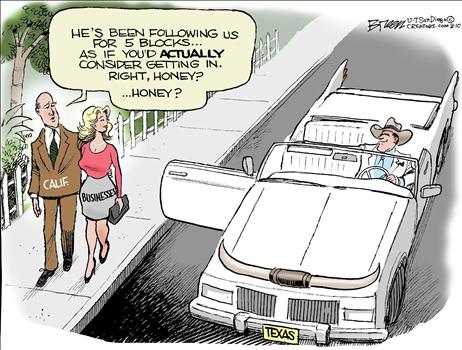

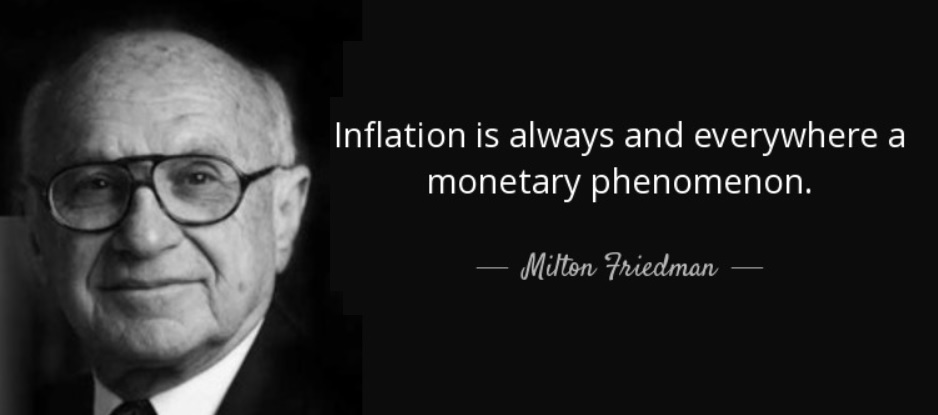
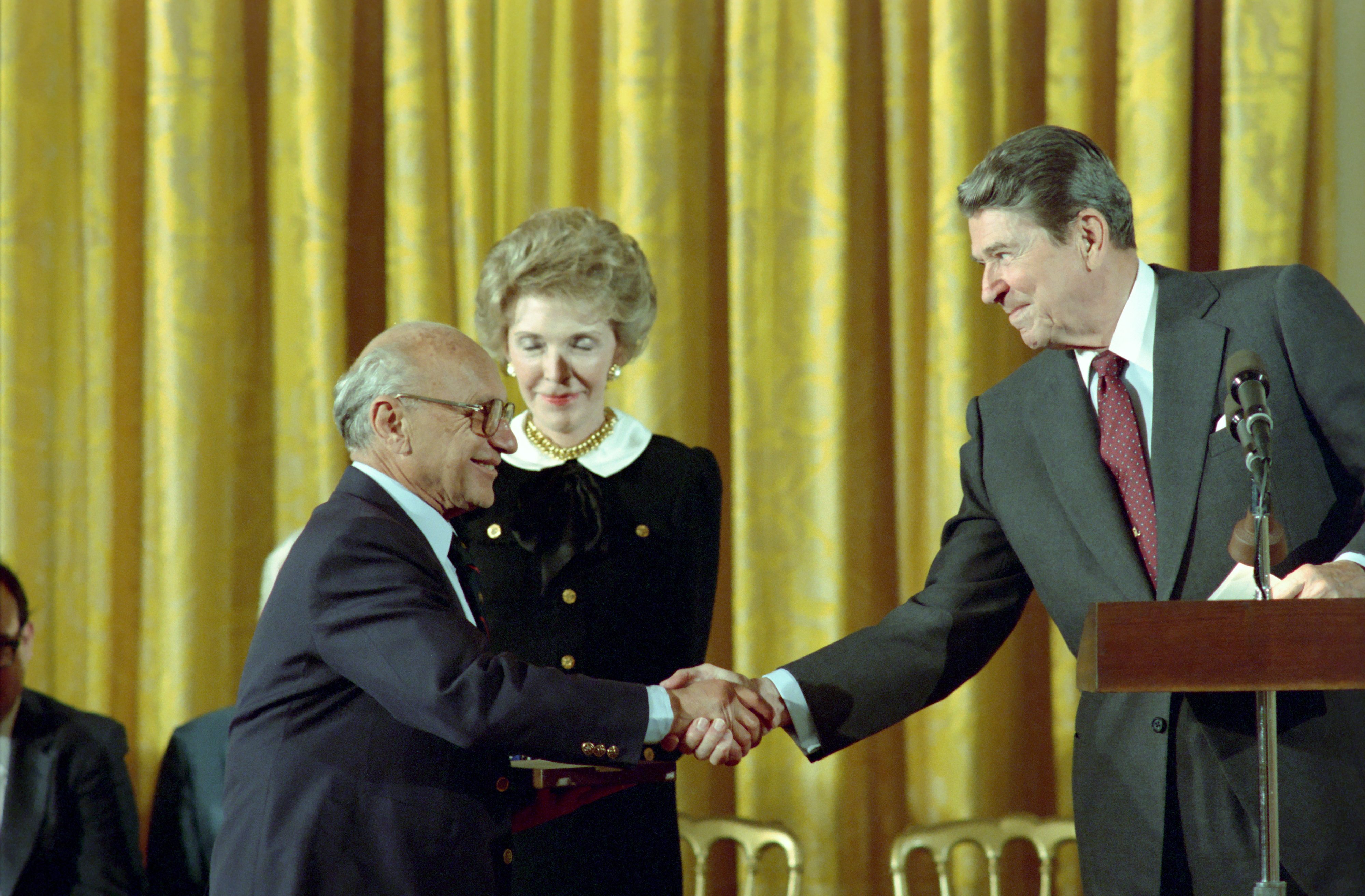


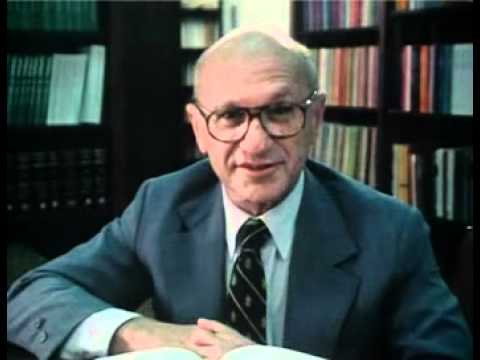















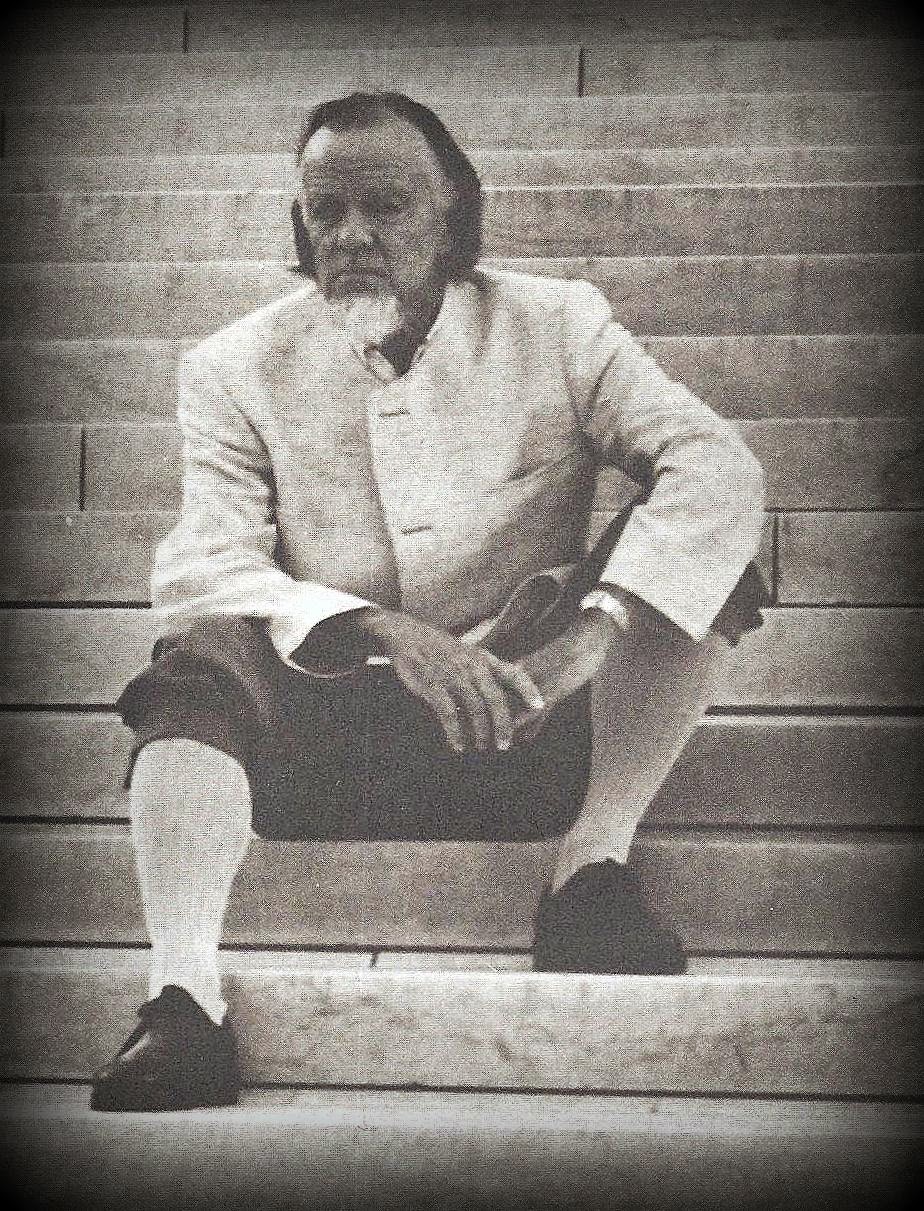


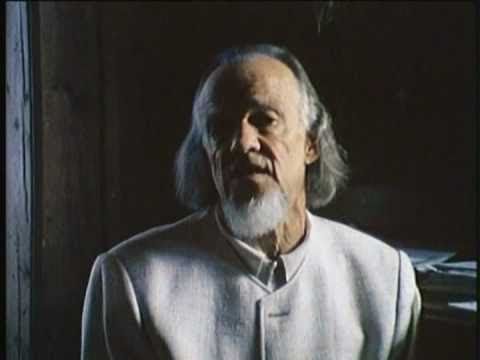



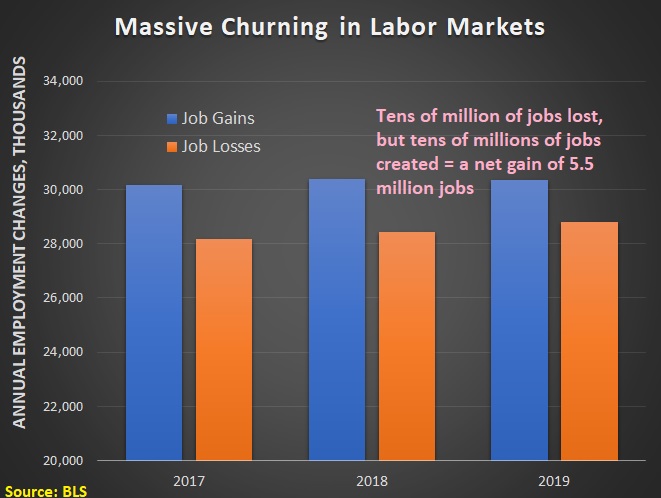



 The Daily Hatch