But what if we’re looking at one country rather than several nations?
In the case of the United States, it is useful to peruse data on GDP and consumption, but I’m also a big fan of using the Census Bureau’s data on inflation-adjusted median household income (though even this data isn’t perfect because household sizes are declining over time).
These numbers allow us to gauge, over multi-year periods, whether government policies are making life better for average families. Or whether they are producing stagnation.
But what if we don’t have several years of data?
That’s a very relevant question since we’re in the midst of my series on Bidenomics.
The president has only been in office for a little over one year, so we don’t even have medium-run data, much less long-run data. Moreover, I’m always cautious about using data for just one month, one quarter, or one year. After all, you don’t know if something is a real trend, or just a statistical blip.
That being said, if we want to give a preliminary grade to Biden’s economic performance, the best data would be inflation-adjusted earnings.
On this basis, Joe Biden is doing a bad job. Here’s Chart 1 from the Bureau of Labor Statistics’ report on what happened to hourly earnings in 2021, adjusted for inflation.
At the risk of stating the obvious, it’s not good news if most of the bars are in negative territory. I’ve also highlighted (in red) the key takeaways for the year.
Sophisticated observers will point out that hourly earnings are only one piece of the compensation puzzle.
So I then went to the Bureau of Labor Statistics’ report that also includes fringe benefits.
And if you look at Chart 4, which measures compensation after adjusting for inflation, you’ll notice very depressing data for 2021.
Now that we’ve looked at some grim data, let’s contemplate whether Joe Biden deserves blame.
The answer is probably yes, but I’ll share five caveats.
First, it’s just one year of data, so always be wary of statistical blips (maybe inflation is just transitory).
Second, only a few Biden policies have actually been enacted (though I’m not a fan of his biggest achievement).
Third, those policies may not have been in place long enough to have a meaningful effect on the economy.
Fifth, bad news in 2021 could merely be a continuation of a preexisting trend, in which case Trump maybe deserves blame.
Regarding the final point, notice in Chart 4 that the data was heading south at the end of 2020, when Trump was still in the White House.
Was that merely a statistical blip? If not, were the numbers bad because of something Trump did, or were they related to the pandemic? Or perhaps the bad numbers at the end of 2020 were related to investors and entrepreneurs fearing a future Biden agenda?
The bottom line is that we should ignore partisan labels and instead focus on policy. If government is becoming a bigger burden, then we can expect slower growth.
As such, it is very reasonable to think that 2021’s bad data is – at least in part – a consequence of Biden’s dirigiste policy agenda.
Click here to see the Hoover project showcasing the works of Milton and Rose Friedman.
Milton Friedman, recipient of the 1976 Nobel Memorial Prize for
economic science, was a senior research fellow at the Hoover Institution
from 1977 to 2006. He passed away on Nov. 16, 2006. (Link to obituary.)
He was also the Paul Snowden Russell Distinguished Service Professor
Emeritus of Economics at the University of Chicago, where he taught from
1946 to 1976, and a member of the research staff of the National Bureau
of Economic Research from 1937 to 1981.
Friedman was awarded the Presidential Medal of Freedom in 1988 and received the National Medal of Science the same year.
He was widely regarded as the leader of the Chicago School of
monetary economics, which stresses the importance of the quantity of
money as an instrument of government policy and as a determinant of
business cycles and inflation.
In addition to his scientific work, Friedman also wrote extensively
on public policy, always with a primary emphasis on the preservation and
extension of individual freedom. His most important books in this field
are (with Rose D. Friedman) Capitalism and Freedom (University of Chicago Press, 1962); Bright Promises, Dismal Performance (Thomas Horton and Daughters, 1983), which consists mostly of reprints of columns he wrote for Newsweek from 1966 to 1983; (with Rose D. Friedman) Free to Choose
(Harcourt Brace Jovanovich, 1980), which complements a ten-part
television series of the same name shown over the Public Broadcasting
Service (PBS) network in early 1980; and (with Rose D. Friedman) Tyranny of the Status Quo
(Harcourt Brace Jovanovich, 1984), which complements a three-part
television series of the same name, shown over PBS in early 1984.
He was a member of the President’s Commission on an All-Volunteer
Armed Force and the President’s Commission on White House Fellows. He
was a member of President Ronald Reagan’s Economic Policy Advisory Board
(a group of experts from outside the government named in 1981 by
President Reagan).
Friedman was also active in public affairs, serving as an informal
economic adviser to Senator Barry Goldwater in his unsuccessful campaign
for the presidency in 1964, to Richard Nixon in his successful 1968
campaign, to President Nixon subsequently, and to Ronald Reagan in his
1980 campaign.
He has published many books and articles, most notably A Theory of the Consumption Function, The Optimum Quantity of Money and Other Essays, and (with A. J. Schwartz) A Monetary History of the United States, Monetary Statistics of the United States, and Monetary Trends in the United States and the United Kingdom.
He was a past president of the American Economic Association, the
Western Economic Association, and the Mont Pelerin Society and was a
member of the American Philosophical Society and the National Academy of
Sciences.
He was awarded honorary degrees by universities in the United States,
Japan, Israel, and Guatemala, as well as the Grand Cordon of the First
Class Order of the Sacred Treasure by the Japanese government in 1986.
Friedman received a B.A. in 1932 from Rutgers University, an M.A. in
1933 from the University of Chicago, and a Ph.D. in 1946 from Columbia
University.
Two Lucky People, his and Rose D. Friedman’s memoirs, was published in 1998 by the University of Chicago Press.
Milton Friedman The Power of the Market 1-5 How can we have personal
freedom without economic freedom? That is why I don’t understand why
socialists who value individual freedoms want to take away our economic
freedoms. I wanted to share this info below with you from Milton
Friedman who has influenced me greatly over the […]
By Everette Hatcher III | Posted in Milton Friedman | Tagged arnold schwarzenegger. | Edit | Comments (0)
Milton Friedman: Free To Choose – The Failure Of Socialism With
Ronald Reagan (Full) Published on Mar 19, 2012 by NoNationalityNeeded
Milton Friedman’s writings affected me greatly when I first discovered
them and I wanted to share with you. We must not head down the path of
socialism like Greece has done. Abstract: Ronald Reagan […]
By Everette Hatcher III | Posted in Milton Friedman, President Obama | Edit | Comments (1)
Worse still, America’s depression was to become worldwide because of
what lies behind these doors. This is the vault of the Federal Reserve
Bank of New York. Inside is the largest horde of gold in the world.
Because the world was on a gold standard in 1929, these vaults, where
the U.S. gold was stored, […]
By Everette Hatcher III | Also posted in Current Events | Edit | Comments (0)
George Eccles: Well, then we called all our employees together. And
we told them to be at the bank at their place at 8:00 a.m. and just act
as if nothing was happening, just have a smile on their face, if they
could, and me too. And we have four savings windows and we […]
By Everette Hatcher III | Also posted in Current Events | Edit | Comments (0)
Milton Friedman’s Free to Choose (1980), episode 3 – Anatomy of a
Crisis. part 1 FREE TO CHOOSE: Anatomy of Crisis Friedman Delancy Street
in New York’s lower east side, hardly one of the city’s best known
sites, yet what happened in this street nearly 50 years ago continues to
effect all of us today. […]
Here is the video clip and transcript of the film series FREE TO
CHOOSE episode “What is wrong with our schools?” Part 2 of 6. Volume
6 – What’s Wrong with our Schools Transcript: Groups of concerned
parents and teachers decided to do something about it. They used private
funds to take over empty stores and they […]
Here is the video clip and transcript of the film series FREE TO
CHOOSE episode “What is wrong with our schools?” Part 1 of 6. Volume
6 – What’s Wrong with our Schools Transcript: Friedman: These youngsters
are beginning another day at one of America’s public schools, Hyde Park
High School in Boston. What happens when […]
Friedman Friday” Free to Choose by Milton Friedman: Episode “Created
Equal” (Part 3 of transcript and video) Liberals like President Obama
want to shoot for an equality of outcome. That system does not work. In
fact, our free society allows for the closest gap between the wealthy
and the poor. Unlike other countries where free enterprise and other […]
By Everette Hatcher III | Posted in Milton Friedman | Tagged containment devices, equality of outcome, oil spill, youtube | Edit | Comments (0)
Free to Choose by Milton Friedman: Episode “Created Equal” (Part 2 of
transcript and video) Liberals like President Obama want to shoot for
an equality of outcome. That system does not work. In fact, our free
society allows for the closest gap between the wealthy and the poor.
Unlike other countries where free enterprise and other freedoms are […]
By Everette Hatcher III | Posted in Milton Friedman | Tagged equality of outcome, menuhin school, new millionaires, world war ii | Edit | Comments (0)
I am currently going through his film series “Free to Choose” which
is one the most powerful film series I have ever seen. PART 3 OF 7 Worse
still, America’s depression was to become worldwide because of what
lies behind these doors. This is the vault of the Federal Reserve Bank
of New York. Inside […]
I am currently going through his film series “Free to Choose” which
is one the most powerful film series I have ever seen. For the past 7
years Maureen Ramsey has had to buy food and clothes for her family out
of a government handout. For the whole of that time, her husband, Steve,
hasn’t […]
By Everette Hatcher III | Edit | Comments (0)
Friedman Friday:(“Free to Choose” episode 4 – From Cradle to Grave,
Part 1 of 7) Volume 4 – From Cradle to Grave Abstract: Since the
Depression years of the 1930s, there has been almost continuous
expansion of governmental efforts to provide for people’s welfare.
First, there was a tremendous expansion of public works. The Social
Security Act […]
_________________________ Pt3 Nowadays there’s a considerable
amount of traffic at this border. People cross a little more freely than
they use to. Many people from Hong Kong trade in China and the market
has helped bring the two countries closer together, but the barriers
between them are still very real. On this side […]
By Everette Hatcher III | Posted in Current Events, Milton Friedman | Edit | Comments (0)
Aside from its harbor, the only other important resource of Hong
Kong is people __ over 4_ million of them. Like America a century ago,
Hong Kong in the past few decades has been a haven for people who sought
the freedom to make the most of their own abilities. Many of them are
[…]
By Everette Hatcher III | Posted in Current Events, Milton Friedman | Edit | Comments (0)
“FREE TO CHOOSE” 1: The Power of the Market (Milton Friedman) Free to
Choose ^ | 1980 | Milton Friedman Posted on Monday, July 17, 2006
4:20:46 PM by Choose Ye This Day FREE TO CHOOSE: The Power of the Market
Friedman: Once all of this was a swamp, covered with forest. The
Canarce Indians […]
Milton Friedman: Free To Choose – The Failure Of Socialism With
Ronald Reagan (Full) Published on Mar 19, 2012 by NoNationalityNeeded
Milton Friedman’s writings affected me greatly when I first discovered
them and I wanted to share with you. We must not head down the path of
socialism like Greece has done. Abstract: Ronald Reagan […]
By Everette Hatcher III | Posted in Milton Friedman, President Obama | Edit | Comments (1)
World Exclusive: After Life Season 3: The First few Minutes
After Life | Season 3 Official Trailer | Netflix
—
episodes will be released on January 14th.
Just Three Things. Written for #Afterlife by Ricky Gervais and Andy Burrows
March 7, 2022
Ricky Gervais
London, W1F 0LE UK
Dear Ricky,
Penny: Hmm. Let’s see. Interesting.
Kath: What?
Penny: Strong, confident, determined on the outside. But on the inside, you’re vulnerable and sensitive. You’re lonely. It’s tough, isn’t it? Being a strong woman in a man’s world. You feel you’ve lost a little of yourself, and you see needing comfort as a weakness they’ll pounce on. So you deny you need it. But you do need it, dear. Everyone does. ( sentimental music playing )
—-
TONY NEEDS EVIDENCE TO BELIEVE BUT KATH DOESN’T
Tony totally dismissed the palm reading abilities of Penny and I totally agree with his assessment, but I do think there is reason to believe the Bible is true!! Let me give you evidence and talk about a hero of yours!!!
Ricky you are a great admirer of Bertrand Russell.
Quote from Bertrand Russell:
Q: Why are you not a Christian?Russell: Because I see no evidence whatever for any of the Christian dogmas. I’ve examined all the stock arguments in favor of the existence of God, and none of them seem to me to be logically valid.Q: Do you think there’s a practical reason for having a religious belief, for many people?Russell: Well, there can’t be a practical reason for believing what isn’t true. That’s quite… at least, I rule it out as impossible. Either the thing is true, or it isn’t. If it is true, you should believe it, and if it isn’t, you shouldn’t. And if you can’t find out whether it’s true or whether it isn’t, you should suspend judgment. But you can’t… it seems to me a fundamental dishonesty and a fundamental treachery to intellectual integrity to hold a belief because you think it’s useful, and not because you think it’s true._Francis Schaeffer noted concerning the IMPLICIT FAITH of Bertrand Russell:I was lecturing at the University of St. Andrews one night and someone put forth the question, “If Christianity is so clear and reasonable then why doesn’t Bertrand Russell then become a Christian? Is it because he hasn’t discovered theology?”It wasn’t a matter of studying theology that was involved but rather that he had too much faith. I was surrounded by humanists and you could hear the gasps. Bertrand Russell and faith; Isn’t this the man of reason? I pointed out that this is a man of high orthodoxy who will hold his IMPLICIT FAITH on the basis of his presuppositions no matter how many times he has to zig and zag because it doesn’t conform to the facts.You must understand what the term IMPLICIT FAITH means. In the old Roman Catholic Church when someone who became a Roman Catholic they had to promise implicit faith. That meant that you not only had to believe everything that Roman Catholic Church taught then but also everything it would teach in the future. It seems to me this is the kind of faith that these people have in the uniformity of natural causes in a closed system and they have accepted it no matter what it leads them into. I think that these men are men of a high level of IMPLICIT FAITH in their own set of presuppositions. Paul said (in Romans Chapter One) they won’t carry it to it’s logical conclusion even though they hold a great deal of the truth and they have revolted and they have set up a series of universals in themselves which they won’t transgress no matter if they conform to the facts or not.Here below is the Romans passage that Schaeffer is referring to and verse 19 refers to what Schaeffer calls “the mannishness of man” and verse 20 refers to Schaeffer’s other point which is “the universe and it’s form.”Romans 1:18-20 Amplified Bible :18 For God’s [holy] wrath and indignation are revealed from heaven against all ungodliness and unrighteousness of men, who in their wickedness repress and hinder the truth and make it inoperative. 19 For that which is known about God is evident to them and made plain in their inner consciousness, because God [Himself] has shown it to them. 20 For ever since the creation of the world His invisible nature and attributes, that is, His eternal power and divinity, have been made intelligible and clearly discernible in and through the things that have been made (His handiworks). So [men] are without excuse [altogether without any defense or justification].We can actually see the two points makes playing themselves out in Bertrand Russell’s own life.[From a letter dated August 11, 1918 to Miss Rinder when Russell was 46]It is quite true what you say, that you have never expressed yourself—but who has, that has anything to express? The things one says are all unsuccessful attempts to say something else—something that perhaps by its very nature cannot be said. I know that I have struggled all my life to say something that I never shall learn how to say. And it is the same with you. It is so with all who spend their lives in the quest of something elusive, and yet omnipresent, and at once subtle and infinite. One seeks it in music, and the sea, and sunsets; at times I have seemed very near it in crowds when I have been feeling strongly what they were feeling; one seeks it in love above all. But if one lets oneself imagine one has found it, some cruel irony is sure to come and show one that it is not really found. The outcome is that one is a ghost, floating through the world without any real contact. Even when one feels nearest to other people, something in one seems obstinately to belong to God and to refuse to enter into any earthly communion—at least that is how I should express it if I thought there was a God. It is odd isn’t it? I care passionately for this world, and many things and people in it, and yet…what is it all? There must be something more important, one feels, though I don’t believe there is. I am haunted—some ghost, from some extra-mundane region, seems always trying to tell me something that I am to repeat to the world, but I cannot understand the message. But it is from listening to the ghost that one comes to feel oneself a ghost. I feel I shall find the truth on my deathbed and be surrounded by people too stupid to understand—fussing about medicines instead of searching for wisdom. Love and imagination mingled; that seems the main thing so far.During Bertrand Russell’s lifetime (1872-1970) there lived another scholar who also doubted that the Bible was true and his name was Sir William Mitchell Ramsay (1851-1939. Ramsay taught from 1885 to until his retirement in 1911 but he continued writing books.Wikipedia notes:In 1880 Ramsay received an Oxford studentship for travel and research in Greece. At Smyrna, he met Sir C. W. Wilson, then British consul-general in Anatolia, who advised him on inland areas suitable for exploration. Ramsay and Wilson made two long journeys during 1881-1882.He traveled widely in Asia Minor and rapidly became the recognized authority on all matters relating to the districts associated with St Paul’s missionary journeys and on Christianity in the early Roman Empire. Greece and Turkey remained the focus of Ramsay’s research for the remainder of his academic career. In 1883, he discovered the world’s oldest complete piece of music, the Seikilos epitaph. He was known for his expertise in the historic geographyand topography of Asia Minor and of its political, social, cultural, and religious history. He was Fellow of Exeter College, Oxford, in 1882.From 1885 to 1886 Ramsay held the newly created Lincoln and Merton professorship of classical archaeology and art at Oxford and became a fellow of Lincoln College (honorary fellow 1898). In 1886 Ramsay was appointed Regius Professor of Humanity at the University of Aberdeen. He remained affiliated with Aberdeen until his retirement in 1911. What information did William Ramsay find out about the accuracy of the Bible? Francis Schaeffer discusses Ramsay’s life below:
TRUTH AND HISTORY (chapter 5 of WHATEVER HAPPENED TO THE HUMAN RACE?, under footnotes #97 and #98)
A common assumption among liberal scholars is that because the Gospels are theologically motivated writings–which they are–they cannot also be historically accurate. In other words, because Luke, say (when he wrote the Book of Luke and the Book of Acts), was convinced of the deity of Christ, this influenced his work to the point where it ceased to be reliable as a historical account. The assumption that a writing cannot be both historical and theological is false.The experience of the famous classical archaeologist Sir William Ramsay illustrates this well. When he began his pioneer work of exploration in Asia Minor, he accepted the view then current among the Tubingen scholars of his day that the Book of Acts was written long after the events in Paul’s life and was therefore historically inaccurate. However, his travels and discoveries increasingly forced upon his mind a totally different picture, and he became convinced that Acts was minutely accurate in many details which could be checked.What is even more interesting is the way “liberal” modern scholars today deal with Ramsay’s discoveries and others like them. In the NEW TESTAMENT : THE HISTORY OF THE INVESTIGATION OF ITS PROBLEMS, the German scholar Werner G. Kummel made no reference at all to Ramsay. This provoked a protest from British and American scholars, whereupon in a subsequent edition Kummel responded. His response was revealing. He made it clear that it was his deliberate intention to leave Ramsay out of his work, since “Ramsay’s apologetic analysis of archaeology [in other words, relating it to the New Testament in a positive way] signified no methodologically essential advance for New Testament research.” This is a quite amazing assertion. Statements like these reveal the philosophic assumptions involved in much liberal scholarship.A modern classical scholar, A.N.Sherwin-White, says about the Book of Acts: “For Acts the confirmation of historicity is overwhelming…Any attempt to reject its basic historicity, even in matters of detail, must not appear absurd. Roman historians have long taken this for granted.”When we consider the pages of the New Testament, therefore, we must remember what it is we are looking at. The New Testament writers themselves make abundantly clear that they are giving an account of objectively true events.(Under footnote #98)Acts is a fairly full account of Paul’s journeys, starting in Pisidian Antioch and ending in Rome itself. The record is quite evidently that of an eyewitness of the events, in part at least. Throughout, however, it is the report of a meticulous historian. The narrative in the Book of Acts takes us back behind the missionary journeys to Paul’s famous conversion on the Damascus Road, and back further through the Day of Pentecost to the time when Jesus finally left His disciples and ascended to be with the Father.But we must understand that the story begins earlier still, for Acts is quite explicitly the second part of a continuous narrative by the same author, Luke, which reaches back to the birth of Jesus.Luke 2:1-7 New American Standard Bible (NASB)2 Now in those days a decree went out from Caesar Augustus, that a census be taken of all [a]the inhabited earth. 2 [b]This was the first census taken while[c]Quirinius was governor of Syria. 3 And everyone was on his way to register for the census, each to his own city. 4 Joseph also went up from Galilee, from the city of Nazareth, to Judea, to the city of David which is called Bethlehem, because he was of the house and family of David, 5 in order to register along with Mary, who was engaged to him, and was with child. 6 While they were there, the days were completed for her to give birth. 7 And she gave birth to her firstborn son; and she wrapped Him in cloths, and laid Him in a [d]manger, because there was no room for them in the inn.In the opening sentences of his Gospel, Luke states his reason for writing:Luke 1:1-4 New American Standard Bible (NASB)1 Inasmuch as many have undertaken to compile an account of the things[a]accomplished among us, 2 just as they were handed down to us by those whofrom the beginning [b]were eyewitnesses and [c]servants of the [d]word, 3 it seemed fitting for me as well, having [e]investigated everything carefully from the beginning, to write it out for you in consecutive order, most excellentTheophilus; 4 so that you may know the exact truth about the things you have been[f]taught.In Luke and Acts, therefore, we have something which purports to be an adequate history, something which Theophilus (or anyone) can rely on as its pages are read. This is not the language of “myths and fables,” and archaeological discoveries serve only to confirm this.For example, it is now known that Luke’s references to the titles of officials encountered along the way are uniformly accurate. This was no mean achievement in those days, for they varied from place to place and from time to time in the same place. They were proconsuls in Corinth and Cyprus, asiarchs at Ephesus, politarchesat Thessalonica, and protosor “first man” in Malta. Back in Palestine, Luke was careful to give Herod Antipas the correct title of tetrarch of Galilee. And so one. The details are precise.The mention of Pontius Pilate as Roman governor of Judea has been confirmed recently by an inscription discovered at Caesarea, which was the Roman capital of that part of the Roman Empire. Although Pilate’s existence has been well known for the past 2000 years by those who have read the Bible, now his governorship has been clearly attested outside the Bible.
Kenneth S. Wuest
Luke, The Greek Historian“LUKE WAS a Greek, educated in the Greek schools, prepared for the medical practice which was held in high regard as a profession, and among the Greeks had attained to a place of eminence among the nations of the world. Greek doctors of medicine were in attendance upon many of the royal families of other nations. The Greeks were by nature and training, a race of creative thinkers who pursued their studies in a scientific manner. Their sense of what really constituted scientific accuracy and method in the recording of history was well developed.The writings of Luke, both his Gospel and The Acts, demonstrates Luke’s training as an historian. He writes his Gospel to a Gentile friend, Theophilus. The name means “a god-lover,” or “god-beloved,” and may have been given him when he became a Christian. The words “most excellent” according to Ramsay, were a title like “Your Excellency,” and show that he held office…Luke wrote the Gospel for Theophilus to use as a standard whereby to judge the accuracy of the many inspired accounts of our Lord’s life which were written in the first century.The facts he records were most surely believed by the first century church. Luke arranges the facts of our Lord’s life in historical order as they occurred. The other Gospels do not claim to do that. The arrangement of events was dictated by the purpose which each author had in writing his account. The sources of Luke’s information were oral and written, from eye-witnesses of the events recorded.He as a trained historian would carefully check over these accounts, investigating and verifying every fact. And this is what he has reference to when he uses the words “having had perfect understanding of all things from the very first.” The words “having had perfect understanding” are literally, “having closely traced.” The verb means “to follow along a thing in the mind.” The word was used for the investigation of symptoms. Thus it speaks of a careful investigation of all sources, oral and written, which purport to be accounts of our Lord’s life.Luke had the historian’s mind, a thing native to the educated Greek. Herodotus, the father of Greek history, exhibited the Greek determination to get at the truth no matter how much work it required, when he travelled to central Africa to verify the account of the annual rise and fall of the Nile River. In those days this was a long and difficult journey. Sir William Ramsey said, “I regard Luke as the greatest historian who has ever lived, save only Thucydides.” Thus we have no doubt but that Luke made a personal investigation of all the facts he had recorded. He interviewed every witness, visited every locality. If Mary was still alive, he, a doctor of medicine investigated the story of the virgin birth by hearing it from Mary’s own lips. And as Professor John A. Scott, a great Greek scholar has said, “You could not fool Doctor Luke.”But Luke was not dependent alone upon his personal investigations for the accuracy of his record. He says that he closely traced all things from above. The words “from above” are from a Greek word translated “from the very first,” in the Authorized Version. The word occurs in John 3:31; 19:11; James 1:17; 3:15, 17, and is in every instance translated “from above.” It is used often in contrast to a word which means “from beneath.” Paul had doubtless heard the account of the institution of the Lord’s Supper from the eleven, but he also had it by revelation from the Lord (I Cor. 11:23). He had received his gospel by direct revelation in Arabia, and this was his check upon the gospel he heard at Jerusalem from the apostles.SoLuke claims to have closely investigated the facts he had received, and to have done so through the inspiration of the Holy Spirit, which fact guarantees the absolute accuracy of the record (Luke 1:1-4).”
Kenneth S. Wuest, “Word Studies In The Greek New Testament” (Grand Rapids, MI: Eerdmans 1979) pp. 52-54
XXX
Now let us look again at this issue of miracles!!!
Penny tells Tony she can contact Lisa. I agree with Tony that this is stupid!!!
Below is the link to former atheist Lee Strobel’s book:
OBJECTION #2: SINCE MIRACLES CONTRADICT SCIENCE, THEY CANNOT BE TRUE The virgin birth, the Resurrection, the raising of Lazarus, even the Old Testament miracles, all are freely used for religious propaganda, and they are very effective with an audience of unsophisticates and children. Richard Dawkins, atheist 1 It is not just a provocative rumor that God has acted in history, but a fact worthy of our intellectual conviction. The miracles of Christianity are not an embarrassment to the Christian worldview. Rather, they are testimony to the compassion of God for human beings benighted by sin and circumstance. Gary Habermas, Christian 2 I’ve seen guilty defendants squirm and sweat on the witness stand as they feel the noose of justice slowly tightening around their neck. They try to lie their way out of their predicament. They concoct improbable stories in a futile effort to explain away incriminating evidence. They manufacture transparently false alibis; they cast blame on innocent people; they attempt to
discredit police and prosecutors; they rewrite history; they deny and obfuscate and try to hoodwink the judge and jurors. But there’s one tactic I’ve never seen: a defendant claiming that the reason his fingerprints ended up on the murder weapon is-somehow, for some inexplicable reason, an act of God occurred, a mysterious, unrepeatable, supernatural event that made his fingerprints suddenly appear somewhere he had never touched. Once a defendant tried a “Twinkie defense” by making the dubious assertion that his elevated sugar levels were somehow responsible for his criminal behavior, but not even the most audacious defendant would try a “miracle defense.” Why? Because nobody would believe him! After all, we’re modern and scientific people living in the Third Millennium. We don’t subscribe to superstition, sorcery, or direct intervention from some unseen divine source. Claiming a miracle would be so blatantly silly that even the most desperate defendant wouldn’t resort to that strategy. One time I saw Penn and Teller, the comedian-magicians, select a ten-year-old boy named Isaiah from the audience and show him a long strip of polyester, which they proceeded to knot and cut in the middle. Then, with a big flourish, they shook out the cloth and-voila!-it was in one piece again. “What do you think?” Penn asked little Isaiah. “Was that a miracle or a magic trick?” Isaiah didn’t hesitate. “A magic trick,” he replied with confidence. A mere child, it seems, is smart enough to know that when we can’t quite understand what might have caused a mysterious event, there’s still undoubtedly a reasonable explanation apart from the miraculous. I knew from my conversation with agnostic Charles Templeton that he had shed his belief in miracles many years ago. “Our early forefathers sought within the limits of their experience to interpret life’s imponderables, usually attributing the inexplicable to the intervention of one or more of their gods, demi-deities, and evil spirits,” he wrote. “But surely … it is time to have done with primitive speculation and superstition and look at life in rational terms.” 3 There are scientists who agree, predicting that the march of knowledge will ultimately trample belief in supernatural events. In 1937, German physicist Max Planck said: “Faith in miracles must yield ground, step by step, before the steady and firm advance of the forces of science, and its total defeat is indubitably a mere matter of time.”4 Atheist Richard Dawkins, professor of public understanding of science at Oxford University and author of The Selfish Gene, believes that time is rapidly coming. “We’re working on … a complete understanding of the universe and everything that is in it,” he said in a television interview.5 That means, viola! as with Penn and Teller’s magically restored sash, there would be no need to appeal to the miraculous in order to explain away what previously had been shrouded in mystery. But can a person be scientifically sophisticated and still believe in the possibility of miracles? “My faith can be summed up in this one paradox: I believe in science, and I believe in God,” said nuclear physicist Hugh Siefken. “I plan to continue testifying to both.”6 He and many other scientists see no inherent conflict between their profession and their conclusion that a miracle-working God is responsible for creating and sustaining the universe. Is that a form of professional denial? Can a person write off elves and fairies as being fanciful and yet at the same time embrace manna from heaven, the virgin birth, and the Resurrection as
being credible events of history? If miracles are direct violations of natural laws, then how can a reasonable person believe they could ever occur? I knew that William Lane Craig was a rational man. And I was aware that he has used his considerable intellectual skills to defend the idea that God has-and does-intervene in the world through miraculous acts. I called him and asked whether he’d be willing to let me question him on the topic. “Sure,” he said. “Come on down.” I jotted down a long list of challenges and booked a flight to Atlanta. On the plane, I mused that primitive people probably would have considered jet travel to be a miracle. How else could fifty tons of metal be kept aloft in apparent defiance of the law of gravity? Surely God’s invisible hand must be beneath it. People today know better. They understand aerodynamics and jet propulsion. But has our knowledge of science and technology really rendered all belief in miracles obsolete? Or would Craig be able to provide convincing evidence that a person can be sober-minded and discerning while at the same time maintaining the validity of the miraculous? THE SECOND INTERVIEW: WILLIAM LANE CRAIG, PH.D. My initial reaction to seeing Bill Craig was disbelief. His beard, which for twenty-three years had given him a serious and scholarly demeanor, was gone. My face must have registered my shock. “I turned fifty,” he explained, “so I celebrated by shaving it off.” Craig ushered me down a flight of stairs to his office, a well-organized room dominated by a dark wood desk and floor-to-ceiling bookshelves with neatly arranged rows of books and scholarly journals. I settled into a comfortable chair while Craig sat behind the desk, leaning back in a leather-clad office chair that protested with a loud squeak. Craig has written extensively about miracles, especially the resurrection of Jesus. His books include Reasonable Faith, Knowing the Truth about the Resurrection, The Historical Argument for the Resurrection of Jesus, and Assessing the New Testament Evidence for the Historicity of the Resurrection of Jesus, and he contributed to In Defense of Miracles, Does God Exist? Jesus Under Fire, and The Intellectuals Speak Out about God. He holds doctorates in philosophy from the University of Birmingham, England, and in theology from the University of Munich, and is currently a Research Professor of Philosophy at the Talbot School of Theology. He is the member of nine professional societies, including the American Academy of Religion, Society of Biblical Literature, and the American Philosophical Association, and he has written for New Testament Studies, Journal for the Study of the New Testament, Journal of the American Scientific Affiliation, Gospel Perspectives, Philosophy, and other scholarly publications. Sans beard and wearing blue jeans, Craig looked a decade younger than his age, with piercing blue eyes, brown hair combed casually to the side, and a quick and enthusiastic laugh. He stroked his chin-subconsciously missing his beard, perhaps-as he listened intently to my first question, which admittedly came with an edge of challenge. “Okay, Dr. Craig, you’re an intelligent and educated individual,” I began. “Tell me: how can a modern and rational person still believe in babies being born from virgins, people walking on water, and cadavers emerging alive from tombs?”
Craig smiled. “It’s funny you should ask specifically about the virgin birth,” he replied, “because that was a major stumbling block to my becoming a Christian. I thought it was totally absurd.” “Really?” I said. “What happened?” “When the Christian message was first shared with me as a teenager, I had already studied biology. I knew that for the virgin birth to be true, a Y chromosome had to be created out of nothing in Mary’s ovum, because Mary didn’t possess the genetic material to produce a male child. To me, this was utterly fantastic. It just didn’t make sense.” “You’re not alone,” I observed. “Other skeptics have problems with it too. How did you proceed?” Craig thought back for a moment. “Well, I sort of put that issue aside and became a Christian anyway, even though I didn’t really believe in the virgin birth. But then, after becoming a Christian, it occurred to me that if I really do believe in a God who created the universe, then for him to create a Y chromosome would be child’s play!” I told Craig that I found it interesting he could have become a Christian despite misgivings about a doctrine as significant as the virgin birth. “I guess the authenticity of the person of Jesus and the truth of his message were so powerful that they simply overwhelmed any residual doubts that I had,” he replied. I pressed him by asking, “Weren’t you rushing headlong into something you didn’t totally accept?” “No, I think this can be a good procedure,” he said. “You don’t need to have all your questions answered to come to faith. You just have to say, The weight of the evidence seems to show this is true, so even though I don't have answers to all my questions, I'm going to believe and hope for answers in the long run.' That's what happened with me." "Does a person have to suspend their critical judgment in order to believe in something as improbable as miracles?" Craig sat upright in his chair and raised his index finger as if to punctuate his point. "Only if you believe that God does not exist!" he stressed. "Then I would agree-the miraculous would be absurd. But if there is a Creator who designed and brought the universe into being, who sustains its existence moment by moment, who is responsible for the very natural laws that govern the physical world, then certainly it's rational to believe that the miraculous is possible." MIRACLES VERSUS SCIENCE We were already getting into the interview but we had not yet paused to define our terms. Before going any further, I knew it was important that we settled on what 'miracle' means. "We throw around the word pretty haphazardly," I said. Harking back to my day thus far, I added, "For example, I might say,It was a miracle I made my flight to Atlanta,’ or, `It’s a miracle I found your house.’ Is that being too loose with the word?” “Yes, I think it’s a misuse to talk about these things as miracles,” he said. “They’re clearly natural events with natural consequences.” “Then how do you define the term?” Craig spelled out his definition with precision. “In the proper sense,” he said, “a miracle is an event which is not producible by the natural causes that are operative at the time and place that the event occurs.”
As he said it, I silently repeated the definition in order to cement it in my mind. I mulled it for a few moments before continuing with what I considered to be the next logical question. “But then isn’t there a contradiction between science and miracles?” I asked. “Atheistic philosopher Michael Ruse said, Creationists believe the world started miraculously. But miracles lie outside of science, which by definition deals with the natural, the repeatable, that which is governed by law."7 "Notice that Ruse does not say miracles are contradictory to science," Craig pointed out. "He says miracles lie outside of science, and that's quite different. I think a Christian who believes in miracles could agree with him on that. He could say that miracles, properly speaking, lie outside the province of natural science-but that's not to say they contradict science." I tried to digest the distinction. "Can you think of another example of something like that?" I asked. Craig thought for a moment before answering. "Well, ethics, for instance, lie outside the province of science," he replied. "Science doesn't make ethical judgments. So I wouldn't necessarily object to Ruse's statement. He's saying that the goal of science is to seek natural explanations, and therefore miracles lie outside of the scientific realm." Before I could ask another question, Craig spoke up again. "I should add, though, that you can do a theistic form of science. For example, there's a whole movement of people like mathematician William Dembski and biochemist Michael Belie who infer by principled means that there is an Intelligent Designer of the universe and the biological world." They aren't being arbitrary-from a rational and scientific perspective, they're concluding from the evidence that there must be an intelligent Creator." "So," I said, "you're disagreeing with the great skeptic David Hume, who defined miracles as being violations of the laws of nature." "Yes, absolutely. That's an improper understanding of miracles," he said. "You see, natural laws have implicit ceteris paribus conditions-that's Latin meaning,all other things being equal.’ In other words, natural laws assume that no other natural or supernatural factors are interfering with the operation that the law describes.” “Can you give me an example of that?” Craig’s eyes swept the room in search of an illustration. He finally landed on one as near as his own body. “Well, it’s a law of nature that oxygen and potassium combust when they’re combined,” he explained. “But I have oxygen and potassium in my body, and yet I’m not bursting into flames. Does that mean it’s a miracle and I’m violating the laws of nature? No, because the law merely states what happens under idealized conditions, assuming no other factors are interfering. In this case, however, there are other factors interfering with the combustion, and so it doesn’t take place. That’s not a violation of the law. “Similarly, if there’s a supernatural agent that is working in the natural world, then the idealized conditions described by the law are no longer in effect. The law isn’t violated because the law has this implicit provision that nothing is messing around with the conditions.” I told Craig that his explanation reminded me of a conversation I had several years earlier with J. P Moreland, the noted philosopher who wrote Christianity and the Nature of Science. He used an illustration of the law of gravity, which says that if you drop an object, it will fall to the earth. But, he said, if an apple falls from a tree and you reach out to catch it before it hits the ground, you’re not violating or negating the law of gravity; you’re merely intervening.
“Yes, that’s my point with the ceteris paribus conditions,” Craig said. “The law of gravity states what will happen under idealized conditions with no natural or supernatural factors intervening. Catching the apple doesn’t overturn the law of gravity or require the formulation of a new law. It’s merely the intervention of a person with free will who overrides the natural causes operative in that particular circumstance. And that, essentially, is what God does when he causes a miracle to occur.” That made sense to me. I knew, however, that some scientists would nevertheless dismiss the miraculous as mere superstition. I decided to pursue this line of questioning further. REAL ACTS OF GOD I asked Craig what he thought about physicist Max Plank’s prediction that faith in miracles would inevitably yield ground to the advance of science and biologist Richard Dawkin’s remark that scientists would someday understand the workings of the universe and thus vanquish the need for miraculous explanations. Craig’s reaction surprised me. “I think they’re right,” he declared. I looked up from my notes, thinking perhaps he had misunderstood my question. “Excuse me?” I said. “Really,” he insisted, “I think they’re correct-insofar as some superstitious people use miracles as an excuse for ignorance and sort of punt to God every time they can’t explain something. I think it’s a good thing that science will squeeze out that kind of simplistic thinking. “But those aren’t the miracles I’ve been talking about. I’m referring to events by which, in a principled way, you could legitimately infer that there was a supernatural agent intervening in the process. Those miracles-real acts of God-won’t be squeezed out by the advance of science, because they’re not based on an appeal to ignorance. They’re substantiated by the weight of the scientific and historical evidence. “Michael Belie does this in his book Darwin’s Black Box. Belie explores `irreducible complexity’ in nature-organisms that could not have evolved step-by-step by a gradual Darwinian process of natural selection and genetic mutation. Now, he’s not saying that this is merely scientifically inexplicable. He’s giving a principled inference to an Intelligent Designer based on what the evidence shows. This is rational. His conclusions are based on solid scientific analysis.” Craig’s discussion of evidence for miracles prompted me to ask about another point that was made by Hume, the eighteenth-century Scottish skeptic and history’s most famous doubter of the miraculous. “Hume said the evidence for the uniformity of nature is so conclusive that any evidence for miracles would never be able to overcome it,” I pointed out. “For instance, look at the Resurrection. We have thousands of years of uniform evidence that dead people simply do not return from the dead. So Hume says no amount of evidence would be able to overcome that tremendous presumption.” Craig shook his head. “There’s no contradiction between believing that men generally stay in their graves and that Jesus of Nazareth rose from the dead. In fact, Christians believe both of these. The opposite of the statement that Jesus rose from the dead is not that all other men remained in their graves; it’s that Jesus of Nazareth remained in his grave. “In order to argue against the evidence for the Resurrection, you have to present evidence against the Resurrection itself, not evidence that everybody else has always remained in their grave. So I think his argument is simply fallacious.
“Now, I would agree with Hume that a natural resurrection of Jesus from the dead, without any sort of divine intervention, is enormously improbable. But that’s not the hypothesis. The hypothesis is God raised Jesus from the dead. That doesn’t say anything against the laws of nature, which say dead men don’t come back to life naturally.” EXTRAORDINARY EVIDENCE While I could see Craig’s point, I wanted to pursue this avenue further. “Some critics say that the Resurrection is an extraordinary event and therefore it requires extraordinary evidence,” I said. “Doesn’t that assertion have a certain amount of appeal?” “Yes, that sounds like common sense,” he replied. “But it’s demonstrably false.” “How so?” “Because this standard would prevent you from believing in all sorts of events that we do rationally embrace. For example, you would not believe the report on the evening news that the numbers chosen in last night’s lottery were 4, 2, 9, 7, 8, and 3, because that would be an event of extraordinary improbability. The odds against that are millions and millions to one, and therefore you should not believe it when the news reports it. Yet we obviously believe we’re rational in concluding it’s true. How is that possible? “Well, probability theorists say that you must weigh the improbability of the event’s occurring against the probability that the evidence would be just as it is if the event had not taken place.” Craig rattled off that statement so fast that my mind was having trouble assimilating it. “Whoa,” I said, holding up my hand. “You’re going to have to slow down and give me an example.” “Okay, look at it this way: if the evening news has a very high probability of being accurate, then it’s highly improbable that they would inaccurately report the numbers chosen in the lottery. That counterbalances any improbability in the choosing of those numbers, so you’re quite rational to believe in this highly improbable event. “In the same way, any improbability that you might think resides in the resurrection of Jesus is counterbalanced by the improbability of the empty tomb, Jesus’ resurrection appearances, the sudden change in the first disciples taking place if there were no such event as the resurrection of Jesus. Do you see what I mean?” Yes, I said, that illustration made his point clear. As improbable as the Resurrection might seem to skeptics, this has to be weighed against how improbable it would be to have all of the various historical evidence for its occurrence if it never actually took place. “So,” Craig concluded, “it becomes quite rational to believe in an event like the miraculous resurrection of Jesus. Besides, I look at it this way: if God really exists, then in what sense is it improbable that he would raise Jesus from the dead? I can’t think of any.” “Have you seen skeptics who have become believers in Christianity because of the quality and quantity of the evidence for the Resurrection?” I asked. Craig’s eyes got wide. “Oh, yes, certainly!” he said. “I recently met a fellow who became a Christian out of the so-called free thought' movement. He looked into the Resurrection and concluded from the evidence that God raised Jesus from the dead. Of course, his free-thought colleagues bitterly railed against him. He said,Why are they so hostile? I merely followed the principles of free thought, and this is where the evidence and reason led me!”‘
I chuckled. “Are you saying some free thought' folks aren't as free thinking as they would have people believe?" "Frankly," he replied, "I think many skeptics act in a close-minded way." As a former skeptic myself, I have noticed the same phenomenon. "Are you referring to the fact that some of them rule out even the possibility of miracles from the outset?" I asked. "Precisely," Craig said. "Logicians have a term:inference to the best explanation.’ This means you have a body of data to be explained, and then you have a pool of live options or various explanations for that data. You need to choose which explanation from that pool would, if true, best explain the observed data. “Some skeptics, however, will not allow supernatural explanations even to be in the pool of live options. Consequently, if there is no natural explanation for an event, they’re simply left with ignorance. “That’s prejudice. Apart from some proof of atheism, there’s no warrant for excluding supernatural explanations from being a member of the pool of live options. If you do put them in that pool, then you’ve got to be an open, honest investigator to see which is the best explanation of any given event.” THE MIRACLES OF JESUS “Let’s say you’re an honest investigator,” I said, picking up on his last thought. “What would you look for to convince you that something miraculous has occurred?” “You would have a number of criteria. You would have to investigate to see if something cannot be accounted for in terms of the natural forces that were operable at that time and place. And you’d look for a religio-historical context.” I wanted to pursue this idea of context. Hume said that if historians uniformly agreed that the Queen of England died and then reappeared alive a month later, he would be inclined to accept any explanation other than God having performed a miracle. I asked Craig for his response to that. “I would agree that a miracle without context is inherently ambiguous,” Craig replied. “The context of a miracle can help us determine if it’s from God or not. For instance, the Queen’s revivification would lack any religious context and would basically be a bald and unexplained anomaly. “But that’s not the case with Jesus. His supernatural feats took place in a context charged with religious significance because he performed his miracles and exorcisms as signs of the in- breaking of the kingdom of God into human history, and they served as an authentication of his message. And his resurrection comes as the climax to his own unparalleled life and ministry and his radical claims to divine authority which got him crucified. This is why the Resurrection gives us pause, while the Queen’s return would only perplex us. Therefore, the religio-historical context is crucial in understanding miraculous events.” But I pressed further: “Did Jesus perform miracles? What convinces you that he did?” “The fact is that most New Testament critics today admit he performed what we would call miracles. Granted, they may not all believe these were genuine miracles, but the idea of Jesus of Nazareth as a miracle-worker and exorcist is part of the historical Jesus that’s generally accepted by critics today.” With that, Craig swiveled his chair and withdrew a file from the shelf behind his desk. He flipped through some pages until he landed the one he was after. “Let me read you a quote from
Rudolf Bultmann, who’s recognized as one of the most skeptical New Testament critics of this century”: The Christian fellowship was convinced that Jesus had done miracles and they told many stories of miracles about him. Most of these stories contained in the gospels are legendary or are at least dressed up with legend. But, there can be no doubt that Jesus did such deeds, which were, in his and his contemporaries’ understanding, miracles; that is to say, events that were the result of supernatural divine causality. Doubtless he healed the sick and cast out demons.9 Craig closed the file. “Even Bultmann says miracles and exorcisms belong to the historical Jesus. Now, in Bultmann’s day these stories were considered legendary because of the supposed influence of Greco-Roman mythology on the gospels, but scholars today realize this influence was virtually nil. They now believe the role of Jesus as a miracle-worker must be understood against the backdrop of first century Palestinian Judaism, where it fits right in. “In fact,” he concluded, “the only reason to be skeptical that these were genuine miracles rather than psychosomatic healings would be philosophical-do you believe that such events can occur or not? The historicity of the events is not in doubt.”
I have gone back and forth and back and forth with many liberals on the Arkansas Times Blog on many issues such as abortion, human rights, welfare, poverty, gun control and issues dealing with popular culture. Here is another exchange I had with them a while back. My username at the Ark Times Blog is Saline […]By Everette Hatcher III | Posted in Biblical Archaeology, Francis Schaeffer, Prolife | Edit|Comments (0)
I have posted many of the sermons by John MacArthur. He is a great bible teacher and this sermon below is another great message. His series on the Book of Proverbs was outstanding too. I also have posted several of the visits MacArthur made to Larry King’s Show. One of two most popular posts I […]By Everette Hatcher III | Posted in Adrian Rogers, Current Events | Edit|Comments (0)
I have posted many of the sermons by John MacArthur. He is a great bible teacher and this sermon below is another great message. His series on the Book of Proverbs was outstanding too. I also have posted several of the visits MacArthur made to Larry King’s Show. One of two most popular posts I […]By Everette Hatcher III | Posted in Adrian Rogers, Current Events |Tagged Bible Prophecy, john macarthur | Edit|Comments (0)
Prophecy–The Biblical Prophesy About Tyre.mp4 Uploaded by TruthIsLife7 on Dec 5, 2010 A short summary of the prophecy about Tyre and it’s precise fulfillment. Go to this link and watch the whole series for the amazing fulfillment from secular sources. http://www.youtube.com/watch?v=qvt4mDZUefo________________ John MacArthur on the amazing fulfilled prophecy on Tyre and how it was fulfilled […]By Everette Hatcher III | Posted in Biblical Archaeology | Edit|Comments (1)
John MacArthur on the Bible and Science (Part 2) I have posted many of the sermons by John MacArthur. He is a great bible teacher and this sermon below is another great message. His series on the Book of Proverbs was outstanding too. I also have posted several of the visits MacArthur made to Larry […]By Everette Hatcher III | Posted in Current Events | Edit|Comments (0)
John MacArthur on the Bible and Science (Part 1) I have posted many of the sermons by John MacArthur. He is a great bible teacher and this sermon below is another great message. His series on the Book of Proverbs was outstanding too. I also have posted several of the visits MacArthur made to Larry […]By Everette Hatcher III | Posted in Current Events | Edit|Comments (0)
Adrian Rogers – How you can be certain the Bible is the word of God Great article by Adrian Rogers. What evidence is there that the Bible is in fact God’s Word? I want to give you five reasons to affirm the Bible is the Word of God. First, I believe the Bible is the […]By Everette Hatcher III | Posted in Adrian Rogers, Biblical Archaeology | Edit|Comments (0)
Is there any evidence the Bible is true? Articles By PleaseConvinceMe Apologetics Radio The Old Testament is Filled with Fulfilled Prophecy Jim Wallace A Simple Litmus Test There are many ways to verify the reliability of scripture from both internal evidences of transmission and agreement, to external confirmation through archeology and science. But perhaps the […]By Everette Hatcher III | Posted in Biblical Archaeology, Current Events | Edit|Comments (0)
I have gone back and forth and back and forth with many liberals on the Arkansas Times Blog on many issues such as abortion, human rights, welfare, poverty, gun control and issues dealing with popular culture. Here is another exchange I had with them a while back. My username at the Ark Times Blog is […]By Everette Hatcher III | Posted in Francis Schaeffer, Prolife | Edit|Comments (0)
Here is some very convincing evidence that points to the view that the Bible is historically accurate. Archaeological and External Evidence for the Bible Archeology consistently confirms the Bible! Archaeology and the Old Testament Ebla tablets—discovered in 1970s in Northern Syria. Documents written on clay tablets from around 2300 B.C. demonstrate that personal and place […]By Everette Hatcher III | Posted in Biblical Archaeology | E
On Saturday April 18, 2020 at 6pm in London and noon in Arkansas, I had a chance to ask Ricky Gervais a question on his Twitter Live broadcast which was “Is Tony a Nihilist?” At the 20:51 mark Ricky answers my question. Below is the video:
—
—
Ricky Gervais 25/07/2021 Facebook Live at 28:29 mark Ricky answers my question about Sam Harris
7 Follow my advice, my son; always treasure my commands. 2 Obey my commands and live! Guard my instructions as you guard your own eyes.[a] 3 Tie them on your fingers as a reminder. Write them deep within your heart.
4 Love wisdom like a sister; make insight a beloved member of your family. 5 Let them protect you from an affair with an immoral woman, from listening to the flattery of a promiscuous woman.
6 While I was at the window of my house, looking through the curtain, 7 I saw some naive young men, and one in particular who lacked common sense. 8 He was crossing the street near the house of an immoral woman, strolling down the path by her house. 9 It was at twilight, in the evening, as deep darkness fell. 10 The woman approached him, seductively dressed and sly of heart. 11 She was the brash, rebellious type, never content to stay at home. 12 She is often in the streets and markets, soliciting at every corner. 13 She threw her arms around him and kissed him, and with a brazen look she said, 14 “I’ve just made my peace offerings and fulfilled my vows. 15 You’re the one I was looking for! I came out to find you, and here you are! 16 My bed is spread with beautiful blankets, with colored sheets of Egyptian linen. 17 I’ve perfumed my bed with myrrh, aloes, and cinnamon. 18 Come, let’s drink our fill of love until morning. Let’s enjoy each other’s caresses, 19 for my husband is not home. He’s away on a long trip. 20 He has taken a wallet full of money with him and won’t return until later this month.[b]”
21 So she seduced him with her pretty speech and enticed him with her flattery. 22 He followed her at once, like an ox going to the slaughter. He was like a stag caught in a trap,[c] 23 awaiting the arrow that would pierce its heart. He was like a bird flying into a snare, little knowing it would cost him his life.
24 So listen to me, my sons, and pay attention to my words. 25 Don’t let your hearts stray away toward her. Don’t wander down her wayward path. 26 For she has been the ruin of many; many men have been her victims. 27 Her house is the road to the grave.[d] Her bedroom is the den of death.
–
Last week I had the awkward privilege of teaching sex ed to four teenage boys. Put that down in the “Things I Didn’t Think I Would Do as a Preacher” column. It actually went very well when all was said and done. The young men behaved very maturely, and we were able to talk through some relevant scriptures in the process. The main text we discussed was Proverbs 5, the same text I would like to share with you now. In this chapter, an aged King Solomon shares wisdom gained through experience with his son (likely Rehoboam). Solomon’s advice is actually a warning against what he calls the immoral woman.
Preliminary Observations
Proverbs and Ecclesiastes are interesting to read after having read the histories of Solomon in 1 Kings and 2 Chronicles. The earlier histories end the story of the world’s most decorated king on a bitter note, especially 1 Kings 11. That’s where the Bible tells us how Solomon, “loved many foreign women,” (v. 1) had 700 wives, 300 concubines, and as a result he was influenced to worship false gods. All I can hear when reading those words is the *Wah, Wah, Wahhhhhhh…* sound effect from movies when something disappointing happens. Having been with 1,000+ women, I would venture to say that Solomon, out of everyone in the whole world, was most qualified to speak on what he calls in Proverbs– the immoral woman.
Furthermore, it would appear that Solomon learned a thing or two from sleeping with all those women. We learn as much from his advice in Proverbs 5:18, “Rejoice with the wife of your youth.” I might break down v. 18 and its companion verses in a later article, but know for now that if Ole King Solly (I’ll call him Solly from now on) learned anything from his mistakes, it was this: God’s plan for marriage was one man and one woman in a closed and committed relationship. But as I have already mentioned, it took him a lot of mistakes to learn this ultimate truth.
The Immoral Woman
Now, let’s crack the code and figure out who this immoral woman is that Solly speaks about so frequently in the book of Proverbs. Proverbs has a lot to say about this lady of the night (see 2:16-19; 5:3-20; 6:24-35; 7:5-27; 22:14; 23:27-28; 29:3; 30:20). Sometimes she is called by other names in the NKJV such as the harlot (23:27) and the adulterous woman (30:20). But in Proverbs 5 Solly introduces her like this, “My son, pay attention to my wisdom; lend your ear to my understanding, that you may preserve discretion, and your lips may keep knowledge. For the lips of an immoral womandrip honey, and her mouth is smoother than oil,” (v. 1-3). He draws attention to her lips for two reasons: lips are a literal object of seduction and it is with the lips that the immoral woman speaks words that weaken the young man so he is defenseless. Just read Proverbs 7:13-20 to see what this woman says and does with her lips to earn the name she is given. This woman has no moral compass. She has endulged in promiscuity for so long that she doesn’t even have a conscience about this kind of stuff anymore. And while all of this accurately describes the immoral woman, allow me to help you visualize what she looks like. It might surprise you.
Certainly women that work in gentlemen’s clubs and the like are immoral women. There’s no doubt about that. No one has trouble identifying those women. Growing up, I always thought of those kind of women whenever I read or heard someone else read about the harlot of Proverbs. Today we call these women prostitutes, hookers, escorts, and other names I won’t mention. But to be sure, these types of women only make up sample of what Solly is talking about. Today millions of young ladies every year graduate from the school of How to Be an Immoral Woman. Classes start in 1st grade and extend through high school. The main curriculum is TV, peer pressure, low self esteem, and watching everyone else in society. They usually start clinicals sometime in high school. These women don’t just work in clubs. No. They take your order at McDonalds. They are administrative assistants at the RE/MAX real estate office in town. They workout right next to you at the local Planet Fitness. Some of them sit next to you at church. They are young, old and in between. Hardly any of these women would take money for sexual services; they would even frown and snarl at the very notion. But here’s what they will do for free. They will tell you dirty jokes and stories to see how you respond. They will purposefully wear clothes that accentuate their curves and everything else. They will fill social media with pictures of themselves, pictures that 50 years ago you could only see in a gas station magazine. They will send you pictures of their body. They will test you to see how far you are willing to go in the front seat of your car. And they have no qualms about going to bed or doing other stuff with you before saying, “I do.” This last one has become so socially acceptable among “Christians” today that I recently saw a Christian podcast episode entitled, “Is it a sin to live with your boyfriend or girlfriend?” I thought to myself, “Why is that even a question that deserves one whole hour of discussion?” My point is, the immoral woman of Proverbs is your average woman today. Things could very well have been the same culturally speaking in Solly’s day but especially today. His words could just as well say, “The lips of the average woman drip honey, and her mouth is smoother than oil.” And with this introduction the king goes on to give a solution to his young son about how to interact with this woman.
How the Young Man Should Respond
Solly says to his son, “Remove your way far from her (the immoral woman), and do not go near the door of her house,” (v. 8). You will notice what he DIDN’T say. He didn’t say, “Go ahead and date her. Maybe in the process you can rub off on her and she will change.” Nah dawg. The king who had been with 1,000 women looked his son in the eye and said, “Don’t give that chick a single inch, because fore you know it, she will have you walking with her into the depths of hell,” (v. 5, my translation). I’ve seen it way too much, I’ve even lived it, where a young man thinks he is strong enough to entertain the immoral woman without getting his hands dirty only to find out he was wrong. You’re lying to yourself if you think you are stronger and wiser than Solomon. As I admonished my graduating class in 2011, “Don’t be stupid, cuz that’s stupid.”
Ecclesiastes 8-10 | Still Searching After All These Years Published on Oct 9, 2012 Calvary Chapel Spring Valley | Sunday Evening | October 7, 2012 | Pastor Derek Neider _______________________ Ecclesiastes 11-12 | Solomon Finds His Way Published on Oct 30, 2012 Calvary Chapel Spring Valley | Sunday Evening | October 28, 2012 | Pastor Derek Neider […]By Everette Hatcher III | Posted in Current Events | Edit | Comments (0)
Over and over in Proverbs you hear the words “fear the Lord.” In fact, some of he references are Proverbs 1:7, 29; 2:5; 8:13; 9:10;14:26,27; 15:16 and many more. Below is a sermon by John MacArthur from the Book of Luke on 3 reasons we should fear the Lord. (I have posted John MacArthur’s amazing […]By Everette Hatcher III | Posted in Adrian Rogers, Current Events | Edit | Comments (0)
Over and over in Proverbs you hear the words “fear the Lord.” In fact, some of he references are Proverbs 1:7, 29; 2:5; 8:13; 9:10;14:26,27; 15:16 and many more. Below is a sermon by John MacArthur from the Book of Luke on 3 reasons we should fear the Lord. (I have posted John MacArthur’s amazing […]By Everette Hatcher III | Posted in Adrian Rogers, Current Events | Edit | Comments (0)
Over and over in Proverbs you hear the words “fear the Lord.” In fact, some of he references are Proverbs 1:7, 29; 2:5; 8:13; 9:10;14:26,27; 15:16 and many more. Below is a sermon by John MacArthur from the Book of Luke on 3 reasons we should fear the Lord. (I have posted John MacArthur’s amazing […]By Everette Hatcher III | Posted in Adrian Rogers, Current Events | Edit | Comments (0)
Over and over in Proverbs you hear the words “fear the Lord.” In fact, some of he references are Proverbs 1:7, 29; 2:5; 8:13; 9:10;14:26,27; 15:16 and many more. Below is a sermon by John MacArthur from the Book of Luke on 3 reasons we should fear the Lord. (I have posted John MacArthur’s amazing […]By Everette Hatcher III | Posted in Adrian Rogers, Current Events | Edit | Comments (0)
Over and over in Proverbs you hear the words “fear the Lord.” In fact, some of he references are Proverbs 1:7, 29; 2:5; 8:13; 9:10;14:26,27; 15:16 and many more. Below is a sermon by John MacArthur from the Book of Luke on 3 reasons we should fear the Lord. (I have posted John MacArthur’s amazing […]By Everette Hatcher III | Posted in Adrian Rogers, Current Events | Tagged Gene Bartow, John Wooden | Edit | Comments (0)
Over and over in Proverbs you hear the words “fear the Lord.” In fact, some of he references are Proverbs 1:7, 29; 2:5; 8:13; 9:10;14:26,27; 15:16 and many more. Below is a sermon by John MacArthur from the Book of Luke on 3 reasons we should fear the Lord. (I have posted John MacArthur’s amazing […]By Everette Hatcher III | Posted in Adrian Rogers, Current Events | Edit | Comments (0)
Over and over in Proverbs you hear the words “fear the Lord.” In fact, some of he references are Proverbs 1:7, 29; 2:5; 8:13; 9:10;14:26,27; 15:16 and many more. Below is a sermon by John MacArthur from the Book of Luke on 3 reasons we should fear the Lord. (I have posted John MacArthur’s amazing […]By Everette Hatcher III | Posted in Adrian Rogers, Current Events | Edit | Comments (0)
Over and over in Proverbs you hear the words “fear the Lord.” In fact, some of he references are Proverbs 1:7, 29; 2:5; 8:13; 9:10;14:26,27; 15:16 and many more. Below is a sermon by John MacArthur from the Book of Luke on 3 reasons we should fear the Lord. It is tough to guard your […]By Everette Hatcher III | Posted in Adrian Rogers, Current Events | Edit | Comments (0)
Over and over in Proverbs you hear the words “fear the Lord.” In fact, some of he references are Proverbs 1:7, 29; 2:5; 8:13; 9:10;14:26,27; 15:16 and many more. Below is a sermon by John MacArthur from the Book of Luke on 3 reasons we should fear the Lord. What does it mean to fear […]By Everette Hatcher III | Posted in Current Events, Uncategorized | Edit | Comments (0)
Ecclesiastes 6-8 | Solomon Turns Over a New Leaf Published on Oct 2, 2012 Calvary Chapel Spring Valley | Sunday Evening | September 30, 2012 | Pastor Derek Neider _____________________ I have written on the Book of Ecclesiastes and the subject of the meaning of our lives on several occasions on this blog. In this series on Ecclesiastes I […]By Everette Hatcher III | Posted in Current Events | Edit | Comments (0)
Ecclesiastes 1 Published on Sep 4, 2012 Calvary Chapel Spring Valley | Sunday Evening | September 2, 2012 | Pastor Derek Neider _____________________ I have written on the Book of Ecclesiastes and the subject of the meaning of our lives on several occasions on this blog. In this series on Ecclesiastes I hope to show how […]By Everette Hatcher III | Posted in Current Events | Edit | Comments (0)
Ecclesiastes 1 Published on Sep 4, 2012 Calvary Chapel Spring Valley | Sunday Evening | September 2, 2012 | Pastor Derek Neider _____________________ I have written on the Book of Ecclesiastes and the subject of the meaning of our lives on several occasions on this blog. In this series on Ecclesiastes I hope to show how […]By Everette Hatcher III | Posted in Current Events | Edit | Comments (0)
Ecclesiastes 8-10 | Still Searching After All These Years Published on Oct 9, 2012 Calvary Chapel Spring Valley | Sunday Evening | October 7, 2012 | Pastor Derek Neider _______________________ Ecclesiastes 11-12 | Solomon Finds His Way Published on Oct 30, 2012 Calvary Chapel Spring Valley | Sunday Evening | October 28, 2012 | Pastor Derek Neider […]By Everette Hatcher III | Posted in Current Events | Edit | Comments (0)
Ecclesiastes 6-8 | Solomon Turns Over a New Leaf Published on Oct 2, 2012 Calvary Chapel Spring Valley | Sunday Evening | September 30, 2012 | Pastor Derek Neider _____________________ I have written on the Book of Ecclesiastes and the subject of the meaning of our lives on several occasions on this blog. In this series […]By Everette Hatcher III | Posted in Current Events | Edit | Comments (0)
Ecclesiastes 4-6 | Solomon’s Dissatisfaction Published on Sep 24, 2012 Calvary Chapel Spring Valley | Sunday Evening | September 23, 2012 | Pastor Derek Neider ___________________ I have written on the Book of Ecclesiastes and the subject of the meaning of our lives on several occasions on this blog. In this series on Ecclesiastes I hope […]By Everette Hatcher III | Posted in Current Events | Edit | Comments (0)
Ecclesiastes 8-10 | Still Searching After All These Years Published on Oct 9, 2012 Calvary Chapel Spring Valley | Sunday Evening | October 7, 2012 | Pastor Derek Neider _______________________ Ecclesiastes 11-12 | Solomon Finds His Way Published on Oct 30, 2012 Calvary Chapel Spring Valley | Sunday Evening | October 28, 2012 | Pastor Derek Neider […]By Everette Hatcher III | Posted in Current Events | Edit | Comments (0)
Ecclesiastes 8-10 | Still Searching After All These Years Published on Oct 9, 2012 Calvary Chapel Spring Valley | Sunday Evening | October 7, 2012 | Pastor Derek Neider _______________________ Ecclesiastes 11-12 | Solomon Finds His Way Published on Oct 30, 2012 Calvary Chapel Spring Valley | Sunday Evening | October 28, 2012 | Pastor Derek Neider […]By Everette Hatcher III | Posted in Current Events | Edit | Comments (0)
Tom Brady “More than this…” Uploaded by EdenWorshipCenter on Jan 22, 2008 EWC sermon illustration showing a clip from the 2005 Tom Brady 60 minutes interview. _______________________ Tom Brady ESPN Interview Tom Brady has famous wife earned over 76 million dollars last year. However, has Brady found lasting satifaction in his life? It does not […]By Everette Hatcher III | Posted in Current Events | Edit | Comments (0)
Adrian Rogers: How to Be a Child of a Happy Mother Published on Nov 13, 2012 Series: Fortifying Your Family (To read along turn on the annotations.) Adrian Rogers looks at the 5th commandment and the relationship of motherhood in the commandment to honor your father and mother, because the faith that doesn’t begin at home, […]By Everette Hatcher III | Posted in Adrian Rogers, Current Events | Edit | Comments (0)
Ecclesiastes 1 Published on Sep 4, 2012 Calvary Chapel Spring Valley | Sunday Evening | September 2, 2012 | Pastor Derek Neider _____________________ I have written on the Book of Ecclesiastes and the subject of the meaning of our lives on several occasions on this blog. In this series on Ecclesiastes I hope to show how secular humanist man […]By Everette Hatcher III | Posted in Current Events | Edit | Comments (0)
Adrian Rogers – How to Cultivate a Marriage Another great article from Adrian Rogers. Are fathers necessary? “Artificial insemination is the ideal method of producing a pregnancy, and a lesbian partner should have the same parenting rights accorded historically to biological fathers.” Quoted from the United Nations Fourth World Conference on Women, summer of 1995. […]By Everette Hatcher III | Posted in Adrian Rogers, Current Events | Edit | Comments (0)
Tom Brady “More than this…” Uploaded by EdenWorshipCenter on Jan 22, 2008 EWC sermon illustration showing a clip from the 2005 Tom Brady 60 minutes interview. To Download this video copy the URL to http://www.vixy.net ________________ Obviously from the video clip above, Tom Brady has realized that even though he has won many Super Bowls […]
In the sermon ‘THE PLAYBOY’S PAYDAY” in 1984 Adrian Rogers discussed Proverbs 5. In that message he gave an example about a man who loved oranges and he compared that love of oranges to the way some men treat women sexually. I remember a visit in 1976 that Adrian Rogers made to our Junior High Chapel service at EVANGELICAL CHRISTIAN SCHOOL. He gave a message on Solomon’s search for satisfaction and when he got to the issue of LOVE/LUST he gave the same example concerning oranges and here it is:
Solomon happens to be talking to his son; that’s why he’s talking to his son about the girls. But I just want to say a word to some of you girls, also, about some of these guys. You know what a man will do? He’ll come to a girl and date a girl and take her out and wine her and dine her and then he’ll begin to say to her, I love you. I really love you. He’ll tell her that several times. He’ll just pour the sugar in her ear, and then he’ll say to her, Do you love me? And if she says, Yes, then he’ll say, Prove it. And what he means by that is he wants her to show her love, to prove her love by sexual immorality. If there’s one thing that doesn’t prove love, it’s that.
Do you know what proves love? Do you know what really proves love? You are able to appreciate and enjoy a person and that person’s character without having to sully their purity by doing it.
This guy says to this gal, Oh, I just can’t wait. I just can’t wait! I just can’t wait! The Bible says Jacob waited for Rachel seven years because of the love that he had for her, and it seemed as a few days. You see, lust can’t wait. Love can wait. Lust wants to get. Love wants to give. And when that guy says, I love you, I love you, I love you, what he really means is I love me, I love me, I love me. Oh, he loves you, but not with Bible love.
A man goes out here in an orange grove. He gets one of those big succulent oranges. He takes his pin knife and cuts a plug out of it, puts it up to his mouth, and squeezes all of the juice out of it. Then he throws it on the ground like a piece of garbage, wipes his mouth and says, Man, I just love oranges. Young lady, that’s the way he loves you! And when you’re left like a piece of garbage, he says, Boy, that was wonderful. Aren’t oranges good! But what he really means is, I love me.
Proverbs 5New Living Translation
Avoid Immoral Women
5 My son, pay attention to my wisdom; listen carefully to my wise counsel. 2 Then you will show discernment, and your lips will express what you’ve learned. 3 For the lips of an immoral woman are as sweet as honey, and her mouth is smoother than oil. 4 But in the end she is as bitter as poison, as dangerous as a double-edged sword. 5 Her feet go down to death; her steps lead straight to the grave.[a] 6 For she cares nothing about the path to life. She staggers down a crooked trail and doesn’t realize it.
7 So now, my sons, listen to me. Never stray from what I am about to say: 8 Stay away from her! Don’t go near the door of her house! 9 If you do, you will lose your honor and will lose to merciless people all you have achieved. 10 Strangers will consume your wealth, and someone else will enjoy the fruit of your labor. 11 In the end you will groan in anguish when disease consumes your body. 12 You will say, “How I hated discipline! If only I had not ignored all the warnings! 13 Oh, why didn’t I listen to my teachers? Why didn’t I pay attention to my instructors? 14 I have come to the brink of utter ruin, and now I must face public disgrace.”
15 Drink water from your own well— share your love only with your wife.[b] 16 Why spill the water of your springs in the streets, having sex with just anyone?[c] 17 You should reserve it for yourselves. Never share it with strangers.
18 Let your wife be a fountain of blessing for you. Rejoice in the wife of your youth. 19 She is a loving deer, a graceful doe. Let her breasts satisfy you always. May you always be captivated by her love. 20 Why be captivated, my son, by an immoral woman, or fondle the breasts of a promiscuous woman?
21 For the Lord sees clearly what a man does, examining every path he takes. 22 An evil man is held captive by his own sins; they are ropes that catch and hold him. 23 He will die for lack of self-control; he will be lost because of his great foolishness.
Ecclesiastes 8-10 | Still Searching After All These Years Published on Oct 9, 2012 Calvary Chapel Spring Valley | Sunday Evening | October 7, 2012 | Pastor Derek Neider _______________________ Ecclesiastes 11-12 | Solomon Finds His Way Published on Oct 30, 2012 Calvary Chapel Spring Valley | Sunday Evening | October 28, 2012 | Pastor Derek Neider […]By Everette Hatcher III | Posted in Current Events | Edit | Comments (0)
Over and over in Proverbs you hear the words “fear the Lord.” In fact, some of he references are Proverbs 1:7, 29; 2:5; 8:13; 9:10;14:26,27; 15:16 and many more. Below is a sermon by John MacArthur from the Book of Luke on 3 reasons we should fear the Lord. (I have posted John MacArthur’s amazing […]By Everette Hatcher III | Posted in Adrian Rogers, Current Events | Edit | Comments (0)
Over and over in Proverbs you hear the words “fear the Lord.” In fact, some of he references are Proverbs 1:7, 29; 2:5; 8:13; 9:10;14:26,27; 15:16 and many more. Below is a sermon by John MacArthur from the Book of Luke on 3 reasons we should fear the Lord. (I have posted John MacArthur’s amazing […]By Everette Hatcher III | Posted in Adrian Rogers, Current Events | Edit | Comments (0)
Over and over in Proverbs you hear the words “fear the Lord.” In fact, some of he references are Proverbs 1:7, 29; 2:5; 8:13; 9:10;14:26,27; 15:16 and many more. Below is a sermon by John MacArthur from the Book of Luke on 3 reasons we should fear the Lord. (I have posted John MacArthur’s amazing […]By Everette Hatcher III | Posted in Adrian Rogers, Current Events | Edit | Comments (0)
Over and over in Proverbs you hear the words “fear the Lord.” In fact, some of he references are Proverbs 1:7, 29; 2:5; 8:13; 9:10;14:26,27; 15:16 and many more. Below is a sermon by John MacArthur from the Book of Luke on 3 reasons we should fear the Lord. (I have posted John MacArthur’s amazing […]By Everette Hatcher III | Posted in Adrian Rogers, Current Events | Edit | Comments (0)
Over and over in Proverbs you hear the words “fear the Lord.” In fact, some of he references are Proverbs 1:7, 29; 2:5; 8:13; 9:10;14:26,27; 15:16 and many more. Below is a sermon by John MacArthur from the Book of Luke on 3 reasons we should fear the Lord. (I have posted John MacArthur’s amazing […]By Everette Hatcher III | Posted in Adrian Rogers, Current Events | Tagged Gene Bartow, John Wooden | Edit | Comments (0)
Over and over in Proverbs you hear the words “fear the Lord.” In fact, some of he references are Proverbs 1:7, 29; 2:5; 8:13; 9:10;14:26,27; 15:16 and many more. Below is a sermon by John MacArthur from the Book of Luke on 3 reasons we should fear the Lord. (I have posted John MacArthur’s amazing […]By Everette Hatcher III | Posted in Adrian Rogers, Current Events | Edit | Comments (0)
Over and over in Proverbs you hear the words “fear the Lord.” In fact, some of he references are Proverbs 1:7, 29; 2:5; 8:13; 9:10;14:26,27; 15:16 and many more. Below is a sermon by John MacArthur from the Book of Luke on 3 reasons we should fear the Lord. (I have posted John MacArthur’s amazing […]By Everette Hatcher III | Posted in Adrian Rogers, Current Events | Edit | Comments (0)
Over and over in Proverbs you hear the words “fear the Lord.” In fact, some of he references are Proverbs 1:7, 29; 2:5; 8:13; 9:10;14:26,27; 15:16 and many more. Below is a sermon by John MacArthur from the Book of Luke on 3 reasons we should fear the Lord. It is tough to guard your […]By Everette Hatcher III | Posted in Adrian Rogers, Current Events | Edit | Comments (0)
Over and over in Proverbs you hear the words “fear the Lord.” In fact, some of he references are Proverbs 1:7, 29; 2:5; 8:13; 9:10;14:26,27; 15:16 and many more. Below is a sermon by John MacArthur from the Book of Luke on 3 reasons we should fear the Lord. What does it mean to fear […]By Everette Hatcher III | Posted in Current Events, Uncategorized | Edit | Comments (0)
Ecclesiastes 6-8 | Solomon Turns Over a New Leaf Published on Oct 2, 2012 Calvary Chapel Spring Valley | Sunday Evening | September 30, 2012 | Pastor Derek Neider _____________________ I have written on the Book of Ecclesiastes and the subject of the meaning of our lives on several occasions on this blog. In this series on Ecclesiastes I […]By Everette Hatcher III | Posted in Current Events | Edit | Comments (0)
Ecclesiastes 1 Published on Sep 4, 2012 Calvary Chapel Spring Valley | Sunday Evening | September 2, 2012 | Pastor Derek Neider _____________________ I have written on the Book of Ecclesiastes and the subject of the meaning of our lives on several occasions on this blog. In this series on Ecclesiastes I hope to show how […]By Everette Hatcher III | Posted in Current Events | Edit | Comments (0)
Ecclesiastes 1 Published on Sep 4, 2012 Calvary Chapel Spring Valley | Sunday Evening | September 2, 2012 | Pastor Derek Neider _____________________ I have written on the Book of Ecclesiastes and the subject of the meaning of our lives on several occasions on this blog. In this series on Ecclesiastes I hope to show how […]By Everette Hatcher III | Posted in Current Events | Edit | Comments (0)
Ecclesiastes 8-10 | Still Searching After All These Years Published on Oct 9, 2012 Calvary Chapel Spring Valley | Sunday Evening | October 7, 2012 | Pastor Derek Neider _______________________ Ecclesiastes 11-12 | Solomon Finds His Way Published on Oct 30, 2012 Calvary Chapel Spring Valley | Sunday Evening | October 28, 2012 | Pastor Derek Neider […]By Everette Hatcher III | Posted in Current Events | Edit | Comments (0)
Ecclesiastes 6-8 | Solomon Turns Over a New Leaf Published on Oct 2, 2012 Calvary Chapel Spring Valley | Sunday Evening | September 30, 2012 | Pastor Derek Neider _____________________ I have written on the Book of Ecclesiastes and the subject of the meaning of our lives on several occasions on this blog. In this series […]By Everette Hatcher III | Posted in Current Events | Edit | Comments (0)
Ecclesiastes 4-6 | Solomon’s Dissatisfaction Published on Sep 24, 2012 Calvary Chapel Spring Valley | Sunday Evening | September 23, 2012 | Pastor Derek Neider ___________________ I have written on the Book of Ecclesiastes and the subject of the meaning of our lives on several occasions on this blog. In this series on Ecclesiastes I hope […]By Everette Hatcher III | Posted in Current Events | Edit | Comments (0)
Ecclesiastes 8-10 | Still Searching After All These Years Published on Oct 9, 2012 Calvary Chapel Spring Valley | Sunday Evening | October 7, 2012 | Pastor Derek Neider _______________________ Ecclesiastes 11-12 | Solomon Finds His Way Published on Oct 30, 2012 Calvary Chapel Spring Valley | Sunday Evening | October 28, 2012 | Pastor Derek Neider […]By Everette Hatcher III | Posted in Current Events | Edit | Comments (0)
Ecclesiastes 8-10 | Still Searching After All These Years Published on Oct 9, 2012 Calvary Chapel Spring Valley | Sunday Evening | October 7, 2012 | Pastor Derek Neider _______________________ Ecclesiastes 11-12 | Solomon Finds His Way Published on Oct 30, 2012 Calvary Chapel Spring Valley | Sunday Evening | October 28, 2012 | Pastor Derek Neider […]By Everette Hatcher III | Posted in Current Events | Edit | Comments (0)
Tom Brady “More than this…” Uploaded by EdenWorshipCenter on Jan 22, 2008 EWC sermon illustration showing a clip from the 2005 Tom Brady 60 minutes interview. _______________________ Tom Brady ESPN Interview Tom Brady has famous wife earned over 76 million dollars last year. However, has Brady found lasting satifaction in his life? It does not […]By Everette Hatcher III | Posted in Current Events | Edit | Comments (0)
Adrian Rogers: How to Be a Child of a Happy Mother Published on Nov 13, 2012 Series: Fortifying Your Family (To read along turn on the annotations.) Adrian Rogers looks at the 5th commandment and the relationship of motherhood in the commandment to honor your father and mother, because the faith that doesn’t begin at home, […]By Everette Hatcher III | Posted in Adrian Rogers, Current Events | Edit | Comments (0)
Ecclesiastes 1 Published on Sep 4, 2012 Calvary Chapel Spring Valley | Sunday Evening | September 2, 2012 | Pastor Derek Neider _____________________ I have written on the Book of Ecclesiastes and the subject of the meaning of our lives on several occasions on this blog. In this series on Ecclesiastes I hope to show how secular humanist man […]By Everette Hatcher III | Posted in Current Events | Edit | Comments (0)
Adrian Rogers – How to Cultivate a Marriage Another great article from Adrian Rogers. Are fathers necessary? “Artificial insemination is the ideal method of producing a pregnancy, and a lesbian partner should have the same parenting rights accorded historically to biological fathers.” Quoted from the United Nations Fourth World Conference on Women, summer of 1995. […]By Everette Hatcher III | Posted in Adrian Rogers, Current Events | Edit | Comments (0)
Tom Brady “More than this…” Uploaded by EdenWorshipCenter on Jan 22, 2008 EWC sermon illustration showing a clip from the 2005 Tom Brady 60 minutes interview. To Download this video copy the URL to http://www.vixy.net ________________ Obviously from the video clip above, Tom Brady has realized that even though he has won many Super Bowls […]
“PEOPLE OFTEN ASK ME, ‘HAVE YOU FOUND GOD?’ FIND GOD? I CAN’T EVEN FIND A PLUMMER ON THE WEEKEND.”
– WOODY ALLEN
We should understand first of all that the three basic areas of philosophic thought are what they have always been. The first of them is in the area of metaphysics, of “being.” This is the area of what is – the problem of existence. This includes the existence of man, but we must realize that the existence of man is no greater problem as such than is the fact that anything exists at all. No one has said this better than Jean Paul Sartre, who has said that the basic philosophic question is that something is there rather than that nothing is there. Nothing that is worth calling a philosophy can sidestep the question of the fact that things do exist and that they exist in their present form and complexity. This is what we define, then, as the problem of metaphysics, the existence of being.
There are two classes of answers given to these questions. The first class of answer is that there is no logical, rational answer. This is rather a phenomenon of the last half of the 20th Century and into the 21st Century. The question has come under “the line of despair.” The solution commonly proposed is that there is no logical, rational answer – all is finally chaotic, irrational, and absurd. This view is expressed with great finesse in the existential world of thinking, and in the theater of the absurd. This is the philosophy, or worldview, of many people today. It is a part of the warp and woof of the thinking of our day, that there are no answers, that everything is irrational and absurd.
“THE INFINITE-PERSONAL GOD IS THERE, BUT ALSO HE IS NOT SILENT; THAT CHANGES THE WHOLE WORLD. WITTGENSTEIN, IN HIS TRACTATUS, CAN FIND ONLY SILENCE IN THE AREA OF VALUES AND MEANING. BERGMAN MADE THE SAME POINT IN HIS FILM SILENCE. I WOULD CHALLENGE THIS PESSIMISM. HE IS THERE. HE IS NOT SILENT.”
– FRANCIS SCHAEFFER
If a man held that everything is meaningless, nothing has answers and there is no cause-and-effect relationship, and if he really held this position with any consistency, it would be very hard to refute. But in fact, no one can hold consistently that everything is chaotic and irrational and that there are no basic answers. It can be held theoretically, but it cannot be held in practice that everything is absolute chaos.
The first reason the irrational position cannot be held consistently in practice is the fact that the external world is there and it has form and order. It is not a chaotic world. If it were true that all is chaotic, unrelated, and absurd, science as well as general life would come to any end. To live at all is not possible except in the understanding that the universe that is there – the external universe – has a certain form, a certain order, and that man conforms to that order and so he can live within it.
Theoretically the position of irrationalism can be held, but no one lives with it in regard either to the external world or the categories of his thought world and discussion. As a matter of fact, if this position were argued properly, all discussion would come to an end. Communication would end. We would have only a series of meaningless sounds – blah, blah, blah. The theater of the absurd has said this, but it fails, because if you read and listen carefully to the theater of the absurd, it is always trying to communicate its view that one cannot communicate. There is always a communication about the statement that there is no communication. It is always selective, with pockets of order brought in somewhere along the line. Thus we see that this class of answer – that all things are irrational – is not an answer.
The second class of answer is that there is an answer which can be rationally and logically considered, which can be communicated to oneself in one’s thought world, and communicated with others externally. In this class there are only three possible answers to the existence of the universe.
The first basic answer is that everything that exists has come out of absolutely nothing. Now to hold this view, it must be absolutely nothing. If one is going to accept this answer, it must be nothing nothing, which means there must be no energy, no mass, and no personality. Many people say they are beginning with nothing and then begin with something: energy, mass, motion, or personality. But that would be something, and something is not nothing. In point of fact, this argument is never sustained, for it is unthinkable that all that now is has come out of utter nothing.
The second basic possible answer is that all that now is had an impersonal beginning (this may be mass, energy, or motion . . . but all are impersonal, and all are equally impersonal). Many modern men have implied that because they are beginning with energy particles rather than old-fashioned mass, they have a better answer. Salvador Dali did this as he moved from his surrealistic period into his new mysticism. But such men do not have a better answer. It is still impersonal. Energy is just as impersonal as mass or motion. As soon as you accept the impersonal beginning of all things, you are faced with some form of reductionism. Reductionism argues that everything there is now, from the stars, to man himself, is finally to be understood by reducing it to the original, impersonal factor or factors.
The great problem with beginning with the impersonal is to find any meaning for the particulars. A particular is any individual factor, any individual thing – the separate parts of the whole. A drop of water is a particular, and so is a man. If we begin with the impersonal, then how do any of the particulars that now exist – including man – have any meaning, any significance? Nobody has given us an answer to that. In all the history of philosophical thought, whether from the East or the West, no one has given us an answer.
Beginning with the impersonal, everything, including man, must be explained in terms of the impersonal plus time plus chance. There are no other factors in the formula, because there are no other factors that exist. But no one has ever demonstrated how time plus chance, beginning with an impersonal, can produce the needed complexity of the universe, let alone the personality of man. No one has given us a clue to this.
The third possible answer is to begin with a personal beginning. That is, the very opposite of beginning with the impersonal. In this case man, being personal, does have meaning. With this we have exhausted the possible basic answers in regard to existence.
The dilemma of modern man is simple: he does not know why man has any meaning. He is lost. Man remains a zero. This is the damnation of modern man. But if we begin with a personal beginning, and this is the origin of all else, then the personal does have meaning and man and his aspirations are not meaningless. Man’s aspirations of the reality of personality are in line with what was originally there and what has always intrinsically been.
(These selections are from the book, He is there and he is not silent, Chapter 1, “The Metaphysical Necessity” where this is further discussed.)
Wadsworth Aikens Jarrell is an African-Americanpainter, sculptor and printmaker. Born in Albany, Georgia, he moved to Chicago, Illinois, where he attended the Art Institute of Chicago. After graduation, he became heavily involved in the local art scene and through his early work he explored the working life of blacks in Chicago and found influence in the sights and sounds of jazz music. In the late 1960s he opened WJ Studio and Gallery, where he, along with his wife, Jae, hosted regional artists and musicians.
Art This Week-At The Blanton-Witness: Art and Civil Rights in the Sixties
I have gone back and forth and back and forth with many liberals on the Arkansas Times Blog on many issues such as abortion, human rights, welfare, poverty, gun control and issues dealing with popular culture. Here is another exchange I had with them a while back. My username at the Ark Times Blog is Saline […]
I have posted many of the sermons by John MacArthur. He is a great bible teacher and this sermon below is another great message. His series on the Book of Proverbs was outstanding too. I also have posted several of the visits MacArthur made to Larry King’s Show. One of two most popular posts I […]
I have posted many of the sermons by John MacArthur. He is a great bible teacher and this sermon below is another great message. His series on the Book of Proverbs was outstanding too. I also have posted several of the visits MacArthur made to Larry King’s Show. One of two most popular posts I […]
Prophecy–The Biblical Prophesy About Tyre.mp4 Uploaded by TruthIsLife7 on Dec 5, 2010 A short summary of the prophecy about Tyre and it’s precise fulfillment. Go to this link and watch the whole series for the amazing fulfillment from secular sources. http://www.youtube.com/watch?v=qvt4mDZUefo ________________ John MacArthur on the amazing fulfilled prophecy on Tyre and how it was fulfilled […]
John MacArthur on the Bible and Science (Part 2) I have posted many of the sermons by John MacArthur. He is a great bible teacher and this sermon below is another great message. His series on the Book of Proverbs was outstanding too. I also have posted several of the visits MacArthur made to Larry […]
John MacArthur on the Bible and Science (Part 1) I have posted many of the sermons by John MacArthur. He is a great bible teacher and this sermon below is another great message. His series on the Book of Proverbs was outstanding too. I also have posted several of the visits MacArthur made to Larry […]
Adrian Rogers – How you can be certain the Bible is the word of God Great article by Adrian Rogers. What evidence is there that the Bible is in fact God’s Word? I want to give you five reasons to affirm the Bible is the Word of God. First, I believe the Bible is the […]
Is there any evidence the Bible is true? Articles By PleaseConvinceMe Apologetics Radio The Old Testament is Filled with Fulfilled Prophecy Jim Wallace A Simple Litmus Test There are many ways to verify the reliability of scripture from both internal evidences of transmission and agreement, to external confirmation through archeology and science. But perhaps the […]
I have gone back and forth and back and forth with many liberals on the Arkansas Times Blog on many issues such as abortion, human rights, welfare, poverty, gun control and issues dealing with popular culture. Here is another exchange I had with them a while back. My username at the Ark Times Blog is […]
Here is some very convincing evidence that points to the view that the Bible is historically accurate. Archaeological and External Evidence for the Bible Archeology consistently confirms the Bible! Archaeology and the Old Testament Ebla tablets—discovered in 1970s in Northern Syria. Documents written on clay tablets from around 2300 B.C. demonstrate that personal and place […]
The John Lennon and the Beatles really were on a long search for meaning and fulfillment in their lives just like King Solomon did in the Book of Ecclesiastes. Solomon looked into learning (1:12-18, 2:12-17), laughter, ladies, luxuries, and liquor (2:1-2, 8, 10, 11), and labor (2:4-6, 18-20). He fount that without God in the picture all […]
______________ George Harrison Swears & Insults Paul and Yoko Lucy in the Sky with Diamonds- The Beatles The Beatles: I have dedicated several posts to this series on the Beatles and I don’t know when this series will end because Francis Schaeffer spent a lot of time listening to the Beatles and talking […]
The Beatles in a press conference after their Return from the USA Uploaded on Nov 29, 2010 The Beatles in a press conference after their Return from the USA. The Beatles: I have dedicated several posts to this series on the Beatles and I don’t know when this series will end because Francis […]
__________________ Beatles 1966 Last interview I have dedicated several posts to this series on the Beatles and I don’t know when this series will end because Francis Schaeffer spent a lot of time listening to the Beatles and talking and writing about them and their impact on the culture of the 1960’s. In this […]
_______________ The Beatles documentary || A Long and Winding Road || Episode 5 (This video discusses Stg. Pepper’s creation I have dedicated several posts to this series on the Beatles and I don’t know when this series will end because Francis Schaeffer spent a lot of time listening to the Beatles and talking and writing about […]
_______________ Francis Schaeffer pictured below: _____________________ I have included the 27 minute episode THE AGE OF NONREASON by Francis Schaeffer. In that video Schaeffer noted, ” Sergeant Pepper’s Lonely Hearts Club Band…for a time it became the rallying cry for young people throughout the world. It expressed the essence of their lives, thoughts and their feelings.” How Should […]
Crimes and Misdemeanors: A Discussion: Part 1 ___________________________________ Today I will answer the simple question: IS IT POSSIBLE TO BE AN OPTIMISTIC SECULAR HUMANIST THAT DOES NOT BELIEVE IN GOD OR AN AFTERLIFE? This question has been around for a long time and you can go back to the 19th century and read this same […]
____________________________________ Francis Schaeffer pictured below: __________ Francis Schaeffer has written extensively on art and culture spanning the last 2000years and here are some posts I have done on this subject before : Francis Schaeffer’s “How should we then live?” Video and outline of episode 10 “Final Choices” , episode 9 “The Age of Personal Peace and Affluence”, episode 8 […]
Below is an email (or letter if I did not have email address) that I sent out to over 100 atheists on July 22, 2020:
July 22, 2020
Dear …,
Back on February 20, 2020, I emailed and wrote about 200 skeptics that I have been corresponding with for up to almost 30 years in some cases. I wrote the following words:
I have been blessed not have any health concerns for my first 58 years of life. However, on February 19, 2020, I was told by a cardiologist that a few months back my heart was attacked by a virus and now I have Congestive Heart Failure and my heart is operating at 40% of what it was earlier.
If the Lord blesses me with some type of recovery, I hope to continue to read the works of skeptics and correspond with them in the future.
Unfortunately, my recovery has been anything but easy and I have suffered 3 heart attacks. Today on July 22nd I am undergoing quadruple heart bypass surgery and I wanted to get this off to you before the operation this morning.
I have been blessed the last few months to interact with Ricky Gervais the famous British comedian who recently wrote and acted in the excellent NetFlix series AFTER LIFE which I highly recommend and I have even done many blog posts discussing the episodes. In fact, Rickylikedtwo of my blog posts about AFTER LIFE that were put on twitter and they got over 17,000 views each. AFTER LIFE is about Tony Johnson (played by Ricky) whose wife Lisa has died six months earlier. Ricky have decided to live life the way he wants to even if it means being rude when he feels like it and his so-called “super power” is that if he doesn’t get over his depression then he can go back to the original plan of killing himself.
Since Tony has rejected all religious and moral principles he says things like this below indicating that he thinks life is meaningless:
Here’s what’s what, humanity is a plague. We’re a disgusting, narcissistic, selfish parasite, and the world would be a better place without us. It should be everyone’s moral duty to kill themselves. I could do it now. Quite happily just go upstairs, jump off the roof, and make sure I landed on some c**t from accounts
Season one of AFTER LIFE reminded me a lot of Solomon searching for the elusive meaning to life UNDER THE SUN in ECCLESIASTES. Therefore, on Saturday April 18, 2020 at 6pm in London and noon in Arkansas, I had achance to ask Ricky Gervais a question on his Twitter Live broadcast which was “Is Tony a Nihilist?” At the 20:51 mark Ricky answers my question. Below is the video at this link: https://youtu.be/Zxg6dnhbsjU
Atheists like Ricky and his good friend Richard Dawkins need evidence and in this series of posts on AFTER LIFE have examined many of the historical claims of the Bible and also the accuracyof Old Testamentprophecies. Did you know that Isaac Newton spent about a third of his time in his favorite book of the Bible which was Daniel and he was particularly interested in chapter 9.
Thank you for you time! Hope all is well with you and yours.
At 59 years of age I was not very excited to learn that my heart was giving out on me. A little over a year ago I was told by my heart doctor that I would have to go into the hospital and get a heart stent put in because my heart was too weak to have open heart surgery. . Next I knew it was 6 am on the morning of July 15, 2020, and I was lying on the operating table and the doctor was telling me that the anesthesia would start to work and that I would be falling to sleep soon and then he would start working on putting in my heart stent. Then mid-sentence (it seemed) the doctor announced that the operation was over and the operation to put in my stent did not work. It had appeared to me that I had several hours of me being asleep disappear from my life. Actually several hours had passed by with me not realizing it.
Then the doctor told me that I would stay in the hospital (at Baptist Hospital in Little Rock pictured above) for a week till my open heart surgery would take place. (The danger of getting exposed to COVID-19 was too great to send me home.) That gave me a lot of time to think about my life and on July 22, 2020 (exactly one year from today) I went to the operating table. My thoughts leading up to this moment concentrated on my faith in Christ alone for my salvation and on the reliability of the Word of God.
The constant thought I had that week was that the moment I laid on the operating table and went under the influence of anesthesia I would it seem wake up instantly and the operation would be over and I would either be in the recovery room or if the operation went poorly then I would be in my eternal home!
Sure enough I fell asleep on the operating table at 6am and woke up immediately (it seemed) to find myself thrilled to be alive!!! I stayed awake for 35 hours in a row and finally got some rest after I was given some morphine. The happiest moment was when I saw my wife Jill come see me in the hospital. Seeing Jill inspired me to take my first walk and start my rehabilitation. 5 days later I was out of the hospital and soon after I would be walking 4 miles a day after a 5-bypass heart operation.
We all are going to face a similar day in the future and it is best to think long and hard about our eternal destiny. Are you relying on your faith alone in Christ for your salvation? The Bible is true and can be trusted.
Romans 6:23, “For the wages of sin is death; but the GIFT OF GOD IS ETERNAL LIFE THROUGH JESUS CHRIST OUR LORD.” The first part of this verse is about the judgment sinners must face if not pardoned, but the second part is about Christ who paid our sin debt!!! Did you know that Romans 6:23 is part of what we call the Roman Road to Christ. Here is how it goes:
Because of our sin, we are separated from God. For all have sinned and fall short of the glory of God. (Romans 3:23)
The Penalty for our sin is death. For the wages of sin is death, but the gift of God is eternal life in Jesus Christ our Lord.(Romans 6:23)
The penalty for our sin was paid by Jesus Christ! But God demonstrates His own love toward us, in that while we were yet sinners, Christ died for us. (Romans 5:8)
If we repent of our sin, then confess and trust Jesus Christ as our Lord and Savior, we will be saved from our sins! For whoever calls on the name of the Lord shall be saved. (Romans 10:13) …if you confess with your mouth the Lord Jesus and believe in your heart that God has raised Him from the dead, you will be saved. For with the heart one believes unto righteousness, and with the mouth confession is made unto salvation. (Romans 10:9,10)
I have gone back and forth and back and forth with many liberals on the Arkansas Times Blog on many issues such as abortion, human rights, welfare, poverty, gun control and issues dealing with popular culture. Here is another exchange I had with them a while back. My username at the Ark Times Blog is Saline […]
I have posted many of the sermons by John MacArthur. He is a great bible teacher and this sermon below is another great message. His series on the Book of Proverbs was outstanding too. I also have posted several of the visits MacArthur made to Larry King’s Show. One of two most popular posts I […]
I have posted many of the sermons by John MacArthur. He is a great bible teacher and this sermon below is another great message. His series on the Book of Proverbs was outstanding too. I also have posted several of the visits MacArthur made to Larry King’s Show. One of two most popular posts I […]
Prophecy–The Biblical Prophesy About Tyre.mp4 Uploaded by TruthIsLife7 on Dec 5, 2010 A short summary of the prophecy about Tyre and it’s precise fulfillment. Go to this link and watch the whole series for the amazing fulfillment from secular sources. http://www.youtube.com/watch?v=qvt4mDZUefo________________ John MacArthur on the amazing fulfilled prophecy on Tyre and how it was fulfilled […]
John MacArthur on the Bible and Science (Part 2) I have posted many of the sermons by John MacArthur. He is a great bible teacher and this sermon below is another great message. His series on the Book of Proverbs was outstanding too. I also have posted several of the visits MacArthur made to Larry […]
John MacArthur on the Bible and Science (Part 1) I have posted many of the sermons by John MacArthur. He is a great bible teacher and this sermon below is another great message. His series on the Book of Proverbs was outstanding too. I also have posted several of the visits MacArthur made to Larry […]
Adrian Rogers – How you can be certain the Bible is the word of God Great article by Adrian Rogers. What evidence is there that the Bible is in fact God’s Word? I want to give you five reasons to affirm the Bible is the Word of God. First, I believe the Bible is the […]
Is there any evidence the Bible is true? Articles By PleaseConvinceMe Apologetics Radio The Old Testament is Filled with Fulfilled Prophecy Jim Wallace A Simple Litmus Test There are many ways to verify the reliability of scripture from both internal evidences of transmission and agreement, to external confirmation through archeology and science. But perhaps the […]
I have gone back and forth and back and forth with many liberals on the Arkansas Times Blog on many issues such as abortion, human rights, welfare, poverty, gun control and issues dealing with popular culture. Here is another exchange I had with them a while back. My username at the Ark Times Blog is […]
Here is some very convincing evidence that points to the view that the Bible is historically accurate. Archaeological and External Evidence for the Bible Archeology consistently confirms the Bible! Archaeology and the Old Testament Ebla tablets—discovered in 1970s in Northern Syria. Documents written on clay tablets from around 2300 B.C. demonstrate that personal and place […]
The John Lennon and the Beatles really were on a long search for meaning and fulfillment in their lives just like King Solomon did in the Book of Ecclesiastes. Solomon looked into learning (1:12-18, 2:12-17), laughter, ladies, luxuries, and liquor (2:1-2, 8, 10, 11), and labor (2:4-6, 18-20). He fount that without God in the picture all […]
Penelope Wilton: Life After working with Ricky Gervais… I’d do it all again
DAME PENELOPE Wilton is in awe of the writing, acting and directing skills of Ricky Gervais, who she worked with for the first time in the role of wise widow Anne in his hit show After Life. And astonishingly, the veteran actress says she “learnt a great deal” about tolerance from Gervais, known for his outspoken views and shocking Hollywood with tasteless jokes while hosting the Golden Globes.
11:41, Wed, Feb 9, 2022 | UPDATED: 08:21, Fri, Feb 11, 2022
In fact, Gervais who plays Tony in the award-winning After Life – which is back for a third series – has been a lifelong fan of Wilton, having watched her in 1980s sitcom Ever Decreasing Circles.
He used the name of her character in that show, Anne, in After Life and even cast her former co-star Peter Egan as Tony’s boss and her love interest.
Wilton, 75, plays a real-life angel toTony in the Netflix comedy-drama about a suicidal local newspaper writer struggling to come to terms with his wife’s death because she takes the time to listen – something she says we should all do more often.
Netflix donated a number of benches to councils across Britain to mark the release of the third series last month, with plaques displaying QR codes that link to online resources from the Campaign Against Living Miserably.
Wilton said she had not expected a TV show about grief and death to be so popular.
“I don’t think Ricky did either,” she says.
“I did a ‘question and answer’ with him recently and he said that the show wasn’t going to be entirely about grief. That was the starting point.
“But he got so much feedback from the public about the first series and dealing with this very difficult subject that he continued. He felt the onus was on him to continue with those themes.
“I was in the park the other day and a young woman in her late 30s came up to me and said, ‘I’ve lost my mother and this has been a great help.’ It touches people.
“Men are very bad at anything that means they have to show their vulnerable side, like going to the doctors.
“But to see Ricky in extremis in After Life, when he is watching old videos of his late wife, it is very helpful to other men I think. It’s like when footballers come out as gay – it is jolly brave and helpful to others. This macho business only seems to start wars.”
The veteran actress had never met Gervais before he approached her to take the role of his confidante, but was instantly attracted to his script.
“I can only go by the word. That’s all I have. I thought those scenes seemed very authentic. I didn’t know Ricky, I’d never met him, but I was a great admirer of The Office and I’d seen a couple of his one-man shows on the television.
“I thought he was a very clever writer and I thought the whole series had something to say but was extremely funny too – and outrageous to say the least.” It turned out that Gervais was an admirer of Wilton, purposely naming her character Anne, after the one she played opposite Richard Briers in Ever Decreasing Circles.The link between the two shows was extended to Egan’s character Paul – publisher of the paper Tony writes for.
Wilton explains: “Ricky was a great fan of that series and I think the reason he cast me was his homage to it. He has called me Anne and Peter Egan’s character has been called Paul, like in the show.
“I think secretly he hoped Anne and Paul would dash off together and leave Richard’s character Martin by himself, putting the telephone receiver round the right way and organising all those different societies he was keen on.”
The scenes between Wilton and Gervais are incredibly moving as she tries to help Tony overcome his paralysing grief.
“When something is well written, it’s not always about the dialogue, it’s often about the silences between the speech, because that is how we are in real life. I think he has portrayed grief very well. He is a very empathetic person.
th ti “In the scenes in After Life where you can see him with his wife in old videos, you can see what he’s lost. It’s such a wonderful relationship that they have.
“They were two people who found each other. To lose your partner like that, it’s awful. But this is the same for many, many people – and it is difficult to cope with loss like that.”
Wilton – whose most famous roles include Homily in The Borrowers, Ruth in Calendar Girls and Isobel Crawley in Downton Abbey – has become a patron of bereavement charity The Good Grief Trust as a result of her After Life role.
“It’s a very worthwhile charity, especially in these times. But it’s not just now, it’s forever. People will always need help with grief, but not everyone knows where to find it.
“We’re not very good at talking about grief in this country and it’s a great pity.That’s why it is important to be in touch with people you can talk to about it, like Anne and Tony.
That shared experience. But I can’t emphasise enough that everybody’s grief is unique to them. There’s no generalisation, everyone requires different help.
“The good thing about Good Grief is it is an umbrella for all these groups and people, to find what suits them at different times.”
Twice divorced, Wilton, who was born in Scarborough, now lives alone in London, close to her theatre producer daughter Alice Massey, and two grandchildren.
She has experienced grief first-hand, having had a stillborn son before Alice, who was never named.
Last September, her older sister Rosemary died of a Covid-related illness, leaving the star “heartbroken”.
“Luckily we were out of that period of restrictions and able to have a proper funeral,” she says. “But I know some people who went through that awful situation. A great friend of mine, the actor Geoffrey Palmer, died in November 2020 and still hasn’t had a memorial.
“He was older than me so consequently all of his contemporaries are older too, meaning his wife has had to wait. These delays area terrible, terrible thing and there is no end. There is no way grieving families can feel they have done their loved ones justice. The isolation of grieving during the lockdowns must have been unbearable.
TV ROYALTY: Dame Penelope with Dame Maggie Smith in Downton Abbey (Image: ITV)
“To not be with someone when they are dying and then not to talk about it afterwards or to go to someone’s cremation and be told your son can’t sit with you, it was a terrible time.
“One can’t underestimate the emotional turmoil people went through.The poignancy of that image of the Queen sat alone at her husband’s funeral – it was terrible.
“The British are the British. I think we have certain rituals that help us with grief and if those are taken away, as they were over the last two years, it makes life very difficult.
“We used to have periods where people did mourn people.When I was a very young child, men used to wear a black band on their arm to say they had lost somebody.
“Funerals are very important, wakes are important, memorials are very important, just as weddings and christenings are.
“They are there to mark certain key times in our lives. If one cuts short those things, it makes it very difficult.”
Theatre is Wilton’s first love, having started her career at the Nottingham Playhouse in 1969 and winning an Olivier Award in 2015 after six nominations for best actress.
What is happening where you live? Find out by adding your postcode or visit InYourArea
Her mum Alice Travers was an acress and a tap dancer, as were her uncles Bill and Linden Travers, while her maternal grandparents owned theatres.
The impact of the pandemic on the industry she adores concerns her greatly.
“It has suffered enormously. It has been a terrible time, not just for the actors but the theatre staff – stagehands, costume designers, scenery designers. All those jobs were redundant for a time.
“We bring a lot of money into the country and that has been knocked on the head. The West End has been dead.
“There have been wonderful people like Andrew Lloyd Webber fighting for the theatre and luckily now it has been coming back.
“But there have been young people coming out of drama school with nowhere to go. It has been devastated – it can’t be underestimated.
“Hopefully I will be doing a play at the end of the year, but we don’t know what the situation will be. I’m keeping my fingers crossed.”
Luckily Wilton has been kept busy reprising one of her most adored roles as Isobel Crawley in Downton Abbey. Her character is a firm frenemy of Dame Maggie Smith’s Dowager Countess,Violet Crawley.
As an original character from 2010, having starred in all six series and both films, she said reuniting with her old friend and the rest of the cast to make the Downton
Abbey: A New Era movie last summer was very special. “We had to stay together in a hotel because of Covid, in one wing of a hotel and saw a lot of each other and we couldn’t go home on a day off.
“We had some very nice people join us this time, like Dominic West.
“The younger actors have such a work ethic and have gained such success from the show.
“I don’t think any of us anticipated what a hit it would be, not even Julian Fellowes, the creator. I thought we had signed up for three series and that would be it.
“We had no idea it would be so successful around the world.”
The film comes out in April and Wilton will also be on the big screen the same month in the war drama Operation Mincemeat, directed by John Madden, which wrapped filming in early 2020.
And she says she would jump at the chance to work with Gervais again.
He is a charming man to work for, I really enjoyed it. I’m sorry it has come to an end.
“He has an old-fashioned courtesy as a director and he has a difficult job because he is everything – writer, director, actor.
“He is an extremely clever man. I’m very lucky to have met him. I hope to work with him again. I’m not sure we’ll be doing any more After Life but there might be something else he finds for me.”
Aaron Espe – Back to the Beginning
10cc – The Things We Do For Love (W/Lyrics)
10cc – The Things We Do For Love
Death Cab For Cutie – I Will Follow You Into The Dark +Lyrics
Death Cab for Cutie – I Will Follow You into the Dark (Official Music Vi…
BBC Radio 2 My Life In A Mixtape – Ricky Gervais – Opening
After Life Season 3 Soundtrack | Back to the Beginning – AARON ESPE |
—
—-
—-
—-
—
World Exclusive: After Life Season 3: The First few Minutes
After Life | Season 3 Official Trailer | Netflix
—
episodes will be released on January 14th.
Just Three Things. Written for #Afterlife by Ricky Gervais and Andy Burrows
The third season of After Life launches on Netflixtoday, bringing the latest comedy project from Ricky Gervais to an emotional conclusion.
The so-called ‘sadcom’ has tackled some heavy themes during its rollercoaster run, which has seen widow Tony Johnson (Gervais) give into self-destructive tendencies as he struggles to come to terms with his wife’s tragic death.
Adding some extra heft to the most dramatic scenes are the music choices, which are usually directly relatable to the difficult situation that Tony finds himself in.
After Life season 3 features a wide range of musical acts, including legendary songwriters Bob Dylan and Cat Stevens, as well as rock bands Radiohead and Death Cab for Cutie.
For any viewers who hear something they like in the last six episodes, we’ve compiled a full list of the licensed songs in After Life season 3, of which the finale has the largest jukebox.
Read on for the full tracklist, while we also have details on the After Life cast and locations for you to peruse at your leisure.
Episode 1
The Things We Do for Love by 10cc
Back to the Beginning by Aaron Espe
Episode 2
Not Dark Yet by Bob Dylan
Who Will Sing Me Lullabies by Kate Rusby
Episode 3
Let Down by Radiohead
Episode 4
The Wind by Cat Stevens
Episode 5
Hammer and Felt by Beneath the Mountain
Episode 6
I Will Follow You Into the Dark – Death Cab for Cutie
Love Is the Answer (Single Version) by England Dan & John Ford Coley
Introspective Inquiries by Margaret Dahlberg
Mandolin Wind by Rod Stewart
Both Sides Now by Joni Mitchell
—
Song Title
Back to the Beginning.
Singer
Aaron Espe
Songwriter
Aaron Espe
START
Can I Go Back There Back To The Beginning Again Lyrics
Snow lightly falling on the collar of my coat Silence lies heavy on the pines Following our footsteps back before it gets too cold Reaching out, I warm your hand in mine
Can I go back there, back to the beginning again? Can I go back there, back to the beginning? Can I go back there, back to the beginning again? Some place back where we were just beginning? We were just beginning
I’m sorry, son, I never told you which way you should go I was taught you gotta learn that on your own But now here in this moment listening to you on the phone It occurs to me you must have felt alone
Can I go back there, back to the beginning again? Can I go back there, back to the beginning? Can I go back there, back to the beginning again? Some place back where we were just beginning? When were just beginning
Mmmm Mmmm Mmmm Mmmm
Let me go back there, back to the beginning again (Mmmm,mmmm) Let me go back there, back to the beginning (Mmmm,mmmm) Let me go back there, back to the beginning again (Mmmm,mmmm) Let me go back there, back to the beginning (Mmmm,mmmm) Back to the beginning (Mmmm)
Mmmm
—
Let me make two comments on these lyrics below:
I’m sorry, son, I never told you which way you should go I was taught you gotta learn that on your own But now here in this moment listening to you on the phone It occurs to me you must have felt alone…Can I go back there, back to the beginning again?
There is the obvious application to Tony missing his wife Lisa and wanting to go back to the beginning and experiencing that love relationship again. Let me point out that Ricky you believe in a secular materialist point of view that we basically are machines and you say that evolution explains our beginnings. Tony has stated this in AFTER LIFE too. Here is a response from former atheist Lee Strobel:
EVOLUTION EXPLAINS LIFE, SO GOD ISN’T NEEDED Charles Darwin didn’t want to murder God, as he once put it. But he did. Time magazine 1 [Evolutionary theory] is still, as it was in Darwin’s time, a highly speculative hypothesis entirely without direct factual support and very far from that self-evident axiom some of its more aggressive advocates would have us believe.
DARWIN’S ACCOMPLISHMENT Although there was much that led up to it, I guess you could say I lost the last remnants of my faith in God during biology class in high school. So profound was the experience that I could take you back to the very seat where I was sitting when I first was taught that evolution explained the origin and development of life. The implications were clear: Charles Darwin’s theory eliminated the need for a supernatural Creator by demonstrating how naturalistic processes could account for the increasing complexity and diversity of living things. My experience was not uncommon. Scholar Patrick Glynn has described how he took a similar path that ended up in atheism: I embraced skepticism at an early age, when I first learned of Darwin’s theory of evolution in, of all places, Catholic grade school. It immediately occurred to me that either Darwin’s theory was true or the creation story in the Book of Genesis was true. They could not both be true, and I stood up in class and told the poor nun as much. Thus began a
long odyssey away from the devout religious belief and practice that had marked my childhood toward an increasingly secular and rationalistic outlook.6 In the popular culture, the case for evolution is generally considered shut. “Darwinism remains one of the most successful scientific theories ever promulgated,” Time magazine said in its recap of the second millennium.7 To Charles Templeton, it’s simply beyond dispute that “all life is the result of timeless evolutionary forces.”8 Biologist Francisco Ayala said Darwin’s “greatest accomplishment” was to show how the development of life is “the result of a natural process, natural selection, without any need to resort to a Creator.”9 Michael Denton, the Australian molecular biologist and physician, agreed that Darwinism “broke man’s link with God” and consequently “set him adrift in the cosmos without purpose.”10 He added: As far as Christianity was concerned, the advent of the theory of evolution … was catastrophic…. The decline in religious belief can probably be attributed more to the propagation and advocacy by the intellectual and scientific community of the Darwinian version of evolution than to any other single factor.11 As the textbook Evolutionary Biology declares: “By coupling undirected, purposeless variation to the blind, uncaring process of natural selection, Darwin made theological or spiritual explanations of the life processes superfluous.”12 British biologist Richard Dawkins was speaking for many when he said that Darwin “made it possible to be an intellectually fulfilled atheist.”13 In fact, prominent evolutionist William Provine of Cornell University candidly conceded that if Darwinism is true, then there are five inescapable implications: there’s no evidence for God; there’s no life after death; there’s no absolute foundation for right and wrong; there’s no ultimate meaning for life; and people don’t really have free will.14 But is Darwinism true? I walked away from my formal education convinced it was. As my spiritual journey began taking me into the realm of science, however, I started to have an increasingly uneasy feeling. Like the hair-comparison evidence in the Williamson case, did the evidence for evolution purport to prove more than it actually does? The more I investigated the issue, the more I saw how I had glossed over significant nuances in a rush to judgment, reminiscent of the Oklahoma murder trial. When I examined the matter thoroughly, I began to question whether the sweeping conclusions of Darwinisms are really justified by the hard scientific facts. (A similar journey, incidentally, helped lead Glynn back to faith in God.) This is not, I soon discovered, a case of religion versus science; rather, this is an issue of science versus science. More and more biologists, biochemists, and other researchers-not just Christians-have raised serious objections to evolutionary theory in recent years, claiming that its broad inferences are sometimes based on flimsy, incomplete, or flawed data. In other words, what looks at first blush like an airtight scientific case for evolution begins to unravel upon closer examination. New discoveries during the past thirty years have prompted an increasing number of scientists to contradict Darwin by concluding that there was an Intelligent Designer behind the creation and development of life. “The result of these cumulative efforts to investigate the cell-to investigate life at the molecular level-is a loud, clear, piercing cry of `design!”‘ biochemist Michael Belie of Lehigh University said in his groundbreaking critique of Darwinism. 15 He went on to say:
The conclusion of intelligent design flows naturally from the data itself-not from sacred books or sectarian beliefs…. The reluctance of science to embrace the conclusion of intelligent design . . . has no justifiable foundation…. Many people, including many important and well-respected scientists, just don’t want there to be anything beyond nature.” That last sentence described me. I was more than happy to latch onto Darwinism as an excuse to jettison the idea of God so I could unabashedly pursue my own agenda in life without moral constraints. Yet someone who knows me well once described me as being “a sucker for the truth.”17 My training in journalism and law compels me to dig beneath opinion, speculation, and theories, all the way down until I hit the bedrock of solid facts. And try as I might, I couldn’t turn my back on nagging inconsistencies that were undermining the foundation of Darwin’s theory.
I have gone back and forth and back and forth with many liberals on the Arkansas Times Blog on many issues such as abortion, human rights, welfare, poverty, gun control and issues dealing with popular culture. Here is another exchange I had with them a while back. My username at the Ark Times Blog is Saline […]By Everette Hatcher III | Posted in Biblical Archaeology, Francis Schaeffer, Prolife | Edit|Comments (0)
I have posted many of the sermons by John MacArthur. He is a great bible teacher and this sermon below is another great message. His series on the Book of Proverbs was outstanding too. I also have posted several of the visits MacArthur made to Larry King’s Show. One of two most popular posts I […]By Everette Hatcher III | Posted in Adrian Rogers, Current Events | Edit|Comments (0)
I have posted many of the sermons by John MacArthur. He is a great bible teacher and this sermon below is another great message. His series on the Book of Proverbs was outstanding too. I also have posted several of the visits MacArthur made to Larry King’s Show. One of two most popular posts I […]By Everette Hatcher III | Posted in Adrian Rogers, Current Events |Tagged Bible Prophecy, john macarthur | Edit|Comments (0)
Prophecy–The Biblical Prophesy About Tyre.mp4 Uploaded by TruthIsLife7 on Dec 5, 2010 A short summary of the prophecy about Tyre and it’s precise fulfillment. Go to this link and watch the whole series for the amazing fulfillment from secular sources. http://www.youtube.com/watch?v=qvt4mDZUefo________________ John MacArthur on the amazing fulfilled prophecy on Tyre and how it was fulfilled […]By Everette Hatcher III | Posted in Biblical Archaeology | Edit|Comments (1)
John MacArthur on the Bible and Science (Part 2) I have posted many of the sermons by John MacArthur. He is a great bible teacher and this sermon below is another great message. His series on the Book of Proverbs was outstanding too. I also have posted several of the visits MacArthur made to Larry […]By Everette Hatcher III | Posted in Current Events | Edit|Comments (0)
John MacArthur on the Bible and Science (Part 1) I have posted many of the sermons by John MacArthur. He is a great bible teacher and this sermon below is another great message. His series on the Book of Proverbs was outstanding too. I also have posted several of the visits MacArthur made to Larry […]By Everette Hatcher III | Posted in Current Events | Edit|Comments (0)
Adrian Rogers – How you can be certain the Bible is the word of God Great article by Adrian Rogers. What evidence is there that the Bible is in fact God’s Word? I want to give you five reasons to affirm the Bible is the Word of God. First, I believe the Bible is the […]By Everette Hatcher III | Posted in Adrian Rogers, Biblical Archaeology | Edit|Comments (0)
Is there any evidence the Bible is true? Articles By PleaseConvinceMe Apologetics Radio The Old Testament is Filled with Fulfilled Prophecy Jim Wallace A Simple Litmus Test There are many ways to verify the reliability of scripture from both internal evidences of transmission and agreement, to external confirmation through archeology and science. But perhaps the […]By Everette Hatcher III | Posted in Biblical Archaeology, Current Events | Edit|Comments (0)
I have gone back and forth and back and forth with many liberals on the Arkansas Times Blog on many issues such as abortion, human rights, welfare, poverty, gun control and issues dealing with popular culture. Here is another exchange I had with them a while back. My username at the Ark Times Blog is […]By Everette Hatcher III | Posted in Francis Schaeffer, Prolife | Edit|Comments (0)
Here is some very convincing evidence that points to the view that the Bible is historically accurate. Archaeological and External Evidence for the Bible Archeology consistently confirms the Bible! Archaeology and the Old Testament Ebla tablets—discovered in 1970s in Northern Syria. Documents written on clay tablets from around 2300 B.C. demonstrate that personal and place […]By Everette Hatcher III | Posted in Biblical Archaeology | E
On Saturday April 18, 2020 at 6pm in London and noon in Arkansas, I had a chance to ask Ricky Gervais a question on his Twitter Live broadcast which was “Is Tony a Nihilist?” At the 20:51 mark Ricky answers my question. Below is the video:
—
—
Ricky Gervais 25/07/2021 Facebook Live at 28:29 mark Ricky answers my question about Sam Harris
2 My child,[a] listen to what I say, and treasure my commands. 2 Tune your ears to wisdom, and concentrate on understanding. 3 Cry out for insight, and ask for understanding. 4 Search for them as you would for silver; seek them like hidden treasures. 5 Then you will understand what it means to fear the Lord, and you will gain knowledge of God. 6 For the Lord grants wisdom! From his mouth come knowledge and understanding. 7 He grants a treasure of common sense to the honest. He is a shield to those who walk with integrity. 8 He guards the paths of the just and protects those who are faithful to him.
9 Then you will understand what is right, just, and fair, and you will find the right way to go. 10 For wisdom will enter your heart, and knowledge will fill you with joy. 11 Wise choices will watch over you. Understanding will keep you safe.
12 Wisdom will save you from evil people, from those whose words are twisted. 13 These men turn from the right way to walk down dark paths. 14 They take pleasure in doing wrong, and they enjoy the twisted ways of evil. 15 Their actions are crooked, and their ways are wrong.
16 Wisdom will save you from the immoral woman, from the seductive words of the promiscuous woman. 17 She has abandoned her husband and ignores the covenant she made before God. 18 Entering her house leads to death; it is the road to the grave.[b] 19 The man who visits her is doomed. He will never reach the paths of life.
20 So follow the steps of the good, and stay on the paths of the righteous. 21 For only the godly will live in the land, and those with integrity will remain in it. 22 But the wicked will be removed from the land, and the treacherous will be uprooted.
Over and over in Proverbs you hear the words “fear the Lord.” In fact, some of he references are Proverbs 1:7, 29; 2:5; 8:13; 9:10;14:26,27; 15:16 and many more. Below is a sermon by John MacArthur from the Book of Luke on 3 reasons we should fear the Lord.
—
What does it mean to fear the Lord? That is what John MacArthur looks at today. I really believe if I feared the Lord more then I would sin less. I am convicted about this and I hope to live a life in the future that will indicate to those around me that I am fearing the Lord.
John MacArthur
I remember hearing Dr. Adrian Rogers say that if he had to do it over again he would read from Proverbs every day to his kids. They turned out to be great kids and they were raised right. Nevertheless, if he had to do it over again he thought a more emphasis on Proverbs is the way to go. That is why I am spending so much time in Proverbs with my kids today.
John MacArthur does a great job on Proverbs and here is a portion of his sermon on Proverbs.
Now in this process of teaching there is one compelling over‑arching consummate summary lesson and that is that we are to teach them wisdom. The word which dominates the Proverbs is the word “wisdom.” Sometimes the word instruction appears, sometimes the word understanding appears, sometimes the word discretion appears. But all of those words are simply elements of wisdom…to know, to understand, to be instructed, to have discretion means to act in wisdom. Wisdom means not simply thought but conduct. It means to live righteously. We are to teach our sons spiritual wisdom is the noblest and greatest and purest pursuit of their life.
In chapter 1 verse 20 wisdom is shouting in the streets, wisdom is personified here. Wisdom is lifting up her voice in the square. She is crying out in verse 22 for people to turn away from being naive, scoffers who are fools and to turn to wisdom.
The call of the whole book of Proverbs is that call, a call to wisdom. In fact, in chapter 2, would you please notice, the call by wisdom comes at the end of chapter 1 as wisdom personified cries out and cries out for men to come to her. In chapter 2 then we find the father encouraging his son to seek wisdom. Verse 4, “If you seek her as silver and search for her as for hidden treasure, then you will discern the fear of the Lord and discover the knowledge of God, for the Lord gives wisdom, from His mouth come knowledge and understanding.” The father is saying pursue wisdom…pursue wisdom…pursue wisdom.
In chapter 8 the whole chapter is about pursuing wisdom, going after wisdom. Verse 11 says wisdom is better than jewels and all desirable things cannot compare with her. Again the pursuit of wisdom. And so, the overarching lesson that a father teaches his son is to pursue wisdom. And chapter 10 verse 1 says a wise son will make a father glad…a foolish son will be a grief to his mother.
We are then, fathers, responsible on this Father’s Day to rethink this priority of teaching our sons wisdom. And I would like us to look at these first ten chapters and just pick and choose the elements that are here that I think make up ten crucial lessons a faithful father must teach his sons. And I want to tell you from my own life that these are the things that I have endeavored as a father to teach my two sons. If a son learns these ten things, he will be a blessing to you and he will be blessed by God. If you want your son to be a blessing to you, to be blessed by God, to bless the culture in which he lives, these are the ten lessons that you must teach your son. The sum of them is spiritual wisdom. This is a listing of the component parts of spiritual wisdom.
Lesson number one, teach your son to fear your God…fear your God. In chapter 1 and verse 7, “The fear of the Lord is the beginning of knowledge,” and chapter 9 verse 10 says, “The fear of the Lord is the beginning of wisdom.” But everything starts with fearing God. Teach your son…”Son, fear your God.”
What do you mean fear? Well it has on the one hand a positive aspect, a reverential respect, a reverential awe. That means that I have to teach my son about God. I have to teach my son what God is like. I have to teach my son the attributes of God. I have to teach my son that God is powerful, that God is holy, that God is omniscient, omnipresent. I have to teach my son that God is immutable, his nature does not change, that He is just, that He is merciful, that He is kind, that He is loving, that He is gracious, that He is merciful, that He orders providentially all the circumstance of human history and the universe for His good, that He is a sovereign, in a word. I must teach my son to reverence the greatness of God.
And then the other side of it is I must teach my son to fear God’s displeasure…to fear God’s right to punish, God’s right to chasten, God’s right to judge. And in that awe of reverencing God’s holy character there is a healthy sense of apprehension because I know as a holy God He has a right to punish sin, including mine. If you want to do your son the greatest favor any father could ever do, teach him the character of God. Teach him what God is like. On the positive side, all of His attributes.
I remember when our children were little we took them through a book, Leading Little Ones To God which taught the attributes of God. We’ve always emphasized the attributes of God. They must know who their God is and they must learn to worship their God…that’s part of fearing Him. Teach your sons to worship. And you teach not only by what you say but by what you do. Do you worship faithfully on the Lord’s day? Are you consistent and faithful in worshiping the Lord? Are you here at the opening of the day in the morning and the closing in the evening service? Are you faithful to worship God in the Word yourself personally? Does your son look at you and see a true worshiper? Because whatever patterns of worship you have established for yourself, you have established for your son and he will likely establish for his son. What kind of legacy are you leaving?
And what about living in a healthy fear of God’s holy right to punish sin? Do you have that healthy fear? Do you understand that God has the right to punish you? Do you so live to avoid that?
Notice chapter 3 of Proverbs verse 5, this is really a description of a worshiping heart. “Trust in the Lord with all your heart and do not lean on your own understanding; in all your ways acknowledge Him and He will make your paths straight.” The point being that if I am completely focused on God, He’s going to guard my life, He’s going to straighten my path. I want to teach my son how to trust the Lord with all his heart. The word trust in the Hebrew originally meant to lie helplessly face down. And there’s a sense of humility there, but there’s also a sense of submission there to the total sovereign control of God in which the worshiper says I not only am humbled in Your presence but I bow in Your presence submissively to anything that You would choose to do, that’s how much I trust You. Teach your son to trust that way. Teach him not to lean on his own understanding. The Hebrew word does not mean to incline, it means to support yourself. Teach him not to support himself by his own wisdom but to support himself by God’s wisdom. In all your ways acknowledge Him. The word there means to be aware of, to know, to have fellowship with.In everything in life teach him to do it in union communion with the living God. Teach him how to trust God for everything. How to lean on God for support totally and how to be aware of God’s consistent presence in his life. And if he so lives with that kind of trust and that kind of leaning and that kind of acknowledging, God’s going to direct his path. Teach him to fear his God.
And I believe that when God is feared, so is sin…so is sin. Proverbs says fearing the Lord prolongs life. You want to give your son that kind of rich full life? Proverbs says fearing the Lord is more profitable than wealth, it brings about life. It keeps one from evil. It results in riches and honor and it breeds humility. Proverbs says that those who fear God sleep satisfied and are untouched by evil. They have confidence, they will be praised and they have their prayers answered. Would you like that for your son? Would you like to know that your son will have his life prolonged to its fullness? Would you like to know that he will be kept from evil, that he will be brought honor and riches? That he would be humble, untouched by evil? Satisfied, confident, praised and have his prayers answered? Then teach him to fear God. This is the most crucial lesson a father could ever teach a son.
_____________
FINAL QUESTION: WHAT DOES PROVERBS 3:5 MEAN?
“Trust in the Lord with all your heart and do not lean on your own understanding; in all your ways acknowledge Him and He will make your paths straight.”
CRIMES AND MISDEMEANORS was written and directed by Woody Allen
Judah has his mistress eliminated through his brother’s underworld connections
Anjelica Huston
__
__
.
__________
_______________
Rifkin’s Festival scene | Chess with the Death
March 2, 2022
Woody Allen c/o Grove Atlantic, Inc.
154 West 14th Street, 12th Floor
New York, NY 10011
Dear Mr. Woody Allen,
Woody Allen wrote in his autobiography on page 57, “I’ll get back to the main theme of the book: man’s search for god in a pointless, violent universe.”
Francis Schaeffer comments on the Book of ECCLESIASTES and also on two universal men (Leonardo da Vinci, and King Solomon of Israel):
Solomon is the author of Ecclesiastes and he is truly an universal man like Leonardo da Vinci.
Two men of the Renaissance stand above all others –Michelangeloand Leonardo da Vinci and it is in them that one can perhaps grasp a view of the ultimate conclusion of humanism for man. Michelangelo was unequaled as a sculptor in the Renaissance and arguably no one has ever matched his talents.
The other giant of the Renaissance period was Leonardo da Vinci – the perfect Renaissance Man, the man who could do almost anything and does it better than most anyone else. As an inventor, an engineer, an anatomist, an architect, an artist, a chemist, a mathematician, he was almost without equal. It was perhaps his mathematics that lead da Vinci to come to his understanding of the ultimate meaning of Humanism. Leonardo is generally accepted as the first modern mathematician. He not only knew mathematics abstractly but applied it in his Notebooks to all manner of engineering problems. He was one of the unique geniuses of history, and in his brilliance he perceived that beginning humanistically with mathematics one only had particulars. He understood that man beginning from himself would never be able to come to meaning on the basis of mathematics. And he knew that having only individual things, particulars, one never could come to universals or meaningand thus one only ends with mechanics. In this he saw ahead to where our generation has come: everything, including man, is the machine.
Leonardo da Vinci compares well to Solomon and they both were universal men searching for the meaning in life. Solomon was searching for a meaning in the midst of the details of life.His struggle was to find the meaning of life. Not just plans in life.Anybody can find plans in life. A child can fill up his time with plans of building tomorrow’s sand castle when today’s has been washed away. There is a difference between finding plans in life and purpose in life. Humanism since the Renaissance and onward has never found it and it has never found it since. Modern man has not found it and it has always got worse and darker in a very real way
The classic work Leonardo da Vinci, published in Italy and translated in English in 1963, contained a section by Giovanni Gentile (1875-1944) on Leonardo’s thought-forms. He spells out the fact that Leonardo really grasped the problem of modern man. Leonardo anticipated where humanism would end:
From Galileo’s day on rigorous scientific method has limited itself consciously to what are called appearances or phenomenon as they later were to be termed of nature that is to the surface but Leonardo while looking to such an ideal of scientific knowledge can not be satisfied with the surface his keen unsleeping eye penetrates deeper and on observation the experience that is so greatly praised and exalted no longer serves him he intuits or invokes the inner life the secret soul setting in motion the great machine that he has taken apart and studied piece by piece, watching, and spying and scrutinizing by means of mathematics, mechanics, anatomy and every instrument that might enable him to follow the operations of nature step by step.
Hence the anguish and the innermost tragedy of this universal man divided between two irreconcilable worlds, hence the desperate life long labor of this implacable self torture whose marvelous work of gleaming of art spread from full hands day by day on paper, on canvas and on storied walls and of precise concepts and inspired researches which in many fields of scientific knowledge are pretentious anticipations of the future leaves in mind an infinite longing made up as it were of regret and sadness. It is the longing for a different Leonardo from the Leonardo that he was, one that could gathered himself up at each phase and remained closed himself off either altogether in his fantasy or altogether in his intelligence in order to taste the pure joy of divine creation (that’s not God’s creation but his own). It is anguished longing such as always welled up in Leonardo’s heart each time he put down his brush, his charcoal or his rod where he had to break off setting down his secret thoughts.
What Gentille is putting forth here is that Leonardo was not satisfied with living in two worlds at once. He was not satisfied with being the modern man who would put his aspirations and his longing for unity and meaning in one compartment to be taken out and looked at when he can’t stand the pressure of the details. And Leonardo realized that these two things based on the beginning of man from himself would absolutely lead in this direction…Leonardo was looking for a meaning amidst the details of life.
We have here the declaration of Solomon’s universality:
1 Kings 4:30-34
English Standard Version (ESV)
30 so that Solomon’s wisdom surpassed the wisdom of all the people of the east and all the wisdom of Egypt. 31 For he was wiser than all other men, wiser than Ethan the Ezrahite, and Heman, Calcol, and Darda, the sons of Mahol, and his fame was in all the surrounding nations. 32 He also spoke 3,000 proverbs, and his songs were 1,005. 33 He spoke of trees, from the cedar that is in Lebanon to the hyssop that grows out of the wall. He spoke also of beasts, and of birds, and of reptiles, and of fish.34 And people of all nations came to hear the wisdom of Solomon, and from all the kings of the earth, who had heard of his wisdom.
_________________________
Here is the universal man and his genius. Solomon is the universal man with a empire at his disposal. Solomon had it all.
Ecclesiastes 1:3
English Standard Version (ESV)
3 What does man gain by all the toil at which he toils under the sun?
Schaeffer noted that Solomon took a look at the meaning of life on the basis of human life standing alone between birth and death “under the sun.” This phrase UNDER THE SUN appears over and over in Ecclesiastes.
(Added by me:The Christian Scholar Ravi Zacharias noted, “The key to understanding the Book of Ecclesiastes is the term UNDER THE SUN — What that literally means is you lock God out of a closed system and you are left with only this world of Time plus Chance plus matter.” )
—-
Again Francis Schaeffer noted:
Humanism since the Renaissance and onward has never found it and it has never found it since. Modern man has not found it and it has always got worse and darker in a very real way.
The history of the nonchristian Philosophers up until the 18th century went like this:Here is a circle which stands for what the unified and true knowledge of the universe is. The next man would say “No,” and cross out the circle. He then would say “Here is the circle.” Then the next man would say “No,”and cross out that circle. Then he would make his circle and the next man would cross it out and make his circle. This continued through the centuries. They never found the circle, but they optimistically thought someone would beginning with man himself and on the basis of man’s reasoning alone.Then the endless rows of circles through the and the crossing out were broken and a drastic shift came because the humanist ideal had failed. Humanist man gave up his optimism for pessimism. He gave up the hope of an unified answer and this makes modern man who he is.
In 1978 I heard the song “Dust in the Wind” by Kansas when it rose to #6 on the charts. That song told me thatKerry Livgren the writer of that song and a member of Kansas had come to the same conclusion that Solomon had. I remember mentioning to my friends at church that we may soon see some members of Kansas become Christians because their search for the meaning of life had obviously come up empty even though they had risen from being an unknown band to the top of the music business and had all the wealth and fame that came with that. Furthermore, like Solomon and Coldplay, they realized death comes to everyone and “there must be something more.”
Livgren wrote:
“All we do, crumbles to the ground though we refuse to see, Dust in the Wind, All we are is dust in the wind, Don’t hang on, Nothing lasts forever but the Earth and Sky, It slips away, And all your money won’t another minute buy.”
Both Kerry Livgren and Dave Hope of Kansas became Christians eventually. Kerry Livgren first tried Eastern Religions and Dave Hope had to come out of a heavy drug addiction. I was shocked and elated to see their personal testimony on The 700 Club in 1981 and that same interview can be seen on youtube today. Livgren lives in Topeka, Kansas today where he teaches “Diggers,” a Sunday school class at Topeka Bible Church. Hope is the head of Worship, Evangelism and Outreach at Immanuel Anglican Church in Destin, Florida.
The movie maker Woody Allen has embraced the nihilistic message of the song “Dust in the Wind” by Kansas. David Segal in his article, “Things are Looking Up for the Director Woody Allen. No?” (Washington Post, July 26, 2006), wrote, “Allen is evangelically passionate about a few subjects. None more so than the chilling emptiness of life…The 70-year-old writer and director has been musing about life, sex, work, death and his generally futile search for hope…the world according to Woody is so bereft of meaning, so godless and absurd, that the only proper response is to curl up on a sofa and howl for your mommy.”
The song “Dust in the Wind” recommends, “Don’t hang on.” Allen himself says, “It’s just an awful thing and in that context you’ve got to find an answer to the question: ‘Why go on?’ ” It is ironic that Chris Martin the leader of Coldplay regards Woody Allen as his favorite director.
Lets sum up the final conclusions of these gentlemen: Coldplay is still searching for that “something more.” Woody Allen has concluded the search is futile. Livgren and Hope of Kansas have become Christians and are involved in fulltime ministry. Solomon’s experiment was a search for meaning to life “under the sun.” Then in last few words in the Book of Ecclesiastes he looks above the sun and brings God back into the picture: “The conclusion, when all has been heard, is: Fear God and keep His commandments, because this applies to every person. For God will bring every act to judgment, everything which is hidden, whether it is good or evil.”
You can hear Kerry Livgren’s story from this youtube link:
The mass media turned Picasso into a celebrity, and the public deprived him of privacy and wanted to know his every step, but his later art was given very little attention and was regarded as no more than the hobby of an aging genius who could do nothing but talk about himself in his pictures. Picasso’s late works are an expression of his final refusal to fit into categories. He did whatever he wanted in art and did not arouse a word of criticism.
With his adaptation of “Las Meninas” by Velászquez and his experiments with Manet’s Luncheon on the Grass, was Picasso still trying to discover something new, or was he just laughing at the public, its stupidity and its inability to see the obvious.
A number of elements had become characteristic in his art of this period: Picasso’s use of simplified imagery, the way he let the unpainted canvas shine through, his emphatic use of lines, and the vagueness of the subject. In 1956, the artist would comment, referring to some schoolchildren: “When I was as old as these children, I could draw like Raphael, but it took me a lifetime to learn to draw like them.”
In the last years of his life, painting became an obsession with Picasso, and he would date each picture with absolute precision, thus creating a vast amount of similar paintings — as if attempting to crystallize individual moments of time, but knowing that, in the end, everything would be in vain.
The movie MIDNIGHT IN PARISoffers many of the same themes we see in Ecclesiastes. The second postlooked at the question: WAS THERE EVER A GOLDEN AGE AND DID THE MOST TALENTED UNIVERSAL MEN OF THAT TIME FIND TRUE SATISFACTION DURING IT?
In the third post in this series we discover in Ecclesiastes that man UNDER THE SUN finds himself caught in the never ending cycle of birth and death. The SURREALISTS make a leap into the area of nonreason in order to get out of this cycle and that is why the scene in MIDNIGHT IN PARIS with Salvador Dali, Man Ray, and Luis Bunuel works so well!!!! These surrealists look to the area of their dreams to find a meaning for their lives and their break with reality is only because they know that they can’t find a rational meaning in life without God in the picture.
The fourth post looks at the solution of WINE, WOMEN AND SONG and the fifthandsixth posts look at the solution T.S.Eliotfound in the Christian Faith and how he left his fragmented message of pessimism behind. In theseventh post the SURREALISTS say that time and chance is all we have but how can that explain love or art and the hunger for God? The eighth post looks at the subject of DEATH both in Ecclesiastes and MIDNIGHT IN PARIS. In the ninth post we look at the nihilistic worldview of Woody Allen and why he keeps putting suicides into his films.
In the tenth post I show how Woody Allen pokes fun at the brilliant thinkers of this world and how King Solomon did the same thing 3000 years ago. In theeleventh postI point out how many of Woody Allen’s liberal political views come a lack of understanding of the sinful nature of man and where it originated. In thetwelfth post I look at the mannishness of man and vacuum in his heart that can only be satisfied by a relationship with God.
In the thirteenth postwe look at the life of Ernest Hemingway as pictured in MIDNIGHT AND PARIS and relate it to the change of outlook he had on life as the years passed. In the fourteenth post we look at Hemingway’s idea of Paris being a movable feast. The fifteenth andsixteenth posts both compare Hemingway’s statement, “Happiness in intelligent people is the rarest thing I know…” with Ecclesiastes 2:18 “For in much wisdom is much vexation, and he who increases knowledge increases sorrow.” The seventeenth post looks at these words Woody Allen put into Hemingway’s mouth, “We fear death because we feel that we haven’t loved well enough or loved at all.”
In MIDNIGHT IN PARIS Hemingway and Gil Pender talk about their literary idol Mark Twain and the eighteenth post is summed up nicely by Kris Hemphill‘swords, “Both Twain and [King Solomon in the Book of Ecclesiastes] voice questions our souls long to have answered: Where does one find enduring meaning, life purpose, and sustainable joy, and why do so few seem to find it? The nineteenth postlooks at the tension felt both in the life of Gil Pender (written by Woody Allen) in the movie MIDNIGHT IN PARIS and in Mark Twain’s life and that is when an atheist says he wants to scoff at the idea THAT WE WERE PUT HERE FOR A PURPOSE but he must stay face the reality of Ecclesiastes 3:11 that says “God has planted eternity in the heart of men…” and THAT CHANGES EVERYTHING! Therefore, the secular view that there is no such thing as love or purpose looks implausible. The twentieth post examines how Mark Twain discovered just like King Solomon in the Book of Ecclesiastes that there is no explanation for the suffering and injustice that occurs in life UNDER THE SUN. Solomon actually brought God back into the picture in the last chapter and he looked ABOVE THE SUN for the books to be balanced and for the tears to be wiped away.
The twenty-first post looks at the words of King Solomon, Woody Allen and Mark Twain that without God in the picture our lives UNDER THE SUN will accomplish nothing that lasts. Thetwenty-second postlooks at King Solomon’s experiment 3000 years that proved that luxuries can’t bring satisfaction to one’s life but we have seen this proven over and over through the ages. Mark Twain lampooned the rich in his book “The Gilded Age” and he discussed get rich quick fever, but Sam Clemens loved money and the comfort and luxuries it could buy. Likewise Scott Fitzgerald was very successful in the 1920’s after his publication of THE GREAT GATSBY and lived a lavish lifestyle until his death in 1940 as a result of alcoholism.
In the twenty-third postwe look at Mark Twain’s statement that people should either commit suicide or stay drunk if they are “demonstrably wise” and want to “keep their reasoning faculties.” We actually see this play out in the film MIDNIGHT IN PARIS with the character Zelda Fitzgerald. In the twenty-fourth, twenty-fifth and twenty-sixth posts I look at Mark Twain and the issue of racism. In MIDNIGHT IN PARIS we see the difference between the attitudes concerning race in 1925 Paris and the rest of the world.
The twenty-seventh and twenty-eighth posts are summing up Mark Twain. In the 29th post we ask did MIDNIGHT IN PARIS accurately portray Hemingway’s personality and outlook on life? and in the 30th postthe life and views of Hemingway are summed up.
In the 31st post we will observe that just like Solomon Picasso slept with many women. Solomon actually slept with over 1000 women ( Eccl 2:8, I Kings 11:3), and both men ended their lives bitter against all women and in the 32nd post we look at what happened to these former lovers of Picasso. In the 33rd post we see that Picasso deliberately painted his secular worldview of fragmentation on his canvas but he could not live with the loss of humanness and he reverted back at crucial points and painted those he loved with all his genius and with all their humanness!!! In the 34th post we notice that both Solomon in Ecclesiastes and Picasso in his painting had an obsession with the issue of their impending death!!!
Woody Allen believes that we live in a cold, violent and meaningless universe and it seems that his main character (Gil Pender, played by Owen Wilson) in the movie MIDNIGHT IN PARIS shares that view. Pender’s meeting with the Surrealists is by far the best scene in the movie because they are ones who can […]
In the last post I pointed out how King Solomon in Ecclesiastes painted a dismal situation for modern man in life UNDER THE SUN and that Bertrand Russell, and T.S. Eliot and other modern writers had agreed with Solomon’s view. However, T.S. Eliot had found a solution to this problem and put his faith in […]
In MIDNIGHT IN PARIS Gil Pender ponders the advice he gets from his literary heroes from the 1920’s. King Solomon in Ecclesiastes painted a dismal situation for modern man in life UNDER THE SUN and many modern artists, poets, and philosophers have agreed. In the 1920’s T.S.Eliot and his house guest Bertrand Russell were two of […]
God is interested in your prosperity. It is not necessarily a matter of wealth or worldly success. Prosperity means that you live a life of general welfare, where God meets your needs, and you are being fulfilled. It means you are free to enjoy the blessings of God.
If God desires prosperity for us, yet we don’t feel it in our lives, what stands in the way? It’s simple: there’s unconfessed sin in our hearts and in our lives. When we sin, we often times try to cover it up instead of confessing it. But there is a great cost to covering up sin.
We look at the example of King David in the Old Testament. He was a man after God’s own heart. Yet, David sinned against God. He committed adultery. In order to cover up what he had done, he had the woman’s husband killed in the line of battle.
Even while his sin was covered, the guilt consumed David. It dominated his mind, and depressed his heart. It defiled his spirit. It shut up his ability to sing praises to God.
We see through David that God does not let His children get away with covered-up sin. He does not let His children forget what they have done. He deals with His children.
But even still, when we sin and try to run away from the Father, He holds on even tighter.
Pastor and teacher Adrian Rogers says it this way, “Guilt is a dirty wound, and it will never heal until it is confessed and put away. It must be cleansed by the antiseptic of Calvary before it can be healed.”
It starts with confessing your sin to God. And because of what Jesus did on the cross at Calvary, the Holy Spirit will come into your life and uncover your sin so that He may cover it in grace and forgiveness instead.
Apply it to your life
Do you have unconfessed sin in your life that is coming between you and God? You have to know it and name it for what it is. Ask God to reveal it to you, and He will. Through the Holy Spirit, He will convict you specifically, so that you may confess it specifically and ask for forgiveness. And then repent of it.
Proverbs 28 New Living Translation
Proverbs 28New Living Translation
28 The wicked run away when no one is chasing them, but the godly are as bold as lions.
2 When there is moral rot within a nation, its government topples easily. But wise and knowledgeable leaders bring stability.
3 A poor person who oppresses the poor is like a pounding rain that destroys the crops.
4 To reject the law is to praise the wicked; to obey the law is to fight them.
5 Evil people don’t understand justice, but those who follow the Lordunderstand completely.
6 Better to be poor and honest than to be dishonest and rich.
7 Young people who obey the law are wise; those with wild friends bring shame to their parents.[a]
8 Income from charging high interest rates will end up in the pocket of someone who is kind to the poor.
9 God detests the prayers of a person who ignores the law.
10 Those who lead good people along an evil path will fall into their own trap, but the honest will inherit good things.
11 Rich people may think they are wise, but a poor person with discernment can see right through them.
12 When the godly succeed, everyone is glad. When the wicked take charge, people go into hiding.
13 People who conceal their sins will not prosper, but if they confess and turn from them, they will receive mercy.
14 Blessed are those who fear to do wrong,[b] but the stubborn are headed for serious trouble.
15 A wicked ruler is as dangerous to the poor as a roaring lion or an attacking bear.
16 A ruler with no understanding will oppress his people, but one who hates corruption will have a long life.
17 A murderer’s tormented conscience will drive him into the grave. Don’t protect him!
18 The blameless will be rescued from harm, but the crooked will be suddenly destroyed.
19 A hard worker has plenty of food, but a person who chases fantasies ends up in poverty.
20 The trustworthy person will get a rich reward, but a person who wants quick riches will get into trouble.
21 Showing partiality is never good, yet some will do wrong for a mere piece of bread.
22 Greedy people try to get rich quick but don’t realize they’re headed for poverty.
23 In the end, people appreciate honest criticism far more than flattery.
24 Anyone who steals from his father and mother and says, “What’s wrong with that?” is no better than a murderer.
25 Greed causes fighting; trusting the Lord leads to prosperity.
26 Those who trust their own insight are foolish, but anyone who walks in wisdom is safe.
27 Whoever gives to the poor will lack nothing, but those who close their eyes to poverty will be cursed.
28 When the wicked take charge, people go into hiding. When the wicked meet disaster, the godly flourish.
Ecclesiastes 8-10 | Still Searching After All These Years Published on Oct 9, 2012 Calvary Chapel Spring Valley | Sunday Evening | October 7, 2012 | Pastor Derek Neider _______________________ Ecclesiastes 11-12 | Solomon Finds His Way Published on Oct 30, 2012 Calvary Chapel Spring Valley | Sunday Evening | October 28, 2012 | Pastor Derek Neider […]By Everette Hatcher III | Posted in Current Events | Edit | Comments (0)
Over and over in Proverbs you hear the words “fear the Lord.” In fact, some of he references are Proverbs 1:7, 29; 2:5; 8:13; 9:10;14:26,27; 15:16 and many more. Below is a sermon by John MacArthur from the Book of Luke on 3 reasons we should fear the Lord. (I have posted John MacArthur’s amazing […]By Everette Hatcher III | Posted in Adrian Rogers, Current Events | Edit | Comments (0)
Over and over in Proverbs you hear the words “fear the Lord.” In fact, some of he references are Proverbs 1:7, 29; 2:5; 8:13; 9:10;14:26,27; 15:16 and many more. Below is a sermon by John MacArthur from the Book of Luke on 3 reasons we should fear the Lord. (I have posted John MacArthur’s amazing […]By Everette Hatcher III | Posted in Adrian Rogers, Current Events | Edit | Comments (0)
Over and over in Proverbs you hear the words “fear the Lord.” In fact, some of he references are Proverbs 1:7, 29; 2:5; 8:13; 9:10;14:26,27; 15:16 and many more. Below is a sermon by John MacArthur from the Book of Luke on 3 reasons we should fear the Lord. (I have posted John MacArthur’s amazing […]By Everette Hatcher III | Posted in Adrian Rogers, Current Events | Edit | Comments (0)
Over and over in Proverbs you hear the words “fear the Lord.” In fact, some of he references are Proverbs 1:7, 29; 2:5; 8:13; 9:10;14:26,27; 15:16 and many more. Below is a sermon by John MacArthur from the Book of Luke on 3 reasons we should fear the Lord. (I have posted John MacArthur’s amazing […]By Everette Hatcher III | Posted in Adrian Rogers, Current Events | Edit | Comments (0)
Over and over in Proverbs you hear the words “fear the Lord.” In fact, some of he references are Proverbs 1:7, 29; 2:5; 8:13; 9:10;14:26,27; 15:16 and many more. Below is a sermon by John MacArthur from the Book of Luke on 3 reasons we should fear the Lord. (I have posted John MacArthur’s amazing […]By Everette Hatcher III | Posted in Adrian Rogers, Current Events | Tagged Gene Bartow, John Wooden | Edit | Comments (0)
Over and over in Proverbs you hear the words “fear the Lord.” In fact, some of he references are Proverbs 1:7, 29; 2:5; 8:13; 9:10;14:26,27; 15:16 and many more. Below is a sermon by John MacArthur from the Book of Luke on 3 reasons we should fear the Lord. (I have posted John MacArthur’s amazing […]By Everette Hatcher III | Posted in Adrian Rogers, Current Events | Edit | Comments (0)
Over and over in Proverbs you hear the words “fear the Lord.” In fact, some of he references are Proverbs 1:7, 29; 2:5; 8:13; 9:10;14:26,27; 15:16 and many more. Below is a sermon by John MacArthur from the Book of Luke on 3 reasons we should fear the Lord. (I have posted John MacArthur’s amazing […]By Everette Hatcher III | Posted in Adrian Rogers, Current Events | Edit | Comments (0)
Over and over in Proverbs you hear the words “fear the Lord.” In fact, some of he references are Proverbs 1:7, 29; 2:5; 8:13; 9:10;14:26,27; 15:16 and many more. Below is a sermon by John MacArthur from the Book of Luke on 3 reasons we should fear the Lord. It is tough to guard your […]By Everette Hatcher III | Posted in Adrian Rogers, Current Events | Edit | Comments (0)
Over and over in Proverbs you hear the words “fear the Lord.” In fact, some of he references are Proverbs 1:7, 29; 2:5; 8:13; 9:10;14:26,27; 15:16 and many more. Below is a sermon by John MacArthur from the Book of Luke on 3 reasons we should fear the Lord. What does it mean to fear […]By Everette Hatcher III | Posted in Current Events, Uncategorized | Edit | Comments (0)
Ecclesiastes 6-8 | Solomon Turns Over a New Leaf Published on Oct 2, 2012 Calvary Chapel Spring Valley | Sunday Evening | September 30, 2012 | Pastor Derek Neider _____________________ I have written on the Book of Ecclesiastes and the subject of the meaning of our lives on several occasions on this blog. In this series on Ecclesiastes I […]By Everette Hatcher III | Posted in Current Events | Edit | Comments (0)
Ecclesiastes 1 Published on Sep 4, 2012 Calvary Chapel Spring Valley | Sunday Evening | September 2, 2012 | Pastor Derek Neider _____________________ I have written on the Book of Ecclesiastes and the subject of the meaning of our lives on several occasions on this blog. In this series on Ecclesiastes I hope to show how […]By Everette Hatcher III | Posted in Current Events | Edit | Comments (0)
Ecclesiastes 1 Published on Sep 4, 2012 Calvary Chapel Spring Valley | Sunday Evening | September 2, 2012 | Pastor Derek Neider _____________________ I have written on the Book of Ecclesiastes and the subject of the meaning of our lives on several occasions on this blog. In this series on Ecclesiastes I hope to show how […]By Everette Hatcher III | Posted in Current Events | Edit | Comments (0)
Ecclesiastes 8-10 | Still Searching After All These Years Published on Oct 9, 2012 Calvary Chapel Spring Valley | Sunday Evening | October 7, 2012 | Pastor Derek Neider _______________________ Ecclesiastes 11-12 | Solomon Finds His Way Published on Oct 30, 2012 Calvary Chapel Spring Valley | Sunday Evening | October 28, 2012 | Pastor Derek Neider […]By Everette Hatcher III | Posted in Current Events | Edit | Comments (0)
Ecclesiastes 6-8 | Solomon Turns Over a New Leaf Published on Oct 2, 2012 Calvary Chapel Spring Valley | Sunday Evening | September 30, 2012 | Pastor Derek Neider _____________________ I have written on the Book of Ecclesiastes and the subject of the meaning of our lives on several occasions on this blog. In this series […]By Everette Hatcher III | Posted in Current Events | Edit | Comments (0)
Ecclesiastes 4-6 | Solomon’s Dissatisfaction Published on Sep 24, 2012 Calvary Chapel Spring Valley | Sunday Evening | September 23, 2012 | Pastor Derek Neider ___________________ I have written on the Book of Ecclesiastes and the subject of the meaning of our lives on several occasions on this blog. In this series on Ecclesiastes I hope […]By Everette Hatcher III | Posted in Current Events | Edit | Comments (0)
Ecclesiastes 8-10 | Still Searching After All These Years Published on Oct 9, 2012 Calvary Chapel Spring Valley | Sunday Evening | October 7, 2012 | Pastor Derek Neider _______________________ Ecclesiastes 11-12 | Solomon Finds His Way Published on Oct 30, 2012 Calvary Chapel Spring Valley | Sunday Evening | October 28, 2012 | Pastor Derek Neider […]By Everette Hatcher III | Posted in Current Events | Edit | Comments (0)
Ecclesiastes 8-10 | Still Searching After All These Years Published on Oct 9, 2012 Calvary Chapel Spring Valley | Sunday Evening | October 7, 2012 | Pastor Derek Neider _______________________ Ecclesiastes 11-12 | Solomon Finds His Way Published on Oct 30, 2012 Calvary Chapel Spring Valley | Sunday Evening | October 28, 2012 | Pastor Derek Neider […]By Everette Hatcher III | Posted in Current Events | Edit | Comments (0)
Tom Brady “More than this…” Uploaded by EdenWorshipCenter on Jan 22, 2008 EWC sermon illustration showing a clip from the 2005 Tom Brady 60 minutes interview. _______________________ Tom Brady ESPN Interview Tom Brady has famous wife earned over 76 million dollars last year. However, has Brady found lasting satifaction in his life? It does not […]By Everette Hatcher III | Posted in Current Events | Edit | Comments (0)
Adrian Rogers: How to Be a Child of a Happy Mother Published on Nov 13, 2012 Series: Fortifying Your Family (To read along turn on the annotations.) Adrian Rogers looks at the 5th commandment and the relationship of motherhood in the commandment to honor your father and mother, because the faith that doesn’t begin at home, […]By Everette Hatcher III | Posted in Adrian Rogers, Current Events | Edit | Comments (0)
Ecclesiastes 1 Published on Sep 4, 2012 Calvary Chapel Spring Valley | Sunday Evening | September 2, 2012 | Pastor Derek Neider _____________________ I have written on the Book of Ecclesiastes and the subject of the meaning of our lives on several occasions on this blog. In this series on Ecclesiastes I hope to show how secular humanist man […]By Everette Hatcher III | Posted in Current Events | Edit | Comments (0)
Adrian Rogers – How to Cultivate a Marriage Another great article from Adrian Rogers. Are fathers necessary? “Artificial insemination is the ideal method of producing a pregnancy, and a lesbian partner should have the same parenting rights accorded historically to biological fathers.” Quoted from the United Nations Fourth World Conference on Women, summer of 1995. […]By Everette Hatcher III | Posted in Adrian Rogers, Current Events | Edit | Comments (0)
Tom Brady “More than this…” Uploaded by EdenWorshipCenter on Jan 22, 2008 EWC sermon illustration showing a clip from the 2005 Tom Brady 60 minutes interview. To Download this video copy the URL to http://www.vixy.net ________________ Obviously from the video clip above, Tom Brady has realized that even though he has won many Super Bowls […]


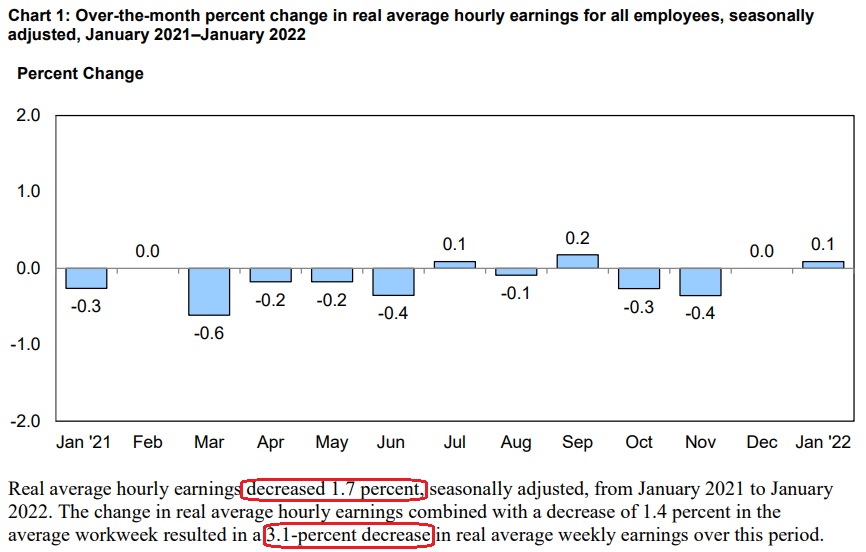
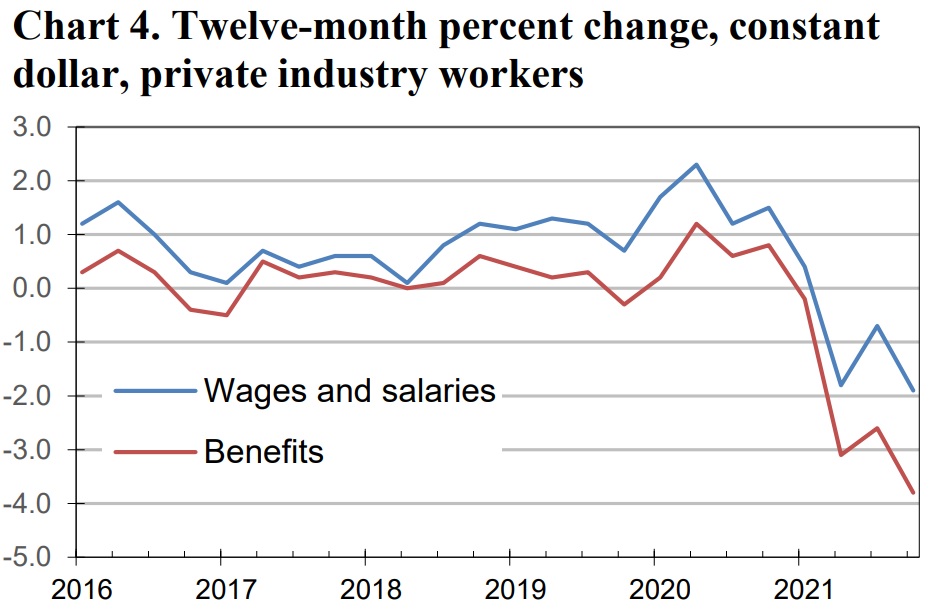




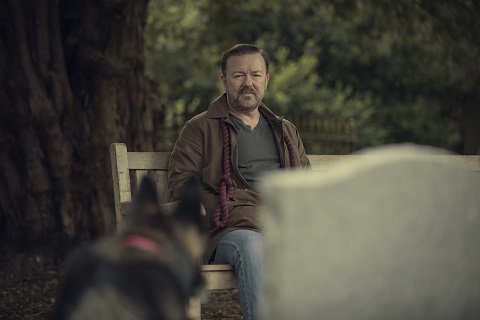
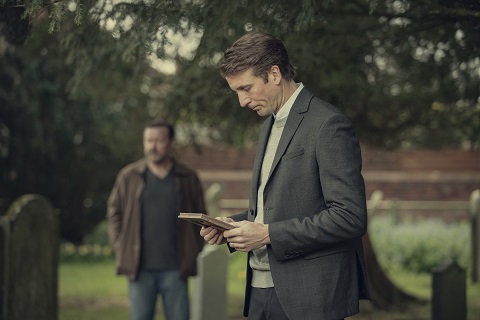
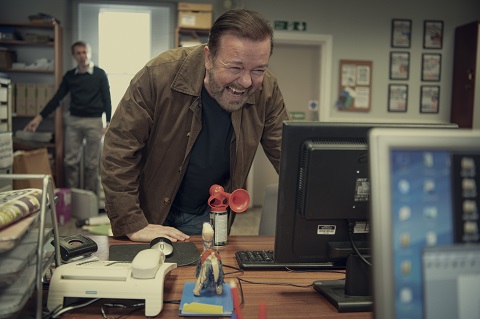
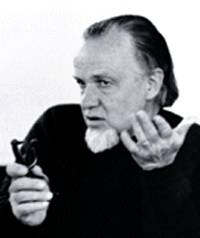 Francis Schaeffer noted concerning the IMPLICIT FAITH of Bertrand Russell:I was lecturing at the University of St. Andrews one night and someone put forth the question, “If Christianity is so clear and reasonable then why doesn’t Bertrand Russell then become a Christian? Is it because he hasn’t discovered theology?”It wasn’t a matter of studying theology that was involved but rather that he had too much faith. I was surrounded by humanists and you could hear the gasps. Bertrand Russell and faith; Isn’t this the man of reason? I pointed out that this is a man of high orthodoxy who will hold his IMPLICIT FAITH on the basis of his presuppositions no matter how many times he has to zig and zag because it doesn’t conform to the facts.You must understand what the term IMPLICIT FAITH means. In the old Roman Catholic Church when someone who became a Roman Catholic they had to promise implicit faith. That meant that you not only had to believe everything that Roman Catholic Church taught then but also everything it would teach in the future. It seems to me this is the kind of faith that these people have in the uniformity of natural causes in a closed system and they have accepted it no matter what it leads them into. I think that these men are men of a high level of IMPLICIT FAITH in their own set of presuppositions. Paul said (in Romans Chapter One) they won’t carry it to it’s logical conclusion even though they hold a great deal of the truth and they have revolted and they have set up a series of universals in themselves which they won’t transgress no matter if they conform to the facts or not.Here below is the Romans passage that Schaeffer is referring to and verse 19 refers to what Schaeffer calls “the mannishness of man” and verse 20 refers to Schaeffer’s other point which is “the universe and it’s form.”Romans 1:18-20 Amplified Bible :18 For God’s [holy] wrath and indignation are revealed from heaven against all ungodliness and unrighteousness of men, who in their wickedness repress and hinder the truth and make it inoperative. 19 For that which is known about God is evident to them and made plain in their inner consciousness, because God [Himself] has shown it to them. 20 For ever since the creation of the world His invisible nature and attributes, that is, His eternal power and divinity, have been made intelligible and clearly discernible in and through the things that have been made (His handiworks). So [men] are without excuse [altogether without any defense or justification].We can actually see the two points makes playing themselves out in Bertrand Russell’s own life.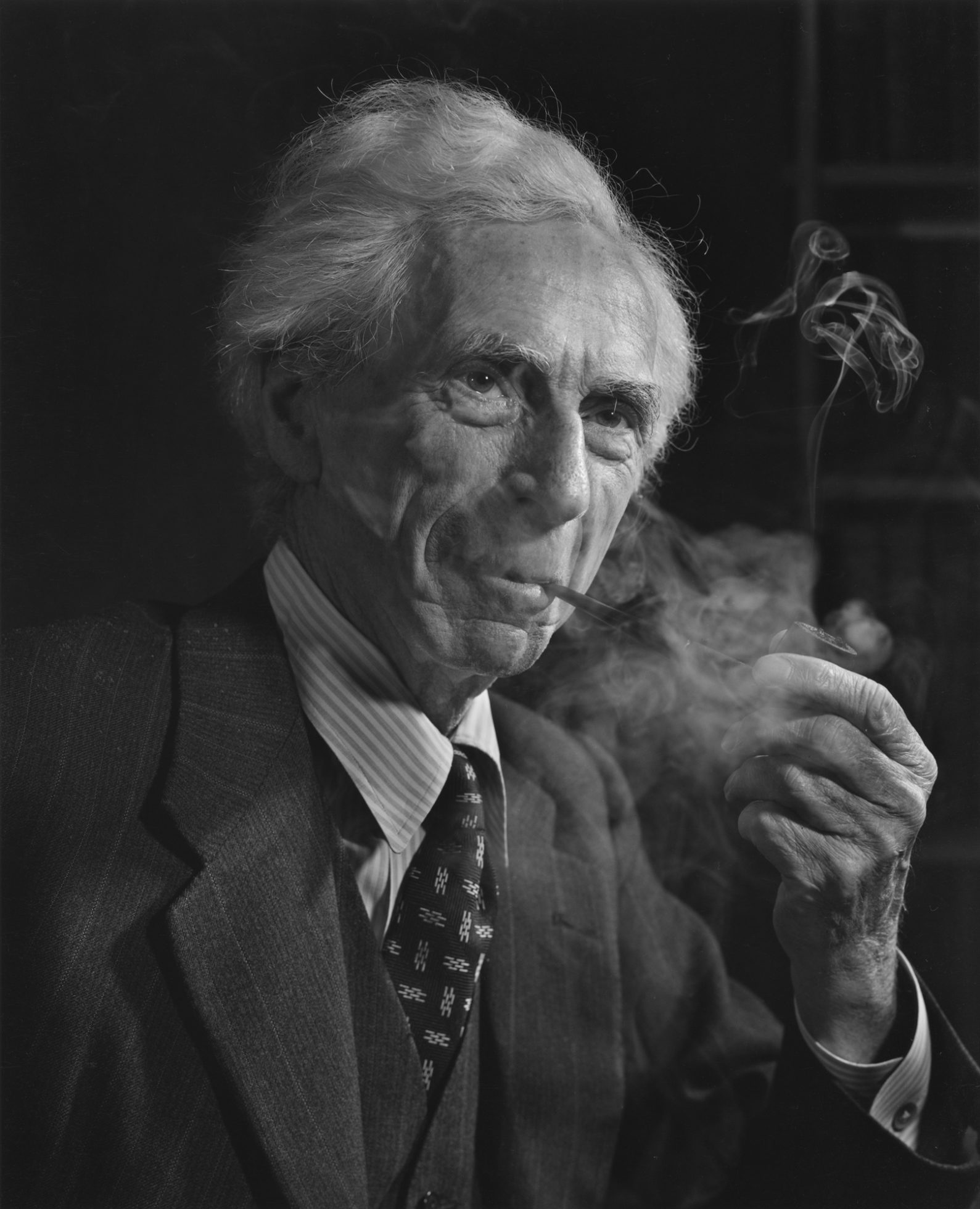
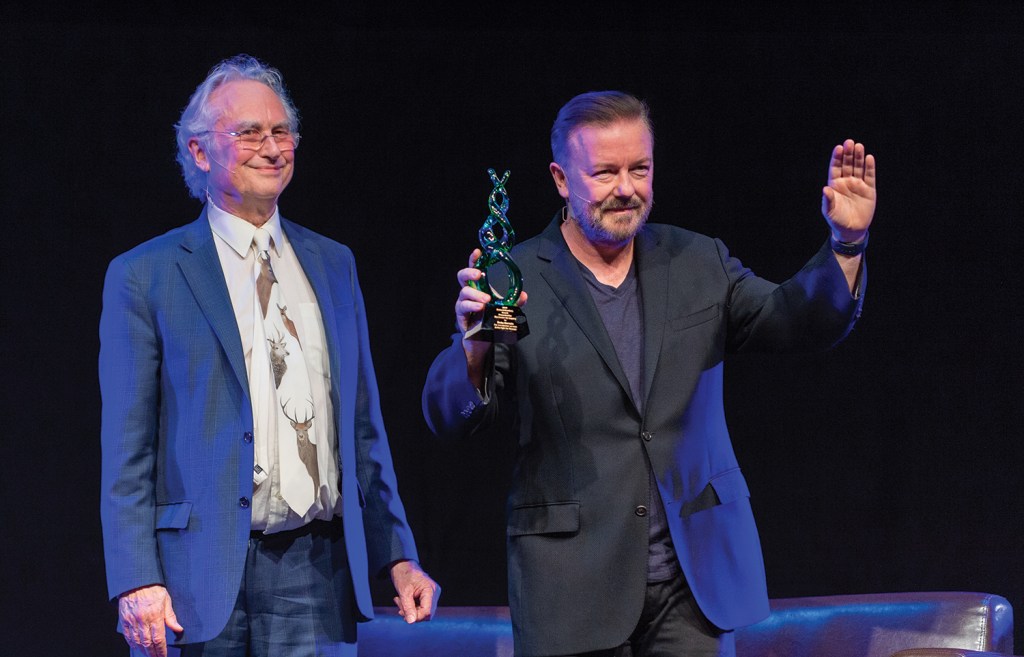







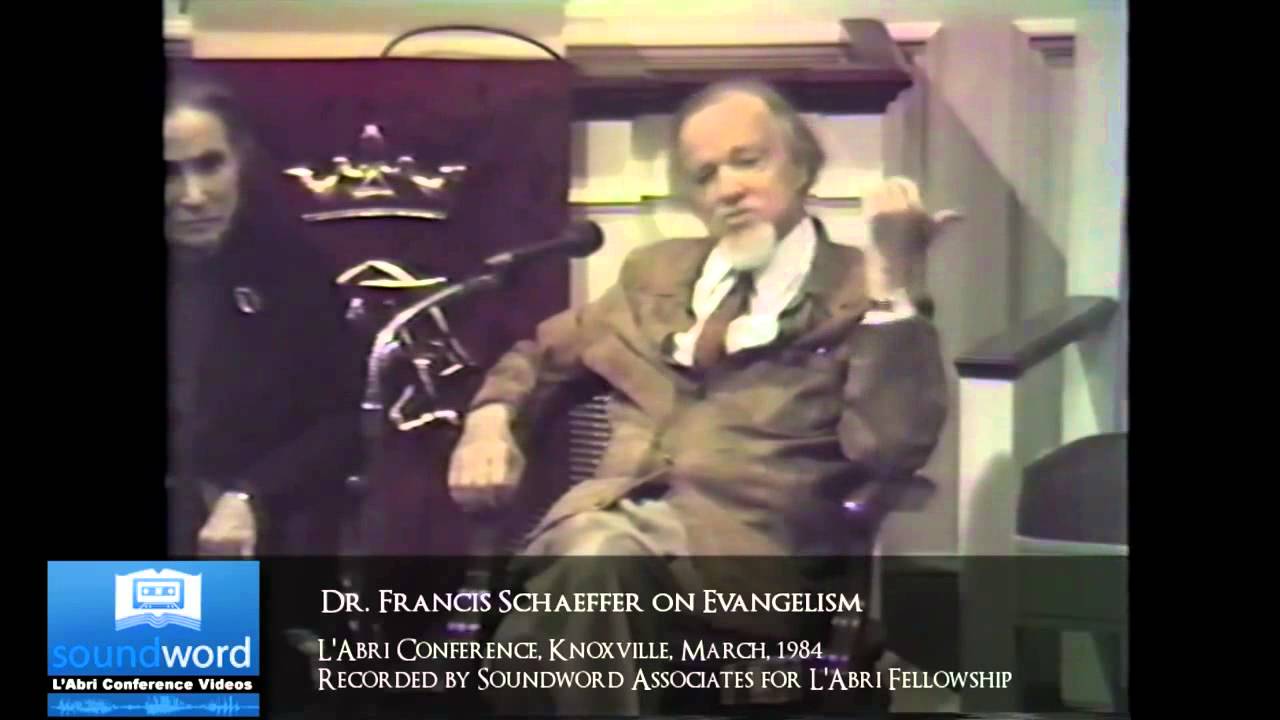


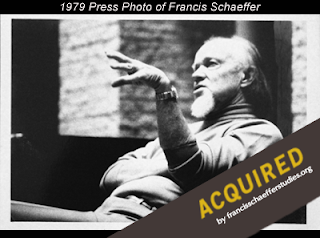


 The Daily Hatch