This crucial series is narrated by the late Dr. Francis Schaeffer and former Surgeon General Dr. C. Everett Koop. Today, choices are being made that undermine human rights at their most basic level. Practices once considered unthinkable are now acceptable – abortion, infanticide and euthanasia. The destruction of human life, young and old, is being sanctioned on an ever-increasing scale by the medical profession, by the courts, by parents and by silent Christians. The five episodes in this series examine the sanctity of life as a social, moral and spiritual issue which the Christian must not ignore. The conclusion presents the Christian alternative as the only real solution to man’s problems.
_____________________________
I have gone back and forth with Ark Times liberal bloggers on the issue of abortion, but I am going to try something new. I am going to respond with logical and rational reasons the pro-life view is true. All of this material is from a paper by Scott Klusendorf called FIVE BAD WAYS TO ARGUE ABOUT ABORTION .
As a guest on the television show Politically Incorrect, former super-model Kathy Ireland gave a carefully reasoned scientific and philosophic defense of the pro-life position. The show’s host, Bill Maher, ignored her evidence completely and shot back with (paraphrase) “Kathy, that’s just your view.”
What’s wrong with this response? Maher was confusing a moral claim with a preference claim. But there is a difference between disliking something (say, for example, a particular flavor of ice cream) and thinking it is morally wrong. Put simply, when pro-life advocates say that abortion is morally wrong, they are not saying they personally dislike abortion or would prefer that people not have one. Rather, they are saying that elective abortion is objectively wrong for everyone, regardless of how one feels about it. This is why the popular bumper sticker“Don’t like abortion? Don’t have one!”misses the point entirely. It confuses the two types of claims. (Try this: “Don’t like slavery? Don’t own a slave!”)
Now it may be the case that pro-life advocates like Kathy Ireland are mistaken about their claim. Perhaps their evidence that abortion unjustly takes the life of a defenseless child is weak and inconclusive. But instead of proving this with facts and arguments, abortion advocates like Bill Maher ignore the evidence altogether. “Well, that’s just your view.” This not only relativizes the pro-lifers claim, it is intellectually lazy. It attempts to dismiss evidence rather than refute it.
Imagine if I were to say, “There is a pink elephant in the corner of the room just beneath the window.”7 How should you respond to my claim? Perhaps I’m mistaken (and chances are I would be), but it would do no good to say, “That’s just your view.” The problem is I was not offering an opinion, I was claiming to be right. To refute me, you must show that my claim is false. The correct response is to say, “Your evidence is lousy. We looked in the corner and there is no elephant.”
But again, Maher did not do that. At no point did he challenge her facts and arguments. What he said in effect was “Go away Kathy. You have your views and I have mine.” This was very condescending because he did not even entertain the possibility that she had good evidence for her claim. Nor did he acknowledge the type of claim she was making.
To sum up, Maher was confusing a preference claim with a distinctly moral one. Preference claims cannot be evaluated as true or false because they are matters of personal taste. You cannot reasonably argue that vanilla ice cream is objectively better than chocolate. But moral claims are different. They can be evaluated as true or false based on the evidence. They do not say, “This is better tasting,” they say, “This is right”. Kathy Ireland’s claim was, Abortion is wrong because it takes the life of a defenseless child, and I think I’m right. Maher’s glib response did nothing to refute this. In fact, one could stop Maher dead in his tracks by saying, “Bill, it’s just your view that it’s just my view.”
I have gone back and forth and back and forth with many liberals on the Arkansas Times Blog on many issues such as abortion, human rights, welfare, poverty, gun control and issues dealing with popular culture. Here is another exchange I had with them a while back. My username at the Ark Times Blog is Saline […]
I have gone back and forth and back and forth with many liberals on the Arkansas Times Blog on many issues such as abortion, human rights, welfare, poverty, gun control and issues dealing with popular culture. Here is another exchange I had with them a while back. My username at the Ark Times Blog is Saline […]
I have gone back and forth and back and forth with many liberals on the Arkansas Times Blog on many issues such as abortion, human rights, welfare, poverty, gun control and issues dealing with popular culture. Here is another exchange I had with them a while back. My username at the Ark Times Blog is Saline […]
I have gone back and forth and back and forth with many liberals on the Arkansas Times Blog on many issues such as abortion, human rights, welfare, poverty, gun control and issues dealing with popular culture. Here is another exchange I had with them a while back. My username at the Ark Times Blog is […]
I have gone back and forth and back and forth with many liberals on the Arkansas Times Blog on many issues such as abortion, human rights, welfare, poverty, gun control and issues dealing with popular culture. Here is another exchange I had with them a while back. My username at the Ark Times Blog is Saline […]
I have gone back and forth and back and forth with many liberals on the Arkansas Times Blog on many issues such as abortion, human rights, welfare, poverty, gun control and issues dealing with popular culture. Here is another exchange I had with them a while back. My username at the Ark Times Blog is Saline […]
I have gone back and forth and back and forth with many liberals on the Arkansas Times Blog on many issues such as abortion, human rights, welfare, poverty, gun control and issues dealing with popular culture. Here is another exchange I had with them a while back. My username at the Ark Times Blog is Saline […]
I have gone back and forth and back and forth with many liberals on the Arkansas Times Blog on many issues such as abortion, human rights, welfare, poverty, gun control and issues dealing with popular culture. Here is another exchange I had with them a while back. My username at the Ark Times Blog is […]
I have gone back and forth and back and forth with many liberals on the Arkansas Times Blog on many issues such as abortion, human rights, welfare, poverty, gun control and issues dealing with popular culture. Here is another exchange I had with them a while back. My username at the Ark Times Blog is Saline […]
I have gone back and forth and back and forth with many liberals on the Arkansas Times Blog on many issues such as abortion, human rights, welfare, poverty, gun control and issues dealing with popular culture. Here is another exchange I had with them a while back. My username at the Ark Times Blog is Saline […]
I have gone back and forth and back and forth with many liberals on the Arkansas Times Blog on many issues such as abortion, human rights, welfare, poverty, gun control and issues dealing with popular culture. Here is another exchange I had with them a while back. My username at the Ark Times Blog is Saline […]
I have gone back and forth and back and forth with many liberals on the Arkansas Times Blog on many issues such as abortion, human rights, welfare, poverty, gun control and issues dealing with popular culture. Here is another exchange I had with them a while back. My username at the Ark Times Blog is Saline […]
I have gone back and forth and back and forth with many liberals on the Arkansas Times Blog on many issues such as abortion, human rights, welfare, poverty, gun control and issues dealing with popular culture. Here is another exchange I had with them a while back. My username at the Ark Times Blog is Saline […]
I have gone back and forth and back and forth with many liberals on the Arkansas Times Blog on many issues such as abortion, human rights, welfare, poverty, gun control and issues dealing with popular culture. Here is another exchange I had with them a while back. My username at the Ark Times Blog is Saline […]
I have gone back and forth and back and forth with many liberals on the Arkansas Times Blog on many issues such as abortion, human rights, welfare, poverty, gun control and issues dealing with popular culture. Here is another exchange I had with them a while back. My username at the Ark Times Blog is Saline […]
I have gone back and forth and back and forth with many liberals on the Arkansas Times Blog on many issues such as abortion, human rights, welfare, poverty, gun control and issues dealing with popular culture. Here is another exchange I had with them a while back. My username at the Ark Times Blog is Saline […]
I have gone back and forth and back and forth with many liberals on the Arkansas Times Blog on many issues such as abortion, human rights, welfare, poverty, gun control and issues dealing with popular culture. Here is another exchange I had with them a while back. My username at the Ark Times Blog is Saline […]
I have gone back and forth and back and forth with many liberals on the Arkansas Times Blog on many issues such as abortion, human rights, welfare, poverty, gun control and issues dealing with popular culture. Here is another exchange I had with them a while back. My username at the Ark Times Blog is Saline […]
I have gone back and forth and back and forth with many liberals on the Arkansas Times Blog on many issues such as abortion, human rights, welfare, poverty, gun control and issues dealing with popular culture. Here is another exchange I had with them a while back. My username at the Ark Times Blog is Saline […]
I have gone back and forth and back and forth with many liberals on the Arkansas Times Blog on many issues such as abortion, human rights, welfare, poverty, gun control and issues dealing with popular culture. Here is another exchange I had with them a while back. My username at the Ark Times Blog is Saline […]
Max Brantley of the Arkansas Times Blog reprinted a story of a 38 year old later telling her story. She got an abortion when she was 23 for just selfish reasons. The lady identified herself as a Christian. As a response to this I posted the following on 2-8-13 on the Arkansas Times Blog: You […]
Dr Richard Land discusses abortion and slavery – 10/14/2004 – part 3 The best pro-life film I have ever seen below by Francis Schaeffer and Dr. C. Everett Koop “Whatever happened to the human race?” Over the years I have taken on the Ark Times liberal bloggers over and over and over concerning the issue […]
The best pro-life film I have ever seen below by Francis Schaeffer and Dr. C. Everett Koop “Whatever happened to the human race?” Francis Schaeffer pictured above._________ The 45 minute video above is from the film series created from Francis Schaeffer’s book “Whatever Happened to the Human Race?” with Dr. C. Everett Koop. This book really […]
The best pro-life film I have ever seen below by Francis Schaeffer and Dr. C. Everett Koop “Whatever happened to the human race?” Over the years I have taken on the Ark Times liberal bloggers over and over and over concerning the issue of abortion. I asked over and over again for one liberal blogger […]
Francis Schaeffer pictured above._________ The best pro-life film I have ever seen below by Francis Schaeffer and Dr. C. Everett Koop “Whatever happened to the human race?” Over the years I have taken on the Ark Times liberal bloggers over and over and over concerning the issue of abortion. I asked over and over again […]
The best pro-life film I have ever seen below by Francis Schaeffer and Dr. C. Everett Koop “Whatever happened to the human race?” On 1-24-13 I took on the child abuse argument put forth by Ark Times Blogger “Deathbyinches,” and the day before I pointed out that because the unborn baby has all the genetic code […]
PHOTO BY STATON BREIDENTHAL from Pro-life march in Little Rock on 1-20-13. Tim Tebow on pro-life super bowl commercial. Over the years I have taken on the Ark Times liberal bloggers over and over and over concerning the issue of abortion. Here is another encounter below. On January 22, 2013 (on the 40th anniversary of the […]
Dr Richard Land discusses abortion and slavery – 10/14/2004 – part 3 The best pro-life film I have ever seen below by Francis Schaeffer and Dr. C. Everett Koop “Whatever happened to the human race?” Over the years I have taken on the Ark Times liberal bloggers over and over and over concerning the issue […]
The Arkansas Times blogger going by the username “Sound Policy” asserted, “…you do know there is a slight difference between fetal tissue and babies, don’t you? Don’t you?” My response was taken from the material below: Science Matters: Former supermodel Kathy Ireland tells Mike Huckabee about how she became pro-life after reading what the science books […]
I wrote a response to an article on abortion on the Arkansas Times Blog and it generated more hate than enlightenment from the liberals on the blog. However, there was a few thoughtful responses. One is from spunkrat who really did identify the real issue. WHEN DOES A HUMAN LIFE BEGIN? _______________________________________ Posted by spunkrat […]
Superbowl commercial with Tim Tebow and Mom. The Arkansas Times article, “Putting the fetus first: Pro-lifers keep up attack on access, but pro-choice advocates fend off the end to abortion right” by Leslie Newell Peacock is very lengthy but I want to deal with all of it in this new series. click to enlarge ROSE MIMMS: […]
The Arkansas Times article, “Putting the fetus first: Pro-lifers keep up attack on access, but pro-choice advocates fend off the end to abortion right” by Leslie Newell Peacock is very lengthy but I want to deal with all of it in this new series. click to enlarge ROSE MIMMS: Arkansas Right to Life director unswayed by […]
I was sad when I learned of Will Provine’s death. He was a very engaging speaker on the subject of Darwinism and I think he correctly realized what the full ramifications are when accepting evolution. This is the fourth post I have done on Dr. Provine and the previous ones are these links, 1st, 2nd and 3rd. In the article below I read these words:
In a 1994 debate with Phillip Johnson, a leading figure in the intelligent design movement, the late evolutionary biologist William Provine insisted: “No ultimate foundations for ethics exist, no ultimate meaning in life exists, and free will is merely a human myth. These are all conclusions to which Darwin came quite clearly.”
In a video on YouTube, University of Chicago evolutionary biologist Jerry Coyne states that science has demonstrated that
the universe and life are pointless….Pointless in the sense that there is no externally imposed purpose or point in the universe. As atheists this is something that is manifestly true to us. We make our own meaning and purpose.
He went on:
Evolution is the greatest killer of belief that has ever happened on this planet because it showed that some of the best evidence for God, which was the design of animals and plants that so wonderfully matched their environment could be the result of this naturalistic, blind materialistic process of natural selection.
Coyne is by no means alone in claiming Darwinism, with its insistence that all organisms have arisen through chance events (mutations) without plan or purpose, leads logically to the position that human life has no meaning or purpose. In my book The Death of Humanity: And the Case for Life, I provide many examples of evolutionary biologists and other intellectuals who argue Darwinism sweeps away the benighted notion that human life has meaning.
In a 1994 debate with Phillip Johnson, a leading figure in the intelligent design movement, the late evolutionary biologist William Provine insisted: “No ultimate foundations for ethics exist, no ultimate meaning in life exists, and free will is merely a human myth. These are all conclusions to which Darwin came quite clearly.”
However, as I also explain in detail in my new book, many Darwinists are unable to really live in accord with their own philosophy. For instance, Coyne has stated that evolution “says that there is no special purpose for your life, because it is a naturalistic philosophy. We have no more extrinsic purpose than a squirrel or an armadillo.” But, in a different blog post, Coyne waxed indignant at those who have blamed mass shootings, such as those at Columbine, on Darwinism. (Coyne will likely be enraged that I explain Eric Harris’s Darwinian motivations in The Death of Humanity.) But why does Coyne care about these people, whose lives — according to his philosophy — have no meaning or purpose? He evidently recognizes that the lives of those teenagers gunned down at Columbine did have some point or purpose after all, greater than squirrels or armadillos.
Duke University philosophy professor Alex Rosenberg shows the same inconsistency. He co-authored an article in 2003, “Darwin’s Nihilistic Idea: Evolution and the Meaninglessness of Life,” in which he dismissed morality as an illusion. However, Rosenberg assured us that we have nothing to fear, because nihilism has no effect on our behavior, since “Most of us just couldn’t persistently be mean, even if we tried.” Rosenberg needs to take some of my history courses — or just read the news — if he doesn’t think many people could be mean to each other.
In a 2013 debate with William Lane Craig, Rosenberg objected to some of Craig’s arguments as “morally offensive,” because some of his relatives were murdered in the Holocaust. But if life is meaningless and morality is an illusion, why does it matter if Hitler killed millions? That would be just another meaningless event in the meaningless flow of history. Rosenberg apparently knows better.
Despite what they may say, many Darwinists are fully aware that human lives have meaning and purpose, no matter how loudly they deny it.
Dr. Weikart is professor of history at California State University, Stanislaus, and Senior Fellow with Discovery Institute’s Center for Science & Culture; his new book, The Death of Humanity: And the Case for Life, has just been released.
#02 How Should We Then Live? (Promo Clip) Dr. Francis Schaeffer
10 Worldview and Truth
Two Minute Warning: How Then Should We Live?: Francis Schaeffer at 100
Francis Schaeffer Whatever Happened to the Human Race (Episode 1) ABORTION
Francis Schaeffer “BASIS FOR HUMAN DIGNITY” Whatever…HTTHR
_________________
Woody Allen – Sleeper (final scene)
_________________
I have spent alot of time talking about Woody Allen films on this blog and looking at his worldview. He has a hopeless, meaningless, nihilistic worldview that believes we are going to turn to dust and there is no afterlife. Even though he has this view he has taken the opportunity to look at the weaknesses of his own secular view. I salute him for doing that. That is why I have returned to his work over and over and presented my own Christian worldview as an alternative.
My interest in Woody Allen is so great that I have a “Woody Wednesday” on my blog www.thedailyhatch.org every week. Also I have done over 30 posts on the historical characters mentioned in his film “Midnight in Paris.” (Salvador Dali, Ernest Hemingway,T.S.Elliot, Cole Porter,Paul Gauguin, Luis Bunuel, and Pablo Picassowere just a few of the characters.) Francis Schaeffer also discussed Woody Allen several times in his writings on modern culture. Here is a section that again mentions the nihilistic conclusions that Schaeffer says that Woody Allen has come to and Schaeffer salutes Allen for being consistent with his Godless worldview unlike many of the optimistic humanists that I have encountered.
Materialistic Humanism: The World-View of Our Era
What has produced the inhumanity we have been considering in the previous chapters is that society in the West has adopted a world-view which says that all reality is made up only of matter. This view is sometimes referred to as philosophic materialism, because it holds that only matter exists; sometimes it is called naturalism, because it says that no supernatural exists. Humanism which begins from man alone and makes man the measure of all things usually is materialistic in its philosophy. Whatever the label, this is the underlying world-view of our society today. In this view the universe did not get here because it was created by a “supernatural” God. Rather, the universe has existed forever in some form, and its present form just happened as a result of chance events way back in time.
Society in the West has largely rested on the base that God exists and that the Bible is true. In all sorts of ways this view affected the society. The materialistic or naturalistic or humanistic world-view almost always takes a superior attitude toward Christianity. Those who hold such a view have argued that Christianity is unscientific, that it cannot be proved, that it belongs simply to the realm of “faith.” Christianity, they say, rests only on faith, while humanism rests on facts.
Professor Edmund R. Leach of Cambridge Universityexpressed this view clearly:
Our idea of God is a product of history. What I now believe about the supernatural is derived from what I was taught by my parents, and what they taught me was derived from what they were taught, and so on. But such beliefs are justified by faith alone, never by reason, and the true believer is expected to go on reaffirming his faith in the same verbal formula even if the passage of history and the growth of scientific knowledge should have turned the words into plain nonsense.78
So some humanists act as if they have a great advantage over Christians. They act as if the advance of science and technology and a better understanding of history (through such concepts as the evolutionary theory) have all made the idea of God and Creation quite ridiculous.
This superior attitude, however, is strange because one of the most striking developments in the last half-century is the growth of a profound pessimism among both the well-educated and less-educated people. The thinkers in our society have been admitting for a long time that they have no final answers at all.
_________________________________________________________________________ Take Woody Allen, for example. Most people know his as a comedian, but he has thought through where mankind stands after the “religious answers” have been abandoned. In an article in Esquire (May 1977), he says that man is left with: … alienation, loneliness [and] emptiness verging on madness…. The fundamental thing behind all motivation and all activity is the constant struggle against annihilation and against death. It’s absolutely stupefying in its terror, and it renders anyone’s accomplishments meaningless. As Camus wrote, it’s not only that he (the individual) dies, or that man (as a whole) dies, but that you struggle to do a work of art that will last and then you realize that the universe itself is not going to exist after a period of time. Until those issues are resolved within each person – religiously or psychologically or existentially – the social and political issues will never be resolved, except in a slapdash way.
Allen sums up his view in his film Annie Hall with these words: “Life is divided into the horrible and the miserable.”
Many would like to dismiss this sort of statement as coming from one who is merely a pessimist by temperament, one who sees life without the benefit of a sense of humor. Woody Allen does not allow us that luxury. He speaks as a human being who has simply looked life in the face and has the courage to say what he sees. If there is no personal God, nothing beyond what our eyes can see and our hands can touch, then Woody Allen is right: life is both meaningless and terrifying. As the famous artist Paul Gauguin wrote on his last painting shortly before he tried to commit suicide: “Whence come we? What are we? Whither do we go?” The answers are nowhere, nothing, and nowhere.
The humanist H. J. Blackham has expressed this with a dramatic illustration: On humanist assumptions, life leads to nothing, and every pretense that it does not is a deceit. If there is a bridge over a gorge which spans only half the distance and ends in mid-air, and if the bridge is crowded with human beings pressing on, one after the other they fall into the abyss. The bridge leads nowhere, and those who are pressing forward to cross it are going nowhere….It does not matter where they think they are going, what preparations for the journey they may have made, how much they may be enjoying it all. The objection merely points out objectively that such a situation is a model of futility.79
One does not have to be highly educated to understand this. It follows directly from the starting point of the humanists’ position, namely, that everything is just matter. That is, that which has existed forever and ever is only some form of matter or energy, and everything in our world now is this and only this in a more or less complex form. Thus, Jacob Bronowski says in The Identity of Man (1965): “Man is a part of nature, in the same sense that a stone is, or a cactus, or a camel.” In this view, men and women are by chance more complex, but not unique.
Within this world-view there is no room for believing that a human being has any final distinct value above that of an animal or of nonliving matter. People are merely a different arrangement of molecules. There are two points, therefore, that need to be made about the humanist world-view. First, the superior attitude toward Christianity – as if Christianity had all the problems and humanism had all the answers – is quite unjustified. The humanists of the Enlightenment two centuries ago thought they were going to find all the answers, but as time has passed, this optimistic hope has been proved wrong. It is their own descendants, those who share their materialistic world-view, who have been saying louder and louder as the years have passed, “There are no final answers.” Second, this humanist world-view has also brought us to the present devaluation of human life – not technology and not overcrowding, although these have played a part. And this same world-view has given us no limits to prevent us from sliding into an even worse devaluation of human life in the future.
So it is naive and irresponsible to imagine that this world-view will reverse the direction in the future. A well-meaning commitment to “do what is right” will not be sufficient. Without a firm set of principles that flows out of a world-view that gives adequate reason for a unique value to all human life, there cannot be and will not be any substantial resistance to the present evil brought on by the low view of human life we have been considering in previous chapters. It was the materialistic world-view that brought in the inhumanity; it must be a different world-view that drives it out.
An emotional uneasiness about abortion, infanticide, euthanasia, and the abuse of genetic knowledge is not enough. To stand against the present devaluation of human life, a significant percentage of people within our society must adopt and live by a world-view which not only hopes or intends to give a basis for human dignity but which really does. The radical movements of the sixties were right to hope for a better world; they were right to protest against the shallowness and falseness of our plastic society. But their radicalness lasted only during the life span of the adolescence of their members. Although these movements claimed to be radical, they lacked a sufficient root. Their world-view was incapable of giving life to the aspirations of its adherents. Why? Because it, too – like the society they were condemning – had no sufficient base. So protests are not enough. Having the right ideals is not enough. Even those with a very short memory, those who can look back only to the sixties, can see that there must be more than that. A truly radical alternative has to be found.
But where? And how?
______________
Francis Schaeffer in Art and the Bible noted, “Many modern artists, it seems to me, have forgotten the value that art has in itself. Much modern art is far too intellectual to be great art. Many modern artists seem not to see the distinction between man and non-man, and it is a part of the lostness of modern man that they no longer see value in the work of art as a work of art.”
Many modern artists are left in this point of desperation that Schaeffer points out and it reminds me of the despair that Solomon speaks of in Ecclesiastes. Christian scholar Ravi Zacharias has noted, “The key to understanding the Book of Ecclesiastes is the term ‘under the sun.’ What that literally means is you lock God out of a closed system, and you are left with only this world of time plus chance plus matter.” THIS IS EXACT POINT SCHAEFFER SAYS SECULAR ARTISTS ARE PAINTING FROM TODAY BECAUSE THEY BELIEVED ARE A RESULT OF MINDLESS CHANCE.
This is an archived article. It originally appeared on March 1, 1993. Some information may be outdated.
A red-haired boy sits next to his mother in the psychiatrist’s office. She is describing her son’s problems and expressing her disappointment in him. Why is he always depressed? Why can’t he be like other boys his age? The doctor turns to the boy and asks why he is depressed. In a hopeless daze the boy replies, “The universe is expanding, and if the universe is everything…and if it’s expanding…someday it will break apart and that’s the end of everything…what’s the point?”
His mother leans over, slaps the kid and scolds: “What is that your business!”
This scene from Annie Hall typifies Woody Allen’s quest for understanding! Allen touches on various topics and themes in all his cinematic works, but three subjects continually resurface: the existence of God, the fear of death and the nature of morality. These are all Jewish questions or at least theological issues. Woody Allen is a seeker who wants answers to the Ultimate Questions. His movie characters differ, yet they are all, in some way, asking these questions he wants answered. They are all “Woody Allens” wrestling with the same issues. He explains:
Maybe it’s because I’m depressed so often that I’m drawn to writers like Kafka, Dostoevski and to a filmmaker like Bergman. I think I have all the symptoms and problems that their characters are occupied with: an obsession with death, an obsession with God or the lack of God, the question of why we are here. Almost all of my work is autobiographical—exaggerated but true.1
But Woody Allen does not allow himself to dwell too long on these universal problems. The mother’s response to her red-haired son’s angst is typical of the comedic lid the filmmaker presses over his depressing outlook to close the issue. True, Woody Allen has made his mark by asking big questions. But it is the absence of satisfactory answers to those questions that causes much of the angst—and humor—we see on the screen. Off screen we see little difference.
Allen’s (authorized) biography, published in 1991, sheds some light on his life and times. Woody Allen, whose given name was Allan Konigsberg, was born and raised in Brooklyn, New York. Allen describes his Jewish family and neighborhood as being from “the heart of the old world, their values are God and carpeting.”2 While he did not embrace the religion of his youth, his Jewishness is ever present in his characters, plots and dialogue. Jewish thought is intrinsic to his life and work.
__________________________
________________________
One can see this in the 1977 film Annie Hall, where Allen’s character, Alvy, is put in contrast to his Midwestern, gentile girlfriend. In one scene he is visiting Annie’s parents. Her grandmother stares at him, picturing him as a stereotypical Chasidic Jew with side locks, black hat and a long coat. The screen splits as Alvy imagines his family on the right and hers on the left. Her parents ask what his parents will be doing for “the holidays”:
“We fast, to atone for our sins,” his mother explains.
Annie’s mother is confused. “What sins? I don’t understand.”
Alvy’s father responds with a shrug: “To tell you the truth, neither do we.”
Nothing worth knowing can be understood by the mind.3
Allen suggests that the greatest thinkers in history died knowing no more than he does now.
In Crimes and Misdemeanors Woody Allen tackles the issue of morality on a much more serious level. Wealthy ophthalmologist Judah Rosenthal has been having an extramarital affair for two years. When he attempts to end his illicit relationship, his mistress threatens to tell his wife. When backed into an impossible corner and offered an easy way out, Judah finds himself thinking the unthinkable.
Judah’s moral confusion is presented against a backdrop of the religion of his youth. Though he has long since rejected the Jewish religion, he is continually confronted with memories that activate his conscience. He remembers the words of his childhood rabbi:
“The eyes of God are on us always.”
Judah later speaks with another rabbi, a contemporary of his. The rabbi remarks on their contrasting worldviews:
“You see it [the world] as harsh and empty of values and pitiless. And I couldn’t go on living if I didn’t feel with all my heart a moral structure with real meaning and forgiveness and some kind of higher power and a reason to live. Otherwise there is no basis to know how to live.”
These words are ultimately pushed aside, as Judah succumbs to the simple solution of hiring a hit-man to murder his demanding lady in waiting. After the crime, Judah experiences gut-wrenching guilt. Judah Rosenthal finds the case for morality so strong that after the murder he blurts out:
“Without God, life is a cesspool!”
His conscience pushes him to great despair as, again, he examines the situation from a past vantage point. He envisions a Passover seder from his childhood. The conversation becomes a family debate over the importance of the celebration. Some of the relatives don’t believe in God and consider the ritual a foolish waste of time. The head of the extended family stoutly defends his faith, saying, “If necessary, I will always choose God over truth.”
Perhaps this is why Judah rejected his religion—he could not see faith as anything other than some sort of noble delusion for those who refuse to accept life’s ugly truths. As Judah continues to dwell on his crime, he has another vision in which his rabbi friend challenges him with the question: “You don’t think God sees?”
“God is a luxury I can’t afford,” Judah replies. There is a final ring to the statement as Judah decides to put the entire incident behind him.
Judah almost turns himself in; however, the price is too high and so he chooses denial, the most common escape. “In reality,” he says in the last scene, “we rationalize, we deny or else we couldn’t go on living.”
Another character, Professor Levy, speaks on morality in one of the film’s subplots. Levy is an aging philosopher much admired by the character played by Woody Allen, a filmmaker. The filmmaker is planning a documentary based on Levy’s life, and we first see the professor on videotape, discussing the paradox of the ancient Israelites:
“They created a God who cares but who also demands that you behave morally. This God asks Abraham to sacrifice his son, who is beloved to him.…After 5,000 years we have not succeeded to create a really and entirely loving image of God.”
Levy eventually commits suicide. Despite his great learning, his final note discloses nothing more than the obvious: “I’ve gone out the window.”
Professor Levy’s suicide leaves Allen’s character stunned. Still, his humor ameliorates the situation as the filmmaker protests,
“When I grew up in Brooklyn, nobody committed suicide; everyone was too unhappy.”
The final comment on Levy’s suicide is a surprising departure from Allen’s security blanket of humor:
“No matter how elaborate a philosophical system you work out, in the end it’s gotta be incomplete.”
Remember, all of the dialogue is written by Woody Allen. Though his own character supplies comic relief to this dark film, his conclusions are just as bleak. Everyone is guilty of something whether it’s considered a crime or a misdemeanor.
Yet, Allen’s theological questions rarely address the nature of that guilt. The word “sin” is reserved for the grossest offenses—the ones that make the evening news—or would, if they were discovered. Judah Rosenthal’s crime is easily recognizable as sin, while various other infidelities and compromises are mere misdemeanors.
Sin against God is not something Allen appears to take seriously in any of his films. When evangelist Billy Graham was a guest on one of Allen’s 1960s television specials, the comedian was asked (not by Graham) to name his greatest sin. He responded:
“I once had impure thoughts about Art Linkletter.”24
However, when he distances himself from the personal nature of sin and looks to crimes or sins against humanity, Allen speaks with a passion.
In Hannah and Her Sisters the viewer is introduced to the character of Frederick, an angry, isolated artist who is disgusted with the conditions of the world. Of Auschwitz, Frederick remarks to his girlfriend:
“The real question is: ‘Given what people are, why doesn’t it happen more often?’ Of course, it does, in subtler forms.…”
In Allen’s theology, all have fallen short to a greater or lesser degree, but ironically, his view of human imperfection never appears in the same discussion as his thoughts about God.
He does admit to being disconnected with the universe:
“I am two with nature.”25
But he doesn’t mention a connection with a personal God because he doesn’t see a correlation between human failures and the question of connectedness to God.
While Allen is a unique thinker, he seems to be pedestrian when it comes to wrestling with problems of immorality and even inhumanity. While he calls the existence of God into question, he does not deal with our responsibility in acknowledging God if he does exist.
It is simple to analyze sin on a human level. The more people get hurt, the bigger the sin. But the biblical perspective is quite different: Any and all sin causes separation from God. One cannot view such a cosmic separation as large or small based on degrees of sin. Ironically, one of Allen’s short stories underscores the foolishness of comparison degrees of sin:
“Astronomers talk of an inhabited planet named Quelm, so distant from earth that a man traveling at the speed of light would take six million years to get there, although they are planning a new express route that will cut two hours off the trip.”26
The biblical perspective of separation from God is similar. Having “better morals” than the drug pusher, the rapist or the ax murderer makes a big difference—in our society. We should all strive to be the best people we can be, if only to improve the overall quality of life. But in terms of a relationship with God, doing the best one can is like being two hours closer to Quelm. God is so removed from any unrighteousness that the difference between “a little unrighteous” and a lot is irrelevant.
The question his films and essays never ask is: Could being alienated from God be the root cause of our alienation from one another…and even our alienation from our own selves?
“It’s hard to get your heart and your head to agree in life. In my case they’re not even friendly.”27
Woody Allen has a unique way of expressing the uneasy terms on which many people find their heads and their hearts. Perhaps that is why he has received 14 Academy Award nominations. Allen will shoot a scene as many as twenty times, hoping to capture the actors and scenery perfectly. His biographer says “he doesn’t like to go to the next thing until what he’s working on is perfect—a process that guarantees self-defeat.”28
Is filmmaking Woody Allen’s escape from the world at large? His biographer notes, “He assigns himself mental tasks throughout the day with the intent that not a moment will pass without his mind being occupied and therefore insulated from the dilemma of eschatology.”29
It is a continual process—writing takes his mind off of the ultimate questions, yet the characters he creates are always obsessed with those very same questions. Allen determines their fate, occasionally handing out a happy ending. And he seems painfully aware that he will have little to say about the ending of his own script.
There is much to be appreciated and enjoyed in Woody Allen’s humor, but it also seems as if he uses jokes to avoid taking the possibility of God’s existence very seriously. Maybe Woody Allen is afraid to find that God doesn’t exist, or on the other hand maybe he’s afraid to find that he does. In either case, he seems to need to add a comic edge to questions about God to prove that he is not wholehearted in his hope for answers.
Will Woody Allen tackle the problem of his own halfhearted search for God in a serious way in some future film or essay? Maybe, but if the Bible can be believed, it’s an issue that God has already dealt with. The prophet Jeremiah quotes the Creator as saying: “You will seek me and find me when you seek me with all your heart.” (Jer. 29:13).
____________________________________
Endnotes
Eric Lax, Woody Allen, (New York: Knopf Publishing, 1991), p. 179.
Ibid., p. 166.
Manhattan, 1979.
Lax, p. 141.
Stardust Memories, 1980.
Lax, p. 150.
Sleeper, 1973.
Hannah and Her Sisters, 1986.
Woody Allen, “My Speech to the Graduates,” Side Effects, (New York: Random House Publ., 1980), p. 82.
Sleeper.
Lax, p. 183.
Woody Allen, “Death (A Play),” Without Feathers, (New York: Random House Publ., 1975), p. 106.
Woody Allen, “My Philosophy,” Getting Even, (New York: Warner Books, 1971), p. 25.
Allen, “Early Essays,” Without Feathers, p. 108.
Allen, “Selections From the Allen Notebook,” Without Feathers, p. 10.
Allen, “My Apology,” Side Effects, p. 54.
Stardust Memories.
Allen, “My Speech to the Graduates,” Side Effects, p. 82.
Sleeper.
Allen, “Selections From the Allen Notebook,” Without Feathers, p. 8.
Allen, “Examining Psychic Phenomena,” Without Feathers, p. 11.
Lax, p. 41.
Love and Death, 1975.
Lax, p. 132.
Ibid., p. 39.
Allen, “Fabulous Tales and Mythical Beasts,” Without Feathers, p. 194.
Elena and Olivia Ceballos are 19-year-old twin sisters from Georgia who work as visual development artists at Big Ideas Entertainment on the Veggie Talesfranchise. Their development as artists is as intertwined as the name they use online—Elioli—which is the first three letters of each of their names combined. The sisters work individually and together on projects; perhaps they have carried their collaborative habits into their professional work since they both are employed by the same company.
The sisters are notably prolific, even considering their advantage of being two people. Their constant output gives the impression that they are dedicated to self-improvement and studying the techniques of their art form.
You can see more work from Elena and Olivia on their Tumblr and EliOliArt.com, where you can travel back in time and see work such as the drawing below by then-16-year-old Olivia, already showing burgeoning skills beyond her years:
I have gone back and forth and back and forth with many liberals on the Arkansas Times Blog on many issues such as abortion, human rights, welfare, poverty, gun control and issues dealing with popular culture. Here is another exchange I had with them a while back. My username at the Ark Times Blog is Saline […]
I have posted many of the sermons by John MacArthur. He is a great bible teacher and this sermon below is another great message. His series on the Book of Proverbs was outstanding too. I also have posted several of the visits MacArthur made to Larry King’s Show. One of two most popular posts I […]
I have posted many of the sermons by John MacArthur. He is a great bible teacher and this sermon below is another great message. His series on the Book of Proverbs was outstanding too. I also have posted several of the visits MacArthur made to Larry King’s Show. One of two most popular posts I […]
Prophecy–The Biblical Prophesy About Tyre.mp4 Uploaded by TruthIsLife7 on Dec 5, 2010 A short summary of the prophecy about Tyre and it’s precise fulfillment. Go to this link and watch the whole series for the amazing fulfillment from secular sources. http://www.youtube.com/watch?v=qvt4mDZUefo ________________ John MacArthur on the amazing fulfilled prophecy on Tyre and how it was fulfilled […]
John MacArthur on the Bible and Science (Part 2) I have posted many of the sermons by John MacArthur. He is a great bible teacher and this sermon below is another great message. His series on the Book of Proverbs was outstanding too. I also have posted several of the visits MacArthur made to Larry […]
John MacArthur on the Bible and Science (Part 1) I have posted many of the sermons by John MacArthur. He is a great bible teacher and this sermon below is another great message. His series on the Book of Proverbs was outstanding too. I also have posted several of the visits MacArthur made to Larry […]
Adrian Rogers – How you can be certain the Bible is the word of God Great article by Adrian Rogers. What evidence is there that the Bible is in fact God’s Word? I want to give you five reasons to affirm the Bible is the Word of God. First, I believe the Bible is the […]
Is there any evidence the Bible is true? Articles By PleaseConvinceMe Apologetics Radio The Old Testament is Filled with Fulfilled Prophecy Jim Wallace A Simple Litmus Test There are many ways to verify the reliability of scripture from both internal evidences of transmission and agreement, to external confirmation through archeology and science. But perhaps the […]
I have gone back and forth and back and forth with many liberals on the Arkansas Times Blog on many issues such as abortion, human rights, welfare, poverty, gun control and issues dealing with popular culture. Here is another exchange I had with them a while back. My username at the Ark Times Blog is […]
Here is some very convincing evidence that points to the view that the Bible is historically accurate. Archaeological and External Evidence for the Bible Archeology consistently confirms the Bible! Archaeology and the Old Testament Ebla tablets—discovered in 1970s in Northern Syria. Documents written on clay tablets from around 2300 B.C. demonstrate that personal and place […]
This crucial series is narrated by the late Dr. Francis Schaeffer and former Surgeon General Dr. C. Everett Koop. Today, choices are being made that undermine human rights at their most basic level. Practices once considered unthinkable are now acceptable – abortion, infanticide and euthanasia. The destruction of human life, young and old, is being sanctioned on an ever-increasing scale by the medical profession, by the courts, by parents and by silent Christians. The five episodes in this series examine the sanctity of life as a social, moral and spiritual issue which the Christian must not ignore. The conclusion presents the Christian alternative as the only real solution to man’s problems.
_____________________________
I have gone back and forth with Ark Times liberal bloggers on the issue of abortion, but I am going to try something new. I am going to respond with logical and rational reasons the pro-life view is true. All of this material is from a paper by Scott Klusendorf called FIVE BAD WAYS TO ARGUE ABOUT ABORTION .
The people using the usernames DeathByInches, Venessa and Jennifer Coates Johnson all basically said on 2-8-13 “If you are not a woman then shut up about abortion.”Here is the exact quote from “DeathByInches”:“Saline! You’re points are always about 20 degrees off center. Do you really think it’s a smart idea to print out the ramblings of a MAN’S thoughts and opinion on abortion….which happens 100% of the time to WOMEN, not MEN?”
Men are told, “You can’t get pregnant, so leave the abortion issue to women.” Besides its obvious sexism, the statement is seriously flawed for several reasons. First, arguments do not have genders, people do.30 Since many pro-life women use the same arguments offered by pro-life men, it behooves the abortion advocate to answer these arguments without fallaciously attacking a person’s gender.
Second, to be consistent with their own reasoning, abortion advocates would have to concede that Roe v. Wade, the Supreme Court case legalizing abortion, was bad law. After all, nine men decided it. They must also call for the dismissal of all male lawyers working for Planned Parenthood and the ACLU on abortion related issues. Since abortion advocates are unwilling to do this, we can restate their argument as follows: “No man can speak on abortion—unless he agrees with us.” Once again, this is a classic case of intolerance.
Third, lesbians and post-menopausal women cannot naturally get pregnant; must they be silent on the issue? Think of the bizarre rules we could derive from this argument: “Since only generals understand battle, only they should discuss the morality of war.” Or, “Because female sportscasters have never experienced a groin injury, they have no right to broadcast football games on national television.”
Again, abortion advocates must offer arguments to support their position. Attacking people personally, even if those attacks are true, will not make their case or refute ours.
I have gone back and forth and back and forth with many liberals on the Arkansas Times Blog on many issues such as abortion, human rights, welfare, poverty, gun control and issues dealing with popular culture. Here is another exchange I had with them a while back. My username at the Ark Times Blog is Saline […]
I have gone back and forth and back and forth with many liberals on the Arkansas Times Blog on many issues such as abortion, human rights, welfare, poverty, gun control and issues dealing with popular culture. Here is another exchange I had with them a while back. My username at the Ark Times Blog is Saline […]
I have gone back and forth and back and forth with many liberals on the Arkansas Times Blog on many issues such as abortion, human rights, welfare, poverty, gun control and issues dealing with popular culture. Here is another exchange I had with them a while back. My username at the Ark Times Blog is Saline […]
I have gone back and forth and back and forth with many liberals on the Arkansas Times Blog on many issues such as abortion, human rights, welfare, poverty, gun control and issues dealing with popular culture. Here is another exchange I had with them a while back. My username at the Ark Times Blog is Saline […]
I have gone back and forth and back and forth with many liberals on the Arkansas Times Blog on many issues such as abortion, human rights, welfare, poverty, gun control and issues dealing with popular culture. Here is another exchange I had with them a while back. My username at the Ark Times Blog is Saline […]
I have gone back and forth and back and forth with many liberals on the Arkansas Times Blog on many issues such as abortion, human rights, welfare, poverty, gun control and issues dealing with popular culture. Here is another exchange I had with them a while back. My username at the Ark Times Blog is Saline […]
I have gone back and forth and back and forth with many liberals on the Arkansas Times Blog on many issues such as abortion, human rights, welfare, poverty, gun control and issues dealing with popular culture. Here is another exchange I had with them a while back. My username at the Ark Times Blog is Saline […]
It is truly sad to me that liberals will lie in order to attack good Christian people like state senator Jason Rapert of Conway, Arkansas because he headed a group of pro-life senators that got a pro-life bill through the Arkansas State Senate the last week of January in 2013. I have gone back and […]
I have gone back and forth and back and forth with many liberals on the Arkansas Times Blog on many issues such as abortion, human rights, welfare, poverty, gun control and issues dealing with popular culture. Here is another exchange I had with them a while back. My username at the Ark Times Blog is Saline […]
I have gone back and forth and back and forth with many liberals on the Arkansas Times Blog on many issues such as abortion, human rights, welfare, poverty, gun control and issues dealing with popular culture. Here is another exchange I had with them a while back. My username at the Ark Times Blog is Saline […]
I actually tried to contact Dr. Provine twice and I sent him a link to a post I had done about him. Sadly he passed away last year. Will Provine did not believe in free will and he still believed it was possible to find a meaning for our short lives but ultimately there is no lasting meaning for anyone. That is why I wrote him and emailed him because I wanted to encourage him to return to the faith of his parents and of his youth. Below an evangelical named Denyse O’Leary comments on his friend Will Provine’s life and he states some of Provine’s nihilistic views. Below that I take it a step further and discuss why so many people turn to drugs when they come to the same conclusions that Provine did.
On the bottom of this post you will find two excellent articles on the outstanding artist Gabby Zapata who I featuring this week.
Evolution News & Views September 3, 2015 2:17 PM |
William B. Provine, the Charles A. Alexander Professor of Biological Sciences at Cornell University, has died of cancer at the age of 73. Notwithstanding obvious and profound differences of opinion with us about science and what the evidence suggests about the origins and meaning of life, Dr. Provine was a courageous and clear-sighted interlocutor.
We admired him because, first, he was an interlocutor, with the daring to stand up and debate leading proponents of the theory of intelligent design including Phillip Johnson and Stephen Meyer. That is a measure of character and it is unfortunately rare among defenders of orthodox evolutionary theory.
Second and no less important, unlike many evolutionary spokesmen, he was willing to forthrightly articulate the philosophical implications of Darwinian theory. He said that “belief in modern evolution makes atheists of people” and “one can have a religious view that is compatible with evolution only if the religious view is indistinguishable from atheism.”
If life really did arise through a brute, purposeless, undirected, unplanned, and purely material process, a series of accidents, that lends support to a nihilistic worldview. In Provine’s perspective, it positively demands it.
Yet there was a kind of jauntiness to his despair. He said in a 1994 debate with Phil Johnson at Stanford University:
When you die, you’re not going to be surprised, because you’re going to be completely dead. Now if I find myself aware after I’m dead, I’m going to be really surprised! But at least I’m going to go to hell, where I won’t have all of those grinning preachers from Sunday morning listening.
Let me summarize my views on what modern evolutionary biology tells us loud and clear — and these are basically Darwin’s views. There are no gods, no purposes, and no goal-directed forces of any kind. There is no life after death. When I die, I am absolutely certain that I am going to be dead. That’s the end of me. There is no ultimate foundation for ethics, no ultimate meaning in life, and no free will for humans, either. What an unintelligible idea.
Christian humanism has a great deal going for it. It’s warm and kindly in many ways. That’s the good part. The bad part is that you have to suspend your rational mind. That part is really nasty. Atheistic humanism has the advantage of fitting natural minds trying to understand the world, but the disadvantage of very little cultural heritage — and that’s a real problem.
So the question is, can atheistic humanism offer us very much? Sure. It can give you intellectual satisfaction. I’m a heck of a lot more intellectually satisfied now that I don’t have to cling to the fairy tale that I believed when I was a kid. Life may have no ultimate meaning, but I sure think it can have lots of proximate meaning. Free will is not hard to give up, because it’s a horribly destructive idea to our society. Free will is what we use as an excuse to treat people like pieces of crap when they do something wrong in our society. We say to the person, “you did something wrong out of your free will, and therefore we have the justification for revenge all over your behind.” We put people in prison, turning them into lousier individuals than they ever were. This horrible system is based upon this idea of free will.
Since we know that we are not going to live after we die, there is no reward for suffering in this world. You live and you die. I’ve seen bumper stickers (very sexist ones, actually) that say “Life’s a bitch, and then you die.” Well, whatever life is, you’re going to die. So if you’re going to make things better for yourself or for those you care about, you had better become an activist while you’re still alive.
Finally, there is no reason whatsoever that ethics can’t be robust, even if there is no ultimate foundations for ethics. If you’re an atheist and know you’re going to die, what really counts is friendship — and that’s why I value Phil’s friendship so much.
No God, no free will, no real foundation for ethics. That about nails it. Such truth-telling is a nightmare for apologists who sell evolution to the general populace by denying its ultimate significance for the picture of man and his place in the universe.
You can read many moving tributes at his Facebook page, including from his wife, Gail Provine, who evokes his sweetness and gentleness: “Will, my love, I cannot tell you how thankful I am for our little infinity. You gave me a forever within the numbered days, and for that I am eternally grateful.”
We respected Dr. Provine for his virtues. We too will miss him. We wish to convey our sympathies and condolences to Mrs. Provine, his friends, students, and colleagues.
Denyse O’Leary summed up Dr. Provine very well with these words, “No God, no free will, no real foundation for ethics. That about nails it. Such truth-telling is a nightmare for apologists who sell evolution to the general populace by denying its ultimate significance for the picture of man and his place in the universe.”
“Sergeant Pepper’s Lonely Hearts Club Band,became the rallying cry for young people throughout the world. It expressed the essence of their lives, thoughts and their feelings…” Francis Schaeffer (1912-1984). We take a look today at how the Beatles were featured in Schaeffer’s film.
How Should We then Live Episode 7 small
On You Tube you can plug in HOW SHOULD WE THEN LIVE EPISODE 7 SMALL and watch the film that runs 28:35:
Here is a circle which stands for what the unified and true knowledge of the universe is. The next man would say “No,” and cross out the circle. He then would say “Here is the circle.” Then the next man would say “No,”and cross out that circle. Then he would make his circle and the next man would cross it out and make his circle. This continued through the centuries. They never found the circle, but they optimistically thought someone would beginning with man himself and on the basis of man’s reasoning alone.
Then the endless rows of circles through the and the crossing out were broken and a drastic shift came because the humanist ideal had failed. Humanist man gave up his optimism for pessimism. He gave up the hope of an unified answer and this makes modern man who he is….Humanist man beginning only from himself has concluded that he is only a machine. Humanist man has no place for a personal God, but there is also no place for man’s significance as man and no place for love, no place for freedom.
Man is only a machine, but the men who hold this position could not and can not live like machines. If they could then modern man would not have his tensions either in his intellectual position or in his life, but he can’t. So they must leap away from reason to try to find something that gives meaning to their lives, to life itself, even though to do so they deny their reason.
Once this is done any type of thing could be put there. Because in the area of nonreason, reason gives no basis for a choice. This is the hallmark of modern man. How did it happen? It happened because proud humanist man, though he was finite, insisted in beginning only from himself and only from what he could learn and not from other knowledge, he did not succeed. Perhaps the best known of existentialist philosophers was Jean Paul Sartre. He used to spend much of his time here in Paris at the Les Deux Magots.
Sartre’s position is in the area of reason everything is absurd, but one can authenticate himself, that is give validity to his existence by an act of the will. WithSartre’s position one could equally help an old woman across the street or run her down.
Reason was not involved, and there was nothing to show the direction this authentication by an act of the will should take. But Sartre himself could live consistently with his own position. At a certain point he signed the Algerian Manifesto which declared that the Algerian war was a dirty war. This action meant that man could use his reason to decide that some things were right and some things were wrong and so he destroyed his own system.
Karl Jaspers, German existentialist, tended to have the greatest impact on the thought and life form which followed existential thought. According to him we may have some huge experience which gives us the hope that perhaps there is a meaning to life even though our reason tells us that life is absurd. He calls this a final experience. Martin Heidegger, was another existential philosopher who said the answer was in the area of nonreason. The German philosopher said there is something he called “Angst,” a general feeling of anxiety one feels in the universe, this feeling, this mood of anxiety revealed existence and this imposes on us a call for decision out of this mood comes meaning to life and to choice even against one’s reason, meaning which rests on nothing more than this vague feeling of anxiety so nebulous it doesn’t have a specific object. As Martin Heidegger grew older this view became too weak for him so he changed his position.
Martin Heidegger (1889-1976)
Existentialism as a form of philosophy has all but disappeared but more and more people are thinking this way even if they don’t know the name Existentialism. To them reason leads to pessimism so they try to find an answer in something totally separated from reason.
Aldous Huxley the English philosopher and writer proposed drugs as a solution. We should, he said, give healthy people drugs and they can then find truth inside their own heads. All that was left for Aldous Huxley and those who followed him was truth inside a person’s own head. With Huxley’s idea, what began with the existential philosophers – man’s individual subjectivity attempting to give order as well as meaning, in contrast to order being shaped by what is objective or external to oneself – came to its logical conclusion. Truth is in one’s own head. The ideal of objective truth was gone.
Aldous Huxley featured on cover of Beatles’ album SGT PEPPER’S LONELY HEARTS CLUB BAND
The drug culture and the mentality that went with it had it’s own vehicle that crossed the frontiers of the world which were otherwise almost impassible by other means of communication. This record, Sergeant Pepper’s Lonely Hearts Club Band,became the rallying cry for young people throughout the world. It expressed the essence of their lives, thoughts and their feelings. Later came psychedelic rock an attempt to find this experience without drugs. The younger people and the older ones tried drug taking but then turned to the eastern religions. Both drugs and the eastern religions seek truth inside one’s own head, a negation of reason. The central reason of the popularity of eastern religions in the west is a hope for a non-rational meaning to life and values. The reason the young people turn to eastern religions is simply the fact as we have said and that is that man having moved into the area of non-reason could put anything up there and the heart of the eastern religions is a denial of reason just exactly as the idealistic drug taking was. So the turning to the eastern religions today fits exactly into the modern existential methodology, the existential thinking of modern man, of trying to find some optimistic hope in the area of nonreason when he has given up hope on a humanistic basis of finding any kind of unifying answer to life, any meaning to life in the answer of reason.
Gabby Zapata, Production Artist at Disney Interactive in Glendale, California.
What are some of the crazier jobs you had before getting into animation?
I was a chocolatier/ ice cream scooper at a local ice cream shop for 3.5 years during school!
What are some of your favorite projects you’re proud to have been a part of?
Coming out of school, I went to Digital Domain to work on their first film in Animation. Digital Domain specialized in VFX and we were creating a 3D feature film called “The Legend of Tembo”.
Where are you from and how did you get into the animation business?
I was born and raised mostly in California, but prior to that I lived in different parts of the states including Mexico due to my Dad’s job. After graduating high school, I moved to Florida to attend Ringling College of Art and Design for Computer Animation. I was picked up right before graduation at Digital Domain and then after a year and a half of working there, the company went under and we all got laid off (300+ of us) and a month later, I got picked up by Disney Interactive in California.
What’s a typical day like for you with regards to your job?
A typical day consists of looking at your tasks, checking in with the supervisors, and most importantly enjoying what you do!
What part of your job do you like best? Why?
Being able to express creative freedom because as an artist, it’s important to be able to share and contribute without feeling shy about it.
What part of your job do you like least? Why?
I don’t have anything that I dislike. I’m living my childhood dream!What kind of technology do you work with on a daily basis, how has technology changed in the last few years in your field and how has that impacted you in your job?
Macs and Cintiqs. Ever since I used a Cintiq at work, it has improved my work tremendously simply because it takes the concept of drawing on paper to digital form.
What is the most difficult part for you about being in the business?
Nothing really, but every now and then you get the jitters thinking if you’re doing okay, is your work up to par, or things like that. But communication is key to everything.
In your travels, have you had any brushes with animation greatness? Being in the industry, it’s hard not to! At Digital Domain, I was grateful enough to be working with Aaron Blaise who was the director of the film and who was an animator for Lion King, Mulan, Pocahontas, Brother Bear just to mention a few. Aaron was taught under Glen Keane so it was a huge honor for me to work closely with Aaron. Most of the crew at Digital Domain came from Disney Florida so it was amazing to be able to work with them! There’s been many more and I cannot be more thankful for all the opportunities I’ve been getting.
Describe a tough situation you had in life.
Last year 2012, was pretty tough. I went through a lot of personal things and then being laid off from Digital Domain topped it. A week prior to being laid off, my roommates and I had just recently moved into a new house. Packing, unpacking, and packing up again with the span of a month was really rough and emotionally draining. There are still many people that are struggling to find jobs and I am grateful that I was able to be picked up by Disney a month later it happened. But I am a strong believer in things happen for a reason and I take it as a new experience for what’s next to come in life.
Any side projects you’re working on that you’d like to share details of?
I have something in mind, but not set in stone yet as I am trying to get a new computer to get me started on what I want to achieve this year. What that is exactly, not sure yet
Any unusual talents or hobbies like tying a cherry stem with your tongue or metallurgy?
I was in a depressing state last year and I needed something to keep me distracted so, I picked up cooking and baking. I learned a lot from Food Network and now, I like to make fancy foods for that matter. My greatest accomplishment was a soufflé!
Is there any advice you can give for an aspiring animation student or artist trying to break into the business?
Just keep swimming and keep moving forward. Both quotes taken from animation, but they are 100% true. There’s going to be hurdles along the way and you need to get a strong grip because it’s going to be one heck of a roller coaster. Don’t give up if you get turned down, there’s many studios out there and it’s a matter of being persistent about it and you’ll do great!
I have gone back and forth and back and forth with many liberals on the Arkansas Times Blog on many issues such as abortion, human rights, welfare, poverty, gun control and issues dealing with popular culture. Here is another exchange I had with them a while back. My username at the Ark Times Blog is Saline […]
I have posted many of the sermons by John MacArthur. He is a great bible teacher and this sermon below is another great message. His series on the Book of Proverbs was outstanding too. I also have posted several of the visits MacArthur made to Larry King’s Show. One of two most popular posts I […]
I have posted many of the sermons by John MacArthur. He is a great bible teacher and this sermon below is another great message. His series on the Book of Proverbs was outstanding too. I also have posted several of the visits MacArthur made to Larry King’s Show. One of two most popular posts I […]
Prophecy–The Biblical Prophesy About Tyre.mp4 Uploaded by TruthIsLife7 on Dec 5, 2010 A short summary of the prophecy about Tyre and it’s precise fulfillment. Go to this link and watch the whole series for the amazing fulfillment from secular sources. http://www.youtube.com/watch?v=qvt4mDZUefo ________________ John MacArthur on the amazing fulfilled prophecy on Tyre and how it was fulfilled […]
John MacArthur on the Bible and Science (Part 2) I have posted many of the sermons by John MacArthur. He is a great bible teacher and this sermon below is another great message. His series on the Book of Proverbs was outstanding too. I also have posted several of the visits MacArthur made to Larry […]
John MacArthur on the Bible and Science (Part 1) I have posted many of the sermons by John MacArthur. He is a great bible teacher and this sermon below is another great message. His series on the Book of Proverbs was outstanding too. I also have posted several of the visits MacArthur made to Larry […]
Adrian Rogers – How you can be certain the Bible is the word of God Great article by Adrian Rogers. What evidence is there that the Bible is in fact God’s Word? I want to give you five reasons to affirm the Bible is the Word of God. First, I believe the Bible is the […]
Is there any evidence the Bible is true? Articles By PleaseConvinceMe Apologetics Radio The Old Testament is Filled with Fulfilled Prophecy Jim Wallace A Simple Litmus Test There are many ways to verify the reliability of scripture from both internal evidences of transmission and agreement, to external confirmation through archeology and science. But perhaps the […]
I have gone back and forth and back and forth with many liberals on the Arkansas Times Blog on many issues such as abortion, human rights, welfare, poverty, gun control and issues dealing with popular culture. Here is another exchange I had with them a while back. My username at the Ark Times Blog is […]
Here is some very convincing evidence that points to the view that the Bible is historically accurate. Archaeological and External Evidence for the Bible Archeology consistently confirms the Bible! Archaeology and the Old Testament Ebla tablets—discovered in 1970s in Northern Syria. Documents written on clay tablets from around 2300 B.C. demonstrate that personal and place […]
This crucial series is narrated by the late Dr. Francis Schaeffer and former Surgeon General Dr. C. Everett Koop. Today, choices are being made that undermine human rights at their most basic level. Practices once considered unthinkable are now acceptable – abortion, infanticide and euthanasia. The destruction of human life, young and old, is being sanctioned on an ever-increasing scale by the medical profession, by the courts, by parents and by silent Christians. The five episodes in this series examine the sanctity of life as a social, moral and spiritual issue which the Christian must not ignore. The conclusion presents the Christian alternative as the only real solution to man’s problems.
I have gone back and forth with Ark Times liberal bloggers on the issue of abortion, but I am going to try something new. I am going to respond with logical and rational reasons the pro-life view is true. All of this material is from a paper by Scott Klusendorf called FIVE BAD WAYS TO ARGUE ABOUT ABORTION .
___________________
Here is a common prochoice argument I have heard from Ark Times liberal bloggers.Take a look at “Spunkrat”:
I am so sick and tired of your ridiculous ability to fit two completely different ideas into a head the size and consistency of, a baking pumpkin!
You people will kill and murder doctors and anyone who is pro choice to protect, in YOUR words, the “unborn (and by this word unhuman)” from being “murdered,” while your ilk arm as many in this country as you can, so they can “protect” themselves by murdering anyone who gets in their way, AND once they do, you’ll try and strap them to a gurney and execute/murder them, IF you can! The reasoning ability you people have is at best–at BEST, mentally stooped and decrepit.
Find an Ozark cliff and jump. Just jump! But before you do, set fire to your housetrailer so we can clean up the neighborhood!
On July 11, 2000, a knife-wielding man attacked Vancouver (BC) abortionist Garson Romalis in a downtown clinic. Abortion advocacy groups seized on his brush with death to score cheap political points against their opponents, notably Canadian Alliance Party leader Stockwell Day, who opposes abortion.22
Day was quick to condemn the attack against Romalis as “outrageous and untenable,” but that did not satisfy local abortion advocates. Marilyn Wilson, president of the Canadian Abortion Rights Action League, said Day had “indirectly sanctioned” the violence against Romalis with his extremist rhetoric.
Why was Mr. Day responsible for the attack? It’s really quite simple: He disagrees with Ms. Wilson on abortion and has said publicly that elective abortion is the unjust killing of an innocent human being. “Day is going to try and deny that he would support any violence,” she said in a press release, “but his rhetoric does incite other people who share his beliefs against abortion to violence.” She then called Day a “fanatic” for “the amount of anti-choice, extremist rhetoric that’s out there.”
Bear in mind that to Ms. Wilson, “fanatic” and “extremist” mean anyone who deviates in the slightest from her own position, which is that abortion should be legal for any reason whatsoever during all nine months of pregnancy. If you say that elective abortion takes the life of a defenseless child, as Day believes it does, your irresponsible rhetoric will cost an abortionist his life.
Ms. Wilson is using scaremongering tactics to poison the public debate over abortion. Her statements are intellectually dishonest for at least four reasons. First, let’s assume that pro-life rhetoric does in fact lead to acts of violence against abortionists (though there is no good reason to suppose that this is so). Would this in anyway refute the pro-life argument that elective abortion unjustly takes the life of an innocent human being? Keep in mind that pro-life advocates do not merely state their case; they buttress it with scientific and philosophic reasoning. If Ms. Wilson thinks we are wrong about the humanity of the unborn and the inhumanity of abortion, she should patiently explain why our arguments are mistaken and why fetuses should be disqualified from membership in the human community. But instead of refuting the pro-life view, she attempts to silence it with personal attacks.
Second, it is blatantly unfair of Ms. Wilson to demonize pro-life advocates for espousing their sincerely held beliefs. Let’s assume that I’m an animal rights activist opposed to the sale of fur. If a deranged environmentalist firebombs a local clothing store, am I responsible? More to the point, is Ms. Wilson responsible if, upon reading her press release, a pro-abortion activist shoots Stockwell Day for the purpose of saving the community from such an awful extremist? (In a press release one day prior to the stabbing, Wilson accused Mr. Day of favoring “state-sanctioned violence against women by forcing them to bear children they may not want.”23) If she is serious that merely disagreeing with her on abortion is itself an incitement to violence, then let’s not fool around: Ms. Wilson should lead the charge to ban all pro-life speech. (Actually, she would like that, but lacks the courage to say so publicly.)
Third, it does not follow that because a lone extremist stabs an abortionist, the pro-life cause itself is unjust. Dr. Martin Luther King, for example, used strong language to condemn the evil of racism during the 1960s. In response to his peaceful but confrontational tactics, racists unjustly blamed him for the violent unrest that sometimes followed his public demonstrations. Mayor Richard Daley of Chicago argued that if Dr. King would stop exposing racial injustice, black people would be less likely to riot.24 The Mayor’s remarks, like those of Ms. Wilson, were an outrage. Are we to believe that a handful of rioters made Dr. King’s crusade for civil rights entirely unjust?
In his Letter from the Birmingham Jail, King rebuts this dishonest attempt to change the subject:
In your statement you asserted that our actions, though peaceful, must be condemned because they precipitate violence….[I]t is immoral to urge an individual to withdraw his efforts to gain…basic constitutional rights because the quest precipitates violence….Non-violent direct action seeks to create such a crisis and establish such a creative tension that a community…is forced to confront the issue. It seeks to dramatize the issue so it can be no longer ignored.
Footnotes:
22 The facts from this story, as well as some of the analysis, come from Andrew Coyne, “Opinions are not Crimes,” The National Post, July 14, 2000.
23 Canadian Abortion Rights Action League press release, July 10, 2000.
24 Gregg Cunningham, Why Abortion is Genocide, available from www.abortionno.org
I have gone back and forth and back and forth with many liberals on the Arkansas Times Blog on many issues such as abortion, human rights, welfare, poverty, gun control and issues dealing with popular culture. Here is another exchange I had with them a while back. My username at the Ark Times Blog is Saline […]
I have gone back and forth and back and forth with many liberals on the Arkansas Times Blog on many issues such as abortion, human rights, welfare, poverty, gun control and issues dealing with popular culture. Here is another exchange I had with them a while back. My username at the Ark Times Blog is Saline […]
I have gone back and forth and back and forth with many liberals on the Arkansas Times Blog on many issues such as abortion, human rights, welfare, poverty, gun control and issues dealing with popular culture. Here is another exchange I had with them a while back. My username at the Ark Times Blog is Saline […]
I have gone back and forth and back and forth with many liberals on the Arkansas Times Blog on many issues such as abortion, human rights, welfare, poverty, gun control and issues dealing with popular culture. Here is another exchange I had with them a while back. My username at the Ark Times Blog is […]
I have gone back and forth and back and forth with many liberals on the Arkansas Times Blog on many issues such as abortion, human rights, welfare, poverty, gun control and issues dealing with popular culture. Here is another exchange I had with them a while back. My username at the Ark Times Blog is Saline […]
I have gone back and forth and back and forth with many liberals on the Arkansas Times Blog on many issues such as abortion, human rights, welfare, poverty, gun control and issues dealing with popular culture. Here is another exchange I had with them a while back. My username at the Ark Times Blog is Saline […]
I have gone back and forth and back and forth with many liberals on the Arkansas Times Blog on many issues such as abortion, human rights, welfare, poverty, gun control and issues dealing with popular culture. Here is another exchange I had with them a while back. My username at the Ark Times Blog is Saline […]
I have gone back and forth and back and forth with many liberals on the Arkansas Times Blog on many issues such as abortion, human rights, welfare, poverty, gun control and issues dealing with popular culture. Here is another exchange I had with them a while back. My username at the Ark Times Blog is […]
I have gone back and forth and back and forth with many liberals on the Arkansas Times Blog on many issues such as abortion, human rights, welfare, poverty, gun control and issues dealing with popular culture. Here is another exchange I had with them a while back. My username at the Ark Times Blog is Saline […]
I have gone back and forth and back and forth with many liberals on the Arkansas Times Blog on many issues such as abortion, human rights, welfare, poverty, gun control and issues dealing with popular culture. Here is another exchange I had with them a while back. My username at the Ark Times Blog is Saline […]
I have gone back and forth and back and forth with many liberals on the Arkansas Times Blog on many issues such as abortion, human rights, welfare, poverty, gun control and issues dealing with popular culture. Here is another exchange I had with them a while back. My username at the Ark Times Blog is Saline […]
I have gone back and forth and back and forth with many liberals on the Arkansas Times Blog on many issues such as abortion, human rights, welfare, poverty, gun control and issues dealing with popular culture. Here is another exchange I had with them a while back. My username at the Ark Times Blog is Saline […]
I have gone back and forth and back and forth with many liberals on the Arkansas Times Blog on many issues such as abortion, human rights, welfare, poverty, gun control and issues dealing with popular culture. Here is another exchange I had with them a while back. My username at the Ark Times Blog is Saline […]
I have gone back and forth and back and forth with many liberals on the Arkansas Times Blog on many issues such as abortion, human rights, welfare, poverty, gun control and issues dealing with popular culture. Here is another exchange I had with them a while back. My username at the Ark Times Blog is Saline […]
I have gone back and forth and back and forth with many liberals on the Arkansas Times Blog on many issues such as abortion, human rights, welfare, poverty, gun control and issues dealing with popular culture. Here is another exchange I had with them a while back. My username at the Ark Times Blog is Saline […]
I have gone back and forth and back and forth with many liberals on the Arkansas Times Blog on many issues such as abortion, human rights, welfare, poverty, gun control and issues dealing with popular culture. Here is another exchange I had with them a while back. My username at the Ark Times Blog is Saline […]
I have gone back and forth and back and forth with many liberals on the Arkansas Times Blog on many issues such as abortion, human rights, welfare, poverty, gun control and issues dealing with popular culture. Here is another exchange I had with them a while back. My username at the Ark Times Blog is Saline […]
I have gone back and forth and back and forth with many liberals on the Arkansas Times Blog on many issues such as abortion, human rights, welfare, poverty, gun control and issues dealing with popular culture. Here is another exchange I had with them a while back. My username at the Ark Times Blog is Saline […]
I have gone back and forth and back and forth with many liberals on the Arkansas Times Blog on many issues such as abortion, human rights, welfare, poverty, gun control and issues dealing with popular culture. Here is another exchange I had with them a while back. My username at the Ark Times Blog is Saline […]
I have gone back and forth and back and forth with many liberals on the Arkansas Times Blog on many issues such as abortion, human rights, welfare, poverty, gun control and issues dealing with popular culture. Here is another exchange I had with them a while back. My username at the Ark Times Blog is Saline […]
Max Brantley of the Arkansas Times Blog reprinted a story of a 38 year old later telling her story. She got an abortion when she was 23 for just selfish reasons. The lady identified herself as a Christian. As a response to this I posted the following on 2-8-13 on the Arkansas Times Blog: You […]
Dr Richard Land discusses abortion and slavery – 10/14/2004 – part 3 The best pro-life film I have ever seen below by Francis Schaeffer and Dr. C. Everett Koop “Whatever happened to the human race?” Over the years I have taken on the Ark Times liberal bloggers over and over and over concerning the issue […]
The best pro-life film I have ever seen below by Francis Schaeffer and Dr. C. Everett Koop “Whatever happened to the human race?” Francis Schaeffer pictured above._________ The 45 minute video above is from the film series created from Francis Schaeffer’s book “Whatever Happened to the Human Race?” with Dr. C. Everett Koop. This book really […]
The best pro-life film I have ever seen below by Francis Schaeffer and Dr. C. Everett Koop “Whatever happened to the human race?” Over the years I have taken on the Ark Times liberal bloggers over and over and over concerning the issue of abortion. I asked over and over again for one liberal blogger […]
Francis Schaeffer pictured above._________ The best pro-life film I have ever seen below by Francis Schaeffer and Dr. C. Everett Koop “Whatever happened to the human race?” Over the years I have taken on the Ark Times liberal bloggers over and over and over concerning the issue of abortion. I asked over and over again […]
The best pro-life film I have ever seen below by Francis Schaeffer and Dr. C. Everett Koop “Whatever happened to the human race?” On 1-24-13 I took on the child abuse argument put forth by Ark Times Blogger “Deathbyinches,” and the day before I pointed out that because the unborn baby has all the genetic code […]
PHOTO BY STATON BREIDENTHAL from Pro-life march in Little Rock on 1-20-13. Tim Tebow on pro-life super bowl commercial. Over the years I have taken on the Ark Times liberal bloggers over and over and over concerning the issue of abortion. Here is another encounter below. On January 22, 2013 (on the 40th anniversary of the […]
Dr Richard Land discusses abortion and slavery – 10/14/2004 – part 3 The best pro-life film I have ever seen below by Francis Schaeffer and Dr. C. Everett Koop “Whatever happened to the human race?” Over the years I have taken on the Ark Times liberal bloggers over and over and over concerning the issue […]
The Arkansas Times blogger going by the username “Sound Policy” asserted, “…you do know there is a slight difference between fetal tissue and babies, don’t you? Don’t you?” My response was taken from the material below: Science Matters: Former supermodel Kathy Ireland tells Mike Huckabee about how she became pro-life after reading what the science books […]
I wrote a response to an article on abortion on the Arkansas Times Blog and it generated more hate than enlightenment from the liberals on the blog. However, there was a few thoughtful responses. One is from spunkrat who really did identify the real issue. WHEN DOES A HUMAN LIFE BEGIN? _______________________________________ Posted by spunkrat […]
Superbowl commercial with Tim Tebow and Mom. The Arkansas Times article, “Putting the fetus first: Pro-lifers keep up attack on access, but pro-choice advocates fend off the end to abortion right” by Leslie Newell Peacock is very lengthy but I want to deal with all of it in this new series. click to enlarge ROSE MIMMS: […]
The Arkansas Times article, “Putting the fetus first: Pro-lifers keep up attack on access, but pro-choice advocates fend off the end to abortion right” by Leslie Newell Peacock is very lengthy but I want to deal with all of it in this new series. click to enlarge ROSE MIMMS: Arkansas Right to Life director unswayed by […]
Last week I started this series of posts dealing with Will Provine who Francis Schaeffer cited in his book WHATEVER HAPPENED TO THE HUMAN RACE? I noted:
I was sad to learn of Dr. Provine’s death. William Ball “Will” Provine (February 19, 1942 – September 1, 2015)He grew up an evangelical in Tennessee which is the state that I grew up in, but when confronted by evolution he gave up his former beliefs in the Bible and embraced his new secular worldview. I was introduced to his work by the book WHATEVER HAPPENED TO THE HUMAN RACE? by Francis Schaeffer and C. Everett Koop in 1979. I contacted Dr. Provine twice and one time I included a link to this post below that I did on him on June 12, 2014.
Dr Provine is a very honest believer in Darwinism. He rightly draws the right conclusions about the implications of Darwinism. I have attacked optimistic humanism many times in the past and it seems that he has confirmed all I have said about it.
__
This week I explore further the weakness of OPTIMISTIC HUMANISM!!!
Further to the recent announcement of philosopher of biology Will Provine’spassing, here were many fields to which he contributed.
With a colleague, he did a most interesting study of evolutionary biologists, 78%of whom he described as pure naturalist atheists like himself.
Some of his many reflections on the true meaning of the Darwinism he espoused:
Let me summarize my views on what modern evolutionary biology tells us loud and clear — and these are basically Darwin’s views. There are no gods, no purposes, and no goal-directed forces of any kind. There is no life after death. When I die, I am absolutely certain that I am going to be dead. That’s the end of me. There is no ultimate foundation for ethics, no ultimate meaning in life, and no free will for humans, either. (Darwinism: Science or Naturalistic Philosophy April 30 1994)
Evolution is the greatest engine of atheism ever invented.
Naturalistic evolution has clear consequences that Charles Darwin understood perfectly. 1) No gods worth having exist; 2) no life after death exists; 3) no ultimate foundation for ethics exists; 4) no ultimate meaning in life exists; and 5) human free will is nonexistent. “Evolution: Free will and punishment and meaning in life” (1998 Darwin Day Keynote Address)
As the creationists claim, belief in modern evolution makes atheists of people. One can have a religious view that is compatible with evolution only if the religious view is indistinguishable from atheism. No Free Will (1999) p.123
In a world where many consider it their duty to lie for Jesus about Darwin, he was a refreshing voice for honesty. The ID theorists respected him for that. Though he didn’t believe in free will himself, he gave others the opportunity to make fact-based choices about what to believe about the world of life.
Some may remember his debates with Phillip E. Johnson in 1994:
Darwinism: Science or Naturalistic Philosophy (1 of 11)
Uploaded on May 23, 2008
A debate between William B. Provine and Phillip E. Johnson at Stanford University, April 30, 1994
Very sad. Of we didn’t agree with Provine, but at least he was honest and logical about Darwinism and its implications. I respected him a lot from the fragments that I understood of him.
___
Let me jump on this last comment above: “Of we didn’t agree with Provine, but at least he was honest and logical about Darwinism and its implications.”
WHAT ARE THE IMPLICATIONS OF DARWINISM AND IS THERE SUCH A THING AS “OPTIMISTIC HUMANISM?” One such scholar who believes in OPTIMISTIC HUMANISM is Stuart Kauffman who I have correspond with before.
Stuart Alan Kauffman (born September 28, 1939) is an American theoretical biologist and complex systems researcher who studies the origin of life on Earth.
In 1971, Kauffman proposed the self-organized emergence of collectively autocatalytic sets of polymers, specifically peptides, for the origin of molecular reproduction.[1][2] Reproducing peptide, DNA, and RNA collectively autocatalytic sets have now been made experimentally.[3][4] He is best known for arguing that the complexity of biological systems and organisms might result as much from self-organization and far-from-equilibrium dynamics as from Darwinian natural selection, as well as for applying models of Boolean networks to simplified genetic circuits. His hypotheses stating that cell types are attractors of such networks, and that genetic regulatory networks are “critical”, have found experimental support.[5][6]
In today’s post I will be responding to the following quote by Dr. Kauffman:
“The response of this particular group to religious fundamentalism is to say “Look religion is really stupid!” I want to say it is too strong. I want to say we have to be careful. It can be too divisive. We need to be building bridges, not defending our own tribal turf. None of us believes in God, but we still have to create a spiritual space, a value space that can stretch across the globe and I hope we will reach out and try to do that.”
This is in my view what I call OPTIMISTIC HUMANISM at work.Professor Kauffman says, “None of us believes in God, but we still have to create a spiritual space, a value space that can stretch across the globe…” Kauffman wants to try and put a positive spiritual spin on his secular humanist views. Kaufffman like all others across the world still have a longing in their heart to have a relationship with God. Ecclesiastes 3:11 (Amplified Bible) puts it this way:
He has made everything beautiful in its time. He also has planted eternity in men’s hearts and minds [a divinely implanted sense of a purpose working through the ages which nothing under the sun but God alone can satisfy], yet so that men cannot find out what God has done from the beginning to the end.
Skeptics discount this but yet Kauffman realizes that many out there experience these feelings that tell them that God exists and that God wants to have a relationship with them. HOWEVER, THERE IS NO BASIS FOR HOPE FOR THE SECULAR HUMANIST THAT DOESN’T BELIEVE IN AN AFTERLIFE. NEVERTHELESS KAUFFMAN USES TERMS SUCH AS VALUES AND SPIRITUAL SPACE EVEN THOUGH HE HAS NO BASIS FOR THOSE THINGS IN A SECULAR WORLDVIEW.
____________
Charles Darwin also tried to put a positive spin on his evolutionary views. Darwin wrote, “Believing as I do that man in the distant future will be a far more perfect creature than he now is…”
Francis Schaeffer commented:
Now you have now the birth of Julian Huxley’s evolutionary optimistic humanism already stated by Darwin. Darwin now has a theory that man is going to be better. If you had lived at 1860 or 1890 and you said to Darwin, “By 1970 will man be better?” He certainly would have the hope that man would be better as Julian Huxley does today. Of course, I wonder what he would say if he lived in our day and saw what has been made of his own views in the direction of (the mass murder) Richard Speck (and deterministic thinking of today’s philosophers). I wonder what he would say. So you have the factor, already the dilemma in Darwin that I pointed out in Julian Huxley and that is evolutionary optimistic humanism rests always on tomorrow. You never have an argument from the present or the past for evolutionary optimistic humanism.
You can have evolutionary nihilism on the basis of the present and the past. Every time you have someone bringing in evolutionary optimistic humanism it is always based on what is going to be produced tomorrow. When is it coming? The years pass and is it coming? Arthur Koestler doesn’t think it is coming. He sees lots of problems here and puts forth for another solution.
Darwin wrote, “…it is an intolerable thought that he and all other sentient beings are doomed to complete annihilation after such long-continued slow progress. To those who fully admit the immortality of the human soul, the destruction of our world will not appear so dreadful…”
Francis Schaeffer commented:
Here you feel Marcel Proust and the dust of death is on everything today because the dust of death is on everything tomorrow. Here you have the dilemma of Nevil Shute’s ON THE BEACH. If it is true that all we have left is biological continuity and biological complexity, which is all we have left in Darwinism here, or in many of the modern philosophies, then you can’t stand Shute’s ON THE BEACH. Maybe tomorrow at noon human life may be wiped out. Darwin already feels the tension, because if human life is going to be wiped out tomorrow, what is it worth today? Darwin can’t stand the thought of death of all men. Charlie Chaplin when he heard there was no life on Mars said, “I’m lonely.”
You think of the Swedish Opera (ANIARA) that is pictured inside a spaceship. There was a group of men and women going into outer space and they had come to another planet and the singing inside the spaceship was normal opera music. Suddenly there was a big explosion and the world had blown up and these were the last people left, the only conscious people left, and the last scene is the spaceship is off course and it will never land, but will just sail out into outer space. They say when it was shown in Stockholm the first time, the tough Swedes with all their modern mannishness, came out (after the opera was over) with hardly a word said, just complete silence.
Darwin already with his own position says he CAN’T STAND IT!! You can say, “Why can’t you stand it?” We would say to Darwin, “You were not made for this kind of thing. Man was made in the image of God. Your CAN’T- STAND- IT- NESS is screaming at you that your position is wrong. Why can’t you listen to yourself?”
You find all he is left here is biological continuity, and thus his feeling as well as his reason now is against his own theory, yet he holds it against the conclusions of his reason. Reason doesn’t make it hard to be a Christian. Darwin shows us the other way. He is holding his position against his reason.
___________
Dr. Kauffman reminds me of the humanist Professor Louis Levy from Woody Allen’s film CRIMES AND MISDEMEANORS. Levy tries to grasp how humans can get a hold of meaning and values without God in the picture but he keeps coming up empty in his searches. Basically the question is this: IS IT POSSIBLE TO BE AN OPTIMISTIC SECULAR HUMANIST THAT DOES NOT BELIEVE IN GOD OR AN AFTERLIFE? Professor Levy’s conclusion can be seen in a clip from the documentary footage in which Levy states: “But we must always remember that when we are born we need a great deal of love to persuade us to stay in life. Once we get that love, it usually lasts us. But the universe is a pretty cold place. It’s we who invest it with our feelings. And under certain conditions, we feel that the thing isn’t worth it anymore.”
I just don’t see how any secular humanist can be optimistic and avoid Professor Levy’s nihilism. First, let me tell you what prompted me to do this post today.
and you will hear what far smarter people than I have to say on this matter. I agree with them.
Harry Kroto
__________________________
There are 3 videos in this series and they have statements by 150 academics and scientists and I hope to respond to all of them. In this third video below the 134th clip is of the Dr. Stuart Kauffman and it is there that I got the quote I highlighted above and I respond to it.
50 Renowned Academics Speaking About God (Part 1)
Another 50 Renowned Academics Speaking About God (Part 2)
A Further 50 Renowned Academics Speaking About God (Part 3)
Today I will answer the simple question: IS IT POSSIBLE TO BE AN OPTIMISTIC SECULAR HUMANIST THAT DOES NOT BELIEVE IN GOD OR AN AFTERLIFE?
Woody Allen’s Professor Levy represents the best of secular philosophy, but still is lacking in the end and Levy jumps out the window to end his life!!! Let’s look at some of his thought processes.
Two worldviews are presented by Woody Allen in this film CRIMES AND MISDEMEANORS and the first one is my view and that is the view that God exists and created the world with a moral structure for a purpose and the other one is there is no reason why things happen and there will be is no God there and the Hitlers of the world will never be punished.
Below is a portion of a short review of CRIMES AND MISDEMEANORS. Notice below especially the contrast between the worldview of the secularist Judah Rosenthal and the Rabbi Ben:
CHARACTERS: Judah Rosenthal (ophthalmologist, adulterer), Jack Rosenthal (Judah’s mobster brother), Miriam Rosenthal (Judah’s wife), Dolores (Anjelica Huston, Judah’s mistress), Lester (Alan Alda, TV personality), Cliff Stern (Woody Allen, unsuccessful film director), Ben (Sam Waterston, Rabbi), Halley Reed (Mia Farrow, TV producer)
OTHER FILMS BY DIRECTOR WOODY ALLEN: Sleeper (1973), Annie Hall (1977), Hannah and her Sisters (1986), Bullets over Broadway (1994), Deconstructing Harry (1997), Sweet and Lowdown (1999)
SYNOPSIS: Woody Allen’s “Crimes and Misdemeanors” intertwines two stories. The first involves Judah, a wealthy ophthalmologist and family man, who has had a several-year affair with Dolores. Dolores threatens to go public regarding the affair and Judah’s shady financial dealings unless Judah leaves his wife. Judah calls on his mobster brother to kill Dolores, which he does. The second storyline involves Cliff, a nerdy and unsuccessful documentary filmmaker, who is in an unhappy marriage. While working on a documentary about a TV personality named Lester, Cliff falls in love with Halley, a network producer. Halley rebuffs Cliff because he is married. When Cliff finally gets divorced, Halley has become engaged to Lester. Throughout both storylines discussions arise about God’s role in establishing ethical values, and whether the world would be valueless if God didn’t exist. Judah and Cliff meet up at the end of the film, and Judah presents an anonymous version of the murder – as though it might be a plot for a movie. It becomes clear that Judah got away with the murder, and suffered no long-term guilt. The film was nominated for several Academy Awards, including best screenplay and best director…
According to the DVD commentary, Allen views his film as “revisiting the themes he examined 15 years earlier in the farce Love and Death, [and] ideas such as God, faith, and justice. ‘Existential subjects to me,’ says the filmmaker, ‘are still the only subjects worth dealing with.’”
Speaking to Judah, Rabbi Ben states the two key moral positions of the movie: “It’s a fundamental difference in the way we view the world. You see it as harsh and empty of values and pitiless. And I couldn’t go on living if I didn’t feel it with all my heart a moral structure, with real meaning, and forgiveness, and a higher power, otherwise there’s no basis to live.”[RABBI BEN HAS THE SAME WORLDVIEW THAT I DO]
Rabbi Ben tells Judah that “without the law it’s all darkness.” Judah retorts, “What good is the law if it prevents me from receiving justice? Is what she’s doing to me just? Is this what I deserve?” Judah’s situations is caused directly or indirectly by choices he’s made, even though he may not have understood at the time he made them their full implications for the future…
In Cliff’s documentary footage on Louis Levy, Levy states “Now the unique thing that happened to the early Israelites was that they conceived a God that cares. He cares, but at the same time he also demands that you behave morally. But here comes the paradox. What’s one of the first things that that God asks: that God asks Abraham to sacrifice his only son, his beloved son to him. In other words, in spite of millennia of efforts we have not succeeded to create a really and entirely loving image of God. This was beyond our capacity to imagine.”
In the documentary footage, Levy comments on the nature of love. “You will notice that what we are aiming at when we fall in love is a very strange paradox. The paradox consists of the fact that when we fall in love we are seeking to re-find all or some of the people to whom we were attached as children. On the other hand we ask of our beloved to correct all of the wrongs that these early parents or siblings inflicted on us. So that love contains in it a contradiction, the attempt to return to the past and the attempt to undo the past.”
Visiting his childhood house, Judah imagines his family celebrating the Passover dinner. He asks what happens if a man kills. The image of his father answers, “then one way or another he’ll be punished.” “If he’s caught, Saul,” interjects an uncle. The father continues, “If he’s not caught that which originates from a black deed will blossom in a foul manner.” His aunt “And I say if he can do it and get away with it, and he chooses not to be bothered by the ethics, then he’s home free. Remember, history is written by the winners. And if the Nazis had won, future generations would understand the story of World War II quite differently.”
AFTER LEVY COMMITTED SUICIDE, Cliff reviewed a clip from the documentary footage in which Levy states: “But we must always remember that when we are born we need a great deal of love to persuade us to stay in life. Once we get that love, it usually lasts us. But the universe is a pretty cold place. It’s we who invest it with our feelings. And under certain conditions, we feel that the thing isn’t worth it anymore.”
Hearing the news of Levy’s death, Halley says, “No matter how elaborate a philosophical system you work out, in the end it’s got to be incomplete.”
Near the end of the film Judah explains his murder story as though it might be a plot to a movie. Cliff responds, “I would have him turn himself in. Then your movie assumes tragic proportions, because in the absence of a God he is forced to assume that responsibility himself. Then you have tragedy.”At the close of the movie, Levy has the final word in a voice over narration: “It is only we, with out capacity to love, that give meaning to an indifferent universe. And yet, most human beings seem to have the ability to keep trying and find joy from simple things – from their family, their work, and from the hope that future generations might understand more.”
________________
IS THERE SUCH A THING AS OPTIMISTIC HUMANISM? Halley sums it best up with these words from her secular point of view,“No matter how elaborate a philosophical system you work out, in the end it’s got to be incomplete.” She doesn’t have a satisfactory answer because she does not believe in God or an afterlife. Francis Schaeffer points out in the beginning of the episode “Age of Non-reason.”
___
Francis Schaeffer “BASIS FOR HUMAN DIGNITY” Whatever…HTTHR
Dr. Francis schaeffer – The flow of Materialism(from Part 4 of Whatever happened to human race?)
J.I.PACKER WROTE OF SCHAEFFER, “His communicative style was not that of acautious academic who labors for exhaustive coverage and dispassionate objectivity. It was rather that of an impassioned thinker who paints his vision of eternal truth in bold strokes and stark contrasts.Yet it is a fact that MANY YOUNG THINKERS AND ARTISTS…HAVE FOUND SCHAEFFER’S ANALYSES A LIFELINE TO SANITY WITHOUT WHICH THEY COULD NOT HAVE GONE ON LIVING.”
Francis Schaeffer in Art and the Bible noted, “Many modern artists, it seems to me, have forgotten the value that art has in itself. Much modern art is far too intellectual to be great art. Many modern artists seem not to see the distinction between man and non-man, and it is a part of the lostness of modern man that they no longer see value in the work of art as a work of art.”
Many modern artists are left in this point of desperation that Schaeffer points out and it reminds me of the despair that Solomon speaks of in Ecclesiastes. Christian scholar Ravi Zacharias has noted, “The key to understanding the Book of Ecclesiastes is the term ‘under the sun.’ What that literally means is you lock God out of a closed system, and you are left with only this world of time plus chanceplus matter.” THIS IS EXACT POINT SCHAEFFER SAYS SECULAR ARTISTSARE PAINTING FROM TODAY BECAUSE THEY BELIEVED ARE A RESULTOF MINDLESS CHANCE.
Part 3 of 3: ‘Is Woody Allen A Romantic Or A Realist?’
A discussion of Woody Allen’s 1989 movie, Crimes and Misdemeanors, perhaps his finest.
By Anton Scamvougeras.
Woody Allen about meaning and truth of life on Earth
_______________
Is a optimistic humanism possible?
Here below is the song DUST IN THE WIND performed by the rock group KANSAS and was written by Kerry Ligren in 1978. I challenge anyone to read these words of that song given below and refute the idea that accepting naturalistic evolution with the exclusion of God must lead to the nihilistic message of the song!
DUST IN THE WIND:
I close my eyes only for a moment, and the moment’s gone
All my dreams pass before my eyes, a curiosity
Dust in the wind, all they are is dust in the wind
Same old song, just a drop of water in an endless sea
All we do crumbles to the ground, though we refuse to see
Dust in the wind, all we are is dust in the wind
Now, don’t hang on, nothing lasts forever but the earth and sky
It slips away, and all your money won’t another minute buy
Music video by Kansas performing Dust In The Wind. (c) 2004 Sony Music Entertainment Inc.
_________________________________
Humans have always wondered about the meaning of life…life has no higher purpose than to perpetuate the survival of DNA…life has no design, no purpose, no evil and no good, nothing but blind pitiless indifference. —Richard Dawkins
The vast majority of people believe there is a design or force in the universe; that it works outside the ordinary mechanics of cause and effect; that it is somehow responsible for both the visible and the moral order of the world. Modern biology has undermined this assumption…But beginning with Darwin, biology has undermined that tradition. Darwin in effect asserted that all living organisms had been created by a combination of chance and necessity–natural selection…First,God has no role in the physical world…Second,except for the laws of probability and cause and effect, there is no organizing principle in the world, and no purpose.(William B. Provine, “The End of Ethics?” in HARD CHOICES ( a magazine companion to the television series HARD CHOICES, Seattle: KCTS-TV, channel 9, University of Washington, 1980, pp. 2-3).
_______________________________
Take a look at this quote:
That Man is the product of causes which had no prevision of the end they were achieving; that his origin, his growth, his hopes and fears, his loves and his beliefs, are but the outcome of accidental collocations of atoms; …that all the labors of the ages, all the devotion, all the inspiration, all the noonday brightness of human genius, are destined to extinction in the vast death of the solar system, and that the whole temple of Man’s achievement must inevitably be buried beneath the debris of a universe in ruins—all these things, if not quite beyond dispute, are yet so nearly certain, that no philosophy which rejects them can hope to stand. Bertrand Russell
The British humanist H. J. Blackham (1903-2009) put it very plainly: “On humanist assumptions, life leads to nothing, and every pretense that it does not is a deceit. If there is a bridge over a gorge which spans only half the distance and ends in mid-air, and if the bridge is crowded with human beings pressing on, one after the other they fall into the abyss. The bridge leads nowhere, and those who are pressing forward to cross it are going nowhere….It does not matter where they think they are going, what preparations for the journey they may have made, how much they may be enjoying it all. The objection merely points out objectively that such a situation is a model of futility“( H. J. Blackham, et al., Objections to Humanism (Riverside, Connecticut: Greenwood Press, 1967).
I think you may be quoting Blackham out of context because I’ve heard Blackham speak, and read much of what he said, but Blackham has argued continuously that life is full of meaning; that there are points. The fact that one doesn’t believe in God does not deaden the appetite or the lust for living. On the contrary; great artists and scientists and poets and writers have affirmed the opposite.
I read the book FORBIDDEN FRUIT by Paul Kurtz and I had the opportunity to correspond with him but I still reject his view that optimistic humanism can withstand the view of nihilism if one accepts there is no God. Christian philosopherR.C. Sproul put it best:
Nihilism has two traditional enemies–Theism and Naive Humanism. The theist contradicts the nihilist because the existence of God guarantees that ultimate meaning and significance of personal life and history. Naive Humanism is considered naive by the nihilist because it rhapsodizes–with no rational foundation–the dignity and significance of human life. The humanist declares that man is a cosmic accident whose origin was fortuitous and entrenched in meaningless insignificance. Yet in between the humanist mindlessly crusades for, defends, and celebrates the chimera of human dignity…Herein is the dilemma: Nihilism declares that nothing really matters ultimately…In my judgment, no philosophical treatise has ever surpassed or equaled the penetrating analysis of the ultimate question of meaning versus vanity that is found in the Book of Ecclesiastes.
________________
Francis Schaeffer noted that Solomon took a look in Ecclesiastes at the meaning of life on the basis of human life standing alone between birth and death “under the sun.” This phrase UNDER THE SUN appears over and over in Ecclesiastes. The Christian Scholar Ravi Zacharias noted, “The key to understanding the Book of Ecclesiastes is the term UNDER THE SUN — What that literally means is you lock God out of a closed system and you are left with only this world of Time plus Chance plus matter.”
Kerry Livgren is the writer of the song “Dust in the Wind” and he said concerning that song in 1981 and then in 2006:
1981: “When I wrote “Dust in the Wind” I was writing about a yearning emptiness that I felt which millions of people identified with because the song was very popular.” 2006:“Dust In the Wind” was certainly the most well-known song, and the message was out of Ecclesiastes. I never ceased to be amazed at how the message resonates with people, from the time it came out through now. The message is true and we have to deal with it, plus the melody is memorable and very powerful. It disturbs me that there’s only part of the [Christian] story told in that song. It’s about someone yearning for some solution, but if you look at the entire body of my work, there’s a solution to the dilemma.”
Ecclesiastes reasons that chance and time have determined the past and will determine the future (9:11-13), and power reigns in this life and the scales are not balanced(4:1). Is that how you see the world? Solomon’s experiment was a search for meaning to life “under the sun.” Then in last few words in Ecclesiastes he looks above the sun and brings God back into the picture: “The conclusion, when all has been heard, is: Fear God and keep His commandments, because this applies to every person. For God will bring every act to judgment.”
You can hear DAVE HOPE and Kerry Livgren’s stories from this youtube link:
Some critics think that some curators need to put more women in the mix when they do their big modernist shows, especially for the earlier decades of the century prior to the feminist movement. Museums don’t like to be held to a quota, of course, and besides, they glance around and claim not to see the talent. Or so it seems. And nothing changes.
Well, if the critics or curators visit Spanierman Modern on East 58th Street, they can take a look at Judith Godwin’sEchoes, No. 2 (1954), a smallish and dense abstraction of bold red and blue strokes whose movements could well echo those of Martha Graham, a friend and mentor to the artist since their meeting in New York in the 1950s. The slow-moving museum, perhaps less avid to fill the lacunae in its collection than one might wish, would be too late in any case, however, since the picture is already sold.
Godwin does not have a painting in the collection of the Museum of Modern Art, but perhaps she has other paintings from this period in her Greenwich Village studio.
A Virginia blueblood, Godwin has been living and working in the Village since 1953, when her parents dropped her off at the Barbizon Hotel, a genteel residence for young ladies, from which she promptly absented herself in favor of the bohemian life downtown. She was part of it all, studying with Hans Hofmann, sharing a studio with Franz Kline, showing with the Stable Gallery and Betty Parsons. Period photographs (in the Spanierman catalogue) show a tough, handsome lady — Godwin is gay — who could be the real-life version of beatnik characters played by Audrey or Katherine Hepburn.
It’s been years since she last showed in New York, though in 2009 she did have an exhibition of her abstractions from the 1950s and ‘60s at the McNay Art Museum in San Antonio. The pictures at Spanierman carry the spirit of the New York School through to the present. They have the muscularity of Kline and Hofmann, as well as the color wingspan of Helen Frankenthaler, the jagged-edged voids ofClyfford Still and the stately architectonics of Robert Motherwell.
Godwin’s canvases have a quality of rupture and brutality, too, that seems very contemporary. They shed the chains of what Hedda Sterne called the “logo” style, and resist that Ab-Ex period Zen design that has now turned into kitsch. It breaks apart, and it holds together. It’s the whole of an artist’s life, a world of the studio that is easily seen but only rarely lived.
Judith Godwin, “Paintings 1954-2002,” Nov. 30-Dec. 30, 2010, at Spanierman Modern, 53 East 58th Street, New York, N.Y. 10022. The paintings are selling fast; prices range from $12,000 to $70,000.
Judith Godwin (C’52) is one of Mary Baldwin College’s most prominent alumnae. After studying at Mary Baldwin for two years, she transferred to VCU where she completed her degree in 1952. She then moved to New York City in 1953 where, as a painter, she became associated with the Abstract Expressionist movement. Since then she has established herself and been recognized as a significant contemporary painter. Her work is in many prominent public and private collections, including The Museum of Modern Art (New York City), The Art Institute of Chicago, The Hirshhorn Museum (Washington, D.C.), and the Metropolitan Museum of Art (New York City), among many others.
Visit Judith Godwin’s web site for more information and images of her work:www.judithgodwin.info
READING THE PAINTINGS OF JUDITH GODWIN
by Paul Ryan
(This article originally appeared in the Fall 1998 issue of The Mary Baldwin College Magazine.)
The creative artist must work and always work — on himself and on his craft — that he may develop to the point where he can say what he has to say, and that he says this in his own language. This language is of course not always at once understood. It makes people furious when you speak your own language.
–Hans Hofmann (from his lecture of February 16, 1941 at the Riverside Museum, New York)
Installed prominently in the entrance hall of the Deming Fine Arts Building at Mary Baldwin College is a large-scale, abstract painting by New York artist and MBC alumna Judith Godwin (’52). Titled “Oriental Circus,” it was given as a gift by the artist to the college’s Department of Art and Art History in 1992, following its exhibition in Hunt Gallery as part of a group show of work by alumnae that same year. Measuring 50 inches in height and 126 inches wide, the oil painting is a triptych consisting of three equal-sized panels of stretched canvas. Its overall composition is a structured flurry of shapes, textures, and lines which are organized in such a way that the viewer’s eye is pulled from the left side of the painting to the right.
Articulated by certain forms that suggest the paraphernalia of jugglers and acrobats, this sense of energy and directed movement evokes the pleasure, anticipation, and constant flow of activity characteristic of a circus — although, this is not to say that the painting exists as a mere signifier for a particular event. Its pictorial identity is too complex to function at this level: it contains a space that is expansive yet enclosed, and a sense of form that simultaneously suggests restriction by and freedom from the influence of gravity — all operating within a field of lyrical, Matisse-like playfulness. Like much abstract painting which is based on direct and specific experience, Godwin’s “Oriental Circus” is a synthesis of personal impressions given permanent form through the raw materials of paint and canvas, and the creative processes of formal analysis and intuition. As such, it conjoins common perceptions of the viewer and artist, yet it exists simultaneously as an object of mystery evading any absolute or definitive translation.
As all serious abstraction in the modernist tradition has emerged out of particular movements and ideas in art history and/or the culture of the artist’s own time, Godwin’s work and style as a painter is grounded in Abstract Expressionism — an epoch in the visual arts which many critics and artists regard as the last great movement in Western painting. Embodying both the serious desire for stylistic advancement in the context of modernism’s linear progression, and a heroic approach to painting that embraced the philosophical notion of the “inward turn,” the originators of Abstract Expressionism constituted the avant-garde of the 1940s and 50s. Most of the significant work of this period reflected two points of view. The first was formalist theory which emphasized the importance of the physical materials and elements of art – the use of shape, scale, space, color, value, texture, etc. The leading critic of this approach was the formalist theorist Clement Greenberg who promoted the idea of a progressive historical narrative in culture which would culminate in works of art that were complete in their formal purity. The second important influence was a more emotionally charged artistic response to the dilemmas of the nuclear era immediately following World War II. This also had its roots in existentialism and what another prominent critic, Harold Rosenberg, referred to as “crisis content.” The result was a surge of new painting and sculpture in America that was staggering in its originality and sense of urgency.
Judith Godwin, Oriental Circus, 1986, 50″x126″, oil on canvas
A noteworthy aspect of Godwin’s connection to Abstract Expressionism, or the New York School (a more generalized description that some prefer to use because of the actual aesthetic diversity within this group of artists), is the personal association she had with several of its prominent practitioners, particularly Hans Hofmann and Franz Kline (whose Greenwich Village townhouse she acquired in 1963 and resided in until 2005). Having moved from Virginia to New York City in 1953 to study painting, Godwin was able to experience first-hand the excitement ushered in by the work and presence of the first generation of Abstract Expressionists, a wave of aesthetic innovation that helped to establish New York as the international art center, thereby shifting the creative and intellectual focus from Paris to Manhattan. Simultaneously, as a student and young artist she participated in the second generation’s task of building on and sometimes transforming the aesthetic practices of the New York School that had relatively quickly become canonized by the art world.
Prior to her move to New York, Godwin, a native of Suffolk, Virginia, attended Mary Baldwin College for two years. She studied art with Elizabeth Nottingham Day and Horace Day, who shared their interest in contemporary art and developments in New York with their students. Godwin left the college in 1950, and in 1951 enrolled at Richmond Professional Institute of the College of William and Mary (now Virginia Commonwealth University) where she was influenced by artists Theresa Pollak and Jewett Campbell. Pollak, who founded the School of the Arts at VCU, practiced and taught an aesthetic that was anchored in 20th century European modernism and the formalist theory and sense of pictorial integrity that guided American painting during the 1940s and ’50s. Campbell had studied with the Abstract Expressionist painter and influential teacher Hans Hofmann (Pollak, too, would eventually do so) and he encouraged serious students to do the same – hence, Godwin’s transition to New York.
Judith Godwin, Red Flurry, 1994, 36”x24”, oil on canvas
After a brief period of study at the Art Students’ League in New York in 1953, Godwin enrolled in Hofmann’s school in Provincetown, Massachusetts that summer. She continued to study with him at his New York school in the fall, and did so again in 1954. The impact of Hofmann on Godwin’s development as a painter perhaps cannot be emphasized enough. As a teacher, Hofmann was legendary for his ability to drive students to stretch their potential, but also for remaining as an authoritative influence in their work. For example, in discussing Hofmann’s teaching with me a number of years ago, Theresa Pollak, who studied with him in 1958 (the year he closed his school after 43 consecutive years of teaching), mentioned that it took her several years to emerge from his strong presence and opinionated voice. Yet, she, like Judith Godwin, adhered to some of his tenets throughout her painting career.
Strong-minded and vigorous in spirit, Hofmann believed in the profundity of the creative life. Indeed, he regarded painting as a metaphor for the forces at work in the universe and the existential struggles that spring from the human experience. Born in Germany in 1880 and later emigrating to the United States in 1931, Hofmann’s early years in Europe afforded a clear understanding of the important issues generated in the early 20th century by Fauvism (with its innovations in color) and Cubism (with its fracturing and distortion of space and form). His articulation of these matters provided a strong theoretical and practical foundation for the artistic development of his American students.
In an essay that accompanied a major retrospective exhibition of Hofmann’s work in 1990, organized by the Whitney Museum of American Art, the prominent art historian and critic Irving Sandler states that Hofmann “was the greatest art teacher of the twentieth century, that is, if a teacher’s stature is measured by the number of students who achieve national and international renown in their own right.” Sandler goes on to say that Hofmann “had the strongest influence on two generations of advanced American artists, the geometric abstractionists of the 1930s and the younger painters of the New York School who matured in the 1950s.”
Recognizing Godwin’s significant, though quiet, role in American art since 1950, in the fall of 1997 the Art Museum of Western Virginia (located in Roanoke) mounted a retrospective exhibition that spanned Godwin’s life as a painter. Co-curated by Mark Scala, then chief curator at the Museum, and Ann Gibson, associate professor of art at Stony Brook University in New York, the retrospective not only reflected a renewed interest by art historians in the artists of Godwin’s generation working in New York during the 1950s, but, it is also an acknowledgment of the depth of intellect and feeling contained in her work. Consisting of 24 paintings, the show included representative work from different phases of her career. The early paintings from the years she studied with Hofmann display an intense physicality that shortly would dissolve into forms and spaces of a more ephemeral nature. Work from 1955 through the mid-sixties reveals the achievement of a distinct language by Godwin marked by the dialectical elements of openness/spontaneity and structure/definition — a language which also demonstrates the dependence of genuine innovation upon tradition. Finally, several paintings from the mid-seventies through 1995 sometimes reflect slight stylistic shifts (especially regarding her palette), but never succumb to fashionableness and always assert the relevance of sincerity and meaning in an era of increasing cynicism and doubt.
In his article “Talking at Pomona,” the poet and critic David Antin discusses how the importance of a work of art is determined. He asserts that, assuming aesthetic integrity is a given, importance is mostly a matter of the quality of ideas, or of an idea, that the work embraces. That is to say, that the critical value of a work of art is in proportion to “…the degree that it is a modification [or advance] of the preceding [important] work…” For example, briefly put, one of the reasons Jackson Pollock is considered an important painter resides in the fact that his all-over poured paintings of the 1940s and ‘50s played a major role in removing Modernist painting from the constraints of Cubist space. Pollock’s work is considered an “advance” in the lineage of Modernist painting, and has become an icon for American-type painting of the 20th century. In the context of this type of art historical and critical criteria for determining importance as it relates to the work of Judith Godwin, it can be said that her significance largely, though not completely, lies in her success in moving beyond what had become conventions of Abstract Expressionist painting. In the catalog essay, “Judith Godwin: Style and Grace,” Ann Gibson outlines Godwin’s path in this achievement, describing how the artist “mined [Abstract Expressionism] as a language whose rich potential had only begun to be tapped — if only one could avoid its clichés and renovate the presuppositions entwined with its conventions.”
To build on what has come before, yet to avoid the clichés, has always been a major task and goal for the artist. And at mid-century in New York City the notion of originality was an ideal – an integral component of the avant-garde in its self-established mission to keep culture moving forward. The first generation of Abstract Expressionists had succeeded in moving beyond European modernism; Godwin’s teacher, Hans Hofmann, in an original language of expressionistic urgency and jubilance had combined the color theories of Cezanne and the Fauves with Cubist drawing (eventually escaping the grips of Cubist space); and Godwin, as represented by her paintings from 1955-1960, began to speak relatively early in her own voice. A synthesis of multiple aesthetic and personal influences, her paintings stylistically embrace a sense of pictorial structure achieved by Franz Kline, Hofmann’s theories regarding pictorial epth and the inherent flatness of the medium, and the Zen-like approach to space and form of the painter Kenzo Okada. Following the dictum of Hofmann that the artist say what she has to say in her own language, Judith Godwin has distinguished herself within the tradition of the New York School.
Paul Ryan is a painter and Professor of Art at Mary Baldwin College, Staunton, Virginia. He is also an art critic and contributing editor for Art PapersMagazine .
Works Cited:
David Antin, “Talking at Pomona,” Art Forum
(9/73).
Ann Gibson, “Judith Godwin: Style and Grace,” Judith Godwin: Style and Grace (catalog for the exhibition; The Art Museum of Western Virginia, Roanoke, Virginia, 1997).
Irving Sandler, “Hans Hofmann: The Dialectical Master,” Hans Hofmann (catalog for the exhibition, Hans Hofmann; The Whitney Museum of American Art, New York, 1990).
Mark Scala, “Judith Godwin and the New York School,” Judith Godwin: Style and Grace
I have gone back and forth and back and forth with many liberals on the Arkansas Times Blog on many issues such as abortion, human rights, welfare, poverty, gun control and issues dealing with popular culture. Here is another exchange I had with them a while back. My username at the Ark Times Blog is Saline […]
I have posted many of the sermons by John MacArthur. He is a great bible teacher and this sermon below is another great message. His series on the Book of Proverbs was outstanding too. I also have posted several of the visits MacArthur made to Larry King’s Show. One of two most popular posts I […]
I have posted many of the sermons by John MacArthur. He is a great bible teacher and this sermon below is another great message. His series on the Book of Proverbs was outstanding too. I also have posted several of the visits MacArthur made to Larry King’s Show. One of two most popular posts I […]
Prophecy–The Biblical Prophesy About Tyre.mp4 Uploaded by TruthIsLife7 on Dec 5, 2010 A short summary of the prophecy about Tyre and it’s precise fulfillment. Go to this link and watch the whole series for the amazing fulfillment from secular sources. http://www.youtube.com/watch?v=qvt4mDZUefo ________________ John MacArthur on the amazing fulfilled prophecy on Tyre and how it was fulfilled […]
John MacArthur on the Bible and Science (Part 2) I have posted many of the sermons by John MacArthur. He is a great bible teacher and this sermon below is another great message. His series on the Book of Proverbs was outstanding too. I also have posted several of the visits MacArthur made to Larry […]
John MacArthur on the Bible and Science (Part 1) I have posted many of the sermons by John MacArthur. He is a great bible teacher and this sermon below is another great message. His series on the Book of Proverbs was outstanding too. I also have posted several of the visits MacArthur made to Larry […]
Adrian Rogers – How you can be certain the Bible is the word of God Great article by Adrian Rogers. What evidence is there that the Bible is in fact God’s Word? I want to give you five reasons to affirm the Bible is the Word of God. First, I believe the Bible is the […]
Is there any evidence the Bible is true? Articles By PleaseConvinceMe Apologetics Radio The Old Testament is Filled with Fulfilled Prophecy Jim Wallace A Simple Litmus Test There are many ways to verify the reliability of scripture from both internal evidences of transmission and agreement, to external confirmation through archeology and science. But perhaps the […]
I have gone back and forth and back and forth with many liberals on the Arkansas Times Blog on many issues such as abortion, human rights, welfare, poverty, gun control and issues dealing with popular culture. Here is another exchange I had with them a while back. My username at the Ark Times Blog is […]
Here is some very convincing evidence that points to the view that the Bible is historically accurate. Archaeological and External Evidence for the Bible Archeology consistently confirms the Bible! Archaeology and the Old Testament Ebla tablets—discovered in 1970s in Northern Syria. Documents written on clay tablets from around 2300 B.C. demonstrate that personal and place […]
First, with his flair for didactic communication he coined some new and pointed ways of expressing old thoughts (the “true truth” or revelation, the “mannishness” of human beings, the “upper story” and “lower story” of the divided Western mind, etc.).
Second, with his gift of empathy he listened to and dialogued with the modern secular world as it expressed itself in literature and art, which most evangelicals were too cocooned in their own subculture to do.
Third, he threw light on the things that today’s secularists take for granted by tracing them, however sketchily, to their source in the history of thought, a task for which few evangelicals outside the seminaries had the skill.
Fourth, he cherished a vivid sense of the ongoing historical process of which we are all part, and offered shrewd analysis of the Megatrends-Future Shock type concerning the likely effect of current Christian and secular developments.
Fifth, he felt, focused, and dwelt on the dignity and tragedy of sinful human beings rather than their grossness and nastiness.
Sixth, he linked the passion for orthodoxy with a life of love to others as the necessary expression of gospel truth, and censured the all-too-common unlovingness of front-line fighters for that truth, including the Presbyterian separatists with whom in the thirties he had thrown in his lot.
Seventh, he celebrated the wholeness of created reality under God, and stressed that the Christian life must be a corresponding whole—that is, a life in which truth, goodness, and beauty are valued together and sought with equal zeal. Having these emphases institutionally incarnated at L’Abri, his ministry understandably attracted attention. For it was intrinsically masterful, and it was also badly needed.
I love Packer’s description of Schaeffer:
He was physically small, with a bulging forehead, furrowed brow, and goatee beard. Alpine knee-breeches housed his American legs, his head sank into his shoulders, and his face bore a look of bright abstraction. Nothing special there, you would think; a serious, resolute man, no doubt, maybe a bit eccentric, but hardly unique on that account. When he spoke, his English though clear was not elegant, and his voice had no special charm; British ears found it harsh, and if stirred he would screech from the podium in a way that was hard to enjoy. Nevertheless, what he said was arresting, however he might look or sound while saying it. It had firmness, arguing vision; gentleness, arguing strength; simple clarity, arguing mental mastery; and compassion, arguing an honest and good heart. There was no guile in it, no party narrowness, no manipulation, only the passionate persuasiveness of the prophet who hurries in to share with others what he himself sees.
E P I S O D E 1 0 Dr. Francis Schaeffer – Episode X – Final Choices 27 min FINAL CHOICES I. Authoritarianism the Only Humanistic Social Option One man or an elite giving authoritative arbitrary absolutes. A. Society is sole absolute in absence of other absolutes. B. But society has to be […]
E P I S O D E 9 Dr. Francis Schaeffer – Episode IX – The Age of Personal Peace and Affluence 27 min T h e Age of Personal Peace and Afflunce I. By the Early 1960s People Were Bombarded From Every Side by Modern Man’s Humanistic Thought II. Modern Form of Humanistic Thought Leads […]
E P I S O D E 8 Dr. Francis Schaeffer – Episode VIII – The Age of Fragmentation 27 min I saw this film series in 1979 and it had a major impact on me. T h e Age of FRAGMENTATION I. Art As a Vehicle Of Modern Thought A. Impressionism (Monet, Renoir, Pissarro, Sisley, […]
E P I S O D E 7 Dr. Francis Schaeffer – Episode VII – The Age of Non Reason I am thrilled to get this film series with you. I saw it first in 1979 and it had such a big impact on me. Today’s episode is where we see modern humanist man act […]
E P I S O D E 6 How Should We Then Live 6#1 Uploaded by NoMirrorHDDHrorriMoN on Oct 3, 2011 How Should We Then Live? Episode 6 of 12 ________ I am sharing with you a film series that I saw in 1979. In this film Francis Schaeffer asserted that was a shift in […]
E P I S O D E 5 How Should We Then Live? Episode 5: The Revolutionary Age I was impacted by this film series by Francis Schaeffer back in the 1970′s and I wanted to share it with you. Francis Schaeffer noted, “Reformation Did Not Bring Perfection. But gradually on basis of biblical teaching there […]
Dr. Francis Schaeffer – Episode IV – The Reformation 27 min I was impacted by this film series by Francis Schaeffer back in the 1970′s and I wanted to share it with you. Schaeffer makes three key points concerning the Reformation: “1. Erasmian Christian humanism rejected by Farel. 2. Bible gives needed answers not only as to […]
Francis Schaeffer’s “How should we then live?” Video and outline of episode 3 “The Renaissance” Francis Schaeffer: “How Should We Then Live?” (Episode 3) THE RENAISSANCE I was impacted by this film series by Francis Schaeffer back in the 1970′s and I wanted to share it with you. Schaeffer really shows why we have so […]
Francis Schaeffer: “How Should We Then Live?” (Episode 2) THE MIDDLE AGES I was impacted by this film series by Francis Schaeffer back in the 1970′s and I wanted to share it with you. Schaeffer points out that during this time period unfortunately we have the “Church’s deviation from early church’s teaching in regard […]
Francis Schaeffer: “How Should We Then Live?” (Episode 1) THE ROMAN AGE Today I am starting a series that really had a big impact on my life back in the 1970′s when I first saw it. There are ten parts and today is the first. Francis Schaeffer takes a look at Rome and why […]
Francis Schaeffer: “Whatever Happened to the Human Race” (Episode 5) TRUTH AND HISTORY Published on Oct 7, 2012 by AdamMetropolis This crucial series is narrated by the late Dr. Francis Schaeffer and former Surgeon General Dr. C. Everett Koop. Today, choices are being made that undermine human rights at their most basic level. Practices once […]
The opening song at the beginning of this episode is very insightful. Francis Schaeffer: “Whatever Happened to the Human Race” (Episode 4) THE BASIS FOR HUMAN DIGNITY Published on Oct 7, 2012 by AdamMetropolis This crucial series is narrated by the late Dr. Francis Schaeffer and former Surgeon General Dr. C. Everett Koop. Today, choices […]
Francis Schaeffer: “Whatever Happened to the Human Race” (Episode 3) DEATH BY SOMEONE’S CHOICE Published on Oct 6, 2012 by AdamMetropolis This crucial series is narrated by the late Dr. Francis Schaeffer and former Surgeon General Dr. C. Everett Koop. Today, choices are being made that undermine human rights at their most basic level. Practices […]
Francis Schaeffer: “Whatever Happened to the Human Race?” (Episode 2) SLAUGHTER OF THE INNOCENTS Published on Oct 6, 2012 by AdamMetropolis This crucial series is narrated by the late Dr. Francis Schaeffer and former Surgeon General Dr. C. Everett Koop. Today, choices are being made that undermine human rights at their most basic level. Practices […]
It is not possible to know where the pro-life evangelicals are coming from unless you look at the work of the person who inspired them the most. That person was Francis Schaeffer. I do care about economic issues but the pro-life issue is the most important to me. Several years ago Adrian Rogers (past president of […]
This essay below is worth the read. Schaeffer, Francis – “Francis Schaeffer and the Pro-Life Movement” [How Should We Then Live?, Whatever Happened to the Human Race?, A Christian Manifesto] Editor note: <p> </p> [The following essay explores the role that Francis Schaeffer played in the rise of the pro-life movement. It examines the place of […]
I was sad to learn of Dr. Provine’s death. William Ball “Will” Provine (February 19, 1942 – September 1, 2015)He grew up an evangelical in Tennessee which is the state that I grew up in, but when confronted by evolution he gave up his former beliefs in the Bible and embraced his new secular worldview. I was introduced to his work by the book WHATEVER HAPPENED TO THE HUMAN RACE? by Francis Schaeffer and C. Everett Koop in 1979. I contacted Dr. Provine twice and one time I included a link to this post below that I did on him on June 12, 2014.
Dr Provine is a very honest believer in Darwinism. He rightly draws the right conclusions about the implications of Darwinism. I have attacked optimistic humanism many times in the past and it seems that he has confirmed all I have said about it. Notice the film clip below and the quote that Francis Schaeffer comments on below too.
Atheist William B Provine from the movie Expelled
Dr. Francis Schaeffer: Whatever Happened to the Human Race Episode 1 ABORTION
Published on Jan 10, 2015
Whatever Happened to the Human Race?
Abortion
Dr. Francis Schaeffer
In the book WHATEVER HAPPENED TO THE HUMAN RACE? written by Francis Schaeffer and Dr. C. Everett Koop, Schaeffer asserts:
The media today is humanistic and relativistic…A good example of this lack of objectivity is public television. One of the public television program directors we approached in Washington, D.C., refused to watch the film WHATEVER HAPPENED TO THE HUMAN RACE?, or even to consider it. As soon as she heard of the position it took concerning abortion, she made the excuse, “We can’t program anything that presents only one point of view.”
At the same time public television was running HARD CHOICES, a program totally slanted in favor of abortion. The study guide which accompanied the series HARD CHOICES speaks clearly for the total view of a materialistic final reality:
The vast majority of people believe there is a design or force in the universe; that it works outside the ordinary mechanics of cause and effect; that it is somehow responsible for both the visible and the moral order of the world. Modern biology has undermined this assumption. Even though it is often asserted that science is fully compatible with our Judeo-Christian tradition, in fact it is not… To be sure, even in antiquity, the mechanistic view of life–that chance was responsible for the shape of the world– had a few adherents. But belief in overarching order was dominant; it can be seen as easily in such scientists as Newton, Harvey, and Einstein as in the theologians Augustine, Luther, and Tillich. But beginning with Darwin, biology has undermined that tradition. Darwin in effect asserted that all living organisms had been created by a combination of chance and necessity–natural selection.
In the twentieth century, this view of life has been reinforced by a whole series of discoveries…
Mind is the only remaining frontier, but it would be shortsighted to doubt that it can, one day, be duplicated in the form of thinking robots or analyzed in terms of the chemistry and electricity of the brain.
The extreme mechanic view of life, which every new discovery in biology tends to confirm, has certain implications. First, God has no role in the physical world…
Second, except for the laws of probability and cause and effect, there is no organizing principle in the world, and no purpose. Thus, there are no moral or ethical laws that belong to the nature of things, no absolute guiding principles for human society…
The mechanistic view of life has perhaps only one tangible implication for ethics: we should feel freer to adapt our morality to new social situations. But we are already fairly adept at that…As a result, ethical choices are likely to become more difficult, not because people are less moral but because they will be unable to justify their choices with fairy tales. (William B. Provine, “The End of Ethics?” in HARD CHOICES ( a magazine companion to the television series HARD CHOICES, Seattle: KCTS-TV, channel 9, University of Washington, 1980, pp. 2-3).
Here is public tax money being used not only in favor of abortion but to teach the whole view of a materialistic, mechanistic universe, shaped only by chance, with no final purpose and with morals (and law) purely a matter of social choice. The Judeo-Christian view is pushed into the catagory of “fairy tales.”
Francis Schaeffer “BASIS FOR HUMAN DIGNITY” Whatever…HTTHR
Provine was born in Tennessee. He held a B.S. in Mathematics (1962), and an M.A. (1965) and Ph.D (1970) in History of Science from the University of Chicago.[1] He joined the Cornell faculty in 1969. He suffered seizures in 1995 due to a brain tumour.[2] Provine died on September 1, 2015, due to complications from the tumor.[3]
Provine’s Ph.D. thesis, later published as a book,[4] documented the early origins of theoretical population genetics in the conflicts between the biostatistics and Mendelianschools of thought. He documented later developments in theoretical population genetics in his biography of Sewall Wright,[5] who was still alive and available for interviews. In this book, Provine criticizes Wright for confounding three different concepts of adaptive landscape: genotype to fitness landscapes, allele frequency to fitness landscapes, and phenotype to fitness landscapes. Provine later grew critical of Wright’s views on genetic drift, instead attributing observed effects to the consequences of inbreeding and consequent selection at linked sites. John H. Gillespie credits Provine with stimulating his interest in the topic of hitchhiking or “genetic draft” as an alternative to genetic drift.[6] Provine later published his critique of genetic drift in a book.[7] Provine defended the importance of mathematics’ contribution to the modern evolutionary synthesis.[8]
Provine was a philosopher, atheist, and critic of intelligent design. He engaged in prominent debates with theist philosophers and scientists about the existence of God and the viability of intelligent design. He debated the founder of the intelligent design movement, Phillip E. Johnson, and the two had a friendly relationship. Provine said that his course on evolutionary biology began by having his students read Johnson’s book, Darwin on Trial.[9]
Provine was a determinist in biology, but not a determinist in physics or chemistry; he rejected the idea that humans exercise free will.[2][10] Provine believed that there is no evidence for the existence of God, is no life after death, no absolute foundation for moral right and wrong, and no ultimate meaning or purpose for life.[11]
“Progress in Evolution and Meaning in Life”, in M. Nitecki, ed., Evolutionary Progress, 1989, ISBN 0-226-58692-8
Cain, A. J., and W. B. Provine, “Genes and Ecology in History”, in Berry, R. J., et al., eds., Genes in Ecology: 33rd Symposium of the British Ecological Society, 1992, ISBN 0-521-54936-1
Jump up^Provine, William B. (2014). The “Random Genetic Drift” Fallacy. CreateSpace. ISBN9781500924126.
Jump up^Provine, William B. (1978). “The Role of Mathematical Population Geneticists in the Evolutionary Synthesis of the 1930s and 1940s”. Studies in the History of Biology. 2: 167–92.
Desmond Morris at his house in Oxford surrounded by some of his favourite things including his great-grandfather’s brass microscope and a painting he completed a few months ago
1 MY INSPIRATION
The most precious object I own is my great-grandfather’s brass microscope. I found it in the attic when I was a child, and using it led to the two pursuits that have dominated my entire life – zoology and art. I began drawing the organisms I saw under the lens and exhibited my first collection of work in 1948. Although I use modern microscopes today, I would never part with this one.
2 CAVE CUBES
When my wife Ramona and I visited a mineral fair a few years ago I fell in love with this amazing object, so she secretly bought it for me. It’s a piece of cave wall dotted with dozens of pyrite cubes with such precise edges and smooth faces it’s hard to believe they’re natural. My old friend David Attenborough came to see it and said, ‘You may have more cubes than I have, but mine are bigger!’
3 HEAVY, MAN!
Seven years ago my son Jason bought this huge fossil from a gallery in Ireland for my birthday. It’s so heavy I can hardly lift it. It’s called Cladocyclus and I discovered that 110 million years ago itwas a very fast and ferocious marine predator. I value it highly, partly because it’s a relief to find something older than me, but even more so because my son went to so much trouble to get it to my studio.
4 I’VE BEEN FRAMED
This is a favourite painting of mine, completed only a few months ago. It’s number 2365 out of the 2392 I’ve done since I began in 1944. I have no idea what drives me on, but it certainly makes my haven a place of work as well as a place of rest. I’m fascinated by the totem poles of American Indians and allowed my Biomorphs, the strange beings that have inhabited my work since the 40s, to grow out of the tops of them.
5 100 NOT OUT!
It was a schoolboy ambition of mine to visit 100 countries before I die and I did it in February 2010 when I set foot on Christmas Island in the Pacific. The islanders are a delightful people who live in small villages, three of which are quaintly called Banana, London and Poland. The women make these ornaments out of cowrie shells and this is very special to me because it symbolises my lifetime of travel.
6 DUMMY RUN
Many years ago I found this tailor’s dummy in a junk shop and I’ve added bits to it from faraway lands so it’s developed its own bizarre character. There’s an antique scythe I found in Cyprus and a doctor’s birdmask from Croatia (the long beak kept the doctor at a distance from infectious patients). On its head I placed a wig I found on Pier 39 in San Francisco and a coolie hat from Java.
Recent paintings by Desmond Morris are on show at the Taurus Gallery, North Parade, Oxford, tel: 01865 514870.
Born on 24 January 1928 in Purton, Wiltshire, Desmond John Morris is the son of Marjorie (née Hunt) and the children’s fiction author Harry Morris. In 1933, the Morrises moved to the nearby town of Swindon, which remained his primary home until 1951. During this time in Swindon, Morris began to develop a strong interest in both natural history and writing. In 1941 Morris attended Dauntsey’s School, a co-educational boarding school for 11- to 18-year-olds on the northern edge of Salisbury Plain in Wiltshire. It was during this time away at school that Morris’s passion for both zoology and the modern visual arts began to intensify and come to the surface.[1]
In 1946, Morris was conscripted into the army for two years of national service. During this time, he became a lecturer in fine arts at the Chiseldon Army College, and also began to take painting seriously. In 1948 he was demobilised from the army, and that same year held his first one-man show of his own paintings at the Swindon Arts Centre. Pursuing his interests immediately, that autumn he enrolled as an undergraduate in the Zoology Department of the University of Birmingham. Morris graduated with a First Class Honours Degree in zoology. He moved on in 1951 to the Oxford University Zoology Department to begin his research into animal behaviour for his doctorate degree, mainly basing his studies on reproductive communication systems.[1] In 1954 he earned a Doctor of Philosophy for his research and works leading to his doctoral thesis regarding reproductive behaviour of the ten-spined stickleback.
After receiving his doctoral degree from Oxford University, Morris continued at the university, conducting research on the reproductive behaviour of birds. After some time elapsed, including Morris’s move to London in 1956, he thence began a research project into the picture-making abilities of apes.[1] The following year of 1957 he organised an exhibition at the Institute of Contemporary Arts in London, all of paintings and drawings composed by chimpanzees. Later, in 1958 he co-organised an exhibition which compared pictures made by the likes of infants, human adults, and apes. The event was called The Lost Image and was held at the Royal Festival Hall in London. After assuming the position of Curator in 1959, Morris’ upcoming years begin to fill with strings and strings of books to be released on the topics of animal behaviour, art, many centring on the topic of human behaviour, as well as comparisons to primates, viewing humanity as revolutionised from the hunter-gatherer to the city dweller.[1] Morris also published books covering infant behaviour watching, as well as man watching, and watchings of various types of animals such as cats and dogs.[2]
Morris’ works have been published worldwide. His first book that concerned human behaviour was The Naked Ape: A Zoologist’s Study of the Human Animal,[3] published in 1967. The book gained much popularity. Following its success, in 1968 Morris moved to the Mediterranean island of Malta in order to focus on preparing a sequel as well as freely painting and other activities. Shortly thereafter, with books still continuously being published, in 1971 he opened his research headquarters in Malta, in order to conduct research towards producing an encyclopedia of all human actions, more specifically, to classify all human action-patterns. However, in 1973 Morris left Malta to work for the Nobel Prize winner Niko Tinbergen in his research group studying animal behaviour, with the Department of Zoology at Oxford University.[4]
In 1982 Morris began to study archaeological research for a new, slightly different book, The Art of Ancient Cyprus. The following year Morris published Book of Ages, a year-by-year account of human life from birth to death. Morris finished writing The Art of Ancient Cyprus the next year, 1984, and published it in 1985. His next research project, conducted in 1988, focused on the colors used in decorating human homes.[1] The findings and data were brought together that same year within a report called Nestbuilders. Throughout his entire career Desmond Morris has produced a steady stream of books on the observations of life, humans, animals and even paintings as well as children’s books on the matters. Despite all of his other interests, the majority of his books took place under the category of sociobiology.[2]
In 1948 Morris had his first one-man showing of his paintings, at Swindon Art Centre. Two years later, he emerged into the surrealist art scene at the London Gallery. For the first time at an event held by the Belgiansurrealist Edouard Mesen’s.[clarification needed] The event was held with Joan Miró. The following year (1951), Morris travelled to Belgium to exhibit his paintings at an international art festival. His next art showing wasn’t until 1957 when he organised a chimpanzee paintings and drawings exhibition at the Institute of Contemporary Arts, London (a result of his research study into the drawing abilities of apes). In the spring of 1967, upon release of Morris’s first human behavioural book, he resigned from his post of Curator held at the London Zoo, and thence became executive director of the London Institute of Contemporary Arts for only a year, until 1968 with the release of The Naked Ape, thus sending Morris on an absence from the arts world of over twenty years, while his sociobiology career took the front seat.[1]
In 1974, shortly after returning from his time painting, studying and writing in Malta, Morris held his first exhibition of his surrealist paintings since before the takeoff of his career in other areas. The showing was held at the Stooshnoff Fine Art Gallery in London. Two years Morris held four more exhibitions of paintings, including an exhibition holding 61 works of his from over thirty years – held at the Public Art Gallery in his former home of Swindon. In 1987 Morris combined his two passions of writing and art, to create and publish his first book about his surrealist paintings called The Secret Surrealist, with introduction by Phillip Oakes.[1] His first showing of paintings after the book’s release was held the following year in New York at the Shippee Gallery. Morris continues his showings to this day, with his works being documented and recognised officially by his biographer Silvano Levy in Desmond Morris: 50 Years of Surrealism in 1997. Morris has since travelled showing his art exhibits around the world, from his home in Britain branching throughout Europe. In 2005 a solo exhibit, Ape Artists of the 1950s, of paintings by apes from his earlier studies in the 1950s, was held at the Mayor Gallery in London.
In 1950 Desmond Morris made his entrance into film and television,[1] writing and directing two surrealist films entitled Time Flower and The Butterfly and the Pin. In 1956 he moved to London in order to assume the position at the Zoological Society of London as Head of the Granada TV and Film Unit. Morris’s job thus included creating programmes for both film and television on the topic of animal behaviour and other various zoology-orientated topics. His job remained as a host for Granada TV’s weekly Zoo Time programme for the following three years up until 1959. During his time in this position, a total of eight years, Morris scripted and hosted a total of 500 Zoo Time programmes, along with 100 episodes of the show Life in the Animal World for BBC2.[1] During this time he also dabbled in radio for the BBC on topics of natural history. However, he left the Film & TV unit at the London Zoo in order to become the Zoological Society’s Curator of Mammals (1959).[1]
After a long break from the world of television, Morris re-entered the game in 1979, undertaking a new television series for Thames TV. The series was called The Human Race, focusing on human behaviour. The show’s filming ran on schedule and was presented on television in 1982. Later the series was shown in many other countries as well. That same year, Morris travelled to Japan for another television expedition to make a production titled Man Watching in Japan, which was shown on Japan Television in that autumn of 1982. In 1986 Morris started working on a new TV series (co-presented by British TV Broadcaster Sarah Kennedy) which was called The Animals Road Show. The show totalled 40 programmes over the next three years, as well as a book published on the series within that time frame.[1] After the show’s second year airing, Morris began filming another TV series that was called The Animal Contract. The show aired for Australian television, wrapping up in 1989. Although The Animal Road Show ended in 1989 also, Morris and Kennedy reunited in 1992 to show a second series of exactly fourteen half-hour episodes. This was followed by a third series the following year in 1993, with thirteen half-hour programmes. This was followed by a fourth series in 1994, and finally a fifth in 1995, all with Sarah Kennedy. In 1994, Morris also wrote then presented a series of six one-hour TV episodes for BBC1, called The Human Animal. This series went on to win the Cable Ace Award in Los Angeles for best documentary series in 1995. The following year Morris began to work on The Human Sexes, a new TV sequel to The Human Animal, which was completed in 1997.
The Mammals: A Guide to the Living Species (1965) — a comprehensive and compelling listing of all mammal genera, all non-rodent non-bat species, and additional information on select species.
The Naked Ape (1967) — an unabashed look at the human species. The book is notable for its focus on humanity’s animalistic qualities and our similarity with other apes. Reprinted many times and in many languages, it continues to be a best-seller.
The Human Zoo (1969) — a continuation of the previous book, analysing human behaviour in big modern societies and their resemblance to animal behaviour in captivity.
Intimate Behaviour (1971) — In “Intimate Behaviour” Morris studies the human side of intimate behaviour from clapping to cutting hair, from the embrace to copulation. Morris examines how natural selection shaped human physical contact in and how intimate behaviours are expressed and/or repressed in modern culture. Morris explains the origins of complex and mundane human signaling and body contact relating much of it to the pre-natal condition in the womb and the experience of the protection and attention that children receive when young and helpless. Morris infers that most intimate contact is a variation or repetition of such comforting and secure contact which is expressed in thinly disguised forms from pats on the back to massage “therapy”. Morris describes an increasingly rigid modern society empty of typical physical interaction in public and how people compensate by enacting intimate behaviour in other forms in private or through deviant behaviour in public.
Manwatching: A Field Guide to Human Behaviour (1978)
Gestures: Their Origin and Distribution (1979)
Animal Days (1979) — Autobiographical
The Soccer Tribe (1981)
Pocket Guide to Manwatching (1982)
Inrock (1983)
Bodywatching – A Field Guide to the Human Species (1985) — Hundreds of photos analyzing the human body from hair down to the feet.
Catwatching: & Cat Lore (1986) — a study of one of the most popular of household pets across the centuries.
Dogwatching (1986) — an in-depth study of “man’s best friend”.
Horsewatching (1989) — subtitled “Why does a horse whinny and everything else you ever wanted to know”
Baby: A Portrait of the First Two Years of Life (2008)
Planet Ape (2009)
Owl (2009) – Part of the Reaktion BooksAnimal series, Desmond Morris covers the natural history, conservation and place in human culture, history, art and pop culture, of the owl.
Monkey (20013) – Part of the Reaktion BooksAnimal series, Desmond Morris covers the natural history, conservation and place in human culture, history, art and pop culture, of the monkey.
Leopard (2014) – Part of the Reaktion BooksAnimal series, Desmond Morris covers the natural history, conservation and place in human culture, history, art and pop culture, of the leopard.
Bison (2015) – Part of the Reaktion BooksAnimal series, Desmond Morris covers the natural history, conservation and place in human culture, history, art and pop culture, of the bison.
In 1952 the journal Behavior, published Morris’s first scientific paper on animal behavior. He produced 47 more over the next fifteen years.[1][6]
Awarded Doctor of Philosophy (D.Phil) in 1954 by Oxford University, his thesis on the “Reproductive Behaviour of the Ten-spined Stickleback“.
First scientific book published in 1958: The Reproductive Behaviour of the Ten-spined Stickleback as well as a children’s book titled The Story of Congo.
In 1983, Desmond published his first fiction novel, called Inrock (science fiction, fantasy), reflective of the surrealist world he created within his paintings. Said to be primarily aimed towards children, but not entirely.
In 1992 Desmond held his first one-man showing of his paintings in Paris.
In 1996 an exhibition titled “Desmond Morris 50 Years of Surrealism” was held at both Stoke Gallery, and then second Nottingham Public Gallery. Followed by a solo exhibit at Mayor Gallery in 1997 to coincide with Desmond’s official biographer Silvano Levy’s book entitled Desmond Morris: 50 Years of Surrealism.
When Morris was 14, his father was killed whilst serving in the armed forces. In a 2008 interview Morris said, “it was the beginning of a life-long hatred of the establishment. The church, the government and the military were all on my hate list and have remained there ever since.”[7] As said in another interview, Morris’s reasoning behind drifting towards the surrealist subculture is rather profound. In a time living as a child in the Second World War and then losing his father to the repercussions of that violence, an inner urge for rebellion against authority struck Morris.
Surrealism started in the 1920s as a rebellion against the horrendous natures of the Great War, these ideas fitted Desmond’s current mindset quite perfectly. Enabling him to create his own world for himself within his paintings. Painting he proclaims is his own personal pleasure, not business. So his rebellion ended up coming forth in other ways, more positive ways, not just within his paintings but within his desire to share knowledge throughout over 79 publications with the world. Not wanting to cause grief for anyone in other aspects (due to his prior grief), he decided to aim his energies in these more positive directions such as writing evolutionarily beneficial works. And so he did, as seen through his life accomplishments, or entire lists of works. Desmond’s grandfather William Morris, a very enthusiastic Victorian naturalist is noted to have played a great influence on Desmond during his time living in Swindon. Interesting to note, William Morris founded the Swindon local newspaper.[1]
In July 1952, Morris married Ramona Baulch, a history graduate from Oxford. The two conceived their only son Jason in Malta. This occurred in 1968 following the success of The Naked Ape.[1] In 1978 Desmond was elected Vice-Chairman of Oxford United F.C..
Desmond reflected in an interview[8] with the following quote : “I also carried my message – about how fascinating animal behaviour and human behaviour can be – to an even wider audience by making television programmes, and presented a total of about 700 programmes over a period of half a century. I have now stopped that work and I am devoting my final years to the three things I enjoy most; writing books, painting pictures and travelling the world. I have so far managed to visit 95 countries and I have a schoolboy ambition to make that 100 countries before I die.”
I have gone back and forth and back and forth with many liberals on the Arkansas Times Blog on many issues such as abortion, human rights, welfare, poverty, gun control and issues dealing with popular culture. Here is another exchange I had with them a while back. My username at the Ark Times Blog is Saline […]
I have posted many of the sermons by John MacArthur. He is a great bible teacher and this sermon below is another great message. His series on the Book of Proverbs was outstanding too. I also have posted several of the visits MacArthur made to Larry King’s Show. One of two most popular posts I […]
I have posted many of the sermons by John MacArthur. He is a great bible teacher and this sermon below is another great message. His series on the Book of Proverbs was outstanding too. I also have posted several of the visits MacArthur made to Larry King’s Show. One of two most popular posts I […]
Prophecy–The Biblical Prophesy About Tyre.mp4 Uploaded by TruthIsLife7 on Dec 5, 2010 A short summary of the prophecy about Tyre and it’s precise fulfillment. Go to this link and watch the whole series for the amazing fulfillment from secular sources. http://www.youtube.com/watch?v=qvt4mDZUefo ________________ John MacArthur on the amazing fulfilled prophecy on Tyre and how it was fulfilled […]
John MacArthur on the Bible and Science (Part 2) I have posted many of the sermons by John MacArthur. He is a great bible teacher and this sermon below is another great message. His series on the Book of Proverbs was outstanding too. I also have posted several of the visits MacArthur made to Larry […]
John MacArthur on the Bible and Science (Part 1) I have posted many of the sermons by John MacArthur. He is a great bible teacher and this sermon below is another great message. His series on the Book of Proverbs was outstanding too. I also have posted several of the visits MacArthur made to Larry […]
Adrian Rogers – How you can be certain the Bible is the word of God Great article by Adrian Rogers. What evidence is there that the Bible is in fact God’s Word? I want to give you five reasons to affirm the Bible is the Word of God. First, I believe the Bible is the […]
Is there any evidence the Bible is true? Articles By PleaseConvinceMe Apologetics Radio The Old Testament is Filled with Fulfilled Prophecy Jim Wallace A Simple Litmus Test There are many ways to verify the reliability of scripture from both internal evidences of transmission and agreement, to external confirmation through archeology and science. But perhaps the […]
I have gone back and forth and back and forth with many liberals on the Arkansas Times Blog on many issues such as abortion, human rights, welfare, poverty, gun control and issues dealing with popular culture. Here is another exchange I had with them a while back. My username at the Ark Times Blog is […]
Here is some very convincing evidence that points to the view that the Bible is historically accurate. Archaeological and External Evidence for the Bible Archeology consistently confirms the Bible! Archaeology and the Old Testament Ebla tablets—discovered in 1970s in Northern Syria. Documents written on clay tablets from around 2300 B.C. demonstrate that personal and place […]
Letter Eight
Being Angry at God
In the midst of a fallen world things are abnormal; they have been changed from that which God made them originally. Christ could be angry at the tomb of Lazarus as He faced the abnormality of death; and we have a right to be angry too. But to be angry at God is both silly and blasphemous. One cannot have the Christian answer that men are really significant in history and then expect God to eradicate every wrong result from that significance while allowing the good aspects of that significance to still operate. If man can influence history, he can influence it for evil and cruelty, as well as for good and noncruelty…
August 28, 1969
1861 Huemoz sur Ollon, Switzerland
The Infinite-Personal God: Thoughts from Francis Schaeffer’s Escape from Reason by Mark Peach The Scientific Age Uploaded by NoMirrorHDDHrorriMoN on Oct 3, 2011 _______________ Episode VII – The Age of Non Reason ____________________ Dr. Schaeffer’s sweeping epic on the rise and decline of Western thought and Culture _______________________ I love the works of Francis Schaeffer and I […]
The opening song at the beginning of this episode is very insightful. Francis Schaeffer: “Whatever Happened to the Human Race” (Episode 4) THE BASIS FOR HUMAN DIGNITY Published on Oct 7, 2012 by AdamMetropolis This crucial series is narrated by the late Dr. Francis Schaeffer and former Surgeon General Dr. C. Everett Koop. Today, choices […]
An Analysis Of Francis Schaeffer’s “The Church At The End Of The 20th Century” Dr. Frederick Meekins Episode VII – The Age of Non Reason ____________________ Episode 8: The Age Of Fragmentation Published on Jul 24, 2012 Dr. Schaeffer’s sweeping epic on the rise and decline of Western thought and Culture _______________________ I love the […]
Francis Schaeffer and the God who is there Episode VII – The Age of Non Reason ____________________ Episode 8: The Age Of Fragmentation Published on Jul 24, 2012 Dr. Schaeffer’s sweeping epic on the rise and decline of Western thought and Culture _______________________ I love the works of Francis Schaeffer and I have been on […]
How Should We Then Live? Episode 5: The Revolutionary Age Dr. Schaeffer’s sweeping epic on the rise and decline of Western thought and Culture _______________________ I love the works of Francis Schaeffer and I have been on the internet reading several blogs that talk about Schaeffer’s work and the work below by Hunter Baker was […]
“We don’t have forever” by Francis Schaeffer from 1980 The Scientific Age Uploaded by NoMirrorHDDHrorriMoN on Oct 3, 2011 Episode 8: The Age Of Fragmentation Published on Jul 24, 2012 Dr. Schaeffer’s sweeping epic on the rise and decline of Western thought and Culture _______________________ I love the works of Francis Schaeffer and I have been on […]
Getting Francis Schaeffer Right by Hunter Baker How Should We Then Live? Episode 5: The Revolutionary Age Episode VII – The Age of Non Reason Dr. Schaeffer’s sweeping epic on the rise and decline of Western thought and Culture _______________________ I love the works of Francis Schaeffer and I have been on the internet reading […]
Francis Schaeffer: “Whatever Happened to the Human Race” (Episode 5) TRUTH AND HISTORY Published on Oct 7, 2012 by AdamMetropolis This crucial series is narrated by the late Dr. Francis Schaeffer and former Surgeon General Dr. C. Everett Koop. Today, choices are being made that undermine human rights at their most basic level. Practices once […]
I have gone back and forth and back and forth with many liberals on the Arkansas Times Blog on many issues such as abortion, human rights, welfare, poverty, gun control and issues dealing with popular culture. Here is another exchange I had with them a while back. My username at the Ark Times Blog is Saline […]
Episode 8: The Age Of Fragmentation Published on Jul 24, 2012 Dr. Schaeffer’s sweeping epic on the rise and decline of Western thought and Culture _______________________ I love the works of Francis Schaeffer and I have been on the internet reading several blogs that talk about Schaeffer’s work and the work below was really helpful. […]
In the past on my blog I have spent a lot of time on the subject of Biblical Archaeology and I got that habit from Francis Schaeffer who put a lot of that in the extensive footnotes in chapter 5 of WHATEVER HAPPENED TO THE HUMAN RACE? In fact, I have included much of that evidence from that chapter in several letters I have written to skeptics.
On 1-19-15 I emailed Professor Elie Wiesel and I gave him this following sentence to read with the links included:
You can get a ticket by going to this website at this link and putting in your zip code to find a theater near you. It stars Israel Finkelstein, Benjamin Netanyahu, Shimon Peres, and many more and they will be discussing if the Exodus took place or not with only scientific facts. I have posted several very good reviews of the major motion picture on my blog.
One of this links would have led him to the following post:
I am going to see this film at a local theater on Monday January 19, 2015 and you can too by going to this website at this link and putting in your zip code to find a theater near you. It will only be out on that one day. It stars Charles Alin,Manfred Bietak,John Bimson,Mansour Boraik,Israel Finkelstein,Norma Franklin,Manis Friedman,David Hartman,James Hoffmeier,Tim Mahoney,Michael Medved,,Benjamin Netanyahu,Shimon Peres,Maarten Rave,David Rohl, Kent Weeks,David Wolpe,Bryant Wood, and I have posted several very good reviews of the major motion picture on my blog. Here is a review below:
A big event is soon to arrive for Christians and for those simply interested in archaeological examinations and historical events of the past. A one night screening of Patterns of Evidence: The Exodus, a documentary, is being shown nationwide in select theaters Monday, January 19. It will be screened at Celebration Cinema North and River Town Crossings in Grand Rapids at 7 pm. And it will screen as well in Benton Harbor at the Celebration Cinema. It is directed by Timothy P. Mahoney.“Did the Exodus really happen?” asks Mahoney in a short video on the website, FathomEvents.com. “That’s a question that led me on an incredible 12-year investigation.” We are not certain of Mahoney’s conclusions, but we do know that he wanted to examine the “physical evidence from a scientific perspective.” Referring to the audience of this film, he said, “We let them make up their own mind.” The documentary features a panel of experts sharing their point of view.Mahoney added that “new evidence” will be scrutinized, including evidence involving Joseph, the Israelites, the 10 plagues and the Exodus from Egypt. He stated too that certain practices that were not Egyptian were found in their archaeological digs, practices that were Hebrew in nature and in history. One scholar in a trailer about the movie states that when the Biblical account and the archaeological findings are lined up side by side, the two “match up very well.”
From the website, patternsofevidence.com this description of the film is given:
For more than 50 years, the vast majority of the world’s most prominent archaeologists and historians have proclaimed that there is no hard evidence to support the Exodus story found in the Bible. In fact, they say that the archaeological record is completely opposed to the Bible’s account. This view of extreme skepticism has spread from academia to the world. The case against the Exodus appears to be so strong that even some religious leaders are labeling this ancient account as historical fiction.
Filmmaker Tim Mahoney begins with the question, “Is the Bible just a myth, or did the archaeologists get it wrong?” He decides to tackle this issue with a deliberate scientific approach. After examining the details in the biblical text, he journeys across the globe to search for patterns of evidence firsthand. The result is the most in-depth archaeological investigation into the Exodus from Egypt ever captured on film.
A few of the expert panelists include Charles Aling, Egypologist, University of Northwestern, St. Paul, Minnesota, Manfred Bietak, Egyptologist, University of Vienna, John Bimson, Tutor in Old Testament, Trinity College, Bristol, and Israel Finkelstein, Archaeologist, Tel Aviv University.
The film will be preceded by a pre-show starting at 6:30 pm and will be followed by a half hour panel discussion dealing with the important issues brought up in the film. The running time of the film is 115 minutes.
Edwin L. Carpenter is an editor at The Dove Foundation in Grand Rapids, Mich. He received a diploma in ministerial studies in 1988 from Berean College in Springfield, Mo. He also has a bachelors degree in English from Cornerstone College in Grand Rapids, Mich. He was raised in Brighton, Mich., by Christian grandparents and has a twin brother, Edward, who is an ordained minister. He and his wife Jackie have one child, 14-year-old Daniel, who likes baseball and drawing.
Patterns of Evidence: The Exodus Trailer Update 121714
Published on Dec 17, 2014
A FEATURE DOCUMENTARY COMING THEATERS ACROSS AMERICA, MONDAY JANUARY 19. 2015
For more information, follow: http://www.patternsofevidence.com
Directed and Produced by Timothy P. Mahoney
Executive Producer David Wessner
Co-Producers Peter Windahl and Diane Walker
Thinking Man Films
______________
The Bible and Archaeology – Is the Bible from God? (Kyle Butt 42 min)
Construction (no. 6). 2009. Oil on oak panel. 48″x72″.
Jonathan Anderson was born in 1977 in Denver, Colorado and currently lives and works in Long Beach, California. He holds an MFA in drawing and painting from California State University Long Beach, and he is Assistant Professor of Art at Biola University. One of his paintings is currently being exhibited in the travelling exhibition Curse or Calling?, curated by CIVA. You can view much of Jonathan’s work at his website.
I was initially drawn to the way that Jonathan’s paintings play with the relationship between the flat canvas and the “window-like” artificial space of the painting. I won’t pretend that I don’t have a penchant for what might broadly be termed “realism,” and I am fascinated by questions about the nature of human perception. So, really, finding Jonathan’s paintings was strangely like returning to an old friend. For example, I love the minty green smear overlaid upon a deeply recessing alley in Ways and Means. I also love his use of barriers, as in Curtains, which reminds the viewer that the power to create artificial worlds in a painting comes along with certain necessary limitations and obstructions. A painting both invites us in and stops us in our tracks; it opens some possibilities and forecloses others.
He also sometimes repeats his images (again, in Curtains). I have never tried repeating a painting before, but I imagine that it would be a bit tiresome. Nevertheless, these copies seem, to me at least, to emphasize the artificiality of the paintings themselves. Can a viewer really become lost in a realistic depiction of a scene when there is another exactly like it sitting next to it?
The theme of artificiality is brought to the fore in his recent series, aptly named, Constructions. While these paintings also stretch and play with the relationship between flatness and depth, they seem to point more specifically to the relationship between the artificial and the natural. Many of these paintings depict a house, mid-construction, in the midst of its natural surroundings. The complex wooden frames of these stuctures become the lens through which we view nature, or, as in The Rift, the fence that contains nature. To what extent does human making distance us from or draw us more deeply into nature? The constant theme of lumber and trees in these paintings is fascinating because it suggests that, ultimately, human making and nature are intimately bound together.
I commend Jonathan’s paintings to you, and I hope that you will have a look at his website. Until then, please scroll down through a few of his paintings:
I have gone back and forth and back and forth with many liberals on the Arkansas Times Blog on many issues such as abortion, human rights, welfare, poverty, gun control and issues dealing with popular culture. Here is another exchange I had with them a while back. My username at the Ark Times Blog is Saline […]
I have posted many of the sermons by John MacArthur. He is a great bible teacher and this sermon below is another great message. His series on the Book of Proverbs was outstanding too. I also have posted several of the visits MacArthur made to Larry King’s Show. One of two most popular posts I […]
I have posted many of the sermons by John MacArthur. He is a great bible teacher and this sermon below is another great message. His series on the Book of Proverbs was outstanding too. I also have posted several of the visits MacArthur made to Larry King’s Show. One of two most popular posts I […]
Prophecy–The Biblical Prophesy About Tyre.mp4 Uploaded by TruthIsLife7 on Dec 5, 2010 A short summary of the prophecy about Tyre and it’s precise fulfillment. Go to this link and watch the whole series for the amazing fulfillment from secular sources. http://www.youtube.com/watch?v=qvt4mDZUefo ________________ John MacArthur on the amazing fulfilled prophecy on Tyre and how it was fulfilled […]
John MacArthur on the Bible and Science (Part 2) I have posted many of the sermons by John MacArthur. He is a great bible teacher and this sermon below is another great message. His series on the Book of Proverbs was outstanding too. I also have posted several of the visits MacArthur made to Larry […]
John MacArthur on the Bible and Science (Part 1) I have posted many of the sermons by John MacArthur. He is a great bible teacher and this sermon below is another great message. His series on the Book of Proverbs was outstanding too. I also have posted several of the visits MacArthur made to Larry […]
Adrian Rogers – How you can be certain the Bible is the word of God Great article by Adrian Rogers. What evidence is there that the Bible is in fact God’s Word? I want to give you five reasons to affirm the Bible is the Word of God. First, I believe the Bible is the […]
Is there any evidence the Bible is true? Articles By PleaseConvinceMe Apologetics Radio The Old Testament is Filled with Fulfilled Prophecy Jim Wallace A Simple Litmus Test There are many ways to verify the reliability of scripture from both internal evidences of transmission and agreement, to external confirmation through archeology and science. But perhaps the […]
I have gone back and forth and back and forth with many liberals on the Arkansas Times Blog on many issues such as abortion, human rights, welfare, poverty, gun control and issues dealing with popular culture. Here is another exchange I had with them a while back. My username at the Ark Times Blog is […]
Here is some very convincing evidence that points to the view that the Bible is historically accurate. Archaeological and External Evidence for the Bible Archeology consistently confirms the Bible! Archaeology and the Old Testament Ebla tablets—discovered in 1970s in Northern Syria. Documents written on clay tablets from around 2300 B.C. demonstrate that personal and place […]


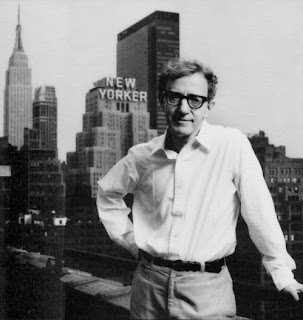




 The sisters are notably prolific, even considering their advantage of being two people. Their constant output gives the impression that they are dedicated to self-improvement and studying the techniques of their art form.


 You can see more work from Elena and Olivia on their



















 Installed prominently in the entrance hall of the Deming Fine Arts Building at Mary Baldwin College is a large-scale, abstract painting by New York artist and MBC alumna Judith Godwin (’52). Titled “Oriental Circus,” it was given as a gift by the artist to the college’s Department of Art and Art History in 1992, following its exhibition in Hunt Gallery as part of a group show of work by alumnae that same year. Measuring 50 inches in height and 126 inches wide, the oil painting is a triptych consisting of three equal-sized panels of stretched canvas. Its overall composition is a structured flurry of shapes, textures, and lines which are organized in such a way that the viewer’s eye is pulled from the left side of the painting to the right.


 J. I. Packer:


.jpg)


 A big event is soon to arrive for Christians and for those simply interested in archaeological examinations and historical events of the past. A one night screening of Patterns of Evidence: The Exodus, a documentary, is being shown nationwide in select theaters Monday, January 19. It will be screened at Celebration Cinema North and River Town Crossings in Grand Rapids at 7 pm. And it will screen as well in Benton Harbor at the Celebration Cinema. It is directed by Timothy P. Mahoney.“Did the Exodus really happen?” asks Mahoney in a short video on the website, FathomEvents.com. “That’s a question that led me on an incredible 12-year investigation.” We are not certain of Mahoney’s conclusions, but we do know that he wanted to examine the “physical evidence from a scientific perspective.” Referring to the audience of this film, he said, “We let them make up their own mind.” The documentary features a panel of experts sharing their point of view.Mahoney added that “new evidence” will be scrutinized, including evidence involving Joseph, the Israelites, the 10 plagues and the Exodus from Egypt. He stated too that certain practices that were not Egyptian were found in their archaeological digs, practices that were Hebrew in nature and in history. One scholar in a trailer about the movie states that when the Biblical account and the archaeological findings are lined up side by side, the two “match up very well.”


 The Daily Hatch


