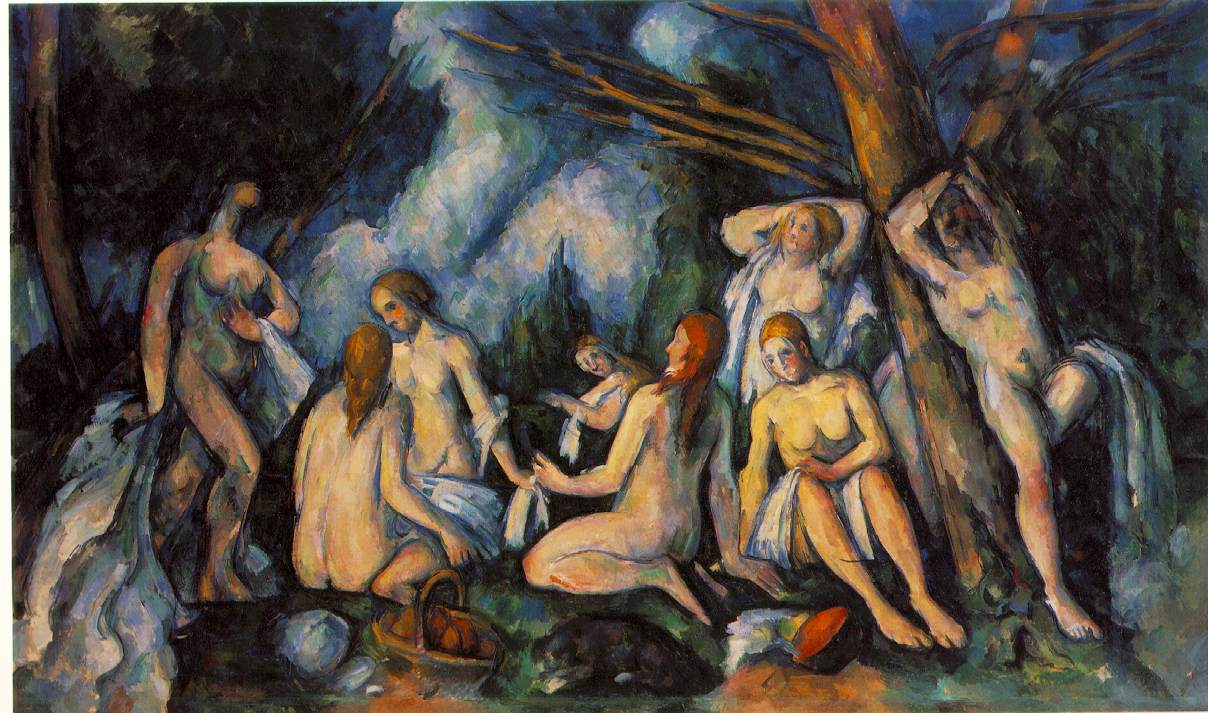
FRANCIS SCHAEFFER ANALYZES ART AND CULTURE Part 32 Carl Sagan Part G My 5-15-94 letter to Carl Sagan which was answered in Dec of 95 by Sagan himself (Feature on artists )
The Scientific Age
—-
Adrian Rogers is pictured below and Francis Schaeffer above.
Watching the film HOW SHOULD WE THEN LIVE? in 1979 impacted my life greatly
Francis Schaeffer in the film WHATEVER HAPPENED TO THE HUMAN RACE?
Francis and Edith Schaeffer
_______
On May 15, 1994 on the 10th anniversary of the passing of Francis Schaeffer I sent a letter to Carl Sagan and here is a portion of that letter below:
I have enclosed a cassette tape by Adrian Rogers and it includes a story about Charles Darwin‘s journey from the position of theistic evolution to agnosticism. Here are the four bridges that Adrian Rogers says evolutionists can’t cross in the CD “Four Bridges that the Evolutionist Cannot Cross.” 1. The Origin of Life and the law of biogenesis. 2. The Fixity of the Species. 3.The Second Law of Thermodynamics. 4. The Non-Physical Properties Found in Creation.
In the first 3 minutes of the cassette tape is the hit song “Dust in the Wind.” Below I have given you some key points Francis Schaeffer makes about the experiment that Solomon undertakes in the book of Ecclesiastes to find satisfaction by looking into learning (1:16-18), laughter, ladies, luxuries, and liquor (2:1-3, 8, 10, 11), and labor (2:4-6, 18-20).
Schaeffer noted that Solomon took a look at the meaning of life on the basis of human life standing alone between birth and death “under the sun.” This phrase UNDER THE SUN appears over and over in Ecclesiastes. The Christian Scholar Ravi Zacharias noted, “The key to understanding the Book of Ecclesiastes is the term UNDER THE SUN — What that literally means is you lock God out of a closed system and you are left with only this world of Time plus Chance plus matter.”
Here the first 7 verses of Ecclesiastes followed by Schaeffer’s commentary on it:
The words of the Preacher, the son of David, king in Jerusalem. Vanity of vanities, says the Preacher, vanity of vanities! All is vanity. What does man gain by all the toil at which he toils under the sun? A generation goes, and a generation comes, but the earth remains forever. The sun rises, and the sun goes down, and hastens to the place where it rises. The wind blows to the south and goes around to the north; around and around goes the wind, and on its circuits the wind returns. All streams run to the sea, but the sea is not full; to the place where the streams flow, there they flow again.
Solomon is showing a high degree of comprehension of evaporation and the results of it. Seeing also in reality nothing changes. There is change but always in a set framework and that is cycle. You can relate this to the concepts of modern man. Ecclesiastes is the only pessimistic book in the Bible and that is because of the place where Solomon limits himself. He limits himself to the question of human life, life under the sun between birth and death and the answers this would give.
Solomon doesn’t place man outside of the cycle. Man doesn’t escape the cycle. Man is in the cycle. Birth and death and youth and old age.
There is no doubt in my mind that Solomon had the same experience in his life that I had as a younger man (at the age of 18 in 1930). I remember standing by the sea and the moon arose and it was copper and beauty. Then the moon did not look like a flat dish but a globe or a sphere since it was close to the horizon. One could feel the global shape of the earth too. Then it occurred to me that I could contemplate the interplay of the spheres and I was exalted because I thought I can look upon them with all their power, might, and size, but they could contempt nothing. Then came upon me a horror of great darkness because it suddenly occurred to me that although I could contemplate them and they could contemplate nothing yet they would continue to turn in ongoing cycles when I saw no more forever and I was crushed.
Let me show you some inescapable conclusions if you choose to live without God in the picture. Schaeffer noted that Solomon came to these same conclusions when he looked at life “under the sun.”
Death is the great equalizer (Eccl 3:20, “All go to the same place; all come from dust, and to dust all return.”)
Chance and time have determined the past, and they will determine the future. (Ecclesiastes 9:11-13 “I have seen something else under the sun: The race is not to the swift
or the battle to the strong, nor does food come to the wise or wealth to the brilliant or favor to the learned; but time and chance happen to them all. Moreover, no one knows when their hour will come: As fish are caught in a cruel net, or birds are taken in a snare, so people are trapped by evil times that fall unexpectedly upon them.”)
Power reigns in this life, and the scales are not balanced(Eccl 4:1; “Again I looked and saw all the oppression that was taking place under the sun: I saw the tears of the oppressed—
and they have no comforter; power was on the side of their oppressors— and they have no comforter.” 7:15 “In this meaningless life of mine I have seen both of these: the righteous perishing in their righteousness, and the wicked living long in their wickedness. ).
Nothing in life gives true satisfaction without God including knowledge (1:16-18), ladies and liquor (2:1-3, 8, 10, 11), and great building projects (2:4-6, 18-20).
There is no ultimate lasting meaning in life. (1:2)
By the way, the final chapter of Ecclesiastes finishes with Solomon emphasizing that serving God is the only proper response of man. Solomon looks above the sun and brings God back into the picture in the final chapter of the book in Ecclesiastes 12:13-14, “ Now all has been heard; here is the conclusion of the matter: Fear God and keep his commandments, for this is the whole duty of man. For God will bring every deed into judgment, including every hidden thing, whether it is good or evil.”
The answer to find meaning in life is found in putting your faith and trust in Jesus Christ. The Bible is true from cover to cover and can be trusted. In 1978 I heard the song “Dust in the Wind” by Kansas when it rose to #6 on the charts. That song told me that Kerry Livgren the writer of that song and a member of Kansas had come to the same conclusion that Solomon had and that “all was meaningless UNDER THE SUN,” and looking ABOVE THE SUN was the only option. I remember mentioning to my friends at church that we may soon see some members of Kansas become Christians because their search for the meaning of life had obviously come up empty even though they had risen from being an unknown band to the top of the music business and had all the wealth and fame that came with that.
Livgren wrote, “All we do, crumbles to the ground though we refuse to see, Dust in the Wind, All we are is dust in the wind, Don’t hang on, Nothing lasts forever but the Earth and Sky, It slips away, And all your money won’t another minute buy.”
Both Kerry Livgren and Dave Hope of Kansas became Christians eventually. Kerry Livgren first tried Eastern Religions and Dave Hope had to come out of a heavy drug addiction. I was shocked and elated to see their personal testimony on The 700 Club in 1981. Livgren lives in Topeka, Kansas today where he teaches “Diggers,” a Sunday school class at Topeka Bible Church. Hope is the head of Worship, Evangelism and Outreach at Immanuel Anglican Church in Destin, Florida.
J.I.PACKER WROTE OF SCHAEFFER, “His communicative style was not that of acautious academic who labors for exhaustive coverage and dispassionate objectivity. It was rather that of an impassioned thinker who paints his vision of eternal truth in bold strokes and stark contrasts.Yet it is a fact that MANY YOUNG THINKERS AND ARTISTS…HAVE FOUND SCHAEFFER’S ANALYSES A LIFELINE TO SANITY WITHOUT WHICH THEY COULD NOT HAVE GONE ON LIVING.”
Francis Schaeffer in Art and the Bible noted, “Many modern artists, it seems to me, have forgotten the value that art has in itself. Much modern art is far too intellectual to be great art. Many modern artists seem not to see the distinction between man and non-man, and it is a part of the lostness of modern man that they no longer see value in the work of art as a work of art.”
Many modern artists are left in this point of desperation that Schaeffer points out and it reminds me of the despair that Solomon speaks of in Ecclesiastes. Christian scholar Ravi Zacharias has noted, “The key to understanding the Book of Ecclesiastes is the term ‘under the sun.’ What that literally means is you lock God out of a closed system, and you are left with only this world of time plus chance plus matter.” THIS IS EXACT POINT SCHAEFFER SAYS SECULAR ARTISTSARE PAINTING FROM TODAY BECAUSE THEY BELIEVED ARE A RESULTOF MINDLESS CHANCE.
____
___________________
_______________
Francis Schaeffer- How Should We Then Live? -6- The Scientific Age
I have written a lot in the past about Carl Sagan on my blog and over and over again these posts have been some of my most popular because I believe Carl Sagan did a great job of articulating the naturalistic view that the world is a result of nothing more than impersonal matter, time and chance. Christians like me have to challenge those who hold this view and that is why I took it upon myself to read many of Sagan’s books and to watch his film series Cosmos.
Francis Schaeffer in his book HE IS THERE AND HE IS NOT SILENT (Chapter 4) asserts:
Because men have lost the objective basis for certainty of knowledge in the areas in which they are working, more and more we are going to find them manipulating science according to their own sociological or political desires rather than standing upon concrete objectivity. We are going to find increasingly what I would call sociological science, where men manipulate the scientific facts. Carl Sagan (1934-1996), professor of astronomy and space science at Cornell University, demonstrates that the concept of a manipulated science is not far-fetched. He mixes science and science fiction constantly. He is a true follower of Edgar Rice Burroughs (1875-1950). The media gives him much TV prime time and much space in the press and magazine coverage, and the United State Government spent millions of dollars in the special equipment which was included in the equipment of the Mars probe–at his instigation, to give support to his obsessive certainty that life would be found on Mars, or that even large-sized life would be found there. With Carl Sagan the line concerning objective science is blurred, and the media spreads his mixture of science and science fiction out to the public as exciting fact.
There is a tension in a person’s life that denies the existence of God but then he can’t live that way in the real world. Carl Sagan had this tension in his life. He denied that humans were special but he said we were precious in his movie CONTACT. He said that God didn’t exist but he did spend his whole life looking for life on other planets and if we had found it he said they would be able possibly to tell us what our purpose is in the universe. Note in the quote above that Schaeffer accuses Sagan of mixing science and science fiction. One side of his brain was ruling out that we have meaning and the other side was constanting searching for it.
In Sagan’s books and in his film series COSMOS he assumes that science is only naturalistic and materialistic and God is locked out. However, in the book THE DEMON-HAUNTED WORLD he does admit that he would be willing to consider evidence that pointed to God’s existence, but again in this review I attacked Sagan’s basis for his morality decisions and how it was insufficient on a materialistic base.
Sagan is the David Duncan Professor of Astronomy and Space Sciences at Cornell University. He is author of many best sellers, including Cosmos, which became the most widely read science book ever published in the English language.
In this book Sagan discusses the claims of the paranormal and fringe-science. For instance, he examines closely such issues as astrology (p. 303), crop circles (p. 75), channelers (pp. 203-206), UFO abductees (pp. 185-186), faith-healing fakes (p. 229), and witch-hunting (p. 119). Readers of The Skeptical Inquirer will notice that Sagan’s approach is very similar.
Sagan writes:
The Committee for the Scientific Investigation of Claims of the Paranormal is an organization of scientists, academics, magicians, and others dedicated to skeptical scrutiny of emerging or full-blown pseudo-sciences. It was founded by the University of Buffalo philosopher Paul Kurtz in 1976. I’ve been affiliated with it since its beginning. Its acronym, CSICOP, is pronounced Asci-cop C as if it’s an organization of scientists performing a police function Y CSICOP publishes a bimonthly periodical called AThe Skeptical Inquirer. On the day it arrives, I take it home from the office and pore through its pages, wondering what new misunderstandings will be revealed (p. 299).
Sagan points out that in 1991 two pranksters in England admitted that they had been making crop figures for 15 years. They flattened the wheat with a heavy steel bar. Later on they used planks and ropes, but the media paid brief attention to the confession of these hoaxers. Why? Sagan concludes, ’Demons sell; hoaxers are boring and in bad taste’ (p. 76).
Christians must admire Sagan’s commitment to critical thinking, logic, and freedom of thought. He takes on many subjects in this book, and the vast majority of his analysis is exceptional. However, his opinions on religious matters are affected by his devotion to scientism. Sagan believes only that which can be proved by science is true. He disputes psychologist Charles Tart’s assertion that scientism is ’dehumanizing, despiritualizing’ (p. 267). Sagan comments, ’There is very little doubt that, in the everyday world, matter (and energy) exist. The evidence is all around us. In contrast, as I’ve mentioned earlier the evidence for something non-material called `spirit’ or `soul’ is very much in doubt’ (p. 267).
Science can only prove things about the physical world, and it cannot prove anything about the spiritual world. Does that mean that the mind and soul don’t exist? Of course not! First, we must realize that science is not the only way to truth. Even Sagan must admit that he must justify values like ’be objective’ or ’report data honestly’. Where do those values come from? They came from outside science, but they must be in place for science to work.
Sagan gives an illustration that contrasts physics and metaphysics. He shows that the physicist’s idea will have to be discarded if tests fail in the laboratory. Therefore, the main difference between physics and metaphysics is that the metaphysicist has no laboratory. This is a cute story, but can science answer the basic questions that underline all knowledge? Metaphysics is necessary for science to take place. It is not true that science is superior to metaphysics like Sagan would have us believe. The presuppositions of science can only be validated by philosophy. J. P. Moreland has correctly said, ’The validation of science is a philosophical issue, not a scientific one, and any claim to the contrary will be a self-refuting philosophical claim’ (Scaling the Secular City, p. 197).
Second, the absence of scientific evidence for the soul does not mean the soul does not exist. Sagan himself states,’Absence of evidence is not evidence of absence’ (p. 213).
I was impressed with the way Sagan put his inner thoughts on the table. For instance, he comments, ’Plainly, there’s something within me that’s ready to believe in life after death…If some good evidence for life after death was announced, I’d be eager to examine it; but it would have to be real scientific data, not mere anecdote’ (pp. 203-204). What kind of evidence is Sagan looking for? It certainly is not vague prophecies. He states, ’Think of how many religions attempt to validate themselves with prophecy…Think of how many people rely on these prophecies, however vague, however unfulfilled, to support or prop up their beliefs…Yet has there ever been a religion with the prophetic accuracy and reliability of science? (p. 30). The answer to that question is yes. Christianity can point to very clear passages such as Isaiah 53 and Daniel 11 written hundreds of years before the events occurred.
While comparing science to religion, Sagan comments, ’Science is far from a perfect instrument of knowledge. It’s just the best we have (pp. 27-28). Here Sagan is only half right. Science is imperfect, but it is not better than the Bible.’
The Demon-Haunted World is a thought-provoking book that I thoroughly enjoyed. Some of Sagan’s anti-Christian views come through, but on the whole, this book uses critical thinking and logic and applies them to the claims of the paranormal and fringe-science of our day.
Reviewed by Everette Hatcher III, P.O. Box 23416, Little Rock, AR 72221.
I agree with Sagan that we should embrace “the hard truth” but do the facts indicate that the Bible is filled with fables? If you want evidence lends support to the idea that the Bible is true then check out these next few videos by Francis Schaeffer and the material in the remaining part of this post:
Whatever Happened To The Human Race? | Episode 5 | Truth and History (20…
Best-selling author Nancy Pearcey and writer-editor J. Richard Pearcey have teamed up to create the Francis Schaeffer Center for Worldview and Culture on the campus of Houston Baptist University.
The purpose of the Francis Schaeffer Center is to “promote foundational research and out-of-the-box creative thinking based on historic Christianity as a total way of life informed by verifiable truth concerning God, humanity, and the cosmos,” according to the FSC mission statement.
Nancy Pearcey serves as director of the Francis Schaeffer Center. Formerly an agnostic, Nancy is professor and scholar-in-residence at HBU. She is the author of seminal works such as Total Truth, The Soul of Science, and Saving Leonardo, and also serves as editor at large of The Pearcey Report. Nancy was heralded in The Economist as “America’s pre-eminent evangelical Protestant female intellectual.”
Courses created by FSC will give students a unique opportunity to work through Nancy’s award-winning books and other foundational resources on worldview and cultural engagement. “Our goal at FSC is to equip students in every major to be critical and creative thinkers,” Pearcey said. “Under the visionary leadership of President Robert Sloan, Houston Baptist University is moving forward strategically to implement a Christian worldview approach more intentionally and comprehensively across all the disciplines.”
The Center is named for noted author Francis A. Schaeffer, whose work with wife Edith at L’Abri Fellowship in Switzerland won international respect for giving an “honest answer to honest questions.” Time magazine hailed the Schaeffers’ work as a “Mission to Intellectuals.”
J. Richard Pearcey serves as associate director of the Center. Richard is scholar for worldview studies at HBU, as well as editor and publisher of The Pearcey Report. He is formerly managing editor of the Capitol Hill newspaper Human Events and associate editor of the “Evans-Novak Political Report.”
“If the Christian worldview is true to reality, and we think a rational case can be made that it is, it can be the key to a renaissance of humanity, freedom, and creativity,” Richard said. “Nancy and I met at L’Abri in Switzerland, so we are grateful for the opportunity to say ‘thank you’ to the Schaeffers and their work by inspiring students and others — teachers, activists, professionals — to apply Christian thought forms across the whole of life, from art to science to business and politics.”
HBU Provost John Mark Reynolds said, “When I was a young adult, the writings and films of Francis Schaeffer modeled a way of doing Christian apologetics that had an important impact on my life. It is my honor to see HBU set up a study center dedicated to the Schaeffer approach to worldview studies. There is no better time for Christians to impact the culture, few better models than Schaeffer for evangelicals, and no better team than Nancy and Richard Pearcey to set up the center.”
Notre Dame de France, the Roman Catholic Francophone Chaplaincy in London run by the Marist Fathers, is squeezed between buildings in Leicester Place, which in turn is squeezed between the colour and commerce of Leicester Square’s crowded cinemas and the sushi, Szechuan, satay and stir fry served in Chinatown’s 78 restaurants. It feels like a historic anomaly, with origins going back to 1861 when the area had a large French population and the Marist Fathers established the mission on the site. Yet it maintains a valid and vibrant ministry with ever-growing calls on its pastoral services as the number of French-speakers in London has grown.
Time and space seem suspended in the light, airy and open expanse of this circular church hidden behind the bluff brick façade on Leicester Place; the building looking like a town house with a narrow arched and carved porch added to it. The unusual circular interior derives from the buildings original manifestation as ‘Burford’s Panorama’, built as a tourist attraction with a rotunda 90ft in diameter decorated with a scenic cylindrical painting by the Irish artist Robert Barker in 1796. The original building, which had been transformed into a church by the French architect Louis Auguste Boileau, was bombed out in the 1940s and almost entirely rebuilt from 1953-55.
From the time of its rebuilding onwards, Cultural Attaché René Varin encouraged the creation of a sacred space, which would honour France by approaching eminent artists of the time such as Georges-Laurent Saupique(base relief carving of Our Lady of Mercy, 1953) and Boris Anrep (Mosaic of the Nativity, 1954). The most significant and perhaps controversial artist was Jean Cocteau.
On entry to the church, however, it is both the rotunda and, beneath it, the Aubusson tapestry by Dom Robertdepicting paradise on earth to which eyes are immediately drawn. In a rather sweet and slightly sentimental image, this tapestry depicts the new Eve walking towards us, surrounded by the vegetation, flowers and creatures of the natural world, as a pure new bride. A quotation from Proverbs refers to Wisdom at the side of God in creation ‘like a master craftsman, ever at play in his presence.’
Dom Robert was a friend of Jean Cocteau who, over the course of eight days in November 1959 (when he was in London promoting his film Le Testament d’Orphee), painted murals of the annunciation, crucifixion, and assumption in the Our Lady’s Chapel at Notre Dame de France. Cocteau had received a honorary doctorate from Oxford University with the support of René Varin and then asked if there was anything he could do in return. Varin suggested that he decorate the chapel at Notre Dame de France.
Such was Cocteau’s fame at the time that a screen was erected to hold back the public and press while he painted the murals. It is said that he arrived each morning at about 10am and always began by lighting a candle. While working on the drawings, he was heard talking to the Virgin Mary: ‘O you, most beautiful of women, loveliest of God’s creatures, you were the best loved. So I want you to be my best piece of work too … I am drawing you with light strokes … You are the yet unfinished work of Grace’(Les murs de Jean Cocteau, written by Carole Weissweiller, photographed by Suzanne Held, Hergé, 1998).
Once he had finished his task, Cocteau was sad to leave: ‘I am sorry to go, as if the wall of the chapel had drawn me into another world.’ He went on to comment: ‘I shall never forget that wide open heart of Notre Dame de France, and the place you allowed me to take within it.’
Thea Lenarduzzi, in describing the murals, highlights the ambivalence many feel at Cocteau’s religious work:
‘Spanning three walls, the mural depicts a crucifixion scene, with shapely Roman soldiers, their nipples erect, who would not be out of place in an advert for Jean Paul Gaultier; swooning women, their eyes cast down, weeping blood, or with their heads thrown back, irises straining towards the heavens.
Of Christ, only his frail legs and feet are shown, dripping blood onto a red rose positioned at the base of the Cross. Slightly off-centre and below the line of vision is Cocteau himself, a self-portrait in which the artist’s ambivalence to Catholicism seems palpable: with his back to the Cross, his brow is furrowed and his left eyebrow raised. To his right, a game of dice plays on the odds. If his expression is one of scepticism, his lips are pursed and tightly sealed. These are light strokes on cool concrete from which no answers can issue, but there are echoes, nonetheless, of Cocteau’s epitaph in the Chapelle Saint-Blaise-des-Simples in Milly-la-Forêt where he is buried: “Je reste avec vous”.’
This sense of ambivalence also expresses itself in the belief that Cocteau inserted hidden esoteric or Masonic messages into his chapel murals. While being one of those who explores these hidden message theories, Corjan de Raaf helpfully notes that:
‘Like many artists, Cocteau struggled with conflicting desires and duties during his life. He combined a fight against a severe opium addiction with his homosexuality and strongly catholic belief. All these themes found their way back into his work.’
Gino Severini wrote that Cocteau was chief among the “somewhat atheist poets” that Jacques Maritaintransformed into Christian artists but noted too that this period “was all too brief.” Similarly, Rowan Williamsconsidered in Grace and Necessity that:
‘Maritain’s relations with Cocteau … constituted an important if inconclusive episode in the lives of both. Although Cocteau’s subsequent life seemed, from the perspective of Maritain, to be “going deeper into the caves of death” and to be dealing with the “powers of darkness”, the influence that Maritain and Catholicism had had on Cocteau was not altogether lost. Something of this can be sensed in the church decorations that Cocteau undertook.’
Jacques and Raïssa Maritain moved to Meudon in 1924, where Jacques started his famous Thomistic Study Circles. Peter A. Redpath writes, in a review of The Very Rich Hours of Jacques Maritain, that:
‘Their fifteen years there were tumultuous. Maritain attempted to rival the negative literary influence of André Gide in French culture and came into public conflict with Jean Cocteau. Among the things that [Ralph] McInerny tells us caused conflict among Gide, Cocteau, and Maritain was Gide’s celebration of homosexuality in the book Corydon, and Cocteau’s flamboyant lifestyle as a homosexual drug addict and his overall character as “an enfant terrible of artistic innovation”.’
One result of this period was Art and Faith, the book which Maritain published in 1926 as a treasury of insights on the broad and interrelated topics of art and faith revealed in the correspondence of letters between he and Cocteau. Maritain wrote, ‘We merely claim that these two can love each other and remain free.’ Cocteau went on much later in his life to decorate several churches and chapels, including the chapel of Saint-Blaise des Simples near his home in Milly-la-Fôret where he was buried amidst the murals he had prepared for this purpose himself. His self chosen epitaph was “Je reste avec vous” or “I remain with you”.
His chapel murals, including those at Notre Dame de France, are perhaps a late flowering of the French Catholic Revival within which Maritain had played such a key role. His murals, newly restored and protected behind a glass screen, are unique examples of the art of the French Catholic Revival within the UK.
*******
Jonathan Evens paints in a symbolic expressionist style and is a creative writer (meditations, poetry, short stories, and a blog). He has facilitated the involvement of churches in a range of public art projects. His arts journalism has featured in a range of publications. He is the Vicar of St John the Evangelist Seven Kings and Secretary of commission4mission.
I have gone back and forth and back and forth with many liberals on the Arkansas Times Blog on many issues such as abortion, human rights, welfare, poverty, gun control and issues dealing with popular culture. Here is another exchange I had with them a while back. My username at the Ark Times Blog is Saline […]
On March 17, 2013 at our worship service at Fellowship Bible Church, Ben Parkinson who is one of our teaching pastors spoke on Genesis 1. He spoke about an issue that I was very interested in. Ben started the sermon by reading the following scripture: Genesis 1-2:3 English Standard Version (ESV) The Creation of the […]
At the end of this post is a message by RC Sproul in which he discusses Sagan. Over the years I have confronted many atheists. Here is one story below: I really believe Hebrews 4:12 when it asserts: For the word of God is living and active and sharper than any two-edged sword, and piercing as far as the […]
In today’s news you will read about Kirk Cameron taking on the atheist Stephen Hawking over some recent assertions he made concerning the existence of heaven. Back in December of 1995 I had the opportunity to correspond with Carl Sagan about a year before his untimely death. Sarah Anne Hughes in her article,”Kirk Cameron criticizes […]
In this post we are going to see that through the years humanist thought has encouraged artists like Michelangelo to think that the future was extremely bright versus the place today where many artist who hold the humanist and secular worldview are very pessimistic. In contrast to Michelangelo’s DAVID when humanist man thought he […]
_________ Antony Flew on God and Atheism Published on Feb 11, 2013 Lee Strobel interviews philosopher and scholar Antony Flew on his conversion from atheism to deism. Much of it has to do with intelligent design. Flew was considered one of the most influential and important thinker for atheism during his time before his death […]
J.I.PACKER WROTE OF SCHAEFFER, “His communicative style was not that of acautious academic who labors for exhaustive coverage and dispassionate objectivity. It was rather that of an impassioned thinker who paints his vision of eternal truth in bold strokes and stark contrasts.Yet it is a fact that MANY YOUNG THINKERS AND ARTISTS…HAVE FOUND SCHAEFFER’S ANALYSES A LIFELINE TO SANITY WITHOUT WHICH THEY COULD NOT HAVE GONE ON LIVING.”
Francis Schaeffer in Art and the Bible noted, “Many modern artists, it seems to me, have forgotten the value that art has in itself. Much modern art is far too intellectual to be great art. Many modern artists seem not to see the distinction between man and non-man, and it is a part of the lostness of modern man that they no longer see value in the work of art as a work of art.”
Many modern artists are left in this point of desperation that Schaeffer points out and it reminds me of the despair that Solomon speaks of in Ecclesiastes. Christian scholar Ravi Zacharias has noted, “The key to understanding the Book of Ecclesiastes is the term ‘under the sun.’ What that literally means is you lock God out of a closed system, and you are left with only this world of time plus chance plus matter.” THIS IS EXACT POINT SCHAEFFER SAYS SECULAR ARTISTSARE PAINTING FROM TODAY BECAUSE THEY BELIEVED ARE A RESULTOF MINDLESS CHANCE.
____
___________________
_______________
Francis Schaeffer- How Should We Then Live? -6- The Scientific Age
I have written a lot in the past about Carl Sagan on my blog and over and over again these posts have been some of my most popular because I believe Carl Sagan did a great job of articulating the naturalistic view that the world is a result of nothing more than impersonal matter, time and chance. Christians like me have to challenge those who hold this view and that is why I took it upon myself to read many of Sagan’s books and to watch his film series Cosmos.
Francis Schaeffer in his book HE IS THERE AND HE IS NOT SILENT (Chapter 4) asserts:
Because men have lost the objective basis for certainty of knowledge in the areas in which they are working, more and more we are going to find them manipulating science according to their own sociological or political desires rather than standing upon concrete objectivity. We are going to find increasingly what I would call sociological science, where men manipulate the scientific facts. Carl Sagan (1934-1996), professor of astronomy and space science at Cornell University, demonstrates that the concept of a manipulated science is not far-fetched. He mixes science and science fiction constantly. He is a true follower of Edgar Rice Burroughs (1875-1950). The media gives him much TV prime time and much space in the press and magazine coverage, and the United State Government spent millions of dollars in the special equipment which was included in the equipment of the Mars probe–at his instigation, to give support to his obsessive certainty that life would be found on Mars, or that even large-sized life would be found there. With Carl Sagan the line concerning objective science is blurred, and the media spreads his mixture of science and science fiction out to the public as exciting fact.
There is a tension in a person’s life that denies the existence of God but then he can’t live that way in the real world. Carl Sagan had this tension in his life. He denied that humans were special but he said we were precious in his movie CONTACT. He said that God didn’t exist but he did spend his whole life looking for life on other planets and if we had found it he said they would be able possibly to tell us what our purpose is in the universe. Note in the quote above that Schaeffer accuses Sagan of mixing science and science fiction. One side of his brain was ruling out that we have meaning and the other side was constanting searching for it.
In Sagan’s books and in his film series COSMOS he assumes that science is only naturalistic and materialistic and God is locked out. However, in the book THE DEMON-HAUNTED WORLD he does admit that he would be willing to consider evidence that pointed to God’s existence, but again in this review I attacked Sagan’s basis for his morality decisions and how it was insufficient on a materialistic base.
Sagan is the David Duncan Professor of Astronomy and Space Sciences at Cornell University. He is author of many best sellers, including Cosmos, which became the most widely read science book ever published in the English language.
In this book Sagan discusses the claims of the paranormal and fringe-science. For instance, he examines closely such issues as astrology (p. 303), crop circles (p. 75), channelers (pp. 203-206), UFO abductees (pp. 185-186), faith-healing fakes (p. 229), and witch-hunting (p. 119). Readers of The Skeptical Inquirer will notice that Sagan’s approach is very similar.
Sagan writes:
The Committee for the Scientific Investigation of Claims of the Paranormal is an organization of scientists, academics, magicians, and others dedicated to skeptical scrutiny of emerging or full-blown pseudo-sciences. It was founded by the University of Buffalo philosopher Paul Kurtz in 1976. I’ve been affiliated with it since its beginning. Its acronym, CSICOP, is pronounced Asci-cop C as if it’s an organization of scientists performing a police function Y CSICOP publishes a bimonthly periodical called AThe Skeptical Inquirer. On the day it arrives, I take it home from the office and pore through its pages, wondering what new misunderstandings will be revealed (p. 299).
Sagan points out that in 1991 two pranksters in England admitted that they had been making crop figures for 15 years. They flattened the wheat with a heavy steel bar. Later on they used planks and ropes, but the media paid brief attention to the confession of these hoaxers. Why? Sagan concludes, ’Demons sell; hoaxers are boring and in bad taste’ (p. 76).
Christians must admire Sagan’s commitment to critical thinking, logic, and freedom of thought. He takes on many subjects in this book, and the vast majority of his analysis is exceptional. However, his opinions on religious matters are affected by his devotion to scientism. Sagan believes only that which can be proved by science is true. He disputes psychologist Charles Tart’s assertion that scientism is ’dehumanizing, despiritualizing’ (p. 267). Sagan comments, ’There is very little doubt that, in the everyday world, matter (and energy) exist. The evidence is all around us. In contrast, as I’ve mentioned earlier the evidence for something non-material called `spirit’ or `soul’ is very much in doubt’ (p. 267).
Science can only prove things about the physical world, and it cannot prove anything about the spiritual world. Does that mean that the mind and soul don’t exist? Of course not! First, we must realize that science is not the only way to truth. Even Sagan must admit that he must justify values like ’be objective’ or ’report data honestly’. Where do those values come from? They came from outside science, but they must be in place for science to work.
Sagan gives an illustration that contrasts physics and metaphysics. He shows that the physicist’s idea will have to be discarded if tests fail in the laboratory. Therefore, the main difference between physics and metaphysics is that the metaphysicist has no laboratory. This is a cute story, but can science answer the basic questions that underline all knowledge? Metaphysics is necessary for science to take place. It is not true that science is superior to metaphysics like Sagan would have us believe. The presuppositions of science can only be validated by philosophy. J. P. Moreland has correctly said, ’The validation of science is a philosophical issue, not a scientific one, and any claim to the contrary will be a self-refuting philosophical claim’ (Scaling the Secular City, p. 197).
Second, the absence of scientific evidence for the soul does not mean the soul does not exist. Sagan himself states,’Absence of evidence is not evidence of absence’ (p. 213).
I was impressed with the way Sagan put his inner thoughts on the table. For instance, he comments, ’Plainly, there’s something within me that’s ready to believe in life after death…If some good evidence for life after death was announced, I’d be eager to examine it; but it would have to be real scientific data, not mere anecdote’ (pp. 203-204). What kind of evidence is Sagan looking for? It certainly is not vague prophecies. He states, ’Think of how many religions attempt to validate themselves with prophecy…Think of how many people rely on these prophecies, however vague, however unfulfilled, to support or prop up their beliefs…Yet has there ever been a religion with the prophetic accuracy and reliability of science? (p. 30). The answer to that question is yes. Christianity can point to very clear passages such as Isaiah 53 and Daniel 11 written hundreds of years before the events occurred.
While comparing science to religion, Sagan comments, ’Science is far from a perfect instrument of knowledge. It’s just the best we have (pp. 27-28). Here Sagan is only half right. Science is imperfect, but it is not better than the Bible.’
The Demon-Haunted World is a thought-provoking book that I thoroughly enjoyed. Some of Sagan’s anti-Christian views come through, but on the whole, this book uses critical thinking and logic and applies them to the claims of the paranormal and fringe-science of our day.
Reviewed by Everette Hatcher III, P.O. Box 23416, Little Rock, AR 72221.
I agree with Sagan that we should embrace “the hard truth” but do the facts indicate that the Bible is filled with fables? If you want evidence lends support to the idea that the Bible is true then check out these next few videos by Francis Schaeffer and the material in the remaining part of this post:
Best-selling author Nancy Pearcey and writer-editor J. Richard Pearcey have teamed up to create the Francis Schaeffer Center for Worldview and Culture on the campus of Houston Baptist University.
The purpose of the Francis Schaeffer Center is to “promote foundational research and out-of-the-box creative thinking based on historic Christianity as a total way of life informed by verifiable truth concerning God, humanity, and the cosmos,” according to the FSC mission statement.
Nancy Pearcey serves as director of the Francis Schaeffer Center. Formerly an agnostic, Nancy is professor and scholar-in-residence at HBU. She is the author of seminal works such as Total Truth, The Soul of Science, and Saving Leonardo, and also serves as editor at large of The Pearcey Report. Nancy was heralded in The Economist as “America’s pre-eminent evangelical Protestant female intellectual.”
Courses created by FSC will give students a unique opportunity to work through Nancy’s award-winning books and other foundational resources on worldview and cultural engagement. “Our goal at FSC is to equip students in every major to be critical and creative thinkers,” Pearcey said. “Under the visionary leadership of President Robert Sloan, Houston Baptist University is moving forward strategically to implement a Christian worldview approach more intentionally and comprehensively across all the disciplines.”
The Center is named for noted author Francis A. Schaeffer, whose work with wife Edith at L’Abri Fellowship in Switzerland won international respect for giving an “honest answer to honest questions.” Time magazine hailed the Schaeffers’ work as a “Mission to Intellectuals.”
J. Richard Pearcey serves as associate director of the Center. Richard is scholar for worldview studies at HBU, as well as editor and publisher of The Pearcey Report. He is formerly managing editor of the Capitol Hill newspaper Human Events and associate editor of the “Evans-Novak Political Report.”
“If the Christian worldview is true to reality, and we think a rational case can be made that it is, it can be the key to a renaissance of humanity, freedom, and creativity,” Richard said. “Nancy and I met at L’Abri in Switzerland, so we are grateful for the opportunity to say ‘thank you’ to the Schaeffers and their work by inspiring students and others — teachers, activists, professionals — to apply Christian thought forms across the whole of life, from art to science to business and politics.”
HBU Provost John Mark Reynolds said, “When I was a young adult, the writings and films of Francis Schaeffer modeled a way of doing Christian apologetics that had an important impact on my life. It is my honor to see HBU set up a study center dedicated to the Schaeffer approach to worldview studies. There is no better time for Christians to impact the culture, few better models than Schaeffer for evangelicals, and no better team than Nancy and Richard Pearcey to set up the center.”
Part 1 on abortion runs from 00:00 to 39:50, Part 2 on Infanticide runs from 39:50 to 1:21:30, Part 3 on Youth Euthanasia runs from 1:21:30 to 1:45:40, Part 4 on the basis of human dignity runs from 1:45:40 to 2:24:45 and Part 5 on the basis of truth runs from 2:24:45 to 3:00:04
Featured artist is James Bishop
James Bishop – Walkthrough led by Carter Ratcliff – September 27, 2014
David Zwirner is pleased to present an exhibition of paintings by American artist James Bishop, on view at the gallery’s 537 West 20th Street location. The exhibition will include works spanning the artist’s prolific career and will present several large paintings on canvas from the 1960s to the early 1980s, as well as small-scale paintings on paper, to which Bishop turned exclusively in 1986 and continues to produce today. Providing a rare opportunity to view the artist’s work, the show will be his first solo presentation in New York since 1987.
Throughout his career, Bishop has engaged European and American traditions of post-War abstraction while developing a subtle, poetic, and highly unique visual language of his own. Alternating between—and at times interweaving—painting and drawing, Bishop’s works explore the ambiguities and paradoxes of material opacity and transparency, flatness and spatiality, as well as linear tectonics and loosely composed forms. Privileging the nuanced and expressive qualities of color and scale, Bishop’s luminous works have been described by American poet and art critic John Ashbery as “half architecture, half air.”1
In the early 1960s, Bishop developed the vocabulary of color and form that would characterize his paintings on canvas for over twenty years: a reduced but rich palette, the employment of subtle architectonic abstractions, and a consistently large, square format that reinforces the viewer’s sense of scale and space. Included in the exhibition are Having, 1970; State, 1972; and Maintenant, 1981, which demonstrate Bishop’s ability to render form, dimensionality, and light through the sensitive and seemingly effortless layering of paint. By overlapping thin but radiant veils of monochrome color, Bishop creates discrete geometric frameworks that suggest doors, windows, cubes, or, as the artist describes, an uncertain scaffolding. In works such as Early, 1967, and Untitled (Bank), 1974, Bishop juxtaposes contrasting fields of white and color to produce simple but evocative abstract compositions.
Related to but distinct from his works on canvas, Bishop’s paintings on paper retain similarly monochrome palettes, while differing in their intimate scale and at times irregularly-shaped support. Devoting himself exclusively to this medium in 1986, Bishop was motivated by the idea that “writing with the hand rather than with the arm” might allow him “to make something… more personal, subjective, and possibly original.”2 In these delicately-rendered works, the traces of Bishop’s hand preserve their charge of personal and emotional resonance, achieving a grand inner scale and restrained monumentality.
Born in 1927 in Neosho, Missouri, Bishop studied painting at Washington University, St. Louis, Missouri, and Black Mountain College, North Carolina, and art history at Columbia University, New York, before traveling to Europe in 1957 and settling in Blévy, France. His work has been the subject of major museum exhibitions: in 1993-94, James Bishop, Paintings and Works on Paper traveled from the Kunstmuseum Winterthur, Switzerland, to the Galerie national de Jeu de Paume, Paris, and the Westfälisches Landesmuseum, Münster; and in 2007-08, James Bishop. Malerie auf Papier/Paintings on Paper traveled from the Staatliche Graphische Sammlung München, Munich, to the Josef Albers Museum Quadrat Bottrop, Germany, and The Art Institute of Chicago.
Bishop’s work can be found in important public and private collections throughout the United States and Europe, including The Art Institute of Chicago; Australian National Gallery, Canberra; Brooklyn Museum of Art, New York; Grey Art Gallery & Study Center, New York University Art Collection, New York; Musée de Grenoble; Musée d’Art Moderne de la Ville de Paris; The Museum of Modern Art, New York; Centre Georges Pompidou, Paris; Louisiana Museum of Modern Art, Humlebæk, Denmark; ARCO Foundation, Madrid; Staatliche Graphische Sammlung München, Munich; San Francisco Museum of Modern Art; Tel Aviv Museum; Kunstmuseum Winterthur; and Kunsthaus Zürich, among others. This is his first exhibition at David Zwirner.
1John Ashbery, “The American Painter James Bishop,” in Dieter Schwarz and Alfred Pacquement, eds., James Bishop: Paintings and Works on Paper (Düsseldorf: Richter Verlag, 1993), p. 109.
2“Artists should never be seen nor heard,” James Bishop in conversation with Dieter Schwarz, in ibid., p. 36
For all press inquiries and to RSVP to the September 6 guided tour and press preview, contact
Kim Donica +1 212 727 2070 kim@davidzwirner.com
I have been waiting to see a large selection of James Bishop’s paintings since the mid-1970s, ever since reading John Ashbery’s appraisal in a secondhand copy of Art News Annual 1966: “It is a shame that Bishop’s paintings, partly owing to his personal aloofness, seem destined for neglect in both New York and Paris, for he is one of the great original American painters of his generation.”
Who was this artist that Ashbery thought so highly of? My curiosity was further piqued when the only other substantial mention of him that I could find was by another poet and art critic, Carter Ratcliff. From various pieces Ashbery wrote, I learned that Bishop had gone to Black Mountain College in 1953, where he studied with Esteban Vicente, and that he liked the work of Robert Motherwell. In 1957 he went to Paris and didn’t return to New York until 1966, ostensibly missing a close-up view of the rise of Pop Art, Color Field painting and Minimalism, the whole caboodle of postwar American painting. Which is not to say that he didn’t know, care about or see American art, particularly by the Abstract Expressionists. Nor did his self-imposed exile in Paris prevent him from traveling to Italy and closely studying the work of artists as diverse as Cosimo Tura and Lorenzo Lotto. He also saw work by artists such as Frank Stella and Ellsworth Kelly in Paris.
At the same time, Ashbery, who lived in Paris during these years, seems to have been the only American critic of the period to champion Bishop. Was he right? Or was this one of those enthusiasms that poets are known to have that is better left forgotten? The fact that Ashbery wrote about Bishop again in 1979, when he was a critic for New York, suggests he didn’t harbor any reservations about his original assessment.
After seeing James Bishop, which is currently on view at David Zwirner (September 6–October 25, 2014), I would urge anyone who cares about what an artist can do with paint to go and immerse themselves in this beautiful, sensitive, astringent exhibition of eleven mostly square, human-scaled paintings in oil and four small works (all are less than six inches in height and width), done in oil and crayon on paper. The paintings were completed between 1962-63 and 1986, while the four works on paper are from 2012. Whether large or small, the works invite the viewer to look closely and to linger over them, to be absorbed by the full range of their subtle synthesis of structure, light and disintegration.
Born in Neosho, Missouri, in 1927, Bishop belongs to the generation that includes Joan Mitchell (1925–1992) and Helen Frankenthaler (1928–2011). While he has expressed his admiration for their work, and, like them, was influenced by Abstract Expressionism, he clearly went his own way. Even though I hadn’t seen any of Bishop’s work, Ashbery’s recounting of his refusal to align himself with any of the styles of the times, from Minimalism and Color Field painting to Pop Art and Painterly Realism, got my attention. If anything, he seems to have learned from the various strains of postwar abstract art without being caught up in their ideologies.
As Ashbery observed, “Bishop has always been a Minimalist, but a sensitive one: the stripping down is obviously a decision of the heart, not the head.” (New York, May 21, 1979.) A deeply responsive contrarian who never aligned himself with any established aesthetic agenda or critical doctrine, Bishop rejected the certainty of Frank Stella’s dictum, “What you see is what you see,” and its denial of contradiction and doubt, in favor of ambiguity, particularly regarding the relationship between surface and space, and between form and dispersion. Furthermore, in “Artists should never be seen nor heard,” a 1993 conversation with Dieter Schwartz, Bishop states: “I never could do a kind of sixties painting in the Greenbergian sense, and I was a failure at it…” How wonderful! Bishop seems never to have fretted over the fact he could not and did not fit in. For many obvious reasons, I find this immensely heartening.
A number of paintings in the Zwirner exhibition suggests that Bishop disagreed fundamentally with Clement Greenberg, who believed that painting resists three-dimensionality and illusionism. While Bishop has said that he learned from Frankenthaler, he has never been a purist who either privileged one technique over another or strived for pure opticality. In addition, he liked ochers and browns, which he characterized as “inexpensive earth colors,” because they were “impure,” and had “associations to earth, blood, wine, shit etc.”
While Bishop’s list of associations suggests that he is a symbolist and, in that regard, allied with Motherwell, I think this would constitute a misunderstanding. What Bishop’s work does so powerfully and originally is hold a wide gamut of visual contradictions and ambiguities in tight proximity: the paintings blossom out of the various irresolvable conflicts that he sets in motion. Moreover, unlike many of the artists working in the wake of Abstract Expressionism, he didn’t believe that feelings, however inchoate, are superfluous to painting. Rather, he believed painting was a language that the viewer had to learn how to read; he wasn’t interested in delivering something the viewers already knew.
In “State” (1972), a glowing monochromatic square with tonalities falling somewhere among earth red, rust and dried blood, Bishop divides the top half of the painting into vertical and horizontal bands, which frame eight squares. Placed in the upper half, and held in place by the physical edges of the painting’s top and flanking sides, the ghostly bands float above a subtly inflected surface that we look at, as well as into, unable to settle comfortably in either domain. Moving between illusionism and surface, the space seems to expand and contract. Both the bands and the surface keep changing. Moreover, in certain areas, the washes of paint become a field in which a few pulverized particles are visible. Paint becomes becomes both a dried puddle and a disembodied light. “State” embodies a world where defining terms such as surface and illusionism, form and formlessness become hazy. Everything, the painting quietly underscores, is fleeting, a mirage. It seems to me that Bishop connects this visual experience to his philosophical understanding of reality and change.
Within the square format of “Maintenant” (1981), which is French for “now,” or the eternal and changing present, a steeple-like structure rises up from the painting’s bottom edge, slowly distinguishing itself from the gray wall of paint. Is the structure solid, made of light, or both? What about the paint surrounding the structure? Is it solid, made of air, or both? It seems to be both a solid object and a mirage, an architectural detail and a ghost. It is this duality that I find compelling and challenging. Is reality both a fleeting mirage and something graspable? What about the body, with its blood and shit? Is this too a mirage? A briefly inhabited form that time will soon scatter?
James Bishopcontinues at David Zwirner (537 West 20th Street, Chelsea, Manhattan) through October 25.
James Bishop met with Alex Bacon and longtime friend Barbara Rose in New York for only the third interview he has given in his over 60-year career. An exhibition of work from the early 1960s through the present is on view at David Zwirner through October 25.
Photo by Thomas Cugini. Courtesy of Annemarie Verna Galerie.
Barbara Rose: The 1960s and ’70s was a moment when there was very serious, analytic painting in which people were doing very subtle work—often in close-valued colors, and acknowledging the material quality of the canvas, but in a different way than the people favored by Clement Greenberg. The sensibility in Paris was different. There were brilliant critics there like your friend Marcelin Pleynet and Hubert Damisch.
I lived through that period in Paris when James was involved with what was going on—with other people, artists, critics, galleries. At the time, there were new legitimate things happening in Paris—something I can’t say today—for example, Supports/Surfaces and the magazine Tel Quel, and Larry Rubin’s Galerie Lawrence that then became Galerie Ileana Sonnabend. I think there is a connection between your work and Supports/Surfaces, which is having a renaissance now. Is that true, James?
Alex Bacon: They certainly liked your work. For example, Louis Cane wrote several essays on it for Peinture cahiers théoriques.
James Bishop: I didn’t actually have anything to do with those Supports/Surfaces people. I think about three of them are interesting artists: Daniel Dezeuze, Claude Viallat, and certainly Pierre Buraglio, who has a wonderful color sense and makes strange little things. Claude has a big show in Montpellier now, and he’s still going on repeating this endless form.
My first show was at Lucien Durand which was kind of spaced like a railroad car. The paintings couldn’t be very big and they weren’t anyway. My second show was at the famed Galerie Lawrence. Very much against his brother, William Rubin, and Greenberg’s everything, Larry showed both Joan Mitchell and me.
Rose: It was courageous of Larry to show your work, since his brother Bill was a card-carrying Greenbergian at the time. And Greenberg, maybe he didn’t know you? Because he didn’t say anything bad, but I don’t think he said anything at all about your work.
Bishop: There was a Spanish collector who had a number of my paintings, and who also had paintings by Morris Louis, Kenneth Noland, and others. So he had some say. Greenberg was happy to have lunch with him, of course. And he tried to get Greenberg interested in my work. Greenberg said something so off that I’ve never forgotten it: “He’s much too influenced by Agnes Martin.” [Laughter.] It was just a way of putting it down, getting rid of it.
There was one dealer I worked with quite closely who, like Greenberg, was not very interested in sculpture. He was passionate about painting and color, and he thought the way into the future was Matisse’s cutouts.
Bacon: It seems that you also had a strong response to Matisse’s cutouts.
Bishop: I never got over the show of the blue nudes that I saw in Paris in the 1960s. It’s very clear to me that Matisse dominates his century.
Rose: I see a dialogue with Matisse, but then it pushes in another direction with these earth tones, which, of course, Matisse would never have used. And I think that’s your real dialogue: you’re talking to Matisse. Or are you talking to anybody else?
Bishop: I would never dare interrupt Matisse, but I was telling Alex earlier about the people that I knew like Ad Reinhardt and Robert Motherwell, and how they loved to talk. Pontificating is more like it. [Laughter.]
Rose: Oh, God. Especially Motherwell. I think the central aspect of your work, outside of the drawing, is the luminosity.
Bishop: Which is very possible with oil painting.
Bacon: We were talking before about your process, which seems to be more akin to something like glazing, perhaps, than to pouring.
Bishop: They have to be stretched, and they have to be flat on the floor, or I can’t work with my very liquid paint. It’s never poured, I prep a tin in which I mix up a couple of tubes of oil paint with a lot of turpentine, a lot or a little less depending on what I want to do. If I want it to look a little thicker or if I want it to look a little… There’s one painting here that’s quite hysterical, the brown one with the bars and squares, “State” (1972). I made about 18 paintings like that because there are a lot of different things you can do within those parameters.
Bacon: It seems clear now, having learned a bit more about how you make them, that you must be able to allow for more gradation as you move the paint around, after you apply it?
Bishop: Yes, “State” has the most movement.
Bacon: Is it the movement that creates the different values in those passages in “State”?
Bishop: It’s picking up a stretched canvas that has, say, a square or a bar of very wet paint, very liquid paint. But, the important thing is what they look like, it’s not the technique. That’s just a way of getting to something that I found interesting.
Rose: Did you find anything in New York before you left for Paris?
Bishop: Well, I had seen three or four things that I found very interesting just before I left New York in the late 1950s. And one was Joan Mitchell, one was Helen Frankenthaler, and the other was Cy Twombly. And Twombly was a real shock for me, and Kimber Smith. But I could never just throw things around like that.
Bacon: Can you tell us something about your student years?
Bishop: You know, as a student, we would wait every month for ARTnews to arrive. There was nothing else except the Magazine of Art with Robert Goldwater. I was a student from ’51 through ’54 at Washington University in St. Louis and we would also see things at the University of Illinois at Urbana-Champaign. Then I met somebody at Black Mountain who said, “Why don’t you come?” That college was falling apart so rapidly you could just go.
Rose: Who were the other people at Black Mountain while you were there?
Bishop: Well, let’s see. The only one I still see is Dorothea Rockburne. There were about six or seven painting students. I don’t know what happened to all the others. The one thing that was so good about this last year was that Stefan Wolpe was there, the composer. John Cage was there. David Tudor would play a concert on Saturday night. Pierre Boulez had sent John his piano sonata, which was only about a month old. I had no idea at the time what I had gotten into.
Rose: Did you ever have a figurative phase?
Bishop: I don’t know. I think so much is figurative. It’s hard to divide a line—except that little painting in there, “Untitled” (1962-3) who owns it also asked me, “Did you ever make figurative paintings?” And I said, “Well, I think there’s a table and chair in your painting.” [Laughter.]
Rose: Did you draw from the figure?
Bishop: Oh, that was the best thing about Washington University. We drew and drew and drew.
Rose: I think if you see it, you feel it, and that’s what’s lacking today.
Bishop: It’s essential.
Rose: Did you feel the situation in Paris, while you were there, was different from New York?
Bishop: There were a number of great intellectual figures still alive in those days in Paris. Georges Bataille and Samuel Beckett and Michel Foucault. But they weren’t interested in painting.
James Bishop. “State,” 1972. Oil on canvas, 72 × 72 1/8″. Copyright 2014 James Bishop. Courtesy of David Zwirner, New York/London.
Rose: They were interested in ideas.
Bishop: And the other thing that was probably important was that a number of travelling shows arrived two or three years after there had been a great resistance in Paris to American art. The first one was the show that everyone assumed was theC.I.A., about the superiority of American Abstract Expressionism. It was the first chance for people to see this work that they’d all been hearing about, or that they’d seen reproductions of, or occasionally one work would turn up in a group show somewhere. Then after that there was a Newman show, and there was a Reinhardt show, and there was a Rothko show, a Franz Kline show. I always had a postcard of Motherwell’s “Voyage” up on my wall, wherever I was. Because you know you could look at Motherwell, and you could look at Bradley Walker Tomlin, and go out and try to do something. But what could you do with Reinhardt, Newman, Rothko? Nothing. You could admire it but students couldn’t try to find something to do with it.
Rose: Bradley Walker Tomlin is someone who really needs to be brought into focus because he’s a great, great painter. But he died so young! He made a very bad career decision, he died [laughs]. Do you paint every day?
Bishop: No. But I do something. Mostly there are the paintings on paper. The works on paper have more “action” than the bigger paintings, ironically. But I’ve been making more little collages lately. There was a whole group in Chicago, but otherwise, they only get reproduced a little bit here and there. I had four in Basel this year. When I was living on Lispenard Street there was a print shop downstairs a couple of doors along, and they would throw out the most wonderful things in their dumpster. I found this whole stack of cards. At times I got to something interesting, where I tried out a color, or something like that, or made a scribble of some kind, and I’d paste it on here and it got to the point where there were about 20-some works. Over the years I probably took out about four that didn’t seem to be right. But the others are all still together.
Bacon: It seems that even though you experimented in a wide range of ways of working, both early on and maybe even now within the constraints of the medium of drawing, there was nonetheless this tightening of formal parameters, beginning in the mid-’60s when you were able to buy 194 centimeter-wide lengths of canvas. For a time, that enabled a certain kind of focus. When you decided to make works on 194-centimeter square canvases, you started producing paintings that mostly have window or ladder-like forms. So, whereas you had been experimenting a lot before, what exactly excited you about narrowing and focusing things in that time?
Bishop: Well, sometimes when someone says it looks like a house, or a window, I say, “It’s a horizontal, a vertical, and a diagonal.” And then if they say, “Oh, there’s a vertical crossing a horizontal,” then I say, “well, maybe it’s a little house!” [Laughs.] Everything comes from somewhere, but people don’t always realize it. You look at a painting years later and think, “that must have been… I must have seen…” Usually in my case, it’s having seen something. I can make a list of about a hundred influences.
Bacon: How do you see your paintings functioning? What is the role of having these structural armatures, like the horizontal and vertical bars?
Bishop: I say I either want them or need them. I can’t get by without them in a way. I think you ask yourself, “What can I do on a large square canvas, or on a small piece of paper that might be interesting?”—first of all for yourself, and in the end hopefully for somebody else, too.
Bacon: In the mid-to-late-’60s, when these large square paintings with pseudo-architectural forms were well underway, you were in New York a lot more, and you showed most often with Fischbach. In a way, this groups you with the other people who showed there, many of whom, like Robert Mangold and Jo Baer, were of a minimal or conceptualist bent. This placed you as part of a broader conversation about painting and reduced form. Did you feel that when you were in New York you were in an active conversation with those people and those ideas?
Bishop: The first show in New York was 1966 at Fischbach because John Ashbery, who I knew in Paris, had written about my work, and he had told Donald Droll, who then saw them. He came around and said, “In September, I’m going to be working at this gallery on 57th Street with a woman named Marilyn Fischbach. Would you like to be shown in the gallery?” That was the first show, which was in December ’66, so that’s how I got to New York. I don’t think I ever would have otherwise. I came out for that show and I found New York very interesting. Sylvia and Bob Mangold are still good friends. But mostly, there was a lot of music and Susi Bloch, an art historian friend who died young, and I went to performances maybe two or three times a week. A lot of small groups were playing new music by new people. New York was very interesting in the ’60s and the ’70s, but then it began to slow down.
Rose: Getting back to the part of Alex’s question about your relationship to Minimal and Conceptual art, I may be wrong, but I don’t think you start with a concept?
Bishop: With the large paintings I have an idea that I want to try to do this and that.
Rose: What was this “this and that” that you wanted to do?
Bishop: Well, it would be a certain color, or colors next to one another.
Bacon: It seems like essentially you’re experimenting with different ways of playing out a vocabulary? Like in “Untitled (Bank)” (1974) you play with the primed white as an active color.
Bishop: The reason that part of the painting only comes up that high, is because it’s not a bank like Credit Suisse, it’s bank like dirt, like a riverbank. There’s some red sort of leaking out of that part of the painting.
Bacon: We were talking earlier today about how, since the whites in your work are not painted, by you at least, since the canvas comes to you from the manufacturer already primed with that white ground, and then you didn’t paint the top, but you painted the bottom half, it functions almost literally like a bank, right? Because, even though you’re using very thin paint, it’s more built-up than the white ground. In the same way that you create those crossbeam forms in a painting like “Early” (1967) by making ridges as you push and move the paint around, it creates this kind of very subtle, but nonetheless material, difference. And it creates a spatial effect where the white, even though it’s not receding endlessly into space, it’s nonetheless quite literally just behind the painted passages.
Bishop: It’s awfully hard to get it to go behind, it’s so strong optically, but you know sometimes I want it to be fairly nicely done, so I would draw my very wet brush along this way but if you push it the other way, it will look torn, and I think that goes back to Esteban Vicente’s collages, and Motherwell’s, too. And I always liked that look. There’s also something about the kind of flatness, and shiny look of that canvas with only one coat of primer, that you can make things look a little bit like paper.
Bacon: I thought it was stunning the way you allow that primer to have that luminosity, but it’s kind of contained. You talk a lot about wanting the viewer to get up close to the work, and there’s obviously so much detail, and so much happening in that kind of intimate engagement.
Rose: Intimacy is a very good word. Barnett Newman for example talked about wanting the viewer to have an intimate experience with the work.
Bacon: Is that why you chose the human scale of the 194-centimeter square?
Bishop: Yes, and I really do think that they should be looked at up close.
Bacon: Looking at the work up close I felt like it was similar to how with certain people—they’re great on first encounter, but when you learn their quirks things go to a whole new level. Your paintings really open up in this kind of way when you spend time with them.
Bishop: [Laughs.] These rooms at David Zwirner, in addition to being really nice shapes and sizes, also change during the day. We were putting the paintings up in the morning, and when we came back in the afternoon I saw some things that I hadn’t seen before. I like that very much.
Bacon: When I saw the show, I couldn’t leave. Because somehow every time I thought I’d seen it all, gotten all the paintings had to offer—even in the best way—at just that instant they would slyly let slip something new. They have a very interesting personality. They’re very much reserved, and they’re certainly not shouting at you but, nonetheless, they like to keep on talking if you’re willing to listen carefully.
Rose: There you go, and there he is! I’ve always said, “If it’s authentic art, the artist and the work are the same.” The problem arises when an artist wills something because they want it to be liked or whatever, it doesn’t work. In the end you can only paint yourself. Did you have any kind of relationship with Reinhardt?
Bishop: Well I met him and he asked me to come and see him and I did. We sat and talked at that huge window in his studio that looks out toward Washington Square.
Rose: I used to visit Ad a lot myself. In his work, there is a sense of the emerging form, which is not in a field. His work doesn’t create foreground/background disjunctions either. I feel there’s some kind of a relationship with your work.
Bacon: What’s interesting is that we’re talking about looking from up close and I think Reinhardt is actually the only one of those artists whose work is not meant to be looked at from up close. Even though there’s a certain pleasure to investigating their velvety surfaces.
Rose: Right! You have to sit back and wait for the form to emerge.
Bacon: Exactly, that’s why he would install barriers and things like that, in part to protect them but also in part because to see them unfold, you had to be at a distance, they didn’t work if you had your nose in them. He created a certain intimacy in distance and I think the intimacy of your paintings, James, is of a very similar nature. I think the David Zwirner galleries work really well at fostering that sense of intimate contact with your paintings.
Bishop: They’re wonderful spaces!
Rose: I think there’s one other point, and it’s really important and that is about intimacy, and impact, and time. The thing Greenberg wanted was the “one shot painting” you got right away. Great, you get it right away and then what? Meditative paintings take time to experience. I see you as a meditative painter, Ad was a meditative painter for example. Now, however, people don’t want to spend the time it takes to experience the work. I think perhaps now European time is very different from American time.
Bishop: Yes.
Bacon: Do you feel the act of making is meditative? Would you agree with Barbara’s statement? That the act of making, the time, the working out of the work is meditative for you?
Bishop: Perhaps not meditation in the strict sense of the word, but something very close. But I don’t know if I would call it “meditative.”
Rose: They certainly don’t look labored. They don’t look too worked over.
Bishop: No, because you wouldn’t do that with most of the paintings. With the large ones, I knew pretty much what I wanted to do and then it either turned out or it didn’t, and some of it was more interesting. At any rate it might take about a day or two but with the works on paper, sometimes I come back months later, and put on a little something more, and that’s what I like about them.
Bacon: But on that general note, it seems interesting to me to read your recollection of this conversation with Annette Michelson, about your first show, where she said that you were not interested in materials. You answered, “I’m interested in them insofar as I try to eliminate them.” But then, seeing the paintings, I think Molly Warnock is the only one who has noticed that you often leave in things like the paintbrush’s bristles, if they fall off, even the marks made when the paint splashes are left as is. It’s like, even if you’re trying to kind of get rid of the materiality of certain things, you leave in the materiality of any “accidents.”
Bishop: Well that’s basically what life is. My life is just a series. Everyday you can fall down stairs, or whatever.
Rose: Don’t do that! [Laughs.]
Bacon: Barbara, maybe you see what I mean here in “Closed” (1974)? This painting works kind of like a Reinhardt, with close-valued tones that cause the forms to emerge slowly over time. And then this one, “Untitled (Bank)” you can look at in an instant, but it has this undercoat of paint that comes through with close looking. So they both have this temporal unfolding for me, in time and through color, but they’re very differently achieved.
Rose: “Closed” reminds me of things that Marc Devade was doing around the same time. It’s really very beautiful. It’s almost as if the white comes forward, which is really strange.
Bishop: People have said that about Marc and me, but I don’t see it. In terms of the white in the paintings, I purposefully chose the off-white wall color for this show because I’m quite hysterical about white walls. I don’t think you can see anything on a white wall. And so I told them to take a big tin of off-white and put in some raw umber. I think it stays behind the paintings very nicely, especially when they’ve got the white in them. It just stays there, and you don’t have to fight it. You wouldn’t look at paintings in a snowstorm! We’re here at noon, and I think I see more in this today. It seems to be a very good time. The forms in this painting, “State” are still closed, but it’s more open than it was. It lets me see the divisions.
Bacon: Do you prefer that the divisions be more visible?
Bishop: Well I don’t want to make a monochrome! I don’t want to make a square that’s all one thing. The most important thing is finding some way to divide up the surface that is interesting, and you’d be surprised how much you can get out of this kind of thing, putting it this way and that way. That’s why there are so many that are made like that, 18 altogether.
Bacon: What I was trying to get at is that it seems like when you got to the 194-centimeter square canvas, then you had this idea that you could explore very similar imagery in multiple works.
Bishop: The roll, you know, is 194 centimeters wide. And then I made the square. Even then, the early paintings are sometimes rectangles, either vertical, but more often horizontal. But I didn’t realize that the square was a good idea until I stretched it, and then I realized what it was.
Bacon: Because this is also how you were making them, with this proximity, this arm-length distance, right? This kind of interaction with the canvas as you’re laying down the paint, and then moving it to see what painterly effects you can achieve. So that must have been exciting, after having done such a variety of work, isolating certain things that could be worked through in these more subtle variations, right?
Bishop: The exciting part was when you were trying to do the parts in the middle of the canvas and not fall in. That was exciting! It’s usually two squares that come together, like in “State.” But “Closed” is different in that way, they overlap in the middle. I think it’s the only one that was that way.
Bacon: You only would paint two coats of paint, right? There’s only two coats of paint on the paintings. They’re not highly worked or anything.
Bishop: That’s enough. You just need the undercoat and the overcoat.
Rose: This was painted on the floor? That was the way Helen Frankenthaler and many of the color field painters—and, of course, Pollock—worked.
Bishop: Yes, I couldn’t do it otherwise.
Bacon: How do you feel about people saying that these square forms reference something like the structure behind them? Like the stretcher?
Bishop: The reading of them as referential to the paintings’ material structure is really off, and if they think it looks like a door or something, what does it matter?
Bacon: You prefer that to the structural reading?
Bishop: Well, the stretcher bars are only about that wide [gestures], if people look at the back, they would find that the band I painted is not as wide as the stretcher bar. The best thing that people could say is: “What does it look like? It looks like a painting.” Art is art is art.
Rose: So why did you stop making large paintings?
Bishop: Because I found it more interesting to work smaller on paper. I just lost interest in doing the sort of things that I did before. I can go on working at my speed on paper for as long as possible. Someone asked if I was working, and I said not very much, but I don’t worry about it, I just do what I feel like doing.
Bacon: So the works on paper haven’t ever inspired you to work something out in a painting? You never thought, “Oh, this is an idea that I could work out on canvas?” It’s enough to just work it out on paper?
Bishop: Yes, I do sometimes think that this work on paper might make a good painting. But the more I thought about it, the less I was convinced that it was necessary. That it should just be what it was—a work on paper.
Bacon: Here you leave in the fallen bristles from your brush. These little accidents give the painting a particular life and personality.
Bishop: I like the mistakes. There are a lot of mistakes in that very disheveled one, “Other Colors” (1965). It looks like something awful has happened and it’s coming up out of the sewer.
Bacon: It’s easy to walk quickly by these paintings and not get anything, they aren’t going to reach out and shout at you. You have to come to them, but if you do, there’s a lot to get out of them.
Rose: I agree, there’s a lot to see if you take the time to look. What happens now is that American culture has become so technological and if you don’t get it in 30 seconds, it’s over. And that’s a real problem.
Bishop: I hope it’s not very antisocial, but I don’t really feel that I should be trying to make things as easy as possible. I like to make it a little difficult.
The pessimism of modern man comes from the realization that there is no “universal system” that can explain everything. Man with himself at the center of the universe cannot explain the world and how it got here, or even man and his place in it. Today, knowledge has become relative. The relativity of knowledge allows for many perspectives. Many people can have different views, without there being a “right” or “wrong” view. Many different views are just many different views, many different concepts, theories, ideas, systems, none are right or wrong–they are just different.
In a culture we see the same “relative” approach to concepts, styles, morals, views, some competing, some supporting but none are better or worse than any other. This “relativity” emphasizes disconnection and chaos not coherence, connectivity, and order. How did we get to this point? How did so much of the world come to have these beliefs about pessimism and relativism?
If the “Age of Nonreason” was the recognition of man’s pessimism and his resulting flight into absurdity, then, the “Age of Fragmentation” represents the modes of communication of that pessimism and Nonreason. Rather than a philosophy, the Age of Fragmentation is really the story of how modern pessimism has been propagated geographically, culturally and socially to almost all mankind.
Schaeffer opens this chapter of How Should We Then Live with the following statement: “Modern pessimism and modem fragmentation have spread in three distinct ways across to people of our own culture and to people worldwide. Geographically, it spread from the European mainland to England, after a time jumping the Atlantic to the United States. Culturally, it spread in the various disciplines from philosophy to art, to music, to general culture (the novel, poetry, drama, films), and to theology. Socially, it spread from the intellectuals to the educated and then through the mass media to everyone.” It is primarily in the culture, through its art, music, literature, and drama/films that man comes to learn how sees and understands himself. It is in the output of modern culture that the humanist’s soul is revealed. As we consider the “Age of Fragmentation” consider the statement that “As a man thinketh, so is he.”
The social spread of modern pessimism introduced a phenomenon that has been called the “generation gap.” The generation gap came about as the younger generations were introduced to new thoughts and ideas while their elders still held the “old” ways. Those who held the old ways did so more from habit than conviction. They were without a foundation for the values they claimed to hold so dear. With the recognition by the younger generation that there was no basis for the beliefs that their elders held, a gap in belief systems of the generations appeared. Dead traditions, empty values, force of habit, described the older generation while change, new thinking, pessimism in reason, optimism in Nonreason, became the foundation for the values of the younger generation. Welcome to the generation gap.
Today, Western Culture has almost reached what Schaeffer calls a “monolithic consensus.” The overwhelming consensus is the basic dichotomy of humanism–-reason leads to pessimism and optimism is in the area of Nonreason. This view was first taught in philosophy, then it was presented in art, music, literature, and drama/film, seeping throughout the culture, eventually even into theology–-Welcome to the Age of Fragmentation!
How did art come to be used as a vehicle for modern thought? Art in general and painting in particular has always seemed to represent the thought of the day. It is one thing to read about the thought of a particular period but the thought comes alive when one looks at the art of the period. It was no different with modern thought and its wrestling with the “dichotomy of humanism” and modern art. As Schaeffer explains, the way to modern art began in response to “the way naturalists were painting.” The naturalist painters could replicate the scene which they were painting but the viewer was left to ask the question “Is there any meaning to what I am looking at?” And on reflection the answer was no because the “art had become sterile.” This began to change with the rise of Impressionism.
Impressionism was a major movement, first in painting and later in music, that developed primarily in France during the late 19th and early 20th centuries. Impressionist painting comprises the work produced between about 1867 and 1886 by a group of artists who shared a set of related approaches and techniques. The most conspicuous characteristic of Impressionism was an attempt to accurately and objectively record visual reality with transient effects of light and color. The principal Impressionist painters were Claude Monet, Pierre Auguste Renoir, Camille Pissarro, Alfred Sisley, Berthe Morisot, Armand Guillaumin, and Frédéric Bazille, who worked together, influenced each other, and exhibited together independently. Edgar Degas and Paul Cézanne also painted in an Impressionist style for a time in the early 1870s.
The period of Impressionism and Postimpressionism painting was about appearance and reality. There were no universals in impressionistic painting. The Impressionist painters were all great artists yet their works leave unanswered the question “where is the reality?” “These men painted only what their eyes brought them, but this left the question whether there was a reality behind the light waves reaching the eyes.”
Claude Monet’s Haystack series of 1890-1891 provide us with something of a bridge between the impressionist and postimpressionist painters. The series did not function as an accurate record of sequence of time nor as a row of stacks of wheat. Instead, asMonet told Geffroy, he was “more and more driven with the need to render ce que j’epreuve”—what he felt or experienced as he encountered the world of nature. And he came to experience nature differently. “For me, landscape hardly exists at all as landscape, because its appearance is constantly changing,” he said; “but it lives by virtue of its surroundings—the air and light—which vary continually.” A single painting of the subject denies this constant variation over time. So what Monet pursued was not the objective fact of these stacks of grain, as defined by light and air, but how his eye perceived them over the passage of time. The landscape served, then, as a point of departure, a vehicle for artistic self-expression. Monet’s series is testimony to one of the basic tenets of modern art: the notion that the artist can reconstruct nature according to the formal and expressive potential of the image itself. One might suggest that here reality became a dream. “As reality tended to become a dream, Impressionism as a movement fell apart. With Impressionism the door was opened for art to become the vehicle for modern thought.”
Postimpressionism is an umbrella term that encompasses a variety of artists who were influenced by Impressionism but took their art in other directions. The postimpressionist period lasts from 1880 to the 1900. There is no single well-defined style of Postimpressionism, but in general it is less idyllic and more emotionally charged than Impressionist work. The classic postimpressionists are Paul Gauguin, Paul Cezanne, Vincent van Gogh, Henri Rousseau and Henri de Toulouse-Lautrec. The Pointillists and Les Nabis are also generally included among the Postimpressionists.
Breaking free of the naturalism of Impressionism in the late 1880s, this group of young painters sought independent artistic styles for expressing emotions rather than simply optical impressions, concentrating on themes of deeper symbolism. By using simplified colors and definitive forms, their art was characterized by a renewed aesthetic sense as well as abstract tendencies. The postimpressionist painters, responding to Impressionism, followed diverse stylistic paths in search of authentic intellectual and artistic achievements. These artists, often working independently, are today called postImpressionists. These postimpressionists attempted to find the way back to reality, to the absolute behind the particulars. “They felt the loss of universals, tried to solve the problem, and they failed. It is not that these painters were always consciously painting their philosophy of life, but in their work as a whole, their worldview was often reflected.” The art of the great postimpressionists “became the vehicle for modern man’s view of the fragmentation of truth and life.”
Painting expresses an idea as a work of art. From this point art could move to the extremes of ultranaturalism, such as the photo-realists or to abstraction, where “reality becomes so fragmented that it disappears, and man is left to make up his personal world.” Wassily Kandinsky (1866-1944), a Russian-born artist was one of the first creators of pure abstraction in modern painting. Kandinsky was never solely a painter, but a theoretician, and organizer at the same time. A gifted author, he expressed his views on art and artistic activity in his numerous writings. After successful avant-garde exhibitions, he founded the influential Munich group Der Blaue Reiter (The Blue Rider; 1911-14) and began completely abstract painting. His forms evolved from fluid and organic to geometric and, finally, to pictographic (e.g. Tempered Élan, 1944).
Besides painting and writing, Kandinsky, was an accomplished musician. He once said: “Color is the keyboard, the eyes are the harmonies, the soul is the piano with many strings. The artist is the hand that plays, touching one key or another, to cause vibrations in the soul.” The concept that color and musical harmony are linked has a long history, intriguing scientists such as Sir Isaac Newton. Kandinsky used color in a highly theoretical way associating tone with timbre (the sound’s character), hue with pitch, and saturation with the volume of sound. He even claimed that when he saw color he heard music. In 1912 Kandinsky wrote an article titled “About the Question of Form” in The Blue Rider saying that, “since the old harmony (a unity of knowledge) had been lost, only two possibilities remained–extreme naturalism or extreme abstraction.” “Both,” he said, “were equal.”
Pablo Picasso’s (1881-1973) painting Les Demoiselles d’Avignon is a significant work in the genesis of modern art. The painting portrays five naked prostitutes in a brothel; two pushing aside curtains around the space where the other women strike seductive and erotic poses—but their figures are composed of flat, splintered planes rather than rounded volumes, their eyes are lopsided or staring or asymmetrical, and the two women at the right have threatening masks for heads. The space, too, which should recede, comes forward in jagged shards, like broken glass. In the still life, at the bottom, a piece of melon slices the air like a scythe.
The faces of the figures at the right are influenced by African masks, which Picasso assumed had functioned as magical protectors against dangerous spirits: this work, he said later, was his “first exorcism painting.” A specific danger he had in mind was life-threatening sexual disease, a source of considerable anxiety in Paris at the time; earlier sketches for the painting more clearly link sexual pleasure to mortality. In its brutal treatment of the body and its clashes of color and style (other sources for this work include ancient Iberian statuary and the work of Paul Cézanne), Les Demoiselles d’Avignon marks a radical break from traditional composition and perspective.
The result of months of preparation and revision, this painting revolutionized the art world when first seen in Picasso’s studio. Its monumental size, 8′ x 7′ 8″, underscored, “the shocking incoherence resulting from the outright sabotage of conventional representation.” Picasso drew on sources as diverse as Iberian sculpture, African tribal masks, and El Greco’s painting to make this startling composition.
In great art the technique fits the worldview being presented, and fragmentation or abstraction well fits the worldview of modern man. The technique expresses both “the concept of a fragmented world and fragmented man.” A world-famous photographer and writer, David Douglas Duncan, a friend of Pablo Picasso, about whom he published six coffee-table books, “says about a certain set of Picasso’s pictures in Picasso’s private collection is in a way a summing up of much of Picasso’s work: ‘Of course, not one of these pictures was actually a portrait but his prophecy of a ruined world.”“ Abstract art “was a complete break with the art of the Renaissance which had been founded on man’s humanist hope.” We saw In Les Demoiselles d’Avignon people were no longer human: “the humanity had been lost.” This becomes increasingly apparent that the techniques of art become more advanced “humanity was increasingly fragmented.” Fragmentation and abstraction, in art, was a wide road to “the absurdity of all things.”
Dada was an informal international movement that began with the start of the First World War. Primarily, in Europe and North America, Dada was an antiwar movement, “a protest against the bourgeois nationalist and colonialist interests which many Dadaists believed were the root cause of the war, and against the cultural and intellectual conformity—in art and more broadly in society—that corresponded to the war.” Most Dadaists believed that “the ‘reason’ and ‘logic’ of bourgeois capitalist society had led people into war. They expressed their rejection of that ideology in artistic expression that appeared to reject logic and embrace chaos and irrationality.” For example, George Grosz later recalled that his Dadaist art was intended as a protest “against this world of mutual destruction.”
Dadaists rebelled against what modern society and culture were. Dada was not art. It was anti-art. “According to its proponents, Dada was not art—it was ‘anti-art’ in the sense that Dadaists protested the contemporary academic and cultured values of art.” The intent of Dada was to “destroy traditional culture and aesthetics.” The Dada movement, more than an antiwar protest movement, popularized the absurd, not simply in art but in everything. Schaeffer concludes: “Dada carried to its logical conclusion the notion of all having come about by chance; the result was the final absurdity of everything, including humanity.”
Schaeffer concludes this section of art as a vehicle of Modern Thought by reviewing the progression of philosophical thought and its interweaving with art. “the philosophers from Rousseau, Kant, Hegel and Kierkegaard onward, having lost their hope of a unity of knowledge and a unity of life, presented a fragmented conception of reality; then the artists painted that way. It was the artist, however, who first understood that the end of this view was the absurdity of all things.” This is the way “the concept of fragmented reality spread in the twentieth century. The philosophers first formulated intellectually what the artists later depicted artistically.”
Perhaps the most widely popular method of spreading the message of modern thought has been music. Schaeffer believes Beethoven and his The Last Quartets were the doorway to modern music. The influence of the “quartets” was obvious in the two streams of classical music that evolved from them: the German and the French. Beethoven’s influence is seen in those that followed him: Wagner, Mahler and Schoenberg.
It is with Arnold Schoenberg’s (1874–1951) that we come into the music which became the “vehicle for modern thought.” Schoenberg, an Austrian and later American Composer, is “associated with the expressionist movements in early 20th-century German poetry and art, and he was among the first composers to embrace atonal motivic development.” Schoenberg was best known for his twelve-tone technique. The compositional technique involving tone rows was a rejection of the past tradition in music. Schaeffer tells us: “This was ‘modern’ in that there was perpetual variation with no resolution.” Schaeffer highlights the difference in resolution between Bach and Schoenberg. Schoenberg’s music with no resolution “stands in sharp contrast to Bach who, on his biblical base, had much diversity but always resolution. Bach’s music had resolution because as a Christian he believed that there will be resolution both for each individual life and for history. As the music which came out of the biblical teaching of the Reformation was shaped by that worldview, so the worldview of modern man shapes modern music.”
Claude Debussy (1862-1918) was the most important French composer of the early twentieth century. As Schaeffer suggests “His direction was not so much that of nonresolution but of fragmentation.” Debussy’s importance comes in that he “opened the door to fragmentation in music and influenced most composers since, not only in classical music but in popular music and rock as well. Even the music that is one of the glories of America–black jazz and black spirituals–was gradually infiltrated.”
The fragmentation in music is parallel to the fragmentation which occurred in painting. The fragmentation in music and in painting were not only changes in techniques but an expression of the worldview of the artists and in turn brought this worldview to people throughout the world. Art and music brought a worldview of fragmentation and abstraction to people who would never have opened a book of philosophy, or would have had any interest in a “worldview.” Popular music beginning with some elements of rock in the 60s carried its message of fragmentation to the young people of the world. Music has become the universal language of the world and with it, this message of fragmentation and abstraction.
Besides music and painting, poetry, drama, literature, and films have also carried these ideas to the world. With the coming of the internet and world communications the message has become one that continually bombard us-–“shouting at us a fragmented view of the universe and of life.” The most successful vehicle for proclaiming the message of fragmentation came in films. Schaeffer observes: “The important concepts of philosophy increasingly began to come not as formal statements of philosophy but rather as expressions in art, music, novels, poetry, drama, and the cinema.” As our culture becomes more visual we see (pun intended) more and more “major philosophic statements . . . made through films.” Philosophers are no longer found in academe, today. They are more likely found directing or producing movies with “a message.” And more than likely the message is “absurd, ” abstract and fragmented.
What do the movies “the Deer Hunter,” “The Departed,” “Midnight Cowboy,” “Unforgiven,” “American Beauty,” and “Silence of the Lambs” share? Yes, they won an academy award for Best Picture–-but what was the message that they conveyed to their worldwide audiences? What is the purpose of adult movie such as “Golden Compass” being advertised as a child’s movie? And we have not even addressed television! Seven days a week, twenty-four hours a day we are overloaded with a humanistic worldview. A worldview that is without hope, without answers, and is becoming more and more absurd. Schaeffer warns: “Modern people are in trouble indeed. These things are not shut up within the art museums, the concert halls and rock festivals, the stage and movies, or the theological seminaries. People function on the basis of their worldview.” Is there any wonder “that it is unsafe to walk at night through the streets of today’s cities?” “As a man thinketh, so is he.”
I have gone back and forth and back and forth with many liberals on the Arkansas Times Blog on many issues such as abortion, human rights, welfare, poverty, gun control and issues dealing with popular culture. Here is another exchange I had with them a while back. My username at the Ark Times Blog is Saline […]
On March 17, 2013 at our worship service at Fellowship Bible Church, Ben Parkinson who is one of our teaching pastors spoke on Genesis 1. He spoke about an issue that I was very interested in. Ben started the sermon by reading the following scripture: Genesis 1-2:3 English Standard Version (ESV) The Creation of the […]
At the end of this post is a message by RC Sproul in which he discusses Sagan. Over the years I have confronted many atheists. Here is one story below: I really believe Hebrews 4:12 when it asserts: For the word of God is living and active and sharper than any two-edged sword, and piercing as far as the […]
In today’s news you will read about Kirk Cameron taking on the atheist Stephen Hawking over some recent assertions he made concerning the existence of heaven. Back in December of 1995 I had the opportunity to correspond with Carl Sagan about a year before his untimely death. Sarah Anne Hughes in her article,”Kirk Cameron criticizes […]
In this post we are going to see that through the years humanist thought has encouraged artists like Michelangelo to think that the future was extremely bright versus the place today where many artist who hold the humanist and secular worldview are very pessimistic. In contrast to Michelangelo’s DAVID when humanist man thought he […]
_________ Antony Flew on God and Atheism Published on Feb 11, 2013 Lee Strobel interviews philosopher and scholar Antony Flew on his conversion from atheism to deism. Much of it has to do with intelligent design. Flew was considered one of the most influential and important thinker for atheism during his time before his death […]
I have written a lot in the past about Carl Sagan on my blog and over and over again these posts have been some of my most popular because I believe Carl Sagan did a great job of articulating the naturalistic view that the world is a result of nothing more than impersonal matter, time and chance. Christians like me have to challenge those who hold this view and that is why I took it upon myself to read many of Sagan’s books and to watch his film series Cosmos.
Francis Schaeffer in his book CHRISTIAN MANIFESTO quotes Carl Sagan three times on pages 44, 53 and 59. Schaeffer observes:
The humanists have openly told us their views of final reality. The HUMANIST MANIFESTO I (1933), page 8 says:
“Religious humanists regard the universe as self-existing and not created. Humanism asserts that the nature of the universe depicted by modern science makes unacceptable any supernatural or cosmic guarantees of human values. “
And Carl Sagan indoctrinated millions of unsuspecting viewers with this humanistic final view of reality in the public television show COSMOS: “The cosmos is all that is or ever was or ever will be.”
Schaeffer also pointed out that after saying this to 140 million viewers Sagan went on and built on this premise in every subsequent conclusion that he makes in the whole series, but can man live as though God does not exist?
Francis Schaeffer in his book HOW SHOULD WE THEN LIVE? noted:
“But even people who believe they are machines cannot live like machines, and thus they must ‘leap upstairs’ against their reason and try to find something which gives meaning to life, even though to do so they have to deny their reason.” [page3 182]
Carl Sagan could not live with his view that we are living in an universe without meaning (we will look at some examples later), but he stuck to his belief that we are all products of chance because we were not created for a purpose. It really does come back to how you think the world began. Was it the creation of a personal God who created us for a purpose or what it the result of impersonal chance?
On March 17, 2013 at our worship service at Fellowship Bible Church, Ben Parkinson who is one of our teaching pastors spoke on Genesis 1. He spoke about this issue..
Ben started the sermon by reading the following scripture:
Genesis 1-2:3
English Standard Version (ESV)
The Creation of the World
1 In the (A)beginning, God created the heavens and the earth. 2 The earth was (B)without form and void, and darkness was over the face of the deep. And the Spirit of God was hovering over the face of the waters.
3 And God said, (C)“Let there be light,” and there was light. 4 And God saw that the light was good. And God separated the light from the darkness. 5 God called the light Day, and the darkness he called Night. And there was evening and there was morning, the first day.
6 And God said, (D)“Let there be an expanse[a] in the midst of the waters, and let it separate the waters from the waters.” 7 And God made[b] the expanse and (E)separated the waters that were under the expanse from the waters that were (F)above the expanse. And it was so. 8 And God called the expanse Heaven.[c] And there was evening and there was morning, the second day.
9 And God said, (G)“Let the waters under the heavens be gathered together into one place, and let the dry land appear.” And it was so. 10 God called the dry land Earth,[d] and the waters that were gathered together he called Seas. And God saw that it was good.
11 And God said, (H)“Let the earth sprout vegetation, plants[e] yielding seed, and fruit trees bearing fruit in which is their seed, each according to its kind, on the earth.” And it was so. 12 The earth brought forth vegetation, plants yielding seed according to their own kinds, and trees bearing fruit in which is their seed, each according to its kind. And God saw that it was good. 13 And there was evening and there was morning, the third day.
14 And God said, “Let there be lights in the expanse of the heavens to separate the day from the night. And let them be for (I)signs and for (J)seasons,[f] and for days and years, 15 and let them be lights in the expanse of the heavens to give light upon the earth.” And it was so. 16 And God (K)made the two great lights—the greater light to rule the day and the lesser light to rule the night—and the stars. 17 And God set them in the expanse of the heavens to give light on the earth, 18 to (L)rule over the day and over the night, and to separate the light from the darkness. And God saw that it was good. 19 And there was evening and there was morning, the fourth day.
20 And God said, “Let the waters swarm with swarms of living creatures, and let birds[g] fly above the earth across the expanse of the heavens.” 21 So (M)God created the great sea creatures and every living creature that moves, with which the waters swarm, according to their kinds, and every winged bird according to its kind. And God saw that it was good. 22 And God blessed them, saying, (N)“Be fruitful and multiply and fill the waters in the seas, and let birds multiply on the earth.” 23 And there was evening and there was morning, the fifth day.
24 And God said, “Let the earth bring forth living creatures according to their kinds—livestock and creeping things and beasts of the earth according to their kinds.” And it was so. 25 And God made the beasts of the earth according to their kinds and the livestock according to their kinds, and everything that creeps on the ground according to its kind. And God saw that it was good.
26 Then God said, (O)“Let us make man[h] in our image, (P)after our likeness. And (Q)let them have dominion over the fish of the sea and over the birds of the heavens and over the livestock and over all the earth and over every creeping thing that creeps on the earth.”
27 So God created man in his own image, in the image of God he created him; (R)male and female he created them.
28 And God blessed them. And God said to them, (S)“Be fruitful and multiply and fill the earth and subdue it, and have dominion over the fish of the sea and over the birds of the heavens and over every living thing that moves on the earth.” 29 And God said, “Behold, I have given you every plant yielding seed that is on the face of all the earth, and every tree with seed in its fruit. (T)You shall have them for food. 30 And (U)to every beast of the earth and to every bird of the heavens and to everything that creeps on the earth, everything that has the breath of life, I have given every green plant for food.” And it was so. 31 (V)And God saw everything that he had made, and behold, it was very good. And there was evening and there was morning, the sixth day.
The Seventh Day, God Rests
2 Thus the heavens and the earth were finished, and (W)all the host of them. 2 And (X)on the seventh day God finished his work that he had done, and he rested on the seventh day from all his work that he had done. 3 So God blessed the seventh day and made it holy, because on it God rested from all his work that he had done in creation.
My chance to correspond with Carl Sagan the year before he died:
Then Ben brought up an age-old question: “Who created God?” The answer is very simple. God has always existed. This reminded me of the time I got to interact with Carl Sagan on this same issue.
I had read many of Francis Schaeffer’s books and watched many of his films and since the 1960’s Schaeffer had been mentioning this young astronomer from Cornell named Carl Sagan. Evidently he had become one of the main spokesmen for the view that the universe was the result of impersonal evolution. Then in 1980 I saw his film series COSMOS which was just a year after I saw the two Francis Schaeffer film series.
I really believe Hebrews 4:12 when it asserts: For the word of God is living and active and sharper than any two-edged sword, and piercing as far as the division of soul and spirit, of both joints and marrow, and able to judge the thoughts and intentions of the heart. That verse prompted me in 1992 to start sending a particular cassette tape out to these skeptics such as Carl Sagan. This tape included three messages (“How I know the Bible is the Word of God,” Adrian Rogers, Sept 1972; “The Final Judgement,” Adrian Rogers,Sept 1972; “How to get a pure heart,” Bill Elliff, 1992.) I also included a lot of material from Francis Schaeffer’s books.
On Dec 5, 1995 Carl Sagan while suffering from cancer took time to finally answer the 4 letters I had written to him up to that point.(I don’t know if he ever listened to the tapes I had sent him.) Here is his response: Thanks for your recent letter about evolution and abortion. The correlation is hardly one to one; there are evolutionists who are anti-abortion and anti-evolutionists who are pro-abortion.You argue that God exists because otherwise we could not understand the world in our consciousness. But if you think God is necessary to understand the world, then why do you not ask the next question of where God came from? And if you say “God was always here,” why not say that the universe was always here? On abortion, my views are contained in the enclosed article (Sagan, Carl and Ann Druyan {1990}, “The Question of Abortion,” Parade Magazine, April 22.)
I responded with a two page letter on Jan 10, 1996 and I never heard back again from Dr. Sagan and he died on Dec 20, 1996. His wife Ann Druyan reported that many people of faith reached out to Sagan in last few months of his life, but he never left his agnosticism.
I wish I had heard this message from Ben Parkinson before I wrote Sagan that final letter. One very important point was made by Ben when he quoted from Nancy Pearcey.
If you press any set of ideas back far enough, eventually you reach some starting point. Something has to be taken as self-existent–the ultimate reality and source of everything else. There’s no reason for it to exist; it just “is.” For the materialist, the ultimate reality is matter, and everything is reduced to material constituents. For the pantheist, the ultimate reality is a spiritual force or substratum, and the goal of meditation is to reconnect with that spiritual oneness. For the doctrinaire Darwinist, biology is ultimate, and everything, even religion and morality, is reduced to a product of Darwinian processes. For the empiricist, all knowledge is traceable ultimately to sense data, and anything not known by sensation is unreal.
And so on. Every system of thought begins with some ultimate principle. If it does not begin with God, it will begin with some dimension of creation–This starting assumption has to be accepted by faith, not by prior reasoning… In short, it is not as though Christians have faith, while secularists base their convictions purely on facts and reason. Secularism itself is based on ultimate beliefs, just as much as Christianity is. Some part of creation–usually matter or nature–functions in the role of the divine. So the question is not which view is religious and which is purely rational; the question is which is true and which is false.
Then Ben observed, “Even those who don’t believe in a God believe that something existed forever. Could be matter could be some kind of spiritual force, could be something biological. There is something that has always been there, no matter who you are and no matter how much you want to escape it. The one true story which has been given to us by the one who did exist forever gives us the most beautiful explanation of what that something is. Is a personal existent, eternal, all-powerful, all-knowing, loving, just creator God. That is who that has existed forever and that is who has created everything around us.”
Ben also went on and read the following scriptures:
Psalm 19:1-6
English Standard Version (ESV)
The Law of the Lord Is Perfect
To the choirmaster. A Psalm of David.
19 (A)The heavens declare the glory of God, and the sky above[a] proclaims his handiwork. 2 Day to day pours out speech, and night to night reveals knowledge. 3 There is no speech, nor are there words, whose voice is not heard. 4 (B)Their (C)voice[b] goes out through all the earth, and their words to the end of the world. In them he has set a tent for (D)the sun, 5 (E)which comes out like (F)a bridegroom leaving his chamber, and, like a strong man, runs its course with joy. 6 Its rising is from the end of the heavens, and its circuit to the end of them, and there is nothing hidden from its heat.
Romans 1:17-22 (Amplified Bible)
17For in the Gospel a righteousness which God ascribes is revealed, both springing from faith and leading to faith [disclosed through the way of faith that arouses to more faith]. As it is written, The man who through faith is just and upright shall live and shall live by faith.(A)
18For God’s [holy] wrath and indignation are revealed from heaven against all ungodliness and unrighteousness of men, who in their wickedness repress and hinder the truth and make it inoperative.
19For that which is known about God is evident to them and made plain in their inner consciousness, because God [Himself] has shown it to them.
20For ever since the creation of the world His invisible nature and attributes, that is, His eternal power and divinity, have been made intelligible and clearly discernible in and through the things that have been made (His handiwork). So [men] are without excuse [altogether without any defense or justification],(B)
21Because when they knew and recognized Him as God, they did not honor and glorify Him as God or give Him thanks. But instead they became futile and [a]godless in their thinking [with vain imaginings, foolish reasoning, and stupid speculations] and their senseless minds were darkened.
22Claiming to be wise, they became fools [professing to be smart, they made simpletons of themselves].
_____________ This second passage in Romans was one that I actually used in two of my letters to Carl Sagan.
I have read lots of Carl Sagan’s books and written several reviews and papers on his views. I will just leave you with two thoughts.
Sagan observed,”Plainly, there’s something within me that’s ready to believe in life after death…If some good evidence for life after death was announced, I’d be eager to examine it; but it would have to be real scientific data, not mere antedote”(pp 203-204, The DemonHaunted World, 1995).
Sagan said he had taken a look at Old Testament prophecy and it did not impress him because it was too vague. He had taken a look at Christ’s life in the gospels, but said it was unrealistic for God to send a man to communicate for God. Instead, Sagan suggested that God could have written a mathematical formula in the Bible or put a cross in the sky.However, what happens at the conclusion of the movie Contact? This is Sagan’s last message to the world in the form of the movie that appeared shortly after his death. Dr Arroway (Jodie Foster) who is a young atheistic scientist who meets with an alien and this alien takes the form of Dr. Arroway’s father. The alien tells her that they thought this would make it easier for her. In fact, he meets her on a beach that resembles a beach that she grew up near so she would also be comfortable with the surroundings. Carl Sagan when writing this script chose to put the alien in human form so Dr. Arroway could relate to the alien. Christ chose to take our form and come into our world too and still many make up excuses for not believing.
Lastly, Carl Sagan could not rid himself of the “mannishness of man.” Those who have read Francis Schaeffer’s many books know exactly what I am talking about. We are made in God’s image and we are living in God’s world. Therefore, we can not totally suppress the objective truths of our unique humanity. In my letter of Jan 10, 1996 to Dr. Sagan, I really camped out on this point a long time because I had read Sagan’s book Shadows of Forgotten Ancestors and in it Sagan attempts to totally debunk the idea that we are any way special. However, what does Dr. Sagan have Dr. Arroway say at the end of the movie Contact when she is testifying before Congress about the alien that communicated with her? See if you can pick out the one illogical word in her statement: “I was given a vision how tiny, insignificant, rare and precious we all are. We belong to something that is greater than ourselves and none of us are alone.”
Dr Sagan deep down knows that we are special so he could not avoid putting the word “precious” in there. Schaeffer said unbelievers are put in a place of tension when they have to live in the world that God has made because deep down they know they are special because God has put that knowledge in their hearts.We are not the result of survival of the fittest and headed back to the dirt forevermore. This is what Schaeffer calls “taking the roof off” of the unbeliever’s worldview and showing the inconsistency that exists.
J.I.PACKER WROTE OF SCHAEFFER, “His communicative style was not that of acautious academic who labors for exhaustive coverage and dispassionate objectivity. It was rather that of an impassioned thinker who paints his vision of eternal truth in bold strokes and stark contrasts.Yet it is a fact that MANY YOUNG THINKERS AND ARTISTS…HAVE FOUND SCHAEFFER’S ANALYSES A LIFELINE TO SANITY WITHOUT WHICH THEY COULD NOT HAVE GONE ON LIVING.”
Francis Schaeffer in Art and the Bible noted, “Many modern artists, it seems to me, have forgotten the value that art has in itself. Much modern art is far too intellectual to be great art. Many modern artists seem not to see the distinction between man and non-man, and it is a part of the lostness of modern man that they no longer see value in the work of art as a work of art.”
Many modern artists are left in this point of desperation that Schaeffer points out and it reminds me of the despair that Solomon speaks of in Ecclesiastes. Christian scholar Ravi Zacharias has noted, “The key to understanding the Book of Ecclesiastes is the term ‘under the sun.’ What that literally means is you lock God out of a closed system, and you are left with only this world of time plus chance plus matter.” THIS IS EXACT POINT SCHAEFFER SAYS SECULAR ARTISTSARE PAINTING FROM TODAY BECAUSE THEY BELIEVED ARE A RESULTOF MINDLESS CHANCE.
One of the greatest exponents of the Quattrocento, interested in the human figure, which he often represented under extreme perspectives (“The Dead Christ”)
I have gone back and forth and back and forth with many liberals on the Arkansas Times Blog on many issues such as abortion, human rights, welfare, poverty, gun control and issues dealing with popular culture. Here is another exchange I had with them a while back. My username at the Ark Times Blog is Saline […]
On March 17, 2013 at our worship service at Fellowship Bible Church, Ben Parkinson who is one of our teaching pastors spoke on Genesis 1. He spoke about an issue that I was very interested in. Ben started the sermon by reading the following scripture: Genesis 1-2:3 English Standard Version (ESV) The Creation of the […]
At the end of this post is a message by RC Sproul in which he discusses Sagan. Over the years I have confronted many atheists. Here is one story below: I really believe Hebrews 4:12 when it asserts: For the word of God is living and active and sharper than any two-edged sword, and piercing as far as the […]
In today’s news you will read about Kirk Cameron taking on the atheist Stephen Hawking over some recent assertions he made concerning the existence of heaven. Back in December of 1995 I had the opportunity to correspond with Carl Sagan about a year before his untimely death. Sarah Anne Hughes in her article,”Kirk Cameron criticizes […]
In this post we are going to see that through the years humanist thought has encouraged artists like Michelangelo to think that the future was extremely bright versus the place today where many artist who hold the humanist and secular worldview are very pessimistic. In contrast to Michelangelo’s DAVID when humanist man thought he […]
_________ Antony Flew on God and Atheism Published on Feb 11, 2013 Lee Strobel interviews philosopher and scholar Antony Flew on his conversion from atheism to deism. Much of it has to do with intelligent design. Flew was considered one of the most influential and important thinker for atheism during his time before his death […]
J.I.PACKER WROTE OF SCHAEFFER, “His communicative style was not that of acautious academic who labors for exhaustive coverage and dispassionate objectivity. It was rather that of an impassioned thinker who paints his vision of eternal truth in bold strokes and stark contrasts.Yet it is a fact that MANY YOUNG THINKERS AND ARTISTS…HAVE FOUND SCHAEFFER’S ANALYSES A LIFELINE TO SANITY WITHOUT WHICH THEY COULD NOT HAVE GONE ON LIVING.”
Francis Schaeffer in Art and the Bible noted, “Many modern artists, it seems to me, have forgotten the value that art has in itself. Much modern art is far too intellectual to be great art. Many modern artists seem not to see the distinction between man and non-man, and it is a part of the lostness of modern man that they no longer see value in the work of art as a work of art.”
Many modern artists are left in this point of desperation that Schaeffer points out and it reminds me of the despair that Solomon speaks of in Ecclesiastes. Christian scholar Ravi Zacharias has noted, “The key to understanding the Book of Ecclesiastes is the term ‘under the sun.’ What that literally means is you lock God out of a closed system, and you are left with only this world of time plus chance plus matter.” THIS IS EXACT POINT SCHAEFFER SAYS SECULAR ARTISTSARE PAINTING FROM TODAY BECAUSE THEY BELIEVED ARE A RESULTOF MINDLESS CHANCE.
This address was delivered by the late Dr. Schaeffer in 1982 at the Coral Ridge Presbyterian Church, Fort Lauderdale, Florida. It is based on one of his books, which bears the same title.
Christians, in the last 80 years or so, have only been seeing things as bits and pieces which have gradually begun to trouble them and others, instead of understanding that they are the natural outcome of a change from aChristian World View to a Humanistic one; things such as overpermissiveness, pornography, the problem of the public schools, the breakdown of the family, abortion, infanticide (the killing of newborn babies), increased emphasis upon the euthanasia of the old and many, many other things.
All of these things and many more are only the results. We may be troubled with the individual thing, but in reality we are missing the whole thing if we do not see each of these things and many more as only symptoms of the deeper problem. And that is the change in our society, a change in our country, a change in the Western world from a Judeo-Christian consensus to a Humanistic one. That is, instead of the final reality that exists being the infinite creator God; instead of that which is the basis of all reality being such a creator God, now largely, all else is seen as only material or energy which has existed forever in some form, shaped into its present complex form only by pure chance.
I want to say to you, those of you who are Christians or even if you are not a Christian and you are troubled about the direction that our society is going in, that we must not concentrate merely on the bits and pieces. But we must understand that all of these dilemmas come on the basis of moving from the Judeo-Christian world view — that the final reality is an infinite creator God — over into this other reality which is that the final reality is only energy or material in some mixture or form which has existed forever and which has taken its present shape by pure chance.
The word Humanism should be carefully defined. We should not just use it as a flag, or what younger people might call a “buzz” word. We must understand what we are talking about when we use the word Humanism. Humanism means that the man is the measure of all things. Man is the measure of all things. If this other final reality of material or energy shaped by pure chance is the final reality, it gives no meaning to life. It gives no value system. It gives no basis for law, and therefore, in this case, man must be the measure of all things. So, Humanism properly defined, in contrast, let us say, to the humanities or humanitarianism, (which is something entirely different and which Christians should be in favor of) being the measure of all things, comes naturally, mathematically, inevitably, certainly. If indeed the final reality is silent about these values, then man must generate them from himself.
So, Humanism is the absolute certain result, if we choose this other final reality and say that is what it is. You must realize that when we speak of man being the measure of all things under the Humanist label, the first thing is that man has only knowledge from himself. That he, being finite, limited, very faulty in his observation of many things, yet nevertheless, has no possible source of knowledge except what man, beginning from himself, can find out from his own observation. Specifically, in this view, there is no place for any knowledge from God.
But it is not only that man must start from himself in the area of knowledge and learning, but any value system must come arbitrarily from man himself by arbitrary choice. More frightening still, in our country, at our own moment of history, is the fact that any basis of law then becomes arbitrary — merely certain people making decisions as to what is for the good of society at the given moment.
Now this is the real reason for the breakdown in morals in our country. It’s the real reason for the breakdown in values in our country, and it is the reason that our Supreme Court now functions so thoroughly upon the fact of arbitrary law. They have no basis for law that is fixed, therefore, like the young person who decides to live hedonistically upon their own chosen arbitrary values, society is now doing the same thing legally. Certain few people come together and decide what they arbitrarily believe is for the good of society at the given moment, and that becomes law.
The world view that the final reality is only material or energy shaped by pure chance, inevitably, (that’s the next word I would bring to you ) mathematically — with mathematical certainty — brings forth all these other results which are in our country and in our society which have led to the breakdown in the country — in society — and which are its present sorrows. So, if you hold this other world view, you must realize that it is inevitable that we will come to the very sorrows of relativity and all these other things that are so represented in our country at this moment of history.
It should be noticed that this new dominant world view is a view which is exactly opposite from that of the founding fathers of this country. Now, not all the founding fathers were individually, personally, Christians.
(PART 2 of speech from above video)
That certainly is true. But, nevertheless, they founded the country on the base that there is a God who is the Creator (now I come to the next central phrase) who gave the inalienable rights.
We must understand something very thoroughly. If society — if the state gives the rights, it can take them away — they’re not inalienable. If the states give the rights, they can change them and manipulate them. But this was not the view of the founding fathers of this country. They believed, although not all of them were individual Christians, that there was a Creator and that this Creator gave the inalienable rights — this upon which our country was founded and which has given us the freedoms which we still have — even the freedoms which are being used now to destroy the freedoms.
The reason that these freedoms were there is because they believed there was somebody who gave the inalienable rights. But if we have the view that the final reality is material or energy which has existed forever in some form, we must understand that this view never, never, never would have given the rights which we now know and which, unhappily, I say to you (those of you who are Christians) that too often you take all too much for granted. You forget that the freedoms which we have in northern Europe after the Reformation (and the United States is an extension of that, as would be Australia or Canada, New Zealand, etc.) are absolutely unique in the world.
Occasionally, some of you who have gone to universities have been taught that these freedoms are rooted in the Greek city-states. That is not the truth. All you have to do is read Plato’s Republic and you understand that the Greek city-states never had any concept of the freedoms that we have. Go back into history. The freedoms which we have (the form / freedom balance of government) are unique in history and they are also unique in the world at this day.
A fairly recent poll of the 150 some countries that now constitute the world shows that only 25 of these countries have any freedoms at all. What we have, and take so poorly for granted, is unique. It was brought forth by a specific world view and that specific world view was the Judeo-Christian world view especially as it was refined in the Reformation, putting the authority indeed at a central point — not in the Church and the state and the Word of God, but rather the Word of God alone. All the benefits which we know — I would repeat — which we have taken so easily and so much for granted, are unique. They have been grounded on the certain world view that there was a Creator there to give inalienable rights. And this other view over here, which has become increasingly dominant, of the material-energy final world view (shaped by pure chance) never would have, could not, has, no basis of values, in order to give such a balance of freedom that we have known so easily and which we unhappily, if we are not careful, take so for granted.
We are now losing those freedoms and we can expect to continue to lose them if this other world view continues to take increased force and power in our county. We can be sure of this. I would say it again — inevitably, mathematically, all of these things will come forth. There is no possible way to heal the relativistic thinking of our own day, if indeed all there is is a universe out there that is silent about any values. None, whatsoever! It is not possible. It is a loss of values and it is a loss of freedom which we may be sure will continually grow.
A good illustration is in the public schools. This view is taught in our public schools exclusively — by law. There is no other view that can be taught. I‘ll mention it a bit later, but by law there is no other view that can be taught. By law, in the public schools, the United States of America in 1982, legally there is only one view of reality that can be taught. I’ll mention it a bit later, but there is only one view of reality that can be taught, and that is that the final reality is only material or energy shaped by pure chance.
It is the same with the television programs. Public television gives us many things that many of us like culturally, but is also completely committed to a propaganda position that the last reality is only material / energy shaped by pure chance. Clark’s Civilization, Brunowski, The Ascent of Man, Carl Sagan’s Cosmos — they all say it. There is only one final view of reality that’s possible and that is that the final reality is material or energy shaped by pure chance.
I have written a lot in the past about Carl Sagan on my blog and over and over again these posts have been some of my most popular because I believe Carl Sagan did a great job of articulating the naturalistic view that the world is a result of nothing more than impersonal matter, time and chance. Christians like me have to challenge those who hold this view and that is why I took it upon myself to read many of Sagan’s books and to watch his film series Cosmos.
In his book The Dragons of Eden, the late Carl Sagan writes,“The reason we prohibit the killing of human beings must be because of some quality human beings possess, a quality we especially prize, that few or no other organisms on earth enjoy.”1 When I first read this, my heart started to beat a little faster. A dogmatic atheist, a dyed-in-the-wool materialist, was essentially agreeing with Christians that humans are more than molecules in motion! I wasn’t expecting him to go as far as to say that we are “special”, but he was dangerously close. However, I was quite disappointed as I read what Dr. Sagan thought this quality was: “This essential human quality, I believe, can only be our intelligence.” How could someone get so close to the truth yet end up so far from it? If we want to address this question, we must first examine why Sagan even thought that human life is valuable or worth protecting. We must ask why he thought that humans possess something that “few or no other organisms on earth enjoy.”Francis Schaeffer insightfully observed that the more a non-Christian stays consistent with his own presuppositions, the further he is from the real world; conversely, the closer he is to the real world, the more inconsistent he is with his own presuppositions. It’s quite a predicament for the unbeliever. Schaeffer says that “in reality no one can live logically according to his own non-Christian presuppositions, and consequently, because he is faced with the real world and himself, in practice you will find a place where you can talk.”2 This is a bold claim, but I find it to be the case with every God-substitute out there: materialism, naturalism, nihilism, communism, paganism, pantheism, and any “ism” you can name. Sagan and his atheistic materialism certainly fall into this arena. If we take Schaeffer’s claim (and the Bible) to be correct, then we know two things: first, that materialism is false and will prove itself illogical if held consistently; second, that we can find common ground with those held captive by this worldview. Many people who grew up during the 70s were influenced by Sagan’s Cosmos series, and many prominent scientists today point to him as an inspiration. Finding the issue with Sagan’s specific statement, as well as his broader worldview, can help us persuade those held captive to materialism.In essence, materialists or naturalists hold that the material universe is all that there is: everything can be explained in terms of matter and physical processes. Did you catch that keyword? Everything. This categorical statement, comprising the basis of materialism, is logically invalid since it requires the proof through only material that only material exists. When clearly stated, the circular argument shows that materialists are using unproven and unprovable assumptions about the nature of reality to justify their worldview. I would argue that you can’t use materialism to prove materialism unless you are inconsistent with materialism. You must be able to step outside, or transcend materialism if you are to evaluate it. This, then, is the problem with Sagan’s statement: his worldview is unsupportable. Sagan looked to his worldview–materialism, or the “box of things” Nancy Pearcey described–to explain his intuitive understanding that there is something special and unique about humans. Unfortunately for him, the answer was not in the box of things. Still, Sagan and other dedicated materialists are committed to this box and will not look elsewhere. Therefore, we need to gently and respectfully push them to accept the consequences of their beliefs or turn to the gospel.A consistently held materialist worldview claims that human rationality comes from non-rationality: all of humanity’s ability to reason comes from an irrational process. Sagan actually affirms this concept later in the same book when he states that “only through the deaths of an immense number of slightly maladapted organisms are we, brains and all, here today. [T]he accidents and errors and lucky happenstances of the past powerfully prefigure the present.”3 Why trust your conclusions or beliefs if they are rooted in luck? In God’s Undertaker: Has Science Buried God?Dr. John Lennox observes that “either human intelligence ultimately owes its origin to mindless matter; or there is a Creator. It is strange that some people claim that it is their intelligence that leads them to prefer the first to the second.”4 Indeed, it is strange! Trusting such convictions is not only irrational, but also requires a leap of faith. To make sense of life, logically consistent materialists have no choice but to step outside the confines of their worldview. Sagan could not understand why human life is special because the foundations of his worldview indicate that no molecule is more or less important than another molecule. Giving any sort of value to a particular atom or force would be completely arbitrary; matter is matter. Any belief to the contrary is a departure from the logically necessary tenets of materialism. Ironically, departing from materialism is also a step in the right direction–a step Sagan took when he realized that humans are different from other animals. Considering the limited set of explanations in the box of things for the “quality we especially prize,” he selected intelligence. Can this be falsified or proven scientifically? It cannot, because it is simply an arbitrary guess. Why not instead select our ability to walk upright, or our ability to lie? Consider, too, the consequences of holding to such an arbitrary decision. Do people of lower intelligence have less worth? What level of intelligence constitutes personhood? Who determines the threshold? Are we able to move that line around as we please? Once we accept such an arbitrary answer, the door is open to redefine what it means to be human, causing consequent redefinitions of sin, morality and all that constitutes life as we know it. I doubt that the materialist can live with such consequences. The box of things leaves us without a satisfactory answer for the uniqueness and specialness of humanity and robs life of any ultimate meaning. The Gospel, on the other hand, provides answers that are consistent with human experience and can satisfy both the heart and the mind.The Bible affirms that man is different in kind from animals because God created humans in His image. Genesis 1:26-27 tells us that we are made in His likeness; while there has been much debate over the centuries on the extent and nature of this Godlikeness, most would agree that this means we are spiritual, rational, and moral creatures. If the Biblical account is correct, we should expect to see evidence that humans are different from animals in both degree and kind. The materialist must argue that humans and animals are simply different in degree. Who is right? Obviously, there are similarities between humans and animals, and we should expect such similarities since we have a common Creator. Still, the differences will be significant if we truly are made in the likeness of a personal Creator. In A World of Difference, Ken Samples lists seven ways in which humans are drastically different from animals, revealing that the biblical Imago Dei, or image of God, better corresponds to and explains reality than the materialist worldview: 5
Human beings have an inherent spiritual and religious nature.
Human beings possess unique intellectual, cultural, and communicative abilities.
Human beings are conscious of time, reality and truth.
Human beings possess a conscience, identity a value system, and legislate moral laws for society.
Human beings are uniquely inventive and technological.
Human beings possess an intense curiosity to explore and understand the entire created realm.
Human beings possess aesthetic taste and appreciation for more than just practical purposes.
Sagan and materialism stand in direct opposition to the Bible. Materialism is incapable of placing any value on human life despite attempts to arbitrarily elevate some human characteristic as a source for humanity’s intuitively observed uniqueness. However, since materialists bear the image of God, they cannot help seeking some explanation for their intuitive understanding of humanity’s inherent value. If we hold to Sagan’s and materialism’s tenet that everything is merely atoms of one form or another, then his words would have been no more valuable than the sound of the wind in the trees. His worldview would require him to deny the significance of human life as well as the ability of reason to determine truth, undermining his reason-dependent worldview at its most basic level. Sagan couldn’t stop wondering how the universe works and trying to explain life and reality – he was made in the image of God and knew that there was ultimate meaning to be found. On the other hand, the Bible tells us that human reason comes from ultimate reason and humanity is unique and valuable because it bears the image of God. The question of the uniqueness of humanity gives us a place to start a conversation. As Schaeffer put it, “Christian apologetics do not start somewhere beyond the stars. They begin with man and what he knows about himself.”6 The materialist knows in his heart that man is indeed special. He may not admit it, but he has no choice but to live it.
1. Carl Sagan, The Dragons of Eden (New York: Random House, 1977), 197
2. Francis Schaeffer, Francis A. Schaeffer Trilogy (Crossway, 1990), 137
3. Carl Sagan, The Dragons of Eden (New York: Random House, 1977), 6
4. John Lennox, God’s Undertaker: Has Science Buried God? (Lion Hudson, 2009)
5. Kenneth Samples, A World of Difference (Grand Rapids: Baker Books, 2007), 182-185
6. Francis Schaeffer, Francis A. Schaeffer Trilogy (Crossway, 1990), 133
When I confronted Carl Sagan about his moral views concerning abortion and also about his views of the origin of the universe he responded with a letter, but the more important response came after his death when I viewed his movie CONTACT. He wanted to say there was no afterlife and we were all products of chance but then he wanted to jump back and grab words like “precious” to describe us as if we could attain lasting meaning to our lives without God in the picture.
I will give agnostics credit when they realize that without God in the picture everything is left to chance. I posted earlier. Neo-Darwinist Richard Dawkins recognized the purposelessness of such a system:
In a universe of blind physical forces and genetic replication some people are going to get hurt, other people are going to get lucky, and you won’t find any rhyme or reason in it, nor any justice. The universe we observe has precisely the properties we should expect if there is, at bottom, no design, no purpose, no evil and no good, nothing but blind, pitiless indifference.22
On humanist assumptions [the assumption that there is no God and life has evolved by time and chance alone], life leads to nothing, and every pretense that it does not is a deceit. If there is a bridge over a gorge which spans only half the distance and ends in mid-air, and if the bridge is crowded with human beings pressing on, one after another they fall into the abyss. The bridge leads to nowhere, and those who are pressing forward to cross it are going nowhere. . . It does not matter where they think they are going, what preparations for the journey they may have made, how much they may be enjoying it all . . . such a situation is a model of futility (H. J. Blackham et al., Objections to Humanism (Riverside, Connecticut: Greenwood Press, 1967).)
1. The fossil record. Not only is the so-called missing link still missing, all of the transitional life forms so crucial to evolutionary theory are missing from the fossil record. There are thousands of missing links, not one!
2. The second law of thermodynamics. This law states that energy is winding down and that matter left to itself tends toward chaos and randomness, not greater organization and complexity. Evolution demands exactly the opposite process, which is observed nowhere in nature.
3. The origin of life. Evolution offers no answers to the origin of life. It simply pushes the question farther back in time, back to some primordial event in space or an act of spontaneous generation in which life simply sprang from nothing.
Solomon is said to be the wisest man who ever lived.Solomon went to the extreme in his searching in the Book of Ecclesiastes for this something more, but he did not find any satisfaction in pleasure (2:1), education (2:3), work (2:4), wealth (2:8) or fame (2:9). All of his accomplishments would not be remembered (1:11) and who is to say that they had not already been done before by others (1:10)? Also Solomon’s upcoming death depressed him because both people and animals alike “go to the same place — they came from dust and they return to dust” (3:20).
In 1978 I heard the song “Dust in the Wind” by Kansas when it rose to #6 on the charts. That song told me thatKerry Livgren the writer of that song and a member of Kansas had come to the same conclusion that Solomon had. I remember mentioning to my friends at church that we may soon see some members of Kansas become Christians because their search for the meaning of life had obviously come up empty even though they had risen from being an unknown band to the top of the music business and had all the wealth and fame that came with that. Furthermore, Solomon realized death comes to everyone and there must be something more.
Livgren wrote:
“All we do, crumbles to the ground though we refuse to see, Dust in the Wind, All we are is dust in the wind, Don’t hang on, Nothing lasts forever but the Earth and Sky, It slips away, And all your money won’t another minute buy.”
Both Kerry Livgren and Dave Hope of Kansas became Christians eventually. Kerry Livgren first tried Eastern Religions and Dave Hope had to come out of a heavy drug addiction. I was shocked and elated to see their personal testimony on The 700 Club in 1981 and that same interview can be seen on youtube today. Livgren lives in Topeka, Kansas today where he teaches “Diggers,” a Sunday school class at Topeka Bible Church. Hope is the head of Worship, Evangelism and Outreach at Immanuel Anglican Church in Destin, Florida.
Solomon’s experiment was a search for meaning to life “under the sun.” Then in last few words in the Book of Ecclesiastes he looks above the sun and brings God back into the picture: “The conclusion, when all has been heard, is: Fear God and keep His commandments, because this applies to every person. For God will bring every act to judgment, everything which is hidden, whether it is good or evil.”
You can hear Kerry Livgren’s story from this youtube link:
(part 1 ten minutes)
(part 2 ten minutes)
________________________
Today’s feature is on the artist Paul Klee
KLEE
PAUL KLEE (1879-1940)
In a period of artistic revolutions and innovations, few artists were as crucial as Paul Klee. His studies of color, widely taught at the Bauhaus, are unique among all the artists of his time.
I have gone back and forth and back and forth with many liberals on the Arkansas Times Blog on many issues such as abortion, human rights, welfare, poverty, gun control and issues dealing with popular culture. Here is another exchange I had with them a while back. My username at the Ark Times Blog is Saline […]
On March 17, 2013 at our worship service at Fellowship Bible Church, Ben Parkinson who is one of our teaching pastors spoke on Genesis 1. He spoke about an issue that I was very interested in. Ben started the sermon by reading the following scripture: Genesis 1-2:3 English Standard Version (ESV) The Creation of the […]
At the end of this post is a message by RC Sproul in which he discusses Sagan. Over the years I have confronted many atheists. Here is one story below: I really believe Hebrews 4:12 when it asserts: For the word of God is living and active and sharper than any two-edged sword, and piercing as far as the […]
In today’s news you will read about Kirk Cameron taking on the atheist Stephen Hawking over some recent assertions he made concerning the existence of heaven. Back in December of 1995 I had the opportunity to correspond with Carl Sagan about a year before his untimely death. Sarah Anne Hughes in her article,”Kirk Cameron criticizes […]
In this post we are going to see that through the years humanist thought has encouraged artists like Michelangelo to think that the future was extremely bright versus the place today where many artist who hold the humanist and secular worldview are very pessimistic. In contrast to Michelangelo’s DAVID when humanist man thought he […]
_________ Antony Flew on God and Atheism Published on Feb 11, 2013 Lee Strobel interviews philosopher and scholar Antony Flew on his conversion from atheism to deism. Much of it has to do with intelligent design. Flew was considered one of the most influential and important thinker for atheism during his time before his death […]
I have been writing you since 1994 and today I wanted to comment on your book THE GOD DELUSION on the points of abortion and slavery.
On pages 330-331 of THE GOD DELUSION you asserted:
‘Slippery slope’ arguments can be framed by consequentialists (though I wouldn’t in this case). Maybe embryos don’t suffer, but a culture that tolerates the taking of human life risks going too far: where will it all end? In infanticide? The moment of birth provides a natural Rubicon for defining rules, and one could argue that it is hard to find another one earlier in embryonic development. Slippery slope arguments could therefore lead us to give the moment of birth more significance than utilitarianism, narrowly interpreted, would prefer.
Arguments against euthanasia, too, can be framed in slippery slope terms. Let’s invent an imaginary quotation from a moral philosopher: ‘If you allow doctors to put terminal patients out of their agony, the next thing you know everybody will be bumping off their granny to get her money. We philosophers may have grown out of absolutism, but society needs the discipline of absolute rules such as “THOU SHALT NOT KILL,” otherwise it doesn’t know where to stop. Under some circumstances absolutism might, for all the wrong reasons in a less than ideal world, have better consequences than naive consequentialism! We philosophers might have a hard time prohibiting the eating of people who were already dead and unmourned – say road-killed tramps. But, for slippery slope reasons, the absolutist taboo against cannibalism is too valuable to lose.’
Let me make 3 points here. FIRST, the command THOU SHALT NOT KILL must have a theological base or it is baseless. SECOND, the slippery slope argument takes down the atheist quite often. THIRD, the unborn baby has all the genetic code at the time of conception that they will have for the rest of their life.
Concerning the first point I know that you are familiar with the movies of Woody Allen and you have even quoted Allen before in your books. Take time and watch again his movie CRIMES AND MISDEMEANORS. Woody Allen has exposed a weakness in his own humanistic view that God is not necessary as a basis for good ethics. There must be an enforcement factor in order to convince Judah not to resort to murder. Otherwise, it is fully to Judah ‘s advantage to remove this troublesome woman from his life.
The Bible tells us, “{God} has also set eternity in the hearts of men…” (Ecclesiastes 3:11 NIV). The secularist calls this an illusion, but the Bible tells us that the idea that we will survive the grave was planted in everyone’s heart by God Himself. Romans 1:19-21 tells us that God has instilled a conscience in everyone that points each of them to Him and tells them what is right and wrong (also Romans 2:14 -15).
It’s no wonder, then, that one of Allen’s fellow humanists would comment, “Certain moral truths — such as do not kill, do not steal, and do not lie — do have a special status of being not just ‘mere opinion’ but bulwarks of humanitarian action. I have no intention of saying, ‘I THINK HITLER WAS WRONG.’ Hitler WAS wrong.” (Gloria Leitner, “A Perspective on Belief,” THE HUMANIST, May/June 1997, pp. 38-39)
Here Leitner is reasoning from her God-given conscience and not from humanist philosophy. It wasn’t long before she received criticism. Humanist Abigail Ann Martin responded, “NEITHER AM I AN ADVOCATE OF HITLER:HOWEVER, BY WHOSE CRITERIA IS HE EVIL?” (THE HUMANIST, September/October 1997, p. 2)
The secularist can only give incomplete answers to these questions: How could you have convinced Judah not to kill? On what basis could you convince Judah it was wrong for him to murder?
As Christians, we would agree with Judah ‘s father that “The eyes of God are always upon us.” Proverbs 5:21 asserts, “For the ways of man are before the eyes of the Lord, and He ponders all his paths.” Revelation 20:12 states, “…And the dead were judged (sentenced) by what they had done (their whole way of feeling and acting, their aims and endeavors) in accordance with what was recorded in the books” (Amplified Version). The Bible is revealed truth from God. It is the basis for our morality. Judah inherited the Jewish ethical values of the Ten Commandments from his father, but, through years of life as a skeptic, his standards had been lowered. Finally, we discover that Judah ‘s secular version of morality does not resemble his father’s biblically-based morality.
Concerning the second point I wanted to mention the correspondence I had with Carl Sagan. On December 5, 1995, I got a letter back from Carl Saganand in this letter he included a copy of his article “Abortion: Is it Possible to be both “Pro-life” and “Pro-Choice”?” which also was published in some places under the title “The Question of Abortion: A Search for Answers.” In that article Sagan stated:
Acquiescing in the killing of any living creature, especially one that might later become a baby, is troublesome and painful. But we’ve rejected the extremes of “always” and “never,” and this puts us–like it or not–on the slippery slope. If we are forced to choose a developmental criterion, then this is where we draw the line: when the beginning of characteristically human thinking becomes barely possible.
This article by Sagan was also published in his last book BILLIONS AND BILLIONS:Thoughts on Life and Death at the Brink of the Millennium and I had the privilege of reviewing that book for the magazine PERSPECTIVES ON SCIENCE AND CHRISTIAN FAITH (Volume 50, Number 3, September 1996). Sagan assumes this takes place in the fetus during the thirtieth week of pregnancy–near the beginning of the third trimester. It is amazing that Sagan can come to this arbitrary and reckless decision after making the following assertions: “If it is impermissible to abort a pregnancy in the ninth month, what about the eighth, seventh, sixth…?” (p. 165). “We recognize that specifying a precise moment will overlook individual differences. Therefore, if we must draw a line, it ought to be drawn conservatively–that is, on the early side” (p. 171). “A morality that depends on, and changes with technology is a fragile morality…” (p. 178).
Lastly Sagan concludes “ROE v WADE is a good and prudent decision” (p. 178) and he admits he is “on the slippery slope” (p. 176) but he fails to realize how far that slope goes down. Francis Schaeffer and Dr. C. Everett Koop in their book WHATEVER HAPPENED TO THE HUMAN RACE? noted:
...when the United States Supreme Court made its ruling about abortion on January 22, 1973, Mr. Justice Blackmun delivered the opinion of the court. The first section of his opinion was entitled “Ancient Attitudes.” In it he referred back to pre-Christian law. He said, “Greek and Roman law afforded little protection to the unborn. If abortion was prosecuted in some places, it seems to have been based on a concept of a violation of the father’s right to his offspring. Ancient religion did not bar abortion.” Thus, as his first point, Mr. Justice Blackmun based his opinion on the practice of pre-Christian Greek and Roman law. Most people who read this did not realize the logical result concerning babies after their birth. Roman law permitted not only abortion but also infanticide. As we think this over, we ask ourselves, “Now that this door is open, how long will it be before infanticide is socially accepted and perhaps legalized?”
Harry Blackmun pictured below:
Schaeffer and Koop pictured below:
Concerning the third point lets consider my friend Dr. Kevin Henke who is an atheist and a scientist (btw he is an evolutionist too). Interestingly enough he told me that he was pro-life because the unborn baby has all the genetic code at the time of conception that they will have for the rest of their life. Below are some other comments by other scientists:
Dr. Hymie Gordon (Mayo Clinic): “By all criteria of modern molecular biology, life is present from the moment of conception.”
Dr. Micheline Matthews-Roth (Harvard University Medical School): “It is scientifically correct to say that an individual human life begins at conception.”
Dr. Alfred Bongioanni (University of Pennsylvania): “I have learned from my earliest medical education that human life begins at the time of conception.”
Dr. Jerome LeJeune, “the Father of Modern Genetics” (University of Descartes, Paris): “To accept the fact that after fertilization has taken place a new human has come into being is no longer a matter of taste or opinion . . . it is plain experimental evidence.”…
________
Moving on to page 300 I noticed that you commented, “Slavery, which was taken for granted in the Bible and throughout most of history, was abolished in civilized countries.” This is all true but you must also know the ABOLITION MOVEMENT that brought fourth the freedom of the slaves was a direct result of evangelicals throughout the country taking this political stance to the street in the 1840’s because of their Christian beliefs.
Christ came and laid his life down to die for our sins and there is evidence that indicates the Bible is true!!!!! Some 400 years before crucifixion was invented, both Israel’s King David and the prophet Zechariah described the Messiah’s death in words that perfectly depict that mode of execution. Further, they said that the body would be pierced and that none of the bones would be broken, contrary to customary procedure in cases of crucifixion (Psalm 22 and 34:20; Zechariah 12:10). Again, historians and New Testament writers confirm the fulfillment: Jesus of Nazareth died on a Roman cross, and his extraordinarily quick death eliminated the need for the usual breaking of bones. A spear was thrust into his side to verify that he was, indeed, dead.
Psalm 22 New American Standard Bible (NASB)
A Cry of Anguish and a Song of Praise.
For the choir director; upon [a]Aijeleth Hashshahar. A Psalm of David.
22My God, my God, why have You forsaken me? [b]Far from my deliverance are the words of my [c]groaning. 2 O my God, I cry by day, but You do not answer; And by night, but [d]I have no rest. 6 But I am a worm and not a man,
A reproach of men and despised by the people. 7All who see me [g]sneer at me; They [h]separate with the lip, they wag the head, saying, 8 “[i]Commit yourself to the Lord; let Him deliver him; Let Him rescue him, because He delights in him.”
12 Many bulls have surrounded me; Strong bulls of Bashan have encircled me. 13 They open wide their mouth at me, As a ravening and a roaring lion. 14 I am poured out like water, And all my bones are out of joint; My heart is like wax; It is melted within [l]me. 15 My strength is dried up like a potsherd, And my tongue cleaves to my jaws; And You lay me [m]in the dust of death. 16 For dogs have surrounded me; [n]A band of evildoers has encompassed me; [o]They pierced my hands and my feet. 17 I can count all my bones. They look, they stare at me; 18 They divide my garments among them, And for my clothing they cast lots.
Francis Schaeffer ended HOW SHOULD WE THEN LIVE? Episode 7 with these words:
When we think of Christ of course we think of his substitutionary death upon the cross when he who claimed to be God died in a substitutionary way and as such his death had infinite value and as we accept that gift raising the empty hands of faith with no humanistic elements we have that which is real life and that is being in relationship to the infinite personal God who is there and being in a personal relationship to Him. But Christ brings life in another way that is not as often clearly thought about perhaps. He connects himself with what the Bible teaches in his teaching and as such he is a prophet as well as a savior. It is upon the basis of what he taught and the Bible teaches because he himself wraps these together that we have life instead of death in the sense of having some knowledge that is more than men can have from himself, beginning from himself alone. Both of these elements are the place where Christ gives us life.
The influence of Rothko in the history of painting is yet to be quantified, because the truth is that half a century after his death the influence of Rothko’s large, dazzling and emotional masses of color continues to be present in many painters of the 21st century.
Roy Holt with ‘Folly of Choices’ 1992, photo by Gareth Winters
I have gone back and forth and back and forth with many liberals on the Arkansas Times Blog on many issues such as abortion, human rights, welfare, poverty, gun control and issues dealing with popular culture. Here is another exchange I had with them a while back. My username at the Ark Times Blog is Saline […]
On March 17, 2013 at our worship service at Fellowship Bible Church, Ben Parkinson who is one of our teaching pastors spoke on Genesis 1. He spoke about an issue that I was very interested in. Ben started the sermon by reading the following scripture: Genesis 1-2:3 English Standard Version (ESV) The Creation of the […]
At the end of this post is a message by RC Sproul in which he discusses Sagan. Over the years I have confronted many atheists. Here is one story below: I really believe Hebrews 4:12 when it asserts: For the word of God is living and active and sharper than any two-edged sword, and piercing as far as the […]
In today’s news you will read about Kirk Cameron taking on the atheist Stephen Hawking over some recent assertions he made concerning the existence of heaven. Back in December of 1995 I had the opportunity to correspond with Carl Sagan about a year before his untimely death. Sarah Anne Hughes in her article,”Kirk Cameron criticizes […]
In this post we are going to see that through the years humanist thought has encouraged artists like Michelangelo to think that the future was extremely bright versus the place today where many artist who hold the humanist and secular worldview are very pessimistic. In contrast to Michelangelo’s DAVID when humanist man thought he […]
_________ Antony Flew on God and Atheism Published on Feb 11, 2013 Lee Strobel interviews philosopher and scholar Antony Flew on his conversion from atheism to deism. Much of it has to do with intelligent design. Flew was considered one of the most influential and important thinker for atheism during his time before his death […]
Back in 1976, the world was still hurting from The Beatles’ break-up and during the first ever season of the now-iconic US show Saturday Night Live, the producer took it upon himself to do something about it. Lorne Michaels delivered a speech about the Fab Four directly to camera, saying, “I’m inviting you to come on our show” and imploring Paul McCartney, John Lennon, George Harrison and Ringo Starr to put their differences behind them and reunite. Adding a little extra incentive, Michaels then whipped out a cheque for $3000 – not an amount to be sniffed at back then – and said it would be theirs if they came back together on SNL.
It was, like most of SNL’s output, a gag intended to entertain and stir things up, but what Michaels didn’t know was that two of the band were watching and actually considered it. As recounted in Man On The Run, Tom Doyle’s excellent book about McCartney in the 70s, Lennon and McCartney were actually watching the show together that night in Lennon’s Dakota building apartment, just 22 blocks north of where it was being filmed. They were, writes Doyle, “laughing their asses off and, just for a minute, actually considering his offer. ‘Wouldn’t it be funny if we went down?’ said John. ‘We should go down now and just do it.’”
This momentous cameo never happened, though, the pair deciding they were too tired to get in a cab and head down, with Paul and wife Linda heading home soon afterwards. It would be one of the last occasions McCartney and Lennon ever hung out, with their relationship turning frosty once again for the rest of the decade. What could have been if they hadn’t have talked themselves out of an idea to turn up and collect SNL’s cheque.
The reason Einstein was on SGT. PEP. cover was because he was the most brilliant man of the 20th century and everyone knew it too!!!! The Beatles had searched for meaning in so many areas of life up until this point and had not found it. Maybe they had missed out by not concentrating more on their education?
The Beatles were looking for lasting satisfaction in their lives and their journey took them down many of the same paths that other young people of the 1960’s were taking. No wonder in the video THE AGE OF NON-REASON Schaeffer noted, ” Sergeant Pepper’s Lonely Hearts Club Band…for a time it became the rallying cry for young people throughout the world. It expressed the essence of their lives, thoughts and their feelings.”
How Should We then Live Episode 7 small (Age of Nonreason)
(Francis Schaeffer pictured below)
Paul McCartney & John Lennon 1968 Full Interview
Uploaded on Sep 26, 2009
I uploaded this a while ago on my old profile but it got deleted here it is enjoy
Paul McCartney & John Lennon 1968 Full Interview
Paul McCartney & Wings – “Picasso’s Last Words(Drink To Me)”
Uploaded on Sep 9, 2011
This is “Picasso’s Last Words(Drink To Me)”, from the album, “Band On The Run”, by Paul McCartney And Wings in 1973.
_____________
(Seen below John Lennon and Yoko in Paris with Dali in late 1960’s )
Picasso – The Beatles
Uploaded on Mar 1, 2011
Whole Lotta Shakin’ Goin’ On a song recorded during the Get Back sessions on January 3, 1969.
________________________
Today 12-27 in 1958: While attending a class at the Liverpool College of Art, John Lennon meets student Cynthia Powell, later to become his first wife.
The highest level of education any of the Beatles experienced was a short time in art college by John Lennon in the late 1950’s. Evidently all four of the Beatles did not get good grades in school but John did advance to this distinguished art school.
Staff at the Liverpool College of Art in the late 1950s (at the time of John Lennon and Stuart Sutcliffe) Included Julia Carter Preston, Arthur Ballard, Charles Burton, Nicholas Horsfield, George Mayer-Marten, E.S.S. English, Alfred K. Wiffen, Austin Davies, Philip Hartas, W.L. Stevenson (Principal), and more.
Stuart Sutcliffe And John Lennon
Below is a portion of the article, “John Lennon, the boy we knew,” and it discusses the experience that John Lennon had at art college.
Before the Beatles, John Lennon was a school friend, a bandmate, a boyfriend – and a big personality. We talk to the people who knew him best during his Liverpool youth
john-lennon-quarrymen
John Lennon (centre) plays guitar with the Quarrymen at St Peter’s church fete, Woolton, Merseyside, 6 July 1957. Photograph: PA Imogen Carter
Saturday 12 December 2009 19.05 EST Last modified on Wednesday 11 June 2014 13.40 EDT
ART COLLEGE
A close friend of John Lennon’s from Liverpool art college, BILL HARRY launched Mersey Beat at college, a publication about the Liverpool music scene which was instrumental in the Beatles’ success. He has written several books about the band.
When I first saw John he was strolling amidst the students at Liverpool College of Art, dressed like a teddy boy. All the other students were in duffle coats and turtle necks, and I thought, “Art students are supposed to be bohemians and rebels and they’re all dressed the same, they’re all conventional. He’s the rebel, I must get to know him.”
He was a bit aggressive at first. If he found he could browbeat you then you were under his thumb. He used to treat Stuart [Sutcliffe] really badly at times, humiliate him in front of people. At college girls would be chatting in the corridor, and when John walked by they’d shut up and shiver. He had a bit of an acid tongue. But if you stood up to him he liked that.
I introduced my mates Stuart and Rod Murray to John, and we used to go to Ye Cracke, the art school pub in Rice Street. The four of us decided to call ourselves the Dissenters and made a vow to make Liverpool famous: John with his music, Stuart and Rod with their painting, and me with my writing. I coined the phrase “Mersey Beat”, launched a newspaper of that name and got John to write the story of the Beatles for the first issue. “On the Dubious Origins of Beatles, Translated from the John Lennon” was a wacky thing about how a man came down on a flaming pie and gave them the name. John was so delighted I’d published it that he brought me a bundle of 250 stories, poems and drawings he’d done, so I began publishing them. One of his favourite writers was Richmal Crompton who did the Just William books, and he was into the radio show The Goons. But his favorite book was Alice’s Adventures in Wonderland, he loved Lewis Carroll. One time Margaret Duxbury, who shared the flat with Stuart and John at Gambier Terrace, fell asleep so John made us get potatoes, put matchsticks in them and dangle them above her so when she woke up she’d think there were spiders on her. He’d do things like that all the time.
I loved John’s art because it reminded me of Steinberg, the American artist. He had a great fluidity of line with his cartoons and things. But he was such a rebel. We’d get commissions at college, the teacher would say “I want you to paint the docks”, and when he collected the work and ordered it by merit, John’s would be last because while everyone would depict cranes and dockers and things he’d just draw a foot.
Or instead of drawing the life model, he’d draw her watch. Aunt Mimi said she always remembered me because I was the first person to call John a genius. His mind was different. He always tried to stretch himself, often in mischievous ways.
It seems the members of the Beatles were asking much the same back in 1950s Liverpool. According to their biographer Bob Spitz, John Lennon, Paul McCartney, George Harrison, and Ringo Starr were mostly poor and uneducated. Lennon was the only band member to grow up “solidly middle class,” while Spitz described Starr’s living conditions during childhood as “Dickensian.” Whatever wealth gap existed in England during the ‘50s and early ‘60s, the future Beatles were all to varying degrees on the wrong end of it.
Why did Albert Einstein get chosen to be on the cover of SGT. PEPPER’S?
The reason was because he was the most brilliant man of the 20th century and everyone knew it too!!!! The Beatles had searched for meaning in so many areas of life up until this point and had not found it. Maybe they had missed out by not concentrating more on their education?
Top 10 Facts About Albert Einstein
Albert Einstein – His cut-out was mostly obscured in the final photo by John Lennon as only his hair is visible. Einstein can only be seen in the out-take photos.
________________________________
___________
Albert Einstein (stock footage / archival footage)
Published on Mar 11, 2013
Albert Einstein talks about theory of relativity, graphics show equation E = MC squared (E=MC2); explains the theory of relativity.
Einstein smoking pipe, reading. Looking at formula. Einstein meets with Professor Solard. Letter being typed in typewriter. Einstein with scientists in office, read proclamation for peaceful use of atomic power. Einstein says “I agree”.
Young Albert Einstein at party (VERY NICE).
Camera pans across men and women at a testimonial dinner, including Albert Einstein (1920s). Great shots of black tie affair with dignitaries and the rich enjoying a swell lavish time. (Very 19210-20s Germany) Shots of the following men at the dinner: Tristan Bernard, Max Von Schillings, Albert Einstein, Helmut Gerlach.
Albert Einstein delivers a speech (pre-WWII), mentioning his gratitude at being “a man, a European and a Jew” and the importance of freedom. Nice long speech clip citing other men of science.
CU Albert Einstein speaks of danger of nuclear suicide.
Einstein (CU talking, NO AUDIO).
David Ben-Gurion with Albert Einstein.
_____________
The Beatles in a press conference after their Return from the USA
Uploaded on Nov 29, 2010
The Beatles in a press conference after their Return from the USA.
I can’t think of another person in the Bible that comes close to the brilliance of Albert Einstein except possibly King Solomon.
HOW BRILLIANT WAS KING SOLOMON?
1 Kings 4:30-34
29-34 God gave Solomon wisdom—the deepest of understanding and the largest of hearts. There was nothing beyond him, nothing he couldn’t handle. Solomon’s wisdom outclassed the vaunted wisdom of wise men of the East, outshone the famous wisdom of Egypt. He was wiser than anyone—wiser than Ethan the Ezrahite, wiser than Heman, wiser than Calcol and Darda the sons of Mahol. He became famous among all the surrounding nations. He created 3,000 proverbs; his songs added up to 1,005. He knew all about plants, from the huge cedar that grows in Lebanon to the tiny hyssop that grows in the cracks of a wall. He understood everything about animals and birds, reptiles and fish. Sent by kings from all over the earth who had heard of his reputation, people came from far and near to listen to the wisdom of Solomon.
The Beatles were searching for meaning in life in what I call the 6 big L words just like King Solomon did in the Book of Ecclesiastes. He looked into LEARNING (1:12-18, 2:12-17), laughter, ladies, luxuries, and liquor (2:1-2, 8, 10, 11), and labor (2:4-6, 18-20).
Here is his final conclusion concerning LEARNING:
ECCLESIASTES 1:12-18, 2:12-17 LEARNING
12 I the Preacher have been king over Israel in Jerusalem.13And I applied my heart[f] to seek and to search out by wisdom all that is done under heaven. It is an unhappy business that God has given to the children of man to be busy with.14 I have seen everything that is done UNDER THE SUN, and behold, all is vanity[g] and a striving after wind.[h]
15 What is crooked cannot be made straight, and what is lacking cannot be counted.
16 I said in my heart, “I have acquired great wisdom, surpassing all who were over Jerusalem before me, and my heart has had great experience of wisdom and knowledge.”17 And I applied my heart to know wisdom and to know madness and folly. I perceived that this also is but a striving after wind.
18 For in much wisdom is much vexation, and he who increases knowledge increases sorrow.
12So I turned to consider wisdom and madness and folly. For what can the man do who comes after the king? Only what has already been done.13 Then I saw that there is more gain in wisdom than in folly, as there is more gain in light than in darkness.14 The wise person has his eyes in his head, but the fool walks in darkness. And yet I perceived that the same event happens to all of them.15 Then I said in my heart, “What happens to the fool will happen to me also. Why then have I been so very wise?” And I said in my heart that this also is vanity.16 For of the wise as of the fool there is no enduring remembrance, seeing that in the days to come all will have been long forgotten. How the wise dies just like the fool!17 So I hated life, because what is done UNDER THE SUN was grievous to me, for all is vanity and a striving after wind.
Francis Schaeffer noted that Solomon took a look at the meaning of life on the basis of human life standing alone between birth and death “under the sun.” This phrase UNDER THE SUN appears over and over in Ecclesiastes. The Christian Scholar Ravi Zacharias noted, “The key to understanding the Book of Ecclesiastes is the term UNDER THE SUN — What that literally means is you lock God out of a closed system and you are left with only this world of Time plus Chance plus matter.”
Solomon’s experiment was a search for meaning to life “under the sun.” Then in last few words in the Book of Ecclesiastes he looks above the sun and brings God back into the picture: “The conclusion, when all has been heard, is: Fear God and keep His commandments, because this applies to every person. For God will bring every act to judgment, everything which is hidden, whether it is good or evil.”
The Kalam Cosmological Argument (Scientific Evidence) (Henry Schaefer, PhD)
Published on Jun 11, 2012
Scientist Dr. Henry “Fritz” Schaefer gives a lecture on the cosmological argument and shows how contemporary science backs it up.
On March 4, 1879, in the city of Ulm in Wurttemberg, Germany, a person was born who would shake the foundations of Newtonian physics Albert Einstein. Julian Schwinger writes, “Just as Isaac Newton dominated the scientific scene in the seventeenth century, so Albert Einstein dominates that of the twentieth century.” However, it was not obvious from the first that this man would become such an influential figure; in fact, Ronald Clark writes in his biography of Einstein, “Nothing in Einstein’s early history suggests dormant genius. Quite the contrary. The one feature of his childhood about which there appears no doubt is the lateness with which he learned to speak.” Einstein himself admitted, “I have no particular talent, I am merely extremely inquisitive.”
Clark says Einstein was “German by nationality, Jewish by origin”, but Einstein was first enrolled at Luitpold Gymnasium, a Catholic school. It appears that the Einstein family was Jewish by name only. At the age of sixteen, Einstein tried to get into the Swiss Federal Polytechnic School in Zurich, which would “qualify him for a post on the lowest rung of the professional teacher’s ladder.” After failing the entrance examination once, he was accepted and got his degree, but he could not find a post. He eventually got a job working in a patent office as a technical expert. When he was not working, he was writing papers on theoretical physics, and in 1905 he wrote three particularly brilliant papers. Schwinger says, “The year 1905 was a miraculous one for science. A totally unknown physicist produced not one but three revolutionary papers in physics that year.” One of those papers written in 1905 was “On the Electrodynamics of Moving Bodies”, in which Einstein presents the special theory of relativity.
Einstein contributed to the sciences with his two major works on relativity: his special theory and his general theory.
Einstein’s special theory of relativity says that space and time are relative. In other words, if two people observe the same event, both of their perspectives are equally true. This theory ran right in the face of Newtonian physics, which taught that space and time are absolute frames of reference. The special theory is where Einstein presents his famous equation, E=mc2. Einstein said that this means “Energy has mass and mass represents energy.”
The special theory of relativity applied to uniform motion. His general theory of relativity was created to broaden his argument to include accelerated motion. He chose to focus on gravity because it is an important foundation of Newtonian physics. Could Einstein relativise the law of gravity?
Einstein said that acceleration is the opposite of gravity, and there is no experiment that can be performed to separate the two. For example, if you are in a spaceship accelerating at one “G” (the same as the earth’s gravity), you would not be able to tell if you were on earth or in space, because acceleration would imitate gravity. However, Einstein went further than this. He said that gravity does not even exist. Instead, “mass has the property of bending the space in its vicinity so that objects close by are accelerated.”
Regardless of the complexity of Einstein’s theories, his contribution to science is clear: he destroyed Newtonian physics mathematically. Gamow observes: “Einstein was probably the first to realize the important fact that the basic notions and the laws of nature, however well established, were valid only within the limits of observation and did not necessarily hold beyond them.” Pearcey writes: “The Newtonian faith splintered upon the rocky shores of the new physics.”
Einstein’s work was not inspired by a Christian worldview. He believed in a god, but a very different god from the God of the Bible. Clark says that Einstein believed “in Spinoza’s God who reveals himself in the harmony of all that exists, not in a God who concerns himself with the fate and actions of men.” Pearcey writes: “Einstein did sometimes speak of God as a distinct Being, yet he made it clear that in his view God was completely bound by rational necessity . . . In other words, God had no choice; the laws of science reveal the only possible way He could create the world.” Einstein himself said, “Through the reading of popular scientific books I soon reached the conviction that much of the stories in the Bible could not be true… Suspicion against every kind of authority grew out of this experience.”
While Einstein was neither for or against the Christian worldview, he did challenge it unintentionally. Not taking the time to correctly understand it, his theory of relativity gave many people the “scientific” justification to embrace relativism. Pearcey writes: “Few had any clear idea of the scientific content of relativity theory, but the term itself struck a responsive chord in a society already leaning toward relativism-already questioning traditional certitudes. If Einstein’s theory rejected Newtonian concepts of absolute time and space, what did that imply about absolutes in morality and metaphysics?”
It is important to note that, correctly understood, Einstein’s theory does not lead to a postmodern worldview. Pearcey writes: “No one was more distressed by this public misapprehension than Einstein himself . . . Einstein did not discard absolutes in science . . . he merely replaced Newtonian metaphysical absolutes (time and space) with a material absolute (the velocity of light).” Even Bertrand Russell could not come up with any anti-Christian slant to the theory of relativity: “The philosophical consequences of relativity are neither so great nor so startling as is sometimes thought . . . The final conclusion is that we know very little . . .” Francis Schaeffer agrees that Einstein’s theory does not call for a re-examination of fundamental beliefs: “But we may ask, ‘Isn’t science now in a new stage, one in which the concept of an orderly universe is passe?’ It is often said that relativity as a philosophy, as a world view, is supported by Albert Einstein’s theory of relativity. But this is mistaken because Einstein’s theory of relativity assumes that everywhere in the universe light travels at a constant speed in a vacuum. In other words, we must say with the utmost force that nothing is less relative philosophically than the theory of relativity. Einstein himself stood implacably against any such application of his concepts. We can think of his often quoted words from the London Observer of April 5, 1964: ‘I cannot believe that God plays dice with the cosmos.’”
Yet people did interpret Einstein’s theory to be relativistic. Pearcey quotes Johnson, who says: “Mistakenly but perhaps inevitably, relativity became confused with relativism. . . . It formed a knife . . . to help cut society adrift from its traditional moorings in the faith and morals of Judeo-Christian culture.” Bernard Shaw cries out, “‘And now now what is left of it? The orbit of the electron obeys no law, it chooses one path and rejects another. . . . All is caprice, the calculable world has become incalculable.’” Unwittingly, the man who simply wanted “just to draw His lines after Him” helped to erase the lines and usher in postmodernism.
Bibliography:
Clark, Ronald. Einstein: The Life and Times. New York: World Publishing, 1971.
Gamow, George. Thirty Years that Shook Physics. Garden City, NY: Doubleday & Co, 1966.
Pearcey, Nancy and Charles Thaxton. The Soul of Science. Wheaton, IL: Crossway Books, 1994.
Russell, Bertrand. The ABC of Relativity. New York: New American Library, 1958.
Schaeffer, Francis. How Should We Then Live? Old Tappan, NJ: Fleming H. Revell Company, 1976.
Schwinger, Julian. Einstein’s Legacy. New York: Scientific American Books, 1986.
Francis Schaeffer on pages 178 to 179 of volume 1 THE GOD WHO IS THERE asserted:
I do not believe that there is a leap of faith needed; there are good and sufficient reasons to know why Christianity is true–and more than that, that is the Bible’s insistence. The Bible’s emphasis is that there are good and sufficient reasons to know Christianity is true, so much so that we are disobedient and guilty if we do not believe it.
The Christian system (what is taught in the whole Bible) is a unity of thought. Christianity is not just a lot of bits and pieces–there is a beginning and an end, a whole system of truth, and this system is the only system that will stand up to all the questions that are presented to us as we face the reality of existence. Some of the other systems answer some of the questions but leave others unanswered. I believe it is only Christianity that gives the answers to all the crucial questions.
What are those questions? The questions are those which are presented to us as we face the reality of existence. God shuts us up to reality. We cannot escape the reality of what is, no matter what we say we believe or think.
This reality of which I speak falls into two parts: the fact that the universe truly exists and it has form, and then what I would call the “mannishness” of man--which is my own term for meaning that man is unique. People have certain qualities that must be explained.
God has shut up all people to these things, and I always like to go back to the statement of Jean-Paul Sartre, though he had no answer for his own statement, and that is that the basic philosophic question is that something is there. Things do exist, and this demands an explanation for their existence. I would then go beyond Sartre’s statement to one by Albert Einstein. Einstein said that the most amazing thing about the universe is that we can know something truly about it. In other words, it has a form that is comprehensible, even though we cannot exhaust it. And then I would say beyond that–no matter what people say they are, they are what they are, that is, man is unique as made in the image of God. Any system of thought, to be taken seriously, has to at least try to explain these two great phenomena of the universe and man. In other words, we are talking about objective truth related to reality and not just something within our own heads.
Now I would like to add a corollary to this: in WHATEVER HAPPENED TO THE HUMAN RACE?, and especially the extensive notes of the fifth chapter, there is a third thing and that is the way the Bible measures up to history. Once we say that, this is very exciting. It is very exciting because other religions are not founded in history, they are “out there” somewhere, or you can think of them as inside of your own head–whichever way you are looking at it. On the other hand, the Bible claims to be rooted in history. Whether we are considering the history of the Old Testament, whether we are considering the history of Christ, including the resurrection, or Paul’s journeys, it is insisted on as real history. So now we have three interwoven parts. Usually I have dealt with the twentieth-century person, but the third is also there. We have to face the reality of the universe and its having an existence and having a form. We have to face the reality in the uniqueness of man. We are able to discuss the fact that the Bible is rooted in history.
TRUTH AND HISTORY (chapter 5 of WHATEVER HAPPENED TO THE HUMAN RACE?, under footnote #94)
We now take a jump back in time to the middle of the ninth century before Christ, that is, about 850 B.C. Most people have heard of Jezebel. She was the wife of Ahab, the king of the northern kingdom of Israel. Her wickedness has become so proverbial that we talk about someone as a “Jezebel.” She urged her husband to have Naboth killed, simply because Ahab had expressed his liking for a piece of land owned by Naboth, who would not sell it. The Bible tells us also that she introduced into Israel the worship of her homeland, the Baal worship of Tyre. This led to the opposition of Elijah the Prophet and to the famous conflict on Mount Carmel between Elijah and the priests of Baal.
Here again one finds archaeological confirmations of what the Bible says. Take for example: “As for the other events of Ahab’s reign, including all he did, the palace he built and inlaid with ivory, and the cities he fortified, are they not written in the book of the annals of the kings of Israel?” (I Kings 22:39).
This is a very brief reference in the Bible to events which must have taken a long time: building projects which probably spanned decades. Archaeological excavations at the site of Samaria, the capital, reveal something of the former splendor of the royal citadel. Remnants of the “ivory house” were found and attracted special attention (Palestinian Archaeological Museum, Jerusalem). This appears to have been a treasure pavilion in which the walls and furnishings had been adorned with colored ivory work set with inlays giving a brilliant too, with the denunciations revealed by the prophet Amos:
“I will tear down the winter house along with the summer house; the houses adorned with ivory will be destroyed and the mansions will be demolished,” declares the Lord. (Amos 3:15)
Other archaeological confirmation exists for the time of Ahab. Excavations at Hazor and Megiddo have given evidence of the the extent of fortifications carried out by Ahab. At Megiddo, in particular, Ahab’s works were very extensive including a large series of stables formerly assigned to Solomon’s time.
On the political front, Ahab had to contend with danger from the Aramacaus king of Syria who besieged Samaria, Ahab’s capital. Ben-hadad’s existence is attested by a stela (a column with writing on it) which has been discovered with his name written on it (Melquart Stela, Aleppo Museum, Syria). Again, a detail of history given in the Bible is shown to be correct.
This article was first published in the Spring 2008 issue of Bible and Spade.
Jezebel was no doubt the wickedest woman in the Bible. In the book of Revelation her name was invoked in condemning a false prophetess in Thyatira who promoted sexual immorality and the eating of food sacrificed to idols (Rv 2:20). Even today the name is emblematic of a sinful, shameless woman. Jezebel means “where is his highness (=Baal)?” (Korpel 2008: 37). Baal was the great Canaanite storm and fertility god. Jezebel’s father Ethbaal, whose name means “with Baal” or “man of Baal,” was king of the Phoenicians (1 Kgs 16:31). The Jewish historian Josephus tells us that Ethbaal was formerly a priest of Ashtoreth, consort of Baal, who usurped the throne and reigned over Tyre and Sidon for 32 years (Contra Apionem i.18.123).
Opal seal with the name of Jezebel. The inscription and symbols on the seal make it highly likely that it was the official seal of the wicked woman of the Old Testament. She was a woman of power as indicated by her title “Queen Mother” (2 Kgs 10:13). Although Jezebel had her own seal to authenticate official correspondence, when she forged the letters to the elders and nobles of Jezreel in order do away with Naboth and seize his vineyard, she used Ahab’s seal rather than her own for maximum authority (1 Kgs 21:8).
In order to form a political alliance with the Phoenicians, Ahab, king of Israel (874–853 BC), married Baal-worshipping Jezebel (1 Kgs 16:31). “Urged on by Jezebel his wife” (1 Kgs 21:25), Ahab became a follower of Baal, and even erected a temple and altar to the pagan deity in Samaria (1 Kgs 16:32). He had the distinction of being the king who “did more to provoke the LORD, the God of Israel, to anger than did all the kings of Israel before him” (1 Kgs 16:33). Jezebel bore Ahab a son, Joram, who ruled Israel for 12 years from 852 to 841 BC, and she herself became a strong political figure bearing the title “Queen Mother” (2 Kgs 10:13).
Baal the Canaanite storm god, also worshipped by the later Phoenicians. In his left hand he holds a spear which flashes lightning and in his right hand a mace. The relief, which dates to 1650–1500 BC, was found in a sanctuary in the Canaanite city of Ugarit, Syria, in 1932. It is now on display in the Louvre Museum in Paris.
Jezebel was zealous in her efforts to stamp out Yahwism and promote the worship of Baal. She mounted a campaign to kill the Lord’s prophets (1 Kgs 18:4, 13), while at the same time feeding 450 prophets of Baal and 400 prophets of Asherah, the Canaanite mother goddess and consort of El, at the royal table (1 Kgs 18:19). This led to a confrontation between Elijah and the prophets of Baal on Mt. Carmel, resulting in the extermination of the prophets of Baal (1 Kgs 18:16–40).
Jezebel also figures prominently in the account of the appropriation of Naboth’s vineyard. Naboth refused to sell his vineyard to greedy Ahab. Conniving Jezebel arranged to have false charges brought against Naboth, which resulted in his death (1 Kgs 21). When Ahab went to take possession of the vineyard, Elijah was there with a message from God:
“I am going to bring disaster on you. I will consume your descendants and cut off from Ahab every last male in Israel— slave or free…because you have provoked me to anger and have caused Israel to sin.” And also concerning Jezebel the LORD says: “Dogs will devour Jezebel by the wall of Jezreel” (1 Kgs 21:21–23).
Shortly thereafter Ahab was killed in a battle against the Arameans (1 Kgs 22:29–40). Twelve years later a prophet of the Lord anointed Jehu, a general in the Israelite army, king with the following charge:
You are to destroy the house of Ahab your master, and I will avenge the blood of my servants the prophets and the blood of all the LORD’s servants the prophets and the blood of all the LORD’s servants shed by Jezebel (2 Kgs 9:7).
Statue of Elijah on Mt. Carmel memorializing Elijah’s encounter with Jezebel’s prophets. Elijah challenged the 450 prophets of Baal who ate at Jezebel’s table to a sacrifice cook-off: “you call on the name of your god and I will call on the name of the LORD. The god who answers by fire—he is God” (1 Kgs 18:24). Who do you think won? You can read the account in 1 Kings 18:16–40.
Jehu went on to wipe out Ahab’s descendants, including Jezebel’s son Joram. As the Lord had predicted through Elijah, Jezebel met a grisly end. Jehu went to the royal residence at Jezreel and found the Queen Mother, with her eyes painted and hair arranged, looking out a palace window. Jehu ordered her eunuchs to throw her out the window:
So they threw her down, and some of her blood spattered the wall and the horses as they trampled her underfoot. Jehu went in and ate and drank. “Take care of that cursed woman,” he said, “and bury her, for she was a king’s daughter.” But when they went out to bury her, they found nothing except her skull, her feet and her hands. They went back and told Jehu, who said, “This is the word of the LORD that he spoke through his servant Elijah the Tishbite: On the plot of ground at Jezreel dogs will devour Jezebel’s flesh” (2 Kgs 9:33–36).
In the early 1960s a seal was purchased on the antiquities market and donated to the Israel Museum in Jerusalem. The late Nahman Avigad, a leading Israeli paleographer (one who studies ancient writing), published an article about the seal in 1964. He suggested the name on the seal was possibly Jezebel, but there was a problem—the first letter of the name was missing. And so, little attention was paid to the seal and it languished in the Israel Museum for decades. Then, Dutch researcher Marjo Korpel (Associate Professor of Old Testament, Utrecht University, Utrecht, The Netherlands) became interested in it. Korpel was first drawn to the seal because of its imagery, but then became intrigued with the inscription. She noticed that a piece had broken off at the top and this could very well have been where the missing letter was originally located. She conjectured that there were initially two letters in the area of the break: a Hebrew lamed, or L, which stood for “(belonging) to” or “for,” and the missing first letter of Jezebel’s name.
Seal of Jezebel with missing letters restored. The top of the seal has been damaged and it is in this area that Old Testament scholar Marjo Korpel suggests that there were originally two letters: alamed, meaning “(belonging) to” and an aleph, the first letter of Jezebel’s name. The restored inscription would then read “(belonging) to Jezebel.” The seal is scheduled to go on display at the Israel Museum in Jerusalem in 2010 when renovation work at the museum is completed.
Apart from the inscription, there are other compelling reasons for identifying the seal as that of Jezebel. First, as Avigad observed, it is very fancy, suggestive of royalty. It is made of the gemstone opal and is larger than average, being 1.24 in (31 mm) from top to bottom (Avigad 1964: 274). Secondly, the form of the letters is Phoenician, or imitates Phoenician writing (Korpel 2008: 37). Thirdly, the seal is fi lled with common Egyptian symbols that were often used in Phoenicia in the ninth century BC and are suggestive of a queen. At the top is a crouching winged sphinx with a woman’s face, the body of a lioness and a female Isis/Hathor crown. To the left is an Egyptian ankh, the sign of life. In the lower register, below a winged disk, is an Egyptian style falcon, symbol of royalty in Egypt. On either side of the falcon is a uraeus, the cobra representation of Egyptian royalty worn on crowns. At the bottom left is a lotus, a symbol often associated with royal women. All of these icons taken together denote female royalty (Korpel 2008: 36–37).
Although 100% certainty cannot be attained, Korpel’s assessment of the evidence leads her to conclude, “I believe it is very likely that we have here the seal of the famous Queen Jezebel” (2008: 37).
Bibliography
Avigad, Nahman 1964 The Seal of Jezebel. Israel Exploration Journal 14: 274–76. Korpel, Marjo C.A.
2008 Fit for a Queen: Jezebel’s Royal Seal. Biblical Archaeology Review 34.2: 32–37, 80.
Now the rest of the acts of Ahab, and all that he did, and the ivory house which he made, and all the cities that he built, are they not written in the book of the chronicles of the kings of Israel?
(The Bible, 1 Kings 22: 39)
According to the Old Testament, King Ahab was the seventh king of the northern kingdom of Israel since Jeroboam I, and reigned during the 9th century B.C. In the Old Testament, Ahab, along with his wife, Jezebel, gets a rather negative portrayal for the various things that they did, such as the worship of Baal.
An artist’s impression of King Ahab, from the “Promptuarii Iconum Insigniorum”. Photo source: Wikimedia
According to the Old Testament, Ahab’s father, Omri, purchased the hill of Samaria and founded a city there: “In the thirty and first year of Asa king of Judah began Omri to reign over Israel, twelve years: six years reigned he in Tirzah. And he bought the hill Samaria of Shemer for two talents of silver, and built on the hill, and called the name of the city which he built, after the name of Shemer, owner of the hill, Samaria.” (The Bible, 1 Kings 16: 23-24)
It was on this hill that Ahab built his ‘ivory palace’. It is often pointed out that the existence of such a structure has been confirmed by archaeological evidence. However, it will be shown that this is not as straightforward as it seems, and that the phrase “Ivory Palace of King Ahab” is a rather problematic one. In 1932, the Joint Expedition to Samaria, located in present-day West Bank, discovered a large quantity of ivory objects and decorations (a total of 250 fragments were recorded) near the northern area of Samaria’s summit. This has led people, including the archaeologists, to believe that they have found King Ahab’s Ivory Palace.
‘The Woman at the Window’ – an ivory artifact from Samaria. Photo source.
There are two problems with this interpretation. The first problem involves the question of what is meant by an ‘ivory palace’. One may envision an ivory palace to be a building somehow constructed literally from ivory (that’s what I’d imagine anyway). After all, if King Ahab were to be depicted as a really wealthy king, this would be a pretty good way to do so. However, these fragments were probably once attached to wooden furniture. The ivories from Fort Shalmaneser in Nimrud, Iraq, may be seen as parallels to those found in Samaria. Of course, one might argue that an ‘ivory palace’ was a building that had lots of ivory-decorated furniture, or ivory carvings, rather than a structure built of ivory.
The bigger problem, however, is the fact that this structure was not even built by King Ahab. Based on the Kathleen Kenyon’s stratigraphic notes and summaries of the site, it seems that most of these ivory fragments date to the Hellenistic and Roman periods, several hundreds of years after the reign of King Ahab.
Although a structure containing ivory fragments was discovered by archaeologists, it was not King Ahab’s Ivory Palace. So, why was it identified as such then? Perhaps it was only natural that the Biblical reference produced an impulse to date these ivory fragments to the reign of King Ahab. The area where the ivories were found was also initially thought to be part of the royal palace (the large “palace” discovered to its west by the Harvard team in 1908-1910 was relegated to the status of a ‘supplementary building’). This view, however, was withdrawn in 1938, when the archaeologists realized that the walls of this building actually comprised only a section of a section of a second, inner enclosure wall, and that they could not “make a room or pavilion out of them.” By then, the damage was already done, and the ‘Ivory Palace of King Ahab’ is still regarded by some as having basis in archaeology.
If you think the score board is ‘Archaeology – 1, Bible – 0’, it isn’t quite as simple. Reliance on the Bible for the interpretation of archaeological evidence is very much like the reliance of any textual evidence. Although historical archaeology is said to be the “handmaiden to history”, it isn’t quite so. If you think archaeology’s here to support the textual evidence (of which history relies on), you’d better think again. I suppose, at the end of the day, one has to be critical of one’s sources, and not take the textual evidence at face value. Also, archaeologists ought to be careful with what they say, since there may be unforeseen repercussions, sometimes much worse than the misidentification of an ancient structure.
Featured image: An ivory plaque from Samaria depicting a lion attacking a bull. The lion symbolizes the sun, the bull the earth, the two creatures eternally warring for supremacy, with the lion better equipped to win. The plaque would have been attached to a screen or piece of furniture. Photo source.
Herrmann, G. & Laidlaw, S., 2013. Ivories from Rooms SW11/12 and T10 Fort Shalmaneser. London: The British Institute for the Study of Iraq (London) (Gertrude Bell Memorial).
Tappy, R. E., 2001. The archaeology of Israelite Samaria, Vol. II: The Eight Century BCE. Winona Lake, Indiana: Eisenbrauns.
Archaeologists haven’t found only Assyrian evidence for the existence of King Ahab. While excavating Samaria they have found indications of another biblical description connected to Ahab’s reign—his house of ivory. The Bible says of Ahab, “Now the rest of the acts of Ahab, and all that he did, the ivory house which he built and all the cities that he built, are they not written in the book of the chronicles of the kings of Israel?” (2 Kings 22:39).
Herschel Shanks, editor of Biblical Archaeology Review, writes: “An important ivory find from the Iron Age comes from Ahab’s capital in Samaria where over 500 ivory fragments were found … The Bible speaks of Ahab’s ‘house of ivory’ (1 Kings 22:39). Does this refer to the paneling of the walls or to the furnishings? To put the matter differently, did the ivory fragments found at Samaria decorate the walls of the building or the furniture? There is some evidence from Nimrud that a room in an Assyrian palace was, in fact, paneled with ivory veneer. Was this the case at Samaria? On the basis of the evidence at hand, it is difficult to tell.
“Whether paneling for the wall or decoration for furniture, the houses of ivory—based on a highly sophisticated Phoenician ivory industry—were for the Hebrew prophets symbols of social oppression and injustice; the ‘ivory houses’ [mentioned in Amos 3.15] were also evidence of participation in the barbarous pagan practices and heathen worship of Phoenicia. Based on the archaeological evidence, the prophets knew what they were talking about” ( Biblical Archaeology Review,September-October 1985, p. 46).
My absolute favorite albums are Rubber Soul and Revolver. On both records you can hear references to other music — R&B, Dylan, psychedelia — but it’s not done in a way that is obvious or dates the records. When you picked up Revolver, you knew it was something different. Heck, they are wearing sunglasses indoors in the picture on the back of the cover and not even looking at the camera . . . and the music was so strange and yet so vivid. If I had to pick a favorite song from those albums, it would be “And Your Bird Can Sing” . . . no, “Girl” . . . no, “For No One” . . . and so on, and so on. . . .
Their breakup album, Let It Be, contains songs both gorgeous and jagged. I suppose ambition and human frailty creeps into every group, but they delivered some incredible performances. I remember going to Leicester Square and seeing the film of Let It Be in 1970. I left with a melancholy feeling.
26
‘If I Fell’
Michael Ochs Archives/Getty Images
Main Writer: Lennon Recorded: February 27, 1964 Released: June 26, 1964 9 weeks; no. 53 (B side)
“If I Fell” was Lennon’s first attempt to write a slow, pretty number for a Beatles record. “People forget that John wrote some nice ballads,” McCartney said. “People tend to think of him as an acerbic wit and aggressive and abrasive, but he did have a very warm side to him, really, which he didn’t like to show too much in case he got rejected.”
Lennon said the lyrics — in which he begs a new lover for tenderness after being wounded by the last girl — were “semiautobiographical, but not consciously.” On the surface, they had little to do with his life: He had been with his wife, Cynthia, for years, and their son, Julian, was almost a year old.
But musically, it was one of Lennon’s cleverest songs to date: The harmonic tricks of its strummy, offbeat opening were miles beyond what other bands were doing at the time, and it was “dripping with chords,” as McCartney said. It also showcased some of the Beatles’ finest singing. Lennon and McCartney shared a single microphone for their Everly Brothers-like close harmonies.
“[‘If I Fell’] was the precursor to ‘In My Life,'” Lennon pointed out later. “It has the same chord sequences: D and B minor and E minor, those kind of things. It shows that I wrote sentimental love ballads, silly love songs, way back when.”
Appears On:A Hard Day’s Night
25
‘Here, There and Everywhere’
David Redfern/Redferns
Main Writer: McCartney Recorded: June 14, 16 and 17, 1966 Released: August 8, 1966 Not released as a single
One paradox of Revolver: It marks the period when the Beatles began exploring the myriad creative possibilities of the recording studio, yet at the same time, it contains some of the most streamlined, straightforward pieces in the group’s catalog — among them McCartney’s radiantly soothing love song “Here, There and Everywhere.” McCartney wrote it at Lennon’s house in Weybridge while waiting for Lennon to wake up. “I sat out by the pool on one of the sun chairs with my guitar and started strumming in E,” McCartney recalled. “And soon [I] had a few chords, and I think by the time he’d woken up, I had pretty much written the song, so we took it indoors and finished it up.” McCartney has cited the Beach Boys’ Pet Sounds as his primary influence for “Here, There and Everywhere.” McCartney had heard the album before it was released, at a listening party in London in May 1966, and was blown away.
The tune’s chord sequence bears Brian Wilson’s influence, ambling through three related keys without ever fully settling into one, and the modulations — particularly the one on the line “changing my life with a wave of her hand” — deftly underscore the lyrics, inspired by McCartney’s girlfriend, actress Jane Asher. (The couple, whose careers often led to prolonged separations, would split in July 1968.) When George Martin heard the tune, he persuaded the musicians to hum together, barbershop-quartet style, behind the lead vocal. “The harmonies on that are very simple,” Martin recalled. “There’s nothing very clever, no counterpoint, just moving block harmonies. Very simple . . . but very effective.”
McCartney has repeatedly identified it as one of his best compositions, a sentiment echoed by his songwriting partner: Lennon told Playboy in 1980 that it was “one of my favorite songs of the Beatles.”
The group spent three days in the studio working on the song, an unusually long time for a single track during this period. After agreeing on a satisfactory rhythm track, the band did backing vocals, then McCartney recorded his lead vocal — which had a surprising inspiration. “When I sang it in the studio, I remember thinking, ‘I’ll sing it like Marianne Faithfull’ — something no one would ever know,” he said. “I used an almost falsetto voice and double-tracked it. My Marianne Faithfull impression.”
Since her husband John Lennon’s death thirty years ago, Yoko Ono has been vigilant with another passion that keeps her close to her soulmate: John’s art.
In 1968, avant-garde artist Yoko Ono brought the new love of her life, Beatle John Lennon, to an art show she was a part of in Coventry, England.
It was an experience that would come to perfectly symbolize the spiritual, romantic and artistic bond that would prosper for a dozen years until Lennon’s death in 1980.
“I thought that John should come with me and do something at the show too,” Yoko told me the last time she came through town with John’s artwork. Yoko’s “In My Life” exhibit, presented by her and the Georgetown BID, with pieces for sale and on display, will be at 3307 M Steet in Georgetown May 7th through the 9th.
“John said ‘I want to plant an acorn.’ I thought it was such a beautiful idea: an acorn as sculpture. So I said I would do the same, we will plant two acorns together. One was planted in the East, because I come from the East, and John planted one in the West. But the idea that ‘East is East, and West is West, the two shall not meet’ was turned around into ‘East and West are together.’ John said ‘Yes, mine is in the West, but it’s right next to you.’ We thought that was very beautiful, that we had made a revolution in a sense, that we changed physical distance with our love.”
During their time together, Yoko would prove to not only be the true love of Lennon’s life, but often his creative collaborator on everything from music to controversial protests to vanguard forms of media. But perhaps her most important influence on Lennon was her passionate encouragement of his growth as an artist, both when he was alive and posthumously. The road to acceptance for the iconic couple however, in art or anything else, was not an easy one.
“I have been given so much grief for my expression, in general, from the beginning,” Ono told me. “But it seems that later, people started to understand what I am doing, and I’m very happy about that. As far as John’s art, some would say, “the musician’s trying to be an artist’, but the professional artists and the art students, they’ve been tremendously impressed with John’s work over the years. John’s style is more or less the kind of style Picasso had in his later years, but John was not copying anyone. John had his own style.”
A profound chapter in Lennon’s art career are his “Real Love – The Drawings For Sean” pieces, which illustrate the intense love Lennon had for he and Ono’s son, Sean. Lennon’s difficult childhood fueled his deep desire to make life for Sean much different from the one he had.
“John had a terrible childhood,” Ono continued. “His father was not around, so when John became a father with Sean, he was just so happy, he was so loving to Sean. Everything he did with Sean, including the drawings, was something that he cherished.”
And if her husband were still living, what would he and Yoko be collaborating on these days?
“I just think that we’d be going crazy doing the same things we used to do.”
JOHN AND HIS SECOND PASSION
“Art came first in my life”, John Lennon once said. “I started to make money with music and the guitar, but art always came first in my life.”
It’s lucky for the rest of us that no one took a real interest in John Lennon’s early art career. If someone had, the music world, even the world in general, might be different today.
But during the time he was living as one of the world’s most famous musicians, John Lennon did manage to add “artist” to his genius’ resume, and today his work can be seen in museums and private collections worldwide.
Lennon’s art interests began during his schoolboy days in Liverpool, even pre-dating his musical ones. “We have incredible drawings in the archives of John drawing Normans and Saxons, and it says ‘John Lennon, age nine and a half ’ or ‘John Lennon, age ten’ “, said Lynne Clifford, who worked with Yoko Ono for decades as director of Bag One Arts, Yoko’s company dedicated to preserving John’s art legacy.
“From 1957 to 1960, John was formally trained at the Liverpool Art Institute, one of the best art schools in the UK. He was able to get into the school not based on his high marks, he wasn’t a great student, but because one of his professors recognized his genius. ”
In the years after art school, Lennon joined a band, quit a band, and became a music legend. But he kept drawing, mostly working in quick sketching, and even going to Japan in 1977 to learn the difficult technique of Sumi ink drawing.
Clifford says Lennon’s style has been characterized by art critics as “being situated between the worlds of free drawing, caricature and illustration, with a keen sense of observation, wit and irony.” But above all, it was simply another way Lennon communicated with people.
“He was a master of communication. He communicated though his art, through his music, though his poetry. He reaches out with his art. One of the things I find amazing about his art is how it touches men’s psyches. It’s usually the woman who purchases the art for the home, but about 75% of the sales that we do are to men. They look at John’s art and it’s a visceral reaction, they put themselves right into the picture, and they get it.”
Clifford feels that Yoko has been very brave to let the world see such intimate expressions of John’s love for his family.
“Often when Yoko and I are sitting together and we’re taking the artwork out of the archive, she’ll start crying, because she remembers what he was doing when he was drawing them. Yoko was his muse. He drew her over and over again. When Sean was born, he incorporated that into his work. It’s all a real intimate, autobiographical portrait of what their lives together were like.”
Clifford recalls a quote from Yoko that perfectly sums up Lennon’s “other” career. “In his lifetime, John Lennon ‘the artist’ remained an outsider to the art world, largely because of his fame as a Beatle. In hindsight that was very fortunate, because it allowed his works to maintain their purity, with his unique style remaining untouched by the trends.”
I have gone back and forth and back and forth with many liberals on the Arkansas Times Blog on many issues such as abortion, human rights, welfare, poverty, gun control and issues dealing with popular culture. Here is another exchange I had with them a while back. My username at the Ark Times Blog is Saline […]
I have posted many of the sermons by John MacArthur. He is a great bible teacher and this sermon below is another great message. His series on the Book of Proverbs was outstanding too. I also have posted several of the visits MacArthur made to Larry King’s Show. One of two most popular posts I […]
I have posted many of the sermons by John MacArthur. He is a great bible teacher and this sermon below is another great message. His series on the Book of Proverbs was outstanding too. I also have posted several of the visits MacArthur made to Larry King’s Show. One of two most popular posts I […]
Prophecy–The Biblical Prophesy About Tyre.mp4 Uploaded by TruthIsLife7 on Dec 5, 2010 A short summary of the prophecy about Tyre and it’s precise fulfillment. Go to this link and watch the whole series for the amazing fulfillment from secular sources. http://www.youtube.com/watch?v=qvt4mDZUefo ________________ John MacArthur on the amazing fulfilled prophecy on Tyre and how it was fulfilled […]
John MacArthur on the Bible and Science (Part 2) I have posted many of the sermons by John MacArthur. He is a great bible teacher and this sermon below is another great message. His series on the Book of Proverbs was outstanding too. I also have posted several of the visits MacArthur made to Larry […]
John MacArthur on the Bible and Science (Part 1) I have posted many of the sermons by John MacArthur. He is a great bible teacher and this sermon below is another great message. His series on the Book of Proverbs was outstanding too. I also have posted several of the visits MacArthur made to Larry […]
Adrian Rogers – How you can be certain the Bible is the word of God Great article by Adrian Rogers. What evidence is there that the Bible is in fact God’s Word? I want to give you five reasons to affirm the Bible is the Word of God. First, I believe the Bible is the […]
Is there any evidence the Bible is true? Articles By PleaseConvinceMe Apologetics Radio The Old Testament is Filled with Fulfilled Prophecy Jim Wallace A Simple Litmus Test There are many ways to verify the reliability of scripture from both internal evidences of transmission and agreement, to external confirmation through archeology and science. But perhaps the […]
I have gone back and forth and back and forth with many liberals on the Arkansas Times Blog on many issues such as abortion, human rights, welfare, poverty, gun control and issues dealing with popular culture. Here is another exchange I had with them a while back. My username at the Ark Times Blog is […]
Here is some very convincing evidence that points to the view that the Bible is historically accurate. Archaeological and External Evidence for the Bible Archeology consistently confirms the Bible! Archaeology and the Old Testament Ebla tablets—discovered in 1970s in Northern Syria. Documents written on clay tablets from around 2300 B.C. demonstrate that personal and place […]
Francis Schaeffer in his book HE IS THERE AND HE IS NOT SILENT (Chapter 4) asserts:
Because men have lost the objective basis for certainty of knowledge in the areas in which they are working, more and more we are going to find them manipulating science according to their own sociological or political desires rather than standing upon concrete objectivity. We are going to find increasingly what I would call sociological science, where men manipulate the scientific facts. Carl Sagan (1934-1996), professor of astronomy and space science at Cornell University, demonstrates that the concept of a manipulated science is not far-fetched. He mixes science and science fiction constantly. He is a true follower of Edgar Rice Burroughs (1875-1950). The media gives him much TV prime time and much space in the press and magazine coverage, and the United State Government spent millions of dollars in the special equipment which was included in the equipment of the Mars probe–at his instigation, to give support to his obsessive certainty that life would be found on Mars, or that even large-sized life would be found there. With Carl Sagan the line concerning objective science is blurred, and the media spreads his mixture of science and science fiction out to the public as exciting fact.
Schaeffer with his wife Edith in Switzerland.
This mixing of science and science fiction had a purpose behind it. James Hubner enlightens us. James Hubner in his book LIGHT UP THE DARKNESS (pages 18-19) wrote:
Carl Sagan said this about extraterrestrial creatures, “When we know who they are, we will know who we are.” That is a remarkable statement, a remarkable religious statement. Why is it significant to know our identity? Why do humans desire to know who they are? …By asking these questions, Sagan exposed his own image-bearing soul while being completely unaware of it.
German Street United Baptist Church
Saint John, New Brunswick
Canada E2L 3W2
From PSCF 45 (March 1993): 18-25
The writings and television appearances of Carl Sagan have done much to popularize the scientific enterprise and to fire the popular imagination. A careful examination, however, shows that Sagan is highly critical of religious frames of reference, especially the Christian one. This article sets forth Sagan’s major criticisms and maintains that he is operating from a clear world view, which itself verges on being a religion. A critique of the major points of that world view and a response to the criticisms which Sagan levels towards Christianity are also provided.
Carl Sagan’s widespread popularity, which began with the television series Cosmos and the book by the same title, should of itself provide sufficient justification for a serious consideration of the personable Cornell professor’s views, which have captured the imaginations of millions. But if additional reasons for such a consideration are needed, one can cite such factors as the continuing popularity of Dr. Sagan’s writings and his very considerable influence in shaping the views of many in the English-speaking Western world, not only through the medium of the printed word, but also by means of his frequent television appearances, in productions ranging from newsprograms to late-night American talk shows. In addition, one would hope that the benefit of historical perspective should attend any consideration of Sagan’s views today, seeing that Cosmos (both text and television series) and the acclaim and controversy they created are almost a decade old.
It is widely conceded that Sagan’s magnum opus, Cosmos, is critical toward religious frames of reference, especially the Christian one, and this perception is easily confirmed by a cursory reading of the Cosmos text.
In this paper a wide-ranging review and critique of Sagan’s writings will be undertaken. I intend to elucidate Sagan’s major criticisms of religion in general and Christianity in particular; to determine the major components of the Weltanschauung which stands behind Sagan’s criticisms; and to provide a brief running commentary on, or critique of, each of the components of that world view.
This paper will limit itself to four volumes published by Dr. Sagan: Cosmos,1 undoubtedly Sagan’s best known work; his popular novel Contact;2 his Pulitzer Prize-winning work The Dragons of Eden: Speculations on the Evolution of Human Intelligence3Broca’s Brain: Reflections on The Romance of Science.4 In addition, we will consider two particularly enlightening interviews with Sagan. The first interview was published in U.S. News & World Report5 in December 1980, the second in the U.S. Catholic6 a few months later.
Let us begin with a systematic examination of Sagan’s major criticisms of religious frames of reference. These criticisms seem to divide into four parts.
“Religion is Anti-Intellectual”
The first of these criticisms is that Dr. Sagan believes that religion (at least in its institutional Christian form) is anti-intellectual. It does not make use of the cerebral matter, believing things instead on the basis of tradition, authority and the like. Sagan writes: “The suppression of uncomfortable ideas may be common in religion…but it is not the path to knowledge; it has no place in the endeavor of science.”7
This viewpoint becomes, if anything, much more pronounced in Sagan’s novel Contact. The protagonist, Ellie, clearly mouths Sagan’s own notions about religion. She says:
Around Santa Fe, the faintest glimmerings of dawn might be seen above the Sangre de Cristo Mountains. (Why should a religion, she asked herself, name its places after the blood and body, heart and pancreas of its most revered figure? And why not the brain among other prominent but uncommemorated organs?)8
Later, Ellie says:
Anything you don’t understand, Mr. Rankin, you attribute to God. God for you is where you sweep away all the mysteries of the world, all the challenges to your intelligence. You simply turn your mind off and say God did it.9
In his comments in the U.S. News & World Report interview, Sagan posited that in – the traditional approach of religion…many assertions are never challenged.”10
Richard A. Baer, Jr., adequately summarizes Sagan’s position in this way. “Science gives us reliable knowledge, [Sagan] suggests, whereas religion is connected with…narrowness of mind, and bigotry.”11
In response to Professor Sagan, one must admit that some Christians have sometimes adopted anti-intellectualist, obscurantist stances. This attitude is still dominant within some forms of Protestant fundamentalism.
But Sagan overplays his hand. Historically, there have been many instances of Christians who were not by any stretch of the imagination anti-intellectualist! Was it not the Christian church which preserved and protected the remains of the ancient world’s best writings, established and nurtured some of the greatest universities in Europe and North America, and had among its adherents a number of the giants in the development of modern science?
Additionally, Sagan fails to take any notice whatsoever of the fact that the New Testament records give scant support to obscurantism. The apostle Paul held public debates about his new faith.12Jesus demanded the active employment of the mind!13 Surely it would have been reasonable for Sagan to note that obscurantism is a deviation from the intentions of primitive Christianity and its founder.
“Religion Opposes Scientific Advancement”
Sagan’s second major point of conflict with religion is the accusation that religion, especially in its institutional Christian expression, has tended to oppose the advance of scientific knowledge even to the point of persecuting scientists. Cosmos is replete with numerous examples and comments intended to prove this. With reference to Copernicus, Sagan writes:
Nicolaus Copernicus’ proposition that the sun, not the earth, was at the center of the universe upset many people including the Catholic Church, which put his work on the index, and Martin Luther, who called Copernicus “an upstart astrologer…this fool14
Of Giordano Bruno, Sagan notes:
Giordano Bruno, a sixteenth century Roman Catholic scholar who held that there are an infinity of worlds and that many are inhabited, was burned at the stake in 1600 for his views.15
Sagan again simplifies history to the point of distortion and omits key points.
And, with an almost malicious glee, Sagan comments on Kepler:
He (Kepler) lived in a time when the human spirit was fettered and the mind chained; when the ecclesiastical pronouncements of a millennium or two earlier on scientific matters were considered more reliable than contemporary findings made with techniques unavailable to the ancients.16
Once again, Sagan is partly correct, but only partially. There is no question that Christians and the institutional church have sometimes acted in irrational ways toward scientists and their studies. Sagan’s examples are certainly not the only ones which could be brought forward as instances of opposition to scientific progress, persecution of scientists, or legal pressures to insure conformity. Some great scientists only avoided becoming additional examples for Sagan’s list by hiding their views from public scrutiny. Isaac Newton, for instance, had to conceal his rejection of Trinitarian teaching to keep his university post.
As Bernard Ramm notes,
Some theologians are unsympathetic with, or suspicious of, science, and fail to understand it and while being censorious of the scientist who makes amateurish remarks about theology, they themselves fail to learn a little science before they speak of the scientific issues. They view science as the work of scheming atheists, iconoclasts, or plotting infidels.17
In his discussion of this subject Sagan again simplifies history to the point of distortion and omits key points. As Dr. Clark Pinnock of McMaster University remarks:
Without wishing to deny that institutional religion has often times opposed new ideas in science in the fear that they might upset theological convictions, I think it only fair to state somewhere in the course of a long book that modern science was born on Christian soil and in connection with a Christian understanding of the world. 18
William J. O’Malley notes: “…he (Sagan) makes the scientific community sound universally and immediately tolerant…19 Furthermore, O’Malley notes that Sagan fails to mention that some prominent scientists like Gregor Mendel and Copernicus were clerics!20 Sagan’s treatment of the matter gives the historically inadequate impression that there has been a virtually unanimous opposition by Christians to scientists and their researches, the former being the clear villains, the latter the clear heros in the piece.
“Religion is Provincial”
Sagan’s third criticism is summarized by his comment:
Fanatical…religious…chauvinisms are a little difficult to maintain when we see our planet as a fragile blue crescent fading to become an inconspicuous point of light against the bastion and citadel of the stars.21
In Contact, a similar strain of thought is found.
It is hard to imagine…extraterrestrials taking seriously a plea for preferential parley from representatives of one or another ideological faction.22
What does the size of the universe and earth’s physical smallness in that universe have to do with the importance, significance, truth or falseness of views held by humans? Would a universe half or a quarter the size it is make the views held by humans more or less significant? If a view held by any given group is shown to be correct, then the size of the universe has nothing to do with the matter.
“Religion Has Suspect Origins”
Sagan’s fourth criticism may be termed his “theory of the origin of religion.” The theory bears remarkable likeness to the views expressed by Freud in his The Future of An Illusion.
In Cosmos Sagan writes:
The idea that every organism was meticulously constructed by a Great Designer provided a significance and order to nature, and an importance to human beings that we crave still. A Designer is a natural, appealing…explanation of the biological world. [Italics added.]23
In Contact, this line of thought continues, as illustrated by this conversation between Ellie and the clergyman, Palmer:
Don’t you ever feel…lost in your universe….?
You’re not worried about being lost, Palmer. You’re worried about not being central, not the reason the universe was created…
Your religion assumes that people are children and need a bogeyman so they’ll behave. You want people to believe in God so they’ll obey the law.24
Religion originates, in Sagan’s view, from a combination of wish fulfillment and attempted societal control.
“Your religion assumes that people are children
and need a bogeyman so they’ll behave. You want people to believe
in God so they’ll obey the law.”
There is no doubt that for some persons the notion of a god is wish fulfillment. One does sometimes hear Christians comment that God must exist, for if he did not, how could sense be made of life? And by such a comment is intended as nothing more or less than a wish. It is not hard to see how such a wish could be in some cases transformed into a virtual proof of God’s existence. And there can also be little doubt that there are historical examples of institutional religion being used as an oppressive means of societal control. For examples, consider 17th century Anglicanism, the Roman Catholic Church in Quebec from 1760 until the “Quiet Revolution” of the 1960s, the early Puritan churches of Massachusetts, or the Roman Catholic Church in Spain under Franco.
But such examples do not of themselves actually demonstrate the origin of the idea of God. As Richard Baer notes:
Throughout Cosmos Sagan presents his speculations about the origin of religion and belief in the gods (or God) as facts, with no discussion of alternative possibilities. He simply assumes that the gods (or God) is a human creation, a primitive attempt to explain natural phenomena that science later helped us to understand correctly.25
Sagan’s notions about the origin of the idea of God are not encompassed by detailed historical analysis and reference to ancient texts to demonstrate the point. One is simply presented with Sagan’s view, apparently to be taken on faith. This is a most unusual proceeding for one who says:
You must be skeptical; you must ask for verification. If someone claims a thing happens in a certain way, you do the experiment to check it out, to see if, in fact, it works as claimed. You examine the internal coherence of the idea. You test its logical structure. You see how well it agrees with other things which are reliably known, and only then do you start accepting new ideas. This is standard practice in science. I wish it were more widely applied.26>
Furthermore, although in Contact religion is said to – sell human beings short,”27 intellectually and in terms of their abilities, one must consider whether in fact Sagan himself gives insufficient credit to humans. His theory of the origin of religion assumes that human beings want consoling notions about God even if such notions are untrue, and seems to further posit that humans can in large degree find even notions which are known or suspected to be untrue to be consoling!
Sagan’s Religion
If one were to end the consideration of Sagan’s views at this point, the impression would be that, while more than a little irritated by conventional expressions of religious belief (notably Christian), Dr. Sagan is, however, only taking random “potshots.” Actually, while the four major criticisms outlined above do indeed have the character of isolated volleys, Sagan is operating with a discernable world view which in fact has features remarkably similar to a religion. It is important, then, to set forth the major components of this “religion.”
In considering the existence of a virtual religion (or at the very least the existence of a clear world view), it seems appropriate to be guided by the use of the traditional theological terminology and categories, chiefly because they seem to apply so well!
Sagan’s Ultimate Concern
Every world view has some concept of what Paul Tillich called “ultimate concern.” Sagan rejects the usual religious “ultimate concern” (God), saying:
To be certain of the existence of God and to be certain of the nonexistence of God seem to me to be the confident extremes in a subject so riddled with doubt and uncertainty as to inspire very little confidence indeed.28
Sagan’s belief is that the evidence for the existence of God, particularly the Christian God, is insufficient, as evidenced from Contact:
…if God wanted to send us a message, and ancient writings were the only way he could think of doing it, he could have done a better job. And he hardly had to confine himself to writings. Why isn’t there a monster crucifix orbiting the Earth? Why isn’t the surface of the Moon covered with the Ten Commandments? Why should God be so clear in the Bible and so obscure in the world?29
In Cosmos, Sagan goes even further and turns the universe into his “ultimate concern.”
In many cultures it is customary to answer that God created the universe out of nothing. But this is mere temporizing. If we wish courageously to pursue the question, we must of course ask next where God comes from. And if we decided this to be unanswerable, why not save a step and decide that the origin of the universe is an unanswerable question? Or, if we say that God has always existed, why not save a step and conclude that the universe has always existed.30
And, in a statement which echoes the prologue to John’s gospel, Dr. Sagan claims, “The Cosmos is all that is, or ever was, or ever will be.”31
Richard A. Baer, Jr., summarizes like this: “Sagan presents much more than science…He also shares his religious testimony, his witness to a strange and beautiful cosmos that for him is the ultimate reality.”32
In a statement which echoes the prologue to John’s gospel,
Dr. Sagan claims, “The Cosmos is all that is, or ever was,
or ever will be.”
A Christian response to Dr. Sagan, of course, must reject his “ultimate concern” as not being identifiable with God. But additionally, one can wonder about Sagan’s apparent failure to deal with certain historical issues. While Sagan paints his reasons for rejecting a traditional “ultimate concern” (i.e. God) on an immense canvas- the whole universe- he apparently does not deal with the more mundane history of humankind, which might furnish the evidence he says is lacking. Indeed, Dr. Sagan is convinced that the universe is a closed system, so to speak, that in point of fact “…we live in [a]…universe, where things change…according to patterns, rules, or as we call them, laws of nature”33 This being the case, it is not surprising to be informed that:
The gods don’t drop in on us to fix things up when we’ve botched it. You look at human history and it’s clear we’ve been on our own.34
Sagan fails to address the fact that the Christian assertion is precisely that God did intervene dramatically, clearly, and bodily, in human history, and that its primary contention is that we have not – been on our own.”35
Sagan’s Anthropology
Sagan’s world view is also replete with an anthropology which defines the human in these terms:
I am a collection of water, calcium and organic molecules called Carl Sagan. You are a collection of almost identical molecules with a different collective label. But is that all? Is there nothing in here but molecules? Some people find this idea…demeaning to human dignity. For myself, I find it elevating that our universe permits the evolution of molecular machines as intricate and subtle as we are.36
Sagan provides this definition of “human” in an utterly materialist and reductionist fashion, and puts it forward for acceptance without any serious consideration of other definitions, and without suggesting any reasons for accepting the posited definition.
But there is considerably more to Sagan’s anthropology than this definition of a human. The question of what constitutes the essence of a human being has a long history of discussion among theologians, philosophers, ethicists, and, more recently, with the advances in medical technology, among politicians and even average citizens.
Sagan in one deft stroke defines from his perspective what constitutes our humanity. He writes: “The cortex regulates our conscious lives. It is the distinction of our species, the seat of our humanity.”37 In The Dragons of Eden, Sagan says something quite similar: “This essential human quality, I believe, can only be our intelligence. If so, the particular sanctity of human life can be identified with the development and functioning of the neo-cortex.” 38 In The Dragons of Eden, Sagan takes this view, found in brief form also in Cosmos, to its logical extreme. Regarding the abortion issue, he writes:
The key practical question is to determine when a fetus becomes human. This in turn rests on what we mean by human…The reason we prohibit the killing of human beings must be because of some quality human beings possess, a quality we especially prize, that few or no other organisms on earth enjoy…This essential human quality, I believe, can only be our intelligence. If so, the particular sanctity of human life can be identified with the development and functioning of the neo-cortex…We might set the transition to humanity at the time when neo-cortical activity begins . . .39
The reader is faced with a view which is reductionist in the extreme:
humanity is reduced to a biological/chemical level.
At first glance, Sagan’s opinion is exceedingly attractive. It apparently would put a swift and decisive end to agonizing over when life exists- and when it does not.
Several points, however, should be made. To begin with, the reader is once again faced with a view which is reductionist in the extreme. Humanity is reduced to a biological/chemical level. In addition, Sagan does not offer further support for his position. Finally, it should be made clear at this point that a theology developed with a traditional respect for the Scriptures must reject Sagan’s view outright.
It is true that traditional Roman Catholic theology has often posited that the essence of the human being (i.e., that which makes a being human) is the reasoning capacity. It is also true that such a view is not unknown in Protestant circles. It is to be noted, however, that Roman Catholic thought seems to be moving away from such a position,40 and that a strong case can be made that the true essence of humanity is not a matter of intellect.
The whole thrust of the biblical witness seems instead to be that the Imago Dei consists to a large degree in the human potential to have a unique relationship with the Creator, a relationship which is personal, constituted by an offering by God of love, and human acceptance and reciprocation of that love, and a relationship in which the human finds true humanity and ultimate freedom in complete dependence upon God. This view is very well articulated by Emil Brunner, who wrote:
True humanity does not spring from the full development of human potentialities, but it arises through the reception, the perception, and the acceptance of the love of God, and it develops and is preserved by “abiding” in communion with the God who reveals himself in Love.41
While it is true that the image was marred at the Fall, it cannot be said to have been lost, or else Scripture would be in error in continuing to refer to humans as human. Thus, the biblical thrust is that the image of God consists of the potential to have a unique relationship with God and the realization of that relationship. But though humanity lost the relationship, and in a sense “full” or “true” humanity at the Fall, the potential for the relationship, and the claim to still be human, remains. This potential must be said to exist in all the offspring resulting from human mating, no matter how limited intellectually, physically, or otherwise such offspring may be.
Sagan’s Ethic and Soteriology
As world views normally contain some notions about right and wrong behavior, variously termed “ethics,” “morality,” and so forth, it is not surprising to find such an element in Sagan’s world view. Sagan’s ethic centers on one “commandment” which appears several times in Cosmos. Sagan writes, “Our obligation to survive is owed not just to ourselves but also to the Cosmos, ancient and vast, from which we spring.” [Emphasis added.]42 As Norman L. Geisler summarizes:
So the Cosmos has created man in its own image, endowed him with life, and sustains his very existence. For all of this man has a moral obligation to perpetuate life in the Cosmos.43
This ethical imperative to survive is so closely tied to Sagan’s soteriology that the two should be placed together for purposes of commentary.
Throughout Cosmos, but particularly in its last chapter, Sagan argues that the great threat facing humankind is its own self-destruction, most likely through nuclear warfare, and that it is from such a threat that mankind needs “salvation.”44
And how is such “salvation” to be accomplished? Dr. Sagan describes the human dilemma and his rather unique solution:
There are some who look on our global problems here on earth- at our vast national antagonisms, our nuclear arsenals, our growing populations, the disparity between the poor and the affluent, shortages of food and resources, and our inadvertent alterations of the natural environment- and conclude that we live in a system that has suddenly become unstable, a system that is destined soon to collapse. There are others who believe that our problems are soluble, that humanity is still in its childhood, that one day soon we will grow up. The receipt of a single message from space would show that it is possible to live through a technological adolescence; the transmitting civilization, after all, has survived. Such knowledge, it seems to me, might be worth a great price….45
But, in case there is no response from space, Sagan notes:
And what if we make a long-term dedicated search for extraterrestrial intelligence and fail? Even then we surely will not have wasted our time…For if intelligent life is scarce or absent elsewhere, we will have learned something significant about the rarity and value of our culture and our biological patrimony . . .46
Given Sagan’s “ultimate concern” and anthropology, his soteriology and ethic do make some sense. But what if humans are more than Sagan defines them as, and what if his “ultimate concern” is incorrect? Neither assumption was adequately defended by Sagan, leaving the ethic and soteriology presented by him resting on shaky ground.
Sagan’s Worship
The last major element in Sagan’s world view can be termed the component of worship, the experience of the numinous. Sagan speaks of this when he says:
It is very hard to look at the beauty, intricacy, and subtlety of nature without feeling awe. I don’t think even the word reverence is too strong.47
But experiences of the numinous are limited indeed.
She asked Eda if he had ever had a transforming religious experience. “Yes,” he said.
“When?” Sometimes you had to encourage him to talk.
“When I first picked up Euclid. Also when I first understood Newtonian gravitation. And Maxwell’s equations, and general relativity. And during my work on superunification. I have been fortunate enough to have had many religious experiences.”
“No,” she returned. “You know what I mean. Apart from science.”
If we must worship a power greater than ourselves, does it not make sense to revere the Sun and stars? Hidden within every astronomical investigation, sometimes so deeply buried that the researcher himself is unaware of its presence, lies a kernel of awe.49
A comment by Dr. Clark Pinnock provides a pointed rejoinder:
…[W]hy would anyone celebrate nature if in fact it is the product of blind chance and part of a pointless process? Sagan appears to think that people ought to imitate his own loyalty to evolution and reverence for life. But why should they do such an irrational thing? Surely a more sensible response to the cosmos as Sagan presents it would be to adopt a nihilistic outlook and try to derive as much pleasure from life as possible before it is snuffed out.50
An Appropriate Response to Sagan: A Mission of the Church
Sagan’s works are replete with criticisms of Christians and institutional Christianity. These criticisms are not entirely invalid, but they frequently paint only a partial and therefore distorted picture, and rarely, if ever, distinguish between the intentions of Christianity’s founder and the way things have sometimes been worked out in a manner not in accord with those intentions. This is akin to arguing that the scientific method is invalidated, because some scientists have used its premises to develop terrifying weapons of mass destruction! But in addition, Sagan is operating with, and promoting the acceptance of, a discernable world view, which is in large part opposed to the Christian world view. In fact, as Baer says:
Throughout Cosmos Sagan goes far beyond the traditional descriptive and interpretive role of science. His presentation involves a host of metaphysical and value statements that are not a part of science as ordinarily understood and practiced…He transforms a very fruitful method for understanding the world into an all embracing metaphysic or world view.51
Much of Sagan’s writing propagates his particular world view and attacks other views as much as it popularizes science. Because of this fact, the church needs to make a clear and adequate answer to Sagan. This reply should consist of a careful analysis and a response which meets Sagan’s position on the grounds of scientific history, and provides clear, adequately supported philosophic positions. Since Sagan’s views are so well known, and since they are not ill-representative of a philosophy which pervades much of contemporary Western society, a response to Sagan constitutes an important part of the mission of the church.
1 Carl Sagan, Cosmos, (New York: Ballantine Books, 1985).
2 Carl Sagan, Contact, (New York: Simon and Schuster, 1985).
3 Carl Sagan, The Dragons of Eden: Speculations on the Evolution of Human Intelligence, (New York: Random House, 1977).
4 Carl Sagan, Broca’s Brain: Reflections On The Romance Of Science, (New York: Random House, 1979).
5 Carl Sagan, “A Conversation with Carl Sagan – Science and Religion ‘Similar Objective, Different Methods,'” interview by Alvin P. Sanopp, U.S. News & World Report (December 1, 1980), 62, 63.
6 Carl Sagan, “God and Carl Sagan: Is The Cosmos Big Enough for Both of Them? Edward Wakin interviews Carl Sagan,” interview by Edward Wakin, U.S. Catholic, No. 5 (May 1981), 19-24.
7Cosmos, 74.
8Contact, 61.
9Ibid., 172
10U.S. News & World Report, 62.
11 Richard A. Baer, Jr., “Cosmos, Cosmologies and the Public Schools,” This World, No. 5 (Spring/Summer 1983), 7.
12 For examples, see Acts 17: 16-34, 19: 8-10.
13 For examples, see Matthew 22:37 and parallel passages Mark 12:30 and Luke 10:27.
14Cosmos, 39-41.
15Ibid., 70.
16Ibid., 41.
17 Bernard Ramm, The Christian View of Science and Scripture, rpt., (Grand Rapids: William B. Eerdmans Publishing Company, 1978), 36.
18 Clark Pinnock, “Sagan’s Humanist Metaphysic: Fantasy, Not Fact,” Christianity Today, (November 6, 1981), 98.
19 William J. O’Malley, “Carl Sagan’s Gospel of Scientism,” America, (February 7, 1981), 96.
20 Ibid.
21 Cosmos, 264.
22Contact, 265.
23Cosmos, 18.
24Contact, 254.
25 Baer,” Cosmos, “Cosmologies and the Public Schools,” 8.
26U.S. Catholic, 24.
27Contact, 254.
28U.S. Catholic, 20.
29Contact, 170.
30Cosmos, 212.
31Ibid., 1.
32 Baer, “Cosmos, “Cosmologies and the Public Schools,” 6.
33Cosmos, 32. Sagan here seems to be using the model of the Newtonian universe, which is somewhat too rigid, and should be modified according to the theories of Einstein. Nevertheless, since Sagan apparently is dealing with this model, this is the model to which we will respond. For a more popular exposition of the notion of randomness in the universe, particularly on the micro level, consult A.R. Peacocke’s Creation and The World of Science.
34Contact, 287.
35Ibid.
36Cosmos, 105.
37Cosmos, 229.
38The Dragons of Eden, 197.
39The Dragons of Eden, 196, 197.
40 The reader is referred to the document Gaudim et Spes (Pastoral Constitution on the Church In The Modern World) promulgated on December 7, 1965, by the Second Vatican Council, especially Chapter I, sections 12 – 17.
41 Emil Brunner, The Christian Doctrine of Creation and Redemption, Vol. II of Dogmatics, trans, Olive Wyon (Philadelphia: Westminster Press, n.d.), 59.
42Cosmos, 286.
43 Norman L. Geisler, Cosmos: Carl Sagan’s Religion for the Scientific Mind (Dallas: Quest Publication, 1983), 31.
44Cosmos, especially the last chapter, “Who Speaks for Earth?”
45Broca’s Brain: Reflections On The Romance Of Science, 275.
46 Ibid., 277.
47 U.S. Catholic, 19.
48Contact, 315.
49Cosmos, 199.
50 Pinnock, 99.
51 Baer, Cosmos, Cosmologies, and the Public Schools,” 6.
I have written a lot in the past about Carl Sagan on my blog and over and over again these posts have been some of my most popular because I believe Carl Sagan did a great job of articulating the naturalistic view that the world is a result of nothing more than impersonal matter, time and chance. Christians like me have to challenge those who hold this view and that is why I took it upon myself to read many of Sagan’s books and to watch his film series Cosmos.
On December 5, 1995, I got a letter back from Carl Sagan and I was very impressed that he took time to answer several of my questions and to respond to some of the points that I had made in my previous letters. I had been reading lots of his books and watching him on TV since 1980 and my writing today is a result of that correspondence. It is my conclusion that Carl Sagan died an unfulfilled man on December 20, 1996 with many of the big questions he had going unanswered.
Much of Carl Sagan’s aspirations and thoughts were revealed to a mass audience of movie goers just a few months after his death. The movie “CONTACT” with Jodie Foster and Matthew McConaughey is a fictional story written by Sagan about the SEARCH FOR EXTRATERRESTRIAL INTELLIGENCE (SETI). Sagan visited the set while it was filming and it was released on July 11, 1997 after his unfortunate death.
The movie CONTACT got me thinking about Sagan’s life long hope to find a higher life form out in the universe and I was reminded of Dr. Donald E. Tarter of NASA who wrote me in a letter a year or so earlier and stated, “I am not a theist. I simply and honestly do not know the answer to the great questions…This brings me to why I am interested in the SEARCH FOR EXTRATERRESTRIAL INTELLIGENCE (SETI)…Let me assure you, one of the first questions I would want to ask another intelligence if one were discovered is, DO YOU BELIEVE IN OR HAVE EVIDENCE OF A SUPREME INTELLIGENCE?”
Rice Broocks in his book GOD’S NOT DEAD noted:
Astronomer Carl Sagan was a prolific writer and trustee of the SETI Institute (Search for Extraterrestrial Intelligence) founded in 1984 to scan the universe for any signs of life beyond earth. Sagan’s best-selling work COSMOS also became an award-winning television series explaining the wonders of the universe and exporting the belief not in an intelligent Creator but in potential intelligent aliens. He believed somehow that by knowing who they are, we would discover who we as humans really are. “The very thought of there being other beings different from all of us can have a very useful cohering role for the human species” (quoted from you tube clip “Carl Sagan appears on CBC to discuss the importance of SETI [Carl Sagan Archives]” at the 7 minute mark, Oct 1988 ). Sagan reasoning? If aliens could have contacted us, knowing how impossible it is for us to reach them, they would have the answers we seek to our ultimate questions. This thought process shows the desperate need we have as humans for answers to the great questions of our existence. Does life have any ultimate meaning and purpose? Do we as humans have any more value than the other animals? Is there a purpose to the universe, or more specifically, to our individual lives?
____________
Carl Sagan had to live in the world that God made with the conscience that God gave him. This created a tension. As you know the movie CONTACT was written by Carl Sagan and it was about Dr. Arroway’s SEARCH FOR EXTRATERRESTRIAL INTELLIGENCE (SETI) program and her desire to make contact with aliens and ask them questions. It is my view that Sagan should have examined more closely the accuracy of the Bible and it’s fulfilled prophecies from the Old Testament in particular before chasing after aliens from other planets for answers. Sagan himself had written,”Plainly, there’s something within me that’s ready to believe in life after death…If some good evidence for life after death was announced, I’d be eager to examine it; but it would have to be real scientific data, not mere antedote”(pp 203-204, The DemonHaunted World, 1995).
Sagan said he had taken a look at Old Testament prophecy and it did not impress him because it was too vague. He had taken a look at Christ’s life in the gospels, but said it was unrealistic for God to send a man to communicate for God. Instead, Sagan suggested that God could have written a mathematical formula in the Bible or put a cross in the sky. However, what happens at the conclusion of the movie CONTACT? This is Sagan’s last message to the world in the form of the movie that appeared shortly after his death. Dr Arroway (Jodie Foster) who is a young atheistic scientist who meets with an alien and this alien takes the form of Dr. Arroway’s father. The alien tells her that they thought this would make it easier for her. In fact, he meets her on a beach that resembles a beach that she grew up near so she would also be comfortable with the surroundings. Carl Sagan when writing this script chose to put the alien in human form so Dr. Arroway could relate to the alien.Christ chose to take our form and come into our world too and still many make up excuses for not believing.
Lastly, Carl Sagan could not rid himself of the “mannishness of man.” Those who have read Francis Schaeffer’s many books know exactly what I am talking about. We are made in God’s image and we are living in God’s world. Therefore, we can not totally suppress the objective truths of our unique humanity. In my letter of Jan 10, 1996 to Dr. Sagan, I really camped out on this point a long time because I had read Sagan’s book SHADOWS OF FORGOTTON ANCESTORS and in it Sagan attempts to totally debunk the idea that we are any way special. However, what does Dr. Sagan have Dr. Arroway say at the end of the movie CONTACT when she is testifying before Congress about the alien that communicated with her? See if you can pick out the one illogical word in her statement: “I was given a vision how tiny, insignificant, rare and precious we all are. We belong to something that is greater than ourselves and none of us are alone.”
“Contact” Theatrical Trailer (1997)
Contact (movie) Jodie Foster Speech
Contact – Talking With Hadden – Finding The Key
—
—
Dr Sagan deep down knows that we are special so he could not avoid putting the word “precious” in there. Francis Schaeffer said unbelievers are put in a place of tension when they have to live in the world that God has made because deep down they know they are special because God has put that knowledge in their hearts.We are not the result of survival of the fittest and headed back to the dirt forevermore. This is what Schaeffer calls “taking the roof off” of the unbeliever’s worldview and showing the inconsistency that exists.
In several of my letters to Sagan I quoted this passage below:
Romans 1:17-22 (Amplified Bible)
17For in the Gospel a righteousness which God ascribes is revealed, both springing from faith and leading to faith [disclosed through the way of faith that arouses to more faith]. As it is written, The man who through faith is just and upright shall live and shall live by faith.(A)
18For God’s [holy] wrath and indignation are revealed from heaven against all ungodliness and unrighteousness of men, who in their wickedness repress and hinder the truth and make it inoperative.
19For that which is known about God is evident to them and made plain in their inner consciousness, because God [Himself] has shown it to them.
20For ever since the creation of the world His invisible nature and attributes, that is, His eternal power and divinity, have been made intelligible and clearly discernible in and through the things that have been made (His handiworks). So [men] are without excuse [altogether without any defense or justification],(B)
21Because when they knew and recognized Him as God, they did not honor and glorify Him as God or give Him thanks. But instead they became futile and [a]godless in their thinking [with vain imaginings, foolish reasoning, and stupid speculations] and their senseless minds were darkened.
22Claiming to be wise, they became fools [professing to be smart, they made simpletons of themselves].
__________________________________________
Can a man or a woman find lasting meaning without God? Three thousand years ago, Solomon took a look at life “under the sun” in his book of Ecclesiastes. Christian scholar Ravi Zacharias has noted, “The key to understanding the Book of Ecclesiastes is the term ‘under the sun.’ What that literally means is you lock God out of a closed system, and you are left with only this world of time plus chance plus matter.”
Let me show you some inescapable conclusions if you choose to live without God in the picture. Solomon came to these same conclusions when he looked at life “under the sun.”
Death is the great equalizer (Eccl 3:20, “All go to the same place; all come from dust, and to dust all return.”)
Chance and time have determined the past, and they will determine the future. (Ecclesiastes 9:11-13 “I have seen something else under the sun: The race is not to the swift
or the battle to the strong, nor does food come to the wise or wealth to the brilliant or favor to the learned; but time and chance happen to them all. Moreover, no one knows when their hour will come: As fish are caught in a cruel net, or birds are taken in a snare, so people are trapped by evil times that fall unexpectedly upon them.”)
Power reigns in this life, and the scales are not balanced(Eccl 4:1; “Again I looked and saw all the oppression that was taking place under the sun: I saw the tears of the oppressed—
and they have no comforter; power was on the side of their oppressors— and they have no comforter.” 7:15 “In this meaningless life of mine I have seen both of these: the righteous perishing in their righteousness, and the wicked living long in their wickedness. ).
Nothing in life gives true satisfaction without God including knowledge (1:16-18), ladies and liquor (2:1-3, 8, 10, 11), and great building projects (2:4-6, 18-20).
There is no ultimate lasting meaning in life. (1:2)
By the way, the final chapter of Ecclesiastes finishes with Solomon emphasizing that serving God is the only proper response of man. Solomon looks above the sun and brings God back into the picture in the final chapter of the book in Ecclesiastes 12:13-14:
13 Now all has been heard;
here is the conclusion of the matter:
Fear God and keep his commandments,
for this is the whole duty of man.
14 For God will bring every deed into judgment,
including every hidden thing,
whether it is good or evil
In 1978 I heard the song “Dust in the Wind” by Kansas when it rose to #6 on the charts. That song told me that Kerry Livgren the writer of that song and a member of Kansas had come to the same conclusion that Solomon had and that “all was meaningless.” I remember mentioning to my friends at church that we may soon see some members of Kansas become Christians because their search for the meaning of life had obviously come up empty even though they had risen from being an unknown band to the top of the music business and had all the wealth and fame that came with that.
Livgren wrote:
“All we do, crumbles to the ground though we refuse to see, Dust in the Wind, All we are is dust in the wind, Don’t hang on, Nothing lasts forever but the Earth and Sky, It slips away, And all your money won’t another minute buy.”
Both Kerry Livgren and Dave Hope of Kansas became Christians eventually. Kerry Livgren first tried Eastern Religions and Dave Hope had to come out of a heavy drug addiction. I was shocked and elated to see their personal testimony on The 700 Club in 1981 and that same interview can be seen on youtube today. Livgren lives in Topeka, Kansas today where he teaches “Diggers,” a Sunday school class at Topeka Bible Church. Hope is the head of Worship, Evangelism and Outreach at Immanuel Anglican Church in Destin, Florida.
You can hear Kerry Livgren’s story from this youtube link:
Half way between modernism and symbolism appears the figure of Gustav Klimt, who was also devoted to the industrial arts. His nearly abstract landscapes also make him a forerunner of geometric abstraction.
I have gone back and forth and back and forth with many liberals on the Arkansas Times Blog on many issues such as abortion, human rights, welfare, poverty, gun control and issues dealing with popular culture. Here is another exchange I had with them a while back. My username at the Ark Times Blog is Saline […]
On March 17, 2013 at our worship service at Fellowship Bible Church, Ben Parkinson who is one of our teaching pastors spoke on Genesis 1. He spoke about an issue that I was very interested in. Ben started the sermon by reading the following scripture: Genesis 1-2:3 English Standard Version (ESV) The Creation of the […]
At the end of this post is a message by RC Sproul in which he discusses Sagan. Over the years I have confronted many atheists. Here is one story below: I really believe Hebrews 4:12 when it asserts: For the word of God is living and active and sharper than any two-edged sword, and piercing as far as the […]
In today’s news you will read about Kirk Cameron taking on the atheist Stephen Hawking over some recent assertions he made concerning the existence of heaven. Back in December of 1995 I had the opportunity to correspond with Carl Sagan about a year before his untimely death. Sarah Anne Hughes in her article,”Kirk Cameron criticizes […]
In this post we are going to see that through the years humanist thought has encouraged artists like Michelangelo to think that the future was extremely bright versus the place today where many artist who hold the humanist and secular worldview are very pessimistic. In contrast to Michelangelo’s DAVID when humanist man thought he […]
_________ Antony Flew on God and Atheism Published on Feb 11, 2013 Lee Strobel interviews philosopher and scholar Antony Flew on his conversion from atheism to deism. Much of it has to do with intelligent design. Flew was considered one of the most influential and important thinker for atheism during his time before his death […]
Francis Schaeffer in his book HE IS THERE AND HE IS NOT SILENT (Chapter 4) asserts:
Because men have lost the objective basis for certainty of knowledge in the areas in which they are working, more and more we are going to find them manipulating science according to their own sociological or political desires rather than standing upon concrete objectivity. We are going to find increasingly what I would call sociological science, where men manipulate the scientific facts. Carl Sagan (1934-1996), professor of astronomy and space science at Cornell University, demonstrates that the concept of a manipulated science is not far-fetched. He mixes science and science fiction constantly. He is a true follower of Edgar Rice Burroughs (1875-1950). The media gives him much TV prime time and much space in the press and magazine coverage, and the United State Government spent millions of dollars in the special equipment which was included in the equipment of the Mars probe–at his instigation, to give support to his obsessive certainty that life would be found on Mars, or that even large-sized life would be found there. With Carl Sagan the line concerning objective science is blurred, and the media spreads his mixture of science and science fiction out to the public as exciting fact.
Dr Carl Edward Sagan (1934–96) was a US astrophysicist and astronomer, renowned for his popular science broadcasts and writings. From the 1950s he was an adviser to NASA and vigorously promoted the search for extraterrestrial intelligence (SETI). Born in New York to a Russian Jewish family, he rejected religion from an early age and throughout his life. He died of pneumonia brought on by myelodysplasia1 at age 62.
He is probably best known worldwide for three things:
His epigram “The cosmos is all there is or ever was or ever will be”, which encapsulated his atheistic worldview.
His 13-part TV series Cosmos, said to have been seen by over 500 million people in more than 60 countries.2
His science-fiction novel Contact,3 published in 1985 and then made into a movie with the help of his third wife, Ann Druyan, and released in 1997. It is a story about Ellie Arroway, an atheist scientist (played by Jodie Foster in the film) searching for signs of extraterrestrial life via radio signals from space. Biographer Keah Davidson calls the novel “Sagan’s most intense effort to defend SETI”, and Ellie “a thinly disguised version of Carl Sagan”.4
In the Special Features at the end of the DVD of the film, Ann Druyan says, “Carl’s and my dream was to write something that would be a fictional representation of what contact would actually be like. But it would also have the tension inherent between religion and science.” However, Sagan goes far beyond a mere “debate between faith and reason” and uses the story (in both book and film) to express his intense personal antagonism to the Bible, God, and Christianity. In fact, these could be termed ‘the villain’ in Sagan’s story!
September 2010 will mark 25 years since Carl Sagan published his science-fiction novel, Contact.
In this article we shall concentrate on these aspects of Contact and supply some biblical and scientific answers in a form that readers can click on and access immediately. Finally we shall ask whether Sagan was honest in his portrayal of his characters and the issues.
Pi and other ‘problems’ in the Bible
In chapter 1 of the book, we are introduced to pi (π), the ratio of the circumference of a circle to its diameter. Ellie’s seventh-grade teacher says, “ … πwas about 22/7, about 3.1416 … it was a decimal that went on and on for ever and ever without repeating the pattern of numbers” (p. 18). Ellie asks, “How could anyone know that the decimals went on for ever and ever?” This gives Sagan his first swipe at the Bible; he comments: “According to the Bible, the ancient Hebrews had apparently thought that π was exactly equal to three” (p. 18). (For our answer see Does the Bible say pi equals 3.0?)
In chapter 2, nine-year-old Ellie attends a Bible class at a church, identified as “one of the respectable Protestant denominations, untainted by disorderly evangelism” (p. 27). The Bible is gratuitously described by her father as being “half barbarian history, half fairy tales”. Young Ellie’s problems with the Bible include “that there were two mutually contradictory stories of Creation in the first two chapters of Genesis” (see Genesis contradictions?), light and days before the sun (see Light, life and the glory of God and How could the days of Genesis 1 be literal if the Sun wasn’t created until the fourth day?), who Cain’s wife could have been (see Chapter 8: Who was Cain’s wife?), and the fact that the Bible-class leader did not discuss the inappropriate actions of Lot,5Abraham,6 and Jacob7 and Esau (p. 27).
Then in the New Testament, the two different genealogies of Jesus in Matthew and Luke are described as “a transparent attempt to fit the Isaianic prophesy after the event—cooking the data, it was called in chemistry lab” (p. 28). (See Reliability of the birth narratives.) In one Bible study, Ellie asks how the maidservants of the daughter of Pharaoh knew that the baby Moses was a Hebrew child, but the teacher was too embarrassed to say the word “circumcision” in response (pp. 27–28).8
All these appear in the book but only the question about “Who was Mrs Cain?” is rehashed in the film. The rest is replaced by Ellie asking her father, Ted, if there are people living on other planets, to which he replies, “If it’s just us, it seems like an awful waste of space.”
In the film there is a graphic sequence where Ted has a heart attack and Ellie rushes upstairs to get her father’s medicine, but it’s too late! A minister of religion then tells Ellie that she just has to accept Ted’s death as God’s will. She replies, “We should’ve kept the medicine in the downstairs bathroom, then I could have gotten to it sooner.”
Comment: This is not only a put-down of a minister of religion, but is also Sagan’s way of suggesting that God’s will is all about the nasty things in life, but it can be circumvented by as simple a matter as keeping one’s medicine handy!
The Message
Image Wikipedia.orgThe Very Large Array (VLA) of radio telescopes in New Mexico.
Ellie, as an adult, becomes the Director of Project Argus, a search for extraterrestrial intelligence using the multi-linked radio telescopes in New Mexico. In due course she and her team detect a “Message” in the form of a sequence of prime numbers coming from outer space in the vicinity of the star Vega, 26 light years away.9 Manipulation of this Message produces a screen clip of the first ever TV broadcast on Earth, which was the opening of the 1936 Olympic Games by Adolf Hitler. This is accepted as being the Vegans’ method of saying “Hello, we heard you” (p. 99), i.e. by their recording the broadcast (which took 26 years to reach them), amplifying it, and playing it back (which has taken a further 26 years to reach Earth).
Further analysis of the Message produces an instruction manual and the plans for a “Machine” for Earth-dwellers to travel into space. All of this occasions considerable dialogue in the story as to whether the Message is from God or Satan. Sagan also compares the mutually contradictory beliefs of Christianity and other religions about the origin of the universe, as an excuse for skepticism (p. 165). (See Christian Apologetics Questions and Answers)
Throughout the story, Sagan has Ellie interacting with a Christian character, Palmer Joss, called (somewhat ambiguously or perhaps inclusively) both “Father” and “Reverend” in the film. On the day Ellie and Joss meet, she expresses her hope of there being intelligent life on at least one of “the 400 billion stars” in our galaxy. Joss replies “If there wasn’t, it’d be an awful waste of space.” That evening they have a one-night stand, and while they are in bed Joss tells Ellie how he met God!10
Surprisingly, in a later conversation with Joss, Ellie, the atheistic skeptic, says, “I am a Christian in the sense that I find Jesus Christ to be an admirable historical figure … but I think Jesus was only a man. … I don’t think he was God or the son of God or the grandnephew of God” (pp. 171–72). (See Is Jesus Christ the Creator God?). Was Sagan trying to “muddy the waters” with this comment?—because Ellie then claims to be an agnostic: “When I say I am an agnostic I mean that the evidence isn’t in. There isn’t compelling evidence that God exists—at least your kind of god—and there isn’t compelling evidence that he doesn’t” (p. 173). (See Does God exist? Chapter 1: Does God exist?and Atheism, agnosticism and humanism: godless religions—Questions and Answers.)
The Machine
The Machine is built and a team of five is selected to go on the first trip to look for alien life (in the movie it’s just one person—Ellie). In the book the Selection Committee asks Ellie her opinion of “the world population crisis”. She replies, “Overpopulation is why I’m in favour of homosexuality and a celibate clergy. A celibate clergy is an especially good idea, because it tends to suppress any hereditary propensity towards fanaticism” (p. 245). This may be just a snide remark by Sagan, or a hit at biblical morality (See Homosexuality: What are the biblical and scientific issues?)
In the film the Committee asks Ellie, “If you should meet these Vegans and you had only one question to ask of them, what would it be?” She replies, “How did you do it—how did you evolve? … That more than any other question is the one personally I would like to have answered.”
In the book Palmer Joss tells Ellie about his near-death experience (pp. 138–39) as evidence that he had “seen God face to face”. Ellie easily demolishes this argument:
“You saw a radiance with a human form that you took to be God. But there was nothing in the experience that told you the radiance made the universe or laid down moral law. The experience is an experience. You were deeply moved by it, no question. But there are other possibilities … like birth. Birth is rising through a long, dark tunnel into a brilliant light. … Maybe, if you almost die, the odometer gets set back to zero for a moment” (p. 252).
Ellie then brings up the matter of judgment. She says to Joss:
“Your religion assumes that people are children and need a boogeyman so they’ll behave. You want people to believe in God so they will obey the law. That’s the only means that occurs to you: a strict secular police force, and the threat of punishment by an all-seeing God for whatever the police overlook. You sell human beings short” (p. 253).
In another of their many discussions about God, Ellie says to Joss, “Either an all-powerful mysterious God created the universe or we created God so we wouldn’t have to feel so small and alone.” See Is Belief in God a case of Christian wish fulfillment?.)
In the film, the site of the Machine is ‘the best show in town’ and a crowd of locals take part in a noisy poke-fun carnival with much singing and dancing, car-revving, etc., and people made up to look like Jesus, Elvis or astronauts. A sign says, “Jesus is an alien”. An open-air preacher with shoulder-length blond hair glares at Ellie and shouts, “Are these scientists the kind of people that you want talking to your God for you?” as she drives by, and a choir dressed in blue robes sings “Hail to Vega” to the tune of the Hallelujah Chorus from Handel’s Messiah.
When the Machine is about to be launched, it is destroyed—by a malfunction in the book, but by the long-haired blond preacher with a bomb in the film. That night the local news channel plays a video which the preacher has left as a suicide note in which he says, “What we do we do for the goodness of all mankind. This won’t be understood, not now, but the apocalypse to come will vindicate our faith.”
A second Machine is built and those selected go aboard. This one leaves Earth and travels through “a series of wormholes” in space and lands on an idyllic beach with palm trees beside a beautiful calm sea, with an atmosphere similar to Earth’s (no space suits are needed), at a place “somewhere in the Milky Way galaxy”.
Heaven
Here Ellie meets her deceased father, Ted, “It was as if her father had these many years ago died and gone to Heaven, and finally—by this unorthodox route—she had managed to rejoin him” (p. 357). The locality is again referred to as Heaven on p. 362. Ted, along with other extraterrestrials (this is a hint that he is an alien in the guise of her father), is engaged in diverting material from a black hole with mass of five million suns to Cygnus A, 600 million light years away, and thus “making Cygnus A” … “to prevent space from getting more and more empty as the aeons pass” (p. 364–65).
Sagan here adds: “If Cygnus A was 600 million light years away, then astronomers on Earth … were seeing it as it had been 600 million years ago” (p. 365). (For our response to this evolutionary assumption, see How can we see distant stars in a young universe?)
Ellie asks her father, “I want to know about your myths, your religions. What fills you with awe?” He replies that in pi, in the ten-to-the-twentieth-power place, the randomly varying digits disappear, and for an unbelievably long time there’s nothing but ones and zeros, which constitute a message in eleven dimensions from someone in the universe. Asked about its meaning, by Ellie, Ted replies, “We’re still working on it” (pp. 368, 373).
Comment: Sagan has used an intelligent but non-personal mathematical agency to replace the concept of a personal God who (according to the Bible) is not only Creator but also Judge of all mankind. (For a perspective on the heavenly dimensions, see The Gospel in time and space.) Also, “Heaven” is a Christian concept, as in The Lord’s Prayer “Our Father who art in Heaven … ” (Matthew 6:9), so why would an atheist like Sagan invoke Heaven? Is he perhaps aiming to trivialize it to extinction?11 And if his worldview actually allows for such a place as Heaven to exist, is tertiary mathematics what exercises the inhabitants? (See Did God create man to be an eternal companion for His son Jesus Christ?.)
Ellie now returns to Earth. But wait! What happened to that one most important question that Ellie told the Selection Committee she personally wanted to have answered more than any other by any Vegan she met—about how they evolved? Why didn’t Sagan have his character, Ellie, ask it when she had the opportunity? Presumably because then he would have had to have his Ted character answer it. With no evidence as to how life got started on Earth, Sagan obviously had no explanation as to how it could ever get started in space! See Did life come from outer space? and Origin of Life Questions and Answers.)
Back on Earth
Back on Earth, Ellie (along with the four other astronauts in the book) finds that the 24-hour space round-trip had lasted only 20 minutes of Earth time (p. 375). During this time, as far as those involved on Earth had experienced, the Machine had merely malfunctioned without leaving the ground. Ellie now finds that 18 hours of video footage she had taken of the Vegan localities, including the beach, had been erased by the time-changing magnetic fields of the wormholes. There is thus no proof of her story, other than her own word that it happened, and she is accused of making it all up.
In the book at Ellie’s debriefing session, her interrogator says,
“ … you get visited by your dearly departed father, who tells you that he and his friends have been building the universe … Our Father Who art in Heaven? This is straight religion. Not only do you claim that your father came back from the dead, you actually expect us to believe that he made the universe” (p. 379–80).
The reference to “Our Father who art in Heaven” suggests that Sagan intended this to be a blasphemous parody of the account in Genesis of God’s creation of the universe. A further hint is the interrogator’s reference to Ellie’s claims as “the biggest cock-and-bull story of all time” (p. 380). (See Could recent creation be true, but not Christianity? .)
This conversation and any mention of Heaven were omitted from the film. Instead there is a Senate Enquiry where Ellie’s story is said to be either a self-reinforcing delusion, or a hoax. A speaker invokes Occam’s Razor to show that a hoax is a better explanation than Ellie’s faith in her experience.12 (See Occam’s Razor and creation/evolution.)
Asked by the Senate to withdraw her testimony and concede that this journey to the centre of the galaxy never took place, Ellie gives an impassioned speech:
“I can’t.13 I had an experience. I can’t prove it or explain it, but everything that I know as a human being, everything that I am, tells me that it was real. I did something wonderful, something that changed me forever, a vision of the universe that tells us undeniably how tiny and insignificant and how real and precious we all are, a vision that tells us we belong to something that is greater than ourselves, that none of us are alone. I wish I could get everyone, if even for a moment, to feel that awe and humility and the hope. That continues to be my wish.”
Comment: At first glance it seems surprising that Sagan would put such a ‘mirror image’ of Christian testimony into the mouth of his atheist scientist—until we remember how powerful a contribution Christian testimony is to the preaching of the Gospel. Sagan was a pragmatist and knew that testimony to an experience trumps conjecture about a theory 24/7. He therefore used this powerful spiritual-warfare technique to substantiate, not the blessings of life in Christ, but the omnipotence and omnipresence of alien life. In doing this, he contradicted his own creed that “Science asks us to take nothing on faith, to be wary of our penchant for self-deception, to reject anecdotal evidence.”14
In chapter 23, Ellie says to Palmer Joss, “If God wanted us to know that he existed, why didn’t he send us an unambiguous message?” (p. 418). Well He did! It’s called the Bible. So what is the “unambiguous message of the Bible? There are many parts to it, like “God is love” (1 John 4:16); and “God is light” (1 John 1:5); and “You shall be holy for I am holy” (1 Peter 1:16); and “Believe in the Lord Jesus Christ and you shall be saved” (Acts 16:31). We now see why Sagan set out to undermine credibility in the Bible, through young Ellie’s Bible ‘problems’ in chapter 2.
The End—in the book and the film
Image stock.xchng
The book ends with the revelation of the ultimate Message deep within pi. In base 11 arithmetic, the numbers could be written out entirely as zeros and ones, which when reassembled into a square raster,15 form “a perfect circle, its form traced out by unities in a field of noughts” (p. 429). This is followed by Sagan’s dénouement of his story:
“The universe was made on purpose, the circle said. In whatever galaxy you happen to find yourself, you take the circumference of a circle, divide it by its diameter, measure closely enough, and uncover a miracle—another circle, drawn kilometers downstream of the decimal point. … In the fabric of space and in the nature of matter, as in a great work of art, there is, written small, the artist’s signature. … there is an intelligence that antedates the universe.
The circle had closed.
She found what she had been searching for” (p. 429).
Comment: Sagan’s alter ego, Ellie, was too easily satisfied. So she had found a circle within the digits of pi (which after all only exists because of the properties of a circle). Is this what life and the universe are all about? Did tertiary mathematics (whether hypothetical or factual) also satisfy Carl Sagan, whose lifelong maxim was “The cosmos is all there is or ever was or ever will be”? He could, instead, have had a personal relationship with the Lord Jesus Christ, the Creator of the universe, Judge of all mankind, and Saviour of all who put their faith and trust in Him.
Not surprisingly, none of the above is included in the film. Perhaps the task of manipulating the digits of pi in base 11 to the 20th power so that they formed a rasterized circle was too demanding for the film makers, without their “cooking the data” as it’s called in chemistry lab. Instead, in the film, in case you missed it, or had forgotten it, or had not realized its vital significance, Sagan repeats for the third time (previously uttered by Ted and then by Joss) his only ‘evidence’ (in 429 book pages and 2½ hours of film) for the existence of extraterrestrial life. He has Ellie say to a group of children as the very last words of the film,
“The universe is a pretty big place, bigger than anyone has ever dreamed of. So if it’s just us, it seems like an awful waste of space.”
A science-fiction story by definition involves the voluntary suspension of some aspect of reality (such as instantaneous space travel, time travel back to the past, superhuman ability, etc.) by the reader/viewer for the sake of being entertained—without this there would be no story. So we are not concerned with the fairy-tale aspects of this yarn, but rather with how Sagan presented his characters and their roles.
Ellie, the atheist evolutionist, is presented as a model of scientific zeal, intelligent and single-minded, dedicated to looking for extraterrestrial intelligence, and even willing to give her life to achieve her goal of finding out why we are here.
On the other hand, Sagan’s Christian characters are caricatures:
In the film a minister of religion (unnamed) spouts heartless and inept counsel about God’s will to the orphaned Ellie.
In the book a preacher called Billy Jo Rankin is said to have operated a scam selling “the actual amniotic fluid that surrounded and protected our Lord”, a form of “deviant Christian fundamentalism” (p. 140).
In the film Rev. Palmer Joss’s Christian principles do not preclude him from adultery with Ellie, before telling her how real God is to him. Also (later) he lies to Ellie about why he doesn’t want her to go off into space.
The people objecting to the launch of the Machine are predominantly religious nuts, portrayed with extreme ridicule and deliberate offence to Christian viewers.
In the film it is a religious preacher who blows up the first Machine, thereby murdering a number of people in the vicinity.
All this leads Sagan’s biographer to write, “In these and other ways, the film’s representatives of faith are ‘trashed for their dishonesty, hypocrisy, bad faith and fanaticism.’ Hence the film offers no hint of religion’s ‘source of truth or of its power’.”16
As to honesty of presentation: in the film Rev. Palmer Joss, although the principal Christian, does not fairly represent the Bible in any discussions, and obviously does not believe what the Bible says. He denies a short age to the Earth (p. 175) and so presents no evidence for Genesis creation. (See Age of the earth for 101 evidences for a young age of the earth and the universe,)
One argument Joss was not allowed to present by Sagan is that design in the universe points to a good Designer. In the book, Sagan preempts this by putting into the mouth of a financier, S.R. Hadden, a long diatribe in which he objects to the giving of the Ten Commandments, circumcision, blasphemy, adultery, etc., and ends up, “No, there’s one thing the Bible makes clear: The biblical God is a sloppy manufacturer. He’s not good at design; he’s not good at execution. He’d be out of business if there was any competition” (p. 287). Of course, how God requires people to behave has nothing to do with how well He designed the universe or the biological cell. (For truth about design see Refuting Evolution Chapter 9: Is the design explanation legitimate? and A brief history of design.)
Another argument that creationists were using in the 1980s when Sagan wrote (and are still using today) is the effect of the Second Law of Thermodynamics, namely that all systems of matter/energy tend to run down,17 to proceed from order to disorder, and from information to non-information. This universal scientific law indicates that the organized complexity of life could neverarise by itself. (See The evolution train’s a-comin’ (Sorry, a-goin’—in the wrong direction) and Thermodynamics and Order Questions and Answers.)
Sagan avoids giving this or any further evidence for Creation by dismissing creation science in a single sentence, “In debates on the teaching of ‘scientific creationism’ in the schools … he [Palmer Joss] attempted in his way to steer a middle course, to reconcile caricatures of science and religion” (p. 141–42).
Conclusion
After the Senate Enquiry, Sagan’s Rev. Palmer Joss character tells a now-cheering crowd he believes Ellie. But if this is so, he believes a story that is contrary to the first chapter of Genesis concerning Creation, contrary to the last chapter of Revelation concerning Heaven, and contrary to everything in the Bible in between.
Interwoven through the plot is the theme: What happens after death? and what evidence should we use in arriving at the right answer to this question? There is one person who does have the evidence for what lies beyond the grave. He’s been there and returned—the Lord Jesus Christ. He said,
“I am the resurrection and the life. Whoever believes in me, though he die, yet shall he live, and everyone who lives and believes in me shall never die” (Gospel of John 11:25–26).
He invites people to put their faith and trust in Himself:
“For God so loved the world, that he gave his only Son, that whoever believes in him should not perish but have eternal life. For God did not send his Son into the world to condemn the world, but in order that the world might be saved through him. Whoever believes in him is not condemned, but whoever does not believe is condemned already, because he has not believed in the name of the only Son of God” (Gospel of John 3:16–18).
Page numbers in this article are from the Orbit paperback, Time Warner Books, London, 1997. Return to text.
Davidson, K. Carl Sagan: A Life, John Wiley & Sons, New York, 1999, p. 349. Return to text.
The Bible does indeed spell out the results of these actions. For example, Lot’s life illustrates many spiritual truths: (1) the degenerating influence of a selfish choice (Genesis 13:11ff.); (2) Lot needs to be rescued from the kings who attacked Sodom (Genesis 14:8–16); (3) the effect of the wicked environment on his family (Genesis 19); (4) the loss of his testimony within his own family (Genesis 19:8); (5) the offspring of Lot’s two daughters became the Moabites and the Ammonites, both of which nations became enemies of Israel (Genesis 19: 36–38). Return to text.
The action of God’s prophet, Abraham, in twice pretending that Sarah his wife was his sister, is stated but not commended. He was rebuked the first time by Pharaoh (Genesis 12:10–20), and the second time by King Abimelech (Genesis 20), and the knowledge of this may well have swayed his son Isaac (although born later) to follow his father’s example and do the same thing (Genesis 26:1–11). Isaac too was rebuked. Return to text.
Jacob’s action in deceiving his father, Isaac, in order to take the birthright away from Esau returned on his own head when his father-in-law, Laban, deceived him concerning his bride, Rachel, and also when his own sons deceived him by pretending that Joseph was dead (Genesis 29:15–30 & 27:2–36). Return to text.
According to Sagan’s biographer, this latter episode was a retelling of a similar event that Carl himself experienced when he attended a Bible class as a boy (ref. 4, p. 11). Return to text.
This means that it would take light (or a radio signal) travelling at 300,000 km per second 26 years to reach Earth from Vega, or Vega from Earth. One light year is almost 10 trillion km. Return to text.
This appears to be his near-death experience, given in much greater detail in the book (pp. 138–39), see later in this article. Return to text.
Our knowledge of Heaven is from the One who Himself came from Heaven to live on Earth, to die for the sins of mankind, and then to rise from the dead—the Lord Jesus Christ. In His teaching, His many parables, and in the Book of Revelation, we learn that Heaven is not only the dwelling place of God, but it is also the future home of those who love and serve Him in this life—they continue to do this in Heaven. They will see His face and they will reign with Him for ever and ever (Revelation 22:4–5). However, those who in this life reject God’s offer of forgiveness for sin have no place in Heaven—for them the future involves Judgment (Revelation 20:11–15). Return to text.
Occam’s Razor is the principle that “Other things being equal, the simplest explanation tends to be the right one.” Return to text.
Was Sagan here reprising part of Martin Luther’s response to his interrogators at the Diet of Worms?! Return to text.
Sagan, C., Billions and Billions: Thoughts on Life and Death at the Brink of the Millennium, Hodder Headline, London, 1997, p. 141. Return to text.
A TV raster is “a complete set of scanning lines appearing at the receiver as a rectangular patch of light on which the image is reproduced” (Chambers Dictionary). Return to text.
Ref. 4, p. 423. Note that Davidson is quoting from Daniel Silver’s article “God and Carl Sagan in Hollywood”, first published in the Jewish journal Commentary. Return to text.
Even open systems, in the absence of specific programmed mechanisms to the contrary—such as those involved in the growth of a tree from a seed, for example. Return to text.
This mixing of science and science fiction had a purpose behind it. James Hubner enlightens us. James Hubner in his book LIGHT UP THE DARKNESS (pages 18-19) wrote:
Carl Sagan said this about extraterrestrial creatures, “When we know who they are, we will know who we are.” That is a remarkable statement, a remarkable religious statement. Why is it significant to know our identity? Why do humans desire to know who they are? …By asking these questions, Sagan exposed his own image-bearing soul while being completely unaware of it.
I have written a lot in the past about Carl Sagan on my blog and over and over again these posts have been some of my most popular because I believe Carl Sagan did a great job of articulating the naturalistic view that the world is a result of nothing more than impersonal matter, time and chance. Christians like me have to challenge those who hold this view and that is why I took it upon myself to read many of Sagan’s books and to watch his film series Cosmos.
On December 5, 1995, I got a letter back from Carl Sagan and I was very impressed that he took time to answer several of my questions and to respond to some of the points that I had made in my previous letters. I had been reading lots of his books and watching him on TV since 1980 and my writing today is a result of that correspondence. It is my conclusion that Carl Sagan died an unfulfilled man on December 20, 1996 with many of the big questions he had going unanswered.
Much of Carl Sagan’s aspirations and thoughts were revealed to a mass audience of movie goers just a few months after his death. The movie “CONTACT” with Jodie Foster and Matthew McConaughey is a fictional story written by Sagan about the SEARCH FOR EXTRATERRESTRIAL INTELLIGENCE (SETI). Sagan visited the set while it was filming and it was released on July 11, 1997 after his unfortunate death.
The movie CONTACT got me thinking about Sagan’s life long hope to find a higher life form out in the universe and I was reminded of Dr. Donald E. Tarter of NASA who wrote me in a letter a year or so earlier and stated, “I am not a theist. I simply and honestly do not know the answer to the great questions…This brings me to why I am interested in the SEARCH FOR EXTRATERRESTRIAL INTELLIGENCE (SETI)…Let me assure you, one of the first questions I would want to ask another intelligence if one were discovered is, DO YOU BELIEVE IN OR HAVE EVIDENCE OF A SUPREME INTELLIGENCE?”
Rice Broocks in his book GOD’S NOT DEAD noted:
Astronomer Carl Sagan was a prolific writer and trustee of the SETI Institute (Search for Extraterrestrial Intelligence) founded in 1984 to scan the universe for any signs of life beyond earth. Sagan’s best-selling work COSMOS also became an award-winning television series explaining the wonders of the universe and exporting the belief not in an intelligent Creator but in potential intelligent aliens. He believed somehow that by knowing who they are, we would discover who we as humans really are. “The very thought of there being other beings different from all of us can have a very useful cohering role for the human species” (quoted from you tube clip “Carl Sagan appears on CBC to discuss the importance of SETI [Carl Sagan Archives]” at the 7 minute mark, Oct 1988 ). Sagan reasoning? If aliens could have contacted us, knowing how impossible it is for us to reach them, they would have the answers we seek to our ultimate questions. This thought process shows the desperate need we have as humans for answers to the great questions of our existence. Does life have any ultimate meaning and purpose? Do we as humans have any more value than the other animals? Is there a purpose to the universe, or more specifically, to our individual lives?
____________
Carl Sagan had to live in the world that God made with the conscience that God gave him. This created a tension. As you know the movie CONTACT was written by Carl Sagan and it was about Dr. Arroway’s SEARCH FOR EXTRATERRESTRIAL INTELLIGENCE (SETI) program and her desire to make contact with aliens and ask them questions. It is my view that Sagan should have examined more closely the accuracy of the Bible and it’s fulfilled prophecies from the Old Testament in particular before chasing after aliens from other planets for answers. Sagan himself had written,”Plainly, there’s something within me that’s ready to believe in life after death…If some good evidence for life after death was announced, I’d be eager to examine it; but it would have to be real scientific data, not mere antedote”(pp 203-204, The DemonHaunted World, 1995).
Sagan said he had taken a look at Old Testament prophecy and it did not impress him because it was too vague. He had taken a look at Christ’s life in the gospels, but said it was unrealistic for God to send a man to communicate for God. Instead, Sagan suggested that God could have written a mathematical formula in the Bible or put a cross in the sky. However, what happens at the conclusion of the movie CONTACT? This is Sagan’s last message to the world in the form of the movie that appeared shortly after his death. Dr Arroway (Jodie Foster) who is a young atheistic scientist who meets with an alien and this alien takes the form of Dr. Arroway’s father. The alien tells her that they thought this would make it easier for her. In fact, he meets her on a beach that resembles a beach that she grew up near so she would also be comfortable with the surroundings. Carl Sagan when writing this script chose to put the alien in human form so Dr. Arroway could relate to the alien.Christ chose to take our form and come into our world too and still many make up excuses for not believing.
Lastly, Carl Sagan could not rid himself of the “mannishness of man.” Those who have read Francis Schaeffer’s many books know exactly what I am talking about. We are made in God’s image and we are living in God’s world. Therefore, we can not totally suppress the objective truths of our unique humanity. In my letter of Jan 10, 1996 to Dr. Sagan, I really camped out on this point a long time because I had read Sagan’s book SHADOWS OF FORGOTTON ANCESTORS and in it Sagan attempts to totally debunk the idea that we are any way special. However, what does Dr. Sagan have Dr. Arroway say at the end of the movie CONTACT when she is testifying before Congress about the alien that communicated with her? See if you can pick out the one illogical word in her statement: “I was given a vision how tiny, insignificant, rare and precious we all are. We belong to something that is greater than ourselves and none of us are alone.”
“Contact” Theatrical Trailer (1997)
Contact (movie) Jodie Foster Speech
Contact – Talking With Hadden – Finding The Key
—
—
Dr Sagan deep down knows that we are special so he could not avoid putting the word “precious” in there. Francis Schaeffer said unbelievers are put in a place of tension when they have to live in the world that God has made because deep down they know they are special because God has put that knowledge in their hearts.We are not the result of survival of the fittest and headed back to the dirt forevermore. This is what Schaeffer calls “taking the roof off” of the unbeliever’s worldview and showing the inconsistency that exists.
In several of my letters to Sagan I quoted this passage below:
Romans 1:17-22 (Amplified Bible)
17For in the Gospel a righteousness which God ascribes is revealed, both springing from faith and leading to faith [disclosed through the way of faith that arouses to more faith]. As it is written, The man who through faith is just and upright shall live and shall live by faith.(A)
18For God’s [holy] wrath and indignation are revealed from heaven against all ungodliness and unrighteousness of men, who in their wickedness repress and hinder the truth and make it inoperative.
19For that which is known about God is evident to them and made plain in their inner consciousness, because God [Himself] has shown it to them.
20For ever since the creation of the world His invisible nature and attributes, that is, His eternal power and divinity, have been made intelligible and clearly discernible in and through the things that have been made (His handiworks). So [men] are without excuse [altogether without any defense or justification],(B)
21Because when they knew and recognized Him as God, they did not honor and glorify Him as God or give Him thanks. But instead they became futile and [a]godless in their thinking [with vain imaginings, foolish reasoning, and stupid speculations] and their senseless minds were darkened.
22Claiming to be wise, they became fools [professing to be smart, they made simpletons of themselves].
__________________________________________
Can a man or a woman find lasting meaning without God? Three thousand years ago, Solomon took a look at life “under the sun” in his book of Ecclesiastes. Christian scholar Ravi Zacharias has noted, “The key to understanding the Book of Ecclesiastes is the term ‘under the sun.’ What that literally means is you lock God out of a closed system, and you are left with only this world of time plus chance plus matter.”
Let me show you some inescapable conclusions if you choose to live without God in the picture. Solomon came to these same conclusions when he looked at life “under the sun.”
Death is the great equalizer (Eccl 3:20, “All go to the same place; all come from dust, and to dust all return.”)
Chance and time have determined the past, and they will determine the future. (Ecclesiastes 9:11-13 “I have seen something else under the sun: The race is not to the swift
or the battle to the strong, nor does food come to the wise or wealth to the brilliant or favor to the learned; but time and chance happen to them all. Moreover, no one knows when their hour will come: As fish are caught in a cruel net, or birds are taken in a snare, so people are trapped by evil times that fall unexpectedly upon them.”)
Power reigns in this life, and the scales are not balanced(Eccl 4:1; “Again I looked and saw all the oppression that was taking place under the sun: I saw the tears of the oppressed—
and they have no comforter; power was on the side of their oppressors— and they have no comforter.” 7:15 “In this meaningless life of mine I have seen both of these: the righteous perishing in their righteousness, and the wicked living long in their wickedness. ).
Nothing in life gives true satisfaction without God including knowledge (1:16-18), ladies and liquor (2:1-3, 8, 10, 11), and great building projects (2:4-6, 18-20).
There is no ultimate lasting meaning in life. (1:2)
By the way, the final chapter of Ecclesiastes finishes with Solomon emphasizing that serving God is the only proper response of man. Solomon looks above the sun and brings God back into the picture in the final chapter of the book in Ecclesiastes 12:13-14:
13 Now all has been heard;
here is the conclusion of the matter:
Fear God and keep his commandments,
for this is the whole duty of man.
14 For God will bring every deed into judgment,
including every hidden thing,
whether it is good or evil
In 1978 I heard the song “Dust in the Wind” by Kansas when it rose to #6 on the charts. That song told me that Kerry Livgren the writer of that song and a member of Kansas had come to the same conclusion that Solomon had and that “all was meaningless.” I remember mentioning to my friends at church that we may soon see some members of Kansas become Christians because their search for the meaning of life had obviously come up empty even though they had risen from being an unknown band to the top of the music business and had all the wealth and fame that came with that.
Livgren wrote:
“All we do, crumbles to the ground though we refuse to see, Dust in the Wind, All we are is dust in the wind, Don’t hang on, Nothing lasts forever but the Earth and Sky, It slips away, And all your money won’t another minute buy.”
Both Kerry Livgren and Dave Hope of Kansas became Christians eventually. Kerry Livgren first tried Eastern Religions and Dave Hope had to come out of a heavy drug addiction. I was shocked and elated to see their personal testimony on The 700 Club in 1981 and that same interview can be seen on youtube today. Livgren lives in Topeka, Kansas today where he teaches “Diggers,” a Sunday school class at Topeka Bible Church. Hope is the head of Worship, Evangelism and Outreach at Immanuel Anglican Church in Destin, Florida.
You can hear Kerry Livgren’s story from this youtube link:
The greatest among the great French Baroque painters, Poussin had a vital influence on French painting for many centuries. His use of color is unique among all the painters of his era.
I have gone back and forth and back and forth with many liberals on the Arkansas Times Blog on many issues such as abortion, human rights, welfare, poverty, gun control and issues dealing with popular culture. Here is another exchange I had with them a while back. My username at the Ark Times Blog is Saline […]
On March 17, 2013 at our worship service at Fellowship Bible Church, Ben Parkinson who is one of our teaching pastors spoke on Genesis 1. He spoke about an issue that I was very interested in. Ben started the sermon by reading the following scripture: Genesis 1-2:3 English Standard Version (ESV) The Creation of the […]
At the end of this post is a message by RC Sproul in which he discusses Sagan. Over the years I have confronted many atheists. Here is one story below: I really believe Hebrews 4:12 when it asserts: For the word of God is living and active and sharper than any two-edged sword, and piercing as far as the […]
In today’s news you will read about Kirk Cameron taking on the atheist Stephen Hawking over some recent assertions he made concerning the existence of heaven. Back in December of 1995 I had the opportunity to correspond with Carl Sagan about a year before his untimely death. Sarah Anne Hughes in her article,”Kirk Cameron criticizes […]
In this post we are going to see that through the years humanist thought has encouraged artists like Michelangelo to think that the future was extremely bright versus the place today where many artist who hold the humanist and secular worldview are very pessimistic. In contrast to Michelangelo’s DAVID when humanist man thought he […]
_________ Antony Flew on God and Atheism Published on Feb 11, 2013 Lee Strobel interviews philosopher and scholar Antony Flew on his conversion from atheism to deism. Much of it has to do with intelligent design. Flew was considered one of the most influential and important thinker for atheism during his time before his death […]
“Out of Africa: Who, Where, and When?” Sept. 27, 2005. Stony Brook University.
Convened by Richard Leakey.
1. Welcome – Bob McGrath, Provost, Stony Brook University 2. Opening remarks – Richard Leakey, Stony Brook University 3. Introduction of Speakers – William Jungers, Stony Brook University 4. “Out of Africa Again and Again: Some Thoughts about Hominin Dispersals” – Marta Lahr, Cambridge University 5. Meave Leakey, Stony Brook University – “Early Pleistocene Mammals from Africa: Background to Dispersal” 6. John J. Shea, Stony Brook University – “The Levant: A Corridor and a Cul-de-Sac?”
Dr. John J. Shea appeared on the TV series APE MAN with Walter Cronkite back in the 1990’s and claimed that there is only a degree of difference between monkeys and humans and not a categorical difference. After that program aired I had the opportunity to correspond with Dr. Shea and he was kind enough to send me a two page response to my questions. (This correspondence took place back in 1994 and 1995.)
Dr. Shea also suggested that I read SHADOWS OF FORGOTTEN ANCESTORS by Carl Sagan and his wife Ann Druyan, and I did so. Here are my thoughts on the question.
First, only humans lie in the sense we are held morally responsible. Sagan wrote, “Deception in the social relations of animals…is an emerging and productive topic in biology…” (p. 379). This may be true, but are animals responsible to God? I think not. Romans 3:23 teaches that “All MEN have sinned and fall short of the glory of God.” Animals may deceive but they are not morally responsible.
Second, only men feel guilt. Sagan refers briefly to the fact that men feel guilt (p. 4.14), but he does not spend a lot of time on this. Romans 1:19 asserts, “For that which is known about God is evident to them and made plain in their inner consciousness, because God has show it to them” (Amplified Bible). Here Sagan turns to Thomas Henry Huxley who he quotes:
On all sides, I shall hear the cry–“We are men and women, not a mere better sort of apes, a little longer in the leg, more compact in the foot, and bigger in brain than your brutal Chimpanzees and Gorillas. The power of knowledge–the conscience of good and evil--the pitiful tenderness of human affections, raise us out of all real fellowship with the brutes, however, closely they may seem to approximate us.”
To this I can reply that the exclamation would be just and would be most just and would have my entire sympathy, if it were only relevant. But, it is not I who seek to base Man’s dignity upon this great toe, or insinuate that we are lost if an Ape has a hippocampus minor (in its brain). On the contrary, I have done my best to sweep away this vanity…
WHY DID SAGAN AND HUXLEY FACE SUCH A LARGE CHORUS THAT WAS OBJECTING TO THIS VIEW THAT WE DON’T HAVE A GOD-GIVEN CONSCIENCE? The answer is very simple and it deals with the consequences of Social Darwinism. Chuck Colson said that Larry King was not very impressed with his long talk on the historical accuracy of the scriptures, but when he touched on this subject things got interesting:
Larry King invited me to dinner. “I don’t believe in God,” Larry told me straight out. “But tell me why you believe.” I responded, “Have you seen Woody Allen‘s movie CRIMES AND MISDEMEANORS?
Yes, he loved it, in fact. It’s about a doctor who is haunted by GUILT after hiring a killer to murder his mistress. His Jewish father has taught him that God will surely bring justice. In the end the doctor suppresses his GUILT, convincing himself that LIFE IS AN DARWINIAN STRUGGLE WHERE ONLY THE RUTHLESS SURVIVE.
I asked Larry, “Is that our only choice–to be tormented by GUILT or else kill our conscience? Larry, how do you deal with your conscience?” He dropped his fork. I said, “What do you do with the GUILT that is in here? What do you do with what you know you have done wrong?
Then he was ready to listen. I went on and shared with him from Romans which teaches about the voice of conscience that God has given us.
__________
Third, men have a longing for significance which expresses itself most clearly in the fear of non being.
Fourth, I would point to the fact that only people worship.
Fifth, men are not satisfied unless they have their spiritual needs met. Carl Sagan quotes the poet Walt Whitman, “Not one (animal) is dissatisfied…Not one is respectable or unhappy over the whole earth…” Sagan comments, “On this basis of the evidence presented in this book, we doubt if any of Whitman’s six purported differences between other animals and humans is true…” (p. 389).
I read Sagan’s book cover to cover and made over 15 pages of notes, and I have yet to find any of the “evidence” that Sagan speaks of on page 389. I find the comments of NOAM CHOMSKY more logical. He calls animal language an “evolutionary miracle” akin to “finding an island of humans who could be taught to fly.”
I like Francis Schaeffer‘s term “Mannishness” of man. He defines it as those aspects of man, such as significance, love, rationality and the fear of non being, which mark him off from animals and machines and give evidence of his being created in the image of a personal God.
The scientist Blaise Pascal is quoted by Sagan on page 364 and then Sagan notes, “Most of the philosophers adjudged great in the history of western thought held that humans are fundamentally different from other animals…”
As you know Pascal was the inventor of the barometer and he lived from 1623 to 1662. Pascal also observed, “There is a God-shaped vacuum in the heart of every man,and only God can fill it.”
What is the solution? “For God so loved the world that He gave his one and only Son, that whoever believes in him should not perish but have eternal life” (John 3:16). The scriptural directive is not for us to work harder to achieve God’s favor (Romans 3:20), but to accept God’s mercy through our repentance and receiving Christ as a free gift (Ephesians 2:8-10).
The Bible and Archaeology – Is the Bible from God? (Kyle Butt)
Despite being one of the most important figures of the quattrocento, the art of Piero della Francesca has been described as “cold”, “hieratic” or even “impersonal”. But with the apparition of Berenson and the great historians of his era, like Michel Hérubel -who admired the “metaphysical dimension” of the paintings by Piero-, his precise and detailed Art finally occupied the place that it deserves in the History of Art.
Back in 1976, the world was still hurting from The Beatles’ break-up and during the first ever season of the now-iconic US show Saturday Night Live, the producer took it upon himself to do something about it. Lorne Michaels delivered a speech about the Fab Four directly to camera, saying, “I’m inviting you to come on our show” and imploring Paul McCartney, John Lennon, George Harrison and Ringo Starr to put their differences behind them and reunite. Adding a little extra incentive, Michaels then whipped out a cheque for $3000 – not an amount to be sniffed at back then – and said it would be theirs if they came back together on SNL.
It was, like most of SNL’s output, a gag intended to entertain and stir things up, but what Michaels didn’t know was that two of the band were watching and actually considered it. As recounted in Man On The Run, Tom Doyle’s excellent book about McCartney in the 70s, Lennon and McCartney were actually watching the show together that night in Lennon’s Dakota building apartment, just 22 blocks north of where it was being filmed. They were, writes Doyle, “laughing their asses off and, just for a minute, actually considering his offer. ‘Wouldn’t it be funny if we went down?’ said John. ‘We should go down now and just do it.’”
This momentous cameo never happened, though, the pair deciding they were too tired to get in a cab and head down, with Paul and wife Linda heading home soon afterwards. It would be one of the last occasions McCartney and Lennon ever hung out, with their relationship turning frosty once again for the rest of the decade. What could have been if they hadn’t have talked themselves out of an idea to turn up and collect SNL’s cheque.
The reason Einstein was on SGT. PEP. cover was because he was the most brilliant man of the 20th century and everyone knew it too!!!! The Beatles had searched for meaning in so many areas of life up until this point and had not found it. Maybe they had missed out by not concentrating more on their education?
The Beatles were looking for lasting satisfaction in their lives and their journey took them down many of the same paths that other young people of the 1960’s were taking. No wonder in the video THE AGE OF NON-REASON Schaeffer noted, ” Sergeant Pepper’s Lonely Hearts Club Band…for a time it became the rallying cry for young people throughout the world. It expressed the essence of their lives, thoughts and their feelings.”
How Should We then Live Episode 7 small (Age of Nonreason)
(Francis Schaeffer pictured below)
Paul McCartney & John Lennon 1968 Full Interview
Uploaded on Sep 26, 2009
I uploaded this a while ago on my old profile but it got deleted here it is enjoy
Paul McCartney & John Lennon 1968 Full Interview
Paul McCartney & Wings – “Picasso’s Last Words(Drink To Me)”
Uploaded on Sep 9, 2011
This is “Picasso’s Last Words(Drink To Me)”, from the album, “Band On The Run”, by Paul McCartney And Wings in 1973.
_____________
(Seen below John Lennon and Yoko in Paris with Dali in late 1960’s )
Picasso – The Beatles
Uploaded on Mar 1, 2011
Whole Lotta Shakin’ Goin’ On a song recorded during the Get Back sessions on January 3, 1969.
________________________
Today 12-27 in 1958: While attending a class at the Liverpool College of Art, John Lennon meets student Cynthia Powell, later to become his first wife.
The highest level of education any of the Beatles experienced was a short time in art college by John Lennon in the late 1950’s. Evidently all four of the Beatles did not get good grades in school but John did advance to this distinguished art school.
Staff at the Liverpool College of Art in the late 1950s (at the time of John Lennon and Stuart Sutcliffe) Included Julia Carter Preston, Arthur Ballard, Charles Burton, Nicholas Horsfield, George Mayer-Marten, E.S.S. English, Alfred K. Wiffen, Austin Davies, Philip Hartas, W.L. Stevenson (Principal), and more.
Stuart Sutcliffe And John Lennon
Below is a portion of the article, “John Lennon, the boy we knew,” and it discusses the experience that John Lennon had at art college.
Before the Beatles, John Lennon was a school friend, a bandmate, a boyfriend – and a big personality. We talk to the people who knew him best during his Liverpool youth
john-lennon-quarrymen
John Lennon (centre) plays guitar with the Quarrymen at St Peter’s church fete, Woolton, Merseyside, 6 July 1957. Photograph: PA Imogen Carter
Saturday 12 December 2009 19.05 EST Last modified on Wednesday 11 June 2014 13.40 EDT
ART COLLEGE
A close friend of John Lennon’s from Liverpool art college, BILL HARRY launched Mersey Beat at college, a publication about the Liverpool music scene which was instrumental in the Beatles’ success. He has written several books about the band.
When I first saw John he was strolling amidst the students at Liverpool College of Art, dressed like a teddy boy. All the other students were in duffle coats and turtle necks, and I thought, “Art students are supposed to be bohemians and rebels and they’re all dressed the same, they’re all conventional. He’s the rebel, I must get to know him.”
He was a bit aggressive at first. If he found he could browbeat you then you were under his thumb. He used to treat Stuart [Sutcliffe] really badly at times, humiliate him in front of people. At college girls would be chatting in the corridor, and when John walked by they’d shut up and shiver. He had a bit of an acid tongue. But if you stood up to him he liked that.
I introduced my mates Stuart and Rod Murray to John, and we used to go to Ye Cracke, the art school pub in Rice Street. The four of us decided to call ourselves the Dissenters and made a vow to make Liverpool famous: John with his music, Stuart and Rod with their painting, and me with my writing. I coined the phrase “Mersey Beat”, launched a newspaper of that name and got John to write the story of the Beatles for the first issue. “On the Dubious Origins of Beatles, Translated from the John Lennon” was a wacky thing about how a man came down on a flaming pie and gave them the name. John was so delighted I’d published it that he brought me a bundle of 250 stories, poems and drawings he’d done, so I began publishing them. One of his favourite writers was Richmal Crompton who did the Just William books, and he was into the radio show The Goons. But his favorite book was Alice’s Adventures in Wonderland, he loved Lewis Carroll. One time Margaret Duxbury, who shared the flat with Stuart and John at Gambier Terrace, fell asleep so John made us get potatoes, put matchsticks in them and dangle them above her so when she woke up she’d think there were spiders on her. He’d do things like that all the time.
I loved John’s art because it reminded me of Steinberg, the American artist. He had a great fluidity of line with his cartoons and things. But he was such a rebel. We’d get commissions at college, the teacher would say “I want you to paint the docks”, and when he collected the work and ordered it by merit, John’s would be last because while everyone would depict cranes and dockers and things he’d just draw a foot.
Or instead of drawing the life model, he’d draw her watch. Aunt Mimi said she always remembered me because I was the first person to call John a genius. His mind was different. He always tried to stretch himself, often in mischievous ways.
It seems the members of the Beatles were asking much the same back in 1950s Liverpool. According to their biographer Bob Spitz, John Lennon, Paul McCartney, George Harrison, and Ringo Starr were mostly poor and uneducated. Lennon was the only band member to grow up “solidly middle class,” while Spitz described Starr’s living conditions during childhood as “Dickensian.” Whatever wealth gap existed in England during the ‘50s and early ‘60s, the future Beatles were all to varying degrees on the wrong end of it.
Why did Albert Einstein get chosen to be on the cover of SGT. PEPPER’S?
The reason was because he was the most brilliant man of the 20th century and everyone knew it too!!!! The Beatles had searched for meaning in so many areas of life up until this point and had not found it. Maybe they had missed out by not concentrating more on their education?
Top 10 Facts About Albert Einstein
Albert Einstein – His cut-out was mostly obscured in the final photo by John Lennon as only his hair is visible. Einstein can only be seen in the out-take photos.
________________________________
___________
Albert Einstein (stock footage / archival footage)
Published on Mar 11, 2013
Albert Einstein talks about theory of relativity, graphics show equation E = MC squared (E=MC2); explains the theory of relativity.
Einstein smoking pipe, reading. Looking at formula. Einstein meets with Professor Solard. Letter being typed in typewriter. Einstein with scientists in office, read proclamation for peaceful use of atomic power. Einstein says “I agree”.
Young Albert Einstein at party (VERY NICE).
Camera pans across men and women at a testimonial dinner, including Albert Einstein (1920s). Great shots of black tie affair with dignitaries and the rich enjoying a swell lavish time. (Very 19210-20s Germany) Shots of the following men at the dinner: Tristan Bernard, Max Von Schillings, Albert Einstein, Helmut Gerlach.
Albert Einstein delivers a speech (pre-WWII), mentioning his gratitude at being “a man, a European and a Jew” and the importance of freedom. Nice long speech clip citing other men of science.
CU Albert Einstein speaks of danger of nuclear suicide.
Einstein (CU talking, NO AUDIO).
David Ben-Gurion with Albert Einstein.
_____________
The Beatles in a press conference after their Return from the USA
Uploaded on Nov 29, 2010
The Beatles in a press conference after their Return from the USA.
I can’t think of another person in the Bible that comes close to the brilliance of Albert Einstein except possibly King Solomon.
HOW BRILLIANT WAS KING SOLOMON?
1 Kings 4:30-34
29-34 God gave Solomon wisdom—the deepest of understanding and the largest of hearts. There was nothing beyond him, nothing he couldn’t handle. Solomon’s wisdom outclassed the vaunted wisdom of wise men of the East, outshone the famous wisdom of Egypt. He was wiser than anyone—wiser than Ethan the Ezrahite, wiser than Heman, wiser than Calcol and Darda the sons of Mahol. He became famous among all the surrounding nations. He created 3,000 proverbs; his songs added up to 1,005. He knew all about plants, from the huge cedar that grows in Lebanon to the tiny hyssop that grows in the cracks of a wall. He understood everything about animals and birds, reptiles and fish. Sent by kings from all over the earth who had heard of his reputation, people came from far and near to listen to the wisdom of Solomon.
The Beatles were searching for meaning in life in what I call the 6 big L words just like King Solomon did in the Book of Ecclesiastes. He looked into LEARNING (1:12-18, 2:12-17), laughter, ladies, luxuries, and liquor (2:1-2, 8, 10, 11), and labor (2:4-6, 18-20).
Here is his final conclusion concerning LEARNING:
ECCLESIASTES 1:12-18, 2:12-17 LEARNING
12 I the Preacher have been king over Israel in Jerusalem.13And I applied my heart[f] to seek and to search out by wisdom all that is done under heaven. It is an unhappy business that God has given to the children of man to be busy with.14 I have seen everything that is done UNDER THE SUN, and behold, all is vanity[g] and a striving after wind.[h]
15 What is crooked cannot be made straight, and what is lacking cannot be counted.
16 I said in my heart, “I have acquired great wisdom, surpassing all who were over Jerusalem before me, and my heart has had great experience of wisdom and knowledge.”17 And I applied my heart to know wisdom and to know madness and folly. I perceived that this also is but a striving after wind.
18 For in much wisdom is much vexation, and he who increases knowledge increases sorrow.
12So I turned to consider wisdom and madness and folly. For what can the man do who comes after the king? Only what has already been done.13 Then I saw that there is more gain in wisdom than in folly, as there is more gain in light than in darkness.14 The wise person has his eyes in his head, but the fool walks in darkness. And yet I perceived that the same event happens to all of them.15 Then I said in my heart, “What happens to the fool will happen to me also. Why then have I been so very wise?” And I said in my heart that this also is vanity.16 For of the wise as of the fool there is no enduring remembrance, seeing that in the days to come all will have been long forgotten. How the wise dies just like the fool!17 So I hated life, because what is done UNDER THE SUN was grievous to me, for all is vanity and a striving after wind.
Francis Schaeffer noted that Solomon took a look at the meaning of life on the basis of human life standing alone between birth and death “under the sun.” This phrase UNDER THE SUN appears over and over in Ecclesiastes. The Christian Scholar Ravi Zacharias noted, “The key to understanding the Book of Ecclesiastes is the term UNDER THE SUN — What that literally means is you lock God out of a closed system and you are left with only this world of Time plus Chance plus matter.”
Solomon’s experiment was a search for meaning to life “under the sun.” Then in last few words in the Book of Ecclesiastes he looks above the sun and brings God back into the picture: “The conclusion, when all has been heard, is: Fear God and keep His commandments, because this applies to every person. For God will bring every act to judgment, everything which is hidden, whether it is good or evil.”
The Kalam Cosmological Argument (Scientific Evidence) (Henry Schaefer, PhD)
Published on Jun 11, 2012
Scientist Dr. Henry “Fritz” Schaefer gives a lecture on the cosmological argument and shows how contemporary science backs it up.
On March 4, 1879, in the city of Ulm in Wurttemberg, Germany, a person was born who would shake the foundations of Newtonian physics Albert Einstein. Julian Schwinger writes, “Just as Isaac Newton dominated the scientific scene in the seventeenth century, so Albert Einstein dominates that of the twentieth century.” However, it was not obvious from the first that this man would become such an influential figure; in fact, Ronald Clark writes in his biography of Einstein, “Nothing in Einstein’s early history suggests dormant genius. Quite the contrary. The one feature of his childhood about which there appears no doubt is the lateness with which he learned to speak.” Einstein himself admitted, “I have no particular talent, I am merely extremely inquisitive.”
Clark says Einstein was “German by nationality, Jewish by origin”, but Einstein was first enrolled at Luitpold Gymnasium, a Catholic school. It appears that the Einstein family was Jewish by name only. At the age of sixteen, Einstein tried to get into the Swiss Federal Polytechnic School in Zurich, which would “qualify him for a post on the lowest rung of the professional teacher’s ladder.” After failing the entrance examination once, he was accepted and got his degree, but he could not find a post. He eventually got a job working in a patent office as a technical expert. When he was not working, he was writing papers on theoretical physics, and in 1905 he wrote three particularly brilliant papers. Schwinger says, “The year 1905 was a miraculous one for science. A totally unknown physicist produced not one but three revolutionary papers in physics that year.” One of those papers written in 1905 was “On the Electrodynamics of Moving Bodies”, in which Einstein presents the special theory of relativity.
Einstein contributed to the sciences with his two major works on relativity: his special theory and his general theory.
Einstein’s special theory of relativity says that space and time are relative. In other words, if two people observe the same event, both of their perspectives are equally true. This theory ran right in the face of Newtonian physics, which taught that space and time are absolute frames of reference. The special theory is where Einstein presents his famous equation, E=mc2. Einstein said that this means “Energy has mass and mass represents energy.”
The special theory of relativity applied to uniform motion. His general theory of relativity was created to broaden his argument to include accelerated motion. He chose to focus on gravity because it is an important foundation of Newtonian physics. Could Einstein relativise the law of gravity?
Einstein said that acceleration is the opposite of gravity, and there is no experiment that can be performed to separate the two. For example, if you are in a spaceship accelerating at one “G” (the same as the earth’s gravity), you would not be able to tell if you were on earth or in space, because acceleration would imitate gravity. However, Einstein went further than this. He said that gravity does not even exist. Instead, “mass has the property of bending the space in its vicinity so that objects close by are accelerated.”
Regardless of the complexity of Einstein’s theories, his contribution to science is clear: he destroyed Newtonian physics mathematically. Gamow observes: “Einstein was probably the first to realize the important fact that the basic notions and the laws of nature, however well established, were valid only within the limits of observation and did not necessarily hold beyond them.” Pearcey writes: “The Newtonian faith splintered upon the rocky shores of the new physics.”
Einstein’s work was not inspired by a Christian worldview. He believed in a god, but a very different god from the God of the Bible. Clark says that Einstein believed “in Spinoza’s God who reveals himself in the harmony of all that exists, not in a God who concerns himself with the fate and actions of men.” Pearcey writes: “Einstein did sometimes speak of God as a distinct Being, yet he made it clear that in his view God was completely bound by rational necessity . . . In other words, God had no choice; the laws of science reveal the only possible way He could create the world.” Einstein himself said, “Through the reading of popular scientific books I soon reached the conviction that much of the stories in the Bible could not be true… Suspicion against every kind of authority grew out of this experience.”
While Einstein was neither for or against the Christian worldview, he did challenge it unintentionally. Not taking the time to correctly understand it, his theory of relativity gave many people the “scientific” justification to embrace relativism. Pearcey writes: “Few had any clear idea of the scientific content of relativity theory, but the term itself struck a responsive chord in a society already leaning toward relativism-already questioning traditional certitudes. If Einstein’s theory rejected Newtonian concepts of absolute time and space, what did that imply about absolutes in morality and metaphysics?”
It is important to note that, correctly understood, Einstein’s theory does not lead to a postmodern worldview. Pearcey writes: “No one was more distressed by this public misapprehension than Einstein himself . . . Einstein did not discard absolutes in science . . . he merely replaced Newtonian metaphysical absolutes (time and space) with a material absolute (the velocity of light).” Even Bertrand Russell could not come up with any anti-Christian slant to the theory of relativity: “The philosophical consequences of relativity are neither so great nor so startling as is sometimes thought . . . The final conclusion is that we know very little . . .” Francis Schaeffer agrees that Einstein’s theory does not call for a re-examination of fundamental beliefs: “But we may ask, ‘Isn’t science now in a new stage, one in which the concept of an orderly universe is passe?’ It is often said that relativity as a philosophy, as a world view, is supported by Albert Einstein’s theory of relativity. But this is mistaken because Einstein’s theory of relativity assumes that everywhere in the universe light travels at a constant speed in a vacuum. In other words, we must say with the utmost force that nothing is less relative philosophically than the theory of relativity. Einstein himself stood implacably against any such application of his concepts. We can think of his often quoted words from the London Observer of April 5, 1964: ‘I cannot believe that God plays dice with the cosmos.’”
Yet people did interpret Einstein’s theory to be relativistic. Pearcey quotes Johnson, who says: “Mistakenly but perhaps inevitably, relativity became confused with relativism. . . . It formed a knife . . . to help cut society adrift from its traditional moorings in the faith and morals of Judeo-Christian culture.” Bernard Shaw cries out, “‘And now now what is left of it? The orbit of the electron obeys no law, it chooses one path and rejects another. . . . All is caprice, the calculable world has become incalculable.’” Unwittingly, the man who simply wanted “just to draw His lines after Him” helped to erase the lines and usher in postmodernism.
Bibliography:
Clark, Ronald. Einstein: The Life and Times. New York: World Publishing, 1971.
Gamow, George. Thirty Years that Shook Physics. Garden City, NY: Doubleday & Co, 1966.
Pearcey, Nancy and Charles Thaxton. The Soul of Science. Wheaton, IL: Crossway Books, 1994.
Russell, Bertrand. The ABC of Relativity. New York: New American Library, 1958.
Schaeffer, Francis. How Should We Then Live? Old Tappan, NJ: Fleming H. Revell Company, 1976.
Schwinger, Julian. Einstein’s Legacy. New York: Scientific American Books, 1986.
Francis Schaeffer on pages 178 to 179 of volume 1 THE GOD WHO IS THERE asserted:
I do not believe that there is a leap of faith needed; there are good and sufficient reasons to know why Christianity is true–and more than that, that is the Bible’s insistence. The Bible’s emphasis is that there are good and sufficient reasons to know Christianity is true, so much so that we are disobedient and guilty if we do not believe it.
The Christian system (what is taught in the whole Bible) is a unity of thought. Christianity is not just a lot of bits and pieces–there is a beginning and an end, a whole system of truth, and this system is the only system that will stand up to all the questions that are presented to us as we face the reality of existence. Some of the other systems answer some of the questions but leave others unanswered. I believe it is only Christianity that gives the answers to all the crucial questions.
What are those questions? The questions are those which are presented to us as we face the reality of existence. God shuts us up to reality. We cannot escape the reality of what is, no matter what we say we believe or think.
This reality of which I speak falls into two parts: the fact that the universe truly exists and it has form, and then what I would call the “mannishness” of man--which is my own term for meaning that man is unique. People have certain qualities that must be explained.
God has shut up all people to these things, and I always like to go back to the statement of Jean-Paul Sartre, though he had no answer for his own statement, and that is that the basic philosophic question is that something is there. Things do exist, and this demands an explanation for their existence. I would then go beyond Sartre’s statement to one by Albert Einstein. Einstein said that the most amazing thing about the universe is that we can know something truly about it. In other words, it has a form that is comprehensible, even though we cannot exhaust it. And then I would say beyond that–no matter what people say they are, they are what they are, that is, man is unique as made in the image of God. Any system of thought, to be taken seriously, has to at least try to explain these two great phenomena of the universe and man. In other words, we are talking about objective truth related to reality and not just something within our own heads.
Now I would like to add a corollary to this: in WHATEVER HAPPENED TO THE HUMAN RACE?, and especially the extensive notes of the fifth chapter, there is a third thing and that is the way the Bible measures up to history. Once we say that, this is very exciting. It is very exciting because other religions are not founded in history, they are “out there” somewhere, or you can think of them as inside of your own head–whichever way you are looking at it. On the other hand, the Bible claims to be rooted in history. Whether we are considering the history of the Old Testament, whether we are considering the history of Christ, including the resurrection, or Paul’s journeys, it is insisted on as real history. So now we have three interwoven parts. Usually I have dealt with the twentieth-century person, but the third is also there. We have to face the reality of the universe and its having an existence and having a form. We have to face the reality in the uniqueness of man. We are able to discuss the fact that the Bible is rooted in history.
TRUTH AND HISTORY (chapter 5 of WHATEVER HAPPENED TO THE HUMAN RACE?, under footnote #94)
We now take a jump back in time to the middle of the ninth century before Christ, that is, about 850 B.C. Most people have heard of Jezebel. She was the wife of Ahab, the king of the northern kingdom of Israel. Her wickedness has become so proverbial that we talk about someone as a “Jezebel.” She urged her husband to have Naboth killed, simply because Ahab had expressed his liking for a piece of land owned by Naboth, who would not sell it. The Bible tells us also that she introduced into Israel the worship of her homeland, the Baal worship of Tyre. This led to the opposition of Elijah the Prophet and to the famous conflict on Mount Carmel between Elijah and the priests of Baal.
Here again one finds archaeological confirmations of what the Bible says. Take for example: “As for the other events of Ahab’s reign, including all he did, the palace he built and inlaid with ivory, and the cities he fortified, are they not written in the book of the annals of the kings of Israel?” (I Kings 22:39).
This is a very brief reference in the Bible to events which must have taken a long time: building projects which probably spanned decades. Archaeological excavations at the site of Samaria, the capital, reveal something of the former splendor of the royal citadel. Remnants of the “ivory house” were found and attracted special attention (Palestinian Archaeological Museum, Jerusalem). This appears to have been a treasure pavilion in which the walls and furnishings had been adorned with colored ivory work set with inlays giving a brilliant too, with the denunciations revealed by the prophet Amos:
“I will tear down the winter house along with the summer house; the houses adorned with ivory will be destroyed and the mansions will be demolished,” declares the Lord. (Amos 3:15)
Other archaeological confirmation exists for the time of Ahab. Excavations at Hazor and Megiddo have given evidence of the the extent of fortifications carried out by Ahab. At Megiddo, in particular, Ahab’s works were very extensive including a large series of stables formerly assigned to Solomon’s time.
On the political front, Ahab had to contend with danger from the Aramacaus king of Syria who besieged Samaria, Ahab’s capital. Ben-hadad’s existence is attested by a stela (a column with writing on it) which has been discovered with his name written on it (Melquart Stela, Aleppo Museum, Syria). Again, a detail of history given in the Bible is shown to be correct.
This article was first published in the Spring 2008 issue of Bible and Spade.
Jezebel was no doubt the wickedest woman in the Bible. In the book of Revelation her name was invoked in condemning a false prophetess in Thyatira who promoted sexual immorality and the eating of food sacrificed to idols (Rv 2:20). Even today the name is emblematic of a sinful, shameless woman. Jezebel means “where is his highness (=Baal)?” (Korpel 2008: 37). Baal was the great Canaanite storm and fertility god. Jezebel’s father Ethbaal, whose name means “with Baal” or “man of Baal,” was king of the Phoenicians (1 Kgs 16:31). The Jewish historian Josephus tells us that Ethbaal was formerly a priest of Ashtoreth, consort of Baal, who usurped the throne and reigned over Tyre and Sidon for 32 years (Contra Apionem i.18.123).
Opal seal with the name of Jezebel. The inscription and symbols on the seal make it highly likely that it was the official seal of the wicked woman of the Old Testament. She was a woman of power as indicated by her title “Queen Mother” (2 Kgs 10:13). Although Jezebel had her own seal to authenticate official correspondence, when she forged the letters to the elders and nobles of Jezreel in order do away with Naboth and seize his vineyard, she used Ahab’s seal rather than her own for maximum authority (1 Kgs 21:8).
In order to form a political alliance with the Phoenicians, Ahab, king of Israel (874–853 BC), married Baal-worshipping Jezebel (1 Kgs 16:31). “Urged on by Jezebel his wife” (1 Kgs 21:25), Ahab became a follower of Baal, and even erected a temple and altar to the pagan deity in Samaria (1 Kgs 16:32). He had the distinction of being the king who “did more to provoke the LORD, the God of Israel, to anger than did all the kings of Israel before him” (1 Kgs 16:33). Jezebel bore Ahab a son, Joram, who ruled Israel for 12 years from 852 to 841 BC, and she herself became a strong political figure bearing the title “Queen Mother” (2 Kgs 10:13).
Baal the Canaanite storm god, also worshipped by the later Phoenicians. In his left hand he holds a spear which flashes lightning and in his right hand a mace. The relief, which dates to 1650–1500 BC, was found in a sanctuary in the Canaanite city of Ugarit, Syria, in 1932. It is now on display in the Louvre Museum in Paris.
Jezebel was zealous in her efforts to stamp out Yahwism and promote the worship of Baal. She mounted a campaign to kill the Lord’s prophets (1 Kgs 18:4, 13), while at the same time feeding 450 prophets of Baal and 400 prophets of Asherah, the Canaanite mother goddess and consort of El, at the royal table (1 Kgs 18:19). This led to a confrontation between Elijah and the prophets of Baal on Mt. Carmel, resulting in the extermination of the prophets of Baal (1 Kgs 18:16–40).
Jezebel also figures prominently in the account of the appropriation of Naboth’s vineyard. Naboth refused to sell his vineyard to greedy Ahab. Conniving Jezebel arranged to have false charges brought against Naboth, which resulted in his death (1 Kgs 21). When Ahab went to take possession of the vineyard, Elijah was there with a message from God:
“I am going to bring disaster on you. I will consume your descendants and cut off from Ahab every last male in Israel— slave or free…because you have provoked me to anger and have caused Israel to sin.” And also concerning Jezebel the LORD says: “Dogs will devour Jezebel by the wall of Jezreel” (1 Kgs 21:21–23).
Shortly thereafter Ahab was killed in a battle against the Arameans (1 Kgs 22:29–40). Twelve years later a prophet of the Lord anointed Jehu, a general in the Israelite army, king with the following charge:
You are to destroy the house of Ahab your master, and I will avenge the blood of my servants the prophets and the blood of all the LORD’s servants the prophets and the blood of all the LORD’s servants shed by Jezebel (2 Kgs 9:7).
Statue of Elijah on Mt. Carmel memorializing Elijah’s encounter with Jezebel’s prophets. Elijah challenged the 450 prophets of Baal who ate at Jezebel’s table to a sacrifice cook-off: “you call on the name of your god and I will call on the name of the LORD. The god who answers by fire—he is God” (1 Kgs 18:24). Who do you think won? You can read the account in 1 Kings 18:16–40.
Jehu went on to wipe out Ahab’s descendants, including Jezebel’s son Joram. As the Lord had predicted through Elijah, Jezebel met a grisly end. Jehu went to the royal residence at Jezreel and found the Queen Mother, with her eyes painted and hair arranged, looking out a palace window. Jehu ordered her eunuchs to throw her out the window:
So they threw her down, and some of her blood spattered the wall and the horses as they trampled her underfoot. Jehu went in and ate and drank. “Take care of that cursed woman,” he said, “and bury her, for she was a king’s daughter.” But when they went out to bury her, they found nothing except her skull, her feet and her hands. They went back and told Jehu, who said, “This is the word of the LORD that he spoke through his servant Elijah the Tishbite: On the plot of ground at Jezreel dogs will devour Jezebel’s flesh” (2 Kgs 9:33–36).
In the early 1960s a seal was purchased on the antiquities market and donated to the Israel Museum in Jerusalem. The late Nahman Avigad, a leading Israeli paleographer (one who studies ancient writing), published an article about the seal in 1964. He suggested the name on the seal was possibly Jezebel, but there was a problem—the first letter of the name was missing. And so, little attention was paid to the seal and it languished in the Israel Museum for decades. Then, Dutch researcher Marjo Korpel (Associate Professor of Old Testament, Utrecht University, Utrecht, The Netherlands) became interested in it. Korpel was first drawn to the seal because of its imagery, but then became intrigued with the inscription. She noticed that a piece had broken off at the top and this could very well have been where the missing letter was originally located. She conjectured that there were initially two letters in the area of the break: a Hebrew lamed, or L, which stood for “(belonging) to” or “for,” and the missing first letter of Jezebel’s name.
Seal of Jezebel with missing letters restored. The top of the seal has been damaged and it is in this area that Old Testament scholar Marjo Korpel suggests that there were originally two letters: alamed, meaning “(belonging) to” and an aleph, the first letter of Jezebel’s name. The restored inscription would then read “(belonging) to Jezebel.” The seal is scheduled to go on display at the Israel Museum in Jerusalem in 2010 when renovation work at the museum is completed.
Apart from the inscription, there are other compelling reasons for identifying the seal as that of Jezebel. First, as Avigad observed, it is very fancy, suggestive of royalty. It is made of the gemstone opal and is larger than average, being 1.24 in (31 mm) from top to bottom (Avigad 1964: 274). Secondly, the form of the letters is Phoenician, or imitates Phoenician writing (Korpel 2008: 37). Thirdly, the seal is fi lled with common Egyptian symbols that were often used in Phoenicia in the ninth century BC and are suggestive of a queen. At the top is a crouching winged sphinx with a woman’s face, the body of a lioness and a female Isis/Hathor crown. To the left is an Egyptian ankh, the sign of life. In the lower register, below a winged disk, is an Egyptian style falcon, symbol of royalty in Egypt. On either side of the falcon is a uraeus, the cobra representation of Egyptian royalty worn on crowns. At the bottom left is a lotus, a symbol often associated with royal women. All of these icons taken together denote female royalty (Korpel 2008: 36–37).
Although 100% certainty cannot be attained, Korpel’s assessment of the evidence leads her to conclude, “I believe it is very likely that we have here the seal of the famous Queen Jezebel” (2008: 37).
Bibliography
Avigad, Nahman 1964 The Seal of Jezebel. Israel Exploration Journal 14: 274–76. Korpel, Marjo C.A.
2008 Fit for a Queen: Jezebel’s Royal Seal. Biblical Archaeology Review 34.2: 32–37, 80.
Now the rest of the acts of Ahab, and all that he did, and the ivory house which he made, and all the cities that he built, are they not written in the book of the chronicles of the kings of Israel?
(The Bible, 1 Kings 22: 39)
According to the Old Testament, King Ahab was the seventh king of the northern kingdom of Israel since Jeroboam I, and reigned during the 9th century B.C. In the Old Testament, Ahab, along with his wife, Jezebel, gets a rather negative portrayal for the various things that they did, such as the worship of Baal.
An artist’s impression of King Ahab, from the “Promptuarii Iconum Insigniorum”. Photo source: Wikimedia
According to the Old Testament, Ahab’s father, Omri, purchased the hill of Samaria and founded a city there: “In the thirty and first year of Asa king of Judah began Omri to reign over Israel, twelve years: six years reigned he in Tirzah. And he bought the hill Samaria of Shemer for two talents of silver, and built on the hill, and called the name of the city which he built, after the name of Shemer, owner of the hill, Samaria.” (The Bible, 1 Kings 16: 23-24)
It was on this hill that Ahab built his ‘ivory palace’. It is often pointed out that the existence of such a structure has been confirmed by archaeological evidence. However, it will be shown that this is not as straightforward as it seems, and that the phrase “Ivory Palace of King Ahab” is a rather problematic one. In 1932, the Joint Expedition to Samaria, located in present-day West Bank, discovered a large quantity of ivory objects and decorations (a total of 250 fragments were recorded) near the northern area of Samaria’s summit. This has led people, including the archaeologists, to believe that they have found King Ahab’s Ivory Palace.
‘The Woman at the Window’ – an ivory artifact from Samaria. Photo source.
There are two problems with this interpretation. The first problem involves the question of what is meant by an ‘ivory palace’. One may envision an ivory palace to be a building somehow constructed literally from ivory (that’s what I’d imagine anyway). After all, if King Ahab were to be depicted as a really wealthy king, this would be a pretty good way to do so. However, these fragments were probably once attached to wooden furniture. The ivories from Fort Shalmaneser in Nimrud, Iraq, may be seen as parallels to those found in Samaria. Of course, one might argue that an ‘ivory palace’ was a building that had lots of ivory-decorated furniture, or ivory carvings, rather than a structure built of ivory.
The bigger problem, however, is the fact that this structure was not even built by King Ahab. Based on the Kathleen Kenyon’s stratigraphic notes and summaries of the site, it seems that most of these ivory fragments date to the Hellenistic and Roman periods, several hundreds of years after the reign of King Ahab.
Although a structure containing ivory fragments was discovered by archaeologists, it was not King Ahab’s Ivory Palace. So, why was it identified as such then? Perhaps it was only natural that the Biblical reference produced an impulse to date these ivory fragments to the reign of King Ahab. The area where the ivories were found was also initially thought to be part of the royal palace (the large “palace” discovered to its west by the Harvard team in 1908-1910 was relegated to the status of a ‘supplementary building’). This view, however, was withdrawn in 1938, when the archaeologists realized that the walls of this building actually comprised only a section of a section of a second, inner enclosure wall, and that they could not “make a room or pavilion out of them.” By then, the damage was already done, and the ‘Ivory Palace of King Ahab’ is still regarded by some as having basis in archaeology.
If you think the score board is ‘Archaeology – 1, Bible – 0’, it isn’t quite as simple. Reliance on the Bible for the interpretation of archaeological evidence is very much like the reliance of any textual evidence. Although historical archaeology is said to be the “handmaiden to history”, it isn’t quite so. If you think archaeology’s here to support the textual evidence (of which history relies on), you’d better think again. I suppose, at the end of the day, one has to be critical of one’s sources, and not take the textual evidence at face value. Also, archaeologists ought to be careful with what they say, since there may be unforeseen repercussions, sometimes much worse than the misidentification of an ancient structure.
Featured image: An ivory plaque from Samaria depicting a lion attacking a bull. The lion symbolizes the sun, the bull the earth, the two creatures eternally warring for supremacy, with the lion better equipped to win. The plaque would have been attached to a screen or piece of furniture. Photo source.
Herrmann, G. & Laidlaw, S., 2013. Ivories from Rooms SW11/12 and T10 Fort Shalmaneser. London: The British Institute for the Study of Iraq (London) (Gertrude Bell Memorial).
Tappy, R. E., 2001. The archaeology of Israelite Samaria, Vol. II: The Eight Century BCE. Winona Lake, Indiana: Eisenbrauns.
Archaeologists haven’t found only Assyrian evidence for the existence of King Ahab. While excavating Samaria they have found indications of another biblical description connected to Ahab’s reign—his house of ivory. The Bible says of Ahab, “Now the rest of the acts of Ahab, and all that he did, the ivory house which he built and all the cities that he built, are they not written in the book of the chronicles of the kings of Israel?” (2 Kings 22:39).
Herschel Shanks, editor of Biblical Archaeology Review, writes: “An important ivory find from the Iron Age comes from Ahab’s capital in Samaria where over 500 ivory fragments were found … The Bible speaks of Ahab’s ‘house of ivory’ (1 Kings 22:39). Does this refer to the paneling of the walls or to the furnishings? To put the matter differently, did the ivory fragments found at Samaria decorate the walls of the building or the furniture? There is some evidence from Nimrud that a room in an Assyrian palace was, in fact, paneled with ivory veneer. Was this the case at Samaria? On the basis of the evidence at hand, it is difficult to tell.
“Whether paneling for the wall or decoration for furniture, the houses of ivory—based on a highly sophisticated Phoenician ivory industry—were for the Hebrew prophets symbols of social oppression and injustice; the ‘ivory houses’ [mentioned in Amos 3.15] were also evidence of participation in the barbarous pagan practices and heathen worship of Phoenicia. Based on the archaeological evidence, the prophets knew what they were talking about” ( Biblical Archaeology Review,September-October 1985, p. 46).
My absolute favorite albums are Rubber Soul and Revolver. On both records you can hear references to other music — R&B, Dylan, psychedelia — but it’s not done in a way that is obvious or dates the records. When you picked up Revolver, you knew it was something different. Heck, they are wearing sunglasses indoors in the picture on the back of the cover and not even looking at the camera . . . and the music was so strange and yet so vivid. If I had to pick a favorite song from those albums, it would be “And Your Bird Can Sing” . . . no, “Girl” . . . no, “For No One” . . . and so on, and so on. . . .
Their breakup album, Let It Be, contains songs both gorgeous and jagged. I suppose ambition and human frailty creeps into every group, but they delivered some incredible performances. I remember going to Leicester Square and seeing the film of Let It Be in 1970. I left with a melancholy feeling.
26
‘If I Fell’
Michael Ochs Archives/Getty Images
Main Writer: Lennon Recorded: February 27, 1964 Released: June 26, 1964 9 weeks; no. 53 (B side)
“If I Fell” was Lennon’s first attempt to write a slow, pretty number for a Beatles record. “People forget that John wrote some nice ballads,” McCartney said. “People tend to think of him as an acerbic wit and aggressive and abrasive, but he did have a very warm side to him, really, which he didn’t like to show too much in case he got rejected.”
Lennon said the lyrics — in which he begs a new lover for tenderness after being wounded by the last girl — were “semiautobiographical, but not consciously.” On the surface, they had little to do with his life: He had been with his wife, Cynthia, for years, and their son, Julian, was almost a year old.
But musically, it was one of Lennon’s cleverest songs to date: The harmonic tricks of its strummy, offbeat opening were miles beyond what other bands were doing at the time, and it was “dripping with chords,” as McCartney said. It also showcased some of the Beatles’ finest singing. Lennon and McCartney shared a single microphone for their Everly Brothers-like close harmonies.
“[‘If I Fell’] was the precursor to ‘In My Life,'” Lennon pointed out later. “It has the same chord sequences: D and B minor and E minor, those kind of things. It shows that I wrote sentimental love ballads, silly love songs, way back when.”
Appears On:A Hard Day’s Night
25
‘Here, There and Everywhere’
David Redfern/Redferns
Main Writer: McCartney Recorded: June 14, 16 and 17, 1966 Released: August 8, 1966 Not released as a single
One paradox of Revolver: It marks the period when the Beatles began exploring the myriad creative possibilities of the recording studio, yet at the same time, it contains some of the most streamlined, straightforward pieces in the group’s catalog — among them McCartney’s radiantly soothing love song “Here, There and Everywhere.” McCartney wrote it at Lennon’s house in Weybridge while waiting for Lennon to wake up. “I sat out by the pool on one of the sun chairs with my guitar and started strumming in E,” McCartney recalled. “And soon [I] had a few chords, and I think by the time he’d woken up, I had pretty much written the song, so we took it indoors and finished it up.” McCartney has cited the Beach Boys’ Pet Sounds as his primary influence for “Here, There and Everywhere.” McCartney had heard the album before it was released, at a listening party in London in May 1966, and was blown away.
The tune’s chord sequence bears Brian Wilson’s influence, ambling through three related keys without ever fully settling into one, and the modulations — particularly the one on the line “changing my life with a wave of her hand” — deftly underscore the lyrics, inspired by McCartney’s girlfriend, actress Jane Asher. (The couple, whose careers often led to prolonged separations, would split in July 1968.) When George Martin heard the tune, he persuaded the musicians to hum together, barbershop-quartet style, behind the lead vocal. “The harmonies on that are very simple,” Martin recalled. “There’s nothing very clever, no counterpoint, just moving block harmonies. Very simple . . . but very effective.”
McCartney has repeatedly identified it as one of his best compositions, a sentiment echoed by his songwriting partner: Lennon told Playboy in 1980 that it was “one of my favorite songs of the Beatles.”
The group spent three days in the studio working on the song, an unusually long time for a single track during this period. After agreeing on a satisfactory rhythm track, the band did backing vocals, then McCartney recorded his lead vocal — which had a surprising inspiration. “When I sang it in the studio, I remember thinking, ‘I’ll sing it like Marianne Faithfull’ — something no one would ever know,” he said. “I used an almost falsetto voice and double-tracked it. My Marianne Faithfull impression.”
Since her husband John Lennon’s death thirty years ago, Yoko Ono has been vigilant with another passion that keeps her close to her soulmate: John’s art.
In 1968, avant-garde artist Yoko Ono brought the new love of her life, Beatle John Lennon, to an art show she was a part of in Coventry, England.
It was an experience that would come to perfectly symbolize the spiritual, romantic and artistic bond that would prosper for a dozen years until Lennon’s death in 1980.
“I thought that John should come with me and do something at the show too,” Yoko told me the last time she came through town with John’s artwork. Yoko’s “In My Life” exhibit, presented by her and the Georgetown BID, with pieces for sale and on display, will be at 3307 M Steet in Georgetown May 7th through the 9th.
“John said ‘I want to plant an acorn.’ I thought it was such a beautiful idea: an acorn as sculpture. So I said I would do the same, we will plant two acorns together. One was planted in the East, because I come from the East, and John planted one in the West. But the idea that ‘East is East, and West is West, the two shall not meet’ was turned around into ‘East and West are together.’ John said ‘Yes, mine is in the West, but it’s right next to you.’ We thought that was very beautiful, that we had made a revolution in a sense, that we changed physical distance with our love.”
During their time together, Yoko would prove to not only be the true love of Lennon’s life, but often his creative collaborator on everything from music to controversial protests to vanguard forms of media. But perhaps her most important influence on Lennon was her passionate encouragement of his growth as an artist, both when he was alive and posthumously. The road to acceptance for the iconic couple however, in art or anything else, was not an easy one.
“I have been given so much grief for my expression, in general, from the beginning,” Ono told me. “But it seems that later, people started to understand what I am doing, and I’m very happy about that. As far as John’s art, some would say, “the musician’s trying to be an artist’, but the professional artists and the art students, they’ve been tremendously impressed with John’s work over the years. John’s style is more or less the kind of style Picasso had in his later years, but John was not copying anyone. John had his own style.”
A profound chapter in Lennon’s art career are his “Real Love – The Drawings For Sean” pieces, which illustrate the intense love Lennon had for he and Ono’s son, Sean. Lennon’s difficult childhood fueled his deep desire to make life for Sean much different from the one he had.
“John had a terrible childhood,” Ono continued. “His father was not around, so when John became a father with Sean, he was just so happy, he was so loving to Sean. Everything he did with Sean, including the drawings, was something that he cherished.”
And if her husband were still living, what would he and Yoko be collaborating on these days?
“I just think that we’d be going crazy doing the same things we used to do.”
JOHN AND HIS SECOND PASSION
“Art came first in my life”, John Lennon once said. “I started to make money with music and the guitar, but art always came first in my life.”
It’s lucky for the rest of us that no one took a real interest in John Lennon’s early art career. If someone had, the music world, even the world in general, might be different today.
But during the time he was living as one of the world’s most famous musicians, John Lennon did manage to add “artist” to his genius’ resume, and today his work can be seen in museums and private collections worldwide.
Lennon’s art interests began during his schoolboy days in Liverpool, even pre-dating his musical ones. “We have incredible drawings in the archives of John drawing Normans and Saxons, and it says ‘John Lennon, age nine and a half ’ or ‘John Lennon, age ten’ “, said Lynne Clifford, who worked with Yoko Ono for decades as director of Bag One Arts, Yoko’s company dedicated to preserving John’s art legacy.
“From 1957 to 1960, John was formally trained at the Liverpool Art Institute, one of the best art schools in the UK. He was able to get into the school not based on his high marks, he wasn’t a great student, but because one of his professors recognized his genius. ”
In the years after art school, Lennon joined a band, quit a band, and became a music legend. But he kept drawing, mostly working in quick sketching, and even going to Japan in 1977 to learn the difficult technique of Sumi ink drawing.
Clifford says Lennon’s style has been characterized by art critics as “being situated between the worlds of free drawing, caricature and illustration, with a keen sense of observation, wit and irony.” But above all, it was simply another way Lennon communicated with people.
“He was a master of communication. He communicated though his art, through his music, though his poetry. He reaches out with his art. One of the things I find amazing about his art is how it touches men’s psyches. It’s usually the woman who purchases the art for the home, but about 75% of the sales that we do are to men. They look at John’s art and it’s a visceral reaction, they put themselves right into the picture, and they get it.”
Clifford feels that Yoko has been very brave to let the world see such intimate expressions of John’s love for his family.
“Often when Yoko and I are sitting together and we’re taking the artwork out of the archive, she’ll start crying, because she remembers what he was doing when he was drawing them. Yoko was his muse. He drew her over and over again. When Sean was born, he incorporated that into his work. It’s all a real intimate, autobiographical portrait of what their lives together were like.”
Clifford recalls a quote from Yoko that perfectly sums up Lennon’s “other” career. “In his lifetime, John Lennon ‘the artist’ remained an outsider to the art world, largely because of his fame as a Beatle. In hindsight that was very fortunate, because it allowed his works to maintain their purity, with his unique style remaining untouched by the trends.”
I have gone back and forth and back and forth with many liberals on the Arkansas Times Blog on many issues such as abortion, human rights, welfare, poverty, gun control and issues dealing with popular culture. Here is another exchange I had with them a while back. My username at the Ark Times Blog is Saline […]
I have posted many of the sermons by John MacArthur. He is a great bible teacher and this sermon below is another great message. His series on the Book of Proverbs was outstanding too. I also have posted several of the visits MacArthur made to Larry King’s Show. One of two most popular posts I […]
I have posted many of the sermons by John MacArthur. He is a great bible teacher and this sermon below is another great message. His series on the Book of Proverbs was outstanding too. I also have posted several of the visits MacArthur made to Larry King’s Show. One of two most popular posts I […]
Prophecy–The Biblical Prophesy About Tyre.mp4 Uploaded by TruthIsLife7 on Dec 5, 2010 A short summary of the prophecy about Tyre and it’s precise fulfillment. Go to this link and watch the whole series for the amazing fulfillment from secular sources. http://www.youtube.com/watch?v=qvt4mDZUefo ________________ John MacArthur on the amazing fulfilled prophecy on Tyre and how it was fulfilled […]
John MacArthur on the Bible and Science (Part 2) I have posted many of the sermons by John MacArthur. He is a great bible teacher and this sermon below is another great message. His series on the Book of Proverbs was outstanding too. I also have posted several of the visits MacArthur made to Larry […]
John MacArthur on the Bible and Science (Part 1) I have posted many of the sermons by John MacArthur. He is a great bible teacher and this sermon below is another great message. His series on the Book of Proverbs was outstanding too. I also have posted several of the visits MacArthur made to Larry […]
Adrian Rogers – How you can be certain the Bible is the word of God Great article by Adrian Rogers. What evidence is there that the Bible is in fact God’s Word? I want to give you five reasons to affirm the Bible is the Word of God. First, I believe the Bible is the […]
Is there any evidence the Bible is true? Articles By PleaseConvinceMe Apologetics Radio The Old Testament is Filled with Fulfilled Prophecy Jim Wallace A Simple Litmus Test There are many ways to verify the reliability of scripture from both internal evidences of transmission and agreement, to external confirmation through archeology and science. But perhaps the […]
I have gone back and forth and back and forth with many liberals on the Arkansas Times Blog on many issues such as abortion, human rights, welfare, poverty, gun control and issues dealing with popular culture. Here is another exchange I had with them a while back. My username at the Ark Times Blog is […]
Here is some very convincing evidence that points to the view that the Bible is historically accurate. Archaeological and External Evidence for the Bible Archeology consistently confirms the Bible! Archaeology and the Old Testament Ebla tablets—discovered in 1970s in Northern Syria. Documents written on clay tablets from around 2300 B.C. demonstrate that personal and place […]


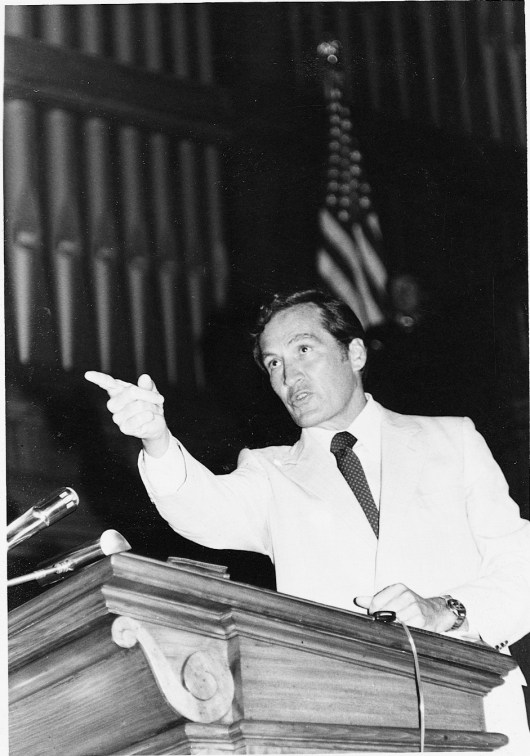

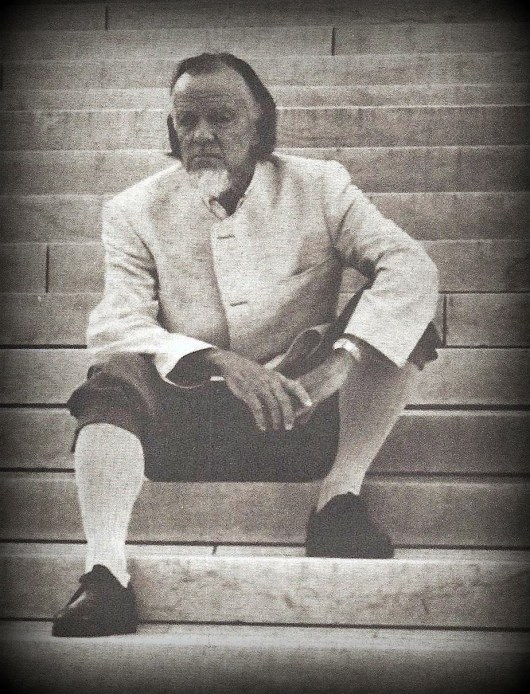

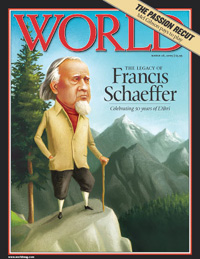
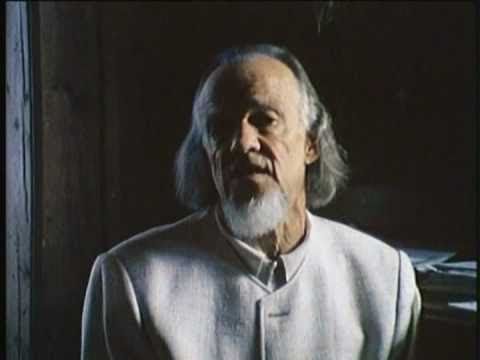
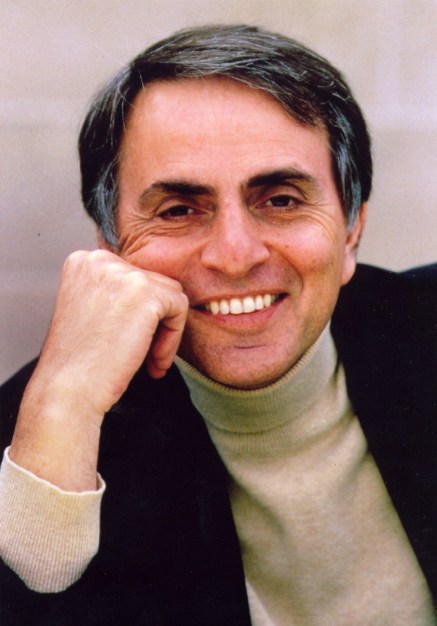
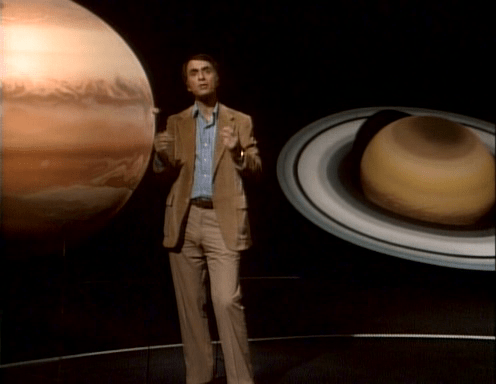

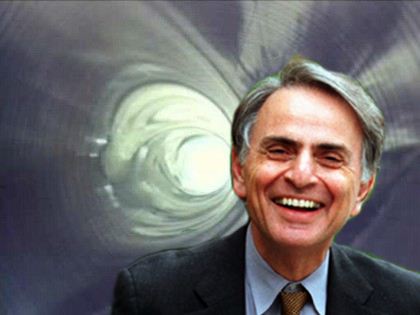


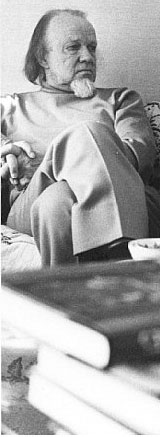

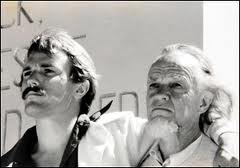








 Opal seal with the name of Jezebel. The inscription and symbols on the seal make it highly likely that it was the official seal of the wicked woman of the Old Testament. She was a woman of power as indicated by her title “Queen Mother” (2 Kgs 10:13). Although Jezebel had her own seal to authenticate official correspondence, when she forged the letters to the elders and nobles of Jezreel in order do away with Naboth and seize his vineyard, she used Ahab’s seal rather than her own for maximum authority (1 Kgs 21:8).
 Baal the Canaanite storm god, also worshipped by the later Phoenicians. In his left hand he holds a spear which flashes lightning and in his right hand a mace. The relief, which dates to 1650–1500 BC, was found in a sanctuary in the Canaanite city of Ugarit, Syria, in 1932. It is now on display in the Louvre Museum in Paris.
 Statue of Elijah on Mt. Carmel memorializing Elijah’s encounter with Jezebel’s prophets. Elijah challenged the 450 prophets of Baal who ate at Jezebel’s table to a sacrifice cook-off: “you call on the name of your god and I will call on the name of the LORD. The god who answers by fire—he is God” (1 Kgs 18:24). Who do you think won? You can read the account in 1 Kings 18:16–40.




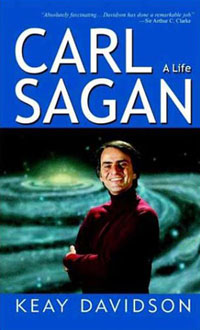
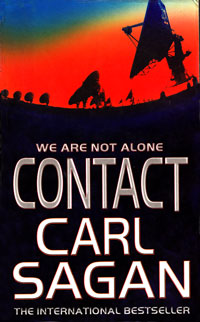

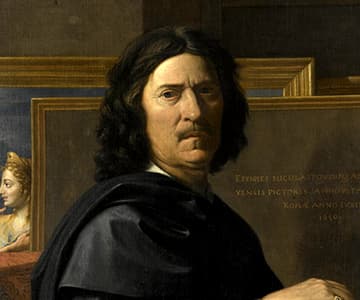
 Professor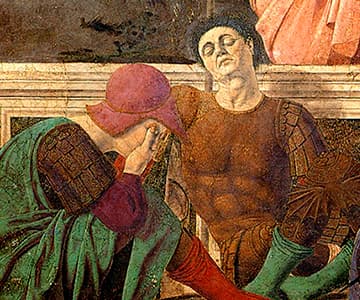


 The Daily Hatch