Bob Burns Show Titled Easter Fashion With Spike Jones & His City Slickers. Bob Burns was an american film and radio comedian through 1930 and 1940. Original Air Date Was 04/22/1943.
Bob Burns was a well-known national radio and film personality during the 1930s and 1940s. He was known by a variety of titles that referenced his hillbilly origins, such as “The Arkansas Traveler” and “The Arkansas Philosopher.” Burns was a musician and an actor who wove tales of life in the Arkansas hills with his musical performances. He earned his nickname, “Bazooka,” from an instrument he invented and named as a young man in a plumbing shop in Van Buren (Crawford County). The instrument, which was a simple device made of spare gas fittings and a whiskey funnel, eventually lent its name to the World War II anti-tank weapon due to its similar looks and Burns’s popularity among the troops who employed it in combat.
Bob Burns was born Robin William Burn on August 2, 1890, to William Robert Burn, a civil engineer, and Emma Needham; he had one brother. Sources vary as to where he was born, with a few having his birthplace as Van Buren, while most have him born in Greenwood (Sebastian County) and moving with his family to Van Buren when he was three. As a young man, he learned to play brass instruments and, before the age of twelve, was playing with the Queen City Silver Cornet Band in Van Buren. By the age of thirteen, young Burns had formed his own string band and, during a practice session, put together the handcrafted instrument that gave him his nickname. His “bazooka” was a novelty instrument that made the sound of a “wounded moose,” and he practiced until eventually becoming skilled enough to play it in the Queen City Silver Cornet Band. The instrument had a very narrow range and peculiar tone by design. Burns used his simple invention to entertain audiences between yarns.
Eventually, Burns’s ambition led him to audition for the most popular radio station in Los Angeles, California, and he won a non-paying spot on the afternoon radio show The Gilmore Circus as the character “Soda Pop.” His popularity immediately grew along the West Coast.
In 1935, in New York City, Burns was able to persuade Paul Whiteman, a coast-to-coast radio host, to give him an audition on his show, and the young entertainer subsequently became a national celebrity. Before long, he was a regular guest with Rudy Vallee’s very popular radio program. He was compared by many to Will Rogers.
He returned to Los Angeles before the year was out and played with Bing Crosby on NBC’s Kraft Music Hall radio program, with which he remained until 1941. Though Burns had previously appeared in such movies as Quick Millions(1931)and Young As You Feel (1931), it was in 1936 that Burns really launched a motion-picture career with the release of the full-length film Rhythm on the Range, in which he starred along with Bing Crosby, who also enjoyed his first major role in the film. Among his other films were Waikiki Wedding and Mountain Music (1937) and I’m From Missouri (1939).
Though Burns appeared in many films, he is most well known for his radio programs. He continued his rise to fame between 1941 and 1947 with his own popular radio drama, The Arkansas Traveler. The show was based upon the character he had developed over his career and had played in a feature film in 1938 titled The Arkansas Traveler. During the long run of the program, which eventually became The Bob Burns Show, the music of Spike Jones was often included.
Burns’s first marriage was to Elizabeth Fisher on September 22, 1921; she died in 1936. He wed Harriet M. Foster on May 31, 1939, whom he remained married to until his death in 1956. Burns had one child from his first marriage and three from his second.
Burns died in Encino, California, on February 2, 1956, of kidney cancer. He is entombed with his wife at Forest Lawn Memorial Park in Glendale, California. His former house in Van Buren is now a museum.
Burns, Bob. “Bob Burns at Fort Smith Parade, 1946.” Video online at Butler Center AV/AR Audio Video Collection: Bob Burns—Fort Smith Parade (accessed May 7, 2012).
Smith, Ronald L. Who’s Who in Comedy. New York: Facts on File, 1992.
Williams, Nancy, ed. Arkansas Biography: A Collection of Notable Lives. Fayetteville: University of Arkansas Press, 2000.
Denny Elrod
Melbourne, Arkansas
Staff of the Encyclopedia of Arkansas History & Culture
“I have a friend — or had a friend, now dead — Abdus Salam, a very devout Muslim, who was trying to bring science into the universities in the Gulf states and he told me that he had a terrible time because, although they were very receptive to technology, they felt that science would be a corrosive to religious belief, and they were worried about it… and damn it, I think they were right. It is corrosive of religious belief, and it’s a good thing too.”
― Steven Weinberg
_____________
My first response is to recount my correspondence with the famous evolutionist Ernst Mayr (1904-2005) of Harvard. In his letter to me he basically said that there are many chemists and molecular biologists who find the story of gradual evolution of life totally convincing and that he is sticking with them. This is very similar to the approach by Dr. Weinberg and it is an appeal to authority in that they are suggesting that we just accept the brilliant scientists’ point of view because they are brilliant scientists and they are smarter than the rest of us.THERE IS A SIMPLE ANSWER THAT I COULD GIVE to both Dr. Mayr and Dr. Weinberg which is a quote from Adrian Rogers:
Did you know that all atheists are not atheists because of intellectual problems? They’re atheists because of moral problems. You say, “But I know some brilliant people who are atheists.” Well, that may be so, but I know some brilliant people who are not. You say, “I know some foolish people who believe in God.” Well, I know everyone who doesn’t believe in God is foolish.
In other words there are brilliant and stupid people on both sides of the fence and it is not an intellectual issue but a moral one. Let’s take a look at the history of science that was handled down to us from Western Europe and take a closer examination of those great men’s religious views and if their religious views were corrosive to their scientific pursuits? This is the accusation of many modern day evolutionists.
Ernst Mayr (pictured below with the beard)
Bill Gates, John Grisham, James Michener, E. O. Wilson, Ernst Mayr, George Lucas…
Published on May 19, 2012
Bill Gates, John Grisham, James Michener, E. O. Wilson, Ernst Mayr, George Lucas, James Cameron, Larry King, Ian Wilmut, Jane Goodall, Stephen Jay Gould, Tim D. White, Leon Lederman, Timothy Berners-Lee and Bill Gates. Complete and more interview go to websites “www.achievement.org”.
Mais entrevistas e completas no site “www.achievement.org”.
In 1994 and 1995 I had the opportunity to correspond with the famous evolutionist Dr. Ernst Mayr of Harvard. He stated in his letter of 10-3-94, “Owing to your ideological commitments, it is only natural that you cannot accept the cogency of the scientific evidence. However, to a person such as myself without such commitments, the story of the gradual evolution of life as reconstructed by chemists and molecular biologists is totally convincing.”
I responded by pointing out three points. First, Scientific Naturalism is atheistic by definition. Second, many great scientists of the past were Christians, and that did not disqualify their observations and discoveries. Third, the fact that evolution is true does not rule out God’s existence (Harvard’s own Owen Gingerich and many others such as Francis Collins hold to a Creator and evolution).
Let me just spend some time on my second point. Francis Schaeffer in his book “HOW SHOULD WE THEN LIVE?” stated that according to Alfred North Whitehead and J. Robert Oppenheimer, both renowned philosophers and scientists of our era (but not Christians themselves), modern science was born out of the Christian world view. Whitehead said that Christianity is the “mother of science” because of the insistence on the rationality of God. In the article, “Christianity and Technological Advance – The Astonishing Connection,” by T. V. Varughese, Ph.D, he observed:
Without question, “technology” has now become the new magic word in place of the word “science.” Since technology represents the practical applications of science, it is clearly consumer-oriented. Herein is bright economic promise to all who can provide technology.
In terms of technology, our present world can be divided into at least three groups: countries that are strong providers of technology, both original and improved; countries that are mass producers because of cheaper labor; and countries that are mostly consumers. Without a doubt, being in the position of “originating” superior technology should be a goal for any major country. The difficult question, however, is “how.”
An obvious place to start suggests itself. Why not begin with the countries that have established themselves as strong originators of technology and see if there is a common thread between them? The western nations, after the Renaissance and the Reformation of the 16th century, offer a ready example. Any book on the history of inventions, such as the Guinness Book of Answers, will reveal that the vast majority of scientific inventions have originated in Europe (including Britain) and the USA since the dawn of the 17th century. What led to the fast technological advances in the European countries and North America around that time?
The answer is that something happened which set the stage for science and technology to emerge with full force. Strange as it may seem, that event was the return to Biblical Christianity in these countries.
The Epistemological Foundation of Technology
According to Alfred North Whitehead and J. Robert Oppenheimer, both renowned philosophers and scientists of our era (but not Christians themselves), modern science was born out of the Christian world view. Whitehead said that Christianity is the “mother of science” because of the insistence on the rationality of God.[1] Entomologist Stanley Beck,though not a Christian himself, acknowledged the corner-stone premises of science which the Judeo-Christian world view offers: “The first of the unprovable premises on which science has been based is the belief that the world is real and the human mind is capable of knowing its real nature. The second and best-known postulate underlying the structure of scientific knowledge is that of cause and effect. The third basic scientific premise is that nature is unified.”[2] In other words, the epistemological foundation of technology has been the Judeo-Christian world view presented in the Bible…
Perhaps the most obvious affirmation that Biblical Christianity and science are friends and not foes comes from the fact that most of the early scientists after the Renaissance were also strong believers in the Bible as the authoritative source of knowledge concerning the origin of the universe and man’s place in it.[4] The book of Genesis, the opening book of the Bible, presents the distinctly Judeo-Christian world view of a personal Creator God behind the origin and sustenance of the universe (Genesis 1:1; Colossians 1:17; etc.).
Among the early scientists of note who held the Biblical creationist world view are Blaise Pascal (1623-1662), Sir Isaac Newton (1642-1727), and Samuel Morse (1791-1872) – what motivated them was a confidence in the “rationality” behind the universe and the “goodness” of the material world. The creation account in Genesis presents an intelligent, purposeful Creator, who, after completing the creation work, declared it to be very good (Genesis 1:31). That assures us that the physical universe operates under reliable laws which may be discovered by the intelligent mind and used in practical applications. The confidence in the divinely pronounced goodness of the material world removed any reluctance concerning the development of material things for the betterment of life in this world. The spiritual world and the material world can work together in harmony.
References –
Francis A. Schaeffer: How Should We Then Live (Revell, 1976), p. 132.
Henry M. Morris, Biblical Basis for Modern Science (Baker, 1991), p. 30.
Schaeffer, p. 131.
Henry M. Morris, Men of Science, Men of God (Master Books, CA, 1988), 107 pp.
Many of these great scientists of the past were before Darwin, but not all of them. However, all of them were acquainted with secular philosophies and some were in fact opponents of Darwinism (Agassiz, Pasteur, Lord Kelvin, Maxwell, Dawson, Virchow, Fabre, Fleming, etc). Many of them believed in the inspiration and authority of the Bible, as well as in the deity and saving work of Jesus Christ. They believed that God had supernaturally created all things, each with its own complex structure for its own unique purpose. They believed that, as scientists, they were “thinking God’s thoughts after Him,” learning to understand and control the laws and processes of nature for God’s glory and man’s good. They believed and practiced science in exactly the same way that modern creationist scientists do.
And somehow this attitude did not hinder them in their commitment to the “scientific method.” In fact one of them, Sir Francis Bacon, is credited with formulating and establishing the scientific method! They seem also to have been able to maintain a proper “scientific attitude,” for it was these men (Newton, Pasteur, Linnaeus, Faraday, Pascal, Lord Kelvin, Maxwell, Kepler, etc.) whose researches and analyses led to the very laws and concepts of science which brought about our modern scientific age….
To illustrate the caliber and significance of these great scientists of the past, Tables I and II have been prepared. These tabulations are not complete lists, of course, but at least are representative and they do point up the absurdity of modern assertions that no true scientist can be a creationist and Bible-believing Christian.
Table I lists the creationist “fathers” of many significant branches of modern science. Table II lists the creationist scientists responsible for various vital inventions, discoveries, and other contributions to mankind. These identifications are to some degree oversimplified, of course, for even in the early days of science every new development involved a number of other scientists, before and after. Nevertheless, in each instance, a strong case can be made for attributing the chief responsibility to the creationist scientist indicated. At the very least, his contribution was critically important and thus supports our contention that belief in creation and the Bible helps, rather than hinders, scientific discovery.
_______________
My relatives live 3 miles from Spring Hill, Tennessee. When the new General Motors plant opened there I got to go see it. What if I had said, “The assembly line created a beautiful Saturn automobile!” Hopefully, some would have corected me by responding, “The assembly line did not create the automobile. It was first designed by the General Motors engineers in Detroit.” ASSUMING EVOLUTION IS TRUE, IT WOULD STILL ONLY BE THE MECHANISM. DOES EVOLUTION ACCOUNT FOR THE DESIGNER?
NOTABLE INVENTIONS, DISCOVERIES
OR DEVELOPMENTS BY CREATIONIST SCIENTISTS
CONTRIBUTION
SCIENTIST
ABSOLUTE TEMPERATURE SCALE
LORD KELVIN (1824-1907)
ACTUARIAL TABLES
CHARLES BABBAGE (1792-1871)
BAROMETER
BLAISE PASCAL (1623-1662)
BIOGENESIS LAW
LOUIS PASTEUR (1822-1895)
CALCULATING MACHINE
CHARLES BABBAGE (1792-1871)
CHLOROFORM
JAMES SIMPSON (1811-1870)
CLASSIFICATION SYSTEM
CAROLUS LINNAEUS (1707-1778)
DOUBLE STARS
WILLIAM HERSCHEL (1738-1822)
ELECTRIC GENERATOR
MICHAEL FARADAY (1791-1867)
ELECTRIC MOTOR
JOSEPH HENRY (1797-1878)
EPHEMERIS TABLES
JOHANN KEPLER (1571-1630)
FERMENTATION CONTROL
LOUIS PASTEUR (1822-1895)
GALVANOMETER
JOSEPH HENRY (1797-1878)
GLOBAL STAR CATALOG
JOHN HERSCHEL (1792-1871)
INERT GASES
WILLIAM RAMSAY (1852-1916)
KALEIDOSCOPE
DAVID BREWSTER (1781-1868)
LAW OF GRAVITY
ISAAC NEWTON (1642-1727)
MINE SAFETY LAMP
HUMPHREY DAVY (1778-1829)
PASTEURIZATION
LOUIS PASTEUR (1822-1895)
REFLECTING TELESCOPE
ISAAC NEWTON (1642-1727)
SCIENTIFIC METHOD
FRANCIS BACON (1561-1626)
SELF-INDUCTION
JOSEPH HENRY (1797-1878)
TELEGRAPH
SAMUEL F.B. MORSE (1791-1872)
THERMIONIC VALVE
AMBROSE FLEMING (1849-1945)
TRANS-ATLANTIC CABLE
LORD KELVIN (1824-1907)
VACCINATION & IMMUNIZATION
LOUIS PASTEUR (1822-1895)
_______________
2000 Interview with Ernst Mayr, Harvard University
Uploaded on Jul 13, 2008
Interviews conducted in March 2000 at the annual meeting of the American Institute of Biological Sciences on the topic of Challenges for the New Millennium. Museum of Natural History, Smithsonian Institution, Washington DC. See http://www.aibs.org/media-library/ for additional AIBS conference recordings.
With the passing in recent years of the three most revered scientific spokesmen for evolution—Isaac Asimov, Carl Sagan, and now Stephen Jay Gould—Professor Ernst Mayr is left as the unquestioned dean of the modern evolutionary establishment.
Gould, Asimov, and Sagan were all three extremely prolific and brilliant writers. All three were atheistic professors at prestigious eastern universities (Gould at Harvard, Asimov at Boston University, Sagan at Cornell), and all three were effusive and vigorous anti-creationists. They were formidable opponents (but eminently quotable), and we miss them. All three died at relatively young ages.
But that leaves Ernst Mayr, long-time professor of biology at Harvard. Dr. Mayr was born in 1904 and is (at this writing) still very much alive, and nearing the century mark. Dr. Gould recently called him “the greatest living evolutionary biologist and a writer of extraordinary insight and clarity” (in a jacket blurb on Mayr’s latest book).
Mayr’s New Book
And that book is the subject of this article. Its title is intriguing—What Evolution Is (Basic Books, 2001, 318 pages),—for if anyone could speak authoritatively on such a subject, it should be Professor Mayr. In his adulatory foreword, Jared Diamond, another leading modern evolutionist, concludes: “There is no better book on evolution. There will never be another book like it” (p. xii).
That evaluation should give any reader very high expectations. Unfortunately, however, Dr. Mayr first shows his disdain for creationism, not even considering its arguments. He simply says:
It is now actually misleading to refer to evolution as a theory, considering the massive evidence that has been discovered over the last 140 years documenting its existence. Evolution is no longer a theory, it is simply a fact (p. 275).
He dismissed the evidence for creation as unworthy of further discussion. “The claims of the creationists” he says, “have been refuted so frequently and so thoroughly that there is no need to cover this subject once more” (p. 269).
Ignoring Creation Evidence
He himself, however, has apparently not bothered to read any creationist or secular anti-evolutionist scientific books or articles. Or at least that is what one would infer from the fact that none of them or their arguments and evidence are even mentioned in his book.
No mention is made by Mayr, for example, of creationist expositions of the amazing created designs in living systems, nor of the effects of God’s curse on the creation, or of the significance of the great flood in understanding the geologic record. He does not even acknowledge the significance of naturalistic catastrophism or of such scientific concepts as complexity or probability. Current ideas about “intelligent design” are never mentioned. The origins of all things are due to time, chance, and natural selection, no matter how complex and interdependent they may be, according to Professor Mayr, who had been (along with Julian Huxley, George Simpson, and a few others) primarily responsible for the so-called modern evolutionary synthesis (or neo-Darwinism) back in the 1930s and 1940s.
Neither does Mayr seem aware that there are now thousands of credentialed and knowledgeable scientists (including a great many biologists) who reject evolution, giving not even a nod to the Creation Research Society, or to ICR, or any other creationist organization. He does occasionally refer to God or to Christianity, but only in passing, and always in a context that indicates that he does not believe in either one. He, like his three younger colleagues, is an atheist, and this naturally constrains him to ignore any possible theological implications of the origins issues.
The Alleged Evidence for Evolution
Mayr’s new book is beautifully written and does contain much good material, but it will not convert many to evolutionism, even though he does devote a chapter to what he thinks are the evidences for evolution. These evidences are essentially the same as those used 140 years ago by Darwin in the Origin (fossils, comparative morphology, embryological similarities and recapitulation, vestigial structures, and geographical distribution). Mayr adds nothing new to these arguments, ignoring the fact that creationists (and even a number of evolutionists) have long since refuted all of them. He does devote a brief section to the more recent “evidence” from molecular biology. But that also has been vigorously disputed by a number of specialists in this field, especially the supposed evolutionary relationships implied by the molecules. Even Mayr admits that “molecular clocks are not nearly as constant as often believed” (p. 37), but he does not mention any of the numerous contradictory relationships implied by these biochemical studies (e.g., the well-known genomic similarities of humans and bananas).
As do most evolutionists, Mayr spends much time in discussing micro-evolution, whereas modern creationists only reject macroevolution. He devotes five chapters to microevolution and only one to macroevolution. This particular chapter is quite long, discussing many speculative theories about how macroevolutionary changes might be produced, but there is one vital deficiency. He gives no example of any macroevolutionary change known to have happened. In other words, macroevolution seems never to have occurred within the several thousand years of recorded history. Thus, real evolution (as distinct from variation, recombination, hybridization, and other such “horizontal” changes) does not happen at present. Where, we would ask Professor Mayr, are there any living forms in the process of evolutionary change? He gives no examples, of course, because there are none.
As far as pre-human history is concerned, Dr. Mayr does insist that the fossil record documents past evolution. He cites the usual claims—horses, Archaeopteryx, mammal-like reptiles, walking whales, etc.—which are very equivocal, at best, and have all been shown by creationists to be invalid as transitional forms. Instead of a handful of highly doubtful examples, there ought to be thousands of obvious transitional forms in the fossils if evolution had really been occurring. Yet Mayr admits,
Wherever we look at the living biota, . . . discontinuities are overwhelmingly frequent. . . . The discontinuities are even more striking in the fossil record. New species usually appear in the fossil record suddenly, not connected with their ancestors by a series of intermediates (p. 189).
Professor Mayr still says that the fossils are “the most convincing evidence for the occurrence of evolution” (p. 13). Yet he also says that “the fossil record remains woefully inadequate” (p. 69). Thus, as creationists have often pointed out, there is no real evidence of either present or past evolution.
We have repeatedly noted also that the scientific reason why this is so is because real evolution to any higher level of complexity is impossible by the law of entropy, which states the proven fact that every system of any kind “tends” to go toward lower complexity, unless constrained otherwise by some pre-designed external program and mechanism.
Yet Ernst Mayr seems either to ignore or misunderstand this key argument of the creationists. Here is what he says:
Actually there is no conflict, because the law of entropy is valid only for closed systems, whereas the evolution of a species of organisms takes place in an open system in which organisms can reduce entropy at the expense of the environment and the sun supplies a continuing input of energy (p. 8).
And that’s all he says about one of the key arguments against evolution. This ubiquitous dodge of the evolutionists has been discredited again and again by creationists, and one would think that this “greatest living evolutionary biologist” in this “best book on evolution” would at least take notice of our arguments! At least half of America’s population, according to many polls, are creationists, apparently agreeing more with us than with Mayr.
An open system and external energy are, indeed, necessary conditions for a system to grow in complexity, but most definitely are not sufficient conditions. The question is just how does the sun’s energy produce complexity in an open system? The fact is that the application of external heat energy to an open system (such as from the sun to the earth) will increase the entropy (that is, decrease the organized complexity) in any open system, if that’s all there is. This is a basic principle of thermodynamics, and neither Mayr nor any other evolutionist has answered this problem. Evolution seems to be impossible by the known laws of science.
Professor Mayr does not deal with the theological or Biblical evidences, of course. For those who believe in God and the Bible, on the other hand, creation—not evolution—is, to appropriate Mayr’s words, “simply a fact.” Evolution is merely a belief held by many who “willingly are ignorant” (II Peter 3:5) of the strong evidences and arguments for creation, and who don’t even bother to consider them. In the words of the apostle Paul: “Where is the disputer of this world? hath not God made foolish the wisdom of this world?” (I Corinthians 1:20).
When I first began examining the claims of the Book of Mormon, I was an atheist who had just become interested in the person of Jesus. As a skeptic, I understood the importance of corroborative evidence when trying to determine if a witness statement is reliable. I began looking for corroboration related to both the Christian and Mormon scripture. I was immediately struck by the stark contrast between what has been discovered related to Old Testament history and what has been not been discovered related to the alleged history recorded in the Book of Mormon. There’s a reason for the absence of maps in the Mormon collection of scripture. There are no archaeological discoveries of any cities described in the book of Mormon. Worse yet, there aren’t any discoveries of any of the names of characters mentioned in the 1,000 year span of American continental history chronicled in the Book of Mormon (from 600BC to 400AD). I don’t expect archaeology to verify everything recorded in an ancient book, but I do expect it to verify something.
Overarching Generalities Many of the Old Testament accounts bearing strong resemblances to other ancient accounts discovered through the efforts of historians and archaeologists. The Great Flood account in Genesis 6-9, for example, is very similar to Babylonian and Akkadian accounts discovered in the same region of the world. Some of these accounts may even pre-date the writings of Moses, but all describe a catastrophic flood event predating the generation of the authors. In addition, the Sumerian King List records kings who reigned for long periods of time. Following the great flood, this Babylonian document records much shorter reigns, mirroring the life expectancy patterns described in the Old Testament. The 11th tablet of the Babylonian Gilgamesh Epic speaks of an ark, animals taken on the ark, birds sent out during the course of the flood, the ark landing on a mountain, and a sacrifice offered after the ark landed.
In addition to the flood story, there are other non-Biblical accounts recording events found in the Old Testament. The Mesopotamian Story of Adapa tells of a test for immortality involving food, similar to the story of Adam and Eve in the Garden of Eden. Sumerian tablets record the confusion of language as we have in the Biblical account of the Tower of Babel (Genesis 11:1-9). This Sumerian account records a golden age when all mankind spoke the same language. Speech was then confused by the god Enki, lord of wisdom. The Babylonians had a similar account in which the gods destroyed a temple tower and “scattered them abroad and made strange their speech” (Stephen L. Caiger, Bible and Spade, 1936, p. 29). There are many points of agreement in overarching narrative generalities between the Old Testament and the surrounding ancient cultures.
Detailed Specificities
In addition to these generalities, many specific events and historical characters described in the Old Testament have now been confirmed by extra-Biblical sources. Consider the following examples (this list is abbreviated from the work of Dr. Bryant Wood):
The campaign into Israel by Pharaoh Shishak (1 Kings 14:25-26) is recorded on the walls of the Temple of Amun in Thebes, Egypt.
The revolt of Moab against Israel
(2 Kings 1:1; 3:4-27) is recorded on the Mesha Inscription.
The fall of Samaria
(2 Kings 17:3-6, 24; 18:9-11) to Sargon II, king of Assyria, is recorded on his palace walls.
The defeat of Ashdod by Sargon II
(Isaiah 20:1) is recorded on his palace walls.
The campaign of the Assyrian king Sennacherib against Judah
(2 Kings 18:13-16) is recorded on the Taylor Prism.
The siege of Lachish by Sennacherib
(2 Kings 18:14, 17) is recorded on the Lachish reliefs.
The assassination of Sennacherib by his own son
(2 Kings 19:37) is recorded in the annals of his son Esarhaddon.
The fall of Nineveh as predicted by the prophets Nahum and Zephaniah
(2 Kings 2:13-15) is recorded on the Tablet of Nabopolasar.
The fall of Jerusalem to Nebuchadnezzar, king of Babylon
(2 Kings 24:10-14) is recorded in the Babylonian Chronicles.
The captivity of Jehoiachin, king of Judah, in Babylon
(2 Kings 24:15-16) is recorded on the Babylonian Ration Records.
The fall of Babylon to the Medes and Persians
(Daniel 5:30-31) is recorded on the Cyrus Cylinder.
The freeing of captives in Babylon by Cyrus the Great
(Ezra 1:1-4; 6:3-4) is recorded on the Cyrus Cylinder.
The historical record of the Old Testament is not alone in the history it records. There are other ancient records affirming the overarching generalities and specific details of the Old Testament. There are no such corroborative ancient records providing similar verification for the history of the Book of Mormon. It is the singular lonely voice related to the historical narrative it describes. While archaeology continues to corroborate the Old and New Testament, archaeology only exposes the erroneous nature of the Mormon record.
Open letter to President Obama (Part 519) (Emailed to White House on 5-3-13.) President Obama c/o The White House 1600 Pennsylvania Avenue NW Washington, DC 20500 Dear Mr. President, I know that you receive 20,000 letters a day and that you actually read 10 of them every day. I really do respect you for trying to get […]
The Scientific Age Published on Jul 24, 2012 Dr. Schaeffer’s sweeping epic on the rise and decline of Western thought and Culture Francis Schaeffer rightly noted, “These two world views stand as totals in complete antithesis in content and also in their natural results….It is not just that they happen to bring forth different results, […]
The Way of Discovery: A Personal Journey of Faith Henry F. Schaefer III The Scientific Age Uploaded by NoMirrorHDDHrorriMoN on Oct 3, 2011 _______________ Episode VII – The Age of Non Reason ____________________ Episode 8: The Age Of Fragmentation Published on Jul 24, 2012 Dr. Schaeffer’s sweeping epic on the rise and decline of Western thought and […]
The Long War against God-Henry Morris, part 6 of 6 _______________ I have debated with Ark Times Bloggers many times in the past on many different subjects. Here are some of the subjects: communism, morality, origin of evil, and the Tea Party. I have always loved to post about evolution and I have had a chance […]
The Long War against God-Henry Morris, part 5 of 6 _______________ I have debated with Ark Times Bloggers many times in the past on many different subjects. Here are some of the subjects: communism, morality, origin of evil, and the Tea Party. I have always loved to post about evolution and I have had a chance […]
The Long War against God-Henry Morris, part 4 of 6 _______________ I have debated with Ark Times Bloggers many times in the past on many different subjects. Here are some of the subjects: communism, morality, origin of evil, and the Tea Party. I have always loved to post about evolution and I have had a chance […]
The Long War against God-Henry Morris, part 1 of 6 Uploaded by FLIPWORLDUPSIDEDOWN3 on Aug 30, 2010 _________ I have debated with Ark Times Bloggers many times in the past on many different subjects. Here are some of the subjects: communism, morality, origin of evil, and the Tea Party. I have always loved to post about evolution […]
“Ev’ry Time We Say Goodbye” is a song with lyrics and music by Cole Porter and published by Chappell & Company. It was introduced in 1944 in Billy Rose‘s musical revue Seven Lively Arts. In the phrase “change from major to minor”, Porter begins with an A♭ major chord and ends with an A♭ minor one, matching the words and music.[1] The song has since become a jazz standard after gaining popularity in the late 1950s and early 1960s. Many artists have replaced the apostrophe in “ev’ry” with an “e”.
Notable recordings
Dave Barbour Trio – The Very Thought of You: Decca Records 1951-57
Cole Porter “Let’s Do it, Let’s Fall in Love” in the movie MIDNIGHT IN PARIS Midnight in Paris – Let’s Do It Let’s do it : Cole Porter.( Midnight in Paris ) Celebrate Wikipedia Loves Libraries at your institution in October/November. Let’s Do It, Let’s Fall in Love From Wikipedia, the free encyclopedia Jump to: […]
The song used in “Midnight in Paris” I am going through the famous characters that Woody Allen presents in his excellent movie “Midnight in Paris.” By the way, I know that some of you are wondering how many posts I will have before I am finished. Right now I have plans to look at Fitzgerald, Heminingway, Juan […]
and you will hear what far smarter people than I have to say on this matter. I agree with them.
Harry Kroto
__________________________
There are 3 videos in this series and they have statements by 150 academics and scientists and I hope to respond to all of them. Nobel Laureate Dr. Aaron Ciechanover is found in the 114th video clip in the third video below and his quote is found below in this post and my response is after that.
50 Renowned Academics Speaking About God (Part 1)
Another 50 Renowned Academics Speaking About God (Part 2)
A Further 50 Renowned Academics Speaking About God (Part 3)
What did Dr. Aaron Ciechanover say in this film series that Harry Kroto wanted me to watch?
______________________________
Quote from Dr. Aaron Ciechanover:
YOU DON’T THEN BELIEVE IN ANY KIND OF AFTERLIFE THEN OR CONSCIOUSNESS OR GOD? “My Israeli purse contains a certificate from the Israeli organ organization that says if I die they can take all the organs give them to whoever they want, I don’t believe in anything that is beyond life… Once we are born we are going to die. Nevertheless, I am a strong religious Jew. Maybe religious Jews will not accept what I am saying…Maybe they feel different about God and the services and prayer and obedience, For me it is a cultural thing.”
__________________________________
It is true that the view that there is no afterlife is very widespread today and in fact, many people have left the Christian worldview because they did not understand why God had created a place called HELL. My simple question to them would be does he think that HITLER GOT OFF HOOK OR NOT? :
On the popular show MODERN FAMILY Jay has a talk with his grandson Manny:
Manny: So you are not worried about getting in trouble you know with God ?
Jay:oh I think He has bigger things on his plate
Manny: so you are not worried about hell?
Jay : let me let you in on a little secret kid, there is no hell
Manny: seriously no hell!!! That is fantastic!!so everyone goes to heaven?
Jay: yep!! End of story!!
Manny: even bad people?
Jay: yeah they are in another section.
Manny: I was thinking about this heaven of yours that is filled with bad people.
Jay: it is not full, it is the tiniest fraction and they are walled in.
Manny: what if they break out?
Jay: they are surrounded by a lake of fire.
Manny: there are fiery lakes in heaven? This is turning into hell!!!——–
___________________
What do you do with Hitler? There are three posts I have done in the past that deal this subject in an emphatic way. On my blog I have two posts that thousands of people have read over the last 18 months and they are in my all-time top ten list of most viewed and the ironic thing is that both deal with hell and what do you do with a guy like Hitler if you don’t believe in hell.
The first one post dealt with Chris Martin of Coldplay and his life journey of being raised as an evangelical but leaving during his college years because of his rejection of the idea of hell. Then when he writes his best selling song of all-time “Viva La Vida” he writes that the evil king pictured in the song is “eternally damned,” and Saint Peter will not be calling his name.
In the second one Mike Huckabee caused quite a stir when he said that Osama bin Laden was in hell right now. In this post I include a portion of an article I wrote for our online church magazine back in 1999 that discusses this same subject. It goes like this:
___________________
Woody Allen’s movieCrimes and Misdemeanorsdoes a great job of showing thatif God does not exist then people like Stalin and Hitler were “home free” in that they were never going to be punished for what they did.
“Existential subjects to me are still the only subjects worth dealing with. I don’t think that one can aim more deeply than at the so-called existential themes, the spiritual themes.” WOODY ALLEN
Woody Allen’s 1989 movie, CRIMES AND MISDEMEANORS , is an excellent icebreaker concerning the need of God while making decisions in the area of personal morality.In this film, Allen attacks his own atheistic view of morality. Martin Landau plays a Jewish eye doctor named Judah Rosenthal raised by a religious father who always told him, “The eyes of God are always upon you.”However, Judah later concludes that God doesn’t exist.He has his mistress (played in the film by Anjelica Huston) murdered because she continually threatened to blow the whistle on his past questionable, probably illegal, business activities. She also attempted to break up Judah ‘s respectable marriage by going public with their two-year affair.Judah struggles with his conscience throughout the remainder of the movie. He continues to be haunted by his father’s words: “The eyes of God are always upon you.” This is a very scary phrase to a young boy, Judah observes. He often wondered how penetrating God’s eyes are.
Later in the film, Judah reflects on the conversation his religious father had with Judah ‘s unbelieving Aunt May at the dinner table many years ago:
“Come on Sol, open your eyes. Six million Jews burned to death by the Nazis, and they got away with it because might makes right,” says aunt May
Sol replies, “May, how did they get away with it?”
Judah asks, “If a man kills, then what?”
Sol responds to his son, “Then in one way or another he will be punished.”
Aunt May comments, “I say if he can do it and get away with it and he chooses not to be bothered by the ethics, then he is home free.”
Judah ‘s final conclusion was that might did make right. He observed that one day, because of this conclusion, he woke up and the cloud of guilt was gone. He was, as his aunt said, “home free.”
Woody Allen has exposed a weakness in his own humanistic view that God is not necessary as a basis for good ethics. There must be an enforcement factor in order to convince Judah not to resort to murder. Otherwise, it is fully to Judah ‘s advantage to remove this troublesome woman from his life.
The Bible tells us, “{God} has also set eternity in the hearts of men…” (Ecclesiastes 3:11 NIV). The secularist calls this an illusion, but the Bible tells us that the idea that we will survive the grave was planted in everyone’s heart by God Himself. Romans 1:19-21 tells us that God has instilled a conscience in everyone that points each of them to Him and tells them what is right and wrong (also Romans 2:14 -15).
It’s no wonder, then, that one of Allen’s fellow humanists would comment, “Certain moral truths — such as do not kill, do not steal, and do not lie — do have a special status of being not just ‘mere opinion’ but bulwarks of humanitarian action. I have no intention of saying, ‘I think Hitler was wrong.’ Hitler WAS wrong.” (Gloria Leitner, “A Perspective on Belief,” THE HUMANIST, May/June 1997, pp. 38-39)
Here Leitner is reasoning from her God-given conscience and not from humanist philosophy. It wasn’t long before she received criticism. Humanist Abigail Ann Martin responded, “Neither am I an advocate of Hitler; however, by whose criteria is he evil?” (THE HUMANIST, September/October 1997, p. 2)
The secularist can only give incomplete answers to these questions: How could you have convinced Judah not to kill? On what basis could you convince Judah it was wrong for him to murder?
As Christians, we would agree with Judah ‘s father that “The eyes of God are always upon us.” Proverbs 5:21 asserts, “For the ways of man are before the eyes of the Lord, and He ponders all his paths.” Revelation 20:12 states, “…And the dead were judged (sentenced) by what they had done (their whole way of feeling and acting, their aims and endeavors) in accordance with what was recorded in the books” (Amplified Version). The Bible is revealed truth from God. It is the basis for our morality. Judah inherited the Jewish ethical values of the Ten Commandments from his father, but, through years of life as a skeptic, his standards had been lowered. Finally, we discover that Judah ‘s secular version of morality does not resemble his father’s biblically-based morality.
Woody Allen’s CRIMES AND MISDEMEANORS forces unbelievers to grapple with the logical conclusions of a purely secular morality. It opens a door for Christians to find common ground with those whom they attempt to share Christ; we all have to deal with personal morality issues. However, the secularist has no basis for asserting that Judah is wrong.
Larry King actually mentioned on his show, LARRY KING LIVE, that Chuck Colson had discussed the movie CRIMES AND MISDEMEANORS with him. Colson asked King if life was just a Darwinian struggle where the ruthless come out on top. Colson continued, “When we do wrong, is that our only choice? Either live tormented by guilt, or else kill our conscience and live like beasts?” (BREAKPOINT COMMENTARY, “Finding Common Ground,” September 14, 1993)
Later, Colson noted that discussing the movie CRIMES AND MISDEMEANORS with King presented the perfect opportunity to tell him about Christ’s atoning work on the cross. Colson believes the Lord is working on Larry King.
(Caution: CRIMES AND MISDEMEANORS is rated PG-13. It does include some adult themes.)
___________________________
In the third post I mention that I had the unique opportunity to discuss this very issue with Robert Lester Mondale and his wife Rosemary on April 14, 1996 at his cabin in Fredricktown, Missouri , and my visit was very enjoyable and informative. Mr. Mondale had the distinction of being the only person to sign all three of the Humanist Manifestos in 1933, 1973 and 2003. I asked him which signers of Humanist Manifesto Number One did he know well and he said that Raymond B. Bragg, and Edwin H. Wilson and him were known as “the three young radicals of the group.” Harold P. Marley used to have a cabin near his and they used to take long walks together, but Marley’s wife got a job in Hot Springs, Arkansas and they moved down there.
Roy Wood Sellars was a popular professor of philosophy that he knew. I asked if he knew John Dewey and he said he did not, but Dewey did contact him one time to ask him some questions about an article he had written, but Mondale could not recall anything else about that.
Mondale told me some stories about his neighbors and we got to talking about some of his church members when he was an Unitarian pastor. Once during the 1930’s he was told by one of his wealthier Jewish members that he shouldn’t continue to be critical of the Nazis. This member had just come back from Germany and according to him Hitler had done a great job of getting the economy moving and things were good.
Of course, just a few years later after World War II was over Mondale discovered on a second hand basis what exactly had happened over there when he visited with a Lutheran pastor friend who had just returned from Germany. This Lutheran preacher was one of the first to be allowed in after the liberation of the concentration camps in 1945, and he told Mondale what level of devastation and destruction of innocent lives went on inside these camps. As Mondale listened to his friend he could feel his own face turning pale.
I asked, “If those Nazis escaped to Brazil or Argentina and lived out their lives in peace would they face judgment after they died?”
Mondale responded, “I don’t think there is anything after death.”
I told Mr. Mondale that there is sense in me that says justice will be given eventually and God will judge those Nazis even if they evade punishment here on earth. I did point out that in Ecclesiastes 4:1 Solomon did note that without God in the picture the scales may not be balanced in this life and power could reign, but at the same time the Bible teaches that all must face the ultimate Judge.
Then I asked him if he got to watch the O.J. Simpson trial and he said that he did and he thought that the prosecution had plenty of evidence too. Again I asked Mr. Mondale the same question concerning O.J. and he responded, “I don’t think there is a God that will intervene and I don’t believe in the afterlife.”
I’ve written before about the importance of recognizing the role of the Creator in determining life’s purpose, but as a non-believer, I had little problem determining the purpose of my life. As a man who rejected God’s existence, I was comfortable assigning meaning to my life. What was the purpose of life? Well, for me, it was to live nobly and enforce the laws as a police officer, to be a faithful husband to my wife and a good father for my kids. I had no problem answering the “what” question. I failed to recognize, however, that the more important questions did not begin with “what”. When it comes to the meaning of life, the most important questions begin with “why”.
Why is it noble to enforce the law and be a good husband and father? Why is my standard of good and evil the correct standard? Why do I think my ideas about purpose and meaning are important or honorable in the first place? Are my ideas about purpose and meaning simply a matter of opinion, or do I think I’m living a life that is objectively valuable and meaningful? I first discovered the importance of these “why” questions as I became saturated in the subcultures of our society. As a patrol officer, a member of the gang detail and then a member of the career criminal team, I found that the offenders I investigated had no problem assigning meaning to their lives; these folks lived contentedly within the purposes they had constructed for themselves. The gangsters I worked with for two years lived within a world of values and mores that were quite different from my own. Their goals and desires were influenced by their status within the gang and this status was achieved as they rejected much of what I valued in my own life. The more they misbehaved, the more stature they achieved within their own group. They definitely had their own ideas related to purpose and meaning, and they retained these values throughout their lives, both in and out of custody.
As a police officer, I rejected the values held by the people I arrested. I disagreed dramatically with their definitions related to the purpose of life. But why did I think my beliefs related to purpose were more valid than theirs? If everyone gets to assign their own meaning, who are we to judge those who select an evil (or even benignly contrary) purpose? Why should we even think anything is good or bad related to life’s meaning? There are gang neighborhoods in Los Angeles County in which people are living with an idea of purpose and meaning that is very different than my own. Are they wrong about the meaning of life? If so, why? Some would say it simply comes down to whether or not any harm is being done to others; if someone’s purpose in life involves harming others, we ought to be able to appropriately judge that purpose as misguided and wrong.
But I bet you would attempt to re-direct your son or daughter if they told you they decided the purpose of their life was to watch Hulu and Netflix all day. Even though this behavior would have no negative impact on the lives of others, I think you would invest some time trying to convince them to adopt a “better” or more productive purpose for their lives. But why should they listen to you? Why should they come to believe that your ideas about purpose and meaning are more valid than their own? Why isn’t the meaning they’ve chosen for themselves good enough? Why should they accept what you have to say in the first place? It’s a times like these, when we find ourselves evaluating two competing ideas about meaning and purpose that we confront the impotence of our subjective choices. If there is no transcendent, objective meaning to our lives, it’s all really a matter of opinion. If that’s the case, good luck trying to get your kids to stop watching videos. If, however, we have been designed by a Creator God for a purpose that transcends our own limited desire and perspective, we can begin to help our kids understand that we are arguing for more than an opinion. When we address the “why” questions, the “what” questions are much easier to answer and defend.
Ricky Gervais act outs atheist bewilderment and frustration in the face of nice Christian nonsense Carl Sagan – Parents Carl Sagan said that he missed his parents terribly and he wished he could believe in the afterlife but he was not convinced because of the lack of proof. I had the opportunity to correspond […]
________ Ernst Mayr 1904-2005 Bill Gates, John Grisham, James Michener, E. O. Wilson, Ernst Mayr, George Lucas… Published on May 19, 2012 Bill Gates, John Grisham, James Michener, E. O. Wilson, Ernst Mayr, George Lucas, James Cameron, Larry King, Ian Wilmut, Jane Goodall, Stephen Jay Gould, Tim D. White, Leon Lederman, Timothy Berners-Lee and Bill […]
In today’s news you will read about Kirk Cameron taking on the atheist Stephen Hawking over some recent assertions he made concerning the existence of heaven. Back in December of 1995 I had the opportunity to correspond with Carl Sagan about a year before his untimely death. Sarah Anne Hughes in her article,”Kirk Cameron criticizes […]
_____________ John J. Shea Professor Ph.D., Harvard University, 1991 2nd Annual Human Evolution Symposium PART ONE Uploaded on Nov 23, 2010 “Out of Africa: Who, Where, and When?” Sept. 27, 2005. Stony Brook University. Convened by Richard Leakey. 1. Welcome – Bob McGrath, Provost, Stony Brook University 2. Opening remarks – Richard Leakey, Stony […]
Bing Crosby (with Vic Schoen‘s Orchestra) (recorded January 4, 1949; released by Decca Records as catalog number 24559, with the flip side “Why Can’t You Behave?”[4])
Allan Jones with orchestra conducted by Robert Armbruster. Recorded in Hollywood on April 26, 1950. It was released by EMI on the His Master’s Voice label as catalog number BD 6085.
^ abcdGardner, Edward Foote (2000). Popular Songs of the 20th Century: Chart Detail & Encyclopedia, 1900-1949. St. Paul, Minnesota: Paragon House. ISBN1-55778-789-1.
Cole Porter “Let’s Do it, Let’s Fall in Love” in the movie MIDNIGHT IN PARIS Midnight in Paris – Let’s Do It Let’s do it : Cole Porter.( Midnight in Paris ) Celebrate Wikipedia Loves Libraries at your institution in October/November. Let’s Do It, Let’s Fall in Love From Wikipedia, the free encyclopedia Jump to: […]
The song used in “Midnight in Paris” I am going through the famous characters that Woody Allen presents in his excellent movie “Midnight in Paris.” By the way, I know that some of you are wondering how many posts I will have before I am finished. Right now I have plans to look at Fitzgerald, Heminingway, Juan […]
Fred Astaire introduced “Night and Day” on stage, and his recording of the song was a #1 hit. He performed it again in the 1934 film version of the show, renamed The Gay Divorcee, and it became one of his signature pieces.
Dionne Warwick recorded it for her 1990 album Dionne Warwick Sings Cole Porter.
Eartha Kitt, the inscrutable songstress, recorded it in 1991–but the song would not be released until 2000 on the much lauded album Thinking Jazz. While the words in her arrangement remain the same, the opening lines are purred instead of sung.
Allan Sherman‘s 1965 album Allan in Wonderland included a version, with Porter’s music and words unchanged, but with punctuation marks included, so it starts like this:
Victor Borge was better known for verbal punctuation than was Sherman, but in the case of this song, Borge would start playing Beethoven‘s “Moonlight Sonata” op. 27, with its opening left-hand octave, and then would begin playing the three right-hand notes, seguéing into the beginning of “Night and Day”.
Little River Band references the song in their song “Reminiscing“. One line of the song states “And the Porter tune/Made us dance across the room”, while in the background the backup singers sing the words “Night and Day”.
Song structure
The construction of “Night and Day” is unusual for a hit song of the 1930s. Most popular tunes then featured 32-bar choruses, divided into four 8-bar sections, usually with an AABA musical structure, the B section representing the bridge.
Porter’s song, on the other hand, has a chorus of 48 bars, divided into 6 sections of 8 bars — ABABCB — with section C representing the bridge.
The tune begins with a pedal (repeated) dominant with a major seventh chord built on the flattened sixth of the key, which then resolves to the dominant seventh in the next bar. If performed in the key of B♭, the first chord is therefore G♭ major seventh, with an F (the major seventh above the harmonic root) in the melody, before resolving to F7 and eventually B♭ maj7.
This section repeats and is followed by a descending harmonic sequence starting with a -7♭5 (half diminished seventh chord or Ø) built on the augmented fourth of the key, and descending by semitones — with changes in the chord quality— to the supertonic minor seventh, which forms the beginning of a more standard II-V-I progression. In B♭, this sequence begins with an EØ, followed by an E♭-7, D-7 and D♭ dim, before resolving onto C-7 (the supertonic minor seventh) and cadencing onto B♭.
The bridge is also unusual, with an immediate, fleeting and often (depending on the version) unprepared key change up a minor third, before an equally transient and unexpected return to the key centre. In B♭, the bridge begins with a D♭ major seventh, then moves back to B♭ with a B♭ major seventh chord. This repeats, and is followed by a recapitulation of the second section outlined above.
The vocal verse is also unusual in that most of the melody consists entirely of a single note — the same dominant pedal, that begins the body of the song — with rather inconclusive and unusual harmonies underneath.
Cole Porter “Let’s Do it, Let’s Fall in Love” in the movie MIDNIGHT IN PARIS Midnight in Paris – Let’s Do It Let’s do it : Cole Porter.( Midnight in Paris ) Celebrate Wikipedia Loves Libraries at your institution in October/November. Let’s Do It, Let’s Fall in Love From Wikipedia, the free encyclopedia Jump to: […]
The song used in “Midnight in Paris” I am going through the famous characters that Woody Allen presents in his excellent movie “Midnight in Paris.” By the way, I know that some of you are wondering how many posts I will have before I am finished. Right now I have plans to look at Fitzgerald, Heminingway, Juan […]
Author Nicholas Sparks explores two very different relationships that are separated by many decades in his latest bookThe Longest Ride (Grand Central Publishing). The story of Ira Levinson starts quickly, as the elderly man is involved in a one car accident on a snowy road in the North Carolina mountains. Even though Ira is alone in the vehicle, as he drifts in and out consciousness, he envisions his late wife, Ruth, who comes to visit him and offer encouragement. Ira’s injuries, along with his advanced age, make survival seem unlikely, but Ruth’s visit prompts him to remember their courtship and the troubling times they had during their decades long love affair. Her goal appears to be to keep Ira occupied until help arrives. Their back story is told throughout the book and is juxtaposed with another courtship, of a much younger couple, Sophia and Luke.
Sophia is a college student who is recovering from a failed relationship with a former boyfriend. She is trying to get her life back on track when she meets Luke, a young rancher/bull rider. Their initial encounter is not pleasant, as Sophia’s former boyfriend (and problem drinker), Brian, is harassing her at a party until Luke intervenes. Soon thereafter, Luke and Sophia strike up a quick friendship and agree to meet again soon. However, Luke has more than one secret and enough drama in his life to scare some folks away. Regardless, the youngsters fall in love, but have to overcome many obstacles along the way, not unlike Ira and Ruth.
Nicholas Sparks explores both relationship is great detail, from the early 20th century meeting between Ira and Ruth, to the modern day one shared by Luke and Sophia. As a result, Sparks uses world history, much of it centered around the time of the second World War, and also art history, to further flesh out the older characters. Both Ira and Ruth become art lovers over the years and several artists are mentioned throughout the book, including Jackson Pollock, Jasper Johns and Andy Warhol, among others. I suspect readers familiar with modern artwork will appreciate the numerous references and philosophy surrounding the various artists.
Faithful readers of Sparks’ many best selling novels will find the familiar setting of North Carolina as the backdrop for the two intertwined stories. While I have seen a few films based on the author’s previous work, this is my first exposure to his writing and I found the descriptions of various cities, including Durham, Greensboro and Asheville, to be comforting. The use of four principal characters allows readers to get to know each of them intimately and they are all likable, but certainly flawed in some respects, which humanizes them and makes them easy to root for them. In addition, Sparks has a gift for writing interesting and realistic conversations, which I preferred to the descriptive nature of other parts of the book. The Longest Ride, which refers to a couple experiencing the ups and downs of life together, is a enjoyable read that held my attention throughout and will likely be appreciated by the author’s core fan base and romantics alike.
Britt Robertson The Late Late Show 2015 02 27
Xanti Schawinsky, approx. 1924
Black Mountain College
Uploaded on Apr 18, 2011
Class Project on Black Mountain College for American Literature
The third post in this series was on Jorge Fick. Earlier we noted that Fick was a student at Black Mountain College and an artist that lived in New York and he lent a suit to the famous poet Dylan Thomas and Thomas died in that suit. Both Susan Weil and Robert Rauschenberg were featured in the second post in this series and both of them were good friends of the composer John Cage who was featured in my first post in this series. The fourth post in this seriesis on the artist Xanti Schawinsky and he had a great influence on John Cage who later taught at Black Mountain College. Schawinsky taught at Black Mountain College from 1936-1938 and Cage right after World War II.
Anke Kempkes wrote in December 2009:
Born in 1904 in Switzerland, to a Jewish family of Polish decent, Alexander “Xanti” Schawinsky worked for three years in Theodor Merrill’s Cologne architecture office before enrolling at the Bauhaus in 1924 where he studied with Walter Gropius, Wassily Kandinsky, Paul Klee, Josef Albers, Oskar Schlemmer and Laszlo Moholy-Nagy. Schawinsky had a significant presence at the Bauhaus in Weimar and Dessau….
In 1936, Hans Albers secured Schawinsky and his wife safe passage to the United States to teach at the later legendary Black Mountain College in North Carolina. In charge of theater arts, Schawinsky expanded his ideas for experimental theater to a multi-media “total experience.” His production of Spectrodrama and Danse Macabre at the Black Mountain College demonstrated these ideas and importantly laid the foundations for the work of John Cage and others at the College in the post-war time. It can clearly be argued that Schawinsky brought the radical and avant-garde Bauhaus theater to the United States, a relation that has been receiving special attention recently. Irene Schawinsky also contributed to the College. She collaborated with Anni Albers on clothes designs and she create paper sculptures which became iconic props of Xanti’s Spectodrama plays (in the following years Irene used these paper sculptures for shop window designs in New York).
Fully Awake: Black Mountain College Introduction
Uploaded on Jul 27, 2009
FULLY AWAKE is a 60 minute documentary film about the legendary Black Mountain College (1933-1957), an influential experiment in education in Western North Carolina that inspired and shaped 20th century modern art. The film uses narration, archival photography, and interviews with former students, teachers, and historians to explore the schools beginnings, its unique education methods, and how its collaborative curriculum inspired innovation that changed the very definition of art. For more information, please visit http://www.fullyawake.org or to purchase the film, please visit http://www.filmbaby.com.
_____________
Lux T. Feininger, Xanti Schawinsky in Bauhaus Musical Group, 1928
Full gallery of images, press release and link available after the jump.
Images:
Images courtesy of BROADWAY 1602, New York
Press Release:
The rediscovered oeuvre of first generation Bauhaus artist Xanti Schawinsky offers the contemporary consciousness a valuable untapped reservoir of aesthetic memory in the midst of the new century’s multi-front wars and financial turmoil.
His subtle, intimate, but powerful work from the 1940’s particularly draws attention to the not yet explored dimensions of the afterlife of Bauhaus ideals subject to the pressures of war and forced immigration. It is an aesthetic with a more existentialist and dystopian face, far from the positivism and bravura of the Bauhaus architects’ further achievements in the US after the decline of the influential school in Europe.
Born in 1904, in Switzerland, to Polish Jewish parents, Alexander “Xanti” Schawinsky worked for three years in Theodor Merrill’s Cologne architecture office before enrolling at the Bauhaus in 1924 where he studied with Walter Gropius, Wassily Kandinsky, Paul Klee, Josef Albers, Oskar Schlemmer, and Laszlo Moholy-Nagy. Schawinsky had a significant presence at the Bauhaus in Weimar and Dessau. He was particularly active in the theater department and strongly inspired by Schlemmer, whose position as teacher he took on and developed further. Photos from the early years of the Bauhaus show Schawinsky as a dynamic figure in many of its experimental extra-curricular activities. Among them was the influential Bauhaus Jazz band where Schawinsky introduced his “Step Danse-Step Machine” style of mechanical music and dance to pounding rhythms coupled with dramatic lighting effects and performance elements.
Schawinsky’s protean role at the Bauhaus was documented in the original 1938 MoMA Bauhaus exhibition organized with the help of Herbert Bayer, fellow Bauhaus student and teacher, and Walter Gropius, founder and director of the famed 20th c. school. This pivotal show of MoMA’s early days included a prominent group of Schawinsky’s theater and architecture paintings, his experimental photography, innovative graphic designs, ultra modern costume, set and exhibition designs, and his avant-garde theater and music work.
During their 20’s, most people build foundation skills, beliefs, and a firm positive sense of identity from their experience with teachers and mentors in a relative secure environment. While having the privilege to learn many technical skills in an exceptional avant-garde environment, Schawinsky also observed and experienced anxiety and persecution. He saw his Bauhaus undergo political pressure and ouster from the very cities that hosted it, saw the leaders he admired forced to leave, and the school, itself, compelled to close. He had seen the school, in an effort to survive, shift emphasis from handicraft, Expressionism, and the “the spiritual in art” to partner with industry, design for mass production, and embrace the machine aesthetic. As a Swiss/Polish “foreigner” and a Jew, the rise of Fascism was a perilous time. What Schawinsky learned in the anxious years between the two World Wars was that survival was an anxious process of constantly changing locations, creative styles and identities.
In 1936, Albers secured Schawinsky and his wife safe passage to the United States to teach at the legendary Black Mountain College. In charge of theater arts, Schawinsky expanded his ideas for experimental theater to be a multi-media “total experience.” His production of “Spectrodrama” and “Danse Macabre” at the Black Mountain College, demonstrated these ideas and laid the foundations for the work of John Cage and others at the College. In 1938 political in-fighting among the faculty led him to move again, this time to New York City. There he collaborated on pavilion designs for the 1939 World’s Fair with colleagues Gropius, Bayer, and Marcel Breuer.
In New York among the tight-knit ex-patriot cultural community centered on the activities of avant-garde gallerist Julien Levy, Schawinsky for the first time experienced a sense of safety and integration. His new-comer status afforded him unique new perspectives on his life and the arts. He had the freedom and burden of confronting his own identity and purpose in “life during wartime.” At the same historical moment that the French philosopher Gabriel Marcel was coining the term “existentialism,” and Jean-Paul Sartre began to lecture and write about it, Schawinsky began to compose his own existential works with images which speak as clearly as words.
From work Schawinsky did for the “Visual Problems Unit” of the Army Air Corps designing anti-aircraft targeting patterns for artillery manuals, he conceived his 1942 series The Faces of War. In these imaginative tempera and graphite drawings Schawinsky expressed a fundamental despair that “the machines” of the utopian Bauhaus theater had become the machines of mass destruction in the dystopian theaters of war. He made each a camouflage-painted robotic golem – a man/machine – at turns a threatening enemy or a powerful avenger. In his series of photo collages, Theme and Variation on a Face: Walter Gropius, he reflected upon his creative father/mentor and friend, presenting the architect in positive and negative versions integrated with linear architectural forms (culture) and tree forms including roots (nature and history). In the photo collages The Variations on a Face Series (Woman,) he confronted the enigmatic disembodied face of a woman, floating in a variety of spaces – landscape space, night sky space, topographically diagrammed space. However, Schawinsky extended his meditations using the portrait head motif still further.
Kurt Schwitters said that during the war years artists had to rebuild themselves from scraps and Schawinsky, possibly inspired by Czech poet Vít?zslav Nezval’s 1937 poem The Man Who Composes His Own Portrait With Objects, did so in his 1943 Character Head Series of graphite drawings of potential identities thematically pieced together from elements of nature, culture, and trade in the world around him. In a style related to the “paranoiac-critical” imaging methods of Salvador Dali, Schawinsky worked through his own need to make himself one with his environment by literally re-making himself from his environment.
The pastel drawing Untitled from 1945, though, is perhaps a summation of the artist’s existentialist experience of wartime, immigration and the post-war era. Two abstract featureless figures float in a dark nebulous space filled with light linear vortexes inspired by flight and targeting patterns the artist had designed for the army. The larger, a head and shoulders patterned in a regular grid suggesting the all-glass curtain-wall façade of a Modernist skyscraper, confronts a smaller golden yellow silhouette that stands framed in a doorway of bright yellow, violet, red-orange and green planes drawn in forced perspective.
In this vivid eerie scene of the existential aftermath of the war Schawinsky gives form to his anxiety and brings to bear his visionary experience as a synthesizer of the man-machine of the Bauhaus aesthetic into multi-media performance – an aesthetic picked up emblematically by Kraftwerk and other musician/artists in the 1970s as an expression of the climactic phase of the cold war.
Anke Kempkes, Larry List
New York, December 2009
Laszlo Moholy-Nagy, Xanti Schawinsky in Ascona, Sul Ponte Maggia, 1933
Bauhaus (1919-1933) as an Art & Design educational institution had a great influence on the development of the 20th century art, architecture, textile, graphic, industrial design and typography. Bauhaus was aimed to reach the total work of art and operated to educate new artists who could bring social changes.
From the early stage of the Bauhaus, they explored the role and function of art that closely related to our daily life in modern technology civilization through various workshops such as metal, textile, design and architecture under each meister. Their experiment and instruction method was not just purposed to develop the individual’s creativity and ability, but also guided to reach a total art through workshops by members of the Bauhaus.
Particularly, they mainly dealt with dynamic role of stage as space of harmony among human, space and machine. For this, their study about ‘total theater’ as a playground for primary experimentation was proceeding from the beginning of the Bauhaus. The Bauhaus stage workshop was established by Walter Gropius in 1921 and it was led by Lothar Schreyer, director, until 1923 and taken over by Oskar Schlemmer, painter and choreographer, in 1929.
The leading role of the Bauhaus, such as Walter Gropius, Oskar Schlemmer, Laszlo Moholy-Nagy, Xanti Schawinsky, Paul Klee, Wasily Kandinsky experimented synthesis among human, space and machine not only in their own area, but also on the stage. They believed that their research about mechanical and abstract stage design, costume, doll, dance, humorous movement, light and sound could even make a change of the modern human body and mind. Thus, we could readily understand a characteristic of stage experiments at the Bauhaus that tried to develop a new idea of modern man collectively by Johannes Itten’s word “Play becomes work, work becomes party, party becomes play.”
Human Space Machine-Stage Experiments at the Bauhaus was planned in collaboration with the Bauhaus Dessau Foundation since 2012. This exhibition deals with the Bauhaus’s experiments about new type of human response to changes of a new era, from World War I to early 1930s. Exhibitions about architecture and design of the Bauhaus were often shown, but this is the first full-scale exhibition ever to focus on stage experiments in Asia. The exhibition is organized in seven sections; Section one ‘Body of Harmonization’, section two ‘Atmospherical Devices’, section three‘Constructivist Figuration’, section four ‘Eccentric stage mechanisims’, section five ‘Sculptural choreographies’, section six‘Total theaters’, section seven ‘Programmed collectives’. In this exhibition organization make possible to recognize characteristic of the Bauhaus as an arena of creative and experimental idea toward multiple approach of art.
In addition, this exhibition presents six Korean contemporary artists; Na Kim, Paik Namjune, Ahn Sangsoo, Oh Jaewoo, Cho Sohee, Han Kyungwoo to show an enormous creativity and imagination of the Bauhaus also thrive in 21th century Korea contemporary art. Their artworks influenced by Bauhaus both directly and indirectly reminds us the Bauhaus movement was not a particular tendency within a certain period, but closer to the intrinsic manner of artists.
__________
I found the Bauhaus movement very interesting and the article above even noted:
The leading role of the Bauhaus, such as Walter Gropius, Oskar Schlemmer, Laszlo Moholy-Nagy, Xanti Schawinsky, Paul Klee, Wasily Kandinsky experimented synthesis among human, space and machine not only in their own area, but also on the stage. They believed that their research about mechanical and abstract stage design, costume, doll, dance, humorous movement, light and sound could even make a change of the modern human body and mind.
What exactly were some of these artists attempting to do and why does this statement finish with the bold assertion “could even make a change of the modern human body and mind”?
Let me tell you what at Wasily Kandinsky (who was seen in the film THE LONGEST RIDE) and Paul Klee were attempting to do. They wanted to make a connection with art and find a word of direction from art from their lives. They were secular men so they were not looking for any spiritual direction from a personal God. However, the Bible clearly notes that God exists and we all know He is there. Romans Chapter one asserts, “For that which is KNOWN about God is EVIDENT to them andMADE PLAIN IN THEIR INNER CONSCIOUSNESS, because God has SHOWN IT TO THEM…” (Romans 1:19).
Every person has this inner conscious that is screaming at them that God exists and that is why so many of the sensitive men involved in art have been looking for a message to break forth. Here we see something similar with the life and quest of the artist Paul Klee. I read on January 15, 2007 the blog post “Strolling Through Modern Art,” and I wanted to share a portion of that post:
This particular drawing came to mind while I was looking at the Art Institute of Chicago’s website and I came across some artwork by Joan Miro, who is exhibited at AIC. Vee Mack’s drawings generally demonstrate better draughtsmanship than this drawing displays but I thought that the concept was amusing and the implied commentary worth considering. Are you a fan of Joan Miro, Piet Mondrian, Paul Klee, Jackson Pollock, Willem De Kooning and Vasily Kandinsky?What does this elderly gentleman think of his stroll through the paramecium of the artworld? Francis Schaeffer noted in “The God Who is There” that Paul Klee and similar artists, introduced the idea of artwork generated in a manner similar to how a Ouija Board generates words from outside the artist’s conscious intent. Schaeffer observed that Klee “hopes that somehow art will find a meaning, not because there is a spirit there to guide the hand, but because through it the universe will speak even though it is impersonal in its basic structure.” [page 90] Why would an impersonal universe have something to say? What does meaninglessness have to communicate? Schaeffer explains that “these men will not accept the only explanation which can fit the facts of their own experience, they have become metaphysical magicians. No one has presented an idea, let alone demonstrated it to be feasible, to explain how the impersonal beginning, plus time, plus chance, can give personality . . . As a result, either the thinker must say man is dead, because personality is a mirage; or else he must hang his reason on a hook outside the door and cross the threshold into the leap of faith which is the new level of despair.” [page 115]Vee Mack’s sketch demonstrates the paradox of an average man viewing images, which represent the nonsense of Dadaism and chaos. It is the overeducated who will look at something that is inherently meaningless and try to find deep meaning in it, while the average man sees it and observes with reasonable common sense that this or that is an absurd waste of time.By the way, while it may appear as though I am favoring one artist for these posts, I am not receiving the variety of artwork that I had hoped for from other artists and I happen to have ample access to much of Vee Mack’s unpublished portfolio. Therefore, until I receive other artwork, I will have to rely on what I have on hand.
Michael Gaumnitz : Paul Klee The Silence of the Angel (2005)
Published on Aug 17, 2013
PAUL KLEE: THE SILENCE OF THE ANGEL is a visual journey into the work of a major painter of the 20th century by Michael Gaumnitz, an award-winning documentarian of artists and sculptors. Like Kandinsky and Delaunay, Klee revolutionized the traditional concepts of composition and color.
Herbert Bayer, Xanti Schawinsky and Walter Gropius.
‘I sometimes think to myself that I’m the last of my kind.”
And thus begins “The Longest Ride,” Nicholas Sparks’s latest novel. Sparks has written seventeen novels, eight of which have already made it to the silver screen.
What makes this Nicholas Sparks novel different from all other Nicholas Sparks novels? Well, the speaker continues:
“My name is Ira Levinson. I’m a southerner and a Jew, and equally proud to have been called both at one time or another.”
Levinson, 91, is trapped in his car, which has skidded down an embankment. He has no idea when or even if he will be rescued. In his delirium, he keeps up a conversation with Ruth, his wife of 55 years, who died nine years ago.
The Levinsons are Sparks’s first Jewish characters. “I wanted to do something to keep my stories fresh and original for the reader,” Sparks explained in a telephone interview from his home in New Bern, N.C. “I think they’re going to love these characters. They’re just great, great characters.
“It was something I hadn’t done before and I thought people would like it. Also, not a lot of people know there are Jewish people in the South. We all know there are a lot of Jewish people in New York and other big cities. Not a lot of people realize how prominent they are in the history of the South. New Bern is the home of the first synagogue in North Carolina.”
Though he has never written Jewish characters before, the Levinsons are typical Sparks creations in at least one important way. The protagonists in all his books — from “The Notebook” in 1996 to later titles such as “Message in a Bottle,” “A Walk to Remember” and “Nights in Rodanthe” — find a fairy tale love and happiness.
And so it was with the Levinsons, whose marriage was seemingly bashert. He was the son of a Greensboro, N.C. haberdasher. She was the descendant of refugees from post-Anschluss Vienna by way of Switzerland.
They met when she was 16, shortly after she arrived in the States. Ruth and her mom walked into the Levinsons’ store, and it was kismet. They went to the same synagogue and walked home together on the Sabbath. There was never any doubt that they’d be married and live happily ever after. Their love would ultimately impact the relationship of the novel’s two other principal characters, Sophia, a senior art major at Wake Forest University, and Luke, a rancher and professional bull rider.
Though romance is a constant in his work, Sparks, 47, does not consider himself a romance writer. “It’s an inaccurate term to describe my work,” he said. “Romance novelists have a specific structure and very strict rules they follow.
“My books don’t fall into what romance novels are. Family dramas, Southern literature, love stories, are a lot of terms that are more accurate.”
I told him that the term “romance” was not meant in a pejorative way. Certainly his books are full of romance. He agreed, sort of.
“Romantic elements are part of my books,” he said. “But I write novels that cover a lot of different emotions and my goal really as a writer is to accurately reflect all of those emotions — happiness, fear, loss and betrayal. I want to make all of these emotions come to life so that the reader feels he knows all of these characters.”
I asked if he was familiar with the word bashert, and explained that it’s often used to refer to one’s predestined soul mate. I wondered if he believed in that kind of love outside of novels.
“I think romance is alive and well,” Sparks responded. “I think that feeling is a universal human experience. When you meet the person you are meant to be with, there’s this overwhelming feeling that this was preordained.”
“I can tell you that from my own experience. I met my wife on spring break in Florida. I was down with my friends, and I saw her walking through a parking lot. If we had stopped for one more red light, we never would have met. Was that preordained?”
Sparks’s father was a college professor who taught business and public administration. Sparks was raised Catholic and attended the University of Notre Dame on a full track and field scholarship.
Yes, he had Jewish friends growing up. And yes, he attended several bar mitzvahs — “though strangely I’ve never been to a Jewish wedding,” he remarked.
Sparks said that Ira Levinson was based on someone extremely close to him, a Jewish man who became almost a surrogate grandfather. After Sparks’s grandparents divorced, his grandmother moved to San Diego, where she kept company with a Jewish gentleman.
“They went to Israel together, they had lunch together. We didn’t have a lot of money, so we’d vacation in San Diego and stay at Grandma’s house. I became very close to him. He was almost like a grandfather to me. He taught me how to snorkel. He taught me how to body surf, and was very much part and parcel of my life.”
“Ira was modeled on him, probably less in the religious aspect than the generational aspect. He was born in 1920, as was Ira.”
Sparks was already familiar with the Shoah. “I’ve always read a lot of history and World War II is one of my favorite periods of study. I certainly consider myself fairly well-read on the Holocaust.
“We started [the Epiphany] school here in my home town. The basis of it is love in the Christian tradition, and what we mean by that is you shall love God and your neighbor as yourself, which comes from Leviticus and the Gospel.
“Our sophomores read the ‘Diary of Anne Frank’ and ‘Night’ by Elie Wiesel. We fly them to Poland and they visit the Krakow Jewish quarter and Schindler’s factory and Auschwitz. It’s an independent school in the Judeo-Christian tradition.”
Interestingly, the school’s headmaster is Saul Benjamin, who is Jewish. In fact, Sparks works with numerous Jews, including his attorney and several of his agents. He used them to vet the authenticity of the Levinsons.
“My attorney told me, ‘My gosh, you wrote my parents.’ That was a wonderful feeling that I really got this right.”
Curt Schleier, a regular contributor to the Forward, teaches business writing to corporate executives.
The Longest Ride Extended TV SPOT – Let’s Go (2015) – Melissa Benoist, Britt Robertson Movie HD
“Big River” is a song written and originally recorded by Johnny Cash. Released as a single by Sun Records in 1958, it went as high as #4 on the Billboard country music charts and stayed on the charts for 14 weeks.[1] A verse omitted from the original recording was later performed during Johnny Cash’s live performances.[2]
Ian Tyson (of Ian and Sylvia) included a spirited version of Big River on the duo’s “Lovin’ Sound” album released in 1967, with David Rae on lead guitar. The Grateful Dead played a cover version of this song in 396 live performances[3]. It appears on many of their concert recordings, such as Dick’s Picks Volume 1 (Grateful Dead Records). It was also included in a 2003 tribute to Johnny Cash, Johnny’s Blues: A Tribute To Johnny Cash (Northern Blues), in a version by Colin Linden. Trick Pony recorded a version of Big River with Johnny Cash and Waylon Jennings on their debut album. Australian band Cold Chisel included a live version of the song on their 2003 Ringside reunion tour and DVD. Hank Williams Jr. covered this song on his 1970 album; Singing My Songs – Johnny Cash, which contains exclusively songs by Johnny Cash. The Secret Sisters also recorded a version of the song in 2011, with Jack White playing backing guitar.[4]Bob Dylan and The Band also recorded a version of the song in 1967 during The Basement Tapes sessions. It was never officially released, but can be found on many bootlegs. Johnny Cash was featured in a cover performed by The Highwaymen, a country supergroup featuring Cash, Willie Nelson, Waylon Jennings and Kris Kristofferson. This cover is slightly more upbeat, skewing to “Outlaw Country.”
Wikipedia noted: Johnny Cash recorded a version of “God’s Gonna Cut You Down” on American V: A Hundred Highways in 2003, with an arrangement quite different from most known gospel versions of the song. A music video, directed by Tony Kaye,[1] was made for this version in late 2006. It featured a number of celebrities, including: David Allan Coe (Intro) Travis Barker […]
1986 – Miss America, Kelly Cash (Johnny Cash’s great niece) _______________________________ Miss America 1988 — Pre-Evening Gown Performance 1986 – Miss America, Kelly Cash Kellye Cash Miss America 1987 I Bowed On My Knees-Kellye Cash Sheppard Uploaded on Jun 14, 2010 Kellye live at First Baptist Church, Milan, TN Sunday morning, June 6th, 2010 Miss […]
I got to see Cash perform in 1978 in Memphis. Johnny Cash remembered for his faith-based music Johnny Cash was remembered for how his music “sang the faith” in an article published on Sunday in the Italian Bishops’ Conference’s newspaper Avvenire. Without his faith, the article said, “the voice of Cash would not have been […]
I really liked Johnny Cash. Here is an article about his faith: Real Hard Cash Russell D. Moore on the Path of the Man in Black There was an empty seat at this year’s MTV Music Video Awards. The late Johnny Cash wasn’t there. It’s not as though Cash frequented the Generation X/Y annual awards […]
I got to hear Johnny Cash sing in person back in 1978. Here is a portion of an article about his Christian Testimony. The Man Came Around “Being a Christian isn’t for sissies,” Cash said once. “It takes a real man to live for God—a lot more man than to live for the devil, […]
I got to hear Johnny Cash sing in person back in 1978. Here is a portion of an article about his Christian Testimony. The Man Came Around A Walking Contradiction Cash’s daughter, singer-songwriter Rosanne Cash, once pointed out that “my father was raised a Baptist, but he has the soul of a mystic. He’s […]
I got to hear Johnny Cash sing in person back in 1978 at a Billy Graham Crusade in Memphis. Here is a portion of an article about his Christian Testimony. The Man Came Around Cash also made major headlines when he shared his faith on The Johnny Cash Show, a popular variety program on ABC […]
I got to hear Johnny Cash sing in person back in 1978. Here is a portion of an article about his Christian Testimony. The Man Came Around Johnny Cash was not ashamed of his Christian faith—though it was sometimes a messy faith—and even got some encouragement from Billy Graham along the way. Dave Urbanski | […]
Wikipedia noted: Johnny Cash recorded a version of “God’s Gonna Cut You Down” on American V: A Hundred Highways in 2003, with an arrangement quite different from most known gospel versions of the song. A music video, directed by Tony Kaye,[1] was made for this version in late 2006. It featured a number of celebrities, […]
Music video by Bill & Gloria Gaither performing Victory in Jesus (feat. Cynthia Clawson, Reggie Smith, Joy Gardner and Mike Allen) [Live]. (P) (C) 2012 Spring House Music Group. All rights reserved. Unauthorized reproduction is a violation of applicable laws. Manufactured by EMI Christian Music Group,
I love researching the history or origins of many things, and yesterday the idea came to me to find out the history of some of my old favorite songs. I am posting this blog, because in my search I found that others have this same passion and were having a hard time finding the answers. I hope this blog helps everyone in the search of answers for their questions as well. If you have any information not listed and would like to contribute you may contact me at charlottemae2000@yahoo.com.
Thursday, August 1, 2013
“Victory in Jesus”
Eugene Monroe Bartlett, Sr. is considered one of the founding fathers of Southern Gospel Music. He was born on Christmas Eve in 1885 near Waynesville, Missouri. Bartlett relocated to Sebastian County, Arkansas with his parents. Bartlett dedicated his life to Jesus at an early age. Bartlett attended the Hall-Moody Institute in Martin, Tennessee, and William Jewell College, Liberty, Missouri. Bartlett lived in the south and enjoyed a reputation as a fine music teacher. Based in Arkansas, he traveled the entire southern portion of the country holding singing schools for anyone interested. These and similar schools trained aspiring musicians in vocal technique, sight reading, and conducting and were influential in the development of church music as a whole for much of the remainder of the century.
Eugene M. Bartlett, Sr. meet and married Joan Tatum in 1917. They were parents to two sons, Gene Bartlett, Jr., a nationally known writer of contemporary church music and Charles Bartlett Minister of Music in a large Texas church.
Eugene M. Bartlett, Sr. was a very successful business man, and decided to invest his money in which he founded the Hartford Music Company in Hartford, Arkansas sometime in 1918. Within the first year of business he sold more than 15, 000 copies of his hymnbook. Many writers, singers and musicians received their first opportunity in gospel music at Hartford Music Company including Albert E. Brumley who wrote “I’ll Fly Away” and “Turn Your Radio On.” Bartlett’s mission was to publish hymns and teach singers to sight read. He hired instructors to teach voice, piano, piano tuning, rudiments, harmony and stringed instruments. He also was editor of the music magazine, Herald of Song. His son Eugene, Jr. was also a hymnist and composer. When he was not instructing, Bartlett was an avid composer of hymns and gospel songs.
Though almost all of his songs have sunk into oblivion among the Christian body today, “Victory In Jesus” remains one of the most popular and widely known songs of the church. In 1939, a stroke rendered Bartlett partially paralyzed and unable to perform or travel. He spent the last two years of his life bedridden. Amid such bleak circumstances, he wrote his final and most beloved song, “Victory in Jesus,” an optimistic number that has been sung by millions in worship services and recorded by gospel’s biggest names. The three verses and refrain enthusiastically tell of one’s own personal salvation experience from beginning to end. It’s said that Bartlett missed traveling and teaching, but he could still study the Bible, a study from which he gave us this wonderful song during a time when much of the earth sat on the brink of World War II. The song first appeared that year in “Gospel Choruses,” a paperback songbook published by James Vaughan in Lawrenceburg, Tenn.
Only two years after his stroke, Bartlett died January 25, 1941. He is buried at the Oak Hill Cemetery in Siloam Springs in Benton County. Throughout his 56 years of his life, Bartlett composed more than 800 songs. Since the early 1960s, “Victory in Jesus” has become popular among evangelical congregations, Quartets, and many hymnals have included it within their published pages. Bartlett was inducted into the Gospel Music Association’s Hall of Fame in Nashville, Tennessee, in 1973.
Victory in Jesus LyricsI heard an old, old story,
how a Savior came from glory,
How He gave His life on Calvary,
to save a wretch like me;
I heard about His groaning,
of His precious blood’s atoning,
Then I repented of my sins
and won the victory.Oh victory in Jesus, my Savior, forever!
He sought me and bought me
with His redeeming blood;
He loved me ere I knew Him,
and all my love is due Him-
He plunged me to victory
beneath the cleansing flood.I heard about His healing,
of His cleansing pow’r revealing,
How He made the lame
to walk again and caused the blind to see;
And then I cried, “Dear Jesus,
come and heal my broken spirit,”
And somehow Jesus came
and brought to me the victory.
Oh victory in Jesus, my Savior, forever!
He sought me and bought me
with His redeeming blood;
He loved me ere I knew Him,
and all my love is due Him-
He plunged me to victory
beneath the cleansing flood.
I heard about a mansion
He has built for me in glory,
And I heard about the streets of gold
beyond the crystal sea;
About the angels singing
and the old redemption story-
And some sweet day I’ll sing up there
the song of victory.
Oh victory in Jesus, my Savior, forever!
He sought me and bought me
with His redeeming blood;
He loved me ere I knew Him,
and all my love is due Him-
He plunged me to victory
beneath the cleansing flood.
Other songs:
Everybody Will Be Happy Over There
Camping in Canaan’s Land
Just a Little While
sources:
Find A Grave Memorial# 13737445
Encyclopedia of American Gospel Music edited by W. K. McNeil
Livros – 25 Most Treasured Gospel Hymn Stories – Kenneth W. Osbeck
Anderson p. 200
Baxter, pp. 82-84
Sing Unto the Lord p. 116
Everybody Will Be Happy Over There (Live)
Published on Nov 22, 2012
Music video by Bill & Gloria Gaither performing Everybody Will Be Happy Over There (Live). (P) (C) 2012 Spring House Music Group. All rights reserved. Unauthorized reproduction is a violation of applicable laws. Manufactured by EMI Christian Music Group,
Camping in Canaan’s Land [Live]
Published on Jun 22, 2012
Music video by Dailey & Vincent performing Camping in Canaan’s Land (feat. Bill & Gloria Gaither) [Live]. (P) (C) 2012 Spring House Music Group. All rights reserved. Unauthorized reproduction is a violation of applicable laws. Manufactured by EMI Christian Music Group,
Just a Little While [Live]
Published on Dec 21, 2012
Music video by Bill & Gloria Gaither performing Just a Little While (feat. Guy Penrod, Rex Nelon, J.D. Sumner and Brock Speer) [Live]. (P) (C) 2012 Spring House Music Group. All rights reserved. Unauthorized reproduction is a violation of applicable laws. Manufactured by EMI Christian Music Group,
The Poison – The All-American Rejects Avril Lavigne and Tyson Ritter from All American Rejects Talk Almost Alice The All-American Rejects – Dirty Little Secret Tyson Ritter, the leadsinger of the All-American Rejects has admitted that he was a jerk for the last couple of years when he lived a sexually impure life by sleeping […]
The Poison – The All-American Rejects Avril Lavigne and Tyson Ritter from All American Rejects Talk Almost Alice The All-American Rejects – Dirty Little Secret I got to see the All-American Rejects in concert on 12-13-12 in Little Rock and I have written about it several times already. Tyson Ritter, the leadsinger of the All-American […]
Katy Perry and the material from the Prism Album!!!! Part 4 Katy Perry On Bonnie McKee, John Mayer & New Album, “Prism” in 92.3 NOW Interview Published on Aug 13, 2013 Katy Perry talks to 92.3 NOW’s Ty Bentli in NYC about her new music, working with Bonnie McKee and not dating Robert Pattinson. __________________________ […]
Katy Perry and the material from the Prism Album!!!! Part 3 Katy Perry – Roar (Official) Last Friday Katy Perry and Russell Brand’s divorce rumors came true when Brand reportedly filed for divorce in Los Angeles citing, “irreconcilable differences.” TMZ met up with Perry’s father, Keith Hudson, as he was out shopping and when they […]
APOLOGETICS, THEN AND NOW Episode VII – The Age of Non Reason Dr. Schaeffer’s sweeping epic on the rise and decline of Western thought and Culture _______________________ I love the works of Francis Schaeffer and I have been on the internet reading several blogs that talk about Schaeffer’s work and the work below was […]
Katy Perry and the material from the Prism Album!!!! Part 2 Katy Perry, Britney Spears, Neil Patrick Harris Interviewed at ‘The Smurfs 2′ World premiere From Wikipedia: Katy Perry From Wikipedia, the free encyclopedia Jump to: navigation, search “Katy Hudson” redirects here. For the album, see Katy Hudson (album). For the Australian fashion designer, see […]
Katy Perry and the material from the Prism Album!!!! Part 1 Katy Perry – Roar (Official) Katy Perry on Her Strict Evangelical Upbringing: ‘I Didn’t Have a Childhood’ By Alison Matheson, Christian Post Correspondent May 5, 2011|2:37 am Pop star Katy Perry isn’t shy when it comes to flaunting her body and strutting her […]
GRACE UNPLUGGED Add To My Top 10 Prodigal Daughter Content +4 Quality None Light Moderate Heavy Language Violence Sex Nudity What the Ratings Mean 24 Release Date: October 04, 2013 Starring: AJ Michalka, James Denton, Kevin Pollak, Michael […]
Music video by Bill & Gloria Gaither performing Everybody Will Be Happy Over There (Live). (P) (C) 2012 Spring House Music Group. All rights reserved. Unauthorized reproduction is a violation of applicable laws. Manufactured by EMI Christian Music Group,
Camping in Canaan’s Land [Live]
Published on Jun 22, 2012
Music video by Dailey & Vincent performing Camping in Canaan’s Land (feat. Bill & Gloria Gaither) [Live]. (P) (C) 2012 Spring House Music Group. All rights reserved. Unauthorized reproduction is a violation of applicable laws. Manufactured by EMI Christian Music Group,
Just a Little While [Live]
Published on Dec 21, 2012
Music video by Bill & Gloria Gaither performing Just a Little While (feat. Guy Penrod, Rex Nelon, J.D. Sumner and Brock Speer) [Live]. (P) (C) 2012 Spring House Music Group. All rights reserved. Unauthorized reproduction is a violation of applicable laws. Manufactured by EMI Christian Music Group,
______________
Victory in Jesus [Live]
Published on Aug 2, 2012
Music video by Bill & Gloria Gaither performing Victory in Jesus (feat. Cynthia Clawson, Reggie Smith, Joy Gardner and Mike Allen) [Live]. (P) (C) 2012 Spring House Music Group. All rights reserved. Unauthorized reproduction is a violation of applicable laws. Manufactured by EMI Christian Music Group,
With the exception of his protégé, Albert E. Brumley, no other Arkansas figure contributed more to the development of the Southern gospel music genre than singer, songwriter, and publisher Eugene Monroe Bartlett Sr.
E. M. Bartlett was born on December 24, 1885, in the small community of Waynesville, Missouri, but he and his parents eventually relocated to Sebastian County, Arkansas. Educated at the Hall-Moody Institute in Martin, Tennessee, and William Jewell College in Liberty, Missouri, Bartlett received training as a music teacher.
In 1917, Bartlett married Joan Tatum; they had two children.
As an aspiring songwriter, Bartlett became an employee of the Central Music Company, a publisher of shape-note singing convention books based in Hartford (Sebastian County), which was owned by shape-note singing school instructor David Moore and songwriter Will M. Ramsey. Following Ramsey’s move to Little Rock (Pulaski County), Bartlett persuaded Moore and John A. McClung to partner with him in 1918 to establish the Hartford Music Company, one of Southern gospel’s first significant publishing companies. The company published some of Bartlett’s first compositions as well as other early Southern gospel songs, including McClung’s popular “Just a Rose Will Do.” From Hartford Music’s inception to 1935, Bartlett served as the company’s president, facilitating its expansion to include branch offices in other cities and states.
In addition to the Hartford Music Company’s music publishing interests, Bartlett established the Hartford Music Institute, a shape-note school, in 1921, and began publishing The Herald of Song, a monthly magazine covering the quartets Hartford sponsored to promote its products. Albert E. Brumley, the best-known Southern gospel songwriter of all time, attended the Hartford school in 1926 courtesy of Bartlett’s financial generosity. Bartlett mentored Brumley, published his first songs, and eventually employed him at Hartford Music.
A diverse songwriter, Bartlett penned singing convention favorites such as “Everybody Will Be Happy Over There” and “Just a Little While,” songs that were popularized by the leading gospel music quartets of the day, including Hovie Lister & the Statesmen, the Stamps Quartet, the Blackwood Brothers, and the Blue Ridge Quartet. In an era in which the exchange of music between white and black recording artists and writers generally benefitted white artists and black writers the most, Bartlett’s song “He Will Remember Me” was recorded by at least two important African-American gospel groups, the Sensational Nightingales and the Staple Singers, as well as black gospel legend Albertina Walker. Revealing his sense of humor, Bartlett also produced light-hearted fare such as “You Can’t Keep a Good Man Down” and “Take an Old Cold Tater and Wait,” a country music hit for Grand Ole Opry star Little Jimmy Dickens.
In 1939, a stroke rendered Bartlett partially paralyzed and unable to perform or travel. Amid such bleak circumstances, he wrote his final and most beloved song, “Victory in Jesus,” an optimistic number that has been sung by millions in worship services and recorded by gospel’s biggest names.
Bartlett died on January 25, 1941. He is buried at the Oak Hill Cemetery in Siloam Springs (Benton County). Posthumously, Bartlett was inducted into the Gospel Music Association’s Gospel Music Hall of Fame in Nashville, Tennessee, in 1973.
For additional information: Collins, Ace. Turn Your Radio On: The Stories Behind Gospel Music’s All-time Greatest Songs. Grand Rapids, MI: Zondervan, 1999.
Deller, David. “The Songbook Gospel Movement in Arkansas: E. M. Bartlett and the Hartford Music Company.” Arkansas Historical Quarterly 60 (Autumn 2001): 284–300.
Goff, James R., Jr. Close Harmony: A History of Southern Gospel. Chapel Hill: University of North Carolina Press, 2002.
The Poison – The All-American Rejects Avril Lavigne and Tyson Ritter from All American Rejects Talk Almost Alice The All-American Rejects – Dirty Little Secret Tyson Ritter, the leadsinger of the All-American Rejects has admitted that he was a jerk for the last couple of years when he lived a sexually impure life by sleeping […]
The Poison – The All-American Rejects Avril Lavigne and Tyson Ritter from All American Rejects Talk Almost Alice The All-American Rejects – Dirty Little Secret I got to see the All-American Rejects in concert on 12-13-12 in Little Rock and I have written about it several times already. Tyson Ritter, the leadsinger of the All-American […]
Katy Perry and the material from the Prism Album!!!! Part 4 Katy Perry On Bonnie McKee, John Mayer & New Album, “Prism” in 92.3 NOW Interview Published on Aug 13, 2013 Katy Perry talks to 92.3 NOW’s Ty Bentli in NYC about her new music, working with Bonnie McKee and not dating Robert Pattinson. __________________________ […]
Katy Perry and the material from the Prism Album!!!! Part 3 Katy Perry – Roar (Official) Last Friday Katy Perry and Russell Brand’s divorce rumors came true when Brand reportedly filed for divorce in Los Angeles citing, “irreconcilable differences.” TMZ met up with Perry’s father, Keith Hudson, as he was out shopping and when they […]
APOLOGETICS, THEN AND NOW Episode VII – The Age of Non Reason Dr. Schaeffer’s sweeping epic on the rise and decline of Western thought and Culture _______________________ I love the works of Francis Schaeffer and I have been on the internet reading several blogs that talk about Schaeffer’s work and the work below was […]
Katy Perry and the material from the Prism Album!!!! Part 2 Katy Perry, Britney Spears, Neil Patrick Harris Interviewed at ‘The Smurfs 2′ World premiere From Wikipedia: Katy Perry From Wikipedia, the free encyclopedia Jump to: navigation, search “Katy Hudson” redirects here. For the album, see Katy Hudson (album). For the Australian fashion designer, see […]
Katy Perry and the material from the Prism Album!!!! Part 1 Katy Perry – Roar (Official) Katy Perry on Her Strict Evangelical Upbringing: ‘I Didn’t Have a Childhood’ By Alison Matheson, Christian Post Correspondent May 5, 2011|2:37 am Pop star Katy Perry isn’t shy when it comes to flaunting her body and strutting her […]
GRACE UNPLUGGED Add To My Top 10 Prodigal Daughter Content +4 Quality None Light Moderate Heavy Language Violence Sex Nudity What the Ratings Mean 24 Release Date: October 04, 2013 Starring: AJ Michalka, James Denton, Kevin Pollak, Michael […]


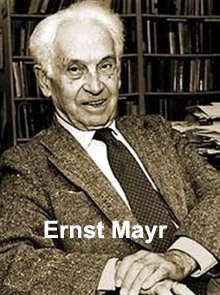



_-_Nobel_Laureate_Aaron_Ciechanover.jpg)

 Print
Print  PDF
PDF I’ve written before about the importance of recognizing





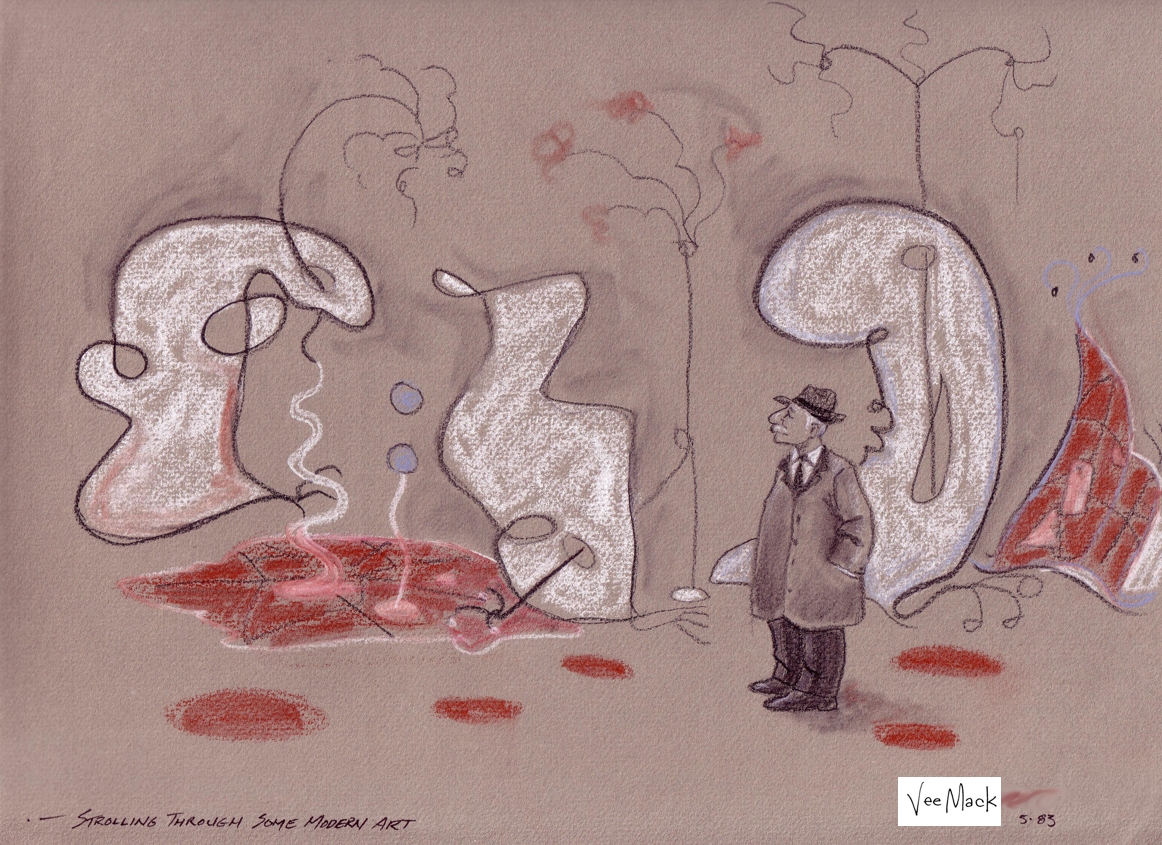




 The Daily Hatch