Woody Allen is a writer, a comedian, and the maker of over seventy films. He recently spoke with Fr. Robert E. Lauder about the function of humor, film, and “the overwhelming bleakness of the universe.”
Robert E. Lauder: From the earliest days of your career as a stand-up comedian and filmmaker, you have dealt with philosophical and religious questions—the existence of God, life after death, the meaning of life. Can you remember when these questions first became important for you?
Woody Allen: These were always obsessions of mine, even as a very young child. These were things that interested me as the years went on. My friends were more preoccupied with social issues—issues such as abortion, racial discrimination, and Communism—and those issues just never caught my interest. Of course they mattered to me as a citizen to some degree…but they never really caught my attention artistically. I always felt that the problems of the world would never ever be solved until people came to terms with the deeper issues—that there would be an aimless reshuffling of world leaders and governments and programs. There was a difference, of course, but it was a minor difference as to who the president was and what the issues were. They seemed major, but as you step back with perspective they were more alike than they were different. The deeper issues always interested me.
RL: Frank Capra said that he used humor as a device to make his audience sort of receptive to his themes. I don’t think you use humor as a device. It seems to me to be more integral to your vision of life and art. Would you agree?
WA: Yes. I think Capra was a much craftier filmmaker, a wonderful filmmaker. He had enormous technique, and he knew how to manipulate the public quite brilliantly. I was just doing what I was doing because it interested me, and in fact obsessed me. I was not doing it with an eye to manipulate the public. In fact, I probably would have had a larger public if I had gone in a different direction.
RL: When Ingmar Bergman died, you said even if you made a film as great as one of his, what would it matter? It doesn’t gain you salvation. So you had to ask yourself why do you continue to make films. Could you just say something about what you meant by “salvation”?
WA:Well, you know, you want some kind of relief from the agony and terror of human existence. Human existence is a brutal experience to me…it’s a brutal, meaningless experience—an agonizing, meaningless experience with some oases, delight, some charm and peace, but these are just small oases. Overall, it is a brutal, brutal, terrible experience, and so it’s what can you do to alleviate the agony of the human condition, the human predicament? That is what interests me the most. I continue to make the films because the problem obsesses me all the time and it’s consistently on my mind and I’m consistently trying to alleviate the problem, and I think by making films as frequently as I do I get a chance to vent the problems. There is some relief. I have said this before in a facetious way, but it is not so facetious: I am a whiner. I do get a certain amount of solace from whining.
RL: Are you saying the humor in your films is a relief for you? Or are you sort of saying to the audience, “Here is an oasis, a couple of laughs”?
WA: I think what I’m saying is that I’m really impotent against the overwhelming bleakness of the universe and that the only thing I can do is my little gift and do it the best I can, and that is about the best I can do, which is cold comfort.
RL: In Everyone Says I Love You, the character you play gets divorced, and as he and his former wife review their relationship near the end of the film, she says, “You could always make me laugh,” and your character asks very sincerely, “Why is that important?” Do you think what you do is important?
WA: No, not so much. Whenever they ask women what they find appealing in men, a sense of humor is always one of the things they mention. Some women feel power is important, some women feel that looks are important, tenderness, intelligence…but sense of humor seems to permeate all of them. So I’m saying to that character played by Goldie Hawn, “Why is that so important?” But it is important apparently because women have said to us that that is very, very important to them. I also feel that humor, just like Fred Astaire dance numbers or these lightweight musicals, gives you a little oasis. You are in this horrible world and for an hour and a half you duck into a dark room and it’s air-conditioned and the sun is not blinding you and you leave the terror of the universe behind and you are completely transported into an escapist situation. The women are beautiful, the men are witty and heroic, nobody has terrible problems and this is a delightful escapist thing, and you leave the theatre refreshed. It’s like drinking a cool lemonade and then after a while you get worn down again and you need it again. It seems to me that making escapist films might be a better service to people than making intellectual ones and making films that deal with issues. It might be better to just make escapist comedies that don’t touch on any issues. The people just get a cool lemonade, and then they go out refreshed, they enjoy themselves, they forget how awful things are and it helps them—it strengthens them to get through the day. So I feel humor is important for those two reasons: that it is a little bit of refreshment like music, and that women have told me over the years that it is very, very important to them.
RL: At one point in Hannah and Her Sisters, your character, Mickey, is very disillusioned. He is thinking about becoming a Catholic and he sees Duck Soup. He seems to think, “Maybe in a world where there are the Marx Brothers and humor, maybe there is a God. Who knows.” And maybe Mickey can live with that. Am I interpreting this correctly?
WA: No. I think it should be interpreted to mean that there are these oases, and life is horrible, but it is not relentlessly black from wire to wire. You can sit down and hear a Mozart symphony, or you can watch the Marx Brothers, and this will give you a pleasant escape for a while. And that is about the best that you can do…. I feel that one can come up with all these rationalizations and seemingly astute observations, but I think I said it well at the end of Deconstructing Harry: we all know the same truth; our lives consist of how we choose to distort it,and that’s it. Everybody knows how awful the world is and what a terrible situation it is and each person distorts it in a certain way that enables him to get through. Some people distort it with religious things. Some people distort it with sports, with money, with love, with art, and they all have their own nonsense about what makes it meaningful, and all but nothing makes it meaningful. These things definitely serve a certain function, but in the end they all fail to give life meaning and everyone goes to his grave in a meaningless way.
RL: That brings us to the end of Crimes and Misdemeanors. Your character and an ophthalmologist named Judah are having a conversation, and Judah pretends he’s talking about a screenplay but he’s really talking about his own life. He says people do commit crimes, they get away with it, and they don’t even have guilt feelings. And your character says this is horrible, this is terrible, and then you cut to a blind rabbi dancing with his daughter at her wedding, and we hear a voiceover from a philosopher your character admires. He says something like, “There is no ultimate meaning but somehow people have found that they can cope.” The philosopher didn’t really cope; he committed suicide. When I first saw the film I thought you were offering the audience several views of life and leaving it to them to decide which is closest to the truth—Judah’s, Cliff’s, the philosopher’s, or the rabbi’s. (He’s the one who seems to be the happiest and most fulfilled character in the film, despite his blindness.) But in an interview you said that really the ophthalmologist is basically right: there is no benevolent God watching over us at all, and we embrace whatever gets us through the night. Is that right?
WA: I feel that is true—that one can commit a crime, do unspeakable things, and get away with it. There are people who commit all sorts of crimes and get away with it, and some of them are plagued with all sorts of guilt for the rest of their lives and others aren’t. They commit terrible crimes and they have wonderful lives, wonderful, happy lives, with families and children, and they have done unspeakably terrible things. There is no justice, there is no rational structure to it. That is just the way it is, and each person figures out some way to cope…. Some people cope better than others. I was with Billy Graham once, and he said that even if it turned out in the end that there is no God and the universe is empty, he would still have had a better life than me. I understand that. If you can delude yourself by believing that there is some kind of Santa Claus out there who is going to bail you out in the end, then it will help you get through. Even if you are proven wrong in the end, you would have had a better life.
RL: Seven or eight years ago the New York Times asked you to name a favorite film and you pickedShane. It seems to me that the character of Shane is a Christ figure. At one point, Chris Callaway, the guy Shane has beaten in a fistfight in the saloon, changes sides. He leaves the villains and joins Shane and the good guys. When Shane asks him why, he says something has come over him. Shane has had some mysterious impact on him. Shane does not ride off into the sunset as heroes usually do in old Westerns. He rides off into the sunrise, and as he does so the director does this strange thing: he holds a dissolve of a cross from the cemetery, and he keeps it on the screen for about five seconds. Do you remember that at all?
WA: I do remember it. Yes, now that you bring it up, I do.
RL: So the film seems to end with resurrection imagery.
WA: I didn’t see him as a martyred figure, a persecuted figure. I saw him as quite a heroic figure who does a job that needs to be done, a practical matter. I saw him as a practical secular character. In this world there are just some people who need killing and that is just the way it is. It sounds terrible, but there is no other way to get around that, and most of us are not up to doing it, incapable for moral reasons or physically not up to it. And Shane is a person who saw what had to be done and went out and did it. He had the skill to do it, and that’s the way I feel about the world: there are certain problems that can only be dealt with that way. As ugly a truth as that is, I do think it’s the truth about the world.
[For more interviews from Commonweal, see our full list.]
____
Top 10 Woody Allen Movies
PBS American Masters – Woody Allen A Documentary 01
PBS American Masters – Woody Allen A Documentary 02
Irrational Man Official Trailer #1 (2015) – Emma Stone, Joaquin Phoenix Movie HD Woody Allen, Emma Stone and the cast of Irrational Man in Cannes Cannes Update: The Lobster, Irrational Man ‘Irrational Man’ Review ‘Irrational Man’ Review: Woody Allen & Joaquin Phoenix Make Perfect Pair by Pete Hammond May 19, 2015 6:29pm I am here at […]
Review of Woody Allen’s latest movie IRRATIONAL MAN Part 6 Irrational Man Official Trailer #1 (2015) – Emma Stone, Joaquin Phoenix Movie HD Woody Allen, Emma Stone and the cast of Irrational Man in Cannes Cannes Update: The Lobster, Irrational Man Cannes review: Woody Allen’s ‘Irrational Man’ taps into a main vein BY JORDAN HOFFMANMay […]
Irrational Man Official Trailer #1 (2015) – Emma Stone, Joaquin Phoenix Movie HD Cannes 2015 – IRRATIONAL MAN by Woody ALLEN (Press conference) Irrational Man: Woody Allen’s Tale of Existentialism and Perfect Murder June 29, 2015 by EmanuelLevy Leave a Comment In his 45th feature, Woody Allen joins a long list of distinguished filmmakers, headed […]
Irrational Man Official Trailer #1 (2015) – Emma Stone, Joaquin Phoenix Movie HD Woody Allen, Emma Stone and the cast of Irrational Man in Cannes ‘Irrational Man’ Review Cannes Review: Woody Allen’s ‘Irrational Man’ Will Keep Fans Happy By Eric Kohn | IndiewireMay 15, 2015 at 7:15AM Joaquin Phoenix and Emma Stone star in Allen’s […]
Irrational Man Official Trailer #1 (2015) – Emma Stone, Joaquin Phoenix Movie HD Woody Allen, Emma Stone and the cast of Irrational Man in Cannes CANNES FILM FESTIVAL MAY 15, 2015 1:13 PM Emma Stone Shines in Woody Allen’s Surprising Irrational Man Courtesy of the Cannes Film Festival It’s not the icky professor-student romantic comedy […]
Irrational Man Official Trailer #1 (2015) – Emma Stone, Joaquin Phoenix Movie HD Irrational Man: Is It Any Good? (Cannes 2015) The Existential Classic Behind Woody Allen’s “Irrational Man” by Matthew Becklo Filed under Movies 42 Comments Irrational Man, the 45th film from the prolific Woody Allen, starts Joaquin Phoenix as Abe Lucas, a philosophy […]
Irrational Man Official Trailer #1 (2015) – Emma Stone, Joaquin Phoenix Movie HD Cannes 2015 – IRRATIONAL MAN by Woody ALLEN (Press conference) Cannes presents: Woody Allen’s ‘Irrational Man’ (Red Carpet) Cannes Review: An Irrational Man MAY 15TH, 2015 SASHA STONE BEST DIRECTOR, BEST PICTURE, CANNES FILM FESTIVAL, FEATURED, REVIEWS Woody Allen in Familiar Territory […]
Irrational Man Official Trailer #1 (2015) – Emma Stone, Joaquin Phoenix Movie HD Cannes 2015 – IRRATIONAL MAN by Woody ALLEN (Press conference) Irrational Man: Woody Allen’s Tale of Existentialism and Perfect Murder June 29, 2015 by EmanuelLevy Leave a Comment In his 45th feature, Woody Allen joins a long list of distinguished filmmakers, headed […]
Woody Allen Stand Up Comic 1964 1968 12 European Trip A Conversation with Woody Allen Expert Robert Weide Mike Ragogna: So what is this fascination you’ve got with comedians? Robert Weide: I remember being a kid and seeing the last couple of years of The Ed Sullivan Show, the Johnny Carson era of The […]
Woody Allen Stand Up Comic 1964 1968 24 Down South Woody Allen’s Stand-Up Memories New album is most complete anthology yet of the comedian’s nightclub performances ENLARGE Woody Allen in the 1965 Variety show ‘The Woody Allen Show,’ above. The new album, right. REX FEATURES/ASSOCIATED PRESS By DON STEINBERG Jan. 8, 2015 3:10 p.m. […]
and you will hear what far smarter people than I have to say on this matter. I agree with them.
Harry Kroto
Nick Gathergood, David-Birkett, Harry-Kroto
I have attempted to respond to all of Dr. Kroto’s friends arguments and I have posted my responses one per week for over a year now. Here are some of my earlier posts:
In the second video below in the 79th clip in this series are his words and my response is below them.
50 Renowned Academics Speaking About God (Part 1)
Another 50 Renowned Academics Speaking About God (Part 2)
A Further 50 Renowned Academics Speaking About God (Part 3)
Interview with Dan McKenzie – May 2007 – part 2
Uploaded on Nov 7, 2007
_________________________________
Below in the letter I wrote to Dr. Mckenzie I responded to his quote:
March 13, 2015
Professor Dan Mckenzie, c/o Dept. of Earth Sciences – Bullard Laboratories,
University of Cambridge,
Dear Dr. McKenzie,
I just finished reading the online addition of the book Darwin, Francis ed. 1892. Charles Darwin: his life told in an autobiographical chapter, and in a selected series of his published letters [abridged edition]. London: John Murray. There are several points that Charles Darwin makes in this book that were very wise, honest, logical, shocking and some that were not so wise. The Christian Philosopher Francis Schaeffer once said of Darwin’s writings, “Darwin in his autobiography and in his letters showed that all through his life he never really came to a quietness concerning the possibility that chance really explained the situation of the biological world. You will find there is much material on this [from Darwin] extended over many many years that constantly he was wrestling with this problem.”
I really enjoyed listening to your interview by Alan Macfarlane. Dr. Macfarlane has done so many wonderful in-depth interviews and yours with him was very good too. I noticed that you were educated under Fred Hoyle at Cambridge and that you also were interested in Dostoyevsky at one time.
Another apologetic based on the human predicament may be found in the magnificent novels of the great nineteenth-century Russian writer Fyodor Dostoyevsky (1821–1881). (May I add that I think the obsession of contemporary evangelicals with the writings of authors like C. S. Lewis to the neglect of writers like Dostoyevsky is a great shame? Dostoyevsky is a far, far grander writer.) The problem that tortured Dostoyevsky was the problem of evil: how can a good and loving God exist when the world is filled with so much suffering and evil? Dostoyevsky presented this problem in his works so persuasively, so poignantly, that certain passages of his, notably “The Grand Inquisitor” section from his Brothers Karamazov, are often reprinted in anthologies as classic statements of the problem of evil. As a result, some people are under the impression that Dostoyevsky was himself an atheist and that the viewpoint of the Grand Inquisitor is his own.
Actually, he sought to carry through a two-pronged defense of theism in the face of the problem of evil. Positively, he argued that innocent suffering may perfect character and bring one into a closer relation with God. Negatively, he tried to show that if the existence of God is denied, then one is landed in complete moral relativism, so that no act, regardless how dreadful or heinous, can be condemned by the atheist. To live consistently with such a view of life is unthinkable and impossible. Hence, atheism is destructive of life and ends logically in suicide.
Dostoyevsky’s magnificent novels Crime and Punishment and The Brothers Karamazov powerfully illustrate these themes. In the former a young atheist, convinced of moral relativism, brutally murders an old woman. Though he knows that on his presuppositions he should not feel guilty, nevertheless he is consumed with guilt until he confesses his crime and gives his life to God. The latter novel is the story of four brothers, one of whom murders their father because his atheist brother Ivan had told him that moral absolutes do not exist. Unable to live with the consequences of his own philosophical system, Ivan suffers a mental collapse. The remaining two brothers, one of whom is unjustly accused of the parricide and the other a young Russian orthodox priest, find in what they suffer the perfection of their character and a nearness to God.
Dostoyevsky recognizes that his response to atheism constitutes no positive proof of Christianity. Indeed, he rejects that there could be such. Men demand of Christ that he furnish them “bread and circuses,” but he refuses to do so. The decision to follow Christ must be made in loneliness and anxiety. Each person must face for himself the anguish of a world without God and in the solitude of his own heart give himself to God in faith….Finally, let’s look at the problem of purpose in life. Unable to live in an impersonal universe in which everything is the product of blind chance, atheists sometimes begin to ascribe personality and motives to the physical processes themselves. It is a bizarre way of speaking and represents a leap from the lower to the upper story. For example, the brilliant Russian physicists Zeldovich and Novikov, in contemplating the properties of the universe, ask, why did “Nature”
instead of another? “Nature” has obviously become a sort of God-substitute, filling the role and function of God. Francis Crick halfway through his book The Origin of the Genetic Code begins to spell nature with a capital N and elsewhere speaks of natural selection as being “clever” and as “thinking” of what it will do. Sir Fred Hoyle, the English astronomer, attributes to the universe itself the qualities of God. For Carl Sagan the “Cosmos,” which he always spelled with a capital letter, obviously fills the role of a God-substitute. Though these men profess not to believe in God, they smuggle in a God-substitute through the back door because they cannot bear to live in a universe in which everything is the chance result of impersonal forces…Modern man no longer has any right to that support, since he rejects God. But in order to live purposefully, he makes a leap of faith to affirm a reason for living.
___________
Here are a couple of more quotes from -Sir Fred Hoyle, atheist, and a prominent astrophysicist of the 20th century.
“If you stir up simple nonorganic molecules like water, ammonia, methane, carbon dioxide and hydrogen cyanide with almost any form of intense energy … some of the molecules reassemble themselves into amino acids … demonstrated … byStanley Miller and Harold Urey. The … building blocks of proteins can therefore be produced by natural means. But this is far from proving that life could have evolved in this way. No one has shown that the correct arrangements of amino acids, like the orderings in enzymes, can be produced by this method. …. A junkyard contains all the bits and pieces of a Boeing 747, dismembered and in disarray. A whirlwind happens to blow through the yard. What is the chance that after its passage a fully assembled 747, ready to fly, will be found standing there? So small as to be negligible, even if a tornado were to blow through enough junkyards to fill the whole Universe.” (Hoyle, F., “The Intelligent Universe,” Michael Joseph: London, 1983, pp.18-19).
“If one proceeds directly…in this matter, without being deflected by a fear of incurring the wrath of scientific opinion, one arrives at the conclusion that biomaterialists (life forms) with their amazing measure of order must be the outcome of intelligent design.”
Recently I noticed this comment by you:
I have never been religious, my parents weren’t either. I have never been able to connect with the religious way of thought.
There is such a contrast between you and Charles Darwin who had a hard time indeed breaking away from his Christian beliefs to accept his own theory evolution basically because the one passage in Romans Chapter One. That chapter teaches that each person is confronted both with the testimony of the beauty of God’s Creation and the fact that God has put a conscience in every person’s heart that testifies of His existence.
I know you accept evolution but I wondered if you ever struggled with some of the same issues that Darwin did? This exact quote from you made me think of you when I read the book Charles Darwin: his life told in an autobiographical chapter, and in a selected series of his published lettersbecause of what Darwin said on this same issue of intelligent design.I am going to quote some of Charles Darwin’s own words and then include the comments of Francis Schaeffer on those words. I have also enclosed a CD with two messages from Adrian Rogers and Bill Elliff concerning Darwinism.
“It is impossible to answer your question briefly; and I am not sure that I could do so, even if I wrote at some length. But I may say that the impossibility of conceiving that this grand and wondrous universe, with our conscious selves, arose through chance, seems to me the chief argument for the existence of God; but whether this is an argument of real value, I have never been able to decide…Nor can I overlook the difficulty from the immense amount of suffering through the world.I am aware that if we admit a First Cause,the mind still craves to know whence it came, and how it arose.”
Francis Schaeffer noted:
What he is saying is if you say there is a first cause, then the mind says, “Where did this come from?” I think this is a bit old fashioned, with some of the modern thinkers, this would not have carry as much weight today as it did when Darwin expressed it. Jean Paul Sartre said it as well as anyone could possibly say it. The philosophic problem is that something is there and not nothing being there. No one has the luxury of beginning with nothing. Nobody I have ever read has put forth that everything came from nothing. I have never met such a person in all my reading,or all my discussion. If you are going to begin with nothing being there, it has to be nothing nothing, and it can’t be something nothing. When someone says they believe nothing is there, in reality they have already built in something there. The only question is do you begin with an impersonal something or a personal something. All human thought is shut up to these two possibilities. Either you begin with an impersonal and then have Darwin’s own dilemma which impersonal plus chance, now he didn’t bring in the amount of time that modern man would though. Modern man has brought in huge amounts of time into the equation as though that would make a difference because I have said many times that time can’t make a qualitative difference but only a quantitative difference. The dilemma is it is either God or chance. Now you find this intriguing thing in Darwin’s own situation, he can’t understand how chance could have produced these two great factors of the universe and its form and the mannishness of man.
“Another source of conviction in the existence of God, connected with the reason and not with the feelings, impresses me as having much more weight. This follows from the extreme difficulty or rather impossibility of conceiving this immense and wonderful universe, including man with his capacity of looking far backwards and far into futurity, as the result of blind chance or necessity. When thus reflecting, I feel compelled to look to a First Cause having an intelligent mind in some degree analogous to that of man; and I deserve to be called a Theist. This conclusion was strong in my mind about the time, as far as I can remember, when I wrote the Origin of Species, and it is since that time that it has very gradually, with many fluctuations, become weaker. But then arises the doubt…”
Francis Schaeffer commented:
On the basis of his reason he has to say there must be an intelligent mind, someone analogous to man. You couldn’t describe the God of the Bible better. That is man is made in God’s image and therefore, you know a great deal about God when you know something about man. What he is really saying here is that everything in my experience tells me it must be so, and my mind demands it is so. Not just these feelings he talked about earlier but his MIND demands it is so, but now how does he counter this? How does he escape this? Here is how he does it!!!
Charles Darwin went on to observe: “—can the mind of man, which has, as I fully believe, been developed from a mind as low as that possessed by the lowest animals, be trusted when it draws such grand conclusions?”
Francis Schaeffer asserted:
So he says my mind can only come to one conclusion, and that is there is a mind behind it all. However, the doubt comes because his mind has come from the lowest form of earthworm, so how can I trust my mind. But this is a joker isn’t it? Then how can you trust his mind to support such a theory as this? He proved too much. The fact that Darwin found it necessary to take such an escape shows the tremendous weight of Romans 1, that the only escape he can make is to say how can I trust my mind when I come from the lowest animal the earthworm? Obviously think of the grandeur of his concept, I don’t think it is true, but the grandeur of his concept, so what you find is that Darwin is presenting something here that is wrong I feel, but it is not nothing. It is a tremendously grand concept that he has put forward. So he is accepting the dictates of his mind to put forth a grand concept which he later can’t accept in this basic area with his reason, but he rejects what he could accept with his reason on this escape. It really doesn’t make sense. This is a tremendous demonstration of the weakness of his own position.
Darwin also noted, “I cannot pretend to throw the least light on such abstruse problems. The mystery of the beginning of all things is insoluble by us, and I for one must be content to remain an Agnostic.”
Francis Schaeffer remarked:
What a stupid reply and I didn’t say wicked. It just seems to me that here is 2 plus 2 equals 36 at this particular place.
Nevertheless you have expressed my inward conviction, though far more vividly and clearly than I could have done, that the Universe is not the result of chance.* But then with me the horrid doubt always arises whether the convictions of man’s mind, which has been developed from the mind of the lower animals, are of any value or at all trustworthy. Would any one trust in the convictions of a monkey’s mind, if there are any convictions in such a mind?
Francis Schaeffer observed:
Can you feel this man? He is in real agony. You can feel the whole of modern man in this tension with Darwin. My mind can’t accept that ultimate of chance, that the universe is a result of chance. He has said 3 or 4 times now that he can’t accept that it all happened by chance and then he will write someone else and say something different. How does he say this (about the mind of a monkey) and then put forth this grand theory? Wrong theory I feel but great just the same. Grand in the same way as when I look at many of the paintings today and I differ with their message but you must say the mark of the mannishness of man are one those paintings titanic-ally even though the message is wrong and this is the same with Darwin. But how can he say you can’t think, you come from a monkey’s mind, and you can’t trust a monkey’s mind, and you can’t trust a monkey’s conviction, so how can you trust me? Trust me here, but not there is what Darwin is saying. In other words it is very selective.
Now we are down to the last year of Darwin’s life.
* The Duke of Argyll (Good Words, April 1885, p. 244) has recorded a few words on this subject, spoken by my father in the last year of his life. “. . . in the course of that conversation I said to Mr. Darwin, with reference to some of his own remarkable works on the Fertilisation of Orchids, and upon The Earthworms,and various other observations he made of the wonderful contrivances for certain purposes in nature—I said it was impossible to look at these without seeing that they were the effect and the expression of mind. I shall never forget Mr. Darwin’s answer. He looked at me very hard and said, ‘Well, that often comes over me with overwhelming force; but at other times,’ and he shook his head vaguely, adding, ‘it seems to go away.'”
Francis Schaeffer summarized :
And this is the great Darwin, and it makes you cry inside. This is the great Darwin and he ends as a man in total tension.
Francis Schaeffer noted that in Darwin’s 1876 Autobiography that Darwin he is going to set forth two arguments for God in this and again you will find when he comes to the end of this that he is in tremendous tension. Darwin wrote,
At the present day the most usual argument for the existence of an intelligent God is drawn from the deep inward conviction and feelings which are experienced by most persons.Formerly I was led by feelings such as those just referred to (although I do not think that the religious sentiment was ever strongly developed in me), to the firm conviction of the existence of God and of the immortality of the soul. In my Journal I wrote that whilst standing in the midst of the grandeur of a Brazilian forest, ‘it is not possible to give an adequate idea of the higher feelings of wonder, admiration, and devotion which fill and elevate the mind.’ I well remember my conviction that there is more in man than the mere breath of his body; but now the grandest scenes would not cause any such convictions and feelings to rise in my mind. It may be truly said that I am like a man who has become colour-blind.
Francis Schaeffer remarked:
Now Darwin says when I look back and when I look at nature I came to the conclusion that man can not be just a fly! But now Darwin has moved from being a younger man to an older man and he has allowed his presuppositions to enter in to block his logic. These things at the end of his life he had no intellectual answer for. To block them out in favor of his theory. Remember the letter of his that said he had lost all aesthetic senses when he had got older and he had become a clod himself. Now interesting he says just the same thing, but not in relation to the arts, namely music, pictures, etc, but to nature itself. Darwin said, “But now the grandest scenes would not cause any such convictions and feelings to rise in my mind. It may be truly said that I am like a man who has become colour-blind…” So now you see that Darwin’s presuppositions have not only robbed him of the beauty of man’s creation in art, but now the universe. He can’t look at it now and see the beauty. The reason he can’t see the beauty is for a very, very , very simple reason: THE BEAUTY DRIVES HIM TO DISTRACTION. THIS IS WHERE MODERN MAN IS AND IT IS HELL. The art is hell because it reminds him of man and how great man is, and where does it fit in his system? It doesn’t. When he looks at nature and it’s beauty he is driven to the same distraction and so consequently you find what has built up inside him is a real death, not only the beauty of the artistic but the beauty of nature. He has no answer in his logic and he is left in tension. He dies and has become less than human because these two great things (such as any kind of art and the beauty of nature) that would make him human stand against his theory.
DO THESE WORDS OF DARWIN APPLY TO YOU TODAY? “I am like a man who has become colour-blind.”
Sir Fred Hoyle, at the British Academy of Science—a leading mathematician, a leading astronomer—shook up a lot of people in the scientific community, when he said this—listen: “We must now admit to ourselves that the probability of life arising by chance, by evolution, is the same probability as throwing six on a die 5 million consecutive times.” Now, get a die, and begin to throw it; and, if you can throw six, it’ll land on six 5 million times in a row—that’s the probability that life could arise by spontaneous generation. He went on to say—this is Sir Fred Hoyle: “Let us be scientifically honest with ourselves. The probability of having life arise to greater and greater complexity in organization by chance is the same probability of having a tornado tear through a junkyard and form a 747 on the other end.” What is this great scientist saying? That random and impersonal chance does not create complexity in design— that’s what he’s saying.
IF WE ARE LEFT WITH JUST THE MACHINE THEN WHAT IS THE FINAL CONCLUSION IF THERE WAS NO PERSONAL GOD THAT CREATED US? I sent you a CD that starts off with the song DUST IN THE WIND by Kerry Livgren of the group KANSAS which was a hit song in 1978 when it rose to #6 on the charts because so many people connected with the message of the song. It included these words, “All we do, crumbles to the ground though we refuse to see, Dust in the Wind, All we are is dust in the wind, Don’t hang on, Nothing lasts forever but the Earth and Sky, It slips away, And all your money won’t another minute buy.”
Kerry Livgren himself said that he wrote the song because he saw where man was without a personal God in the picture. Solomon pointed out in the Book of Ecclesiastes that those who believe that God doesn’t exist must accept three things. FIRST, death is the end and SECOND, chance and time are the only guiding forces in this life. FINALLY, power reigns in this life and the scales are never balanced. The Christian can face death and also confront the world knowing that it is not determined by chance and time alone and finally there is a judge who will balance the scales.
Both Kerry Livgren and the bass player Dave Hope of Kansas became Christians eventually. Kerry Livgren first tried Eastern Religions and Dave Hope had to come out of a heavy drug addiction. I was shocked and elated to see their personal testimony on The 700 Club in 1981 and that same interview can be seen on You Tube today. Livgren lives in Topeka, Kansas today where he teaches “Diggers,” a Sunday school class at Topeka Bible Church. DAVE HOPE is the head of Worship, Evangelism and Outreach at Immanuel Anglican Church in Destin, Florida.
About the film:
In 1973, six guys in a local band from America’s heartland began a journey that surpassed even their own wildest expectations, by achieving worldwide superstardom… watch the story unfold as the incredible story of the band KANSAS is told for the first time in the DVD Miracles Out of Nowhere.
The John Lennon and the Beatles really were on a long search for meaning and fulfillment in their lives just like King Solomon did in the Book of Ecclesiastes. Solomon looked into learning (1:12-18, 2:12-17), laughter, ladies, luxuries, and liquor (2:1-2, 8, 10, 11), and labor (2:4-6, 18-20). He fount that without God in the picture all […]
______________ George Harrison Swears & Insults Paul and Yoko Lucy in the Sky with Diamonds- The Beatles The Beatles: I have dedicated several posts to this series on the Beatles and I don’t know when this series will end because Francis Schaeffer spent a lot of time listening to the Beatles and talking […]
The Beatles in a press conference after their Return from the USA Uploaded on Nov 29, 2010 The Beatles in a press conference after their Return from the USA. The Beatles: I have dedicated several posts to this series on the Beatles and I don’t know when this series will end because Francis […]
__________________ Beatles 1966 Last interview I have dedicated several posts to this series on the Beatles and I don’t know when this series will end because Francis Schaeffer spent a lot of time listening to the Beatles and talking and writing about them and their impact on the culture of the 1960’s. In this […]
_______________ The Beatles documentary || A Long and Winding Road || Episode 5 (This video discusses Stg. Pepper’s creation I have dedicated several posts to this series on the Beatles and I don’t know when this series will end because Francis Schaeffer spent a lot of time listening to the Beatles and talking and writing about […]
_______________ Francis Schaeffer pictured below: _____________________ I have included the 27 minute episode THE AGE OF NONREASON by Francis Schaeffer. In that video Schaeffer noted, ” Sergeant Pepper’s Lonely Hearts Club Band…for a time it became the rallying cry for young people throughout the world. It expressed the essence of their lives, thoughts and their feelings.” How Should […]
Crimes and Misdemeanors: A Discussion: Part 1 ___________________________________ Today I will answer the simple question: IS IT POSSIBLE TO BE AN OPTIMISTIC SECULAR HUMANIST THAT DOES NOT BELIEVE IN GOD OR AN AFTERLIFE? This question has been around for a long time and you can go back to the 19th century and read this same […]
____________________________________ Francis Schaeffer pictured below: __________ Francis Schaeffer has written extensively on art and culture spanning the last 2000years and here are some posts I have done on this subject before : Francis Schaeffer’s “How should we then live?” Video and outline of episode 10 “Final Choices” , episode 9 “The Age of Personal Peace and Affluence”, episode 8 […]
Love and Death [Woody Allen] – What if there is no God? [PL] ___________ _______________ How Should We then Live Episode 7 small (Age of Nonreason) #02 How Should We Then Live? (Promo Clip) Dr. Francis Schaeffer 10 Worldview and Truth Two Minute Warning: How Then Should We Live?: Francis Schaeffer at 100 Francis Schaeffer […]
___________________________________ Francis Schaeffer pictured below: ____________________________ Francis Schaeffer “BASIS FOR HUMAN DIGNITY” Whatever…HTTHR Dr. Francis schaeffer – The flow of Materialism(from Part 4 of Whatever happened to human race?) Dr. Francis Schaeffer – The Biblical flow of Truth & History (intro) Francis Schaeffer – The Biblical Flow of History & Truth (1) Dr. Francis Schaeffer […]
and you will hear what far smarter people than I have to say on this matter. I agree with them.
Harry Kroto
I have attempted to respond to all of Dr. Kroto’s friends arguments and I have posted my responses one per week for over a year now. Here are some of my earlier posts:
Alan Dundes with a wooden Norwegian statue of a tale called “Squeezing the Stone”
Alan Dundes (September 8, 1934 – March 30, 2005)[1] was a folklorist at the University of California, Berkeley. His work was said to have been central to establishing the study of folklore as an academic discipline.[citation needed]He wrote 12 books, both academic and popular, and edited or co-wrote two dozen more.[2] One of his most notable articles was called “Seeing is Believing” in which he indicated that Americans value the sense of sight more than the other senses.
He introduced the concept “allomotif” (coined in an analogy with “allomorph“, to complement the concept of “motifeme” (cf. “morpheme“) introduced by Kenneth L. Pike) as concept to be used in the analysis of the structures of folktales in terms of motifs identified in them.[3][4]
Dundes attended Yale University, where he studied English[1] and met his wife Carolyn. Sure that he would be drafted upon completion of his studies, Dundes joined the ROTC and trained to become a naval communications officer. When it turned out that the ship he was to be posted to, stationed in the Bay of Naples, already had a communications officer, Dundes asked what else that ship might need, not wanting to give up such a choice assignment. He then spent two years maintaining artillery guns on a ship in the Mediterranean. Upon completion of his service, Dundes attended Indiana University to pursue a Ph.D in folklore. At Indiana, he studied under the father of American Folklore, Richard Dorson.[1] He quickly established himself as a force to be reckoned with in the field of folkloristics. He completed his degree very quickly and went on to a teaching position at the University of Kansas where he stayed for only a year before being offered a position in the University of California, Berkeley anthropology department teaching folklore. Dundes held this position for 42 years, until his death in 2005.
Alan Dundes was an engaging lecturer, his Introduction to Folklore course attracting many students. In this course, students were introduced to the many various forms of folklore, from myth, legend, and folktale to proverbs and riddles to jokes, games, and folkspeech (slang), to folk belief and foodways. The final project for this course required that each student collect, identify, and analyze 40 items of folklore. All of this material (about 500,000 items) is housed and cataloged in the Berkeley Folklore Archives. Dundes also taught undergraduate courses in American folklore, and psychoanalytic approaches to folklore (his favorite approach) in addition to graduate seminars on the history of folkloristics, from an international perspective, and the history and progression of folklore theory.
Dundes was also a great supporter of the New Student Orientation Program at UC Berkeley (CalSO). He frequently gave the opening address during summer orientation programs, whetting students’ appetites about the type of instruction they might receive at the University. These addresses were littered with jokes and stories which were a trademark of Dundes’ lectures in his popular anthropology class and were a favorite of both in-coming students and the orientation staff alike.[citation needed]
Strongly opinionated, Dundes was not at all averse to the controversy that his theories often generated. He dealt frequently with folklore as an expression of unconscious desires and anxieties and was of the opinion that if people reacted strongly to what he had to say, he had probably hit a nerve and was probably on to something. Some of his more controversial work involved examining the New Testament and the Qur’an as folklore.[5] However, of all his articles, the one that earned him death threats was “Into the Endzone for a Touchdown”, an exploration of the homoerotic subtext inherent in the terminology and rituals surrounding American football.[6] In 1980, Dundes was invited to give the presidential address at the American Folklore Society annual meeting.[7] His presentation, later published as a monograph titled “Life is Like a Chicken Coop Ladder”, uses folkspeech, customs, material culture, and so forth seeking to demonstrate an anal-erotic fixation of German national character.[6] Reaction to this paper was incredibly strong[6] and because of it, Dundes declined to attend the AFS annual meeting for the next 20 years.[citation needed] When he finally did attend again, in 2004, he again gave a plenary address, this time taking his fellow folklorists to task for being weak on theory. In his opinion, the presentation of data, no matter how thorough, is useless without the development and application of theory to that data. It is not enough to simply collect, one must do something with what one has collected.[8] In 2012, linguist Anatol Stefanowitsch credited Dundes with having given rise to a still prevalent “stereotype about Germany as a culture enamored with excretion”, but called his monograph “unstructured, poorly argued and flimsily sourced” and “methodologically flawed because he only looked for evidence supporting his theory, and not – as even a folklorist should – for evidence against his theory”.[9]
Dundes fiercely defended the importance of the discipline of folkloristics throughout his career. Towards the end of his life, he received an envelope containing a check from a former student, which he asked his wife to open. She read the figure out as $1,000. In fact, the check was for $1,000,000. This money allowed Dundes to endow the university with a Distinguished Professorship in Folkloristics, thereby ensuring that upon his retirement folklore would not be abandoned in the department.[10]
The former student and benefactor wished to remain anonymous. Apparently he or she called the university prior to the donation to find out if Dundes was still teaching, or as Dundes told it, “to see if I was still alive.” The student mentioned that he or she intended to send a check, but Dundes said he was not sure the student would follow through.
The check was made out to the university, Dundes said, but with instructions that he could use it in any manner he saw fit.
“I could just take all my students to Fiji and have one hell of a party,” he said.
The professor instead decided to invest it in the study of folklore. The money funds a Distinguished Professorship of Folkloristics and helps fund the university’s folklore archives and provides grants for folklore students.[11]
Shortly before his death, Dundes was interviewed by filmmaker Brian Flemming for his documentary, The God Who Wasn’t There. He prominently recounted Lord Raglan’s 22-point scale from his 1936 book The Hero, in which he ranks figures possessing similar divine attributions.[12] An extended interview[13] is on the DVD version of the documentary.
Former fundamentalist Christian Brian Flemming places the core concepts of his former religion under the microscope in a documentary that attempts to do for religion what Morgan Spurlock’s Super Size Me did for the fast-food industry. In his bold quest to seek answers to the difficult questions that few are willing to pose, Flemming is joined by Deconstructing Jesus author Robert M. Price, renowned historian Richard Carrier, and The End of Faith author Sam Harris.
From the ignorance of many contemporary Christians as to the origin of their religion to the striking similarities between Jesus Christ and the deities worshipped by ancient pagan cults and the Christian obsession with blood and violence, this faith-shaking documentary explores the many mysteries of the Christian faith as never before.
This documentary argues the “mythicist” case in the historical Jesus debate. This position says that Jesus of Nazareth wasn’t a real person but a fiction based on Jewish scriptures and mystery religions of the Roman Empire. It doesn’t make sense to talk about a “real” Jesus — there
Before the term folkloristics can be fully understood, it is necessary to understand that the terms folk and lore are defined in many different ways. While some use the word folk to mean only peasants or remote cultures, the folklorist Alan Dundes (1934–2005) of the University of California at Berkeley calls this definition a “misguided and narrow concept of the folk as the illiterate in a literate society” (Devolutionary Premise, 13).
Dundes is often credited with the promotion of folkloristics as a term denoting a specific field of academic study and applies instead what he calls a “modern” flexible social definition for folk: two or more persons who have any trait in common and express their shared identity through traditions. Dundes explains this point best in his essay, The Devolutionary Premise in Folklore Theory (1969):
“A folk or peasant society is but one example of a ‘folk’ in the folkloristic sense. Any group of people sharing a common linking factor, e.g., an urban group such as a labor union, can and does have folklore. ‘Folk’ is a flexible concept which can refer to a nation as in American folklore or to a single family. The critical issue in defining ‘folk’ is: what groups in fact have traditions?” (emphasis in the original, see footnote 34, 13)
With this expanded social definition of folk, a wider view of the material considered to be folklore also emerged that includes, as William Wilson points out, “things people make with words (verbal lore), things they make with their hands (material lore), and things they make with their actions (customary lore)” (2006, 85).
Another implication of this broader defining of the term folk, according to Dundes, is that folkloristic work is interpretative and scientific rather than descriptive or devoted solely to folklore preservation. In the 1978 collection of his academic work, Essays in Folkloristics, Dundes declares in his preface, “Folkloristics is the scientific study of folklore just as linguistics is the scientific study of language. [. . .] It implies a rigorous intellectual discipline with some attempt to apply theory and method to the materials of folklore” (vii). In other words, Dundes advocates the use of folkloristics as the preferred term for the academic discipline devoted to the study of folklore.
According to Dundes, folkloristic work will probably continue to be important in the future. Dundes writes, “folklore is a universal: there has always been folklore and in all likelihood there will always be folklore. As long as humans interact and in the course of so doing employ traditional forms of communication, folklorists will continue to have golden opportunities to study folklore” (Devolutionary Premise, 19). According to folklorist William A. Wilson, “the study of folklore, therefore, is not just a pleasant pastime useful primarily for whiling away idle moments. Rather, it is centrally and crucially important in our attempts to understand our own behavior and that of our fellow human beings” (2006, 203).
(1968). “The Number Three in American Culture.” In Alan Dundes (ed.), Every Man His Way: Readings in Cultural Anthropology. Englewood Cliffs, New Jersey: Prentice-Hall.
Alan Dundes comment in the You Tube film series Another 50 Renowned Academics Speaking About God (Part 2):
“I found the best evidence for my own research was going to Christian bookstores. There were all these books about apparent contradictions in the Bible, seeming inconsistencies, books and books of these things…and that gave me all the evidence I needed….They were my research assistants, these people who were trying to reconcile…”
MY RESPONSE:
Alan Dundes was keen on pointing out inconsistencies in the Bible as compared to actual history and the BOOK OF DANIEL has been a prime target. However, I have found that many of the critics have had to backtrack some on some key issues. Take a look below:
Farrell Till has asserted that reputable Bible scholars believe that the book of Daniel was not written by an individual named Daniel during the sixth century B.C. (TSR, Vol 4.3, p. 12). These scholars hold that the writer lived in the time of the Maccabees, and his “purpose was to give his countrymen reason to believe that centuries earlier a prophet of Yahweh had foreseen the rise of the Seleucid Empire and had predicted the triumph of the Maccabean struggle for independence against Antiochus Epiphanes” (TSR, Vol. 7.3, p. 3). William Sierichs, Jr. also takes this position in his article, “Daniel in the Historians’ Den” (TSR, Vol. 7.4, p.8). Sierichs comments, “Daniel can’t get Babylonian history straight, but he does pretty well by the Hellenistic era. Obviously, whoever wrote the book was a very solid citizen of the 2nd century B.C.E., whose `prophecies’ were wholly retroactive.”
Both Till and Sierichs have been influenced by biblical scholars who have embraced the higher critical views of the 1800’s. However, most people have overlooked the fact that these same scholars have made several admissions which are damaging to their Maccabean thesis.
The first admission concerns the conservative’s view that Rome is the fourth kingdom identified in Daniel’s prophecy. Till states the critic’s logic: “A flaw in this interpretation is the obvious fact that the writer of Daniel considered the median and Persian kingdoms to be separate empires, because he had the Neo-Babylonian empire falling to `Darius the Mede’ (5:30-31). This is historically inaccurate (just one of many historical inaccuracies in the book of Daniel), because reliable records of the time indicate that Cyrus the Great captured Babylon and ended the Neo-Babylonian kingdom. Nevertheless, the writer of Daniel told of a reign under “Darius the Mede: that preceded the reign of the Persian king, Cyrus the Great (6:28; 10:1). So if the writer believed that the Neo-Babylonian Empire fell to the Medes and then the Medes fell to the Persians, then the fourth kingdom in Daniel’s interpretation would have been Alexander’s Hellenistic empire” (TSR, Vol. 4.3, p. 12).
Notice that Till bases his conclusion on the “obvious fact that the writer of Daniel considered the Median and Persian kingdoms to be separate empires….” However, the famous Bible critic, Dr. Samuel Driver, admitted, “In the book of Daniel the `Medes and Persians’ are, it is true, sometimes represented as united (Daniel 5:28; 6:8, 12, 15, cf. 8:20)” (The Book of Daniel: Cambridge Bible for Schools and Colleges, Cambridge: University Press, 1900, p. 29). Conservative scholar Stephen Miller comments: “Such an admission seems fatal to Driver’s position, for if the author was aware at one point that the two nations were united into one empire, he certainly would not have construed them as separate both physically and chronologically elsewhere in the same book” (Daniel: The New American Commentary, Nashville, TN, Broadman and Holman Publishers, 1994, p. 95).
Moreover, in Daniel 5:28, the word peres has the same consonants (only the consonants were written in ancient Aramaic and Hebrew scripts) as the Aramaic term translated “Persians” and likely was a paronomasia (a word play) hinting that the division of the kingdom would be accomplished by the Persian armies. Bible critic Norman W. Porteous admits this hints at “the victory of Persia over Babylon” (Daniel, The Old Testament Library, Philadelphia: Westminster, 1965, p. 81). Furthermore, the Bible critic John A. Montgomery agrees (“A Critical and Exegetical Commentary on the Book of Daniel,” International Critical Commentary, T. and T. Clark, Edinburgh, 1979, p. 263).
Arthur Jeffrey claims the author assumed from his reading of Old Testament prophecies (Isaiah 13:17; 21:2, and Jeremiah 51:11, 28) that the Medes conquered Babylon before the Persians (Arthur Jeffrey, “The Book of Daniel,” Interpreter’s Bible, Nashville: Abingdon, 1956, p. 434). However, Isaiah 21:2 blows this theory out of the water, because it speaks of Elam and Media as the joint-conquerors of Babylon. The critic H. H. Rowley admits: “This was doubtless written after Cyrus, king of Anshan, in southwest Elam, had brought the rest of Elam under his sway, when to the Hebrew observer it appeared likely that these two powers might unite in the destruction of Babylon. And since Elam is mentioned first, it is possible that the passage dates from a time after the absorption of Media by Cyrus” (H. H. Rowley, Darius the Mede and the Four World Empires in the Book of Daniel, 1935; reprint, Cardiff: University of Wales, 1964, p. 58).
Till correctly notes that the writer of Daniel had “Darius the Mede” conquering Babylon, but nowhere does the writer state that Darius was “the king of the Medes” or the “king of Media.” Dr. Robert H. Pfeiffer of Harvard University admitted the author of Daniel was “a very learned man” and “a sage” (Robert H. Pfeiffer, Introduction to the Old Testament, New York: Harper and Brothers, 1948, p. 757), but Pfeiffer must have assumed that this “sage” had never read 2 Chronicles 36:20 where it is said that the Jews were servants to Nebuchadnezzar “and his sons until the reign of the kingdom of Persia.” Clearly this indicates that the Persian reign came immediately after the Babylonian reign.
The second admission concerns the madness of Nebuchadnezzar in Daniel chapter four. William Sierichs, Jr., states that “the story of Nebuchadnezzar’s insanity may be a reference to a bout of insanity or lengthy depression in Nabonidus, who apparently was very unpopular in Babylon…” (TSR, Vol. 7.4, p. 8). This is the position held by many modern critical scholars today. Conservatives prefer a different explanation. Stephen Miller comments: “Some scholars have deemed this chapter primarily a fictional account, likely derived from the same source as the so-called `prayer of Nabonidus’ (4QPrBab), an Aramaic fragment discovered at Qumran in 1952 (D. N. Freedman, “The Prayer of Nabonidus,” Bulletin of the American Schools of Oriental Research, Vol. 145, 1957, pp. 31-32). Though affinities exist between Daniel 4 and the “Prayer of Nabonidus,” they are far outweighed by the differences (e.g., name of the king, nature of the illness, and location). It seems reasonable to categorize the Nabonidus story as a distorted version or a later application of the biblical narrative” (p. 145).
Nevertheless, the critics insist there is no hint in the historical record that indicates it was Nebuchadnezzar with this strange case of madness that resulted in a seven-year absence. R. H. Pfeiffer called Daniel chapter four an “unhistorical tale,” and “a confused reminiscence of the years when Nabonidus spent at Tema in Arabia” (p. 758). Norman W. Porteous states, “indeed there is no record of Nebuchadnezzar’s having had leave of absence from his royal duties on account of insanity” (p. 70). However, later on the same page Porteous admits that fellow Bible critics Bevan, Montgomery, Bentzen, and Jeffrey have recorded such a story. Abydenus’s account is preserved by Eusebius (Praeparatio Evangelica, 9.41.1) and is reproduced by John A. Montgomery (p. 221).
Abydenus says that in the last days of Nebuchadnezzar, the king was “possessed by some god or other” while in his palace, and announced the coming of a Persian mule (i.e., Cyrus), who would bring the people into slavery. Then says Abydenus, “He, when he had uttered this prediction, immediately disappeared” (Praeparatio Evangelica, 9.41.1). Surely Porteous is wrong to admit the existence of this story by the historian Abydenus, and at the same time insist that “there is no record of Nebuchadnezzar’s having had leave of absence from his royal duties…”
The third and fourth admissions concern linguistic arguments. Farrell Till asserts: “Bible fundamentalists like to think that Daniel was written in the sixth century B. C., shortly after the events that the book closes with during the reign of Cyrus the Great, who had conquered Babylon in 539 B.C. Few reputable Bible scholars, however, would fix the date that early, because the book exhibits signs of a much later authorship. Scholars cite the writer’s obvious confusion about political events of the time that a contemporary would have surely been familiar with, the linguistic style (especially the section written in Aramaic), and other factors too numerous to discuss in detail as evidence that the book was written at the extreme end of the Old Testament period (no sooner than the second century)” (TSR, Vol. 4.3, p. 13).
Dr. Samuel Driver also made much of the Aramaic of the Book of Daniel. he stated, “The Aramaic of Daniel (which is all but identical with that of Ezra) is a Western Aramaic dialect, of the type spoken in and about Palestine” (p. 59 of the introduction of Driver’s commentary on Daniel), and he went on to suggest that archaeology had confirmed this. However, Jeffrey admits that the Aramaic in the Book of Daniel “cannot be pressed as evidence for a particular date, for it is that type of Aramaic which grew up for official use in the chancelleries and came to be widely used in the ancient Near East” (p. 349). Jeffrey cites more recent discoveries of fifth-century Aramaic texts that totally discredit Driver’s view (Franz Rosenthal, Die Aramaistische Forschung, [Leiden: E. J. Brill, 1939] pp. 66-71).
Till has highly recommended Jeffrey’s work on Daniel (TSR, Vol. 7.3, p. 3, and Vol 7.4, p. 8). According to Till, Jeffrey’s material “gives a detailed analysis of the Book of Daniel to show, first of all, that it was not written by its namesake who allegedly lived in Babylon during the captivity, but by an unknown author during the time of the Seleucid Empire, which arose from the partitioning of Alexander’s kingdom after his death” (TSR, Vol. 7.3, p. 3). Does Jeffrey’s work accomplish this feat? Let’s look at a couple of popular arguments that he uses.
The fourth admission by the critics concerns the term “Chaldeans.” Jeffrey argues: “The use of the word kasdim (Chaldeans), not in the proper ethnic sense which it has, for example, in Jeremiah, but to mean a caste of wise men, points to a time when the word was commonly used for a class of priestly astrologers, diviners, or magicians, a sense the word has in the pages of Strabo or Diodorus Siculus, who wrote in the first century B.C. (p. 349).
Dr. Driver agrees that the argument concerning the use of the term “Chaldeans” is very convincing. So much that he places it first in the list of his three strongest arguments that show that the book of Daniel was composed in Palestine “during the persecution of Antiochus Epiphanes” (pp. 47-56 of the Introduction).
How strong is this argument? On page 12 of Driver’s commentary, Driver himself takes exceptions to some of the assertions made by Jeffrey. Driver admits that in Daniel 5:30, and 9:1 the author of the book of Daniel did use the ethnic sense of the word “Chaldeans.” Then on the same page Driver admits this term “Chaldeans” is found “in Herodotus (Herodotus, Histories, 1.181-183, c. 440 B.C.), and is common afterwards in the classical writers” (p. 12). Furthermore, Driver also admits that evidence indicates that such a group of wise men as pictured in the book of Daniel did exist as a group as early as 2000 B.C. (p. 14).
Francis Schaeffer summarized Driver’s argument: “Remember this is his first strong argument. he is going to take the book of Daniel and throw away its historical date on the basis of these `so-called’ strong arguments. Now we have defined this question in regard to the term “Chaldeans.” The writer knew the ethnic sense. This group did exist from a long time before. About 90 years later everybody acknowledges that the word was used in this sense to the wise men. And so he is going to throw away the book of Daniel and its dating and all that it means on the basis that this specific group of wise men, who were well known from long before and afterwards, were not called this term in this 90-year span (530 B.C. to 440 B.C.). Now, once you word it this way, it doesn’t look so strong” (Francis Schaeffer’s five part series, Dr. Driver’s Criticism of the Book of Daniel, tape #2).
Is it any wonder that the bible critic J.J. Collins admits that the author’s use of the term “Chaldeans” cannot be used to date his material (Daniel, Hermeneia, Minneapolis: Fortress, 1994, pp. 137-138). In fact, Jeffrey makes a similar error in his commentary on Daniel 10:1. He states: “Cyrus is here called `king of Persia.’ This may be merely a statement of fact, for he was king of Persia, but if it is meant as an official title, it is an anachronism in the mouth of Daniel. The title ‘king of Persia’, was Hellenistic usage and not the usage of the Achaemenid kings at this time” (p. 500).
Jeffrey overlooked the fact that Robert Dick Wilson contradicted this view expressly with what he found in the tablets of the Persian period (Robert Dick Wilson, “The Title `King of Persia’ in the Scriptures,” The Princeton Theological Review, Vol. 15, 1917, pp. 90-145). Wilson commented: “It is evident therefore, that there are thirty-eight distinct extra-biblical instances of the use of this title from 545 to about 400 B.C.; and that these instances are found in twenty different works by nineteen different persons (p. 100).”
This argument of Jeffrey’s is completely put to flight concerning Daniel 10:1. It shows how much many of these scholars continue to repeat the same old arguments. No doubt, Jeffrey had read this argument in Driver’s commentary (p. 152), but he had failed to read the refutation provided by Wilson seventeen years later. I must admit that I have just repeated the arguments of others on occasion without taking a closer look at both sides of the argument…. there are two other issues in chapter 5 that I will press, and they both concern Belshazzar. In the article “Daniel in the Historians’ Den,” William Sierichs, Jr., states that Belshazzar was not the “son” of Nebuchadnezzar, and “Belshazzar was not the ruler as the Book of Daniel claims, and he was never king” (TSR, Vol. 7.4, p. 8).
These are two of the most common arguments used against the book of Daniel, but even the radical critic, Dr. Philip R. Davies has admitted that both are “weak arguments” (Philip R. Davies, Daniel, Sheffield: JSOT Press, 1985, p. 31). He stated: “Critical commentaries, especially around the turn of the century, made much of the fact that Belshazzar was neither a son of Nebuchadnezzar, nor king of Babylon. This is still sometimes repeated as a charge against the historicity of Daniel, and resisted by conservative scholars. But it has been clear since 1924 (J.A. Montgomery, Daniel, International Critical Commentary, Edinburgh: T. and T. Clark, New York: C. Scribner’s Sons, 1927, pp. 66-67) that although Nabonidus was the last king of the Neo-Babylonian dynasty, Belshazzar was effectively ruling Babylon. In this respect, then, Daniel is correct. The literal meaning of son should not be pressed” (pp. 30-31).
I call Davies a radical critic because he refuses to accept the archaeological evidence that indicates that king David existed (Philip R. Davies, “`House of David’ built on Sand,” Biblical Archaeology Review, July/August 1994, pp. 54-55), and more recently he suggested that Hezekiah’s tunnel was not dug by Hezekiah’s men when the Bible claims, but was constructed centuries later. However, several eminent archaeologists put this reinterpretation to rest (“Defusing Pseudo-Scholarship,” Biblical Archaeology Review, March/April 1997, pp. 41-50). For Davies to concede anything, it must really be self-evident. Therefore, I put forth his admissions as especially meaningful. Furthermore, Davies does not accept the same view that Till and Sierichs do concerning the date of the authorship of the first six chapters of Daniel.
In the 19th century the consensus among Bible critics was that all of the chapters of Daniel were written in Palestine during the 2nd century B.C. However, in the 20th century most of the critics admit the first six chapters could have been written as early as the 6th century B.C. in Babylon. Philip R. Davies comments, “According to nearly every modern commentator, the tales of chapter 1-6 are originally products of a Jewish community in a Gentile environment” (Philip R. Davies, “Eschatology in the Book of Daniel,” Journal for the Study of the Old Testament, Vol. 17, 1980, p. 33).
Could it be that the archaeological, linguistic, and historical evidence concerning Daniel will lead next century’s critics to consider the traditional theological view? This reminds me of an amazing quote from the astronomer Dr. Robert Jastrow: “For the scientist who has lived by his faith in the power of reason, the story ends like a bad dream. He has scaled the mountains of ignorance; he is about to conquer the highest peak; as he pulls himself over the final rock, he is greeted by a band of theologians who have been sitting there for centuries” (Robert Jastrow, God and the Astronomers, New York: Warner Books, 1978, p. 111).
(Everette Hatcher III, P. O. Box 23416, Little Rock, AR 72221)
The John Lennon and the Beatles really were on a long search for meaning and fulfillment in their lives just like King Solomon did in the Book of Ecclesiastes. Solomon looked into learning (1:12-18, 2:12-17), laughter, ladies, luxuries, and liquor (2:1-2, 8, 10, 11), and labor (2:4-6, 18-20). He fount that without God in the picture all […]
______________ George Harrison Swears & Insults Paul and Yoko Lucy in the Sky with Diamonds- The Beatles The Beatles: I have dedicated several posts to this series on the Beatles and I don’t know when this series will end because Francis Schaeffer spent a lot of time listening to the Beatles and talking […]
The Beatles in a press conference after their Return from the USA Uploaded on Nov 29, 2010 The Beatles in a press conference after their Return from the USA. The Beatles: I have dedicated several posts to this series on the Beatles and I don’t know when this series will end because Francis […]
__________________ Beatles 1966 Last interview I have dedicated several posts to this series on the Beatles and I don’t know when this series will end because Francis Schaeffer spent a lot of time listening to the Beatles and talking and writing about them and their impact on the culture of the 1960’s. In this […]
_______________ The Beatles documentary || A Long and Winding Road || Episode 5 (This video discusses Stg. Pepper’s creation I have dedicated several posts to this series on the Beatles and I don’t know when this series will end because Francis Schaeffer spent a lot of time listening to the Beatles and talking and writing about […]
_______________ Francis Schaeffer pictured below: _____________________ I have included the 27 minute episode THE AGE OF NONREASON by Francis Schaeffer. In that video Schaeffer noted, ” Sergeant Pepper’s Lonely Hearts Club Band…for a time it became the rallying cry for young people throughout the world. It expressed the essence of their lives, thoughts and their feelings.” How Should […]
Crimes and Misdemeanors: A Discussion: Part 1 ___________________________________ Today I will answer the simple question: IS IT POSSIBLE TO BE AN OPTIMISTIC SECULAR HUMANIST THAT DOES NOT BELIEVE IN GOD OR AN AFTERLIFE? This question has been around for a long time and you can go back to the 19th century and read this same […]
____________________________________ Francis Schaeffer pictured below: __________ Francis Schaeffer has written extensively on art and culture spanning the last 2000years and here are some posts I have done on this subject before : Francis Schaeffer’s “How should we then live?” Video and outline of episode 10 “Final Choices” , episode 9 “The Age of Personal Peace and Affluence”, episode 8 […]
Love and Death [Woody Allen] – What if there is no God? [PL] ___________ _______________ How Should We then Live Episode 7 small (Age of Nonreason) #02 How Should We Then Live? (Promo Clip) Dr. Francis Schaeffer 10 Worldview and Truth Two Minute Warning: How Then Should We Live?: Francis Schaeffer at 100 Francis Schaeffer […]
___________________________________ Francis Schaeffer pictured below: ____________________________ Francis Schaeffer “BASIS FOR HUMAN DIGNITY” Whatever…HTTHR Dr. Francis schaeffer – The flow of Materialism(from Part 4 of Whatever happened to human race?) Dr. Francis Schaeffer – The Biblical flow of Truth & History (intro) Francis Schaeffer – The Biblical Flow of History & Truth (1) Dr. Francis Schaeffer […]
Friends have often asked me about my interest in the films of Woody Allen: Why is a Catholic priest such an ardent admirer of the work of an avowed atheist, an artist who time and again has insisted on the world’s absurdity? My answer is simple: Because of the themes he presents and the cinematic skill with which he presents them, Allen has no equal among contemporary filmmakers.
His very personal films deal with ultimate questions, and they often include a character who is a spokesperson for Allen’s own bleak outlook. That outlook has something in common with the existentialist thought of Albert Camus. I sometimes think of Allen as “Camus as Comedian.”
When an opportunity to interview Allen recently came my way, I leapt at it. As a long-time admirer of his work I was already familiar with his general outlook, but I was still surprised at the extreme language he used to describe the pointlessness of human existence. He told me, “Human experience is a brutal experience to me…an agonizing, meaningless experience, with some oases, delight, some charm and peace, but these are just small oases. Overall it’s a brutal, terrible experience.”
In recent years Allen’s absurdist vision has become more obvious in his films. In Whatever Works(2009), Allen’s alter ego, Boris (Larry David), periodically addresses the viewer to explain that when you look at the big picture you see clearly that human reason is inadequate, that life is meaningless, and that all we can do is rely on “whatever works”—whatever helps us survive. InMatch Point (2005), one of the most explicitly atheistic films ever made by an American, the protagonist murders his pregnant mistress and a bystander whose death he views as “collateral damage.” He explains to their ghosts that there is no justice in the universe because there is no Intelligence directing it. If there were no God, surely Allen’s extreme pessimism—and the extreme language in which he expresses it—would be right on target.
A few years ago my friend Antonio Monda put together a book of interviews (Do You Believe?) in which he asked eighteen celebrities two questions: Do you believe in God? Do you believe there is a life beyond the grave? Amazingly, some readers couldn’t understand why he was so interested in these two questions. But what two questions could be more important? One’s answer to them ought to influence one’s outlook on everything. Woody Allen sees that clearly.
Still, I was somewhat saddened by Allen’s lack of appreciation for his own creative output. I understand that in an absurd world, art, even great art, is little consolation. In talking about his work, Allen told me, “The only thing I can do is my little gift and do it the best I can…. [L]ife is horrible, but it’s not relentlessly black from wire to wire. You can sit down and hear a Mozart symphony, you can watch the Marx Brothers and this will give you a pleasant escape for a while and that is about the best that you can do.”
When I hear Woody trivialize his films as “small oases,” I think of another genius, Sigmund Freud, who spent his life trying to free people from their distress, even though, as a determinist, he didn’t believe that people were ever really free. Sometimes genius succeeds beyond the terms of its own ambition. Woody Allen’s films are much more than mere distractions on life’s journey: they are brilliant, often beautiful explorations of our fragile human condition. They are shot through with moments of grace, in spite of themselves.
Read Fr. Lauder’s whole interview with Woody Allen: Whatever Works
__________
In my opinion Woody Allen’s best movie is CRIMES AND MISDEMEANORS!!!!
Crimes and Misdemeanors 1989 Woody Allen
Woody Allen Crimes and Misdemeanors Nihilism Nietzsche’s Death of God
Irrational Man Official Trailer #1 (2015) – Emma Stone, Joaquin Phoenix Movie HD Woody Allen, Emma Stone and the cast of Irrational Man in Cannes Cannes Update: The Lobster, Irrational Man ‘Irrational Man’ Review ‘Irrational Man’ Review: Woody Allen & Joaquin Phoenix Make Perfect Pair by Pete Hammond May 19, 2015 6:29pm I am here at […]
Review of Woody Allen’s latest movie IRRATIONAL MAN Part 6 Irrational Man Official Trailer #1 (2015) – Emma Stone, Joaquin Phoenix Movie HD Woody Allen, Emma Stone and the cast of Irrational Man in Cannes Cannes Update: The Lobster, Irrational Man Cannes review: Woody Allen’s ‘Irrational Man’ taps into a main vein BY JORDAN HOFFMANMay […]
Irrational Man Official Trailer #1 (2015) – Emma Stone, Joaquin Phoenix Movie HD Cannes 2015 – IRRATIONAL MAN by Woody ALLEN (Press conference) Irrational Man: Woody Allen’s Tale of Existentialism and Perfect Murder June 29, 2015 by EmanuelLevy Leave a Comment In his 45th feature, Woody Allen joins a long list of distinguished filmmakers, headed […]
Irrational Man Official Trailer #1 (2015) – Emma Stone, Joaquin Phoenix Movie HD Woody Allen, Emma Stone and the cast of Irrational Man in Cannes ‘Irrational Man’ Review Cannes Review: Woody Allen’s ‘Irrational Man’ Will Keep Fans Happy By Eric Kohn | IndiewireMay 15, 2015 at 7:15AM Joaquin Phoenix and Emma Stone star in Allen’s […]
Irrational Man Official Trailer #1 (2015) – Emma Stone, Joaquin Phoenix Movie HD Woody Allen, Emma Stone and the cast of Irrational Man in Cannes CANNES FILM FESTIVAL MAY 15, 2015 1:13 PM Emma Stone Shines in Woody Allen’s Surprising Irrational Man Courtesy of the Cannes Film Festival It’s not the icky professor-student romantic comedy […]
Irrational Man Official Trailer #1 (2015) – Emma Stone, Joaquin Phoenix Movie HD Irrational Man: Is It Any Good? (Cannes 2015) The Existential Classic Behind Woody Allen’s “Irrational Man” by Matthew Becklo Filed under Movies 42 Comments Irrational Man, the 45th film from the prolific Woody Allen, starts Joaquin Phoenix as Abe Lucas, a philosophy […]
Irrational Man Official Trailer #1 (2015) – Emma Stone, Joaquin Phoenix Movie HD Cannes 2015 – IRRATIONAL MAN by Woody ALLEN (Press conference) Cannes presents: Woody Allen’s ‘Irrational Man’ (Red Carpet) Cannes Review: An Irrational Man MAY 15TH, 2015 SASHA STONE BEST DIRECTOR, BEST PICTURE, CANNES FILM FESTIVAL, FEATURED, REVIEWS Woody Allen in Familiar Territory […]
Irrational Man Official Trailer #1 (2015) – Emma Stone, Joaquin Phoenix Movie HD Cannes 2015 – IRRATIONAL MAN by Woody ALLEN (Press conference) Irrational Man: Woody Allen’s Tale of Existentialism and Perfect Murder June 29, 2015 by EmanuelLevy Leave a Comment In his 45th feature, Woody Allen joins a long list of distinguished filmmakers, headed […]
Woody Allen Stand Up Comic 1964 1968 12 European Trip A Conversation with Woody Allen Expert Robert Weide Mike Ragogna: So what is this fascination you’ve got with comedians? Robert Weide: I remember being a kid and seeing the last couple of years of The Ed Sullivan Show, the Johnny Carson era of The […]
Woody Allen Stand Up Comic 1964 1968 24 Down South Woody Allen’s Stand-Up Memories New album is most complete anthology yet of the comedian’s nightclub performances ENLARGE Woody Allen in the 1965 Variety show ‘The Woody Allen Show,’ above. The new album, right. REX FEATURES/ASSOCIATED PRESS By DON STEINBERG Jan. 8, 2015 3:10 p.m. […]
and you will hear what far smarter people than I have to say on this matter. I agree with them.
Harry Kroto
I have attempted to respond to all of Dr. Kroto’s friends arguments and I have posted my responses one per week for over a year now. Here are some of my earlier posts:
John Montfort Dunn (born 9 September 1940) is emeritus Professor of Political Theory at King’s College, Cambridge, and Visiting Professor in the Graduate School of Social Sciences and Humanities at Chiba University, Japan.
Dunn has been married four times: to Susan Deborah, née Fyvel (1965; divorced 1971); Judy, née Pace (1973; divorced 1987); Ruth Scurr (1997; divorced 2013); and Anastasia Piliavsky (2014—).
In the third video below in the 140th clip in this series are his words and my response is below them.
50 Renowned Academics Speaking About God (Part 1)
Another 50 Renowned Academics Speaking About God (Part 2)
A Further 50 Renowned Academics Speaking About God (Part 3)
Interview of John Dunn, part 1, 2008
Below is my response to Dr. Dunn’s quote:
April 12, 2016
Professor John Dunn, University of Cambridge, The Department of Politics and International Studies,
Dear Dr. Dunn,
Thank you for agreeing to give Alan MacFarlane an interview. I think I have watched almost all of the interviews he has ever done and that is over 100 by now. I have even gone back and watched many of them over and over. I actually did a post on my blog about Alan Macfarlane.
I just finished reading the online addition of the book Darwin, Francis ed. 1892. Charles Darwin: his life told in an autobiographical chapter, and in a selected series of his published letters [abridged edition]. London: John Murray. There are several points that Charles Darwin makes in this book that were very wise, honest, logical, shocking and some that were not so wise. The Christian Philosopher Francis Schaeffer once said of Darwin’s writings, “Darwin in his autobiography and in his letters showed that all through his life he never really came to a quietness concerning the possibility that chance really explained the situation of the biological world. You will find there is much material on this [from Darwin] extended over many many years that constantly he was wrestling with this problem.”
Here is a quote I ran across recently from you in your wonderful in depth interview with Alan Macfarlane :
“If I wasn’t thinking about it then I would say that I am an atheist, but it might be better to say I am an extremely robustly agnostic agnostic. I like David Hume. If I think about it, it doesn’t make any sense. I am interested in how religious belief works and what it has meant and I take it very seriously. It is not a belief that I could conceive of sharing because it would have to remove my entire structure of which I believe things.”
——–
Let make 2 points here. First, the Bible teaches that everyone knows in their heart that God exists because of the beauty of God’s creation and the conscience that God has planted in everyone’s heart (Romans 1).
“[in Christianity] there is a sufficient basis for morals. Nobody has ever discovered a way of having real “morals” without a moral absolute. If there is no moral absolute, we are left with hedonism (doing what I like) or some form of the social contract theory (what is best for society as a a hole is right). However, neither of these alternative corresponds to the moral motions that men have. Talk to people long enough and deeply enough, and you will find that they consider some things are really right and something are really wrong. Without absolutes, morals as morals cease to exist, and humanistic mean starting from himself is unable to find the absolute he needs. But because the God of the Bible is there, real morals exist. Within this framework I can say one action is right and another wrong, without talking nonsense.” 117
Romans 1:18-19 (Amplified Bible) ” For God’s wrath and indignation are revealed from heaven against all ungodliness and unrighteousness of men, who in their wickedness REPRESSandHINDER the truth and make it inoperative. For that which is KNOWN about God is EVIDENT to them andMADE PLAIN IN THEIR INNER CONSCIOUSNESS, because God has SHOWN IT TO THEM,”(emphasis mine). At the 37 minute mark on the CD that I sent you today Adrian Rogers noted, “”There is no such thing anywhere on earth as a true atheist. If a man says he doesn’t believe in God, then he is lying. God has put his moral consciousness into every man’s heart, and a man has to try to kick his conscience to death to say he doesn’t believe in God.”
ROMANS CHAPTER ONE IS RIGHT WHEN IT SAYS THAT GOD PUT THAT CONSCIENCE IN EVERYONE’S HEART THAT BEARS WITNESS THAT HE CREATED THEM FOR A PURPOSE AND THAT IS WHY THE VAST MAJORITY OF PEOPLE IN THE WORLD ARE ATTEMPTING TO SEEK OUT GOD!!!!
Instead of addressing the issue of which morality is right today, I just what to ask you why you think materialist anthropologists are not able to explain why humans always have a sense of moral motions? No tribe of people have ever been found without moral motions!!!!!
But now the grandest scenes would not cause any such convictions and feelings to rise in my mind. It may be truly said that I am like a man who has become colour-blindand the universal belief by men of the existence of redness makes my present loss of perception of not the least value as evidence. This argument would be a valid one if all men of all races had the same inward conviction of the existence of one God; but we know that this is very far from being the case. Therefore I cannot see that such inward convictions and feelings are of any weight as evidence of what really exists. The state of mind which grand scenes formerly excited in me, and which was intimately connected with a belief in God, did not essentially differ from that which is often called the sense of sublimity; and however difficult it may be to explain the genesis of this sense, it can hardly be advanced as an argument for the existence of God, any more than the powerful though vague and similar feelings excited by music.
Francis Schaeffer observed:
You notice that Darwin had already said he had lost his sense of music [appreciation]. However, he brings forth what I think is a false argument. I usually use it in the area of morality. I mention that materialistic anthropologists point out that different people have different moral [systems] and this is perfectly true, but what the materialist anthropologist can never point out is why man has a sense of moral motion and that is the problem here. Therefore, it is perfectly true that men have different concepts of God and different concepts of moral motion, but Darwin himself is not satisfied in his own position and WHERE DO THEY [MORAL MOTIONS] COME FROM AT ALL? So you are wrestling with the same dilemma here in this reference as you do in the area of all things human. For these men it is not the distinction that raises the problem, but it is the overwhelming factor of the existence of the humanness of man, the mannishness of man. The simple fact is he saw that you are shut up to either God or chance, and he said basically “I don’t see how it could be chance” and at the same time he looks at a mountain or listens to a piece of music it is a testimony that really chance isn’t sufficient enough. So gradually with the sensitivity of his own inborn self conscience he kills it. He deliberately kills the beauty so it doesn’t argue with his theory. Maybe I am being false to Darwin here. Who can say about Darwin’s subconscious thoughts? It seems to me though this is exactly the case. What you find is a man who can’t stand the argument of the external beauty and the mannishness of man so he just gives it up in this particular place.
Charles Darwin
Francis Schaeffer
As a secularist you believe that it is sad indeed that millions of Christians are hoping for heaven but no heaven is waiting for them. Paul took a close look at this issue too:
I Corinthians 15 asserts:
12 But if it is preached that Christ has been raised from the dead, how can some of you say that there is no resurrection of the dead?13 If there is no resurrection of the dead, then not even Christ has been raised.14 And if Christ has not been raised, our preaching is useless and so is your faith.15 More than that, we are then found to be false witnesses about God, for we have testified about God that he raised Christ from the dead. But he did not raise him if in fact the dead are not raised.16 For if the dead are not raised, then Christ has not been raised either.17 And if Christ has not been raised, your faith is futile; you are still in your sins.18 Then those also who have fallen asleep in Christ are lost.19 If only for this life we have hope in Christ, we are of all people most to be pitied.
I sent you a CD that starts off with the song DUST IN THE WIND by Kerry Livgren of the group KANSAS which was a hit song in 1978 when it rose to #6 on the charts because so many people connected with the message of the song. It included these words, “All we do, crumbles to the ground though we refuse to see, Dust in the Wind, All we are is dust in the wind, Don’t hang on, Nothing lasts forever but the Earth and Sky, It slips away, And all your money won’t another minute buy.”
Kerry Livgren himself said that he wrote the song because he saw where man was without a personal God in the picture. Solomon pointed out in the Book of Ecclesiastes that those who believe that God doesn’t exist must accept three things. FIRST, death is the end and SECOND, chance and time are the only guiding forces in this life. FINALLY, power reigns in this life and the scales are never balanced. The Christian can face death and also confront the world knowing that it is not determined by chance and time alone and finally there is a judge who will balance the scales.
Both Kerry Livgren and the bass player Dave Hope of Kansas became Christians eventually. Kerry Livgren first tried Eastern Religions and Dave Hope had to come out of a heavy drug addiction. I was shocked and elated to see their personal testimony on The 700 Club in 1981 and that same interview can be seen on You Tube today. Livgren lives in Topeka, Kansas today where he teaches “Diggers,” a Sunday school class at Topeka Bible Church. DAVE HOPE is the head of Worship, Evangelism and Outreach at Immanuel Anglican Church in Destin, Florida.
Kerry Livgren of the rock group KANSAS and writer of the song DUST IN THE WIND
Kansas in the 1970s, from left: Kerry Livgren, Phil Ehart, Rich Williams, Robby Steinhardt, Steve Walsh and Dave Hope.
About the film:
In 1973, six guys in a local band from America’s heartland began a journey that surpassed even their own wildest expectations, by achieving worldwide superstardom… watch the story unfold as the incredible story of the band KANSAS is told for the first time in the DVD Miracles Out of Nowhere.
The John Lennon and the Beatles really were on a long search for meaning and fulfillment in their lives just like King Solomon did in the Book of Ecclesiastes. Solomon looked into learning (1:12-18, 2:12-17), laughter, ladies, luxuries, and liquor (2:1-2, 8, 10, 11), and labor (2:4-6, 18-20). He fount that without God in the picture all […]
______________ George Harrison Swears & Insults Paul and Yoko Lucy in the Sky with Diamonds- The Beatles The Beatles: I have dedicated several posts to this series on the Beatles and I don’t know when this series will end because Francis Schaeffer spent a lot of time listening to the Beatles and talking […]
The Beatles in a press conference after their Return from the USA Uploaded on Nov 29, 2010 The Beatles in a press conference after their Return from the USA. The Beatles: I have dedicated several posts to this series on the Beatles and I don’t know when this series will end because Francis […]
__________________ Beatles 1966 Last interview I have dedicated several posts to this series on the Beatles and I don’t know when this series will end because Francis Schaeffer spent a lot of time listening to the Beatles and talking and writing about them and their impact on the culture of the 1960’s. In this […]
_______________ The Beatles documentary || A Long and Winding Road || Episode 5 (This video discusses Stg. Pepper’s creation I have dedicated several posts to this series on the Beatles and I don’t know when this series will end because Francis Schaeffer spent a lot of time listening to the Beatles and talking and writing about […]
_______________ Francis Schaeffer pictured below: _____________________ I have included the 27 minute episode THE AGE OF NONREASON by Francis Schaeffer. In that video Schaeffer noted, ” Sergeant Pepper’s Lonely Hearts Club Band…for a time it became the rallying cry for young people throughout the world. It expressed the essence of their lives, thoughts and their feelings.” How Should […]
Crimes and Misdemeanors: A Discussion: Part 1 ___________________________________ Today I will answer the simple question: IS IT POSSIBLE TO BE AN OPTIMISTIC SECULAR HUMANIST THAT DOES NOT BELIEVE IN GOD OR AN AFTERLIFE? This question has been around for a long time and you can go back to the 19th century and read this same […]
____________________________________ Francis Schaeffer pictured below: __________ Francis Schaeffer has written extensively on art and culture spanning the last 2000years and here are some posts I have done on this subject before : Francis Schaeffer’s “How should we then live?” Video and outline of episode 10 “Final Choices” , episode 9 “The Age of Personal Peace and Affluence”, episode 8 […]
Love and Death [Woody Allen] – What if there is no God? [PL] ___________ _______________ How Should We then Live Episode 7 small (Age of Nonreason) #02 How Should We Then Live? (Promo Clip) Dr. Francis Schaeffer 10 Worldview and Truth Two Minute Warning: How Then Should We Live?: Francis Schaeffer at 100 Francis Schaeffer […]
___________________________________ Francis Schaeffer pictured below: ____________________________ Francis Schaeffer “BASIS FOR HUMAN DIGNITY” Whatever…HTTHR Dr. Francis schaeffer – The flow of Materialism(from Part 4 of Whatever happened to human race?) Dr. Francis Schaeffer – The Biblical flow of Truth & History (intro) Francis Schaeffer – The Biblical Flow of History & Truth (1) Dr. Francis Schaeffer […]
I was sorry recently to learn of the passing of one of the great scholars of our generation. I have written about Marvin Minsky several times before in this series and today I again look at a letter I wrote to him in the last couple of years. It is my practice in my letters to quote from the works of Adrian Rogers or Francis Schaeffer or both in my letters to these scholars.
Daniel Dennet Discussion with Marvin Minsky: The New Humanists 1/2
Published on Aug 3, 2012
John Brockman, editor of The New Humanists: Science at the Edge, moderated a discussion between contributors Daniel Dennett and Marvin Minsky. During the course of the discussion, Dennett and Minsky talked about the existence of the universe, intelligent design versus evolution, and the theories of Stephen Jay Gould. Following the discussion, the panelists responded to questions from the audience. The book is published by Barnes and Noble.
9/18/03
_____________________
Daniel Dennet Discussion with Marvin Minsky: The New Humanists 2/2
Published on Aug 2, 2012
John Brockman, editor of The New Humanists: Science at the Edge, moderated a discussion between contributors Daniel Dennett and Marvin Minsky. During the course of the discussion, Dennett and Minsky talked about the existence of the universe, intelligent design versus evolution, and the theories of Stephen Jay Gould. Following the discussion, the panelists responded to questions from the audience. The book is published by Barnes and Noble.
9/18/03
___
Fifth Email on 10-31-14 on NASA and Brandon Sermon Old Testament prophecies on Jesus
10-31-14
To Marvin Minsky c/o MIT Media Lab, Cambridge, MA
Recently I had the opportunity to correspond with Harold Kroto who is one of your friends and he asserted:
I think we may see the good things the same way but I do not gloss over the bad aspects of religiosity but …some of the bad…cf ISIS…“Religion is an insult to human dignity. Without it you would have good people doing good things and evil people doing evil things. But for good people to do evil things, that takes religion.”― Steven Weinberg
“If there is no point in the universe that we discover by the methods of science, there is a point that we can give the universe by the way we live, by loving each other, by discovering things about nature, by creating works of art. And that—in a way, although we are not the stars in a cosmic drama, if the only drama we’re starring in is one that we are making up as we go along, it is not entirely ignoble that faced with this unloving, impersonal universe we make a little island of warmth and love and science and art for ourselves. That’s not an entirely despicable role for us to play.” Steven Weinberg (I was privileged to have the opportunity to correspond with Carl Sagan during the last year of his life and in that correspondence I answered back his letter with the assertion that mankind was put on this earth by God with a special purpose. We are precious, but even though Jodie Foster makes that claim in the movie CONTACT which Sagan wrote, the secular worldview does not in anywhere support that conclusion.)
One of the great achievements of science has been, if not to make it impossible for intelligent people to be religious, then at least to make it possible for them not to be religious. We should not retreat from this accomplishment. Steven Weinberg (Although Charles Darwin did lead science that direction, Dr. H. Fritz Schaefer confronted the assertion that a scientist cannot believe in God in an excellent article. )
____________________
One of my favorite messages by Adrian Rogers is called “WHO IS JESUS?”and he goes through the Old Testament and looks at the scriptures that describe the Messiah. I want to encourage you to listen to this audio message which I will send to anyone anywhere anytime. I have given thousands of these CD’s away over the years that contain this message and they all contain the following story from Adrian Rogers. Here is how the story goes:
Years ago Adrian Rogers counseled with a NASA scientist and his severely depressed wife. The wife pointed to her husband and said, “My problem is him.” She went on to explain that her husband was a drinker, a liar, and an adulterer. Dr. Rogers asked the man if he were a Christian. “No!” the man laughed. “I’m an atheist.”
“Really?” Dr. Rogers replied. “That means you’re someone who knows that God does not exist.”
“That’s right,” said the man.
“Would it be fair to say that you don’t know all there is to know in the universe?”
“Of course.”
“Would it be generous to say you know half of all there is to know?”
“Yes.”
“Wouldn’t it be possible that God’s existence might be in the half you don’t know?”
“Okay, but I don’t think He exists.”
“Well then, you’re not an atheist; you’re an agnostic. You’re a doubter.”
“Yes, and I’m a big one.”
“It doesn’t matter what size you are. I want to know what kind you are.”
“What kinds are there?”
“There are honest doubters and dishonest doubters. An honest doubter is willing to search out the truth and live by the results; a dishonest doubter doesn’t want to know the truth. He can’t find God for the same reason a thief can’t find a policeman.”
“I want to know the truth.”
“Would you like to prove that God exists?”
“It can’t be done.”
“It can be done. You’ve just been in the wrong laboratory.Jesus said, ‘If any man’s will is to do His will, he will know whether my teaching is from God or whether I am speaking on my own authority’ (John 7:17). I suggest you read one chapter of the book of John each day,but before you do, pray something like this, ‘God, I don’t know if You’re there, I don’t know if the Bible is true, I don’t know if Jesus is Your Son. But if You show me that You are there, that the Bible is true, and that Jesus is Your Son, then I will follow You. My will is to do your will.”
The man agreed. About three weeks later he returned to Dr. Rogers’s office and invited Jesus Christ to be his Savior and Lord.
When I was 15 I joined my family on an amazing trip with our pastor Adrian Rogers to the land of Israel in 1976 and the most notable event to me was our visit to the Western Wall (or Wailing Wall) where hundreds of orthodox Jews were praying and kissing the wall. At the time we were visiting the wall I noticed that Dr. Rogers was visibly moved to tears because he knew that these Jews had missed the true messiah who had come and died on a cross almost 2000 years before. They were still looking for the messiah to come for the first time sometime in the future.
That one event encouraged my interest in presenting the gospel to the Jews. At about the same time in Little Rock two Jews by the names of Dr. Charles Barg and Dr. Jack Sternberg were encountering that gospel message. I have posted before about their life stories and they can be easily found on the internet.
I THOUGHT OF YOU ON 10-26-14 WHEN OUR TEACHING PASTOR BRANDON BARNARD AT FELLOWSHIP BIBLE CHURCH IN LITTLE ROCK TAUGHT ON JESUS’ MESSAGE TO THOSE JEWS SKEPTICAL OF HIS CLAIMS TO BE THE MESSIAH AND THE SON OF GOD. After hearing this message I went straight to our church bookstore and asked for any books that deal with Jewish skeptics and I bought the books BETWEEN TWO FATHERS by Dr. Charles Barg and CHRISTIANITY: IT’S JEWISH ROOTS by Dr. Jack Sternberg. I highly recommend both of these books.
Brandon’s sermon started with these words from Jesus to the Jewish skeptics of his day:
John 5:18-47 New American Standard Bible (NASB)
Jesus’ Equality with God
18 For this reason therefore the Jews were seeking all the more to kill Him, because He not only was breaking the Sabbath, but also was calling God His own Father, making Himself equal with God.
19 Therefore Jesus answered and was saying to them, “Truly, truly, I say to you, the Son can do nothing of Himself, unless it is something He sees the Father doing; for whatever[a]the Father does, these things the Son also does in like manner.20 For the Father loves the Son, and shows Him all things that He Himself is doing; and the Father will show Himgreater works than these, so that you will marvel.21 For just as the Father raises the dead and gives them life, even so the Son also gives life to whom He wishes.22 For not even the Father judges anyone, but He has given all judgment to the Son,23 so that all will honor the Son even as they honor the Father. He who does not honor the Son does not honor the Father who sent Him.
24 “Truly, truly, I say to you, he who hears My word, and believes Him who sent Me, has eternal life, and does not come into judgment, but has passed out of death into life.
Two Resurrections
25 Truly, truly, I say to you, an hour is coming and now is, when the dead will hear the voice of the Son of God, and those who hear will live.26 For just as the Father has life in Himself, even so He gave to the Son also to have life in Himself;27 and He gave Him authority to execute judgment, because He is [b]the Son of Man.28 Do not marvel at this; for an hour is coming, in which all who are in the tombs will hear His voice,29 and will come forth; those who did the good deeds to a resurrection of life, those who committed the evil deeds to a resurrection of judgment.
30 “I can do nothing on My own initiative. As I hear, I judge; and My judgment is just, because I do not seek My own will, but the will of Him who sent Me.
31 “If I alone testify about Myself, My testimony is not [c]true.32 There is another who testifies of Me, and I know that the testimony which He gives about Me is true.
Witness of John
33 You have sent to John, and he has testified to the truth.34 But the testimony which I receive is not from man, but I say these things so that you may be saved.35 He was the lamp that was burning and was shining and you were willing to rejoice for [d]a while in his light.
Witness of Works
36 But the testimony which I have is greater than the testimony of John; for the works which the Father has given Me to accomplish—the very works that I do—testify about Me, that the Father has sent Me.
Witness of the Father
37 And the Father who sent Me, He has testified of Me. You have neither heard His voice at any time nor seen His form.38 You do not have His word abiding in you, for you do not believe Him whom He sent.
Witness of the Scripture
39 [e]You search the Scriptures because you think that in them you have eternal life; it isthese that testify about Me;40 and you are unwilling to come to Me so that you may have life.41 I do not receive glory from men;42 but I know you, that you do not have the love of God in yourselves.43 I have come in My Father’s name, and you do not receive Me; if another comes in his own name, you will receive him.44 How can you believe, when youreceive [f]glory from one another and you do not seek the [g]glory that is from the one andonly God?45 Do not think that I will accuse you before the Father; the one who accuses you is Moses, in whom you have set your hope.46 For if you believed Moses, you would believe Me, for he wrote about Me.47 But if you do not believe his writings, how will you believe My words?”
I am trying here to prevent anyone saying the really foolish thing that people often say about Him: ‘I’m ready to accept Jesus as a great moral teacher, but I don’t accept His claim to be God.’That is the one thing we must not say. A man who was merely a man and said the sort of things Jesus said would not be a great moral teacher. He would either be a lunatic—on a level with the man who says he is a poached egg—or else he would be the Devil of Hell. You must make your choice. Either this man was, and is, the Son of God: or else a madman or something worse. You can shut Him up for a fool, you can spit at Him and kill Him as a demon; or you can fall at His feet and call Him Lord and God. But let us not come with any patronising nonsense about His being a great human teacher. He has not left that open to us. He did not intend to. We are faced, then, with a frightening alternative. This man we are talking about either was (and is) just what He said or else a lunatic, or something worse. Now it seems to me obvious that He was neither a lunatic nor a fiend: and consequently, however strange or terrifying or unlikely it may seem, I have to accept the view that He was and is God. God has landed on this enemy-occupied world in human form.
In this passage from John Jesus gives his identity (Son of God verse 25) and his authority (v.27-28 to judge and give life). It also discusses the four witnesses in Christ behalf. Then Brandon asked, “How does the identity and authority of Jesus affect you? He asserted, “It is impossible to honor God apart from honoring Jesus Christ.”
Brandon’s last point of the sermon was this:
PEOPLE DON’T DESIRE THE GLORY OF GOD BECAUSE THEY WANT IT FOR THEMSELVES.
______________
If someone truly wants to worship the Jewish Messiah of the Old Testament then they should take a close look at what the Old Testament says about that Messiah. Both Dr. Barg and Dr. Sternberg found the Old Testament prophecies very convincing and they both are now members of my church in Little Rock which is Fellowship Bible Church. Take a look at some of these verses which are mentioned in Adrian Rogers’ short article below.
“Digging Deeper” into Scripture, you’re going to find that all of the Bible—Old Testament as well as New—is about Jesus Christ. Yes, He appears in the Old Testament—if you know how to find Him there. The Lord Jesus, the Second Person of the Trinity, is found throughout the Old Testament in prophecy, types and shadows.
In this study we’ll see how that occurs.
Did you know there are about 300 prophecies in the Old Testament about the coming Messiah? Professor Peter Stoner was chairman of the mathematics and astronomy departments at Pasadena City College until 1953, then was Chairman of the Science Department at Westmont College in Santa Barbara, California. He wrote a book titled Science Speaks. He proved that it is impossible, by the law of mathematical probability, for Jesus Christ not to be the one true Messiah of Israel and the Son of God
Later in this study we’re going to look at that, so keep reading.
But first let’s begin with something the apostle Peter said, confirming Jesus’ presence in the Old Testament:
1. Turn to Acts 10:43. Peter, testifying in the household of Cornelius about Jesus, says: “To Him,” [to Jesus,] “give all the prophets witness.”
When Peter made this statement, the New Testament had not yet been written. So when Peter says “the prophets,” who is he talking about?
Peter wanted Cornelius, a Roman officer, to know that throughout the Old Testament, the prophets were looking ahead, predicting and proclaiming the arrival of the Messiah.
When we get to the New Testament, we find the fulfillment.
In the gospels, we see Jesus as the Prophet preaching the kingdom of God.
In the epistles and Acts you see Jesus Christ, the ascended Priest, interceding for the people of God.
In the book of Revelation, you see Jesus Christ as the King, coming to rule and reign.
Each of these offices is a portrait of Jesus Christ.
All of the Old Testament pictures Jesus as prophet, priest, and king.
All of the New Testament shows Jesus as the fulfillment.
He is the Prophet, Priest, and King.
Portraits of Jesus in the Old Testament:
Jesus is the second Adam because the first Adam prophesied Him.
Jesus is a beloved, rejected, exalted son and world bread supplier like Joseph.
Jesus is that root out of dry ground, born of a virgin. (Is. 53:2)
Jesus is a priest like Aaron and Melchizedek because they prefigured Him.
Jesus is the fulfillment of the offering of Isaac on Mount Moriah (the same
mount as Mt. Calvary, where Jesus literally died.)
Jesus is the Passover lamb.
Jesus is a prophet like Moses because Moses typified Him.
Jesus is the water that came from the rock in the wilderness.
Jesus is the manna that fell from the sky.
Jesus is the brazen serpent lifted up in the wilderness.
Jesus is the scapegoat bearing away thesins of the people.
Jesus is pictured in the Ark of the Covenant.
Jesus is the mercy seat where the shekinah glory of God dwells.
Jesus is the sacrifice upon the brazen altar in the tabernacle and the temple.
Jesus is a champion like Joshua, whose name literally means “Jesus.”
Jesus is a king like David.
Jesus is a wise counselor like Solomon.
Jesus is the lion of Judah.
Jesus is the good shepherd, “The Lord is my shepherd.”
Jesus is the fruitful branch.
Jesus is that one without form or comeliness yet altogether lovely. (Is 53:2)
_________
Prophecies of Jesus in the Old Testament
Fulfilled prophecy is one of the great proofs of the Deity of Jesus Christ.
God began to prepare the world for the coming of Jesus with a multitude of prophecies in the Old Testament concerning Him. There can be no mistake that Jesus is the Messiah. As Professor Peter Stoner pointed out, the law of mathematical probability makes it totally impossible that anyone other than Jesus else could be the Messiah.
The law of probability is not an abstract law. Life insurance policies, for example, are based on mathematical probability.
Let’s look at just 8 out of 108 Old Testament prophecies Jesus fulfilled.
1. The Messiah will be born in Bethlehem. (Micah 5:2)
Fulfillment: Luke chapter 2 and Matthew 2:1
2. The Messiah will have a forerunner. (Malachi 3:1)
“Behold, I am going to send My messenger, and he will clear the way before Me. And the Lord, whom you seek, will suddenly come to His temple…”
Fulfillment: Matthew 3:1-3 “In those days came John the Baptist, preaching in the wilderness of Judea, and saying, Repent ye: for the kingdom of heaven is at hand. For this is he that was spoken of by the prophet Esaias [Isaiah], saying, ‘The voice of one crying in the wilderness, Prepare ye the way of the Lord, make His paths straight.’”
3. The Messiah would make His triumphant entry riding on a donkey (now what king does that?)
Zechariah 9:9 “Behold, your king is coming to you; He is just and endowed with salvation, Humble, and mounted on a ___________, Even on a colt, the foal of a ___________.
Fulfillment: Matthew 21:7, John 12:14-16
4. The Messiah would die by crucifixion. (Psalm 22, especially vv. 11-18)
“…for dogs have compassed me; the assembly of the wicked have enclosed me; they have pierced my hands and feet.”
Fulfillment: Luke 23:33, Matthew 27:35, Mark 15:24 John 19:23
5. Those who arrested Him would cast lots for His garments (Psalm 22:18)
“They part my garments among them, and _______ ______ upon my vesture.
Fulfillment: Luke 23:34
34 “Then said Jesus, Father, forgive them; for they know not what they do. And they parted His raiment, and cast lots.” Also John 19:23, Mark 15:24, and
Matthew 27:35, “and parted His garments, casting lots.”
6. Messiah would be betrayed by one of His own friends. (Zechariah 11:6)
6 “And one will say to him, ‘What are these wounds between your arms?’ Then he will say, ‘Those with which I was wounded in the house of my ___________.’
Fulfillment: Matthew 26:14-16, “14 Then ____ of the __________, called Judas Iscariot, went unto the chief priests…” Also Mark 14:10-11, John 18:2
7. Messiah would be betrayed for 30 pieces of silver (Zechariah 11:12)
Fulfillment: Matthew 26:15-16
15 And said unto them, What will ye give me, and I will deliver Him unto you? And they covenanted with him for _________ pieces of _________. 16 And from that time he sought opportunity to betray Him.
8. The Messiah will remain silent when He is accused and afflicted. (Isaiah 53:7)
“He was oppressed, and He was afflicted, yet He opened not his mouth: He is brought as a lamb to the slaughter, and as a sheep before her shearers is dumb, so He openeth not His mouth.”
Fulfillment: Mark 14:61, 61 But He held his peace, and answered nothing.”
1 Peter 2:23 23 Who, when He was reviled, reviled not again; when He suffered, He threatened not; but committed Himself to Him that judgeth righteously:”
These are just 8 examples of Old Testament prophecies Jesus fulfilled. There are at least 108, many of which He had no control over, if He were only a human being (such as the place of His birth and the prophesied “flight to Egypt” when He was a child.)
The odds of any one person being able by accident to fulfill even 8 of the 108 prophecies is a number so astronomical, our minds cannot conceive of it. Professor Stoner calculated it to be 1in 1017 or 1 in 100 quadrillion.
Is Jesus Christ found in the Old Testament? He is found in type and shadow in every book of the Old Testament.
Thank you for taking time to read this and feel free to contact me back at everettehatcher@gmail.com or 13900 Cottontail Lane, Alexander, AR 72002
Llyn Foulkes, Dali and Me, 2006
Hammer Museum, Los Angeles, CA. Courtesy: the artist
THE LOST FRONTIER: LLYN FOULKES
by Andrew Berardini
Charred remains, hard to tell if it’s from firefights or just neglect. The classroom’s vacant. There’s nothing left but a child’s chair and a blackboard cut into two levels, the top for an absent alphabet the bottom for the day’s chalk puzzles and problems, lessons and teacherly ruminations. The frame is charred, some unknown heat has bubbled it over, giving it a curdled skin that flakes over the slate. The board is still dusty from some distant assignment, the only marking left on it is carved into the top corner, a little swastika. Hastily drawn, but recognizable.
A monument perhaps, it’s called “In Memory of St. Vincent’s School”, which sounds like a memorial for a childhood more than for a war. But it’s 1960 and there’s some echo of dad fending off Nazis, the long “good” war, the triumphal victory of the American way. Is it an American classroom? A German one? Like all the broken skeletons in Normandy battlefields, can anyone really tell the difference between what’s German and what’s American?
America beat the Germans in World War II, it’s true. But did we beat fascism?

It’s a battered horizon, a religious scene, an altarpiece, but there aren’t any gods or saints lest you count Mickey Mouse in prairie drag patrolling the border, rifle in hand. The Hollywood hills are covered in debris, before the border is some mummified figure like an Indian dark as the hills around him, on the hill opposite him is a very dead cat. Close by, the back of a man’s head approaches the border, looking intently into the dead screen of a TV piled in the garbage, a bleak brown city stretches beyond the hills in the distance, a smogged out Los Angeles, its own pile of junk.
The whole scene is magnificently weird. Disconcerting even. Why a dead cat? Who’s the Indian? The man looking in, is he our hero, a saint, a traveller, a Dante crossing into hell or at least purgatory? In this theater, we must feel like him, t-shirted and lost, looking into the broken terrain of a familiar city. None of us wants to be shot by Mickey in drag. Still smiling his saccharine, Disney grin, there’s something sinister about his chunky body, his rifle, his dress.
Los Angeles; the end of the road, the end of America’s westward expansion, the last frontier, the lost frontier.

A friend of mine who worked in advertising often joked that he makes capitalist propaganda.
Instead of beaming laborers in drab olive in US’s ad history, we had beaming consumers. They were sexier of course than Soviet workers and chubby-faced Maoist children, but capitalism has always been a bit sexier. Cheerful and suntanned in deck shorts smoking Newport cigarettes on windswept yachts, drinking ice-cold bottles of Coca-Colas with voluptuous ladies in bikinis, and of course after every major achievement in life, we are asked the question: “How are you going to celebrate?”. And always, cameras flickering at our shit-eating grins, we announce: “I’m going to Disneyland!”
Llyn Foulkes, In Memory of St. Vincent’s School, 1960
Norton Simon Museum, Pasadena, CA. Courtesy: the artist
I want to write an essay about Llyn Foulkes, but am finding it really difficult. I think part of the reason why is that no one as far as I can tell has ever written anything interesting about Llyn Foulkes. Maybe someone has, but I haven’t found anything that satisfying. They tend to repeat the same boring and sometimes inaccurate litany of traits and coincidences about Foulkes. The first two above are descriptions of artworks, one from early in his career and the other from more recently. I wanted to begin with the work and some of its philosophical underpinnings before actually talking about the critical clichés.
Being at one time a part of the Ferus Gallery is one of these oft rattled off boilerplates on the man, sometimes they mention he got kicked out by Irving Blum, by way of Billy Al Bengston and Bob Irwin, stories differ. Ferus for those outside of LA is like the ur-myth of art in the city. It’s like the Cedar Tavern for the butch abstractionist of New York in the 1940s, some place repeated so many times it’s gone past legend into the anodyne, the cliché. Started by artist Ed Kienholz, curator Walter Hopps, and poet Bob Alexander and later taken over by dealer Irving Blum, Ferus was one of the early galleries and by far the most famous to exhibit contemporary art in Los Angeles. Kienholz went on to become a famous artist, Hopps a famous curator and Irving Blum a very wealthy dealer (I once heard him saying on a panel we were both on that the happiest moment of his life was selling Andy Warhol’s series of Campbell soup cans to MoMA as a very partial gift and a reported $15 million dollars). A good percentage of the artists became famous as well, Ed Ruscha and then Robert Irwin being by the far the biggest names, though the gallery exhibited Andy Warhol early on (those expensive soup cans), some legend spinners say it was the first gallery in the world to give Andy Warhol a solo show, which isn’t quite true. Foulkes had one show there in 1961. This fact always appears in the first paragraph of any article written on him, which kind of sucks. As if the most notable thing about him as an artist was that he was shown someplace cool with a bunch a people who became famous, except for him. He’s always sold by those that were around him.
More than one piece about Llyn Foulkes calls him a curmudgeon. And he is a little to be sure. He’s invariably quirky (one aspect of every curmudgeon); one of his passions being the novelty music of Spike Jones, a tradition he continues with a rambling one-man band set up he calls “The Machine”. And there is a little bitterness about a lifetime of missed opportunities and perceived antagonists. But calling Foulkes a curmudgeon would be like calling Kurt Vonnegut a curmudgeon, someone who takes a lot of America’s crimes and misdemeanors so personally, that outrage melts into ill-tempered resignation with occasional outbursts of surprise that no one else seems to notice how Kafkaesque the world’s become.
Okay, got that out of the way.
Now we can talk about the work.
Llyn Foulkes is an American painter who’s lived most of his life in and around Los Angeles making work that blends a very personal surreal and social critique using some of the most potent icons and themes of America mythology, a notable recurring character being Mickey Mouse. Sometimes his paintings better resemble dioramas and collages, assemblage and collage than old-fashioned brush-and-canvas varietal, but painting is the primary medium through which it’s all poured, one of his earliest inspirations being Willem de Kooning’s painting “Merritt Parkway” from 1959.
His paintings are haunted by sundry crimes of America, a lot of refracted through Disney and often through portraits, mostly of men, some of them famous, all of them tortured, broken, mutilated. His landscapes, which began like Magritte’s “The Anniversary”, huge peculiar and precarious boulders perched over America, postcards of the Western frontier, soon became troubled, broken, reaching a surreal pitch in one of his most diligent and agonized-over works, the diorama “The Lost Frontier”, 1997-2004 (described above with the prairie drag Mickey), which consisted of a long eight years of regular working and reworking to complete. Llyn Foulkes is an American with a guilty conscience.
There is some element of Ed Kienholz in Foulkes’ lineage, self-admitted by the artist. The weird materiality of broken-down America and the sometimes ham-fisted but heartfelt critique of the Land of the Free are trademarks of both artists’ work, but while Kienholz was a messy, sculptural, and barbaric yawp, Foulkes is darker, more interior. Foulkes critiques seem more painful, more psychologically exposed than Kienholz’s ramshackle room-sized installations, the politics of which generally lacked subtlety but are invariably (for me) visually satisfying. Foulkes in his work seems to take all the political and social misdeeds of a corporatized America deeply to heart, a personal affront. Sometimes the work seems so personal, it’s hard to look at.
Llyn Foulkes, Study for St. Anthony, 2009-2011
Courtesy: the artist
His portraits are so direct and broken, they also seem almost hard to look at. They remind me of Gerhard Richter’s series of portraits, as his were a way to cycle through history, but for Richter, to reflect on it without comment. Foulkes work seems to reflect on history “with” comment, a national culture as experienced by an individual, refracted through his work. Salvador Dalí appears too, both in paintings and in interviews with the artist, but Foulkes happily lacks Dalí’s commercial polish and hardly seems the deft publicity man that defines Dalí’s public persona.
The symbols that torment the artist-as-subject in the paintings are potent ones, Mickey Mouse, Super Man, the American West, subjects that almost seem untouchable to me. Not because they are mostly corporate icons or hackneyed political myths but because they are so obviously American, so easily lambasted as bad, almost as if they lack subtlety as a subject.
The umpteenth issue of “Adbusters” has sort of killed the corporate of these days, using big companies’ imagery against itself. It just looks facile and commercial in its own right, as effective in changing corporate and governmental policy as an angry letter to your congressman, which is to say very little to not at all. Shepard Fairey’s protest posters make for better t-shirts than they do protests. I don’t want to lump Foulkes in with these popularly loved and facile Popsters or with the ineffectually angry but commercially minded blusterers of the lowbrow or “Adbusters” set. Foulkes work is much darker and weirder and more interesting than the cool complacence or defanged critiques of either, whilst still maintaining its place in the conversation around art.
While the Pop made American high art safe for advertising, celebrity, and cartoons, Pop art is for me a movement grandfathered in. I’ve nostalgia for Pop art like I’ve nostalgia for TV commercial jingles from my childhood, but both are passive, complacent, bottoms to Kienholz’s top. American culture is dynamic, unapologetically commercial, and generally cheerful. All of which make it hard not to like, even if it can also be rapacious, manipulative, and exploitative. Artists, in varying ways, have of course reflected on this.
The supercharged sometimes-goofy imagery coupled with the emotional vulnerability can make Foulkes work off-putting. It’s like getting molested by Mickey Mouse on a family outing to Disneyland, it’s so dark and weird, that if you mentioned to anybody in casual conversation it would be almost impossible to respond to. It’s the stuff of bad melodrama. But with its ahistorical drive to traumatic and perpetual progress, its unwavering fealty to corporations and commerce, its vague flirtations with policies fascist in everything but name, so is America.
Finally, in his 70s, Foulkes seems to be getting some belated recognition, included in the 2011 Venice Biennale as well as Documenta 13. Some of it due to the advocacy of Hammer senior curator Ali Subotnick who is planning his upcoming retrospective, which while not the first is certainly the most prominent. When I met Foulkes recently, he seemed softened and honored by the recent change in fortune for his career. Less curmudgeonly than previous accounts and interviews outline, a critical artist finally recognized, his work a bitter antidote to the crass commercialism of an era dominated by Warholian antics, one we might be finally able to swallow.
Foulkes paintings don’t offer solutions necessarily to a century of American dominance and all the concomitant problems (and let’s be fair here, benefits too) that came with that, but they do offer an individual catharsis, one man’s grappling with the personal effects of a country changed by its hucksters and jingoists, its dreams and ambitions, its company men and their cartoons.
Through the late sixties into the seventies Foulkes created landscape paintings that utilized the iconography of postcards, vintage landscape photography, and Route 66-inspired hazard signs. This period resulted in his first retrospective organized by the Newport Harbor Art Museum (1974). Music also became a major catalyst in Foulkes’s work at this time. He played drums with City Lights from 1965 to 1971, and formed his own band, The Rubber Band, in 1973, which stayed together until 1977. By 1979, Foulkes had returned to his childhood interest in one-man bands and began playing solo with “The Machine,” which he created. He still performs with The Machine regularly on the West Coast and has released a CD of original compositions, entitled Llyn Foulkes and His Machine: Live at the Church of Art.
Since the early 1980s, Foulkes began working on a series of tableaux, beginning with O’Pablo (1983). His work POP (1986-1990), in the collection of the Museum of Contemporary Art, Los Angeles, utilizes fragments of real clothing and real upholstery, all conjoined with the painted surface. Paul Shimmel included POP, along with a group of subsequent paintings, in the “Helter Skelter” exhibition of 1992 in which the artist was among the group exhibited. Foulkes’s most recent large scale projects are The Lost Frontier (1997-2004) andDeliverance (2004-2007). The execution of these two works along with extended interviews and musical contributions by Foulkes are the subject of a documentary entitled Llyn Foulkes One Man Band, directed by Tamar Halpern and Chris Quilty. The documentary premiered at the Los Angeles Film Festival in 2013, where it was called “An illuminating portrait” by the Hollywood Reporter,[1] and was compared to other acclaimed artist portrait documentaries “Searching for Sugar Man” and “Cutie and the Boxer” by Variety.[2] The film will open theatrically in the United States in May 2014.
Llyn Foulkes was a participant and performer at dOCUMENTA (13), Kassel, Germany in 2012 and was the subject of a major retrospective which started in February 2013 at the Hammer Museum in Los Angeles.
Llyn Foulkes: Fifty Paintings, Collages and Prints from Southern California Collections: A Survey Exhibition 1959-1974. Newport Beach: Newport Harbor Art Museum, 1974.
Llyn Foulkes: The Sixties. New York: Kent Fine Art, 1987.
Rosetta Brooks. “Soul Searching.” Artforum, summer 1990, pp. 130–31.
Charles Desmarais. Proof: Los Angeles Art and the Photograph 1960—1980. Los Angeles: Fellows of Contemporary Art; Laguna Beach: Laguna Art Museum, 1992.
Paul Schimmel. Helter Skelter. Los Angeles: Museum of Contemporary Art, 1992.
Marilu Knode and Rosetta Brooks. Llyn Foulkes: Between a Rock and a Hard Place. Los Angeles: Fellows of Contemporary Art; Laguna Beach: Laguna Art Museum, 1995.
Michael Duncan. “A Better Mouse Trap.” Art in America, January 1997, pp. 82–87.
Cecile Whiting. Pop L.A.: Art and the City in the 1960s. Berkeley: University of California Press, 2006 pp. 43–47.
Ralf Michael Fischer: Llyn Foulkes. Eine Ausstellung des Museum Kurhaus Kleve, organisiert vom Hammer Museum, Los Angeles. 08.12.2013–02.03.2014. In: kunsttexte.de, Nr. 1, 2014 (19 pages), online (PDF).
Ralf Michael Fischer: Von Nature’s Nation zu ‘Waste’s Nation’ und darüber hinaus: Mythenkorrektur und Medienreflexion in The Lost Frontier von Llyn Foulkes. In: kunsttexte.de, Nr. 1, 2015 (30 pages), online (PDF).
________ H. J. Blackham H. J. Blackham, (31 March 1903 – 23 January 2009), was a leading and widely respected British humanist for most of his life. As a young man he worked in farming and as a teacher. He found his niche as a leader in the Ethical Union, which he steadfastly […]
H.J.Blackham pictured below: I had to pleasure of corresponding with Paul Kurtz in the 1990’s and he like H. J. Blackham firmly believed that religion was needed to have a basis for morals. At H. J. Blackham’s funeral in 2009 these words were read from Paul Kurtz: Paul Kurtz Founder and Chair, Prometheus Books and the […]
H. J. Blackham pictured below: On May 15, 1994 on the 10th anniversary of the passing of Francis Schaeffer I sent a letter to H.J. Blackham and here is a portion of that letter below: I have enclosed a cassette tape by Adrian Rogers and it includes a story about Charles Darwin‘s journey from […]
I featured the artwork of Ellsworth Kelly on my blog both on November 23, 2015 and December 17, 2015. Also I mailed him a letter on November 23, 2015, but I never heard back from him. Unfortunately he died on December 27, 2015 at the age of 92. Who were the artists who influenced […]
__ I featured the artwork of Ellsworth Kelly on my blog both on November 23, 2015 and December 17, 2015. Also I mailed him a letter on November 23, 2015, but I never heard back from him. Unfortunately he died on December 27, 2015 at the age of 92. Who were the […]
Andy, Ellsworth Kelly, Richard Koshalek and unidentified guest, 1980s I featured the artwork of Ellsworth Kelly on my blog both on November 23, 2015 and December 17, 2015. Also I mailed him a letter on November 23, 2015, but I never heard back from him. Unfortunately he died on December 27, 2015 at the age […]
How Should We Then Live – Episode 8 – The Age of Fragmentation I featured the artwork of Ellsworth Kelly on my blog both on November 23, 2015 and December 17, 2015. Also I mailed him a letter on November 23, 2015, but I never heard back from him. Unfortunately he died on December […]
Today I am bringing this series on William Provine to an end. Will Provine’s work was cited by Francis Schaeffer in his book WHATEVER HAPPENED TO THE HUMAN RACE? I noted: I was sad to learn of Dr. Provine’s death. William Ball “Will” Provine (February 19, 1942 – September 1, 2015) He grew up an […]
___ Setting the record straight was Will Provine’s widow Gail when she stated, “[Will] did not believe in an ULTIMATE meaning in life (i.e. God’s plan), but he did believe in proximate meaning (i.e. relationships with people — friendship and especially LOVE🙂 ). So one’s existence is ultimately senseless and useless, but certainly not to those […]
I was sad when I learned of Will Provine’s death. He was a very engaging speaker on the subject of Darwinism and I think he correctly realized what the full ramifications are when accepting evolution. This is the fourth post I have done on Dr. Provine and the previous ones are these links, 1st, 2nd […]
and you will hear what far smarter people than I have to say on this matter. I agree with them.
Harry Kroto
Nick Gathergood, David-Birkett, Harry-Kroto
I have attempted to respond to all of Dr. Kroto’s friends arguments and I have posted my responses one per week for over a year now. Here are some of my earlier posts:
In the second video below in the 74th clip in this series are his words and my response is below them.
50 Renowned Academics Speaking About God (Part 1)
Another 50 Renowned Academics Speaking About God (Part 2)
A Further 50 Renowned Academics Speaking About God (Part 3)
__________
Interview of David Parkin – part one
Uploaded on Sep 14, 2009
Interview of Professor David Parkin the anthropologist on 17th March 2009 by Alan Macfarlane. For a higher-quality, version with summary please see http://www.alanmacfarlane.com
Interview of David Parkin – part two
_______________________
David Parkin (1940- ) was from 1996 until 2008, when he retired, professor of social anthropology at the University of Oxford, fellow of All Souls College, and head of ISCA and the School of Anthropology and Museum Ethnography from 1996-2006. Before coming to Oxford, he was at the School of Oriental and African Studies, University of London, first as a student (1959-1964) and then as a member of faculty (1964-1996), becoming professor of African anthropology in 1982. He is now Emeritus Professor at Oxford and Honorary Fellow at the School of Oriental and African Studies. His early training included the study of Swahili and Bantu linguistics alongside anthropology, and this has stamped his long-standing interest in the role of language in social organisation in Africa and generally.
Parkin’s focus has been on East Africa where he has carried out a number of years’ fieldwork among different peoples and in different ecologies: the Luo of western Kenya, the Giriama of eastern Kenya, and Swahili-speakers in Zanzibar and Mombasa. He has studied the growth of ethnically mixed urban populations in Kampala, Uganda, where his interest in Luo first started, and in Nairobi, where he developed more fully his interest in Luo. Field research among the Giriama of Kenya began with a study of economic entrepreneurship, and continued into an analysis of the role of religion in pastoralism, agriculture and trade. Thereafter he concentrated on Islam among Swahili-speakers, extending this concern from the East African coast to the Hadhramaut, Oman and other areas of the Indian Ocean littoral. In later years he examined concepts of materiality, especially in relation to the human body, and became interested in the evolution of language.
He was chairman of the International African Institute and of the Association of Social Anthropologists, was elected fellow of the British Academy, and has sat on various bodies concerned with higher education and the social sciences, both in the UK and France, where he has also held various appointments, including visiting membership of the CNRS.
While continuing as Emeritus Professor at the Institute of Social and Cultural Anthropology at Oxford University, he has from 2009 been research professor at the Max Planck Institute for Religious and Ethnic Diversity in Goettingen, Germany, focusing on medical and sociolinguistic processes of diversification.
++++++++++++++++++++++
Below is a letter in which I respond to Dr. Parkin’s quote:
February 23, 2015
Dr. David Parkin, Professor Emeritus of Social Anthropology, University of Oxford, All Souls College, United Kingdom
I just finished reading the online addition of the book Darwin, Francis ed. 1892. Charles Darwin: his life told in an autobiographical chapter, and in a selected series of his published letters [abridged edition]. London: John Murray. There are several points that Charles Darwin makes in this book that were very wise, honest, logical, shocking and some that were not so wise. The Christian Philosopher Francis Schaeffer once said of Darwin’s writings, “Darwin in his autobiography and in his letters showed that all through his life he never really came to a quietness concerning the possibility that chance really explained the situation of the biological world. You will find there is much material on this [from Darwin] extended over many many years that constantly he was wrestling with this problem.”
Recently I ran across the following quote from you (in that interview with Alan Macfarlane I mentioned earlier, BTW Dr. Macfarlane does the best in-depth interviews by far):
I am a rationalist humanist or something. (Religion) gives a lot of comfort to some people so it must be tolerated.
I noticed that you have done a lot of work on the subject of religion in your academic studies and that that includes Islam too.
On February 21, 2015 I walked into the First Baptist Church Orlando Saturday evening service and wanted to get a seat up close. I saw that the third row was practically empty but once I got up front I realized that most of that row had been taped off and reserved but there was a few seats open at the end of the row. I sat down and then I noticed a few moments after the service started there were some people being escorted into the service and they sat next to me on this row. Little did I know that these were Coptic Christians who had recently moved from Egypt to Orlando. I got to visit with some of them after the service and told them I would praying for them and for their relatives back in Egypt.
David Uth delivered a wonderful message on I John 4 and he spent on extra time at the close of the service on verse 18, “There is no fear in love. But perfect love drives out fear, because fear has to do with punishment. The one who fears is not made perfect in love.” Then he put on this picture below:
51 “You stiff-necked people, uncircumcised in heart and ears, you always resist the Holy Spirit. As your fathers did, so do you.52 Which of the prophets did your fathers not persecute? And they killed those who announced beforehand the coming of the Righteous One, whom you have now betrayed and murdered,53 you who received the law as delivered by angels and did not keep it.”
The Stoning of Stephen
54 Now when they heard these things they were enraged, and they ground their teeth at him.55 But he, full of the Holy Spirit, gazed into heaven and saw the glory of God, and Jesus standing at the right hand of God.56 And he said, “Behold, I see the heavens opened, and the Son of Man standing at the right hand of God.”57 But they cried out with a loud voice and stopped their ears and rushed together[a] at him.58 Then they cast him out of the city and stoned him. And the witnesses laid down their garments at the feet of a young man named Saul.59 And as they were stoning Stephen, he called out, “Lord Jesus, receive my spirit.”60 And falling to his knees he cried out with a loud voice, “Lord, do not hold this sin against them.” And when he had said this, he fell asleep.
___________
Dr. Uth pointed out that Jesus stood up at the right hand of God to greet Stephen to heaven and Dr. Uth imagined that Jesus stood up to greet these 21 Coptic Christians home and then we all sang the song ALWAYS which is below and there was not a dry eye in the place!!!!
Always
My foes are many, they rise against me
But I will hold my ground
I will not fear the war, I will not fear the storm
My help is on the way, my help is on the way
Oh, my God, He will not delay
My refuge and strength always
I will not fear, His promise is true
My God will come through always, always
Trouble surrounds me, chaos abounding
My soul will rest in You
I will not fear the war, I will not fear the storm
My help is on the way, my help is on the way
Oh, my God, He will not delay
My refuge and strength always
I will not fear, His promise is true
My God will come through always, always
I lift my eyes up, my help comes from the Lord
I lift my eyes up, my help comes from the Lord
I lift my eyes up, my help comes from the Lord
I lift my eyes up, my help comes from the Lord
From You Lord, from You Lord
Oh, my God, He will not delay
My refuge and strength always
I will not fear, His promise is true
My God will come through always, always
Oh, my God, He will not delay
My refuge and strength always, always
________________________
DR PARKIN, YOU MAY BE STILL BE WONDERING WHY SO MANY PEOPLE ARE INVOLVED IN RELIGION: Let make 2 points here. First, the Bible teaches that everyone knows in their heart that God exists because of the beauty of God’s creation and the conscience that God has planted in everyone’s heart (Romans 1).
“[in Christianity] there is a sufficient basis for morals. Nobody has ever discovered a way of having real “morals” without a moral absolute. If there is no moral absolute, we are left with hedonism (doing what I like) or some form of the social contract theory (what is best for society as a a hole is right). However, neither of these alternative corresponds to the moral motions that men have. Talk to people long enough and deeply enough, and you will find that they consider some things are really right and something are really wrong. Without absolutes, morals as morals cease to exist, and humanistic mean starting from himself is unable to find the absolute he needs. But because the God of the Bible is there, real morals exist. Within this framework I can say one action is right and another wrong, without talking nonsense.” 117
Instead of addressing the issue of which morality is right today, I just what to ask you why you think materialist anthropologists are not able to explain why humans always have a sense of moral motions? No tribe of people have ever been found without moral motions!!!!!
But now the grandest scenes would not cause any such convictions and feelings to rise in my mind. It may be truly said that I am like a man who has become colour-blindand the universal belief by men of the existence of redness makes my present loss of perception of not the least value as evidence. This argument would be a valid one if all men of all races had the same inward conviction of the existence of one God; but we know that this is very far from being the case. Therefore I cannot see that such inward convictions and feelings are of any weight as evidence of what really exists. The state of mind which grand scenes formerly excited in me, and which was intimately connected with a belief in God, did not essentially differ from that which is often called the sense of sublimity; and however difficult it may be to explain the genesis of this sense, it can hardly be advanced as an argument for the existence of God, any more than the powerful though vague and similar feelings excited by music.
Francis Schaeffer observed:
You notice that Darwin had already said he had lost his sense of music [appreciation]. However, he brings forth what I think is a false argument. I usually use it in the area of morality. I mention that materialistic anthropologists point out that different people have different moral [systems] and this is perfectly true, but what the materialist anthropologist can never point out is why man has a sense of moral motion and that is the problem here. Therefore, it is perfectly true that men have different concepts of God and different concepts of moral motion, but Darwin himself is not satisfied in his own position and WHERE DO THEY [MORAL MOTIONS] COME FROM AT ALL? So you are wrestling with the same dilemma here in this reference as you do in the area of all things human. For these men it is not the distinction that raises the problem, but it is the overwhelming factor of the existence of the humanness of man, the mannishness of man. The simple fact is he saw that you are shut up to either God or chance, and he said basically “I don’t see how it could be chance” and at the same time he looks at a mountain or listens to a piece of music it is a testimony that really chance isn’t sufficient enough. So gradually with the sensitivity of his own inborn self conscience he kills it. He deliberately kills the beauty so it doesn’t argue with his theory. Maybe I am being false to Darwin here. Who can say about Darwin’s subconscious thoughts? It seems to me though this is exactly the case. What you find is a man who can’t stand the argument of the external beauty and the mannishness of man so he just gives it up in this particular place.
As a secularist you believe that it is sad indeed that millions of Christians are hoping for heaven but no heaven is waiting for them. Paul took a close look at this issue too:
I Corinthians 15 asserts:
12 But if it is preached that Christ has been raised from the dead, how can some of you say that there is no resurrection of the dead?13 If there is no resurrection of the dead, then not even Christ has been raised.14 And if Christ has not been raised, our preaching is useless and so is your faith.15 More than that, we are then found to be false witnesses about God, for we have testified about God that he raised Christ from the dead. But he did not raise him if in fact the dead are not raised.16 For if the dead are not raised, then Christ has not been raised either.17 And if Christ has not been raised, your faith is futile; you are still in your sins.18 Then those also who have fallen asleep in Christ are lost.19 If only for this life we have hope in Christ, we are of all people most to be pitied.
I sent you a CD that starts off with the song DUST IN THE WIND by Kerry Livgren of the group KANSAS which was a hit song in 1978 when it rose to #6 on the charts because so many people connected with the message of the song. It included these words, “All we do, crumbles to the ground though we refuse to see, Dust in the Wind, All we are is dust in the wind, Don’t hang on, Nothing lasts forever but the Earth and Sky, It slips away, And all your money won’t another minute buy.”
Kerry Livgren himself said that he wrote the song because he saw where man was without a personal God in the picture. Solomon pointed out in the Book of Ecclesiastes that those who believe that God doesn’t exist must accept three things. FIRST, death is the end and SECOND, chance and time are the only guiding forces in this life. FINALLY, power reigns in this life and the scales are never balanced. The Christian can face death and also confront the world knowing that it is not determined by chance and time alone and finally there is a judge who will balance the scales.
Both Kerry Livgren and the bass player Dave Hope of Kansas became Christians eventually. Kerry Livgren first tried Eastern Religions and Dave Hope had to come out of a heavy drug addiction. I was shocked and elated to see their personal testimony on The 700 Club in 1981 and that same interview can be seen on You Tube today. Livgren lives in Topeka, Kansas today where he teaches “Diggers,” a Sunday school class at Topeka Bible Church. DAVE HOPE is the head of Worship, Evangelism and Outreach at Immanuel Anglican Church in Destin, Florida.
About the film:
In 1973, six guys in a local band from America’s heartland began a journey that surpassed even their own wildest expectations, by achieving worldwide superstardom… watch the story unfold as the incredible story of the band KANSAS is told for the first time in the DVD Miracles Out of Nowhere.
The John Lennon and the Beatles really were on a long search for meaning and fulfillment in their lives just like King Solomon did in the Book of Ecclesiastes. Solomon looked into learning (1:12-18, 2:12-17), laughter, ladies, luxuries, and liquor (2:1-2, 8, 10, 11), and labor (2:4-6, 18-20). He fount that without God in the picture all […]
______________ George Harrison Swears & Insults Paul and Yoko Lucy in the Sky with Diamonds- The Beatles The Beatles: I have dedicated several posts to this series on the Beatles and I don’t know when this series will end because Francis Schaeffer spent a lot of time listening to the Beatles and talking […]
The Beatles in a press conference after their Return from the USA Uploaded on Nov 29, 2010 The Beatles in a press conference after their Return from the USA. The Beatles: I have dedicated several posts to this series on the Beatles and I don’t know when this series will end because Francis […]
__________________ Beatles 1966 Last interview I have dedicated several posts to this series on the Beatles and I don’t know when this series will end because Francis Schaeffer spent a lot of time listening to the Beatles and talking and writing about them and their impact on the culture of the 1960’s. In this […]
_______________ The Beatles documentary || A Long and Winding Road || Episode 5 (This video discusses Stg. Pepper’s creation I have dedicated several posts to this series on the Beatles and I don’t know when this series will end because Francis Schaeffer spent a lot of time listening to the Beatles and talking and writing about […]
_______________ Francis Schaeffer pictured below: _____________________ I have included the 27 minute episode THE AGE OF NONREASON by Francis Schaeffer. In that video Schaeffer noted, ” Sergeant Pepper’s Lonely Hearts Club Band…for a time it became the rallying cry for young people throughout the world. It expressed the essence of their lives, thoughts and their feelings.” How Should […]
Crimes and Misdemeanors: A Discussion: Part 1 ___________________________________ Today I will answer the simple question: IS IT POSSIBLE TO BE AN OPTIMISTIC SECULAR HUMANIST THAT DOES NOT BELIEVE IN GOD OR AN AFTERLIFE? This question has been around for a long time and you can go back to the 19th century and read this same […]
____________________________________ Francis Schaeffer pictured below: __________ Francis Schaeffer has written extensively on art and culture spanning the last 2000years and here are some posts I have done on this subject before : Francis Schaeffer’s “How should we then live?” Video and outline of episode 10 “Final Choices” , episode 9 “The Age of Personal Peace and Affluence”, episode 8 […]
Love and Death [Woody Allen] – What if there is no God? [PL] ___________ _______________ How Should We then Live Episode 7 small (Age of Nonreason) #02 How Should We Then Live? (Promo Clip) Dr. Francis Schaeffer 10 Worldview and Truth Two Minute Warning: How Then Should We Live?: Francis Schaeffer at 100 Francis Schaeffer […]
___________________________________ Francis Schaeffer pictured below: ____________________________ Francis Schaeffer “BASIS FOR HUMAN DIGNITY” Whatever…HTTHR Dr. Francis schaeffer – The flow of Materialism(from Part 4 of Whatever happened to human race?) Dr. Francis Schaeffer – The Biblical flow of Truth & History (intro) Francis Schaeffer – The Biblical Flow of History & Truth (1) Dr. Francis Schaeffer […]
I have written about Marvin Minsky several times before in this series and today I again look at a letter I wrote to him in the last couple of years. It is my practice in my letters to quote from the works of Adrian Rogers or Francis Schaeffer or both in my letters to these scholars.
Marvin Minsky in a lab at M.I.T. in 1968.Credit M.I.T.
Marvin Minsky, who combined a scientist’s thirst for knowledge with a philosopher’s quest for truth as a pioneering explorer of artificial intelligence, work that helped inspire the creation of the personal computer and the Internet, died on Sunday night in Boston. He was 88.
His family said the cause was a cerebral hemorrhage.
Well before the advent of the microprocessor and the supercomputer, Professor Minsky, a revered computer science educator at M.I.T., laid the foundation for the field of artificial intelligence by demonstrating the possibilities of imparting common-sense reasoning to computers.
“Marvin was one of the very few people in computing whose visions and perspectives liberated the computer from being a glorified adding machine to start to realize its destiny as one of the most powerful amplifiers for human endeavors in history,” said Alan Kay, a computer scientist and a friend and colleague of Professor Minsky’s.
Fascinated since his undergraduate days at Harvard by the mysteries of human intelligence and thinking, Professor Minsky saw no difference between the thinking processes of humans and those of machines. Beginning in the early 1950s, he worked on computational ideas to characterize human psychological processes and produced theories on how to endow machines with intelligence.
Professor Minsky, in 1959, co-founded the M.I.T. Artificial Intelligence Project (later the Artificial Intelligence Laboratory) with his colleague John McCarthy, who is credited with coining the term “artificial intelligence.”
Beyond its artificial intelligence charter, however, the lab would have a profound impact on the modern computing industry, helping to impassion a culture of computer and software design. It planted the seed for the idea that digital information should be shared freely, a notion that would shape the so-called open-source software movement, and it was a part of the original ARPAnet, the forerunner to the Internet.
Professor Minsky’s scientific accomplishments spanned a variety of disciplines. He designed and built some of the first visual scanners and mechanical hands with tactile sensors, advances that influenced modern robotics. In 1951 he built the first randomly wired neural network learning machine, which he called Snarc. And in 1956, while at Harvard, he invented and built the first confocal scanning microscope, an optical instrument with superior resolution and image quality still in wide use in the biological sciences.
Photo
Marvin Minsky in an undated photo.Credit Louis Fabian Bachrach
His own intellect was wide-ranging and his interests were eclectic. While earning a degree in mathematics at Harvard he also studied music, and as an accomplished pianist, he would later delight in sitting down at one and improvising complex baroque fugues.
Professor Minsky was lavished with many honors, notably, in 1969, the Turing Award, computer science’s highest prize.
He went on to collaborate, in the early ’70s, with Seymour Papert, the renowned educator and computer scientist, on a theory they called “The Society of Mind,” which combined insights from developmental child psychology and artificial intelligence research.
Professor Minsky’s book “The Society of Mind,” a seminal work published in the mid-1980s, proposed “that intelligence is not the product of any singular mechanism but comes from the managed interaction of a diverse variety of resourceful agents,” as he wrote on his website.
Underlying that hypothesis was his and Professor Papert’s belief that there is no real difference between humans and machines. Humans, they maintained, are actually machines of a kind whose brains are made up of many semiautonomous but unintelligent “agents.” And different tasks, they said, “require fundamentally different mechanisms.”
Their theory revolutionized thinking about how the brain works and how people learn.
“Marvin was one of the people who defined what computing and computing research is all about,” Dr. Kay said. “There were four or five supremely talented characters from back then who were early and comprehensive and put their personality and stamp on the field, and Marvin was among them.”
Marvin Lee Minsky was born on Aug. 9, 1927, in New York City. The precocious son of Dr. Henry Minsky, an eye surgeon who was chief of ophthalmology at Mount Sinai Hospital, and Fannie Reiser, a social activist and Zionist.
Fascinated by electronics and science, the young Mr. Minsky attended the Ethical Culture School in Manhattan, a progressive private school from which J. Robert Oppenheimer, who oversaw the creation of the first atomic bomb, had graduated. (Mr. Minsky later attended the affiliated Fieldston School in Riverdale.) He went on to attend the Bronx High School of Science and later Phillips Academy in Andover, Mass.
After a stint in the Navy during World War II, he studied mathematics at Harvard and received a Ph.D. in math from Princeton, where he met John McCarthy, a fellow graduate student.
Intellectually restless throughout his life, Professor Minsky sought to move on from mathematics once he had earned his doctorate. After ruling out genetics as interesting but not profound, and physics as mildly enticing, he chose to focus on intelligence itself.
“The problem of intelligence seemed hopelessly profound,” he told The New Yorker magazine when it profiled him in 1981. “I can’t remember considering anything else worth doing.”
To further those studies he reunited with Professor McCarthy, who had been awarded a fellowship to M.I.T. in 1956. Professor Minsky, who had been at Harvard by then, arrived at M.I.T. in 1958, joining the staff at its Lincoln Laboratory. A year later, he and Professor McCarthy founded M.I.T.’s AI Project, later to be known as the AI Lab. (Professor McCarthy left for Stanford in 1962.)
Professor Minsky’s courses at M.I.T. — he insisted on holding them in the evenings — became a magnet for several generations of graduate students, many of whom went on to become computer science superstars themselves.
Among them were Ray Kurzweil, the inventor and futurist; Gerald Sussman, a prominent A.I. researcher and professor of electrical engineering at M.I.T.; and Patrick Winston, who went on to run the AI Lab after Professor Minsky stepped aside.
Another of his students, Danny Hillis, an inventor and entrepreneur, co-founded Thinking Machines, a supercomputer maker in the early 1990s.
Mr. Hillis said he had so been taken by Professor Minsky’s intellect and charisma that he found a way to insinuate himself into the AI Lab and get a job there. He ended up living in the Minsky family basement in Brookline, Mass.
“Marvin taught me how to think,” Mr. Hillis said in an interview. “He had a style and a playful curiosity that was a huge influence on me. He always challenged you to question the status quo. He loved it when you argued with him.”
Professor Minsky’s prominence extended well beyond M.I.T. While preparing to make the 1968 science-fiction epic “2001: A Space Odyssey,” the director Stanley Kubrick visited him seeking to learn about the state of computer graphics and whether Professor Minsky believed it would be plausible for computers to be able to speak articulately by 2001.
Professor Minsky is survived by his wife, Gloria Rudisch, a physician; two daughters, Margaret and Juliana Minsky; a son, Henry; a sister, Ruth Amster; and four grandchildren.
“In some ways, he treated his children like his students,” Mr. Hillis recalled. “They called him Marvin, and he challenged them and engaged them just as he did with his students.”
In 1989, Professor Minsky joined M.I.T.’s fledgling Media Lab. “He was an icon who attracted the best people,” said Nicholas Negroponte, the Media Lab’s founder and former director.
For Dr. Kay, Professor Minsky’s legacy was his insatiable curiosity. “He used to say, ‘You don’t really understand something if you only understand it one way,’” Dr. Kay said. “He never thought he had anything completely done.”
Correction: January 27, 2016
An obituary on Tuesday about Marvin Minsky, a pioneer in artificial intelligence, misstated the year he received the Turing Award, computer science’s highest prize. It was 1969, not 1970.
Fourth, letter without CD on 6-26-14 short letter on Ecclesiastes
To Marvin Minsky c/o MIT Media Lab, Cambridge, MA From everettehatcher@gmail.com, 6-26-14 Since you are a member of the Committee for the Scientific Investigation of Claims of the Paranormal (CSICOP) I was really hoping to hear from you. Just the other day I sent you the CD called“Dust in the Wind, Darwin and Disbelief.” I know you may not have time to listen to the CD but on the first 2 1/2 minutes of that CD is the hit song “Dust in the Wind” by the rock group KANSAS and was written by Kerry Ligren in 1978. Would you be kind enough to read these words of that song given below and refute the idea that accepting naturalistic evolution with the exclusion of God must lead to the nihilistic message of the song! Or maybe you agree with Richard Dawkins and other scholars below?
DUST IN THE WIND:
I close my eyes only for a moment, and the moment’s gone
All my dreams pass before my eyes, a curiosity
Dust in the wind, all they are is dust in the wind
Same old song, just a drop of water in an endless sea
All we do crumbles to the ground, though we refuse to see
Dust in the wind, all we are is dust in the wind
Now, don’t hang on, nothing lasts forever but the earth and sky
It slips away, and all your money won’t another minute buy
_________________________________
Humans have always wondered about the meaning of life…life has no higher purpose than to perpetuate the survival of DNA…life has no design, no purpose, no evil and no good, nothing but blind pitiless indifference. —Richard Dawkins
______________
The vast majority of people believe there is a design or force in the universe; that it works outside the ordinary mechanics of cause and effect; that it is somehow responsible for both the visible and the moral order of the world. Modern biology has undermined this assumption…But beginning with Darwin, biology has undermined that tradition. Darwin in effect asserted that all living organisms had been created by a combination of chance and necessity–natural selection…First,God has no role in the physical world…Second,except for the laws of probability and cause and effect, there is no organizing principle in the world, and no purpose.(William B. Provine, “The End of Ethics?” in HARD CHOICES ( a magazine companion to the television series HARD CHOICES, Seattle: KCTS-TV, channel 9, University of Washington, 1980, pp. 2-3).
That Man is the product of causes which had no prevision of the end they were achieving; that his origin, his growth, his hopes and fears, his loves and his beliefs, are but the outcome of accidental collocations of atoms; …that all the labors of the ages, all the devotion, all the inspiration, all the noonday brightness of human genius, are destined to extinction in the vast death of the solar system, and that the whole temple of Man’s achievement must inevitably be buried beneath the debris of a universe in ruins—all these things, if not quite beyond dispute, are yet so nearly certain, that no philosophy which rejects them can hope to stand. Bertrand Russell
The British humanist H. J. Blackham (1903-2009) put it very plainly: “On humanist assumptions, life leads to nothing, and every pretense that it does not is a deceit. If there is a bridge over a gorge which spans only half the distance and ends in mid-air, and if the bridge is crowded with human beings pressing on, one after the other they fall into the abyss. The bridge leads nowhere, and those who are pressing forward to cross it are going nowhere….It does not matter where they think they are going, what preparations for the journey they may have made, how much they may be enjoying it all. The objection merely points out objectively that such a situation is a model of futility“( H. J. Blackham, et al., Objections to Humanism (Riverside, Connecticut: Greenwood Press, 1967). (This quote was also used in the book WHATEVER HAPPENED TO THE HUMAN RACE? by Francis Schaeffer and C. Everett Koop.)
I think you may be quoting Blackham out of context because I’ve heard Blackham speak, and read much of what he said, but Blackham has argued continuously that life is full of meaning; that there are points. The fact that one doesn’t believe in God does not deaden the appetite or the lust for living. On the contrary; great artists and scientists and poets and writers have affirmed the opposite.
I read the book FORBIDDEN FRUIT by Paul Kurtz and I had the opportunity to correspond with him but I still reject his view that optimistic humanism withstand the view of nihilism if one accepts there is no God. Christian philosopherR.C. Sproul put it best:
Nihilism has two traditional enemies–Theism and Naive Humanism. The theist contradicts the nihilist because the existence of God guarantees that ultimate meaning and significance of personal life and history. Naive Humanism is considered naive by the nihilist because it rhapsodizes–with no rational foundation–the dignity and significance of human life. The humanist declares that man is a cosmic accident whose origin was fortuitous and entrenched in meaningless insignificance. Yet in between the humanist mindlessly crusades for, defends, and celebrates the chimera of human dignity…Herein is the dilemma: Nihilism declares that nothing really matters ultimately…In my judgment, no philosophical treatise has ever surpassed or equaled the penetrating analysis of the ultimate question of meaning versus vanity that is found in the Book of Ecclesiastes.
________________
Kerry Livgren is the writer of the song “Dust in the Wind” and he said concerning that song in 1981 and then in 2006:
1981: “When I wrote “Dust in the Wind” I was writing about a yearning emptiness that I felt which millions of people identified with because the song was very popular.” 2006:“Dust In the Wind” was certainly the most well-known song, and the message was out of Ecclesiastes. I never ceased to be amazed at how the message resonates with people, from the time it came out through now. The message is true and we have to deal with it, plus the melody is memorable and very powerful. It disturbs me that there’s only part of the [Christian] story told in that song. It’s about someone yearning for some solution, but if you look at the entire body of my work, there’s a solution to the dilemma.”
Ecclesiastes reasons that chance and time have determined the past and will determine the future (9:11-13), and power reigns in this life and the scales are not balanced(4:1). Is that how you see the world? Solomon’s experiment was a search for meaning to life “under the sun.” Then in last few words in Ecclesiastes he looks above the sun and brings God back into the picture: “The conclusion, when all has been heard, is: Fear God and keep His commandments, because this applies to every person. For God will bring every act to judgment.”
Josephine Gail “Jo” Baer (born August 7, 1929) is an American painter, whose works are associated with minimalist art.[1] She began exhibiting her work at the Fischbach Gallery, New York, and other venues for contemporary art in the mid-1960s.[2] In the mid-1970s, she turned away from non-objective painting. Since then, Baer has fused images, symbols, words, and phrases in a non-narrative manner, a mode of expression she once termed “radical figuration.”[3]
She was born Josephine Gail Kleinberg into an upper-middle-class family. Her mother, Hortense Kalisher Kleinberg, a commercial artist, was a fierce proponent of women’s rights and imbued her daughter with a sense of independence. Her father, Lester Kleinberg, was a successful commodities broker in hay and grain. Josephine studied art as a child at the Cornish College of the Arts, but because her mother wanted her to become a medical illustrator, she majored in biology at the University of Washington, Seattle, which she attended from 1946-1949.[4] She dropped out of school in her junior year to marry a fellow-student at the University, Gerard L. Hanauer.
The marriage was over quickly, and in 1950, Baer went to Israel to explore the realities of rural socialism on various kibbutzim for a few months. Returning to New York City, from 1950–53 she did the course work for a master’s degree in psychology at the New School for Social Research.[5] Baer went to school at night, while during the day she was employed by an interior design studio as a draftsman and secretary.
Baer moved to Los Angeles in 1953 and shortly afterwards married Richard Baer, a television writer. Their son, Joshua Baer, who became an art dealer, writer, and consultant, was born in 1955; the couple was divorced in the late 1950s. During this time Baer began to paint and draw for the first time since adolescence, becoming friends with Edward Kienholz and other local artists in the orbit of the Ferus Gallery. She met the painter John Wesley, to whom she was married from 1960-1970. She, Wesley, and Joshua moved to New York in 1960, where Baer lived until 1975. After separating from Wesley, she was in a long-term relationship with the sculptor Robert Lawrance Lobe.[6]
Baer’s work of the late 1950s emulated paintings by members of the New York School, particularly Arshile Gorky, Robert Motherwell, Clyfford Still, and Mark Rothko. Rothko, she observed, “gave me permission to work with a format.”[4]Jasper Johns‘s paintings and sculpture also made an immediate impression, because they suggested “how a work should be the thing itself.”[4]
In 1960 Baer rejected Abstract Expressionism for spare, hard-edge non-objective painting.[7] Two early important paintings in this style were Untitled (Black Star) (1960-1961; Kröller-Müller Museum, Otterlo) and Untitled (White Star) (1960-1961; Kröller-Müller Museum, Otterlo).[5] She then introduced an even more pared-down format: the image was excised and the central area of the canvas became completely white. In 1962 Baer began the Korean series, a group of sixteen canvases. The Koreans were given their name by the art dealer Richard Bellamy, who said that Baer’s paintings were just as unknown as Korean art was to most Westerners.[4][5] The Koreans were composed of a dominant field of densely painted white enclosed by bands of sky blue and black that seem to shimmer and move: this optical illusion underscored Baer’s focus on “the notion of light.”[5] Baer ascribed her inspiration for the Koreans to Samuel Beckett’s novel The Unnamble, which she was reading at the time. His observations about osmosis and diffusion through membranes influenced her to examine the properties of boundaries between spaces.[4][5] In many works that Baer created between 1964 and 1966, the peripheries and edges of the canvas continued to be marked by two square or rectangular bands of color. The outer, thicker border was black; inside it, a thinner band was painted in another color, such as red, green, lavender, or blue. Baer summed up the artistic concerns of her own work in 1971, writing, “Non-objective painting’s language is rooted, nowadays, in edges and boundaries, contours and gradients, brightness, darkness and color reflections. Its syntax is motion and change.”[8] Baer was accepted as a peer in the burgeoning Minimalist movement by such artists as Sol LeWitt, Donald Judd, and Dan Flavin. In 1964 Flavin organized “Eleven Artists,” an exhibition that was an important step in defining the key figures of Minimalism. He included Baer, along with Judd, Flavin, LeWitt, Ward Jackson, Frank Stella, Irwin Fleminger, Larry Poons, Walter Darby Bannard, Robert Ryman, Leo Valledor, and himself. In 1966 Baer’s first one-person show took place at the Fischbach Gallery, then a center for avant-garde art. That year she was also represented in both “Systemic Painting,” a survey exhibition of contemporary geometric abstraction at the Solomon R. Guggenheim Museum in New York, and “10,” a group exhibition at the Virginia Dwan Gallery co-curated by Ad Reinhardt and Robert Smithson that further enshrined its participants as canonical for Minimalism. Besides Baer, Reinhardt, and Smithson, the other artists selected were Carl Andre, Judd, LeWitt, Flavin, Robert Morris, Michael Steiner, and Agnes Martin.[9] Baer’s works shown in these exhibitions, which included vertical and horizontal single, diptych, and triptych paintings, established her avant-garde reputation in the New York art world.
The Old Year (1974-1975)
In the late 1960s, Baer was experimenting with color and shifting the visual focus of her work. While working on the series The Stations of the Spectrum (1967-1969), Baer painted over their white surfaces to make them gray. She then turned them into triptychs because she saw that these paintings had more wall power when they were hung together. Next, as she said, “I wanted to know what happens around a corner – that interested me as an optical thing.”[4] The result was the Wraparound paintings, where-in which Baer painted thick black bands edged by blues, greens, oranges, and lavenders that went around the sides of the canvas – areas that artists customarily ignore, overlook, or cover with a frame. More than ever, the action was at the edges: “Sensation,” Baer wrote, “is the edge of things. Where there are no edges, there are no places—a uniform visual field quickly disappears.”[10] Further challenging the notion of where a painting begins or ends, Baer added sweeping diagonal and curved paths of color that streaked across her once-inviolate white fields and down the sides of the canvas. These canvases bore titles like H. Arcuata (1971; coll. Daimler Corporation, Zurich) and V. Lurida (1971, Levi-Strauss Collection, San Francisco). The titles were orotund flights of fancy – they identified fictitious specious of plants that she extrapolated from a book of botanical Latin she owned. (Baer was cultivating prize-winning orchids in the late 1960s, and became an expert on growing them inside an urban loft.)[11] When translated into English, Baer’s Latinate letters and words have nothing to do with flowers; instead, they are visual descriptions masquerading as scientific diction. “H.” stands for “horizontal” and “V.” for “vertical.”[12] “Arcuata” means curved, and “lurida” means “pale” or “shining.”
Baer was an active writer during her years in New York. In letters to editors, articles, and statements in art magazines, she defended the integrity and continuing importance of painting from attacks on it by Minimalist sculptors, who insisted that it had become an irrelevant art form that should be renounced in favor of the production of three-dimensional objects.[13] Because she publicly questioned the tenets of a powerful pantheon of artists that included Judd and Morris, Baer was ostracized by a number of her former colleagues.[4][5]
Among Baer’s most ambitious essays, for she which was able to employ her scientific training, was “Art & Vision: Mach Bands,” published in 1970.[14] She tackled the physics and psychology of visual perception in her discussion of Mach bands, an optical illusion named after Ernest Mach, a nineteenth-century physicist who discovered that light-dark contrasts will intensify when opposing colors are placed next to each other: light areas will appear lighter and dark areas will seem darker. She linked this investigation into subjective sensations of the beholder to how edges, boundaries, and contours are experienced in modern art.
In 1975 Baer was the subject of a retrospective at the Whitney Museum of American Art, New York, showcasing her Minimalist work. However, Baer reached an impasse with non-objective painting. Sensing that her format had become a formula, she could go no further with it. Two transitional canvases –- M. Refractarius (1974–75; private collection, Paris) and The Old Year (1974–75; private collection, United States) – record her desire to break away from Minimalism.
Baer needed a distance from New York’s art world, and in June 1975 she moved to Smarmore Castle, a manor and working farm with a Norman keep, in County Louth, Ireland.[15]
In this new environment, the reality of horses, birds and other animals as well as the ways of country people informed her paintings. She began to paint quasi-figuratively, layering fragments of images of animal, human bodies and objects in muted, translucent colors. Baer also drew on erotic images found in early cave paintings, Paleolithic sculptures and fertility objects to create compositions that suggested palimpsests.[5]
Testament of the Powers That Be (Where Trees Turn to Sand, Residual Colours Stain the Lands) (2001)
In 1977 Baer had a one-person exhibition at the Museum of Modern Art, Oxford, and during the course of it she met the British artist Bruce Robbins. The two lived and worked together from 1978-1984, first in Ireland and then from 1982-1984 in London, creating paintings, drawings, and texts. Their collaborations were shown in eight two-person exhibitions.[16] While in London, Baer wrote one of her best-known articles, “I am no longer an abstract artist,” a manifesto published in Art in America in October 1983.[17] Baer chronicled “abstraction’s demise,” and in characterizing its meaninglessness in a vastly changed world, claimed openness, ambiguity, “metaphor, symbolism, and hierarchical relationships” as necessary building blocks of modern works. Baer announced that she and Robbins were working toward a “radical figuration” based on those constructs.
Dusk (Bands and End-Points) (2012) was part of the exhibition “In the Land of the Giants” at Stedelijk Museum, Amsterdam
In 1984, Baer moved by herself to Amsterdam, where she has lived ever since.[18] In the 1990s Baer’s paintings became, in her words, “more declarative,”[4] with richer colors, sharper light-dark contrasts, and more ambitious cultural and social criticism. Disparate images and symbols from American, European, Asian, and classical civilizations are fused with quotations from literature and densely layered allusions to the themes of war, sexuality, the destruction of the natural world, greed, injustice, repression, transience, and death. Two paintings in this style are Shrine of the Piggies (The Pigs Hog it All and Defacate and Piss on Where From They Get It and With Whom They Will Not Share. That s It) (2000) and Testament of the Powers That Be (Where Trees Turn to Sand, Residual Colours Stain the Lands) (2001).[19]
Baer has also painted several autobiographical meditations on the twists and turns of her own life, most notably Altar of the Egos (Through a Glass Darkly), (2004; collection Kröller-Müller Museum, Otterlo), Memorial for an Art World Body (Nevermore) (2009; collection of the artist), and a series of 6 works slated for exhibition at the Stedelijk Museum in 2013, provisionally titled In the Land of the Giants (2011; collection of the artist). Baer’s writings over the years were brought together in Broadsides & Belles Lettres: Selected Writings and Interviews 1965–2010,[20] which provide a general commentary on art as well as her own attitudes to her work.
Subsequent surveys of her work have been organized by The Paley Levy Gallery at Moore College of Art and Design, Philadelphia (1993); Kröller-Müller Museum, Otterlo (1993); Stedelijk Museum, Amsterdam (1999); Dia Center for the Arts, New York (2002-2003); Van Abbemuseum in Eindhoven, (1986 and 2009); Galerie Barbara Thumm, Berlin (2010); and Gagosian Gallery, Geneva (2012).[21] In 2013 two one-person shows were running parallel: “In the Land of the Giants” at Stedelijk Museum, Amsterdam and “Jo Baer. Gemälde und Zeichnungen seit 1960 (Drawings and Paintings)” at Ludwig Museum, Cologne.
“Statements.” Systemic Painting. The Solomon R. Guggenheim Museum, New York 1966.
“Letters,” Artforum, NY, Sept 1967. p. 5-6.
“Edward Kienholz: A Sentimental Journeyman,” Art International, Lugano. Apr 1968, p. 45-49.
“Letters.” Artforum, New York. Apr 1969, p. 4-5.
“The Artist and Politics: A Symposium.” Artforum, Sept 1970. p. 35-36.
“Mach Bands: Art and Vision” and “Xerography & Mach Bands: Instrumental Model”, Aspen Magazine. Fall-Winter 1970.
Fluorescent Light Culture,” American Orchid Society Bulletin, NY, Sept-Oct 1971.
“Art and Politics” and “On Painting”. Flash Art, Nov 1972. p. 6-7 .
“To and Fro and Back and Forth: A Dialogue With Seamus Coleman,” Art Monthly, London. Mar 1977, p. 6-10.
“Radical Attitudes to the Gallery: Statement,” Art-Net, 1977 London. Reprinted in “Galerie,” Paul Andriesse, Amsterdam,’89, p. 39.
“On Painting.” Jo Baer Paintings 1962-1975″, Museum of Modern Art Oxford 1977 (catalogue).
“Radical Attitudes to the Gallery: Statement #2,” Studio International, London, 1980.
“Beyond the Pale,” (with Bruce Robbins), REALLIFE Magazine, NY, Summer 1983, p. 16-17.
“Jo Baer: I am no longer an abstract artist.” Art in America, NY. Oct 1983, p. 136-137.
“Jo Baer: Red, White and Blue Gelding Falling to its Right (Double-cross Britannicus/Tri-color Hibernicus); `Tis Ill Pudling in the Cockatrice Den (La-Bas); The Rod Reversed (Mixing Memory and Desire),” Catalogue, 1990 Amsterdam.
“Jo Baer: Four Drawings,” (with Bruce Robbins), Catalogue, Amsterdam, 1993.
“Radical Attitudes to the Gallery,” Art Gallery Exhibiting, De Balie, Amsterdam,1996 p. 42-43.
“The Diptych,” The Pursuit of Painting, Irish Museum of Modern Art, Dublin, 1997, catalogue, p. 52.
“The Diptych,” Catalogue, Jo Baer, Paintings, 1960–1998, Stedelijk Museum, Amsterdam 1999, p26-27. “I am no longer an Abstract Artist,” Catalogue, 1999, reprint from ’85. pp. 15–19.
Revisioning the Parthenon, 1996. A work in progress that first appeared as an appendix in Broadsides & Belles Lettres: Selected Writings and Interviews 1965–2010; a fuller version is in preparation.
Baer wrote a number of texts over the years, these are brought together in Broadsides & Belles Lettres Selected Writings and Interviews 1965–2010,[22] which provide a general commentary on art as well as her own attitude to her work.
Jump up^Jo Baer, “I am no longer an abstract artist,” Art in America 71 (October 1983), pp. 136–137, reprinted in Broadsiders & Belles Lettres: Selected Writings and Interviews 1965-2010 (Amsterdam: Roma Publications, 2010), pp. 111–112.
^ Jump up to:abcdefghJo Baer, oral history interview with Avis Berman, 2010 Oct. 5-7, Smithsonian Archives of American Art.
^ Jump up to:abcdefgJudith Stein, “The Adventures of Jo Baer,” Art in America, May 2003, 104-111, 157; reprinted in ‘Broadsides & Belles Lettres: Selected Writings and Interviews 1965–2010, pp. 13–26.
Jump up^“Biography,” in ‘Broadsides & Belles Lettres: Selected Writings and Interviews 1965–2010, p. 9.
Jump up^Jo Baer, “On Painting,” Flash Art 37 (November 1972), pp. 6–7, reprinted in Broadsides & Belles Lettres, p. 70.
Jump up^Lucy R. Lippard, “Out of the Past: Lucy R. Lippard talks about Eva Hesse with Nancy Holt and Robert Smithson,” Artforum, February 2008, findarticles.com/p/articles/mi_m0268/is_6_46/ai_n31297522/?tag=content;col1 Accessed July 10, 2012; “Jo Baer interviewed by Mark Godfrey,” 2004, reprinted in Broadsides & Belles Lettres, p. 26.
Jump up^Jo Baer, “On Seeing,” unpublished text, late 1960s-1970s, printed in Broadsides & Belles Lettres, p. 51.
Jump up^Jo Baer, “Fluorescent Light Orchid Culture: A New Approach,” American Orchid Society Bulletin 40 (September 1971), pp. 786–790, reprinted in Broadsides & Belles Lettres, pp. 70–71.
Jump up^Haskell, Barbara. Jo Baer. New York: Whitney Museum of American Art, 1975, unpaged.
Jump up^See, for example, “Letter to the editor,” Artforum, 6 (September 1967), pp. 5–6, reprinted in Broadsides & Belles Lettres, pp. 42–44.
Jump up^Jo Baer, “I am no longer an abstract artist,” Art in America 71 (October 1983), pp. 136–137, reprinted in Broadsiders & Belles Lettres, pp. 111–112.
Jump up^“Biography,” in Broadsides & Belles Lettres, p. 10.
Jump up^Galerie Paul Andriesse, “Jo Baer: Flush”; G A L E R I E S.N L Accessed June 1, 2014
Jump up^Jo Baer, Broadsides & Belles Lettres Selected Writings and Interviews 1965–2010, Roma Publications, 2010 ISBN 978-90-77459-49-2
Jump up^Broadsides & Belles Lettres, p. 175; jobaer.net Accessed July 10, 2012
________ H. J. Blackham H. J. Blackham, (31 March 1903 – 23 January 2009), was a leading and widely respected British humanist for most of his life. As a young man he worked in farming and as a teacher. He found his niche as a leader in the Ethical Union, which he steadfastly […]
H.J.Blackham pictured below: I had to pleasure of corresponding with Paul Kurtz in the 1990’s and he like H. J. Blackham firmly believed that religion was needed to have a basis for morals. At H. J. Blackham’s funeral in 2009 these words were read from Paul Kurtz: Paul Kurtz Founder and Chair, Prometheus Books and the […]
H. J. Blackham pictured below: On May 15, 1994 on the 10th anniversary of the passing of Francis Schaeffer I sent a letter to H.J. Blackham and here is a portion of that letter below: I have enclosed a cassette tape by Adrian Rogers and it includes a story about Charles Darwin‘s journey from […]
I featured the artwork of Ellsworth Kelly on my blog both on November 23, 2015 and December 17, 2015. Also I mailed him a letter on November 23, 2015, but I never heard back from him. Unfortunately he died on December 27, 2015 at the age of 92. Who were the artists who influenced […]
__ I featured the artwork of Ellsworth Kelly on my blog both on November 23, 2015 and December 17, 2015. Also I mailed him a letter on November 23, 2015, but I never heard back from him. Unfortunately he died on December 27, 2015 at the age of 92. Who were the […]
Andy, Ellsworth Kelly, Richard Koshalek and unidentified guest, 1980s I featured the artwork of Ellsworth Kelly on my blog both on November 23, 2015 and December 17, 2015. Also I mailed him a letter on November 23, 2015, but I never heard back from him. Unfortunately he died on December 27, 2015 at the age […]
How Should We Then Live – Episode 8 – The Age of Fragmentation I featured the artwork of Ellsworth Kelly on my blog both on November 23, 2015 and December 17, 2015. Also I mailed him a letter on November 23, 2015, but I never heard back from him. Unfortunately he died on December […]
Today I am bringing this series on William Provine to an end. Will Provine’s work was cited by Francis Schaeffer in his book WHATEVER HAPPENED TO THE HUMAN RACE? I noted: I was sad to learn of Dr. Provine’s death. William Ball “Will” Provine (February 19, 1942 – September 1, 2015) He grew up an […]
___ Setting the record straight was Will Provine’s widow Gail when she stated, “[Will] did not believe in an ULTIMATE meaning in life (i.e. God’s plan), but he did believe in proximate meaning (i.e. relationships with people — friendship and especially LOVE🙂 ). So one’s existence is ultimately senseless and useless, but certainly not to those […]
I was sad when I learned of Will Provine’s death. He was a very engaging speaker on the subject of Darwinism and I think he correctly realized what the full ramifications are when accepting evolution. This is the fourth post I have done on Dr. Provine and the previous ones are these links, 1st, 2nd […]


 Friends have often asked me about my interest in the films of Woody Allen: Why is a Catholic priest such an ardent admirer of the work of an avowed atheist, an artist who time and again has insisted on the world’s absurdity? My answer is simple: Because of the themes he presents and the cinematic skill with which he presents them, Allen has no equal among contemporary filmmakers.




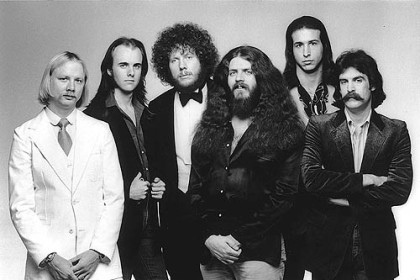

 Dr. Charles Barg’s


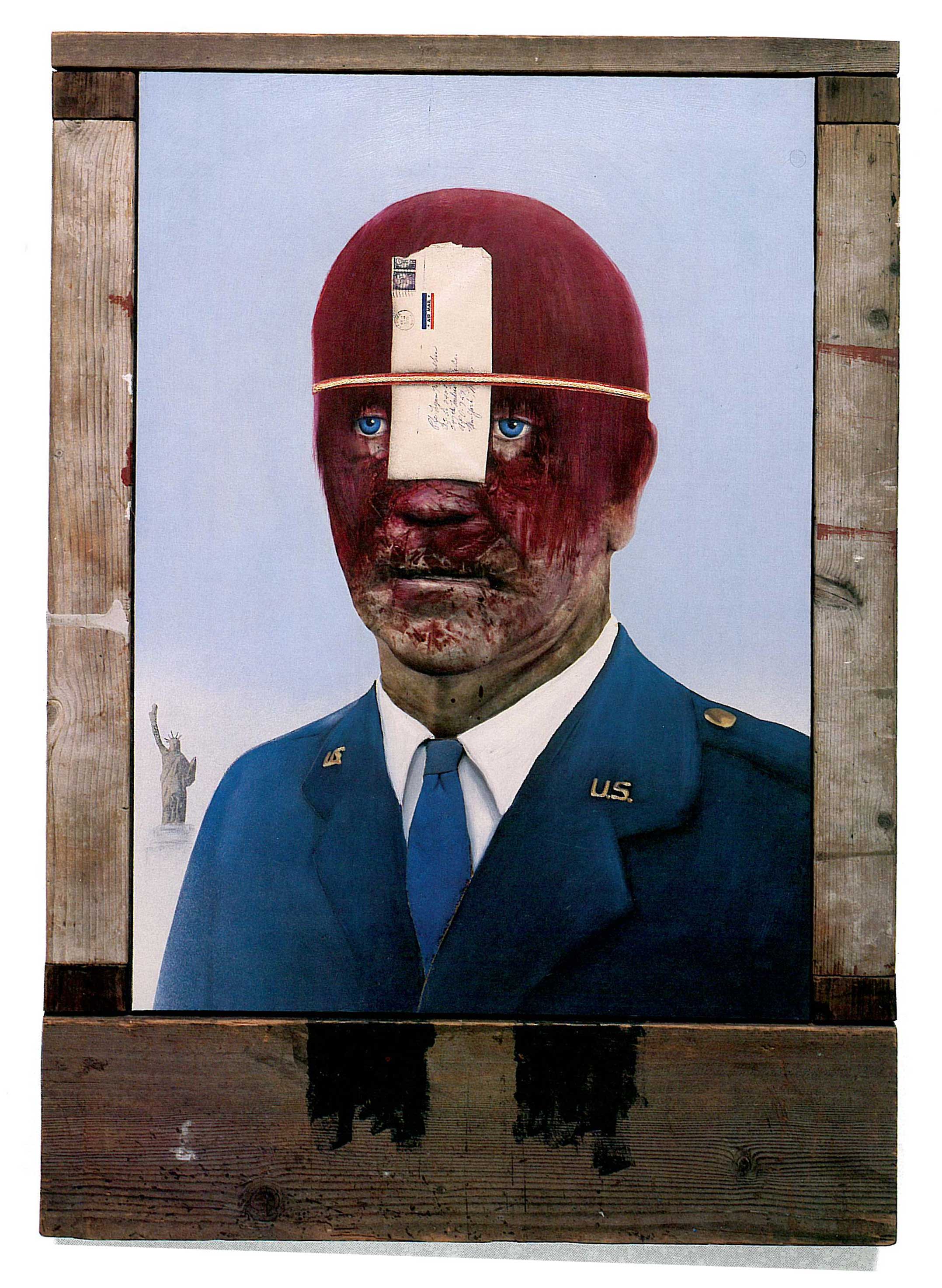
.jpg)


.jpg)
.jpg)


 The Daily Hatch