Paul Rabinow, a world-renowned anthropologist, theorist and interlocutor of French philosopher Michel Foucault, his former comrade, died from cancer at his home in Berkeley on April 6. He was 76.
A professor emeritus of anthropology, Rabinow joined the UC Berkeley faculty in 1978 after earning his Ph.D. from the University of Chicago. He retired in 2019.
During his more than four decades at Berkeley, Rabinow’s scholarship and pedagogy traversed such diverse lines of inquiry as the anthropology of reason, medical anthropology and the ramifications of synthetic biology.
“Paul was a profoundly energetic survivor of 20 years of cancer, during which time he produced many of his most important works,” said UC Berkeley anthropology professor emerita Nancy Scheper-Hughes, Rabinow’s longtime friend and colleague.
Rabinow, seated second from the right, at a tea ceremony in Morocco. (Photo by Paul Hyman)
His seminal Reflections on Fieldwork in Morocco, published in 1977 , was considered a model for conducting ethnographies and fieldwork.
In the 1990s, Rabinow coined the concept of biosociality as the shared experience of sickness and suffering, particularly with respect to the AIDS epidemic.
“Paul was as much a historian of the contemporary, a philosopher, or a molecular scientist as he was an anthropologist,” Scheper-Hughes wrote in an online tribute to Rabinow .
“His classic texts are read around the scholarly world, and his invitation to Foucault to give a series of lectures brought the house down and led to UC Berkeley briefly renamed ‘Foucault U,’” she wrote. “Paul, I missed saying goodbye to you by a day and now it will be a multitude of days of regret and sorrow.”
Rabinow’s critically acclaimed writings include Michel Foucault: Beyond Structuralism and Hermeneutics (1983), which he co-wrote with UC Berkeley philosopher Hubert Dreyfus; The Foucault Reader (1984); Making PCR: A Story of Biotechnology (1993); Essays on the Anthropology of Reason(1996); French DNA: Trouble in Purgatory (1999); Anthropos Today: Reflections on Modern Equipment (2003); and Marking Time: On the Anthropology of the Contemporary (2007).
A sharp wit and tongue
Known for his sharp intellect and urbane style, Rabinow could be alternately amiable, impish and petulant.
A portrait of Paul Rabinow as an undergrad at the University of Chicago in 1963. (Photo by Paul Hyman)
“Paul Rabinow was neither easy nor particularly nice, but the intellectual rigor he demanded from me, and the kindness he showed me, will be with me forever,” tweeted Minda Murphy, a researcher with a bachelor’s degree in anthropology from UC Berkeley.
Murphy’s was among dozens of online homages to Rabinow written by peers and former students around the world.
Gabriel Coren, a researcher at the Berggruen Institute in Los Angeles and one of Rabinow’s former doctoral students, recalled Rabinow’s brusque response to an incoming graduate student’s question about the department’s perks and resources, compared to those of rival institutions.
“’As with any university today, it has problems. Many problems,’” Coren recalls Rabinow telling the graduate student at a welcome reception in 2012. “’But this is Berkeley, a public institution, and that means something worth thinking about. Look, if you just want to make sure that the bathrooms have brand new toilets and fancy trashcans, you should probably just go to Chicago.’”
“That was Paul: frank, humorous, prone to cantankerousness, and a defender of the dignity of one’s place,” Coren recounts in his online tribute to his former advisor.
‘Not fully American’
Paul Rabinow was born on a U.S. Army base in Florida on June 21, 1944, to Irving and Mildred Rabinow. His parents were social workers and the descendants of Russian Jewish immigrants. When he and his younger sister, Naomi, were young, the family moved to Queens, New York, and Irving Rabinow worked for the Jewish Child Care Association in Brooklyn.
In elementary school in the Sunnyside neighborhood, Rabinow befriended Paul Hyman, another boy whose parents had made the move from a Florida military base to New York. Right from the get-go, “Rab was a fighter,” recalls Hyman, now a New York-based photographer.
In a 2008 interview, Rabinow described a childhood in 1940s and 50s New York where anti-Semitism and McCarthyism loomed large: “As a child, I was passionately involved in sports, roller hockey in particular; a strange obsession as it was mainly played by Irish Catholics and the Jews played basketball,” he said. “I was the only Jew in a Catholic Youth Organization league.”
“I was brought up to believe that America was simultaneously probably the best place in the world to be for a Jew but also not very trustworthy and not very safe,” he continued. “I was of America but not fully American. My parents’ experience in the South and Midwest, when my father was in the army, of blatant racism and anti-Semitism, was foundational.”
The French Connection
After graduating from Stuyvesant High School, he gained admission to the University of Chicago and earned a bachelor’s degree in 1965 and a master’s degree two years later. At the University of Chicago, he met French ethnologist Claude Lévi-Strauss and learned about European perspectives. In graduate school, he spent a year at École Pratique des Hautes Études in Paris, and honed his French.
In 1969, he traveled to Morocco, where he conducted ethnographic studies that resulted in his Reflections on Fieldwork in Morocco. While there, he invited Hyman to visit him, and bring his camera and lots of film. Hyman came and took hundreds of photographs, dozens of which were published in scholarly books, and several of which have since been exhibited in museums and galleries.
Rabinow, left, with Paul Hyman in Tangier in 1969. (Photo courtesy of Paul Hyman)
Rabinow completed his doctoral studies at the University of Chicago under the tutelage of philosopher Richard McKeon and anthropologist Clifford Geertz and earned a Ph.D. in anthropology in 1970.
After, he took a job at an experimental school in New York City. Then, by some fluke, he ran into UC Berkeley sociologist Robert Bellah, who let him participate in a National Endowment for the Humanities seminar at Berkeley.
“That was a major turning point,” he recounted in a 2008 interview. “Bellah helped me get ‘Reflections’ published. I met Hubert Dreyfus, and a whole range of other connections opened up. I discovered California, which seemed an exotic land; that led into my learning from Dreyfus about Heidegger and Wittgenstein; that set the scene for the entry of Foucault into the picture. I got a job at Berkeley.”
‘Sophistication and energy’
And he certainly made an entrance in the anthropology department in 1978.
“Rabinow brought a new sophistication and energy to anthropological inquiry that participates in broad conversations about contemporary modes of living and life forms,” wrote Aihwa Ong, a UC Berkeley anthropology professor emerita, in her tribute to her longtime friend and colleague.
In 1980, Rabinow was awarded a prestigious Guggenheim fellowship. It was around that time that he met Foucault, who had been been visiting Berkeley off and on since the mid-1970s. Their collaboration resulted in the 1983 publication of Michel Foucault: Beyond Structuralism and Hermeneutics , followed in 1984 by The Foucault Reader .
That same year, Foucault died in Paris from HIV/AIDS-related complications. Rabinow grieved the loss of his comrade, and went on with his life. He married Marilyn Seid, a Chinese-American San Francisco native who ran a language proficiency program for Berkeley graduate student instructors. They had a son, Marc, whom they raised in Berkeley to be bilingual in English and French.
Meanwhile, activism in the Bay Area was reaching a fever pitch in the face of the HIV/AIDS epidemic. Grassroots activist groups like the AIDS Coalition to Unleash Power (Act Up) fought to destigmatize the disease and to build political support.
Scheper-Hughes convinced Rabinow to co-teach with her UC Berkeley’s first course about the HIV/AIDS epidemic. In one class, she said, two guest speakers from very different socio-economic neighborhoods in San Francisco compared their T-cell counts and explained how the virus had disrupted their lives.
Rabinow with anthropology professor Nancy Scheper-Hughes in a classroom on campus.
“That’s when Paul came up with the idea of biosociality,” Scheper-Hughes wrote. The revelation led to his paper, “Artificiality and Enlightenment: from Sociobiology to Biosociality.”
At one particularly heated panel discussion in 1992, some audience members objected to Rabinow bringing up Foucault, calling the late French philosopher a closet case who did not go public with his AIDS diagnosis, Scheper-Hughes wrote.
“Paul ended the panel defending his right to speak on behalf of the man that he loved. He feared that Foucault had contracted HIV/AIDS in the bathhouses of San Francisco during his invited series of lectures at UC Berkeley,” Scheper-Hughes wrote.
The ethics of biotech
Next, Rabinow turned his focus to the science and ethics of California’s burgeoning biotech industry. In addition to his research, teaching and mentoring at Berkeley, he served as director of the Anthropology of the Contemporary Research Collaboratory, which he founded with anthropologists Stephen Collier and Andrew Lakoff. He was also director of human practices for UC Berkeley’s Synthetic Biology Engineering Research Center (SynBERC).
Among other honors, he held fellowships from the National Endowment for the Humanities and a professional training fellowship in molecular biology from the National Science Foundation. He also served stints as a visiting Fulbright professor at the National Museum in Rio de Janeiro and at the University of Iceland.
Tobias Rees is the Reed Hoffman Professor at the New School of Social Research.
Now and then, he returned to Paris where he taught at École des Hautes Études en Sciences Sociales and, later, at École Normale Supérieure. So strong were his ties to the City of Light that the French government named him Chevalier de l’Ordre des Arts et des Lettres, and École Normale Supérieure awarded him the visiting Chaire Internationale de Recherche Blaise Pascal.
In its obituary for Rabinow , the French newspaper Le Monde dubbed him “the most Francophile of North American anthropologists.”
He is survived by his wife, Marilyn Seid-Rabinow, of Berkeley; son, Marc Rabinow, of New York; and sister, Naomi Landau, of New Mexico.
A campus memorial to celebrate his life and legacy is planned for this fall.
XXXXXXXXXXXXXXXXXXX
Emailed on 1-17-15
To Dr. Paul Rabinow, From Everette Hatcher, I thought you would like to see this movie Monday night in a theater near you!!
Dear Dr. Rabinow,
I really enjoyed your lengthy interview with Dr. Alan Macfarlane. He does the best in depth scholarly interviews on the internet. Thank you for agreeing to give him an interview. I think I have watched almost all of the interviews he has ever done and that is over 100 by now. I have even gone back and watched many of them over and over. I actually did a post on my blog about Alan Macfarlane.
I thought of you when I heard about this film PATTERNS OF EVIDENCE: THE EXODUS, which is only showing one time this Monday night January 19, 2015 at 7 pm at a theater near you. You have contended you don’t believe in the Bible because you don’t have the scientific type evidence that you require. This film contains the findings of over a dozen academics who are experts in archaeology and here it is at a nearby theater to you.
You can get a ticket by going to this website at this linkand putting in your zip code to find a theater near you. It stars Israel Finkelstein, Benjamin Netanyahu, Shimon Peres, and many more and they will be discussing if the Exodus took place or not with only scientific facts. I have posted several very good reviews of themajor motion picture on my blog.
Here are some theaters near you that are showing the film:
and you will hear what far smarter people than I have to say on this matter. I agree with them.
Harry Kroto
Nick Gathergood, David-Birkett, Harry-Kroto
I have attempted to respond to all of Dr. Kroto’s friends arguments and I have posted my responses one per week for over a year now. Here are some of my earlier posts:
His comments can be found on the 3rd video and the 118th clip in this series. Below the videos you will find his words.
50 Renowned Academics Speaking About God (Part 1)
Another 50 Renowned Academics Speaking About God (Part 2)
A Further 50 Renowned Academics Speaking About God (Part 3)
___________________
Quote from Paul Rabinow:
In other words I am not a believer or a theist, but I am not also a militant atheist. I think that debate leads into a range of different and diverse existential corners that I don’t want to go to and never felt the need to go to.
More lengthy quote from Paul Rabinow:
on religious belief – don’t believe in God; there are passages in Levi-Strauss’ ‘Tristes Tropiques’ on Buddhism which are relatively close to what I felt much more strongly as a younger person; this question is interesting because in recent years I have been working with a student who has just finished a degree in theology and is now doing a degree in anthropology; he is a practising Christian and we get along remarkably well, discussing ethics etc., but it is clear that the larger theist dimensions are radically disparate; this is an interesting anthropological dimension where ethically this seems to not cause any problem; I frequently related to people with strong but quiet religious beliefs; Michel de Certeau was a Jesuit and I had a number of other Jesuit friends; I think it is the fact that they care about the world and other people, are thoughtful, committed and concerned, and I don’t have to share other parts of their belief system while finding them worthy of friendship; I am uninterested in the Dawkins’ argument of science disproving religion, I am not a positivist, there is a big difference between this form of nineteenth century militant positivism and a Weberian position in which science does not answer ultimate questions; when science becomes a world view, a cosmology, it seems to part company with its deep critical functions; I may not be a believer or theist, but I am not a militant atheist; I also part company with people like Jurgen Habermas or Charles Taylor who feel that unless we have sure foundations for our ethical life that we flounder, which seems wrong; no one has ever proved the ultimate foundations of anything to everyone’s satisfaction yet ethical life and decent human relations seem to me not all that common, but not impossible either; I am not looking for ultimate stopping points, and there is some anthropological dimension to that through respect for the complexity of different commitments; cosmopolitan enlightenment sense that we have to live with difference which can be a good thing, and that intolerance –even in the name of tolerance — is not so admirable.
The John Lennon and the Beatles really were on a long search for meaning and fulfillment in their lives just like King Solomon did in the Book of Ecclesiastes. Solomon looked into learning (1:12-18, 2:12-17), laughter, ladies, luxuries, and liquor (2:1-2, 8, 10, 11), and labor (2:4-6, 18-20). He fount that without God in the picture all […]
______________ George Harrison Swears & Insults Paul and Yoko Lucy in the Sky with Diamonds- The Beatles The Beatles: I have dedicated several posts to this series on the Beatles and I don’t know when this series will end because Francis Schaeffer spent a lot of time listening to the Beatles and talking […]
The Beatles in a press conference after their Return from the USA Uploaded on Nov 29, 2010 The Beatles in a press conference after their Return from the USA. The Beatles: I have dedicated several posts to this series on the Beatles and I don’t know when this series will end because Francis […]
__________________ Beatles 1966 Last interview I have dedicated several posts to this series on the Beatles and I don’t know when this series will end because Francis Schaeffer spent a lot of time listening to the Beatles and talking and writing about them and their impact on the culture of the 1960’s. In this […]
_______________ The Beatles documentary || A Long and Winding Road || Episode 5 (This video discusses Stg. Pepper’s creation I have dedicated several posts to this series on the Beatles and I don’t know when this series will end because Francis Schaeffer spent a lot of time listening to the Beatles and talking and writing about […]
_______________ Francis Schaeffer pictured below: _____________________ I have included the 27 minute episode THE AGE OF NONREASON by Francis Schaeffer. In that video Schaeffer noted, ” Sergeant Pepper’s Lonely Hearts Club Band…for a time it became the rallying cry for young people throughout the world. It expressed the essence of their lives, thoughts and their feelings.” How Should […]
Crimes and Misdemeanors: A Discussion: Part 1 ___________________________________ Today I will answer the simple question: IS IT POSSIBLE TO BE AN OPTIMISTIC SECULAR HUMANIST THAT DOES NOT BELIEVE IN GOD OR AN AFTERLIFE? This question has been around for a long time and you can go back to the 19th century and read this same […]
____________________________________ Francis Schaeffer pictured below: __________ Francis Schaeffer has written extensively on art and culture spanning the last 2000years and here are some posts I have done on this subject before : Francis Schaeffer’s “How should we then live?” Video and outline of episode 10 “Final Choices” , episode 9 “The Age of Personal Peace and Affluence”, episode 8 […]
Love and Death [Woody Allen] – What if there is no God? [PL] ___________ _______________ How Should We then Live Episode 7 small (Age of Nonreason) #02 How Should We Then Live? (Promo Clip) Dr. Francis Schaeffer 10 Worldview and Truth Two Minute Warning: How Then Should We Live?: Francis Schaeffer at 100 Francis Schaeffer […]
___________________________________ Francis Schaeffer pictured below: ____________________________ Francis Schaeffer “BASIS FOR HUMAN DIGNITY” Whatever…HTTHR Dr. Francis schaeffer – The flow of Materialism(from Part 4 of Whatever happened to human race?) Dr. Francis Schaeffer – The Biblical flow of Truth & History (intro) Francis Schaeffer – The Biblical Flow of History & Truth (1) Dr. Francis Schaeffer […]
(This is the fifth blog post in a series looking back at my history on this earth, and some of the significant people who have influenced me, and the previous blog posts were entitled
Got some bad news on 11-17-23 that my PET SCAN found a lot of cancer in my liver too which puts me in stage 4 pancreatic cancer and a life expectancy of 6 months and with possible success from chemotherapy treatments my life may be extended up to 2 years with 5% chance of 5 years. Need all the prayer partners I can get so feel free to tell others!!!
THIS SONG PUTS A PROPER PERSPECTIVE ON HOW OUR EVERYDAY CHRISTIAN LIVES SOULD BE LIVED WITH OUR PRAYERS WITHOUT CEASING AND DEPENDING ON GOD AND I HOPE TO LIVE THAT WAY THE REST OF MY LIFE!!!!
Phil Wickham – Battle Belongs (Official Music Video)
“Battle Belongs” is a song by American contemporary Christian musician Phil Wickham. The song was released on September 4, 2020,[1] as the lead single to his eighth studio album, Hymn of Heaven (2021). The song impacted Christian radioon October 16, 2020.[2] Wickham co-wrote the song with Brian Johnson,[3] and collaborated with Jonathan Smith in the production of the single.
On September 4, 2020, Phil Wickham released “Battle Belongs” as a single.[6] Wickham shared the story behind the song,[7] saying:
One of my favorite stories in all of scripture comes from 2 Chronicles 20. It’s a story of this huge army that is amassed to come against the people of God. And when the people of God and their king, Jehoshaphathear this horde coming their way, they freak out. They literally come to God and say, ‘We are powerless against this army but our eyes are on you, God. Show us what to do.’ And God responds to them. His spirit comes upon this Levite man and through the Levite man, God says, ‘Do not be afraid or dismayed for the battle is not yours, but it is God’s. You will not have to fight in this battle. Stand firm, hold your position, and see the salvation of the Lord on your behalf.’ So much so that instead of sending their army into the front lines, they sent their worshippers into the front lines. The holy men in their robes started singing give thanks to the Lord for His steadfast love endures forever. And you know what happened to the other army as they heard the singing? They freaked out. They were routed. They started turning on each other to the point where the scriptures say not one of them was left alive. God moved on behalf of His people and God is still moving and battling on behalf of His people.
When all I see is the battle, You see my victory When all I see is the mountain, You see a mountain moved And as I walk through the shadow, Your love surrounds me There’s nothing to fear now for I am safe with You
So when I fight, I’ll fight on my knees With my hands lifted high Oh God, the battle belongs to You And every fear I lay at Your feet I’ll sing through the night Oh God, the battle belongs to You
And if You are for me, who can be against me? Yeah For Jesus, there’s nothing impossible for You When all I see are the ashes, You see the beauty Thank You God When all I see is a cross, God, You see the empty tomb
So when I fight, I’ll fight on my knees With my hands lifted high Oh God, the battle belongs to You And every fear I lay at Your feet I’ll sing through the night Oh God, the battle belongs to You
Almighty fortress, You go before us Nothing can stand against the power of our God You shine in the shadow, You win every battle Nothing can stand against the power of our God
An almighty fortress, You go before us Nothing can stand against the power of our God You shine in the shadow, You win every battle Nothing can stand against the power of our God
An almighty fortress, You go before us Nothing can stand against the power of our God You shine in the shadows, You win every battle Nothing can stand against the power of our God
So when I fight, I’ll fight on my knees With my hands lifted high Oh God, the battle belongs to You And every fear I lay at Your feet I’ll sing through the night Oh God, the battle belongs to You
Phil Wickham – Hymn Of Heaven (Official Music Video)
——
How I long to breathe the air of Heaven
Where pain is gone and mercy fills the streets To look upon the One who bled to save me And walk with Him for all eternity
There will be a day when all will bow before Him There will be a day when death will be no more Standing face to face with He who died and rose again Holy, holy is the Lord
And every prayer we prayed in desperation The songs of faith we sang through doubt and fear In the end, we’ll see that it was worth it When He returns to wipe away our tears
Oh, there will be a day when all will bow before Him There will be a day when death will be no more Standing face to face with He who died and rose again Holy, holy is the Lord
And on that day, we join the resurrection And stand beside the heroes of the faith With one voice, a thousand generations Sing, “Worthy is the Lamb who was slain”
And on that day, we join the resurrection And stand beside the heroes of the faith With one voice, a thousand generations Sing, “Worthy is the Lamb who was slain” “Forever He shall reign”
So let it be today we shout the hymn of Heaven With angels and the saints, we raise a mighty roar Glory to our God who gave us life beyond the grave Holy, holy is the Lord
So let it be today we shout the hymn of Heaven With angels and the saints, we raise a mighty roar Glory to our God who gave us life beyond the grave Holy, holy is the Lord
Andrews grew up in Wilson, North Carolina, where she started singing when she was six years old.[4]She attended Wilson Christian Academy, where she graduated. Andrews later attended college at Liberty University in Virginia.[4] Though she was born an only child, her parents served as foster parents to many children while she was growing up, three of whom later were adopted by her parents.[5]In 2011, Andrews won two Dove Awards, “Worship Song of the Year” for “How Great Is the Love” from As Long As It Takes and “Praise and Worship album of the Year” for As Long As It Takes.[2][3] On July 31, 2012, Andrews released a new single “Not For a Moment (After All)” on iTunes.[6] It has now been featured in the top 20 songs of 2013.[citation needed]Before taking off as a solo artist, Andrews was a worship leader with Vertical Worship at Harvest Bible Chapel in Chicago.[7] Since 2016 she and her family reside in Nashville while she released the album Deeper.[8] Andrews married Jacob Sooter and together they have three children.[9]
You are called to go Keith’s concerts were evangelistic and exhortational. He was the Lecrae of the 70’s. Here is what he has to say about the great commission:
“The world isn’t being won today because we’re not doing it. It’s our fault. This generation of Christians is responsible for this generation of souls on the earth. And no where in the world is the gospel so plentiful as here in the United States. No where. And I don’t want to see us stand before God on that day ans say, ‘but God I didn’t hear you call me.’ Here is something for all you to chew on, you don’t need to hear a call, you’re already called. In fact, if you stay home from going into all nations you had better be able to say to God, ‘You called me to stay home God, I know that as a fact.'”
Keith Green – Asleep In The Light (live)
Uploaded on May 26, 2008
Keith Green performing “Asleep In The Light” live at Jesus West Coast ’82
Keith Green was an intense and radical man of God. He was taken from this Earth at a relatively young age. His legacy lives on through his music and his sermons. This video is about his life.
My favorite Christian music artist of all time is Keith Green. Sunday, May 5, 2013 You Are Celled To Go – Keith Green Keith Green – (talks about) Jesus Commands Us To Go! (live) Uploaded on May 26, 2008 Keith Green talks about “Jesus Commands Us To Go!” live at Jesus West Coast ’82 You can find […]
Keith Green – So You Wanna Go Back To Egypt (live) Uploaded by monum on May 25, 2008 Keith Green performing “So You Wanna Go Back To Egypt” live at West Coast 1980 ____________ This song really shows Keith’s humor, but it really has great message. Keith also had a great newsletter that went out […]
Keith Green – So You Wanna Go Back To Egypt (live) Uploaded by monum on May 25, 2008 Keith Green performing “So You Wanna Go Back To Egypt” live at West Coast 1980 ____________ This song really shows Keith’s humor, but it really has great message. Keith also had a great newsletter that went out […]
Keith Green – So You Wanna Go Back To Egypt (live) Uploaded by monum on May 25, 2008 Keith Green performing “So You Wanna Go Back To Egypt” live at West Coast 1980 ____________ This song really shows Keith’s humor, but it really has great message. Keith also had a great newsletter that went out […]
Keith Green – So You Wanna Go Back To Egypt (live) Uploaded by monum on May 25, 2008 Keith Green performing “So You Wanna Go Back To Egypt” live at West Coast 1980 ____________ This song really shows Keith’s humor, but it really has great message. Keith also had a great newsletter that went out […]
Keith Green – Easter Song (live) Uploaded by monum on May 25, 2008 Keith Green performing “Easter Song” live from The Daisy Club — LA (1982) ____________________________ Keith Green was a great song writer and performer. Here is his story below: The Lord had taken Keith from concerts of 20 or less — to stadiums […]
Keith Green – Asleep In The Light Uploaded by keithyhuntington on Jul 23, 2006 keith green performing Asleep In The Light at Jesus West Coast 1982 __________________________ Keith Green was a great song writer and performer and the video clip above includes my favorite Keith Green song. Here is his story below: “I repent of […]
Keith Green – Your Love Broke Through Here is something I got off the internet and this website has lots of Keith’s great songs: Keith Green: His Music, Ministry, and Legacy My mom hung up the phone and broke into tears. She had just heard the news of Keith Green’s death. I was only ten […]
The Keith Green Story pt 7/7 I remember when I first Keith Green. He had a great impact on me. Below are some quotes on Keith: Quotes “It’s time to quit playing church and start being the Church (Matt. 18:20)” — Keith Green, as quoted by Melody Green in the introduction to A Cry […]
The Keith Green Story pt 6/7 When I first heard Keith Green in 1978 it had a major impact on my life. Below is his story: LEGEND Keith Green CBN.com – When musician Keith Green died in a plane crash on July 28, 1982, the world lost a special man whose heart was aflame […]
This post is the third in a series and the first and second deal with my response letter of January 10, 1996 to Carl Sagan and this post quotes from the letter and makes some conclusions about both Carl Sagan and Charles Darwin’s common views.
Lynn Alexander married Carl Sagan when she was 19 years old. The happy couple at their wedding. Dorion Sagan, their first son, was born two years later
Thanks for your recent letter about evolution and abortion. The correlation is hardly one to one; there are evolutionists who are anti-abortion and anti-evolutionists who are pro-abortion.You argue that God exists because otherwise we could not understand the world in our consciousness. But if you think God is necessary to understand the world, then why do you not ask the next question of where God came from? And if you say “God was always here,” why not say that the universe was always here? On abortion, my views are contained in the enclosed article (Sagan, Carl and Ann Druyan {1990}, “The Question of Abortion,” Parade Magazine, April 22.)
Charles Darwin and Carl Sagan both could not accept that humans are not special and just a product of chance. They philosophically believed that we are the result of chance but Charles Darwin and Carl Sagan had to live in the world that God made with the conscience that God gave them. This created a tension. As you know the movie CONTACT was written by Carl Sagan and it was about Dr. Arroway’s SEARCH FOR EXTRATERRESTRIAL INTELLIGENCE (SETI) program and her desire to make contact with aliens and ask them questions. It is my view that Sagan should have examined more closely the accuracy of the Bible and it’s fulfilled prophecies from the Old Testament in particular before chasing after aliens from other planets for answers. Sagan himself had written,”Plainly, there’s something within me that’s ready to believe in life after death…If some good evidence for life after death was announced, I’d be eager to examine it; but it would have to be real scientific data, not mere antedote”(pp 203-204, The DemonHaunted World, 1995).
Sagan said he had taken a look at Old Testament prophecy and it did not impress him because it was too vague. He had taken a look at Christ’s life in the gospels, but said it was unrealistic for God to send a man to communicate for God. Instead, Sagan suggested that God could have written a mathematical formula in the Bible or put a cross in the sky. However, what happens at the conclusion of the movie CONTACT? This is Sagan’s last message to the world in the form of the movie that appeared shortly after his death. Dr Arroway (Jodie Foster) who is a young atheistic scientist who meets with an alien and this alien takes the form of Dr. Arroway’s father. The alien tells her that they thought this would make it easier for her. In fact, he meets her on a beach that resembles a beach that she grew up near so she would also be comfortable with the surroundings. Carl Sagan when writing this script chose to put the alien in human form so Dr. Arroway could relate to the alien. Christ chose to take our form and come into our world too and still many make up excuses for not believing.
2573 × 1815Images may be subject to copyright. Learn More
_
Lastly, Carl Sagan could not rid himself of the “mannishness of man.” Those who have read Francis Schaeffer’s many books know exactly what I am talking about. We are made in God’s image and we are living in God’s world. Therefore, we can not totally suppress the objective truths of our unique humanity. In my letter of Jan 10, 1996 to Dr. Sagan, I really camped out on this point a long time because I had read Sagan’s book SHADOWS OF FORGOTTON ANCESTORS and in it Sagan attempts to totally debunk the idea that we are any way special. However, what does Dr. Sagan have Dr. Arroway say at the end of the movie CONTACT when she is testifying before Congress about the alien that communicated with her? See if you can pick out the one illogical word in her statement: “I was given a vision how tiny, insignificant, rare and precious we all are. We belong to something that is greater than ourselves and none of us are alone.”
Dr Sagan deep down knows that we are special so he could not avoid putting the word “precious” in there. Francis Schaeffer said unbelievers are put in a place of tension when they have to live in the world that God has made because deep down they know they are special because God has put that knowledge in their hearts.We are not the result of survival of the fittest and headed back to the dirt forevermore. This is what Schaeffer calls “taking the roof off” of the unbeliever’s worldview and showing the inconsistency that exists.
Now let us look at Charles Darwin, and let me start by quoting Francis Schaeffer from his talk In the spring of 1968 which centered on Charles Darwin’s autobiography:
Darwin in his autobiography Darwin, Francis ed. 1892. Charles Darwin: his life told in an autobiographical chapter, and in a selected series of his published letters[abridged edition]. London: John Murray, and in his letters showed that all through his life he NEVER really came to a QUIETNESS concerning the possibility that chance really explained the situation of the biological world. You will find there is much material on this [from Darwin] extended over many many years that constantly he was wrestling with this problem. Darwin never came to a place of satisfaction. You have philosophically ONLY TWO possible beginnings. The first would be a PERSONAL beginning and the other would be an IMPERSONEL beginning plus time plus CHANCE. There is no other possible alternative except the alternative that everything comes out of nothing and that has to be a total nothing and that has to be a total nothing without mass, energy or motion existing. No one holds this last view because it is unthinkable. Darwin understood this and therefore until his death he was uncomfortable with the idea of CHANCE producing the biological variation.
Darwin, C. R. to Graham, William3 July 1881 (letter written less than a year before Darwin’s death and less than 40 years before your birth, Dr Barlow):
Nevertheless you have EXPRESSED MY INWARD CONVICTION, though far more vividly and clearly than I could have done, that the Universe is NOT THE RESULT OF CHANCE.* But THEN with me the HORRID DOUBT ALWAYS ARISES whether the convictions of man’s mind, which has been developed from the mind of the lower animals, are of any value or at all trustworthy. Would any one trust in the convictions of a monkey’s mind, if there are any convictions in such a mind?
Francis Schaeffer comments:
Can you feel this man? He is in real agony. You can feel the whole of modern man in this tension with Darwin. My mind can’t accept that ultimate of chance, that the universe is a result of chance. He has said 3 or 4 times now that he can’t accept that it all happened by chance and then he will write someone else and say something different. How does he say this (about the mind of a monkey) and then put forth this grand theory? Wrong theory I feel but great just the same. Grand in the same way as when I look at many of the paintings today and I differ with their message but you must say the mark of the mannishness of man are one those paintings titanic-ally even though the message is wrong and this is the same with Darwin. But how can he say you can’t think, you come from a monkey’s mind, and you can’t trust a monkey’s mind, and you can’t trust a monkey’s conviction, so how can you trust me? Trust me here, but not there is what Darwin is saying. In other words it is very selective.
Evidently Darwin was telling his friends that he was an agnostic and that he did not think that God had anything to do with it but it was all left to the hands of chance. Is that the way you are reading this?
What two pieces of evidence did Darwin wrestle with?
(Charles Darwin)
If you want evidence then you will only be given the same evidence that Charles Darwin had. I am going to quote 2 passages, and they both have a common message. That message has 3 points: 1) The conscience tells us of God’s existence. 2) Creatioon tells us the same. 3) If we reject both of those then God will eventually remove conviction from our hearts.
Don’t hold this against me, but I got this first passage out of the current issue of CREATION MAGAZINE:
At the present day the most usual argument for the existence of an intelligent God is drawn from the deep [#1] inward conviction and feelings which are experienced by most persons...Formerly I was led by feelings such as those…to the firm conviction of the existence of God, and of the immortality of the soul. In my Journal I wrote that [#2] whilst standing in the midst of the grandeur of a Brazilian forest, ‘it is not possible to give an adequate idea of the higher feelings of wonder, admiration, and devotion which fill and elevate the mind.’ I well remember my conviction that there is more in man than the mere breath of his body. [#3] But now the grandest scenes would not cause any such convictions and feelings to rise in my mind. It may be truly said that I am like a man who has become colour-blind…(Life and Letters of Charles Darwin, D. Appleton and Co., New York, 1911, Vol. a, page 29).
Romans 1:18-21 Amplified Bible:
18 For [God does not overlook sin and] the wrath of God is revealed from heaven against all ungodliness and unrighteousness of men who in their wickedness suppress and stifle the truth, 19 because that which is known about God is [#1] evident within them [in their inner consciousness], for God made it evident to them. 20 For ever since the creation of the world His invisible attributes, His eternal power and divine nature, have been clearly seen, [#2] being understood through His workmanship [all His creation, the wonderful things that He has made], so that they [who fail to believe and trust in Him] are without excuse and without defense. 21 For even though [a]they knew God [as the Creator], they did not [b]honor Him as God or give thanks [for His wondrous creation]. On the contrary, they became worthless in their thinking [godless, with pointless reasonings, and silly speculations], and their [#3] foolish heart was darkened.
Charles Darwin became an agnostic because he chose to reject the two pieces of evidence God gave him. Take a minute and read the enclosed letter to the editor of THE HUMANIST MAGAZINE. Where did our conscience come from if not from God? In your book SHADOWS OF FORGOTTEN ANCESTORS you quote Darwin’s wife warning him of the dangers of scientism on page 47. Wouldn’t it be wise to heed her advice????
Darwin and Sagan both realized just like modern man that humanism leads to meaningless. Francis Schaeffer in his book WHATEVER HAPPENED TO THE HUMAN RACE? makes these points below concerning this:
Section 3 The humanist base leads to meaningless
An overwhelming number of modern thinkers agree that seeing the universe and man from a humanist base leads to meaningless, both for the universe and for man—not just mankind in general but for each of us as individuals. Professor Steven Weinberg wrote these words in his book THE FIRST 3 MINUTES: A MODERN VIEW OF THE ORIGIN OF THE UNIVERSE while he was looking down from an airplane:
It is almost irresistible for humans to believe that we have some special relation to the universe, that human life is not just a more-or-less farcical outcome of a chain of accidents reaching back to the first three minutes, but that we were somehow built in from the beginning. … It is very hard to realize that this is all just a tiny part of an overwhelmingly hostile universe. It is even harder to realise that this present universe has evolved from an unspeakably unfamiliar early condition, and faces a future extinction of endless cold or intolerable heat. The more the universe seems comprehensible, the more it also seems pointless.
(1993), Epilogue, p. 154
When Weinberg says that the universe seems more “comprehensible,” he is, of course, referring to our greater understanding of the physical universe through the advance of science. But it is an understanding, notice, within a materialistic framework, which considers the universe solely in terms of physics and chemistry—-simply machinery.
If everything “faces a future extinction of endless cold or intolerable heat,” all things are meaningless.
Section 4 Tension results when you have an inadequate worldview
The greatest dilemma for those who hold an inadequate worldview is that it is impossible to live consistently within it. The playwright Samuel Beckett can “say” that words do not communicate anything—and that everything, including language, is absurd—yet he must use words to write his plays, even plays about meaninglessness. The list of contradictions can be extended endlessly. The truth is that everyone who rejects the Biblical worldview must live in a state of tension between ideas about reality and reality itself. If a person believes that everything is only matter or energy and carries this through consistently, meaning dies, morality dies, love dies, hope dies. Yet! The individual does love, does hope, does act on the basis of right and wrong. This is what we mean when we say that everyone is caught , regardless of his worldview, simply by the way things are.
Section 5 The Bible is God’s revealed truth and it tells us about our origin.
The scriptures tell us that the universe exists and has form and meaning because it was created purposefully by a personal creator. This being the case, we see that, as we are personal, we are not something strange and out of line with an otherwise impersonal universe. Since we are made in the image of God, we are in line with God. There is a continuity, in other words, between ourselves, though finite, and the infinite creator who stands behind the universe as its final source of meaning. Unlike the evolutionary concept of an impersonal beginning plus time plus chance, the Bible shows how man has personality and dignity and value. Our uniqueness is guaranteed, something which is impossible in the materialistic system!!!!!!
(Francis Schaeffer pictured)
Carl Sagan On God and Creation
—
The Cosmos Just Is?: Carl Sagan vs William Lane Craig
A Christian Manifesto by Dr. Francis A. Schaeffer The following address was delivered by the late Dr. Schaeffer in 1982 at the Coral Ridge Presbyterian Church, Fort Lauderdale, Florida. It is based on one of his books, which bears the same title.
What we have, and take so poorly for granted, is unique. It was brought forth by a specific world view and that specific world view was the Judeo-Christian world view especially as it was refined in the Reformation, putting the authority indeed at a central point — not in the Church and the state and the Word of God, but rather the Word of God alone. All the benefits which we know — I would repeat — which we have taken so easily and so much for granted, are unique. They have been grounded on the certain world view that there was a Creator there to give inalienable rights. And this other view over here, which has become increasingly dominant, of the material-energy final world view (shaped by pure chance) never would have, could not, has, no basis of values, in order to give such a balance of freedom…It is the same with the television programs. Public television gives us many things that many of us like culturally, but is also completely committed to a propaganda position that the last reality is only material / energy shaped by pure chance. Clark’s Civilization, Brunowski, The Ascent of Man, Carl Sagan’s Cosmos — they all say it. There is only one final view of reality that’s possible and that is that the final reality is material or energy shaped by pure chance.
Best of Carl Sagan on Religion
How Carl Sagan Strengthened My Faith
Below are Francis Schaeffer and his son Franky:
In 1992 I began to write skeptics letters after reading their books and articles and watching their films and I was introduced to Carl Sagan’s name by a book published in 1968 by Francis Schaeffer.
Francis Schaeffer in his book HE IS THERE AND HE IS NOT SILENT (Chapter 4) asserts:
Because men have lost the objective basis for certainty of knowledge in the areas in which they are working, more and more we are going to find them manipulating science according to their own sociological or political desires rather than standing upon concrete objectivity. We are going to find increasingly what I would call sociological science, where men manipulate the scientific facts. Carl Sagan (1934-1996),professor of astronomy and space science at Cornell University, demonstrates that the concept of a manipulated science is not far-fetched. He mixes science and science fiction constantly. He is a true follower of Edgar Rice Burroughs (1875-1950). The media gives him much TV prime time and much space in the press and magazine coverage, and the United State Government spent millions of dollars in the special equipment which was included in the equipment of the Mars probe–at his instigation, to give support to his obsessive certainty that life would be found on Mars, or that even large-sized life would be found there. With Carl Sagan the line concerning objective science is blurred, and the media spreads his mixture of science and science fiction out to the public as exciting fact.
Richard Dawkins on Carl Sagan, Einstein and Religion | A How To Academy …
—
Francis Schaeffer the Founder of the L’Abri community
The Cosmos Is All That Is
Francis Schaeffer wrote in 1981 in CHRISTIAN MANIFESTO chapter 3 The Destruction of Faith and Freedom:
Then there was a shift into materialistic science based on a philosophic change to the materialistic concept of final reality. This shift was based on no addition to the facts known. It was a choice, in faith, to see things that way. No clearer expression of this could be given than Carl Sagan’s arrogant statement on public television–made without any scientific proof for the statement–to 140 million viewers: “The cosmos is all that is or ever was or ever was or ever will be.” He opened the series, COSMOS, with this essentially creedal declaration and went on to build every subsequent conclusion upon it.
How Should We Then Live | Season 1 | Episode 6 | The Scientific Age
FEATURED ARTIST IS TITIAN
TIZIANO VECELLIO DI GREGORIO (c.1476-1576)
After the premature death of Giorgione, Titian became the leading figure of Venetian painting of his time. His use of color and his taste for mythological themes defined the main features of 16th century Venetian Art. His influence on later artists -Rubens, Velázquez…- is extremely important.
I have gone back and forth and back and forth with many liberals on the Arkansas Times Blog on many issues such as abortion, human rights, welfare, poverty, gun control and issues dealing with popular culture. Here is another exchange I had with them a while back. My username at the Ark Times Blog is Saline […]
On March 17, 2013 at our worship service at Fellowship Bible Church, Ben Parkinson who is one of our teaching pastors spoke on Genesis 1. He spoke about an issue that I was very interested in. Ben started the sermon by reading the following scripture: Genesis 1-2:3 English Standard Version (ESV) The Creation of the […]
At the end of this post is a message by RC Sproul in which he discusses Sagan. Over the years I have confronted many atheists. Here is one story below: I really believe Hebrews 4:12 when it asserts: For the word of God is living and active and sharper than any two-edged sword, and piercing as far as the […]
In today’s news you will read about Kirk Cameron taking on the atheist Stephen Hawking over some recent assertions he made concerning the existence of heaven. Back in December of 1995 I had the opportunity to correspond with Carl Sagan about a year before his untimely death. Sarah Anne Hughes in her article,”Kirk Cameron criticizes […]
In this post we are going to see that through the years humanist thought has encouraged artists like Michelangelo to think that the future was extremely bright versus the place today where many artist who hold the humanist and secular worldview are very pessimistic. In contrast to Michelangelo’s DAVID when humanist man thought he […]
_________ Antony Flew on God and Atheism Published on Feb 11, 2013 Lee Strobel interviews philosopher and scholar Antony Flew on his conversion from atheism to deism. Much of it has to do with intelligent design. Flew was considered one of the most influential and important thinker for atheism during his time before his death […]
and you will hear what far smarter people than I have to say on this matter. I agree with them.
Harry Kroto
Nick Gathergood, David-Birkett, Harry-Kroto
I have attempted to respond to all of Dr. Kroto’s friends arguments and I have posted my responses one per week for over a year now. Here are some of my earlier posts:
In the second video below in the 64th clip in this series are his words and my response is below them.
50 Renowned Academics Speaking About God (Part 1)
Another 50 Renowned Academics Speaking About God (Part 2)
A Further 50 Renowned Academics Speaking About God (Part 3)
_________________________________
Lewis Wolpert Quote:
I am not against people being religious. I think it helps you a great deal. I am against religion when it interferes in the lives of other people…If you believe for example that the fertilized egg is really a human being which some people in your religious organizations believe then I am very hostile to you because it is nonsense and this is one of my subjects developmental biology or if you are against contraception for religious reason then therefore AIDS can become more common. So I am not against people having a belief in God. I do believe that believe is false. Whatever arguments I give you I have no delusion that I will persuade you to change your minds.
From 6-23-14 profwolpert@yahoo.com “Lewy Wolpert”
Many thanks for sending me that interesting material. However it does not provide any evidence for God , though some may think it does.
There is nothing to be ashamed about admitting ignorance. I don’t understand the big bang. I have discussed it with people, and there are things we don’t understand, and we just have to say we don’t know.
I find that very refreshing that you don’t just jump in there and take all of the scientists’ speculations as set in stone. Many times my own Christian friends will be critical of me when I say I don’t know how old the world is. WHY DO PEOPLE FEEL LIKE THEY HAVE TO KNOW ALL THE ANSWERS?
Let me say how I appreciate you taking time out of your busy day and getting back to me. I was very honored to get a response from you. By the way I have always been an avid watcher of the Charlie Rose Show over here in the USA and I noticed last year an episode on the brain and it featured your son Daniel. I also have been a big fan of your son Matt’s comedy and especially the Ralphie series on You Tube.
I have often thought of you as the universal man and the fact that you have a son that has excelled at learning and one that is an expert in the area of comedy brings me back to the 8th grade when Adrian Rogers our chapel speaker talked about Solomon’s search for the meaning in life “under the sun” (without God in the picture), and the 5 “L” words that Solomon looked at first. Laughter and Learning were two of those words. Ecclesiastes 1:16-17 states: I said in my heart, “I have acquired great wisdom, surpassing all who were over Jerusalem before me, and my heart has had great experience of wisdom and knowledge.”And I applied my heart to know wisdom and to know madness and folly. I perceived that this also is but a striving after wind.
In Ecclesiastes 2:2 he starts this quest with the subject of laughter but he concludes it is not productive to be laughing the whole time and not considering the serious issues of life. (The ironic thing is that my son Hunter is trying his hand at stand up comedy too.) Then Solomon also asserted the nihilistic statement in Ecclesiastes 2:17: “So I hated life, because the work that is done under the sun was grievous to me. All of it is meaningless, a chasing after the wind.”
In the Book of Ecclesiastes what are all of the 5 “L” words that Solomon looked into? He looked into learning (1:16-18), laughter, ladies, luxuries, and liquor (2:1-3, 8, 10, 11), and labor (2:4-6, 18-20). Your good friend H. J. Blackham has actually said, “On humanist assumptions, life leads to nothing, and every pretense that it does not is a deceit.” Here is a post I did on him at this link.
Here below is the song DUST IN THE WIND performed by the rock group KANSAS and was written by Kerry Ligren in 1978. I challenge anyone to read these words of that song given below and refute the idea that accepting naturalistic evolution with the exclusion of God must lead to the nihilistic message of the song!
DUST IN THE WIND:
I close my eyes only for a moment, and the moment’s gone
All my dreams pass before my eyes, a curiosity
Dust in the wind, all they are is dust in the wind
Same old song, just a drop of water in an endless sea
All we do crumbles to the ground, though we refuse to see
Dust in the wind, all we are is dust in the wind
Now, don’t hang on, nothing lasts forever but the earth and sky
It slips away, and all your money won’t another minute buy
It is obvious from your debates on You Tube that you are a delightful person with a very good heart. With that in mind I wanted to share a feel good story that happened to one of our customers back in September. Melvin Pickens is now 81 years old and he has been selling our brooms here from Little Rock Broom Works since 1950. The amazing thing is that Melvin is partially blind and he is a cancer survivor and he had a stroke a couple of years ago. However, with the help of a caregiver he still meets up with his customers and sells them our Airlight Broom. Steve Hartman of CBS News found out about it and did a story on him. Here is the clip from CBS and an article about Melvin too at this link:
I got a good trivia question for you? I wondered why my friend Melvin had been a LA Dodger fan the last 30 years I knew he had always lived in Arkansas and most fans around here are St. Louis, Atlanta or maybe Ranger fans. Why was Melvin a LA Dodger fan? He told me that in 1947 when he was at Henry Clay Yerger High School in Hope, Arkansas, Branch Rickey (the general manager of the Brooklyn Dodgers) stood up for Jackie Robinson and made him the first black baseball player to play professional baseball with the whites. Every person he knew at Henry Clay Yerger High School became a Dodger fan that year, and he has been a faithful fan ever since!!! I found that out back when the movie “42” came out about Jackie Robinson and when I saw the movie I knew how much Robinson had impacted one of my good friends.
Lewis Wolpert was a brilliant and inspiring scientist who made hugely significant contributions which underpin and influence our understanding of developmental biology today. He spent his career interested in how the fertilised egg can give rise to the whole embryo (and ultimately the adult) with one head, two arms, two legs, all its organs and importantly how cells become different from each other and how they ‘know’ what to become. His ideas revolutionised the way developmental biology was perceived and also reinvigorated, in particular, the key question of how pattern formation in embryonic development is achieved. He published over 200 scientific articles and received many accolades over his career for his work and services to science in the UK. These included a CBE (Commander of the Order of the British Empire) from the Queen, being elected a Fellow of the Royal Society and a Fellow of the Royal Society of Literature. He was also a recipient of the Waddington Medal from the British Society for Developmental Biology and was awarded The Royal Society’s top honour, the Royal Medal in 2018. Lewis was also a gifted teacher and communicator, including being the author of a textbook on developmental biology used around the world to train the next generation of developmental biologists. This contribution was recognised in 2003, by the award of the Viktor Hamburger Outstanding Educator Award from the Society of Developmental Biology in the USA. Lewis always enjoyed giving talks and lectures, having an infectious and persuasive enthusiasm coupled with a sharp sense of humour. He also published articles in popular science journals (aimed at the public) such as New Scientist, Scientific American and The Scientist. Lewis also wrote several popular science books. He was a passionate advocate for the public understanding of science and was the Chair of The Royal Society/Royal Institution/British Association for the Advancement of Science Committee for Public Understanding of Science (1994–1998). For this contribution he was awarded The Royal Society Michael Faraday Medal for “excellence in communicating science to UK audiences”. He presented the prestigious Royal Institution Christmas Lectures in 1986 entitled ‘Frankenstein’s Quest: development of life’. These lectures, six in total, are presented by leading scientists and aimed at the general public and broadcast on national television. On a personal level, Lewis influenced all who came into contact with him, shaped his students and postdocs careers and instilled in them, and the community as whole, a life-long love of developmental biology.
Lewis was born in Johannesburg, South Africa in 1929. As a young man he studied civil engineering as he wanted to do science of some sort, but he was unsure at the time. He also got involved with politics even meeting and helping Nelson Mandela in the early 1950s. He came to the UK in 1954 and studied soil mechanics at Imperial College London before realising his calling was cell and developmental biology. He carried out his PhD at Kings College London with Dr. James Danielli, a biophysicist, and studied the mechanics of cell division and measured the mechanical forces used in cell division in sea urchin embryos (Wolpert, 1960; Wolpert, 1966). To continue his research on sea urchin embryos he would travel to Sweden most Summers in order to have access to the embryos and published widely on their development (Gustafson and Wolpert, 1963; Gustafson and Wolpert, 1967). In 1966 he took up the position of Chair of Biology as Applied to Medicine at the Middlesex Hospital Medical School (now part of University College London) and initially studied regeneration in the freshwater invertebrate Hydra(Wolpert et al., 1971). He was also interested in the basis of polarity of the Hydra, that is, how does the Hydra know its head from its tail (Hicklin et al., 1969) (also see Section 2). He soon moved into the developing chick limb as a model system to study development, because he felt the developing limb was more appropriate at a Medical School (Wolpert, 2015).
2. His scientific contributions and the concept of Positional Information
Wolperts studies on early development of the sea urchin contributed to him coining the famous quote ‘it is not birth, marriage or death, but gastrulation which is truly the most important time of your life’ celebrating the essential and wondrous event that occurs in all early vertebrate embryos that converts a mass of cells into germ layers that gives rise to all the organs and tissues of the body. Wolpert is equally famous for his concept of Positional Information also known as the French Flag problem (Wolpert, 1968; Wolpert, 1969).
Wolpert chose Hydra to work on originally because it regenerates and regulates following tissue loss, so enabled him to investigate the specification of the spatial organisation of an embryo in a simple organism. Lewis, admittedly, was not very practical in the lab, he was a theoretician, and he worked with his technician Amata Hornbruch for a large part of his career and who was ‘his hands’ in the lab (Wolpert, 2018). Lewis also hired gifted and talented students and postdocs who carried out experiments and creatively discussed/debated his ideas (for a list of Wolpert Lab Staff, see Vargesson, 2020). In the Hydrahe demonstrated that the head was formed by the creation of a diffusible inhibitory gradient, that prevented the head forming in the incorrect place (Hicklin et al., 1969; Webster and Wolpert, 1966; Wolpert et al., 1971). He also showed that a second gradient was present to determine where the head would form (Wolpert et al., 1971). Wolpert was also influenced by work from Hans Driesch, who separated the two-cell stage sea urchin embryo into single cells and found each made complete embryos but were half the normal size, and which indicated the cells had an idea of position and spatial awareness (Driesch, 1908). Together, his work on Hydra and the work by Driesch provided the basis for his concept of Positional Information by devising the “French Flag Problem” (Wolpert, 1968). This is where Wolpert realised that the embryo was behaving like a flag, where the pattern remains the same irrespective of the size of the embryo. The “problem” was how does a line of cells, then create three different colours or patterns to produce the French flag? (Wolpert, 1968). He proposed that a concentration gradient of a signalling molecule or morphogen, or through cells counting cell divisions, could provide Positional Information so that cells acquire different positional values depending on their position (Wolpert, 1969). Cells then interpret their positional values according to their developmental history and behave appropriately to produce specific cell types and patterns (Wolpert, 1969). He proposed this model was universal and could be applied to practically all multicellular organisms, for example, Positional Information could account for the patterns being the same for ‘flags’ (tissues/embryos) of different sizes (Wolpert, 1969) (for further detail on the origins of the Positional Information concept please see Vargesson, 2020).
This incredibly simple concept explained how a group of homogenous cells in a tissue can all become different from another and produce different patterns. When Wolpert first proposed the concept of Positional Information to explain pattern formation, it was controversial and was disliked by many of his peers. However, support from Sydney Brenner and Francis Crick encouraged him to publish and it changed and inspired the field (Wolpert, 2015; Wolpert, 2018). In 2019, his concept celebrated its 50th anniversary since publication and continues to be highly cited, remains a central concept in all the major developmental biology textbooks, created a framework for understanding embryonic development and has influenced multiple generations of students and scientists, which include me, to become developmental biologists (Vargesson, 2020).
2.1. The concept of Positional Information and chick limb development
Wolpert also proposed that Positional Information acts ‘universally’, that is, it acts in multiple developmental systems including early embryonic development of sea urchins, amphibians, Hydra, insects, regenerating salamander limbs and the early chick limb (Wolpert, 1969). Around this time, he was influenced by the experimental embryologist, John Saunders jr, who had discovered the Zone of Polarising Activity in the chick limb and its ability to duplicate digits, as well as demonstrated the role of the Apical Ectodermal Ridge was to control limb outgrowth in a proximal to distal manner (ie: the humerus forms first, then the radius/ulna and finally the digits) (Saunders, 1948; Saunders and Gasseling, 1968; Tickle, 2017). Wolpert realised from Saunders work that he could study his concept of Positional Information in the chick limb and he and his talented students and postdocs then set about using the developing chick limb as a primary model. The list of people who went through his lab is an amazing legacy and many of whom are leaders in their fields today, underlining the influence he still has on the field, for example some of the students he supervised included Jim Smith, Dennis Summerbell, Nigel Holder, Michael K. Richardson and some of his postdocs included Cheryll Tickle, Jonathan Slack, Julian Lewis, Philippa Frances-West. For a detailed overview of the Wolpert Lab Family Tree, please see Vargesson (2020).
Wolpert proposed that in the developing limb Positional Information was specified with respect to a three dimensional coordinate system. Cells needed to be informed of their position in relation to the three main axes of the limb. This was a radically different way of thinking about limb development. He proposed two models. One, the morphogen gradient model, where positional values across the antero-posterior axis (thumb to little finger) were specified by a gradient of a long-range signalling molecule produced by the zone of polarising activity in the posterior-distal margin of the limb bud (Tickle et al., 1975). Today we now know that molecule is Sonic Hedgehog (Tabin and Wolpert, 2007). In contrast, he proposed another model, the Progress Zone model to explain how positional values along the proximo-distal axis of the limb are specified by a timing mechanism that operates in a Progress Zone model. The Progress Zone is a region of undifferentiated mesoderm cells beneath the apical ectodermal ridge, the thickened rim of ectoderm required for limb bud outgrowth. Depending on how long cells remain in the Progress Zone determines their positional value. Cells that fall out early, become proximal limb elements, whereas cells that remain in the Progress Zone the longest ended up as the digits (Summerbell et al., 1973). His group also showed that when early limbs were X-irradiated this resulted in thalidomide-like phocomelia – the loss of proximal long bones (Wolpert et al., 1975). This could be interpreted in terms of the Progress Zone model as the irradiation kills cells and because the remaining cells stayed in the Progress Zone for longer in order to repopulate the Progress Zone, distal structures develop, at the expense of proximal ones.
Both these models stimulated research in the field as well as many challenges and Lewis always enjoyed debates and controversies with other scientists, but his ideas moved the field forward.
Wolpert was also interested in understanding the basis of ‘handedness’ or left-right asymmetry and establishment of symmetry. Using the chicken embryo he proposed that a molecule displaying asymmetric expression could explain left-right asymmetry differences in embryos; a question still at the forefront of developmental biology today (Brown and Wolpert, 1990; Wolpert, 2010).
In the 1990s, the Wolpert Lab had several students and postdocs looking for molecular cues that underpin Positional Information (Fig. 1). It was an exciting time as molecular biology and genetic misexpression strategies were taking over science, although still primitive compared to today. In addition, the Wolpert lab adjoined the group of Cheryll Tickle, which altogether made for a stimulating, supportive and productive environment. (for a detailed overview of the Wolpert Lab Family Tree, see Vargesson, 2020).
Fig. 1. Lewis at a party celebrating the achievements of his and Cheryll Tickle’s labs at the Windeyer Building, Middlesex Hospital Medical School (UCL) before moving labs to the Medawar Building on Gower Street (UCL) in June 1996.
Some of the work that was ongoing on in the Wolpert Lab when I joined his lab as a PhD student in 1994 included using a reaggregated limb mesenchyme model (where limb mesenchyme is dissociated into single cells and placed in an ectodermal jacket) and found different parts of the limb mesenchyme can reaggregate to make different digits, using a different combination of signalling molecules (Hardy et al., 1995); Investigating the role of Bmp2 and Bmp4 in skeletal development (Duprez et al., 1996); Studying feather patterning, specifically as they are formed in periodic patterns, and how they do this was unknown. Work in the lab proposed early globally distributed signals specifying the field (including Shh, Fgf-4) and then localised inhibitors, Bmp2 and Bmp4, triggering feather bud position (Jung et al., 1998). My PhD studies focused on cell fate and their relationship to gene expression patterns. I produced detailed (hand-drawn) fatemaps after labelling limb mesenchyme cells with the fluorescent dye, DiI, and in collaboration with Cheryll Tickle and Jonathan Clarke, showed how cell behaviour and movement follows the changes in expression patterns of genes during limb development (Vargesson et al., 1997). Taken altogether, these studies helped begin, along with other labs work, to shed light on the molecular signalling pathways underlying limb and embryonic development. While the molecular basis of Positional Information and determination of positional value in the developing chick limb is still not clear, there is some evidence for such a signal in the regenerating salamander limb, where a gradient of a signal called Prod1 provides Positional Information (Kumar et al., 2007; Wolpert, 2015; Wolpert, 2018).
Even after retirement and into his late 70s Lewis was still thinking, writing, publishing and discussing Positional Information (Kerszberg and Wolpert, 2007) (Fig. 2). Indeed, in an interview in 2015 for the journal ‘Development’, he also stated ‘if I still had an active lab, finding the molecular basis for Positional Information would be my objective’ (Vicente, 2015), underlining his continued search for answers. He also joined in other scientists lab meetings, specifically the lab of Claudio Stern at University College London, and discussed science with the same twinkle in his eye and excitement for finding out new information, including, publishing a paper on a topic close to his heart (and which started off his science career), gastrulation (Voiculescu et al., 2007).
Fig. 2. Lewis Wolpert enjoying a discussion with colleagues at the 2008 International Limb Development and Regeneration Conference in Madrid, Spain.
For his life long service and impact on developmental biology Lewis Wolpert won the British Society for Developmental Biology Waddington Medal in 2015 (Waddington Medal Lecture, 2015). He mentioned how proud he was to have been awarded the medal, not least because he knew Conrad Waddington, the great developmental biologist after whom the medal is named after. Something he was more proud of however, and which underlines the huge legacy he leaves behind and his generosity of spirit, was that several of his former students and postdocs had won the Waddington Medal before he did. He was very pleased about this and mentioned the wonderful and stimulating environment and rewarding discussions he always had with his students and postdocs. His achievements are underlined with the award of The Royal Society Royal Medal in 2018, the highest honour of The Royal Society, for his research on morphogenesis and pattern formation.
3. His books and other contributions
Lewis was also a talented writer and communicator and had the remarkable ability to explain complex concepts in simple, logical and clear ways. His textbook ‘Principles of Development’ was first published in 1998 and is now into its 6th edition (Wolpert et al., 2019). He persuaded many talented developmental biologists to help him write this text book, which has become one of the premier books for undergraduate students. He wrote several popular science books for the public. Perhaps the best known are ‘The Triumph of the Embryo’ (Wolpert, 1991) describing in laymans terms how a fertilised cell becomes a fully formed organism; his book ‘The Unnatural Nature of Science’ where he reviews the history of science and elegantly explains why science is counter-intuitive and hard work (Wolpert, 1992) and ‘Malignant Sadness’ where from his personal experience of depression, he writes lucidly and clearly about his own battle with depression (Wolpert, 1999). He also wrote popular science books about belief and religion and publically debated his views on science and religion (Wolpert, 2006). He was an atheist and was for a long time a vice-president of The British Humanist Association (now Humanists UK). I recall when he gave an invited lecture in Aberdeen in 2008, he was asked why he was an atheist, he said ‘when I was a youth growing up in South Africa I played a lot of cricket. One day while playing in a match I couldn’t find the ball, I asked God for help to find the ball. I never found the ball and this led me to atheism’. However, he also stated that religion does benefit some people.
4. His personality and my personal experience as a PhD student of Lewis
I joined Lewis Wolpert’s lab in October 1994, and left the lab in April 1998, not long before he retired and took up emeritus status (though he never did confirm if it was my performance in the lab that contributed to his decision to retire). Everyone who spoke with or worked with Lewis has their own stories and memories of him. Amongst my favourite memories are when I first met him at my PhD interview. I was an undergraduate student and had been influenced by his 1978 Scientific American article on Positional Information and his ‘The Triumph of the Embryo’ book that I had read during my studies at Kings College London. My PhD interview was in his huge office in the Windeyer Building, part of the Middlesex Hospital Medical School. He arrived late, and brought his bike into his office, much to the upset of his secretary (Maureen Maloney). He smiled at me, removed his bicycle helmet and took a seat at his beautiful desk, surrounded by an amazing library of books and pictures and he asked me ‘how do you make an elbow?’. I came up with an answer, which I thought was good (I had done my homework or so I thought) and he simply said ‘no that’s wrong, my dear boy’ and we then had a wonderful discussion on how he thought the elbow formed. He then called the MRC and asked them to give me a PhD studentship. Years later I looked back on this conversation as one of the reasons for my long-standing interest in understanding thalidomide embryopathy, as an elbow joint forms in many survivors at the expense of many of the other bones. I shall always fondly remember that twinkle in his eye and his questioning excitement when discussing data, limb development, Positional Information, and our latest research findings.
Lewis was an inspirational supervisor. Always full of advice. One of the lessons Lewis taught me (and others) was to never be afraid of asking questions. He often said ‘always ask questions, there is no such thing as a silly question, because if you have a question someone else will as well’. This was demonstrated sometimes at lab meetings and seminars where he might nod off but he would almost always ask an amazing question at the end. Or, if he didn’t understand or thought the speaker was being highly detailed, would look around and find a PhD student and ask ‘do you understand what is being said?’. Of course the PhD student would think ‘..i thought I did, but if Lewis doesn’t, perhaps I don’t’… Lewis would then raise his hand and politely mention ‘this dear child behind me doesn’t understand’. Lewis always encouraged people to think and to question and to not be afraid of saying ‘I don’t understand’.
Lewis while focused on the principles and the ‘big picture’ of the questions being addressed (Vicente, 2015) would remind his staff and students to always consider this in their experiments or to re-inspire them, if their experiments were not going well. For example, I recall one time when he was giving a Talk at a Scientific Meeting, he asked some starry-eyed students who were all gripped by his ideas and advice ‘…to close your eyes, stretch your arms out in front of you, close your hands together and then bring your hands up to your face’. He asked them ‘to open their eyes’ and asked ‘what do you see?’ Of course, he remarked, ‘you see your arms are precisely the same length’. ‘Isn’t that amazing. Explain it to me’.
Lewis was also a very supportive and generous supervisor allowing staff freedom to develop, to think independently and follow their own ideas and took no credit on some publications that came from his lab that were devised and carried out by his students and postdocs (for example, Summerbell and Lewis (Summerbell and Lewis, 1975), Smith (Smith, 1980), Tickle (Tickle, 1981), Akita (Akita, 1996), Akita et al. (Akita et al., 1996)). Equally, Lewis remained supportive of his students and staff throughout their careers and was always available to glean advice.
Lewis also cared about staff. He always took time to enquire if staff and students were happy, and if they weren’t he spent time with them, offered them parental-like advice and/or told them an anecdote to make them smile, or tried to take their mind off things by talking, for example, about his interest in bicycles and playing tennis. One such occasion I shall never forget was when there was an incredibly sad occasion in 1995 when a PhD student from a different lab died suddenly. It affected many of the students and postdocs greatly. On the day we heard the news, Lewis came into the office, pulled up a chair and after sitting down asked how we were and spent a long time with us, checking we were okay, asking how we felt and discussing why we felt the way we do, and genuinely giving us a shoulder to cry on. This underpins what an extremely kind and caring person he was.
5. Concluding remarks
Lewis Wolperts remarkable and long career encompassed soil engineering, cell biology and gastrulation in sea urchins, regeneration in Hydra and chick limb development. His main passion was understanding how pattern is generated. His concept of Positional Information provided a new way of understanding how cells become different from one another, how they make the right tissues and in the right places, ideas that are still influencing the field today. He trained some of the leaders of the developmental biology field and inspired many others leaving a remarkable, important and sparkling scientific legacy which will continue to influence many more generations. He was also a kind and generous human being who is already deeply missed.
Credit author statement
NV wrote the article.
Declaration of competing interest
None.
Acknowledgements
I would like to thank Lewis for the opportunity to do my Ph.D in his group, for everything he did for me and for being a constant inspiration to me. With thanks to Cheryll Tickle for constructive comments and reading the manuscript. Thanks also to the many former students and postdocs of Lewis Wolpert as well as former staff from the lab of Cheryll Tickle, for sharing memories and thoughts of Lewis. These include Keiichi Akita, Helge Amthor, Esther Bell, Martin J. Cohn, Megan Davey, Litsa Drossopoulou, Delphine Duprez, Philippa Francis-West, Pantelis Georgiades, Adrian Hardy, Han-Sung Jung, John McLachlan, Imelda McGonnell, Ronald Nittenberg, Ketan Patel, Michael K. Richardson, Joy Richman, Katie Robertson, Juan Jose Sanz, Geoff Shellswell, Jim Smith, Cheryll Tickle, Matthew Towers, Astrid Vogel.
I. Delgado, A.C. Lopez-Delgado, A.Rosello-Diez, G. Giovinazzo, V. Cadenas, L.Fernandez-de-Manuel, F. Sanchez-Cabo, M.J.Anderson, M. Lewandoski, M. Torres
Proximo-distal positional information encoded by an Fgf-regulated gradient of homeodomain transcription factors in the vertebrate limb
The John Lennon and the Beatles really were on a long search for meaning and fulfillment in their lives just like King Solomon did in the Book of Ecclesiastes. Solomon looked into learning (1:12-18, 2:12-17), laughter, ladies, luxuries, and liquor (2:1-2, 8, 10, 11), and labor (2:4-6, 18-20). He fount that without God in the picture all […]
______________ George Harrison Swears & Insults Paul and Yoko Lucy in the Sky with Diamonds- The Beatles The Beatles: I have dedicated several posts to this series on the Beatles and I don’t know when this series will end because Francis Schaeffer spent a lot of time listening to the Beatles and talking […]
The Beatles in a press conference after their Return from the USA Uploaded on Nov 29, 2010 The Beatles in a press conference after their Return from the USA. The Beatles: I have dedicated several posts to this series on the Beatles and I don’t know when this series will end because Francis […]
__________________ Beatles 1966 Last interview I have dedicated several posts to this series on the Beatles and I don’t know when this series will end because Francis Schaeffer spent a lot of time listening to the Beatles and talking and writing about them and their impact on the culture of the 1960’s. In this […]
_______________ The Beatles documentary || A Long and Winding Road || Episode 5 (This video discusses Stg. Pepper’s creation I have dedicated several posts to this series on the Beatles and I don’t know when this series will end because Francis Schaeffer spent a lot of time listening to the Beatles and talking and writing about […]
_______________ Francis Schaeffer pictured below: _____________________ I have included the 27 minute episode THE AGE OF NONREASON by Francis Schaeffer. In that video Schaeffer noted, ” Sergeant Pepper’s Lonely Hearts Club Band…for a time it became the rallying cry for young people throughout the world. It expressed the essence of their lives, thoughts and their feelings.” How Should […]
Crimes and Misdemeanors: A Discussion: Part 1 ___________________________________ Today I will answer the simple question: IS IT POSSIBLE TO BE AN OPTIMISTIC SECULAR HUMANIST THAT DOES NOT BELIEVE IN GOD OR AN AFTERLIFE? This question has been around for a long time and you can go back to the 19th century and read this same […]
____________________________________ Francis Schaeffer pictured below: __________ Francis Schaeffer has written extensively on art and culture spanning the last 2000years and here are some posts I have done on this subject before : Francis Schaeffer’s “How should we then live?” Video and outline of episode 10 “Final Choices” , episode 9 “The Age of Personal Peace and Affluence”, episode 8 […]
Love and Death [Woody Allen] – What if there is no God? [PL] ___________ _______________ How Should We then Live Episode 7 small (Age of Nonreason) #02 How Should We Then Live? (Promo Clip) Dr. Francis Schaeffer 10 Worldview and Truth Two Minute Warning: How Then Should We Live?: Francis Schaeffer at 100 Francis Schaeffer […]
___________________________________ Francis Schaeffer pictured below: ____________________________ Francis Schaeffer “BASIS FOR HUMAN DIGNITY” Whatever…HTTHR Dr. Francis schaeffer – The flow of Materialism(from Part 4 of Whatever happened to human race?) Dr. Francis Schaeffer – The Biblical flow of Truth & History (intro) Francis Schaeffer – The Biblical Flow of History & Truth (1) Dr. Francis Schaeffer […]
I narrated a six-minute video in 2009 to explain why America’s fiscal problem is spending rather than red ink. Here’s the same message in just 51 seconds.
If 51 seconds is too much, here’s a visual I created using the latest long-run forecast from the Congressional Budget Office.
But there are two reasons why I’m revisiting the issue today.
First, Mark Warshawsky of the American Enterprise Institute has a new article explaining that the federal government’s deficit is much bigger if you use accrual accounting rather than cash-flow accounting. Here are some excerpts.
Last week, the Treasury Department released…the massive Financial Report (FR) of the US Government. Using an accrual accounting basis, rather than a cash basis,the FR shows a much poorer picture of the current finances of the federal government than the conventional budget. …The budget deficit under the conventional cash-basis terms increased from $1.4 trillion in 2022 to $1.7 trillion in 2023, or about 6.2 percent of GDP… The alternative measure presented in the FR of…$3.4 trillion in 2023…was double the cash basis deficit.
In other words, the symptom of red ink, measured on an accrual basis, is twice as bad as shown in the official numbers.
But I point this out because the real lesson to be learned is that our spending problem is worse than what is shown in the official numbers (blame entitlements).
My hero Milton Friedman was a big supporter of the Balanced Budget Amendment and in an article on this subject in 1983 he wrote:
“The key problem is not deficits but the size of government spending. […] I have never supported an amendment directed solely at a balanced budget. I have written repeatedly that while I would prefer that the budget be balanced, I would rather have government spend $500 billion and run a deficit of $100 billion than have it spend $800 billion with a balanced budget. It matters greatly how the budget is balanced, whether by cutting spending or by raising taxes.”
As a member of the Conservative Action Project, CEO Susan Carleson and leaders of 28 other organizations, representing a broad cross section of the conservative movement, are united in supporting a Balanced Budget Amendment that actually reins in national spending and increasing our national debt – without raising taxes.
MEMO FOR THE MOVEMENT: A Balanced Budget Amendment — in addition to balancing the budget — should make it difficult to raise taxes, tough to increase the debt, and prohibit any court from ordering a tax increase or deciding budget priorities.
“I wish it were possible to obtain a single amendment to our Constitution. I would be willing to depend on that alone for the reduction of the administration of our government; I mean an additional article taking from the Federal Government the power of borrowing.”
Thomas Jefferson, 1798
RE: In accordance with the Budget Control Act of 2011, sometime between October 1 and December 31, 2011 both houses of Congress must vote on a balanced budget amendment (BBA) to the U.S. Constitution. It is important that any such amendment must protect taxpayers by not forcing automatic tax increases to keep revenues in line with rising expenditures. Our fiscal problems are caused not by under taxation–but by over-spending.
ISSUE-IN-BRIEF: Not all balanced budget Amendments were created equal. The most comprehensive BBA proposed is S.J. Resolution 10 co-sponsored by all 47 Republican members of the United States Senate. It caps spending at 18% of GDP; requires a 2/3 vote of congress to raise taxes; requires a 3/5 vote of congress to increase the debt ceiling; and prohibits any court from ordering an increase in taxes. Proposed BBA’s that do less can have the unintended effect of managing a tax increase instead of limiting spending and would be counter-productive and must be opposed.
A STRONG BBA MUST BE EASY TO UNDERSTAND AND NOT HAVE LOOPHOLES:
Require a Balanced Budget every year: The federal debt is on track to consume our country’s entire Gross Domestic Product. The BBA would force Washington to live within its means.
Prohibit Perpetual Deficit Spending: Deficit spending is a tax on future earnings.
A debt ceiling will actually be a ceiling: The debt ceiling has been raised 11 times in the past decade. S.J. 10–co-sponsored by 47 members of the U.S. Senate– would require a three-fifths majority in both chambers to raise the debt ceiling. This is also an important provision to prevent cheating and other budget gimmicks because actual spending cannot exceed actual revenue for long without hitting the debt limit.
Congress may waive BBA requirement by simple majority if a declaration of war is in effect; and it would require a three-fifths majority to waive if the country is engaged in a military conflict that causes an imminent and serious military threat to our national security.
Courts setting any budget priorities would be a problem. Court-ordered military cuts or activist “declaratory judgments” requiring increased welfare spending would also be intolerable. S.J. 10 can be improved with an explicit ban on courts exercising jurisdiction on any of these essential political questions.
A “Weak” BBA will increase the size of Government and pave the way for Tax Increases:
Unlike other proposals, such as a “Weak” BBA, not only should a BBA have a supermajority requirement to raise taxes, there should be no loopholes for creative accounting.
Without a limitation on tax increases and a specific prohibition on courts ordering revenue increases a “Weak” BBA would allow judges the power to implement higher taxes to bring the budget into balance.
A “Weak” BBA would allow a simple majority of Members of Congress to raise the federal debt ceiling and continue to borrow against future generations. That’s why there is a three-fifths majority requirement to raise the debt ceiling in S.J. 10
Why the Tax Hike Limitation Component is Important to any BBA:
“The key problem is not deficits but the size of government spending. […] I have never supported an amendment directed solely at a balanced budget. I have written repeatedly that while I would prefer that the budget be balanced, I would rather have government spend $500 billion and run a deficit of $100 billion than have it spend $800 billion with a balanced budget. It matters greatly how the budget is balanced, whether by cutting spending or by raising taxes.”
Americans Support a Balanced Budget Amendment:
Americans have always overwhelmingly support a balanced budget amendment. A Fox News poll (June 30), shows support is 72-20.
On Message, Inc., on behalf of Let Freedom Ring, shows 81% of the American people (including 74% of Democrats) support Congress balancing their budget every year. In addition 66% of Americans favor capping federal spending at the historically average 18% of GDP.
“Of course, the best way to permanently reduce spending would be to enact a balanced-budget amendment to the Constitution requiring a supermajority in both houses of Congress to run an annual deficit, raise tax rates, or increase the debit ceiling.”
James A. Baker III, Ronald Reagan’s Secretary of the Treasury from 1985-1988
In 1992 I began to write skeptics letters after reading their books and articles and watching their films and I was introduced to Carl Sagan’s name by a book published in 1968 by Francis Schaeffer.
Francis Schaeffer in his book HE IS THERE AND HE IS NOT SILENT (Chapter 4) asserts:
Because men have lost the objective basis for certainty of knowledge in the areas in which they are working, more and more we are going to find them manipulating science according to their own sociological or political desires rather than standing upon concrete objectivity. We are going to find increasingly what I would call sociological science, where men manipulate the scientific facts. Carl Sagan (1934-1996),professor of astronomy and space science at Cornell University, demonstrates that the concept of a manipulated science is not far-fetched. He mixes science and science fiction constantly. He is a true follower of Edgar Rice Burroughs (1875-1950). The media gives him much TV prime time and much space in the press and magazine coverage, and the United State Government spent millions of dollars in the special equipment which was included in the equipment of the Mars probe–at his instigation, to give support to his obsessive certainty that life would be found on Mars, or that even large-sized life would be found there. With Carl Sagan the line concerning objective science is blurred, and the media spreads his mixture of science and science fiction out to the public as exciting fact.
Thanks for your recent letter about evolution and abortion. The correlation is hardly one to one; there are evolutionists who are anti-abortion and anti-evolutionists who are pro-abortion.You argue that God exists because otherwise we could not understand the world in our consciousness. But if you think God is necessary to understand the world, then why do you not ask the next question of where God came from? And if you say “God was always here,” why not say that the universe was always here? On abortion, my views are contained in the enclosed article (Sagan, Carl and Ann Druyan {1990}, “The Question of Abortion,” Parade Magazine, April 22.)
In my January 10, 1996 Response letter to Carl Sagan (which I posted earlier) I also included the following insert based on the words of Francis Schaeffer in 1978:
Is man special or not?
Douglas Futuyma has said “Whether people are explicitly religious or not they tend to imagine that humans are in some sense the center of the universe. We are just one product of a very long historical process that has given to an enormous amount of organisms, and we are just one of them. So in some sense there is nothing special about us.”
The following comments were taken from the chapter called “”The Basis for Human Dignity which is in the book and film series co-aurthored by Francis Schaeffer and C. Everett Koop called “Whatever Happened to the Human Race?”
Section 1 Materialistic Humanism: The Worldview of our Age
The West has adopted a worldview which says that all reality is made up only of matter. In this view the universe did not get here because it was created by a “supernatural “ God.
Rather, the universe has existed forever in some form, and it’s present form just happened as a result of chance events way back in time.
Section 2 The search for an adequate worldview
Any worldview must answer 2 basic questions satisfactorily if it is to provide a real base for life and morals. The first is what we will call “the universe and it’s form,” and the second is the “mannishness of man.” The first draws attention to the fact that the universe around us is like an amazing jigsaw puzzle. We see many details, and we want to know how they fit together. That is what science is all about. Scientists look at the details and try to find out how they all cohere. So the first question that has to be answered is: Hiw did the universe get this way? How did it get this form, this pattern, this jigsawlike quality it now has?
Second, “The mannishness of man” draws attention to the fact that human beings are different from all other things in the world. Think, for example, of creativity. People in all cultures of all ages have created many kinds of all things, from “high art” to flower arrangements, from silver ornaments to high-technology supersonic aircraft. This is in contrast to the animals about us. People also fear death, and they remember the past and make projections into the future. One could name other factors, but these are enough to differentiate people from the other things in the world.
What worldview adequately explains the remarkable phenomenon of the distinctiveness of human beings? There is one worldview which explains the existence of the universe, it’s form, and the uniqueness of people— the worldview given to us in the Bible.
Section 3 The humanist base leads to meaningless
An overwhelming number of modern thinkers agree that seeing the universe and man from a humanist base leads to meaningless, both for the universe and for man—not just mankind in general but for each of us as individuals. Professor Steven Weinberg wrote these words in his book THE FIRST 3 MINUTES: A MODERN VIEW OF THE ORIGIN OF THE UNIVERSE while he was looking down from an airplane:
It is almost irresistible for humans to believe that we have some special relation to the universe, that human life is not just a more-or-less farcical outcome of a chain of accidents reaching back to the first three minutes, but that we were somehow built in from the beginning. … It is very hard to realize that this is all just a tiny part of an overwhelmingly hostile universe. It is even harder to realise that this present universe has evolved from an unspeakably unfamiliar early condition, and faces a future extinction of endless cold or intolerable heat. The more the universe seems comprehensible, the more it also seems pointless.
(1993), Epilogue, p. 154
When Weinberg says that the universe seems more “comprehensible,” he is, of course, referring to our greater understanding of the physical universe through the advance of science. But it is an understanding, notice, within a materialistic framework, which considers the universe solely in terms of physics and chemistry—-simply machinery.
If everything “faces a future extinction of endless cold or intolerable heat,” all things are meaningless.
Section 4 Tension results when you have an inadequate worldview
The greatest dilemma for those who hold an inadequate worldview is that it is impossible to live consistently within it. The playwright Samuel Beckett can “say” that words do not communicate anything—and that everything, including language, is absurd—yet he must use words to write his plays, even plays about meaninglessness. The list of contradictions can be extended endlessly. The truth is that everyone who rejects the Biblical worldview must live in a state of tension between ideas about reality and reality itself. If a person believes that everything is only matter or energy and carries this through consistently, meaning dies, morality dies, love dies, hope dies. Yet! The individual does love, does hope, does act on the basis of right and wrong. This is what we mean when we say that everyone is caught , regardless of his worldview, simply by the way things are.
Section 5 The Bible is God’s revealed truth and it tells us about our origin.
The scriptures tell us that the universe exists and has form and meaning because it was created purposefully by a personal creator. This being the case, we see that, as we are personal, we are not something strange and out of line with an otherwise impersonal universe. Since we are made in the image of God, we are in line with God. There is a continuity, in other words, between ourselves, though finite, and the infinite creator who stands behind the universe as its final source of meaning. Unlike the evolutionary concept of an impersonal beginning plus time plus chance, the Bible shows how man has personality and dignity and value. Our uniqueness is guaranteed, something which is impossible in the materialistic system!!!!!!
LETTER TO HUMANIST MAGAZINE IN 1994:
Francis Schaeffer once said, “If a man takes a certain non-christian set of presuppositions he will be forced eventually to be in a place of tension. The more consistent he is to his non-christian presuppositions the further he is away from the real world.” In “Ape and Essence,” (July/ August 1994) Edd Doerr is consistent with his humanistic presuppositions when he says “The bottom line is that the great apes are so much like us that there is no logical reason not to treat them as ‘persons’.”
Because Mr. Doerr has embraced evolution, he has been forced to ask himself this logical question: “When in the course of evolution did our ancestors qualify as persons?” But does this type of logic square with what we know to be true in the real world?
Genesis chapter one tells us that man is to rule over all animals because man is made in the image of God. Can animals make moral choices, enjoy poetry, appreciate music, worship God or recognize the beauty of the world around them? Humanism reduces man to a machine, but man’s conscience causes him to fell a tension.
As a young man Charles Darwin believed that the world was created by God, and at that time he was an enthusiastic admirer of fine paintings, classic music and Shakespeare. Furthermore, during a trip to Brazil he was do captivated by the beauty of nature that he later recalled how sure he was at the time that God had to be the designer of this grand and wondrous universe. However, later his presuppositions changed and he said, “My mind seems to have become a kind of machine for grinding general laws out of large collections of facts, but why this should have caused the atrophy of that part of the brain alone, on which the higher tastes depend, I cannot conceive… The loss of these tastes is a loss of happiness, and may possibly be injurious to the intellect, and more probably to the moral character, by enfeebling the emotional part of our nature.”
We are not cousins of apes, and anyone who embraces evolution will be forced eventually to be in a place of tension with the real world if they are consistent.
The Cosmos Is All That Is
Francis Schaeffer wrote in 1981 in CHRISTIAN MANIFESTO chapter 3 The Destruction of Faith and Freedom:
Then there was a shift into materialistic science based on a philosophic change to the materialistic concept of final reality. This shift was based on no addition to the facts known. It was a choice, in faith, to see things that way. No clearer expression of this could be given than Carl Sagan’s arrogant statement on public television–made without any scientific proof for the statement–to 140 million viewers: “The cosmos is all that is or ever was or ever was or ever will be.” He opened the series, COSMOS, with this essentially creedal declaration and went on to build every subsequent conclusion upon it.
How Should We Then Live | Season 1 | Episode 6 | The Scientific Age
FEATURED ARTIST IS Edvard Munch
“When seen as a whole, art derives from a person’s desire to communicate himself to another. I do not believe in an art which is not forced into existence by a human being’s desire to open his heart. All art, literature, and music must be born in your heart’s blood. Art is your heart’s blood.”
Edvard Munch
Edvard Munch – Self-Portrait with a Bottle of Wine – 1906
The expression “ahead of his time” applies to few artists with as much justice as it does to Edvard Munch (1863-1944) . Although for much of the public it seems that Munch painted only one work of interest (the extremely famous “The Scream“, one of the icons of art history), the whole of his work is fascinating and complex, and shows us an innovative artist, an expressionist before expressionism, essential to understand modern painting.
Edvard Munch: “Self-Portrait with a Bottle of Wine”, 1906. 110 × 120 cm. Munch Museum, Oslo.
It is striking that the two great painters currently considered -and rightfully so- as the forerunners of expressionism –Munch and Van Gogh– share the common characteristic of a long history of mental illness. An article by neuropsychologists M. Miranda, E. Miranda and E. Molina noted that “there are reasonable grounds to postulate that Munch possessed a borderline personality structure” (M. Miranda et al, “Edvard Munch: illness and genius”, 2012). But while Van Gogh reached a point where he could no longer bear the cries of his inner demons, Munch lived a long life, coming to accept his condition with a resigned attitude. “I inherited two of the worst enemies of mankind: tuberculosis and mental illness (…) From birth, the angels of fear, pain and death were at my side.”
Edvard Munch was born in a village in the interior of Norway in 1863, although his family moved to Oslo a few months later. His childhood was by no means easy, as his mother died when Munch was just three years old. The young Edvard was raised by his father, an extremely religious man. At the age of fifteen, Munch began his training as an engineer, but he quit just a year later to study painting at the Academy of Art and Design in Oslo.
The young Munch was attracted to impressionism, studying the works of Manet, but soon felt that this style did not allow him to express the emotion he wanted to include in his paintings. In 1889 he exhibited at the Exposition Universelle in Paris, coming into contact with the works of artists such as Van Gogh and Gauguin. In 1891 he painted “Melancholy“, his first important work, which seems to anticipate both Fauvism and Expressionism.After painting this work, he lived in Berlin for four years, completing his training as an artist.
Edvard Munch: “Melancholy”, 1891. 73x 101 cm. Munch Museum, Oslo. ·· Edvard Munch: “The Scream”, 1893. 91 x 73.5 cm. National Museum of Art, Architecture and Design, Oslo.
In Berlin, Munch created what is his most famous work, the aforementioned “The Scream“. Few works in the history of art have been so studied, commented, and even parodied as this painting, a prodigy of expressiveness. In 2006, theartwolf.com selected this painting (of which four versions are preserved, as well as an engraving) as one of the 50 masterpieces in the history of painting. Before the end of the century, he painted several of his best known works, such as “Anxiety” (clearly inspired by “The Scream“), “The Vampire”, of which several versions are preserved, and his famous “Madonna“.
Although “The Scream” is his most famous painting, his most ambitious work was “The Frieze of Life“, a pictorial cycle that includes works such as “The Storm” or “Moonlight“. The works that make up “The Frieze of Life”, as Frederick B. Deknatel pointed out, have, as a whole, no formal similarity, being completely different in scale or style, but “have in common the fact that their themes are related and that each is conveyed with the maximum visual impact possible, regardless of overal visual harmony” (Frederick B. Deknatel, “Edvard Munch”, 1950).
As noted above, his last years were marked by health problems, suffering from anxiety attacks aggravated by his alcohol consumption. In fact, although he did not die until 1944, at the age of 80, his artistic production after World War I is very limited, and in no case of the importance of his works made in the 1890s. However, his “early” works are in themselves enough to consider Munch as one of the pillars of modern art.
I have gone back and forth and back and forth with many liberals on the Arkansas Times Blog on many issues such as abortion, human rights, welfare, poverty, gun control and issues dealing with popular culture. Here is another exchange I had with them a while back. My username at the Ark Times Blog is Saline […]
On March 17, 2013 at our worship service at Fellowship Bible Church, Ben Parkinson who is one of our teaching pastors spoke on Genesis 1. He spoke about an issue that I was very interested in. Ben started the sermon by reading the following scripture: Genesis 1-2:3 English Standard Version (ESV) The Creation of the […]
At the end of this post is a message by RC Sproul in which he discusses Sagan. Over the years I have confronted many atheists. Here is one story below: I really believe Hebrews 4:12 when it asserts: For the word of God is living and active and sharper than any two-edged sword, and piercing as far as the […]
In today’s news you will read about Kirk Cameron taking on the atheist Stephen Hawking over some recent assertions he made concerning the existence of heaven. Back in December of 1995 I had the opportunity to correspond with Carl Sagan about a year before his untimely death. Sarah Anne Hughes in her article,”Kirk Cameron criticizes […]
In this post we are going to see that through the years humanist thought has encouraged artists like Michelangelo to think that the future was extremely bright versus the place today where many artist who hold the humanist and secular worldview are very pessimistic. In contrast to Michelangelo’s DAVID when humanist man thought he […]
_________ Antony Flew on God and Atheism Published on Feb 11, 2013 Lee Strobel interviews philosopher and scholar Antony Flew on his conversion from atheism to deism. Much of it has to do with intelligent design. Flew was considered one of the most influential and important thinker for atheism during his time before his death […]
And we should have learned another lesson when the Fed (with strong support from Ronald Reagan) then put the inflation genie back in the bottle in the 1980s.
But today’s central bankers must have been very bad students.
Writing for National Review, E.J. Antoni explains that we are once again bearing the inevitable cost of bad monetary policy.
…central banks are allowing interest rates to rise in an effort to belatedly respond to a crisis they helped cause. …the global economic downturn has been baked into the cake for months. …central banks around the world laid the groundwork for economic pain when they decided to finance trillions of dollars in unfunded government spending in 2020.As those central banks continued — and in some cases accelerated — their excessive money creation throughout 2021 and into 2022, a global downturn became inevitable. …History shows that high levels of inflation almost always lead to recession …once inflation became apparent central bankers persisted with their earlier course, feeding inflation, rather than starving it. If they had acted earlier, far less drastic treatment would now be required. …there is no way around the harsh reality that the bill is coming due for the last two years of monetary malfeasance.
However, while I agree with the above article, I don’t agree with the title. It should be changed to: “Economies Can’t Avoid the Consequences of Central Bank Actions.”
Why the new title?
For the simple reason that central bankers are actually very capable of dodging responsibility for their mistakes.
For instance, has anyone heard the head of the Federal Reserve, Jerome Powell, apologize for dumping $4 trillion of liquidity into the economy in 2020 and 2021, thus creating today’s big price increases in the United States?
A more glaring example comes from the United Kingdom, where the former Governor of the Bank of England wants to blame Brexit. I’m not joking. Here are some excerpts from a Bloombergstory.
Former Bank of England Governor Mark Carney pointed to Brexit as a key reason why the UK central bank is now having to hike interest rates in its struggle to contain inflation. Alongside rising energy prices and a tight labor market, Britain’s exit from the European Union added to the economic headwinds for the UK,according to Carney. “In the UK, unfortunately, we’ve also had in the near term the impact of Brexit, which has slowed the pace at which the economy can grow,” Carney said in an interview with BBC Radio 4’s “Today” program on Friday. …“The economy’s capacity would go down for a period of time because of Brexit, that would add to inflationary pressure, and we would have a situation, which is the situation we have today, where the Bank of England has to raise interest rates despite the fact the economy is going into recession.”
This is galling.
Brexit did not cause inflation. The finger of blame should be pointed at the Bank of England.
Like the Fed, the BoE dramatically expanded its balance sheet starting in the spring of 2020.
And, like the Fed (and the European Central Bank), it maintained an easy-money policy for the remainder of the year and throughout 2021 – even after it became very clear that the pandemic was not going to cause an economic crisis.
To be fair, Carney left the Bank of England in early 2020, so it’s possible he might not have made the same mistake as Andrew Bailey, who took his place.
But Carney blaming Brexit shows that, if nothing else, he is willing to prevaricate to protect the BoE’s reputation.
What makes his analysis so absurd is that he almost surely would have made the same claims regardless of what happened after Brexit.
Boris Johnson delivered Brexit, but then proceeded to enact bad policies such as higher taxes and more spending. The economy weakened and Carney says this is why the BoE is being forced to raise interest rates.
But if Johnson had enacted good policy (the Singapore-on-Thames scenario), the economy would be performing much better. In that case, Carney doubtlessly would have claimed interest rates needed to rise because of overheating.
In reality, of course, interest rates are going up because the BoE is trying to undo its easy-money mistake.
Too bad Carney isn’t man enough to admit what’s really happening. Maybe a woman would be more honest.
P.S. The current Governor of the BoE, Bailey, also likes shifting blame since he wants people to think that Liz Truss’ proposed tax cuts were responsible for financial market instability – even though his easy-money policies are the real culprit.
—-
This past article below from Dan Mitchell tells the story of Ronald Reagan’s successful strategy against inflation. I had a front row seat since I got to read the book and see the film FREE TO CHOOSE by Milton Friedman in 1980 who Reagan agreed with on this issue and I have included below the episode on inflation!
He also restored America’s national defenses and reoriented foreign policy, both of which led to the collapse of the Soviet Empire, a stupendous achievement that makes Reagan worthy of Mount Rushmore.
But he also has another great achievement, one that doesn’t receive nearly the level of appreciation that it deserves. President Reagan demolished the economic cancer of inflation.
Even Paul Krugman has acknowledged that reining in double-digit inflation was a major positive achievement. Because of his anti-Reagan bias, though, he wants to deny the Gipper any credit.
Robert Samuelson, in a column for the Washington Post, corrects the historical record.
Krugman recently wrote acolumnarguing that the decline of double-digit inflation in the 1980s was the decade’s big economic event, not the cuts in tax rates usually touted by conservatives. Actually, I agree with Krugman on this. But then he asserted that Ronald Reagan had almost nothing to do with it. That’s historically incorrect. Reagan was crucial. …Krugman’s error is so glaring.
Samuelson first provides the historical context.
For those too young to remember, here’s background. From 1960 to 1980, inflation — the general rise of retail prices —marched relentlessly upward. It went from 1.4 percent in 1960 to 5.9 percent in 1969 to 13.3 percent in 1979. The higher it rose, the more unpopular it became. …Worse, government seemed powerless to defeat it. Presidents deployed complex wage and price controls and guidelines. They didn’t work. The Federal Reserve — custodian of credit policies — veered between easy money and tight money, striving both to subdue inflation and to maintain “full employment” (taken as a 4 percent to 5 percent unemployment rate). It achieved neither. From the late 1960s to the early 1980s, there werefour recessions. Inflation became a monster, destabilizing the economy.
The column then explains that there was a dramatic turnaround in the early 1980s, as Fed Chairman Paul Volcker adopted a tight-money policy and inflation was squeezed out of the system much faster than almost anybody thought was possible.
But Krugman wants his readers to think that Reagan played no role in this dramatic and positive development.
Samuelson says this is nonsense. Vanquishing inflation would have been impossible without Reagan’s involvement.
What Reagan provided was political protection. The Fed’s previous failures to stifle inflation reflected its unwillingness to maintain tight-money policies long enough… Successive presidents preferred a different approach: the wage-price policies built on the pleasing (but unrealistic) premise that these could quell inflation without jeopardizing full employment. Reagan rejected this futile path. As the gruesome social costs of Volcker’s policies mounted — the monthly unemployment rate would ultimately rise to a post-World War II high of10.8 percent— Reagan’s approval ratings plunged. In May 1981, they were at 68 percent; by January 1983, 35 percent. Still, he supported the Fed. …It’s doubtful that any other plausible presidential candidate, Republican or Democrat, would have been so forbearing.
What’s the bottom line?
What Volcker and Reagan accomplished was an economic and political triumph. Economically, ending double-digit inflation set the stage for a quarter-century of near-automatic expansion… Politically, Reagan and Volcker showed that leaders can take actions that, though initially painful and unpopular, served the country’s long-term interests. …There was no explicit bargain between them. They had what I’ve called a “compact of conviction.”
By the way, Krugman then put forth a rather lame response to Samuelson, including the rather amazing claim that “[t]he 1980s were a triumph of Keynesian economics.”
As preached and practiced since the 1960s, Keynesian economics promised to stabilize the economy at levels of low inflation and high employment. By the early 1980s, this vision was in tatters, and many economists were fatalistic about controlling high inflation. Maybe it could be contained. It couldn’t be eliminated, because the social costs (high unemployment, lost output) would be too great. …This was a clever rationale for tolerating high inflation, and the Volcker-Reagan monetary onslaught demolished it. High inflation was not an intrinsic condition of wealthy democracies. It was the product of bad economic policies. This was the 1980s’ true lesson, not the contrived triumph of Keynesianism.
If anything, Samuelson is being too kind.
One of the key tenets of Keynesian economics is that there’s a tradeoff between inflation and unemployment (the so-called Phillips Curve).
Yet in the 1970s we had rising inflation and rising unemployment.
While in the 1980s, we had falling inflation and falling unemployment.
But if you’re Paul Krugman and you already have a very long list of mistakes (see here, here, here, here,here,here,here, here, andherefor a few examples), then why not go for the gold and try to give Keynes credit for the supply-side boom of the 1980s
P.S. Since today’s topic is Reagan, it’s a good opportunity to share my favorite poll of the past five years.
P.P.S. Here are some great videos of Reagan in action. And here’s one more if you need another Reagan fix.
Milton Friedman’s FREE TO CHOOSE “How to cure inflation” Transcript and Video (60 Minutes)
In 1980 I read the book FREE TO CHOOSE by Milton Friedman and it really enlightened me a tremendous amount. I suggest checking out these episodes and transcripts of Milton Friedman’s film series FREE TO CHOOSE: “The Failure of Socialism” and “What is wrong with our schools?” and “Created Equal” and From Cradle to Grave, and – Power of the Market.“If we could just stop the printing presses, we would stop inflation,” Milton Friedman says in “How to Cure Inflation” from the Free To Choose series. Now as then, there is only one cause of inflation, and that is when governments print too much money. Milton explains why it is that politicians like inflation, and why wage and price controls are not solutions to the problem.
http://www.freetochoosemedia.org/freetochoose/detail_ftc1980_transcript.php?page=9While many people have a fairly good grasp of what inflation is, few really understand its fundamental cause. There are many popular scapegoats: labor unions, big business, spendthrift consumers, greed, and international forces. Dr. Friedman explains that the actual cause is a government that has exclusive control of the money supply. Friedman says that the solution to inflation is well known among those who have the power to stop it: simply slow down the rate at which new money is printed. But government is one of the primary beneficiaries of inflation. By inflating the currency, tax revenues rise as families are pushed into higher income tax brackets. Thus, inflation transfers wealth and resources from the private to the public sector. In short, inflation is attractive to government because it is a way of increasing taxes without having to pass new legislation to raise tax rates. Inflation is in fact taxation without representation. Wage and price controls are not the cure for inflation because they treat only the symptom (rising prices) and not the disease (monetary expansion). History records that such controls do not work; instead, they have perverse effects on both prices and economic growth and undermine the fundamental productivity of the economy. There is only one cure for inflation: slow the printing presses. But the cure produces the painful side effects of a temporary increase in unemployment and reduced economic growth. It takes considerable political courage to undergo the cure. Friedman cites the example of Japan, which successfully underwent the cure in the mid-seventies but took five years to squeeze inflation out of the system. Inflation is a social disease that has the potential for destroying a free society if it is unchecked. Prolonged inflation undermines belief in the basic equity of the free market system because it tends to destroy the link between effort and reward. And it tears the social fabric because it divides society into winners and losers and sets group against group.(Taxation without representation: Getting knocked up to higher tax brackets because of inflation pt 1)http://www.youtube.com/watch?v=b1dTWDNKH3c
Volume 9 – How to Cure Inflation
Transcript:
Friedman: The Sierra Nevada’s in California 10,000 feet above sea level, in the winter temperatures drop to 40 below zero, in the summer the place bakes in the thin mountain air. In this unlikely spot the town of Body sprang up. In its day Body was filled with prostitutes, drunkards and gamblers part of a colorful history of the American West.
A century ago, this was a town of 10,000 people. What brought them here? Gold. If this were real gold, people would be scrambling for it. The series of gold strikes throughout the West brought people from all over the world, all kinds of people. They came here for one purpose and one purpose only, to strike it rich, quick. But in the process, they built towns, cities, in places where nobody would otherwise have dreamed of building a city. Gold built these cities and when the gold was exhausted, the cities collapsed and became ghost towns. Many of the people who came here ended up the way they began, broke and unhappy. But a few struck it rich. For them, gold was real wealth. But was it for the world as a whole. People couldn’t eat the gold, they couldn’t wear the gold, they couldn’t live in houses made of gold. Because there was more gold, they had to pay a little more gold to buy goods and services. The prices of things in terms of gold went up.
At tremendous cost, at sacrifice of lives, people dug gold out of the bowels of the earth. What happened to that gold? Eventually, at long last, it was transported to distant places only to be buried again under the ground. This time in the vaults of banks throughout the world. There is hardly anything that hasn’t been used for money; rock salt in Ethiopia, brass rings in West Africa, Calgary shells in Uganda, even a toy cannon. Anything can be used as money. Crocodile money in Malaysia, absurd isn’t it?
That beleaguered minority of the population that still smokes may recognize this stuff as the raw material from which their cigarettes are made. But in the early days of the colonies, long before the U.S. was established, this was money. It was the common money of Virginia, Maryland and the Carolinas. It was used for all sorts of things. The legislature voted that it could be used legally to pay taxes. It was used to buy food, clothing and housing. Indeed, one of the most interesting sites was to see the husky young fellows at that time, lug 100 pounds of it down to the docks to pay the costs of the passage of the beauteous young ladies who had come over from England to be their brides.
Now you know how money is. There’s a tendency for it to grow, for more and more of it to be produced and that’s what happened with this tobacco. As more tobacco was produced, there was more money. And as always when there’s more money, prices went up. Inflation. Indeed, at the very end of the process, prices were 40 times as high in terms of tobacco as they had been at the beginning of the process. And as always when inflation occurs, people complained. And as always, the legislature tried to do something. And as always, to very little avail. They prohibited certain classes of people from growing tobacco. They tried to reduce the total amount of tobacco grown, they required people to destroy part of their tobacco. But it did no good. Finally, many people took it into their own hands and they went around destroying other people’s tobacco fields. That was too much. Then they passed a law making it a capital offense, punishable by death, to destroy somebody else’s tobacco. Grecian’s Law, one of the oldest laws in economics, was well illustrated. That law says that cheap money drives out dear money and so it was with tobacco. Anybody who had a debt to pay, of course, tried to pay it in the worst quality of tobacco he had. He saved the good tobacco to sell overseas for hard money. The result was that bad money drove out good money.
Finally, almost a century after they had started using tobacco as money, they established warehouses in which tobacco was deposited in barrels, certified by an inspector according to his views as to it’s quality and quantity. And they issued warehouse certificates which people gave from one to another to pay for the bills that they accumulated.
These pieces of green printed paper are today’s counterparts of those tobacco certificates. Except that they bear no relation to any commodity. In this program I want to take you to Britain to see how inflation weakens the social fabric of society. Then to Tokyo, where the Japanese have the courage to cure inflation. To Berlin, where there is a lesson to be learned from the West Germans and how so called cures are often worse than the disease. And to Washington where our government keeps these machines working overtime. And I am going to show you how inflation can be cured.
The fact is that most people enjoy the early stages of the inflationary process. Britain, in the swinging 60’s, there was plenty of money around, business was brisk, jobs were plentiful and prices had not yet taken off. Everybody seemed happy at first. But by the early 70’s, as the good times rolled along, prices started to rise more and more rapidly. Soon, some of these people are going to lose their jobs. The party was coming to an end.
The story is much the same in the U.S. Only the process started a little later. We’ve had one inflationary party after another. Yet we still can’t seem to avoid them. How come?
Before every election our representatives would like to make us think we are getting a tax break. When they are able to do it, while at the same time actually raising our taxes because of a bit of magic they have in their kit bag. That magic is inflation. They reduced the tax rates but the taxes we have to pay go up because we are automatically shoved into higher brackets by the effective inflation. A neat trick. Taxation without representation.
_________________________________________
Pt 2 Many a political leader has been tempted to turn to wage and price controls despite their repeated failure in practice. On this subject they never seem to learn. But some lessons may be learned. That happened to British P
Bob Crawford: The more I work, it seems like the more they take off me. I know if I work an extra day or two extra days, what they take in federal income tax alone is almost doubled because apparently it puts you in a higher income tax bracket and it takes more off you.
Friedman: Bob Crawford lives with his wife and three children in a suburb of Pittsburgh. They’re a fairly average American family.
Mrs. Crawford: Don’t slam the door Daphne. Okay. Alright. What are you doing? Making your favorite dish.
Friedman: We went to the Crawford’s home after he had spent a couple of days working out his federal and state income taxes for the year. For our benefit, he tried to estimate all the other taxes he had paid as well. In the end, though, he didn’t discover much that would surprise anybody.
Bob Crawford: Inflation is going up, everything is getting more expensive. No matter what you do, as soon as you walk out of the house, everything went up. Your gas bills keep going up, electric bills, your gasoline, you can name a thousand things that are going up. Everything is going sky high. Your food. My wife goes to the grocery store. We used to live on say, $60 or $50 every two weeks just for our basic food. Now it’s $80 or $90 every two weeks. Things are just going out of sight as far as expense to live on. Like I say it’s getting tough. It seems like every month it gets worse and worse. And I don’t know where it’s going to end. At the end of the day that I spend nearly $6,000 of my earnings on taxes. That leaves me with a total of $12,000 to live on. It might seem like a lot of money, but five, six years ago I was earning $12,000.
Friedman: How does taxation without representation really effect how much the Crawford family has left to spend after it’s paid its income taxes. Well in 1972 Bob Crawford earned $12,000. Some of that income was not subject to income tax. After paying income tax on the rest he had this much left to spend. Six years later he was earning $18,000 a year. By 1978 the amount free from tax was larger. But he was now in a higher tax bracket so his taxes went up by a larger percentage than his income. However, those dollars weren’t worth anything like as much. Even his wages, let alone his income after taxes, hadn’t kept up with inflation. His buying power was lower than before. That is taxation without representation in practice.
Unnamed Individual: We have with us today you brothers that are sitting here today that were with us on that committee and I’d like to tell you….
Friedman: There are many traditional scapegoats blamed for inflation. How often have you heard inflation blamed on labor unions for pushing up wages. Workers, of course, don’t agree.
Unnamed Individual: But fellows this is not true. This is subterfuge. This is a myth. Your wage rates are not creating inflation.
Friedman: And he’s right. Higher wages are mostly a result of inflation rather than a cause of it. Indeed, the impression that unions cause inflation arises partly because union wages are slow to react to inflation and then there is pressure to catch up.
Worker: On a day to day basis, try to represent our own numbers. But that in fact is not the case. Not only can we not play catch up, we can’t even maintain a wage rate commensurate with the cost of living that’s gone up in this country.
Friedman: Another scapegoat for inflation is the cost of goods coming from abroad. Inflation, we’re told, is imported. Higher prices abroad driving up prices at home. It’s another way government can blame someone else for inflation. But this argument, too, is wrong. The prices of imports and the countries from which they come are not in terms of dollars, they are in terms of lira or yen or other foreign currencies. What happens to their prices in dollars depends on exchange rates which in turn reflect inflation in the United States.
Since 1973 some governments have had a field day blaming the Arabs for inflation. But if high oil prices were the cause of inflation, how is it that inflation has been less here in Germany, a country that must import every drop of oil and gas that it uses on the roads and in industry, then for example it is in the U.S. which produces half of its own oil. Japan has no oil of its own at all. Yet at the very time the Arabs were quadrupling oil prices, the Japanese people were bringing inflation down from 30 to less than 5% a year. The fallacy is to confuse particular prices like the price of oil, with prices in general. Back at home, President Nixon understood this.
Nixon: “Now here’s what I will not do. I will not take this nation down the road of wage and price controls however politically expedient that may seem. The pros of rationing may seem like an easy way out, but they are really an easy way in for more trouble. To the explosion that follows when you try to clamp a lid on a rising head of steam without turning down the fire under the pot, wage and price controls only postpone the day of reckoning. And in so doing, they rob every American of a very important part of his freedom.
Friedman: Now listen to this:
Nixon: “The time has come for decisive action. Action that will break the vicious circle of spiraling prices and costs. I am today ordering a freeze on all prices and wages throughout the United States for a period of 90 days. In addition, I call upon corporations to extend the wage price freeze to all dividends.”
Friedman: Many a political leader has been tempted to turn to wage and price controls despite their repeated failure in practice. On this subject they never seem to learn. But some lessons may be learned. That happened to British Prime Minister James Callahan who finally discovered that a very different economic myth was wrong. He told the Labor Party Conference about it in 1976.
James Callahan: “We used to think that you could use, spend your way out of a recession and increase employment by cutting taxes and boosting government spending. I tell you in all candor that option no longer exists. It only works on each occasion since the war by injecting a bigger dose of inflation into the economy followed by a higher level of unemployment as the next step. That’s the history of the last 20 years.”
Friedman: Well, it’s one thing to say it. One reason why inflation does so much harm is because it effects different groups differently. Some benefit and of course they attribute that to their own cleverness. Some are hurt, but of course they attribute that to the evil actions of other people. And the whole problem is made far worse by the false cures which government adopts, particularly wage and price control.
The garbage collectors in London felt justifiably aggrieved because their wages had not been permitted to keep pace with the cost of living. They struck, hurting not the people who impose the controls, but their friends and neighbors who had to live with mounting piles of rat infested garbage. Hospital attendants felt justifiably aggrieved because their wages had not been permitted to keep up with the cost of living. They struck, hurting not the people who impose the controls, but cancer patients who were turned out of hospital beds. The attendants behaved as a group in a way they never would have behaved as individuals. One group is set against another group. The social fabric of society is torn apart inflicting scars that it will take decades to heal and all to no avail because wage and price controls, far from being a cure for inflation, only make inflation worse.
Within the memory of most of our political leaders, there’s one vivid example of how economic ruin can be magnified by controls. And the classic demonstration of what to do when it happens.
_______________________________________________
(Wage and Price Controls don’t work)
Inflation is just like alcoholism. In both cases when you start drinking or when you start printing too much money, the good effects come first. The bad effects only come later.
That’s why in both cases there is a strong temptation to overdo it. To drink too much and to print too much money. When it comes to the cure, it’s the other way around. When you stop drinking or when you stop printing money, the bad effects come first and the good effects only come later.
Pt 3
Germany, 1945, a devastated country. A nation defeated in war. The new governing body was the Allied Control Commission, representing the United States, Britain, France and the Soviet Union. They imposed strict controls on practically every aspect of life including wages and prices. Along with the effects of war, the results were tragic. The basic economic order of the country began to collapse. Money lost its value. People reverted to primitive barter where they used cameras, fountain pens, cigarettes, whiskey as money. That was less than 40 years ago.
This is Germany as we know it today. Transformed into a place a lot of people would like to live in. How did they achieve their miraculous recovery? What did they know that we don’t know?
Early one Sunday morning, it was June 20, 1948, the German Minister of Economics, Ludwig Earhardt, a professional economist, simultaneously introduced a new currency, today’s Deutsche Mark, and in one fell swoop, abolished almost all controls on prices and wages. Why did he do it on a Sunday morning? It wasn’t as you might suppose because the Stock Markets were closed on that day, it was, as he loved to confess, because the offices of the American, the British, and the French occupation authorities were closed that day. He was sure that if he had done it when they open they would have countermanded the order. It worked like a charm. Within days, the shops were full of goods. Within months, the German economy was humming along at full steam. Economists weren’t surprised at the results, after all, that’s what a price system is for. But to the rest of the world it seemed an economic miracle that a defeated and devastated country could in little more than a decade become the strongest economy on the continent of Europe.
In a sense this city, West Berlin, is something of a unique economic test tube. Set as it is deep in Communist East Germany. Two fundamentally different economic systems collide here in Europe. Ours and theirs, separated by political philosophies, definitions of freedom and a steel and concrete wall.
To digress from inflation, economic freedom does not stand alone. It is part of a wider order. I wanted to show you how much difference it makes by letting you see how the people live on the other side of that Berlin Wall. But the East German authorities wouldn’t let us. The people over there speak the same language as the people over here. They have the same culture. They have the same for bearers. They are the same people. Yet you don’t need me to tell you how differently they live. There is one simple explanation. The political system over there cannot tolerate economic freedom. The political system over here could not exist without it.
But political freedom cannot be preserved unless inflation is kept in bounds. That’s the responsibility of government which has a monopoly over places like this. The reason we have inflation in the United States or for that matter anywhere in the world is because these pieces of paper and the accompanying book entry or their counterparts in other nations are growing more rapidly than the quantity of goods and services produced. The truth is inflation is made in one place and in one place only. Here in Washington. This is the only place were there are presses like this that turn out these pieces of paper we call money. This is the place where the power resides to determine how rapidly the amount of money shall increase.
What happened to all that noise? That’s what would happen to inflation if we stop letting the amount of money grow so rapidly. This is not a new idea. It’s not a new cure. It’s not a new problem. It’s happened over and over again in history. Sometimes inflation has been cured this way on purpose. Sometimes it’s happened by accident. During the Civil War the North, late in the Civil War, overran the place in the South where the printing presses were sitting up, where the pieces of paper were being turned out. Prior to that point, the South had a very rapid inflation. If my memory serves me right, something like 4% a month. It took the Confederacy something over two weeks to find a new place where they could set up their printing presses and start them going again. During that two week period, inflation came to a halt. After the two week period, when the presses started running again, inflation started up again. It’s that clear, that straightforward. More recently, there’s another dramatic example of the only effective way to deal with rampant inflation.
In 1973, Japanese housewives going to market were faced with an unpleasant fact. The cash in their purses seemed to be losing its value. Prices were starting to sore as the awful story of inflation began to unfold once again. The Japanese government knew what to do. What’s more, they were prepared to do it. When it was all over, economists were able to record precisely what had happened. In 1971 the quantity of money started to grow more rapidly. As always happens, inflation wasn’t affected for a time. But by late 1972 it started to respond. In early 73 the government reacted. It started to cut monetary growth. But inflation continued to soar for a time. The delayed reaction made 1973 a very tough year of recession. Inflation tumbled only when the government demonstrated its determination to keep monetary growth in check. It took five years to squeeze inflation out of the system. Japan attained relative stability. Unfortunately, there’s no way to avoid the difficult road the Japanese had to follow before they could have both low inflation and a healthy economy. First they had to live through a recession until slow monetary growth had its delayed effect on inflation.
Inflation is just like alcoholism. In both cases when you start drinking or when you start printing too much money, the good effects come first. The bad effects only come later.
That’s why in both cases there is a strong temptation to overdo it. To drink too much and to print too much money. When it comes to the cure, it’s the other way around. When you stop drinking or when you stop printing money, the bad effects come first and the good effects only come later. That’s why it’s so hard to persist with the cure. In the United States, four times in the 20 years after 1957, we undertook the cure. But each time we lacked the will to continue. As a result, we had all the bad effects and none of the good effects. Japan on the other hand, by sticking to a policy of slowing down the printing presses for five years, was by 1978 able to reap all the benefits, low inflation and a recovering economy. But there is nothing special about Japan. Every country that has had the courage to persist in a policy of slow monetary growth has been able to cure inflation and at the same time achieve a healthy economy.
___________________________________
Pt 4
The job of the Federal Reserve is not to run government spending; it’s not to run government taxation. The job of the Federal Reserve is to control the money supply and I believe, frankly, I have always believed as you know, that these are excuses and not reasons for the performance.
DISCUSSION
Participants: Robert McKenzie, Moderator; Milton Friedman; Congressman Clarence J. Brown; William M. Martin, Chairman of Federal Reserve 1951_1970; Beryl W. Sprinkel, Executive Vice President, Harris Bank, Chicago; Otmar Emminger, President, Ieutsche Bundesbank, Frankfurt West Germany
MCKENZIE: And here at the Harper Library of the University of Chicago, our distinguished guests have their own ideas, too. So, lets join them now.
BROWN: If you could control the money supply, you can certainly cut back or control the rate of inflation. I’d have to say that that prescription is a little bit easier to write than it is to fill. I think there are some other ways to do it and I would relate the money supply __ I think inflation is a measure of the relationship between money and the goods and services that money is meant to cover. And so if you can stimulate the goods, the production of goods and services, it’s helpful. It’s a little tougher to control the money supply, although I think it can be done, than just saying that you should control it, because we’ve got the growth of credit cards, which is a form of money; created, in effect, by the free enterprise system. It isn’t all just printed in Washington, but that may sound too defensive. I think he was right in saying that the inflation is Washington based.
MCKENZIE: Mr. Martin, nobody has been in the firing line longer than you, 17 years head of the Fed. Could you briefly comment on that and we’ll go around the group.
MARTIN: I want to say 19 years.
(Laughter)
MARTIN: I wouldn’t be out here if it weren’t for Milton Friedman, today. He came down and gave us advice from time to time.
FRIEDMAN: You’ve never taken it.
(Laughter)
MCKENZIE: He’s going to do some interviewing later, I warn you.
MARTIN: And I’m rather glad we didn’t take it __
(Laughter)
MARTIN: __ all the time.
SPRINKEL: In your 19 years as Chairman of the Federal Reserve, Bill, the average growth in the money supply was 3.1 percent per year. The inflation rate was 2.2 percent. Since you left, the money supply has exactly doubled. The inflation rate is average over 7 percent, and, of course, in recent times the money supply has been growing in double-digit territory as has our inflation rate.
EMMINGER: May I, first of all, confirm two facts which have been so vividly brought out in the film of Professor Friedman; namely, that at the basis of the relatively good performance of Western Germany were really two events. One, the establishment of a new sound money which we try to preserve sound afterwards. And, secondly, the jump overnight into a free market economy without any controls over prices and wages. These are the two fundamental facts. We have tried to preserve monetary stability by just trying to follow this prescription of Professor Friedman; namely, monetary discipline. Keeping monetary growth relatively moderate. I must, however, warn you it’s not so easy as it looks. If you just say, governments have to have the courage to persist in that course.
FRIEDMAN: Nobody does disagree with the proposition that excessive growth in money supply is an essential element in the inflationary process and that the real problem is not what to do, but how to have the courage and the will to do it. And I want to go and start, if I may, on that subject; because I think that’s what we ought to explore. Why is it we haven’t had the courage and don’t, and under what circumstances will we? And I want to start with Bill Martin because his experience is a very interesting experience. His 19 years was divided into different periods. In the first period, that average that Beryl Sprinkel spoke about, averaged two very different periods. An early period of very slow growth and slow inflation; a later period of what at the time was regarded as creeping inflation __ now we’d be delighted to get back to it. People don’t remember that at the time that Mr. Nixon introduced price and wage controls in 1971 to control an outrageous inflation, the rate of inflation was four-and-a-half percent per year. Today we’d regard that as a major achievement; but the part of the period when you were Chairman, was a period when the inflation rate was starting to creep up and money growth rate was also creeping up. Now if I go from your period, you were eloquent in your statements to the public, to the press, to everyone, about the evils of inflation, and about the determination on the Federal Reserve not to be the architect of inflation. Your successor, Arthur Burns, was just as eloquent. Made exactly the same kinds of statements as effectively, and again over and over again said the Federal Reserve will not be the architect of inflation. His successor, Mr. G. William Miller, made the same speeches, and the same statements, and the same protestations. His successor, Paul Volcker, he is making the same statements. Now my question to you is: Why is it that there has been such a striking difference between the excellent pronouncements of all Chairmen of the Fed, therefore it’s not personal on you. You have a lot of company, unfortunately for the country. Why is it that there has been such a wide diversion between the excellent pronouncements on the one hand and what I regard as a very poor performance on the other?
MARTIN: Because monetary policy is not the only element. Fiscal policy is equally important.
FRIEDMAN: You’re shifting the buck to the Treasury.
MARTIN: Yes.
FRIEDMAN: To the Congress. We’ll get to Mr. Brown, don’t worry.
MARTIN: Yeah, that’s right.
(Laughter)
MARTIN: The relationship of fiscal policy to monetary policy is one of the important things.
MCKENZIE: Would you remind us, the general audience, when you say “fiscal policy”, what you mean in distinction to “monetary policy”?
MARTIN: Well, taxation.
MCKENZIE: Yeah.
MARTIN: The raising revenue.
FRIEDMAN: And spending.
MARTIN: And spending.
FRIEDMAN: And deficits.
MARTIN: And deficits, yes, exactly. And I think that you have to realize that when I’ve talked for a long time about the independence of the Federal Reserve. That’s independence within the government, not independence of the government. And I’ve worked consistently with the Treasury to try to see that the government is financed. Now this gets back to spending. The government says they’re gonna spend a certain amount, and then it turns out they don’t spend that amount. It doubles.
FRIEDMAN: The job of the Federal Reserve is not to run government spending; it’s not to run government taxation. The job of the Federal Reserve is to control the money supply and I believe, frankly, I have always believed as you know, that these are excuses and not reasons for the performance.
MARTIN: Well that’s where you and I differ, because I think we would be irresponsible if we didn’t take into account the needs and what the government is saying and doing. I think if we just went on our own, irresponsibly, I say it on this, because I was in the Treasury before I came to this __
FRIEDMAN: I know. I know.
MARTIN: __ go to the Fed; and I know the other side of the picture. I think we’d be rightly condemned by the American people and by the electorate.
FRIEDMAN: Every central bank in this world, including the German Central Bank, including the Federal Reserve System, has the technical capacity to make the money supply do over a period of two or three or four months, not daily, but over a period, has the technical capacity to control it.
(Several people talking at once.)
FRIEDMAN: I cannot explain the kind of excessive money creation that has occurred, in terms of the technical incapacity of the Federal Reserve System or of the German Central Bank, or of the Bank of England, or any other central bank in the world.
EMMINGER: I wouldn’t say technically we are incapable of doing that, although we have never succeeded in controlling the money supply month that way. But I would say we can, technically, control it half yearly, from one half-year period to the next and that would be sufficient __
FRIEDMAN: That would be sufficient.
EMMINGER: __ for controlling inflation. But however I __
VOICE OFF SCREEN: It doesn’t move.
FRIEDMAN: I’m an economic scientist, and I’m trying to observe phenomena, and I observe that every Federal Reserve Chairman says one thing and does another. I don’t mean he does, the system does.
MCKENZIE: Yeah. How different is your setup in Germany? You’ve heard this problem of governments getting committed to spending and the Fed having, one way or the other, to accommodate itself to it. Now what’s your position on this very interesting problem?
EMMINGER: We are very independent of the government, from the government, but, on the other hand, we are an advisor of the government. Also on the budget deficits and they would not easily go before Parliament with a deficit which much of it is openly criticized and disapproved by the same bank. Why because we have a tradition in our country that we can also publicly criticize the government on his account. And second, as if happened in our case too, the government goes beyond what is tolerable for the sake of moral equilibrium. We have let it come through in the capital markets. That is to say they have enough interest rates that has drawn public criticism and that has had some effect on their attitude.
_________________________________________
Pt 5
I think that is a very important point that Dr. Emminger just made because there is not a one-to-one relationship between government deficits and what happens to the money supply at all. The pressure on the Federal Reserve comes indirectly. It comes because large government deficits, if they are financed in the general capital market, will drive up interest rates and then we have the right patents in Congress and their successors pressuring the Federal Reserve to enter in and finance the deficit by printing money as a way of supposedly holding down interest rates. Now before I turn to Mr. Brown and ask him that, I just want to make one point which is very important. The Federal Reserve’s activities in trying to hold down interest rates have put us in a position where we have the highest interest rates in history. It’s another example of how, of the difference between the announced intentions of a policy, and the actual results. But now I want to come to Clarence Brown and ask him, shift the buck to him, and put him on the hot seat for a bit. The government spending has been going up rapidly, Republican administration or Democratic administration. This is a nonpartisan issue, it doesn’t matter. Government deficits have been going up rapidly. Republican administration or Democratic administration. Why is it that here again you have the difference between pronouncements and performance? There is no Congressman, no Senator, who will come out and say, “I am in favor of inflation.” There is not a single one who will say, “I am in favor of big deficits.” They’ll all say we want to balance the budget, we want to hold down spending, we want an economical government. How do you explain the difference between performance and talk on the side of Congress?
BROWN:
FRIEDMAN: I think that is a very important point that Dr. Emminger just made because there is not a one-to-one relationship between government deficits and what happens to the money supply at all. The pressure on the Federal Reserve comes indirectly. It comes because large government deficits, if they are financed in the general capital market, will drive up interest rates and then we have the right patents in Congress and their successors pressuring the Federal Reserve to enter in and finance the deficit by printing money as a way of supposedly holding down interest rates. Now before I turn to Mr. Brown and ask him that, I just want to make one point which is very important. The Federal Reserve’s activities in trying to hold down interest rates have put us in a position where we have the highest interest rates in history. It’s another example of how, of the difference between the announced intentions of a policy, and the actual results. But now I want to come to Clarence Brown and ask him, shift the buck to him, and put him on the hot seat for a bit. The government spending has been going up rapidly, Republican administration or Democratic administration. This is a nonpartisan issue, it doesn’t matter. Government deficits have been going up rapidly. Republican administration or Democratic administration. Why is it that here again you have the difference between pronouncements and performance? There is no Congressman, no Senator, who will come out and say, “I am in favor of inflation.” There is not a single one who will say, “I am in favor of big deficits.” They’ll all say we want to balance the budget, we want to hold down spending, we want an economical government. How do you explain the difference between performance and talk on the side of Congress?
BROWN: Well, first I think we have to make one point. I’m not so much with the government as I am against it.
FRIEDMAN: I understand.
BROWN: As you know, I’m a minority member of Congress.
FRIEDMAN: Again, I’m not __ I’m not directing this at you personally.
BROWN: I understand, of course; and while the administrations, as you’ve mentioned, Republican and Democratic administrations, have both been responsible for increases in spending, at least in terms of their recommendations. It is the Congress and only the Congress that appropriates the funds and determines what the taxes are. The President has no authority to do that and so one must lay it at the feet of the U.S. Congress. Now, I guess we’d have to concede that it’s a little bit more fun to give away things than it is to withhold them. And this is the reason that the Congress responds to a general public that says, “I want you to cut everybody else’s program but the one in which I am most particularly interested. Save money, but incidentally, my wife is taking care of the orphanages and so lets try to help the orphanages,” or whatever it is. Let me try to make a point, if I can, however, on what I think is a new spirit moving within the Congress and that is that inflation, as a national affliction, is beginning to have an impact on the political psychology of many Americans. Now the Germans, the Japanese and others have had this terrific postwar inflation. The Germans have been through it twice, after World War I and World War II, and it’s a part of their national psyche. But we are affected in this country by the depression. Our whole tax structure is built on the depression. The idea of the tax structure in the past has been to get the money out of the mattress where it went after the banks failed in this country and jobs were lost, and out of the woodshed or the tin box in the back yard, get it out of there and put it into circulation. Get it moving, get things going. And one of the ways to do that was to encourage inflation. Because if you held on to it, the money would depreciate; and the other way was to tax it away from people and let the government spend it. Now there’s a reaction to that and people are beginning to say, “Wait just a minute. We’re not afflicted as much as we were by depression. We’re now afflicted by inflation, and we’d like for you to get it under control.” Now you can do that in another way and that without reducing the money supply radically. I think the Joint Economic Committee has recommended that we do it gradually. But the way that you can do it is to reduce taxes and the impact of government, that is the weight of government and increase private savings so that the private savings can finance some of the debt that you have.
FRIEDMAN: There is no way you can do it without reducing, in my opinion, the rate of monetary growth. And I, recognizing the facts, even though they ought not to be that way, I wonder whether you can reduce the rate of monetary growth unless Congress actually does reduce government spending as well as government taxes.
BROWN: The problem is that every time we use demand management, we get into a kind of an iron maiden kind of situation. We twist this way and one of the spikes grabs us here, so we twist that way and a spike over here gets us. And every recession has had higher basic unemployment rates than the previous recession in the last several years and every inflation has had higher inflation. We’ve got to get that tilt out of the society.
MCKENZIE: Wouldn’t it be fair to say, though, that a fundamental difference is the Germans are more deeply fearful of a return to inflation, having had the horrifying experience between the wars, especially. We tend to be more afraid of recession turning into depression.
EMMINGER: I think there is something in it and in particular in Germany the government would have to fear very much in their electoral prospects if they went into such an election period with a high inflation rate. But there is another important difference.
MARTIN: We fear unemployment more than inflation it seems.
EMMINGER: You fear unemployment, but unemployment is feared with us, too, but inflation is just as much feared. But there is another difference; namely, once you have got into that escalating inflation, every time the base, the plateau is higher, it’s extremely difficult to get out of it. You must avoid getting into that, now that’s very cheap advice from me because you are now.
(Laughing)
EMMINGER: But we had, for the last fifteen, twenty years, always studied foreign experiences, and told ourselves we never must get into this vicious circle. Once you are in, it takes a long time to get out of it. That is what I am preaching now, that we should avoid at all costs to get again into this vicious circle as we had it already in ’73_’74. It took us, also, four years to get out of it, although we were only at eight percent inflation. Four years to get down to three percent. So you __
MCKENZIE: Those were __ yes.
EMMINGER: You have, I think, the question of whether you can do if in a gradualist way over many, many years, or whether you don’t need a sort of shock treatment.
____________________________________
her we go into a period of still higher unemployment later on and have it to do all over again. That’s the only choice we face. And when the public at large recognizes that, they will then elect people to Congress, and a President to office who is committed to less government spending and to less government printing of money and until that happens we will not cure inflation
Pt 6
SPRINKEL: The film said it took the Japanese _ what _ four years?
FRIEDMAN: Five years.
SPRINKEL: Five years. But one of my greatest concerns is that we haven’t suffered enough yet. Most of the nations that have finally got their inflations __
BROWN: Bad election speech.
SPRINKEL: __ well, I’m not running for office, Clarence.
(Laughter)
SPRINKEL: Most countries that finally got their inflation under control had 20, 30 percent or worse inflation. Germany had much worse and the public supports them. We live in a Democracy, and we’re getting constituencies that gain from inflation. You look at people that own real estate, they’ve done very well.
MCKENZIE: Yes.
SPRINKEL: And how can we get there without going through even more pain, and I doubt that we will.
FRIEDMAN: If you ask who are the constituencies that have benefited most from inflation there are no doubt, it is the homeowners.
SPRINKEL: Yes.
FRIEDMAN: But it’s also the __ it’s also the Congressmen who have been able to vote higher spending without having to vote higher taxes. They have in fact __
BROWN: That’s right.
FRIEDMAN: __ Congress has in fact voted for inflation. But you have never had a Congressman on record to that effect. It’s the government civil servants who have their own salaries are indexed and tied to inflation. They have a retirement benefit, a retirement pension that’s tied to inflation. They qualify, a large fraction of them, for Social Security as well, which is tied to inflation. So that the beneficial __
BROWN: Labor contracts that are indexed and many pricing things that are tied to it.
FRIEDMAN: But the one thing that isn’t tied to inflation and here I want to come back and ask why Congress has been so __ so bad in this area, is our taxes. It has been impossible to get Congress to index the tax system so that you don’t have the present effect where every one percent increase in inflation pushes people up into higher brackets and forces them to pay higher taxes.
BROWN: Well, as you know, I’m an advocate of that.
FRIEDMAN: I know you are.
MCKENZIE: Some countries do that, of course.
FRIEDMAN: Oh, of course.
MCKENZIE: Canada does that. Indexes the __
BROWN: And I went up to Canada on a little weekend seminar program on indexing and came back an advocate of indexing because I found out that the people who are delighted with indexing are the taxpayers.
FRIEDMAN: Absolutely.
BROWN: Because as the inflation rate goes up their tax level either maintains at the same level or goes down. The people who are least __ well, the people who are very unhappy with it are the people who have to plan government spending because it is reducing the amount of money that the government has rather than watching it go up by ten or twelve billion. You get a little dividend to spend in this country, the bureaucrats do every year, but the politicians are unhappy with it too, as Dr. Friedman points out because, you see, politicians don’t get to vote a tax reduction, it happens automatically.
MCKENZIE: Yeah.
BROWN: And so you can’t go back and in a praiseworthy way tell your constituents that I am for you, I voted a tax reduction. And I think we ought to be able to index the tax system so that tax reduction is automatic, rather than have what we’ve had in the past, and that is an automatic increase in the taxes. And the politicians say, “Well, we’re sorry about inflation, but __”.
FRIEDMAN: You’re right and I want to __ I want to go and make a very different point. I sit here and berate you and you as government officials, and so on, but I understand very well that the real culprits are not the politicians, are not the central bankers, but it’s I and my fellow citizens. I always say to people when I talk about this, “If you want to know who’s responsible for inflation, look in the mirror.” It’s not because of the way you spend you money. Inflation doesn’t arise because you got consumers who are spendthrifts; they’ve always been spendthrifts. It doesn’t arise because you’ve got businessmen who are greedy. They’ve always been greedy. Inflation arises because we as citizens have been asking you as politicians to perform an impossible task. We’ve been asking you to spend somebody else’s money on us, but not to spend our money on anybody else.
BROWN: You don’t want us to cut back those dollars for education, right?
FRIEDMAN: Right. And, therefore, __ well, no, I do.
MCKENZIE: We’ve already had a program on that.
FRIEDMAN: We’ve already had a program on that and there’s no viewer of these programs who will be in any doubt about my position on that. But the public at large has not and this is where we come to the political will that Dr. Emminger quite properly talked about. It is __ everybody talks against inflation, but what he means is that he wants the prices of the things he sells to go up and the prices of the things he buys to go down. But, sooner or later, we come to the point where it will be politically profitable to end inflation. This is the point that __
SPRINKEL: Yes.
FRIEDMAN: __ I think you were making.
SPRINKEL: The suffering idea.
FRIEDMAN: Where do you think the __ you know, what do you think the rate of inflation has to be and judged by the experience of other countries before we will be in that position and when do you think that will happen?
SPRINKEL: Well, the evidence says it’s got to be over 20 percent. Now you would think we could learn from others rather than have to repeat mistakes.
FRIEDMAN: Apparently nobody can learn from history.
SPRINKEL: But at the present time we’re going toward higher and not lower inflation.
MCKENZIE: You said earlier, if you want to see who causes inflation look in the mirror.
FRIEDMAN: Right.
MCKENZIE: Now, for everybody watching and taking part in this, there must be some moral to that. What does need __ what has to be the change of attitude of the man in the mirror you’re looking at before we can effectively implement what you call a tough policy that takes courage?
FRIEDMAN: I think that the man in the mirror has to come to recognize that inflation is the most destructive disease known to modern society. There is nothing which will destroy a society so thoroughly and so fully as letting inflation run riot. He must come to recognize that he doesn’t have any good choices. That there are no easy answers. That once you get in this situation where the economy is sick of this insidious disease, there’s gonna be no miracle drug which will enable them to be well tomorrow. That the only choices he has, do I go through a tough period for four or five years of relatively high unemployment, relatively low growth or do I try to push it off by taking some more of the hair of the dog that bit me and get around it now at the cost of still higher unemployment, as Clarence Brown said, later on. The only choice this country faces, is whether we have temporary unemployment for a short period, as a side effect of curling inflation or whether we go into a period of still higher unemployment later on and have it to do all over again. That’s the only choice we face. And when the public at large recognizes that, they will then elect people to Congress, and a President to office who is committed to less government spending and to less government printing of money and until that happens we will not cure inflation.
____________________________________
FRIEDMAN: And therefore the crucial thing is to cut down total government spending from the point of view of inflation. From the point of view of productivity, some of the other measures you were talking about are far more important.
BROWN
Pt 7
BROWN: But, Dr. Friedman, let me __
(Applause)
BROWN: Let me differ with you to this extent. I think it is important that at the time you are trying to get inflation out of the economy that you also give the man in the street, the common man, the opportunity to have a little bit more of his own resources to spend. And if you can reduce his taxes at that time and then reduce government in that process, you give him his money to spend rather than having to yield up all that money to government. If you cut his taxes in a way to encourage it, to putting that money into savings, you can encourage the additional savings in a private sense to finance the debt that you have to carry, and you can also encourage the stimulation of growth in the society, that is the investment into the capital improvements of modernization of plant, make the U.S. more competitive with other countries. And we can try to do it without as much painful unemployment as we can get by with. Don’t you think that has some merit?
FRIEDMAN: The only way __ I am all in favor, as you know, of cutting government spending. I am all in favor of getting rid of the counterproductive government regulation that reduces productivity and disrupts investment. But __
BROWN: And we do that, we can cut taxes some, can we not?
FRIEDMAN: We should __ taxes __ but you are introducing a confusion that has confused the American people. And that is the confusion between spending and taxes. The real tax on the American people is not what you label taxes. It’s total spending. If Congress spends fifty billion dollars more than it takes in, if government spends fifty billion dollars, who do you suppose pays that fifty billion dollars?
BROWN: Of course, of course.
FRIEDMAN: The Arab Sheiks aren’t paying it. Santa Claus isn’t paying it. The Tooth Fairy isn’t paying it. You and I as taxpayers are paying it indirectly through hidden taxation.
MCKENZIE: Your view __
FRIEDMAN: And therefore the crucial thing is to cut down total government spending from the point of view of inflation. From the point of view of productivity, some of the other measures you were talking about are far more important.
BROWN: But if you concede that inflation and taxes are both part and parcel of the same thing, and if you cut spending __
FRIEDMAN: They’re not part and parcel of the same thing.
BROWN: If you cut spending you __ well, but, you take the money from them in one way or another. The average citizen.
FRIEDMAN: Absolutely.
BROWN: To finance the growth of government.
FRIEDMAN: That’s right.
BROWN: So if you cut back the size of government, you can cut both their inflation and their taxes.
FRIEDMAN: That’s right.
BROWN: If you __
FRIEDMAN: I am all in favor of that.
BROWN: All right.
FRIEDMAN: All I am saying is don’t kid yourself into thinking that there is some painless way to do it. There just is not.
BROWN: One other way is productivity. If you can __ if you can increase production, then the impact of inflation is less because you have more goods chasing __
FRIEDMAN: Absolutely, but you have to have a sense of proportion. From the point of view of the real income of the American people, nothing is more important than increasing productivity. But from the point of view of inflation, it’s a bit actor. It would be a miracle if we could raise our productivity from three to five percent a year, that would reduce inflation by two percent.
BROWN: No question, it won’t happen overnight, but it’s part of the __ it’s part of a long range squeezing out of inflation.
FRIEDMAN: There is only one way to ease the __ in my opinion there is only one way to ease the pains of curing inflation and that way is not available. That way is to make it credible to the American people that you are really going to follow the policy you say you’re going to follow. Unfortunately I don’t see any way we can do that.
(Several people talking at once.)
EMMINGER: Professor Friedman, that’s exactly the point which I wanted to illustrate by our own experience. We also had to squeeze out inflation and there was a painful time of one-and-a-half years, but after that we had a continuous lowering of the inflation rate with a slow upward movement in the economy since 1975. Year by year inflation went down and we had a moderate growth rate which has led us now to full employment.
FRIEDMAN: That’s what __
EMMINGER: So you can shorten this period by just this credibility and by a consensus you must have, also with the trade unions, with the whole population that they acknowledge that policy and also play their part in it. Then the pains will be much less.
SPRINKEL: You see in our case, expectations are that inflation’s going to get worse because it always has. This means we must disappoint in a very painful way those expectations and it’s likely to take longer, at least the first time around. Now our real problem has not been that we haven’t tried. We have tried and brought inflation down. Our real problem was, we didn’t stick to it. And then you have it all to do over.
BROWN: Well I would __ I would concede that psychology plays a great, perhaps even the major part, but I do believe that if you have private savings stimulated by your tax system, rather than discouraged by your tax system, you can finance some of that public debt by private savings rather than by inflation and the result will be to ease to some degree the paint of that heavy unemployment that you seem to suggest is the only way to deal with the problem.
FRIEDMAN: The talk is fine, but the problem is that it’s used to evade the key issue: How do you make it credible to the public that you are really going to stick to a policy? Four times we’ve tried it and four times we’ve stopped before we’ve run the course.
(Several people talking at once.)
MCKENZIE: There we leave the matter for tonight, and next week’s concluding program in this series is not to be missed.
Milton Friedman The Power of the Market 1-5 How can we have personal freedom without economic freedom? That is why I don’t understand why socialists who value individual freedoms want to take away our economic freedoms. I wanted to share this info below with you from Milton Friedman who has influenced me greatly over the […]
Milton Friedman: Free To Choose – The Failure Of Socialism With Ronald Reagan (Full) Published on Mar 19, 2012 by NoNationalityNeeded Milton Friedman’s writings affected me greatly when I first discovered them and I wanted to share with you. We must not head down the path of socialism like Greece has done. Abstract: Ronald Reagan […]
Worse still, America’s depression was to become worldwide because of what lies behind these doors. This is the vault of the Federal Reserve Bank of New York. Inside is the largest horde of gold in the world. Because the world was on a gold standard in 1929, these vaults, where the U.S. gold was stored, […]
George Eccles: Well, then we called all our employees together. And we told them to be at the bank at their place at 8:00 a.m. and just act as if nothing was happening, just have a smile on their face, if they could, and me too. And we have four savings windows and we […]
Milton Friedman’s Free to Choose (1980), episode 3 – Anatomy of a Crisis. part 1 FREE TO CHOOSE: Anatomy of Crisis Friedman Delancy Street in New York’s lower east side, hardly one of the city’s best known sites, yet what happened in this street nearly 50 years ago continues to effect all of us today. […]
Friedman Friday” Free to Choose by Milton Friedman: Episode “What is wrong with our schools?” (Part 3 of transcript and video) Here is the video clip and transcript of the film series FREE TO CHOOSE episode “What is wrong with our schools?” Part 3 of 6. Volume 6 – What’s Wrong with our Schools Transcript: If it […]
Here is the video clip and transcript of the film series FREE TO CHOOSE episode “What is wrong with our schools?” Part 2 of 6. Volume 6 – What’s Wrong with our Schools Transcript: Groups of concerned parents and teachers decided to do something about it. They used private funds to take over empty stores and they […]
Here is the video clip and transcript of the film series FREE TO CHOOSE episode “What is wrong with our schools?” Part 1 of 6. Volume 6 – What’s Wrong with our Schools Transcript: Friedman: These youngsters are beginning another day at one of America’s public schools, Hyde Park High School in Boston. What happens when […]
Friedman Friday” Free to Choose by Milton Friedman: Episode “Created Equal” (Part 3 of transcript and video) Liberals like President Obama want to shoot for an equality of outcome. That system does not work. In fact, our free society allows for the closest gap between the wealthy and the poor. Unlike other countries where free enterprise and other […]
Free to Choose by Milton Friedman: Episode “Created Equal” (Part 2 of transcript and video) Liberals like President Obama want to shoot for an equality of outcome. That system does not work. In fact, our free society allows for the closest gap between the wealthy and the poor. Unlike other countries where free enterprise and other freedoms are […]
Milton Friedman and Ronald Reagan Liberals like President Obama (and John Brummett) want to shoot for an equality of outcome. That system does not work. In fact, our free society allows for the closest gap between the wealthy and the poor. Unlike other countries where free enterprise and other freedoms are not present. This is a seven part series. […]
I am currently going through his film series “Free to Choose” which is one the most powerful film series I have ever seen. PART 3 OF 7 Worse still, America’s depression was to become worldwide because of what lies behind these doors. This is the vault of the Federal Reserve Bank of New York. Inside […]
I am currently going through his film series “Free to Choose” which is one the most powerful film series I have ever seen. For the past 7 years Maureen Ramsey has had to buy food and clothes for her family out of a government handout. For the whole of that time, her husband, Steve, hasn’t […]
Friedman Friday:(“Free to Choose” episode 4 – From Cradle to Grave, Part 1 of 7) Volume 4 – From Cradle to Grave Abstract: Since the Depression years of the 1930s, there has been almost continuous expansion of governmental efforts to provide for people’s welfare. First, there was a tremendous expansion of public works. The Social Security Act […]
_________________________ Pt3 Nowadays there’s a considerable amount of traffic at this border. People cross a little more freely than they use to. Many people from Hong Kong trade in China and the market has helped bring the two countries closer together, but the barriers between them are still very real. On this side […]
Aside from its harbor, the only other important resource of Hong Kong is people __ over 4_ million of them. Like America a century ago, Hong Kong in the past few decades has been a haven for people who sought the freedom to make the most of their own abilities. Many of them are […]
“FREE TO CHOOSE” 1: The Power of the Market (Milton Friedman) Free to Choose ^ | 1980 | Milton Friedman Posted on Monday, July 17, 2006 4:20:46 PM by Choose Ye This Day FREE TO CHOOSE: The Power of the Market Friedman: Once all of this was a swamp, covered with forest. The Canarce Indians […]
Milton Friedman: Free To Choose – The Failure Of Socialism With Ronald Reagan (Full) Published on Mar 19, 2012 by NoNationalityNeeded Milton Friedman’s writings affected me greatly when I first discovered them and I wanted to share with you. We must not head down the path of socialism like Greece has done. Abstract: Ronald Reagan […]


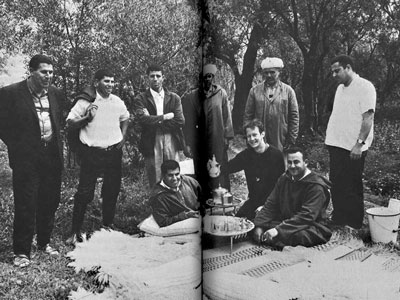


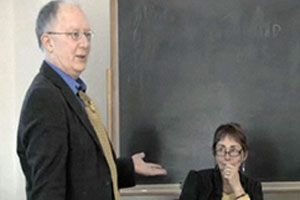
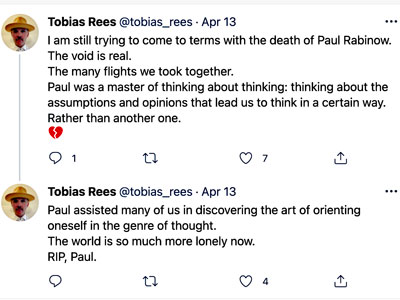

.png)


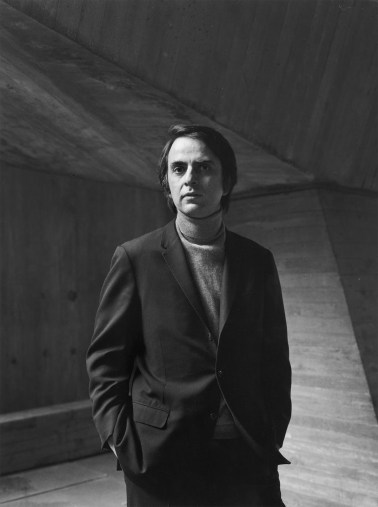


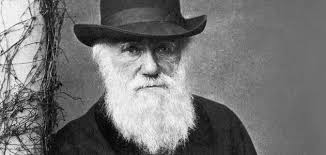
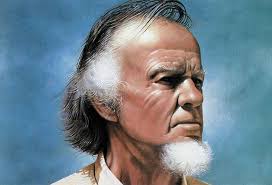

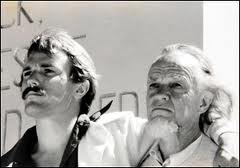


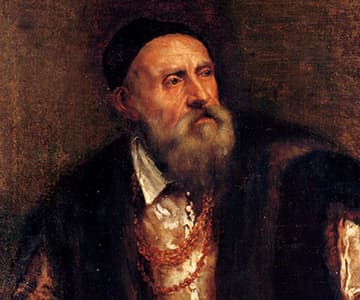


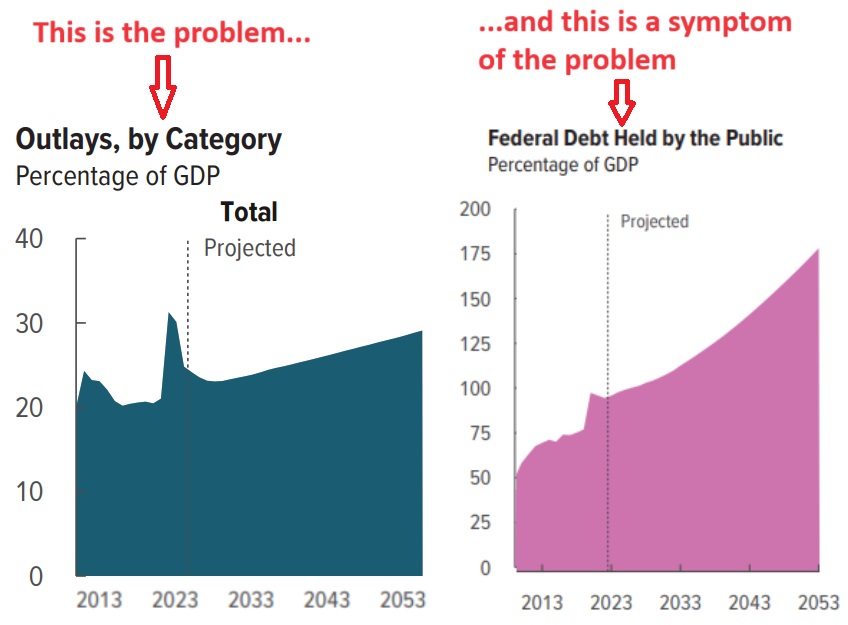










 The Daily Hatch