Migrants cross the Rio Grande on Dec. 23, 2023. (Photo: David Peinado/NurPhoto via Getty Images)
The FBI has a 15-month backlog on DNA testing for migrants and is running out of money to sustain the program, according to an internal Department of Homeland Security email chain reviewed by the Daily Caller News Foundation.
Customs and Border Protection uses tests from the FBI, which then analyzes and stores them for federal border authorities, to test migrants 14 years old and older, according to the emails. FBI Director Christopher Wray previously raised concerns about the FBI’s ability to handle the “dramatic increase” in DNA samples given the migration surges in April, according to Voice of America.
“They [FBI] don’t have enough money to run the program which is a statutory requirement. They are still delivering kits and used to turn them around in 2 months, now they are looking at a 15 month backlog,” one CBP official said in the internal chain regarding its response to a Washington Post reporter working on a story regarding the DNA testing.
Federal authorities have recorded record flows of migrants crossing the southern border illegally in recent years, with roughly 2.2 million encounters in fiscal year 2022 and more than 2 million in fiscal year 2023, according to federal data.
The FBI’s Combined DNA Index System is used by federal, state, and local labs to connect offenders to crimes, according to the bureau.
In a proposed response to the reporter’s question, the officials admitted that migrants who aren’t wanted for crimes are always released from agency custody before the DNA testing is completed.
“Migrants remain in CBP custody for up to 72 hours. Since the FBI’s DNA analysis has always taken longer than three days, migrants have always released from CBP custody prior to the FBI completing its DNA analysis. Migrants wanted for a crime are transferred to appropriate law enforcement agencies. You may, however, wish to contact [Immigration and Customs Enforcement] to learn whether the current delay in FBI DNA analysis may have impacted ICE’s release of migrants as ICE holds migrants longer than CBP,” one portion of an email read.
When it comes to the migration flows to the U.S., federal border authorities have found significant numbers of migrants that are fraudulently making it seem like they’re legitimate families. Border Patrolhas a contract for rapid DNA testing of families, according to the emails.
A Department of Homeland Security pilot program previously found that 16 out of 84 families were “fraudulent” and not actually related, while a separate program discovered that out of a total of 522 migrant families, 79 were fraudulent. The Trump administration expanded the federal government’s DNA program at the border in 2020.
In May, a Government Accountability Office investigation found that CBP lacked the sufficient supplies of testing kits to obtain DNA samples, reporting “some individuals in CBP custody not having their DNA collected by CBP officers and agents.”
As of publication, the GAO says CBP has yet to fulfill its recommendations to resolve the issue.
In the email chain, the CBP officials noted the GAO report, saying that while the reporter “may benefit from reading” it, “it raises issues of CBP & FBI compliance with DNA testing that we may not need to introduce if the reporter has not already read this report.”
The FBI did not respond to the Daily Caller News Foundation’s request for comment.
Have an opinion about this article? To sound off, please email letters@DailySignal.com, and we’ll consider publishing your edited remarks in our regular “We Hear You” feature. Remember to include the URL or headline of the article plus your name and town and/or state.
—
—
A FENCE WOULD STOP ILLEGAL IMMIGRATION AND STOP TERRORISTS FROM GETTING IN
Convening a special cabinet meeting with the army’s leadership and various experts, I announced my intention to build a barrier along the Israeli-Egyptian border to prevent illegal migration from Africa. I wanted the IDF Engineering Corps to do it. The military objected. Chief of Staff Gabi Ashkenazi and his Deputy Benny Gantz explained that the fence would not work.
“Why not?” I asked. “It worked pretty well for the Chinese.” “This is different,” a staff officer explained. “They could tunnel under the barrier, as in Gaza.” “I doubt it,” I said. You need buildings to hide entry and exit points. This was barren desert with no buildings in sight for many kilometers. “So they’ll climb over it,” came the retort. “Then we’ll figure out how to make sure they won’t be able to,” I said in exasperation. This barrier would not just be a fence. We could use drones, mobile forces, fire hoses. “Just get the job done,” I said. “Prime Minister,” Ashkenazi said in a last-ditch effort, “we should build a virtual fence.” “What’s that?” I asked. “We’ll have a physical barrier in the south and in the north of the border, but in between there’ll be forces using visual means to intercept infiltrators.” “Yeah,” I said, “you’ll need half the army to monitor and seal two hundred kilometers. I want a real fence, not a virtual one.”
The next obstacle the army put before me was cost. Showing diagrams of an enormously complicated multilayered barrier, they said the cost would run into many billions of shekels. “I think it could be much cheaper,” I said. I instructed the cabinet secretary to bring to the next cabinet meeting a competing bid from the Public Works Department of the Transportation Ministry. Faced with competition, the army cut its costs estimate for the fence by roughly half. I drafted a proposal to build the barrier. The cabinet approved the resolution in March 2010. Once the order was given, the chief of staff, to his credit, went into high gear. He appointed Colonel Eran Ophir, an exceptional project leader whom I later called “Herod” because he built on a scale worthy of that famed builder-king. Every three months I would fly to the Egyptian-Israeli border to monitor the work in progress. Invariably Eran’s deliverables came in ahead of schedule and under budget. During the construction, in August 2011, an incident occurred that underscored an additional reason to erect the barrier. Several terrorists from the Sinai crossed the border near Eilat and murdered six Israeli civilians and two soldiers. It was a reminder that building the fence was not only vital to stopping illegal job migrants.
It would also block the growing number of terrorists coming in from the Sinai. Less than two years after the beginning of its construction, the fence was complete. Like the Great Wall of China that inspired it, it went up and down gullies and chasms and closed the border. The rate of illegal infiltration into Israel went down to zero! Israel was thus the first Western country to effectively seal its borders.
–
Jewish Democrat slams ‘Squad’ members over calls to end Israel assistance
Fox News Digital obtained comments from New Jersey Democrat Rep. Josh Gottheimer that torched Reps. Rashida Tlaib of Michigan and Cori Bush of Missouri over their comments following the outbreak of the war in Israel. (Anna Moneymaker/Getty Images)
A Jewish House Democrat slammed two members of the socialist “Squad” after they called to end U.S. aid to Israel amid the country’s war with the Palestinian terrorist group Hamas.
Fox News Digital obtained comments from New Jersey Democrat Rep. Josh Gottheimer torching Democratic Reps. Rashida Tlaib of Michigan and Cori Bush of Missouri over their comments following the outbreak of the war in Israel.
In their statements, Tlaib and Bush — both progressives — called for U.S. assistance to Israel to end amid the war.
Gottheimer, who is Jewish, noted that two of his “colleagues called for America to end assistance to Israel, despite the countless images of Israeli children, women, men, and elderly, including Americans, murdered by radical Iranian-backed Hamas terrorists.”
“Families were violently pulled from their homes as hostages,” Gottheimer said. “This is a deliberate and coordinated terrorist attack, savagely targeting innocent civilians.”
“It sickens me that while Israelis clean the blood of their family members shot in their homes, they believe Congress should strip U.S. funding to our democratic ally and allow innocent civilians to suffer,” Gottheimer said.
Fox News’ Houston Keene contributed to this update.
I want to give you five reasons to affirm the Bible is the Word of God.
First, I believe the Bible is the Word of God because of its scientific accuracy. The Truth of the Word of God tells us that God “hangeth the earth upon nothing” (Job 26:7). How did Job know that the earth hung in space before the age of modern astronomy and space travel? The Holy Spirit told him. The scientists of Isaiah’s day didn’t know the topography of the earth, but Isaiah said, “It is [God] that sitteth upon the circle of the earth” (Isaiah 40:22). The word for “circle” here means a globe or sphere. How did Isaiah know that God say upon the circle of the earth? By divine inspiration.
Secondly, the Bible is affirmed through historical accuracy. Do you remember the story about the handwriting on the wall that is found in the fifth chapter of Daniel? Belshazzar hosted a feast with a thousand of his lords and ladies. Suddenly, a gruesome hand appeared out of nowhere and began to write on a wall. The king was disturbed and asked for someone to interpret the writing. Daniel was found and gave the interpretation. After the interpretation, “Then commanded Belshazzar, and they clothed Daniel with scarlet, and put a chain of gold about his neck, and made a proclamation concerning him, that he should be the third ruler in the kingdom.” (Daniel 5:29). Basing their opinion on Babylonian records, the historians claim this never happened. According to the records, the last king of Babylon was not Belshazzar, but a man named Nabonidas. And so, they said, the Bible is in error. There wasn’t a record of a king named Belshazzar. Well, the spades of archeologists continued to do their work. In 1853, an inscription was found on a cornerstone of a temple built by Nabonidas, to the god Ur, which read: “May I, Nabonidas, king of Babylon, not sin against thee. And may reverence for thee dwell in the heart of Belshazzar, my first-born favorite son.” From other inscriptions, it was learned that Belshazzar and Nabonidas were co-regents. Nabonidas traveled while Belshazzar stayed home to run the kingdom. Now that we know that Belshazzar and Nabonidas were co-regents, it makes sense that Belshazzar would say that Daniel would be the third ruler. What a marvelous nugget of truth tucked away in the Word of God!
Third, from Genesis to Revelation, the Bible reads as one book. And there is incredible unity to the Bible. The Bible is one book, and yet it is made up of 66 books, was written by at least 40 different authors over a period of about 1600 years, in 13 different countries and on three different continents. It was written in at least three different languages by people in all professions. The Bible forms one beautiful temple of truth that does not contradict itself theologically, morally, ethically, doctrinally, scientifically, historically, or in any other way.
Fourth, did you know the Bible is the only book in the world that has accurate prophecy? When you read the prophecies of the Bible, you simply have to stand back in awe. There are over 300 precise prophecies that deal with the Lord Jesus Christ in the Old Testament that are fulfilled in the New Testament. To say that these are fulfilled by chance is an astronomical impossibility.
Finally, the Bible is not a book of the month, but the Book of the Ages. First Peter 1:25 says: “But the word of the Lord endureth for ever. And this is the Word which by the gospel is preached unto you.” No book has ever had as much opposition as the Bible. Men have laughed at it, scorned it, burned it, ridiculed it, and made laws against it. But the Word of God has survived. And it is applicable today as much as it was yesterday and will be tomorrow.
It’s so majestically deep that scholars could swim and never touch the bottom. Yet so wonderfully shallow that a little child could come and get a drink of water without fear of drowning. That is God’s precious, holy Word. The Word of God. Know it. Believe it. It is True.
Not in all of my life have I ever prepared an address as minutely and meticulously as I have this one tonight. I have been a pastor fifty-eight years. I began preaching at this pastor’s conference at the invitation of Dr. M. E. Dodd when he founded it something like fifty years ago. And I would think more than thirty times have I spoken to this assembly of God’s anointed undershepherds. But I have never, ever approached a moment like this. And the message tonight, entitled Whether We Live or Die, is delivered, prepared in view of the convocation of our assembled messengers beginning in the morning.
The outline of the address, of the study, is this:
The Pattern of Death for a Denomination; then
The Pattern of Death for an Institution; then
The Pattern of Death for a Preacher, a Professor; and then finally,
The Promise of Renascence, and Resurrection, and Revival.
So we begin: The Pattern of Death for a Denomination.
In the middle of the last century, a great storm arose in the Baptist denomination in Great Britain. Opposition to evangelical truths sprang from two sources: one, the publication in 1859 of Darwin’s Origin of Species, which made the Genesis account of creation a myth; and second, the vast inroads of German higher criticism and rationalism that explained away the miracles of the Bible and reduced the inspired Word to merely a human book.
This fungal attack on the Scripture brought forth open and militant opposition from the mighty preacher Charles Haddon Spurgeon. He urged the Baptist Union of England to speak out against the heresy. They refused, saying Baptists believe in the priesthood of every believer, and further avowed that Baptists could believe their own way so long as they baptize by immersion. Spurgeon then published what he called “The Downgrade in the Churches.” He wrote, “Instead of submission to God’s Word [James 4:4-10], higher criticism urges accommodation to human wisdom. It sets human thought above God’s revelation and constitutes man the supreme judge of what ought to be true.”
He wrote, “Believers in Holy Scripture are in confederacy with those who deny plenary inspiration. Those who hold evangelical doctrine are in open alliance with those who call the Genesis fall a myth.”
He wrote, “A chasm is opening between the men who believe their Bibles and those who are prepared for an advance upon the Scripture . . . The house is being robbed, its very walls are being digged down, but the good people who are in bed are too fond of the warmth . . . to go downstairs to meet the burglars.” “Inspiration and speculation cannot long abide side by side . . . We cannot hold the inspiration of the Word [2 Timothy 3:16], and yet reject it. We cannot hold the doctrine of the Fall [Romans 5:12-21; 1 Corinthians 15:22], and yet talk of evolution of spiritual life from human nature. One or the other must go.” “Compromise there can be none.”
Dr. John Clifford, London pastor and president of the British Baptist Union and later the first president of the Baptist World Alliance, declared in 1888, quote, “It pains me unspeakably to see this eminent [preacher Spurgeon] rousing the energies of thousands of Christians to engage in personal wrangling and strife, instead of inspiring them to . . . herioc effort to carry the . . . Gospel to our fellow-countrymen.” Sounds kind of familiar, doesn’t it?
Dr. John Clifford had embraced the higher critical new theology. He believed that evangelicalism and higher criticism could be combined. Dr. Clifford presided over the Council of the Baptist Union that met in session January 18, 1888. They voted to recommend to the plenary session of the Union a vote to censure Spurgeon. Dr. John Clifford did his work well. The Baptist Union met in assembly April 23, 1888, in the City Temple of London—Dr. Joseph Parker’s Congregational church, himself a critic of Spurgeon—and the recommendation of council for censure was placed before the full body. The official vote was two thousand for the motion to censure Spurgeon, and seven against.
A godly man, Henry Oakley, who was present in the Baptist Union assembly that day, wrote these words in later memory concerning the tragic meeting. Quote:
I was present at the City Temple when the motion to censure Spurgeon was moved, seconded, and carried. The City Temple was as full as it could be. I was there early but found only a standing place in the aisle at the back of the gallery. I listened to the speeches. The only one of which I have a distinct remembrance was that of Mr. Charles Williams. He quoted Tennyson in favor of a liberal theology. The moment of voting came. Only those members of the assembly were qualified to vote. When the motion of censure was put, a forest of hands went up. “Against,” called the chairman, Dr. John Clifford. I did not see any hands, but history records there were seven. Before any announcement of the censure number was made by Dr. John Clifford, the vast assembly broke into tumultuous cheering, and cheering, and cheering yet. From some of the older men their pent-up hostility found vent. From many of the younger men wild resistance of “any obscurantist trammels,”—Spurgeon’s preaching—as they said, broke loose. It was a strange scene. I viewed it with tears. I stood near a man I knew well. He went wild with delight at the censure. I say, it was a strange scene, that that vast assembly should so outrageously be delighted at the condemnation of the greatest, noblest, and grandest leader of their faith.
An English writer said of that downgrade controversy against Spurgeon that it quote, “entailed one of the most bitter persecutions any minister of the gospel has ever endured in this country.” Spurgeon’s wife Susanna said that the controversy cost him his life. He died at the age of fifty-seven. Spurgeon himself said to a friend in May, 1891, “Goodbye. You will never see me again. This tragic fight is killing me.” But Spurgeon also said, “The distant future will vindicate me.”
All that Mr. Spurgeon saw and said, and much more, came to pass. Baptist witness in Great Britain began to die. The Baptist Union in their minutes recognized the presence of higher criticism in their midst, but they said it would do no harm. Spurgeon answered that the future would witness a lifeless and fruitless church. As he foretold, with the accommodation of the higher critical approach to the Scriptures—which is universal among us—with the accommodation of the higher critical approach to the Scriptures, church attendance fell off, prayer meetings ceased, miracles of conversion were witnessed less and less, the number of baptisms began to decline—and for years they’ve been in decline with us—and the churches began to die out. The numerical graph of the British Baptists since the halcyon days of Spurgeon, their mighty champion, is down, and ever down, and for a century has been going down.
I was in India years ago when English Baptists were closing down their mission stations on the Ganges River, stations founded by William Carey. Some say the position taken by Spurgeon hurt the mission movement. My brother, if the higher critical approach to the Scriptures dominates our institutions and our denominations, there will be no missionaries to hurt! They will cease to exist!
A comment on the sad condition of Baptist churches in England is found in the latest biography of Spurgeon written by Dr. Arnold Dallimore, entitled: C. H. Spurgeon, a New Biography, published this last year. The comment concerning English Baptists is this, quote: “Where there is no acceptance of the Bible as inerrant; there is no true Christianity. The preaching is powerless, and what Spurgeon declared to his generation a hundred years ago is the outcome.”
And that statement is followed by this paragraph:
The failure of the new theology or higher criticism, call it what we will, is forcefully brought out by E. J. Poole-Conner in his Evangelicalism in England. He tells of a conversation between the editor of an agnostic magazine and a neo-orthodox minister. The editor told the minister that despite their different vocations, they had much in common. “I don’t believe the Bible,” said the agnostic, “but neither do you. I don’t believe the story about creation, but you don’t either. I don’t believe any of these things, but neither do you. I am as much of a Christian as you, and you are as much of an infidel as I.”
As with the Baptists of Great Britain, whether we continue to live or ultimately die lies in our dedication to the infallible Word of God [2 Timothy 3:16-17].
Number two: The Pattern of Death for an Institution.
An institution can be like a great tree which in times past withstood the rain, and the wind, and the storm, and the lightning, but finally fell because the heart had rotted out. Insects, termites destroyed the great monarch of the woods. This is the unspeakably tragic thing that happens to many of our Christian institutions, and eventually threatens them all. They are delivered to secularism and infidelity, not because of a bitter frontal attack from without, but because of a slow, gradual permeation of the rot and curse of unbelief from within. The tragic and traumatic example of that decay is the University of Chicago.
The faithful devout Baptist people of the North set about to build, in their words, and I quote, “a great Christian university to counteract the materialism of the Middle West.” God greatly, immediately blessed their effort. In May 1889, the electric news was announced to the Baptists gathered in a national meeting in Boston that Rockefeller had offered six hundred thousand dollars for the building of the Christian school if the Baptist churches would give four hundred thousand dollars. When the announcement was made, the entire assembly arose with a doxology on its lips. And Dr. Henson exclaimed, “I scarcely dare trust myself to speak. I feel like Simeon when he said, ‘Now, Lord, lettest now Thy servant depart in peace . . . for mine eyes have seen Thy salvation’” [Luke 2:29, 30].
Appeals were sent to twelve hundred Baptist pastors in the Middle West. The second Sunday in April 1890 was made University Day. The humble, faithful loyal Baptist people in all the churches gave prayerfully and sacrificially. Their splendid school for preachers, the Baptist Theological Seminary at Morgan Park in Chicago was, under the terms of the Rockefeller gift, to be the center of the university and to become the divinity school. The university was to be built around the seminary, and all of it was to be dedicated to the evangelization of the heartland of America. It was done gloriously, victoriously. The university was built. The divinity school was opened, and they prepared preachers to win the Middle West for Christ.
Then the infiltration began. The curse, the rot, the virus, the corruption of a higher critical approach to the gospel began to work. What are the ultimate results of this almost universal higher critical teaching? Here are some of the professors who taught the preachers in that divinity school during the course of the years. Professor G. B. Smith, systematic theology, who wrote, “The spirit of democracy protests against such an idea as that God has the right to insist on a rigid plan of salvation.” Professor Soares, who said, “Redemption is an absolute fancy. Revelation is self-deception. We refuse the idea that the principle business of the church is to get people converted and committed to the Christian life.” And Professor G. B. Foster, Baptist teacher in the seminary, and pastor of a Unitarian Church wrote, “An intelligent man who now affirms his faith in miracles can hardly know what intellectual honesty means. The hypothesis of God has become superfluous in every science, even that of religion itself. Jesus did not transcend the limits of the purely human.”
We cannot but find ourselves in sympathy with an editorial of a great Chicago newspaper which said:
We are struck with the hypocrisy and treachery of these attacks on Christianity. This is a free country and a free age and men can say what they choose about religion, but this is not what we arraign these divinity professors for. Is there no place in which to assail the Bible but a divinity school? Is there no one to write infidel books except professors of Christian theology? Is a theological seminary an appropriate place for a general massacre of Christian doctrines? We are not championing either Christianity or infidelity but only condemning infidels masquerading as men of God and Christian teachers.
A friend of mine, a teacher, went to the University of Chicago to gain a Ph.D. in pedagogy. While there, he made the friendship of a student in the divinity school. Upon the young theolog’s graduation, the budding preacher said to my teacher friend, quote, “I am in a great quandary. I have been called to the pastorate of a Presbyterian church in the Midwest, but it is one of those old-fashioned Presbyterian churches that believes the Bible. And I don’t believe the Bible, and I don’t know what to do.” My teacher friend replied, “I can tell you exactly what you ought to do.” Eagerly, the young preacher asked, “What?” And my teacher friend replied, “I think that if you don’t believe the Bible, you ought to quit the ministry!”
But not only in the North have we lost our Baptist institutions such as the University of Chicago; such as Brown University; such as Crozer Theological Seminary, practically all of them. But in the South—where we live—in the South we are beginning to witness the same loss. Within these last few years, two of our senior Baptist universities in the Southern states have been removed from Baptist control. Give it another century, and the loss will be unspeakably tragic.
John Wesley at one time wrote, “I am not afraid that the people called Methodists should ever cease to exist in Europe or America. But I am afraid lest they should exist as a dead sect, having the form of religion without the power.” This fear that troubled the heart of John Wesley no less troubles the hearts of believing Christians everywhere who take time to see what higher criticism can do to their institutions.
If neo-orthodoxy were a separate movement in itself, built its own churches, launched its own institutions, projected its own denomination, then we could look at it as just another of the many sects that appear on the surface of history. But neo-orthodoxy in itself builds nothing. It is a parasite that grows on institutions already built.
If these higher critical semi-Unitarians won the lost to Christ, built up the churches, sent out missionaries, ministered to the needs of the people, then we could abandon our Bibles, rest at ease in Zion, and watch the kingdom of God advance from our ivory towers. The trouble is, these self-styled superior religionists do nothing but preside over a dying church, and a dying witness, and a dying denomination.
No minister who has embraced a higher critical approach to the gospel has ever built a great church, held a mighty revival, or won a city to the Lord. They live off the labor and sacrifice of those who paid the price of devoted service before them. Their message, which they think is new and modern, is as old as the first lie, “Yea, hath God said?” [Genesis 3:1].
Let the true pastor never turn aside from his great high calling to preach the whole counsel of God, warn men of their sins and the judgment of God upon them, baptize their converts in the name of the triune Lord, and build up the congregation in the love and wisdom of Christ Jesus. If he does that he will have completed the work for which the Holy Spirit did choose him. Do not be deterred or be discouraged by what others say about you. Just keep on winning souls to Jesus!
Number three: The Pattern of Death for a Preacher, a Pulpiteer, a Professor
There came to the Southern Seminary in 1869 a scholarly young man by the name of Crawford H. Toy. He was the first addition to the original faculty of four, and gave every promise of becoming the greatest of them all. He knew more Hebrew than his teacher, Dr. Basil Manley. Literally, he was the pride and joy of the school. He was brilliant beyond compare.
However, through studying German higher criticism and rationalism, he drifted away from the revealed truth of the Scriptures and began to teach in the seminary the pentateuchal-destructive attacks of Keunen, Wellhausen, and a host of others. It broke the hearts of President James P. Boyce and Professor John A. Broadus, but the dismissal had to come.
When Dr. Toy left, Boyce and Broadus accompanied him to the railroad station. Just before the train took him away, President Boyce placed his left arm around the shoulders of the young man, and lifting up his right hand to heaven, said, “Crawford, I would give my right arm if you were back as you were when you first came to us.”
Dr. Toy went to be professor of Hebrew at Harvard University. He went into the Unitarian church and finally, never went to church at all. He was a world-famous scholar. In my library, I have Hebrew books written by Dr. Toy. He was a world-famous scholar, internationally known author, and a lovable man, but the virus of higher criticism destroyed his spiritual life and work.
This is the young man who first taught in Albemarle Female Institute in Charlottesville, Virginia, before joining the faculty of Southern Seminary. This is the young man who taught in the school attended by a most vivacious and brilliant student, Miss Lottie Moon. This is the young man with whom Lottie Moon fell in love. This is the young man to whom Lottie Moon returned from China to America to marry. This is the young man the foreign mission board of the Southern Baptist Convention in 1860 appointed a missionary to the Orient, the War Between the States preventing his going. This is the young man, Crawford H. Toy, who was idolized by the Baptist academic and religious world.
But Lottie Moon was shattered and grief-stricken by the new theology and liberal beliefs of the man she so deeply admired and so beautifully loved. She returned to China heartbroken, never to return to home in America, never to marry, and died there in the Orient, lonely in soul and pouring her very life into a ministry for her starving Chinese people.
In the current issue of Review and Expositor, the theological journal of Southern Seminary, there is an extended article on Crawford H. Toy. It is filled with lavish and extravagant praise for the Unitarian. Here are the closing sentences in the review; I quote, “So far as his critical trends developed within the ten years of his membership on the faculty, his views today would not be regarded as sufficiently revolutionary to call for drastic action. Toy’s research and views were too advanced for his contemporaries.” That is, if he lived and taught today, his higher-critical, destructive approach to the Word of God would be perfectly acceptable, condoned, and defended!
However much our hearts may yearn over those who are victims and carriers of modernistic fallacy, if we are to survive as a people of God we must wage a war against the disease that, more than any other, will ruin our missionary, evangelistic, and soul-winning commitment.
And last: The Possibility and Promise of Resurrection, Renascence, Revival.
If, if we will receive the Scriptures as of God, and be true to them as to the Holy Spirit, the Lord will use Southern Baptists to evangelize the world. Revelation 14:6 says, “And I saw an angel fly in the midst of the heaven, having the everlasting gospel to preach unto them that dwell on the earth.” That angelos, having the everlasting euangelion to euangelisai the whole world, can be Southern Baptists. We can experience in our very midst great revival, the outpouring of the saving power of the Holy Spirit upon our churches, upon our preachers, and upon our mission fields.
The way of God is always onward, forward, and upward. The Holy Spirit always announces that there is a greater day coming. The burden of the prophets and the marvelous beckoning light of biblical revelation are ever and always the same. Our mighty God is marching on. It is the message of the first page of the Bible. It is the message of the second page of the Bible. It is the message of the first book of the Bible. It is the message of the second book of the Bible. It is the message of the last page and the last book of the Bible. A glorious triumph is coming. The Lord never recedes. He necessarily advances. His creation is followed by redemption. His redemption is followed by sanctification. His sanctification is followed by glorification.
There is no formal conclusion to the Book of Acts. It is open-ended. God means for the story of Pentecostal power and revival to be prolonged after the same manner. God does not do a great thing and then an increasingly smaller thing. God does not build a portico of marble and finish the temple with decaying brick. Our greatest days are yet to come. There was a time when the Holy Spirit as a heavenly fire was a mysterious presence flashing like lightning from the skies, we knew not whence or whither; coming now upon a Moses and again upon an Elijah, sometimes appearing in the burning bush in Horeb [Exodus 3:2], sometimes falling in awesome mystery upon the altar of sacrifice of Mount Carmel [1 Kings 18:32-39], sometimes striking out in Israel’s camp in destroying fury [Numbers 11:1], sometimes appearing as the Shekinah glory in the temple’s Holy of Holies [2 Chronicles 7:1-3], the strange sign and symbol of Jehovah’s presence and power.
Since Christ’s ascension [Acts 1:9], and in the fulfillment of the prophecy of Joel 2:28-32, the Holy Spirit has been poured out upon all flesh [Acts 2:1-4, 16-33]. John 3:34 confirms that God giveth not the Spirit by measure. He is with us, within us, for us, for power, for conquest, for glory. Since Pentecost, there is no age, no century, no era, no time without the marvelous outpouring of the Holy Spirit. The soul-saving experience continues. Darkness and death and decay may reign in one place, but always light, life, and salvation will reign and vigorously abound in another.
The church at Jerusalem fell into Ebionitic legalism, but the church at Antioch experienced the greatest revival of Gentile converts the first century ever knew. When waning of piety began to empty the churches at Antioch, the churches at Ephesus and Rome and at Milan were waxing mighty in the work of the Lord. When the churches of Alexandria and Carthage were falling into empty philosophical dissertations, the churches of Gaul were winning all western continental Europe to the Lord.
While Rome was pursuing vain and sterile rituals, the churches of Ireland were baptizing the whole nation and their many tribes into the faith. While Mohammed was destroying the faith in North Africa, the Middle East, and Asia Minor, the scholars of Iona were going forth to evangelize the Northumbrians, the Scots, the Picts, the Anglo-Saxons, our ancestors.
While the pontifical court of Avignon was engrossed in seeking political power, the cities of Germany were learning the heavenly ways of the Lord Jesus. When the darkness of night and superstition were covering the churches of France, the morning stars of the Reformation were rising in England. When Italian fields were turning into useless stubble, Bohemia was alive with the converting Spirit of Christ.
When the Unitarian defection destroyed the evangelizing spirit of the congregations of New England, the pioneer preachers were advancing beyond the Alleghenies to build churches and Christian institutions in the heartland of America. And while elitism, and liberalism, and spiritual indifference are decimating the churches in the West, great revival is being experienced in Korea, in South America, and in central Africa. Why not America, and why not now?
Our own and our ultimate destiny lies in the offing—and with us, the world. Seemingly, we stand at the continental divide of history, at the very watershed of civilization. Changes of colossal nature are sweeping the world.
In years past, the French Revolution signalized a political change. The Renaissance brought intellectual change. The industrial revolution introduced economic change. The Reformation encompassed religious change. But today, we face every kind and category of change, mostly defined by the flood tides of materialism, secularism, and liberalism. In my lifetime, for the first time in world history, governments are statedly and blatantly atheistic. No ancient Greek would ever make a destiny-determining decision without first consulting the oracle at Delphi. No Roman general would go to war without first propitiating the gods. But these bow at no altar, call upon the name of no deity, and they seem to be possessing the world.
Whether we live or die lies in the imponderables of Almighty God [Psalm 33:8-19]. Will God not judge atheistic, communistic Russia? Will He not also judge secularistic, heathenistic, humanistic, materialistic America? What is the difference at the judgment bar of Christ between a God-denying Russian communist atheist and a God-denying American liberal humanist? Can God judge Sodom, and Gomorrah, and Nineveh, and Babylon, and not judge Moscow, and Peking, and San Francisco, and Dallas?
Our mission frontiers run down every street and village, through every house, home, and classroom. The whole globe today is small, compact, and shrunken. We see, hear, watch, read, follow what happens moment by moment around the world. The interdependence and the interlinking of all mankind is an actual modern fact. We all ride this planet together. Our nation is one in a dependent family of nations. Romans 14:7 avows, “For none of us lives to himself, and not one of us dieth to himself.”
As Baptist churches, and as a Baptist people, we need each other. One segment of our community cannot do our work, our task, alone. Our strength lies in a common determination and a common dedication. One church can build a Sunday school, but a Sunday school movement must be launched by an association of churches through a Sunday school board. One church can send a missionary, but a vast missionary movement must be engineered by a denomination of churches through a foreign mission board. One church can have a revival, but a revival movement must be prayed for, and prayed down, and lifted up by a community of churches through an evangelistic director.
Years ago, I saw a pathetic picture in Lifemagazine. A little boy had been lost in a horizon-to-horizon Kansas wheat field, had wandered away from the house, and had lost his way in the vast sea of standing stalks. Frantically, the parents had searched for the small child to no avail. The sympathizing neighbors helped, but without success. Finally, someone suggested they join hands and comb the fields by sections. The picture I saw was the sorrowing neighbors with the family standing over the dead body of the little boy, and the cry of the father printed as the caption below: “Oh, if only we had joined hands before!”
United in prayer, preaching, witnessing, working, not around the higher-critical denial of Scripture, but around the infallible Word of God in Christ Jesus, we cannot fail. If we join hands with the blessed Savior, and deliver the message of the inerrant Word of God, God will rise to meet us.
And the Lord God whispered and said to me,
These things shall be, these things shall be.
No help shall come from the scarlet skies
Till My people rise.
Till My people rise, My arm is weak.
I cannot speak till My people speak.
When men are dumb, My voice is dumb.
I cannot come till My people come.
From over the flaming earth and sea,
The cry of My people must come to Me.
Not till their spirit break the curse
May I claim My own in the universe.
But if My people rise, if My people rise,
I will answer them from the swarming skies.
[excerpts from “God Prays: Answer, World! Angela Morgan, 1917]
No battle was ever won by retreat, or submission, or surrender. When Alexander the Great lay dying, they asked him, “Whose is the kingdom?” And he replied, “It is for him who can take it!” It will be we, or somebody else.
Bring me my bow of burning gold:
Bring me my arrows of desire:
Bring me my spear; O clouds unfold!
Bring me my chariot of fire.
We shall not cease from battle strife,
Nor shall the sword sleep in our hand
Till we have built Jerusalem
In this fair and pleasant land.
[Adapted from “Jerusalem,” by William Blake]
God grant it! Amen.
Adrian Rogers – How you can be certain the Bible is the word of God
I want to give you five reasons to affirm the Bible is the Word of God.
First, I believe the Bible is the Word of God because of its scientific accuracy. The Truth of the Word of God tells us that God “hangeth the earth upon nothing” (Job 26:7). How did Job know that the earth hung in space before the age of modern astronomy and space travel? The Holy Spirit told him. The scientists of Isaiah’s day didn’t know the topography of the earth, but Isaiah said, “It is [God] that sitteth upon the circle of the earth” (Isaiah 40:22). The word for “circle” here means a globe or sphere. How did Isaiah know that God say upon the circle of the earth? By divine inspiration.
Secondly, the Bible is affirmed through historical accuracy. Do you remember the story about the handwriting on the wall that is found in the fifth chapter of Daniel? Belshazzar hosted a feast with a thousand of his lords and ladies. Suddenly, a gruesome hand appeared out of nowhere and began to write on a wall. The king was disturbed and asked for someone to interpret the writing. Daniel was found and gave the interpretation. After the interpretation, “Then commanded Belshazzar, and they clothed Daniel with scarlet, and put a chain of gold about his neck, and made a proclamation concerning him, that he should be the third ruler in the kingdom.” (Daniel 5:29). Basing their opinion on Babylonian records, the historians claim this never happened. According to the records, the last king of Babylon was not Belshazzar, but a man named Nabonidas. And so, they said, the Bible is in error. There wasn’t a record of a king named Belshazzar. Well, the spades of archeologists continued to do their work. In 1853, an inscription was found on a cornerstone of a temple built by Nabonidas, to the god Ur, which read: “May I, Nabonidas, king of Babylon, not sin against thee. And may reverence for thee dwell in the heart of Belshazzar, my first-born favorite son.” From other inscriptions, it was learned that Belshazzar and Nabonidas were co-regents. Nabonidas traveled while Belshazzar stayed home to run the kingdom. Now that we know that Belshazzar and Nabonidas were co-regents, it makes sense that Belshazzar would say that Daniel would be the third ruler. What a marvelous nugget of truth tucked away in the Word of God!
Third, from Genesis to Revelation, the Bible reads as one book. And there is incredible unity to the Bible. The Bible is one book, and yet it is made up of 66 books, was written by at least 40 different authors over a period of about 1600 years, in 13 different countries and on three different continents. It was written in at least three different languages by people in all professions. The Bible forms one beautiful temple of truth that does not contradict itself theologically, morally, ethically, doctrinally, scientifically, historically, or in any other way.
Fourth, did you know the Bible is the only book in the world that has accurate prophecy? When you read the prophecies of the Bible, you simply have to stand back in awe. There are over 300 precise prophecies that deal with the Lord Jesus Christ in the Old Testament that are fulfilled in the New Testament. To say that these are fulfilled by chance is an astronomical impossibility.
Finally, the Bible is not a book of the month, but the Book of the Ages. First Peter 1:25 says: “But the word of the Lord endureth for ever. And this is the Word which by the gospel is preached unto you.” No book has ever had as much opposition as the Bible. Men have laughed at it, scorned it, burned it, ridiculed it, and made laws against it. But the Word of God has survived. And it is applicable today as much as it was yesterday and will be tomorrow.
It’s so majestically deep that scholars could swim and never touch the bottom. Yet so wonderfully shallow that a little child could come and get a drink of water without fear of drowning. That is God’s precious, holy Word. The Word of God. Know it. Believe it. It is True.
“In Christ Alone” music video featuring scenes from “The Passion of the Christ”. It is sung by Lou Fellingham of Phatfish and the writer of the hymn is Stuart Townend. On this Easter weekend 2013 there is no other better time to take a look at the truth and accuracy of the Bible. Is the […]
Here is some very convincing evidence that points to the view that the Bible is historically accurate. Archaeological and External Evidence for the Bible Archeology consistently confirms the Bible! Archaeology and the Old Testament Ebla tablets—discovered in 1970s in Northern Syria. Documents written on clay tablets from around 2300 B.C. demonstrate that personal and place […]
Larry King – Dr. John MacArthur vs. “father” Manning Uploaded on Sep 26, 2011 GotoThisSite.org ___________ I have seen John MacArthur on Larry King Show many times and I thought you would like to see some of these episodes. I have posted several of John MacArthur’s sermons in the past and my favorite is his […]
The Bible and Archaeology (1/5) The Bible maintains several characteristics that prove it is from God. One of those is the fact that the Bible is accurate in every one of its details. The field of archaeology brings to light this amazing accuracy. _________________________- Many people have questioned the accuracy of the Bible, but I […]
I have been reading Proverbs almost every day for many years with my family in the evening and there is lots of wisdom in it. Take a look at the second part of this message from Adrian Rogers. How to Be the Father of a Wise Child Another great sermon outline from Adrian Rogers. Adrian Rogers […]
Picture of Adrian Rogers above from 1970′s while pastor of Bellevue Baptist of Memphis, and president of Southern Baptist Convention. (Little known fact, Rogers was the starting quarterback his senior year of the Palm Beach High School football team that won the state title and a hero to a 7th grader at the same school named […]
Leadership Crisis in America Published on Jul 11, 2012 Picture of Adrian Rogers above from 1970′s while pastor of Bellevue Baptist of Memphis, and president of Southern Baptist Convention. (Little known fact, Rogers was the starting quarterback his senior year of the Palm Beach High School football team that won the state title and a hero […]
Same old story it seems. Kentucky pulls out another close victory over the Vols. This is not the only story I am talking about today. Kentucky’s Alex Poythress (22) shoots between Tennessee’s Josh Richardson, left, and Yemi Makanjuola during the first half of an NCAA college basketball game at Rupp Arena in Lexington, Ky., Tuesday, […]
7 years ago on November 15, 2005 Adrian Rogers passed away. This is a series of posts about the life and ministry of Adrian Rogers. Adrian Rogers Memorial – Come To Jesus Uploaded by jonwhisner on Jan 20, 2011 This video is from Adrian Roger’s Memorial Service held at Bellevue Baptist Church in Memphis, TN in […]
(My pastor growing up was Adrian Rogers and he died 7 years ago today. He would have been 82 if he was still living. ) I love the Book of Proverbs and every day I read one chapter of Proverbs. Since there are 31 chapters, I start the 1st of ever month and read chapter […]
Picture of Adrian Rogers above from 1970′s while pastor of Bellevue Baptist of Memphis, and president of Southern Baptist Convention. (Little known fact, Rogers was the starting quarterback his senior year of the Palm Beach High School football team that won the state title and a hero to a 7th grader at the same school […]
7 years ago on November 15, 2005 Adrian Rogers passed away. This is a series of posts about the life and ministry of Adrian Rogers. Adrian Rogers Memorial – Come To Jesus Uploaded by jonwhisner on Jan 20, 2011 This video is from Adrian Roger’s Memorial Service held at Bellevue Baptist Church in Memphis, TN in […]
7 years ago on November 15, 2005 Adrian Rogers passed away. This is a series of posts about the life and ministry of Adrian Rogers. Adrian Rogers Memorial – Come To Jesus Uploaded by jonwhisner on Jan 20, 2011 This video is from Adrian Roger’s Memorial Service held at Bellevue Baptist Church in Memphis, TN in […]
Picture of Adrian Rogers above from 1970′s while pastor of Bellevue Baptist of Memphis, and president of Southern Baptist Convention. (Little known fact, Rogers was the starting quarterback his senior year of the Palm Beach High School football team that won the state title and a hero to a 7th grader at the same school named […]
Got some bad news on 11-17-23 that my PET SCAN found a lot of cancer in my liver too which puts me in stage 4 pancreatic cancer and a life expectancy of 6 months and with possible success from chemotherapy treatments my life may be extended up to 2 years with 5% chance of 5 years. Need all the prayer partners I can get so feel free to tell others!!!
The reason I am recommending this article is because it is exactly where I want to be. I have told my wife over and over everyday day since I got cancer that I realize all the blessings I have NOW MORE THAN EVER!!! , “This is the day that the Lord has made; let us rejoice and be glad in it” (Ps. 118:24) My father has told me almost everyday the last few years EVERYDAY IS A BLESSING!!! What a great perspective on life and I know what he means now!!!
What are the major characteristics of your life as a Christian? Stop and answer that question as honestly as you can. As a reader of Tabletalk, you probably understand yourself to be a sincere follower of Christ. What are the major characteristics of the life of a follower of Christ? Many of us have one word that comes to our minds: love. Indeed, our lives are to be marked by our love for God and others as we perceive God’s love for us.
Writing about the characteristics of the Christian life, Paul says, “The fruit of the Spirit is love” (Gal. 5:22). Love is the first characteristic listed as the fruit of the Holy Spirit in our lives. But many Christians are surprised by the second characteristic that Paul mentions. What is the very next characteristic in Paul’s list? It is “joy.” It is right there after “love”—“joy.”
How can joy be such a distinguishing mark for the Christian? The world can know joy, just as it can know love. How, then, is the joy wrought by the Holy Spirit different from the world’s joy? It is a transcendent joy. How can that be? We are quite ordinary people. This joy has a supernatural aspect. The source of this joy is a heart that has been changed by the Holy Spirit—a heart that has been produced by a rebirth. It is a joy empowered by the Holy Spirit, who indwells us and is constantly transforming our lives. This reborn and indwelled life arises every morning and shouts, “This is the day that the Lord has made; let us rejoice and be glad in it” (Ps. 118:24). It celebrates the physical and spiritual feasts that the Lord brings to our lives daily.
I love the eighth chapter of Nehemiah. A remnant of Israel has returned to Jerusalem from exile in Babylon. The people are being called by their leaders, Ezra and Nehemiah, through the Word of God to celebrate the harvest Feast of Booths. Evidently, Israel had not celebrated this feast for decades. Read about it for yourself:
And Nehemiah, who was the governor, and Ezra the priest and scribe, and the Levites who taught the people said to all the people, “This day is holy to the Lordyour God; do not mourn or weep.” For all the people wept as they heard the words of the Law. Then he said to them, “Go your way. Eat the fat and drink sweet wine and send portions to anyone who has nothing ready, for this day is holy to our Lord. And do not be grieved, for the joy of the Lord is your strength.” So the Levites calmed all the people, saying, “Be quiet, for this day is holy; do not be grieved.” And all the people went their way to eat and drink and to send portions and to make great rejoicing, because they had understood the words that were declared to them. (Neh. 8:9–12)
God was calling His people to remember and joyously celebrate that He is the Lord of the harvest. Does He not still call us to do this? Are we daily reveling in the immensity of God’s physical and spiritual provisions?
On our worst days, we are still bathed in God’s incomparable grace.
SHARE
Paul said it this way: “Rejoice in the Lord always; again I will say, rejoice” (Phil. 4:4). Notice the word “always”—it is to be a constant joy. By the power of the Holy Spirit, it is a joy that we choose even in the worst circumstances. When Paul and Silas were in the physical and spiritual darkness of the innermost part of a jail in Philippi, when their backs had been laid open by a torturous beating and they were in stocks, what did they do? They chose to pray and sing (Acts 16:25). Their joy transcended this awful midnight of their lives. On our worst days, we are still bathed in God’s incomparable grace. The horrific events of our lives cannot remove the sovereignty of God the Holy Spirit from our reborn hearts, the blood of Christ from our souls, and the certainty of coming glory from our minds. It is in the darkest of times that this joy shines the brightest. This joy is a powerful witness to the world around us.
The returning exiles wrote a song in their joyful celebration:
When the Lord restored the fortunes of Zion, we were like those who dream. Then our mouth was filled with laughter, and our tongue with shouts of joy; then they said among the nations, “The Lord has done great things for them.” The Lord has done great things for us; we are glad. (Ps. 126:1–3)
The world was in awe of their joy. Does our joy daily say to the world, “The Lord has done great things for us”? The Philippian jailer was converted when he observed the transcendent joy of Paul and Silas.
Ezra and Nehemiah said to the people, “Do not be grieved, for the joy of the Lord is your strength.” We want to say: “No, Nehemiah, you got that wrong. It should be that the strength of the Lord is your joy.” But he did not say that. He said, “The joy of the Lord is your strength.” Believer, what keeps our lives from being eaten alive by sorrow and despair? What keeps us from cynicism and hopelessness? The joy of the Lord is our strength. The word translated “strength” can also be translated “fortress” or “refuge.” Thus, we can say, “The joy of the Lord is our fortress, our refuge.”
Many great cities of the ancient world had an acropolis. When the city was attacked by the enemy, the inhabitants of the city retreated to the acropolis, the fortified height of the city. The acropolis of the kingdom of God is the joy of the Lord. That is our fortress.
So today, I am forced to ask myself, “Is this transcendent joy a hallmark, a distinguishing characteristic, of my life?”
“Be of Good Cheer—The World Has Overcome Us!”
Here we see the vivid contrast between pessimistic existentialism and Christianity. Christianity also features a ringing call to courage. The most frequent negative prohibition found in the New Testament comes from the lips of Jesus—”Fear not!” This command is given so often by Christ that it almost seems like a greeting. One gets the impression that virtually every time Jesus appears to His disciples, He begins the conversation by saying, “Fear not.”
Here is the difference between the message of Jesus and that of existentialism. Jesus said, “Be of good cheer, for I have overcome the world.” The existentialist declares, “Be of good cheer, the world has overcome us.”
Jesus gives a reason for good cheer. He was not a first-century Good Humor Man spreading sweetness and light with saccharin frivolity, singing, “Pack up your troubles in an old kit bag and smile, smile, smile.” His exhortation to joy was based on a real triumph, an ultimate victory He achieved over the threatening forces of chaos.
By contrast the existential cry to courage is based on nothing. It recognizes an ultimate triumph of chaos and clings to an irrational courage. Albert Camus understood this tension when he said that the only serious question left for philosophers to discuss was the question of suicide.
The contradictory character of existentialism was mirrored in the protest movement of the youth counterculture in the sixties. Two slogans became popular: “Do your own thing!” and “Tell it like it is!” On the one hand there was a massive revolt against traditional values and a call to radical subjectivism. The subject does his own thing. There are no objective norms to obey.
On the other hand the summons to the older generation was to objective truth telling. “Tell it like it is!” The slogan suggests that there is such a thing as objective reality, what Francis Schaeffer called “true truth.” The youth were angry with their elders for being hypocrites, for living contradictory lives. At the same time the young people were exalting the “virtue” of living contradictory lives.
The contradiction appeared at another level. At the same time the students were denying classical personal ethics by embracing the sexual revolution and the drug culture, they were screaming for a loftysocial ethic with respect to civil rights, world peace, and ecological balance. They wanted a world with love including “free love” with no private responsibility; a world without killing, except for unborn babies, and a world where the environment was pure of toxic substances, except for the ones they used on themselves.
With the impact of existentialism on American culture a serious attempt was made to achieve a synthesis between Christianity and existentialism. Instead of looking to the pessimistic heroes of the movement, the nineteenth-century philosopher Soren Kierkegaard became the focal point of interest. Kierkegaard was seen as the father of Christian existentialism. Kierkegaard’s emphasis on personal passion struck a chord in the hearts of Christians. He differentiated among levels or stages of life. The level where most people live is either at a moralistic one or what he called an “aesthetic” level. The aesthetic level is the stage of the observer or the “spectator.” The spectator looks at life but stays on the sidelines. He avoids passionate involvement in life.
Kierkegaard understood profoundly that Christianity is not a spectator sport. It demands passionate commitment. Christianity can never be reduced to cold, abstract creeds, or rational systems of doctrine. Truth is not always found in neat packages. It is often paradoxical, according to Kierkegaard.
He spawned on the one hand a renewal of personal commitment to Christ, of Christians plunging into the work of Christ with passion. He also spawned a movement in theology that exalted the irrational. The contradiction became not only acceptable to theologians, but desirable. “Systematic” theology suddenly became suspect because it sought a kind of consistency and coherency that left no room for contradictions.
This new orthodoxy was fashioned along dialectical lines. I once listened to a debate between an orthodox theologian and a dialectical theologian. The latter was blatantly speaking in contradictions to the former’s utter consternation. Finally in a spirit of frustration the orthodox man said, “Please, sir, tell me theology once without the dialectic so I can understand what you are saying.”
The orthodox man was aware that contradictions are unintelligible. No one can understand them, not even dialectical theologians. When we use them we are revealing our confusion, not our brilliance.
A final element that grew out of religious existentialism was a new stress on human personal relationships. Martin Buber, a Jewish philosopher, stressed the importance of what he called, “I-Thou” relationships. People are not things. They are not impersonal objects to be studied dispassionately. They are not numbers. We use things. People are not to be used. When I relate to another person I am not relating to an “it.” Human relationships are to be subject-subject, notsubject-object.
The I-Thou concept helped awaken a new consciousness to people as people. Jews are not cattle to be exterminated by a “final solution.” Blacks are not “niggers” to be treated as chattel. Women are not playthings to be used as toys. There must be no such thing as a “Playmate of the Month.”
Here was a solid protest against the widespread depersonalization of culture. The theologians who sought to combine existentialism and Christianity gave us a mixed blessing. They were correct in seeing that Christian faith demands personal passion. They were correct in stressing the personal element of human relationships. They were correct in seeing that the Christian faith is more than rationality. Sadly, however, too often they threw out the baby with the bath water. Their protest against rationality became too severe. Their antisystem perspective began to wallow in contradiction.
Surely Christianity is more than rationality. But it is not less.
*****
This is part eleven of R.C. Sproul’s book Lifeviews first published by Revell in 1986. In this series we are learning how Christians are called by God to make an impact on culture and society.
I have gone back and forth and back and forth with many liberals on the Arkansas Times Blog on many issues such as abortion, human rights, welfare, poverty, gun control and issues dealing with popular culture. Here is another exchange I had with them a while back. My username at the Ark Times Blog is Saline […]
It is not possible to know where the pro-life evangelicals are coming from unless you look at the work of the person who inspired them the most. That person was Francis Schaeffer. I do care about economic issues but the pro-life issue is the most important to me. Several years ago Adrian Rogers (past president of […]
I got this off a Christian blog spot. This person makes some good points and quotes my favorite Christian philosopher Francis Schaeffer too. Prostitution, Chaos, and Christian Art The newest theatrical release of Victor Hugo’s 1862 novel “Les Miserables” was released on Christmas, but many Christians are refusing to see the movie. The reason simple — […]
Francis Schaeffer was truly a great man and I enjoyed reading his books. A theologian #2: Rev. Francis Schaeffer Duriez, Colin. Francis Schaeffer: An Authentic Life. Wheaton, IL: Crossway Books, 2008. Pp. 240. Francis Schaeffer is one of the great evangelical theologians of our modern day. I was already familiar with some of his books and his […]
Francis Schaeffer: “Whatever Happened to the Human Race?” (Episode 2) SLAUGHTER OF THE INNOCENTS Published on Oct 6, 2012 by AdamMetropolis ___________ The 45 minute video above is from the film series created from Francis Schaeffer’s book “Whatever Happened to the Human Race?” with Dr. C. Everett Koop. This book really helped develop my political views […]
The Francis and Edith Schaeffer Story Pt.1 – Today’s Christian Videos The Francis and Edith Schaeffer Story – Part 3 of 3 Francis Schaeffer: “Whatever Happened to the Human Race” (Episode 1) ABORTION OF THE HUMAN RACE Published on Oct 6, 2012 by AdamMetropolis ________________ Picture of Francis Schaeffer and his wife Edith from the […]
THE MARK OF A CHRISTIAN – CLASS 1 – Introduction Published on Mar 7, 2012 This is the introductory class on “The Mark Of A Christian” by Francis Schaeffer. The class was originally taught at Redeemer Presbyterian Church in Overland Park, KS by Dan Guinn from FrancisSchaefferStudies.org as part of the adult Sunday School hour […]
Francis Schaeffer: “Whatever Happened to the Human Race?” (Episode 2) SLAUGHTER OF THE INNOCENTS Published on Oct 6, 2012 by AdamMetropolis The 45 minute video above is from the film series created from Francis Schaeffer’s book “Whatever Happened to the Human Race?” with Dr. C. Everett Koop. This book really helped develop my political views concerning […]
Francis Schaeffer: “Whatever Happened to the Human Race” (Episode 1) ABORTION OF THE HUMAN RACE Published on Oct 6, 2012 by AdamMetropolis The 45 minute video above is from the film series created from Francis Schaeffer’s book “Whatever Happened to the Human Race?” with Dr. C. Everett Koop. This book really helped develop my political views […]
I have gone back and forth and back and forth with many liberals on the Arkansas Times Blog on many issues such as abortion, human rights, welfare, poverty, gun control and issues dealing with popular culture. Here is another exchange I had with them a while back. My username at the Ark Times Blog is Saline […]
Francis Schaeffer: “Whatever Happened to the Human Race” (Episode 5) TRUTH AND HISTORY Published on Oct 7, 2012 by AdamMetropolis The 45 minute video above is from the film series created from Francis Schaeffer’s book “Whatever Happened to the Human Race?” with Dr. C. Everett Koop. This book really helped develop my political views concerning abortion, […]
Cover Story NEW STATESMAN May 7, 2012 We asked prominent scientists and thinkers two of the biggest questions in their field: is there anything science can’t explain? And is there anything it shouldn’t try to explain?
Dangerous knowledge
Michael Brooks
Author and NS science columnist
History tells us there is no reason to think some things lie beyond scientific explanation; scientists have a good track record in transgressing boundaries. One of the few boundaries yet to be challenged is the strange nature of quantum mechanics atoms existing in two places at once, for example. Richard Feynman said no one can understand how it can be like that. But it is likely we’ll eventually find a theory that lies beneath quantum theory, and that the root of such oddities will be exposed. It’s worth pointing out that “explain” and “prove” are two different things. Exactly how life on earth got started can’t be proved: the fossil record doesn’t contain the earliest chemical progenitors of life. Nor can we prove our hypothesis about how the universe began – all we can do is line up the evidence and decide whether we think it’s convincing (it is). As for keeping things off-limits, where’s the fun? And there would be no point. If you want something explained, the best thing you can do is tell scientists they mustn’t look into it. There’s no harm in understanding; if need be, you can ignore the inconvenient truths. Neuroscience has made it clear that humans don’t have free will, but that’s not going to make us reform the justice system, any more than our understanding of relative harm is going to make a government reclassify alcohol as a class A drug.
Daniel Dennett Philosopher and cognitive scientist
We should get used to the idea that we’ll probably never be able to find and confirm –a good explanation of the ultimate origin of the universe, though I see no reason to believe that we can’t press much further on this question than we have managed to date. In 50 years –or 20 years, or 200 years our current epistemic horizon (the Big Bang, roughly) may look as parochial as the horizon Newton had to settle for in his day, but no doubt there will still be good questions whose answers elude us. And, of course, we never confirm any scientific answer in any absolute sense. As for questions science shouldn’t tackle, I think we should apply the rule that if nobody can think of any good that might come from knowing the answer, and there is clearly some harm that might come from knowing the answer, we should postpone research on that question indefinitely. Today most people at risk of Huntington’s chorea choose not to take the test that would tell them, with very high probability, whether they will succumb to the disease; the day a cure or treatment comes on line (and there is heartening progress on it, now that the critical proteins have been identified), those same people will want to take the test, because if the result is positive, there will be a course of action for them to take, and not just despair. No doubt advances in medical diagnosis and molecular biology will provide other such opportunities we may want to shelve for the time being.
Paul Davies Theoretical physicist
My feeling is that scientific method has the power to account for and interlink all phenomena in the universe, including its origin, using the laws of nature. But that still leaves the laws unexplained. Scientists normally accept the laws as “given” explaining the laws of nature is above their pay grade. Cosmologists have attempted to account for the day-to-day laws you find in textbooks in terms of fundamental “superlaws”, but the superlaws themselves must still be accepted as brute facts. So maybe the ultimate laws of nature will always be off-limits to science. I hope not, but it’s hard to know what form a scientific explanation of laws would take. A final caution: the ultimate laws to which scientists refer may turn out not to be the eternal, immutable, universal, precise, pre-existing mathematical relationships that scientists assume. Maybe the laws and the universe came into existence together. Then we’d have to find another explanation for physical existence. Is there anything science should not try to explain? Science is knowledge and knowledge is power –power to do good or evil. Sometimes ignorance is bliss. It is possible that a scientific discovery will be made that humans will later regret because it has awful consequences. The problem is, we probably would not know in advance and, once the discovery is made, it cannot be undiscovered.
Maggie Aderin-Pocock Space scientist
I spend a significant part of my time participating in science communication activities. Many of these involve speaking with schoolchildren. I give a “Tour of the Universe”, which is a guided tour that starts on our planet, travels through the solar system and ends up with pictures taken from the edge of the perceived universe. One of the favourite questions at the end of the talk is “What came before the Big Bang?” –to which I have usually answered, “As time space and time were created with the Big Bang it is hard to talk about a time before time began.” But now scientists are doing just that and postulating what came before. The difficulty is, any evidence that we get is interpreted by the laws of physics of our universe, which may be very different from anything that came before. I stand and possibly hope to be corrected on this.
On the question of if there is anything science should not try to explain, to me, science is a tool that should be used to explain everything, as only understanding can help us decide whether something is worth pursuing or not. However, the chemical nature of the emotions love or hate may be where I draw the line. I would find it too scary to live in a world where we as individuals, groups or even nations could be put into either state synthetically, just by adding something to the water supply.
Neil deGrasse Tyson Astrophysicist, American Museum of Natural History
The methods and tools of science perennially breach barriers, granting me confidence that our epic march of insight into the operations of nature will continue without end. I know of no time in human history where ignorance was better than know ledge. Would I like to know if an asteroid is coming that could render life on earth extinct? Certainly. Armed with awareness of this fact, I might seize the opportunity to do something about it –a way of thinking common among scientists, engineers and technologists. If anyone walks among us who prefers not to know, then leave them behind in the cave while the rest of us step forward, discovering all that the universe reveals while using our minds to save the world (if necessary) but, as a minimum, to make life better for us all.
Peter J Bussey Particle physicist
When we are investigating a phy sical system, physics tries to answer three kinds of question –composition, arrangement and behaviour. In other words, what is it made of, how are the parts put together and what laws of nature are operating? The answers provide a “physical explanation” of the system and its properties, and in this way physics achieves much insight into the world around us. In fact, there are those who claim that everything reduces to physics. But there are areas where physics cannot give answers, one such being metaphysics: questions about physics. More importantly, physics cannot deal with our conscious mental nature and our nature as human persons. The nature of consciousness is beyond the methodology and conceptual apparatus of physics, which confines itself to objective, universal facts, whereas my conscious awareness is associated just with me. Cleverer physical theories are of no avail here –physics has a limited remit and is not set up to address what it really means to be human. Procrustean philosophies that try to cut humanity down to fit into a bed of physics are a dangerous illusion and should be shunned. They are true neither to humanity nor to physics.
Derek Burke Biochemist
Is there anything science can’t explain? Do we need religious explanations at all? Some say not. One approach was to look for gaps in the scientific account and say “God does this”. The current debate about creationism is full of this. But it is a perilous path. Too often a scientific explanation has been found and then the “God of the Gaps” vanishes. As a Christian, I believe that there is an ultimate purpose in trying to explain the whole of the natural world. But could science and faith both be right? We all know that science works by asking “how” questions: “How does it work?” But we also ask “why” questions: “What purpose does my life have?” This is the sort of question that religious faith claims to answer but science can’t, and never will, because science is not set up to do this. So we have two sorts of questions and two sorts of answers, which complement each other. Historically, keeping science out has not worked, and I, as a practising Christian, have nothing to fear from inquiry. My faith, though bound into history, is not as insecure as that. I’m happy to pursue science without arbitrary boundaries. But there are certain questions that involve experiments that should not be done – for instance, any involving human torture –and that must limit certain lines of inquiry. Ethical limits to experimentation need not block trying to explain something by science, but may block ways of getting data. So we need ethics and we need values, and these come from outside science. Science is not enough.
Richard Swinburne Philosopher
Science will never explain why there are laws of nature covering the behaviour of all physical phenomena. This is because scientific explanation of the operation of some lower-level law says that it holds because of the operation of some higherlevel law under certain physical conditions. Thus, science explains the operation of Gal ileo’s law of fall on earth by the operation of Newton’s laws of gravity on earth in virtue of earth having a certain mass. Today it is trying to explain the operation of the four forces (gravity, electromagnetism, the weak and strong forces) by a “theory of everything” in virtue of some feature of the present circumstances of our universe. Any “theory of everything” will consist of some very highest-level law (or laws). All that the universal operation of such a law amounts to is the enormous coincidence that every physical object has precisely the same powers and liabilities to act as every other physical object –for example, to attract and repel every other physical object in accord with some general formula. This coincidence would, because of the very nature of scientific explanation, be always scientifically inexplicable. Science will also never explain why that highest-level law (or laws) eventually produced a universe in which there is a planet on which human beings have evolved. It may well be that our universe belongs to a multiverse, in which there are many universes governed by different lower-level laws. But our only grounds for supposing that there is such a multiverse are that the postulation of such a multiverse governed by a highest-level law and having some general physical features (such as an eternally expanding vacuum space) explains the coming into being of our universe. Yet in order for this to happen, the multiverse must have a certain sort of general law and general features. For there are innumerable logically possible multiverses governed by different laws with different general features which would never produce a universe in which there is a planet where human beings could evolve. So if there is a multiverse, what science will never explain is why the multiverse is of such a kind as to produce a universe “fine-tuned” to produce humans.
Precious Lunga Epidemiologist
I do not think there is a limit to what science can explain in the physical or material world. However, I cannot envisage a time when everything will have been explained by science. Early on in my training I realised that each discovery reveals more complex questions. This is what makes science so exciting. Its ability to provide explanations is determined to a large extent by technology and understanding. Explanations based on know ledge available at one time can be debunked or revised when new evidence comes to light. There are questions that will take a long time for science to fully illuminate –such as the nature of consciousness, even though with smart experiments and functional imaging we are catching glimpses of the inner workings of the brain. I am certain that in my lifetime science will not have a full explanation of how brain activity produces consciousness; however, I think it is a matter of time rather than an impossibility. Most challenging is for us to explain how the universe came to exist from nothing. The limits I put on what science should try to explain are ethical boundaries, in terms of avoiding harm to people or the environment. There are questions that lie beyond the material world that are best addressed by philosophy as they are not amenable to the scientific method and consequently not worth trying to explain with science, such as: “What is the point of human existence?” Science can explain almost anything, but it is not the answer to everything.
Denis Alexander Director, Faraday Institute for Science and Religion, St Edmund’s College, Cambridge
Science by definition can provide, in principle at least, complete nomological explanations for those items that lie within its domain. But most things that require explanation lie outside the competency of science, including axiological explanations, such as why the First World War happened, why rape is wrong, why I think this painting is beautiful and you don’t, and why the economy is in such a mess. Nor will science ever explain why something exists rather than nothing, because its scope is to investigate “somethings” once they exist, be they quantum fluctuations, mathematical relationships, laws of nature, or elementary particles. The ability to provide explanations regarding things that exist is not the same as explaining why anything exists rather than nothing. There is nothing that science should not try to explain, provided that it seems reasonable to suppose that what needs explaining lies within the domain of science. Unfortunately, not all scientists have made that distinction, leading to a waste of time and public money, in addition bringing embarrassment to the scientific community. Care should also be taken in distinguishing between science and scientism, the idea that the scientific explanation is the only one that counts. In practice, complex systems require explanations at many different levels, only some of which count as scientific explanations. A scientific explanation of the workings of my brain cannot provide, in principle, an exhaustive explanation. The “I” language of personal agency is complementary to the “it” language of the neuroscientist, providing its own explanations for things based on qualia and conscious experience. It is the explanatory, non-science “I” language of our personal biographies that we care most deeply about.
Martin Rees Astronomer Royal
Einstein averred that “the most incomprehensible thing about the universe is that it is comprehensible”. He was right to be astonished. It seems sur prising that our minds, which evolved to cope with life on the African savannah and haven’t changed much in 10,000 years, can make sense of phenomena far from our everyday intuitions: the microworld of atoms and the vastness of the cosmos. But our comprehension could one day “hit the buffers”. A monkey is unaware that atoms exist. Likewise, our brainpower may not stretch to the deepest aspects of reality. The bedrock nature of space and time, and the structure of our entire universe, may remain “open frontiers” beyond human grasp. Indeed, our everyday world presents intellectual challenges just as daunting as those of the cosmos and the quantum, and that is where 99 per cent of scientists focus their efforts. Even the smallest insect, with its intricate structure, is far more complex than either an atom or a star. Everything, however complicated –breaking waves, migrating birds, or tropical forests –is made up of atoms and obeys the equations of quantum physics. That, at least, is what most scientists believe, and there is no reason to doubt it. Yet there are inherent limits to science’s predictive power. Some things, like the orbits of the planets, can be calculated far into the future. But that’s atypical. In most contexts, there is a limit. Even the most fine-grained compu tation can only forecast British weather a few days ahead. There are limits to what can ever be learned about the future, however powerful computers become. And even if we could build a computer with hugely superhuman processing power, which could offer an accurate simulation, that doesn’t mean that we will have the insight to understand it. Some of the “aha” insights that scientists strive for may have to await the emergence of post-human intellects.
Carolyn Porco Space scientist
Those of us engaged in the practice of science come to feel a certain reverence for it, engendered by its demonstrable power to dissect, clarify and explain what previously was unexplainable, and thus to improve the human condition. But one arena where it is pointless to direct legitimate scientific inquiry is the question of “why” in the physical realm. Science is not the means by which we come to understand why physical laws and circumstances are the way they are. When we ask why –assuming the question is really “why” and not “how” –we are really asking to know the motive of some responsible agent capable of reason. Take as an example a question often heard in attempting to justify the existence of God: if there is no God, why is the universe here? Scientific inquiry can’t be expected to answer such a question, not because its methodology is inherently flawed or feeble, but because the question is absurd and the reasoning underlying it is circular.
In asking that question, we are, first, guilty of anthropomorphism, ascribing human-like motivation to an observed phenomenon. But there doesn’t have to be a motive or a reason for the existence of a natural physical phenomenon, and so the question is ill-posed because its premise is faulty: it presumes there was a motive and hence a creator with attributes such as motives, but there needn’t be either. The logic is circular. Moreover, even if there were an agent who created the universe, science can’t be expected to shed light on its motive for taking such an action. Motive may be inferred only when the stimuli in the agent’s environment are open to view and the influences leading an agent to a particular action can be evaluated. But we have no such contextual information and no such insight. We can have fun speculating about why things are the way they are, but don’t look to science to provide any answers.
Richard Dawkins Evolutionary biologist
There are certainly many things that science has not yet explained, which is one reason a scientific career is so worthwhile. But is there anything that science can never explain? The origin of the laws of physics, perhaps? Subjective consciousness? There are some physicists who think physics will come to an end and reach a quietus, a nirvana. That is a very exciting prospect, but it is also possible that physics will become a never-ending quest, each answered question opening the door on a new question. We don’t know which of these two equally exciting possibilities will transpire. But what we do know is that, if there is a question about the universe that science can never answer, no other discipline will. Science is our best hope for answering the deep questions of existence, but we must be alive to the possibility that the science of the future will be so different from the science of the present as to be scarcely recognisable under the same title. Is there anything science should not try to explain? No.
___
At the 53:00 mark of the following 1963 talk by Francis Schaeffer on the 1962 paper by J. Robert Oppenheimer are these words:
Meaning is always attained at the cost of leaving things out. …We have freedom of choice, but we have no escape from the fact that doing some things must leave out others. In practical terms, this means, of course, that our knowledge is finite and never all-encompassing.
For all the pre-release speculation about how analog epic-maker Christopher Nolan’s “Oppenheimer” would re-create the explosion of the first atomic bomb, the film’s most spectacular attraction turns out to be something else: the human face.
This three-plus hour biography of J. Robert Oppenheimer (Cillian Murphy) is a film about faces. They talk, a lot. They listen. They react to good and bad news. And sometimes they get lost in their own heads—none more so than the title character, the supervisor of the nuclear weapons team at Los Alamos whose apocalyptic contribution to science earned him the nickname The American Prometheus (as per the title of Nolan’s primary source, the biography by Kai Bird and Martin J. Sherman). Nolan and cinematographer Hoyte van Hoytema use the large-format IMAX film system not merely to capture the splendor of New Mexico’s desert panoramas but contrast the external coolness and internal turmoil of Oppenheimer, a brilliant mathematician and low-key showman and leader whose impulsive nature and insatiable sexual appetites made his private life a disaster, and whose greatest contribution to civilization was a weapon that could destroy it. Close-up after close-up shows star Cillian Murphy’s face staring into the middle distance, off-screen, and sometimes directly into the lens, while Oppenheimer dissociates from unpleasant interactions, or gets lost inside memories, fantasies, and waking nightmares. “Oppenheimer” rediscovers the power of huge closeups of people’s faces as they grapple with who they are, and who other people have decided that they are, and what they’ve done to themselves and others.
Sometimes the close-ups of people’s faces are interrupted by flash-cuts of events that haven’t happened, or already happened. There are recurring images of flame, debris, and smaller chain-reaction explosions that resemble strings of firecrackers, as well as non-incendiary images that evoke other awful, personal disasters. (There are a lot of gradually expanding flashbacks in this film, where you see a glimpse of something first, then a bit more of it, and then finally the entire thing.) But these don’t just relate to the big bomb that Oppenheimer’s team hopes to detonate in the desert, or the little ones that are constantly detonating in Oppenheimer’s life, sometimes because he personally pushed the big red button in a moment of anger, pride or lust, and other times because he made a naive or thoughtless mistake that pissed somebody off long ago, and the wronged person retaliated with the equivalent of a time-delayed bomb. The “fissile” cutting, to borrow a physics word, is also a metaphor for the domino effect caused by individual decisions, and the chain reaction that makes other things happen as a result. This principle is also visualized by repeated images of ripples in water, starting with the opening closeup of raindrops setting off expanding circles on the surface that foreshadow both the ending of Oppenheimer’s career as a government advisor and public figure and the explosion of the first nuke at Los Alamos (which observers see, then hear, then finally feel, in all its awful impact).
The weight of the film’s interests and meanings are carried by faces—not just Oppenheimer’s, but those of other significant characters, including General Leslie Groves (Matt Damon), Los Alamos’ military supervisor; Robert’s suffering wife Kitty Oppenheimer (Emily Blunt), whose tactical mind could have averted a lot of disasters if her husband would have only listened; and Lewis Strauss (Robert Downey, Jr.), the Atomic Energy Commission chair who despised Oppenheimer for a lot of reasons, including his decision to distance himself from his Jewish roots, and who spent several years trying to derail Oppenheimer’s post-Los Alamos career. The latter constitutes its own adjacent full-length story about pettiness, mediocrity, and jealousy. Strauss is Salieri to Oppenheimer’s Mozart, regularly and often pathetically reminding others that he studied physics, too, back in the day, and that he’s a good person, unlike Oppenheimer the adulterer and communist sympathizer. (This film asserts that Strauss leaked the FBI file on his progressive and communist associations to a third party who then wrote to the bureau’s director, J. Edgar Hoover.)
The film speaks quite often of one of the principles of quantum physics, which holds that observing quantum phenomena by a detector or an instrument can change the results of this experiment. The editing illustrates it by constantly re-framing our perception of an event to change its meaning, and the script does it by adding new information that undermines, contradicts, or expands our sense of why a character did something, or whether they even knew why they did it.
That, I believe, is really what “Oppenheimer” is about, much more so than the atom bomb itself, or even its impact on the war and the Japanese civilian population, which is talked about but never shown. The film does show what the atom bomb does to human flesh, but it’s not recreations of the actual attacks on Japan: the agonized Oppenheimer imagines Americans going through it. This filmmaking decision is likely to antagonize both viewers who wanted a more direct reckoning with the destruction of Hiroshima and Nagasaki, and those who have bought into the arguments advanced by Strauss and others that the bombs had to be dropped because Japan never would have surrendered otherwise. The movie doesn’t indicate whether it thinks that interpretation is true or if it sides more with Oppenheimer and others who insisted that Japan was on its knees by that point in World War II and would have eventually given up without atomic attacks that killed hundreds of thousands of civilians. No, this is a film that permits itself the freedoms and indulgences of novelists, poets, and opera composers. It does what we expect it to do: Dramatize the life of Oppenheimer and other historically significant people in his orbit in an aesthetically daring way while also letting all of the characters and all of the events be used metaphorically and symbolically as well, so that they become pointillistic elements in a much larger canvas that’s about the mysteries of the human personality and the unforeseen impact of decisions made by individuals and societies.
This is another striking thing about “Oppenheimer.” It’s not entirely about Oppenheimer even though Murphy’s baleful face and haunting yet opaque eyes dominate the movie. It’s also about the effect of Oppenheimer’s personality and decisions on other people, from the other strong-willed members of his atom bomb development team (including Benny Safdie’s Edwin Teller, who wanted to skip ahead to create the much more powerful hydrogen bomb, and eventually did) to the beleaguered Kitty; Oppenheimer’s mistress Jean Tatlock (Florence Pugh, who has some of Gloria Grahame’s self-immolating smolder); General Groves, who likes Oppenheimer in spite of his arrogance but isn’t going to side with him over the United States government; and even Harry Truman, the US president who ordered the atom bomb dropped on Hiroshima and Nagasaki (played in a marvelous cameo by Gary Oldman) and who derides Oppenheimer as a naive and narcissistic “crybaby” who sees history mainly in terms of his own feelings.
Jennifer Lame’s editing is prismatic and relentless, often in a faintly Terrence Malick-y way, skipping between three or more time periods within seconds. It’s wedded to virtually nonstop music by Ludwig Göransson that fuses with the equally relentless dialogue and monologues to create an odd but distinctive sort of scientifically expository aria that’s probably what it would feel like to read American Prometheus while listening to a playlist of Philip Glass film scores. Non-linear movies like this one do a better job of capturing the pinball-machine motions of human consciousness than linear movies do, and they also capture what it’s like to read a third-person omniscient book (or a biography that permits itself to imagine what its subjects might have been thinking or feeling). It also paradoxically captures the mental process of reading a text and responding to it emotionally and viscerally as well as intellectually. The mind stays anchored to the text. But it also jumps outside of it, connecting the text to other texts, to external knowledge, and to one’s own experience and imaginings.
This review hasn’t delved into the plot of the film or the real-world history that inspired it, not because it isn’t important (of course it is) but because—as is always the case with Nolan—the main attraction is not the story, itself but how the filmmaker tells it. Nolan has been derided as less a dramatist than half showman, half mathematician, making bombastic, overcomplicated, but ultimately muddled and simplistic blockbusters that are as much puzzles as stories. But whether that characterization was ever entirely true (and I’m increasingly convinced that it never was) it seems beside the point when you see how thoughtfully and rewardingly it’s been applied to a biography of a real person. It seems possible that “Oppenheimer” could retrospectively seem like a turning point in the director’s filmography, when he takes all of the stylistic and technical practices that he’d been honing for the previous twenty years in intellectualized pulp blockbusters and turns them inward, using them to explore the innermost recesses of the mind and heart, not just to move human pieces around on a series of interlinked, multi-dimensional storytelling boards.
The movie is an academic-psychedelic biography in the vein of those 1990s Oliver Stone films that were edited within an inch of their lives (at times it’s as if the park bench scene in “JFK” had been expanded to three hours). There’s also a strain of pitch-black humor, in a Stanley Kubrick mode, as when top government officials meet to go over a list of possible Japanese cities to bomb, and the man reading the list says that he just made an executive decision to delete Kyoto from it because he and his wife honeymooned there. (The Kubrick connection is cemented further by the presence of “Full Metal Jacket” star Matthew Modine, who co-stars as American engineer and inventor Vannevar Bush.) As an example of top-of-the-line, studio-produced popular art with a dash of swagger, “Oppenheimer” draws on Michael Mann’s “The Insider,” late-period Terrence Malick, nonlinearly-edited art cinema touchstones like “Hiroshima Mon Amour,” “The Pawnbroker,” “All That Jazz” and “Picnic at Hanging Rock“; and, inevitably, “Citizen Kane” (there’s even a Rosebud-like mystery surrounding what Oppenheimer and his hero Albert Einstein, played by Tom Conti, talked about on the banks of a Princeton pond). Most of the performances have a bit of an “old movie” feeling, with the actors snapping off their lines and not moving their faces as much as they would in a more modern story. A lot of the dialogue is delivered quickly, producing a screwball comedy energy. This comes through most strongly in the arguments between Robert and Kitty about his sexual indiscretions and refusal to listen to her mostly superb advice; the more abstract debates about power and responsibility between Robert and General Groves, and the scenes between Strauss and a Senate aide (Alden Ehrenreich) who is advising him as he testifies before a committee that he hopes will approve him to serve in President Dwight Eisenhower’s cabinet. But as a physical experience, “Oppenheimer” is something else entirely—it’s hard to say exactly what, and that’s what’s so fascinating about it. I’ve already heard complaints that the movie is “too long,” that it could’ve ended with the first bomb detonating, and could’ve done without the bits about Oppenheimer’s sex life and the enmity of Strauss, and that it’s perversely self-defeating to devote so much of the running time, including the most of the third hour, to a pair of governmental hearings: the one where Oppenheimer tries to get his security clearance renewed, and Strauss trying to get approved for Eisenhower’s cabinet. But the film’s furiously entropic tendencies complement the theoretical discussions of the how’s and why’s of the individual and collective personality. To greater and lesser degrees, all of the characters are appearing before a tribunal and bring called to account for their contradictions, hypocrisies, and sins. The tribunal is out there in the dark. We’ve been given the information but not told what to decide, which is as it should be.
Matt Damon as Gen. Leslie Groves, left, and Cillian Murphy as J. Robert Oppenheimer in a scene from “Oppenheimer.”
UNIVERSAL PICTURES VIA AP
Cillian Murphy, center, in a scene from “Oppenheimer.”
UNIVERSAL PICTURES VIA AP
On Science and Culture by J. Robert Oppenheimer, Encounter (Magazine) October 1962 issue, was the best article that he ever wrote and it touched on a lot of critical issues including the one that Francis Schaeffer discusses in this blog post!
(53:00)
OPPENHEIMER:
Meaning is always attained at the cost of leaving things out. …We have freedom of choice, but we have no escape from the fact that doing some things must leave out others. In practical terms, this means, of course, that our knowledge is finite and never all-encompassing.
(53:12)
FRANCIS SCHAEFFER: What he is saying here that we stand and confront the total thing that confronts us, objective reality and including man himself and because we are finite we always have to leave out something in our studies, we can’t study the whole, and this of course becomes more and more specialized. Can’t you see that now you can read it the other way: Only somebody who is infinite can start from his own starting point point and come to absolute knowledge. Oppenheimer is perfectly right. It is a tremendous article. Everything I study I got to exclude something else and this is because we are finite as he points out, consequently beginning with one’s self, one would have to be infinite to come to any absolute meanings. So it is no wonder that he says that science isn’t going to give us a conclusion. Science can’t give us a conclusion. In a sense since we are confronting by such a tremendous thing, the more you study the less of a conclusion you can have, because the more you study the more you have to exclude. Now this isn’t just foolishness this is one of the great scientists of our day, and he is absolutely right.
You know more and more, but every time you choose a field, for instance, if you go from one area of physics to a narrower area of physics, and then a narrower area of physics, and then a narrower area of physics, and then a narrower area of physics, and in each case you exclude something and you exclude and exclude and consequently beginning with a point of finiteness you can never expect to come to the end of the search.
(56:00)
I am not saying anything against the scientific method. I am all for it. I believe the edifice that science is building is valid.
Now then is there a possibility of knowing something really though? We as Christians think there is. We think there is an infinite God that does know things really and who has ultimate meaning really and because of our relationship with God, He can tell us that which will have real meaning. But now what have I have I have said?
Mr. Oppenheimer there is a solution to the dilemma, but in order to come to it you have to shift gears, and not shift gears from 320 to 321, but from one side of antithesis to the opposite of an antithesis. You are absolutely right Mr. Oppenheimer you are not going to arrive at real solutions concerning man. You are not come to this from a humanist starting point, because beginning from a finite viewpoint, never mind infinity, just face to face with the massive stuff you face, every time you make a choice to really study something in detail you have to reject the study of something’s else, so you never get off the ground in a sense. I am not saying anything against the scientific method. I am all for it. I believe the edifice that science is building is valid. As a Bible believing Christian who believes that God has made all things and all truth is one I am a friend of real science.
Oppenheimer is pointing that you are not going to arrive to a final solution concerning man beginning with your own finite starting point. We as Christians agree, but we do believe though that there is one that does things absolutely because He is not limited and He is not finite and He didn’t begin facing a mass of stuff that He couldn’t comprehend and had to reject certain studies in order to grasp others. It is God. And because man is made in the image of God, this God if He wants to can tell us some things in communication that tells us the thing absolutely. Now there have been scientists that believe that. Who is one of them? Hooray it is Isaac Newton. And Newton didn’t fit in to the Newtonian concept. Remember (the liberal theologian) Richardson? Richardson said he was very appreciative of Newton but he rejected Newton’s cosmology and his view of history. This is exactly what Oppenheimer is touching on here when he said Newton was not Newtonian. So therefore Oppenheimer has a deep grasp of the dilemma, and now he is to the end. ON SCIENCE AND CULTURE is the article, but so far all he has told us is the dilemma from a purely scientific viewpoint. We can read on here:
(59:46)
OPPENHEIMER:
There is always much that we miss, much that we cannot be aware of because the very act of learning, of ordering, of finding unity and meaning, the very power to talk about things means that we leave out a great deal.
Ask the question: Would another civilisation based on life on another planet very similar to ours in its ability to sustain life have the same physics? One has no idea whether they would have the same physics or not. We might be talking about quite different questions. This makes ours an open world without end.
(1:00:21)
FRANCIS SCHAEFFER: Why? Because their physics might be on different choice they studied and what they left unstudied. In other words they might make an entirely different start and because our physics is not based on the totally reality but it is based on what we decided to study rather than what we have left unstudied. Of course in the terms of old classic physics this wouldn’t make sense, but Oppenheimer is taking about the physics we now understand. So he says you just can’t talk like this.
So Oppenheimer only has a page left and he hasn’t given us the solution of culture yet.
(1:01:24)
OPPENHEIMER: THE THINGS THAT MAKE US choose one set of questions, one branch of enquiry rather than another are embodied in scientific traditions. In developed sciences each man has only a limited sense of freedom to shape or alter them; but they are not themselves wholly determined by the findings of science. They are largely of an ~esthetic character. The words that we use: simplicity, elegance, beauty: indicate that what we grope for is not only more knowledge, but knowledge that has order and harmony in it, and continuity with the past.
(1:02:09)
FRANCIS SCHAEFFER: Now what is he talking about in line with our lectures on the intellectual climate? He is saying that if you live downstairs you don’t find meaning because this isn’t just in the area just of knowledge. This is in the area of the esthetic. Now these words listen: esthetic character, elegance, beauty, order, harmony, on the basis of everything in the area of science that he has set forth or modern man has set forth in his downstairs so called scientific are, WHAT DO THESE WORDS MEAN? And the answer is absolutely nothing. Don’t you see what he has done. Here is J. Robert Oppenheimer with all his brilliance. He must be a fine man. I have known some men who have known him and they say he is a fine man. With all his brilliance and being a fine man he is really despite of all this really playing a trick under the table on us. He has talked about science, and now he hasn’t built any bridge between science and what he is talking about, he just jumps. That is all. I don’t mean he is dishonest at all. I imagine he is a very honest man, but there is no other way to think in his framework. There is no where else to go. The very words he uses are meaningless based on everything that has proceeded in this article. He says they are of an ecstatic character. In other words they are like a song. For instance, elegance and beauty, what do these words mean in the area he has been talking? Nothing absolutely nothing. Order and Harmony in these areas as he moves over into culture, the words are meaningless. Down a little further.
(1:04:11)
OPPENHEIMER: I am not here thinking of the popular subject of “mass culture.” In broaching that, it seems to me one must be critical but one must, above all, be human; one must not be a snob; one must be rather tolerant and almost loving.
(1:04:23)
FRANCIS SCHAEFFER: What do these words mean? Nothing in the area he has given us. He hasn’t given us any framework for these words to have any meaning. Human, tolerant, almost loving, he has moved entirely into a new area. He has gone upstairs. Now we aren’t calling names. I have said I am sure he is a fine man, but on the basis of his own presuppositions he has nowhere else to go. This is the amazing factor. I am sure he is a man of goodwill, but with all his goodwill he has no where else to go. Down at the bottom of page 9 and running page 10.
(1:05:09)
OPPENHEIMER:
Rather, I think loosely of what we may call the intellectual community: artists, philosophers, statesmen, teachers, men of most professions, prophets, scientists.
FRANCIS SCHAEFFER: It is interesting. It is prophets now not ministers you see. Prophets, prophets, it is a scary word. Here are the mediators coming. The mediators of the symbols, he doesn’t say this of course, but that is what scares me to death.
(1:05:33)
OPPENHEIMER:
This is an open group, with no sharp lines separating those that think themselves of it. It is a growing faction of all peoples. In it is vested the great duty for enlarging, preserving, and transmitting our knowledge and skills, and indeed our understanding of the interrelations, priorities, commitments, injunctions, that help men deal with their joys, temptations and sorrows, their finiteness, their beauty. Some of this has to do, as the sciences so largely do, with propositional truth, with propositions which say “If you do thus and so you will see this and that”; these are objective and can be checked and cross-checked; though it is always wise from time to time to doubt, there are ways to put an end to the doubt. This is how it is with the sciences.
In this community there are other statements which “emphasise a theme” rather than declare a fact. They may be statements of connectedness or relatedness or importance, or they may be in one way or another statements of commitment. For them the word “certitude,” which is a natural norm to apply in the sciences, is not very sensible–depth, firmness, universality, perhaps more–but certitude, which applies really to verification, is not the great criterion in most of the work of a philosopher, a painter, a poet, or a playwright. For these are not, in the sense I have outlined, objective. Yet for any true community, for any society worthy of the name, they must have an element of community of being common, of being public, of being relevant and meaningful to man, not necessarily to everybody, but surely not just to specialists.
(1:07:29)
FRANCIS SCHAEFFER: Now here you see is the total dilemma. Emphasizing a theme
In today’s news you will read about Kirk Cameron taking on the atheist Stephen Hawking over some recent assertions he made concerning the existence of heaven. Back in December of 1995 I had the opportunity to correspond with Carl Sagan about a year before his untimely death. Sarah Anne Hughes in her article,”Kirk Cameron criticizes […]
Got some bad news on 11-17-23 that my PET SCAN found a lot of cancer in my liver too which puts me in stage 4 pancreatic cancer and a life expectancy of 6 months and with possible success from chemotherapy treatments my life may be extended up to 2 years with 5% chance of 5 years. Need all the prayer partners I can get so feel free to tell others!!!
I have read John MacArthur’sbooks and listened to his sermons ever since I heard him speak in person in 1990 at Bellevue Baptist in Memphis where his good friend Adrian Rogers was pastor from 1972-2004. I actually grew up at Bellevue Baptist in the 1970’s and 1980’s before moving to Little Rock in 1983. Then I was privileged to hear Dr MacArthur speak at the Bible Church of Little Rock where my friend Lance Quinn was pastor at the time. My son Wilson Daniel Hatcher actually got his picture taken with Dr MacArthur on one of his trips to California while assisting our family friend Sherwood Haistyin his street preaching missionary several years ago. Sherwood is now working his doctoral degree from Masters Semjnary where Dr MacArthur is the president.
THIS IS A RUSH TRANSCRIPT. THIS COPY MAY NOT BE IN ITS FINAL FORM AND MAY BE UPDATED.
THIS IS A RUSH TRANSCRIPT. THIS COPY MAY NOT BE IN ITS FINAL FORM AND MAY BE UPDATED.
LARRY KING, HOST: What happens after we die? Tonight we explore the ultimate mystery with spiritual leaders from many faiths.
Joining us, John MacArthur, evangelical Christian pastor of Grace Community Church in Southern California, best-selling author and host of the Global Medium Ministry Grace to You. Father Michael Manning, Roman Catholic priest, host of the international program “The Word in the World.” Representing Judaism, Rabbi Marvin Hier, the dean and founder of the Simon Wiesenthal Center. Muslim scholar Dr. Maher Hathout, a retired physician and senior adviser to the Muslim Public Affairs Council. Mary Ann Williamson, best-selling author and lecturer on spirituality. And Ellen Johnson, president of American Atheists.
The next world, next on LARRY KING LIVE.
It’s going to happen to everybody. And we all wonder about it. When will it happen, what will it be like? And, of course, what happens after? We’re going to try to piece together those questions tonight, especially with death so much in the news.
Lately the only dying I know that comes back is a comic who dies one night and then the audience respects him and he returns for the second show. Other than that, I don’t know what happens. But these guests might. So we’ll start with John MacArthur and the opinion of each of them, representing their own opinions or their faiths.
John MacArthur, what happens had you die?
JOHN MACARTHUR, PASTOR, GRACE COMMUNITY CHURCH: Well, when you die, you go to one of two places. According to scripture. You go out of the presence of God forever, or you go into the presence of God forever.
KING: Depending?
MACARTHUR: Depending upon your personal relationship with Jesus Christ, which is according to the Bible the only way to enter heaven.
KING: So therefore a Jew or a Muslim or a Buddhist will not go to heaven?
MACARTHUR: Christian theology and the scripture says that only through faith in Jesus Christ.
KING: And you — when we say what happened, what happens? Do you go somewhere as a body? MACARTHUR: No, your body stays. We go to the funeral. We see the body. It goes into the grave. It decays. Your spirit immediately goes either in the presence of God or out, waiting the final resurrection. There will be a resurrection of all bodies in the end, a resurrection unto life or a resurrection unto damnation.
KING: Father Manning, what happens when you die?
FATHER MICHAEL MANNING, ROMAN CATHOLIC PRIEST: I think we’re going to encounter God. I find God the one that I’m longing for. I’m longing for truth. I’m longing for honesty. I’m longing for peace. I’m longing for love. And it’s very incomplete in this world. And I believe that moving into heaven into the experience of God will be the fullness of that.
KING: You will meet him in what form?
MANNING: I don’t know. I’m going to be a spiritual form. I’m not going to have a body. It’s — we talk of spirits when we speak of angels and so there’s a reality of something there. We say that I’ll see God and I’m not going to have eyes like I had, but there will be a knowledge. There will be a completeness of all of these longings that I’ve had to be able to be now satisfied in the presence of God.
KING: Rabbi Hier, what will happen when you die?
MARVIN HIER, FOUNDER, SIMON WIESENTHAL CENTER: When you die, God created Adam, escorted him into the Garden of Eden. When he sinned, he took him out of the Garden of Eden. But God never destroyed the Garden of Eden and held up the hope that people who live righteously, with righteous conduct, go to the eternal world, the world of the soul.
And admission to that world is based on righteous conduct and not based on any specific religion. A righteous person of any religion and a righteous person who may, in the fact, be irreligious…
KING: You mean atheist?
HIER: … would be granted because it is determined by deeds.
KING: And what is heaven like?
HIER: Well, to tell you the truth, no one has been there, and it would be all speculation. You know, it’s the world of the soul. And the best expression of that is, you know, my monadi (ph) says that when a person, a young man — a person is born blind, he’s prepared to take an oath that there is no color in the world. But there is color.
But my monadi (ph) says he can’t see it because he’s not in that world and we can’t see the world of the spirit.
KING: Dr. Maher Hut — Maher Hathout, I’m sorry, the Muslim scholar, what do Muslims believe happens when you die?
DR. MAHER HATHOUT, MUSLIM SCHOLAR: We really do believe that when we die, the spirit would be liberated from the limitations of the body.
KING: And?
HATHOUT: And then it will go through eternity after a process of accountability and judgment. And people will go to heaven in eternity or to face consequences of punishment.
KING: Like hell?
HATHOUT: Like hell. And this depends on the good deeds, on the belief in God, and on the belief on accountability, that every person is responsible and is accountable for what he or she will do during this earthly life.
KING: And this going will be in the spiritual sense?
HATHOUT: It has to be because the body is decaying, as we heard. And then the spirit, which is energy, will be unadmitted (ph), uncontained and will be completely liberated.
KING: Mary Ann, what do you think happens?
MARY ANN WILLIAMSON, AUTHOR/LECTURER ON SPIRITUALITY: I agree with what Father Manning said, that all of the love that we’ve longed for all of our lives, we find it. We’re there. I think that only love is real. And we can see it once we’ve died.
I think that this earth is like a veil of illusion. The mortal mind obfuscates the spiritual truth, which is the love of God. And I think that when we die, the veil falls down, the filter is gone, and we’re in that state of pure love which is God.
KING: And it’s not — it’s in a spirit state, right?
WILLIAMSON: Yes, I mean…
KING: Not a physical state.
WILLIAMSON: … You can apply — yes, of course, not the physical state. But all concepts like where do we go, space and time don’t exist in God’s eternity. So it’s a state of awareness and knowledge and experience of pure love, which is God, which is the true life.
I think at death we find that. And I think that we long for that all our lives and at death we find it. It’s a reward. It’s not a punishment.
KING: Ellen Johnson, president of the American Atheists, what do you believe happens?
ELLEN JOHNSON, PRESIDENT, AMERICAN ATHEISTS: The atheist accepts the reality that when you die, that is the end. That is it. Therefore when you’re living, life is all we can ever know. We can’t know death. Death is a nonsense word. So we have to do our part now to make this a better life for ourselves and for the rest of humanity and all of the life on this planet.
The only fulfillment, the only joy, the only happiness you will ever know is right now. Now is the time to do your part and to enjoy life. And it’s a very, very good thing, because we don’t take any moment for granted for that very reason.
KING: What do you mean by nonsense word?
JOHNSON: Because we cannot know death. We can only know life. So therefore, what are we talking about?
KING: It is, John MacArthur, is it not a guess on your — an educated guess based on your scriptures, your reading, your faith, but you don’t know. You don’t know know, do you? How can you know?
MACARTHUR: Because the Bible says so.
KING: But you believe the Bible?
MACARTHUR: Well, I believe the Bible, but I believe the Bible can be defended. I believe through the centuries the Bible has stood the test of intense scrutiny, and it is the real and true revelation of God, and it speaks truly about life and death. And someone has been there and come back, and that’s Jesus Christ.
KING: How come only one?
MACARTHUR: How come only one what?
KING: Person ever come back?
MACARTHUR: Well, that’s because the design of leaving this world is to go into the eternal world. The only person who came from the eternal world into this world is Jesus Christ.
There have been a few others, by the way. In fact in the Old Testament, the prophets raised a few from the dead. In the New Testament, Jesus and the apostles raised a few from the dead. And at the death of Christ on the cross, the graves were open and some were raised. And that’s indicative of the fact that there will be an actual physical resurrection to join with the spirits that are with God at death.
KING: Isn’t it true, Father Manning, that all religion is really based — if we didn’t die there’d be no religion. All religion is based on fear of dying?
MANNING: Certainly very important. Not in this…
KING: Be good and you’ll be…
MANNING: The hope of fulfillment of all the things I’m longing for. In many ways I’m trying to get to — I believe what the scripture says. But why am I so afraid of death? And why is there this longing to live forever?
KING: You don’t know.
MANNING: No, no. But I’m just — this urge, this longing that I have somehow speaks of a truth that I can’t deny. I can’t deny that life will go on and on.
KING: We’ll get the comments from everybody. Including your phone calls. We’ll be right back.
(COMMERCIAL BREAK)
KING: Dr. Hathout, you wanted to add?
HATHOUT: I’d like to say two things. No. 1, we don’t rule out physical selection by any means. It is — it is interest there.
However, I want to comment on death is a nonsense word. It is the most real word of the birth. We know that we are born. We know we are going to die. To just write it off as nonsense is somehow…
KING: Well, because the atheists — I don’t want to put words in her mouth, but they believe it’s all over. It’s a nonsense word in that nothing happens afterward.
HATHOUT: Sure, everybody is entitled to believe whatever they want. But the reality is death is a very real thing. And we have reasons more than the scriptures to believe that this is not the end of the story.
At least scientifically, we know that energy does not disappear. Energy is always there. This is a scientific reality. And if the body is physical and the soul is energy, it cannot disappear.
KING: As a doctor have you seen people die?
HATHOUT: More than what I care for.
KING: Do you have thoughts that they go somewhere when you watch this?
HATHOUT: I always felt that a chapter is over, that we turned off a light on that house that is called the body. And I always felt that is just me. There must be a part of the equation that is not revealed.
KING: Ellen, don’t you want these people in your heart? Don’t you want them to be right? Wouldn’t you like to go somewhere? Do you want it all to just end when you’re 89?
JOHNSON: Yes. I don’t want…
KING: You do want it to end?
JOHNSON: Yes. I don’t want to…
KING: Would you be sad if you woke up somewhere?
JOHNSON: I’d be sad if I what?
KING: You die and suddenly you find you’re somewhere nice and peaceful.
JOHNSON: No, no. That’s…
KING: … you’d be pissed.
JOHNSON: That’s not going to happen. That’s the reality. And I’m not going to live my life in order to, you know — about concerned with death. Life is for living, and I’m not living my life for death.
And I can’t accept something because I think the outcome is — I can’t accept something that’s not believable because I think the outcome is desirable. It’s not believable. It’s not acceptable. When you die, that’s it.
But that’s the reality. It is what it is. So let’s deal with it. Let’s deal with death, the way we deal with everything else in life, with dignity, and move on. And at the same time, try and prolong life so that we can extend what we have.
KING: Do you think, Rabbi Hier, in your heart more people think the way Ellen thinks — they don’t say it. They go to church. They go to synagogue. But in their heart they think she’s right?
HIER: I have no doubt that people contemplate that. People are — you know, human beings are human.
But I would say this: the question was posed before whether we know for sure. Well if God would clue everybody in on all his secrets and he’d say, “Look this is the way the plan works,” then there would be no belief. There would be no faith.
God created an imperfect world and he needed a partner, man. And he said to man, will you help me repair this world? And make it a better world? But he did not tell man all of his secrets as to how does death work. So there will be natural doubt. Of course there will be doubt.
KING: If you could go back to ancient times, that’s a safe thing to say. They asks the seers of the time, what happens when you die? They don’t have an answer.
HIER: No one really has an answer.
KING: So you say it’s God’s — God’s mystery. It’s a copout.
HIER: That’s correct. No, it’s not a copout.
KING: Not a cop-out?
HIER: No. Because God created man from dust of the ground. And dust of the earth. And God can do whatever he wants. But in this world there is a purpose to this world and that is God didn’t want to do it alone. And he wanted man, as I said before, a partner and therefore there’s a mystery. He didn’t clue man in on all of the secrets. Because otherwise there’d be no purpose to believe.
KING: Mary Ann, isn’t that a safe thing to say? It makes you feel good?
WILLIAMSON: Well, first of all, the fact that something makes you feel good hardly means that it’s less true.
All the great religious systems speak about life after death, speak about the fact that the goodness with which we live our lives — you know when Ellen talks about how important it is to live well on the earth, the great religious systems agree with her. Life is for the living.
And it’s not that we are to concentrate on death rather than life. It’s that while we live loving lives and try our best to be the people that God would have us be, then after we die, and also while we’re on this earth, I think that the condition of the state of God’s love isn’t as different after as it is — as we think.
You know, the course of miracle (ph) says birth is not a beginning but a continuation. And death is not an end but a continuation. I think in a very real sense death doesn’t exist. The spirit, the more we are in a consciousness of the spirit, the less we will feel the dropping of the physical body as a fundamental shift in our state of being.
JOHNSON: However — however, to Mr. MacArthur, the price for eternal life and life after death is obedience to church doctrine. So you must live a certain life in preparation for that life after death. That I totally reject. I am not going to…
MACARTHUR: So do I.
KING: What do you think?
MACARTHUR: I reject that completely.
JOHNSON: There is a way to get…
KING: Hold it, hold it, Ellen. What is — you said you have to believe in Christ.
MACARTHUR: Well, yes — the only way to heaven — and at this point I respectfully disagree with the rabbi. Nobody can live a righteous life. The Bible says that no one can obey the law of God. No one.
KING: So no one is going to heaven?
MACARTHUR: So no one can go to heaven on their own merits or on their own works. I don’t care how many good works they do. The New Testament is crystal clear on the fact that…
KING: So a bad guy who believes in Christ, he’s going to heaven, and the good guy who doesn’t is going to hell.
MACARTHUR: But when he truly believes…
KING: That don’t sound just.
MACARTHUR: But when he truly believes — Larry, we don’t want justice. Justice…
KING: You don’t want justice?
MACARTHUR: No. It sends everybody to hell. We need grace. We need forgiveness. We need mercy. Only those who ask…
HIER: When you need grace — first of all, when you take an exam, not everybody has to get 100. It’s preposterous to think that when you say righteous conduct you mean perfect specimens.
Human beings are not perfect specimens. In God’s world, they will be accepted to eternity or eternal heaven if they pass the exam. What’s a passing grade in heaven? I don’t know. Maybe 67 and not 65. But the fact of the matter is if you — if you live the decent life that is credible, you don’t have to be perfect.
KING: Let me get a break and come right back. I hope it’s 51. We’ll be right back.
(COMMERCIAL BREAK)
KING: Father Manning, if there is a better place a coming why are we so sad when people die? Unless it ‘ just selfish that we miss them?
MANNING: I think it’s selfishness. Because I think I…
KING: We should be happy for them, right?
MANNING: I rely on the conversation that I could have with the person…
KING: It’s you, not them.
MANNING: So I — in the Catholic liturgy, we have two stages of it. One is a wake service, which is really a time for crying. Just opening up our hearts and saying this really hurts me.
But then on the mass of resurrection, which is the mass of burial, everybody wears white. And we sing songs and we say, yes, it’s victory. So it’s a one, two thing.
Yes, I want to — I need to cry. We’ve got to cry. But I’m never going let the crying overcome me because I’ve got to have that victory of life.
KING: How do Muslims explain the death of a child?
HATHOUT: Well, the death, as we said, is not the end of life. So he just finished that chapter early enough. And it is sad for his parents and for his relatives, but I think I agree after a period of mourning and the grieving, we start — because the Koran saying is when it happens, say to God we belong and to God we all shall return. So this is really soothing and very reassuring that this is not the end of that person.
KING: Do you think religion, Rabbi, talks about that too much?
HIER: I think that in Judaism we’re encouraged not to speak too much about death, because we have only a sketch. We don’t have a blueprint. We have a hint about what the world — what the world that follows this is like.
And the fear is that if people concentrate on it, they become like interior decorators that want to design their home and in heaven. And you have a lot of fanatics today in the world, extremists, that they say heaven sounds so good, let’s exit life right now so we can have our palaces and 70 virgins. And that is a tragedy, so therefore we should not concentrate too much about that which we know very little about.
HATHOUT: There is no doubt that the religion is for life, even the Koran says respond to God when he calls you to life. But based on what we do with this life, we hope that our eternity will be determined.
KING: Ellen, what keeps an atheist going if she or he will never be judged?
JOHNSON: Well, we get judged by our fellow human beings. We must obey human laws. We are social animals. And we want to live in a society in which is comfortable to live in it, in a world in which people do terrible things, that would be a terrible place in which to live.
We — the normal healthy human being is happy in the face of happiness and sad in the face of sadness. I don’t think it — you know, I have to ask the question if you think that there is a God who will forgive you for what you have done wrong, how can you be ethical in that sense? We know that we have to do our part right here and now and answer to our fellow human beings.
But I also want to add, when we talk about death, these gentlemen did mention the fact that — you brought it up, why do we fight at the very end to stay alive? We have this will to live. I think we humans know that death is the end of it. We fight it. We all fight it. Religious people fight it, too. And in fact, this will to live, this imperative is part of our genes, our bodies fight to live all the time.
KING: Isn’t that a good point, Mary Ann? Why do we fight it? Why the whole Terri Schiavo story? Why this fight of the life. Death is a good place.
WILLIAMSON: Well, even with the Terri Schiavo story, though, Larry, the idea was was her death part of the natural arc of her existence, which her husband claimed, or was it not, as her parents claimed.
This spiritual position here is that there is an arc of life and we are on the earth for the time that God chooses. And there are many people who die fighting it. And there are many people who die in a state of grace, a state of acceptance and a state of knowing that there is a great light that they’re coming into.
I mean, we are in this mortal body, so of course we have a fear. I think a lot of people, what I felt and I think a lot of people feel is not really a fear of death, but a fear of dying. You know, just abstractly many of us feel it’s a greater life on some level, it’s a clearer spiritual experience, a greater closeness with God. But we are in this mortal body, and it’s the dying itself that I think creates more of a resistance.
KING: Billy Graham told me, sure, if he was going down in an airplane, he’d be scared, scared of pain, but not of dying. Scared of the method of dying.
MACARTHUR: Absolutely.
KING: You’re frightened, aren’t you, of dying?
MACARTHUR: Well, I think the pain is realistic. I don’t want to go through some kind of torturous extreme. But going down in an airplane would be a novel way for me to go immediately to heaven.
And my Bible says absent from the body present with the Lord far better to depart and be with Christ. This is my hope.
I have no fear of dying itself. I have no fear of death. It was five years ago that I was near death in the critical care unit with blood clots all over both lungs. And the truth of the matter is, eight days later when I came out I had a disappointment because I felt like I was ready to see my Lord and I was ready to enter into all that God prepared for them that love him.
And I — not that I don’t love my wife and my kids and enjoy the riches, I was made for social life. I was made for relationships, and that’s why I hang on here. And I was made to be used by God. And I want to serve him as long as he wants me here. But I’m ready to go to heaven whenever he sends the word.
HATHOUT: I’m afraid that this is based on a very serious assumption, that I’m so good, I live the perfect life, when I die I go heaven. I still have to see someone who can make this statement without blinking.
MACARTHUR: Can I respond to you? That is a very good statement to make. And you know what? You’ll never meet that person, because that person who can earn heaven by himself does not exist. Only one person ever lived a perfect life. That’s Jesus Christ. Listen to this. This is Christianity. He imputes his life to the believer in Christian.
KING: All of you believe — all of you believe this. HIER: That what?
JOHNSON: Believe what, Larry?
KING: That you’re going somewhere? All of you believe it except Ellen?
HATHOUT: Yes.
WILLIAMSON: I believe we are.
KING: Do all of you believe God has a plan for when you’re going? God knows when you’re going? So God knew about 9/11?
MACARTHUR: Sure.
KING: He did. OK. When we come back, we’ll ask why did he let it go. We’ll also include your phone calls. Don’t go away.
(COMMERCIAL BREAK)
KING: Let’s reintroduce our panel, answer the question about 9/11, get to some calls. John MacArthur, evangelical Christian, pastor, teacher at Grace Community Church, author and host of “Grace to You.”
Father Michael Manning, the Roman Catholic Priest, Society of the Divine World, host of the “Word and the World.”
Rabbi Marvin Hier, dean and founder of the Simon Wiesenthal Center.
Dr. Mayor Hathout, retired physician, Muslim scholar, senior adviser to the Muslim Public Affairs Council.
In Detroit, is Mary Ann Williamson, best-selling author, lecturer on spirituality. Her most recent book is “The Gift Of Change: Spiritual Guidance for a Radically New Life.”
And in New York City is Ellen Johnson, president of American Atheists.
Before we go to some calls, we’ll start with Father Manning. If God knows when it is going to happen, why he did let 9/11 happen?
MANNING: I’m not sure that in my mind God has this overall plan that that was there. I believe that God is a God of now. And he was continually working with these people that were ready to fly into that plane, trying his best as he could with all of the grace that he had to avert them from something terrible like that.
I don’t see God saying, oh, yes, OK, let’s teach those people in that building, or let’s get something out of this. No. God is continually working for justice and power with every human being at every moment, pushing us on to something more.
KING: Mary Ann, why did they die, those innocent people?
WILLIAMSON: Well, I agree with what was just said, that God was working with all of the people who perpetrated the act. But I also believe that God gave us free will. And God himself will not violate that law.
At the same time I think that 9/11, and any tragedy such as that, does not come out of a vacuum. And there are many ways that all of us have to look into our hearts about what each of us might have contributed to create a world in which such things as this are happening at all.
So I think that all of us have to ask a little bit more about the darkness in our own hearts. And how we might not do everything we can to make this world what it should be.
KING: Rabbi Hier, if it is possibly a better place why is death a tragedy?
HIER: Well, we feel as human beings — a great Jewish philosopher, Joseph Albo said the following, “a human being is on a vessel in turbulent seas. And he’s tremendously frightened, because of the conditions of the ocean. And he sticks close to the vessel until the vessel hits — until the vessel docks. When the vessel docks, he says the man walks right off the vessel and perfectly adjusts to a new environment and lost his fear.” We fear that which we do not know. But when the vessel docks, and we’re shown that world we’ll just walk off there and say, wow.
KING: Don’t you question it, John MacArthur — when 9/11 occurs — don’t you question your faith?
MACARTHUR: No, I don’t question my faith.
KING: The guys who took the plane into the building didn’t question theirs either. And they….
MACARTHUR: I don’t like that association too well.
KING: Wait a minute. They didn’t give their ultimate gift?
MACARTHUR: No because…
KING: They did not give their life?
MACARTHUR: I understand that God allows death. That does not mean that I take the side of a perpetrator of murder and slaughter.
KING: I’m not telling you to take their side. I’m saying is, did they have a belief?
MACARTHUR: Oh, sure. Sure. A misguided, a severely misguided one.
KING: In our opinion it was misguided, of course. But why is the death tragedy if death is good? Why is tragic used in the word death.
MACARTHUR: I’ll answer that very simply. Nobody died in those towers that wasn’t going to die anyway. Death is a reality. And the message is
Jesus told the story, he said there were some people worshipping in the temple: pilots — soldiers came in, sliced them up, their blood mingled with the sacrifices, it was Passover. They said to Jesus, were they worse than anybody else? Jesus said you better repent or you will also die and perish.
And they said, a tower fell and killed 18 people in Saloam (ph), were they worse than everybody else because they were crushed? And Jesus said, you better repent or you’ll likewise perish.
The Bible says you die and after this the judgment and then heaven and hell. And you’re not going into eternity as energy, you’re going as a person.
KING: Ellen, how does an atheist view 9/11?
JOHNSON: If you are a person who thinks that there is a creator who is — it is omniscient, omnipotent and omnipresent and then you make excuses for this all-powerful being for allowing 9/11 to happen, for allowing TWA flight 800 to plunge into the Atlantic Ocean, for allowing over 100,000 people to die in — with the tsunami. If you can then excuse your God for being asleep on the job, then when a member of the clergy, the same members of the clergy ask you to pray, to pray for anything because God answers prayers, forget about it. These people…
JOHNSON: I don’t think we’re going to forget about it.
JOHNSON: There was no God to save them.
Human beings have to solve human problem. We take care of each other. We watch out for each other or it doesn’t get done.
KING: Isn’t the term free will an easy thing to say when bad things happen? Free will?
HIER: It is free will. But the truth of the matter is — look, God created this world. And he wanted this — this is a world for human beings. And human beings are not perfect.
Now God does did not create 9/11. God is not the author of evil. If man is God’s partner, man performs or he doesn’t perform.
And the tragedy about 9/11 as far as the murderers and perpetrators are concerned is that unlike in their minds, they, of course, they think they’re going to heaven. Whatever the opposite of heaven is where went first class. But in terms of God’s world, you know when Mary spoke about evil, God is not the author of evil. And it is — everything bad in this world was caused by man, not God.
KING: What about tsunami, man had nothing to do with that? HIER: Well, man had nothing to do with the tsunami.
KING: So, why didn’t answer it?
HIER: Well, we answer it follows, that if — for God to create an imperfect world, in order for man to be his partner, the world has to be imperfect. If the world is perfect, then man knows all his clues.
KING: So, he gets no blame.
HIER: He’s not — when God created an imperfect world…
KING: If somebody kills someone, they killed him. If a tsunami occurs, it is an imperfect world. What did he do wrong?
HIER: Man doesn’t pay attention to the traffic. If man doesn’t pay attention to the traffic, we’re not — in other words, human beings, perhaps is 100 years now, 500 years from now, will be able to measure tsunamis better than — we will have scientific methods of measuring them that are not available to us now.
KING: Don’t help the 2-year-old…
HIER: But God is not going to interfere in his world.
KING: I’ll take a break.
KING: I’ll get to get a break, we’ll pick right back up. We’ll take some calls too. Don’t go away.
(COMMERCIAL BREAK)
KING: We’ll pick up again on death and natural tragedies versus man made tragedies. But let’s include some calls. Clovis, California, hello.
CALLER: Hello?
KING: Hi.
CALLER: If Jesus is the only way to get into heaven, was heaven empty and devoid of souls before Jesus came to Earth.
KING: John?
MACARTHUR: Oh, that’s a very good question, and the answer is absolutely not. We know way back in the Book of Genesis, Enoch (ph) didn’t die. He walked right into the presence of god, and the prophet Elijah went to heaven in a whirlwind. And David said that when he died, he would see god face to face. And Job said when he died, he would see god face to face. And the prophet Daniel spoke about a resurrection unto life.
There was clearly in the Old Testament an indication that they were going to go to heaven. But they went to heaven because god provides for those Old Testament saints, the same way he does for people on this side of the life of Jesus, resurrection life for those who believe in him. Jesus paid the penalty for their sins, and his righteousness was applied to them, past and future. But Jesus Christ, nonetheless, was the one who bore their punishment even though he had not yet come.
KING: Richmond, Virginia, hello.
CALLER: Good evening, Larry. My question is about our beloved pets. I recently lost mine, can’t find any specific scriptures that say our pets are in heaven with us. Your thoughts on that, please. Thank you.
MANNING: I don’t know that I do believe there is a spirit there. Why not? Why not?
HIER: No, I don’t, because there are many things in life that we’re not supposed to know.
KING: Dr. Hathout?
HATHOUT: The fact that we don’t know something doesn’t mean that it doesn’t exist. We didn’t know that there is — interesting, by the way, a few years ago or few centuries raise go — we didn’t know the phenomena of gravity. We didn’t know so many things. So we — people have a tendency to be arrogant enough to say, if I don’t know it, if I didn’t touch it, it does not exist, which is not true.
KING: Mary Ann, you have a thought on pets?
WILLIAMSON: I think all living things are held tenderly in the hands of god.
KING: And I imagine, Ellen, you believe that a pet like a human just comes and goes?
JOHNSON: We just come and go. Yes.
KING: Sad, though.
JOHNSON: Yes. It is. Yes.
KING: Bloomfield, Connecticut, hello.
CALLER: Hi, Larry. My question is for Dr. Hathout. What about the claim of suicide bombers that there’s virgins waiting for them on the other side. Is that in the Koran?
HATHOUT: No, it is not, and it is…
KING: Where does that come from?
HATHOUT: Well, I — the notion of suicide is absolutely — the only thing that is inexcusable in Islam is suicide. There’s no excuse for it. So suicide is completely prohibited, and the suicide to kill others is even worse. It is totally unacceptable. KING: What of this virgin story?
HATHOUT: This virgin — it is coming from certain traditions of literists (ph) and hearsay stories, but it is not in the Koran. The Koran is not available in any library. I challenge anyone to tell me there is a Koran…
KING: So, where did they come up with this?
HATHOUT: Well, as you know, religion have been subject to people who are galvanize people and mobilize people who are gullible, and the religion have been terribly misused. By all religions, by the way, by people who are Christians, or Jews, or whatever. And they highlight certain stories and bring them to the forefront to play on the ignorant and the gullible, and to lead them to death, which is (UNINTELLIGIBLE).
KING: Mary Ann, do you think religion is a failure?
WILLIAMSON: No, I do not religion is a failure, and I think when you talk about religious extremists, it is — you don’t blame a religion for the fact that there are extremists in its name. Religious extremism is not religion. It is pathology, it is insanity. So, religion — you know, god remains god, regardless of the fictions that might be proclaimed in the name of god. I think god is love, and so when people do things and use the word god that don’t have love in it, they might use the words god, but god is an experience, it’s not just a belief and it’s not just a word.
I think there is some people who conspire with god who don’t believe in him, who live loving lies and are of god, and I think there are people who proclaim him all over the place and live lives of hate. So, I think that the real religious experience goes beyond doctrine, even goes beyond belief; it goes to an experience of our love for each other, love for our creator, love for this earth, and love that emanates outward from who we are and makes all things right. That’s the religious experience, and it is hardly a failure.
KING: Rabbi, because we revere life so much, doesn’t it amaze you when someone kills them self?
HIER: Absolutely. Life is regarded as holy in Judaism, and, for example, any law in Jewish tradition, observance of the Sabbath, fasting on Yom Kippur, any law is violated — may be violated — in order to save a life, because there is nothing more sacred than a human life.
And I think that, in terms of those fanatics today who want to say that somehow god justifies killing others and killing themselves, I mean, nothing could be further from the will of god than that.
HATHOUT: This is identical to the Islamic concept, also. Nothing more important than life.
KING: We’ll take a break and be back with more. Don’t go away.
(COMMERCIAL BREAK)
KING: We’re back with our panel.
Lake City, Colorado. Hello.
CALLER: Hey, there, Larry.
KING: Hi.
CALLER: Many of your guests have said that after we die we either go to heaven or hell, and that’s on the basis of whether we have faith in Jesus Christ or if we have done enough good deeds. My question is, what about the baby, the infant who has not been able to come to an understanding of Jesus or not lived enough to do the good deeds to merit heaven?
KING: Or John, someone who doesn’t know about Jesus, an aborigine.
MACARTHUR: I have written a book which has been widely received and very encouraged by it by nursing associations and hospitals called “Safe in the Arms of God,” and it takes an old testament-new testament look at what happens to babies that die. And as I told you, when we met the first time after 9/11, and you said, what happened to that baby at the bottom of that tower? And I said, instant heaven. And I said that in just that fast order because I had just prepared that book and I think the weight of scripture is very clear that infants that die, or people who are mentally unable to make decisions and operate in faith toward god, god gathers to himself, and scripture is clear on that.
KING: Do all of you agree on that, Father Manning?
MANNING: I think it’s really important — I agree certainly. But I think there is an important thing as a Christian for me to understand, in my understanding of Jesus, that although I believe Jesus is the son of god and he is the source of salvation of all, I believe that he can be able to be expressed in ways far beyond what I can understand. And so for me to condemn a person who loves the father — a Jew or a Muslim that loves the father and say, well, Jesus is not…
KING: How do you view Jesus, rabbi?
HIER: I would say that Jesus was a great teacher. I do not believe he was divine. I do not believe he was the son of god, and I might add, if Moses would claim to be that he is the son of god, I would reject that as well.
KING: What does Dr. Hathout believe?
HATHOUT: I think our stand is almost identical to the rabbi. However, we believe that Jesus Christ is very special in a way because he is born to the Virgin Mary, so…
KING: And you believe she was a virgin? HATHOUT: Oh, yes.
KING: The Muslims believe…
HATHOUT: The Muslims believe — there is a whole chapter on — called Mary, to highlight that. So, we believe that he is described as the word of god and the spirit from him to the Virgin Mary.
KING: Mary Ann…
HATHOUT: But we don’t believe he’s the son of God.
KING: Mary Ann what do you believe?
WILLIAMSON: I believe that we’re all the sons of God. And I believe Jesus was and is a fully actualized — he was a fully actualized human being who now has the function of helping others, who choose — who feel he is their way, to help them rise as well.
But I was so glad to hear the father say that he had acknowledges as a Christian that there are those who experience that vortex as it were without the name Jesus on it. And I find it very unfortunate, and a slightly offense this notion that if someone does not proclaim the name Jesus, you’re talking about Jews, you’re talking about atheists, you’re talking about agnostics, Hindus, Muslims, Buddhists, who somehow, even if they aren’t babies, if they do not proclaim the name Jesus, to me that is an incorrect understanding of Jesus himself.
MACARTHUR: I appreciate what she is saying. The bottom line is that this is an authority issue. The Bible says neither is their salvation in any other name other than Jesus Christ.
KING: Why do you believe that is the only word?
MACARTHUR: Because I believe the Bible is true.
KING: But he believes the Koran was true.
MACARTHUR: Well, I understand that. But I believe the Bible is true. I believe the Bible stands up scientifically, historically, prophetically, I believe every test to the scripture yields that.
KING: There’s no hypocrisy.
There are contradictions.
MACARTHUR: There are hypocrites described in the Bible, but the Bible itself…
KING: We got to take a break. Ellen, what do you believe about Jesus Christ?
JOHNSON: Well, I’m here to give the reality point of view, I guess. Because the reality is there is not one shred of secular evidence there ever was a Jesus Christ. Jesus Christ and Christianity is a modern religion. And Jesus Christ is a compilation from other Gods: Horas, Mithra, who had the same origins, the same death as the mythological Jesus Christ.
KING: So you don’t believe there was a Jesus Christ.
JOHNSON: There was not. It is not what I believe. There is no secular evidence that JC, Jesus Christ, ever existed.
KING: We’ll take a break. And come back with more moments and subject that deserves more attention which we shall give it in the future, don’t go away.
(COMMERCIAL BREAK)
KING: Toronto, hello.
CALLER: Hello. How are you doing?
KING: Fine.
CALLER: Yes, my question is, how can there be eternal hell when the Bible clearly teaches that the result of sin is death?
KING: What do you mean?
MACARTHUR: Well, I think I understand what he means. If you take the view that death is the end of existence, then how can there be hell? When the Bible talks about death it is not the end of existence, death either ushers you into heaven or it ushers you into hell.
KING: Staten Island, New York, hello.
CALLER: I had a near fatal car accident. And I had an out of body experience. I was hovering over my own physical body and I was surrounded by a beautiful white, white light. And while there, there was a sense of peace. And there was no knowledge of my loved ones or anything here on Earth.
Then there was a vacuum that pulled me back into my physical body again. And then I had the awareness that I was dying.
And my feelings of my family members, my loved ones were so forceful with me. I believe I — God gave me a second chance to live. And I would like to have an opinion on your panel.
KING: Mary Ann, what do you think happened?
WILLIAMSON: Well, you know it is interesting because her story is repeated so many times by people who had extraordinary near death experiences. There is a man named Tom Melon Benedict who has written an incredible piece which embellishes on what this woman just said.
I think she entered the realm of the light. She saw the light that is described. And I believe that when she said is true, God felt that for her she need to complete here in some other chapters in her soul’s journey here on this Earth before she goes permanently. But I think what a gift she received in a way to have seen that light. KING: Ellen, if you accept her story, how do you explain it?
JOHNSON: Have an atheist go through the same thing. She was on obviously a believer before it happened. So, she will have a particular and cultural and religious interpretation. But there are physiological explanations for what happened.
There is no evidence that there is life after death. So theists rely on this kind of experience to try to prove there is life after death. It really doesn’t prove there is life after death.
KING: Other than the Christ story, Dr. Hathout — there is no proof, is there? Other than the Christ story? There’s no proof. You don’t know anybody who died.
HATHOUT: Nobody died and came back. We, as Muslims — we believe that Jesus has yet to come. So we believe that once you go through the door, you are not going to come back until after the day of judgment.
However, as I said, not everything we believe in we have to see. How do you believe that water is oxygen and hydrogen? Somebody told you. If you have been told that fact by some source you trust, whether in the case of here is the Bible or in our case the Koran or the Torah, or your mother or your father or whatever, or your science teachers, you believe things without seeing them happening otherwise, our scope would be extremely limited.
JOHNSON: No, we don’t. We don’t accept that — we accept them when we finally have the evidence for them. But if somebody tells me something when there is no evidence for it, I’m in the obligated to accept it.
HATHOUT: No. Nobody is obligated for anything. Everybody is completely entitled to his or her beliefs according to their ability to…
king: I believe most of our faith are faiths of our parents? We didn’t go out and study comparative religion, right? Your father was Protestant, I’ll bet.
MACARTHUR: Yes. My father was actually a pastor and still alive.
KING: You’re Catholic, you’re Jewish. You’re from Muslims. Mary Ann, what was your father?
WILLIAMSON: I’m Jewish. I’m Jewish. I’m Jewish.
KING: You’re Jewish. Ellen, were you raised Jewish, Ellen?
JOHNSON: No, my parents were not religious, of course.
KING: Why of course?
JOHNSON: If the panel at all fits. KING: They could have been and you could have broken away.
JOHNSON: Because everybody going down the panel there — if they’re religious this, they he had a religious upbringing. I’m an atheist and I was brought up in a nonreligious household.
HATHOUT: However you can be brought up in certain religions, but certain things happen in your life to either confirm or do away with your religion. So, it is not just the box that we are born within.
All of us are exposed to experiences that might make them live the religion or get…
KING: I’m running out of time.
MANNING: One of the most important thins about religion is an encounter with God. It has to be a personal relationship with God. If I’m Muslim, if I’m Jewish, Protestant, Catholic, I encounter the Lord and this is real. And this reality — no, to the person that experiences God, you can’t take this away from me because I’ve experienced it.
KING: I’ll close with the words from “Fiddler on the Roof” “to life, to life lachaim.” Lachaim, lachaim to life.
We thank our guests. We hope we have explored this situation well. We look forward to doing more programs on it.
Stay tuned now for a very special edition of “NEWSNIGHT” with Aaron Brown. A look back at the 507 squad of two years ago. Don’t go away.
Larry King – Dr. John MacArthur vs. “father” Manning
Uploaded on Sep 26, 2011
GotoThisSite.org
___________
I have seen John MacArthur on Larry King Show many times and I thought you would like to see some of these episodes. I have posted several of John MacArthur’s sermons in the past and my favorite is his sermon on the Tyre prophecy.
The Bible and Archaeology (1/5) The Bible maintains several characteristics that prove it is from God. One of those is the fact that the Bible is accurate in every one of its details. The field of archaeology brings to light this amazing accuracy. _________________________- I want to make two points today. 1. There is no […]
The Book of Mormon vs The Bible, Part 6 of an indepth study of Latter Day Saints Archeology The Book of Mormon verses The Bible, Part 6 of an indepth study With the great vast amounts of evidence we find in the Bible through archeology, why is there no evidence for anything writte in the Book […]
The Book of Mormon vs The Bible, Part 5 of an indepth study of Latter Day Saints Archeology The Book of Mormon verses The Bible, Part 5 of an indepth study With the great vast amounts of evidence we find in the Bible through archeology, why is there no evidence for anything writte in the […]
The Book of Mormon vs The Bible, Part 3 of an indepth study of Latter Day Saints Archeology The Book of Mormon verses The Bible, Part 1 of an indepth study With the great vast amounts of evidence we find in the Bible through archeology, why is there no evidence for anything writte in the […]
The Book of Mormon vs The Bible, Part 2 of an indepth study of Latter Day Saints Archeology The Book of Mormon verses The Bible, Part 2 of an indepth study With the great vast amounts of evidence we find in the Bible through archeology, why is there no evidence for anything writte in the […]
“In Christ Alone” music video featuring scenes from “The Passion of the Christ”. It is sung by Lou Fellingham of Phatfish and the writer of the hymn is Stuart Townend. On this Easter Morning April 24, 2011 there is no other better time to take a look at the truth and accuracy of the Bible. […]
Critics – Part 1 By Dr In my ongoing debate with other bloggers on the Arkansas Times Blog, I had an interesting response from Dobert: You can’t have it both ways. If the Gospel writers were allowed to adapt their message to a particular audience then it can’t be claimed that God literally took their […]
The Institute for Creation Research equips believers with evidences of the Bible’s accuracy and authority through scientific research, educational programs, and media presentations, all conducted within a thoroughly biblical framework. info@icr.orghttp://www.icr.org Last night I had the opportunity to go back and forth with a couple of bloggers on the Arkansas Times Blog and this […]
This is a quick summary of the Bible’s reliability by a famous and well-respected former atheist. Please check out his website (http://www.leestrobel.com) for hundreds of FREE high quality videos investigating the critical aspects of our faith. Todd Tyszka http://www.toddtyszka.com On April 19, 2011 on the Arkansas Blog an entry of mine got this response from […]
Many Kings and important people in the Bible are also verified by secular documents. From time to time you will read articles in the Arkansas press by such writers as John Brummett, Max Brantley and Gene Lyons that poke fun at those that actually believe the Bible is historically accurate when in fact the Bible […]
Dr Price, who directs excavations at the Qumran plateau in Israel, the site of the community that produced the dead sea scrolls some 2,000 years ago, expertly guides you through the latest archaeological finds that have changed the way we understand the world of the bible. (Part 6 of 6 in the film series The Stones […]
My sons Wilson and Hunter went to California and visited Yosemite National Park with our friend Sherwood Haisty Jr. (Sherwood on left) March 21-27. Here you can see all the snow they had to deal with. Dr Price, who directs excavations at the Qumran plateau in Israel, the site of the community that produced the […]
Dr Price, who directs excavations at the Qumran plateau in Israel, the site of the community that produced the dead sea scrolls some 2,000 years ago, expertly guides you through the latest archaeological finds that have changed the way we understand the world of the bible. (Part 4 of 6 in the film series The Stones […]
In my 32 letters to Dr. Horace Barlow between February 11, 2015 and April 18, 2020, I answered questions concerning religious zealots who killed people on behalf of their religious views, and I have discussed other troubling issues such as the existence of suffering in the world that Charles Darwin wondered about in his autobiography.
I suggested to Dr. Barlow to watch the Woody Allen movie CRIMES AND MISDEMEANORS since the bankruptcy of secular morality which has no moral basis for not evolving into survival of the fittest.
Dr. Barlow and I discussed that idea that evolution is unguided by chance and that the only possible alternative to that is special creation.
Darwin’s Doubts:
Dr. Barlow agreed with my February 11, 2015 letter that Charles Darwin did lose his appreciation of poetry, Shakespeare, paintings, music, and his love of fine scenery and that he blamed it on his study of evolution. Francis Schaefferasserts that Darwin was a forerunner in his personal life what has happened to our society as a whole with this adoption of the Chance Evolutionary worldview. Darwin himself said, “The loss of these [aesthetic] tastes is a loss of happiness.”
In my March 18, 2020 letter to Dr. Barlow I wrote: I wanted to recommend a book to you that I thought you would really enjoy. It is the book “Why Darwin Matters” by the skeptic Michael Shermer. Michael had lost his faith just like Charles Darwin and I agree with his view that what Darwin wrote mattered a great deal and has a big impact on our secular society today. Furthermore, I pointed out that Darwin also lost his earlier form belief that both our conscience and the nature around us testifies of God’s existence.
Skeptical Luminaries right to left: paranormal investigator Joe Nickell, Center for Inquiry founder Paul Kurtz, the Amazing One himself, and psychologist and magician Ray Hyman and Michael Shermer on left
Darwin wrote: At the present day the most usual argument for the existence of an intelligent God is drawn from the deep inward conviction and feelings which are experienced by most persons.Formerly I was led by feelings such as those just referred to, to the firm conviction of the existence of God and of the immortality of the soul. In my Journal I wrote that whilst standing in the midst of the grandeur of a Brazilian forest, ‘it is not possible to give an adequate idea of the higher feelings of wonder, admiration, and devotion which fill and elevate the mind.’ I well remember my conviction that there is more in man than the mere breath of his body; but now the grandest scenes would not cause any such convictions and feelings to rise in my mind. It may be truly said that I am like a man who has become colour-blind.
In another place again Darwin returned to these two evidences which had convinced him earlier of God’s existence (the grand universe around us and our conscious selves). Darwin, C. R. to Doedes, N. D., 2 Apr 1873:
“But I may say that the impossibility. of conceiving that this grand and wondrous universe, with our conscious selves, arose through chance, seems to me the chief argument for the existence of God; but whether this is an argument of real value, I have never been able to decide.”
“Another source of conviction in the existence of God, connected with the reason and not with the feelings, impresses me as having much more weight.This follows from the extreme difficulty or rather impossibility of conceiving this immense and wonderful universe, including man with his capacity of looking far backwards and far into futurity, as the result of blind chance or necessity. When thus reflecting, I feel compelled to look to a First Cause having an intelligent mind in some degree analogous to that of man; and I deserve to be called a Theist. This conclusion was strong in my mind about the time, as far as I can remember, when I wrote the Origin of Species, and it is since that time that it has very gradually, with many fluctuations, become weaker. But then arises the doubt…”
Francis Schaeffer commented:
Francis Schaeffer
On the basis of his reason he has to say there must be an intelligent mind, someone analogous to man. You couldn’t describe the God of the Bible better. That is man is made in God’s image and therefore, you know a great deal about God when you know something about man. What he is really saying here is that everything in my experience tells me it must be so, and my mind demands it is so. Not just these feelings he talked about earlier but his MIND demands it is so, but now how does he counter this? How does he escape this? Here is how he does it!!!
Charles Darwin went on to observe: “—can the mind of man, which has, as I fully believe, been developed from a mind as low as that possessed by the lowest animals, be trusted when it draws such grand conclusions?”
Francis Schaeffer
Francis Schaeffer asserted:
So he says my mind can only come to one conclusion, and that is there is a mind behind it all. However, the doubt comes because his mind has come from the lowest form of earthworm, so how can I trust my mind. But this is a joker isn’t it? Then how can you trust his mind to support such a theory as this? He proved too much. The fact that Darwin found it necessary to take such an escape shows the tremendous weight of Romans 1, that the only escape he can make is to say how can I trust my mind when I come from the lowest animal the earthworm?…This is a tremendous demonstration of the weakness of his own position.
In my November 2, 2018 letter to Dr. Barlow, I quoted Randal Keynes who said in an interview with Richard Dawkins, “[Darwin] was, at different times, enormously confident in it,and at other times, he was utterly uncertain.He had a deep fear, I think,that one species would be discovered that had some element of its make-upthat could only have been designed.”
In my February 11, 2015 letter to Dr. Barlow, I quoted Francis Schaeffer who rightly noted:
Charles Darwin in his autobiography and letters showed that all through his life he never really came to a quietness concerning the possibility that chance really explained the situation of the biological world. You will find there is much material on this [from Darwin] extended over many many years that constantly he was wrestling with this problem. Darwin never came to a place of satisfaction. You have philosophically only two possible beginnings. The first would be a personal beginning and the other would be an impersonal beginning plus time plus chance. There is no other possible alternative except the alternative that everything comes out of nothing and that has to be a total nothing and that has to be a total nothing without mass, energy or motion existing. No one holds this last view because it is unthinkable. Darwin understood this and therefore until his death he was uncomfortable with the idea of chance producing the biological variation.
Darwin rejected the Gospel
Darwin pictured above
The naturalistic worldview has brought forth a pessimistic worldview and it is best conveyed in the song DUST IN THE WIND and the BOOK OF ECCLESIASTES. The problem with Solomon’s search for meaning in ECCLESIASTES was that he limited himself to searching UNDER THE SUN without God in the picture. In my December 2, 2018 letter to Dr. Barlow, I pointed out that the spiritual answer that sinners like us need is the gospel and the forgiveness we can experience through Christ. Darwin rejected the Christian Gospel that his wife Emma embraced.
Evidence for Christian View
I have demonstrated that Charles Darwin earlier in his life longed to see archaeological evidence that supported the accuracy of the Bible, and he also questioned the lack of fossil evidence supporting gradual evolution. Later in life, Darwin accused the Old Testament of historical errors just like Richard Dawkins did recently when he mistakenly accused the Book of Genesis of incorrectly placing camels in the Middle East during the time of Abraham. In fact, evidence indicates the Book of Genesis was correct after all.
Whole libraries have been discovered from places like Nuzu and Mari and most recently at Elba, which give hundreds of thousands of texts relating to the historical details of their time. It is within this geographical area that the Bible is set. So it is possible to find material which bears upon what the Bible tells us.
In my February 11, 2015 letter to Dr. Barlow I quoted Adrian Rogers who rightly noted: For centuries man believed the earth was flat, but now we know the earth is a globe. The prophet Isaiah, writing 750 years before the birth of Christ, revealed that “God sitteth upon the circle of the earth” (Isaiah 40:22). The word translated here as “circle” was more commonly translated “sphere.” In other words, Isaiah explained that the earth was a globe centuries before science discovered it.
(Adrian Rogers pictured below)
When Ptolemy charted the heavens, he counted 1026 stars in the sky. But with the invention of the telescope man discovered millions and millions of stars, something that Jeremiah 33:22 revealed nearly three thousand years ago: “The host of heaven cannot be numbered.” How did these men of God know the truth of science long before the rest of the world discovered it? They were moved by the Holy Spirit to write the truth.
A modern classical scholar, A.N.Sherwin-White, says about the Book of Acts: “For Acts the confirmation of historicity is overwhelming…Any attempt to reject its basic historicity, even in matters of detail, must not appear absurd. Roman historians have long taken this for granted.”
The experience of the famous classical archaeologist Sir William Ramsay illustrates this well. When he began his pioneer work of exploration in Asia Minor, he accepted the view then current among the Tubingen scholars of his day that the Book of Acts was written long after the events in Paul’s life and was therefore historically inaccurate. However, his travels and discoveries increasingly forced upon his mind a totally different picture, and he became convinced that Acts was minutely accurate in many details which could be checked.
Sir William Mitchell Ramsay, FBA (15 March 1851 – 20 April 1939) pictured below:
In Luke and Acts, therefore, we have something which purports to be an adequate history, something which Theophilus (or anyone) can rely on as its pages are read. This is not the language of “myths and fables,” and archaeological discoveries serve only to confirm this.
For example, it is now known that Luke’s references to the titles of officials encountered along the way are uniformly accurate. This was no mean achievement in those days, for they varied from place to place and from time to time in the same place. They were proconsuls in Corinth and Cyprus, asiarchs at Ephesus, politarches at Thessalonica, and protos or “first man” in Malta. Back in Palestine, Luke was careful to give Herod Antipas the correct title of tetrarch of Galilee. And so one. The details are precise.
(Bertrand Russell with his son John and daughter Kait)
—
Reaction of skeptics to evidence? (Just like Darwin’s Christian wife reached out to him so did Bertrand Russell’s daughter but they hold to their implicit faith!! In my October 2, 2019 letter to Dr. Barlow I asked if he ever met Bertrand Russell’s born again daughter:
(Dora Russell and son John and daughter Kait above)
I am looking forward to reading Richard Dawkins’ latest book OUTGROWING GOD. As you know that doesn’t always happen, and Sir Bertrand Russell’s own Lady Katharine Tait is a prime example. Did you ever have a chance to hear Russell speak in person? Did you ever get to meet Lady Tait?
(Bertrand Russell with John and Kait)
[Bertrand Russell’s born again daughter wrote the book “My Father—Bertrand Russell,” by Katharine Tait.
His daughter declared:“I believe myself that his whole life was a search for God…. Indeed, he had first taken up philosophy in hope of finding proof of the evidence of the existence of God … Somewhere at the back of my father’s mind, at the bottom of his heart, in the depths of his soul there was an empty space that had once been filled by God, and he never found anything else to put in it” (185).
(SEE BELOW)
Person(s) in Photograph: Bertrand Russell, Patricia Russell, Kate Russell, John Russell
Description: Kate, Russell, Peter and John in Redwood National Park, 1939. In spring 1939 Russell moved to Santa Barbara to take up a professorship at the University of California at Los Angeles.
Archive Box Number: 6,25
Date: c. 1939
BELOW ARE THE COMMENTS BY FRANCIS SCHAEFFER IN the 1960’s CONCERNING BERTRAND RUSSELL’S VIEWS AND HOW THEY WERE SHAPED:
1024 × 682Images may be subject to copyright. Learn More
Francis Schaeffer noted concerning the IMPLICIT FAITH of Bertrand Russell:
I was lecturing at the University of St. Andrews one night and someone put forth the question, “If Christianity is so clear and reasonable then why doesn’t Bertrand Russell then become a Christian? Is it because he hasn’t discovered theology?”
It wasn’t a matter of studying theology that was involved but rather that he had too much faith. I was surrounded by humanists and you could hear the gasps. Bertrand Russell and faith; Isn’t this the man of reason? I pointed out that this is a man of high orthodoxy who will hold his IMPLICIT FAITH on the basis of his presuppositions no matter how many times he has to zig and zag because it doesn’t conform to the facts.
You must understand what the term IMPLICIT FAITH means. In the old Roman Catholic Church when someone who became a Roman Catholic they had to promise implicit faith. That meant that you not only had to believe everything that Roman Catholic Church taught then but also everything it would teach in the future. It seems to me this is the kind of faith that these people have in the uniformity of natural causes in a closed system and they have accepted it no matter what it leads them into.
I think that these men are men of a high level of IMPLICIT FAITH in their own set of presuppositions. Paul said (in Romans Chapter One) they won’t carry it to it’s logical conclusion even though they hold a great deal of the truth and they have revolted and they have set up a series of universals in themselves which they won’t transgress no matter if they conform to the facts or not.
Here below is the Romans passage that Schaeffer is referring to and verse 19 refers to what Schaeffer calls “the mannishness of man” and verse 20 refers to Schaeffer’s other point which is “the universe and it’s form.”
Romans 1:18-20 Amplified Bible :
18 For God’s [holy] wrath and indignation are revealed from heaven against all ungodliness and unrighteousness of men, who in their wickedness repress and hinder the truth and make it inoperative. 19 For that which is known about God is evident to them and made plain in their inner consciousness, because God [Himself] has shown it to them. 20 For ever since the creation of the world His invisible nature and attributes, that is, His eternal power and divinity, have been made intelligible and clearly discernible in and through the things that have been made (His handiworks). So [men] are without excuse [altogether without any defense or justification].
We can actually see the two points makes playing themselves out in Bertrand Russell’s own life.
It is so with all who spend their lives in the quest of something elusive, and yet omnipresent, and at once subtle and infinite. One seeks it in music, and the sea, and sunsets; at times I have seemed very near it in crowds when I have been feeling strongly what they were feeling; one seeks it in love above all.But if one lets oneself imagine one has found it, some cruel irony is sure to come and show one that it is not really found. The outcome is that one is a ghost, floating through the world without any real contact. Even when one feels nearest to other people, something in one seems obstinately to belong to God and to refuse to enter into any earthly communion—at least that is how I should express it if I thought there was a God. It is odd isn’t it? I care passionately for this world, and many things and people in it, and yet…what is it all? There must be something more important, one feels, though I don’t believe there is. I am haunted—some ghost, from some extra-mundane region, seems always trying to tell me something that I am to repeat to the world, but I cannot understand the message.
Francis Schaeffer
Debating from 2015-2020 Darwin’s great grandson (Horace Barlow) about Francis Schaeffer’s 1968 critique of Darwinism!
The autobiography of Charles Darwin read by Francis Schaeffer in 1968 was not the same one originally released in 1892 because that one omitted the religious statements of Charles Darwin.
pictured below with his eldest child William:
Notice this statement below from the Freedom from Religion Foundation:
(Nora Barlow pictured below)
Charles Darwin wrote the Rev. J. Fordyce on July 7, 1879, that “an agnostic would be the most correct description of my state of mind.” Darwin penned his memoirs between the ages of 67 and 73, finishing the main text in 1876. These memoirs were published posthumously in 1887 by his family under the title Life and Letters of Charles Darwin, with his hardest-hitting views on religion excised. Only in 1958 did Darwin’s granddaughter Nora Barlow publish his Autobiography with original omissions restored D. 1882. ——-
Charles Robert Darwin (1809 – 1882) had 10 children and 7 of them survived to adulthood.
Sir Horace Darwin, KBE, FRS (13 May 1851 – 22 September 1928), the fifth son and ninth child of the British naturalist Charles Darwin and his wife Emma, the youngest of their seven children who survived to adulthood.
(Horace Darwin pictured below)
Emma Nora Barlow, Lady Barlow (née Darwin; 22 December 1885 – 29 May 1989) Nora, as she was known, was the daughter of the civil engineer Sir Horace Darwin and his wife The Hon. Lady Ida Darwin (née Farrer),
Horace Darwin married Emma Cecilia “Ida” Farrer (1854–1946) pictured below.
—-
Francis Schaeffer
Horace Barlow was the son of Nora Barlow. From February 11, 2015 to July 1, 2017, I wrote 7 letters to Dr. Horace Barlow because I wanted to discuss primarily the views of his grandfather CharlesDarwin and Francis Schaeffer’s 1968 critique of Darwinism!
In December of 2017, I received a two page typed letter from Dr. Barlow reacting to several of the points made in the previous letters and emails. Over the next few weeks I will be posting the 32 letters I wrote to Dr. Barlow from February 11, 2015 to April 18, 2020 one per week every Tuesday and below is a list of those letters. Sadly Dr. Barlow passed away on July 5, 2020 at age 98. However, I want to summarize some the issues we discussed in the next few days.
Franicis Schaeffer
If you wish to hear Francis Schaeffer’s 1968 talk on Darwin’s autobiography then you can access part 1 at this link and part 2 at this link.
—-
—
—-
—-
TRIBUTE TO HORACE BARLOW
Summerfieldlab @summerfeildlab
Horace Barlow was extraordinary. I heard him speak in Durham in 2017, where he was invited to give the opening remarks. Instead, he gave a 1h lecture comprisingly mostly new ideas (at the sprightly age of 96). Our field is diminished by his loss.
I found Dr. Barlow to be a true gentleman and he was very kind to take the time to answer the questions that I submitted to him. In the upcoming months I will take time once a week to pay tribute to his life and reveal our correspondence. In the first week I noted:
Today I am posting my first letter to him in February of 2015 which discussed Charles Darwin lamenting his loss of aesthetic tastes which he blamed on Darwin’s own dedication to the study of evolution. In a later return letter, Dr. Barlow agreed that Darwin did in fact lose his aesthetic tastes at the end of his life.
In the second week I look at the views of Michael Polanyi and share the comments of Francis Schaeffer concerning Polanyi’s views.
In the third week, I look at the life of Brandon Burlsworth in the November 28, 2016 letter and the movie GREATER and the problem of evil which Charles Darwin definitely had a problem with once his daughter died.
On the 4th letter to Dr. Barlow looks at Darwin’s admission that he at times thinks that creation appears to look like the expression of a mind. Francis Schaeffer discusses Darwin’s own words in 1968 sermon at this link.
My Fifth Letter concerning Charles Darwin’s views on MORAL MOTIONS Which was mailed on March 1, 2017. Francis Schaeffer discusses Darwin’s own words concerning moral motions in Schaeffer’s 1968 sermon at this link.
6th letter on May 1, 2017 in which Charles Darwin’s hopes are that someone would find in Pompeii an old manuscript by a distinguished Roman that would show that Christ existed! Francis Schaeffer discusses Darwin’s own words concerning the possible manuscript finds in Schaeffer’s 1968 sermon at this link.
7th letter on Darwin discussing DETERMINISM dated 7-1-17 . Francis Schaeffer discusses Darwin’s own words concerning determinism in Schaeffer’s 1968 sermon at this link.
Thanks 8th letter responds to Dr. Barlow’s letter to me concerning the Francis Schaeffer discusses Darwin’s own words concerning chance in Schaeffer’s 1968 sermon at this link.
Thanks 9th letter in response to 11-22-17 letter I received from Professor Horace Barlow was mailed on 1-2-18 and included Charles Darwin’s comments on William Paley. Francis Schaeffer discusses Darwin’s own words concerning William Paley in Schaeffer’s 1968 sermon at this link.
10th letter in response to 11-22-17 letter I received from Professor Horace Barlow was mailed on 2-2-18 and includes Darwin’s comments asking for archaeological evidence for the Bible! Francis Schaeffer discusses Darwin’s own words concerning His desire to see archaeological evidence supporting the Bible’s accuracy in Schaeffer’s 1968 sermon at this link.
11th letter I mailed on 3-2-18 in response to 11-22-17 letter from Barlow that asserted: It is also sometimes asked whether chance, even together with selection, can define a “MORAL CODE,” which the religiously inclined say is defined by their God. I think the answer is “Yes, it certainly can…” Francis Schaeffer discusses Darwin’s own words concerning A MORAL CODE in Schaeffer’s 1968 sermon at this link.
12th letter on March 26, 2018 breaks down song DUST IN THE WIND “All we do, crumbles to the ground though we refuse to see, Dust in the Wind, All we are is dust in the wind, Don’t hang on, Nothing lasts forever but the Earth and Sky, It slips away, And all your money won’t another minute buy.”
In 13th letter I respond to Barlow’s November 22, 2017 letter and assertion “He {Darwin} clearly did not lose his sense of the VALUE of TRUTH, and of the importance of FOREVER SEARCHING it out.”
In 14th letter to Dr. Barlow on 10-2-18, I assert: “Let me demonstrate how the Bible’s view of the origin of life fits better with the evidence we have from archaeology than that of gradual evolution.”In 15th letter in November 2, 2018 to Dr. Barlow I quote his relative Randal Keynes Who in the Richard Dawkins special “The Genius of Darwin” makes this point concerning Darwin, “he was, at different times, enormously confident in it,and at other times, he was utterly uncertain.”In 16th Letter on 12-2-18 to Dr. Barlow I respond to his letter that stated, If I am pressed to say whether I think belief in God helps people to make wise and beneficial decisions I am bound to say (and I fear this will cause you pain) “No, it is often very disastrous, leading to violence, death and vile behaviour…Muslim terrorists…violence within the Christian church itself”17th letter sent on January 2, 2019 shows the great advantage we have over Charles Darwin when examining the archaeological record concerning the accuracy of the Bible!In the 18th letter I respond to the comment by Charles Darwin: “My mind seems to have become a kind of machine for grinding general laws out of large collections of facts, but why this should have caused the atrophy of that part of the brain alone, on which the higher tastes depend, I cannot conceive….The loss of these tastes is a loss of happiness.” Francis Schaeffer discusses Darwin’s own words on his loss of aesthetic tastes in Schaeffer’s 1968 sermon at this link.In 19th letter on 2-2-19 I discuss Steven Weinberg’s words, But if language is to be of any use to us, we ought to try to preserve the meanings of words, and “God” historically has not meant the laws of nature. It has meant an interested personality.
In the 20th letter on 3-2-19 I respond to Charles Darwin’s comment, “At the present day the most usual argument for the existence of an intelligent God is drawn from the deep [#1] inward conviction and feelings which are experienced by most persons...Formerly I was led by feelings such as those…to the firm conviction of the existence of God, and of the immortality of the soul. In my Journal I wrote that [#2] whilst standing in the midst of the grandeur of a Brazilian forest, ‘it is not possible to give an adequate idea of the higher feelings of wonder, admiration, and devotion which fill and elevate the mind.’ I well remember my conviction that there is more in man than the mere breath of his body. [#3] But now the grandest scenes would not cause any such convictions and feelings to rise in my mind. It may be truly said that I am like a man who has become colour-blind.” Francis Schaeffer discusses Darwin’s own words concerning his former belief in God in Schaeffer’s 1968 sermon at this link.
In the 21st letter on May 15, 2019 to Dr Barlow I discuss the writings of Francis Schaeffer who passed away the 35 years earlier on May 15, 1985. Francis Schaeffer discusses Darwin’s own words at length in Schaeffer’s 1968 sermon at this link.
In the 22nd letter I respond to Charles Darwin’s words, “I can indeed hardly see how anyone ought to wish Christianity to be true; for if so the plain language of the text seems to show that the men who do not believe…will be everlastingly punished. And this is a damnable doctrine.” Francis Schaeffer discusses Darwin’s own words about hell in Schaeffer’s 1968 sermon at this link
In 23rd postcard sent on 7-2-19 I asked Dr Barlow if he was a humanist. Sir Julian Huxley, founder of the American Humanist Association noted, “I use the word ‘humanist’ to mean someone who believes that man is just as much a natural phenomenon as an animal or plant; that his body, mind and soul were not supernaturally created but are products of evolution, and that he is not under the control or guidance of any supernatural being.”
In my 24th letter on 8-2-19 I quote Jerry Bergman who noted Jean Louis Agassiz (1807-1873) is regarded as one of the greatest scientists of the 19th century. A founding father of the modern American scientific establishment, Agassiz was also a lifelong opponent of Charles Darwin’s theory of evolution. Agassiz “ruled in professorial majesty at Harvard’s Museum of Comparative Zoology.”
In my 25th letter on 9-2-19 I respond to Charles Darwin’s assertion, “This argument would be a valid one if all men of ALL RACES had the SAME INWARD CONVICTION of the existence of one God; but we know that this is very far from being the case.” Francis Schaeffer discusses Darwin’s own words concerning MORAL MOTIONS in Schaeffer’s 1968 sermon at this link.
In my 26th letter on 10-2-19 I quoted Bertrand Russell’s daughter’s statement, “I believe myself that his whole life was a search for God…. Indeed, he had first taken up philosophy in hope of finding proof of the evidence of the existence of God … Somewhere at the back of my father’s mind, at the bottom of his heart, in the depths of his soul there was an empty space that had once been filled by God, and he never found anything else to put in it”
In my 27th letter on 11-2-19 I disproved Richard Dawkins’ assertion, “Genesis says Abraham owned camels, but archaeological evidence shows that the camel was not domesticated until many centuries after Abraham.” Furthermore, I gave more evidence indicating the Bible is historically accurate.
In my 28th letter on 12-2-19 I respond to Charles Darwin’s statement, “I am glad you were at the Messiah, it is the one thing that I should like to hear again, but I dare say I should find my soul too dried up to appreciate it as in old days; and then I should feel very flat, for it is a horrid bore to feel as I constantly do, that I am a withered leaf for every subject except Science. It sometimes makes me hate Science.” Francis Schaeffer discusses Darwin’s own words concerning MORAL MOTIONS in Schaeffer’s 1968 sermon at this link.
In my 29th letter on 12-25-19 I responded to Charles Darwin’s statement, “I have said that in one respect my mind has changed during the last twenty or thirty years. Up to the age of thirty, or beyond it, poetry of many kinds…gave me great pleasure, and even as a schoolboy I took intense delight in Shakespeare, especially in the historical plays. I have also said that formerly pictures gave me considerable, and music very great delight. But now for many years I cannot endure to read a line of poetry: I have tried lately to read Shakespeare, and found it so intolerably dullthat it nauseated me…. My mind seems to have become a kind of machine for grinding general laws out of large collections of facts, but why this should have caused the atrophy of that part of the brain alone, on which the higher tastes depend, I cannot conceive… The loss of these tastes is a loss of happiness…” Francis Schaeffer discusses Darwin’s own words concerning his loss of aesthetic tastes in Schaeffer’s 1968 sermon at this link.
In my 30th letter on 2-2-20 I quote Dustin Shramek who asserted, “Without God the universe is the result of a cosmic accident, a chance explosion. There is no reason for which it exist. As for man, he is a freak of nature–a blind product of matter plus time plus chance. Man is just a lump of slime that evolved into rationality. There is no more purpose in life for the human race than for a species of insect; for both are the result of the blind interaction of chance and necessity.”
In my 31st letter on 3-18-20 I quote Francis Schaeffer who noted, “Darwin is saying that he gave up the New Testament because it was connected to the Old Testament. He gave up the Old Testament because it conflicted with his own theory. Did he have a real answer himself and the answer is no. At the end of his life we see that he is dehumanized by his position and on the other side we see that he never comes to the place of intellectual satisfaction for himself that his answers were sufficient.” Francis Schaeffer discusses Darwin’s own words concerning his loss of his Christian faith in Schaeffer’s 1968 sermon at this link.
In my 32nd letter on 4-18-20 quoted H.J. Blackham on where humanism leads “On humanist assumptions, life leads to nothing, and every pretense that it does not is a deceit. If there is a bridge over a gorge which spans only half the distance and ends in mid-air, and if the bridge is crowded with human beings pressing on, one after the other they fall into the abyss. The bridge leads nowhere, and those who are pressing forward to cross it are going nowhere….It does not matter where they think they are going, what preparations for the journey they may have made, how much they may be enjoying it all. The objection merely points out objectively that such a situation is a model of futility“
We spotlight a selection of our favourite artists’ autobiographies and biographies, from the empowering to the scandalous, for your summer reading inspiration
Summer is upon us and this year, more than ever, it feels pertinent to pick holiday reads that will uplift and inspire. Where better to turn to, then, than artists’ memoirs and biographies – filled as they are with tales of overcoming life’s hardships, fights for justice and recognition in and outside of the art world, the quest to forge a legacy through art, and, more often than not, a juicy scandal or two to keep the reader’s interest piqued. Here, we’ve selected 15 of our favourites for your perusal, spanning the empowering, the ephemeral, the political and the downright provocative (Diego Rivera, we’re looking at you
My Art, My Life by Diego Rivera is a wild read, offering juicy first-person insight into the world of the larger-than-life Mexican painter. Rivera recounted his life’s story to the young American writer Gladys March over the course of 13 years, leading up to his death in 1957. The book sheds fascinating light on Rivera’s radical approach to modern mural painting, his strong political ideology and his equally unerring devotion to women (he married Frida Kahlo not once but twice, you’ll remember). In the words of the San Francisco Chronicle: “There is no lack of exciting material. A lover at nine, a cannibal at 18, by his own account, Rivera was prodigiously productive of art and controversy.”
I have gone back and forth and back and forth with many liberals on the Arkansas Times Blog on many issues such as abortion, human rights, welfare, poverty, gun control and issues dealing with popular culture. Here is another exchange I had with them a while back. My username at the Ark Times Blog is Saline […]By Everette Hatcher III | Posted in Francis Schaeffer, Prolife | Edit | Comments (0)
On March 17, 2013 at our worship service at Fellowship Bible Church, Ben Parkinson who is one of our teaching pastors spoke on Genesis 1. He spoke about an issue that I was very interested in. Ben started the sermon by reading the following scripture: Genesis 1-2:3 English Standard Version (ESV) The Creation of the […]By Everette Hatcher III | Posted in Adrian Rogers, Atheists Confronted, Current Events | TaggedBen Parkinson, Carl Sagan | Edit | Comments (0)
In today’s news you will read about Kirk Cameron taking on the atheist Stephen Hawking over some recent assertions he made concerning the existence of heaven. Back in December of 1995 I had the opportunity to correspond with Carl Sagan about a year before his untimely death. Sarah Anne Hughes in her article,”Kirk Cameron criticizes […]By Everette Hatcher III | Posted in Atheists Confronted | Edit | Comments (2)
Time for the final segment of my five-part series for 2023 on blue-to-red tax migration (previous versions here, here, here, and here).
We’ll start with this table showing what has happened in America’s 10-largest states.
You should notice a pattern.
The table comes from a column for National Reviewwritten by Dan McLaughlin. He explains what these numbers mean.
The Census Bureau has announced its year-end estimates of state population changes… They once again show the continuing trend of America’s population shifting out of its bluest states and into red states… The biggest boom states in the past year?In terms of raw numbers, Texas and Florida dwarf everyone else, followed by North Carolina and Georgia… In percentage terms, South Carolina was the biggest winner… Eight states lost population. New York was by far the biggest loser, dropping over 100,000 people, 0.5 percent of its population in a single year. Five of the eight states have been governed by Democratic trifectas for this entire decade.
The U.S. population increased by 1.6 million between July 2022 and July 2023, with states in the South accounting for about 1.4 million of the growth. Leading the boom were Texas (473,453), Florida (365,205)… Eight states saw population declines, with the biggest in New York (-101,984), California (-75,423) and Illinois (-32,826). …what these states have in common: High taxes, burdensome business regulation and inflated energy and housing prices. ….An interesting natural experiment has been Washington state, which gained tens of thousands of people from other states on net each year in the last decade. But since enacting a 7% capital-gains tax on higher earners in 2021, Washington has been losing residents to other states at an accelerating pace—15,276 this past year. …A big problem for Democratic-run states is that their affluent residents are leading the exodus, and they pay the majority of income tax that supports their expansive welfare programs.
By the way, the WSJ‘s editorial explains that there are political implication of America’s internal migration.
State migration has long-tail political consequences. California, New York, Illinois, Minnesota and Rhode Island and Oregon on present trend would lose a combined 12 House seats in the 2030 reapportionment, which is as many as Florida, Georgia, Texas, Tennessee, North Carolina, Utah and Idaho would collectively gain.
And the National Review column includes a map for those of us who like visuals.
I shared some data last month from the National Association of State Budget Officers to show that Texas lawmakers have been more fiscally responsible than California lawmakers over the past couple of years.
California politicians were more profligate in 2021 when politicians in Washington were sending lots of money to states because of the pandemic.
And California politicians also increased spending faster in 2022 when conditions (sort of) returned to normal.
What may be a surprise, however, is that (relative) frugality in Texas has only existed for a handful of years. Here are some excerpts from a report written for the Texas Public Policy Foundation by Vance Ginn and Daniel Sánchez-Piñol.
Over the last two decades, Texas’ total state biennial budget growth has had two different phases. The first phase had budget growth above the rate of population growth plus inflation for five of the six budgets from 2004–05 to 2014–15. The second phase…had budget growth below this rate… Figure 1 shows the average biennial growth rates for the six state budgets passed before 2015 and for the four since then.The average biennial budget growth rate in the former period was 12% compared with the rate of population growth plus inflation of 7.4%. In the latter period, the average biennial growth rate of the budget was cut by more than half to 5.2%, which was well below the estimated rate of population growth plus inflation of 9.4%. This improved budget picture must be maintained to correct for the excessive budget growth in the earlier period. …there could be a $27 billion GR surplus at the end of the current 2022–23 biennium. …the priority should be to effectively limit or, even better, freeze the state budget. Texas should use most, if not all, of the resulting surplus to reduce…property tax collections…these taxes could be cut substantially by restraining spending and using the surplus to reduce school district M&O property taxes to ultimately eliminate them over time.
The article has this chart, which is a good illustration of the shift to fiscal restraint in Texas.
For all intents and purposes, Texas in 2016 started abiding by fiscal policy’s Golden Rule.
And this means the burden of government is slowly but surely shrinking compared to the private sector.
That approach is paying big dividends. Spending restraint means there is now a big budget surplus, which is enabling a discussion of how to reduce property taxes (Texas has no income tax).
P.S. I shared data back in 2020 looking at the fiscal performance of Texas and Florida compared to New York and California.
Texas has better government policy than California, most notably in areas such as taxation and regulation.
Since people are moving from the Golden State to the Lone Star State, public policy seems to matter more than natural beauty.
Now let’s look at a bunch of evidence to support those three sentences.
We’ll start with an article by Joel Kotkin of Chapman University.
If one were to explore the most blessed places on earth, California, my home for a half century, would surely be up there. …its salubrious climate, spectacular scenery, vast natural resources… President Biden recently suggested that he wants to “make America California again”. Yet…he should consider whether the California model may be better seen as a cautionary tale than a roadmap to a better future… California now suffers the highest cost-adjusted poverty rate in the country, and the widest gap between middle and upper-middle income earners. …the state has slowly morphed into a low wage economy. Over the past decade, 80% of the state’s jobs have paid under the median wage — half of which are paid less than $40,000…minorities do better today outside of California, enjoying far higher adjusted incomes and rates of homeownership in places like Atlanta and Dallas than in San Francisco and Los Angeles. Almost one-third of Hispanics, the state’s largest ethnic group, subsist below the poverty line, compared with 21% outside the state. …progressive…policies have not brought about greater racial harmony, enhanced upward mobility and widely based economic growth.
Next we have some business news from the San Francisco Chronicle.
Business leaders fear tech giant Oracle’s recent announcement that it is leaving the Bay Area for Austin, Texas, will lead to more exits unless some fundamental political and economic changes are made to keep the region attractive and competitive. “This is something that we have been warning people about for several years. California is not business friendly, we should be honest about it,” said Kenneth Rosen, chairman of the UC Berkeley Fisher Center for Real Estate and Urban Economics.Bay Area Council President Jim Wunderman said… “From consulting companies to tax lawyers to bankers and commercial real estate firms, every person I talk with who provides services to big Bay Area corporations are telling me that their clients are strategizing about leaving…” Charles Schwab, McKesson and Hewlett Packard Enterprise have all exited the high-cost, high-tax, high-regulation Bay Area for a less-expensive, less-regulated and business-friendlier political climate. All of them rode off to Texas. …the pace of the departures appears to be increasing. …A recent online survey of 2,325 California residents, taken between Nov. 4 and Nov. 23 by the Public Policy Institute of California, found 26% of residents have seriously considered moving out of state and that 58% say that the American Dream is harder to achieve in California than elsewhere.
Not according to this column by Hank Adler in the Wall Street Journal.
California’s Legislature is considering a wealth tax on residents, part-year residents, and any person who spends more than 60 days inside the state’s borders in a single year. Even those who move out of state would continue to be subject to the tax for a decade… Assembly Bill 2088 proposes calculating the wealth tax based on current world-wide net worth each Dec. 31. For part-year and temporary residents, the tax would be proportionate based on their number of days in California. The annual tax would be on current net worth and therefore would include wealth earned, inherited or obtained through gifts or estates long before and long after leaving the state. …The authors of the bill estimate the wealth tax will provide Sacramento $7.5 billion in additional revenue every year. Another proposal—to increase the top state income-tax rate to 16.8%—would annually raise another $6.8 billion. Today, California’s wealthiest 1% pay approximately 46% of total state income taxes. …the Legislature looks to the wealthiest Californians to fill funding gaps without considering the constitutionality of the proposals and the ability of people and companies to pick up and leave the state, which news reports suggest they are doing in large numbers. …As of this moment, there are no police roadblocks on the freeways trying to keep moving trucks from leaving California. If A.B. 2088 becomes law, the state may need to consider placing some.
The late (and great) Walter Williams actually joked back in 2012that California might set up East German-style border checkpoints. Let’s hope satire doesn’t become reality.
But what isn’t satire is that people are fleeing the state (along with other poorly governed jurisdictions).
Simply state, the blue state model of high taxes and big government is not working (just as it isn’t working in countries with high taxes and big government).
Interestingly, even the New York Times recognizes that there is a problem in the state that used to be a role model for folks on the left.
Opining for that outlet at the start of the month, Brett Stephens raised concerns about the Golden State.
…today’s Democratic leaders might look to the very Democratic state of California as a model for America’s future. You remember California: People used to want to move there, start businesses, raise families, live their American dream. These days, not so much. Between July 2019 and July 2020, more people — 135,400 to be precise — left the state than moved in… No. 1 destination: Texas, followed by Arizona, Nevada and Washington. Three of those states have no state income tax.
California, by contrast, has very high taxes. Not just an onerous income tax, but high taxes across the board.
Californians also pay some of the nation’s highest sales tax rates (8.66 percent) and corporate tax rates (8.84 percent), as well as the highest taxes on gasoline (63 cents on a gallon as of January, as compared with 20 cents in Texas).
Sadly, these high taxes don’t translate into good services from government.
The state ranks 21st in the country in terms of spending per public school pupil, but 27th in its K-12 educational outcomes. It ties Oregon for third place among states in terms of its per capita homeless rate. Infrastructure? As of 2019, the state had an estimated $70 billion in deferred maintenance backlog. Debt? The state’s unfunded pension liabilities in 2019 ran north of $1.1 trillion, …or $81,300 per household.
Makes you wonder whether the rest of the nation should copy that model?
Democrats hold both U.S. Senate seats, 42 of its 53 seats in the House, have lopsided majorities in the State Assembly and Senate, run nearly every big city and have controlled the governor’s mansion for a decade. If ever there was a perfect laboratory for liberal governance, this is it. So how do you explain these results? …If California is a vision of the sort of future the Biden administration wants for Americans, expect Americans to demur.
Some might be tempted to dismiss Stephens’ column because he is considered the token conservative at the New York Times.
But Ezra Klein also acknowledges that California has a problem, and nobody will accuse him of being on the right side of the spectrum.
Here’s some of what he wrote in his column earlier this month for the New York Times.
I love California. I was born and raised in Orange County. I was educated in the state’s public schools and graduated from the University of California system… But for that very reason, our failures of governance worry me. California has the highest poverty rate in the nation,when you factor in housing costs, and vies for the top spot in income inequality, too. …but there’s a reason 130,000 more people leave than enter each year. California is dominated by Democrats, but many of the people Democrats claim to care about most can’t afford to live there. …California, as the biggest state in the nation, and one where Democrats hold total control of the government, carries a special burden. If progressivism cannot work here, why should the country believe it can work anywhere else?
Kudos to Klein for admitting problems on his side (just like I praise the few GOPers who criticized Trump’s big-government policies).
But his column definitely had some quirky parts, such as when he wrote that, “There are bright spots in recent years…a deeply progressive plan to tax the wealthy.”
That’s actually a big reason for the state’s decline, not a “bright spot.”
I’m not the only one to recognize the limitations of his column.
Who but Ezra Klein could survey the wreck left-wing Democrats have made of California and conclude that the state’s problem is its excessive conservatism? …Klein the rhetorician anticipates objections on this front and writes that he is not speaking of “the political conservatism that privatizes Medicare, but the temperamental conservatism that” — see if this formulation sounds at all familiar — “stands athwart change and yells ‘Stop!’”…California progressives have progressive policies and progressive power, and they like it that way. That is the substance of their conservatism. …Klein and others of his ilk like to present themselves as dispassionate pragmatists, enlightened empiricists who only want to do “what works.” …Klein mocks San Francisco for renaming schools (Begone, Abraham Lincoln!) while it has no plan to reopen them, but he cannot quite see that these are two aspects of a single phenomenon. …Klein…must eventually understand that the troubles he identifies in California are baked into the progressive cake. …That has real-world consequences, currently on display in California to such a spectacular degree that even Ezra Klein is able dimly to perceive them. Maybe he’ll learn something.
I especially appreciate this passage since it excoriates rich leftists for putting teacher unions ahead of disadvantaged children.
Intentions do not matter very much, and mere stated intentions matter even less. Klein is blind to that, which is why he is able to write, as though there were something unusual on display: “For all the city’s vaunted progressivism, [San Francisco] has some of the highest private school enrollment numbers in the country.” Rich progressives have always been in favor of school choice and private schools — for themselves. They only oppose choice for poor people, whose interests must for political reasons be subordinated to those of the public-sector unions from which Democrats in cities such as San Francisco derive their power.
Let’s conclude with some levity.
Here’s a meme that contemplates whether California emigrants bring bad voting habits with them.
Much of my writing is focused on the real-world impact of government policy, and this is why I repeatedly look at the relative economic performance of big government jurisdictions and small government jurisdictions.
So we’ve looked at high-tax states that are languishing, such as California and Illinois, and compared them to zero-income-tax states such as Texas.
With this in mind, you can understand that I was intrigued to see that even the establishment media is noticing that Texas is out-pacing the rest of the nation.
Here are some excerpts from a report by CNN Money on rapid population growth in Texas.
More Americans moved to Texas in recent years than any other state: A net gain of more than 387,000 in the latest Census for 2013. …Five Texas cities — Austin, Houston, San Antonio, Dallas and Fort Worth — were among the top 20 fastest growing large metro areas. Some smaller Texas metro areas grew even faster. In oil-rich Odessa, the population grew 3.3% and nearby Midland recorded a 3% gain.
But why is the population growing?
Well, CNN Money points out that low housing prices and jobs are big reasons.
And on the issue of housing, the article does acknowledge the role of “easy regulations” that enable new home construction.
But on the topic of jobs, the piece contains some good data on employment growth, but no mention of policy.
Jobs is the No. 1 reason for population moves, with affordable housing a close second. …Jobs are plentiful in Austin, where the unemployment rate is just 4.6%. Moody’s Analytics projects job growth to average 4% a year through 2015. Just as important, many jobs there are well paid: The median income of more than $75,000 is nearly 20% higher than the national median.
That’s it. Read the entire article if you don’t believe me, but the reporter was able to write a complete article about the booming economy in Texas without mentioning – not even once – that there’s no state income tax.
But that wasn’t the only omission.
The article doesn’t mention that Texas is the 4th-best state in the Tax Foundation’s ranking of state and local tax burdens.
The article doesn’t mention that Texas was the least oppressive state in the Texas Public Policy Foundation’s Soft Tyranny Index.
The article doesn’t mention that Texas was ranked #11 in the Tax Foundation’s State Business Tax Climate Index.
The article doesn’t mention that Texas is in 14th place in the Mercatus ranking of overall freedom for the 50 states (and in 10th place for fiscal freedom).
By the way, I’m not trying to argue that Texas is the best state.
Indeed, it only got the top ranking in one of the measures cited above.
My point, instead, is simply to note that it takes willful blindness to write about the strong population growth and job performance of Texas without making at least a passing reference to the fact that it is a low-tax, pro-market state.
At least compared to other states. And especially compared to the high-tax states that are stagnating.
Such as California, as illustrated by this data and this data, as well as this Lisa Benson cartoon.
Such as Illinois, as illustrated by this data and this Eric Allie cartoon.
P.S. Paul Krugman has tried to defend California, which has made him an easy target. I debunked him earlier this year, and I also linked to a superb Kevin Williamson takedown of Krugman at the bottom of this post.
P.P.S. Once again, I repeat the two-part challenge I’ve issued to the left. I’ll be happy if any statists can successfully respond to just one of the two questions I posed.
California is the Greece of the USA, but Texas is not perfect either!!! Just Because California Is Terrible, that Doesn’t Mean Texas Is Perfect January 21, 2013 by Dan Mitchell Texas is in much better shape than California. Taxes are lower, in part because Texas has no state income tax. No wonder the Lone Star State […]
We should lower federal taxes because jobs are going to states like Texas that have low taxes. (We should lower state taxes too!!) What Can We Learn by Comparing the Employment Situation in Texas vs. California? April 3, 2013 by Dan Mitchell One of the great things about federalism, above and beyond the fact that it […]
I got on the Arkansas Times Blog and noticed that a person on there was bragging about the high minimum wage law in San Francisco and how everything was going so well there. On 2-15-13 on the Arkansas Times Blog I posted: Couldn’t be better (the person using the username “Couldn’t be better) is bragging […]
Does Government Have a Revenue or Spending Problem? People say the government has a debt problem. Debt is caused by deficits, which is the difference between what the government collects in tax revenue and the amount of government spending. Every time the government runs a deficit, the government debt increases. So what’s to blame: too […]
Former California Governor Arnold Schwarzenegger with his family I posted a portion of an article by John Fund of the Wall Street Journal that pointed out that many businesses are leaving California because of all of their government red tape and moving to Texas. My username is SalineRepublican and this is […]
John Fund at Chamber Day, Part 1 Last week I got to attend the first ever “Conservative Lunch Series” presented by KARN and Americans for Prosperity Foundation at the Little Rock Hilton on University Avenue. This monthly luncheon will be held the fourth Wednesday of every month. The speaker for today’s luncheon was John Fund. John […]
___________ California and France have raised taxes so much that it has hurt economic growth!!! Mirror, Mirror, on the Wall, which Nation and State Punish Success Most of All? September 25, 2014 by Dan Mitchell I’ve shared some interested rankings on tax policy, including a map from the Tax Foundation showing which states have the earliest […]
___________ Jerry Brown raised taxes in California and a rise in the minimum wage, but it won’t work like Krugman thinks!!!! This cartoon below shows what will eventually happen to California and any other state that keeps raising taxes higher and higher. Krugman’s “Gotcha” Moment Leaves Something to Be Desired July 25, 2014 by […]
Open letter to President Obama (Part 573) (Emailed to White House on 7-29-13.) President Obama c/o The White House 1600 Pennsylvania Avenue NW Washington, DC 20500 Dear Mr. President, I know that you receive 20,000 letters a day and that you actually read 10 of them every day. I really do respect you for trying to get […]
Open letter to President Obama (Part 561) (Emailed to White House on 6-25-13.) President Obama c/o The White House 1600 Pennsylvania Avenue NW Washington, DC 20500 Dear Mr. President, I know that you receive 20,000 letters a day and that you actually read 10 of them every day. I really do respect you for trying to get […]
I’ve written lots of columns comparing Texas and California (see here, here, here, here, here, here, hereand here), and also several columns comparing Florida and New York (see here, here, here, here, and here).
We’ll break from that pattern today because we’re going to compare Florida and California, motivated by tonight’s Fox TV debate between Gov. Ron DeSantis and Gov. Gavin Newsom.
We’ll start with this table put together by Peter Coy of the New York Times. If Florida won, I awarded a red star and if California won, I awarded a blue star (and no stars if there was a tie or the category was irrelevant).
Florida won the most categories, though California has higher income (but also a much-higher cost of living).
Here’s a table prepared by the Committee to Unleash Prosperity. No need to add any stars since Florida wins every category.
I’ll close with a few excerpts from an editorial by the Wall Street Journal.
Gavin Newsom and Ron DeSantis are set to square off…in a Fox News debate… Besides offering voters a look of the alternatives to Joe Biden and Donald Trump, the showdown between the California and Florida governors could provide a revealing policy contrast. Sacramento has rushed to the left in recent decades while Tallahassee has moved to the right.Since winning election in 2018, Messrs. Newsom and DeSantis have advanced sharply different policies on Covid lockdowns, taxes, school choice and climate regulation, among other things. …here is a scorecard of policy results. …Since January 2019, employment has increased by 1,031,030 in Florida while declining by 85,438 in California. …California’s 4.8% jobless rate is the second highest in the country and nearly twice as high as Florida’s (2.8%). …State and local taxes in California add up to $10,167 per capita versus $5,406 in Florida. …Despite its higher taxes, California boasted a $31.5 billion budget shortfall in May while Florida ran a $17.7 billion surplus.
Based on the data, DeSantis has already won the debate.
Though messaging and style matter in politics, so we’ll see what happens in tonight’s debate.
P.S. We’ll make this column Part V of our series on red states vs blue states (previous editions available here, here, here, and here).
One of the great things about federalism, above and beyond the fact that it both constrains the power of governments and is faithful to the Constitution, is that is turns every state into an experiment.
I particularly enjoy comparisons between Texas and California. Michael Barone, for instance, documented how the Lone Star State is kicking the you-know-what out of the Golden State in terms of overall economic performance.
The real moral of the story, though, is that the poor are the biggest victims of Obama’s statism. They’re the ones who have been most likely to lose jobs. They’ve been the ones to suffer because of stagnant incomes.
Sort of brings to mind the old joke that leftists must really like poor people because they create more of them whenever they’re in charge.
P.P.S. To close on a serious point, California would be deteriorating even faster if it wasn’t for the fact that the state and local tax deduction basically means that the rest of the country is subsidizing the high tax rates in the not-so-Golden State. Another good argument for the flat tax.
P.P.P.S. At the bottom of this post, you’ll find a great Kevin Williamson column dismantling some sloppy anti-Texas analysis by Paul Krugman.
Here’s a map looking at 2022 income growth by state. The three states most known for bad policy – New York, Illinois, and California – were among the handful of states that suffered a decline in personal income.
It’s also worth noting that most of the “weaker than average” states also are known for leaning left.
The Wall Street Journal has an editorial on the performance gap between red states and blue states. Here are some excerpts.
Personal income in California, Illinois and New York declined in 2022 for the first time since 2009… Personal income last year nationwide increased 2% in current dollars, which amounts to a real decline after inflation. …The opposite was true in the fastest-growing states, including Florida (4.7%), Arizona (4.9%), Texas (5%), Utah (5.5%), Colorado (5.8%),South Dakota (5.8%), Montana (6.1%), Idaho (6.5%), North Dakota (7%), and Delaware (8.8%). …The personal income declines in California, New York, Illinois and some other states would have been larger if not for the continued growth in Medicaid spending owing to the pandemic national emergency, which didn’t end until this spring. A federal food-stamp fillip also continued until March. …California, New York and Illinois used their allotments largely to cover pre-existing budget shortfalls, boost government worker pay, and bake into their budget new spending obligations. Those will become shortfalls once the pandemic money boom ends. Taxpayers, look out.
The last few sentences above are key.
When they get new money, either from tax increases or federal transfers, irresponsible politicians create long-run spending obligations.
And that creates the conditions for future tax increases, just as the WSJ warns.
Here’s one final item for today’s column. Back in July, the Wall Street Journalcompared industry performance in red states and blue states.
Here’s a table comparing Texas and Florida vs. New York and California.
As the chief financial officer of the nation’s second-largest state, even I have found it hard to get a handle on how much governments are spending, and how much debt they’re taking on. Every level of government is piling up incredible bills. And they’re coming due, whether we like it or not. Even in low-tax Texas, property taxes have risen three times faster than the inflation rate and four times faster than our population growth since 1992. Our local governments, meanwhile, more than doubled their debt load in the last decade, to more than $7,500 in debt for every man, woman and child in the state. In Houston alone, city-employee pension plans are facing an unfunded liability of $2.4 billion. But too many taxpayers aren’t given the information they need to make informed decisions when they vote debt issues. Recently I spent several months holding about 40 town-hall meetings with Texans across our state. Each time, I asked the attendees if they could tell me how much debt their local governments are carrying. Not a single person in a single town had this information.
In other words, taxpayers need to be eternally vigilant, regardless of where they live. Otherwise the corrupt rectangle of politicians, bureaucrats, lobbyists, and interest groups will figure out hidden ways of using the political process to obtain unearned wealth.
In Part II, we discovered that red states did much better with regards to unemployment.
But the unemployment rate does not fully capture the strength of the labor market. It’s also important to look at how many people are actually working. Especially in the economy’s productive sector.
So, for Part III of our series, here’s a fascinating visualshowing how quickly private sector employment rebounded after the pandemic.
It’s from John Phelan of Minnesota’s Center of the American Experiment, so he’s focusing on his state’s lagging performance, but if you look at the states with the best performance (fewest months before jobs recovered) and the states with the worst performance (states where private-sector jobs still haven’t recovered), red states are doing better.
It’s not a perfect relationship, of course, since some red-oriented, energy-producing red states are at, or near, the bottom. But those are exceptions to the general rule.
Vance Ginn and Erik Randolph discussed the gap between red states and blue states in a column last year for Real Clear Policy. Here are some of their findings.
Freer states that were more reluctant to shut down their economies due to COVID-19 are doing much better economically than states with severe shutdowns. Even a state like California is suffering — which was considered an American paradise for nearly a century, with its perfect weather and natural beauty.…Residents are fleeing California, New York, Illinois, and Pennsylvania for places like Georgia, Florida, Tennessee, and Texas. …the most important statistic is how Americans are voting with their feet. Forty-six million Americans changed zip codes in a 12-month period ending in February 2022. That’s the most moves since 2010. According to the U.S. Census Bureau, in 2021, California, New York, and Illinois had the highest domestic migration losses, and Florida, Texas, and Arizona gained the most.
The moral of the story is that people are “voting with their feet” against high taxes and excessive government.
And it’s not simply a matter of moving to places with better climate. If that was the case, California would be the nation’s top destination (and it was, prior to getting captured by the left).
P.S. Speaking of California, click here for my series comparing California and Texas. You can also click here for the comparisons between New York and Florida.
P.P.S. Sadly, some blue states want to accelerate the loss of jobs and investment.
Texas has better government policy than California, most notably in areas such as taxation and regulation.
Since people are moving from the Golden State to the Lone Star State, public policy seems to matter more than natural beauty.
Now let’s look at a bunch of evidence to support those three sentences.
We’ll start with an article by Joel Kotkin of Chapman University.
If one were to explore the most blessed places on earth, California, my home for a half century, would surely be up there. …its salubrious climate, spectacular scenery, vast natural resources… President Biden recently suggested that he wants to “make America California again”. Yet…he should consider whether the California model may be better seen as a cautionary tale than a roadmap to a better future… California now suffers the highest cost-adjusted poverty rate in the country, and the widest gap between middle and upper-middle income earners. …the state has slowly morphed into a low wage economy. Over the past decade, 80% of the state’s jobs have paid under the median wage — half of which are paid less than $40,000…minorities do better today outside of California, enjoying far higher adjusted incomes and rates of homeownership in places like Atlanta and Dallas than in San Francisco and Los Angeles. Almost one-third of Hispanics, the state’s largest ethnic group, subsist below the poverty line, compared with 21% outside the state. …progressive…policies have not brought about greater racial harmony, enhanced upward mobility and widely based economic growth.
Next we have some business news from the San Francisco Chronicle.
Business leaders fear tech giant Oracle’s recent announcement that it is leaving the Bay Area for Austin, Texas, will lead to more exits unless some fundamental political and economic changes are made to keep the region attractive and competitive. “This is something that we have been warning people about for several years. California is not business friendly, we should be honest about it,” said Kenneth Rosen, chairman of the UC Berkeley Fisher Center for Real Estate and Urban Economics.Bay Area Council President Jim Wunderman said… “From consulting companies to tax lawyers to bankers and commercial real estate firms, every person I talk with who provides services to big Bay Area corporations are telling me that their clients are strategizing about leaving…” Charles Schwab, McKesson and Hewlett Packard Enterprise have all exited the high-cost, high-tax, high-regulation Bay Area for a less-expensive, less-regulated and business-friendlier political climate. All of them rode off to Texas. …the pace of the departures appears to be increasing. …A recent online survey of 2,325 California residents, taken between Nov. 4 and Nov. 23 by the Public Policy Institute of California, found 26% of residents have seriously considered moving out of state and that 58% say that the American Dream is harder to achieve in California than elsewhere.
Not according to this column by Hank Adler in the Wall Street Journal.
California’s Legislature is considering a wealth tax on residents, part-year residents, and any person who spends more than 60 days inside the state’s borders in a single year. Even those who move out of state would continue to be subject to the tax for a decade… Assembly Bill 2088 proposes calculating the wealth tax based on current world-wide net worth each Dec. 31. For part-year and temporary residents, the tax would be proportionate based on their number of days in California. The annual tax would be on current net worth and therefore would include wealth earned, inherited or obtained through gifts or estates long before and long after leaving the state. …The authors of the bill estimate the wealth tax will provide Sacramento $7.5 billion in additional revenue every year. Another proposal—to increase the top state income-tax rate to 16.8%—would annually raise another $6.8 billion. Today, California’s wealthiest 1% pay approximately 46% of total state income taxes. …the Legislature looks to the wealthiest Californians to fill funding gaps without considering the constitutionality of the proposals and the ability of people and companies to pick up and leave the state, which news reports suggest they are doing in large numbers. …As of this moment, there are no police roadblocks on the freeways trying to keep moving trucks from leaving California. If A.B. 2088 becomes law, the state may need to consider placing some.
The late (and great) Walter Williams actually joked back in 2012that California might set up East German-style border checkpoints. Let’s hope satire doesn’t become reality.
But what isn’t satire is that people are fleeing the state (along with other poorly governed jurisdictions).
Simply state, the blue state model of high taxes and big government is not working (just as it isn’t working in countries with high taxes and big government).
Interestingly, even the New York Times recognizes that there is a problem in the state that used to be a role model for folks on the left.
Opining for that outlet at the start of the month, Brett Stephens raised concerns about the Golden State.
…today’s Democratic leaders might look to the very Democratic state of California as a model for America’s future. You remember California: People used to want to move there, start businesses, raise families, live their American dream. These days, not so much. Between July 2019 and July 2020, more people — 135,400 to be precise — left the state than moved in… No. 1 destination: Texas, followed by Arizona, Nevada and Washington. Three of those states have no state income tax.
California, by contrast, has very high taxes. Not just an onerous income tax, but high taxes across the board.
Californians also pay some of the nation’s highest sales tax rates (8.66 percent) and corporate tax rates (8.84 percent), as well as the highest taxes on gasoline (63 cents on a gallon as of January, as compared with 20 cents in Texas).
Sadly, these high taxes don’t translate into good services from government.
The state ranks 21st in the country in terms of spending per public school pupil, but 27th in its K-12 educational outcomes. It ties Oregon for third place among states in terms of its per capita homeless rate. Infrastructure? As of 2019, the state had an estimated $70 billion in deferred maintenance backlog. Debt? The state’s unfunded pension liabilities in 2019 ran north of $1.1 trillion, …or $81,300 per household.
Makes you wonder whether the rest of the nation should copy that model?
Democrats hold both U.S. Senate seats, 42 of its 53 seats in the House, have lopsided majorities in the State Assembly and Senate, run nearly every big city and have controlled the governor’s mansion for a decade. If ever there was a perfect laboratory for liberal governance, this is it. So how do you explain these results? …If California is a vision of the sort of future the Biden administration wants for Americans, expect Americans to demur.
Some might be tempted to dismiss Stephens’ column because he is considered the token conservative at the New York Times.
But Ezra Klein also acknowledges that California has a problem, and nobody will accuse him of being on the right side of the spectrum.
Here’s some of what he wrote in his column earlier this month for the New York Times.
I love California. I was born and raised in Orange County. I was educated in the state’s public schools and graduated from the University of California system… But for that very reason, our failures of governance worry me. California has the highest poverty rate in the nation,when you factor in housing costs, and vies for the top spot in income inequality, too. …but there’s a reason 130,000 more people leave than enter each year. California is dominated by Democrats, but many of the people Democrats claim to care about most can’t afford to live there. …California, as the biggest state in the nation, and one where Democrats hold total control of the government, carries a special burden. If progressivism cannot work here, why should the country believe it can work anywhere else?
Kudos to Klein for admitting problems on his side (just like I praise the few GOPers who criticized Trump’s big-government policies).
But his column definitely had some quirky parts, such as when he wrote that, “There are bright spots in recent years…a deeply progressive plan to tax the wealthy.”
That’s actually a big reason for the state’s decline, not a “bright spot.”
I’m not the only one to recognize the limitations of his column.
Who but Ezra Klein could survey the wreck left-wing Democrats have made of California and conclude that the state’s problem is its excessive conservatism? …Klein the rhetorician anticipates objections on this front and writes that he is not speaking of “the political conservatism that privatizes Medicare, but the temperamental conservatism that” — see if this formulation sounds at all familiar — “stands athwart change and yells ‘Stop!’”…California progressives have progressive policies and progressive power, and they like it that way. That is the substance of their conservatism. …Klein and others of his ilk like to present themselves as dispassionate pragmatists, enlightened empiricists who only want to do “what works.” …Klein mocks San Francisco for renaming schools (Begone, Abraham Lincoln!) while it has no plan to reopen them, but he cannot quite see that these are two aspects of a single phenomenon. …Klein…must eventually understand that the troubles he identifies in California are baked into the progressive cake. …That has real-world consequences, currently on display in California to such a spectacular degree that even Ezra Klein is able dimly to perceive them. Maybe he’ll learn something.
I especially appreciate this passage since it excoriates rich leftists for putting teacher unions ahead of disadvantaged children.
Intentions do not matter very much, and mere stated intentions matter even less. Klein is blind to that, which is why he is able to write, as though there were something unusual on display: “For all the city’s vaunted progressivism, [San Francisco] has some of the highest private school enrollment numbers in the country.” Rich progressives have always been in favor of school choice and private schools — for themselves. They only oppose choice for poor people, whose interests must for political reasons be subordinated to those of the public-sector unions from which Democrats in cities such as San Francisco derive their power.
Let’s conclude with some levity.
Here’s a meme that contemplates whether California emigrants bring bad voting habits with them.
Much of my writing is focused on the real-world impact of government policy, and this is why I repeatedly look at the relative economic performance of big government jurisdictions and small government jurisdictions.
So we’ve looked at high-tax states that are languishing, such as California and Illinois, and compared them to zero-income-tax states such as Texas.
With this in mind, you can understand that I was intrigued to see that even the establishment media is noticing that Texas is out-pacing the rest of the nation.
Here are some excerpts from a report by CNN Money on rapid population growth in Texas.
More Americans moved to Texas in recent years than any other state: A net gain of more than 387,000 in the latest Census for 2013. …Five Texas cities — Austin, Houston, San Antonio, Dallas and Fort Worth — were among the top 20 fastest growing large metro areas. Some smaller Texas metro areas grew even faster. In oil-rich Odessa, the population grew 3.3% and nearby Midland recorded a 3% gain.
But why is the population growing?
Well, CNN Money points out that low housing prices and jobs are big reasons.
And on the issue of housing, the article does acknowledge the role of “easy regulations” that enable new home construction.
But on the topic of jobs, the piece contains some good data on employment growth, but no mention of policy.
Jobs is the No. 1 reason for population moves, with affordable housing a close second. …Jobs are plentiful in Austin, where the unemployment rate is just 4.6%. Moody’s Analytics projects job growth to average 4% a year through 2015. Just as important, many jobs there are well paid: The median income of more than $75,000 is nearly 20% higher than the national median.
That’s it. Read the entire article if you don’t believe me, but the reporter was able to write a complete article about the booming economy in Texas without mentioning – not even once – that there’s no state income tax.
But that wasn’t the only omission.
The article doesn’t mention that Texas is the 4th-best state in the Tax Foundation’s ranking of state and local tax burdens.
The article doesn’t mention that Texas was the least oppressive state in the Texas Public Policy Foundation’s Soft Tyranny Index.
The article doesn’t mention that Texas was ranked #11 in the Tax Foundation’s State Business Tax Climate Index.
The article doesn’t mention that Texas is in 14th place in the Mercatus ranking of overall freedom for the 50 states (and in 10th place for fiscal freedom).
By the way, I’m not trying to argue that Texas is the best state.
Indeed, it only got the top ranking in one of the measures cited above.
My point, instead, is simply to note that it takes willful blindness to write about the strong population growth and job performance of Texas without making at least a passing reference to the fact that it is a low-tax, pro-market state.
At least compared to other states. And especially compared to the high-tax states that are stagnating.
Such as California, as illustrated by this data and this data, as well as this Lisa Benson cartoon.
Such as Illinois, as illustrated by this data and this Eric Allie cartoon.
P.S. Paul Krugman has tried to defend California, which has made him an easy target. I debunked him earlier this year, and I also linked to a superb Kevin Williamson takedown of Krugman at the bottom of this post.
P.P.S. Once again, I repeat the two-part challenge I’ve issued to the left. I’ll be happy if any statists can successfully respond to just one of the two questions I posed.
California is the Greece of the USA, but Texas is not perfect either!!! Just Because California Is Terrible, that Doesn’t Mean Texas Is Perfect January 21, 2013 by Dan Mitchell Texas is in much better shape than California. Taxes are lower, in part because Texas has no state income tax. No wonder the Lone Star State […]
We should lower federal taxes because jobs are going to states like Texas that have low taxes. (We should lower state taxes too!!) What Can We Learn by Comparing the Employment Situation in Texas vs. California? April 3, 2013 by Dan Mitchell One of the great things about federalism, above and beyond the fact that it […]
I got on the Arkansas Times Blog and noticed that a person on there was bragging about the high minimum wage law in San Francisco and how everything was going so well there. On 2-15-13 on the Arkansas Times Blog I posted: Couldn’t be better (the person using the username “Couldn’t be better) is bragging […]
Does Government Have a Revenue or Spending Problem? People say the government has a debt problem. Debt is caused by deficits, which is the difference between what the government collects in tax revenue and the amount of government spending. Every time the government runs a deficit, the government debt increases. So what’s to blame: too […]
Former California Governor Arnold Schwarzenegger with his family I posted a portion of an article by John Fund of the Wall Street Journal that pointed out that many businesses are leaving California because of all of their government red tape and moving to Texas. My username is SalineRepublican and this is […]
John Fund at Chamber Day, Part 1 Last week I got to attend the first ever “Conservative Lunch Series” presented by KARN and Americans for Prosperity Foundation at the Little Rock Hilton on University Avenue. This monthly luncheon will be held the fourth Wednesday of every month. The speaker for today’s luncheon was John Fund. John […]
___________ California and France have raised taxes so much that it has hurt economic growth!!! Mirror, Mirror, on the Wall, which Nation and State Punish Success Most of All? September 25, 2014 by Dan Mitchell I’ve shared some interested rankings on tax policy, including a map from the Tax Foundation showing which states have the earliest […]
___________ Jerry Brown raised taxes in California and a rise in the minimum wage, but it won’t work like Krugman thinks!!!! This cartoon below shows what will eventually happen to California and any other state that keeps raising taxes higher and higher. Krugman’s “Gotcha” Moment Leaves Something to Be Desired July 25, 2014 by […]
Open letter to President Obama (Part 573) (Emailed to White House on 7-29-13.) President Obama c/o The White House 1600 Pennsylvania Avenue NW Washington, DC 20500 Dear Mr. President, I know that you receive 20,000 letters a day and that you actually read 10 of them every day. I really do respect you for trying to get […]
Open letter to President Obama (Part 561) (Emailed to White House on 6-25-13.) President Obama c/o The White House 1600 Pennsylvania Avenue NW Washington, DC 20500 Dear Mr. President, I know that you receive 20,000 letters a day and that you actually read 10 of them every day. I really do respect you for trying to get […]
Today’s Wall Street Journal has an editorial on the gap between blue states and red states. This accompanying illustration shows that there is a clear relationship between joblessness and the degree to which states pursue big-government policies.
And here’s how the WSJ explained the big differences.
The unemployment rate in April nationwide was 6.1%, but this obscures giant variations in the states. With some exceptions, those run by Democrats such as California (8.3%) and New York (8.2%) continued to suffer significantly higher unemployment than those led by Republicans such as South Dakota (2.8%) and Montana (3.7%). It’s rare to see differences that are so stark based on party control in states.But the current partisan differences reflect different policy choices over the length and severity of pandemic lockdowns and now government benefits such as jobless insurance. Nine of the 10 states with the lowest unemployment rates are led by Republicans. The exception is Wisconsin whose Supreme Court last May invalidated Democratic Gov. Tony Evers’s lockdown. …Most states in the Midwest, South and Mountain West aren’t far off their pre-pandemic employment peaks. One obstacle to a faster recovery may be the $300 federal unemployment bonus, which many GOP governors are rejecting. Meantime, states with Democratic governments continue to reward workers for sitting on the couch. The longer that workers stay unemployed, the harder it will be to get them to return to work.
I have a seven-part series (here, here, here, here, here, here and here) comparing Texas and California, mostly to demonstrate that the not-so-Golden State has hurt itself with excessive taxation and a bloated government.
Today, we’re going to augment our comparisons by looking at a very practical example of how California’s approach is much worse.
The National Association of State Budget Officers publishes an interesting document (at least if you’re a budget wonk) entitled State Expenditure Report.
And if you to to Table 2 of that report, you’ll find the most important measure of state fiscal policy, which shows how fast the burden of government spending increased over the past two years.
Lo and behold (but to no one’s surprise), California politicians increased the spending burden much faster than their Texas counterparts.
As you can see, both states were irresponsible the first year, thanks in large part to the all the pandemic-related handouts approved by Trump and Biden.
But California was twice as bad. Politicians in Sacramento used federal handouts to finance a grotesque spending binge (whereas the spending binge in Texas deserves a more mild adjective, such as massive).
Both states were better the second year, with California’s spending burden climbing by 2.2 percent in 2022 and Texas actually delivering a spending cut.
Remember, though, that the spending burden exploded between 2020 and 2021, so the 2022 numbers only look reasonable compared to the bloated trendline.
Now let’s consider whether California’s grotesque spending binge had negative consequences.
The answer is yes, according to a Wall Street Journaleditorial.
Gov. Gavin Newsom last year touted a $100 billion budget surplus as evidence of California’s progressive superiority. He was less triumphant…when announcing a $22.5 billion deficit in the coming year, a contrast to Texas’s record $32.7 billion surplus. …California’s problem, as usual, is that Democrats baked too much spending into their budget baseline. They expanded Medicaid to undocumented immigrants over the age of 50, enacted universal pre-school and school lunches, extended paid family leave by two weeks, and boosted climate spending by $10 billion. …Much of Texas’s surplus this year owes to surging sales-tax revenue from inflation and population growth—i.e., Californians moving to Texas and spending their tax savings. Mr. Newsom claimed Tuesday that California has a more “fair” tax system than the Lone Star State and that Texans pay more in taxes. This is disinformation. According to the Census Bureau, California’s per capita state tax collections ($6,325) were second highest in the country in 2021 after Vermont. Texas’s ($2,214) were second lowest after Alaska. …California’s budget problems will grow as more of its rich and middle class move to lower-tax states like Texas.
Per-capita state tax collections are the most striking numbers in the editorial. The average Californian is paying $6,325 for state government, nearly three times as much as the $2,214 that is paid by the average Texan.
Does anyone think that Californians are getting nearly three times as much value as their counterparts in the Lone Star State?
TRY BORROWING AT A BANK WITH A FINANCIAL CONDITION LIKE THE USA HAS:
The problem in Washington is not lack of revenue but our lack of spending restraint. This video below makes that point. WASHINGTON IS A SPENDING ADDICT!!!
——-
—
The Honorable John Barrasso of Wyoming
United States Senate
Washington, D.C. 20510
Dear Senator Barrasso,
On September 16, 2021 my post “46 REPUBLICAN SENATORS VOW NOT TO HELP DEMOCRATS RAISE THE DEBT CEILING (HERE WE GO AGAIN!!!!!)” and you were one of the 46 Senators who pledged not to raise the debt ceiling but you folded like a wet leaf just like I predicted:
I have written before about those heroes of mine that have resisted raising the debt ceiling but in the end I have always been disappointed and here we go again!
But first let me give you a taste of something I wrote about 10 years ago on this same issue!
What would happen if the debt ceiling was not increased? Yes President Obama would probably cancel White House tours and he would try to stop mail service or something else to get on our nerves but that is what the Republicans need to do.
All but four Republican senators have signed a pledge that they will not vote to raise the debt ceiling, sending another warning to Democrats that they are on their own on the pressing issue.
Sen. Ron Johnson (R-WI) circulated a letter during the chamber’s vote-a-rama on the $3.5 trillion budget resolution Wednesday, signing up a majority of his fellow Republicans in an effort to link the Democrats’ proposed spending package with the statutory debt limit imposed on the federal government by Congress, which covers spending that has already been approved and must be paid by the U.S. Treasury.
In the letter, which is addressed to “Our Fellow Americans,” the Republican signatories claim that Democrats are responsible for increased federal spending and so must be responsible for raising the debt limit. “We will not vote to increase the debt ceiling, whether that increase comes through a stand-alone bill, a continuing resolution, or any other vehicle,” the letter says. “Democrats, at any time, have the power through reconciliation to unilaterally raise the debt ceiling, and they should not be allowed to pretend otherwise.”
The Republicans who didn’t sign the letter are Sens. Susan Collins of Maine, John Kennedy of Louisiana, Lisa Murkowski of Alaska and Richard Shelby of Alabama.
Why now: A two-year suspension of the debt ceiling expired at the end of July, forcing the U.S. Treasury to begin taking “extraordinary measures” to keep paying its bills as it waits for Congress to either raise or suspend the limit before the country is forced to default. Democrats opted not to include an increase in the debt ceiling in their budget resolution, which would have made it possible to raise the limit without Republican support, though they still have the option of revising the resolution to include such a provision.
What Democrats say: Democrats point out that much of the increased debt in recent years was produced during former President Trump’s administration. “I cannot believe that Republicans would let the country default,” Senate Majority Leader Chuck Schumer (D-NY) said Wednesday. “It has always been bipartisan to deal with the debt ceiling. When Trump was president I believe the Democrats joined with him to raise it three times.”
President Biden told reporters Wednesday that trillions in debt were added “on the Republicans’ watch” but said he was confident that the GOP would act in time. “They are not going to let us default,” he said.
The bottom line: No one expects Congress to allow the U.S. to default, but it looks like we could be in for a high-stakes game of chicken in the coming weeks — and the markets are starting to notice. According to Reuters Wednesday, “Some U.S. Treasury bill yields are beginning to reflect concerns that lawmakers may wait until the last minute to increase or suspend the debt ceiling.”
Will you stand up against the Democrats in the future and make the Government ONLY SPEND WHAT IT BRINGS IN? We are becoming an entitlement society and we must stop this trend!!!!
PS: In 2010 we had a group of conservatives get elected in the House and many of them stood up to President Obama when he wanted to raise the debt limit and I praised these 66 heroes of mine on my blog in 2011 and Representative Andy Harris of Maryland was one of those. Here is what I wrote about him:
Sixty Six who resisted “Sugar-coated Satan Sandwich” Debt Deal (Part 37)
This post today is a part of a series I am doing on the 66 Republican Tea Party favorites that resisted eating the “Sugar-coated Satan Sandwich” Debt Deal. Actually that name did not originate from a representative who agrees with the Tea Party, but from a liberal.
Rep. Emanuel Clever (D-Mo.) called the newly agreed-upon bipartisan compromise deal to raise the debt limit “a sugar-coated satan sandwich.”
“This deal is a sugar-coated satan sandwich. If you lift the bun, you will not like what you see,” Clever tweeted on August 1, 2011.
Washington, DC – Today, Rep. Andy Harris voted against the debt ceiling increase. The plan did not require passage of a balanced budget amendment, which Rep. Harris feels is essential to bringing permanent common sense accountability to Washington.
“A balanced budget amendment is the only way to make sure the federal government spends what it takes in and lives within its means,” said Rep. Andy Harris. “Over the past few weeks I have repeatedly voted for reasonable proposals to raise the debt ceiling that included passage of a balanced budget amendment. But I didn’t come to Washington to continue writing blank checks. Maryland’s families and job creators sent me to Congress to permanently change the way Washington does business. I appreciate Speaker Boehner’s remarkable, historic efforts to craft a proposal to solve the debt ceiling issue. But today’s debt ceiling deal just doesn’t go far enough to build an environment for job creation by requiring passage of a balanced budget amendment to bring permanent common sense accountability to Washington.”
Currently, the U.S. Government has a national debt of $14.3 trillion and runs an annual deficit of $1.65 trillion.
Sixty Six who resisted “Sugar-coated Satan Sandwich” Debt Deal (Part 49) This post today is a part of a series I am doing on the 66 Republican Tea Party favorites that resisted eating the “Sugar-coated Satan Sandwich” Debt Deal. Actually that name did not originate from a representative who agrees with the Tea Party, but […]
Sixty Six who resisted “Sugar-coated Satan Sandwich” Debt Deal (Part 48) This post today is a part of a series I am doing on the 66 Republican Tea Party favorites that resisted eating the “Sugar-coated Satan Sandwich” Debt Deal. Actually that name did not originate from a representative who agrees with the Tea Party, but […]
Sixty Six who resisted “Sugar-coated Satan Sandwich” Debt Deal (Part 47) This post today is a part of a series I am doing on the 66 Republican Tea Party favorites that resisted eating the “Sugar-coated Satan Sandwich” Debt Deal. Actually that name did not originate from a representative who agrees with the Tea Party, but […]
Sixty Six who resisted “Sugar-coated Satan Sandwich” Debt Deal (Part 46) This post today is a part of a series I am doing on the 66 Republican Tea Party favorites that resisted eating the “Sugar-coated Satan Sandwich” Debt Deal. Actually that name did not originate from a representative who agrees with the Tea Party, […]
Sixty Six who resisted “Sugar-coated Satan Sandwich” Debt Deal (Part 45) This post today is a part of a series I am doing on the 66 Republican Tea Party favorites that resisted eating the “Sugar-coated Satan Sandwich” Debt Deal. Actually that name did not originate from a representative who agrees with the Tea Party, but […]
Sixty Six who resisted “Sugar-coated Satan Sandwich” Debt Deal (Part 44) This post today is a part of a series I am doing on the 66 Republican Tea Party favorites that resisted eating the “Sugar-coated Satan Sandwich” Debt Deal. Actually that name did not originate from a representative who agrees with the Tea Party, but […]
Sixty Six who resisted “Sugar-coated Satan Sandwich” Debt Deal (Part 43) This post today is a part of a series I am doing on the 66 Republican Tea Party favorites that resisted eating the “Sugar-coated Satan Sandwich” Debt Deal. Actually that name did not originate from a representative who agrees with the Tea Party, but […]
Sixty Six who resisted “Sugar-coated Satan Sandwich” Debt Deal (Part 42) This post today is a part of a series I am doing on the 66 Republican Tea Party favorites that resisted eating the “Sugar-coated Satan Sandwich” Debt Deal. Actually that name did not originate from a representative who agrees with the Tea Party, but […]
Sixty Six who resisted “Sugar-coated Satan Sandwich” Debt Deal (Part 41) This post today is a part of a series I am doing on the 66 Republican Tea Party favorites that resisted eating the “Sugar-coated Satan Sandwich” Debt Deal. Actually that name did not originate from a representative who agrees with the Tea Party, but […]
Sixty Six who resisted “Sugar-coated Satan Sandwich” Debt Deal (Part 40) This post today is a part of a series I am doing on the 66 Republican Tea Party favorites that resisted eating the “Sugar-coated Satan Sandwich” Debt Deal. Actually that name did not originate from a representative who agrees with the Tea Party, but […]
Sixty Six who resisted “Sugar-coated Satan Sandwich” Debt Deal (Part 39) This post today is a part of a series I am doing on the 66 Republican Tea Party favorites that resisted eating the “Sugar-coated Satan Sandwich” Debt Deal. Actually that name did not originate from a representative who agrees with the Tea Party, but […]
Sixty Six who resisted “Sugar-coated Satan Sandwich” Debt Deal (Part 38) This post today is a part of a series I am doing on the 66 Republican Tea Party favorites that resisted eating the “Sugar-coated Satan Sandwich” Debt Deal. Actually that name did not originate from a representative who agrees with the Tea Party, but […]
Sixty Six who resisted “Sugar-coated Satan Sandwich” Debt Deal (Part 37) This post today is a part of a series I am doing on the 66 Republican Tea Party favorites that resisted eating the “Sugar-coated Satan Sandwich” Debt Deal. Actually that name did not originate from a representative who agrees with the Tea Party, but […]
Sixty Six who resisted “Sugar-coated Satan Sandwich” Debt Deal (Part 36) This post today is a part of a series I am doing on the 66 Republican Tea Party favorites that resisted eating the “Sugar-coated Satan Sandwich” Debt Deal. Actually that name did not originate from a representative who agrees with the Tea Party, but […]
Sixty Six who resisted “Sugar-coated Satan Sandwich” Debt Deal (Part 35) This post today is a part of a series I am doing on the 66 Republican Tea Party favorites that resisted eating the “Sugar-coated Satan Sandwich” Debt Deal. Actually that name did not originate from a representative who agrees with the Tea Party, but […]
Sixty Six who resisted “Sugar-coated Satan Sandwich” Debt Deal (Part 34) This post today is a part of a series I am doing on the 66 Republican Tea Party favorites that resisted eating the “Sugar-coated Satan Sandwich” Debt Deal. Actually that name did not originate from a representative who agrees with the Tea Party, but […]
Sixty Six who resisted “Sugar-coated Satan Sandwich” Debt Deal (Part 33) This post today is a part of a series I am doing on the 66 Republican Tea Party favorites that resisted eating the “Sugar-coated Satan Sandwich” Debt Deal. Actually that name did not originate from a representative who agrees with the Tea Party, but […]
Sixty Six who resisted “Sugar-coated Satan Sandwich” Debt Deal (Part 32) This post today is a part of a series I am doing on the 66 Republican Tea Party favorites that resisted eating the “Sugar-coated Satan Sandwich” Debt Deal. Actually that name did not originate from a representative who agrees with the Tea Party, but […]
Congressmen Tim Huelskamp on the debt ceiling Sixty Six who resisted “Sugar-coated Satan Sandwich” Debt Deal (Part 31) This post today is a part of a series I am doing on the 66 Republican Tea Party favorites that resisted eating the “Sugar-coated Satan Sandwich” Debt Deal. Actually that name did not originate from a representative […]
Sixty Six who resisted “Sugar-coated Satan Sandwich” Debt Deal (Part 30) This post today is a part of a series I am doing on the 66 Republican Tea Party favorites that resisted eating the “Sugar-coated Satan Sandwich” Debt Deal. Actually that name did not originate from a representative who agrees with the Tea Party, but […]
Sixty Six who resisted “Sugar-coated Satan Sandwich” Debt Deal (Part 29) This post today is a part of a series I am doing on the 66 Republican Tea Party favorites that resisted eating the “Sugar-coated Satan Sandwich” Debt Deal. Actually that name did not originate from a representative who agrees with the Tea Party, but […]
The Sixty Six who resisted “Sugar-coated Satan Sandwich” Debt Deal (Part 28) This post today is a part of a series I am doing on the 66 Republican Tea Party favorites that resisted eating the “Sugar-coated Satan Sandwich” Debt Deal. Actually that name did not originate from a representative who agrees with the Tea Party, […]
The Sixty Six who resisted “Sugar-coated Satan Sandwich” Debt Deal (Part 27) This post today is a part of a series I am doing on the 66 Republican Tea Party favorites that resisted eating the “Sugar-coated Satan Sandwich” Debt Deal. Actually that name did not originate from a representative who agrees with the Tea Party, […]
The Sixty Six who resisted “Sugar-coated Satan Sandwich” Debt Deal (Part 26) This post today is a part of a series I am doing on the 66 Republican Tea Party favorites that resisted eating the “Sugar-coated Satan Sandwich” Debt Deal. Actually that name did not originate from a representative who agrees with the Tea Party, […]
Uploaded by RepJoeWalsh on Jun 14, 2011 Our country’s debt continues to grow — it’s eating away at the American Dream. We need to make real cuts now. We need Cut, Cap, and Balance. The Sixty Six who resisted “Sugar-coated Satan Sandwich” Debt Deal (Part 25) This post today is a part of a series […]
The Sixty Six who resisted “Sugar-coated Satan Sandwich” Debt Deal (Part 23) This post today is a part of a series I am doing on the 66 Republican Tea Party favorites that resisted eating the “Sugar-coated Satan Sandwich” Debt Deal. Actually that name did not originate from a representative who agrees with the Tea Party, […]
The Sixty Six who resisted “Sugar-coated Satan Sandwich” Debt Deal (Part 22) This post today is a part of a series I am doing on the 66 Republican Tea Party favorites that resisted eating the “Sugar-coated Satan Sandwich” Debt Deal. Actually that name did not originate from a representative who agrees with the Tea Party, […]
The Sixty Six who resisted “Sugar-coated Satan Sandwich” Debt Deal (Part 21) This post today is a part of a series I am doing on the 66 Republican Tea Party favorites that resisted eating the “Sugar-coated Satan Sandwich” Debt Deal. Actually that name did not originate from a representative who agrees with the Tea Party, […]
The Sixty Six who resisted “Sugar-coated Satan Sandwich” Debt Deal (Part 20) This post today is a part of a series I am doing on the 66 Republican Tea Party favorites that resisted eating the “Sugar-coated Satan Sandwich” Debt Deal. Actually that name did not originate from a representative who agrees with the Tea Party, […]
The Sixty Six who resisted “Sugar-coated Satan Sandwich” Debt Deal (Part 19) This post today is a part of a series I am doing on the 66 Republican Tea Party favorites that resisted eating the “Sugar-coated Satan Sandwich” Debt Deal. Actually that name did not originate from a representative who agrees with the Tea Party, […]
The Sixty Six who resisted “Sugar-coated Satan Sandwich” Debt Deal (Part 18) This post today is a part of a series I am doing on the 66 Republican Tea Party favorites that resisted eating the “Sugar-coated Satan Sandwich” Debt Deal. Actually that name did not originate from a representative who agrees with the Tea Party, […]
The Sixty Six who resisted “Sugar-coated Satan Sandwich” Debt Deal (Part 17) This post today is a part of a series I am doing on the 66 Republican Tea Party favorites that resisted eating the “Sugar-coated Satan Sandwich” Debt Deal. Actually that name did not originate from a representative who agrees with the Tea Party, […]
The Sixty Six who resisted “Sugar-coated Satan Sandwich” Debt Deal (Part 16) This post today is a part of a series I am doing on the 66 Republican Tea Party favorites that resisted eating the “Sugar-coated Satan Sandwich” Debt Deal. Actually that name did not originate from a representative who agrees with the Tea Party, […]












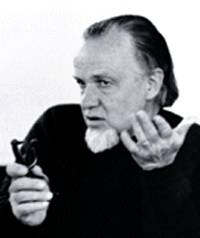





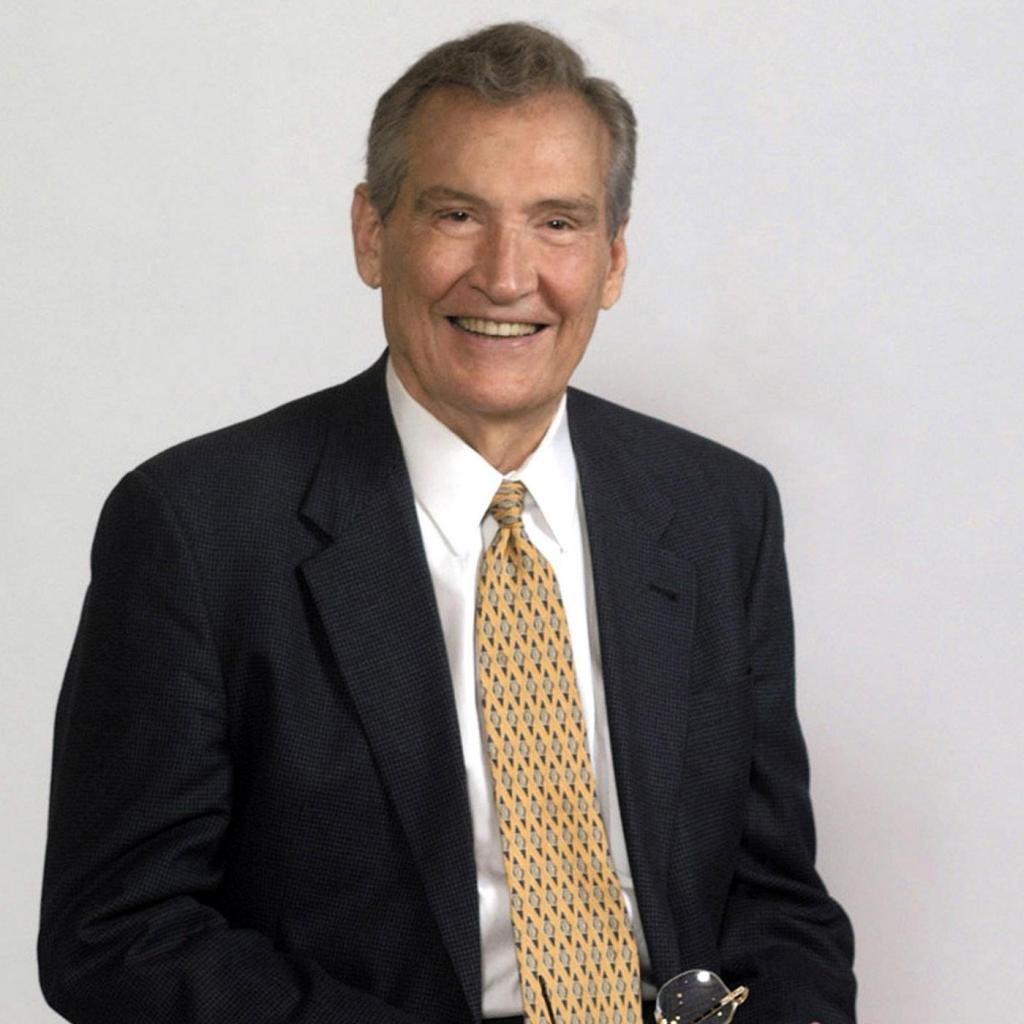





























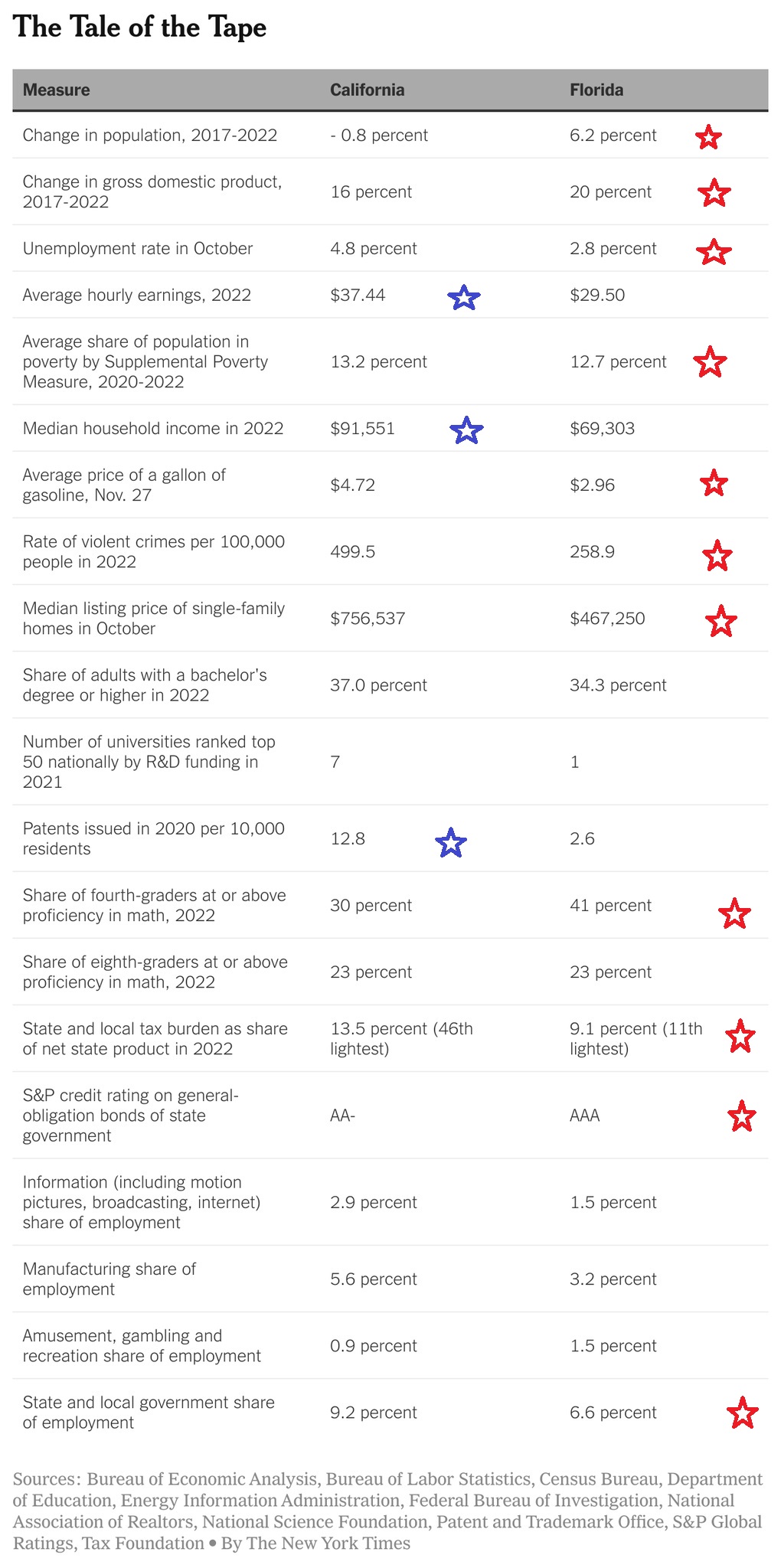

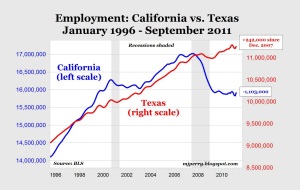


 South Dakota (5.8%), Montana (6.1%), Idaho (6.5%), North Dakota (7%), and Delaware (8.8%). …The personal income declines in California, New York, Illinois and some other states would have been larger if not for the continued growth in Medicaid spending owing to the pandemic national emergency, which didn’t end until this spring. A federal food-stamp fillip also continued until March. …California, New York and Illinois used their allotments largely to cover pre-existing budget shortfalls, boost government worker pay, and bake into their budget new spending obligations. Those will become shortfalls once the pandemic money boom ends. Taxpayers, look out.







.jpg)


 The Daily Hatch