Monthly Archives: February 2015

The Miracle of Morality ATHEISM’S (OTHER) ACHILLES HEEL By: Eric Metaxas|Published: February 2, 2015

__________

When I think of morality it always makes me remember Francis Schaeffer and C.Everett Koop and their film series WHATEVER HAPPENED TO THE HUMAN RACE? EPISODE 4  “BASIS FOR HUMAN DIGNITY.” Here it is below followed by an excellent article by Eric Metaxas.

Francis Schaeffer pictured below:
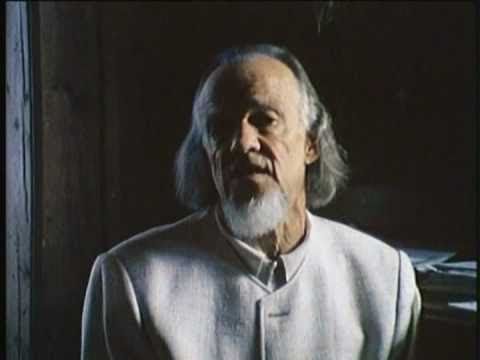
 

How Should We Then Live?: The Rise and Decline of Western Thought and Culture (2 hrs)

Francis Schaeffer “BASIS FOR HUMAN DIGNITY” Whatever…HTTHR

ATHEISM’S (OTHER) ACHILLES HEEL

Can you be good if you don’t believe in God? For the simple and uncontroversial answer, stay tuned to BreakPoint.

Eric Metaxas

Last month I raised a lot of hackles by writing an op-ed in the Wall Street Journal arguing what should be obvious by now: science increasingly makes the case for God’s existence. Whether we’re talking about the finely-tuned constants of our universe, or the simple logic that dictates the cosmos had a beginning and therefore a cause, all of the signposts are pointing in one direction: up.

Of course, that didn’t stop the objections from pouring in. Bloggers and academics from all over made arguments against my piece ranging from the scientific, to the philosophical, to the downright personal. But writers far more credentialed than I in the scientific community have done a fine job refuting these objections. I’ll link you to the best of their articles at BreakPoint.org.

For now, let’s just say I’ve discovered firsthand how controversial it is to mention “science” and “God” in the same paragraph in a major American newspaper. But if you think writing what I did in the Wall Street Journal was brave, I’d like to introduce you to Pastor Rick Henderson. Last month this courageous soul dared to write a piece in the Huffington Post entitled: “Why There Is No Such Thing as a Good Atheist.” I hope he ducked.

Henderson preempted the predictable reactions by throwing down yet another gauntlet: “For those of you who are eager to pierce me with your wit and crush my pre-modern mind,” he writes, “allow me to issue a challenge. I contend that any response you make will only prove my case.”

And prove his case they did. The comment section and subsequent op-eds were a rerun of billboards that appeared around the U.K. a few years ago: there are, in fact, well-behaved atheists.

No argument there, either from Henderson or any other sensible Christian. But as apologist William Lane Craig has reminded atheists time and again, the real question isn’t “can you be good without believing in God?” but “can you be good without God?”

And as Henderson shows, the answer to that is a resounding “no.”

The fundamental tenets of atheism, he explains, make it impossible to believe in objective good or evil. If the universe arose randomly and is purely material, governed by discernible laws, both impersonal and unconscious, then universal morality is, “At best…the mass delusion shared by humanity, protecting us from the cold sting of despair.”

It’s the same argument C. S. Lewis made years ago in Mere Christianity when he wrote that his former atheism was “too simple.”  In order to object to God on the basis of how cruel and unjust the world is, Lewis realized he had to assume cruelty and injustice are wrong. But nothing in the material world provides a basis for that assumption. Only God can. Thus, Lewis reasoned, even atheists know more than they’re letting on.

If his argument sounds familiar, it’s because it’s not very new. Just open your Bible to Romans chapters 1 and 2 to see how the Apostle Paul used almost the same words to stop the mouths of unbelievers in his day.

But here’s why these arguments are still relevant and worth our time (and a few knocks from critics) to publish them: If Paul was right, even the most dedicated atheist looks at the stars, feels the prick of conscience, and knows there is a God. He may deny it. But the slightest sound—the whispers of intelligent design in the universe and in our consciences—will spook him.

So, please do come to BreakPoint.org for more on science, morality, and the existence of God.

FURTHER READING AND INFORMATION

The Miracle of Morality: Atheism’s (Other) Achilles Heel
Check out the links below for more in-depth study and information on science, morality, and the existence of God.

RESOURCES

Why There Is No Such Thing as a Good Atheist
Pastor Rick Henderson | Huffington Post | February 17, 2014

The Kalam Cosmological Argument
William Lane Craig | Youtube video | September 1, 2013

The Moral Argument
William Lane Craig | Youtube video | January 21, 2015

Science Increasingly Makes the Case for God
Eric Metaxas | Wall Street Journal | December 25, 2014

Still Taking Aim at Eric Metaxas, the Media Underestimate the Degree to which Physicists See Evidence for Intelligent Design
Casey Luskin | Evolutionnews.org | January 13, 2015

The Cosmic Fine-Tuning Argument for Intelligent Design, Now with “No More Tears” Formula
David Klinghoffer | evolutionnews.org | January 14, 2015

You Go, Eric Metaxas! Measuring the Improbability of Intelligent Life Elsewhere in the Cosmos
Daniel Bakkan | evolutionnews.org | January 13, 2015

A Christmas Gift that Keeps Giving: Lawrence Krauss on Eric Metaxas on Science, on God
David Klinghoffer | evolutionnews.org | January 8, 2015

COMMENTS:

The response of a former atheist
Mr. Metaxas,

First of all, when I read the description of today’s commentary, and listened to the first few paragraphs, I thought you were going in a different direction. Accordingly, I was thinking how I would answer your question, anticipating how I thought you were going to answer it: “Well, it depends on what you mean by ‘good’. If you mean well-behaved by man’s standards, …” At this point, you acknowledged the existence of well-behaved atheists, so I thought we were on the same page. I continued, “… that is, people who don’t commit violent crimes like murder, rape, mugging, etc., and perhaps even do some good deeds like donating to charities that assist the needy, and helping little old ladies cross the street. But by God’s standard, none of us is good. There are neither good atheists nor good Christians, for we are all sinners.” But, of course, that’s not what you were leading up to. Okay.

Now that that is out of the way, let me give the response I would have given (I think) when I was an atheist, before I was born again: “If we atheists are right, we are as we are because we evolved that way. And we evolved that way because it is conducive to survival. Our concept of good comes from the way our brains are wired, and that’s the way they evolved. So there is no mystery to why we think altruism is good, and violent crime is bad, therefore no need to explain those preferences by inventing an imaginary god who created us and gave us those preferences. Only ignorant people who don’t understand how evolution works feel the need to do that.”

Your turn.

P.S. Why I spelled ‘god’ with a small g: The word ‘God’ with a capital G is used only to refer to the one true God. That God is not imaginary, so I would be blaspheming Him if I put that word after the word ‘imaginary’.

Related posts:

RESPONDING TO HARRY KROTO’S BRILLIANT RENOWNED ACADEMICS!! (Part 10 Dr. Stuart Kauffman, Evolutionary Optimistic Humanism)

This is the fourth post I have done on Stuart Kaufman recently. The first post I did on Stuart Kauffman used the Fine Tuning Argument of Antony Flew against him among other things. In the second post, I put an article by Kauffman on the question Does science make belief in God obsolete?, and his article asserted, […]

RESPONDING TO HARRY KROTO’S BRILLIANT RENOWNED ACADEMICS!! (Dr. David J. Gross, Nobel Laureate, UC Santa Barbara Physics Department, DOES SCIENCE HAVE RELIGION ON THE RUN, OR DID CHRISTIANITY ENCOURAGE SCIENCE?)

______________ אוכל למחשבה – דיויד גרוס (David Gross) Betting on the cosmos – with David Gross and Robert Laughlin Published on Oct 10, 2012 Working out what happened in the moments after the Big Bang is difficult. Scientists can come up with theories, but in the end they are useful only if they can be […]

RESPONDING TO HARRY KROTO’S BRILLIANT RENOWNED ACADEMICS!! (Dr. Frank Wilczek, American theoretical physicist, mathematician,Nobel Laureate, MIT, “The ancient texts [of the Bible] … don’t do justice to what we know about the universe now” )

_________ Dr. Wilczek pictured below: ___ On November 21, 2014 I received a letter from Nobel Laureate Harry Kroto and it said: …Please click on this URLhttp://vimeo.com/26991975 and you will hear what far smarter people than I have to say on this matter. I agree with them. Harry Kroto __________________________ There are 3 videos in this […]

RESPONDING TO HARRY KROTO’S BRILLIANT RENOWNED ACADEMICS!! (Dr.Alexander Vilenkin, Professor of Physics and Director of the Institute of Cosmology at Tufts University, PANTHEISM IS NOT THE ANSWER, BUT IS THERE EVIDENCE FOR A PERSONAL GOD OF THE BIBLE?)

__________________ Dr. Alexander Vilenkin pictured below: ____________ On November 21, 2014 I received a letter from Nobel Laureate Harry Kroto and it said: …Please click on this URL http://vimeo.com/26991975 and you will hear what far smarter people than I have to say on this matter. I agree with them. Harry Kroto __________________________ There are 3 videos […]

RESPONDING TO HARRY KROTO’S BRILLIANT RENOWNED ACADEMICS!! (Dr. Roy Glauber, Harvard University, an American theoretical physicist, FINE TUNING ARGUMENT)

אוכל למחשבה – רוי גלאובר (Roy j. Glauber)         ________________ On November 21, 2014 I received a letter from Nobel Laureate Harry Kroto and it said: …Please click on this URL http://vimeo.com/26991975 and you will hear what far smarter people than I have to say on this matter. I agree with them. Harry […]

RESPONDING TO HARRY KROTO’S BRILLIANT RENOWNED ACADEMICS!! (Dr. Roald Hoffmann, Cornell University, American theoretical chemist who won the 1981 Nobel Prize in Chemistry, WHY DO PEOPLE HAVE A DESIRE FOR GOD?)

___________ Frank H. T. Rhodes Professor  of Humane Letters Emeritus _____________ On November 21, 2014 I received a letter from Nobel Laureate Harry Kroto and it said: …Please click on this URLhttp://vimeo.com/26991975 and you will hear what far smarter people than I have to say on this matter. I agree with them. Harry Kroto __________________________ […]

RESPONDING TO HARRY KROTO’S BRILLIANT RENOWNED ACADEMICS!! (Dr. Rebecca Goldstein, American novelist and philosopher, THE PROBLEM OF EVIL)

Mathematics and Religion Uploaded on Oct 26, 2009 Roundtable discussion with Dominic Balestra, Loren Graham, Edward Nelson, Rebecca Newberger Goldstein, and Max Tegmark. _______ Dr. Rebbecca Goldstein pictured below: _________________ On November 21, 2014 I received a letter from Nobel Laureate Harry Kroto and it said: …Please click on this URLhttp://vimeo.com/26991975 and you will hear […]

RESPONDING TO HARRY KROTO’S BRILLIANT RENOWNED ACADEMICS!! (Dr. Noam Chomsky, MIT, American linguist, philosopher, cognitive scientist, logician, political commentator, anarcho-syndicalist activist, NEED EVIDENCE BEFORE BELIEVING)

_________ Noam Chomsky & Howard Zinn “Is There Hope in This Desperate Time?” Published on Dec 10, 2012 This event was a fundraiser for Spare Change street paper and the Homeless Empowerment Project. Recorded on September 27, 2004 Dr. Noam Chomsky pictured below: _______ On November 21, 2014 I received a letter from Nobel Laureate Harry […]

RESPONDING TO HARRY KROTO’S BRILLIANT RENOWNED ACADEMICS!! (Dr. Brian Greene, Columbia University, American theoretical physicist and string theorist, IS PANTHEISM THE ANSWER?)

__________________ Dr. Greene pictured below with David Letterman:   __ On November 21, 2014 I received a letter from Nobel Laureate Harry Kroto and it said: …Please click on this URL http://vimeo.com/26991975 and you will hear what far smarter people than I have to say on this matter. I agree with them. Harry Kroto __________________________ There are 3 […]

RESPONDING TO HARRY KROTO’S BRILLIANT RENOWNED ACADEMICS!! (Dr. Marvin Minsky, co-founder of MIT,”…if there are questions science can’t yet answer, why knock yourself out? I regard religion as a wonderful way to save people’s time”)

______________ Dr. Marvin Minsky pictured below: On November 21, 2014 I received a letter from Nobel Laureate Harry Kroto and it said: …Please click on this URL http://vimeo.com/26991975 and you will hear what far smarter people than I have to say on this matter. I agree with them. Harry Kroto __________________________ There are 3 videos in […]

Christo and Jeanne-Claude’s ‘The Gates’ and the song “FROM THE MORNING” by Nick Drake

___________

AT&T Blanket Commercial — What’s the Song?

Nick DrakeContinuing with AT&T’s “Rethink Possible” campaign, this commercial metaphorically supports their slogan that “AT&T covers 97 percent of all Americans,” by blanketing Hollywood, the Hoover Dam, New York, Las Vegas and St. Louis’ Gateway Arch, among others with orange vinyl, while playing the soothing folk tune ‘From the Morning’ by Nick Drake.

‘From the Morning’ was featured on Drake’s third and final album ‘Pink Moon’ before his death in 1974. The recording sessions took only two nights, with just Drake and sound engineer and producer John Wood in the studio. The bare yet serene recordings of the 11-track album lasted only 28 minutes, and featured only Drake on vocals and acoustic guitar (with sparse piano in the title track).

AT&T’s visuals were clearly inspired by the work of Christo and Jeanne-Claude’s ‘The Gates.’ The duo’s installation artwork could be seen all over the world, but ‘The Gates’ exhibit featured 23 miles of orange vinyl gates that were installed in Central Park; the exhibit ran in February of 2005.

Check out the commercial below, and tune into AOL Radio’s Songwriters station to hear this song and other Nick Drake classics.

AT&T Blanket Commercial: Rethink Possible Series

The artists behind The Gates Christo and Jeanne-Claude

Uploaded on Jul 26, 2007

At their studio in New York City, LX.TV host Shira Lazar talks with renowned environmental artists Christo and Jeanne-Claude about the Gates Project, their artistic endeavors, and the challenges of living and working together in New York.

The Gates

From Wikipedia, the free encyclopedia
For other uses, see Gates.

Facing northeast

The Gates were a group of gates comprising a site-specific work of art by Bulgarian artist Christo Yavacheff and French artist Jeanne-Claude, known jointly as Christo and Jeanne-Claude. The artists installed 7,503 vinyl “gates” along 23 miles (37 km) of pathways in Central Park in New York City. From each gate hung a panel of deep saffron-colored nylon fabric. The exhibit ran from February 12, 2005 through February 27, 2005.

The books and other memorabilia distributed by Christo and Jeanne-Claude refer to the project as The Gates, Central Park, New York, 1979–2005 in reference to the time that passed from the artists’ initial proposal until they were able to go ahead with it.

The Gates were greeted with mixed reactions. Some people loved them for brightening the bleak winter landscape and encouraging late-night pedestrian traffic in Central Park; others hated them, accusing them of defacing the landscape. It was seen as an obstruction to bicycclists, who felt that the gates could cause accidents, although cycling was not legal on those paths. They received a great deal of their nationwide fame as a frequent object of ridicule by David Letterman, as well as by Keith Olbermann, whose apartment was nearby.

Fabrication[edit]

Construction and cost[edit]

The total materials used according to the artists were 5,390 tons of steel, 315,491 feet (96 km) of vinyl tubing, 99,155 square metres of fabric, and 15,000 sets of brackets and hardware. The gates were assembled in a 25,000 square foot (2,300 m²) Long Island facility, then trucked to Central Park. The textile was produced and sewn in Germany.

As one of the conditions for use of the park space, the steel bases rested upon, but remained unattached to, the walkways, so that no holes were drilled and no permanent changes were made to the park.

The artists sold pieces of their own artwork, including preparatory drawings for The Gates, to finance the project.

They offered a cost of $21 million and the details are published in the Harvard Business School. Greg Allen and The New York Times attempted to itemize the costs and could account for about $5–10 million, given reasonable estimates for parts, labor, and costs related to the staffing of the installation.[1][2]

Installation[edit]

During construction: one of the many metal base parts (Feb. 6)

On January 3, 2005, work began on the installation of the project. During the week of January 17, the park filled with workers using forklift vehicles to move the rectangular steel plates into position all over Central Park. There were small signs placed on every walkway in the park with alphanumeric codes which the workers used to place the metal plates onto the designated spots.

By January 27, most of the rectangular metal plates were positioned. All had small orange plastic markers sticking up two feet (around half a meter) from each end, possibly intended to help people find the base plates if they were covered with snow. A major snow storm on January 22 and extreme cold hampered progress.

Hardware used to ensure that the vertical pieces were parallel, even when the base plates themselves were not level, due to uneven or sloped ground.

By February 7, many teams of workers, wearing grey uniforms, moved the vertical parts of the gates, and attached them to the base plates. The documentation describes the color as saffron but many local observers described it as orange. The attached vertical fabric pieces were 16 feet (5 m) high, with a crossbar at the top from which the flag pieces were unfurled. The most common width seems to have been 11 feet (3 m) although the width varied, depending on the width of the path, from 5 feet 6 inches to 18 feet.

Display[edit]

Opening[edit]

Before unfurling

The project was officially launched on February 12, 2005, when then-New York Mayor Michael R. Bloomberg dropped the first piece of fabric at 8:30 a.m., with Christo and Jeanne-Claude in attendance. The rest of The Gates were opened subsequently throughout the park and were completed within the next few hours with large crowds of people watching. Generally, the crews of workers who erected the gates were assigned to open them. They walked underneath, and used a hook at the end of a long stick to pull a loop hanging from the crossbar of each gate. That opened the cloth bag containing the fabric panel part of the gate. The bag fell to the ground, along with a cardboard tube around which the fabric was rolled. The fabric part then hung from the horizontal crossbar. By the afternoon of February 12, all of the panels were unfurled.

The project staff remained deployed in the park, patrolling, and replacing damaged gates. On many days, staff members distributed free 2.75″ square souvenir swatches of the orange fabric to passers by, in part intended to discourage vandalism. Nevertheless, one of the gates, near the Shakespeare Garden in front of the Delacorte Theatre, was vandalized and replaced frequently. The swatches remain highly collectible and trade on eBay for about $10 each.

Closure and legacy[edit]

The installation was set to close February 27, 2005.[3] Christo and Jeanne-Claude also visited the installation on the last day, entering Central Park at its less congested northern end. Although the Park’s roadways were closed to vehicles, they traveled with a police escort in their Maybach sedan. Christo then left the car and walked to several vantage points, capturing last minute photographs with a professional assistant. After the exhibition closed on February 27, the gates and bases were removed. The materials were industrially recycled, partially as scrap metal.[4]

A 2007 documentary film’s synopsis noted this artwork “brought over 4 million visitors from around the world to Central Park.”[5]

The HBO movie The Gates, about the installation,[6] aired February 26, 2008, won a Peabody Award that same year.[7]

Inspirations[edit]

The Gates alludes to the tradition of Japanese torii gates, traditionally constructed at the entrance to Shinto shrines. Thousands of vermilion-colored torii line the paths of the Fushimi Inari shrine in Kyoto, Japan. Successful Japanese businessmen traditionally purchased a gate in gratitude to Inari, the god of worldly prosperity.

Gallery[edit]

Views of The Gates
From the roof of theMetropolitan Museum of Art. (Image date: February 18, 2005)
Near the north end of theGreat Lawn, facing west toward Spector Playground. (Image date: February 23, 2005)
Facing southwest
At the Seneca Village site
Facing east

(See also: Media related to The Gates (Christo and Jeanne-Claude work of art) at Wikimedia Commons)

References[edit]

Notes

  1. Jump up^ ‘The Gates’ Bill. Greg Allen, greg.org, February 13, 2005.
  2. Jump up^ “Enough About ‘Gates’ as Art; Let’s Talk About That Price Tag.” The New York Times, March 5, 2005, investigates the $21 million claim.
  3. Jump up^ Central Park’s ‘Gates’ to close, a February 25, 2005 CNN story
  4. Jump up^ Beeson, Ed (April 28, 2013). “Behold the Mega Shredder: Jersey City recycling plant turns cars to confetti in seconds”. The Jersey Journal. Retrieved 2013-04-26.
  5. Jump up^ The Gates documentary film, produced by Kino Lorber, Directors Albert Maysles, Antonio Ferrera, David Maysles, Matthew Prinzing, cf. watch on hulu.com: http://www.hulu.com/watch/380749
  6. Jump up^ http://www.hbo.com/docs/programs/thegates/index.html?ntrack_para1=insidehbo7_text
  7. Jump up^ 68th Annual Peabody Awards, May 2009.

Other sources

External links[edit]

_____________

Christo and Jeanne-Claude

Other artists that I have profiled are Marina AbramovicIda Applebroog,  Matthew Barney,  Allora & Calzadilla,   Olafur EliassonTracey EminJan Fabre, Makoto Fujimura, Hamish Fulton, Ellen GallaugherRyan Gander, John Giorno,  Cai Guo-QiangArturo HerreraOliver HerringDavid Hockney, David HookerRoni HornPeter HowsonRobert Indiana, Jasper Johns, Martin KarplusMargaret KeaneMike KelleyJeff KoonsSally MannKerry James MarshallTrey McCarley,   Paul McCarthyJosiah McElhenyBarry McGeeTony OurslerWilliam Pope L.Gerhard RichterJames RosenquistSusan RothenbergGeorges Rouault, Richard SerraShahzia SikanderHiroshi SugimotoRichard TuttleLuc TuymansBanks ViolettFred WilsonKrzysztof Wodiczko, and Andrea Zittel,

_____________________

Related posts:

FRANCIS SCHAEFFER ANALYZES ART AND CULTURE Part 43 “Freedom within Form” (Featured artist is Jan Fabre)

FRANCIS SCHAEFFER ANALYZES ART AND CULTURE Part 42 Historical Adam and Eve (Featured artist is Banks Violette)

FRANCIS SCHAEFFER ANALYZES ART AND CULTURE Part 41 Sarvepalli Radhakrishnan (Featured artist is Marina Abramović)

FRANCIS SCHAEFFER ANALYZES ART AND CULTURE Part 40 Timothy Leary (Featured artist is Margaret Keane)

FRANCIS SCHAEFFER ANALYZES ART AND CULTURE Part 39 Tom Wolfe (Featured artist is Richard Serra)

FRANCIS SCHAEFFER ANALYZES ART AND CULTURE Part 38 Woody Allen and Albert Camus “There is but one truly serious philosophical problem, and that is suicide” (Feature on artist Hamish Fulton Photographer )

FRANCIS SCHAEFFER ANALYZES ART AND CULTURE Part 37 Mahatma Gandhi and “Relieving the Tension in the East” (Feature on artist Luc Tuymans)

FRANCIS SCHAEFFER ANALYZES ART AND CULTURE Part 36 Julian Huxley:”God does not in fact exist, but act as if He does!” (Feature on artist Barry McGee)

FRANCIS SCHAEFFER ANALYZES ART AND CULTURE Part 35 Robert M. Pirsig (Feature on artist Kerry James Marshall)

FRANCIS SCHAEFFER ANALYZES ART AND CULTURE Part 34 Aleksandr Solzhenitsyn (Feature on artist Shahzia Sikander)

FRANCIS SCHAEFFER ANALYZES ART AND CULTURE Part 33 Aldous Huxley (Feature on artist Matthew Barney )

FRANCIS SCHAEFFER ANALYZES ART AND CULTURE Part 32 Steven Weinberg and Woody Allen and “The Meaningless of All Things” (Feature on photographer Martin Karplus )

FRANCIS SCHAEFFER ANALYZES ART AND CULTURE Part 31 David Hume and “How do we know we know?” (Feature on artist William Pope L. )

FRANCIS SCHAEFFER ANALYZES ART AND CULTURE Part 30 Rene Descartes and “How do we know we know?” (Feature on artist Olafur Eliasson)

FRANCIS SCHAEFFER ANALYZES ART AND CULTURE Part 29 W.H. Thorpe and “The Search for an Adequate World-View: A Question of Method” (Feature on artist Jeff Koons)

FRANCIS SCHAEFFER ANALYZES ART AND CULTURE Part 28 Woody Allen and “The Mannishness of Man” (Feature on artist Ryan Gander)

FRANCIS SCHAEFFER ANALYZES ART AND CULTURE Part 27 Jurgen Habermas (Featured artist is Hiroshi Sugimoto)

FRANCIS SCHAEFFER ANALYZES ART AND CULTURE Part 26 Bettina Aptheker (Featured artist is Krzysztof Wodiczko)

FRANCIS SCHAEFFER ANALYZES ART AND CULTURE Part 25 BOB DYLAN (Part C) Francis Schaeffer comments on Bob Dylan’s song “Ballad of a Thin Man” and the disconnect between the young generation of the 60’s and their parents’ generation (Feature on artist Fred Wilson)

FRANCIS SCHAEFFER ANALYZES ART AND CULTURE Part 24 BOB DYLAN (Part B) Francis Schaeffer comments on Bob Dylan’s words from HIGHWAY 61 REVISITED!! (Feature on artist Susan Rothenberg)

FRANCIS SCHAEFFER ANALYZES ART AND CULTURE Part 23 BOB DYLAN (Part A) (Feature on artist Josiah McElheny)Francis Schaeffer on the proper place of rebellion with comments by Bob Dylan and Samuel Rutherford

FRANCIS SCHAEFFER ANALYZES ART AND CULTURE Part 22 “The School of Athens by Raphael” (Feature on the artist Sally Mann)

FRANCIS SCHAEFFER ANALYZES ART AND CULTURE Part 21 William B. Provine (Feature on artist Andrea Zittel)

FRANCIS SCHAEFFER ANALYZES ART AND CULTURE Part 20 Woody Allen and Materialistic Humanism: The World-View of Our Era (Feature on artist Ida Applebroog)

FRANCIS SCHAEFFER ANALYZES ART AND CULTURE Part 19 Movie Director Luis Bunuel (Feature on artist Oliver Herring)

FRANCIS SCHAEFFER ANALYZES ART AND CULTURE Part 18 “Michelangelo’s DAVID is the statement of what humanistic man saw himself as being tomorrow” (Feature on artist Paul McCarthy)

FRANCIS SCHAEFFER ANALYZES ART AND CULTURE Part 17 Francis Schaeffer discusses quotes of Andy Warhol from “The Observer June 12, 1966″ Part C (Feature on artist David Hockney plus many pictures of Warhol with famous friends)

FRANCIS SCHAEFFER ANALYZES ART AND CULTURE Part 16 Francis Schaeffer discusses quotes of Andy Warhol from “The Observer June 12, 1966″ Part B (Feature on artist James Rosenquist plus many pictures of Warhol with famous friends)

FRANCIS SCHAEFFER ANALYZES ART AND CULTURE Part 14 David Friedrich Strauss (Feature on artist Roni Horn )

FRANCIS SCHAEFFER ANALYZES ART AND CULTURE Part 13 Jacob Bronowski and Materialistic Humanism: The World-View of Our Era (Feature on artist Ellen Gallagher )

FRANCIS SCHAEFFER ANALYZES ART AND CULTURE Part 12 H.J.Blackham and Materialistic Humanism: The World-View of Our Era (Feature on artist Arturo Herrera)

FRANCIS SCHAEFFER ANALYZES ART AND CULTURE Part 11 Thomas Aquinas and his Effect on Art and HOW SHOULD WE THEN LIVE? Episode 2: THE MIDDLES AGES (Feature on artist Tony Oursler )

FRANCIS SCHAEFFER ANALYZES ART AND CULTURE Part 10 David Douglas Duncan (Feature on artist Georges Rouault )

FRANCIS SCHAEFFER ANALYZES ART AND CULTURE Part 9 Jasper Johns (Feature on artist Cai Guo-Qiang )

FRANCIS SCHAEFFER ANALYZES ART AND CULTURE Part 8 “The Last Year at Marienbad” by Alain Resnais (Feature on artist Richard Tuttle and his return to the faith of his youth)

FRANCIS SCHAEFFER ANALYZES ART AND CULTURE Part 7 Jean Paul Sartre (Feature on artist David Hooker )

FRANCIS SCHAEFFER ANALYZES ART AND CULTURE Part 6 The Adoration of the Lamb by Jan Van Eyck which was saved by MONUMENT MEN IN WW2 (Feature on artist Makoto Fujimura)

FRANCIS SCHAEFFER ANALYZES ART AND CULTURE Part 5 John Cage (Feature on artist Gerhard Richter)

FRANCIS SCHAEFFER ANALYZES ART AND CULTURE Part 4 ( Schaeffer and H.R. Rookmaaker worked together well!!! (Feature on artist Mike Kelley Part B )

FRANCIS SCHAEFFER ANALYZES ART AND CULTURE Part 3 PAUL GAUGUIN’S 3 QUESTIONS: “Where do we come from? What art we? Where are we going? and his conclusion was a suicide attempt” (Feature on artist Mike Kelley Part A)

FRANCIS SCHAEFFER ANALYZES ART AND CULTURE Part 2 “A look at how modern art was born by discussing Monet, Renoir, Pissaro, Sisley, Degas,Cezanne, Van Gogh, Gauguin, Seurat, and Picasso” (Feature on artist Peter Howson)

FRANCIS SCHAEFFER ANALYZES ART AND CULTURE Part 1 HOW SHOULD WE THEN LIVE? “The Roman Age” (Feature on artist Tracey Emin)

SEC dominates recruiting again in 2015 (Top recruiting rankings)

______________

Sports Illustrated puts 6 SEC teams in the top ten in recruiting with Bama 2nd, Vols 5th, Auburn 6th, Georgia 7th, LSU 8th and A&M 10th.  Tennessee jumped up and had an unbelievable recruiting class which makes two in a row for Butch Jones. Alabama had the best class 5 years in a row now so it’s not even worth noting that since I just take that granted. Tennessee signed 3 very good quarterbacks and several offensive linemen and defensive linemen that were very highly rated. Miss St got 6 Four Star players and 20 Three Star players while Arkansas got 7 Four Star players and 15 Three star players but yet Miss St got ranked way ahead of Arkansas. I can’t figure that out. Sporting Life Arkansas gives a full rundown of all of the Hogs’ signers. 

SEC collects another impressive talent haul, led by Alabama

Associated Press

View gallery

  • .

The Southeastern Conference is off to a good start in trying to get back to winning national titles.

The league’s talent haul on Wednesday included top defensive linemen Trenton Thompson (Georgia), Byron Cowart (Auburn) and Kahlil MacKenzie (Tennessee) and blue-chip prospects at every other position as well, notably including a restocking of talent at quarterback.

Half of the top 12 recruiting class were SEC teams, according to the 247Sports composite of the major recruiting services.

Alabama led the way again with a class that was ranked either No. 1 or 2 by those services with a group led by wide receiver Calvin Ridley. It was the fifth consecutive year the Crimson Tide has brought in a No. 1 class.

Not that Alabama coach Nick Saban would admit to being concerned with all that.

“We’re certainly pleased with our guys but predicting how a young person is going to do academically and athletically in college by giving them some rating when he’s in high school is not very scientific,” Saban said.

“We try to use science to create things that are very subjective in terms of what someone’s performance is going to be, and I don’t think that’s really possible. There’s no scientific way to know what the achievement of any person is going to be in anything they try to do. It’s impossible.”

Scientific or not, the other SEC powers weren’t too far behind in a league that hasn’t won a national title in two seasons after capturing seven straight. Butch Jones’ haul at Tennessee ranked fourth in the composite rankings, one spot ahead of LSU. That’s followed by No. 9 Auburn, No. 10 Georgia and No. 12 Texas A&M. Only Kentucky and Vanderbilt failed to crack the Top 25.

Auburn, Georgia and Tennessee all landed a defensive lineman rated the nation’s top prospect by a recruiting service.

The Volunteers’ class was headlined by McKenzie, son of Oakland Raiders general manager and former Tennessee linebacker Reggie McKenzie.

___

Here are some things to know about the SEC’s 2015 recruiting hauls:

Best Class: Alabama. The Tide got top honors in the ESPN and 247Sports rankings with six consensus five-star players, including Ridley, running back Damien Harris and cornerbacks Minkah Fitzpatrick and Kendall Sheffield.

Impact Player: Cowart. The 6-foot-4, 250-pounder fills a position of desperate need for the Tigers: a pass-rushing defensive end. It took nearly seven hours for his national letter of intent to arrive in Auburn after his announcement.

Top Passers: The league was short on star quarterbacks last season and brought in a number of candidates to try to rectify that in the next couple of years. Texas A&M landed Kyler Murray, rated the nation’s top dual-threat quarterback by 247Sports, and Alabama got fellow five-star passer Blake Barnett from California. Tennessee landed three consensus four-star quarterbacks — Quinten Dormady, Jauan Jennings and Sheriron Jones.

Florida’s Finish: New Gators coach Jim McElwain finished strong on Wednesday by landing consensus five-star players in offensive tackle Martez Ivey and defensive end CeCe Jefferson, despite losing key targets like Cowart.

Late Addition: Georgia beat out Auburn for five-star wide receiver prospect Terry Godwin, who didn’t announce until Wednesday night.

___

AP Sports Writers Steve Megargee and Teresa Walker contributed to this report.

SEC dominates recruiting again in 2015 (Top recruiting rankings)

RIVALS.COM TOP 25 RECRUITING CLASS RANKINGS
  • 1
    TOTAL COMMITS: 26
    FIVE STARS: 4
    FOUR STARS: 17
    THREE STARS: 3
    The Trojans made some big moves in the days leading up to Signing Day, and finished by claiming the top spot in the Rivals team rankings. It started with bumps from Rivals100 linebacker Osa Masina and five-star linebacker Porter Gustin. Then came the SoCal boom as five-star standouts Rasheem Green, John Houston, and Iman Marshall all chose to sign with USC on Signing Day. The additions allowed USC to overtake Alabama at the finish line.

2.

ALABAMA
TOTAL COMMITS: 24
FIVE STARS: 4
FOUR STARS: 15
THREE STARS: 5
The Crimson Tide came up just shy of claiming another recruiting national championship, but the class is still one of the best in the country and one of only two classes to total more than 3,000 points in the Rivals rankings. The Crimson Tide grabbed commitments from a staggering 18 Rivals250 members in their 2015 class, 10 of which are in the Rivals100.
3
FLORIDA STATE
TOTAL COMMITS: 20
FIVE STARS: 5
FOUR STARS: 10
THREE STARS: 5
The Seminoles may not have the No. 1 class, but they do lead the nation in five-star recruits. The Seminoles brought in five five-star players and Rivals100 defensive back Marcus Lewis on Signing Day. The Seminoles added some nice pieces all over the field but the secondary, the quarterback class and the wide receiver group are particularly strong.
4
CLEMSON
TOTAL COMMITS: 23
FIVE STARS: 3
FOUR STARS: 9
THREE STARS: 10
Dabo Swinney and Clemson have had one of the top recruiting classes in the country from the start. Five-star standouts Christian Wilkins, Deon Cain and Ray-Ray McCloud lead the way while offensive linemen Mitch Hyatt and Jake Fruhmorgen add strength to the offensive line. On the other side of the ball, Albert Huggins, Clelin Ferrell and Austin Bryant add more punch to the defensive line. It’s a very strong class on the whole.
5
TENNESSEE
TOTAL COMMITS: 29
FIVE STARS: 4
FOUR STARS: 13
THREE STARS: 11
The Tennessee Volunteers had a special class entering Signing Day, but the flipping of five-star offensive tackle Drew Richmond from Ole Miss made it elite. The Volunteers addressed needs on both sides of the trenches and at quarterback, and took care of their own backyard with the top three prospects in Tennessee choosing to play their college football in Knoxville.
6
AUBURN
TOTAL COMMITS: 27
FIVE STARS: 2
FOUR STARS: 15
THREE STARS: 9
Auburn was one of the big movers on the day by landing nation’s No. 1 prospect Byron Cowart. The Tigers also grabbed Rivals100 Ryan Davis, Rivals250 Carlton Davis, and four-star Jeffery Holland on Signing Day.
7
GEORGIA
TOTAL COMMITS: 28
FIVE STARS: 2
FOUR STARS: 10
THREE STARS: 14
The Bulldogs’ class has a heavy dose of defense. Mark Richt and his staff brought in seven defensive backs in the class with Rico McGraw, Juwuan Briscoe and Rashad Roundtree leading the way. The defensive line class is also one of the best in the country with six prospects ranked four-star or higher. Throw in playmaker Terry Godwin for good measure and Richt has reason to smile.
8
LSU
TOTAL COMMITS: 25
FIVE STARS: 4
FOUR STARS: 8
THREE STARS: 8
LSU is known to close well at the end of the recruiting process, and Les Miles and his staff did just that in 2015. The Tigers were able to secure the top three talents from Louisiana and addressed several needs. LSU also grabbed five-star prospects from Texas and Florida in addition to Louisiana, and added more talent to an already strong group of running backs in Baton Rouge. Signing Day additions Toby Weathersby and Derrick Dillon were also key signatures.
9
OHIO STATE
TOTAL COMMITS: 27
FIVE STARS: 0
FOUR STARS: 14
THREE STARS: 12
The Ohio State Buckeyes added four-star standouts Isaiah Prince and K.J. Hill to the Big Ten’s top class. Urban Meyer and his staff hit Ohio hard with 12 signees coming from the state, but they also experience success in 10 other states. Baker, Justin Hilliard and Nick Conner are among the nation’s best linebackers, and the offensive line group is one also a position of strength in the class.
10
TEXAS A&M
TOTAL COMMITS: 25
FIVE STARS: 1
FOUR STARS: 11
THREE STARS: 10
Texas A&M saw quarterback Kyler Murray shore up his commitment in the final week of the recruiting process and welcomed Daylon Mack back into the fold on Signing Day. Kevin Sumlin was able to win his share of the in-state recruiting battle and fended off Texas at the end for two prize recruits. The Aggies were able to strengthen the defense and grabbed one of the top offensive playmakers in the 2015 class in five-star wide receiver Christian Kirk.

11
NOTRE DAME
TOTAL COMMITS: 24
FIVE STARS: 0
FOUR STARS: 13
THREE STARS: 11
Notre Dame was able to add running back Dexter Williams and wide receiver Equanimeous St. Brown on Signing Day. The Fighting Irish succeeded all over the map, starting with top quarterback prospect Brandon Winbush out of New Jersey. Notre Dame added some strength to the defense with deep defensive line, linebacker and defensive back classes, and the wide receiver group also packs a nice punch.
12
TEXAS
TOTAL COMMITS: 29
FIVE STARS: 1
FOUR STARS: 14
THREE STARS: 12
Charlie Strong and his staff took some heat early on in the recruiting process, but closed strong by Wednesday’s end. The Longhorns added Rivals250 running back Chris Warren on Signing Day, and were able to grab standout talents Kai Locksley, Kris Boyd and Holton Hill during the final week. The Longhorns beefed up the offensive line, added some depth to each position on defense, and took home the Big 12’s top recruiting class.
13
UCLA
TOTAL COMMITS: 19
FIVE STARS: 3
FOUR STARS: 9
THREE STARS: 7
The Bruins were one of the hottest teams in the country on National Signing Day. Jim Mora and company added five-star running back Soso Jamabo, Rivals100 tight end Chris Clark, Rivals250 offensive lineman Josh Wariboko, and four-star wide receiver Cordell Broadus on Signing Day. The Bruins are also closely watching Roquan Smith, who committed to UCLA but never faxed his letter.
14
OKLAHOMA
TOTAL COMMITS: 24
FIVE STARS: 0
FOUR STARS: 14
THREE STARS: 10
The Oklahoma Sooners missed out on Josh Wariboko, but the Sooners have plenty to like about the 2015 recruiting class. Oklahoma adds another top Texas running back and grabbed a couple of big linebackers. The Sooners succeeded in Texas and added four-star safety Prentice McKinney to a defensive back group also featuring Kahlil Haughton, P.J. Mbanasor and Antoine Stephens.
15
PENN STATE
TOTAL COMMITS: 25
FIVE STARS: 0
FOUR STARS: 11
THREE STARS: 14
James Franklin and his staff put together a strong class. The Nittany Lions went heavy in the secondary and along the defensive front and were able to avoid the drama of Signing Day. Garrett Taylor and John Reid should add some strength to the defensive backfield and Saquon Barkley is an every-down back with big play potential. Penn State stuck to the northeast and was able to secure a very strong class.
16
MISSISSIPPI STATE
TOTAL COMMITS: 28
FIVE STARS: 0
FOUR STARS: 6
THREE STARS: 20
Mississippi State had a big year on the field and just as big a year on the recruiting front. The Bulldogs were able to secure four of the state’s top five talents in Leo Lewis, Jamal Peters, Fletcher Adams and Malik ​Dear. The signing of Keith Joseph Jr. gives the Bulldogs five of the top six. Lewis was the biggest win of the day when he chose Mississippi State over LSU at the end.
17
OREGON
TOTAL COMMITS: 22
FIVE STARS: 0
FOUR STARS: 8
THREE STARS: 14
The Oregon Ducks have a reputation for speed, quickness and a diverse uniform selection. Signees Malik Lovette, Kirk Merritt and Taj Griffin should make the Ducks even more difficult to stop while Travis Waller is a dual-threat quarterback who could really develop into something special in Eugene.
18
STANFORD
TOTAL COMMITS: 22
FIVE STARS: 1
FOUR STARS: 5
THREE STARS: 13
The Stanford Cardinal stayed home for Irwin and four-star defensive back Frank Buncom IV, but ventured out of the region for several big additions. In fact running back Bryce Love of North Carolina, offensive lineman Nick Wilson of Georgia and defensive back Ben Edwards of Florida are heading to Stanford from the east coast.
19
SOUTH CAROLINA
TOTAL COMMITS: 30
FIVE STARS: 0
FOUR STARS: 11
THREE STARS: 17
South Carolina signed a big class in 2015 and it loaded up in the trenches. The Gamecocks signed seven defensive linemen and four offensive linemen. They also went heavy at tight end and linebacker. The class is headlined by JUCO defensive end Marquavius Lewis and they were able to grab a few other difference makers from the JUCO and prep school ranks.
20
ARIZONA STATE
TOTAL COMMITS: 22
FIVE STARS: 0
FOUR STARS: 7
THREE STARS: 14
The Sun Devils secured the talents of Rivals100 defensive tackle Joseph Wicker on Signing Day and bolstered several areas of the squad. The quarterback position appears to be solidified with the additions of Brady White and Bryce Perkins and the offensive line also received some added strength. Overall it is a strong group with prospects from across the map.

21
OLE MISS
TOTAL COMMITS: 22
FIVE STARS: 0
FOUR STARS: 6
THREE STARS: 14
Ole Miss saw Leo Lewis and Drew Richmond slip away late in the process, but the Rebels still signed an impressive class. The biggest Signing Day win was Rivals100 wide receiver DaMarkus Lodge, who chose the Rebels over Texas and Texas A&M. Ole Miss also addressed several needs. The defensive backfield added some depth and so did the defensive front.
22
MICHIGAN STATE
TOTAL COMMITS: 20
FIVE STARS: 0
FOUR STARS: 7
THREE STARS: 13
The defensive backfield is loaded, and coach Mark Dantonio pulled recruits from Texas, Ohio, California and Michigan to make it. The Spartans also added bulk in the trenches with talent coming in on both the offensive and defensive lines. Michigan State made several nice additions, but signed only two of its home state’s top 10 recruits.
23
FLORIDA
TOTAL COMMITS: 21
FIVE STARS: 2
FOUR STARS: 5
THREE STARS: 11
Florida had plenty of eyeballs on it on Signing Day, and there were some ups and some downs. Among the ups were five-star recruits Martez Ivey and Cece Jefferson. The two additions have a chance to come in and play early in Gainesville and gave the Gators a needed boost on Signing Day.
24
VIRGINIA TECH
TOTAL COMMITS: 24
FIVE STARS: 0
FOUR STARS: 8
THREE STARS: 14
Virginia Tech went strong on the defensive line and came through with several big additions. Tim Settle leads a group that also includes four-star standouts Darius Fullwood and Houshun Gaines. The Hokies also added some strength in the secondary and beefed up the offensive line. Four-star Dwayne Lawson also gives the Hokies a playmaker at the quarterback position.
25
ARKANSAS
TOTAL COMMITS: 23
FIVE STARS: 0
FOUR STARS: 7
THREE STARS: 15
The Razorbacks were not expecting many fireworks on Signing Day and it was business as usual. Arkansas was able to grab the great majority of the FBS talent in Arkansas and enjoyed some success in Florida and Texas. The Razorbacks also added a big time quarterback in Ty Storey, who has already enrolled in school.

Related posts:

SEC Football Schedule has in past and still is benefitting Alabama and Georgia

Alabama last year had to play Tennessee and Kentucky from the East and their conference record was 1-15 while LSU had to play Florida and Georgia and their record was 14-2. Doesn’t seem fair does it? In the old days Tennessee would have been a top 10 team almost every year and playing them as […]

David Climer: Titles can’t erase SEC football’s weaknesses

SEC has proved how good we are, but it doesn’t mean every team in the SEC could win a national title in 2013. David Climer: Titles can’t erase SEC football’s weaknesses Alabama players celebrates after their 32-28 win in the Southeastern Conference championship NCAA college football game against Georgia, Saturday, Dec. 1, 2012, in Atlanta. (AP […]

SEC football recruiting Part 1

ESPN’s final recruiting rankings are not as good as others as I have seen. I do have a hard time with Missouri (38) having such a good ranking when other services had the tigers tanking their class this year compared to other SEC schools. However, Kentucky (36) is almost as bad when there is vast […]

SEC football recruiting roundup 2013

Nick Saban Streeter Lecka We finally found a Top 25 in which the SEC is more dominant than the USA Today Coaches’ Poll: the post-Signing Day recruiting class rankings. ________   I have to say the SEC is really doing well these days. Everyone expects Alabama is going to be on top on most years […]

SEC Football Recruiting

I am not so mad anymore about Arkansas being ranked number 64 in recruiting this year while Auburn is #20 and Tennessee is #30 and even Kentucky is doing better than us. That is because they racked up lots of players when they had coaches during the year while we had John L. Smith. What […]

SEC football coaches on the hot seat

It is no surprise that John L. Smith and Derek Dooley may be heading out the door at the end of this season. That was expected by most people that watch SEC football. However, could Gene Chizik of Auburn being out the door too? If that happens then I must admit that I did not […]

SEC Football Schedules for 2013 Part 1

I am very happy with the new football schedules that the SEC released for next year. It is a stand alone schedule that will not affect the final decision that make concerning the rotation in the 2014 schedule and beyond. 2013 Georgia Bulldogs Football Schedule Date   Opponent Time/TV Tickets Saturday 04/06/13 G-Day Spring Game […]

SEC Football roundup for Sept 29, 2012

Photo by Michael Patrick, copyright © 2012 Tennessee Volunteers quarterback Tyler Bray (8) looks for an open receiver during the second half of their 51-44 loss to Georgia Saturday, Sep. 29, 2012 at Sanford Stadium in Athens, Ga. (MICHAEL PATRICK/NEWS SENTINEL) When you talking about top 10 teams then you are talking about SEC teams […]

Tour of SEC Football Sept 22, 2012 (Lester McClain honored)

Photo by Michael Patrick, copyright © 2012 Tennessee’s A.J. Johnson (45) takes down Arkron’s Jawon Chisholm (7) during during first half action against Akron Saturday, Sep. 22, 2012. (MICHAEL PATRICK/NEWS SENTINEL) Photo by Amy Smotherman Burgess, Knoxville News Sentinel Former player Lester McClain, is honored as the Legend of the Game before the start of […]

SEC football as strong as ever

Arkansas defensive tackle Jared Green (57) and linebackers Alonzo Highsmith (45), and Tenarius Wright (43) attempt to tackle Alabama running back Eddie Lacy (42) as offensive lineman Barrett Jones (75) looks on during second quarter action of an NCAA college football game in Fayetteville, Ark., Saturday, Sept. 15, 2012. (AP Photo/David Quinn) ___________ When you […]


______________

FRANCIS SCHAEFFER ANALYZES ART AND CULTURE Part 45 Woody Allen “Reason is Dead” (Feature on artists Allora & Calzadilla )

Love and Death [Woody Allen] – What if there is no God? [PL]

___________

_______________

How Should We then Live Episode 7 small (Age of Nonreason)

#02 How Should We Then Live? (Promo Clip) Dr. Francis Schaeffer

10 Worldview and Truth

Two Minute Warning: How Then Should We Live?: Francis Schaeffer at 100

Francis Schaeffer “BASIS FOR HUMAN DIGNITY” Whatever…HTTHR

_____

Francis Schaeffer pictured below:

____________________________

______________________

I have written on the Book of Ecclesiasteand the subject of the meaninof our lives on several occasions on this blog. Today again  I hope to show how the secular humanist person can not hope to fina lasting meaning to his life in a closed system without bringing God back into the picture. This is the same exact case with Solomon in the Book of Ecclesiastes. Three thousanyears ago, Solomon took a look at life under the sun” in his book of Ecclesiastes. Christian scholaRavi Zacharias has noted, “The key to understanding the Book of Ecclesiastes is the term ‘under the sun.’ What that literally means is you lock God out of a closed system, and you are left with only this world of time plus chance plus matter.”

Let me show you some inescapable conclusions that Francis Schaeffer said you will face if you choose to live without God in the picture. Solomon came to these same conclusions when he looked at life “under the sun.”

  1. Death is the great equalizer (Eccl 3:20, “All go to the same place; all come from dust, and to dust all return.”)
  2. Chance and time have determined the past, and they will determine the future.  (Ecclesiastes 9:11-13)
  3. Power reigns in this life, and the scales are not balanced(Eccl 4:1)
  4. Nothing in life gives true satisfaction without God including knowledge (1:16-18), ladies and liquor (2:1-3, 8, 10, 11), and great building projects (2:4-6, 18-20).

____________

Just like Hugh Hefner you will fail in getting satisfaction in life without God in the picture and like Solomon you will become depressed and many very learned people have discussed this issue such as Will Durant, Madalyn Murray O’Hair, Stephen Jay Gould,Richard Dawkins, Jean-Paul Sartre,Bertrand Russell, Leo Tolstoy, Loren Eiseley,Aldous Huxley, G.K. Chesterton, Ravi Zacharias, and C.S. Lewis.

________________

Reason is Dead

The  hallmark of the Enlightenment had been “Reason Is King.” The leading thinkers had consciously rejected the need for revelation. As Paul Hazard in European Thought in the Eighteenth Century says, they put Christianity on trial.91
Gradually, however, the problems of this enthronement of human reason emerged. The reason of man was not big enough to handle the big questions, and what man was left with relative knowledge and relative morality. The noose around the humanist’s neck tightened with every passing decade and generation.
What would he do?
Ironically, even though the basis of the humanists’ whole endeavor had been the central importance of man’s reason, when faced with the problems of relative knowledge and relative morality they repudiated reason. Rather than admit defeat in front of God’s revelation, the humanists extended the revolution further – and in a direction which would have been quite unthinkable to their eighteenth-century predecessors. Modern irrationalism was born.
We could go back as far as Immanuel Kant (1724-1804) in philosophy and to Friedrich Schleiermacher (1768-1834) in theology. Modern existentialism is also related to Søren Kierkegaard (1813-1855). However, our intention here is neither to go into the history of irrationalism, nor to examine the proponents of existentialism in our own century, but rather to concentrate on its main thesis. It is this that confronts us on all sides today, and it is impossible to understand modern man without understanding this concept.
Because we shall be using several terms a great deal now, we would ask the reader to attend carefully. When we speak of irrationalism or existentialism or the existential methodology, we are pointing to a quite simple idea. It may have been expressed in a variety of complicated ways by philosophers, but it is not a difficult concept.
Imagine that you are at the movies watching a suspense film. As the story unfolds, the tension increases until finally the hero is trapped in some impossible situation and everyone is groaning inwardly, wondering how he is going to get out of the mess. The suspense is heightened by the knowledge (of the audience, not the hero) that help is on the way in the form of the good guys. The only question is: will the good guys arrive in time?
Now imagine for a moment that the audience is slipped the information that there are no good guys, that the situation of the hero is not just desperate, but completely hopeless. Obviously, the first thing that would happen is that the suspense would be gone. You and the entire audience would simply be waiting for the axe to fall.
If the hero faced the end with courage, this would be morally edifying, but the situation itself would be tragic. If, however, the hero acted as if help were around the corner and kept buoying himself up with this thought (“Someone is on the way!” – “Help is at hand!”), all you could feel for him would be pity. It would be a means to keep hope alive within a hopeless situation. The hero’s hope would change nothing on the outside; it would be unable to manufacture, out of nothing, good guys coming to the rescue. All it would achieve would the hero’s own mental state of hopefulness rather than hopelessness.
The hopefulness itself would rest on a lie or an illusion and thus, viewed objectively, would be finally absurd. And if the hero really knew what the situation was, but consciously used the falsehood to buoy up his feelings and go whistling along, we would either say, “Poor guy!” or “He’s a fool.” It is this kind of conscious deceit that someone like Woody Allen has looked full in the face and will have none of.
Now this is what the existential methodology is about. If the universe we are living in is what the materialistic humanists say it is, then with our reason (when we stop to think about it) we could find absolutely no way to have meaning or morality or hope or beauty. This would plunge us into despair. We would have to take seriously the challenge of Albert Camus (1913-1960) in the first sentence of The Myth of Sisyphus: “There is but one truly serious philosophical problem, and that is suicide.”92 Why stay alive in an absurd universe? Ah! But that is not where we stop. We say to ourselves – “There is hope!” (even though there is no help). “We shall overcome!” (even though nothing is more certain than that we shall be destroyed, both individually at death and cosmically with the end of all conscious life). This is what confronts us on all sides today: the modern irrational-ism.

How Should We then Live Episode 7 small (Age of Nonreason)

Featured artists are Allora & Calzadilla

[ARTS 315] Course Introduction: Introducing the Avant-Garde – Jon Anderson

Published on Apr 5, 2012

Contemporary Art Trends [ARTS 315], Jon Anderson

Course Introduction: Introducing the Avant-Garde

August 26, 2011

____________________________

2nd in series

[ARTS 315] Postmodern Strategies: The Canvas as an Arena: Jackson Pollock – Jon Anderson

Published on Apr 5, 2012

Contemporary Art Trends [ARTS 315], Jon Anderson

The Canvas as an Arena: Jackson Pollock

August 26, 2011

Tom Wolfe on Modern Art in Sept of 2011

Uploaded on Oct 11, 2011

Washington and Lee University alumnus Tom Wolfe presented a lecture on Modern Art during the 60th reunion of his class, the Class of 1951, held on the campus in September 2011

__________________

Allora & Calzadilla
The bird of Hermes is my name, eating my wings to make me tame, 2010

Painted bronze

60 x 50 x 40 cm

Allora & Calzadilla magnify areas of political tension in the public realm through a wide-ranging body of work. They identify and stress the hairline fractures in societal systems – nationhood, environmentalism, states of war and resistance – through performance, sculpture, sound, video and photography. Meticulous researchers both, an understanding of material is central to their practice and they home in on its symbolic dimension, tracing the many marks of history, culture and politics. In the alternative monument Chalks (1998–2006), pieces of this most fragile and soluble of materials were scaled up to man-size and placed in public squares in Lima, New York and Paris, inviting passersby to take part in a collective drawing that would quickly disappear underfoot. Elsewhere the human body itself bears the marks of history: in the series of videos about the Caribbean island of Vieques, controlled by the US government since the 1940s and where locals were displaced for an environmentally disastrous military exclusion zone. In Half Mast\Full Mast (2010), a split channel video is unified by a flagpole aligned between two images that show sites of victory or loss; one gymnast at a time enters either top or bottom screen and physically raises his body to a 90-degree angle, a human flag at either full or half-mast. This image, like many of the duo’s works, balloons with irony or absurdity to what the artists call a ‘monstrous dimension’.

Allora & Calzadilla live and work in San Juan, Puerto Rico. Born in Philadelphia, Pennsylvania, in 1974, Jennifer Allora received a BA from the University of Richmond in Virginia (1996) and an MS from the Massachusetts Institute of Technology (2003). Guillermo Calzadilla was born in 1971 in Havana, Cuba and received a BFA from Escuela de Artes Plásticas, San Juan, Puerto Rico (1996) and an MFA from Bard College (2001). Collaborating since 1995, Allora & Calzadilla represented the USA in the 54th Venice Biennale (2011). Solo exhibitions include Indianapolis Museum of Art (2012), Haus der Kunst, Munich (2008), Stedelijk Museum, Amsterdam (2008), Kunsthalle Zurich (2007) and Walker Art Center, Minneapolis (2004). Among numerous group exhibitions, they participated in documenta 13, Kassel, Germany (2012); the 29th São Paulo Biennial (2010) and Performance 9 at the Museum of Modern Art, New York (2011).

Allora & Calzadilla

From Wikipedia, the free encyclopedia
Jump to: navigation, search
Allora & Calzadilla
Stoprepairprepair.jpg

Allora & Calzadilla, “Stop Repair, Prepare”, 2008
Born Jennifer Allora March 20, 1974 (age 39) Philadelphia, Pennsylvania
Guillermo Calzadilla January 10, 1971 (age 42) Havana, Cuba
Field performance, sculpture, video and sound
Training Jennifer Allora: University of Richmond, Virginia, Massachusetts Institute of Technology and Guillermo Calzadilla: Escuela de Artes Plasticas, San Juan and Bard College

Jennifer Allora (born 20 March 1974) and Guillermo Calzadilla (born 10 January 1971) are a collaborative duo of visual artists who live and work in San Juan, Puerto Rico. They represented the USA in the 2011 Venice Biennale.

Work and career

Jennifer Allora was born in Philadelphia, Pennsylvania; she received a BA from the University of Richmond in Virginia (1996), a Master of Science from the Massachusetts Institute of Technology in 2003 and was a fellow at the Whitney Museum of American Art Independent Study Program.[1]

Guillermo Calzadilla was born in Havana, Cuba; he received a BFA from Escuela de Artes Plásticas, San Juan, Puerto Rico (1996) and an MFA from Bard College in 2001.[1]

The artists met while studying abroad in Florence, Italy. They have worked together since 1995.

In 2007, Allora and Calzadilla exhibited at the Renaissance Society. The show included compositions from ten other Chicago-area musicians.[2]

In 2008 Allora & Calzadilla were featured in the PBS series Art:21.[3]

Allora & Calzadilla participated in the 5th and 7th Gwangju Biennale (2004 and 2008).

The artists were finalists for the Hugo Boss Prize in 2005. Their works are held in the collections of the Museum of Modern Art, Tate Modern, and Centre Georges Pompidou, among others.

Allora & Calzadilla have also been shortlisted for London’s 2011 Fourth Plinth commission. Fourth Plinth

Allora & Calzadilla have collaboratively produced an expansive interdisciplinary body of work including sculpture, photography, performance, sound and video. Their artistic practice engages with history and contemporary geo-political realities, destabilizing and re-ordering them in ways that can be alternately humorous, poetic, and revelatory. Their work has been featured in solo exhibitions internationally, including Haus der Kunst, Münich (2008),[4] Serpentine Gallery and Whitechapel Art Gallery, London (2007),[5] Les Rencontres d’Arles festival, France (2008), Stedelijk Museum in Amsterdam (2008),[6] Kunsthalle Zurich (2007),[7] National Museum of Art, Oslo (2009) [8] and the Renaissance Society, Chicago (2007).[9]

2011 Venice Biennale

On September 8, 2010, the United States Bureau of Educational and Cultural Affairs (ECA) announced the selection of Allora & Calzadilla as the American representative to the 2011 Venice Biennale,[10] marking the first time for artists living in Puerto Rico represent the U.S. The Indianapolis Museum of Art will present their work, which will consist of 6 new commissions. In The Brooklyn Rail, writer David St.-Lascaux describes the pavilion installation Gloria: “First, there’s the tank, lying upside down in the gravel. Then there’s the architrave: STATI UNITI D’AMERICA, in Trajan column capitals. And then there’s the 7’6” copy of the U.S. Capitol’s crowning Statue of Freedom, in blackened bronze, lying inside the ‘Solaris 442 sun bed.'”[11]

Other Awards & Grants

Literature

  • Yates McKee, “Allora & Calzadilla. The monstrous dimension of art,” Flash Art, Milan, no. 240, January–February 2005.
  • J.J. Charlesworth, “Allora & Calzadilla: Power Plays,” Art Review, London, Issue 15, October 2007.
  • Tom McDonough, “Use What Sinks: Allora & Calzadilla,” Art in America, New York City, no. 1, January 2008.
  • Yates McKee, “Wake, Vestige, Survival: Sustainability and the Politics of the Trace in Allora and Calzadilla’s Land Mark”, October #133, MIT Press, summer 2010.

Reviews and criticism

The Year in Art: Times are Tough? Bring on Vermeer and the Pianos by Holland Cotter, The New York Times, December 20, 2009 [18]

Art in Review: Allora & Calzadilla by Holland Cotter, The New York Times, January 30, 2009[19]

Allora & Calzadilla by Ingrid Chu, Frieze Online Blog, February 23, 2009 [20]

Trumpets and Turtles by Sally O’Reilly, Frieze, Issue 108, June-August 2007[21]

Sound Tracks: Hannah Feldman on the Art of Jennifer Allora & Guillermo Calzadilla by Hannah Feldman, Artforum, May 2007[22]

References

External links

______________

__________________________

Related posts:

Francis Schaeffer’s “How should we then live?” Video and outline of episode 10 “Final Choices” (Schaeffer Sundays)

E P I S O D E 1 0   Dr. Francis Schaeffer – Episode X – Final Choices 27 min FINAL CHOICES I. Authoritarianism the Only Humanistic Social Option One man or an elite giving authoritative arbitrary absolutes. A. Society is sole absolute in absence of other absolutes. B. But society has to be […]

Francis Schaeffer’s “How should we then live?” Video and outline of episode 9 “The Age of Personal Peace and Affluence” (Schaeffer Sundays)

E P I S O D E 9 Dr. Francis Schaeffer – Episode IX – The Age of Personal Peace and Affluence 27 min T h e Age of Personal Peace and Afflunce I. By the Early 1960s People Were Bombarded From Every Side by Modern Man’s Humanistic Thought II. Modern Form of Humanistic Thought Leads […]

Francis Schaeffer’s “How should we then live?” Video and outline of episode 8 “The Age of Fragmentation” (Schaeffer Sundays)

E P I S O D E 8 Dr. Francis Schaeffer – Episode VIII – The Age of Fragmentation 27 min I saw this film series in 1979 and it had a major impact on me. T h e Age of FRAGMENTATION I. Art As a Vehicle Of Modern Thought A. Impressionism (Monet, Renoir, Pissarro, Sisley, […]

Francis Schaeffer’s “How should we then live?” Video and outline of episode 7 “The Age of Non-Reason” (Schaeffer Sundays)

E P I S O D E 7 Dr. Francis Schaeffer – Episode VII – The Age of Non Reason I am thrilled to get this film series with you. I saw it first in 1979 and it had such a big impact on me. Today’s episode is where we see modern humanist man act […]

Francis Schaeffer’s “How should we then live?” Video and outline of episode 6 “The Scientific Age” (Schaeffer Sundays)

E P I S O D E 6 How Should We Then Live 6#1 Uploaded by NoMirrorHDDHrorriMoN on Oct 3, 2011 How Should We Then Live? Episode 6 of 12 ________ I am sharing with you a film series that I saw in 1979. In this film Francis Schaeffer asserted that was a shift in […]

Francis Schaeffer’s “How should we then live?” Video and outline of episode 5 “The Revolutionary Age” (Schaeffer Sundays)

E P I S O D E 5 How Should We Then Live? Episode 5: The Revolutionary Age I was impacted by this film series by Francis Schaeffer back in the 1970′s and I wanted to share it with you. Francis Schaeffer noted, “Reformation Did Not Bring Perfection. But gradually on basis of biblical teaching there […]

Francis Schaeffer’s “How should we then live?” Video and outline of episode 4 “The Reformation” (Schaeffer Sundays)

Dr. Francis Schaeffer – Episode IV – The Reformation 27 min I was impacted by this film series by Francis Schaeffer back in the 1970′s and I wanted to share it with you. Schaeffer makes three key points concerning the Reformation: “1. Erasmian Christian humanism rejected by Farel. 2. Bible gives needed answers not only as to […]

“Schaeffer Sundays” Francis Schaeffer’s “How should we then live?” Video and outline of episode 3 “The Renaissance”

Francis Schaeffer’s “How should we then live?” Video and outline of episode 3 “The Renaissance” Francis Schaeffer: “How Should We Then Live?” (Episode 3) THE RENAISSANCE I was impacted by this film series by Francis Schaeffer back in the 1970′s and I wanted to share it with you. Schaeffer really shows why we have so […]

Francis Schaeffer’s “How should we then live?” Video and outline of episode 2 “The Middle Ages” (Schaeffer Sundays)

  Francis Schaeffer: “How Should We Then Live?” (Episode 2) THE MIDDLE AGES I was impacted by this film series by Francis Schaeffer back in the 1970′s and I wanted to share it with you. Schaeffer points out that during this time period unfortunately we have the “Church’s deviation from early church’s teaching in regard […]

Francis Schaeffer’s “How should we then live?” Video and outline of episode 1 “The Roman Age” (Schaeffer Sundays)

Francis Schaeffer: “How Should We Then Live?” (Episode 1) THE ROMAN AGE   Today I am starting a series that really had a big impact on my life back in the 1970′s when I first saw it. There are ten parts and today is the first. Francis Schaeffer takes a look at Rome and why […]

By Everette Hatcher III | Posted in Francis Schaeffer | Edit | Comments (0)

______

Richard Dawkins Vs Alister McGrath

 When I think of Richard Dawkins it makes me think of this short clip from Francis Schaeffer called “The Naturalistic, Materialistic, World View” and it is taken from Episode 4 “BASIS FOR HUMAN DIGNITY” of WHATEVER HAPPENED TO THE HUMAN RACE?  

Francis Schaeffer pictured below:


Dr. Francis Schaeffer – The Naturalistic, Materialistic, World View

Francis Schaeffer “BASIS FOR HUMAN DIGNITY” Whatever…HTTHR

Francis Schaeffer pictured below:

____________

Francis Schaeffer and  Gospel of Christ in the pages of the Bible

(The Bible is the key in understanding the universe in its form)

______________________

프란시스 쉐퍼 – 그러면 우리는 어떻게 살 것인가 introduction (Episode 1)

Age of Nonreason

#02 How Should We Then Live? (Promo Clip) Dr. Francis Schaeffer

The clip above is from episode 9 THE AGE OF PERSONAL PEACE AND AFFLUENCE

10 Worldview and Truth

In above clip Schaeffer quotes Paul’s speech in Greece from Romans 1 (from Episode FINAL CHOICES)

Two Minute Warning: How Then Should We Live?: Francis Schaeffer at 100

A Christian Manifesto Francis Schaeffer

Published on Dec 18, 2012

A video important to today. The man was very wise in the ways of God. And of government. Hope you enjoy a good solis teaching from the past. The truth never gets old.

How Should We Then Live?: The Rise and Decline of Western Thought and Culture (2 hrs)


115. Filosofia: Richard Dawkins Vs Alister McGrath

Published on Dec 21, 2012

Neste vídeo: Richard Dawkins Vs Alister McGrath
Curta nossa página no facebook:
https://www.facebook.com/multiversosp…

_____________

As Oxford professor and arch-evangelist of atheism Richard Dawkins continues his crusade against religion, we finally have the first book-length critique of The God Delusion: Alister McGrath and Joanna Collicutt McGrath’s The Dawkins Delusion?: Atheist Fundamentalism and the Denial of the Divine (InterVarsity Press).

One could hardly think of a more contrasting figure to Dawkins or a better apologist for theism than Alister McGrath. This atheist-turned-Christian, also of Oxford, is a professor of historical theology. But as a student of molecular biophysics, he possesses the dual credibility in science and religion that Dawkins lacks. Further, McGrath authored Dawkins’ God: Genes, Memes, and the Meaning of Life in 2004, and is thus thoroughly familiar with Dawkins’s other writings. This is especially helpful for calling Dawkins to consistency.

For example, Dawkins’s central argument is that God’s existence cannot explain the world because he must be at least as complex, and therefore as improbable, as the world itself; and such an improbable entity would also require explanation. Recalling Dawkins’s earlier work Climbing Mount Improbable, McGrath notes Dawkins’s admission that humanity’s existence itself is overwhelmingly improbable. But of course we exist. “We may be highly improbable—yet we are here,” writes McGrath. “The issue, then, is not whether God is probable but whether he is actual.”

Although McGrath’s response is provocative, it is precisely at such points in The Dawkins Delusion? that one wishes McGrath had plumbed the depth of Dawkins’s philosophical naïveté. In asserting that God is improbable, the zoologist is out of his habitat. Probability theorists have developed complex equations to tackle exactly this sort of problem.

Suffice it to say that if Dawkins’s argument (i.e., God’s existence cannot account for the design of the world because his existence is improbable) is correct, God’s trial is over before it begins. In other words, Dawkins does not have to counter specific empirical evidence for purposeful design.

Dawkins next proposes that evolution shaped human brains to believe religious hypotheses (even though religion is itself not evolutionarily beneficial). McGrath is at his finest here, observing that while Dawkins is a scientist writing about religion, he fails to study religion scientifically. In fact, Dawkins does not even offer a rigorous definition of religion.

Like watching one schoolboy do another’s work, McGrath’s true gift is pointing out what Dawkins is obliged to show in order to make his case. Different propositions are, unsurprisingly, processed differently by the brain. So if Dawkins is to proffer religious belief as a byproduct of our evolution, it is incumbent on him to tell us what category religious statements belong to, what other sorts of statements religious thoughts may piggyback on, and how the brain processes them—none of which Dawkins seems aware he should provide.

As McGrath rightly points out, “There is nothing specific to religion here.” All of our thoughts (including atheistic thoughts) are brain-dependent. What is worse, Dawkins presupposes a reductionist approach in which mental states have a one-way relationship from the physical brain rather than a more complex approach in which mental states—depression is McGrath’s example—have a multiplicity of causes, both physical and social. And McGrath can’t resist noting that while love has physical correlates in the brain, this should not be taken to prove that one’s beloved does not exist!

Finally, concerning religious beliefs—where Dawkins paints in broad strokes—McGrath admirably delves into their complexity and diversity. It may make a nice sound bite to lump Christian evangelicals with Islamic extremists. But to develop a serious scientific critique of religion, one must discuss pertinent differences in theology. And McGrath finds Dawkins’s knowledge of Jesus of Nazareth, the roots of religious violence, and the Bible (e.g., Dawkins asserts without qualification that Paul wrote Hebrews) seriously wanting.

The Dawkins Delusion? is a deliberately short work not intended to fight Dawkins on all fronts. Even so, it is odd that McGrath does not attempt to counter Dawkins on neo-Darwinism, for this is Dawkins’s whole cachet. As Dawkins put it, “Darwin made it possible to be an intellectually fulfilled atheist.” Thus, any critique of Dawkins’s atheism without tackling its Darwinian foundation is bound to leave the reader unsatisfied.

McGrath does not attack Darwinism because he views it as equally compatible with both theism and atheism. Either interpretation is legitimate, he says. McGrath cites as a witness atheist-Darwinist Stephen Jay Gould, who noted that half his Darwinist colleagues believed in God, and half did not. Therefore, thought Gould, Darwinism must be compatible with both worldviews, or half of his colleagues must be “stupid.” But of course this would not make half of them stupid; it would just make half wrong. McGrath recounts surveys showing many scientists to be theists. Unfortunately, this does nothing to establish the compatibility of Darwinism and theism. Humans hold incompatible beliefs all the time.

To see why Darwinism and theism are incompatible, consider random mutations and natural selection—the two elements of modern Darwinian theory. Random mutations are, well, random. By definition, random mutations are unguided. “Mutations are simply errors in DNA replication,” according to University of Chicago biologist Jerry Coyne. “The chance of a mutation happening is indifferent to whether it would be helpful or harmful.” If a mutation is harmful, the organism with the mutation will leave fewer offspring; but if the mutation is beneficial for reproduction, the mutated gene will be passed to many offspring. This is the “natural” selection part. Theistic Darwinists claim that this process creates life’s diversity and is also “used” by God.

While theists can have a variety of legitimate views on life’s evolution, surely they must maintain that the process involves intelligence. So the question is: Can an intelligent being userandom mutations and natural selection to create? No. This is not a theological problem; it is a logical one. The words random and natural are meant to exclude intelligence. If God guides which mutations happen, the mutations are not random; if God chooses which organisms survive so as to guide life’s evolution, the selection is intelligent rather than natural.

Theistic Darwinists maintain that God was “intimately involved” in creation, to use Francis Collins’s words. But they also think life developed via genuinely random mutations and genuinely natural selection. Yet they never explain what God is doing in this process. Perhaps there is still room for him to start the whole thing off, but this abandons theism for deism.

So there is a danger in the approach of theistic Darwinists such as McGrath. He is surely right that the religious and scientific worldviews are compatible. Harmony can be found. But this is not because theism can concede a materialist origin story and escape unscathed. Rather, it is because the materialist story is false and, further, is contradicted by mounting physical evidence in physics, chemistry, and biology.

McGrath is, if anything, too generous with Dawkins. The Dawkins Delusion? is written with a scholarly care and graciousness that Dawkins lacks. Dawkins’s arrogance and contempt lead him to be sloppy with his opponents’ arguments. McGrath, despite his flaws, takes Dawkins seriously.

Logan Paul Gage, policy analyst, Discovery Institute.

Related Elsewhere:

The Dawkins Delusion? is available from ChristianBook.com and other retailers.

Previous articles about atheism and Dawkins’ work include:

Puncturing Atheism | Fourfold God Squad brilliantly takes on Dawkins, Hitchens, & Co. (October 31, 2007)

The New Intolerance | Fear mongering among elite atheists is not a pretty sight. AChristianity Today editorial (January 25, 2007)

The Dawkins Confusion | Naturalism ad absurdum. (March/April 2007)

The Know-Nothing Party | How should Christians respond to ill-informed attacks? (February 5, 2007)

Clockwork Origins, parts 1, 2, and 3 | Richard Dawkins is absolutely confident that science will finally accomplish what philosophy has been unable to do in more than 2,000 years—make theism intellectually indefensible. (Jan/Feb 1996)

Alister McGrath participated in a Christianity Today discussion about the state of the evangelical mind.

Related posts:

How Richard Dawkins’ favorite book of the Bible (Ecclesiastes) and it’s message of Nihilism can be seen in the lives of Comedian Doug Stanhope, Dave Hope of Kansas and King Solomon!

_____ Doug Stanhope on John Stossel Uploaded on Oct 1, 2011 No description available. ______________________ I have so much respect for the hard work that goes into stand up comedy because I have a son named Hunter who has been involved with a local comedy club and even presented several full length shows himself. He is […]

Roy Abraham Varghese: New Atheists’ fall for fallacy of LOGICAL POSITIVISM (Richard Dawkins Interview Ricky Gervais About Atheism!)

Richard Dawkins Interview Ricky Gervais About Atheism! _________ Antony Flew – World’s Most Famous Atheist Accepts Existence of God Uploaded on Nov 28, 2008 Has Science Discovered God? A half-century ago, in 1955, Professor Antony Flew set the agenda for modern atheism with his Theology and Falsification, a paper presented in a debate with C.S. […]

Antony Flew, Thomas B. Warren,Wallace Matson, Richard Dawkins, William B. Provine, Francis Beckwith, and William Lane Craig on the Moral Argument for the Existence of God!

Making Sense of Faith and Science Uploaded on May 16, 2008 Dr. H. Fritz Schaefer confronts the assertion that one cannot believe in God and be a credible scientist. He explains that the theistic world view of Bacon, Kepler, Pascal, Boyle, Newton, Faraday and Maxwell was instrumental in the rise of modern science itself. Presented as […]

DARWINISM RECONSIDERED article from 2005 quotes Antony Flew, Richard Dawkins, Jonathan Miller, and Phillip Johnson

______________ William Lane Craig versus Eddie Tabash Debate Uploaded on Feb 6, 2012 Secular Humanism versus Christianity, Lawyer versus Theologian. Evangelical Christian apologist William Lane Craig debates humanist atheist lawyer Eddie Tabash at Pepperdine University, February 8, 1999. Visithttp://www.Infidels.org and http://www.WilliamLaneCraig.com ________________ Antony Flew on God and Atheism Published on Feb 11, 2013 Lee Strobel […]

Antony Flew answers the criticisms of Richard Dawkins in 2008!!!

Intelligent Design: Is It Viable? William Lane Craig vs. Francisco J. Ayala Published on Nov 10, 2013 Date: November 5, 2009 Location: Indiana University Christian/Intelligent Design proponent debater: William Lane Craig Christian/Darwinist debater: Francisco J. Ayala For William Lane Craig: http://www.reasonablefaith.org/ For Francisco Ayala: http://www.faculty.uci.edu/profile.cf… To purchase this debate: http://apps.biola.edu/apologetics-sto… _______________________________ Antony Flew answers the criticisms of Richard Dawkins […]

Is Richard Dawkins a secular bigot?

Is Richard Dawkins a secular bigot? Maybe the best person to address this was the famous atheist Antony Flew who left his atheism in 2004. Flew Slams Dawkins…  Labels: Books, Religion & Society By Regis Nicoll|Published Date: August 25, 2008 …as a “secular bigot.” After the world’s most influential atheist stunned the atheist community with his book There Is a […]

Richard Dawkins, Alister McGrath, D. James Kennedy. Francis Schaeffer and Ravi Zacharias discuss the problem of evil!!!

______ 115. Filosofia: Richard Dawkins Vs Alister McGrath Published on Dec 21, 2012 Neste vídeo: Richard Dawkins Vs Alister McGrath Curta nossa página no facebook: https://www.facebook.com/multiversosp… ____________________ At the 40 minute mark Richard Dawkins and Alister McGrath discuss Deena Burnett’s assertion that her husband Tom was an instrument carrying out God’s will in stopping the plane […]

Antony Flew rightly noted that Richard Dawkins’ “monkey theorem was a load of rubbish”

________   William Lane Craig versus Eddie Tabash Debate Uploaded on Feb 6, 2012 Secular Humanism versus Christianity, Lawyer versus Theologian. Evangelical Christian apologist William Lane Craig debates humanist atheist lawyer Eddie Tabash at Pepperdine University, February 8, 1999. Visithttp://www.Infidels.org and http://www.WilliamLaneCraig.com ________________ Antony Flew on God and Atheism Published on Feb 11, 2013 Lee […]

Mark Oppenheimer of Time Magazine claims Antony Flew was convinced by PSEUDOSCIENCE that God exists!!! (includes Richard Dawkins Interview Ricky Gervais About Atheism!)

___________ ________ Antony Flew – World’s Most Famous Atheist Accepts Existence of God Uploaded on Nov 28, 2008 Has Science Discovered God? A half-century ago, in 1955, Professor Antony Flew set the agenda for modern atheism with his Theology and Falsification, a paper presented in a debate with C.S. Lewis. This work became the most […]

Ecclesiastes, Purpose, Meaning, and the Necessity of God by Suiwen Liang (Quotes Will Durant, Madalyn Murray O’Hair, Stephen Jay Gould,Richard Dawkins, Jean-Paul Sartre,Bertrand Russell, Leo Tolstoy, Loren Eiseley,Aldous Huxley, G.K. Chesterton, Ravi Zacharias, and C.S. Lewis.)

Ecclesiastes 2-3 Published on Sep 19, 2012 Calvary Chapel Spring Valley | Sunday Evening | September 16, 2012 | Derek Neider _____________________________ I have written on the Book of Ecclesiastes and the subject of the meaning of our lives on several occasions on this blog. In this series on Ecclesiastes I hope to show how secular […]

_____________

WOODY WEDNESDAY Woody Allen: “the whole thing is tragic” July 20, 2012

______________________

Woody Allen: “the whole thing is tragic”

July 20, 2012
Mr. Allen, do you truly believe that happiness in life is impossible?

This is my perspective and has always been my perspective on life. I have a very grim, pessimistic view of it. I always have since I was a little boy; it hasn’t gotten worse with age or anything. I do feel that’s it’s a grim, painful, nightmarish, meaningless experience and that the only way that you can be happy is if you tell yourself some lies and deceive yourself.

I think it’s safe to say that most people would disagree.

But I am not the first person to say this or even the most articulate person. It was said by Nietzsche, it was said by Freud, it was said by Eugene O’Neill. One must have one’s delusions to live. If you look at life too honestly and clearly, life becomes unbearable because it’s a pretty grim enterprise, you will admit.

I have a hard time imagining Woody Allen having such a hard life…

I have been very lucky and I have made my talent a very productive life for me, but everything else I am not good at. I am not good getting through life, even the simplest things. These things that are a child’s play for most people are a trauma for me.

Can you give me an example?

Checking in at an airport or at hotel, handling my relationships with other people, going for a walk, exchanging things in a store… I’ve been working on the same Olympus Typewriter since I was sixteen – and it still looks like new. All of my films were written on that typewriter, but until recently I couldn’t even change the color ribbon myself. There were times when I would invite people over to dinner just so they would change the ribbon. It’s a tragedy.

Do you distrust the good things in life?

Life is full of moments that are good – winning a lottery, seeing a beautiful woman, a great dinner – but the whole thing is tragic. It’s an oasis that is very pleasant. Take a film like Bergman’s The Seventh Seal. This is a film of great tragedy, but there is a moment when he is sitting with the children and drinking milk and eating wild strawberries. But then that wonderful moment passes and you come back to what existence really is.

Are you equally pessimistic about love?

You are much more dependent on luck than you think. People say if you want to have a good relationship, you have to work at it. But you never hear it about anything you really like, about sailing or going to soccer games. You never say: I have to work at it. You just love it. You can’t work at a relationship; you can’t control it. You have to be lucky and go through your life. If you are not lucky you have to be prepared for some degree of suffering. That’s why most relationships are very difficult and have some degree of pain. People stay together because of inertia, they don’t have the energy. Because they are frightened of being lonely, or they have children.


Can a man love two women at the same time?

More than two. (Laughs) I think you can. That’s why romance is a very difficult and painful thing, a very hard, very complicated thing. You can be with your wife, very happily married, and then you meet some woman and you love her. But you love your wife, too. And you also love that one. Or if she’s met some man and she loves the man and she loves you. And then you meet somebody else and now there are three of you. (Laughs) Why only one person?

Things might get a bit tricky if one were to follow your advice…


It’s important to control yourself because life gets too complicated if you don’t, but the impulse is often there for people. Some say society should be more open. That doesn’t work either. I think it’s a lose-lose situation. If you pursue the other woman, it’s a losing situation and it’s not good for your relationship or your marriage. If your marriage is open and you’re allowed to, that’s no good either. There’s no way, really in the end, to be happy unless you get very lucky.
Do you ever cry?


I cry in the cinema all the time. It’s probably one of the only places I ever cry, because I have trouble crying. In Hannah and Her Sisters there was a scene where I was supposed to cry, and they tried everything, but it was impossible. They blew the stuff in my eyes and I couldn’t cry, but in the cinema I weep. It’s like magic. I see the end of Bicycle Thieves or City Lights. It’s the only place – never in the theater and almost never in life.

You used to star in almost all of your films, but in recent years you’ve been in less and less of them. Why?

Only because there is no good part. For years I played the romantic lead and then I couldn’t play it anymore because I got too old. It’s just no fun not playing the guy who gets the girl. You can imagine how frustrating it is when I do these movies with Scarlett Johansson and Naomi Watts and the other guys get them and I am the director. I am that old guy over there that is the director. I don’t like that. I like to be the one that sits opposite them in the restaurant, looks in their eyes and lies to them. So if I can’t do that it’s not much fun to play in the movies.

What’s your take on getting older?

I find it a lousy deal. There is no advantage getting older. You don’t get smarter, you don’t get wiser, you don’t get more mellow, you don’t get more kindly, nothing good happens. Your back hurts more, you get more indigestion, your eyesight isn’t as good, you need a hearing aid. It’s a bad business getting old and I would advise you not to do it if you can avoid it. It doesn’t have a romantic quality.

Will you ever stop making films?

I simply enjoy working. Where else could I develop ambition? As an artist, you are always striving toward an ultimate achievement but never seem to reach it. You shoot a film, and the result could have always been better. You try again, and fail once more. In some ways I find it enjoyable. You never lose sight of your goal. I don’t do my job to make money or to break box office records, I simply try things out. What would happen if I were to achieve perfection at some point? What would I do then?


______________

__

The Best Art References in Woody Allen Films Image via Complex / APJAC Productions

Film: Play It Again, Sam (1972)

In 1972’s Play It Again, Sam, Allen plays a film critic trying to get over his wife’s leaving him by dating again. In one scene, Allen tries to pick up a depressive woman in front of the early Jackson Pollock work. This painting, because of its elusive title, has been the subject of much debate as to what it portrays. This makes for a nifty gag when Allen strolls up and asks the suicidal belle, “What does it say to you?”

______________

Woody Allen in Play It Again Sam

Uploaded on May 20, 2009

Scene from ‘Play it Again Sam’ (1972)

____________

Allan: That’s quite a lovely Jackson Pollock, isn’t it?

Museum Girl: Yes, it is.

Allan: What does it say to you?

Museum Girl: It restates the negativeness of the universe. The hideous lonely emptiness of existence. Nothingness. The predicament of Man forced to live in a barren, Godless eternity like a tiny flame flickering in an immense void with nothing but waste, horror and degradation, forming a useless bleak straitjacket in a black absurd cosmos.

Allan: What are you doing Saturday night?

Museum Girl: Committing suicide.

Allan: What about Friday night?

___________________________________


Woody Allen Contemplates God in “Hannah & Her Sisters”

_________

Woody Allen on insanity and Cate Blanchett


12 Questions for Woody Allen


__________________________________

____________


Related posts:

WOODY WEDNESDAY Woody Allen’s past movies and the subject of the Meaning of Life examined by Kyle Turner

____ Woody Allen’s past movies and the subject of the Meaning of Life examined!!! Out of the Past: Woody Allen, Nostalgia, the Meaning of Life, and Radio Days Kyle Turner Jul 25, 2014 Film, Twilight Time 1 Comment “I firmly believe, and I don’t say this as a criticism, that life is meaningless.” – Woody […]

WOODY WEDNESDAY Woody Allen said that “80% of success is showing up,” By that standard, President Obama is a failure when it comes to fighting jihadists!!!!

__________ I wrote on this yesterday and will continue to write on it for a while. Below is a very fine article by Mike Huckabee on the subject. American people have to take up the slack for absentee president. (Photo: Philippe Wojazer, AFP/Getty Images) 3237CONNECT 21TWEETLINKEDIN 35COMMENTEMAILMORE Woody Allen said that “80% of success is […]

WOODY WEDNESDAY 40 songs from Past Woody Films plus song I suggested for Woody Allen’s new film from Pee Wee Spitelera (Clarinetist at Al Hirts’ Club, New Orleans)

40 songs from Past Woody Films plus song I suggested for Woody Allen’s new film from Pee Wee Spitelera (Clarinetist at Al Hirts’ Club, New Orleans) ___________ Woody Allen – Songs from Woody Allen’s Films Published on Oct 7, 2013 Woody Allen – Songs from Woody Allen’s Films Upload the album here :http://bit.ly/17BenPD iTunes […]

God and Carpeting: The Theology of Woody Allen Details Written by David M. of the group “Jews for Jesus”

______________________ God and Carpeting: The Theology of Woody Allen Details Written by David M. of the group “Jews for Jesus” Woody Allen about meaning and truth of life on Earth Dick & Woody get semi-metaphysical Woody Allen interview 1971 PART 2/4 Woody Allen interview 1971 PART 1/4   God and Carpeting: The Theology of Woody […]

Woody Allen’s recent films have done very well!!!

_______ Woody Allen’s recent films have done very well!!! Below Allen discusses them. 12 Questions for Woody Allen Woody Allen: American Master The reluctant auteur opens up By Roger Friedman | 07/30/14 11:13am Would it kill you to know that Woody Allen is just like us? He’s got two teenage girls who listen to pop […]

WOODY WEDNESDAY Everything You Always Wanted To Know About Woody Allen’s 2015 Film September 26, 2014 · by William Miller

____________ Everything You Always Wanted To Know About Woody Allen’s 2015 Film September 26, 2014 · by William Miller · in Actors, Everything You Always Wanted To Know, Films In keeping with his decades old habit of a film a year, there will be a 2015 Film written and directed by Woody Allen. With production […]

Everything You Always Wanted To Know About Woody Allen’s 2015 Film September 26, 2014 · by William Miller

____________ Everything You Always Wanted To Know About Woody Allen’s 2015 Film September 26, 2014 · by William Miller · in Actors, Everything You Always Wanted To Know, Films In keeping with his decades old habit of a film a year, there will be a 2015 Film written and directed by Woody Allen. With production […]

WOODY WEDNESDAY Woody Allen’s recent films have done very well!!!

_______ Woody Allen’s recent films have done very well!!! Below Allen discusses them. 12 Questions for Woody Allen Woody Allen: American Master The reluctant auteur opens up By Roger Friedman | 07/30/14 11:13am Would it kill you to know that Woody Allen is just like us? He’s got two teenage girls who listen to pop […]

FRANCIS SCHAEFFER ANALYZES ART AND CULTURE Part 38 Woody Allen and Albert Camus “There is but one truly serious philosophical problem, and that is suicide” (Feature on artist Hamish Fulton Photographer )

____________________________________________________________________________________________________ Francis Schaeffer below pictured on cover of World Magazine:   __________________ Francis Schaeffer has written extensively on art and culture spanning the last 2000years and here are some posts I have done on this subject before : Francis Schaeffer’s “How should we then live?” Video and outline of episode 10 “Final Choices” , episode 9 “The Age […]

WOODY WEDNESDAY God and Carpeting: The Theology of Woody Allen Details Written by David M. of the group “Jews for Jesus”

______________________ God and Carpeting: The Theology of Woody Allen Details Written by David M. of the group “Jews for Jesus” Woody Allen about meaning and truth of life on Earth Dick & Woody get semi-metaphysical Woody Allen interview 1971 PART 2/4 Woody Allen interview 1971 PART 1/4 God and Carpeting: The Theology of Woody Allen […]

_______________

RESPONDING TO HARRY KROTO’S BRILLIANT RENOWNED ACADEMICS!! PART 11 (Dr. Rebecca Goldstein, American novelist and philosopher, THE PROBLEM OF EVIL, Plus comments by Charles Darwin)

Mathematics and Religion

Uploaded on Oct 26, 2009

Roundtable discussion with Dominic Balestra, Loren Graham, Edward Nelson, Rebecca Newberger Goldstein, and Max Tegmark.

_______

Dr. Rebbecca Goldstein pictured below:

Rebecca Goldstein.jpg

_________________

On November 21, 2014 I received a letter from Nobel Laureate Harry Kroto and it said:

…Please click on this URL http://vimeo.com/26991975

and you will hear what far smarter people than I have to say on this matter. I agree with them.

Harry Kroto

__________________________

There are 3 videos in this series and they have statements by 150 academics and scientists and I hope to respond to all of them. Wikipedia notes Rebecca Newberger Goldstein (born February 23, 1950) is an American novelist and philosopher. She has written six novels, a number of short stories and essays, and studies of mathematician Kurt Gödel and philosopher Baruch Spinoza.

Goldstein, born Rebecca Newberger, grew up in White Plains, New York, and did her undergraduate work at City College of New York, UCLA, and Barnard College, where she graduated as valedictorian in 1972. She was born into an Orthodox Jewish family. She has one older brother who is an Orthodox Rabbi, and she also has a younger sister, Sarah Stern. An older sister, Mynda Barenholtz, died in 2001.[1]

After earning her Ph.D. from Princeton University, where she studied with Thomas Nagel and wrote a dissertation on “Reduction, Realism and the Mind,” she returned to Barnard as a professor of philosophy.

The comments of Dr. Goldstein can be found on the 1st video and the 32nd clip in this series. Below the videos you will find her words.

50 Renowned Academics Speaking About God (Part 1)

Another 50 Renowned Academics Speaking About God (Part 2)

A Further 50 Renowned Academics Speaking About God (Part 3)

_______________

QUOTE FROM REBECCA GOLDSTEIN:

And I am an atheist. I am not wishy-washy on this question. Not only do I think the arguments for God’s existence don’t work, I think that this, more importantly to me, does not look like the kind of world empirically that is created by a good and caring and powerful God. It just—to me there’s just too much empirical evidence against it. Suffering of children is my number one complaint. And the amount of work that one has to do, that philosophers have done, that theists have done to answer the question, the problem of evil—you know, free will, and that works for only some of them, and the Holocaust was, okay, the Nazis had to have the power of absolute evil in order for them to be free, so a certain amount of suffering had to take place—that even that only goes so far. There’s a lot of suffering that can’t be answered that way. Soul making, you know, this is a place where a lot of virtues can only be induced, we can only come to them because of suffering, that doesn’t really seem to be to explain the suffering of children.

________________________

I grew up at Bellevue Baptist Church under the leadership of our pastor Adrian Rogers and I read many books by the Evangelical Philosopher Francis Schaeffer and have had the opportunity to contact many of the evolutionists or humanistic academics that they have mentioned in their works. Many of these scholars have taken the time to respond back to me in the last 20 years and some of the names  included are  Ernest Mayr (1904-2005), George Wald (1906-1997), Carl Sagan (1934-1996),  Robert Shapiro (1935-2011), Nicolaas Bloembergen (1920-),  Brian Charlesworth (1945-),  Francisco J. Ayala (1934-) Elliott Sober (1948-), Kevin Padian (1951-), Matt Cartmill (1943-) , Milton Fingerman (1928-), John J. Shea (1969-), , Michael A. Crawford (1938-), Paul Kurtz (1925-2012), Sol Gordon (1923-2008), Albert Ellis (1913-2007), Barbara Marie Tabler (1915-1996), Renate Vambery (1916-2005), Archie J. Bahm (1907-1996), Aron S “Gil” Martin ( 1910-1997), Matthew I. Spetter (1921-2012), H. J. Eysenck (1916-1997), Robert L. Erdmann (1929-2006), Mary Morain (1911-1999), Lloyd Morain (1917-2010),  Warren Allen Smith (1921-), Bette Chambers (1930-),  Gordon Stein (1941-1996) , Milton Friedman (1912-2006), John Hospers (1918-2011), Michael Martin (1932-).Harry Kroto (1939-), Marty E. Martin (1928-), Richard Rubenstein (1924-), James Terry McCollum (1936-), Edward O. WIlson (1929-), Lewis Wolpert (1929), Gerald Holton (1922-),  and  Ray T. Cragun (1976-).

Below is my response to the problem of theodicy or the problem of evil and suffering that Dr. Goldstein brings up in the above video. 

Josh Wilson – Before The Morning (Official Music Video)

One of my favorite songs  is called “Before the Morning” and it is by  the Christian singer Josh Wilson. The lyrics start out: “Why do you have to feel the things that hurt you? If there’s a God who loves you where is He now?” Over the years I have corresponded with several atheists and many times they confront me on this  very issue such as this letter did from Dr. Brian Charlesworth, Dept of Ecology and Evolution, University of Chicago in letter dated May 10, 1994:

Thank you for your various communications. I am afraid that I formed the view many years ago that there is no foundation for any belief in a benevolent creator of the world. For me, there is too much suffering in the world to be compatible with the existence of such a being. 

This reminds me of Francis Schaeffer’s comments on the book  Darwin, Francis ed. 1892. Charles Darwin: his life told in an autobiographical chapter, and in a selected series of his published letters [abridged edition]. London: John Murray. Darwin noted, “Nor can I overlook the difficulty from the immense amount of suffering through the world.”

Francis Schaeffer observed:

This of course is a valid problem. The only answer to the problem of evil is the biblical answer of the fall. Darwin has a problem because he never had a high view of revelation, so he doesn’t have the answer any more than the liberal theologian has the answer. If you don’t have a space-time fall then you don’t have an answer to suffering. If you have a very, very significant man at the beginning, Darwin did not have that, but if you had a very significant, wonderful man at the beginning and can change history then the fall is the possible answer that can be given to Darwin’s 2nd argument.

Let me make three points concerning the problem of evil and suffering. First, the problem of evil and suffering hit this world in a big way because of Adam and what happened in Genesis Chapter 3. Second, if there is no God then there is no way to distinguish good from evil and there will be no ultimate punishment for Hitler and Josef Mengele. (By the way Mengele never faced punishment and lived his long life out in peace.) Third. Christ came and suffered and will destroy all evil from this world eventually forever.

Josef Mengele known as the “Angel of Death” is pictured below:

_______________________

I went to see the movie GOD’S NOT DEAD in a local theater and that prompted me to read the book of the same name by Rice Broocks. In the movie the problem of evil and suffering is discussed just like it is in the book  and would love to interact further with anyone who would like to see the film is a big hit in theaters this year. On page 5 on the book you will find these words:
Atheists claim that the universe isn’t what you would expect
if a supernatural God existed. All this death and suffering, they say,
are plain evidence that a loving, intelligent God could not be behind
it all. The truth is that God has created a world where free moral
agents are able to have real choices to do good or evil. If God had
created a world without that fundamental choice and option to do
evil, then we wouldn’t be having this discussion. God made a world
where choices are real and humanity is affected by the choices of
other humans. Drunk drivers kill innocent people. Some murder
and steal from their fellow men. Though God gave clear com-
mandments to humanity, we have for the most part ignored these
directives. The mess that results is not God’s fault. It’s ours.
We are called to follow God and love Him with all our hearts
and minds. This means we have to think and investigate. Truth
is another word for reality. When something is true it’s true
everywhere. The multiplication tables are just as true in China
as they are in America. Gravity works in Africa the way it does
in Asia. The fact that there are moral truths that are true every-
where points to a transcendent morality that we did not invent
and from which we cannot escape (C.S.Lewis, MERE CHRISTIANITY,[1952:
New York: Harper Collins, 2001], p. 35).
As Creator, God has placed not only natural laws in the earth
but also spiritual laws. For instance, lying is wrong everywhere.
So is stealing. Cruelty to children is wrong regardless of what
culture you’re in or country you’re from. When these laws are
broken, people are broken. Not only does violating these spiritual
laws separate us from God, but it causes pain in our lives and
in the lives of those around us. The big question becomes, what
can be done about our condition? When we break these spiritual
laws, whom can we call for help? How can we be reconciled to
God as well as break free from this cycle of pain and dysfunction?

Francis Schaeffer in his fine book about modern man ESCAPE FROM REASON  states,

“the True Christian position is that, in space and time and history, there was an unprogrammed man who made a choice, and actually rebelled against God…without Christianity’s answer that God made a significant man in a significant history with evil being the result of Satan’s and then man’s historic space-time revolt, there is no answer but to accept Baudelaire’s answer [‘If there is a God, He is the devil’] with tears. Once the historic Christian answer is put away, all we can do is to leap upstairs and say that against all reason God is good.”(pg. 81)

Someone I knew in 1985 grew up in Germany and was part of the Hitler Youth Program, Was he wrong in his beliefs? 

On what basis does the atheist have to say “Hitler was wrong!!!”

Early in his career Hitler was popular and many of the German people bought into his anti-semetic views. Does the atheist have an intellectual basis to condemn Hitler’s actions?

____________________________________

My friend who grew up in Germany  believed until his dying day that Hitler was right. I had a basis for knowing that Hitler was wrong and here it is below.
It is my view that according the Bible all men are created by God and are valuable.  However, the atheist has no basis for coming to this same conclusion. Francis Schaeffer put it this way:
We cannot deal with people like human beings, we cannot deal with them on the high level of true humanity, unless we really know their origin—who they are. God tells man who he is. God tells us that He created man in His image. So man is some- thing wonderful.
In 1972 Schaeffer wrote the book “He is There and He is Not Silent.” Here is the statement that sums up that book:

One of philosophy’s biggest problems is that anything exists at all and has the form that it does. Another is that man exists as a personal being and makes true choices and has moral responsibility. The Bible gives sufficient answers to these problems. In fact, the only sufficient answer is that the infinite-personal triune God is there and He is not silent. He has spoken to man in the Bible.

In the movie CRIMES AND MISDEMEANORS the basic question Woody Allen is presenting to his own agnostic humanistic worldview is: If you really believe there is no God there to punish you in an afterlife, then why not murder if you can get away with it?   The secular humanist worldview that modern man has adopted does not work in the real world that God has created. God “has planted eternity in the human heart…” (Ecclesiastes 3:11). This is a direct result of our God-given conscience. The apostle Paul said it best in Romans 1:19, “For that which is known about God is evident to them and made plain in their inner consciousness, because God  has shown it to them” (Amplified Version).

It’s no wonder, then, that one of Allen’s fellow humanists would comment, “Certain moral truths — such as do not kill, do not steal, and do not lie — do have a special status of being not just ‘mere opinion’ but bulwarks of humanitarian action. I have no intention of saying, ‘I think Hitler was wrong.’ Hitler WAS wrong.” (Gloria Leitner, “A Perspective on Belief,” The Humanist, May/June 1997, pp.38-39). Here Leitner is reasoning from her God-given conscience and not from humanist philosophy. It wasn’t long before she received criticism.

Humanist Abigail Ann Martin responded, “Neither am I an advocate of Hitler; however, by whose criteria is he evil?” (The Humanist, September/October 1997, p. 2.). Humanists don’t really have an intellectual basis for saying that Hitler was wrong, but their God-given conscience tells them that they are wrong on this issue.

Here is a fine film by Francis Schaeffer and Dr. C. Everett Koop that makes the case for human dignity.

Francis Schaeffer “BASIS FOR HUMAN DIGNITY” Whatever…HTTHR

Also here is the link for  another fine article on this same issue by Chuck Colson.

Crimes? What Crimes?

The Grand ‘Sez Who’

Let us take a close look at how you are going to come up with morality as an atheist. When you think about it there is no way around the final conclusion that it is just your opinion against mine concerning morality. There is no final answers. However, if God does exist and he has imparted final answers to us then everything changes.

Take a look at a portion of this paper by Greg Koukl. In this article he points out that atheists don’t even have a basis for saying that Hitler was wrong:

What doesn’t make sense is to look at the existence of evil and question the existence of God. The reason is that atheism turns out being a self-defeating philosophic solution to this problem of evil. Think of what evil is for a minute when we make this kind of objection. Evil is a value judgment that must be measured against a morally perfect standard in order to be meaningful. In other words, something is evil in that it departs from a perfect standard of good. C.S. Lewis made the point, “My argument against God was that the universe seemed so cruel and unjust. But how had I got this idea of just and unjust? A man does not call something crooked unless he has some idea of a straight line.”] He also goes on to point out that a portrait is a good or a bad likeness depending on how it compares with the “perfect” original. So to talk about evil, which is a departure from good, actually presumes something that exists that is absolutely good. If there is no God there’s no perfect standard, no absolute right or wrong, and therefore no departure from that standard. So if there is no God, there can’t be any evil, only personal likes and dislikes–what I prefer morally and what I don’t prefer morally.

This is the big problem with moral relativism as a moral point of view when talking about the problem of evil. If morality is ultimately a matter of personal taste–that’s what most people hold nowadays–then it’s just your opinion what’s good or bad, but it might not be my opinion. Everybody has their own view of morality and if it’s just a matter of personal taste–like preferring steak over broccoli or Brussels sprouts–the objection against the existence of God based on evil actually vanishes because the objection depends on the fact that some things are intrinsically evil–that evil isn’t just a matter of my personal taste, my personal definition. But that evil has absolute existence and the problem for most people today is that there is no thing that is absolutely wrong. Premarital sex? If it’s right for you. Abortion? It’s an individual choice. Killing? It depends on the circumstances. Stealing? Not if it’s from a corporation.

The fact is that most people are drowning in a sea of moral relativism. If everything is allowed then nothing is disallowed. Then nothing is wrong. Then nothing is ultimately evil. What I’m saying is that if moral relativism is true, which it seems like most people seem to believe–even those that object against evil in the world, then the talk of objective evil as a philosophical problem is nonsense. To put it another way, if there is no God, then morals are all relative. And if moral relativism is true, then something like true moral evil can’t exist because evil becomes a relative thing.

An excellent illustration of this point comes from the movie The Quarrel . In this movie, a rabbi and a Jewish secularist meet again after the Second World War after they had been separated. They had gotten into a quarrel as young men, separated on bad terms, and then had their village and their family and everything destroyed through the Second World War, both thinking the other was dead. They meet serendipitously in Toronto, Canada in a park and renew their friendship and renew their old quarrel.divider

Rabbi Hersch says to the secularist Jew Chiam, “If a person does not have the Almighty to turn to, if there’s nothing in the universe that’s higher than human beings, then what’s morality? Well, it’s a matter of opinion. I like milk; you like meat. Hitler likes to kill people; I like to save them. Who’s to say which is better? Do you begin to see the horror of this? If there is no Master of the universe then who’s to say that Hitler did anything wrong? If there is no God then the people that murdered your wife and kids did nothing wrong.”

That is a very, very compelling point coming from the rabbi. In other words, to argue against the existence of God based on the existence of evil forces us into saying something like this: Evil exists, therefore there is no God. If there is no God then good and evil are relative and not absolute, so true evil doesn’t exist, contradicting the first point. Simply put, there cannot be a world in which it makes any sense to say that evil is real and at the same time say that God doesn’t exist. If there is no God then nothing is ultimately bad, deplorable, tragic or worthy of blame. The converse, by the way, is also true. This is the other hard part about this, it cuts both ways. Nothing is ultimately good, honorable, noble or worthy of praise. Everything is ultimately lost in a twilight zone of moral nothingness. To paraphrase the late Dr. Francis Schaeffer, the person who argues against the existence of God based on the existence of evil in the world has both feet firmly planted in mid-air.

_____________

Ricky Gervais in a You Tube clip from the show Piers Morgan Tonight on  1-20-2011 said that he embraced the golden rule because it made sense to him to be good to others so they would be good to you. However, how would that work if there is no ultimate lawmaker that also is our final judge? Rabbi Hersch’s argument to the secularist Jew Chiam seems to point out that without God in the picture it really does come to : “If a person does not have the Almighty to turn to, if there’s nothing in the universe that’s higher than human beings, then what’s morality? Well, it’s a matter of opinion. I like milk; you like meat. Hitler likes to kill people; I like to save them. Who’s to say which is better?”

Francis Schaeffer

Francis Schaeffer pictured above.

_______

Many crime victims feel forsaken by God. So do many divorced people, war prisoners, and starving refugees. But this young man’s cry of desperation carried added significance because of its historical allusion.
The words had appeared about a thousand years earlier in a song written by a king. The details of the song are remarkably similar to the suffering the young man endured. It said, “All who see me mock me; they hurl insults, shaking their heads …. They have pierced my hands and my feet…. They divide my garments among them and cast lots for my clothing.”{2}
Historians record precisely this behavior during the young man’s execution.{3} It was as if a divine drama were unfolding as the man slipped into death.
Researchers have uncovered more than 300 predictions or prophesies literally fulfilled in the life and death of this unique individual. Many of these statements written hundreds of years before his birth-were beyond his human control. One correctly foretold the place of his birth. {4} Another said he would be born of a virgin. {5} He would be preceded by a messenger who would prepare the way for his work, {6} He would enter the capital city as a king but riding on a donkeys back {7} He would be betrayed for thirty pieces of Silver, {8} pierced, {9} executed among thieves, {10} and yet, though wounded, {11} he would suffer no broken bones.{12}
Peter Stoner, a California mathematics professor, calculated the chance probability of just eight of these 300 prophecies coming true in one person. Using conservative estimates, Stoner concluded that the probability is 1 in 10 to the 17th power that those eight could be fulfilled by a fluke.
He says 1017silver dollars would cover the state of Texas two feet deep. Mark one coin with red fingernail polish. Stir the whole batch thoroughly. What chance would a blindfolded person have of picking the marked coin on the first try? One in 1017, the same chance that just eight of the 300 prophecies “just happened” to come true in this man, Jesus. {13}
In his dying cry from the cross Jesus reminded His hearers that His life and death precisely fulfilled God’s previously stated plan. According to the biblical perspective, at the moment of death Jesus experienced the equivalent of eternal separation from God in our place so that we might be forgiven and find new life.
He took the penalty due for all the crime, injustice, evil, sin, and shortcomings of the world-including yours and mine.
Though sinless Himself, He likely felt guilty and abandoned. Then-again in fulfillment of prophecy{14} and contrary to natural law-He came back to life. As somewhat of a skeptic I investigated the evidence for Christ’s resurrection and found it to be one of the best-attested facts in history. {15} To the seeker Jesus Christ offers true inner peace, forgiveness, purpose, and strength for contented living.

SO WHAT?

“OK, great,” you might say, “but what hope does this give the crime or divorce victim, the hungry and bleeding refugee, the citizen paralyzed by a world gone bad?” Will Jesus prevent every crime, reconcile every troubled marriage, restore every refugee, stop every war? No. God has given us free will. Suffering–even unjust suffering–is a necessary consequence of sin.
Sometimes God does intervene to change circumstances. (I’m glad my assailant became nervous and left.) Other times God gives those who believe in Him strength to endure and confidence that He will see them through. In the process, believers mature.
Most significantly we can hope in what He has told us about the future. Seeing how God has fulfilled prophecies in the past gives us confidence to believe those not yet fulfilled. Jesus promises eternal life to all who trust Him for it: “Whoever hears my word and believes him who sent me has eternal life and will not be condemned; he has crossed over from death to life.”{16}
He promised He would return to rescue people from this dying planet.{17}
He will judge all evil.{18}
Finally justice will prevail. Those who have chosen to place their faith in Him will know true joy: “He shall wipe away every tear from their eyes; and there shall no longer be any death; there shall no longer be any mourning, or crying, or pain.”{19}
Does God intend that we ignore temporal evil and mentally float off into unrealistic ethereal bliss? Nor at all. God is in the business of working through people to turn hearts to Him, resolve conflicts, make peace. After my assailant went to prison, I felt motivated to tell him that I forgave him because of Christ. He apologized, saying he, too, has now come to believe in Jesus.
But through every trial, every injustice you suffer, you can know that God is your friend and that one day He will set things right. You can know that He is still on the throne of the universe and that He cares for you. You can know this because His Son was born (Christmas is, of course, a celebration of His birth), lived, died, and came back to life in fulfillment of prophecy. Because of Jesus, if you personally receive His free gift of forgiveness, you can have hope!
Will you trust Him?
Notes
1. Matthew 27:46.
2. Psalm 22.
3. Matthew 27:35-44; John 20:25.
4. Micah 5:2; Matthew 2:1.
5. Isaiah 7:14; Matthew 1:18, 24-25; Luke 1:26-35.
6. Malachi 3:1; Isaiah 40:3; Matthew 3:1-2.
7. Zechariah 9:9; John 12:15; Matthew 21: 1-9.
8. Zechariah 11:12; Matthew 26:15.
9. Zechariah 12:10; John 19:34, 37.
10. Isaiah 53:12.
11. Matthew 27:38; Isaiah 53:5; Zechariah 13:6; Matthew 27:26.
12. Psalm 34:20; John 19:33, 36.
13. Peter Stoner, Science Speaks, pp. 99-112.
14. Psalm 6:10; Acts 2:31-32.
15. Josh McDowell, Evidence That Demands a Verdict, pp. 185-273.
16. John 5:24.
17. 1 Thessalonians 4:13-18.
18. Revelation 20:10-15.
19. Revelation 21:4 NAS.
©1994 Rusty Wright. Used by permission. All rights reserved.
Reprinted with permission from Pursuit magazine (© 1994, Vol. III, No. 3)

About the Author
Rusty Wright, former associate speaker and writer with Probe Ministries, is an international lecturer, award-winning author, and journalist who has spoken on six continents. He holds Bachelor of Science (psychology) and Master of Theology degrees from Duke and Oxford universities, respectively. http://www.rustywright.com/

 The Bible and Archaeology – Is the Bible from God? (Kyle Butt)

Published on Sep 29, 2013

Is the Bible from God? Is there archaeological evidence to back up the Bible? Join Kyle Butt and discover the truth about archaeology and the Bible! More videos from this series on my channel!

God Is A Luxury I Can’t Afford – From Crimes And Misdemeanors

___________________

Related posts:

Richard Dawkins, Alister McGrath, D. James Kennedy. Francis Schaeffer and Ravi Zacharias discuss the problem of evil!!!

______ 115. Filosofia: Richard Dawkins Vs Alister McGrath Published on Dec 21, 2012 Neste vídeo: Richard Dawkins Vs Alister McGrath Curta nossa página no facebook: https://www.facebook.com/multiversosp… ____________________ At the 40 minute mark Richard Dawkins and Alister McGrath discuss Deena Burnett’s assertion that her husband Tom was an instrument carrying out God’s will in stopping the plane […]

Evil, Evangelism and Ecclesiastes by Melvin Tinker

I have written on the Book of Ecclesiastes and the subject of the meaning of our lives on several occasions on this blog. In this series on Ecclesiastes I hope to show how secular humanist man can not hope to find a lasting meaning to his life in a closed system without bringing God back […]

FRANCIS SCHAEFFER ANALYZES ART AND CULTURE Part 41 Sarvepalli Radhakrishnan (Featured artist is Marina Abramović)

FRANCIS SCHAEFFER ANALYZES ART AND CULTURE Part 40 Timothy Leary (Featured artist is Margaret Keane)

FRANCIS SCHAEFFER ANALYZES ART AND CULTURE Part 39 Tom Wolfe (Featured artist is Richard Serra)

FRANCIS SCHAEFFER ANALYZES ART AND CULTURE Part 38 Woody Allen and Albert Camus “There is but one truly serious philosophical problem, and that is suicide” (Feature on artist Hamish Fulton Photographer )

FRANCIS SCHAEFFER ANALYZES ART AND CULTURE Part 37 Mahatma Gandhi and “Relieving the Tension in the East” (Feature on artist Luc Tuymans)

FRANCIS SCHAEFFER ANALYZES ART AND CULTURE Part 36 Julian Huxley:”God does not in fact exist, but act as if He does!” (Feature on artist Barry McGee)

FRANCIS SCHAEFFER ANALYZES ART AND CULTURE Part 35 Robert M. Pirsig (Feature on artist Kerry James Marshall)

FRANCIS SCHAEFFER ANALYZES ART AND CULTURE Part 34 Aleksandr Solzhenitsyn (Feature on artist Shahzia Sikander)

FRANCIS SCHAEFFER ANALYZES ART AND CULTURE Part 33 Aldous Huxley (Feature on artist Matthew Barney )

FRANCIS SCHAEFFER ANALYZES ART AND CULTURE Part 32 Steven Weinberg and Woody Allen and “The Meaningless of All Things” (Feature on photographer Martin Karplus )

FRANCIS SCHAEFFER ANALYZES ART AND CULTURE Part 31 David Hume and “How do we know we know?” (Feature on artist William Pope L. )

FRANCIS SCHAEFFER ANALYZES ART AND CULTURE Part 30 Rene Descartes and “How do we know we know?” (Feature on artist Olafur Eliasson)

FRANCIS SCHAEFFER ANALYZES ART AND CULTURE Part 29 W.H. Thorpe and “The Search for an Adequate World-View: A Question of Method” (Feature on artist Jeff Koons)

FRANCIS SCHAEFFER ANALYZES ART AND CULTURE Part 28 Woody Allen and “The Mannishness of Man” (Feature on artist Ryan Gander)

FRANCIS SCHAEFFER ANALYZES ART AND CULTURE Part 27 Jurgen Habermas (Featured artist is Hiroshi Sugimoto)

FRANCIS SCHAEFFER ANALYZES ART AND CULTURE Part 26 Bettina Aptheker (Featured artist is Krzysztof Wodiczko)

FRANCIS SCHAEFFER ANALYZES ART AND CULTURE Part 25 BOB DYLAN (Part C) Francis Schaeffer comments on Bob Dylan’s song “Ballad of a Thin Man” and the disconnect between the young generation of the 60’s and their parents’ generation (Feature on artist Fred Wilson)

FRANCIS SCHAEFFER ANALYZES ART AND CULTURE Part 24 BOB DYLAN (Part B) Francis Schaeffer comments on Bob Dylan’s words from HIGHWAY 61 REVISITED!! (Feature on artist Susan Rothenberg)

FRANCIS SCHAEFFER ANALYZES ART AND CULTURE Part 23 BOB DYLAN (Part A) (Feature on artist Josiah McElheny)Francis Schaeffer on the proper place of rebellion with comments by Bob Dylan and Samuel Rutherford

FRANCIS SCHAEFFER ANALYZES ART AND CULTURE Part 22 “The School of Athens by Raphael” (Feature on the artist Sally Mann)

FRANCIS SCHAEFFER ANALYZES ART AND CULTURE Part 21 William B. Provine (Feature on artist Andrea Zittel)

FRANCIS SCHAEFFER ANALYZES ART AND CULTURE Part 20 Woody Allen and Materialistic Humanism: The World-View of Our Era (Feature on artist Ida Applebroog)

FRANCIS SCHAEFFER ANALYZES ART AND CULTURE Part 19 Movie Director Luis Bunuel (Feature on artist Oliver Herring)

FRANCIS SCHAEFFER ANALYZES ART AND CULTURE Part 18 “Michelangelo’s DAVID is the statement of what humanistic man saw himself as being tomorrow” (Feature on artist Paul McCarthy)

FRANCIS SCHAEFFER ANALYZES ART AND CULTURE Part 17 Francis Schaeffer discusses quotes of Andy Warhol from “The Observer June 12, 1966″ Part C (Feature on artist David Hockney plus many pictures of Warhol with famous friends)

FRANCIS SCHAEFFER ANALYZES ART AND CULTURE Part 16 Francis Schaeffer discusses quotes of Andy Warhol from “The Observer June 12, 1966″ Part B (Feature on artist James Rosenquist plus many pictures of Warhol with famous friends)

FRANCIS SCHAEFFER ANALYZES ART AND CULTURE Part 15 Francis Schaeffer discusses quotes of Andy Warhol from “The Observer June 12, 1966″ Part A (Feature on artist Robert Indiana plus many pictures of Warhol with famous friends)

FRANCIS SCHAEFFER ANALYZES ART AND CULTURE Part 14 David Friedrich Strauss (Feature on artist Roni Horn )

FRANCIS SCHAEFFER ANALYZES ART AND CULTURE Part 13 Jacob Bronowski and Materialistic Humanism: The World-View of Our Era (Feature on artist Ellen Gallagher )

FRANCIS SCHAEFFER ANALYZES ART AND CULTURE Part 12 H.J.Blackham and Materialistic Humanism: The World-View of Our Era (Feature on artist Arturo Herrera)

FRANCIS SCHAEFFER ANALYZES ART AND CULTURE Part 11 Thomas Aquinas and his Effect on Art and HOW SHOULD WE THEN LIVE? Episode 2: THE MIDDLES AGES (Feature on artist Tony Oursler )

FRANCIS SCHAEFFER ANALYZES ART AND CULTURE Part 10 David Douglas Duncan (Feature on artist Georges Rouault )

FRANCIS SCHAEFFER ANALYZES ART AND CULTURE Part 9 Jasper Johns (Feature on artist Cai Guo-Qiang )

FRANCIS SCHAEFFER ANALYZES ART AND CULTURE Part 8 “The Last Year at Marienbad” by Alain Resnais (Feature on artist Richard Tuttle and his return to the faith of his youth)

FRANCIS SCHAEFFER ANALYZES ART AND CULTURE Part 7 Jean Paul Sartre (Feature on artist David Hooker )

FRANCIS SCHAEFFER ANALYZES ART AND CULTURE Part 6 The Adoration of the Lamb by Jan Van Eyck which was saved by MONUMENT MEN IN WW2 (Feature on artist Makoto Fujimura)

FRANCIS SCHAEFFER ANALYZES ART AND CULTURE Part 5 John Cage (Feature on artist Gerhard Richter)

FRANCIS SCHAEFFER ANALYZES ART AND CULTURE Part 4 ( Schaeffer and H.R. Rookmaaker worked together well!!! (Feature on artist Mike Kelley Part B )

FRANCIS SCHAEFFER ANALYZES ART AND CULTURE Part 3 PAUL GAUGUIN’S 3 QUESTIONS: “Where do we come from? What art we? Where are we going? and his conclusion was a suicide attempt” (Feature on artist Mike Kelley Part A)

FRANCIS SCHAEFFER ANALYZES ART AND CULTURE Part 2 “A look at how modern art was born by discussing Monet, Renoir, Pissaro, Sisley, Degas,Cezanne, Van Gogh, Gauguin, Seurat, and Picasso” (Feature on artist Peter Howson)

FRANCIS SCHAEFFER ANALYZES ART AND CULTURE Part 1 HOW SHOULD WE THEN LIVE? “The Roman Age” (Feature on artist Tracey Emin)

_________________

Science Increasingly Makes the Case for God The odds of life existing on another planet grow ever longer. Intelligent design, anyone? By ERIC METAXAS Dec. 25, 2014 in Wall Street Journal

___________

Science Increasingly Makes the Case for God

The odds of life existing on another planet grow ever longer. Intelligent design, anyone?

ENLARGE
CORBIS

In 1966 Time magazine ran a cover story asking: Is God Dead? Many have accepted the cultural narrative that he’s obsolete—that as science progresses, there is less need for a “God” to explain the universe. Yet it turns out that the rumors of God’s death were premature. More amazing is that the relatively recent case for his existence comes from a surprising place—science itself.

Here’s the story: The same year Time featured the now-famous headline, the astronomer Carl Sagan announced that there were two important criteria for a planet to support life: The right kind of star, and a planet the right distance from that star. Given the roughly octillion—1 followed by 27 zeros—planets in the universe, there should have been about septillion—1 followed by 24 zeros—planets capable of supporting life.

With such spectacular odds, the Search for Extraterrestrial Intelligence, a large, expensive collection of private and publicly funded projects launched in the 1960s, was sure to turn up something soon. Scientists listened with a vast radio telescopic network for signals that resembled coded intelligence and were not merely random. But as years passed, the silence from the rest of the universe was deafening. Congress defunded SETI in 1993, but the search continues with private funds. As of 2014, researchers have discovered precisely bubkis—0 followed by nothing.

What happened? As our knowledge of the universe increased, it became clear that there were far more factors necessary for life than Sagan supposed. His two parameters grew to 10 and then 20 and then 50, and so the number of potentially life-supporting planets decreased accordingly. The number dropped to a few thousand planets and kept on plummeting.

Even SETI proponents acknowledged the problem. Peter Schenkel wrote in a 2006 piece for Skeptical Inquirer magazine: “In light of new findings and insights, it seems appropriate to put excessive euphoria to rest . . . . We should quietly admit that the early estimates . . . may no longer be tenable.”

As factors continued to be discovered, the number of possible planets hit zero, and kept going. In other words, the odds turned against any planet in the universe supporting life, including this one. Probability said that even we shouldn’t be here.

Today there are more than 200 known parameters necessary for a planet to support life—every single one of which must be perfectly met, or the whole thing falls apart. Without a massive planet like Jupiter nearby, whose gravity will draw away asteroids, a thousand times as many would hit Earth’s surface. The odds against life in the universe are simply astonishing.

Yet here we are, not only existing, but talking about existing. What can account for it? Can every one of those many parameters have been perfect by accident? At what point is it fair to admit that science suggests that we cannot be the result of random forces? Doesn’t assuming that an intelligence created these perfect conditions require far less faith than believing that a life-sustaining Earth just happened to beat the inconceivable odds to come into being?

There’s more. The fine-tuning necessary for life to exist on a planet is nothing compared with the fine-tuning required for the universe to exist at all. For example, astrophysicists now know that the values of the four fundamental forces—gravity, the electromagnetic force, and the “strong” and “weak” nuclear forces—were determined less than one millionth of a second after the big bang. Alter any one value and the universe could not exist. For instance, if the ratio between the nuclear strong force and the electromagnetic force had been off by the tiniest fraction of the tiniest fraction—by even one part in 100,000,000,000,000,000—then no stars could have ever formed at all. Feel free to gulp.

Multiply that single parameter by all the other necessary conditions, and the odds against the universe existing are so heart-stoppingly astronomical that the notion that it all “just happened” defies common sense. It would be like tossing a coin and having it come up heads 10 quintillion times in a row. Really?

Fred Hoyle, the astronomer who coined the term “big bang,” said that his atheism was “greatly shaken” at these developments. He later wrote that “a common-sense interpretation of the facts suggests that a super-intellect has monkeyed with the physics, as well as with chemistry and biology . . . . The numbers one calculates from the facts seem to me so overwhelming as to put this conclusion almost beyond question.”

Theoretical physicist Paul Davies has said that “the appearance of design is overwhelming” and Oxford professor Dr. John Lennox has said “the more we get to know about our universe, the more the hypothesis that there is a Creator . . . gains in credibility as the best explanation of why we are here.”

The greatest miracle of all time, without any close seconds, is the universe. It is the miracle of all miracles, one that ineluctably points with the combined brightness of every star to something—or Someone—beyond itself.

Mr. Metaxas is the author, most recently, of “Miracles: What They Are, Why They Happen, and How They Can Change Your Life” ( Dutton Adult, 2014).

Correction

An earlier version understated the number of zeroes in an octillion and a septillion.

Related posts:

RESPONDING TO HARRY KROTO’S BRILLIANT RENOWNED ACADEMICS!! (Part 10 Dr. Stuart Kauffman, Evolutionary Optimistic Humanism)

This is the fourth post I have done on Stuart Kaufman recently. The first post I did on Stuart Kauffman used the Fine Tuning Argument of Antony Flew against him among other things. In the second post, I put an article by Kauffman on the question Does science make belief in God obsolete?, and his article asserted, […]

RESPONDING TO HARRY KROTO’S BRILLIANT RENOWNED ACADEMICS!! (Dr. David J. Gross, Nobel Laureate, UC Santa Barbara Physics Department, DOES SCIENCE HAVE RELIGION ON THE RUN, OR DID CHRISTIANITY ENCOURAGE SCIENCE?)

______________ אוכל למחשבה – דיויד גרוס (David Gross) Betting on the cosmos – with David Gross and Robert Laughlin Published on Oct 10, 2012 Working out what happened in the moments after the Big Bang is difficult. Scientists can come up with theories, but in the end they are useful only if they can be […]

RESPONDING TO HARRY KROTO’S BRILLIANT RENOWNED ACADEMICS!! (Dr. Frank Wilczek, American theoretical physicist, mathematician,Nobel Laureate, MIT, “The ancient texts [of the Bible] … don’t do justice to what we know about the universe now” )

_________ Dr. Wilczek pictured below: ___ On November 21, 2014 I received a letter from Nobel Laureate Harry Kroto and it said: …Please click on this URLhttp://vimeo.com/26991975 and you will hear what far smarter people than I have to say on this matter. I agree with them. Harry Kroto __________________________ There are 3 videos in this […]

RESPONDING TO HARRY KROTO’S BRILLIANT RENOWNED ACADEMICS!! (Dr.Alexander Vilenkin, Professor of Physics and Director of the Institute of Cosmology at Tufts University, PANTHEISM IS NOT THE ANSWER, BUT IS THERE EVIDENCE FOR A PERSONAL GOD OF THE BIBLE?)

__________________ Dr. Alexander Vilenkin pictured below: ____________ On November 21, 2014 I received a letter from Nobel Laureate Harry Kroto and it said: …Please click on this URL http://vimeo.com/26991975 and you will hear what far smarter people than I have to say on this matter. I agree with them. Harry Kroto __________________________ There are 3 videos […]

RESPONDING TO HARRY KROTO’S BRILLIANT RENOWNED ACADEMICS!! (Dr. Roy Glauber, Harvard University, an American theoretical physicist, FINE TUNING ARGUMENT)

אוכל למחשבה – רוי גלאובר (Roy j. Glauber)         ________________ On November 21, 2014 I received a letter from Nobel Laureate Harry Kroto and it said: …Please click on this URL http://vimeo.com/26991975 and you will hear what far smarter people than I have to say on this matter. I agree with them. Harry […]

RESPONDING TO HARRY KROTO’S BRILLIANT RENOWNED ACADEMICS!! (Dr. Roald Hoffmann, Cornell University, American theoretical chemist who won the 1981 Nobel Prize in Chemistry, WHY DO PEOPLE HAVE A DESIRE FOR GOD?)

___________ Frank H. T. Rhodes Professor  of Humane Letters Emeritus _____________ On November 21, 2014 I received a letter from Nobel Laureate Harry Kroto and it said: …Please click on this URLhttp://vimeo.com/26991975 and you will hear what far smarter people than I have to say on this matter. I agree with them. Harry Kroto __________________________ […]

RESPONDING TO HARRY KROTO’S BRILLIANT RENOWNED ACADEMICS!! (Dr. Rebecca Goldstein, American novelist and philosopher, THE PROBLEM OF EVIL)

Mathematics and Religion Uploaded on Oct 26, 2009 Roundtable discussion with Dominic Balestra, Loren Graham, Edward Nelson, Rebecca Newberger Goldstein, and Max Tegmark. _______ Dr. Rebbecca Goldstein pictured below: _________________ On November 21, 2014 I received a letter from Nobel Laureate Harry Kroto and it said: …Please click on this URLhttp://vimeo.com/26991975 and you will hear […]

RESPONDING TO HARRY KROTO’S BRILLIANT RENOWNED ACADEMICS!! (Dr. Noam Chomsky, MIT, American linguist, philosopher, cognitive scientist, logician, political commentator, anarcho-syndicalist activist, NEED EVIDENCE BEFORE BELIEVING)

_________ Noam Chomsky & Howard Zinn “Is There Hope in This Desperate Time?” Published on Dec 10, 2012 This event was a fundraiser for Spare Change street paper and the Homeless Empowerment Project. Recorded on September 27, 2004 Dr. Noam Chomsky pictured below: _______ On November 21, 2014 I received a letter from Nobel Laureate Harry […]

RESPONDING TO HARRY KROTO’S BRILLIANT RENOWNED ACADEMICS!! (Dr. Brian Greene, Columbia University, American theoretical physicist and string theorist, IS PANTHEISM THE ANSWER?)

__________________ Dr. Greene pictured below with David Letterman:   __ On November 21, 2014 I received a letter from Nobel Laureate Harry Kroto and it said: …Please click on this URL http://vimeo.com/26991975 and you will hear what far smarter people than I have to say on this matter. I agree with them. Harry Kroto __________________________ There are 3 […]

RESPONDING TO HARRY KROTO’S BRILLIANT RENOWNED ACADEMICS!! (Dr. Marvin Minsky, co-founder of MIT,”…if there are questions science can’t yet answer, why knock yourself out? I regard religion as a wonderful way to save people’s time”)

______________ Dr. Marvin Minsky pictured below: On November 21, 2014 I received a letter from Nobel Laureate Harry Kroto and it said: …Please click on this URL http://vimeo.com/26991975 and you will hear what far smarter people than I have to say on this matter. I agree with them. Harry Kroto __________________________ There are 3 videos in […]

MUSIC MONDAY ABBA and their tax policy!!!

___________


One of my favorite groups growing up was ABBA. Here are some of my favorite songs:

Liberals hate tax deductions even if they are legitimate!!!

The tax code is a complicated nightmare, particularly for businesses.

Some people may think this is because of multiple tax rates, which definitely is an issue for all the non-corporate businesses that file “Schedule C” forms using the personal income tax.

A discriminatory rate structure adds to complexity, to be sure, but the main reason for a convoluted business tax system (for large and small companies) is that politicians don’t allow firms to use the simple and logical (and theoretically sound) approach of cash-flow taxation.

Here’s how a sensible business tax would work.

Total Revenue – Total Cost = Profit

And it would be wonderful if our tax system was this simple, and that’s basically how the business portion of the flat tax operates, but that’s not how the current tax code works.

We have about 76,000 pages of tax rules in large part because politicians and bureaucrats have decided that the “cash flow” approach doesn’t give them enough money.

So they’ve created all sorts of rules that in many cases prevent businesses from properly subtracting (or deducting) their costs when calculating their profits.

One of the worst examples is depreciation, which deals with the tax treatment of business investment expenses. You might think lawmakers would like investment since that boosts productivity, wage, and competitiveness, but you would be wrong. The tax code rarely allows companies to fully deduct investment expenses (factories, machines, etc) in the year they occur. Instead, they have to deduct (or depreciate) those costs over many years. In some cases, even decades.

But rather than write about the boring topic of depreciation to make my point about legitimate tax deductions, I’m going to venture into the world of popular culture.

Though since I’m a middle-aged curmudgeon, my example of popular culture is a band that was big about 30 years ago.

The UK-based Guardian is reporting on the supposed scandal of ABBA’s tax deductions. Here are the relevant passages.

The glittering hotpants, sequined jumpsuits and platform heels that Abba wore at the peak of their fame were designed not just for the four band members to stand out – but also for tax efficiency, according to claims over the weekend. Abba…And the reason for their bold fashion choices lay not just in the pop glamour of the late 70s and early 80s, but also in the Swedish tax code. According to Abba: The Official Photo Book, published to mark 40 years since they won Eurovision with Waterloo, the band’s style was influenced in part by laws that allowed the cost of outfits to be deducted against tax – so long as the costumes were so outrageous they could not possibly be worn on the street.

When I read the story, I kept waiting to get to the scandalous part.

But then I realized that the scandal – according to our statist friends – is that ABBA could have paid even more in tax if they wore regular street clothes for their performances.

In other words, this is not a scandal at all. It’s simply the latest iteration of the left-wing campaign (bolstered by tax-free bureaucrats at the Paris-based OECD) to de-legitimize normal and proper tax deductions.

So I guess this means that the New York Yankees should play in t-shirts and gym shorts since getting rid of the pinstripes would increase the team’s taxable income.

And companies should set their thermostats at 60 degrees in the winter since that also would lead to more taxable income.

Or, returning to the example of ABBA, perhaps they should have used these outfits since there wouldn’t be much cost to deduct and that would have boosted taxable income.

Shifting to the individual income tax, another potential revenue raiser is for households to follow this example from Monty Python and sell their kids for medical experiments. That would eliminate personal exemptions and lead to more taxable income.

Heck, maybe our friends on the left should pass a law mandating weekend jobs so we could have more income for them to tax.

Though I’m not sure how that would work since the statists are now saying Obamacare is a good thing because it “liberates” millions of people from having to work.

I’m not sure how they square that circle, but I’m sure the answer is more class-warfare tax policy.

P.S. If you want to a simple rule to determine what’s a legitimate tax deduction, just remember that economic activity should be taxed equally (and at the lowest possible rate). That’s why businesses should have a cash-flow tax, and it’s why households should have a neutral system like a flat tax or national sales tax.

P.P.S. Though it would be nice if we had the very limited government envisioned by the Founding Fathers. In that case, we wouldn’t need any broad-based tax whatsoever.

P.P.P.S. A very low tax rate is the best way of encouraging taxpayers to declare income and minimize deductions. Sweden Individual Income tax ratesWhen ABBA first became famous, the top personal tax rate in Sweden was at the confiscatory level of about 80 percent and the corporate tax rate was about 55 percent. With rates so high, that meant taxpayers had big incentives to reduce taxable income and little reason to control costs.

After all, a krona of deductible expense only reduced income by about 20 öre for individual taxpayers.

Corporate taxpayers weren’t treated as badly, but a rate of 55 percent still meant that a krona of deductible expense only reduced after-tax income by 45 öre.

But if the rate was very modest, say 20 percent, then taxpayers might be far more frugal about costs (whether the cost of uniforms or anything else) because a krona of deductible expense would reduce income by 80 öre.

By the way, the United States conducted an experiment of this type in the 1980s and the rich wound up declaring far more income to the IRS.

_______________

It is sad that we are heading to where Sweden used to be and they are heading to where we used to be. Here is a great article from the Heritage Foundation:

Anthony B. Kim

April 16, 2012 at 5:30 pm

Sweden is known for, among other things, Swedish meatballs, the pop group ABBA, and IKEA.

Well, here is another thing that Sweden should be recognized for: tax cuts. Yes, you heard right: tax cuts.

Sweden used to tax corporations at a 60 percent rate. Now that has come down to 26.3 percent. As noted in a recent article by the U.K.-based Spectator magazine, Sweden’s finance minister, Anders Borg, who was named the most effective finance minister in Europe by the Financial Times, got something awfully right.

Since becoming Sweden’s finance minister, [Borg’s] mission has been to pare back government. His “stimulus” was a permanent tax cut. To critics, this was fiscal lunacy—the so-called “punk tax cutting” agenda. Borg, on the other hand, thought lunacy meant repeating the economics of the 1970s and expecting a different result.… Three years on, it’s pretty clear who was right. “Look at Spain, Portugal or the UK, whose governments were arguing for large temporary stimulus,” he says. “Well, we can see that very little of the stimulus went to the economy. But they are stuck with the debt.” Tax-cutting Sweden, by contrast, had the fastest growth in Europe last year, when it also celebrated the abolition of its deficit.… He continued to cut taxes and cut welfare-spending to pay for it; he even cut property taxes for the rich to lure entrepreneurs back to Sweden. The last bit was the most unpopular, but for Borg, economic recovery starts with entrepreneurs.

The tax cuts, combined with Sweden’s highly efficient regulatory system, have raised the Swedish economy to 21st place in the 2012 Index of Economic Freedom. By sharp contrast, the regulation-loving “Yes, We Can” U.S. Administration has driven down our economic freedom ranking over the past three years and is steering our economy into “Taxmageddon.

Maybe it is time for President Obama to sit down with Sweden’s finance minister for a lesson on how to achieve economic recovery.

________

“Schaeffer Sunday” Taking on Ark Times Bloggers on the “Absurdity of Life without God!!” Part 19 (WITHOUT HEAVEN AND HELL THEN ALL THINGS ARE PERMITTED IN THIS LIFE)

The Bible and Science (Part 03)

There Is A Difference Between Absolute and Objective Moral Values

Published on Dec 6, 2012

For more resources visit: http://www.reasonablefaith.org

The Bethinking National Apologetics Day Conference: “Countering the New Atheism” took place during the UK Reasonable Faith Tour in October 2011. Christian academics William Lane Craig, John Lennox, Peter J Williams and Gary Habermas lead 600 people in training on how to defend and proclaim the credibility of Christianity against the growing tide of secularism and New Atheist popular thought in western society.

In this session, William Lane Craig delivers his critique of Richard Dawkins’ objections to arguments for the existence of God, followed by questions and answers from the audience. In this clip, Dr Craig addresses a question about objective moral values and distinguishes them from absolute moral values.

Dr. Francis Schaeffer – The Biblical Flow of Truth & History (part 2)

Francis Schaeffer pictured below:

______________________________

_________________

Life without God in the picture is absurdity!!!. That was the view of King Solomon when he wrote the Book of Ecclesiastes 3000 years ago and it is the view of many of the modern philosophers todayModern man has tried to come up with a lasting meaning for life without God in the picture (life under the sun), but it is not possible. Without the infinite-personal God of the Bible to reveal moral absolutes then man is left to embrace moral relativism. In a time plus chance universe man is reduced to a machine and can not find a place for values such as love. Both of Francis Schaeffer’s film series have tackled these subjects and he shows how this is reflected in the arts.

Here are some posts I have done on the series “HOW SHOULD WE THEN LIVE? : Francis Schaeffer’s “How should we then live?” Video and outline of episode 10 “Final Choices” episode 9 “The Age of Personal Peace and Affluence”episode 8 “The Age of Fragmentation”episode 7 “The Age of Non-Reason” episode 6 “The Scientific Age”  episode 5 “The Revolutionary Age” episode 4 “The Reformation” episode 3 “The Renaissance”episode 2 “The Middle Ages,”, and  episode 1 “The Roman Age,” .

In the film series “WHATEVER HAPPENED TO THE HUMAN RACE?” the arguments are presented  against abortion (Episode 1),  infanticide (Episode 2),   euthenasia (Episode 3), and then there is a discussion of the Christian versus Humanist worldview concerning the issue of “the basis for human dignity” in Episode 4 and then in the last episode a close look at the truth claims of the Bible.

I have discussed many subjects with my liberal friends over at the Ark Times Blog in the past and I have taken them on now on the subject of the absurdity of life without God in the picture. Most of my responses included quotes from William Lane Craig’s book THE ABSURDITY OF LIFE WITHOUT GOD.  Here is the result of one of those encounters from June of 2013:

I wrote:

The outlier wrote:

Saline, give it up! Just because you can’t imagine yourself living an honorable and fulfilling life without a hope of heaven or fear of hell doesn’t mean others can’t. Plenty of people do lead such lives—I know lots of them.

_______________________

WITHOUT HEAVEN AND HELL THEN ALL THINGS ARE PERMITTED IN THIS LIFE. CHECK OUT THE MOVIE “CRIMES AND MISDEMEANORS” BY WOODY ALLEN.

When modern philosophers look at the human condition without God in the picture they see a picture of anything but satisfaction. Francis Schaeffer as you know, Outlier, is my favorite Christian philosopher and his work HOW SHOULD WE THEN LIVE? does a great job of showing this exact thing.

From Wikipedia:

According to Schaeffer, How Should We Then Live traces Western history from Ancient Rome until the time of writing (1976) along three lines: the philosophic, scientific, and religious.[3] He also makes extensive references to art and architecture as a means of showing how these movements reflected changing patterns of thought through time. Schaeffer’s central premise is: when we base society on the Bible, on the infinite-personal God who is there and has spoken,[4] this provides an absolute by which we can conduct our lives and by which we can judge society. This leads to what Schaeffer calls “Freedom without chaos.”[5] When we base society on humanism, which he defines as “a value system rooted in the belief that man is his own measure, that man is autonomous, totally independent”,[6] all values are relative and we have no way to distinguish right from wrong except for utilitarianism.[7] Because we disagree on what is best for which group, this leads to fragmentation of thought,[8] which has led us to the despair and alienation so prevalent in society today.[9]

http://en.wikipedia.org/wiki/How_Should_We…

Here are two 30 minute episodes that I really liked at this link (The Age of Nonreason and The Age of Fragmentation).

https://thedailyhatch.org/2013/06/04/how-sh…

William Lane Craig discusses Schaeffer’s work below:

One of the apologetic questions that contemporary Christian theology must treat in its doctrine of man is what has been called “the human predicament,” that is to say, the significance of human life in a post-theistic universe. Logically, this question ought, it seems to me, to be raised prior to and as a prelude to the question of God’s existence.

The apologetic for Christianity based on the human predicament is an extremely recent phenomenon, associated primarily with Francis Schaeffer. Often it is referred to as “cultural apologetics” because of its analysis of post-Christian culture. This approach constitutes an entirely different sort of apologetics than the traditional models, since it is not concerned with epistemological issues of justification and warrant. Indeed, in a sense it does not even attempt to show in any positive sense that Christianity is true; it simply explores the disastrous consequences for human existence, society, and culture if Christianity should be false. In this respect, this approach is somewhat akin to existentialism: the precursors of this approach were also precursors of existentialism, and much of its analysis of the human predicament is drawn from the insights of twentieth-century atheistic existentialism.

As I remarked earlier, FRANCIS SCHAEFFER (1912–1984) is the thinker most responsible for crafting a Christian apologetic based on the so-called modern predicament. According to Schaeffer, there can be traced in recent Western culture a “line of despair,” which penetrates philosophy, literature, and the arts in succession. He believes the root of the problem lies in Hegelian philosophy, specifically in its denial of absolute truths. Hegel developed the famous triad of thesis-antithesis-synthesis, in which contradictions are seen not as absolute opposites, but as partial truths, which are synthesized in the whole. Ultimately all is One, which is absolute and non-contradictory. In Schaeffer’s view, Hegel’s system undermined the notion of particular absolute truths (such as “That act is morally wrong” or “This painting is aesthetically ugly”) by synthesizing them into the whole. This denial of absolutes has gradually made its way through Western culture. In each case, it results in despair, because without absolutes man’s endeavors degenerate into absurdity. Schaeffer believes that the Theater of the Absurd, abstract modern art, and modern music such as compositions by John Cage are all indications of what happens below the line of despair. Only by reaffirming belief in the absolute God of Christianity can man and his culture avoid inevitable degeneracy, meaninglessness, and despair.

Schaeffer’s efforts against abortion may be seen as a logical extension of this apologetic. Once God is denied, human life becomes worthless, and we see the fruit of such a philosophy in the abortion and infanticide now taking place in Western society. Schaeffer warns that unless Western man returns to the Christian world and life view, nothing will stop the trend from degenerating into population control and human breeding. Only a theistic worldview can save the human race from itself.

Related posts:

Francis Schaeffer’s “How should we then live?” Video and outline of episode 10 “Final Choices” (Schaeffer Sundays)

E P I S O D E 1 0   Dr. Francis Schaeffer – Episode X – Final Choices 27 min FINAL CHOICES I. Authoritarianism the Only Humanistic Social Option One man or an elite giving authoritative arbitrary absolutes. A. Society is sole absolute in absence of other absolutes. B. But society has to be […]

Francis Schaeffer’s “How should we then live?” Video and outline of episode 9 “The Age of Personal Peace and Affluence” (Schaeffer Sundays)

E P I S O D E 9 Dr. Francis Schaeffer – Episode IX – The Age of Personal Peace and Affluence 27 min T h e Age of Personal Peace and Afflunce I. By the Early 1960s People Were Bombarded From Every Side by Modern Man’s Humanistic Thought II. Modern Form of Humanistic Thought Leads […]

Francis Schaeffer’s “How should we then live?” Video and outline of episode 8 “The Age of Fragmentation” (Schaeffer Sundays)

E P I S O D E 8 Dr. Francis Schaeffer – Episode VIII – The Age of Fragmentation 27 min I saw this film series in 1979 and it had a major impact on me. T h e Age of FRAGMENTATION I. Art As a Vehicle Of Modern Thought A. Impressionism (Monet, Renoir, Pissarro, Sisley, […]

Francis Schaeffer’s “How should we then live?” Video and outline of episode 7 “The Age of Non-Reason” (Schaeffer Sundays)

E P I S O D E 7 Dr. Francis Schaeffer – Episode VII – The Age of Non Reason I am thrilled to get this film series with you. I saw it first in 1979 and it had such a big impact on me. Today’s episode is where we see modern humanist man act […]

Francis Schaeffer’s “How should we then live?” Video and outline of episode 6 “The Scientific Age” (Schaeffer Sundays)

E P I S O D E 6 How Should We Then Live 6#1 Uploaded by NoMirrorHDDHrorriMoN on Oct 3, 2011 How Should We Then Live? Episode 6 of 12 ________ I am sharing with you a film series that I saw in 1979. In this film Francis Schaeffer asserted that was a shift in […]

Francis Schaeffer’s “How should we then live?” Video and outline of episode 5 “The Revolutionary Age” (Schaeffer Sundays)

E P I S O D E 5 How Should We Then Live? Episode 5: The Revolutionary Age I was impacted by this film series by Francis Schaeffer back in the 1970′s and I wanted to share it with you. Francis Schaeffer noted, “Reformation Did Not Bring Perfection. But gradually on basis of biblical teaching there […]

Francis Schaeffer’s “How should we then live?” Video and outline of episode 4 “The Reformation” (Schaeffer Sundays)

Dr. Francis Schaeffer – Episode IV – The Reformation 27 min I was impacted by this film series by Francis Schaeffer back in the 1970′s and I wanted to share it with you. Schaeffer makes three key points concerning the Reformation: “1. Erasmian Christian humanism rejected by Farel. 2. Bible gives needed answers not only as to […]

“Schaeffer Sundays” Francis Schaeffer’s “How should we then live?” Video and outline of episode 3 “The Renaissance”

Francis Schaeffer’s “How should we then live?” Video and outline of episode 3 “The Renaissance” Francis Schaeffer: “How Should We Then Live?” (Episode 3) THE RENAISSANCE I was impacted by this film series by Francis Schaeffer back in the 1970′s and I wanted to share it with you. Schaeffer really shows why we have so […]

Francis Schaeffer’s “How should we then live?” Video and outline of episode 2 “The Middle Ages” (Schaeffer Sundays)

  Francis Schaeffer: “How Should We Then Live?” (Episode 2) THE MIDDLE AGES I was impacted by this film series by Francis Schaeffer back in the 1970′s and I wanted to share it with you. Schaeffer points out that during this time period unfortunately we have the “Church’s deviation from early church’s teaching in regard […]

Francis Schaeffer’s “How should we then live?” Video and outline of episode 1 “The Roman Age” (Schaeffer Sundays)

Francis Schaeffer: “How Should We Then Live?” (Episode 1) THE ROMAN AGE   Today I am starting a series that really had a big impact on my life back in the 1970′s when I first saw it. There are ten parts and today is the first. Francis Schaeffer takes a look at Rome and why […]

Francis Schaeffer: “Whatever Happened to the Human Race” (Episode 5) TRUTH AND HISTORY

Francis Schaeffer: “Whatever Happened to the Human Race” (Episode 5) TRUTH AND HISTORY Published on Oct 7, 2012 by AdamMetropolis This crucial series is narrated by the late Dr. Francis Schaeffer and former Surgeon General Dr. C. Everett Koop. Today, choices are being made that undermine human rights at their most basic level. Practices once […]

Francis Schaeffer: “Whatever Happened to the Human Race” (Episode 4) THE BASIS FOR HUMAN DIGNITY

The opening song at the beginning of this episode is very insightful. Francis Schaeffer: “Whatever Happened to the Human Race” (Episode 4) THE BASIS FOR HUMAN DIGNITY Published on Oct 7, 2012 by AdamMetropolis This crucial series is narrated by the late Dr. Francis Schaeffer and former Surgeon General Dr. C. Everett Koop. Today, choices […]

Francis Schaeffer: “Whatever Happened to the Human Race” (Episode 3) DEATH BY SOMEONE’S CHOICE

Francis Schaeffer: “Whatever Happened to the Human Race” (Episode 3) DEATH BY SOMEONE’S CHOICE Published on Oct 6, 2012 by AdamMetropolis This crucial series is narrated by the late Dr. Francis Schaeffer and former Surgeon General Dr. C. Everett Koop. Today, choices are being made that undermine human rights at their most basic level. Practices […]

Francis Schaeffer: “Whatever Happened to the Human Race?” (Episode 2) SLAUGHTER OF THE INNOCENTS

Francis Schaeffer: “Whatever Happened to the Human Race?” (Episode 2) SLAUGHTER OF THE INNOCENTS Published on Oct 6, 2012 by AdamMetropolis This crucial series is narrated by the late Dr. Francis Schaeffer and former Surgeon General Dr. C. Everett Koop. Today, choices are being made that undermine human rights at their most basic level. Practices […]

Francis Schaeffer: “Whatever Happened to the Human Race” (Episode 1) ABORTION OF THE HUMAN RACE

It is not possible to know where the pro-life evangelicals are coming from unless you look at the work of the person who inspired them the most. That person was Francis Schaeffer.  I do care about economic issues but the pro-life issue is the most important to me. Several years ago Adrian Rogers (past president of […]

Ecclesiastes, Purpose, Meaning, and the Necessity of God by Suiwen Liang (Quotes Will Durant, Madalyn Murray O’Hair, Stephen Jay Gould,Richard Dawkins, Jean-Paul Sartre,Bertrand Russell, Leo Tolstoy, Loren Eiseley,Aldous Huxley, G.K. Chesterton, Ravi Zacharias, and C.S. Lewis.)

Ecclesiastes 2-3 Published on Sep 19, 2012 Calvary Chapel Spring Valley | Sunday Evening | September 16, 2012 | Derek Neider _____________________________ I have written on the Book of Ecclesiastes and the subject of the meaning of our lives on several occasions on this blog. In this series on Ecclesiastes I hope to show how secular […]

Robert Leroe on Ecclesiastes (Mentions Thomas Aquinas, Princess Diana, Mother Teresa, King Solomon, King Rehoboam, Eugene Peterson, Chuck Swindoll, and John Newton.)

Ecclesiastes 1 Published on Sep 4, 2012 Calvary Chapel Spring Valley | Sunday Evening | September 2, 2012 | Pastor Derek Neider _____________________ I have written on the Book of Ecclesiastes and the subject of the meaning of our lives on several occasions on this blog. In this series on Ecclesiastes I hope to show how […]

Super Bowl, Black Eyed Peas, and the Meaning of Life and Ecclesiastes

Ecclesiastes 8-10 | Still Searching After All These Years Published on Oct 9, 2012 Calvary Chapel Spring Valley | Sunday Evening | October 7, 2012 | Pastor Derek Neider _______________________ Ecclesiastes 11-12 | Solomon Finds His Way Published on Oct 30, 2012 Calvary Chapel Spring Valley | Sunday Evening | October 28, 2012 | Pastor Derek Neider […]

By Everette Hatcher III | Posted in Current Events | Edit | Comments (0)