Tag Archives: Renate Vambery (1916-2005)

RESPONDING TO HARRY KROTO’S BRILLIANT RENOWNED ACADEMICS!! (Dr. Hubert Dreyfus, Professor of Philosophy, University of California, Berkeley, WHY DO PEOPLE HAVE A DESIRE FOR GOD?)

___________

Philosophy Department
UC Berkeley College of Letters and Science

On November 21, 2014 I received a letter from Nobel Laureate Harry Kroto and it said:

…Please click on this URL http://vimeo.com/26991975

and you will hear what far smarter people than I have to say on this matter. I agree with them.

Harry Kroto

_____

Below you have picture of Dr. Harry Kroto:

_________________

__________________________

There are 3 videos in this series and they have statements by 150 academics and scientists and I hope to respond to all of them. Wikipedia notes

Hubert Lederer Dreyfus (born October 15, 1929) is an American philosopher and professor of philosophy at the University of California, Berkeley.

His main interests include phenomenology, existentialism and the philosophy of both psychology and literature, as well as the philosophical implications of artificial intelligence. Dreyfus is known for his exegesis of Martin Heidegger, which critics labeled “Dreydegger”. (I wish Dr. Dreyfus would take the time to read some of the works of Francis Schaeffer on Martin Heidegger.)

His comments can be found on the 1st video and the 43rd clip in this series. Below the videos you will find his words.

50 Renowned Academics Speaking About God (Part 1)

Another 50 Renowned Academics Speaking About God (Part 2)

A Further 50 Renowned Academics Speaking About God (Part 3)

_______________

I grew up at Bellevue Baptist Church under the leadership of our pastor Adrian Rogers and I read many books by the Evangelical Philosopher Francis Schaeffer and have had the opportunity to contact many of the evolutionists or humanistic academics that they have mentioned in their works. Many of these scholars have taken the time to respond back to me in the last 20 years and some of the names  included are  Ernest Mayr (1904-2005), George Wald (1906-1997), Carl Sagan (1934-1996),  Robert Shapiro (1935-2011), Nicolaas Bloembergen (1920-),  Brian Charlesworth (1945-),  Francisco J. Ayala (1934-) Elliott Sober (1948-), Kevin Padian (1951-), Matt Cartmill (1943-) , Milton Fingerman (1928-), John J. Shea (1969-), , Michael A. Crawford (1938-), Paul Kurtz (1925-2012), Sol Gordon (1923-2008), Albert Ellis (1913-2007), Barbara Marie Tabler (1915-1996), Renate Vambery (1916-2005), Archie J. Bahm (1907-1996), Aron S “Gil” Martin ( 1910-1997), Matthew I. Spetter (1921-2012), H. J. Eysenck (1916-1997), Robert L. Erdmann (1929-2006), Mary Morain (1911-1999), Lloyd Morain (1917-2010),  Warren Allen Smith (1921-), Bette Chambers (1930-),  Gordon Stein (1941-1996) , Milton Friedman (1912-2006), John Hospers (1918-2011), Michael Martin (1932-).Harry Kroto (1939-), Marty E. Martin (1928-), Richard Rubenstein (1924-), James Terry McCollum (1936-), Edward O. WIlson (1929-), Lewis Wolpert (1929), Gerald Holton (1922-),  and  Ray T. Cragun (1976-).

QUOTE OF DR. DREYFUS FROM THE VIDEO ABOVE:

“…talk about religious experience and we don’t need as you will see in a minute, so we don’t need God so we can go along with Nietzsche God is dead as far as culture is concerned. There is no longer a religious culture. It is a secular culture, yet there is religious experience and lots of need for religion in our culture taking weird forms, fanatical forms and phenomenology may be able to help with that and bring religion back into the form where it gave meaning to people’s lives and didn’t need an all powerful creator kind of God.”

______________________________

 IS DR. DREYFUS RIGHT ABOUT TRYING TO HELP OTHERS TO GET OVER THE “need an all powerful creator kind of God.” OR IS THERE A GOD THAT CREATED THE WORLD AND PUT THAT CONSCIENCE IN EVERYONE’S HEART THAT BEARS WITNESS THAT HE CREATED THEM FOR A PURPOSE?
Solomon wisely noted in Ecclesiastes 3:11 “God has planted eternity in the heart of men…” (Living Bible). No wonder Bertrand Russell wrote in his autobiography, “It is odd, isn’t it? I feel passionately for this world and many things and people in it, and yet…what is it all? There must be something more important, one feels, though I don’t believe there is. I am haunted. Some ghosts, for some extra mundane regions, seem always trying to tell me something that I am to repeat to the world, but I cannot understand that message.”

CSICOP experts commented 15 years ago on a lie-detector’s ability to detect one’s repressed belief in God!!!!

In the book, THE DEMON-HAUNTED WORLD: Science as a Candle in the Dark by Carl Sagan.  Sagan writes:

The Committee for the Scientific Investigation of Claims of the Paranormal is an organization of scientists, academics, magicians, and others dedicated to skeptical scrutiny of emerging or full-blown pseudo-sciences. It was founded by the University of Buffalo philosopher Paul Kurtz in 1976. I’ve been affiliated with it since its beginning. Its acronym, CSICOP, is pronounced sci-cop C as if it’s an organization of scientists performing a police function  CSICOP publishes a bimonthly periodical called The Skeptical Inquirer. On the day it arrives, I take it home from the office and pore through its pages, wondering what new misunderstandings will be revealed (p. 299).

Back in the late 1990’s I corresponded with many scholars from CSICOP concerning the lie-detector’s ability to detect one’s repressed belief in God. I have a good friend who is a street preacher who preaches on the Santa Monica Promenade in California and during the Q/A sessions he does have lots of atheists that enjoy their time at the mic. When this happens he  always quotes Romans 1:18-19 (Amplified Bible) ” For God’s wrath and indignation are revealed from heaven against all ungodliness and unrighteousness of men, who in their wickedness REPRESS and HINDER the truth and make it inoperative. For that which is KNOWN about God is EVIDENT to them and MADE PLAIN IN THEIR INNER CONSCIOUSNESS, because God  has SHOWN IT TO THEM,”(emphasis mine). Then he  tells the atheist that the atheist already knows that God exists but he has been suppressing that knowledge in unrighteousness. This usually infuriates the atheist.

My friend draws some large crowds at times and was thinking about setting up a lie detector test and see if atheists actually secretly believe in God. He discussed this project with me since he knew that I had done a lot of research on the idea about 20 years ago.

Nelson Price in THE EMMANUEL FACTOR (1987) tells the story about Brown Trucking Company in Georgia who used to give polygraph tests to their job applicants. However, in part of the test the operator asked, “Do you believe in God?” In every instance when a professing atheist answered “No,” the test showed the person to be lying. My pastor Adrian Rogers used to tell this same story to illustrate Romans 1:19 and it was his conclusion that “there is no such thing anywhere on earth as a true atheist. If a man says he doesn’t believe in God, then he is lying. God has put his moral consciousness into every man’s heart, and a man has to try to kick his conscience to death to say he doesn’t believe in God.”

It is true that polygraph tests for use in hiring were banned by Congress in 1988.  Mr and Mrs Claude Brown on Aug 25, 1994  wrote me a letter confirming that over 15,000 applicants previous to 1988 had taken the polygraph test and EVERY TIME SOMEONE SAID THEY DID NOT BELIEVE IN GOD, THE MACHINE SAID THEY WERE LYING.

It had been difficult to catch up to the Browns. I had heard about them from Dr. Rogers’ sermon but I did not have enough information to locate them. Dr. Rogers referred me to Dr. Nelson Price and Dr. Price’s office told me that Claude Brown lived in Atlanta. After writing letters to all 9 of the entries for Claude Brown in the Atlanta telephone book, I finally got in touch with the Browns.

Adrian Rogers also pointed out that the Bible does not recognize the theoretical atheist.  Psalms 14:1: The fool has said in his heart, “There is no God.”  Dr Rogers notes, “The fool is treating God like he would treat food he did not desire in a cafeteria line. ‘No broccoli for me!’ ” In other words, the fool just doesn’t want God in his life and is a practical atheist, but not a theoretical atheist. Charles Ryrie in the The Ryrie Study Bible came to the same conclusion on this verse.

Here are the conclusions of the experts I wrote in the secular world concerning the lie detector test and it’s ability to get at the truth:

Professor Frank Horvath of the School of Criminal Justice at Michigan State University has testified before Congress concerning the validity of the polygraph machine. He has stated on numerous occasions that “the evidence from those who have actually been affected by polygraph testing in the workplace is quite contrary to what has been expressed by critics. I give this evidence greater weight than I give to the most of the comments of critics” (letter to me dated October 6, 1994).

There was no better organization suited to investigate this claim concerning the lie detector test than the Committee for the Scientific Investigation of Claims of the Paranormal (CSICOP). This organization changed their name to the Committe for Skeptical Inquiry in 2006. This organization includes anyone who wants to help debunk the whole ever-expanding gamut of misleading, outlandish, and fraudulent claims made in the name of science.

I read The Skeptical Review(publication of CSICOP) for several years during the 90’s and I would write letters to these scientists about taking this project on and putting it to the test.  Below are some of  their responses (15 to 20 years old now):

1st Observation: Religious culture of USA could have influenced polygraph test results.
ANTONY FLEW  (formerly of Reading University in England, now deceased, in a letter to me dated 8-11-96) noted, “For all the evidence so far available seems to be of people from a culture in which people are either directly brought up to believe in the existence of God or at least are strongly even if only unconsciously influenced by those who do. Even if everyone from such a culture revealed unconscious belief, it would not really begin to show that — as Descartes maintained— the idea of God is so to speak the Creator’s trademark, stamped on human souls by their Creator at their creation.”

2nd Observation: Polygraph Machines do not work. JOHN R. COLE, anthropologist, editor, National Center for Science Education, Dr. WOLF RODER, professor of Geography, University of Cincinnati, Dr. SUSAN BLACKMORE,Dept of Psychology, University of the West of England, Dr. CHRISTOPHER C. FRENCH, Psychology Dept, Goldsmith’s College, University of London, Dr.WALTER F. ROWE, The George Washington University, Dept of Forensic Sciences, Graduate School of Arts and Sciences.

3rd Observation: The sample size probably was not large enough to apply statistical inference. (These gentlemen made the following assertion before I received the letter back from Claude Brown that revealed that the sample size was over 15,000.) JOHN GEOHEGAN, Chairman of New Mexicans for Science and Reason, Dr. WOLF RODER, and Dr WALTER F. ROWE (in a letter dated July 12, 1994) stated, “The polygraph operator for Brown Trucking Company has probably examined only a few hundred or a few thousand job applicants. I would surmise that only a very small number of these were actually atheists. It seems a statistically insignificant (and distinctly nonrandom) sampling of the 5 billion human beings currently inhabiting the earth. Dr. Nelson Price also seems to be impugning the integrity of anyone who claims to be an atheist in a rather underhanded fashion.”

4th Observation: The question (Do you believe in God?)  was out of place and it surprised the applicants. THOMAS GILOVICH, psychologist, Cornell Univ., Dr. ZEN FAULKES, professor of Biology, University of Victoria (Canada), ROBERT CRAIG, Head of Indiana Skeptics Organization, Dr. WALTER ROWE, 
 
5th Observation: Proof that everyone believes in God’s existence does not prove that God does in fact exist. PAUL QUINCEY, Nathional Physical Laboratory,(England), Dr. CLAUDIO BENSKI, Schneider Electric, CFEPP, (France),
6th Observation: Both the courts and Congress recognize that lie-detectors don’t work and that is why they were banned in 1988.  (Governments and the military still use them.)
Dr WALTER ROWE, KATHLEEN M. DILLION, professor of Psychology, Western New England College.
7th Observation:This information concerning Claude Brown’s claim has been passed on to us via a tv preacher and eveybody knows that they are untrustworthy– look at their history. WOLF RODER.
______________
Gene Emery, science writer for Providence Journal-Bulletin is a past winner of the CSICOP “Responsibility in Journalism Award” and he had the best suggestion of all when he suggested, “Actually, if you want to make a good case about whether Romans 1:19 is true, arrange to have a polygraph operator (preferably an atheist or agnostic) brought to the next CSICOP meeting. (I’m not a member of CSICOP, by the way, so I can’t give you an official invitation or anything.) If none of the folks at that meeting can convince the machine that they truly believe in God, maybe there is, in fact, an innate willingness to believe in God.”
_____________
____________
Let me share a story from a former atheist named Jamie Lash:

DOES GOD BELIEVE IN ATHEISTS?


I grew up as an atheist. I thought that the reason I didn’t believe was the lack of evidence that I could see or touch. I kept asking God to show me a sign if He was really there. He didn’t. Despite nine months of searching, I was just as alienated from God as I had ever been.

I remember the shock it was when God revealed to me that what I thought was the obstacle wasn’t the obstacle at all! The obstacle was pride and hardness of heart. It wasn’t a head problem; it was a heart problem. I had to come to the place where I was willing to let God be God over my life. Was I willing to confess (i.e. admit) that Jesus is Lord?

Years ago Adrian Rogers counseled with a NASA scientist and his severely depressed wife. The wife pointed to her husband and said, “My problem is him.” She went on to explain that her husband was a drinker, a liar, and an adulterer. Dr. Rogers asked the man if he were a Christian. “No!” the man laughed. “I’m an atheist.”

“Really?” Dr. Rogers replied. “That means you’re someone who knows that God does not exist.”

“That’s right,” said the man.

“Would it be fair to say that you don’t know all there is to know in the universe?”

“Of course.”

“Would it be generous to say you know half of all there is to know?”

“Yes.”

“Wouldn’t it be possible that God’s existence might be in the half you don’t know?”

“Okay, but I don’t think He exists.”

“Well then, you’re not an atheist; you’re an agnostic. You’re a doubter.”

“Yes, and I’m a big one.”

“It doesn’t matter what size you are. I want to know what kind you are.”

“What kinds are there?”

“There are honest doubters and dishonest doubters. An honest doubter is willing to search out the truth and live by the results; a dishonest doubter doesn’t want to know the truth. He can’t find God for the same reason a thief can’t find a policeman.”

“I want to know the truth.”

“Would you like to prove that God exists?”

“It can’t be done.”

“It can be done. You’ve just been in the wrong laboratory. Jesus said, ‘If any man’s will is to do His will, he will know whether my teaching is from God or whether I am speaking on my own authority’ (John 7:17). I suggest you read one chapter of the book of John each day, but before you do, pray something like this, ‘God, I don’t know if You’re there, I don’t know if the Bible is true, I don’t know if Jesus is Your Son. But if You show me that You are there, that the Bible is true, and that Jesus is Your Son, then I will follow You. My will is to do your will.”

The man agreed. About three weeks later he returned to Dr. Rogers’s office and invited Jesus Christ to be his Savior and Lord.

A man might be convinced that he’s being very sincere in his search for God, but until he humbles himself, he will never find Him.


— Jamie Lash  

A Brief Sample of Old Testament Archaeological Corroboration

A Brief Sample of Old Testament Archaeological CorroborationI’ve learned to test witnesses in my criminal investigations before trusting their testimony, and I evaluate them with the template we typically use in jury trials. One dimension of this template is corroboration: Is there any verifying evidence supporting the claims of the eyewitness? Corroborative evidence is what I refer to as “touch point” evidence. I don’t expect a surveillance video confirming every statement made by a witness, but I do expect small “touch point” corroborations. The authors of the Bible make a variety of historical claims, and many of these claims are corroborated by archaeological evidence. Archaeology is notoriously partial and incomplete, but it does offer us “touch point” verification of many Biblical claims. Here are just a few of the more impressive findings related to the Old Testament:

Related to the Customs of the Patriarchs
Critics of the Old Testament have argued against the historicity of the books of Moses, doubting the authenticity of many of the stories found in Genesis (and sometimes rejecting the authorship of Moses along the way). Skeptics doubted primitive people groups were capable of recording history with any significant detail, and they questioned the existence of many of the people and cities mentioned in the oldest of Biblical accounts. When the Ebla archive was discovered in Syria (modern Tell Mardikh) in the 1970′s, many of these criticisms became less reasonable. During the excavations of the Ebla palace in 1975, the excavators found a large library filled with tablets dating from 2400 -2300 BC. These tablets confirmed many of the personal titles and locations described in the patriarchal Old Testament accounts.

For years, critics also believed the name “Canaan” was used incorrectly in the early books of the Bible, doubting the term was used at this time in history and suspecting it was a late insertion (or evidence of late authorship). But “Canaan” appears in the Ebla tablets. The term was used in ancient Syria during the time in which the Old Testament was written. Critics were also skeptical of the word, “Tehom” (“the deep” in Genesis 1:2), believing it was also a late addition or evidence again of late authorship. But “Tehom” was also part of the vocabulary at Ebla, in use 800 years before Moses. In fact, there is a creation record in the Ebla Tablets remarkably similar to the Genesis account. In addition, the cities of Sodom and Gomorrah (once thought to be fictional) are also identified in the Ebla tablets, as well as the city of Haran. This latter city is described in Genesis as the city of Abram’s father, Terah. Prior to this discovery, critics doubted the existence of this ancient city. The Ebla discovery confirmed the locations of several ancient cities, corroborated the use of several terms and titles, and confirmed ancient people were capable of being eloquent and conscientious historians.

Related to the Hittites
The historicity and cultural customs of the Patriarchs have also been corroborated in clay tablets uncovered in the cities of Nuzi, Mari and Bogazkoy. Archaeological discoveries in these three cities have confirmed the existence of the Hittites. These findings also revealed an example of an ancient king with an incredible concentration of wealth. Prior to this discovery, skeptics doubted such ancient affluence was possible and considered the story of Solomon to be greatly exaggerated. This discovery provided an example of such a situation, however. Solomon’s prosperity is now considered to be entirely feasible.

Related to Sargon
The historicity of the Assyrian king, Sargon (recorded in Isaiah 20:1) has also been confirmed, in spite of the fact his name was not seen in any non-Biblical record. Archeology again proved the Biblical account to be true when Sargon’s palace was discovered in Khorsabad, Iraq. More importantly, the event mentioned in Isaiah 20, Sargon’s capture of Ashdod, was recorded on the palace walls, confirming the history recorded in Old Testament Scripture. Fragments of a stela (an inscribed stone pillar) were also found at Ashdod. This stela was originally carved to memorialize the victory of Sargon.

Related to Belshazzar
Belshazzar, king of Babylon, was another historic king doubted by critics. Belshazzar is named in Daniel 5, but according to the non-Biblical historic record, the last king of Babylon was Nabonidus. Tablets have been discovered, however, describing Belshazzar as Nabonidus’ son and documenting his service as coregent in Babylon. If this is the case, Belshazzar would have been able to appoint Daniel “third highest ruler in the kingdom” for reading the handwriting on the wall (as recorded in Daniel 5:16). This would have been the highest available position for Daniel. Here, once again, we see the historicity of the Biblical record has been confirmed by archaeology.

Related to Nebo-Sarsekim
It’s not just kings and well-known figures who have been verified by archeology over the years. There are thousands of “lesser known,” relatively unimportant characters in the Bible who would easily be overlooked if archeology did not continue to verify them. One such person is Nebo-Sarsekim. Nebo-Sarsekim is mentioned in the Bible in Chapter 39 of the Book of Jeremiah. According to Jeremiah, this man was Nebuchadnezzar II’s “chief officer” and was with him at the siege of Jerusalem in 587 BC, when the Babylonians overran the city. Many skeptics have doubted this claim, but in July of 2007, Michael Jursa, a visiting professor from Vienna, discovered Nebo-Sarsekim’s name (Nabu-sharrussu-ukin) written on an Assyrian cuneiform tablet. This tablet was used as a receipt acknowledging Nabu-sharrussu-ukin’s payment of 0.75 kg of gold to a temple in Babylon, and it described Nebo-Sarsekim as “the chief eunuch” of Nebuchadnezzar II, king of Babylon. The tablet is dated to the 10th year of the reign of Nebuchadnezzar II, 595BC, 12 years before the siege of Jerusalem, once again verifying the dating and record of the Old Testament.

Related to Nehemiah’s Wall
Skeptical historians once doubted the historicity of Nehemiah’s account of the restoration of Jerusalem that is found in the Bible. Nehemiah lived during the period when Judah was a province of the Persian Empire, and he arrived in Jerusalem as governor in 445 BC. With the permission of the Persian king, he decided to rebuild and restore the city after the destruction of the First Temple by the Babylonians (which occurred a century earlier, in 586 BC). The Book of Nehemiah records the completion of this wall in just 52 days, and many historians did not believe this to be true, since the wall itself was never discovered. But in November of 2007, the remnants of the wall were uncovered in an archaeological excavation in Jerusalem’s ancient City of David, strengthening concurrent claims King David’s palace was also found at the site. Experts now agree that the wall has been discovered along with the palace. Once again the Old Testament has been corroborated.

Archaeology is an ever-developing discipline, providing new insight into the past with every new discovery. Many of these findings are featured at the Biblical Archaeology Society and at other similar sources. The claims of Judaism and Christianity are more than proverbial insights; they are claims about the historic past. As such, they can be verified or falsified. Archeology is one way we can test the claims of the Old and New Testament, and this discipline continues to provide “touch point” corroborative evidence affirming the claims of the Bible.


Related Posts In This Series:

Establishing the Reliability of the Old Testament: A Trustworthy Process of Transmission
Establishing the Reliability of the Old Testament: A Timely Test of Transmission
Establishing the Reliability of the Old Testament: The Ardent Testimony of the Ancients
The Comparatively Rich Archaeological Corroboration of the Old Testament
From Reliable to Divine: Fulfilled Prophecy in the Old Testament


J. Warner Wallace is a Cold-Case Detective, a Christian Case Maker, and the author of Cold-Case Christianity

Comment or Subscribe to J. Warner’s Daily Email

– See more at: http://coldcasechristianity.com/2013/a-brief-sample-of-old-testament-archaeological-corroboration/#sthash.XYt8QHnn.dpuf

Related posts:

Carl Sagan’s search for the of meaning of life

________________ Kansas – Dust In The Wind “Live” HD Rolling Stones: “Satisfaction!” U2 Still Haven’t Found (with lyrics) Carl Sagan appears on CBC to discuss the importance of SETI [Carl Sagan Archives] __________________________________________________ On December 5, 1995, I got a letter back from Carl Sagan and I was very impressed that he took time to answer […]

Taking on Ark Times Bloggers on various issues Part F “Carl Sagan’s views on how God should try and contact us” includes film “The Basis for Human Dignity”

I have gone back and forth and back and forth with many liberals on the Arkansas Times Blog on many issues such as abortion, human rights, welfare, poverty, gun control  and issues dealing with popular culture. Here is another exchange I had with them a while back. My username at the Ark Times Blog is Saline […]

Carl Sagan v. Nancy Pearcey

On March 17, 2013 at our worship service at Fellowship Bible Church, Ben Parkinson who is one of our teaching pastors spoke on Genesis 1. He spoke about an issue that I was very interested in. Ben started the sermon by reading the following scripture: Genesis 1-2:3 English Standard Version (ESV) The Creation of the […]

Review of Carl Sagan book (Part 4 of series on Evolution)

Review of Carl Sagan book (Part 4 of series on Evolution) The Long War against God-Henry Morris, part 5 of 6 Uploaded by FLIPWORLDUPSIDEDOWN3 on Aug 30, 2010 http://www.icr.org/ http://store.icr.org/prodinfo.asp?number=BLOWA2http://store.icr.org/prodinfo.asp?number=BLOWASGhttp://www.fliptheworldupsidedown.com/blog _______________________ I got this from a blogger in April of 2008 concerning candidate Obama’s view on evolution: Q: York County was recently in the news […]

Review of Carl Sagan book (Part 3 of series on Evolution)

Review of Carl Sagan book (Part 3 of series on Evolution) The Long War against God-Henry Morris, part 4 of 6 Uploaded by FLIPWORLDUPSIDEDOWN3 on Aug 30, 2010 http://www.icr.org/ http://store.icr.org/prodinfo.asp?number=BLOWA2http://store.icr.org/prodinfo.asp?number=BLOWASGhttp://www.fliptheworldupsidedown.com/blog______________________________________ I got this from a blogger in April of 2008 concerning candidate Obama’s view on evolution: Q: York County was recently in the news […]

Carl Sagan versus RC Sproul

At the end of this post is a message by RC Sproul in which he discusses Sagan. Over the years I have confronted many atheists. Here is one story below: I really believe Hebrews 4:12 when it asserts: For the word of God is living and active and sharper than any two-edged sword, and piercing as far as the […]

Review of Carl Sagan book (Part 4 of series on Evolution)jh68

Review of Carl Sagan book (Part 4 of series on Evolution) The Long War against God-Henry Morris, part 5 of 6 Uploaded by FLIPWORLDUPSIDEDOWN3 on Aug 30, 2010 http://www.icr.org/ http://store.icr.org/prodinfo.asp?number=BLOWA2http://store.icr.org/prodinfo.asp?number=BLOWASGhttp://www.fliptheworldupsidedown.com/blog _______________________ This is a review I did a few years ago. THE DEMON-HAUNTED WORLD: Science as a Candle in the Dark by Carl […]

Review of Carl Sagan book (Part 3 of series on Evolution)

Review of Carl Sagan book (Part 3 of series on Evolution) The Long War against God-Henry Morris, part 4 of 6 Uploaded by FLIPWORLDUPSIDEDOWN3 on Aug 30, 2010 http://www.icr.org/ http://store.icr.org/prodinfo.asp?number=BLOWA2http://store.icr.org/prodinfo.asp?number=BLOWASGhttp://www.fliptheworldupsidedown.com/blog______________________________________ I was really enjoyed this review of Carl Sagan’s book “Pale Blue Dot.” Carl Sagan’s Pale Blue Dot by Larry Vardiman, Ph.D. […]

Atheists confronted: How I confronted Carl Sagan the year before he died jh47

In today’s news you will read about Kirk Cameron taking on the atheist Stephen Hawking over some recent assertions he made concerning the existence of heaven. Back in December of 1995 I had the opportunity to correspond with Carl Sagan about a year before his untimely death. Sarah Anne Hughes in her article,”Kirk Cameron criticizes […]

My correspondence with George Wald and Antony Flew!!!


FRANCIS SCHAEFFER ANALYZES ART AND CULTURE Part 41 Sarvepalli Radhakrishnan (Featured artist is Marina Abramović)

FRANCIS SCHAEFFER ANALYZES ART AND CULTURE Part 40 Timothy Leary (Featured artist is Margaret Keane)

FRANCIS SCHAEFFER ANALYZES ART AND CULTURE Part 39 Tom Wolfe (Featured artist is Richard Serra)

FRANCIS SCHAEFFER ANALYZES ART AND CULTURE Part 38 Woody Allen and Albert Camus “There is but one truly serious philosophical problem, and that is suicide” (Feature on artist Hamish Fulton Photographer )

FRANCIS SCHAEFFER ANALYZES ART AND CULTURE Part 37 Mahatma Gandhi and “Relieving the Tension in the East” (Feature on artist Luc Tuymans)

FRANCIS SCHAEFFER ANALYZES ART AND CULTURE Part 36 Julian Huxley:”God does not in fact exist, but act as if He does!” (Feature on artist Barry McGee)

FRANCIS SCHAEFFER ANALYZES ART AND CULTURE Part 35 Robert M. Pirsig (Feature on artist Kerry James Marshall)

FRANCIS SCHAEFFER ANALYZES ART AND CULTURE Part 34 Aleksandr Solzhenitsyn (Feature on artist Shahzia Sikander)

FRANCIS SCHAEFFER ANALYZES ART AND CULTURE Part 33 Aldous Huxley (Feature on artist Matthew Barney )

FRANCIS SCHAEFFER ANALYZES ART AND CULTURE Part 32 Steven Weinberg and Woody Allen and “The Meaningless of All Things” (Feature on photographer Martin Karplus )

FRANCIS SCHAEFFER ANALYZES ART AND CULTURE Part 31 David Hume and “How do we know we know?” (Feature on artist William Pope L. )

FRANCIS SCHAEFFER ANALYZES ART AND CULTURE Part 30 Rene Descartes and “How do we know we know?” (Feature on artist Olafur Eliasson)

FRANCIS SCHAEFFER ANALYZES ART AND CULTURE Part 29 W.H. Thorpe and “The Search for an Adequate World-View: A Question of Method” (Feature on artist Jeff Koons)

FRANCIS SCHAEFFER ANALYZES ART AND CULTURE Part 28 Woody Allen and “The Mannishness of Man” (Feature on artist Ryan Gander)

FRANCIS SCHAEFFER ANALYZES ART AND CULTURE Part 27 Jurgen Habermas (Featured artist is Hiroshi Sugimoto)

FRANCIS SCHAEFFER ANALYZES ART AND CULTURE Part 26 Bettina Aptheker (Featured artist is Krzysztof Wodiczko)

FRANCIS SCHAEFFER ANALYZES ART AND CULTURE Part 25 BOB DYLAN (Part C) Francis Schaeffer comments on Bob Dylan’s song “Ballad of a Thin Man” and the disconnect between the young generation of the 60’s and their parents’ generation (Feature on artist Fred Wilson)

FRANCIS SCHAEFFER ANALYZES ART AND CULTURE Part 24 BOB DYLAN (Part B) Francis Schaeffer comments on Bob Dylan’s words from HIGHWAY 61 REVISITED!! (Feature on artist Susan Rothenberg)

FRANCIS SCHAEFFER ANALYZES ART AND CULTURE Part 23 BOB DYLAN (Part A) (Feature on artist Josiah McElheny)Francis Schaeffer on the proper place of rebellion with comments by Bob Dylan and Samuel Rutherford

FRANCIS SCHAEFFER ANALYZES ART AND CULTURE Part 22 “The School of Athens by Raphael” (Feature on the artist Sally Mann)

FRANCIS SCHAEFFER ANALYZES ART AND CULTURE Part 21 William B. Provine (Feature on artist Andrea Zittel)

FRANCIS SCHAEFFER ANALYZES ART AND CULTURE Part 20 Woody Allen and Materialistic Humanism: The World-View of Our Era (Feature on artist Ida Applebroog)

FRANCIS SCHAEFFER ANALYZES ART AND CULTURE Part 19 Movie Director Luis Bunuel (Feature on artist Oliver Herring)

FRANCIS SCHAEFFER ANALYZES ART AND CULTURE Part 18 “Michelangelo’s DAVID is the statement of what humanistic man saw himself as being tomorrow” (Feature on artist Paul McCarthy)

FRANCIS SCHAEFFER ANALYZES ART AND CULTURE Part 17 Francis Schaeffer discusses quotes of Andy Warhol from “The Observer June 12, 1966″ Part C (Feature on artist David Hockney plus many pictures of Warhol with famous friends)

FRANCIS SCHAEFFER ANALYZES ART AND CULTURE Part 16 Francis Schaeffer discusses quotes of Andy Warhol from “The Observer June 12, 1966″ Part B (Feature on artist James Rosenquist plus many pictures of Warhol with famous friends)

FRANCIS SCHAEFFER ANALYZES ART AND CULTURE Part 15 Francis Schaeffer discusses quotes of Andy Warhol from “The Observer June 12, 1966″ Part A (Feature on artist Robert Indiana plus many pictures of Warhol with famous friends)

FRANCIS SCHAEFFER ANALYZES ART AND CULTURE Part 14 David Friedrich Strauss (Feature on artist Roni Horn )

FRANCIS SCHAEFFER ANALYZES ART AND CULTURE Part 13 Jacob Bronowski and Materialistic Humanism: The World-View of Our Era (Feature on artist Ellen Gallagher )

FRANCIS SCHAEFFER ANALYZES ART AND CULTURE Part 12 H.J.Blackham and Materialistic Humanism: The World-View of Our Era (Feature on artist Arturo Herrera)

FRANCIS SCHAEFFER ANALYZES ART AND CULTURE Part 11 Thomas Aquinas and his Effect on Art and HOW SHOULD WE THEN LIVE? Episode 2: THE MIDDLES AGES (Feature on artist Tony Oursler )

FRANCIS SCHAEFFER ANALYZES ART AND CULTURE Part 10 David Douglas Duncan (Feature on artist Georges Rouault )

FRANCIS SCHAEFFER ANALYZES ART AND CULTURE Part 9 Jasper Johns (Feature on artist Cai Guo-Qiang )

FRANCIS SCHAEFFER ANALYZES ART AND CULTURE Part 8 “The Last Year at Marienbad” by Alain Resnais (Feature on artist Richard Tuttle and his return to the faith of his youth)

FRANCIS SCHAEFFER ANALYZES ART AND CULTURE Part 7 Jean Paul Sartre (Feature on artist David Hooker )

FRANCIS SCHAEFFER ANALYZES ART AND CULTURE Part 6 The Adoration of the Lamb by Jan Van Eyck which was saved by MONUMENT MEN IN WW2 (Feature on artist Makoto Fujimura)

FRANCIS SCHAEFFER ANALYZES ART AND CULTURE Part 5 John Cage (Feature on artist Gerhard Richter)

FRANCIS SCHAEFFER ANALYZES ART AND CULTURE Part 4 ( Schaeffer and H.R. Rookmaaker worked together well!!! (Feature on artist Mike Kelley Part B )

FRANCIS SCHAEFFER ANALYZES ART AND CULTURE Part 3 PAUL GAUGUIN’S 3 QUESTIONS: “Where do we come from? What art we? Where are we going? and his conclusion was a suicide attempt” (Feature on artist Mike Kelley Part A)

FRANCIS SCHAEFFER ANALYZES ART AND CULTURE Part 2 “A look at how modern art was born by discussing Monet, Renoir, Pissaro, Sisley, Degas,Cezanne, Van Gogh, Gauguin, Seurat, and Picasso” (Feature on artist Peter Howson)

FRANCIS SCHAEFFER ANALYZES ART AND CULTURE Part 1 HOW SHOULD WE THEN LIVE? “The Roman Age” (Feature on artist Tracey Emin)

_________________

RESPONDING TO HARRY KROTO’S BRILLIANT RENOWNED ACADEMICS!! ( Dr. Simon Schaffer, Professor of History and Philosophy of Science, Cambridge, IS MAINTAINING THE CULTURE THE SAME AS MAINTAINING THE FAITH?)

Jonathan Miller’s Rough History of Disbelief PART 3 of 3

https://www.youtube.com/watch?v=Ft2SypNRvUk

(at the 5 min mark of the Jonathan Miller video is Simon Schaffer)

________________________

Interview of Simon Schaffer – part one (of five)

Uploaded on Nov 20, 2008

A series of five parts of a four-hour interview filmed in late June and early July 2008 by Alan Macfarlane, of the historian of science, Professor Simon Schaffer of the University of Cambridge. For a higher quality, downloadable, version with a detailed summary, please see http://www.alanmacfarlane.com

All revenues donated to World Oral Literature Project

_________________

On November 21, 2014 I received a letter from Nobel Laureate Harry Kroto and it said:

…Please click on this URL http://vimeo.com/26991975

and you will hear what far smarter people than I have to say on this matter. I agree with them.

Harry Kroto

________

Dr. Harry Kroto is the 1996 Chemistry Nobel Prize Winner and he is seen the photo below:

______________________

__________________________

There are 3 videos in this series and they have statements by 150 academics and scientists and I hope to respond to all of them. Wikipedia notes Simon Schaffer (born 1 January 1955)[1] is a professor of the history and philosophy of science at the Department of History and Philosophy of Science at University of Cambridge and was until recently editor of The British Journal for the History of Science.

His comments can be found on the 2nd video and the 90th clip in this series. Below the videos you will find his words.

50 Renowned Academics Speaking About God (Part 1)

Another 50 Renowned Academics Speaking About God (Part 2)

A Further 50 Renowned Academics Speaking About God (Part 3)

Interview of Simon Schaffer – part 2A

_______________

I grew up at Bellevue Baptist Church under the leadership of our pastor Adrian Rogers and I read many books by the Evangelical Philosopher Francis Schaeffer and have had the opportunity to contact many of the evolutionists or humanistic academics that they have mentioned in their works. Many of these scholars have taken the time to respond back to me in the last 20 years and some of the names  included are  Ernest Mayr (1904-2005), George Wald (1906-1997), Carl Sagan (1934-1996),  Robert Shapiro (1935-2011), Nicolaas Bloembergen (1920-),  Brian Charlesworth (1945-),  Francisco J. Ayala (1934-) Elliott Sober (1948-), Kevin Padian (1951-), Matt Cartmill (1943-) , Milton Fingerman (1928-), John J. Shea (1969-), , Michael A. Crawford (1938-), Paul Kurtz (1925-2012), Sol Gordon (1923-2008), Albert Ellis (1913-2007), Barbara Marie Tabler (1915-1996), Renate Vambery (1916-2005), Archie J. Bahm (1907-1996), Aron S “Gil” Martin ( 1910-1997), Matthew I. Spetter (1921-2012), H. J. Eysenck (1916-1997), Robert L. Erdmann (1929-2006), Mary Morain (1911-1999), Lloyd Morain (1917-2010),  Warren Allen Smith (1921-), Bette Chambers (1930-),  Gordon Stein (1941-1996) , Milton Friedman (1912-2006), John Hospers (1918-2011), Michael Martin (1932-).Harry Kroto (1939-), Marty E. Martin (1928-), Richard Rubenstein (1924-), James Terry McCollum (1936-), Edward O. WIlson (1929-), Lewis Wolpert (1929), Gerald Holton (1922-),  and  Ray T. Cragun (1976-).

17:04  Quote from interview with Alan Macfarlane of Dr. Simon Schaffer: 

Being Jewish, there is the sense of observing things from the side; of being absolutely assimilated without being a member; of thinking from a slightly different perspective and noticing a little more quickly what is being taken for granted; a culture that can be entirely observant in religious terms without having belief; family life absolutely absorbed by the Synagogue and rituals without it ever seeming to have any theological or spiritual aspect; maintaining the culture of Judaism is maintaining the faith; there was an expectation that I was to be the incompetent but clever member of the family; literary and scientific life is seen as indispensable to the culture and the family; strange mixture of pride and resigned tolerance; not a culture that heroizes the intellectual and learning; much humor dwells on the complete uselessness of such persons; but also an acceptance that it is potentially a way up and out of the ghetto; historically Jews were limited by what they could do; could not go into the army etc.; tensions around Zionism; parents were always ambivalent even when the support for Israel by Jewish intellectuals was unquestioned; I went to Israel, to the Hebrew University, in my gap year; eye-opening both in terms of becoming better informed about what was going on in the Middle East but also permanently disillusioned about the Zionist project; Zionists wanted to break a certain stereotype of the Jew and replace it with a more physical, athletic, militant, virile image; the idea of working on a Kibbutz never appealed to me, but not for ideological reasons; many non-Jews did work there in the early seventies, but now all that has gone.

____________________________

The obvious problem with Simon Schaffer’s quote is very apparent. Jews were told by Jehovah in the Old Testament that the Messiah would come and they were to follow him. Therefore, maintaining the faith meant actually following the evidence from the Old Testament where it leads to the Messiah and then following him. 


Fulfilled Prophecy as Evidence for the Bible’s Divine Origin

  • 2,000 prophecies including some 300 prophecies and implications about the life, death, and resurrection of Jesus.
  • There are no prophetic failures.
  • While there are both obvious and subtle prophecies, most are very detailed and specific.
  • No other religion has specific, repeated, and unfailing fulfillment of predictions many years in advance of contingent events over which the predictor had no control.
  • Studies of psychics show only around 8% of their predictions come true and virtually all of these can be attributed to chance and a general knowledge of circumstances.
  • Mathematicians have calculated the odds of Jesus fulfilling only 8 of the Messianic prophecies as 1 out of 1017 (a 1 followed by 17 zeros). This is equivalent to covering the entire state of Texas with silver dollars 2 feet deep, marking one of them, mixing them all up and having a blind-folded person select the marked one at random the first time. For more on this, see What Are The Odds?
  • Fulfilled prophecy is powerful evidence that the Bible is divine rather than human in origin.
  • Objection: Jesus manipulated events to fulfill prophecy. Answer: (a) Many prophecies were out of his control (ancestry, place of birth, time of death). (b) His miracles confirmed Jesus to be the Messiah. (c) There is no evidence that Jesus was a deceiver. (d) In order to manipulate all the people (including his enemies) and even his disciples to make it appear that he was the Messiah, Jesus would have needed supernatural powers. If he had such powers, he must have been the Messiah he claimed to be.

Examples of Non-Messianic Prophecies

  • The Succession of Great World Kingdoms (Daniel 2:37-42). Even negative critics agree that Daniel foretold the governments in order of Babylon, Medo-Persia, Greece, and Rome.
  • Cyrus King of Persia (Isaiah 44:28-45:1). Since Isaiah lived between about 740 and 690 BC and Cyrus did not make his proclamation for Israel to return from exile until about 536 (Ezra 1), there would have been no human way for him to know what Cyrus would be named or what Cyrus would do.
  • Israel to Be Returned to Its Land A Second Time (Isaiah 11:11-12). The first time God reclaimed a people was from Egypt through the Exodus; the second time is from the Babylonian Exile (Isaiah 51:9-11).
  • The Closing of the Golden Gate (Ezekiel 44:2-3). The Golden Gate is the eastern gate of Jerusalem, through which Christ made his triumphal entry on Palm Sunday before the crucifixion (Matthew 21). Ezekiel predicted its closing and in 1543 Sultan Suleiman the Magnificent closed the gate and walled it up, not knowing he was fulfilling prophecy. It remains sealed to this day exactly as the Bible predicted.
  • The Destruction of Tyre (Ezekiel 26:3-14). The prophecy was partly fulfilled when Nebuchadnezzar destroyed the city and left it in ruins. Alexander the Great later attacked the seemingly impregnable Island of Tyre by taking the stones, dust, and timber from the ruined mainland city to build a causeway to the Island. This prophecy is comparable to saying that Chicago will be destroyed and never rebuilt.
  • The Doom of Edom (Petra) (Jeremiah 49:15-17). Given the virtually impregnable nature of the ancient city carved out of rock and protected by a narrow passageway, this was an incredible prediction. Yet, in 636 AD it was conquered by Muslims and today stands deserted but for tourists.
  • Flourishing of the Desert in Palestine (Ezekiel 36:33-35). Since before the turn of the twentieth century, Israel has been renovated and Israel’s agriculture is flourishing.
  • Destruction of Jerusalem (Mark 13:1-2). Fulfilled literally when the Romans completely destroyed Jerusalem and the temple buildings. According to historian and eyewitness Josephus, some of the stones were 37 feet long, 12 feet high and 18 feet wide. Stones were even pried apart to collect the gold leaf that melted from the roof when the temple was set on fire.

Examples of Messianic Prophecies

Topic Old Testament New Testament
Messiah to be the seed of the Woman Genesis 3:15 Luke 2:5-7
Galatians 4:4
Messiah to be the seed of Abraham Genesis 12:2-3, 18:18 Matthew 1:1-2
Luke 3:34
Acts 3:25
Galatians 3:16
Messiah to be of the tribe of Judah Genesis 49:10 Matthew 1:1-2
Messiah to be of the seed of David 2 Samuel 7:16
Psalm 132:11
Jeremiah 23:5, 33:15
Matthew 1:6, 22:42-45
Luke 1:31-33
Acts 2:29-30
Romans 1:3
Messiah to be born of a virgin Isaiah 7:14 Matthew 1:18-25
Luke 1:26-38
Messiah to be born in Bethlehem Micah 5:2 Matthew 2:1-6
Luke 2:4-6
Tribute paid to Messiah by great kings Psalm 72:10-11 Matthew 2:1-11
Messiah to be heralded by a messenger Isaiah 40:3
Malachi 3:1
Matthew 3:1-3
Messiah to be the Son of God Psalm 2:2,7 Matthew 3:17
Luke 1:32-33
Messiah to be anointed by the Holy Spirit Isaiah 11:2 Matthew 3:16-17
Galilee to be the first area of Messiah’s ministry Isaiah 9:1-7 Matthew 4:12-16
Messiah to be meek and mild Isaiah 40:11, 42:2-3, 53:7 Matthew 12:18-20, 26:62-68
Messiah to minister to the Gentiles Isaiah 42:1, 49:6-8 Matthew 12:21
Luke 2:28-32
Messiah will perform miracles Isaiah 35:5-6 Matthew 9:35, 11:3-6
John 9:6-7
Messiah to be a prophet like Moses Deuteronomy 18:15-19 Matthew 21:11, 24:1-35
John 1:45, 6:14
Acts 3:20-23
Messiah to enter the temple with authority Malachi 3:1-2 Matthew 21:12
Messiah will enter Jerusalem on a donkey Zechariah 9:9-10 Matthew 21:1-11
Messiah to be betrayed by a friend Psalm 41:9 John 13:18-21
Messiah to be forsaken by his disciples Zechariah 13:7 Matthew 26:31, 56
Messiah will be smitten Isaiah 50:6 Matthew 26:67, 27:26,30
Messiah to experience crucifixion (long before crucifixion was invented) Psalm 22:15-17 Matthew 27:34-50
John 19:28-30
Messiah will be pierced Zechariah 12:10 John 19:34-37
Details of Messiah’s suffering and death and resulting salvation (hundreds of years before Christ!) Psalm 69:21
Isaiah 53:2-12,
Matthew 26-27
Mark 15-16
Luke 22-23
John 18-19
Messiah to die in 33 AD Daniel 9:24-26 33 AD is the widely accepted historical date of the crucifixion
Casting of lots for His garments Psalm 22:18 John 19:23-24
Messiah to be raised from the dead Psalm 16:10 Acts 2:25-31, 13:32-37, 17:2-3
Messiah’s resurrection Job 19:25
Psalm 16:10
Acts 2:30-31, 13:32-35, 17:2-3
1 Corinthians 15:20-22
Messiah to ascend to heaven Psalm 68:18 Luke 24:51
Acts 1:9
Ephesians 4:8-13
Messiah to be at the right hand of God Psalm 110:1 Matthew 26:64
Mark 14:62
Romans 8:34
Hebrews 1:3
Messiah, the stone which the builders rejected, to become the head cornerstone Psalm 118:22-23
Isaiah 8:14-15, 28:16
Matthew 21:42-43
Acts 4:11
Romans 9:32-33
Ephesians 2:20
1 Peter 2:6-8

___________

Interview of Simon Schaffer – part 2B

Interview of Simon Schaffer – part 3a

Interview of Simon Schaffer – part 3b

Related posts:

FRANCIS SCHAEFFER ANALYZES ART AND CULTURE Part 41 Sarvepalli Radhakrishnan (Featured artist is Marina Abramović)

FRANCIS SCHAEFFER ANALYZES ART AND CULTURE Part 40 Timothy Leary (Featured artist is Margaret Keane)

FRANCIS SCHAEFFER ANALYZES ART AND CULTURE Part 39 Tom Wolfe (Featured artist is Richard Serra)

FRANCIS SCHAEFFER ANALYZES ART AND CULTURE Part 38 Woody Allen and Albert Camus “There is but one truly serious philosophical problem, and that is suicide” (Feature on artist Hamish Fulton Photographer )

FRANCIS SCHAEFFER ANALYZES ART AND CULTURE Part 37 Mahatma Gandhi and “Relieving the Tension in the East” (Feature on artist Luc Tuymans)

FRANCIS SCHAEFFER ANALYZES ART AND CULTURE Part 36 Julian Huxley:”God does not in fact exist, but act as if He does!” (Feature on artist Barry McGee)

FRANCIS SCHAEFFER ANALYZES ART AND CULTURE Part 35 Robert M. Pirsig (Feature on artist Kerry James Marshall)

FRANCIS SCHAEFFER ANALYZES ART AND CULTURE Part 34 Aleksandr Solzhenitsyn (Feature on artist Shahzia Sikander)

FRANCIS SCHAEFFER ANALYZES ART AND CULTURE Part 33 Aldous Huxley (Feature on artist Matthew Barney )

FRANCIS SCHAEFFER ANALYZES ART AND CULTURE Part 32 Steven Weinberg and Woody Allen and “The Meaningless of All Things” (Feature on photographer Martin Karplus )

FRANCIS SCHAEFFER ANALYZES ART AND CULTURE Part 31 David Hume and “How do we know we know?” (Feature on artist William Pope L. )

FRANCIS SCHAEFFER ANALYZES ART AND CULTURE Part 30 Rene Descartes and “How do we know we know?” (Feature on artist Olafur Eliasson)

FRANCIS SCHAEFFER ANALYZES ART AND CULTURE Part 29 W.H. Thorpe and “The Search for an Adequate World-View: A Question of Method” (Feature on artist Jeff Koons)

FRANCIS SCHAEFFER ANALYZES ART AND CULTURE Part 28 Woody Allen and “The Mannishness of Man” (Feature on artist Ryan Gander)

FRANCIS SCHAEFFER ANALYZES ART AND CULTURE Part 27 Jurgen Habermas (Featured artist is Hiroshi Sugimoto)

FRANCIS SCHAEFFER ANALYZES ART AND CULTURE Part 26 Bettina Aptheker (Featured artist is Krzysztof Wodiczko)

FRANCIS SCHAEFFER ANALYZES ART AND CULTURE Part 25 BOB DYLAN (Part C) Francis Schaeffer comments on Bob Dylan’s song “Ballad of a Thin Man” and the disconnect between the young generation of the 60’s and their parents’ generation (Feature on artist Fred Wilson)

FRANCIS SCHAEFFER ANALYZES ART AND CULTURE Part 24 BOB DYLAN (Part B) Francis Schaeffer comments on Bob Dylan’s words from HIGHWAY 61 REVISITED!! (Feature on artist Susan Rothenberg)

FRANCIS SCHAEFFER ANALYZES ART AND CULTURE Part 23 BOB DYLAN (Part A) (Feature on artist Josiah McElheny)Francis Schaeffer on the proper place of rebellion with comments by Bob Dylan and Samuel Rutherford

FRANCIS SCHAEFFER ANALYZES ART AND CULTURE Part 22 “The School of Athens by Raphael” (Feature on the artist Sally Mann)

FRANCIS SCHAEFFER ANALYZES ART AND CULTURE Part 21 William B. Provine (Feature on artist Andrea Zittel)

FRANCIS SCHAEFFER ANALYZES ART AND CULTURE Part 20 Woody Allen and Materialistic Humanism: The World-View of Our Era (Feature on artist Ida Applebroog)

FRANCIS SCHAEFFER ANALYZES ART AND CULTURE Part 19 Movie Director Luis Bunuel (Feature on artist Oliver Herring)

FRANCIS SCHAEFFER ANALYZES ART AND CULTURE Part 18 “Michelangelo’s DAVID is the statement of what humanistic man saw himself as being tomorrow” (Feature on artist Paul McCarthy)

FRANCIS SCHAEFFER ANALYZES ART AND CULTURE Part 17 Francis Schaeffer discusses quotes of Andy Warhol from “The Observer June 12, 1966″ Part C (Feature on artist David Hockney plus many pictures of Warhol with famous friends)

FRANCIS SCHAEFFER ANALYZES ART AND CULTURE Part 16 Francis Schaeffer discusses quotes of Andy Warhol from “The Observer June 12, 1966″ Part B (Feature on artist James Rosenquist plus many pictures of Warhol with famous friends)

FRANCIS SCHAEFFER ANALYZES ART AND CULTURE Part 15 Francis Schaeffer discusses quotes of Andy Warhol from “The Observer June 12, 1966″ Part A (Feature on artist Robert Indiana plus many pictures of Warhol with famous friends)

FRANCIS SCHAEFFER ANALYZES ART AND CULTURE Part 14 David Friedrich Strauss (Feature on artist Roni Horn )

FRANCIS SCHAEFFER ANALYZES ART AND CULTURE Part 13 Jacob Bronowski and Materialistic Humanism: The World-View of Our Era (Feature on artist Ellen Gallagher )

FRANCIS SCHAEFFER ANALYZES ART AND CULTURE Part 12 H.J.Blackham and Materialistic Humanism: The World-View of Our Era (Feature on artist Arturo Herrera)

FRANCIS SCHAEFFER ANALYZES ART AND CULTURE Part 11 Thomas Aquinas and his Effect on Art and HOW SHOULD WE THEN LIVE? Episode 2: THE MIDDLES AGES (Feature on artist Tony Oursler )

FRANCIS SCHAEFFER ANALYZES ART AND CULTURE Part 10 David Douglas Duncan (Feature on artist Georges Rouault )

FRANCIS SCHAEFFER ANALYZES ART AND CULTURE Part 9 Jasper Johns (Feature on artist Cai Guo-Qiang )

FRANCIS SCHAEFFER ANALYZES ART AND CULTURE Part 8 “The Last Year at Marienbad” by Alain Resnais (Feature on artist Richard Tuttle and his return to the faith of his youth)

FRANCIS SCHAEFFER ANALYZES ART AND CULTURE Part 7 Jean Paul Sartre (Feature on artist David Hooker )

FRANCIS SCHAEFFER ANALYZES ART AND CULTURE Part 6 The Adoration of the Lamb by Jan Van Eyck which was saved by MONUMENT MEN IN WW2 (Feature on artist Makoto Fujimura)

FRANCIS SCHAEFFER ANALYZES ART AND CULTURE Part 5 John Cage (Feature on artist Gerhard Richter)

FRANCIS SCHAEFFER ANALYZES ART AND CULTURE Part 4 ( Schaeffer and H.R. Rookmaaker worked together well!!! (Feature on artist Mike Kelley Part B )

FRANCIS SCHAEFFER ANALYZES ART AND CULTURE Part 3 PAUL GAUGUIN’S 3 QUESTIONS: “Where do we come from? What art we? Where are we going? and his conclusion was a suicide attempt” (Feature on artist Mike Kelley Part A)

FRANCIS SCHAEFFER ANALYZES ART AND CULTURE Part 2 “A look at how modern art was born by discussing Monet, Renoir, Pissaro, Sisley, Degas,Cezanne, Van Gogh, Gauguin, Seurat, and Picasso” (Feature on artist Peter Howson)

FRANCIS SCHAEFFER ANALYZES ART AND CULTURE Part 1 HOW SHOULD WE THEN LIVE? “The Roman Age” (Feature on artist Tracey Emin)

_________________

RESPONDING TO HARRY KROTO’S BRILLIANT RENOWNED ACADEMICS!! (Dr. Steven Weinberg, Nobel Laureate in Physics, University of Texas, “[Science] It is corrosive of religious belief, and it’s a good thing too!”)

___

Dr. Steven Weinberg pictured below:

On November 21, 2014 I received a letter from Nobel Laureate Harry Kroto and it said:

…Please click on this URL http://vimeo.com/26991975

and you will hear what far smarter people than I have to say on this matter. I agree with them.

Harry Kroto

____________

Below you have picture of 1996 Chemistry Nobel Prize Winner Dr. Harry Kroto:

_________________

__________________________

There are 3 videos in this series and they have statements by 150 scientists and I hope to respond to all of them. Wikipedia notes Steven Weinberg (born May 3, 1933) is an American theoretical physicist and Nobel laureate in Physics for his contributions with Abdus Salam and Sheldon Glashow to the unification of the weak force and electromagnetic interaction between elementary particles.

He holds the Josey Regental Chair in Science at the University of Texas at Austin, where he is a member of the Physics and Astronomy Departments. His research on elementary particles and cosmology has been honored with numerous prizes and awards, including in 1979 the Nobel Prize in Physics and in 1991 the National Medal of Science. In 2004 he received the Benjamin Franklin Medal of the American Philosophical Society, with a citation that said he is “considered by many to be the preeminent theoretical physicist alive in the world today.” He has been elected to the US National Academy of Sciences and Britain’s Royal Society, as well as to the American Philosophical Society and the American Academy of Arts and Sciences.

Dr. Weinberg is found in the 50th clip in the first video below and his quote is found below in this post and my response is after that.

50 Renowned Academics Speaking About God (Part 1)

Another 50 Renowned Academics Speaking About God (Part 2)

A Further 50 Renowned Academics Speaking About God (Part 3)

_______________

I grew up at Bellevue Baptist Church under the leadership of our pastor Adrian Rogers and I read many books by the Evangelical Philosopher Francis Schaeffer and have had the opportunity to contact many of the evolutionists or humanistic academics that they have mentioned in their works. Many of these scholars have taken the time to respond back to me in the last 20 years and some of the names  included are  Ernest Mayr (1904-2005), George Wald (1906-1997), Carl Sagan (1934-1996),  Robert Shapiro (1935-2011), Nicolaas Bloembergen (1920-),  Brian Charlesworth (1945-),  Francisco J. Ayala (1934-) Elliott Sober (1948-), Kevin Padian (1951-), Matt Cartmill (1943-) , Milton Fingerman (1928-), John J. Shea (1969-), , Michael A. Crawford (1938-), Paul Kurtz (1925-2012), Sol Gordon (1923-2008), Albert Ellis (1913-2007), Barbara Marie Tabler (1915-1996), Renate Vambery (1916-2005), Archie J. Bahm (1907-1996), Aron S “Gil” Martin ( 1910-1997), Matthew I. Spetter (1921-2012), H. J. Eysenck (1916-1997), Robert L. Erdmann (1929-2006), Mary Morain (1911-1999), Lloyd Morain (1917-2010),  Warren Allen Smith (1921-), Bette Chambers (1930-),  Gordon Stein (1941-1996) , Milton Friedman (1912-2006), John Hospers (1918-2011), Michael Martin (1932-).Harry Kroto (1939-), Marty E. Martin (1928-),Richard Rubenstein (1924-), James Terry McCollum (1936-), Edward O. WIlson(1929-), Lewis Wolpert (1929), Gerald Holton (1922-),  and  Ray T. Cragun (1976-).

QUOTE FROM DR. STEVEN WEINBERG:

“I have a friend — or had a friend, now dead — Abdus Salam, a very devout Muslim, who was trying to bring science into the universities in the Gulf states and he told me that he had a terrible time because, although they were very receptive to technology, they felt that science would be a corrosive to religious belief, and they were worried about it… and damn it, I think they were right. It is corrosive of religious belief, and it’s a good thing too.”
Steven Weinberg

_____________

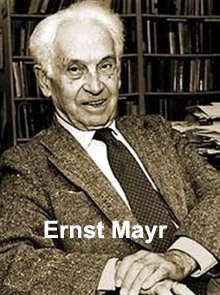
My first response is to recount my correspondence with the famous evolutionist Ernst Mayr (1904-2005) of Harvard. In his letter to me he basically said that there are many chemists and molecular biologists who find the story of gradual evolution of life totally convincing and that he is sticking with them. This is very similar to the approach by Dr. Weinberg and it is an appeal to authority in that they are suggesting that we just accept the brilliant scientists’ point of view because they are brilliant scientists and they are smarter than the rest of us.THERE IS A SIMPLE ANSWER THAT I COULD GIVE to both Dr. Mayr and Dr. Weinberg which is  a quote from Adrian Rogers:

Did you know that all atheists are not atheists because of intellectual problems? They’re atheists because of moral problems. You say, “But I know some brilliant people who are atheists.” Well, that may be so, but I know some brilliant people who are not. You say, “I know some foolish people who believe in God.” Well, I know everyone who doesn’t believe in God is foolish.

In other words there are brilliant and stupid people on both sides of the fence and it is not an intellectual issue but a moral one. Let’s take a look at the history of science that was handled down to us from Western Europe and take a closer examination of those great men’s religious views and if their religious views were corrosive to their scientific pursuits? This is the accusation of many modern day evolutionists.

Ernst Mayr (pictured below with the beard)

Bill Gates, John Grisham, James Michener, E. O. Wilson, Ernst Mayr, George Lucas…

Published on May 19, 2012

Bill Gates, John Grisham, James Michener, E. O. Wilson, Ernst Mayr, George Lucas, James Cameron, Larry King, Ian Wilmut, Jane Goodall, Stephen Jay Gould, Tim D. White, Leon Lederman, Timothy Berners-Lee and Bill Gates. Complete and more interview go to websites “www.achievement.org”.

Mais entrevistas e completas no site “www.achievement.org”.

_____________________________________________________________________

____________________________

In 1994 and 1995 I had the opportunity to correspond with the famous evolutionist Dr. Ernst Mayr of Harvard. He stated in his letter of 10-3-94, “Owing to your ideological commitments, it is only natural that you cannot accept the cogency of the scientific evidence. However, to a person such as myself without such commitments, the story of the gradual evolution of life as reconstructed by chemists and molecular biologists is totally convincing.”

I responded by pointing out three points. First, Scientific Naturalism is atheistic by definition. Second, many great scientists of the past were Christians, and that did not disqualify their observations and discoveries. Third, the fact that evolution is true does not rule out God’s existence (Harvard’s own Owen Gingerich and many others such as Francis Collins hold to a Creator and evolution).

Let me just spend some time on my second point. Francis Schaeffer in his book “HOW SHOULD WE THEN LIVE?” stated that according to Alfred North Whitehead and J. Robert Oppenheimer, both renowned philosophers and scientists of our era (but not Christians themselves), modern science was born out of the Christian world view. Whitehead said that Christianity is the “mother of science” because of the insistence on the rationality of God. In the article, “Christianity and Technological Advance – The Astonishing Connection,” by T. V. Varughese, Ph.D, he observed:

Without question, “technology” has now become the new magic word in place of the word “science.” Since technology represents the practical applications of science, it is clearly consumer-oriented. Herein is bright economic promise to all who can provide technology.

In terms of technology, our present world can be divided into at least three groups: countries that are strong providers of technology, both original and improved; countries that are mass producers because of cheaper labor; and countries that are mostly consumers. Without a doubt, being in the position of “originating” superior technology should be a goal for any major country. The difficult question, however, is “how.”

An obvious place to start suggests itself. Why not begin with the countries that have established themselves as strong originators of technology and see if there is a common thread between them? The western nations, after the Renaissance and the Reformation of the 16th century, offer a ready example. Any book on the history of inventions, such as the Guinness Book of Answers, will reveal that the vast majority of scientific inventions have originated in Europe (including Britain) and the USA since the dawn of the 17th century. What led to the fast technological advances in the European countries and North America around that time?

The answer is that something happened which set the stage for science and technology to emerge with full force. Strange as it may seem, that event was the return to Biblical Christianity in these countries.

The Epistemological Foundation of Technology

According to Alfred North Whitehead and J. Robert Oppenheimer, both renowned philosophers and scientists of our era (but not Christians themselves), modern science was born out of the Christian world view. Whitehead said that Christianity is the “mother of science” because of the insistence on the rationality of God.[1] Entomologist Stanley Beck,though not a Christian himself, acknowledged the corner-stone premises of science which the Judeo-Christian world view offers: “The first of the unprovable premises on which science has been based is the belief that the world is real and the human mind is capable of knowing its real nature. The second and best-known postulate underlying the structure of scientific knowledge is that of cause and effect. The third basic scientific premise is that nature is unified.”[2] In other words, the epistemological foundation of technology has been the Judeo-Christian world view presented in the Bible…

Perhaps the most obvious affirmation that Biblical Christianity and science are friends and not foes comes from the fact that most of the early scientists after the Renaissance were also strong believers in the Bible as the authoritative source of knowledge concerning the origin of the universe and man’s place in it.[4] The book of Genesis, the opening book of the Bible, presents the distinctly Judeo-Christian world view of a personal Creator God behind the origin and sustenance of the universe (Genesis 1:1Colossians 1:17; etc.).

Among the early scientists of note who held the Biblical creationist world view are Blaise Pascal (1623-1662), Sir Isaac Newton (1642-1727), and Samuel Morse (1791-1872) – what motivated them was a confidence in the “rationality” behind the universe and the “goodness” of the material world. The creation account in Genesis presents an intelligent, purposeful Creator, who, after completing the creation work, declared it to be very good (Genesis 1:31). That assures us that the physical universe operates under reliable laws which may be discovered by the intelligent mind and used in practical applications. The confidence in the divinely pronounced goodness of the material world removed any reluctance concerning the development of material things for the betterment of life in this world. The spiritual world and the material world can work together in harmony.

 References –

  1. Francis A. Schaeffer: How Should We Then Live (Revell, 1976), p. 132.
  2. Henry M. Morris, Biblical Basis for Modern Science (Baker, 1991), p. 30.
  3. Schaeffer, p. 131.
  4. Henry M. Morris, Men of Science, Men of God (Master Books, CA, 1988), 107 pp.

_____________

Henry Morris pointed out:

Many of these great scientists of the past were before Darwin, but not all of them. However, all of them were acquainted with secular philosophies and some were in fact opponents of Darwinism (Agassiz, Pasteur, Lord Kelvin, Maxwell, Dawson, Virchow, Fabre, Fleming, etc). Many of them believed in the inspiration and authority of the Bible, as well as in the deity and saving work of Jesus Christ. They believed that God had supernaturally created all things, each with its own complex structure for its own unique purpose. They believed that, as scientists, they were “thinking God’s thoughts after Him,” learning to understand and control the laws and processes of nature for God’s glory and man’s good. They believed and practiced science in exactly the same way that modern creationist scientists do.

And somehow this attitude did not hinder them in their commitment to the “scientific method.” In fact one of them, Sir Francis Bacon, is credited with formulating and establishing the scientific method! They seem also to have been able to maintain a proper “scientific attitude,” for it was these men (Newton, Pasteur, Linnaeus, Faraday, Pascal, Lord Kelvin, Maxwell, Kepler, etc.) whose researches and analyses led to the very laws and concepts of science which brought about our modern scientific age…. 

To illustrate the caliber and significance of these great scientists of the past, Tables I and II have been prepared. These tabulations are not complete lists, of course, but at least are representative and they do point up the absurdity of modern assertions that no true scientist can be a creationist and Bible-believing Christian.

Table I lists the creationist “fathers” of many significant branches of modern science. Table II lists the creationist scientists responsible for various vital inventions, discoveries, and other contributions to mankind. These identifications are to some degree oversimplified, of course, for even in the early days of science every new development involved a number of other scientists, before and after. Nevertheless, in each instance, a strong case can be made for attributing the chief responsibility to the creationist scientist indicated. At the very least, his contribution was critically important and thus supports our contention that belief in creation and the Bible helps, rather than hinders, scientific discovery.

_______________

My relatives live 3 miles from Spring Hill, Tennessee. When the new General Motors plant opened there I got to go see it. What if I had said, “The assembly line created a beautiful Saturn automobile!” Hopefully, some would have corected me by responding, “The assembly line did not create the automobile. It was first designed by the General Motors engineers in Detroit.” ASSUMING EVOLUTION IS TRUE, IT WOULD STILL ONLY BE THE MECHANISM. DOES EVOLUTION ACCOUNT FOR THE DESIGNER?

________________

TABLE I

SCIENTIFIC DISCIPLINES ESTABLISHED
BY CREATIONIST SCIENTISTS

DISCIPLINE SCIENTIST
ANTISEPTIC SURGERY JOSEPH LISTER (1827-1912)
BACTERIOLOGY LOUIS PASTEUR (1822-1895)
CALCULUS ISAAC NEWTON (1642-1727)
CELESTIAL MECHANICS JOHANN KEPLER (1571-1630)
CHEMISTRY ROBERT BOYLE (1627-1691)
COMPARATIVE ANATOMY GEORGES CUVIER (1769-1832)
COMPUTER SCIENCE CHARLES BABBAGE (1792-1871)
DIMENSIONAL ANALYSIS LORD RAYLEIGH (1842-1919)
DYNAMICS ISAAC NEWTON (1642-1727)
ELECTRONICS JOHN AMBROSE FLEMING (1849-1945)
ELECTRODYNAMICS JAMES CLERK MAXWELL (1831-1879)
ELECTRO-MAGNETICS MICHAEL FARADAY (1791-1867)
ENERGETICS LORD KELVIN (1824-1907)
ENTOMOLOGY OF LIVING INSECTS HENRI FABRE (1823-1915)
FIELD THEORY MICHAEL FARADAY (1791-1867)
FLUID MECHANICS GEORGE STOKES (1819-1903)
GALACTIC ASTRONOMY WILLIAM HERSCHEL (1738-1822)
GAS DYNAMICS ROBERT BOYLE (1627-1691)
GENETICS GREGOR MENDEL (1822-1884)
GLACIAL GEOLOGY LOUIS AGASSIZ (1807-1873)
GYNECOLOGY JAMES SIMPSON (1811-1870)
HYDRAULICS LEONARDO DA VINCI (1452-1519)
HYDROGRAPHY MATTHEW MAURY (1806-1873)
HYDROSTATICS BLAISE PASCAL (1623-1662)
ICHTHYOLOGY LOUIS AGASSIZ (1807-1873)
ISOTOPIC CHEMISTRY WILLIAM RAMSAY (1852-1916)
MODEL ANALYSIS LORD RAYLEIGH (1842-1919)
NATURAL HISTORY JOHN RAY (1627-1705)
NON-EUCLIDEAN GEOMETRY BERNHARD RIEMANN (1826- 1866)
OCEANOGRAPHY MATTHEW MAURY (1806-1873)
OPTICAL MINERALOGY DAVID BREWSTER (1781-1868)
PALEONTOLOGY JOHN WOODWARD (1665-1728)
PATHOLOGY RUDOLPH VIRCHOW (1821-1902)
PHYSICAL ASTRONOMY JOHANN KEPLER (1571-1630)
REVERSIBLE THERMODYNAMICS JAMES JOULE (1818-1889)
STATISTICAL THERMODYNAMICS JAMES CLERK MAXWELL (1831-1879)
STRATIGRAPHY NICHOLAS STENO (1631-1686)
SYSTEMATIC BIOLOGY CAROLUS LINNAEUS (1707-1778)
THERMODYNAMICS LORD KELVIN (1824-1907)
THERMOKINETICS HUMPHREY DAVY (1778-1829)
VERTEBRATE PALEONTOLOGY GEORGES CUVIER (1769-1832)

______________

TABLE II

NOTABLE INVENTIONS, DISCOVERIES
OR DEVELOPMENTS BY CREATIONIST SCIENTISTS

CONTRIBUTION SCIENTIST
ABSOLUTE TEMPERATURE SCALE LORD KELVIN (1824-1907)
ACTUARIAL TABLES CHARLES BABBAGE (1792-1871)
BAROMETER BLAISE PASCAL (1623-1662)
BIOGENESIS LAW LOUIS PASTEUR (1822-1895)
CALCULATING MACHINE CHARLES BABBAGE (1792-1871)
CHLOROFORM JAMES SIMPSON (1811-1870)
CLASSIFICATION SYSTEM CAROLUS LINNAEUS (1707-1778)
DOUBLE STARS WILLIAM HERSCHEL (1738-1822)
ELECTRIC GENERATOR MICHAEL FARADAY (1791-1867)
ELECTRIC MOTOR JOSEPH HENRY (1797-1878)
EPHEMERIS TABLES JOHANN KEPLER (1571-1630)
FERMENTATION CONTROL LOUIS PASTEUR (1822-1895)
GALVANOMETER JOSEPH HENRY (1797-1878)
GLOBAL STAR CATALOG JOHN HERSCHEL (1792-1871)
INERT GASES WILLIAM RAMSAY (1852-1916)
KALEIDOSCOPE DAVID BREWSTER (1781-1868)
LAW OF GRAVITY ISAAC NEWTON (1642-1727)
MINE SAFETY LAMP HUMPHREY DAVY (1778-1829)
PASTEURIZATION LOUIS PASTEUR (1822-1895)
REFLECTING TELESCOPE ISAAC NEWTON (1642-1727)
SCIENTIFIC METHOD FRANCIS BACON (1561-1626)
SELF-INDUCTION JOSEPH HENRY (1797-1878)
TELEGRAPH SAMUEL F.B. MORSE (1791-1872)
THERMIONIC VALVE AMBROSE FLEMING (1849-1945)
TRANS-ATLANTIC CABLE LORD KELVIN (1824-1907)
VACCINATION & IMMUNIZATION LOUIS PASTEUR (1822-1895)

_______________

2000 Interview with Ernst Mayr, Harvard University

Uploaded on Jul 13, 2008

Interviews conducted in March 2000 at the annual meeting of the American Institute of Biological Sciences on the topic of Challenges for the New Millennium. Museum of Natural History, Smithsonian Institution, Washington DC. See http://www.aibs.org/media-library/ for additional AIBS conference recordings.

________________

Henry Morris

_________________

The Dean of Evolution – A Review of Ernst Mayr’s Latest Book

Download PDFDownload The Dean of Evolution – A Review of Ernst Mayr’s Latest Book PDF

With the passing in recent years of the three most revered scientific spokesmen for evolution—Isaac Asimov, Carl Sagan, and now Stephen Jay Gould—Professor Ernst Mayr is left as the unquestioned dean of the modern evolutionary establishment.

Gould, Asimov, and Sagan were all three extremely prolific and brilliant writers. All three were atheistic professors at prestigious eastern universities (Gould at Harvard, Asimov at Boston University, Sagan at Cornell), and all three were effusive and vigorous anti-creationists. They were formidable opponents (but eminently quotable), and we miss them. All three died at relatively young ages.

But that leaves Ernst Mayr, long-time professor of biology at Harvard. Dr. Mayr was born in 1904 and is (at this writing) still very much alive, and nearing the century mark. Dr. Gould recently called him “the greatest living evolutionary biologist and a writer of extraordinary insight and clarity” (in a jacket blurb on Mayr’s latest book).

Mayr’s New Book

And that book is the subject of this article. Its title is intriguing—What Evolution Is (Basic Books, 2001, 318 pages),—for if anyone could speak authoritatively on such a subject, it should be Professor Mayr. In his adulatory foreword, Jared Diamond, another leading modern evolutionist, concludes: “There is no better book on evolution. There will never be another book like it” (p. xii).

That evaluation should give any reader very high expectations. Unfortunately, however, Dr. Mayr first shows his disdain for creationism, not even considering its arguments. He simply says:

It is now actually misleading to refer to evolution as a theory, considering the massive evidence that has been discovered over the last 140 years documenting its existence. Evolution is no longer a theory, it is simply a fact (p. 275).

He dismissed the evidence for creation as unworthy of further discussion. “The claims of the creationists” he says, “have been refuted so frequently and so thoroughly that there is no need to cover this subject once more” (p. 269).

Ignoring Creation Evidence

He himself, however, has apparently not bothered to read any creationist or secular anti-evolutionist scientific books or articles. Or at least that is what one would infer from the fact that none of them or their arguments and evidence are even mentioned in his book.

No mention is made by Mayr, for example, of creationist expositions of the amazing created designs in living systems, nor of the effects of God’s curse on the creation, or of the significance of the great flood in understanding the geologic record. He does not even acknowledge the significance of naturalistic catastrophism or of such scientific concepts as complexity or probability. Current ideas about “intelligent design” are never mentioned. The origins of all things are due to time, chance, and natural selection, no matter how complex and interdependent they may be, according to Professor Mayr, who had been (along with Julian Huxley, George Simpson, and a few others) primarily responsible for the so-called modern evolutionary synthesis (or neo-Darwinism) back in the 1930s and 1940s.

Neither does Mayr seem aware that there are now thousands of credentialed and knowledgeable scientists (including a great many biologists) who reject evolution, giving not even a nod to the Creation Research Society, or to ICR, or any other creationist organization. He does occasionally refer to God or to Christianity, but only in passing, and always in a context that indicates that he does not believe in either one. He, like his three younger colleagues, is an atheist, and this naturally constrains him to ignore any possible theological implications of the origins issues.

The Alleged Evidence for Evolution

Mayr’s new book is beautifully written and does contain much good material, but it will not convert many to evolutionism, even though he does devote a chapter to what he thinks are the evidences for evolution. These evidences are essentially the same as those used 140 years ago by Darwin in the Origin (fossils, comparative morphology, embryological similarities and recapitulation, vestigial structures, and geographical distribution). Mayr adds nothing new to these arguments, ignoring the fact that creationists (and even a number of evolutionists) have long since refuted all of them. He does devote a brief section to the more recent “evidence” from molecular biology. But that also has been vigorously disputed by a number of specialists in this field, especially the supposed evolutionary relationships implied by the molecules. Even Mayr admits that “molecular clocks are not nearly as constant as often believed” (p. 37), but he does not mention any of the numerous contradictory relationships implied by these biochemical studies (e.g., the well-known genomic similarities of humans and bananas).

As do most evolutionists, Mayr spends much time in discussing micro-evolution, whereas modern creationists only reject macroevolution. He devotes five chapters to microevolution and only one to macroevolution. This particular chapter is quite long, discussing many speculative theories about how macroevolutionary changes might be produced, but there is one vital deficiency. He gives no example of any macroevolutionary change known to have happened. In other words, macroevolution seems never to have occurred within the several thousand years of recorded history. Thus, real evolution (as distinct from variation, recombination, hybridization, and other such “horizontal” changes) does not happen at present. Where, we would ask Professor Mayr, are there any living forms in the process of evolutionary change? He gives no examples, of course, because there are none.

As far as pre-human history is concerned, Dr. Mayr does insist that the fossil record documents past evolution. He cites the usual claims—horses, Archaeopteryx, mammal-like reptiles, walking whales, etc.—which are very equivocal, at best, and have all been shown by creationists to be invalid as transitional forms. Instead of a handful of highly doubtful examples, there ought to be thousands of obvious transitional forms in the fossils if evolution had really been occurring. Yet Mayr admits,

Wherever we look at the living biota, . . . discontinuities are overwhelmingly frequent. . . . The discontinuities are even more striking in the fossil record. New species usually appear in the fossil record suddenly, not connected with their ancestors by a series of intermediates (p. 189).

Professor Mayr still says that the fossils are “the most convincing evidence for the occurrence of evolution” (p. 13). Yet he also says that “the fossil record remains woefully inadequate” (p. 69). Thus, as creationists have often pointed out, there is no real evidence of either present or past evolution.

We have repeatedly noted also that the scientific reason why this is so is because real evolution to any higher level of complexity is impossible by the law of entropy, which states the proven fact that every system of any kind “tends” to go toward lower complexity, unless constrained otherwise by some pre-designed external program and mechanism.

Yet Ernst Mayr seems either to ignore or misunderstand this key argument of the creationists. Here is what he says:

Actually there is no conflict, because the law of entropy is valid only for closed systems, whereas the evolution of a species of organisms takes place in an open system in which organisms can reduce entropy at the expense of the environment and the sun supplies a continuing input of energy (p. 8).

And that’s all he says about one of the key arguments against evolution. This ubiquitous dodge of the evolutionists has been discredited again and again by creationists, and one would think that this “greatest living evolutionary biologist” in this “best book on evolution” would at least take notice of our arguments! At least half of America’s population, according to many polls, are creationists, apparently agreeing more with us than with Mayr.

An open system and external energy are, indeed, necessary conditions for a system to grow in complexity, but most definitely are not sufficient conditions. The question is just how does the sun’s energy produce complexity in an open system? The fact is that the application of external heat energy to an open system (such as from the sun to the earth) will increase the entropy (that is, decrease the organized complexity) in any open system, if that’s all there is. This is a basic principle of thermodynamics, and neither Mayr nor any other evolutionist has answered this problem. Evolution seems to be impossible by the known laws of science.

Professor Mayr does not deal with the theological or Biblical evidences, of course. For those who believe in God and the Bible, on the other hand, creation—not evolution—is, to appropriate Mayr’s words, “simply a fact.” Evolution is merely a belief held by many who “willingly are ignorant” (II Peter 3:5) of the strong evidences and arguments for creation, and who don’t even bother to consider them. In the words of the apostle Paul: “Where is the disputer of this world? hath not God made foolish the wisdom of this world?” (I Corinthians 1:20).

Cite this article: Henry Morris, Ph.D. 2002. The Dean of Evolution – A Review of Ernst Mayr’s Latest Book. Acts & Facts. 31 (8).

___________________

The Comparatively Rich Archaeological Corroboration of the Old Testament

The Comparatively Rich Archaeological Corroboration of the Old TestamentWhen I first began examining the claims of the Book of Mormon, I was an atheist who had just become interested in the person of Jesus. As a skeptic, I understood the importance of corroborative evidence when trying to determine if a witness statement is reliable. I began looking for corroboration related to both the Christian and Mormon scripture. I was immediately struck by the stark contrast between what has been discovered related to Old Testament history and what has been not been discovered related to the alleged history recorded in the Book of Mormon. There’s a reason for the absence of maps in the Mormon collection of scripture. There are no archaeological discoveries of any cities described in the book of Mormon. Worse yet, there aren’t any discoveries of any of the names of characters mentioned in the 1,000 year span of American continental history chronicled in the Book of Mormon (from 600BC to 400AD). I don’t expect archaeology to verify everything recorded in an ancient book, but I do expect it to verify something.

The archaeological evidence supporting the Old Testament demonstrates a striking contrast when compared to the Book of Mormon in both the generalities and specificities confirmed by archaeology:

Overarching Generalities
Many of the Old Testament accounts bearing strong resemblances to other ancient accounts discovered through the efforts of historians and archaeologists. The Great Flood account in Genesis 6-9, for example, is very similar to Babylonian and Akkadian accounts discovered in the same region of the world. Some of these accounts may even pre-date the writings of Moses, but all describe a catastrophic flood event predating the generation of the authors. In addition, the Sumerian King List records kings who reigned for long periods of time. Following the great flood, this Babylonian document records much shorter reigns, mirroring the life expectancy patterns described in the Old Testament. The 11th tablet of the Babylonian Gilgamesh Epic speaks of an ark, animals taken on the ark, birds sent out during the course of the flood, the ark landing on a mountain, and a sacrifice offered after the ark landed.

In addition to the flood story, there are other non-Biblical accounts recording events found in the Old Testament. The Mesopotamian Story of Adapa tells of a test for immortality involving food, similar to the story of Adam and Eve in the Garden of Eden. Sumerian tablets record the confusion of language as we have in the Biblical account of the Tower of Babel (Genesis 11:1-9). This Sumerian account records a golden age when all mankind spoke the same language. Speech was then confused by the god Enki, lord of wisdom. The Babylonians had a similar account in which the gods destroyed a temple tower and “scattered them abroad and made strange their speech” (Stephen L. Caiger, Bible and Spade, 1936, p. 29). There are many points of agreement in overarching narrative generalities between the Old Testament and the surrounding ancient cultures.

Detailed Specificities
In addition to these generalities, many specific events and historical characters described in the Old Testament have now been confirmed by extra-Biblical sources. Consider the following examples (this list is abbreviated from the work of Dr. Bryant Wood):

The campaign into Israel by Pharaoh Shishak
(1 Kings 14:25-26) is recorded on the walls of the Temple of Amun in Thebes, Egypt.

The revolt of Moab against Israel
(2 Kings 1:1; 3:4-27) is recorded on the Mesha Inscription.

The fall of Samaria
(2 Kings 17:3-6, 24; 18:9-11) to Sargon II, king of Assyria, is recorded on his palace walls.

The defeat of Ashdod by Sargon II
(Isaiah 20:1) is recorded on his palace walls.

The campaign of the Assyrian king Sennacherib against Judah
(2 Kings 18:13-16) is recorded on the Taylor Prism.

The siege of Lachish by Sennacherib
(2 Kings 18:14, 17) is recorded on the Lachish reliefs.

The assassination of Sennacherib by his own son
(2 Kings 19:37) is recorded in the annals of his son Esarhaddon.

The fall of Nineveh as predicted by the prophets Nahum and Zephaniah
(2 Kings 2:13-15) is recorded on the Tablet of Nabopolasar.

The fall of Jerusalem to Nebuchadnezzar, king of Babylon
(2 Kings 24:10-14) is recorded in the Babylonian Chronicles.

The captivity of Jehoiachin, king of Judah, in Babylon
(2 Kings 24:15-16) is recorded on the Babylonian Ration Records.

The fall of Babylon to the Medes and Persians
(Daniel 5:30-31) is recorded on the Cyrus Cylinder.

The freeing of captives in Babylon by Cyrus the Great
(Ezra 1:1-4; 6:3-4) is recorded on the Cyrus Cylinder.

The historical record of the Old Testament is not alone in the history it records. There are other ancient records affirming the overarching generalities and specific details of the Old Testament. There are no such corroborative ancient records providing similar verification for the history of the Book of Mormon. It is the singular lonely voice related to the historical narrative it describes. While archaeology continues to corroborate the Old and New Testament, archaeology only exposes the erroneous nature of the Mormon record.


Related Posts In This Series:

Establishing the Reliability of the Old Testament: A Trustworthy Process of Transmission
Establishing the Reliability of the Old Testament: A Timely Test of Transmission
Establishing the Reliability of the Old Testament: The Ardent Testimony of the Ancients
A Brief Sample of Old Testament Archaeological Corroboration
From Reliable to Divine: Fulfilled Prophecy in the Old Testament


J. Warner Wallace is a Cold-Case Detective, a Christian Case Maker, and the author of Cold-Case Christianity

Comment or Subscribe to J. Warner’s Daily Email

– See more at: http://coldcasechristianity.com/2013/the-comparatively-rich-archaeological-corroboration-of-the-old-testament/#sthash.ZtAuhLXg.dpuf

Francis Schaeffer “BASIS FOR HUMAN DIGNITY” Whatever…HTTHR

Related posts:

Open letter to President Obama (Part 519) (The Way of Discovery: A Personal Journey of Faith Henry F. Schaefer III)

Open letter to President Obama (Part 519) (Emailed to White House on 5-3-13.) President Obama c/o The White House 1600 Pennsylvania Avenue NW Washington, DC 20500 Dear Mr. President, I know that you receive 20,000 letters a day and that you actually read 10 of them every day. I really do respect you for trying to get […]

Evolutionary dogma with the biblical message are doomed to undermine faith

The Scientific Age Published on Jul 24, 2012 Dr. Schaeffer’s sweeping epic on the rise and decline of Western thought and Culture Francis Schaeffer rightly noted, “These two world views stand as totals in complete antithesis in content and also in their natural results….It is not just that they happen to bring forth different results, […]

Truth Tuesday:The Way of Discovery: A Personal Journey of Faith Henry F. Schaefer III

The Way of Discovery: A Personal Journey of Faith  Henry F. Schaefer III The Scientific Age Uploaded by NoMirrorHDDHrorriMoN on Oct 3, 2011 _______________ Episode VII – The Age of Non Reason ____________________ Episode 8: The Age Of Fragmentation Published on Jul 24, 2012 Dr. Schaeffer’s sweeping epic on the rise and decline of Western thought and […]

Evolution debating with Ark Times Bloggers Part 6 “Dr. George Wald on the origin of life”

The Long War against God-Henry Morris, part 6 of 6 _______________ I have debated with Ark Times Bloggers many times in the past on many different subjects. Here are some of the subjects: communism, morality, origin of evil, and the Tea Party. I have always loved to post about evolution and I have had a chance […]

Evolution debating with Ark Times Bloggers Part 5 “SCIENTIFIC DISCIPLINES ESTABLISHED BY CREATIONIST SCIENTISTS”

The Long War against God-Henry Morris, part 5 of 6 _______________ I have debated with Ark Times Bloggers many times in the past on many different subjects. Here are some of the subjects: communism, morality, origin of evil, and the Tea Party. I have always loved to post about evolution and I have had a chance […]

Evolution debating with Ark Times Bloggers Part 4 “Neaderthal, Australopithicus and Piltdown man”

The Long War against God-Henry Morris, part 4 of 6 _______________ I have debated with Ark Times Bloggers many times in the past on many different subjects. Here are some of the subjects: communism, morality, origin of evil, and the Tea Party. I have always loved to post about evolution and I have had a chance […]

Evolution debating with Ark Times Bloggers Part 3 “Evolution and spontaneous generation”

The Long War against God-Henry Morris, part 3 of 6 Uploaded by FLIPWORLDUPSIDEDOWN3 on Aug 30, 2010 http://www.icr.org/http://store.icr.org/prodinfo.asp?number=BLOWA2 http://store.icr.org/prodinfo.asp?number=BLOWASG http://www.fliptheworldupsidedown.com/blog _______________ I have debated with Ark Times Bloggers many times in the past on many different subjects. Here are some of the subjects: communism, morality, origin of evil, and the Tea Party. I have […]

Evolution debating with Ark Times Bloggers Part 2 “Gouldians versus Dawkinsians”

The Long War against God-Henry Morris, part 2 of 6 Uploaded by FLIPWORLDUPSIDEDOWN3 on Aug 30, 2010 http://www.icr.org/http://store.icr.org/prodinfo.asp?number=BLOWA2 http://store.icr.org/prodinfo.asp?number=BLOWASG http://www.fliptheworldupsidedown.com/blog _________ I have debated with Ark Times Bloggers many times in the past on many different subjects. Here are some of the subjects: communism, morality, origin of evil, and the Tea Party. I have […]

Evolution debating with Ark Times Bloggers Part 1 “Steven Jay Gould and the fossil record”

The Long War against God-Henry Morris, part 1 of 6 Uploaded by FLIPWORLDUPSIDEDOWN3 on Aug 30, 2010 _________ I have debated with Ark Times Bloggers many times in the past on many different subjects. Here are some of the subjects: communism, morality, origin of evil, and the Tea Party. I have always loved to post about evolution […]

______

RESPONDING TO HARRY KROTO’S BRILLIANT RENOWNED ACADEMICS!! (PART 9, Lord Martin Rees, cosmologist and astrophysicist at Cambridge, ANY EVIDENCE TO BACK UP RELIGIOUS DOGMAS? )

___________

I want to start off by saying that these two long interviews below by Alan Macfarlane of Dr. Martin Rees reveal what a wonderful man he is. I enjoyed them thoroughly and have watched them several times. I also learned that Dr. Rees is a good friend of Owen Gingerich who is an evangelical Christian longtime professor at Harvard. I have read many of Gingerich’s articles with much interest over the years and  I mentioned him in my letter to Professor Ernst Mayr back in the 1990’s. Dr. Mayr was kind enough to respond with a detailed letter on his views on evolution.

Interview of Lord Martin Rees – part one

Uploaded on Dec 13, 2007

Interview on the life and times of Martin Rees, Astronomer Royal, Master of Trinity, Cambridge and cosmologist. For a higher quality (downloadable) version, and many video interviews of others, please see http://www.alanmacfarlane.com

All revenues to the World Oral Literature Project

____________________

is Master of Trinity College and Professor of Cosmology and Astrophysics at the University of Cambridge.

_________________

Interview of Lord Martin Rees – part two

On November 21, 2014 I received a letter from Nobel Laureate Harry Kroto and it said:

…Please click on this URL http://vimeo.com/26991975

and you will hear what far smarter people than I have to say on this matter. I agree with them.

Harry Kroto

__________________________

There are 3 videos in this series and they have statements by 150 academics and scientists and I hope to respond to all of them. Wikipedia notes Martin John Rees, Baron Rees of Ludlow, Kt., OM, FRS, HonFREng[3] FMedSci (born 23 June 1942) is a British cosmologist and astrophysicist. He has been Astronomer Royal since 1995[4] and was Masterof Trinity College, Cambridge from 2004 to 2012 and President of the Royal Society between 2005 and 2010.[5] Rees was born on 23 June 1942 in York, England.[2][6] He was educated at Bedstone College, then from the age of 13 at Shrewsbury School, Shropshire. He studied for the Mathematics tripos at Trinity College, Cambridge,[2] graduating with first class. He then undertook post-graduate research at Cambridge and completed a PhD degree under Dennis Sciama in 1967.[7][8]

The comments of Dr. Rees can be found on the 1st video and the 12th clip in this series. Below the videos you will find his words.

50 Renowned Academics Speaking About God (Part 1)

Another 50 Renowned Academics Speaking About God (Part 2)

A Further 50 Renowned Academics Speaking About God (Part 3)

_______________

I grew up at Bellevue Baptist Church under the leadership of our pastor Adrian Rogers and I read many books by the Evangelical Philosopher Francis Schaeffer and have had the opportunity to contact many of the evolutionists or humanistic academics that they have mentioned in their works. Many of these scholars have taken the time to respond back to me in the last 20 years and some of the names  included are  Ernest Mayr (1904-2005), George Wald (1906-1997), Carl Sagan (1934-1996),  Robert Shapiro (1935-2011), Nicolaas Bloembergen (1920-),  Brian Charlesworth (1945-),  Francisco J. Ayala (1934-) Elliott Sober (1948-), Kevin Padian (1951-), Matt Cartmill (1943-) , Milton Fingerman (1928-), John J. Shea (1969-), , Michael A. Crawford (1938-), Paul Kurtz (1925-2012), Sol Gordon (1923-2008), Albert Ellis (1913-2007), Barbara Marie Tabler (1915-1996), Renate Vambery (1916-2005), Archie J. Bahm (1907-1996), Aron S “Gil” Martin ( 1910-1997), Matthew I. Spetter (1921-2012), H. J. Eysenck (1916-1997), Robert L. Erdmann (1929-2006), Mary Morain (1911-1999), Lloyd Morain (1917-2010),  Warren Allen Smith (1921-), Bette Chambers (1930-),  Gordon Stein (1941-1996) , Milton Friedman (1912-2006), John Hospers (1918-2011), Michael Martin (1932-).Harry Kroto (1939-), Marty E. Martin (1928-), Richard Rubenstein (1924-), James Terry McCollum (1936-), Edward O. WIlson (1929-), Lewis Wolpert (1929), Gerald Holton (1922-),  and  Ray T. Cragun (1976-).

_________________

Martin Rees: I’ve got no religious beliefs at all – interview

Ian Sample spoke to the astronomer royal Martin Rees on Tuesday before the announcement that he had won the Templeton Prize.

I suppose one thing I would say, from my BBC lectures, I think doing science makes me realize that even the simplest things are pretty hard to understand and that makes me suspicious of people who believe they’ve got anything more than an incomplete and metaphorical understanding of any deep aspect of reality. And also I see human beings as not the culmination, but only a stage in the marvelous unfolding of evolution, because the timeline ahead is as long as the time that has lapsed up to now. Those are respects in which my professional interests affect my response to dogmatic religion. But as I say, I participate in occasional religious services which are the customs of the society I grew up in. I’m not allergic to religion.

__________________

Dr. Rees says he can’t accept easy answers, but would he accept complicated ones? He makes a statement of agnosticism which is “the most we can hope for is an incomplete and metaphorical understanding.” This reminds me of the objection by Carl Sagan. He had taken a look at Christ’s life in the gospels, but said it was unrealistic for God to send a man to communicate for God. Instead, Sagan suggested that God could have written a mathematical formula in the Bible or put a cross in the sky. However, what happens at the conclusion of the movie CONTACT?  This is Sagan’s last message to the world in the form of the movie that appeared shortly after his death. Dr Arroway (Jodie Foster) who is a young atheistic scientist who meets with an alien and this alien takes the form of Dr. Arroway’s father. The alien tells her that they thought this would make it easier for her. In fact, he meets her on a beach that resembles a beach that she grew up near so she would also be comfortable with the surroundings. Carl Sagan when writing this script chose to put the alien in human form so Dr. Arroway could relate to the alien. Christ chose to take our form and come into our world too and still many make up excuses for not believing.

Dr. Rees is a member of the Church of England but he says he does not believe any of their doctrines. In the above article, “Martin Rees: I’ve got no religious beliefs at all – interview,” Dr. Rees makes it clear that he sees no evidence to back up the religious beliefs of his fellow church members.  Let me put forth some evidence that is hard for a person of science to explain.

HOW COULD A PROPHET IN THE OLD TESTAMENT PREDICT EVENTS THAT TOOK PLACE HUNDREDS OF YEARS LATER?

I  have been amazed at the prophecies in the Bible that have been fulfilled in history, and also many of the historical details in the Bible have been confirmed by archaeology too. One of the most amazing is the prediction that the Jews would be brought back and settle in Jerusalem again. Another prophecy in Psalms 22 describes messiah dying on a cross  almost 1000 years before the Romans came up with this type of punishment.

Many times it has been alleged that the author of the Book of Daniel was from a later period but how did a later author know these 5 HISTORICAL FACTS? How did he know [1] that Belshazzar was ruling during the last few years of the Babylonian Empire when the name “Belshazzar” was lost to history until 1853 when it was uncovered in the monuments? [2] The author also knew that the Babylonians executed individuals by casting them into fire, and that the Persians threw the condemned to the lions. [3] He knew  the practice in the 6th Century was to mention first the Medes, then the Persians and not the other way around. [4] Plus he knew the laws made by Persian kings could not be revoked and [5] he knew that in the sixth century B.C., Susa was in the province of Elam (Dan. 8:2).

One of the top 10 posts on my blog on this next subject concerning Tyre.   John MacArthur went through every detail of the prophecy concerning Tyre and how history shows the Bible prophecy was correct.  Sagan said he had taken a look at Old Testament prophecy and it did not impress him because it was too vague.

HOW CAN ANYONE SAY THAT THIS FOLLOWING PROPHECY CONCERNING TYRE IS “TOO VAGUE?”

Biblical Inspiration Validated By Prophecy, Part 1 (Selected Scriptures) John MacArthur

Photo of John MacArthur

Prophecy–The Biblical Prophesy About Tyre.mp4

Uploaded by on Dec 5, 2010

A short summary of the prophecy about Tyre and it’s precise fulfillment. Go to this link and watch the whole series for the amazing fulfillment from secular sources.
http://www.youtube.com/watch?v=qvt4mDZUefo

________________

John MacArthur on the amazing fulfilled prophecy on Tyre and how it was fulfilled by historical events.

LESSON

I. BIBLICAL PROPHECY CONCERNING TYRE (Ezekiel 26:1–28:19)

A. The Forecast

1. The specifics

a) That King Nebuchadnezzar of Babylon would destroy the mainland city of Tyre (26:7-8).

b) That many nations would rise up against Tyre. These nations would come like waves of the sea, one after another (26:3- 4).

c) That Tyre will be made like a flat rock (26:4, 14).

d) That fisherman will dry their nets there (26:5, 14).

e) That the rubble of the city would be cast into the sea (26:12).

f) That Tyre would never be rebuilt (26:14).

2. The setting

Tyre was a great city. It was one of the largest and most powerful cities of Phoenicia, which is modern day Lebanon.

It was well fortified. A great wall protected the city from land attacks while their world-renowned fleet protected them from attack by sea.

Tyre was a flourishing city during the time when Joshua led Israel into the Promised Land. King Hiram, who began his reign during the rule of David, offered David cedars from Tyre to build his palace. He also loaned David his artisans to craft parts of the great palace (1 Chron. 14:1). Hiram also helped Solomon build the Temple by floating cedars down the shoreline to be picked up and hauled to Jerusalem (2 Chron. 2:16). So Tyre was a great city, and both David and Solomon looked to it for aid.

B. The Fulfillment

1. The prophetic call

a) To Nebuchadnezzar

Not long after the prophecy given by Ezekiel, Nebuchadnezzar did exactly what had been predicted–he laid siege against the city in 585 B.C. For thirteen years Nebuchadnezzar cut off the flow of supplies into the city. In 537 B.C. he finally succeeded in breaking the gates down, but found the city almost empty.

During the thirteen-year siege, the people of Tyre moved all their possessions by ship to an island one-half mile offshore. So Nebuchadnezzar gained no plunder (Ezek. 29:17- 20). Although he destroyed the mainland city (Ezek. 26:8), the new city offshore continued to flourish for 250 years. The prophecy of Ezekiel 26:12–“they shall lay thy stones and thy timber and thy dust in the midst of the water”–remained unfulfilled.

b) To Alexander the Great

At age twenty-two, Alexander the Great came east conquering the known world with an army of between thirty and forty thousand men. Having defeated the Persians under Darius III, Alexander was on the march toward Egypt.

(1) The dilemma

Alexander arrived in the Phoenician territory and demanded that the cities open their gates to him. The citizens of Tyre refused, feeling they were secure on their island with their superior fleet.

(2) The decision

Realizing he did not have a fleet that could match Tyre’s, Alexander decided to build a causeway to the island using the ruins from the mainland city. It was about two hundred feet wide. The prophet said that the city would be thrown into the water, and that’s exactly what happened.

(3) The details

Arrian, a Greek historian, wrote about the overthrow of Tyre and how it was accomplished (The Campaigns of Alexander [New York: Penquin, 1958], pp. 132-43). The fortification of Tyre resembled Alcatraz. The city sat offshore like a rock with walls that came down to the edge of the water. Alexander set out to build the only means to approach the city–a land peninsula. Soldiers started pitching rubble into the water, leveling it off as they went so they could march on it. The water got deeper as they approached the island, and to make their task even more difficult, the people of Tyre bombarded them with missiles.

Werner Keller in The Bible as History tells us that to safeguard the operation, Alexander built mobile shields called “tortoises” (New York: Bantam, 1956], p. 361). Knowing that when they reached the city they would have to scale the walls, Alexander built “Hele-poleis,” which were mobile siege towers 160 foot high. The idea was to roll these structures across the causeway and push them up against the walls. A drawbridge on the front of the towers enabled the soldiers to march across the top of the walls and into the city.

Alexander’s men were under constant attack from people within the city and from the Tyrian navy. Realizing that he needed ships to defend his flanks, Alexander returned to the cities he had conquered and demanded their assistance. That fulfilled the prophecy that God “will cause many nations to come up against thee, as the sea causeth its waves to come up” (Ezek. 26:3).

(4) The destruction

Alexander’s plan succeeded. Eight thousand people were slain and thirty thousand were sold into slavery. It took Alexander seven months to conquer Tyre. The causeway he built can be seen to this day.

2. The prophetic result

How did Ezekiel know all those things would happen? The only explanation is he expressed the mind of God. Historian Philip Myers said, “Alexander the Great reduced it [Tyre] to ruins (332 B.C.). She recovered in a measure from this blow, but never regained the place she had previously held in the world. The larger part of the site … is now as bare as the top of a rock–a place where the fishermen that still frequent the spot spread their nets to dry” (General History for Colleges and High Schools [Boston: Ginn and Co., 1889], p. 55). That fulfills the prophecies of Ezekiel 26:4-5, 14. The island city was repopulated, later to be destroyed by the Moslems in A.D. 1281. However, God said the mainland city would never be rebuilt–and it never has. Jerusalem has been rebuilt many times but Tyre will never be rebuilt because a prophet in Babylon said twenty-five centuries ago, “Thou shalt be built no more” (Ezek. 26:14).

Prophecy–Alexander The Great Siege of Tyre 6of6.flv

Uploaded by on Dec 5, 2010

This video by secular sources fulfills in amazing detail the prophecies made about Tyre by the Bible centuries in advance. Go here to see the Bible’s prophecies:
http://www.youtube.com/watch?v=K24uwdc-ato

The Bible and Archaeology – Is the Bible from God? (Kyle Butt 42 min)

You want some evidence that indicates that the Bible is true? Here is a good place to start and that is taking a closer look at the archaeology of the Old Testament times. Is the Bible historically accurate? Here are some of the posts I have done in the past on the subject: 1. The Babylonian Chronicleof Nebuchadnezzars Siege of Jerusalem2. Hezekiah’s Siloam Tunnel Inscription. 3. Taylor Prism (Sennacherib Hexagonal Prism)4. Biblical Cities Attested Archaeologically. 5. The Discovery of the Hittites6.Shishak Smiting His Captives7. Moabite Stone8Black Obelisk of Shalmaneser III9A Verification of places in Gospel of John and Book of Acts., 9B Discovery of Ebla Tablets10. Cyrus Cylinder11. Puru “The lot of Yahali” 9th Century B.C.E.12. The Uzziah Tablet Inscription13. The Pilate Inscription14. Caiaphas Ossuary14 B Pontius Pilate Part 214c. Three greatest American Archaeologists moved to accept Bible’s accuracy through archaeology.

Interview with Owen Gingerich, part 1

Uploaded on Dec 15, 2008

An interview with Owen Gingerich, historian of science and astronomer, filmed by Alan Macfarlane on 31 August 2008.

________________________________

An interview with Owen Gingerich, part 2

________________________________

Related posts:

RESPONDING TO HARRY KROTO’S BRILLIANT RENOWNED ACADEMICS!! (PART 9, Lord Martin Rees, cosmologist and astrophysicist at Cambridge, ANY EVIDENCE TO BACK UP RELIGIOUS DOGMAS? )

RESPONDING TO HARRY KROTO’S BRILLIANT RENOWNED ACADEMICS!! (PART 8 Dr. Alan Dershowitz, Harvard, and the problem of evil)

RESPONDING TO HARRY KROTO’S BRILLIANT RENOWNED ACADEMICS!! (Dr. Lewis Wolpert, Emeritus Professor of Biology, University College London, DOES SCIENCE GO AGAINST HIS PRO-CHOICE VIEW?)

RESPONDING TO HARRY KROTO’S BRILLIANT RENOWNED ACADEMICS!! (Nobel Laureate Dr. Aaron Ciechanover, Does he think that HITLER GOT OFF HOOK OR NOT? )

RESPONDING TO HARRY KROTO’S BRILLIANT RENOWNED ACADEMICS!! (Dr. Leonard Mlodinow , Professor of Physics, Cal Tech, CAN SCIENCE CONFLICT WITH RELIGIOUS BELIEF AND STILL BOTH BE TRUE? )

RESPONDING TO HARRY KROTO’S BRILLIANT RENOWNED ACADEMICS!! (Dr. Herbert Huppert, Professor of Theoretical Geophysics, Cambridge University, IS MAINTAINING THE FAITH JUST MAINTAINING THE CULTURE? )

RESPONDING TO HARRY KROTO’S BRILLIANT RENOWNED ACADEMICS!! (PART 7 Professor Leonard Susskind, Physics Dept Stanford)

RESPONDING TO HARRY KROTO’S BRILLIANT RENOWNED ACADEMICS!! (PART 6 Professor Alan Macfarlane, Anthropologist and Historian, Cambridge and the issue of HELL)

RESPONDING TO HARRY KROTO’S BRILLIANT RENOWNED ACADEMICS!! (PART 5 Saul Perlmutter, Nobel Laureate, Astrophysicist at the University of California )

RESPONDING TO HARRY KROTO’S BRILLIANT RENOWNED ACADEMICS!! Today Dr. Stuart Kauffman!!!!

FRANCIS SCHAEFFER ANALYZES ART AND CULTURE Part 41 Sarvepalli Radhakrishnan (Featured artist is Marina Abramović)

FRANCIS SCHAEFFER ANALYZES ART AND CULTURE Part 40 Timothy Leary (Featured artist is Margaret Keane)

FRANCIS SCHAEFFER ANALYZES ART AND CULTURE Part 39 Tom Wolfe (Featured artist is Richard Serra)

FRANCIS SCHAEFFER ANALYZES ART AND CULTURE Part 38 Woody Allen and Albert Camus “There is but one truly serious philosophical problem, and that is suicide” (Feature on artist Hamish Fulton Photographer )

FRANCIS SCHAEFFER ANALYZES ART AND CULTURE Part 37 Mahatma Gandhi and “Relieving the Tension in the East” (Feature on artist Luc Tuymans)

FRANCIS SCHAEFFER ANALYZES ART AND CULTURE Part 36 Julian Huxley:”God does not in fact exist, but act as if He does!” (Feature on artist Barry McGee)

FRANCIS SCHAEFFER ANALYZES ART AND CULTURE Part 35 Robert M. Pirsig (Feature on artist Kerry James Marshall)

FRANCIS SCHAEFFER ANALYZES ART AND CULTURE Part 34 Aleksandr Solzhenitsyn (Feature on artist Shahzia Sikander)

FRANCIS SCHAEFFER ANALYZES ART AND CULTURE Part 33 Aldous Huxley (Feature on artist Matthew Barney )

FRANCIS SCHAEFFER ANALYZES ART AND CULTURE Part 32 Steven Weinberg and Woody Allen and “The Meaningless of All Things” (Feature on photographer Martin Karplus )

FRANCIS SCHAEFFER ANALYZES ART AND CULTURE Part 31 David Hume and “How do we know we know?” (Feature on artist William Pope L. )

FRANCIS SCHAEFFER ANALYZES ART AND CULTURE Part 30 Rene Descartes and “How do we know we know?” (Feature on artist Olafur Eliasson)

FRANCIS SCHAEFFER ANALYZES ART AND CULTURE Part 29 W.H. Thorpe and “The Search for an Adequate World-View: A Question of Method” (Feature on artist Jeff Koons)

FRANCIS SCHAEFFER ANALYZES ART AND CULTURE Part 28 Woody Allen and “The Mannishness of Man” (Feature on artist Ryan Gander)

FRANCIS SCHAEFFER ANALYZES ART AND CULTURE Part 27 Jurgen Habermas (Featured artist is Hiroshi Sugimoto)

FRANCIS SCHAEFFER ANALYZES ART AND CULTURE Part 26 Bettina Aptheker (Featured artist is Krzysztof Wodiczko)

FRANCIS SCHAEFFER ANALYZES ART AND CULTURE Part 25 BOB DYLAN (Part C) Francis Schaeffer comments on Bob Dylan’s song “Ballad of a Thin Man” and the disconnect between the young generation of the 60’s and their parents’ generation (Feature on artist Fred Wilson)

FRANCIS SCHAEFFER ANALYZES ART AND CULTURE Part 24 BOB DYLAN (Part B) Francis Schaeffer comments on Bob Dylan’s words from HIGHWAY 61 REVISITED!! (Feature on artist Susan Rothenberg)

FRANCIS SCHAEFFER ANALYZES ART AND CULTURE Part 23 BOB DYLAN (Part A) (Feature on artist Josiah McElheny)Francis Schaeffer on the proper place of rebellion with comments by Bob Dylan and Samuel Rutherford

FRANCIS SCHAEFFER ANALYZES ART AND CULTURE Part 22 “The School of Athens by Raphael” (Feature on the artist Sally Mann)

FRANCIS SCHAEFFER ANALYZES ART AND CULTURE Part 21 William B. Provine (Feature on artist Andrea Zittel)

FRANCIS SCHAEFFER ANALYZES ART AND CULTURE Part 20 Woody Allen and Materialistic Humanism: The World-View of Our Era (Feature on artist Ida Applebroog)

FRANCIS SCHAEFFER ANALYZES ART AND CULTURE Part 19 Movie Director Luis Bunuel (Feature on artist Oliver Herring)

FRANCIS SCHAEFFER ANALYZES ART AND CULTURE Part 18 “Michelangelo’s DAVID is the statement of what humanistic man saw himself as being tomorrow” (Feature on artist Paul McCarthy)

FRANCIS SCHAEFFER ANALYZES ART AND CULTURE Part 17 Francis Schaeffer discusses quotes of Andy Warhol from “The Observer June 12, 1966″ Part C (Feature on artist David Hockney plus many pictures of Warhol with famous friends)

FRANCIS SCHAEFFER ANALYZES ART AND CULTURE Part 16 Francis Schaeffer discusses quotes of Andy Warhol from “The Observer June 12, 1966″ Part B (Feature on artist James Rosenquist plus many pictures of Warhol with famous friends)

FRANCIS SCHAEFFER ANALYZES ART AND CULTURE Part 15 Francis Schaeffer discusses quotes of Andy Warhol from “The Observer June 12, 1966″ Part A (Feature on artist Robert Indiana plus many pictures of Warhol with famous friends)

FRANCIS SCHAEFFER ANALYZES ART AND CULTURE Part 14 David Friedrich Strauss (Feature on artist Roni Horn )

FRANCIS SCHAEFFER ANALYZES ART AND CULTURE Part 13 Jacob Bronowski and Materialistic Humanism: The World-View of Our Era (Feature on artist Ellen Gallagher )

FRANCIS SCHAEFFER ANALYZES ART AND CULTURE Part 12 H.J.Blackham and Materialistic Humanism: The World-View of Our Era (Feature on artist Arturo Herrera)

FRANCIS SCHAEFFER ANALYZES ART AND CULTURE Part 11 Thomas Aquinas and his Effect on Art and HOW SHOULD WE THEN LIVE? Episode 2: THE MIDDLES AGES (Feature on artist Tony Oursler )

FRANCIS SCHAEFFER ANALYZES ART AND CULTURE Part 10 David Douglas Duncan (Feature on artist Georges Rouault )

FRANCIS SCHAEFFER ANALYZES ART AND CULTURE Part 9 Jasper Johns (Feature on artist Cai Guo-Qiang )

FRANCIS SCHAEFFER ANALYZES ART AND CULTURE Part 8 “The Last Year at Marienbad” by Alain Resnais (Feature on artist Richard Tuttle and his return to the faith of his youth)

FRANCIS SCHAEFFER ANALYZES ART AND CULTURE Part 7 Jean Paul Sartre (Feature on artist David Hooker )

FRANCIS SCHAEFFER ANALYZES ART AND CULTURE Part 6 The Adoration of the Lamb by Jan Van Eyck which was saved by MONUMENT MEN IN WW2 (Feature on artist Makoto Fujimura)

FRANCIS SCHAEFFER ANALYZES ART AND CULTURE Part 5 John Cage (Feature on artist Gerhard Richter)

FRANCIS SCHAEFFER ANALYZES ART AND CULTURE Part 4 ( Schaeffer and H.R. Rookmaaker worked together well!!! (Feature on artist Mike Kelley Part B )

FRANCIS SCHAEFFER ANALYZES ART AND CULTURE Part 3 PAUL GAUGUIN’S 3 QUESTIONS: “Where do we come from? What art we? Where are we going? and his conclusion was a suicide attempt” (Feature on artist Mike Kelley Part A)

FRANCIS SCHAEFFER ANALYZES ART AND CULTURE Part 2 “A look at how modern art was born by discussing Monet, Renoir, Pissaro, Sisley, Degas,Cezanne, Van Gogh, Gauguin, Seurat, and Picasso” (Feature on artist Peter Howson)

FRANCIS SCHAEFFER ANALYZES ART AND CULTURE Part 1 HOW SHOULD WE THEN LIVE? “The Roman Age” (Feature on artist Tracey Emin)

_________________

RESPONDING TO HARRY KROTO’S BRILLIANT RENOWNED ACADEMICS!! (PART 8 Dr. Alan Dershowitz, Harvard, and the problem of evil)

Alan Dershowitz Vs. Alan Keyes Debate over Religion’s role in America 9-27-2000 C-Span

https://www.youtube.com/watch?v=a5NkdKw2txw


_________________

On November 21, 2014 I received a letter from Nobel Laureate Harry Kroto and it said:

…Please click on this URL http://vimeo.com/26991975

and you will hear what far smarter people than I have to say on this matter. I agree with them.

Harry Kroto

__________________________

There are 3 videos in this series and they have statements by 150 academics and scientists and I hope to respond to all of them. Wikipedia reports that  Alan Morton Dershowitz (born September 1, 1938) is an American lawyer, jurist, author, and political commentator. He is a prominent scholar on United States constitutional law and criminal law.[1] He spent most of his career at Harvard Law School where in 1967, at the age of 28, he became the youngest full professor of law in its history. He held the Felix Frankfurter professorship there from 1993[2] until his retirement in December 2013.[1]

Dershowitz has been involved in several legal cases and is a commentator on the Arab–Israeli conflict.[3] As a criminal appellate lawyer, he has won 13 of the 15 murder and attempted murder cases he has handled,[4] and has represented a series of celebrity clients, including Mike Tyson, Patty Hearst, and Jim Bakker. His most notable cases include his role in 1984 in overturning the conviction of Claus von Bülow for the attempted murder of his wife, Sunny, and as the appellate adviser for the defense in the O.J. Simpson murder trial in 1995.[5]

The comments of Dr. Dershowitz can be found on the 2nd video and the 94th clip in this series. Below the videos you will find his words.

50 Renowned Academics Speaking About God (Part 1)

Another 50 Renowned Academics Speaking About God (Part 2)

A Further 50 Renowned Academics Speaking About God (Part 3)

_______________

Quote from Dershowitz in debate with Alan Keyes: 

I think the problem with the theodicy  is a very serious one. How does one explain the disasters in the world? I remember when Elian Gonzalez was rescued. So many religious people said, “See, see, God is wonderful. He saved Elian Gonzalez with porpoises.” Yeah, but what about those people who died? Was God not responsible for their death? “Oh, God works in mysterious ways.” If you are willing as human beings to abdicate your intelligence to a being who you don’t understand or know, what will that lead you to? It will lead you to being Abraham in the Bible. God comes down and says to Abraham, “Kill your son.” And Abraham says, “Sure.” And he’s prepared to kill his son. And there have been many Abrahams in the past.

________________________

I grew up at Bellevue Baptist Church under the leadership of our pastor Adrian Rogers and I read many books by the Evangelical Philosopher Francis Schaeffer and have had the opportunity to contact many of the evolutionists or humanistic academics that they have mentioned in their works. Many of these scholars have taken the time to respond back to me in the last 20 years and some of the names  included are  Ernest Mayr (1904-2005), George Wald (1906-1997), Carl Sagan (1934-1996),  Robert Shapiro (1935-2011), Nicolaas Bloembergen (1920-),  Brian Charlesworth (1945-),  Francisco J. Ayala (1934-) Elliott Sober (1948-), Kevin Padian (1951-), Matt Cartmill (1943-) , Milton Fingerman (1928-), John J. Shea (1969-), , Michael A. Crawford (1938-), Paul Kurtz (1925-2012), Sol Gordon (1923-2008), Albert Ellis (1913-2007), Barbara Marie Tabler (1915-1996), Renate Vambery (1916-2005), Archie J. Bahm (1907-1996), Aron S “Gil” Martin ( 1910-1997), Matthew I. Spetter (1921-2012), H. J. Eysenck (1916-1997), Robert L. Erdmann (1929-2006), Mary Morain (1911-1999), Lloyd Morain (1917-2010),  Warren Allen Smith (1921-), Bette Chambers (1930-),  Gordon Stein (1941-1996) , Milton Friedman (1912-2006), John Hospers (1918-2011), Michael Martin (1932-).Harry Kroto (1939-), Marty E. Martin (1928-), Richard Rubenstein (1924-), James Terry McCollum (1936-), Edward O. WIlson (1929-), Lewis Wolpert (1929), Gerald Holton (1922-),  and  Ray T. Cragun (1976-).

Below is my response to the problem of theodicy or the problem of evil and suffering that Dr. Dershowitz brings up in the above video. 

Josh Wilson – Before The Morning (Official Music Video)

One of my favorite songs  is called “Before the Morning” and it is by  the Christian singer Josh Wilson. The lyrics start out: “Why do you have to feel the things that hurt you? If there’s a God who loves you where is He now?” Over the years I have corresponded with several atheists and many times they confront me on this  very issue such as this letter did from Dr. Brian Charlesworth, Dept of Ecology and Evolution, University of Chicago in letter dated May 10, 1994:

Thank you for your various communications. I am afraid that I formed the view many years ago that there is no foundation for any belief in a benevolent creator of the world. For me, there is too much suffering in the world to be compatible with the existence of such a being. 

Let me make three points concerning the problem of evil and suffering. First, the problem of evil and suffering hit this world in a big way because of Adam and what happened in Genesis Chapter 3. Second, if there is no God then there is no way to distinguish good from evil and there will be no ultimate punishment for Hitler and Josef Mengele. (By the way Mengele never faced punishment and lived his long life out in peace.) Third. Christ came and suffered and will destroy all evil from this world eventually forever.

Josef Mengele known as the “Angel of Death” is pictured below:

_______________________

Recently I went to see the movie GOD’S NOT DEAD in a local theater and that prompted me to read the book of the same name by Rice Broocks. In the movie the problem of evil and suffering is discussed just like it is in the book  and would love to interact further with anyone who would like to see the film is a big hit in theaters this year. On page 5 on the book you will find these words:
Atheists claim that the universe isn’t what you would expect
if a supernatural God existed. All this death and suffering, they say,
are plain evidence that a loving, intelligent God could not be behind
it all. The truth is that God has created a world where free moral
agents are able to have real choices to do good or evil. If God had
created a world without that fundamental choice and option to do
evil, then we wouldn’t be having this discussion. God made a world
where choices are real and humanity is affected by the choices of
other humans. Drunk drivers kill innocent people. Some murder
and steal from their fellow men. Though God gave clear com-
mandments to humanity, we have for the most part ignored these
directives. The mess that results is not God’s fault. It’s ours.
We are called to follow God and love Him with all our hearts
and minds. This means we have to think and investigate. Truth
is another word for reality. When something is true it’s true
everywhere. The multiplication tables are just as true in China
as they are in America. Gravity works in Africa the way it does
in Asia. The fact that there are moral truths that are true every-
where points to a transcendent morality that we did not invent
and from which we cannot escape (C.S.Lewis, MERE CHRISTIANITY,[1952:
New York: Harper Collins, 2001], p. 35).
As Creator, God has placed not only natural laws in the earth
but also spiritual laws. For instance, lying is wrong everywhere.
So is stealing. Cruelty to children is wrong regardless of what
culture you’re in or country you’re from. When these laws are
broken, people are broken. Not only does violating these spiritual
laws separate us from God, but it causes pain in our lives and
in the lives of those around us. The big question becomes, what
can be done about our condition? When we break these spiritual
laws, whom can we call for help? How can we be reconciled to
God as well as break free from this cycle of pain and dysfunction?

Francis Schaeffer in his fine book about modern man ESCAPE FROM REASON  states,

“the True Christian position is that, in space and time and history, there was an unprogrammed man who made a choice, and actually rebelled against God…without Christianity’s answer that God made a significant man in a significant history with evil being the result of Satan’s and then man’s historic space-time revolt, there is no answer but to accept Baudelaire’s answer [‘If there is a God, He is the devil’] with tears. Once the historic Christian answer is put away, all we can do is to leap upstairs and say that against all reason God is good.”(pg. 81)

Someone I knew in 1985 grew up in Germany and was part of the Hitler Youth Program, Was he wrong in his beliefs? 

On what basis does the atheist have to say “Hitler was wrong!!!”

Early in his career Hitler was popular and many of the German people bought into his anti-semetic views. Does the atheist have an intellectual basis to condemn Hitler’s actions?

____________________________________

My friend who grew up in Germany  believed until his dying day that Hitler was right. I had a basis for knowing that Hitler was wrong and here it is below.
It is my view that according the Bible all men are created by God and are valuable.  However, the atheist has no basis for coming to this same conclusion. Francis Schaeffer put it this way:
We cannot deal with people like human beings, we cannot deal with them on the high level of true humanity, unless we really know their origin—who they are. God tells man who he is. God tells us that He created man in His image. So man is some- thing wonderful.
In 1972 Schaeffer wrote the book “He is There and He is Not Silent.” Here is the statement that sums up that book:

One of philosophy’s biggest problems is that anything exists at all and has the form that it does. Another is that man exists as a personal being and makes true choices and has moral responsibility. The Bible gives sufficient answers to these problems. In fact, the only sufficient answer is that the infinite-personal triune God is there and He is not silent. He has spoken to man in the Bible.

In the movie CRIMES AND MISDEMEANORS the basic question Woody Allen is presenting to his own agnostic humanistic worldview is: If you really believe there is no God there to punish you in an afterlife, then why not murder if you can get away with it?   The secular humanist worldview that modern man has adopted does not work in the real world that God has created. God “has planted eternity in the human heart…” (Ecclesiastes 3:11). This is a direct result of our God-given conscience. The apostle Paul said it best in Romans 1:19, “For that which is known about God is evident to them and made plain in their inner consciousness, because God  has shown it to them” (Amplified Version).

It’s no wonder, then, that one of Allen’s fellow humanists would comment, “Certain moral truths — such as do not kill, do not steal, and do not lie — do have a special status of being not just ‘mere opinion’ but bulwarks of humanitarian action. I have no intention of saying, ‘I think Hitler was wrong.’ Hitler WAS wrong.” (Gloria Leitner, “A Perspective on Belief,” The Humanist, May/June 1997, pp.38-39). Here Leitner is reasoning from her God-given conscience and not from humanist philosophy. It wasn’t long before she received criticism.

Humanist Abigail Ann Martin responded, “Neither am I an advocate of Hitler; however, by whose criteria is he evil?” (The Humanist, September/October 1997, p. 2.). Humanists don’t really have an intellectual basis for saying that Hitler was wrong, but their God-given conscience tells them that they are wrong on this issue.

Here is fine film by Francis Schaeffer and Dr. C. Everett Koop that makes the case for human dignity.

Francis Schaeffer “BASIS FOR HUMAN DIGNITY” Whatever…HTTHR

http://www.youtube.com/watch?v=F6FZgLZ5_CU

Also here is the link for  another fine article on this same issue by Chuck Colson.

Crimes? What Crimes?

The Grand ‘Sez Who’

Let us take a close look at how you are going to come up with morality as an atheist. When you think about it there is no way around the final conclusion that it is just your opinion against mine concerning morality. There is no final answers. However, if God does exist and he has imparted final answers to us then everything changes.

Take a look at a portion of this paper by Greg Koukl. In this article he points out that atheists don’t even have a basis for saying that Hitler was wrong:

What doesn’t make sense is to look at the existence of evil and question the existence of God. The reason is that atheism turns out being a self-defeating philosophic solution to this problem of evil. Think of what evil is for a minute when we make this kind of objection. Evil is a value judgment that must be measured against a morally perfect standard in order to be meaningful. In other words, something is evil in that it departs from a perfect standard of good. C.S. Lewis made the point, “My argument against God was that the universe seemed so cruel and unjust. But how had I got this idea of just and unjust? A man does not call something crooked unless he has some idea of a straight line.”] He also goes on to point out that a portrait is a good or a bad likeness depending on how it compares with the “perfect” original. So to talk about evil, which is a departure from good, actually presumes something that exists that is absolutely good. If there is no God there’s no perfect standard, no absolute right or wrong, and therefore no departure from that standard. So if there is no God, there can’t be any evil, only personal likes and dislikes–what I prefer morally and what I don’t prefer morally.

This is the big problem with moral relativism as a moral point of view when talking about the problem of evil. If morality is ultimately a matter of personal taste–that’s what most people hold nowadays–then it’s just your opinion what’s good or bad, but it might not be my opinion. Everybody has their own view of morality and if it’s just a matter of personal taste–like preferring steak over broccoli or Brussels sprouts–the objection against the existence of God based on evil actually vanishes because the objection depends on the fact that some things are intrinsically evil–that evil isn’t just a matter of my personal taste, my personal definition. But that evil has absolute existence and the problem for most people today is that there is no thing that is absolutely wrong. Premarital sex? If it’s right for you. Abortion? It’s an individual choice. Killing? It depends on the circumstances. Stealing? Not if it’s from a corporation.

The fact is that most people are drowning in a sea of moral relativism. If everything is allowed then nothing is disallowed. Then nothing is wrong. Then nothing is ultimately evil. What I’m saying is that if moral relativism is true, which it seems like most people seem to believe–even those that object against evil in the world, then the talk of objective evil as a philosophical problem is nonsense. To put it another way, if there is no God, then morals are all relative. And if moral relativism is true, then something like true moral evil can’t exist because evil becomes a relative thing.

An excellent illustration of this point comes from the movie The Quarrel . In this movie, a rabbi and a Jewish secularist meet again after the Second World War after they had been separated. They had gotten into a quarrel as young men, separated on bad terms, and then had their village and their family and everything destroyed through the Second World War, both thinking the other was dead. They meet serendipitously in Toronto, Canada in a park and renew their friendship and renew their old quarrel.divider

Rabbi Hersch says to the secularist Jew Chiam, “If a person does not have the Almighty to turn to, if there’s nothing in the universe that’s higher than human beings, then what’s morality? Well, it’s a matter of opinion. I like milk; you like meat. Hitler likes to kill people; I like to save them. Who’s to say which is better? Do you begin to see the horror of this? If there is no Master of the universe then who’s to say that Hitler did anything wrong? If there is no God then the people that murdered your wife and kids did nothing wrong.”

That is a very, very compelling point coming from the rabbi. In other words, to argue against the existence of God based on the existence of evil forces us into saying something like this: Evil exists, therefore there is no God. If there is no God then good and evil are relative and not absolute, so true evil doesn’t exist, contradicting the first point. Simply put, there cannot be a world in which it makes any sense to say that evil is real and at the same time say that God doesn’t exist. If there is no God then nothing is ultimately bad, deplorable, tragic or worthy of blame. The converse, by the way, is also true. This is the other hard part about this, it cuts both ways. Nothing is ultimately good, honorable, noble or worthy of praise. Everything is ultimately lost in a twilight zone of moral nothingness. To paraphrase the late Dr. Francis Schaeffer, the person who argues against the existence of God based on the existence of evil in the world has both feet firmly planted in mid-air.

_____________

Ricky Gervais in a You Tube clip from the show Piers Morgan Tonight on  1-20-2011 said that he embraced the golden rule because it made sense to him to be good to others so they would be good to you. However, how would that work if there is no ultimate lawmaker that also is our final judge? Rabbi Hersch’s argument to the secularist Jew Chiam seems to point out that without God in the picture it really does come to : “If a person does not have the Almighty to turn to, if there’s nothing in the universe that’s higher than human beings, then what’s morality? Well, it’s a matter of opinion. I like milk; you like meat. Hitler likes to kill people; I like to save them. Who’s to say which is better?”

Francis Schaeffer

Francis Schaeffer pictured above.

_______

Many crime victims feel forsaken by God. So do many divorced people, war prisoners, and starving refugees. But this young man’s cry of desperation carried added significance because of its historical allusion.
The words had appeared about a thousand years earlier in a song written by a king. The details of the song are remarkably similar to the suffering the young man endured. It said, “All who see me mock me; they hurl insults, shaking their heads …. They have pierced my hands and my feet…. They divide my garments among them and cast lots for my clothing.”{2}
Historians record precisely this behavior during the young man’s execution.{3} It was as if a divine drama were unfolding as the man slipped into death.
Researchers have uncovered more than 300 predictions or prophesies literally fulfilled in the life and death of this unique individual. Many of these statements written hundreds of years before his birth-were beyond his human control. One correctly foretold the place of his birth. {4} Another said he would be born of a virgin. {5} He would be preceded by a messenger who would prepare the way for his work, {6} He would enter the capital city as a king but riding on a donkeys back {7} He would be betrayed for thirty pieces of Silver, {8} pierced, {9} executed among thieves, {10} and yet, though wounded, {11} he would suffer no broken bones.{12}
Peter Stoner, a California mathematics professor, calculated the chance probability of just eight of these 300 prophecies coming true in one person. Using conservative estimates, Stoner concluded that the probability is 1 in 10 to the 17th power that those eight could be fulfilled by a fluke.
He says 1017silver dollars would cover the state of Texas two feet deep. Mark one coin with red fingernail polish. Stir the whole batch thoroughly. What chance would a blindfolded person have of picking the marked coin on the first try? One in 1017, the same chance that just eight of the 300 prophecies “just happened” to come true in this man, Jesus. {13}
In his dying cry from the cross Jesus reminded His hearers that His life and death precisely fulfilled God’s previously stated plan. According to the biblical perspective, at the moment of death Jesus experienced the equivalent of eternal separation from God in our place so that we might be forgiven and find new life.
He took the penalty due for all the crime, injustice, evil, sin, and shortcomings of the world-including yours and mine.
Though sinless Himself, He likely felt guilty and abandoned. Then-again in fulfillment of prophecy{14} and contrary to natural law-He came back to life. As somewhat of a skeptic I investigated the evidence for Christ’s resurrection and found it to be one of the best-attested facts in history. {15} To the seeker Jesus Christ offers true inner peace, forgiveness, purpose, and strength for contented living.

SO WHAT?

“OK, great,” you might say, “but what hope does this give the crime or divorce victim, the hungry and bleeding refugee, the citizen paralyzed by a world gone bad?” Will Jesus prevent every crime, reconcile every troubled marriage, restore every refugee, stop every war? No. God has given us free will. Suffering–even unjust suffering–is a necessary consequence of sin.
Sometimes God does intervene to change circumstances. (I’m glad my assailant became nervous and left.) Other times God gives those who believe in Him strength to endure and confidence that He will see them through. In the process, believers mature.
Most significantly we can hope in what He has told us about the future. Seeing how God has fulfilled prophecies in the past gives us confidence to believe those not yet fulfilled. Jesus promises eternal life to all who trust Him for it: “Whoever hears my word and believes him who sent me has eternal life and will not be condemned; he has crossed over from death to life.”{16}
He promised He would return to rescue people from this dying planet.{17}
He will judge all evil.{18}
Finally justice will prevail. Those who have chosen to place their faith in Him will know true joy: “He shall wipe away every tear from their eyes; and there shall no longer be any death; there shall no longer be any mourning, or crying, or pain.”{19}
Does God intend that we ignore temporal evil and mentally float off into unrealistic ethereal bliss? Nor at all. God is in the business of working through people to turn hearts to Him, resolve conflicts, make peace. After my assailant went to prison, I felt motivated to tell him that I forgave him because of Christ. He apologized, saying he, too, has now come to believe in Jesus.
But through every trial, every injustice you suffer, you can know that God is your friend and that one day He will set things right. You can know that He is still on the throne of the universe and that He cares for you. You can know this because His Son was born (Christmas is, of course, a celebration of His birth), lived, died, and came back to life in fulfillment of prophecy. Because of Jesus, if you personally receive His free gift of forgiveness, you can have hope!
Will you trust Him?
Notes
1. Matthew 27:46.
2. Psalm 22.
3. Matthew 27:35-44; John 20:25.
4. Micah 5:2; Matthew 2:1.
5. Isaiah 7:14; Matthew 1:18, 24-25; Luke 1:26-35.
6. Malachi 3:1; Isaiah 40:3; Matthew 3:1-2.
7. Zechariah 9:9; John 12:15; Matthew 21: 1-9.
8. Zechariah 11:12; Matthew 26:15.
9. Zechariah 12:10; John 19:34, 37.
10. Isaiah 53:12.
11. Matthew 27:38; Isaiah 53:5; Zechariah 13:6; Matthew 27:26.
12. Psalm 34:20; John 19:33, 36.
13. Peter Stoner, Science Speaks, pp. 99-112.
14. Psalm 6:10; Acts 2:31-32.
15. Josh McDowell, Evidence That Demands a Verdict, pp. 185-273.
16. John 5:24.
17. 1 Thessalonians 4:13-18.
18. Revelation 20:10-15.
19. Revelation 21:4 NAS.
©1994 Rusty Wright. Used by permission. All rights reserved.
Reprinted with permission from Pursuit magazine (© 1994, Vol. III, No. 3)

About the Author
Rusty Wright, former associate speaker and writer with Probe Ministries, is an international lecturer, award-winning author, and journalist who has spoken on six continents. He holds Bachelor of Science (psychology) and Master of Theology degrees from Duke and Oxford universities, respectively. http://www.rustywright.com/

The Bible and Archaeology (1/5)

The Bible and Archaeology (2/5)

God Is A Luxury I Can’t Afford – From Crimes And Misdemeanors

___________________

Related posts:

Richard Dawkins, Alister McGrath, D. James Kennedy. Francis Schaeffer and Ravi Zacharias discuss the problem of evil!!!

______ 115. Filosofia: Richard Dawkins Vs Alister McGrath Published on Dec 21, 2012 Neste vídeo: Richard Dawkins Vs Alister McGrath Curta nossa página no facebook: https://www.facebook.com/multiversosp… ____________________ At the 40 minute mark Richard Dawkins and Alister McGrath discuss Deena Burnett’s assertion that her husband Tom was an instrument carrying out God’s will in stopping the plane […]

Evil, Evangelism and Ecclesiastes by Melvin Tinker

I have written on the Book of Ecclesiastes and the subject of the meaning of our lives on several occasions on this blog. In this series on Ecclesiastes I hope to show how secular humanist man can not hope to find a lasting meaning to his life in a closed system without bringing God back […]


FRANCIS SCHAEFFER ANALYZES ART AND CULTURE Part 41 Sarvepalli Radhakrishnan (Featured artist is Marina Abramović)

FRANCIS SCHAEFFER ANALYZES ART AND CULTURE Part 40 Timothy Leary (Featured artist is Margaret Keane)

FRANCIS SCHAEFFER ANALYZES ART AND CULTURE Part 39 Tom Wolfe (Featured artist is Richard Serra)

FRANCIS SCHAEFFER ANALYZES ART AND CULTURE Part 38 Woody Allen and Albert Camus “There is but one truly serious philosophical problem, and that is suicide” (Feature on artist Hamish Fulton Photographer )

FRANCIS SCHAEFFER ANALYZES ART AND CULTURE Part 37 Mahatma Gandhi and “Relieving the Tension in the East” (Feature on artist Luc Tuymans)

FRANCIS SCHAEFFER ANALYZES ART AND CULTURE Part 36 Julian Huxley:”God does not in fact exist, but act as if He does!” (Feature on artist Barry McGee)

FRANCIS SCHAEFFER ANALYZES ART AND CULTURE Part 35 Robert M. Pirsig (Feature on artist Kerry James Marshall)

FRANCIS SCHAEFFER ANALYZES ART AND CULTURE Part 34 Aleksandr Solzhenitsyn (Feature on artist Shahzia Sikander)

FRANCIS SCHAEFFER ANALYZES ART AND CULTURE Part 33 Aldous Huxley (Feature on artist Matthew Barney )

FRANCIS SCHAEFFER ANALYZES ART AND CULTURE Part 32 Steven Weinberg and Woody Allen and “The Meaningless of All Things” (Feature on photographer Martin Karplus )

FRANCIS SCHAEFFER ANALYZES ART AND CULTURE Part 31 David Hume and “How do we know we know?” (Feature on artist William Pope L. )

FRANCIS SCHAEFFER ANALYZES ART AND CULTURE Part 30 Rene Descartes and “How do we know we know?” (Feature on artist Olafur Eliasson)

FRANCIS SCHAEFFER ANALYZES ART AND CULTURE Part 29 W.H. Thorpe and “The Search for an Adequate World-View: A Question of Method” (Feature on artist Jeff Koons)

FRANCIS SCHAEFFER ANALYZES ART AND CULTURE Part 28 Woody Allen and “The Mannishness of Man” (Feature on artist Ryan Gander)

FRANCIS SCHAEFFER ANALYZES ART AND CULTURE Part 27 Jurgen Habermas (Featured artist is Hiroshi Sugimoto)

FRANCIS SCHAEFFER ANALYZES ART AND CULTURE Part 26 Bettina Aptheker (Featured artist is Krzysztof Wodiczko)

FRANCIS SCHAEFFER ANALYZES ART AND CULTURE Part 25 BOB DYLAN (Part C) Francis Schaeffer comments on Bob Dylan’s song “Ballad of a Thin Man” and the disconnect between the young generation of the 60’s and their parents’ generation (Feature on artist Fred Wilson)

FRANCIS SCHAEFFER ANALYZES ART AND CULTURE Part 24 BOB DYLAN (Part B) Francis Schaeffer comments on Bob Dylan’s words from HIGHWAY 61 REVISITED!! (Feature on artist Susan Rothenberg)

FRANCIS SCHAEFFER ANALYZES ART AND CULTURE Part 23 BOB DYLAN (Part A) (Feature on artist Josiah McElheny)Francis Schaeffer on the proper place of rebellion with comments by Bob Dylan and Samuel Rutherford

FRANCIS SCHAEFFER ANALYZES ART AND CULTURE Part 22 “The School of Athens by Raphael” (Feature on the artist Sally Mann)

FRANCIS SCHAEFFER ANALYZES ART AND CULTURE Part 21 William B. Provine (Feature on artist Andrea Zittel)

FRANCIS SCHAEFFER ANALYZES ART AND CULTURE Part 20 Woody Allen and Materialistic Humanism: The World-View of Our Era (Feature on artist Ida Applebroog)

FRANCIS SCHAEFFER ANALYZES ART AND CULTURE Part 19 Movie Director Luis Bunuel (Feature on artist Oliver Herring)

FRANCIS SCHAEFFER ANALYZES ART AND CULTURE Part 18 “Michelangelo’s DAVID is the statement of what humanistic man saw himself as being tomorrow” (Feature on artist Paul McCarthy)

FRANCIS SCHAEFFER ANALYZES ART AND CULTURE Part 17 Francis Schaeffer discusses quotes of Andy Warhol from “The Observer June 12, 1966″ Part C (Feature on artist David Hockney plus many pictures of Warhol with famous friends)

FRANCIS SCHAEFFER ANALYZES ART AND CULTURE Part 16 Francis Schaeffer discusses quotes of Andy Warhol from “The Observer June 12, 1966″ Part B (Feature on artist James Rosenquist plus many pictures of Warhol with famous friends)

FRANCIS SCHAEFFER ANALYZES ART AND CULTURE Part 15 Francis Schaeffer discusses quotes of Andy Warhol from “The Observer June 12, 1966″ Part A (Feature on artist Robert Indiana plus many pictures of Warhol with famous friends)

FRANCIS SCHAEFFER ANALYZES ART AND CULTURE Part 14 David Friedrich Strauss (Feature on artist Roni Horn )

FRANCIS SCHAEFFER ANALYZES ART AND CULTURE Part 13 Jacob Bronowski and Materialistic Humanism: The World-View of Our Era (Feature on artist Ellen Gallagher )

FRANCIS SCHAEFFER ANALYZES ART AND CULTURE Part 12 H.J.Blackham and Materialistic Humanism: The World-View of Our Era (Feature on artist Arturo Herrera)

FRANCIS SCHAEFFER ANALYZES ART AND CULTURE Part 11 Thomas Aquinas and his Effect on Art and HOW SHOULD WE THEN LIVE? Episode 2: THE MIDDLES AGES (Feature on artist Tony Oursler )

FRANCIS SCHAEFFER ANALYZES ART AND CULTURE Part 10 David Douglas Duncan (Feature on artist Georges Rouault )

FRANCIS SCHAEFFER ANALYZES ART AND CULTURE Part 9 Jasper Johns (Feature on artist Cai Guo-Qiang )

FRANCIS SCHAEFFER ANALYZES ART AND CULTURE Part 8 “The Last Year at Marienbad” by Alain Resnais (Feature on artist Richard Tuttle and his return to the faith of his youth)

FRANCIS SCHAEFFER ANALYZES ART AND CULTURE Part 7 Jean Paul Sartre (Feature on artist David Hooker )

FRANCIS SCHAEFFER ANALYZES ART AND CULTURE Part 6 The Adoration of the Lamb by Jan Van Eyck which was saved by MONUMENT MEN IN WW2 (Feature on artist Makoto Fujimura)

FRANCIS SCHAEFFER ANALYZES ART AND CULTURE Part 5 John Cage (Feature on artist Gerhard Richter)

FRANCIS SCHAEFFER ANALYZES ART AND CULTURE Part 4 ( Schaeffer and H.R. Rookmaaker worked together well!!! (Feature on artist Mike Kelley Part B )

FRANCIS SCHAEFFER ANALYZES ART AND CULTURE Part 3 PAUL GAUGUIN’S 3 QUESTIONS: “Where do we come from? What art we? Where are we going? and his conclusion was a suicide attempt” (Feature on artist Mike Kelley Part A)

FRANCIS SCHAEFFER ANALYZES ART AND CULTURE Part 2 “A look at how modern art was born by discussing Monet, Renoir, Pissaro, Sisley, Degas,Cezanne, Van Gogh, Gauguin, Seurat, and Picasso” (Feature on artist Peter Howson)

FRANCIS SCHAEFFER ANALYZES ART AND CULTURE Part 1 HOW SHOULD WE THEN LIVE? “The Roman Age” (Feature on artist Tracey Emin)

_________________

RESPONDING TO HARRY KROTO’S BRILLIANT RENOWNED ACADEMICS!! (Dr. Lewis Wolpert, Emeritus Professor of Biology, University College London, DOES SCIENCE GO AGAINST HIS PRO-CHOICE VIEW?)

 Is God a Delusion? – William Lane Craig vs Lewis Wolpert

Published on Apr 30, 2012

Professor Craig debated Professor Wolpert at Central Hall, Westminster, Feb. 28, 2007, with John Humphrys in the chair. Professor Wolpert is Professor of Biology as Applied to Medicine at University College, London and is well known for his atheistic beliefs.

We welcome your comments in the Reasonable Faith forums:
http://www.reasonablefaith.org/forums

http://www.reasonablefaith.org

_________

Dr. Lewis Wolpert pictured below:

 Prof Lewis Wolpert


_________________

On November 21, 2014 I received a letter from Nobel Laureate Harry Kroto and it said:

…Please click on this URL http://vimeo.com/26991975

and you will hear what far smarter people than I have to say on this matter. I agree with them.

Harry Kroto

__________________________

There are 3 videos in this series and they have statements by 150 academics and scientists and I hope to respond to all of them. Wikipedia notes Lewis Wolpert CBE FRS FRSL FMedSci (born 19 October 1929) is South African-born British developmental biologist, author, and broadcaster.

Wolpert was born into a South African Jewish family.[1] He was educated at the University of Witwatersrand (BSc), at Imperial College London, and at King’s College London (PhD). As of 2010 he holds the position of Emeritus Professor of Biology as applied to Medicine in the Department of Anatomy and developmental biology at University College London….In addition to his scientific and research publications, he has written about his own experience of clinical depression in Malignant Sadness: The Anatomy of Depression (1999). He presented three television programmes based on the book and entitled A Living Hell on BBC2. He was made a Fellow of the Royal Society in 1980 and awarded the CBE in 1990. He became a Fellow of the Royal Society of Literature in 1999 and one of the first Fellows of the Academy of Medical Sciences in 1998. He serves as a Vice-President of the British Humanist Association.

_____________________________

In  the second video below in the 64th clip in this series are his words and  my response is below them. 

50 Renowned Academics Speaking About God (Part 1)

Another 50 Renowned Academics Speaking About God (Part 2)

A Further 50 Renowned Academics Speaking About God (Part 3)

I grew up at Bellevue Baptist Church under the leadership of our pastor Adrian Rogers and I read many books by the Evangelical Philosopher Francis Schaeffer and have had the opportunity to contact many of the evolutionists or humanistic academics that they have mentioned in their works. Many of these scholars have taken the time to respond back to me in the last 20 years and some of the names  included are  Ernest Mayr (1904-2005), George Wald (1906-1997), Carl Sagan (1934-1996),  Robert Shapiro (1935-2011), Nicolaas Bloembergen (1920-),  Brian Charlesworth (1945-),  Francisco J. Ayala (1934-) Elliott Sober (1948-), Kevin Padian (1951-), Matt Cartmill (1943-) , Milton Fingerman (1928-), John J. Shea (1969-), , Michael A. Crawford (1938-), Paul Kurtz (1925-2012), Sol Gordon (1923-2008), Albert Ellis (1913-2007), Barbara Marie Tabler (1915-1996), Renate Vambery (1916-2005), Archie J. Bahm (1907-1996), Aron S “Gil” Martin ( 1910-1997), Matthew I. Spetter (1921-2012), H. J. Eysenck (1916-1997), Robert L. Erdmann (1929-2006), Mary Morain (1911-1999), Lloyd Morain (1917-2010),  Warren Allen Smith (1921-), Bette Chambers (1930-),  Gordon Stein (1941-1996) , Milton Friedman (1912-2006), John Hospers (1918-2011), Michael Martin (1932-).Harry Kroto (1939-), Marty E. Martin (1928-), Richard Rubenstein (1924-), James Terry McCollum (1936-), Edward O. WIlson (1929-), Lewis Wolpert (1929), Gerald Holton (1922-),  and  Ray T. Cragun (1976-).

_____________


Lewis Wolpert Quote:

I am not against people being religious. I think it helps you a great deal. I am against religion when it interferes in the lives of other people…If you believe for example that the fertilized egg is really a human being which some people in your religious organizations believe then I am very hostile to you because it is nonsense and this is one of my subjects developmental biology or if you are against contraception for religious reason  then therefore AIDS can become more common. So I am not against people having a belief in God. I do believe that believe is false. Whatever arguments I  give you I have no delusion that I will persuade you to change your minds. 

______________________

Let me give three examples and then I want to move on to what Dr. Wolpert’s real issue is. First, I will  give the example of a former abortionist and an atheist at the time who gave up his lucrative business because of the advance of medical technology. Second, I will tell the story of a personal friend of mine who is a pro-life atheist named Dr. Kevin Henke. Third, I will list the evidence from 4 non christians who are experts in the area of genetics.

Abortionist Bernard Nathanson said it was the technology of the ultra-sound that caused him to shut down his abortion clinics since he released that these unborn babies were feeling pain. At the time Dr. Nathanson was a confirmed atheist. In his book he noted, “I worked hard to make abortion legal, affordable, and available on demand. In 1968, I was one of the three founders of the National Abortion Rights Action League. I ran the largest abortion clinic …and oversaw tens of thousands of abortions. I have performed thousands myself.” p. 5.

(Former Abortionist Bernard Nathanson pictured above.)

The Hand of God-Selected Quotes from Bernard N. Nathanson, M.D.,

“Embryos are Dependent Creatures. So are fetuses. So are we all dependent; on the kindness or tolerance of others, and on various biological and medical devices…Surely, dependency is not a measure of moral standing…” p. 128. The Silent Scream. By 1984, however, I had begun to ask myself more questions about abortion: What actually goes on in an abortion? I had done many, but abortion is a blind procedure. The doctor does not see what he is doing. He puts an instrument into a uterus and he turns on a motor, and a suction machines goes on and something is vacuumed out; it ends up as a little pile of meat in a gauze bag, I wanted to know what happened, so in 1984 I said to a friend of mine, who was doing fifteen or maybe twenty abortions a day, “Look, do me a favor, Jay. Next Saturday, when you are doing all these abortions, put an ultrasound device on the mother and tape it for me.”He did, and when he looked at the tapes with me in an editing studio, he was so affected that he never did another abortion…The tapes were amazing…weren’t of very good quality… and began to show it pro-life gatherings… p. 141Nathanson then recounts Silent Scream, the movie:

I was speaking at pro-life meetings around the country on weekends, and the response to the tape was so intense and dramatic that finally I was approached by a man named Don Smith, who wanted to make my tape into a film. I agreed that it would be a good idea. That is how The Silent Scream, which generated so much furor, came to be made. We showed it for the first time in Fort Lauderdale, Florida, on January 3, 1985. The reaction was instantaneous. Everybody was up in arms because The Silent Scream represented an enormous threat to the abortion forces and because it escalated the war (it’s not really a debate–we don’t debate each other; we scream at one another). For the first time, we had the technology and they had nothing. p.141 Emphasis mine.

My good friend Dr. Kevin R. Henke is a scientist and also an atheistic evolutionist. I had a lot of discussions with Kevin over religious views. I remember going over John 7:17 with him one day. It says:

John 7:17 (Amplified Bible)

17If any man desires to do His will (God’s pleasure), he will know (have the needed illumination to recognize, and can tell for himself) whether the teaching is from God or whether I am speaking from Myself and of My own accord and on My own authority.

I challenged Kevin to read a chapter a day of the Book of John and pray to God and ask God, “Dear God, if you are there then reveal yourself to me, and I pledge to serve you the rest of my life.”

Kevin did that and he even wrote down the thoughts that came to his mind and sent it to me and these thoughts filled a notebook.

Kevin did not become a Christian, but I am still praying for him. I do respect Kevin because he is an honest man. Interestingly enough he  told me that he was pro-life because the unborn baby has all the genetic code at  the time of conception that they will have for the rest of their life. Below are some other comments by other scientists:

Dr. Hymie Gordon (Mayo Clinic): “By all criteria of modern molecular biology, life is present from the moment of conception.”

Dr. Micheline Matthews-Roth (Harvard University Medical School): “It is scientifically correct to say that an individual human life begins at conception.”

Dr. Alfred Bongioanni (University of Pennsylvania): “I have learned from my earliest medical education that human life begins at the time of conception.”

Dr. Jerome LeJeune, “the Father of Modern Genetics” (University of Descartes, Paris): “To accept the fact that after fertilization has taken place a new human has come into being is no longer a matter of taste or opinion . . . it is plain experimental evidence.”

Science Matters #2: Former supermodel Kathy Ireland tells Mike Huckabee about how she became pro-life after reading what the science books have to say.

Back on April 27, 2009 Fox News ran a story by Hollie McKay(Supermodel Kathy Ireland Lashes Out Against Pro Choice,”) on Jill Ireland.

It’s no secret that the majority of Hollywood stars are strong advocates for a woman’s right to choose whether or not she wants to terminate a pregnancy, however former “Sports Illustrated” supermodel-turned-entrepreneur-turned-author Kathy Ireland has gone against the grain of the glitterati and spoken out against abortion.

“My entire life I was pro-choice — who was I to tell another woman what she could or couldn’t do with her body? But when I was 18, I became a Christian and I dove into the medical books, I dove into science,” Ireland told Tarts while promoting her insightful new book “Real Solutions for Busy Mom: Your Guide to Success and Sanity.”

“What I read was astounding and I learned that at the moment of conception a new life comes into being. The complete genetic blueprint is there, the DNA is determined, the blood type is determined, the sex is determined, the unique set of fingerprints that nobody has had or ever will have is already there.”

However Ireland admitted that she did everything she could to avoid becoming a believer in pro-life.

“I called Planned Parenthood and begged them to give me their best argument and all they could come up with that it is really just a clump of cells and if you get it early enough it doesn’t even look like a baby. Well, we’re all clumps of cells and the unborn does not look like a baby the same way the baby does not look like a teenager, a teenager does not look like a senior citizen. That unborn baby looks exactly the way human beings are supposed to look at that stage of development. It doesn’t suddenly become a human being at a certain point in time,” Ireland argued. “I’ve also asked leading scientists across our country to please show me some shred of evidence that the unborn is not a human being. I didn’t want to be pro-life, but this is not a woman’s rights issue but a human rights issue.”

What is the real problem that Dr. Lewis Wolpert has? Unlike others who have examined the evidence he just outright dismisses it.

For instance, in an email dated 6-25-14 I sent him this information about the accuracy of the Bible:

Dr. Wolpert, you want some evidence that indicates that the Bible is true? Here is a good place to start and that is taking a closer look at the archaeology of the Old Testament times. Is the Bible historically accurate? Here are some of the posts I have done in the past on the subject: 1. The Babylonian Chronicleof Nebuchadnezzars Siege of Jerusalem2. Hezekiah’s Siloam Tunnel Inscription. 3. Taylor Prism (Sennacherib Hexagonal Prism)4. Biblical Cities Attested Archaeologically. 5. The Discovery of the Hittites6.Shishak Smiting His Captives7. Moabite Stone8Black Obelisk of Shalmaneser III9A Verification of places in Gospel of John and Book of Acts., 9B Discovery of Ebla Tablets10. Cyrus Cylinder11. Puru “The lot of Yahali” 9th Century B.C.E.12. The Uzziah Tablet Inscription13. The Pilate Inscription14. Caiaphas Ossuary14 B Pontius Pilate Part 214c. Three greatest American Archaeologists moved to accept Bible’s accuracy through archaeology.

I sent Dr. Wolpert a letter  that included many scriptures from the Old Testament that showed that the prophets predicted  the Jews would be brought back from all over the world to rebirth the country of Israel again.

Is this good evidence to show there is a God behind it all?

 First, isn’t it worth noting that the Old Testament predicted that the Jews would regather from all over the world and form a new reborn nation of Israel. Second, it was also predicted that the nation of Israel would become a stumbling block to the whole world. Third, it was predicted that the Hebrew language would be used again as the Jews first language even though we know in 1948 that Hebrew at that time was a dead language!!!Fourth, it was predicted that the Jews would never again be removed from their land.

HAVE THESE NOT IN FACT HAPPENED? Yet in the article below Dr. Wolpert insists, ” God doesn’t exist. He hasn’t done anything in the last 2,000 years.”

_________________


Impossible Things

Six Impossible Things Before Breakfast

Peter S. Williams

Cell biologist Lewis Wolpert has recently attained a measure of notoriety with the British public, primarily through the publication of his book Six Impossible Things Before Breakfast: The Evolutionary Origins of Belief (Faber, 2006). He also participated in a recent public debate on the existence of God with Christian philosopher William Lane Craig. The debate was hosted by the well-known journalist John Humphrys, and reported by him in a major article for the Daily Telegraph.1

Professor Wolpert, who is a vice president of the British Humanist Association, admits, ‘I stopped believing in God when I was fifteen or sixteen because he didn’t give me what I asked for’2 but he has subsequently and repeatedly justified his atheism by asserting that, ‘There is absolutely no evidence for the existence of God.’3

Lewis Wolpert’s Presumption of Atheism and the ‘Insufficient Evidence’ Objection to Belief in God

Problems with the presumption of atheism

Relying on the ‘Insufficient Evidence’ objection is a risky gambit for the atheist. As philosopher William Rowe observes, ‘To fail to provide any arguments for the non-existence of God is … to virtually concede the debate to the person who at least gives some arguments, however weak, in behalf of the position that God exists.’4Arguing for atheism on the basis that there is insufficient evidence for belief in God (and that, in the absence of such evidence, the benefit of the doubt should be given to atheism rather than theism or agnosticism) is always vulnerable to the possibility that new evidence – or a better formulation and appreciation of old evidence – might turn up. Such atheism cannot afford to be dogmatic, for ‘even if the theist could not muster good arguments for God’s existence, atheism still would not be shown to be true.’5 As atheist philosopher Kai Nielsen admits: ‘To show that an argument is invalid or unsound is not to show that the conclusion of the argument is false.… All the proofs of God’s existence may fail, but it still may be the case that God exists.’6

According to Robert A. Harris, ‘a common sense look at the world, with all its beauty, apparent design, meaning, and vibrancy, would seem to predispose a neutral observer to presume that God exists unless good evidence for his non-existence could be brought to bear … The fact that materialists often struggle with this issue, working to explain away the design of the creation, for example, would seem to back up this claim.’7 Nevertheless, British humanist Richard Norman asserts that, ‘the onus is on those who believe in a god to provide reasons for that belief. If they cannot come up with good reasons, then we should reject the belief.’8It was another British philosopher, Antony Flew (who recently became a theist9), who most famously urged that the ‘onus of proof must lie upon the theist’,10 and that unless compelling reasons for God’s existence could be given there should be a ‘presumption of atheism’. However, by ‘atheism’ Flew meant merely ‘non-theism’ – a non-standard definition of ‘atheism’ that includes agnosticism but excludes atheism as commonly understood. The presumption of atheism is, therefore, not particularly interesting unless (as with Richard Norman explicitly and Lewis Wolpert implicitly) it really is the presumption of atheism rather than the presumption of agnosticism. However, the former is far harder to defend than the latter. Paul Copan writes:

the ‘presumption of atheism’ demonstrates a rigging of the rules of philosophical debate in order to play into the hands of the atheist, who himself makes a truth claim. Alvin Plantinga correctly argues that the atheist does not treat the statements ‘God exists’ and ‘God does not exist’ in the same manner. The atheist assumes that if one has no evidence for God’s existence, then one is obligated to believe that God does not exist – whether or not one has evidence against God’s existence. What the atheist fails to see is that atheism is just as much a claim to know something (‘God does not exist’) as theism (‘God exists’). Therefore, the atheist’s denial of God’s existence needs just as much substantiation as does the theist’s claim; the atheist must give plausible reasons for rejecting God’s existence … in the absence of evidence for God’s existence, agnosticism, not atheism, is the logical presumption. Even if arguments for God’s existence do not persuade, atheism should not be presumed because atheism is not neutral; pure agnosticism is. Atheism is justified only if there is sufficient evidence against God’s existence.11

As Scott Shalkowski writes: ‘suffice it to say that if there were no evidence at all for belief in God, this would [at best] legitimize merely agnosticism unless there is evidence against the existence of God.’12 Steven Lovell similarly points out that, to avoid a double standard, the atheist cannot use the ‘Insufficient Evidence’ argument alone, but must combine it with one or more of the other objections to belief:

Time and again I’ve heard people say that they don’t believe in God because they think there is insufficient evidence for His existence. If the person saying this is an atheist (one who thinks that God doesn’t exist, that ‘God exists’ is a false statement), then they imply that they do have enough evidence for their atheism. Clearly, if we reject belief in God due to (alleged) insufficient evidence, then we would be irrational to accept atheism if the evidence for God’s non-existence were similarly insufficient. It would be a radical inconsistency. If theistic belief requires evidence, so must atheistic belief. If we have no evidence either way, then the logical conclusion would be agnosticism.13

There are, then, a number of serious problems with Wolpert’s use of the ‘Insufficient Evidence’ claim to justify a default ‘presumption of atheism’.

A popular objection to Theism

Despite these problems, the ‘Insufficient Evidence’ objection to theism is widely used by contemporary atheists. A 1998 survey of 1,700 American skeptics conducted by Skeptics Society director Michael Shermer and MIT social scientist Frank Sulloway showed that 37.9% of non-theistic skeptics said they didn’t believe in God because there is no proof. The 2005 Dare to Engage Questionnaire, which surveyed nearly five hundred fifteen-to-eighteen-year-old students, found that among self-designated atheists (20% of respondents) who took the opportunity to give an explanation of their disbelief, the third most popular response (given by 13% of those giving a reason for their atheism) was that there is a pervasive lack of evidence for God.

The ‘Insufficient Evidence’ objection can be traced back to Bertrand Russell. Asked what he would say if he found himself standing before God on the judgement day being asked, ‘Why didn’t you believe in me?,’ Russell replied: ‘I’d say, “Not enough evidence, God! Not enough evidence!”’ Richard Dawkins says that in the same situation: ‘I’d quote Bertrand Russell’.14 (There is an interesting difference inattitude on this point between Russell et al on the one hand, and H.L. Mencken on the other hand, who answered essentially the same question by saying: ‘If I do fetch up with the twelve apostles, I shall say, “Gentlemen, I was wrong.”’15 In this context we should not shy away from the fact that atheists may – and note that I say mayrather than will – fail to appreciate genuine evidence for theism due to non-rational factors. As Piers Benn acknowledges, ‘since some theistic religions teach that sin can impair our thinking, we risk begging the question against those religions if we assume that if we can see no good reason for believing them, then they are almost certainly false.’16)

According to Richard Dawkins’ latest book, The God Delusion,17 if one examines natural theology, ‘the arguments turn out to be spectacularly weak.’18 He actually goes so far as to say that: ‘there is no evidence in favour of the God Hypothesis.’19This is an astonishing claim for Dawkins to make, since he once defined biology as ‘the study of complicated things that give the appearance of having been designed for a purpose.’20 So, according to Dawkins himself, there is, at the very least, prima facie evidence for the God hypothesis. The Humanist Manifesto II, drafted by Paul Kurtz and Edwin H. Wilson, declares with more caution than Dawkins or Wolpert that: ‘We find insufficient evidence for belief in the existence of a supernatural … theism … is an unproven and outmoded faith.’21 (The term ‘outmoded’ here is a fine example of what C.S. Lewis called ‘chronological snobbery’.22) Taking a historical view on the same objection, Kai Nielsen states that:

Starting with the early Enlightenment figures, finding acute and more fully developed critiques in Hume and Kant, and carried through by their contemporary rational reconstructers (e.g., Mackie, and Martin), the various arguments for the existence of God have been so thoroughly refuted that few would try to defend them today and even those few who do, do so in increasingly attenuated forms.23

Professor Wolpert likewise praises David Hume’s scepticism, stating: ‘Hume is the only philosopher I take seriously.’24 However, such claims are surprisingly out of touch with the reality of contemporary practice in the philosophy of religion. What William Lane Craig calls ‘the obsolete, eighteenth century objections of Hume and Kant’25 have received substantial replies from contemporary philosophers.26 David Hume, in particular, is widely regarded as an over-rated thinker who inspires much unnecessary kow-towing.27 According to James F. Sennett and Douglas Groothuis: ‘Natural theology is alive and well in contemporary philosophy; the supposed Humean refutation of the enterprise is a myth whose exposure is long overdue.’28

Many contemporary philosophers give their endorsement to the project of natural theology, and while individual arguments for God may often be defended in more rigorously cautious terms than was the norm in medieval scholasticism, today’s natural theology can hardly be called ‘attenuated’ when philosophers like Robert C. Koons are prepared to say that, ‘the evidence for theism has never been so clear and so strong as it is now.’29

Questioning the demand for evidence

However, questioning the claim that there is insufficient evidence for God’s existence is not the only way of responding to Wolpert’s objection. Many philosophers question the assumption that it is necessarily irrational to believe in God in the absence of evidential justification. After all, there are plenty of other beliefs about reality that appear to be rational despite the complete absence of evidential justification (e.g. the belief that the world is not a computer simulation as in the film The Matrix). In addition, the demand for evidence can neither be fulfilledad infinitum (i.e. it is impossible to justify all our beliefs) nor can it be consistently applied to itself (what evidential justification is there for the belief that all beliefs must have evidential justification in order to be rational?).

Sam Harris is another prominent atheist who, like Wolpert, condemns theists for adhering to a belief without any evidential basis: ‘While believing strongly, without evidence, is considered a mark of madness or stupidity in any other area of our lives, faith in God still holds immense prestige in our society.’30 Harris makes two mistakes in the space of this sentence. On the one hand, few theists would concede Harris’s assumption that their belief in God is predicated upon an absence of evidence. On the other hand, evidence is not always necessary for rational belief. Contrary to Harris’s statement, believing strongly without evidence is, in fact, considered a mark of rationality and common sense in many areas of life. For example, seriously doubting that the universe is older than five minutes old would rightly be considered a mark of madness or stupidity by most people. But the belief that the universe is older than this, rather than having been created five minutes ago complete with every empirical appearance of greater age (a belief held by Harris), must by the very nature of the case be accepted without evidential support. Hence, ‘being rational’ and ‘having evidential support’ cannot be one and the same thing. It is all well and good to demand that people hold all their beliefs rationally (for example, we shouldn’t pick our beliefs at random and we shouldn’t hold them in the face of overwhelming counter-evidence), but there is little sense in demanding that people hold all their beliefs on the basis of evidence.

Harris writes that, ‘An atheist is simply a person who believes that [theists] should be obliged to present evidence for [God’s] existence.’31 But the demand for every belief to be justified with evidence is self-defeating (on the one hand, what is the evidence for this claim? On the other hand, how would one ever satisfy this demand?). This means that the basic ‘not enough evidence’ argument deployed by Dawkins, Harris, Wolpert and other atheists is unsound because it is built upon a false premise. As philosopher John O’Leary-Hawthorne points out, ‘The basic argument from no evidence relies on the idea that in order to rationally believe something we need evidence for it. But from the perspective of many philosophers, the latter claim represents a gross oversimplification.’32

For example, we often find ourselves with perceptual beliefs (e.g. ‘I see a tree’) not because we have argued our way to the belief in question, but simply because our cognitive faculties lead us to hold that belief. Then again, I simply rememberdrinking coffee with friends yesterday; I don’t argue my way to the conclusion that I had coffee with friends yesterday based upon the available evidence. Despite the fact that my memory has proven unreliable on some occasions (something I only know through memory), there is no need for me to obtain independent evidence as to whether or not I drank coffee with friends yesterday in order for my belief in this matter to be rational. The truthful nature of my memory in this matter is one of my ‘basic’ beliefs. Fundamental moral beliefs are likewise basic beliefs: ‘Somewhere in one’s moral reasoning one reaches a set of beliefs that are bearers of intrinsic value; they are not valued as a means to some other end or for some extrinsic reason. At this level one reaches one’s basic moral beliefs.’33 ‘A whole host of other kinds of beliefs are also typically basic. There are, for example, elementary truths of logic… There are certain mathematical beliefs. And there are certain framework or fundamental beliefs such as belief in an external world, belief in the self, etc. These are foundational beliefs that we typically reason from and not to’.34 Indeed, the existence of some basic beliefs in our web of beliefs is an epistemic necessity, for as Roy Clouser points out:

it is impossible that the only beliefs we have the right to be certain about are the ones that we have proven … First, if everything needed to be proven, then the premises of every proof would also need to be proven. But if you need to prove the premises of every proof, you would then need a proof for your proof, and a proof for the proof of your proof, and so on – forever. Thus it makes no sense to demand that everything be proven because an infinite regress of proofs is impossible. So when the premises of an argument are themselves in need of proof, the series of arguments needed to prove its premises must eventually end with an argument whose premises are all ‘basic’, that is, not in need of proof … not all beliefs need proof, and proving anything depends on having beliefs that don’t need it … A second reason why not every belief needs proof is that the rules for drawing inferences correctly, the truths of logic and mathematics, cannot themselves have proofs because they are the very rules we must use in order to prove anything. If we were to use them to construct proofs of themselves, the proofs would already be assuming the truth of the very rules we were trying to prove! So proofs need belief in unproven rules as well as premises that we can know without proof.35

Without rejecting the claim that there are good arguments for belief in God, it can be cogently argued that belief in God can be rational without being based upon arguments for his existence. As Alan G. Padgett writes, ‘belief in God can be and often is perfectly legitimate and proper without any philosophical arguments. In other words, Christian faith does not depend upon the practice of philosophy (specifically natural theology) but rather upon more direct, immediate, and spiritual sources of the knowledge of God.’36 Such ‘properly basic’ belief in God is not a matter of ‘blind faith’, since it is not the result of simply picking a belief out of the air and since it remains sensitive to the need to defend belief against evidential challenges.

William Lane Craig attempted to point out this defect in the ‘Insufficient Evidence’ argument to Professor Wolpert before their recent debate on the existence of God in London, but without success.

Craig versus Wolpert – a mini-debate from Radio 4

In a mini debate between William Lane Craig and Lewis Wolpert held on BBC Radio 4 prior to their lengthier public encounter on the subject of God’s existence, Wolpert simply failed to understand Craig’s philosophical points about the ‘Insufficient Evidence’ objection. Having said that he thinks there is evidence for God (Craig mentions the Kalam cosmological argument, the moral argument and the fine tuning design argument), Craig challenged Wolpert’s assumption that one must have evidence for God in order to rationally believe in God. Craig points to the existence of these ‘properly basic beliefs’ which are rational to hold but which are not justified on the basis of other beliefs. Despite Craig explaining, with the use of several analogies, that without properly basic beliefs humans could not rationally believe anything (because we would have to have an infinite regress of evidence for all our beliefs), Wolpert revealed that he just didn’t get the point by simply repeating the same ‘Insufficient Evidence’ objection.

Far from incidentally, the same point about infinite regress and explanation came into play when Craig answered Wolpert’s use of the ‘Who designed the designer?’ objection to the design argument (an objection beloved by Richard Dawkins in The God Delusion). Craig pointed out that for an explanation of some set of data to be rational, one need not have an explanation of the explanation. If one did need one, explanation would be impossible because to explain anything would invoke an infinite regress, in which case science would be impossible. Hence Wolpert’s use of the ‘explain that explanation’ demand is rather ironic!

Philosopher Tom Price has provided a concise summary of the public debate between Craig and Wolpert following their Radio 4 encounter, a debate which showed Wolpert failing to learn the lesson of his mini-debate with Craig:

Craig: God exists, here is the evidence.

Wolpert: God doesn’t exist, there is no evidence.

Craig: God exists, here is the evidence.

Wolpert: God doesn’t exist, who made God?

Craig: God does exist, he is an uncaused eternal being. Here is the evidence.

Wolpert: God doesn’t exist. He hasn’t done anything in the last 2,000 years.

Craig: That’s chronological snobbery. You don’t tell the time with an argument; you don’t tell if an argument is true or false, or if evidence is good or bad with a watch.

Wolpert: God doesn’t exist. We believe because we have a notion of cause and effect. This leads to toolmaking, and also to belief in God.

Craig: That’s the genetic fallacy. To confuse the origin of a belief with its truth or falsity. You need to deal with the arguments and evidence that I have presented.

Wolpert: God doesn’t exist. There is no evidence. Who made God?

Craig: Here is the evidence. God is an uncaused being. God does exist.

Wolpert: God doesn’t exist. There is no evidence.

Craig: God does exist. Here is the evidence.37

Or, as John Humphrys, who chaired the debate, reports:

You might assume that a debate between someone like Craig and someone like Wolpert – a Jew who lost his faith when he was 15 – would produce a riveting intellectual knockabout at least, and a profound discussion of whether God is delusion or reality at best. Sadly it didn’t work out like that. They might as well have been talking in different languages.

Here’s the essence of Craig’s case:

  • God created the universe. The proof lies in the premise that whatever begins to exist has a cause. The universe began to exist; therefore it has a cause. It was brought into existence by something which is greater than (and beyond) it. And that something was a ‘personal being’.
  • God ‘fine tunes’ the universe … There is no other logical explanation for the way things operate.
  • Without God there can be no set of [objective] moral values.
  • The ‘historical facts’ of the life of Jesus prove the basis for Christianity.
  • God can be known and experienced [in a properly basic manner].

And here’s the essence of Wolpert’s rebuttal: its all bunkum. Every bit of it.38

Wolpert’s defence of atheism consisted of a few irrelevant, invalid arguments against the rationality of belief in God’s existence on the one hand (instances of chronological snobbery and the genetic fallacy respectively) and a total failure to interact with the purported evidence for God on the other hand – apparently on the grounds ‘that there is no evidence’ with which to interact! Given Craig’s use of theKalam cosmological argument, it is interesting to note that Wolpert candidly admits he has no alternative explanation for the Big Bang: ‘And then, of course, there’s the whole problem of where the universe itself came from. And that is a great mystery. Big bang, big schmang! How did that all happen? I haven’t got a clue.’39 How can someone who makes such repeated use of the ‘Insufficient Evidence’ objection fail so totally to even ‘deal with the argument and evidence’ presented by Craig? The answer to this question recently became clear in an interview between Wolpert and another Christian philosopher.

Wolpert’s question-begging obscurantism

In the hands of Lewis Wolpert, the ‘Insufficient Evidence’ objection is not at all what it seems. Wolpert says that atheism is justified because: ‘There is absolutely no evidence for the existence of God.’40 However, this assertion amounts to a magician-worthy piece of misdirection, a philosophical sleight-of-hand. Professor Keith Ward of Oxford University had the following revealing exchange with Wolpert concerning his ‘Insufficient Evidence’ justification in the course of an interview for the March 2007 edition of Third Way magazine:

Ward: What sort of evidence would count for you? Would it have to be scientific evidence of some sort?

Wolpert: Well, no… I think I read somewhere: If he turned the pond on Hamstead Heath into good champagne, it would be quite impressive.

Ward: A miracle would be sufficient?

Wolpert: But then you have to remember what David Hume said, that you wouldn’t believe in a reported miracle unless ‘the falsehood of [the] testimony would be more miraculous than the event which [it] relates.’

Ward: It’s one of his worst arguments, in my view.

Wolpert: Hume is the only philosopher I take seriously. I’m big against philosophy.41

Wolpert justifies his atheism by complaining that there is no evidence for the existence of God. So what sort of evidence would he accept? Would he accept scientific evidence? On Humean grounds (grounds that are widely accepted by contemporary philosophers to be defunct), he would not. Later in the same interview Ward asked Wolpert whether (in principle) there could be evidence of providence in history? Wolpert replied that there ‘absolutely [could] not’42 be any such evidence. Wolpert seems to include the evidence of religious experience among purported scientific evidence for God, because having provided a standard explanation of such experience in terms of evolutionary psychology (and despite admitting ‘I don’t have a good explanation, to be quite honest’43 for why he himself has escaped the evolutionary pressure to believe), Wolpert feels that he can dismiss all such experiences as delusional (an unsurprising move for someone who is a self-confessed ‘reductionist and a materialist’44). If Wolpert rules out scientific evidence for theism, will he accept philosophical evidence? He will not, because he is ‘big against philosophy’ (although he will embrace a double standard in order to allow Hume into the fold, to shore it up against scientific evidence for deity).

Having excluded a priori the very possibility of there being any evidence for God, it is perhaps unsurprising that Wolpert can find none. Nor is it surprising that he would fail to engage with purported evidence for God offered to him by Professor Craig. What is surprising is that having excluded a priori the possibility of there being any evidence for God, Wolpert should shirk the task of showing why Craig’s evidence is insufficient (where exactly do Craig’s arguments for God go wrong? Do they have false premises? Do they have invalid logic? Wolpert does not say) whilst continuing to justify his atheism primarily by repeating that ‘the evidence for God is not very good from my point of view.’45

Wolpert’s complaint is ultimately not that there is insufficient evidence for theism. Rather it is that since the possibility of there being sound evidence for theism would require materialism to be false, and since materialism is true, there can’t possibly be any sound evidence for theism. In other words Wolpert doesn’t merely think that there isn’t any evidence for God, he thinks that there can’t be any evidence for God. These are significantly different claims, and so it is not a trivial matter when Wolpert substitutes one for the other. There would be nothing wrong with taking this approach if Wolpert provided arguments purporting to show that materialism is true (or at least that theism is false), if he was prepared to enter into philosophical debate concerning the soundness of those arguments, and if he was prepared to extend the same courtesy to the theistic arguments of academics like Craig or Ward. Unfortunately Wolpert does not appear to be interested in fulfilling any of these conditions. He simply repeats the mantra that there is no evidence for God. Like doubting Thomas, Lewis Wolpert says ‘I will not believe unless I see’ – but unlike Thomas he keeps his eyes resolutely shut.

Wolpert and the Origin of Life

For example, during his interview with Keith Ward, Wolpert commented that:

How the cell came about is just… Wow! It’s absolutely mind-blowing. It’s truly miraculous – almost in a religious sense. I think we understand quite a lot about evolution – although even in later evolution there are problems for which we don’t have good explanations – but the origin of life itself, the origin of the cell itself, that’s not solved at all.46

Having heard such an interesting admission of scientific ignorance, Ward asked Wolpert whether he was happy to be described as a neo-Darwinian, and the following revealing exchange followed:

Wolpert: I’m afraid I would have to say that, yes.

Ward: So, even though you find it ‘miraculous’, you think we must account for the emergence of life purely in terms of random mutation and natural selection?

Wolpert: That’s the line we must pursue, yes.

Ward: Why ‘must’?

Wolpert: Because there really is no other way. Otherwise, you can only invoke God.47

In other words, Wolpert believes that the inherent capacities of the natural world (putting aside the cosmological question of why there is a natural world in the first place) must account for – and therefore must be capable of accounting for – both the origin and diverse nature of life on Earth. And this conclusion is philosophically deduced (not scientifically inferred) from the assumption that God could not possibly feature in the true account of these matters – presumably because Wolpert believes that there is no God. Once again Wolpert closes his eyes to the possibility of evidence pointing towards God’s existence by simply assuming that God does not exist! Once again, Wolpert’s use of the ‘Insufficient Evidence’ objection to belief in God is exposed as a rhetorical facade hiding a circular argument.

Conclusion

‘I am going to confront you with evidence before the Lord’ (1 Samuel 12:7).

Atheists, agnostics and theists alike should avoid Lewis Wolpert’s narrow-minded approach to the question of God’s existence, an approach that amounts to saying, ‘My mind is made up, don’t confuse me with the evidence.’ We all have our own personal default position on the subject of God’s existence, but we owe it to each other and to ourselves (and perhaps we even owe it to God) to take the alternatives seriously enough to decry blind faith.

Book title: Six Impossible Things Before Breakfast
Author: Lewis Wolpert
Keywords: Atheism, theism, evidence, proof, belief, rationality, God
Publisher: Faber and Faber
Pub. date (h/b): 16 March 2006
Pub. date (p/b): 4 January 2007

Recommended Resources

Paul Copan, ‘The Presumptuousness of Atheism’

William Lane Craig, ‘The Existence of God and the Beginning of the Universe’

William Lane Craig, ‘The Teleological Argument and the Anthropic Principle’

William Lane Craig, ‘Review: The Design Inference’

William Lane Craig, ‘The Indispensability of Theological Meta-Ethical Foundations for Morality’

William Lane Craig, ‘Contemporary Scholarship and the Historical Evidence for the Resurrection of Jesus Christ’

John Gray, ‘Myths of Meaning: Breaking the Spell and Six Impossible Things Before Breakfast’, New Statesman, 20 March 2006

John Humphrys, ‘The Return of God?’. Here is another eye-witness report of the Craig-Wolpert debate (The Peter Williams who has a comment on this page is not Peter S. Williams, the author of this article!)

Duncan McMillan, ‘Origins of Belief [a review of Six Impossible Things Before Breakfast]’

Keith Ward and Lewis Wolpert, ‘The Hard Cell’, Third Way, March 2007

Peter S. Williams, ‘What do you believe is true even though you cannot prove it? – Comparing Dawkins’ faith with Flew’s evidence

Peter S. Williams, ‘A Change of Mind for Antony Flew’

Peter S. Williams, ‘Design and the Humean Touchstone’

Peter S. Williams, ‘An Introduction to Intelligent Design Theory’

R. Douglas Geivett and Gary R. Habermas (eds.), In Defence of Miracles, (Apollos, 1997)

James F. Sennett and Douglas Groothuis (eds.), In Defence of Natural Theology: A Post-Humean Assessment, (IVP, 2005)


References

[1] John Humphrys, ‘The Return of God?’.

[2] Lewis Wolpert, ‘The Hard Cell’, Third Way, March 2007, p. 16.

[3] Wolpert, ‘The Hard Cell’, p. 17.

[4] William Rowe ‘Reflections on the Craig-Flew Debate’ in Stan W. Wallace (ed.),Does God Exist? The Craig-Flew Debate, (London: Ashgate, 2003) pp. 70–71.

[5] Paul Copan, ‘The Presumptuousness of Atheism’.

[6] Kai Nielsen, Reason and Practice, (New York: Harper and Row, 1971) pp. 143–44.

[7] Robert A. Harris, The Integration of Faith and Learning: A Worldview Approach, (Eugene: Cascade, 2004) p. 83.

[8] Richard Norman, On Humanism, (Routledge, 2004) p. 16.

[9] cf. Peter S. Williams, ‘A Change of Mind for Antony Flew’.

[10] Antony Flew, The Presumption of Atheism, (London: Pemberton, 1976) p. 14.

[11] Copan, ‘The Presumptuousness of Atheism’.

[12] Scott A. Shalkowski, ‘Atheological Apologetics’ in R. Douglas Geivett and Brendan Sweetman (eds.), Contemporary Perspectives on Religious Epistemology, (Oxford, 1992) p. 63.

[13] Steven Lovell, ‘Evidence and Atheism’ (apparently no longer online).

[14] Richard Dawkins, ‘Richard Dawkins: You Ask The Questions Special’, The Independent, 5 December 2006.

[15] H.L. Mencken, quoted by Alistair Cooke.

[16] Piers Benn, ‘Is Atheism A Faith Position?’, Think, 13, summer 2006, p. 27.

[17] On The God Delusion, cf: Terry Eagleton, ‘Lunging, Flailing, Mispunching’,London Review of Books Vol. 28 No. 20, 19 October 2006; Jim Holt, ‘Beyond Belief’, New York Times 22 October 2006;
Alister E. McGrath, ‘The Dawkins Delusion’ and ‘Is God a Delusion? Atheism and the Meaning of Life’;
Thomas Nagel, ‘The Fear of Religion’, New Republic, 23 October 2006;  H. Allen Orr, ‘A Mission to Convert’, New York Review of Books; Alvin Plantinga, ‘The Dawkins Confusion’; Richard Swinburne, ‘Response to Richard Dawkins’s Criticisms in The God Delusion; Peter S. Williams, ‘The Big Bad Wolf, Theism and the Foundations of Intelligent Design: A Review of Richard Dawkins’ The God Delusion; ‘Who’s Afraid of the Big Bad Wolf? Dawkins’ Failed Rebuttal of Natural Theology’; ‘Peter S. Williams Discusses The God Delusion; The God DelusionDeconstructed – Southampton University’.

[18] Richard Dawkins, The God Delusion, (London: Bantam Press, 2006) p. 2.

[19] Dawkins, The God Delusion, p. 59.

[20] Richard Dawkins, The Blind Watchmaker, (Penguin, 1990) Preface, p. x.

[21] Paul Kurtz and Edwin H. Wilson, Humanist Manifesto II (1973) (my italics).

[22] cf. Art Lindsley, ‘C.S. Lewis on Chronological Snobbery’.

[23] Kai Nielsen, ‘Naturalistic explanations of theistic belief’, A Companion to the Philosophy of Religion, p. 403.

[24] Nielsen, ‘Naturalistic explanations of theistic belief’.

[25] William Lane Craig, ‘The Evidence for Christianity’.

[26] On Kant, see Norman L. Geisler, Christian Apologetics, (Baker, 1976).

[27] cf: R. Douglas Geivett and Gary R. Habermas (eds.), In Defence of Miracles, (Apollos, 1997); James F. Sennett and Douglas Groothuis (eds.), In Defence of Natural Theology: A Post-Humean Assessment, (Downers Grove: IVP, 2005); Richard Swinburne, ‘The Argument from Design’ in R. Douglas Geivett and Brendan Sweetman (eds.), Contemporary Perspectives on Religious Epistemology, (Oxford University Press, 1992); Charles Taliaferro and Anders Hendrickson, ‘Hume’s Racism and His Case Against the Miraculous’, Philosophia Christi, Volume 4, Number 2, 2002; Peter S. Williams, ‘Design and the Humean Touchstone’.

[28] James F. Sennett & Douglas Groothuis, editors of In Defence of Natural Theology: A Post-Humean Assessment, (IVP, 2005) p. 15.

[29] Robert C. Koons, ‘Science and Theism: Concord, not Conflict’, in Paul Copan & Paul K. Moser (eds.), The Rationality of Theism, (London: Routledge, 2003) p. 73.

[30] Sam Harris, Letter to a Christian Nation, (Bantam, 2007) p. 67.

[31] Harris, Letter to a Christian Nation, p. 51.

[32] John O’Leary-Hawthorne, ‘Arguments for Atheism’ in Michael J. Murray (ed.),Reason for the Hope Within, (Eerdmans, 1999) p. 124.

[33] Kelly James Clark, Return to Reason, (Eerdmans, 1998) p. 130.

[34] Clark, Return to Reason, p. 129.

[35] Roy Clouser, Knowing with the heart, (IVP, 1999) pp. 68–71.

[36] Alan G. Padgett, ‘The Relationship Between Theology and Philosophy’, James K. Beilby (ed.), For Faith and Clarity, (Baker, 2006) p. 39.

[37] Tom Price, ‘Craig vs. Wolpert’.

[38] John Humphrys, ‘The Return of God?’.

[39] Wolpert, ‘The Hard Cell’, p. 18.

[40] Wolpert, ‘The Hard Cell’, p. 17.

[41] Wolpert, ‘The Hard Cell’, p. 17.

[42] Wolpert, ‘The Hard Cell’, p. 17.

[43] Wolpert, ‘The Hard Cell’, p. 18.

[44] Wolpert, ‘The Hard Cell’, p. 17.

[45] Wolpert, ‘The Hard Cell’, p. 16.

[46] Wolpert, ‘The Hard Cell’, p. 18.

[47] Wolpert, ‘The Hard Cell’, p. 18.

© 2007 Peter Williams

_______

Unbelievable? Is Luke’s Description of Quirinius Historically Inaccurate?

243In my recent appearance on Unbelievable? with Justin Brierley (airing Saturday, August 24th2013), I had the opportunity to speak with a skeptic who cited Luke’s description of Quirinius (Luke 2:1–3) as a historical contradiction. Luke wrote that Joseph and Mary returned to Bethlehem for a census and “this was the first census taken while Quirinius was governor of Syria.” The Jewish historian, Josephus, confirmed the existence of this governor, but placed Quirinius’ ruling term from AD 5 to AD 6. This period of time is too late, however, as Matthew wrote that Jesus was born during the reign of Herod the Great (who according to Josephus, died nine years prior to the governorship of Quirinius). The authority of Josephus seems to be at odds with the accuracy of the Gospel writers, and like the account related to the execution of John the Baptist, we are left to decide which account is accurate (and which is not). Once again, it’s time to apply the overarching principles of witness reliability:

Principle One: Make Sure the Witnesses Were Present in the First Place
Both Luke and Josephus are historians relying on the observations and testimony of others (See Luke’s introduction in Luke 1:1-4), but Luke (writing in the late 50’s AD) has access to witnesses and sources far closer to the event than does Josephus (writing in the late 70’s AD and in the early 90’s AD). There is good reason to believe Luke is relying heavily on the testimony of Mark and Peter, and Mark’s Gospel is the earliest narrative of these events (written within 20 years of John’s execution); the case for the early dating of Luke’s text is cumulative and compelling. Luke’s account was, therefore, available to the early Christian and non-Christian observers of the life of Jesus. Interestingly, archaeological discoveries in the nineteenth century seem to confirm Quirinius (or someone with the same name) was also proconsul of Syria and Cilicia from 11 BC to the death of Herod. Quirinius’s name has been discovered on a coin from this period of time (as cited by John McRay in Archaeology and the New Testament), and on the base of a statue erected in Pisidian Antioch (as cited by Sir William Ramsay, The Bearing of Recent Discovery on the Trustworthiness of the New Testament). Quirinius may actually have ruled Syria during two separate periods and have taken two separate censuses. This is consistent with Luke’s account. In Luke 2:2, Luke refers to the “first census taken while Quirinius was governor of Syria” (describing Quirinius’ rule as the governor’s procurator), and in Acts 5:37, Luke describes a second census taken most likely between 6-7AD (as described by Josephus) when Quirinius was the formal governor of the region. Both Josephus and Luke link this second census to an uprising under Judas of Galilee. Only Luke’s sources were present during the actual events; as a result, Luke’s description of two separate censuses is reasonable.

Principle Two: Try to Find Some Corroboration for the Claims of the Witnesses
Historical accounts (like accounts from cold-case homicide witnesses) can be verified in a variety of ways. Sometimes we use physical evidence external to the account (like archaeological discoveries) and sometimes we use the testimony of other witnesses. While early skeptics of Luke’s account in the Book of Acts argued Luke to be unreliable (given he was the only ancient source for many of the events he described), archaeological discoveries quickly exonerated Luke as a historian. Luke accurately described a number of ancient people and locations (i.e. Lysanias, Pontius Pilate, Sergius Paulus, Gallio, Iconium and the Politarchs). In addition, Luke included a correct description of two ways to gain Roman citizenship (Acts 22:28), an accurate explanation of provincial penal procedure (Acts 24:1-9), a true depiction of invoking one’s roman citizenship, including the legal formula, de quibus cognoscere volebam (Acts 25:18), and an accurate account of being in Roman custody and the conditions of being imprisoned at one’s own expense (Acts 28:16 and Acts 28:30-31). Archaeologist and former Lukan skeptic, Sir William Ramsey investigated the archaeological discoveries relevant to Luke’s account and wrote, “(There are) reasons for placing the author of Acts among the historians of the first rank” (from St. Paul the Traveller and the Roman Citizen).

Principle Three: Examine the Consistency and Accuracy of the Witnesses
Accuracy and consistency are additional important aspects of eyewitness reliability. If we’re going to use Josephus’ record to discredit Luke, we need to at least be fair about assessing Josephus’ methodology and accuracy. For many years, the “post-enlightenment” academic consensus related to Luke and Josephus favored Josephus’ version of events, but recent scholarship, focusing solely on the textual criticism of Josephus, has challenged the consensus. Theodor Zahn, W. Lodder, Friedrich Spitta, W. Weber and more recently, D. R. Schwartz and John H. Rhoads have highlighted specific detrimental practices employed by Josephus. These scholars have noted Josephus’ susceptibility to “mistaken duplications” and to reporting simultaneous events from different sources “as if they happened at different times” (Rhoads). In addition, Josephus’ accounts are sometimes less focused on chronological beginnings or endings than they are on narrative “usefulness”. Josephus was not consistent nor completely accurate in his historical record. While many supporters of the Josephan account will at least admit Josephus was susceptible to numerical error and mistaken dating, they insist Josephus did not err with the date of Quirinius’ census. To make matters worse, the earliest copy of any of Josephus’ work is separated from the original authorship by 1100 years; we can’t even be sure we have an accurate version of what Josephus originally wrote.

Principle Four: Examine the Presence of Bias on the Part of the Witnesses
Skeptics often claim we can’t trust the gospel authors because they were Christians and presented Jesus in a unfairly favorable manner. I’ve written about this in Cold Case Christianity and demonstrated the difference between a presuppositional bias and a conviction based on observation, but even if Luke was biased in some way, what advantage does his dating of the census give his account? Luke’s version of events was written much earlier than that of Josephus; an inaccuracy in Luke’s birth narrative would not serve his purpose in providing Theophilus and accurate and “orderly account,” but would instead expose Luke as a liar. The birth narrative was clearly present in the earliest versions of Matthew and Luke’s gospels, as the birth and infancy details are referenced by the first students of the Apostles, including Ignatius, Polycarp and Clement. Scholars have observed that Josephus was not without bias of his own. As a patron of the emperor (Vespasian), Josephus often displays a pro-Roman partiality (even though he claims to be resisting such bias).

In trying to evaluate which ancient historical account (Luke or Josephus) is accurate, I once again apply the four dimensional template I’ve just described. I know better than to disqualify a witness simply because he or she might be wrong about a particular detail, but in this instance, I see no reason to favor Josephus’ account over that of Luke, particularly after evaluating the two accounts for historical proximity, corroboration, consistency, accuracy and bias. Once again, scholars don’t discredit the entire record of Josephus simply because they recognize was wrong in a number of places. We ought to afford the Biblical gospel authors the same benefit of the doubt.

J. Warner Wallace is a Cold-Case Detective, a Christian Case Maker, and the author of Cold-Case Christianity

– See more at: http://coldcasechristianity.com/2013/unbelievable-is-lukes-description-of-quirinius-historically-inaccurate/#sthash.5GrJ1VeF.dpuf

Related posts:

FRANCIS SCHAEFFER ANALYZES ART AND CULTURE Part 35 Robert M. Pirsig (Feature on artist Kerry James Marshall)

FRANCIS SCHAEFFER ANALYZES ART AND CULTURE Part 34 Aleksandr Solzhenitsyn (Feature on artist Shahzia Sikander)

FRANCIS SCHAEFFER ANALYZES ART AND CULTURE Part 33 Aldous Huxley (Feature on artist Matthew Barney )

FRANCIS SCHAEFFER ANALYZES ART AND CULTURE Part 32 Steven Weinberg and Woody Allen and “The Meaningless of All Things” (Feature on photographer Martin Karplus )

FRANCIS SCHAEFFER ANALYZES ART AND CULTURE Part 31 David Hume and “How do we know we know?” (Feature on artist William Pope L. )

FRANCIS SCHAEFFER ANALYZES ART AND CULTURE Part 30 Rene Descartes and “How do we know we know?” (Feature on artist Olafur Eliasson)

FRANCIS SCHAEFFER ANALYZES ART AND CULTURE Part 29 W.H. Thorpe and “The Search for an Adequate World-View: A Question of Method” (Feature on artist Jeff Koons)

FRANCIS SCHAEFFER ANALYZES ART AND CULTURE Part 28 Woody Allen and “The Mannishness of Man” (Feature on artist Ryan Gander)

FRANCIS SCHAEFFER ANALYZES ART AND CULTURE Part 27 Jurgen Habermas (Featured artist is Hiroshi Sugimoto)

FRANCIS SCHAEFFER ANALYZES ART AND CULTURE Part 26 Bettina Aptheker (Featured artist is Krzysztof Wodiczko)

FRANCIS SCHAEFFER ANALYZES ART AND CULTURE Part 25 BOB DYLAN (Part C) Francis Schaeffer comments on Bob Dylan’s song “Ballad of a Thin Man” and the disconnect between the young generation of the 60’s and their parents’ generation (Feature on artist Fred Wilson)

FRANCIS SCHAEFFER ANALYZES ART AND CULTURE Part 24 BOB DYLAN (Part B) Francis Schaeffer comments on Bob Dylan’s words from HIGHWAY 61 REVISITED!! (Feature on artist Susan Rothenberg)

FRANCIS SCHAEFFER ANALYZES ART AND CULTURE Part 23 BOB DYLAN (Part A) (Feature on artist Josiah McElheny)Francis Schaeffer on the proper place of rebellion with comments by Bob Dylan and Samuel Rutherford

FRANCIS SCHAEFFER ANALYZES ART AND CULTURE Part 22 “The School of Athens by Raphael” (Feature on the artist Sally Mann)

FRANCIS SCHAEFFER ANALYZES ART AND CULTURE Part 21 William B. Provine (Feature on artist Andrea Zittel)

FRANCIS SCHAEFFER ANALYZES ART AND CULTURE Part 20 Woody Allen and Materialistic Humanism: The World-View of Our Era (Feature on artist Ida Applebroog)

FRANCIS SCHAEFFER ANALYZES ART AND CULTURE Part 19 Movie Director Luis Bunuel (Feature on artist Oliver Herring)

FRANCIS SCHAEFFER ANALYZES ART AND CULTURE Part 18 “Michelangelo’s DAVID is the statement of what humanistic man saw himself as being tomorrow” (Feature on artist Paul McCarthy)

FRANCIS SCHAEFFER ANALYZES ART AND CULTURE Part 17 Francis Schaeffer discusses quotes of Andy Warhol from “The Observer June 12, 1966″ Part C (Feature on artist David Hockney plus many pictures of Warhol with famous friends)

FRANCIS SCHAEFFER ANALYZES ART AND CULTURE Part 16 Francis Schaeffer discusses quotes of Andy Warhol from “The Observer June 12, 1966″ Part B (Feature on artist James Rosenquist plus many pictures of Warhol with famous friends)

FRANCIS SCHAEFFER ANALYZES ART AND CULTURE Part 15 Francis Schaeffer discusses quotes of Andy Warhol from “The Observer June 12, 1966″ Part A (Feature on artist Robert Indiana plus many pictures of Warhol with famous friends)

FRANCIS SCHAEFFER ANALYZES ART AND CULTURE Part 14 David Friedrich Strauss (Feature on artist Roni Horn )

FRANCIS SCHAEFFER ANALYZES ART AND CULTURE Part 13 Jacob Bronowski and Materialistic Humanism: The World-View of Our Era (Feature on artist Ellen Gallagher )

FRANCIS SCHAEFFER ANALYZES ART AND CULTURE Part 12 H.J.Blackham and Materialistic Humanism: The World-View of Our Era (Feature on artist Arturo Herrera)

FRANCIS SCHAEFFER ANALYZES ART AND CULTURE Part 11 Thomas Aquinas and his Effect on Art and HOW SHOULD WE THEN LIVE? Episode 2: THE MIDDLES AGES (Feature on artist Tony Oursler )

FRANCIS SCHAEFFER ANALYZES ART AND CULTURE Part 10 David Douglas Duncan (Feature on artist Georges Rouault )

FRANCIS SCHAEFFER ANALYZES ART AND CULTURE Part 9 Jasper Johns (Feature on artist Cai Guo-Qiang )

FRANCIS SCHAEFFER ANALYZES ART AND CULTURE Part 8 “The Last Year at Marienbad” by Alain Resnais (Feature on artist Richard Tuttle and his return to the faith of his youth)

FRANCIS SCHAEFFER ANALYZES ART AND CULTURE Part 7 Jean Paul Sartre (Feature on artist David Hooker )

FRANCIS SCHAEFFER ANALYZES ART AND CULTURE Part 6 The Adoration of the Lamb by Jan Van Eyck which was saved by MONUMENT MEN IN WW2 (Feature on artist Makoto Fujimura)

FRANCIS SCHAEFFER ANALYZES ART AND CULTURE Part 5 John Cage (Feature on artist Gerhard Richter)

FRANCIS SCHAEFFER ANALYZES ART AND CULTURE Part 4 ( Schaeffer and H.R. Rookmaaker worked together well!!! (Feature on artist Mike Kelley Part B )

FRANCIS SCHAEFFER ANALYZES ART AND CULTURE Part 3 PAUL GAUGUIN’S 3 QUESTIONS: “Where do we come from? What art we? Where are we going? and his conclusion was a suicide attempt” (Feature on artist Mike Kelley Part A)

FRANCIS SCHAEFFER ANALYZES ART AND CULTURE Part 2 “A look at how modern art was born by discussing Monet, Renoir, Pissaro, Sisley, Degas,Cezanne, Van Gogh, Gauguin, Seurat, and Picasso” (Feature on artist Peter Howson)

FRANCIS SCHAEFFER ANALYZES ART AND CULTURE Part 1 HOW SHOULD WE THEN LIVE? “The Roman Age” (Feature on artist Tracey Emin)

_________________


xxxxxxxxxxxxxxxxxxxxxxx


RESPONDING TO HARRY KROTO’S BRILLIANT RENOWNED ACADEMICS!! (Nobel Laureate Dr. Aaron Ciechanover, Does he think that HITLER GOT OFF HOOK OR NOT? )

_______________

Aaron Ciechanover
Flickr - Government Press Office (GPO) - Nobel Laureate Aaron Ciechanover.jpg

___________

Below you have picture of 1996 Chemistry Nobel Prize Winner Dr. Harry Kroto:

_______

On November 21, 2014 I received a letter from Nobel Laureate Harry Kroto and it said:

…Please click on this URL http://vimeo.com/26991975

and you will hear what far smarter people than I have to say on this matter. I agree with them.

Harry Kroto

__________________________

There are 3 videos in this series and they have statements by 150 academics and scientists and I hope to respond to all of them. Nobel Laureate Dr. Aaron Ciechanover is found in the 114th video clip in the third video below and his quote is found below in this post and my response is after that.

50 Renowned Academics Speaking About God (Part 1)

Another 50 Renowned Academics Speaking About God (Part 2)

A Further 50 Renowned Academics Speaking About God (Part 3)

_______________

I grew up at Bellevue Baptist Church under the leadership of our pastor Adrian Rogers and I read many books by the Evangelical Philosopher Francis Schaeffer and have had the opportunity to contact many of the evolutionists or humanistic academics that they have mentioned in their works. Many of these scholars have taken the time to respond back to me in the last 20 years and some of the names  included are  Ernest Mayr (1904-2005), George Wald (1906-1997), Carl Sagan (1934-1996),  Robert Shapiro (1935-2011), Nicolaas Bloembergen (1920-),  Brian Charlesworth (1945-),  Francisco J. Ayala (1934-) Elliott Sober (1948-), Kevin Padian (1951-), Matt Cartmill (1943-) , Milton Fingerman (1928-), John J. Shea (1969-), , Michael A. Crawford (1938-), Paul Kurtz (1925-2012), Sol Gordon (1923-2008), Albert Ellis (1913-2007), Barbara Marie Tabler (1915-1996), Renate Vambery (1916-2005), Archie J. Bahm (1907-1996), Aron S “Gil” Martin ( 1910-1997), Matthew I. Spetter (1921-2012), H. J. Eysenck (1916-1997), Robert L. Erdmann (1929-2006), Mary Morain (1911-1999), Lloyd Morain (1917-2010),  Warren Allen Smith (1921-), Bette Chambers (1930-),  Gordon Stein (1941-1996) , Milton Friedman (1912-2006), John Hospers (1918-2011), Michael Martin (1932-).Harry Kroto (1939-), Marty E. Martin (1928-), Richard Rubenstein (1924-), James Terry McCollum (1936-), Edward O. WIlson (1929-), Lewis Wolpert (1929), Gerald Holton (1922-),  and  Ray T. Cragun (1976-).

What did Dr. Aaron Ciechanover say in this film series that Harry Kroto wanted me to watch? 

______________________________

Quote from Dr. Aaron Ciechanover:

YOU DON’T THEN BELIEVE IN ANY KIND OF AFTERLIFE THEN OR CONSCIOUSNESS OR GOD? “My Israeli purse contains a certificate from the Israeli organ organization that says if I die they can take all the organs give them to whoever they want, I don’t believe in anything that is beyond life… Once we are born we are going to die. Nevertheless, I am a strong religious Jew. Maybe religious Jews will not accept what I am saying…Maybe they feel different about God and the services and prayer and obedience, For me it is a cultural thing.”

__________________________________

It is true that the view that there is no afterlife is very widespread today and in fact, many people have left the Christian worldview because they did not understand why God had created a place called HELL. My simple question to them would be does he think that HITLER GOT OFF HOOK OR NOT? :

On the popular show MODERN FAMILY Jay has a talk with his grandson Manny:

Manny: So you are not worried about getting in trouble you know with God ?
Jay:oh I think He has bigger things on his plate
Manny: so you are not worried about hell?
Jay : let me let you in on a little secret kid, there is no hell
Manny: seriously no hell!!! That is fantastic!!so everyone goes to heaven?
Jay: yep!! End of story!!
Manny: even bad people?
Jay: yeah they are in another section.
Manny: I was thinking about this heaven of yours that is filled with bad people.
Jay: it is not full, it is the tiniest fraction and they are walled in.
Manny: what if they break out?
Jay: they are surrounded by a lake of fire.
Manny: there are fiery lakes in heaven?  This is turning into hell!!!——–
___________________

What do you do with Hitler? There are three posts I have done in the past that deal this subject in an emphatic way. On my blog I have two posts that thousands of people have read over the last 18 months and they are in my all-time top ten list of most viewed and the ironic thing is that both deal with hell and what do you do with a guy like Hitler if you don’t believe in hell.

The first one post dealt with Chris Martin of Coldplay and his life journey of being raised as an evangelical but leaving during his college years because of his rejection of the idea of hell. Then when he writes his best selling song of all-time  “Viva La Vida” he writes that the evil king pictured in the song  is “eternally damned,” and Saint Peter will not be calling his name.

In the  second one Mike Huckabee caused quite a stir when he said that Osama bin Laden was in hell right now. In this post I include a portion of an article I wrote for our online church magazine back in 1999 that discusses this same subject. It goes like this:

___________________


Woody Allen’s movie Crimes and Misdemeanors does a great job of showing that if God does not exist then people like Stalin and Hitler were “home free” in that they were never going to be punished for what they did. 

“Existential subjects to me are still the only subjects worth dealing with. I don’t think that one can aim more deeply than at the so-called existential themes, the spiritual themes.” WOODY ALLEN

Woody Allen’s 1989 movie, CRIMES AND MISDEMEANORS , is an excellent icebreaker concerning the need of God while making decisions in the area of personal morality. In this film, Allen attacks his own atheistic view of morality. Martin Landau plays a Jewish eye doctor named Judah Rosenthal raised by a religious father who always told him, “The eyes of God are always upon you.” However, Judah later concludes that God doesn’t exist. He has his mistress (played in the film by Anjelica Huston) murdered because she continually threatened to blow the whistle on his past questionable, probably illegal, business activities. She also attempted to break up Judah ‘s respectable marriage by going public with their two-year affair. Judah struggles with his conscience throughout the remainder of the movie. He continues to be haunted by his father’s words: “The eyes of God are always upon you.” This is a very scary phrase to a young boy, Judah observes. He often wondered how penetrating God’s eyes are.

Later in the film, Judah reflects on the conversation his religious father had with Judah ‘s unbelieving Aunt May at the dinner table many years ago:

“Come on Sol, open your eyes. Six million Jews burned to death by the Nazis, and they got away with it because might makes right,” says aunt May

Sol replies, “May, how did they get away with it?”

Judah asks, “If a man kills, then what?”

Sol responds to his son, “Then in one way or another he will be punished.”

Aunt May comments, “I say if he can do it and get away with it and he chooses not to be bothered by the ethics, then he is home free.”

Judah ‘s final conclusion was that might did make right. He observed that one day, because of this conclusion, he woke up and the cloud of guilt was gone. He was, as his aunt said, “home free.”

Woody Allen has exposed a weakness in his own humanistic view that God is not necessary as a basis for good ethics. There must be an enforcement factor in order to convince Judah not to resort to murder. Otherwise, it is fully to Judah ‘s advantage to remove this troublesome woman from his life.

The Bible tells us, “{God} has also set eternity in the hearts of men…” (Ecclesiastes 3:11 NIV). The secularist calls this an illusion, but the Bible tells us that the idea that we will survive the grave was planted in everyone’s heart by God Himself. Romans 1:19-21 tells us that God has instilled a conscience in everyone that points each of them to Him and tells them what is right and wrong (also Romans 2:14 -15).

It’s no wonder, then, that one of Allen’s fellow humanists would comment, “Certain moral truths — such as do not kill, do not steal, and do not lie — do have a special status of being not just ‘mere opinion’ but bulwarks of humanitarian action. I have no intention of saying, ‘I think Hitler was wrong.’ Hitler WAS wrong.” (Gloria Leitner, “A Perspective on Belief,” THE HUMANIST, May/June 1997, pp. 38-39)

Here Leitner is reasoning from her God-given conscience and not from humanist philosophy. It wasn’t long before she received criticism. Humanist Abigail Ann Martin responded, “Neither am I an advocate of Hitler; however, by whose criteria is he evil?” (THE HUMANIST, September/October 1997, p. 2)

The secularist can only give incomplete answers to these questions: How could you have convinced Judah not to kill? On what basis could you convince Judah it was wrong for him to murder?

As Christians, we would agree with Judah ‘s father that “The eyes of God are always upon us.” Proverbs 5:21 asserts, “For the ways of man are before the eyes of the Lord, and He ponders all his paths.” Revelation 20:12 states, “…And the dead were judged (sentenced) by what they had done (their whole way of feeling and acting, their aims and endeavors) in accordance with what was recorded in the books” (Amplified Version). The Bible is revealed truth from God. It is the basis for our morality. Judah inherited the Jewish ethical values of the Ten Commandments from his father, but, through years of life as a skeptic, his standards had been lowered. Finally, we discover that Judah ‘s secular version of morality does not resemble his father’s biblically-based morality.

Woody Allen’s CRIMES AND MISDEMEANORS forces unbelievers to grapple with the logical conclusions of a purely secular morality. It opens a door for Christians to find common ground with those whom they attempt to share Christ; we all have to deal with personal morality issues. However, the secularist has no basis for asserting that Judah is wrong.

Larry King actually mentioned on his show, LARRY KING LIVE, that Chuck Colson had discussed the movie CRIMES AND MISDEMEANORS with him. Colson asked King if life was just a Darwinian struggle where the ruthless come out on top. Colson continued, “When we do wrong, is that our only choice? Either live tormented by guilt, or else kill our conscience and live like beasts?” (BREAKPOINT COMMENTARY, “Finding Common Ground,” September 14, 1993)

Later, Colson noted that discussing the movie CRIMES AND MISDEMEANORS with King presented the perfect opportunity to tell him about Christ’s atoning work on the cross. Colson believes the Lord is working on Larry King.

(Caution: CRIMES AND MISDEMEANORS is rated PG-13. It does include some adult themes.)
___________________________
In the third post I mention that I had the unique opportunity to discuss this very issue with Robert Lester Mondale and his wife Rosemary  on April 14, 1996 at his cabin in Fredricktown, Missouri , and my visit was very enjoyable and informative. Mr. Mondale had the distinction of being the only person to sign all three of the Humanist Manifestos in 1933, 1973 and 2003. I asked him which signers of Humanist Manifesto Number One did he know well and he said that Raymond B. Bragg, and Edwin H. Wilson  and him were known as “the three young radicals of the group.”  Harold P. Marley used to have a cabin near his and they used to take long walks together, but Marley’s wife got a job in Hot Springs, Arkansas and they moved down there.

Roy Wood Sellars was a popular professor of philosophy that he knew. I asked if he knew John Dewey and he said he did not, but Dewey did contact him one time to ask him some questions about an article he had written, but Mondale could not recall anything else about that.

Mondale told me some stories about his neighbors and we got to talking about some of his church members when he was an Unitarian pastor. Once during the 1930’s he was told by one of his wealthier Jewish members that he shouldn’t continue to be critical of the Nazis. This member had just come back from Germany and according to him Hitler had done a great job of getting the economy moving and things were good.

Of course, just a few years later after World War II was over Mondale discovered on a second hand basis what exactly had happened over there when he visited with a Lutheran pastor friend who had just returned from Germany. This Lutheran preacher was one of the first to be allowed in after the liberation of the concentration camps in 1945, and he told Mondale what level of devastation and destruction of  innocent lives went on inside these camps. As Mondale listened to his friend he could feel his own face turning pale.

I asked, “If those Nazis escaped to Brazil or Argentina and lived out their lives in peace would they face judgment after they died?”

Mondale responded, “I don’t think there is anything after death.”

I told Mr. Mondale that there is sense in me that says  justice will be given eventually and God will judge those Nazis even if they evade punishment here on earth. I did point out that in Ecclesiastes 4:1 Solomon did note that without God in the picture  the scales may not be balanced in this life and power could reign, but at the same time the Bible teaches that all  must face the ultimate Judge.

Then I asked him if he got to watch the O.J. Simpson trial and he said that he did and he thought that the prosecution had plenty of evidence too. Again I asked Mr. Mondale the same question concerning O.J. and he responded, “I don’t think there is a God that will intervene and I don’t believe in the afterlife.”

When It Comes to the Meaning of Life, the Question is Not “What”, But “Why”

150I’ve written before about the importance of recognizing the role of the Creator in determining life’s purpose, but as a non-believer, I had little problem determining the purpose of my life. As a man who rejected God’s existence, I was comfortable assigning meaning to my life. What was the purpose of life? Well, for me, it was to live nobly and enforce the laws as a police officer, to be a faithful husband to my wife and a good father for my kids. I had no problem answering the “what” question. I failed to recognize, however, that the more important questions did not begin with “what”. When it comes to the meaning of life, the most important questions begin with “why”.

Why is it noble to enforce the law and be a good husband and father? Why is my standard of good and evil the correct standard? Why do I think my ideas about purpose and meaning are important or honorable in the first place? Are my ideas about purpose and meaning simply a matter of opinion, or do I think I’m living a life that is objectively valuable and meaningful? I first discovered the importance of these “why” questions as I became saturated in the subcultures of our society. As a patrol officer, a member of the gang detail and then a member of the career criminal team, I found that the offenders I investigated had no problem assigning meaning to their lives; these folks lived contentedly within the purposes they had constructed for themselves. The gangsters I worked with for two years lived within a world of values and mores that were quite different from my own. Their goals and desires were influenced by their status within the gang and this status was achieved as they rejected much of what I valued in my own life. The more they misbehaved, the more stature they achieved within their own group. They definitely had their own ideas related to purpose and meaning, and they retained these values throughout their lives, both in and out of custody.

As a police officer, I rejected the values held by the people I arrested. I disagreed dramatically with their definitions related to the purpose of life. But why did I think my beliefs related to purpose were more valid than theirs? If everyone gets to assign their own meaning, who are we to judge those who select an evil (or even benignly contrary) purpose? Why should we even think anything is good or bad related to life’s meaning? There are gang neighborhoods in Los Angeles County in which people are living with an idea of purpose and meaning that is very different than my own. Are they wrong about the meaning of life? If so, why? Some would say it simply comes down to whether or not any harm is being done to others; if someone’s purpose in life involves harming others, we ought to be able to appropriately judge that purpose as misguided and wrong.

But I bet you would attempt to re-direct your son or daughter if they told you they decided the purpose of their life was to watch Hulu and Netflix all day. Even though this behavior would have no negative impact on the lives of others, I think you would invest some time trying to convince them to adopt a “better” or more productive purpose for their lives. But why should they listen to you? Why should they come to believe that your ideas about purpose and meaning are more valid than their own? Why isn’t the meaning they’ve chosen for themselves good enough? Why should they accept what you have to say in the first place? It’s a times like these, when we find ourselves evaluating two competing ideas about meaning and purpose that we confront the impotence of our subjective choices. If there is no transcendent, objective meaning to our lives, it’s all really a matter of opinion. If that’s the case, good luck trying to get your kids to stop watching videos. If, however, we have been designed by a Creator God for a purpose that transcends our own limited desire and perspective, we can begin to help our kids understand that we are arguing for more than an opinion. When we address the “why” questions, the “what” questions are much easier to answer and defend.

J. Warner Wallace is a Cold-Case Detective, a Christian Case Maker, and the author of Cold-Case Christianity

Comment or Subscribe to J. Warn

Related posts:

The Glaring Weakness of the Humanist Manifestos (Plus video of Ricky Gervais on the lack of an afterlife)

  Ricky Gervais act outs atheist bewilderment and frustration in the face of nice Christian nonsense Carl Sagan – Parents Carl Sagan said that he missed his parents terribly and he wished he could believe in the afterlife but he was not convinced because of the lack of proof. I had the opportunity to correspond […]

My correspondence with the famous evolutionist Ernst Mayr!!!

________ Ernst Mayr 1904-2005 Bill Gates, John Grisham, James Michener, E. O. Wilson, Ernst Mayr, George Lucas… Published on May 19, 2012 Bill Gates, John Grisham, James Michener, E. O. Wilson, Ernst Mayr, George Lucas, James Cameron, Larry King, Ian Wilmut, Jane Goodall, Stephen Jay Gould, Tim D. White, Leon Lederman, Timothy Berners-Lee and Bill […]

Atheists confronted: How I confronted Carl Sagan the year before he died jh47

In today’s news you will read about Kirk Cameron taking on the atheist Stephen Hawking over some recent assertions he made concerning the existence of heaven. Back in December of 1995 I had the opportunity to correspond with Carl Sagan about a year before his untimely death. Sarah Anne Hughes in her article,”Kirk Cameron criticizes […]

_________________

RESPONDING TO HARRY KROTO’S BRILLIANT RENOWNED ACADEMICS!! (Dr. Leonard Mlodinow , Professor of Physics, Cal Tech, CAN SCIENCE CONFLICT WITH RELIGIOUS BELIEF AND STILL BOTH BE TRUE? )

_

Caltech professor Leonard Mlodinow has coauthored a l book with Stephen Hawking on the creation of the universe.

_________________

On November 21, 2014 I received a letter from Nobel Laureate Harry Kroto and it said:

…Please click on this URL http://vimeo.com/26991975

and you will hear what far smarter people than I have to say on this matter. I agree with them.

Harry Kroto

___

Below you have picture of 1996 Chemistry Nobel Prize Winner Dr. Harry Kroto:

__________________________________________________

There are 3 videos in this series and they have statements by 150 academics and scientists and I hope to respond to all of them. Wikipedia notes Leonard Mlodinow  is an American physicist, author and screenwriter.[2]

Mlodinow was born in Chicago, Illinois, of parents who were both Holocaust survivors.[1] His father, who spent more than a year in the Buchenwald concentration camp, had been a leader in the Jewish resistance under Nazi rule in his hometown of Częstochowa, Poland [1] then Generalgouvernement (für die besetzten polnischen Gebiete). As a child, Mlodinow was interested in both mathematics and chemistry, and while in high school was tutored in organic chemistry by a professor from the University of Illinois.

As recounted in his book, Feynman’s Rainbow, his interest turned to physics during a semester he took off from college to spend on a kibbutz in Israel, during which he had little to do at night beside reading The Feynman Lectures on Physics, which was one of the few English books he found in the kibbutz library…Apart from his research and books on popular science, he also co-wrote the screenplay for the 2009 film Beyond the Horizon[3] and has been a screenwriter for television series, including Star Trek: The Next Generation and MacGyver.[1] He co-authored (with Matt Costello) a children’s chapter book series entitled The Kids of Einstein Elementary.

Between 2008 and 2010, Mlodinow worked on a book with Stephen Hawking, entitled The Grand Design.[1] A step beyond Hawking’s other titles, The Grand Design is said to explore both the question of the existence of the universe and the issue of why the laws of physics are what they are.

It is so exciting for me to get a chance to write on Leonard Mlodinow today. As you probably know he has co-authored several books with Stephen Hawking who I have posted about over and over and over and over and over and over and over and over and over and over and over and over  again. In  the third video below in the 112th clip in this series are his words. I also enjoyed seeing the movie about Stephen Hawking recently and here is the trailer:

50 Renowned Academics Speaking About God (Part 1)

Another 50 Renowned Academics Speaking About God (Part 2)

A Further 50 Renowned Academics Speaking About God (Part 3)

I grew up at Bellevue Baptist Church under the leadership of our pastor Adrian Rogers and I read many books by the Evangelical Philosopher Francis Schaeffer and have had the opportunity to contact many of the evolutionists or humanistic academics that they have mentioned in their works. Many of these scholars have taken the time to respond back to me in the last 20 years and some of the names  included are  Ernest Mayr (1904-2005), George Wald (1906-1997), Carl Sagan (1934-1996),  Robert Shapiro (1935-2011), Nicolaas Bloembergen (1920-),  Brian Charlesworth (1945-),  Francisco J. Ayala (1934-) Elliott Sober (1948-), Kevin Padian (1951-), Matt Cartmill (1943-) , Milton Fingerman (1928-), John J. Shea (1969-), , Michael A. Crawford (1938-), Paul Kurtz (1925-2012), Sol Gordon (1923-2008), Albert Ellis (1913-2007), Barbara Marie Tabler (1915-1996), Renate Vambery (1916-2005), Archie J. Bahm (1907-1996), Aron S “Gil” Martin ( 1910-1997), Matthew I. Spetter (1921-2012), H. J. Eysenck (1916-1997), Robert L. Erdmann (1929-2006), Mary Morain (1911-1999), Lloyd Morain (1917-2010),  Warren Allen Smith (1921-), Bette Chambers (1930-),  Gordon Stein (1941-1996) , Milton Friedman (1912-2006), John Hospers (1918-2011), Michael Martin (1932-).Harry Kroto (1939-), Marty E. Martin (1928-), Richard Rubenstein (1924-), James Terry McCollum (1936-), Edward O. WIlson (1929-), Lewis Wolpert (1929), Gerald Holton (1922-),  and  Ray T. Cragun (1976-).

_______________________

Quote from Leonard Mlodinow taken from the video found above:

I am not one who believes in the Bible. I find it very hard to see how people could believe in the Bible, but on the other hand I am somewhat religious. I go to synagogue sometimes. I am more of what you would call an agnostic, but I see science as being separate and religious belief as being separate, and one doesn’t affect the other.

My simple question is this?

CAN SCIENCE CONFLICT WITH RELIGIOUS BELIEF AND STILL BOTH BE TRUE? 

A long list of great Christian thinkers given by J. Warner Wallace and these great scientists were men of faith and they would have disagreed with the statement by Leonard Mlodinow, “but I see science as being separate and religious belief as being separate, and one doesn’t affect the other.” 

~/Media/Default/Article/tugowar.jpg

Are We Irrational?
Have you ever had someone in the culture tell you that ‘people of faith’ are simple minded folks who blindly believe that God exists in spite of overwhelming evidence to the contrary? Secularists often portray Christians as both ‘unreasonable’ and ‘unreasoning’. They simply believe that we have no idea what the evidence demonstrates related to the existence of God. They think we have blind faith, and they think we are comfortable with our blind obedience to the traditions of religion. Well I, for one, have never seen my faith in this way. I was an atheist for thirty five years because I believed that there was sufficient evidence to support naturalism. I will confess to you that I also thought that naturalism was the more reasonable worldview and that naturalists in general were more thoughtful and evidential. I thought that secularists and philosophical naturalists (I was both) were more committed to a rational examination of the evidence.

I found plenty of skepticism amongst naturalists and other historic thinkers who have questioned the reasoning ability of believers. Many well respected writers have challenged the rationality of ‘blind faith’ and (along with it) Christian Theism:

Thomas Jefferson
“Question with boldness even the existence of a God; because, if there be one, he must more approve of the homage of reason, than that of blind-folded fear”

Anais Nin
“When we blindly adopt a religion, a political system, a literary dogma, we become automatons. We cease to grow.”

Francis Bacon
“Atheism leaves a man to sense, to philosophy, to natural piety, to laws, to reputation; all of which may be guides to an outward moral virtue, even if religion vanished; but religious superstition dismounts all these and erects an absolute monarchy in the minds of men.”

Sir Julian Huxley
“Today the god hypothesis has ceased to be scientifically tenable … and its abandonment often brings a deep sense of relief. Many people assert that this abandonment of the god hypothesis means the abandonment of all religion and all moral sanctions. This is simply not true. But it does mean, once our relief at jettisoning an outdated piece of ideological furniture is over, that we must construct some thing to take its place”

But is this criticism valid? Are these observations true? Are those who believe in the existence of God truly holding on to an “outdated piece of ideological furniture”? Is it possible to be ‘reasonable’ and a theist at the same time? Is faith truly ‘blind’ or is it the result of a rational examination of the evidence? One thing is for sure, the concept of ‘blind faith’ is completely foreign to the Christian Worldview.

A Rational God
The God of the Bible does not call his children to obey blindly. The Bible itself serves as a piece of evidence, the testimony of eyewitnesses who are providing us with reasons to believe. That’s why the scriptures repeatedly call us to have a reasoned belief in Christ, and not to resort to the behavior of unreasoning animals:

Jude 4, 10
For certain persons have crept in unnoticed, those who were long beforehand marked out for this condemnation, ungodly persons who turn the grace of our God into licentiousness and deny our only Master and Lord, Jesus Christ…But these men revile the things which they do not understand; and the things which they know by instinct, like unreasoning animals, by these things they are destroyed.

The Bible uses this word for ‘unreasoning’ in a pejorative manner; to be unreasoning is to act like an animal. God clearly wants us to use our heads! In fact, God wants us to examine all the evidence that is at our disposal and to study the things of God with great intensity. When we do this, we truly begin to worship Him with our mind:

Matthew 22:37-38
“You shall love the Lord your God with all your heart, and with all your soul, and with all your mind. This is the great and foremost commandment.”

Believe it or not, our God is in the business of providing us with evidence. He wants us to be convinced after we examine the proof. Look at how Jesus dealt with the disciples following His resurrection:

Acts 1:2-3
…until the day when He was taken up, after He had by the Holy Spirit given orders to the apostles whom He had chosen. To these He also presented Himself alive, after His suffering, by many convincing proofs, appearing to them over a period of forty days, and speaking of the things concerning the kingdom of God.

Paul apparently took this high view of evidence very seriously. Just listen to this portion of Paul’s message to the Athenians:

Acts 17:30-31
“Therefore having overlooked the times of ignorance, God is now declaring to men that all everywhere should repent, because He has fixed a day in which He will judge the world in righteousness through a Man whom He has appointed, having furnished proof to all men by raising Him from the dead.”

The earliest of Christians understood the connection between reason, logic and faith, and they did not see these concepts as mutually exclusive. In fact, Paul often used reason to make his case for Christianity and he valued those who would also use reason to investigate the evidence that he offered:

Acts 17:2-3
And according to Paul’s custom, he went to them, and for three Sabbaths reasoned with them from the Scriptures, explaining and giving evidence that the Christ had to suffer and rise again from the dead

Acts 17:10-11
And the brethren immediately sent Paul and Silas away by night to Berea; and when they arrived, they went into the synagogue of the Jews. Now these were more noble-minded than those in Thessalonica, for they received the word with great eagerness, examining the Scriptures daily, to see whether these things were so.

As Christians, we are encouraged to examine the evidence and test what we observe and what we have been told:

1 Thessalonians 5:19-21
Do not quench the Spirit; do not despise prophetic utterances. But examine everything carefully; hold fast to that which is good…

1 John 4:1
Beloved, do not believe every spirit, but test the spirits to see whether they are from God; because many false prophets have gone out into the world.

In the end, God wants us to be convinced of the truth in such a way as to allow this truth to change our lives. God wants us to be convinced:

Romans 14:5
Let each man be fully convinced in his own mind.

2 Timothy 1:8-12
Therefore do not be ashamed of the testimony of our Lord, or of me His prisoner; but join with me in suffering for the gospel according to the power of God, who has saved us, and called us with a holy calling, not according to our works, but according to His own purpose and grace which was granted us in Christ Jesus from all eternity, but now has been revealed by the appearing of our Savior Christ Jesus, who abolished death, and brought life and immortality to light through the gospel, for which I was appointed a preacher and an apostle and a teacher. For this reason I also suffer these things, but I am not ashamed; for I know whom I have believed and I am convinced that He is able to guard what I have entrusted to Him until that day.

2 Timothy 3:14
You, however, continue in the things you have learned and become convinced of, knowing from whom you have learned them…

When believers use their minds, investigate the evidence and become convinced, something wonderful happens; they have the courage to defend what they believe using the same logic and reasoning power that assisted them to faith in the first place:

1 Peter 3:15
…but sanctify Christ as Lord in your hearts, always being ready to make a defense to everyone who asks you to give an account for the hope that is in you, yet with gentleness and reverence…

Over the centuries, Christians in all disciplines of inquiry and discovery have used their reasoning powers to investigate the evidence. Christians are not irrational by nature and many Christians have been world leaders in their use of reason and rationality.

Great Christian Thinkers
While there may be 150 years worth of great atheist thinkers that can be paraded in front of us to justify the possible truth of naturalism and humanism, there are thousands of year’s worth of great Christian scientists and writers and thinkers who have reasoned to just the opposite conclusion. These were rational and reasonable CHRISTIANS who saw no conflict between the rational process of thoughtful examination and their belief in the existence of God. They saw no conflict between the pursuit of science and the pursuit of theology. In fact, they saw the two endeavors as inextricably connected. Let’s take a look at just a few great Christian thinkers throughout history:

John Philoponus (c.490 to c.570)
He theorized about the nature of light and stars and criticized Aristotelian physics

Bede, the Venerable (c.672 to 735)
He wrote two volumes on “Time and its Reckoning” that revealed a new understanding of the “progress wave-like” nature of tides

Pope Silvester II (c.950 to 1003)
He influenced and shaped the teaching of math and astronomy in Christian schools

Hermannus Contractus (1013 to 1054)
He wrote on geometry, mathematics, and the astrolabe (a historical astronomical instrument used by classical astronomers and navigators)

Robert Grosseteste (c.1175 to 1253)
He is considered the founder of scientific thought in Oxford. He wrote books on the mathematical sciences of optics, astronomy and geometry. He believed that experiments should be used in order to verify a theory

Pope John XXI (1215 to 1277)
He wrote the “Thesaurus Pauperum” (a widely used medical text)

Albertus Magnus (c.1193 to 1280)
He was a scientist who may have been the first to isolate arsenic. He wrote “Natural science does not consist in ratifying what others have said, but in seeking the causes of phenomena”

Roger Bacon (c.1214 to 1294)
He contributed in areas of optics, mechanics and geography; he promoted empiricism and was one of the earliest advocates of the modern scientific method. He was also responsible for promoting the concept of the “laws of nature”

Theodoric of Freiberg (c.1250 to c.1310)
He gave the first correct explanation for the rainbow in “De Iride et Radialibus Impressionibus” (or “On the Rainbow”)

Thomas Bradwardine (c.1290 to 1349)
He was called “the Profound Doctor”and his studies lead to important developments in mechanics

Jean Buridan (1300 to 1358)
He developed a theory known as ‘impetus’; an important step toward the modern concept of ‘inertia’

Nicole Oresme (c.1323 to 1382)
He was one of the early founders and promoters of ‘modern sciences’. He made many scientific discoveries, including the discovery of curvature of light through atmospheric refraction

Nicholas of Cusa (1401 to 1464)
He made contributions to the field of mathematics and developed the concepts of the ‘infinitesimal’ and of ‘relative motion’

Otto Brunfels (1488 to 1534)
He was a botanist and his “Herbarum Vivae Icones” was a formative work in the field of botany

Nicolaus Copernicus (1473 to 1543)
He introduced the ‘heliocentric’ world view, discovering hat earth and the solar system planets revolved around the sun

William Turner (c.1508 to 1568)
He is the “father of English botany” and was also an ornithologist

Ignazio Danti (1536 to 1586)
He was a mathematician who wrote about Euclid (an astronomer, and a designer of mechanical devices)

Giordano Bruno (1548 to 1600)
He was an Italian cosmologist who argued that the Earth revolved around the Sun and that other worlds also revolved around other suns

Bartholomaeus Pitiscus (1561 to 1613)
He was a mathematician who may have coined the word trigonometry in the English and French Languages

John Napier (1550 to 1617)
He was a Scottish mathematician renowned for inventing logarithms and his promotion of the use of decimals

Johannes Kepler (1571 to 1630)
He invented “Kepler’s Laws of Planetary Motion” based on data he got from Tycho Brahe’s astronomical observations

Laurentius Gothus (1565 to 1646)
He was a professor of astronomy who wrote many books on the topic

Galileo Galilei (1564 to 1642)
He was a renowned scientist defended ‘heliocentrism’ (to his own peril

Marin Mersenne (1588 to 1648)
He was a mathematician who communicated with other mathematicians related to concepts concerning what are now known as “Mersenne primes”

René Descartes (1596 to 1650)
He was one of the key thinkers of the “Scientific Revolution” and the Cartesian coordinate system (used in plane geometry and algebra) was named after him. He did formative work on invariants and geometry.

Blaise Pascal (1623 to 1662)
He was a great thinker, known now for “Pascal’s Law” (physics), “Pascal’s Theorem” (math), and “Pascal’s Wager” (theology).

Nicolas Steno (1638 to 1686)
He was considered a pioneer in both anatomy and geology

Seth Ward (1617 to 1689)
He was the Savilian Chair of Astronomy and wrote the foundational volumes, “Ismaelis Bullialdi Astro-Nomiae Philolaicae Fundamenta Inquisitio Brevis” and “Astronomia Geometrica”

Robert Boyle (1627 to 1691)
He was a scientist and theologian who proposed that the study of science was not in conflict with the study of God but could actually glorify God

John Wallis (1616 to 1703)
He was a mathematician who wrote “Arithmetica Infinitorumis” and introduced the term “Continued Fraction” He also worked in areas of cryptography and helped develop calculus

Gottfried Leibniz (1646 to 1716)
He was a “polymath” who did work on determinants and the development of a calculating machine

Isaac Newton (1643 to 1727)
He is still considered to be one of the greatest scientists and mathematicians in history. He founded the principles and theories of “Newtonian Physics”

Carolus Linnaeus (1707 to 1778)
He is known as the “Father of Modern Taxonomy”, but he also made contributions to ecology

Leonhard Euler (1707 to 1783)
He was an important and substantial mathematician and physicist

Maria Gaetana Agnesi (1718 to 1799)
She was a mathematician who was eventually appointed to a position within the Vatican by Pope Benedict XIV

Isaac Milner (1750 to 1820)
He was a “Lucasian Professor of Mathematics” and he developed a process to fabricate Nitrous Acid

Olinthus Gregory (1774 to 1841)
He wrote “Lessons Astronomical and Philosophical” and as a mathematician he became the mathematical master at the Royal Military Academy

William Buckland (1784 to 1856)
He was a geologist who wrote “Vindiciae Geologiae” (The Connexion of Geology with Religion Explained)

Lars Levi Læstadius (1800 to 1861)
He was a botanist who wrote proficiently and discovered four species

Edward Hitchcock (1793 to 1864)
He was a geologist and paleontologist who wrote on the topics of “Natural Theology” and fossilized tracks

William Whewell (1794 to 1866)
He was a professor of mineralogy who wrote “An Elementary Treatise on Mechanics” and “Astronomy and General Physics Considered with Reference to Natural Theology”

Charles Babbage (1791 to 1871)
He was a mathematician, philosopher and mechanical engineer who wrote “The Difference Engine” and the “Ninth Bridgewater Treatise”

Adam Sedgwick (1785 to 1873)
He was a geologist who won both Copley Medal and the Wollaston Medal.

John Bachman (1790 to 1874)
He was an American naturalist who wrote many scientific articles and named several species of animals

Robert Main (1808 to 1878)
He was an astronomer who won the Gold Medal of the Royal Astronomical Society

James Clerk Maxwell (1831 to 1879)
He was a mathematician and theoretical physicist who developed the classical electromagnetic theory (he was able to synthesize all prior unrelated observations, experiments and equations of electricity, magnetism and optics into a consistent theory)

Gregor Mendel (1822 to 1884)
He is considered the “Father of Modern Genetics” for his studies related to the inheritance of traits in pea plants

Philip Henry Gosse (1810 to 1888)
He was a marine biologist who wrote “Aquarium” and “A Manual of Marine Zoology”

Asa Gray (1810 to 1888)
He was a botanist and wrote what is now known as “Gray’s Manual” (which is still an important botanical book). He also wrote “Darwiniana” in which he wrote about the relationship between Evolution and Theology

Francesco Faà di Bruno (1825 to 1888)
He was an Italian mathematician who is famous for “Faà di Bruno’s Formula”

Julian Tenison Woods (1832 to 1889)
He was a geologist who wrote “Geological Observations in South Australia” and “History of the Discovery and Exploration of Australia”

Armand David (1826 to 1900)
He was a botanist and a zoologist who described several species new to the West

George Stokes (1819 to 1903)
He was a mathematician and physicist who was a President of the Royal Society and made contributions to “Fluid Dynamics”, optics and mathematical physics

George Salmon (1819 to 1904)
He was a mathematician who won the Copley Medal for his work in mathematics

Henry Baker Tristram (1822 to 1906)
He was an ornithologist and a founding member of the British Ornithologists’ Union. He wrote “The Fauna and Flora of Palestine”

Lord Kelvin (1824 to 1907)
He was a mathematical physicist and engineer who won the Copley Medal, the Royal Medal, and made important contributions in the field of Thermodynamics.

Pierre Duhem (1861 to 1916)
He was a physicist, a mathematician and a philosopher of science who contributed to the field of “Thermodynamic Potentials”

Dmitri Egorov (1869 to 1931)
He was a Russian mathematician who made important contributions in the area of “differential geometry”

Max Planck (1858 to 1947)
He was a physicist who is considered to be the founder of Quantum Mechanics. He won the 1918 Nobel Prize in Physics

Robert Millikan (1868 to 1953)
He was a physicist who won the 1923 Nobel Prize in Physics. He wrote about the important relationship between faith and reason in “Evolution in Science and Religion”

E. T. Whittaker (1873 to 1956)
He was a mathematician who contributed to the fields of applied mathematics, mathematical physics and the theory of “Special Functions” He was a member of the Pontifical Academy of Sciences and he wrote “Theories of the Universe and the Arguments for the Existence of God”. He also received the Copley Medal

Arthur Compton (1892 to 1962)
He was a physicist who won a Nobel Prize in Physics

Georges Lemaître (1894 to 1966)
He was a professor of physics and an astronomer who first proposed the Big Bang theory

David Lack (1910 to 1973)
He was an ornithologist and the Director of the Edward Grey Institute of Field Ornithology. He wrote “Evolutionary Theory and Christian Belief” and was known for his study of the genus Euplectes

Charles Coulson (1910 to 1974)
He was a prominent researcher in the field of theoretical chemistry who won the Davy Medal.

Theodosius Dobzhansky (1900 to 1975)
He was a geneticist who was critical of young Earth creationism. He argued that science and faith did not conflict

Michael Polanyi (1891 to 1976)
He was a ‘polymath’ who was active in physical chemistry, economics, and philosophy. He wrote “Science, Faith, and Society”

Aldert van der Ziel (1910 to 1991)
He was a physicist who researched “Flicker Noise”. He wrote more than 15 books and 500 scientific papers. The Institute of Electrical and Electronics Engineers named an award after him

Carlos Chagas Filho (1910 to 2000)
He was a neuroscientist who led the Pontifical Academy of Sciences and wrote “The Origin of the Universe”, “The Origin of Life”, and “The Origin of Man”

Sir Robert Boyd (1922 to 2004)
He was a pioneer in British space science and was Vice President of the Royal Astronomical Society.

Arthur Peacocke (1924 to 2006)
He was a biochemist who worked in areas related to the theory of Evolution. He won the Templeton Prize.

C. F. von Weizsäcker (1912 to 2007)
He was a nuclear physicist who co-discovered the “Bethe-Weizsäcker Formula” He wrote “The Relevance of Science: Creation and Cosmogony” and led the Max Planck Society

Charles Hard Townes
He is a physicist who won the Nobel Prize in Physics and wrote “The Convergence of Science and Religion”

Ian Barbour
He is a physicist who wrote “Christianity and the Scientists” and “When Science Meets Religion”

Stanley Jaki
He is a professor of physics at Seton Hall University who won a Templeton Prize and promotes the idea that modern science could only have arisen in a Christian society

Allan Sandage
He is an astronomer who made several discoveries concerning the “Cigar Galaxy” and wrote the article “A Scientist Reflects on Religious Belief”

John Polkinghorne
He is a particle physicist who wrote “Science and the Trinity” and won the Templeton Prize.

Owen Gingerich
He is an astronomer who teaches the History of Science at Harvard and is a member of the American Academy of Arts and Sciences, the American Philosophical Society, and the International Academy of the History of Science

R. J. Berry
He is geneticist and a former president of the Linnean Society of London who wrote “God and the Biologist: Personal Exploration of Science and Faith”

Michał Heller
He is a mathematical physicist who writes on “Relativistic Physics” and “Non-Commutative Geometry”. He also wrote “Creative Tension: Essays on Science and Religion” and won the Templeton Prize

Ghillean Prance
He is a botanist involved in the “Eden Project” and current President of “Christians in Science”

Donald Knuth
He is a renowned computer scientist and is known as the “Father of the Analysis of Algorithms”. He wrote “The Art of Computer Programming”

Eric Priest
He is a mathematician and an authority on Solar Magnetohydrodynamics who won the George Ellery Hale Prize

Robert T. Bakker
He is a paleontologist who was an important player in the “Dinosaur Renaissance” and an advocate for the theory that some dinosaurs were warm-blooded

Joan Roughgarden
She is a biologist and Stanford professor who wrote “Evolution and Christian Faith: Reflections of an Evolutionary Biologist”

Kenneth R. Miller
He is a biology professor at Brown University who wrote “Finding Darwin’s God”

Francis Collins
He is the director of the US National Human Genome Research Institute who wrote “The Language of God: A Scientist Presents Evidence for Belief”

Simon C. Morris
He is a British paleontologist who studied the Burgess Shale fossils and was the co-winner of a Charles Doolittle Walcott Medal and also won a Lyell Medal

John T. Houghton
He is a professor of atmospheric physics and is co-chair of the Intergovernmental Panel on Climate Change. He won a gold medal from the Royal Astronomical Society

Christopher Isham
He is a theoretical physicist who developed “HPO Formalism” and wrote “Physics, Philosophy and Theology”

Stephen C. Meyer
He is a geologist with a PhD in history and philosophy of science from Cambridge who confounded the Discovery Center and co-wrote “Science and Evidence of Design in the Universe” and “Darwinism, Design, and Public Education”

Michael J. Behe
He is a biochemist and a professor at Lehigh University in Pennsylvania who coined the term “irreducible complexity” in his study of cellular structures. He wrote (or co-wrote) “Darwin’s Black Box”, “Science and Evidence for Design in the Universe” and the “The Edge of Evolution”

William Albert Dembski
He is a mathematician and statistician who taught at Baylor University and wrote “The Design Inference: Eliminating Chance through Small Probabilities” and “No Free Lunch: Why Specified Complexity Cannot Be Purchased without Intelligence”

Charles B. Thaxton
He is a physical chemist who holds a doctorate degree in the history of science from Harvard University. He wrote “The Mystery of Life’s Origin” and “The Soul of Science”.

Guillermo Gonzalez
He is an astrophysicist who studies the late stages of stellar evolution using spectroscopy, and he is also doing research on extrasolar planets. He wrote “The Privileged Planet: How Our Place in the Cosmos Is Designed for Discovery”

Paul Kwan Chien
He is a biologist known for his research on the physiology and ecology of intertidal organisms. He is a professor at the University of San Francisco where his research is centered on the transport of amino acids and metal ions across cell membranes as well as the detoxification mechanisms of metal ions. He wrote “The Cambrian Explosion: Biology’s Big Bang” in “Darwinism, Design and Public Education”

Cornelius G. Hunter
He is a professor of biophysics at Biola University whose research is centered on nonlinear systems and molecular biophysics. He wrote “Darwin’s God: Evolution and the Problem of Evil”, “Darwin’s Proof: The Triumph of Religion Over Science”, and “Science’s Blindspot: The Unseen Religion of Scientific Naturalism”

Scott Minnich
He is a microbiologist who is studying the temperature regulation of Yestis enterocolitca gene expression and coordinate reciprocal expression of flagellar and virulence genes. He co-wrote and presented a paper to the Second International Conference on Design & Nature, entitled “Genetic Analysis of Coordinate Flagellar and Type III Regulatory Circuits”

Henry F. Schaefer, III
He is a computational and theoretical chemist who studied at the Massachusetts Institute of Technology and Stanford University. He is a member of the International Academy of Quantum Molecular Science and is the Professor of Chemistry, Emeritus, at UC Berkeley

Geoffrey Simmons
He is a medical doctor and wrote “What Darwin Didn’t Know: A Doctor Dissects the Theory of Evolution” and “Billions of Missing Links: A Rational Look at the Mysteries Evolution Can’t Explain”

Wolfgang Smith
He is a mathematician, physicist, and a philosopher of science who has written extensively in the field of “Differential Geometry”. He has either written or contributed to “Cosmos and Transcendence: Breaking Through the Barrier of Scientistic Belief” and “The Wisdom of Ancient Cosmology: Contemporary Science in Light of Tradition”

Marcus R. Ross
He is a vertebrate paleontologist who contributed “The Cambrian Explosion: Biology’s Big Bang” in “Darwinism, Design and Public Education”

That’s quite a list of great thinkers, and it is only a very small representation of theists who have managed to retain a belief in God while deeply exploring the truths they have learned through reason and scientific observation. But these great thinkers have done more than simply hold on to their faith; it was their faith in the existence of an orderly and all-powerful God that established the foundation from which they knew that science could be done in the first place!

Theists hold that our universe is the product of an orderly and rational God and as such, must certainly follow the laws of this orderly and rational law giver. For this reason, we should expect the universe to submit to certain universal constants that can be observed and tested. Perhaps this is why so many great scientific thinkers have been Christians. And these Christians certainly understand the connection between faith and reason.

Jesus Understood the Connection
And the greatest of theistic thinkers was, of course, Jesus Himself. We don’t tend to think of him as the smartest man who ever lived, but (as God Himself) that is exactly what he was (and is). Jesus understood the relationship between reason and faith. Over and over again he offered EVIDENCE that he was God and asked those who were watching to use their reason to connect the evidence to the truth.

John 10:37-38
“If I do not do the works of My Father, do not believe Me; but if I do them, though you do not believe Me, believe the works, so that you may know and understand that the Father is in Me, and I in the Father.”

Jesus gave us more than enough REASON to believe that He was who he said he was, and He never asked us to believe blindly. It’s important for us to understand that when Jesus asks us to have faith in Him, he is asking us to accept what he says on the basis of the evidence that He has given us. The Christian Faith is a reasonable faith:

  • Unreasonable Faith: Believing in something IN SPITE of the evidence. We hold an unreasonable faith when we refuse to accept or acknowledge evidence that exists, is easily accessible and clearly refutes what we believe.
  • Blind Faith: Believing in something WITHOUT any evidence. We hold a blind faith when we accept something even though there is no evidence to support our beliefs. We don’t search for ANY evidence that either supports or refutes what we are so determined to believe.
  • Reasonable Faith: Believing in something BECAUSE of the evidence. We hold a reasonable faith when we believe in something because it is the most reasonable conclusion from the evidence that exists. The Bible repeatedly makes evidential claims. It offers eyewitness accounts of historical events that can be verified archeologically, prophetically and even scientifically. We, as Christians are called to hold a REASONABLE FAITH that is grounded in this evidence.

How Reason and Faith Co-Exist
Now it’s important to realize that theists are not the only people who employ ‘faith’ as they sort through and accept truth claims. All of us are comfortable accepting many propositions without clear or tangible definitive evidence. Trusting when you don’t have perfect evidence; this is the substance of ‘faith’, this is what it means to move and rely on ‘faith’. And all of us trust in something we cannot observe, or cannot confirm from direct physical evidence. As an example, both the theist and the atheist must trust in something they cannot see or confirm in order to explain the origin of life in the universe. Both sides may have good theories, both sides may build their case from the best circumstantial evidence available to them, but at the end of the day, both the theist and the atheist are going to have to place their confidence in something that cannot be observed or confirmed with direct physical evidence. Neither group was present at the point at which life began to observe the moment evidentially as eyewitnesses.

If we think of ‘faith’ in this way (as trusting in something that we cannot observe, confirm or demonstrate evidentially, even though other circumstantial evidence may make trusting ‘reasonable’), then all of us exert some form of faith to accept and live within our worldviews. With this notion of ‘faith’ in mind, it is clear that we exercise both reason AND faith in order to come to a belief in ANYTHING:

Reason (Rationality)
The rational process by which we examine the direct and circumstantial evidence that is before us as we build a case toward any potential conclusion

  +

Faith (Reasonable Trust)
The act by which we trust in something that cannot be observed or confirmed from direct physical evidence, but does happen to be the best conclusion from the circumstantial evidence

  =

Belief
The conclusion we reach with as much certainty as is humanly possible given our utilization of rationality and reasonable trust

Reason and faith are not enemies, they are essential partners as we do our best to observe, make sense of, and live in the world around us.

But, Can Fallen Humans Really Trust Their Own Rationality?
Many Christians take a very different view of reason and ‘faith’ than I have offered here. After all, doesn’t the Bible teach that humans, in our fallen natural condition, will always deny the truth of the evidence they see related to the existence of God? Doesn’t the Bible clearly teach that the ‘natural man’ is wicked and cannot apprehend the things of God? Look at some sample verses that are often used to make this case:

Romans 8:5-8
For those who are according to the flesh set their minds on the things of the flesh, but those who are according to the Spirit, the things of the Spirit. For the mind set on the flesh is death, but the mind set on the Spirit is life and peace, because the mind set on the flesh is hostile toward God; for it does not subject itself to the law of God, for it is not even able to do so; and those who are in the flesh cannot please God.

Romans 1:18-24
The wrath of God is being revealed from heaven against all the godlessness and wickedness of men who suppress the truth by their wickedness, since what may be known about God is plain to them, because God has made it plain to them. For since the creation of the world God’s invisible qualities-his eternal power and divine nature-have been clearly seen, being understood from what has been made, so that men are without excuse. For although they knew God, they neither glorified him as God nor gave thanks to him, but their thinking became futile and their foolish hearts were darkened. Although they claimed to be wise, they became fools and exchanged the glory of the immortal God for images made to look like mortal man and birds and animals and reptiles.

1 Corinthians 2:12-14
We have not received the spirit of the world but the Spirit who is from God, that we may understand what God has freely given us. This is what we speak, not in words taught us by human wisdom but in words taught by the Spirit, expressing spiritual truths in spiritual words. The man without the Spirit does not accept the things that come from the Spirit of God, for they are foolishness to him, and he cannot understand them, because they are spiritually discerned.

John 6:44
“No one can come to me unless the Father who sent me draws him, and I will raise him up at the last day”

Isn’t the natural mind too depraved to understand the things of God? Aren’t humans incapable of understanding the truth of God’s existence unless God first acts to remove the intellectual barriers so they can see the truth? And if this is the case, isn’t it futile for us to be sharing evidence with people who, in their ‘natural’ condition, are going to reject the truth anyway?

Well let’s think about that for a second. While it is clear that no one comes to the Son unless the Father first draws them, and it is clear that our minds must first be renewed by God so that they can understand spiritual truths, it is also clear that these truths were delivered EVIDENTIALLY to eyewitnesses who then testified about them in the special revelation of the scriptures, and these truths are also available to us EVIDENTIALLY through the natural world that we live in. We observe and listen to the eyewitness accounts of scripture and to natural revelation using our empirical senses, and we appraise the evidence using our rational minds. Yes, God does ‘flip the switch’ and remove barriers that we construct to deny the truth, but He expects us to reason through the evidence once the switch has been flipped.

Live Above the Lies
When non-believers try to paint Christians as unthinking and irrational, they are simply trying to demonize those with whom they disagree. The truth is that while we may not agree on the conclusions reached by atheists, we theists HAVE used our reasoning powers in a rational way to look at the evidence. Not all atheists are rational, and not all Christians have been rational in their examination of the evidence either. But for rational, evidential theists who are committed to studying the truth of their worldview, reason and rationality have been essential to our faith.

_______________

Stand to Reason Speaker

J. Warner Wallace

J. Warner Wallace

I was an atheist for 35 years. I was passionate in my opposition to Christianity, and I enjoyed debating my Christian friends. I seldom found them to be prepared to defend what they believed. I became a Police Officer and eventually advanced to Detective; I spent twelve years working cold-case homicides. Along the way, I developed a healthy respect for the role of evidence in discerning truth, and my profession gave me ample opportunity to press into practice what I learned about the nature and power of evidence. Throughout all of this, I remained an “angry atheist,” hostile to Christianity and largely dismissive of Christians.

But I have to admit that I never took the time to examine the evidence for the Christian Worldview without the bias and presupposition of naturalism. I never gave the case for Christianity a fair shake. When I finally examined the evidence fairly using the tools I learned as a detective, I found it difficult to deny, especially if I hoped to retain my respect for the way evidence is utilized to determine truth. I found the evidence for Christianity to be as convincing as any cold case I’d ever investigated.

From angry atheist, to skeptic, to believer, to seminarian, to pastor, to podcaster and author, my journey has been assisted by my experience as a detective. I want to help you understand how evidence is used to make a case and then show you the evidential strength of the case for Christianity. I’ll teach you the principles of cold-case investigations and help you to utilize these investigative tools to make the case to others.

_______________

Bethinking 2/6: John Lennox on Stephen Hawking’s “The Grand Design”

As a scientist I’m certain Stephen Hawking is wrong. You can’t explain the universe without God

According to Stephen Hawking, the laws of physics, not the will of God, provide the real explanation as to how life on Earth came into being

According to Stephen Hawking, the laws of physics, not the will of God, provide the real explanation as to how life on Earth came into being

There’s no denying that Stephen Hawking is intellectually bold as well as physically heroic. And in his latest book, the renowned physicist mounts an audacious challenge to the traditional religious belief in the divine creation of the universe.

According to Hawking, the laws of physics, not the will of God, provide the real explanation as to how life on Earth came into being. The Big Bang, he argues, was the inevitable consequence of these laws ‘because there is a law such as gravity, the universe can and will create itself from nothing.’

Unfortunately, while Hawking’s argument is being hailed as controversial and ground-breaking, it is hardly new.

For years, other scientists have made similar claims, maintaining that the awesome, sophisticated creativity of the world around us can be interpreted solely by reference to physical laws such as gravity.

It is a simplistic approach, yet in our secular age it is one that seems to have resonance with a sceptical public.

But, as both a scientist and a Christian, I would say that Hawking’s claim is misguided. He asks us to choose between God and the laws of physics, as if they were necessarily in mutual conflict.

But contrary to what Hawking claims, physical laws can never provide a complete explanation of the universe. Laws themselves do not create anything, they are merely a description of what happens under certain conditions.

What Hawking appears to have done is to confuse law with agency. His call on us to choose between God and physics is a bit like someone demanding that we choose between aeronautical engineer Sir Frank Whittle and the laws of physics to explain the jet engine.

That is a confusion of category. The laws of physics can explain how the jet engine works, but someone had to build the thing, put in the fuel and start it up. The jet could not have been created without the laws of physics on their own  –  but the task of development and creation needed the genius of Whittle as its agent.

Similarly, the laws of physics could never have actually built the universe. Some agency must have been involved.

To use a simple analogy, Isaac Newton’s laws of motion in themselves never sent a snooker ball racing across the green baize. That can only be done by people using a snooker cue and the actions of their own arms.

Hawking’s argument appears to me even more illogical when he says the existence of gravity means the creation of the universe was inevitable. But how did gravity exist in the first place? Who put it there? And what was the creative force behind its birth?

Similarly, when Hawking argues, in support of his theory of spontaneous creation, that it was only necessary for ‘the blue touch paper’ to be lit to ‘set the universe going’, the question must be: where did this blue touch paper come from? And who lit it, if not God?

Much of the rationale behind Hawking’s argument lies in the idea that there is a deep-seated conflict between science and religion. But this is not a discord I recognise.

For me, as a Christian believer, the beauty of the scientific laws only reinforces my faith in an intelligent, divine creative force at work. The more I understand science, the more I believe in God because of my wonder at the breadth, sophistication and integrity of his creation.

The very reason science flourished so vigorously in the 16th and 17th centuries was precisely because of the belief that the laws of nature which were then being discovered and defined reflected the influence of a divine law-giver.

One of the fundamental themes of Christianity is that the universe was built according to a rational , intelligent design. Far from being at odds with science, the Christian faith actually makes perfect scientific sense.

Some years ago, the scientist Joseph Needham made an epic study of technological development in China. He wanted to find out why China, for all its early gifts of innovation, had fallen so far behind Europe in the advancement of science.

He reluctantly came to the conclusion that European science had been spurred on by the widespread belief in a rational creative force, known as God, which made all scientific laws comprehensible.

Despite this, Hawking, like so many other critics of religion, wants us to believe we are nothing but a random collection of molecules, the end product of a mindless process.

This, if true, would undermine the very rationality we need to study science. If the brain were really the result of an unguided process, then there is no reason to believe in its capacity to tell us the truth.

We live in an information age. When we see a few letters of the alphabet spelling our name in the sand, our immediate response is to recognise the work of an intelligent agent. How much more likely, then, is an intelligent creator behind the human DNA, the colossal biological database that contains no fewer than 3.5 billion ‘letters’?

It is fascinating that Hawking, in attacking religion, feels compelled to put so much emphasis on the Big Bang theory. Because, even if the non-believers don’t like it, the Big Bang fits in exactly with the Christian narrative of creation.

That is why, before the Big Bang gained currency, so many scientists were keen to dismiss it, since it seemed to support the Bible story. Some clung to Aristotle’s view of the ‘eternal universe’ without beginning or end; but this theory, and later variants of it, are now deeply discredited.

But support for the existence of God moves far beyond the realm of science. Within the Christian faith, there is also the powerful evidence that God revealed himself to mankind through Jesus Christ two millennia ago. This is well-documented not just in the scriptures and other testimony but also in a wealth of archaeological findings.

Moreover, the religious experiences of millions of believers cannot lightly be dismissed. I myself and my own family can testify to the uplifting influence faith has had on our lives, something which defies the idea we are nothing more than a random collection of molecules.

Just as strong is the obvious reality that we are moral beings, capable of understanding the difference between right and wrong. There is no scientific route to such ethics.

Physics cannot inspire our concern for others, or the spirit of altruism that has existed in human societies since the dawn of time.

The existence of a common pool of moral values points to the existence of transcendent force beyond mere scientific laws. Indeed, the message of atheism has always been a curiously depressing one, portraying us as selfish creatures bent on nothing more than survival and self-gratification.

Hawking also thinks that the potential existence of other lifeforms in the universe undermines the traditional religious conviction that we are living on a unique, God-created planet. But there is no proof that other lifeforms are out there, and Hawking certainly does not present any.

It always amuses me that atheists often argue for the existence of extra-terrestrial intelligence beyond earth. Yet they are only too eager to denounce the possibility that we already have a vast, intelligent being out there: God.

Hawking’s new fusillade cannot shake the foundations of a faith that is based on evidence.

God’s Undertaker: Has science Buried God? by John Lennox is out now (Lion Hudson, £8.99).

_______

Related posts:

FRANCIS SCHAEFFER ANALYZES ART AND CULTURE Part 35 Robert M. Pirsig (Feature on artist Kerry James Marshall)

FRANCIS SCHAEFFER ANALYZES ART AND CULTURE Part 34 Aleksandr Solzhenitsyn (Feature on artist Shahzia Sikander)

FRANCIS SCHAEFFER ANALYZES ART AND CULTURE Part 33 Aldous Huxley (Feature on artist Matthew Barney )

FRANCIS SCHAEFFER ANALYZES ART AND CULTURE Part 32 Steven Weinberg and Woody Allen and “The Meaningless of All Things” (Feature on photographer Martin Karplus )

FRANCIS SCHAEFFER ANALYZES ART AND CULTURE Part 31 David Hume and “How do we know we know?” (Feature on artist William Pope L. )

FRANCIS SCHAEFFER ANALYZES ART AND CULTURE Part 30 Rene Descartes and “How do we know we know?” (Feature on artist Olafur Eliasson)

FRANCIS SCHAEFFER ANALYZES ART AND CULTURE Part 29 W.H. Thorpe and “The Search for an Adequate World-View: A Question of Method” (Feature on artist Jeff Koons)

FRANCIS SCHAEFFER ANALYZES ART AND CULTURE Part 28 Woody Allen and “The Mannishness of Man” (Feature on artist Ryan Gander)

FRANCIS SCHAEFFER ANALYZES ART AND CULTURE Part 27 Jurgen Habermas (Featured artist is Hiroshi Sugimoto)

FRANCIS SCHAEFFER ANALYZES ART AND CULTURE Part 26 Bettina Aptheker (Featured artist is Krzysztof Wodiczko)

FRANCIS SCHAEFFER ANALYZES ART AND CULTURE Part 25 BOB DYLAN (Part C) Francis Schaeffer comments on Bob Dylan’s song “Ballad of a Thin Man” and the disconnect between the young generation of the 60’s and their parents’ generation (Feature on artist Fred Wilson)

FRANCIS SCHAEFFER ANALYZES ART AND CULTURE Part 24 BOB DYLAN (Part B) Francis Schaeffer comments on Bob Dylan’s words from HIGHWAY 61 REVISITED!! (Feature on artist Susan Rothenberg)

FRANCIS SCHAEFFER ANALYZES ART AND CULTURE Part 23 BOB DYLAN (Part A) (Feature on artist Josiah McElheny)Francis Schaeffer on the proper place of rebellion with comments by Bob Dylan and Samuel Rutherford

FRANCIS SCHAEFFER ANALYZES ART AND CULTURE Part 22 “The School of Athens by Raphael” (Feature on the artist Sally Mann)

FRANCIS SCHAEFFER ANALYZES ART AND CULTURE Part 21 William B. Provine (Feature on artist Andrea Zittel)

FRANCIS SCHAEFFER ANALYZES ART AND CULTURE Part 20 Woody Allen and Materialistic Humanism: The World-View of Our Era (Feature on artist Ida Applebroog)

FRANCIS SCHAEFFER ANALYZES ART AND CULTURE Part 19 Movie Director Luis Bunuel (Feature on artist Oliver Herring)

FRANCIS SCHAEFFER ANALYZES ART AND CULTURE Part 18 “Michelangelo’s DAVID is the statement of what humanistic man saw himself as being tomorrow” (Feature on artist Paul McCarthy)

FRANCIS SCHAEFFER ANALYZES ART AND CULTURE Part 17 Francis Schaeffer discusses quotes of Andy Warhol from “The Observer June 12, 1966″ Part C (Feature on artist David Hockney plus many pictures of Warhol with famous friends)

FRANCIS SCHAEFFER ANALYZES ART AND CULTURE Part 16 Francis Schaeffer discusses quotes of Andy Warhol from “The Observer June 12, 1966″ Part B (Feature on artist James Rosenquist plus many pictures of Warhol with famous friends)

FRANCIS SCHAEFFER ANALYZES ART AND CULTURE Part 15 Francis Schaeffer discusses quotes of Andy Warhol from “The Observer June 12, 1966″ Part A (Feature on artist Robert Indiana plus many pictures of Warhol with famous friends)

FRANCIS SCHAEFFER ANALYZES ART AND CULTURE Part 14 David Friedrich Strauss (Feature on artist Roni Horn )

FRANCIS SCHAEFFER ANALYZES ART AND CULTURE Part 13 Jacob Bronowski and Materialistic Humanism: The World-View of Our Era (Feature on artist Ellen Gallagher )

FRANCIS SCHAEFFER ANALYZES ART AND CULTURE Part 12 H.J.Blackham and Materialistic Humanism: The World-View of Our Era (Feature on artist Arturo Herrera)

FRANCIS SCHAEFFER ANALYZES ART AND CULTURE Part 11 Thomas Aquinas and his Effect on Art and HOW SHOULD WE THEN LIVE? Episode 2: THE MIDDLES AGES (Feature on artist Tony Oursler )

FRANCIS SCHAEFFER ANALYZES ART AND CULTURE Part 10 David Douglas Duncan (Feature on artist Georges Rouault )

FRANCIS SCHAEFFER ANALYZES ART AND CULTURE Part 9 Jasper Johns (Feature on artist Cai Guo-Qiang )

FRANCIS SCHAEFFER ANALYZES ART AND CULTURE Part 8 “The Last Year at Marienbad” by Alain Resnais (Feature on artist Richard Tuttle and his return to the faith of his youth)

FRANCIS SCHAEFFER ANALYZES ART AND CULTURE Part 7 Jean Paul Sartre (Feature on artist David Hooker )

FRANCIS SCHAEFFER ANALYZES ART AND CULTURE Part 6 The Adoration of the Lamb by Jan Van Eyck which was saved by MONUMENT MEN IN WW2 (Feature on artist Makoto Fujimura)

FRANCIS SCHAEFFER ANALYZES ART AND CULTURE Part 5 John Cage (Feature on artist Gerhard Richter)

FRANCIS SCHAEFFER ANALYZES ART AND CULTURE Part 4 ( Schaeffer and H.R. Rookmaaker worked together well!!! (Feature on artist Mike Kelley Part B )

FRANCIS SCHAEFFER ANALYZES ART AND CULTURE Part 3 PAUL GAUGUIN’S 3 QUESTIONS: “Where do we come from? What art we? Where are we going? and his conclusion was a suicide attempt” (Feature on artist Mike Kelley Part A)

FRANCIS SCHAEFFER ANALYZES ART AND CULTURE Part 2 “A look at how modern art was born by discussing Monet, Renoir, Pissaro, Sisley, Degas,Cezanne, Van Gogh, Gauguin, Seurat, and Picasso” (Feature on artist Peter Howson)

FRANCIS SCHAEFFER ANALYZES ART AND CULTURE Part 1 HOW SHOULD WE THEN LIVE? “The Roman Age” (Feature on artist Tracey Emin)

_________________

RESPONDING TO HARRY KROTO’S BRILLIANT RENOWNED ACADEMICS!! (Dr. Herbert Huppert, Professor of Theoretical Geophysics, Cambridge University, IS MAINTAINING THE FAITH JUST MAINTAINING THE CULTURE? )

Interview of the scientist Herbert Huppert – part one

Uploaded on Jul 22, 2010

An Interview on the life and work of Herbert Huppert, made on 25th May 2009 by Alan Macfarlane and edited by Sarah Harrison. For a higher quality, downloadable version with detailed summary, please see http://www.alanmacfarlane.com

_________________

Herbert Huppert pictured below:

On November 21, 2014 I received a letter from Nobel Laureate Harry Kroto and it said:

…Please click on this URL http://vimeo.com/26991975

and you will hear what far smarter people than I have to say on this matter. I agree with them.

Harry Kroto

__________________________

There are 3 videos in this series and they have statements by 150 academics and scientists and I hope to respond to all of them. Wikipedia notes Herbert Huppert  (born 26 November 1943) is an Australian-born geophysicist living in Britain. He has been Professor of Theoretical Geophysics and Foundation Director, Institute of Theoretical Geophysics, Cambridge University, since 1989 and Fellow of King’s College, Cambridge, since 1970.

He was born in Sydney, Australia and he received his early education at Sydney Boys High School (1956–59).[1] He graduated in Applied Mathematics from Sydney University with first class Honours, a University medal and the Baker Travelling Fellowship in 1964. He then completed a Ph.D. under John W. Miles at the University of California, San Diego,[2] and came as an ICI Post-doctoral Fellow to DAMTP in Cambridge in 1968….His wife, Felicia Huppert, is a Professor of Psychology and a fellow of Darwin College, Cambridge.[4] His sons, Julian and Rowan, studied at Cambridge University. Julian Huppert is Member of Parliament for Cambridge.

In  the third video below in the 115th clip in this series are his words.

50 Renowned Academics Speaking About God (Part 1)

Another 50 Renowned Academics Speaking About God (Part 2)

A Further 50 Renowned Academics Speaking About God (Part 3)

interview of Herbert Huppert – part two

I grew up at Bellevue Baptist Church under the leadership of our pastor Adrian Rogers and I read many books by the Evangelical Philosopher Francis Schaeffer and have had the opportunity to contact many of the evolutionists or humanistic academics that they have mentioned in their works. Many of these scholars have taken the time to respond back to me in the last 20 years and some of the names  included are  Ernest Mayr (1904-2005), George Wald (1906-1997), Carl Sagan (1934-1996),  Robert Shapiro (1935-2011), Nicolaas Bloembergen (1920-),  Brian Charlesworth (1945-),  Francisco J. Ayala (1934-) Elliott Sober (1948-), Kevin Padian (1951-), Matt Cartmill (1943-) , Milton Fingerman (1928-), John J. Shea (1969-), , Michael A. Crawford (1938-), Paul Kurtz (1925-2012), Sol Gordon (1923-2008), Albert Ellis (1913-2007), Barbara Marie Tabler (1915-1996), Renate Vambery (1916-2005), Archie J. Bahm (1907-1996), Aron S “Gil” Martin ( 1910-1997), Matthew I. Spetter (1921-2012), H. J. Eysenck (1916-1997), Robert L. Erdmann (1929-2006), Mary Morain (1911-1999), Lloyd Morain (1917-2010),  Warren Allen Smith (1921-), Bette Chambers (1930-),  Gordon Stein (1941-1996) , Milton Friedman (1912-2006), John Hospers (1918-2011), Michael Martin (1932-).Harry Kroto (1939-), Marty E. Martin (1928-), Richard Rubenstein (1924-), James Terry McCollum (1936-), Edward O. WIlson (1929-), Lewis Wolpert (1929), Gerald Holton (1922-),  and  Ray T. Cragun (1976-).

30:19:07 Quote from video above: Mine was not a religious household; my mother’s parents were observant and Kosher but she rebelled against it; we did keep Shabbat on Friday nights and went to Synagogue two or three times a year; I am Jewish, but not in a religious way; it means culture to me, I was Bar Mitzvahed by a wonderful man, Cantor Deutsch, who also did the same for my children; I would not have considered marrying a non-Jewish woman; I have been the treasurer of the Jewish community here but none of the dogma means anything to me; it is very much cultural, although I do feel rather uncomfortable going into the Chapel as a Jew; I am Jewish and also Australian and have found more anti-Australianism than anti-Semitism in England.

___________

The obvious problem with Simon Schaffer’s quote is very apparent. Jews were told by Jehovah in the Old Testament that the Messiah would come and they were to follow him. Therefore, maintaining the faith meant actually following the evidence from the Old Testament where it leads to the Messiah and then following him. 

It really comes down to if someone is willing to follow the evidence or not. Let me pass a story I read on a blog recently aout my former pastor Adrian Rogers. Here is how the story goes:

Years ago Adrian Rogers counseled with a NASA scientist and his severely depressed wife. The wife pointed to her husband and said, “My problem is him.” She went on to explain that her husband was a drinker, a liar, and an adulterer. Dr. Rogers asked the man if he were a Christian. “No!” the man laughed. “I’m an atheist.”

“Really?” Dr. Rogers replied. “That means you’re someone who knows that God does not exist.”

“That’s right,” said the man.

“Would it be fair to say that you don’t know all there is to know in the universe?”

“Of course.”

“Would it be generous to say you know half of all there is to know?”

“Yes.”

“Wouldn’t it be possible that God’s existence might be in the half you don’t know?”

“Okay, but I don’t think He exists.”

“Well then, you’re not an atheist; you’re an agnostic. You’re a doubter.”

“Yes, and I’m a big one.”

“It doesn’t matter what size you are. I want to know what kind you are.”

“What kinds are there?”

“There are honest doubters and dishonest doubters. An honest doubter is willing to search out the truth and live by the results; a dishonest doubter doesn’t want to know the truth. He can’t find God for the same reason a thief can’t find a policeman.”

“I want to know the truth.”

“Would you like to prove that God exists?”

“It can’t be done.”

“It can be done. You’ve just been in the wrong laboratory. Jesus said, ‘If any man’s will is to do His will, he will know whether my teaching is from God or whether I am speaking on my own authority’ (John 7:17). I suggest you read one chapter of the book of John each day, but before you do, pray something like this, ‘God, I don’t know if You’re there, I don’t know if the Bible is true, I don’t know if Jesus is Your Son. But if You show me that You are there, that the Bible is true, and that Jesus is Your Son, then I will follow You. My will is to do your will.”

The man agreed. About three weeks later he returned to Dr. Rogers’s office and invited Jesus Christ to be his Savior and Lord.

When I was 15 I joined my family on an amazing trip with our pastor Adrian Rogers to the land of Israel in 1976 and the most notable event to me was our visit to the Western Wall (or Wailing Wall) where hundreds of orthodox Jews were praying and kissing the wall. At the time we were visiting the wall I noticed that Dr. Rogers was visibly moved to tears because he knew that these Jews had missed the true messiah who had come and died on a cross almost 2000 years before. They were still looking for the messiah to come for the first time sometime in the future.

That one event encouraged my interest in presenting the gospel to the Jews.  At about the same time in Little Rock two Jews by the names of Dr. Charles Barg and Dr. Jack Sternberg were encountering that gospel message.   I have posted before about their life stories and they can be easily found on the internet.

Below is the message intended for any Jew who is willing to investigate the evidence that Jesus was the Messiah that the Old Testament pointed to: 

I THOUGHT OF YOU ON  10-16-14 WHEN OUR TEACHING PASTOR BRANDON BARNARD AT FELLOWSHIP BIBLE CHURCH IN LITTLE ROCK TAUGHT ON JESUS’ MESSAGE TO THOSE JEWS SKEPTICAL OF HIS CLAIMS TO BE THE MESSIAH AND THE SON OF GOD.  After hearing this message I went straight to our church bookstore and asked for any books that deal with Jewish skeptics and I bought the books BETWEEN TWO FATHERS by Dr. Charles Barg and CHRISTIANITY: IT’S JEWISH ROOTS by Dr. Jack Sternberg.  I highly recommend both of these books.

If  someone is truly interested in investigating the Old Testament Scriptures then all they have to do is google “Bible Evidence Archaeology” or  click on the links on my blog http://www.thedailyhatch.org and the evidence is there showing that Christ is the Messiah predicted in the Old Testament. Here are some of my past posts on this subject, 1. My correspondence with Daniel Bell and Irving Kristol about the rebirth of Israel!!!!, 2. My personal visit with Bill Kristol on 7-18-14 in Hot Springs, Arkansas!!!!, 3. Simon Schama’s lack of faith in Old Testament Prophecy, 4. Who are the good guys: Hamas or Israel?, 5. “A Jewish Doctor Speaks Out: Why I Believe that Jesus is the Jewish Messiah” written by Dr. Jack Sternberg (author of the book CHRISTIANITY: THE JEWISH ROOTS), and 6.  Jesus Christ in the Old Testament by Adrian Rogers,

Brandon’s sermon started with these words from Jesus to the Jewish skeptics of his day:

John 5:18-47 New American Standard Bible (NASB)

Jesus’ Equality with God

18 For this reason therefore the Jews were seeking all the more to kill Him, because He not only was breaking the Sabbath, but also was calling God His own Father, making Himself equal with God.

19 Therefore Jesus answered and was saying to them, “Truly, truly, I say to you, the Son can do nothing of Himself, unless it is something He sees the Father doing; for whatever[a]the Father does, these things the Son also does in like manner. 20 For the Father loves the Son, and shows Him all things that He Himself is doing; and the Father will show Himgreater works than these, so that you will marvel. 21 For just as the Father raises the dead and gives them life, even so the Son also gives life to whom He wishes. 22 For not even the Father judges anyone, but He has given all judgment to the Son, 23 so that all will honor the Son even as they honor the Father. He who does not honor the Son does not honor the Father who sent Him.

24 “Truly, truly, I say to you, he who hears My word, and believes Him who sent Me, has eternal life, and does not come into judgment, but has passed out of death into life.

Two Resurrections

25 Truly, truly, I say to you, an hour is coming and now is, when the dead will hear the voice of the Son of God, and those who hear will live. 26 For just as the Father has life in Himself, even so He gave to the Son also to have life in Himself; 27 and He gave Him authority to execute judgment, because He is [b]the Son of Man. 28 Do not marvel at this; for an hour is coming, in which all who are in the tombs will hear His voice, 29 and will come forth; those who did the good deeds to a resurrection of life, those who committed the evil deeds to a resurrection of judgment.

30 “I can do nothing on My own initiative. As I hear, I judge; and My judgment is just, because I do not seek My own will, but the will of Him who sent Me.

31 “If I alone testify about Myself, My testimony is not [c]true. 32 There is another who testifies of Me, and I know that the testimony which He gives about Me is true.

Witness of John

33 You have sent to John, and he has testified to the truth. 34 But the testimony which I receive is not from man, but I say these things so that you may be saved. 35 He was the lamp that was burning and was shining and you were willing to rejoice for [d]a while in his light.

Witness of Works

36 But the testimony which I have is greater than the testimony of John; for the works which the Father has given Me to accomplish—the very works that I do—testify about Me, that the Father has sent Me.

Witness of the Father

37 And the Father who sent Me, He has testified of Me. You have neither heard His voice at any time nor seen His form. 38 You do not have His word abiding in you, for you do not believe Him whom He sent.

Witness of the Scripture

39 [e]You search the Scriptures because you think that in them you have eternal life; it isthese that testify about Me; 40 and you are unwilling to come to Me so that you may have life. 41 I do not receive glory from men; 42 but I know you, that you do not have the love of God in yourselves. 43 I have come in My Father’s name, and you do not receive Me; if another comes in his own name, you will receive him. 44 How can you believe, when youreceive [f]glory from one another and you do not seek the [g]glory that is from the one andonly God? 45 Do not think that I will accuse you before the Father; the one who accuses you is Moses, in whom you have set your hope. 46 For if you believed Moses, you would believe Me, for he wrote about Me. 47 But if you do not believe his writings, how will you believe My words?”

Then Brandon gave the quote below from C.S. Lewis:

I am trying here to prevent anyone saying the really foolish thing that people often say about Him: ‘I’m ready to accept Jesus as a great moral teacher, but I don’t accept His claim to be God.’ That is the one thing we must not say. A man who was merely a man and said the sort of things Jesus said would not be a great moral teacher. He would either be a lunatic—on a level with the man who says he is a poached egg—or else he would be the Devil of Hell. You must make your choice.  Either this man was, and is, the Son of God: or else a madman or something worse. You can shut Him up for a fool, you can spit at Him and kill Him as a demon; or you can fall at His feet and call Him Lord and God. But let us not come with any patronising nonsense about His being a great human teacher. He has not left that open to us. He did not intend to.
     We are faced, then, with a frightening alternative. This man we are talking about either was (and is) just what He said or else a lunatic, or something worse. Now it seems to me obvious that He was neither a lunatic nor a fiend: and consequently, however strange or terrifying or unlikely it may seem, I have to accept the view that He was and is God. God has landed on this enemy-occupied world in human form.

Quotes from Mere Christianity, Part 20
For enquiring minds, see the Wikipedia article: Lewis’s trilemma
C.S. Lewis, Mere Christianity (1952; Harper Collins: 2001) 52-53.

In this passage from John Jesus gives his identity (Son of God verse 25) and his authority (v.27-28 to judge and give life). It also discusses the four witnesses in Christ behalf. Then Brandon asked, “How does the identity and authority of Jesus affect you? He asserted, “It is impossible to honor God apart from honoring Jesus Christ.”

Brandon’s last point of the sermon was this:

PEOPLE DON’T DESIRE THE GLORY OF GOD BECAUSE THEY WANT IT FOR THEMSELVES.

______________

If someone truly wants to worship the Jewish Messiah of the Old Testament then they should take a close look at what the Old Testament says about that Messiah. Both Dr. Barg and Dr. Sternberg found the Old Testament prophecies very convincing and they both are now members of my church in Little Rock which is Fellowship Bible Church. Take a look at some of these verses which are mentioned in Adrian Rogers’ short article below.

Jesus Christ in the Old Testament

Acts 10:43

“Digging Deeper” into Scripture, you’re going to find that all of the Bible—Old Testament as well as New—is about Jesus Christ.  Yes, He appears in the Old Testament—if you know how to find Him there. The Lord Jesus, the Second Person of the Trinity, is found throughout the Old Testament in prophecy, types and shadows.

In this study we’ll see how that occurs.

Did you know there are about 300 prophecies in the Old Testament about the coming Messiah? Professor Peter Stoner was chairman of the mathematics and astronomy departments at Pasadena City College until 1953, then was Chairman of the Science Department at Westmont College in Santa Barbara, California. He wrote a book titled Science Speaks. He proved that it is impossible, by the law of mathematical probability, for Jesus Christ not to be the one true Messiah of Israel and the Son of God

Later in this study we’re going to look at that, so keep reading.

But first let’s begin with something the apostle Peter said, confirming Jesus’ presence in the Old Testament:

1. Turn to Acts 10:43.  Peter, testifying in the household of Cornelius about Jesus, says:       “To Him,” [to Jesus,] “give all the prophets witness.”

When Peter made this statement, the New Testament had not yet been written. So when Peter says “the prophets,” who is he talking about?

Peter wanted Cornelius, a Roman officer, to know that throughout the Old Testament, the prophets were looking ahead, predicting and proclaiming the arrival of the Messiah.

When we get to the New Testament, we find the fulfillment.

  • In the gospels, we see Jesus as the Prophet preaching the kingdom of God.
  • In the epistles and Acts you see Jesus Christ, the ascended Priest, interceding for the people of God.
  • In the book of Revelation, you see Jesus Christ as the King, coming to rule and reign.

Each of these offices is a portrait of Jesus Christ.
All of the Old Testament pictures Jesus as prophet, priest, and king.
All of the New Testament shows Jesus as the fulfillment.
He is the Prophet, Priest, and King.

Portraits of Jesus in the Old Testament:

Jesus is the second Adam because the first Adam prophesied Him.
Jesus is a beloved, rejected, exalted son and world bread supplier like Joseph.
Jesus is that root out of dry ground, born of a virgin. (Is. 53:2)
Jesus is a priest like Aaron and Melchizedek because they prefigured Him.
Jesus is the fulfillment of the offering of Isaac on Mount Moriah (the same
mount as Mt. Calvary, where Jesus literally died.)
Jesus is the Passover lamb.
Jesus is a prophet like Moses because Moses typified Him.
Jesus is the water that came from the rock in the wilderness.
Jesus is the manna that fell from the sky.
Jesus is the brazen serpent lifted up in the wilderness.
Jesus is the scapegoat bearing away the sins of the people.
Jesus is pictured in the Ark of the Covenant.
Jesus is the mercy seat where the shekinah glory of God dwells.
Jesus is the sacrifice upon the brazen altar in the tabernacle and the temple.
Jesus is a champion like Joshua, whose name literally means “Jesus.”
Jesus is a king like David.
Jesus is a wise counselor like Solomon.
Jesus is the lion of Judah.
Jesus is the good shepherd, “The Lord is my shepherd.”
Jesus is the fruitful branch.
Jesus is that one without form or comeliness yet altogether lovely. (Is 53:2)

_________

Prophecies of Jesus in the Old Testament

Fulfilled prophecy is one of the great proofs of the Deity of Jesus Christ.

God began to prepare the world for the coming of Jesus with a multitude of prophecies in the Old Testament concerning Him. There can be no mistake that Jesus is the Messiah. As Professor Peter Stoner pointed out, the law of mathematical probability makes it totally impossible that anyone other than Jesus else could be the Messiah.

The law of probability is not an abstract law. Life insurance policies, for example, are based on mathematical probability.

Let’s look at just 8 out of 108 Old Testament prophecies Jesus fulfilled.

1. The Messiah will be born in Bethlehem. (Micah 5:2)
Fulfillment: Luke chapter 2 and Matthew 2:1

2. The Messiah will have a forerunner. (Malachi 3:1)
“Behold, I am going to send My messenger, and he will clear the way before Me. And the Lord, whom you seek, will suddenly come to His temple…”

Fulfillment: Matthew 3:1-3 “In those days came John the Baptist, preaching in the wilderness of Judea, and saying, Repent ye: for the kingdom of heaven is at hand. For this is he that was spoken of by the prophet Esaias [Isaiah], saying, ‘The voice of one crying in the wilderness, Prepare ye the way of the Lord, make His paths straight.’”

3. The Messiah would make His triumphant entry riding on a donkey (now what king does that?)
Zechariah 9:9 “Behold, your king is coming to you; He is just and endowed with salvation, Humble, and mounted on a ___________, Even on a colt, the foal of a ___________.

Fulfillment: Matthew 21:7, John 12:14-16

4. The Messiah would die by crucifixion. (Psalm 22, especially vv. 11-18)
“…for dogs have compassed me; the assembly of the wicked have enclosed me; they have pierced  my hands  and feet.”

Fulfillment: Luke 23:33, Matthew 27:35, Mark 15:24 John 19:23

5. Those who arrested Him would cast lots for His garments (Psalm 22:18)
“They part my garments among them, and _______ ______ upon my vesture.

Fulfillment: Luke 23:34
34 “Then said Jesus, Father, forgive them; for they know not what they do. And they parted His raiment, and cast lots.” Also John 19:23, Mark 15:24, and
Matthew 27:35, “and parted His garments, casting lots.”

6. Messiah would be betrayed by one of His own friends. (Zechariah 11:6)
6 “And one will say to him, ‘What are these wounds between your arms?’ Then he will say, ‘Those with which I was wounded in the house of my ___________.’

Fulfillment: Matthew 26:14-16, “14 Then ____ of the __________, called Judas Iscariot, went unto the chief priests…” Also Mark 14:10-11, John 18:2

7. Messiah would be betrayed for 30 pieces of silver (Zechariah 11:12)

Fulfillment: Matthew 26:15-16
15 And said unto them, What will ye give me, and I will deliver Him unto you? And they covenanted with him for _________ pieces of _________. 16 And from that time he sought opportunity to betray Him.

8. The Messiah will remain silent when He is accused and afflicted. (Isaiah 53:7)
“He was oppressed, and He was afflicted, yet He opened not his mouth: He is brought as a lamb to the slaughter, and as a sheep before her shearers is dumb, so He openeth not His mouth.”

Fulfillment: Mark 14:61, 61 But He held his peace, and answered nothing.”
1 Peter 2:23 23 Who, when He was reviled, reviled not again; when He suffered, He threatened not; but committed Himself to Him that judgeth righteously:”

These are just 8 examples of Old Testament prophecies Jesus fulfilled. There are at least 108, many of which He had no control over, if He were only a human being (such as the place of His birth and the prophesied “flight to Egypt” when He was a child.)

The odds of any one person being able by accident to fulfill even 8 of the 108 prophecies is a number so astronomical, our minds cannot conceive of it. Professor Stoner calculated it to be 1in 1017 or 1 in 100 quadrillion.

Is Jesus Christ found in the Old Testament? He is found in type and shadow in every book of the Old Testament.

Thank you for taking time to read this and feel free to contact me back at everettehatcher@gmail.com or 13900 Cottontail Lane, Alexander, AR 72002

__________________________________

Brandon Barnard pictured below:

Dr. Charles Barg’s book below:

Dr. Jack Sternberg below:

 _________________________

Dancing at the Wailing Wall in 1967:

Picture of Wailing Wall from 1863


Source: Earthly Footsteps of the Man of Galilee, p. 147.

President Carter with Adrian and Joyce Rogers in 1979 at the White House:
____

Adrian Rogers in the White House pictured with President Ronald Reagan below:

________

Adrian and Joyce Rogers with President Bush at Union University in Jackson, TN:

________________________________________________

Adrian Rogers pictured below on national day of prayer with President Bush.

_____

Related posts:

Simon Schama’s lack of faith in Old Testament Prophecy (Plus Gervais and Dawkins on Religion)

Richard Dawkins & Ricky Gervais on Religion Trailer | The Story of the Jews | PBS ____________________________ Robert Lewis noted that many orthodox Jews believed through the centuries that God would honor the ancient prophecies that predicted that the Jews would be restored to the land of Israel, but then I notice the latest film […]

Adrian Rogers on Revelation 12 and the Country of Israel!!!

____________ __________________________________   ___________________________________ In light of recent developments in the news the future fulfillment of Revelation chapter 12 does not look so far-fetched. Obviously Israel is the mother that produced the Messiah (verse 1) and Satan is the dragon that dragged 1/3 of the angels out of heaven with him. Jesus is the child who […]

Who are the good guys: Hamas or Israel?

Zechariah 12:3 (KJV) notes, “And in that day will I make Jerusalem a burdensome stone for all people: all that burden themselves with it shall be cut in pieces, though all the people of the earth be gathered together against it.” It is amazing how up to date the Bible can be in many ways. […]

My correspondence with Daniel Bell and Irving Kristol about the rebirth of Israel!!!!

Irving Kristol pictured below: In 1980 I read the books HOW SHOULD WE THEN LIVE? by Francis Schaeffer and WHATEVER HAPPENED TO THE HUMAN RACE? by both Schaeffer and Dr. C. Everett Koop and I saw the film series by the same names. In those two books Daniel Bell was quoted. In HOW SHOULD WE […]

The nation of Israel and Genesis 12:3 (Series on Israel part 1)

The Birth Of Israel (2008) – Part 1/8 I can’t say I agree with every word from Chuck Colson’s words below but it is a good article though. Covenant and Conflict Israel’s Place in the World Today By Chuck Colson|Published Date: February 18, 2003 When our BreakPoint Managing Editor Jim Tonkowich returned from this year’s […]

Candidate #8 Michele Bachmann , Republican Presidential Hopefuls (“Obama…a betrayal of our friend Israel.″ ,Part 3)

One News Now reports on Friday Obama’s comments a ‘gross error’ GOP lawmaker and Tea Party Caucus founder Michele Bachmann says President Obama has defined his Middle East policy: “blame Israel first.” Supporters of Israel are expressing outrage over President Barack Obama’s call yesterday that Israel give back territory it gained when attacked by Arabs […]

Candidate #8 Michele Bachmann , Republican Presidential Hopefuls (“America has stood with Israel since 1948″ ,Part 2)

  Michele Bachmann released this statement yesterday: Washington, May 19 – Congresswoman Michele Bachmann (MN-06) released the following response after President Obama’s speech today on his Middle East policy, which included a dramatic shift away from support of Israel: “Today President Barack Obama has again indicated that his policy towards Israel is to blame Israel first. […]

Candidate #8 Michele Bachmann , Republican Presidential Hopefuls (“We will do well to…support ..Israel..”,Part 1)

“Drink Your Energy Drink & Away We Go!” Michele Bachmann Federal Spending & Jobs Summit Michele Bachmann Wikipedia notes: She married Marcus Bachmann in 1978.[17] They have five children (Lucas, Harrison, Elisa, Caroline, and Sophia), and have also provided foster care for 23 other children.[18][19] Bachmann and her husband own a Christian counseling practice in […]

Transcript of President Obama’s speech of May 19, 2011 on Israel

President Barack Obama addresses an audience during a campaign fundraising event, in Boston, May 18, 2011.  (AP Photo/Steven Senne)     Secretary of State Hillary Rodham Clinton greets President Obama before his speech at the State Department. Clinton introduced Obama, who joked that she has been accruing quite a few frequent-flier miles.   Below is […]

Jesus Christ in the Old Testament by Adrian Rogers

Adrian Rogers: An Old Testament Portrait of Christ Published on Jan 27, 2014 I own nothing, all the rights belong to Adrian Rogers (R.I.P.) & his websitehttp://www.lwf.org. Story of Abraham is told. ______________________________________ Adrian Rogers: The Biography of the King Published on Dec 19, 2012 Series: What Child is This? Who on earth has […]

FRANCIS SCHAEFFER ANALYZES ART AND CULTURE Part 35 Robert M. Pirsig (Feature on artist Kerry James Marshall)

FRANCIS SCHAEFFER ANALYZES ART AND CULTURE Part 34 Aleksandr Solzhenitsyn (Feature on artist Shahzia Sikander)

FRANCIS SCHAEFFER ANALYZES ART AND CULTURE Part 33 Aldous Huxley (Feature on artist Matthew Barney )

FRANCIS SCHAEFFER ANALYZES ART AND CULTURE Part 32 Steven Weinberg and Woody Allen and “The Meaningless of All Things” (Feature on photographer Martin Karplus )

FRANCIS SCHAEFFER ANALYZES ART AND CULTURE Part 31 David Hume and “How do we know we know?” (Feature on artist William Pope L. )

FRANCIS SCHAEFFER ANALYZES ART AND CULTURE Part 30 Rene Descartes and “How do we know we know?” (Feature on artist Olafur Eliasson)

FRANCIS SCHAEFFER ANALYZES ART AND CULTURE Part 29 W.H. Thorpe and “The Search for an Adequate World-View: A Question of Method” (Feature on artist Jeff Koons)

FRANCIS SCHAEFFER ANALYZES ART AND CULTURE Part 28 Woody Allen and “The Mannishness of Man” (Feature on artist Ryan Gander)

FRANCIS SCHAEFFER ANALYZES ART AND CULTURE Part 27 Jurgen Habermas (Featured artist is Hiroshi Sugimoto)

FRANCIS SCHAEFFER ANALYZES ART AND CULTURE Part 26 Bettina Aptheker (Featured artist is Krzysztof Wodiczko)

FRANCIS SCHAEFFER ANALYZES ART AND CULTURE Part 25 BOB DYLAN (Part C) Francis Schaeffer comments on Bob Dylan’s song “Ballad of a Thin Man” and the disconnect between the young generation of the 60’s and their parents’ generation (Feature on artist Fred Wilson)

FRANCIS SCHAEFFER ANALYZES ART AND CULTURE Part 24 BOB DYLAN (Part B) Francis Schaeffer comments on Bob Dylan’s words from HIGHWAY 61 REVISITED!! (Feature on artist Susan Rothenberg)

FRANCIS SCHAEFFER ANALYZES ART AND CULTURE Part 23 BOB DYLAN (Part A) (Feature on artist Josiah McElheny)Francis Schaeffer on the proper place of rebellion with comments by Bob Dylan and Samuel Rutherford

FRANCIS SCHAEFFER ANALYZES ART AND CULTURE Part 22 “The School of Athens by Raphael” (Feature on the artist Sally Mann)

FRANCIS SCHAEFFER ANALYZES ART AND CULTURE Part 21 William B. Provine (Feature on artist Andrea Zittel)

FRANCIS SCHAEFFER ANALYZES ART AND CULTURE Part 20 Woody Allen and Materialistic Humanism: The World-View of Our Era (Feature on artist Ida Applebroog)

FRANCIS SCHAEFFER ANALYZES ART AND CULTURE Part 19 Movie Director Luis Bunuel (Feature on artist Oliver Herring)

FRANCIS SCHAEFFER ANALYZES ART AND CULTURE Part 18 “Michelangelo’s DAVID is the statement of what humanistic man saw himself as being tomorrow” (Feature on artist Paul McCarthy)

FRANCIS SCHAEFFER ANALYZES ART AND CULTURE Part 17 Francis Schaeffer discusses quotes of Andy Warhol from “The Observer June 12, 1966″ Part C (Feature on artist David Hockney plus many pictures of Warhol with famous friends)

FRANCIS SCHAEFFER ANALYZES ART AND CULTURE Part 16 Francis Schaeffer discusses quotes of Andy Warhol from “The Observer June 12, 1966″ Part B (Feature on artist James Rosenquist plus many pictures of Warhol with famous friends)

FRANCIS SCHAEFFER ANALYZES ART AND CULTURE Part 15 Francis Schaeffer discusses quotes of Andy Warhol from “The Observer June 12, 1966″ Part A (Feature on artist Robert Indiana plus many pictures of Warhol with famous friends)

FRANCIS SCHAEFFER ANALYZES ART AND CULTURE Part 14 David Friedrich Strauss (Feature on artist Roni Horn )

FRANCIS SCHAEFFER ANALYZES ART AND CULTURE Part 13 Jacob Bronowski and Materialistic Humanism: The World-View of Our Era (Feature on artist Ellen Gallagher )

FRANCIS SCHAEFFER ANALYZES ART AND CULTURE Part 12 H.J.Blackham and Materialistic Humanism: The World-View of Our Era (Feature on artist Arturo Herrera)

FRANCIS SCHAEFFER ANALYZES ART AND CULTURE Part 11 Thomas Aquinas and his Effect on Art and HOW SHOULD WE THEN LIVE? Episode 2: THE MIDDLES AGES (Feature on artist Tony Oursler )

FRANCIS SCHAEFFER ANALYZES ART AND CULTURE Part 10 David Douglas Duncan (Feature on artist Georges Rouault )

FRANCIS SCHAEFFER ANALYZES ART AND CULTURE Part 9 Jasper Johns (Feature on artist Cai Guo-Qiang )

FRANCIS SCHAEFFER ANALYZES ART AND CULTURE Part 8 “The Last Year at Marienbad” by Alain Resnais (Feature on artist Richard Tuttle and his return to the faith of his youth)

FRANCIS SCHAEFFER ANALYZES ART AND CULTURE Part 7 Jean Paul Sartre (Feature on artist David Hooker )

FRANCIS SCHAEFFER ANALYZES ART AND CULTURE Part 6 The Adoration of the Lamb by Jan Van Eyck which was saved by MONUMENT MEN IN WW2 (Feature on artist Makoto Fujimura)

FRANCIS SCHAEFFER ANALYZES ART AND CULTURE Part 5 John Cage (Feature on artist Gerhard Richter)

FRANCIS SCHAEFFER ANALYZES ART AND CULTURE Part 4 ( Schaeffer and H.R. Rookmaaker worked together well!!! (Feature on artist Mike Kelley Part B )

FRANCIS SCHAEFFER ANALYZES ART AND CULTURE Part 3 PAUL GAUGUIN’S 3 QUESTIONS: “Where do we come from? What art we? Where are we going? and his conclusion was a suicide attempt” (Feature on artist Mike Kelley Part A)

FRANCIS SCHAEFFER ANALYZES ART AND CULTURE Part 2 “A look at how modern art was born by discussing Monet, Renoir, Pissaro, Sisley, Degas,Cezanne, Van Gogh, Gauguin, Seurat, and Picasso” (Feature on artist Peter Howson)

FRANCIS SCHAEFFER ANALYZES ART AND CULTURE Part 1 HOW SHOULD WE THEN LIVE? “The Roman Age” (Feature on artist Tracey Emin)

_________________

RESPONDING TO HARRY KROTO’S BRILLIANT RENOWNED ACADEMICS!! (PART 7 Professor Leonard Susskind, Physics Dept Stanford, WAS THE UNIVERSE DESIGNED?)

_________________

On November 21, 2014 I received a letter from Nobel Laureate Harry Kroto and it said:

…Please click on this URL http://vimeo.com/26991975

and you will hear what far smarter people than I have to say on this matter. I agree with them.

Harry Kroto

__________________________

There are 3 videos in this series and they have statements by 150 academics and scientists and I hope to respond to all of them.  Leonard Susskind is a Professor of Physics at Stanford and  his comments can be found on the 1st video and the 35th clip in this series. Below the videos you will find his words.

50 Renowned Academics Speaking About God (Part 1)

Another 50 Renowned Academics Speaking About God (Part 2)

A Further 50 Renowned Academics Speaking About God (Part 3)

_______________

I grew up at Bellevue Baptist Church under the leadership of our pastor Adrian Rogers and I read many books by the Evangelical Philosopher Francis Schaeffer and have had the opportunity to contact many of the evolutionists or humanistic academics that they have mentioned in their works. Many of these scholars have taken the time to respond back to me in the last 20 years and some of the names  included are  Ernest Mayr (1904-2005), George Wald (1906-1997), Carl Sagan (1934-1996),  Robert Shapiro (1935-2011), Nicolaas Bloembergen (1920-),  Brian Charlesworth (1945-),  Francisco J. Ayala (1934-) Elliott Sober (1948-), Kevin Padian (1951-), Matt Cartmill (1943-) , Milton Fingerman (1928-), John J. Shea (1969-), , Michael A. Crawford (1938-), Paul Kurtz (1925-2012), Sol Gordon (1923-2008), Albert Ellis (1913-2007), Barbara Marie Tabler (1915-1996), Renate Vambery (1916-2005), Archie J. Bahm (1907-1996), Aron S “Gil” Martin ( 1910-1997), Matthew I. Spetter (1921-2012), H. J. Eysenck (1916-1997), Robert L. Erdmann (1929-2006), Mary Morain (1911-1999), Lloyd Morain (1917-2010),  Warren Allen Smith (1921-), Bette Chambers (1930-),  Gordon Stein (1941-1996) , Milton Friedman (1912-2006), John Hospers (1918-2011), Michael Martin (1932-).Harry Kroto (1939-), Marty E. Martin (1928-), Richard Rubenstein (1924-), James Terry McCollum (1936-), Edward O. WIlson (1929-), Lewis Wolpert (1929), Gerald Holton (1922-),  and  Ray T. Cragun (1976-).

Quote from Professor Susskind:

I don’t believe that the universe was designed by an intelligence. I believe the universe was designed the same way the incredible human being was designed. It certainly looks – and before Darwin it looked like some designer must have….what else could possibly account for the complexity of a human being, the human brain and so forth, and we eventually found out what it was. It was random mutation, a bunch of carbon oxygen and other stuff for that mutation to work on, and a little bit of everything evolved. Some things did better than others. Those things are more populous than the things that didn’t do well and so it was basically randomness, statistics and the laws of physics that led to our own design.

I think the same is true of the universe. oh incidentally, in the process of designing us, it also designed a hell of a lot of stuff not nearly as intelligent as we are in fact most of the stuff out there is not intelligent. And so it wasn’t that there was an upward trend that just naturally led to intelligence, there was just, everything happened. Everything that could happen happened. Some of it’s still happening.
That seems to be the way, or at least according to one version of cosmology, and it’s by now the most popular version of cosmology, is the universe is exceedingly big, just like the bush or the tree of life, it has many different environments. So many different environments that a very small fraction of them are capable of supporting life and that small fraction of them happens to be the small fraction that ‘looks’ [Susskind’s emphasis] as if it were intelligently designed. Incidentally it’s the only fraction we can exist in which to ask the question. So that’s my view of it other people have different views.

____________________________

This statement above by Professor Susskind was similar to the statements that the former atheist Antony Flew used to make. Then finally Flew changed his mind.

“Yes, I now think it does . . . almost entirely because of DNA investigations.  What I think the DNA material has done is that it has shown, by the almost unbelievable complexity of the arrangements which are needed to produce (life), that intelligence must have been involved in getting these extraordinarily diverse elements to work together.  It’s the enormous complexity of the number of elements and the enormous subtlety of the ways they work together.  The meeting of these two parts at the right time by chance is simply minute.  It is all a matter of the enormous complexity by which the results were achieved, which looked to me like the work of intelligence.”  Page 74 – 75

I have more articles posted on my blog about the last few years of Antony Flew’s life more than any other website in the world probably. The reason is very simple. I had the opportunity to correspond with Antony Flew back in the middle 90’s and he said that he had the opportunity to listen to several of the cassette tapes that I sent him with messages from Adrian Rogers and he also responded to several of the points I put in my letters that I got from Francis Schaeffer’s materials. The ironic thing was that I purchased the sermon IS THE BIBLE TRUE? originally from the Bellevue Baptist Church Bookstore in 1992 and in the same bookstore in 2008 I bought the book THERE IS A GOD by Antony Flew. Back in 1993 I decided to contact some of the top secular thinkers of our time and I got my initial list of individuals from those scholars that were mentioned in the works of both Francis Schaeffer and Adrian Rogers. Schaeffer had quoted Flew in his book ESCAPE FROM REASON. It was my opinion after reviewing the evidence that Antony Flew was the most influential atheistic philosopher of the 20th century. Below is the finest article I have read on the reasons that Flew changed his mind. 

________________________________________


Among the world’s atheists there was hardly any with the intellectual stature of Anthony Flew.  He was a contemporary with C.S. Lewis and has been a thorn in the side of theists for more than fifty years.  Quite frankly Anthony Flew’s intellectual stature far transcends the squawking and loud atheists of today like Christopher Hitchens, Daniel Dennett, Richard Dawkins, Lewis Wolpert, Victor Stenger or Sam Harris.  These men couldn’t stand in the same room with Flew in true rigorous discussion.  I will have more on these loud mouths later, but I want to explore the recent book by Anthony Flew entitled There is A God (the A written over a scratched over NO).

First I wish to celebrate the intellect of Anthony Flew because it is to be admired for what path He put himself on that lead to God.   In his youth he adhered to the Socratic philosophy of “following the evidence wherever it leads.”  This is a powerful idea that most atheists would say that they adhere to, but actually fall far short on.  Many just follow the evidence to a pre-decided point and no further.

Anthony Flew was probably one of the most original thinkers in modern times in theological thinking or perhaps a-theological thinking.  In “Theology and Falsification”, God and Philosophy and The Presumption of Atheism he raised the question of how religious statements can make meaningful claims.  He claimed that no discussion of the concept of God can begin until the coherence of the concept of an omnipresent, omniscient and omnipotent spirit had been established.  In The Presumption of Atheism he argued that the burden of proof rests with theism and the atheism is the default position.  It was this reorientation of the frames of reference that eventually changed the whole nature of discussion.  This changed discussion eventually also lead to a revitalized theism as well.

His Youth

Son of a Methodist minister he traveled to Germany, as a child, prior to WWII.  He remembers the banners and signs outside villages proclaiming “Jews not wanted here”.  He saw the march of thousands of brown shirts in Bavaria and saw squads of Waffen-SS in the black uniforms with the skull and crossbones.  This was the face of evil and powerfully spoke to him that such evil seemed to preclude an all loving and all powerful God.

Always an avid reader and with no predilection to anything religious the young Flew read science and philosophy and gradually drew away from his religious upbringing.  He tried to hide it from His parents, but after service in the War in 1946 the word got out to his parents that he had become an atheist.   A brilliant young man, Flew, attended Oxford University in 1942 and graduated with his undergraduate degree in the summer of 1947.  He passed with top honors and arranged to pursue post graduate work in philosophy and metaphysical philosophy.  During his time at Oxford Flew joined the Socratic Club at Oxford which was headed by C.S. Lewis.  He and Lewis locked horns more than once in this club and the Socratic principle of going where the evidence leads became even more important and had a surprising impact in Flew’s a theological thought that even set the stage for his future theism.

What Makes an Atheist?

I wish to inject a truth here about the cause of atheism in our culture and especially in our church culture.  Flew is a bit unusual in his atheism direction, but we can see how the church still failed him in this though he never points out that truth.  He steps all around that truth saying that the church and religion held no interest for him and that very statement holds a profound truth.  In the preface of the book is a statement from Katharine Tait, Bertrand Russell’s daughter, from her book My Father, Bertrand Russell.  She indicated that her father would not even talk to her about religion or Christianity, which Katharine had accepted.  She said: “I could not even talk to him about religion.” Page XX.  She states later: “I would have liked to convince my father that I had found what he had been looking for, the ineffable something he had longed for all his life.  I would have liked to persuade him that the search for God does not have to be in vain.  But it was hopeless.  He had known too many blind Christians, bleak moralists who sucked the joy from life and persecuted their opponents; he would never have been able to see the truth they were hiding.” Page XXI

This is a stunning truth that I have seen in my personal debates with atheists and that I have seen in writings of some atheists.  It is that Christians in a mistaken legalistic, judgmental attitude have more to do with engendering and creating atheism than perhaps the secular humanism and the other faith killing philosophies.  Many atheists are atheists because of some encounter with a Christian somewhere that hammered the life out of them and hid the glory of a Lord who loved them.  We need to look at ourselves and become the person Jesus wants the world to really see.

Anthony Flew’s Early Impact

Flew’s first target in his incisive logic was not theology, but rather an atheistic philosophy called logical positivism.  Logical positivism was introduced by a European group called the Vienna Circle and was popularized by A. J. Ayer in his 1936 book Language, Truth and Logic.  Logical Positivists believed any statement that was truly meaningful were statements that could be only verified through the sense experience or were true simply by their form and the meaning of the words used.  This meant that a statement was only meaningful if it could be verified as true or false by empirical observations or science.   This resulted in only statements that were true or verified were statements used in science, logic or mathematics.

Anthony Flow considered his paper Theology and Falsification to be the final argument that sealed the fate of logical positivism.   In 1990 Flew stated:

“As an undergraduate I had become increasingly frustrated and exasperated by philosophical debates which always seemed to revert to, and never to move forward from, the logical positivism most brilliantly expounded in . . . Language, Truth and Logic. . . The intentions in both these papers (the versions of “Theology and Falsification” first presented in the Socratic Club and then published in University) was the same.  Instead of an arrogant announcement that everything which any believer might choose to say it to be ruled out of consideration a priori as allegedly constituting a violation of the supposedly sacrosanct verification principle – here curiously maintained as a secular revelation – I preferred to offer a more restrained challenge.  Let the believers speak for themselves, individually and severally.”  Page XIV

I will have to say that Flew’s thinking that logical positivism was utterly defeated is a little premature as the “New Atheism” has brought forth the logical positivism redux in all its illogical and arrogant glory.  Even A. J. Ayers has long abandoned logical positivism as anything worth a philosophical breath.  But is appears the new atheists have revived this errant philosophy to use in their tomes of unreason and illogic.

50 Years an Atheist

I would have to say that Anthony Flew, while a thorn in the side of Theology, with his impeccable and incisive logic and honorable ways was actually a worthy opponent as well.  His life was spent in many and varied places and his academic career spanned the continents.  The list of academic organizations at which Flew was a professor is simply astounding.  First was the University of Aberdeen in Scotland, he then became professor of philosophy at the University College of North Staffordshire.  Later he joined the philosophy department of the University of Keele and then moved to the University of Calgary in Alberta Canada.  He joined the University of Reading until the end of 1982, took an early retirement and taught at York University of Toronto.  Half way through that assignment he resigned and joined Bowling Green State University to be a part of the Social Philosophy and Policy Center for the next three years.  Three years later he retired and lives today in Reading.  It was a very long and distinguished career.

Following the Evidence

As I mentioned before the Socratic principle of following the evidence where it leads was a guiding principle of Anthony Flew and to his credit this principle lead him into many changes.  In 1966 Flew published God and Philosophy where he attempted to present a case for Christian theism where he challenged the theists to come up with a better idea.  Since that time many theists have done just that and in “following the evidence” Flew also changed his views.  He later stated: “What do I think about today about the arguments laid out in God and Philosophy?  In a 2004 letter toPhilosophy Now, I observed that I now consider God and Philosophy to be a historic relic (but of course, one cannot follow the evidence where it leads without giving others the chance to show you new perspectives you had not fully considered).” Page 52

Flew first looked at the concept of free will and determinism as propounded by Hume as the free will defense had often been put forth with the atheist “problem of evil” argument.  He tried to maintain a position that even though man could have a will that appeared free, he believed that the free choices were physically caused.  He called this system a compatibilism and later rejected this view by examining the idea of Hume’s causes.  Hume failed to properly understand the freedom of an independent person to make a choice that was not physically dependent on anything else.  Flew defined three notions of identity, one is being an agent, two is having a choice and three is being able to do something other than what we actually do.  This necessitated a distinction between the ideas of movings and motions that can explain the equally fundamental concept of action.  He states: “The nerve of the distinction between the movings involved in an action and the motions that constitute necessitated behavior is that the latter behavior is physically necessitated, whereas the sense, the direction, and the character of actions as such are that, as a matter of logic, they necessarily cannot be physically necessitated (and as a matter of brute face, they are not).  It therefore becomes impossible to maintain the doctrine of universal physically necessitating determinism, the doctrine that says all movement in the universe – including every human bodily movement, the movings as well as motions – area determined by physically necessitating physical causes.” Page 64 – 65   Flew viewed this philosophical change as just as radical as any change he made on the question of God.

Flew was one of the heavy hitters in the atheist world and in 2004 he made the change from atheism to theism, that rocked that world profoundly.  It was not a sudden change, but as presented above, a piece by piece revamping of Flew’s philosophy as he followed the evidence.

Flew had been in many debates with theists over the years and some proved to be profound in his later change.  Terry Miethe of the Oxford presented a “formidable version of the cosmological argument” in a debate with Flew.

Some limited, changing being(s) exist

The present existence of every limited, changing being is caused by another.

There cannot be an infinite regress of caused of being,

Because an infinite regress of finite beings would

Not cause the existence of anything.

Therefore, there is a first Cause of the present existence of these beings.

The first cause must be infinite, necessary eternal and one

The first uncaused Cause is identical with the God of the Judeo – Christian tradition.  Page 70 – 71

This argument by Miethe was based not on the principle of sufficient reason as most cosmological arguments of this type were, but upon the principle of existential causality.  Flew rejected this argument but it later came to him again in the idea of design in the universe and nature.

In 2004 Flew came to the last of his long line of public debates in a symposium at New York University.  In this debate about science and theology Flew, to the surprise of all announced that he had now accepted the existence of God.  This announcement has caused no small stir among those in the atheist world and those in the theist camp as well.  Many, harsh and strong statements have risen especially from those aforementioned loud mouthed, new atheists.  I will not go into these comments now, but suffice it to say they show no tolerance they so famously shout for their own ideas.

Finding the Divine

Anthony Flew in the above debate made the following statement when asked if the “recent work on the origin of life pointed to the activity of a creative Intelligence . . .

“Yes, I now think it does . . . almost entirely because of DNA investigations.  What I think the DNA material has done is that it has shown, by the almost unbelievable complexity of the arrangements which are needed to produce (life), that intelligence must have been involved in getting these extraordinarily diverse elements to work together.  It’s the enormous complexity of the number of elements and the enormous subtlety of the ways they work together.  The meeting of these two parts at the right time by chance is simply minute.  It is all a matter of the enormous complexity by which the results were achieved, which looked to me like the work of intelligence.”  Page 74 – 75

Flew has seen the very same things I and many others have observed to convince him of the divine in all creation and life.  Flew has had many writing debates with Richard Dawkins whom he has had some admiration in his earlier days, but drew, and continues to draw distinctions in Dawkin’s selfish-gene school of thought.  He says:

“In my book Darwinian Evolution, I pointed out that natural selection dies not positively produce anything.  It only eliminates, or tends to eliminate, whatever is not competitive.  A variation does not need to bestow any actual competitive advantage in order to avoid elimination; it is sufficient that is does not burden its owner with any competitive disadvantage.  To choose a rather silly illustration, suppose I have useless wings tucked away under my suit coat, wings that are too weak to lift my frame off the ground.  Useless as they are, these wings to not enable me to escape predators or gather food.  But as long as they don’t make me more vulnerable to predators, I will probably survive to reproduce and pass on my wings to my descendants. Darwin’s mistake in drawing too positive an inference with his suggestion that natural selection produces something was perhaps due to his employment of the expressions ‘natural selection’ or ‘survival of the fittest’ rather than his own ultimately preferred alternative, ‘natural preservation.’” Page 78 – 79

He goes on and continues to skewer Dawkins by saying: “Richard Dawkin’s The Selfish Gene was a major exercise in popular mystification.” Page 79   He also states that: “Dawkins on the other hand, labored to discount or depreciate the upshot of fifty or more years’ work in genetics – the discovery that the observable traits of organisms are for the most part conditioned by the interactions of many genes, while most genes have manifold effects on many such traits.  For Dawkins, the main means for producing human behavior is to attribute to genes characteristics that can significantly be attributed only to persons. Then after insisting that we are all the choiceless creatures of our genes, he infers that we cannot help but share the unlovely personal characteristics of those all-controlling monads.”  Page 79 – 80

Dawkin’s premise is that we are merely robots created by our genes to house them and spread them and we are totally subject to the physical laws of genetics.  Flew makes a final deadly thrust at Dawkins when he says: “If any of this were true, it would be no use to go on, as Dawkins does, to preach: ‘Let us try to teach generosity and altruism, because we are born selfish.’ No eloquence can move programmed robots.  But in fact none if it is true – or even faintly sensible.  Genes, as we have seen, do not and cannot necessitate our conduct. Nor are they capable of the calculation and understanding required to plot a course of either ruthless selfishness or sacrificial compassion.”  Page 80

Anthony Flew also takes aim at dogmatic atheism and it’s misapplication of science when the atheists let preconceived theories shape the way they see the evidence rather than letting the evidence shape their theories. About this he says: “And in this, it seems to me, lies the peculiar danger, the endemic evil, of dogmatic atheism.  Take such utterances as ‘We should not ask for an explanation of how it is that the world exists; it is here and that is all’ or ‘Since we cannot accept a transcendent source of life, we choose to believe the impossible: that life arose spontaneously by chance from matter’, or ‘The laws of physics are ‘lawless laws’ that arise from the void – end of discussion.’  They look at first sight like rational arguments that have special authority because they have a no-nonsense air about them.  Of course, this is no more sign that they are either rational or arguments.” Page 86 – 87

He also takes umbrage at the continuing effort of dogmatic atheism and militant evolutionists as couching every argument as their “science” confronting our “philosophy, religion and non-science.      He states: “You might ask how I, a philosopher, could speak to issues treated by scientists. The best way to answer this is with another question.  Are we engaging in science or philosophy here?  When you study the interaction of two physical bodies, for instance, two subatomic particles, you are engaged in science.  When you ask how it is that those subatomic particles – oranything physical – could exist and why, you are engaged in philosophy.  When you draw philosophical conclusions from scientific data, then you are thinking as a philosopher.” Page 89

Flew says that the three domains of scientific inquiry that he as a philosopher feels are especially important are; how did the laws of nature come to be, how did life originate from non-life, and how did the universe (all that is physical) come into being and why.  It is in this domain that Flew is so devastating to the pretend philosophers of evolution and atheism.

He goes on to point out that the God Aristotle believe in as presented in David Conway’s book The Recovery of Wisdom: From Here to Antiquity in Quest of Sophia.  Conway says and Flew agrees: “In sum, to the Being whom he considered to be the explanation of the world and its broad form, Aristotle ascribed the following attributes: immutability, immateriality,   omnipotence, omniscience, oneness or indivisibility, perfect goodness and necessary existence.  There is an impressive correspondence between this set of attributes and those traditionally ascribed to God within the Judaeo-Christian tradition.  It is one that fully justifies us in viewing Aristotle as having had the same Divine Being in mind as the cause of the world that is the object of worship of these two religions.”

Anthony Flew had correctly perceived that the universe and life itself had to have a vast intelligent designer behind it as it was impossible to have been self caused or uncaused.  He looks further into the laws of the universe and the concept of the first cause of all we see.  He quotes the physicist Paul Davies: “in his Templeton address, Paul Davies makes the point that ‘science can proceed only if the scientist adopts an essentially theological worldview.’  Nobody asks where the laws of physics come from, but ‘even the most atheistic scientist accepts as an act of faith the existence of a lawlike order in nature that is at least in part incomprehensible to us.” Page 107

Davies in again quoted: “Science is based on the assumption that the universe is thoroughly rational and logical at all levels.’ Writes Paul Davies, arguably the most influential contemporary expositor of modern science. ‘Atheists claim that the laws (of nature) exist reasonlessly and that the universe is absurd.  As a scientist, I find this hard to accept.  There must be an unchanging rational ground in which the logical, orderly nature of the universe is rooted.” Page 111

Flew examines the finely tuned universe or the idea of a man centered universe called the anthropic universe.  It appears that the constants in the universe from the cosmic to the quantum are all finely tuned to cause life to occur.  It appears that the universe was waiting for us.  Flew says: “In his book Infinite Minds, John Leslie, a leading anthropic theorist, argues that the fine tuning is best explained by divine design.  He says that he is impressed not by particular arguments for instances of fine tuning, but by the fact that these arguments exist in such profusion. ‘If, then, there were aspects of nature’s workings that appeared every fortunate and also entirely fundamental,’ he writes, ‘then there might well be seen as evidence specially favoring belief in God.” Page 115

Many physicists have explored the idea of ultra high density physics of multi-verses in hyper dimensions that are truly speculative and very hard to prove. In fact another universe outside of our universe would by our technology and any technology we can envision impossible to examine  Very few physicists actually hold to this multi-verse idea with the exception of those who do not want to believe in a intelligent creator.  Physicist Davies weighs in again: “It is trivially true that, in an infinite universe, anything that can happen will happen.’ But this is not an explanation at all.  If we are trying to understand why the universe if bio-friendly, we are not helped by being told that all possible universes exist. ‘Like a blunderbuss, it explains everything and nothing.”  Page 118   Physicist Richard Swineburne rejects the multi-verse and says: “It is crazy to postulate a trillion (causally unconnected) universes to explain the features of one universe, when postulating one entity (God) will do the job.”  Page 119   Flew likens the argument to a child coming to his teacher and saying “The dog ate my homework.”  When the teacher indicates unbelief the child changes his story to” “A whole pack of dogs ate my homework.”  It is an answer waiting for a question as it will not answer any current questions.

Anthony Flew, as mentioned before also saw the idea of biological life and the complex coding necessary for that life to be an insurmountable problem with atheism and evolution.  He perceived through is incisive logic that the age of the universe and the current theories of abiogenesis left too little time for life to happen in the random way that it had to occur.  He states: “A far more important consideration is the philosophical challenge facing origin-of-life studies.  Most studies on the origin of life are carried out by scientists who rarely attend to the philosophical dimension of their findings.  Philosophers, on the other hand, have said little on the nature and origin of life.  The philosophical question that has not been answered in origin-of- life studies is this: How can a universe of mindless matter produce beings with intrinsic ends, self-replication capabilities, and ‘coded chemistry’?  Here we are not dealing with biology, but an entirely different category of problem.”  Page 124   Flew understood the deep issues.  It is not what the current abiogenesis study is and how maybe a few amino acids can be formed in a test tube, but why does life depend on the hyper complex code even at all and what does it point out in the big picture of causality. Most evolutionists are utterly lost in the details of this missing link or that whale vestigial foot or whatever they can club the creationist over the head with.  They never raise their head like Flew did, and look at the big picture this code points too. One of the issues Flew raises is that life is teleological in nature, it posses intrinsic ends, goals and purposes.  We are self aware, we think, we plan, we love, we are alive in a profound teleological way.  The very origin of this life presents profound problems for the scientist who doesn’t understand the philosophy inherent in his work.  Flew says: “The origin of self-reproduction is a second key problem.  Distinguished philosopher John Haldane notes that origin-of-life theories ‘do not provide sufficient explanation, since they presuppose the existence at an early stage of self-reproduction, and it has not been shown that this can arise by natural means from a material base.”  Page 125   It is the profound problem of the biological scientist who wants to adhere to the evolutionist philosophy.  If you cannot start out life by abiogenesis then the rest tends to fall down and become irrelevant.  George Wald a Nobel Prize winning physiologist once said: “we choose to believe the impossible: that life arose spontaneously by chance.”  But years later he changed his belief to a preexisting mind.  He said: “How is it that, with so many other apparent options, we are in a universe that possesses just that peculiar nexus of properties that breeds life?  It has occurred to me lately – I must confess with some shock at first to my scientific sensibilities – that both questions might be brought into some degree of congruence.  This is with the assumption that mind, rather than emerging as a late outgrowth in the evolution of life, has existed always as the matrix, the source and condition of physical reality – that the stuff of which physical reality is constructed is mind-stuff.  It is mind that has composed a physical universe that breeds life, and so eventually evolves creature that know and create: science, art and technology making creatures.”  Page 131 – 132.

Flew in his paper The Presumption of Atheism argued that we had to take the universe and its most fundamental laws as ultimate.  But you see this is the materialist trap, if all is material and there can be nothing that is not material then God a priori doesn’t exist.  It blocks out the possibility of something that can transcend that universe.  The idea of the infinite and unending universe was the cosmology of Flew’s early years and that view allowed plenty of time and energy for the atheistic views.  But is has been fairly well documented that the universe had a beginning and this had a profound impact on Antony Flew.  It reminded him of the first sentence in the Bible: “In the beginning God created the heavens and the earth.”  He stated that while the universe was assumed to be eternal and unending then it was the ultimate by brute fact.  But a beginning postulated another something the caused the beginning.  This presented a problem.  Cosmologist were also disturbed by this problem and presented many ideas that would allow them to retain their nontheist status quo.  We have previously looked at those attempts.  But suffice it to know that if one universe requires an explanation for a beginning then multiverses will also require multiple explanations as well.  One of the troubles is that science has a severe problem with the cause of the universe.  Swineburne arguing about the Humean idea of a beginningless series of nonnecessary existent beings, being the sufficient cause for the universe as a whole said: “The whole infinite series will have no explanation at all, for there will be no causes of members of the series lying outside the series.  In that case, the existence of the universe over infinite time will be an inexplicable brute fact. There will be an explanation (in terms of laws) of why, once existent, it continues to exist.  But what will be inexplicable is it existence at all throughout infinite time.  The existence of a complex physical universe over finite or infinite time is something ‘too big’ for science to explain.”  Page 141  So we see that the, now known, finite universe is not the brute fact and ultimate thing and it is also too big for science to explain and certainly they cannot explain away that nothing never creates something.

Anthony Flew in his publications argued that the concept of God was not coherent because it presupposed the idea of an incorporeal omnipresent being.  Again this is the materialist trap and Flew finally found his way out.  Theologians were busy with their answers.  They stated that a body is necessary for being to exist; the condition for a being to be an agent is to be simply capable of intentional action.  God is spoken as being a personal being; this is to talk of Him as an agent to intentional action.

God also dwelling outside of space and time was entirely consistent with the theory of special relativity.  Brian Leftow in his book Time and Eternity showed that God could be transcendent of the universe and went on to explore what He would be like.  It is these studies that showed Flew that an incorporeal spirit could exist and have an impact in our world.  He says: “At the very least, the studies and Tracy and Leftow show that idea of an omnipresent Spirit is not intrinsically incoherent if we see such a Spirit as an agent outside space and time that uniquely executed His intentions in the spatio-temporal continuum. The question of whether such a Spirit exists, as we have seen, lies at the heart of the arguments for God’s existence.”  Page 154

Flew made the transition from atheist to theist.  It was a path of simply following the evidence to where it leads.  He says: “Science qua science cannot furnish an argument for God’s existence.  But the three items of evidence we have considered in this volume – the laws nature, life with its teleological organization, and the existence of the universe – can only be explained in the light of an Intelligence that explains both its own existence and that of the world.  Such a discovery of the Divine does not come through experiments and equations, but through the understanding of the structures they unveil and map.”  Page 155   Flew was willing to learn more and connect with others in their thoughts and was open to new ideas.   He now believes in an infinitely intelligent mind that created the universe.  He knows many who have claimed to have contacted that mind and remains hopeful that that mind may contact him.  His final statement is: “I have not (contacted the mind) yet.  But who knows what could happen next?  Someday I might hear a Voice that says, ‘Can you hear me now?”

I have no doubt that Anthony Flew with his humility will soon hear that wonderful voice of the Lord who loves him.

Evan Wiggs

______________________


Robert Jastrow on God and the Big Bang


Published on Jun 26, 2012


Henry “Fritz” Schaefer comments on a popular quote made by scientist Robert Jastrow. Jastrow (who Carl Sagan was too scared to debate) is an agnostic but believes that the Big Bang leaves room for the existence of God.


____________


Discussion (3 of 3): Antony Flew, N.T. Wright, and Gary Habermas


_____________


William Lane Craig vs Peter Atkins: “Does God Exist?”, University of Manchester, October 2011


Published on Apr 10, 2012


This debate on “Does God Exist?” took place in front of a capacity audience at the University of Manchester (including an overspill room). It was recorded on Wednesday 26th October 2011 as part of the UK Reasonable Faith Tour with William Lane Craig.

William Lane Craig is Research Professor of Philosophy at Talbot School of Theology, La Mirada, California and a leading philosopher of religion. Peter Atkins is former Professor of Chemistry at the University of Oxford and a Fellow of Lincoln College.

The debate was chaired by Christopher Whitehead, Head of Chemistry School at the University. Post-debate discussion was moderated by Peter S Williams, Philosopher in Residence at the Damaris Trust, UK.

_____________

Making Sense of Faith and Science

Uploaded on May 16, 2008

Dr. H. Fritz Schaefer confronts the assertion that one cannot believe in God and be a credible scientist. He explains that the theistic world view of Bacon, Kepler, Pascal, Boyle, Newton, Faraday and Maxwell was instrumental in the rise of modern science itself. Presented as part of the Let There be Light series. Series: Let There Be Light [5/2003] [Humanities] [Show ID: 7338]

________________


_____________

Related posts:

Antony Flew rightly noted that Richard Dawkins’ “monkey theorem was a load of rubbish”

________   Antony Flew rightly noted that Richard Dawkins’  ”monkey theorem was a load of rubbish.” Sunday, 9 September 2012 Why Richard Dawkins’ typing monkey theorem is a load of nonsense The infinite monkey theorem states that a monkey hitting keys at random on a typewriter keyboard for an infinite amount of time will almost surely type a […]

Article from 2005 indicated Antony Flew abandoned atheism because of Law of Biogenesis!!!!

___________ Article from 2005 indicated Antony Flew abandoned atheism because of Law of Biogenesis!!!! Weighing the Evidence An Atheist Abandons Atheism By Chuck Colson|Published Date: January 10, 2005 Antony Flew, the 81-year-old British philosophy professor who taught at Oxford and other leading universities, became an atheist at age 15. Throughout his long career he argued […]

The Christian influence on society is real and that is one of the reasons Antony Flew left Atheism!!!

The Christian influence on society is real and that is one of the reasons Antony Flew left Atheism!!! Beggar to Beggar Saved by Increments By Chuck Colson|Published Date: January 11, 2005 A leading intellectual elaborates on why he abandoned atheism. But, surprisingly, he says his reasons were not entirely intellectual. British philosophy professor Dr. Antony […]

Antony Flew, George Wald and David Noebel on the Origin of Life

In the below comment section David Noebel stated the following: Since writing my article on the origin of life I have read two books that basically make the same point and I will quote briefly from them, but encourage anyone interested in the subject to read both books from cover to cover: (1) John C. […]

The Fine Tuning Argument for the Existence of God from Antony Flew!

___________ The Fine Tuning Argument for the Existence of God from Antony Flew! Imagine entering a hotel room on your next vacation. The CD player on the bedside table is softly playing a track from your favorite recording. The framed print over the bed is identical to the image that hangs over the fireplace at […]

By Everette Hatcher III | Posted in Current Events | Tagged  | Edit | Comments (0)

Mark Oppenheimer of Time Magazine claims Antony Flew was convinced by PSEUDOSCIENCE that God exists!!!

_____________ Mark Oppenheimer of Time Magazine claims Antony Flew was convinced by PSEUDOSCIENCE that God exists!!! Below you will read:  ”There Is a God” is perhaps the handiest primer ever written on the science (many would say pseudoscience) of religious belief. Regis Nicoll does a good job of refuting the claim that Flew was manipulated by […]

A review of “There is a God” by Antony Flew March 31, 2012

________ During the 1990′s I actually made it a practice to write famous atheists and scientists that were mentioned by Adrian Rogers and Francis Schaeffer and challenge them with the evidence for the Bible’s historicity and the claims of the gospel. Usually I would send them a cassette tape of Adrian Rogers’ messages “6 reasons I […]

Review of Antony Flew Book: THERE IS A GOD Article by R.C. Sproul May 2008

During the 1990′s I actually made it a practice to write famous atheists and scientists that were mentioned by Adrian Rogers and Francis Schaeffer and challenge them with the evidence for the Bible’s historicity and the claims of the gospel. Usually I would send them a cassette tape of Adrian Rogers’ messages “6 reasons I know […]

The Death of a (Former) Atheist — Antony Flew, 1923-2010 Antony Flew’s rejection of atheism is an encouragement, but his rejection of Christianity is a warning. Rejecting atheism is simply not enough, by Al Mohler

________________________________ Discussion (1 of 3): Antony Flew, N.T. Wright, and Gary Habermas Uploaded on Sep 22, 2010 A discussion with Antony Flew, N.T. Wright, and Gary Habermas. This was held at Westminster Chapel March, 2008 ______________________ During the 1990′s I actually made it a practice to write famous atheists and scientists that were mentioned by Adrian […]

By Everette Hatcher III | Posted in Francis Schaeffer | Tagged  | Edit | Comments (0)

Antony Flew’s journey from Atheism to Theism

During the 1990′s I actually made it a practice to write famous atheists and scientists that were mentioned by Adrian Rogers and Francis Schaeffer and challenge them with the evidence for the Bible’s historicity and the claims of the gospel. Usually I would send them a cassette tape of Adrian Rogers’ messages “6 reasons I […]


FRANCIS SCHAEFFER ANALYZES ART AND CULTURE Part 35 Robert M. Pirsig (Feature on artist Kerry James Marshall)

FRANCIS SCHAEFFER ANALYZES ART AND CULTURE Part 34 Aleksandr Solzhenitsyn (Feature on artist Shahzia Sikander)

FRANCIS SCHAEFFER ANALYZES ART AND CULTURE Part 33 Aldous Huxley (Feature on artist Matthew Barney )

FRANCIS SCHAEFFER ANALYZES ART AND CULTURE Part 32 Steven Weinberg and Woody Allen and “The Meaningless of All Things” (Feature on photographer Martin Karplus )

FRANCIS SCHAEFFER ANALYZES ART AND CULTURE Part 31 David Hume and “How do we know we know?” (Feature on artist William Pope L. )

FRANCIS SCHAEFFER ANALYZES ART AND CULTURE Part 30 Rene Descartes and “How do we know we know?” (Feature on artist Olafur Eliasson)

FRANCIS SCHAEFFER ANALYZES ART AND CULTURE Part 29 W.H. Thorpe and “The Search for an Adequate World-View: A Question of Method” (Feature on artist Jeff Koons)

FRANCIS SCHAEFFER ANALYZES ART AND CULTURE Part 28 Woody Allen and “The Mannishness of Man” (Feature on artist Ryan Gander)

FRANCIS SCHAEFFER ANALYZES ART AND CULTURE Part 27 Jurgen Habermas (Featured artist is Hiroshi Sugimoto)

FRANCIS SCHAEFFER ANALYZES ART AND CULTURE Part 26 Bettina Aptheker (Featured artist is Krzysztof Wodiczko)

FRANCIS SCHAEFFER ANALYZES ART AND CULTURE Part 25 BOB DYLAN (Part C) Francis Schaeffer comments on Bob Dylan’s song “Ballad of a Thin Man” and the disconnect between the young generation of the 60’s and their parents’ generation (Feature on artist Fred Wilson)

FRANCIS SCHAEFFER ANALYZES ART AND CULTURE Part 24 BOB DYLAN (Part B) Francis Schaeffer comments on Bob Dylan’s words from HIGHWAY 61 REVISITED!! (Feature on artist Susan Rothenberg)

FRANCIS SCHAEFFER ANALYZES ART AND CULTURE Part 23 BOB DYLAN (Part A) (Feature on artist Josiah McElheny)Francis Schaeffer on the proper place of rebellion with comments by Bob Dylan and Samuel Rutherford

FRANCIS SCHAEFFER ANALYZES ART AND CULTURE Part 22 “The School of Athens by Raphael” (Feature on the artist Sally Mann)

FRANCIS SCHAEFFER ANALYZES ART AND CULTURE Part 21 William B. Provine (Feature on artist Andrea Zittel)

FRANCIS SCHAEFFER ANALYZES ART AND CULTURE Part 20 Woody Allen and Materialistic Humanism: The World-View of Our Era (Feature on artist Ida Applebroog)

FRANCIS SCHAEFFER ANALYZES ART AND CULTURE Part 19 Movie Director Luis Bunuel (Feature on artist Oliver Herring)

FRANCIS SCHAEFFER ANALYZES ART AND CULTURE Part 18 “Michelangelo’s DAVID is the statement of what humanistic man saw himself as being tomorrow” (Feature on artist Paul McCarthy)

FRANCIS SCHAEFFER ANALYZES ART AND CULTURE Part 17 Francis Schaeffer discusses quotes of Andy Warhol from “The Observer June 12, 1966″ Part C (Feature on artist David Hockney plus many pictures of Warhol with famous friends)

FRANCIS SCHAEFFER ANALYZES ART AND CULTURE Part 16 Francis Schaeffer discusses quotes of Andy Warhol from “The Observer June 12, 1966″ Part B (Feature on artist James Rosenquist plus many pictures of Warhol with famous friends)

FRANCIS SCHAEFFER ANALYZES ART AND CULTURE Part 15 Francis Schaeffer discusses quotes of Andy Warhol from “The Observer June 12, 1966″ Part A (Feature on artist Robert Indiana plus many pictures of Warhol with famous friends)

FRANCIS SCHAEFFER ANALYZES ART AND CULTURE Part 14 David Friedrich Strauss (Feature on artist Roni Horn )

FRANCIS SCHAEFFER ANALYZES ART AND CULTURE Part 13 Jacob Bronowski and Materialistic Humanism: The World-View of Our Era (Feature on artist Ellen Gallagher )

FRANCIS SCHAEFFER ANALYZES ART AND CULTURE Part 12 H.J.Blackham and Materialistic Humanism: The World-View of Our Era (Feature on artist Arturo Herrera)

FRANCIS SCHAEFFER ANALYZES ART AND CULTURE Part 11 Thomas Aquinas and his Effect on Art and HOW SHOULD WE THEN LIVE? Episode 2: THE MIDDLES AGES (Feature on artist Tony Oursler )

FRANCIS SCHAEFFER ANALYZES ART AND CULTURE Part 10 David Douglas Duncan (Feature on artist Georges Rouault )

FRANCIS SCHAEFFER ANALYZES ART AND CULTURE Part 9 Jasper Johns (Feature on artist Cai Guo-Qiang )

FRANCIS SCHAEFFER ANALYZES ART AND CULTURE Part 8 “The Last Year at Marienbad” by Alain Resnais (Feature on artist Richard Tuttle and his return to the faith of his youth)

FRANCIS SCHAEFFER ANALYZES ART AND CULTURE Part 7 Jean Paul Sartre (Feature on artist David Hooker )

FRANCIS SCHAEFFER ANALYZES ART AND CULTURE Part 6 The Adoration of the Lamb by Jan Van Eyck which was saved by MONUMENT MEN IN WW2 (Feature on artist Makoto Fujimura)

FRANCIS SCHAEFFER ANALYZES ART AND CULTURE Part 5 John Cage (Feature on artist Gerhard Richter)

FRANCIS SCHAEFFER ANALYZES ART AND CULTURE Part 4 ( Schaeffer and H.R. Rookmaaker worked together well!!! (Feature on artist Mike Kelley Part B )

FRANCIS SCHAEFFER ANALYZES ART AND CULTURE Part 3 PAUL GAUGUIN’S 3 QUESTIONS: “Where do we come from? What art we? Where are we going? and his conclusion was a suicide attempt” (Feature on artist Mike Kelley Part A)

FRANCIS SCHAEFFER ANALYZES ART AND CULTURE Part 2 “A look at how modern art was born by discussing Monet, Renoir, Pissaro, Sisley, Degas,Cezanne, Van Gogh, Gauguin, Seurat, and Picasso” (Feature on artist Peter Howson)

FRANCIS SCHAEFFER ANALYZES ART AND CULTURE Part 1 HOW SHOULD WE THEN LIVE? “The Roman Age” (Feature on artist Tracey Emin)

_________________