The House of Representatives Appropriations Committee marked up the Commerce, Justice, Science, and Related Agencies Appropriations Bill for fiscal year 2014 last week. While the bill still allocates too much funding for activities that are duplicative or inappropriate for the federal government to undertake, the committee did get something right: It eliminated funding for the failed Office of Community Oriented Policing Services (COPS).
Created in the middle of President Bill Clinton’s first term, COPS promised to add 100,000 new state and local law enforcement officers on the streets by 2000. Research by The Heritage Foundation has demonstrated that COPS not only failed to add 100,000 additional officers to America’s streets but was ineffective at reducing crime.
State and local officials, not the federal government, are responsible for funding the staffing levels of police departments. By paying for the salaries of police officers, COPS funds the routine, day-to-day functions of police and fire departments. In Federalist No. 45, James Madison wrote:
The powers delegated by the proposed Constitution to the federal government are few and defined. Those which are to remain in the State governments are numerous and indefinite. The former will be exercised principally on external objects, as war, peace, negotiation, and foreign commerce; with which last the power of taxation will, for the most part, be connected. The powers reserved to the several States will extend to all the objects which, in the ordinary course of affairs, concern the lives, liberties, and properties of the people, and the internal order, improvement, and prosperity of the State.
When Congress subsidizes local police departments in this manner, it effectively reassigns to the federal government the powers and responsibilities that fall squarely within the expertise, historical control, and constitutional authority of state and local governments. The responsibility to combat ordinary crime at the local level belongs wholly and exclusively to state and local governments.
The COPS program has an extensive track record of poor performance and should be eliminated. These grants also unnecessarily perform functions that are the responsibility of state and local governments. For this particular program, the House Appropriations Committee made a fiscally wise decision that follows the wisdom of our founders and core principles of our government. When the bill is considered by the entire House, hopefully the majority of Representatives will exercise the same fiscal discipline.
If the increase in food stamps was just because of the recession then why did the spending go from $19.8 billion in 2000 to $37.9 billion in 2007? The Facts about Food Stamps Everyone Should Hear Rachel Sheffield and T. Elliot Gaiser May 27, 2013 at 12:00 pm (7) Newscom A recent US News & […]
Welfare Can And Must Be Reformed Uploaded on Jun 29, 2010 If America does not get welfare reform under control, it will bankrupt America. But the Heritage Foundation’s Robert Rector has a five-step plan to reform welfare while protecting our most vulnerable. __________________________ We got to slow down the growth of Food Stamps. One […]
Eight Reasons Why Big Government Hurts Economic Growth __________________ We got to cut spending and we must first start with food stamp program and we need some Senators that are willing to make the tough cuts. Food Stamp Republicans Posted by Chris Edwards Newt Gingrich had fun calling President Obama the “food stamp president,” but […]
Milton Friedman’s negative income tax explained by Friedman in 1968: We need to cut back on the Food Stamp program and not try to increase it. What really upsets me is that when the government gets involved in welfare there is a welfare trap created for those who become dependent on the program. Once they […]
Welfare Can And Must Be Reformed Uploaded by HeritageFoundation on Jun 29, 2010 If America does not get welfare reform under control, it will bankrupt America. But the Heritage Foundation’s Robert Rector has a five-step plan to reform welfare while protecting our most vulnerable. __________________________ If welfare increases as much as it has in the […]
Why can’t we cut the Food Stamp budget? Should Food Stamps Be in Farm Bill? Congressman Seeks to Split Legislation Kelsey Harris June 17, 2013 at 10:38 pm Bill Clark/Roll Call Photos/Newscom Representative Marlin Stutzman (R-IN), a fourth-generation farmer, is asking his House colleagues to separate the food stamp program from the “farm” bill. Stutzman […]
The sad fact is that Food stamp spending has doubled under the Obama Administration. A Bumper Crop of Food Stamps Amy Payne May 21, 2013 at 7:01 am Tweet this Where do food stamps come from? They come from taxpayers—certainly not from family farms. Yet the “farm” bill, a recurring subsidy-fest in Congress, is actually […]
I am glad that my state of Arkansas is not the leader in food stamps!!! Mirror, Mirror, on the Wall, Which State Has the Highest Food Stamp Usage of All? March 19, 2013 by Dan Mitchell The food stamp program seems to be a breeding ground of waste, fraud, and abuse. Some of the horror stories […]
Government Must Cut Spending Uploaded by HeritageFoundation on Dec 2, 2010 The government can cut roughly $343 billion from the federal budget and they can do so immediately. __________ We are becoming a country filled with people that dependent on the federal government when we should be growing our economy by lowering taxes and putting […]
Uploaded by oversightandreform on Mar 6, 2012 Learn More at http://oversight.house.gov The Oversight Committee is examining reports of food stamp merchants previously disqualified who continue to defraud the program. According to a Scripps Howard News Service report, food stamp fraud costs taxpayers hundreds of millions every year. Watch the Oversight hearing live tomorrow at 930 […]
Where does Senator Mark Pryor stand on gun control? Mark Pryor: Liberal When No One’s Looking Related posts: Gun control can cost lives!!!!! May 22, 2013 – 7:49 am Gun control can cost lives!!!!! Virtue Is Its Own Reward, but Using a Gun to Save a Child’s Life in DC Will Get You a $1,000 Fine […]
Senator Mark Pryor wants our ideas on how to cut federal spending. Take a look at this video clip below: I have faithfully sent spending cut suggestions to Senator Mark Pryor every Monday for almost a year now and at the same time I have posted all of them on http://www.thedailyhatch.org every monday after they […]
Biblical Inspiration Validated By Science, Part 2 (Selected Scriptures) John MacArthur
We are examining the great doctrine of biblical inspiration. We are looking at the reality that God wrote the Bible and the question always comes up…How do we know God wrote the Bible? There are a number of ways to answer that question. One way to answer it is to look at what the Bible says about the scientific world. To put it simply, whoever designed the universe understands it. Whoever created everything understands His creation, from the microcosm of the minute world of atomic energy, to the macrocosm of limitless space. Whoever created it all understands it because He conceived it and he made it and He sustains it. And whoever is intelligent enough to create this universe with its astonishing and immeasurable complexity is certainly capable of writing a book explaining the way things really are in a simple enough fashion so as to leave His stamp on that book as the divine author. And the fact of the matter is, communication is not something difficult for the creator, He is a communication genius beyond all comprehension. God is the source of all the information that exists and He has appropriately spread it throughout His universe as He deemed necessary to accomplish His purpose.
Post-modernists philosopher Richard Rorty admits that the idea of truth is coherent only in the context of a Christian world view. He said this, “The suggestion that truth is out there, objective and universal, is a legacy of an age in which the world was seen as the creation of a being who had a language of his own, a non-human language which he wrote into the cosmos.” Now he depreciates that view but that is precisely the biblical view and that is precisely what Christians believe, that God is there…as Francis Schaeffer says…and He is not silent. He has spoken, He has spoken throughout His creation sometimes in the written Word of God and sometimes with a language of His own that is non-human. But the Creator speaks and science is more and more month by month year by year discovering what He has said.
For example, the discovery of DNA, the coded instruction that is in every cell of every living thing means that at the heart of all life is language, a message, information. In other words, the organic world is really a book, it is a repository of complex biological information. And not only the organic world, information has become the key for interpreting the physical universe as well. Everything in creation operates on information that has been transmitted to it in a language from the creator. Scientific American journal said recently, “Ask anybody what the physical world is made of and you are likely to be told matter and energy. Yet if we have learned anything from engineering, biology and physics, information is just as crucial an ingredient. Indeed, some physicists now regard the physical world as made of information with energy and matter as incidentals.” And where does information come from? “In all human experience.” I’ll say that again, “In all human experience, information comes from an intelligent source.” Never is it generated by blind material forces, chance or coincidence. In all human experience information comes only by an intelligent agent, an intelligent agent who can assemble that information and communicate effectively that information to another intelligent agent or to an another receptor of that information that then can function on the basis of that information.
If you look at the microcosm of the world, it is loaded with information. Think of the genetic code. Scientists have now discovered that the genetic code is digital, it’s not analogous to a digital code, it is digital. It is exactly as a digitized computer code. It is not like it, it is in reality a digital code of information. More than a hundred years ago when Darwin came up with his theory, his idea was that a cell was extremely simple, just a bubble of protoplasm, a bubble of jelly. Over the past few decades, however, new technology like electron microscopes have produced a revolution in molecular biology, we now know that the cell is not just simple jelly, simple protoplasm, it is a high-tech molecular machine far more complex than any machine ever built by a human being, and I’m talking about every single cell. Scientists tell us now that every cell is like a miniature factory town. Every single cell hums with power plants, automated factories and recycling centers. In the nucleus is a cellular library of every cell, housing blueprints and plans that are copied and transported to the factories in the cell, each of which is filled with molecular machines that function like computerized motors. These manufacture the immense array of products needed within the cell with the processes all regulated by enzymes that function as stop watches to ensure that everything is perfectly timed. And all things are assembled, gathered, transported and delivered in exactly the required moment. It was Francis Crick of DNA fame who said, “The cell is thus a minute factory bristling with rapid organized chemical activity.” Even the outside of the cell, the surface, the membrane is studded with censors, gates, pumps and identification markers to regulate traffic coming in and out of that cell. Today biologists can not even describe the cell without using the language of machines and engineering.
It was Michael Behe who wrote the blockbuster Darwin’s Black Box in which he posited the obvious truth of intelligent design behind creation, rather than random chance. And Behee describes a cell like this. “Each cell has an automated rapid transit system in which certain molecules function as tiny monorail trains running along tracks to whisk cargo around from one part of the cell to the other. Other molecules act as loading machines, filling up the train cars and attaching address labels. When the train reaches the right address in another part of the cell, it is met by other molecules that act as docking machines, opening them up and removing the supplies. To frame a mental image of the cell, picture it as a large and complex model train layout with tracks crisscrossing everywhere. Its switches and signals perfectly timed so that no trains collide and the cargo reaches its destination precisely when needed.” And Behee goes on to say, and here’s his main point, “This is a level of complexity that Darwin never dreamed of and his theory utterly fails to account for. Why? Because a system of coordinated interlocking parts like this can only operate after all the pieces are in place, which means they must all appear simultaneously, not by any gradual piece by piece process.” Therefore, Behee coined the term “Irreducible complexity.” “To refer to the minimum level of complexity, it must be present before such a highly integrated system can function at all. It cannot evolve piece by piece, it must appear simultaneously in the very same moment. Irreducibly complex systems don’t have any function without this minimum number of parts in place, which means they can’t occur by natural selection.”
As another illustration of this, consider the tiny string-like flagellum attached like a tail to some bacteria. Have you ever seen in a microscope a bacteria with a little tail? As the bacterium swims around in its environment, the flagellum whips around like a propellor and from a diagram if you were to see it, you would consider it to be a kind of motorized machine like you would have in an outboard motor. It is a microscopic rotary motor that comes equipped, scientists tell us, with a hook joint, a drive shaft, o rings, a starter and a bidirectional acid power motor that can hum along at up to…are you ready for this?…one hundred thousand revolutions per minute. Structures like these require dozens of precisely tailored, intricately interacting parts which could not emerge by any gradual process. Instead the coordinated parts must somehow appear on the scene all at the same time, combined and perfectly coordinated in the right patterns for the molecular machine to function at all. And all of this is dependent upon information, operational manuals in every part of the organic world.
This has to come from intelligence. It has to come from the Creator who is communicating this information to His creation. If you go from the micro world to the macro world, it’s the same thing. In fact, I am fascinated, and always have been, by the macro world…stars, space. And science is continuing to discover the complexity of our cosmology. This universe, as we know it, is intricately balanced as if on an edge of a knife. Take, for example, just the force of gravity. If it were only slightly weaker, all stars would be red dwarfs, too cold to support life in the universe. If it were only slightly stronger, all stars would be blue giants burning too briefly for life to develop. The margin of error in the universe expansion rate is only one part in ten to the sixtieth power. Cosmologists speaks of cosmic coincidences, meaning that the fundamental forces of the universe just happen to have the exact numerical value required to make life possible. The slightest change would yield a universe inhospitable to life.
What makes the question so puzzling is that there is no physical cause explaining this fine tuned complexity. George Greenstein(?), writes, “Nothing in all of physics explains why its fundamental principles should conform themselves so precisely to life’s requirement.” In other words, there is no physical explanation for why the universe is the way it is. To make it even more clear, perhaps, imagine that you found a huge universe-creating machine, okay? And it had thousands of dials on this machine representing the gravitational constant and the strong nuclear force and the weak nuclear force and the electromagnetic force and the ratio of the mass of the protein and the electron and all the rest of the complexity of matter, and imagine that each dial has hundreds of possible settings and you can spin them and twirl them around at your will. Nothing is preset to any particular value. What you discover is, however, that the infinite number of dials just happen to be set exactly at the right value everywhere in the entire complexity of the universe so that it all operates perfectly when even the slightest tweak of one of the cosmic knobs would produce a universe where life was impossible. As a science reporter puts it, “They are like the knobs on God’s console counsel and they seem almost miraculously tuned to allow life.” And so they are. They are not constrained by any natural law, that’s what Einstein couldn’t find, that’s what scientists can’t find today. And yet scientists are reluctant to acknowledge a creator. Astronomer Heinz Oberhummer says, “I am not a religious person, but I could say this universe is designed very well.” Well you ought to be a religious person if you can say that. How about astronomer Fred Hoyle, he said this, it’s a famous quote, “A common sense interpretation of the facts suggests that a super-intellect has monkeyed with the physics.” Who is that super-intellect? Hoyle says, “An alien mind from another universe,” which just moves his problem somewhere else.
All of that to say that the Creator is the master of information, the master of information in the microcosm, the master of information in the macrocosm. So the Creator knows His creation and the Creator knows the complexity of His creation and He knows the simplicity of His creation and He knows what scientists are going to find out. And He has to write a book that when time goes on and centuries go on and millennia goes on and science digs deeper and deeper and deeper into the matter and the organic life of the universe, nothing that He has said is going to be wrong. And so He speaks in His Word and since He is the Creator, what He says in His Word is absolutely accurate, absolutely right. His Word does not speak about the complexity of the atomic world or the world of cellular structure in the organic realm and the world of complex atomic structure in the inorganic world. It doesn’t speak about that which is only observable to a high-tech far-advanced society. It speaks to those things which are observable by everyone and have always been observable to one degree or another, but it speaks also of things that were not discovered at the time that they were basically written in the Word of God. In fact, they were contrary to common belief at that time. And yet as time has gone on, they have proven to be exactly accurate.
Let’s take some simple categories and look at them. First of all, hydrology…hydrology. This deals with the subject of water…of water, the waters of the earth. You can get all the way in to the seventeenth century, the sixteen hundreds, and you will find scientists puzzled about the source of water, talking about subterranean reservoirs where water is held down in the belly of the earth and comes up from there. But in the seventeenth century, scientists such as Edmé Mariotte, Pierre Perrault, and Edmond Halley, all three in the seventeenth century, opened up the modern understanding of hydrological motion, or the hydrological cycle, how there is only an original mass of water. It is always the same, it always has been the same, it always will be the same. This is the first law of thermodynamics. This same mass of water, this same cycle of the combination of H2O moves continually through a process of evaporation, transportation, precipitation and irrigation, and then run off back to start the process all over again. The Bible is absolutely accurate in the way it presents the hydrological cycle.
Listen to the language of Isaiah 55 and verse 10. “For as the rain and snow come down from heaven and do not return there without watering the earth and making it bear and sprout and furnish seed to the sower and bread to the eater, so shall My Word be which goes forth from My mouth. It shall not return to Me empty without accomplishing what I desire and without succeeding in the matter for which I said it.” Now the point of that statement by the prophet is to show that the Word of God always accomplishes its purposes as God sends it forth. But the analogy, and the Bible isn’t a book trying to teach you science, but when it uses a scientific analogy it is an accurate one. It’s as the rain comes down from heaven and returns there but only after its watered the earth that you see the hydrological cycle.
If you turn with me for a moment to Ecclesiastes chapter 1, you find again a reference to this. In verse 6 it talks about how the sun rises, the sun sets, hastening to its place. It rises there again, blowing toward the south and turning toward the north. The wind continues swirling along. Talks about wind currents as well. And on its circular courses the wind returns, the wind runs in circles. This is before they knew the earth was a circle. But the wind is running the circle of the earth. You have in verse 7 hydrology, all the rivers flow into the sea yet the sea is not full, or the sea does not overflow. Why? Because when all the water flows into the sea, it evaporates back out of the sea up to the heavens where it is retained in the clouds and then deposited again on the earth and runs the same cycle again and again.
In Job, perhaps the first book ever written, talking about the same time as the Pentateuch would be written, you have this in Job 36 verses 27 and 28, “For He draws up the drops of water, He draws them up, they distill rain from the midst which the clouds pour down. They drip upon man abundantly.” Now it’s starting to put together the rain and the snow come out of the sky, they come down, they irrigate the earth, they go into the rivers and the streams, they flow into the sea, the sea never overflows because the water is drawn up and distilled in the clouds. The clouds move over the land and they drip upon man abundantly and the cycle goes on. Psalm 135:7, “He causes the vapors to ascend to the ends of the earth. He makes lightnings for the rain.” There you have all of those elements of evaporation, transportation, precipitation, irrigation and run off and the cycle goes on again.
And Scripture speaks about this not infrequently, but quite frequently. Just a couple of other passages that show this. The twenty-sixth chapter of Job verse 8, “He wraps up the waters in His clouds and the cloud does not burst under them.” God collects the evaporated water in the clouds and the clouds as…as thin as they are, as seemingly weak as they are…hold the water. They hold massive, massive amounts of water as we well know who have lived through severe storms when those clouds bring that water, collecting it off the sea as they go and bursting upon the land even to the degree of hurricanes and their horrific deluges.
There is in Psalm 33:7, and I don’t want to go to every passage, I’ll skip a few. Psalm 33:7, “He gathers the waters of the sea together as a heap.” This pictures the great ocean reservoir. “He lays up the deeps in storehouses.” God’s storehouse for the water is the deep, is the ocean.
In Job 38:22 it says, “Have you entered the storehouses of the snow? Or have you seen the storehouses of the hail?” That is to say, have you ever ascended into heaven and gone into a cloud?
Water is an amazing thing. I was reading this week about a mole…m-o-l-e…. It is a collection of molecules and in one mole of water which is 18 grams of water, you have six-hundred-billion-trillion molecules. It is a staggering amount of material in one mole of water. And this massive amount of water moves in this continual cycle that God has designed and simply explained in Scripture not as a scientific explanation but almost in each case either to show the ignorance of man and the inability of man to ascend into the place where God dwells, or to use as an illustration of some spiritual truth.
Going beyond that, let’s talk about astronomy. The most amazing fact of modern astronomy is the essentially infinite size of the universe and the infinite variety of the physical components of that universe, including the stars. And after years and years, there’s universal agreement on the nature of space and all that occupies it.
To show you something of the Scripture’s understanding of this, go to Psalm 103…Psalm 103. Remember now, whoever wrote this book understood this perfectly at a time when no one else did because He is the Creator. In Psalm 103 and verse 11 we read this, “For as high as the heavens are above the earth, so great is His loving kindness toward those who fear Him.” Now again we find God making statements that are a true indication of cosmology, a true indication true science and a true understanding of the universe, but not for the sake of the science but for the sake of the illustration. And he is trying to express the infinite nature of His loving kindness and he parallels it to the height of the heavens, as high as the heavens are above the earth, that is how great is the loving kindness of God toward those who fear Him. And just how great is it? It is equal to the distance between the east and the west. Now try to figure that out. How far is east from west? It’s impossible because it’s an infinite line…it’s an infinite line. And there is that point being made. That’s how far He’s removed our transgressions from us. He has removed them infinitely from us as far as east is from west because His loving kindness is infinite, it is as far up as this universe will go. And so we find that God speaks of His infinite loving kindness and His infinite forgiveness by describing the infinity of what we now know is an infinite universe.
In Job 22:12 we read, “Is not God in the height of heaven? Look also at the distant stars, how high they are.”
And Jeremiah 31 verses 35 to 37 is another very straightforward and accurate statement with regard to astronomy. Jeremiah 31:35, “Thus says the Lord who gives the sun for light by day and the fixed order of the moon and the stars for light by night.” We now know that they all move in a fixed order in orbits, in motions that are fixed and permanently controlled and varying. This is our God and this is His creation and He knows how it operates.
Go down to verse 37, “Thus says the Lord, if the heavens above can be measured and the foundations of the earth searched out below, then I will also cast off all the offspring of Israel.” Meaning, you cannot measure the height of the heavens and you cannot discern what holds the earth in its place, anymore than I will cast off the offspring of Israel. Pretty important statement eschatologically, too, isn’t it?
In the third chapter of Jeremiah and verse 22, a very interesting statement. “As the host of heaven cannot be counted and the sand of the sea cannot be measured, so I will multiply the descendants of David.” Here the Bible says you can’t count the stars and you can’t count the sand on the seashores of the world. That we would agree would be utterly impossible.
However, before the seventeenth century, Hipparchus said there one-thousand and twenty-two stars. Ptolemy said there are one-thousand-fifty-six. Kepler said there are one-thousand and fifty-five. And today scientists tell us there are over one-hundred-billion in our galaxy and billions and billions of uncounted galaxies. Scientists have also discovered in recent centuries that stars are different sizes, different temperatures, various kinds of stars, different varieties. And they are busy cataloging the numerous types of stars.
Listen to 1 Corinthians 15:41, “There is one glory of the sun and another glory of the moon.” The moon is not like the sun. “Another glory of the stars, for star differs from star in glory.” This is to illustrate that in the resurrection we will have a different kind of body. And the Bible is right. There are all kinds of stars and they differ one from another. Science has also charted the absolute patterns of orbits which do not vary. The consistency of these bodies in motion, the great astronomer Kepler had predicted mathematically that on December 6, 1631 the planet Venus would pass in front of the sun. He predicted that based upon the fixed orbit of the planet Venus. He didn’t live to see it but a Frenchman, Pierre Gassendi, prepared to see it occur and it did so as predicted. According to Kepler, a transit again would occur over a hundred years later. But there was an English school boy who calculated orbits and found it should occur frankly in two years…to years after the original one calculated by Kepler, it should happen on December 4 in 1639 and it did.
How can you predict that? Because the orbits are fixed and unwavering. And that’s exactly what we’ve just read. The Lord sets things in their place in fixed orbits. Listen to Jeremiah 31:35 and 36, “Thus says the Lord who gives the sun for light by day and the fixed order of the moon and the stars for light by night. If this fixed order departs from before Me, then the offspring of Israel shall also cease from being a nation before Me forever.”
Look at Psalm 19 for just a moment, in the sixth verse of Psalm 19 a statement is made that science used to laugh at and use it to debunk the accuracy of the Bible. It says in verse 6, speaking of the sun, that the sun is like a bridegroom coming out of his chamber, rejoices as a strong man to run his course, its rising is from one end of the heavens and its circuit to the other end of them and there is nothing hidden from its heat.” And here the psalmist says that the sun moves from one end of heaven to the other. There were people up until the seventeenth century who thought the sun didn’t move at all. But the psalmist tells us it does move, we now know that the sun is in constant motion, it is in orbit dragging our entire solar system with it and the sun is moving through space at 72 thousand miles per hour in a gigantic orbit that takes two million centuries to complete, based upon that speed. Not many years ago scientists taught that the moon was a great luminous globe like the sun even though 25 centuries ago Job said, “Look to the moon, it does not shine,” Job 25:5. It has no light of its own, it is merely a reflector of the sun.
When you look at the Bible and you look for hydrology and you look for astronomy, the scientific facts are correct. How about geology, the science of the earth? There are a lot of geological things that we could talk about, and I confess that I am not a scientist, but I can read like anybody else and find the things that science is interested in and compare them with the Word of God which is basically what I’ve endeavored to do. But in the realm of geology there is a science called isostasy…isostasy. It is the study of the balance of the earth. It really didn’t come into prominence until around 1959 and it deals with the landmass the mountains, the seas, and how those things all effect the weight of the earth. That is the foundation of what are called geo…what is called geophysics. And the Bible acknowledges this whole matter of isostasy..weight. Isaiah 40 and verse 12, “Behold the Lord God who has measured the waters in the hallow of His hand and marked off the heavens by a span and calculated the dust of the earth by the measure and weighed the mountains in a balance and the hills in a pair of scales.”
God knows who much everything weight…weighs. It is in perfect harmony. You have all taken a basketball that was not round and have rolled it, right? And seen it go like that….and that’s what we would be doing every so often, bouncing a little if the earth did not move in a balanced fashion. Psalm 104 verses 5 through 8, “He established the earth upon its foundations so that it will not totter. The mountains rose, the valleys sank down to the place which Thou didst establish for them.” The right height of the mountains, the right depth of the valleys, the right weight of the water, the right weight of the dirt and the dust and it all is in perfect balance.
Geology has another sub-science called geodesy, dealing with the shape of the earth. The shape of the earth, we know what it is, it is round. It is spherical. The ancients taught that it was flat, as you well know, and they thought even up to Columbus’ time that if you just kept sailing, you’d fall off the edge. In fact, they used to think that if you sailed through the gates of Pericles, that was the ancient name of Gibralter, if you passed the land mass North Africa and Spain, that was the end and you would fall into nothingness. But the Bible was crystal-clear about that. Long before that, Isaiah 40 verse 22. “It is He who sits on the circle of the earth.” Circle is a Hebrew word meaning sphere, meaning sphere. The earth is a circle. The Bible says that. And it even goes further than that. In Job 22 verse 14 it talks about the circle of heaven. And in Proverbs 8 and verse 27, that might be a verse just to point to you, Proverbs 8:27, “When He established the heavens, I was there when He inscribed a circle on the face of the deep.” What’s that? That’s the one place where you and I can see the circular character of the earth standing on the beach looking at the circle on the horizon across the edge of the deep. The Bible is crystal clear that this is a sphere, that it is a circle and that it is visible on the horizon.
Even more. Job 38, two verses in Job 38, verses 13 and 14. And again remember, these are usually in the context of making a spiritual point or indicating what it is that God knows that we don’t know unless He reveals it to us. But in Job 38 verse 13 it talks about taking hold of the ends of the earth. What in the world does that mean, taking hold of the ends of the earth? If you go to verse 14 you find out. It is turned…the Hebrew says it is turned like clay under the seal, or clay to the seal. You will notice that under is added. It is rotated like clay to the seal. You take a hold of the ends of the earth and you rotate it like clay to the seal.
Here’s what happened. When in ancient times you wanted to write something, you wrote it in clay before paper. In Job’s time you would have written it in soft clay, like God wrote His Law. And then you would have sealed it so everyone had a seal with his name on it. And you took the soft clay and you rolled the seal of your name across the clay which imprinted your signature. That’s how printing is done even today on a cylinder, it’s rolled across. And Job…God is telling Job that the earth, you take the ends of it and you turn it like you turn that clay signature across soft clay to make an imprint. It is rotated on an axis, you take two ends and the earth rotates on the axis around those two ends, one at the north and one at the south. And we saw even in Job, the oldest book, the understanding that the earth is a sphere, that it is a circle and that it rotates on an axis.
It was the seventeenth century when Newton discovered gravity. That was big. Gravity had always been around, he just identified it for what it was. But it was Job chapter 26 verse 7, “He hangs the earth on nothing. He hangs the earth on nothing.” And gravity is even indicated, go to Job 38 for a minute, verses 31 and 32…Job 38:31 and 32. The Lord’s talking again and He’s giving Job a very important lesson about Job’s ignorance. And He says, “You must think you’re something, Job, so let me give you a few things to think about,” verse 31, “Can you bind the chains of the Pleiades, or loose the cords of Orion?” What’s He talking about there? He’s talking about gravity. All those stars that move in space in those constellations are held together by divine chains, by divine cords. Who do you think you are? “Do you think you can hold the constellations together? Can you lead forth a constellation in its season? Can you move it through space? Can you guide the bear with her satellites? Do you know the ordinances of the heavens and…or fix their rule over the earth?” Who do you think you are?
There is knowledge…if you go back to the fourteenth chapter of Job of another element of geology…in Job 14 and verse 18, “But the falling mountain crumbles away and the rock moves from its place, water wears away stones. Its torrents wash away the dust of the earth.” This is erosion. This is rock erosion. People didn’t live their life long enough to see it. Post-flood, they…they…they would never have known this. No one is around long enough to see that really take place.
In the thirty-eighth chapter, go back again to Job 38 verses 29 and 30, “From whose womb has come the ice and the frost of heaven? Who has given it birth?” Where does the frost come from? The dew. Where does the ice come from? Water becomes hard like stone and the surface of the deep is imprisoned. What’s that? That’s a glacier. You even have here an understanding of the hardness, the dense hardness of glaciers.
So whether you’re talking about hydrology, whether you’re talking about astronomy, whether you’re talking about geology, the Bible shows the designer and the creator’s understanding of all these things in simple enough expressions for everyone to understand. Let’s talk about meteorology for a minute. This is the circulation of the atmosphere, and I already read you how the wind moves in cycles and in circles because it circles the circle of the earth. It wasn’t until the seventeenth century that Galileo discovered that wind had circuits. We read that in Ecclesiastes 1:6. And no scientist before Galileo knew or believed that the air had weight…that it had weight. But Job 28:25 says God imparted weight to the wind…weight to the air.
Let’s talk about physiology briefly…physiology. It wasn’t until 1628 and this was a huge change in the world, that William Harvey discovered the circulation of blood was the key to life. Prior to that, if you got sick, what did they do? Took your blood away. They bled you, stuck leeches on you, cut you open and let you bleed. Not until 1628 did they know what is in Leviticus 17:11, “For the life of the flesh is in the blood.” That is scientifically correct. It was about the 1950’s when medicine began to look in psychosomatic illnesses. And there was a book that came out called Personality Manifestations in Psycho…Psychosomatic Illnessand it began for the first time to understand how emotions cause changes in the body, they cause physiology to change. The Bible completely understood this. Psalm 32, David understood it so well, “How blessed,” he starts in Psalm 32, “is he whose transgression is forgiven, whose sin is covered. How blessed is the man whom the Lord does not impute iniquity and in whose spirit there is no deceit.” It’s wonderful…he says…to be forgiven, what a blessing it is to be delivered from guilt.
On the other hand, “When I kept silent about my sin, my body wasted away.” It had physiological effects. “Through my groaning all day long.” What he means is, I was weakened by my guilt, it affected my strength, it sapped me of my energy. He said, “For day and night thy hand was heavy upon me, my life juices…literally…my life juices…in the Hebrew…drained away as in the fever heat of summer.” It was like…it was like having…being dehydrated, all my life’s juices disappeared. What are life juices? Well the fluids in your body…blood, secretions of the glands, saliva. The emotional experience of this kind of guilt produced changing amount of blood flow. That’s why when people get angry their face gets red…or when people get frightened their face gets white…or when people lie their mouth gets dry. Excess thyroxin produced by emotion and poured into the blood stream can produce all kinds of things, even fatal heart disease. Also changes muscle tension. In Proverbs 16:24 we read this, “Pleasant words are a honeycomb, sweet to the soul and healing to the bones.” Pleasant words make you feel better, right? It’s like Proverbs 17:22, “A merry heart does good like a medicine.” Happiness produces a self of well-being, you feel better. The Bible is accurate about everything, even down to these physiological realities.
Well, that’s only an introduction to the vastness of this wonderful subject. But let’s close by looking at Proverbs 30…Proverbs 30. And this is a good place to bring our thoughts to a conclusion. “The words of Agur, the son of Jakeh, the oracle. The man declares to Ithiel, to Ithiel and Ucal.” Listen to what he says. “Surely I am more stupid than any man and I do not have the understanding of a man, neither have I learned wisdom, nor do I have the knowledge of the Holy One.” On my own I am stupid, I don’t know anything. Verse 4, “Who has ascended into heaven and descended? Who has gathered the wind in His fists? Who has wrapped the waters in His garment? Who has established all the ends of the earth? What is His name, or His Son’s name? Surely you know.” We do? How do we know? Verse 5, “Because every word of God is…what?…is pure, proven, tested.” You know the Holy One, you know that He came from heaven. You know He created the wind and the waters and the ends of the earth and you know His name, and by the way, you know His Son’s name, through His revelation. “And you know that He’s a shield to those who take refuge in Him and do not add to His words, lest He reprove you and you be proved a liar.” What that is saying is simply this, God has spoken and what He said is here. Don’t add to it. And whether it talks about spiritual things, or whether it talks about material things, it is the truth because it is written by the creator who knows. Pray with me.
Father, we are so stunned in one sense to look into the passages of Scripture from ancient books, way back at the beginning, millennia ago, long before man was ever able to develop the skill and the equipment to understand these things, but was all laid out accurately. And herein is the evidence that this book comes from the creator who knows. There is no way that the writers could have known. Moses who wrote the Pentateuch couldn’t have known, apart from revelation all these things, nor could Isaiah the prophet, nor could the writer of Job, or the psalmist or even the Apostles of the New Testament who talked about the differing character of the sun, the moon and the variety of stars. It’s all reflective of one single author who is himself the creator. And how wonderful it is that the one who made all this is none other than the one who came incarnate, for in the beginning was the Word and the Word was with God and the Word was God and all things were made by Him and without Him was not anything made that was made. But the Word also became flesh and dwelt among us and we beheld His glory, the glory as of the only begotten of the Father, full of grace and truth. And as many as received Him, to them He gave the right, the authority and the power to be called the sons of God. We thank You that we can know You, the true and living God. You are the One who made this universe, You are the One who came down to provide spiritual life, eternal life to all who would put their trust in You. And all that You desire to say to us spiritually and to confirm that You indeed are the Creator, you have placed in Your Word. Increase our confidence in it, our love for it, our devotion to it, to know it and thereby to know You, to proclaim it, to defend it to the glory that You deserve as its author and the final object of its purpose which is to redeem sinners for Your eternal glory. We thank You again for the power of the Word in Christ’s name. Amen.
RC Sproul Interviews Stephen Meyer, Part 1 of 5 Uploaded by LigonierMinistries on Mar 2, 2010 RC Sproul sits down with Stephen Meyer, author of the book, “Signature in the Cell”, and they discuss philosophy, evolution, education, Intelligent Design, and more. Below is more on the bio of Stephen C. Meyer: Dr. Stephen C. […]
A very interesting discussion of Ben Stein’s movie “Expelled” and the issue of evolution. Review by Movie Guide: Content: (BBB, CC, L, V) Very strong Judeo-Christian worldview with positive proof of God and refutation of Darwinism and atheism and the false philosophies of our age, with positive references to God and Jesus Christ, but more […]
The Long War against God-Henry Morris, part 1 of 6 Uploaded by FLIPWORLDUPSIDEDOWN3 on Aug 30, 2010 _________ I have debated with Ark Times Bloggers many times in the past on many different subjects. Here are some of the subjects: communism, morality, origin of evil, and the Tea Party. I have always loved to post about evolution […]
Picture of Adrian Rogers above from 1970′s while pastor of Bellevue Baptist of Memphis, and president of Southern Baptist Convention. (Little known fact, Rogers was the starting quarterback his senior year of the Palm Beach High School football team that won the state title and a hero to a 7th grader at the same school […]
E P I S O D E 5 How Should We Then Live? Episode 5: The Revolutionary Age I was impacted by this film series by Francis Schaeffer back in the 1970′s and I wanted to share it with you. Francis Schaeffer noted, “Reformation Did Not Bring Perfection. But gradually on basis of biblical teaching there […]
Why do I keep writing and email Senator Pryor suggestions on how to cut our budget? I gave him hundreds of ideas about how to cut spending and as far as I can tell he has taken none of my suggestions. You can find some of my suggestions here, here, here, here, here, here, here, here, here, here, here, here, here, here, here, here, here, here, here, here, and here, and they all were emailed to him. In fact, I have written 13 posts pointing out reasons why I believe Senator Pryor’s re-election attempt will be unsuccessful. HERE I GO AGAIN WITH ANOTHER EMAIL I JUST SENT TO SENATOR PRYOR!!!
Dear Senator Pryor,
Why not pass the Balanced Budget amendment? As you know that federal deficit is at all time high (1.6 trillion deficit with revenues of 2.2 trillion and spending at 3.8 trillion).
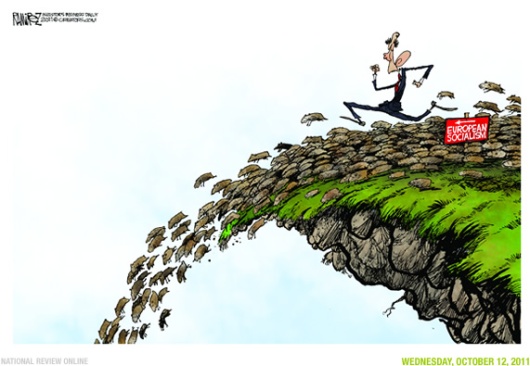
On my blog www.thedailyhatch.org . I took you at your word and sent you over 100 emails with specific spending cut ideas. (Actually there were over 160 emails with specific spending cut suggestions.) However, I did not see any of them in the recent debt deal that Congress adopted although you did respond to me several times. Now I am trying another approach. Every week from now on I will send you an email explaining different reasons why we need the Balanced Budget Amendment. It will appear on my blog on “Thirsty Thursday” because the government is always thirsty for more money to spend. Today I actually have included a great article below from the Heritage Foundation concerning an area of our federal budget that needs to be cut down to size. The funny thing about the Sequester and the 2.4% of cuts in future increases is that President Obama set these up and then he acted like the sky was falling in as the cartoons indicate in the newspapers.
IF YOU TRULY WANT TO CUT THE BUDGET AND BALANCE THE BUDGET THEN SUBMIT THESE POTENTIAL BUDGET CUTS PRESENTED BELOW!!
_______________
Funding Government by the Minute
Published on Mar 28, 2012
At the rate the federal government spends, it runs out of money on July 31. What programs should be cut to balance the budget and fund the government for the remaining five months of the year? Cutting NASA might buy two days; cutting the Navy could buy fifteen. It seems that balancing the budget may require more than just cutting government programs. What should be done?
____________________
We got to cut wasteful spending out of the government and here is another fine suggestion from the Heritage Foundation.
The massive spending bill, or continuing resolution, released by the Senate this week continues spending on programs which are inappropriate or wasteful and fails to adopt good policies in many areas. Here’s a rundown of some of the worst offenders in the Senate bill:
Postal Service Saturday delivery: $2 billion. The Senate CR continues—by omission—the prior year’s ban on using the Postal Service’s small appropriation to reduce service levels, effectively mandating Saturday service. This, along with other such congressional restriction, limits the Postal Service’s ability to reduce costs and increases the risk of massive federal subsidies in the near future.
—James Gattuso, Senior Research Fellow in Regulatory Policy
NASA Manned Spacecraft: $1.2 billion. The Orion Multi-Purpose Crew Vehicle is the new manned spacecraft NASA is developing for exploration of the Moon and Mars and for other purposes. Manned space flight is vastly more expensive than robotic exploration and is largely a public relations showcase for NASA to market itself to the American people. NASA’s budget should be pared back to a tight focus on cost-effective projects to advance its core missions.
—J. D. Foster, Norman B. Ture Senior Fellow in the Economics of Fiscal Policy
Regular readers know that I get very excited when I see signs that more and more people are realizing that the real fiscal problem is big government. Even if the sound analysis comes from foreigners or international bureaucracies.
The Balanced Budget Amendment is the only thing I can think of that would force Washington to cut spending. We have only a handful of balanced budgets in the last 60 years, so obviously what we are doing is not working. We are passing along this debt to the next generation. YOUR APPROACH HAS BEEN TO REJECT THE BALANCED BUDGET “BECAUSE WE SHOULD CUT THE BUDGET OURSELF,” WELL THEN HERE IS YOUR CHANCE!!!! SUBMIT THESE CUTS!!!!
Thank you for this opportunity to share my ideas with you.
The problem with the debt ceiling is very clear to me. We need to get serious about cutting federal spending. I am so upset about it that I have emailed over 100 emails to Senator Pryor concerning specific spending suggestions. I get emails from back from Senator Pryor like the one below. This means that […]
Senator Pryor asks for Spending Cut Suggestions! Here are a few!(Part 164) Senator Mark Pryor wants our ideas on how to cut federal spending. Take a look at this video clip below: Senator Pryor has asked us to send our ideas to him at cutspending@pryor.senate.gov and I have done so in the past and will continue to […]
Senator Pryor asks for Spending Cut Suggestions! Here are a few!(Part 163) Senator Mark Pryor wants our ideas on how to cut federal spending. Take a look at this video clip below: Senator Pryor has asked us to send our ideas to him at cutspending@pryor.senate.gov and I have done so in the past and will continue to […]
Senator Pryor asks for Spending Cut Suggestions! Here are a few!(Part 162) Senator Mark Pryor wants our ideas on how to cut federal spending. Take a look at this video clip below: Senator Pryor has asked us to send our ideas to him at cutspending@pryor.senate.gov and I have done so in the past and will continue to […]
Three very good video tours below from Senator Mark Pryor. Published on Jun 13, 2012 by SenatorPryor Episode 1: Arkansans in the Capitol Published on Jul 9, 2012 by SenatorPryor Episode 2: The Crypt and the Old Supreme Court Published on Aug 20, 2012 by SenatorPryor Episode 3: The Senate Chamber If you want to […]
Senator Pryor asks for Spending Cut Suggestions! Here are a few!(Part 161) Senator Mark Pryor wants our ideas on how to cut federal spending. Take a look at this video clip below: Senator Pryor has asked us to send our ideas to him at cutspending@pryor.senate.gov and I have done so in the past and will continue to […]
Senator Mark Pryor wants our ideas on how to cut federal spending and I sent them to him but he didn’t take any of my suggestions. However, he did take time to get back to me today, but I am not too impressed with Senator Pryor’s response. I gave him hundreds of ideas about how […]
Senator Pryor asks for Spending Cut Suggestions! Here are a few!(Part 160) Senator Mark Pryor wants our ideas on how to cut federal spending. Take a look at this video clip below: Senator Pryor has asked us to send our ideas to him at cutspending@pryor.senate.gov and I have done so in the past and will continue to […]
Senator Pryor asks for Spending Cut Suggestions! Here are a few!(Part 159) Senator Mark Pryor wants our ideas on how to cut federal spending. Take a look at this video clip below: Senator Pryor has asked us to send our ideas to him at cutspending@pryor.senate.gov and I have done so in the past and will continue to […]
Senator Mark Pryor wants our ideas on how to cut federal spending. Take a look at this video clip below: Senator Pryor has asked us to send our ideas to him at cutspending@pryor.senate.gov and I have done so in the past and will continue to do so in the future. On May 11, 2011, I emailed to […]
Office of the Majority Whip | Balanced Budget Amendment Video In 1995, Congress nearly passed a constitutional amendment mandating a balanced budget. The Balanced Budget Amendment would have forced the federal government to live within its means. This Balanced Budget Amendment failed by one vote. 16 years later, Congress has the chance to get it […]
Sadly Senator Pryor has voted against the Balanced Budget Amendment over and over in his long time in the Senate. Senator Pryor: “There are a lot of people who think a balanced-budget amendment solves all the fiscal problems. I completely disagree.” (Peter Urban, Pryor Tilts Balanced Budget, Southwest Times Record, 11/17/11) Dear Senator Pryor, Why […]
Mark Levin and Senator Hatch discuss the balanced budget amendment and it’s importance. Uploaded by loveconstitution on Jan 28, 2011 Mark Levin interviews Senator Hatch 1/27/2011 about the balanced budget amendment. Mark is very excited about the balanced budget amendment being proposed by Senator Orin Hatch and John Cornyn and he discusses the amendment with […]
Dr. Jay Barth with Hendrix College comments on our latest poll results on Arkansas politics (clip from Talkbusiness) Talk Business reported today in the article “Poll Shows Beebe Strength, Pryor Shaky,” the following: A new Talk Business-Hendrix College Poll shows Gov. Mike Beebe (D) maintaining his high job approval rating, while Sen. Mark Pryor (D) […]
U.S. Sen. Mark Pryor at the 2009 Democratic Party Jefferson Jackson Dinner, Arkansas’s largest annual political event. Mark Pryor is up for re-election to the Senate in 2014. It is my opinion that the only reason he did not have an opponent in 2008 was because the Republicans in Arkansas did not want to go […]
Michael Tanner, a senior fellow at the CATO institute, explains that the rate of return on social security will be much lower for todays youth. Steve Brawner wrote in his article “Tiptoeing toward the third rail,” (Arkansas News Bureau, Jan 9,): Social Security has long been considered the “third rail” for American politicians, meaning it’s […]
HALT:HaltingArkansasLiberalswithTruth.com CBS — October 19, 2010 — New York Times’ Jeff Zeleny talks to Jan Crawford about the state of Democrats in the South… Are they a dying species? In the article “Southern Democrat much closer to extinction after GOP wave,” (Washington Times, Nov 4, 2010), Ben Evans notes: After this week’s elections, the […]
HALT:HaltingArkansasLiberalswithTruth.com Roland Martin appears on Rick’s List with Rick Sanchez and the Best Political Team on television (Candy Crowley, John King, Jeffery Toobin, Ed Rollins, Gloria Borger and Victoria Toensing) to discuss day two of the Elena Kagan Supreme Court confirmation hearings. During the analysis, Senator Graham and Elena Kagan had an interesting exchange over […]
Review of Woody Allen’s latest movie “Blue Jasmine” Part 3
I have spent alot of time talking about Woody Allen films on this blog and looking at his worldview. He has a hopeless, meaningless, nihilistic worldview that believes we are going to turn to dust and there is no afterlife. Even though he has this view he has taken the opportunity to look at the weaknesses of his own secular view. I salute him for doing that. That is why I have returned to his work over and over and presented my own Christian worldview as an alternative.
July 26, 2013One of this summer’s most unlikely dynamite acting duke-outs comes courtesy of Woody Allen‘s latest, “Blue Jasmine,” a bicoastal drama with flashes of humor and transparent undertones of “A Streetcar Named Desire” that features the latest in the director’s long line of compelling yet complicated leading ladies.In this corner, joining the ranks of such delightfully difficult divas as Penelope Cruz (“Vicky Cristina Barcelona“) and Judy Davis (“Husbands and Wives“), is that thespian thunder from Down Under, Cate Blanchett. Swank and svelte in increasingly rumpled Chanel, she plays a disgraced, displaced and utterly delusional Manhattan socialite whose designer-brand lifestyle implodes after moving into her sister’s downscale San Francisco home. In the opposite corner is Brooklyn-bred Andrew Dice Clay, that ’80s-vintage foul-mouthed Fonzie, as Jasmine’s burly blue-collar ex-brother-in-law. When Clay’s Augie eventually crushes the hopes of Blanchett’s Jasmine—much as her investment schemer husband, Hal (Alec Baldwin, at home in slick slimeball mode), ruined Augie’s financial dreams—it’s as if you’re watching Blanche DuBois and Stanley Kowalski spar in an Almodovar film inspired by the travails of Ruth Madoff, wife of the infamous swindler to the stars.Such oddball casting—heavy on big-galoot types, with an appearance by comic-of-the-moment Louis C.K.—is just one of the intoxicating reasons that Allen’s latest annual offering to the cinema gods feels more substantial (a pet word tossed around by Blanchett’s character) than some of his recent work. “Blue Jasmine” might have some disconnects in the plotting department, but its focus on the lies we tell ourselves and others just to get through each day packs a relevant punch.Blanchett fabulously goes above and beyond her duties as the wilting faux flower of the title. From her sweat-drenched underarms during a particularly intense meltdown to her mesmerizing slit-eyed sensuality whenever Jasmine gets her way, the actress is a tour-de-force tinted-blonde tornado that elevates her every encounter with a member of the movie’s estimable ensemble.Basically, the Aussie Oscar winner, who just may get a chance at another trophy with this electric performance that makes an essentially despicable woman utterly fascinating as she sidesteps reality at every turn, does what few other Allen leads are able to do: Break through the artifice that often hangs over the director’s films, much of it having to do with the distinctive comic cadence of his dialogue. It almost makes you forget you are watching a Woody Allen film, especially when the San Francisco scenes depict the dingy areas of the city beyond the realm of tourist traps.The initial situation will prove irresistible for those who like a good culture clash between the classes. Fortified by fists full of Xanax, guzzles of vodka and an impressive set of Louis Vuitton luggage, a now-penniless Jasmine (formerly known as Janette) relies on the kindness not of strangers but of relatives: primarily, her forgiving and upbeat sister Ginger (Sally Hawkins). Ginger is a grocery store clerk with two young sons who gladly allows her snobbish sibling to swan around her cramped quarters as if she were visiting royalty. A lesser actress might be crushed by Blanchett, but the bouncy Brit also scores some triumphs as Ginger begins to question her own choices after Jasmine’s arrival.Meanwhile, mentally unstable Jasmine is haunted by the past and so is the film. As her muddled mind flashes back to her luxurious East Coast existence, she realizes that she regularly turned a blind eye to her husband’s flaws as a relentless skirt-chaser as well as a heartless crook.Eventually, Jasmine must lower her standards—she thinks she has the right stuff to be an interior designer, but can barely make it through a computer class so she can sign up for online courses—and takes a job as a dental receptionist, tacky posy-splattered smock included. That setup allows the director to provide the film’s most horrifyingly amusing Allen-esque sequence: A repelled Blanchett squirming out of the sweaty embrace of her employer, a creep played to the hilt by Michael Stuhlbarg, who tries to romance Jasmine with an offer of nitrous oxide.Allen sometimes fills in too many of the blanks. We are reminded again and again that Ginger and Jasmine are adopted children from different birth parents because they look nothing alike.And sometimes not enough. Wouldn’t a smooth operator like Peter Sarsgaard’s dashing diplomat with political ambitions who falls for Jasmine’s fabricated stories of her upscale lifestyle better investigate the woman he is dating?No matter. A good Woody Allen flick is a thing of joy these days and, at times, “Blue Jasmine” is even a great one, close to being an equal to 2005’s “Match Point.” Let us hope he never stops trying.‘Blue Jasmine’: Movie reviewWoody Allen’s latest is a sharp portrait of a woman’s breakdown with a searing performance by Cate BlanchettComments (2)NEW YORK DAILY NEWSRelated posts:\love the movie “Midnight in Paris” by Woody Allen and I have done over 30 posts on the historical characters mentioned in the film. Take a look below:
Around 20 times I have taken time to take my family down to the March for Life in January to take up for the rights of the smallest in our country. These unborn children need us to take up for them. I know that you do not hold my same views on this but I wanted to send this you today so you will know where we are coming from. Since you are a Christian like me then we have the common ground of the Bible to discuss this issue.
Editor’s note. 1998 is the 25th anniversary of the dreadful Roe v. Wade decision. In each issue NRL News is presenting either a revealing portrait of the abortion mentality written by a pro- abortionist, or a thoughtful critique of the abortion mindset composed by a pro-life champion.
Almost 20 years have passed since I sat in the balcony of the Academy of Music in Philadelphia and viewed the film series Whatever Happened to the Human Race? It was the premiere showing of a stunning visual experience that eventually toured 20 major cities.
The text and narration of the five-episode seminar were by Francis Schaeffer, an internationally acclaimed theologian, philosopher, and author, and C. Everett Koop, then surgeon-in- chief at Philadelphia’s Childrens Hospital. They combined their individual expertise and experience to expose the subtle but rapid loss of human rights in America.
They elaborated on those concerns in a textbook of the same name in which they explored in documented detail the growing acceptance of the once-unthinkable practices of abortion, infanticide, and euthanasia.
The film series attracted nationwide attention during its three-month tour in 1979, and the book quickly became a teaching tool for professionals and lay people alike. As a result, there was a dramatic change in the abortion landscape. The powerful message of both the screen and printed versions of Whatever Happened to the Human Race? educated and energized an up-till-then largely uninvolved constituency – – the Evangelicals.
Within weeks of the unveiling of the filmed series and its companion book, Dr. Schaeffer noted their impact in a personal letter dated March 29, 1980. “The Protestants, and especially the evangelicals,” he wrote, “have been so sluggish on this issue of human life, and Whatever Happened to the Human Race? is causing real waves, among church people and governmental people too.”
Those “real waves” continued to ripple out across America, and what had been seen largely as “a Catholic issue” soon became an ” Evangelical issue” as well.
So stunning were the book and its predictions of disaster that had it not been for the sterling reputations of both Koop and Schaeffer as professionals in their own fields, they would have been dismissed as alarmists and scaremongers.
The intervening 20 years, however, proved their warnings to have been prophetic. Yet even they could hardly have anticipated the rapidity with which America would embrace destructive policies and barbaric procedures.
Although the filmed version of Whatever Happened to the Human Race? is seldom shown these days, the book continues to be a dependable resource for those seeking the historical basis for human dignity, value, and rights.
The authors viewed the struggle for the sanctity of life as two- fold, and they divided their 265-page book into two distinct but related parts. The first section provided information, facts, and case studies related to abortion, infanticide, and euthanasia.
Koop and Schaeffer repeatedly made clear that their goal was not simply to educate but to challenge and encourage their readers to respond with decisive and sacrificial action. To that end, their arguments were logical as well as moral.
The second part of the book focused on differing philosophical positions which deny or give uniqueness and dignity to human life. The authors rooted their views in historic Christianity and, fundamentally, Whatever Happened to the Human Race? is a defense of the Judeo-Christian ethic as the foundation of Western civilization. It is a polemic based on the principle that human beings derive their value from having been created in the image of God.
The challenge of the book was directed primarily at Protestants (Evangelicals in particular), but at Christians in general, many of whom the authors believed had neglected to recognize the ” unbreakable link between the existence of the infinite personal God and the uniqueness of human life.” The continued silence and lack of involvement of this group were serving to fuel the decline of human significance.
As the authors led readers to explore the basis for the dignity of human life, they contrasted the views of the East and the West. They walked the reader through the Old and New Testaments, the Enlightenment, mysticism, and, with a detour into archeology, through the Dead Sea Scrolls. All this was for the purpose of examining the historical basis for man’s dignity so that Americans would see the present time as a crucial turning point.
Several powerful visuals from the film were reproduced in the book. One is the scene of a thousand dolls scattered at the shoreline of the Dead Sea in Israel. It is the site where Sodom once stood and was designed to serve as a symbol of moral degradation. It was a reminder to American society of the depravity that has led to the legal destruction of millions of our children and the destruction that awaits the culture as a result.
The assembly-line scene in a toy factory features a procession of dolls in which those missing a limb or having an imperfection are snatched by an impersonal hand and tossed into the garbage. The picture graphically portrays the casual and cruel disregard for the lives of those judged to be less than perfect.
However, it is the cage sequence that is perhaps the most gripping photo in the book, for it portrays real people and real events. In one cage are slaves in chains; in another are German Jews wearing the Star of David. Peering out of other cages are elderly men and women, a crippled child, and a newborn baby.
Each cage is a visual reminder that classifying people as non- persons has its historical precedence. Our generation, through Roe v. Wade, also has declared a segment of the human family outside the protection of the law. Some view legal abortion as a sign of liberation. It is actually an imitation of injustices of the past.
Almost two decades ago Whatever Happened to the Human Race? provided a glimpse into the abyss of horrors that would result from abandoning the fundamental right to life. Today we have the legalization of the barbaric partial-birth abortion. Today children can be “manufactured” from a mother who was an aborted baby and a father who was a cadaver. Today, the Kevorkian machine continues to rumble along the highway of death, picking up support for the national acceptance of “assisted suicide.” Today we are confronted with surveys in which fifty percent of the respondents agree that “abortion is murder” but thirty-nine percent of them say that abortion should be legal anyway. Today is yesterday’s nightmare come true.
Whatever Happened to the Human Race? is a classic whose fundamental arguments need to be revisited on a regular basis. Its clarity of thought is complemented by its analysis of the future of Western culture and its chilling prophecy of what awaits us as the destruction of human life is increasingly sanctioned by the medical profession and the courts, by science and legislators, by parents and silent citizens.
The authors had set out to convince people that at some point we, as a nation, will be held accountable for our disregard of human value because history does not forgive or forget. The question, “Whatever happened to the human race?” serves to reveal the human propensity for exaggerated pride and supreme self- confidence that leads us to shake our fists in the face of God and think we can get away with it. The book Whatever Happened to the Human Race? says we can’t.
Thank you so much for your time. I know how valuable it is. I also appreciate the fine family that you have and your commitment as a father and a husband.
Sincerely,
Everette Hatcher III, 13900 Cottontail Lane, Alexander, AR 72002, ph 501-920-5733, lowcostsqueegees@yahoo.com
PHOTO BY STATON BREIDENTHAL Marchers arrive at the state Capitol on Sunday after beginning the Arkansas March for Life in downtown Little Rock As in the past, the pr0-life March in Little Rock had at least twenty times the people in attendance that the pr0-abortion march did the previous day. In fact, last year Channel […]
34th Annual March For Life Sunday, January 22, 2012 2:00 PM Capitol and Louisiana Downtown Little Rock Will your face appear in pictures at the next March for Life? We certainly hope that you will consider joining us each January for this important pro-life event. Hundreds of people from across the state make the annual […]
HALT:HaltingArkansasLiberalswithTruth.com President Obama on abortion Adrian Rogers (former President of Southern Baptist Convention): “I am not as afraid of the Communist, the Russians, the Chinese, as much as I am afraid of God. If God be for us, who can be against us? If God be against us, then who can be for us? It […]
The All-American Rejects Music Interview Tyson Ritter Full Band only on The Artist Spotlight The All-American Rejects – The Last Song The All-American Rejects – It Ends Tonight I got to go hear the All-American Rejects in Little Rock on 12-13-12. Here are some of my reactions. Tyson Ritter admitted that he lost his way […]
Ron Paul’s Pro-life view Ron Paul’s Pro-Life Speech in Ames, Iowa Uploaded by RonPaul2008dotcom on Aug 13, 2011 Free email updates: http://www.RonPaul.com/welcome.php Please like, share, subscribe & comment! http://www.RonPaul.com 08/13/2011– Ron Paul is America’s leading voice for limited, constitutional government, low taxes, free markets, sound money, and a pro-America foreign policy. ___________________________________ Related posts: Crowd […]
I have been involved with the March for Life for almost 30 years here in Little Rock. My four kids and I have walked in it on a regular basis in Little Rock and I have posted about it before on my blog http://www.thedailyhatch.org . When I first marched in it Ronald Reagan was the […]
My sons Wilson (on left) and Hunter (on right) went to California and visited Yosemite National Park with our friend Sherwood Haisty Jr. March 21-27. Here they are standing in front of the tallest waterfall in North America. The only surviving founding member of NARAL, Dr. Bernard Nathanson gives his testimony of NARAL’s foundation of […]
President and Nancy Reagan talking to Mother Teresa in the Oval Office. 6/20/85. Superbowl commercial with Tim Tebow and Mom. Jason Tolbert wrote a great article this week about a pro-life meeting. He mentons William Harrison who I have written about before on this blog. I used to write letters to the editor a whole […]
What Ever Happened to the Human Race? Jason Tolbert told a story about pro-life marchers and their tactic of prayer: OWNER TURNS SPRINKLERS ON PRO-LIFE PRAYER VIGIL In July, I wrote about a new movement springing up in Arkansas that seeks to combat abortion not with violent protest, but with peaceful prayer demonstrations. It is called “40 […]
Rep. Tim Griffin and Lt. Gov. Mark Darr at the Arkansas March for Life in Little Rock from Tolbert Report. Go to Fox 16 website and you will read this story below and watch a video clip on both marches. What you will not read is the fact that only 150 people showed up for […]
HALT:HaltingArkansasLiberalswithTruth.com (My family and I are heading out to march today. The weather in Little Rock is overcast and pleasant. Come out and join us.) Bill O’Reilly Interviews Jehmu Greene About Pro-Life Super Bowl Ad about Tim Tebow I got these quotes from someone off the internet that lives in England. The funny thing is […]
HALT:HaltingArkansasLiberalswithTruth.com Development of the Unborn Baby. Prolife Video There are people all around you who have been affected by humanism. Abortion is one of the results of humanism. Nevertheless, we can befriend those who are considering abortion and speak into their lives with love and truth. There may be those who say hateful things to […]
HALT:HaltingArkansasLiberalswithTruth.com Science Matters #2: Former supermodel Kathy Ireland tells Mike Huckabee about how she became pro-life after reading what the science books have to say. My good friend Dr. Kevin R. Henke is a scientist and also an atheistic evolutionist. I had a lot of discussions with Kevin over religious views. I remember going over […]
HALT:HaltingArkansasLiberalswithTruth.com “Jane Roe” or Roe v Wade is now a prolife Christian. She’s recently done a commercial about it. Around 1993 my wife Jill and I peacefully walked the streets of Little Rock with Rev Flip Benham who was working with Operation Rescue at the time. We held pro-life signs up and heard some moving […]
Dr William Lane Craig was invited by the School of Oriental and African Studies (SOAS) Christian Union, London to give a lecture titled “Can we be good without God?” In this video Dr Craig answers a question about the objectivity of morality. Should we consider morals to be objective? If so, why can’t morals be “abiding” and objectively grounded in society?
The lecture formed part of the Reasonable Faith Tour in October 2011. The Tour was sponsored by Damaris Trust, UCCF and Premier Christian Radio.
(Samuel Beckett example: Life is meaningless, live in tension with reality)
(Modern man sees no hope for the future and has deluded himself by appealing to nonreason to stay sane. Look at the example of the lady tied to the railroad tracks in this above video as a example.)
Francis and Edith Schaeffer pictured below:
HOW SHOULD WE THEN LIVE? was both a book and a film series.
I have discussed many subjects with my liberal friends over at the Ark Times Blog in the past and I have taken them on now on the subject of the absurdity of life without God in the picture. Most of my responses included quotes from William Lane Craig’s book THE ABSURDITY OF LIFE WITHOUT GOD. Here is the result of one of those encounters from June of 2013:
Hackett’s secular atheist worldview could only lead to one conclusion and sure enough he stated, “Yeah! SR you’re going to the same place I am…straight into the dirt.”
I SALUTE YOU HACKETT FOR FOLLOWING A GOOD LINE OF LOGIC!!!! THIS QUOTE FROM BERTRAND RUSSELL COMES TO THE SAME CONCLUSION THAT YOU DO, “All the noonday brightness of human genius, [is] destined to extinction in the vast death of the solar system, and that the whole temple of Man’s achievement must inevitably be buried beneath the debris of a universe in ruins.” (Bertrand Russell, “A Free Man’s Worship,” Two Modern Essays on Religion (Hanover, NH: Westholm Publications, 1959) 25)
DO YOU REALLY BELIEVE THERE IS NO GOD OR DO YOU WANT TO AVOID BELIEVING IN GOD BECAUSE YOU DON’T WANT TO OBEY HIM? A THIEF DOESN’T WANT TO FIND A POLICEMAN EITHER!!!!!
The atheist ALDOUS HUXLEY found the logical conclusion that life is meaningless exhilarating:
“We objected to the morality because it interfered with our sexual freedom; we objected to the political and economic system because it was unjust. The supporters of these systems claimed that in some way they embodied the meaning (a Christian meaning, they insisted) of the world. There was one admirably simple method of confuting these people at the same time justifying ourselves… we could deny that the world had any meaning.” (Aldous Huxley, Ends and Means (New York and London: Harper & Brothers Publishers, 1937) 316)
E P I S O D E 1 0 Dr. Francis Schaeffer – Episode X – Final Choices 27 min FINAL CHOICES I. Authoritarianism the Only Humanistic Social Option One man or an elite giving authoritative arbitrary absolutes. A. Society is sole absolute in absence of other absolutes. B. But society has to be […]
E P I S O D E 9 Dr. Francis Schaeffer – Episode IX – The Age of Personal Peace and Affluence 27 min T h e Age of Personal Peace and Afflunce I. By the Early 1960s People Were Bombarded From Every Side by Modern Man’s Humanistic Thought II. Modern Form of Humanistic Thought Leads […]
E P I S O D E 8 Dr. Francis Schaeffer – Episode VIII – The Age of Fragmentation 27 min I saw this film series in 1979 and it had a major impact on me. T h e Age of FRAGMENTATION I. Art As a Vehicle Of Modern Thought A. Impressionism (Monet, Renoir, Pissarro, Sisley, […]
E P I S O D E 7 Dr. Francis Schaeffer – Episode VII – The Age of Non Reason I am thrilled to get this film series with you. I saw it first in 1979 and it had such a big impact on me. Today’s episode is where we see modern humanist man act […]
E P I S O D E 6 How Should We Then Live 6#1 Uploaded by NoMirrorHDDHrorriMoN on Oct 3, 2011 How Should We Then Live? Episode 6 of 12 ________ I am sharing with you a film series that I saw in 1979. In this film Francis Schaeffer asserted that was a shift in […]
E P I S O D E 5 How Should We Then Live? Episode 5: The Revolutionary Age I was impacted by this film series by Francis Schaeffer back in the 1970′s and I wanted to share it with you. Francis Schaeffer noted, “Reformation Did Not Bring Perfection. But gradually on basis of biblical teaching there […]
Dr. Francis Schaeffer – Episode IV – The Reformation 27 min I was impacted by this film series by Francis Schaeffer back in the 1970′s and I wanted to share it with you. Schaeffer makes three key points concerning the Reformation: “1. Erasmian Christian humanism rejected by Farel. 2. Bible gives needed answers not only as to […]
Francis Schaeffer’s “How should we then live?” Video and outline of episode 3 “The Renaissance” Francis Schaeffer: “How Should We Then Live?” (Episode 3) THE RENAISSANCE I was impacted by this film series by Francis Schaeffer back in the 1970′s and I wanted to share it with you. Schaeffer really shows why we have so […]
Francis Schaeffer: “How Should We Then Live?” (Episode 2) THE MIDDLE AGES I was impacted by this film series by Francis Schaeffer back in the 1970′s and I wanted to share it with you. Schaeffer points out that during this time period unfortunately we have the “Church’s deviation from early church’s teaching in regard […]
Francis Schaeffer: “How Should We Then Live?” (Episode 1) THE ROMAN AGE Today I am starting a series that really had a big impact on my life back in the 1970′s when I first saw it. There are ten parts and today is the first. Francis Schaeffer takes a look at Rome and why […]
Francis Schaeffer: “Whatever Happened to the Human Race” (Episode 5) TRUTH AND HISTORY Published on Oct 7, 2012 by AdamMetropolis This crucial series is narrated by the late Dr. Francis Schaeffer and former Surgeon General Dr. C. Everett Koop. Today, choices are being made that undermine human rights at their most basic level. Practices once […]
The opening song at the beginning of this episode is very insightful. Francis Schaeffer: “Whatever Happened to the Human Race” (Episode 4) THE BASIS FOR HUMAN DIGNITY Published on Oct 7, 2012 by AdamMetropolis This crucial series is narrated by the late Dr. Francis Schaeffer and former Surgeon General Dr. C. Everett Koop. Today, choices […]
Francis Schaeffer: “Whatever Happened to the Human Race” (Episode 3) DEATH BY SOMEONE’S CHOICE Published on Oct 6, 2012 by AdamMetropolis This crucial series is narrated by the late Dr. Francis Schaeffer and former Surgeon General Dr. C. Everett Koop. Today, choices are being made that undermine human rights at their most basic level. Practices […]
Francis Schaeffer: “Whatever Happened to the Human Race?” (Episode 2) SLAUGHTER OF THE INNOCENTS Published on Oct 6, 2012 by AdamMetropolis This crucial series is narrated by the late Dr. Francis Schaeffer and former Surgeon General Dr. C. Everett Koop. Today, choices are being made that undermine human rights at their most basic level. Practices […]
It is not possible to know where the pro-life evangelicals are coming from unless you look at the work of the person who inspired them the most. That person was Francis Schaeffer. I do care about economic issues but the pro-life issue is the most important to me. Several years ago Adrian Rogers (past president of […]
Ecclesiastes 2-3 Published on Sep 19, 2012 Calvary Chapel Spring Valley | Sunday Evening | September 16, 2012 | Derek Neider _____________________________ I have written on the Book of Ecclesiastes and the subject of the meaning of our lives on several occasions on this blog. In this series on Ecclesiastes I hope to show how secular […]
Ecclesiastes 1 Published on Sep 4, 2012 Calvary Chapel Spring Valley | Sunday Evening | September 2, 2012 | Pastor Derek Neider _____________________ I have written on the Book of Ecclesiastes and the subject of the meaning of our lives on several occasions on this blog. In this series on Ecclesiastes I hope to show how […]
Ecclesiastes 8-10 | Still Searching After All These Years Published on Oct 9, 2012 Calvary Chapel Spring Valley | Sunday Evening | October 7, 2012 | Pastor Derek Neider _______________________ Ecclesiastes 11-12 | Solomon Finds His Way Published on Oct 30, 2012 Calvary Chapel Spring Valley | Sunday Evening | October 28, 2012 | Pastor Derek Neider […]
Ecclesiastes 6-8 | Solomon Turns Over a New Leaf Published on Oct 2, 2012 Calvary Chapel Spring Valley | Sunday Evening | September 30, 2012 | Pastor Derek Neider _____________________ I have written on the Book of Ecclesiastes and the subject of the meaning of our lives on several occasions on this blog. In this series […]
Ecclesiastes 4-6 | Solomon’s Dissatisfaction Published on Sep 24, 2012 Calvary Chapel Spring Valley | Sunday Evening | September 23, 2012 | Pastor Derek Neider ___________________ I have written on the Book of Ecclesiastes and the subject of the meaning of our lives on several occasions on this blog. In this series on Ecclesiastes I hope […]
Overview of the Book of Ecclesiastes Overview of the Book of EcclesiastesAuthor: Solomon or an unknown sage in the royal courtPurpose: To demonstrate that life viewed merely from a realistic human perspective must result in pessimism, and to offer hope through humble obedience and faithfulness to God until the final judgment.Date: 930-586 B.C. Ecclesiastes 2-3 Published on Sep 19, […]
Ecclesiastes 1 Published on Sep 4, 2012 Calvary Chapel Spring Valley | Sunday Evening | September 2, 2012 | Pastor Derek Neider _____________________ I have written on the Book of Ecclesiastes and the subject of the meaning of our lives on several occasions on this blog. In this series on Ecclesiastes I hope to show how […]
Ecclesiastes 8-10 | Still Searching After All These Years Published on Oct 9, 2012 Calvary Chapel Spring Valley | Sunday Evening | October 7, 2012 | Pastor Derek Neider _______________________ Ecclesiastes 11-12 | Solomon Finds His Way Published on Oct 30, 2012 Calvary Chapel Spring Valley | Sunday Evening | October 28, 2012 | Pastor Derek Neider […]
I have spent alot of time talking about Woody Allen films on this blog and looking at his worldview. He has a hopeless, meaningless, nihilistic worldview that believes we are going to turn to dust and there is no afterlife. Even though he has this view he has taken the opportunity to look at the weaknesses of his own secular view. I salute him for doing that. That is why I have returned to his work over and over and presented my own Christian worldview as an alternative.
Woody Allen loves his little liars, his self-regarding theater people and swaddled urbanites who, even when pushed up against reality, put on a good show. “Don’t speak!” insists glamorous Dianne Wiest in Bullets Over Broadway, railing against John Cusack’s love talk but also against any upstaging of her special glow. And in Allen’s immortal The Purple Rose of Cairo, the dreamlife of the movies withstands fourth-wall breakage and even a crushed heart; that last shot of Mia Farrow is of someone content to be lost in oblivion.
But has Allen, the most painfully self-aware of American directors, ever allowed his fantasizers to fall on the rocks as ruinously as Cate Blanchett does in Blue Jasmine? I don’t think so. (He may not have been capable of doing it until now, with more films behind him than on the horizon.) Blanchett’s Jasmine enters the movie arrestingly: a fidgety, elbowy presence on a cross-country flight, chatting the ear off a seatmate about sex and the better things in life. The voice is a conspiratorial purr, desperately in need of a confidant; you wait for the trapped stranger’s eye roll, but, almost alarmingly, it becomes clear that this isn’t a comedy.
Jasmine, we learn in a toggling flashback structure that also feels fresh to Allen’s style, is fleeing the scorched earth of a broken marriage to a Bernie Madoff–like fraud, Hal (Alec Baldwin), a swindler of fortunes. Even as she steps disdainfully through the earthy San Francisco apartment of her half-welcoming sister, Ginger (Sally Hawkins), another of Hal’s victims, there’s an unwillingness to shed former airs. A vodka bottle on the shelf will help; Allen turns the shot of Jasmine at the liquor station self-medicating into a repeated gag as she settles in for some much-needed “rebuilding.”
Can this gala planner and bruncher, a professional recipient of jewelry, commit to computer classes? How it hurts to watch Jasmine try. A job in the office of a dentist (Michael Stuhlbarg, tops in a tricky part) also goes poorly. Allen’s sharp script, perhaps the most economically minded of his career, situates an array of naysayers around Jasmine: not just Ginger’s ex-husband (a surprisingly deep Andrew Dice Clay), who lost a windfall in the pyramid scheme, but the sister’s new boyfriend, Chili (Bobby Cannavale), a doting mechanic who’s instantly put off by the interloper’s brittle Manhattitude.
It’s real Streetcar Named Desire territory as the fights pile up, and if you think that doesn’t sound entertaining, know that it is, in a hypnotically catastrophic way. Blanchett’s eyes begin to burn with panic (she’s never been this agonizing, channeling the ragged edge of Gena Rowlands) as she lashes out at all the “losers,” and Allen’s material pushes everyone to make terrible choices. The essence of Blue Jasmine feels timely, even years into America’s limp rebound from recession: How do we start over, when guilt can’t be fully processed and sacrifice is demeaned? Boldly, this isn’t a drama that eases into forgiveness or comeuppance; instead, everyone is taken down a peg. Why so cynical, Woodman? We remember Crimes and Misdemeanors(which this film most resembles in tone); now here’s a savage prosecution of the 1 percent. It’s not the movie anyone could have expected—which is stunning in itself. But maybe the time for sweet self-delusions is through.
I love the movie “Midnight in Paris” by Woody Allen and I have done over 30 posts on the historical characters mentioned in the film. Take a look below:
I have spent alot of time talking about Woody Allen films on this blog and looking at his worldview. He has a hopeless, meaningless, nihilistic worldview that believes we are going to turn to dust and there is no afterlife. Even though he has this view he has taken the opportunity to look at the weaknesses of […]
I have spent alot of time talking about Woody Allen films on this blog and looking at his worldview. He has a hopeless, meaningless, nihilistic worldview that believes we are going to turn to dust and there is no afterlife. Even though he has this view he has taken the opportunity to look at the weaknesses of […]
Woody Allen video interview in France Related posts: “Woody Wednesdays” Woody Allen on God and Death June 6, 2012 – 6:00 am Good website on Woody Allen How can I believe in God when just last week I got my tongue caught in the roller of an electric typewriter? If Jesus Christ came back today and […]
I have spent alot of time talking about Woody Allen films on this blog and looking at his worldview. He has a hopeless, meaningless, nihilistic worldview that believes we are going to turn to dust and there is no afterlife. Even though he has this view he has taken the opportunity to look at the weaknesses of […]
A surprisingly civil discussion between evangelical Billy Graham and agnostic comedian Woody Allen. Skip to 2:00 in the video to hear Graham discuss premarital sex, to 4:30 to hear him respond to Allen’s question about the worst sin and to 7:55 for the comparison between accepting Christ and taking LSD. ___________________ The Christian Post > […]
Crimes and Misdemeanors: A Discussion: Part 1 If you like Woody Allen films as much as I do then join me every Wednesday for another look the man and his movies. Below are some of the posts from the past: “Woody Wednesday” How Allen’s film “Crimes and Misdemeanors makes the point that hell is necessary […]
I really enjoyed this documentary on Woody Allen from PBS. Woody Allen: A Documentary, Part 1 Published on Mar 26, 2012 by NewVideoDigital Beginning with Allen’s childhood and his first professional gigs as a teen – furnishing jokes for comics and publicists – WOODY ALLEN: A DOCUMENTARY chronicles the trajectory and longevity of Allen’s career: […]
Crimes and Misdemeanors: A Discussion: Part 3 Uploaded by camdiscussion on Sep 23, 2007 Part 3 of 3: ‘Is Woody Allen A Romantic Or A Realist?’ A discussion of Woody Allen’s 1989 movie, Crimes and Misdemeanors, perhaps his finest. By Anton Scamvougeras. http://camdiscussion.blogspot.com/antons@mail.ubc.ca ______________ One of my favorite Woody Allen movies and I reviewed […]
Crimes and Misdemeanors: A Discussion: Part 2 Uploaded by camdiscussion on Sep 23, 2007 Part 2 of 3: ‘What Does The Movie Tell Us About Ourselves?’ A discussion of Woody Allen’s 1989 movie, perhaps his finest. By Anton Scamvougeras. http://camdiscussion.blogspot.com/antons@mail.ubc.ca _________________- One of my favorite Woody Allen movies and I reviewed it earlier but […]
I have spent alot of time talking about Woody Allen films on this blog and looking at his worldview. He has a hopeless, meaningless, nihilistic worldview that believes we are going to turn to dust and there is no afterlife. Even though he has this view he has taken the opportunity to look at the weaknesses of […]
Crimes and Misdemeanors: A Discussion: Part 1 If you like Woody Allen films as much as I do then join me every Wednesday for another look the man and his movies. Below are some of the posts from the past: “Woody Wednesday” How Allen’s film “Crimes and Misdemeanors makes the point that hell is necessary […]
I have spent alot of time talking about Woody Allen films on this blog and looking at his worldview. He has a hopeless, meaningless, nihilistic worldview that believes we are going to turn to dust and there is no afterlife. Even though he has this view he has taken the opportunity to look at the weaknesses of […]
Crimes and Misdemeanors: A Discussion: Part 1 Uploaded by camdiscussion on Sep 23, 2007 Part 1 of 3: ‘What Does Judah Believe?’ A discussion of Woody Allen’s 1989 movie, perhaps his finest. By Anton Scamvougeras. http://camdiscussion.blogspot.com/antons@mail.ubc.ca _____________ One of my favorite films is this gem by Woody Allen “Crimes and Misdemeanors”: Film Review By […]
Crimes and Misdemeanors: A Discussion: Part 3 Uploaded by camdiscussion on Sep 23, 2007 Part 3 of 3: ‘Is Woody Allen A Romantic Or A Realist?’ A discussion of Woody Allen’s 1989 movie, Crimes and Misdemeanors, perhaps his finest. By Anton Scamvougeras. http://camdiscussion.blogspot.com/antons@mail.ubc.ca ______________ One of my favorite Woody Allen movies and I reviewed […]
Crimes and Misdemeanors: A Discussion: Part 2 Uploaded by camdiscussion on Sep 23, 2007 Part 2 of 3: ‘What Does The Movie Tell Us About Ourselves?’ A discussion of Woody Allen’s 1989 movie, perhaps his finest. By Anton Scamvougeras. http://camdiscussion.blogspot.com/antons@mail.ubc.ca _________________- One of my favorite Woody Allen movies and I reviewed it earlier but […]
Crimes and Misdemeanors: A Discussion: Part 1 Uploaded by camdiscussion on Sep 23, 2007 Part 1 of 3: ‘What Does Judah Believe?’ A discussion of Woody Allen’s 1989 movie, perhaps his finest. By Anton Scamvougeras. http://camdiscussion.blogspot.com/antons@mail.ubc.ca _____________ Today I am starting a discusssion of the movie “Crimes and Misdemeanors” by Woody Allen. This 1989 […]
And here’s another set of charts showing a big gap between the United States and Europe.
So the obvious question is whether we should copy the statist policies of our cousins across the Atlantic.
This video explores some of the possible consequences.
The video should make us contemplate the importance of cultural attitudes.
Values such as the work ethic, the spirit of self reliance, and personal responsibility are all form of social capital that help an economy prosper.
But if social capital begins to erode, restoring it is a bit like trying to put toothpaste back in a tube.
So while I obviously think tax and spending policy is important, pro-growth fiscal policy may not mean much in a society where dependency and mooching are considered acceptable lifestyles.
I have spent alot of time talking about Woody Allen films on this blog and looking at his worldview. He has a hopeless, meaningless, nihilistic worldview that believes we are going to turn to dust and there is no afterlife. Even though he has this view he has taken the opportunity to look at the weaknesses of his own secular view. I salute him for doing that. That is why I have returned to his work over and over and presented my own Christian worldview as an alternative.
A sprawling, comprehensive documentary that focuses on everything from Woody Allen’s childhood to Midnight in Paris.
2012-06-06
Woody Allen
Trevor Gilks
2011
Watching PBS’ documentary on Woody Allen is like spending an afternoon with an old friend — one who’s funnier and more interesting than any of your actual friends. It’s enormously entertaining, but despite a running time of over three hours and the full participation of Woody Allen and almost all of his notable, still-living associates, it feels less like an in-depth examination of Allen’s life than a light-hearted overview of it. In its admirable but foolhardy attempt to cover every facet of Allen’s life and career, it’s forced to gloss over a lot of topics and speed through decades in minutes. The fact remains, though, that Woody Allen: A Documentary is enthralling, hilarious, and guaranteed to evoke powerful nostalgia from all Woody Allen fans.This movie’s closest parallel is probably Wild Man Blues, another documentary for which Allen opened himself up. Wild Man Blues captured Allen naturally, which made it loose and intimate, but Woody Allen: A Documentary consists entirely of staged interviews and archive footage, which gives it a more official feel.And while Wild Man Blues was micro — looking at Allen over the course of a month — Woody Allen: A Documentary is macro — starting with Allen’s birth, and going all the way up to the success of Midnight in Paris. So vast is its focus that there were obviously a lot of decisions that needed to be made about what to keep and what to cut. I have some quibbles with what they’ve chosen to include and exclude, and just about everyone else will too. In trying to do so much, they’ve prevented themselves from being able to wholly satisfy anyone, other than the curious non-fan looking for a quick overview of what Woody Allen is all about.Woody Allen: A Documentary was written, produced and directed for PBS’ American Masters series by Robert B. Weide. Weide, a career chronicler of funny people, has directed documentaries on the Marx brothers, Mort Sahl, W.C. Fields and Lenny Bruce. He’s also executive-produced the entire run of Larry David’s Curb Your Enthusiasm and directed half of its episodes.Weide’s most relevant work with regard to Woody Allen: A Documentary is Marx Brothers in a Nutshell, a 1982 documentary he made for PBS. His first project out of film school, it was produced by Allen’s long-time agent/producer Charles H. Joffe, and, likely as a result of this, managed to land Woody Allen as a talking-head contributor. This led to Weide allegedly spending years trying to convince Allen to participate in another documentary, this time with himself as the subject.
Allen was quite reclusive in the ‘80s and ‘90s but started to open up and make more public appearances in the ‘00s, so it makes sense that he’d finally agree to this project in 2010. Filmed over 18 months, Woody Allen: A Documentary boasts “unprecedented access” to Allen, although he’s no more revealing, candid or emotional than he’s been in any of his press junkets of the last decade. He says a lot of the same things we’ve been hearing him say forever, although he’s charming and hilarious as always.
He also offers many seemingly mundane tidbits that are likely to thrill Woody Allen obsessives — like a tour of his childhood neighborhood, and a look at the typewriter on which he’s typed up every single one of his movies.
“It used to have a metal thing that went over top, but that fell off 30 years ago.”
Woody Allen: A Documentary is broken down into two parts, which aired on separate nights. While the break is theoretically chronological (Part 1 covers his childhood until 1980, and the second part covers 1981 to 2012), the two parts also differ so greatly in tone that they feel like two different movies.
Part 1
The first part of Woody Allen: A Documentary is by far the superior, more interesting half. In all likelihood, virtually all of the new information about Woody Allen that you will learn from watching this documentary will be obtained before Part 1 concludes, as Weide feverishly digs through Allen’s past, turning up fascinating nuggets of information about his childhood and early career.
The film begins, predictably, with Allen’s early family life and schooling. Allen gives the documentarians a guided tour of his old neighborhood, including his childhood home and the theatre around the corner where he went to the movies every weekend.
“It doesn’t look like much, but it wasn’t.”
Many of Allen’s childhood anecdotes are familiar from his movies. Weide realizes this too, and humorously intercuts Allen telling stories with the versions of those stories Allen has committed to film. When Allen talks about his childhood realization that life is finite, so what’s the point, the movie cuts to the scene from Annie Hall of young Alvy Singer telling his therapist that, as long as the universe is expanding, there’s no real point in doing any homework. Allen talking about how his father never actually told him what he did for a living is intercut with a scene from Radio Days in which Seth Green’s father refuses to reveal his career.
Allen’s parents had passed away by the time this movie was made, so they don’t appear, except briefly in archive footage. Simply by virtue of having been lucky enough to film a single tense conversation between Allen and his parents, 1997’s Wild Man Blues has a lot more insight to offer on this topic. Woody Allen: A Documentary’s most revealing parental moment comes in an archival interview of Nettie, Allen’s mother, saying that she was too strict with him, and as a result he’s too harsh and unfeeling, which she also said, nearly verbatim, in Wild Man Blues.
Marty and Nettie Konigsberg.
Allen’s sister/producer Letty Aronson does appear, however, just as she did in Wild Man Blues. She remembers him being a very kind brother, which Allen’s mother corroborates.
The movie then moves on to its most fascinating section, its chronicle of Allen’s rise from teenage joke-writer to stand-up comedian to major celebrity, all before he appeared in a single movie. Woody Allen’s movies are recorded documents that have been discussed and picked apart endlessly, but the days of Allen’s career prior to 1965 are much more mysterious.
In addition to being this documentary’s most fascinating section, this is also its most entertaining. Woody Allen circa early 1960s is a serious contender for funniest human being of all time. In every television appearance and every interview, he’s almost inhumanly sharp and quick-witted, and his stand-up comedy performances will force you to abuse the pause button to prevent from missing the jokes and interviews under the sound of your own laughter. Woody Allen: A Documentary could have devoted all three of its hours to Allen’s pre-film career and never have had a single dull or uninformative moment.
As a young teenager, Allen started sending jokes to the local newspaper. He didn’t want his real name (Allen Stuart Konigsberg) appearing in print because he was afraid his classmates would make fun of him, so he came up with the pseudonym ‘Woody Allen’ (he says “it was just the first thing I thought of”). As for the iconic glasses, he saw comedian Mike Merrick sporting a pair of black plastic glasses, thought they looked pretty sharp, so he got a pair for himself and then never really gave it a second thought.
Mike Merrick (not actually sure about the spelling of this guy’s name).“So I got these black glasses, put them on, wore them, and never gave them a second thought the rest of my life.”
As his name became a mainstay in all of New York’s city columns, he started to garner a lot of attention from agents and producers. Soon, he was writing jokes for comedians like Arthur Godfrey, Peter Lind Hayes and Herb Shriner, and sketches for shows like The Chevy Show and The Sid Caesar Show, alongside another up-and-coming comic writer named Mel Brooks.
By 16, Allen was making more money that his parents. By 18, he was married, and by 21 he was divorced. These broad details you may remember from 2003’s Anything Else, a movie inspired loosely by Allen’s early life. Despite being based (loosely) on fact, that movie never felt particularly credible, mostly because Allen failed to acknowledge how exceptionally gifted he is, and expected us to accept Jason Biggs’ character a normal guy.
“When you’re young, you know, you go out, you go to the movies, you go bowling, and then there’s nowhere to go but to get married. What else do you do?”
Allen casually reveals that he wrote up to 50 jokes per day, and a quick scroll through some of his typewritten sheets reveals that almost all of them were quite funny, and many of them are timeless quotes that still populate Facebook profiles and e-mail signatures to this day. There’s a fascinating interview segment from the CBC in which Allen displays his very nonchalant attitude about his genius. He compares writing jokes to drawing horses — some people can just do it easily, others can’t. And he’d rather be able to draw horses.
“When you’re a joke maker, it’s hard not to make jokes. It’s like my normal conversation. It just comes out that way.”
Allen soon signs up with talent agents Jack Rollins and Charles H. Joffe, who he describes as “the Cadillac of talent agents.” They managed, according to Rollins, “comedians and personalities, but never writers.” But they agreed to take on Allen anyway, in part because they had bigger plans for him.
Joffe (left), Rollins and Allen.
One of this movie’s most insistent lessons is just how monumentally important Jack Rollins and Charles H. Joffe were to Woody Allen’s career. I’ve mentioned these two before on this site: they’ve produced every single movie Allen has written or directed, appeared in various small cameos, and Jack Rollins even inspired the character of Broadway Danny Rose.
What I didn’t realize, though, is that they represented Allen back when he was just a writer, and it was their idea for him to start performing stand-up comedy. Rollins claims they were so convinced he’d be a hit, they’d literally push him on stage. All of his television appearances were orchestrated by Joffe and Rollins. They also helped produce his stage plays Don’t Drink the Water and Play It Again, Sam.
Then, when Allen decided he might like to write for the movies, Rollins and Joffe got him What’s New Pussycat. When that experience left a bad taste in his mouth, they made sure his directorial debut, 1969’s Take the Money and Run, would be untouched by studio meddlers. They then continued to keep the studios off his back for the next 40 years and counting. Joffe passed away in 2008 (and only appears in this movie in archive footage), but Rollins is still alive and working at age 97. For all the Woody Allen films we’ve enjoyed, we owe those two just as much thanks as we owe Allen himself.
Joffe and Rollins accepting the Academy Award for Best Picture for Annie Hall from presenter Jack Nicholson.
After Joffe and Rollins pushed him to perform as a comedian, Allen became a national sensation. He appeared on game shows, variety shows, guest-hosted The Tonight Show, and did countless talk-show interviews. Allen says that Rollins’ and Joffe’s plan was to get him onto television as often as humanly possible, which often led to bizarre gigs like singing to dogs, boxing kangaroos, and doing a big song-and-dance musical number on the Perry Como show in front of giant light-up letters spelling W-O-O-D-Y.
”Variety said I was ‘probably the worst singer ever,’ and I think they were right.”
Peter Biskind’s 1998 book about 1970s New Hollywood Easy Riders and Raging Bulls opens with a scene-setting story about What’s New Pussycat, and about how it went from a Warren Beatty comeback vehicle to Woody Allen’s debut as actor and screenwriter. In that book’s version, which is recounted by Beatty himself, he essentially stormed out just prior to production as he was outraged that Allen’s re-writes (which the studio preferred) had enlarged Allen’s part while reducing Beatty’s. That’s the version I was relying on when I wrote my review of What’s New Pussycat, but Woody Allen: A Documentary presents a very different version it.
This movie claims it was Shirley MacLaine (Beatty’s sister, incidentally), who’d worked with Allen on The Chevy Show, who brought movie mogul Charles K. Feldman to see Woody Allen perform at The Blue Angel nightclub. Feldman, Rollins and Joffe then worked out a movie deal for Allen. According to Woody Allen: A Documentary, What’s New Pussycat was really intended to be Allen’s movie all along, and Warren Beatty is never even mentioned. The book and the documentary also differ on how much Allen was paid for his work.
What both accounts agree on is the end result: a movie that was hugely popular but despised by Woody Allen. Allen says “if I had had my way, that movie would have been much better, but made much less money,” and I have no reason to doubt him on either count. There’s no mention of What’s Up, Tiger Lily? or Casino Royale which is too bad, as I was wondering what extenuating circumstances would have forced Allen into working on them. After the studio meddling of What’s New Pussycat, he must surely have been aware that additional meddling was all but guaranteed in those two even more hackneyed projects.
The cast of What’s New Pussycat
Bananas, Sleeper and Love and Death are sped through pretty quickly. Allen’s plan to make Sleeper as a two-part three-hour movie is discussed, and Allen’s mysterious ‘70s writing partner Marshall Brickman reveals they had considered making it as a silent comedy, entirely without dialogue.
…and also the co-writer of Annie Hall, Manhattan and Manhattan Murder Mystery.
When it comes to Annie Hall, the movie devotes a surprising amount of time to discussing Allen’s hiring of cinematographer Gordon Willis, yet don’t really make any mention of his contributions. Willis, cinematographer for The Godfather and All the President’s Men, had both a personality and a photographic style that earned him the nickname “Prince of Darkness” and many talking heads express much bemusement that a comedy director would seek him out, but none give examples of what exactly Willis’ darkness brought to the movie. Although Allen does point out that it was Willis’ idea to build a literal split set for the psychiatrist scene.
Diane Keaton, effervescent as ever, tells a hilarious story about the real Grammy Hall, who’s a lot like the Grammy Hall of Annie Hall (Grammy Hall described Allen as “a typical Jew”). Keaton also claims that she tried to “trick” Allen into falling in love with her. She adds “I don’t think it quite worked, but I was around a lot.” I half expected her to end the interview by muttering “la dee da, la dee da” and backing out of the room.
“There is a real Grammy Hall. She would call him ‘an odd Jew,’ but she was a total racist. [laughs] Yeah, he captured the essence of my family. Not pretty.”
The oft-regurgitated story of how Annie Hall was originally a murder mystery is not mentioned, and in fact, is somewhat contradicted. Allen claims he had conceived of Annie Hall as an episodic journey through the mind of his character, and even filmed it that way, but in the editing room, he found a love story running through it that was more interesting. Tony Roberts and Marshall Brickman back this up.
When it comes to Interiors and Manhattan, it sticks mostly to the well-know trivia and established narrative. The most surprising insights come courtesy of Martin Scorsese, who delves into just how difficult, rare and unlikely radical departures like Interiors really are, and talks about how foreign Allen’s vision of New York in Manhattan is from his own.
“It’s not another world, it’s another universe.”
On Manhattan, Allen once again speaks of his dissatisfaction with the movie, but I was disappointed that Weide couldn’t finally get Allen to divulge what, exactly, he hates about it so much. Brickman suggests Allen had envisioned it as far grander in scope and disliked that it emerged so modest.
Mariel Hemingway drops in and offers a take on Manhattan that drastically differs from my own. She views the movie not as a sad story of lonely people flailing in the darkness, but a sweet story about nice people in love. To hear her tell it, Manhattan could just as easily have starred Carey Grant and Audrey Hepburn.
“It’s so sweet and romantic, and that’s the real Woody Allen. He’s a sweetheart. He’s a mush.”
Hemingway also says that Allen directed her with incredible care and dedication, spending time with her outside of filming to help her understand her character and the city. This contrasts dramatically with the stories we hear in Part 2, in which Woody Allen is described as an aggressively hands-off director.
Weide also goes into how phenomenally popular Allen’s films were in this period, which is always fun to hear about. Manhattan was the Avengers of its day (or at least the Bridesmaids of its day), which is so difficult for anyone under 45 to imagine. Elder New Yorkers like Larry David and Martin Scorsese try to describe the feeling in New York at the time, and talk about the seismic shifts that would echo throughout the city whenever Allen released a movie in the late ‘70s.
Part 1 concludes with a fascinating look at one of Allen’s most controversial movies, Stardust Memories. The vitriol this movie received was legendary, which the documentary backs up by providing devastating quotes from critics like Rex Reed and Pauline Kael.
Fans and critics (and Allen had plenty of both) took it as a personal affront, which is understandable — it’s a movie about a famous comedy director who wants to start making more serious movies (which is exactly what Allen was at the time) whose critics and fans are grotesque, idiotic sycophants. I respect that there are subtle differences between Sandy Bates and Woody Allen, and that the movie is in no way literal, but when Allen says (as he does in this documentary), “I can’t understand why people thought that movie was about me,” he has his head buried very deep in some very thick sand.
In Wild Man Blues, Barbara Kopple could only be heard asking questions twice, and one of them was near the end, when she asked Allen’s mother Nettie if Allen based his films on his own life. Woody Allen: A Documentary is interested in that question too, and provides a definite answer: yes, he does, but don’t tell Woody Allen that.
Part 2
After the riveting first half, Part 2 was bound to disappoint. It does, but in a way that probably has more to do with me than the movie. It picks up in 1982, meaning it has some of Allen’s most interesting and challenging movies to look at, but it’s less interested in discussing individual movies than in discussing Woody Allen in general — his outlooks, his techniques, his personal life. That’s all well and good, but the movie is more anecdotal than probing and investigative, so very little of it was new to me, nor is it likely to be new to you, if you’re a follower of Allen’s career.
Virtually all the factual tidbits about Allen’s movies from 1982-2010 revealed in this movie have already appeared on this blog. That’s not bragging (well, maybe it’s bragging a little bit), but rather a testament to how shallow this movie scratches the surfaces of some of the greatest American movies of the ‘80s and ‘90s. Part 2 is the shorter half, running just an hour and 20 minutes, and only around 45 of those minutes are dedicated to explicitly discussing the films.
It begins with A Midsummer Night’s Sex Comedy, which it mis-represents as a hugely popular slapstick comedy. Sex Comedy, with apologies to David K. Barnes, was a humorless, banal movie that Allen himself described as little more than a make-work project (he wrote it in two months and filmed in two weeks during the post-production process for Zelig). It also grossed even less than Stardust Memories, yet Woody Allen: A Documentary would have you believe it was the second coming of Annie Hall.
From there, it blazes through the rest of Allen’s career at lighting speed, as if Weide suddenly checked his watch and noticed how little time was left. With each film, it follows virtually the same formula: a clip is shown, a film critic (usually F.X. Sweeney or Leonard Maltin) gives a brief overview of the plot and a sentence on how it was received, a sentence or two from Allen on what he was going for and whether he liked the end result (usually not), and then an actor and/or a producer from that film offers up some trivia.
That said, it is fun revisiting these movies, even if the visits are brief and uninformative. I will admit that I even choked up a little at the clips from The Purple Rose of Cairo and Hannah and her Sisters, out of context as they were. It definitely filled me with an urge to re-watch some of Allen’s classics. There’s also some fun to be had in catching up with actors we haven’t seen in a while, and putting a face to some of the names that keep appearing in the credits of one Woody Allen movie after another.
The woman responsible for all of Allen’s casting since 1977.
Amidst the familiar trivia, there are some true gems. For me, the Holy Grail of pop culture memorabilia is probably the abandoned footage of Michael Keaton in Jeff Daniels’ role in The Purple Rose of Cairo (with apologies to that missing reel from Orson Welles’ The Magnificent Ambersons), and while this movie doesn’t have that, it does have the next best thing: pictures of it. It also has some clips of September’s fired cast, and a look at the woman that inspired Mia Farrow’s outlandish character in Broadway Danny Rose.
The three Peters of September.
Radio Days, Another Woman, Alice, Manhattan Murder Mystery and Celebrity are never discussed, nor are any of Allen’s ‘00s movies other than Match Point and Vicky Cristina Barcelona. If forced to pick some movies to ignore, these are perfectly reasonable options, although there’s literally no Woody Allen movie I’d be uninterested in learning more about.
The most shocking omission is Husbands and Wives, which is discussed only in the context of the Farrow/Soon-Yi scandal. Neither the content nor technique of the film, nor Allen’s feelings on it, are ever addressed. That movie was doomed to be overshadowed by that scandal when it was released, and I guess it still is 20 years later.
My single biggest complaint about this documentary is that it spends too much time on You Will Meet a Tall Dark Stranger and Midnight in Paris, a decision that is sure to date it — Weide wisely realizes that Allen’s early ‘00s movies are the ones people care about the least, but fails to realize Stranger will likely be joining them at the bottom 10 years from now. I stand by my claim that You Will Meet a Tall Dark Stranger is possibly the least distinctive, least original movie Allen has ever made, yet in Part 2 it’s given more screentime than any other movie.
Woody Allen: A Documentary was filmed concurrently with You Will Meet a Tall Dark Stranger, so I suppose it’s understandable that it would feature it so heavily. Weide obviously desired to show Allen at work, and the only way he could do that was to show him at work on Stranger. There are a lot of behind-the-scenes looks at its filming and editing that are mildly interesting, but would be more at home on a You Will Meet a Tall Dark Stranger making-of featurette. Given this documentary’s resources and ambition, I would have preferred these scenes get excised in favor of more talk about Husbands and Wives, Crimes and Misdemeanors, or, really, any other movie.
As for The Scandal (you know the one), Woody Allen: A Documentary deals with it, of course, and I think it spends the exact right amount of time on it. It would be possible to dwell on it for hours, and I’m sure it was tempting to do so, but pretty much everything that could ever be said about it has already been said. This documentary provides a only a brief recap of the events.
Part 2’s funniest moment comes in a super-cut of people talking about well Allen is able to compartmentalize his life, and go on making movies while in the midst of tabloid hell and ugly custody fights. Weide strings together 10 people in a row saying “he’s very good at compartmentalizing his life” and ends it with Allen saying “I’m very good at compartmentalizing my life.”
Almost all of Allen’s notable contributors are present, but the one glaring exception is Mia Farrow. This is not a surprise, and I’m sure no one expected to see her. At times, though, her absence is very conspicuous.
Allen’s wife, Soon-Yi Previn, is also absent. As was the case with Allen’s parents, Wild Man Blues eclipses this movie’s insights into Allen’s personal life simply by virtue of having been able to document them together.
The rest of Part 2 is devoted to the quirks of Allen’s filmmaking. It goes over his secret script delivery system, his approach to directing (which is, basically, not directing at all), his disdain for rehearsals, his reputation for firing actors, his prioritization of Knicks games over filming, etc. There’s also an extended discussion of his prolific nature, and about how and why he’s able to make as many films as he does. Again, if you’re a big enough fan to be reading this blog, you’ve probably heard this stuff before.
At the end, there’s a too-lengthy overview of Midnight In Paris’ surprise success. It seems tacked on, probably because it was. It was also filmed amidst Midnight in Paris’ theatrical run, as opposed to after it, so it doesn’t even have the definitive numbers. Producer Stephen Tenenbaum talks about its success in vague terms and it shows an out-of-date screen-cap of BoxOfficeMojo.com while Allen shrugs his shoulders and basically says he doesn’t really know (or care) why some of his movies are popular and others are not.
Robert B. Weide is clearly a Woody Allen fan, and this movie was made for other fans. The tone is loving, verging on worshipful. None of the many criticisms leveled against Allen over the decades are addressed (outside of a brief acknowledgement from Leonard Maltin and Mariel Hemingway that he’s made ‘some clunkers’). Weide doesn’t invite anyone with any remotely harsh things to say about Allen, and doesn’t ask any tough questions. If he had levelled those tough questions, it’s unlikely he would’ve gotten any answers from Allen, but it might have been nice of him to try.
Please, though, don’t let my criticisms of its second half convince you that Woody Allen: A Documentary is anything but joyously entertaining. It won’t open your eyes or drop your jaw the way Wild Man Blues did, but it’s as brisk and fun as the best movies Woody Allen himself has made.
Fun Facts
The DVD has some pretty entertaining special features: an extended tour of Allen’s childhood neighborhood and some more small talk with Weide about dating, politics and things like that; a conversation with Woody about The New Yorker magazine; a hilarious story from Mariel Hemingway, who talks about how, in exchange for Allen having shown her Manhattan, she offered to return the favor by showing him Idaho, where she grew up (and he accepted); an interview of director Robert B. Weide where he talks about how and why he made the movie; a final, 45-second interview with Allen’s mother shortly before her death; and best of all, a hilarious mini-interview called 12 Questions for Woody Allen (which is also on YouTube).
There was another documentary about Woody Allen’s life than Allen participated in — Woody Allen: A Life in Film from 2001. I didn’t review it, because I honestly did not know about it until now. It ran only 90 minutes and was written/directed by film critic Richard Schickel, who also appears in Woody Allen: A Documentary.
Woody Allen: A Documentary claims that What’s New Pussycat was the most successful comedy ever at the time, although according to Wikipedia, it wasn’t even the most successful comedy of 1965.
A condensed, two-hour version of this documentary was released into movie theatres in Europe.
This is the second documentary Robert B. Weide has directed for PBS’ American Master series, the first one being about comedian Mort Sahl (of whom Allen is a fan).
Strangely, this documentary was produced by Brett Ratner, director of the Rush Hour movies and the guy who got fired from directing the Oscars after proclaiming “rehearsals are for fags” at a press conference. He’d never produced any documentaries or worked with PBS before, so I’m not sure how he managed to get involved in this.
Related posts:
I love the movie “Midnight in Paris” by Woody Allen and I have done over 30 posts on the historical characters mentioned in the film. Take a look below:
I have spent alot of time talking about Woody Allen films on this blog and looking at his worldview. He has a hopeless, meaningless, nihilistic worldview that believes we are going to turn to dust and there is no afterlife. Even though he has this view he has taken the opportunity to look at the weaknesses of […]
I have spent alot of time talking about Woody Allen films on this blog and looking at his worldview. He has a hopeless, meaningless, nihilistic worldview that believes we are going to turn to dust and there is no afterlife. Even though he has this view he has taken the opportunity to look at the weaknesses of […]
Woody Allen video interview in France Related posts: “Woody Wednesdays” Woody Allen on God and Death June 6, 2012 – 6:00 am Good website on Woody Allen How can I believe in God when just last week I got my tongue caught in the roller of an electric typewriter? If Jesus Christ came back today and […]
I have spent alot of time talking about Woody Allen films on this blog and looking at his worldview. He has a hopeless, meaningless, nihilistic worldview that believes we are going to turn to dust and there is no afterlife. Even though he has this view he has taken the opportunity to look at the weaknesses of […]
A surprisingly civil discussion between evangelical Billy Graham and agnostic comedian Woody Allen. Skip to 2:00 in the video to hear Graham discuss premarital sex, to 4:30 to hear him respond to Allen’s question about the worst sin and to 7:55 for the comparison between accepting Christ and taking LSD. ___________________ The Christian Post > […]
Crimes and Misdemeanors: A Discussion: Part 1 If you like Woody Allen films as much as I do then join me every Wednesday for another look the man and his movies. Below are some of the posts from the past: “Woody Wednesday” How Allen’s film “Crimes and Misdemeanors makes the point that hell is necessary […]
I really enjoyed this documentary on Woody Allen from PBS. Woody Allen: A Documentary, Part 1 Published on Mar 26, 2012 by NewVideoDigital Beginning with Allen’s childhood and his first professional gigs as a teen – furnishing jokes for comics and publicists – WOODY ALLEN: A DOCUMENTARY chronicles the trajectory and longevity of Allen’s career: […]
Crimes and Misdemeanors: A Discussion: Part 3 Uploaded by camdiscussion on Sep 23, 2007 Part 3 of 3: ‘Is Woody Allen A Romantic Or A Realist?’ A discussion of Woody Allen’s 1989 movie, Crimes and Misdemeanors, perhaps his finest. By Anton Scamvougeras. http://camdiscussion.blogspot.com/antons@mail.ubc.ca ______________ One of my favorite Woody Allen movies and I reviewed […]
Crimes and Misdemeanors: A Discussion: Part 2 Uploaded by camdiscussion on Sep 23, 2007 Part 2 of 3: ‘What Does The Movie Tell Us About Ourselves?’ A discussion of Woody Allen’s 1989 movie, perhaps his finest. By Anton Scamvougeras. http://camdiscussion.blogspot.com/antons@mail.ubc.ca _________________- One of my favorite Woody Allen movies and I reviewed it earlier but […]
I have spent alot of time talking about Woody Allen films on this blog and looking at his worldview. He has a hopeless, meaningless, nihilistic worldview that believes we are going to turn to dust and there is no afterlife. Even though he has this view he has taken the opportunity to look at the weaknesses of […]
Crimes and Misdemeanors: A Discussion: Part 1 If you like Woody Allen films as much as I do then join me every Wednesday for another look the man and his movies. Below are some of the posts from the past: “Woody Wednesday” How Allen’s film “Crimes and Misdemeanors makes the point that hell is necessary […]
I have spent alot of time talking about Woody Allen films on this blog and looking at his worldview. He has a hopeless, meaningless, nihilistic worldview that believes we are going to turn to dust and there is no afterlife. Even though he has this view he has taken the opportunity to look at the weaknesses of […]
Crimes and Misdemeanors: A Discussion: Part 1 Uploaded by camdiscussion on Sep 23, 2007 Part 1 of 3: ‘What Does Judah Believe?’ A discussion of Woody Allen’s 1989 movie, perhaps his finest. By Anton Scamvougeras. http://camdiscussion.blogspot.com/antons@mail.ubc.ca _____________ One of my favorite films is this gem by Woody Allen “Crimes and Misdemeanors”: Film Review By […]
Crimes and Misdemeanors: A Discussion: Part 3 Uploaded by camdiscussion on Sep 23, 2007 Part 3 of 3: ‘Is Woody Allen A Romantic Or A Realist?’ A discussion of Woody Allen’s 1989 movie, Crimes and Misdemeanors, perhaps his finest. By Anton Scamvougeras. http://camdiscussion.blogspot.com/antons@mail.ubc.ca ______________ One of my favorite Woody Allen movies and I reviewed […]
Crimes and Misdemeanors: A Discussion: Part 2 Uploaded by camdiscussion on Sep 23, 2007 Part 2 of 3: ‘What Does The Movie Tell Us About Ourselves?’ A discussion of Woody Allen’s 1989 movie, perhaps his finest. By Anton Scamvougeras. http://camdiscussion.blogspot.com/antons@mail.ubc.ca _________________- One of my favorite Woody Allen movies and I reviewed it earlier but […]
Crimes and Misdemeanors: A Discussion: Part 1 Uploaded by camdiscussion on Sep 23, 2007 Part 1 of 3: ‘What Does Judah Believe?’ A discussion of Woody Allen’s 1989 movie, perhaps his finest. By Anton Scamvougeras. http://camdiscussion.blogspot.com/antons@mail.ubc.ca _____________ Today I am starting a discusssion of the movie “Crimes and Misdemeanors” by Woody Allen. This 1989 […]
The answer to the complicated tax system is the flat tax. Why can’t we simply it? (Below is an article from Dan Mitchell’s blog http://danieljmitchell.wordpress.com/ .)
Everything that’s Wrong with the Tax System, in a Single Picture
But this new image may be the most effective of all of them. We don’t know what’s in the other 72,000 pages of tax code, but we’re all familiar with the basic 1040 tax form. Look at what the politicians have done to it over the past several decades.
The only answer, needless to say, is to throw the entire mess in the trash can and replace it with a simple and fair flat tax.
Here’s my brief explanation of how the flat tax would work and why it’s a good idea.
The Flat Tax: How it Works and Why it is Good for America
Uploaded on Mar 29, 2010
This Center for Freedom and Prosperity Foundation video shows how the flat tax would benefit families and businesses, and also explains how this simple and fair system would boost economic growth and eliminate the special-interest corruption of the internal revenue code. http://www.freedomandprosperity.org
Thank you so much for your time. I know how valuable it is. I also appreciate the fine family that you have and your commitment as a father and a husband.
Sincerely,
Everette Hatcher III, 13900 Cottontail Lane, Alexander, AR 72002, ph 501-920-5733, lowcostsqueegees@yahoo.com






 Related posts:\