Truth Tuesday:Some Thoughts on Schaeffer’s Apologetics by John Frame

Some Thoughts on Schaeffer’s Apologetics by John Frame

How Should We Then Live? Episode 5: The Revolutionary Age

Episode VII – The Age of Non Reason

____________________

Episode 8: The Age Of Fragmentation

Published on Jul 24, 2012

Dr. Schaeffer’s sweeping epic on the rise and decline of Western thought and Culture

_______________________

I love the works of Francis Schaeffer and I have been on the internet reading several blogs that talk about Schaeffer’s work and the work below by John Frame was really helpful. Schaeffer’s film series “How should we then live?  Wikipedia notes, “According to Schaeffer, How Should We Then Live traces Western history from Ancient Rome until the time of writing (1976) along three lines: the philosophic, scientific, and religious.[3] He also makes extensive references to art and architecture as a means of showing how these movements reflected changing patterns of thought through time. Schaeffer’s central premise is: when we base society on the Bible, on the infinite-personal God who is there and has spoken,[4] this provides an absolute by which we can conduct our lives and by which we can judge society.  Here are some posts I have done on this series: Francis Schaeffer’s “How should we then live?” Video and outline of episode 10 “Final Choices” , episode 9 “The Age of Personal Peace and Affluence”, episode 8 “The Age of Fragmentation”, episode 7 “The Age of Non-Reason” , episode 6 “The Scientific Age” ,  episode 5 “The Revolutionary Age” , episode 4 “The Reformation”,  episode 3 “The Renaissance”, episode 2 “The Middle Ages,”, and  episode 1 “The Roman Age,” .

In the film series “WHATEVER HAPPENED TO THE HUMAN RACE?” the arguments are presented  against abortion (Episode 1),  infanticide (Episode 2),   euthanasia (Episode 3), and then there is a discussion of the Christian versus Humanist worldview concerning the issue of “the basis for human dignity” in Episode 4 and then in the last episode a close look at the truth claims of the Bible.

Francis Schaeffer

__________________________

by John M. Frame

Explanatory introduction

Steve Scrivener has gathered together John Frame’s comments on Francis Schaeffer’s apologetics from John’s various apologetics books. Steve has added some further reading, some Email correspondence between him and John, and then has reformatted everything into a question and answer format (so the questions [in italics] are Steve’s). The footnotes are John’s except where indicated by “SCRIVENER.”

Abbreviations for Frame’s writings

The following abbreviations are used for John Frame’s writings that are quoted.

AGG Apologetics to the Glory of God: an Introduction (Phillipsburg, NJ: P&R Publishing, 1994).

CGAD Unpublished Westminster Theological Seminary, Philadelphia, Course outline for Christianity and the Great Debates (no date).

CVT Cornelius Van Til: An Analysis of His Thought (Phillipsburg, NJ: P&R Publishing, 1995).

DKG The Doctrine of the Knowledge of God (Phillipsburg, NJ: P&R Publishing, 1987).

STTIL Speaking the Truth in Love: The Theology of John Frame, ed. John J. Hughes (Phillipsburg, NJ: P&R Publishing, 2009).

Questions and answers

1.    John, how has Francis Schaeffer influenced you?

I only met Schaeffer maybe three or four times in my life. I spent a night at his Chalet in Switzerland in 1960, but he was away in the states at the time. I hoped to spend more time there, but God never opened the door. Nevertheless, reports of God’s work at L’Abri stirred my soul, and I sought any opportunity to read his letters and, when later available, his books.

Early in my study at Westminster [Theological Seminary ( Philadelphia ) in 1961-64], I read Schaeffer’s article “A Review of a Review,” published in The Bible Today.1 Schaeffer had studied both with Van Til and with the editor of The Bible Today, J. Oliver Buswell. Buswell had been very critical of Van Til. Schaeffer’s article sought to bring them closer together. Much of Schaeffer’s argument made sense to me, and from then on I believed that the differences between Van Til’s and the “traditional” apologetic were somewhat less than Van Til understood them to be.

Even more impressive to me, however, was Schaeffer’s example as an evangelist. L’Abri sought both to give “honest answers to honest questions” to the people who visited, and to show them an example of radical Christian love and hospitality, a “demonstration that God is real.” I came to know many who had been converted through L’Abri, or had been deeply influenced by the ministry. Almost without exception, these believers were spiritually mature, balanced, passionate about both truth and holiness. Though I watched L’Abri from afar off, it influenced my own ministry more than many who were closer by.

My student years at Westminster were deeply formative. Particularly, I emerged fully convinced of biblical authority and presuppositional epistemology, modified a bit in Schaeffer’s direction.

STTIL, 19 and 20

2.    You say (see 1 above ) that you were influenced by a Schaeffer article to a “presuppositional epistemology, modified a bit in Schaeffer’s direction”—“that the differences between Van Til’s and the ‘traditional’ apologetic were somewhat less than Van Til understood them to be.” Regarding Schaeffer’s article, in addition to Schaeffer saying “to some we use the classical arguments” (in #8(H) of his article—see footnote 1 above ) what would Van Til object to and how would you respond? In other words, from the article how did Schaeffer influence you?

As for Van Til’s likely objection to Schaeffer’s article: I think Van Til would have disagreed strongly with Schaeffer’s contention that Buswell’s apologetic is reconcilable with Van Til’s. Van Til thought that Buswell’s use of evidences, etc. gave credit to the thinking of the natural man. Van Til would have taken great offense at Buswell’s position (as Schaeffer presents it in statement #5: “Dr. Buswell says in considering improvements on Thomas Aquinas’s arguments … that he, Dr. Buswell, would set forth certain logical conclusions to the unsaved man, based on these arguments, and then show him that “Among many hypotheses of eternal existence, the God of the Bible is the most reasonable, the most probable eternal Being.””). Van Til always reprobated the notion that Christianity should be considered as a hypothesis among others and should be proved “reasonable” and “probable.” Indeed, Van Til often referred to Buswell as having an unsound apologetic.

Now I agree with Schaeffer (#6) that Buswell’s “agreements” with unbelief should be understood as “for the sake of argument,” and therefore they are not incompatible with what Van Til himself recommends.

And I think that Schaeffer is very insightful in his analysis (#8) of the non-Christian’s (and the Christian’s) inconsistency and the apologetic fruitfulness of this inconsistency. Van Til also spoke of the non-Christian’s inconsistency, but he resisted the use of this inconsistency as a “point of contact.” I think this is part of Van Til’s general unclarity about the nature of the “antithesis” between believer and unbeliever, which I discussed in Chapter 15 of my CVT book. Schaeffer’s article was the root of my feeling that Van Til’s account of the unbeliever’s psychology needed clarification. I came out agreeing with Schaeffer, and not with Van Til, that it is legitimate to use the unbeliever’s inconsistencies as a positive point of contact. “OK: you believe in logic, but if you really believed in logic, you’d be a theist.”

Email 20 October 2008 from John Frame


3.    John, please give a brief outline of Francis Schaeffer’s apologetics, which you refer to as “Modified Presuppositionalism,” and add an evaluation.

  1. Schaeffer is not a professional scholar, though he knows a great deal in many fields, especially art history. Most of his knowledge comes from conversations with people who have studied in various areas.
  2. Essentially, Schaeffer is an evangelist. As such he is one of the best. His strategy:
    1. “Honest answers to honest questions.”
    2. Demonstration of the presence of God in lifestyle.
  3. Often talks like Van Til, with whom he studied. “We must begin with Christian presuppositions.”
  4. Still, we must verify all presuppositions by tests of coherence, factual adequacy and adequacy for practical life.
  5. Analysis of the history of thought:
    1. The modern age is characterized by scepticism over truth and meaning, a refusal to distinguish clearly between truth and falsehood.
    2. This malaise is clearly seen first in Hegel who defined truth as the union of opposites.
    3. Thus in witnessing to modern men we must first teach them to think—like Plato and Aristotle—in terms of truth as the opposite of falsehood, the law of non-contradiction.
  6. Evaluation
    1. Schaeffer has accomplished more obvious good in recent years than almost anybody.
    2. The emphasis on both presuppositions and verification is important; possibly even an advance over Van Til in emphasis.
    3. Emphasis on “being able to live with your presuppositions”—an important apologetic tool, often ignored by presuppositionalists. The rationalist/irrationalist dialectic appears in practical life, not just in theory.
    4. But Schaeffer does not make explicit the natural man’s rejection of all legitimate standards of verification.
    5. In calling a modern man back to the ancient Greek “truth as antithesis”,

a)    He misconstrues history. Hegel is not the first to abandon true objectivity. The Greeks were just as bad. (And Kant is more important than Hegel to the distinctively modern form of the dialecticism.)

b)    He calls men to a neutral notion of truth apart from Scripture which believers and unbelievers share in common. “Truth is not ultimately related to the Bible.” (In a private conversation, he told me that he didn’t mean to suggest this, but he couldn’t show me anywhere in his books where he guards against such notions. Therefore I still say that his books convey this impression.)

c)    He makes such adherence to “antithesis” a necessity before one can hear the gospel. A sort of “pre-preparationism.” In my view, there is no preparation for grace. To educate people as to the meaning of truth, we must go to Scripture, and that is evangelism, not pre-evangelism.

CAGD, 71–72


4.    In CGAD (see 3 above ) you say to “verify all presuppositions by tests of coherence, factual adequacy and adequacy for practical life … is important; possibly even an advance over Van Til on emphasis” with the qualification that “Schaeffer does not make explicit the natural man’s rejection of all legitimate standards of verification” (d and f(2 & 4)). Please could you explain this further (including whether you would still hold to this), as I am not sure that you have said this elsewhere and especially because Schaeffer’s apologetic method is closer to “verificationalism” than presuppositionalism.2

Epistemologically, it goes like this: (1) We presuppose the norms or standards for knowledge, (2) we apply these to the evidences and facts, and (3) we adopt those conclusions which we believe are warranted. (1) is normative, (2) situational, (3) existential. We can, then, err in three ways: (1) by presupposing the wrong norms, (2) by wrongly identifying and interpreting the evidence, or (3) by wrongly drawing conclusions from the application of the norms to the facts. These are perspectivally related: error on one of these will lead logically to error in the others. That’s the approach I developed in DKG.

Van Til would not have said that we must verify presuppositions (as in (d) under 3 above ). But he did believe that there was “absolute proof for Christian theism,” though it was circular proof in a sense. When I speak of verification by tests of coherence, facts, and practical adequacy, I am referring to an argument that is circular, but broadly, rather than narrowly circular. (This distinction is in my writings.3) So I think that if Van Til understood what I mean by verification, he would have agreed with me.

As for Schaeffer, I don’t think he ever developed a philosophically rigorous account of coherence, factual evidence, and practical adequacy. As I say at f(4) (under 3 above ), he does not say explicitly that the natural man rejects all legitimate standards. (He does say, however, in his article,4 that the non-Christian’s position reduces to irrationalism, which may amount to the same thing.)

But when he advocates appeal to coherence, etc., I think we should interpret him in the best possible way, as advocating (as I do, and as Van Til does) an argument that is ultimately circular, because it depends on biblical presuppositions.

Email 20 October 2008 from John Frame


5.    The L’Abri Statements, 21 April 1997, later qualify Schaeffer’s statement in his The Bible Today article that “to some we use the classical arguments”5 by saying, “We deny the Thomistic claim to be able to argue from the natural order independently of an epistemology rooted in God’s special revelation.”6 What do you think of this L’Abri qualification?

The L’Abri statement you cite is interesting. I have not seen it before. Now Schaeffer was an evangelist, not a philosopher, certainly not an expert in the epistemology of apologetics. He said things like “truth is not ultimately related to the Bible,” (rough quotation from one of his early books) which makes little sense. He often wrote as if the Greek philosophers were models of belief in objective truth, which at best is a misunderstanding. Except for his The Bible Today article, which I found helpful as I said, I don’t think he thought very clearly in these areas. But the L’Abri statement you quote, on the obvious meaning of it, says something that Schaeffer was rarely (if ever) willing to say during his lifetime. It definitely turns in a Van Tillian direction. As such, I applaud it.

Email 20 October 2008 from John Frame

6.    How would you compare Van Til’s and Schaeffer’s analysis of the history of philosophy?

Van Til’s analysis of the history of philosophy is more accurate, and, I think, more profound, than that of his student Francis Schaeffer, though there is much profitable teaching in Schaeffer’s thought. Schaeffer argues that the Greek philosophers believed in objective truth, and that that conviction pervaded Western philosophy until the coming of Hegel, who taught that truth and falsity could somehow be combined dialectically to achieve a supralogical level of insight. After that, says Schaeffer, Western culture “escaped from reason,” despairing of ever discovering “true truth”.7

Van Til, on the contrary, finds the Greeks just as irrationalistic as the moderns. The Sophists’ “man is the measure,” Heraclitus’s “everything flows,” Plato’s “realm of opinion,” Aristotle’s “prime matter”, the Gnostic realm of error—all are, to Van Til, classic statements of the irrationalist impulse—which, to be sure, was combined in their thought with the rationalist impulse. But, says Van Til, even Greek rationalism did not possess the sort of objectivity that Christians should applaud. Greek rationalism was based on human autonomy, and therefore on empty concepts rather than the riches of divine revelation.

Unlike Schaeffer, therefore, Van Til did not commend the objectivity of the Greeks; nor did he see some drastic shift to irrationalism in the philosophy of Hegel. Plato was both a rationalist and an irrationalist, and so was Hegel. The differences between the two were differences in detail and historical perspective, not differences in underlying commitment.

CVT, 237–238

7.    What do you think about Van Til’s influence on Schaeffer and his critique of Schaeffer?

I believe that Van Til … had a profound influence upon Francis Schaeffer, and through him, upon many others. Schaeffer studied with Van Til in 1936–37 and then left to join the student body at the newly formed Faith Theological Seminary. Schaeffer saw himself as a kind of bridge between Van Til and the more traditional apologetics, particularly that of James Oliver Buswell, and he published an article to that effect in the early 1950s.8

Schaeffer conducted a remarkable ministry in Switzerland , first to children, then to adult inquirers. In time, the ministry became known as L’Abri, which is French for “the shelter.” Many came to profess faith in Christ through Schaeffer’s work, particularly younger intellectuals. From the late 1960s until his death, Schaeffer produced a number of books reflecting the apologetic he practiced among these inquirers.

Van Til wrote, but did not publish, a volume attacking Schaeffer’s apologetic.9 His critique of Schaeffer was very similar to his critiques of Butler and Carnell: Schaeffer held to the traditional method; he presented the Christian faith as a supplement to the unbeliever’s knowledge; he used evidences and logical tests without first announcing their basis in scriptural revelation; he viewed the epistemology of the ancient Greeks too favourably.

I believe that Schaeffer was rather unclear on some important matters, particularly the existence of a distinctively biblical concept of truth. The epistemological basis of his reasoning is somewhat obscure. And Van Til is a far more reliable guide than Schaeffer in the history of philosophy.10 Nevertheless, to the extent that I have defended Butler and Carnell,11 I would defend Schaeffer, and with roughly the same argumentation.

In any case, it is interesting that there are some elements in Schaeffer’s thought that bring him closer to Van Til than are most traditional apologists. His use of the Trinity to solve the problem of the one and the many is right out of Van Til. And perhaps more significantly, Schaeffer’s apologetic is transcendental in a more explicit way than either Butler ’s or Carnell’s. Schaeffer argues that the only alternative to belief in the biblical God is matter, motion, time and chance, in which there is no basis for rationality, moral standards, or aesthetic value.

Since his death, Schaeffer’s influence has continued through the teaching and writings of his family and of disciples such as Os Guinness, Jerram Barrs, Ranald Macaulay, Udo Middelmann, and Donald Drew. Among these, one will not find much Van Tillian terminology. But, in my opinion, their writings have injected into evangelical apologetics and theology a high level of intelligence, wisdom, balance, and cultural awareness, together with an overriding concern for biblical principle. In these respects they … are Van Til’s grandchildren.

CVT, 395–396

8.    How has Schaeffer effectively used ad hominem arguments (or the irrationalism-irrationalism dilemma of Van Til, and does this have any weaknesses?

Unbelievers, too, must be challenged to look at themselves and not only at the arguments for Christianity. If they do not see the relation of the argument to them, they will never be persuaded. Francis Schaeffer has very effectively used ad hominem arguments that challenge the unbeliever’s right to speak (and especially to live) as he does. He tells us, for example, about the composer John Cage who believes that the universe is pure chance and who seeks to express this in his music. But Cage is also a mushroom grower who once said, “I became aware that if I approached mushrooms in the spirit of my chance operations, I would die shortly. So I decided that I would not approach them in this way.”12 Schaeffer comments, “In other words, here is a man who is trying to teach the world what the universe intrinsically is and what the real philosophy of life is, and yet he cannot even apply it to picking mushrooms.” Cage’s philosophy of chance is not disproved merely because Cage is unable to apply it consistently. Still, this argument has a great deal of force. First, it shows something wrong in Cage’s life—something that needs to be changed in one way or another. Second, it lessens the attractiveness of Cage’s position. Most of us want a philosophy that we can live with, but if even Cage himself cannot live by his philosophy, there is little reason to believe that others will be able to. Third, it suggests problems in Cage’s thought of a deeper sort—the rationalist-irrationalist dialectic as described by Van Til.

DKG, 286–287

The choice is between God and chaos, God and nothing, God and insanity. To most of us, those are not choices at all. Believing in an irrational universe is not believing at all. It is, as we have seen, self-contradictory. But if someone has resolved to live without logic, without reason, and without standards, we cannot prevent him. He will, of course, accept logic and rationality when he makes his real-life decisions, and so he will not live according to his theoretical irrationalism. In many apologetic situations, it is useful to point this out. Perhaps the most persuasive element of Francis Schaeffer’s apologetic was his emphasis that irrationalists (or relativists or subjectivists) cannot live consistently with their beliefs. Indeed, when one tries to live as if there were no rational order (arbitrarily stepping in front of moving cars, etc.), one is not likely to live very long! That message had a strong impact on many minds.

AGG, 102 with footnote 18 (the last two sentences)

Atheism [Irrationalism]

Among Christian critics of culture, the late Francis Schaeffer and his disciples have perhaps presented most vividly the implications and dangers of atheistic relativism.13 They characterize the modern period as dominated by this type of thought, as opposed to the more rationalistic thought of earlier periods. They analyze modern art, music, films, philosophy, and politics among these lines, with fruitful apologetic conclusions.

Idolatry [Rationalism]

… The followers of Schaeffer tend to downplay modern idolatry, because they tend to be committed to a historical model in which ancient optimism concerning reason and order degenerates into modern irrationalism (atheistic relativism).14 They are therefore so committed to15 seeing modern man in terms of irrationalism that they often miss his idolatry and dogmatism—his rationalism.

AGG, 195 and 198

9.    How does the work of the Schaeffers show us how to treat inquirers?

The inquirer is to be treated neither as a statistic nor as someone to be manipulated into a verbal commitment; nor is he to be treated with contempt, though his unbelief is loathsome to God. He is a human being, made in God’s image, and is to be loved and treated with dignity. The work of the Schaeffers at L’Abri will be an enduring example to us in that regard, for the laboured to present thoughtful answers in a context of love and respect.16

10.  Who are useful writers from the Schaeffer group to help us know the people we are addressing?

Apologetics is addressed not only to individuals but also to families, to groups, to nations (as in the Old Testament), and to the world. The apologist is often called on to present his message, not only one-on-one but in speeches, publications, and media appearances. To do that effectively, it is important to know something of the mentality of the groups being addressed. What are the distinctive characteristics of modern culture? Of present-day American society? Answers to such questions can also improve the effectiveness of our witness to individuals.

Books and articles by the Schaeffer group (Francis, Edith, and Franky Schaeffer, Os Guinness, Donald Drew, Udo Middelmann, and Hans Rookmaaker) … are among the most helpful sources within the Reformed community for this purpose.

DKG, 365–366


Further reading

Bahnsen, Dr. Greg L. (edited by Joel McDurmon) Presuppositional Apologetics: Stated and Defended (Georgia: American Vision and Texas: Covenant Media Press, 2008), pages 241–268.

—. Van Til: Apologetics Readings & Analysis (Phillipsburg, NJ: P&R Publishing, 1998), pages 16–17n54, 52–53, 466 and 537–545.

Boa, Kenneth D. and Bowman, Robert M. Faith has its Reasons: An Integrative Approach to Defending Christianity (Colorado: NavPress, 2001), pages 462–476.

Edgar, William “Two Christian Warriors: Cornelius Van Til and Francis A. Schaeffer Compared,” Westminster Theological Journal 57 (1995), 57–80.

Follis, Bryan A. Truth with Love: the apologetics of Francis Schaeffer (Ilinois: Crossway Books, 2006), especially see pages 29-30, 61-67, 99 and 107–122 for a comparison of Van Til’s and Schaeffer’s apologetic method.

Schaeffer, Edith L’Abri (Ilinois: Crossway Books; 2nd Revised and Expanded edition, 1992)

Schaeffer, Francis A:

These are available in the latest editions or in The Complete Works as follows.

—. Trilogy: Three Essential Books in One Volume: The God Who Is There, Escape from Reason and He Is There and He Is Not Silent (UK: Leicester: Inter-Varsity Press or USA: Ilinois: Crossway Books, 1990). Especially see The God Who Is There Sections 4 to 6 and Appendix B.

—.The Complete Works of Francis Schaeffer: A Christian Worldview, Volume One, A Christian View of Philosophy and Culture (UK: Carlisle: Paternoster Press or USA: Ilinois: Crossway Books, Second edition, 1985). This contains The God Who Is There, Escape from Reason and He Is There and He Is Not Silent, plus an important additional Appendix A “The Question of Apologetics” to The God Who IsThere.

—. How Should We Then Live?: The Rise and Decline of Western Thought and Culture (Ilinois: Crossway Books; 50th Anniversary edition, 2005)

—.The Complete Works of Francis Schaeffer: A Christian Worldview, Volume Five, A Christian View of the West (UK: Carlisle: Paternoster Press or USA: Ilinois: Crossway Books, Second edition, 1985). This contains How Should We Then Live?: The Rise and Decline of Western Thought and Culture.


1 Oct., 1948, 7-9. Now available at http://www.pcahistory.org/documents/schaefferreview.html.

2 SCRIVENER: As per: part III of Bill Edgar’s article Two Christian Warriors: Cornelius Van Til and Francis A. Schaeffer Compared, WTJ 57:1 (Spring 1995): 57–80; Bryan Follis Truth with Love: The Apologetics of Francis Schaeffer(Ilinois: Crossway Books, 2006), 99, 107–120; Dr. Greg L. Bahnsen (edited by Joel McDurmon) Presuppositional Apologetics: Stated and Defended (Georgia: American Vision and Texas: Covenant Media Press, 2008), 248-252 andVan Til: Apologetics Readings & Analysis (Phillipsburg, NJ: P&R Publishing, 1998), 16–17n542. Though compare Kenneth D. Boa, and Robert M. Bowman, Faith has its Reasons: An Integrative Approach to Defending Christianity(Colorado: NavPress, 2001), 472–473.

3 SCRIVENER: See DKG, 130–33 and 376 (maxim 18); AGG, 14.

4 SCRIVENER: See footnote 1 above.

5 SCRIVENER: See footnote 1 above, 8(h).

7 Schaeffer, The God Who Is There (Downers Grove III.: Inter-Varsity Press, 1968), 1–29.

8 SCRIVENER: See footnote 1 above.

9 SCRIVENER: See “The Apologetic Methodology of Francis A. Schaeffer” (1977), Eric H. Sigward, ed. The Works of Cornelius Van Til, 1895-1987 [Logos] CD-ROM (New York: Labels Army Co., 1997).

10 See my remarks [under 6 above].

11 SCRIVENER: See CVT, 269-297, especially Frame’s conclusions on 296-297.

12 Francis Schaeffer, The God Who is there (Chicago; Inter-Varsity Press, 1968) 73f.

13 This group includes Schaeffer’s wife Edith, his son Frank, his daughter Susan Macaulay, and the present and past associates of L’Abri Fellowship, such as Os Guinness, Donald Drew, Ranald Macaulay, Jerram Barrs, Udo Middelmann, and Jane Stuart Smith.

14 It would be interesting to see how much this is related to Schaeffer’s original premillennialism.

15 My contrast between atheism and idolatry is closely equivalent to Van Til’s contrast between irrationalism and rationalism.

16 See Edith Schaeffer. L’Abri (Wheaton, III.: Tyndale House, 1969) and The Tapestry (Waco, Tex.: Word Books, 1981).

Related posts:

Taking on Ark Times Bloggers on various issues Part A “The Pro-life Issue” (Francis Schaeffer Quotes Part 1 includes the film SLAUGHTER OF THE INNOCENTS) (editorial cartoon)

I have gone back and forth and back and forth with many liberals on the Arkansas Times Blog on many issues such as abortion, human rights, welfare, poverty, gun control  and issues dealing with popular culture. Here is another exchange I had with them a while back. My username at the Ark Times Blog is Saline […]

“Schaeffer Sunday” Francis Schaeffer: “Whatever Happened to the Human Race” (Episode 1) ABORTION OF THE HUMAN RACE

It is not possible to know where the pro-life evangelicals are coming from unless you look at the work of the person who inspired them the most. That person was Francis Schaeffer.  I do care about economic issues but the pro-life issue is the most important to me. Several years ago Adrian Rogers (past president of […]

The movie “Les Miserables” and Francis Schaeffer

I got this off a Christian blog spot. This person makes some good points and quotes my favorite Christian philosopher Francis Schaeffer too. Prostitution, Chaos, and Christian Art The newest theatrical release of Victor Hugo’s 1862 novel “Les Miserables” was released on Christmas, but many Christians are refusing to see the movie. The reason simple — […]

“Schaeffer Sunday” Francis Schaeffer is one of the great evangelical theologians of our modern day

Francis Schaeffer was truly a great man and I enjoyed reading his books. A theologian #2: Rev. Francis Schaeffer Duriez, Colin. Francis Schaeffer: An Authentic Life. Wheaton, IL: Crossway Books, 2008. Pp. 240. Francis Schaeffer is one of the great evangelical theologians of our modern day. I was already familiar with some of his books and his […]

“Schaeffer Sundays” Francis Schaeffer’s own words concerning infanticide and youth enthansia

Francis Schaeffer: “Whatever Happened to the Human Race?” (Episode 2) SLAUGHTER OF THE INNOCENTS Published on Oct 6, 2012 by AdamMetropolis ___________ The 45 minute video above is from the film series created from Francis Schaeffer’s book “Whatever Happened to the Human Race?” with Dr. C. Everett Koop. This book  really helped develop my political views […]

Francis Schaeffer’s wife Edith passes away on Easter weekend 2013 Part 7 (includes pro-life editorial cartoon)

The Francis and Edith Schaeffer Story Pt.1 – Today’s Christian Videos The Francis and Edith Schaeffer Story – Part 3 of 3 Francis Schaeffer: “Whatever Happened to the Human Race” (Episode 1) ABORTION OF THE HUMAN RACE Published on Oct 6, 2012 by AdamMetropolis ________________ Picture of Francis Schaeffer and his wife Edith from the […]

The Mark of the Christian by Francis Schaeffer Part 1

  THE MARK OF A CHRISTIAN – CLASS 1 – Introduction Published on Mar 7, 2012 This is the introductory class on “The Mark Of A Christian” by Francis Schaeffer. The class was originally taught at Redeemer Presbyterian Church in Overland Park, KS by Dan Guinn from FrancisSchaefferStudies.org as part of the adult Sunday School hour […]

“Schaeffer Sundays” Francis Schaeffer’s own words concerning humanist dominated public schools in USA even though country was founded on a Christian base

Francis Schaeffer: “Whatever Happened to the Human Race?” (Episode 2) SLAUGHTER OF THE INNOCENTS Published on Oct 6, 2012 by AdamMetropolis The 45 minute video above is from the film series created from Francis Schaeffer’s book “Whatever Happened to the Human Race?” with Dr. C. Everett Koop. This book  really helped develop my political views concerning […]

“Schaeffer Sundays” Francis Schaeffer’s own words concerning where the Bible-believing Christians been the last few decades

Francis Schaeffer: “Whatever Happened to the Human Race” (Episode 1) ABORTION OF THE HUMAN RACE Published on Oct 6, 2012 by AdamMetropolis The 45 minute video above is from the film series created from Francis Schaeffer’s book “Whatever Happened to the Human Race?” with Dr. C. Everett Koop. This book  really helped develop my political views […]

Taking on Ark Times Bloggers on various issues Part E “Moral absolutes and abortion” Francis Schaeffer Quotes part 5(includes the film SLAUGHTER OF THE INNOCENTS) (editorial cartoon)

I have gone back and forth and back and forth with many liberals on the Arkansas Times Blog on many issues such as abortion, human rights, welfare, poverty, gun control  and issues dealing with popular culture. Here is another exchange I had with them a while back. My username at the Ark Times Blog is Saline […]

“Schaeffer Sundays” Francis Schaeffer’s own words concerning religious liberals and humanists

Francis Schaeffer: “Whatever Happened to the Human Race” (Episode 5) TRUTH AND HISTORY Published on Oct 7, 2012 by AdamMetropolis The 45 minute video above is from the film series created from Francis Schaeffer’s book “Whatever Happened to the Human Race?” with Dr. C. Everett Koop. This book  really helped develop my political views concerning abortion, […]

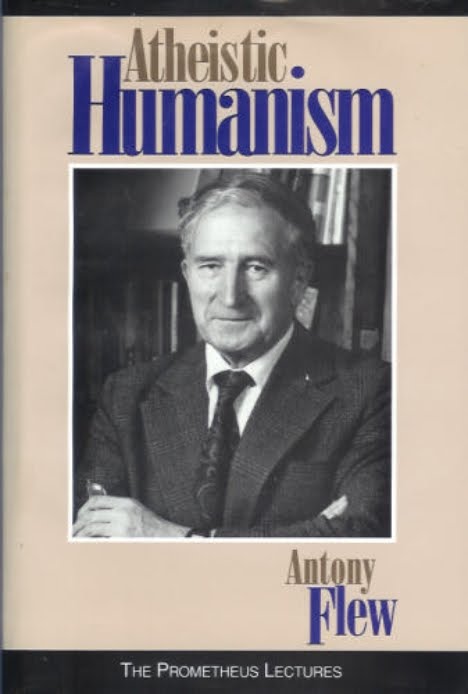
Antony Flew answers the criticisms of Richard Dawkins in 2008!!!

Intelligent Design: Is It Viable? William Lane Craig vs. Francisco J. Ayala

Published on Nov 10, 2013

Date: November 5, 2009
Location: Indiana University

Christian/Intelligent Design proponent debater: William Lane Craig
Christian/Darwinist debater: Francisco J. Ayala

For William Lane Craig: http://www.reasonablefaith.org/
For Francisco Ayala: http://www.faculty.uci.edu/profile.cf…
To purchase this debate: http://apps.biola.edu/apologetics-sto…

_______________________________

Antony Flew answers the criticisms of Richard Dawkins in 2008!!!

There is a god

Professor Antony Flew reviews The God Delusion

Antony Flew

On 1st November 2007, Professor Antony Flew’s book There is a God: How the World’s Most Notorious Atheist Changed his Mind was published by HarperOne. Professor Flew, who died in April 2010, has been called ‘the world’s most influential philosophical atheist’, as well as ‘one of the most renowned atheists of the 20th Century’ (see Peter S. Williams’ bethinking.org article “A change of mind for Antony Flew”). In There is a God, Professor Flew recounts how he came to believe in a Creator God as a result of the scientific evidence and philosophical argument.

Not surprisingly, his book caused quite a stir – as can be seen from the miscellaneous customer reviews on Amazon.co.uk. Some of those comments (and those elsewhere) implied that Flew was used by his co-author, Roy Varghese, and did not in fact know what was in the book. This is a serious charge to which Professor Flew responded and which he reiterated in a letter (dated 4th June 2008) to a friend of UCCF who has shown it to us. Professor Flew wrote:

I have rebutted these criticisms in the following statement: “My name is on the book and it represents exactly my opinions. I would not have a book issued in my name that I do not 100 per cent agree with. I needed someone to do the actual writing because I’m 84 and that was Roy Varghese’s role. The idea that someone manipulated me because I’m old is exactly wrong. I may be old but it is hard to manipulate me. That is my book and it represents my thinking.”

Professor Flew has written a forthright review of Richard Dawkins’ book The God Delusion. His article, reproduced below, shows Professor Flew’s key reasons for his belief in a Divine Intelligence. He also makes it clear in There is a God (page 213) that it is possible for an omnipotent being to choose to reveal himself to human beings, or to act in the world in other ways. Professor Flew’s article is offered here as testimony to the developing thinking of someone who is prepared to consider the evidence and follow its implications wherever it leads.

Professor Antony Flew wrote:

The God Delusion by the atheist writer Richard Dawkins, is remarkable in the first place for having achieved some sort of record by selling over a million copies. But what is much more remarkable than that economic achievement is that the contents – or rather lack of contents – of this book show Dawkins himself to have become what he and his fellow secularists typically believe to be an impossibility: namely, a secularist bigot. (Helpfully, my copy of The Oxford Dictionary defines a bigot as ‘an obstinate or intolerant adherent of a point of view’).

The fault of Dawkins as an academic (which he still was during the period in which he composed this book although he has since announced his intention to retire) was his scandalous and apparently deliberate refusal to present the doctrine which he appears to think he has refuted in its strongest form. Thus we find in his index five references to Einstein. They are to the mask of Einstein and Einstein on morality; on a personal God; on the purpose of life (the human situation and on how man is here for the sake of other men and above all for those on whose well-being our own happiness depends); and finally on Einstein’s religious views. But (I find it hard to write with restraint about this obscurantist refusal on the part of Dawkins) he makes no mention of Einstein’s most relevant report: namely, that the integrated complexity of the world of physics has led him to believe that there must be a Divine Intelligence behind it. (I myself think it obvious that if this argument is applicable to the world of physics then it must be hugely more powerful if it is applied to the immeasurably more complicated world of biology.)

Of course many physicists with the highest of reputations do not agree with Einstein in this matter. But an academic attacking some ideological position which s/he believes to be mistaken must of course attack that position in its strongest form. This Dawkins does not do in the case of Einstein and his failure is the crucial index of his insincerity of academic purpose and therefore warrants me in charging him with having become, what he has probably believed to be an impossibility, a secularist bigot.

On page 82 of The God Delusion is a remarkable note. It reads ‘We might be seeing something similar today in the over-publicised tergiversation of the philosopher Antony Flew, who announced in his old age that he had been converted to belief in some sort of deity (triggering a frenzy of eager repetition all around the Internet).’

What is important about this passage is not what Dawkins is saying about Flew but what he is showing here about Dawkins. For if he had had any interest in the truth of the matter of which he was making so much he would surely have brought himself to write me a letter of enquiry. (When I received a torrent of enquiries after an account of my conversion to Deism had been published in the quarterly of the Royal Institute of Philosophy I managed – I believe – eventually to reply to every letter.)

This whole business makes all too clear that Dawkins is not interested in the truth as such but is primarily concerned to discredit an ideological opponent by any available means. That would itself constitute sufficient reason for suspecting that the whole enterprise of The God Delusion was not, as it at least pretended to be, an attempt to discover and spread knowledge of the existence or non-existence of God but rather an attempt – an extremely successful one – to spread the author’s own convictions in this area.

A less important point which needs to be made in this piece is that although the index of The God Delusion notes six references to Deism it provides no definition of the word ‘deism’. This enables Dawkins in his references to Deism to suggest that Deists are a miscellany of believers in this and that. The truth, which Dawkins ought to have learned before this book went to the printers, is that Deists believe in the existence of a God but not the God of any revelation. In fact the first notable public appearance of the notion of Deism was in the American Revolution. The young man who drafted the Declaration of Independence and who later became President Jefferson was a Deist, as were several of the other founding fathers of that abidingly important institution, the United States.

In that monster footnote to what I am inclined to describe as a monster book – The God Delusion – Dawkins reproaches me for what he calls my ignominious decision to accept, in 2006, the Phillip E. Johnson Award for Liberty and Truth. The awarding Institution is Biola, The Bible Institute of Los Angeles. Dawkins does not say outright that his objection to my decision is that Biola is a specifically Christian institution. He obviously assumes (but refrains from actually saying) that this is incompatible with producing first class academic work in every department – not a thesis which would be acceptable in either my own university or Oxford or in Harvard.

In my time at Oxford, in the years immediately succeeding the second world war, Gilbert Ryle (then Waynflete Professor of Metaphysical Philosophy in the University of Oxford) published a hugely influential book The Concept of Mind. This book revealed by implication, but only by implication, that minds are not entities of a sort which could coherently be said to survive the death of those whose minds they were.

Ryle felt responsible for the smooth pursuit of philosophical teaching and the publication of the findings of philosophical research in the university and knew that, at that time, there would have been uproar if he had published his own conclusion that the very idea of a second life after death was self-contradictory and incoherent. He was content for me to do this at a later time and in another place. I told him that if I were ever invited to give one of the Gifford Lecture series my subject would beThe Logic of Mortality. When I was, I did and these Lectures were first published by Blackwell (Oxford) in 1987. They are still in print from Prometheus Books (Amherst, NY).

Finally, as to the suggestion that I have been used by Biola University. If the way I was welcomed by the students and the members of faculty whom I met on my short stay in Biola amounted to being used then I can only express my regret that at the age of 85 I cannot reasonably hope for another visit to this institution.

Note on Lord Gifford (Adam)
The Oxford Dictionary of National Biography describes Lord Gifford as ‘judge and benefactor’. He endowed lectureships at four Scottish universities ‘for promoting, advancing and diffusing natural theology, in the widest sense of that term, in other words the knowledge of God’ and ‘of the foundation of ethics.’ The first lectures were delivered in 1888.

© 2008 Antony Flew

bethinking.org

_____________

Making Sense of Faith and Science

Uploaded on May 16, 2008

Dr. H. Fritz Schaefer confronts the assertion that one cannot believe in God and be a credible scientist. He explains that the theistic world view of Bacon, Kepler, Pascal, Boyle, Newton, Faraday and Maxwell was instrumental in the rise of modern science itself. Presented as part of the Let There be Light series. Series: Let There Be Light [5/2003] [Humanities] [Show ID: 7338]

___________________

Antony Flew – World’s Most Famous Atheist Accepts Existence of God

Uploaded on Nov 28, 2008

Has Science Discovered God?

A half-century ago, in 1955, Professor Antony Flew set the agenda for modern atheism with his Theology and Falsification, a paper presented in a debate with C.S. Lewis. This work became the most widely reprinted philosophical publication of the last 50 years. Over the decades, he published more than 30 books attacking belief in God and debated a wide range of religious believers.

Then, in a 2004 Summit at New York University, Professor Flew announced that the discoveries of modern science have led him to the conclusion that the universe is indeed the creation of infinite Intelligence.

For More Info Visit:
http://ScienceFindsGod.com

__________________

Antony Flew rightly noted that Richard Dawkins’ “monkey theorem was a load of rubbish”

________   Antony Flew rightly noted that Richard Dawkins’  ”monkey theorem was a load of rubbish.” Sunday, 9 September 2012 Why Richard Dawkins’ typing monkey theorem is a load of nonsense The infinite monkey theorem states that a monkey hitting keys at random on a typewriter keyboard for an infinite amount of time will almost surely type a […]

Article from 2005 indicated Antony Flew abandoned atheism because of Law of Biogenesis!!!!

___________ Article from 2005 indicated Antony Flew abandoned atheism because of Law of Biogenesis!!!! Weighing the Evidence An Atheist Abandons Atheism By Chuck Colson|Published Date: January 10, 2005 Antony Flew, the 81-year-old British philosophy professor who taught at Oxford and other leading universities, became an atheist at age 15. Throughout his long career he argued […]

The Christian influence on society is real and that is one of the reasons Antony Flew left Atheism!!!

The Christian influence on society is real and that is one of the reasons Antony Flew left Atheism!!! Beggar to Beggar Saved by Increments By Chuck Colson|Published Date: January 11, 2005 A leading intellectual elaborates on why he abandoned atheism. But, surprisingly, he says his reasons were not entirely intellectual. British philosophy professor Dr. Antony […]

Antony Flew, George Wald and David Noebel on the Origin of Life

In the below comment section David Noebel stated the following: Since writing my article on the origin of life I have read two books that basically make the same point and I will quote briefly from them, but encourage anyone interested in the subject to read both books from cover to cover: (1) John C. […]

The Fine Tuning Argument for the Existence of God from Antony Flew!

___________ The Fine Tuning Argument for the Existence of God from Antony Flew! Imagine entering a hotel room on your next vacation. The CD player on the bedside table is softly playing a track from your favorite recording. The framed print over the bed is identical to the image that hangs over the fireplace at […]

By Everette Hatcher III | Posted in Current Events | Tagged  | Edit | Comments (0)

Mark Oppenheimer of Time Magazine claims Antony Flew was convinced by PSEUDOSCIENCE that God exists!!!

_____________ Mark Oppenheimer of Time Magazine claims Antony Flew was convinced by PSEUDOSCIENCE that God exists!!! Below you will read:  ”There Is a God” is perhaps the handiest primer ever written on the science (many would say pseudoscience) of religious belief. Regis Nicoll does a good job of refuting the claim that Flew was manipulated by […]

A review of “There is a God” by Antony Flew March 31, 2012

________ During the 1990′s I actually made it a practice to write famous atheists and scientists that were mentioned by Adrian Rogers and Francis Schaeffer and challenge them with the evidence for the Bible’s historicity and the claims of the gospel. Usually I would send them a cassette tape of Adrian Rogers’ messages “6 reasons I […]

Review of Antony Flew Book: THERE IS A GOD Article by R.C. Sproul May 2008

During the 1990′s I actually made it a practice to write famous atheists and scientists that were mentioned by Adrian Rogers and Francis Schaeffer and challenge them with the evidence for the Bible’s historicity and the claims of the gospel. Usually I would send them a cassette tape of Adrian Rogers’ messages “6 reasons I know […]

The Death of a (Former) Atheist — Antony Flew, 1923-2010 Antony Flew’s rejection of atheism is an encouragement, but his rejection of Christianity is a warning. Rejecting atheism is simply not enough, by Al Mohler

________________________________ Discussion (1 of 3): Antony Flew, N.T. Wright, and Gary Habermas Uploaded on Sep 22, 2010 A discussion with Antony Flew, N.T. Wright, and Gary Habermas. This was held at Westminster Chapel March, 2008 ______________________ During the 1990′s I actually made it a practice to write famous atheists and scientists that were mentioned by Adrian […]

By Everette Hatcher III | Posted in Francis Schaeffer | Tagged  | Edit | Comments (0)

Antony Flew’s journey from Atheism to Theism

During the 1990′s I actually made it a practice to write famous atheists and scientists that were mentioned by Adrian Rogers and Francis Schaeffer and challenge them with the evidence for the Bible’s historicity and the claims of the gospel. Usually I would send them a cassette tape of Adrian Rogers’ messages “6 reasons I […]

_______________

Roy Abraham Varghese: Antony Flew’s paper THEOLOGY AND FALSIFICATION became most widely reprinted philosophical publication of last century!

_____________

Antony Flew on God and Atheism

Published on Feb 11, 2013

Lee Strobel interviews philosopher and scholar Antony Flew on his conversion from atheism to deism. Much of it has to do with intelligent design. Flew was considered one of the most influential and important thinker for atheism during his time before his death (he’s a much better thinker than Richard Dawkins too – even when he was an atheist). His conversion to God-belief has caused an uproar among atheists. They have done all they can to lessen the impact of his famous conversion by shamelessly suggesting he’s too old, senile and mentally deranged to understand logic and science anymore.

News on Antony Flew’s conversion:
http://www.youtube.com/watch?v=X1e4FU…

Interview and discussion with Antony Flew:
https://www.youtube.com/watch?v=53REH…

________________

 Did Jesus Rise from the Dead Gary Habermas vs Anthony Flew

Published on May 30, 2013

Gary Habermas vs Anthony Flew – Did Jesus rise from the dead?

____________

Antony Flew – World’s Most Famous Atheist Accepts Existence of God

Uploaded on Nov 28, 2008

Has Science Discovered God?

A half-century ago, in 1955, Professor Antony Flew set the agenda for modern atheism with his Theology and Falsification, a paper presented in a debate with C.S. Lewis. This work became the most widely reprinted philosophical publication of the last 50 years. Over the decades, he published more than 30 books attacking belief in God and debated a wide range of religious believers.

Then, in a 2004 Summit at New York University, Professor Flew announced that the discoveries of modern science have led him to the conclusion that the universe is indeed the creation of infinite Intelligence.

For More Info Visit:
http://ScienceFindsGod.com

__________________

Discussion (2 of 3): Antony Flew, N.T. Wright, and Gary Habermas

____________

The Kalam Cosmological Argument (Scientific Evidence) (Henry Schaefer, PhD)

Published on Jun 11, 2012

Scientist Dr. Henry “Fritz” Schaefer gives a lecture on the cosmological argument and shows how contemporary science backs it up.

___________________________________________

Ricky Gervais – Losing Religion and Becoming An Atheist

Uploaded on Jul 2, 2009

Ricky Gervais – Losing Religion and Becoming An Atheist

_____________________

Debate – Does God Exist? William Lane Craig vs Herb Silverman

Uploaded on Aug 21, 2011

University of North Carolina Wilmington (March 23, 2010) – Does God Exist? William Lane Craig debates atheist Herb Silverman on the existence of God.

Links:

http://reasonablefaith.org
http://drcraigvideos.blogspot.com

We welcome your comments in the Reasonable Faith forums:
http://www.reasonablefaith.org/forums/

Follow Reasonable Faith On Twitter: http://twitter.com/rfupdates

Add Reasonable Faith On Facebook:http://www.facebook.com/reasonablefai…

The Bible and Science (Part 02)

___________________

From the Antony Flew’s last book.

Roy Abraham Varghese wrote in Preface:

Famous Atheist Now Believes in God: One of World’s
Leading Atheists Now Believes in God, More or
Less, Based on Scientific Evidence.” This was the head-
line of a December 9,2004, Associated Press story that
went on to say: “A British philosophy professor who has
been a leading champion of atheism for more than a
half century has changed his mind. He now believes in
God more or less based on scientific evidence, and says
so on a video released Thursday.” Almost immediately,
the announcement became a media event touching off
reports and commentaries around the globe on radio and
TV, in newspapers and on Internet sites. The story gained
such momentum that AP put out two subsequent releases
relating to the original announcement. The subject of the
story and of much subsequent speculation was Profes-
sor Antony Flew, author of over thirty professional philo-
sophical works that helped set the agenda for atheism for
half a century. In fact, his “Theology and Falsification,” a
paper first presented at a 1950 meeting of the Oxford Uni-
versity Socratic Club chaired by C. S. Lewis, became the 
most widely reprinted philosophical publication of the last
century. Now, for the first time, he gives an account of the
arguments and evidence that led him to change his mind.
This book, in a sense, represents the rest of the story.
I played a small part in the AP story because I had
helped organize the symposium and resulting video in
which Tony Flew announced what he later humorously
referred to as his “conversion.” In fact, from 1985, I had
helped organize several conferences at which he had made
the case for atheism. So this work is personally the culmi-
nation of a journey begun two decades ago.
Curiously, the response to the AP story from Flew’s fel-
low atheists verged on hysteria. One atheist Web site tasked
a correspondent with giving monthly updates on Flew’s
falling away from the true faith. Inane insults and juvenile
caricatures were common in the freethinking blogosphere.
The same people who complained about the Inquisition
and witches being burned at the stake were now enjoying
a little heresy hunting of their own. The advocates of toler-
ance were not themselves very tolerant. And, apparently,
religious zealots don’t have a monopoly on dogmatism,
incivility, fanaticism, and paranoia.
But raging mobs cannot rewrite history. And Flew’s
position in the history of atheism transcends anything that
today’s atheists have on offer.


Review: There Is A God

aflew.jpgThere Is a God: How the World’s Most Notorious Atheist Changed His Mind.  By Antony Flew.  HarperOne: New York, 2007.  222pp.
Reviewed by R.C. Sproul.A Tale of Two ParablesWith the publication of his book, There Is a God: How the World’s Most Notorious Atheist Changed His Mind, the British philosopher Antony Flew dropped a bomb on the playground of Western atheists.  In this book, Antony Flew traces his lifelong pilgrimage from hardcore atheism to what he calls rational theism.  His change of mind in his latter years has been greeted by jeers, hoots, and hollers from the atheistic community, claiming that the once brilliant philosopher has suddenly grown senile in order to acquiesce to claims of the reality of God.  Anyone, of course, who reads this book from Antony Flew will quickly recognize that the claim of incipient senility is mere sour grapes by his present opponents who were his former comrades.  Rather, his book exhibits a mind that remains brilliantly lucid and acute in its analytical thought.I’ve titled this review, “A Tale of Two Parables.”  The reason is that in the first instance, apart from the parables of Jesus found in the New Testament, I doubt if there is any parable more famous in the annals of philosophy than the famous parable devised by Anthony Flew in the middle of the twentieth century, which is referred to simply as, “Flew’s Parable.”  The parable tells the story of two explorers who are hacking their way through a dense jungle when suddenly they came upon a clearing marked by a magnificent garden.  The garden displays rows of perfect symmetry and a cultivation that indicates the presence of no weeds.  The first explorer exclaimed his conviction that this garden obviously indicates a presence of a gardener.  The two men set about their quest to discover the gardener.  When no gardener appeared to tend the garden, one of the explorers argued that the appearance of this orderly garden was simply a freak of nature, and there was actually no gardener present.  The other persisted in his assumption that there must be a gardener, and claimed that the gardener perhaps was invisible.  So they set a trap by stringing wires around the garden, and attaching bells to them, so that if the invisible gardener appeared to tend his plot, he would make his presence known by making the bells ring.  When the bells did not ring, the explorer who argued for the presence of the gardener insisted that the gardener must not only be invisible but immaterial.  In the debate that ensued, the first explorer finally in exasperation said, “What is the difference between an invisible and immaterial gardener and no gardener at all?”
Flew’s point in this original parable was that God had died the death of a thousand qualifications.  We must remember that this original parable appeared in the midst of the strength of linguistic analysis as a dominant school of philosophical thought in the middle of the 20th century.  In that context, analyses were made of religious and theological language, and the conclusion was drawn by many that theological language about God has no empirical verifiable referent to justify the language.  So the strongest skeptics reduced all religious language simply to what they called emotive language, which language spoke more of the believers in God than it did of the nature of God Himself.  This all provoked what was called in the middle of the century, the “God Talk controversy” or the “God Talk crisis,” which in the theological realm culminated in the death of God movement.  The lingering problem with the old parable that Flew presented was the garden.  Though no gardener could be found, the presence of the garden itself remained a nagging issue begging for explanation.At the prime of his atheism, Flew argued that the burden of proof for the existence of God fell upon those who would assert it in a positive form, rather than upon those who would deny it.  At that point, he argued that the default position, absence of any compelling evidence, would be atheism.  At this point, Flew was merely applying basic principles of logic and proof by indicating that verification is always easier than falsification.  If we recall the analysts of that day, the standard illustration of this was the statement: “There is gold in Alaska.”  To verify the assumption that gold exists in Alaska, all one must do is to find a piece of it somewhere in that state.  One bit of gold discovered in Alaska would empirically verify the assertion: “There is gold in Alaska.”On the contrary, if someone asserted that there is no gold in Alaska, to falsify that claim, one would have to dig up every square inch of the state without finding any gold.  And even then if no gold were found, someone might posit the explanation that people were clumsy in their explorations and overlooked the presence of what was really there.  This is the type of argument that people make when they say that there are little green men who live on the other side of the moon, who can never be discovered by telescopes or scientific inquiry because these green men have a built in allergy and antipathy to all things scientific.  Such a truth claim of little green men of this nature can never be falsified.  People will take comfort in the fact, saying, “Well, my theory has never been disproved.”  But Flew rightly points out that questions like this and the existence of God put the burden of proof on those who argue for it, rather than on those who argue against it.Flew began his commitment to atheism at the young age of 15, when he was convinced, as was England’s other famous twentieth century atheist Bertrand Russell, by John Stuart Mill’s arguments against theism based on the problem of the existence of evil.  Both men became atheists in their teens and both by being convinced by the arguments of John Stuart Mill.  The irony of the atheism of Flew was that his father was a minister of great commitment and conviction of biblical truth.  The son rejected the father’s convictions in toto.  One principle of philosophy, however, made a lasting impact on Antony Flew.  It was the axiom uttered by Plato’s hero Socrates in the Republic, in which Socrates argues that one must follow the arguments wherever they lead.  Or as Flew articulated it, he felt a lifelong commitment to follow the evidence, wherever that evidence took him.In this book he argues that the evidence that he has examined over the years has brought him to a radically different conclusion about the existence of God from where he stood decades ago.  He has now composed a new parable to explain the change in his thinking.  He tells the story of a cell phone that washes ashore on a remote island inhabited by primitive people, who were otherwise out of touch with modern civilizations.  The natives there play with the numbers on the phone, and when they hear different voices coming out of the little box, the assumption they make is that the box itself is making all the noises.  The tribe has some clever scientists who are able to replicate this box that had washed ashore, and they hear the same voices.  They come to the conclusion that the obvious is true, namely that the voices are merely properties of the device.

Then the great sage of the tribe suggests that the voices that are similar to the tribe’s own but coming in a different language were not found simply in the little box, but that they were coming from afar off, from real people, not from parts of this little box, and argued that this consideration should be explored as a real possibility.  However, the tribal “scientists” refused to consider it at all.  They remained close-minded — as many modern thinkers have been totally close-minded to any possibility to the existence of God and are forced to argue that life on this planet has arisen spontaneously by chance, and that even the so-called laws of nature with which science works are lawless in themselves.  The examination of the nature and the properties of things, or the “what” questions have not been able to answer the “why” questions, and particularly the “how” questions of any one thing’s existence or how life has come to pass.

In his pilgrimage, Flew encountered three questions that would not go away and for which he found no satisfying answer from the realm of materialism or naturalism.  These three questions are first of all:  How did the laws of nature come to be?  Second, how did life originate from non-life?  And third, how did the universe come into being?  He explores the question of who wrote the laws of nature.  There are those who argue that the laws of nature are merely convenient forms that human investigators impose on nature, that nature’s facts are brute facts and mute facts, and have no inherent design.  Design is something that is merely projected upon nature from the thinking of the scientist.  In this case, Flew argues that the atheists accept the laws of nature simply by faith, and pursues the point that these laws are not something that are the result of cultural creation, but rather the discovery of something that exists within nature itself.  Newton did not invent the law of gravity or impose a principle of gravity on the natural world; rather, he discovered it as an external reality.

Now, the very presence of laws in nature indicates that nature has intelligible order.  The overarching presupposition of all scientific inquiry is that the inquiry can yield intelligible information.  If indeed the universe and everything in it is utter chaos, without order, then it would be equally unintelligible.  The fact that science can proceed in an intelligible manner screams to Anthony Flew that there must be order in it.  It is a short step or an easy argument to move from the presence of order to the presence of design.  In a sense, the presence of order is virtually tautological to the question of design.

The second question that captivated the inquiry of Flew was the question: How did life originate from non-life?  And he sees no acceptable naturalistic or materialistic explanation for the emergence of life.  Life in all of its complexity requires design and intelligence.  He argues at the same time that everything that is alive is teleological, that life functions and moves in a purposeful rather than chaotic direction.  The third argument is perhaps the one most captivating to him, and that was the question: How did the universe come into existence?  The emergence of Big Bang cosmology was the explosion that rattled Flew’s philosophical world.  It argues that if there was such a thing as a big bang 16 to 18 billion years ago from which the universe emerged, this would clearly indicate that the universe had a beginning.
The absolute, non-negotiable principle, with which Flew rightly works, is the principle that nothing has the ability to produce itself, that the whole notion of self-creation is a manifest absurdity.  For something to create itself, it would have to be before it was.  And so he espouses the age old axiom, ex nihilo nihil fit, out of nothing, nothing comes.  He even quotes from the musical, The Sound of Music, in which the song is sung, “Nothing comes from nothing, and nothing ever could….”  Because of the Big Bang cosmology, once again the cosmological argument is reconsidered.

Flew also takes time to critique Hume’s skepticism with respect to causal principles.  He argues that every effect must have a cause and a sufficient reason for its being.  The universe has neither a cause for itself nor such a sufficient reason built in.  Though effects require causes, self-existent eternal beings do not.  The fact that something exists now and that the universe as we know it has a beginning, rules out the possibility of finding a sufficient cause in contingent effects.  The only reasonable explanation for the origin of the existence of the universe is found in the power of a self-existent, eternal being.

Attempts to argue for multiple universes or fluctuations within vacuums only exacerbate the problem.  The argument from the infinite series of finite causes simply compounds the problem of self-creation infinitely.  Fluctuations within vacuums are at best question begging and at worst fanciful flights of imagination.  As a result of his reexamination of the evidence, Antony Flew has come to the conclusion that the universe was created by a self-existent, immutable, immaterial, omnipotent, and omniscient being.  He states that he is not yet come full circle to affirming doctrines found in biblical revelation.  He has thus far restricted his findings to natural theology.  He indicates that he is open to more consideration of biblical revelation.  For this reason, he includes in his book an appendix written by Bishop N.T. Wright, in which Wright argues for the historical reality of the incarnation and of the resurrection of Christ.  Before the added appendices, Flew ends the body of the work itself with this statement: “Someday I may hear a Voice, that says, ‘Can you hear me now?'”

Dr. R.C. Sproul is an Alliance Council Member and the president of Ligonier Ministries.  Dr. Sproul is featured daily on the Renewing Your Mind radio broadcasts and the author of many books including his most recent work, “The Truth of the Cross”.

____________

Related posts:

ANTONY FLEW’S SIGNIFICANCE IN THE HISTORY OF ATHEISM by Roy Abraham Varghese

________________ ________ Antony Flew – World’s Most Famous Atheist Accepts Existence of God Uploaded on Nov 28, 2008 Has Science Discovered God? A half-century ago, in 1955, Professor Antony Flew set the agenda for modern atheism with his Theology and Falsification, a paper presented in a debate with C.S. Lewis. This work became the most […]

Antony Flew did not make a public profession of faith in Christ but will his conversion from atheism to theism have an impact?

____________ Jesus’ Resurrection: Atheist, Antony Flew, and Theist, Gary Habermas, Dialogue Published on Apr 7, 2012 http://www.veritas.org/talks – Did Jesus die, was he buried, and what happened afterward? Join legendary atheist Antony Flew and Christian historian and apologist Gary Habermas in a discussion about the facts surrounding the death and resurrection of Jesus Christ. Join the […]

Concerning the book THERE IS A GOD Antony Flew stated, “This is my book and it represents my thinking!

_______ ________ Does God Exist?: William Lane Craig vs Antony Flew Uploaded on Dec 16, 2010 http://drcraigvideos.blogspot.com – William Lane Craig and Antony Flew met in 1998 on the 50th anniversary of the famous Copleston/Russell debate to discuss the question of God’s existence in a public debate. Unlike Richard Dawkins, Flew was one of the most […]

Bill Muehlenberg’s review of “There Is a God” By Antony Flew

_________________   Antony Flew on God and Atheism Published on Feb 11, 2013 Lee Strobel interviews philosopher and scholar Antony Flew on his conversion from atheism to deism. Much of it has to do with intelligent design. Flew was considered one of the most influential and important thinker for atheism during his time before his […]

Former Atheist Antony Flew noted that Evolutionists failed to show “Where did a living, self-reproducing organism come from in the first place?”

____   Does God Exist? Thomas Warren vs. Antony Flew Published on Jan 2, 2014 Date: September 20-23, 1976 Location: North Texas State University Christian debater: Thomas B. Warren Atheist debater: Antony G.N. Flew For Thomas Warren: http://www.warrenapologeticscenter.org/ ______________________ Antony Flew and his conversion to theism Uploaded on Aug 12, 2011 Antony Flew, a well known […]

Educated Scholars like Antony Flew can believe in God!!!

__________ Discussion (1 of 3): Antony Flew, N.T. Wright, and Gary Habermas Uploaded on Sep 22, 2010 A discussion with Antony Flew, N.T. Wright, and Gary Habermas. This was held at Westminster Chapel March, 2008 Debate – William Lane Craig vs Christopher Hitchens – Does God Exist? Uploaded on Jan 27, 2011 April 4, 2009 – Craig […]

Antony Flew rightly noted that Richard Dawkins’ “monkey theorem was a load of rubbish”

________   William Lane Craig versus Eddie Tabash Debate Uploaded on Feb 6, 2012 Secular Humanism versus Christianity, Lawyer versus Theologian. Evangelical Christian apologist William Lane Craig debates humanist atheist lawyer Eddie Tabash at Pepperdine University, February 8, 1999. Visit http://www.Infidels.org andhttp://www.WilliamLaneCraig.com ________________ Antony Flew on God and Atheism Published on Feb 11, 2013 Lee […]

Article from 2005 indicated Antony Flew abandoned atheism because of Law of Biogenesis!!!!

___________   Does God Exist? Thomas Warren vs. Antony Flew Published on Jan 2, 2014 Date: September 20-23, 1976 Location: North Texas State University Christian debater: Thomas B. Warren Atheist debater: Antony G.N. Flew For Thomas Warren: http://www.warrenapologeticscenter.org/ ______________________ Antony Flew and his conversion to theism Uploaded on Aug 12, 2011 Antony Flew, a well known […]

The Christian influence on society is real and that is one of the reasons Antony Flew left Atheism!!!

_____________ Antony Flew on God and Atheism Published on Feb 11, 2013 Lee Strobel interviews philosopher and scholar Antony Flew on his conversion from atheism to deism. Much of it has to do with intelligent design. Flew was considered one of the most influential and important thinker for atheism during his time before his death […]

Antony Flew, George Wald and David Noebel on the Origin of Life

___________ Does God Exist?: William Lane Craig vs Antony Flew Uploaded on Dec 16, 2010 http://drcraigvideos.blogspot.com – William Lane Craig and Antony Flew met in 1998 on the 50th anniversary of the famous Copleston/Russell debate to discuss the question of God’s existence in a public debate. Unlike Richard Dawkins, Flew was one of the most respected […]

“Music Monday” 1986 – Miss America, Kelly Cash (Johnny Cash’s great niece)

1986 – Miss America, Kelly Cash (Johnny Cash’s great niece)

_______________________________

Miss America 1988 — Pre-Evening Gown Performance

1986 – Miss America, Kelly Cash

Kellye Cash Miss America 1987

I Bowed On My Knees-Kellye Cash Sheppard

Uploaded on Jun 14, 2010

Kellye live at First Baptist Church, Milan, TN
Sunday morning, June 6th, 2010

Miss America 1988 — Kellye Cash as Reigning Miss America

Uploaded on Apr 28, 2006

Kellye Cash is introduced as Miss America 1987, the reigning Miss America

Uploaded on Jun 23, 2011

Miss America 1987 Kellye Cash performance at Miss Wshington 1989.

From Wikipedia:

Kellye Cash

From Wikipedia, the free encyclopedia
Kellye Cash
KellyeCash.jpg
Born Kellye Cash
February 2, 1965 (age 48)
Memphis, Tennessee, United States
Height 5 ft 8 in (1.73 m)[1]
Weight 116 lb (53 kg)[1]
Title Miss Milan Crown and Scepter 1986
Miss Tennessee 1986
Miss America 1987
Relatives Johnny Cash (great-uncle), June Carter Cash (great-aunt), Rosanne Cash (cousin), John Carter Cash(cousin)
Website
www.kellyecash.com

Kellye Cash-Sheppard from Memphis, Tennessee, was Miss Tennessee 1986 and was crowned Miss America 1987, capturing preliminary honors in both the talent and swimsuit competitions.[2]

Following her reign as Miss America, Cash toured with Bob Hope’s USO Show, and has appeared on The David Letterman Show, The Today Show, Good Morning America, among others.[3]

She has performed with numerous musical artists including Vince Gill, Lee Greenwood, and Billy Joel, and appeared in many regional theatrical productions around the country. Cash was chosen for the lead part of country music legend Patsy Cline, in Always…Patsy Cline and has performed the musical on numerous occasions.[4]

Present career[edit]

In 2003, from April to December, Cash played the pivotal role of “Narrator” in Joseph and the Amazing Technicolor Dreamcoat[5] at the Mansion America theatre in Branson, Missouri.

She has hosted and performed at several pageants over the years[6][7][8] as well as other events, such as for the finals of 2007’s ‘’Star Search’’.[9]

An advocate for conservative political candidates and issues, Cash has twice been publicly elected to the State Executive Committee[10] of the Tennessee Republican Party. She performed at an event for presidential candidate Pat Buchanan, held before the 1996 Republican National Convention.[11]

Cash is the great-niece of Johnny Cash. She currently resides in Milan, Tennessee, a small town approximately 75 miles northeast of Memphis, with her husband, Todd Sheppard, a teacher and coach in the Milan public schools, and three children; son, Brady; and daughters Cassidy and Tatum.[10]

In addition to making approximately 100 appearances each year at charitable, community and political events, Cash has released six music CDs: four Christian and two country, including Living by the Word, and Real Life.[12] She is very involved in her local church by directing teaching a college and career class with her husband and also singing and playing for the church.

References[edit]

  1. ^ a b “Miss America 1987”. PBS. Retrieved 2011-10-06.
  2. ^ Associated Press (1986-09-14). “Miss America grandniece of Johnny Cash”. Houston Chronicle. p. 3.
  3. ^ “Miss America grandniece of Johnny Cash”. The Oak Ridger. 2004-05-14.
  4. ^ “Kellye Cash performing with Huntington Symphony Orchestra”. Ironton Tribune. 2009-08-05.
  5. ^ “A new classic Christmas song, an old classic Christmas singer”. Courier-News. 2003-12-07.
  6. ^ “Miss America Preliminaries”. Atlantic City Press. 2003-09-18.
  7. ^ “Changes and familiar faces on view at pageant”. Roanoke Times. 2008-06-24.
  8. ^ “Miss Tri-Cities 2009 Crowned”. TriCity Herald. 2009-07-19.
  9. ^ “Star Search finals this Saturday”. Memphis Commercial-Appeal. 2007-10-18.
  10. ^ a b “Celebrities born and raised in Gibson County”. Jackson Sun. 2009-05-17.
  11. ^ “Buchanan will throw big party in Escondido”. San Diego Union. 1996-07-24.
  12. ^ “Cash to perform at Picnic with the Pops”. Herald-Dispatch. 2009-08-09.

Related posts:

Johnny Cash (Part 6)

I got to see Cash perform in 1978 in Memphis. Johnny Cash remembered for his faith-based music Johnny Cash was remembered for how his music “sang the faith” in an article published on Sunday in the Italian Bishops’ Conference’s newspaper Avvenire. Without his faith, the article said, “the voice of Cash would not have been […]

Johnny Cash (Part 5)

I really liked Johnny Cash. Here is an article about his faith: Real Hard Cash Russell D. Moore on the Path of the Man in Black There was an empty seat at this year’s MTV Music Video Awards​. The late Johnny Cash​ wasn’t there. It’s not as though Cash frequented the Generation X​/Y annual awards […]

Johnny Cash (Part 4)

I got to hear Johnny Cash sing in person back in 1978.  Here is a portion of an article about his Christian Testimony. The Man Came Around   “Being a Christian isn’t for sissies,” Cash said once. “It takes a real man to live for God—a lot more man than to live for the devil, […]

Johnny Cash (Part 3)

I got to hear Johnny Cash sing in person back in 1978.  Here is a portion of an article about his Christian Testimony. The Man Came Around   A Walking Contradiction Cash’s daughter, singer-songwriter Rosanne Cash, once pointed out that “my father was raised a Baptist, but he has the soul of a mystic. He’s […]

Johnny Cash (Part 2)

I got to hear Johnny Cash sing in person back in 1978 at a Billy Graham Crusade in Memphis. Here is a portion of an article about his Christian Testimony. The Man Came Around Cash also made major headlines when he shared his faith on The Johnny Cash Show, a popular variety program on ABC […]

Johnny Cash (Part 1)

I got to hear Johnny Cash sing in person back in 1978. Here is a portion of an article about his Christian Testimony. The Man Came Around Johnny Cash was not ashamed of his Christian faith—though it was sometimes a messy faith—and even got some encouragement from Billy Graham along the way. Dave Urbanski | […]

“Music Monday” People in the Johnny Cash video “God’s Gonna Cut You Down”

Wikipedia noted: Johnny Cash recorded a version of “God’s Gonna Cut You Down” on American V: A Hundred Highways in 2003, with an arrangement quite different from most known gospel versions of the song. A music video, directed by Tony Kaye,[1] was made for this version in late 2006. It featured a number of celebrities, […]

Remember the famous Warren v. Flew debate of 1976?


__________________

Does God Exist? Thomas Warren vs. Antony Flew

Published on Jan 2, 2014

Date: September 20-23, 1976
Location: North Texas State University

Christian debater: Thomas B. Warren
Atheist debater: Antony G.N. Flew

For Thomas Warren: http://www.warrenapologeticscenter.org/

_____________________

_

Antony Flew – World’s Most Famous Atheist Accepts Existence of God

Uploaded on Nov 28, 2008

Has Science Discovered God?

A half-century ago, in 1955, Professor Antony Flew set the agenda for modern atheism with his Theology and Falsification, a paper presented in a debate with C.S. Lewis. This work became the most widely reprinted philosophical publication of the last 50 years. Over the decades, he published more than 30 books attacking belief in God and debated a wide range of religious believers.

Then, in a 2004 Summit at New York University, Professor Flew announced that the discoveries of modern science have led him to the conclusion that the universe is indeed the creation of infinite Intelligence.

For More Info Visit:
http://ScienceFindsGod.com

__________________

________________

Richard Dawkins vs William Lane Craig – Full Debate –

Antony Flew on God and Atheism

Published on Feb 11, 2013

Lee Strobel interviews philosopher and scholar Antony Flew on his conversion from atheism to deism. Much of it has to do with intelligent design. Flew was considered one of the most influential and important thinker for atheism during his time before his death (he’s a much better thinker than Richard Dawkins too – even when he was an atheist). His conversion to God-belief has caused an uproar among atheists. They have done all they can to lessen the impact of his famous conversion by shamelessly suggesting he’s too old, senile and mentally deranged to understand logic and science anymore.

News on Antony Flew’s conversion:
http://www.youtube.com/watch?v=X1e4FU…

Interview and discussion with Antony Flew:
https://www.youtube.com/watch?v=53REH…

________________

_____________

Remember the famous Warren v. Flew debate of 1976?

Atheist Finally “Sobers Up”

by Dave Miller, Ph.D.

Nearly 30 years ago, a debate of significant proportions took place. It was September 20-23, 1976. The place was the campus of North Texas State University in Denton, Texas. The disputants were two longtime professors of philosophy—Thomas B. Warren (whose Ph.D. in philosophy was from Vanderbilt) and Antony G.N. Flew (who was teaching in the University of Reading near London, England). The propositions they debated juxtaposed succinctly the real issue between thorough-going (positive) atheism and thorough-going (biblical) theism. Dr. Flew affirmed, “I know that God does not exist,” and Dr. Warren affirmed, “I know that God does exist.”

Dr. Warren once explained why he selected Antony Flew as his opponent in the debate. His rationale was simple: if those who are on the cutting edge of philosophical thought and who are considered to be the leaders in their chosen area of expertise—the “best of the best” if you will—are unable to defend their position when confronted by a fair and accurate defense of the truth, their error will be exposed. Those who were influenced by these leading men would be forced (like the “domino effect”) to recognize the sterility of the viewpoint they had embraced. Antony Flew had been a leading champion of atheism for decades. His writings dominated philosophical journals, and he was a prolific author [his books included Hume’s Philosophy of Belief (1961), God and Philosophy (1966), Evolutionary Ethics (1967), An Introduction to Western Philosophy (1971), and even a book on logic—Thinking Straight (1975)]. Having taught at Oxford, Aberdeen, Keele, and Reading universities in Britain, Flew also served as a visiting professor in many American universities, and conducted numerous debates in the process of defending his atheism.

For the first two nights of the Warren-Flew debate, Flew assumed the affirmative position in an attempt to prove that God does not exist. However, Warren’s kind-but-relentless assault in the negative position seemed to leave Flew battered, bewildered, and disoriented—so much so that when Dr. Warren assumed the affirmative position on the third night of the debate, he spent a few minutes attempting to ascertain the reason for Dr. Flew’s failure, while in the affirmative, to present a sound argument for his atheistic contention in a precise logical way:

It has been suggested that his failure is due to the fact that he is in a foreign country, but such could have little or nothing to do with this proposition. That he is out of his own country has nothing to do with how he handles intellectual material. Neither is his failure due to his not being accustomed to this style of debating. I have heard him in discussion before, and he seemed not to be bothered at all by the kind of format that was involved. Perhaps he did not know the responsibility of an affirmative speaker? But that cannot be so because, in his writings, he constantly chides a man who does not recognize his responsibility as an affirmant. Perhaps because he does not know the arguments? I deny that emphatically. In reading the works of Dr. Flew, I am convinced that he knows the arguments that are involved as well as anybody in the world. Perhaps because he does not understand or accept the law of rationality? The truth of the matter is: he has written very strongly and frequently in defense of it! But he has not acted in harmony with it in this discussion. Ordinarily, when he is writing in the affirmative, and he writes almost constantly of matters that are concerned with God or very closely related to God—at least subjects that are peripheral to the subject of God. In fact, it is the case that he is almost God-intoxicated. He constantly emphasizes in his books that the onus of proof is on the affirmative writer or speaker! But I am afraid that he has not recognized that truth in this discussion (1977, pp. 131-132, emp. in orig.).

In the very next speech—the first negative—Dr. Flew responded to Dr. Warren’s comments in the following words: “Dr. Warren may be assured that I am sobering up from God intoxication. I shall be writing considerably less, if anything, in this area in the future” (p. 143, emp. added). Now, 28 years later, Dr. Flew appears, indeed, to finally have sobered up. At the age of 81, he has announced to the world that, based upon the scientific evidence, he now believes in some type of God (“Famous Atheist…,” 2004). However, do not jump to any premature conclusions. One interviewer spoke with Dr. Flew about his recent adjustments in his thinking, and concluded:

The fact of the matter is: Flew hasn’t really decided what to believe. He affirms that he is not a Christian—he is still quite certain that the Gods of Christianity or Islam do not exist, that there is no revealed religion, and definitely no afterlife of any kind. But he is increasingly persuaded that some sort of Deity brought about this universe, though it does not intervene in human affairs, nor does it provide any postmortem salvation. He says he has in mind something like the God of Aristotle, a distant, impersonal “prime mover.” It might not even be conscious, but a mere force. In formal terms, he regards the existence of this minimal God as a hypothesis that, at present, is perhaps the best explanation for why a universe exists that can produce complex life. But he is still unsure. In fact, he asked that I not directly quote him yet, until he finally composes his new introduction to a final edition of his book God and Philosophy, due out next year. He hasn’t completed it yet, precisely because he is still examining the evidence and thinking things over. Anything he says now, could change tomorrow (Carrier, 2004).

Here is what Flew has stated about whether he believes in God in the biblical sense:

I do not think I will ever make that assertion, precisely because any assertion which I am prepared to make about God would not be about a God in that sense … I think we need here a fundamental distinction between the God of Aristotle or Spinoza and the Gods of the Christian and the Islamic Revelations…. My one and only piece of relevant evidence [for an Aristotelian God] is the apparent impossibility of providing a naturalistic theory of the origin from DNA of the first reproducing species… [In fact] the only reason which I have for beginning to think of believing in a First Cause god is the impossibility of providing a naturalistic account of the origin of the first reproducing organisms (as quoted in Carrier, italics in orig., emp. added).

It’s a step. But Dr. Flew has a long way to go to arrive at the truth concerning God’s existence. Observe that even when an atheist is forced to recognize that the evidence demands that a purposive, intelligent Being lies behind the Creation, he still endeavors to relegate this intelligence to an impersonal force that does not “provide a postmortem salvation.” Why? Because the same Being also would provide a “postmortem condemnation” in which humans will rightly and justly receive punishment for their sinful behavior on Earth. Can’t have that, can we?! It would mean adjusting one’s daily life choices and relegating one’s stubborn pride beneath the will of God.

Flew also stated: “My whole life has been guided by the principle of Plato’s Socrates: Follow the evidence, wherever it leads” (“Famous Atheist…,” emp. added). If that were true, he would have already been led to the truth that the God of the Bible exists (just read the Warren-Flew debate!). Indeed, all the available evidence leads to that singular conclusion. The very evidence that Flew now believes indicates the existence of some sort of God, is the same evidence that he once insisted supported atheism! It took him 66 years to arrive at this most recent conclusion (Flew has been a self-avowed atheist since he was 15). But given the current human lifespan, he does not have another 66 years to follow the evidence to where it leads.

REFERENCES

Carrier, Richard (2004), “Antony Flew Considers God—Sort Of,” [On-line], URL: http://www.secweb.org/asset.asp?AssetID=369.

“Famous Atheist Now Believes in God” (2004), The Associated Press, December 9, [On-line], URL: http://abcnews.go.com/US/wireStory?id=315976.

Flew, Antony G.N. and Thomas B. Warren (1977), Warren-Flew Debate (Jonesboro, AR: National Christian Press).

________________

Related posts:

Antony Flew rightly noted that Richard Dawkins’ “monkey theorem was a load of rubbish”

________   Antony Flew rightly noted that Richard Dawkins’  ”monkey theorem was a load of rubbish.” Sunday, 9 September 2012 Why Richard Dawkins’ typing monkey theorem is a load of nonsense The infinite monkey theorem states that a monkey hitting keys at random on a typewriter keyboard for an infinite amount of time will almost surely type a […]

Article from 2005 indicated Antony Flew abandoned atheism because of Law of Biogenesis!!!!

___________ Article from 2005 indicated Antony Flew abandoned atheism because of Law of Biogenesis!!!! Weighing the Evidence An Atheist Abandons Atheism By Chuck Colson|Published Date: January 10, 2005 Antony Flew, the 81-year-old British philosophy professor who taught at Oxford and other leading universities, became an atheist at age 15. Throughout his long career he argued […]

The Christian influence on society is real and that is one of the reasons Antony Flew left Atheism!!!

The Christian influence on society is real and that is one of the reasons Antony Flew left Atheism!!! Beggar to Beggar Saved by Increments By Chuck Colson|Published Date: January 11, 2005 A leading intellectual elaborates on why he abandoned atheism. But, surprisingly, he says his reasons were not entirely intellectual. British philosophy professor Dr. Antony […]

Antony Flew, George Wald and David Noebel on the Origin of Life

In the below comment section David Noebel stated the following: Since writing my article on the origin of life I have read two books that basically make the same point and I will quote briefly from them, but encourage anyone interested in the subject to read both books from cover to cover: (1) John C. […]

The Fine Tuning Argument for the Existence of God from Antony Flew!

___________ The Fine Tuning Argument for the Existence of God from Antony Flew! Imagine entering a hotel room on your next vacation. The CD player on the bedside table is softly playing a track from your favorite recording. The framed print over the bed is identical to the image that hangs over the fireplace at […]

By Everette Hatcher III | Posted in Current Events | Tagged  | Edit | Comments (0)

Mark Oppenheimer of Time Magazine claims Antony Flew was convinced by PSEUDOSCIENCE that God exists!!!

_____________ Mark Oppenheimer of Time Magazine claims Antony Flew was convinced by PSEUDOSCIENCE that God exists!!! Below you will read:  ”There Is a God” is perhaps the handiest primer ever written on the science (many would say pseudoscience) of religious belief. Regis Nicoll does a good job of refuting the claim that Flew was manipulated by […]

A review of “There is a God” by Antony Flew March 31, 2012

________ During the 1990′s I actually made it a practice to write famous atheists and scientists that were mentioned by Adrian Rogers and Francis Schaeffer and challenge them with the evidence for the Bible’s historicity and the claims of the gospel. Usually I would send them a cassette tape of Adrian Rogers’ messages “6 reasons I […]

Review of Antony Flew Book: THERE IS A GOD Article by R.C. Sproul May 2008

During the 1990′s I actually made it a practice to write famous atheists and scientists that were mentioned by Adrian Rogers and Francis Schaeffer and challenge them with the evidence for the Bible’s historicity and the claims of the gospel. Usually I would send them a cassette tape of Adrian Rogers’ messages “6 reasons I know […]

The Death of a (Former) Atheist — Antony Flew, 1923-2010 Antony Flew’s rejection of atheism is an encouragement, but his rejection of Christianity is a warning. Rejecting atheism is simply not enough, by Al Mohler

________________________________ Discussion (1 of 3): Antony Flew, N.T. Wright, and Gary Habermas Uploaded on Sep 22, 2010 A discussion with Antony Flew, N.T. Wright, and Gary Habermas. This was held at Westminster Chapel March, 2008 ______________________ During the 1990′s I actually made it a practice to write famous atheists and scientists that were mentioned by Adrian […]

By Everette Hatcher III | Posted in Francis Schaeffer | Tagged  | Edit | Comments (0)

Antony Flew’s journey from Atheism to Theism

During the 1990′s I actually made it a practice to write famous atheists and scientists that were mentioned by Adrian Rogers and Francis Schaeffer and challenge them with the evidence for the Bible’s historicity and the claims of the gospel. Usually I would send them a cassette tape of Adrian Rogers’ messages “6 reasons I […]

Open letter to President Obama (Part 550) Two Lessons from Calvin Coolidge

Open letter to President Obama (Part 550)

(Emailed to White House on 6-10-13.)

President Obama c/o The White House 1600 Pennsylvania Avenue NW Washington, DC 20500

Dear Mr. President,

I know that you receive 20,000 letters a day and that you actually read 10 of them every day. I really do respect you for trying to get a pulse on what is going on out here.

The federal government debt is growing so much that it is endangering us because if things keep going like they are now we will not have any money left for the national defense because we are so far in debt as a nation. We have been spending so much on our welfare state through food stamps and other programs that I am worrying that many of our citizens are becoming more dependent on government and in many cases they are losing their incentive to work hard because of the welfare trap the government has put in place. Other nations in Europe have gone down this road and we see what mess this has gotten them in. People really are losing their faith in big government and they want more liberty back. It seems to me we have to get back to the founding  principles that made our country great.  We also need to realize that a big government will encourage waste and corruption. The recent scandals in our government have proved my point. In fact, the jokes you made at Ohio State about possibly auditing them are not so funny now that reality shows how the IRS was acting more like a monster out of control. Also raising taxes on the job creators is a very bad idea too. The Laffer Curve clearly demonstrates that when the tax rates are raised many individuals will move their investments to places where they will not get taxed as much.

______________________

Will Rogers has a great quote that I love. He noted, “Lord, the money we do spend on Government and it’s not one bit better than the government we got for one-third the money twenty years ago”(Paula McSpadden Love, The Will Rogers Book, (1972) p. 20.) Dan Mitchell praises Calvin Coolidge for keeping the federal government small.

Last month, Amity Shlaes came to Cato to discuss her superb new book about Calvin Coolidge.

I heard her discuss the book back in January while participating in Hillsdale College’s conference on the 100th anniversary of the income tax, but the book is so rich with information that I was glad for the opportunity to listen to her provide additional insights on a great President.

I also got to provide some commentary on the book and the lessons that we can learn from the Coolidge era.

I managed to talk for more than 15 minutes, but I could have boiled my remarks down to these two points.

  1. Small government is the best way to achieve competent and effective government. Coolidge and his team were able to monitor government and run it efficiently because the federal budget consumed only about 5 percent of GDP. But when the federal budget is 23 percent of GDP, by contrast, it’s much more difficult to keep tabs on what’s happening – particularly when the federal government operates more than 1,000 programs. Even well-intentioned bureaucrats and politicians are unlikely to do a good job, as illustrated by this Eric Allie cartoon.
  2. Higher tax rates don’t automatically lead to more tax revenue. Coolidge and his Treasury Secretary practiced something called “scientific taxation,” but it’s easier just to call it common sense. Since Amity’s book covered the data from the 1920s, I shared with the audience some amazing data from the 1980s showing that lower tax rates on the “rich” led to big revenue increases.

But if you don’t believe me, listen to these powerful remarks from “Silent Cal.”

After the poll I shared the other day, this cartoon seems appropriate.

Maybe the better lesson to be learned, thought, isn’t that we should fear big government (though we should, as this t-shirt makes clear), but that statism destroys the human spirit.

_____________

Thank you so much for your time. I know how valuable it is. I also appreciate the fine family that you have and your commitment as a father and a husband.

Sincerely,

Everette Hatcher III, 13900 Cottontail Lane, Alexander, AR 72002, ph 501-920-5733, lowcostsqueegees@yahoo.com

Related posts:

Open letter to President Obama (Part 296) (Laffer curve strikes again!!)

President Obama c/o The White House 1600 Pennsylvania Avenue NW Washington, DC 20500 Dear Mr. President, I know that you receive 20,000 letters a day and that you actually read 10 of them every day. I really do respect you for trying to get a pulse on what is going on out here. The way […]

Open letter to President Obama (Part 282, How the Laffer Curve worked in the 20th century over and over again!!!)

Dan Mitchell does a great job explaining the Laffer Curve President Obama c/o The White House 1600 Pennsylvania Avenue NW Washington, DC 20500 Dear Mr. President, I know that you receive 20,000 letters a day and that you actually read 10 of them every day. I really do respect you for trying to get a […]

Laffer curve hits tax hikers pretty hard (includes cartoon)

I have put up lots of cartoons from Dan Mitchell’s blog before and they have got lots of hits before. Many of them have dealt with the economy, eternal unemployment benefits, socialism,  Greece,  welfare state or on gun control. Today’s cartoon deals with the Laffer curve. Revenge of the Laffer Curve…Again and Again and Again March 27, 2013 […]

Portugal and the Laffer Curve

Class Warfare just don’t pay it seems. Why can’t we learn from other countries’ mistakes? Class Warfare Tax Policy Causes Portugal to Crash on the Laffer Curve, but Will Obama Learn from this Mistake? December 31, 2012 by Dan Mitchell Back in mid-2010, I wrote that Portugal was going to exacerbate its fiscal problems by raising […]

President Obama ignores warnings about Laffer Curve

The Laffer Curve – Explained Uploaded by Eddie Stannard on Nov 14, 2011 This video explains the relationship between tax rates, taxable income, and tax revenue. The key lesson is that the Laffer Curve is not an all-or-nothing proposition, where we have to choose between the exaggerated claim that “all tax cuts pay for themselves” […]

Harding,Kennedy and Reagan proved that the Laffer Curve works

 I enjoyed this article below because it demonstrates that the Laffer Curve has been working for almost 100 years now when it is put to the test in the USA. I actually got to hear Arthur Laffer speak in person in 1981 and he told us in advance what was going to happen the 1980′s […]

The Laffer Curve Wreaks Havoc in the United Kingdom

I got to hear Arthur Laffer speak back in 1981 and he predicted what would happen in the next few years with the Reagan tax cuts and he was right with every prediction. The Laffer Curve Wreaks Havoc in the United Kingdom July 1, 2012 by Dan Mitchell Back in 2010, I excoriated the new […]

Liberals act like the Laffer Curve does not exist.

Raising taxes will not work. Liberals act like the Laffer Curve does not exist. The Laffer Curve Shows that Tax Increases Are a Very Bad Idea – even if They Generate More Tax Revenue April 10, 2012 by Dan Mitchell The Laffer Curve is a graphical representation of the relationship between tax rates, tax revenue, and […]

Jack Kevorkian and the economy!!!!

I have blogged about Dr. Kevorkian many times in the past and today I have included another post about him. Most of the articles dealt with moral issues and included the works of Dr. C. Everett Koop and Francis Schaeffer and the film series “Whatever happened to the Human Race?” However, I have mentioned in […]

FEMA’s work is flawed!!!

Ronald Reagan wanted to return more power to the states and that is what the Founding Fathers had in mine too. Here is just one example below where the federal government can cut out a lot of waste by returning disaster relief responsibilities back to the states. Instead, today we have politicians like Senator Mark […]


“Schaeffer Sunday” The movie “Les Miserables” and Francis Schaeffer

I got this off a Christian blog spot. This person makes some good points and quotes my favorite Christian philosopher Francis Schaeffer too.

Prostitution, Chaos, and Christian Art

The newest theatrical release of Victor Hugo’s 1862 novel “Les Miserables” was released on Christmas, but many Christians are refusing to see the movie. The reason simple — the movie briefly portrays the licentious activities of Fantine, a prostitute. Before her fall into prostitution, Fantine and her child Cosette are abandoned by Cossette’s father. Her reputation makes it increasingly impossible for her to keep a job, and her desperation in caring for her daughter forces her to the streets. First selling her hair, her teeth, and finally her body, she sends nearly everything to support her daughter.

Fantine - Steve Macias

Fantine – Les Miserables

A Prostitute’s Sex Scene

Focus on the Family’s “Plugged In” offered this description of the scene:

“Then the camera takes a bit longer watching Fantine—dressed in a hiked-up, bare-shouldered petticoat—as she and her first sexual customer consummate their transaction with realistic sexual movements. Her pain and despair over what she feels she’s forced to do is so palpable here that it’s nearly as smothering as the grimness of her surroundings and the crudeness of the act itself.”

Hugo’s prostitute is overwhelmingly repugnant. We are given an image of a bald, toothless woman stricken with tuberculosis covered in filth. There is nothing sensual about this sexual experience; she’s not even shown in the nude. In the Broadway versions of “Les Miserables,” a more likable Fantine is stripped on stage and then ushered off.

Which is more appropriate?

In our discussion of Les Miserables, we have to think in categories native to comparative literature and the aesthetic arts. This is, after all, Victor Hugo’s masterpiece, a story of undisputed acclaim. How we understand his use of sex is going to be much more profound than the typical pop-culture flick. We are looking deeper than entertainment value to evaluate the weightiness of forms as they construct truth. In all of this, we must view Les Mis as art. The Hollywood production will either reflect characteristics of good art or bad art. The same is true of the Broadway music and the book itself.

By What Standard? A Reformed View Of Art

The modern world… has no notion except that of simplifying something by destroying nearly everything. – G. K. Chesterton

In creation, God expresses his nature as he re-creates his image in man. The creator produces little creators who construct new things in their own image. As Francis Schaeffer has said, “Creativity is a part of the distinction between man and non-man. All people are to some degree creative. Creativity is intrinsic to our mannishness.” In a broad sense, everything that is created by man is art. Architecture, music, and even cooking are art forms.

In the Bible we are given a beautiful written narrative of creative history filled with both poetry and symbolism. Thus our truest reality is found not merely in terse matter-of-fact statements, but in flowing ballads as well. God uses the diversity in form to reflect the beauty of the composer. Art, in its various mediums, is judged by the ability of these flat layers, forms, to emerge as mountains in the landscape of reason, emotion, and truth.

The value of art is determined by it’s comparative ability to develop truth in the things we do, smell, taste, see, hear, and speak; these develop perspectives on how the image of God has impacted this world. In art, man claims dominion over the ordained meanings of particulars and develops their complexity into layers of contrasting universal realities. When a man paints of picture of a woman he uses particulars like lines, colors, and shapes to create the work. When the shapes and colors come together to look like the woman, he has suspended those particular against each other to create a real image. Holding these forms in the equal ultimacy of unity and diversity creates beauty. Yet when the unity is overly stressed we lose the beauty of a unique face and all becomes uniformity. (Imagine if every painting held the face of the Mona Lisa.) When we stress the diversity, we end up with the fragmentation of Picasso.

Fouquet Virgin and Child Steve Macias

Fouquet Virgin and Child

Rembrandt - The Holy Family Steve Macias

Rembrandt – The Holy Family

Thus, art only has meaning within the Christian worldview. The Christian knows true things about men, women, and nature because God has revealed true things. When Christianity is removed, the meaning of art is lost. A good example of this is to compare Rembrandt’s “Holy Family” against Fouquet’s “Virgin and Child.” One is dominated by order, the other by chaos. Following in the example of the Reformation, Rembrandt neither idealized nor demeaned the subjects in his work.

While Fouquet’s work, meanwhile, is one of the best examples of how Western Art can be used to subvert Christian truth.In “Virgin and Child” we see a woman who is not ‘real’ and is not Mary. The face of the subject was actually the King’s mistress, Agnes Sorel, who was considered the most beautiful woman in the world. Not only was the King’s mistress painted as Mary with all of the holiness removed, but the meaning, too, was being destroyed. The meaning of the particulars was reduced to a debased pornographic portrait of the King’s mistress. Even more telling, Fouquet’s Virgin, painted in unusual colors that point toward the French crown, is not realistic. It points back to its own fragmented meaning. In Fouquet’s Virgin, truth is reduced to the sexual imagery of man-centered idealism. Thus, fragmentation is rebellion to God; this is how we as Christians can declare the intrinsic sinfulness of pornography.

Good art does not have to be realistic, but when an historical figure is purposely distorted, modern fragmentation is clear. Fouquet’s painting is obvious chaos; one immediately gets the feeling that it is “out of this world,” but not in the holy sense. Yet in Rembrandt’s Holy Family, Mary is portrayed as a real woman who had a real child. In Rembrandt’s work we can identify those multiple layers of meaning, whether your identifying the historical statement, the nurturing of motherhood, the Christian view of the family, or even more abstract elements such as the meaning in light, movement within the painting, character placement, color and shadows, along with various similar details we don’t notice at first glance.

Victorian Censorship

It is also important to notice that nudity is used in both of these pieces, yet it is only erotic in one. Particulars like nudity have meaning in God’s world and are defined by context. In Rembrandt’s work, the virgin’s exposed breast is a symbol of both the humanity of Jesus and nurturing nature of the Virgin. This is how we can see sex and prostitution in the context of Les Miserables as both noble and repugnant. Unfortunately this tension is lost in modern Christian filmmaking; for instance, movies like Courageous and Fireproof spoon-feed flat morality scenes that lack the multi-layer depth of true art.

Christians throughout history have demonstrated Biblical beauty in art, reflecting the goodness of God in the diversity of human dignity not by merely affirming positive examples, but by maintaining a tension between the ideal and debased. Today, modern Christendom uses art as propaganda with a single seemingly “gospel” centered message that they wish to communicate as an intellectual statement. This is anti-art in the same way government murals of the Chinese Dictator Mao are anti-art.

Reformed art is not merely romantic.

The Christian view of art does not confuse Victorian sensibilities with moral uprightness — with righteousness. Those who view art in the simplistic context of the “message” will close their eyes at the beauty of Rembrandt’s Virgin and Hugo’s Fantine. Such a view creates a romantic view of morality, another symptom of humanism. Art that can only display positive aspects of man denies the truth that man is cruel and broken. Art affirms the morality of God by demonstrating the vulgarity of man.

Unoffensive Prostitution is Chaos

Hugo wrote the character Fantine to describe how French society had forgotten the downtrodden among them. How fitting for Christians of our day to do the same in their opinions of the depiction of Fantine. They cannot even bear to look at her pain. They wish her away in a blissful ignorance, a self-righteous indignation at her existence. Instead the Christian humanist demands a sanitized reality, an idealism that comforts the mind and ignores the heart. When Hugo confronts our modern sensibilities with a woman who represent our real sin, we respond with a desire for chaos. In our world, we have peace because we hide the reality of prostitution. We rush it off the stage and sweep it under the rug. Order requires work and struggle. Order requires us to become like Fantine, first emotionally realizing our own dirty, adulterous lives and then overcoming that desire to be left alone. To stoop down and be confronted with Fantine’s sin is to be personally disturbed.

There is in Christian Humanistic thought the desire to separate anything of sexual nature from the body. The reader may intellectualize Fantine’s prostitution on the pages of a book, but to see her portrayed in bed with a man is dangerous and even sinful. Self-righteousness is fueled by their intellectual ability to discern the weaknesses of their flesh. This over-sensitivity of the man is the denial of the body. Instead of solving the problem like Hugo does in his artistic contrast, modern man solves this by denying the body and embracing neo-platonic dualities.

Victor Hugo includes the prostitution in a way that makes one feels as though it could be themselves or someone they know, yet in the offensive sexually encounter Hugo urges us to not look away, to not skip this scene. Rather, we are to take it to heart and to be so offended that you do something about the injustice existing in your culture. In the movie, missing the scene would be missing the words:

“Don’t they know they’re making love | To one already dead!”

The Christian View of Prostitution is Sympathy

In my work in the Pro-life ministry we often show graphic pictures of abortion to demonstrate its horrors. This includes a DVD of an actual abortion being performed. This is much more graphic than the scene in Les Miserables both in nudity and content. I am often confronted by Christians who dislike the use of these images, often accusing me of offending post-abortive women. The result of such emotionally driven censorship is the alienation of post-abortive women. All of our sins can be displayed in media, whether we are talking about murder or adultery, but abortion in its graphic detail is not allowed. Even worse, this emotionalism has crippled pastors who are afraid that they may offend the post-abortive woman in the pews. In actuality, this emotionalism creates a gulf of separation between real hurting women and those who can offer help. When the woman thinks of her sin she wonders, “Is my abortion so evil that they can’t even show me what I did?” or “Is my sin so huge that my pastor has no hope for me?”

This is the same sort of relationship breakdown that happens when we become so apprehensive to the prostitute that we can’t even bear to have a scene of one in our media. Hugo wrote to prick the conscience of the Christians; the Catholic church of his time was not appreciative of his criticism, and even today the Christian world rejects his cutting scene. Yet in the apostolic literature, Christ calls the harlots to the front of his teaching on sexuality. In the woman caught in adultery, we are are given Christ’s dramatic encounter with a woman caught in the act — one must wonder what the Victorians among us would do to sanitize this story. As we move back into Biblical literature, the relationship between Hosea and Gomer is a type of how God sees Israel. Gomer runs away from her Husband Hosea and sleeps with another man, but he loves her anyway and goes to buy her back. God does not hide prostitution, nor does he make it an unforgivable sin. Instead he demonstrates his fatherly responsibility to rescue those lost in harlotry, to buy those like Gomer and Fantine back. Hollywood is faithful both to Hugo and to scripture by including such a scene. As Hugo describes it,

 “What is the story of Fantine about? It is about society buying a slave.”

“Sanctity of Life Saturday” Abortion debating with Ark Times Bloggers Part 4 (includes the film TRUTH AND HISTORY and editorial cartoon)

I have debated with Ark Times Bloggers many times in the past on many different subjects. Abortion is probably the most often debated subject and I have noticed that many pro-life individuals are now surfacing on the Arkansas Times Blog.  Here are some examples. Arhogfan501 asserted: This is the beginning of the end for recreational abortion in Arkansas. Songbird777 noted: Babies have a right to live and not be chopped up for someone else’s convenience. The person using the username “baker” commented: Planned Parenthood (PPA) does not nor cannot provide mammograms, indeed no affiliate has the necessary license. PPA is an abortion provider and at some 900 plus killings a day rather prolific.

Here is another debate I got into recently on the Arkansas Times Blog and I go by the username “Saline Republican”:

The person with the username “the outlier” said on 3-22-13 on the Ark Times Blog:

“You cannot honestly describe yourself as “pro-life”, Saline. You are anti-abortion.”

I responded:

Am I pro-life?
Frank Beckwith put forth a good definition of a pro-life view:

The pro-life position is subject to somewhat varying formulations. The most widely accepted and representative of these can be defined in the following way: The unborn entity is fully human from the moment of conception. Abortion (narrowly defined) results in the intentional death of the unborn entity. Therefore, abortion entails the intentional killing of a human being. This killing is in most cases unjustified, since the unborn human being has a full right to life.

Later I noted:

Special Sanders asserted, “Any person with the slightest intelligence knows that these measures are not going to have the desired effect. If women can’t get abortions in Arkansas, they will get them in other states OR they can and will simply go to the internet and buy abortion methods which while not deemed SAFE, is NOT illegal.
Women in Arkansas simply want access to “safe” abortions with experienced medical professionals in the healthcare field that are skilled in pregnancy terminations.”

_________
Frank Beckwith answers this argument very well concerning the coat hangers:

The chief reason this argument fails is because it commits the fallacy of begging the question. In fact, as we shall see, this fallacy seems to lurk behind a good percentage of the popular arguments for the pro-choice position. One begs the question when one assumes what one is trying to prove. Another way of putting it is to say that the arguer is reasoning in a circle. For example, if one concludes that the Boston Celtics are the best team because no team is as good, one is not giving any reasons for this belief other than the conclusion one is trying to prove, since to claim that a team is the best team is exactly the same as saying that no team is as good. The question-begging nature of the coat-hanger argument is not difficult to discern: only by assuming that the unborn are not fully human does the argument work. If the unborn are not fully human, then the pro-choice advocate has a legitimate concern, just as one would have in overturning a law forbidding appendicitis operations if countless people were needlessly dying of both appendicitis and illegal operations. But if the unborn are fully human, this pro-choice argument is tantamount to saying that because people die or are harmed while killing other people, the state should make it safe for them to do so. Even some pro-choice advocates, who argue for their position in other ways, admit that the coat hanger/back-alley argument is fallacious. For example, pro-choice philosopher Mary Anne Warren clearly recognizes that her position on abortion cannot rest on this argument without it first being demonstrated that the unborn entity is not fully human. She writes that “the fact that restricting access to abortion has tragic side effects does not, in itself, show that the restrictions are unjustified, since murder is wrong regardless of the consequences of prohibiting it…”9 Although it is doubtful whether statistics can establish a particular moral position, it should be pointed out that there has been considerable debate over both the actual number of illegal abortions and the number of women who died as a result of them prior to legalization.10 Prior to Roe, pro-choicers were fond of saying that nearly a million women every year obtained illegal abortions performed with rusty coat hangers in back-alleys that resulted in thousands of fatalities. Given the gravity of the issue at hand, it would go beyond the duty of kindness to call such claims an exaggeration, because several well-attested facts establish that the pro-choice movement was simply lying. First, Dr. Bernard Nathanson — who was one of the original leaders of the American pro-abortion movement and co-founder of N.A.R.A.L. (National Abortion Rights Action League), and who has since become pro-life — admits that he and others in the abortion rights movement intentionally fabricated the number of women who allegedly died as a result of illegal abortions.

How many deaths were we talking about when abortion was illegal? In N.A.R.A.L. we generally emphasized the drama of the individual case, not the mass statistics, but when we spoke of the latter it was always “5,000 to 10,000 deaths a year.” I confess that I knew the figures were totally false, and I suppose the others did too if they stopped to think of it. But in the “morality” of the revolution, it was a useful figure, widely accepted, so why go out of our way to correct it with honest statistics. The overriding concern was to get the laws eliminated, and anything within reason which had to be done was permissible.11

Second, Dr. Nathanson’s observation is borne out in the best official statistical studies available. According to the U.S. Bureau of Vital Statistics, there were a mere 39 women who died from illegal abortions in 1972, the year before Roe v. Wade.12 Dr. Andre Hellegers, the late Professor of Obstetrics and Gynecology at Georgetown University Hospital, pointed out that there has been a steady decrease of abortion-related deaths since 1942. That year there were 1,231 deaths. Due to improved medical care and the use of penicillin, this number fell to 133 by 1968.13 The year before the first state-legalized abortion, 1966, there were about 120 abortion-related deaths.14 This is not to minimize the undeniable fact that such deaths were significant losses to the families and loved ones of those who died. But one must be willing to admit the equally undeniable fact that if the unborn are fully human, these abortion-related maternal deaths pale in comparison to the 1.5 million preborn humans who die (on the average) every year. And even if we grant that there were more abortion-related deaths than the low number confirmed, there is no doubt that the 5,000 to 10,000 deaths cited by the abortion rights movement is a gross exaggeration.15 Third, it is simply false to claim that there were nearly a million illegal abortions per year prior to legalization. There is no reliable statistical support for this claim.16 In addition, a highly sophisticated recent study has concluded that “a reasonable estimate for the actual number of criminal abortions per year in the prelegalization era [prior to 1967] would be from a low of 39,000 (1950) to a high of 210,000 (1961) and a mean of 98,000 per year.17 Fourth, it is misleading to say that pre-Roe illegal abortions were performed by “back-alley butchers” with rusty coat hangers. While president of Planned Parenthood, Dr. Mary Calderone pointed out in a 1960 American Journal of Health article that Dr. Kinsey showed in 1958 that 84% to 87% of all illegal abortions were performed by licensed physicians in good standing. Dr. Calderone herself concluded that “90% of all illegal abortions are presently done by physicians.”18 It seems that the vast majority of the alleged “back-alley butchers” eventually became the “reproductive health providers” of our present day.
FOOTNOTES

9Mary Anne Warren “On the Moral and Legal Status of Abortion,” in The Problem of Abortion, 2nd ed., ed. Joel Feinberg (Belmont, CA: Wadsworth, 1984), 103. 10 See Daniel Callahan, Abortion: Law, Choice, and Morality (New York: Macmillan, 1970), 132-36; and Stephen Krason, Abortion: Politics, Morality, and the Constitution (Lanham, MD: University Press of America, 1984), 301-10. 11 Bernard Nathanson, M.D., Aborting America (New York: Doubleday, 1979), 193. 12 From the U.S. Bureau of Vital Statistics Center for Disease Control, as cited in Dr. and Mrs. J. C. Wilke, Abortion: Questions and Answers, rev. ed. (Cincinnati: Hayes Publishing, 1988), 101-2. 13 From Dr. Hellegers’s testimony before the U.S. Senate Judiciary Committee on Constitutional Amendments, April 25, 1 1974; cited in John Jefferson Davis, Abortion and the Christian (Phillipsburg, NJ: Presbyterian and Reformed, 1984), 75. 14 From the U.S. Bureau of Vital Statistics Center for Disease Control, as cited in Wilke, 101-2. 15 See Davis, 75. 16 See note 10; Callahan, 132-36; Krason, 301-10. 17 Barbara J. Syska, Thomas W. Hilgers, M.D., and Dennis O’Hare, “An Objective Model for Estimating Criminal Abortions and Its Implications for Public Policy,” in New Perspectives on Human Abortion, ed. Thomas Hilgers, M.D., Dennis J. Horan, and David Mall (Frederick, MD: University Publications of America, 1981), 78. 18 Mary Calderone, “Illegal Abortion as a Public Health Problem,” in American Journal of Health 50 (July 1960):949.

_____________

In the film series “WHATEVER HAPPENED TO THE HUMAN RACE?” the arguments are presented  against abortion (Episode 1),  infanticide (Episode 2),   euthenasia (Episode 3), and then there is a discussion of the Christian versus Humanist worldview concerning the issue of “the basis for human dignity” in Episode 4 and then in the last episode a close look at the truth claims of the Bible.

I truly believe that many of the problems we have today in the USA are due to the advancement of humanism in the last few decades in our society. Ronald Reagan appointed the evangelical Dr. C. Everett Koop to the position of Surgeon General in his administration. He partnered with Dr. Francis Schaeffer in making the video below. It is very valuable information for Christians to have.  Actually I have included a video below that includes comments from him on this subject.

___________

Francis Schaeffer Whatever Happened to the Human Race (Episode 1) ABORTION

______________________

In the film series “WHATEVER HAPPENED TO THE HUMAN RACE?” the arguments are presented  against abortion (Episode 1),  infanticide (Episode 2),   euthanasia (Episode 3), and then there is a discussion of the Christian versus Humanist worldview concerning the issue of “the basis for human dignity” in Episode 4 and then in the last episode a close look at the truth claims of the Bible.


Francis Schaeffer experienced doubts early in his ministry about Christ and the Bible but he worked his way through that.

Compassionate Engagement: A Brief Survey of the Life of Francis Schaeffer, Part 2 – The Early Years

By Derek Brown on January 6, 2012

Read part one here.  

Francis Schaeffer was born on January 30, 1912 in Germantown, Pennsylvania to middle-class parents of German heritage.  After being converted as a young man, Schaeffer felt a calling from God to be a pastor.  After his graduation from college in 1935, Schaeffer married Edith Seville and then entered Westminster Theological Seminary (in Philadelphia) in September of that same year.  As a result of a split within his denomination (PCUSA), Schaeffer soon found himself transferring to a new seminary, Faith Theological, and relocating his membership to a new denomination, the Bible Presbyterian Church.  From this point, it is most helpful to trace Schaeffer’s life in three phases: his time as a separatist pastor, the prelude and development of the work of L’Abri fellowship, and his involvement as a political activist.

Separatist Pastor
After graduation, Francis and Edith would find themselves in three different cities throughout the United States, as Francis would spend the next ten years serving in pastoral ministry.  In the spring of 1947, the Independent Board of Foreign Missions (of the Bible Presbyterian Church) would invite Schaeffer to make a “fact-finding tour” for three months that summer in order to determine how churches in Europe were faring theologically under the destructive influence of neo-orthodoxy.  The impact of this investigative expedition upon Schaeffer cannot be overstated.  Indeed, as biographer and personal friend Colin Duriez observes, “This tour would change his life—and eventually the lives of countless others throughout Europe and the world” (Francis Schaeffer: An Authentic Life, 63).

When the Schaeffer’s returned to St. Louis, Francis began to receive letters from Europeans, requesting that he return to Europe and help establish the same kind of evangelical work that was being cultivated in America.  The mission agency agreed to these requests and decided to send the Schaeffer’s to Europe permanently so that Francis might help revive European Protestantism.  After six months of preparation in Philadelphia, the Schaeffer’s moved to Switzerland.

While in Europe, Schaeffer delivered an address to the International Council of Christian Churches (an organization of separatist churches).  In the address entitled, “The New Modernism,” Schaeffer, responded to the neo-orthodoxy of Karl Barth.  Schaeffer argued that Barth’s separating of religious truth from the facts of history was both nonsensical and dangerous.  Nevertheless, despite his passionate denunciation of Barth’s teaching, Schaeffer revealed his heart for right use of apologetic reasoning; an approach that would later characterize all of his evangelistic efforts:  “The end of apologetics is not to slay men with our logic, but to lead them to the true Christ, the Christ of the whole Scriptures” (Hankins, 32).  Schaeffer’s address in Geneva would anticipate the direction his thought would begin to take, as he would attempt to wrestle with the writings of prominent thinkers and philosophers and their influence on Christianity; this time would also feature Schaeffer’s break with fundamentalism (Hankins, 40).

Schaeffer was beginning to experience growing doubts about the adequacy of fundamentalism, especially with regard to its focus on strident separatism.  Schaeffer believed the Lord would not bless the efforts of separatist churches if they continued “fight without restraint” against those who differed from their work.  Furthermore, Schaeffer began to grow tired of his old mentor, Carl McIntire’s “insatiable desire to fight against other evangelical Christians and institutions” (Hankins, 46).  By 1954, Schaeffer and McIntire were in open warfare; the feud would eventually lead to Schaeffer’s break from McIntire and separatist churches.  The break, however, would free Schaeffer to pursue what would become his life’s work.

Next: Life at L’Abri

________________

Here is a great pro-life cartoon:

Related

Related posts:

I am going against the tide and picking Florida to lose to Dayton and Tennessee and Louisville to make final four!!!! UPDATED

I am going against the tide and picking Florida to lose to Dayton and Tennessee and Louisville to make final four!!!! And then there were 12 left. Florida won yesterday and so did Dayton in their sweet sixteen games in Memphis. Everybody on the talk radio show in Little Rock was saying that Dayton is toast but what I saw on the court leads me to believe that they can take the Gators down. I was impressed with Dayton last night and I was also impressed with Tennessee and their big men. Again on 103.7 the buzz today in Little Rock Tommy Smith and his friends totally dismissed the Vols’ chances of advancing, but their last performance was very impressive.

Kentucky seems to have caught the attention of the public and everyone thinks the cats are back. I beg to differ on that. Louisville is the team that is playing very well together now and I think Calipari will head back to Kentucky with a lot of big blue fans very disappointed in the way the “one and done” experiment is working out.

The wonderful thing about the NCAA playoffs is how unpredictable they are. It is true that 3 of the 4 number 1 seeds may make it to the Final Four and that will be most since 2008 when UCLA, Memphis, Kansas and North Carolina (all number 1 seeds) made it, but I am thinking that maybe only one of them will make it and Wisconsin will knock off Arizona!!!!

UPDATED:

Opps the cards and vols will have to meet and only one of them will go to Final Four and I guess that it will be decided by the last shot. The last time the Vols were in the Final 8 the Mich St Spartans hit the last shot to advance. Will history repeat itself? That is why they play the game!!!

___________________

SEC remains unbeaten in NCAA tournament


GAINESVILLE, Fla. (AP) — It’s hard to mock Southeastern Conference basketball right now.

Panned for early season losses and relatively weak non-conference schedules, the league has three teams still playing in the NCAA tournament. Florida, Kentucky and Tennessee – the only SEC squads to make the 68-team field – all advanced to the Sweet 16 over the weekend, giving the SEC a perfect 7-0 mark in college basketball’s premier event.

”I’m sure some people are pretty surprised at three SEC teams, because all I heard all year was that the SEC was in a down year and it was a weak SEC,” Florida guard Scottie Wilbekin said Monday. ”It’s pretty cool to see three SEC teams in the Sweet 16.”

The Gators (34-2), the tournament’s overall top seed, will play fourth-seeded UCLA in the South Region on Thursday night in Memphis, Tenn. No. 8 seed Kentucky (26-10), which handed Wichita State its only loss of the season Sunday, advanced to face fourth-seeded Louisville on Friday night in the Midwest Region. No. 11 Tennessee (24-12), which already has three tournament wins since opening play in the First Four, will join the Wildcats in Indianapolis and play Michigan.

Only two other conferences – the Pac-12 and the Big Ten – landed three teams in the round of 16. Both of those leagues were ranked in the top three in conference RPI.

The SEC, meanwhile, ranked seventh, just ahead of the American Athletic Conference.

Florida coach Billy Donovan blamed early season struggles for the widespread perception that the league was down.

”It’s very, very unfair to pin a league based on what happens in November and December,” Donovan said Monday. ”In a lot of ways, maybe some of the losses that our league took in November and December prepared them to be better in our league. I think our league can play with any league in the country.

”But I would say this: Just because certain league teams get knocked out early doesn’t mean the league is overrated. And because a league really, really advances in the tournament doesn’t mean the league is great. I just get upset when all of a sudden everybody just throws out and makes assumptions or draws conclusions of a league being good or bad based on what’s happened in the non-conference. That to me is, I think, somewhat unfair.”

There were plenty of eye-opening losses early.

Texas-El Paso upset Tennessee. Drexel beat Alabama. Northwestern State defeated Auburn. Davidson surprised Georgia. Massachusetts and Rhode Island topped LSU. Utah State knocked off Mississippi State. Missouri State stunned Texas A&M. And USC Upstate shocked South Carolina.

There also were setbacks in more high-profile matchups: Michigan State and Baylor beat Kentucky. Connecticut and Wisconsin defeated Florida. Texas, Providence, Butler and Saint Louis knocked off Vanderbilt.

So the SEC was down before its teams even started beating each other up.

It surely didn’t help the league’s image when Florida, which isn’t close to being Donovan’s most talented team, swept the regular season and the tournament. The Gators finished 18-0 in the regular season, becoming the first from a major conference to accomplish the feat since Indiana in 1976, and then beat Kentucky for the third time to win the tournament.

”When you have a stage and a platform and you’re on television, you’re allowed to say what you want to say,” Vols coach Cuonzo Martin said. ”I think sometimes perception becomes a reality. It’s a very tough league, a very talented league. You’ve got the No. 1 team in all of college basketball in the SEC. You have the winningest college program in the SEC, in Kentucky.

”I don’t think the criticism is accurate. But the teams that are in the tournament, they won it because they’re good teams.”

It might not just be the teams in the tournament, either.

Entering Monday games, the SEC was 12-2 in postseason play thanks in part to wins by Georgia, Missouri, LSU and Arkansas in the NIT and Texas A&M in the College Basketball Invitational.

Of course, those victories hardly compare to what Florida, Kentucky and Tennessee have done.

”If everybody in the SEC was out of the tournament, they’d say, ‘See, I told you the league is no good,”’ Donovan said. ”Now we’ve got some teams advancing, ‘Wow, the league must be really, really underrated.’ Sometimes it has to do with matchups, sometimes it has to do with who you’re playing against. Sometimes it has to do with how well you’re playing. There’s a lot of variables that go into winning in postseason.”


Related posts:

Vols win SEC basketball championship

I have always admired Pat Summitt’s coaching ability and she did it again yesterday when the Vols won the SEC tournament championship again. Arkansas had a great team this year and even beat the Vols for the first time in Knoxville but the lady Razorbacks lost to LSU in the tournament. Here is a link […]

Who will get 4th place in SEC basketball race?

SEC Basketball race for 4th places heats up Does anyone want 4th place? It seems that everytime a team gets a few wins under their belt and it appears they are going to sew up 4th place then they lose. Look at Tennessee. The Vols played against a Bama team that had their two leading […]

SEC only gets 3 teams in NCAA Basketball Playoffs

I was watching the Ole Miss v Florida SEC Championship game and actually pulling for the underdog rebels until I saw the point guard for Ole Miss do the gator chop in an attempt to rile up the Florida fans. Then I pulled for the gators. Ole Miss won the game and got the third […]

Calipari attacks his players after second loss to Hogs!!!! UPDATED

Calipari has been a favorite subject on my blog the last few years. Last year I put up some video of Coach Cal’s comments after the loss at Fayetteville, and it is true that someone did a very funny cartoon about Cal’s past NCAA problems in the past, and I have even explained when Cal’s super […]

Going down to Tennessee in basketball!!!!

_________ Arkansas vs. Tennessee Men’s Basketball Highlights Published on Jan 22, 2014 The University of Tennessee defeated Arkansas 81-74 in Thompson Boling Arena. Jordan McRae scored a season-high 34 points and Jeronne Maymon added 17 to lead the Vols to victory. _________________ Cuonzo Martin was gracious in the post game press conference after the victory over […]

Prediction for 2014 Basketball Hogs!!!

__________ Last year I got to go to the Kentucky at Arkansas basketball game and I loved every minute of our 73-60 victory in March of 2013. Marshawn Powell had 15 points and B.J.Young added 13 and Archie Goodwin who I saw play in high school for Sylvan Hills had 14 points for Kentucky.  My […]

Bret Bielema at the Benton Fish Fry: “We came to win SEC!!”

Here is a picture of my grandson Luke Hatcher with a football he won at the Saline County Razorback Club and it was signed by Coach Bret Bielema. (I got to write about this meeting that Bielema attended for the Saline Courier and my article is online.) I have had the opportunity to write on sports […]

Article by Adrian Rogers “The Secret of Satisfaction”

Picture of Adrian Rogers above from 1970′s while pastor of Bellevue Baptist of Memphis, and president of Southern Baptist Convention. (Little known fact, Rogers was the starting quarterback his senior year of the Palm Beach High School football team that won the state title and a hero to a 7th grader at the same school named […]

SEC has 7 teams in top 12 in football recruiting, Ark is last in SEC!!!

It is really troubling to me that my Arkansas Razorbacks are 14th in the SEC in football recruiting this year and there are only a couple of days left till signing day. Alabama came in and got our best running back from North Little Rock high and I was told yesterday that Hunter Henry of […]

Somebody has got to win: Hogs take down Vols in basketball 73-60

I enjoyed watching the game since I was pulling for the Hogs but I must admit that neither team looked any good. Maybe next year both teams will be better. Somebody has got to win: Hogs take down Vols in basketball 73-60. I think both teams were 0-5 on the road and both had looks […]

FRANCIS SCHAEFFER ANALYZES ART AND CULTURE Part 14 David Friedrich Strauss (Feature on artist Roni Horn )

Sea of Faith 3 – Don Cuppit – Documentary : (David Friedrich Strauss, Albert Schweitzer)

Published on Nov 11, 2013

‘Going by the Book’: David Friedrich Strauss and Albert Schweitzer; Rev Prof Cupitt looks at the turning of the critical historical approach onto Christianity and its scriptures.

SoF: (Full Series Playlist https://www.youtube.com/playlist?list…)
In this rich and strange series Don Cupitt periphrastically explores how Christian thought nurtured, and responded to an increasingly materialist/realist/rationalist modern world-view. Cupitt consideredly meanders through the works and lives of a miscellany of thoughtful coves including David Friedrich Strauss, Albert Schweitzer, Galileo, Pascal, Kierkegaard, Jung, Freud, Schopenhaurer, Annie Besant, Vivekananda, Nietzsche, Wittgenstein and others. This learned, yet accessible, and frankly slightly odd series, is just the sort of thing you don’t see on TV anymore.

I believe this series is still available on DVD via the “Sea of Faith Network”. http://www.sofn.org.uk/pages/dvd.html

Don Cupitt’s 1984 BBC documentary “Sea of Faith” Episode 3 Going by the Book
~~~~~~~~~~~
SoF David Friedrich Struass, David Strauss The Life of Jesus, Critically Examined. Das Leben Jesu, kritisch bearbeitet, the Life of Christ, Historical Jesus, Albert Schweitzer Lambaréné mission. Gabon, Liberal Theology, Philosophy, Religion, History, Christianity, Historical Jesus, western thought, Philosophy, God, Scriptural analysis, Philosophy, Theology, God.

프란시스 쉐퍼 – 그러면 우리는 어떻게 살 것인가 introduction (Episode 1)

How Should We then Live Episode 7 small (Age of Nonreason)

#02 How Should We Then Live? (Promo Clip) Dr. Francis Schaeffer

The clip above is from episode 9 THE AGE OF PERSONAL PEACE AND AFFLUENCE

10 Worldview and Truth

In above clip Schaeffer quotes Paul’s speech in Greece from Romans 1 (from Episode FINAL CHOICES)

Two Minute Warning: How Then Should We Live?: Francis Schaeffer at 100

A Christian Manifesto Francis Schaeffer

Francis Schaeffer pictured below:

___________

Francis Schaeffer has written extensively on art and culture spanning the last 2000 years and here are some posts I have done on this subject before : Francis Schaeffer’s “How should we then live?” Video and outline of episode 10 “Final Choices” , episode 9 “The Age of Personal Peace and Affluence”, episode 8 “The Age of Fragmentation”, episode 7 “The Age of Non-Reason” , episode 6 “The Scientific Age” , episode 5 “The Revolutionary Age” ,  episode 4 “The Reformation”,  episode 3 “The Renaissance”, episode 2 “The Middle Ages,”, and  episode 1 “The Roman Age,” . My favorite episodes are number 7 and 8 since they deal with modern art and culture primarily.(Joe Carter rightly noted, “Schaeffer—who always claimed to be an evangelist and not a philosopher—was often criticized for the way his work oversimplified intellectual history and philosophy.” To those critics I say take a chill pill because Schaeffer was introducing millions into the fields of art and culture!!!! !!! More people need to read his works and blog about them because they show how people’s worldviews affect their lives!

J.I.PACKER WROTE OF SCHAEFFER, “His communicative style was not that of a cautious academic who labors for exhaustive coverage and dispassionate objectivity. It was rather that of an impassioned thinker who paints his vision of eternal truth in bold strokes and stark contrasts.Yet it is a fact that MANY YOUNG THINKERS AND ARTISTS…HAVE FOUND SCHAEFFER’S ANALYSES A LIFELINE TO SANITY WITHOUT WHICH THEY COULD NOT HAVE GONE ON LIVING.”

Francis Schaeffer’s works  are the basis for a large portion of my blog posts and they have stood the test of time. In fact, many people would say that many of the things he wrote in the 1960’s  were right on  in the sense he saw where our western society was heading and he knew that abortion, infanticide and youth enthansia were  moral boundaries we would be crossing  in the coming decades because of humanism and these are the discussions we are having now!)

There is evidence that points to the fact that the Bible is historically true as Schaeffer pointed out in episode 5 of WHATEVER HAPPENED TO THE HUMAN RACE? There is a basis then for faith in Christ alone for our eternal hope. This link shows how to do that.

Francis Schaeffer in Art and the Bible noted, “Many modern artists, it seems to me, have forgotten the value that art has in itself. Much modern art is far too intellectual to be great art. Many modern artists seem not to see the distinction between man and non-man, and it is a part of the lostness of modern man that they no longer see value in the work of art as a work of art.” 

Many modern artists are left in this point of desperation that Schaeffer points out and it reminds me of the despair that Solomon speaks of in Ecclesiastes.  Christian scholar Ravi Zacharias has noted, “The key to understanding the Book of Ecclesiastes is the term ‘under the sun.’ What that literally means is you lock God out of a closed system, and you are left with only this world of time plus chance plus matter.” THIS IS EXACT POINT SCHAEFFER SAYS SECULAR ARTISTS ARE PAINTING FROM TODAY BECAUSE THEY BELIEVED ARE A RESULT OF MINDLESS CHANCE.

________

Francis and Edith Schaeffer

____________

Francis Schaeffer pictured below

_____________________________

Francis Schaeffer on David Friedrich Strauss and religious rationalism.

Notes

We would like to include a word about rationalism. The Enlightenment was a revolution in thought which took place in the eighteenth century in Europe. One of its main ideas was that man is autonomous; that is, man starts out from himself and measures all things by himself. Thus, there was no place for revelation. The philosophers felt that reason (man’s) should be supreme, rather than any communication from God.
Looked at from this viewpoint, this movement is called rationalism. This word means that its proponents assumed that man (though finite and limited) can begin from himself and gather all the information needed to explain all things. Rationalism rejects knowledge outside of man himself, especially any knowledge from God. Rationalism led naturally to the present predominant world view we have described at the beginning of this chapter: that is, materialism (only matter exists) or naturalism (no supernatural exists).
Having this as their world view, the rationalists had increasingly no place for things which were said to be “supernatural,” such as miracles, the raising of the dead, and Christ’s Transfiguration. These things were, therefore, first said to be beyond knowledge and thus of little of no value. Later they were arbitrarily said to be impossible. This view did not come because of scientific facts, but was rooted in the rationalist world view which they accepted.
Influenced by this thinking, the philosophers and rationalistic theologians made a division in the Bible between those things which fitted in with their rationalistic ideas and those which did not. Their attitude can be summed up simply: God cannot be known as One who acts in history. Therefore, they tried to divide the Bible roughly into natural and supernatural parts. They felt that the supernatural parts were unworthy to be accepted by “modern man,” that they belonged necessarily to the realm of primitive superstition, that there was nothing objectively true about them.
An example of one who took this approach is the German scholar David Friedrich Strauss who wrote The Life of Jesus in 1835. In it he said that most of the material in the Gospels is “mythical.” Speaking of the Transfiguration, he wrote, “It is impossible to maintain this historical, supernatural interpretation which the New Testament sanctions.” So what he proposed was a thoroughgoing demythologizing of the Gospel story. The real history, he said, had to be separated from this mythology.
Strauss was not the first scholar to state such opinions, but you can see from the date of The Life of Jesus – 1835 – that the revolution took place a long time ago. The movement as a whole has been called “religious liberalism,” because of its “free” approach to the Bible. It grew in momentum during the nineteenth century, and its assumptions are still the assumptions of many scholars in the Protestant world today and of an increasing number of Roman Catholic theologians, too.
What is most disturbing about this approach to the Bible is not that it disagrees with past traditions, but rather that it claims to be “scientific.” We must be clear that Christianity has nothing to fear from modern science. Indeed, Christianity was instrumental in the origin of science. Tradition and authority should not be just blindly accepted, but examined to see if the things previously believed are indeed true. What is dangerous is the misuse of the claim to be “scientific.” We do not think it is too strong to speak of this as “deception.”
By using the word scientific, the religious liberalists gave the impression of the same type of certainty and objectivity that had become accepted in regard to the physical sciences. Using this claim, they proposed their various theories of how the Bible had actually come into existence, and on the basis of these theories altered the teaching that Christians had previously accepted. They rejected the Bible’s accounts of miracles, such as the feeding of the 5,000 or Jesus’ walking on the water. But they went much further than that. For example, they rejected the idea of a coming judgement for mankind, of salvation through the substitutionary work of Christ, of the divinity of Christ, of the Resurrection, of the Virgin Birth, and so on. What was left was a religion of morality, called by some the “Religion of the Sermon on the Mount” (though this itself was a serious misrepresentation, for the Sermon on the Mount, as well as teaching a very high moral code, also teaches quite explicitly such things as future judgement by Jesus Himself).
To ordinary people, these developments were bewildering. However, for many the radical conclusions of the scholars seemed to be irresistable, for they were presented as the result of careful and objective scientific scholarship. To disagree with the scholars was to be obscurantist. To maintain the traditional ideas simply indicated a refusal to follow the truth wherever the truth led.
From where we stand today, it is easy to see how naive these views really are. For what has happened since that time is, first, that the internal weaknesses of the so-called scientific theories have become apparent. Second, literally tons of archaeological materials have been unearthed from the periods and the geographic locations covered by the Bible. Archaeology as a science has made huge strides in the last hundred years.
The scholars fail at this point because they are not scientific enough! They have fallen into the same trap which they accuse those who preceeded them of falling into – of bringing preconceived ideas about God’s revelation to bear on the discipline of biblical criticism. Because of their world view they refuse to accept the possibility that God could have communicated to man in such a way that what is contained in the Bible is reliable. They caricature this idea with such terms as the “dictation theory of inspiration.” By this they act as though the scholars through the centuries (who have held that God has given us truth through the Bible) have taught (and must teach) that God used the human writers of the Bible like typewriters, simply typing out what He wanted man to understand. But, while some may have taught the dictation theory of inspiration, it was not the generally held concept.
The generally held concept was that God used people in the writing of the Bible without destroying their individuality and their significance. What they finally wrote, however, was what God knew was necessary for people to have as a written authority. Each writer was “himself,” so to speak, but as each wrote – in a different style from others, in a different historical context, in different literary forms, and sometimes in different languages – he was led by God to write what God intended to be written. Thus, truth was given in all the areas the Bible touches upon.
The critics have continued the tradition received from the last century, which argued that God could not work into the world supernaturally. As Strauss said, “It is impossible to maintain as historical the supernatural interpretations the New Testament sanctions.” Strauss was correct on one point here. What the New Testament (including the teaching of Christ) teaches about the supernatural happenings in observable history is exactly what Strauss and the other liberal theologians have denied.
It is this sort of thinking which still underlies so much liberal scholarship. Why is it impossible, for example, for God to have effected the Virgin Birth when Jesus was born? After all, since God designed the birth process in the first place, why can He not in one case interrupt the normal action of cause and effect that He created and initiate something different? In the same way, if God created everything at the beginning, why can He not also give life to the dead and raise up Jesus’ body from the tomb? The only reason these things and others like them are so categorically denied is that the rationalist or naturalist world view has already been accepted.
When you hear people being critical about the Bible, remember that what seems to be scientific is not always so, and what are claimed to be the “assured results of scholarship” are not always so assured.
Let us give a recent example relating to the dating of the New Testament documents. For over a hundred years the ideas has circulated among many scholars that the documents of the New Testament (or most of them) could not have been written at, or soon after, the time of Jesus’ ministry. These scholars suggested in some cases that the Gospels were written about 150 years later and were therefore quite unreliable. In the same way, it was common for scholars to suggest that letters supposedly written by Paul or Peter of John were not written by them but by unknown writers who used the apostles’ names many years after they died to gain acceptance for what they had written.
A New Testament scholar, the ex-Bishop of Woolwich, John Robinson, now dean of Trinity College, Cambridge, has written a book called Redating the New Testament (1976). What is striking is that previously this author had taken a very “liberal” position. At the outset of his book on the dating of the New Testament, he says he first began to question the late dates assigned to the New Testament writers when he realized how “much more than is generally recognised, the chronology of the New Testament rests upon presuppositions rather than facts.” And he quotes the following from a letter from a famous New Testament scholar, C. H. Dodd: “I should agree with you that much of this late dating is quite arbitrary, even wanton, the offspring not of any argument that can be presented.”

______________

David Friedrich Strauss

David Friedrich Strauss

David Friedrich Strauss (1808-1874), the German historian and the most controversial Protestant theologian of his time, was one of the first to make a clear distinction between Jesus the historical figure and Jesus the subject of Christian belief.

David Strauss was a highly intelligent student at the famous Tübinger Stift, the school at which G. W. F. Hegel, Friedrich Hölderlin, and F. W. J. von Schelling had studied. As a theologian, he employed the dialectical method of Hegel. In 1835-1836 he wrote the book on the subject which was to concern him for the greater part of his life, the Life of Jesus. His main thesis was that the Jesus of biblical writings is not the real Jesus of history but a person transformed by the religious consciousness of Christians. Therefore, he stated that the basis of Christian belief and theology cannot be explained by scientific methods since Christianity is not based upon historical knowledge but upon a myth. Furthermore, it is impossible to analyze the life of Jesus under the aspects of a historical person and save his divine nature.

This book was a challenge to the entire Protestant theology of the time, and Strauss became intensely involved in polemics and discussions. Due to his reputation he was unable to obtain a teaching position at any university. He defended his theological position in many pamphlets, yet began to compromise to satisfy his critics. However, in a new book, Christian Doctrine in Its Historical Development and Its Struggle against Modern Science (1840-1841), he again stressed the scientific point of view in evaluating the Bible, the Church, and dogmas. He was convinced that the positions of Church and science could not be unified.

After 1841 he separated from his wife, withdrew from theology, and began a career as a writer. He concentrated on biographies of poets from southern Germany and history. Among his elegantly written biographies we find essays on A. J. Kerner, Eduard Mörike, J. L. Uhland, C. F. Schubart, and Voltaire. During the French-German war in 1870-1871, he corresponded with the French historian Ernest Renan. These letters were published and publicly discussed.

In 1864 Strauss again tried to cope with the problem of the life of Jesus but in a more moderate way. He accepted many of the arguments of his earlier enemies. But this new Life of Jesus was not challenging and did not attract the same attention as his work of 1836. In 1872 he again attacked the basis of Christian theology. His last book, The Old and New Faith, ordered his thoughts under four questions: Are we still Christians? Have we still religion? How do we conceive the world? How do we arrange our life? He denied that Christianity had any relevance for a modern, educated man. For religious feelings he substituted worship of the universe. The world should be understood in a scientific and materialistic way. Human life should be ordered by a concern for the good of man. This book was rejected almost unanimously by friends and opponents. The most famous attack was led by Friedrich Nietzsche. This reaction was the disappointment of Strauss’s last years. He died in Ludwigsburg, the place of his birth, on Feb. 8, 1874.

Further Reading

Recommended for the study of the life and thought of Strauss are the relevant chapters in the following works: Sidney Hook, From Hegel to Marx (1936); Albert Schweitzer, The Quest of the Historical Jesus: A Critical Study of Its Progress from Reimarus to Wrede, translated by W. Montgomery (1948); Karl Barth,Protestant Thought: From Rousseau to Ritschl, translated by B. Cozens (1959); and Karl Löwith, From Hegel to Nietzsche: The Revolution in Nineteenth-century Thought, translated by David E. Green (1964).

Additional Sources

Cromwell, Richard S., David Friedrich Strauss and his place in modern though, Fair Lawn, N.J., R. E. Burdick 1974. □

Cite this article 
Pick a style below, and copy the text for your bibliography.

  • MLA
  • Chicago
  • APA

“David Friedrich Strauss.” Encyclopedia of World Biography. 2004. Encyclopedia.com. (March 28, 2014).http://www.encyclopedia.com/doc/1G2-3404706190.html


__________


Today my featured artist is Roni Horn:


___________
__________
Roni Horn: Water | Art21 “Exclusive”

Uploaded on Nov 7, 2009

Episode #081: Artist Roni Horn discusses the paradoxical identity and dependency of water, paired with scenes of Icelandic landscapes. Water and Iceland serve as both subjects and metaphors in the artists work, coming together most recently in “Vatnasafn/Library of Water,” a building designed by the artist in Stykkishólmur, Iceland.

Roni Horn explores the mutable nature of art through sculptures, works on paper, photography, and books. Horn describes drawing as the key activity in all her work because drawing is about composing relationships. Horn crafts complex relationships between the viewer and her work by installing a single piece on opposing walls or in adjoining rooms.

Learn more about Roni Horn: http://www.art21.org/artists/roni-horn

VIDEO | Producer: Wesley Miller & Nick Ravich. Interview: Susan Sollins. Camera: Terry Doe & Mead Hunt. Sound: Ron Garson & Mark Mandler. Editor: Jenny Chiurco. Special Thanks: Hauser & Wirth, London.

____________________________________________________________________________

Roni Horn: Saying Water

Published on May 21, 2013

Have you ever stood by a river and stared into the black water? In this video acclaimed artist Roni Horn takes us down by the riverside, performing a powerful 40 minute monologue based on her associations with water, including tales of sex and murder.

“Watching the water, I am stricken with the vertigo of meaning.” One of many vivid lines by American artist Roni Horn quotable from this video, where she examines water as an unknown.

In this video Roni Horn explains how water shows us who we are. How it is ambiguous. And makes us extended. How it can be a dark fluid making us disappear. How it is a soft entrance to not being. “When you talk of the water, are you talking of yourself, or the weather?” Horn asks. The river surrounds you, and takes you away, she explains. Dark water makes you invisible, while also relieving you from the demands of sight. “Thinking about water, is thinking about the future.” And importantly, water is sexy. Because it is powerful, vulnerable, energetic, fragile, she says: “Near it. Immersed in it. Deeper into it. Washing all over me.”

Roni Horn (b.1955) wrote Saying Water during her stay at the one-bedroom installation ‘A Room for London’, October 2012; a riverboat resting on top of the roof of Queen Elizabeth Hall by the river Thames. “The Thames has the highest level of suicides of any urban river. Or at least, it looks like it does.” Horn tells us of suicides and murders, real and fictitious, taking place by the river, and she wonders what it is about the Thames that makes people travel from far away to commit suicide in it. Black water is always violent, she says, because it’s alluring. “Between grief and nothing, I will take grief”.

Roni Horn is an American visual artist and writer from New York. Her work encompasses sculpture, drawing, photography, language, and site-specific installations. An underlying theme running through Horn’s work is her relationship and associations with water.

Recorded at the Two days art-festival at the Louisiana Museum of Modern Art, in May 2012

Edited by Kamilla Bruus & Troels Kahl

Camera: Troels Kahl

Produced by Christian Lund, 2013

Copyright: Louisiana Channel, Louisiana Museum of Modern Art.

Meet more artists at channel.louisiana.dk

Louisiana Channel is a non-profit video channel for the Internet launched by the Louisiana Museum of Modern Art in November 2012. Each week Louisiana Channel will publish videos about and with artists in visual art, literature, architcture, design etc.

Read more:
channel.louisiana.dk/about

Supported by Nordea-fonden.

_______________________
_____________
______________

___________

She talks a lot about water and it reminds me of Ecclesiastes and Solomon when he wrote about water. Solomon had a great scientific understanding of water and the evaporation process.

Ecclesiastes 1:4-10

New International Version (NIV)

4 Generations come and generations go,
    but the earth remains forever.
5 The sun rises and the sun sets,
    and hurries back to where it rises.
6 The wind blows to the south
    and turns to the north;
round and round it goes,
    ever returning on its course.
7 All streams flow into the sea,
    yet the sea is never full.
To the place the streams come from,
    there they return again.
8 All things are wearisome,
    more than one can say.
The eye never has enough of seeing,
    nor the ear its fill of hearing.
9 What has been will be again,
    what has been done will be done again;
    there is nothing new under the sun.
10 Is there anything of which one can say,
    “Look! This is something new”?
It was here already, long ago;
    it was here before our time.

_______________

Ray Stedman wrote:

– the endless cycles of life. The Searcher’s theme is stated in Verse 4: Humanity is transient, but nature is permanent. A generation goes and a generation comes — the human race passes on from this life, comes into life, lives its term and goes on — but the earth remains forever.

He has three proofs of this, the first of which is the circle of the sun. The sun rises in the east, runs across the heavens, apparently, and sets in the west; then it scurries around the dark side of the earth while we are sleeping, and there it is in the east again in the morning. That has been going on as long as time has been counted, as far back as we can read in human history. It is endless; it repeats itself again and again.

Then he speaks of the circuit of the winds, south to north. This is unusual, because we have no evidence that men understood scientifically the fact that the wind, the clouds and the great jet streams of earth run in circles. This is evident to us in our day because we can see from a satellite picture in any news broadcast the great circles of the winds. How they knew this back then I do not know. But Solomon knew it, though the scientific world of that day did not seem to understand it.

His third proof is the circuit of the evaporative cycle. Thirteen elders and pastors from this church have just returned from a backpack trip to the Sierras. There the mountain peaks were milking moisture from the clouds which passed over all you dry people down here. We had torrents of rain, hail, and even snow falling upon us while we were huddling in our little plastic tents, enjoying this backpack experience. Where does all the water which endlessly drops out of the sky come from? The answer, of course, is that it comes from the ocean. Out here to the west an invisible evaporative process is at work by which the water that runs into the sea never raises the level of the sea because there is an invisible raising of that water back up into the clouds. These clouds then move east by the circuit of the winds and drop their moisture again, and this goes on forever.

The writer is suggesting that there is something wrong in this. It is backwards, somehow. Man ought to be permanent and nature ought to be transient, he suggests. There is something within all of us that says this. We feel violated that we learn all these great lessons from life, but just as we have begun to learn how to handle life it is over, and the next generation has to start from scratch again.

The Scripture confirms that something is wrong. The Bible tells us that man was created to be the crown of creation. He is the one who is in dominion over all things. Man ought to last endlessly and nature ought to be changing, but it is the other way around. Man feels the protest of this in his spirit. We have all felt this. We all protest, inwardly, at least, the injustice of losing the wisdom of a Churchill, the beauty of a Princess Grace, or the charm of a John Kennedy. Something is wrong that all of this is suddenly taken away from us, while the meaningless cycle of nature goes on and on endlessly. Yes, the human spirit feels that strongly. That very pertinent question is going to be developed in the theme of this book.

__________________


I have written on the Book of Ecclesiastes and the subject of the meaning of our lives on several occasions on this blog. In this series on Ecclesiastes I hope to show how secular humanist man can not hope to find a lasting meaning to his life in a closed system without bringing God back into the picture. This is the same exact case with Solomon in the Book of Ecclesiastes. Three thousand years ago, Solomon took a look at life “under the sun” in his book of Ecclesiastes. Christian scholar Ravi Zacharias has noted, “The key to understanding the Book of Ecclesiastes is the term ‘under the sun.’ What that literally means is you lock God out of a closed system, and you are left with only this world of time plus chance plus matter.”

Let me show you some inescapable conclusions if you choose to live without God in the picture. Solomon came to these same conclusions when he looked at life “under the sun.”

  1. Death is the great equalizer (Eccl 3:20, “All go to the same place; all come from dust, and to dust all return.”)
  2. Chance and time have determined the past, and they will determine the future.  (Ecclesiastes 9:11-13)
  3. Power reigns in this life, and the scales are not balanced(Eccl 4:1)
  4. Nothing in life gives true satisfaction without God including knowledge (1:16-18), ladies and liquor (2:1-3, 8, 10, 11), and great building projects (2:4-6, 18-20).

You can only find a lasting meaning to your life by looking above the sun and bring God back into the picture. Without God in the picture will continue to search for a lasting meaning to your life but you will not be able to find it and such is the result of modern art. That is why Ecclesiastes is the perfect book for modern man!!!!

___________________________

________


Art:21 Roni Horn

Published on May 30, 2013

Muchas gracias a Marian, miembro del ClubSub que subtituló este video.
Buscamos voluntarios que nos ayuden acá: http://lalulula.tv/ClubSub/index.php?…

___________________________________
___________________________

________

Roni Horn: Selected Drawings at Hauser & Wirth Zürich

Published on Jun 19, 2012

http://www.vernissage.tv | The weekend before this year’s Art Basel, the Löwenbräu art center in Zürich (Switzerland) opened its doors so the public could see the renovated and restructured building that houses art galleries and institutions such as Kunsthalle Zürich, Luma Westbau / Pool etc., Migros Museum für Gegenwartskunst, Galerie Bob van Orsouw, Galerie Freymond-Guth, and Hauser & Wirth.

The first exhibitions that Hauser & Wirth presents back in the Löwenbräu are shows with Hans Arp and Roni Horn. The Roni Horn show features selected drawings produced between 1984 and 2012. It’s the first survey exhibition dedicated solely to the pigment drawings of the New York-based artist. The works range from early pieces which showcase Roni Horn’s initial experimentations with pure pigment and varnish to the recent drawings that are composed of separate drawings, or “plates”.

Roni Horn: Selected Drawings 1984 — 2012 / Hauser & Wirth Zürich. Opening, June 10, 2012.

More videos on contemporary art, design, architecture:
http://www.vernissage.tv

______________________

________

About Roni Horn

Roni Horn was born in New York in 1955, and lives and works in New York. She received a BFA from the Rhode Island School of Design and an MFA from Yale University. Horn explores the mutable nature of art through sculptures, works on paper, photography, and books. She describes drawing as the key activity in all her work, “because drawing is about composing relationships.” Horn’s drawings concentrate on the materiality of the objects depicted. She also uses words as the basis for drawings and other works. Horn crafts complex relationships between the viewer and her work by installing a single piece on opposing walls, in adjoining rooms, or throughout a series of buildings. She subverts the notion of “identical experience,” insisting that one’s sense of self is marked by a place in the “here-and-there” and by time in the “now-and-then.” She describes her artworks as “site-dependent,” expanding upon the idea of site-specificity associated with minimalism. Horn’s work also embodies the cyclical relationship between humankind and nature—a mirror-like relationship in which we attempt to remake nature in our own image. Since 1975, Horn has traveled often to Iceland, whose landscape and isolation have strongly influenced her practice. “Some Thames” (2000), a permanent installation at the University of Akureyri in Iceland, consists of eighty photographs of water, dispersed throughout the university’s public spaces, echoing the ebb and flow of students and learning over time at the university. Roni Horn received the CalArts/Alpert Award in the Arts, several National Endowment for the Arts fellowships, and a Guggenheim fellowship. She has had one-person exhibitions at the Art Institute of Chicago; Centre Georges Pompidou, Paris; Dia Center for the Arts, New York; and Whitney Museum of American Art, New York; among others. Her group exhibitions include the Whitney Biennial (1991, 2004), Documenta (1992), and Venice Biennale (1997), among others.

___________
Related posts:

FRANCIS SCHAEFFER ANALYZES ART AND CULTURE Part 14 David Friedrich Strauss (Feature on artist Roni Horn )

Francis Schaeffer: How Should We Then Live? (Full-Length Documentary) Francis Schaeffer pictured below: ___________ Francis Schaeffer has written extensively on art and culture spanning the last 2000 years and here are some posts I have done on this subject before : Francis Schaeffer’s “How should we then live?” Video and outline of episode 10 “Final Choices” , episode 9 “The Age of Personal Peace and Affluence”, episode 8 “The Age of Fragmentation”, episode 7 “The Age of […]

FRANCIS SCHAEFFER ANALYZES ART AND CULTURE Part 13 Jacob Bronowski and Materialistic Humanism: The World-View of Our Era (Feature on artist Ellen Gallagher )

  Francis Schaeffer: How Should We Then Live? (Full-Length Documentary) ________ Today I am looking at Jacob Bronowski and his contribution to spreading the thought of Charles Darwin to a modern generation.  The artist Ellen Gallagher is one of those in today’s modern generation that talks about how evolution is pictured in his art works. What […]

FRANCIS SCHAEFFER ANALYZES ART AND CULTURE Part 12 H.J.Blackham and Materialistic Humanism: The World-View of Our Era (Feature on artist Arturo Herrera)

  Today I am going to look at H.J. Blackham and the artist featured today is  Arturo Herrera. Herrera’s art interests me because it is based on the idea that accidental chance can bring about something beautiful and that is the same place that materialistic modern men like Blackham have turned to when they have concluded […]

FRANCIS SCHAEFFER ANALYZES ART AND CULTURE Part 11 Thomas Aquinas and his Effect on Art and HOW SHOULD WE THEN LIVE? Episode 2: THE MIDDLES AGES (Feature on artist Tony Oursler )

___________________________________ Francis Schaeffer pictured below: _______________- _________ _______________________ Size of this preview: 560 × 599 pixels. Other resolutions: 224 × 240 pixels | 449 × 480 pixels | 561 × 600 pixels | 718 × 768 pixels | 957 × 1,024 pixels | 2,024 × 2,165 pixels. Original file ‎(2,024 × 2,165 pixels, file size: 392 KB, MIME type: image/jpeg) This is a file from the Wikimedia Commons. Information from its description page […]

FRANCIS SCHAEFFER ANALYZES ART AND CULTURE Part 10 David Douglas Duncan (Feature on artist Georges Rouault )

___________________________________________________________________________________________________________________________ Francis Schaeffer: How Should We Then Live? (Full-Length Documentary) Francis Schaeffer has written extensively on art and culture spanning the last 2000 years and here are some posts I have done on this subject before : Francis Schaeffer’s “How should we then live?” Video and outline of episode 10 “Final Choices” , episode 9 “The Age of Personal Peace and Affluence”, episode 8 “The Age of Fragmentation”, episode 7 “The Age of Non-Reason” , episode 6 “The Scientific […]

FRANCIS SCHAEFFER ANALYZES ART AND CULTURE Part 9 Jasper Johns (Feature on artist Cai Guo-Qiang )

____________________________________ Episode 8: The Age Of Fragmentation Published on Jul 24, 2012 Dr. Schaeffer’s sweeping epic on the rise and decline of Western thought and Culture ___________________ In ART AND THE BIBLE  Francis Schaeffer observed, “Modern art often flattens man out and speaks in great abstractions; But as Christians, we see things otherwise. Because God […]

FRANCIS SCHAEFFER ANALYZES ART AND CULTURE Part 8 “The Last Year at Marienbad” by Alain Resnais (Feature on artist Richard Tuttle and his return to the faith of his youth)

__________________ Alain Resnais Interview 1 ______________ Last Year in Marienbad (1961) Trailer   ________________________ My Favorite Films: Last Year at Marienbad Movie Review – WillMLFilm Review ________________________ INTERVIEW: Lambert Wilson on working with Alain Resnais a… Published on Jan 5, 2014 INTERVIEW: Lambert Wilson on working with Alain Resnais at You Aint Seen Nothing Yet Interviews: […]

FRANCIS SCHAEFFER ANALYZES ART AND CULTURE Part 7 Jean Paul Sartre (Feature on artist David Hooker )

__________________ Today we are going to look at the philosopher Jean Paul Sartre and will feature the work of the artist David Hooker. Francis Schaeffer pictured below: _________________________________ Sunday, November 24, 2013 A Star to Steer By – Revised! The beautiful Portland Head Lighthouse on the Maine coast. It was the flash from this lighthouse I […]

FRANCIS SCHAEFFER ANALYZES ART AND CULTURE Part 6 The Adoration of the Lamb by Jan Van Eyck which was saved by MONUMENT MEN IN WW2 (Feature on artist Makoto Fujimura)

________________ How Should We Then Live? Episode 3: The Renaissance Published on Jul 24, 2012 Dr. Schaeffer’s sweeping epic on the rise and decline of Western thought and Culture _________________________ Christians used to be the ones who were responsible for the best art in the culture. Will there ever be a day that happens again? […]

FRANCIS SCHAEFFER ANALYZES ART AND CULTURE Part 5 John Cage (Feature on artist Gerhard Richter)

_________________ Francis Schaeffer has written extensively on art and culture spanning the last 2000 years and here are some posts I have done on this subject before : Francis Schaeffer’s “How should we then live?” Video and outline of episode 10 “Final Choices” , episode 9 “The Age of Personal Peace and Affluence”, episode 8 “The Age of Fragmentation”, episode 7 “The Age of Non-Reason” , episode 6 “The Scientific Age” , episode 5 “The Revolutionary Age” ,  episode 4 “The Reformation”,  episode 3 […]