Dear Senator Pryor, here are some spending cut suggestions (“Thirsty Thursday”, Open letter to Senator Pryor)

Senator Pryor pictured below:

Why do I keep writing and email Senator Pryor suggestions on how to cut our budget? I gave him hundreds of ideas about how to cut spending and as far as I can tell he has taken none of my suggestions. You can find some of my suggestions here, here, here, here, here, here, here, here, here, here, here, here, here, here, here, here, here, here, here,  here, and  here, and they all were emailed to him. In fact, I have written 13 posts pointing out reasons why I believe Senator Pryor’s re-election attempt will be unsuccessful. HERE I GO AGAIN WITH ANOTHER EMAIL I JUST SENT TO SENATOR PRYOR!!!

Dear Senator Pryor,

Why not pass the Balanced  Budget amendment? As you know that federal deficit is at all time high (1.6 trillion deficit with revenues of 2.2 trillion and spending at 3.8 trillion).

On my blog www.thedailyhatch.org . I took you at your word and sent you over 100 emails with specific spending cut ideas. (Actually there were over 160 emails with specific spending cut suggestions.) However, I did not see any of them in the recent debt deal that Congress adopted although you did respond to me several times. Now I am trying another approach. Every week from now on I will send you an email explaining different reasons why we need the Balanced Budget Amendment. It will appear on my blog on “Thirsty Thursday” because the government is always thirsty for more money to spend. Today I actually have included a great article below from the Heritage Foundation concerning an area of our federal budget that needs to be cut down to size. The funny thing about the Sequester and the 2.4% of cuts in future increases is that President Obama set these up and then he acted like the sky was falling in as the cartoons indicate in the newspapers.

IF YOU TRULY WANT TO CUT THE BUDGET AND BALANCE THE BUDGET THEN SUBMIT THESE POTENTIAL BUDGET CUTS PRESENTED BELOW!!

___________

_____________________________________

Milton Friedman On Charlie Rose (Part One)

The late Milton Friedman discusses economics and otherwise with Charlie Rose.

_________________________________________

Milton Friedman: Life and ideas – Part 01

Milton Friedman: Life and ideas

A brief biography of Milton Friedman

_____________________________________

Stossel – “Free to Choose” (Milton Friedman) 1/6

6-10-10. pt.1 of 6. Stossel discusses Milton Friedman’s 1980 book, “Free to Choose”, which was smuggled in and read widely in Eastern Europe during the Cold War by many countries under Soviet rule. Read and admired the world over by the likes of Margaret Thatcher and Ronald Reagan, this book served as the inspiration for many of the Soviet sattellite countries’ economies once they achieved freedom after the fall of the Soviet Union.

_________________________________________

I first saw Thomas Sowell on the show FREE TO CHOOSE on the debate team that Milton Friedman chose. I suggest checking out these episodes of Milton Friedman’s film series FREE TO CHOOSE: “The Failure of Socialism” and “What is wrong with our schools?”  and “Created Equal”  and  From Cradle to Grave, and – Power of the Market. Below he is the subject of a fine article that shows how our government is wasting so much money on the welfare trap. We should stop trapping people in welfare and let the free market offer them a chance to do better. Obviously what we are doing now is not working. The best way to destroy the welfare trap is to put in Milton Friedman’s negative income tax.  Of course, all welfare programs should be eliminated at the same time.

Thomas Sowell Explains How the Welfare State Hurts the Poor

July 3, 2013 by Dan Mitchell

Political cartoonists like Michael Ramirez and Chuck Asay are effective because they convey so much with images.

But we need more than clever cartoons if we’re going to educate the general population about how government harms the economy and undermines freedom.

He just turned 83, and let’s hope he has another 20 years of columns to write

And that’s why Thomas Sowell is so invaluable. He’s one of the nation’s top economic thinkers, but he also writes for mass audiences and his columns are masterful combinations of logic and persuasion.

His latest column about poverty is a good example. In this first excerpt, he succinctly explains that official poverty is not the same as destitution.

“Poverty” once had some concrete meaning — not enough food to eat or not enough clothing or shelter to protect you from the elements, for example. Today it means whatever the government bureaucrats, who set up the statistical criteria, choose to make it mean. And they have every incentive to define poverty in a way that includes enough people to justify welfare state spending. Most Americans with incomes below the official poverty level have air-conditioning, television, own a motor vehicle and, far from being hungry, are more likely than other Americans to be overweight. But an arbitrary definition of words and numbers gives them access to the taxpayers’ money.

He then makes a very important point about economic incentives.

Even when they have the potential to become productive members of society, the loss of welfare state benefits if they try to do so is an implicit “tax” on what they would earn that often exceeds the explicit tax on a millionaire. If increasing your income by $10,000 would cause you to lose $15,000 in government benefits, would you do it? In short, the political left’s welfare state makes poverty more comfortable, while penalizing attempts to rise out of poverty.

Since columnists are limited to about 800 words, Sowell doesn’t have leeway to give details, but his explanation of how the government traps people in poverty is the rhetorical version of this amazing chart.

He concludes with some powerful observation about who really benefits from the welfare state.

…the left’s agenda is a disservice to [the poor], as well as to society.  …The agenda of the left — promoting envy and a sense of grievance, while making loud demands for “rights” to what other people have produced — is a pattern that has been widespread in countries around the world. This agenda has seldom lifted the poor out of poverty. But it has lifted the left to positions of power and self-aggrandizement, while they promote policies with socially counterproductive results.

But his main message (similar to this video and illustrated by this chart) is that the welfare state hurts the poor even more than it hurts taxpayers.

P.S. As a big fan of Professor Sowell, I’ve cited his columns more than 20 times. My favorite examples of his writing can be viewed here, here, here, here, here,here, here, here,here, here, here, here, here, here, here, here, here, here, here, and here. And you can see him in action here.

_______________

The Balanced Budget Amendment is the only thing I can think of that would force Washington to cut spending. We have only a handful of balanced budgets in the last 60 years, so obviously what we are doing is not working. We are passing along this debt to the next generation. YOUR APPROACH HAS BEEN TO REJECT THE BALANCED BUDGET “BECAUSE WE SHOULD CUT THE BUDGET OURSELF,” WELL THEN HERE IS YOUR CHANCE!!!! SUBMIT THESE CUTS!!!!

Thank you for this opportunity to share my ideas with you.

Sincerely,

Everette Hatcher, lowcostsqueegees@yahoo.com www.thedailyhatch.org, 13900 Cottontail Lane, Alexander, AR 72002, ph 501-920-5733

Related posts:Milton Friedman’s “Free to Choose” film transcripts and videos here on http://www.thedailyhatch.org

I have many posts on my blog that include both the transcript and videos of Milton Friedman’s film series “Free to Choose” and here are the episodes that I have posted.

_____________

Here are the posts and you can find the links in order below this.

The Power of the Market from 1990

The Failure of Socialism from 1990

The Anatomy of a Crisis from 1980

What is wrong with our schools?  from 1980

Created Equal from 1980

From Cradle to Grave from 1980

The Power of the Market 1980

Debate on Inflation from 1980

Milton Friedman is the short one!!!

Milton Friedman’s Free to Choose (1980), episode 3 – Anatomy of a Crisis. part 1

“The Power of the Market” episode of Free to Choose in 1990 by Milton Friedman (Part 5)

Milton Friedman The Power of the Market 5-5 How can we have personal freedom without economic freedom? That is why I don’t understand why socialists who value individual freedoms want to take away our economic freedoms.  I wanted to share this info below with you from Milton Friedman who has influenced me greatly over the […]

“The Power of the Market” episode of Free to Choose in 1990 by Milton Friedman (Part 4)

Milton Friedman The Power of the Market 4-5 How can we have personal freedom without economic freedom? That is why I don’t understand why socialists who value individual freedoms want to take away our economic freedoms.  I wanted to share this info below with you from Milton Friedman who has influenced me greatly over the […]

“The Power of the Market” episode of Free to Choose in 1990 by Milton Friedman (Part 3)

Milton Friedman The Power of the Market 3-5 How can we have personal freedom without economic freedom? That is why I don’t understand why socialists who value individual freedoms want to take away our economic freedoms.  I wanted to share this info below with you from Milton Friedman who has influenced me greatly over the […]

“The Power of the Market” episode of Free to Choose in 1990 by Milton Friedman (Part 2)

Milton Friedman The Power of the Market 2-5 How can we have personal freedom without economic freedom? That is why I don’t understand why socialists who value individual freedoms want to take away our economic freedoms.  I wanted to share this info below with you from Milton Friedman who has influenced me greatly over the […]

“The Power of the Market” episode of Free to Choose in 1990 by Milton Friedman (Part 1)

Milton Friedman The Power of the Market 1-5 How can we have personal freedom without economic freedom? That is why I don’t understand why socialists who value individual freedoms want to take away our economic freedoms.  I wanted to share this info below with you from Milton Friedman who has influenced me greatly over the […]

Milton Friedman’s Free to Choose (1980), episode 3 – Anatomy of a Crisis. part 1

“Friedman Friday” EPISODE “The Failure of Socialism” of Free to Choose in 1990 by Milton Friedman (Part 5)

Milton Friedman: Free To Choose – The Failure Of Socialism With Ronald Reagan (Full) Published on Mar 19, 2012 by NoNationalityNeeded Milton Friedman’s writings affected me greatly when I first discovered them and I wanted to share with you. Abstract: Ronald Reagan introduces this program, and traces a line from Adam Smith’s “The Wealth of […]

“Friedman Friday” EPISODE “The Failure of Socialism” of Free to Choose in 1990 by Milton Friedman (Part 4)

Milton Friedman: Free To Choose – The Failure Of Socialism With Ronald Reagan (Full) Published on Mar 19, 2012 by NoNationalityNeeded Milton Friedman’s writings affected me greatly when I first discovered them and I wanted to share with you. Abstract: Ronald Reagan introduces this program, and traces a line from Adam Smith’s “The Wealth of […]

“Friedman Friday” EPISODE “The Failure of Socialism” of Free to Choose in 1990 by Milton Friedman (Part 3)

Milton Friedman: Free To Choose – The Failure Of Socialism With Ronald Reagan (Full) Published on Mar 19, 2012 by NoNationalityNeeded Milton Friedman’s writings affected me greatly when I first discovered them and I wanted to share with you. Abstract: Ronald Reagan introduces this program, and traces a line from Adam Smith’s “The Wealth of […]

“Friedman Friday” EPISODE “The Failure of Socialism” of Free to Choose in 1990 by Milton Friedman (Part 2)

Milton Friedman: Free To Choose – The Failure Of Socialism With Ronald Reagan (Full) Published on Mar 19, 2012 by NoNationalityNeeded Milton Friedman’s writings affected me greatly when I first discovered them and I wanted to share with you. Abstract: Ronald Reagan introduces this program, and traces a line from Adam Smith’s “The Wealth of […]

“Friedman Friday,” EPISODE “The Failure of Socialism” of Free to Choose in 1990 by Milton Friedman (Part 1)

Milton Friedman: Free To Choose – The Failure Of Socialism With Ronald Reagan (Full) Published on Mar 19, 2012 by NoNationalityNeeded Milton Friedman’s writings affected me greatly when I first discovered them and I wanted to share with you. We must not head down the path of socialism like Greece has done. Abstract: Ronald Reagan […]

________________

“Friedman Friday” (“Free to Choose” episode 3 – Anatomy of a Crisis. part 7of 7)

TEMIN: We don’t think the big capital arose before the government did? VON HOFFMAN: Listen, what are we doing here? I mean __ defending big government is like defending death and taxes. When was the last time you met anybody that was in favor of big government? FRIEDMAN: Today, today I met Bob Lekachman, I […]
By Everette Hatcher III | Also posted in Current Events | Edit |

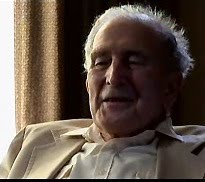
Antony Flew opened himself up to the possibility of accepting Christian teachings although never making a public profession of faith

Discussion (2 of 3): Antony Flew, N.T. Wright, and Gary Habermas

______________

Atheist Lawrence Krauss loses debate to wiser Christian

Published on Sep 13, 2013

http://www.reasonablefaith.org More of this here

The Bible and Science (Part 02)

The Kalam Cosmological Argument (Scientific Evidence) (Henry Schaefer, PhD)

Published on Jun 11, 2012

Scientist Dr. Henry “Fritz” Schaefer gives a lecture on the cosmological argument and shows how contemporary science backs it up.

______________

__________________

_________
Antony Flew opened himself up to the possibility of accepting Christian teachings. Flew never did make a public profession of faith, but he was considering the Christian faith. He also pointed out that Einstein was not an atheist. Finally Flew promised to “follow the evidence wherever it leads.”

SATURDAY, AUGUST 21, 2010

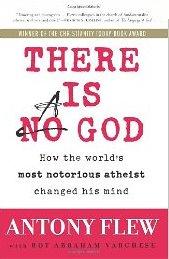
There Is A God – How the World’s Most Notorious Atheist Changed His Mind, Antony Flew

There Is A God – How the World’s Most Notorious Atheist Changed His Mind, Antony Flew with Roy Abraham Varghese

There are a few things I would like to point out or suggest prior to discussing this book. First, one should read (also available on DVD) The Warren-Flew Debate and Thomas B. Warren’s book Have Atheists Proven There is no God? prior to reading this book. Garland Elkins, close friend and coworker with brother Warren reported:

Brother Warren told me that during his debate with Mr. Flew he walked over to his table and saw that Mr. Flew had a copy of brother Warren’s book entitled, Have Atheists Proved There Is No God? Brother Warren said that the book was very worn around the edges indicating that Mr. Flew had used it much in his studying. Mr. Flew’s change is a devastating blow to atheism. He is to be congratulated and commended for his change. He now needs to learn the identity of the God of the Bible, and obey Him and become a Christian. — Garland Elkins, “A Renowned Atheist Renounces Atheism,” Yokefellow, Vol. 32, No. 1, January 2005, p. 2.

Second, one will not agree with everything written in Flew’s book, but it is very valuable as will be observed. Third, be aware that while Flew did change his mind about the existence of God, he remained unchanged about his rejection of an afterlife—also called a “mortalist”. Tragic as that is, this provides an important point—he did not make a “deathbed confession or conversion” as some of his atheist associates attempted to excuse or deflect his change with. Tragically, he ran out of time to either recognize or accept the truth on matters pertaining to the afterlife. Sadly, he remained a “mortalist” until April 8, 2010 when he passed away.

Interestingly, when Warren debated Flew, Flew had accepted a debate proposition that was unique among atheists—he affirmed (rather than just denied) that “I Know That God Does Not Exist.” This is far different than other debates with atheists who attempt to shift the burden of proof to the theist. Flew mentions the 1976 debate with Warren although briefly. Flew states Warren “wielded an impressive array of charts and slides.” Interestingly, according to Warren’s assistant Roy Deaver, Warren presented 75 charts during the debate, but he had prepared over 400 detailed charts for the debate. (David Lipe who helped create many of the charts has the total number at 500.)

There are several important matters Flew brings to light in this book that are worth reflecting on.

First, how many times has an atheist challenged theists to produce observable, empirical data or proof via the scientific method for the existence of God? Flew discusses this tactic which was called “logical positivism”. Flew points out that while he was an atheist, he had written a devastating refutation, “Theology and Falsification,” to the man credited with logical positivism, Alfred Ayer. In fact, Ayer himself renounced his work, Language, Truth and Logic, and stated: “Logical positivism died a long time ago. I don’t think much of Language, Truth and Logic is true. I think it is full of mistakes…I think it is full of mistakes which I spent the last fifty years correcting or trying to correct.” (Pages xiv-xv). Also, Albert Einstein’s statement on the demand for empirical data or positivism is intriguing:

I am not a positivist. Positivism states that what cannot be observed does not exist. This conception is scientifically indefensible, for it is impossible to make valid affirmations of what people ‘can’ or ‘cannot’ observe. One would have to say ‘only what we observe exists,’ which is obviously false.” Flew also counters the modern militant atheists of today who attempt to change the subject by pointing out the abuses of adherents of Christianity by stating “But the excesses and atrocities of organized religion have no bearing whatsoever on the existence of God, just as the threat of nuclear proliferation has no bearing on the question of whether E = mc2. (Page xxiv)

Second, Flew points out that some atheists attempt to claim that Einstein was an atheist. Flew records this important and powerful statement by Einstein to the contrary—

I’m not an atheist, and I don’t think I can call myself a pantheist. We are in the position of a little child entering a huge library filled with books in many languages. The child knows someone must have written those books. It does not know how. It does not understand the language in which they are written. The child dimly suspects a mysterious order in the arrangement of the books but doesn’t know what it is. That, it seems to me, is the attitude of even the most intelligent human being toward God. We see the universe marvelously arranged and obeying certain laws but only dimly understand these laws. Our limited minds grasp the mysterious force that moves constellations. (Page 99)

Also in the appendix is a critique of some of popular atheists of today by Roy Abraham Varghese who assisted Flew with the writing of this book.

Third, Flew was able to open his mind to omnipotence from the evidence gleamed in the field of science. He states:

Science qua science cannot furnish an argument for God’s existence. But the three items of evidence we have considered in this volume—the laws of nature, life with its teleological organization, and the existence of the universe—can only be explained in light of an Intelligence that explains both its own existence and that of the world. Such a discovery of the Divine does not come through experiments and equations, but through an understanding of the structures they unveil or map. (Page 155)

Or as others have so argued—where there is design, there must be a designer that is at least equal to or greater than the design. This admission by Flew is interesting since in his debate with Warren he attempted to skirt arguments from biology pressed by Warren since he was not a biologist.

Sadly, Flew ran out of time to completely “follow the evidence wherever it leads”, but he did provide a hint to where the evidence was leading him at the writing of his book. He places in the appendix of his book a defense by Anglican N. T. Wright of the revelation of God in the person of Jesus Christ. Flew states of Christianity—

As I have said more than once, no other religion enjoys anything like the combination of a charismatic figure like Jesus and a first-class intellectual like St. Paul. If you’re wanting omnipotence to set up a religion, it seems to me that this is the one to beat! (Page 157)

Hopefully this work will save some atheists or agnostic from wasting time to get their “thinking straight” (a title of another book on logic by Antony Flew—which, perhaps ironically, Thomas B. Warren recommended.) Flew stated he tried to do what Socrates advised–“follow the evidence to wherever it leads”. This work provides an excellent piece of evidence for parents to share with their children. The lesson is obvious—if Flew, a son of a Methodist minister, can go so far away from Christianity as to affirm in public discourse that there is no God, make an academic career as a philosophical atheist, but be turned to theism based on evidence, then the case for God is far stronger than many may have considered. Perhaps it will save some from the thought expressed in the hymn—“’Almost persuaded’ now to believe…’Almost’—but lost!’”

Posted by drkenneyat Saturday, August 21, 2010

Related posts:

Antony Flew rightly noted that Richard Dawkins’ “monkey theorem was a load of rubbish”

________   Antony Flew rightly noted that Richard Dawkins’  ”monkey theorem was a load of rubbish.” Sunday, 9 September 2012 Why Richard Dawkins’ typing monkey theorem is a load of nonsense The infinite monkey theorem states that a monkey hitting keys at random on a typewriter keyboard for an infinite amount of time will almost surely type a […]

Article from 2005 indicated Antony Flew abandoned atheism because of Law of Biogenesis!!!!

___________ Article from 2005 indicated Antony Flew abandoned atheism because of Law of Biogenesis!!!! Weighing the Evidence An Atheist Abandons Atheism By Chuck Colson|Published Date: January 10, 2005 Antony Flew, the 81-year-old British philosophy professor who taught at Oxford and other leading universities, became an atheist at age 15. Throughout his long career he argued […]

The Christian influence on society is real and that is one of the reasons Antony Flew left Atheism!!!

The Christian influence on society is real and that is one of the reasons Antony Flew left Atheism!!! Beggar to Beggar Saved by Increments By Chuck Colson|Published Date: January 11, 2005 A leading intellectual elaborates on why he abandoned atheism. But, surprisingly, he says his reasons were not entirely intellectual. British philosophy professor Dr. Antony […]

Antony Flew, George Wald and David Noebel on the Origin of Life

In the below comment section David Noebel stated the following: Since writing my article on the origin of life I have read two books that basically make the same point and I will quote briefly from them, but encourage anyone interested in the subject to read both books from cover to cover: (1) John C. […]

The Fine Tuning Argument for the Existence of God from Antony Flew!

___________ The Fine Tuning Argument for the Existence of God from Antony Flew! Imagine entering a hotel room on your next vacation. The CD player on the bedside table is softly playing a track from your favorite recording. The framed print over the bed is identical to the image that hangs over the fireplace at […]

By Everette Hatcher III | Posted in Current Events | Tagged  | Edit | Comments (0)

Mark Oppenheimer of Time Magazine claims Antony Flew was convinced by PSEUDOSCIENCE that God exists!!!

_____________ Mark Oppenheimer of Time Magazine claims Antony Flew was convinced by PSEUDOSCIENCE that God exists!!! Below you will read:  ”There Is a God” is perhaps the handiest primer ever written on the science (many would say pseudoscience) of religious belief. Regis Nicoll does a good job of refuting the claim that Flew was manipulated by […]

A review of “There is a God” by Antony Flew March 31, 2012

________ During the 1990′s I actually made it a practice to write famous atheists and scientists that were mentioned by Adrian Rogers and Francis Schaeffer and challenge them with the evidence for the Bible’s historicity and the claims of the gospel. Usually I would send them a cassette tape of Adrian Rogers’ messages “6 reasons I […]

Review of Antony Flew Book: THERE IS A GOD Article by R.C. Sproul May 2008

During the 1990′s I actually made it a practice to write famous atheists and scientists that were mentioned by Adrian Rogers and Francis Schaeffer and challenge them with the evidence for the Bible’s historicity and the claims of the gospel. Usually I would send them a cassette tape of Adrian Rogers’ messages “6 reasons I know […]

The Death of a (Former) Atheist — Antony Flew, 1923-2010 Antony Flew’s rejection of atheism is an encouragement, but his rejection of Christianity is a warning. Rejecting atheism is simply not enough, by Al Mohler

________________________________ Discussion (1 of 3): Antony Flew, N.T. Wright, and Gary Habermas Uploaded on Sep 22, 2010 A discussion with Antony Flew, N.T. Wright, and Gary Habermas. This was held at Westminster Chapel March, 2008 ______________________ During the 1990′s I actually made it a practice to write famous atheists and scientists that were mentioned by Adrian […]

By Everette Hatcher III | Posted in Francis Schaeffer | Tagged  | Edit | Comments (0)

Antony Flew’s journey from Atheism to Theism

During the 1990′s I actually made it a practice to write famous atheists and scientists that were mentioned by Adrian Rogers and Francis Schaeffer and challenge them with the evidence for the Bible’s historicity and the claims of the gospel. Usually I would send them a cassette tape of Adrian Rogers’ messages “6 reasons I […]

Part of the reason Antony Flew left atheism can be found in this Paul Davies’ quote “Science can proceed only if the scientist adopts an essentially theological worldview!”


Conversation with John Barrow

Published on Jun 16, 2012

Templeton Prize 2006, Gifford Lectures 1988
British Academy, 1 June 2012

_______

Many Christians are involved in science and John D. Barrow is one of the leaders of science today.

Here is his bio:

John D Barrow

John D. Barrow was born in London in 1952 and attended Ealing Grammar School. He graduated in Mathematics from Durham University in 1974, received his doctorate in Astrophysics from Oxford University in 1977 (supervised by Dennis Sciama), and held positions at the Universities of Oxford and California at Berkeley before taking up a position at the Astronomy Centre, University of Sussex in 1981. He was professor of astronomy and Director of the Astronomy Centre at the University of Sussex until 1999. He is the author of 325 scientific articles in cosmology and astrophysics, and is a recipient of the Locker Prize for Astronomy and the 1999 Kelvin Medal of the Royal Glasgow Philosophical Society. He was awarded an honorary Doctor of Science degree by the University of Hertfordshire in 1999. He recently held a Senior 5-year Research Fellowship from the Particle Physicsand Astronomy Research Council of the UK.

In July 1999 he took up a new appointment as Research Professor of Mathematical Sciences at Cambridge and Director of the Millennium Mathematics Project, a new initiative to improve the understanding and appreciation of mathematics and its applications amongst young people and the general public.

He is the author of 15 books, translated into 28 languages, which explore many of the wider historical, philosophical and cultural ramifications of developments in astronomy, physics and mathematics: these include, The Left Hand of Creation (with Joseph Silk), The Anthropic Cosmological Principle (with Frank Tipler), L’Homme et le Cosmos (with Frank Tipler), The World Within the World, Theories of Everything, Pi in the Sky: counting, thinking and being, Pérche il mondo è matematico?, The Origin of the Universe, The Artful Universe, Impossibility: the limits of science and the science of limits, Between Inner Space and Outer Space and The Book of Nothing. His most recent book, The Constants of Nature:from alpha to omega has just been published by Random House. He has written a play, Infinities, which was performed (in Italian) at the Teatro la Scala, Milan, in the Spring of 2002 under the direction of Luca Ronconi and in Spanish at the Valencia Festival.

He is a frequent lecturer to audiences of all sorts in many countries. He has given many notable public lectures in many countries, including the 1989 Gifford Lectures, the George Darwin and Whitrow Lectures of the Royal Astronomical Society, the Amnesty International Lecture on Science in Oxford, The Flamsteed Lecture, The Tyndall Lecture, The RSA Christmas Lecture for Children, and theSpinoza Lecture at the University of Amsterdam. John Barrow also has the curious distinction of having delivered lectures on cosmology at the Venice Film Festival, 10 Downing Street, Windsor Castle and the Vatican Palace.

__________________

Below is an excerpt from Antony Flew’s book THERE IS A GOD: How the world’s most notorious atheist changed his mind, (pages 107-109) where he quotes both Paul Davies and John D. Barrrow when essentially making the same point:

WHOSE LAWS?
In his Templeton address, Paul Davies makes the point
that “science can proceed only if the scientist adopts an
essentially theological worldview.” Nobody asks where the
laws of physics come from, but “even the most atheistic
scientist accepts as an act of faith the existence of a lawlike
order in nature that is at least in part comprehensible to
us.” Davies rejects two common misconceptions. He says
the idea that a theory of everything would show that this is
the only logically consistent world is “demonstrably wrong,”
because there is no evidence at all that the universe is logi-
cally necessary, and in fact it is possible to imagine alterna-
tive universes that are logically consistent. Second, he says
it is “arrant nonsense” to suppose that the laws of physics
are our laws and not nature’s. Physicists will not believe
that Newton’s inverse law of gravitation is a cultural cre-
ation. He holds that the laws of physics “really exist,” and
scientists’ job is to uncover and not invent them.
Davies draws attention to the fact that the laws of nature
underlying phenomena are not found through direct obser-
vation, but extracted through experiment and mathematical
theory. The laws are written in a cosmic code that scientists
must crack in order to reveal the message that is “nature’s
message, God’s message, take your choice, but not our mes-
sage.”
The burning question, he says, is threefold:
Where do the laws of physics come from?
Why is it that we have these laws instead of some
other set?
How is that we have a set of laws that drives feature-
less gases to life, consciousness and intelligence?
These laws “seem almost contrived—fine-tuned, some
commentators have claimed—so that life and conscious-
ness may emerge.” He concludes that this “contrived
nature of physical existence is just too fantastic for me to
take on board as simply ‘given.’ It points to a deeper under-
lying meaning to existence.” Such words as purpose
and design, he says, only capture imperfectly what the universe
is about. “But, that it is about something, I have absolutely
no doubt.”25
John Barrow, in his Templeton address, observes that
the unending complexity and exquisite structure of the
universe are governed by a few simple laws that are sym-
metrical and intelligible. In fact, “there are mathematical
equations, little squiggles on pieces of paper, that tell us
how whole universes behave.” Like Davies, he dismisses
the idea that the order of the universe is imposed by our
minds. Moreover, “natural selection requires no under-
standing of quarks and black holes for our survival and
multiplication.”
Barrow observes that in the history of science new
theories extend and subsume old ones. Although Newton’s
theory of mechanics and gravity has been superseded by
Einstein’s and will be succeeded by some other theory in
the future, a thousand years from now engineers will still
rely on Newton’s theories. Likewise, he says, religious con-
ceptions of the universe also use approximations and anal-
ogies to help in grasping ultimate things. “They are not the
whole truth, but this does not stop them being a part of the
truth.”26


_____________

The Kalam Cosmological Argument (Scientific Evidence) (Henry Schaefer, PhD)

Published on Jun 11, 2012

Scientist Dr. Henry “Fritz” Schaefer gives a lecture on the cosmological argument and shows how contemporary science backs it up.

_____________

_____________________________________

John D. Barrow

From Wikipedia, the free encyclopedia
This article is about the English theoretical physicist John David Barrow. For other uses, see John Barrow (disambiguation).
John D. Barrow
Born 29 November 1952 (age 61)
London, England, UK
Fields Physicist and mathematician
Institutions University of Cambridge
Gresham College
University of California, Berkeley
University of Sussex
Alma mater University of Durham
University of Oxford
Doctoral advisor Dennis William Sciama
Doctoral students Peter Coles
David Wands
Notable awards Templeton prize (2006)

John David Barrow FRS (born 29 November 1952) is an English cosmologist, theoretical physicist, and mathematician. He is currently Research Professor of Mathematical Sciences at the University of Cambridge. Barrow is also a writer of popular science and an amateur playwright.

Life[edit]

Barrow attended Barham Primary School in Wembley until 1964 and Ealing Grammar School for Boys from 1964–71 and obtained his first degree in mathematics and physics from Van Mildert College at the University of Durham in 1974.[1] In 1977, he completed his doctorate in astrophysics at Magdalen College, Oxford, under Dennis William Sciama. He was a Junior Research Lecturer at Christ Church, Oxford, from 1977–81. He did two postdoctoral years in astronomy at theUniversity of California, Berkeley, as a Commonwealth Lindemann Fellow (1977–8) and Miller Fellow (1980–1).

In 1981 he joined the University of Sussex and rose to the rank of Professor and Director of the Astronomy Centre. In 1999, he became Professor in the Department of Applied Mathematics and Theoretical Physics and a fellow in Clare Hall at Cambridge University. He is Director of theMillennium Mathematics Project. From 2003–2007 he was Gresham Professor of Astronomy at Gresham College, London, and he has been appointed as Gresham Professor of Geometry from 2008–2011; only one person has previously held two different Gresham chairs.[2] In 2008, the Royal Society awarded him the Faraday Prize.

In addition to having published more than 480 journal articles, Barrow has coauthored (with Frank J. Tipler) The Anthropic Cosmological Principle, a work on the history of the ideas, specifically intelligent design and teleology, as well as a treatise on astrophysics. He has also published 17 books for general readers, beginning with his 1983 The Left Hand of Creation. His books summarise the state of the affairs of physical questions, often in the form of compendia of a large number of facts assembled from the works of great physicists, such as Paul Dirac and Arthur Eddington.

Barrow’s approach to philosophical issues posed by physical cosmology makes his books accessible to general readers. For example, Barrow introduced a memorable paradox, which he called “the Groucho Marx Effect” (see Russell-like paradoxes). Here, he quotes Groucho Marx: “I wouldn’t want to belong to any club that would accept me as a member”. Applying this to problems in cosmology, Barrow states: “A universe simple enough to be understood is too simple to produce a mind capable of understanding it.”[3] That is, the better we understand the problem, the more likely it is to be oversimplified. Conversely, the closer we get to a description of reality, the more complex and incomprehensible the description becomes. There would be few if any fields of study in which this paradox does not apply.

Barrow has lectured at 10 Downing Street, Windsor Castle, the Vatican, and to the general public. In 2002, his play Infinities premiered in Milan, played in Valencia, and won the Premi Ubu 2002 Italian Theatre Prize.

He was awarded the 2006 Templeton Prize for “Progress Toward Research or Discoveries about Spiritual Realities” for his “writings about the relationship between life and the universe, and the nature of human understanding [which] have created new perspectives on questions of ultimate concern to science and religion”.[4] He is a member of a United Reformed Church, which he describes as teaching “a traditional deistic picture of the universe”.[5]

Books[edit]

In English:

  1. Cosmic Imagery: Key Images in the History of Science. ISBN 978-0224075237‘
  2. New Theories of Everything. ISBN 978-0192807212
  3. Between Inner Space and Outer Space: Essays on the Science, Art, and Philosophy of the Origin of the Universe
  4. Impossibility: Limits of Science and the Science of Limits. ISBN 0-09-977211-6
  5. Material Content of the Universe
  6. Pi in the Sky: Counting, Thinking, and Being. ISBN 9780198539568
  7. Science and Ultimate Reality: Quantum Theory, Cosmology and Complexity
  8. Barrow, John D.; Tipler, Frank J. (1988). The Anthropic Cosmological Principle. Oxford University Press. ISBN 978-0-19-282147-8. LCCN 87028148.
  9. The Artful Universe: The Cosmic Source of Human Creativity
  10. The Book of Nothing: Vacuums, Voids, and the Latest Ideas about the Origins of the Universe
  11. The Infinite Book: A Short Guide to the Boundless, Timeless and Endless
  12. The Left Hand of Creation: The Origin and Evolution of the Expanding Universe
  13. The Origin of the Universe: To the Edge of Space and Time
  14. The Universe That Discovered Itself
  15. The World Within the World
  16. Theories of Everything: The Quest for Ultimate Explanation
  17. The Constants of Nature: The Numbers that Encode the Deepest Secrets of the Universe
  18. 100 Essential Things You Didn’t Know You Didn’t Know
  19. Mathletics: A Scientist Explains 100 Amazing Things About The World of Sports

In other languages:

  1. L’Homme et le Cosmos (in French)
  2. Perché il Mondo è Matematico? (in Italian)

See also[edit]

References[edit]

  1. Jump up^ “Durham graduate wins $1M prize”. University of Durham Department of Physics. 20 March 2006. Retrieved 2007-11-24.
  2. Jump up^ Gresham College: New Gresham Chair of Geometry.
  3. Jump up^ Barrow, John D (1990). The World Within the World. Oxford: Oxford University Press. pp. 342–343. ISBN 0-19-286108-5.
  4. Jump up^ Lehr, Donald (2006-03-15). “John Barrow wins 2006 Templeton Prize”. templetonprize.org. John Templeton Foundation. Retrieved 2013-08-08.
  5. Jump up^ Overbye, Dennis (16 March 2006). “Math Professor Wins a Coveted Religion Award”. New York Times. Retrieved 2007-11-24.

External links[edit]

Publications available on the Internet
[hide]

Authority control

_______________

Related posts:

Antony Flew, “I was particularly impressed with Gerry Schroeder’s point-by-point refutation of what I call the MONKEY THEOREM” or the “the possibility of life arising by chance using the analogy of a multitude of monkeys banging away on computer keyboards and eventually ending up writing a Shakespearean sonnet!”

____________   Discussion (1 of 3): Antony Flew, N.T. Wright, and Gary Habermas Uploaded on Sep 22, 2010 A discussion with Antony Flew, N.T. Wright, and Gary Habermas. This was held at Westminster Chapel March, 2008 ___________   __________ Antony Flew, “I was particularly impressed with Gerry Schroeder’s point-by-point refutation of what I call the MONKEY […]

Antony Flew answers the criticisms of Richard Dawkins in 2008!!!

Intelligent Design: Is It Viable? William Lane Craig vs. Francisco J. Ayala Published on Nov 10, 2013 Date: November 5, 2009 Location: Indiana University Christian/Intelligent Design proponent debater: William Lane Craig Christian/Darwinist debater: Francisco J. Ayala For William Lane Craig: http://www.reasonablefaith.org/ For Francisco Ayala: http://www.faculty.uci.edu/profile.cf… To purchase this debate: http://apps.biola.edu/apologetics-sto… _______________________________ Antony Flew answers the criticisms of Richard Dawkins […]

Roy Abraham Varghese: Antony Flew’s paper THEOLOGY AND FALSIFICATION became most widely reprinted philosophical publication of last century!

_____________ Antony Flew on God and Atheism Published on Feb 11, 2013 Lee Strobel interviews philosopher and scholar Antony Flew on his conversion from atheism to deism. Much of it has to do with intelligent design. Flew was considered one of the most influential and important thinker for atheism during his time before his death […]

ANTONY FLEW’S SIGNIFICANCE IN THE HISTORY OF ATHEISM by Roy Abraham Varghese

________________ ________ Antony Flew – World’s Most Famous Atheist Accepts Existence of God Uploaded on Nov 28, 2008 Has Science Discovered God? A half-century ago, in 1955, Professor Antony Flew set the agenda for modern atheism with his Theology and Falsification, a paper presented in a debate with C.S. Lewis. This work became the most […]

Antony Flew did not make a public profession of faith in Christ but will his conversion from atheism to theism have an impact?

____________ Jesus’ Resurrection: Atheist, Antony Flew, and Theist, Gary Habermas, Dialogue Published on Apr 7, 2012 http://www.veritas.org/talks – Did Jesus die, was he buried, and what happened afterward? Join legendary atheist Antony Flew and Christian historian and apologist Gary Habermas in a discussion about the facts surrounding the death and resurrection of Jesus Christ. Join the […]

Concerning the book THERE IS A GOD Antony Flew stated, “This is my book and it represents my thinking!

_______ ________ Does God Exist?: William Lane Craig vs Antony Flew Uploaded on Dec 16, 2010 http://drcraigvideos.blogspot.com – William Lane Craig and Antony Flew met in 1998 on the 50th anniversary of the famous Copleston/Russell debate to discuss the question of God’s existence in a public debate. Unlike Richard Dawkins, Flew was one of the most […]

Bill Muehlenberg’s review of “There Is a God” By Antony Flew

_________________   Antony Flew on God and Atheism Published on Feb 11, 2013 Lee Strobel interviews philosopher and scholar Antony Flew on his conversion from atheism to deism. Much of it has to do with intelligent design. Flew was considered one of the most influential and important thinker for atheism during his time before his […]

Former Atheist Antony Flew noted that Evolutionists failed to show “Where did a living, self-reproducing organism come from in the first place?”

____   Does God Exist? Thomas Warren vs. Antony Flew Published on Jan 2, 2014 Date: September 20-23, 1976 Location: North Texas State University Christian debater: Thomas B. Warren Atheist debater: Antony G.N. Flew For Thomas Warren: http://www.warrenapologeticscenter.org/ ______________________ Antony Flew and his conversion to theism Uploaded on Aug 12, 2011 Antony Flew, a well known […]

Educated Scholars like Antony Flew can believe in God!!!

__________ Discussion (1 of 3): Antony Flew, N.T. Wright, and Gary Habermas Uploaded on Sep 22, 2010 A discussion with Antony Flew, N.T. Wright, and Gary Habermas. This was held at Westminster Chapel March, 2008 Debate – William Lane Craig vs Christopher Hitchens – Does God Exist? Uploaded on Jan 27, 2011 April 4, 2009 – Craig […]

Antony Flew rightly noted that Richard Dawkins’ “monkey theorem was a load of rubbish”

________   William Lane Craig versus Eddie Tabash Debate Uploaded on Feb 6, 2012 Secular Humanism versus Christianity, Lawyer versus Theologian. Evangelical Christian apologist William Lane Craig debates humanist atheist lawyer Eddie Tabash at Pepperdine University, February 8, 1999. Visit http://www.Infidels.org andhttp://www.WilliamLaneCraig.com ________________ Antony Flew on God and Atheism Published on Feb 11, 2013 Lee […]

_________

The Founding Fathers view of Separation of Church and State

___________

1 Of 5 / The Bible’s Influence In America / American Heritage Series / David Barton

2 Of 5 / The Bible’s Influence In America / American Heritage Series / David Barton

3 Of 5 / The Bible’s Influence In America / American

Heritage Series / David Barton

4 Of 5 / The Bible’s Influence In America / American Heritage Series / David Barton

5 Of 5 / The Bible’s Influence In America / American Heritage Series / David Barton

__________________________________________

3 Of 3 / Faith Of The Founding Fathers / American Heritage Series / David Barton

__________________________

David Barton on Glenn Beck – Part 1 of 5

Uploaded by on Apr 9, 2010

Wallbuilders’ Founder and President David Barton joins Glenn Beck on the Fox News Channel for the full hour to discuss our Godly heritage and how faith was the foundational principle upon which America was built.

___________

David Barton on Glenn Beck – Part 2 of 5

Uploaded by on Apr 9, 2010

Wallbuilders’ Founder and President David Barton joins Glenn Beck on the Fox News Channel for the full hour to discuss our Godly heritage and how faith was the foundational principle upon which America was built.

___________________________

David Barton on Glenn Beck – Part 3 of 5

Uploaded by on Apr 9, 2010

Wallbuilders’ Founder and President David Barton joins Glenn Beck on the Fox News Channel for the full hour to discuss our Godly heritage and how faith was the foundational principle upon which America was built.

___________________________

David Barton on Glenn Beck – Part 4 of 5

Uploaded by on Apr 9, 2010

Wallbuilders’ Founder and President David Barton joins Glenn Beck on the Fox News Channel for the full hour to discuss our Godly heritage and how faith was the foundational principle upon which America was built.

______________________

David Barton on Glenn Beck – Part 5 of 5

Uploaded by on Apr 9, 2010

Wallbuilders’ Founder and President David Barton joins Glenn Beck on the Fox News Channel for the full hour to discuss our Godly heritage and how faith was the foundational principle upon which America was built.

Gregg Frazier in his recent message at the Shepherds Conference attacks David Barton’s view that the 8 major founding fathers were traditional evangelical Christians (message can be heard at this link, Barton attacked at 26 min mark, http://www.shepherdsconference.org/media/details/?mediaID=8462 ). That message made me back off some of my earlier views, but there is still some obvious facts concerning the founding fathers’ views of the separation of church and state that Greg Koukl makes in his post of March 1, 2013. Koukl notes:

The constant appeal to Jefferson’s Danbury letter by hard core separationists reveals a fatal flaw in their approach. Quoting Jefferson’s opinion only matters if Jefferson’s original intent still applies today. If it doesn’t, then the Danbury citation is irrelevant. If it does, then Jefferson’s full views on the issue have merit in this discussion.

What was Jefferson’s intent? To show that the Federal government couldn’t establish a national denomination. That’s all. In another letter, this one to Samuel Miller in 1808, Jefferson expanded on his view:

Certainly, no power to prescribe any religious exercise, or to assume authority in religious discipline, has been delegated to the General Government. It must then rest with the States, as far is it can be in any human authority. [Thomas Jefferson, The Writings of Thomas Jefferson, Albert Bergh, ed. (Washington D.C.: The Thomas Jefferson Memorial Association, 1904), vol. XI, p. 428, letter on January 23, 1808, quoted in Barton, p. 42.]

This is a stunning revelation for advocates of a Jeffersonian model of separation. According to Jefferson, the Federal Government couldn’t prescribe religious exercise or discipline, but the states could. It wasn’t until 1947 that the Everson Court made the federal provision binding on the states, expressly contrary to Jefferson, though they quoted him for support.

For nearly two centuries state and federal governments have had such a benevolent attitude towards religion in general and Christianity in particular–including the almost universal practice of school prayer–that it would make a 1990s fundamentalist blush.

The Northwest Ordinance of 1787, passed by the very same Congress which enacted the First Amendment, stated the following in Article III: “Religion, morality, and knowledge being necessary to good government and the happiness of mankind, schools and the means of education shall forever be encouraged.” Notice that religion and morality were equal with knowledge as proper subjects of public education.

All but three states invoke the name of the almighty God in the preambles to their constitutions. Note these examples:

We the people of the State of California, grateful to Almighty God for our freedom, in order to secure and perpetuate its blessings, do establish this Constitution.

We the people of Alabama…invoking the favor and guidance of Almighty God, do ordain and establish…

The people of Connecticut, acknowledging with gratitude the good providence of God, in having permitted them to enjoy a free government…

If Jefferson’s view of non-establishment mattered today, then dozens of court decisions restricting religious freedom would be annulled. The present notion of separation is not conservative, seeking to return to earlier principles, but activist, seeking to redefine–and liberalize–the past.

Separationists’ Achilles Heel

Separationists attempt to take the Constitutional high ground by quoting Jefferson and others like him. They claim that the founders envisioned a high wall of separation. Recent court decisions simply enforce those original intentions.

Is the “religious right” imposing a new standard favoring religion that undermines our basic Constitutional freedoms, as the L.A. Times ad claimed? You can get to the heart of the matter by asking another question: Do these recent legal actions stop something from being added, or do they remove things already there? They remove them.

Courts have removed prayer from school, crèches from the lawns of city halls, and crosses from public parks. Separationists have managed to get personal Bibles off of teachers’ desks, the Ten Commandments out of school rooms, and references to God eliminated from students’ graduation speeches.

This is their Achilles’ heel: Things can only be removed that were already there to begin with. How did they get there? They were allowed by citizens, legislatures, and courts who saw no harm in them, no intolerance, no danger, and no breech of any Constitutional principle for almost 175 years.

This observation tells us two things. First, from the beginning, religious symbols and religious thought were woven into the fabric of government and society with no sense of Constitutional impropriety. This proves that the new court actions are revisionist, an attempt to change the traditional practice, not a return to our historical and Constitutional roots.

Second, conservatives are in a defensive posture, not an offensive one. The “religious right” has not declared war. The war has been declared on an American way of life held dear to many, and they won’t surrender it without a fight.

_____________

I have argued with the liberals at the Arkansas Times for years about this, but this article below will blow them out of the water!!!

The goal of First Amendment was to protect religious expression, not restrict it. In the last 50 years, though, “non-establishment” has been redefined as “separation,” effectively amending the Constitution and isolating Christians from the political process.

“Will You Be a Casualty in Their Religious War?” read the headline of an advertisement that almost covered an entire page of the L.A. Times. Underneath were pictures of Jerry Falwell, Pat Robertson, and Lou Sheldon, along with condemning quotes substantiating their apparent jihad against irreligious secularists.

The text of the advertisement read:

“The radical religious right has declared war on America. It is a war of ideas. A war of conscience. It’s a religious war. This war strikes at the very heart of our Constitution and threatens the freedoms we hold most dear. Freedom to worship as we please and to believe what we want to believe. The freedom to determine for ourselves what religious and moral views our own children are exposed to. The freedom to conduct our lives as we see fit without having our privacy violated. For some time now, the radical religious right has claimed that there is no such thing as church/state separation in our Constitution. They are wrong. Find out why.”

It goes on to promote a book by Robert Boston entitled Why the Religious Right Is Wrong About Separation of Church and State. [Robert Boston, Why the Religious Right Is Wrong About Separation of Church and State, (Buffalo, NY: Prometheus Books, 1993).]

The ad is correct on a couple of points. There is a sense in which the “religious right” is at war, but the battle is not against America, it’s about America. And it is a war of ideas: Is there a legitimate separation of church and state, and what does that mean?

The current understanding of “separation of church and state”–the view that the state is thoroughly secular and not influenced by religious values, especially Christian–was completely foreign to the first 150 years of American political thought. Clearly the Fathers did not try to excise every vestige of Christian religion, Christian thought, and Christian values from all facets of public life. They were friendly to Christianity and encouraged its public practice and expression.

It wasn’t until 1947 that the United States Supreme Court first used the concept of “separation” to isolate government from religion.[The phrase was mentioned once before in the discourse of the Court in the 1878 case of Reynolds v. The United States when Mormons attempted an unsuccessful defense of polygamy based on the non-establishment clause of the First Amendment. The non-establishment clause protected Mormon beliefs, not Mormon practices (e.g., polygamy). This conduct was still proscribed by prevailing morality, specifically Christian morality.] In Everson v. Board of Education, the court lifted a phrase from a letter Thomas Jefferson wrote to a Baptist church in Danbury, Connecticut. The Court ruled, “Neither a state nor the Federal Government can set up a church. Neither can pass laws which aid one religion, aid all religions, or prefer one religion over another….In the words of Jefferson, the clause against establishment of religion by law was intended to erect ‘a wall of separation between church and state.’” [Everson v. Board of Education, 330 U.S at 15-16 (1947).]

The Infamous Danbury Letter

In the Everson v. Board of Education decision, the Supreme Court quoted Jefferson’s separation language as a normative guideline for understanding the First Amendment. As David Barton points out, “There’s probably no other instance in America’s history where words spoken by an individual have become the law of the land. Jefferson’s remark now carries more weight in judicial circles than does the writing of any other Founder.” [David Barton, The Myth of Separation, (Aledo, TX: WallBuilder Press), p. 44.]

Thomas Jefferson wasn’t a member of the Constitutional Convention, and the phrase “separation of church and state” does not appear anywhere in the Constitution or the Bill of Rights. Where did it come from?

On January 1, 1802, Jefferson wrote a letter to the Danbury Baptist Association of Danbury, Connecticut, in which he used the phrase “a wall of separation between church and state.” His note was meant to quell the fears of the Danbury congregation who were concerned that a national denomination would be established. Here is the text in question:

I contemplate with solemn reverence that act of the whole American people which declared that their legislature should ‘make no law respecting an establishment of religion, or prohibiting the free exercise thereof,’ thus building a wall of separation between church and state. [Thomas Jefferson, Jefferson Writings, Merrill D. Peterson, ed. (NY: Literary Classics of the United States, Inc., 1984), p. 510, January 1, 1802.]

What did Jefferson have in mind here? Is there an impregnable barrier erected by the founders [Note that the word “founders” is not capitalized here because I’m not referring to the 55 members of the Constitutional Convention, but to the broader group responsible for the passage of the Bill of Rights.] that excludes religious-minded people from the political process, an ideological enmity between church and state?

The First Amendment

In contrast to the present confusion about separation, the First Amendment is startling in its clarity, offering no limit to the impact of religious and moral conviction of individual citizens on public policy. It is worth reading often. Here it is:

Congress shall make no law respecting an establishment of religion, or prohibiting the free exercise thereof; or abridging the freedom of speech, or of the press; or the right of the people peaceably to assemble, and to petition the Government for a redress of grievances.

Please forgive me for stating the obvious: The First Amendment restricts the government, not the people. Jefferson’s wall is a one-way wall. Any religious person, any religious organization, any religious conviction has its place in the public debate. It’s called pluralism in the classic sense.

Notice there are not two distinct provisions here, but one. Non-establishment has no purpose by itself. Freedom of religion is the goal, and non-establishment is the means. The only way to have true freedom of religion is to keep government out of religion’s affairs. This provides for what Steven Monsma calls “positive neutrality.” This view “defines religious freedom in terms of a governmental neutrality toward religion in which no religion is favored over any other, and neither religion nor secularism is favored over each other.” [Stephen Monsma, Positive Neutrality–Letting Religious Freedom Ring, (Grand Rapids: Baker, 1993), p. 203.]

The First Amendment was rewritten twelve times to make clear its intent. The concept set forth in the Bill of Rights is “non-establishment,” not isolation. We should strike the “separation” language from our vocabulary.

A Fatal Flaw

The constant appeal to Jefferson’s Danbury letter by hard core separationists reveals a fatal flaw in their approach. Quoting Jefferson’s opinion only matters if Jefferson’s original intent still applies today. If it doesn’t, then the Danbury citation is irrelevant. If it does, then Jefferson’s full views on the issue have merit in this discussion.

It’s clear, though, that the Everson Court used Jefferson’s words, not his ideas. The separation language itself was not in common use at the time. It does not show up in any notes of the Constitutional Convention or of the Congress responsible for the Bill of Rights or the First Amendment.

What was Jefferson’s intent? To show that the Federal government couldn’t establish a national denomination. That’s all. In another letter, this one to Samuel Miller in 1808, Jefferson expanded on his view:

Certainly, no power to prescribe any religious exercise, or to assume authority in religious discipline, has been delegated to the General Government. It must then rest with the States, as far is it can be in any human authority. [Thomas Jefferson, The Writings of Thomas Jefferson, Albert Bergh, ed. (Washington D.C.: The Thomas Jefferson Memorial Association, 1904), vol. XI, p. 428, letter on January 23, 1808, quoted in Barton, p. 42.]

This is a stunning revelation for advocates of a Jeffersonian model of separation. According to Jefferson, the Federal Government couldn’t prescribe religious exercise or discipline, but the states could. It wasn’t until 1947 that the Everson Court made the federal provision binding on the states, expressly contrary to Jefferson, though they quoted him for support.

For nearly two centuries state and federal governments have had such a benevolent attitude towards religion in general and Christianity in particular–including the almost universal practice of school prayer–that it would make a 1990s fundamentalist blush.

The Northwest Ordinance of 1787, passed by the very same Congress which enacted the First Amendment, stated the following in Article III: “Religion, morality, and knowledge being necessary to good government and the happiness of mankind, schools and the means of education shall forever be encouraged.” Notice that religion and morality were equal with knowledge as proper subjects of public education.

All but three states invoke the name of the almighty God in the preambles to their constitutions. Note these examples:

We the people of the State of California, grateful to Almighty God for our freedom, in order to secure and perpetuate its blessings, do establish this Constitution.

We the people of Alabama…invoking the favor and guidance of Almighty God, do ordain and establish…

The people of Connecticut, acknowledging with gratitude the good providence of God, in having permitted them to enjoy a free government…

If Jefferson’s view of non-establishment mattered today, then dozens of court decisions restricting religious freedom would be annulled. The present notion of separation is not conservative, seeking to return to earlier principles, but activist, seeking to redefine–and liberalize–the past.

Separationists’ Achilles Heel

Separationists attempt to take the Constitutional high ground by quoting Jefferson and others like him. They claim that the founders envisioned a high wall of separation. Recent court decisions simply enforce those original intentions.

Is the “religious right” imposing a new standard favoring religion that undermines our basic Constitutional freedoms, as the L.A. Times ad claimed? You can get to the heart of the matter by asking another question: Do these recent legal actions stop something from being added, or do they remove things already there? They remove them.

Courts have removed prayer from school, crèches from the lawns of city halls, and crosses from public parks. Separationists have managed to get personal Bibles off of teachers’ desks, the Ten Commandments out of school rooms, and references to God eliminated from students’ graduation speeches.

This is their Achilles’ heel: Things can only be removed that were already there to begin with. How did they get there? They were allowed by citizens, legislatures, and courts who saw no harm in them, no intolerance, no danger, and no breech of any Constitutional principle for almost 175 years.

This observation tells us two things. First, from the beginning, religious symbols and religious thought were woven into the fabric of government and society with no sense of Constitutional impropriety. This proves that the new court actions are revisionist, an attempt to change the traditional practice, not a return to our historical and Constitutional roots.

Second, conservatives are in a defensive posture, not an offensive one. The “religious right” has not declared war. The war has been declared on an American way of life held dear to many, and they won’t surrender it without a fight.

Separating the Church Right Out of the State

In 1976, I and three others ventured behind the iron curtain in a clandestine operation bringing aid to persecuted Christians in Soviet Bloc countries. On Friday, July 23, we were detained at the border station of Leushen, Moldavia, USSR, because we had Russian Bibles in our possession.

After ransacking our car and personal belongings and strip-searching one of our group, border officials took us inside for questioning by a female interpreter. Where did we get the Bibles? Who were they for? Didn’t we know that such trafficking was illegal? The questions went on for hours.

When we explained the Bibles were for believers in the Soviet Union, she wanted to know their names.

“We planned to look the churches up in the phone directory.”

“We don’t have churches listed in our phone directories.”

We pointed out that in the United States, where there is freedom of religion, all of the churches are listed. Didn’t they have freedom of religion in the Soviet Union?

“Yes,” she assured us, “of course we have freedom of religion, but we have separation of church and state.” This was not the first time we were to hear this cryptic phrase.

The interpreter explained that the government printed all the Bibles needed for Soviet Christians. “We have our department of atheism and spend a large amount of money each year teaching them these things. We don’t allow any other propaganda.”

“But you print Bibles in the USSR?”

“Yes, our believers get all the Bibles they need, but they are given out only through the church and we must have all their names.”

“But you do have religious freedom?”

“Yes, we have religious freedom.”

“And we can’t bring in Bibles?”

“No, we don’t allow that propaganda in our country.”

“The Bible is propaganda?”

“Yes.”

“But you print Bibles in your own country.”

“Yes.”

I was surprised she couldn’t see what was coming. “Then that means you are printing anti-communist propaganda right in your own country.”

Her immediate reply was the cryptic, “But we have separation of church and state.”

This mantra was her blanket reply justifying all government interference with our activities. How were we interfering with separation? What did it actually mean? My partner’s definition was probably the most accurate. “They’re separating the church right out of the state,” he quipped.

As I look back on that incident 20 years ago, I’m struck by the contrast. Today there is more de facto religious liberty in former communist countries than we experience here in the United States. Now it is American courts that chant the mantra of separation to prohibit religious conduct in the public square.

The ACLU, in a letter to California State Senator Newton Russell, objected that “teaching that monogamous, heterosexual intercourse within marriage is a traditional American value is unconstitutional establishment of a religious doctrine in public schools.” [Majorie C. Swartz, Francisco Lobaco, American Civil Liberties Union Legislative Office, April 18, 1988. Copy on file. Note: The courts have not agreed with the ACLU on this point.]

The Supreme Court opens each session with the words, “God save this honorable court.” Yet in June, 1994, the same Supreme Court let stand a lower court ruling removing the Ten Commandments from a courtroom. This is rather ironic, considering a bas-relief of Moses holding the tablets of the Old Testament Law broods over the Chief Justice’s seat. Engraved upon the lower half of each entrance door is the same Ten Commandments banished by the court.

Twisted logic like this is “separating the church right out of the state.”

Amending the Constitution is an arduous process. Changes require an appeal by two-thirds of both Houses or by the Legislatures of two-thirds of the states to even get started. Ratification requires a three-fourths majority of either the states’ legislatures or special Constitutional conventions.

That’s what the founders intended. The Constitution’s provisions–including the Bill of Rights–were considered so weighty that only the most united and energetic efforts of the nation could alter it.

Shell Game

Today, de facto Constitutional amendments only require five non-elected citizens–a simple majority of the nine-member Supreme Court.

The High Court wouldn’t dream of simply deleting the Bill of Rights. That would be despotism. Yet they don’t balk at so redefining its meaning that the original disappears, though the words remain the same. Like dupes in a magician’s shell game, the citizens miss the sleight of hand and don’t even know they’ve been robbed.

If the responsibility of all branches of government is to preserve, protect, and defend the Constitution of the United States, ought not those branches preserve, protect, and defend the Constitution that was actually delivered, rather than some fanciful remake? If our Republic is guarded by the Constitution, then we are left defenseless when the words of the Constitution are redefined at will.

The authors of the First Amendment did not seek to expunge every shred of religious sentiment from the public arena. They did just the opposite, decorating their buildings with biblical imagery, punctuating their public discourses with biblical quotes, and grounding their laws on biblical morality.

Christian religion was the cement holding the very foundation stones of the Republic together. That cement is being chipped out, piece by piece, leaving a building without mortar, a stack of bricks ready to topple at the slightest quake.

An “Unconstitutional” President Lincoln

To show how far we’ve declined, I close with the words of President Lincoln in his Proclamation for a National Day of Fasting, Humiliation, and Prayer, March 30, 1863:

We have been the recipients of the choicest bounties of heaven. We have been preserved, these many years, in peace and prosperity. We have grown in numbers, wealth and power, as no other nation has ever grown. But we have forgotten God. We have forgotten the gracious hand which preserved us in peace, and multiplied and enriched and strengthened us; and we have vainly imagined, in the deceitfulness of our hearts, that all these blessings were produced by some superior wisdom and virtue of our own. Intoxicated with unbroken success, we have become too self-sufficient to feel the necessity of redeeming and preserving grace, too proud to pray to the God that made us! It behooves us, then to humble ourselves before the offended Power, to confess our national sins, and to pray for clemency and forgiveness.*

A hundred years and sixteen Presidents had passed, yet our country’s chief executive could still call his nation to humble repentance without the slightest hint of embarrassment, impropriety, or apology.

By today’s standards, though, the words of one of our greatest Presidents could not be spoken at certain government functions. The very same advice could not be given by a teacher to his junior high class. This alone is enough to show that the popular understanding of separation of church and state is foreign to the Constitution and to the world view that gave it birth.

*Source: The Collected Works of Abraham Lincoln, edited by Roy P. Basler. Full text can be viewed at http://showcase.netins.net/web/creative/lincoln/speeches/fast.htm.

Related posts:

Two Unconfirmed quotes attributed to Noah Webster

HALT:HaltingArkansasLiberalswithTruth.com Part 5 David Barton: Were the Founding Fathers Deists? First Bible printed in USA was printed by our founding fathers for use in the public schools. 20,000 Bibles. 10 commandments hanging in our courthouses. The last few days I have been  looking at this issue of unconfirmed quotes that people think that the Founding […]

Misquotes, Fake Quotes, and Disputed Quotes of the Founders

Many inauthentic quotes attributed to the Founding Fathers have been in circulation for much of the 20th century. These are still being used frequently, especially by those in the religious right. Fortunately we have many of the letters, diaries, and notes written by the Founding Fathers. Thomas Jefferson wrote many letters daily. John Quincy Adams […]

Did David Barton fabricate quotes and attribute them to the founding fathers?

On the Arkansas Times Blog on June 17, 2012 I noted: Google the phrase ” David Barton fabricated quotes” and you will get many websites that claim this is true and Rob Boston’s 1996 article “consumer alert” in the Church and State Magazine is what prompted this reaction throughout the country. As a journalist you […]

Unconfirmed Quote attributed to Thomas Jefferson

HALT:HaltingArkansasLiberalswithTruth.com Part 6 David Barton:Were the Founding Fathers Deists? In 1988 only 25% of Christians voted but that doubled in 1994. Christians are the salt of the world. The last few days I have been  looking at this issue of unconfirmed quotes that people think that the Founding Fathers actually said and the historical evidence […]

Unconfirmed Quote attibuted to Patrick Henry

HALT:HaltingArkansasLiberalswithTruth.com Part 4 David Barton: Were Founding Fathers Deists? Only 5% of the original 250 founding fathers were not Christians (Ben Franklin, Thomas Jefferson, Aaron Burr, Thomas Paine, Ethan Allen, Joe Barlow, Charles Lee, Henry Dearborn, ect) In the next few weeks I will be looking at this issue of unconfirmed quotes that people think […]

Samuel Adams Unconfirmed Quote was Confirmed Eventually

HALT:HaltingArkansasLiberalswithTruth.com Part 3 David Barton: Were Founding Fathers Deists? American Bible Society filled with Founding Fathers Here is another in the series of  unconfirmed quotes that people think that the Founding Fathers actually said and the historical evidence concerning them. David Barton has collected these quotes and tried to confirm them over the last 20 […]

Unconfirmed Quote attributed to Ben Franklin

HALT:HaltingArkansasLiberalswithTruth.com Part 2 David Barton on Founding Fathers were they deists? Not James Wilson and William Samuel Johnson In the next few weeks I will be looking at this issue of unconfirmed quotes that people think that the Founding Fathers actually said and the historical evidence concerning them. David Barton has collected these quotes and […]

Unconfirmed Quote attributed to Alexis de Tocqueville

HALT: HaltingArkansasLiberalswithTruth.com Part 1 David Barton: Were the Founding Fathers Deists? Religious holidays, Court cases, punishing kids in school for praying in Jesus name In the next few weeks I will be looking at this issue of unconfirmed quotes that people think that the Founding Fathers actually said and the historical evidence concerning them. David […]

Lots of Fake Quotes of Founding Fathers in Circulation

HALT: HaltingArkansasLiberalswith Truth   ___ I wanted to thank Gene Lyons for bringing this issue of fake quotes of the Founding Fathers to our attention because it should be addressed. In April 8, 2010 article “Facts Drowning in Disinformation,” he rightly notes that Thomas Jefferson never said, “The democracy will cease to exist when you […]

Taking on Ark Times Bloggers on various issues Part P “Freedom of speech lives on Ark Times Blog” (includes the video ABORTION OF THE HUMAN RACE) (editorial cartoon)

I have gone back and forth and back and forth with many liberals on the Arkansas Times Blog on many issues such as abortion, human rights, welfare, poverty, gun control  and issues dealing with popular culture. Here is another exchange I had with them a while back. My username at the Ark Times Blog is Saline […]

Antony Flew, “I was particularly impressed with Gerry Schroeder’s point-by-point refutation of what I call the MONKEY THEOREM” or the “the possibility of life arising by chance using the analogy of a multitude of monkeys banging away on computer keyboards and eventually ending up writing a Shakespearean sonnet!”

____________


Discussion (1 of 3): Antony Flew, N.T. Wright, and Gary Habermas

Uploaded on Sep 22, 2010

A discussion with Antony Flew, N.T. Wright, and Gary Habermas. This was held at Westminster Chapel March, 2008

___________


__________

Antony Flew, “I was particularly impressed with Gerry Schroeder’s point-by-point refutation of what I call the MONKEY THEOREM” or the “the possibility of life arising by chance using the analogy of a multitude of monkeys banging away on computer keyboards and eventually ending up writing a Shakespearean sonnet!”

Review of Antony Flew Book:

________

antony flew yesterday

Antony Flew when he was having famous debates with creationists

Antony Flew Today

Antony Flew is the most famous atheist of the 20th century. Long before Richard Dawkins, Antony Flew was the face of reasoned atheism. He was the man that turned the argument around, saying that creationists needed to prove there is a God.
Anthony Flew became an atheist because he didn’t think the evidence supported the idea of God. His ruling principle was always to follow the argument no matter where it lead. In 2004 he became a deist because of the overwhelming evidence for intelligent design coming out of microbiology.

The following excerpt is from his recent book  [There is a God, pages 75-78]

I was particularly impressed with Gerry Schroeder’s point-by-point refutation of what I call the “monkey theorem.” This idea, which has been presented in a number of forms and variations, defends the possibility of life arising by chance using the analogy of a multitude of monkeys banging away on computer keyboards and eventually ending up writing a Shakespearean sonnet.

Schroeder first referred to an experiment conducted by the British National Council of Arts. A computer was placed in a cage with six monkeys. After one month of hammering away at it (as well is using it as a bathroom!), the monkeys produced fifty typed pages — but not a single word. Schroeder noted that this was the case even though the shortest word in the English language is one letter (a or I). A is a word only if there is a space on either side of it. If we take it that the keyboard has thirty characters (the twenty-six letters and other symbols), then the likelihood of getting a one-letter word is 30 times 30 times 30, which is 27,000. The likelihood of getting a one-letter word is one chance out of 27,000.

Schroeder then applied the probabilities to the sonnet analogy. “What’s the chance of getting a Shakespearean sonnet?” he asked. He continued:
All the sonnets are the same length. They are by definition fourteen lines long. I picked the one I knew the opening for, “Shall I compare thee to a summer’s day?” I counted the number of letters; there are 488 letters in that sonnet. What’s the likelihood of hammering away and getting 488 letters in the exact sequence as in “Shall I Compare Thee to a Summer’s Day?”? What you end up with is 26 multiplied by itself 488 times — or 26 to the 488th power. Or, in other words, in base 10, 10 to the 690th.
[Now] the number of particles in the universe — not grains of sand, I’m talking about protons, electrons, and neutrons — is 10 to the 80th. Ten to the 80th is 1 with 80 zeros after it. Ten to the 690th is one with 690 zeros after it. There are not enough particles in the universe to write down the trials; you’d be off by a factor of 10 to the 600th.

If you took the entire universe and converted it to computer chips — forget the monkeys — each one weighing a millionth of a gram and had each computer chip able to spin out 488 trials at, say, a million times a second; if you turn the entire universe into these microcomputer chips and these chips were spinning a million times a second [producing] random letters, the number of trials you would get since the beginning of time would be 10 to the 90th trials. It would be off again by a factor of 10 to the 600th. You will never get a sonnet by chance. The universe would have to be 10 to the 600th times larger. Yet the world thinks the monkeys can do it every time.

After hearing Schroeder’s presentation, I told him that he had very satisfactorily and decisively established that the “monkey theorem” was a load of rubbish, and that it was particularly good to do it with just a sonnet; the theorem is sometimes proposed using the works of Shakespeare or single play, such as Hamlet. If the theorem won’t work for a single sonnet, then of course it’s simply absurd to suggest that the more elaborate feat of the origin of life could have been achieved by chance.

Is Goodness Without God is Good Enough? William Lane Craig vs. Paul Kurtz

Published on Jul 29, 2013

Date: October 24, 2001
Location: Franklin & Marshall College

Christian debater: William Lane Craig
Atheist/secular humanist debater: Paul Kurtz

For William Lane Craig: http://www.reasonablefaith.org/
For Paul Kurtz: http://paulkurtz.net/
To purchase this debate: http://apps.biola.edu/apologetics-sto…
To purchase a published version of this debate:http://apps.biola.edu/apologetics-sto…

__________________________

The Bible and Science (Part 01)

____________

Making Sense of Faith and Science

Uploaded on May 16, 2008

Dr. H. Fritz Schaefer confronts the assertion that one cannot believe in God and be a credible scientist. He explains that the theistic world view of Bacon, Kepler, Pascal, Boyle, Newton, Faraday and Maxwell was instrumental in the rise of modern science itself. Presented as part of the Let There be Light series. Series: Let There Be Light [5/2003] [Humanities] [Show ID: 7338]

________________

Related posts:

Antony Flew, “I was particularly impressed with Gerry Schroeder’s point-by-point refutation of what I call the MONKEY THEOREM” or the “the possibility of life arising by chance using the analogy of a multitude of monkeys banging away on computer keyboards and eventually ending up writing a Shakespearean sonnet!”

____________   Discussion (1 of 3): Antony Flew, N.T. Wright, and Gary Habermas Uploaded on Sep 22, 2010 A discussion with Antony Flew, N.T. Wright, and Gary Habermas. This was held at Westminster Chapel March, 2008 ___________   __________ Antony Flew, “I was particularly impressed with Gerry Schroeder’s point-by-point refutation of what I call the MONKEY […]

Antony Flew answers the criticisms of Richard Dawkins in 2008!!!

Intelligent Design: Is It Viable? William Lane Craig vs. Francisco J. Ayala Published on Nov 10, 2013 Date: November 5, 2009 Location: Indiana University Christian/Intelligent Design proponent debater: William Lane Craig Christian/Darwinist debater: Francisco J. Ayala For William Lane Craig: http://www.reasonablefaith.org/ For Francisco Ayala: http://www.faculty.uci.edu/profile.cf… To purchase this debate: http://apps.biola.edu/apologetics-sto… _______________________________ Antony Flew answers the criticisms of Richard Dawkins […]

Roy Abraham Varghese: Antony Flew’s paper THEOLOGY AND FALSIFICATION became most widely reprinted philosophical publication of last century!

_____________ Antony Flew on God and Atheism Published on Feb 11, 2013 Lee Strobel interviews philosopher and scholar Antony Flew on his conversion from atheism to deism. Much of it has to do with intelligent design. Flew was considered one of the most influential and important thinker for atheism during his time before his death […]

ANTONY FLEW’S SIGNIFICANCE IN THE HISTORY OF ATHEISM by Roy Abraham Varghese

________________ ________ Antony Flew – World’s Most Famous Atheist Accepts Existence of God Uploaded on Nov 28, 2008 Has Science Discovered God? A half-century ago, in 1955, Professor Antony Flew set the agenda for modern atheism with his Theology and Falsification, a paper presented in a debate with C.S. Lewis. This work became the most […]

Antony Flew did not make a public profession of faith in Christ but will his conversion from atheism to theism have an impact?

____________ Jesus’ Resurrection: Atheist, Antony Flew, and Theist, Gary Habermas, Dialogue Published on Apr 7, 2012 http://www.veritas.org/talks – Did Jesus die, was he buried, and what happened afterward? Join legendary atheist Antony Flew and Christian historian and apologist Gary Habermas in a discussion about the facts surrounding the death and resurrection of Jesus Christ. Join the […]

Concerning the book THERE IS A GOD Antony Flew stated, “This is my book and it represents my thinking!

_______ ________ Does God Exist?: William Lane Craig vs Antony Flew Uploaded on Dec 16, 2010 http://drcraigvideos.blogspot.com – William Lane Craig and Antony Flew met in 1998 on the 50th anniversary of the famous Copleston/Russell debate to discuss the question of God’s existence in a public debate. Unlike Richard Dawkins, Flew was one of the most […]

Bill Muehlenberg’s review of “There Is a God” By Antony Flew

_________________   Antony Flew on God and Atheism Published on Feb 11, 2013 Lee Strobel interviews philosopher and scholar Antony Flew on his conversion from atheism to deism. Much of it has to do with intelligent design. Flew was considered one of the most influential and important thinker for atheism during his time before his […]

Former Atheist Antony Flew noted that Evolutionists failed to show “Where did a living, self-reproducing organism come from in the first place?”

____   Does God Exist? Thomas Warren vs. Antony Flew Published on Jan 2, 2014 Date: September 20-23, 1976 Location: North Texas State University Christian debater: Thomas B. Warren Atheist debater: Antony G.N. Flew For Thomas Warren: http://www.warrenapologeticscenter.org/ ______________________ Antony Flew and his conversion to theism Uploaded on Aug 12, 2011 Antony Flew, a well known […]

Educated Scholars like Antony Flew can believe in God!!!

__________ Discussion (1 of 3): Antony Flew, N.T. Wright, and Gary Habermas Uploaded on Sep 22, 2010 A discussion with Antony Flew, N.T. Wright, and Gary Habermas. This was held at Westminster Chapel March, 2008 Debate – William Lane Craig vs Christopher Hitchens – Does God Exist? Uploaded on Jan 27, 2011 April 4, 2009 – Craig […]

Antony Flew rightly noted that Richard Dawkins’ “monkey theorem was a load of rubbish”

________   Antony Flew rightly noted that Richard Dawkins’  ”monkey theorem was a load of rubbish.” Sunday, 9 September 2012 Why Richard Dawkins’ typing monkey theorem is a load of nonsense The infinite monkey theorem states that a monkey hitting keys at random on a typewriter keyboard for an infinite amount of time will almost surely type a […]

Article from 2005 indicated Antony Flew abandoned atheism because of Law of Biogenesis!!!!

___________ Article from 2005 indicated Antony Flew abandoned atheism because of Law of Biogenesis!!!! Weighing the Evidence An Atheist Abandons Atheism By Chuck Colson|Published Date: January 10, 2005 Antony Flew, the 81-year-old British philosophy professor who taught at Oxford and other leading universities, became an atheist at age 15. Throughout his long career he argued […]

The Christian influence on society is real and that is one of the reasons Antony Flew left Atheism!!!

The Christian influence on society is real and that is one of the reasons Antony Flew left Atheism!!! Beggar to Beggar Saved by Increments By Chuck Colson|Published Date: January 11, 2005 A leading intellectual elaborates on why he abandoned atheism. But, surprisingly, he says his reasons were not entirely intellectual. British philosophy professor Dr. Antony […]

Antony Flew, George Wald and David Noebel on the Origin of Life

In the below comment section David Noebel stated the following: Since writing my article on the origin of life I have read two books that basically make the same point and I will quote briefly from them, but encourage anyone interested in the subject to read both books from cover to cover: (1) John C. […]

The Fine Tuning Argument for the Existence of God from Antony Flew!

___________ The Fine Tuning Argument for the Existence of God from Antony Flew! Imagine entering a hotel room on your next vacation. The CD player on the bedside table is softly playing a track from your favorite recording. The framed print over the bed is identical to the image that hangs over the fireplace at […]

By Everette Hatcher III | Posted in Current Events | Tagged  | Edit | Comments (0)

Mark Oppenheimer of Time Magazine claims Antony Flew was convinced by PSEUDOSCIENCE that God exists!!!

_____________ Mark Oppenheimer of Time Magazine claims Antony Flew was convinced by PSEUDOSCIENCE that God exists!!! Below you will read:  ”There Is a God” is perhaps the handiest primer ever written on the science (many would say pseudoscience) of religious belief. Regis Nicoll does a good job of refuting the claim that Flew was manipulated by […]

A review of “There is a God” by Antony Flew March 31, 2012

________ During the 1990′s I actually made it a practice to write famous atheists and scientists that were mentioned by Adrian Rogers and Francis Schaeffer and challenge them with the evidence for the Bible’s historicity and the claims of the gospel. Usually I would send them a cassette tape of Adrian Rogers’ messages “6 reasons I […]

Review of Antony Flew Book: THERE IS A GOD Article by R.C. Sproul May 2008

During the 1990′s I actually made it a practice to write famous atheists and scientists that were mentioned by Adrian Rogers and Francis Schaeffer and challenge them with the evidence for the Bible’s historicity and the claims of the gospel. Usually I would send them a cassette tape of Adrian Rogers’ messages “6 reasons I know […]

The Death of a (Former) Atheist — Antony Flew, 1923-2010 Antony Flew’s rejection of atheism is an encouragement, but his rejection of Christianity is a warning. Rejecting atheism is simply not enough, by Al Mohler

________________________________ Discussion (1 of 3): Antony Flew, N.T. Wright, and Gary Habermas Uploaded on Sep 22, 2010 A discussion with Antony Flew, N.T. Wright, and Gary Habermas. This was held at Westminster Chapel March, 2008 ______________________ During the 1990′s I actually made it a practice to write famous atheists and scientists that were mentioned by Adrian […]

By Everette Hatcher III | Posted in Francis Schaeffer | Tagged  | Edit | Comments (0)

Antony Flew’s journey from Atheism to Theism

During the 1990′s I actually made it a practice to write famous atheists and scientists that were mentioned by Adrian Rogers and Francis Schaeffer and challenge them with the evidence for the Bible’s historicity and the claims of the gospel. Usually I would send them a cassette tape of Adrian Rogers’ messages “6 reasons I […]

Debating Kermit Gosnell Trial, Abortion and infanticide with Ark Times Bloggers Part 14 Al Mohler: “Dr. Gosnell is not alone in having the blood of babies on his hands”

Francis Schaeffer
Francis Schaeffer.jpg

Founder of the L’Abri community
Born Francis August Schaeffer
January 30, 1912

Died May 15, 1984 (aged 72)

I truly believe that many of the problems we have today in the USA are due to the advancement of humanism in the last few decades in our society. Ronald Reagan appointed the evangelical Dr. C. Everett Koop to the position of Surgeon General in his administration. He partnered with Dr. Francis Schaeffer in making the video below. It is very valuable information for Christians to have.  Actually I have included a video below that includes comments from him on this subject.

Francis Schaeffer Whatever Happened to the Human Race (Episode 1) ABORTION

Francis Schaeffer: What Ever Happened to the Human Race? (Full-Length Documentary)


Part 1 on abortion runs from 00:00 to 39:50, Part 2 on Infanticide runs from 39:50 to 1:21:30, Part 3 on Youth Euthanasia runs from 1:21:30 to 1:45:40, Part 4 on the basis of human dignity runs from 1:45:40 to 2:24:45 and Part 5 on the basis of truth runs from 2:24:45 to 3:00:04

I have gone back and forth and back and forth with many liberals on the Arkansas Times Blog on many issues such as abortion, human rights, welfare, poverty, gun control  and issues dealing with popular culture . This time around I have discussed morality with the Ark Times Bloggers and particularly the trial of the abortionist Dr. Kermit Gosnell and through that we discuss infanticide, abortion and even partial birth abortion. Here are some of my favorite past posts on the subject of Gosnell: ,Abby Johnson comments on Dr. Gosnell’s guilty verdict, Does President Obama care about Kermit Gosnell verdict?,  Dr. Gosnell Trial mostly ignored by media,  Kermit Gosnell is guilty of same crimes of abortion clinics are says Jennifer Mason,  Denny Burk: Is Dr. Gosnell the usual case or not?, Pro-life Groups thrilled with Kermit Gosnell guilty verdict,  Reactions to Dr. Gosnell guilty verdict from pro-life leaders,  Kermit Gosnell and Planned Parenthood supporting infanticide?, Owen Strachan on Dr. Gosnell Trial, Al Mohler on Kermit Gosnell’s abortion practice, Finally we get justice for Dr. Kermit Gosnell .

In July of 2013 I went back and forth with several bloggers from the Ark Times Blog concerning Dr. Kermit Gosnell’s abortion practice and his trial which had finished up in the middle of May:

Olphart you wrote a well thought out post. In it you noted, “Even I can see that you jump to a huge conclusion when you draw the line by saying that abortion is murder. The Bible doesn’t tell you that.”

______________

Is abortion murder according to the Bible. Let’s take just a few verses.

For you created my inmost being; you knit me together in my mother’s womb. I praise you because I am fearfully and wonderfully made; your works are wonderful, I know that full well. My frame was not hidden from you when I was made in the secret place. When I was woven together in the depths of the earth, your eyes saw my unformed body. All the days ordained for me were written in your book before one of them came to be.

Psalm 139:13-16
________

Sue Bohlin of Probe Ministries has asserted:

Sometimes you will hear a pro-choice argument that says the Bible does not put the same value on the life of the unborn as on infants, citing an Old Testament passage on personal injury law. Exodus 21:22-25 gives two penalties if fighting men hit a pregnant woman. The first penalty was a fine, and some people conclude from this that an unborn baby doesn’t have the same value as a born child. But that penalty was for a situation where nothing serious happened. If there was serious injury, the offender was severely punished with the same injury he inflicted. If the mother or baby died, the offender was to be put to death. This actually shows very eloquently how valuable God considers both the mother and her unborn baby.

https://thedailyhatch.org/2013/04/16/rememb…

Al Mohler talked about Americans’ sense of right and wrong and how everything is turned upside down now while viewing the results of the Gosnell Trial:

What the pro-abortion movement fears most is that Americans will pause to consider what this trial really means. It means that Dr. Gosnell would not be on trial for murder if he had killed those three babies while inside their mother’s body. His murder convictions have everything to do with the fact that the abortions were “botched” and the babies were accidentally born alive. Had the abortions been “successful” — even up to the last hours of pregnancy — Dr. Gosnell might have been charged with performing a late-term abortion, but not of murder.

And, speaking of late-term abortions, the abortion rights movement is against all legal restrictions on those as well. They insist on a woman’s unfettered right to an abortion up to the moment of birth.

Even more chillingly, a Planned Parenthood representative recently told a committee of the Florida legislature that even a baby born alive after a failed abortion should have its life or death decided only by its mother and her doctor.

This is America. A nation that has legalized murder in the womb and that now finds itself staring at what abortion really represents. Human dignity cannot survive in a society that insists that a baby inside the womb has no right to live while that same baby, just seconds later, is a murder victim. Respect for human life cannot endure when a baby inside the womb is just a fetus, but when moved only a few centimeters is a full citizen.

The body parts of babies presented as evidence in the Gosnell trial are routinely discarded as “medical waste” outside your local abortion clinic.

What the Gosnell trial revealed is not the exceptional gruesomeness of a single clinic in Philadelphia. It reveals the truth that all Americans are, by our laws, complicit in Dr. Gosnell’s evil. The real scandal is not just the babies murdered outside the womb, but the millions aborted legally — torn apart by blades, suctioned out as waste, poisoned unto death by drugs.

The trial of Dr. Kermit Gosnell revealed the truth about this homicidal doctor and his house of horrors, but it also revealed the moral house of mirrors behind which America hides. Dr. Gosnell is not alone in having the blood of babies on his hands.

https://thedailyhatch.org/2013/05/15/al-moh…

Part 1 of 2 Gianna Jessen, abortion survivor speaks at Queen’s Hall, Parliament House, Victoria. Australia – on the eve of the debate to decriminalize abortion in Victoria.
Gianna’s visit was sponsored by the Ad Hoc Interfaith Committee.

Gianna Jessen is an abortion survivor. She  was intervewed on Fox’s Hannity and Colmes, where she shared her personal story and also commented on Obama’s voting record. As an Illinois state senator, four times he voted “no” on the Illinois Born-Alive Infant Defined Act, which would protect babies born alive after failed abortions.
There is a lively discussion at the end about whether or not Obama, by his vote, was in fact denying born babies (abortion survivors now outside the womb), the right to live. Pay attention especially to Alan Combs who tries to defend his pro-life liberal president.
Sean Hannity show with Gianna Jessen
Did you see how difficult it was for Alan Combs to defend his liberal president from the charge of infanticide. Logically there is no escape but he tried the best he could.  President Obama was so intent on protecting Roe v Wade that he had to endorse a form of infanticide in order to protect Roe v Wade.
Liberals must acknowledge that hospitals are required to save lives. However, if a hospital is paid to perform an abortion and they botch the job then they must turn from trying to snuff out a life to trying to save it again. How ironic.
Part 2 of 2 Gianna Jessen, abortion survivor speaks at Queen’s Hall.

Related posts:

GBCSUMC on Gosnell: What’s abortion got to do with it? #UMC

Many in the world today are taking a long look at the abortion industry because of the May 14, 2013 guilty verdict and life term penalty handed down by a jury (which included 9 out of 12 pro-choice jurors)  to Dr. Kermit Gosnell. During this time of reflection I wanted to put forth some of the […]

Kermit Gosnell and the irony of the coat hanger back alley argument

Many in the world today are taking a long look at the abortion industry because of the May 14, 2013 guilty verdict and life term penalty handed down by a jury (which included 9 out of 12 pro-choice jurors)  to Dr. Kermit Gosnell. During this time of reflection I wanted to put forth some of the […]

History’s Jury Is Out: Has Gosnell Rocked Our Conscience?

Many in the world today are taking a long look at the abortion industry because of the May 14, 2013 guilty verdict and life term penalty handed down by a jury (which included 9 out of 12 pro-choice jurors)  to Dr. Kermit Gosnell. During this time of reflection I wanted to put forth some of the […]

Evangelical Blogger Lists Eight Reasons the Media Are Ignoring the Gosnell Murder Trial

Many in the world today are taking a long look at the abortion industry because of the May 14, 2013 guilty verdict and life term penalty handed down by a jury (which included 9 out of 12 pro-choice jurors)  to Dr. Kermit Gosnell. During this time of reflection I wanted to put forth some of the […]

Cornerstone Executive Ashley Pratte on Gosnell Trial Verdict

Many in the world today are taking a long look at the abortion industry because of the May 14, 2013 guilty verdict and life term penalty handed down by a jury (which included 9 out of 12 pro-choice jurors)  to Dr. Kermit Gosnell. During this time of reflection I wanted to put forth some of the […]

Dr. Gosnell Trial ignored for a while by mainstream media

Many in the world today are taking a long look at the abortion industry because of the May 14, 2013 guilty verdict and life term penalty handed down by a jury (which included 9 out of 12 pro-choice jurors)  to Dr. Kermit Gosnell. During this time of reflection I wanted to put forth some of the […]

ANALYSIS: Will the Kermit Gosnell verdict change the abortion debate?

Many in the world today are taking a long look at the abortion industry because of the May 14, 2013 guilty verdict and life term penalty handed down by a jury (which included 9 out of 12 pro-choice jurors)  to Dr. Kermit Gosnell. During this time of reflection I wanted to put forth some of the […]

What’s So Bad About Kermit Gosnell?

Many in the world today are taking a long look at the abortion industry because of the May 14, 2013 guilty verdict and life term penalty handed down by a jury (which included 9 out of 12 pro-choice jurors)  to Dr. Kermit Gosnell. During this time of reflection I wanted to put forth some of the […]

Kermit Gosnell and the Gospel

Many in the world today are taking a long look at the abortion industry because of the May 14, 2013 guilty verdict and life term penalty handed down by a jury (which included 9 out of 12 pro-choice jurors)  to Dr. Kermit Gosnell. During this time of reflection I wanted to put forth some of the […]

VIDEO: Kermit Gosnell killings like ‘weeding your garden’

Many in the world today are taking a long look at the abortion industry because of the May 14, 2013 guilty verdict and life term penalty handed down by a jury (which included 9 out of 12 pro-choice jurors)  to Dr. Kermit Gosnell. During this time of reflection I wanted to put forth some of the […]

Gosnell: The Silence is Deafening

Many in the world today are taking a long look at the abortion industry because of the May 14, 2013 guilty verdict and life term penalty handed down by a jury (which included 9 out of 12 pro-choice jurors)  to Dr. Kermit Gosnell. During this time of reflection I wanted to put forth some of the […]

Five Thoughts on the Gosnell Conviction

Many in the world today are taking a long look at the abortion industry because of the May 14, 2013 guilty verdict and life term penalty handed down by a jury (which included 9 out of 12 pro-choice jurors)  to Dr. Kermit Gosnell. During this time of reflection I wanted to put forth some of the […]

Implications of the Kermit Gosnell Verdict

Many in the world today are taking a long look at the abortion industry because of the May 14, 2013 guilty verdict and life term penalty handed down by a jury (which included 9 out of 12 pro-choice jurors)  to Dr. Kermit Gosnell. During this time of reflection I wanted to put forth some of the […]

Godly comments on Dr. Kermit Gosnell

Many in the world today are taking a long look at the abortion industry because of the May 14, 2013 guilty verdict and life term penalty handed down by a jury (which included 9 out of 12 pro-choice jurors)  to Dr. Kermit Gosnell. During this time of reflection I wanted to put forth some of the […]

Dr. Gosnell Trial has prompted closer look at Albuquerque abortion clinic

Many in the world today are taking a long look at the abortion industry because of the May 14, 2013 guilty verdict and life term penalty handed down by a jury (which included 9 out of 12 pro-choice jurors)  to Dr. Kermit Gosnell. During this time of reflection I wanted to put forth some of the […]

Why won’t President Obama comment on Dr. Gosnell Trial?

Many in the world today are taking a long look at the abortion industry because of the May 14, 2013 guilty verdict and life term penalty handed down by a jury (which included 9 out of 12 pro-choice jurors)  to Dr. Kermit Gosnell. During this time of reflection I wanted to put forth some of the […]

Dr. Alveda King reacts to guilty verdict of Kermit Gosnell

Francis Schaeffer: “Whatever Happened to the Human Race” (Episode 1) ABORTION OF THE HUMAN RACE Published on Oct 6, 2012 by AdamMetropolis ________________ What a great article below: Dr. Alveda King: Guilty Gosnell Verdict May Spark More Justice for Women and Babies Contact: Eugene Vigil, King for America, 470-244-3302 PHILADELPHIA, May 13, 2013 /Christian Newswire/ […]

Kristen Hatten: Dr. Gosnell guilty verdict, but what about the rest?

Many in the world today are taking a long look at the abortion industry because of the May 14, 2013 guilty verdict and life term penalty handed down by a jury (which included 9 out of 12 pro-choice jurors)  to Dr. Kermit Gosnell. During this time of reflection I wanted to put forth some of the […]

Lila Rose of Live Action comments on Kermit Gosnell guilty verdict

Francis Schaeffer: “Whatever Happened to the Human Race” (Episode 1) ABORTION OF THE HUMAN RACE Published on Oct 6, 2012 by AdamMetropolis ________________ May 14, 2013 Murdered Thousands, Convicted for Three: The Kermit Gosnell Verdict By Drew Belsky Read more: http://www.americanthinker.com/2013/05/murdered_thousands_convicted_for_three_the_kermit_gosnell_verdict.html#ixzz2TMstLk1c Follow us: @AmericanThinker on Twitter | AmericanThinker on FacebookPhiladelphia abortionist Kermit Gosnell was convicted […]

Gerard M. Nadal: Dr. Gosnell Guilty, but now what?

Many in the world today are taking a long look at the abortion industry because of the May 14, 2013 guilty verdict and life term penalty handed down by a jury (which included 9 out of 12 pro-choice jurors)  to Dr. Kermit Gosnell. During this time of reflection I wanted to put forth some of the […]

Reince Priebus on Kermit Gosnell guilty verdict

Francis Schaeffer: “Whatever Happened to the Human Race” (Episode 1) ABORTION OF THE HUMAN RACE Published on Oct 6, 2012 by AdamMetropolis ________________ A Verdict Doesn’t End the Gosnell Story By: Chairman Reince Priebus (Diary)  |  May 13th, 2013 at 03:27 PM  |  28 RESIZE: AAA The horrors that unfolded in the clinic of Dr. […]

Kirsten Powers of USA Today on Dr. Gosnell Trial

Many in the world today are taking a long look at the abortion industry because of the May 14, 2013 guilty verdict and life term penalty handed down by a jury (which included 9 out of 12 pro-choice jurors)  to Dr. Kermit Gosnell. During this time of reflection I wanted to put forth some of the […]

Top 10 Revelations of Kermit Gosnell Trial

Francis Schaeffer: “Whatever Happened to the Human Race” (Episode 1) ABORTION OF THE HUMAN RACE Published on Oct 6, 2012 by AdamMetropolis ________________ All-American Horror Story: Top 10 Kermit Gosnell Trial Revelations by Kristan Hawkins | Washington, DC | LifeNews.com | 4/12/13 3:38 PM Since so many in the media have failed/refused to report on […]

Denny Burk: We have to learn from Dr. Gosnell’s Crimes

Many in the world today are taking a long look at the abortion industry because of the May 14, 2013 guilty verdict and life term penalty handed down by a jury (which included 9 out of 12 pro-choice jurors)  to Dr. Kermit Gosnell. During this time of reflection I wanted to put forth some of the […]

Tony Perkins on Kermit Gosnell Trial

Francis Schaeffer: “Whatever Happened to the Human Race” (Episode 1) ABORTION OF THE HUMAN RACE Published on Oct 6, 2012 by AdamMetropolis _____________ Tony Perkins: Gosnell Trial – FOX News Published on May 13, 2013 Tony Perkins: Gosnell Trial – FOX News ________________ Hey Obama, Kermit Gosnell Is What a Real War on Women Looks Like […]

Ross Douthat of NY Times on Dr. Gosnell

Many in the world today are taking a long look at the abortion industry because of the May 14, 2013 guilty verdict and life term penalty handed down by a jury (which included 9 out of 12 pro-choice jurors)  to Dr. Kermit Gosnell. During this time of reflection I wanted to put forth some of the […]

Family Research Council happy with Kermit Gosnell Guilty Verdict

Francis Schaeffer: “Whatever Happened to the Human Race” (Episode 1) ABORTION OF THE HUMAN RACE Published on Oct 6, 2012 by AdamMetropolis ___ _____________ Tony Perkins: Gosnell Trial – FOX News Published on May 13, 2013 Tony Perkins: Gosnell Trial – FOX News ________________ Family Research Council Praises Jury for Bringing Justice to Victims of Abortionist […]

Peter Jones on Infanticide and Dr. Gosnell

Many in the world today are taking a long look at the abortion industry because of the May 14, 2013 guilty verdict and life term penalty handed down by a jury (which included 9 out of 12 pro-choice jurors)  to Dr. Kermit Gosnell. During this time of reflection I wanted to put forth some of the […]

Is Dr. Gosnell a “one-of-a-kind anomaly”?

Many in the world today are taking a long look at the abortion industry because of the May 14, 2013 guilty verdict and life term penalty handed down by a jury (which included 9 out of 12 pro-choice jurors)  to Dr. Kermit Gosnell. During this time of reflection I wanted to put forth some of the […]

Kermit Gosnell and the Logic of “Pro-Choice”

Francis Schaeffer: “Whatever Happened to the Human Race” (Episode 1) ABORTION OF THE HUMAN RACE Published on Oct 6, 2012 by AdamMetropolis ________________ _____________ Tony Perkins: Gosnell Trial – FOX News Published on May 13, 2013 Tony Perkins: Gosnell Trial – FOX News ________________ Kermit Gosnell and the Logic of “Pro-Choice” by  Matthew J. Franck within […]

______________________

Do New York late term abortionists need more attention like Dr. Gosnell did?

Many in the world today are taking a long look at the abortion industry because of the May 14, 2013 guilty verdict and life term penalty handed down by a jury (which included 9 out of 12 pro-choice jurors)  to Dr. Kermit Gosnell. During this time of reflection I wanted to put forth some of the […]

Dr. Gosnell Trial has prompted Texas authorities to take closer look a Houston abortionist

Many in the world today are taking a long look at the abortion industry because of the May 14, 2013 guilty verdict and life term penalty handed down by a jury (which included 9 out of 12 pro-choice jurors)  to Dr. Kermit Gosnell. During this time of reflection I wanted to put forth some of the […]

Father Frank Pavone reacts to Kermit Gosnell guilty verdict

Francis Schaeffer: “Whatever Happened to the Human Race” (Episode 1) ABORTION OF THE HUMAN RACE Published on Oct 6, 2012 by AdamMetropolis ________________ Fr. Pavone: Right to choose must yield to right to life STATEN ISLAND, NY — Father Frank Pavone, National Director of Priests for Life, had the following comment on the verdict in […]

NAF reacts to Dr. Gosnell guilty verdict

Many in the world today are taking a long look at the abortion industry because of the May 14, 2013 guilty verdict and life term penalty handed down by a jury (which included 9 out of 12 pro-choice jurors)  to Dr. Kermit Gosnell. During this time of reflection I wanted to put forth some of the […]

Hope for Kermit Gosnell’s repentance?

Francis Schaeffer: “Whatever Happened to the Human Race” (Episode 1) ABORTION OF THE HUMAN RACE Published on Oct 6, 2012 by AdamMetropolis ________________ The truth of abortion … the hope for Gosnell’s repentance A conviction in the murder trial of Philadelphia abortionist Kermit Gosnell has boosted the efforts of pro-lifers to demonstrate what abortion really […]

The Selfishness of Chris Evert Part 5 (Includes videos and Pictures)

The Selfishness of Chris Evert Part 2 (Includes videos and Pictures) _________________________________ _____________________ _______________________ __________________________ Tennis – Wimbledon 1974 [ Official Film ] – 05/05 Published on May 1, 2012 John Newcombe, Ken Rosewall, Bjor Borg, Jimmy Connors, Cris Evert… ___________________ Jimmy Connors Reflects Published on May 13, 2013 Jimmy Connors visits “SportsCenter” to discuss his memoir, […]

Although not converting, Charles Darwin like Antony Flew struggled until his dying accepting that the universe came about by chance!!!


______________

The Kalam Cosmological Argument (Scientific Evidence) (Henry Schaefer, PhD)

Published on Jun 11, 2012

Scientist Dr. Henry “Fritz” Schaefer gives a lecture on the cosmological argument and shows how contemporary science backs it up.

_________________________________

Charles Darwin wrote THE ORIGIN OF THE SPECIES  and it was published in  November of 1859, and at that time Darwin was still a theist. However, later in life he became an agnostic. Francis Schaeffer pointed out that Darwin’s letters later in his life gave the reasons for him leaving Christianity behind. One of those reasons was that it conflicted with his theory, but yet late in his life he still struggled with his view that the universe came about by chance. I have included a quote from Antony Flew where he quotes Darwin’s THE ORIGIN OF THE SPECIES and I think he has a good point that Darwin at that time did think a Divine Mind was behind the creation. Nevertheless, Darwin did lose his faith and leave Christianity, but evidently he agonized over this even up until a few months before he died in 1882. This same issues weighed heavy on Flew’s mind too in the last decade of his life and he embraced theism.

From Antony Flew’s book THERE IS A GOD: How the world’s most notorious atheist changed his mind,  (pages 103-107):

QUANTUM LEAPS TOWARD GOD
Einstein, the discoverer of relativity, was not the only great
scientist who saw a connection between the laws of nature
and the Mind of God. The progenitors of quantum physics,
the other great scientific discovery of modern times, Max
Planck, Werner Heisenberg, Erwin Schrödinger, and Paul
Dirac, have all made similar statements, 17 and I reproduce
a few of these below.
Werner Heisenberg, famous for Heisenberg’s uncer-
tainty principle and matrix mechanics, said, “In the course
of my life I have repeatedly been compelled to ponder on
the relationship of these two regions of thought [science
and religion], for I have never been able to doubt the real-
ity of that to which they point.”18 On another occasion he
said:
Wolfgang [Pauli] asked me quite unexpectedly: “Do
you believe in a personal God?”. . . “May I rephrase
your question?” I asked. “I myself should prefer the
following formulation: Can you, or anyone else,
reach the central order of things or events, whose
existence seems beyond doubt, as directly as you
can reach the soul of another human being. I am
using the term ‘soul’ quite deliberately so as not
to be misunderstood. If you put your question like
that, I would say yes. . . .If the magnetic force that
has guided this particular compass—and what else
was its source but the central order?—should ever
become extinguished, terrible things may happen to
mankind, far more terrible even than concentration
camps and atom bombs.”19
Another quantum pioneer, Erwin Schrödinger, who
developed wave mechanics, stated:
The scientific picture of the world around me is
very deficient. It gives me a lot of factual informa-
tion, puts all our experience in a magnificently con-
sistent order, but is ghastly silent about all that is
really near to our heart, that really matters to us. It
cannot tell a word about the sensation of red and
blue, bitter and sweet, feelings of delight and sor-
row. It knows nothing of beauty and ugly, good or
bad, God and eternity. Science sometimes pretends
to answer questions in these domains, but the an-
swers are very often so silly that we are not inclined
to take them seriously.
Science is reticent too when it is a question of
the great Unity of which we somehow form a part,
to which we belong. The most popular name for it
in our time is God, with a capital “G.” Science is,
very usually, branded as being atheistic. After what
we have said this is not astonishing. If its world
picture does not even contain beauty, delight, sor-
row, if personality is cut out of it by agreement, how
should it contain the most sublime idea that pres-
ents itself to the human mind.20
Max Planck, who first introduced the quantum hypoth-
esis, unambiguously held that science complements reli-
gion, contending, “There can never be any real opposition
between religion and science; for the one is the comple-
ment of the other.”21 He also said, “Religion and natural
science are fighting a joint battle in an incessant, never
relaxing crusade against skepticism and against dogma-
tism, against unbelief and superstition . . . [and therefore]
‘On to God!’”22
Paul A. M. Dirac, who complemented Heisenberg and
Schrödinger with a third formulation of quantum theory,
observed that “God is a mathematician of a very high order
and He used advanced mathematics in constructing the
universe.”23
Generations before any of these scientists, Charles
Darwin had already expressed a similar view:
[Reason tells me of the] extreme difficulty or rather
impossibility of conceiving this immense and won-
derful universe, including man with his capability
of looking far backwards and far into futurity, as
the result of blind chance or necessity. When thus
reflecting I feel compelled to look to a First Cause
having an intelligent mind in some degree analo-
gous to that of man; and I deserve to be called a
Theist.24
This train of thought has been kept alive in the present
time in the writings of many of today’s leading expositors of
science. These range from scientists like Paul Davies, John
Barrow, John Polkinghorne, Freeman Dyson, Francis Col-
lins, Owen Gingerich, and Roger Penrose to philosophers
of science like Richard Swinburne and John Leslie.
Davies and Barrow, in particular, have further developed
the insights of Einstein, Heisenberg, and other scientists
into theories about the relationship between the rational-
ity of nature and the Mind of God. Both have received the
Templeton Prize for their contributions to this exploration.
Their works correct many common misconceptions while
shedding light on the issues discussed here.
______________________

At the present day the most usual argument for the existence of an intelligent God is drawn from the deep inward conviction and feelings which are experienced by most persons...Formerly I was led by feelings such as those just referred to (although I do not think that the religious sentiment was ever very strongly developed in me), to the firm conviction of the existence of God, and of the immortality of the soul. In my Journal I wrote that whilst standing in the midst of the grandeur of a Brazilian forest, “it is not possible to give an adequate idea of the higher feelings of wonder, admiration, and devotion, which fill and elevate the mind.” I well remember my conviction that there is more in man than the mere breath of his body. But now the grandest scenes would not cause any such convictions and feelings to rise in my mind. It may be truly said that I am like a man who has become colour-blind, 

 Darwin’s own words

I have said that in one respect my mind has changed during the last twenty or thirty years. Up to the age of thirty, or beyond it, poetry of many kinds, such as the works of Milton, Gray, Byron, Wordsworth, Coleridge, and Shelley, gave me great pleasure, and even as a schoolboy I took intense delight in Shakespeare, especially in the historical plays. I have also said that formerly pictures gave me considerable, and music very great delight. But now for many years I cannot endure to read a line of poetry: I have tried lately to read Shakespeare, and found it so intolerably dull that it nauseated me. I have also almost lost my taste for pictures or music. Music generally sets me thinking too energetically on what I have been at work on, instead of giving me pleasure. I retain some taste for fine scenery, but it does not cause me the exquisite delight which it formerly did. On the other hand, novels which are works of the imagination, though not of a very high order, have been for years a wonderful relief and pleasure to me, and I often bless all novelists. A surprising number have been read aloud to me, and I like all if moderately good, and if they do not end unhappily—against which a law ought to be passed. A novel, according to my taste, does not come into the first class unless it contains some person whom one can thoroughly love, and if a pretty woman all the better.

This curious and lamentable loss of the higher æsthetic tastes is all the odder, as books on history, biographies, and travels (independently of any scientific facts which they may contain), and essays on all sorts of subjects interest me as much as ever they did. My mind seems to have become a kind of machine for grinding general laws out of large collections of facts, but why this should have caused the atrophy of that part of the brain alone, on which the higher tastes depend, I cannot conceive. A man with a mind more highly organised or better constituted than mine, would not, I suppose, have thus suffered; and if I had to live my life again, I would have made a rule to read some poetry and listen to some music at least once every week; for perhaps the parts of my brain now atrophied would thus have been kept active through use. The loss of these tastes is a loss of happiness, and may possibly be injurious to the intellect, and more probably to the moral character, by enfeebling the emotional part of our nature.

______________

Francis Schaeffer commented:

This is the old man Darwin writing at the end of his life. What is saying here is the further he has gone on with his studies the more he has seen himself reduced to a machine as far as aesthetic things are concerned. We go through this we find that his struggles and my sincere conviction is that he never came to the logical conclusion of his own position, but he nevertheless in the death of the higher qualities as he calls them, art, music, poetry, and so on, what he had happen to him was his own theory was producing this in his own self just as his theories a hundred years later have produced this in our culture. I don’t think you can hold the evolutionary theory as he held it without becoming a machine. What has happened to Darwin personally is merely a forerunner to what occurred to the whole culture as it has fallen in this world of pure material, chance and later determinism. Here he is in a situation where his mannishness has suffered in the midst of his own position.

______________

Charles Darwin (1809–1882), who proposed the theory of evolution by means of natural selection.


______________

Religious views of Charles Darwin

From Wikipedia, the free encyclopedia

In a letter to a correspondent at the University of Utrecht in 1873, Darwin expressed agnosticism:

I may say that the impossibility of conceiving that this grand and wondrous universe, with our conscious selves, arose through chance, seems to me the chief argument for the existence of God; but whether this is an argument of real value, I have never been able to decide. I am aware that if we admit a first cause, the mind still craves to know whence it came from and how it arose. Nor can I overlook the difficulty from the immense amount of suffering through the world. I am, also, induced to defer to a certain extent to the judgment of many able men who have fully believed in God; but here again I see how poor an argument this is. The safest conclusion seems to me to be that the whole subject is beyond the scope of man’s intellect; but man can do his duty.[71]

___

Francis Schaeffer observed:

This of course is a valid argument. The only answer to the problem of evil is the biblical answer of the fall. Darwin has a problem because he never had a high view of revelation, so he doesn’t have the answer any more than the liberal theologian has the answer. If you don’t have a space-time fall then you don’t have an answer to suffering. If you have a very, very significant man at the beginning, Darwin did not have that, but if you had a very significant, wonderful man at the beginning and can change history then the fall is the possible answer that can be given. To continue reading Darwin’s own words, “I am, also, induced to defer to a certain extent to the judgment of many able men who have fully believed in God; but here again I see how poor an argument this is. The safest conclusion seems to me to be that the whole subject is beyond the scope of man’s intellect; but man can do his duty.”

What he (Darwin) is saying is that at this point I have no answer, but the interesting thing is he puts a semicolon after that and then says, “but man can do his duty.” Darwin understands what he has said undercuts all duty and all morals. So he adds as a faith sentence, “but man can do his duty.” It doesn’t fit really, but he adds because he sees that he must say this because otherwise what happens to man?

You can switch on further down the road and Darwin would be appalled to see where his own position has been taken, to Freud and Deterministic psychology. Modern Man has a dilemma because the word “duty” doesn’t have a meaning anymore.

(Determinism: The doctrine that human action is not free, but results from such causes as psychological and chemical makeup which render free-will an illusion.)


_________________________________________

Darwin, C. R. to Graham, William

3 July 1881

In this letter Darwin goes against his agnosticism and again says that he can’t believe we are here as a result of chance::

Nevertheless you have expressed my inward conviction, though far more vividly and clearly than I could have done, that the Universe is not the result of chance. But then with me the horrid doubt always arises whether the convictions of man’s mind, which has been developed from the mind of the lower animals, are of any value or at all trustworthy. Would any one trust in the convictions of a monkey’s mind, if there are any convictions in such a mind?

___________

Francis Schaeffer comments:

Can you feel this man? He is in real agony. You can feel the whole of modern man in this tension with Darwin. My mind can’t accept that ultimate of chance, that the universe is a result of chance. He has said 3 or 4 times now that he can’t accept that it all happened by chance and then he will write someone else and say something different.


________________

John Polkinghorne – God and Science 1of3

Uploaded on Jul 7, 2008

John Polkinghorne is a former Professor of Mathematical Physics at Cambridge University, Dean of Trinity Hall and President of Queens College Cambridge. Here he discusses his views on the harmony between science and faith. This is another great example of the false dichotomy which young earth creationists continually regurgitate where an acceptance of evolution equates to atheism. Polkinghorne is also the author of many books on the subject of God and science such as “Science and Creation” and “Quarks, Chaos and Christianity.” Richard Dawkins said of Polkinghorne that he is one of a number of “good scientists who are sincerely religious”

______________________

John Polkinghorne

From Wikipedia, the free encyclopedia
John Polkinghorne
Johnpolkinghorne.jpg

In 2007
Born 16 October 1930 (age 83)
Weston-super-Mare, England, UK
Nationality United Kingdom
Education MA mathematics (1952), PhD physics (1955)
Alma mater University of Cambridge
Occupation Physicist, priest, writer
Known for Particle physics; relationship between science and religion
Religion Anglican
Spouse(s) Ruth (née Martin) Polkinghorne
Children Peter (born 1957)
Isabel
(born 1959)
Michael (1963)
Parents George and Dorothy (nèe Charlton) Polkinghorne
Relatives Peter Polkinghorne (brother, died 1942)
Ann Polkinghorne (sister, died 1930)
Awards Templeton Prize, KBE, FRS

The Rev Dr John Charlton Polkinghorne, KBE, FRS (born 16 October 1930) is an English theoretical physicist, theologian, writer, and Anglican priest. A prominent and leading voice explaining the relationship between science and religion, he was professor of Mathematical physics at the University of Cambridge from 1968 to 1979, when he resigned his chair to study for the priesthood, becoming an ordained Anglican priest in 1982. He served as the president of Queens’ College, Cambridge from 1988 until 1996.

Polkinghorne is the author of five books on physics, and 26 on the relationship between science and religion; his publications include The Quantum World (1989), Quantum Physics and Theology: An Unexpected Kinship (2005), Exploring Reality: The Intertwining of Science and Religion (2007), and Questions of Truth (2009).[1] The Polkinghorne Reader (edited by Thomas Jay Oord) provides key excerpts from Polkinghorne’s most influential books. He was knighted in 1997 and in 2002 received the £1 million Templeton Prize, awarded for exceptional contributions to affirming life’s spiritual dimension.[2]

Early life and education[edit]

Polkinghorne was born in Weston-super-Mare to Dorothy Charlton, the daughter of a groom and George Polkinghorne, who worked for the post office. John was the couple’s third child. There was a brother, Peter, and a sister, Ann, who died when she was six, one month before John’s birth. Peter died in 1942 while flying for the Royal Air Force during the Second World War.[3]

He was educated at the local primary school in Street, Somerset, then was taught by a friend of the family at home, and later at a Quaker school. When he was 11 he went to Elmhurst Grammar School in Street, and when his father was promoted to head postmaster in Ely in 1945, Polkinghorne was transferred to The Perse School, Cambridge.[3] Following National Service in the Royal Army Educational Corps from 1948 to 1949, he read Mathematics at Trinity College, Cambridge, graduating in 1952, then earned his PhD in physics in 1955, supervised by Abdus Salam in the group led by Paul Dirac.[4]

Career[edit]

Physics[edit]

He joined the Christian Union of UCCF while at Cambridge and met his future wife, Ruth Martin, another member of the Union and also a mathematics student. They married on 26 March 1955, and at the end of that year sailed from Liverpool to New York. Polkinghorne accepted a postdoctoral Harkness Fellowship with the California Institute of Technology, where he worked with Murray Gell-Mann. Toward the end of the fellowship he was offered a position as lecturer at the University of Edinburgh, which he took up in 1956.[3]

After two years in Scotland, he returned to teach at Cambridge in 1958. He was promoted to reader in 1965, and in 1968 was offered a professorship in mathematical physics, a position he held until 1979,[3] his students including Brian Josephson and Martin Rees.[5] For 25 years, he worked on theories about elementary particles, played a role in the discovery of the quark,[2] and researched the analytic and high-energy properties of Feynman integrals and the foundations of S-Matrix theory.[6] While employed by Cambridge, he also spent time at Princeton, Berkeley, Stanford, and at CERN in Geneva. He was elected a Fellow of the Royal Society in 1974.[3]

Priesthood and Queens’ College[edit]

Polkinghorne decided to train for the priesthood in 1977.[7] He said in an interview that he felt he had done his bit for science after 25 years, and that his best mathematical work was probably behind him; Christianity had always been central to his life, so ordination offered an attractive second career.[3] He resigned his chair in 1979 to study at Westcott House, Cambridge, an Anglican theological college, becoming an ordained priest on 6 June 1982 (Trinity Sunday). The ceremony was held at Trinity College, Cambridge and presided over by Bishop John A. T. Robinson. He worked for five years as a curate in south Bristol, then as vicar in Blean, Kent, before returning to Cambridge in 1986 as dean of chapel at Trinity Hall.[2][8] He became the president of Queens’ College that year, a position he held until his retirement in 1996.[8] He served as canon theologian ofLiverpool Cathedral from 1994 to 2005.[9]

Awards[edit]

In 1997 he was made a Knight Commander of the Order of the British Empire (KBE), although as an ordained priest in the Church of England, he is not styled as “Sir John Polkinghorne”.[10] He is an Honorary Fellow of St Chad’s College, Durham and awarded an honorary doctorate by theUniversity of Durham in 1998; and in 2002 was awarded the Templeton Prize for his contributions to research at the interface between science and religion.[11]He spoke on “The Universe as Creation” at the Trotter Prize ceremony in 2003.

He has been a member of the BMA Medical Ethics Committee, the General Synod of the Church of England, the Doctrine Commission, and the Human Genetics Commission. He served as chairman of the governors of The Perse School from 1972 to 1981. He is a fellow of Queens’ College, Cambridge and was for 10 years a canon theologian of Liverpool Cathedral. He is a founding member of the Society of Ordained Scientists and also of the International Society for Science and Religion, of which he was the first president.[12] He was selected to give the prestigious Gifford Lectures in 1993–1994, which he later published as The Faith of a Physicist.

In 2006 he was awarded an honorary doctorate by the Hong Kong Baptist University as part of their 50-year celebrations. This included giving a public lecture on “The Dialogue between Science and Religion and Its Significance for the Academy” and an “East-West Dialogue” with Yang Chen-ning, a nobel laureate in physics.[13] He is a member of staff of the Psychology and Religion Research Group at Cambridge University.[14]

Ideas[edit]

Polkinghorne said in an interview that he believes his move from science to religion has given him binocular vision, though he understands that it has aroused the kind of suspicion “that might follow the claim to be a vegetarian butcher.”[8] He describes his position as critical realism and believes that science and religion address aspects of the same reality. It is a consistent theme of his work that when he “turned his collar around” he did not stop seeking truth.[15] He believes the philosopher of science who has most helpfully struck the balance between the “critical” and “realism” aspects of this is Michael Polanyi.[16] He argues that there are five points of comparison between the ways in which science and theology pursue truth: moments of enforced radical revision, a period of unresolved confusion, new synthesis and understanding, continued wrestling with unresolved problems, deeper implications.[17]

Because scientific experiments try to eliminate extraneous influences, he believes they are atypical of what goes on in nature. He suggests that the mechanistic explanations of the world that have continued from Laplace to Richard Dawkins should be replaced by an understanding that most of nature is cloud-like rather than clock-like. He regards the mind, soul and body as different aspects of the same underlying reality—”dual aspect monism”—writing that “there is only one stuff in the world (not two—the material and the mental) but it can occur in two contrasting states (material and mental phases, a physicist might say) which explain our perception of the difference between mind and matter.”[18] He believes that standard physical causation cannot adequately describe the manifold ways in which things and people interact, and uses the phrase “active information” to describe how, when several outcomes are possible, there may be higher levels of causation that choose which one occurs.[19]

Sometimes Christianity seems to him to be just too good to be true, but when this sort of doubt arises he says to himself, “All right then, deny it,” and writes that he knows this is something he could never do.[20]

On the existence of God[edit]

Polkinghorne considers that “the question of the existence of God is the single most important question we face about the nature of reality”[21] and quotes with approval Anthony Kenny: “After all, if there is no God, then God is incalculably the greatest single creation of the human imagination.” He addresses the questions of “Does the concept of God make sense? If so, do we have reason for believing in such a thing?” He is “cautious about our powers to assess coherence,” pointing out that in 1900 a “competent … undergraduate could have demonstrated the ‘incoherence'” of quantum ideas. He suggests that “the nearest analogy in the physical world [to God] would be … the Quantum Vacuum.”[19]

He suggests that God is the ultimate answer to Leibniz‘s great question “why is there something rather than nothing?” The atheist’s “plain assertion of the world’s existence” is a “grossly impoverished view of reality … [arguing that] theism explains more than a reductionist atheism can ever address.” He is very doubtful of St Anselm‘s Ontological Argument. Referring to Gödel’s incompleteness theory, he said: “If we cannot prove the consistency of arithmetic it seems a bit much to hope that God’s existence is easier to deal with,” concluding that God is “ontologically necessary, but not logically necessary.” He “does not assert that God’s existence can be demonstrated in a logically coercive way (any more than God’s non-existence can) but that theism makes more sense of the world, and of human experience, than does atheism.”[22] He cites in particular:

  • The intelligibility of the universe: One would anticipate that evolutionary selection would produce hominid minds apt for coping with everyday experience, but that these minds should also be able to understand the subatomic world and general relativity goes far beyond anything of relevance to survival fitness. The mystery deepens when one recognises the proven fruitfulness of mathematical beauty as a guide to successful theory choice.[23]
  • The anthropic fine tuning of the universe: He quotes with approval Freeman Dyson, who said “the more I examine the universe and the details of its architecture, the more evidence I find that the universe in some sense must have known we were coming”[24] and suggests there is a wide consensus amongst physicists that either there are a very large number of other universes in the Multiverse or that “there is just one universe which is the way it is in its anthropic fruitfulness because it is the expression of the purposive design of a Creator, who has endowed it with the finely tuned potentialty for life.”[25]
  • A wider humane reality: He considers that theism offers a more persuasive account of ethical and aesthetic perceptions. He argues that it is difficult to accommodate the idea that “we have real moral knowledge” and that statements such as ‘torturing children is wrong’ are more than “simply social conventions of the societies within which they are uttered” within an atheistic or naturalistic world view. He also believes such a world view finds it hard to explain how “Something of lasting significance is glimpsed in the beauty of the natural world and the beauty of the fruits of human creativity.”[26]

On free will[edit]

Polkinghorne regards the problem of evil as the most serious intellectual objection to the existence of God. He believes that “The well-known free will defence in relation to moral evil asserts that a world with a possibility of sinful people is better than one with perfectly programmed machines. The tale of human evil is such that one cannot make that assertion without a quiver, but I believe that it is true nevertheless. I have added to it the free-process defence, that a world allowed to make itself is better than a puppet theatre with a Cosmic Tyrant. I think that these two defences are opposite sides of the same coin, that our nature is inextricably linked with that of the physical world which has given us birth.”[27]

On creationism[edit]

Polkinghorne accepts evolution. Following the resignation of Michael Reiss, the director of education at the Royal Society—who had controversially argued that school pupils who believed in creationism should be used by science teachers to start discussions, rather than be rejected per se[28]—Polkinghorne argued in The Times that there is a distinction between believing in the mind and purpose of a divine creator, and what he calls creationism “in that curious North American sense,” with a literal interpretation of Genesis 1 and the belief that evolution is wrong, a position he rejects.[29]

Critical reception[edit]

Nancy Frankenberry, Professor of Religion at Dartmouth College, has described Polkinghorne as the finest British theologian/scientist of our time, citing his work on the possible relationship between chaos theory and natural theology.[30] Owen Gingerich, an astronomer and former Harvard professor, has called him a leading voice on the relationship between science and religion.[31]

The British writer Simon Blackburn has criticized Polkinghorne for using primitive thinking and rhetorical devices instead of engaging in philosophy. When Polkinghorne argues that the minute adjustments of cosmological constants for life points towards an explanation beyond the scientific realm, Blackburn argues that this relies on a natural preference for explanation in terms of agency. Blackburn writes that he finished Polkinghorne’s books in “despair at humanity’s capacity for self-deception.”[32] Against this, Freeman J. Dyson called Polkinghorne’s arguments on theology and natural science “polished and logically coherent.”[33] The novelist Simon Ings, writing in the New Scientist, said Polkinghorne’s argument for the proposition that God is real is cogent and his evidence elegant.[34]

Richard Dawkins, formerly Professor for Public Understanding of Science at Oxford, writes that the same three names of British scientists who are also sincerely religious crop up with the “likable familiarity of senior partners in a firm of Dickensian lawyers”: Arthur Peacocke, Russell Stannard, and John Polkinghorne, all of whom have either won the Templeton Prize or are on its board of trustees. Dawkins writes that he is not so much bewildered by their belief in a cosmic lawgiver, but by their beliefs in the minutiae of Christianity, such as the resurrection and forgiveness of sins, and that such scientists, in Britain and in the U.S., are the subject of bemused bafflement among their peers.[35] Polkinghorne responded that “debating with Dawkins is hopeless, because there’s no give and take. He doesn’t give you an inch. He just says no when you say yes”[8]and writes in Questions of Truth that he hopes Dawkins will be a bit less baffled once he reads it.[36]

A.C. Grayling criticized the Royal Society for allowing its premises to be used in connection with the launch of Questions of Truth, describing it as a scandal, and suggesting that Polkinghorne had exploited his fellowship there to publicize a “weak, casuistical and tendentious pamphlet.” After implying that the book’s publisher, Westminster John Knox, was a self-publisher, Grayling went on to write that Polkinghorne and others were eager to see the credibility accorded to scientific research extended to religious perspectives through association.[37]

In contrast to Grayling, science historian Edward B. Davis praises Questions of Truth, saying the book provides “the kind of technical information…that scientifically trained readers will appreciate—yet they can be read profitably by anyone interested in science and Christianity.” Davis concludes, “It hasn’t been easy to steer a middle course between fundamentalism and modernism, particularly on issues involving science. Polkinghorne has done that very successfully for a generation, and for this he ought to be both appreciated and emulated.”[38]

Bibliography[edit]

Polkinghorne has written 34 books, translated into 18 languages; 26 concern science and religion, often for a popular audience.

Science and religion
Science
Chapters

See also[edit]

Notes[edit]

  1. Jump up^ Eric Metaxas (13 October 2011). Socrates in the City: Conversations on “Life, God, and Other Small Topics”. Penguin Books.
  2. ^ Jump up to:a b c Participants, John Templeton Foundation, 2005, accessed 17 June 2010.
  3. ^ Jump up to:a b c d e f O’Connor, J.J. and Robertson, E.F. John Charlton Polkinghorne profile at gap-system.org; retrieved 23 March 2010.
  4. Jump up^ From Physicist to Priest, pp. 9–11; 23–29; 34.
  5. Jump up^ From Physicist to Priest, pp. 40–50.
  6. Jump up^ Henry Margenau & Roy Abraham Varghese (eds.), Cosmos, Bios, Theos. Peru, IL: Open Court, 1992, p. 86.
  7. Jump up^ From Physicist to Priest, p. 9.
  8. ^ Jump up to:a b c d Reisz, Matthew. On the side of the angels, Times Higher Education, 19 February 2009.
  9. Jump up^ Third Way, December 2005, p. 34.
  10. Jump up^ Official Website This is a strange quirk of British Forms of address
  11. Jump up^ For basic biodata see Who’s Who 2006.
  12. Jump up^ ISSR Presidents
  13. Jump up^ “Diary of Events” (PDF). Hong Kong Baptist University. November 2006. Retrieved 2 April 2007.
  14. Jump up^ Staff list, Psychology and Religion Research Group, accessed 25 March 2010.
  15. Jump up^ See, for example, John Polkinhorne. Exploring Reality: the Intertwining of Science and Religion. p. ix.
  16. Jump up^ John Polkinghorne (2007). Quantum Physics and Theology: An Unexpected Kinship. Society for Promoting Christian Knowledge. p. 6. ISBN 978-0-281-05767-2.
  17. Jump up^ Quantum Physics & Theology, pp. 15–22.
  18. Jump up^ Science and Christian Belief. p. 21.
  19. ^ Jump up to:a b Sharpe, Kevin (July 2003). “Nudging John Polkinghorne”. Quodlibet Journal 5 (2–3).
  20. Jump up^ From Physicist to Priest, p. 107.
  21. Jump up^ This and (unless noted otherwise) all subsequent quotations are from Chapter 3 ofScience & Christian Belief, also known as The Faith of a Physicist.
  22. Jump up^ Science and Theology, pp. 71–83.
  23. Jump up^ Science and Theology, p. 72.
  24. Jump up^ Science & Christian Belief, p. 76.
  25. Jump up^ Science and Theology, p. 75.
  26. Jump up^ Science and Theology, pp. 81–82.
  27. Jump up^ Polkinghorne, John (2003). Belief in God in an Age of Science. New Haven, CT: Yale Nota Bene. p. 14. ISBN 978-0-300-09949-2.
  28. Jump up^ ‘Creationism’ biologist quits job, BBC News, 16 September 2008.
  29. Jump up^ Polkinghorne, John. “Shining a light where science and theology meet”, The Times, 19 September 2008.
  30. Jump up^ Nancy K. Frankenberry (ed.), The Faith of Scientists in Their Own Words (Princeton: Princeton University Press, 2008) p. 340
  31. Jump up^ Owen Gingrich, “review of Science and the Trinity“, Science and Theology News, quoted by the Yale University Press
  32. Jump up^ Blackburn, Simon. An Unbeautiful Mind, a review of John Polkinghorne’s The God of Hope and the End of the World, The New Republic, 1 August 2002.
  33. Jump up^ Freeman Dyson, “Is God in the Lab?”, The New York Review of Books, 28 May 1998
  34. Jump up^ Simon Ings, “God Only Knows”, New Scientist, 4 July 1998
  35. Jump up^ Dawkins, Richard. The God Delusion, Houghton Mifflin Co, 2006, p. 99.
  36. Jump up^ Polkinghorne, John (2009). Questions of Truth. Louisville, Ky.: Westminster John Knox Press. p. 29. ISBN 978-0-664-23351-8.
  37. Jump up^ Grayling, A. C. “Book Review: Questions of Truth: God, Science and Belief by John Polkinghorne and Nicholas Beale”, New Humanist, Volume 124, Issue 2, March/April 2009.
  38. Jump up^ Davis, Edward B. “The Motivated Belief of John Polkinghorne”, First Things, 17 July 2009
  39. Jump up^ Questions of Truth website

Further reading[edit]

External links[edit]

Academic offices
Preceded by
Ronald Oxburgh
President of Queens’ College, Cambridge
1988–1996
Succeeded by
John Eatwell
[hide]

Authority control

_____________

Related posts:

Part of the reason Antony Flew left atheism can be found in this Paul Davies’ quote “Science can proceed only if the scientist adopts an essentially theological worldview!”

  Conversation with John Barrow Published on Jun 16, 2012 Templeton Prize 2006, Gifford Lectures 1988 British Academy, 1 June 2012 _______ Many Christians are involved in science and John D. Barrow is one of the leaders of science today. Here is his bio: John D Barrow John D. Barrow was born in London in […]

Antony Flew, “I was particularly impressed with Gerry Schroeder’s point-by-point refutation of what I call the MONKEY THEOREM” or the “the possibility of life arising by chance using the analogy of a multitude of monkeys banging away on computer keyboards and eventually ending up writing a Shakespearean sonnet!”

____________   Discussion (1 of 3): Antony Flew, N.T. Wright, and Gary Habermas Uploaded on Sep 22, 2010 A discussion with Antony Flew, N.T. Wright, and Gary Habermas. This was held at Westminster Chapel March, 2008 ___________   __________ Antony Flew, “I was particularly impressed with Gerry Schroeder’s point-by-point refutation of what I call the MONKEY […]

Although not converting, Charles Darwin like Antony Flew struggling until his dying accepting that the universe came about by chance!!!

________________ The Kalam Cosmological Argument (Scientific Evidence) (Henry Schaefer, PhD) Published on Jun 11, 2012 Scientist Dr. Henry “Fritz” Schaefer gives a lecture on the cosmological argument and shows how contemporary science backs it up. _________________________________ Charles Darwin wrote THE ORIGIN OF THE SPECIES  and it was published in  November of 1859, and at that time Darwin […]

Antony Flew answers the criticisms of Richard Dawkins in 2008!!!

Intelligent Design: Is It Viable? William Lane Craig vs. Francisco J. Ayala Published on Nov 10, 2013 Date: November 5, 2009 Location: Indiana University Christian/Intelligent Design proponent debater: William Lane Craig Christian/Darwinist debater: Francisco J. Ayala For William Lane Craig: http://www.reasonablefaith.org/ For Francisco Ayala: http://www.faculty.uci.edu/profile.cf… To purchase this debate: http://apps.biola.edu/apologetics-sto… _______________________________ Antony Flew answers the criticisms of Richard Dawkins […]

Roy Abraham Varghese: Antony Flew’s paper THEOLOGY AND FALSIFICATION became most widely reprinted philosophical publication of last century!

_____________ Antony Flew on God and Atheism Published on Feb 11, 2013 Lee Strobel interviews philosopher and scholar Antony Flew on his conversion from atheism to deism. Much of it has to do with intelligent design. Flew was considered one of the most influential and important thinker for atheism during his time before his death […]

ANTONY FLEW’S SIGNIFICANCE IN THE HISTORY OF ATHEISM by Roy Abraham Varghese

________________ ________ Antony Flew – World’s Most Famous Atheist Accepts Existence of God Uploaded on Nov 28, 2008 Has Science Discovered God? A half-century ago, in 1955, Professor Antony Flew set the agenda for modern atheism with his Theology and Falsification, a paper presented in a debate with C.S. Lewis. This work became the most […]

Antony Flew did not make a public profession of faith in Christ but will his conversion from atheism to theism have an impact?

____________ Jesus’ Resurrection: Atheist, Antony Flew, and Theist, Gary Habermas, Dialogue Published on Apr 7, 2012 http://www.veritas.org/talks – Did Jesus die, was he buried, and what happened afterward? Join legendary atheist Antony Flew and Christian historian and apologist Gary Habermas in a discussion about the facts surrounding the death and resurrection of Jesus Christ. Join the […]

Concerning the book THERE IS A GOD Antony Flew stated, “This is my book and it represents my thinking!

_______ ________ Does God Exist?: William Lane Craig vs Antony Flew Uploaded on Dec 16, 2010 http://drcraigvideos.blogspot.com – William Lane Craig and Antony Flew met in 1998 on the 50th anniversary of the famous Copleston/Russell debate to discuss the question of God’s existence in a public debate. Unlike Richard Dawkins, Flew was one of the most […]

Bill Muehlenberg’s review of “There Is a God” By Antony Flew

_________________   Antony Flew on God and Atheism Published on Feb 11, 2013 Lee Strobel interviews philosopher and scholar Antony Flew on his conversion from atheism to deism. Much of it has to do with intelligent design. Flew was considered one of the most influential and important thinker for atheism during his time before his […]

Former Atheist Antony Flew noted that Evolutionists failed to show “Where did a living, self-reproducing organism come from in the first place?”

____   Does God Exist? Thomas Warren vs. Antony Flew Published on Jan 2, 2014 Date: September 20-23, 1976 Location: North Texas State University Christian debater: Thomas B. Warren Atheist debater: Antony G.N. Flew For Thomas Warren: http://www.warrenapologeticscenter.org/ ______________________ Antony Flew and his conversion to theism Uploaded on Aug 12, 2011 Antony Flew, a well known […]

_____________

Open letter to President Obama (Part 552) FREE TO CHOOSE “Who protects the consumer?” Video and Transcript Part 3 of 7 “Not only have our pockets been picked of billions of dollars, but also we are left less well protected than we were before”

Open letter to President Obama (Part 552) (Emailed to White House on July 15, 2013)

President Obama c/o The White House
1600 Pennsylvania Avenue NW
Washington, DC 20500

Dear Mr. President,

I know that you receive 20,000 letters a day and that you actually read 10 of them every day. I really do respect you for trying to get a pulse on what is going on out here.

________________

In 1980 I read the book FREE TO CHOOSE by Milton Friedman and it really enlightened me a tremendous amount.  I suggest checking out these episodes and transcripts of Milton Friedman’s film series FREE TO CHOOSE: “The Failure of Socialism” and “What is wrong with our schools?”  and “Created Equal”  and  From Cradle to Grave, and – Power of the Market.

From the original Free To Choose series Milton asks: “Who Protects the Consumer?”. Many government agencies have been created for this purpose, yet they do so by restricting freedom and stifling beneficial innovation, and eventually become agents for the groups they have been created to regulate.

Milton Friedman noted, “The men and women who have fostered this movement… believe that we as consumers are not able to protect ourselves… But as so often happens the results have been very different from the intentions. Not only have our pockets been picked of billions of dollars, but also we are left less well protected than we were before.”
Part 3
Friedman: The implications for the patients are that therapeutic decisions that used to be the preserve of the doctor and the patient are increasingly becoming made at a national level by committees of experts. And these committees and the agencies for whom they are acting, FDA, are highly skewed to avoid risks. So there is a tendency for us to have drugs that are safer but not to have those that are effective. Now, I’ve heard some remarkable statement from these advisory committees in considering drugs. One has seen the statement, there are not enough patients with the disease of this severity to warrant marketing this drug for general use. Now that’s fine if what you are trying to do is to minimize drug toxicity for the whole population. But if you happen to be one of these “not enough patients” and you have a disease that’s of high severity or a disease that’s very rare than that’s just tough luck on you.
For ten years Mrs. Esther Usdane suffered from severe asthma. The medication she received had serious side effects. Her condition was getting worse. But the drug her doctor preferred is prohibited by the FDA. So, twice a year Mrs. Usdane had to set out on a journey.
Mrs. Usdane: I had been very sick. I had been in and out of the hospital several times and they couldn’t seem to find a way to control the asthma and I had to change my lifestyle once I was out even for a short time, mainly because the cortisone derivatives were softening the bones and causing a puffiness of the face and other changes in my body. The doctors were pretty anxious to get me off the cortisone derivative.
Friedman: The drug her doctor wanted her to have had been available for use for five years in Canada. Once across the boarder of Niagara Falls, Mrs. Usdane could make use of the prescription that she obtained from a Canadian doctor. All she had to do was go to any pharmacy. There she could buy the drug that was totally prohibited in her own country. The drug worked immediately.
Mrs. Usdane: This one made such a difference in my life both because of the shortness of breath being resolved and also because now we don’t have to worry so much about the softening of the bones. Fortunately, once I got that medicine, very quickly, everything sort of reverted back to a much more the normal lifestyle and I’m very grateful that I was able to find relief.
Friedman: It was easy for Mrs. Usdane to get around the FDA regulations because she happens to live near the Canadian boarder. Not everyone is so lucky. It’s no accident that despite the best of intentions, the Food and Drug Administration operates so as to discourage the development and prevent the marketing of new and potentially useful drugs. Put yourself in the position of a bureaucrat who works over there. Suppose you approve a drug that turns out to be dangerous, a thalidomide. Your name is going to be on the front page of every newspaper. You will be in deep disgrace. On the other hand, what if you make the mistake of failing to approve a drug that could have saved thousands of lives. Who will know? The people whose lives might have been saved will not be around. Their relatives are unlikely to know that there was something that could have saved their lives. A few doctors, a few research workers, they will be disgruntled, they will know. You or I, if we were in the position of that bureaucrat, we’d behave exactly the same way. Our own interests would demand that we take any chance, whatsoever, almost, of refusing to approve a good drug in order to be sure that we never approve a bad one.
Drug companies can no longer afford to develop new drugs in the United States for patients with rare diseases. Increasing, they must rely on drugs with high volume sales. Four drug firms have already gone out of business and the number of new drugs introduced is going down.
Where will it all lead? We simply haven’t learned from experience. Remember Prohibition? In a burst of moral righteousness at the end of the first world war, when many young men were oversees, the non-drinkers imposed on all of us prohibition of alcohol. They did it for our own good. And there is no doubt that alcohol is a dangerous substance. Unquestionably, more lives are lost each year through alcohol and also the smoking of cigarettes than through all the dangerous substances the FDA controls. But where did it lead?
This place is today a legitimate business. It’s the oldest bar in Chicago. But during Prohibition days it was a speakeasy. Al Capone, Buggs Moran, and many of the other gangsters of the day sat around this very bar planning the exploits that made them so notorious; murder, extortion, highjacking, bootlegging. Who were the customers who came here? They were people who regarded themselves as respectable individuals, who would never had approved of the activities that Al Capone and Moran were engaged in. They wanted a drink but in order to have a drink they had to break the law. Prohibition didn’t stop drinking, but it did convert a lot of otherwise law obedient citizens into law breakers. Fortunately, we’re a very long way from that today with the Prohibition on cyclamate and DDT. But make no mistake about it, there is already something of a gray market in drugs that are prohibited by the FDA. Many a conscientious physicians fees himself in a dilemma caught between what he regards as the welfare of his patient and strict obedience to the law. If we continue down this path, there is no doubt where it will end. After all, if it is appropriate for the government to protect us from using dangerous guns and bicycles for logic calls for prohibiting still more dangerous activities such as hand gliding, motorcycling, skiing. If the government is to protect us from ingesting dangerous substances, the logic calls for prohibiting alcohol and tobacco. Even the people who administered the regulatory agencies are appalled at this prospect and withdrawal from it. As for the rest of us, we want no part of it. Let the government give us information but let us decide for ourselves what chances we want to take with our own lives.
As you can see all sorts of silly things happen when government starts to regulate our lives. Setting up agencies to tell us what we can buy, what we can’t buy, what we can do.
Remember, we started out this program with a Corvair and on the bill that was castigated by Ralph Nader as unsafe at any speed. The reaction to his crusade led to the establishment of a whole series of agencies designed to protect us from ourselves. Well, some ten years later, one of the agencies that was set up in response to that, now finally got around to testing the Corvair that started the whole thing off. What do you suppose they found? They spent a year and a half comparing the performance of the Corvair with the performance of other comparable vehicles and they concluded and I quote “The 1960_63 Corvair compared favorably with the other contemporary vehicles used in the test.”

In 1980 I read the book FREE TO CHOOSE by Milton Friedman and it really enlightened me a tremendous amount.  I suggest checking out these episodes and transcripts of Milton Friedman’s film series FREE TO CHOOSE: “The Failure of Socialism” and “What is wrong with our schools?”  and “Created Equal”  and  From Cradle to Grave, and – Power of the Market.

From the original Free To Choose series Milton asks: “Who Protects the Consumer?”. Many government agencies have been created for this purpose, yet they do so by restricting freedom and stifling beneficial innovation, and eventually become agents for the groups they have been created to regulate.

Milton Friedman noted, “The men and women who have fostered this movement… believe that we as consumers are not able to protect ourselves… But as so often happens the results have been very different from the intentions. Not only have our pockets been picked of billions of dollars, but also we are left less well protected than we were before.”
Part 3
Friedman: The implications for the patients are that therapeutic decisions that used to be the preserve of the doctor and the patient are increasingly becoming made at a national level by committees of experts. And these committees and the agencies for whom they are acting, FDA, are highly skewed to avoid risks. So there is a tendency for us to have drugs that are safer but not to have those that are effective. Now, I’ve heard some remarkable statement from these advisory committees in considering drugs. One has seen the statement, there are not enough patients with the disease of this severity to warrant marketing this drug for general use. Now that’s fine if what you are trying to do is to minimize drug toxicity for the whole population. But if you happen to be one of these “not enough patients” and you have a disease that’s of high severity or a disease that’s very rare than that’s just tough luck on you.
For ten years Mrs. Esther Usdane suffered from severe asthma. The medication she received had serious side effects. Her condition was getting worse. But the drug her doctor preferred is prohibited by the FDA. So, twice a year Mrs. Usdane had to set out on a journey.
Mrs. Usdane: I had been very sick. I had been in and out of the hospital several times and they couldn’t seem to find a way to control the asthma and I had to change my lifestyle once I was out even for a short time, mainly because the cortisone derivatives were softening the bones and causing a puffiness of the face and other changes in my body. The doctors were pretty anxious to get me off the cortisone derivative.
Friedman: The drug her doctor wanted her to have had been available for use for five years in Canada. Once across the boarder of Niagara Falls, Mrs. Usdane could make use of the prescription that she obtained from a Canadian doctor. All she had to do was go to any pharmacy. There she could buy the drug that was totally prohibited in her own country. The drug worked immediately.
Mrs. Usdane: This one made such a difference in my life both because of the shortness of breath being resolved and also because now we don’t have to worry so much about the softening of the bones. Fortunately, once I got that medicine, very quickly, everything sort of reverted back to a much more the normal lifestyle and I’m very grateful that I was able to find relief.
Friedman: It was easy for Mrs. Usdane to get around the FDA regulations because she happens to live near the Canadian boarder. Not everyone is so lucky. It’s no accident that despite the best of intentions, the Food and Drug Administration operates so as to discourage the development and prevent the marketing of new and potentially useful drugs. Put yourself in the position of a bureaucrat who works over there. Suppose you approve a drug that turns out to be dangerous, a thalidomide. Your name is going to be on the front page of every newspaper. You will be in deep disgrace. On the other hand, what if you make the mistake of failing to approve a drug that could have saved thousands of lives. Who will know? The people whose lives might have been saved will not be around. Their relatives are unlikely to know that there was something that could have saved their lives. A few doctors, a few research workers, they will be disgruntled, they will know. You or I, if we were in the position of that bureaucrat, we’d behave exactly the same way. Our own interests would demand that we take any chance, whatsoever, almost, of refusing to approve a good drug in order to be sure that we never approve a bad one.
Drug companies can no longer afford to develop new drugs in the United States for patients with rare diseases. Increasing, they must rely on drugs with high volume sales. Four drug firms have already gone out of business and the number of new drugs introduced is going down.
Where will it all lead? We simply haven’t learned from experience. Remember Prohibition? In a burst of moral righteousness at the end of the first world war, when many young men were oversees, the non-drinkers imposed on all of us prohibition of alcohol. They did it for our own good. And there is no doubt that alcohol is a dangerous substance. Unquestionably, more lives are lost each year through alcohol and also the smoking of cigarettes than through all the dangerous substances the FDA controls. But where did it lead?
This place is today a legitimate business. It’s the oldest bar in Chicago. But during Prohibition days it was a speakeasy. Al Capone, Buggs Moran, and many of the other gangsters of the day sat around this very bar planning the exploits that made them so notorious; murder, extortion, highjacking, bootlegging. Who were the customers who came here? They were people who regarded themselves as respectable individuals, who would never had approved of the activities that Al Capone and Moran were engaged in. They wanted a drink but in order to have a drink they had to break the law. Prohibition didn’t stop drinking, but it did convert a lot of otherwise law obedient citizens into law breakers. Fortunately, we’re a very long way from that today with the Prohibition on cyclamate and DDT. But make no mistake about it, there is already something of a gray market in drugs that are prohibited by the FDA. Many a conscientious physicians fees himself in a dilemma caught between what he regards as the welfare of his patient and strict obedience to the law. If we continue down this path, there is no doubt where it will end. After all, if it is appropriate for the government to protect us from using dangerous guns and bicycles for logic calls for prohibiting still more dangerous activities such as hand gliding, motorcycling, skiing. If the government is to protect us from ingesting dangerous substances, the logic calls for prohibiting alcohol and tobacco. Even the people who administered the regulatory agencies are appalled at this prospect and withdrawal from it. As for the rest of us, we want no part of it. Let the government give us information but let us decide for ourselves what chances we want to take with our own lives.
As you can see all sorts of silly things happen when government starts to regulate our lives. Setting up agencies to tell us what we can buy, what we can’t buy, what we can do.
Remember, we started out this program with a Corvair and on the bill that was castigated by Ralph Nader as unsafe at any speed. The reaction to his crusade led to the establishment of a whole series of agencies designed to protect us from ourselves. Well, some ten years later, one of the agencies that was set up in response to that, now finally got around to testing the Corvair that started the whole thing off. What do you suppose they found? They spent a year and a half comparing the performance of the Corvair with the performance of other comparable vehicles and they concluded and I quote “The 1960_63 Corvair compared favorably with the other contemporary vehicles used in the test.”

Thank you so much for your time. I know how valuable it is. I also appreciate the fine family that you have and your commitment as a father and a husband.

Sincerely,

Everette Hatcher III, 13900 Cottontail Lane, Alexander, AR 72002, ph 501-920-5733, lowcostsqueegees@yahoo.com


Related posts:

“The Power of the Market” episode of Free to Choose in 1990 by Milton Friedman (Part 1)

Milton Friedman The Power of the Market 1-5 How can we have personal freedom without economic freedom? That is why I don’t understand why socialists who value individual freedoms want to take away our economic freedoms.  I wanted to share this info below with you from Milton Friedman who has influenced me greatly over the […]

“Friedman Friday,” EPISODE “The Failure of Socialism” of Free to Choose in 1990 by Milton Friedman (Part 1)

Milton Friedman: Free To Choose – The Failure Of Socialism With Ronald Reagan (Full) Published on Mar 19, 2012 by NoNationalityNeeded Milton Friedman’s writings affected me greatly when I first discovered them and I wanted to share with you. We must not head down the path of socialism like Greece has done. Abstract: Ronald Reagan […]

________________

“Friedman Friday” (“Free to Choose” episode 3 – Anatomy of a Crisis. part 3 of 7)

Worse still, America’s depression was to become worldwide because of what lies behind these doors. This is the vault of the Federal Reserve Bank of New York. Inside is the largest horde of gold in the world. Because the world was on a gold standard in 1929, these vaults, where the U.S. gold was stored, […]

“Friedman Friday” (Part 16) (“Free to Choose” episode 3 – Anatomy of a Crisis. part 2 of 7)

  George Eccles: Well, then we called all our employees together. And we told them to be at the bank at their place at 8:00 a.m. and just act as if nothing was happening, just have a smile on their face, if they could, and me too. And we have four savings windows and we […]

“Friedman Friday” (“Free to Choose” episode 3 – Anatomy of a Crisis. part 1of 7)

Milton Friedman’s Free to Choose (1980), episode 3 – Anatomy of a Crisis. part 1 FREE TO CHOOSE: Anatomy of Crisis Friedman Delancy Street in New York’s lower east side, hardly one of the city’s best known sites, yet what happened in this street nearly 50 years ago continues to effect all of us today. […]

By Everette Hatcher III | Also posted in Current Events | Edit | Comments (0)

____________________________

_____________


________________________________________________

_____________________________________________

Friedman Friday” Free to Choose by Milton Friedman: Episode “What is wrong with our schools?” (Part 3 of transcript and video)

Friedman Friday” Free to Choose by Milton Friedman: Episode “What is wrong with our schools?” (Part 3 of transcript and video) Here is the video clip and transcript of the film series FREE TO CHOOSE episode “What is wrong with our schools?” Part 3 of 6.   Volume 6 – What’s Wrong with our Schools Transcript: If it […]

Friedman Friday” Free to Choose by Milton Friedman: Episode “What is wrong with our schools?” (Part 2 of transcript and video)

Here is the video clip and transcript of the film series FREE TO CHOOSE episode “What is wrong with our schools?” Part 2 of 6.   Volume 6 – What’s Wrong with our Schools Transcript: Groups of concerned parents and teachers decided to do something about it. They used private funds to take over empty stores and they […]

By Everette Hatcher III | Also posted in Vouchers | Edit | Comments (1)

Friedman Friday” Free to Choose by Milton Friedman: Episode “What is wrong with our schools?” (Part 1 of transcript and video)

Here is the video clip and transcript of the film series FREE TO CHOOSE episode “What is wrong with our schools?” Part 1 of 6.   Volume 6 – What’s Wrong with our Schools Transcript: Friedman: These youngsters are beginning another day at one of America’s public schools, Hyde Park High School in Boston. What happens when […]

By Everette Hatcher III | Also posted in Vouchers | Tagged , , , , | Edit | Comments (0)

Friedman Friday” Free to Choose by Milton Friedman: Episode “Created Equal” (Part 3 of transcript and video)

Friedman Friday” Free to Choose by Milton Friedman: Episode “Created Equal” (Part 3 of transcript and video) Liberals like President Obama want to shoot for an equality of outcome. That system does not work. In fact, our free society allows for the closest gap between the wealthy and the poor. Unlike other countries where free enterprise and other […]

Free to Choose by Milton Friedman: Episode “Created Equal” (Part 2 of transcript and video)

Free to Choose by Milton Friedman: Episode “Created Equal” (Part 2 of transcript and video) Liberals like President Obama want to shoot for an equality of outcome. That system does not work. In fact, our free society allows for the closest gap between the wealthy and the poor. Unlike other countries where free enterprise and other freedoms are […]

Free to Choose by Milton Friedman: Episode “Created Equal” (Part 1 of transcript and video)

 Milton Friedman and Ronald Reagan Liberals like President Obama (and John Brummett) want to shoot for an equality of outcome. That system does not work. In fact, our free society allows for the closest gap between the wealthy and the poor. Unlike other countries where free enterprise and other freedoms are not present.  This is a seven part series. […]

Milton Friedman Friday: (“Free to Choose” episode 4 – From Cradle to Grave, Part 3 of 7)

 I am currently going through his film series “Free to Choose” which is one the most powerful film series I have ever seen. PART 3 OF 7 Worse still, America’s depression was to become worldwide because of what lies behind these doors. This is the vault of the Federal Reserve Bank of New York. Inside […]

By Everette Hatcher III | Edit | Comments (0)

Milton Friedman Friday:(“Free to Choose” episode 4 – From Cradle to Grave, Part 2 of 7)

 I am currently going through his film series “Free to Choose” which is one the most powerful film series I have ever seen. For the past 7 years Maureen Ramsey has had to buy food and clothes for her family out of a government handout. For the whole of that time, her husband, Steve, hasn’t […]

Friedman Friday:(“Free to Choose” episode 4 – From Cradle to Grave, Part 1 of 7)

Friedman Friday:(“Free to Choose” episode 4 – From Cradle to Grave, Part 1 of 7) Volume 4 – From Cradle to Grave Abstract: Since the Depression years of the 1930s, there has been almost continuous expansion of governmental efforts to provide for people’s welfare. First, there was a tremendous expansion of public works. The Social Security Act […]

By Everette Hatcher III | Edit | Comments (0)

“Friedman Friday” (“Free to Choose” episode 1 – Power of the Market. part 3 of 7)

  _________________________   Pt3  Nowadays there’s a considerable amount of traffic at this border. People cross a little more freely than they use to. Many people from Hong Kong trade in China and the market has helped bring the two countries closer together, but the barriers between them are still very real. On this side […]

“Friedman Friday” (“Free to Choose” episode 1 – Power of the Market. part 2 of 7)

  Aside from its harbor, the only other important resource of Hong Kong is people __ over 4_ million of them. Like America a century ago, Hong Kong in the past few decades has been a haven for people who sought the freedom to make the most of their own abilities. Many of them are […]

“Friedman Friday” (“Free to Choose” episode 1 – Power of the Market. part 1of 7)

“FREE TO CHOOSE” 1: The Power of the Market (Milton Friedman) Free to Choose ^ | 1980 | Milton Friedman Posted on Monday, July 17, 2006 4:20:46 PM by Choose Ye This Day FREE TO CHOOSE: The Power of the Market Friedman: Once all of this was a swamp, covered with forest. The Canarce Indians […]

By Everette Hatcher III | Posted in Current Events, Milton Friedman | Edit | Comments (0)

“Friedman Friday,” EPISODE “The Failure of Socialism” of Free to Choose in 1990 by Milton Friedman (Part 1)

Milton Friedman: Free To Choose – The Failure Of Socialism With Ronald Reagan (Full) Published on Mar 19, 2012 by NoNationalityNeeded Milton Friedman’s writings affected me greatly when I first discovered them and I wanted to share with you. We must not head down the path of socialism like Greece has done. Abstract: Ronald Reagan […]

By Everette Hatcher III | Posted in Milton Friedman, President Obama | Edit | Comments (1)

“The Failure of Socialism” episode of Free to Choose in 1990 by Milton Friedman (Part 1)

Milton Friedman: Free To Choose – The Failure Of Socialism With Ronald Reagan (Full) Published on Mar 19, 2012 by NoNationalityNeeded Milton Friedman’s writings affected me greatly when I first discovered them and I wanted to share with you. We must not head down the path of socialism like Greece has done. Abstract: Ronald Reagan […]


WOODY WEDNESDAY Review of Woody Allen’s latest movie “Blue Jasmine” Part 15

I have spent a lot of time talking about Woody Allen films on this blog and looking at his worldview. He has a hopeless, meaningless, nihilistic worldview that believes we are going to turn to dust and there is no afterlife. Even though he has this view he has taken the opportunity to look at the weaknesses of his own secular view. I salute him for doing that. That is why I have returned to his work over and over and presented my own Christian worldview as an alternative.

My interest in Woody Allen is so great that I have a “Woody Wednesday” on my blog www.thedailyhatch.org every week. Also I have done over 30 posts on the historical characters mentioned in his film “Midnight in Paris.” (Salvador Dali, Ernest Hemingway,T.S.Elliot,  Cole Porter,Paul Gauguin,  Luis Bunuel, and Pablo Picasso were just a few of the characters.)

Today we are looking at a review of Woody Allen’s latest movie Blue Jasmine.

Andrew Dice Clay Teams Up With Woody Allen for ‘Blue Jasmine’

______________-

Review: Woody Allen’s ‘Blue Jasmine’ Riffs on the Madoff Scandal

July 25, 2013

Money is better than poverty,” Woody Allen once wrote, “if only for financial reasons.” His new film, Blue Jasmine, concerns a woman, Jasmine, who learns this lesson when her husband is revealed to be a Bernie Madoff-like con man. Money wouldn’t solve Jasmine’s problems, but it would have bought her a hotel room, at least, so she wouldn’t have to crash with her broke sister and her sister’s needy boyfriend and kids.

Blanchett stars as Jasmine, a Ruth Madoff figureLisa Maree Williams/Getty ImagesBlanchett stars as Jasmine, a Ruth Madoff figure

Jasmine, played by Cate Blanchett, arrives on a first-class flight from New York with a suite of Louis Vuitton luggage and a fistful of Xanax, headed to the San Francisco home of her sister, Ginger, played by the wonderful Sally Hawkins. Jasmine hates the neighborhood, the apartment, the kids, and Ginger’s boyfriend, Chili, even though he’s played by Bobby Cannavale (Third Watch, Boardwalk Empire), our generation’s greatest lovable lughead. Jasmine isn’t just a woman on the verge of a nervous breakdown; she’s in free fall, clinging to delusions of privilege while talking to herself and to visions of her long-gone husband, Hal, a slick Wall Street crook played by Alec Baldwin.

Baldwin’s white-collar cretin, a satire of Bernie Madoff, is only a minor flashback figure—less a character than a symbol of the excess Jasmine once enjoyed. The film is all about Blanchett’s Jasmine, and continually comes back to Allen’s most abiding obsessions: wealth and women. Blue Jasmine is a return to Allen’s Bergman-influenced female films, including Interiors and Hannah and Her Sisters. It’s emotionally grounded in a way that his work hasn’t been since, perhaps, 1992’s Husbands and Wives. That film was about the men, while here the stage is cleared for Blanchett to deliver a performance bristling with raw nerves and destined for Oscar consideration.

The script isn’t showy, and there’s an uncharacteristic absence of existential zingers. Some lines are on-the-nose, and that seems to be the intent. When Jasmine says, “I’m thinking about going back to school” for the fifth time, you begin to pity her. There are terrific smaller performances by Louis C.K. and, more surprisingly, Andrew Dice Clay. As a desperate dentist, Michael Stuhlbarg is as pathetic as he is creepy. As a doomed love interest, Peter Sarsgaard is tragic.

Blanchett’s Jasmine may be a narcissistic motormouth, but she’s never just a punch line. Instead, she’s a lonely woman whose every coping mechanism—remodeling, lunch with the girls, charity events, spa treatments—comes with a price tag she can no longer afford. She’s a 1 Percenter ripe for mockery, but all Allen and her sister give her is empathy. Bereft of the support and comfort of her husband’s wealth, Jasmine has gotten lost in her pain. Ginger feels this, and through Hawkins’s pitying eyes, so do we.

It’s easy enough to mock Allen’s personal life, his predilection for young things, and his rose-colored vision of wealthy New York. But films like Blue Jasmine prove the 77-year-old is perceptive about the women he fetishizes, too. We hear very little about figures such as Ruth Madoff who get caught in the wake of powerful men’s crimes. When we do, the wife’s happiness or unhappiness is almost always explained away by the man’s transgression. Allen gives Jasmine more respect than that. She’s more than collateral damage. Even if she found a million bucks, it wouldn’t save her. In Allen’s fatalistic worldview, life is chaos and no one thing—religion, love, work—is intrinsically meaningful, not even money.

Hill is a Bloomberg Businessweek contributor.

__________________

Related posts:

I love the movie “Midnight in Paris” by Woody Allen and I have done over 30 posts on the historical characters mentioned in the film. Take a look below:

“Midnight in Paris” one of Woody Allen’s biggest movie hits in recent years, July 18, 2011 – 6:00 am

(Part 32, Jean-Paul Sartre)July 10, 2011 – 5:53 am

 (Part 29, Pablo Picasso) July 7, 2011 – 4:33 am

(Part 28,Van Gogh) July 6, 2011 – 4:03 am

(Part 27, Man Ray) July 5, 2011 – 4:49 am

(Part 26,James Joyce) July 4, 2011 – 5:55 am

(Part 25, T.S.Elliot) July 3, 2011 – 4:46 am

(Part 24, Djuna Barnes) July 2, 2011 – 7:28 am

(Part 23,Adriana, fictional mistress of Picasso) July 1, 2011 – 12:28 am

(Part 22, Silvia Beach and the Shakespeare and Company Bookstore) June 30, 2011 – 12:58 am

(Part 21,Versailles and the French Revolution) June 29, 2011 – 5:34 am

(Part 16, Josephine Baker) June 24, 2011 – 5:18 am

(Part 15, Luis Bunuel) June 23, 2011 – 5:37 am

“Woody Wednesday” A 2010 review of Woody Allen’s Annie Hall

I have spent alot of time talking about Woody Allen films on this blog and looking at his worldview. He has a hopeless, meaningless, nihilistic worldview that believes we are going to turn to dust and there is no afterlife. Even though he has this view he has taken the opportunity to look at the weaknesses of […]

“Woody Wednesday” In 2009 interview Woody Allen talks about the lack of meaning of life and the allure of younger women

I have spent alot of time talking about Woody Allen films on this blog and looking at his worldview. He has a hopeless, meaningless, nihilistic worldview that believes we are going to turn to dust and there is no afterlife. Even though he has this view he has taken the opportunity to look at the weaknesses of […]

Woody Allen video interview in France talk about making movies in Paris vs NY and other subjects like God, etc

Woody Allen video interview in France Related posts: “Woody Wednesdays” Woody Allen on God and Death June 6, 2012 – 6:00 am Good website on Woody Allen How can I believe in God when just last week I got my tongue caught in the roller of an electric typewriter? If Jesus Christ came back today and […]

“Woody Wednesday” Woody Allen on the Emptiness of Life by Toby Simmons

I have spent alot of time talking about Woody Allen films on this blog and looking at his worldview. He has a hopeless, meaningless, nihilistic worldview that believes we are going to turn to dust and there is no afterlife. Even though he has this view he has taken the opportunity to look at the weaknesses of […]

Woody Allen interviews Billy Graham (Woody Wednesday)

A surprisingly civil discussion between evangelical Billy Graham and agnostic comedian Woody Allen. Skip to 2:00 in the video to hear Graham discuss premarital sex, to 4:30 to hear him respond to Allen’s question about the worst sin and to 7:55 for the comparison between accepting Christ and taking LSD. ___________________ The Christian Post > […]

“Woody Allen Wednesdays” can be seen on the www.thedailyhatch.org

Crimes and Misdemeanors: A Discussion: Part 1 If you like Woody Allen films as much as I do then join me every Wednesday for another look the man and his movies. Below are some of the posts from the past: “Woody Wednesday” How Allen’s film “Crimes and Misdemeanors makes the point that hell is necessary […]

“Woody Wednesday” Great Documentary on Woody Allen

I really enjoyed this documentary on Woody Allen from PBS. Woody Allen: A Documentary, Part 1 Published on Mar 26, 2012 by NewVideoDigital Beginning with Allen’s childhood and his first professional gigs as a teen – furnishing jokes for comics and publicists – WOODY ALLEN: A DOCUMENTARY chronicles the trajectory and longevity of Allen’s career: […]

“Woody Wednesday” Discussion of Woody Allen’s 1989 movie “Crimes and Misdemeanors” (Part 6)

Crimes and Misdemeanors: A Discussion: Part 3 Uploaded by camdiscussion on Sep 23, 2007 Part 3 of 3: ‘Is Woody Allen A Romantic Or A Realist?’ A discussion of Woody Allen’s 1989 movie, Crimes and Misdemeanors, perhaps his finest. By Anton Scamvougeras. http://camdiscussion.blogspot.com/ antons@mail.ubc.ca ______________ One of my favorite Woody Allen movies and I reviewed […]

“Woody Wednesday” Discussion of Woody Allen’s 1989 movie “Crimes and Misdemeanors” (Part 5)

Crimes and Misdemeanors: A Discussion: Part 2 Uploaded by camdiscussion on Sep 23, 2007 Part 2 of 3: ‘What Does The Movie Tell Us About Ourselves?’ A discussion of Woody Allen’s 1989 movie, perhaps his finest. By Anton Scamvougeras. http://camdiscussion.blogspot.com/ antons@mail.ubc.ca _________________- One of my favorite Woody Allen movies and I reviewed it earlier but […]

In 2009 interview Woody Allen talks about the lack of meaning of life and the allure of younger women

I have spent alot of time talking about Woody Allen films on this blog and looking at his worldview. He has a hopeless, meaningless, nihilistic worldview that believes we are going to turn to dust and there is no afterlife. Even though he has this view he has taken the opportunity to look at the weaknesses of […]

“Woody Allen Wednesdays” can be seen on the www.thedailyhatch.org

Crimes and Misdemeanors: A Discussion: Part 1 If you like Woody Allen films as much as I do then join me every Wednesday for another look the man and his movies. Below are some of the posts from the past: “Woody Wednesday” How Allen’s film “Crimes and Misdemeanors makes the point that hell is necessary […]

Woody Allen on the Emptiness of Life by Toby Simmons

I have spent alot of time talking about Woody Allen films on this blog and looking at his worldview. He has a hopeless, meaningless, nihilistic worldview that believes we are going to turn to dust and there is no afterlife. Even though he has this view he has taken the opportunity to look at the weaknesses of […]

“Woody Wednesday” Discussion of Woody Allen’s 1989 movie “Crimes and Misdemeanors” (Part 4)

Crimes and Misdemeanors: A Discussion: Part 1 Uploaded by camdiscussion on Sep 23, 2007 Part 1 of 3: ‘What Does Judah Believe?’ A discussion of Woody Allen’s 1989 movie, perhaps his finest. By Anton Scamvougeras. http://camdiscussion.blogspot.com/ antons@mail.ubc.ca _____________ One of my favorite films is this gem by Woody Allen “Crimes and Misdemeanors”: Film Review By […]

“Woody Wednesday” Discussion of Woody Allen’s 1989 movie “Crimes and Misdemeanors” (Part 3)

Crimes and Misdemeanors: A Discussion: Part 3 Uploaded by camdiscussion on Sep 23, 2007 Part 3 of 3: ‘Is Woody Allen A Romantic Or A Realist?’ A discussion of Woody Allen’s 1989 movie, Crimes and Misdemeanors, perhaps his finest. By Anton Scamvougeras. http://camdiscussion.blogspot.com/ antons@mail.ubc.ca ______________ One of my favorite Woody Allen movies and I reviewed […]

“Woody Wednesday” Discussion of Woody Allen’s 1989 movie “Crimes and Misdemeanors” (Part 2)

Crimes and Misdemeanors: A Discussion: Part 2 Uploaded by camdiscussion on Sep 23, 2007 Part 2 of 3: ‘What Does The Movie Tell Us About Ourselves?’ A discussion of Woody Allen’s 1989 movie, perhaps his finest. By Anton Scamvougeras. http://camdiscussion.blogspot.com/ antons@mail.ubc.ca _________________- One of my favorite Woody Allen movies and I reviewed it earlier but […]

“Woody Wednesday” Discussion of Woody Allen’s 1989 movie “Crimes and Misdemeanors” (Part 1)

Crimes and Misdemeanors: A Discussion: Part 1 Uploaded by camdiscussion on Sep 23, 2007 Part 1 of 3: ‘What Does Judah Believe?’ A discussion of Woody Allen’s 1989 movie, perhaps his finest. By Anton Scamvougeras. http://camdiscussion.blogspot.com/ antons@mail.ubc.ca _____________ Today I am starting a discusssion of the movie “Crimes and Misdemeanors” by Woody Allen. This 1989 […]

By Everette Hatcher III | Posted in Current Events | Edit | Comments (0)

Open letter to President Obama (Part 551) Horrors of late-term abortion continue in Albuquerque

Open letter to President Obama (Part 551)

(Emailed to White House on 5-17-13.)

President Obama c/o The White House 1600 Pennsylvania Avenue NW Washington, DC 20500

Dear Mr. President,

I know that you receive 20,000 letters a day and that you actually read 10 of them every day. I really do respect you for trying to get a pulse on what is going on out here. I know that you don’t agree with my pro-life views but I wanted to challenge you as a fellow Christian to re-examine your pro-choice view.

___________________

Many in the world today are taking a long look at the abortion industry because of the May 14, 2013 guilty verdict and life term penalty handed down by a jury (which included 9 out of 12 pro-choice jurors)  to Dr. Kermit Gosnell. During this time of reflection I wanted to put forth some of the pro-life’s best arguments.

In the film series “WHATEVER HAPPENED TO THE HUMAN RACE?” the arguments are presented  against abortion (Episode 1),  infanticide (Episode 2),   euthanasia (Episode 3), and then there is a discussion of the Christian versus Humanist worldview concerning the issue of “the basis for human dignity” in Episode 4 and then in the last episode a close look at the truth claims of the Bible.

Francis Schaeffer

__________________________

I truly believe that many of the problems we have today in the USA are due to the advancement of humanism in the last few decades in our society. Ronald Reagan appointed the evangelical Dr. C. Everett Koop to the position of Surgeon General in his administration. He partnered with Dr. Francis Schaeffer in making the video below. It is very valuable information for Christians to have.  Actually I have included a video below that includes comments from him on this subject.

Francis Schaeffer Whatever Happened to the Human Race (Episode 1) ABORTION

Francis Schaeffer: What Ever Happened to the Human Race? (Full-Length Documentary)


Part 1 on abortion runs from 00:00 to 39:50, Part 2 on Infanticide runs from 39:50 to 1:21:30, Part 3 on Youth Euthanasia runs from 1:21:30 to 1:45:40, Part 4 on the basis of human dignity runs from 1:45:40 to 2:24:45 and Part 5 on the basis of truth runs from 2:24:45 to 3:00:04

Now that Philadelphia abortionist Kermit Gosnell has received three life terms in prison, the latest focus on late-term abortions is in Albuquerque where the conditions inside a late-term abortion clinic are not known.

Kermit Gosnell was convicted Monday of first-degree murder in the deaths of three infants born alive during late-term abortions and then killed with surgical scissors used to sever the spine. On Tuesday, he was sentenced to life in the deaths of two of those infants; the third life sentence was handed down on Wednesday.

Tara Shaver of Project Defending Life tells OneNewsNow that in considering the atrocities occurring in late-term abortions, Southwestern Women’s Options in Albuquerque should not be forgotten.

Shaver

“We’re still seeing late-term abortions done in New Mexico, and it’s just time for it to stop,” she says. “Now we have a picture of what’s actually happening inside of those clinics and it could be far worse than what was happening in Gosnell’s clinic. We just don’t know.”

In New Mexico, there are no safety and health regulations, and abortion is wide open through the ninth month of pregnancy. Shaver has been present outside the clinic when ambulances have hauled injured women to emergency rooms.

“I have documented about 15 abortion injuries stemming from the late-term clinic since 2008, which is completely staggering,” she says. “And even the medical board is unwilling to hold these doctors accountable for injuring women.”

Project Defending Life believes that in the wake of the horrors of the Gosnell clinic being revealed, New Mexico residents need to wake up to the reality of what is happening and demand action.

– See more at: http://www.onenewsnow.com/pro-life/2013/05/16/horrors-of-late-term-abortion-continue-in-albuquerque#sthash.6K4iobDw.dpuf

________________
Political Cartoons by Bob Gorrell

_____________

Tony Perkins: Gosnell Trial – FOX News

Published on May 13, 2013

Tony Perkins: Gosnell Trial – FOX News

______________________

Thank you so much for your time. I know how valuable it is. I also appreciate the fine family that you have and your commitment as a father and a husband. I also respect you for putting your faith in Christ for your eternal life. I am pleading to you on the basis of the Bible to please review your religious views concerning abortion. It was the Bible that caused the abolition movement of the 1800’s and it also was the basis for Martin Luther King’s movement for civil rights and it also is the basis for recognizing the unborn children.

Sincerely,

Everette Hatcher III, 13900 Cottontail Lane, Alexander, AR 72002, ph 501-920-5733, lowcostsqueegees@yahoo.com

Related posts:

Al Mohler on Kermit Gosnell’s abortion practice

Francis Schaeffer: “Whatever Happened to the Human Race” (Episode 1) ABORTION OF THE HUMAN RACE Published on Oct 6, 2012 by AdamMetropolis ________________ Picture of Francis Schaeffer and his wife Edith from the 1930′s above. I was sad to read about Edith passing away on Easter weekend in 2013. I wanted to pass along this fine […]

Taking on Ark Times Bloggers on various issues Part U “Do men have a say in the abortion debate?” (includes the film SLAUGHTER OF THE INNOCENTS and editorial cartoon)

I have gone back and forth and back and forth with many liberals on the Arkansas Times Blog on many issues such as abortion, human rights, welfare, poverty, gun control  and issues dealing with popular culture. Here is another exchange I had with them a while back. My username at the Ark Times Blog is Saline […]

Taking on Ark Times Bloggers on various issues Part T “Abortion is a dirty business” (includes video “Truth and History” and editorial cartoon)

I have gone back and forth and back and forth with many liberals on the Arkansas Times Blog on many issues such as abortion, human rights, welfare, poverty, gun control  and issues dealing with popular culture. Here is another exchange I had with them a while back. My username at the Ark Times Blog is Saline […]

“Sanctity of Life Saturday” Abortion supporters lying in order to further their clause? Window to the Womb (includes video ABORTION OF THE HUMAN RACE)

It is truly sad to me that liberals will lie in order to attack good Christian people like state senator Jason Rapert of Conway, Arkansas because he headed a group of pro-life senators that got a pro-life bill through the Arkansas State Senate the last week of January in 2013. I have gone back and […]

Taking on Ark Times Bloggers on various issues Part D “If you can’t afford a child can you abort?”Francis Schaeffer Quotes part 4 includes the film ABORTION OF THE HUMAN RACE) (editorial cartoon)

I have gone back and forth and back and forth with many liberals on the Arkansas Times Blog on many issues such as abortion, human rights, welfare, poverty, gun control  and issues dealing with popular culture. Here is another exchange I had with them a while back. My username at the Ark Times Blog is Saline […]

Taking on Ark Times Bloggers on various issues Part C “Abortion” (Francis Schaeffer Quotes part 3 includes the film SLAUGHTER OF THE INNOCENTS) (editorial cartoon)

I have gone back and forth and back and forth with many liberals on the Arkansas Times Blog on many issues such as abortion, human rights, welfare, poverty, gun control  and issues dealing with popular culture. Here is another exchange I had with them a while back. My username at the Ark Times Blog is Saline […]

Taking on Ark Times Bloggers on various issues Part B “Gendercide” (Francis Schaeffer Quotes Part 2 includes the film ABORTION OF THE HUMAN RACE) (editorial cartoon)

I have gone back and forth and back and forth with many liberals on the Arkansas Times Blog on many issues such as abortion, human rights, welfare, poverty, gun control  and issues dealing with popular culture. Here is another exchange I had with them a while back. My username at the Ark Times Blog is Saline […]

SANCTITY OF LIFE SATURDAY “AngryOldWoman” blogger argues that she has no regrets about past abortion

Sometimes you can see evidences in someone’s life of how content they really are. I saw  something like that on 2-8-13 when I confronted a blogger that goes by the name “AngryOldWoman” on the Arkansas Times Blog. See below. Leadership Crisis in America Published on Jul 11, 2012 Picture of Adrian Rogers above from 1970′s […]

“Sanctity of Life Saturday” The Church Awakens: Whatever Happened to the Human Race? (includes the video ABORTION OF THE HUMAN RACE)

In the film series “WHATEVER HAPPENED TO THE HUMAN RACE?” the arguments are presented  against abortion (Episode 1),  infanticide (Episode 2),   euthenasia (Episode 3), and then there is a discussion of the Christian versus Humanist worldview concerning the issue of “the basis for human dignity” in Episode 4 and then in the last episode a close […]

Taking on Ark Times Bloggers on various issues Part H “Are humans special?” includes film ABORTION OF THE HUMAN RACE) Reagan: ” To diminish the value of one category of human life is to diminish us all”

I have gone back and forth and back and forth with many liberals on the Arkansas Times Blog on many issues such as abortion, human rights, welfare, poverty, gun control  and issues dealing with popular culture. Here is another exchange I had with them a while back. My username at the Ark Times Blog is Saline […]

Taking on Ark Times Bloggers on various issues Part G “How do moral nonabsolutists come up with what is right?” includes the film “ABORTION OF THE HUMAN RACE”)

I have gone back and forth and back and forth with many liberals on the Arkansas Times Blog on many issues such as abortion, human rights, welfare, poverty, gun control  and issues dealing with popular culture. Here is another exchange I had with them a while back. My username at the Ark Times Blog is Saline […]

Taking on Ark Times Bloggers on various issues Part E “Moral absolutes and abortion” Francis Schaeffer Quotes part 5(includes the film SLAUGHTER OF THE INNOCENTS) (editorial cartoon)

I have gone back and forth and back and forth with many liberals on the Arkansas Times Blog on many issues such as abortion, human rights, welfare, poverty, gun control  and issues dealing with popular culture. Here is another exchange I had with them a while back. My username at the Ark Times Blog is Saline […]

Francis Schaeffer’s “How should we then live?” Video and outline of episode 10 “Final Choices” (Schaeffer Sundays)

E P I S O D E 1 0   Dr. Francis Schaeffer – Episode X – Final Choices 27 min FINAL CHOICES I. Authoritarianism the Only Humanistic Social Option One man or an elite giving authoritative arbitrary absolutes. A. Society is sole absolute in absence of other absolutes. B. But society has to be […]

Francis Schaeffer’s “How should we then live?” Video and outline of episode 9 “The Age of Personal Peace and Affluence” (Schaeffer Sundays)

E P I S O D E 9 Dr. Francis Schaeffer – Episode IX – The Age of Personal Peace and Affluence 27 min T h e Age of Personal Peace and Afflunce I. By the Early 1960s People Were Bombarded From Every Side by Modern Man’s Humanistic Thought II. Modern Form of Humanistic Thought Leads […]

Francis Schaeffer’s “How should we then live?” Video and outline of episode 8 “The Age of Fragmentation” (Schaeffer Sundays)

E P I S O D E 8 Dr. Francis Schaeffer – Episode VIII – The Age of Fragmentation 27 min I saw this film series in 1979 and it had a major impact on me. T h e Age of FRAGMENTATION I. Art As a Vehicle Of Modern Thought A. Impressionism (Monet, Renoir, Pissarro, Sisley, […]

Francis Schaeffer’s “How should we then live?” Video and outline of episode 7 “The Age of Non-Reason” (Schaeffer Sundays)

E P I S O D E 7 Dr. Francis Schaeffer – Episode VII – The Age of Non Reason I am thrilled to get this film series with you. I saw it first in 1979 and it had such a big impact on me. Today’s episode is where we see modern humanist man act […]

Francis Schaeffer’s “How should we then live?” Video and outline of episode 6 “The Scientific Age” (Schaeffer Sundays)

E P I S O D E 6 How Should We Then Live 6#1 Uploaded by NoMirrorHDDHrorriMoN on Oct 3, 2011 How Should We Then Live? Episode 6 of 12 ________ I am sharing with you a film series that I saw in 1979. In this film Francis Schaeffer asserted that was a shift in […]

Francis Schaeffer’s “How should we then live?” Video and outline of episode 5 “The Revolutionary Age” (Schaeffer Sundays)

E P I S O D E 5 How Should We Then Live? Episode 5: The Revolutionary Age I was impacted by this film series by Francis Schaeffer back in the 1970′s and I wanted to share it with you. Francis Schaeffer noted, “Reformation Did Not Bring Perfection. But gradually on basis of biblical teaching there […]

Francis Schaeffer’s “How should we then live?” Video and outline of episode 4 “The Reformation” (Schaeffer Sundays)

Dr. Francis Schaeffer – Episode IV – The Reformation 27 min I was impacted by this film series by Francis Schaeffer back in the 1970′s and I wanted to share it with you. Schaeffer makes three key points concerning the Reformation: “1. Erasmian Christian humanism rejected by Farel. 2. Bible gives needed answers not only as to […]

“Schaeffer Sundays” Francis Schaeffer’s “How should we then live?” Video and outline of episode 3 “The Renaissance”

Francis Schaeffer’s “How should we then live?” Video and outline of episode 3 “The Renaissance” Francis Schaeffer: “How Should We Then Live?” (Episode 3) THE RENAISSANCE I was impacted by this film series by Francis Schaeffer back in the 1970′s and I wanted to share it with you. Schaeffer really shows why we have so […]

Francis Schaeffer’s “How should we then live?” Video and outline of episode 2 “The Middle Ages” (Schaeffer Sundays)

  Francis Schaeffer: “How Should We Then Live?” (Episode 2) THE MIDDLE AGES I was impacted by this film series by Francis Schaeffer back in the 1970′s and I wanted to share it with you. Schaeffer points out that during this time period unfortunately we have the “Church’s deviation from early church’s teaching in regard […]

Francis Schaeffer’s “How should we then live?” Video and outline of episode 1 “The Roman Age” (Schaeffer Sundays)

Francis Schaeffer: “How Should We Then Live?” (Episode 1) THE ROMAN AGE   Today I am starting a series that really had a big impact on my life back in the 1970′s when I first saw it. There are ten parts and today is the first. Francis Schaeffer takes a look at Rome and why […]

By Everette Hatcher III | Posted in Francis Schaeffer | Edit | Comments (0)