“Schaeffer Sunday” Abortion debating with Ark Times Bloggers Part 7 “Deitrick Bonhoeffer took up for those who had been declared non-persons by the state”(includes video “Slaughter of the Innocents” and editorial cartoon)

I have debated with Ark Times Bloggers many times in the past on many different subjects. Abortion is probably the most often debated subject and I have noticed that many pro-life individuals are now surfacing on the Arkansas Times Blog.  Here are some examples. Arhogfan501 asserted: This is the beginning of the end for recreational abortion in Arkansas. Songbird777 noted: Babies have a right to live and not be chopped up for someone else’s convenience. The person using the username “baker” commented: Planned Parenthood (PPA) does not nor cannot provide mammograms, indeed no affiliate has the necessary license. PPA is an abortion provider and at some 900 plus killings a day rather prolific.

Here is another debate I got into recently on the Arkansas Times Blog and I go by the username “Saline Republican”:

On 3-22-13 on the Arkansas Times Blog Kimocat said, “Wow, Saline — you sure spend a lot of your life worrying about other people’s zygotes. But it still all boils down to whether one considers an implanted fertilized egg to be the same as a living, breathing person. I do not, and most objective people do not either. If your crazy religion thinks a fertilized egg is “a gift from God.” Fine, believe that. But stop trying to force everyone to believe it too. Your self-righteous indignation is really wearing thin.”

I responded:

I could compare this to the arguments put forth by those who wanted the abolitionists to shut up or to those like Deitrick Bonhoeffer who wrote the famous paper in April of 1933 ““The Church and the Jewish Question.”

Bonhoeffer was explicit about the church’s obligations to fight political injustice. The church, he wrote, must fight evil in three stages: The first was to question state injustice and call the state to responsibility; the second was to help the victims of injustice, whether they were church members or not. Ultimately, however, the church might find itself called “not only to help the victims who have fallen under the wheel, but to fall into the spokes of the wheel itself” in order to halt the machinery of injustice.

______________
Believe it or not lots of the opposition to Bonhoeffer came from the church. This is a human life issue and many nonbelievers have lined up to take up for the unborn children.

____________

The person using the username “Sound Policy” wrote:

Everette’s sole reason for living is to ensure that when a sperm and egg do the do si do that the end product must be carried to term. At the moment of forced birth he is finished with that end product and moves on to the next one. It’s assembly line work. Inspected by No. 666.

Malnutrition, childhood diseases, abusive parents-he doesn’t [care]!

Everette, you’re a poor excuse for a human being. And your cut and paste jobs are laughable. Never learned to think for yourself, huh?

I responded:

Sound policy said I am poor excuse for a human being. I respect you as a human being and I will continue to take up for the smallest and weakest in our society. Today that is the unborn child.

It is sad that in Jan of 1973 with the Roe v. Wade decision struck down almost every abortion law in the nation.

Proverbs 31:8-9 – Speak up for those who can’t speak for themselves

_________________

I truly believe that many of the problems we have today in the USA are due to the advancement of humanism in the last few decades in our society. Ronald Reagan appointed the evangelical Dr. C. Everett Koop to the position of Surgeon General in his administration. He partnered with Dr. Francis Schaeffer in making the video below. It is very valuable information for Christians to have.  Actually I have included a video below that includes comments from him on this subject.

In the film series “WHATEVER HAPPENED TO THE HUMAN RACE?” the arguments are presented  against abortion (Episode 1),  infanticide (Episode 2),   euthenasia (Episode 3), and then there is a discussion of the Christian versus Humanist worldview concerning the issue of “the basis for human dignity” in Episode 4 and then in the last episode a close look at the truth claims of the Bible.

Francis Schaeffer and his wife Edith pictured below.

Francis Schaeffer Whatever Happened to the Human Race (Episode 1) ABORTION

_____________________________________


Francis Schaeffer “BASIS FOR HUMAN DIGNITY” Whatever…HTTHR

Dr. Francis schaeffer – The flow of Materialism(from Part 4 of Whatever happened to human race?)

Dr. Francis Schaeffer – The Biblical flow of Truth & History (intro)

Francis Schaeffer – The Biblical Flow of History & Truth (1)

Dr. Francis Schaeffer – The Biblical Flow of Truth & History (part 2)

__________

Francis Schaeffer and Abortion

There is no question about it: Francis Schaeffer was a prophet. Clear indicators of being a prophet of God include the following traits:
-speaking boldly and uncompromisingly about biblical truth;
-going against the grain and challenging convention;
-speaking truths well ahead of the time, and leading the people of God to where they must be;
-proclaiming unpleasant but necessary truths, etc.

Francis Schaeffer did all this and more. He had such a vitally important ministry, and millions have been impacted by him, including myself. Such an important figure as this deserves all the promotion and endorsement that we can give him. Indeed, I wrote about him in more detail earlier: www.billmuehlenberg.com/2009/10/14/notable-christians-francis-schaeffer/

In many of his books, talks, lectures and articles he hammered home the need for believers to stand strong and loud for the unborn. Many in the evangelical world were simply sleeping through the abortion holocaust, which was especially unleashed with the 1973 Roe v Wade Supreme Court decision.

Here I just want to summarise some of his many words on the issue of abortion. Let me begin with his very important 1981 volume, A Christian Manifesto. In his chapter on “Revival, Revolution, and Reform” he begins this way: “As we turn to the evangelical leadership of this country in the last decades, unhappily, we must come to the conclusion that often it has not been much help. It has shown the mark of the platonic, overly spiritualized Christianity. Spirituality to the evangelical leadership often has not included the Lordship of Christ over the whole spectrum of life.”

He looks at how previous leadership did indeed get involved in the pressing battles of the day. For example, the revivals of Wesley and Whitefield impacted the whole nation, not just the spiritual landscape. The work of Wilberforce and Shaftesbury was not just about saving souls, but transforming society.

“Our evangelical leadership seems to have forgotten its heritage” he says. “Many of the evangelical leadership either were totally silent about abortion, or qualified what they did say about abortion to such an extent that they really said nothing, or less than nothing, as far as the battle for human life was concerned.”

He goes on to write: “We must understand that the question of the dignity of human life is not something on the periphery of Judeo-Christian thinking, but almost in the center of it (though not the center because the center is the existence of God Himself). But the dignity of human life is unbreakably linked to the existence of the personal-infinite God.”

And of course he rightly argued that abortion was just one part of the bigger battle we have with secular humanism: “Certainly every Christian ought to be praying and working to nullify the abominable abortion law. But as we work and pray, we should have in mind not only this important issue as though it stood alone. Rather, we should be struggling and praying that this whole other total entity – the material-energy chance worldview – can be rolled back with all its results across all of life.”

In his earlier 1976 volume, How Should We Then Live (and the 10-part film series that went with it), he looked at the 1973 ruling in some detail. He talked about the decline of absolutes in American law, and how this decision was completely arbitrary. First, it was medically arbitrary, denying the clear understanding of biology and science.

Second, it was legally arbitrary, “disregarding the intent of the Thirteenth and Fourteenth Amendments of the Constitution.” And third, it was at “complete variance with the past Christian consensus. In the pagan Roman Empire, abortion was freely practiced, but Christians took a stand against it. In 314 the Council of Ancyra barred from the taking of the Lord’s Supper for ten years all who procured abortions or made drugs to further abortions.”

If this arbitrary law is accepted by “most modern people, bred with the concept of no absolutes but rather relativity, why wouldn’t arbitrary absolutes in regard to such matters as authoritarian limitations on freedom be equally accepted as long as they were thought to be sociologically helpful? We are left to sociological law without any certainty of limitation.”

Yes he certainly got that right. It was a prophetic insight into where things would lead, and we have certainly arrived, with euthanasia legalised in various places, and academics arguing for the acceptability of infanticide. Indeed, he made the warning quite clear back then: “The door is open. In regard to the fetus, the courts have arbitrarily separated ‘aliveness’ from ‘personhood,’ and if this is so, why not arbitrarily do the same with the aged? So the steps move along, and euthanasia may well become increasingly acceptable.”

In 1979 his book and film series, Whatever Happened to the Human Race?, co-authored with C. Everett Koop, appeared. It looked at the issues of abortion, infanticide, and euthanasia, and sounded a clear alarm for evangelicals to wake up to their social responsibilities. It also argued that abortion rights logically lead to euthanasia and infanticide rights.

In The Great Evangelical Disaster written in 1984 he continues these themes. As he had done elsewhere, he warned about the dangers of accommodation. He said “we must ask where we as evangelicals have been in the battle for truth and morality in our culture. Have we as evangelicals been on the front lines contending for the faith and confronting the moral breakdown over the last forty to sixty years?

Have we been aware that there is a battle going on – not just a heavenly battle, but a life-and-death struggle over what will happen to men and women and children in both this life and the next? . . .Truth demands confrontation. It must be loving confrontation, but there must be confrontation nonetheless.

“Sadly we must say that this has seldom happened. Most of the evangelical world has not been active in the battle, or even been able to see that we are in a battle. And when it comes to the issues of the day the evangelical world most often has said nothing; or worse has said nothing different from what the world would say.

“Here is the great evangelical disaster – the failure of the evangelical world to stand for truth as truth. There is only one word for this – namely accommodation: the evangelical church has accommodated to the world spirit of the age.”

Quite so. And he was fully aware that to win some of these battles we will need to get out of our evangelical ghettoes and start working together with others wherever possible. Some of these battles are just too big and too important to simply lose by default because we are so concerned about our ecclesiastical or theological purity.

Thus Schaeffer saw no problem whatsoever in working with, say, Catholics on the abortion issue, even though he of course had theological differences with them. As he told two British journalists, “I have two words which I would recommend to anybody . . . and they are ‘ally’ and ‘co-belligerent.’ An ally is a person who is a born-again Christian with whom I can go a long way down the road . . . now I don’t say to the very end, because I’m a Presbyterian and I might not be able to form a church with a strong Baptist . . . but we can go a long way down the road – and that’s an ally.

“A co-belligerent is a person who may not have any sufficient basis for taking the right position but takes the right position on a single issue. And I can join with him without any danger as long as I realize that he is not an ally and all we’re talking about is a single issue.”

Those who find this to be a radical, novel, or alarming concept are urged to look here where I develop this concept in much more detail: www.billmuehlenberg.com/2010/09/02/on-co-belligerency/

Perhaps more than any other individual Schaeffer helped to put the abortion issue (and its wider implications) on the map of the evangelical world. He stirred a generation of believers to see their faith must extend beyond pietism and privatism into other areas where it really matters.

In closing, I repeat part of the quote I cited above: “We must understand that the question of the dignity of human life is not something on the periphery of Judeo-Christian thinking”. He understood that 35 years ago. Do we?

Dr. Koop with Francis Schaeffer in their film WHATEVER HAPPENED TO THE HUMAN RACE? made it clear that unborn babies have the right to life. That point is made well in this political cartoon about abortion:

___________

Related posts:

Francis Schaeffer’s prayer for us in USA

 Francis Schaeffer: “Whatever Happened to the Human Race” (Episode 1) ABORTION OF THE HUMAN RACE Published on Oct 6, 2012 by AdamMetropolis The 45 minute video above is from the film series created from Francis Schaeffer’s book “Whatever Happened to the Human Race?” with Dr. C. Everett Koop. This book  really helped develop my political views […]

Francis Schaeffer’s “How should we then live?” Video and outline of episode 10 “Final Choices” (Schaeffer Sundays)

E P I S O D E 1 0   Dr. Francis Schaeffer – Episode X – Final Choices 27 min FINAL CHOICES I. Authoritarianism the Only Humanistic Social Option One man or an elite giving authoritative arbitrary absolutes. A. Society is sole absolute in absence of other absolutes. B. But society has to be […]

Francis Schaeffer’s “How should we then live?” Video and outline of episode 9 “The Age of Personal Peace and Affluence” (Schaeffer Sundays)

E P I S O D E 9 Dr. Francis Schaeffer – Episode IX – The Age of Personal Peace and Affluence 27 min T h e Age of Personal Peace and Afflunce I. By the Early 1960s People Were Bombarded From Every Side by Modern Man’s Humanistic Thought II. Modern Form of Humanistic Thought Leads […]

Francis Schaeffer’s “How should we then live?” Video and outline of episode 8 “The Age of Fragmentation” (Schaeffer Sundays)

E P I S O D E 8 Dr. Francis Schaeffer – Episode VIII – The Age of Fragmentation 27 min I saw this film series in 1979 and it had a major impact on me. T h e Age of FRAGMENTATION I. Art As a Vehicle Of Modern Thought A. Impressionism (Monet, Renoir, Pissarro, Sisley, […]

Francis Schaeffer’s “How should we then live?” Video and outline of episode 7 “The Age of Non-Reason” (Schaeffer Sundays)

E P I S O D E 7 Dr. Francis Schaeffer – Episode VII – The Age of Non Reason I am thrilled to get this film series with you. I saw it first in 1979 and it had such a big impact on me. Today’s episode is where we see modern humanist man act […]

Francis Schaeffer’s “How should we then live?” Video and outline of episode 6 “The Scientific Age” (Schaeffer Sundays)

E P I S O D E 6 How Should We Then Live 6#1 Uploaded by NoMirrorHDDHrorriMoN on Oct 3, 2011 How Should We Then Live? Episode 6 of 12 ________ I am sharing with you a film series that I saw in 1979. In this film Francis Schaeffer asserted that was a shift in […]

Francis Schaeffer’s “How should we then live?” Video and outline of episode 5 “The Revolutionary Age” (Schaeffer Sundays)

E P I S O D E 5 How Should We Then Live? Episode 5: The Revolutionary Age I was impacted by this film series by Francis Schaeffer back in the 1970′s and I wanted to share it with you. Francis Schaeffer noted, “Reformation Did Not Bring Perfection. But gradually on basis of biblical teaching there […]

Francis Schaeffer’s “How should we then live?” Video and outline of episode 4 “The Reformation” (Schaeffer Sundays)

Dr. Francis Schaeffer – Episode IV – The Reformation 27 min I was impacted by this film series by Francis Schaeffer back in the 1970′s and I wanted to share it with you. Schaeffer makes three key points concerning the Reformation: “1. Erasmian Christian humanism rejected by Farel. 2. Bible gives needed answers not only as to […]

“Schaeffer Sundays” Francis Schaeffer’s “How should we then live?” Video and outline of episode 3 “The Renaissance”

Francis Schaeffer’s “How should we then live?” Video and outline of episode 3 “The Renaissance” Francis Schaeffer: “How Should We Then Live?” (Episode 3) THE RENAISSANCE I was impacted by this film series by Francis Schaeffer back in the 1970′s and I wanted to share it with you. Schaeffer really shows why we have so […]

Francis Schaeffer’s “How should we then live?” Video and outline of episode 2 “The Middle Ages” (Schaeffer Sundays)

  Francis Schaeffer: “How Should We Then Live?” (Episode 2) THE MIDDLE AGES I was impacted by this film series by Francis Schaeffer back in the 1970′s and I wanted to share it with you. Schaeffer points out that during this time period unfortunately we have the “Church’s deviation from early church’s teaching in regard […]

Francis Schaeffer’s “How should we then live?” Video and outline of episode 1 “The Roman Age” (Schaeffer Sundays)

Francis Schaeffer: “How Should We Then Live?” (Episode 1) THE ROMAN AGE   Today I am starting a series that really had a big impact on my life back in the 1970′s when I first saw it. There are ten parts and today is the first. Francis Schaeffer takes a look at Rome and why […]

Francis Schaeffer: “Whatever Happened to the Human Race” (Episode 5) TRUTH AND HISTORY

Francis Schaeffer: “Whatever Happened to the Human Race” (Episode 5) TRUTH AND HISTORY Published on Oct 7, 2012 by AdamMetropolis This crucial series is narrated by the late Dr. Francis Schaeffer and former Surgeon General Dr. C. Everett Koop. Today, choices are being made that undermine human rights at their most basic level. Practices once […]

Francis Schaeffer: “Whatever Happened to the Human Race” (Episode 4) THE BASIS FOR HUMAN DIGNITY

The opening song at the beginning of this episode is very insightful. Francis Schaeffer: “Whatever Happened to the Human Race” (Episode 4) THE BASIS FOR HUMAN DIGNITY Published on Oct 7, 2012 by AdamMetropolis This crucial series is narrated by the late Dr. Francis Schaeffer and former Surgeon General Dr. C. Everett Koop. Today, choices […]

Francis Schaeffer: “Whatever Happened to the Human Race” (Episode 3) DEATH BY SOMEONE’S CHOICE

Francis Schaeffer: “Whatever Happened to the Human Race” (Episode 3) DEATH BY SOMEONE’S CHOICE Published on Oct 6, 2012 by AdamMetropolis This crucial series is narrated by the late Dr. Francis Schaeffer and former Surgeon General Dr. C. Everett Koop. Today, choices are being made that undermine human rights at their most basic level. Practices […]

Francis Schaeffer: “Whatever Happened to the Human Race?” (Episode 2) SLAUGHTER OF THE INNOCENTS

Francis Schaeffer: “Whatever Happened to the Human Race?” (Episode 2) SLAUGHTER OF THE INNOCENTS Published on Oct 6, 2012 by AdamMetropolis This crucial series is narrated by the late Dr. Francis Schaeffer and former Surgeon General Dr. C. Everett Koop. Today, choices are being made that undermine human rights at their most basic level. Practices […]

Francis Schaeffer: “Whatever Happened to the Human Race” (Episode 1) ABORTION OF THE HUMAN RACE

It is not possible to know where the pro-life evangelicals are coming from unless you look at the work of the person who inspired them the most. That person was Francis Schaeffer.  I do care about economic issues but the pro-life issue is the most important to me. Several years ago Adrian Rogers (past president of […]

The following essay explores the role that Francis Schaeffer played in the rise of the pro-life movement. It examines the place of How Should We Then Live?, Whatever Happened to the Human Race?, and A Christian Manifesto in that process.

This essay below is worth the read. Schaeffer, Francis – “Francis Schaeffer and the Pro-Life Movement” [How Should We Then Live?, Whatever Happened to the Human Race?, A Christian Manifesto] Editor note: <p> </p> [The following essay explores the role that Francis Schaeffer played in the rise of the pro-life movement.  It examines the place of […]

Who was Francis Schaeffer? by Udo Middelmann

Great article on Schaeffer. Who was Dr. Francis A. Schaeffer? By Francis Schaeffer The unique contribution of Dr. Francis Schaeffer on a whole generation was the ability to communicate the truth of historic Biblical Christianity in a way that combined intellectual integrity with practical, loving care. This grew out of his extensive understanding of the Bible […]

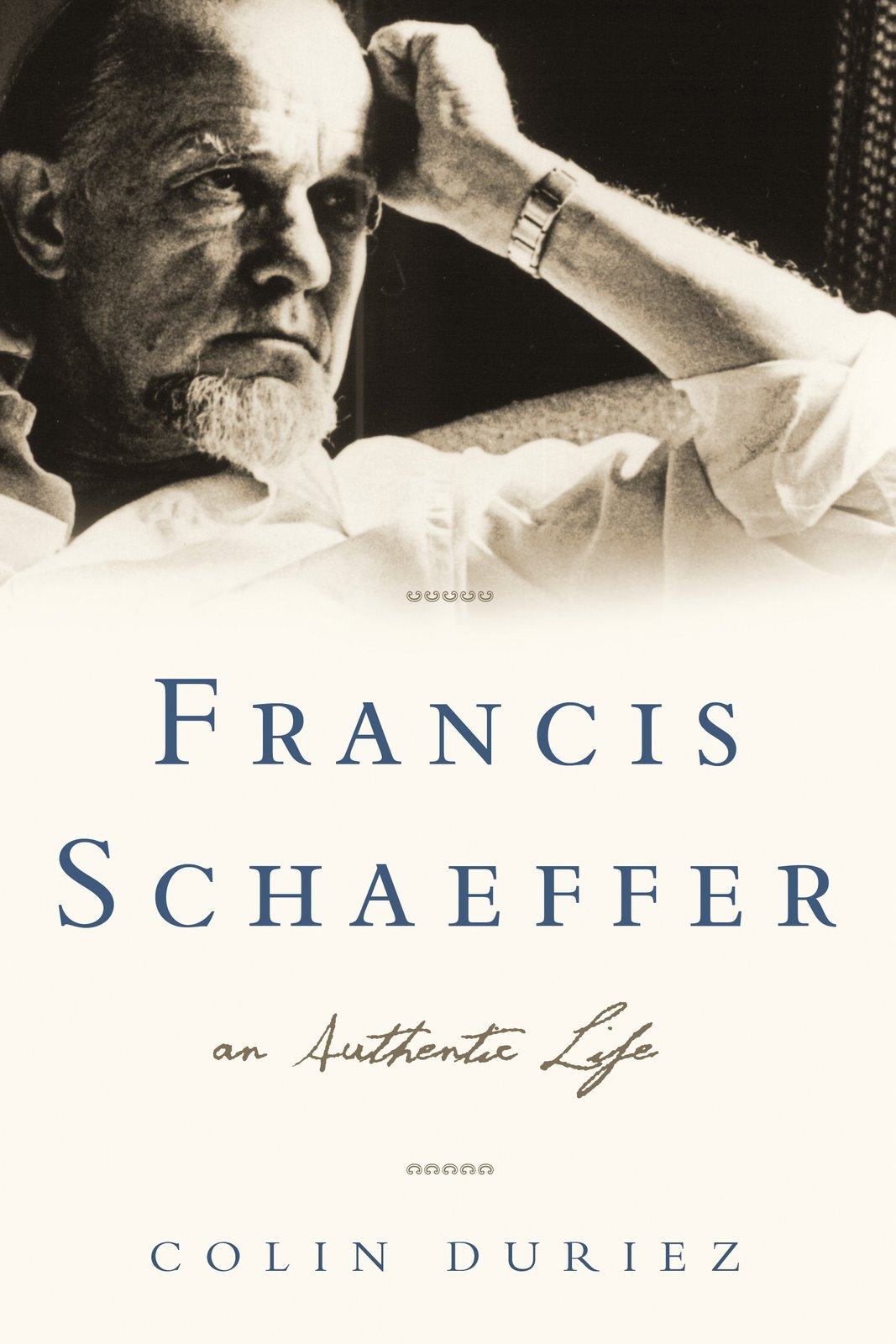
SANCTITY OF LIFE SATURDAY Congressman Jack Kemp introduced Francis Schaeffer to Washington insiders!!!!

Congressman Jack Kemp introduced Francis Schaeffer to Washington insiders!!!! This article below pointed this out and this video below shows Jack Kemp tracing the roots of the Conservative movement in the USA to the Bible.

Jack Kemp: An American Conservative Statesman

Published on Jul 30, 2013

Had there never been a Reagan Revolution, there might well have been a Kemp Revolution. Jack Kemp established himself as one of the conservative policy movement’s most articulate speakers and defenders of personal liberty and responsibility. The public first knew of Kemp for his exploits on the gridiron. Kemp played in all three major professional football leagues, the NFL, the AFL and the Canadian Football League. Schooled in supply-side economics, the second part of his life found Kemp serving nine terms in Congress and then as Housing Secretary under President George H.W. Bush, Kemp was a 1988 Republican candidate for President and he was the Republican 1996 nominee for Vice President. Kemp spoke to the Public Policy Foundation on October 20, 1993. Jack Kemp died May 2, 2009 and with his passing, the American conservative movement lost one of its most articulate statesmen.

_________________________________

Joe Carter|10:15 PM CT

Know Your Evangelicals: Francis Schaeffer

Name: Francis A. Schaeffer (1912-1984)

Why you should know him: Schaeffer was one of the most influential figures in American evangelicalism in the period between World War II and the mid-1980s.

Previous roles: Founder of L’Abri Fellowship International; Lecturer and author of eighteen books.

Education:
B.A., Hampden-Sydney College
B.Div. Faith Theological Seminary
Honorary D.Div., Highland College

Area of expertise/interest: Apologetics, philosophy, Western culture, abortion, neo-Calvinism

Books: The God Who is There (1968); Escape from Reason (1968); Death in the City (1969); The Church at the End of the Twentieth Century (1970); The Mark of a Christian (1970); Pollution and the Death of Man (1970); The Church Before the Watching World (1971); True Spirituality (1971); Back to Freedom and Dignity (1972); Basic Bible Studies (1972); Genesis in Space and Time (1972); He is There and He is Not Silent (1972); The New Super-Spirituality (1972); Art and the Bible (1973); Everybody Can Know (1973); No Little People (1974); Two Contents, Two Realities (1974); Joshua and the Biblical Flow of History (1975); No Final Conflict (1975); How Should We Then Live? (1976); Whatever Happened to the Human Race? (with C. Everett Koop) (1979); A Christian Manifesto (1981); The Great Evangelical Disaster (1983)

Online essays and articles:
A Christian Manifesto (A lecture based on the book of the same title.)
Francis Schaeffer’s Philosophy of History [PDF]
Schaeffer on Education

Biography and Assessment: In the late 1940’s, Schaeffer and his wife Edith moved to Switzerland as long-term missionaries. They initially began a program called “Children for Christ” and on weekends entertained groups of schoolgirls on ski holidays in their Swiss chalet. By 1955 the couple had set up their own independent ministry organization called L’Abri (“The Shelter”) in the mountain village of Huemoz. They began taking guests, and developed a regular weekend schedule that consisted of conversations about religion, philosophy, art, and culture. L’Abri became popular among student circles, and by 1957 the Schaeffers were hosting about 25 guests every weekend.

The European students that showed up at L’Abri were well-versed in the post-Enlightenment philosophers like Kierkegaard and Hegel and with the existentialist literature of Camus and Sartre. As historian Michael S. Hamilton notes,

These students tutored Francis in the details of modern post-Christian thought, while he observed its impact on their lives. They had been taught that human beings were the mere product of time and chance in a materialistic world. This left many of them unable to find any basis for distinctions between right and wrong nor meaning in the normal activities of human life. The young people’s self-destructive moral confusion, alienation from society, and sincere search for something better stirred the Schaeffers’ compassion. It made the cost of an open home worth bearing, and it compelled Francis into ever-deeper reflection on the trajectory of modern culture.

The popularity of L’Abri continued to increase and by 1960 even Time magazine was taking notice. Workers at the chalet began recording Schaeffer’s lectures on the philosophical meaning of modern theology and culture. The tapes quickly developed an international circulation prompting the evangelist to return to the states. In 1965 Schaeffer took his first speaking trip to the United States, giving a series of lectures in the Boston area. He then gave a series of talks at Wheaton College that were later published as The God Who Is There. Although he dressed like a Swiss farmer, wearing knickers and an alpine hiking outfit, the most unusual aspect about Schaeffer was the way in which he differed from other evangelicals in engaging with the broader culture. Hamilton points out,

At Wheaton College, students were fighting to show films like Bambi, while Francis was talking about the films of Bergman and Fellini. Administrators were censoring existential themes out of student publications, while Francis was discussing Camus, Sartre, and Heidegger. He quoted Dylan Thomas, knew the artwork of Salvador Dali, listened to the music of the Beatles and John Cage.

Over the next ten years Francis and Edith became increasingly influential figures within American evangelicalism. Francis published eighteen books and booklets, most of which came out of lectures and talks he had been giving since the 1950s, that sold over 2.5 million copies in the U.S.

Schaeffer often railed against the middle-class evangelical mindset that placed an emphasis on “personal peace and affluence” and became an intellectual hero to Christian counter-culture figures like Jack Sparks, founder of Berkeley’s Christian World Liberation Front, and Larry Norman, “poet laureate of the Jesus Revolution.” By the 1970’s, though, he had also begun to gain a hearing within what would later be viewed as the “religious right.” Congressman Jack Kemp introduced the Schaeffers to Washington insiders and an encounter with L’Abri student Michael Ford led to a private dinner in the Ford White House.

In 1974, Schaeffer’s son Franky, a budding filmmaker, designed a ten-part documentary film series intended as a Christian response to Kenneth Clark’s widely viewed Civilization series. The project, How Should We Then Live?, consisted of an 18-city tour that attracted tens of thousands of people and was viewed as a resounding success.

What set the film series apart was the focus on legalized abortion. By the late 1970s, Schaeffer began devoting his full attention to the issue and encouraged pediatric surgeon C. Everett Koop to collaborate on a five-part film series with accompanying book, action handbook, and international lecture tour. In Whatever Happened to the Human Race? , Schaeffer argued that secular humanism had led to the devaluation of human life while Koop presented testimony about the widespread practice of infanticide in hospitals and its links to abortion. Koop later wrote that his involvement in this project was his first step toward becoming President Reagan’s surgeon general.

Unlike his first series, Human Race failed to garner a large audience and even lost money in some of the locations it was screened. Undaunted, Schaeffer continued to focus on abortion, calling it the hinge issue for American society in his book A Christian Manifesto. The book inspired Jerry Falwell to take a stand against abortion and inspired Operation Rescue founder Randall Terry to start a new kind of abortion protest employing passive resistance techniques used in the civil-rights struggle.

In early 1984 he had just enough strength left from his battle with cancer to complete a 13-city tour lecturing on this theme. A month after the tour was complete, he died at his home in Rochester, Minnesota.

Schaeffer—who always claimed to be an evangelist and not a philosopher—was often criticized for the way his work oversimplified intellectual history and philosophy. Even his most ardent admirers admit that he made significant errors in detail and overly broad generalizations. His books, which were often edited together from lecture notes, often fail to provide a systematic coherence that would allow them to withstand greater scrutiny.

Michael Hamilton rightly acknowledges, though, that Schaeffer played a vital role in “stepping stone scholarship.” His work provided an opening to the intellectual depths of Christianity that had been sorely lacking in conservative Protestant Christianity. Schaeffer helped to restore the value of developing a Christian worldview and offered the intellectuals tools that evangelicals needed to properly engage with the secular culture. The effect of his legacy still reverberates through evangelicalism. His influence shaped such thinkers as Chuck Colson, Nancy Pearcey, Cal Thomas, Ron Sider, Harold O. J. Brown, Os Guinness, Thomas Morris, Clark Pinnock, Mark Noll, Doug Groothuis, Jim Sire, and Ronald Wells. Perhaps the best summation of the evangelist who was considered both a “missionary to intellectuals” and a “guru to fundamentalists” is the one provided by Albert Mohler:

Schaeffer served as a prophet of cultural engagement during an age of rebellion among America’s youth, and he shaped the thinking of an entire generation of theologically-minded Christian young people.

(Primary source: Michael Hamilton, The Dissatisfaction of Francis Schaeffer )

[Note: If you find a story our community should know about, please send the link to joe.carter *at* thegospelcoalition.org.]

Joe Carter is an editor for The Gospel Coalition and the co-author of How to Argue Like Jesus: Learning Persuasion from History’s Greatest Communicator. You can follow him on Twitter.

Francis Schaeffer


______________________

In the film series “WHATEVER HAPPENED TO THE HUMAN RACE?” the arguments are presented  against abortion (Episode 1),  infanticide (Episode 2),   euthanasia (Episode 3), and then there is a discussion of the Christian versus Humanist worldview concerning the issue of “the basis for human dignity” in Episode 4 and then in the last episode a close look at the truth claims of the Bible.

Francis Schaeffer Whatever Happened to the Human Race (Episode 1) ABORTION


Part 1 on abortion runs from 00:00 to 39:50, Part 2 on Infanticide runs from 39:50 to 1:21:30, Part 3 on Youth Euthanasia runs from 1:21:30 to 1:45:40, Part 4 on the basis of human dignity runs from 1:45:40 to 2:24:45 and Part 5 on the basis of truth runs from 2:24:45 to 3:00:04

Francis Schaeffer “BASIS FOR HUMAN DIGNITY” Whatever…HTTHR

Dr. Francis schaeffer – The flow of Materialism(from Part 4 of Whatever happened to human race?)

Dr. Francis Schaeffer – The Biblical flow of Truth & History (intro)

Francis Schaeffer – The Biblical Flow of History & Truth (1)

Dr. Francis Schaeffer – The Biblical Flow of Truth & History (part 2)

Related posts:

Francis Schaeffer’s prayer for us in USA

 Francis Schaeffer: “Whatever Happened to the Human Race” (Episode 1) ABORTION OF THE HUMAN RACE Published on Oct 6, 2012 by AdamMetropolis The 45 minute video above is from the film series created from Francis Schaeffer’s book “Whatever Happened to the Human Race?” with Dr. C. Everett Koop. This book  really helped develop my political views […]

Francis Schaeffer’s “How should we then live?” Video and outline of episode 10 “Final Choices” (Schaeffer Sundays)

E P I S O D E 1 0   Dr. Francis Schaeffer – Episode X – Final Choices 27 min FINAL CHOICES I. Authoritarianism the Only Humanistic Social Option One man or an elite giving authoritative arbitrary absolutes. A. Society is sole absolute in absence of other absolutes. B. But society has to be […]

Francis Schaeffer’s “How should we then live?” Video and outline of episode 9 “The Age of Personal Peace and Affluence” (Schaeffer Sundays)

E P I S O D E 9 Dr. Francis Schaeffer – Episode IX – The Age of Personal Peace and Affluence 27 min T h e Age of Personal Peace and Afflunce I. By the Early 1960s People Were Bombarded From Every Side by Modern Man’s Humanistic Thought II. Modern Form of Humanistic Thought Leads […]

Francis Schaeffer’s “How should we then live?” Video and outline of episode 8 “The Age of Fragmentation” (Schaeffer Sundays)

E P I S O D E 8 Dr. Francis Schaeffer – Episode VIII – The Age of Fragmentation 27 min I saw this film series in 1979 and it had a major impact on me. T h e Age of FRAGMENTATION I. Art As a Vehicle Of Modern Thought A. Impressionism (Monet, Renoir, Pissarro, Sisley, […]

Francis Schaeffer’s “How should we then live?” Video and outline of episode 7 “The Age of Non-Reason” (Schaeffer Sundays)

E P I S O D E 7 Dr. Francis Schaeffer – Episode VII – The Age of Non Reason I am thrilled to get this film series with you. I saw it first in 1979 and it had such a big impact on me. Today’s episode is where we see modern humanist man act […]

Francis Schaeffer’s “How should we then live?” Video and outline of episode 6 “The Scientific Age” (Schaeffer Sundays)

E P I S O D E 6 How Should We Then Live 6#1 Uploaded by NoMirrorHDDHrorriMoN on Oct 3, 2011 How Should We Then Live? Episode 6 of 12 ________ I am sharing with you a film series that I saw in 1979. In this film Francis Schaeffer asserted that was a shift in […]

Francis Schaeffer’s “How should we then live?” Video and outline of episode 5 “The Revolutionary Age” (Schaeffer Sundays)

E P I S O D E 5 How Should We Then Live? Episode 5: The Revolutionary Age I was impacted by this film series by Francis Schaeffer back in the 1970′s and I wanted to share it with you. Francis Schaeffer noted, “Reformation Did Not Bring Perfection. But gradually on basis of biblical teaching there […]

Francis Schaeffer’s “How should we then live?” Video and outline of episode 4 “The Reformation” (Schaeffer Sundays)

Dr. Francis Schaeffer – Episode IV – The Reformation 27 min I was impacted by this film series by Francis Schaeffer back in the 1970′s and I wanted to share it with you. Schaeffer makes three key points concerning the Reformation: “1. Erasmian Christian humanism rejected by Farel. 2. Bible gives needed answers not only as to […]

“Schaeffer Sundays” Francis Schaeffer’s “How should we then live?” Video and outline of episode 3 “The Renaissance”

Francis Schaeffer’s “How should we then live?” Video and outline of episode 3 “The Renaissance” Francis Schaeffer: “How Should We Then Live?” (Episode 3) THE RENAISSANCE I was impacted by this film series by Francis Schaeffer back in the 1970′s and I wanted to share it with you. Schaeffer really shows why we have so […]

Francis Schaeffer’s “How should we then live?” Video and outline of episode 2 “The Middle Ages” (Schaeffer Sundays)

  Francis Schaeffer: “How Should We Then Live?” (Episode 2) THE MIDDLE AGES I was impacted by this film series by Francis Schaeffer back in the 1970′s and I wanted to share it with you. Schaeffer points out that during this time period unfortunately we have the “Church’s deviation from early church’s teaching in regard […]

Francis Schaeffer’s “How should we then live?” Video and outline of episode 1 “The Roman Age” (Schaeffer Sundays)

Francis Schaeffer: “How Should We Then Live?” (Episode 1) THE ROMAN AGE   Today I am starting a series that really had a big impact on my life back in the 1970′s when I first saw it. There are ten parts and today is the first. Francis Schaeffer takes a look at Rome and why […]

Francis Schaeffer: “Whatever Happened to the Human Race” (Episode 5) TRUTH AND HISTORY

Francis Schaeffer: “Whatever Happened to the Human Race” (Episode 5) TRUTH AND HISTORY Published on Oct 7, 2012 by AdamMetropolis This crucial series is narrated by the late Dr. Francis Schaeffer and former Surgeon General Dr. C. Everett Koop. Today, choices are being made that undermine human rights at their most basic level. Practices once […]

Francis Schaeffer: “Whatever Happened to the Human Race” (Episode 4) THE BASIS FOR HUMAN DIGNITY

The opening song at the beginning of this episode is very insightful. Francis Schaeffer: “Whatever Happened to the Human Race” (Episode 4) THE BASIS FOR HUMAN DIGNITY Published on Oct 7, 2012 by AdamMetropolis This crucial series is narrated by the late Dr. Francis Schaeffer and former Surgeon General Dr. C. Everett Koop. Today, choices […]

Francis Schaeffer: “Whatever Happened to the Human Race” (Episode 3) DEATH BY SOMEONE’S CHOICE

Francis Schaeffer: “Whatever Happened to the Human Race” (Episode 3) DEATH BY SOMEONE’S CHOICE Published on Oct 6, 2012 by AdamMetropolis This crucial series is narrated by the late Dr. Francis Schaeffer and former Surgeon General Dr. C. Everett Koop. Today, choices are being made that undermine human rights at their most basic level. Practices […]

Francis Schaeffer: “Whatever Happened to the Human Race?” (Episode 2) SLAUGHTER OF THE INNOCENTS

Francis Schaeffer: “Whatever Happened to the Human Race?” (Episode 2) SLAUGHTER OF THE INNOCENTS Published on Oct 6, 2012 by AdamMetropolis This crucial series is narrated by the late Dr. Francis Schaeffer and former Surgeon General Dr. C. Everett Koop. Today, choices are being made that undermine human rights at their most basic level. Practices […]

Francis Schaeffer: “Whatever Happened to the Human Race” (Episode 1) ABORTION OF THE HUMAN RACE

It is not possible to know where the pro-life evangelicals are coming from unless you look at the work of the person who inspired them the most. That person was Francis Schaeffer.  I do care about economic issues but the pro-life issue is the most important to me. Several years ago Adrian Rogers (past president of […]

The following essay explores the role that Francis Schaeffer played in the rise of the pro-life movement. It examines the place of How Should We Then Live?, Whatever Happened to the Human Race?, and A Christian Manifesto in that process.

This essay below is worth the read. Schaeffer, Francis – “Francis Schaeffer and the Pro-Life Movement” [How Should We Then Live?, Whatever Happened to the Human Race?, A Christian Manifesto] Editor note: <p> </p> [The following essay explores the role that Francis Schaeffer played in the rise of the pro-life movement.  It examines the place of […]

Who was Francis Schaeffer? by Udo Middelmann

Great article on Schaeffer. Who was Dr. Francis A. Schaeffer? By Francis Schaeffer The unique contribution of Dr. Francis Schaeffer on a whole generation was the ability to communicate the truth of historic Biblical Christianity in a way that combined intellectual integrity with practical, loving care. This grew out of his extensive understanding of the Bible […]

.

Taking on Ark Times bloggers about abortion on the 40th anniversary date of Roe v. Wade (Part 7) “Poverty not good reason for abortion, why not give up for adoption?”

Dr Richard Land discusses abortion and slavery – 10/14/2004 – part 3 The best pro-life film I have ever seen below by Francis Schaeffer and Dr. C. Everett Koop “Whatever happened to the human race?” Over the years I have taken on the Ark Times liberal bloggers over and over and over concerning the issue […]

Taking on Ark Times bloggers about abortion on the 40th anniversary date of Roe v. Wade (Part 6) For many pro-abortionists ” …the problem is not determining when actual human life begins, but when the value of that life begins to out weigh other considerations”

The best pro-life film I have ever seen below by Francis Schaeffer and Dr. C. Everett Koop “Whatever happened to the human race?” Francis Schaeffer pictured above._________ The 45 minute video above is from the film series created from Francis Schaeffer’s book “Whatever Happened to the Human Race?” with Dr. C. Everett Koop. This book  really […]

Taking on Ark Times bloggers about abortion on the 40th anniversary date of Roe v. Wade (Part 5) “Slavery issue compared to rights of unborn child”

The best pro-life film I have ever seen below by Francis Schaeffer and Dr. C. Everett Koop “Whatever happened to the human race?” Over the years I have taken on the Ark Times liberal bloggers over and over and over concerning the issue of abortion. I asked over and over again for one liberal blogger […]

Taking on Ark Times bloggers about abortion on the 40th anniversary date of Roe v. Wade (Part 4) “How do pro-lifers react to the movie THE CIDER HOUSE RULES?”

Francis Schaeffer pictured above._________ The best pro-life film I have ever seen below by Francis Schaeffer and Dr. C. Everett Koop “Whatever happened to the human race?” Over the years I have taken on the Ark Times liberal bloggers over and over and over concerning the issue of abortion. I asked over and over again […]

Taking on Ark Times bloggers about abortion on the 40th anniversary date of Roe v. Wade (Part 3) “What should be the punishment for abortion doctors?”

The best pro-life film I have ever seen below by Francis Schaeffer and Dr. C. Everett Koop “Whatever happened to the human race?” On 1-24-13 I took on the child abuse argument put forth by Ark Times Blogger “Deathbyinches,” and the day before I pointed out that because the unborn baby has all the genetic code […]

Taking on Ark Times bloggers about abortion on the 40th anniversary date of Roe v. Wade (Part 2) “The pro-abortion child abuse argument destroyed here”

PHOTO BY STATON BREIDENTHAL from Pro-life march in Little Rock on 1-20-13. Tim Tebow on pro-life super bowl commercial. Over the years I have taken on the Ark Times liberal bloggers over and over and over concerning the issue of abortion. Here is another encounter below. On January 22, 2013 (on the 40th anniversary of the […]

Taking on Ark Times bloggers about abortion on the 40th anniversary date of Roe v. Wade (Part 1)

Dr Richard Land discusses abortion and slavery – 10/14/2004 – part 3 The best pro-life film I have ever seen below by Francis Schaeffer and Dr. C. Everett Koop “Whatever happened to the human race?” Over the years I have taken on the Ark Times liberal bloggers over and over and over concerning the issue […]

By Everette Hatcher III | Posted in Arkansas Times, Francis Schaeffer, Prolife | Edit | Comments (0)

Open letter to President Obama (Part 609) Pro-life Atheist Nat Hentoff on Dr. Kermit Gosnell and President Obama

Open letter to President Obama (Part 609)

(Emailed to White House on 6-5-13.)

President Obama c/o The White House 1600 Pennsylvania Avenue NW Washington, DC 20500

Dear Mr. President,

I know that you receive 20,000 letters a day and that you actually read 10 of them every day. I really do respect you for trying to get a pulse on what is going on out here. I know that you don’t agree with my pro-life views but I wanted to challenge you as a fellow Christian to re-examine your pro-choice view. Although we are both Christians and have the Bible as the basis for our moral views, I did want you to take a close look at the views of the pro-life atheist Nat Hentoff too.  Hentoff became convinced of the pro-life view because of secular evidence that shows that the unborn child is human. I would ask you to consider his evidence and then of course reverse your views on abortion.

___________________

Many in the world today are taking a long look at the abortion industry because of the May 14, 2013 guilty verdict and life term penalty handed down by a jury (which included 9 out of 12 pro-choice jurors)  to Dr. Kermit Gosnell. During this time of reflection I wanted to put forth some of the pro-life’s best arguments.

Nat Hentoff is an atheist, but he became a pro-life activist because of the scientific evidence that shows that the unborn child is a distinct and separate human being and even has a separate DNA. His perspective is a very intriguing one that I thought you would be interested in. I have shared before many   cases (Bernard Nathanson, Donald Trump, Paul Greenberg, Kathy Ireland)    when other high profile pro-choice leaders have changed their views and this is just another case like those. I have contacted the White House over and over concerning this issue and have even received responses. I am hopeful that people will stop and look even in a secular way (if they are not believers) at this abortion debate and see that the unborn child is deserving of our protection.That is why the writings of Nat Hentoff of the Cato Institute are so crucial.

In the film series “WHATEVER HAPPENED TO THE HUMAN RACE?” the arguments are presented  against abortion (Episode 1),  infanticide (Episode 2),   euthanasia (Episode 3), and then there is a discussion of the Christian versus Humanist worldview concerning the issue of “the basis for human dignity” in Episode 4 and then in the last episode a close look at the truth claims of the Bible.

Francis Schaeffer

__________________________

I truly believe that many of the problems we have today in the USA are due to the advancement of humanism in the last few decades in our society. Ronald Reagan appointed the evangelical Dr. C. Everett Koop to the position of Surgeon General in his administration. He partnered with Dr. Francis Schaeffer in making the video below. It is very valuable information for Christians to have.  Actually I have included a video below that includes comments from him on this subject.

Francis Schaeffer Whatever Happened to the Human Race (Episode 1) ABORTION

_____________________________________

Dr. Francis schaeffer – The flow of Materialism(from Part 4 of Whatever happened to human race?)

Dr. Francis Schaeffer – The Biblical flow of Truth & History (intro)

Francis Schaeffer – The Biblical Flow of History & Truth (1)

Dr. Francis Schaeffer – The Biblical Flow of Truth & History (part 2)

__________

________________

HENTOFF: Why Obama is silent on Gosnell case

  • Posted: Thursday, 05/23/13 09:14 am

Dr. Kermit Gosnell is escorted to a waiting police van upon leaving the Criminal Justice Center in Philadelphia, Monday, May 13, 2013, after being convicted of first-degree murder in the deaths of three babies who were delivered alive and then killed with scissors at his clinic. (AP Photo/Philadelphia Daily News, Yong Kim)
  • CONTRIBUTE
    • Story Ideas
    • Send Corrections

By Nat Hentoff
After reading ghastly headlines about recently convicted Philadelphia abortion doctor Kermit Gosnell, such as “Gosnell Jury Hears About Baby Surviving Abortion in Toilet” (Steven Ertelt, lifenews.com, May 9), there was this sudden message: “White House: No Comment on Gosnell ‘Beheading’ Babies in Abortions” (Steven Ertelt, LifeNews.com, April 15).

Why was Barack Obama silent about this “house of horrors”? Maybe because, as I’ve previously reported, he didn’t want it known that as a state senator in Illinois, he had persistently opposed a bill, the Born-Alive Infant Protection Act, which would have provided medical care for babies who survive botched abortions.

He had voted “No” on the bill in March 2001 and “Present” later that same month. Explaining Obama’s vote, WorldNetDaily reports, “in the Illinois senate, voting ‘Present’ is the equivalent of voting ‘No,’ because a bill must have a majority counting only ‘Yes’ votes to pass” (“Gosnell Conviction a Setback for Obama,” May 13).

Jill Stanek, an Illinois nurse and pro-life advocate whom I had previously interviewed, testified in 2003 before the Illinois Senate Health and Human Services Committee on the Born-Alive Infant Protection Act. She told of a colleague who “accidentally threw a live aborted baby in the garbage who had been left on the counter of the Soiled Utility Room wrapped in a disposable towel.

“When the associate realized what she had done, she started going through the trash to find the baby, and the baby fell out of the towel and on to the floor.”

As president, Obama has steadfastly supported late-term abortions. But he doesn’t need to worry about the public being reminded of his rejection of the Born-Alive Infant Protection Act. That’s because of the unyielding media attention that’s been concentrated on his Justice Department’s invasions of the Associated Press’ First Amendment freedoms, as well as the Internal Revenue Service’s questioning of citizens’ political groups, focusing, for example, on those with “patriot” and “tea party” in their names. The IRS was also curious to know if any of these groups had publicly opposed specific policies, like Obamacare.

Of what country does Obama think he’s president?

As for Dr. Kermit Gosnell, his case is done. In the May 15 Wall Street Journal, Peter Loftus reports that he has been sentenced “to spend the rest of his life in prison for the murders of babies who were born alive at his Philadelphia abortion clinic, avoiding a potential death penalty in a deal with city prosecutors.”

But the horrifying details of his case have startlingly educated many Americans, including this one, about the extent of other “houses of horror” throughout this nation.

The Washington Times’ Jeanneane Maxon writes: “Gosnell’s clinic is not the only ‘house of horrors’ in our nation. In recent years, 15 states have investigated substandard conditions and providers” (“Why Big Abortion shares Gosnell’s guilt,” May 15).

For one of many examples, Helen Pow reveals in the Daily Mail that “Houston doctor Douglas Karpen is accused by four former employees of delivering live fetuses during third-trimester abortions and killing them by either snipping their spinal cord (the Gosnell method), stabbing a surgical instrument into their heads or ‘twisting their heads off their necks with his own bare hands’” (“Second ‘house of horrors’ abortion clinic where doctor ‘twisted heads off fetus’ necks with his bare hands’ is investigated in Texas,” May 16).

Pow, citing anti-abortion group Life Dynamics’ video interview with one of the doctor’s former employees, writes that in these latter murders, the fetus coming completely out “was still alive because it was still moving and you could see the stomach breathing.”

The Texas Department of State Health Services is investigating.

As for Gosnell’s “house of horrors,” we now know that his “abortion center was inspected only after a federal drug raid in 2010. It was the first time the facility had been inspected in 17 years because state officials ignored complaints and failed to visit Gosnell’s Women’s Medical Society for years” (“Kermit Gosnell Jury Hung on Two Counts, Doesn’t Say Which Ones,” Steven Ertelt, LifeNews.com, May 13).

While some states didn’t need Gosnell to be awakened to the need for strenuous oversight of abortions, what about the many others that do? As WorldNetDaily senior correspondent and author Jerome Corsi insists:

“After the Gosnell conviction, no state health official can rest comfortably that abortion doctors are acting responsibly, unless the state has a history of rigorous health standards applied by abortion clinics operating in the state.”

This includes, he adds, making sure restrictions on late-term abortions are actually being followed.

Because I am among the many pro-life and pro-choice Americans mourning those babies who were assassinated by Dr. Kermit Gosnell, I will end with this:

Notorious late-term abortionist LeRoy Carhart “was awarded the 2009 William K. Rashbaum, M.D., Abortion Provider Award by Physicians for Reproductive Health … NARAL Pro-Choice America (which no longer stands for National Abortion Rights Action League, given that some people might think that name icky) gave him its Hero Award that same year” (“Kermit Gosnell Is Not an Outlier,” Shannen W. Coffin, nationalreview.com, April 12).

Coffin contiues: “There’s very little difference between what Carhart does on a regular basis and what Kermit Gosnell (stood) on trial for.”

When is NARAL Pro-Choice America going to demand the return of that Hero Award?

I’m a pro-lifer who agrees with Jerome Corsi: “Now that murder charges have been found to apply to abortion practices in Pennsylvania, no state should assume a health department trying to be politically correct can be assumed in the future to be free of criminal liabilities.”

Including murder.
(Nat Hentoff is a nationally renowned authority on the First Amendment and the Bill of Rights. He is a member of the Reporters Committee for Freedom of the Press, and the Cato Institute, where he is a senior fellow.)

(EDITORS: For editorial questions, please contact Gillian Titus at gtitus amuniversal.com)

_____________

Political Cartoons by Glenn McCoy

_____________

Tony Perkins: Gosnell Trial – FOX News

Published on May 13, 2013

Tony Perkins: Gosnell Trial – FOX News

______________________

Thank you so much for your time. I know how valuable it is. I also appreciate the fine family that you have and your commitment as a father and a husband. Now after presenting the secular approach of Nat Hentoff I wanted to make some comments concerning our shared Christian faith.  I  respect you for putting your faith in Christ for your eternal life. I am pleading to you on the basis of the Bible to please review your religious views concerning abortion. It was the Bible that caused the abolition movement of the 1800’s and it also was the basis for Martin Luther King’s movement for civil rights and it also is the basis for recognizing the unborn children.

Sincerely,

Everette Hatcher III, 13900 Cottontail Lane, Alexander, AR 72002, ph 501-920-5733, lowcostsqueegees@yahoo.com

Related posts:

Al Mohler on Kermit Gosnell’s abortion practice

Francis Schaeffer: “Whatever Happened to the Human Race” (Episode 1) ABORTION OF THE HUMAN RACE Published on Oct 6, 2012 by AdamMetropolis ________________ Picture of Francis Schaeffer and his wife Edith from the 1930′s above. I was sad to read about Edith passing away on Easter weekend in 2013. I wanted to pass along this fine […]

Taking on Ark Times Bloggers on various issues Part U “Do men have a say in the abortion debate?” (includes the film SLAUGHTER OF THE INNOCENTS and editorial cartoon)

I have gone back and forth and back and forth with many liberals on the Arkansas Times Blog on many issues such as abortion, human rights, welfare, poverty, gun control  and issues dealing with popular culture. Here is another exchange I had with them a while back. My username at the Ark Times Blog is Saline […]

Taking on Ark Times Bloggers on various issues Part T “Abortion is a dirty business” (includes video “Truth and History” and editorial cartoon)

I have gone back and forth and back and forth with many liberals on the Arkansas Times Blog on many issues such as abortion, human rights, welfare, poverty, gun control  and issues dealing with popular culture. Here is another exchange I had with them a while back. My username at the Ark Times Blog is Saline […]

“Sanctity of Life Saturday” Abortion supporters lying in order to further their clause? Window to the Womb (includes video ABORTION OF THE HUMAN RACE)

It is truly sad to me that liberals will lie in order to attack good Christian people like state senator Jason Rapert of Conway, Arkansas because he headed a group of pro-life senators that got a pro-life bill through the Arkansas State Senate the last week of January in 2013. I have gone back and […]

Taking on Ark Times Bloggers on various issues Part D “If you can’t afford a child can you abort?”Francis Schaeffer Quotes part 4 includes the film ABORTION OF THE HUMAN RACE) (editorial cartoon)

I have gone back and forth and back and forth with many liberals on the Arkansas Times Blog on many issues such as abortion, human rights, welfare, poverty, gun control  and issues dealing with popular culture. Here is another exchange I had with them a while back. My username at the Ark Times Blog is Saline […]

Taking on Ark Times Bloggers on various issues Part C “Abortion” (Francis Schaeffer Quotes part 3 includes the film SLAUGHTER OF THE INNOCENTS) (editorial cartoon)

I have gone back and forth and back and forth with many liberals on the Arkansas Times Blog on many issues such as abortion, human rights, welfare, poverty, gun control  and issues dealing with popular culture. Here is another exchange I had with them a while back. My username at the Ark Times Blog is Saline […]

Taking on Ark Times Bloggers on various issues Part B “Gendercide” (Francis Schaeffer Quotes Part 2 includes the film ABORTION OF THE HUMAN RACE) (editorial cartoon)

I have gone back and forth and back and forth with many liberals on the Arkansas Times Blog on many issues such as abortion, human rights, welfare, poverty, gun control  and issues dealing with popular culture. Here is another exchange I had with them a while back. My username at the Ark Times Blog is Saline […]

SANCTITY OF LIFE SATURDAY “AngryOldWoman” blogger argues that she has no regrets about past abortion

Sometimes you can see evidences in someone’s life of how content they really are. I saw  something like that on 2-8-13 when I confronted a blogger that goes by the name “AngryOldWoman” on the Arkansas Times Blog. See below. Leadership Crisis in America Published on Jul 11, 2012 Picture of Adrian Rogers above from 1970′s […]

“Sanctity of Life Saturday” The Church Awakens: Whatever Happened to the Human Race? (includes the video ABORTION OF THE HUMAN RACE)

In the film series “WHATEVER HAPPENED TO THE HUMAN RACE?” the arguments are presented  against abortion (Episode 1),  infanticide (Episode 2),   euthenasia (Episode 3), and then there is a discussion of the Christian versus Humanist worldview concerning the issue of “the basis for human dignity” in Episode 4 and then in the last episode a close […]

Taking on Ark Times Bloggers on various issues Part H “Are humans special?” includes film ABORTION OF THE HUMAN RACE) Reagan: ” To diminish the value of one category of human life is to diminish us all”

I have gone back and forth and back and forth with many liberals on the Arkansas Times Blog on many issues such as abortion, human rights, welfare, poverty, gun control  and issues dealing with popular culture. Here is another exchange I had with them a while back. My username at the Ark Times Blog is Saline […]

Taking on Ark Times Bloggers on various issues Part G “How do moral nonabsolutists come up with what is right?” includes the film “ABORTION OF THE HUMAN RACE”)

I have gone back and forth and back and forth with many liberals on the Arkansas Times Blog on many issues such as abortion, human rights, welfare, poverty, gun control  and issues dealing with popular culture. Here is another exchange I had with them a while back. My username at the Ark Times Blog is Saline […]

Taking on Ark Times Bloggers on various issues Part E “Moral absolutes and abortion” Francis Schaeffer Quotes part 5(includes the film SLAUGHTER OF THE INNOCENTS) (editorial cartoon)

I have gone back and forth and back and forth with many liberals on the Arkansas Times Blog on many issues such as abortion, human rights, welfare, poverty, gun control  and issues dealing with popular culture. Here is another exchange I had with them a while back. My username at the Ark Times Blog is Saline […]

Francis Schaeffer’s “How should we then live?” Video and outline of episode 10 “Final Choices” (Schaeffer Sundays)

E P I S O D E 1 0   Dr. Francis Schaeffer – Episode X – Final Choices 27 min FINAL CHOICES I. Authoritarianism the Only Humanistic Social Option One man or an elite giving authoritative arbitrary absolutes. A. Society is sole absolute in absence of other absolutes. B. But society has to be […]

Francis Schaeffer’s “How should we then live?” Video and outline of episode 9 “The Age of Personal Peace and Affluence” (Schaeffer Sundays)

E P I S O D E 9 Dr. Francis Schaeffer – Episode IX – The Age of Personal Peace and Affluence 27 min T h e Age of Personal Peace and Afflunce I. By the Early 1960s People Were Bombarded From Every Side by Modern Man’s Humanistic Thought II. Modern Form of Humanistic Thought Leads […]

Francis Schaeffer’s “How should we then live?” Video and outline of episode 8 “The Age of Fragmentation” (Schaeffer Sundays)

E P I S O D E 8 Dr. Francis Schaeffer – Episode VIII – The Age of Fragmentation 27 min I saw this film series in 1979 and it had a major impact on me. T h e Age of FRAGMENTATION I. Art As a Vehicle Of Modern Thought A. Impressionism (Monet, Renoir, Pissarro, Sisley, […]

Francis Schaeffer’s “How should we then live?” Video and outline of episode 7 “The Age of Non-Reason” (Schaeffer Sundays)

E P I S O D E 7 Dr. Francis Schaeffer – Episode VII – The Age of Non Reason I am thrilled to get this film series with you. I saw it first in 1979 and it had such a big impact on me. Today’s episode is where we see modern humanist man act […]

Francis Schaeffer’s “How should we then live?” Video and outline of episode 6 “The Scientific Age” (Schaeffer Sundays)

E P I S O D E 6 How Should We Then Live 6#1 Uploaded by NoMirrorHDDHrorriMoN on Oct 3, 2011 How Should We Then Live? Episode 6 of 12 ________ I am sharing with you a film series that I saw in 1979. In this film Francis Schaeffer asserted that was a shift in […]

Francis Schaeffer’s “How should we then live?” Video and outline of episode 5 “The Revolutionary Age” (Schaeffer Sundays)

E P I S O D E 5 How Should We Then Live? Episode 5: The Revolutionary Age I was impacted by this film series by Francis Schaeffer back in the 1970′s and I wanted to share it with you. Francis Schaeffer noted, “Reformation Did Not Bring Perfection. But gradually on basis of biblical teaching there […]

Francis Schaeffer’s “How should we then live?” Video and outline of episode 4 “The Reformation” (Schaeffer Sundays)

Dr. Francis Schaeffer – Episode IV – The Reformation 27 min I was impacted by this film series by Francis Schaeffer back in the 1970′s and I wanted to share it with you. Schaeffer makes three key points concerning the Reformation: “1. Erasmian Christian humanism rejected by Farel. 2. Bible gives needed answers not only as to […]

“Schaeffer Sundays” Francis Schaeffer’s “How should we then live?” Video and outline of episode 3 “The Renaissance”

Francis Schaeffer’s “How should we then live?” Video and outline of episode 3 “The Renaissance” Francis Schaeffer: “How Should We Then Live?” (Episode 3) THE RENAISSANCE I was impacted by this film series by Francis Schaeffer back in the 1970′s and I wanted to share it with you. Schaeffer really shows why we have so […]

Francis Schaeffer’s “How should we then live?” Video and outline of episode 2 “The Middle Ages” (Schaeffer Sundays)

  Francis Schaeffer: “How Should We Then Live?” (Episode 2) THE MIDDLE AGES I was impacted by this film series by Francis Schaeffer back in the 1970′s and I wanted to share it with you. Schaeffer points out that during this time period unfortunately we have the “Church’s deviation from early church’s teaching in regard […]

Francis Schaeffer’s “How should we then live?” Video and outline of episode 1 “The Roman Age” (Schaeffer Sundays)

Francis Schaeffer: “How Should We Then Live?” (Episode 1) THE ROMAN AGE   Today I am starting a series that really had a big impact on my life back in the 1970′s when I first saw it. There are ten parts and today is the first. Francis Schaeffer takes a look at Rome and why […]

By Everette Hatcher III | Posted in Francis Schaeffer | Edit | Comments (0)

“Friedman Friday” Milton Friedman – The Proper Role of Government

Milton Friedman – The Proper Role of Government

Uploaded on Oct 8, 2010

Professor Friedman lectures on the proper role of government in a free society

Here are the proper functions of government according to Milton Friedman:

Friedman states that the basic essential functions of government are to: (1) to defend the nation from coercion from the outside and to defend individuals from coercion by others within the country; (2) to enable the free market by establishing rules for exchange and by providing the medium of exchange; and (3) to respond to neighborhood effects. He says that the government should do only what markets cannot do and should enforce the “rules of the game.” Specifically, the government should maintain law, order, and policy to prevent coercion; preserve the peace and provide for national defense; adjudicate disputes and enforce contracts voluntarily entered into; define the meaning of property rights and provide the means for modifying them and the other “rules of the game”; provide a monetary framework; foster competitive markets and overcome technical monopolies; and address neighborhood effects which are actions affecting others (e.g., pollution) where it is not feasible to charge or reward them. Friedman explains that where the actions of one person affect another, and where the range and value of the effects can be controlled and determined, those involved should pay the price or receive the benefits or compensation for the actions.

Related posts:

“Friedman Friday” Milton Friedman – Power of Choice (Biography) Part 3

Milton Friedman – Power of Choice (Biography) Part 3 Published on May 21, 2012 by BasicEconomics Tribute to Milton Friedman English Pages, 8. 9. 2008 Dear colleagues, dear friends, (1) It is a great honor for me to be asked to say a few words to this distinguished and very knowledgeable audience about one of our greatest […]

“Friedman Friday” Milton Friedman – Power of Choice (Biography) Part 2

Milton Friedman – Power of Choice (Biography) Part 2 Published on May 21, 2012 by BasicEconomics My Tribute to Milton Friedman: The Little Giant of Free Market Economics By: admin- 11/17/2006 09:49 AM RESIZE: AAA  Milton Friedman, the intellectual architect of the free-market reforms of the post-World War II era, was a dear friend. I […]

“Friedman Friday” Milton Friedman – Power of Choice – Biography (Part 1)

Milton Friedman – Power of Choice – Biography (Part 1) Published on May 20, 2012 by BasicEconomics   David R. Henderson The Pursuit of Happiness ~ Milton Friedman: A Personal Tribute May 2007 • Volume: 57 • Issue: 4 David Henderson (davidrhenderson1950@gmail.com) is a research fellow with the Hoover Institution and an economics professor at […]

Milton Friedman’s Chicago Boys started the Chilean Miracle and it is still helping ordinary people today!!!

Milton Friedman and Chile – The Power of Choice Uploaded on May 13, 2011 In this excerpt from Free To Choose Network’s “The Power of Choice (2006)”, we set the record straight on Milton Friedman’s dealings with Chile — including training the Chicago Boys and his meeting with Augusto Pinochet. Was the tremendous prosperity unleashed […]

Margaret Thatcher admired Milton Friedman

RARE Friedman Footage – On Keys to Reagan and Thatcher’s Success Margaret Thatcher and Milton Friedman were two of my heroes. Thatcher praises Friedman, her freedom fighter By George Jones, Political Editor 12:01AM GMT 17 Nov 2006 A tireless champion of the free market Let’s not get misty eyed over the Friedman legacy Milton Friedman, […]

Milton Friedman and Chile an update

Milton Friedman was a great economist and a fine speaker. ___________________ I have written before about Milton Friedman’s influence on the economy of Chile. Now I saw this fine article below from http://www.heritage.org  and below that article I have included an article from the Wall Street Journal that talks about Milton Friedman’s influence on Chile. I […]

“Friedman Friday” Milton Friedman explains negative income tax to William F. Buckley in 1968

December 06, 2011 03:54 PM Milton Friedman Explains The Negative Income Tax – 1968 0 comments By Gordonskene enlarge Milton Friedman and friends.DOWNLOADS: 36 PLAYS: 35 Embed   The age-old question of Taxes. In the early 1960′s Economist Milton Friedman adopted an idea hatched in England in the 1950′s regarding a Negative Income Tax, to […]

Milton Friedman admired Margaret Thatcher

RARE Friedman Footage – On Keys to Reagan and Thatcher’s Success Margaret Thatcher and Milton Friedman were two of my heroes. Milton Friedman on How Francois Mitterrand (and Failed Lefty Economics) Helped Re-elect Margaret Thatcher Matt Welch|Apr. 10, 2013 9:37 am Yesterday I wrote a column about how Margaret Thatcher liberated Western Europe from the […]

Milton Friedman had a solution to today’s welfare mentality!!!

  I have written about the tremendous increase in the food stamp program the last 9 years before and that means that both President Obama and Bush were guilty of not trying to slow down it’s growth. Furthermore, Republicans have been some of the biggest supporters of the food stamp program. Milton Friedman had a […]

“Friedman Friday” Milton Friedman on “Firing Line” in 1968

Milton Friedman, Ronald Reagan And William F. Buckley Jr. Peter Robinson, 12.12.08, 12:01 AM EST In a time of crisis, don’t forget what they had to say. As the federal deficit surpasses $1 trillion, Congress debates a bailout for the Detroit automakers and President-elect Barack Obama draws up plans for a vast new stimulus package, […]

Dear Senator Pryor, here are some spending cut suggestions (“Thirsty Thursday”, Open letter to Senator Pryor)

Dear Senator Pryor, here are some spending cut suggestions (“Thirsty Thursday”, Open letter to Senator Pryor)

Senator Pryor pictured below:

Why do I keep writing and email Senator Pryor suggestions on how to cut our budget? I gave him hundreds of ideas about how to cut spending and as far as I can tell he has taken none of my suggestions. You can find some of my suggestions here, here, here, here, here, here, here, here, here, here, here, here, here, here, here, here, here, here, here,  here, and  here, and they all were emailed to him. In fact, I have written 13 posts pointing out reasons why I believe Senator Pryor’s re-election attempt will be unsuccessful. HERE I GO AGAIN WITH ANOTHER EMAIL I JUST SENT TO SENATOR PRYOR!!!

Dear Senator Pryor,

Why not pass the Balanced  Budget amendment? As you know that federal deficit is at all time high (1.6 trillion deficit with revenues of 2.2 trillion and spending at 3.8 trillion).

On my blog www.thedailyhatch.org . I took you at your word and sent you over 100 emails with specific spending cut ideas. (Actually there were over 160 emails with specific spending cut suggestions.) However, I did not see any of them in the recent debt deal that Congress adopted although you did respond to me several times. Now I am trying another approach. Every week from now on I will send you an email explaining different reasons why we need the Balanced Budget Amendment. It will appear on my blog on “Thirsty Thursday” because the government is always thirsty for more money to spend. Today I actually have included a great article below from the Heritage Foundation concerning an area of our federal budget that needs to be cut down to size. The funny thing about the Sequester and the 2.4% of cuts in future increases is that President Obama set these up and then he acted like the sky was falling in as the cartoons indicate in the newspapers.

IF YOU TRULY WANT TO CUT THE BUDGET AND BALANCE THE BUDGET THEN SUBMIT THESE POTENTIAL BUDGET CUTS PRESENTED BELOW!!

___________

The Government Episode 1

Published on Jul 24, 2013

Follow the day-to-day office life of a federal agency trying desperately to spend their way to a bigger budget.

________________________

Wasting money on industries that can’t make it in the market place is stupid!!!

Wind Power: Only When the Wind Blows and the Subsidies Flow

August 6, 2013 at 4:00 pm

Jerry & Marcy Monkman / DanitaDelimont.com "Danita Delimont Photography"/Newscom

Jerry & Marcy Monkman / DanitaDelimont.com “Danita Delimont Photography”/Newscom

Wind turbines produce power only when the wind is blowing. But perhaps more importantly, wind production builds only when the subsidies are flowing.

The wind industry is experiencing slow growth through the first half of the year and blaming uncertainty over a massive subsidy as a reason why. Alex Guillen of Politico reported last week that the United States added only 1.6 megawatts of wind power in the first half of 2013, which is far less than the 13 gigawatts installed last year and significantly smaller than the 3 gigawatts of new power installed over the first half of 2012.

The fact that the wind production experiences significant declines when the subsidy expires is not a good reason to extend it; in fact, it’s a good reason to permanently remove it.

The wind industry is confident that installation will pick up towards the end of year and that the uncertainty over the extension of the tax credit created the lag in production for the year. But what is most important, however, is just how dependent wind production is upon subsidies, as well as state mandates for renewable electricity generation.

Congress first passed the wind production tax credit (PTC) in 1992 but allowed it to expire several times. The PTC expired in 2000, 2002, and 2004, and annual wind installation decreased by 93 percent, 73 percent, and 77 percent, respectively. Wind energy advocates call this a boom-and-bust cycle created by unstable policy, but it is more likely a case of the wind PTC’s oversupplying a market and artificially propping up a large portion of wind production.

The complaint from wind advocates is that there’s no business certainty. While there may be uncertainty as to whether politicians cave and extend the PTC another year or two, the wind industry knew the expiration was coming for years. If they wanted policy certainty, they should have stopped lobbying for an extension.

Removing the energy subsidies would eradicate the near-term dependence but also promote long-term growth within the industry. The part of the wind industry that doesn’t depend on the PTC would be the more robust, competitive part and would provide consumers with affordable energy. Until the training wheels are taken off, however, the industry will not have the strongest incentive to innovate and lower costs to become economically viable and instead will concentrate efforts on lobbying for handouts.

Even Patrick Jenevein, CEO of the clean energy firm Tang Energy Group, affirmed in The Wall Street Journal the problems with his own industry’s dependence on subsidies:

Government subsidies to new wind farms have only made the industry less focused on reducing costs. In turn, the industry produces a product that isn’t as efficient or cheap as it might be if we focused less on working the political system and more on research and development.

The wind PTC is again set to expire at the end of the year. To provide certainty, save taxpayers billions of dollars, and promote healthy competition in the energy sector, Congress should let it expire and work to remove all energy subsidies for all sources.

_______________

The Balanced Budget Amendment is the only thing I can think of that would force Washington to cut spending. We have only a handful of balanced budgets in the last 60 years, so obviously what we are doing is not working. We are passing along this debt to the next generation. YOUR APPROACH HAS BEEN TO REJECT THE BALANCED BUDGET “BECAUSE WE SHOULD CUT THE BUDGET OURSELF,” WELL THEN HERE IS YOUR CHANCE!!!! SUBMIT THESE CUTS!!!!

Thank you for this opportunity to share my ideas with you.

Sincerely,

Everette Hatcher, lowcostsqueegees@yahoo.com www.thedailyhatch.org, 13900 Cottontail Lane, Alexander, AR 72002, ph 501-920-5733

Related posts:

Conan creates examples of wasteful government programs, but why make up examples?

Sometimes it is tragic that you got to laugh about it. Dear Conan, Reckless Government Spending Is Worse Than You Think Brandon Stewart August 10, 2011 at 7:31 pm Late-night comedian Conan O’Brien’s blog has a new post parodying Washington’s excessive spending. “Team Coco has found out why our government is so broke,” the blog explains, “They’ve […]

We want to be protected but is the government going too far?

We want to be protected but is the government going too far? Crime Fighting or Corporate Welfare? July 18, 2013 by Dan Mitchell I want government to successfully and rationally fight crime and stop terrorism. That’s a perfectly appropriate libertarian sentiment since protecting life, liberty, and property are among the few legitimate roles for government. But […]

John Stossel notes how good intentions lead to bad results when the government is involved

John Stossel notes how good intentions lead to bad results when the government is involved. Why do we keep on giving the government more money when they waste so much? We should be putting more time in staying out of the small businessperson’s way!!!! The Reverse Midas Touch of Government January 6, 2013 by Dan Mitchell […]

Milton Friedman: “Nothing is so permanent as a temporary government program”

______________________________________ Milton Friedman On Charlie Rose (Part One) The late Milton Friedman discusses economics and otherwise with Charlie Rose. _________________________________________ Milton Friedman: Life and ideas – Part 01 Milton Friedman: Life and ideas A brief biography of Milton Friedman _____________________________________ Stossel – “Free to Choose” (Milton Friedman) 1/6 6-10-10. pt.1 of 6. Stossel discusses Milton […]

President Obama and government spending (GSA Govt waste tip of iceberg)

I wish President Obama would try to cut spending instead of increasing spending and our debt. Two Very Good GSA Waste Cartoons April 21, 2012 by Dan Mitchell One of my first blog posts back in 2009 featured a column about the Social Security Administration squandering $750,000 on a “conference” at a fancy golf resort in […]

A suggestion to cut some wasteful spending out of the government Part 8 (includes editorial cartoon)

Does Government Have a Revenue or Spending Problem? People say the government has a debt problem. Debt is caused by deficits, which is the difference between what the government collects in tax revenue and the amount of government spending. Every time the government runs a deficit, the government debt increases. So what’s to blame: too […]

A suggestion to cut some wasteful spending out of the government Part 7 (includes editorial cartoon)

What Are the Dangers of Too Much Debt? Published on Mar 20, 2012 Interest payments on U.S. government debt are three times spending in the Iraq and Afghanistan wars already, and that is with the lowest interest rate we have seen since the 1960s. A rise in interest rates would increase interest payments dramatically. What […]

A suggestion to cut some wasteful spending out of the government Part 6 (includes editorial cartoon)

Funding Government by the Minute Published on Mar 28, 2012 At the rate the federal government spends, it runs out of money on July 31. What programs should be cut to balance the budget and fund the government for the remaining five months of the year? Cutting NASA might buy two days; cutting the Navy […]

A suggestion to cut some wasteful spending out of the government Part 5 (includes editorial cartoon)

Does Government Have a Revenue or Spending Problem? People say the government has a debt problem. Debt is caused by deficits, which is the difference between what the government collects in tax revenue and the amount of government spending. Every time the government runs a deficit, the government debt increases. So what’s to blame: too […]

A suggestion to cut some wasteful spending out of the government Part 4 (includes editorial cartoon)

What Are the Dangers of Too Much Debt? Published on Mar 20, 2012 Interest payments on U.S. government debt are three times spending in the Iraq and Afghanistan wars already, and that is with the lowest interest rate we have seen since the 1960s. A rise in interest rates would increase interest payments dramatically. What […]

A suggestion to cut some wasteful spending out of the government Part 3 (includes editorial cartoon)

What Can We Cut to Balance the Budget Published on Oct 16, 2012 Will Rogers has a great quote that I love. He noted, “Lord, the money we do spend on Government and it’s not one bit better than the government we got for one-third the money twenty years ago”(Paula McSpadden Love, The Will Rogers Book, (1972) […]

A suggestion to cut some wasteful spending out of the government Part 2 (includes editorial cartoon)

Does Government Have a Revenue or Spending Problem? People say the government has a debt problem. Debt is caused by deficits, which is the difference between what the government collects in tax revenue and the amount of government spending. Every time the government runs a deficit, the government debt increases. So what’s to blame: too […]

A suggestion to cut some wasteful spending out of the government Part 1 (includes editorial cartoon)

What Are the Dangers of Too Much Debt? Published on Mar 20, 2012 Interest payments on U.S. government debt are three times spending in the Iraq and Afghanistan wars already, and that is with the lowest interest rate we have seen since the 1960s. A rise in interest rates would increase interest payments dramatically. What […]

Lots of wasteful spending by federal government

I wish the federal government would go back to spending less than 5% of GDP like they did the first 150 years of our country’s history. We could cut down on a lot of wasteful spending if we did that. Morning Bell: The Governing Class and Us Mike Brownfield April 19, 2012 at 8:57 am […]

By Everette Hatcher III | Posted in President Obama | Edit | Comments (0)

Open letter to President Obama (Part 608) Four Reasons to Applaud Apple’s Tax Planning

Open letter to President Obama (Part 608)

(Emailed to White House on 6-10-13.)

President Obama c/o The White House 1600 Pennsylvania Avenue NW Washington, DC 20500

Dear Mr. President,

I know that you receive 20,000 letters a day and that you actually read 10 of them every day. I really do respect you for trying to get a pulse on what is going on out here.

The federal government debt is growing so much that it is endangering us because if things keep going like they are now we will not have any money left for the national defense because we are so far in debt as a nation. We have been spending so much on our welfare state through food stamps and other programs that I am worrying that many of our citizens are becoming more dependent on government and in many cases they are losing their incentive to work hard because of the welfare trap the government has put in place. Other nations in Europe have gone down this road and we see what mess this has gotten them in. People really are losing their faith in big government and they want more liberty back. It seems to me we have to get back to the founding  principles that made our country great.  We also need to realize that a big government will encourage waste and corruption. The recent scandals in our government have proved my point. In fact, the jokes you made at Ohio State about possibly auditing them are not so funny now that reality shows how the IRS was acting more like a monster out of control. Also raising taxes on the job creators is a very bad idea too. The Laffer Curve clearly demonstrates that when the tax rates are raised many individuals will move their investments to places where they will not get taxed as much.

______________________

If anyone can avoid taxes then why not do it and why blame Apple for doing just that?

The Senate is holding a Kangaroo Court designed to smear Apple for not voluntarily coughing up more tax revenue than the company actually owes.

Here are four things you need to know.

Apple is fully complying with the tax law. There is no suggestion that Apple has done anything illegal. The company is being berated by politicians for simply obeying the law that politicians have enacted. What’s really happening, of course, is that the politicians are conducting a show trial in hopes of creating an environment more conducive to tax increases on multinational companies (this is in addition to the OECD effort to impose higher tax burdens on multinational firms).

Left-wing whining

It is better for Apple to retain its profits than it is for politicians to grab the money. If Harry Reid, Barack Obama, and the rest of the crowd in Washington are able to use this fake issue as an excuse to raise taxes, the only things that changes is that the tax system becomes more onerous and politicians have more money to spend. Neither of those results are good for growth, particularly compared to the potential benefits of leaving the money in the productive sector of the economy.

Apple shouldn’t pay any tax to the IRS on any of its foreign-source income. A few years ago, Google was criticized for paying “only” 2.4 percent tax on its foreign-source income, but I explained that was 2.4 percentage points too high. Likewise, when Apple earns money overseas, that should not trigger any tax liability to the IRS since the income already is subject to all applicable foreign taxes (much as, say, Toyota pays tax to the IRS on its US-source income). Good tax policy is based on the common-sense notion of “territorial taxation,” which means governments only tax income and activity within their national borders. Unfortunately, the American tax system is partially based on the anti-competitive policy of “worldwide taxation,” which means the IRS gets to tax income that is earned – and already subject to tax – in other nations. Fortunately, we have a policy called “deferral,” which allows companies to postpone this second layer of tax.

If Apple is trying to characterize US-source income into foreign-source income, that’s because the US corporate tax system is anti-competitive. Multinational companies often are accused of “abusing” transfer-pricing rules on intra-company transactions to inappropriately turn US-source income into foreign-source income. To the extent this happens (and always with IRS approval), it is because the American corporate tax rate is now the highest in the developed world (and the second highest in the entire world), so companies naturally would prefer to reduce their tax burdens by declaring income elsewhere. So the only pro-growth solution is lowering the corporate tax rate.

It’s worth noting, by the way, that the Tax Foundation recently estimated that the revenue-maximizing corporate tax rate is 14 percent.

So if the anti-Apple lynch mob actually wants more revenue, they should learn a Laffer Curve lesson and slash the corporate tax rate.*

*I want to maximize growth, not maximize revenue.

_____________

Thank you so much for your time. I know how valuable it is. I also appreciate the fine family that you have and your commitment as a father and a husband.

Sincerely,

Everette Hatcher III, 13900 Cottontail Lane, Alexander, AR 72002, ph 501-920-5733, lowcostsqueegees@yahoo.com

Related posts:

Raising taxes higher on the rich doesn’t always work out so good!!!

Raising taxes higher on the rich doesn’t always work out so good!!! Lucky French Taxpayers Get an Obama-Style Flat Tax May 20, 2013 by Dan Mitchell I joked back in 2010 that Barack Obama had a very simple flat tax proposal. But as you can see, sometimes simple isn’t the same as good. Well, satire too often becomes reality […]

When taxes are raised the taxpayers change their behavior!!!

  When taxes are raised the taxpayers change their behavior!!!   Question of the Week: Quit Dodging the Issue and Tell Us the Revenue-Maximizing Point on the Laffer Curve May 19, 2013 by Dan Mitchell I feel like I’m on the witness stand and I’m being badgered by a hostile lawyers. Readers keep asking me to […]

We could put in a flat tax and it would enable us to cut billions out of the IRS budget!!!!

We could put in a flat tax and it would enable us to cut billions out of the IRS budget!!!! May 14, 2013 2:34PM IRS Budget Soars By Chris Edwards Share The revelations of IRS officials targeting conservative and libertarian groups suggest that now is a good time for lawmakers to review a broad range […]

By Everette Hatcher III | Posted in Taxes | Edit | Comments (0)

“Friedman Friday” Milton Friedman: “If taxes are raised in order to keep down the deficit, the result is likely to be a higher norm for government spending” (Charlie Rose interview pt 4)

MILTON FRIEDMAN: THE MIND BEHIND THE REPUBLICAN TAX REVOLT Jack Roberts | Jul 22, 2011 | 0 comments The on-going debate over raising the debt ceiling has focused on many areas of disagreement between Democrats and Republicans but none bigger than the Republican determination not to raise taxes.  Many pundits credit this to the political […]

If you want the rich to pay a bigger percentage of the nation’s tax revenues then keep their tax rates low!!!

If you want the rich to pay a bigger percentage of the nation’s tax revenues then keep their tax rates low!!! Evidence from England Shows that If You Want to “Soak the Rich,” Keep Tax Rates Low September 26, 2012 by Dan Mitchell I’ve pulled evidence from IRS publications to show that rich people paid a […]

Why are despicable people sometimes subsidized by taxpayers?

  Why are despicable people sometimes subsidized by taxpayers? Are You Happy that Your Tax Dollars Subsidized the Tsarnaev Family? April 28, 2013 by Dan Mitchell The bad news is that there are despicable and evil people seeking to kill innocents. The worse news is that some of these pathetic excuses for protoplasm are subsidized by […]

Tax Freedom Day

President Obama is from Illinois and he is running our nation like the politicians of Illinois run their state with lots of wasteful spending and too many high taxes. It’s Tax Freedom Day, So Congratulations (if You Don’t Live in New York, California, New Jersey, Illinois, etc) April 18, 2013 by Dan Mitchell It’s time to celebrate. […]

People hated tax collectors like Zacchaeus 2000 years ago and they hate them today too!!!

The IRS agents are as well thought of as Zacchaeus who was the tax collector that only Jesus was nice to. Here is a fine article by Dan Mitchell of the Cato Institute.  Some Good Cartoons if You’re Suffering from Post-Tax Return Traumatic Stress Disorder April 16, 2013 by Dan Mitchell For the past 30 or so […]

Use of our tax money is pretty stupid

Sad that the government wastes so much of our money and it wants more from us under President Obama. An Aggravating Reminder of Government Waste on Tax Day April 15, 2013 by Dan Mitchell Remember the Spending Quiz from 2010, which asked people to guess whether absurd examples of government waste were true or false? Well, […]

Laffer curve hits tax hikers pretty hard (includes cartoon)

I have put up lots of cartoons from Dan Mitchell’s blog before and they have got lots of hits before. Many of them have dealt with the economy, eternal unemployment benefits, socialism,  Greece,  welfare state or on gun control. Today’s cartoon deals with the Laffer curve. Revenge of the Laffer Curve…Again and Again and Again March 27, 2013 […]


Our visit with potential Presidential candidate Rand Paul

________________

Sen. Rand Paul, R-Ky., speaks during a meeting for the Arkansas Republican Party at the Hot Springs Convention Center in Hot Springs, Ark., on Friday, Jan. 31, 2014. Potential presidential hopeful U.S. Sen. Rand Paul says he believes Republicans could lure young voters if they focus on privacy issues following the revelations about the National Security Agency's surveillance. (AP Photo/The Sentinel-Record, Mara Kuhn)

Sen. Rand Paul, R-Ky., speaks during a meeting for the Arkansas Republican Party at the Hot Springs Convention Center in Hot Springs, Ark., on Friday, Jan. 31, 2014. Potential presidential hopeful U.S. Sen. Rand Paul says he believes Republicans could lure young voters if they focus on privacy issues following the revelations about the National Security Agency’s surveillance. (AP Photo/The Sentinel-Record, Mara Kuhn)


Thirty Minutes with Potential Presidential Candidate Rand Paul

My son Hunter and I had the opportunity to visit with Republican Senator Rand Paul of Kentucky for about a half hour on  January 31st  in Hot Springs.  We had arrived in Hot Springs at 4:30pm and Senator Paul was scheduled to speak at a large gathering later that night at 7 pm. We were talking about some of the things we have read about Rand Paul’s potential run for the Presidency.  Then I noticed Mr. Paul in a side room and I commented, “We are talking about you.” Senator Paul invited us into the small room he was occupying for a visit.

We were curious about some of his political views, and he openly talked with us in an almost carefree and laid back sort of way. Here are a few details from our discussion.

My son Hunter is a trained sniper and a sergeant in the National Guard 1st Squadron 151st Cavalry out of Camden.  Senator Paul asked Hunter  about his military service in Iraq and then said, “I’ve got a gun range at my home in Kentucky.” The Senator asked Hunter what was the most difficult thing about the training to become a sniper. Hunter responded, “Surprisingly, it wasn’t the shooting portions of the school. It was probably the stalking exercise in which we had to crawl hundreds of meters, identify and shoot at target and all without being detected.”

Then we  asked Senator Paul his views on the divisive issue of abortion. Senator Paul  responded that he was pro-life and  last year he proposed the ‘The Life at Conception Act” that  would declare  human life began at conception. He explained this bill is designed to extend 14th amendment protections to the unborn, making it illegal to deprive them of life.

Next we asked about his faith and he told us that he was a Christian, and he used to belong to a Presbyterian Church but now is a Methodist.

I told him that I had recently learned a very interesting fact about Kentucky’s history.  I had a customer from Pikeville, Kentucky that I visit with and that was the location of the infamous Hatfield and McCoy feud. I learned that the phrase “What the Sam Hill is going on?” came from 1887 when the Governor of Kentucky sent Sam Hill to Pikeville to find out what was going on and why the Hatfields and McCoys were shooting at each other all the time. Newspapers waited around the country to hear “what in the Sam Hill was going on up there.”

Senator Paul said that was news to him and he pointed  out the phrase “that is a bunch of bunk” also came from a person from a county that had the word “bunk” in it. People would stop listening to him because he was so boring and obtuse and they would comment “that is just a bunch of bunk.”

Later in the evening in his speech Rand Paul said that he is considering running for the presidency, but his wife has both votes and currently she is saying “no” because the time it would take away from their family. We will just have to wait and see what happens.

The south has played such an important part in the race for the presidency in the last few decades. In 1992 the three final candidates  were George Bush of Houston, Texas, Ross Perot of Texarkana, Texas and Bill Clinton of Hot Springs, Arkansas. When you think about it they all  were from the short 250 mile stretch from Hope, Arkansas to Houston, Texas!! Then George W. Bush of Texas  became president after Clinton,  and in 2008 former Arkansas governor Mike Huckabee won the Iowa Caucus.  Currently Huckabee is hosting the most successful show in Fox News history,  but he may consider running for the presidency again and most people consider Hillary Clinton as the most probable nominee for the Democrats. Here is an amazing fact for you to consider. If our next president is either Mike Huckabee or Hillary Clinton then possibly 28 of the 36 years from 1989 to 2025,   the White House would have been occupied by someone  from Arkansas or Texas.

Back here at home politics are going full force down at the capital in Little Rock too because  the Arkansas House and Senate are in session. I am hopeful that both Democrats  and Republicans will come work together for the good of the state unlike what we are seeing now in Washington.  One good sign of that is the mutual respect that both Republicans and Democrats have for the work that Shane Broadway  of Bryant is doing in running the Arkansas Department of Higher Education. His appointment to that position was supported by both Republicans and Democrats.

____________

image.jpeg


______________

image.jpeg

___________________

image.jpeg


________________

____________________________________________________

WOODY WEDNESDAY Review of Woody Allen’s latest movie “Blue Jasmine” Part 26


I have spent alot of time talking about Woody Allen films on this blog and looking at his worldview. He has a hopeless, meaningless, nihilistic worldview that believes we are going to turn to dust and there is no afterlife. Even though he has this view he has taken the opportunity to look at the weaknesses of his own secular view. I salute him for doing that. That is why I have returned to his work over and over and presented my own Christian worldview as an alternative.

My interest in Woody Allen is so great that I have a “Woody Wednesday” on my blog www.thedailyhatch.org every week. Also I have done over 30 posts on the historical characters mentioned in his film “Midnight in Paris.” (Salvador Dali, Ernest Hemingway,T.S.Elliot,  Cole Porter,Paul Gauguin,  Luis Bunuel, and Pablo Picasso were just a few of the characters.)

Today we are looking at a review of Woody Allen’s latest movie Blue Jasmine.

Blue Jasmine – Official Trailer (HD) Cate Blanchett, Alec Baldwin

Published on Jun 7, 2013

http://www.joblo.com – “Blue Jasmine” – Official Trailer

A New York housewife struggles through a life crisis.

Director: Woody Allen

Writer: Woody Allen

Stars: Cate Blanchett, Alec Baldwin, Peter Sarsgaard, Louis C.K.

In theaters: July 26, 2013

___________________

August 9, 2013 at 1:00 am

Tom Long

Review: Magnificent ‘Blue Jasmine’ is Oscar bait for Woody Allen

Cate Blanchett, left, Sally Hawkins, and Andrew Dice Clay reflect class angst in one of Woody Allen's finest films, 'Blue Jasmine.'
Cate Blanchett, left, Sally Hawkins, and Andrew Dice Clay reflect class angst in one of Woody Allen’s finest films, ‘Blue Jasmine.’ (Sony Pictures Classics)

“Blue Jasmine” takes on so much it’s a wonder it works, and yet it works beautifully.

In Woody Allen’s latest film, he explores the delusion of entitlement, the bond and dissonance between sisters, the ever-present threat of infidelity. He parallels the lives of high-finance hucksters and embraces the low expectations of the working class. He plants romantic obsession and social desperation in the same small apartment.

All of this is built around a central character and performance that would have resonated as effectively a hundred or a thousand years ago as it does now. Jasmine, as played by sure Oscar nominee Cate Blanchett, is the empress fallen from her throne, awaiting her own re-ascendance to power — nervously trying to hold her regal demeanor together even as reality conspires to strip her further.

We meet Jasmine — it’s a name she invented for herself — as she’s flying into San Francisco, fleeing financial ruin and disgrace in New York City. She’s coming to stay with her sister — both girls were adopted — Ginger (Sally Hawkins), who’s living a decidedly blue-collar life with two young sons in an apartment.

Jasmine is, of course, aghast at the apartment and the noisy kids and at Ginger’s latest romantic companion, a mechanic named Chili (Bobby Cannavale) who seems like a carbon copy of Ginger’s former husband (Andrew Dice Clay).

As Jasmine stumbles into Ginger’s world, she flashes back to her own former life. She met financier Hal (Alec Baldwin) on Cape Cod when she was young, they married before she finished college, and she became immersed in a life of absurd luxury — spacious apartment in Manhattan, lavish estate in the Hamptons, traveling the world bedecked in diamonds.

We understand early on that Hal has been brought down mightily; the details of his fall come out as Jasmine continues her flashbacks. In the meantime, aided by much vodka and a variety of prescriptions, Jasmine decides she’d like to be an interior designer, a degree she can earn through computer courses. But first she needs to learn how to use a computer, so she takes, and struggles with, a basic class.

Elsewhere Ginger, egged on by Jasmine, begins to question her relationship with Chili, and strikes up an affair with a sound engineer (Louis C.K.). Meanwhile Jasmine is forced by circumstance to work as a receptionist for a would-be philandering dentist (Michael Stuhlbarg). And then she meets the man of her dreams (Peter Sarsgaard), ready to sweep her back to the social standing and wealth she sincerely believes she deserves.

This is Woody Allen, so “Blue Jasmine,” for all its tragedy, is infused with lots of humor, usually delivered simply through the characters’ personalities. Nobody’s telling jokes but so much of what these people do is simply, humanly, silly.

Still, as Jasmine’s story is revealed, and as Blanchett manages the fragile mask of her character’s sanity, the film builds to a mighty emotional pitch. By the time the empress has no clothes you want to buy her at least a robe.

The ensemble cast is simply delicious, with Cannavale and Hawkins also worthy Oscar nominees, and everyone hitting their marks magnificently.

Of course, there are Woody quirks. Everyone in San Francisco seems to be from New York City, and only Woody would see learning how to use a computer as a momentous task. In the overall film, though, these come off as endearing Woodyisms.

Has there ever been a filmmaker this productive in his eighth decade of life? Since turning 70 in 2005, Allen has released “Match Point,” “Vicky Cristina Barcelona,” “Midnight in Paris” and now “Blue Jasmine,” all among the best of his 44 feature films.

“Jasmine” may be his most daring and pointed film yet, in some ways an allegory of America itself. Please, keep going sir.

‘Blue Jasmine’

GRADE: A+

Rated PG-13 for mature thematic material, language and sexual content

Running time: 98 minutes

tlong@detroitnews.com
twitter.com/toomuchTomLong

From The Detroit News: http://www.detroitnews.com/article/20130809/ENT02/308090024#ixzz2bZpMS0bD

Related posts:

I love the movie “Midnight in Paris” by Woody Allen and I have done over 30 posts on the historical characters mentioned in the film. Take a look below:

All my posts on Woody Allen’s movie “Midnight in Paris” (Part 40), July 19, 2011 – 8:51 am

“Midnight in Paris” one of Woody Allen’s biggest movie hits in recent years, July 18, 2011 – 6:00 am

Woody Allen’s movie “Midnight in Paris” explores “golden age fallacy” (Part 39) July 17, 2011 – 5:59 am
(Part 38,Alcoholism and great writers and artists) July 16, 2011 – 5:47 am

Woody Allen’s search for God in the movie “Midnight in Paris”(Part 37) July 15, 2011 – 5:44 am

(Part 36, Alice B. Toklas, Woody Allen on the meaning of life) July 14, 2011 – 5:16 am

  (Part 35, Recap of historical figures, Notre Dame Cathedral and Cult of Reason)July 13, 2011 – 5:42 am

(Part 34, Simone de Beauvoir) July 12, 2011 – 6:03 am
(Part 33,Cezanne) July 11, 2011 – 6:15 am

(Part 32, Jean-Paul Sartre)July 10, 2011 – 5:53 am

(Part 31, Jean Cocteau) July 9, 2011 – 6:15 am
(Part 30, Albert Camus) July 8, 2011 – 5:48 am

 (Part 29, Pablo Picasso) July 7, 2011 – 4:33 am

(Part 28,Van Gogh) July 6, 2011 – 4:03 am

(Part 27, Man Ray) July 5, 2011 – 4:49 am

(Part 26,James Joyce) July 4, 2011 – 5:55 am

(Part 25, T.S.Elliot) July 3, 2011 – 4:46 am

(Part 24, Djuna Barnes) July 2, 2011 – 7:28 am

(Part 23,Adriana, fictional mistress of Picasso) July 1, 2011 – 12:28 am

(Part 22, Silvia Beach and the Shakespeare and Company Bookstore) June 30, 2011 – 12:58 am

(Part 21,Versailles and the French Revolution) June 29, 2011 – 5:34 am

(Part 20, King Louis XVI of France) June 28, 2011 – 5:44 am

(Part 19,Marie Antoinette) June 27, 2011 – 12:16 am

(Part 18, Claude Monet) June 26, 2011 – 5:41 am

(Part 17, J. M. W. Turner) June 25, 2011 – 5:44 am

(Part 16, Josephine Baker) June 24, 2011 – 5:18 am

(Part 15, Luis Bunuel) June 23, 2011 – 5:37 am

(Part 12, Gabrielle “Coco” Chanel) June 20, 2011 – 5:58 am

(Part 11, Rodin)  June 19, 2011 – 9:50 am

(Part 10 Salvador Dali) June 18, 2011 – 2:57 pm

(Part 9, Georges Braque) June 18, 2011 – 2:55 pm

(Part 8, Henri Toulouse Lautrec) June 18, 2011 – 2:45 pm

(Part 7 Paul Gauguin) June 18, 2011 – 11:20 am

(Part 6 Gertrude Stein) June 16, 2011 – 11:01 am

(Part 5 Juan Belmonte) June 16, 2011 – 10:59 am

(Part 4 Ernest Heminingway) June 16, 2011 – 9:08 am

(Part 3 Scott and Zelda Fitzgerald) June 16, 2011 – 3:46 am

(Part 2 Cole Porter) June 15, 2011 – 7:40 am

(Part 1 William Faulkner) June 13, 2011 – 3:19 pm

I love Woody Allen’s latest movie “Midnight in Paris”, June 12, 2011 – 11:52 pm

Review of Woody Allen’s latest movie “Blue Jasmine” Part 6

Review of Woody Allen’s latest movie “Blue Jasmine” Part 6 I have spent alot of time talking about Woody Allen films on this blog and looking at his worldview. He has a hopeless, meaningless, nihilistic worldview that believes we are going to turn to dust and there is no afterlife. Even though he has this view he […]

Review of Woody Allen’s latest movie “Blue Jasmine” Part 5

Review of Woody Allen’s latest movie “Blue Jasmine” Part 5 I have spent alot of time talking about Woody Allen films on this blog and looking at his worldview. He has a hopeless, meaningless, nihilistic worldview that believes we are going to turn to dust and there is no afterlife. Even though he has this view he […]

Review of Woody Allen’s latest movie “Blue Jasmine” Part 4

Review of Woody Allen’s latest movie “Blue Jasmine” Part 4 I have spent alot of time talking about Woody Allen films on this blog and looking at his worldview. He has a hopeless, meaningless, nihilistic worldview that believes we are going to turn to dust and there is no afterlife. Even though he has this view he […]

Blue Jasmine has huge opening for Woody Allen film but I doubt it will top “Midnight in Paris” overall performance!!!!!!

Blue Jasmine — Movie Review Published on Jul 25, 2013 Blue Jasmine directed by Woody Allen and starring Cate Blanchett , Alex Baldwin, and Louis C.K. is reviewed by Ben Mankiewicz (host of Turner Classic Movies), Grae Drake (Senior Editor of Rotten Tomatoes), Alonso Duralde (TheWrap.com and Linoleum Knife podcast) and Christy Lemire (Movie critic). ___________________ […]

Review of Woody Allen’s latest movie “Blue Jasmine” Part 3

Review of Woody Allen’s latest movie “Blue Jasmine” Part 3 I have spent alot of time talking about Woody Allen films on this blog and looking at his worldview. He has a hopeless, meaningless, nihilistic worldview that believes we are going to turn to dust and there is no afterlife. Even though he has this view he […]

Review of Woody Allen’s latest movie “Blue Jasmine” Part 2

I have spent alot of time talking about Woody Allen films on this blog and looking at his worldview. He has a hopeless, meaningless, nihilistic worldview that believes we are going to turn to dust and there is no afterlife. Even though he has this view he has taken the opportunity to look at the weaknesses of […]

Review of Woody Allen’s latest movie “Blue Jasmine” Part 1

Review of Woody Allen’s latest movie “Blue Jasmine” Part 1 I have spent alot of time talking about Woody Allen films on this blog and looking at his worldview. He has a hopeless, meaningless, nihilistic worldview that believes we are going to turn to dust and there is no afterlife. Even though he has this view he […]


“Woody Wednesday” A 2010 review of Woody Allen’s Annie Hall

I have spent alot of time talking about Woody Allen films on this blog and looking at his worldview. He has a hopeless, meaningless, nihilistic worldview that believes we are going to turn to dust and there is no afterlife. Even though he has this view he has taken the opportunity to look at the weaknesses of […]

“Woody Wednesday” In 2009 interview Woody Allen talks about the lack of meaning of life and the allure of younger women

I have spent alot of time talking about Woody Allen films on this blog and looking at his worldview. He has a hopeless, meaningless, nihilistic worldview that believes we are going to turn to dust and there is no afterlife. Even though he has this view he has taken the opportunity to look at the weaknesses of […]

Woody Allen video interview in France talk about making movies in Paris vs NY and other subjects like God, etc

Woody Allen video interview in France Related posts: “Woody Wednesdays” Woody Allen on God and Death June 6, 2012 – 6:00 am Good website on Woody Allen How can I believe in God when just last week I got my tongue caught in the roller of an electric typewriter? If Jesus Christ came back today and […]

“Woody Wednesday” Woody Allen on the Emptiness of Life by Toby Simmons

I have spent alot of time talking about Woody Allen films on this blog and looking at his worldview. He has a hopeless, meaningless, nihilistic worldview that believes we are going to turn to dust and there is no afterlife. Even though he has this view he has taken the opportunity to look at the weaknesses of […]

Woody Allen interviews Billy Graham (Woody Wednesday)

A surprisingly civil discussion between evangelical Billy Graham and agnostic comedian Woody Allen. Skip to 2:00 in the video to hear Graham discuss premarital sex, to 4:30 to hear him respond to Allen’s question about the worst sin and to 7:55 for the comparison between accepting Christ and taking LSD. ___________________ The Christian Post > […]

“Woody Allen Wednesdays” can be seen on the www.thedailyhatch.org

Crimes and Misdemeanors: A Discussion: Part 1 If you like Woody Allen films as much as I do then join me every Wednesday for another look the man and his movies. Below are some of the posts from the past: “Woody Wednesday” How Allen’s film “Crimes and Misdemeanors makes the point that hell is necessary […]

“Woody Wednesday” Great Documentary on Woody Allen

I really enjoyed this documentary on Woody Allen from PBS. Woody Allen: A Documentary, Part 1 Published on Mar 26, 2012 by NewVideoDigital Beginning with Allen’s childhood and his first professional gigs as a teen – furnishing jokes for comics and publicists – WOODY ALLEN: A DOCUMENTARY chronicles the trajectory and longevity of Allen’s career: […]

“Woody Wednesday” Discussion of Woody Allen’s 1989 movie “Crimes and Misdemeanors” (Part 6)

Crimes and Misdemeanors: A Discussion: Part 3 Uploaded by camdiscussion on Sep 23, 2007 Part 3 of 3: ‘Is Woody Allen A Romantic Or A Realist?’ A discussion of Woody Allen’s 1989 movie, Crimes and Misdemeanors, perhaps his finest. By Anton Scamvougeras. http://camdiscussion.blogspot.com/ antons@mail.ubc.ca ______________ One of my favorite Woody Allen movies and I reviewed […]

“Woody Wednesday” Discussion of Woody Allen’s 1989 movie “Crimes and Misdemeanors” (Part 5)

Crimes and Misdemeanors: A Discussion: Part 2 Uploaded by camdiscussion on Sep 23, 2007 Part 2 of 3: ‘What Does The Movie Tell Us About Ourselves?’ A discussion of Woody Allen’s 1989 movie, perhaps his finest. By Anton Scamvougeras. http://camdiscussion.blogspot.com/ antons@mail.ubc.ca _________________- One of my favorite Woody Allen movies and I reviewed it earlier but […]

In 2009 interview Woody Allen talks about the lack of meaning of life and the allure of younger women

I have spent alot of time talking about Woody Allen films on this blog and looking at his worldview. He has a hopeless, meaningless, nihilistic worldview that believes we are going to turn to dust and there is no afterlife. Even though he has this view he has taken the opportunity to look at the weaknesses of […]

“Woody Allen Wednesdays” can be seen on the www.thedailyhatch.org

Crimes and Misdemeanors: A Discussion: Part 1 If you like Woody Allen films as much as I do then join me every Wednesday for another look the man and his movies. Below are some of the posts from the past: “Woody Wednesday” How Allen’s film “Crimes and Misdemeanors makes the point that hell is necessary […]

Woody Allen on the Emptiness of Life by Toby Simmons

I have spent alot of time talking about Woody Allen films on this blog and looking at his worldview. He has a hopeless, meaningless, nihilistic worldview that believes we are going to turn to dust and there is no afterlife. Even though he has this view he has taken the opportunity to look at the weaknesses of […]

“Woody Wednesday” Discussion of Woody Allen’s 1989 movie “Crimes and Misdemeanors” (Part 4)

Crimes and Misdemeanors: A Discussion: Part 1 Uploaded by camdiscussion on Sep 23, 2007 Part 1 of 3: ‘What Does Judah Believe?’ A discussion of Woody Allen’s 1989 movie, perhaps his finest. By Anton Scamvougeras. http://camdiscussion.blogspot.com/ antons@mail.ubc.ca _____________ One of my favorite films is this gem by Woody Allen “Crimes and Misdemeanors”: Film Review By […]

“Woody Wednesday” Discussion of Woody Allen’s 1989 movie “Crimes and Misdemeanors” (Part 3)

Crimes and Misdemeanors: A Discussion: Part 3 Uploaded by camdiscussion on Sep 23, 2007 Part 3 of 3: ‘Is Woody Allen A Romantic Or A Realist?’ A discussion of Woody Allen’s 1989 movie, Crimes and Misdemeanors, perhaps his finest. By Anton Scamvougeras. http://camdiscussion.blogspot.com/ antons@mail.ubc.ca ______________ One of my favorite Woody Allen movies and I reviewed […]

“Woody Wednesday” Discussion of Woody Allen’s 1989 movie “Crimes and Misdemeanors” (Part 2)

Crimes and Misdemeanors: A Discussion: Part 2 Uploaded by camdiscussion on Sep 23, 2007 Part 2 of 3: ‘What Does The Movie Tell Us About Ourselves?’ A discussion of Woody Allen’s 1989 movie, perhaps his finest. By Anton Scamvougeras. http://camdiscussion.blogspot.com/ antons@mail.ubc.ca _________________- One of my favorite Woody Allen movies and I reviewed it earlier but […]

“Woody Wednesday” Discussion of Woody Allen’s 1989 movie “Crimes and Misdemeanors” (Part 1)

Crimes and Misdemeanors: A Discussion: Part 1 Uploaded by camdiscussion on Sep 23, 2007 Part 1 of 3: ‘What Does Judah Believe?’ A discussion of Woody Allen’s 1989 movie, perhaps his finest. By Anton Scamvougeras. http://camdiscussion.blogspot.com/ antons@mail.ubc.ca _____________ Today I am starting a discusssion of the movie “Crimes and Misdemeanors” by Woody Allen. This 1989 […]

By Everette Hatcher III | Posted in Current Events | Edit | Comments (0)

Open letter to President Obama (Part 607) Kermit Gosnell and the Logic of “Pro-Choice”

Open letter to President Obama (Part 607)

(Emailed to White House on 5-17-13.)

President Obama c/o The White House 1600 Pennsylvania Avenue NW Washington, DC 20500

Dear Mr. President,

I know that you receive 20,000 letters a day and that you actually read 10 of them every day. I really do respect you for trying to get a pulse on what is going on out here. I know that you don’t agree with my pro-life views but I wanted to challenge you as a fellow Christian to re-examine your pro-choice view.

___________________

Francis Schaeffer “BASIS FOR HUMAN DIGNITY” Whatever…HTTHR

Dr. Francis schaeffer – The flow of Materialism(from Part 4 of Whatever happened to human race?)

Dr. Francis Schaeffer – The Biblical flow of Truth & History (intro)

Francis Schaeffer – The Biblical Flow of History & Truth (1)

Dr. Francis Schaeffer – The Biblical Flow of Truth & History (part 2)

________________

_____________

Tony Perkins: Gosnell Trial – FOX News

Published on May 13, 2013

Tony Perkins: Gosnell Trial – FOX News

________________

Kermit Gosnell and the Logic of “Pro-Choice”

May 14th, 2013

Kermit Gosnell has been the equivalent of the American slave-dealer—someone who has done work rendered absolutely necessary by the twisted laws of his regime, but who has nevertheless been ignored or regarded with unease, and even repulsion, by his fellow citizens.

In his famous speech on the Kansas-Nebraska Act, given in Peoria, Illinois in the fall of 1854—the speech that relaunched his moribund political career by attacking the opening of new western territories to the spread of slavery—Abraham Lincoln addressed part of his argument to his southern fellow citizens. He was convinced that their own social customs gave evidence of a moral principle against slavery half asleep in their souls:

[Y]ou have amongst you, a sneaking individual, of the class of native tyrants, known as the “slave-dealer.” He watches your necessities, and crawls up to buy your slave, at a speculating price. If you cannot help it, you sell to him; but if you can help it, you drive him from your door. You despise him utterly. You do not recognize him as a friend, or even as an honest man. Your children must not play with his; they may rollick freely with the little negroes, but not with the slave-dealer’s children. If you are obliged to deal with him, you try to get through the job without so much as touching him. It is common with you to join hands with the men you meet; but with the slave-dealer you avoid the ceremony—instinctively shrinking from the snaky contact. If he grows rich and retires from business, you still remember him, and still keep up the ban of non-intercourse upon him and his family. Now why is this? You do not so treat the man who deals in corn, cattle or tobacco.

Of course, if the right to own and traffic in slaves was protected by the Constitution—as the Supreme Court was to assert in 1857—then the slave-dealer was doing absolutely necessary work. But Lincoln was right: Decent people instinctively recoiled from contact with someone whose business was the despoliation of others’ human dignity.

Who but the abortionist is the slave-dealer today? On whom does the traffic in abortions entirely depend? Who else gives practical effect to the “right to choose” an abortion proclaimed in Roe v. Wade?

But our own social customs are not so different from what Lincoln saw in the antebellum South. We “shrink from the snaky contact” with the abortion provider, and even people who call themselves “pro-choice” avert their eyes from the grisly reality of what it means, in practice, to exercise the “right to choose.”

Barack Obama, on April 26, was the first sitting president of the United States to give a public address to a convention of the slave-dealers of our age. That morning he gave a twelve-minute speech to the annual conference of Planned Parenthood, an organization responsible for more abortions than any other provider in the country.

Evidently he is not afraid to come into contact with our own “class of native tyrants,” who carry on the despicable business of destroying hundreds of thousands of human lives each year, and have the audacity to say they are serving “women’s health.” But then this is, after all, the same politician who voted against an Illinois law to protect the lives of newborns who survived failed abortions.

There is a limit even to Obama’s audacity, though. The president mentioned the “right to choose” four times in his brief speech, but somehow this transitive verb never took an object. Choose what? He never uttered the word “abortion,” though it was plain that the entire speech was about the centrality of abortion to the president’s notion of women’s “health.” Is there any other constitutional right, real or invented, that does not go by its true name when its defenders speak of it?

And far be it from the president to utter the name of Kermit Gosnell, the abortionist now convicted of three counts of first-degree murder for “snipping” the necks of babies who survived their abortions, as well as manslaughter in the case of a pregnant woman who did not survive his ministrations.

Gosnell, whose clinic was shut down by the Philadelphia authorities who charged him with murder, is the ne plus ultra of the abortion trade. Not because of the filth, the squalor, the jars of amputated keepsake baby feet, the employment of unlicensed incompetents, the promiscuous use of narcotics on unwitting patients, or the poisonous racism of a physician who preyed upon women and babies of his own race—although all of these are no surprise at all in America’s most unregulated branch of medicine.

No, Gosnell is the “slave-dealer” par excellence because, even if he had run the cleanest, brightest, most professional clinic in the country, he was simply following out the remorseless logic of the abortion regime installed forty years ago by the Supreme Court.

Women came to him for the very latest of late-term abortions, and he made sure their children were dead. Whether he accomplished their deaths in utero or ex utero—before or after their births—didn’t really matter to Gosnell. And, as we have heard from Planned Parenthood officials, from then-Illinois state senator Barack Obama, and from “pro-choice” politicians like Senator Barbara Boxer, it doesn’t matter to them, either.

Their insouciance about infanticide, moreover, is given intellectual respectability when a leading academic publication like the Journal of Medical Ethics publishes a symposium on infanticide in which the majority of the contributing scholars cannot bring themselves to condemn it.

And there is something inexorably logical about this attitude. How can it really matter where an innocent human being’s life is deliberately snuffed out? If it’s a legally protected “baby” after birth at 24 weeks’ gestation, but only an unprotected “fetus” before birth at 25 weeks’ gestation, how does that make any sense? Yet this is the kind of gyration the law produces, just as it was shot through with contradictions and inanities under the regime that sanctioned slavery.

It mattered a great deal whether Gosnell’s tiny victims were born dead or alive to his defense counsel, attorney Jack McMahon, for it meant the difference between capital crimes and the facilitation of women’s “constitutional rights.” McMahon mounted no affirmative case for his client, calling no witnesses and entering no evidence into the record. Instead he counted on pure argumentative obfuscation to induce the jurors to acquit.

Of the seven first-degree murder charges on behalf of the babies whose spinal cords were severed in Gosnell’s clinic, three were thrown out by the trial judge at the conclusion of the prosecution’s case, apparently on grounds urged by the defense that babies seen to breathe or to move “just once” after delivery could have been dead before the scissors were applied to their necks. McMahon seemed to be soliciting a similar conclusion from jurors in the remaining four cases, and perhaps they reached it in one of them. But in three cases, they could not deny that living human beings emerged from their mothers’ wombs and were killed by Gosnell, and so they convicted him of murder.

The defense counsel urged jurors to avert their eyes from Gosnell’s filthy practice and his profiting on others’ misery, instead seeing the doctor as supplying an essential service: “He provided those desperate young girls with relief. He gave them a solution to their problems,” McMahon said in closing arguments. Just like the slave-dealer, the abortionist “watches your necessities” and profits from them.

And like the slave-dealer, the abortionist is someone whose acquaintance we don’t want to make. This is more true of abortion’s defenders than of its opponents. For the defenders, the truth about the men and women who make this judicially-protected commerce possible is not something they want to know, much less to tell others about. This accounts for the dearth of media coverage during most of the Gosnell trial, which improved only slightly after the persistent criticisms of journalists Mollie Hemingway and Kirsten Powers.

When Gosnell passes from the scene, the liberal media blackout will resume. This is why it is incumbent on legislators, state and federal, to inform themselves and the public to the best of their ability.

We have been here before, of course, in some of our legislatures. The most under-reported aspect of the Gosnell case is that he was charged with more than twenty counts of illegal abortion under Pennsylvania law, merely by virtue of having aborted unborn children at 24 or more weeks’ gestational age. This law, passed by the state legislature in the late 1980s under Governor Robert Casey, Sr., was an effort to put the Kermit Gosnells of the abortion industry—the worst of the worst of the slave-dealers—out of business.

The Pennsylvania Abortion Control Act provides that unless a physician can establish that he “reasonably believes” an unborn child is younger than 24 weeks, or, if the child is older, he can establish that continuing the pregnancy will result in either the death of the mother or “the substantial and irreversible impairment of a major bodily function,” the physician cannot perform a late-term abortion.

If he knowingly commits a post-24 weeks abortion, based on such stringent life and health criteria, the doctor must certify his judgment about the threat in writing; acquire the concurrence of a second doctor in that judgment based on a “separate personal medical examination” of the woman; perform the abortion in a hospital; employ procedures designed to maximize the unborn child’s chances to survive; and have a second physician present, ready to consider any surviving child his primary patient.

The purpose of this Pennsylvania statute is, in substance, identical to that of the federal Born-Alive Infants Protection Act (BAIPA), and state laws similar to the latter. Whereas BAIPA protects the right to life of the child who survives an abortion, the Pennsylvania act protects the child who could survive an abortion, making it criminal in most cases to abort the child and, where an abortion is permissible within narrow limits, requiring doctors to treat the child as a second patient who should be brought into the world alive and unharmed if possible.

Gosnell did not conform his actions to any of these regulatory strictures. Still, the Pennsylvania authorities failed to enforce the law to the point of malign neglect—which is why Gosnell continued to prosper after its passage, until he came to the Philadelphia district attorney’s attention in a way that couldn’t be ignored, following a Drug Enforcement Agency raid on his clinic for reasons unrelated to abortion. He has now been convicted on 21 counts of illegal late-term abortions.

As the jury heads into the next phase of the trial—for the DA has indicated an intention to go for the death penalty on the first-degree murder charges—we can already see the inevitable appeals taking shape. Pennsylvania’s near-total ban on late-term abortions, after all, flies in the face of the forty-year-old precedents of Roe v. Wade and Doe v. Bolton. The Roe decision said that states could prohibit post-viability abortions, with exceptions for the sake of a pregnant woman’s “life or health,” and the companion case of Doe said that “health” could be defined as “physical, emotional, psychological, familial, and the woman’s age.”

Thus the “health exception” swallowed up the apparent ruling that states could ban late-term abortions, with the predictable result that abortionists could guarantee any pregnant woman the death of her child—if they could accomplish its death before it was born. Gosnell was evidently not skilled enough for this, and so he made the guarantee good by infanticide instead. Under the Roe and Doe precedents, Gosnell’s convictions in the 21 cases of late-term abortion could be overturned on appeal—unless the Supreme Court is willing to reconsider the moral failure for which it has been responsible.

But assume for a moment that those late-term abortion convictions are overturned. Why should he not win the same result in the three murder cases? We have it from some of the world’s leading medical ethicists, after all, that “after-birth abortion” is as permissible as “pre-birth abortion.”

In statements issued immediately after the Gosnell verdict, the slave-dealers’ lobby—Planned Parenthood and NARAL Pro-Choice America—reacted as though the real problem with Gosnell is that he preyed on women and endangered their health. To be sure, he did just that. But Gosnell victimized these women as the logical extension of these groups’ moral reasoning and public policy goals, which they have advocated for decades. They have devoted themselves to teaching American women that their unborn children simply don’t count in any moral calculus, and horrors like Gosnell’s clinic are the fruit of their diligent work.

There is no alchemy, no magic spell that can tell us how to distinguish, in terms of their moral claim on us, between the children aborted in Gosnell’s Philadelphia abattoir and the ones who were delivered and then killed. In certain respects, Kermit Gosnell has a right to be the most surprised man in America right now. We, on the other hand, who have not wanted to notice the slave-dealers in our midst, have no such excuse.

Matthew J. Franck is Director of the William E. and Carol G. Simon Center on Religion and the Constitution at the Witherspoon Institute.

Political Cartoons by Lisa Benson

______________________

Thank you so much for your time. I know how valuable it is. I also appreciate the fine family that you have and your commitment as a father and a husband. I also respect you for putting your faith in Christ for your eternal life. I am pleading to you on the basis of the Bible to please review your religious views concerning abortion. It was the Bible that caused the abolition movement of the 1800’s and it also was the basis for Martin Luther King’s movement for civil rights and it also is the basis for recognizing the unborn children.

Sincerely,

Everette Hatcher III, 13900 Cottontail Lane, Alexander, AR 72002, ph 501-920-5733, lowcostsqueegees@yahoo.com

Related posts:

Francis Schaeffer’s “How should we then live?” Video and outline of episode 10 “Final Choices” (Schaeffer Sundays)

E P I S O D E 1 0   Dr. Francis Schaeffer – Episode X – Final Choices 27 min FINAL CHOICES I. Authoritarianism the Only Humanistic Social Option One man or an elite giving authoritative arbitrary absolutes. A. Society is sole absolute in absence of other absolutes. B. But society has to be […]

Francis Schaeffer’s “How should we then live?” Video and outline of episode 9 “The Age of Personal Peace and Affluence” (Schaeffer Sundays)

E P I S O D E 9 Dr. Francis Schaeffer – Episode IX – The Age of Personal Peace and Affluence 27 min T h e Age of Personal Peace and Afflunce I. By the Early 1960s People Were Bombarded From Every Side by Modern Man’s Humanistic Thought II. Modern Form of Humanistic Thought Leads […]

Francis Schaeffer’s “How should we then live?” Video and outline of episode 8 “The Age of Fragmentation” (Schaeffer Sundays)

E P I S O D E 8 Dr. Francis Schaeffer – Episode VIII – The Age of Fragmentation 27 min I saw this film series in 1979 and it had a major impact on me. T h e Age of FRAGMENTATION I. Art As a Vehicle Of Modern Thought A. Impressionism (Monet, Renoir, Pissarro, Sisley, […]

Francis Schaeffer’s “How should we then live?” Video and outline of episode 7 “The Age of Non-Reason” (Schaeffer Sundays)

E P I S O D E 7 Dr. Francis Schaeffer – Episode VII – The Age of Non Reason I am thrilled to get this film series with you. I saw it first in 1979 and it had such a big impact on me. Today’s episode is where we see modern humanist man act […]

Francis Schaeffer’s “How should we then live?” Video and outline of episode 6 “The Scientific Age” (Schaeffer Sundays)

E P I S O D E 6 How Should We Then Live 6#1 Uploaded by NoMirrorHDDHrorriMoN on Oct 3, 2011 How Should We Then Live? Episode 6 of 12 ________ I am sharing with you a film series that I saw in 1979. In this film Francis Schaeffer asserted that was a shift in […]

Francis Schaeffer’s “How should we then live?” Video and outline of episode 5 “The Revolutionary Age” (Schaeffer Sundays)

E P I S O D E 5 How Should We Then Live? Episode 5: The Revolutionary Age I was impacted by this film series by Francis Schaeffer back in the 1970′s and I wanted to share it with you. Francis Schaeffer noted, “Reformation Did Not Bring Perfection. But gradually on basis of biblical teaching there […]

Francis Schaeffer’s “How should we then live?” Video and outline of episode 4 “The Reformation” (Schaeffer Sundays)

Dr. Francis Schaeffer – Episode IV – The Reformation 27 min I was impacted by this film series by Francis Schaeffer back in the 1970′s and I wanted to share it with you. Schaeffer makes three key points concerning the Reformation: “1. Erasmian Christian humanism rejected by Farel. 2. Bible gives needed answers not only as to […]

“Schaeffer Sundays” Francis Schaeffer’s “How should we then live?” Video and outline of episode 3 “The Renaissance”

Francis Schaeffer’s “How should we then live?” Video and outline of episode 3 “The Renaissance” Francis Schaeffer: “How Should We Then Live?” (Episode 3) THE RENAISSANCE I was impacted by this film series by Francis Schaeffer back in the 1970′s and I wanted to share it with you. Schaeffer really shows why we have so […]

Francis Schaeffer’s “How should we then live?” Video and outline of episode 2 “The Middle Ages” (Schaeffer Sundays)

  Francis Schaeffer: “How Should We Then Live?” (Episode 2) THE MIDDLE AGES I was impacted by this film series by Francis Schaeffer back in the 1970′s and I wanted to share it with you. Schaeffer points out that during this time period unfortunately we have the “Church’s deviation from early church’s teaching in regard […]

Francis Schaeffer’s “How should we then live?” Video and outline of episode 1 “The Roman Age” (Schaeffer Sundays)

Francis Schaeffer: “How Should We Then Live?” (Episode 1) THE ROMAN AGE   Today I am starting a series that really had a big impact on my life back in the 1970′s when I first saw it. There are ten parts and today is the first. Francis Schaeffer takes a look at Rome and why […]

By Everette Hatcher III | Posted in Francis Schaeffer | Edit | Comments (0)


Open letter to President Obama (Part 606) Five Reasons to Repeal Farm Subsidies

Open letter to President Obama (Part 606)

(Emailed to White House on 6-6-13.)

President Obama c/o The White House 1600 Pennsylvania Avenue NW Washington, DC 20500

Dear Mr. President,

I know that you receive 20,000 letters a day and that you actually read 10 of them every day. I really do respect you for trying to get a pulse on what is going on out here.

I have been writing on my blog for over two years now concerning the disturbing trend of more and more people becoming dependent on the federal government for more of their income than ever before. This encourages laziness in my view and in the case of the food stamp system many people find themselves in what Milton Friedman calls the “Welfare Trap.”  (Much of this trend started under President Bush and had Republican support.) I wanted to point out that we should cut back on government spending and let the private economy do it’s magic.


The Farm Bill has too much fat in it!!!

May 31, 2013 3:08PM

Five Reasons to Repeal Farm Subsidies

Cato held a packed forum on Capitol Hill yesterday examining major farm legislation that is moving through Congress. Our panelists included Andrew Moylan of R Street, Josh Sewell of Taxpayers for Common Sense, and Scott Faber of the Environmental Working Group.

I discussed five reasons why farm subsidies make no sense.

1. Unfair Redistribution. Farm programs take from average taxpayers and give to higher-income farm households, which is a reverse Robin Hood scheme. In 2011 average incomes of farm households was $87,289, or 25 percent higher than the $69,677 average of all U.S. households.

2. Economic Distortions. Farm subsidies can induce excess production, an overuse of marginal farmland, and land price inflation. Subsidies can cause less efficient planting, induce excess borrowing by farmers, and cause insufficient attention to cost control. Farm businesses have less incentive to innovate and control their costs because they know that the government will always bail them out.

3. Environmental Damage. Farm subsidies tend to draw marginal farmland into production, lands that might otherwise be used for forests or wetlands. Subsidies can also induce excess use of fertilizers and pesticides in farm production.

4. Farming Not Unique. Why is farming so coddled by the government? It’s a risky business, but not uniquely so. Industries such as high technology, newspapers, and restaurants are very risky, yet they don’t rely on government handouts. Farming faces certain risks such as adverse weather. But high-tech companies are vulnerable to rapid innovations by competitors, and restaurants are vulnerable to changing consumer tastes and intense competition.

Farmers are supposed to be rugged individualists, so is it strange that they don’t feel more guilt and embarrassment about sponging off taxpayers decade after decade. Instead, farm organizations intensely lobby to keep and expand their welfare handouts from the government.

5. Farming Would Thrive Without Subsidies. If farm subsidies were ended, farming would go through a transition period, which would be tough on some farmers. But farmers would adjust by changing their mix of crops, altering their land use, cutting costs, innovating with new crops and new technologies. Some farms would go bankrupt. But a stronger and more innovative agriculture industry would emerge that would be more productive and more resilient in the long run.

Consider New Zealand’s reforms in the 1980s. That country eliminated nearly all its agriculture subsidies, which created challenges for the nation’s farmers. But New Zealand farmers turned out to be great entrepreneurs, and they made impressive changes to survive and thrive in the new free market environment. Today, New Zealand farmers generally don’t want subsidies, and they argue that we would be all better off without them.

More

Photo credit: Sarah Gormley, Cato


_______________________

Thank you so much for your time. I know how valuable it is. I also appreciate the fine family that you have and your commitment as a father and a husband.

Sincerely,

Everette Hatcher III, 13900 Cottontail Lane, Alexander, AR 72002, ph 501-920-5733, lowcostsqueegees@yahoo.com

Related posts:

States should vote down federal spending on farm bill and return more control to states!!!!

States should vote down federal spending on farm bill and return more control to states!!!! Some say here in Arkansas that we have to do whatever it takes to support Riceland Foods, but in other states they try to protect federal government handouts to their biggest companies. We need politicians to stop looking out for […]

Congress needs to remove subsidies from the farm bill, not expand them

Congress needs to remove subsidies from the farm bill, not expand them Farm Bill Wastes More Taxpayer Money on Green Subsidies Nicolas Loris May 13, 2013 at 11:27 am Design Pics / Dave Reede/Dave Reede/Newscom Slapping the word rural in front of a bunch of green subsidies does not mean they’re not subsidies. But that’s […]

If increase in food stamps was just because of recession then why spending go from $19.8 billion in 2000 to $37.9 billion in 2007?

If the increase in food stamps was just because of the recession then why did the spending go from $19.8 billion in 2000 to $37.9 billion in 2007? The Facts about Food Stamps Everyone Should Hear Rachel Sheffield and T. Elliot Gaiser May 27, 2013 at 12:00 pm (7) Newscom A recent US News & […]

John Calipari versus Bill Self for National Title Act 2 (part 3)

Memphis Tigers John Calipari Interview 2008 Basketball Final Kansas vs. Memphis – 2008 NCAA Title Game Highlights (HD) Knoxnews.com reported: Calipari (and Kentucky) get Kansas again for title NANCY ARMOUR – AP National Writer (AP) Posted April 1, 2012 at 12:18 a.m., updated April 1, 2012 at 3:04 a.m NEW ORLEANS (AP) — Well, this […]

Alternatives to Fayetteville Finger out there? (part 16)(Billy Bob Thornton)

I certainly hope there are some alternatives to the Fayetteville Finger out there. Jason Tolbert reported that there seems to be an impasse. As predicted, the House State Agencies rejected both the Senate compromise map (linked here) passed yesterday with 20 votes and the so called “Luker Amendment” (linked here) named after its author Sen. […]

Food stamp spending has doubled under the Obama Administration

The sad fact is that Food stamp spending has doubled under the Obama Administration. A Bumper Crop of Food Stamps Amy Payne May 21, 2013 at 7:01 am Tweet this Where do food stamps come from? They come from taxpayers—certainly not from family farms. Yet the “farm” bill, a recurring subsidy-fest in Congress, is actually […]

Agriculture Dept is bloated

Agriculture: Downsizing The Federal Government Uploaded on Dec 19, 2008 Agriculture is easily the most distorted sector, with high tariffs and, in developed countries at least, large amounts of government subsidies through price supports and direct payments. On the other hand, developing countries, who have a comparative advantage in these products, cannot afford to subsidize […]

Which states are the leaders in food stamp consumption?

I am glad that my state of Arkansas is not the leader in food stamps!!! Mirror, Mirror, on the Wall, Which State Has the Highest Food Stamp Usage of All? March 19, 2013 by Dan Mitchell The food stamp program seems to be a breeding ground of waste, fraud, and abuse. Some of the horror stories […]

Open letter to President Obama (Part 255)

Government Must Cut Spending Uploaded by HeritageFoundation on Dec 2, 2010 The government can cut roughly $343 billion from the federal budget and they can do so immediately. __________   President Obama c/o The White House 1600 Pennsylvania Avenue NW Washington, DC 20500 Dear Mr. President, I know that you receive 20,000 letters a day […]