I have read articles for years from Dan Barker, but recently I just finished the book Barker wrote entitled LIFE DRIVEN PURPOSE which was prompted by Rick Warren’s book PURPOSE DRIVEN LIFE which I also read several years ago.
Dan Barker is the Co-President of the Freedom From Religion Foundation, And co-host of Freethought Radio and co-founder of The Clergy Project.
On March 19, 2022, I got an email back from Dan Barker that said:
Thanks for the insights.
Have you read my book Life Driven Purpose? To say there is no purpose OF life is not to say there is no purpose IN life. Life is immensely meaningful when you stop looking for external purpose.
Ukraine … we’ll, we can no longer blame Russian aggression on “godless communism.” The Russian church, as far as I know, has not denounced the war.
db
—
In the next few weeks I will be discussing the book LIFE DRIVEN PURPOSE which I did enjoy reading. Here is an assertion that Barker makes that I want to discuss:
On October 16, 1995 I sent a letter to Ward and Barbara Tabler concerning the problem of evil which I had been corresponding with them about. Here is a portion of my letter:
Dear Tablers,
Thank you for sending me the article by Kaz Dziamka which appeared in the July/August 1995 Issue of the FREE MIND. You stated that this article properly represented your views. I would agree with James W. Sire who said this issue concerning the problem of evil is the toughest question thoughtful Christians ever have to answer.
Kaz Dziamka starts off by saying, “If I were a Christian I would like to believe in a god of mercy, of love, of compassion — of compassion, in particular. If I were a Christian, I would be left dubfounded, paralyzed, speechless by the horro of the Oklahoma City bomb explosion.”
Kaz Dziamka puts forth the classical argument that if God is absolutely powerful and ultimately good, He would deal with evil now and not allow the mad bombers of the world to exist. I also feel the pain as I watch those tragic scenes on T.V. . in fact, my pastor’s brother performed 3 funerals for children in his church who died in that blast. However, Kaz Dziamk is incorrect in the assumption that just because evil is not destroyed now that it will never be destroyed. God is all=good therefore He will destroy evil one day in the future. Romans 5:12 sheds some light on this issue of evil. It states, “Wherefore as by one man (Adam) sin entered into the world, and death by in, and so death passed upon all men, for that all have sinned.” Maybe Kaz Dziamka doesn’t believe in sin. May humanists believe man is born in a state of moral neutrality. R.C. Sproul asks, How then can we account for the universality of human imperfection? Surely some percentage of persons would be able to make it through life without sinning. There would be no reason why anyone would ever sin, not to mention the majority or, worse yet, everybody. How did society become corrupt in the first place? Why are there no morally perfect societies or even societies where half of the peoples are perfect? Diagenes” quest for the honest man continues to this day. If the Bible never mentioned original sin, we could easily postulate it from a study of history and human society.”
Francis Schaeffer has rightly said, “Christianity’s answer (to the problem of evil) rests in the historic, spacetime, real and complete Fall. “the True Christian position is that, in space and time and history, there was an unprogrammed man who made a choice, and actually rebelled against God…without Christianity’s answer that God made a significant man in a significant history with evil being the result of Satan’s and then man’s historic space-time revolt, there is no answer but to accept Baudelaire’s answer [‘If there is a God, He is the devil’] with tears.”
(Greg Koukl seen below)
God is absolute good. Greg Koukl has pointed out that, “Evil is a value judgment that must be measured against a morally perfect standard in order to be meaningful. In other words, something is evil in that it departs from a perfect standard of good. C.S.Lewis made the point, ‘My argument against God was that the universe seemed so cruel and unjust. But how had I got this idea of just and unjust? A man does not call something crooked unless he has some idea of a straight line.’ He also goes on to point out that a portrait is as good or a bad likeness depending on how it compares with the ‘perfect’ original. So to talk about evil, which is a departure from good, actually presumes something that exists that is absolutely good. If there is no God there’s no perfect standard, no absolute right or wrong, and therefore, no departure from that standard. So if there is no God, there can’t be any evil, only personal likes and dislikes–what I prefer morally and what I don’t prefer morally.”
Dr. Walter Martin studied Philosophy under Sidney Hook at New York University. Below is a talk he gave in 1989 to a group of college students:
THE BATTLE OF RELATIVISM
These are the people who say you can’t have any absolutes. Everything is relativistic; all cultures, all societies make things relative. I was appreaing on the LONG JOHN NEBEL PROGRAM one night in New York. The man I was to appear with was an atheist who had a very deep antagonism toward Christianity, and when we got on the subject along with a Rabbi and a couple of other people it got pretty hot program around 2:30 am. The atheist was Jewish. The Rabbi obviously was. The moderator of the program was an agnostic fallen from grace lutheran. We had a Christian Scientist who really didn’t know what was going on ad myself and of course I was on the hot seat. They were asking me the questions. A fascinating thing took place at this particular juncture. I was trying to think of someway to get through this relativism…They were hammering away on relativistic cultures and the rest. I said to the Jewish philosopher because he didn’t believe in God, “Can I ask you a question?” He said,”Go ahead.” I said, “Your thesis is that all cultures are relativistic. There are no absolutes. The culture determines morality, and truth and right and wrong and that no one has any right to interfere with the cultural pattern of a given society. I can’t tell the aborigines not to head hunt in the name of Jesus because obviously I am imposing a Christian culture.” “Right!”he responded, and I went on and he continually responded “Right” down the line. He said, “That is what i am getting at, no absolutes.”
Then I said, “Now I want you to listen for just 5 minutes and don’t interrupt me. The time is 1938. The place is Nazi Germany. you are a Jewish philosopher teaching at the University of Berlin, and I am the head of the Gestapo. I have called you down to headquarters for a little talk. We are discussing your future.”
Then I said, “This is our dialogue: You are a Jew. The Jews are a subculture. You betrayed the fatherland in 1918. You have undermined the structure of the Reich. The Fuhrer has decreed that the Jewish problem be committed to us for elimination, and it is necessary for us to inform you that you will be taken out at 6 am to Dachau and shot, and there disposed of. —What do you say to me?”
He said, “This is preposterous.” I said, “No, it isn’t. We are in a historical context, 1938 in Berlin and I said that to you, and it has been said. So it is nothing that I invented. What do you say to me?” Then he said, “You can’t kill me.” I said, I am going to shoot you.”
Well, you see all of sudden the theoretical disappeared and it became personal. I really was the head of the Gestapo and he really was arguing for his life. He said, “It is wrong to kill.” I said, “Really, why? You are in our state. The Fuhrer has decreed that our cultural background is that the Jews are a race that is inferior and must be removed from the face of the earth. It is our cultural imperialism that you die. Why shouldn’t I kill you?”
He said, “I am not talking about these things.” I said, “I am putting your theory into practice. There are no absolutes. You can’t tell me that I can’t kill you because you are in my ballpark, in my political system and I have the right to kill as long as you have no higher authority than my culture.” He said, “I don’t understand why you have to use this illustration.” I said, “Because there are 6 million people who went through it and it is people like you, with minds like yours that made it possible.”
Nietzsche in Basel, Switzerland, c. 1875
He looked at me and said, “What do you mean by that?” I said, “I am going to tell you. 15 minutes ago you said something that I let go by. You said that Christianity has been responsible for the deaths of multiple thousands of human beings in the inquisitions and the things that have gone on through the ages. I never said a word. Do you how many the philosophies of Friedrich Nietzsche and Karl Marx have killed in 40 years?—57 million….You have the gall to look at the church of Jesus Christ and say we are responsible for the deaths through the ages. You haven’t got one single argument why as the head of the Gestapo I shouldn’t shoot you, and you know it. Give me one if you got one?”
(Karl Marx in 1875)
He said, “It is morally in the context of all humanity!” I said, “The context of all humanity is kill or be killed according to you. How are you going to appeal to those cultures? The aborigines would have you for dinner. Somebody else would put your head up on a pole. You want to get into the transcultural problem; You got the problem, not us. Our gospel changes people from head hunters, killers, murders, thieves, prostitutes, and drug addicts and makes them responsible, respectable, loving, participating members of society.”
Then afterwards the Rabbi said to me: “I don’t agree with the illustration. I think it is a little too strong, but we simply do have to admit the imperative THOU SHALT NOT KILL does not originate with man.” I said, “I said it originates with God.”
You see what I am talking about now. You got to reel the tape back into a historical context and force these people to live it to its logical conclusions, and when you do it falls apart.(End of Walter Martin message)
—
Francis Schaeffer
How Should We Then Live | Season 1 | Episode 7 | The Age of Non-Reason
How Should We Then Live | Season 1 | Episode 8 | The Age of Fragmentation
Whatever Happened To The Human Race? | Episode 1 | Abortion of the Human…
Whatever Happened To The Human Race? | Episode 4 | The Basis for Human D…
Liu Xiaodong, perhaps one of the greatest painters of all time, is known for his strong brushwork, rich colours, and precise forms. He started out with traditional brushwork to create extremely realistic subjects, but later changed his approach and started working with cropped framing, an unusual use of perspective, and the use of colours to strengthen emotion. Liu paints his subjects in their natural settings, capturing everyday people in complex places such as Israel-Palestine, Tibet, and rural China. His intimate, on-location approach and sensitivity to his subjects are what make his painting style so moving and powerful when compared to works by other contemporary artists.
1984 SOUNDWORD LABRI CONFERENCE VIDEO – Q&A With Francis & Edith Schaefer
WILLIAM HOGARTH (1697-1764)
A list of the great portrait painters of all time should never miss the name of William Hogarth, whose studies and sketches could even qualify as “pre-impressionist
William Hogarth: A collection of 207 paintings (HD)
I have gone back and forth and back and forth with many liberals on the Arkansas Times Blog on many issues such as abortion, human rights, welfare, poverty, gun control and issues dealing with popular culture. Here is another exchange I had with them a while back. My username at the Ark Times Blog is Saline […]
On March 17, 2013 at our worship service at Fellowship Bible Church, Ben Parkinson who is one of our teaching pastors spoke on Genesis 1. He spoke about an issue that I was very interested in. Ben started the sermon by reading the following scripture: Genesis 1-2:3 English Standard Version (ESV) The Creation of the […]
At the end of this post is a message by RC Sproul in which he discusses Sagan. Over the years I have confronted many atheists. Here is one story below: I really believe Hebrews 4:12 when it asserts: For the word of God is living and active and sharper than any two-edged sword, and piercing as far as the […]
In today’s news you will read about Kirk Cameron taking on the atheist Stephen Hawking over some recent assertions he made concerning the existence of heaven. Back in December of 1995 I had the opportunity to correspond with Carl Sagan about a year before his untimely death. Sarah Anne Hughes in her article,”Kirk Cameron criticizes […]
In this post we are going to see that through the years humanist thought has encouraged artists like Michelangelo to think that the future was extremely bright versus the place today where many artist who hold the humanist and secular worldview are very pessimistic. In contrast to Michelangelo’s DAVID when humanist man thought he […]
_________ Antony Flew on God and Atheism Published on Feb 11, 2013 Lee Strobel interviews philosopher and scholar Antony Flew on his conversion from atheism to deism. Much of it has to do with intelligent design. Flew was considered one of the most influential and important thinker for atheism during his time before his death […]
9 Wisdom has built her house; she has carved its seven columns. 2 She has prepared a great banquet, mixed the wines, and set the table. 3 She has sent her servants to invite everyone to come. She calls out from the heights overlooking the city. 4 “Come in with me,” she urges the simple. To those who lack good judgment, she says, 5 “Come, eat my food, and drink the wine I have mixed. 6 Leave your simple ways behind, and begin to live; learn to use good judgment.”
7 Anyone who rebukes a mocker will get an insult in return. Anyone who corrects the wicked will get hurt. 8 So don’t bother correcting mockers; they will only hate you. But correct the wise, and they will love you. 9 Instruct the wise, and they will be even wiser. Teach the righteous, and they will learn even more.
10 Fear of the Lord is the foundation of wisdom. Knowledge of the Holy One results in good judgment.
11 Wisdom will multiply your days and add years to your life. 12 If you become wise, you will be the one to benefit. If you scorn wisdom, you will be the one to suffer.
Folly Calls for a Hearing
13 The woman named Folly is brash. She is ignorant and doesn’t know it. 14 She sits in her doorway on the heights overlooking the city. 15 She calls out to men going by who are minding their own business. 16 “Come in with me,” she urges the simple. To those who lack good judgment, she says, 17 “Stolen water is refreshing; food eaten in secret tastes the best!” 18 But little do they know that the dead are there. Her guests are in the depths of the grave.[a]
—
How to Be the Father of a Wise Child Proverbs 1:1-5, 20-22
HOW TO BE THE FATHER OF A WISE CHILD | PROVERBS 1:1-5, 20-22 | #1932 So what has happened in the last years? Well, prayer is out, policemen are in. Bibles are out, values clarification is in. The Ten Commandments are out, rape and armed robbery, gang warfare, murder and cheating are in. Instruction that tells us that we were created in the image of God is out, evolution is in. Corporal punishment is out, disrespect and rebellion is in. Traditional values are out and unwed motherhood is in. Abstinence is out and condoms and abortion are in. Learning is out and social engineering is in. History is out and revisionism is in. And the problem primarily, believe it or not, is with fathers. Arrogant fathers who fail to accept their responsibility. I want to talk to dads today, and I want to tell you how not to be the father of a fool. How to be the father of a wise child. Now go back to these three categories of persons that we looked at here in verse 22, and let me describe them more carefully and I think you’ll recognize some children that you know. First of all, let’s think of the ignorance of the simple. How is he described? Look if you will in Romans 1 verse 22, “How long ye simple ones will ye love simplicity?” That’s his first mark. He loves his simplicity. He enjoys being a child. He enjoys the carefree life. He doesn’t like any serious thoughts. One teenager said, “I am worried. My Dad slaves away at his job so I won’t have to need for a thing and so I can have a college education. My mom spends every day washing and ironing and picking up my things and looking after me. And she takes care of me when I’m sick.” His friend said, “You’re worried? What are you worried about?” He said, “I’m afraid they might try to escape.” The children just love having everything done for them, the carefree simple life. That’s the life of the simple.
HOW TO BE THE FATHER OF A WISE CHILD | PROVERBS 1:1-5, 20-22 | #1932 there, out there on the front porch is a guy 17 feet tall. You’re looking in his knee caps. And let’s say he has a voice like thunder. And he begins to talk to you and tell you what to do. My soul! Well, if he’s that big and sounds like that, one thing you sure do hope is that he’s gentle, don’t you? That’s what the children want out of their dad; somebody who’s gentle. Oh, they want a dad they can look up to. They want a dad who’s the strongest, wisest, smartest, fastest, richest, goodest dad. I know goodest is not a word. The best dad in all the world! But they want him to be gentle! Touch them, hug them, show other non-verbal language. Be transparent. Let them know of your fears, and your joys, and your disappointments, your failures, and your goals. They already know you’re not perfect; they just don’t want you to be a phony. And then, be available to them. Oh, l wish l had more time for that, but just take it as a priority that you’re going to be available to your child. You say, “Pastor Rogers, very frankly I’m not adequate for what you’ve just described.” I know you’re not. I’m not adequate. Listen to me, none of us has what it takes to be this kind of a dad or mom. That’s the reason we need Jesus isn’t it? That’s the reason we need the Lord. That’s the reason we’ve got to have Christ in our hearts! Because the Christian life is not difficult, it is impossible. So there’s only one who can do it and that’s Jesus. But He will do it in us and through us if we’ll let Him. So the best thing you can do for your children is to love God will all of your heart. Give your heart to Jesus. Let’s bow our heads in prayer. Heads are bowed and eyes are closed. If you would like to be saved today, to be a child of God, if you’d like to know that your sin is forgiven, if you would like to know that Heaven is your home, if you would like to have the power and wisdom that Jesus alone can give, I want to help you to invite Christ into your heart and trust Him. Would you pray like this? “Dear Lord, I need You. I need to be saved. I’m a sinner. My sin deserves judgment. But l need mercy, not judgment. I want You to forgive me, God. I want You to cleanse me. I want You to save me. Lord Jesus, You said if I would trust You, You would save me. I trust You right now, right this moment. I don’t ask for a sign. I don’t look for a feeling. I just stand on Your Word, and I receive You now as my Lord and Savior. Come into my heart, forgive my sin, save me Jesus.” Pray that prayer. Pray it. Pray it from your heart. “Save me, Jesus.” Pray it. Ask Him to save you. “Save me, Jesus.” Did you ask Him? By faith, pray this way, “Thank You for saving me, Lord Jesus. I receive it by faith, like a little child. You’re now my Lord and Savior. Give me the courage to make it public. In Your name I pray, Amen.”
8 Listen as Wisdom calls out! Hear as understanding raises her voice! 2 On the hilltop along the road, she takes her stand at the crossroads. 3 By the gates at the entrance to the town, on the road leading in, she cries aloud, 4 “I call to you, to all of you! I raise my voice to all people. 5 You simple people, use good judgment. You foolish people, show some understanding. 6 Listen to me! For I have important things to tell you. Everything I say is right, 7 for I speak the truth and detest every kind of deception. 8 My advice is wholesome. There is nothing devious or crooked in it. 9 My words are plain to anyone with understanding, clear to those with knowledge. 10 Choose my instruction rather than silver, and knowledge rather than pure gold. 11 For wisdom is far more valuable than rubies. Nothing you desire can compare with it.
12 “I, Wisdom, live together with good judgment. I know where to discover knowledge and discernment. 13 All who fear the Lord will hate evil. Therefore, I hate pride and arrogance, corruption and perverse speech. 14 Common sense and success belong to me. Insight and strength are mine. 15 Because of me, kings reign, and rulers make just decrees. 16 Rulers lead with my help, and nobles make righteous judgments.[a]
17 “I love all who love me. Those who search will surely find me. 18 I have riches and honor, as well as enduring wealth and justice. 19 My gifts are better than gold, even the purest gold, my wages better than sterling silver! 20 I walk in righteousness, in paths of justice. 21 Those who love me inherit wealth. I will fill their treasuries.
22 “The Lord formed me from the beginning, before he created anything else. 23 I was appointed in ages past, at the very first, before the earth began. 24 I was born before the oceans were created, before the springs bubbled forth their waters. 25 Before the mountains were formed, before the hills, I was born— 26 before he had made the earth and fields and the first handfuls of soil. 27 I was there when he established the heavens, when he drew the horizon on the oceans. 28 I was there when he set the clouds above, when he established springs deep in the earth. 29 I was there when he set the limits of the seas, so they would not spread beyond their boundaries. And when he marked off the earth’s foundations, 30 I was the architect at his side. I was his constant delight, rejoicing always in his presence. 31 And how happy I was with the world he created; how I rejoiced with the human family!
32 “And so, my children,[b] listen to me, for all who follow my ways are joyful. 33 Listen to my instruction and be wise. Don’t ignore it. 34 Joyful are those who listen to me, watching for me daily at my gates, waiting for me outside my home! 35 For whoever finds me finds life and receives favor from the Lord. 36 But those who miss me injure themselves. All who hate me love death.”
The Book of Proverbs was not written by human experience, but by divine revelation. The insight encased in these pages are not just things worked out by human ingenuity. They are God’s words of wisdom, given by inspiration of the Holy Spirit.
The Book of Proverbs is King Solomon’s love letter of wisdom, given to him by God alone, to his child. And we, as children of the King of Kings, can read it with full confidence that these words from our Father are for our best interest. They are for our health, wealth, and wisdom.
But the greatest of these is wisdom.
Wisdom is the most important virtue we could ever obtain. Proverbs 8:11 says: “For wisdom is better than rubies and all the things that may be desired are not to be compared to it.”
Wisdom’s worth comes from the Father. He is the One who provides it, promises it, and initiates the purpose of it.
The Bible says that great men are not always wise. There is a difference between knowledge and wisdom. A lot of people have head knowledge but lack wisdom. You can obtain knowledge without the Holy Spirit, but you cannot get true wisdom without the Holy Spirit. And it comes, not from books, but from knowing Jesus.
In order to know the secrets of the universe, you have to know the Lord Jesus Christ, for the Bible says in Colossians 2:3 “In him (Jesus) lie hidden all the treasures of wisdom and knowledge.”
Adrian Rogers said it this way: “When a man reverences God, when a man receives Christ, when a man has a personal encounter, that man receives the wisdom of God and here is the incomparable worth of wisdom. It, dear friend, is provided by the father. It is produced by the spirit but only by the presence of the son. When you have the Lord Jesus Christ in your heart then you are ready to have that real Wisdom.”
Apply it to your life
True wisdom comes from a relationship with Jesus. Ask him for wisdom today and pursue Scripture, perhaps starting in the Book of Proverbs, with fresh eyes. Hide what you read in your heart. Appreciate it. Appropriate it. Simulate it. Activate it in your life.
The Democrats will lose 40 seats in the house and 4 seats in the senate and the Republicans will have over 250 seats in the House and in the senate 54 seats!!! Unfortunately the Republicans will gain in Governor Mansions but lose New York and Michigan!!! The Republicans will go 6 of 8 in the races listed below!!!
Florida Gov. Ron DeSantis, left, campaigns alongside New York Republican gubernatorial hopeful, Rep. Lee Zeldin, right, at a Get Out The Vote Rally on Oct. 29 in Hauppauge, New York. (Photo: David Dee Delgado/Getty Images)
It’s Election Day once again in the U.S. As millions of Americans head to the polls, here are eight races to watch throughout the day.
1. Michigan Governor Race: Gov. Gretchen Whitmer vs. Tudor Dixon
Michigan Gov. Gretchen Whitmer, a Democrat, is facing Republican challenger Tudor Dixon in Tuesday’s gubernatorial election.
Whitmer won the governorship in 2018 after defeating Republican state Attorney General Bill Schuette with 53.3% of the vote, CNN reported.
“Inspired by her family, she’s devoted her life to public service, governed through unprecedented, colliding crises, and remains focused on working with anyone to get things done that will make a difference in people’s lives,” Whitmer’s campaign website says.
Some of Whitmer’s priorities include the “economy and jobs” as well as “access to safe and legal abortion” and “education,” according to her website.
“Governor Whitmer is focused on getting things done that will make a difference in people’s lives right now,” her campaign website said.
Dixon clinched the Republican nomination after defeating seven other candidates in the Aug. 2 primary. She previously worked in the state’s steel industry and for America’s Voice News as a news anchor, her Ballotpedia page says.
“An experienced businesswoman with countless miles walked across factory floors, Tudor immediately recognized the enormous damage Gretchen Whitmer’s lockdowns would have on the economy, especially for working-class families,” Dixon’s campaign website says.
Trump endorsed Dixon on July 29, calling her “a Conservative Warrior who built an impressive career in the steel industry while working with her fabulous father, who is now watching her proudly from above.”
President Joe Biden narrowly won Michigan in the 2020 election with 49.9% of the vote compared to then-President Donald Trump’s 48.6% of the vote, Fox News reported.
2. Pennsylvania Senate Race: Lt. Gov. John Fetterman vs. Dr. Mehmet Oz
Fetterman, who suffered a stroke in May, won the lieutenant governor spot in 2018 with roughly 60% of the vote. He announced his senate bid in February 2021.
“All across Pennsylvania, we’re seeing soaring prices, hollowed out communities, and families getting ripped off by corporate greed. I’ve got a five-point plan to fix our economy and hold Washington accountable,” Fetterman’s campaign website states.
Should Fetterman win, he plans to “make more stuff in America, cut taxes for working people, ban Congress from trading stocks, slash ‘out of pocket’ health care costs,” and “end immoral price gouging,” his website said.
Oz, a heart surgeon, hosted “The Dr. Oz Show” for 13 seasons before launching his senate bid in December 2021, the Hollywood Reporter reported.
“Dr. Oz seeks to rebuild the middle layers of society – institutions like family and community – that have been hollowed out by failed policies, narrow thinking, and toxic culture wars,” his campaign website said.
3. New York Governor Race: Gov. Kathy Hochul vs. Rep. Lee Zeldin
New York Gov. Kathy Hochul, a Democrat, is pitted against Rep. Lee Zeldin, R-N.Y., in Tuesday’s New York governor election.
Zeldin is a former New York state senator and Hochul assumed office on Aug. 24, 2021 after former Gov. Andrew Cuomo, a Democrat, resigned.
New York has not had a statewide Republican officeholder in over a decade, but polls showed a tight race leading up to the election.
Zeldin’s message to voters has been strongly centered on concerns over rising crime, the economy, and education.
“They want safe streets and safe subways, they want life in New York to be more affordable, they want to bring down energy costs. Maybe they oppose congestion pricing. Whatever that issue is, that we’re able to work together to move the state forward,” Zeldin said on Monday.
Hochul’s message focused on guns and abortion following the overturning of Roe v. Wade at the Supreme Court.
She initially dismissed heightened crime concerns as a “conspiracy” by right-wing “manipulators.”
“These are master manipulators. They have this conspiracy going all across America trying to convince people in Democratic states that they’re not as safe. Well guess what? They’re also not only election deniers, they’re data deniers,” Hochul said on MSNBC on Oct. 30.
However, she later clarified her position.
“I acknowledge there is a crime issue. It’s not new to me because it’s election time, I’ve been working on this throughout my entire time as governor,” she said on Nov. 3.
Hochul committed to supporting abortion in New York, which has some of the most lenient abortion laws in the country.
“What is on our shoulders as the women of today, because those women back then were so brave and so audacious, they went against the tides of their time,” Hochul said of abortion at a rally on Nov. 3, per Fox News.”They were ridiculed and spit upon and jailed because they had the audacity to say, we have rights, and we have a right to fight for them.”
Cook Political Report rated the race as a “likely” Democratic victory.
4. Georgia Governor Race: Gov. Brian Kemp vs. Stacey Abrams
In Georgia’s governor race, Republican Gov. Brian Kemp is pitted against Democratic candidate Stacey Abrams, a former member of the Georgia House of Representatives.
The election is a rematch of the closely contested 2018 gubernatorial election.
Election security has been a focus of both campaigns following Georgia’s passage of an election law in 2021, which Kemp supported.
“We now have photo ID for all forms of voting. We’ve instituted photo ID,” Kemp said in an interview with CNN on Nov. 2. “And that really helps you identify with, you know, enhanced security and confidence in the process. And so we’re seeing that people really feel that we have safe, secure and honest elections. And look at the numbers. We’re having record turnout for early voting. People are seeing that the lines are [moving] quickly. We’re not seeing any major issues in any area.”
Abrams, who didn’t concede following the 2018 election, has been a strong critic of the election law, saying recently, per the Washington Examiner, that it has been used “to not only game the system, but to suppress voting in the state of Georgia.”
Georgia’s early voting numbers broke records for the state. However, Abrams said that was not evidence that voter suppression didn’t happen.
“While the polls are always going to tell the story you want to see, what we know is that the untold story is that this is a tight race, it is neck and neck, and we believe that we are on a path to victory if we can get all our voters turned out and if they can navigate the difficulties put in place by Brian Kemp and [Secretary of State] Brad Raffensperger.”
Cook Political Report listed the Georgia governor race as “leaning” Republican.
5. Georgia Senate Race: Sen. Ralph Warnock vs. Herschel Walker
Ralph Warnock, a Democrat, and Republican Herschel Walker are squaring off in the Georgia Senate election. Warnock is the incumbent.
This election also focused strongly on election integrity and voting rights, but focused even more on both candidates’ fitness for office.
“This is a man who lies about the most basic facts of his life,” Warnock said of Walker at an event with former President Barack Obama. “And now he wants the rest of us … to somehow imagine now that he’s a United States senator. … Herschel Walker is not ready. He’s not ready. Not only is he not ready, he’s not fit.”
Walker responded by saying that Warnock isn’t fit for the job and nearly always sides with Biden on issues.
“He talked about I’m not ready. No, you’re not ready,” Walker answered Thursday. “Because you either voted with Joe Biden 96% of the time, or you had no clue what you were doing. You pick which one you want — no clue of what you’re doing or you voted with him 96% of the time which is headed in the wrong direction.”
Both parties have spent an enormous amount of money on this race.
“Republicans and Democrats have spent the equivalent of $30.83 on every one of the 7.8 million eligible voters in Georgia,” The Wall Street Journal reported on Sunday. “That comes to somewhere north of $241 million and counting.”
The Cook Political Report rated the election a “toss up.”
6. Florida Governor’s Race: How Big a Win?
Polling suggests that Florida Republican Gov. Ron DeSantis will win big over Democrat—and former Republican governor—Charlie Crist, perhaps even by double digits. The RealClearPolitics polling average has him beating Crist by 11.6 points. FiveThirtyEight shows a similar spread. The Cook Political Report rates the race “likely Republican.”
DeSantis famously reopened Florida during the COVID-19 pandemic, inspiring a slew of attacks from the Left but welcoming a large influx of Americans coming from other states. His surgeon general, Dr. Joseph Ladapo, did not shy away from bucking the narrative on pandemic restrictions, and he has spearheaded efforts to examine whether controversial transgender medical interventions for children actually help or harm kids long term.
DeSantis signed the parental rights in education law infamously branded by opponents as “The Don’t Say Gay Bill.” When Disney attacked the law, he responded by signing a bill revoking Disney World’s special status in what many conservatives saw as a key win against “woke capitalism.”
DeSantis is rumored to be mulling a presidential race in 2024, and a big win on Election Night might propel him into a strong position for the presidential race. While former President Trump has endorsed him for reelection, Trump has not campaigned with DeSantis, and Trump even branded DeSantis “DeSanctimonious” over the weekend. This suggests that Trump may see DeSantis as a rival.
7. Ohio Senate Race: J.D. Vance vs. Tim Ryan
Rep. Tim Ryan, D-Ohio, is facing J.D. Vance in Tuesday’s election for Ohio’s open senate seat. Sen. Rob Portman, R-Ohio, who currently holds the Senate seat, is not seeking another term.
Some of the issues Ryan campaigned on were “cutting workers in on the deal, rebuilding our country,” and “investing in affordable health care,” according to his campaign website.
“In the Senate, Tim will fight to raise wages, make healthcare more affordable, invest in education, rebuild our public infrastructure, and revitalize manufacturing so we can make things in Ohio again — and he’ll make sure we’re cutting workers in on the deal every step of the way,” Ryan’s campaign website said.
Sen. Sherrod Brown, D-Ohio, and Reps. Marcy Kaptur, D-Ohio, and Joyce Beatty, D-Ohio, endorsed Ryan.
Vance, who is endorsed by Trump and DeSantis clinched the Republican nomination in May, CBS News reported.
“JD was born and raised in Middletown, Ohio, a once flourishing American manufacturing town where Ohioans could live content, middle-class lives on single incomes. But over time, he witnessed the steady decline of his town. Jobs and economic opportunities slowly disappeared, leaving family, friends, and neighbors with nothing,” his campaign website states.
His campaign focused on issues like “spending and inflation” as well as “[advocating] for energy independence” and “[combating the] drug and opioid epidemic.”
“The U.S. Senate needs someone who knows what it’s like to live in a left-behind community, not a career politician who has done nothing for the people of Ohio,” his campaign website said.
8. Arizona Governor Race: Kari Lake vs. Katie Hobbs
The Arizona gubernatorial race features Republican Kari Lake facing off against Arizona Secretary of State Katie Dobbs, a Democrat. The previous governor was Republican Doug Ducey, who will be leaving office due to term limits in the state.
Immigration has been one of the most significant issues during the campaign.
“I know that if you ask people in other states that are not border states, they name this issue as one of the biggest issues affecting our nation,” Lake said in an interview with said on CBS 5 Sunday. “We’re losing more people to fentanyl since Joe Biden took office than we did in 9/11.”
Lake argued that election fraud skewed the 2020 elections.
“We know that democracy is at stake,” Hobbs saidat a rally in Tucson days before the election.
“Democracy is going to send Kari Lake back to whatever dark corner of the internet she came from,” Hobbs continued.
In an interview with ABC News’ Jonathan Karl, Lake said she would accept the result of the election as long as it was “fair, honest, and transparent election.”
The Cook Political Report rated the election a “toss up.”
Have an opinion about this article? To sound off, please email letters@DailySignal.com and we’ll consider publishing your edited remarks in our regular “We Hear You” feature. Remember to include the url or headline of the article plus your name and town and/or state.
Best President of my life time Ronald Wilson Reagan.
Worst President of my lifetime LBJ.
MY PICK OF THE BEST AND WORST PRESIDENTS OF MY LIFETIME:
One of the thrills of my life was getting to hear President Reagan speak in the beginning of November of 1984 at the State House Convention Center in Little Rock. Immediately after that program I was standing outside on Markham with my girlfriend Jill Sawyer (now wife of 34 years) and we were alone on a corner and the President was driven by and he waved at us and we waved back. Since the rally that President Reagan held was filled with thousands of people I assumed Jill and I were on the corner with many other people but when I turned around I realized that President Reagan had only waved to us two because we were all alone on the corner and I felt deeply honored.
One of the reasons I liked Reagan was because of his conservative economic philosophy which he got from my hero Milton Friedman and his social views on abortion which influenced his pick for surgeon general which was C. Everett Koop who was Francis Schaeffer’s good friend. Ronald Reagan because of his pro-life views also attended a meeting in Dallas in 1980 with my pastor Adrian Rogers who was President of the Southern Baptist Convention at the time
—
Dr. C. Everett Koop pictured above and Adrian Rogers pictured below with Reagan.
I have a son named Wilson Daniel Hatcher and he is named after two of the most respected men I have ever read about : Daniel from the Old Testament and Ronald Wilson Reagan. I have studied that book of Daniel for years and have come to respect that author who was a saint who worked in two pagan governments but he never compromised. My favorite record was the album “No Compromise” by Keith Green and on the cover was a picture from the Book of Daniel.
My favorite President was divorced and running against a family man in 1980 who was part my same religious denomination I belong to and I personally thought Carter had been the second worst President During my life time behind LBJ who had pushed Down the accelerator full speed ahead on the welfare state which has trapped so many of our citizens from climbing the economic ladder to true financial freedom.
I decided that Joe Biden was going to win because Chuck Todd on Sunday November 1st on MEET THE PRESS noted that the last poll in 2016 had Hilliary Clinton over Trump 44% to 40% while the final Wall Street Journal NBC poll completed on November 1st, 2020 has Biden up 52% to 42%.
My exact Prediction of who will win between Donald Trump and Joe Biden and by how much.
Let me start off by saying that in October of 1972 my fifth grade class at the private Christian school that I had just started attending named EVANGELICAL CHRISTIAN SCHOOL in Memphis had a vote in my elementary class where Mrs. Blake was our teacher and President Richard Nixon won re-election 21-0. That was the first time I predicted the winner of a Presidential Election, but I have predicted ever since. Sadly I was wrong just four years later when President Gerald Ford was beaten by Jimmy Carter. I then was correct in every election until Mitt Romney lost to President Obama in 2012, and Hillary Clinton lost to Donald Trump in 2016.
Let me share my insights on the race in 2020. The issue that President Trump has chosen to emphasize more than any other is Joe Biden’s corruptness as a politician trying to allow his son Hunter to benefit financially from his relationship to the Vice President. During the last presidential debate in Nashville the moderator asked Biden about his son Hunter and Biden responded:
There are 50 former national intelligence folks who said what he’s accusing me of is a Russian plant. Five former heads of the CIA — both parties — say what he’s saying is a bunch of garbage. Nobody believes it except him and his good friend Rudy Giuliani.
I believe that these emails from Hunter Biden do accurately show that Hunter benefitted from his father agreeing to meet with people that Hunter arranged for him to meet with and this is not Russian disinformation. However, this story was never picked up by the mainstream media and that is whyI am predicting Joe Biden to win Michigan and Wisconsin and defeat Donald Trump. I read an article today on CNN that predicts a 270-268 victory by Biden and that is my prediction too. The article noted:
Biden wins 270 to 268 by winning the Clinton states plus Arizona, Michigan, Nebraska’s 2nd Congressional District and Wisconsin.
Another article that caught my attention is below:
Trump won last time out by just more than 10,000 votes, or around 0.3 percent of those cast, according to figures from The New York Times. According to Real Clear Politics, Biden is up by 7.2 points on average, looking at state polling.
A recent poll from The Hill/Harris X put him up 11 points, with 54 percent of 1,289 likely voters asked October 12 to 15 going for Biden, compared to 43 percent for Trump.
Wisconsin
In Wisconsin, Biden is up 6.1 points on average, according to Real Clear Politics.
Survey Monkey’s latest results, from 4,571 likely voters asked September 20 to October 17, put Biden up 12 points, with 55 percent of the support compared to 43 percent for Trump.
—
THESE DEFICITS ARE YOO BIG FOR TRUMP TO OVERCOME IN MY VIEW AND THAT IS WHY I AM PREDICTING A BIDEN VICTORY.
(Arkansas Governor Hutchinson at White House with President Trump pictured below)
Now let’s look at Past Presidential Races and the Results of my Predictions:
Years I was correct: 1972, 1980, 1984, 1988, 1992, 1996, 2000, 2004, 2008, 2012.
Years my predictions were wrong: 1976, 2012, and 2016.
In 1972 the Republicans nominated President Richard M. Nixon and Vice President Spiro Agnew. The Democrats, still split over the war in Vietnam, chose a presidential candidate of liberal persuasion, Senator George McGovern of South Dakota. Senator Thomas F. Eagleton of Missouri was the vice-presidential choice, but after it was revealed that he had once received electric shock and other psychiatric treatments, he resigned from the ticket. McGovern named Sargent Shriver, director of the Peace Corps, as his replacement.
The campaign focused on the prospect of peace in Vietnam and an upsurge in the economy. Unemployment had leveled off and the inflation rate was declining. Two weeks before the November election, Secretary of State Henry Kissinger predicted inaccurately that the war in Vietnam would soon be over. During the campaign, a break-in occurred at Democratic National Headquarters in the Watergate complex in Washington, D.C., but it had little impact until after the election.
The campaign ended in one of the greatest landslides in the nation’s history. Nixon’s popular vote was 47,169,911 to McGovern’s 29,170,383, and the Republican victory in the Electoral College was even more lopsided at 520 to 17. Only Massachusetts gave its votes to McGovern.
1976: Jimmy Carter vs. Gerald Ford
In 1976 the Democratic Party nominated former governor Jimmy Carter of Georgia for president and Senator Walter Mondale of Minnesota for vice president. The Republicans chose President Gerald Fordand Senator Robert Dole of Kansas. Richard M. Nixon had appointed Ford, a congressman from Michigan, as vice president to replace Spiro Agnew, who had resigned amid charges of corruption. Ford became president when Nixon resigned after the House Judiciary Committee voted three articles of impeachment because of his involvement in an attempted cover-up of the politically inspired Watergate break-in.
In the campaign, Carter ran as an outsider, independent of Washington, which was now in disrepute. Ford tried to justify his pardoning Nixon for any crimes he might have committed during the cover-up, as well as to overcome the disgrace many thought the Republicans had brought to the presidency.
Carter and Mondale won a narrow victory, 40,828,587 popular votes to 39,147,613 and 297 electoral votes to 241. The Democratic victory ended eight years of divided government; the party now controlled both the White House and Congress.
1980: Ronald Reagan vs. Jimmy Carter vs. John B. Anderson
In 1980 President Jimmy Carter was opposed for the Democratic nomination by Senator Edward Kennedy of Massachusetts in ten primaries. But Carter easily won the nomination at the Democratic convention. The party also renominated Walter Mondale for vice president.
Ronald Reagan, former governor of California, received the Republican nomination, and his chief challenger, George Bush, became the vice-presidential nominee. Representative John B. Anderson of Illinois, who had also sought the nomination, ran as an independent with Patrick J. Lucey, former Democratic governor of Wisconsin, as his running mate.
The two major issues of the campaign were the economy and the Iran Hostage Crisis. President Carter seemed unable to control inflation and had not succeeded in obtaining the release of American hostages in Tehran before the election.
Reagan won a landslide victory, and Republicans also gained control of the Senate for the first time in twenty-five years. Reagan received 43,904,153 popular votes in the election, and Carter, 35,483,883. Reagan won 489 votes in the Electoral College to Carter’s 49. John Anderson won no electoral votes, but got 5,720,060 popular votes.
1984: Ronald Reagan vs. Walter Mondale
In 1984 the Republicans renominated Ronald Reagan and George Bush. Former vice president Walter Mondale was the Democratic choice, having turned aside challenges from Senator Gary Hart of Colorado and the Reverend Jesse Jackson. Jackson, an African-American, sought to move the party to the left. Mondale chose Representative Geraldine Ferraro of New York for his running mate. This was the first time a major party nominated a woman for one of the top offices.
Peace and prosperity, despite massive budget deficits, ensured Reagan’s victory. Gary Hart had portrayed Mondale as a candidate of the “special interests,” and the Republicans did so as well. Ferraro’s nomination did not overcome a perceived gender gap, as 56 percent of voting women chose Reagan.
Reagan won a decisive victory, carrying all states except Minnesota, Mondale’s home state, and the District of Columbia. He received 54,455,074 popular votes to Mondale’s total of 37,577,185. In the Electoral College the count was Reagan, 525 and Mondale, 13.
1988: George H.W. Bush vs. Michael Dukakis
Although Vice President George Bush faced some opposition in the primaries from Senator Robert Dole of Kansas in 1988, he won the Republican nomination by acclamation. He chose Senator Dan Quayle of Indiana as his running mate. The Democrats nominated Michael Dukakis, governor of Massachusetts, for president and Senator Lloyd Bentsen of Texas for vice president. Dukakis had faced strong competition in the primaries, including the Reverend Jesse Jacksonand Senator Gary Hart of Colorado. Hart withdrew from the race following revelations about an extramarital affair, and party regulars and political pundits perceived Jackson, a liberal and an African-American, as unlikely to win the general election.
Once again the Republicans were in the enviable situation of running during a time of relative tranquility and economic stability. After a campaign featuring controversial television ads, Bush and Quayle won 48,886,097 popular votes to 41,809,074 for Dukakis and Bentsen and carried the Electoral College, 426 to 111.
1992: Bill Clinton vs. George H.W. Bush vs. H. Ross Perot
In 1991 incumbent President George H. W. Bush’s approval ratings reached 88 percent, the highest in presidential history up to that point. But by 1992, his ratings had sunk, and Bush became the fourth sitting U.S. president to lose re-election.
In the summer of 1992 Ross Perot led the polls with 39 percent of voter support. Although Perot came in a distant third, he was still the most successful third-party candidate since Theodore Roosevelt in 1912.
Popular Vote: 44,908,254 (Clinton) to 39,102,343 (Bush)Electoral College: 370 (Clinton) to 168 (Bush)
1996: Bill Clinton vs. Robert Dole vs. H. Ross Perot vs. Ralph Nader
Although Clinton won a decisive victory, he carried a mere four Southern states, signaling a decline in Southern support for Democrats who historically could count on the area as an electoral stronghold. Later, in the elections of 2000 and 2004, Democrats did not carry a single Southern state.
The 1996 election was the most lavishly funded up to that point. The combined amount spent by the two major parties for all federal candidates topped $2 billion, which was 33 percent more than what was spent in 1992.
During this election the Democratic National Committee was accused of accepting donations from Chinese contributors. Non-American citizens are forbidden by law from donating to U.S. politicians and 17 people were later convicted for the activity.
Popular Vote: 45,590,703 (Clinton) to 37,816,307 (Dole). Electoral College: 379 (Clinton) to 159 (Dole)
2000: George W. Bush vs. Al Gore vs. Ralph Nader
The 2000 election was the fourth election in U.S. history in which the winner of the electoral votes did not carry the popular vote. It was the first such election since 1888, when Benjamin Harris became president after winning more electoral votes but losing the popular vote to Grover Cleveland.
Gore conceded on election night but retracted his concession the next day when he learned that the vote in Florida was too close to call. Florida began a recount, but the U.S. Supreme Court eventually ruled the recount unconstitutional.
Political activist Ralph Nader ran on the Green Party ticket and captured 2.7 percent of the vote.
Popular Vote: 50,996,582 (Gore) to 50,465,062 (Bush). Electoral College: 271 (Bush) to 266 (Gore)
2004: George W. Bush vs. John Kerry
Total voter turnout for the 2004 presidential election numbered at about 120 million, an impressive 15 million increase from the 2000 vote.
After the bitterly contested election of 2000, many were poised for a similar election battle in 2004. Although there were reported irregularities in Ohio, a recount confirmed the original vote counts with nominal differences that did not affect the final outcome.
Former Vermont governor Howard Dean was the expected Democratic candidate but lost support during the primaries. There was speculation that he sealed his fate when he let out a deep, guttural yell in front of a rally of supporters, which became known as the “I Have a Scream” speech, because it was delivered on Martin Luther King Day.
Popular Vote: 60,693,281 (Bush) to 57,355,978 (Kerry). Electoral College: 286 (Bush) to 251 (Kerry)
2008: Barack Obama vs. John McCain
In this historic election, Barack Obamabecame the first African-American to become president. With the Obama/Biden win, Biden became the first-ever Roman Catholic vice president.
Had the McCain/Palin ticket won, John McCain would have been the oldest president in history, and Sarah Palin would have been the first woman vice president.
Popular Vote: 69,297,997 (Obama) to 59,597,520 (McCain). Electoral College: 365 (Obama) to 173 (McCain).
2012: Barack Obama vs. Mitt Romney
Romney, the first Mormon to receive a major party’s nomination, fought off a number of Republican challengers in the primary, while the incumbent Obama faced no intra-party challenges.
The election, the first waged following the “Citizens United” Supreme Court decision that allowed for increased political contributions, cost more than $2.6 billion, with the two major party candidates spending close to $1.12 billion that cycle.
Popular Vote: 65,915,795 (Obama) to 60,933,504 (Romney). Electoral College: 332 (Obama) to 206 (Romney).
2016: Donald J. Trump vs. Hillary Clinton
The 2016 election was unconventional in its level of divisiveness. Former first lady, New York Senator and Secretary of State Hillary Rodham Clinton became the first woman to be nominated by a major party in a U.S. presidential election. Donald Trump, a New York real estate baron and reality TV star, was quick to mock fellow Republicans running for the nomination as well as his democratic opponent.
In what many political analysts considered a stunning upset, Trump, with his populist, nationalist campaign, lost the popular vote, but won the Electoral College, becoming the nation’s 45th president.
Popular Vote: 65,853,516 (Clinton) to 62,984,825 (Trump). Electoral College: 306 (Trump) to 232 (Clinton).
——
—-
If Trump was to win re-election then I predict his next pick for the Supreme Court would have been Allison Jones Rushing who I discussed below:
I have a son named Wilson Daniel Hatcher and he is named after two of the most respected men I have ever read about : Daniel from the Old Testament and Ronald Wilson Reagan. I have studied that book of Daniel for years and have come to respect that author who was a saint who worked in two pagan governments but he never compromised. My favorite record was the album “No Compromise” by Keith Green and on the cover was a picture from the Book of Daniel.
One of the thrills of my life was getting to hear President Reagan speak in the beginning of November of 1984 at the State House Convention Center in Little Rock. Immediately after that program I was standing outside on Markham with my girlfriend Jill Sawyer (now wife of 34 years) and we were alone on a corner and the President was driven by and he waved at us and we waved back. Since the rally that President Reagan held was filled with thousands of people I assumed Jill and I were on the corner with many other people but when I turned around I realized that President Reagan had only waved to us two because we were all alone on the corner and I felt deeply honored.
I have read everything I can get my hands on about the views of Allison Jones Rushing and her views remind me of Ronald Reagan which I am summer
In the judicial-nominee process, smear attacks have replaced substantive discourse. Allison Jones Rushing is just the latest victim.
Rushing was recently confirmed to the U.S. Court of Appeals for the Fourth Circuit by a 53-44 vote. This party-line vote is indicative of the confirmation process in recent years, which has dissolved into a morass of bitter mudslinging. Never mind her impeccable credentials, Rushing was labeled an “ideological extremist” and lambasted for a summer internship with a supposed “hate group.”
Reality is much less scandalous.
A native of North Carolina, Rushing excelled at Wake Forest University and at Duke Law School. She clerked for three of the most preeminent federal judges in the country, including then-Judge Neil Gorsuch and U.S. Supreme Court Justice Clarence Thomas. She then joined and subsequently became a partner at Williams & Connolly, recognized as the most selective law firm in the United States. Accolades have followed her throughout her education and career, and justifiably so.
Rushing also has an impressive record of pro-bono legal service. She successfully represented a military veteran seeking education benefits, helped numerous criminal defendants on appeal, and represented the New York City Council Black, Latino, and Asian Caucus in opposing a discriminatory city facility use policy that was ultimately rescinded by Mayor Bill de Blasio.
Why the attacks on Rushing, then?
A principal complaint against her is that, during law school, she did a summer internship with Alliance Defending Freedom, where I serve as senior vice president of strategic relations and training and which the Southern Poverty Law Center has irresponsibly labeled a “hate group.” Of course, this is the same SPLC that recently paid $3.375 million and issued a public apology to settle a threatened defamation lawsuit after it falsely labeled Muslim reformer Maajid Nawaz an anti-Muslim extremist. So unwarranted attacks are not new territory for the SPLC.
Then what is Alliance Defending Freedom? For the past 25 years, ADF has defended constitutionally guaranteed freedoms for Americans from all walks of life who are seeking to live consistent with their conscience. The Washington Post has described ADF as the “legal powerhouse that keeps winning at the Supreme Court,” with nine victories at the court in the past eight years. In fact, according to independent analysis published last fall, ADF emerged as a front-runner at the Supreme Court: the law firm with the highest number of wins in First Amendment cases and the top performing firm overall during the 2013-2017 terms.
Fair-minded individuals from both sides of the aisle have vigorously rejected the SPLC’s characterization of ADF. U.S. Senator James Lankford calls ADF “a national and reputable law firm that works to advocate for the rights of people to peacefully and freely speak, live and work according to their faith and conscience without threat of government punishment.” Nadine Strossen, the former president of the ACLU, explained, “I consider ADF to be a valuable ally on important issues of common concern, and a worthy adversary (not an ‘enemy’) on important issues of disagreement; what I do not consider it to be, considering the full scope of its work, is a ‘hate group.’”
And what did Rushing actually do during her summer internship with ADF? It was certainly nothing like what the SPLC would have you to believe. She co-authored an academic legal article discussing who had the right to bring a lawsuit in federal court to challenge the constitutionality of a passive display (like a Ten Commandments monument) on public property, a legal question which the Supreme Court is still grappling with today.
For this, activists sought to banish a credentialed and highly competent woman from public service. For this, Rushing was branded an “ideological extremist.” For this, every Democratic senator present for her confirmation vote deemed her unfit to serve on the bench.
Who, in this scenario, are actually the ideological extremists?
TIMOTHY CHANDLER is senior counsel and senior vice president of strategic relations and training for Alliance Defending Freedom.
TIMOTHY CHANDLER is senior counsel and senior vice president of strategic relations and training for Alliance Defending Freedom
—-
Amy Coney Barrett was appointed to the U.S. Court of Appeals for the Seventh Circuit in November 2017. She serves on the faculty of the Notre Dame Law School, teaching on constitutional law, federal courts, and statutory interpretation, and previously served on the Advisory Committee for the Federal Rules of Appellate Procedure. She earned her bachelor’s degree from Rhodes College in 1994 and her J.D. from Notre Dame Law School in 1997. Following law school, Barrett clerked for Judge Laurence Silberman of the U.S. Court of Appeals for the D.C. Circuit and for Associate Justice Antonin Scalia of the U.S. Supreme Court. She also practiced law with Washington, D.C. law firm Miller, Cassidy, Larroca & Lewin.
I have gone back and forth and back and forth with many liberals on the Arkansas Times Blog on many issues such as abortion, human rights, welfare, poverty, gun control and issues dealing with popular culture. Here is another exchange I had with them a while back. My username at the Ark Times Blog is Saline […]By Everette Hatcher III | Posted in Francis Schaeffer, Prolife | Edit | Comments (0)
I have gone back and forth and back and forth with many liberals on the Arkansas Times Blog on many issues such as abortion, human rights, welfare, poverty, gun control and issues dealing with popular culture. Here is another exchange I had with them a while back. My username at the Ark Times Blog is Saline […]By Everette Hatcher III | Posted in Francis Schaeffer, President Obama, Prolife | Edit | Comments (0)
I have gone back and forth and back and forth with many liberals on the Arkansas Times Blog on many issues such as abortion, human rights, welfare, poverty, gun control and issues dealing with popular culture. Here is another exchange I had with them a while back. My username at the Ark Times Blog is Saline […]By Everette Hatcher III | Posted in Francis Schaeffer, President Obama, Prolife | Edit | Comments (0)
I have gone back and forth and back and forth with many liberals on the Arkansas Times Blog on many issues such as abortion, human rights, welfare, poverty, gun control and issues dealing with popular culture. Here is another exchange I had with them a while back. My username at the Ark Times Blog is Saline […]By Everette Hatcher III | Posted in Francis Schaeffer, Prolife | Edit | Comments (0)
I have gone back and forth and back and forth with many liberals on the Arkansas Times Blog on many issues such as abortion, human rights, welfare, poverty, gun control and issues dealing with popular culture. Here is another exchange I had with them a while back. My username at the Ark Times Blog is Saline […]By Everette Hatcher III | Posted in Francis Schaeffer, Prolife | Edit | Comments (0)
I have gone back and forth and back and forth with many liberals on the Arkansas Times Blog on many issues such as abortion, human rights, welfare, poverty, gun control and issues dealing with popular culture. Here is another exchange I had with them a while back. My username at the Ark Times Blog is Saline […]By Everette Hatcher III | Posted in Francis Schaeffer, Prolife | Edit | Comments (3)
I have gone back and forth and back and forth with many liberals on the Arkansas Times Blog on many issues such as abortion, human rights, welfare, poverty, gun control and issues dealing with popular culture. Here is another exchange I had with them a while back. My username at the Ark Times Blog is Saline […]By Everette Hatcher III | Posted in Francis Schaeffer, Prolife | Edit | Comments (2)
It is truly sad to me that liberals will lie in order to attack good Christian people like state senator Jason Rapert of Conway, Arkansas because he headed a group of pro-life senators that got a pro-life bill through the Arkansas State Senate the last week of January in 2013. I have gone back and […]By Everette Hatcher III | Posted in Arkansas Times, Francis Schaeffer, Max Brantley, Prolife | Edit | Comments (0)
I have gone back and forth and back and forth with many liberals on the Arkansas Times Blog on many issues such as abortion, human rights, welfare, poverty, gun control and issues dealing with popular culture. Here is another exchange I had with them a while back. My username at the Ark Times Blog is Saline […]By Everette Hatcher III | Posted in Francis Schaeffer, Prolife | Edit | Comments (0)
As reported by Alex Gangitano for the Hill, the president asserted that only “idiots” thought he was a socialist.
President Biden on Saturday said people holding signs calling him a socialist were idiots…he said in remarks at Jones Elementary in Joliet, Ill…“I love those signs when I came in — socialism. Give me a break, what idiots,” the president added. …The Illinois stop is another on a list of typically blue strongholds the president is visiting in the days before Election Day on Tuesday. He also traveled to New Mexico and California this week and will make stops in New York on Sunday and Maryland on Monday.
If you read the entire article, at no point does Biden explain why the signs were wrong. Or idiotic. Instead, he did his usual political routine, attacking Republicans for wanting to make changes to Social Security and Medicare (I wish!).
Since Biden dodged the issue, let’s look at whether the critics are right.
Is the president a socialist?
The answer depends on who is answering. For economists, socialism has a very specific definition. It does not simply mean big government.
As explained in this video by Dennis Prager, communism is an evil ideology that has led to the murder of more than 100 million people and the enslavement of hundreds of millions more.
All decent people should not only reject communism, but also ostracize anybody who offers support or sympathy for communism.
We are (or should be) nauseated by anybody who expresses sympathy for Nazism, and we should have the same approachfor those who express any support for its sister ideology of communism.
I raise this topic because the Biden Administration wants a Marxist sympathizer, Saule Omarova, to be the Comptroller of the Currency.
The Wall Street Journal has an editorial about this woman, who arguably is Biden’s worst nominee for any position.
President Biden checked off another progressive identity box last week by nominating Saule Omarova as Comptroller of the Currency. …The Cornell University law school professor’s radical ideas might make even Bernie Sanders blush. She graduated from Moscow State University in 1989 on the Lenin Personal Academic Scholarship. Thirty years later, she still believes the Soviet economic system was superior, and that U.S. banking should be remade in the Gosbank’s image.…”Say what you will about old USSR, there was no gender pay gap there. Market doesn’t always ‘know best,’” she tweeted in 2019. …Ms. Omarova thinks asset prices, pay scales, capital and credit should be dictated by the federal government. …As they like to say at the modern university, from each according to her ability to each according to her needs. …Ms. Omarova believes capital and credit should be directed by an unaccountable bureaucracy and intelligentsia. She has recommended a “National Investment Authority”…. Democratic Senators have rubber-stamped all but a few of Mr. Biden’s nominees, but Ms. Omarova is the wrong nominee for the wrong industry in the wrong country in the wrong century.
It’s not just the pro-market folks at the Wall Street Journal who have are warning about the impropriety of nominating a radical leftist to an important position.
In a column for the Washington Post, Charles Lane writes about Ms. Omarova’s bizarre views.
Omarova’s left-wing views on banking, and on the Fed’s economic powers, are…radical. Centrist Democratic senators could — and should — use this nomination to demonstrate the limits of their party’s progressive drift. …Omarova…concludes that we might as well resurrect Gosplan.…She proposes that the Fed, not banks, should take deposits from the public, then leverage them by “dramatically augmenting the flow of credit into the coordinated nationwide construction of public infrastructure that enables and facilitates structurally balanced, socially inclusive and sustainable economic growth.” In short, the Fed would replace private commercial banking. …Omarova…refers to her plan as a way to “democratize money.” A more plausible view is that…it would destroy the economy in the name of saving it.
But I also think she should be rejected for reasons of human decency.
We wouldn’t approve nominees who expressed support for Nazism, even if they tried to sanitize their views by pointing to policies such as Hitler’s autobahns or environmentalism.
The same moral standard should apply to people who express any type of support for the similarly evilideology of communism.
So here are some additions to our collection of communism humor.
I’m among the small minority of people who have never watched Game of Thrones, so I don’t know the backstory on these characters, but this meme has a very appropriate message about the nuclear-level naivete needed to believe Marx’s nonsense.
Though maybe the first frame should say “Readers of Teen Vogue.”
It’s bad news that we’re suffering from a coronavirus that has killed several million people globally, but there’s another virus that has butchered 100 million people.
This next image reminds me of the joke about communism and electricity.
Per my tradition, here’s my favorite item from today’s collection.
I’m always very impressed by the people who are clever enough to create these Venn diagrams, and this one is better than most.
Though I’m tempted to ask who is worse, the soulless Marxist who rambles and can’t be reasoned with, or the people who rationalize, glorify, and justify Marxism?
—-
November 24, 2020
Office of Barack and Michelle Obama P.O. Box 91000 Washington, DC 20066
Dear President Obama,
I wrote you over 700 letters while you were President and I mailed them to the White House and also published them on my blog http://www.thedailyhatch.org .I received several letters back from your staff and I wanted to thank you for those letters.
I have been reading your autobiography A PROMISED LAND and I have been enjoying it.
Let me make a few comments on it, and here is the first quote of yours I want to comment on: Looking back, it’s embarrassing to recognize the degree to which my intellectual curiosity those first two years of college paralleled the interests of various women I was attempting to get to know: Marx and Marcuse so I had something to say to the long-legged socialist who lived in my dorm,”
I noticed you mentioned Herbert Marcuse, and I have read of his influence in Francis Schaeffer’s book How should we then live?:
At Berkeley the Free Speech Movement arose simultaneously with the hippie world of drugs. … but rather a call for the freedom to express any political views on Sproul Plaza. … followed the teaching of Herbert Marcuse (1898-). Marcuse was a German professor of philosophy related to the neo-Marxist.
Moral Support: “One Dimensional Man” author Herbert Marcuse accompanies Bettina Aptheker, center, and Angela Davis’ mother, Sallye Davis, to Angela Davis’ 1972 trial in San Jose. Associated Press
_
______________Francis Schaeffer is a hero of mine and I have posted many times in the past using his material. This post below is a result of his material..Communism catches the attention of the young at heart but it has always brought repression wherever it is tried. TrueCommunism has never been tried is something I was told just a few months ago by a well meaning young person who was impressed with the ideas of Karl Marx. I responded that there are only 5 communist countries in the world today and they lack political, economic and religious freedom.WHY DOES COMMUNISM FAIL?Communism has always failed because of its materialist base. Francis Schaeffer does a great job of showing that in this clip below. Also Schaeffer shows that there were lots of similar things about the basis for both the French and Russia revolutions and he exposes the materialist and humanist basis of both revolutions.
Schaeffer compares communism with French Revolution and Napoleon.
1. Lenin took charge in Russia much as Napoleon took charge in France – when people get desperate enough, they’ll take a dictator.
Other examples: Hitler, Julius Caesar. It could happen again.
2. Communism is very repressive, stifling political and artistic freedom. Even allies have to be coerced. (Poland).
Communists say repression is temporary until utopia can be reached – yet there is no evidence of progress in that direction. Dictatorship appears to be permanent.
3. No ultimate basis for morality (right and wrong) – materialist base of communism is just as humanistic as French. Only have “arbitrary absolutes” no final basis for right and wrong.
How is Christianity different from both French Revolution and Communism?
Contrast N.T. Christianity – very positive government reform and great strides against injustice. (especially under Wesleyan revival).
Bible gives absolutes – standards of right and wrong. It shows the problems and why they exist (man’s fall and rebellion against God).
WHY DOES THE IDEA OF COMMUNISM CATCH THE ATTENTION OF SO MANY IDEALISTIC YOUNG PEOPLE? The reason is very simple.
In HOW SHOULD WE THEN LIVE? The Rise and Decline of Western Thought and Culture, the late Francis A. Schaeffer wrote:
Materialism, the philosophic base for Marxist-Leninism, gives no basis for the dignity or rights of man. Where Marxist-Leninism is not in power it attracts and converts by talking much of dignity and rights, but its materialistic base gives no basis for the dignity or rights of man. Yet is attracts by its constant talk of idealism.
To understand this phenomenon we must understand that Marx reached over to that for which Christianity does give a base–the dignity of man–and took the words as words of his own. The only understanding of idealistic sounding Marxist-Leninism is that it is (in this sense) a Christian heresy. Not having the Christian base, until it comes to power it uses the words for which Christianity does give a base. But wherever Marxist-Leninism has had power, it has at no place in history shown where it has not brought forth oppression. As soon as they have had the power, the desire of the majority has become a concept without meaning.
Let me share with you the story of Paul Robeson and it demonstrates that he had to lie about how cruel communism was and the killing of his friend Itzik Feffer.
Paul Leroy Robeson (/ˈroʊbsən/ROHB-sən;[2][3] April 9, 1898 – January 23, 1976) was an American bass baritone concert artist and stage and film actor who became famous both for his cultural accomplishments and for his political activism
Robeson traveled to Moscow in June, and tried to find Itzik Feffer. He let Soviet authorities know that he wanted to see him.[207] Reluctant to lose Robeson as a propagandist for the Soviet Union,[208] the Soviets brought Feffer from prison to him. Feffer told him that Mikhoels had been murdered, and he would be summarily executed.[209] To protect the Soviet Union’s reputation,[210] and to keep the right wing of the United States from gaining the moral high ground, Robeson denied that any persecution existed in the Soviet Union,[211] and kept the meeting secret for the rest of his life, except from his son.[210]
DANIEL J. FLYNN tells a few details in this sad story: Why Did ESPN Showcase a Stalinist on Monday NightFootball?Stalin Peace Prize laureate Paul Robeson lauded on America’s No. 1 sports network. In 1949, Robeson again traveled to the Soviet Union, where he had sent his namesake to school during the 1930s. Robeson had met poet Itzik Feffer and actor Solomon Mikhoels at a Polo Grounds rally of 50,000 people — the largest pro-Soviet event in the history of the United States — that welcomed their Jewish Anti-Fascist Committee in 1943. But by 1949 Stalin wished to kill Jews rather than use them for propaganda purposes. He murdered Mikhoels and later Feffer — but not before Robeson could visit his old friend the poet one last time.
David Horowitz describes this meeting in Radical Son:
In America, the question “What happened to Itzik Feffer?” entered the currency of political debate. There was talk in intellectual circles that Jews were being killed in a new Soviet purge and that Feffer was one of them. It was to quell such rumors that Robeson asked to see his old friend, but he was told by Soviet officials that he would have to wait. Eventually, he was informed that the poet was vacationing in the Crimea and would see him as soon as he returned. The reality was that Feffer had already been in prison for three years, and his Soviet captors did not want to bring him to Robeson immediately because he had become emaciated from lack of food. While Robeson waited in Moscow, Stalin’s police brought Feffer out of prison, put him the care of doctors, and began fattening him up for the interview. When he looked sufficiently healthy, he was brought to Moscow. The two men met in a room that was under secret surveillance. Feffer knew he could not speak freely. When Robeson asked how he was, he drew his finger nervously across his throat and motioned with his eyes and lips to his American comrade. “They’re going to kill us,” he said. “When you return to America you must speak out and save us.”
Instead, Robeson, who later confessed what happened to his son, spoke out in praise of his friends’ murderer.
“Yes, through his deep humanity, by his wise understanding, he leaves us a rich and monumental heritage,” Robeson recalled of Stalin. “Most importantly — he has charted the direction of our present and future struggles. He has pointed the way to peace — to friendly co-existence — to the exchange of mutual scientific and cultural contributions — to the end of war and destruction. How consistently, how patiently, he labored for peace and ever increasing abundance, with what deep kindliness and wisdom. He leaves tens of millions all over the earth bowed in heart-aching grief.”
Sincerely,
Everette Hatcher III, 13900 Cottontail Lane, Alexander, AR 72002, ph 501-920-5733 everettehatcher@gmail.com
President Obama c/o The White House 1600 Pennsylvania Avenue NW Washington, DC 20500 Dear Mr. President, I know that you receive 20,000 letters a day and that you actually read 10 of them every day. I really do respect you for trying to get a pulse on what is going on out here. There have […]By Everette Hatcher III | Posted in David Barton, Founding Fathers, President Obama | Edit |Comments (0)
There have been many articles written by evangelicals like me who fear that our founding fathers would not recognize our country today because secular humanism has rid our nation of spiritual roots. I am deeply troubled by the secular agenda of those who are at war with religion in our public life. Lillian Kwon quoted somebody […]By Everette Hatcher III | Posted in David Barton, Founding Fathers | Edit | Comments (0)
There have been many articles written by evangelicals like me who fear that our founding fathers would not recognize our country today because secular humanism has rid our nation of spiritual roots. I am deeply troubled by the secular agenda of those who are at war with religion in our public life. Lillian Kwon quoted somebody […]By Everette Hatcher III | Posted in David Barton, Founding Fathers | Edit | Comments (0)
There have been many articles written by evangelicals like me who fear that our founding fathers would not recognize our country today because secular humanism has rid our nation of spiritual roots. I am deeply troubled by the secular agenda of those who are at war with religion in our public life. Lillian Kwon quoted somebody […]By Everette Hatcher III | Posted in David Barton, Founding Fathers | Edit | Comments (0)
There have been many articles written by evangelicals like me who fear that our founding fathers would not recognize our country today because secular humanism has rid our nation of spiritual roots. I am deeply troubled by the secular agenda of those who are at war with religion in our public life. Lillian Kwon quoted somebody […]By Everette Hatcher III | Posted in David Barton, Founding Fathers | Edit | Comments (0)
There have been many articles written by evangelicals like me who fear that our founding fathers would not recognize our country today because secular humanism has rid our nation of spiritual roots. I am deeply troubled by the secular agenda of those who are at war with religion in our public life. Lillian Kwon quoted somebody […]By Everette Hatcher III | Posted in Founding Fathers | Edit | Comments (0)
President Obama Speaks at The Ohio State University Commencement Ceremony Published on May 5, 2013 President Obama delivers the commencement address at The Ohio State University. May 5, 2013. You can learn a lot about what President Obama thinks the founding fathers were all about from his recent speech at Ohio State. May 7, 2013, […]By Everette Hatcher III | Posted in Founding Fathers, President Obama | Edit | Comments (0)
Dr. C. Everett Koop with Bill Graham. Francis Schaeffer: “Whatever Happened to the Human Race” (Episode 4) THE BASIS FOR HUMAN DIGNITY Published on Oct 7, 2012 by AdamMetropolis The 45 minute video above is from the film series created from Francis Schaeffer’s book “Whatever Happened to the Human Race?” with Dr. C. Everett Koop. This […]By Everette Hatcher III | Posted in Founding Fathers, Francis Schaeffer, Prolife | Edit |Comments (1)
America’s Founding Fathers Deist or Christian? – David Barton 4/6 There have been many articles written by evangelicals like me who fear that our founding fathers would not recognize our country today because secular humanism has rid our nation of spiritual roots. I am deeply troubled by the secular agenda of those who are at […]By Everette Hatcher III | Posted in David Barton, Founding Fathers | Tagged governor of connecticut, john witherspoon, jonathan trumbull | Edit | Comments (1)
3 Of 5 / The Bible’s Influence In America / American Heritage Series / David Barton There were 55 gentlemen who put together the constitution and their church affliation is of public record. Greg Koukl notes: Members of the Constitutional Convention, the most influential group of men shaping the political foundations of our nation, were […]By Everette Hatcher III | Posted in Founding Fathers | Edit | Comments (0)
I do not think that John Quincy Adams was a founding father in the same sense that his father was. However, I do think he was involved in the early days of our government working with many of the founding fathers. Michele Bachmann got into another history-related tussle on ABC’s “Good Morning America” today, standing […]By Everette Hatcher III | Posted in David Barton, Founding Fathers | Edit | Comments (0)
I have gone back and forth and back and forth with many liberals on the Arkansas Times Blog on many issues such as abortion, human rights, welfare, poverty, gun control and issues dealing with popular culture. Here is another exchange I had with them a while back. My username at the Ark Times Blog is Saline […]By Everette Hatcher III | Posted in Arkansas Times, Francis Schaeffer, Prolife | Edit |Comments (0)
I truly believe that many of the problems we have today in the USA are due to the advancement of humanism in the last few decades in our society. Ronald Reagan appointed the evangelical Dr. C. Everett Koop to the position of Surgeon General in his administration. He partnered with Dr. Francis Schaeffer in making the […]By Everette Hatcher III | Posted in Adrian Rogers, Francis Schaeffer | Edit | Comments (0)
Francis Schaeffer: “Whatever Happened to the Human Race” (Episode 4) THE BASIS FOR HUMAN DIGNITY Published on Oct 7, 2012 by AdamMetropolis ____________ The 45 minute video above is from the film series created from Francis Schaeffer’s book “Whatever Happened to the Human Race?” with Dr. C. Everett Koop. This book really helped develop my political […]By Everette Hatcher III | Posted in Francis Schaeffer | Edit | Comments (0)
I have lots of young people and older ones come to us from the ends of the earth. And as they come to us, they have gone to the end of this logically and they are not living in a romantic setting. They realize what the situation is. They can’t find any meaning to life. It’s the meaning to the black poetry. It’s the meaning of the black plays. It’s the meaning of all this. It’s the meaning of the words “punk rock.”
—
It is true that once someone reaches the conclusion that their is no meaning to our that they may turn to a form of escapism through drugs or alcohol but that is not always the case. Take for instance the Punk band Minor Threat and their song Straight Edge:
I’m a person just like you But I’ve got better things to do Than sit around and f$&k my head Hang out with the living dead Snort white s$&t up my nose Pass out at the shows I don’t even think about speed That’s just something I don’t need
I’ve got the Straight Edge!
I’m a person just like you But I’ve got better things to do Than sit around and smoke dope ‘Cause I know that I can cope Laugh at the thought at eating ludes Laugh at the the thought of sniffing glue Always gonna keep in touch Never gonna use a crutch
I’ve got the Straight Edge! I’ve got the Straight Edge! I’ve got the Straight Edge! I’ve got the Straight Edge!
“I’m a person just like you, but I’ve got better things to do, than sit around and [mess up] my head, hang out with the living dead, snort white [coke] up my nose, pass out at the shows, I don’t even think about speed, that’s something I just don’t need, I’ve got the straight edge.”
Those are the words of Ian Mackaye, frontman of the seminal Washington DC hardcore band Minor Threat, in 1981. The loud, pissed off 46-second track, which appeared on the band’s eponymous debut 7”, quickly took on a life of its own, and went on to become the anthem of an international movement.
Straight edge — abstinence from alcohol, drugs, nicotine, and in some cases promiscuous sex — is a self-imposed label that alienated young punks, nerds, and other outcasts have chosen for themselves for more than three decades, starting in the early 1980s and continuing through today. Straight edge kids are recognizable by the letter X, which is often emblazoned on their clothing or Sharpied on the backs of their hands. (It’s a symbol adapted from the pre-wristband era, when doormen at bars and clubs flagged underage patrons by marking their hands with x’s.)
Straight edge kids “x-ed up” with tattoos and marker in the 1990s. (PYMCA/Getty)
——
Many in the Punk Rock movement embraced Evolutionary Humanistic Nihilism, and have turned in their rebellion to sex, drugs, alcohol and other excesses to try to cope with tough realities of life UNDER THE SUN (without God in the picture). However, some have embraced a form of Evolutionary Optimistic Humanism. Even Charles Darwin held unto the ideal of Evolutionary Optimistic Humanism.
“With respect to immortality, nothing shows me [so clearly] how strong and almost instinctive a belief it is as the consideration of the view now held by most physicists, namely, that the sun with all the planets will in time grow too cold for life, unless indeed some great body dashes into the sun and thus gives it fresh life. Believing as I do that man in the distant future will be a far more perfect creature than he now is,”
Francis Schaeffer commented in 1968:
Now you have now the birth of Julian Huxley’s evolutionary optimistic humanism already stated by Darwin. Darwin now has a theory that man is going to be better. If you had lived at 1860 or 1890 and you said to Darwin, “By 1970 will man be better?” He certainly would have the hope that man would be better as Julian Huxley does today. Of course, I wonder what he would say if he lived in our day and saw what has been made of his own views in the direction of (the mass murder) Richard Speck (and deterministic thinking of today’s philosophers). I wonder what he would say. So you have the factor, already the dilemma in Darwin that I pointed out in Julian Huxley and that is evolutionary optimistic humanism rests always on tomorrow. You never have an argument from the present or the past for evolutionary optimistic humanism.
You can have evolutionary nihilism on the basis of the present and the past. Every time you have someone bringing in evolutionary optimistic humanism it is always based on what is going to be produced tomorrow. When is it coming? The years pass and is it coming? Arthur Koestler doesn’t think it is coming. He sees lots of problems here and puts forth for another solution.
—-
Why is Evolutionary Optimistic Humanism hard to maintain? This article demonstrates why it is difficult to pull off:
The title of this paper may catch some off guard. You or someone you know might be an atheist and you feel as though you have no despair when contemplating your death. I don’t doubt that there are many atheist that, in fact, have no despair over death. But, for the atheist to live without despair, they must do so inconsistently. In my paper, I will show why it is logically inconsistent for an atheist to live and face death with happiness.
To do this I want to present two major arguments. The first is from the theist point of view that life is meaningless without God and thus death is hopeless. This is derived from two of the world’s top philosophers, William Lane Craig and Ravi Zacharias (both are theists). It should be noted that this argument will be supplemented with the thoughts of several respected atheistic philosophers so one does not think they are being biased.
The second part of the paper will show why death is a necessary evil within the atheistic world view. To demonstrate this I will be drawing from the works of a major contemporary, atheist philosopher, Thomas Nagel. Both arguments are convincing by themselves, but I hope to show that with the two of them together, it is even more compelling to believe that the atheist must face death with despair. I don’t doubt that many atheist have been able to boldly face death without fear, but I do believe that they were being inconsistent in their world view.
Albert Camus said that death is philosophy’s only problem. That is quite the statement. Not only is death a problem, but a it is a large one. Why is death such a problem for someone like Camus? He was an atheist and I will attempt to show that death is a problem for all atheists.
Atheism cannot offer any comfort in the face of death. You see, everything we do includes some kind of hope. However, what kind of hope can the atheist give in the face of death? One may say that death is the final freeing of all desires and thus is good. Or that one can have hope in death if they are suffering. These really are just false hopes that I hopefully will clearly show.
After the death of his friend, Arthur Hallam, Alfred, Lord Tennyson composed his poem, “In Memorium”. This poem show the struggle he had as he wrestled with grief and the question of what ultimate power manages the fate of man. It shows the struggle he had between his realization of the consequences of his choice between atheism and God. I will quote a lengthy excerpt to feel the full impact.
Thine are these orbs of light and shade Thou madest Life in man and brute; Thou madest death; and Lo, thy foot Is on the skull which thou hast made.
Are God and Nature then at strife That Nature lends such evil dreams? So careful of the type she seems So careless of the single life,…
“So careful of the type?” but no. From scarped cliff and quarried stone She cries a thousand types are gone; I care for nothing, all shall go.
“Thou makest thine appeal to me I bring to life, I bring to death; The spirit does but mean the breath: I know no more.” And he, shall he,
Man her last work who seem’d so fair Such splendid purpose in his eyes, Who rolI’d the psalm to wintry skies, Who built him fanes of fruitless prayers,
Who trusted God was love indeed And love creation’s final law– Tho’ Nature, red in tooth and claw With ravine, shrieked against his creed-
Who loved, who suffer’d countless ills Who battled for the True, the Just, Be blown about the desert dust, Or seal’d within the iron hills?
No more? A monster then, a dream. A discord. Dragons of the prime That tear each other in their slime, Were mellow music match’d with him.
O life as futile, then, as frail! O for thy voice to soothe and bless What hope of answer, or redress? Behind the veil, behind the veil.[1]
Atheism has parented this offspring, and it is her legitimate child–with no mind to look back to for his origin, no law to turn to for guidance, no meaning to cling to for life, and no hope for the future. This is the shattered visage of atheism. It has the stare of death, looking into the barren desert of emptiness and hopelessness. Thus, the Nietzschean dogma, which dawned with the lantern being smashed to the ground, now ends in the darkness of the grave.[2]
Is this true? Is there no hope in atheism? Is there no meaning in a world without God? William Lane Craig offers a resounding yes.
Craig argues that if God doesn’t exist, then man and the universe are doomed to die. There is no hope of immortality. Our lives are but an infinitesimally small point that appears and then vanishes forever.
Jean-Paul Sartre affirmed that death is not-threatening provided we view it in the third person. It isn’t until we face the first person, “I am going to die,my death,” that death becomes threatening. Most, though, never assume first person attitudes during their life. So the question arises, “Why is my death so threatening?”
This is because within an atheistic world view there can be no meaning or purpose. I’m sure that many will be quick to disagree with me because they are an atheist or know an atheist who does ascribe meaning and purpose to their lives. But is this consistent within the atheistic world view? I don’t think so.
If everything is doomed to go out of existence, can there be any ultimate significance? If we are inevitably faced with nonexistence can our lives have any ultimate significance?
Influencing others or influencing history doesn’t give your life ultimate significance. It only gives it relative significance. Your life is important relative to certain events, but there is no ultimate significance to those events if all will die. Ultimately, your life makes no difference.
Even the universe is doomed to die (due to the Second Law of Thermodynamics). So what ultimate difference would it make if the universe never came to exist at all if it is doomed to become dead?
Mankind is thus no more significant than a swarm of mosquitoes or a barnyard of pigs, for their end is all the same. The same blind cosmic process that coughed them up in the first place will eventually swallow them all again.[3]
If one’s destiny is the grave, what ultimate purpose is their for life? The same is true of the universe. If it is doomed to become a forever expanding pile of useless debris, what purpose is there for the universe? To what end is the world or man in existence? There can be no hope, no purpose.
What is true of mankind is true of individuals as well. So there can be no purpose in any individual’s life. My life wouldn’t be qualitatively different than the life of a dog. This thought is expressed by the writer of Ecclesiastes, “The fate of the sons of men and the fate of beasts is the same. As one dies so dies the other; indeed, they all have the same breath and there is no advantage for man over beast, for all is vanity. All go to the same place. All come from the dust and all return to the dust” (Ecc 3:19-20).
The universe and man are cosmic accidents. There is no reason for our existence. Man is a cosmic orphan.
Without God the universe is the result of a cosmic accident, a chance explosion. There is no reason for which it exist. As for man, he is a freak of nature–a blind product of matter plus time plus chance. Man is just a lump of slime that evolved into rationality. There is no more purpose in life for the human race than for a species of insect; for both are the result of the blind interaction of chance and necessity.[4]
If we are only cosmic accidents, how can there be any meaning in our lives? If this is true, which it is in an atheistic world view, our lives are for nothing. It would not matter in the slightest bit if I ever existed. This is why the atheist, if honest and consistent, must face death with despair. Their life is for nothing. Once they are gone, they are gone forever.
Friedrich Nietzsche admitted that with the end of Christianity comes nihilism, which is the “denial of the existence of any basis for knowledge or truth; the general rejection of customary beliefs in morality, religion, etc.; the belief that there is no meaning or purpose in existence.” In “The Will to Power”, Nietzsche says this,
What I relate is the history of the next two centuries. I describe what is coming, what can no longer come differently: the advent of nihilism.. ..Our whole European culture is moving for some time now, with a tortured tension that is growing form decade to decade, as toward a catastrophe: restlessly, violently, headlong, like a river that wants to reach the end, that no longer reflects, that is afraid to reflect.[5]
Bertrand Russell, a famous atheistic philosopher, even admits that life is purposeless. I quote him at length,
That Man is the product of causes which had no prevision of the end they were achieving; that his origin, his growth, his hopes and fears, his loves and his beliefs, are but the outcome of accidental collocations of atoms; that no fire, no heroism, no intensity of thought and feeling, can preserve an individual life beyond the grave; that all the labours of the ages, all the devotion, all the inspiration, all the noonday brightness of human genius, are destined to extinction in the vast death of the solar system, and that the whole temple of Man’s achievement must inevitably be buried beneath the debris of a universe in ruins–all these things, if not quite beyound dispute, are yet so nearly certain, that no philosophy which rejects them can hope to stand. Only within the scaffolding of these truths, only on the firm foundation of unyielding despair, can the soul’s habitation henceforth be safely built.[6]
“Only on the firm foundation of unyielding despair,”? What can be placed on such a foundation?
Even Jean-Paul Sartre affirms the absurdity of life when he says, “Being is without reason, without cause, and without necessity. The very definition of being release its original contingency to us.”[7]
Three of the most important atheistic philosophers, Nietzsche, Russell, and Sartre, all admitted that apart from God life is meaningless and absurd. So how do people live happily with this world view? They live inconsistently. For if one lives consistently, he is unable to live happily
Francis Schaeffer illustrates this problem well. He says that we live in a two story universe. On the first story the world is finite without God. This is what Sartre, Russell, and Nietzsche describe. Life here is absurd, with no meaning or purpose. On the second story life has meaning, value, and purpose. This is the story with God. Modern man resides on the first floor because he believes there is no God. But as we have shown, he cannot live there happily, so he makes a leap of faith to the second story where there is meaning and purpose. The problem is that this leap is unjustified because of his disbelief in God. Man cannot live consistently and happily knowing life is meaningless.
Of course, atheists don’t want to live in this kind of a predicament so they attempt to ascribe meaning to life and value to death. Walter Kaufmann does this in his book, Existentialism. Religion. and Death. The last chapter is entitled, “Death Without Dread”. He quotes several poems from a span of 150 years by poets from many different countries. He shows that death is commonly viewed without fear and he hypothesizes that death is only feared as a result of the impact of Christianity on culture. One of the poems quoted is by Matthias Claudius (1740-1815), it is entitled “Death and the Maiden,” and was eventually set to music by Franz Schubert.
Death and the Maiden
The maiden: Oh, go away, please go, Wild monster, made of bone! I am still young; Oh, no! Oh, please leave me alone!
Death: Give me your hand, my fair and lovely child! A friend I am and bring no harm. Be of good cheer, I am not wild, You shalt sleep gently in my arm.[8]
He goes on to quote Nietzsche from Twilight of the Idols, “To die proudly when it is no longer possible to live proudly. Death freely chosen, death at the right time, brightly and cheerfully accomplished amid children and witnesses.”[9]
Nietzsche saw death as the ultimate liberation. He even emphasises the desire he has to freely choose when he dies. Kaufmann affirms this when he says, “We should also give up the unseemly Christian teachings about suicide and accept it as a dignified and decent way of ending our lives.”[10]
When Sartre, who agreed with Nietzsche, was asked why he didn’t commit suicide, he replied by saying that he didn’t want to use his freedom to take away his freedom. This is an absurd solution though, because they say that freedom is the problem with its aimlessness, pain, and despair.
Kaufmann argues that if we live life richly and not expect to live long lives then when we die we can combat the hopelessness of death because we won’t feel cheated or won’t feel as though we need more time. The problem lies in the fact thay kaufmann makes the jump to the second story. He wants to ascribe meaning to a richly lived life, which I’ve shown can’t be done in a God-less universe. When he says that one won’t feel as though they’ve been deprived of time when they die is wishful thinking. One of his contemporaries, Thomas Nagel (an atheist) shows the falsity in this thinking.
Nagel begins his discussion of death with this statement, “If death is the unequivocal and permanent end of our existence, the question arises whether it is a bad thing to die.”[11]
He argues that if life is all we have, then its loss is the greatest loss we can encounter. Nagel’s goal is to see whether death is in itself an evil, how great of an evil it is, and what kind of evil it is.
If death is an evil, it is because of the loss of life and not the state of being dead, or nonexistant. Some say that dying is the the real evil. But Nagel points out that he wouldn’t really object to dying if it wasn’t followed by death. He says,
If we are to make sense of the view that to die is bad, it must be on the ground that life is a good and death is the corresponding deprivation or loss, bad not because of any positive features but because of the desirability of what it removes.[12]
There are three objections that many have raised about the proposition that death is an evil. 1) One may doubt that there are any evils which solely consist in the deprivation or absence of possible good, particularly when one doesn’t mind the deprivation (because they don’t exist). What you don’t know, can’t hurt you. 2) How is the supposed misfortune assigned to the subject? So long as one exists, he isn’t dead, and once he dies he no longer exist. So there can be no time when death, if it is a misfortune, can be ascribed to the subject. 3) Finally, the asymmetry of our attitudes towards our posthumous and prenatel nonexistence. Why can we view the eternity after our death as bad, but not the eternity before our birth?
He illustrates the errors of the first two objections with a simple illustration that is analogous to death. Imagine an intelligent man being reduced to the mental condition of a content infant. Even though he is content, we pity him. Yet, he doesn’t realize this tragedy, for he is a content infant. Does the phrase, “What we don’t know doesn’t hurt us,” apply to him? If so why do we pity him? Second, it isn’t the content infant who is unfortunate, rather, it is the intelligent adult who has been reduced to this condition.
We shouldn’t and don’t focus on the content infant, instead we consider the person he was and the person he could be now. So his reduction to this state and the premature ending of his adult development is a catastrophe. Just as death is a catastrophe.
What about the problem of our asymmetrical attitudes towards our posthumous and prenatel nonexisetence?
Lucretius was the one who first pointed this out. He recognized that no one finds it disturbing to contemplate the eternity before their birth, which really is the same as the eternity after their death. Thus, it is irrational to fear death.
Nagel disagrees, he argues that the time after death is the time in which nonexistence deprives a person. “Any death entails the loss of some life.”[14] So the eternity after death isn’t the same as the eternity before birth, because one is deprived of life. Some may argue then, that one is deprived of life before birth as well because they could have been born earlier. But Nagel shows the fallacy of this thinking by pointing out that if one is born any earlier (except a few weeks premature), they would not be the same person. So it doesn’t entail the loss of any life. Lucretius, and any one who agrees with him, is wrong in thinking that it is irrational to fear death on the basis that we aren’t bothered by our prenatel eternity.
Life makes known to us the goods of which death deprives us. Death, no matter when it happens deprives us of some continuation of life. While it is tragic for a 17 year old to die, it is just as tragic for a 90 year old to die because both are deprived of life and the good that comes with it.
Viewed in this way, death, no matter how inevitable, is an abrupt cancellation of indefinitely extensive possible goods. Normality seems to have nothing to do with it, for the fact that we will all inevitably die in a few score years cannot by itself imply that it would not be good to live longer. Suppose that we were all inevitably going to die in agony — physical agony lasting six months. Would inevitability make that prospect any less unpleasant? And why should it be different for a deprivation?[14]
Not many atheists are as consistent as Thomas Nagal when they speak on death. Kaufmann says he can face death without hopelessness because he lives richly and that gives meaning to his life. But what kind of meaning is it? If Kaufmann never existed, what ultimate difference would it make? None. If the atheists faces this honestly, how can he view death with anything but despair?
As shown in these two extended arguments, death apart from God cannot be faced with anything but fear and despair if one is to live consistently within their atheistic world view. The only way an atheist can face death without despair is by ascribing ultimate meaning to their life, which is a jump to the second story and is completely inconsistent with atheism.
Certainly it doesn’t follow, then, that theism is true simply because the atheist must face death with despair. If the atheist is right we must follow the instructions of Bertrand Russell and build our lives on the “firm foundation of unyielding despair.” We must look for the truth and then logically structure our lives accordingly. Obtaining hope from religion for the sake of hope, when that religion is not true, is simply obtaining false hope. False hope is no hope at all.
That is why it is crucial to examine our world views to see if they are logically consistent and correspond to reality. It does one no good to put faith and hope into a god who doesn’t exist. However, if a god does exist, we must put our faith and hope into the right one.
We’ve seen that within the atheistic world view there can be no meaning or purpose and this leads to hopelessness. The atheist must choose whether he wants to live consistently or happily. For as long as he is an atheist, he can’t do both.
Notes1. Alfred, Lord Tennyson, In Memorium, (The Macmillan Company: New York, NY, 1906), pp.83-85, 55: 4-5; 56: 1-7. 2. Ravi Zacharias, A Shattered Visage: The Real Face of Atheism. (Baker Books: Grand Rapids, Ml, 1990), p. 105. 3. William Lane Craig, Reasonable Faith: Christian Truth and Apologetics, (Crossway Books: Wheaton, IL, 1984), p. 59. 4. Craig, p.63. 5. Friedrich Nietzsche, “The Will to Power,” trans. W. kaufmann, in <i?existentialism from=”” dostoyevsky=”” to=”” sartre<=”” i=””>, (The World Publishing Company: Cleveland, OH, 1956), pp. 109-110. 6. Bertrand Russell, Mysticism and Logic. (W.W. Norton and Company, Inc.: New York, NY, 1929), pp. 47-49. 7. Jean-Paul Sartre, Being and Nothingness, (Philosophical Library: New York, NY, 1956), p.537. 8. Matthias Claudius, Death and the Maiden. Quoted in Walter kaufmann, Existentialism, Religion and Death (New American Library: New York, NY, 1976), p.228. 9. Friedrich Nietzsche, Twilight of the Idols. Quoted in Walter Kaufmann, Existentialism, Religion, and Death. (New American Library: New York, NY, 1976), p.237. 10. Walter kaufmann, Existentialism, Religion, and Death. (New American Library: New York, NY, 1976), p. 248. 11. Thomas Nagel, Mortal Questions. (Cambridge University Press: Cambridge, 1979), p.1. 12. Nagel, p.4. 13. Nagel, p.7. 14. Nagel, p.10.
__
Francis Schaeffer noted:
I have lots of young people and older ones come to us from the ends of the earth. And as they come to us, they have gone to the end of this logically and they are not living in a romantic setting. They realize what the situation is. They can’t find any meaning to life. It’s the meaning to the black poetry. It’s the meaning of the black plays. It’s the meaning of all this. It’s the meaning of the words “punk rock.”
–
“They are the natural outcome of a change from a Christian World View to a Humanistic one… The result is a relativistic value system. A lack of a final meaning to life — that’s first. Why does human life have any value at all, if that is all that reality is? Not only are you going to die individually, but the whole human race is going to die, someday. It may not take the falling of the atom bombs, but someday the world will grow too hot, too cold. That’s what we are told on this other final reality, and someday all you people not only will be individually dead, but the whole conscious life on this world will be dead, and nobody will see the birds fly. And there’s no meaning to life.
As you know, I don’t speak academically, shut off in some scholastic cubicle, as it were. I have lots of young people and older ones come to us from the ends of the earth. And as they come to us, they have gone to the end of this logically and they are not living in a romantic setting. They realize what the situation is. They can’t find any meaning to life. It’s the meaning to the black poetry. It’s the meaning of the black plays. It’s the meaning of all this. It’s the meaning of the words “punk rock.” And I must say, that on the basis of what they are being taught in school, that the final reality is only this material thing, they are not wrong. They’re right! On this other basis there is no meaning to life and not only is there no meaning to life, but there is no value system that is fixed, and we find that the law is based then only on a relativistic basis and that law becomes purely arbitrary.
—
OUTLINE OF ECCLESIATES BY SCHAEFFER
_______
William Lane Craig on Man’s predicament if God doesn’t exist
Read Waiting for Godot by Samuel Beckett. During this entire play two men carry on trivial conversation while waiting for a third man to arrive, who never does. Our lives are like that, Beckett is saying; we just kill time waiting—for what, we don’t know. In a tragic portrayal of man, Beckett wrote another play in which the curtain opens revealing a stage littered with junk. For thirty long seconds, the audience sits and stares in silence at that junk. Then the curtain closes. That’s all.
Thus, if there is no God, then life itself becomes meaningless. Man and the universe are without ultimate significance.
Francis Schaeffer looks at Nihilism of Solomon and the causes of it!!!
Notes on Ecclesiastes by Francis Schaeffer
Solomon is the author of Ecclesiastes and he is truly an universal man like Leonardo da Vinci.
Two men of the Renaissance stand above all others –Michelangelo and Leonardo da Vinci and it is in them that one can perhaps grasp a view of the ultimate conclusion of humanism for man. Michelangelo was unequaled as a sculptor in the Renaissance and arguably no one has ever matched his talents.
The other giant of the Renaissance period was Leonardo da Vinci – the perfect Renaissance Man, the man who could do almost anything and does it better than most anyone else. As an inventor, an engineer, an anatomist, an architect, an artist, a chemist, a mathematician, he was almost without equal. It was perhaps his mathematics that lead da Vinci to come to his understanding of the ultimate meaning of Humanism. Leonardo is generally accepted as the first modern mathematician. He not only knew mathematics abstractly but applied it in his Notebooks to all manner of engineering problems. He was one of the unique geniuses of history, and in his brilliance he perceived that beginning humanistically with mathematics one only had particulars. He understood that man beginning from himself would never be able to come to meaning on the basis of mathematics. And he knew that having only individual things, particulars, one never could come to universals or meaning and thus one only ends with mechanics. In this he saw ahead to where our generation has come: everything, including man, is the machine.
Leonardo da Vinci compares well to Solomon and they both were universal men searching for the meaning in life. Solomon was searching for a meaning in the midst of the details of life.His struggle was to find the meaning of life. Not just plans in life.Anybody can find plans in life. A child can fill up his time with plans of building tomorrow’s sand castle when today’s has been washed away. There is a difference between finding plans in life and purpose in life. Humanism since the Renaissance and onward has never found it and it has never found it since. Modern man has not found it and it has always got worse and darker in a very real way.
We have here the declaration of Solomon’s universality:
1 Kings 4:30-34
English Standard Version (ESV)
30 so that Solomon’s wisdom surpassed the wisdom of all the people of the east and all the wisdom of Egypt.31 For he was wiser than all other men, wiser than Ethan the Ezrahite, and Heman, Calcol, and Darda, the sons of Mahol, and his fame was in all the surrounding nations.32 He also spoke 3,000 proverbs, and his songs were 1,005.33 He spoke of trees, from the cedar that is in Lebanon to the hyssop that grows out of the wall. He spoke also of beasts, and of birds, and of reptiles, and of fish.34 And people of all nations came to hear the wisdom of Solomon, and from all the kings of the earth, who had heard of his wisdom.
_________________________
Here is the universal man and his genius. Solomon is the universal man with a empire at his disposal. Solomon had it all.
Ecclesiastes 1:3
English Standard Version (ESV)
3 What does man gain by all the toil at which he toils under the sun?
Schaeffer noted that Solomon took a look at the meaning of life on the basis of human life standing alone between birth and death “under the sun.” This phrase UNDER THE SUN appears over and over in Ecclesiastes.
(Added by me:The Christian Scholar Ravi Zacharias noted, “The key to understanding the Book of Ecclesiastes is the term UNDER THE SUN — What that literally means is you lock God out of a closed system and you are left with only this world of Time plus Chance plus matter.” )
Man is caught in the cycle
Ecclesiastes 1:1-7
English Standard Version (ESV)
All Is Vanity
1 The words of the Preacher, the son of David, king in Jerusalem.
2 Vanity of vanities, says the Preacher, vanity of vanities! All is vanity. 3 What does man gain by all the toil at which he toils under the sun? 4 A generation goes, and a generation comes, but the earth remains forever. 5 The sun rises, and the sun goes down, and hastens to the place where it rises. 6 The wind blows to the south and goes around to the north; around and around goes the wind, and on its circuits the wind returns. 7 All streams run to the sea, but the sea is not full; to the place where the streams flow, there they flow again.
8 All things are full of weariness; a man cannot utter it; the eye is not satisfied with seeing, nor the ear filled with hearing. 9 What has been is what will be, and what has been done is what will be done, and there is nothing new under the sun. 10 Is there a thing of which it is said, “See, this is new”? It has been already in the ages before us.
_____________
Solomon is showing a high degree of comprehension of evaporation and the results of it. Seeing also in reality nothing changes. There is change but always in a set framework and that is cycle. You can relate this to the concepts of modern man. Ecclesiastes is the only pessimistic book in the Bible and that is because of the place where Solomon limits himself. He limits himself to the question of human life, life under the sun between birth and death and the answers this would give.
Ecclesiastes 1:4
English Standard Version (ESV)
4 A generation goes, and a generation comes, but the earth remains forever.
___________________
Ecclesiastes 4:16
English Standard Version (ESV)
16 There was no end of all the people, all of whom he led. Yet those who come later will not rejoice in him. Surely this also is vanity and a striving after wind.
__________________________
In verses 1:4 and 4:16 Solomon places man in the cycle. He doesn’t place man outside of the cycle. Man doesn’t escape the cycle. Man is only cycle. Birth and death and youth and old age. With this in mind Solomon makes this statement.
Ecclesiastes 6:12
12 For who knows what is good for a man during his lifetime, during the few years of his futile life? He will spend them like a shadow. For who can tell a man what will be after him under the sun?
____________________
There is no doubt in my mind that Solomon had the same experience in his life that I had as a younger man. I remember standing by the sea and the moon arose and it was copper and beauty. Then the moon did not look like a flat dish but a globe or a sphere since it was close to the horizon. One could feel the global shape of the earth too. Then it occurred to me that I could contemplate the interplay of the spheres and I was exalted because I thought I can look upon them with all their power, might, and size, but they could contempt nothing and I felt as man as God. Then came upon me a horror of great darkness because it suddenly occurred to me that although I could contemplate them and they could contemplate nothing yet they would continue to turn in ongoing cycles when I saw no more forever and I was crushed.
THIS IS SOLOMON’S FEELING TOO. The universal man, Solomon, beyond our intelligence with an empire at his disposal with the opportunity of observation so he could recite these words here in Ecclesiastes 6:12, “For who knows what is good for a man during his lifetime, during the few years of his futile life? He will spend them like a shadow. For who can tell a man what will be after him under the sun?”
Lack of Satisfaction in life
In Ecclesiastes 1:8 he drives this home when he states, “All things are wearisome; Man is not able to tell it. The eye is not satisfied with seeing, Nor is the ear filled with hearing.” Solomon is stating here the fact that there is no final satisfaction because you don’t get to the end of the thing. THERE IS NO FINAL SATISFACTION. This is related to Leonardo da Vinci’s similar search for universals and then meaning in life.
In Ecclesiastes 5:11 Solomon again pursues this theme, “When good things increase, those who consume them increase. So what is the advantage to their owners except to look on?” Doesn’t that sound modern? It is as modern as this evening. Solomon here is stating the fact there is no reaching completion in anything and this is the reason there is no final satisfaction. There is simply no place to stop. It is impossible when laying up wealth for oneself when to stop. It is impossible to have the satisfaction of completion.
Pursuing Learning
Now let us look down the details of his searching.
In Ecclesiastes 1: 13a we have the details of the universal man’s procedure. “And I set my mind to seek and explore by wisdom concerning all that has been done under heaven.”
So like any sensible man the instrument that is used is INTELLECT, and RAITIONALITY, and LOGIC. It is to be noted that even men who despise these in their theories begin and use them or they could not speak. There is no other way to begin except in the way they which man is and that is rational and intellectual with movements of that is logical within him. As a Christian I must say gently in passing that is the way God made him.
So we find first of all Solomon turned to WISDOM and logic. Wisdom is not to be confused with knowledge. A man may have great knowledge and no wisdom. Wisdom is the use of rationality and logic. A man can be very wise and have limited knowledge. Here he turns to wisdom in all that implies and the total rationality of man.
Works of Men done Under the Sun
After wisdom Solomon comes to the great WORKS of men. Ecclesiastes 1:14, “I have seen all the works which have been done under the sun, and behold, all is [p]vanity and striving after wind.” Solomon is the man with an empire at this disposal that speaks. This is the man who has the copper refineries in Ezion-geber. This is the man who made the stables across his empire. This is the man who built the temple in Jerusalem. This is the man who stands on the world trade routes. He is not a provincial. He knew what was happening on the Phonetician coast and he knew what was happening in Egypt. There is no doubt he already knew something of building. This is Solomon and he pursues the greatness of his own construction and his conclusion is VANITY AND VEXATION OF SPIRIT.
Ecclesiastes 2:18-20
18 Thus I hated all the fruit of my labor for which I had labored under the sun, for I must leave it to the man who will come after me.19 And who knows whether he will be a wise man or a fool? Yet he will have control over all the fruit of my labor for which I have labored by acting wisely under the sun. This too is vanity.20 Therefore I completely despaired of all the fruit of my labor for which I had labored under the sun.
He looked at the works of his hands, great and multiplied by his wealth and his position and he shrugged his shoulders.
Ecclesiastes 2:22-23
22 For what does a man get in all his labor and in his striving with which he labors under the sun?23 Because all his days his task is painful and grievous; even at night his mind does not rest. This too is vanity.
Man can not rest and yet he is never done and yet the things which he builds will out live him. If one wants an ironical three phrases these are they. There is a Dutch saying, “The tailor makes many suits but one day he will make a suit that will outlast the tailor.”
God has put eternity in our hearts but we can not know the beginning or the end of the thing from a vantage point of UNDER THE SUN
Ecclesiastes 1:16-18
16 I said to myself, “Behold, I have magnified and increased wisdom more than all who were over Jerusalem before me; and my mind has observed a wealth of wisdom and knowledge.”17 And I set my mind to know wisdom and to know madness and folly; I realized that this also is striving after wind.18 Because in much wisdom there is much grief, and increasing knowledge results in increasing pain.
Solomon points out that you can not know the beginnings or what follows:
Ecclesiastes 3:11
11 He has made everything appropriate in its time. He has also set eternity in their heart, yet so that man will not find out the work which God has done from the beginning even to the end.
Ecclesiastes 1:11
11 There is no remembrance of earlier things; And also of the later things which will occur, There will be for them no remembrance among those who will come later still.
Ecclesiastes 2:16
16 For there is no lasting remembrance of the wise man as with the fool, inasmuch as in the coming days all will be forgotten. And how the wise man and the fool alike die!
You bring together here the factor of the beginning and you can’t know what immediately follows after your death and of course you can’t know the final ends. What do you do and the answer is to get drunk and this was not thought of in the RUBAIYAT OF OMAR KAHAYYAM:
Ecclesiastes 2:1-3
I said to myself, “Come now, I will test you with pleasure. So enjoy yourself.” And behold, it too was futility.2 I said of laughter, “It is madness,” and of pleasure, “What does it accomplish?”3 I explored with my mind how to stimulate my body with wine while my mind was guiding me wisely, and how to take hold of folly, until I could see what good there is for the sons of men to do under heaven the few years of their lives.
You know, my Friends, with what a brave Carouse I made a Second Marriage in my house; Divorced old barren Reason from my Bed, And took the Daughter of the Vine to Spouse.
from the Rubaiyat of Omar Khayyam (Translation by Edward Fitzgerald)
A perfectly good philosophy coming out of Islam, but Solomon is not the first man that thought of it nor the last. In light of what has been presented by Solomon is the solution just to get intoxicated and black the think out? So many people have taken to alcohol and the dope which so often follows in our day. This approach is incomplete, temporary and immature. Papa Hemingway can find the champagne of Paris sufficient for a time, but one he left his youth he never found it sufficient again. He had a lifetime spent looking back to Paris and that champagne and never finding it enough. It is no solution and Solomon says so too.
Ecclesiastes 2:4-11
4 I enlarged my works: I built houses for myself, I planted vineyards for myself;5 I made gardens and parks for myself and I planted in them all kinds of fruit trees;6 I made ponds of water for myself from which to irrigate a forest of growing trees.7 I bought male and female slaves and I had homeborn slaves. Also I possessed flocks and herds larger than all who preceded me in Jerusalem.8 Also, I collected for myself silver and gold and the treasure of kings and provinces. I provided for myself MALE AND FEMALE SINGERS AND THE PLEASURES OF MEN–MANY CONCUBINES.
9 Then I became great and increased more than all who preceded me in Jerusalem. My wisdom also stood by me.10 All that my eyes desired I did not refuse them. I did not withhold my heart from any pleasure, for my heart was pleased because of all my labor and this was my reward for all my labor.11 Thus I considered all my activities which my hands had done and the labor which I had exerted, and behold all was vanity and striving after wind and there was no profit under the sun.
He doesn’t mean there is no temporary profit but there is no real profit. Nothing that lasts. The walls crumble if they are as old as the Pyramids. You only see a shell of the Pyramids and not the glory that they were. This is what Solomon is saying. Look upon Solomon’s wonder and consider the Cedars of Lebanon which were not in his domain but at his disposal.
Ecclesiastes 6:2
2 a man to whom God has given riches and wealth and honor so that his soul lacks nothing of all that he desires; yet God has not empowered him to eat from them, for a foreigner enjoys them. This is vanity and a severe affliction.
Can someone stuff himself with food he can’t digest? Solomon came to this place of strife and confusion when he went on in his search for meaning.
Oppressed have no comforter
Ecclesiastes 4:1
Then I looked again at all the acts of oppression which were being done under the sun. And behold I saw the tears of the oppressed and that they had no one to comfort them; and on the side of their oppressors was power, but they had no one to comfort them.
Between birth and death power rules. Solomon looked over his kingdom and also around the world and proclaimed that right does not rule but power rules.
Ecclesiastes 7:14-15
14 In the day of prosperity be happy, but in the day of adversity consider—God has made the one as well as the other so that man will not discover anything that will be after him.
15 I have seen everything during my lifetime of futility; there is a righteous man who perishes in his righteousness and there is a wicked man who prolongs his life in his wickedness.
Ecclesiastes 8:14
14 There is futility which is done on the earth, that is, there are righteous men to whom it happens according to the deeds of the wicked. On the other hand, there are evil men to whom it happens according to the deeds of the righteous. I say that this too is futility.
We could say it in 20th century language, “The books are not balanced in this life.”
Pursuing Ladies
If one would flee to alcohol, then surely one may choose sexual pursuits to flee to. Solomon looks in this area too.
Ecclesiastes 7:25-28
25 I directed my mind to know, to investigate and to seek wisdom and an explanation, and to know the evil of folly and the foolishness of madness.26 And I discovered more bitter than death the woman whose heart is snares and nets, whose hands are chains. One who is pleasing to God will escape from her, but the sinner will be captured by her.
27 “Behold, I have discovered this,” says the Preacher, “adding one thing to another to find an explanation,28 I have looked for other answers but have found none. I found one man in a thousand that I could respect, but not one woman. (Good News Translation on verse 28)
One can understand both Solomon’s expertness in this field and his bitterness.
I Kings 11:1-3 (New American Standard Bible)
11 Now King Solomon loved many foreign women along with the daughter of Pharaoh: Moabite, Ammonite, Edomite, Sidonian, and Hittite women,2 from the nations concerning which the Lord had said to the sons of Israel, “You shall not associate with them, nor shall they associate with you, for they will surely turn your heart away after their gods.” Solomon held fast to these in love.3 He had seven hundred wives, princesses, and three hundred concubines, and his wives turned his heart away.
An expert but also the reason for his bitterness. Certainly there have been many men over the centuries who have daydreamed of Solomon’s wealth in this area [of women], but at the end it was sorry, not only sorry but nothing and less than nothing. The simple fact is that one can not know woman in the real sense by pursuing 1000 women. It is not possible. Woman is not found this way. All that is left in this setting if one were to pursue the meaning of life in this direction is this most bitter word found in Ecclesiastes 7:28, “I have looked for other answers but have found none. I found one man in a thousand that I could respect, but not one woman.” (Good News Translation on verse 28) He was searching in the wrong way. He was searching for the answer to life in the limited circle of that which is beautiful in itself but not an answer finally in sexual life. More than that he finally tried to find it in variety and he didn’t even touch one woman at the end.
Relative truth/ Chance and time/ death comes to fool and wiseman/ tried pagan religions
He plunged in such a scientific procedure finally into the thought of final relative truth.
Ecclesiastes 8:6-7
6 For there is a time and a way for everything, although man’s trouble lies heavy on him.7 For he does not know what is to be, for who can tell him how it will be?
In such a setting he is led into misery. Relative truth is also expressed in Ecclesiastes 3:1, “For everything there is a season, and a time for every matter under heaven…” He is not saying this in a positive sense, but it is in a negative sense here. Relative truth in light of Ecclesiastes 8:6-7. When you come to the concept of relative truth only one more step remains and that is that chance rules. Chance is king.
__
Ecclesiastes 9:11
11 Again I saw that under the sun the race is not to the swift, nor the battle to the strong, nor bread to the wise, nor riches to the intelligent, nor favor to those with knowledge, but time and chance happen to them all.
Chance rules. If a man starts out only from himself and works outward it must eventually if he is consistent seem so that only chance rules and naturally in such a setting you can not expect him to have anything else but finally a hate of life.
Ecclesiastes 2:17-18a
17 So I hated life, because what is done under the sun was grievous to me, for all is vanity and a striving after wind. 18 I hated all my toil in which I toil under the sun…
That first great cry “So I hated life.” Naturally if you hate life you long for death and you find him saying this in Ecclesiastes 4:2-3:
2 And I thought the dead who are already dead more fortunate than the living who are still alive.3 But better than both is he who has not yet been and has not seen the evil deeds that are done under the sun.
He lays down an order. It is best never have to been. It is better to be dead, and worse to be alive. But like all men and one could think of the face of Vincent Van Gogh in his final paintings as he came to hate life and you watch something die in his self portraits, the dilemma is double because as one is consistent and one sees life as a game of chance, one must come in a way to hate life. Yet at the same time men never get beyond the fear to die. Solomon didn’t either. So you find him in saying this.
Ecclesiastes 2:14-15
14 The wise person has his eyes in his head, but the fool walks in darkness. And yet I perceived that the same event happens to all of them.15 Then I said in my heart, “What happens to the fool will happen to me also. Why then have I been so very wise?” And I said in my heart that this also is vanity.
The Hebrew is stronger than this and it says “it happens EVEN TO ME,” Solomon on the throne, Solomon the universal man. EVEN TO ME, even to Solomon.
Ecclesiastes 3:18-21
18 I said in my heart with regard to the children of man that God is testing them that they may see that they themselves are but beasts.19 For what happens to the children of man and what happens to the beasts is the same; as one dies, so dies the other. They all have the same breath, and man has no advantage over the beasts, for all is vanity.[n]20 All go to one place. All are from the dust, and to dust all return.21 Who knows whether the spirit of man goes upward and the spirit of the beast goes down into the earth?
What he is saying is as far as the eyes are concerned everything grinds to a stop at death.
Ecclesiastes 4:16
16 There was no end of all the people, all of whom he led. Yet those who come later will not rejoice in him. Surely this also is vanity and a striving after wind.
That is true. There is no place better to feel this than here in Switzerland. You can walk over these hills and men have walked over these hills for at least 4000 years and when do you know when you have passed their graves or who cares? It doesn’t have to be 4000 years ago. Visit a cemetery and look at the tombstones from 40 years ago. Just feel it. IS THIS ALL THERE IS? You can almost see Solomon shrugging his shoulders.
Ecclesiastes 8:8
8 There is no man that hath power over the spirit to retain the spirit; neither hath he power in the day of death: and there is no discharge in that war; neither shall wickedness deliver those that are given to it. (King James Version)
A remarkable two phrase. THERE IS NO DISCHARGE IN THAT WAR or you can translate it “no casting of weapons in that war.” Some wars they come to the end. Even the THIRTY YEARS WAR (1618-1648) finally finished, but this is a war where there is no casting of weapons and putting down the shield because all men fight this battle and one day lose. But more than this he adds, WICKEDNESS WON’T DELIVER YOU FROM THAT FIGHT. Wickedness delivers men from many things, from tedium in a strange city for example. But wickedness won’t deliver you from this war. It isn’t that kind of war. More than this he finally casts death in the world of chance.
Ecclesiastes 9:12
12 For man does not know his time. Like fish that are taken in an evil net, and like birds that are caught in a snare, so the children of man are snared at an evil time, when it suddenly falls upon them.
Death can come at anytime. Death seen merely by the eye of man between birth and death and UNDER THE SUN. Death too is a thing of chance. Albert Camus speeding in a car with a pretty girl at his side and then Camus dead. Lawrence of Arabia coming up over a crest of a hill 100 miles per hour on his motorcycle and some boys are standing in the road and Lawrence turns aside and dies.
Surely between birth and death these things are chance. Modern man adds something on top of this and that is the understanding that as the individual man will dies by chance so one day the human race will die by chance!!! It is the death of the human race that lands in the hand of chance and that is why men grew sad when they read Nevil Shute’s book ON THE BEACH. He turns to the religious observation of such in Ecclesiastes 9:2:
2 It is the same for all, since the same event happens to the righteous and the wicked, to the good and the evil, to the clean and the unclean, to him who sacrifices and him who does not sacrifice. As the good one is, so is the sinner, and he who swears is as he who shuns an oath.
Unhappily Solomon was an expert in this field because he built endless [pagan] temples around Israel before he was finished. He was a taster of general religious thought. He was an experimenter with liturgical considerations. He did what God told men not to do which is bring in other wives and follow their [pagan] religions. Solomon was an expert on his wives and their religions. In this verse he was saying that this effort on his part didn’t change anything either.
Conclusions of Solomon, EAT, DRINK AND BE MERRY FOR TOMORROW WE DIE/ We must be sorrowful and repent
Now we are to his conclusions UNDER THE SUN.
Ecclesiastes 9:10
10 Whatsoever thy hand findeth to do, do it with thy might; for there is no work, nor device, nor knowledge, nor wisdom, in the grave, whither thou goest. (King James Version)
What is this? It is as modern today as the left bank of Paris and the Soho of London. It is as modern as the businessman who tries to lose himself in executive detail. It is as modern as the thinking can be. It is as eternal thinking can be if it is framed as only UNDER THE SUN. It is a life, a philosophy of desperation. This is not something grand and glorious. It is accepted as desperation because other things have failed.
Ecclesiastes 7:16-17
16 Be not overly righteous, and do not make yourself too wise. Why should you destroy yourself?17 Be not overly wicked, neither be a fool.Why should you die before your time?
This is a philosophy of desperation. Leonardo never arrived here because he never really accepted the dilemma because he hadn’t been forced to it yet because time hadn’t brought him there, but modern man has came here, the extension of Leonardo. This is existentialism in a very real sense.A philosophy or theology of desperation because nothing else stands.
It is the commitment to absurdity. It is living at this split moment in a vacuum PERIOD FULL STOP!! But it is not new!!! It is the conclusion to which Solomon came: IF THIS IS ALL THERE IS THEN THIS MUST BE ALL THERE IS!
Ecclesiastes 2:24-25
24 There is nothing better for a person than that he should eat and drink and find enjoyment in his toil. This also, I saw, is from the hand of God,25 for apart from him who can eat or who can have enjoyment?
The best translation is “should eat and drink and delight his senses.” Also with the phrase “from the hand of God” Solomon doesn’t really mean this is from God but this is just an expression. This is statement of desperation when he says that one “should eat and drink and delight his senses.”
Ecclesiastes 8:15
15 And I commend joy, for man has nothing better UNDER THE SUN but to eat and drink and be joyful, for this will go with him in his toil through the days of his life that God has given him under the sun.
Ecclesiastes 9:7-12
7 Go, eat your bread with joy, and drink your wine with a merry heart, for God has already approved what you do.
8 Let your garments be always white. Let not oil be lacking on your head.
9 Enjoy life with the wife whom you love, (DOES IT SOUND OPTIMISTIC? NOW COMES THE BACKLASH) all the days of your vain life that he has given you under the sun, because that is your portion in life and in your toil at which you toil under the sun.10 Whatever your hand finds to do, do it with your might, for there is no work or thought or knowledge or wisdom in Sheol, to which you are going.
11 Again I saw that under the sun the race is not to the swift, nor the battle to the strong, nor bread to the wise, nor riches to the intelligent, nor favor to those with knowledge, but time and chance happen to them all.12 For man does not know his time. Like fish that are taken in an evil net, and like birds that are caught in a snare, so the children of man are snared at an evil time, when it suddenly falls upon them.
Solomon when at work takes off his hat and he stands by the grave of man and he says, “ALAS. ALAS. ALAS.”
But interestingly enough the story of Ecclesiastes does not end its message here because in two places in the New Testament it is picked up and carried along and put in its proper perspective.
Luke 12:16-21
16 And he told them a parable, saying, “The land of a rich man produced plentifully,17 and he thought to himself, ‘What shall I do, for I have nowhere to store my crops?’18 And he said, ‘I will do this: I will tear down my barns and build larger ones, and there I will store all my grain and my goods.19 And I will say to my soul, “Soul, you have ample goods laid up for many years; relax,eat, drink, be merry.”’ [ALMOST EVERYONE WHO HAS PROCEEDED HERE HAS FELT CERTAINLY THAT JESUS IS DELIBERATELY REFERRING TO SOLOMON’S SOLUTION.]20 But God said to him, ‘Fool! This night your soul is required of you, and the things you have prepared, whose will they be?’21 So is the one who lays up treasure for himself and is not rich toward God.”
Christ here points out the reason for the failure of the logic that is involved. He points out why it fails in logic and then why it fails in reality. This view of Solomon must end in failure philosophically and also in emotional desperation.
We are not made to live in the shortened environment of UNDER THE SUN in this life only!!! Neither are we made to live only in the environment of a bare concept of afterlife [ignoring trying to make this life better]. We are made to live in the environment of a God who exists and who is the judge. This is the difference and that is what Jesus is setting forth here.
I Corinthians 15:32
32 What do I gain if, humanly speaking, I fought with beasts at Ephesus? If the dead are not raised, “Let us eat and drink, for tomorrow we die.”
There is no doubt here he is reaching back to Solomon again and he is just saying if there isn’t a resurrection of the dead then let’s just follow Solomon and let’s just eat and drink for tomorrow we die!!!! If there isn’t this full structure [including the resurrection of the dead] then just have the courage to follow Solomon and we can eat and drink because tomorrow we die and that is all we have. If the full structure isn’t there then pick up the cup and drink it dry! You can say it a different way in the 20th century: If the full structure is not there then go ahead and be an EXISTENTIALIST, but don’t cheat. Drink the cup to the end. Drink it dry! That is what Paul says. Paul the educated man. Paul the man who knew his Greek philosophy. Paul the man who understood Solomon and the dilemma. Paul said it one way or the other. There is no room for a middle ground. IF CHRISTIANS AREN’T RAISED FROM THE DEAD THEN SOLOMON IS RIGHT IN ECCLESIASTES, BUT ONLY THEN. But if he is right then you should accept all of Solomon’s despair and his conclusions. if they are consistent.
——
ow we die).
I Corinthians 15:21-22
21 For as by a man came death, by a man has come also the resurrection of the dead.22 For as in Adam all die, so also in Christ shall all be made alive.
————-
In 1978 I heard the song “Dust in the Wind” by Kansas when it rose to #6 on the charts. That song told me thatKerry Livgren the writer of that song and a member of Kansas had come to the same conclusion that Solomon had. I remember mentioning to my friends at church that we may soon see some members of Kansas become Christians because their search for the meaning of life had obviously come up empty even though they had risen from being an unknown band to the top of the music business and had all the wealth and fame that came with that. Furthermore, like Solomon and Coldplay, they realized death comes to everyone and “there must be something more.”
Livgren wrote:
“All we do, crumbles to the ground though we refuse to see, Dust in the Wind, All we are is dust in the wind, Don’t hang on, Nothing lasts forever but the Earth and Sky, It slips away, And all your money won’t another minute buy.”
Both Kerry Livgren and Dave Hope of Kansas became Christians eventually. Kerry Livgren first tried Eastern Religions and Dave Hope had to come out of a heavy drug addiction. I was shocked and elated to see their personal testimony on The 700 Club in 1981 and that same interview can be seen on youtube today. Livgren lives in Topeka, Kansas today where he teaches “Diggers,” a Sunday school class at Topeka Bible Church. Hope is the head of Worship, Evangelism and Outreach at Immanuel Anglican Church in Destin, Florida.
The movie maker Woody Allen has embraced the nihilistic message of the song “Dust in the Wind” by Kansas. David Segal in his article, “Things are Looking Up for the Director Woody Allen. No?” (Washington Post, July 26, 2006), wrote, “Allen is evangelically passionate about a few subjects. None more so than the chilling emptiness of life…The 70-year-old writer and director has been musing about life, sex, work, death and his generally futile search for hope…the world according to Woody is so bereft of meaning, so godless and absurd, that the only proper response is to curl up on a sofa and howl for your mommy.”
The song “Dust in the Wind” recommends, “Don’t hang on.” Allen himself says, “It’s just an awful thing and in that context you’ve got to find an answer to the question: ‘Why go on?’ ” It is ironic that Chris Martin the leader of Coldplay regards Woody Allen as his favorite director.
Lets sum up the final conclusions of these gentlemen: Coldplay is still searching for that “something more.” Woody Allen has concluded the search is futile. Livgren and Hope of Kansas have become Christians and are involved in fulltime ministry. Solomon’s experiment was a search for meaning to life “under the sun.” Then in last few words in the Book of Ecclesiastes he looks above the sun and brings God back into the picture: “The conclusion, when all has been heard, is: Fear God and keep His commandments, because this applies to every person. For God will bring every act to judgment, everything which is hidden, whether it is good or evil.”
You can hear Kerry Livgren’s story from this youtube link:
(part 1 ten minutes)
(part 2 ten minutes)
Kansas – Dust In The Wind
Ecclesiastes 1
Published on Sep 4, 2012
Calvary Chapel Spring Valley | Sunday Evening | September 2, 2012 | Pastor Derek Neider
Protesters make their views on election integrity clear in Wilkes-Barre, Pennsylvania, Nov. 6, 2020. (Photo: Aimee Dilger/SOPA Images/LightRocket/Getty Images)
With Election Day just around the corner in what might turn out to be one of the most significant midterm congressional elections in many years, lawyers are still in the courts fighting over the rules governing the casting and counting of votes.
From the status of undated mail-in ballots to the legality of drop boxes and the constitutionality of same-day registration statutes, the courts have been busy defining the landscape of election laws and regulations in various battleground states.
The following are some of the most important cases:
PENNSYLVANIA: The U.S. Supreme Court invalidated a ruling handed down by the 3rd U.S. Circuit Court of Appeals in Ritter v. Migliori. The 3rd Circuit had held that a Pennsylvania law requiring voters to write the date on the voter’s absentee ballot violated federal civil rights laws.
In a one-paragraph ruling, the Supreme Court vacated the decision and remanded the case to the lower courts with instructions to dismiss the dispute. This was after three of the justices had opined that the 3rd Circuit’s ruling on the merits was “very likely wrong” because it misconstrued federal law.
After the acting secretary of state of Pennsylvania defied the Supreme Court’s ruling by issuing guidance telling local registrars to continue to count undated ballots, the Republican Party filed a lawsuit against the secretary directly in the Pennsylvania Supreme Court, an unusual procedural maneuver. That court ruled againstthe secretary on Tuesday in a split decision, directing registrars not to count such ballots but instead to “segregate and preserve” them.
DELAWARE: In Higgin v. Delaware Department of Elections, the state Supreme Court struck down no-fault absentee balloting and same-day voter registration legislation because it violates the state’s constitution.
The court held that the vote-by-mail legislation “impermissibly expands the categories of absentee voters identified” in the state constitution, which only allows absentee voting when registered voters cannot vote on Election Day for a variety of listed reasons, such as disability, public service, or religious tenets.
In striking down the legislation, the court made it clear that changing the circumstances under which an absentee ballot can be used or implementing same-day registration would require a constitutional amendment.
WISCONSIN: The state Supreme Court ruled against the use of drop boxes for absentee ballots, holding that a ballot must be returned by mail or personally delivered to the relevant clerk. While absentee ballots are allowed by state law to be returned by mail, the court held that ballot drop boxes are not mailboxes as denoted in the statute.
The ruling in Teigen v. Wisconsin Elections Commission invalidates guidance handed down by the elections commission, which authorized such drop boxes. The commission had no authority to do so, according to the court.
Similarly, a Waukesha County, Wisconsin, judge issued an injunction overturning another decision by the Wisconsin Elections Commission, holding that election officials were prohibited from modifying or adding information to incomplete absentee ballots received from voters.
Under the court’s order, clerks are only permitted to return such ballots to the voter for completion.
GEORGIA: In a lawsuit filed in Georgia four years ago by Fair Fight Action, a liberal organization founded by Stacey Abrams, federal district court Judge Steve Jones (an appointee of President Barack Obama) recently threw out Abrams’ case that alleged that Georgia’s election laws amount to voter suppression of minority voters.
Jones held that Georgia’s absentee ballot practices, oversight and maintenance of voter rolls, and the state’s “exact match” voter registration verification law are neither unconstitutional nor discriminatory. He concluded in a 288-page opinion that, “Although Georgia’s election system is not perfect, the challenged practices violate neither the Constitution nor the [Voting Rights Act].”
Georgia’s elections this year continue to see record turnout, according to Secretary of State Brad Raffensperger, despite the claims of detractors to the contrary.
NORTH CAROLINA: A Wake County, North Carolina, superior court ruled in favor of the Republican Party, striking down a rule promulgated by the State Board of Elections that would have forced at-large poll observers to remain in one polling location for at least four hours.
The rule would have undermined the purpose of the at-large observer law passed by the state Legislature and applied the same rule governing poll observers who are assigned to specific precincts.
That was a clear win for voters, given that transparency—and the ability to have observers watching every aspect of the voting and election process—is essential to protecting the security and integrity of elections.
With just a few days left before the November midterm elections, there is still litigation in process across the country. And if we have any close outcomes in specific races, we are guaranteed to see more after Election Day.
We will all be fortunate if we have a smooth, uncontroversial election in which everyone agrees, even the losers, that the elections were fair and honestly conducted according to the laws and regulations set in place before the elections by state legislatures and state election officials.
Editor’s note: The name of the president who appointed federal Judge Steve Jones has been corrected.
Have an opinion about this article? To sound off, please email letters@DailySignal.com and we’ll consider publishing your edited remarks in our regular “We Hear You” feature. Remember to include the url or headline of the article plus your name and town and/or state.
Biden Isn’t Alone. Democrats Have Been Delegitimizing Elections for Years.
Rep. Adam Schiff, D-Calif.—seen here on Capitol Hill on Jan. 6 remarking on the first anniversary of the Capitol riot—was one of the leading proponents of the Russia collusion hoax as a means of delegitimizing Donald Trump’s election as president in 2016. (Photo: Mandel Ngan/Getty Images)
President Joe Biden joined Senate Majority Leader Chuck Schumer, D-N.Y., and numerous other Democrats this week in a partisan attempt to preemptively delegitimize the 2022 election.
Twice, the president was asked by reporters whether voters could trust the electoral system, and twice, the president contended that a fair election was unlikely unless the Senate was blown up and the Democrats’ election power grab was passed—a maneuver that poses a far more serious and lasting threat to the constitutional order than anything Donald Trump is cooking up right now.
“I think it would easily be illegitimate,” said Biden. “The increase in the prospect of being illegitimate is in proportion to not being able to get these reforms passed.”
Vice President Kamala Harris, sent out on the morning shows Thursday, offered basically the same position.
For people lamenting the “Big Lie,” this is nothing new. Trump’s election-fraud conspiracy theories have been endlessly documented. Sometimes, it sounds as though he has merely appropriated the language of Democrats, who’ve been playing this ugly game for years.
And it’s not only the post-election, evidence-free Stacey Abrams-style sore-loserism that we’re typically subjected to. It’s far more pervasive.
During Trump’s first impeachment—headier times, when we were still pretending to care about the fate of Ukraine, rather than inviting Russian President Vladimir Putin to take a slice—Democrats argued that ousting Trump was a precondition to a fair election.
House Speaker Nancy Pelosi, D-Calif., warned colleagues that maintaining the position that elections should decide Trump’s fate was “dangerous” and “only adds to the urgency of our action, because the president is jeopardizing the integrity of the 2020 elections.”
Rep. Adam Schiff, one of the leading culprits in the Russia “collusion” swindle, concurred: “The president’s misconduct cannot be decided at the ballot box, for we cannot be assured that the vote will be fairly won.”
Never once, incidentally, have any of these people offered a scintilla of evidence demonstrating that a single person’s vote was changed, altered, or appropriated by Trump or Russians or anyone else. Yet at one point, a healthy majority of Democrats claimed to believe that Putin had altered vote tallies.
How many Democrats still believe it?
These days, it’s difficult to recount the slew of bizarre Russia-hysterics and various other fantastical stories taken up by Democrats and their allies in pursuit of undermining trust in the 2016 election—and the 2020 contest, just in case.
Remember those insane politicians chaining themselves to mailboxes as if they were holdouts at Masada? Or how Democrats spread pictures of locked mailboxes in places such as Burbank, California—a hotbed of contemporary white supremacism, no doubt—that were actually meant to stop criminality, not voting?
Pelosi called back the House for an emergency session to deal with the “crisis” of “operational changes” made “slowing the mail and jeopardizing the integrity of the election.” Those turned out to be routine cost-cutting reforms, which Pelosi knew well.
It was another effort to corrode trust in 2020 and advocate the anarchic COVID-era voting regimes that Democrats now want to normalize in every state.
Needless to say, political journalists did not stalk every elected Democrat, demanding their solemn attestation to the sanctity of the 2016 presidential election lest they be expelled from society as apostates of “democracy.” Far from it.
Hillary Clinton claimed that Trump was an “illegitimate” president on numerous occasions, later advising Biden not to concede under any circumstances in a close race.
And when Democrats were gaming out a potential 2020 loss—a scenario that did not “look that different from 2016,” with “a big popular win for Mr. Biden, and a narrow electoral defeat” (in other words, a legitimate Trump victory)—leading Democratic Party strategist John Podesta, playing the role of Biden, refused to concede the race.
Instead, he alleged “voter suppression” and then persuaded Democratic governors of Trump-won states to send pro-Biden electors to the Electoral College to try to steal the election.
In another scenario, a Democratic House unilaterally named Biden president.
Sen. Ted Cruz, R-Texas, pictured Oct. 15 during a Judiciary Committee meeting, says that he and 10 other senators “are acting not to thwart the democratic process, but rather to protect it.” (Photo: Greg Nash/Getty Images)
In a move that isn’t without precedent, 11 Senate Republicans are pushing for a special panel to investigate questions of fraud arising from the presidential election.
Some conservatives oppose such objections to the election outcome, in which former Vice President Joe Biden, the Democratic nominee, claimed an Electoral College victory of 306 votes to the 232 garnered by President Donald Trump, the Republican nominee.
Other Republican lawmakers who are Trump’s allies haven’t indicated how they will vote when a joint session of Congress convenes Wednesday to certify the Electoral College totals.
With objections from members of both the House and Senate, the two chambers are required by law to adjourn the joint session and separately debate the objections. Lawmakers potentially could present new evidence of fraud.
The left is actively working to undermine the integrity of our elections. Read the plan to stop them now. Learn more now >>
Sen. Ted Cruz, R-Texas, and the 10 other GOP senators are asking for an audit of election resultsto be completed by an Electoral Commission in 10 days—which would be Jan. 16, four days before Inauguration Day. If Congress doesn’t agree to an audit, the senators say, they will vote against certifying the election.
“We are acting not to thwart the democratic process, but rather to protect it,” Cruz and the 10 other senators said in a joint statement released Saturday. “And every one of us should act together to ensure that the election was lawfully conducted under the Constitution and to do everything we can to restore faith in our Democracy.”
Joining Cruz were Wisconsin’s Ron Johnson, Oklahoma’s James Lankford, Montana’s Steve Daines, Louisiana’s John Kennedy, Tennessee’s Marsha Blackburn and Bill Hagerty, Indiana’s Mike Braun, Wyoming’s Cynthia Lummis, Kansas’ Roger Marshall, and Alabama’s Tommy Tuberville.
Questions of voter fraud, as well as evidence of illegitimate procedures, occurred in Arizona, Georgia, Michigan, Nevada, Pennsylvania, and Wisconsin.
More than one-third of Americans, or 39%, say they believe the “election was rigged,” according to a Reuters/Ipsos poll. Broken down by party, that’s two-thirds of Republicans surveyed, 17% of Democrats, and almost a third of independent voters.
Rep. Mo Brooks, R-Ala., is leading a group of House Republicans who intend to object to certifying the Electoral College outcome, in which a total of 270 votes is needed to win the presidency.
About 140 House Republicans are expected to vote against certifying the results in six contested states for Biden.
Sen. Josh Hawley, R-Mo., announced last weekthat he would sign on to objections from House members. His move guarantees, under the Electoral Count Act of 1887, that the House and Senate will have to debate the objection separately for two hours, where members intend to present evidence.
Here are three key points to understand about the proposed audit by an Electoral Commission going into Wednesday’s joint session.
1. Could an Electoral Commission Overturn the Results?
Whether such a commission would turn the tide in favor of Trump is a big question that isn’t answered by the Republicans asking for the panel.
The joint statement from the 11 GOP senators says:“Congress should immediately appoint an Electoral Commission, with full investigatory and fact-finding authority, to conduct an emergency 10-day audit of the election returns in the disputed states.”
In the long-shot chance that Congress votes to establish the commission, the earliest it could wrap up a 10-day audit would be just four days before the Jan. 20 inauguration.
Under their proposal, the findings of the commission would go back to the states, the senators said:
Once completed, individual states would evaluate the Commission’s findings and could convene a special legislative session to certify a change in their vote, if needed. Accordingly, we intend to vote on January 6 to reject the electors from disputed states as not ‘regularly given’ and ‘lawfully certified’ (the statutory requisite), unless and until that emergency 10-day audit is completed.
The Trump legal team and Trump allies have lost several court cases, but many of those losses were on procedural grounds or about standing.
Sen. Lindsey Graham, R-S.C., usually a Trump ally, tweeted that empaneling an Electoral Commission at this late date could not result in an adequate determination. Graham also said the bar would have to be high for lawmakers to vote against certifying the election.
Meanwhile, Senate Majority Leader Mitch McConnell, R-Ky., has called Biden “president-elect” after the Electoral College voted.
2. Is This Uncharted Territory?
As with so many events politicians and pundits call “unprecedented,” there is precedent all around.
In 1969 and 2005, objections from House and Senate members forced both chambers to debate separately how the Electoral College votes were awarded.
The 1969 debate was over a technical matter regarding a faithless elector in the 1968 presidential election; the 2005 debate, over Ohio’s electoral votes, had the potential to reverse the results of the 2004 election.
With regard to the Electoral Commission that Cruz and the other GOP senators seek, the one and only precedent occurred in 1877. It was in the aftermath of the disputed 1876 election between Republican Rutherford B. Hayes and Democrat Samuel Tilden.
The joint statement from the senators asks that Congress stick with this precedent:
The most direct precedent on this question arose in 1877, following serious allegations of fraud and illegal conduct in the Hayes-Tilden presidential race. Specifically, the elections in three states—Florida, Louisiana, and South Carolina—were alleged to have been conducted illegally.
In 1877, Congress did not ignore those allegations, nor did the media simply dismiss those raising them as radicals trying to undermine democracy. Instead, Congress appointed an Electoral Commission—consisting of five Senators, five House Members, and five Supreme Court Justices—to consider and resolve the disputed returns.
We should follow that precedent.
The 11 senators’ statement doesn’t specify whether they are seeking the same makeup for an Electoral Commission, with members from Congress and the Supreme Court, but that seems unlikely at this juncture.
Congress created the original Electoral Commission, in legislation signed into law by outgoing President Ulysses S. Grant, in late January 1887. In those days, the president wasn’t inaugurated until March 4. That left significantly longer to make a determination.
The commission voted 8-7 along party lines in favor of Hayes for each of the contested states, and sent their recommendation to Congress to certify the results.
“In 1876, there were two slates of electors recognized by state officials and both had claim under the color of law,” Ross told The Daily Signal. “In 2020, the GOP electors met on their own. They can’t claim to be certified by the state. So, Congress would have no grounds in accepting those electors.”
3. What’s the Likelihood of an Audit Being Done?
Even proponents concede that an Electoral Commission to investigate the 2020 election is not likely to happen.
“We are not naïve. We fully expect most if not all Democrats, and perhaps more than a few Republicans, to vote otherwise,” Cruz and the other senators said in their joint statement. “But support of election integrity should not be a partisan issue.”
“A fair and credible audit—conducted expeditiously and completed well before January 20—would dramatically improve Americans’ faith in our electoral process and would significantly enhance the legitimacy of whoever becomes our next President. We owe that to the People.”
A mix of conservative and centrist Republicans are joining Democrats in objecting to objections in general.
They include seven House Republicans led by Rep. Chip Roy, R-Texas, who released a joint statement Sunday critical of election procedures but expressing concern about the precedent of Congress doing the deciding.
“We, like most Americans, are outraged at the significant abuses in our election system resulting from the reckless adoption of mail-in ballots and the lack of safeguards maintained to guarantee that only legitimate votes are cast and counted,” the seven House Republicans said. “… Congress has one job here: to count electoral votes that have in fact been cast by any state, as designated by those authorized to do so under state law.”
The seven lawmakers’ statement continues:
The elections held in at least six battleground states raise profound questions, and it is a legal, constitutional, and moral imperative that they be answered.
But only the states have authority to appoint electors, in accordance with state law. Congress has only a narrow role in the presidential election process. Its job is to count the electors submitted by the states, not to determine which electors the states should have sent.
The text of the United States Constitution, and the Twelfth Amendment in particular, is clear. With respect to presidential elections, there is no authority for Congress to make value judgments in the abstract regarding any state’s election laws or the manner in which they have been implemented.
Trump tweeted Monday that Republicans who don’t back him are part of the “surrender caucus” who will “go down in infamy as weak and ineffective.”
The House Republicans’ statement added that state legislatures determine when fraud affects the outcome of an election, and it is their job to send that information to Congress.
Sen. Tom Cotton, R-Ark., called for a commission to investigate the 2020 election, but warned about a risky precedent should Congress intervene now since its power “is limited to counting electoral votes submitted by the states.”
“If Congress purported to overturn the results of the Electoral College, it would not only exceed that power, but also establish unwise precedents,” Cotton said. “First, Congress would take away the power to choose the president from the people, which would essentially end presidential elections and place that power in the hands of whichever party controls Congress.”
Cotton added:
Second, Congress would imperil the Electoral College, which gives small states like Arkansas a voice in presidential elections. Democrats could achieve their long-standing goal of eliminating the Electoral College in effect by refusing to count electoral votes in the future for a Republican president-elect. Third, Congress would take another big step toward federalizing election law, another long-standing Democratic priority that Republicans have consistently opposed.
Trump also went after Cotton in a tweet, promising a speech and new evidence. The president, who was set to hold a rally Monday evening in Georgia, tweeted: “Republicans have pluses & minuses, but one thing is sure, THEY NEVER FORGET!”
“All challenges through recounts and appeals have been exhausted. At this point, further attempts to cast doubt on the legitimacy of the 2020 presidential election are contrary to the clearly expressed will of the American people and only serve to undermine Americans’ confidence in the already determined election results,” the senators said in a joint statement.
They include Mitt Romney, R-Utah; Joe Manchin, D-W.V.; Susan Collins, R-Maine; Mark Warner, D-Va.; Bill Cassidy, R-La.; Jeanne Shaheen, D-N.H.; Lisa Murkowski, R-Alaska; Maggie Hassan, D-N.H.; Dick Durbin, D-Il.; and Angus King, I-Maine, who caucuses with Democrats.
“The voters have spoken, and Congress must now fulfill its responsibility to certify the election results,” the senators added. “In two weeks, we will begin working with our colleagues and the new Administration on bipartisan, commonsense solutions to the enormous challenges facing our country. It is time to move forward.”
Supporters of the president gather Friday outside the Supreme Court, which later declined to hear a case seeking to overturn the election results in four states. (Photo: Stefani Reynolds/Getty Images)
In a dramatic blow to President Donald Trump’s attempts to challenge the unofficial election results, the Supreme Court on Friday evening rejected a Texas lawsuit seeking to overturn the outcome in four battleground states.
The high court’s one-page opinion said Texas did not have standing to sue over election procedures in Georgia, Michigan, Pennsylvania, and Wisconsin, four closely contested states that Trump won in 2016 but that his Democratic challenger, former Vice President Joe Biden, appeared to win five weeks ago.
Justices Clarence Thomas and Samuel Alito made a nominal dissent in holding that any state has the standing to sue another state, but made clear that doesn’t mean they would rule in favor of Texas.
The left is actively working to undermine the integrity of our elections. Read the plan to stop them now. Learn more now >>
The Trump campaign had filed multiple lawsuits challenging the outcome in the four states as well as in Nevada and Arizona.
By Friday, 18 other states had joined Texas’ lawsuit through friend-of-the-court briefs filed at the Supreme Court. The Trump campaign also supported Texas, as did House Minority Leader Kevin McCarthy, R-Calif., and at least 120 other House Republicans.
In an unsigned opinion, the high court said:
The State of Texas’s motion for leave to file a bill of complaint is denied for lack of standing under Article III of the Constitution. Texas has not demonstrated a judicially cognizable interest in the manner in which another state conducts its elections. All other pending motions are dismissed as moot.
Alito issued a statement, which Thomas joined:
In my view, we do not have discretion to deny the filing of a bill of complaint in a case that falls within our original jurisdiction. See Arizona v. California, 589 U. S. ___ (Feb. 24, 2020) (Thomas, J., dissenting). I would therefore grant the motion to file the bill of complaint but would not grant other relief, and I express no view on any other issue.
Texas Attorney General Ken Paxton, a Republican, announced Tuesday that his state was seeking to take the four states to the Supreme Court. Each of the four went for Trump in 2016.
The 18 states that joined Texas in the case include Alabama, Arizona, Arkansas, Florida, Indiana, Kansas, Louisiana, Mississippi, Missouri, Montana, Nebraska, North Dakota, Oklahoma, South Carolina, South Dakota, Tennessee, Utah, and West Virginia.
Earlier Friday, Trump had tweeted about the case.
The Texas-led lawsuit was an attempt to “disregard the will of the people” and “tear at the fabric of our Constitution,” Michigan Attorney General Dana Nessel, Pennsylvania Attorney General Josh Shapiro, and Wisconsin Attorney General Josh Kaul, all Democrats, said in a joint statement.
Texas alleged that Georgia, Michigan, Pennsylvania, and Wisconsin violated the rights of Texas voters when they changed election ruleswithout authorization by their respective state legislatures.
The suit argued that each of the four states violated the Electors Clause of the Constitution (Article II, Section 1, Clause 2), which Texas argued vests “state legislatures with plenary authority regarding the appointment of presidential electors.”
The lawsuit asked the Supreme Court for a declaratory judgment that Pennsylvania, Michigan, Georgia, and Wisconsin violated election law and thus their electoral votes—as they currently stand—should not be counted.
TITUSVILLE, FL – Placing three justices on the U.S. Supreme Court is among President Trump’s greatest accomplishments during his first term in office, according to Father Frank Pavone, National Director of Priests for Life.
“Tonight’s confirmation of Justice Amy Coney Barrett was a highlight of the most successful four years in office for any U.S. president,” Father Pavone said. “Justice Barrett is a brilliant scholar and will be another vital originalist voice on the Court.”
Father Pavone said that after the confirmation of President Trump’s second nominee, Justice Brett Kavanaugh, in 2018, the name that came up most frequently among pro-life Americans for candidates they would like to see nominated to fill the next vacancy on the court was Amy Coney Barrett.
“Justice Barrett is literally a dream that today became a reality,” he said.
Priests for Life (EndAbortion.US) is the world’s largest Catholic pro-life organization dedicated exclusively to ending abortion.
The issue of Abortion is a very central one in our culture today and I will do a series of posts on my correspondence with Carl Sagan concerning this issue.
Unplanned Official Trailer – In Theaters March 29
___________
I wrote Carl Sagan a letter on 8-30-95 about abortion and he responded by sending me a copy of his article on abortion. In my letter I included this article below by Greg Koukl.
What makes a person a person? Does a fetus qualify?
I’m asking for people just to work hard to get some clarity on this issue. It’s not that hard. If I’ve heard this once, I’ve heard it a dozen times: “This is a difficult issue. It’s a confusing issue. It’s hard to come to a real, proper understanding.” The abortion issue is not a difficult issue. It is not a confusing issue. It is a very simple issue when it comes to the facts themselves. And I’m trying to urge people to have some clarity based on what is true here and what is moral and right; not based on what we want for ourselves. That’s what makes these kind of issues complicated. The truth is self-evident but we don’t like what is true because it makes a moral demand upon us, and that moral demand frequently is uncomfortable and inconveniencing. When we face discomfort and inconvenience, then we want to change the rules; and we try to change the rules by using contorted, disfigured arguments and we claim that it’s a difficult issue. It’s not difficult at all.
I talked with a young lady last night who made the point that she
thinks that. She used the illustration of snapshots. If you took a photo
of the developing fetus at every stage of development you would see
something different; therefore the fetus is a different thing at each
different stage of development. Well, that’s an idea, I guess. That’s a
way of looking at it but it doesn’t make any sense whatsoever. It
doesn’t mean because you can take a picture of me at six, and ten, and
twelve, and twenty-four, and forty-four that I am somehow a different
being. I’m the same being talking on this show right now that graduated
from Simon Greenleaf University two weeks ago, and graduated from York
High School in 1968, even though I don’t look the same as I did back
then. I still have my girlish figure, but I look different.
Does that mean I’m a different person? I’m a different being? All
these gradualism arguments fail because they don’t have a clear fix on
what it means for a thing to be a thing. It sounds like double talk, but
it’s not double talk at all. It’s very simple. A thing is itself and
not something else, and it remains itself as long as it exists.
I am Greg Koukl. I was Greg Koukl when I was born, and I’ll be Greg
Koukl when I die. I am Greg Koukl from beginning to end. I am Greg Koukl
the whole time through even though my body changes form. Beings don’t
transform into different beings. They are what they are.
When does an acorn become an oak? Well, no one knows for sure. Of course we do! An acorn never becomes an oak. An acorn is
an oak. Period. That’s what an acorn is. It’s an oak in immature form.
It can become a mature oak tree. But young or old, it’s an oak. This is
not a matter of opinion, folks. When we get down to it, acorn doesn’t
describe what a thing is, in a sense; it describes the stage of
development of that particular thing. It’s kind of like asking what is a
teenager? Well, a teenager isn’t a particular thing, like there is a
being called teenager. What a teenager is a description of the stage of
development of the human being. It is a human at a certain age. An acorn
is an oak at a certain age. And a fetus is a human being at a certain
age.
Now some people try to get around this by saying, “Okay, I’ll give
in. An unborn child is a human being, but it’s not a person.” And I have
a very simple Columbo for you in that situation. It’s very, very easy
to use. When someone lays this on you, ask them a very fair question:
What’s the difference? They will say absolutely nothing. There will be a
long, embarrassing silence and don’t you dare open your mouth because
what this person has just said is that they are willing to sacrifice the
life of a human child because it’s not a person, yet they are not in
any position whatsoever to tell you the difference between the two.
It’s kind of like saying why are you killing those children? “Well, it’s because they don’t have a high enough I.Q.” Well, how high of an I.Q. do you have to have to live? “Frankly, I don’t have the faintest idea, but I know these kids are pretty dumb.” What is that? That is exactly what this response implies. Nonpersons shouldn’t be allowed to live. What’s a nonperson? “I don’t know, but they’re not one of them.” If a person is willing to sacrifice the life of a child based on its nonpersonhood, it seems to me they ought to have a fairly clear idea of what personhood actually is. But of course nobody does in a clear fashion. It becomes arbitrary at that point.
(Frank Beckwith has written many good pro-life articles)
The fact is that human beings are persons. They are personal kinds of beings whether they are in an early stage of development or a later stage of development. That’s what a human is and it remains itself from the beginning to end. It’s very simple. It’s not hard. It’s not complex. We’ve known it for ages. This personhood argument is only 10-20 years old, since Roe vs. Wade, Frank Beckwithsays. Before then there was never a personhood argument. It was introduced after Roe v. Wade to make the decision to have an abortion a little more palatable. The same thing happened with Dred Scott. He’s not a person, he’s black. He’s not a person, though he’s a human technically; but that’s just a little detail. It’s not significant.
For the complete text, including illustrations, introductory quote,
footnotes, and commentary on the reaction to the originally published
article see Billions and Billions.
The issue had been decided years ago. The court had chosen the middle
ground. You’d think the fight was over. Instead, there are mass
rallies, bombings and intimidation, murders of workers at abortion
clinics, arrests, intense lobbying, legislative drama, Congressional
hearings, Supreme Court decisions, major political parties almost
defining themselves on the issue, and clerics threatening politicians
with perdition. Partisans fling accusations of hypocrisy and murder. The
intent of the Constitution and the will of God are equally invoked.
Doubtful arguments are trotted out as certitudes. The contending
factions call on science to bolster their positions. Families are
divided, husbands and wives agree not to discuss it, old friends are no
longer speaking. Politicians check the latest polls to discover the
dictates of their consciences. Amid all the shouting, it is hard for the
adversaries to hear one another. Opinions are polarized. Minds are
closed.
Is it wrong to abort a pregnancy? Always? Sometimes? Never? How do we
decide? We wrote this article to understand better what the contending
views are and to see if we ourselves could find a position that would
satisfy us both. Is there no middle ground? We had to weigh the
arguments of both sides for consistency and to pose test cases, some of
which are purely hypothetical. If in some of these tests we seem to go
too far, we ask the reader to be patient with us–we’re trying to stress
the various positions to the breaking point to see their weaknesses and
where they fail.
In contemplative moments, nearly everyone recognizes that the issue
is not wholly one-sided. Many partisans of differing views, we find,
feel some disquiet, some unease when confronting what’s behind the
opposing arguments. (This is partly why such confrontations are
avoided.) And the issue surely touches on deep questions: What are our
responses to one another? Should we permit the state to intrude into the
most intimate and personal aspects of our lives? Where are the
boundaries of freedom? What does it mean to be human?
Of the many actual points of view, it is widely held–especially in
the media, which rarely have the time or the inclination to make fine
distinctions–that there are only two: “pro-choice” and “pro-life.” This
is what the two principal warring camps like to call themselves, and
that’s what we’ll call them here. In the simplest characterization, a
pro-choicer would hold that the decision to abort a pregnancy is to be
made only by the woman; the state has no right to interfere. And a
pro-lifer would hold that, from the moment of conception, the embryo or
fetus is alive; that this life imposes on us a moral obligation to
preserve it; and that abortion is tantamount to murder. Both
names–pro-choice and pro-life–were picked with an eye toward influencing
those whose minds are not yet made up: Few people wish to be counted
either as being against freedom of choice or as opposed to life. Indeed,
freedom and life are two of our most cherished values, and here they
seem to be in fundamental conflict.
Let’s consider these two absolutist positions in turn. A newborn baby
is surely the same being it was just before birth. There ‘s good
evidence that a late-term fetus responds to sound–including music, but
especially its mother’s voice. It can suck its thumb or do a somersault.
Occasionally, it generates adult brain-wave patterns. Some people claim
to remember being born, or even the uterine environment. Perhaps there
is thought in the womb. It’s hard to maintain that a transformation to
full personhood happens abruptly at the moment of birth. Why, then,
should it be murder to kill an infant the day after it was born but not
the day before?
As a practical matter, this isn’t very important: Less than 1 percent
of all tabulated abortions in the United States are listed in the last
three months of pregnancy (and, on closer investigation, most such
reports turn out to be due to miscarriage or miscalculation). But
third-trimester abortions provide a test of the limits of the pro-choice
point of view. Does a woman’s “innate right to control her own body”
encompass the right to kill a near-term fetus who is, for all intents
and purposes, identical to a newborn child?
We believe that many supporters of reproductive freedom are troubled
at least occasionally by this question. But they are reluctant to raise
it because it is the beginning of a slippery slope. If it is
impermissible to abort a pregnancy in the ninth month, what about the
eighth, seventh, sixth … ? Once we acknowledge that the state can
interfere at any time in the pregnancy, doesn’t it follow that the state can interfere at all times?
This conjures up the specter of predominantly male, predominantly
affluent legislators telling poor women they must bear and raise alone
children they cannot afford to bring up; forcing teenagers to bear
children they are not emotionally prepared to deal with; saying to women
who wish for a career that they must give up their dreams, stay home,
and bring up babies; and, worst of all, condemning victims of rape and
incest to carry and nurture the offspring of their assailants.
Legislative prohibitions on abortion arouse the suspicion that their
real intent is to control the independence and sexuality of women…
And yet, by consensus, all of us think it proper that there be
prohibitions against, and penalties exacted for, murder. It would be a
flimsy defense if the murderer pleads that this is just between him and
his victim and none of the government’s business. If killing a fetus is
truly killing a human being, is it not the duty of the state to prevent it? Indeed, one of the chief functions of government is to protect the weak from the strong.
If we do not oppose abortion at some stage of pregnancy, is
there not a danger of dismissing an entire category of human beings as
unworthy of our protection and respect? And isn’t that dismissal the
hallmark of sexism, racism, nationalism, and religious fanaticism?
Shouldn’t those dedicated to fighting such injustices be scrupulously
careful not to embrace another?
For the complete text, including illustrations, introductory quote,
footnotes, and commentary on the reaction to the originally published
article see Billions and Billions.
There is no right to life in any society on Earth today, nor has
there been at any former time… : We raise farm animals for slaughter;
destroy forests; pollute rivers and lakes until no fish can live there;
kill deer and elk for sport, leopards for the pelts, and whales for
fertilizer; entrap dolphins, gasping and writhing, in great tuna nets;
club seal pups to death; and render a species extinct every day. All
these beasts and vegetables are as alive as we. What is (allegedly)
protected is not life, but human life.
And even with that protection, casual murder is an urban commonplace,
and we wage “conventional” wars with tolls so terrible that we are,
most of us, afraid to consider them very deeply… That protection, that
right to life, eludes the 40,000 children under five who die on our
planet each day from preventable starvation, dehydration, disease, and
neglect.
Those who assert a “right to life” are for (at most) not just any
kind of life, but for–particularly and uniquely—human life. So they too,
like pro-choicers, must decide what distinguishes a human being from
other animals and when, during gestation, the uniquely human
qualities–whatever they are–emerge.
Despite many claims to the contrary, life does not begin at
conception: It is an unbroken chain that stretches back nearly to the
origin of the Earth, 4.6 billion years ago. Nor does human life
begin at conception: It is an unbroken chain dating back to the origin
of our species, hundreds of thousands of years ago. Every human sperm
and egg is, beyond the shadow of a doubt, alive. They are not human
beings, of course. However, it could be argued that neither is a
fertilized egg.
In some animals, an egg develops into a healthy adult without benefit
of a sperm cell. But not, so far as we know, among humans. A sperm and
an unfertilized egg jointly comprise the full genetic blueprint for a
human being. Under certain circumstances, after fertilization, they can
develop into a baby. But most fertilized eggs are spontaneously
miscarried. Development into a baby is by no means guaranteed. Neither a
sperm and egg separately, nor a fertilized egg, is more than a potential baby or a potential adult.
So if a sperm and egg are as human as the fertilized egg produced by
their union, and if it is murder to destroy a fertilized egg–despite the
fact that it’s only potentially a baby–why isn’t it murder to destroy a sperm or an egg?
Hundreds of millions of sperm cells (top speed with tails lashing:
five inches per hour) are produced in an average human ejaculation. A
healthy young man can produce in a week or two enough spermatozoa to
double the human population of the Earth. So is masturbation mass
murder? How about nocturnal emissions or just plain sex? When the
unfertilized egg is expelled each month, has someone died? Should we
mourn all those spontaneous miscarriages? Many lower animals can be
grown in a laboratory from a single body cell. Human cells can be
cloned… In light of such cloning technology, would we be committing mass
murder by destroying any potentially clonable cells? By shedding a drop
of blood?
All human sperm and eggs are genetic halves of “potential” human
beings. Should heroic efforts be made to save and preserve all of them,
everywhere, because of this “potential”? Is failure to do so immoral or
criminal? Of course, there’s a difference between taking a life and
failing to save it. And there’s a big difference between the probability
of survival of a sperm cell and that of a fertilized egg. But the
absurdity of a corps of high-minded semen-preservers moves us to wonder
whether a fertilized egg’s mere “potential” to become a baby really does
make destroying it murder.
Opponents of abortion worry that, once abortion is permissible
immediately after conception, no argument will restrict it at any later
time in the pregnancy. Then, they fear, one day it will be permissible
to murder a fetus that is unambiguously a human being. Both pro-choicers
and pro-lifers (at least some of them) are pushed toward absolutist
positions by parallel fears of the slippery slope.
Another slippery slope is reached by those pro-lifers who are willing
to make an exception in the agonizing case of a pregnancy resulting
from rape or incest. But why should the right to live depend on the
circumstances of conception? If the same child were to result, can the
state ordain life for the offspring of a lawful union but death for one
conceived by force or coercion? How can this be just? And if exceptions
are extended to such a fetus, why should they be withheld from any other
fetus? This is part of the reason some pro-lifers adopt what many
others consider the outrageous posture of opposing abortions under any
and all circumstances–only excepting, perhaps, when the life of the
mother is in danger.
By far the most common reason for abortion worldwide is birth
control. So shouldn’t opponents of abortion be handing out
contraceptives and teaching school children how to use them? That would
be an effective way to reduce the number of abortions. Instead, the
United States is far behind other nations in the development of safe and
effective methods of birth control–and, in many cases, opposition to
such research (and to sex education) has come from the same people who
oppose abortions.continue on to Part 3
For the complete text, including illustrations, introductory quote,
footnotes, and commentary on the reaction to the originally published
article see Billions and Billions.
The attempt to find an ethically sound and unambiguous judgment on
when, if ever, abortion is permissible has deep historical roots. Often,
especially in Christian tradition, such attempts were connected with
the question of when the soul enters the body–a matter not readily
amenable to scientific investigation and an issue of controversy even
among learned theologians. Ensoulment has been asserted to occur in the
sperm before conception, at conception, at the time of “quickening”
(when the mother is first able to feel the fetus stirring within her),
and at birth. Or even later.
Different religions have different teachings. Among hunter-gatherers,
there are usually no prohibitions against abortion, and it was common
in ancient Greece and Rome. In contrast, the more severe Assyrians
impaled women on stakes for attempting abortion. The Jewish Talmud
teaches that the fetus is not a person and has no rights. The Old and
New Testaments–rich in astonishingly detailed prohibitions on dress,
diet, and permissible words–contain not a word specifically prohibiting
abortion. The only passage that’s remotely relevant (Exodus 21:22)
decrees that if there’s a fight and a woman bystander should
accidentally be injured and made to miscarry, the assailant must pay a
fine.
Neither St. Augustine nor St. Thomas Aquinas considered early-term
abortion to be homicide (the latter on the grounds that the embryo
doesn’t look human). This view was embraced by the Church in
the Council of Vienne in 1312, and has never been repudiated. The
Catholic Church’s first and long-standing collection of canon law
(according to the leading historian of the Church’s teaching on
abortion, John Connery, S.J.) held that abortion was homicide only after
the fetus was already “formed”–roughly, the end of the first trimester.
But when sperm cells were examined in the seventeenth century by the
first microscopes, they were thought to show a fully formed human being.
An old idea of the homunculus was resuscitated–in which within each
sperm cell was a fully formed tiny human, within whose testes were
innumerable other homunculi, etc., ad infinitum. In part
through this misinterpretation of scientific data, in 1869 abortion at
any time for any reason became grounds for excommunication. It is
surprising to most Catholics and others to discover that the date was
not much earlier.
From colonial times to the nineteenth century, the choice in the
United States was the woman’s until “quickening.” An abortion in the
first or even second trimester was at worst a misdemeanor. Convictions
were rarely sought and almost impossible to obtain, because they
depended entirely on the woman’s own testimony of whether she had felt
quickening, and because of the jury’s distaste for prosecuting a woman
for exercising her right to choose. In 1800 there was not, so far as is
known, a single statute in the United States concerning abortion.
Advertisements for drugs to induce abortion could be found in virtually
every newspaper and even in many church publications–although the
language used was suitably euphemistic, if widely understood.
But by 1900, abortion had been banned at any time in pregnancy by
every state in the Union, except when necessary to save the woman’s
life. What happened to bring about so striking a reversal? Religion had
little to do with it. Drastic economic and social conversions were
turning this country from an agrarian to an urban-industrial society.
America was in the process of changing from having one of the highest
birthrates in the world to one of the lowest. Abortion certainly played a
role and stimulated forces to suppress it.
One of the most significant of these forces was the medical
profession. Up to the mid-nineteenth century, medicine was an
uncertified, unsupervised business. Anyone could hang up a shingle and
call himself (or herself) a doctor. With the rise of a new,
university-educated medical elite, anxious to enhance the status and
influence of physicians, the American Medical Association was formed. In
its first decade, the AMA began lobbying against abortions performed by
anyone except licensed physicians. New knowledge of embryology, the
physicians said, had shown the fetus to be human even before quickening.
Their assault on abortion was motivated not by concern for the health
of the woman but, they claimed, for the welfare of the fetus. You had
to be a physician to know when abortion was morally justified, because
the question depended on scientific and medical facts understood only by
physicians. At the same time, women were effectively excluded from the
medical schools, where such arcane knowledge could be acquired. So, as
things worked out, women had almost nothing to say about terminating
their own pregnancies. It was also up to the physician to decide if the
pregnancy posed a threat to the woman, and it was entirely at his
discretion to determine what was and was not a threat. For the rich
woman, the threat might be a threat to her emotional tranquillity or
even to her lifestyle. The poor woman was often forced to resort to the
back alley or the coat hanger.
This was the law until the 1960s, when a coalition of individuals and
organizations, the AMA now among them, sought to overturn it and to
reinstate the more traditional values that were to be embodied in Roe v. Wade.continue on to Part 4
If you deliberately kill a human being, it’s called murder. If you
deliberately kill a chimpanzee–biologically, our closest relative,
sharing 99.6 percent of our active genes–whatever else it is, it’s not
murder. To date, murder uniquely applies to killing human beings.
Therefore, the question of when personhood (or, if we like, ensoulment)
arises is key to the abortion debate. When does the fetus become human?
When do distinct and characteristic human qualities emerge?
We recognize that specifying a precise moment will overlook
individual differences. Therefore, if we must draw a line, it ought to
be drawn conservatively–that is, on the early side. There are people who
object to having to set some numerical limit, and we share their
disquiet; but if there is to be a law on this matter, and it is to
effect some useful compromise between the two absolutist positions, it
must specify, at least roughly, a time of transition to personhood.
Every one of us began from a dot. A fertilized egg is roughly the
size of the period at the end of this sentence. The momentous meeting of
sperm and egg generally occurs in one of the two fallopian tubes. One
cell becomes two, two become four, and so on—an exponentiation of base-2
arithmetic. By the tenth day the fertilized egg has become a kind of
hollow sphere wandering off to another realm: the womb. It destroys
tissue in its path. It sucks blood from capillaries. It bathes itself in
maternal blood, from which it extracts oxygen and nutrients. It
establishes itself as a kind of parasite on the walls of the uterus.By
the third week, around the time of the first missed menstrual period,
the forming embryo is about 2 millimeters long and is developing various
body parts. Only at this stage does it begin to be dependent on a
rudimentary placenta. It looks a little like a segmented worm.By the end
of the fourth week, it’s about 5 millimeters (about 1/5 inch) long.
It’s recognizable now as a vertebrate, its tube-shaped heart is
beginning to beat, something like the gill arches of a fish or an
amphibian become conspicuous, and there is a pronounced tail. It looks
rather like a newt or a tadpole. This is the end of the first month
after conception.By the fifth week, the gross divisions of the brain can
be distinguished. What will later develop into eyes are apparent, and
little buds appear—on their way to becoming arms and legs.By the sixth
week, the embryo is 13 millimeteres (about ½ inch) long. The eyes are
still on the side of the head, as in most animals, and the reptilian
face has connected slits where the mouth and nose eventually will be.By
the end of the seventh week, the tail is almost gone, and sexual
characteristics can be discerned (although both sexes look female). The
face is mammalian but somewhat piglike.By the end of the eighth week,
the face resembles that of a primate but is still not quite human. Most
of the human body parts are present in their essentials. Some lower
brain anatomy is well-developed. The fetus shows some reflex response to
delicate stimulation.By the tenth week, the face has an unmistakably
human cast. It is beginning to be possible to distinguish males from
females. Nails and major bone structures are not apparent until the
third month.By the fourth month, you can tell the face of one fetus from
that of another. Quickening is most commonly felt in the fifth month.
The bronchioles of the lungs do not begin developing until approximately
the sixth month, the alveoli still later.
So, if only a person can be murdered, when does the fetus attain
personhood? When its face becomes distinctly human, near the end of the
first trimester? When the fetus becomes responsive to stimuli–again, at
the end of the first trimester? When it becomes active enough to be felt
as quickening, typically in the middle of the second trimester? When
the lungs have reached a stage of development sufficient that the fetus
might, just conceivably, be able to breathe on its own in the outside
air?
The trouble with these particular developmental milestones is not
just that they’re arbitrary. More troubling is the fact that none of
them involves uniquely humancharacteristics–apart from the
superficial matter of facial appearance. All animals respond to stimuli
and move of their own volition. Large numbers are able to breathe. But
that doesn’t stop us from slaughtering them by the billions. Reflexes
and motion are not what make us human.
Other animals have advantages over us–in speed, strength, endurance,
climbing or burrowing skills, camouflage, sight or smell or hearing,
mastery of the air or water. Our one great advantage, the secret of our
success, is thought–characteristically human thought. We are able to
think things through, imagine events yet to occur, figure things out.
That’s how we invented agriculture and civilization. Thought is our
blessing and our curse, and it makes us who we are.
Thinking occurs, of course, in the brain–principally in the top
layers of the convoluted “gray matter” called the cerebral cortex. The
roughly 100 billion neurons in the brain constitute the material basis
of thought. The neurons are connected to each other, and their linkups
play a major role in what we experience as thinking. But large-scale
linking up of neurons doesn’t begin until the 24th to 27th week of
pregnancy–the sixth month.
By placing harmless electrodes on a subject’s head, scientists can
measure the electrical activity produced by the network of neurons
inside the skull. Different kinds of mental activity show different
kinds of brain waves. But brain waves with regular patterns typical of
adult human brains do not appear in the fetus until about the 30th week
of pregnancy–near the beginning of the third trimester. Fetuses younger
than this–however alive and active they may be–lack the necessary brain
architecture. They cannot yet think.
Acquiescing in the killing of any living creature, especially one
that might later become a baby, is troublesome and painful. But we’ve
rejected the extremes of “always” and “never,” and this puts us–like it
or not–on the slippery slope. If we are forced to choose a developmental
criterion, then this is where we draw the line: when the beginning of
characteristically human thinking becomes barely possible.
It is, in fact, a very conservative definition: Regular brain waves
are rarely found in fetuses. More research would help… If we wanted to
make the criterion still more stringent, to allow for occasional
precocious fetal brain development, we might draw the line at six
months. This, it so happens, is where the Supreme Court drew it in
1973–although for completely different reasons.
Its decision in the case of Roe v. Wade changed American law
on abortion. It permits abortion at the request of the woman without
restriction in the first trimester and, with some restrictions intended
to protect her health, in the second trimester. It allows states to
forbid abortion in the third trimester, except when there’s a serious
threat to the life or health of the woman. In the 1989 Webster decision,
the Supreme Court declined explicitly to overturn Roe v. Wade but in effect invited the 50 state legislatures to decide for themselves.
What was the reasoning in Roe v. Wade? There was no legal
weight given to what happens to the children once they are born, or to
the family. Instead, a woman’s right to reproductive freedom is
protected, the court ruled, by constitutional guarantees of privacy. But
that right is not unqualified. The woman’s guarantee of privacy and the
fetus’s right to life must be weighed–and when the court did the
weighing’ priority was given to privacy in the first trimester and to
life in the third. The transition was decided not from any of the
considerations we have been dealing with so far…–not when “ensoulment”
occurs, not when the fetus takes on sufficient human characteristics to
be protected by laws against murder. Instead, the criterion adopted was
whether the fetus could live outside the mother. This is called
“viability” and depends in part on the ability to breathe. The lungs are
simply not developed, and the fetus cannot breathe–no matter how
advanced an artificial lung it might be placed in—until about the 24th
week, near the start of the sixth month. This is why Roe v. Wade permits the states to prohibit abortions in the last trimester. It’s a very pragmatic criterion.
If the fetus at a certain stage of gestation would be viable outside
the womb, the argument goes, then the right of the fetus to life
overrides the right of the woman to privacy. But just what does “viable”
mean? Even a full-term newborn is not viable without a great deal of
care and love. There was a time before incubators, only a few decades
ago, when babies in their seventh month were unlikely to be viable.
Would aborting in the seventh month have been permissible then? After
the invention of incubators, did aborting pregnancies in the seventh
month suddenly become immoral? What happens if, in the future, a new
technology develops so that an artificial womb can sustain a fetus even
before the sixth month by delivering oxygen and nutrients through the
blood–as the mother does through the placenta and into the fetal blood
system? We grant that this technology is unlikely to be developed soon
or become available to many. But if it were available, does it
then become immoral to abort earlier than the sixth month, when
previously it was moral? A morality that depends on, and changes with,
technology is a fragile morality; for some, it is also an unacceptable
morality.
And why, exactly, should breathing (or kidney function, or the
ability to resist disease) justify legal protection? If a fetus can be
shown to think and feel but not be able to breathe, would it be all
right to kill it? Do we value breathing more than thinking and feeling?
Viability arguments cannot, it seems to us, coherently determine when
abortions are permissible. Some other criterion is needed. Again, we
offer for consideration the earliest onset of human thinking as that
criterion.
Since, on average, fetal thinking occurs even later than fetal lung development, we find Roe v. Wade to be a good and prudent decision addressing a complex and difficult issue. With prohibitions on abortion in the last trimester–except in cases of grave medical necessity–it strikes a fair balance between the conflicting claims of freedom and life.What do you think? What have others said about Carl Sagan’s thoughts on
___________________ ______________ Katha Pollitt gives it her
best try to portray abortion in a positive light while Scott Klusendorf
has pointed that “…when the pro-life debate has faltered, it’s because
the focus has been shifted from the real issue: What is the unborn?”
Katha Pollitt “Pro: Reclaiming Abortion Rights” Published on Nov 4, 2014
http://www.politics-prose.com/event/b… […]
By Everette Hatcher III
|
Posted in Francis Schaeffer
|
Edit
|
Comments (0)
SGT. PEPPER’S had a lot of sad stories on it and many of the
stories including people addicted to drugs and alcohol. Who are the
alcoholics on the cover of Sgt. Pepper’s Lonely Hearts Club Band Album
cover? James Joyce, W.C. Fields, and Tony Curtis are three we can start
off with. W.C.Fields’ said, “I only have […]
By Everette Hatcher III
|
Posted in Current Events
|
Edit
|
Comments (0)
I just wanted to note that I have spoken on the phone several
times and corresponded with Dr. Paul D. Simmons who is very much
pro-choice. (He is quoted in the article below.) He actually helped me
write an article to submit to Americans United for the Separation of
Church and State back in the […]
4 My children,[a] listen when your father corrects you. Pay attention and learn good judgment, 2 for I am giving you good guidance. Don’t turn away from my instructions. 3 For I, too, was once my father’s son, tenderly loved as my mother’s only child.
4 My father taught me, “Take my words to heart. Follow my commands, and you will live. 5 Get wisdom; develop good judgment. Don’t forget my words or turn away from them. 6 Don’t turn your back on wisdom, for she will protect you. Love her, and she will guard you. 7 Getting wisdom is the wisest thing you can do! And whatever else you do, develop good judgment. 8 If you prize wisdom, she will make you great. Embrace her, and she will honor you. 9 She will place a lovely wreath on your head; she will present you with a beautiful crown.”
10 My child,[b] listen to me and do as I say, and you will have a long, good life. 11 I will teach you wisdom’s ways and lead you in straight paths. 12 When you walk, you won’t be held back; when you run, you won’t stumble. 13 Take hold of my instructions; don’t let them go. Guard them, for they are the key to life.
14 Don’t do as the wicked do, and don’t follow the path of evildoers. 15 Don’t even think about it; don’t go that way. Turn away and keep moving. 16 For evil people can’t sleep until they’ve done their evil deed for the day. They can’t rest until they’ve caused someone to stumble. 17 They eat the food of wickedness and drink the wine of violence!
18 The way of the righteous is like the first gleam of dawn, which shines ever brighter until the full light of day. 19 But the way of the wicked is like total darkness. They have no idea what they are stumbling over.
20 My child, pay attention to what I say. Listen carefully to my words. 21 Don’t lose sight of them. Let them penetrate deep into your heart, 22 for they bring life to those who find them, and healing to their whole body.
23 Guard your heart above all else, for it determines the course of your life.
24 Avoid all perverse talk; stay away from corrupt speech.
25 Look straight ahead, and fix your eyes on what lies before you. 26 Mark out a straight path for your feet; stay on the safe path. 27 Don’t get sidetracked; keep your feet from following evil.
Ecclesiastes 8-10 | Still Searching After All These Years Published on Oct 9, 2012 Calvary Chapel Spring Valley | Sunday Evening | October 7, 2012 | Pastor Derek Neider _______________________ Ecclesiastes 11-12 | Solomon Finds His Way Published on Oct 30, 2012 Calvary Chapel Spring Valley | Sunday Evening | October 28, 2012 | Pastor Derek Neider […]By Everette Hatcher III | Posted in Current Events | Edit | Comments (0)
Over and over in Proverbs you hear the words “fear the Lord.” In fact, some of he references are Proverbs 1:7, 29; 2:5; 8:13; 9:10;14:26,27; 15:16 and many more. Below is a sermon by John MacArthur from the Book of Luke on 3 reasons we should fear the Lord. (I have posted John MacArthur’s amazing […]By Everette Hatcher III | Posted in Adrian Rogers, Current Events | Edit | Comments (0)
Over and over in Proverbs you hear the words “fear the Lord.” In fact, some of he references are Proverbs 1:7, 29; 2:5; 8:13; 9:10;14:26,27; 15:16 and many more. Below is a sermon by John MacArthur from the Book of Luke on 3 reasons we should fear the Lord. (I have posted John MacArthur’s amazing […]By Everette Hatcher III | Posted in Adrian Rogers, Current Events | Edit | Comments (0)
Over and over in Proverbs you hear the words “fear the Lord.” In fact, some of he references are Proverbs 1:7, 29; 2:5; 8:13; 9:10;14:26,27; 15:16 and many more. Below is a sermon by John MacArthur from the Book of Luke on 3 reasons we should fear the Lord. (I have posted John MacArthur’s amazing […]By Everette Hatcher III | Posted in Adrian Rogers, Current Events | Edit | Comments (0)
Over and over in Proverbs you hear the words “fear the Lord.” In fact, some of he references are Proverbs 1:7, 29; 2:5; 8:13; 9:10;14:26,27; 15:16 and many more. Below is a sermon by John MacArthur from the Book of Luke on 3 reasons we should fear the Lord. (I have posted John MacArthur’s amazing […]By Everette Hatcher III | Posted in Adrian Rogers, Current Events | Edit | Comments (0)
Over and over in Proverbs you hear the words “fear the Lord.” In fact, some of he references are Proverbs 1:7, 29; 2:5; 8:13; 9:10;14:26,27; 15:16 and many more. Below is a sermon by John MacArthur from the Book of Luke on 3 reasons we should fear the Lord. (I have posted John MacArthur’s amazing […]By Everette Hatcher III | Posted in Adrian Rogers, Current Events | Tagged Gene Bartow, John Wooden | Edit | Comments (0)
Over and over in Proverbs you hear the words “fear the Lord.” In fact, some of he references are Proverbs 1:7, 29; 2:5; 8:13; 9:10;14:26,27; 15:16 and many more. Below is a sermon by John MacArthur from the Book of Luke on 3 reasons we should fear the Lord. (I have posted John MacArthur’s amazing […]By Everette Hatcher III | Posted in Adrian Rogers, Current Events | Edit | Comments (0)
Over and over in Proverbs you hear the words “fear the Lord.” In fact, some of he references are Proverbs 1:7, 29; 2:5; 8:13; 9:10;14:26,27; 15:16 and many more. Below is a sermon by John MacArthur from the Book of Luke on 3 reasons we should fear the Lord. (I have posted John MacArthur’s amazing […]By Everette Hatcher III | Posted in Adrian Rogers, Current Events | Edit | Comments (0)
Over and over in Proverbs you hear the words “fear the Lord.” In fact, some of he references are Proverbs 1:7, 29; 2:5; 8:13; 9:10;14:26,27; 15:16 and many more. Below is a sermon by John MacArthur from the Book of Luke on 3 reasons we should fear the Lord. It is tough to guard your […]By Everette Hatcher III | Posted in Adrian Rogers, Current Events | Edit | Comments (0)
Over and over in Proverbs you hear the words “fear the Lord.” In fact, some of he references are Proverbs 1:7, 29; 2:5; 8:13; 9:10;14:26,27; 15:16 and many more. Below is a sermon by John MacArthur from the Book of Luke on 3 reasons we should fear the Lord. What does it mean to fear […]By Everette Hatcher III | Posted in Current Events, Uncategorized | Edit | Comments (0)
Ecclesiastes 6-8 | Solomon Turns Over a New Leaf Published on Oct 2, 2012 Calvary Chapel Spring Valley | Sunday Evening | September 30, 2012 | Pastor Derek Neider _____________________ I have written on the Book of Ecclesiastes and the subject of the meaning of our lives on several occasions on this blog. In this series on Ecclesiastes I […]By Everette Hatcher III | Posted in Current Events | Edit | Comments (0)
Ecclesiastes 1 Published on Sep 4, 2012 Calvary Chapel Spring Valley | Sunday Evening | September 2, 2012 | Pastor Derek Neider _____________________ I have written on the Book of Ecclesiastes and the subject of the meaning of our lives on several occasions on this blog. In this series on Ecclesiastes I hope to show how […]By Everette Hatcher III | Posted in Current Events | Edit | Comments (0)
Ecclesiastes 1 Published on Sep 4, 2012 Calvary Chapel Spring Valley | Sunday Evening | September 2, 2012 | Pastor Derek Neider _____________________ I have written on the Book of Ecclesiastes and the subject of the meaning of our lives on several occasions on this blog. In this series on Ecclesiastes I hope to show how […]By Everette Hatcher III | Posted in Current Events | Edit | Comments (0)
Ecclesiastes 8-10 | Still Searching After All These Years Published on Oct 9, 2012 Calvary Chapel Spring Valley | Sunday Evening | October 7, 2012 | Pastor Derek Neider _______________________ Ecclesiastes 11-12 | Solomon Finds His Way Published on Oct 30, 2012 Calvary Chapel Spring Valley | Sunday Evening | October 28, 2012 | Pastor Derek Neider […]By Everette Hatcher III | Posted in Current Events | Edit | Comments (0)
Ecclesiastes 6-8 | Solomon Turns Over a New Leaf Published on Oct 2, 2012 Calvary Chapel Spring Valley | Sunday Evening | September 30, 2012 | Pastor Derek Neider _____________________ I have written on the Book of Ecclesiastes and the subject of the meaning of our lives on several occasions on this blog. In this series […]By Everette Hatcher III | Posted in Current Events | Edit | Comments (0)
Ecclesiastes 4-6 | Solomon’s Dissatisfaction Published on Sep 24, 2012 Calvary Chapel Spring Valley | Sunday Evening | September 23, 2012 | Pastor Derek Neider ___________________ I have written on the Book of Ecclesiastes and the subject of the meaning of our lives on several occasions on this blog. In this series on Ecclesiastes I hope […]By Everette Hatcher III | Posted in Current Events | Edit | Comments (0)
Ecclesiastes 8-10 | Still Searching After All These Years Published on Oct 9, 2012 Calvary Chapel Spring Valley | Sunday Evening | October 7, 2012 | Pastor Derek Neider _______________________ Ecclesiastes 11-12 | Solomon Finds His Way Published on Oct 30, 2012 Calvary Chapel Spring Valley | Sunday Evening | October 28, 2012 | Pastor Derek Neider […]By Everette Hatcher III | Posted in Current Events | Edit | Comments (0)
Ecclesiastes 8-10 | Still Searching After All These Years Published on Oct 9, 2012 Calvary Chapel Spring Valley | Sunday Evening | October 7, 2012 | Pastor Derek Neider _______________________ Ecclesiastes 11-12 | Solomon Finds His Way Published on Oct 30, 2012 Calvary Chapel Spring Valley | Sunday Evening | October 28, 2012 | Pastor Derek Neider […]By Everette Hatcher III | Posted in Current Events | Edit | Comments (0)
Tom Brady “More than this…” Uploaded by EdenWorshipCenter on Jan 22, 2008 EWC sermon illustration showing a clip from the 2005 Tom Brady 60 minutes interview. _______________________ Tom Brady ESPN Interview Tom Brady has famous wife earned over 76 million dollars last year. However, has Brady found lasting satifaction in his life? It does not […]By Everette Hatcher III | Posted in Current Events | Edit | Comments (0)
Adrian Rogers: How to Be a Child of a Happy Mother Published on Nov 13, 2012 Series: Fortifying Your Family (To read along turn on the annotations.) Adrian Rogers looks at the 5th commandment and the relationship of motherhood in the commandment to honor your father and mother, because the faith that doesn’t begin at home, […]By Everette Hatcher III | Posted in Adrian Rogers, Current Events | Edit | Comments (0)
Ecclesiastes 1 Published on Sep 4, 2012 Calvary Chapel Spring Valley | Sunday Evening | September 2, 2012 | Pastor Derek Neider _____________________ I have written on the Book of Ecclesiastes and the subject of the meaning of our lives on several occasions on this blog. In this series on Ecclesiastes I hope to show how secular humanist man […]By Everette Hatcher III | Posted in Current Events | Edit | Comments (0)
Adrian Rogers – How to Cultivate a Marriage Another great article from Adrian Rogers. Are fathers necessary? “Artificial insemination is the ideal method of producing a pregnancy, and a lesbian partner should have the same parenting rights accorded historically to biological fathers.” Quoted from the United Nations Fourth World Conference on Women, summer of 1995. […]By Everette Hatcher III | Posted in Adrian Rogers, Current Events | Edit | Comments (0)
Tom Brady “More than this…” Uploaded by EdenWorshipCenter on Jan 22, 2008 EWC sermon illustration showing a clip from the 2005 Tom Brady 60 minutes interview. To Download this video copy the URL to http://www.vixy.net ________________ Obviously from the video clip above, Tom Brady has realized that even though he has won many Super Bowls […]
I have read articles for years from Dan Barker, but recently I just finished the book Barker wrote entitled LIFE DRIVEN PURPOSE which was prompted by Rick Warren’s book PURPOSE DRIVEN LIFE which I also read several years ago.
Dan Barker is the Co-President of the Freedom From Religion Foundation, And co-host of Freethought Radio and co-founder of The Clergy Project.
On March 19, 2022, I got an email back from Dan Barker that said:
Thanks for the insights.
Have you read my book Life Driven Purpose? To say there is no purpose OF life is not to say there is no purpose IN life. Life is immensely meaningful when you stop looking for external purpose.
Ukraine … we’ll, we can no longer blame Russian aggression on “godless communism.” The Russian church, as far as I know, has not denounced the war.
db
—
In the next few weeks I will be discussing the book LIFE DRIVEN PURPOSE which I did enjoy reading. Here is an assertion that Barker makes that I want to discuss:
A universe with a god is more complicated than one without it. In order to fix all the bugs in the God task—the absence of evidence, the problem of evil, the lack of agreement among believers, the lack of a coherent definition, the uncertainty of the interpretation of unreliable holy books,
Let me respond by providing a letter I wrote to Dr. Steven Weinberg (who was one of my favorite authors to read):
June 30, 2018
Steven Weinberg
The University of Texas at Austin
Department of Physics
2515 Speedway Stop C1600
Austin, TX 78712-1192
Dear Dr. Weinberg,
I really enjoyed your book To Explain the World more than any other book of yours that I have read. It showed to me that you really understand where evangelicals like myself really stand. You may not agree with us, but you understand the consistency of our positions. You also give Christians credit where credit is due:
Whatever individual clergymen may have thought about a heliocentric theory, there was no general Protestant effort to suppress the works of Copernicus.
Nor did Catholic opposition to Copernicus become organized until the 1600s. The famous execution of Giordano Bruno by the Roman Inquisition in 1600 was not for his defense of Copernicus, but for heresy, of which (by the standards of the time) he was surely guilty. But as we will see, the Catholic church did in the seventeenth century put in place a very serious suppression of Copernican ideas.
Dr. Weinberg, you understand how important it is to evangelicals for the Bible to be both historically and scientifically accurate:
A few years after the publication of De Revolutionibus, Luther’s colleague Philipp Melanchthon (1497– 1560) joined the attack on Copernicus, now citing Ecclesiastes 1:5—“The Sun also rises, and the Sun goes down, and hastens to his place where he rose.” Conflicts with the literal text of the Bible would naturally raise problems for Protestantism, which had replaced the authority of the pope with that of Scripture.
I noticed that you used Ecclesiastes 1 in the previous quote in your book. Did you know that particular chapter has some highly advanced scientific knowledge in it concerning hydrology? Take a look at a quote from John MacArthur’s sermon that can be seen on You Tube under the following title, “Biblical Inspiration Validated By Science, Part 2 (Selected Scriptures):”
QUOTE FROM JOHN MACARTHUR:
Christians believe that God is there and as Francis Schaeffer says…and He is not silent. He has spoken throughout His creation…Let us take some simple categories and look at them. First of all, hydrology…hydrology. This deals with the subject of water…of water, the waters of the earth. You can get all the way in to the seventeenth century, the sixteen hundreds, and you will find scientists puzzled about the source of water, talking about subterranean reservoirs where water is held down in the belly of the earth and comes up from there. But in the seventeenth century, scientists such as Edmé Mariotte, Pierre Perrault, and Edmond Halley, all three in the seventeenth century, opened up the modern understanding of hydrological motion, or the hydrological cycle, how there is only an original mass of water. It is always the same, it always has been the same, it always will be the same. This is the first law of thermodynamics. This same mass of water, this same cycle of the combination of H2O moves continually through a process of evaporation, transportation, precipitation and irrigation, and then run off back to start the process all over again. The Bible is absolutely accurate in the way it presents the hydrological cycle. Listen to the language of Isaiah 55 and verse 10. “For as the rain and snow come down from heaven and do not return there without watering the earth and making it bear and sprout and furnish seed to the sower and bread to the eater, so shall My Word be which goes forth from My mouth. It shall not return to Me empty without accomplishing what I desire and without succeeding in the matter for which I said it.” Now the point of that statement by the prophet is to show that the Word of God always accomplishes its purposes as God sends it forth. But the analogy, and the Bible isn’t a book trying to teach you science, but when it uses a scientific analogy it is an accurate one. It’s as the rain comes down from heaven and returns there but only after its watered the earth that you see the hydrological cycle.
If you turn with me for a moment to Ecclesiastes chapter 1, you find again a reference to this. In verse 6 it talks about how the sun rises, the sun sets, hastening to its place. It rises there again, blowing toward the south and turning toward the north. The wind continues swirling along. Talks about wind currents as well. And on its circular courses the wind returns, the wind runs in circles. This is before they knew the earth was a circle. But the wind is running the circle of the earth. You have in verse 7 hydrology, all the rivers flow into the sea yet the sea is not full, or the sea does not overflow. Why? Because when all the water flows into the sea, it evaporates back out of the sea up to the heavens where it is retained in the clouds and then deposited again on the earth and runs the same cycle again and again.
In Job, perhaps the first book ever written, talking about the same time as the Pentateuch would be written, you have this in Job 36 verses 27 and 28, “For He draws up the drops of water, He draws them up, they distill rain from the midst which the clouds pour down. They drip upon man abundantly.” Now it’s starting to put together the rain and the snow come out of the sky, they come down, they irrigate the earth, they go into the rivers and the streams, they flow into the sea, the sea never overflows because the water is drawn up and distilled in the clouds. The clouds move over the land and they drip upon man abundantly and the cycle goes on. Psalm 135:7, “He causes the vapors to ascend to the ends of the earth. He makes lightnings for the rain.” There you have all of those elements of evaporation, transportation, precipitation, irrigation and run off and the cycle goes on again.
And Scripture speaks about this not infrequently, but quite frequently. Just a couple of other passages that show this. The twenty-sixth chapter of Job verse 8, “He wraps up the waters in His clouds and the cloud does not burst under them.” God collects the evaporated water in the clouds and the clouds as…as thin as they are, as seemingly weak as they are…hold the water. They hold massive, massive amounts of water as we well know who have lived through severe storms when those clouds bring that water, collecting it off the sea as they go and bursting upon the land even to the degree of hurricanes and their horrific deluges.
There is in Psalm 33:7, and I don’t want to go to every passage, I’ll skip a few. Psalm 33:7, “He gathers the waters of the sea together as a heap.” This pictures the great ocean reservoir. “He lays up the deeps in storehouses.” God’s storehouse for the water is the deep, is the ocean. In Job 38:22 it says, “Have you entered the storehouses of the snow? Or have you seen the storehouses of the hail?” That is to say, have you ever ascended into heaven and gone into a cloud?
Water is an amazing thing. I was reading this week about a mole…m-o-l-e…. It is a collection of molecules and in one mole of water which is 18 grams of water, you have six-hundred-billion-trillion molecules. It is a staggering amount of material in one mole of water. And this massive amount of water moves in this continual cycle that God has designed and simply explained in Scripture not as a scientific explanation but almost in each case either to show the ignorance of man and the inability of man to ascend into the place where God dwells, or to use as an illustration of some spiritual truth.
You can see that we evangelicals do actually have evidence to back up the claim that the Bible is both historically and scientifically accurate. Let me quote from Adrian Rogers who was my pastor when I was growing up at Bellevue Baptist Church in Memphis, Tennessee in the 1970’s and you can hear the whole message on You Tube under the title, “Adrian Rogers: How You Can Be Certain the Bible Is the Word of God [#1725] (Audio).”
QUOTE FROM ADRIAN ROGERS:
Skeptics seem to think that the Bible is full of scientific errors. However, before an individual can make that assertion, they had better make sure they know both science and Scripture. You see, I have heard unbelievers state that the Bible is not a book of science, but a book of religion, which is basically true. It is not written to teach us about science, but to teach us about God. But the God of salvation and the God of creation are the same. Science doesn’t take God by surprise. A close look at Scripture reveals that it is scientifically accurate.
Every now and then science may disagree with the Bible, but usually science just needs time to catch up. For example, in 1861 a French scientific academy printed a brochure offering 51 incontrovertible facts that proved the Bible in error. Today there is not a single reputable scientist who would support those supposed “facts,” because modern science has disproved them all!
The ancients believed the earth was held up by Atlas, or resting on pillars, or even seated on the backs of elephants. But today we know the earth is suspended in space, a fact the Word of God records in Job 26:7: “He . . . hangeth the earth upon nothing.” God revealed the facts of cosmology long before man had any idea of the truth.
For centuries man believed the earth was flat, but now we know the earth is a globe. The prophet Isaiah, writing 750 years before the birth of Christ, revealed that “God sitteth upon the circle of the earth” (Isaiah 40:22). The word translated here as “circle” was more commonly translated “sphere.” In other words, Isaiah explained that the earth was a globe centuries before science discovered it.
When Ptolemy charted the heavens, he counted 1026 stars in the sky. But with the invention of the telescope man discovered millions and millions of stars, something that Jeremiah 33:22 revealed nearly three thousand years ago: “The host of heaven cannot be numbered.” How did these men of God know the truth of science long before the rest of the world discovered it? They were moved by the Holy Spirit to write the truth. God’s Word is not filled with errors. It is filled with facts, even scientific facts.
When the black plague was killing one quarter of Europe’s population in the fourteenth century, it was the church, not science, that helped overcome the dread disease. The leaders in the church noticed the instructions given by the Lord to Moses in Leviticus 13:46: “All the days wherein the plague shall be in him he shall be defiled; he is unclean: he shall dwell alone; without the camp shall his habitation be.” These early believers did not know microbiology or understand what germs were, but they could understand a clear teaching to quarantine someone who was sick. So they followed the Biblical dictum, quarantined those sick with the plague, and stopped it from spreading. The Bible had its science correct even before man discovered the truth! Don’t accept the charge that the Bible is filled with scientific errors. Modern science seems determined to explain God away, and refuses to acknowledge any evidence of the supernatural. But the science of Scripture is one reason to accept the Bible as God’s word.
Yaacov Agam (Hebrew: יעקב אגם) (born 11 May 1928) is an Israeli sculptor and experimental artist widely known for his contributions to optical and kinetic art.
Yaacov Agam
יעקב אגם
Yaacov Agam in front of a building he decorated in Tel Baruch, Tel Aviv, Israel
Yaacov Gibstein (later Agam) was born in Israel, which, at that time was called Mandate Palestine. His father, Yehoshua Gibstein, was a rabbi and a kabbalist.[1]
Agam’s first solo exhibition was at the Galerie Craven, Paris, in 1953,[3] and he exhibited three works at the 1954 Salon des Réalités Nouvelles[4]and at the Le Mouvement exhibition at the Galerie Denise René, Paris, in 1955.
Agam’s work is usually abstract, kinetic art, with movement, viewer participation and frequent use of light and sound. His works are placed in many public places. His best-known pieces include Double Metamorphosis III (1965), Visual Music Orchestration (1989), the fountain at the La Défensedistrict in Paris (1975) and the Fire and Water Fountain in the Dizengoff Square in Tel Aviv (1986). He is also known for a type of print known as an “Agamograph”, which uses barrier-grid animation to present radically different images, depending on the angle from which it is viewed. The lenticulartechnique was executed in large scale in the 30 ft (9.1 m) square “Complex Vision” (1969), mounted on the facade of the Callahan Eye Foundation Hospital in Birmingham, Alabama.[5]
In 2009, at age 81, Agam created a monument for the World Games in Kaohsiung, Taiwan titled Peaceful Communication with the World. It consists of nine 10m high hexagonal pillars positioned in a rhomboid formation. The sides of the pillars are painted in different patterns and hues..[8]
One of Agam’s more notable creations is the HanukkahMenorah at the corner of Fifth Avenue and 59th Street in New York City, sponsored by the Lubavitch Youth Organization. The 32-foot-high, gold colored, 4,000-pound steel structure is recognized by the Guinness Book of World Recordsas the “world’s largest Hanukkah menorah”.[9][10]
In May 2014, Agam’s piece Faith- Visual Pray was presented to Pope Francis by El Al Israel Airlines‘s president, David Maimon. The piece included significant symbols of both Jewish and Christian faiths.[11]
Agam’s work commands the highest prices of any Israeli artist. In a Sotheby’s New York auction in November 2009, when his 4 Themes Contrepointwas sold for $326,500, he said: “This does not amaze me … my prices will go up, in keeping with the history I made in the art world.”[12]
In 2018, the Yaacov Agam Museum of Art (YAMA) opened in the artist’s hometown of Rishon LeZion, Israel.[13] Agam told the Jerusalem Post that it is “the only museum in the world that is dedicated to art in motion.”[14]
I have gone back and forth and back and forth with many liberals on the Arkansas Times Blog on many issues such as abortion, human rights, welfare, poverty, gun control and issues dealing with popular culture. Here is another exchange I had with them a while back. My username at the Ark Times Blog is Saline […]
On March 17, 2013 at our worship service at Fellowship Bible Church, Ben Parkinson who is one of our teaching pastors spoke on Genesis 1. He spoke about an issue that I was very interested in. Ben started the sermon by reading the following scripture: Genesis 1-2:3 English Standard Version (ESV) The Creation of the […]
At the end of this post is a message by RC Sproul in which he discusses Sagan. Over the years I have confronted many atheists. Here is one story below: I really believe Hebrews 4:12 when it asserts: For the word of God is living and active and sharper than any two-edged sword, and piercing as far as the […]
In today’s news you will read about Kirk Cameron taking on the atheist Stephen Hawking over some recent assertions he made concerning the existence of heaven. Back in December of 1995 I had the opportunity to correspond with Carl Sagan about a year before his untimely death. Sarah Anne Hughes in her article,”Kirk Cameron criticizes […]
In this post we are going to see that through the years humanist thought has encouraged artists like Michelangelo to think that the future was extremely bright versus the place today where many artist who hold the humanist and secular worldview are very pessimistic. In contrast to Michelangelo’s DAVID when humanist man thought he […]
_________ Antony Flew on God and Atheism Published on Feb 11, 2013 Lee Strobel interviews philosopher and scholar Antony Flew on his conversion from atheism to deism. Much of it has to do with intelligent design. Flew was considered one of the most influential and important thinker for atheism during his time before his death […]
3 My child,[a] never forget the things I have taught you. Store my commands in your heart. 2 If you do this, you will live many years, and your life will be satisfying. 3 Never let loyalty and kindness leave you! Tie them around your neck as a reminder. Write them deep within your heart. 4 Then you will find favor with both God and people, and you will earn a good reputation.
5 Trust in the Lord with all your heart; do not depend on your own understanding. 6 Seek his will in all you do, and he will show you which path to take.
7 Don’t be impressed with your own wisdom. Instead, fear the Lord and turn away from evil. 8 Then you will have healing for your body and strength for your bones.
9 Honor the Lord with your wealth and with the best part of everything you produce. 10 Then he will fill your barns with grain, and your vats will overflow with good wine.
11 My child, don’t reject the Lord’s discipline, and don’t be upset when he corrects you. 12 For the Lord corrects those he loves, just as a father corrects a child in whom he delights.[b]
13 Joyful is the person who finds wisdom, the one who gains understanding. 14 For wisdom is more profitable than silver, and her wages are better than gold. 15 Wisdom is more precious than rubies; nothing you desire can compare with her. 16 She offers you long life in her right hand, and riches and honor in her left. 17 She will guide you down delightful paths; all her ways are satisfying. 18 Wisdom is a tree of life to those who embrace her; happy are those who hold her tightly.
19 By wisdom the Lord founded the earth; by understanding he created the heavens. 20 By his knowledge the deep fountains of the earth burst forth, and the dew settles beneath the night sky.
21 My child, don’t lose sight of common sense and discernment. Hang on to them, 22 for they will refresh your soul. They are like jewels on a necklace. 23 They keep you safe on your way, and your feet will not stumble. 24 You can go to bed without fear; you will lie down and sleep soundly. 25 You need not be afraid of sudden disaster or the destruction that comes upon the wicked, 26 for the Lord is your security. He will keep your foot from being caught in a trap.
27 Do not withhold good from those who deserve it when it’s in your power to help them. 28 If you can help your neighbor now, don’t say, “Come back tomorrow, and then I’ll help you.”
29 Don’t plot harm against your neighbor, for those who live nearby trust you. 30 Don’t pick a fight without reason, when no one has done you harm.
31 Don’t envy violent people or copy their ways. 32 Such wicked people are detestable to the Lord, but he offers his friendship to the godly.
33 The Lord curses the house of the wicked, but he blesses the home of the upright.
34 The Lord mocks the mockers but is gracious to the humble.[c]
35 The wise inherit honor, but fools are put to shame!
The Bible is full of promises (over 7,000). It is God’s operating system. He commands us to do something, promising a great reward when we obey. If you think clearly about this and know something about the nature of God, you will understand that this is all for our good. God is not trying to rule over us to merely show His power … He’s seeking to help those He’s created find the best path for their lives. Notice 5 commands in the opening verses of Proverbs 3 and their glorious promises.
1. OBEDIENCE
If you remember and obey Me from the heart, I will give you life and peace.
My son, do not forget my teaching, But let your heart keep my commandments; For length of days and years of life and peace they will add to you. (Proverbs 3:1-2)
2. BALANCE
If you balance your life with kindness and truth, you will find favor with God and man.
Do not let kindness and truth leave you; Bind them around your neck, write them on the tablet of your heart. So you will find favor and good repute in the sight of God and man. (Proverbs 3:3-4)
3. TRUST
If you trust me with all your heart in all your ways, I will lead you.
Trust in the Lord with all your heart and do not lean on your own understanding. In all your ways acknowledge Him, and He will make your paths straight. (Proverbs 3:5-6)
4. HUMILITY
If you stay humble and fear Me and turn from evil, I will heal and refresh your body.
Do not be wise in your own eyes; Fear the Lord and turn away from evil. It will be healing to your body and refreshment to your bones. (Proverbs 3:7-8)
5. GENEROSITY
If you honor me materially by always giving Me the first fruits, I will provide all your needs.
Honor the Lord from your wealth and from the first of all your produce; So your barns will be filled with plenty and your vats will overflow with new wine. (Proverbs 3:9-10)
Every man or woman must decide if they believe God. Will He do what He promised? Even without the promises, the path that God outlines here for us is the best path. But God motivates us and blesses us with the promised results if we will simply listen and follow.
Father, thank You for the incredible simplicity of Your commands and Your promises. Thank You that You are not trying to harm me when You give me direction, but to help me step into the best life. Give me grace to understand and simply obey You … and then, be grateful for Your faithfulness.
Why do some children adore their fathers and others hate them? What’s the difference between fathers? Sometimes children are caught up in the mistakes and mindset of fathers who won’t do what they should to guide those children into a safe, secure haven. The fathers’ own pride and arrogance make shipwreck both of their own lives and their children’s. It doesn’t have to be this way.
I’ve observed one characteristic in almost all fathers whose children love and follow them. I’ll tell you what it is in a moment.
The book of Proverbs is a veritable owner’s manual on how to raise a wise child. From the first chapter, it says the proverbs were written, in large part, so we would come…
…to know wisdom and instruction, to perceive the words of understanding, to receive the instruction of wisdom, justice, judgment, and equity; to give prudence to the simple, to the young man knowledge and discretion—A wise man will hear and increase learning, and a man of understanding will attain wise counsel…. Wisdom calls aloud outside; she raises her voice in the open squares. She cries out in the chief concourses, at the openings of the gates in the city she speaks her words: “How long, you simple [naïve, immature] ones, will you love simplicity? For scorners delight in their scorning, and fools hate knowledge. (Proverbs 1:2-5; 20-22)
Underline three words in this passage: simple, scorners, and fools. A child isn’t born a scorner or a fool. A long road leads to the evolution of a fool.
Children need your guidance and protection.
They’re easily molded. “Simple” in verse 22 means open and naïve; children’s minds and hearts are plastic—easily shaped, innocent.
They lack understanding. There comes a time when the child must be guided from innocence into wisdom and maturity.
They can be quickly led into error. A child is an easy target for Hollywood, false religions, and sinful friends. They’re so open, they’ll believe anything. They’re like a sponge. They can be tricked and misled; they’re living in constant danger, sitting ducks for bad influences.
“The simple believes every word…” (Proverbs 24:15). “A prudent man foresees evil and hides himself: but the simple pass on and are punished” (Proverbs 22:3).
The young tend to think they’re indestructible, not weighing the future, easy to mislead.
The older child needs godly correction.
Look at the word “scorner.” Little children aren’t scorners yet but heads up, dads: the older children, if not guided by dad and mom, take the next step down—they become the scorners/scoffers.
They get their jollies from being the smart-alecky kids, the teenage cynics, the mockers at the university. It breaks my heart to say it, but most teenagers in America now are scorners. Scorners can break a parent’s heart.
They defy instruction because “scorners delight in their scorning” (Proverbs 1:22). “A wise son heeds his father’s instruction, but a scoffer does not listen to rebuke” (Proverbs 13:1).
Scorners will fire back at you. (See Proverbs 9:8.) They won’t listen. It’s like talking to a brick wall—they’ll tune you out. “A scoffer does not love one who corrects him, nor will he go to the wise” (Proverbs 15:12).
He’ll never come and say, “Dad, I need help. Will you help me out?” When you try to correct the scorner, he’ll look at you and say with his eyes, “I hate your guts.”
They’re on a track for destruction. “He who despises the Word will be destroyed” (Proverbs 13:13).
If they laugh at the Word of God, they may laugh their way right into Hell. Scorners are very hard to reach, but there is yet hope; they can still be reclaimed.
Catch them before they self-destruct.
First, there was the simple—naïve, open, carefree. But if he’s not taught, he will become a scorner. We all carry that fallen nature. Then the scorner, if not restrained by parents, becomes a person the Bible designates “a fool.” The scorner is insolent, but the fool is immovable—rebellious, arrogant, and wicked.
A fool will reject wisdom. “And fools hate knowledge” (Proverbs 1:22).
“The heart of him who has understanding seeks knowledge, but the mouth of fools feeds on foolishness” (Proverbs 15:14).
He ridicules righteousness. “Fools mock at sin” (Proverbs 14:9).
This is why we have sitcoms that laugh at drunkenness, glorify adultery, mock marriage, promote homosexuality and relish perversion. Who does that? Fools.
He rejoices in iniquity. “Folly is joy to him who is destitute of discernment…” (Proverbs 15:21).
His moral sense is so perverted, he calls good evil and evil good. His heart is hardened, his conscience is seared, and his mind is defiled.
He rejects reproof. God will chasten those who are His own. “For whom the Lord loves, He chastens…” (Hebrews 12:6). But reproof and correction are lost on a fool. “Rebuke is more effective for a wise man than a hundred blows on a fool” (Proverbs 17:10).
Trying to reprove the fool will get you nowhere. Don’t even try. He won’t hear you. He is intransigent. If he were wise, he would repent when God chastised him.
God gives us little children who begin life innocent and open. But if you’re not careful, society will turn them into smart alecks.
Dad, if they’re not rescued when they become scorners or smart alecks, they’ll become fools. The fool is on the fast track to Hell.
We’re in serious trouble in America. In 1962, prayer in public schools was declared unconstitutional. In 1963, Bible reading in schools was deemed “unconstitutional,” but in 1973 the killing of pre-born children somehow became a Constitutional “right.” Then in 1980, the Ten Commandments had to be removed from where they were posted on school walls because, they said, “The child might be tempted to follow them.”
Secular humanists have proven to be great strategists. They latched onto the one segment of life almost every child will pass through—public school—and targeted it to become their “Sunday School” for humanist philosophy. To do that, they had to purge any vestige of Christian influence.
In light of this attack on your children, how can you be the father of a wise child and keep from raising a fool?
Dads, with everything in modern culture fighting against you, you must gear up for this battle.
7 Ways to Be the Father of Wise Children:
1. Expound truth.
Saturate them in the Proverbs. Emblazon the Ten Commandments onto their consciousness. Teach them the Beatitudes, that they might learn these simple, basic truths. It’s your God-given responsibility (See Deuteronomy 6:6-9.) to teach these commandments to your sons, daughters, and grandsons, that your family will survive and your home endure.
The battle is for the mind. As the child thinks, so is he. Get a memorization plan going and make it fun, with rewards when children commit scheduled verses to memory. Get the Word down into their hearts early.
2.Expose sin.
The young and innocent will learn by example when they see discipline fall upon the scorner. Children need to see what happens when sin is exposed and consequences are suffered.
“When the scoffer is punished, the simple is made wise” (Proverbs 21:11).
The worst thing would be for your child to live in a sinful society where he never sees the repercussions of sin. Our children today are insulated; often they don’t see the result of sin. Help them understand. Don’t just expound truth, but expose sin. Take your child down to skid row. Take him to the prisons. Let him see the end result of bad choices.
“Strike a scoffer, and the simple will become wary; Rebuke one who has understanding, and he will discern knowledge” (Proverbs 19:25).
The young think they’re indestructible. You need to pull back the veil.
3. Expel scorners.
Do not let your children hang around with scorners and fools. Just don’t do it. Help them select their friends. That means you may have to be firm and “cast out the scorner.” Show them the door. Impressionable children will succumb to peer pressure.
Open up your house to your child’s friends. Make your home the headquarters for fun. And while they’re there, you can monitor those friends. Peer pressure is not bad if the peers are good. If there’s a smart aleck or a fool, say, “Son, there’s the sidewalk.”
“Cast out the scoffer, and contention will leave; Yes, strife and reproach will cease” (Proverbs 22:10).
Moms and dads, underline this, a good verse for memorization:
“He who walks with wise men will be wise, but the companion of fools will be destroyed” (Proverbs 13:20).
4. Express love.
Love your children! Delight in them.
“For whom the Lord loves He corrects, just as a father the son in whom he delights” (Proverbs 3:12).
Be positive. Avoid negativism. Words can hurt your children more than a slap in the face. Learn to listen. Try to see life from their point of view. They’re facing things you never faced.
5. Be gentle.
This is that one characteristic I mentioned at the beginning, which I’ve seen in all dads whose children love and follow them: They are gentle. That’s what children want out of their dad. Yes, they want a dad they can look up to, who’s the strongest, wisest, smartest, fastest, best dad in the world…but they want him to be gentle! Touch them, hug them, give them non-verbal affection.
6. Be transparent.
Let them know your fears, joys, disappointments, failures, and goals. They already know you’re not perfect; they don’t want you to be a phony.
7. Be available.
Make it a priority that you’re available to your child.
If you feel inadequate—so do I. None of us has what it takes to be this kind of dad. That’s why we need Jesus.
We’ve got to have Christ in our hearts! The Christian life is not difficult, it’s impossible. Only one who can do it, and that’s Jesus.
But He will do it, in and through us, if we’ll let Him. The best thing you can do for your children is to love God with all your heart. Give your heart to Jesus.
Ecclesiastes 8-10 | Still Searching After All These Years Published on Oct 9, 2012 Calvary Chapel Spring Valley | Sunday Evening | October 7, 2012 | Pastor Derek Neider _______________________ Ecclesiastes 11-12 | Solomon Finds His Way Published on Oct 30, 2012 Calvary Chapel Spring Valley | Sunday Evening | October 28, 2012 | Pastor Derek Neider […]By Everette Hatcher III | Posted in Current Events | Edit | Comments (0)
Over and over in Proverbs you hear the words “fear the Lord.” In fact, some of he references are Proverbs 1:7, 29; 2:5; 8:13; 9:10;14:26,27; 15:16 and many more. Below is a sermon by John MacArthur from the Book of Luke on 3 reasons we should fear the Lord. (I have posted John MacArthur’s amazing […]By Everette Hatcher III | Posted in Adrian Rogers, Current Events | Edit | Comments (0)
Over and over in Proverbs you hear the words “fear the Lord.” In fact, some of he references are Proverbs 1:7, 29; 2:5; 8:13; 9:10;14:26,27; 15:16 and many more. Below is a sermon by John MacArthur from the Book of Luke on 3 reasons we should fear the Lord. (I have posted John MacArthur’s amazing […]By Everette Hatcher III | Posted in Adrian Rogers, Current Events | Edit | Comments (0)
Over and over in Proverbs you hear the words “fear the Lord.” In fact, some of he references are Proverbs 1:7, 29; 2:5; 8:13; 9:10;14:26,27; 15:16 and many more. Below is a sermon by John MacArthur from the Book of Luke on 3 reasons we should fear the Lord. (I have posted John MacArthur’s amazing […]By Everette Hatcher III | Posted in Adrian Rogers, Current Events | Edit | Comments (0)
Over and over in Proverbs you hear the words “fear the Lord.” In fact, some of he references are Proverbs 1:7, 29; 2:5; 8:13; 9:10;14:26,27; 15:16 and many more. Below is a sermon by John MacArthur from the Book of Luke on 3 reasons we should fear the Lord. (I have posted John MacArthur’s amazing […]By Everette Hatcher III | Posted in Adrian Rogers, Current Events | Edit | Comments (0)
Over and over in Proverbs you hear the words “fear the Lord.” In fact, some of he references are Proverbs 1:7, 29; 2:5; 8:13; 9:10;14:26,27; 15:16 and many more. Below is a sermon by John MacArthur from the Book of Luke on 3 reasons we should fear the Lord. (I have posted John MacArthur’s amazing […]By Everette Hatcher III | Posted in Adrian Rogers, Current Events | Tagged Gene Bartow, John Wooden | Edit | Comments (0)
Over and over in Proverbs you hear the words “fear the Lord.” In fact, some of he references are Proverbs 1:7, 29; 2:5; 8:13; 9:10;14:26,27; 15:16 and many more. Below is a sermon by John MacArthur from the Book of Luke on 3 reasons we should fear the Lord. (I have posted John MacArthur’s amazing […]By Everette Hatcher III | Posted in Adrian Rogers, Current Events | Edit | Comments (0)
Over and over in Proverbs you hear the words “fear the Lord.” In fact, some of he references are Proverbs 1:7, 29; 2:5; 8:13; 9:10;14:26,27; 15:16 and many more. Below is a sermon by John MacArthur from the Book of Luke on 3 reasons we should fear the Lord. (I have posted John MacArthur’s amazing […]By Everette Hatcher III | Posted in Adrian Rogers, Current Events | Edit | Comments (0)
Over and over in Proverbs you hear the words “fear the Lord.” In fact, some of he references are Proverbs 1:7, 29; 2:5; 8:13; 9:10;14:26,27; 15:16 and many more. Below is a sermon by John MacArthur from the Book of Luke on 3 reasons we should fear the Lord. It is tough to guard your […]By Everette Hatcher III | Posted in Adrian Rogers, Current Events | Edit | Comments (0)
Over and over in Proverbs you hear the words “fear the Lord.” In fact, some of he references are Proverbs 1:7, 29; 2:5; 8:13; 9:10;14:26,27; 15:16 and many more. Below is a sermon by John MacArthur from the Book of Luke on 3 reasons we should fear the Lord. What does it mean to fear […]By Everette Hatcher III | Posted in Current Events, Uncategorized | Edit | Comments (0)
Ecclesiastes 6-8 | Solomon Turns Over a New Leaf Published on Oct 2, 2012 Calvary Chapel Spring Valley | Sunday Evening | September 30, 2012 | Pastor Derek Neider _____________________ I have written on the Book of Ecclesiastes and the subject of the meaning of our lives on several occasions on this blog. In this series on Ecclesiastes I […]By Everette Hatcher III | Posted in Current Events | Edit | Comments (0)
Ecclesiastes 1 Published on Sep 4, 2012 Calvary Chapel Spring Valley | Sunday Evening | September 2, 2012 | Pastor Derek Neider _____________________ I have written on the Book of Ecclesiastes and the subject of the meaning of our lives on several occasions on this blog. In this series on Ecclesiastes I hope to show how […]By Everette Hatcher III | Posted in Current Events | Edit | Comments (0)
Ecclesiastes 1 Published on Sep 4, 2012 Calvary Chapel Spring Valley | Sunday Evening | September 2, 2012 | Pastor Derek Neider _____________________ I have written on the Book of Ecclesiastes and the subject of the meaning of our lives on several occasions on this blog. In this series on Ecclesiastes I hope to show how […]By Everette Hatcher III | Posted in Current Events | Edit | Comments (0)
Ecclesiastes 8-10 | Still Searching After All These Years Published on Oct 9, 2012 Calvary Chapel Spring Valley | Sunday Evening | October 7, 2012 | Pastor Derek Neider _______________________ Ecclesiastes 11-12 | Solomon Finds His Way Published on Oct 30, 2012 Calvary Chapel Spring Valley | Sunday Evening | October 28, 2012 | Pastor Derek Neider […]By Everette Hatcher III | Posted in Current Events | Edit | Comments (0)
Ecclesiastes 6-8 | Solomon Turns Over a New Leaf Published on Oct 2, 2012 Calvary Chapel Spring Valley | Sunday Evening | September 30, 2012 | Pastor Derek Neider _____________________ I have written on the Book of Ecclesiastes and the subject of the meaning of our lives on several occasions on this blog. In this series […]By Everette Hatcher III | Posted in Current Events | Edit | Comments (0)
Ecclesiastes 4-6 | Solomon’s Dissatisfaction Published on Sep 24, 2012 Calvary Chapel Spring Valley | Sunday Evening | September 23, 2012 | Pastor Derek Neider ___________________ I have written on the Book of Ecclesiastes and the subject of the meaning of our lives on several occasions on this blog. In this series on Ecclesiastes I hope […]By Everette Hatcher III | Posted in Current Events | Edit | Comments (0)
Ecclesiastes 8-10 | Still Searching After All These Years Published on Oct 9, 2012 Calvary Chapel Spring Valley | Sunday Evening | October 7, 2012 | Pastor Derek Neider _______________________ Ecclesiastes 11-12 | Solomon Finds His Way Published on Oct 30, 2012 Calvary Chapel Spring Valley | Sunday Evening | October 28, 2012 | Pastor Derek Neider […]By Everette Hatcher III | Posted in Current Events | Edit | Comments (0)
Ecclesiastes 8-10 | Still Searching After All These Years Published on Oct 9, 2012 Calvary Chapel Spring Valley | Sunday Evening | October 7, 2012 | Pastor Derek Neider _______________________ Ecclesiastes 11-12 | Solomon Finds His Way Published on Oct 30, 2012 Calvary Chapel Spring Valley | Sunday Evening | October 28, 2012 | Pastor Derek Neider […]By Everette Hatcher III | Posted in Current Events | Edit | Comments (0)
Tom Brady “More than this…” Uploaded by EdenWorshipCenter on Jan 22, 2008 EWC sermon illustration showing a clip from the 2005 Tom Brady 60 minutes interview. _______________________ Tom Brady ESPN Interview Tom Brady has famous wife earned over 76 million dollars last year. However, has Brady found lasting satifaction in his life? It does not […]By Everette Hatcher III | Posted in Current Events | Edit | Comments (0)
Adrian Rogers: How to Be a Child of a Happy Mother Published on Nov 13, 2012 Series: Fortifying Your Family (To read along turn on the annotations.) Adrian Rogers looks at the 5th commandment and the relationship of motherhood in the commandment to honor your father and mother, because the faith that doesn’t begin at home, […]By Everette Hatcher III | Posted in Adrian Rogers, Current Events | Edit | Comments (0)
Ecclesiastes 1 Published on Sep 4, 2012 Calvary Chapel Spring Valley | Sunday Evening | September 2, 2012 | Pastor Derek Neider _____________________ I have written on the Book of Ecclesiastes and the subject of the meaning of our lives on several occasions on this blog. In this series on Ecclesiastes I hope to show how secular humanist man […]By Everette Hatcher III | Posted in Current Events | Edit | Comments (0)
Adrian Rogers – How to Cultivate a Marriage Another great article from Adrian Rogers. Are fathers necessary? “Artificial insemination is the ideal method of producing a pregnancy, and a lesbian partner should have the same parenting rights accorded historically to biological fathers.” Quoted from the United Nations Fourth World Conference on Women, summer of 1995. […]By Everette Hatcher III | Posted in Adrian Rogers, Current Events | Edit | Comments (0)
Tom Brady “More than this…” Uploaded by EdenWorshipCenter on Jan 22, 2008 EWC sermon illustration showing a clip from the 2005 Tom Brady 60 minutes interview. To Download this video copy the URL to http://www.vixy.net ________________ Obviously from the video clip above, Tom Brady has realized that even though he has won many Super Bowls […]



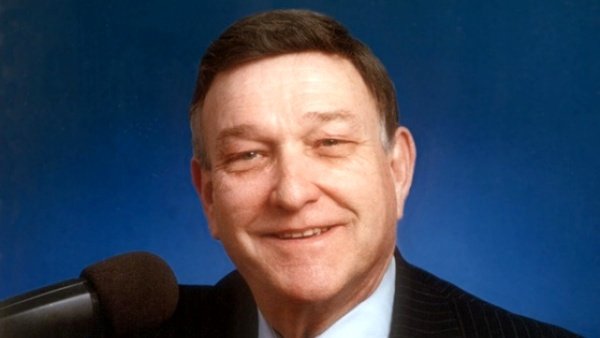


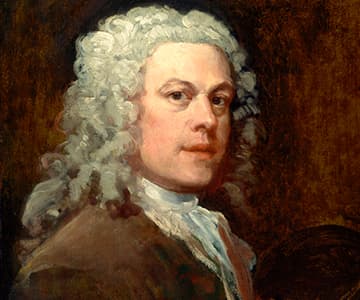


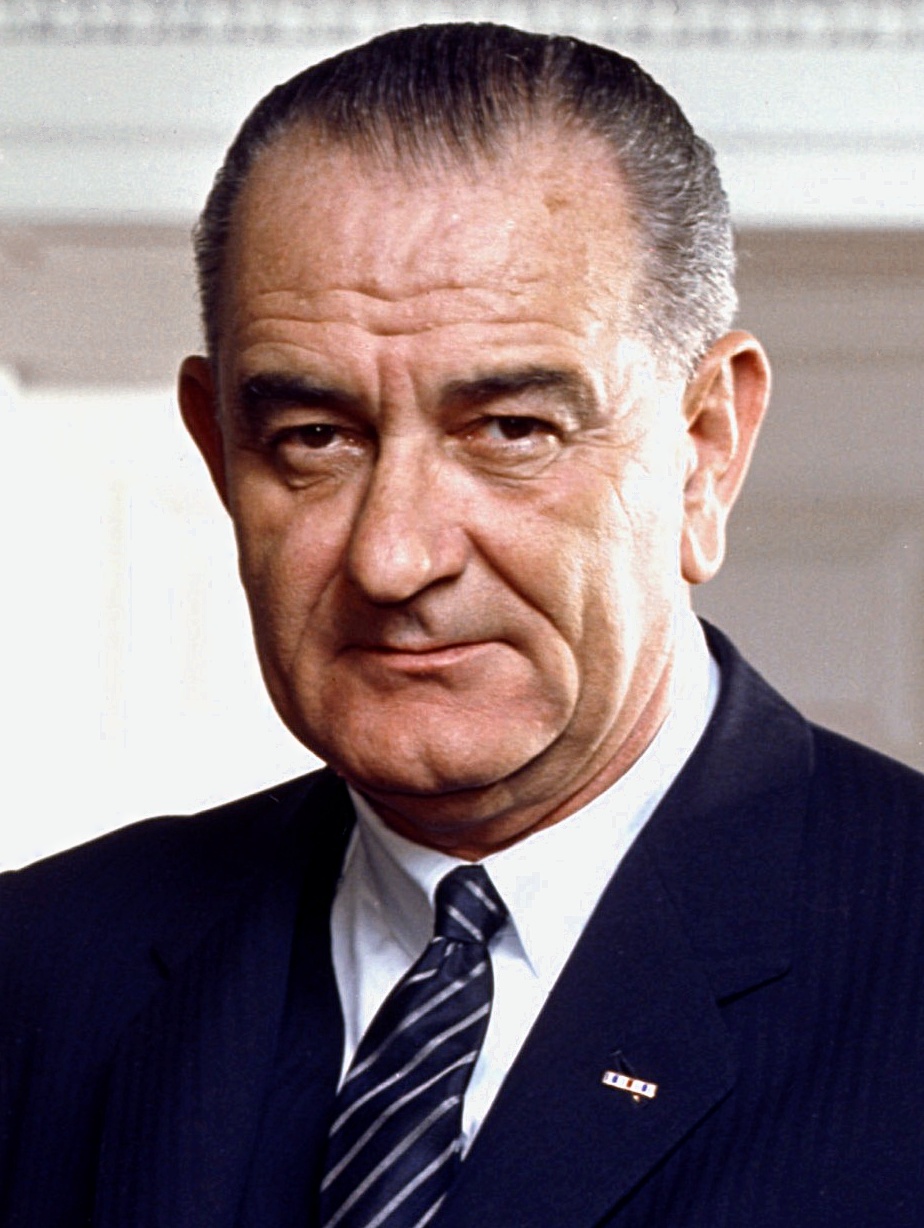
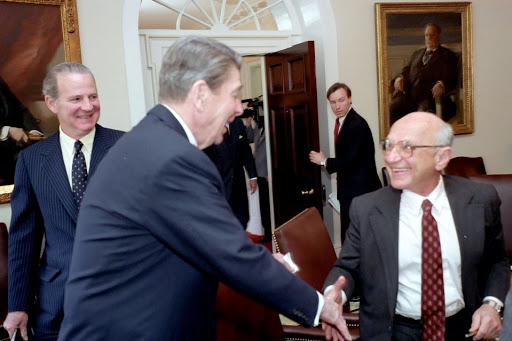
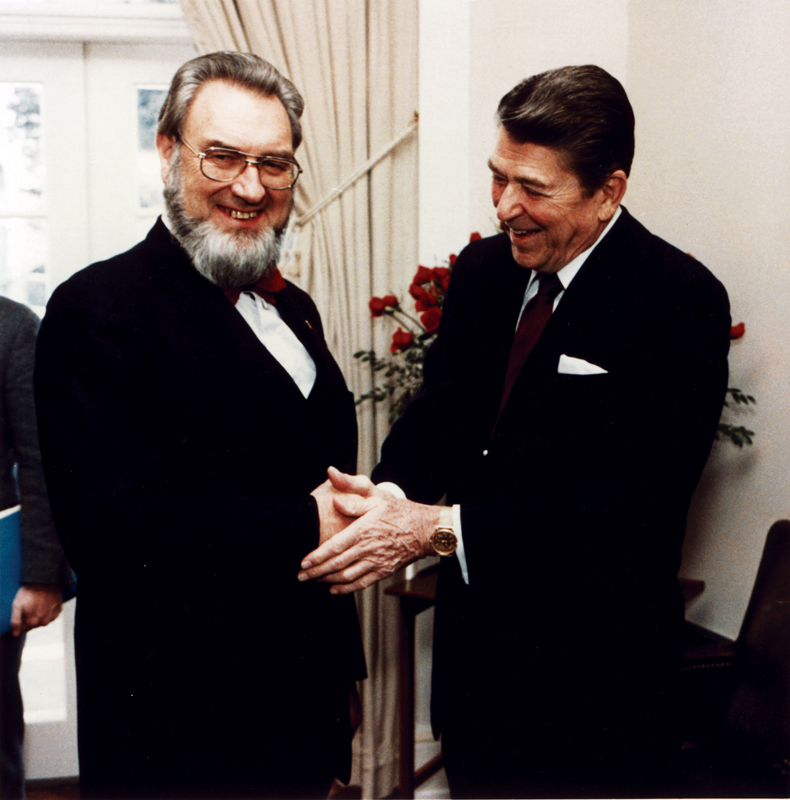
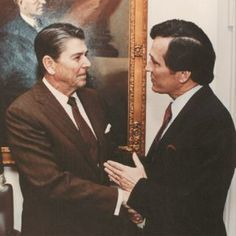
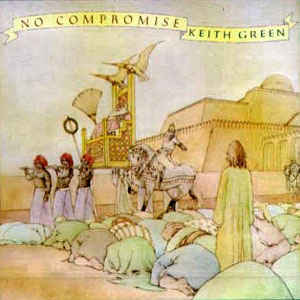

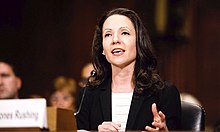







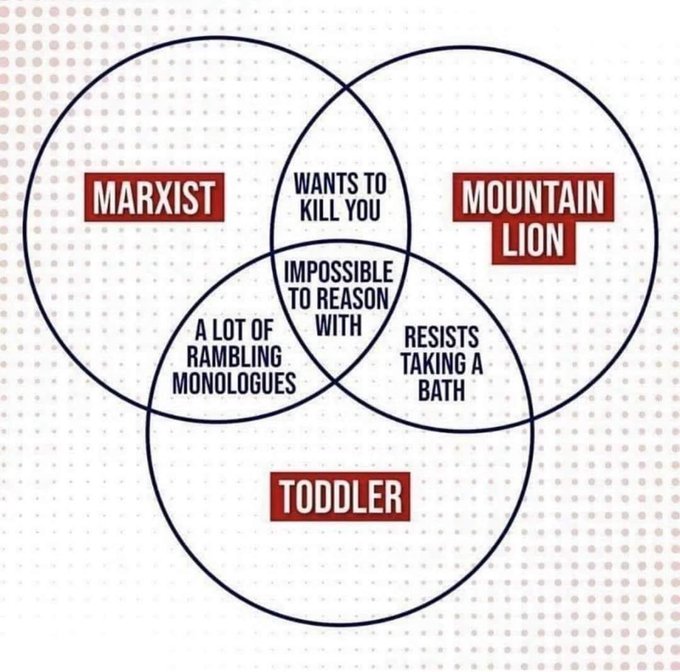













 The Daily Hatch


